Transformations of Hexagram 21
Every line of change out of Hexagram 21 噬嗑 Biting Through, with the Yilin verse for each of the 64 resulting hexagrams, its translation, and the original ink brush artwork.
噬嗑 → 乾
Hexagram 21 → Hexagram 1: The Creative
Changing lines: 2, 3, 5
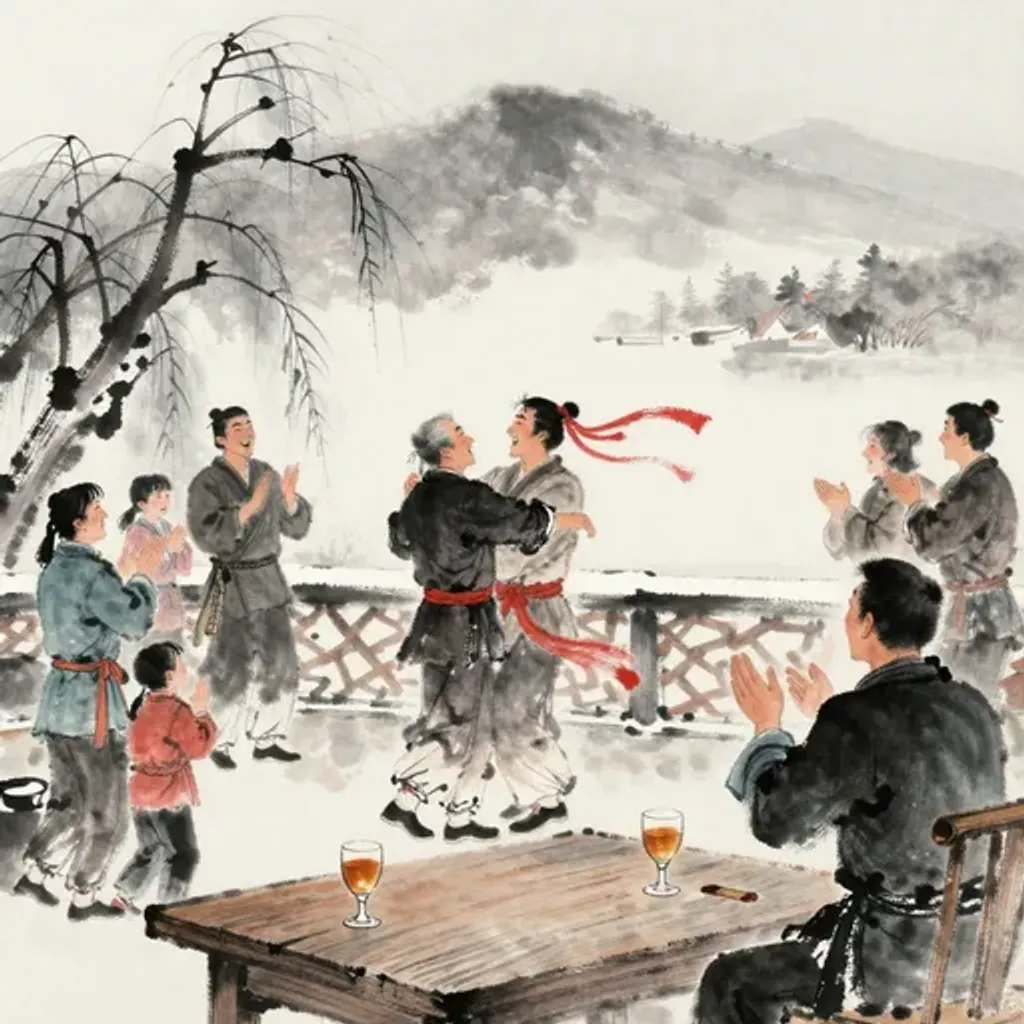
北風相牽,提笑語言;伯歌叔舞,讌樂以喜。
The north wind draws them together, lifting laughter and words; the elder brother sings, the younger dances -- they feast and make merry.
— Jiao Yanshou, Yilin (Forest of Changes), 1st century BC
Commentary
Fire and thunder bite through obstacles, but the verse opens onto pure celebration. A north wind draws companions together, pulling them laughing and talking along the road. Elder brothers sing while younger brothers dance — a feast of unforced joy. The imagery evokes the communal harmony of the Shijing's banquet odes, where shared music and laughter knit kinship bonds tight. No obstacle remains; all is open sky. From Biting Through to The Creative, the transformation is decisive: what once required force to penetrate now flows freely as self-generating vitality. The penalty code gives way to pure heaven doubled, where movement is effortless because all resistance has already been cleared.
噬嗑 → 坤
Hexagram 21 → Hexagram 2: The Receptive
Changing lines: 1, 4, 6
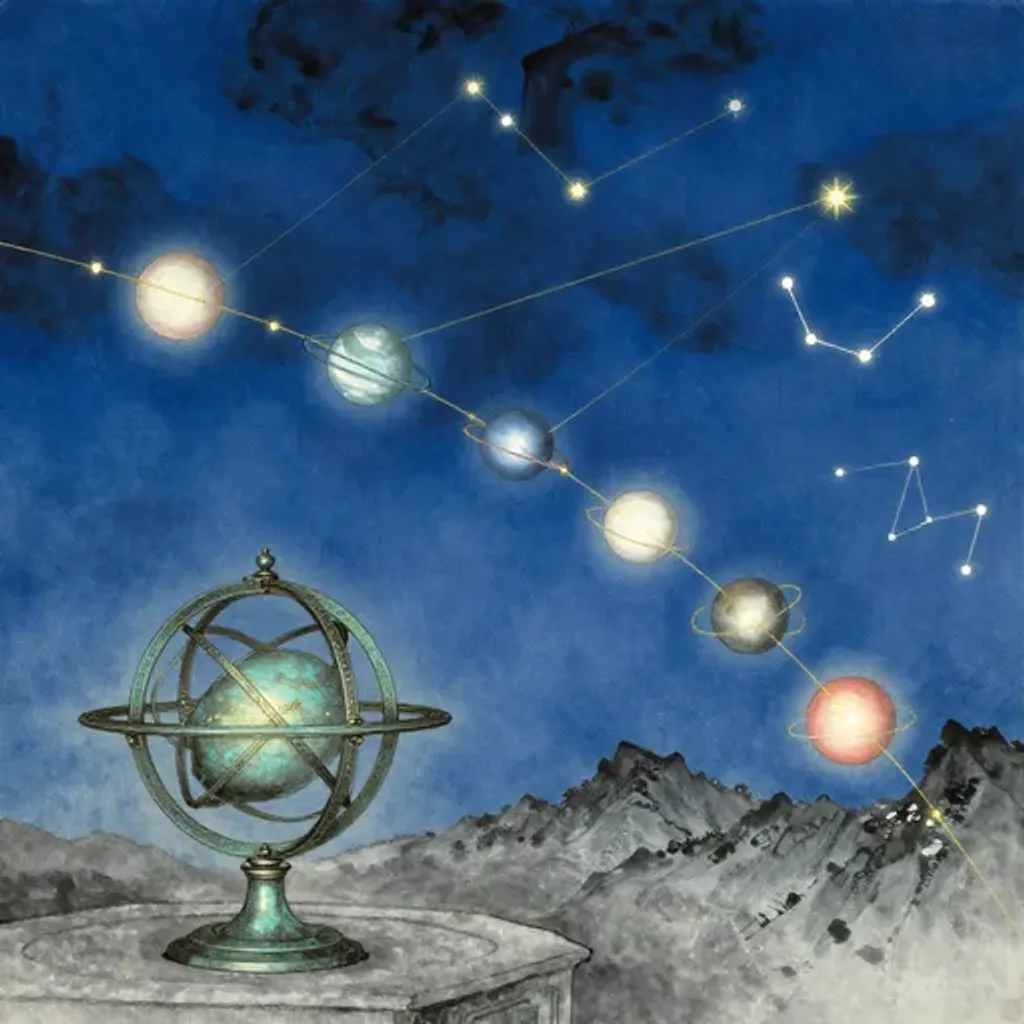
甲戊己庚,隨時運行。不失常節,達性任情;各樂其類。
Jia, wu, ji, geng -- each follows the season's course. Never losing their proper measure, they fulfill their nature and yield to feeling; all delight in their own kind.
— Jiao Yanshou, Yilin (Forest of Changes), 1st century BC
Commentary
Fire and thunder enforce cosmic law, and here that enforcement yields to the Receptive's perfect order. The Heavenly Stems — jia, wu, ji, geng — rotate with the seasons, each following its appointed time without missing a beat. Nothing deviates from its constant rhythm; all creatures express their nature freely, each finding joy in its kind. The stems encode the calendrical system that structures Han-dynasty cosmology: wood, earth, earth, metal cycling through creation. From Biting Through to The Receptive, punishment dissolves into natural compliance. What once required thunder and lightning to enforce now operates through earth's quiet regularity — the deepest order needs no force because everything already knows its place.
噬嗑 → 屯
Hexagram 21 → Hexagram 3: Difficulty at the Beginning
Changing lines: 4, 5, 6
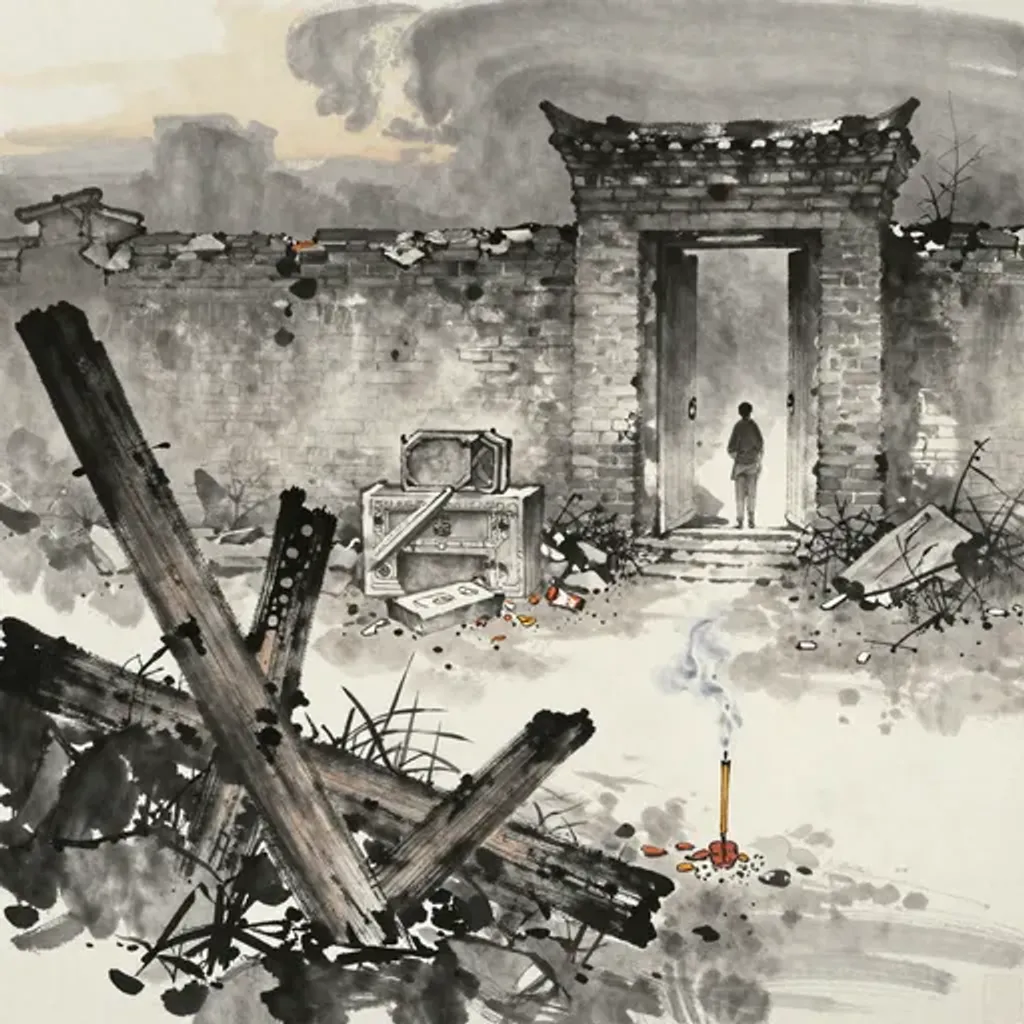
破亡之虛,神祇哀憂;進往無光,留止有慶。
A ruined and desolate waste; the spirits grieve and sorrow. To advance brings no light -- to stay and halt brings good fortune.
— Jiao Yanshou, Yilin (Forest of Changes), 1st century BC
Commentary
Fire and thunder once bit through obstacles, but now only a ruined settlement remains — walls crumbled, spirits in mourning. To advance into this desolation brings no light; only by halting and holding position can any good fortune be preserved. The 'ruined site' (破亡之虛) echoes the classical trope of visiting fallen capitals, where ghosts grieve over what was lost. The verse warns against recklessness in the face of devastation. From Biting Through to Difficulty at the Beginning, the message is sobering: clouds and thunder gather but nothing yet emerges. One who rushes forward into the wreckage will find only darkness; one who stays and weaves order from the chaos will find cause for celebration.
噬嗑 → 蒙
Hexagram 21 → Hexagram 4: Youthful Folly
Changing lines: 1, 2, 4
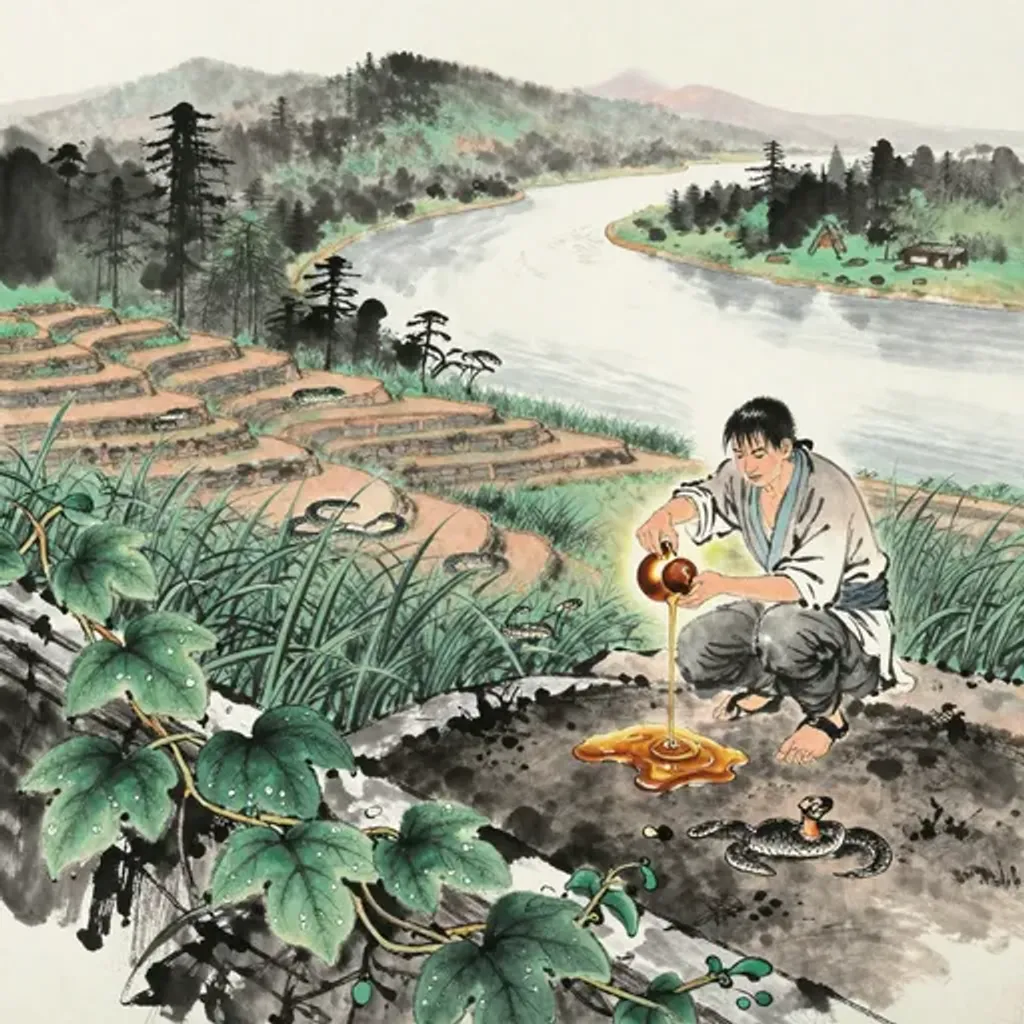
注斯膏澤,扞衛百毒;防以江南,虺不能螫。
Pouring rich ointment, warding off a hundred poisons; guarded by the lands south of the river, the viper cannot sting.
— Jiao Yanshou, Yilin (Forest of Changes), 1st century BC
Commentary
Fire and thunder administer justice, and here that protective power takes the form of healing. Rich ointments and nourishing dew are poured forth, warding off a hundred poisons. The defense is as strong as the great river's southern bank — even venomous serpents cannot sting. The verse uses medical imagery rooted in Han pharmacological thought: balms (膏澤) that both heal and shield, and the Yangtze as a natural barrier against pestilence from the south. From Biting Through to Youthful Folly, the transformation channels punitive force into nurturing protection. The mountain spring that emerges below becomes a source of purification, washing toxins away through gentle persistence rather than violent intervention.
噬嗑 → 需
Hexagram 21 → Hexagram 5: Waiting
Changing lines: 2, 3, 4, 5, 6
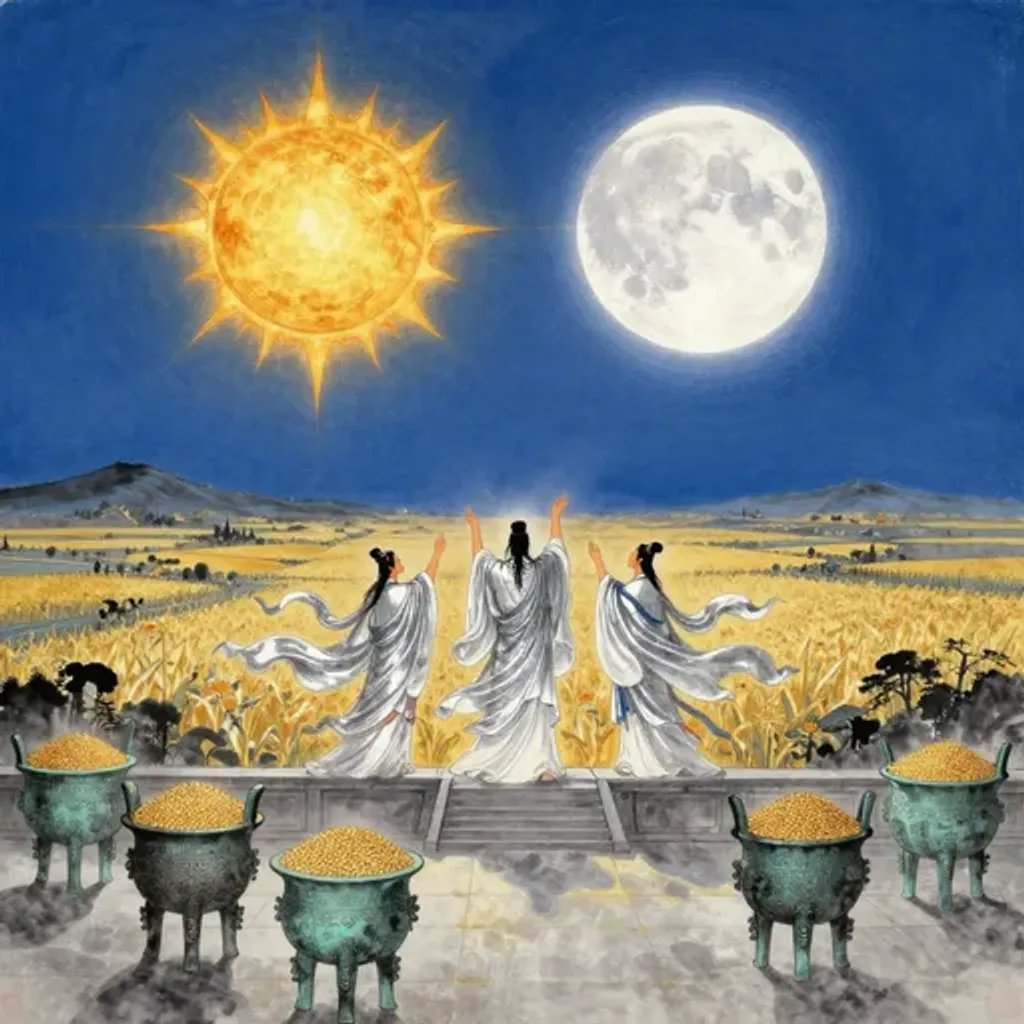
日月相望,光輝盛昌;三聖茂功,仁德大隆。
Sun and moon gaze upon each other, their radiance shining bright; the three sages' flourishing work -- benevolence and virtue greatly thrive.
— Jiao Yanshou, Yilin (Forest of Changes), 1st century BC
Commentary
Fire and thunder illuminate the law, and here that brightness multiplies into cosmic radiance. Sun and moon gaze upon each other in full splendor, their light flourishing to its greatest. The Three Sages — traditionally understood as Yu, Tang, and the founders of Zhou — accomplish magnificent deeds, and benevolent virtue rises to its zenith. The 'Three Sages' (三聖) likely refers to the sage-kings whose moral authority established lasting dynasties. From Biting Through to Waiting, the transformation unfolds naturally: clouds gather above heaven, but instead of menacing storms, they herald a great feast. The harsh clarity of legal enforcement softens into the patient luminosity of accumulated virtue.
噬嗑 → 訟
Hexagram 21 → Hexagram 6: Conflict
Changing lines: 1, 2, 5
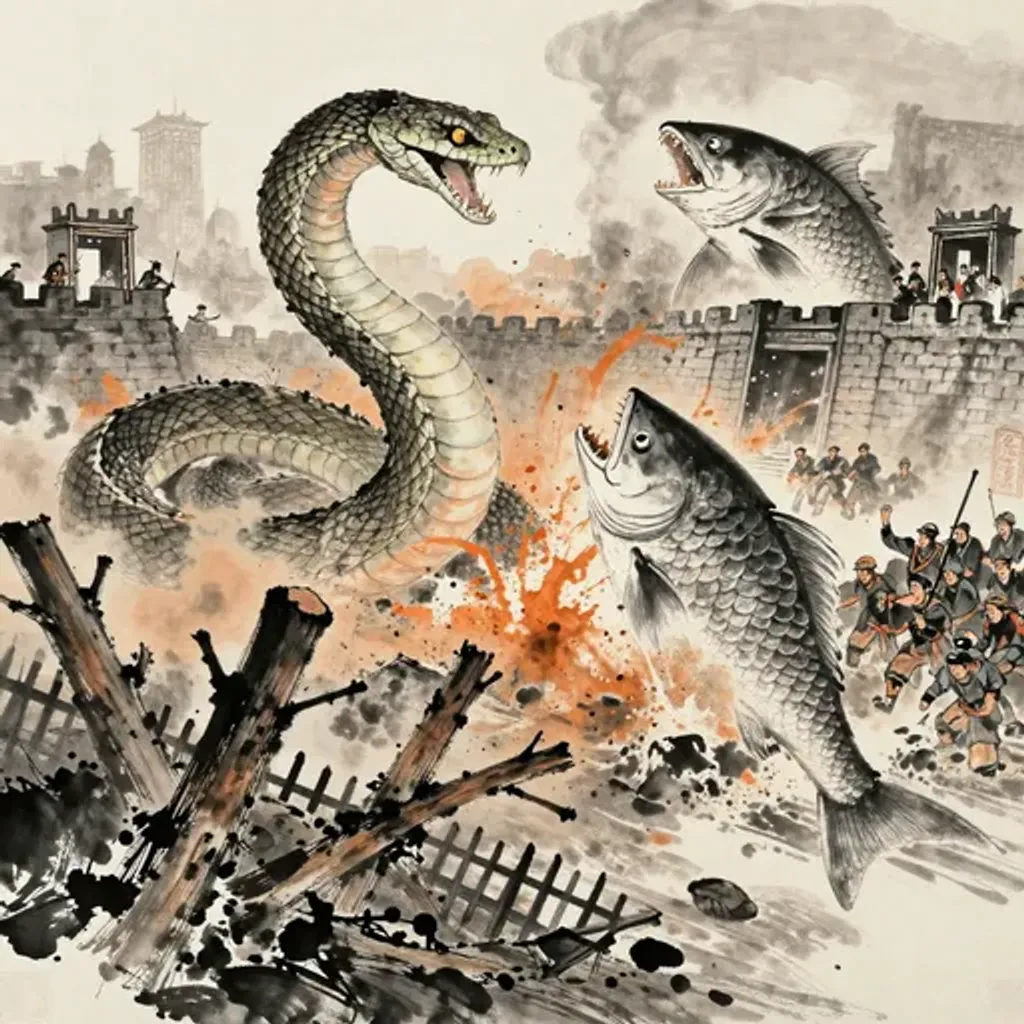
大蛇巨魚,戰於國郊;上下隔塞,衛侯廬曹。
A great serpent and a monstrous fish battle in the kingdom's outskirts; above and below are cut off -- the Marquis of Wei encamps at Cao.
— Jiao Yanshou, Yilin (Forest of Changes), 1st century BC
Commentary
Fire and thunder crack through the law, and in this verse monstrous forces clash at the capital's edge. A great serpent and a giant fish battle in the city's outskirts — primordial chaos erupting where order should reign. Communication between high and low is severed, the realm blockaded. The verse closes with 'the Duke of Wei shelters at Cao,' evoking the Spring and Autumn pattern of exiled rulers fleeing to minor states when their own domains collapse. From Biting Through to Conflict, heaven and water move in opposite directions. The enforcement mechanism has broken down entirely: instead of justice biting through disorder, disorder has overwhelmed the system, and those who should govern are reduced to refugees.
噬嗑 → 師
Hexagram 21 → Hexagram 7: The Army
Changing lines: 1, 2, 4, 6
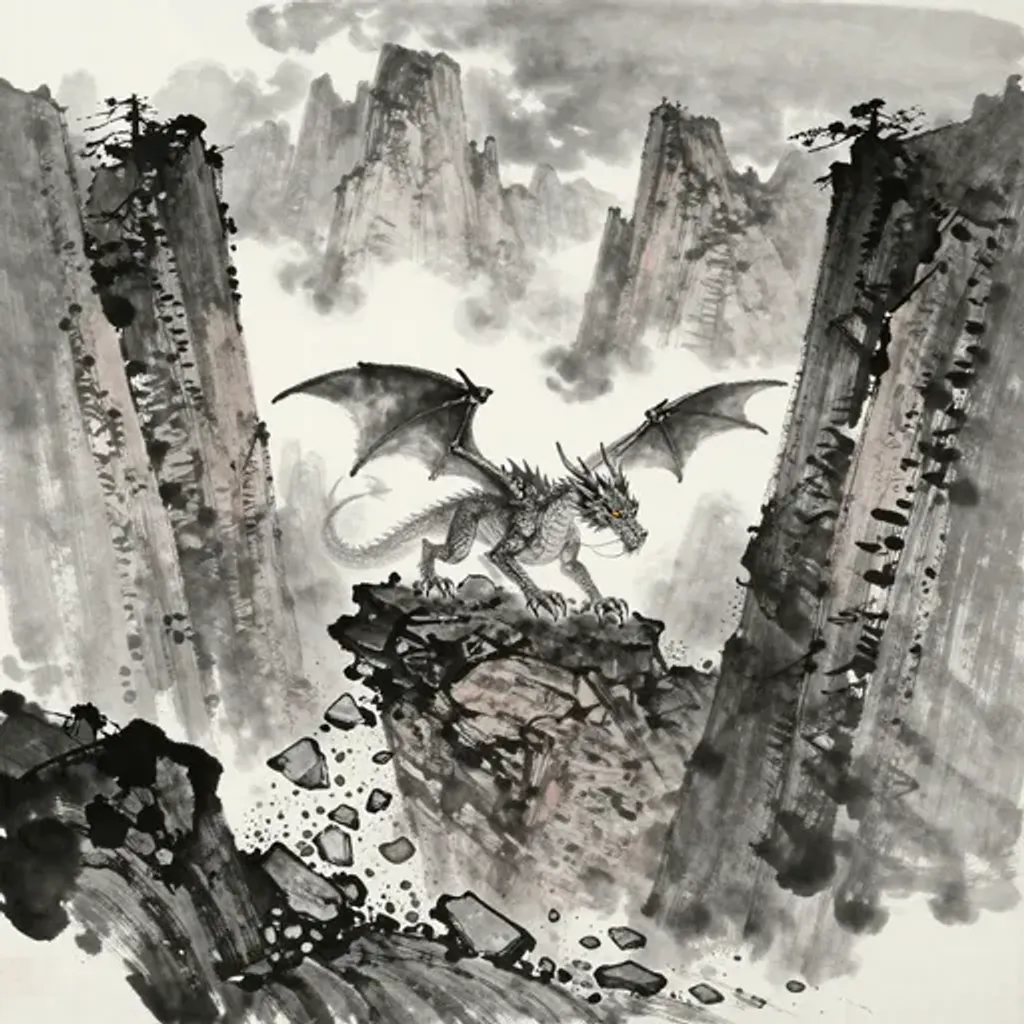
龍入天關,經歷九山。登高上下,道里險難;日晏不食,絕無甘酸。
The dragon enters the Heavenly Gate, traversing nine mountains; climbing high, ascending and descending -- the road is steep and perilous. Day wanes with no food; utterly without sweet or sour.
— Jiao Yanshou, Yilin (Forest of Changes), 1st century BC
Commentary
Fire and thunder enforce the law, yet the dragon's journey through heaven's gate leads only to hardship. It traverses nine mountains, climbing and descending treacherous peaks. The road is perilous and steep, and by evening there is nothing to eat — not even a trace of sweet or sour. The dragon, symbol of sovereign power, enters the celestial pass but finds no sustenance, only exhaustion. From Biting Through to The Army, the transformation reveals disciplined endurance under deprivation. Water hidden within the earth marshals its forces silently. The verse captures the army's grim reality: the march through hostile terrain where glory is replaced by hunger and the road offers no relief.
噬嗑 → 比
Hexagram 21 → Hexagram 8: Holding Together
Changing lines: 1, 4, 5, 6
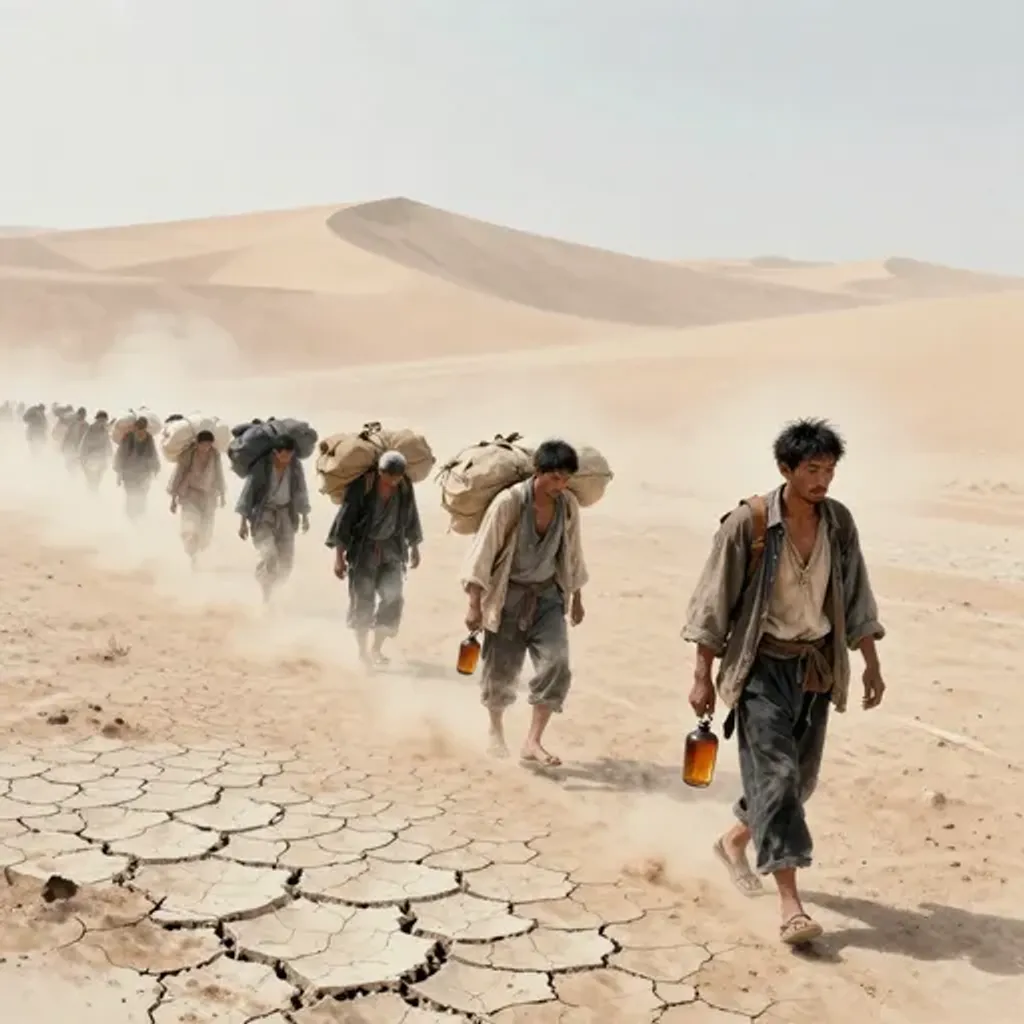
沙漠北塞,絕無水泉;君子征凶,役夫苦艱。
Sandy desert, northern frontier -- utterly without water or spring. The noble man marches toward misfortune; the conscript labors in bitter hardship.
— Jiao Yanshou, Yilin (Forest of Changes), 1st century BC
Commentary
Fire and thunder crack through law and order, but here the scene shifts to a barren northern frontier. Sand and desert stretch across the border wastes, utterly devoid of springs or streams. The gentleman who ventures forth meets only misfortune, and the conscripted laborers suffer bitterly. This is the voice of frontier garrison poetry, anticipating the Tang tradition but already present in Han yuefu: soldiers sent to guard impossible borders, dying of thirst in featureless wastes. From Biting Through to Holding Together, the transformation is poignant — water upon earth should mean solidarity and mutual support, yet the verse describes its absence. Unity is precisely what the desert denies.
噬嗑 → 小畜
Hexagram 21 → Hexagram 9: Small Taming
Changing lines: 2, 3, 4, 5
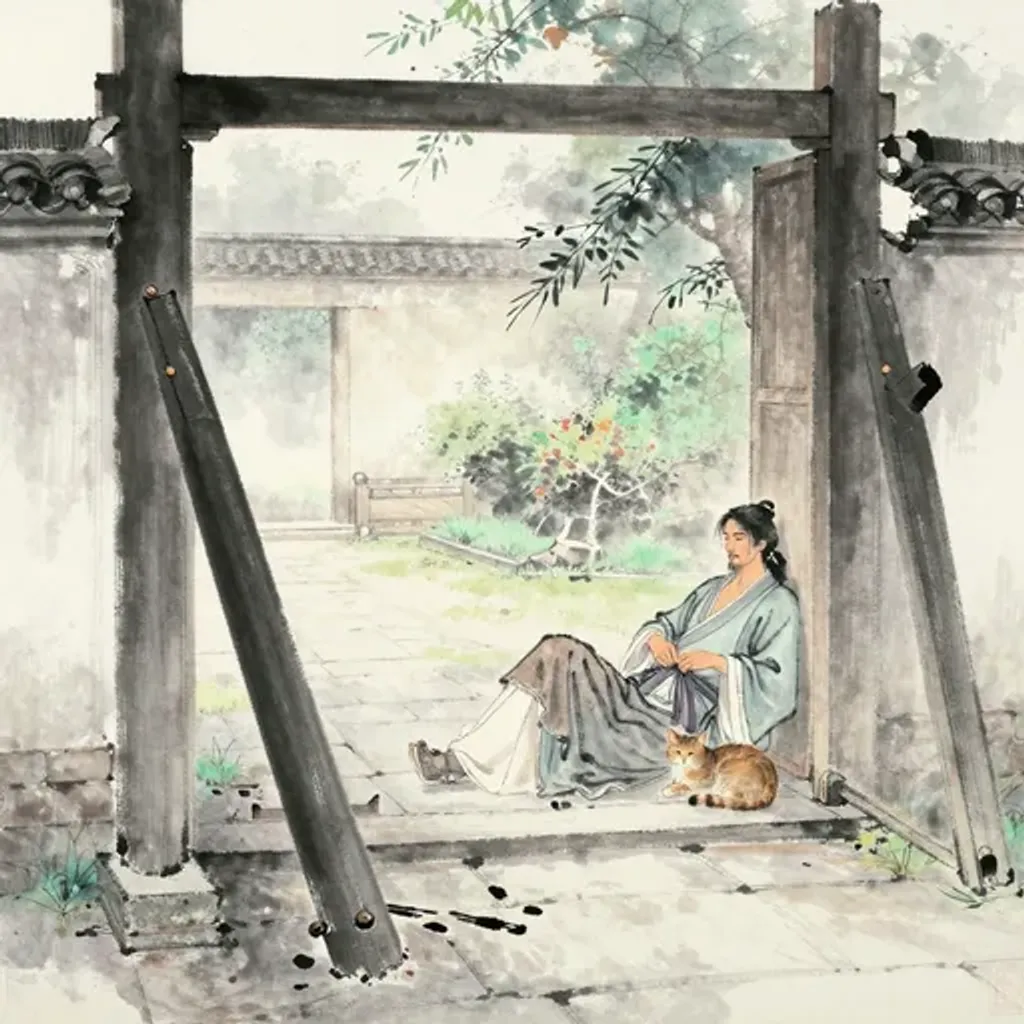
關折門啟,衿帶解墮;福與善坐,憂不為禍。
The bolt breaks, the gate swings open; sash and collar loosen and fall. Blessing sits with the good; worry does not turn to calamity.
— Jiao Yanshou, Yilin (Forest of Changes), 1st century BC
Commentary
Fire and thunder once enforced strict barriers, but now the bolt snaps and the gate swings open. Sashes and belt-knots loosen and fall away — all formal constraint dissolves. Yet this release brings not chaos but blessing: fortune sits down beside the good, and worry never turns to disaster. The imagery of unlatched gates and loosened garments suggests a transition from rigid control to natural ease, the moment when vigilance is no longer necessary. From Biting Through to Small Taming, wind moves gently over heaven, refining rather than compelling. The harsh teeth of enforcement give way to the soft cultivation of virtue through culture and civility.
噬嗑 → 履
Hexagram 21 → Hexagram 10: Treading
Changing lines: 2, 5
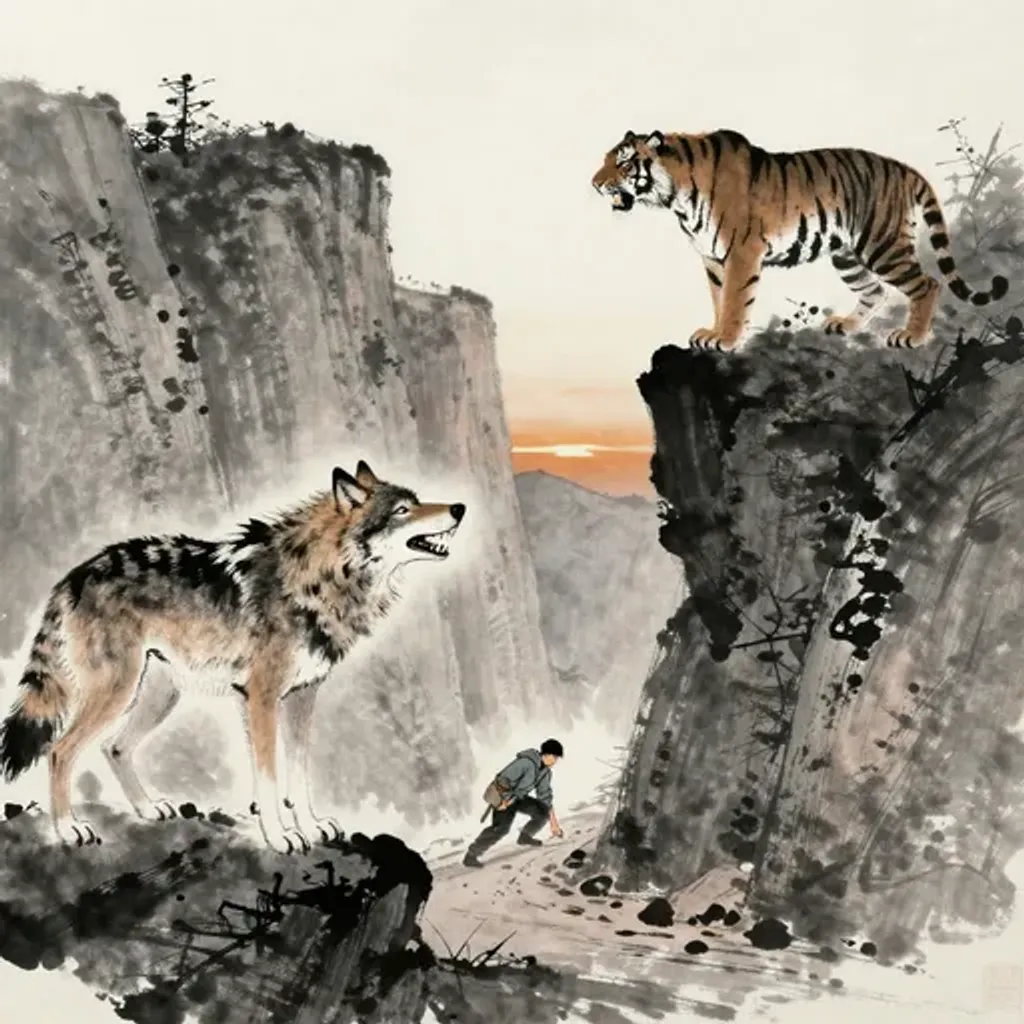
狼虎所嘷,患害必遭;不利有為,宜以遁逃。
Where wolves and tigers howl, harm and danger surely come; nothing profits action here -- best to flee and escape.
— Jiao Yanshou, Yilin (Forest of Changes), 1st century BC
Commentary
Fire and thunder deliver punishment, and here that punitive energy manifests as predatory threat. Wolves howl and tigers roar — calamity and harm are inescapable in such a place. It is not advantageous to act; the only wise course is flight. The verse is stark and unambiguous: this is territory controlled by predators, and the traveler has no advantage. From Biting Through to Treading, the transformation reveals its danger. Treading on the tiger's tail, one must be exquisitely careful or be devoured. The verse counsels not courage but retreat — recognizing when the ground itself is hostile and withdrawing before the jaws close.
噬嗑 → 泰
Hexagram 21 → Hexagram 11: Peace
Changing lines: 2, 3, 4, 6
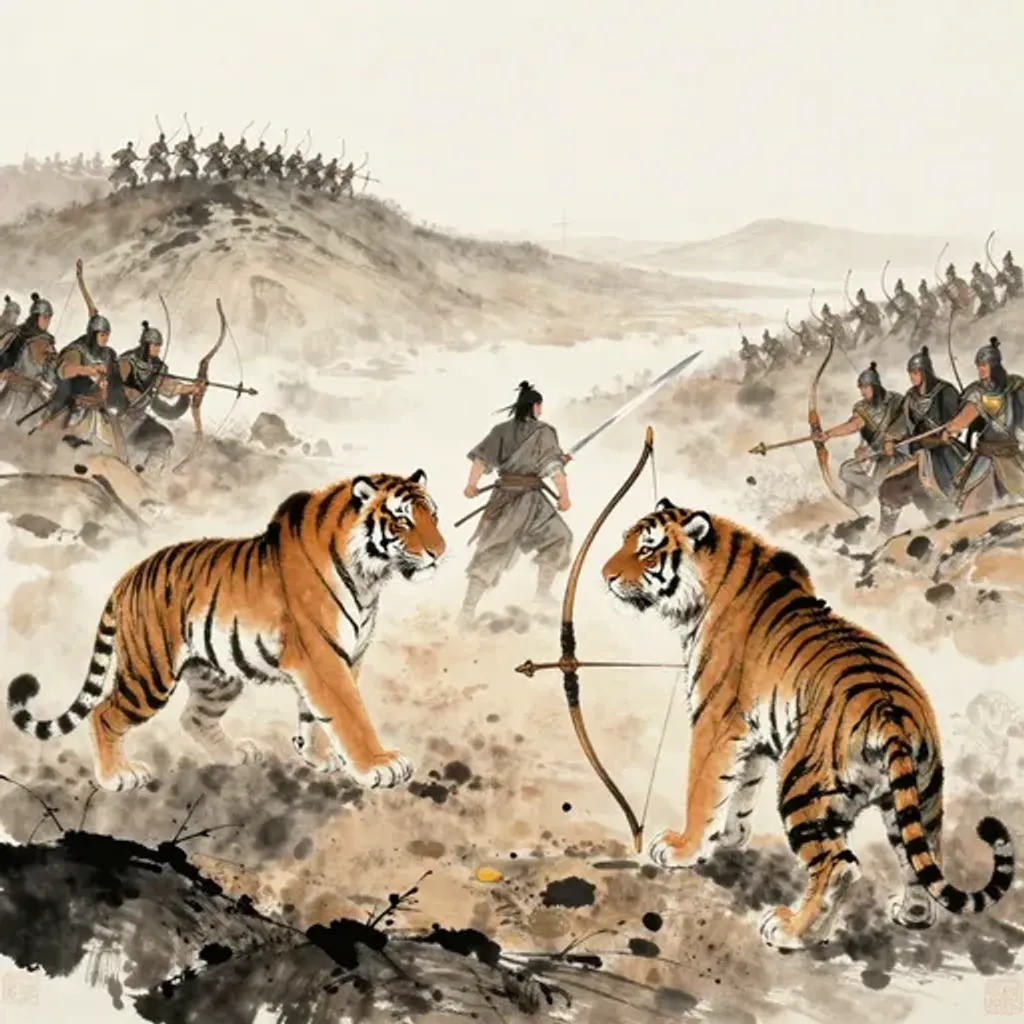
金精耀怒,帶劍過午。兩虎相距,弓弩滿野;雖憂無苦。
Metal's essence blazes in fury, bearing sword past noon; two tigers face each other, bows and crossbows fill the field. Though there is worry, there is no suffering.
— Jiao Yanshou, Yilin (Forest of Changes), 1st century BC
Commentary
Fire and thunder blaze with judicial force, and metal energy flares in anger as swords are drawn past the noon hour. Two tigers confront each other while bows and crossbows fill the field — the scene crackles with impending violence. Yet the final line pivots: though there is worry, there is no suffering. The standoff resolves without bloodshed. Metal's furious glare and drawn weapons at midday suggest a crisis at its zenith, balanced forces too equal to break. From Biting Through to Peace, heaven and earth interpenetrate. The armed confrontation gives way to mutual exchange — two powers that seemed destined for destruction instead achieve equilibrium.
噬嗑 → 否
Hexagram 21 → Hexagram 12: Standstill
Changing lines: 1, 5
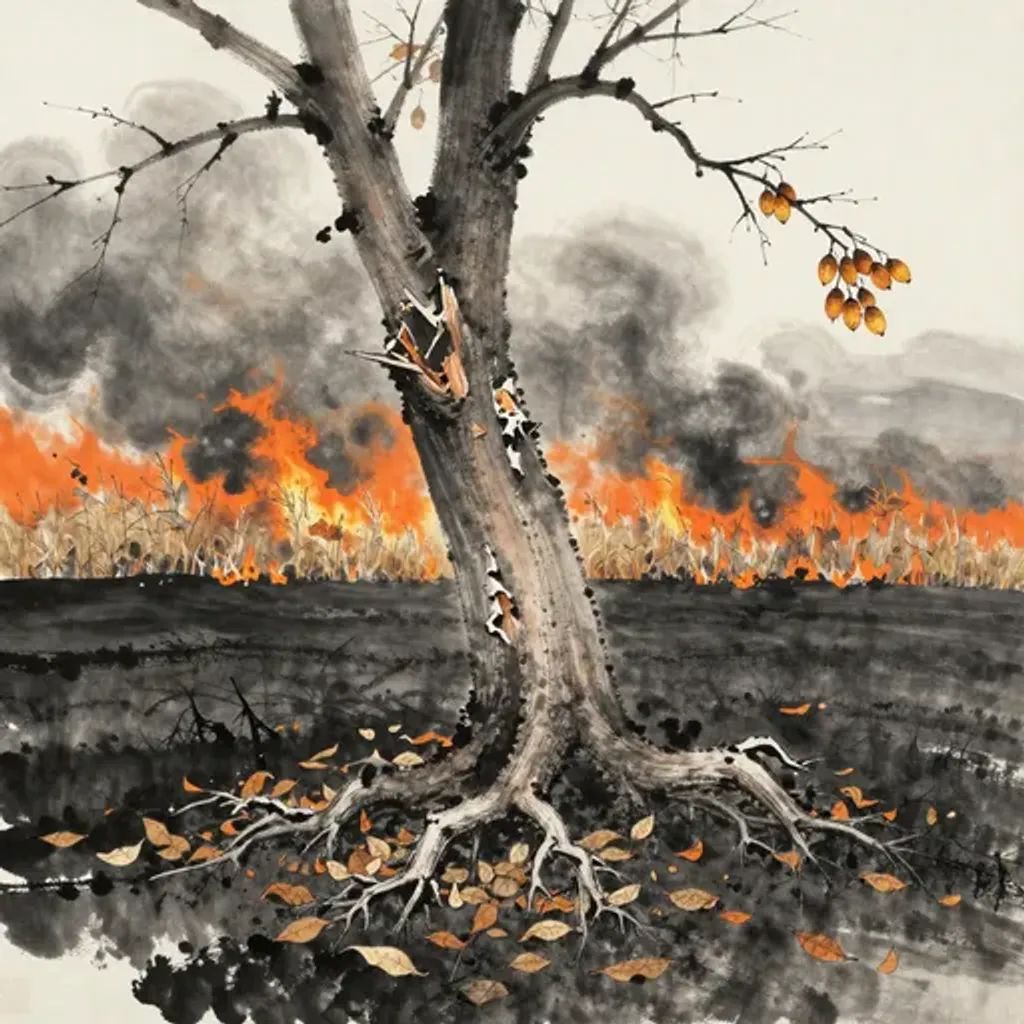
朽根枯樹,葉落花去;卒逢火焱,相隨偃仆。
Rotten roots, withered tree -- leaves fall, blossoms gone. Suddenly meeting a raging fire, together they topple and collapse.
— Jiao Yanshou, Yilin (Forest of Changes), 1st century BC
Commentary
Fire and thunder once animated the law with crackling energy, but here all vitality has drained away. A rotted root, a withered tree, leaves fallen, flowers gone — and then wildfire sweeps through, and all collapses together in the blaze. The image is one of total exhaustion meeting sudden destruction: what was already dead is consumed by flame, leaving nothing. From Biting Through to Standstill, heaven and earth cease their communication. The enforcement mechanism itself has decayed beyond repair, and the fire that once illuminated justice now simply incinerates the remains. When the structure is already hollow, even a spark becomes an annihilating force.
噬嗑 → 同人
Hexagram 21 → Hexagram 13: Fellowship
Changing lines: 3, 5
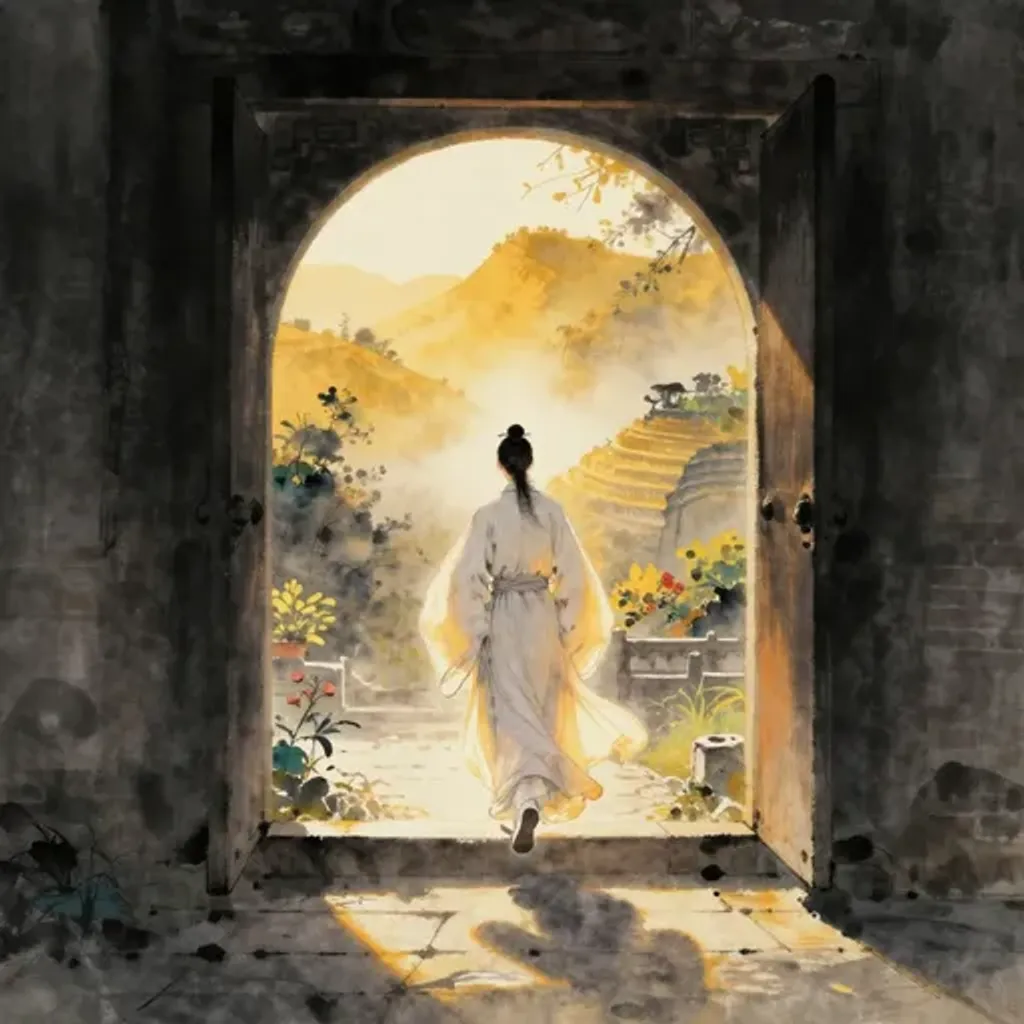
入和出明,動作有光;轉運休息,常樂永康。
Entering in harmony, going forth in brightness; movement and action carry light. Fortune turns and rest arrives -- ever joyful, ever well.
— Jiao Yanshou, Yilin (Forest of Changes), 1st century BC
Commentary
Fire and thunder crack through impediments, and the result is radiant movement. Entering brings harmony, going forth brings brightness; every action carries its own light. The cycles of fortune turn and rest in their proper rhythm — eternal joy, permanent well-being. The verse reads like a blessing formula, each phrase affirming felicity. From Biting Through to Fellowship, fire ascends to meet heaven. What was once forced through by judicial teeth now flows as the natural warmth of shared purpose. The transformation reveals that true fellowship emerges after obstacles are cleared — when people no longer need rules to unite them, because their shared light already draws them together.
噬嗑 → 大有
Hexagram 21 → Hexagram 14: Great Possession
Changing lines: 2, 3
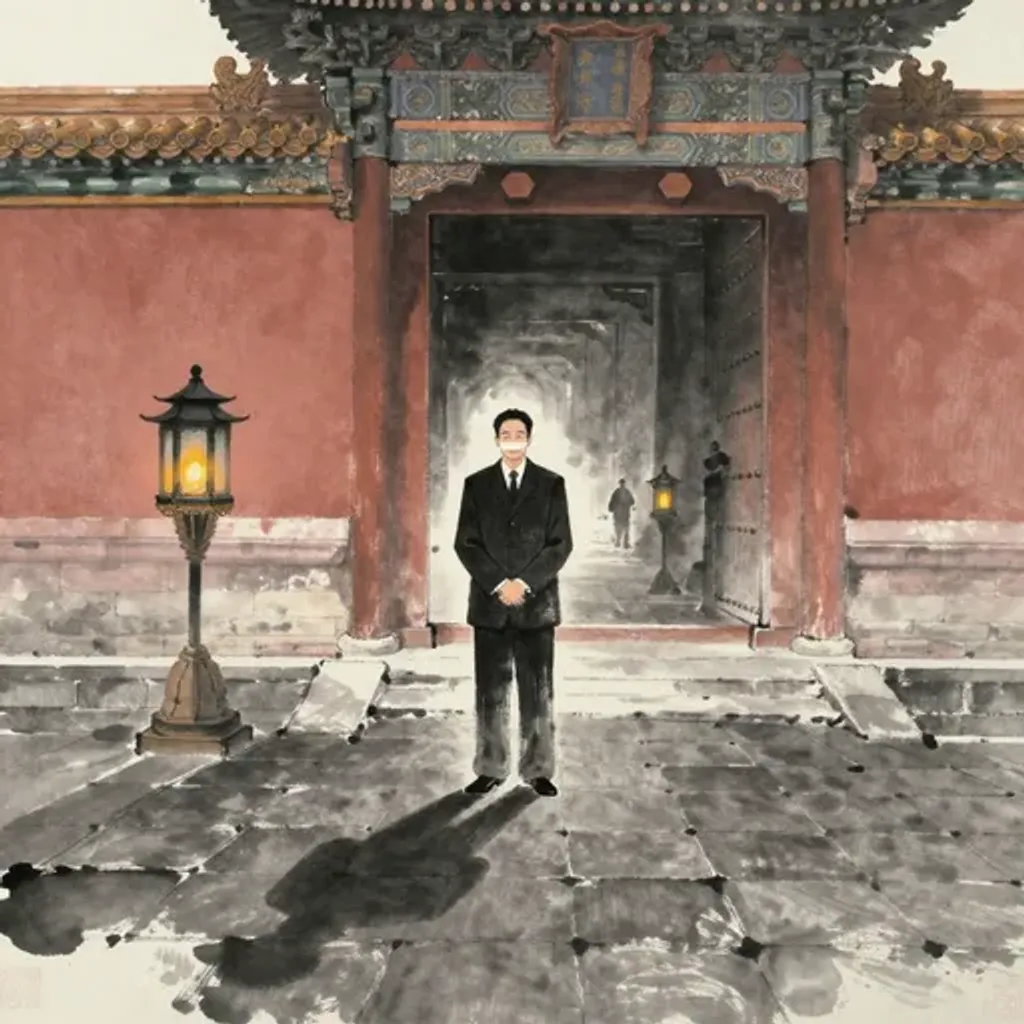
國多忌諱,大人恆畏;結口無患,可以長存。
The kingdom is full of taboos; the great man lives in constant dread. Seal the mouth and incur no trouble -- thus one may long endure.
— Jiao Yanshou, Yilin (Forest of Changes), 1st century BC
Commentary
Fire and thunder enforce the law, yet this verse counsels silence rather than action. The state is riddled with taboos, and even great men live in constant dread. The only survival strategy is to seal one's mouth shut — keep silent, and no calamity will follow. This way one may endure. The verse captures the atmosphere of a court where a single wrong word means death, recalling the terror of despotic reigns where courtiers walk on knife-edges. From Biting Through to Great Possession, fire blazes above heaven in supreme abundance. Yet the verse warns that under such blazing scrutiny, self-preservation requires restraint. The brightest fire illuminates every fault.
噬嗑 → 謙
Hexagram 21 → Hexagram 15: Modesty
Changing lines: 1, 3, 4, 6
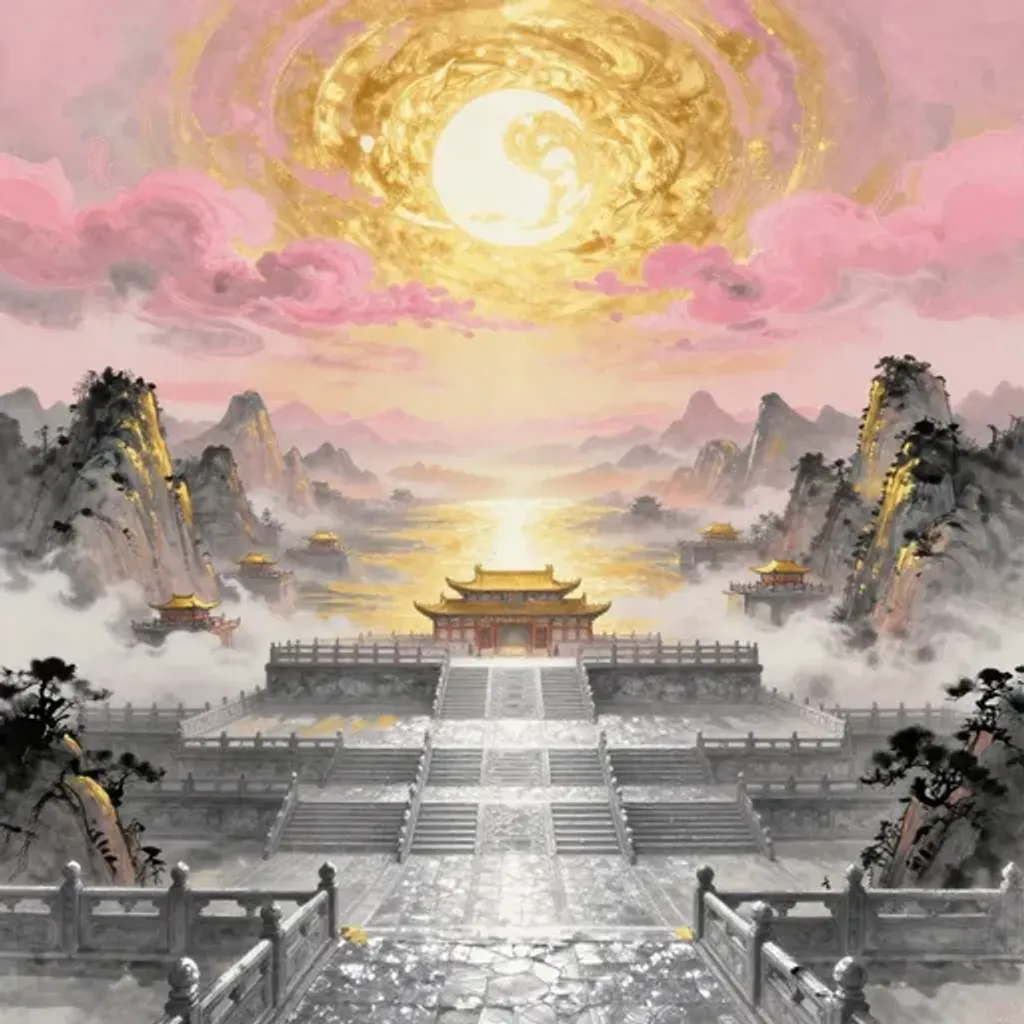
天地淳厚,六合光明;陰陽順序,以成厥功。
Heaven and earth are generous and kind, the six directions bright; yin and yang follow their proper order -- thereby achieving their work.
— Jiao Yanshou, Yilin (Forest of Changes), 1st century BC
Commentary
Fire and thunder administer justice, and the result is cosmic order fulfilled. Heaven and earth are generous and thick with virtue, the six directions shine with light. Yin and yang follow their proper sequence, and through this alignment, great works are accomplished. The verse describes a world where natural law operates so smoothly that human intervention becomes unnecessary. From Biting Through to Modesty, the mountain hidden within the earth embodies perfectly balanced power. The harsh enforcement of hexagram 21 yields to the gentle leveling of hexagram 15, where the high is brought low and the low raised up — not through punishment but through the quiet self-correction of a well-ordered cosmos.
噬嗑 → 豫
Hexagram 21 → Hexagram 16: Enthusiasm
Changing lines: 1, 6
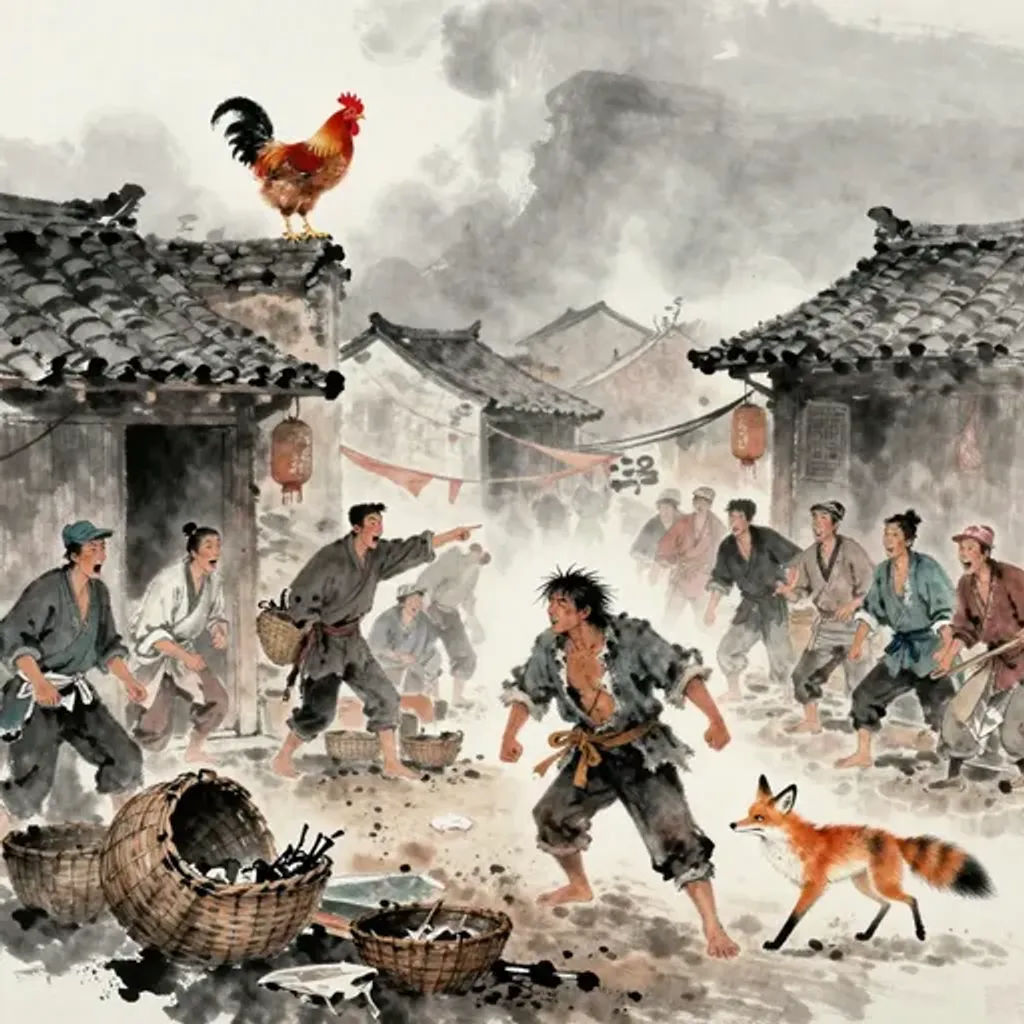
臝裎逐狐,為人觀笑。牝雞雄晨,主作亂妖。
Naked and exposed, chasing a fox -- a spectacle for others' laughter. A hen crows at dawn like a rooster -- the master invites disorder and calamity.
— Jiao Yanshou, Yilin (Forest of Changes), 1st century BC
Commentary
Fire and thunder administer the law, and this verse shows what happens when authority is inverted. A naked figure chases foxes, becoming a spectacle for public mockery. Then the classical allusion strikes: 'the hen crows at dawn' — from the Book of Documents' Oath at Muye, where King Wu warns that when a woman usurps the morning crow, it signals the household's ruin. The hen crowing at dawn was King Wu's indictment of Daji's influence over King Zhou of Shang. From Biting Through to Enthusiasm, thunder erupts from the earth in exuberant motion. But the verse inverts this energy: enthusiasm without proper order becomes chaos, spectacle becomes farce, and misplaced authority breeds calamity.
噬嗑 → 隨
Hexagram 21 → Hexagram 17: Following
Changing lines: 5, 6
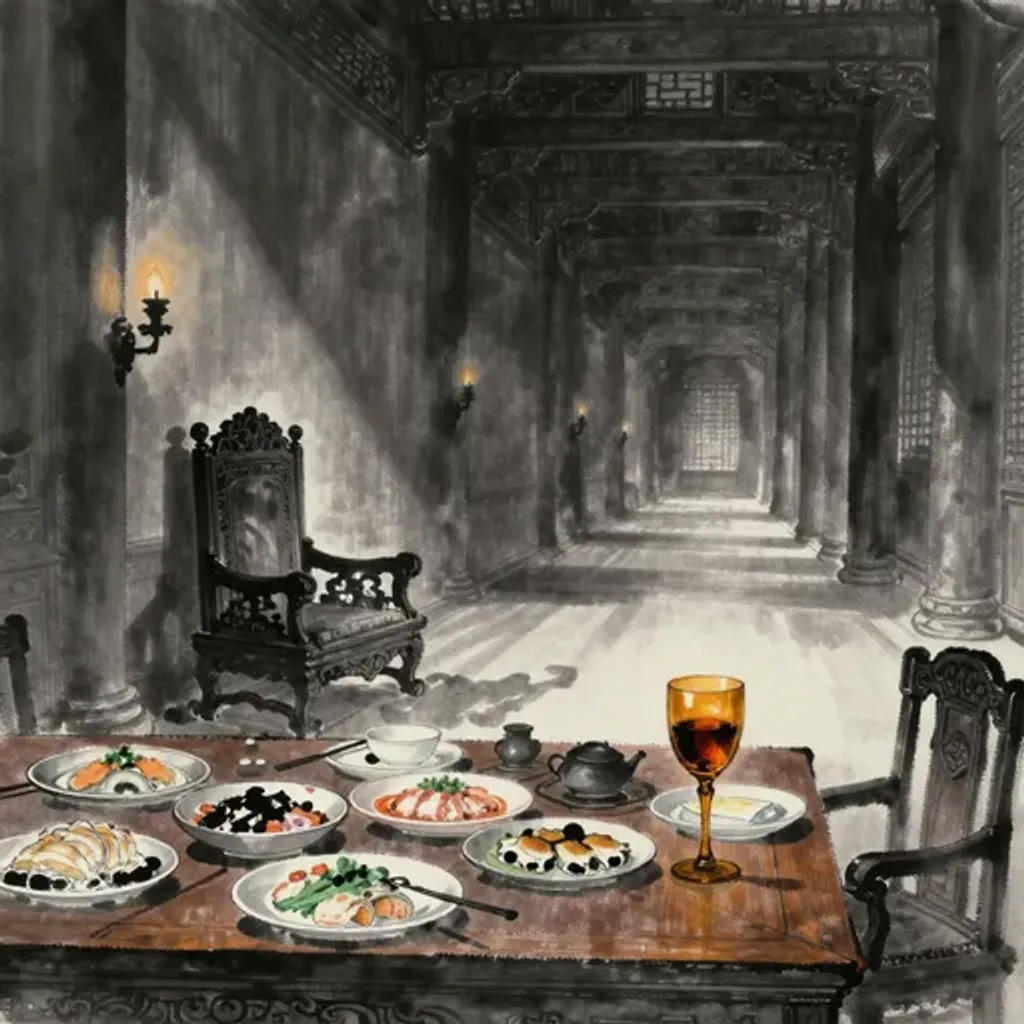
陰升陽伏,桀失其室;相餧不食。
Yin ascends, yang hides away; Jie lost his throne. They offer food to each other, yet none will eat.
— Jiao Yanshou, Yilin (Forest of Changes), 1st century BC
Commentary
Fire and thunder enforce the law, but here the cosmic order has reversed: yin ascends while yang lies buried. King Jie of Xia, the archetypal tyrant, loses his household and his throne. The final phrase — 'they feed each other but cannot eat' — captures the paradox of mutual dependence without nourishment, a relationship so poisoned that even sustenance offered cannot be received. From Biting Through to Following, the lake rests above thunder in willing submission. Yet the verse inverts this: Jie's court followed pleasure rather than principle, and the natural order of leader and led collapsed. When the ruler is unworthy, following becomes self-destruction.
噬嗑 → 蠱
Hexagram 21 → Hexagram 18: Work on the Decayed
Changing lines: 1, 2, 3, 4
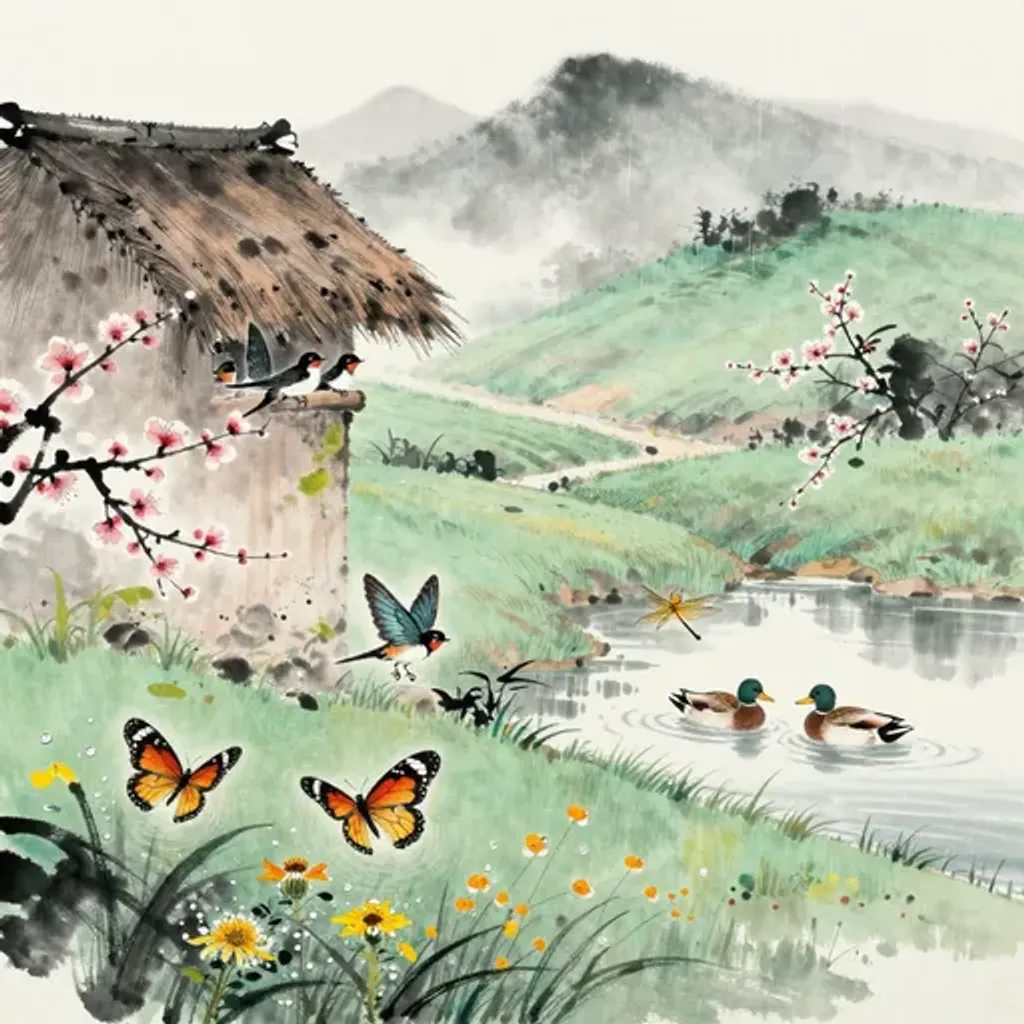
蜎飛蠢動,各有配偶;小大相保,咸得其所。
Wriggling insects and creeping creatures, each has its mate; small and great protect one another -- all find their proper place.
— Jiao Yanshou, Yilin (Forest of Changes), 1st century BC
Commentary
Fire and thunder clear away obstructions, revealing nature's fundamental order. Flying insects and crawling creatures each find their mates; great and small shelter one another, all settling into their proper places. The verse celebrates the innate harmony of the natural world — even the humblest worm has its pair, and mutual protection operates across all scales of being. From Biting Through to Work on the Decayed, wind moves beneath the mountain, stirring what has stagnated. The transformation suggests that once corruption is bitten through and cleared, the natural pairing and sheltering instincts of living things reassert themselves. Renewal begins with the simplest bonds.
噬嗑 → 臨
Hexagram 21 → Hexagram 19: Approach
Changing lines: 2, 4, 6
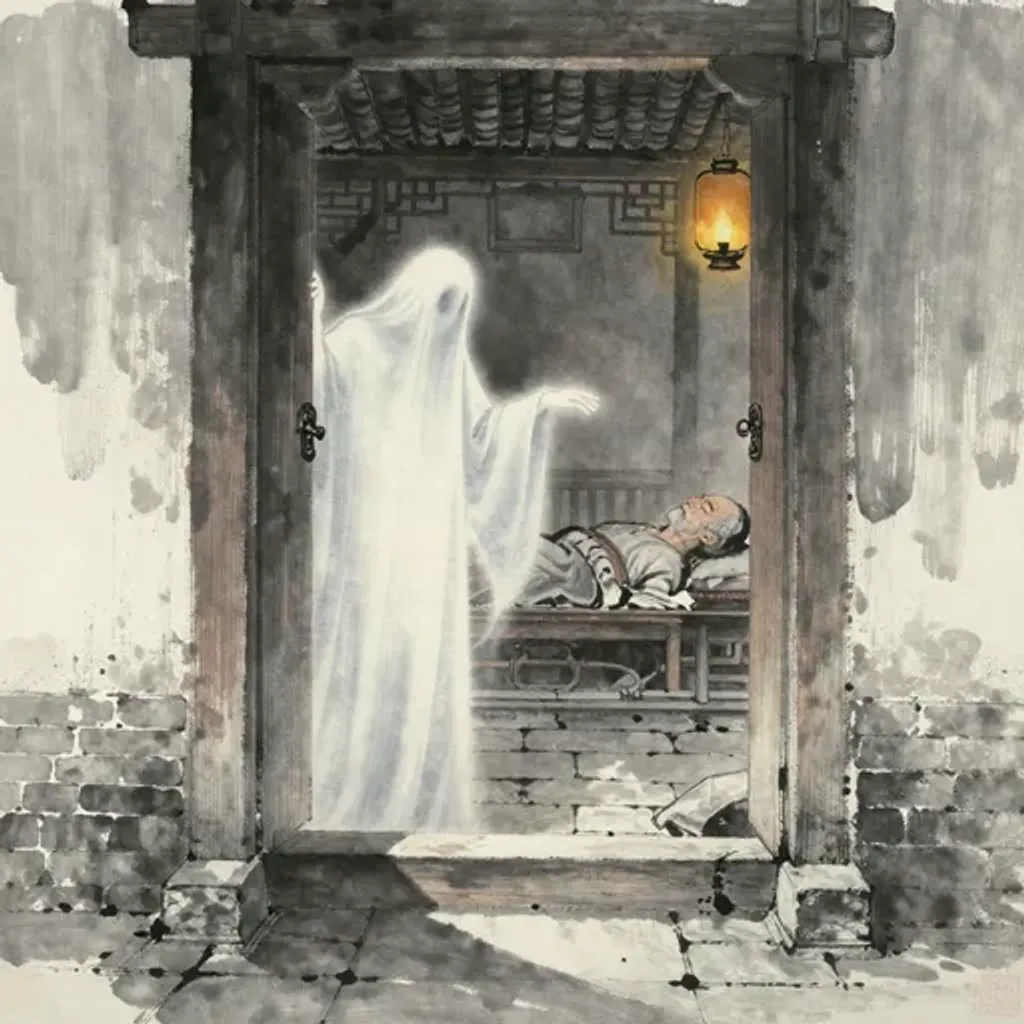
鬼守我廬,欲呼伯去;曾孫壽考,司命不許。與生相保。
A ghost haunts my dwelling, wishing to summon the elder away; yet the grandchild is blessed with long life -- the Lord of Fate does not permit it. Together they are kept safe.
— Jiao Yanshou, Yilin (Forest of Changes), 1st century BC
Commentary
Fire and thunder guard the threshold, and a ghost squats at the doorstep, trying to summon the household elder away. But the Director of Fate refuses the request: the grandchildren and great-grandchildren shall live to old age, their lifespans guaranteed. The spirit departs, and life is preserved. The Director of Fate (司命) is the celestial bureaucrat who governs the registry of life and death. The verse dramatizes a negotiation with death itself — and death loses. From Biting Through to Approach, earth rests above the lake as benevolent authority draws near. The cosmic judge who bites through injustice here bites through death's claim, and the family endures under divine protection.
噬嗑 → 觀
Hexagram 21 → Hexagram 20: Contemplation
Changing lines: 1, 4, 5
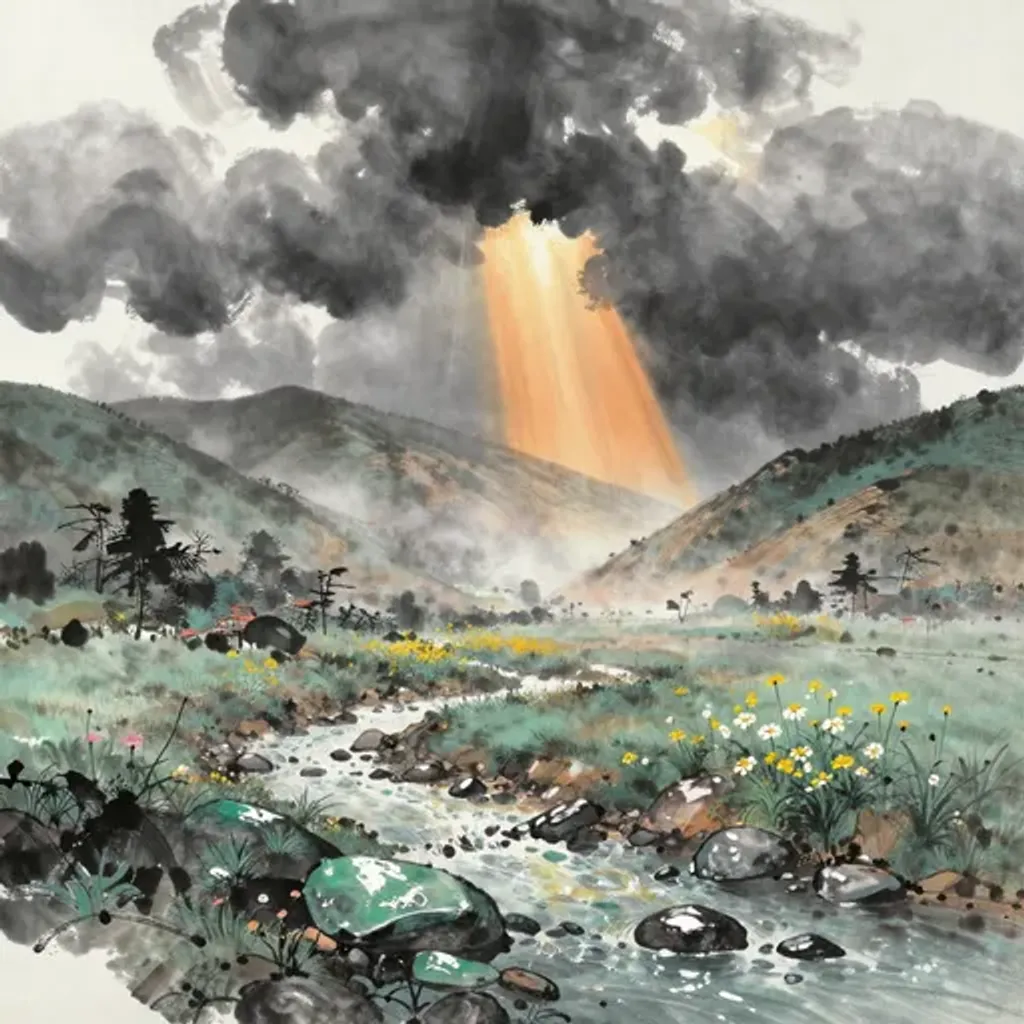
禍走患伏,喜為我福;凶惡消亡,災害不作。
Calamity flees, misfortune hides; joy becomes my blessing. Evil and malice vanish away; disaster does not arise.
— Jiao Yanshou, Yilin (Forest of Changes), 1st century BC
Commentary
Fire and thunder once enforced the law through biting force, and now their work is done: misfortune flees, calamity lies subdued. Joy becomes one's personal blessing; all malicious forces dissolve, and disasters cease to stir. The verse reads as an all-clear signal after a period of danger, every threat neutralized, every shadow dispersed. From Biting Through to Contemplation, wind moves over the earth as the sage surveys the land. The transformation marks the shift from active enforcement to reflective observation — punishment has served its purpose, and now the ruler need only observe the people with a calm, clarified gaze. The land is at peace because justice has already been done.
噬嗑 → 噬嗑
Hexagram 21 → Hexagram 21: Biting Through
No changing lines — the hexagram is unchanged
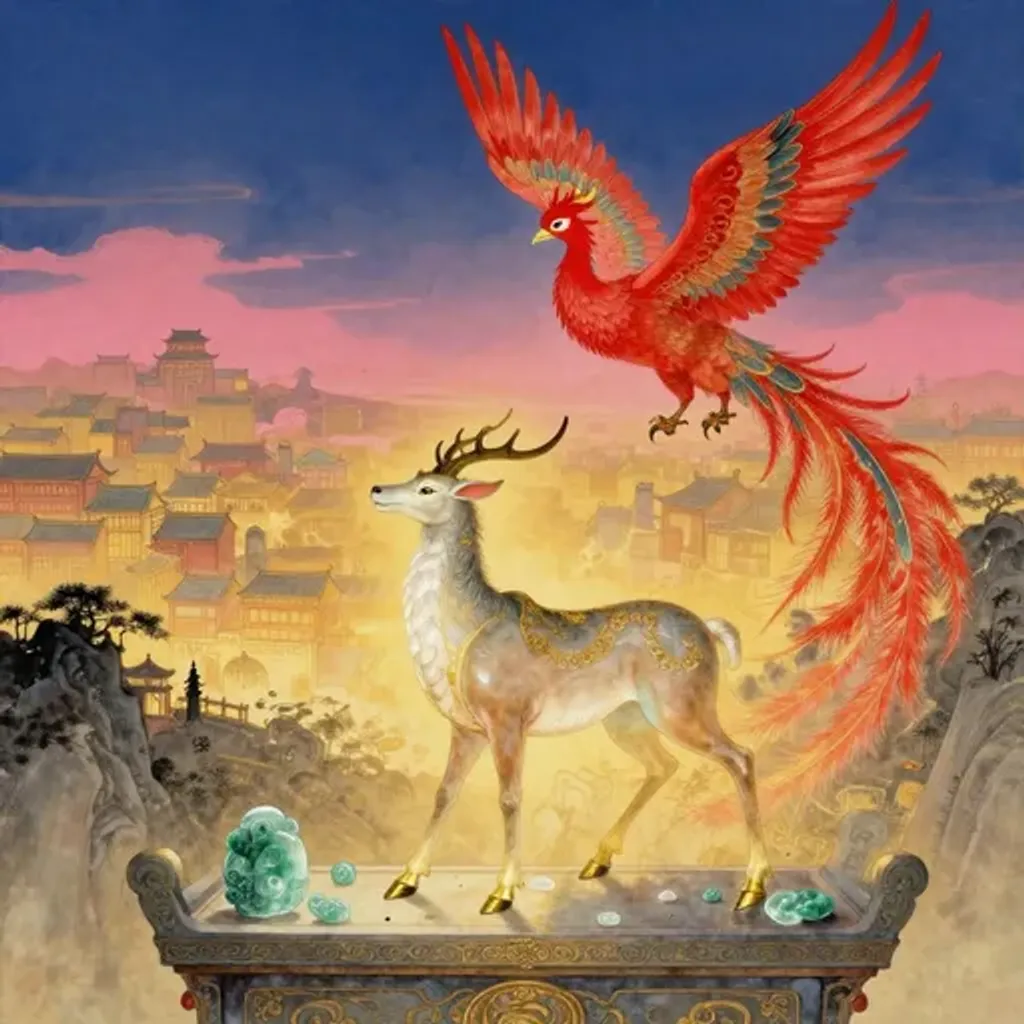
麒麟鳳凰,善政德祥;陰陽和調,國無災殃。
Qilin and phoenix -- auspicious signs of benevolent rule. Yin and yang are harmonized and balanced; the kingdom suffers no calamity.
— Jiao Yanshou, Yilin (Forest of Changes), 1st century BC
Commentary
Fire and thunder return to themselves — Biting Through reflecting upon its own nature. The qilin and the phoenix appear, signs of sage governance and virtuous omens. Yin and yang are harmoniously balanced, and the state knows no calamity. These auspicious creatures emerge only under a sage's rule: the qilin treads on no living grass, the phoenix nests in paulownia. Their arrival signals that the legal order of hexagram 21 has achieved its ultimate purpose — not perpetual punishment but the creation of conditions so just that punishment becomes unnecessary. The doubled hexagram completes the circle: law perfectly administered makes itself obsolete.
噬嗑 → 賁
Hexagram 21 → Hexagram 22: Grace
Changing lines: 3, 4
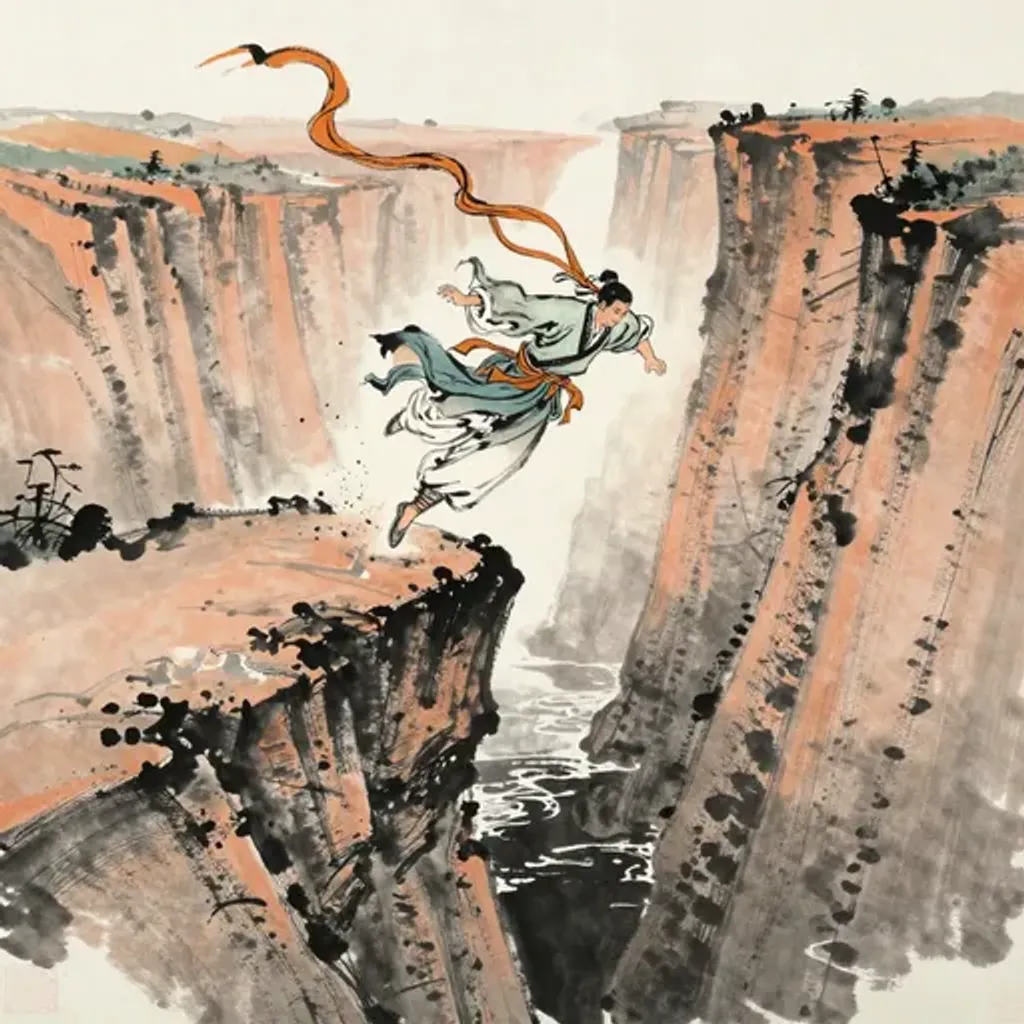
智不別揚,張狂妄行;蹈淵仆顛,傷殺伯身。
Wisdom fails to discern or judge; reckless and wild in conduct. Treading the abyss, stumbling and falling -- wounding and killing the elder.
— Jiao Yanshou, Yilin (Forest of Changes), 1st century BC
Commentary
Fire and thunder deliver judgment, and here the verdict falls on reckless folly. Wisdom fails to distinguish right from wrong, and wild arrogance rushes headlong into disaster. The fool stumbles into an abyss, falls and tumbles, and the eldest son is wounded and killed. The verse condemns the failure of discernment that leads to physical destruction — not external enemies but one's own unexamined recklessness. From Biting Through to Grace, fire illuminates the mountain with refined beauty. Yet the verse shows what happens when one lacks the discrimination that Grace demands: unable to see clearly, rushing where elegance requires careful perception, the graceless fool destroys himself.
噬嗑 → 剝
Hexagram 21 → Hexagram 23: Splitting Apart
Changing lines: 1, 4
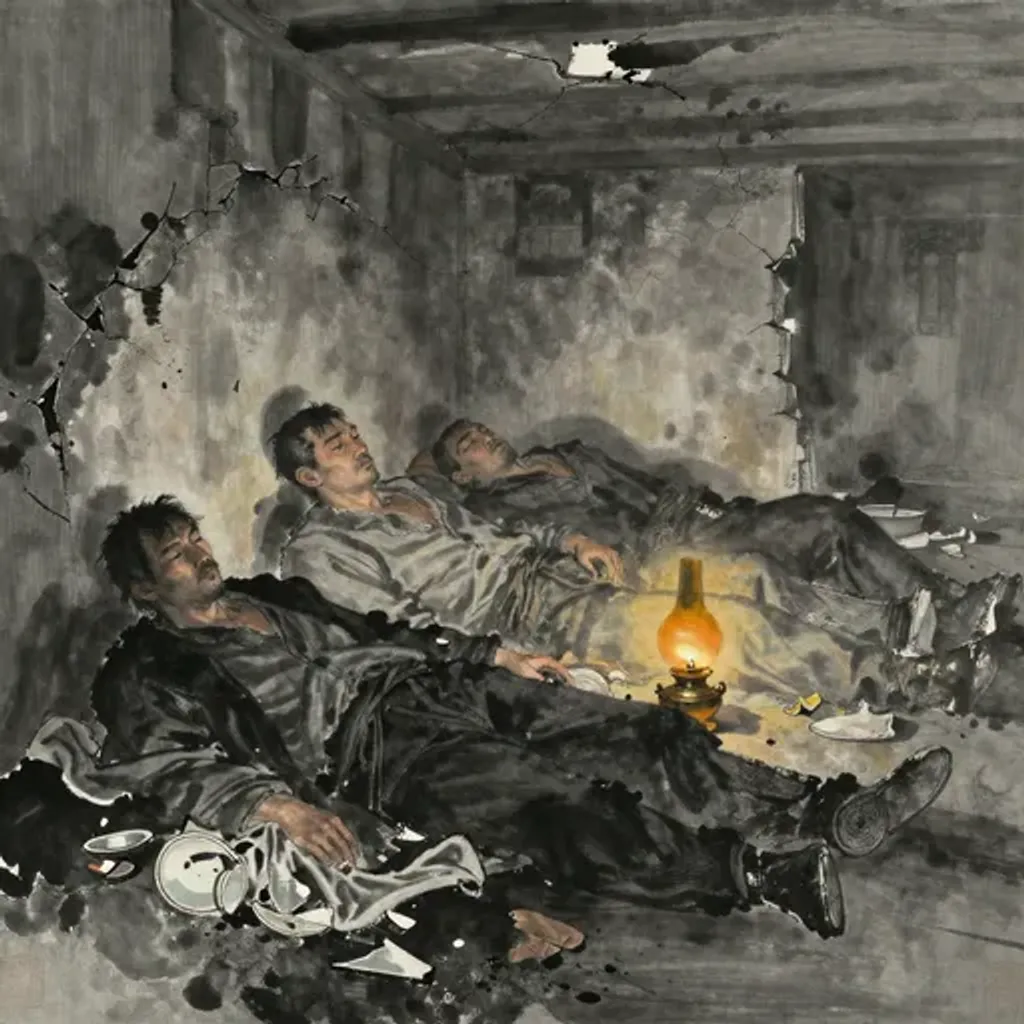
凶憂災殃,日益章明;禍不可休,三郤夷傷。
Dire trouble and calamity, day by day growing clearer; disaster cannot be stayed -- the three Xi are cut down.
— Jiao Yanshou, Yilin (Forest of Changes), 1st century BC
Commentary
Fire and thunder enforce the law, and here disaster compounds daily, growing clearer and more dire. Calamity cannot be stopped — and then the verse names its target: the Three Xi are wounded and cut down. The Three Xi (三郤) were the powerful Xi clan members of Jin — Xi Qi, Xi Chou, and Xi Zhi — whose combined wealth equaled half the ducal house and whose troops filled half the army. In 574 BC, Duke Li of Jin ordered their assassination; Changyu Jiao killed them with his halberd. Their overreach invited destruction. From Biting Through to Splitting Apart, the mountain crumbles upon the earth. Accumulated power, grown too heavy for its foundation, strips away layer by layer until nothing remains.
噬嗑 → 復
Hexagram 21 → Hexagram 24: Return
Changing lines: 4, 6
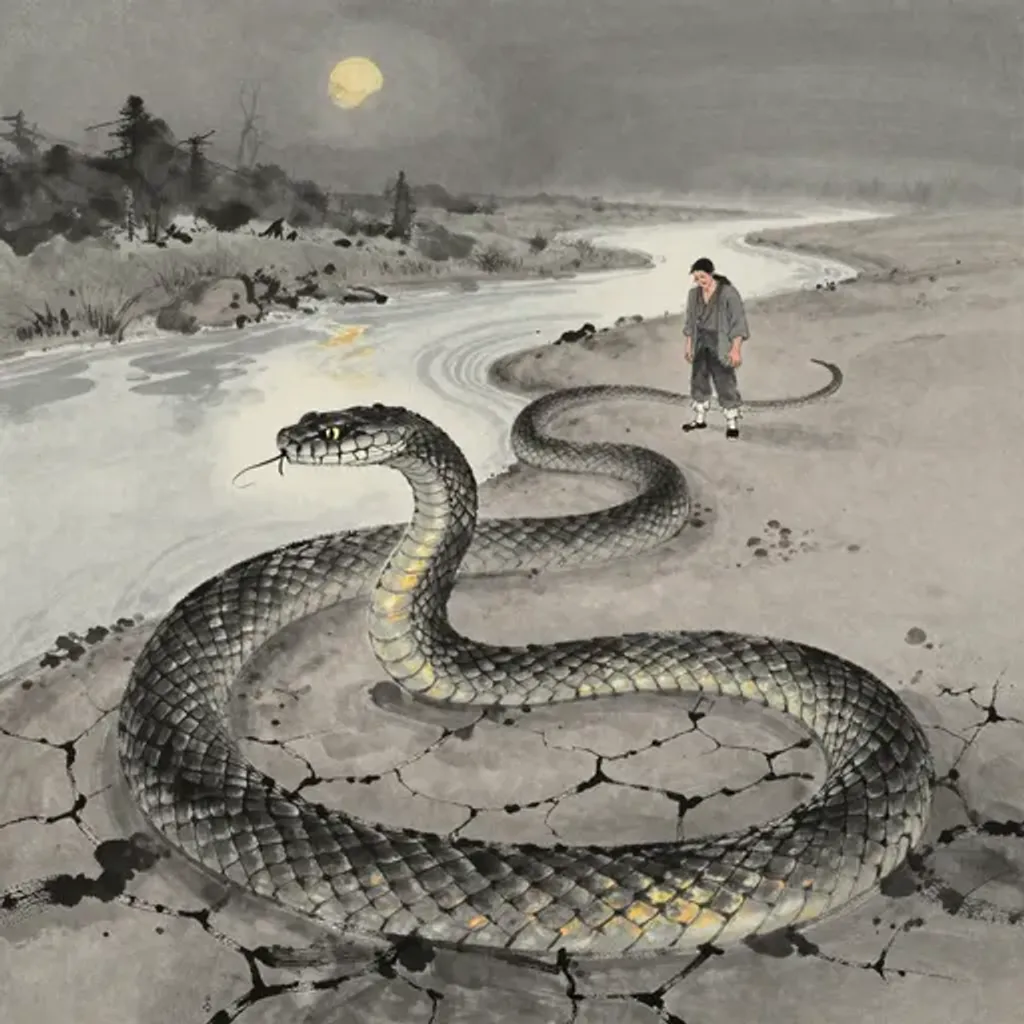
長尾蜲蛇,畫地為河;深不可涉,阻絕以無。惆然憤息。
A long-tailed serpent draws a line in the earth for a river; too deep to wade, it blocks the way to nothing. Brooding and sighing in frustration.
— Jiao Yanshou, Yilin (Forest of Changes), 1st century BC
Commentary
Fire and thunder bite through obstacles, but here a serpent with a long, sinuous tail draws a line upon the ground and calls it a river. The line cannot be crossed — it is too deep to ford — and the way is blocked to nothing. One sighs in frustrated anguish. The image is of a false barrier: a snake traces a mark on earth and declares it impassable, yet it is only a drawn line, not a real river. The frustration lies in being stopped by an illusion. From Biting Through to Return, thunder stirs beneath the earth at the winter solstice. The verse suggests that what blocks the path is not a true obstacle but a deception — and the return of yang energy will expose the false river for what it is.
噬嗑 → 无妄
Hexagram 21 → Hexagram 25: Innocence
Changing lines: 5
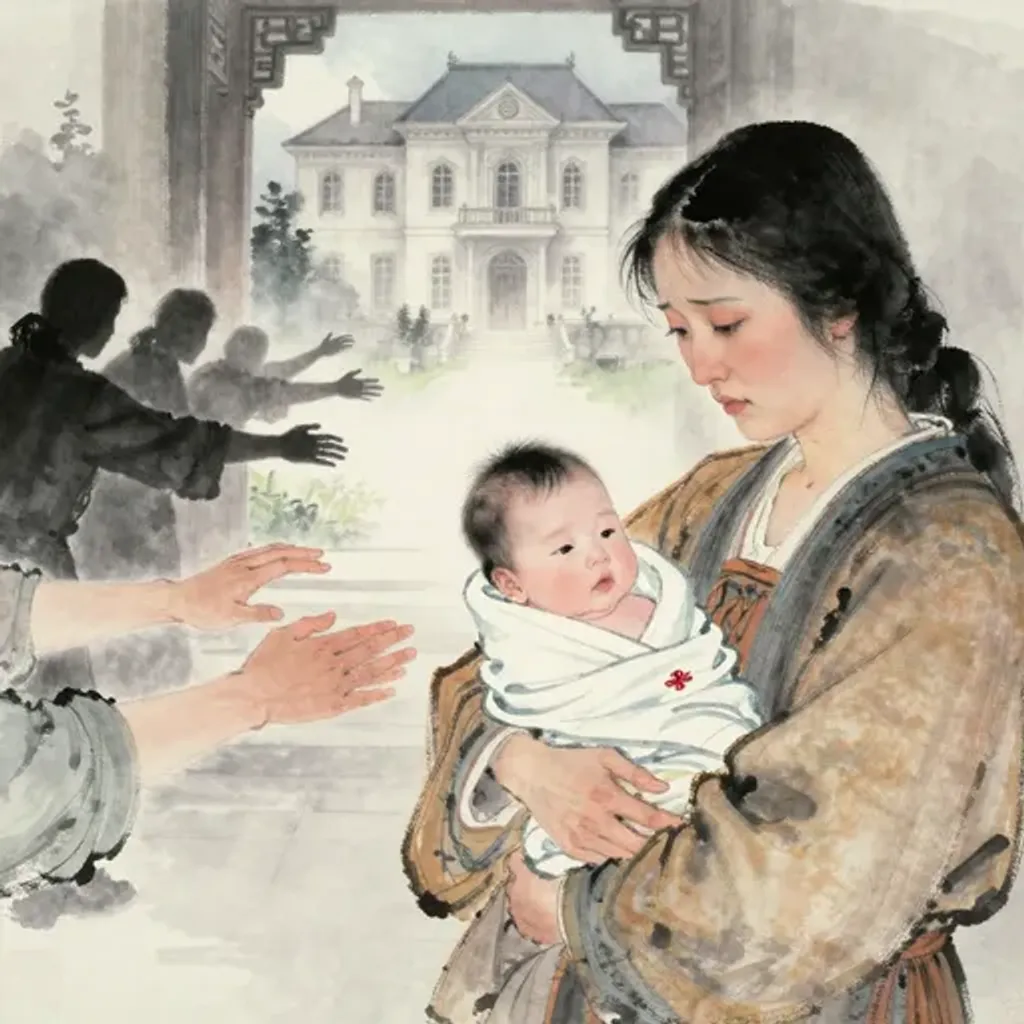
愛我嬰女,牽引不與;冀幸高貴,反得賤下。
Cherishing my infant daughter, pulling her close, refusing to yield; hoping for high nobility -- instead one gets the lowly.
— Jiao Yanshou, Yilin (Forest of Changes), 1st century BC
Commentary
Fire and thunder enforce the law, and here desire meets its inversion. Someone clings to a beloved daughter, pulling her close and refusing to let go, hoping for high nobility — but instead receives only lowliness. The verse describes the parent who grasps too tightly at an advantageous match, only to see expectations collapse into their opposite. From Biting Through to Innocence, heaven's thunder moves without ulterior motive. The irony is sharp: the scheming parent who manipulates the marriage market for advantage acts precisely contrary to Innocence's principle of acting without calculated expectation. What is grasped at with cunning slips away; what comes naturally under heaven's thunder arrives unsought.
噬嗑 → 大畜
Hexagram 21 → Hexagram 26: Great Taming
Changing lines: 2, 3, 4
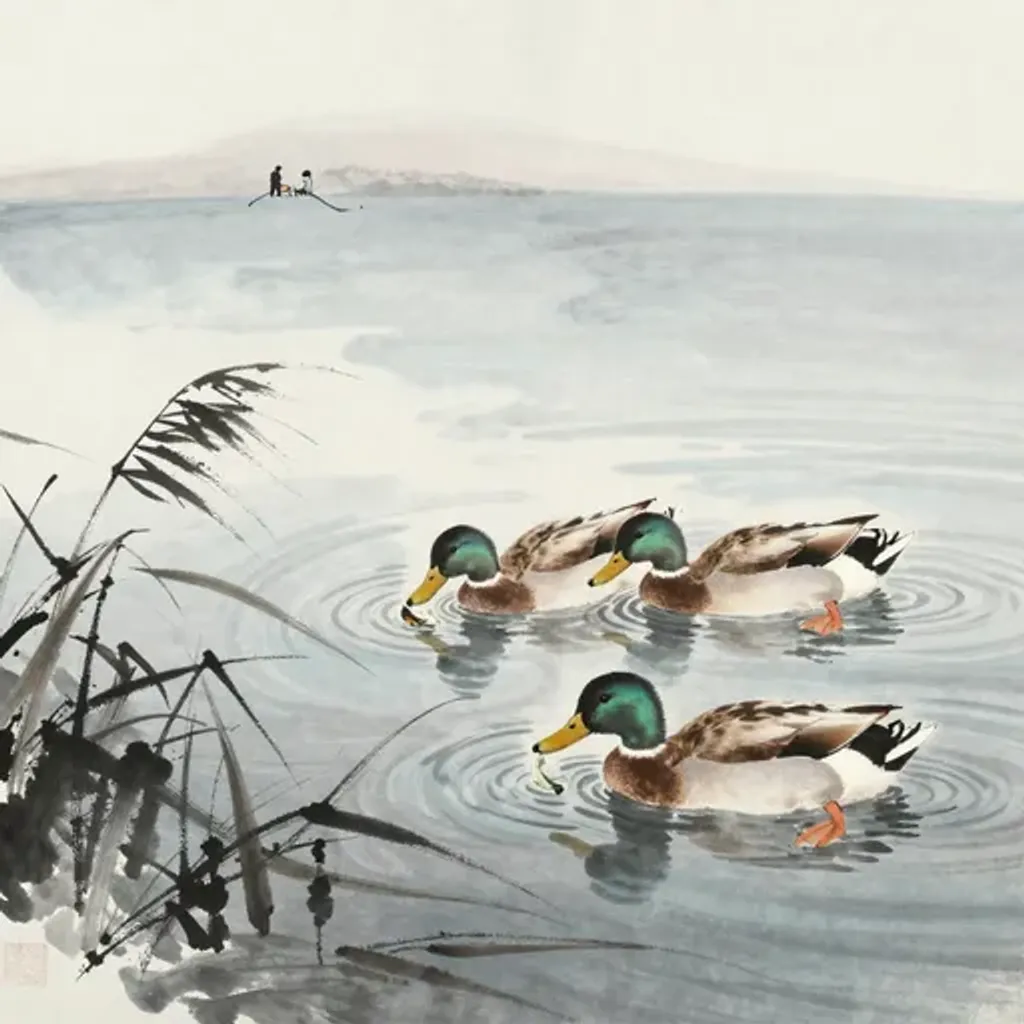
鳧游江海,甘樂其餌;既不近人,雖驚不駭。
Wild ducks swim rivers and seas, delighting in their fare; since they do not approach mankind, though startled they are not afraid.
— Jiao Yanshou, Yilin (Forest of Changes), 1st century BC
Commentary
Fire and thunder bite through obstacles, and here the scene opens onto serene self-sufficiency. A wild duck swims the rivers and seas, content with its own food, delighting in what it finds. It keeps its distance from human affairs, and though startled, it is never truly frightened. The duck's composure comes from its independence — needing nothing from civilization, it remains unperturbed by its disturbances. From Biting Through to Great Taming, heaven is stored within the mountain. The transformation points to deep inner accumulation: the duck's freedom mirrors the sage who has gathered so much wisdom within that external alarms cannot shake it. True taming is self-possession, not confinement.
噬嗑 → 頤
Hexagram 21 → Hexagram 27: Nourishment
Changing lines: 4
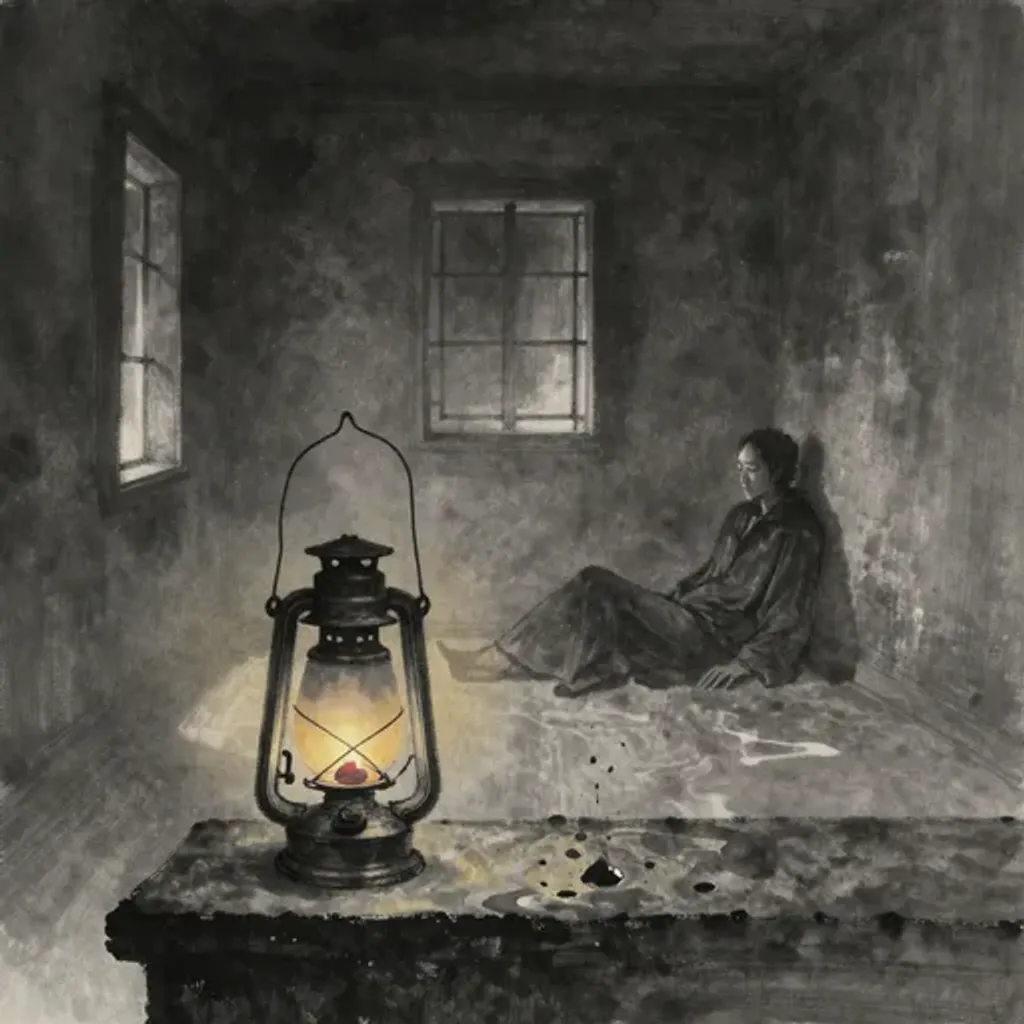
明滅光息,不能復食;精魄既喪,以夜為室。
Light dims, radiance dies -- one can no longer eat. Vital spirit already lost, night becomes one's dwelling.
— Jiao Yanshou, Yilin (Forest of Changes), 1st century BC
Commentary
Fire and thunder once illuminated the law, but here the light gutters and dies. Brightness is extinguished, and the ability to eat is lost — the vital spirit has departed, and night becomes the permanent dwelling. The verse reads as an elegy: death itself, or at minimum the complete collapse of vitality. Without light, there is no nourishment; without spirit, only darkness remains. From Biting Through to Nourishment, the mountain rests above thunder — the jaws of sustenance. Yet the verse presents the inverse: the mouth that should nourish can no longer receive food. The transformation warns that when inner light is extinguished, even the capacity for nourishment fails.
噬嗑 → 大過
Hexagram 21 → Hexagram 28: Great Exceeding
Changing lines: 1, 2, 3, 5, 6
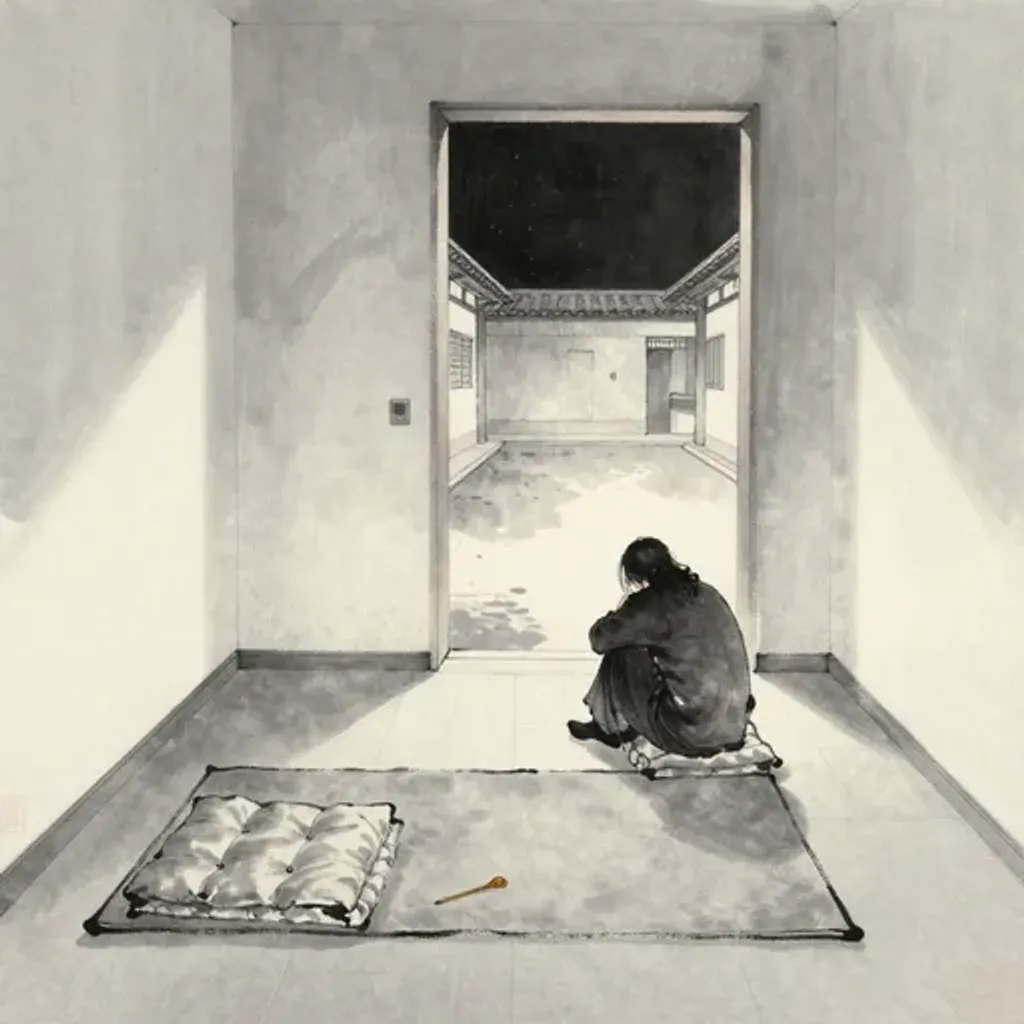
奇適無偶,習靖獨處;所願不從,心思勞苦。
Odd without a match, accustomed to quiet and dwelling alone; one's wishes go unfollowed -- the heart labors in bitter longing.
— Jiao Yanshou, Yilin (Forest of Changes), 1st century BC
Commentary
Fire and thunder enforce order, but here the verse speaks of an unmatched soul dwelling alone. An odd piece without its pair settles into quiet solitude. Desires go unfulfilled, and the heart labors in bitter thought. The word 'odd' (奇) means 'without complement' — a single chopstick, a solitary shoe. The verse captures the ache of incompleteness, not dramatic tragedy but the slow erosion of hope. From Biting Through to Great Exceeding, the lake submerges the trees below it — a structure overwhelmed. The solitary figure bears a weight too great for one person, the ridgepole sagging under a burden meant for two. Excess without partnership becomes unbearable strain.
噬嗑 → 坎
Hexagram 21 → Hexagram 29: The Abysmal Water
Changing lines: 1, 2, 4, 5, 6
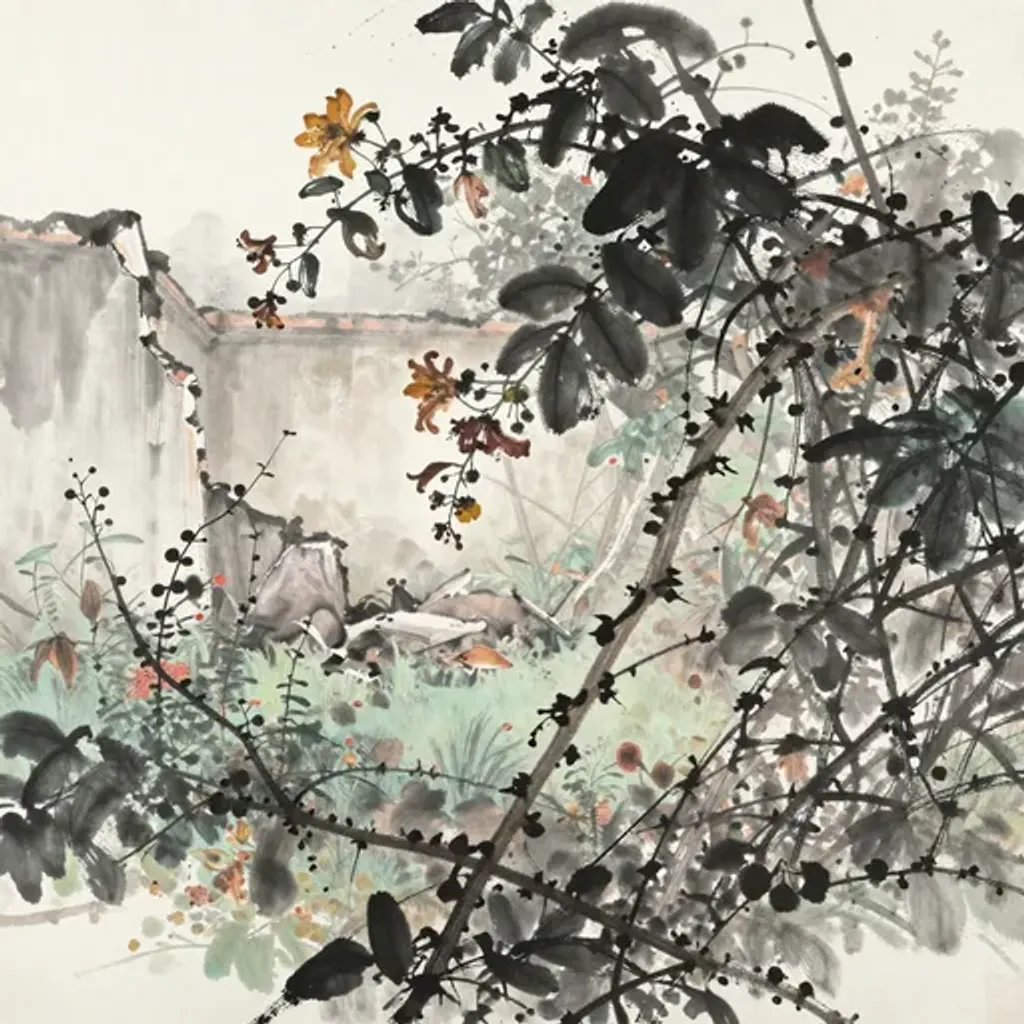
葛藟蒙棘,華不得實;讒佞亂政,使忠壅塞。
Creeping vines smother the thorns; blossoms never bear fruit. Flatterers and slanderers corrupt the state, choking the loyal into silence.
— Jiao Yanshou, Yilin (Forest of Changes), 1st century BC
Commentary
Fire and thunder enforce just order, but here the judicial system itself has been corrupted. Creeping vines smother the thornbush — blossoms appear but never bear fruit. Slanderers and flatterers disorder the government, causing loyal ministers to be blocked and silenced. The vine-on-thorn image (葛藟蒙棘) echoes the Shijing, where parasitic vines represent those who thrive by clinging to others. Flowers without fruit symbolize effort without result, promise without fulfillment. From Biting Through to The Abysmal, doubled water plunges into repeated danger. The corruption of the court creates a trap with no exit — the more one struggles for integrity, the deeper one sinks.
噬嗑 → 離
Hexagram 21 → Hexagram 30: The Clinging Fire
Changing lines: 3
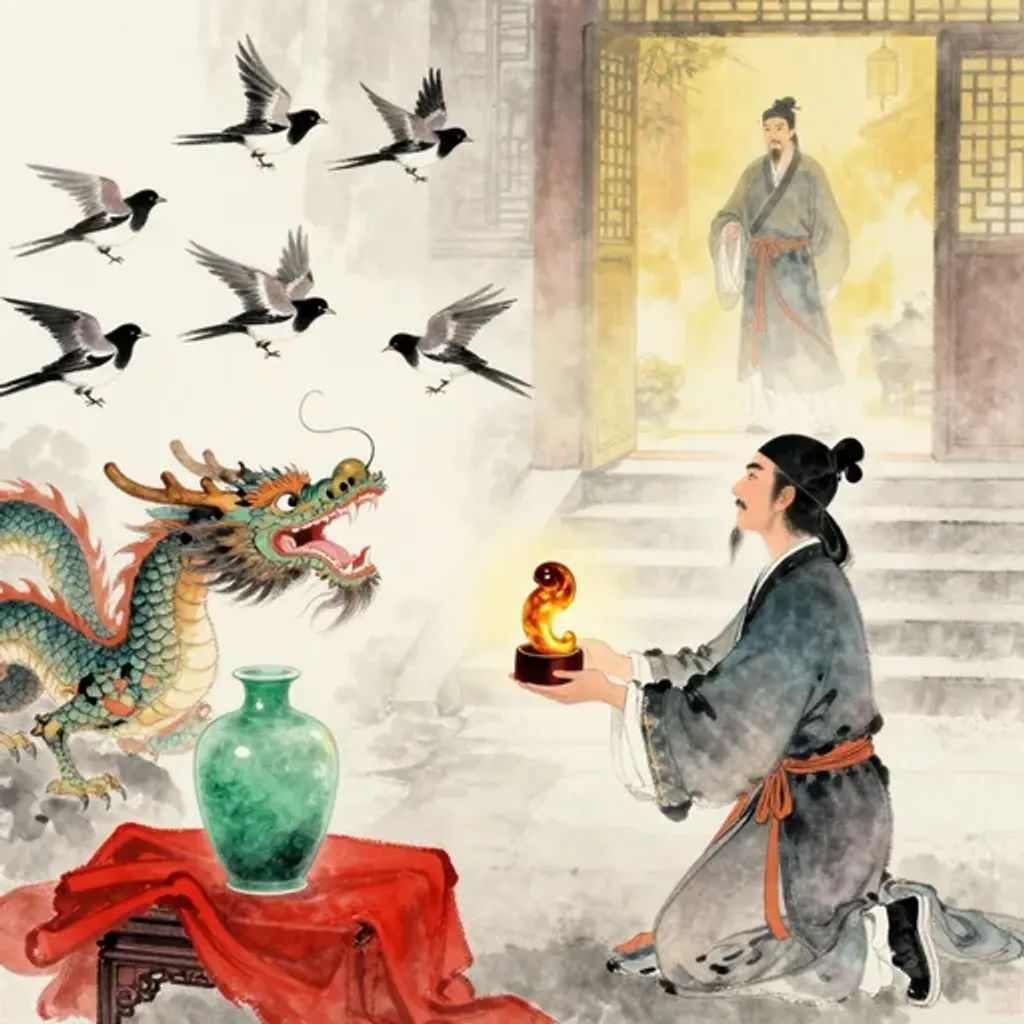
鵲笑鳩舞,來遺我酒;大喜在後,授吾龜紐。龍喜張口,起拜福祉。
Magpies laugh, doves dance; they come bearing wine for us. Great joy lies ahead -- bestowing the tortoiseshell seal. The dragon joyfully opens its mouth; we rise and bow to receive the blessing.
— Jiao Yanshou, Yilin (Forest of Changes), 1st century BC
Commentary
Fire and thunder blaze with judicial clarity, and here the judgment brings pure celebration. Magpies chatter in delight, doves dance, and wine is offered as a gift. Greater joy awaits: one receives the tortoise-seal of authority, the dragon opens its mouth in approval, and one rises to accept this blessing. The magpie is an omen of good news in Chinese folk tradition; the tortoise-seal (龜紐) represents official appointment. The dragon's gaping mouth signals imperial favor pouring forth. From Biting Through to The Clinging, doubled fire illuminates all directions. The law has done its work, and what emerges is radiant recognition — merit acknowledged, authority bestowed, blessing upon blessing.
噬嗑 → 咸
Hexagram 21 → Hexagram 31: Influence
Changing lines: 1, 3, 5, 6
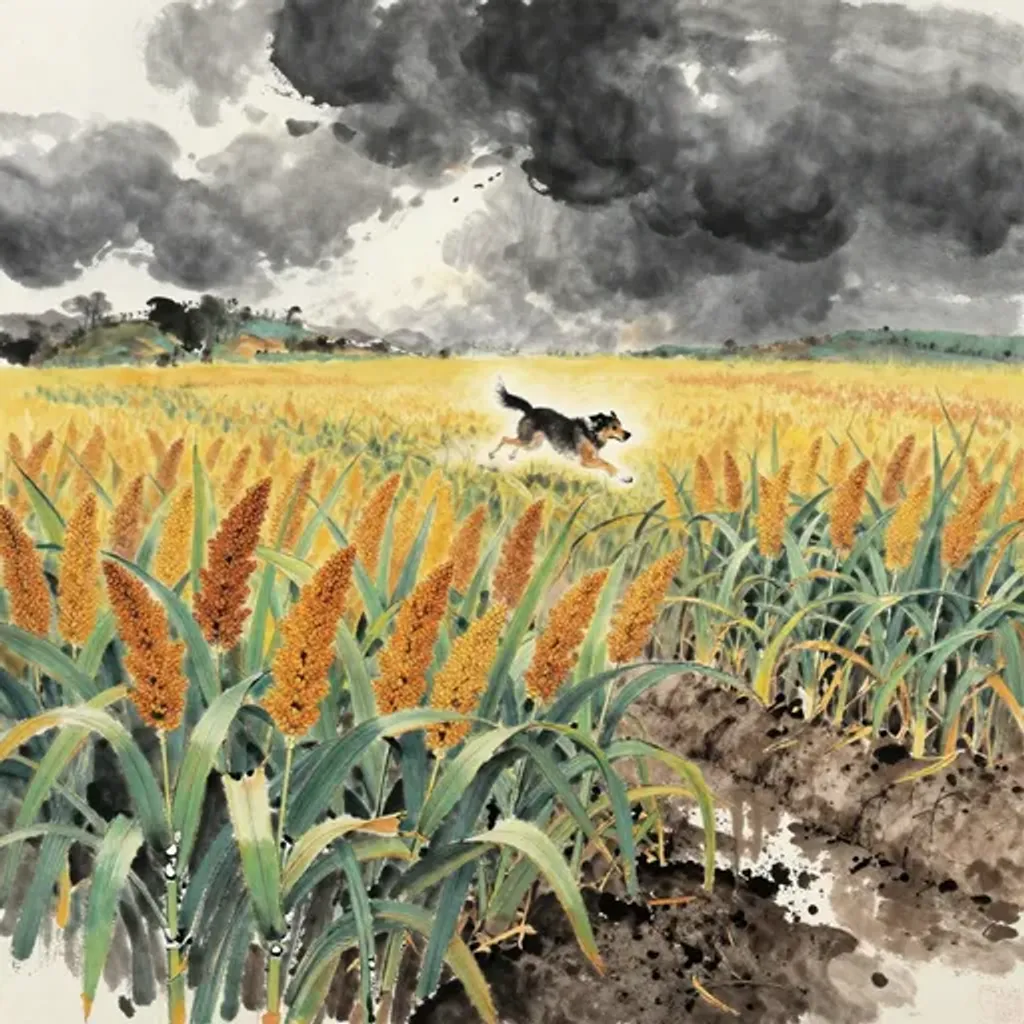
搖尾逐災,雲沉孽除;洿泥生粱,下為田主。
Wagging its tail, it chases disaster; clouds sink, misfortune fades. From muddy lowland, fine millet grows -- below becomes the master of the field.
— Jiao Yanshou, Yilin (Forest of Changes), 1st century BC
Commentary
Fire and thunder enforce the law, and here the verse presents a striking reversal of fortune. A creature wags its tail to chase away calamity; clouds descend and evils are purged. Then, from filthy mud, fine millet grows — and the lowly laborer becomes master of the fields. The tail-wagging image suggests a dog driving off misfortune, a folk apotropaic motif. The mud-to-millet transformation is the verse's core: the most polluted ground produces the finest grain. From Biting Through to Influence, the lake rests upon the mountain, moisture descending to nourish from above. The receptive emptiness of Influence allows the impure to be transmuted — one who opens to change can convert even the filthiest circumstances into abundance.
噬嗑 → 恆
Hexagram 21 → Hexagram 32: Duration
Changing lines: 1, 2, 3, 6
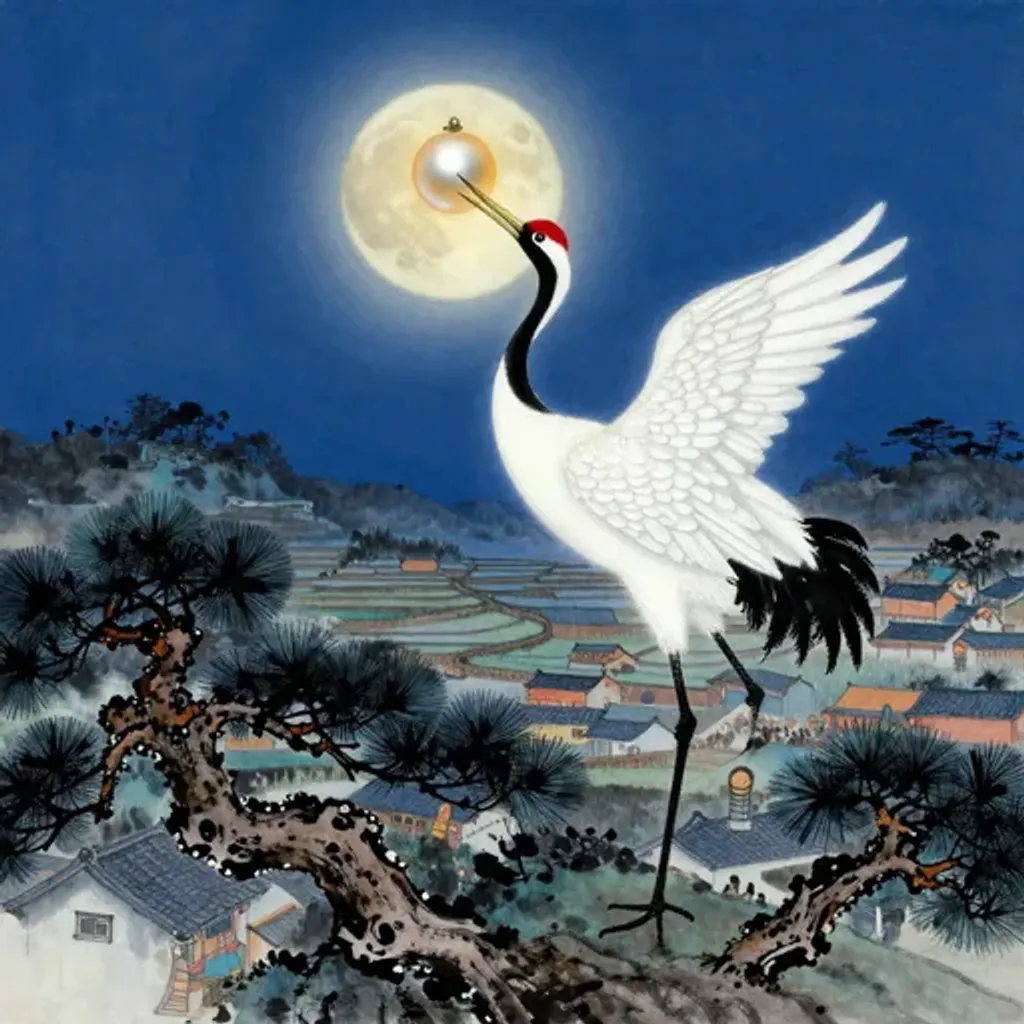
白鶴𠾑珠,夜食為明;膏潤優渥,國歲年豐。
A white crane holds a pearl in its beak, feeding on light through the night; rich ointment, generous moisture -- the kingdom's harvest is abundant.
— Jiao Yanshou, Yilin (Forest of Changes), 1st century BC
Commentary
Fire and thunder illuminate the law, and here a luminous image emerges: a white crane holds a pearl in its beak, feeding at night by its own light. Rich moisture and abundant nourishment flow forth; the nation's harvests are full year after year. The crane-with-pearl is a potent symbol: the bird carries its own illumination, needing no external source. This self-generating light sustains not just the crane but the entire realm. From Biting Through to Duration, thunder and wind reinforce each other in perpetual constancy. The verse embodies Duration's promise: when inner radiance is genuine and self-sustaining, prosperity renews itself endlessly without force or intervention.
噬嗑 → 遯
Hexagram 21 → Hexagram 33: Retreat
Changing lines: 1, 3, 5
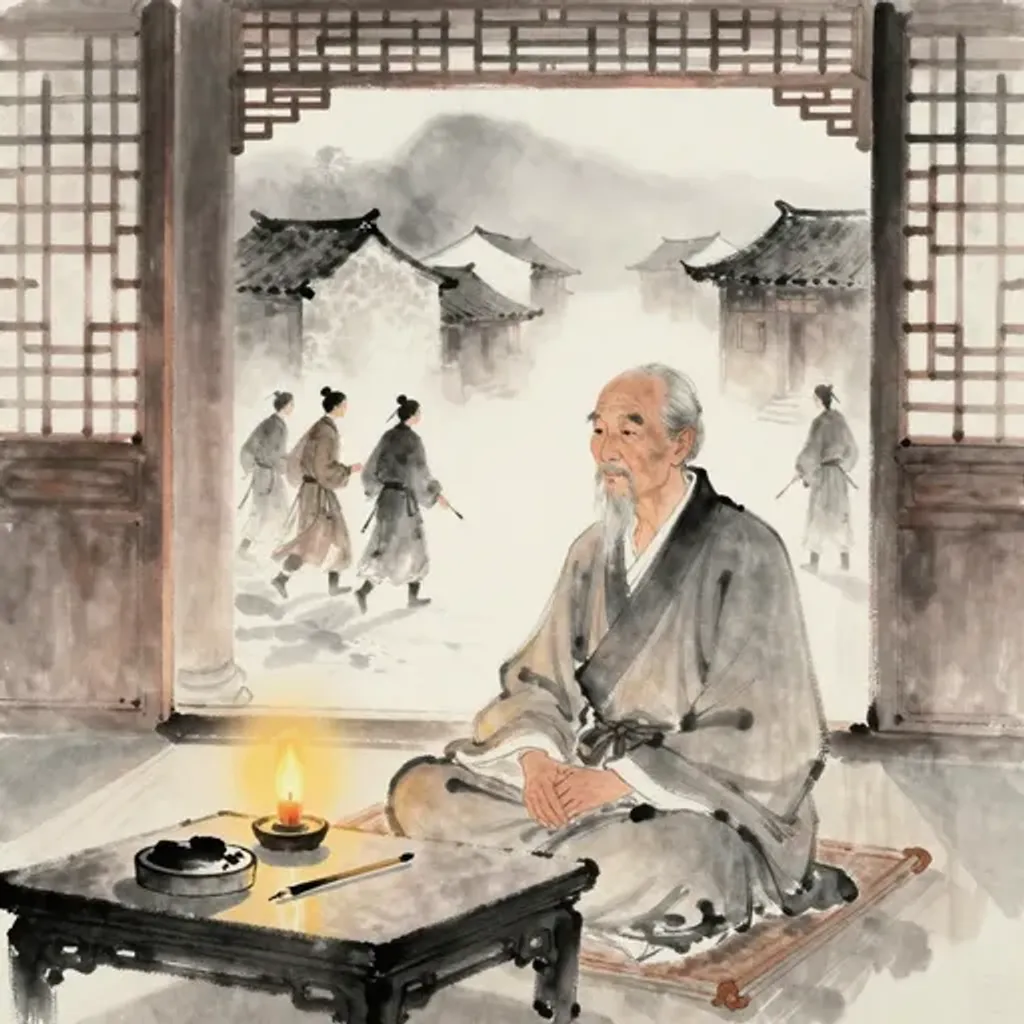
內執柔德,止訟以默;宗邑賴德,禍災不作。
Within, one holds to gentle virtue, stilling disputes through silence; the ancestral domain relies on this virtue -- calamity and disaster do not arise.
— Jiao Yanshou, Yilin (Forest of Changes), 1st century BC
Commentary
Fire and thunder enforce the law, yet this verse resolves conflict through gentleness rather than force. Inwardly holding soft virtue, one halts litigation through silence. The ancestral community benefits from this moral power, and disasters simply fail to arise. The phrase 'stop lawsuits through silence' (止訟以默) directly contrasts with hexagram 21's mandate to bite through — here, stillness achieves what teeth cannot. From Biting Through to Retreat, heaven rests above the mountain as the wise withdraw from contention. The transformation teaches that sometimes the most effective enforcement is non-engagement: by embodying virtue silently, one removes the conditions that generate conflict in the first place.
噬嗑 → 大壯
Hexagram 21 → Hexagram 34: Great Power
Changing lines: 2, 3, 6
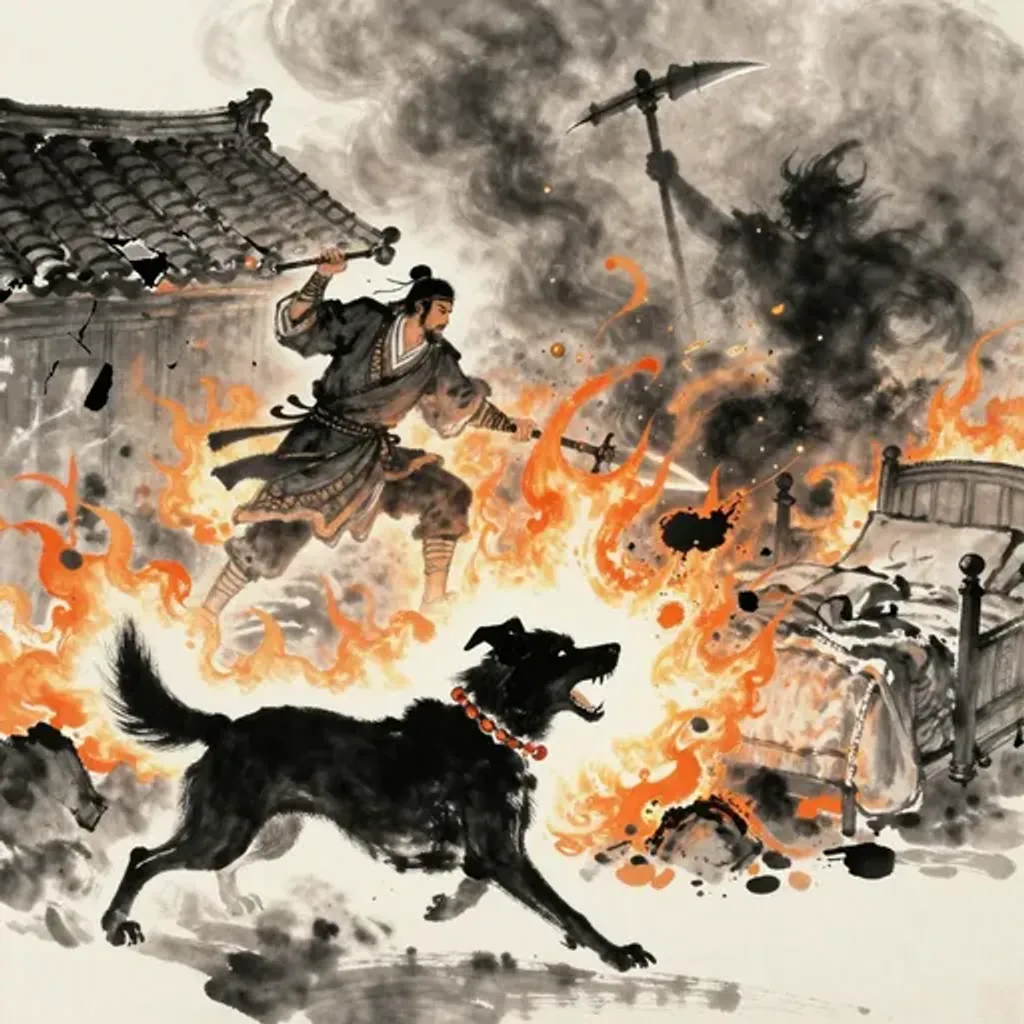
犬吠驚駭,公拔戈起;玄冥厭火,消散瓦解。
Dogs bark in alarm; the lord seizes halberd and rises. The dark spirit of winter loathes fire -- it scatters and dissolves to nothing.
— Jiao Yanshou, Yilin (Forest of Changes), 1st century BC
Commentary
Fire and thunder crack through the law, and here a dog's sudden bark startles the night. The lord seizes his halberd and leaps to his feet in alarm. But the threat dissolves: the Dark Warrior of the north, patron of winter and water, suppresses the fire, and the crisis scatters like broken tiles. The 'Dark One suppressing fire' (玄冥厭火) invokes the cosmological cycle where winter's water-energy naturally quells summer's fire-energy. From Biting Through to Great Power, thunder rides above heaven — enormous force unleashed. Yet the verse shows that overwhelming power need not be deployed: the cosmic cycle itself resolves the alarm, and the halberd raised in fear is never needed.
噬嗑 → 晉
Hexagram 21 → Hexagram 35: Progress
Changing lines: 1
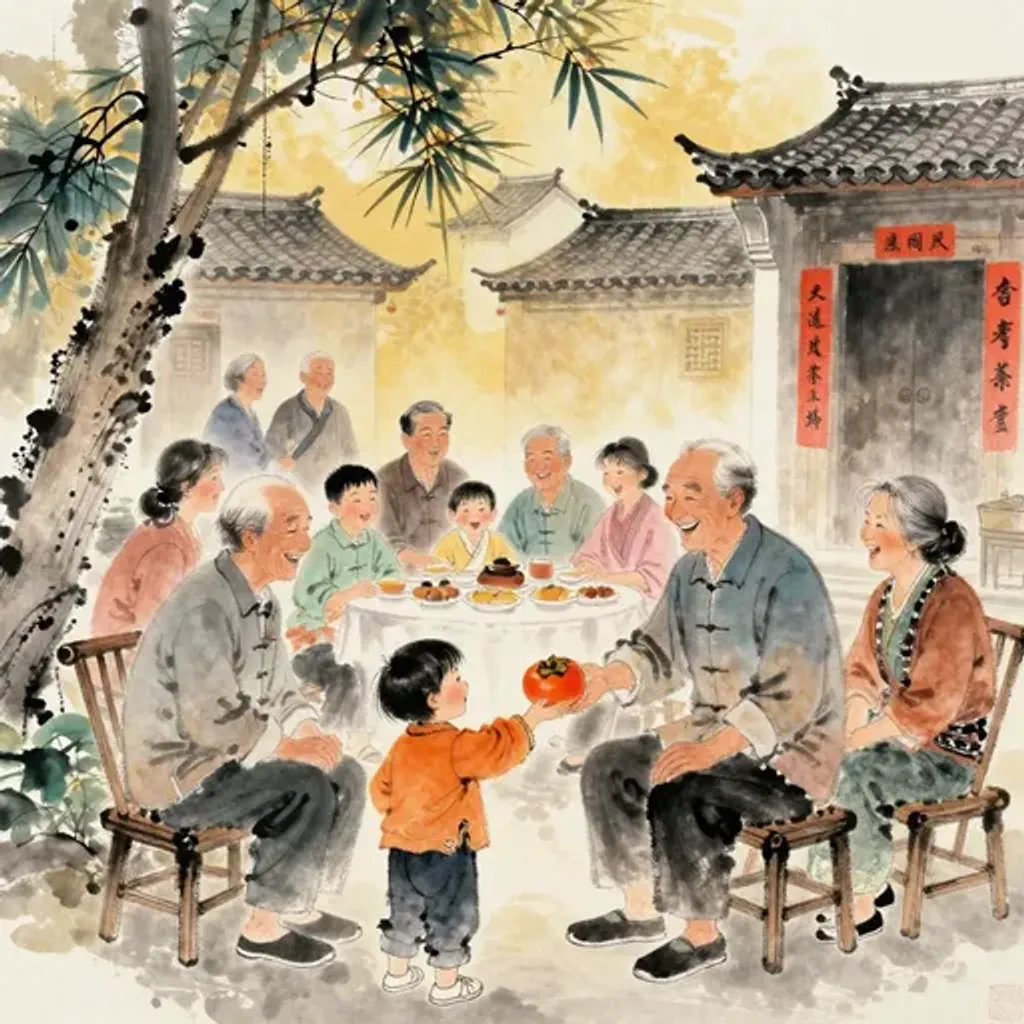
公悅嫗喜,孫子俱在;榮譽日登,福祿來處。
The lord is pleased, the lady rejoices; sons and grandsons are all present. Honor and fame ascend day by day; blessing and fortune come to dwell.
— Jiao Yanshou, Yilin (Forest of Changes), 1st century BC
Commentary
Fire and thunder once enforced the law through sharp correction, and now the harvest of that justice arrives. The elder couple beam with pleasure, grandchildren all present and accounted for. Honor and reputation climb daily; blessings and fortune flow toward the household. The verse is a portrait of multigenerational flourishing — the reward for a life well-governed. From Biting Through to Progress, fire rises above the earth as the sun at dawn, illuminating virtue for all to see. The transformation from judicial severity to natural advancement captures the fullness of a completed cycle: once obstacles are cleared and order established, recognition and prosperity rise like sunlight breaking over the horizon.
噬嗑 → 明夷
Hexagram 21 → Hexagram 36: Darkening of the Light
Changing lines: 3, 4, 6
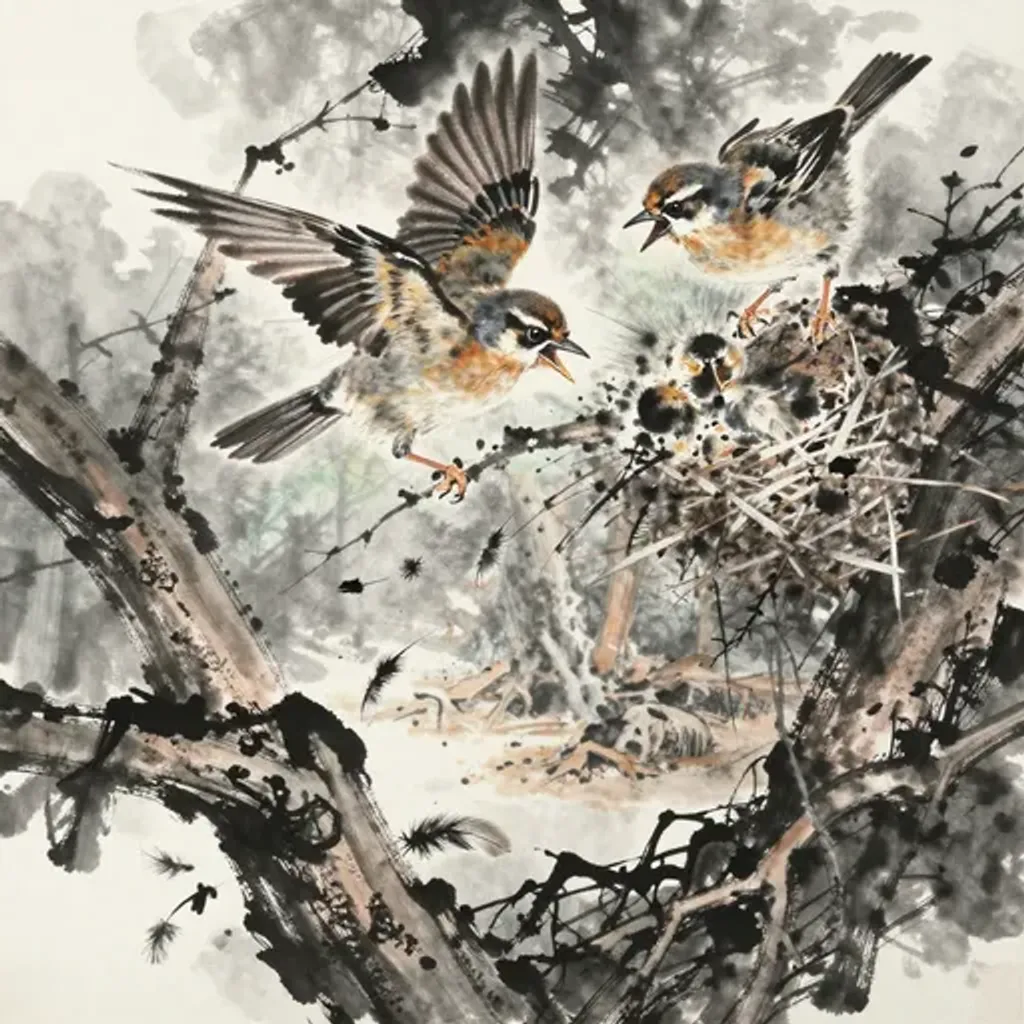
鳥鳴捕鷇,長欲飛去;循枝上下,適與風遇。顛隕樹根,命不可救。
A bird cries, seizing its fledgling, longing to fly away; hopping along the branch, up and down -- it meets the wind by chance. Tumbling down to the tree's roots, its fate cannot be saved.
— Jiao Yanshou, Yilin (Forest of Changes), 1st century BC
Commentary
Fire and thunder enforce the law, and here the verse tells a tale of fatal misjudgment in nature. A bird calls out to its fledgling, eager for its first flight. The young bird hops along branches, climbing up and down, and just as it launches — a gust of wind strikes. It tumbles, crashes to the tree's roots, and its life cannot be saved. The image is of premature action meeting unforeseen catastrophe: the fledgling was not ready, and the wind was merciless. From Biting Through to Darkening of the Light, the sun sinks into the earth. The verse captures the moment when brightness is extinguished — a promising life cut short by bad timing, the light driven underground before it could fully shine.
噬嗑 → 家人
Hexagram 21 → Hexagram 37: The Family
Changing lines: 3, 4, 5
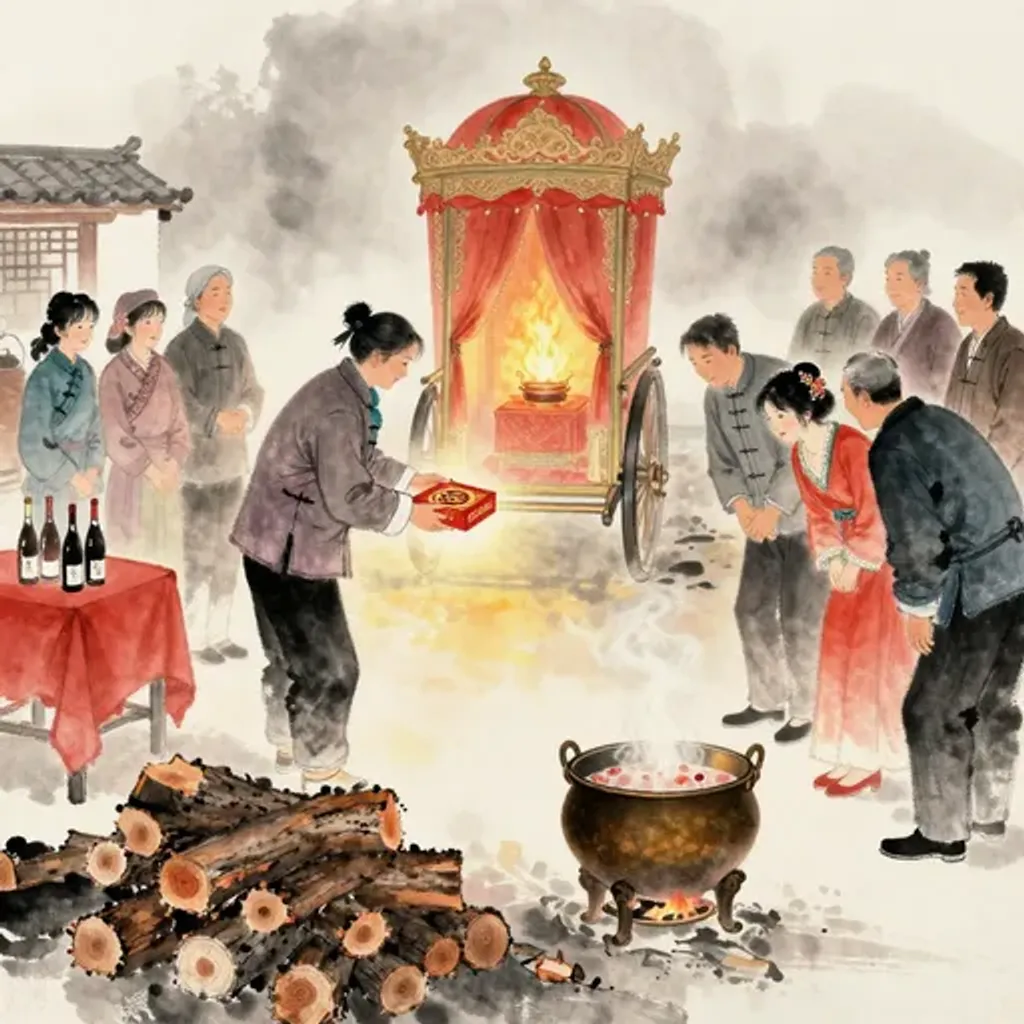
析薪熾酒,使媒求婦;和合齊宋,姜子悅喜。
Splitting kindling, warming wine, sending the matchmaker to seek a bride; harmonizing Qi and Song -- the Jiang scion is delighted.
— Jiao Yanshou, Yilin (Forest of Changes), 1st century BC
Commentary
Fire and thunder clear away obstacles, and the path opens to domestic happiness. Firewood is split and wine heated, a matchmaker is sent to seek a bride. The states of Qi and Song are brought into harmony, and the Jiang maiden delights in the union. The verse describes an inter-state marriage alliance — a diplomatic match sealed through proper ritual, with the warming of wine symbolizing the hospitality of the wedding feast. The Jiang clan was the ruling house of Qi. From Biting Through to The Family, wind issues from fire as warmth radiates outward from the hearth. The transformation is direct: once the obstacle is removed, the household forms naturally. Proper matchmaking and shared feasting build the bonds that sustain a family.
噬嗑 → 睽
Hexagram 21 → Hexagram 38: Opposition
Changing lines: 2
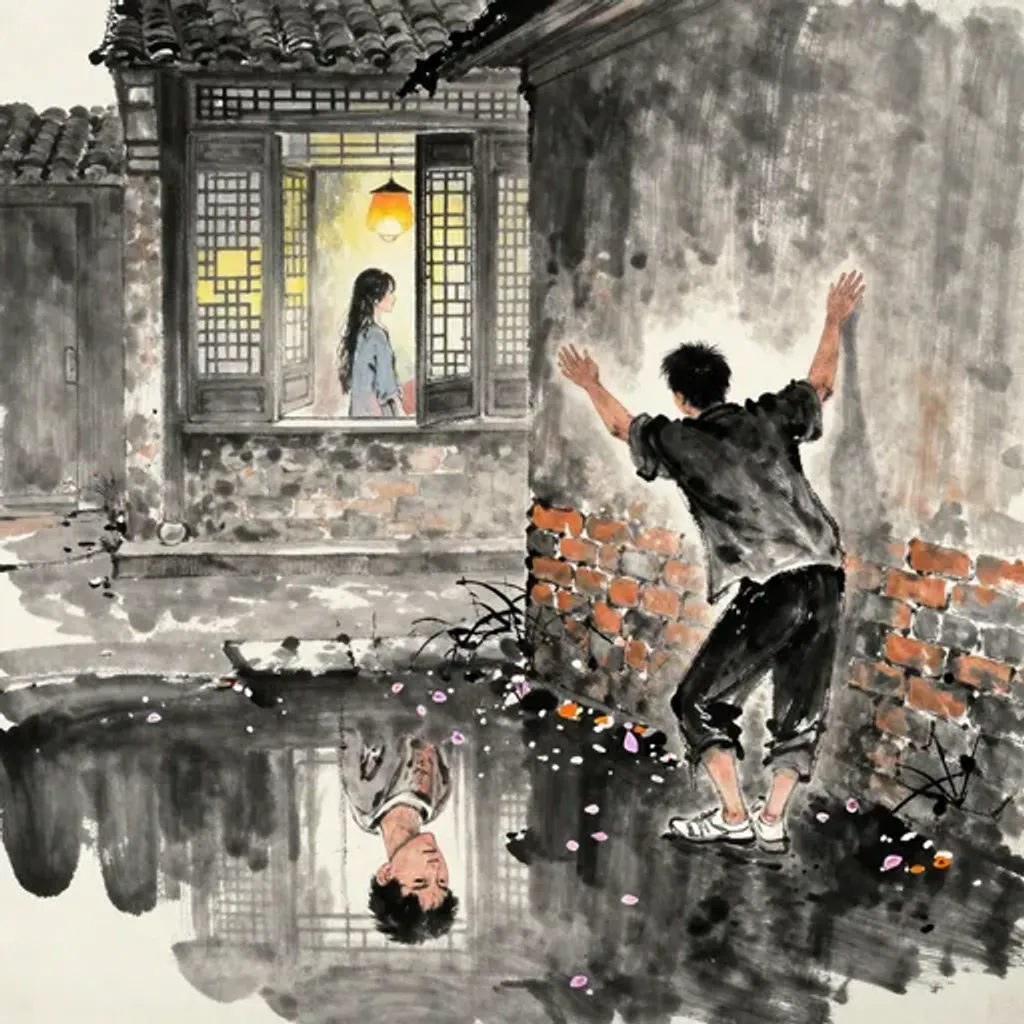
鄰不可顧,而求玉女;身多疾癩,誰當媚者。
One cannot even regard the neighbor, yet seeks a jade-like maiden; the body is covered with sores and scabs -- who would find it pleasing?
— Jiao Yanshou, Yilin (Forest of Changes), 1st century BC
Commentary
Fire and thunder enforce the law, and this verse delivers a bitter verdict on misplaced desire. One cannot even attend to the neighbor, yet reaches for a jade maiden. The body is covered in sores and scabs — who would find such a person attractive? The verse is cruelly frank: the suitor's condition makes the pursuit absurd. Ignoring what is near and accessible while grasping at the unattainable, the afflicted person compounds disability with delusion. From Biting Through to Opposition, fire rises while the lake sinks — two forces pulling apart. The transformation embodies estrangement: the suitor and the desired are fundamentally mismatched, their natures diverging like flame and water, making union impossible.
噬嗑 → 蹇
Hexagram 21 → Hexagram 39: Obstruction
Changing lines: 1, 3, 4, 5, 6
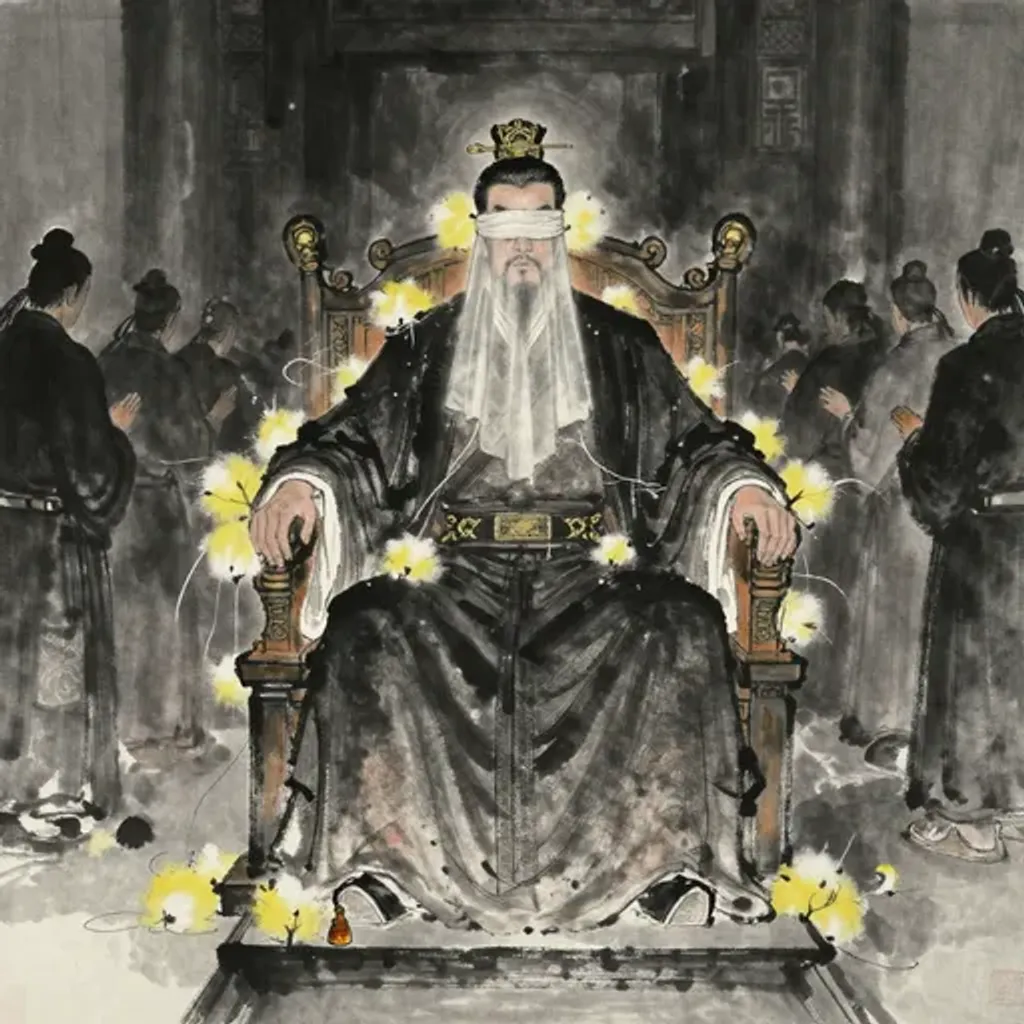
遠視無明,不知青黃;黈纊塞耳,使君闇聾。
Gazing afar without clarity, unable to tell blue from yellow; cotton wadding blocks the ears, leaving the lord dim and deaf.
— Jiao Yanshou, Yilin (Forest of Changes), 1st century BC
Commentary
Fire and thunder should illuminate the law with piercing clarity, but here perception itself has been sabotaged. Gazing into the distance, one cannot make out colors — neither blue nor yellow is distinguishable. Yellow cotton plugs the ears, rendering the lord deaf and blind. The 'yellow cotton' (黈纊) refers to the ceremonial ear-pendants hung from the royal crown, originally meant as a reminder not to heed slander — but here repurposed as a symbol of willful blindness. From Biting Through to Obstruction, water pools on the mountain in impassable terrain. The ruler who cannot see or hear creates his own obstruction: justice requires perception, and a blinded judge produces only paralysis.
噬嗑 → 解
Hexagram 21 → Hexagram 40: Deliverance
Changing lines: 1, 2, 6
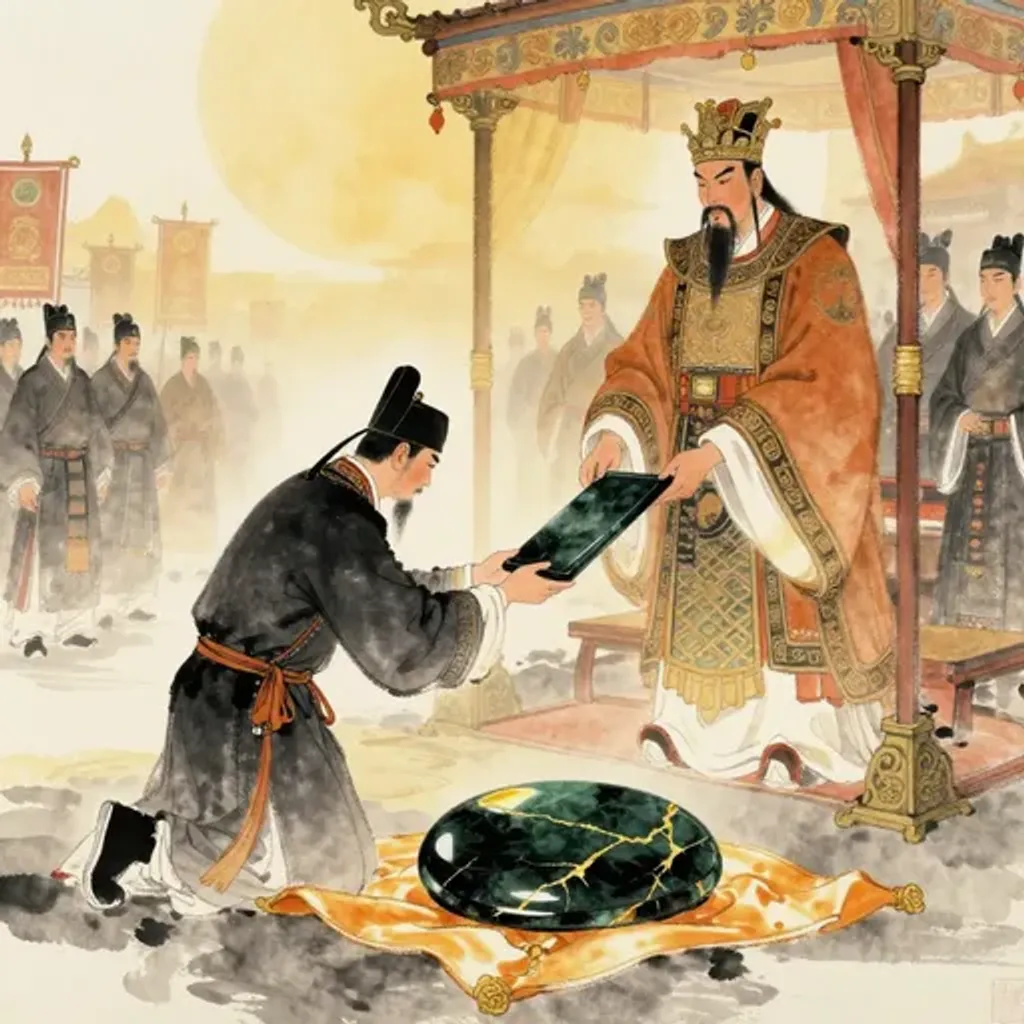
剋身己整,逢禹巡狩;賜我玄珪,蒙受福祉。
Restraining the self, setting all in order, one meets Yu on his royal tour; bestowed a dark jade tablet -- one receives blessing and grace.
— Jiao Yanshou, Yilin (Forest of Changes), 1st century BC
Commentary
Fire and thunder enforce the law, and here proper self-discipline meets divine reward. One restrains and rectifies oneself, and on the road encounters Yu the Great on his royal inspection tour. The great flood-tamer bestows a dark jade tablet — the xuangui, symbol of Heaven's mandate and territorial investiture. Blessings rain down. Yu's inspection tours (巡狩) were the model for later imperial circuits, where the sage-king confirmed the virtue of local rulers. The dark jade tablet authenticated Heaven's trust. From Biting Through to Deliverance, thunder and rain break forth together. Self-correction meets cosmic release: one who has already bitten through personal failings finds that deliverance arrives not as escape but as recognition.
噬嗑 → 損
Hexagram 21 → Hexagram 41: Decrease
Changing lines: 2, 4
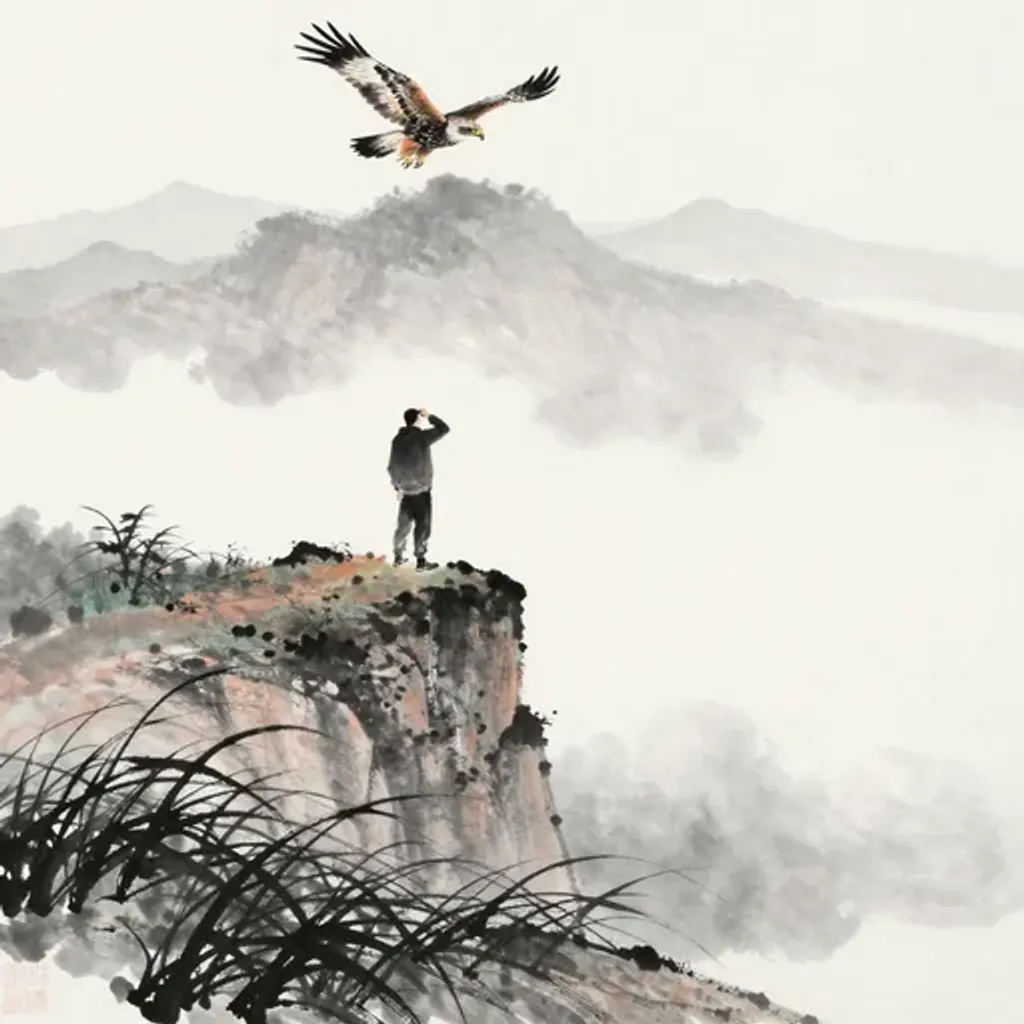
遠望千里,不見黑子;離婁之明,無益於光。
Gazing a thousand miles into the distance, one cannot see a speck; even Li Lou's keen sight adds nothing to the light.
— Jiao Yanshou, Yilin (Forest of Changes), 1st century BC
Commentary
Fire and thunder deliver judgment, and here the verdict concerns the limits of even supreme perception. Gazing a thousand li into the distance, one cannot spot a single dark speck. Even the legendary keen-sighted Li Lou, whose eyes could see the tip of an autumn hair, gains nothing from such brilliance here. Li Lou, from Mencius, represents perfect visual acuity — yet the verse declares that even this transcendent vision is useless when the object simply is not there. From Biting Through to Decrease, the mountain rises above the lake, restraining desire below. The transformation teaches radical acceptance: sometimes reduction means acknowledging that no amount of effort or ability can find what does not exist. The loss must simply be absorbed.
噬嗑 → 益
Hexagram 21 → Hexagram 42: Increase
Changing lines: 4, 5
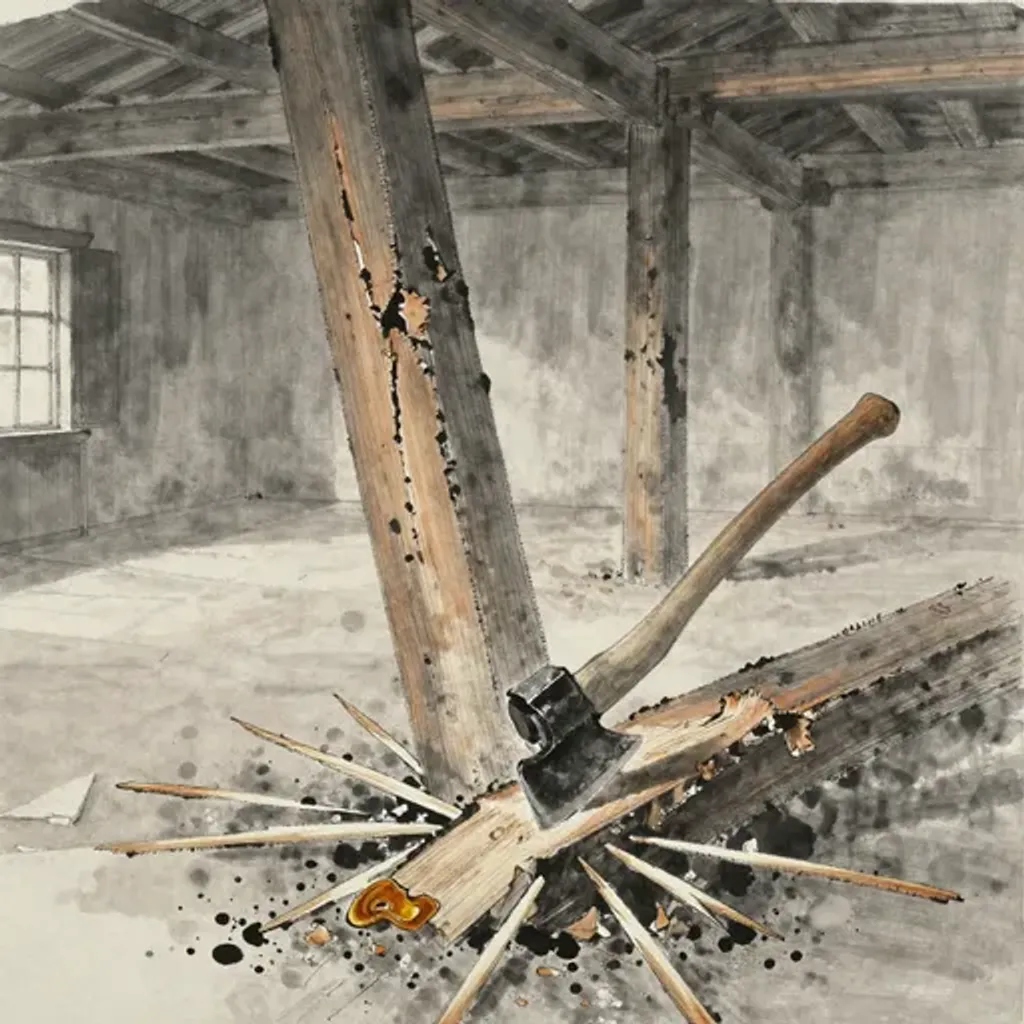
斧斤所砟,瘡痏不息;鍼石不施,下即空室。
What the axe has hacked, wounds and sores do not cease; if needle and stone are not applied, one descends to an empty chamber.
— Jiao Yanshou, Yilin (Forest of Changes), 1st century BC
Commentary
Fire and thunder enforce the law, and here the cutting has gone wrong — the axe that should shape timber instead creates wounds. Blows from the blade leave sores that never heal. No acupuncture needle or medicinal stone is applied, and the patient descends into an empty chamber — the grave. The verse uses woodworking imagery turned medical: the axe (斧斤) that should be a tool of construction becomes an instrument of harm, and without the healer's needle (鍼石), the damage is fatal. From Biting Through to Increase, wind and thunder should reinforce each other in mutual benefit. Yet the verse shows Increase inverted: what should augment instead destroys, because the corrective tool was wielded without care and the remedy was never administered.
噬嗑 → 夬
Hexagram 21 → Hexagram 43: Breakthrough
Changing lines: 2, 3, 5, 6
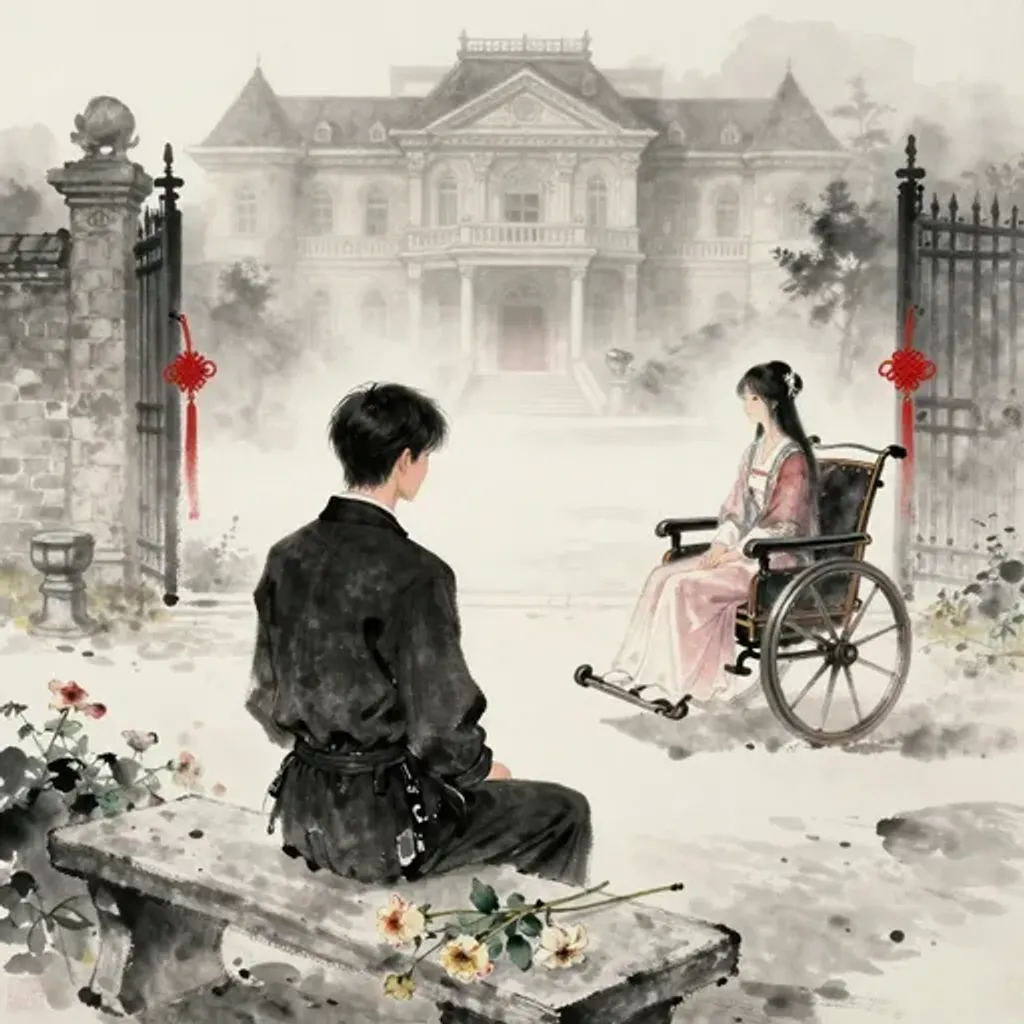
齊侯少子,才略美好;求我長女,賤薄不與。反得醜陋,後乃大悔。
The youngest son of the Marquis of Qi, gifted and handsome; he sought my eldest daughter, but I thought him too humble and refused. Instead he got an ugly bride -- afterward came great regret.
— Jiao Yanshou, Yilin (Forest of Changes), 1st century BC
Commentary
Fire and thunder administer the law, and here the judgment falls on pride and regret. The young son of the Marquis of Qi is gifted in talent and handsome in appearance. He seeks to marry one's eldest daughter, but is refused — deemed too base and unworthy. Instead, the family receives an ugly match, and afterward comes great remorse. The verse dramatizes the folly of misjudging a suitor's worth: the talented prince is scorned out of misplaced arrogance, and the family is left with its poor choice. From Biting Through to Breakthrough, the lake rises above heaven — truth must be proclaimed at court. The breakthrough here is bitter: the decisive cut reveals that one's own snobbery was the obstacle all along.
噬嗑 → 姤
Hexagram 21 → Hexagram 44: Coming to Meet
Changing lines: 1, 2, 3, 5
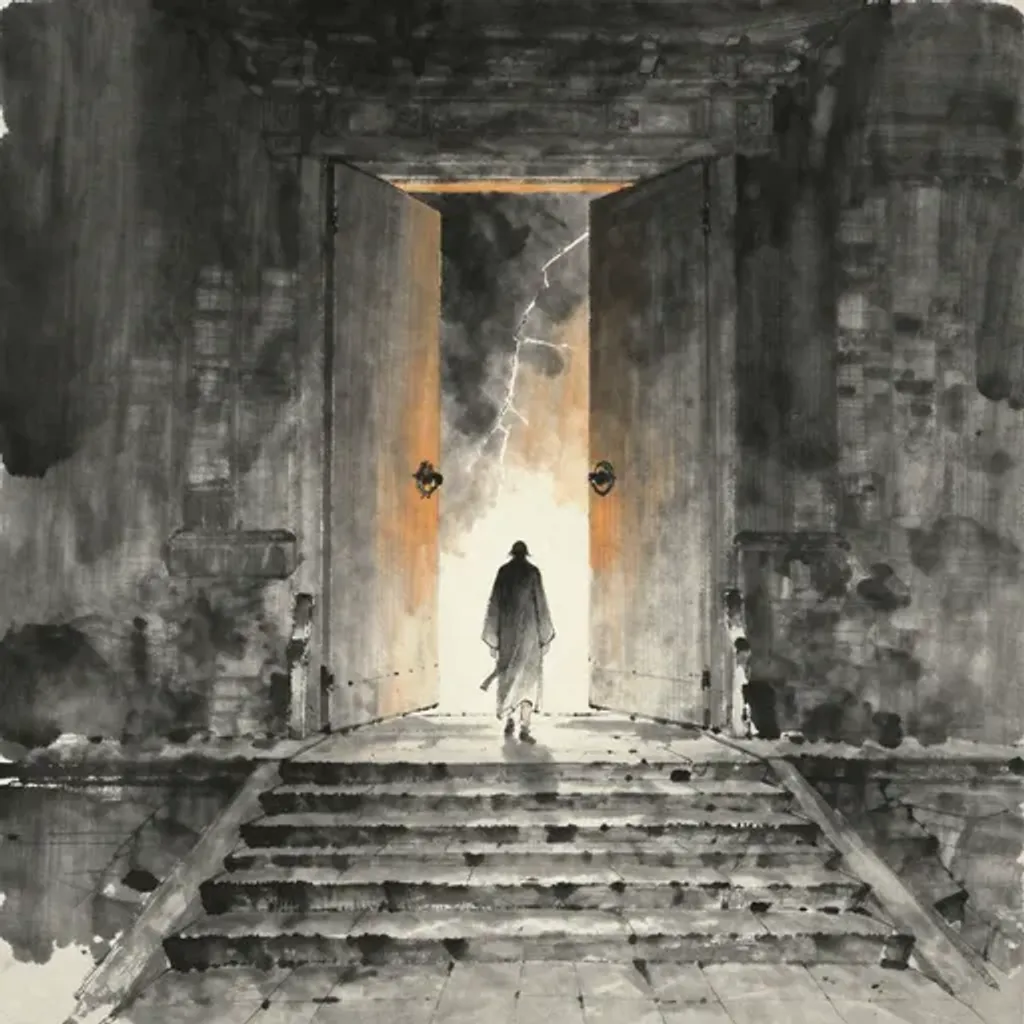
失儷後旅,天門地戶;不知所在,安止無咎。
Losing one's companion, left behind on the road; between heaven's gate and earth's threshold, not knowing where one is. Settling in stillness brings no blame.
— Jiao Yanshou, Yilin (Forest of Changes), 1st century BC
Commentary
Fire and thunder enforce the law, but the traveler has lost both companion and direction. Separated from one's mate, trailing behind others — between heaven's gate and earth's door, one no longer knows where anything is. Yet the verse resolves gently: settling peacefully brings no blame. The 'heaven's gate and earth's door' (天門地戶) are cosmological landmarks marking the boundaries of the knowable world. Lost between them means being adrift in the cosmos itself. From Biting Through to Coming to Meet, heaven spreads above the wind. The unexpected encounter arrives from below, unbidden. The verse counsels that when utterly lost, the wisest response is stillness — and what was meant to find you will come of its own accord.
噬嗑 → 萃
Hexagram 21 → Hexagram 45: Gathering Together
Changing lines: 1, 5, 6
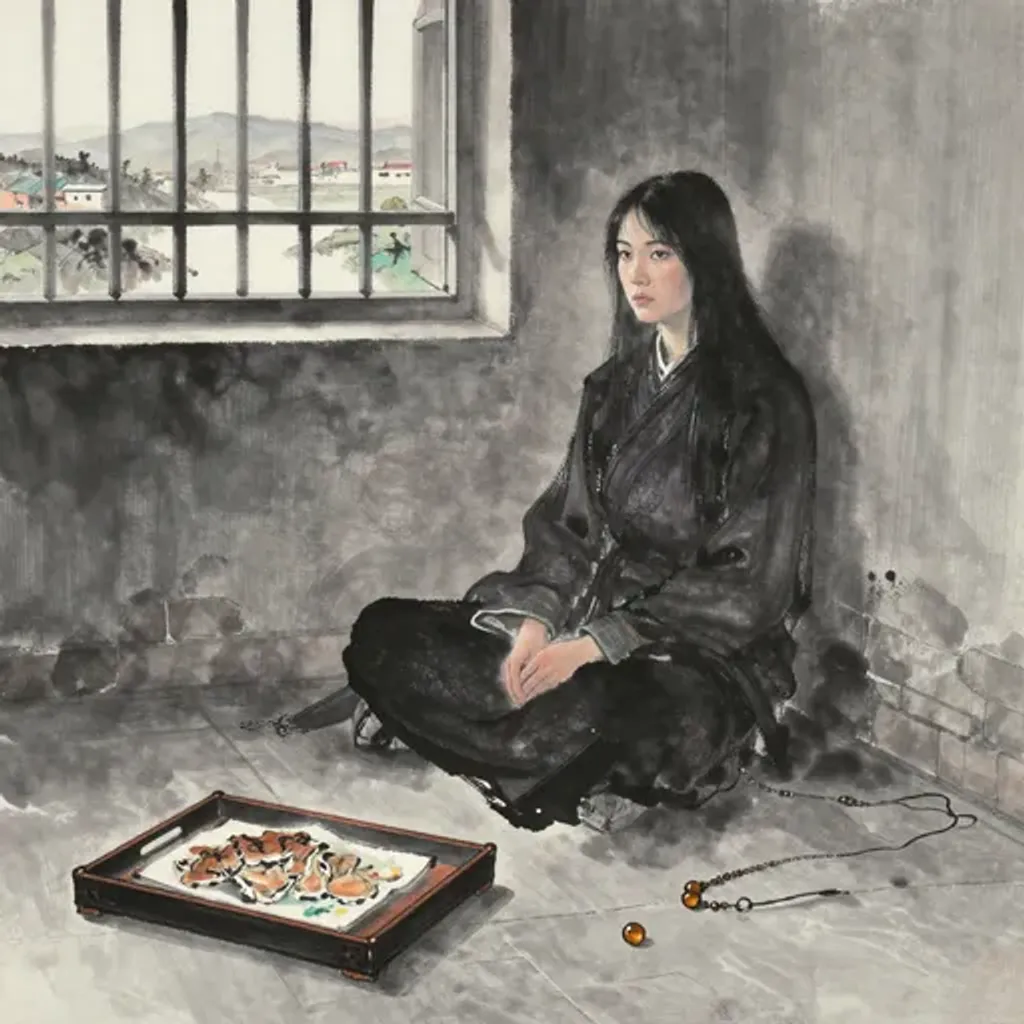
烏孫氏女,深目黑醜;嗜欲不同,過時無偶。
The Wusun woman, deep-set eyes and dark complexion; tastes and desires differ from ours -- past her time, she has no match.
— Jiao Yanshou, Yilin (Forest of Changes), 1st century BC
Commentary
Fire and thunder enforce the law, and here the verse speaks of a Wusun woman — deep-set eyes, dark and considered ugly by Chinese standards. Her desires and habits are alien, and past the age of marriage she remains without a mate. The Wusun were a Central Asian people with whom the Han dynasty arranged diplomatic marriages. Princesses like Liu Xijun were sent to marry the Wusun king, enduring extreme cultural estrangement. The verse evokes the impossibility of union across irreconcilable difference. From Biting Through to Gathering, the lake gathers upon the earth — people should naturally congregate. But gathering requires shared ground, and where customs and desires diverge entirely, no community forms.
噬嗑 → 升
Hexagram 21 → Hexagram 46: Pushing Upward
Changing lines: 1, 2, 3, 4, 6
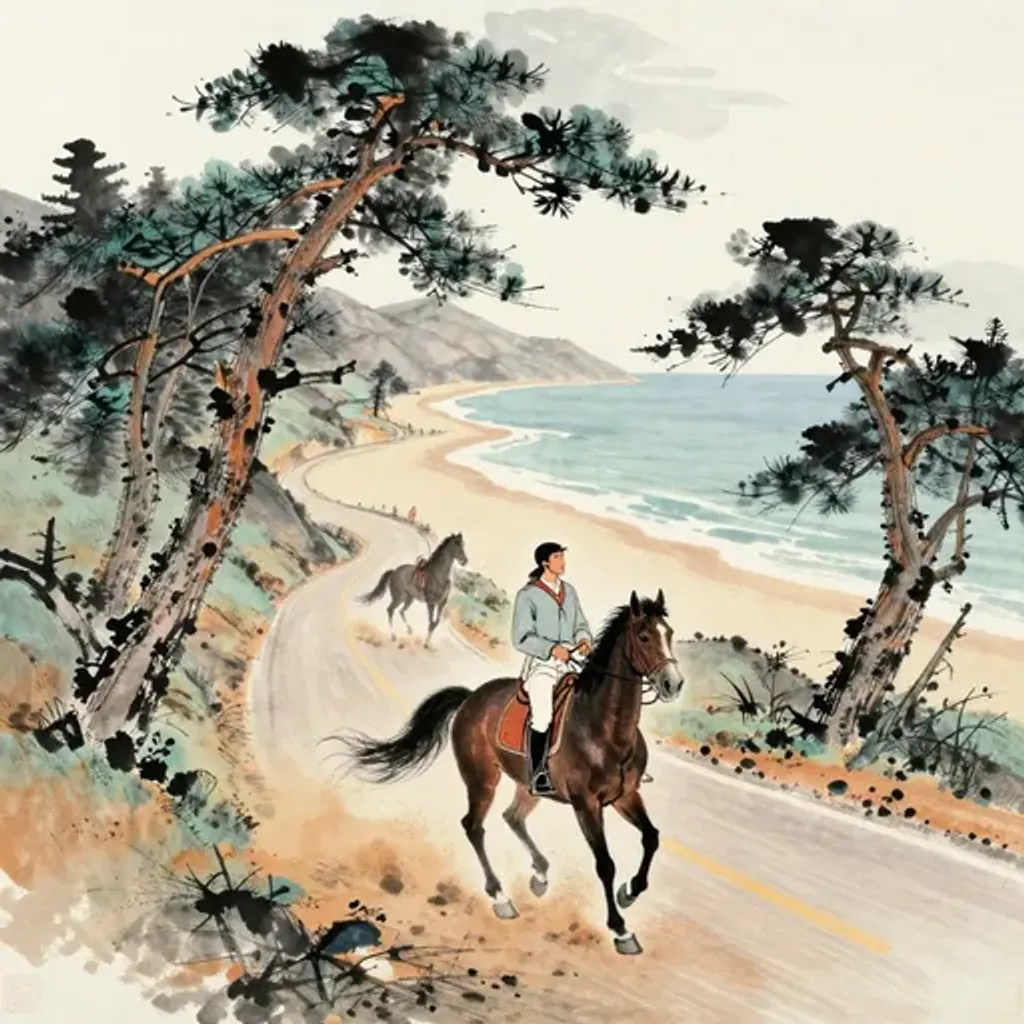
叔駕純騮,南至東萊;求索駒馬,道悅中止。
The younger brother drives a team of dark bays, south to Donglai; seeking colts and horses, he stops midway, pleased with the road.
— Jiao Yanshou, Yilin (Forest of Changes), 1st century BC
Commentary
Fire and thunder enforce the law, but this verse unfolds as a journey that halts midway. A young man harnesses pure-bay horses and drives south to Donglai, seeking fine colts and steeds. Yet along the road, pleased by what he encounters, he stops before reaching his destination. Donglai was an eastern region of Qi, known for horse markets. The verse captures the pattern of ambition diverted by satisfaction: setting out for something greater but settling for what presents itself along the way. From Biting Through to Pushing Upward, wood grows slowly within the earth — gradual ascent. The verse inverts this: the upward journey stalls because contentment replaces aspiration. Sometimes the pause is wisdom; sometimes it is missed potential.
噬嗑 → 困
Hexagram 21 → Hexagram 47: Oppression
Changing lines: 1, 2, 5, 6
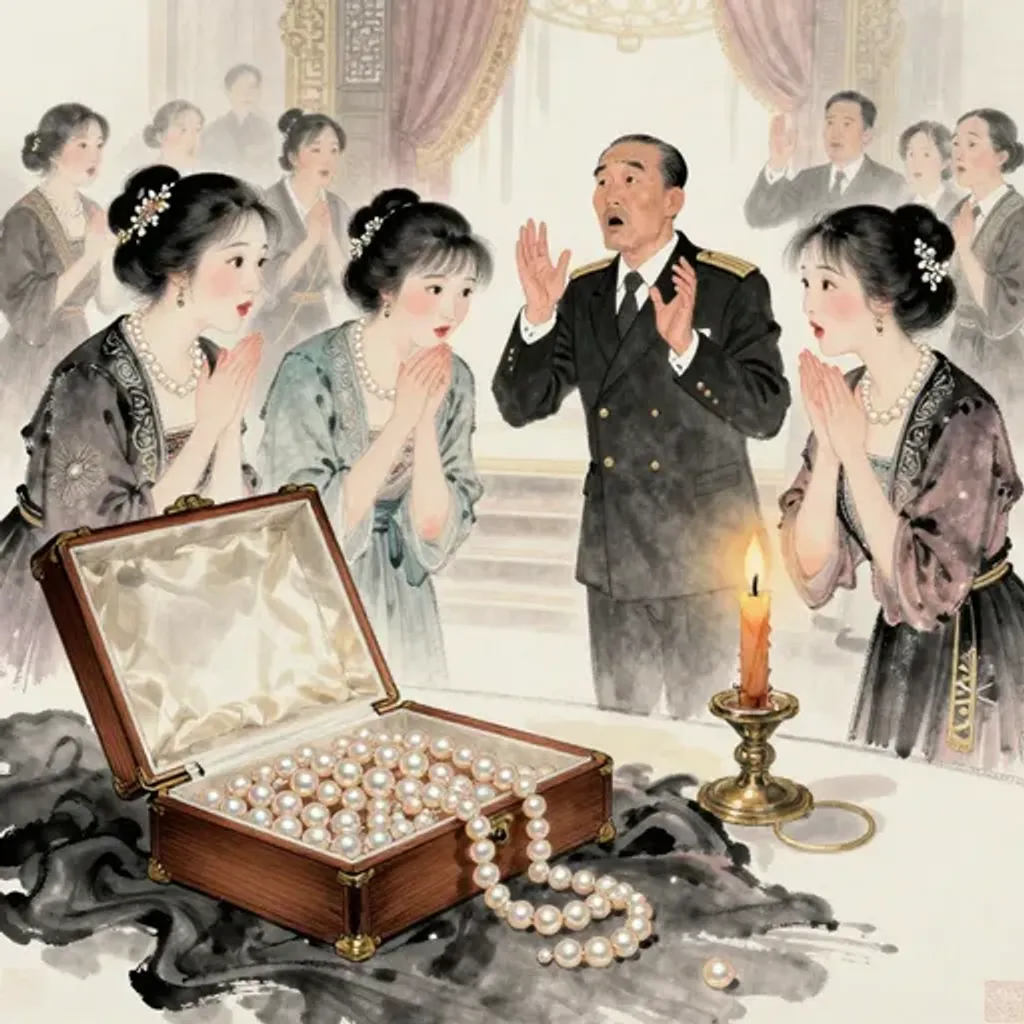
二女寶珠,誤鄭大夫;君父無禮,自為作笑。
Two women bearing pearls deceived the grandee of Zheng; lord and father lost propriety -- bringing laughter upon themselves.
— Jiao Yanshou, Yilin (Forest of Changes), 1st century BC
Commentary
Fire and thunder enforce the law, and here the law is mocked by foolishness. Two women and their precious pearls mislead a Zheng grandee. The lord and father acts without propriety, making himself a laughingstock. The verse likely alludes to a Zheng court scandal involving diplomatic impropriety — perhaps the incident of Prince Zihua, who attempted to use his father's diplomatic gifts for personal advancement and brought disgrace upon the house. The 'two women' with pearls may be bribes or seductions that compromised an official. From Biting Through to Oppression, the lake drains dry above the water. The grandee who should enforce propriety instead becomes oppressed by his own disgrace.
噬嗑 → 井
Hexagram 21 → Hexagram 48: The Well
Changing lines: 1, 2, 3, 4, 5, 6
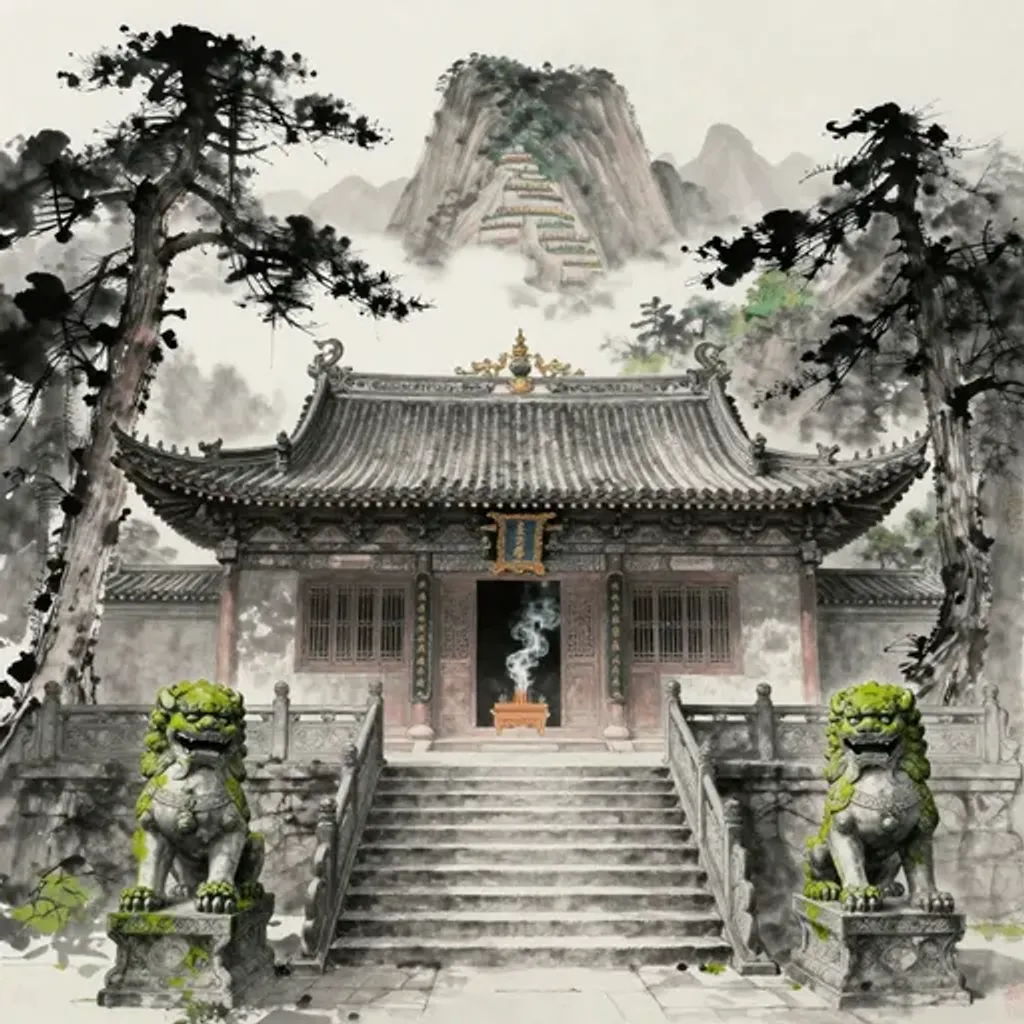
陽城太室,神明所息;仁智之居,獨無兵革。
Yangcheng and Taishi, where spirits and gods reside; a dwelling of the humane and wise -- alone, free from arms and war.
— Jiao Yanshou, Yilin (Forest of Changes), 1st century BC
Commentary
Fire and thunder enforce the law, and here the law finds its sacred ground. Yangcheng and Taishi — the ancient district and the great peak of Mount Song, the Central Sacred Mountain — are where the divine spirits rest. This is the dwelling of the wise and benevolent, uniquely free from warfare and weapons. Mount Song's Taishi peak was revered as the axis of the world, the center of the Five Sacred Mountains, where heaven and earth communed. The inscription 'Zhongyue Taishi Yangcheng' marks this as cosmic geography. From Biting Through to The Well, water nourishes from below the wood. The sacred mountain becomes a well of inexhaustible wisdom: a place so deeply rooted in virtue that violence simply cannot reach it.
噬嗑 → 革
Hexagram 21 → Hexagram 49: Revolution
Changing lines: 3, 5, 6
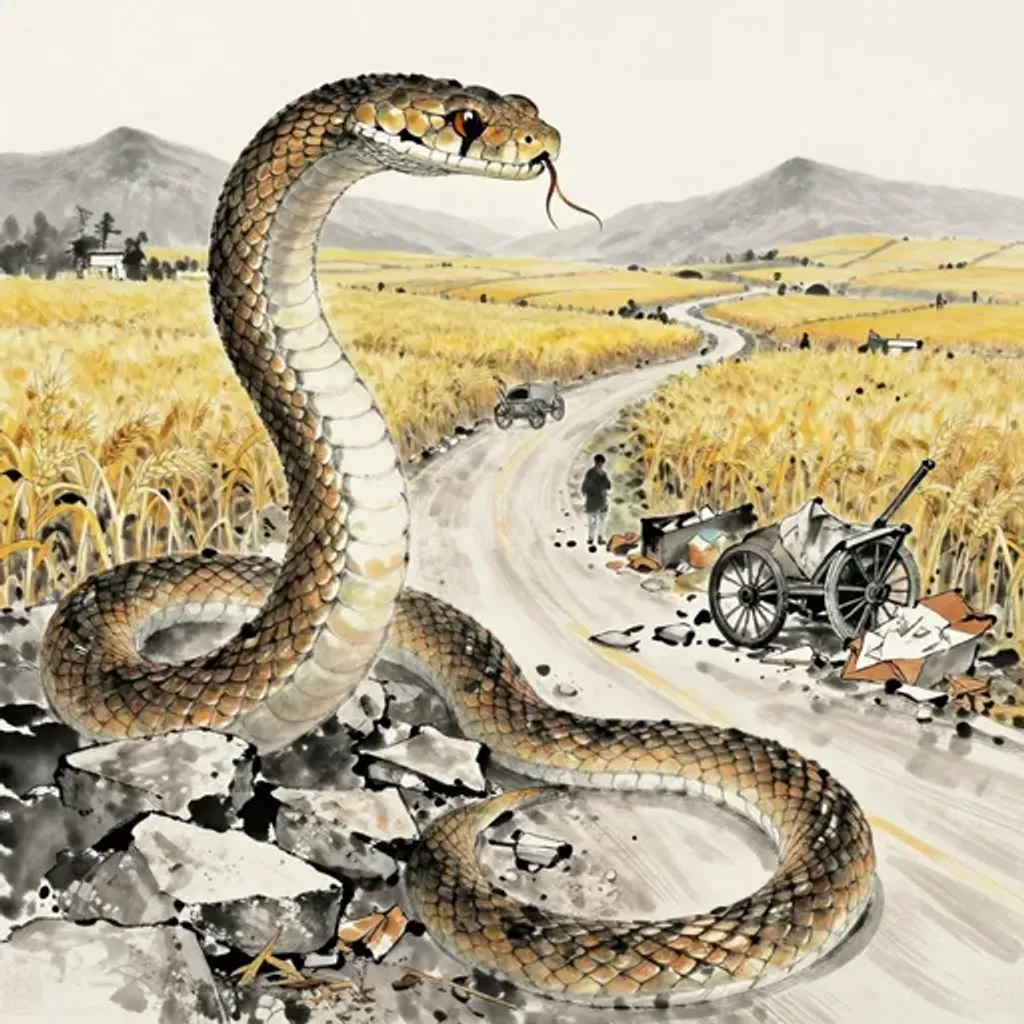
大蛇為殃,使道不通;歲露尠少,年穀敗傷。
A great serpent brings calamity, blocking the road so none can pass; dew is scant, rainfall meager -- the year's grain is ruined.
— Jiao Yanshou, Yilin (Forest of Changes), 1st century BC
Commentary
Fire and thunder enforce the law, yet here a great serpent brings catastrophe. The serpent blocks the roads, cutting off all passage. Dew and rainfall become scarce, and the year's grain harvest is ruined and spoiled. The serpent as road-blocker is a folk motif of malevolent obstruction — a predator that paralyzes commerce and agriculture alike. With roads cut and rain withheld, famine follows inevitably. From Biting Through to Revolution, fire burns within the lake as incompatible forces demand transformation. Yet the verse shows revolution's dark face: the old order overthrown not by righteous renewal but by monstrous disruption. The serpent that blocks the road is the agent of destructive change, leaving only ruin in its wake.
噬嗑 → 鼎
Hexagram 21 → Hexagram 50: The Cauldron
Changing lines: 1, 2, 3
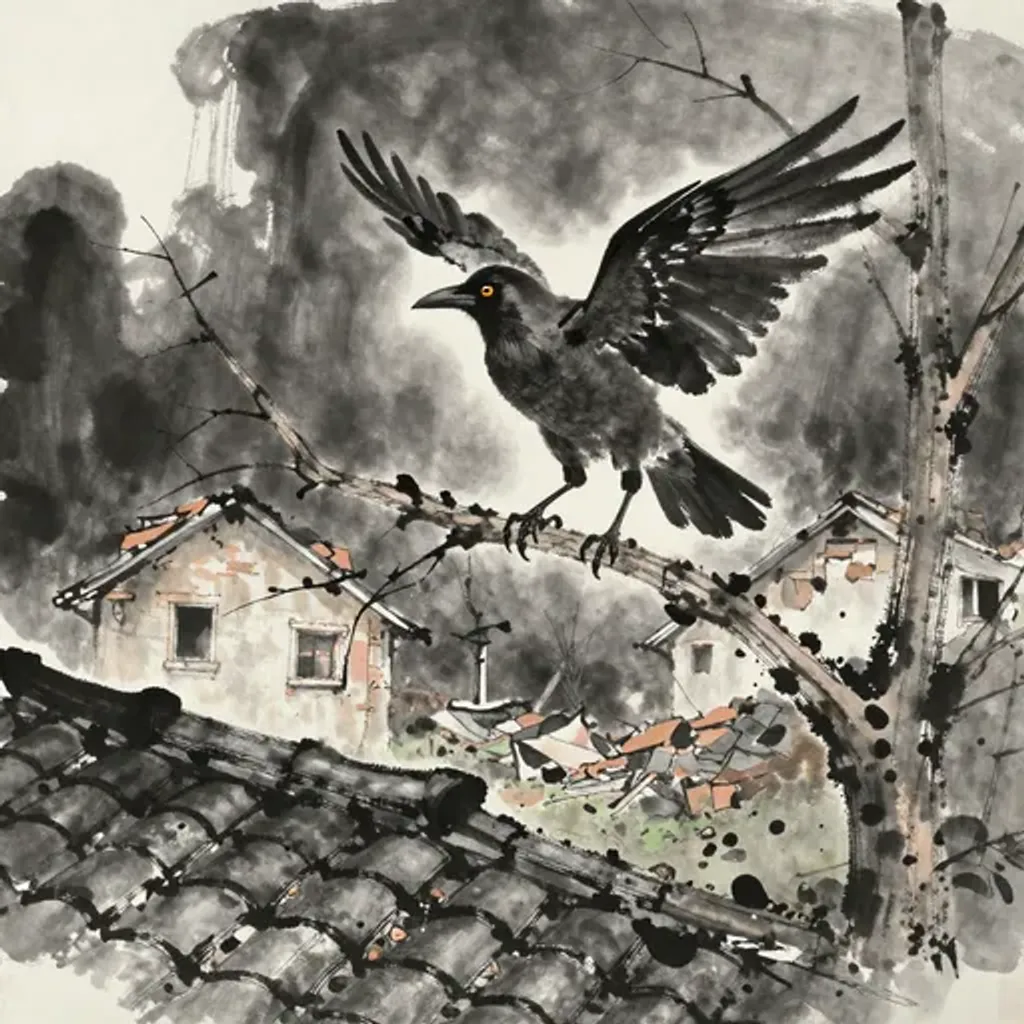
三足孤烏,靈明為御;司過罰惡,自殘其家。毀敗為憂。
A three-legged lone crow, the divine spirit's charioteer; overseeing transgressions, punishing evil -- it destroys its own house. Ruin and decay bring sorrow.
— Jiao Yanshou, Yilin (Forest of Changes), 1st century BC
Commentary
Fire and thunder enforce the law, and here divine justice turns upon its own agent. The three-legged crow — the sun-bird dwelling inside the sun — serves as the vehicle of celestial clarity. It administers punishment and penalizes the wicked, but in doing so, it destroys its own household. The enforcer's zeal consumes itself. The three-legged crow (三足烏) is the mythological bird within the sun, associated with illumination and cosmic oversight. 'Presiding over faults and punishing evil' echoes the judicial function of hexagram 21 itself. From Biting Through to The Cauldron, fire blazes above wood to transform raw material into civilized sustenance. Yet the verse warns that the cauldron's cook who pursues purity too ruthlessly will ruin the very house the cooking was meant to nourish.
噬嗑 → 震
Hexagram 21 → Hexagram 51: The Arousing Thunder
Changing lines: 6
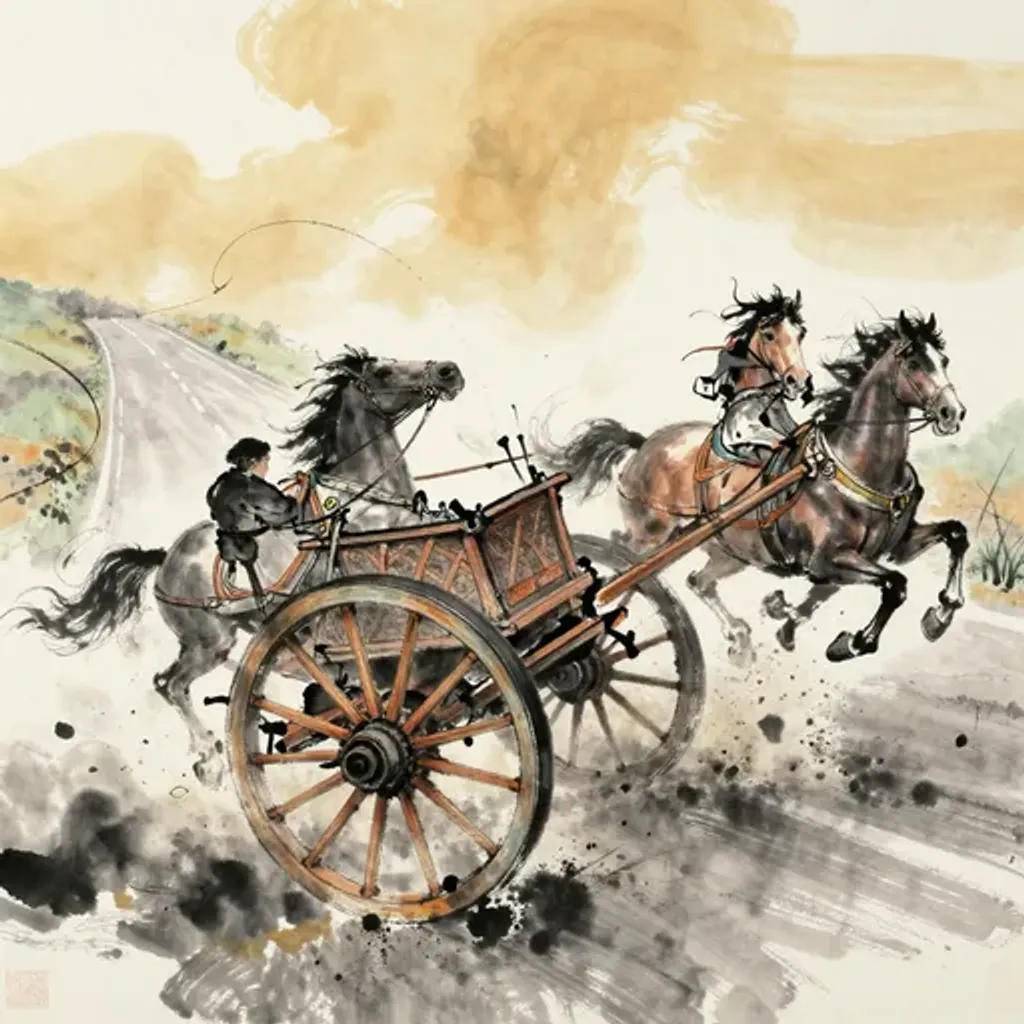
車雖駕,兩靷絕;馬欲步,雙輪脫。行不至,道遇害。
The cart may be harnessed, but both traces snap; the horse would step forward, but both wheels break free. The journey fails to reach its end -- on the road, one meets with harm.
— Jiao Yanshou, Yilin (Forest of Changes), 1st century BC
Commentary
Fire and thunder enforce the law, and here the entire mechanism of movement collapses. The carriage is harnessed, but both trace-ropes snap. The horse tries to step forward, but both wheels fall off. The journey never reaches its destination; on the road, harm is encountered. Every component fails simultaneously — ropes, wheels, progress, safety — a cascade of mechanical breakdown. From Biting Through to The Arousing, doubled thunder should galvanize action. Yet the verse shows arousal without capacity: the impulse to move exists, but every means of movement has disintegrated. The shock of thunder without a vehicle to carry it forward becomes pure futility — energy with no channel, will with no way.
噬嗑 → 艮
Hexagram 21 → Hexagram 52: Keeping Still Mountain
Changing lines: 1, 3, 4
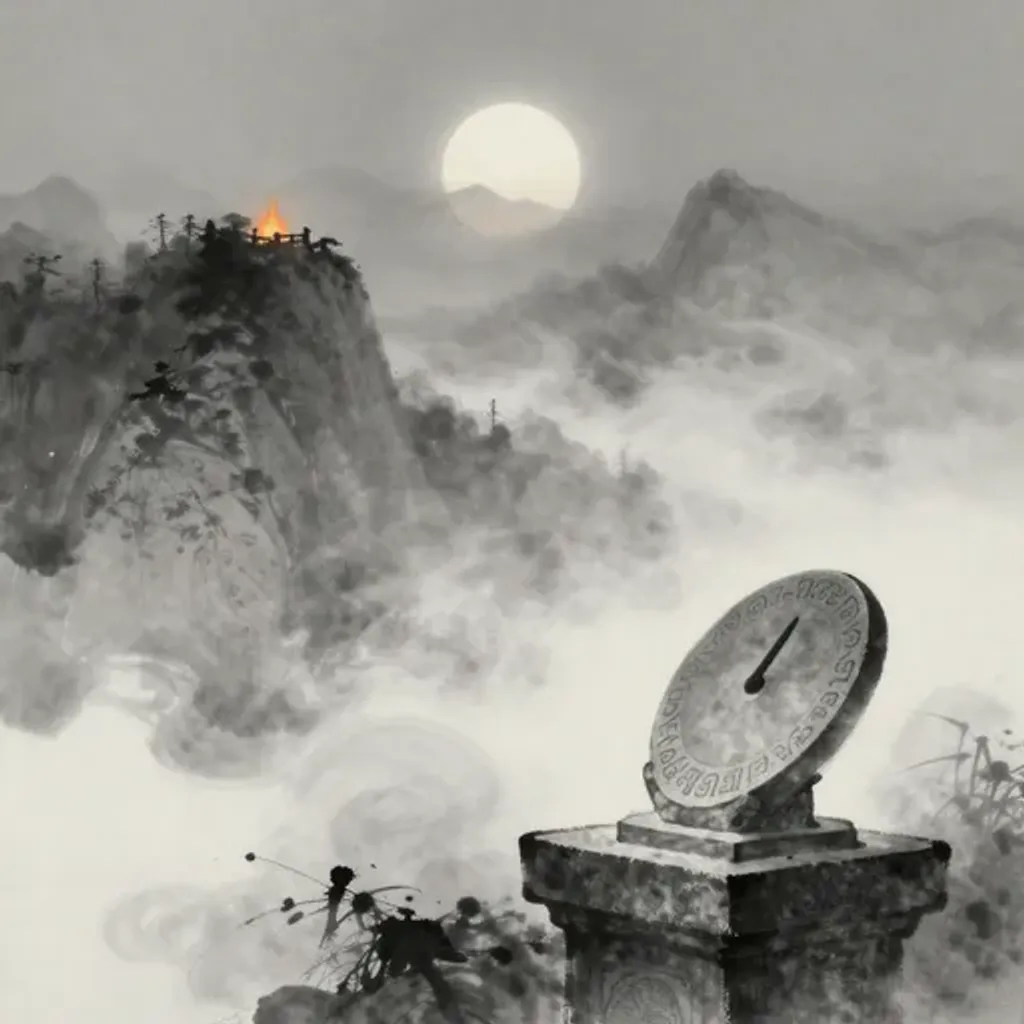
鬱怏不明,為陰所傷;眾霧集聚,共奪日光。
Stifled and dim, the light obscured -- wounded by the yin. Dense mists gather together, jointly stealing the sun's radiance.
— Jiao Yanshou, Yilin (Forest of Changes), 1st century BC
Commentary
Fire and thunder should illuminate the law with brilliant clarity, yet here a deep melancholy settles over everything, and perception is wounded by yin forces. Dense fogs mass and gather, collectively stealing the sun's light. The verse describes a world where clarity has been overwhelmed — not by a single dramatic event but by the slow accumulation of obscuring forces. Each wisp of fog is trivial; together they eclipse the sun. From Biting Through to Keeping Still, the doubled mountain stands in immovable silence. The fog-bound stillness is not meditative peace but paralysis: when the judge's vision is stolen by accumulated darkness, even the mountain's firmness becomes mere helpless inertia.
噬嗑 → 漸
Hexagram 21 → Hexagram 53: Development
Changing lines: 1, 3, 4, 5
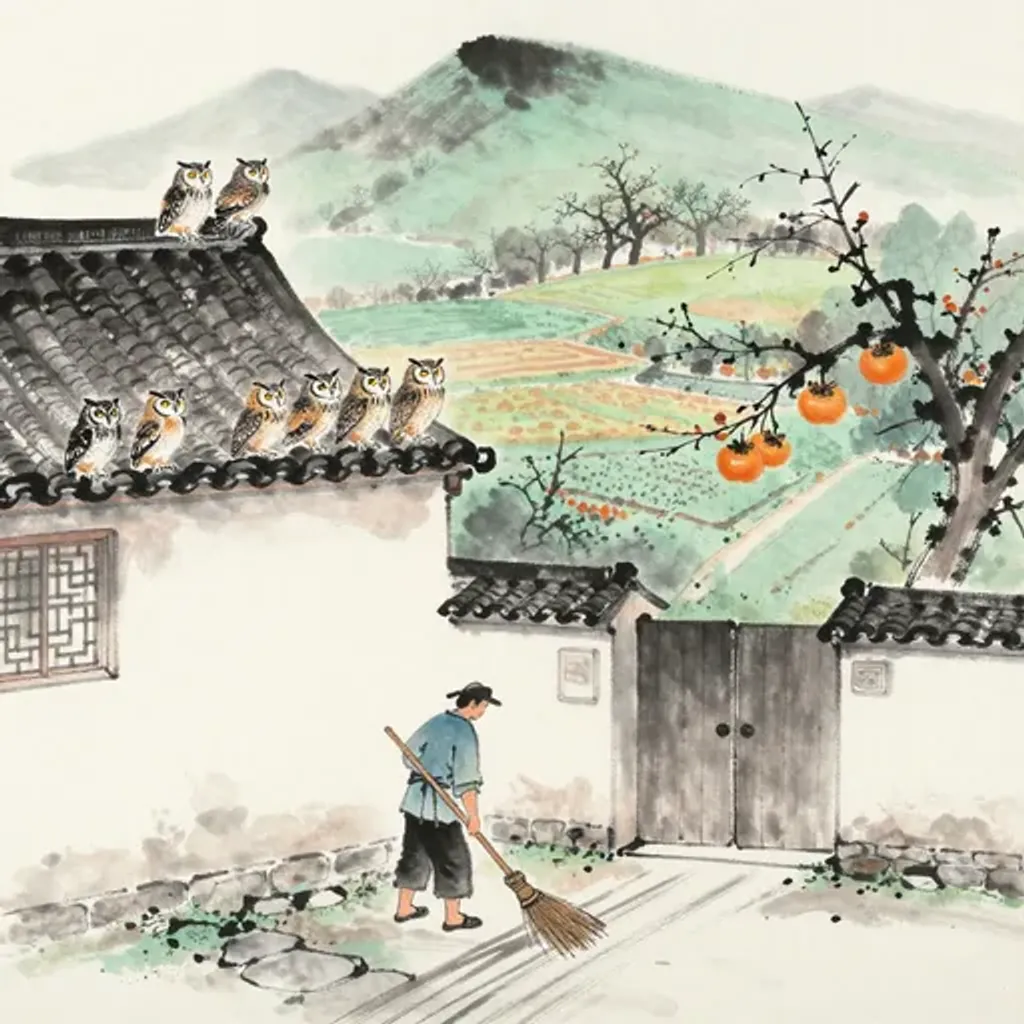
鸋鴂鴟鴞,治成禦災;周公勤勞,綏德安家。
Wrens, shrikes, and owls bring order and ward off disaster; the Duke of Zhou toiled diligently, bringing peace and virtue to the house.
— Jiao Yanshou, Yilin (Forest of Changes), 1st century BC
Commentary
Fire and thunder enforce the law, and here the Duke of Zhou guards the fledgling state against predators. The 'owls' (鸋鴂鴟鴞) directly evoke the Shijing ode 'Chi Xiao,' attributed to the Duke of Zhou, where an owl threatens to destroy a bird's nest — a metaphor for the enemies menacing the young Zhou dynasty. The Duke labors tirelessly to quell rebellion and secure virtue, settling the household in peace. From Biting Through to Development, wind moves above the mountain in gradual, organic growth. The Duke of Zhou's defense of the state mirrors Development's pattern: not a sudden victory but the steady cultivation of conditions that allow the tree on the mountain to grow tall over time.
噬嗑 → 歸妹
Hexagram 21 → Hexagram 54: The Marrying Maiden
Changing lines: 2, 6
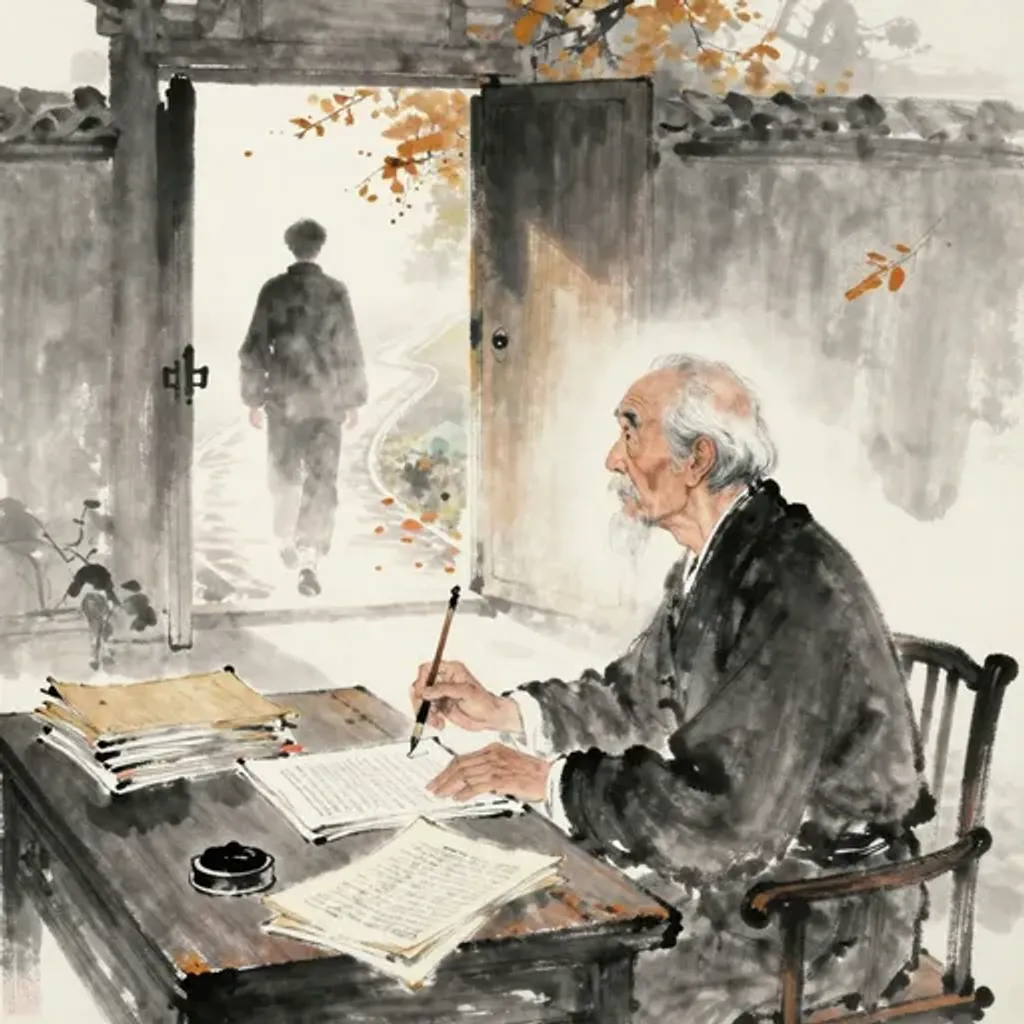
名成德就,項領不試;景公耄老,尼父逝去。
Fame achieved and virtue fulfilled, yet the neck was never tested; Duke Jing grew old and frail -- Confucius passed away.
— Jiao Yanshou, Yilin (Forest of Changes), 1st century BC
Commentary
Fire and thunder enforce the law, but this verse mourns the passing of an era. Name and virtue are complete, yet the neck was never tested — meaning the worthy one was never given the chance to serve. Duke Jing of Qi grows old and feeble, and 'Father Ni' departs — Confucius, called by his courtesy name in the Yilin tradition, dies. The pairing of Duke Jing's senility with Confucius's death captures the moment when the last hope of sage governance expired. From Biting Through to the Marrying Maiden, thunder moves above the lake as the younger woman enters an irrevocable bond. The transformation carries the weight of irreversibility: what is done cannot be undone, and the age of the sages will not return.
噬嗑 → 豐
Hexagram 21 → Hexagram 55: Abundance
Changing lines: 3, 6
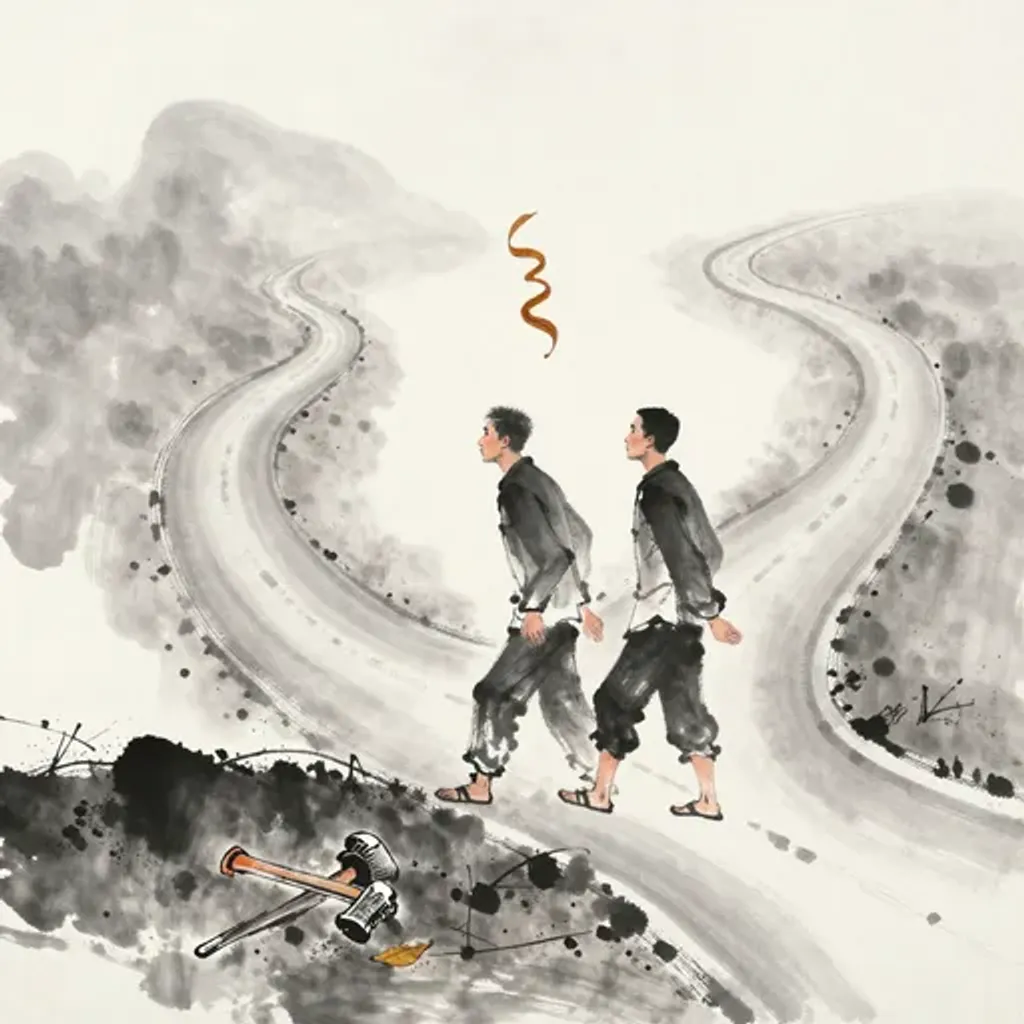
一夫兩心,岐刺不深;所為無功,求事不成。
One man with two minds, the forked needle does not pierce deep; all that he does bears no fruit -- what he seeks cannot be achieved.
— Jiao Yanshou, Yilin (Forest of Changes), 1st century BC
Commentary
Fire and thunder enforce the law, and here a divided heart undermines everything. A man with two minds cannot drive his point home — the needle (岐刺) does not penetrate deeply. All his efforts come to nothing; every undertaking fails. The image of a forked needle that barely pierces the surface captures vacillation perfectly: half-commitment produces half-results, which amount to no results at all. From Biting Through to Abundance, thunder and lightning should arrive together in overwhelming force. Yet the verse shows the opposite: when inner resolve is split, even abundance's thunder and fire cannot combine into decisive action. Abundance requires wholeness of intent; a divided will squanders even the richest resources.
噬嗑 → 旅
Hexagram 21 → Hexagram 56: The Wanderer
Changing lines: 1, 3
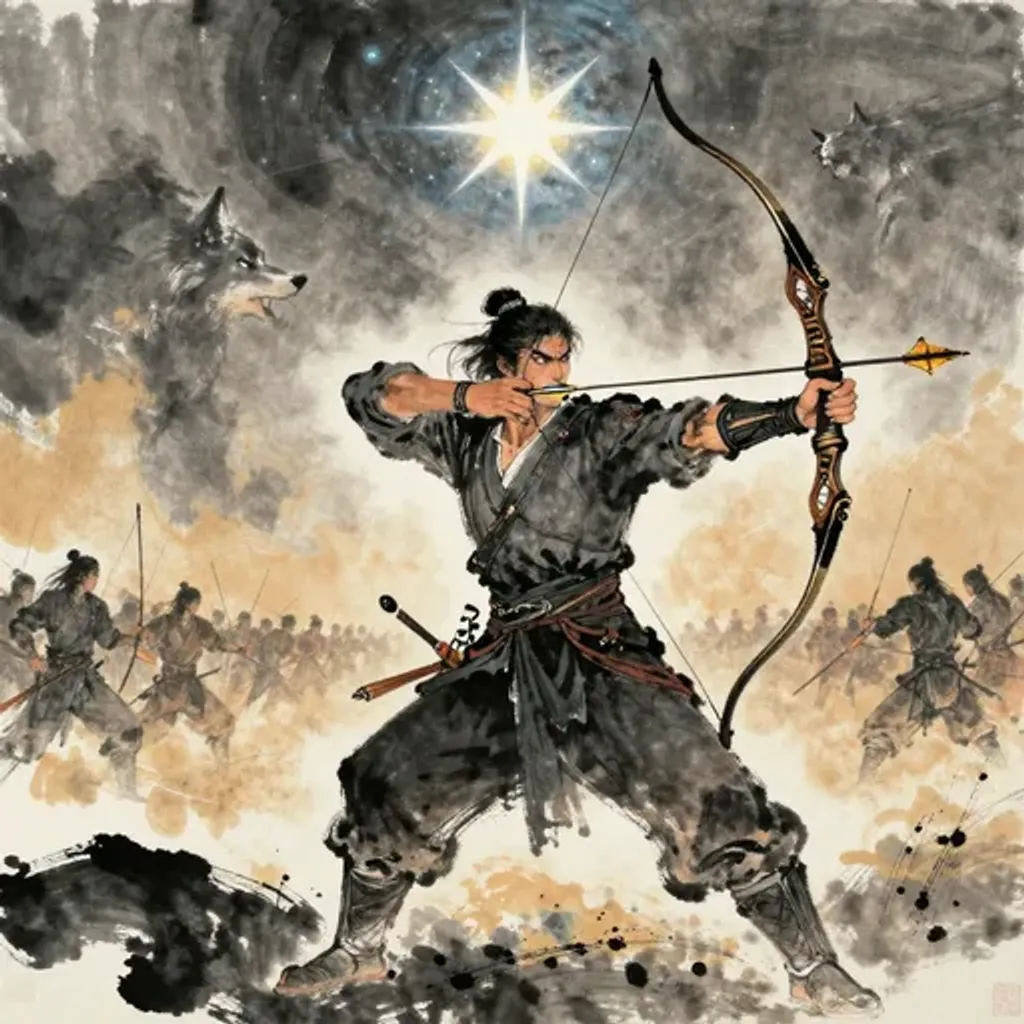
羿張烏號,彀射天狼;趙國雄勇,敗於滎陽。
Yi draws the Dark Cry bow, aiming to shoot the Celestial Wolf; Zhao's kingdom was fierce and bold, yet was defeated at Xingyang.
— Jiao Yanshou, Yilin (Forest of Changes), 1st century BC
Commentary
Fire and thunder enforce the law, and here legendary might collides with historical defeat. Archer Yi draws the famed Wuhao bow and takes aim at the Celestial Wolf — Sirius, the star of invasion and border threats. The image blazes with mythic power: the greatest archer targeting the most ominous star. Then the verse pivots to historical catastrophe: the brave warriors of Zhao are defeated at Xingyang. Despite Zhao's renowned military valor, they fell in the power struggles of the late Warring States or early Qin era. From Biting Through to The Wanderer, fire flickers above the mountain — the traveler's precarious flame. Even Yi's supernatural aim cannot prevent the wanderer's fate: displacement, defeat, and the road's indifference to former glory.
噬嗑 → 巽
Hexagram 21 → Hexagram 57: The Gentle Wind
Changing lines: 1, 2, 3, 4, 5
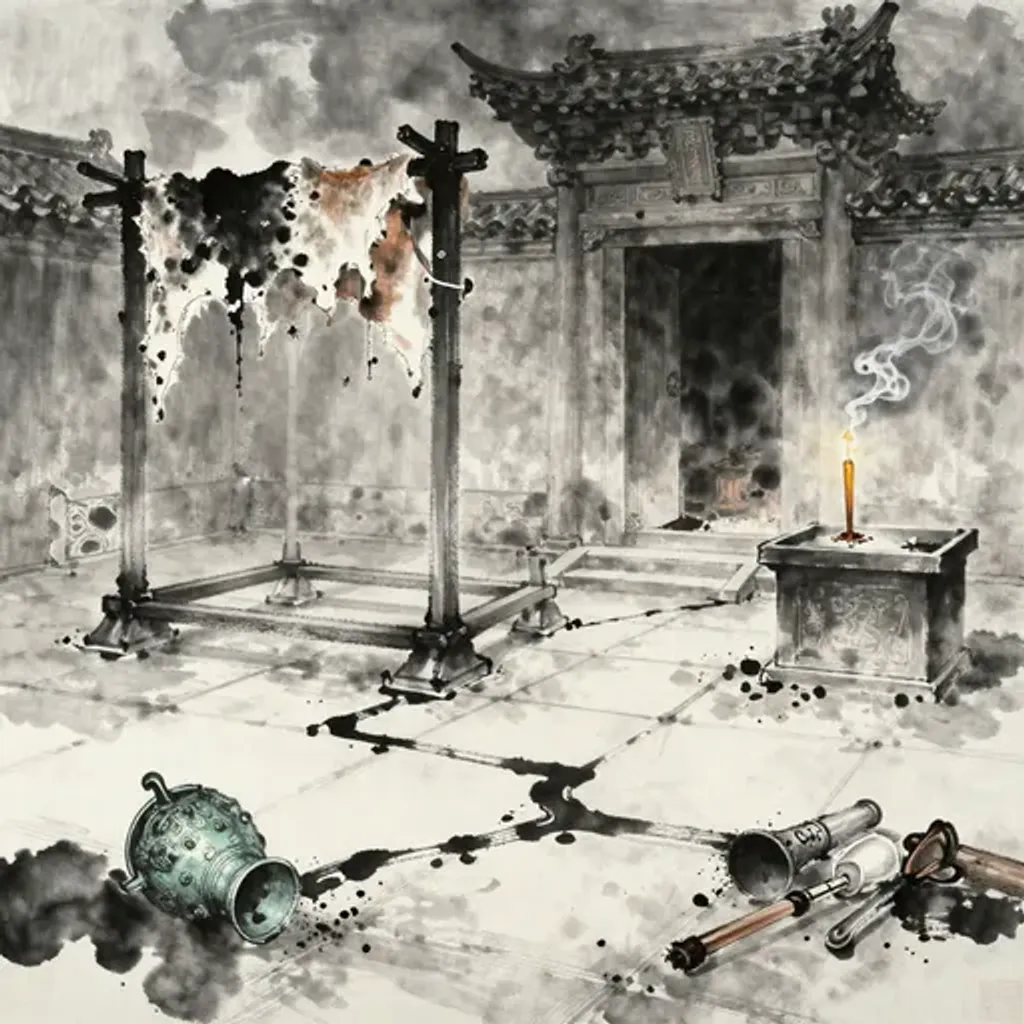
東家殺牛,污臭腥臊;神背西顧,命絕衰周。
The eastern neighbor slaughters an ox, foul and reeking; the spirit turns its back and gazes west -- fate withers in declining Zhou.
— Jiao Yanshou, Yilin (Forest of Changes), 1st century BC
Commentary
Fire and thunder enforce the law, and here improper sacrifice drives the spirits away. The eastern neighbor slaughters an ox, but the offering reeks of blood and filth — the stench of corrupted ritual. The spirits turn their backs and face west, and the mandate expires over the declining Zhou. The verse echoes the Yijing's own Jici hexagram commentary: 'The eastern neighbor's ox-sacrifice is not as good as the western neighbor's small spring offering.' Lavish sacrifice without sincerity repels the divine. From Biting Through to The Gentle, doubled wind penetrates everywhere. Yet the verse shows what gentle penetration reveals: when institutional worship is corrupted, the spirits simply leave. No amount of slaughtered oxen can recall a departed mandate.
噬嗑 → 兌
Hexagram 21 → Hexagram 58: The Joyous Lake
Changing lines: 2, 5, 6
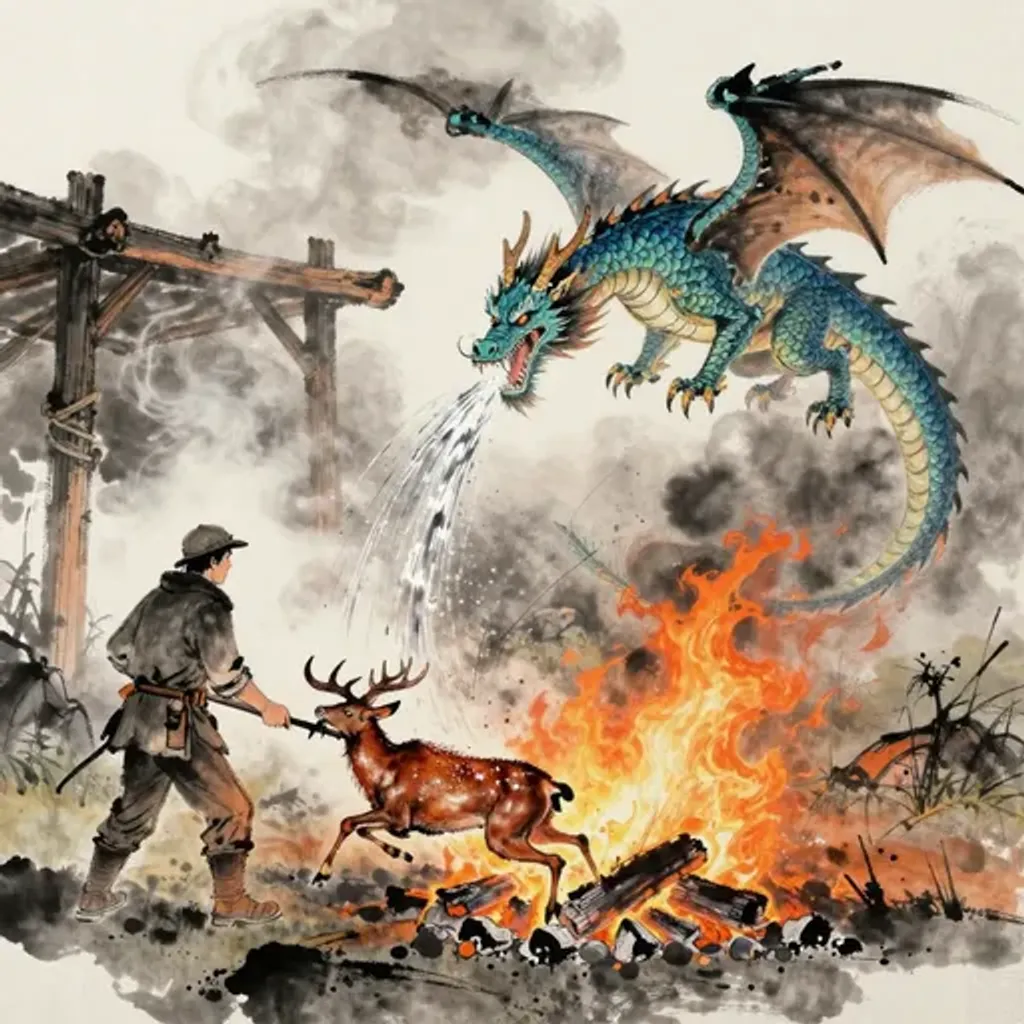
火起吾後,喜炙我鹿;蒼龍𠾑水,泉噀柱屋。雖憂無咎。
Fire breaks out behind me, roasting my deer with joy; a blue-green dragon holds water in its mouth, spraying it on the pillars. Though there is worry, there is no blame.
— Jiao Yanshou, Yilin (Forest of Changes), 1st century BC
Commentary
Fire and thunder enforce the law, and here fire breaks out behind the speaker — but instead of catastrophe, it roasts a deer, turning disaster into a feast. Then the Azure Dragon spits water, and the spring quenches the pillars and beams of the house, dousing any lingering flame. Though there is worry, there is no blame. The Azure Dragon (蒼龍), guardian of the east and lord of spring, intervenes with water to neutralize fire's destructive potential. From Biting Through to The Joyous, paired lakes share their waters in mutual delight. The verse dramatizes the transformation: what begins as alarm ends in feasting, and the cosmic guardian ensures that even the fire behind you becomes a source of nourishment rather than ruin.
噬嗑 → 渙
Hexagram 21 → Hexagram 59: Dispersion
Changing lines: 1, 2, 4, 5
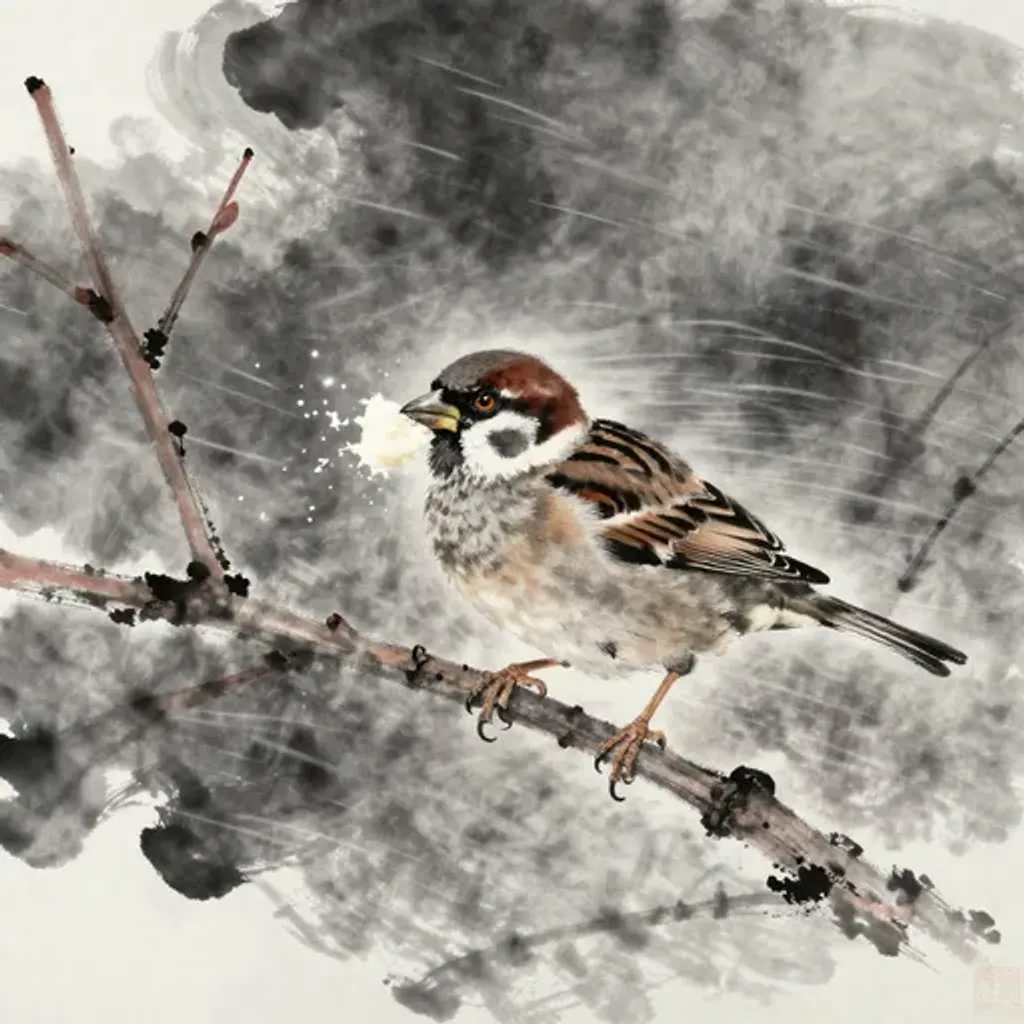
桃雀竊脂,巢於小枝;搖動不安,為風所吹。寒心慄慄,常憂不殆。
Sparrows steal fat, nesting on a slender twig; shaken and unsteady, blown by the wind. Cold at heart and trembling -- ever fearful, yet not destroyed.
— Jiao Yanshou, Yilin (Forest of Changes), 1st century BC
Commentary
Fire and thunder enforce the law, and here a small bird perches in terrible vulnerability. A sparrow steals fat from the mulberry, nesting on a slender twig that sways and shudders. Unstable, unsafe — the wind blows and the nest trembles. The heart chills with dread, constant worry, yet somehow no final catastrophe arrives. The 'sparrow stealing fat' (桃雀竊脂) suggests a creature living beyond its means, perched on a branch too thin to support it. From Biting Through to Dispersion, wind moves over water, scattering what was gathered. The verse captures perpetual anxiety without resolution: the sparrow is never destroyed, but never secure. Dispersion's wind keeps the tiny nest endlessly shaking.
噬嗑 → 節
Hexagram 21 → Hexagram 60: Limitation
Changing lines: 2, 4, 5, 6
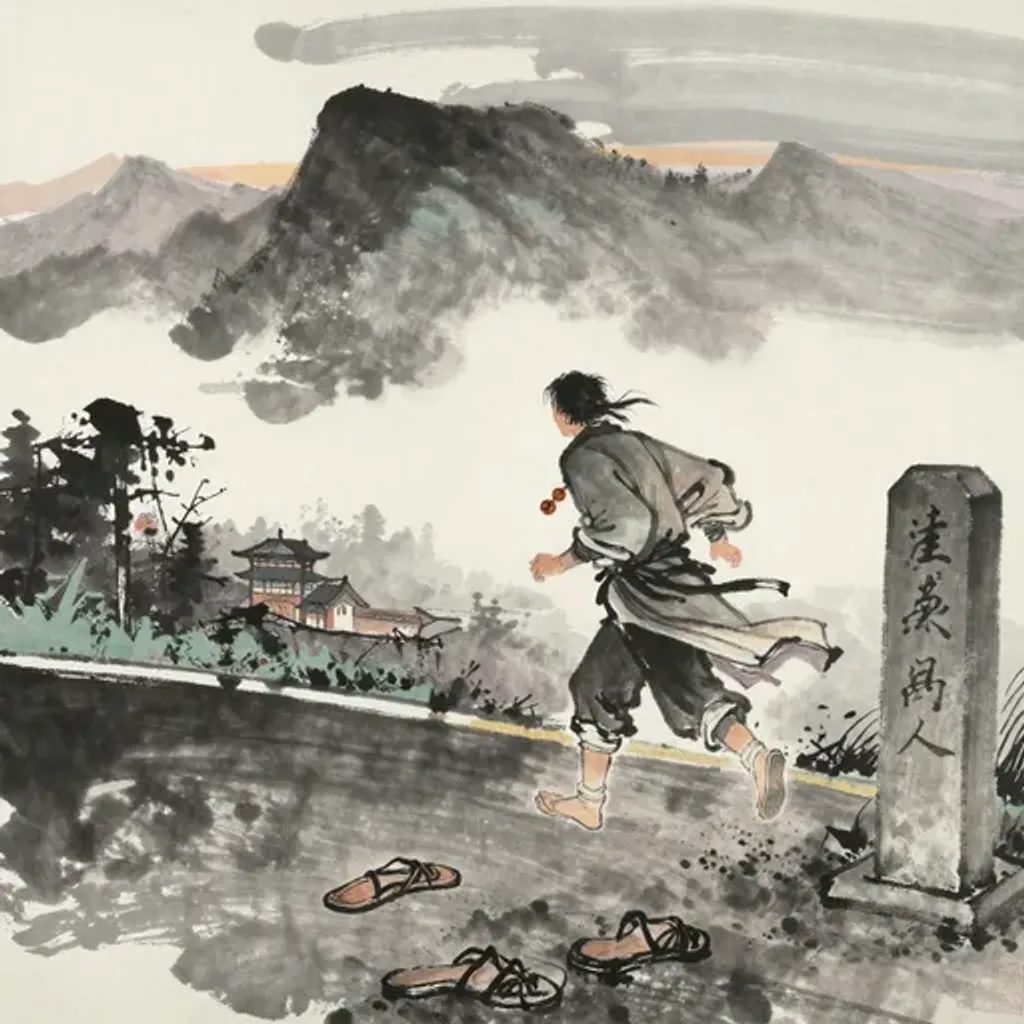
徙足去域,飛入東國;有所畏避,深藏隱匿。
Moving one's feet, leaving the domain, flying into the eastern kingdom; having something to fear and avoid -- one hides deep in concealment.
— Jiao Yanshou, Yilin (Forest of Changes), 1st century BC
Commentary
Fire and thunder enforce the law, and here the response to danger is swift relocation. One lifts one's feet and leaves the territory, flying into the eastern kingdom. There is something to fear and avoid, so one hides deeply and conceals oneself in obscurity. The verse describes political exile or flight from persecution — the decisive act of abandoning a dangerous place for a distant refuge. The 'eastern kingdom' may suggest Qi or another eastern state, traditional havens for refugees. From Biting Through to Limitation, water rests above the lake, establishing proper boundaries. The transformation teaches that knowing one's limits includes knowing when to flee: the fugitive who sets a boundary between self and danger practices the most essential form of limitation.
噬嗑 → 中孚
Hexagram 21 → Hexagram 61: Inner Truth
Changing lines: 2, 4, 5
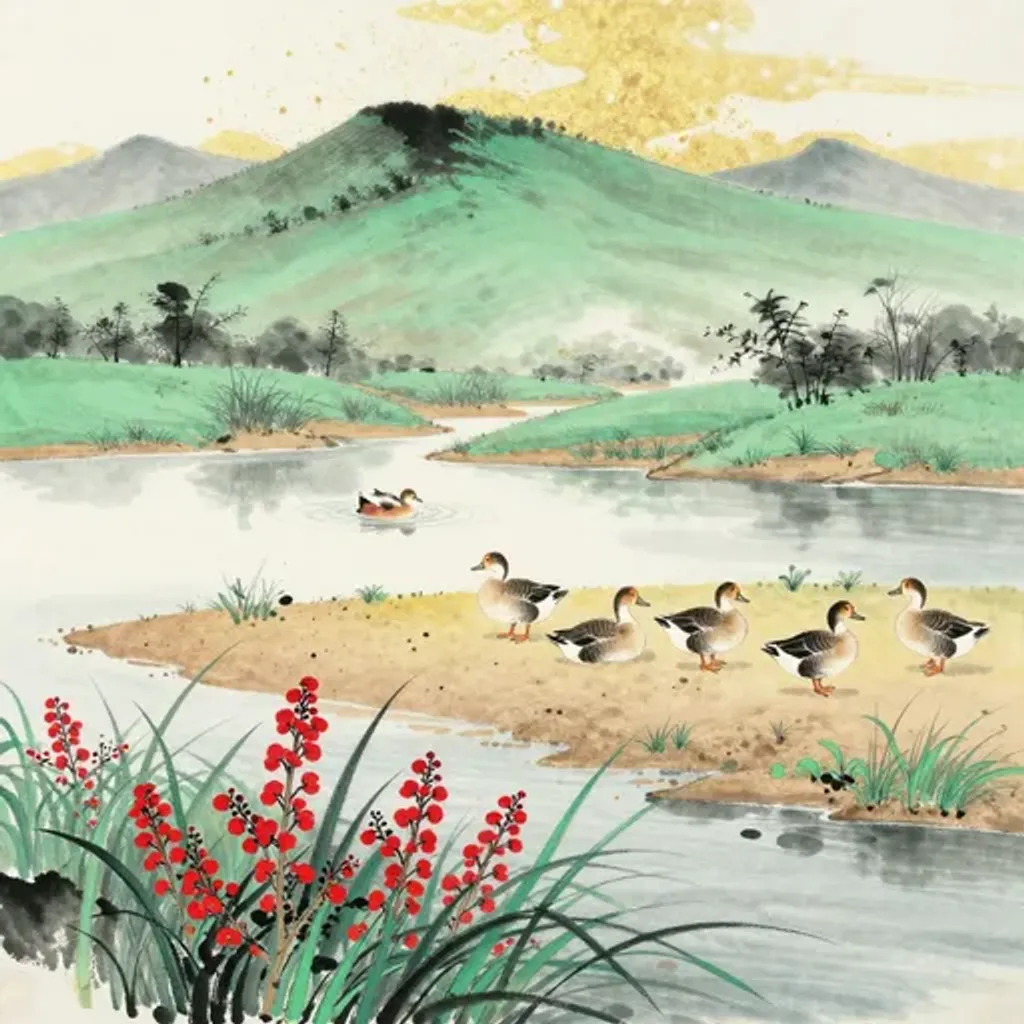
瓊英朱草,仁政得道;鳧鷖在渚,福祿來下。
Jade blossoms and vermillion grasses -- the fruits of humane governance and the Way. Ducks and geese rest on the islet; blessing and fortune descend.
— Jiao Yanshou, Yilin (Forest of Changes), 1st century BC
Commentary
Fire and thunder enforce the law, and their work yields a world of auspicious beauty. Jade-bright flowers and cinnabar grass grow forth — omens of benevolent governance achieved through moral cultivation. Ducks and cormorants rest on the river islets, and blessings descend from above. The 'jade flowers and vermilion grass' (瓊英朱草) are traditional portents of sage rule, appearing only when virtue saturates the land. From Biting Through to Inner Truth, wind moves over the lake as sincerity penetrates without force. The harshest hexagram of the legal code transforms into the gentlest: when justice has been truly internalized, its outward signs are not prisons and penalties but flowers blooming and waterfowl settling in peace.
噬嗑 → 小過
Hexagram 21 → Hexagram 62: Small Exceeding
Changing lines: 1, 3, 6
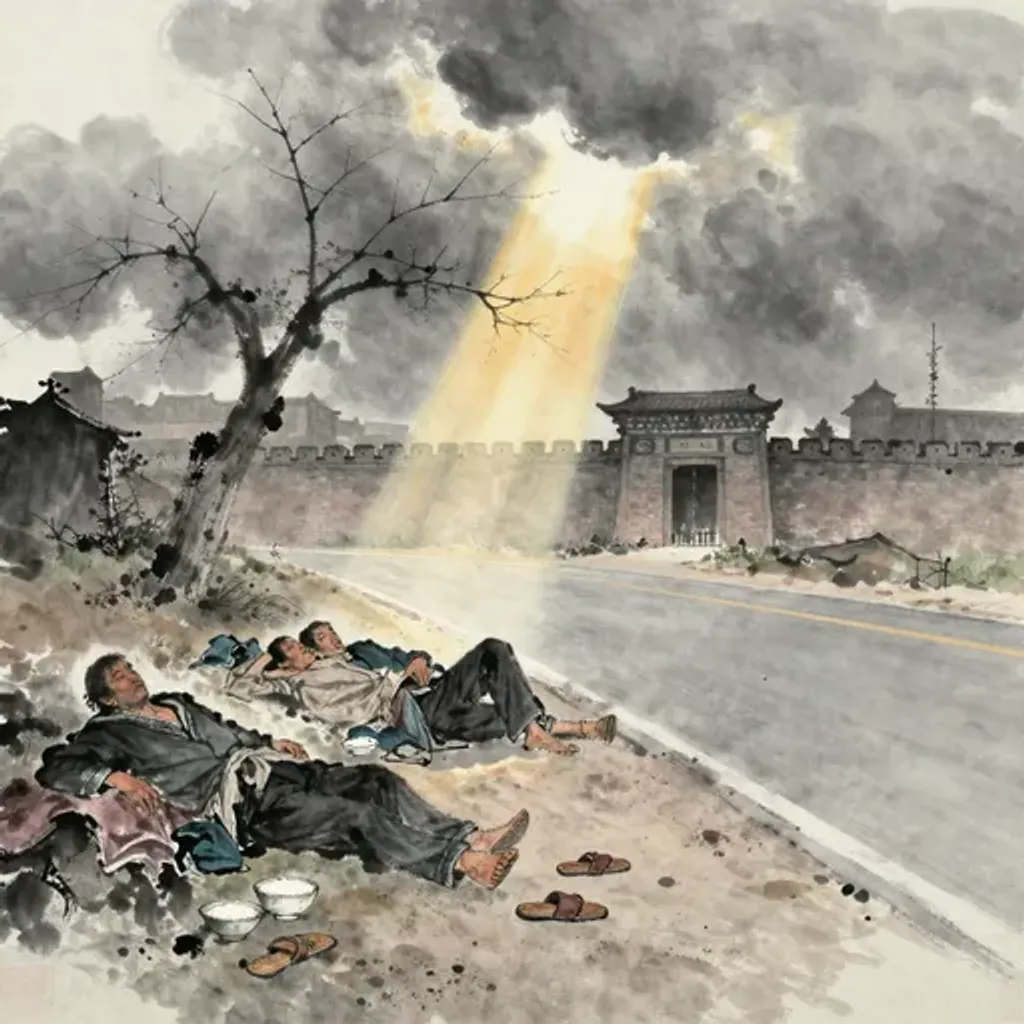
陳蔡之危,從者飢罷;明德上通,憂不為凶。
The peril of Chen and Cai; the followers starved and spent. Bright virtue reaches heaven above -- worry does not turn to misfortune.
— Jiao Yanshou, Yilin (Forest of Changes), 1st century BC
Commentary
Fire and thunder enforce the law, and here the sage endures its harshest application. The hardship at Chen and Cai — Confucius besieged between two states, his followers starving for seven days, too exhausted to stand. Yet brilliant virtue penetrates upward to heaven, and despite the suffering, worry does not become true misfortune. The story is one of the most famous in Confucian tradition: the Master's equanimity amid privation, his refusal to compromise his principles even when food runs out. From Biting Through to Small Exceeding, thunder rumbles above the mountain as the small bird flies too high. The verse embodies Small Exceeding's teaching: in extremity, exceed in humility and caution — the sage's moral light reaches heaven precisely because he does not overreach.
噬嗑 → 既濟
Hexagram 21 → Hexagram 63: After Completion
Changing lines: 3, 4, 5, 6
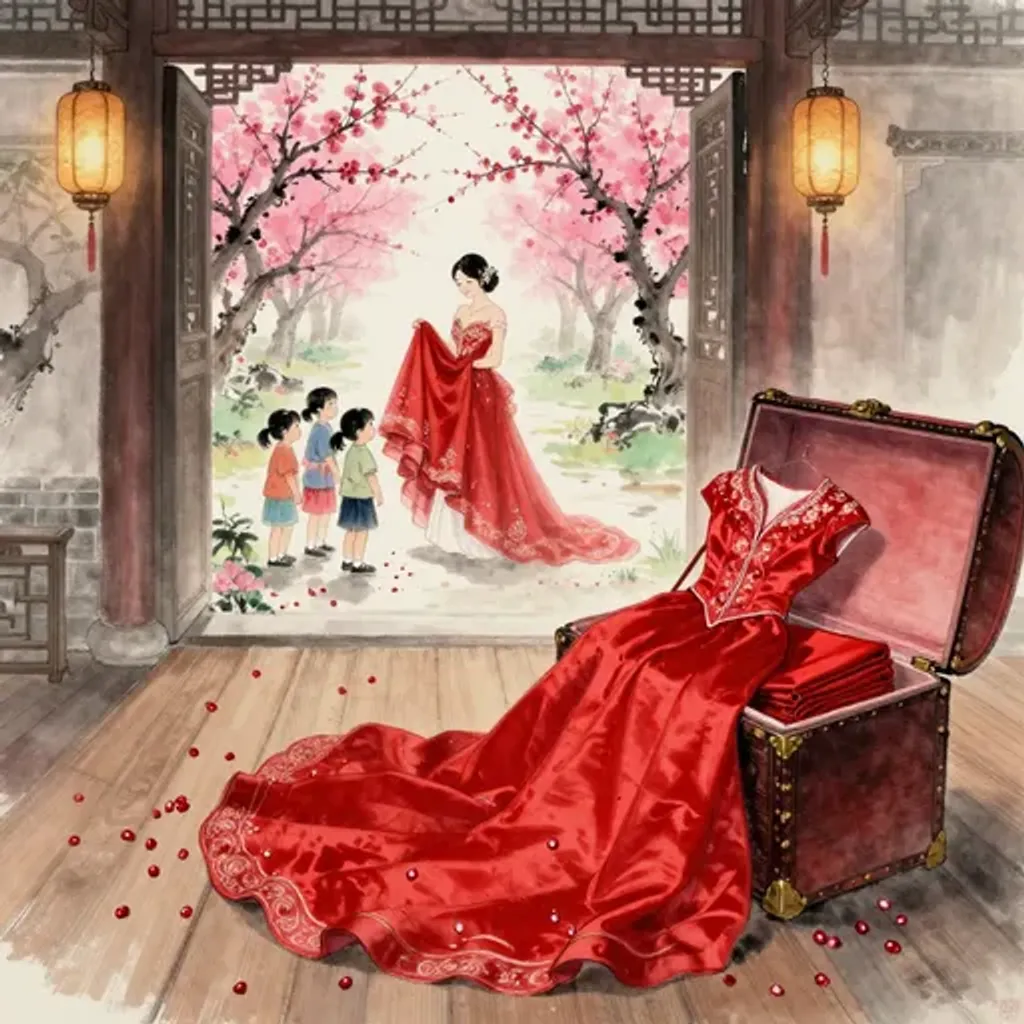
春桃生花,季女宜家;受福多年,男為封君。
The wedding gown, stored in the chest for ten years — on an auspicious day, the red makeup is opened. Children and grandchildren fill the hall like pomegranate seeds — the peach trees in the courtyard have grown into rows.
— Jiao Yanshou, Yilin (Forest of Changes), 1st century BC
Commentary
Fire and thunder clear the way, and here the original verse blooms with domestic happiness. Spring peach trees burst into flower, and the youngest daughter makes a fine match — a bride who brings joy to her new household. Blessings last for many years; her sons grow up to become enfeoffed lords. The peach blossom is the Shijing's quintessential image of the young bride (桃夭), radiant with promise and fertility. The verse is a wedding benediction compressed into four lines. From Biting Through to After Completion, water rests above fire in perfect equilibrium. All elements are in their proper place: the bride has entered, the household is formed, sons continue the line, and the peach tree stands in perpetual spring.
噬嗑 → 未濟
Hexagram 21 → Hexagram 64: Before Completion
Changing lines: 1, 2
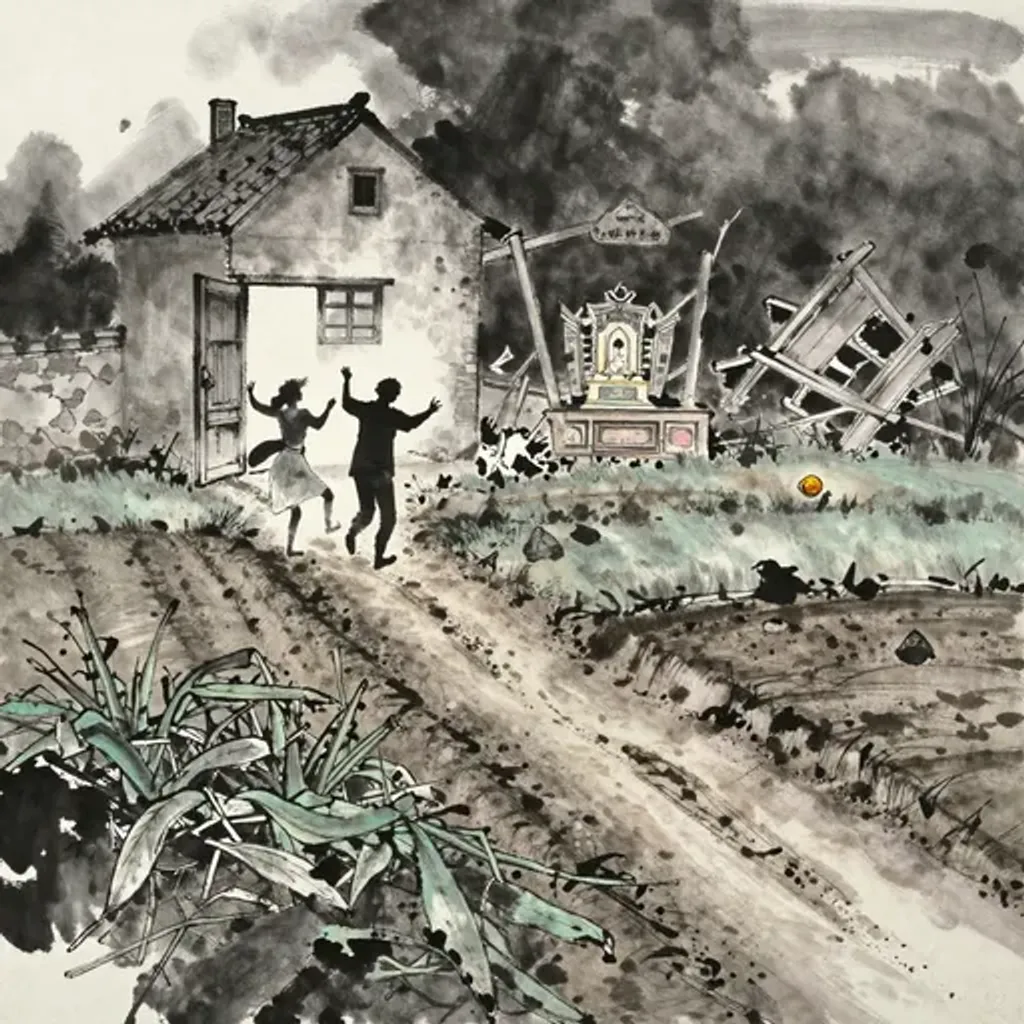
徑邪賊田,政惡傷民;夫婦呪詛,太上覆顛。
Crooked paths plunder the fields; corrupt rule harms the people. Husband and wife hurl curses -- the sovereign above is overturned.
— Jiao Yanshou, Yilin (Forest of Changes), 1st century BC
Commentary
Fire and thunder enforce the law, and here every form of authority has been perverted. Crooked paths steal from the fields, wicked governance wounds the people. Husband and wife hurl curses at each other, and the supreme ruler is toppled and overturned. The verse presents a cascade of corruption moving from land seizure through administrative abuse to domestic hatred to political overthrow — each level of order collapsing into the next. From Biting Through to Before Completion, fire sits above water without meeting, each element straining away from the other. The final hexagram of the Yi is the ultimate image of incompletion: everything is unresolved, every crossing unfinished. The verse's spiral of dysfunction embodies this perfectly — disorder at every scale, with no resolution in sight.