Transformations of Hexagram 25
Every line of change out of Hexagram 25 无妄 Innocence, with the Yilin verse for each of the 64 resulting hexagrams, its translation, and the original ink brush artwork.
无妄 → 乾
Hexagram 25 → Hexagram 1: The Creative
Changing lines: 2, 3
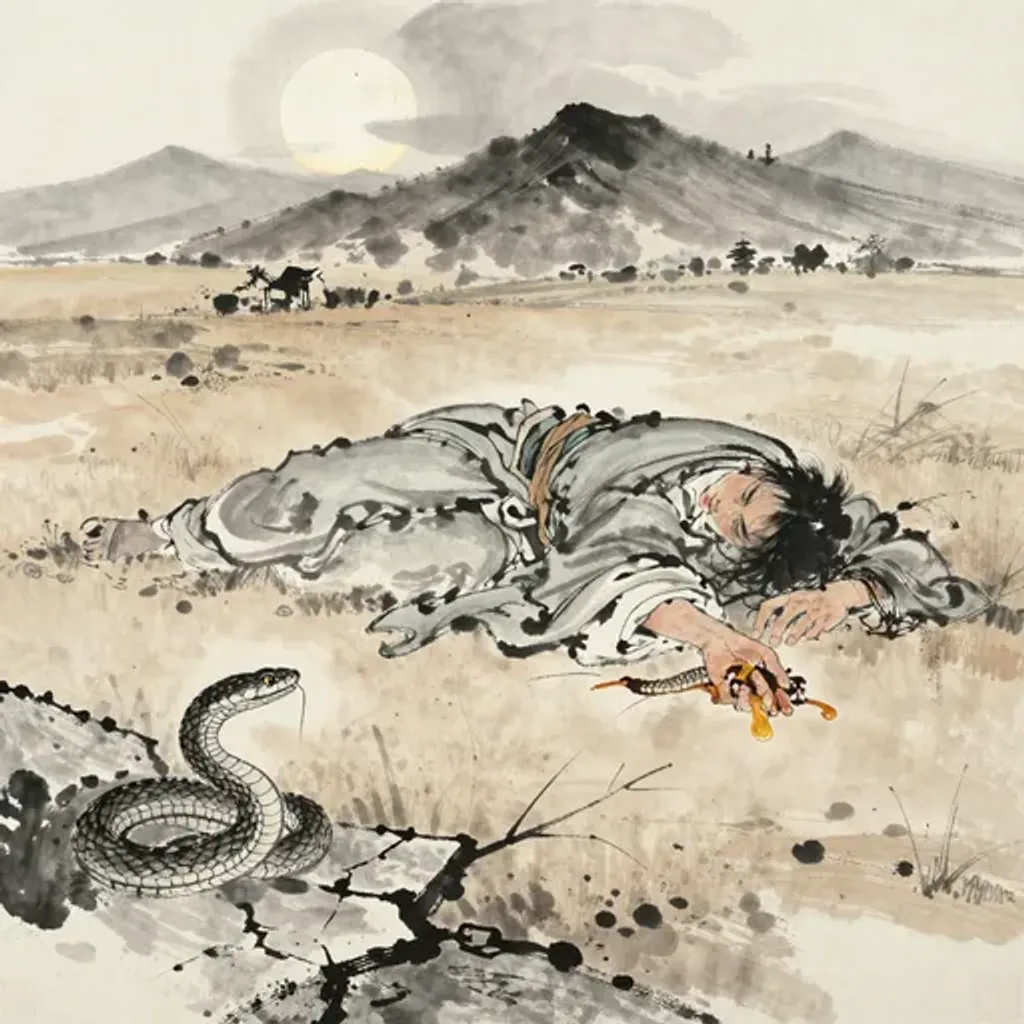
儋耳穿胸,僵離旁舂。天地易紀,日月更始。蝮螫我手,痛為吾毒。
Drooping ears, pierced chests; the stricken lie stiff, pounding grain aside. Heaven and earth shift their order; sun and moon begin anew. A viper stings my hand; the pain becomes my poison.
— Jiao Yanshou, Yilin (Forest of Changes), 1st century BC
Commentary
Thunder rolls beneath heaven, the spontaneous motion of Innocence. The verse opens with exotic peoples from the far reaches of the known world — the long-eared Daner and the hole-chested Chuanxiong, described in the Shanhaijing as dwelling at civilization's edge. Their bodies are battered, pounded like grain in a mortar. Then the cosmos itself resets: heaven and earth change their calendar, sun and moon begin anew. Yet a viper strikes the hand, and its poison becomes one's own suffering. From Innocence to the Creative, the transformation distills Wuwang's central paradox: spontaneous action invites both cosmic renewal and unforeseeable harm. The Creative's self-generating power demands endurance through disruption, for even when heaven reorders the world, venom still finds flesh.
无妄 → 坤
Hexagram 25 → Hexagram 2: The Receptive
Changing lines: 1, 4, 5, 6
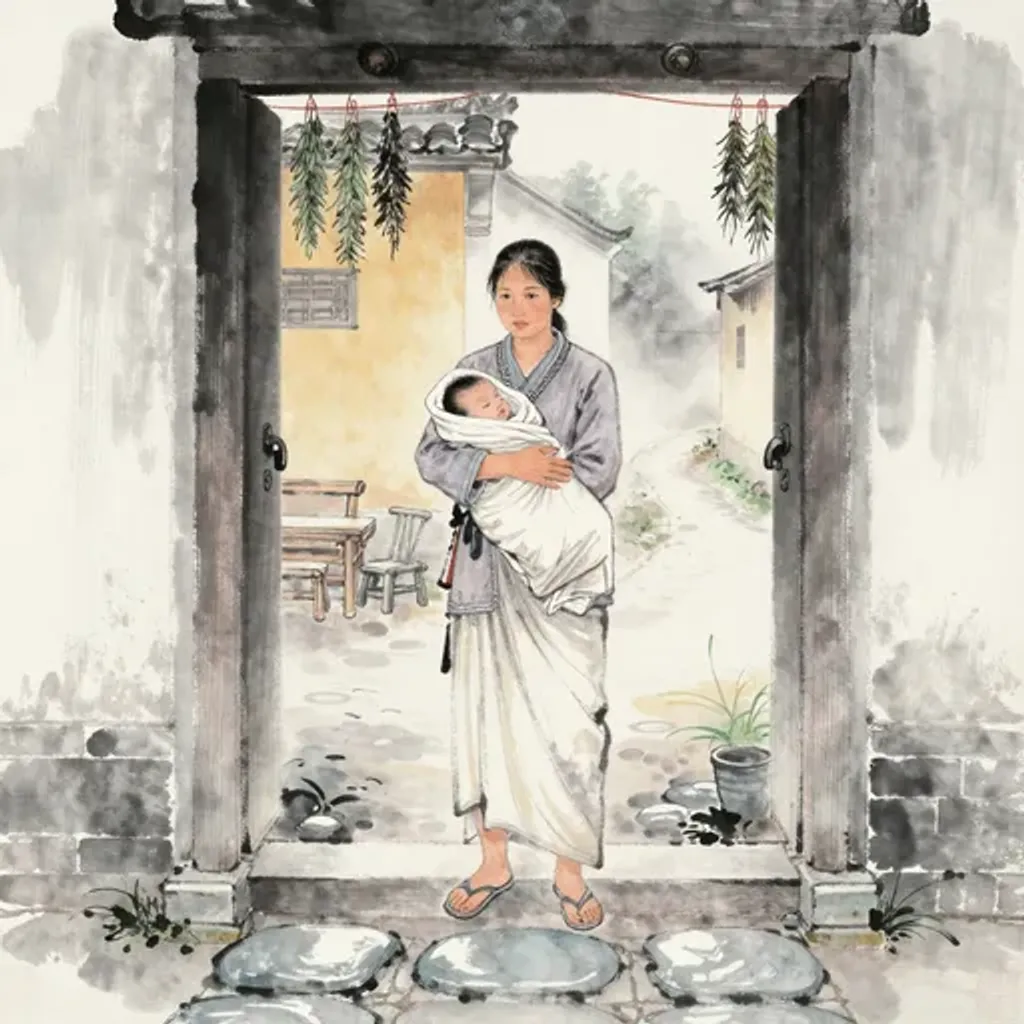
慈母之恩,長大無孫。消息襁褓,害不入門。
The kindly mother's grace; grown tall, yet without grandchildren. Watching over the swaddling cloth; harm does not enter the gate.
— Jiao Yanshou, Yilin (Forest of Changes), 1st century BC
Commentary
Thunder moves beneath heaven, yet the verse turns inward to the sheltering power of earth. A loving mother's kindness nurtures growth, but the children she raises have no grandchildren — the line falters. The verse consoles: wrapped safe in swaddling clothes, harm cannot enter the door. From Innocence to the Receptive, heaven's spontaneous thunder yields to earth's quiet containment. The mother's care embodies Kun's principle of devoted nourishment — not generating new force but preserving what already lives. Even where posterity fails, the receptive stance absorbs misfortune at the threshold, refusing it entry. Protection here is not active defense but the thick, patient earth that simply holds.
无妄 → 屯
Hexagram 25 → Hexagram 3: Difficulty at the Beginning
Changing lines: 4, 6
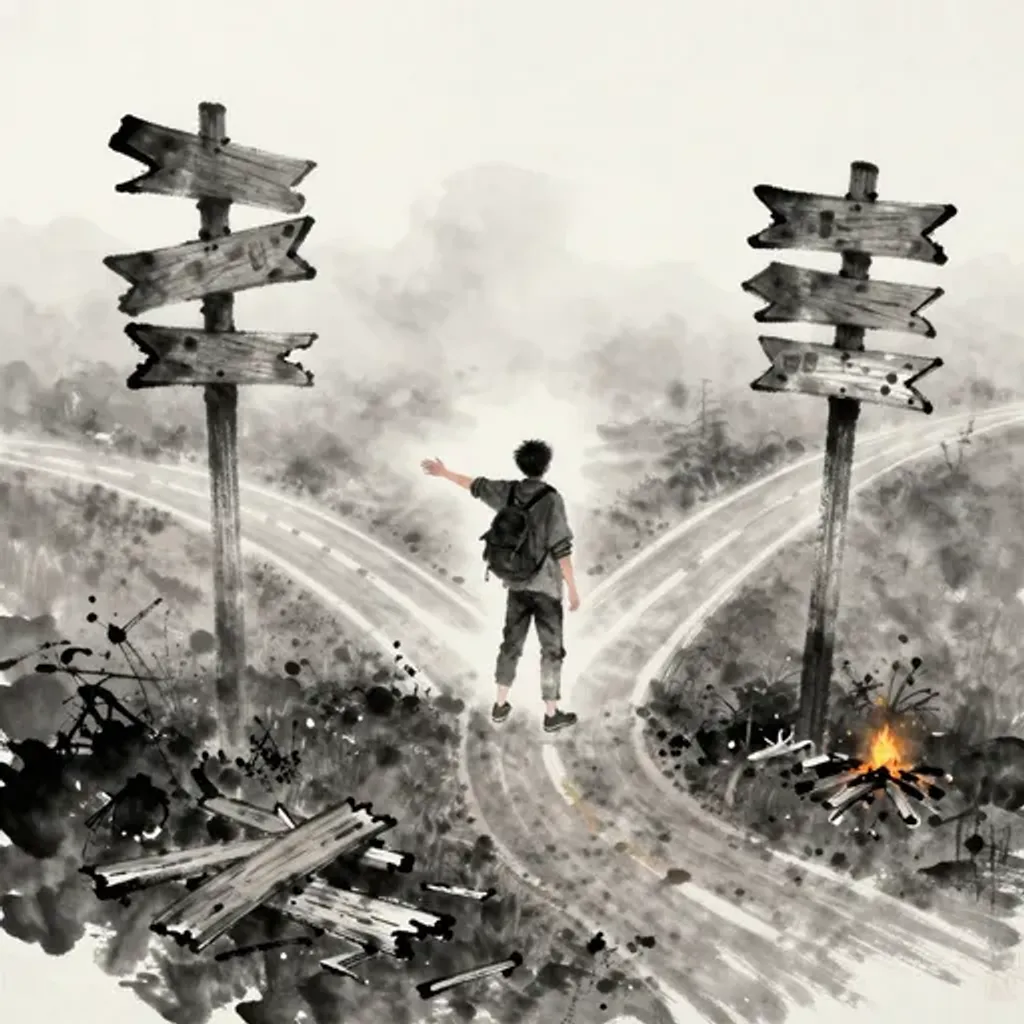
偽言妄語,傳相詿誤。道左失跡,不知鄉處。
False words, reckless speech; passed along, leading others astray. Losing one's tracks on the roadside; not knowing where one belongs.
— Jiao Yanshou, Yilin (Forest of Changes), 1st century BC
Commentary
Thunder beneath heaven promises honest motion, but here language itself goes astray. False words and reckless speech spread from mouth to mouth, each repetition compounding the error. The traveler loses the road at the crossroads, no longer knowing which direction leads home. From Innocence to Difficulty at the Beginning, Wuwang's spontaneous truthfulness collapses into its opposite — fabricated speech that misleads everyone. Zhun's image of clouds and thunder gathering presages a new beginning, but that beginning must first reckon with confusion. The verse warns: when innocence is corrupted by deceit, even the simplest path becomes a trackless waste, and the first step toward renewal is acknowledging how thoroughly one has been led astray.
无妄 → 蒙
Hexagram 25 → Hexagram 4: Youthful Folly
Changing lines: 1, 2, 4, 5
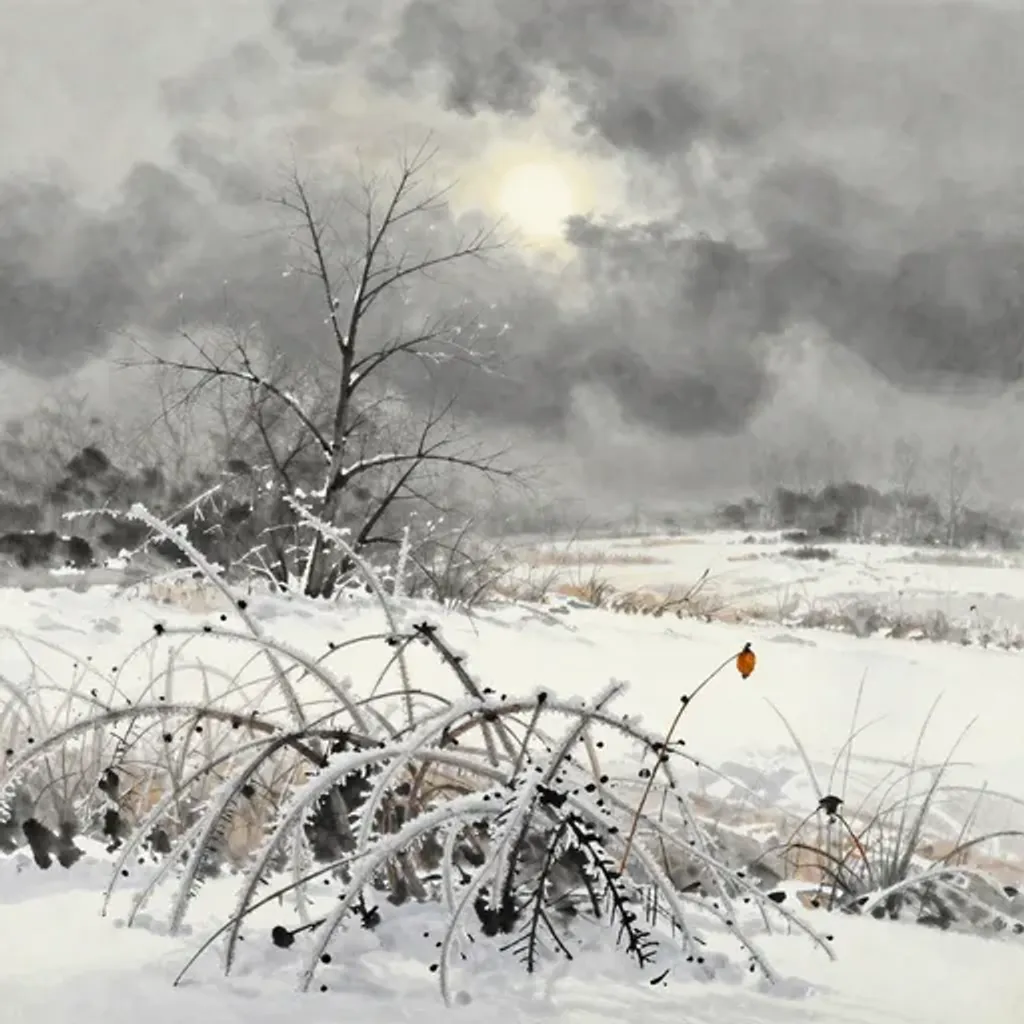
鬱怏不明,陰積無光。日在北陸,萬物彫藏。
Gloomy and unclear; dark clouds gather, blocking the light. The sun lies in the northern depths; the ten thousand things wither and hide.
— Jiao Yanshou, Yilin (Forest of Changes), 1st century BC
Commentary
Thunder beneath heaven falls silent as the world sinks into midwinter darkness. The air hangs heavy and joyless, yin accumulates without a glimmer of light. The sun travels along the northern arc — the winter solstice path — and all living things wither into hibernation. This is nature at its most contracted: the Yilin renders the seasonal image with precise astronomical vocabulary. From Innocence to Youthful Folly, the transformation follows nature's logic. When heaven's thunderous energy retreats behind dense clouds, a spring below a mountain remains hidden — pure potential not yet understood. Meng's darkness is not malice but ignorance awaiting instruction, the deep winter before the first lesson breaks through.
无妄 → 需
Hexagram 25 → Hexagram 5: Waiting
Changing lines: 2, 3, 4, 6
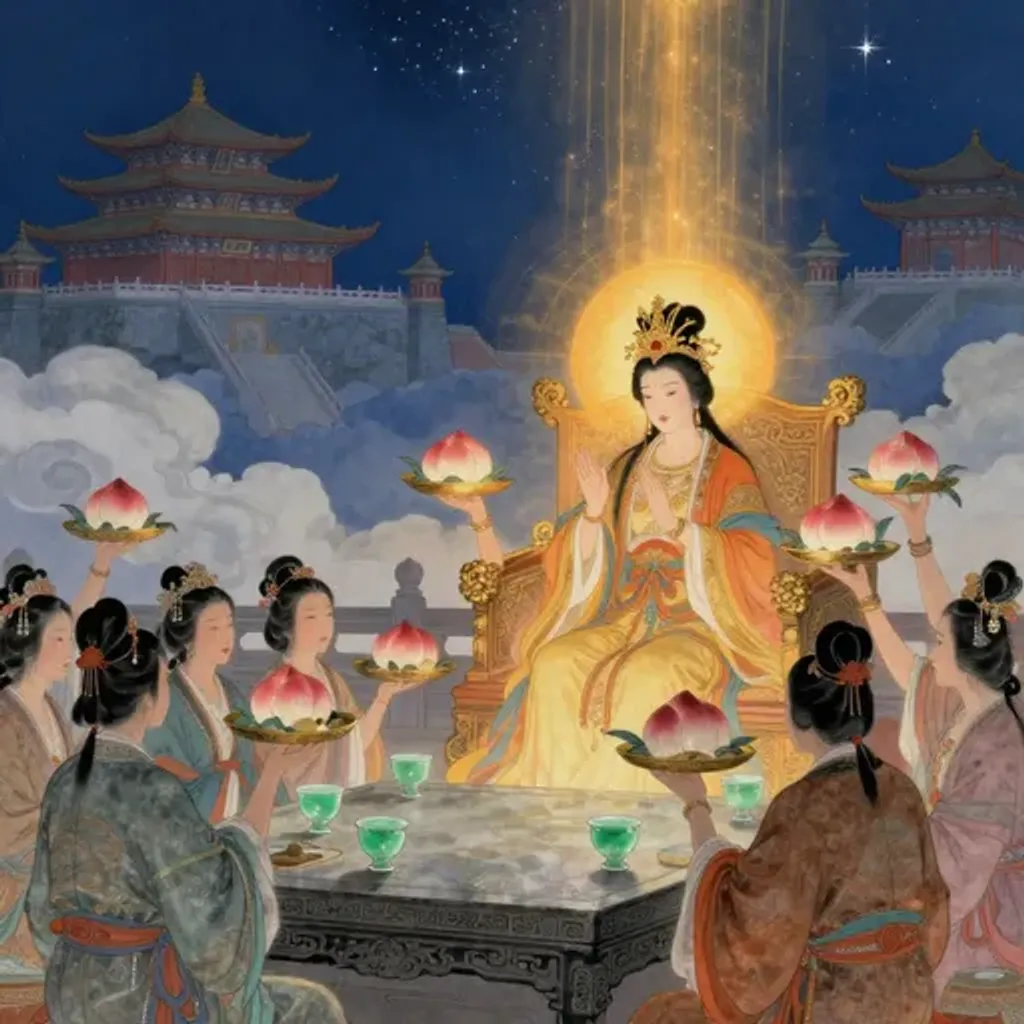
王母多福,天祿所伏。居之寵光,君子有昌。
The Queen Mother bestows abundant blessings; heaven's bounty lies in store. Dwelling in honored radiance; the noble man finds flourishing.
— Jiao Yanshou, Yilin (Forest of Changes), 1st century BC
Commentary
Thunder beneath heaven clears the way for celestial blessing. The Queen Mother of the West, guardian of the peaches of immortality, bestows abundant fortune; heaven's own emolument shelters the recipient. To dwell in such radiance is to receive the splendor of favor, and the noble person prospers. From Innocence to Waiting, the transformation shifts from spontaneous action to patient trust in heaven's timing. The Queen Mother's gifts do not arrive through striving — they descend upon those who wait with uncorrupted sincerity. Xu's image of clouds gathering over heaven promises nourishment that will come in its own season, and the wise response is to feast and celebrate with confidence.
无妄 → 訟
Hexagram 25 → Hexagram 6: Conflict
Changing lines: 1, 2
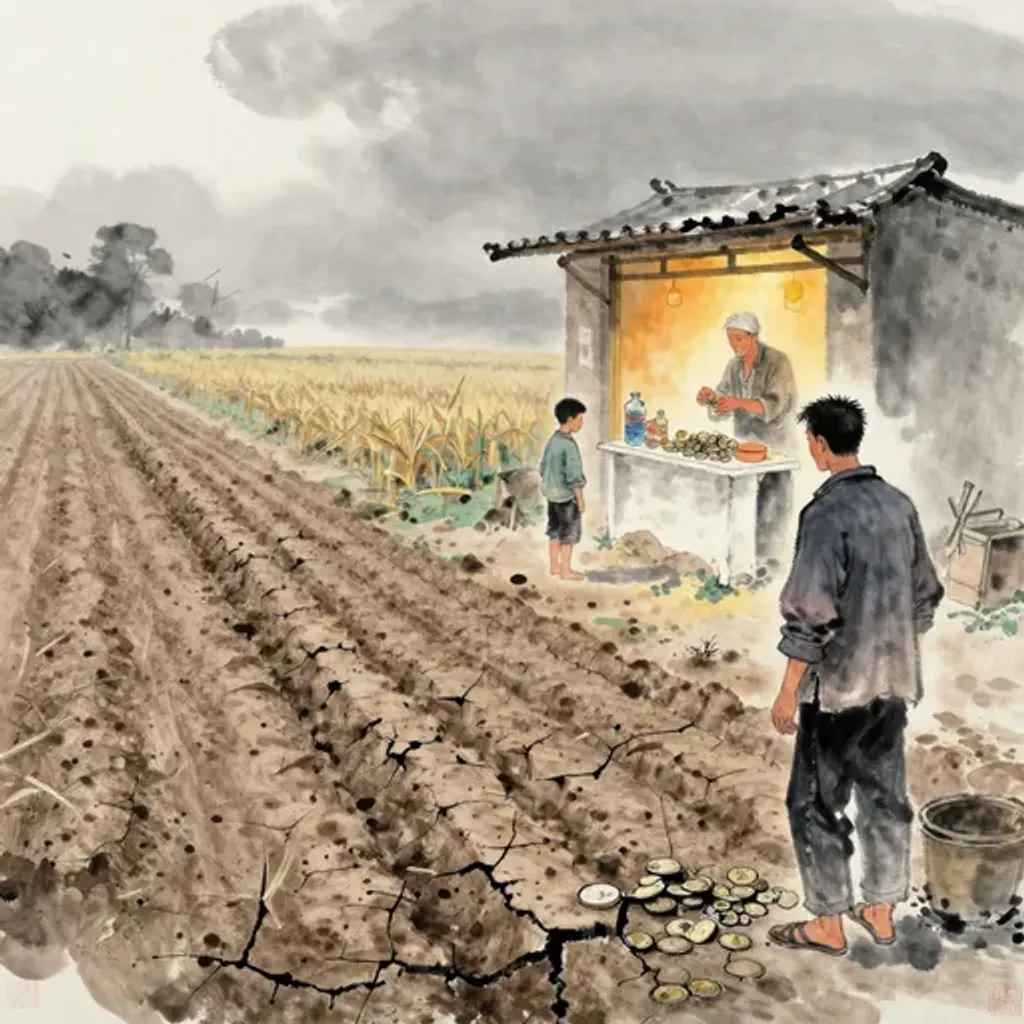
不耕而獲,家食不給。中女無良,長子徒足。踈齒善市,商人有息。
Reaping without plowing; the household cannot feed itself. The middle daughter lacks virtue; the eldest son goes barefoot. Gap-toothed yet shrewd at market; the merchant earns his profit.
— Jiao Yanshou, Yilin (Forest of Changes), 1st century BC
Commentary
Thunder beneath heaven signals honest action, but here everything is mismatched. Reaping without sowing, the household's food runs short. The middle daughter lacks virtue; the eldest son goes barefoot. Yet the gap-toothed one proves shrewd at market, and the merchant earns his profit. This is a world of inverted expectations — those who should provide cannot, while the unlikely succeed. From Innocence to Conflict, the transformation captures how spontaneous disorder breeds contention. When heaven and water move in opposite directions, each party follows its own logic, and disputes multiply. The verse's bitter irony echoes Wuwang's warning: innocent action misfires when the social order is already skewed.
无妄 → 師
Hexagram 25 → Hexagram 7: The Army
Changing lines: 1, 2, 4, 5, 6
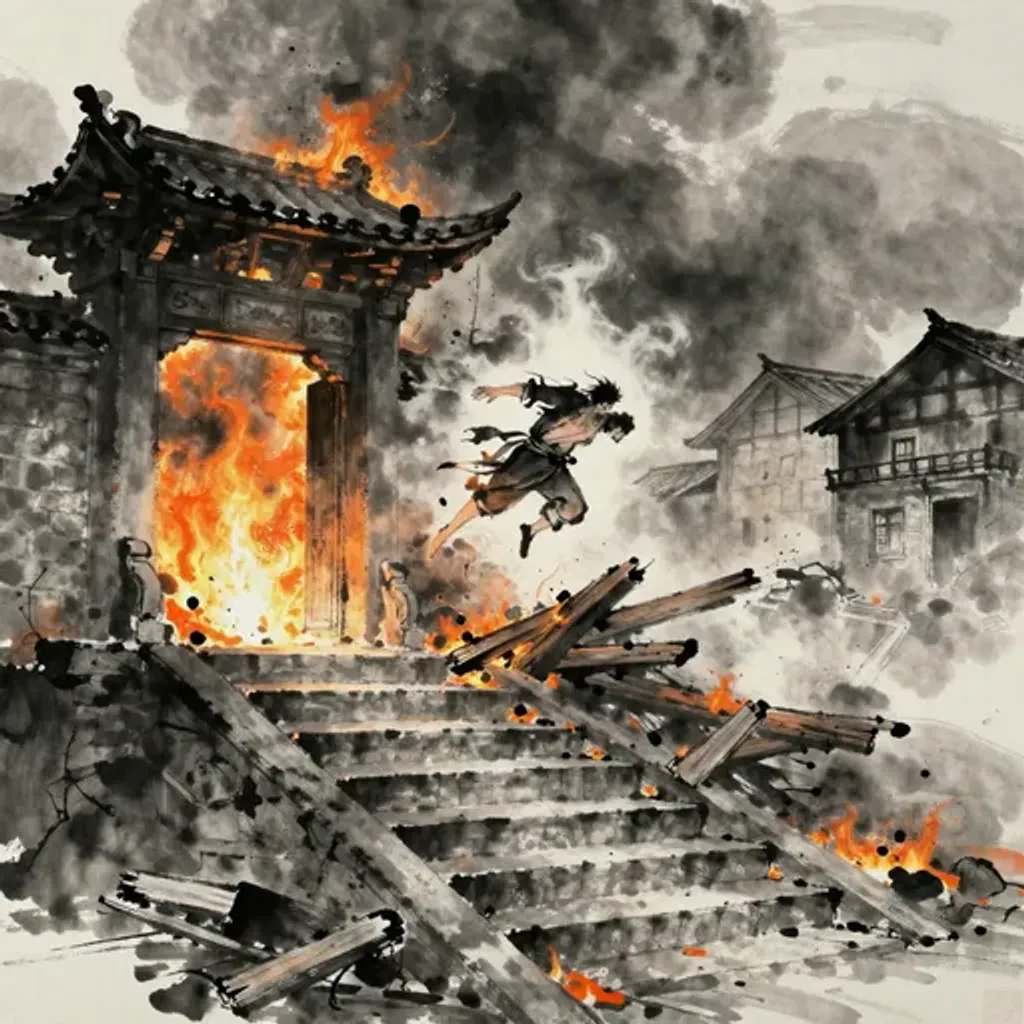
火起上門,不為我殘。跳脫東西,獨得生完。不利出鄰,病疾憂患。
Fire breaks out at the upper gate; it does not consume me. Leaping east and west; alone I escape unharmed. Ill-favored to venture abroad; sickness and worry follow.
— Jiao Yanshou, Yilin (Forest of Changes), 1st century BC
Commentary
Fire breaks out above the gate, yet somehow spares the speaker — leaping east and west, one alone escapes intact. The verse then pivots sharply: venturing beyond the neighborhood brings only sickness and sorrow. From Innocence to The Army, the transformation reveals how personal survival intersects with collective discipline. The Army's image of water concealed within the earth suggests forces held in reserve, and the one who survives the blaze does so not by heroics but by disciplined response — dodging with instinct rather than charging forward. The closing warning encodes the Army's deeper lesson: safety lies in contained position, not reckless advance into hostile territory.
无妄 → 比
Hexagram 25 → Hexagram 8: Holding Together
Changing lines: 1, 4, 6
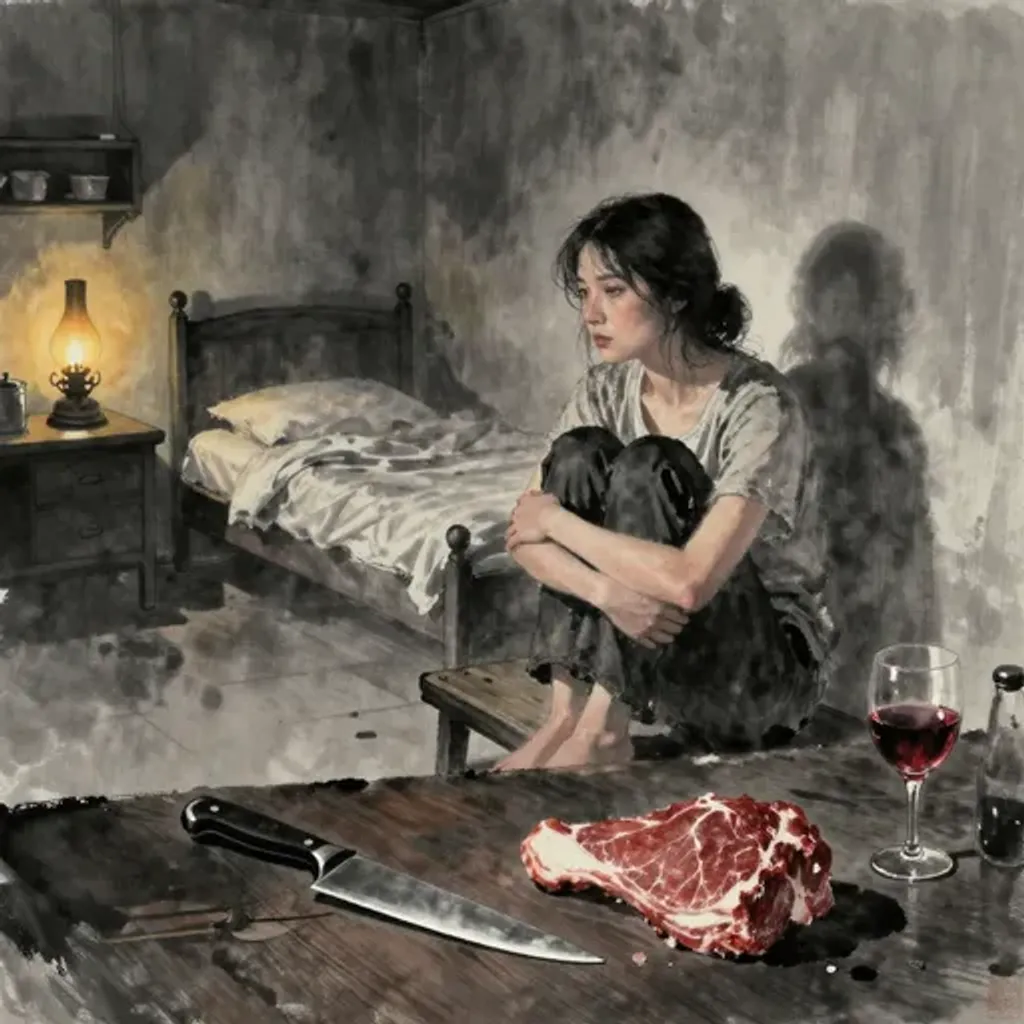
持刀操肉,對酒不食。夫亡從軍,長子入獄。抱膝獨宿。
Holding a knife, handling meat; facing wine yet unable to eat. The husband has gone to war; the eldest son is in prison. Clasping her knees, she sleeps alone.
— Jiao Yanshou, Yilin (Forest of Changes), 1st century BC
Commentary
Holding knife and meat, facing wine yet unable to eat — a feast laid before someone too grief-stricken to touch it. The husband has gone to war; the eldest son is in prison. She can only embrace her knees and sleep alone. From Innocence to Holding Together, the transformation is achingly ironic: the hexagram of bonding and alliance arrives precisely when every bond has been severed. Water upon earth gathers people into community, but this woman sits apart, her family scattered by the state's demands. The verse captures Wuwang's darkest implication — misfortune that strikes the blameless. Yet Bi's structure also hints at what remains: the capacity to hold together within oneself when all external bonds have failed.
无妄 → 小畜
Hexagram 25 → Hexagram 9: Small Taming
Changing lines: 2, 3, 4
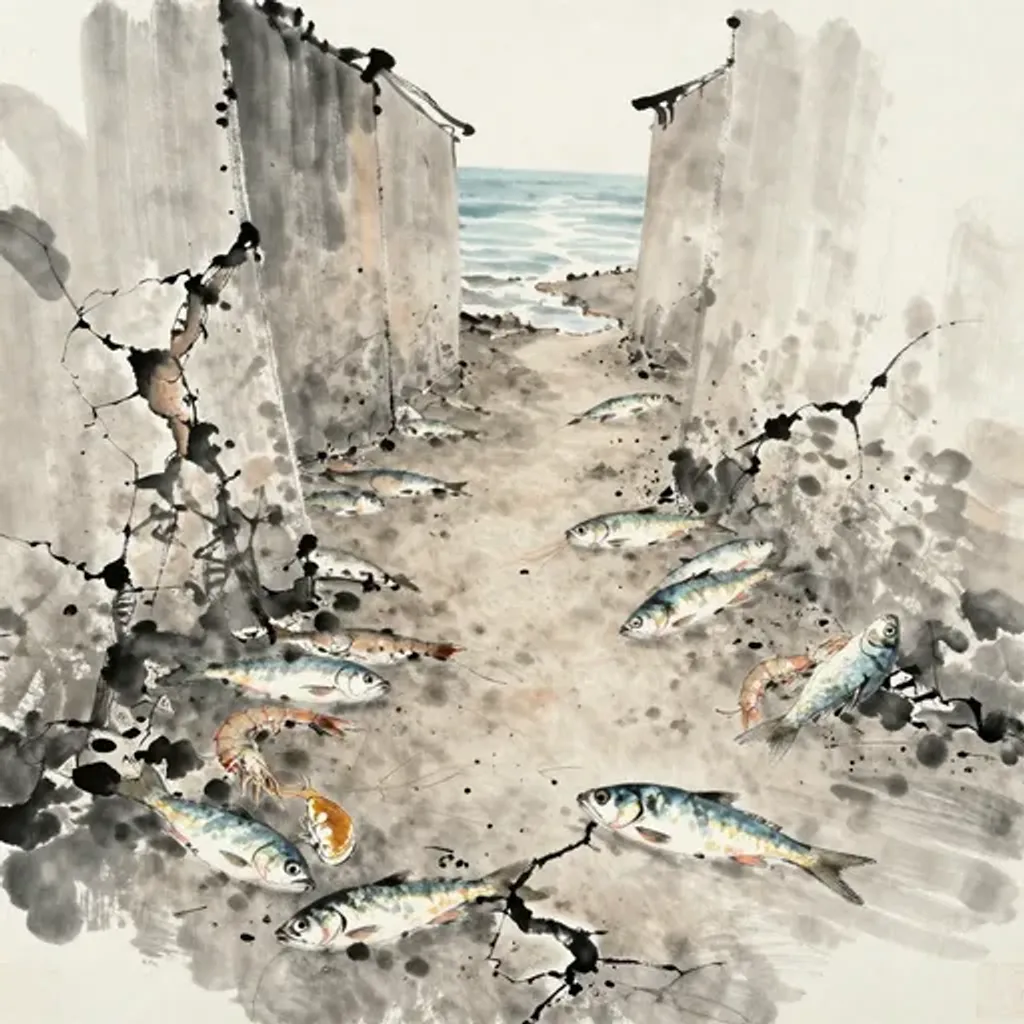
鰌鰕去海,遊於枯里。街巷迫狹,不得自在。南北四極,渴餒成疾。
Loach and shrimp leave the sea; they wander in a dried-up lane. Streets and alleys, cramped and narrow; no room to move freely. North, south, to the four extremes; thirst and hunger become illness.
— Jiao Yanshou, Yilin (Forest of Changes), 1st century BC
Commentary
Loaches and shrimp leave the ocean and wander into a dried-up village. The streets are cramped and narrow, affording no freedom of movement. Roaming from south to north to the four extremes, they grow parched and starved until illness overtakes them. From Innocence to Small Taming, the transformation captures the frustration of great capacity confined by modest circumstance. Wind moves above heaven in Xiaoxu, gently restraining without fully releasing — a subtle check that prevents breakthrough. The sea creatures stranded in shallow lanes embody this precisely: beings made for the open deep now hemmed in by forces too diffuse to confront directly, their energy slowly drained rather than dramatically blocked.
无妄 → 履
Hexagram 25 → Hexagram 10: Treading
Changing lines: 2
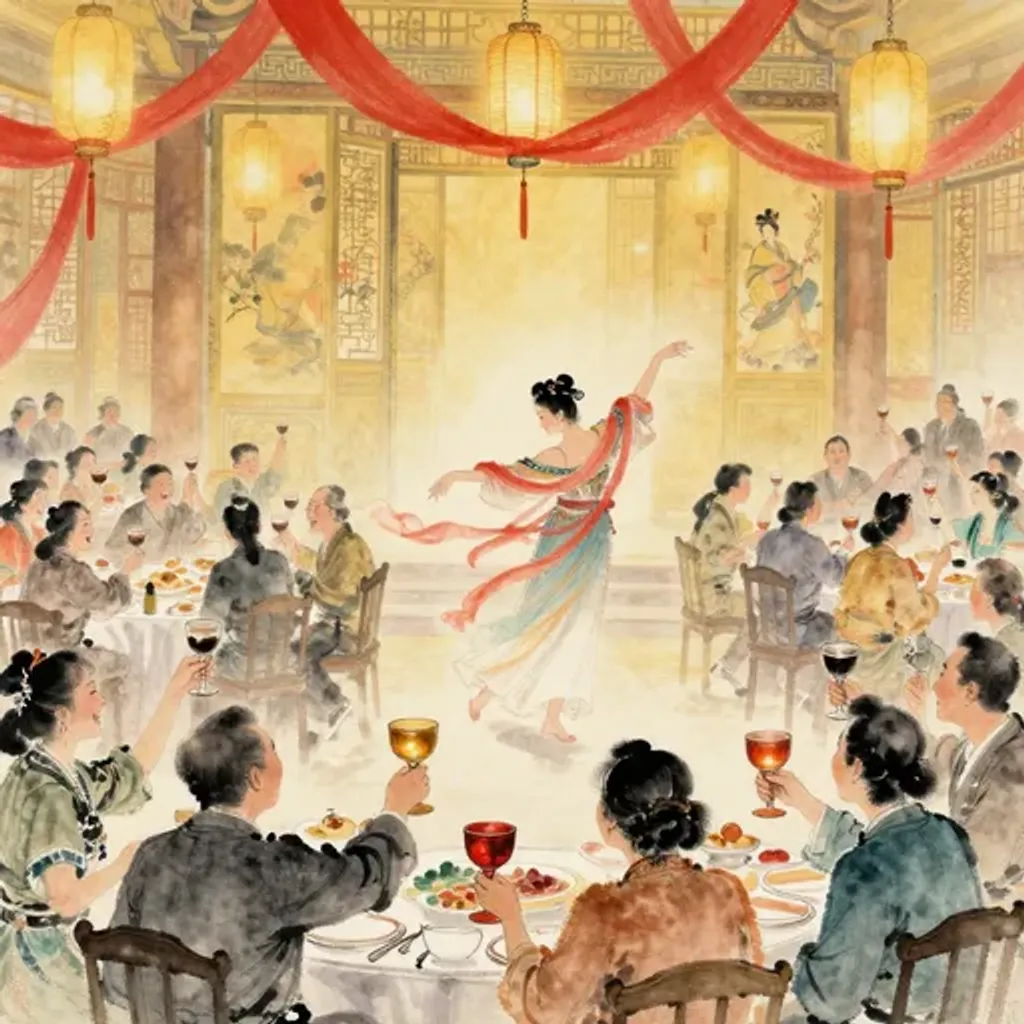
啞啞笑喜,與歡飲酒。長樂行觴,千秋起舞。拜受大福。
Babbling laughter and delight; drinking wine with joy. In the Hall of Lasting Happiness, passing the cup; dancing through a thousand autumns. Bowing, they receive great blessings.
— Jiao Yanshou, Yilin (Forest of Changes), 1st century BC
Commentary
Thunder beneath heaven gives way to pure joyous celebration. Laughter rings out — the sound of delighted voices chattering. Friends gather to drink wine together. In the Hall of Lasting Joy they pass the cup; with cries of 'ten thousand years' they rise to dance. All bow and receive great blessings. From Innocence to Treading, the transformation reveals how spontaneous sincerity, when perfectly aligned with propriety, produces effortless grace. Lu's image of heaven above the lake establishes the proper distinction between high and low, and within that clear structure, celebration flows freely. The verse's unforced joy embodies Wuwang at its best — fortune arriving without contrivance, received with the natural ease of a well-ordered world.
无妄 → 泰
Hexagram 25 → Hexagram 11: Peace
Changing lines: 2, 3, 4, 5, 6
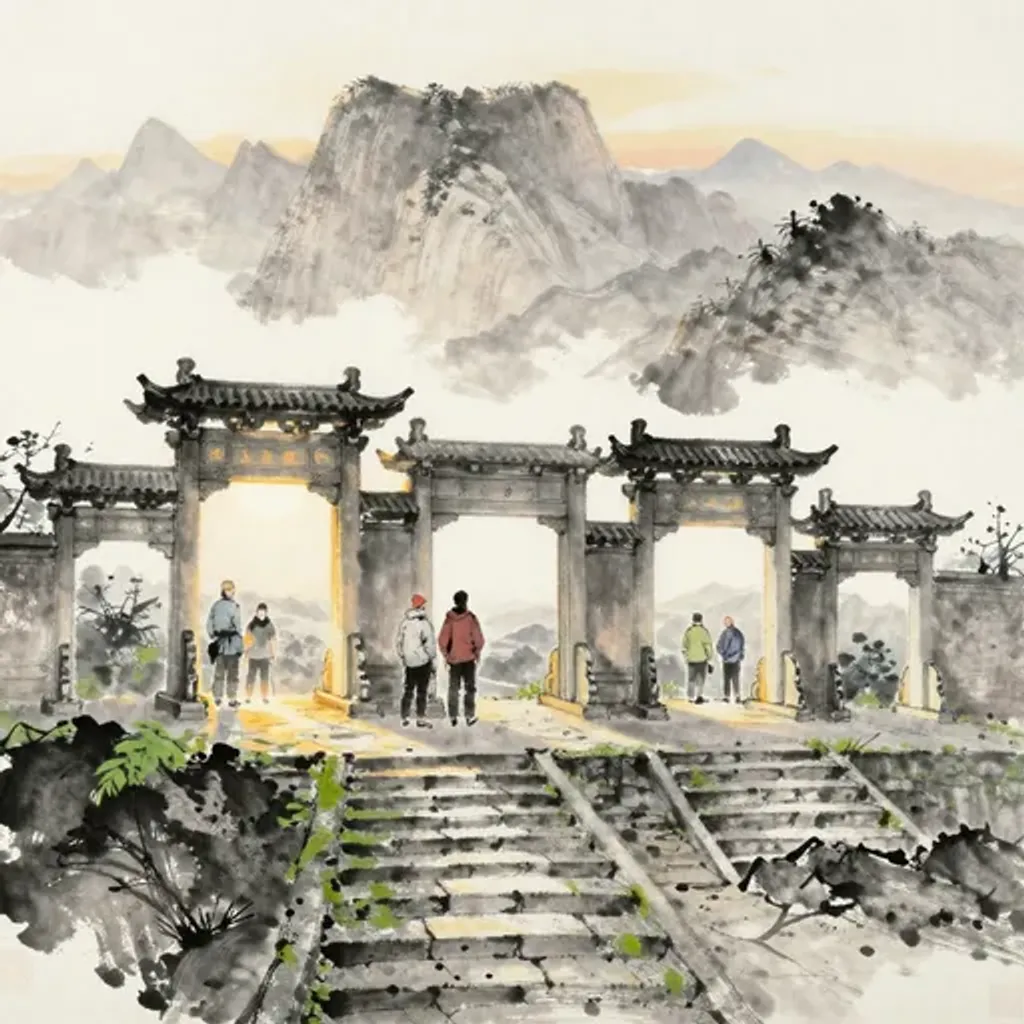
登高上山,賓于四門。吾士得懽,福為我根。
Climbing high, ascending the mountain; a guest at the four gates. Our gentlemen find delight; fortune becomes our root.
— Jiao Yanshou, Yilin (Forest of Changes), 1st century BC
Commentary
Ascending the mountain heights, one is received as a guest at the four gates — the ceremonial welcome accorded to the worthy by Emperor Shun, who 'examined at the four gates' when selecting officials. The worthy officers find delight, and blessings take root. From Innocence to Peace, the transformation traces how sincere action opens the way to cosmic harmony. Tai's image of heaven and earth in communion — earth above, heaven below — represents the ideal state where all energies flow freely between high and low. The mountain climb is the effort; the reception at the four gates is the reward. When innocence meets openness, fortune does not merely visit — it becomes a permanent foundation.
无妄 → 否
Hexagram 25 → Hexagram 12: Standstill
Changing lines: 1
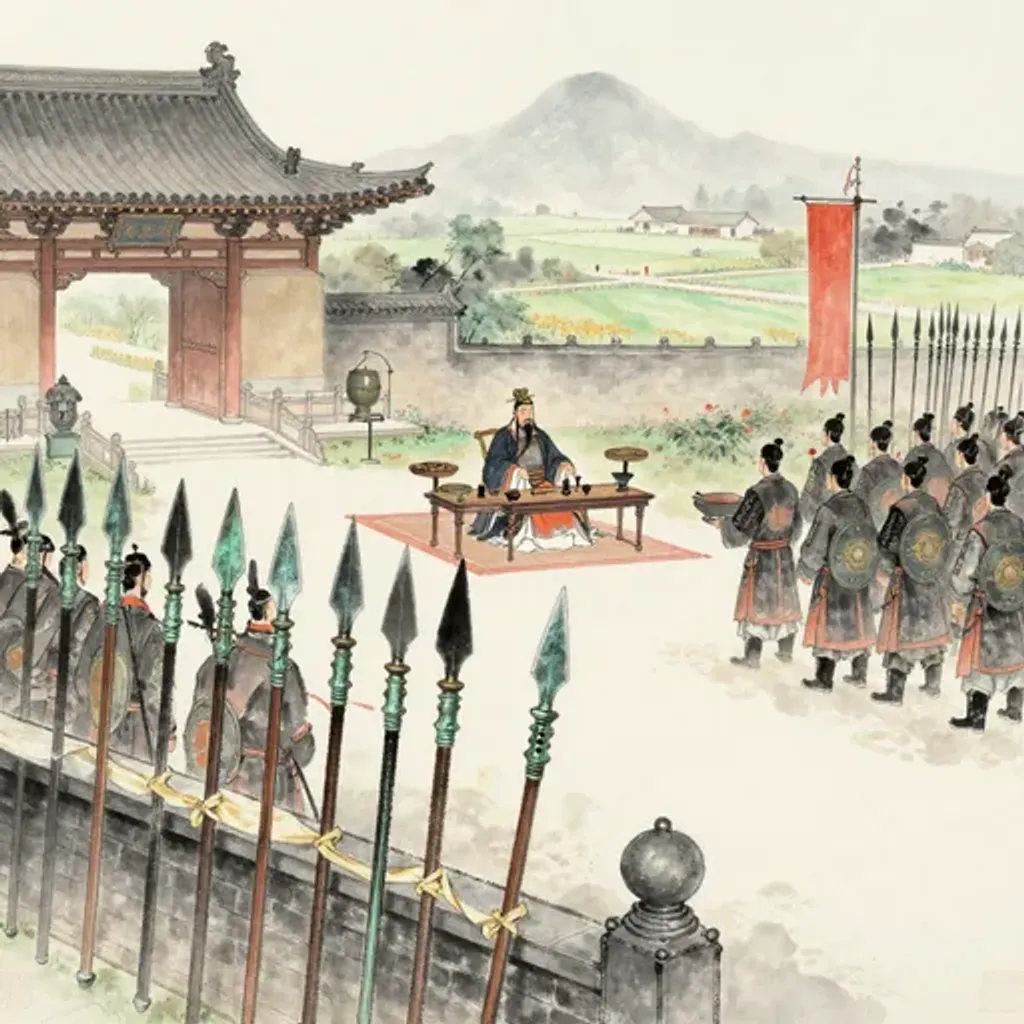
天厭周德,命我南國。以禮靜民,兵革休息。
Heaven wearies of Zhou's virtue; it mandates our southern kingdom. With rites we calm the people; arms and war find rest.
— Jiao Yanshou, Yilin (Forest of Changes), 1st century BC
Commentary
Heaven grows weary of Zhou's virtue and transfers its mandate to the southern kingdom. With ritual and propriety the people are pacified; weapons and armor are set aside to rest. This verse invokes the Mandate of Heaven — the foundational political theology of the Zhou, here turned against Zhou itself. The phrase 'heaven wearies of Zhou's virtue' echoes the language of dynastic decline found throughout the Shijing and Shangshu. From Innocence to Standstill, the transformation is paradoxically stabilizing: heaven and earth cease to communicate in Pi, yet the verse presents this severance as a form of peace. When the old order exhausts itself, the new mandate brings stillness through ritual restraint rather than through force.
无妄 → 同人
Hexagram 25 → Hexagram 13: Fellowship
Changing lines: 3
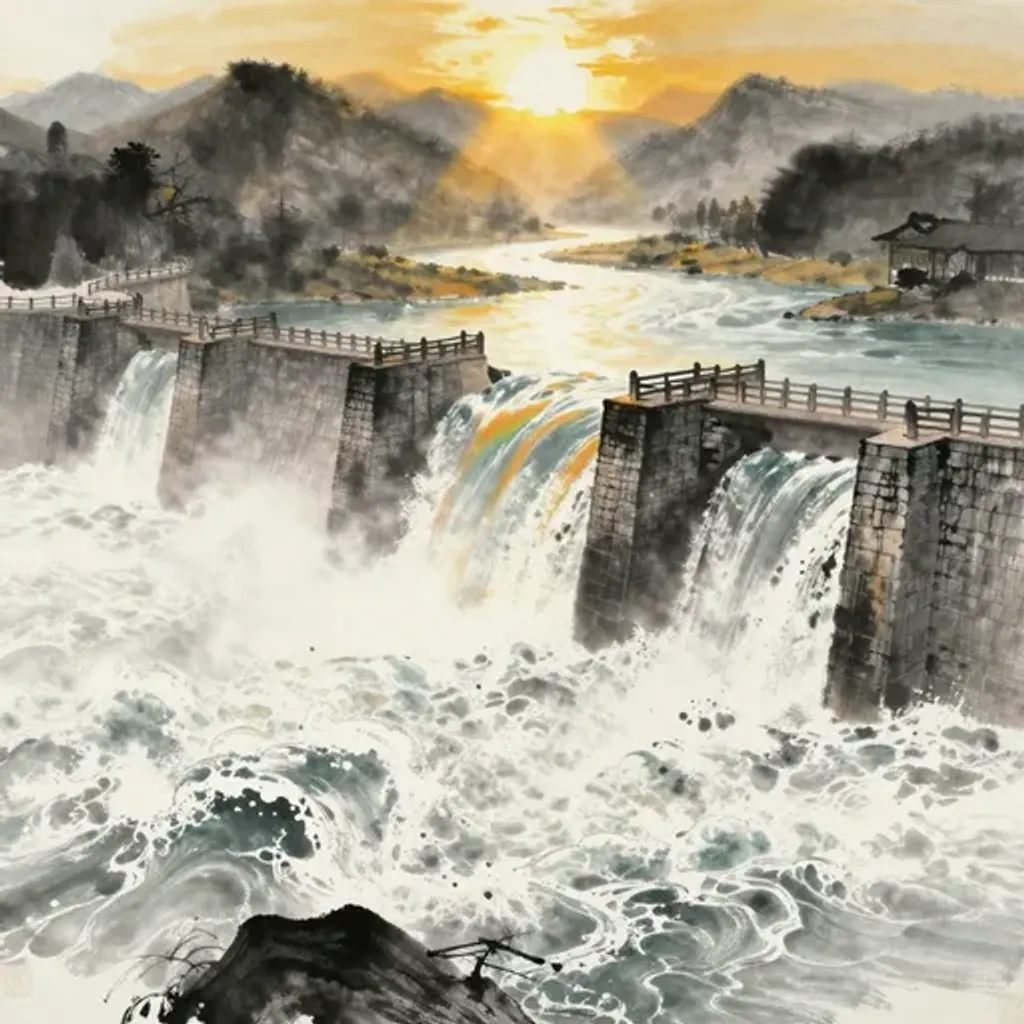
壅遏隄防,水不得行。火光盛陽,陰蜺伏匿。走歸其鄉。
Dams and dikes block the way; water cannot flow. Firelight blazes with fierce yang; the dark rainbow hides and crouches. It flees and returns to its lair.
— Jiao Yanshou, Yilin (Forest of Changes), 1st century BC
Commentary
Dikes and levees are built to block the flow, and water cannot pass. Firelight blazes with yang's full force, while the yin rainbow crouches in hiding. Dark forces flee back to their own domain. From Innocence to Fellowship, the transformation shows how collective clarity expels what does not belong. Tongren's image of heaven united with fire illuminates all things and gathers the like-minded, while those of different nature scatter. The dam imagery adds a crucial dimension: fellowship requires active containment, channeling energy to exclude destructive elements. The yin rainbow — traditionally associated with improper influences — cannot survive under brilliant yang, and retreats of its own accord.
无妄 → 大有
Hexagram 25 → Hexagram 14: Great Possession
Changing lines: 2, 3, 5
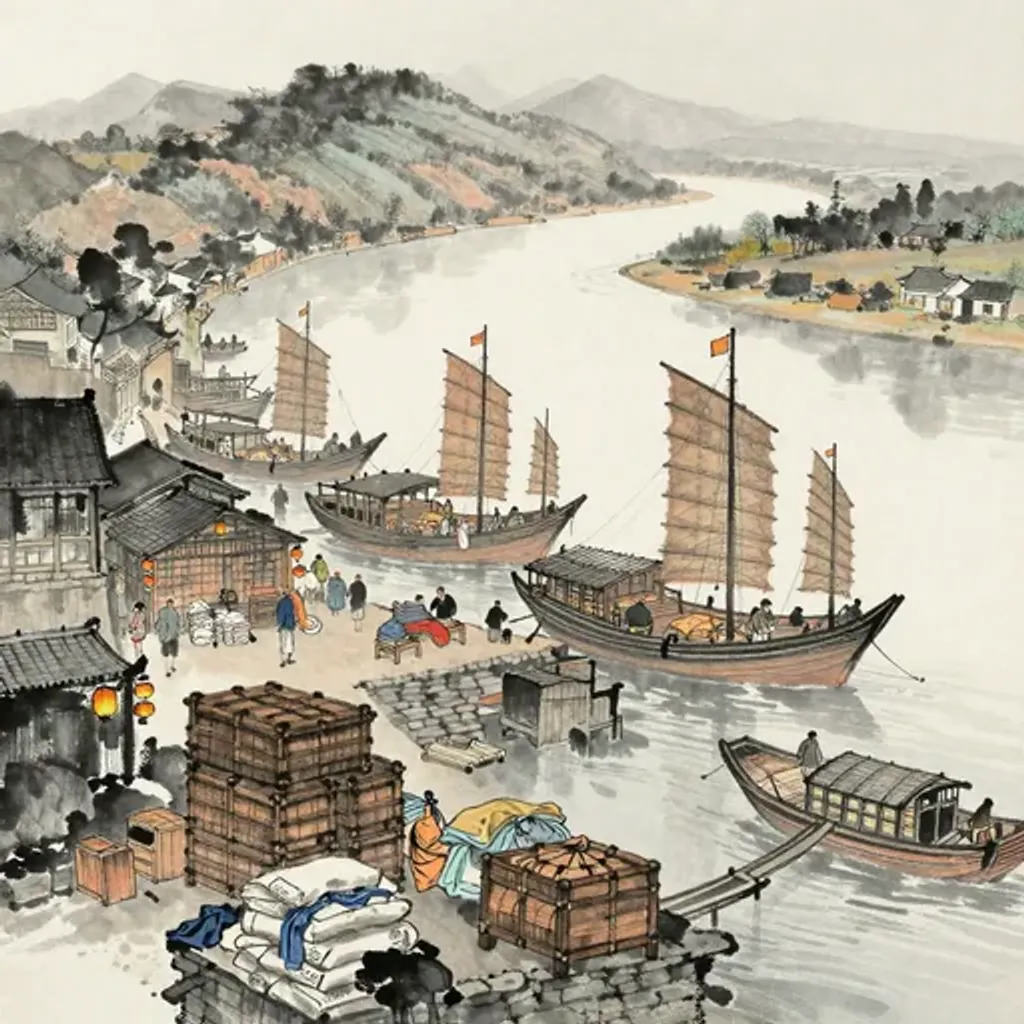
海河都市,國之奧府。商人受福,少子玉食。
Sea and river, a great market; the realm's innermost storehouse. Merchants receive blessings; the young feast on jade-like delicacies.
— Jiao Yanshou, Yilin (Forest of Changes), 1st century BC
Commentary
Rivers and seas converge at the capital, forming the nation's innermost treasury. Merchants receive blessings, and the youngest son feasts on jade-like delicacies. This is commerce as cosmic gift — not the striving of Conflict's trader but the natural abundance of a well-situated state. From Innocence to Great Possession, the transformation follows heaven's spontaneous generosity to its fullest expression. Fire in heaven illuminates all below, and Dayou's image of abundance earned through virtue radiates without obstruction. The 'innermost treasury' echoes the hexagram's name: great possession is not hoarded but flows through proper channels like rivers reaching the sea, enriching everyone it touches.
无妄 → 謙
Hexagram 25 → Hexagram 15: Modesty
Changing lines: 1, 3, 4, 5, 6
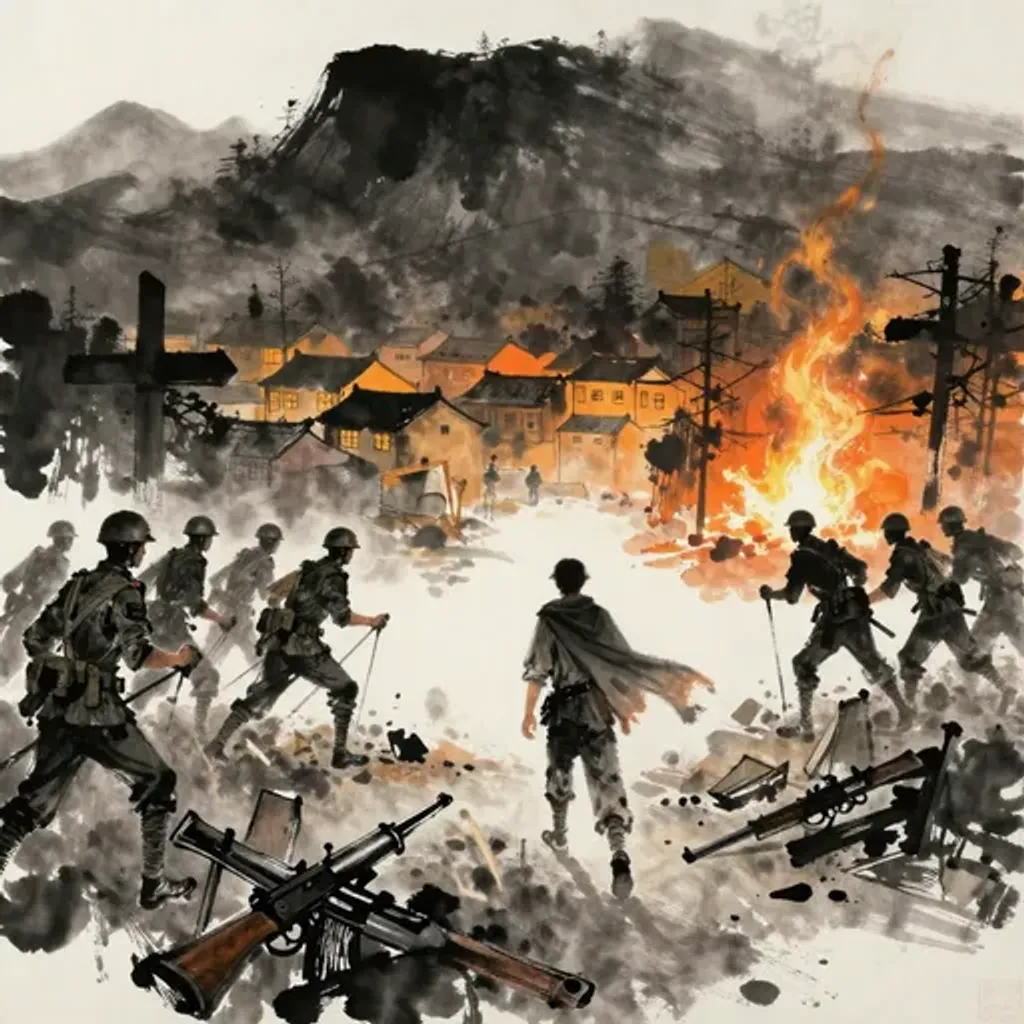
東行避兵,南去不祥。西逐凶惡,北迎福生。與喜相逢。
Going east, one flees soldiers; going south, ill fortune. Going west, one meets malice; going north, blessings arise. Meeting joy along the way.
— Jiao Yanshou, Yilin (Forest of Changes), 1st century BC
Commentary
Going east invites conflict; heading south proves inauspicious. Only by turning west to drive off evil and north to welcome life does one encounter joy. The four cardinal directions are tested and only the correct orientation yields fortune. From Innocence to Modesty, the transformation reveals the geometry of humility. Qian's image of a mountain hidden within the earth — greatness that does not flaunt itself — resonates with the verse's directional logic: most paths lead to danger, and only the humble, less obvious route brings safety. The encounter with joy arrives not through bold advance but through discriminating withdrawal, choosing the one direction that welcomes life while declining the three that court disaster.
无妄 → 豫
Hexagram 25 → Hexagram 16: Enthusiasm
Changing lines: 1, 5, 6
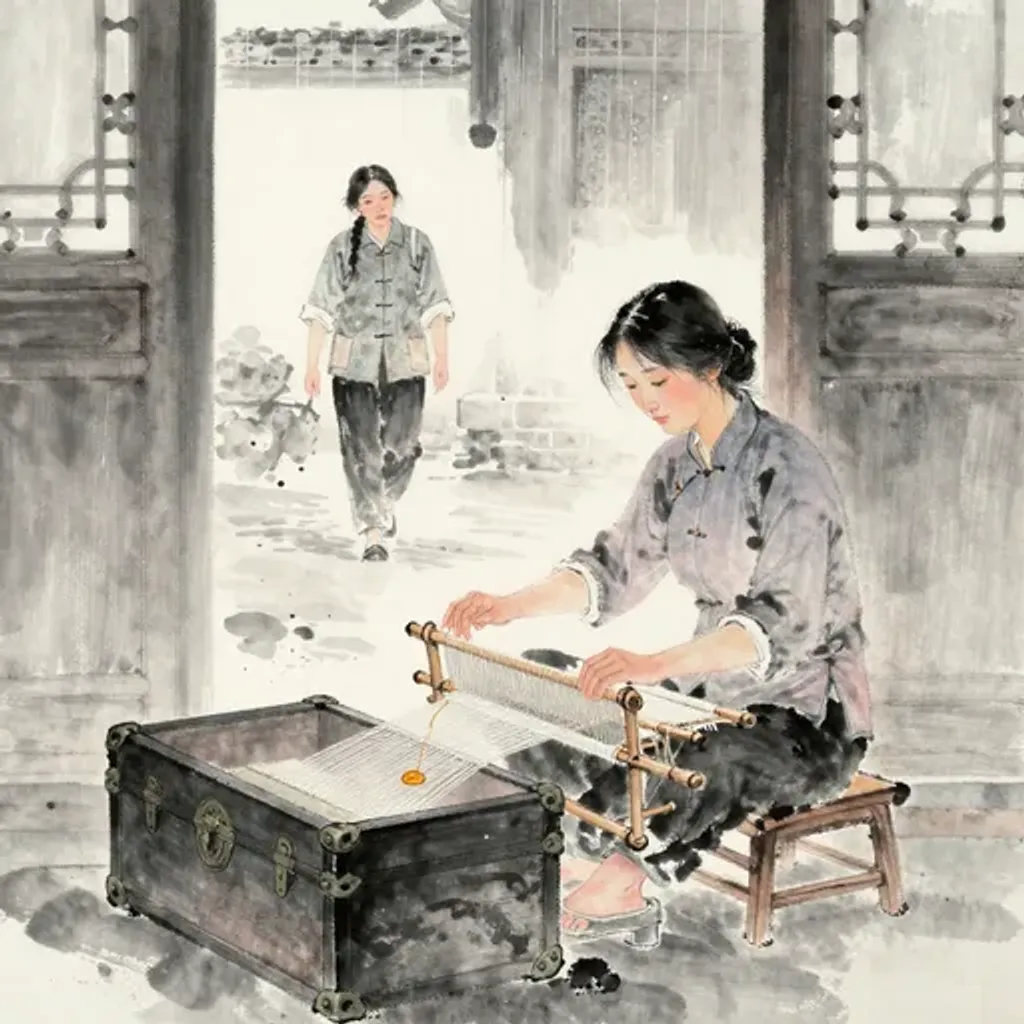
東家中女,嫫母㝡醜。三十無室,媒伯勞苦。
The eastern neighbor's middle daughter; ugly as Mo Mu herself. At thirty still without a household; the matchmaker toils in vain.
— Jiao Yanshou, Yilin (Forest of Changes), 1st century BC
Commentary
The middle daughter from the eastern household is ugly as Mo Mu — the legendarily homely consort of the Yellow Emperor. At thirty she remains unmarried, and the matchmakers exhaust themselves in vain. From Innocence to Enthusiasm, the transformation is sharply ironic. Yu's image of thunder bursting from the earth should herald joyous celebration — the ancient kings made music to honor virtue. Yet here the anticipated festivity stalls: the bride cannot be placed, and the matchmakers labor without result. The verse inverts Wuwang's promise that sincerity naturally attracts its match, suggesting that even innocence cannot overcome the world's shallow judgments of outward form.
无妄 → 隨
Hexagram 25 → Hexagram 17: Following
Changing lines: 6
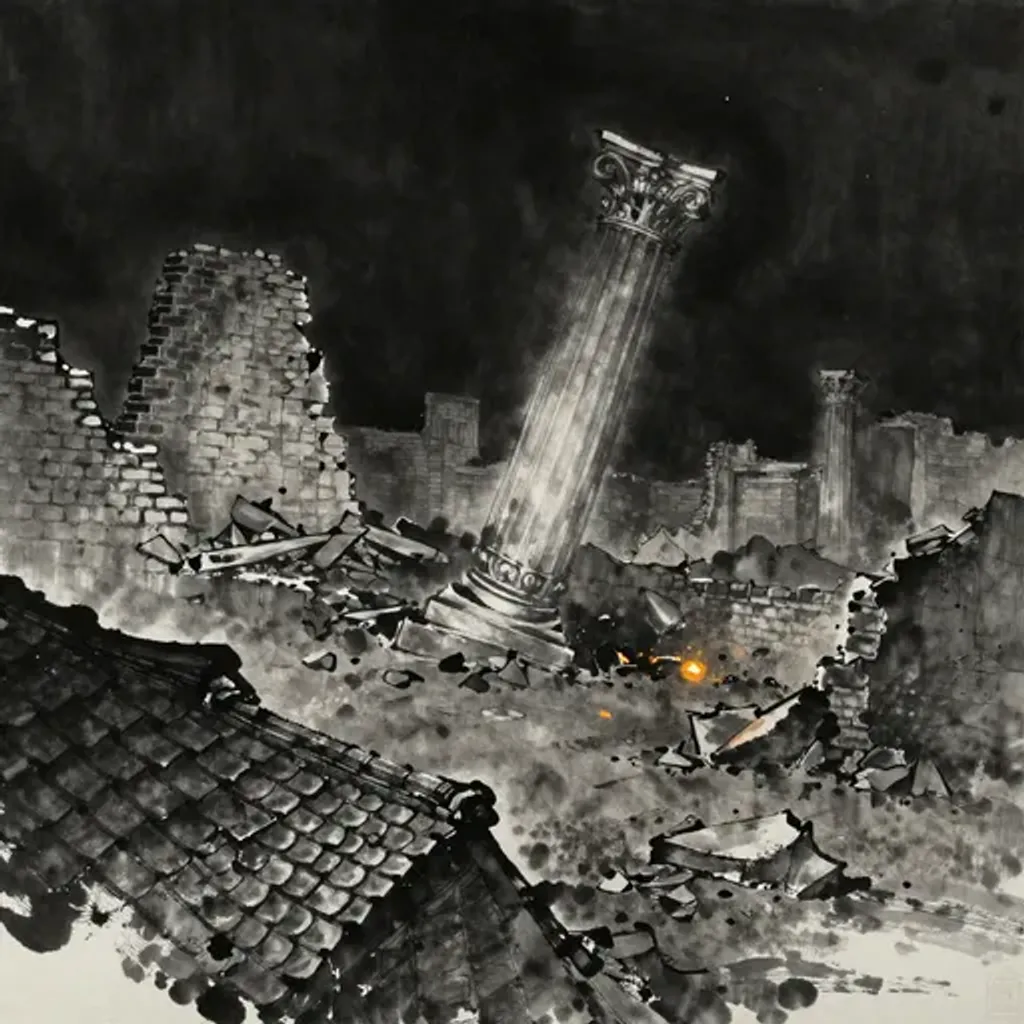
破亡之國,天所不福。難以止息。
A ruined and fallen kingdom; heaven grants it no blessing. Its troubles cannot be stilled.
— Jiao Yanshou, Yilin (Forest of Changes), 1st century BC
Commentary
A state that has been destroyed and ruined — heaven itself refuses to bless it. The calamity is beyond remedy. This terse verse, among the shortest in the Yilin, carries the weight of finality. From Innocence to Following, the transformation exposes a bitter paradox: Sui means to follow, to adapt and move with the current, yet here there is nothing left to follow. When a nation has been broken so thoroughly that heaven withdraws its favor, even the most flexible response cannot restore what is gone. The verse reads as a warning against the illusion that mere adaptability can save what has been fundamentally lost. Some fates, once set, admit no following.
无妄 → 蠱
Hexagram 25 → Hexagram 18: Work on the Decayed
Changing lines: 1, 2, 3, 4, 5
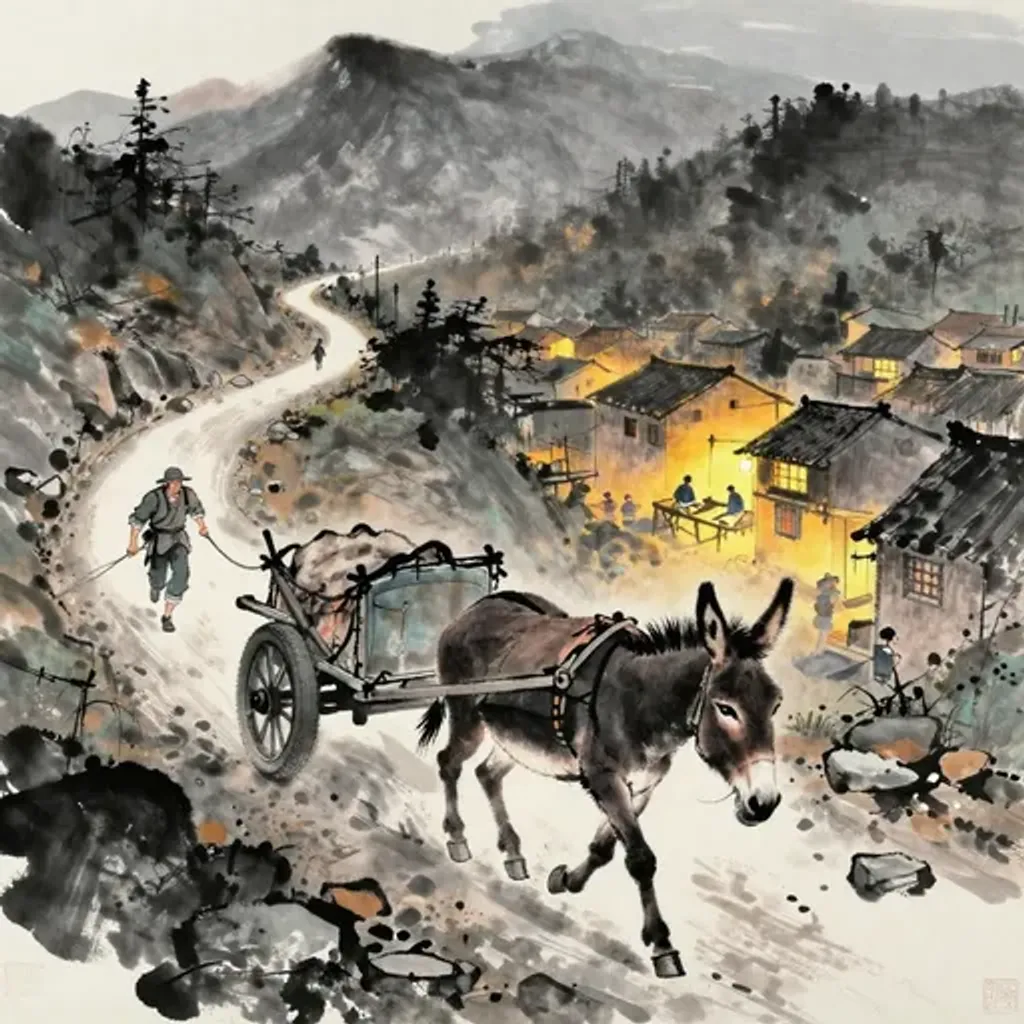
驂駕蹇驢,日暮失時。居者無憂,保我樂娛。
Harnessing a lame donkey to the cart; daylight fades, the hour is lost. Those who stay at home have no worry; they keep their ease and pleasure.
— Jiao Yanshou, Yilin (Forest of Changes), 1st century BC
Commentary
A lame donkey is hitched alongside the carriage horses, and by nightfall the traveler has missed his chance. But those who stay at home have no worries — they preserve their joy and ease. From Innocence to Work on the Decayed, the transformation illuminates the relationship between mismatched effort and domestic contentment. Gu's image of wind beneath the mountain suggests decay arising from stagnation, yet the verse inverts this: the one who ventures out with inadequate means fails, while the one who remains behind thrives. The lame donkey among chariot horses captures Wuwang's lesson about right action — sincerity must be matched with capacity, or the journey collapses before it begins.
无妄 → 臨
Hexagram 25 → Hexagram 19: Approach
Changing lines: 2, 4, 5, 6
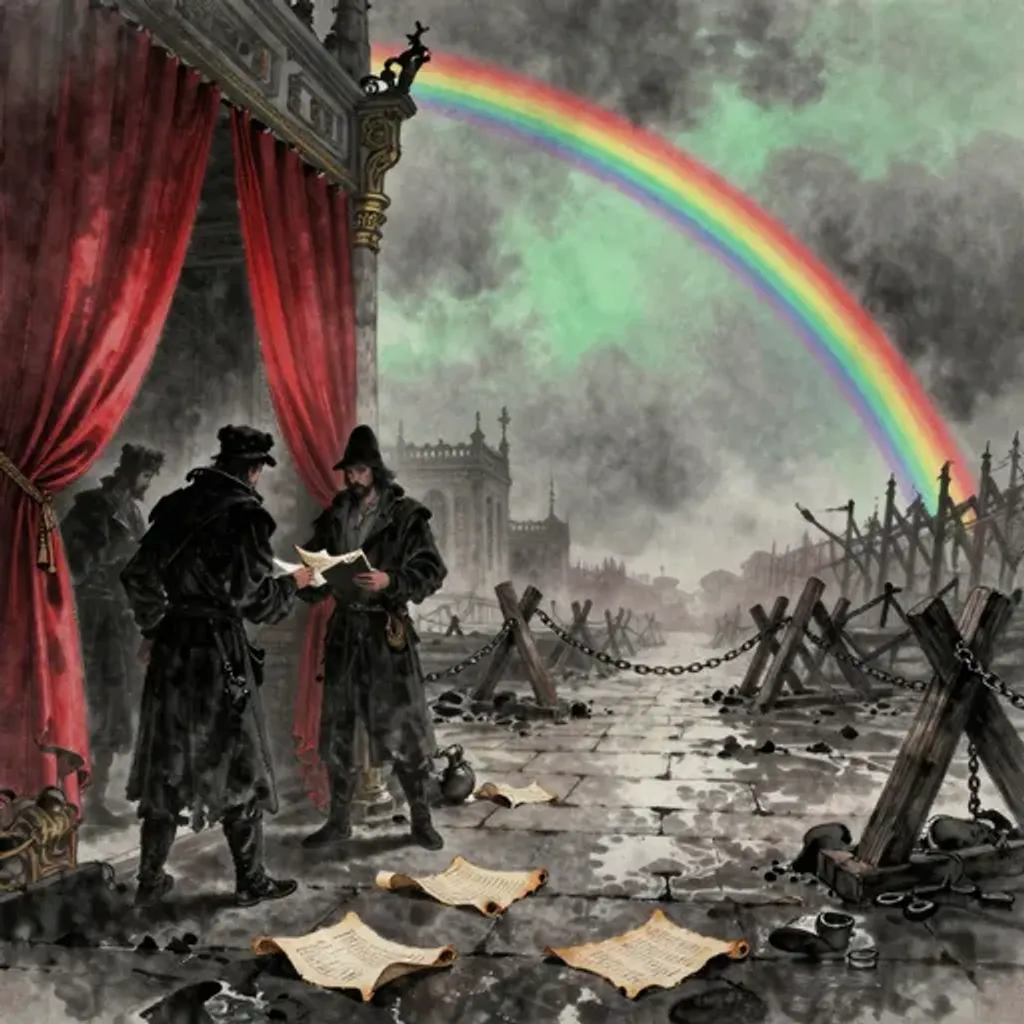
蝃蝀充側,佞幸傾惑。女謁橫行,正道壅塞。
The rainbow looms at every side; sycophants beguile and confuse. Women's influence runs unchecked; the righteous way is blocked.
— Jiao Yanshou, Yilin (Forest of Changes), 1st century BC
Commentary
Rainbows crowd the periphery — the Shijing's 'Didong' ode warns that the rainbow is a sign of illicit desire and disordered yin. Sycophants and favorites bewitch the court, women's petitions dominate, and the proper Way is blocked. From Innocence to Approach, the transformation sharpens the irony: Lin means to draw near with authority, as earth overhangs the lake in supervisory proximity. Yet the approach here is contaminated. Those who draw near the ruler are not the worthy but the flattering and seductive, and their closeness chokes the channels of honest governance. The verse warns that Wuwang's innocence is most vulnerable at the threshold of power, where proximity without integrity corrupts the entire system.
无妄 → 觀
Hexagram 25 → Hexagram 20: Contemplation
Changing lines: 1, 4
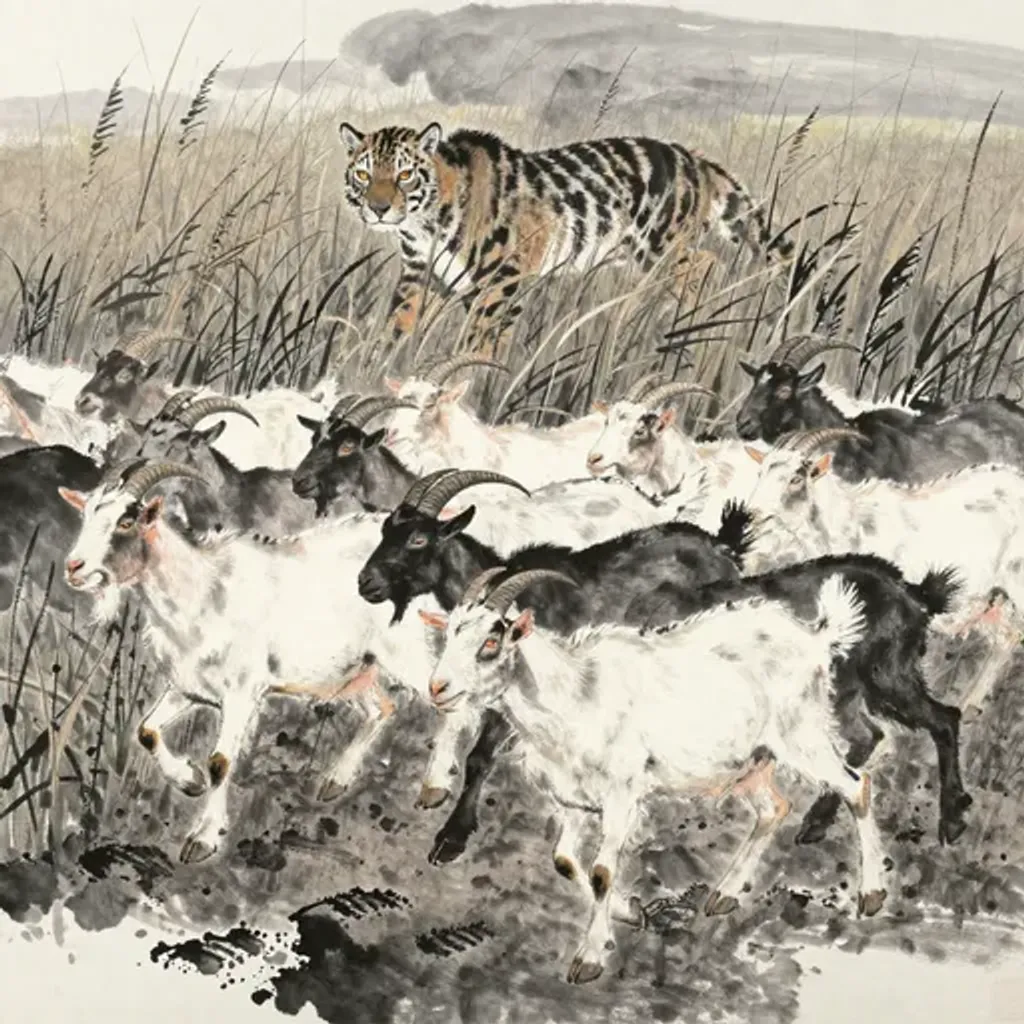
三羖五牂,相隨俱行。迷入空澤,循谷直北。經涉六駮,為所傷賊。
Three rams and five ewes; together they travel. Lost in an empty marsh; following the valley northward. Passing through the realm of the dappled beast; they are wounded and preyed upon.
— Jiao Yanshou, Yilin (Forest of Changes), 1st century BC
Commentary
Three rams and five ewes travel together, wandering into an empty marsh. Following the valley northward, they encounter the liubo — a fierce multicolored beast from the Shanhaijing said to devour tigers and leopards. The flock is mauled and savaged. From Innocence to Contemplation, the transformation reveals observation's double edge. Guan's image of wind moving over the earth suggests the sage-king's survey of all things, but here the flock wanders without guidance into predator territory. Contemplation demands seeing clearly before acting; these sheep have no shepherd, no vantage point. The liubo lurking in the valley embodies the dangers invisible to those who move without surveying the landscape first.
无妄 → 噬嗑
Hexagram 25 → Hexagram 21: Biting Through
Changing lines: 5
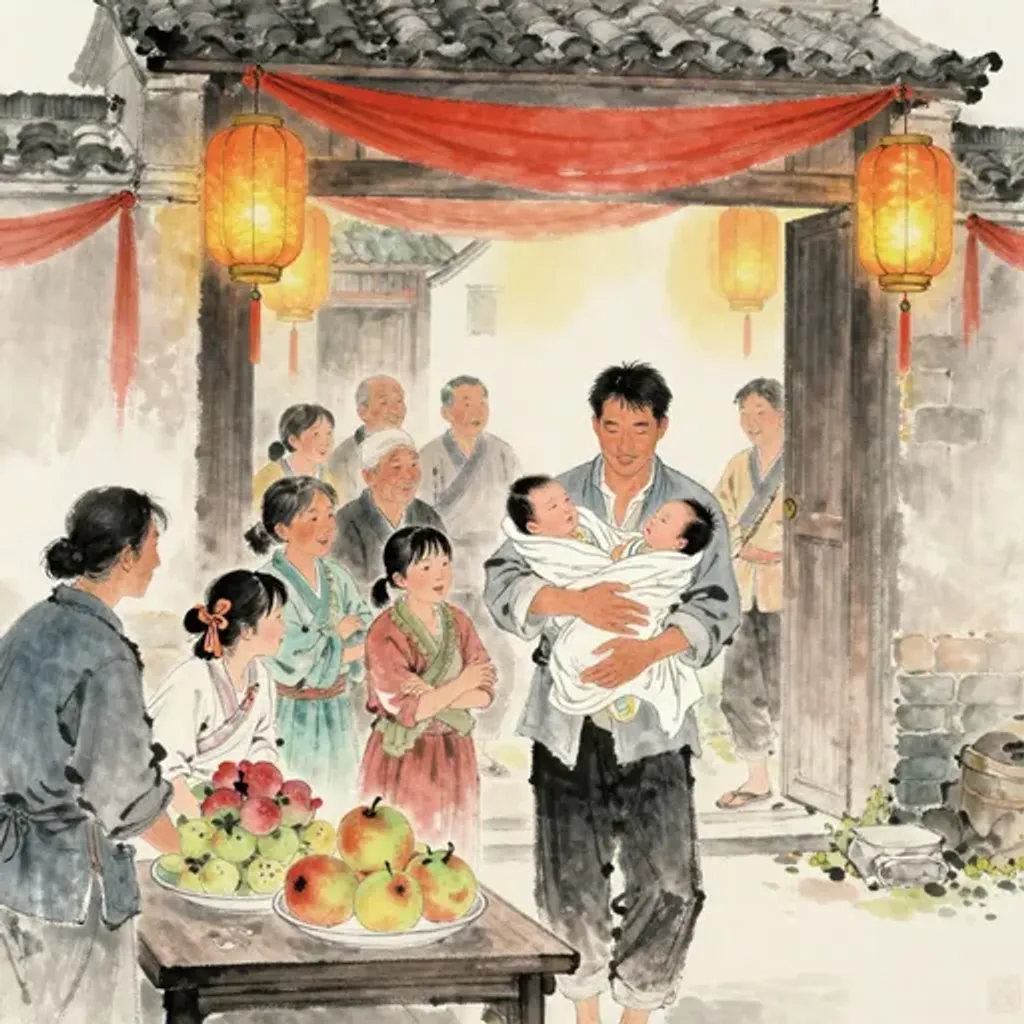
戴喜抱子,與利為友。天之所命,不憂危殆。荀伯勞苦,未來王母。
Wearing joy, embracing a child; keeping profit as a friend. What heaven has ordained; one need not fear peril. Xun Bo toiled long; the Queen Mother has yet to come.
— Jiao Yanshou, Yilin (Forest of Changes), 1st century BC
Commentary
Wearing joy like a cap and cradling a child, one walks alongside profit as a companion. What heaven has decreed need not fear danger or peril. Then the verse shifts: Lord Xun toils bitterly, but the Queen Mother has not yet arrived — blessings are promised but delayed. From Innocence to Biting Through, the transformation captures the tension between assured fortune and the effort required to realize it. Shike's image of lightning and thunder embodies decisive, clarifying force — obstacles must be bitten through. The first half radiates confidence in heaven's mandate; the second acknowledges that divine timing may lag behind human urgency, and patience must endure until the jaws close on resolution.
无妄 → 賁
Hexagram 25 → Hexagram 22: Grace
Changing lines: 3, 4, 5
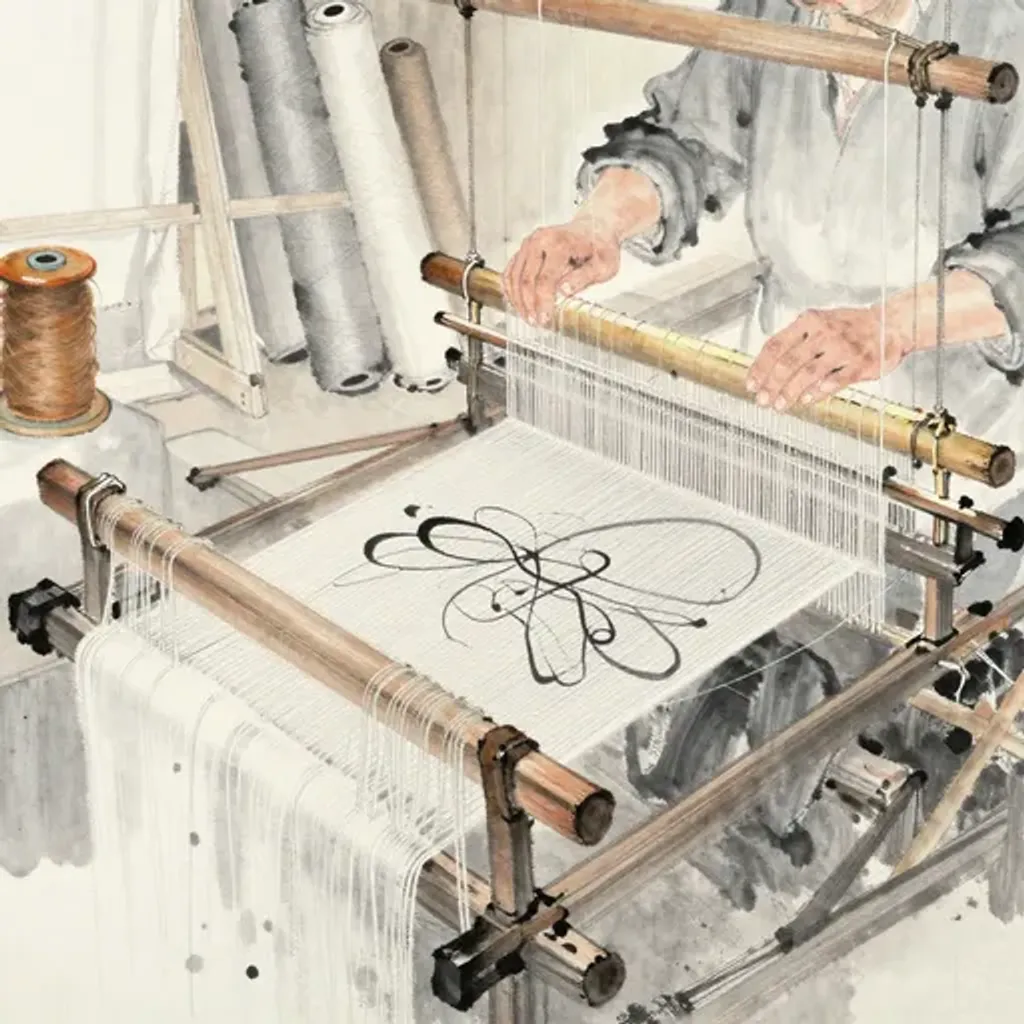
織縷未就,勝折無後。女工多能,亂我政事。
The weaving is not yet done; the thread breaks and has no heir. The woman works with many skills; yet she throws my governance into disorder.
— Jiao Yanshou, Yilin (Forest of Changes), 1st century BC
Commentary
The weaving is unfinished, the shuttle has snapped, and there will be no successor. The woman's handiwork is abundant and skillful, yet it disrupts governance. This verse invokes the ancient political metaphor of the hen crowing at dawn — female skill misdirected into the political sphere undermines proper order. From Innocence to Grace, the transformation is ironic: Bi's image of fire beneath the mountain produces elegant surface beauty, yet the verse warns that decorative skill without structural integrity is fatal. The broken shuttle produces no cloth; the capable woman who meddles in politics leaves no legitimate heir. Grace without substance becomes the very corruption Wuwang was meant to prevent.
无妄 → 剝
Hexagram 25 → Hexagram 23: Splitting Apart
Changing lines: 1, 4, 5
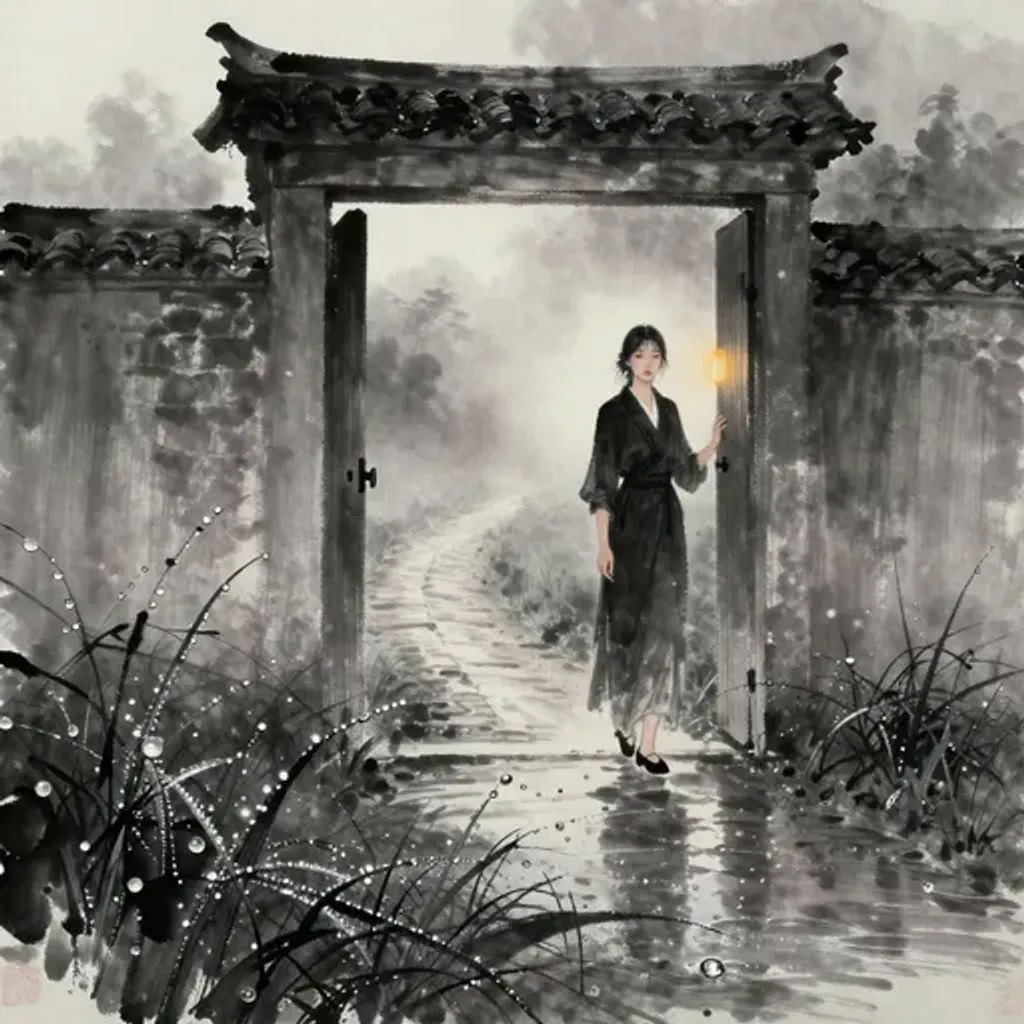
行露之訟,貞女不行。君子無食,使道壅塞。
The lawsuit of "Dew on the Path"; the chaste woman will not walk it. The noble man goes without food; the proper way is blocked.
— Jiao Yanshou, Yilin (Forest of Changes), 1st century BC
Commentary
The Shijing ode 'Xing Lu' tells of a chaste woman who refuses an improper marriage and faces litigation for her refusal. The righteous woman will not go. The gentleman has nothing to eat, and the Way itself is blocked. From Innocence to Splitting Apart, the transformation traces integrity's cost to its bitter end. Bo's image of the mountain crumbling upon the earth represents structural collapse — yang stripped away until only a single line remains. The virtuous woman's refusal and the gentleman's hunger both embody this erosion: when innocence holds firm against a corrupt world, the world does not yield but strips away every support. Yet the act of principled refusal itself preserves what matters most.
无妄 → 復
Hexagram 25 → Hexagram 24: Return
Changing lines: 4, 5, 6
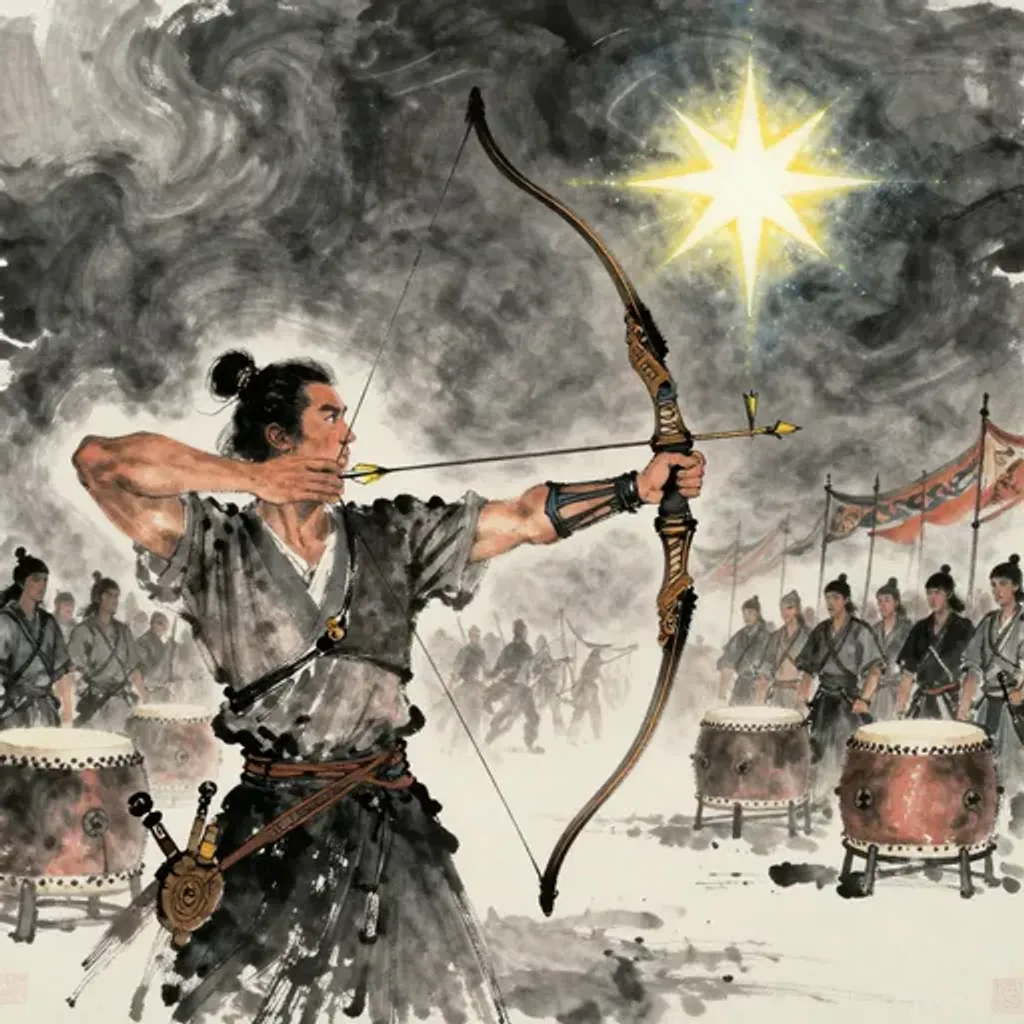
羿張烏號,彀射天狼。鐘鼓不鳴,將軍振旅。趙國雄勇。鬭死滎陽。
Yi draws the Wu Hao bow; he takes aim at the Celestial Wolf. Bells and drums fall silent; the general marshals his troops. Zhao's kingdom, bold and brave; they fight and die at Xingyang.
— Jiao Yanshou, Yilin (Forest of Changes), 1st century BC
Commentary
Archer Yi draws the Wuhao bow and takes aim at Sirius, the celestial wolf. Bells and drums fall silent as the general musters his forces for return. Then a sudden shift: Zhao's warriors, fierce and brave, fight to the death at Yingyang. This likely references the Chu-Han wars, when the region around Yingyang saw some of the bloodiest fighting between Liu Bang and Xiang Yu's forces. From Innocence to Return, the transformation juxtaposes cosmic archery with mortal carnage. Fu's image of thunder within the earth signals the first stirring of renewal after total darkness — the winter solstice moment. The warriors who die at Yingyang will not see the return, but the cycle turns regardless.
无妄 → 无妄
Hexagram 25 → Hexagram 25: Innocence
No changing lines — the hexagram is unchanged
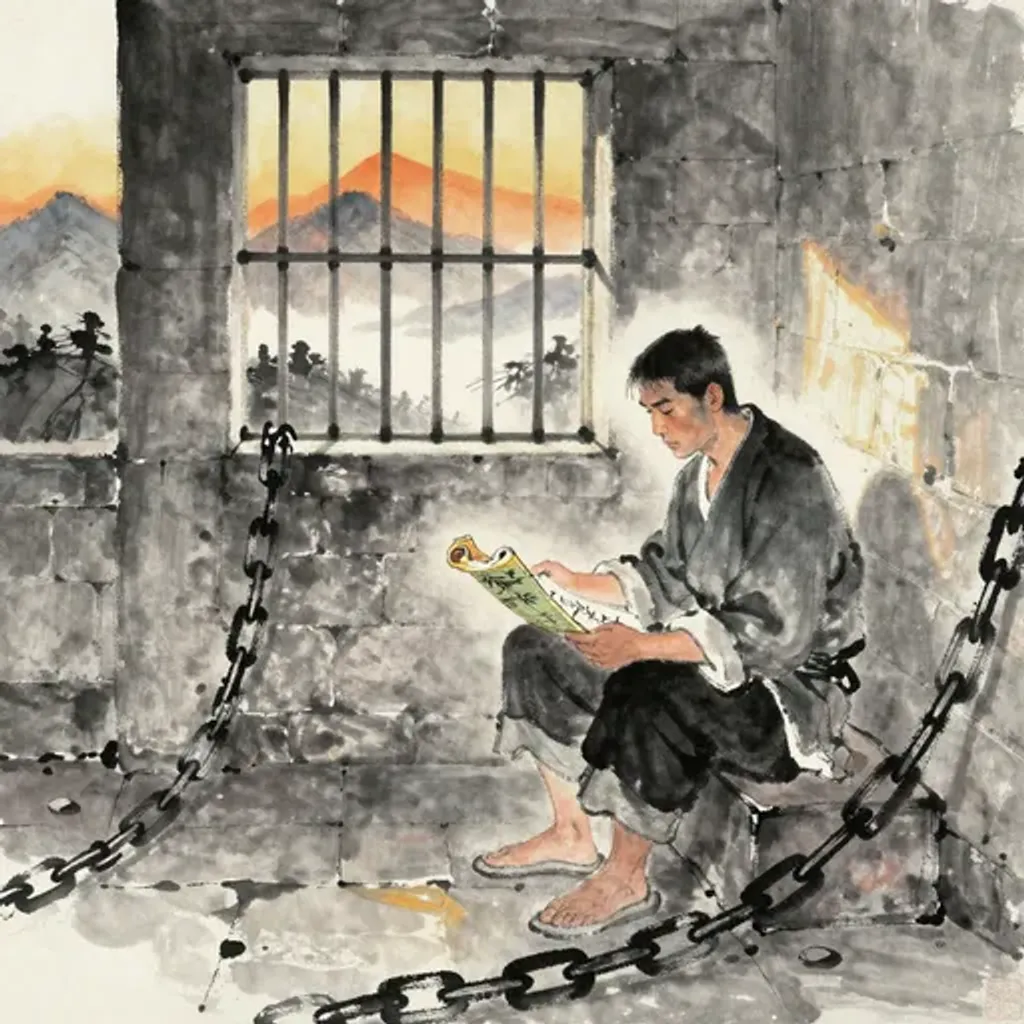
夏臺羑里,湯文厄處。皋陶聽理,岐人悅喜。西望華夏,東歸無咎。
Xia Tai and Youli; where Tang and Wen met their trials. Gao Yao judged with discernment; the people of Qi rejoiced. Looking west toward Huaxia; returning east, no fault.
— Jiao Yanshou, Yilin (Forest of Changes), 1st century BC
Commentary
Xiatai and Youli — the prisons where King Tang and King Wen endured unjust captivity before founding their dynasties. Gao Yao, the legendary minister of justice, listens and adjudicates, and the people of Qi rejoice. Looking west toward the central kingdoms, then returning east without blame. From Innocence to Innocence, the self-referential transformation doubles the hexagram's meaning. Tang and Wen suffered innocent misfortune — the very essence of Wuwang — yet their imprisonment became the crucible of dynastic virtue. Gao Yao's just hearing restores order. The verse encodes Wuwang's complete cycle: the innocent suffer, justice eventually prevails, and one returns home without fault.
无妄 → 大畜
Hexagram 25 → Hexagram 26: Great Taming
Changing lines: 2, 3, 4, 5
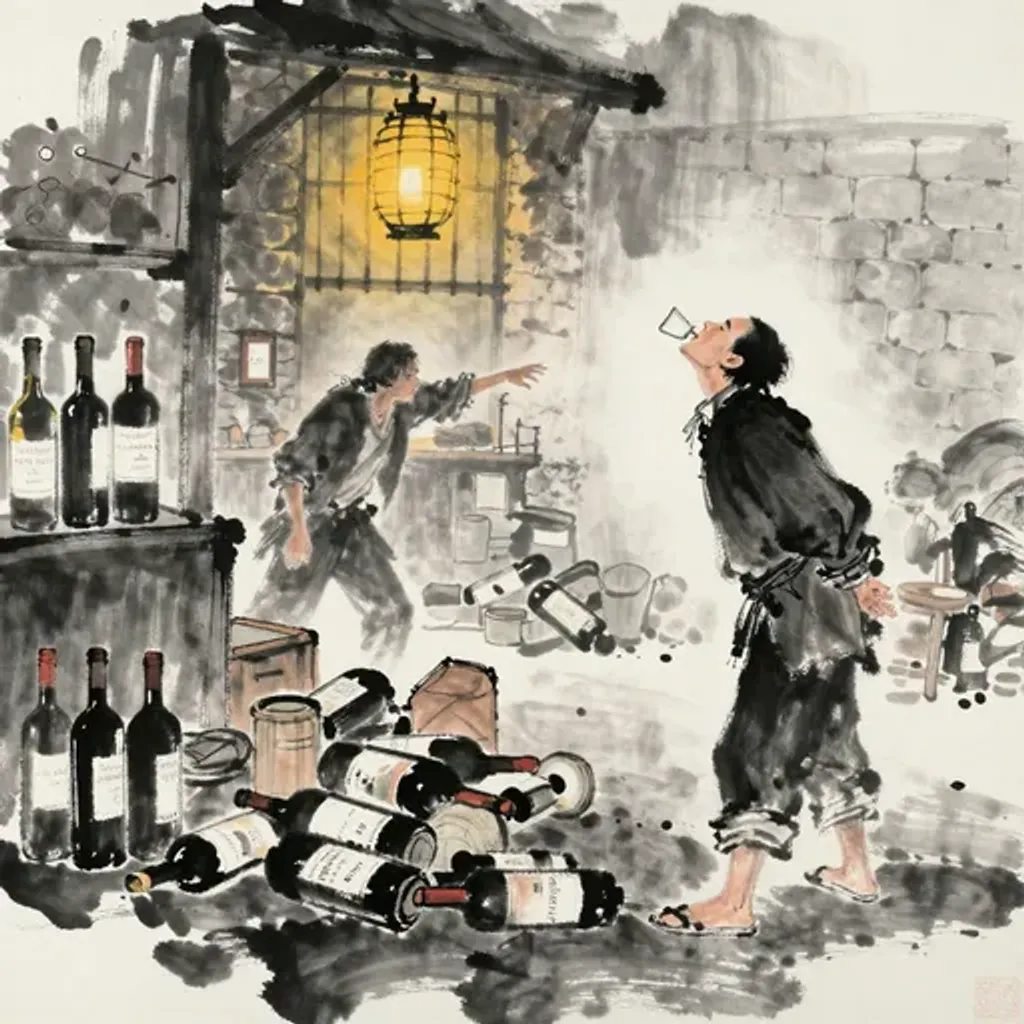
延頸望酒,不入我口。商人勞苦,利得無有。夏臺羑里,雖危復喜。
Craning one's neck, gazing toward wine; it never reaches my lips. The merchant toils bitterly; profit yields nothing. Xia Tai and Youli; though perilous, joy returns.
— Jiao Yanshou, Yilin (Forest of Changes), 1st century BC
Commentary
Craning the neck toward wine that never reaches the lips. The merchant toils but gains nothing for his trouble. Then the verse invokes Xiatai and Youli — the prisons of Tang and Wen — and pivots: though the situation is perilous, joy returns. From Innocence to Great Taming, the transformation captures the paradox of accumulation through deprivation. Daxu's image of heaven stored within the mountain suggests immense potential held in reserve. The merchant's fruitless labor and the unreachable wine both echo this containment: desire is present but fulfillment withheld. Yet the Tang-Wen allusion reframes suffering as treasury — what the mountain stores during imprisonment becomes the virtue that founds dynasties.
无妄 → 頤
Hexagram 25 → Hexagram 27: Nourishment
Changing lines: 4, 5
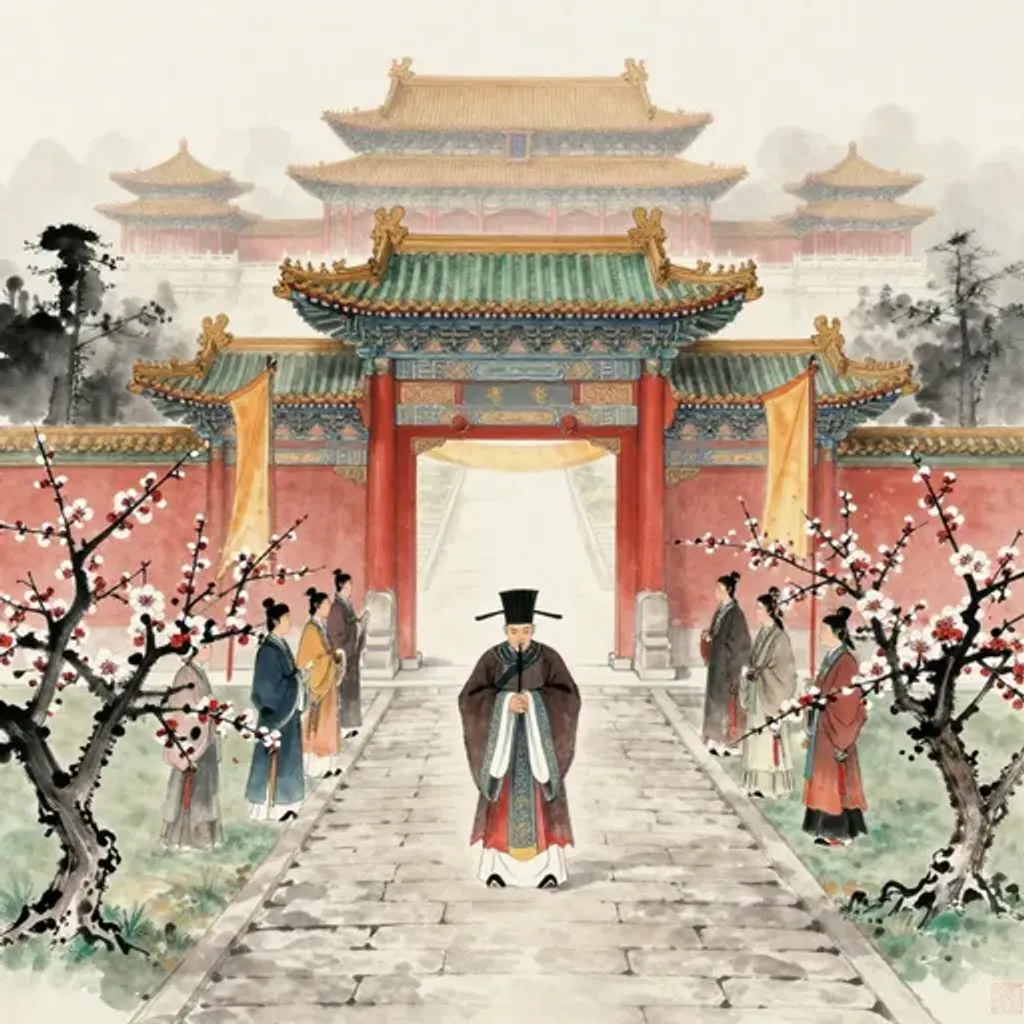
冠帶南遊,與喜相期。邀於嘉國,拜為逢時。
Capped and robed, journeying south; meeting joy as promised. Welcomed in a fine kingdom; bowing, for the time has come.
— Jiao Yanshou, Yilin (Forest of Changes), 1st century BC
Commentary
Wearing cap and sash, one journeys south to meet with joy at the appointed time. Welcomed in a goodly state, one bows in gratitude for arriving at the right moment. From Innocence to Nourishment, the transformation traces the path from spontaneous sincerity to receiving sustenance. Yi's image of mountain above thunder — the open mouth — represents careful nourishment of body and spirit. The verse's formal attire signals purposeful travel, not idle wandering, and the reception at a 'goodly state' confirms that genuine preparation meets its reward. The bow of gratitude acknowledges what Wuwang teaches: fortune favors not the calculating but the properly prepared heart.
无妄 → 大過
Hexagram 25 → Hexagram 28: Great Exceeding
Changing lines: 1, 2, 3, 6
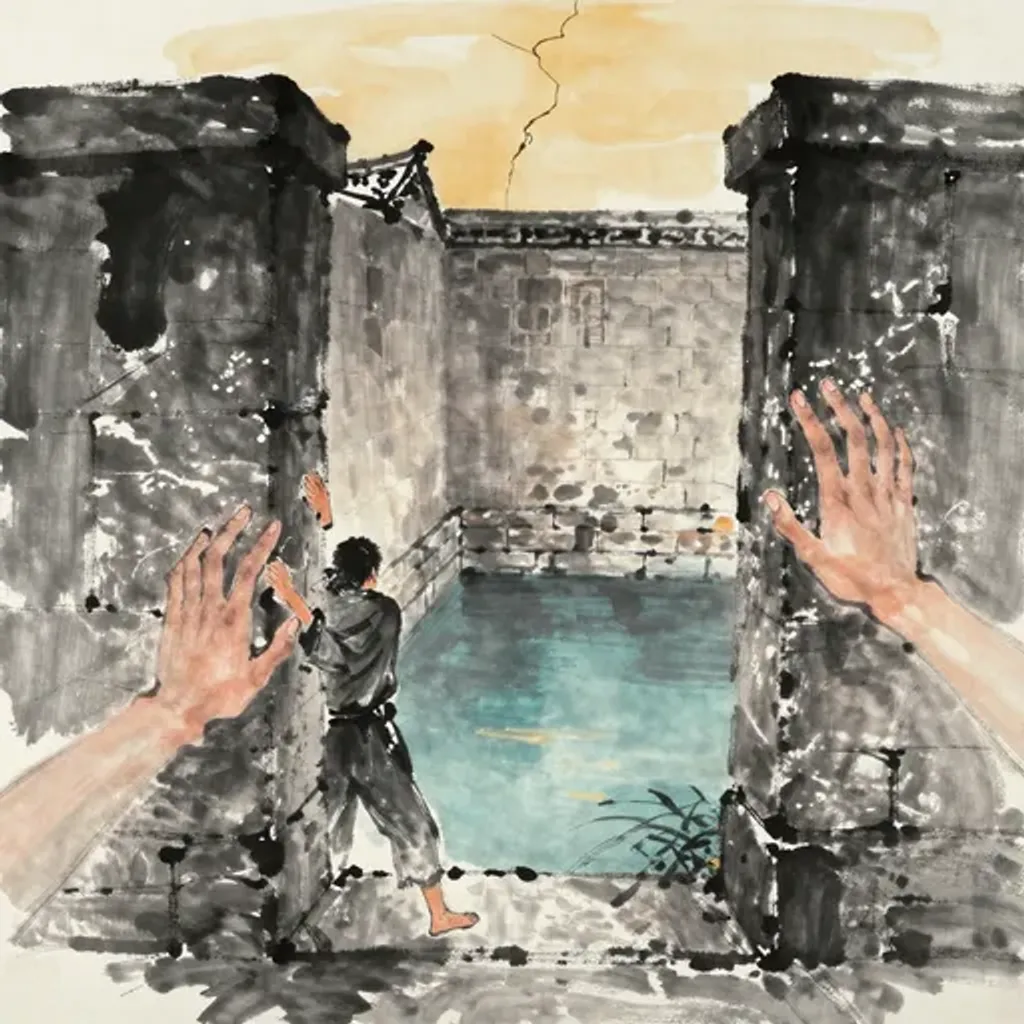
東西觸垣,不利出門。魚藏深水,無以樂賓。爵級摧頹,光威減衰。
Bumping the wall east and west; ill-favored to go out the gate. Fish hide in deep water; no way to entertain guests. Rank and title crumble; glory and power decline.
— Jiao Yanshou, Yilin (Forest of Changes), 1st century BC
Commentary
Bumping into walls east and west, it is inauspicious to leave the gate. Fish hide in deep water, unable to entertain guests. Rank and title crumble; authority and prestige fade. From Innocence to Great Exceeding, the transformation registers the moment when structural limits are breached. Daguo's image of the lake submerging the trees signals a crisis of overwhelming pressure — the ridgepole sags. The verse's claustrophobic imagery — walls on every side, fish retreating to the depths — captures the collapse of social position under unbearable strain. What was once innocence becomes isolation; what was honest simplicity becomes inadequacy. The exceeding weight of circumstance crushes what cannot bear it.
无妄 → 坎
Hexagram 25 → Hexagram 29: The Abysmal Water
Changing lines: 1, 2, 4, 6
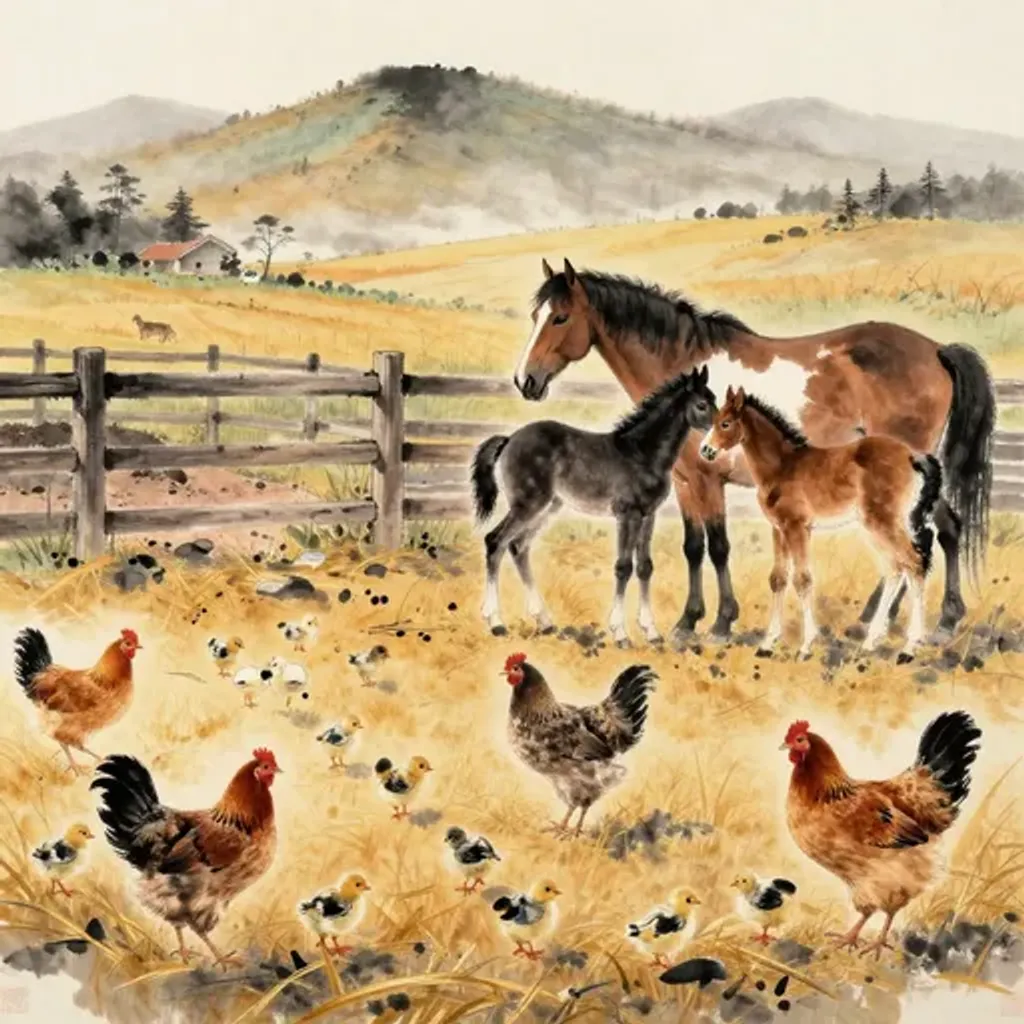
兩母十子,轉息無已。五乳百雛,騂駮驪駒。
Two mothers, ten offspring; turning and breeding without cease. Five nursings, a hundred hatchlings; red, dappled, black, and bay colts.
— Jiao Yanshou, Yilin (Forest of Changes), 1st century BC
Commentary
Two mothers and ten young, ceaselessly turning and multiplying. Five teats and a hundred chicks — red, dappled, and black-maned colts milling together. The verse teems with procreative abundance, each line adding creatures and colors in relentless profusion. From Innocence to The Abysmal, the transformation juxtaposes fecundity with peril. Kan's doubled water rushes forward without pause — water upon water, danger compounding danger. The relentless breeding mirrors this ceaseless flow: life multiplying without rest carries its own hazard. Too many mouths, too many offspring, too many colors to manage. The innocence of natural increase, unchecked, becomes the abyss of overextension where abundance itself drowns.
无妄 → 離
Hexagram 25 → Hexagram 30: The Clinging Fire
Changing lines: 3, 5
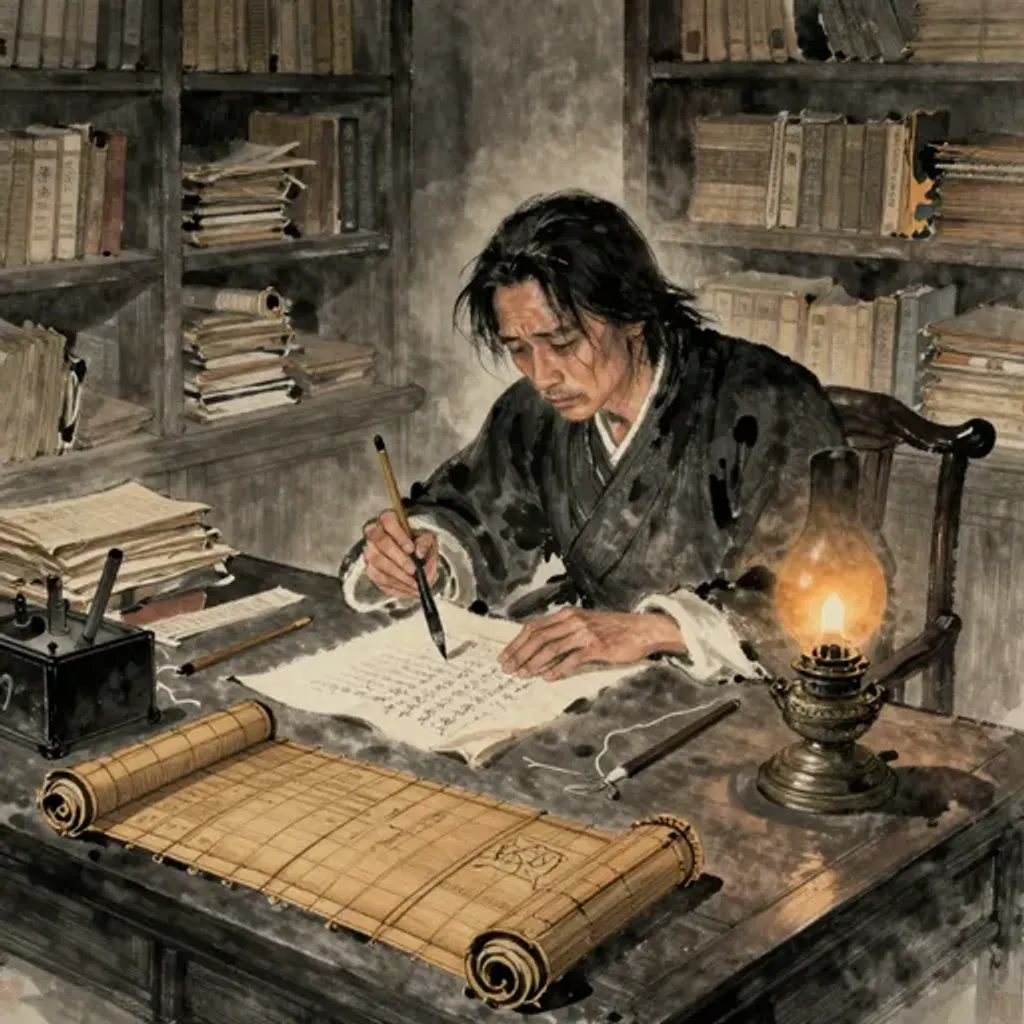
重黎祖後,司馬太史。陸氏之災,雕害悲苦。
Zhongli's ancestral line; marshals and grand historians. The calamity of the Lu clan; ruin, harm, and bitter grief.
— Jiao Yanshou, Yilin (Forest of Changes), 1st century BC
Commentary
Zhongli's descendants became the hereditary Grand Historians and Marshals of the court — Sima Qian himself traced his lineage to the fire officer Zhongli in the Shiji's autobiographical postface. The verse then turns dark: the Lu clan suffers calamity, carved and harmed, grieving bitterly. From Innocence to The Clinging, the transformation maps a bloodline from sacred fire-keeping to historiographic martyrdom. Li's doubled fire represents clarity passed down through generations, yet fire also consumes. The clan entrusted with recording truth — a form of ultimate innocence — pays for that fidelity with suffering. Brightness clings to those who bear witness, but so does the danger of illumination.
无妄 → 咸
Hexagram 25 → Hexagram 31: Influence
Changing lines: 1, 3, 6
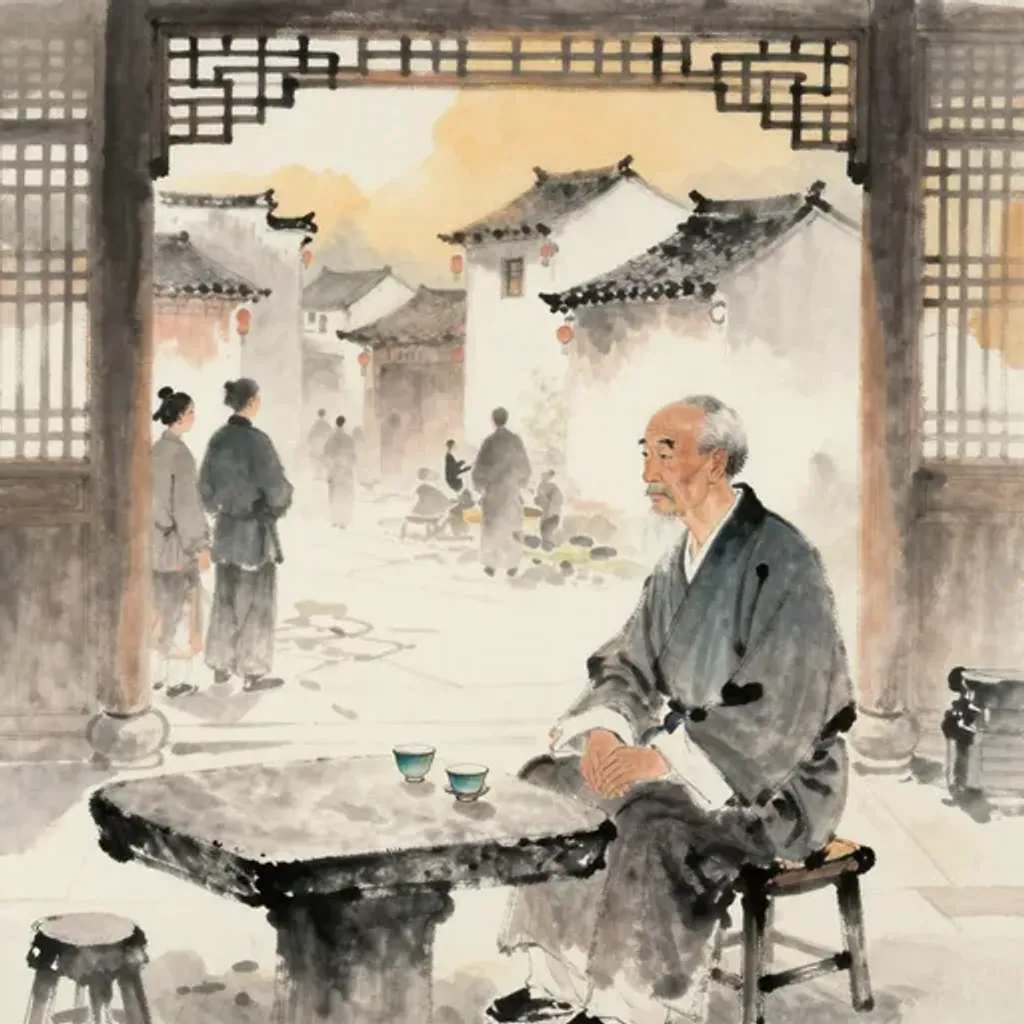
內執柔德,止訟以默。宗邑賴福,禍災不作。
Inwardly holding gentle virtue; stilling disputes with silence. The ancestral domain relies on this blessing; calamity and disaster do not arise.
— Jiao Yanshou, Yilin (Forest of Changes), 1st century BC
Commentary
Inwardly holding to gentle virtue, one halts contention through silence. The ancestral domain enjoys blessing, and calamity does not arise. From Innocence to Influence, the transformation traces how inner softness creates outer resonance. Xian's image of the lake resting upon the mountain captures mutual attraction through stillness — the mountain stands firm while water collects above, each responding to the other without force. The verse's 'gentle virtue held within' directly echoes this receptive dynamic. Lawsuits are stopped not by argument but by refusing to engage. When innocence meets influence, the result is not dramatic victory but quiet harmony — the ancestral community simply does not generate disaster.
无妄 → 恆
Hexagram 25 → Hexagram 32: Duration
Changing lines: 1, 2, 3, 5, 6
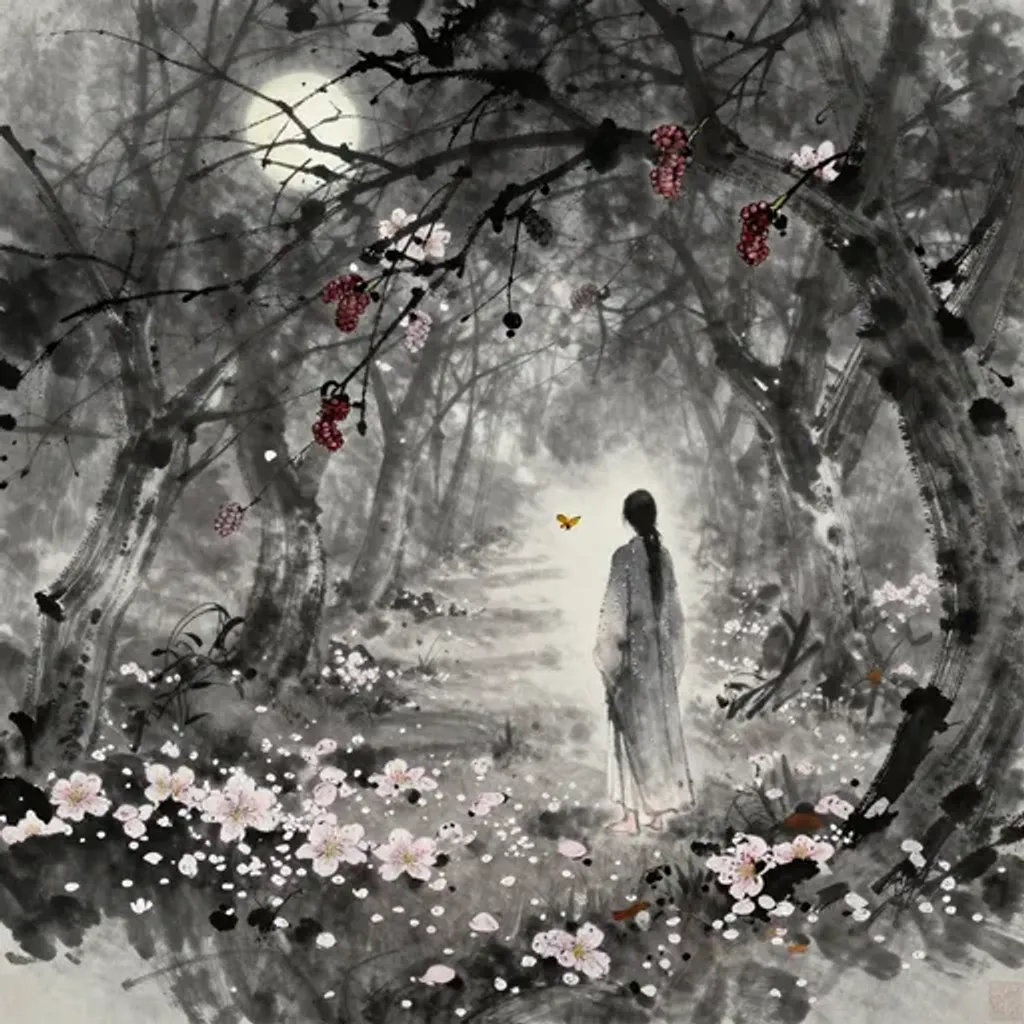
采唐沫鄉,要期桑中。失信不會,憂思約帶。
Under moonlight in the mulberry grove, waiting in vain. Shadows tread on scattered blossoms — no one comes. Dew soaks the sleeves, cold seeps to the bone — returning home, the belt is another inch too loose.
— Jiao Yanshou, Yilin (Forest of Changes), 1st century BC
Commentary
The original verse reads: gathering tang-grass at Mei, a tryst arranged among the mulberries. Faith is broken — the lover does not come — and longing tightens the belt with grief. This directly references the Shijing ode 'Sang Zhong' about illicit meetings at the mulberry grove. The promised encounter fails, and the abandoned one wastes away in lonely waiting. From Innocence to Duration, the transformation deepens the irony: Heng means constancy, thunder and wind persisting together. Yet here constancy appears only in the steadfastness of unfulfilled longing. The lover who does not appear violates the trust that both Wuwang and Heng demand, leaving duration as nothing but the endurance of empty hoping.
无妄 → 遯
Hexagram 25 → Hexagram 33: Retreat
Changing lines: 1, 3
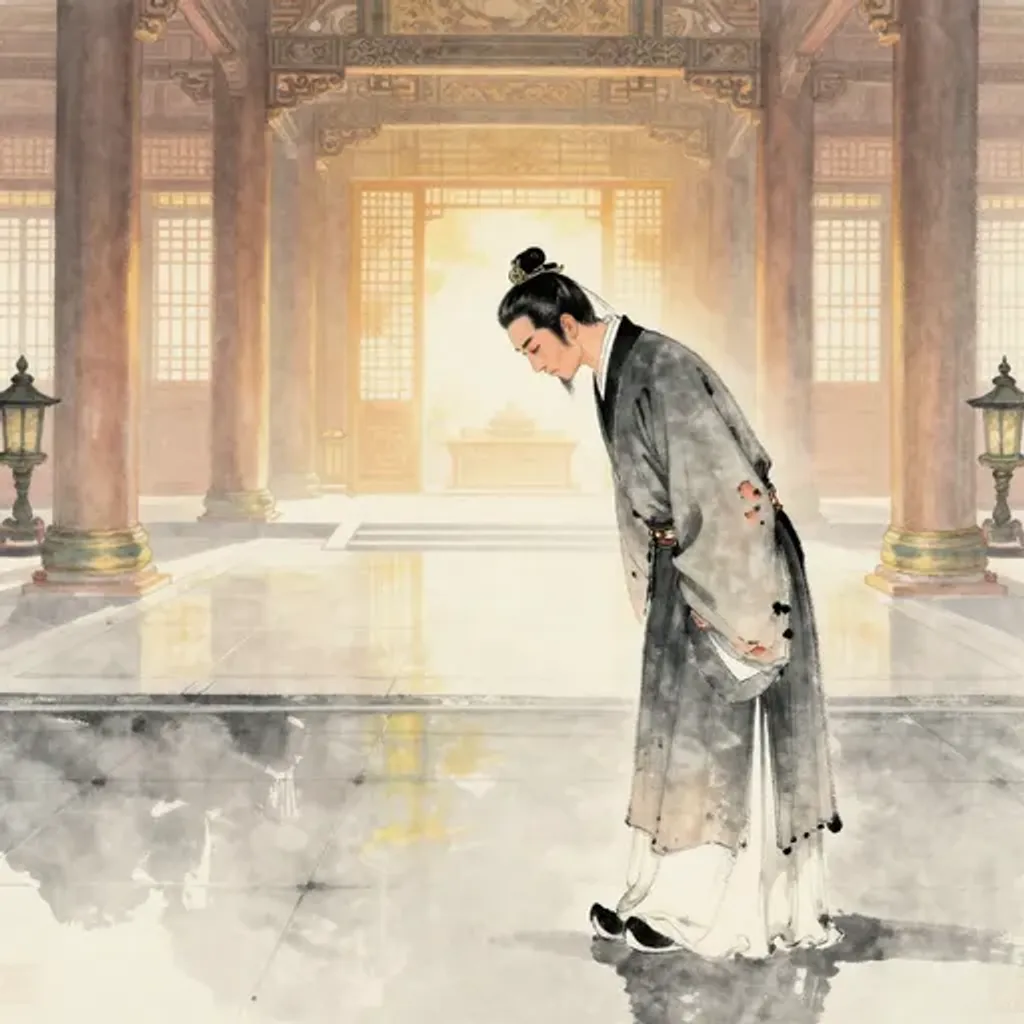
宮成立政,衣就缺袂。恭謙為衛,終無禍尤。
The palace is built, governance established; the robe is finished yet the sleeve cut short. Reverence and humility serve as protection; in the end, no blame or fault.
— Jiao Yanshou, Yilin (Forest of Changes), 1st century BC
Commentary
The palace is built and governance established, yet the garments are finished with missing sleeves — imperfect but functional. Reverence and humility serve as protection, and in the end no disaster comes. From Innocence to Retreat, the transformation reveals that knowing when to withdraw is itself a form of governance. Dun's image of heaven beneath the mountain shows the great retreating before the encroaching small. The incomplete sleeves suggest conscious restraint — not finishing everything, not filling every space. The verse teaches that innocence preserved through strategic withdrawal outlasts innocence exposed to every threat. Humility as armor succeeds where full display would invite attack.
无妄 → 大壯
Hexagram 25 → Hexagram 34: Great Power
Changing lines: 2, 3, 5, 6
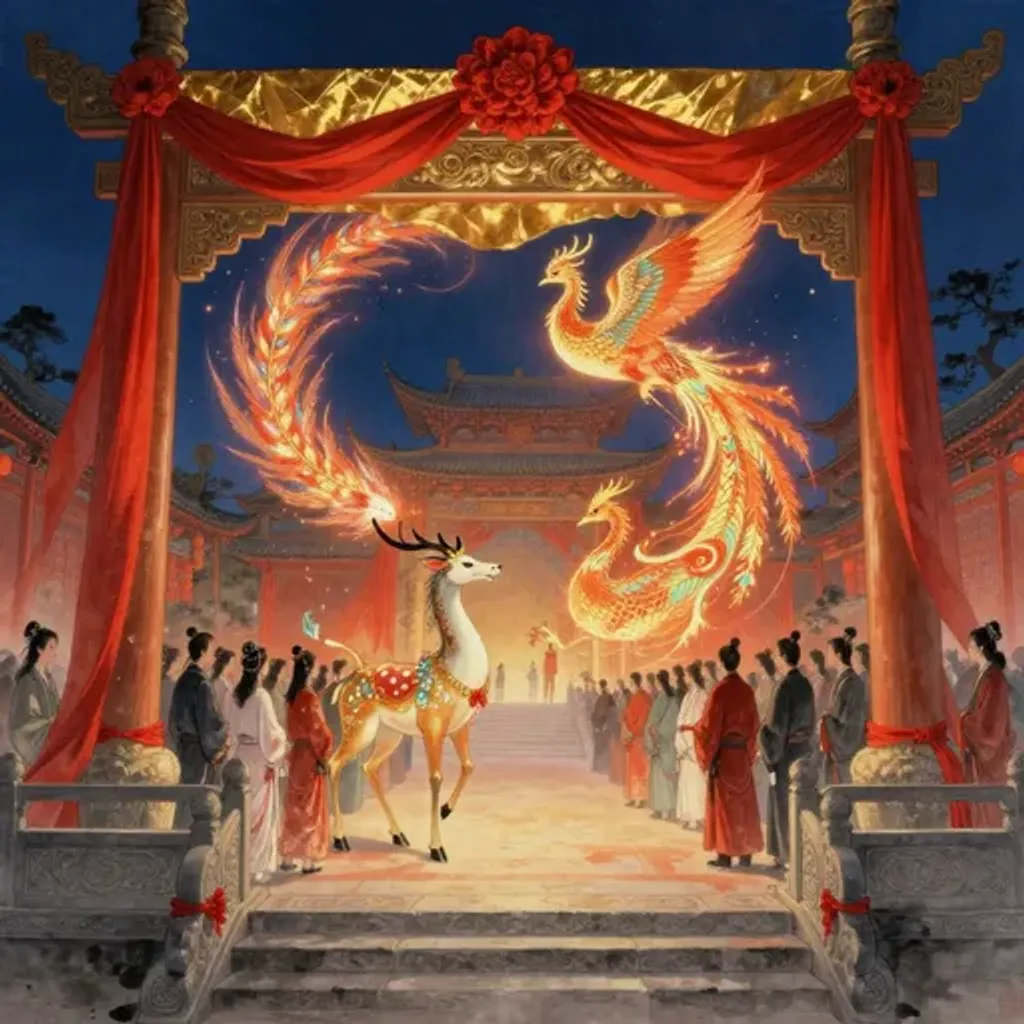
麒麟鳳凰,子孫盛昌。少齊在門,利以合婚。招衣彈冠,貴人所歡。
Qilin and phoenix; descendants flourish grandly. A young bride stands at the gate; auspicious for betrothal. Brushing the robe, flicking the cap; the noble one is pleased.
— Jiao Yanshou, Yilin (Forest of Changes), 1st century BC
Commentary
Qilin and phoenix appear together — the supreme auspicious creatures that herald a sage's reign. Descendants flourish in abundance. A young woman of Qi stands at the gate, auspicious for marriage. Dusting off robes and flicking the cap, one prepares to meet the approval of the noble. From Innocence to Great Power, the transformation channels Wuwang's sincerity into irresistible momentum. Dazhuang's image of thunder above heaven captures yang at full surge — energy so abundant it must be guided by propriety lest it overreach. The verse's double blessing — mythical omens above, marriage alliance below — embodies power that springs from natural alignment rather than forced ambition.
无妄 → 晉
Hexagram 25 → Hexagram 35: Progress
Changing lines: 1, 5
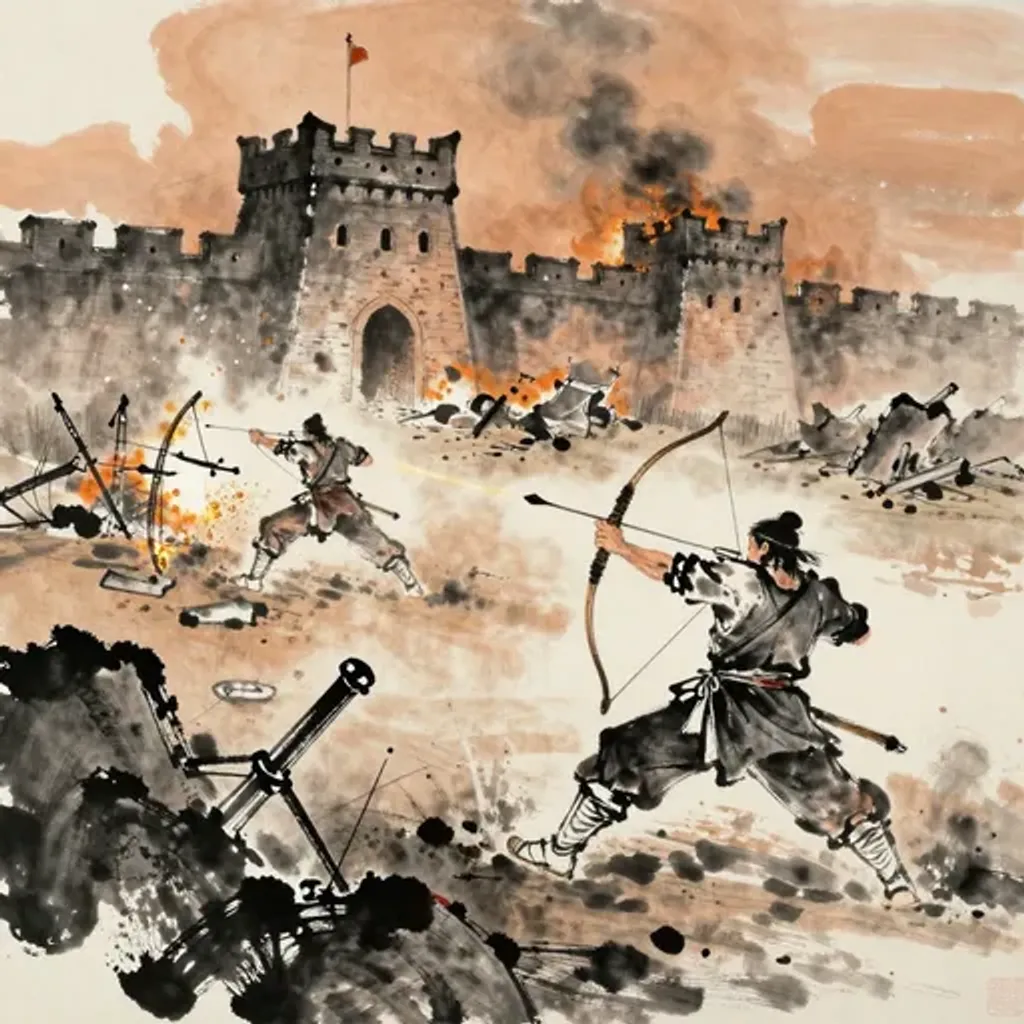
亂危之國,不可涉域。機發身頓,遂至僵覆。
A kingdom in chaos and peril; one must not enter its borders. The trap springs, the body falls; ending in ruin and collapse.
— Jiao Yanshou, Yilin (Forest of Changes), 1st century BC
Commentary
A state in chaos and danger — one must not enter its territory. The mechanism triggers and the body falls; one is brought to utter ruin. From Innocence to Progress, the transformation is starkly cautionary. Jin's image of fire rising above the earth should signify the bright advancement of virtue openly displayed. Yet the verse warns that advancing into a disordered land invites destruction — the trap springs, and the body hits the ground. Wuwang's teaching about innocent misfortune here becomes tactical: progress demands discernment about where to advance. Not every bright horizon welcomes the traveler; some illuminations reveal killing fields rather than opportunity.
无妄 → 明夷
Hexagram 25 → Hexagram 36: Darkening of the Light
Changing lines: 3, 4, 5, 6
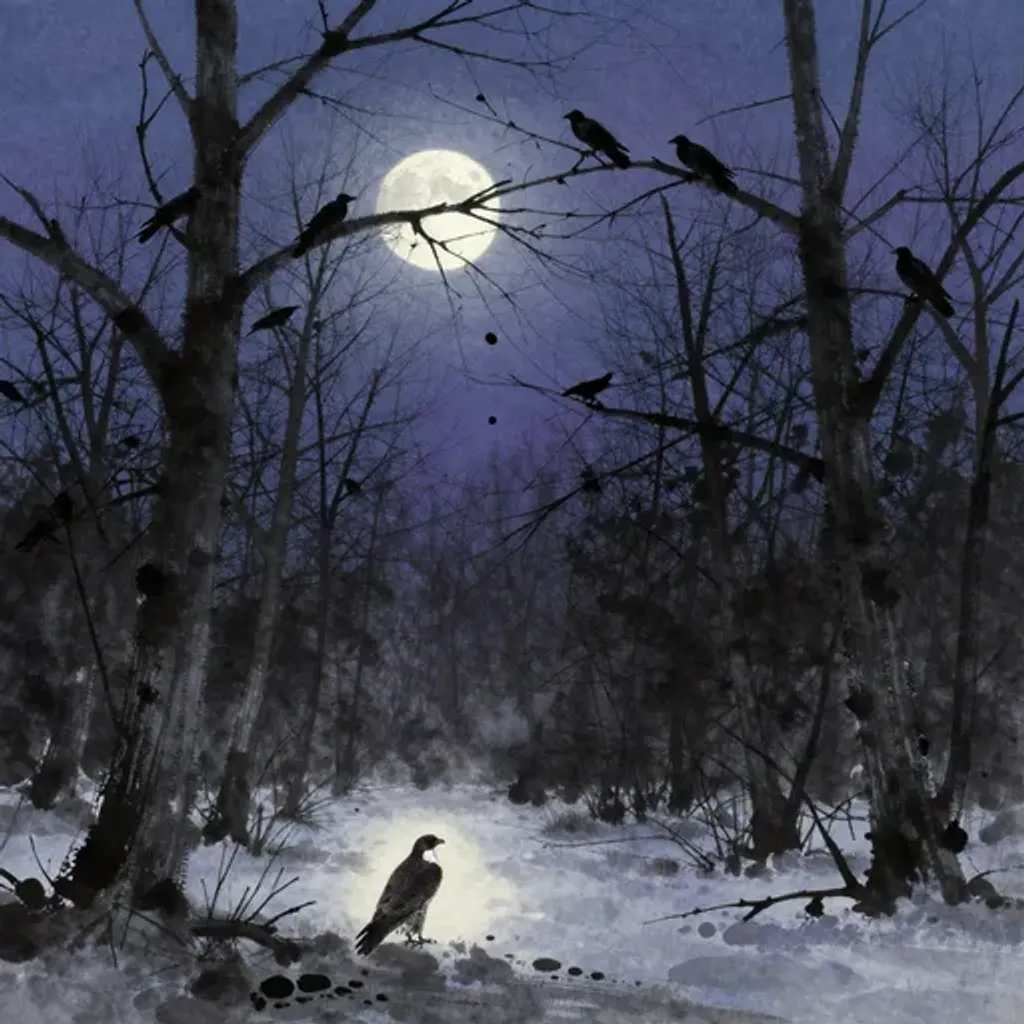
千雀萬鳩,與鷂為仇。威挈不敵,雖眾無益。為鷹所擊。
A thousand sparrows, ten thousand doves; they feud with the sparrowhawk. Power and might cannot match it; though numerous, it is no use. Struck down by the hawk.
— Jiao Yanshou, Yilin (Forest of Changes), 1st century BC
Commentary
A thousand sparrows and ten thousand doves hold a grudge against the sparrowhawk, but their combined strength cannot match it. Though numerous, they are useless — the eagle strikes them all the same. From Innocence to Darkening of the Light, the transformation captures the overwhelming of the many by the few. Mingyi's image of fire sinking beneath the earth describes brilliance deliberately concealed or forcibly suppressed. The small birds' numerical advantage counts for nothing against the raptor's concentrated power. The verse teaches that in a darkening world, collective weakness cannot overcome predatory strength through sheer numbers. Survival requires the wisdom to dim one's light and endure, not the futility of massed but impotent resistance.
无妄 → 家人
Hexagram 25 → Hexagram 37: The Family
Changing lines: 3, 4
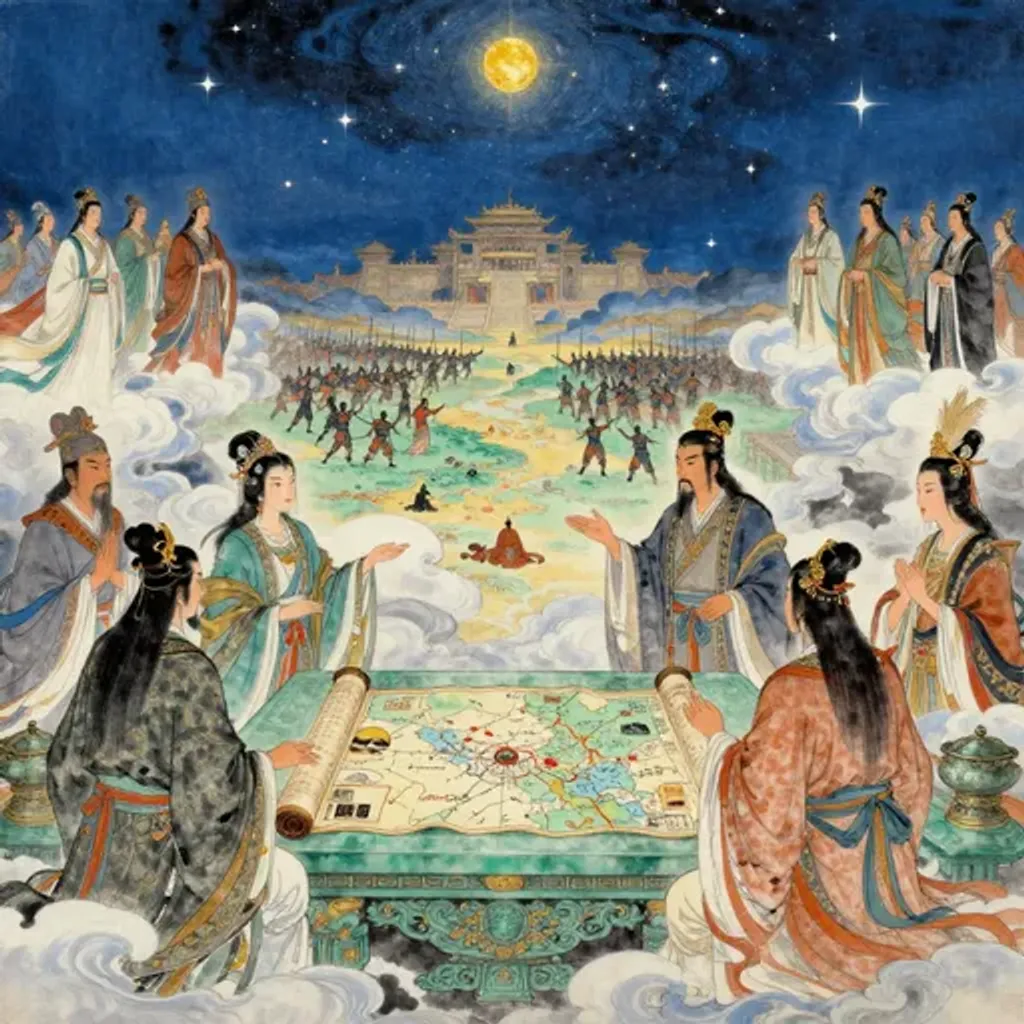
眾神集聚,相與議語;南國虐亂,百姓愁苦。興師征討,更立聖主。
The many spirits gather; conferring together in council. The southern kingdom suffers tyranny; the hundred clans grieve in sorrow. Raising an army to campaign; a sage ruler is established anew.
— Jiao Yanshou, Yilin (Forest of Changes), 1st century BC
Commentary
The assembled spirits gather to deliberate among themselves. The southern kingdom is in tyrannical chaos, and the common people groan in misery. An army is raised to punish the oppressor, and a sagely ruler is established in his place. From Innocence to The Family, the transformation reveals that restoring domestic order sometimes requires divine intervention channeled through martial force. Jiaren's image of wind emerging from fire suggests that warmth within the household radiates outward as transforming influence. The spirits' council precedes righteous war — not aggression but corrective action sanctioned from above. When innocence encounters systemic cruelty, the proper family order can only be restored by removing the tyrant and installing virtue at the center.
无妄 → 睽
Hexagram 25 → Hexagram 38: Opposition
Changing lines: 2, 5
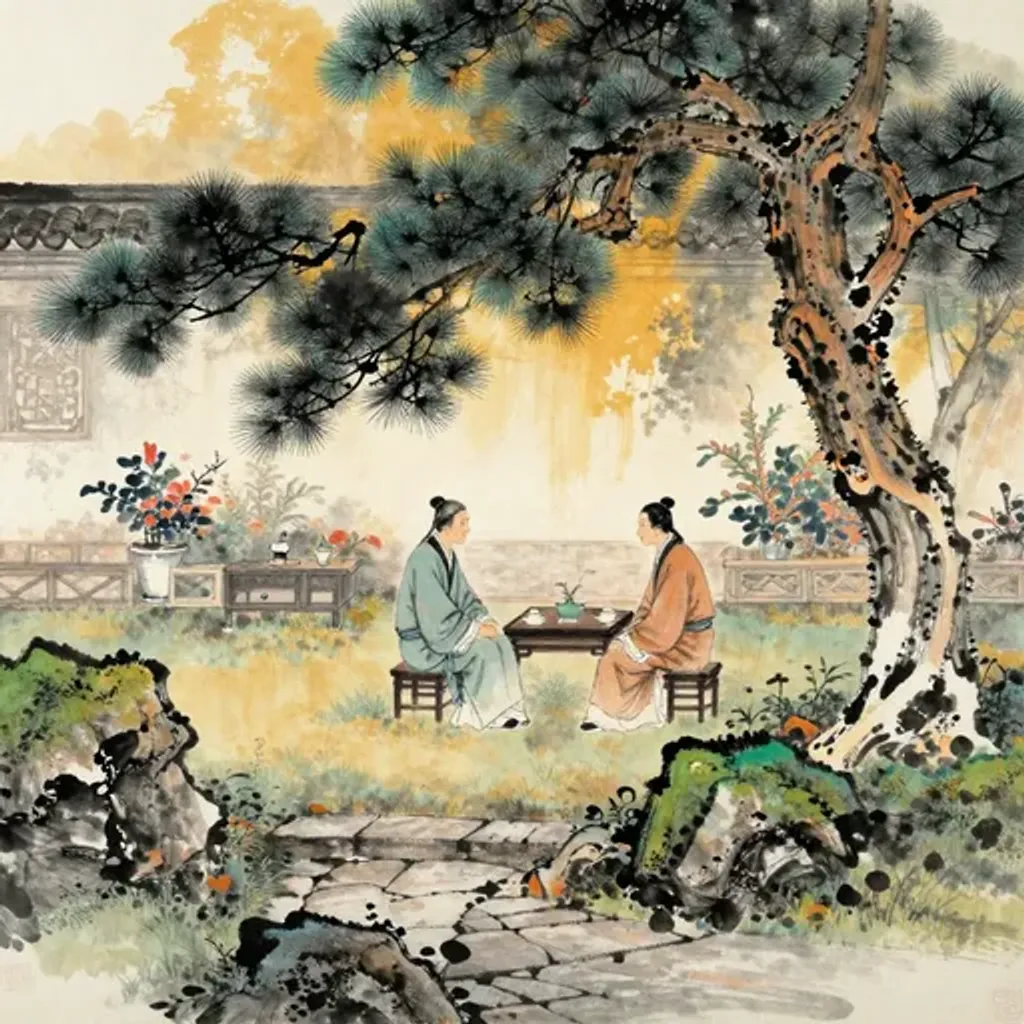
顏淵:閔騫,以禮自閑。君子所居,禍災不存。
Yan Hui, Min Qian; restraining themselves with ritual propriety. Where the noble man dwells; calamity and disaster do not abide.
— Jiao Yanshou, Yilin (Forest of Changes), 1st century BC
Commentary
Yan Yuan and Min Qian — Yan Hui and Min Ziqian, the two paragons of moral conduct among Confucius's disciples — restrain themselves through ritual propriety. Where the noble person dwells, calamity and disaster simply do not exist. From Innocence to Opposition, the transformation is paradoxical: Kui's image of fire above and lake below shows two forces moving apart, seeing the same thing differently. Yet the verse insists that moral self-discipline dissolves opposition entirely. Yan Hui's legendary poverty and contentment, Min Ziqian's filial piety under a cruel stepmother — both exemplify virtue so internalized that external conflict finds no foothold. When innocence is armored by ritual, even opposition's divisive energy cannot penetrate.
无妄 → 蹇
Hexagram 25 → Hexagram 39: Obstruction
Changing lines: 1, 3, 4, 6
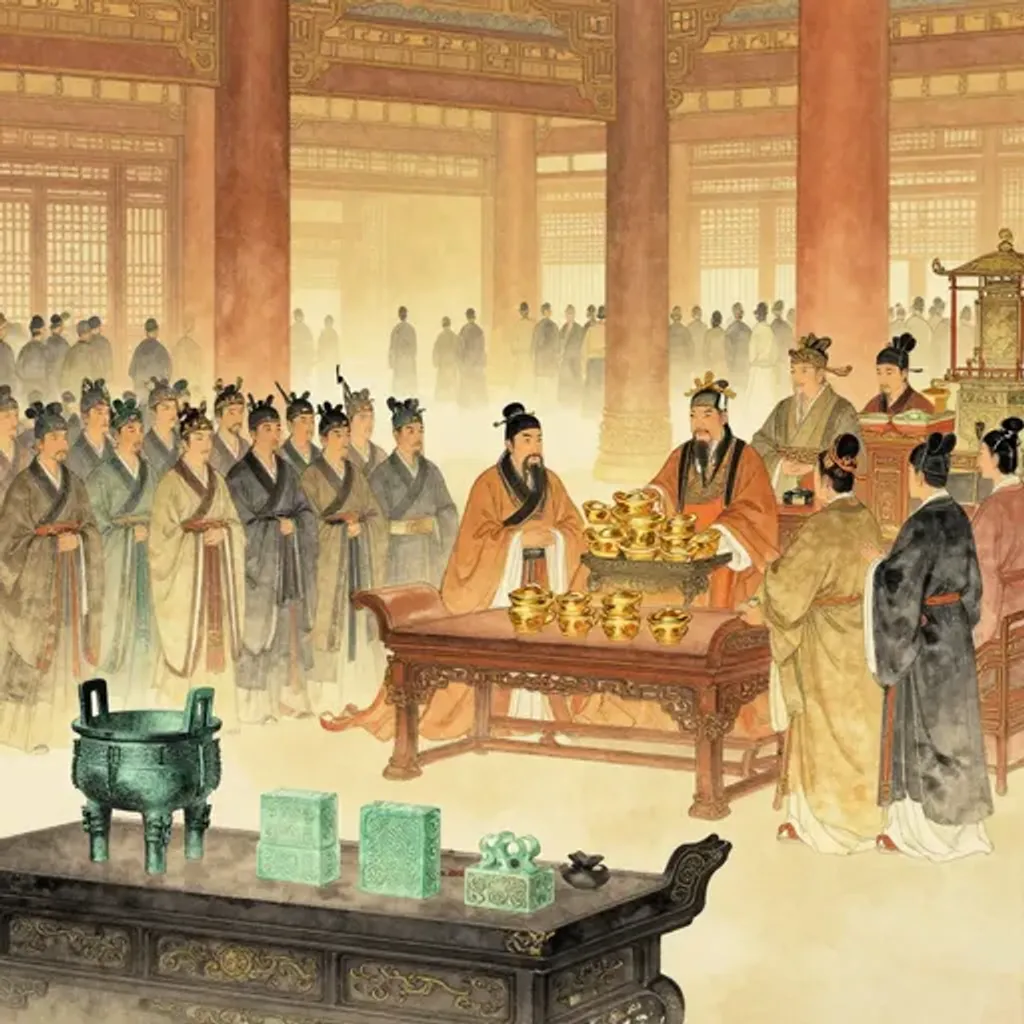
三桓子孫,世秉國權。爵世上卿,富於周公。
The three Huan clan's descendants; for generations they hold the realm's power. Enfeoffed as senior ministers; richer than the Duke of Zhou.
— Jiao Yanshou, Yilin (Forest of Changes), 1st century BC
Commentary
The descendants of the Three Huan clans hold state power generation after generation. Their rank is perpetually that of senior minister; their wealth surpasses even the Duke of Zhou's. The Three Huan — Jisun, Shusun, and Mengsun — were the three noble families descended from Duke Huan of Lu who gradually usurped the power of the ducal house throughout the Spring and Autumn period. From Innocence to Obstruction, the transformation exposes how hereditary privilege calcifies into systemic blockage. Jian's image of water atop the mountain shows a path that cannot be traversed. The Three Huan's entrenched wealth and rank create precisely this obstruction — they block the channels through which legitimate authority should flow, turning the state's innocence into perpetual paralysis.
无妄 → 解
Hexagram 25 → Hexagram 40: Deliverance
Changing lines: 1, 2, 5, 6
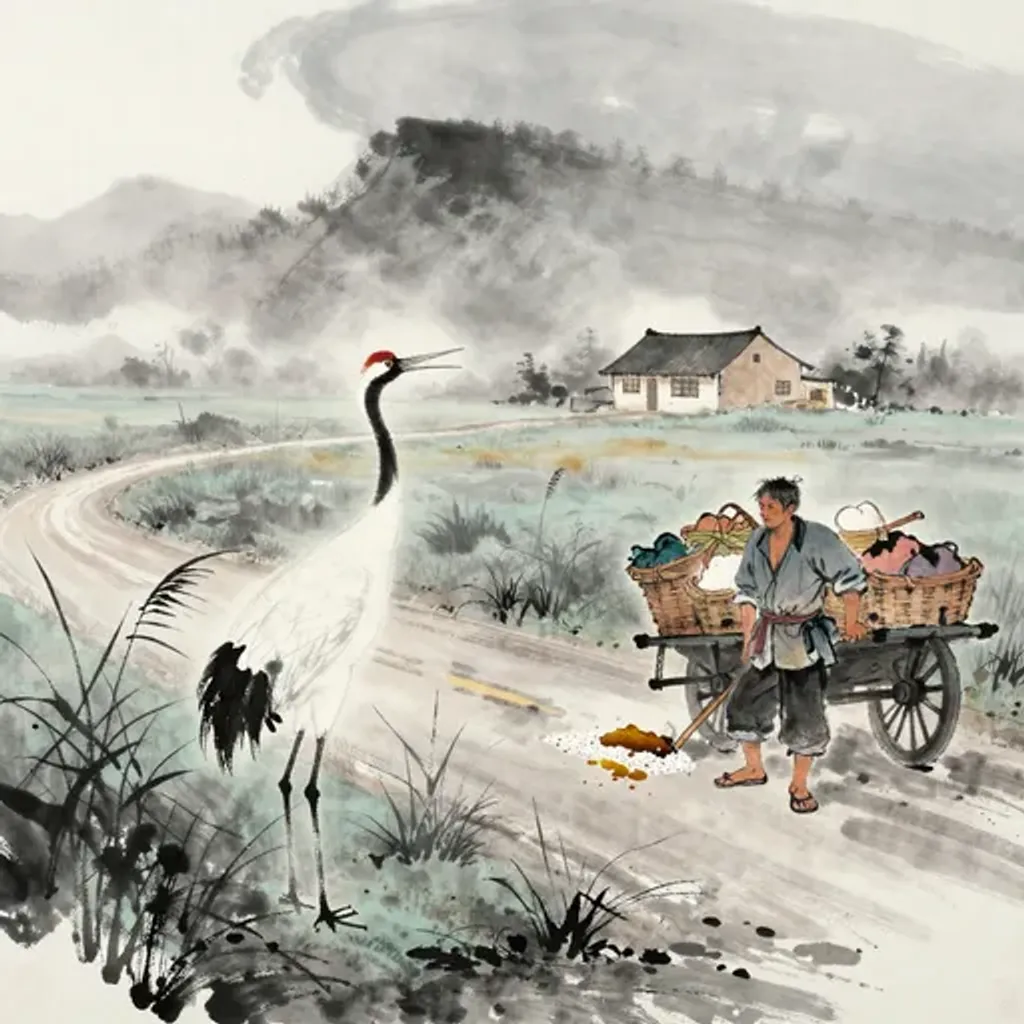
鶴鳴九皋,處子失時。載土販鹽,難為功巧。
A crane calls at the nine marshes; the maiden has missed her season. Hauling earth, peddling salt; hard to achieve any skill.
— Jiao Yanshou, Yilin (Forest of Changes), 1st century BC
Commentary
The crane cries from the nine marshes — the Shijing ode 'He Ming' promises that hidden talent will make itself heard across the wild. Yet here the calling goes unanswered: the talented woman misses her season and remains unmarried. Hauling earth and peddling salt, one cannot achieve anything refined. From Innocence to Deliverance, the transformation turns on frustrated release. Jie's image of thunder and rain breaking free should signal liberation — obstacles dissolved, prisoners pardoned. But the verse presents the opposite: the crane's cry reaches no ear, and labor yields only coarseness. The release that Deliverance promises remains blocked so long as talent finds no proper channel, and mere toil cannot substitute for recognition.
无妄 → 損
Hexagram 25 → Hexagram 41: Decrease
Changing lines: 2, 4, 5
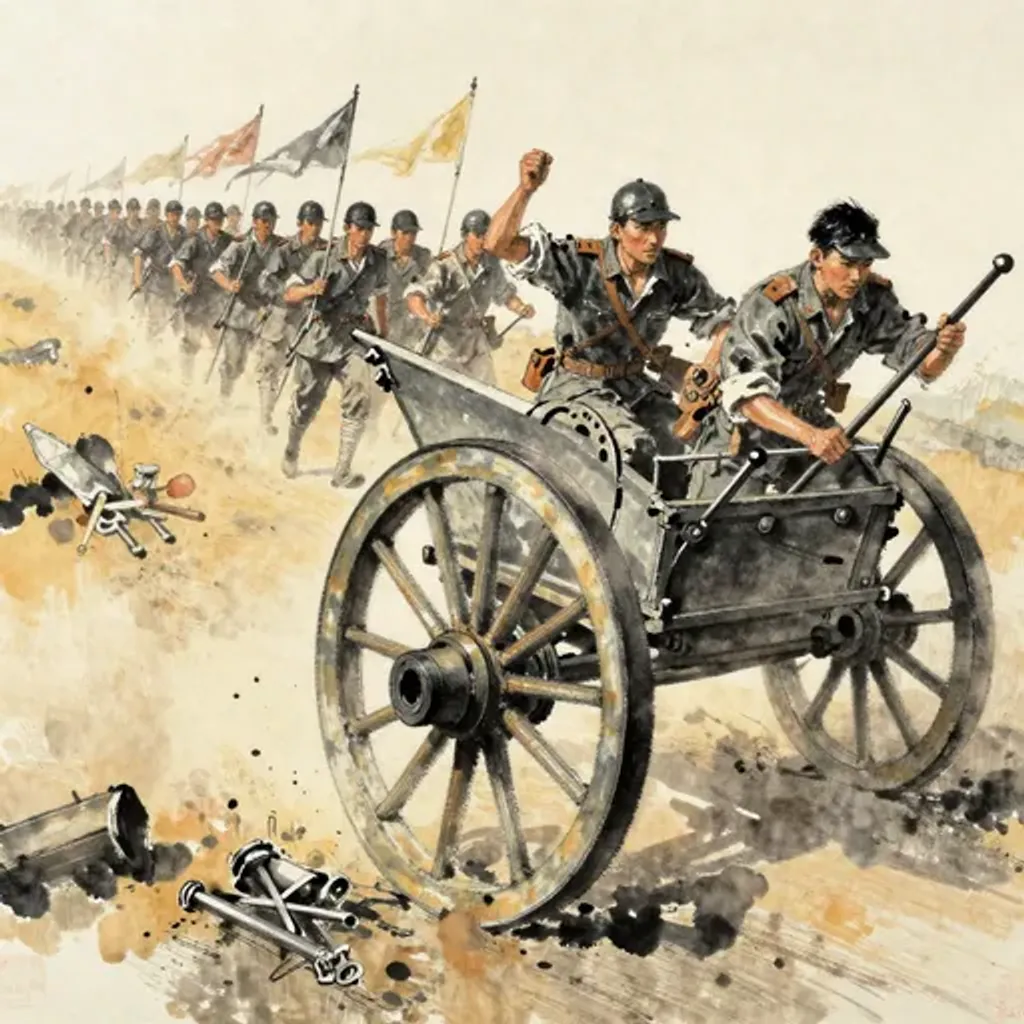
方軸圓輪,東行不前。組囊以錐,失其事便。還師振旅,兵革休止。
A square axle in a round wheel; eastward it will not advance. Piercing a pouch with an awl; losing its proper use. The army returns, troops withdraw; arms and war come to rest.
— Jiao Yanshou, Yilin (Forest of Changes), 1st century BC
Commentary
A square axle fitted to a round wheel — the carriage cannot move eastward. Piercing a brocade bag with an awl, one ruins its proper function. The army returns and musters for dismissal; weapons and armor are set aside. From Innocence to Decrease, the transformation reveals how mismatch and misuse lead to deliberate reduction. Sun's image of the mountain above the lake — the lake's depth nourishing the mountain's height — represents purposeful sacrifice of the lower to benefit the upper. The square-axle metaphor captures wasted effort from fundamental incompatibility, while the pierced bag shows tools destroying what they were meant to serve. Only withdrawal and disarmament restore balance.
无妄 → 益
Hexagram 25 → Hexagram 42: Increase
Changing lines: 4
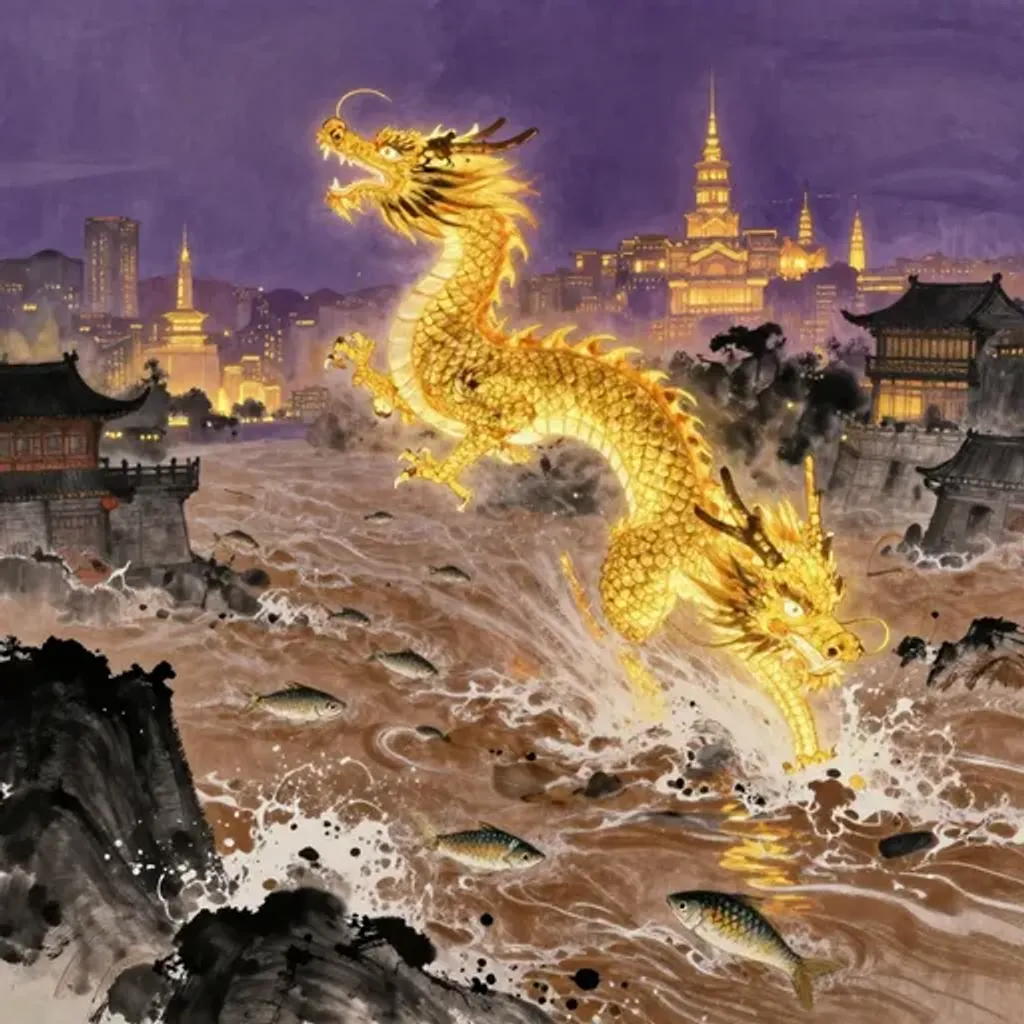
魚擾水濁,桀亂我國。駕龍出遊,東之樂邑。天賜我祿,與生為福。
Fish stir, water muddles; Jie throws our kingdom into chaos. Mounting the dragon, departing on a journey; eastward to a land of joy. Heaven grants us bounty; born together with blessing.
— Jiao Yanshou, Yilin (Forest of Changes), 1st century BC
Commentary
Fish churning muddies the water — Jie's misrule throws the kingdom into chaos. Mounting a dragon-carriage, one travels east to a land of pleasure. Heaven bestows its emolument, and life itself becomes a blessing. The tyrant Jie of Xia represents the negation of Wuwang — delusion masquerading as authority. From Innocence to Increase, the transformation charts the escape from corrupted innocence into genuine abundance. Yi's image of wind and thunder working together represents the sage who, seeing good, follows it, and having faults, corrects them. The dragon journey east recalls King Tang's flight from Jie's orbit before founding the Shang — departure from disorder is itself the first act of increase.
无妄 → 夬
Hexagram 25 → Hexagram 43: Breakthrough
Changing lines: 2, 3, 6
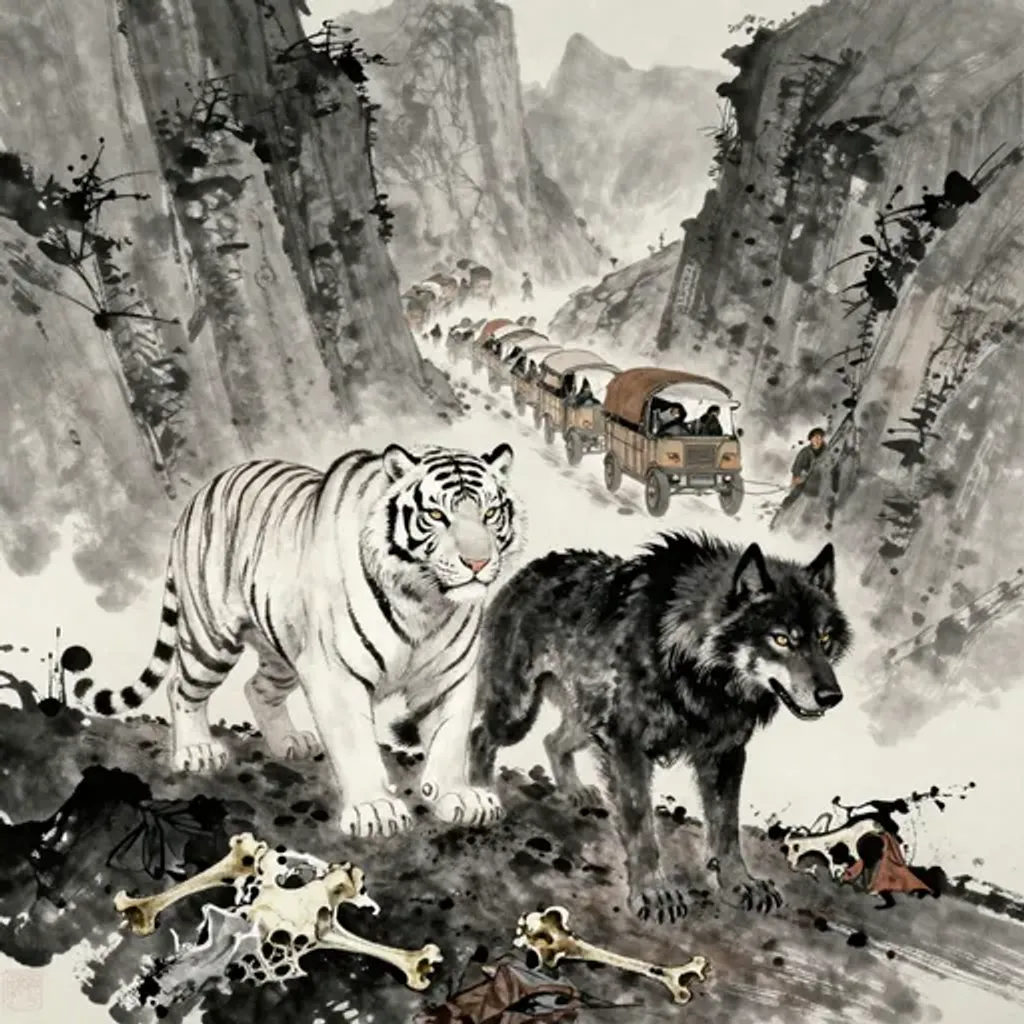
白虎黑狼,伏司亦長。遮遏牛羊,病我商人。
White tiger, black wolf; lurking in ambush along the road. They block the cattle and sheep; bringing harm to our merchants.
— Jiao Yanshou, Yilin (Forest of Changes), 1st century BC
Commentary
The white tiger and black wolf lurk in ambush and domination. They block the passage of cattle and sheep, harming the merchant's livelihood. From Innocence to Breakthrough, the transformation exposes the tension between predatory obstruction and the decisive force needed to overcome it. Guai's image of the lake rising to heaven demands that accumulated pressure be released in a single, resolute act — the decisive removal of what is harmful. Yet the verse presents the predators still in control, the merchants still suffering. The breakthrough has not yet come; the white tiger and black wolf still command the road. The hexagram's promise is a call to action, not a guarantee of safety.
无妄 → 姤
Hexagram 25 → Hexagram 44: Coming to Meet
Changing lines: 1, 2, 3
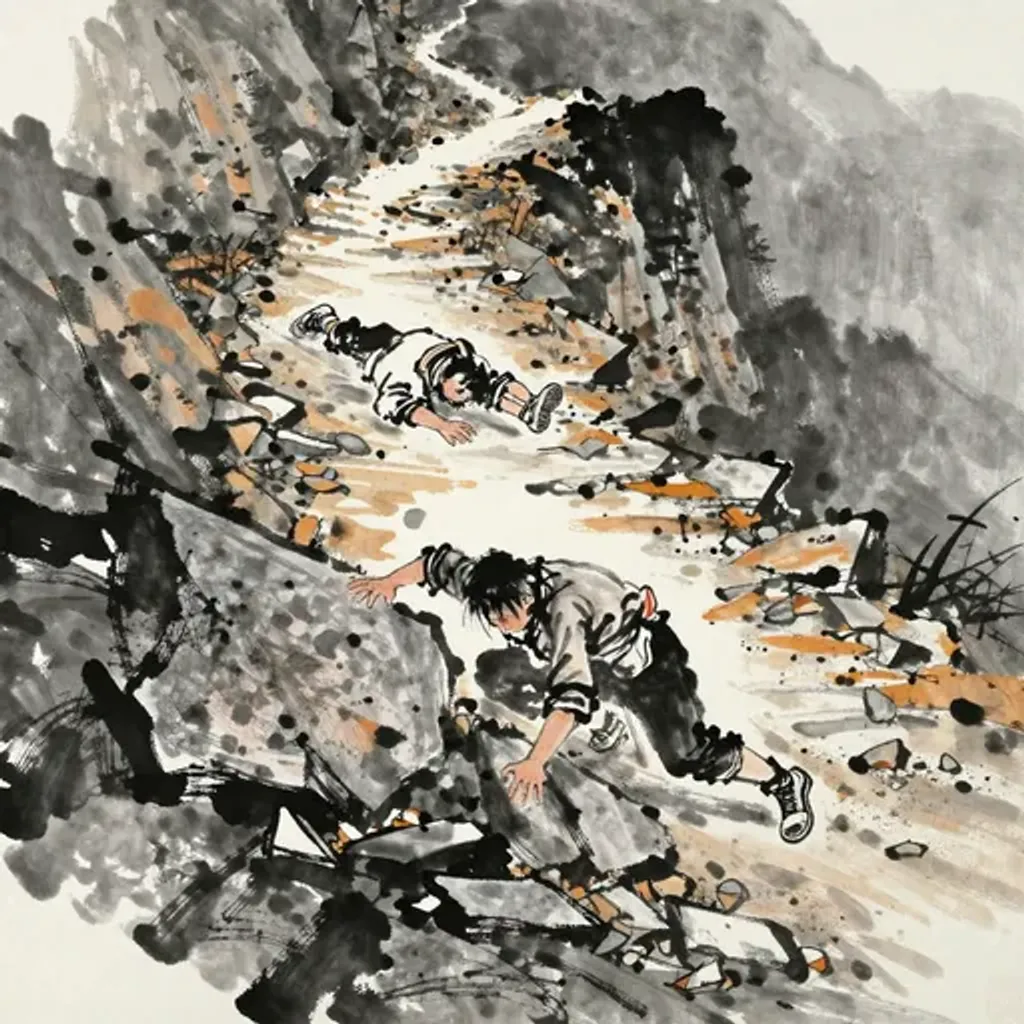
履危不安,趺頓我顏,傷踵為癩。
Treading danger, finding no footing; stumbling and striking one's face. The heel is injured and scarred.
— Jiao Yanshou, Yilin (Forest of Changes), 1st century BC
Commentary
Treading on danger without finding safety — one stumbles and falls, face striking the ground, injuring the heel until it festers. This terse verse is pure physical misfortune, the body betrayed by unstable footing. From Innocence to Coming to Meet, the transformation reveals the hazard of unexpected encounter. Gou's image of heaven above wind shows the powerful suddenly confronted by what creeps in from below — an unanticipated meeting that may be dangerous. The verse's stumble captures Wuwang's core meaning: innocent action on treacherous ground leads to injury not through fault but through the ground itself being unreliable. Coming to Meet warns that not every encounter is welcome.
无妄 → 萃
Hexagram 25 → Hexagram 45: Gathering Together
Changing lines: 1, 6
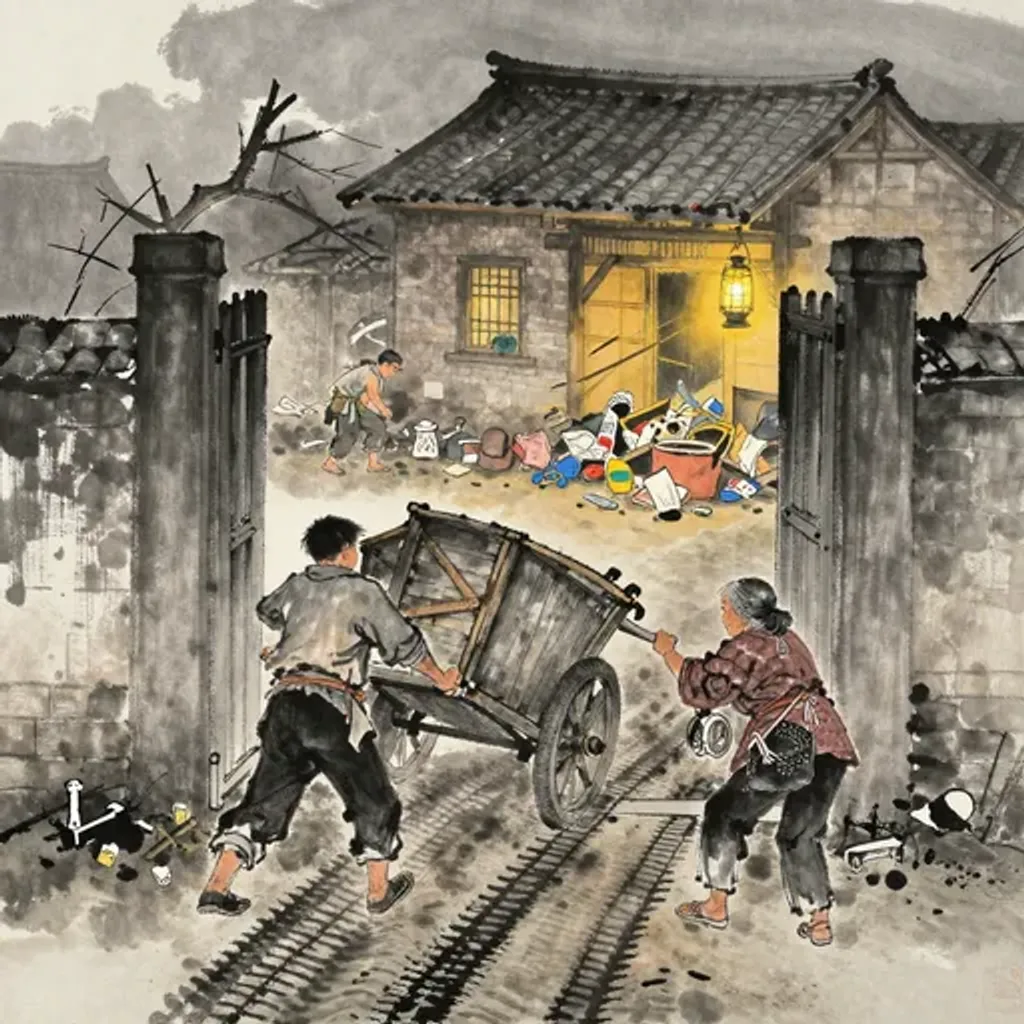
三人輦車,乘入旁家。王母貪叨,盜我資財。亡失犁牛。
Three men push a cart; entering the neighbor's house. The old woman is greedy and grasping; stealing our goods and wealth. Lost too is the plow ox.
— Jiao Yanshou, Yilin (Forest of Changes), 1st century BC
Commentary
Three men push a handcart and enter a neighbor's house. An old woman — greedy and grasping — steals the household's goods. The plow-ox is lost. From Innocence to Gathering, the transformation twists community into predation. Cui's image of the lake gathering upon the earth should represent people coming together for shared purpose — the gentleman prepares arms and guards against the unexpected. Yet here the gathering produces theft: those who arrive take rather than contribute, and the essential working animal disappears. The verse warns that Wuwang's openness creates vulnerability: when innocence lacks discernment, gathering becomes an invitation for the unscrupulous to take what they will.
无妄 → 升
Hexagram 25 → Hexagram 46: Pushing Upward
Changing lines: 1, 2, 3, 4, 5, 6
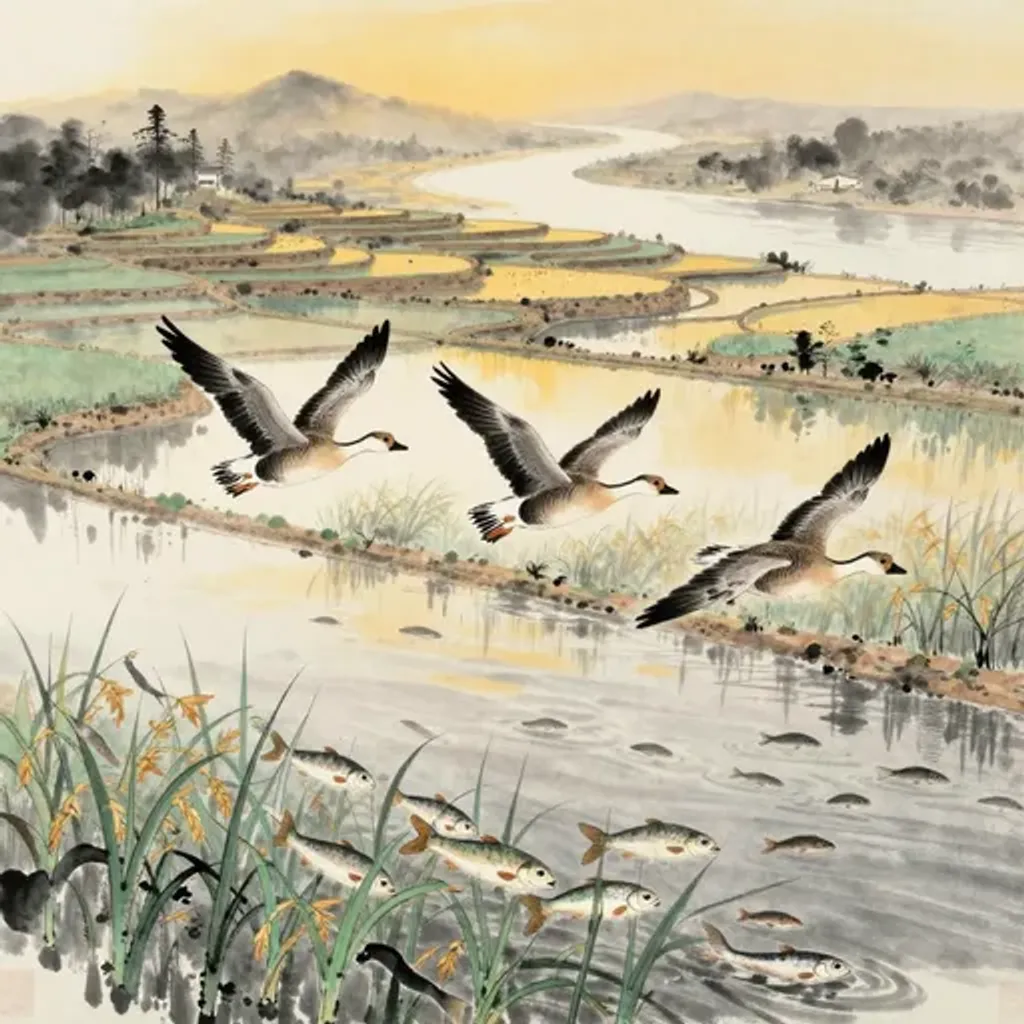
三雁南飛,俱就井地。鰕鰌饒有,利得過倍。
Three geese fly south; together they settle in well-watered fields. Shrimp and loach abound; profits double and more.
— Jiao Yanshou, Yilin (Forest of Changes), 1st century BC
Commentary
Three wild geese fly south together, arriving at the well-fields — the ancient grid system of Zhou agriculture. Shrimp and loaches abound in the irrigated paddies, and profits more than double. From Innocence to Pushing Upward, the transformation traces natural migration to agricultural prosperity. Sheng's image of wood growing within the earth captures the slow, organic rise of well-rooted growth. The geese follow their instinct southward; the well-fields yield their harvest without force. The verse embodies Wuwang's ideal: when action aligns with natural pattern, abundance arrives effortlessly. Pushing Upward's steady, methodical ascent — accumulating small gains into great — mirrors the fish multiplying in the fields below.
无妄 → 困
Hexagram 25 → Hexagram 47: Oppression
Changing lines: 1, 2, 6
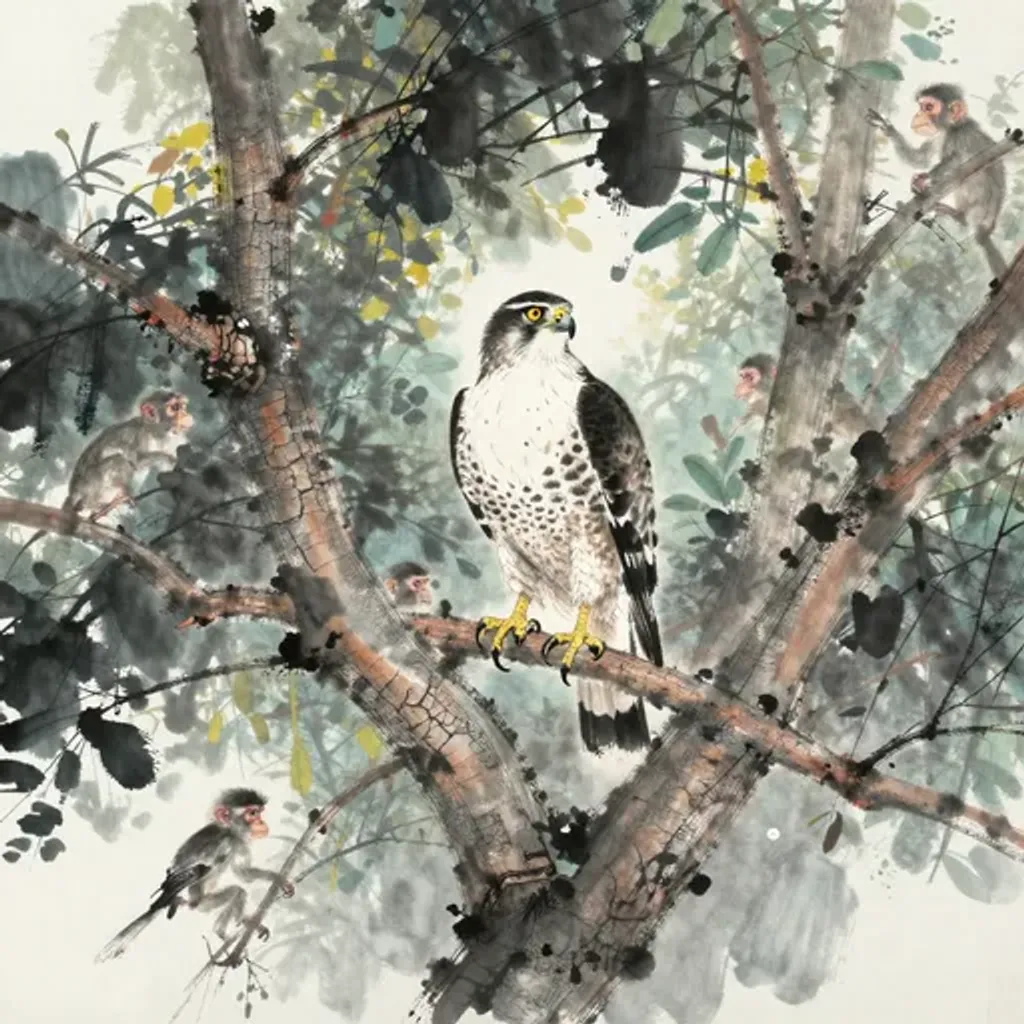
鷹栖茂樹,猴雀往來。一擊獲兩,伏不枝梧。
A hawk perches in a flourishing tree; monkeys and sparrows come and go. One strike captures two; it crouches, concealed among the branches.
— Jiao Yanshou, Yilin (Forest of Changes), 1st century BC
Commentary
A hawk perches in a dense tree, while monkeys and sparrows come and go freely below. With a single strike it seizes two, then crouches motionless, utterly still. From Innocence to Oppression, the transformation reveals the predator's logic within apparent stillness. Kun's image of the lake without water — resources drained, vitality exhausted — describes constraint at its most absolute. Yet the hawk in the verse is not the oppressed but the oppressor, or perhaps the one who survives oppression through ruthless efficiency. The double kill from a single strike conserves energy when resources are scarce. In Wuwang's framework, this is innocence weaponized: natural instinct refined to lethal precision under conditions of extreme limitation.
无妄 → 井
Hexagram 25 → Hexagram 48: The Well
Changing lines: 1, 2, 3, 4, 6
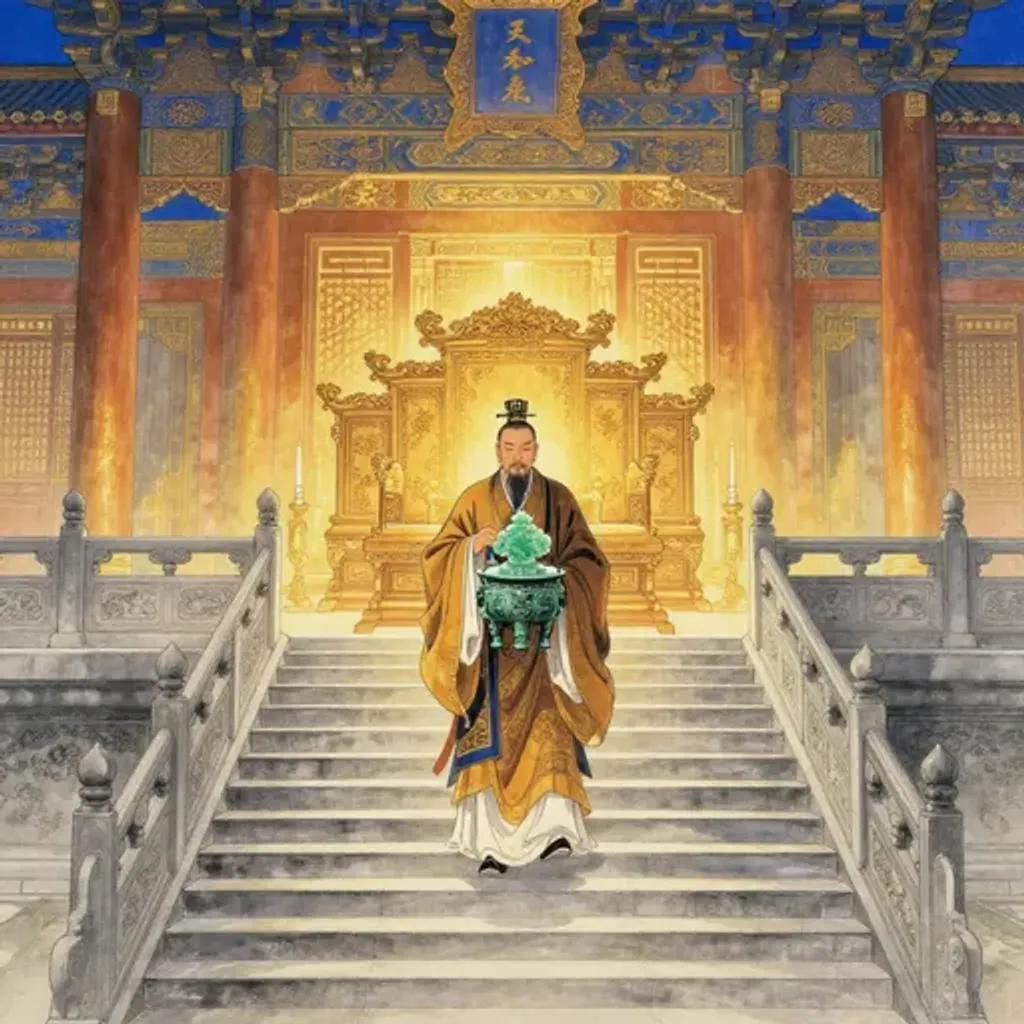
堯舜欽明,禹稷股肱。伊尹往來,進禮登堂。顯德之徒,可以輔王。
Yao and Shun, reverent and wise; Yu and Ji, their sturdy limbs. Yi Yin went back and forth; presenting rites, ascending the hall. Followers of illustrious virtue; able to assist the king.
— Jiao Yanshou, Yilin (Forest of Changes), 1st century BC
Commentary
Yao and Shun govern with reverent brilliance; Yu and Hou Ji serve as their trusted arms and legs. Yi Yin travels back and forth, presenting ritual gifts and ascending the hall. Those who manifest virtue are worthy to assist a king. From Innocence to The Well, the transformation maps sagely governance to an inexhaustible source. Jing's image of water drawn up through wood — the well that nourishes without depletion — represents the perennial resource of moral leadership. The parade of sage-kings and ministers constitutes a Who's Who of virtuous governance: Yao's discernment, Shun's humility, Yu's dedication, Hou Ji's agricultural wisdom, Yi Yin's counsel. Together they embody the well's principle: true leadership replenishes what it serves.
无妄 → 革
Hexagram 25 → Hexagram 49: Revolution
Changing lines: 3, 6
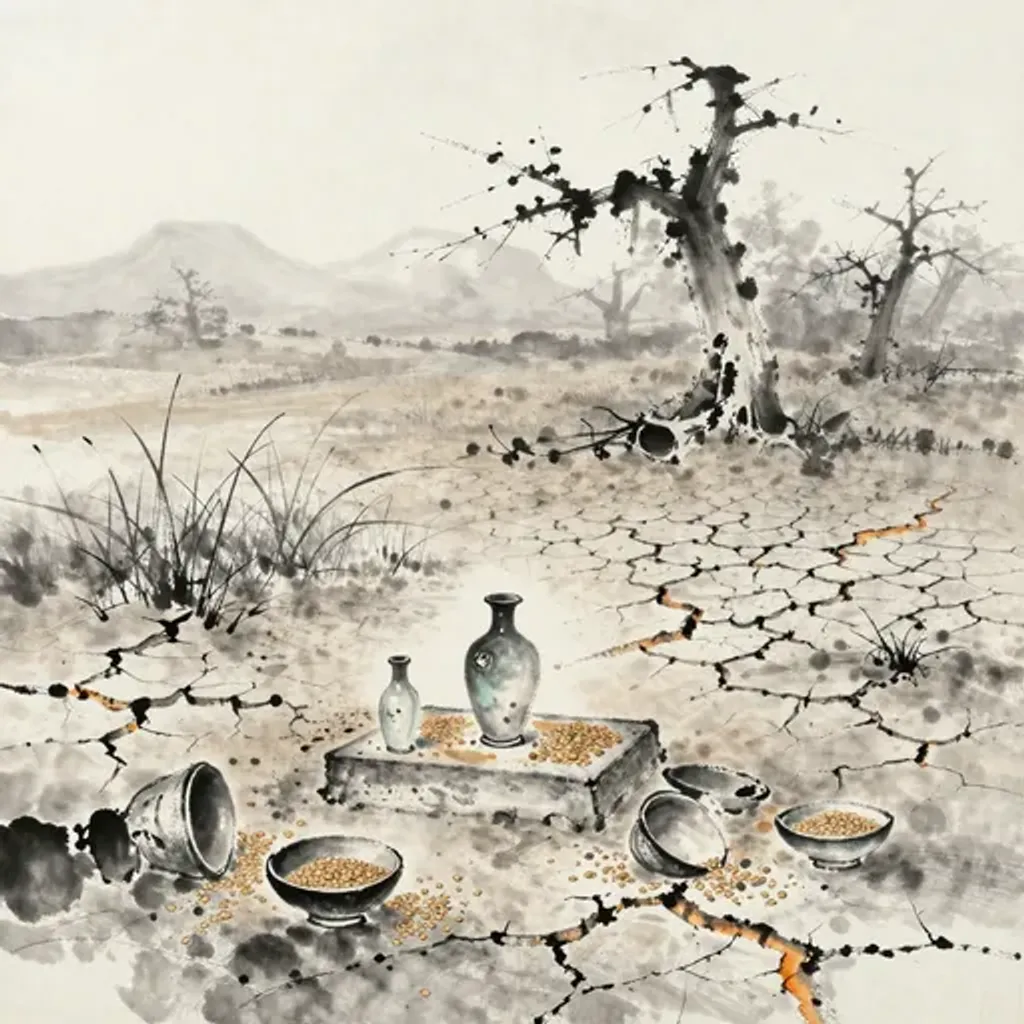
枯旱三年,草葉不生。粢盛空乏,無以供靈。
Scorching drought for three years; grass and leaves do not grow. The grain offerings are empty and spent; nothing to offer the spirits.
— Jiao Yanshou, Yilin (Forest of Changes), 1st century BC
Commentary
Three years of withering drought: not a blade of grass nor a leaf grows. The sacrificial grain vessels stand empty, with nothing to offer the spirits. From Innocence to Revolution, the transformation reveals nature's most brutal correction. Ge's image of fire within the lake — two incompatible elements in direct contact — demands radical change. The three-year drought strips everything to its essence: no harvest, no ritual, no communion with the divine. When the earth itself ceases to yield, the existing order has exhausted its mandate and revolution becomes not choice but necessity. The empty offering vessels are the most damning image: a regime that cannot feed its gods has already lost heaven's endorsement.
无妄 → 鼎
Hexagram 25 → Hexagram 50: The Cauldron
Changing lines: 1, 2, 3, 5
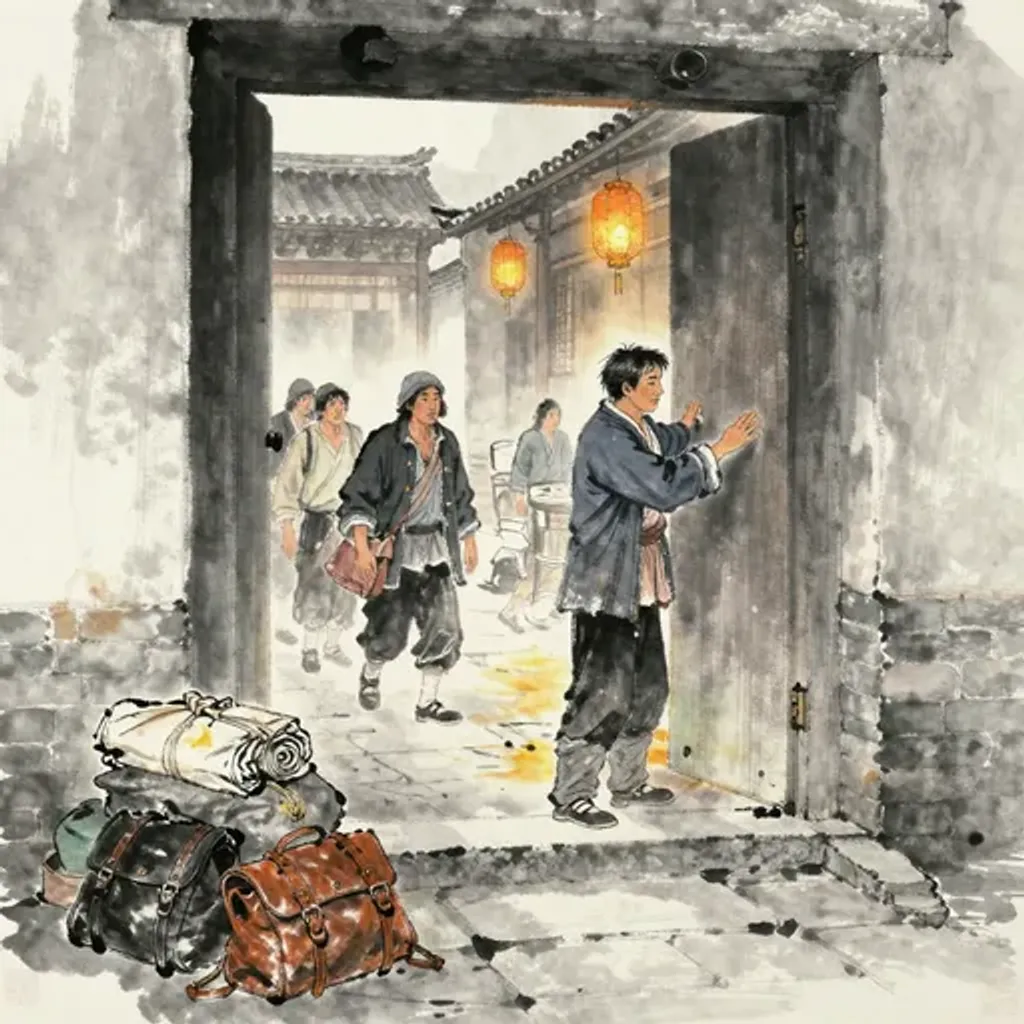
口方緩唇,為和樞門。解釋鉤帶,商旅以歡。
A gentle mouth, relaxed lips; serving as the harmonious pivot of the gate. Loosening hooks and sashes; merchants and travelers rejoice.
— Jiao Yanshou, Yilin (Forest of Changes), 1st century BC
Commentary
A wide mouth with relaxed lips serves as the harmonious pivot of the gate — the mediator who smooths all passage. Loosening hooks and unbuckling belts, the merchants celebrate with ease. From Innocence to The Cauldron, the transformation follows speech refined into diplomatic art. Ding's image of fire above wood — cooking, transforming raw into refined — represents the ritual vessel that mediates between human and divine. The relaxed mouth becomes the cauldron's opening: words poured in with the right mixture produce harmony. The merchants' relief mirrors the cauldron's function of blending disparate ingredients into nourishment. When innocence is tempered by articulate skill, it becomes the vessel through which all transactions find their proper resolution.
无妄 → 震
Hexagram 25 → Hexagram 51: The Arousing Thunder
Changing lines: 5, 6
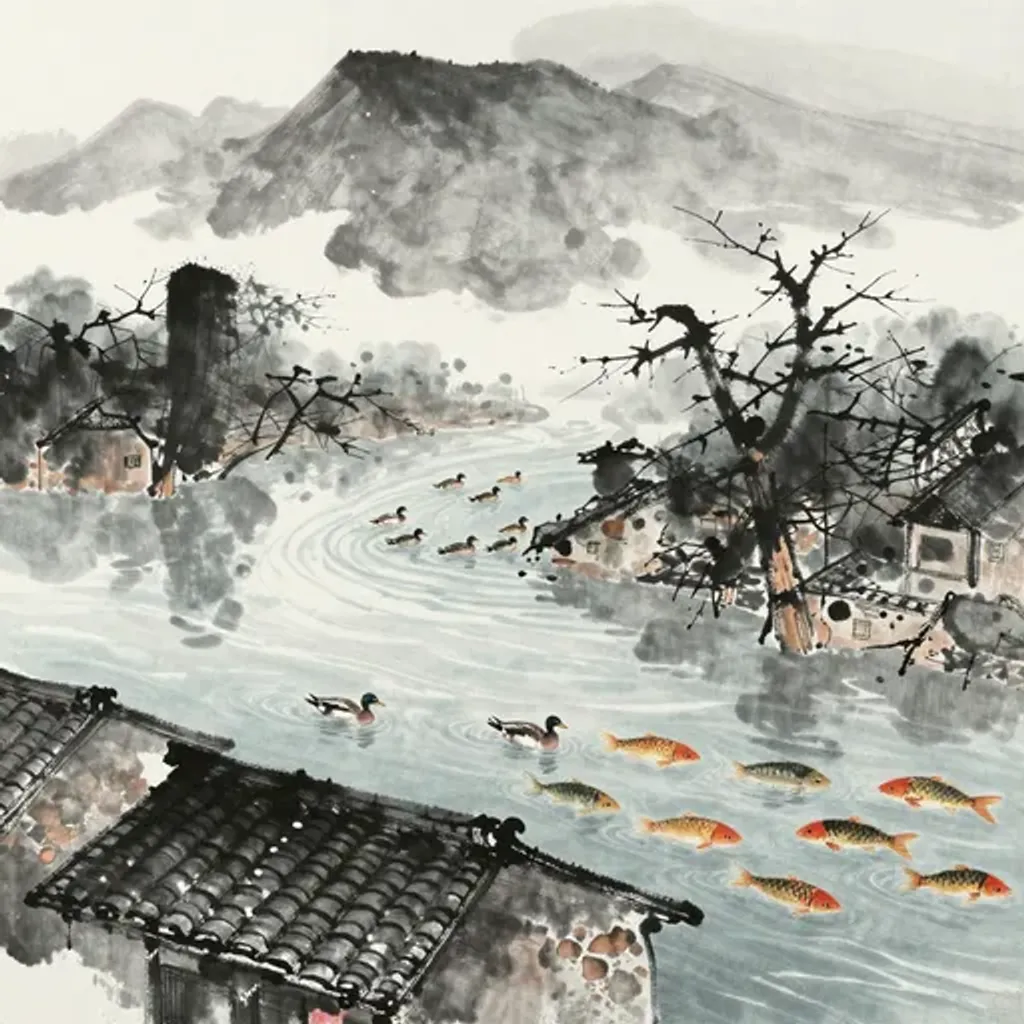
鳧鷖池水,高陸為海。江河橫流,魚鱉成市。千里無墻,鴛鳳游行。
Ducks and gulls on the pond; high land becomes the sea. Rivers and streams flow crosswise; fish and turtles fill the market. A thousand li without walls; mandarin ducks and phoenixes roam free.
— Jiao Yanshou, Yilin (Forest of Changes), 1st century BC
Commentary
Ducks and cormorants fill the pond, while highlands become ocean. Rivers overflow their banks as fish and turtles swarm the market. For a thousand li there are no walls, and phoenixes roam freely. From Innocence to The Arousing, the transformation channels Wuwang's spontaneous energy into cosmic upheaval. Zhen's doubled thunder shakes the world — the arousing shock that terrifies and renews. The verse paints a world turned upside down: water creatures on dry land, barriers dissolved, even the sacred phoenix wandering without constraint. This is not destruction but the Creative's raw power unleashed through thunder. The absence of walls for a thousand li captures Zhen's essence: when the shock arrives, all boundaries dissolve, and what emerges is uncontainable vitality.
无妄 → 艮
Hexagram 25 → Hexagram 52: Keeping Still Mountain
Changing lines: 1, 3, 4, 5
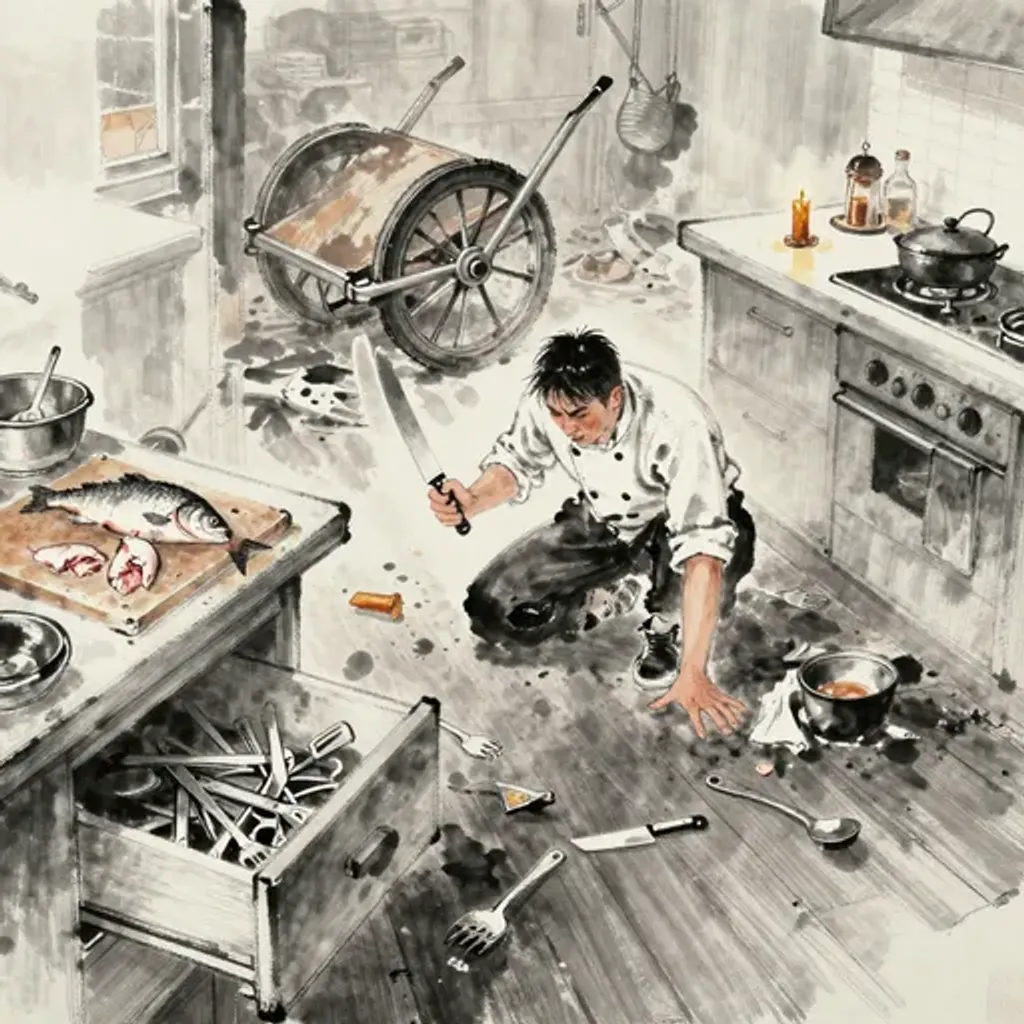
烹魚失刀,駕馬車亡。鉛刀不及,魴鯉腥臊。
Cooking fish, the knife is lost; harnessing the horse, the cart is gone. A lead blade falls short; bream and carp reek of rot.
— Jiao Yanshou, Yilin (Forest of Changes), 1st century BC
Commentary
Cooking fish but losing the knife; harnessing the horse but the cart is gone. A lead blade cannot reach the task, and the bream and carp remain rank and unscaled. Every image depicts inadequacy: the right tool missing at the crucial moment, leaving the job undone and the material spoiled. From Innocence to Keeping Still, the transformation traces failed action to enforced immobility. Gen's twin mountains stand still — 'thinking does not go beyond one's position.' The verse literalizes this: without knife, without cart, without a blade sharp enough, one is forced to stop. Yet Gen's stillness is not merely frustration; it is the recognition that acting without proper means is worse than not acting at all.
无妄 → 漸
Hexagram 25 → Hexagram 53: Development
Changing lines: 1, 3, 4
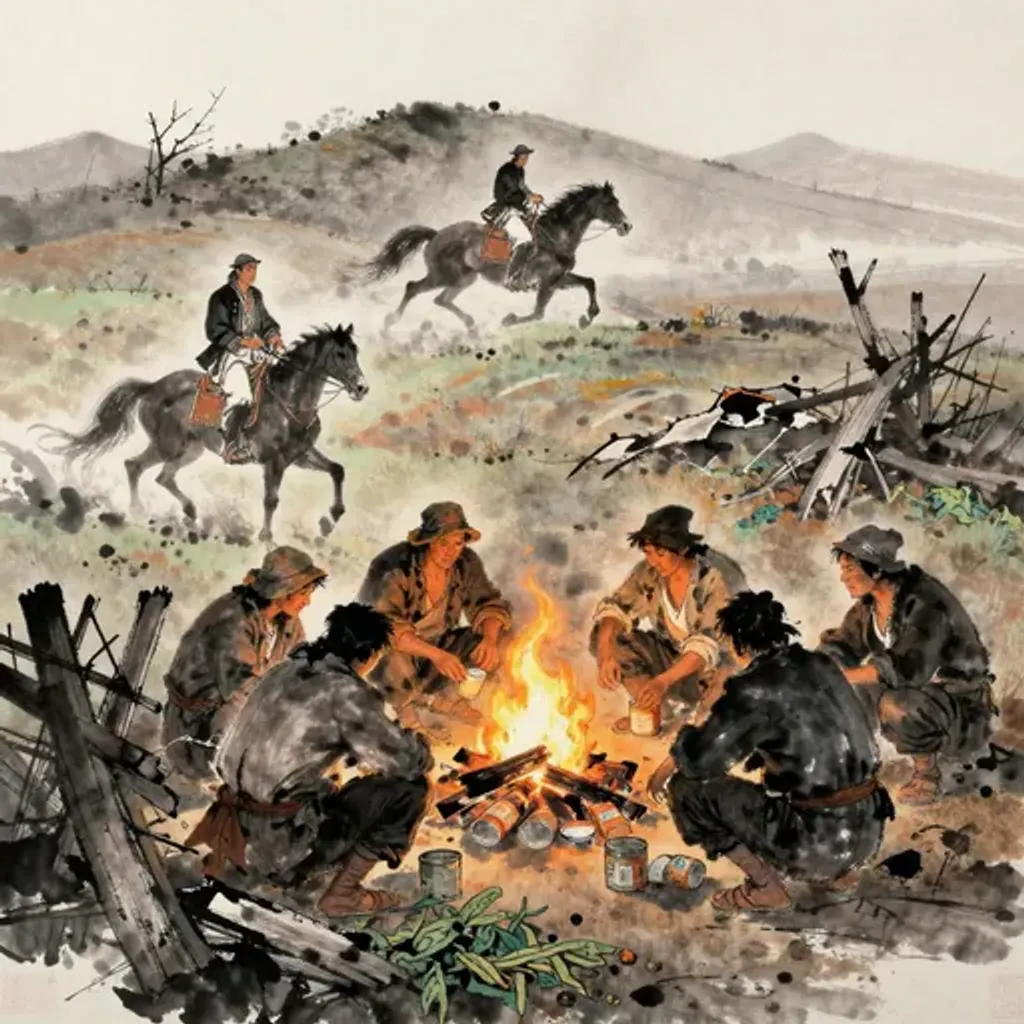
戎狄蹲踞,無禮貪叨。非吾族類,君子攸去。
The Rong and Di squat on their heels; without rites, greedy and grasping. Not of our kind; the noble man departs.
— Jiao Yanshou, Yilin (Forest of Changes), 1st century BC
Commentary
The barbarian Rong and Di squat on their haunches, lacking propriety and grasping for what is not theirs. They are not of our kind — the gentleman departs from them. This verse draws on the Zuo Zhuan's famous dictum: 'Those of a different race will surely have different hearts.' From Innocence to Development, the transformation traces withdrawal from the unrefined toward gradual cultivation. Jian's image of trees growing on the mountain represents slow, organic development rooted in proper ground. The gentleman's departure is not flight but discernment — recognizing that genuine development requires compatible soil. When innocence encounters those who refuse civilization's basic courtesies, the wise response is not confrontation but measured, deliberate distance.
无妄 → 歸妹
Hexagram 25 → Hexagram 54: The Marrying Maiden
Changing lines: 2, 5, 6
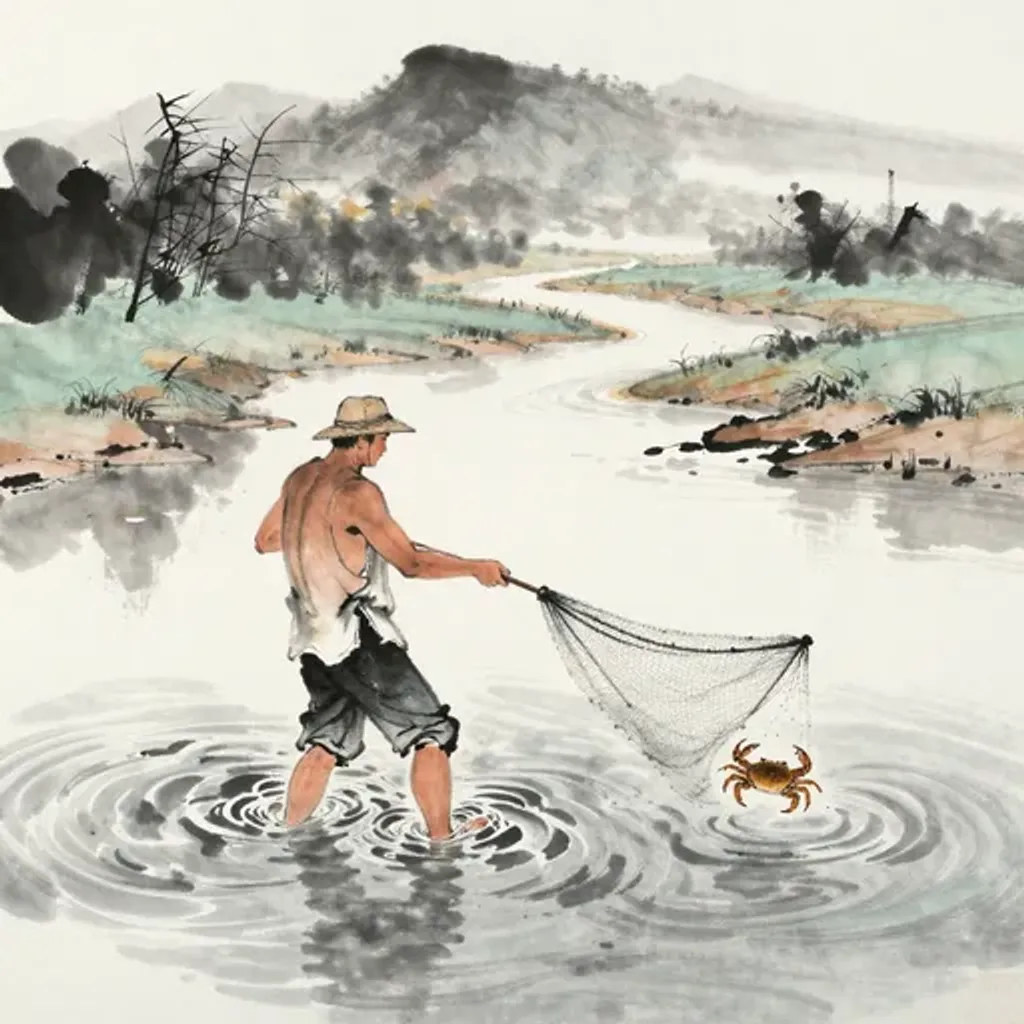
渡河踰水,濡洿其尾。不為禍憂。捕魚遇蟹,利得無幾。
Fording the river, crossing the water; wetting and muddying one's tail. Not worried by misfortune. Catching fish, meeting a crab; the gain amounts to little.
— Jiao Yanshou, Yilin (Forest of Changes), 1st century BC
Commentary
Crossing the river and fording the stream, one's tail gets wet and muddied — but this brings no real worry. Casting a net for fish, one catches only crabs instead — the profit is negligible. From Innocence to the Marrying Maiden, the transformation captures misaligned expectations in the most intimate of transactions. Guimei's image of thunder above the lake represents the younger sister given in marriage — an arrangement driven by necessity rather than ideal. The wet tail recalls the Yijing's recurring fox-crossing image: getting wet means the crossing was imperfect but survivable. The crab instead of fish mirrors Guimei's secondary status — not what was hoped for, but not a disaster either. Modest returns from a compromised venture.
无妄 → 豐
Hexagram 25 → Hexagram 55: Abundance
Changing lines: 3, 5, 6
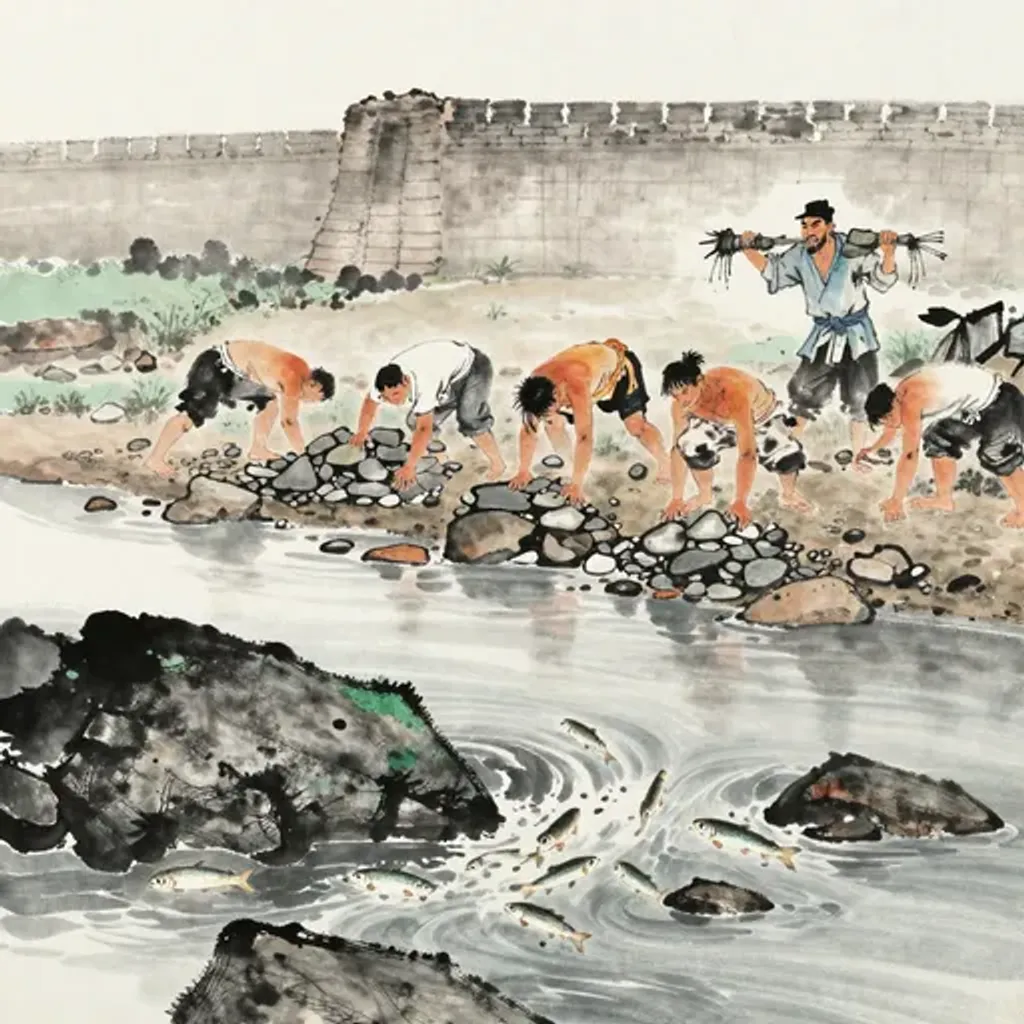
河水小魚,不宜勞煩。苛政苦民,君受其患。
Small fish in the river's shallows; one should not vex them with toil. Harsh governance afflicts the people; the ruler bears the consequence.
— Jiao Yanshou, Yilin (Forest of Changes), 1st century BC
Commentary
The small fish of the river should not be troubled with too much handling — an echo of Laozi's famous dictum that governing a great state is like cooking small fish, requiring a light touch. Harsh governance torments the people, and the ruler himself suffers the consequences. From Innocence to Abundance, the transformation turns on the paradox of power at its zenith. Feng's image of thunder and lightning arriving together represents overwhelming force and clarity combined. Yet the verse warns against precisely this excess: abundance of force misapplied destroys what it governs. The small fish ruined by overhandling is the people broken by oppressive administration. Wuwang's innocence demands restraint even — especially — when power is at its peak.
无妄 → 旅
Hexagram 25 → Hexagram 56: The Wanderer
Changing lines: 1, 3, 5
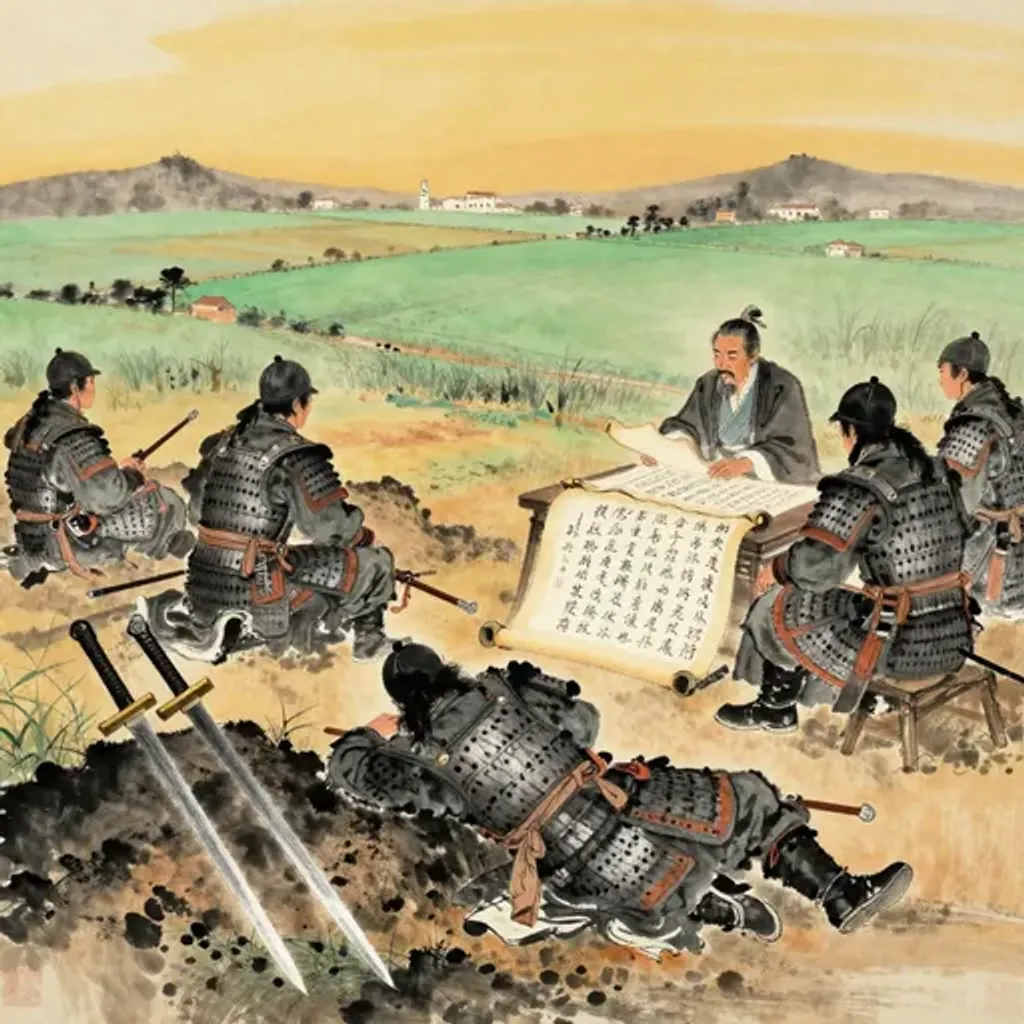
偃武修文,兵革休安。清人逍遙,未歸空閑。
Setting aside arms, cultivating letters; weapons and war find peaceful rest. The men of Qing wander at ease; not yet returned, idling in leisure.
— Jiao Yanshou, Yilin (Forest of Changes), 1st century BC
Commentary
Weapons are laid down and civil culture is cultivated; arms and armor rest in peace. The soldiers of Qing wander at leisure, not yet returned home, idling without purpose. The verse directly references the Shijing ode 'Qing Ren,' which satirizes Gao Ke's garrison troops stationed at the Yellow River who drill and parade but never fight, eventually scattering without accomplishment. From Innocence to The Wanderer, the transformation captures the irony of purposeless travel. Lu's image of fire on the mountain illuminates briefly before moving on — the wanderer passes through without leaving roots. The idle soldiers embody this transience: armed for a purpose that never materializes, they become permanent wanderers, martial energy dissipated into aimless roaming.
无妄 → 巽
Hexagram 25 → Hexagram 57: The Gentle Wind
Changing lines: 1, 2, 3, 4
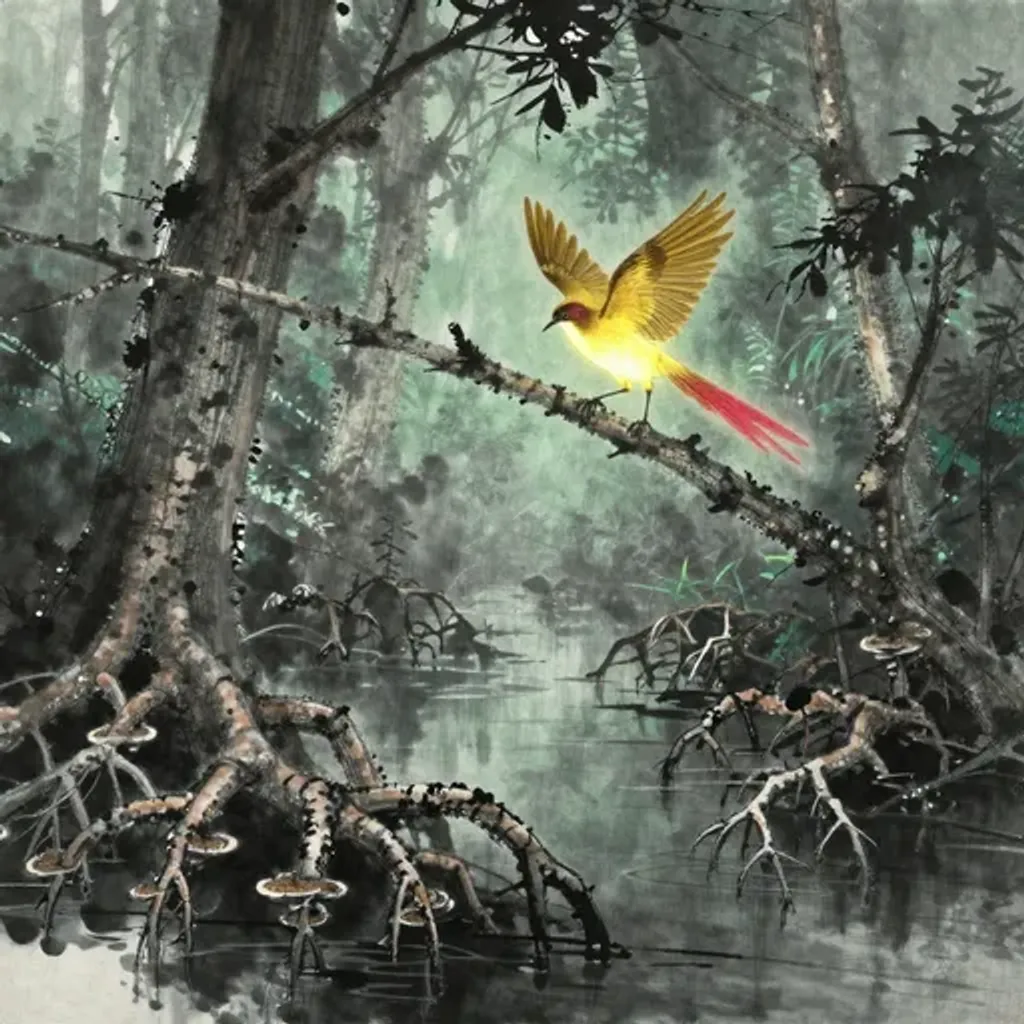
九疑鬱林,沮濕不中。鸞鳥所去,君子不安。
Jiuyi and Yulin; dank and marshy, unfit to dwell. Where the luan bird departs; the noble man finds no peace.
— Jiao Yanshou, Yilin (Forest of Changes), 1st century BC
Commentary
The Nine Doubts Mountains and the Yulin marshlands — damp, malarial, inhospitable. The luan bird, that celestial creature of harmonious song, has departed from this place. The gentleman cannot rest easy. These are the southern wilds where Emperor Shun reportedly died and was buried, a region associated with exile and the limits of civilization. From Innocence to The Gentle, the transformation registers subtlety turned hostile. Xun's doubled wind penetrates everywhere with quiet persistence — but here what penetrates is moisture, disease, and unease. The luan bird's departure signals that heaven's harmony has withdrawn. When innocence enters territory abandoned by celestial creatures, even the gentlest wind carries contamination.
无妄 → 兌
Hexagram 25 → Hexagram 58: The Joyous Lake
Changing lines: 2, 6
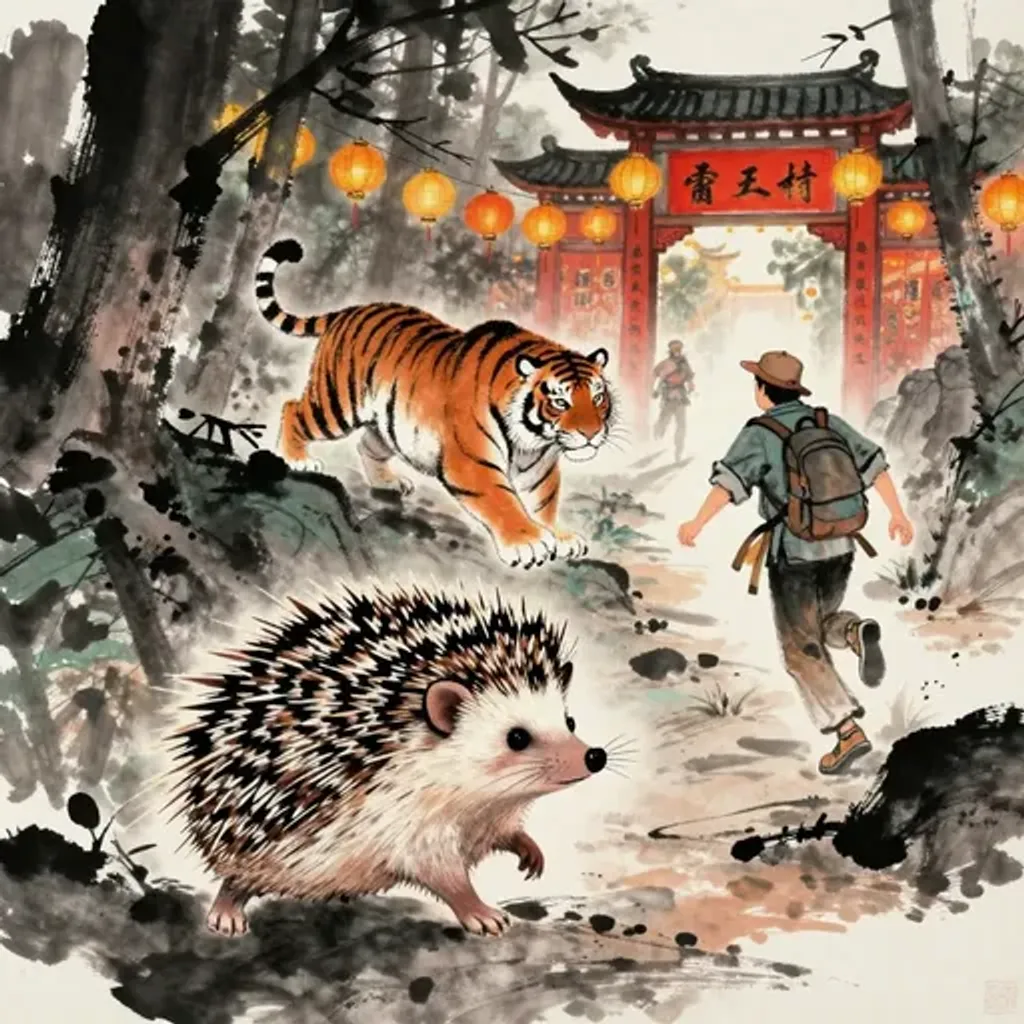
持猬逢虎,患厭不起。遂至懽國,與福笑語,君王樂喜。
Holding a hedgehog, meeting a tiger; the terror will not abate. At last reaching the land of joy; speaking and laughing with fortune. The ruler delights in happiness.
— Jiao Yanshou, Yilin (Forest of Changes), 1st century BC
Commentary
Clutching a hedgehog, one encounters a tiger — and the tiger, intimidated by the spines, crouches down and cannot rise. The traveler then arrives at the Land of Joy, exchanging blessings and laughter with its people; the king himself delights. The hedgehog subduing the tiger recalls the Shiji's natural lore: 'The hedgehog can subdue the tiger.' From Innocence to The Joyous, the transformation shows how small, well-defended innocence disarms raw power and opens the way to pure celebration. Dui's paired lakes represent shared joy and mutual discourse. The tiger's defeat is not martial but structural — spines against claws, armor against force — and what follows is not conquest but a community of delight.
无妄 → 渙
Hexagram 25 → Hexagram 59: Dispersion
Changing lines: 1, 2, 4
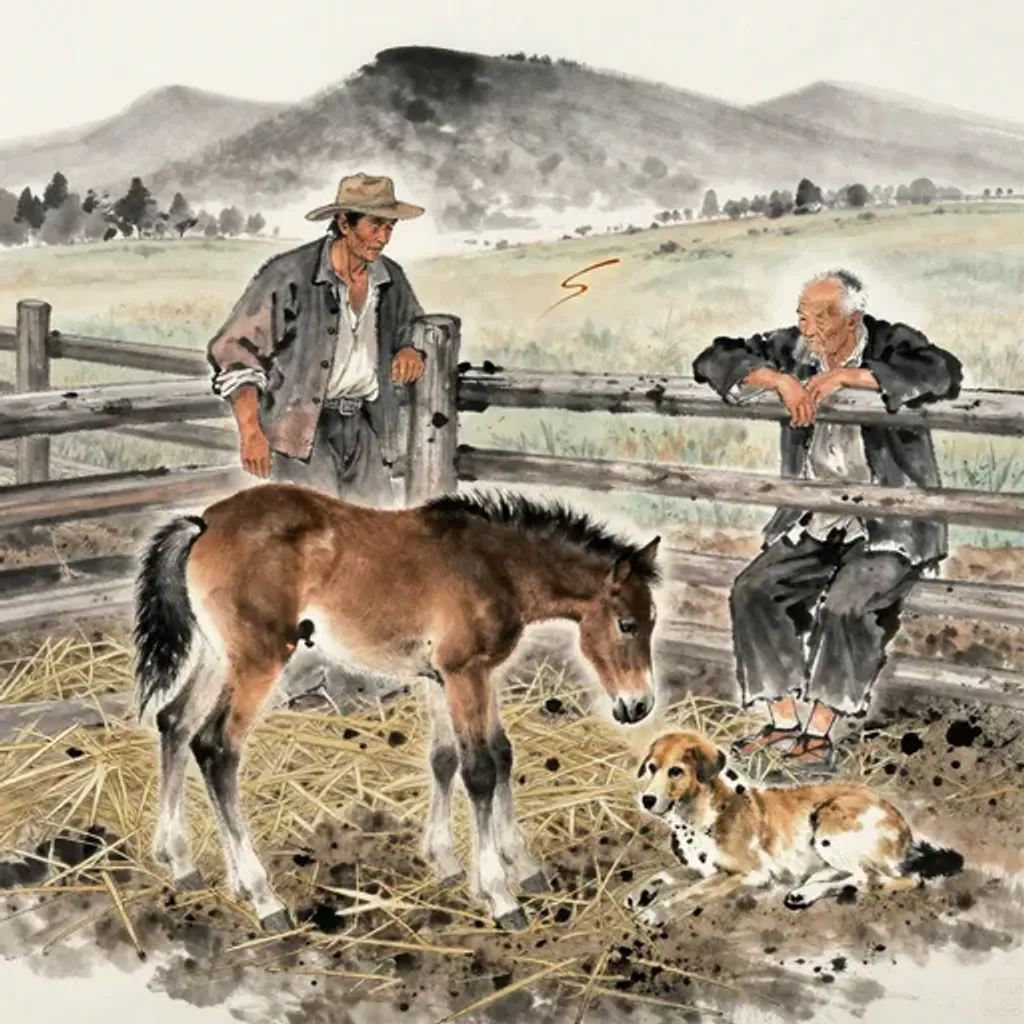
狗生龍馬,公勞嫗苦。家無善駒,折悔為吝。
A dog gives birth to a dragon-horse; the old man toils, the old woman suffers. The household has no fine steed; regret turns to miserly shame.
— Jiao Yanshou, Yilin (Forest of Changes), 1st century BC
Commentary
A dog gives birth to a dragon-horse — an absurd inversion of natural order. The old man toils and the old woman suffers, yet the household has no fine steed. Misfortune folds into regret, and regret contracts into stinginess. The dragon-horse, that mythological creature bearing the River Chart on its back, should herald the birth of cosmic order — but born from a dog, the omen is grotesque rather than auspicious. From Innocence to Dispersion, the transformation scatters what should cohere. Huan's image of wind over water disperses accumulated formations. The misbegotten prodigy embodies this dissolution: promise born from the wrong source disperses rather than gathers, leaving only exhaustion and the bitter mathematics of loss.
无妄 → 節
Hexagram 25 → Hexagram 60: Limitation
Changing lines: 2, 4, 6
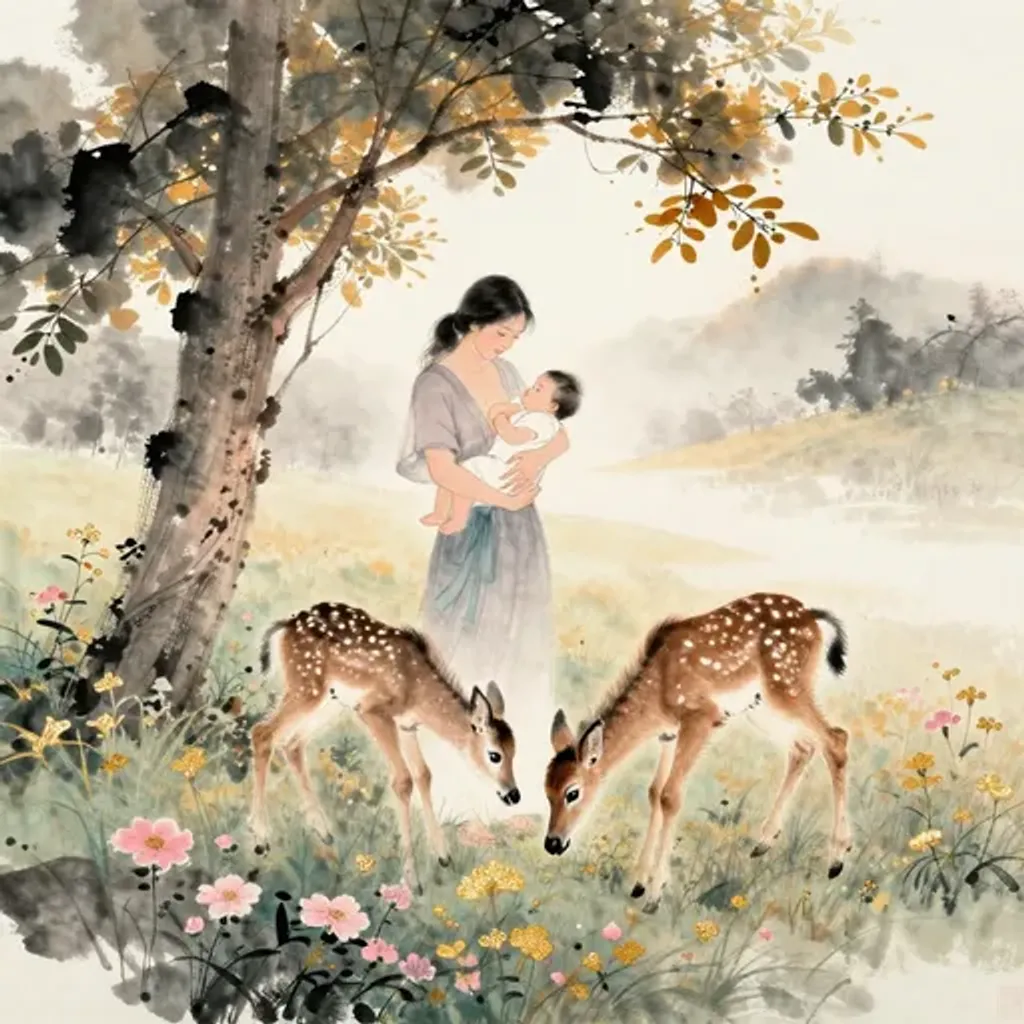
嬰孩求乳,慈母歸子。黃麑悅喜,得其甘餌。
An infant seeks the breast; the kindly mother returns to her child. A young fawn, joyful and glad; finding its sweet fodder.
— Jiao Yanshou, Yilin (Forest of Changes), 1st century BC
Commentary
An infant cries for milk, and the loving mother returns to her child. A young fawn leaps with delight, finding its sweet fodder. Every image radiates natural fulfillment: need calls forth provision, and joy accompanies satiation. From Innocence to Limitation, the transformation frames this tenderness within necessary structure. Jie's image of water above the lake represents measured containment — not deprivation but proper proportion. The mother's milk is neither withheld nor unlimited; it arrives when the child needs it, in the quantity nature intends. The fawn's sweet fodder is similarly calibrated. Wuwang's spontaneous rightness here becomes Jie's principle: true nourishment works through natural limits, not despite them.
无妄 → 中孚
Hexagram 25 → Hexagram 61: Inner Truth
Changing lines: 2, 4
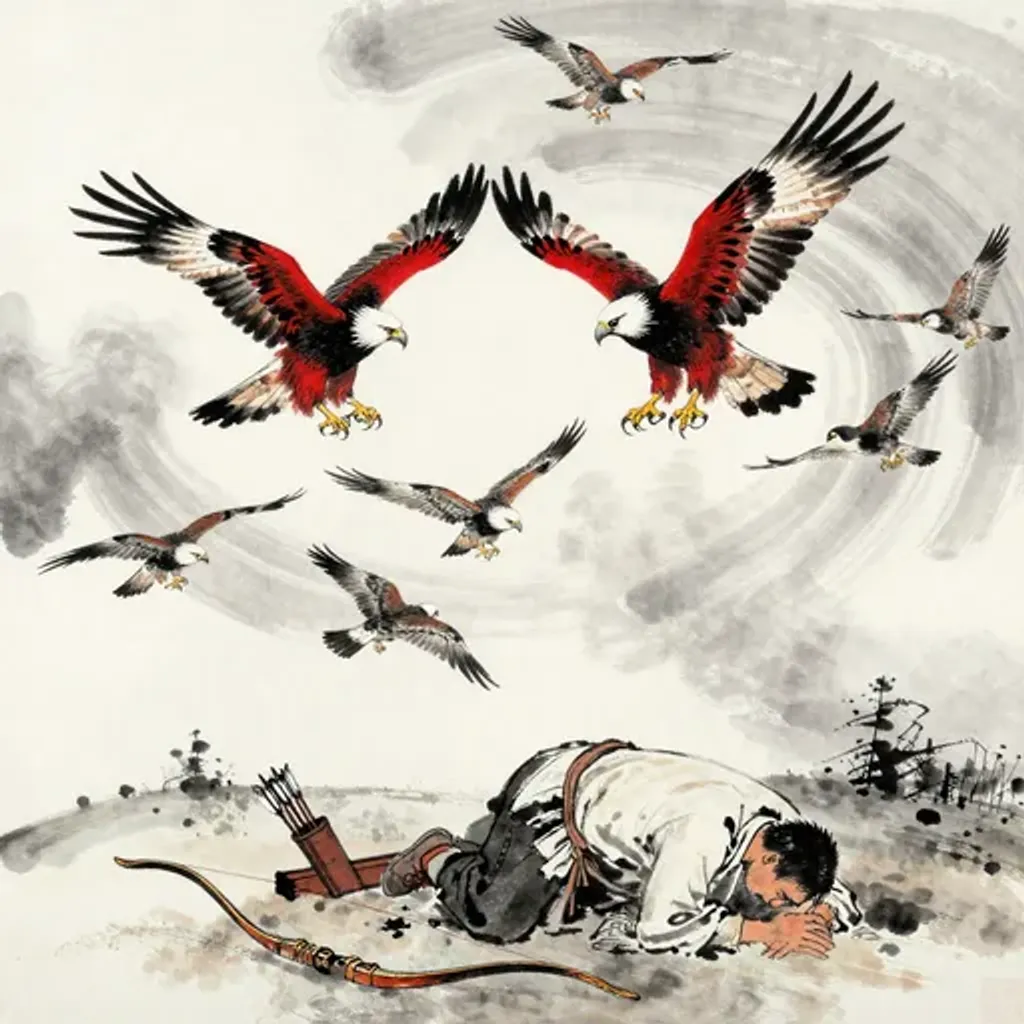
有兩赤鷂,從五隼噪。操矢無括,趣釋爾財。扶伏聽命,不敢動搖。
Two red hawks appear; five falcons screech around them. Grasping arrows without nocks; hasten to surrender your wealth. Prostrate and obedient; not daring to stir.
— Jiao Yanshou, Yilin (Forest of Changes), 1st century BC
Commentary
Two red sparrowhawks follow five shrieking falcons — predators in formation, a hunting party of raptors. Below, a bowman holds an arrow without a nock — useless, unable to fire. The command comes: surrender your valuables immediately. The victim prostrates and obeys, not daring to move. From Innocence to Inner Truth, the transformation exposes sincerity under coercion. Zhongfu's image of wind above the lake penetrates to the heart of things, testing what is truly held within. Here the test is brutal: faced with overwhelming force and a weaponless bow, one can only submit with perfect compliance. The inner truth revealed is not noble conviction but raw vulnerability — the honest recognition that resistance is impossible.
无妄 → 小過
Hexagram 25 → Hexagram 62: Small Exceeding
Changing lines: 1, 3, 5, 6
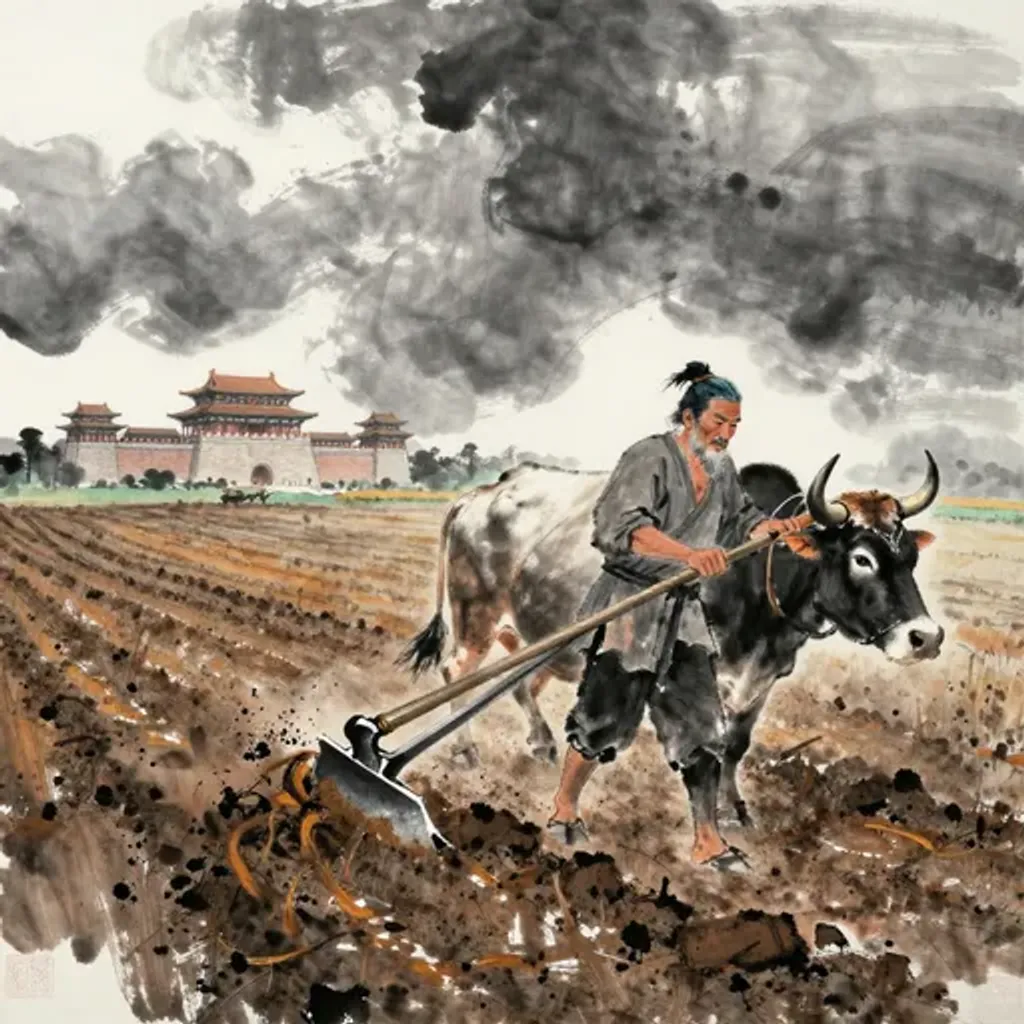
伊尹智士,去桀耕野。執順以強,文和無咎。
Yi Yin, the wise minister; leaving Jie, he plowed the wild fields. Holding to compliance with strength; civil and gentle, without fault.
— Jiao Yanshou, Yilin (Forest of Changes), 1st century BC
Commentary
Yi Yin, the wise minister, abandoned the tyrant Jie and went to plow the wilderness. Holding to compliance yet backed by inner strength, he achieves civil harmony without blame. Yi Yin's departure from Jie's corrupt court to farm at Youshen, before later joining King Tang to found the Shang dynasty, is one of classical China's great stories of principled withdrawal preceding transformative service. From Innocence to Small Exceeding, the transformation captures the wisdom of doing slightly more than expected in humble ways. Xiaoguo's image of thunder above the mountain — a small bird flying — counsels exceeding in small matters while remaining modest in great ones. Yi Yin's field labor is precisely this: a great man performing humble work, storing virtue until the moment of rightful return.
无妄 → 既濟
Hexagram 25 → Hexagram 63: After Completion
Changing lines: 3, 4, 6
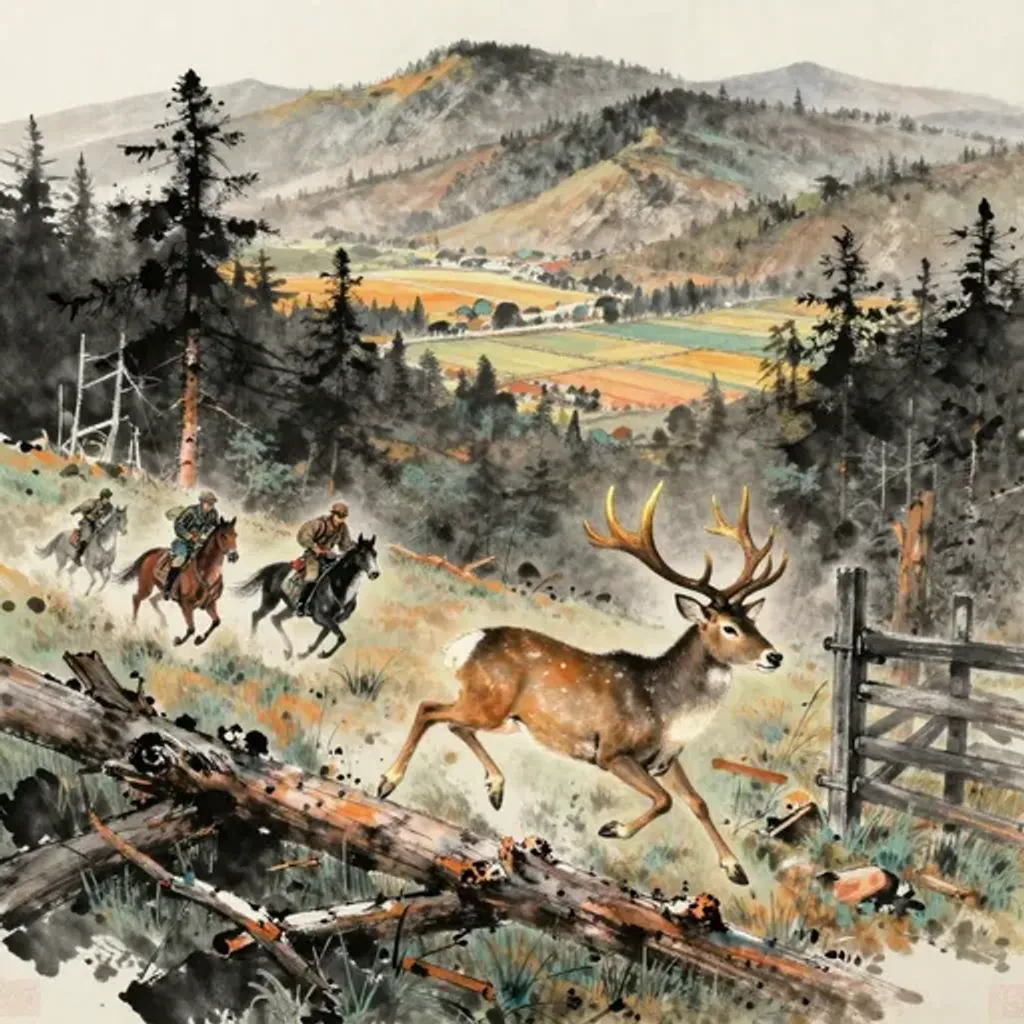
逐鹿西山,利入我門。陰陽和調,國無災殃。長子東遊,須其三仇。
Chasing the deer on the western hill; profit enters our gate. Yin and yang in harmony; the realm free of calamity. The eldest son travels east; he must face his three foes.
— Jiao Yanshou, Yilin (Forest of Changes), 1st century BC
Commentary
Chasing a deer into the western mountains, the quarry enters through the gate — the hunt succeeds. Yin and yang harmonize and adjust; the state suffers no calamity. Then the eldest son journeys east, where he must face his three adversaries. From Innocence to After Completion, the transformation achieves perfect balance — water above fire, each element in its proper place. The successful hunt and the harmonized yin-yang paint a picture of completion realized. Yet the eldest son's eastward journey and his three adversaries introduce a post-completion tension: even when balance is achieved, new challenges germinate. Jiji's warning — 'think of trouble and prepare for it' — resonates in the son's unresolved confrontation.
无妄 → 未濟
Hexagram 25 → Hexagram 64: Before Completion
Changing lines: 1, 2, 5
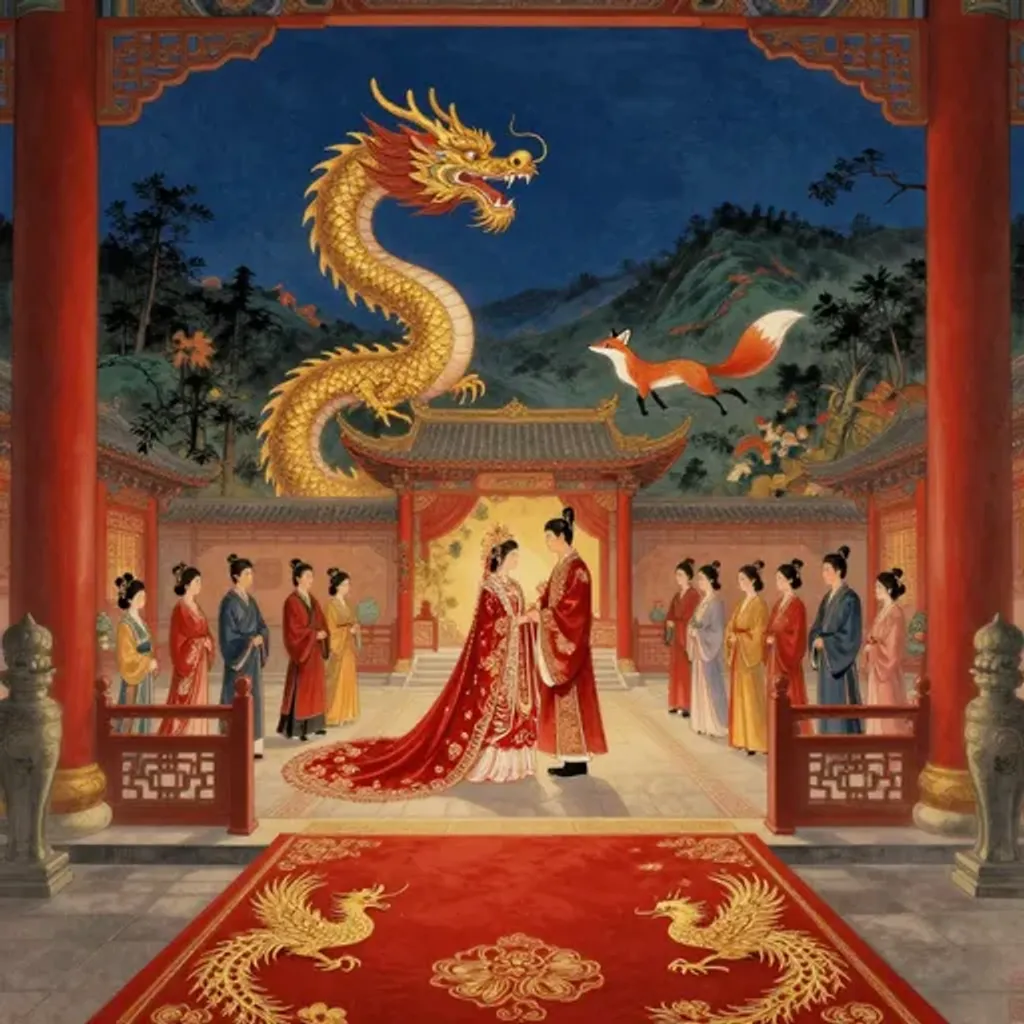
龍興之德,周武受福。長女宜家,與君相保。長股遠行,狸且善藏。
The dragon rises with virtue; King Wu of Zhou receives blessing. The eldest daughter keeps the household; together with her lord they are secure. Long-shanked, he journeys far; the fox is cunning and hides well.
— Jiao Yanshou, Yilin (Forest of Changes), 1st century BC
Commentary
The dragon rises with virtue — King Wu of Zhou receives heaven's blessing. The eldest daughter governs the household well, and she and her lord protect one another. Long legs travel far, and the fox-cat is skilled at concealment. From Innocence to Before Completion, the transformation points toward a future still unfolding. Weiji's image of fire above water — the two elements not yet in their proper positions — represents potential on the verge of realization. King Wu's dragon-virtue and his reception of heaven's mandate echo the founding of the Zhou dynasty, yet the verse ends not with triumph but with the fox's cunning concealment and the journey still underway. Even with divine sanction, completion has not yet arrived; the wise remain agile and alert.