Transformations of Hexagram 26
Every line of change out of Hexagram 26 大畜 Great Taming, with the Yilin verse for each of the 64 resulting hexagrams, its translation, and the original ink brush artwork.
大畜 → 乾
Hexagram 26 → Hexagram 1: The Creative
Changing lines: 4, 5
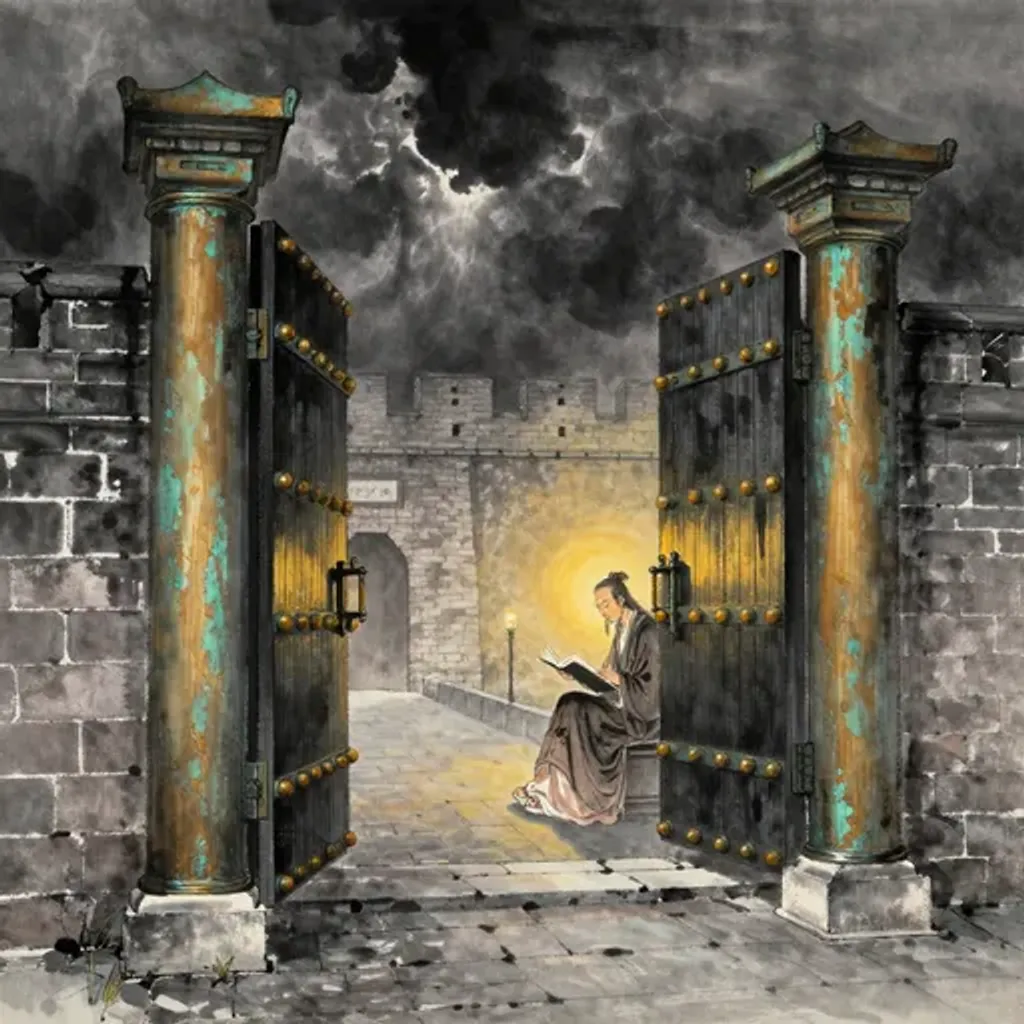
金柱鐵關,堅固衛災。君子居之,安無憂危。
Bronze pillars and iron bolts, firm and solid, warding off disaster. The noble man dwells within; peaceful, without worry or peril.
— Jiao Yanshou, Yilin (Forest of Changes), 1st century BC
Commentary
Heaven stored within the mountain yields to pure heaven doubled: all restraint gives way to unbroken strength. Gold pillars and iron gates stand firm, a fortress proof against disaster. The gentleman dwells within, secure and free from worry. Great Taming's image is accumulation — knowledge, virtue, resources held in reserve. When this stored power transforms into the Creative, the reserve becomes active defense. The verse celebrates the moment when accumulated strength crystallizes into impregnable structure. No attack can breach what has been built through patient taming. From Great Taming to the Creative, stored heaven breaks free of the mountain and stands as heaven alone — self-sustaining, self-protecting, needing nothing beyond its own cultivated strength.
大畜 → 坤
Hexagram 26 → Hexagram 2: The Receptive
Changing lines: 1, 2, 3, 6
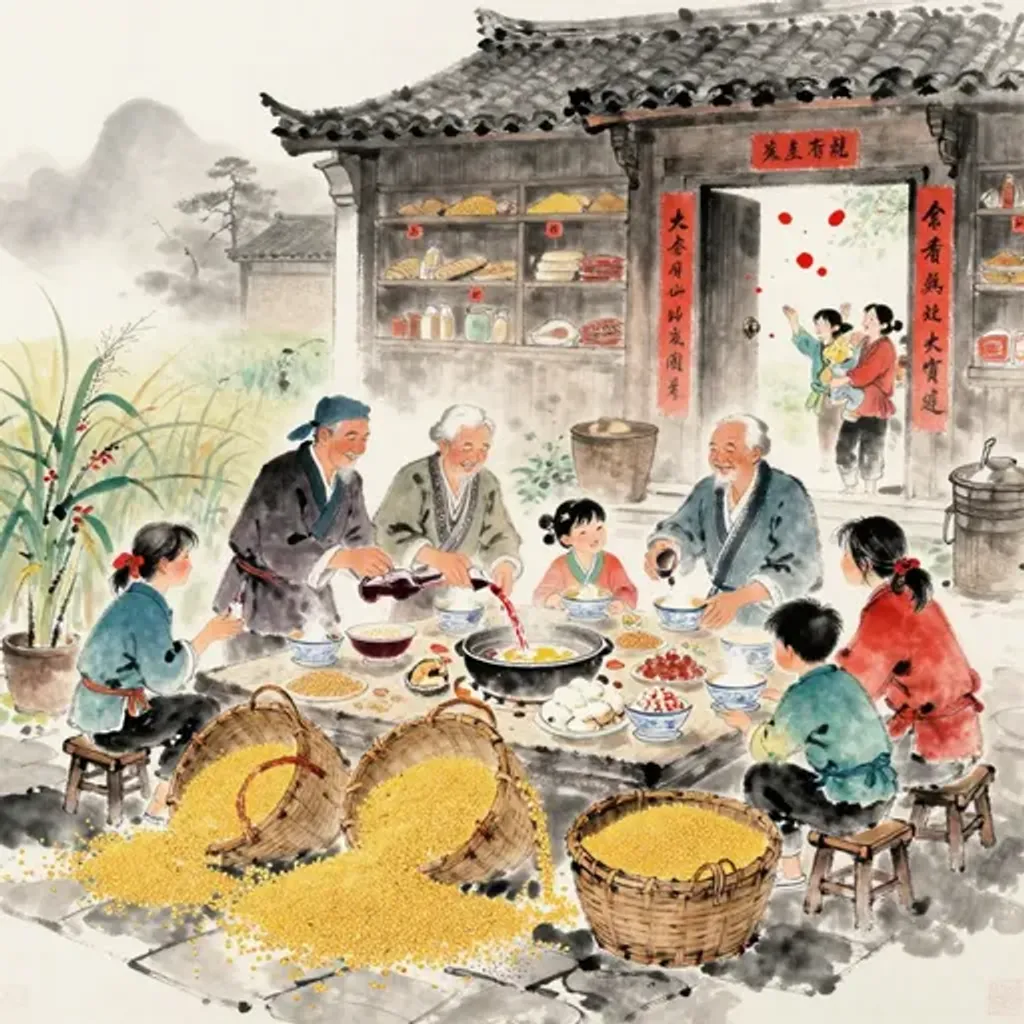
轉禍為福,喜來入屋。春成夏囤,可以飲食。保全家室。
Misfortune turns to blessing; joy comes entering the house. Spring yields, summer stores; there is food and drink enough. The whole household is kept safe.
— Jiao Yanshou, Yilin (Forest of Changes), 1st century BC
Commentary
Heaven stored within the mountain descends into the receptive earth: accumulated power yields to yielding itself. Misfortune turns to fortune as joy enters the household. Spring brings growth, summer stores the harvest, and there is food and drink enough to sustain the whole family. Great Taming's discipline — patient accumulation over time — finds its reward when the mountain releases heaven into earth's generous embrace. The verse paints a domestic idyll: seasonal labor rewarded, the household complete and provided for. From Great Taming to the Receptive, the transformation enacts the very principle of conservation: what was held within the mountain now nourishes all below, as heaven's energy flows into earth's boundless capacity to receive and sustain.
大畜 → 屯
Hexagram 26 → Hexagram 3: Difficulty at the Beginning
Changing lines: 2, 3, 5, 6
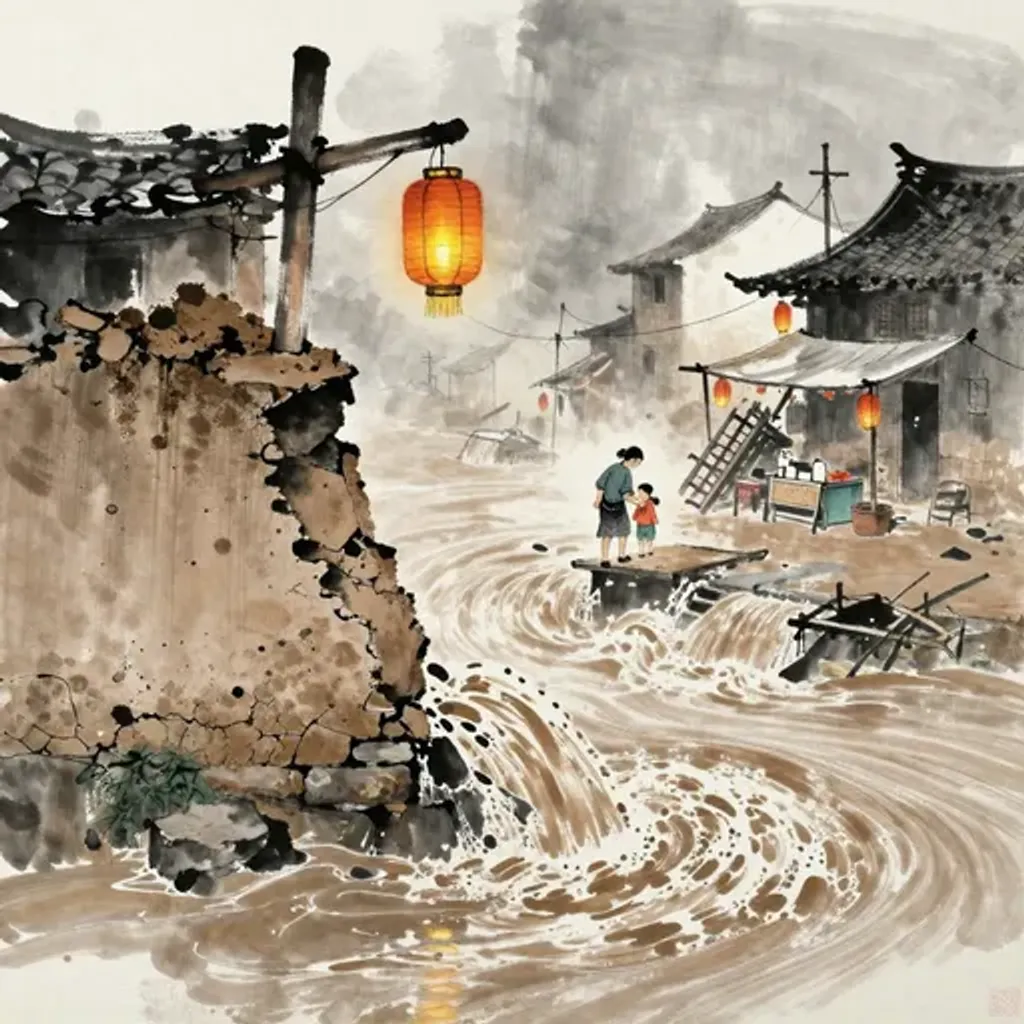
水暴橫行,緣屋壞墻。泱泱溢溢,市師驚惶。居止不殆,與母相保。
Floodwater surges unchecked, climbing eaves and breaking walls. Vast and overflowing; the marketplace is seized with panic. Stay still and do not venture out; shelter with mother and hold fast.
— Jiao Yanshou, Yilin (Forest of Changes), 1st century BC
Commentary
Heaven stored within the mountain gives way to cloud and thunder — the gathering storm of Difficulty at the Beginning. Floodwaters rage unchecked, climbing the eaves and smashing through walls. The deluge overflows in every direction; the marketplace empties as people flee in terror. Yet the verse resolves: those who stay put are not harmed, and mother and child protect each other. Great Taming's accumulated reserves meet the primal chaos of Hexagram 3, where water above thunder signals violent birth pangs. The flood is the eruption of stored energy into an unprepared world. From Great Taming to Difficulty at the Beginning, the message is plain: when accumulated force breaks free without order, it devastates — but those who hold still and cling to what matters survive the torrent.
大畜 → 蒙
Hexagram 26 → Hexagram 4: Youthful Folly
Changing lines: 1, 3
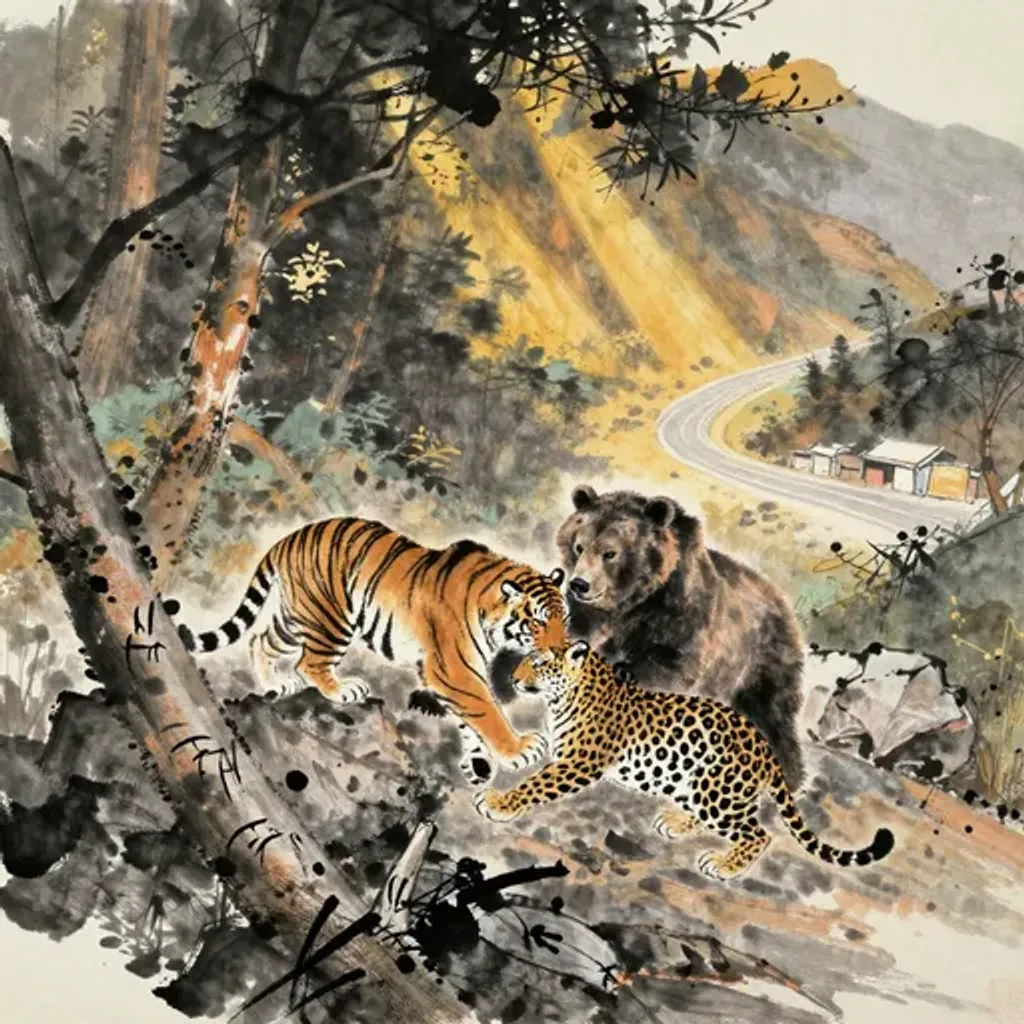
虎豹熊羆,遊戲山隅。得其所欲,君子無憂。旅人失利,市空無人。
Tigers, leopards, and bears roam and sport in the mountain's corner. They obtain what they desire; the noble man has no worry. Travelers lose their profit; the market stands empty, without a soul.
— Jiao Yanshou, Yilin (Forest of Changes), 1st century BC
Commentary
Heaven stored within the mountain opens onto a scene of wild beasts at play. Tigers, leopards, and bears roam the mountain corners, sporting in their natural domain. The gentleman, encountering them in their own habitat, finds no cause for worry — each creature has what it desires. But for travelers the outlook darkens: the road is cut off, the marketplace stands empty. Mountain above water, the image of Youthful Folly, suggests the young fool who wanders into territory beyond his understanding. From Great Taming to Youthful Folly, the transformation warns that accumulated mountain strength may shelter native creatures while blocking outsiders. What nourishes the insider imperils the stranger who does not know the terrain.
大畜 → 需
Hexagram 26 → Hexagram 5: Waiting
Changing lines: 5, 6
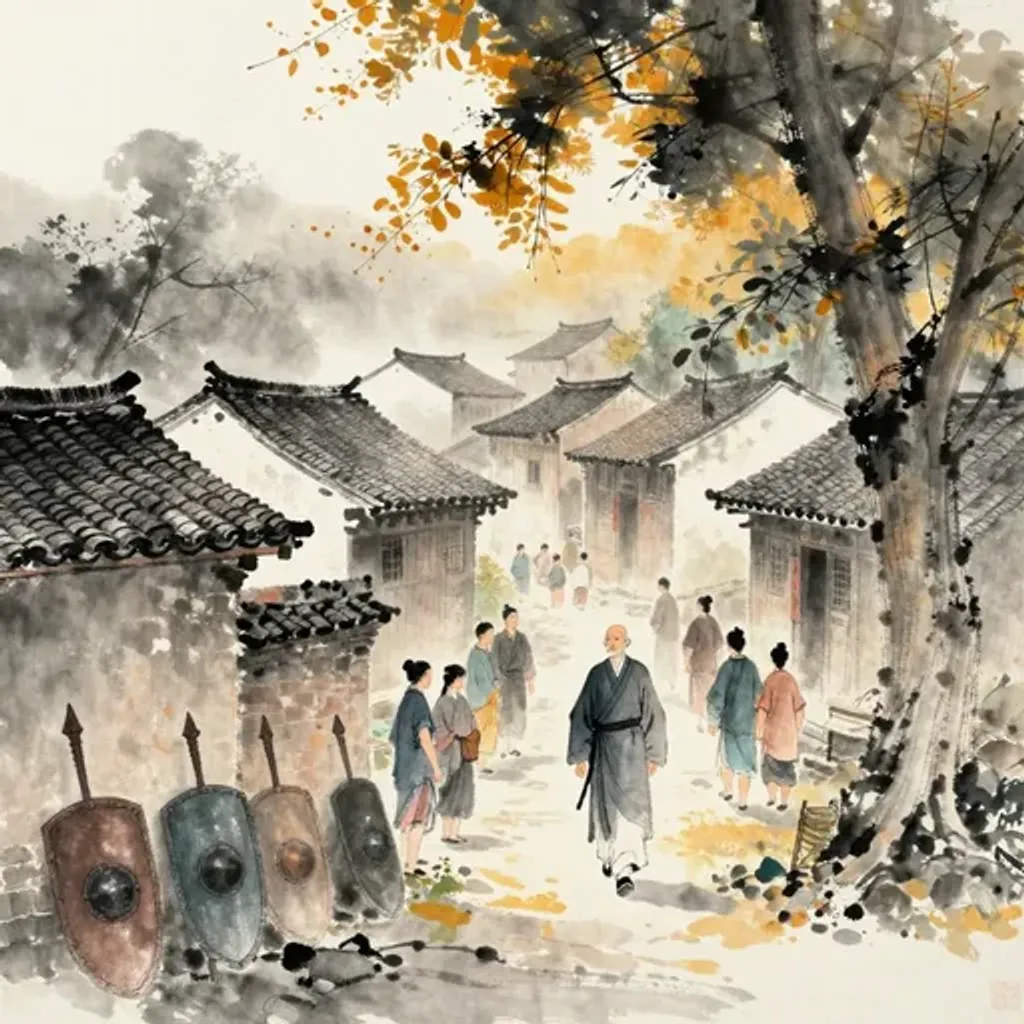
躬體履仁,尚德止訟。宗邑以安,三百無患。
In person he treads the path of benevolence, exalts virtue and halts disputes. The ancestral domain is set at peace; three hundred are without affliction.
— Jiao Yanshou, Yilin (Forest of Changes), 1st century BC
Commentary
Heaven stored within the mountain transforms into clouds rising above heaven — Waiting. The gentleman practices benevolence in his own person, honors virtue, and thereby forestalls litigation. The ancestral domain rests secure; three hundred households live free of trouble. Great Taming accumulates moral capital; Waiting (water above heaven) is the patience to let that capital mature. The verse describes governance through personal example rather than coercion: when the ruler embodies righteousness, disputes dissolve before they arise. From Great Taming to Waiting, the mountain's stored heaven rises as nourishing clouds — virtue cultivated in private becomes the public peace that sustains an entire community without a single lawsuit filed.
大畜 → 訟
Hexagram 26 → Hexagram 6: Conflict
Changing lines: 1, 3, 4, 5
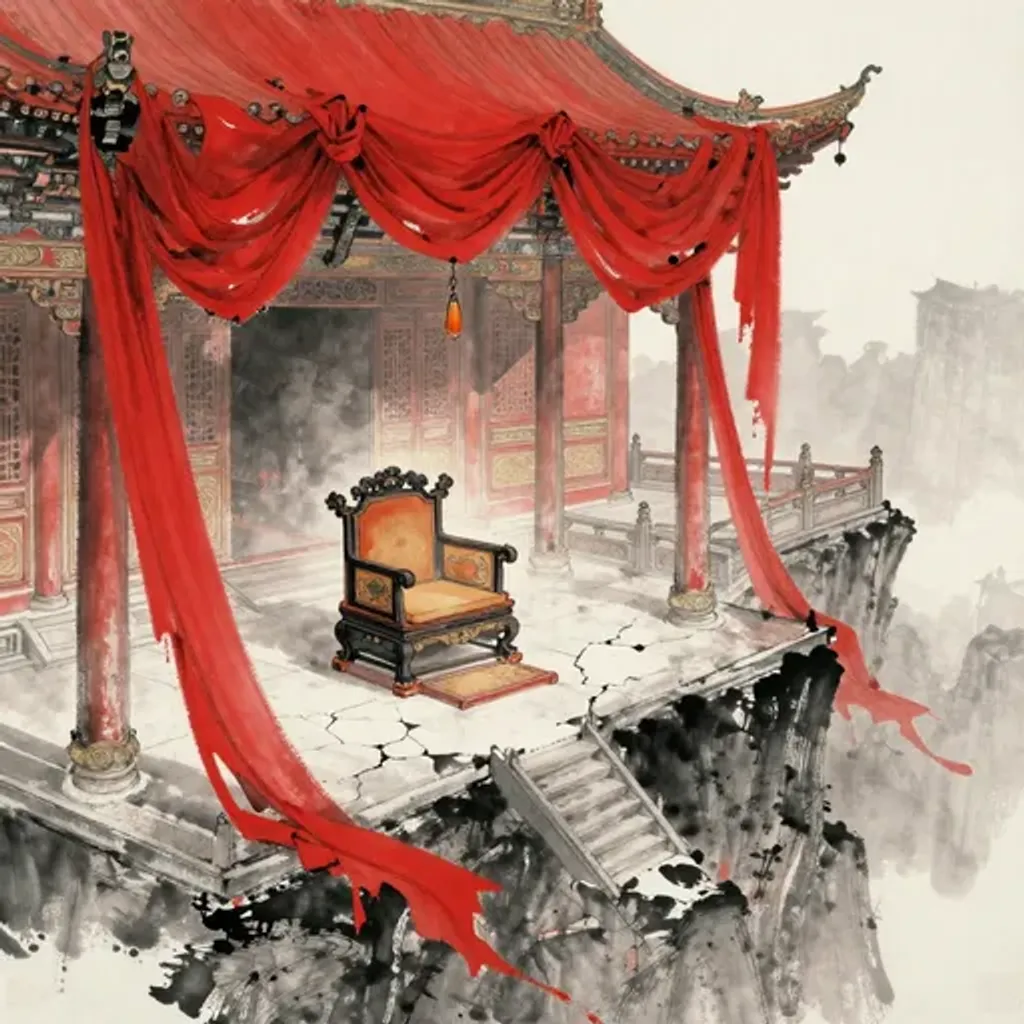
江淮易服,玄黃朱飾。靈公夏徵,哀相無極。高位崩顛,失其寵室。
Rivers and lakes change their dress; black and yellow adorned in vermillion. Duke Ling levied taxes in summer; the sorrowful minister's grief knows no end. The high seat collapses and topples; he loses his favored chambers.
— Jiao Yanshou, Yilin (Forest of Changes), 1st century BC
Commentary
Heaven stored within the mountain gives way to heaven and water moving in opposition — Conflict. The Yangtze and Huai rivers change their garments: black and yellow give way to vermilion adornment, an image of natural order inverted. Duke Ling levies taxes in summer, bringing grief without end. Those in high places tumble from their pinnacle and lose their favored chambers. The verse evokes a ruler who exhausts the realm through improper exactions, reversing the seasonal rhythms that sustain prosperity. From Great Taming to Conflict, the mountain's stored heaven splits into heaven above and water below flowing in opposite directions — the classic image of irreconcilable dispute. Accumulated resources, once mismanaged, become the very cause of contention and collapse.
大畜 → 師
Hexagram 26 → Hexagram 7: The Army
Changing lines: 1, 3, 6
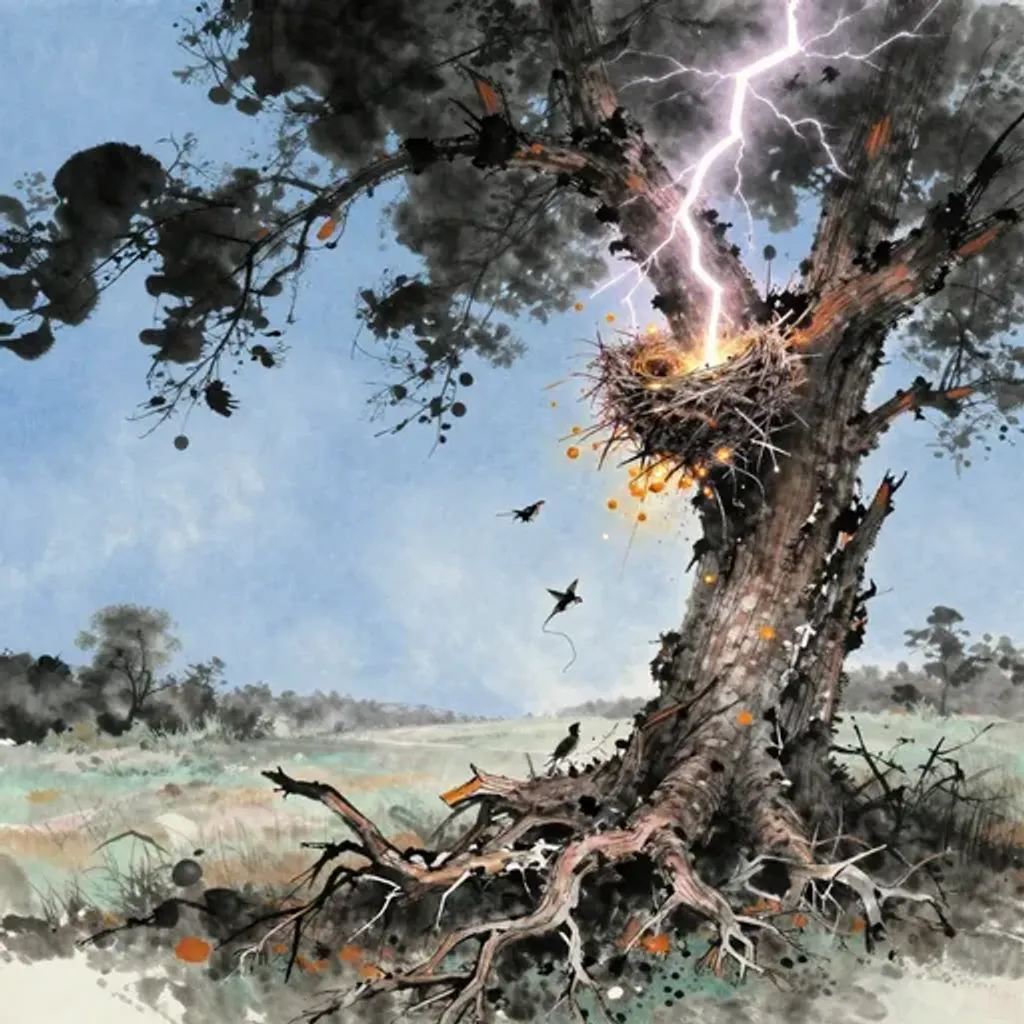
不虞之患,禍至無門。奄忽暴卒,痛傷我心。
Clear sky suddenly split by a thunderclap; a great tree topples roots and all into the dust. The swallow's nest overturns, chicks scatter in all directions — yesterday flowers bloomed, today only ashes.
— Jiao Yanshou, Yilin (Forest of Changes), 1st century BC
Commentary
Heaven stored within the mountain collapses into earth concealing water — the Army. The original verse reads: 'Unforeseen calamity; disaster arrives without warning. Sudden and violent death wounds my heart.' This is catastrophe without preamble: no siege, no battle, simply the abrupt annihilation of what seemed secure. Great Taming's accumulated strength meets the Army's hidden danger — water within earth, a subterranean force that surfaces without warning. The verse captures the anguish of loss that defies preparation: all the mountain's stored reserves cannot prevent what strikes from nowhere. From Great Taming to the Army, the transformation warns that even the most disciplined accumulation offers no guarantee against fate's arbitrary blow.
大畜 → 比
Hexagram 26 → Hexagram 8: Holding Together
Changing lines: 1, 2, 3, 5, 6
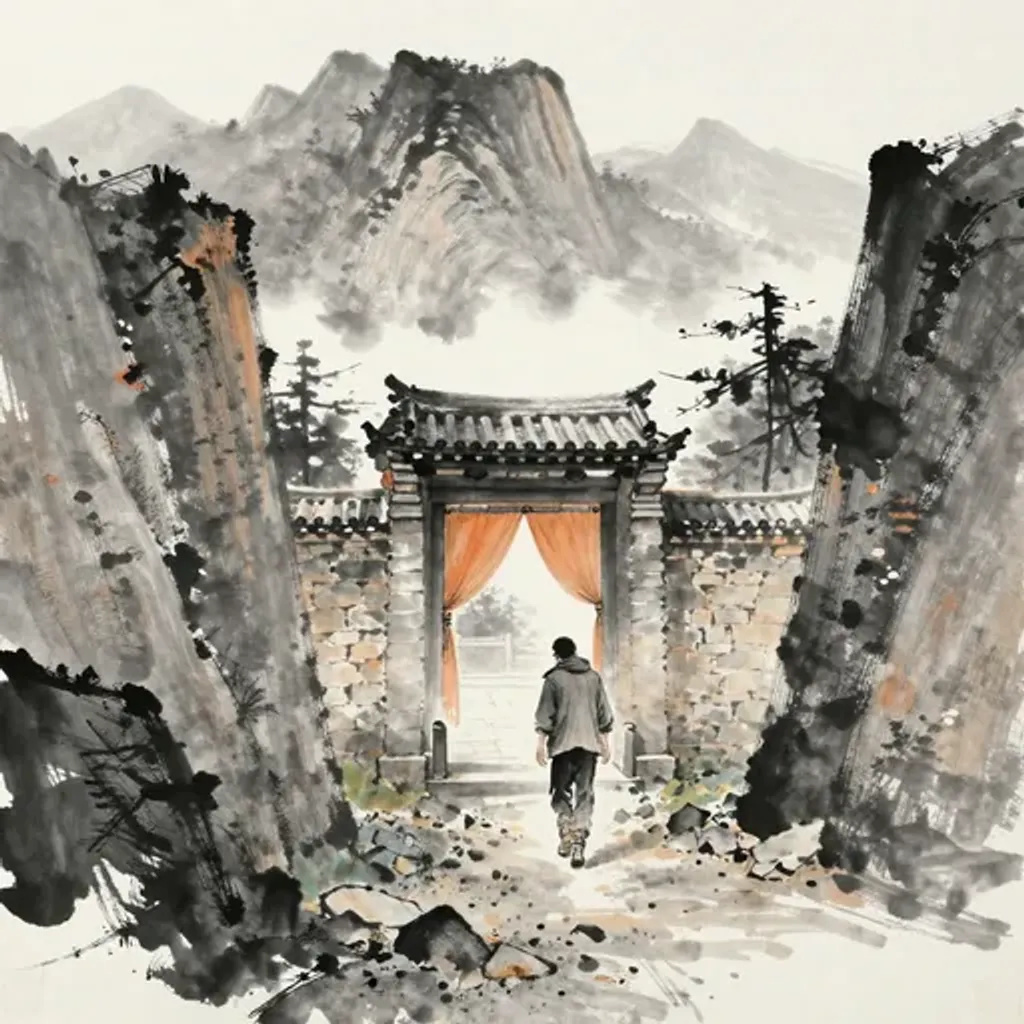
三塗五岳,去危入室。凶禍不作,桀盜堯服。失其寵福,貴人有疾。
Through the three passes and the five peaks, leaving peril and entering shelter. Calamity does not arise; Jie plunders but Yao dons the robes. He loses his favored blessing; the noble one falls ill.
— Jiao Yanshou, Yilin (Forest of Changes), 1st century BC
Commentary
Heaven stored within the mountain yields to water upon earth — Holding Together. Traversing the Three Tu passes and the Five Sacred Mountains, one leaves danger behind and enters the safety of home. Calamity ceases; yet the verse adds a startling reversal: 'Jie the tyrant steals Yao's robes' — the wicked usurp the trappings of the virtuous. Favor and fortune are lost, and the noble fall ill. The Three Tu refers to three strategic passes in the Xiaoshan mountains, historically treacherous terrain. From Great Taming to Holding Together, the mountain's reserves should create alliance and security. But when tyrants dress in sage-kings' garments, the bonds of trust are poisoned, and even safe homecoming cannot prevent the corruption within.
大畜 → 小畜
Hexagram 26 → Hexagram 9: Small Taming
Changing lines: 5
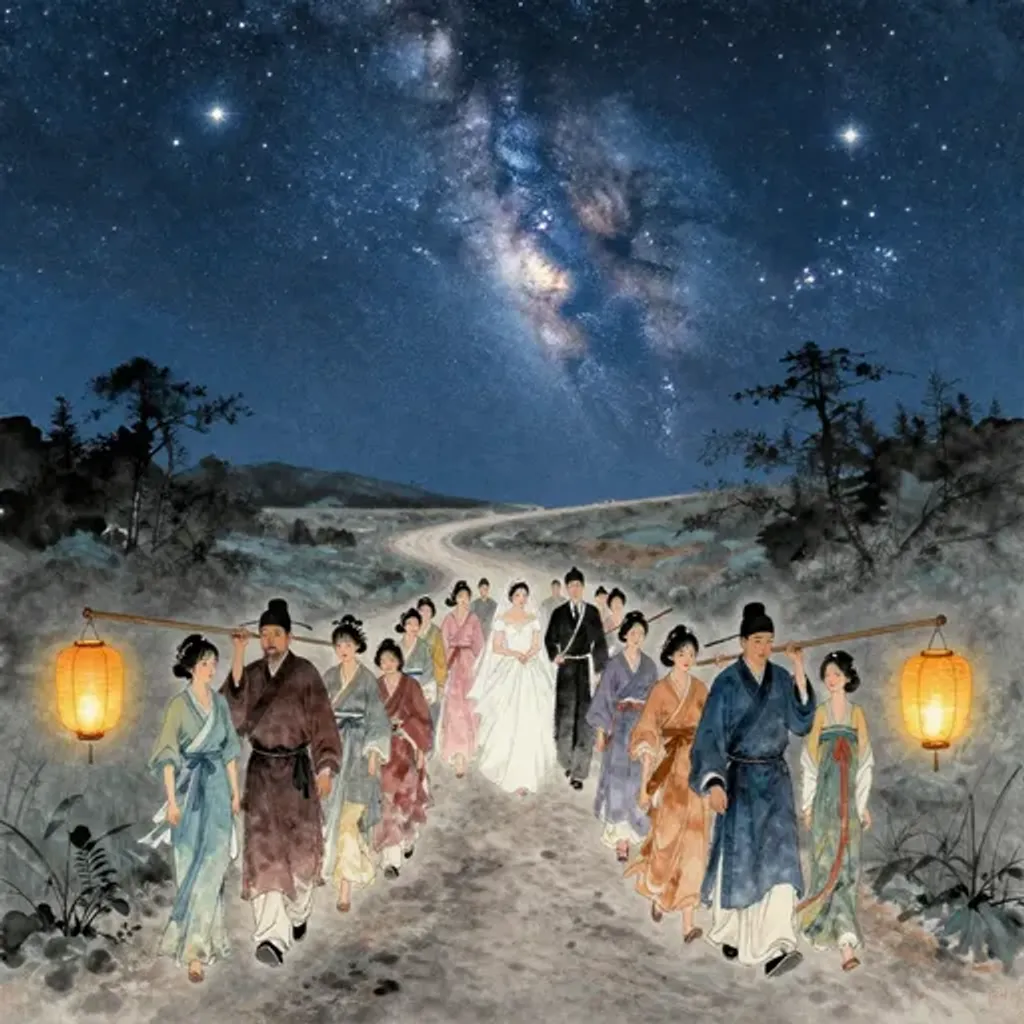
配合相迎,利心四鄉。昏以為期,明星熠熠。欣喜君奭,所言得當。
Well-matched partners meet and welcome one another; hearts delighted in all four directions. Dusk is set as the appointed hour; bright stars shimmer and gleam. Joyful is Lord Shi; his words are fitting and proper.
— Jiao Yanshou, Yilin (Forest of Changes), 1st century BC
Commentary
Heaven stored within the mountain softens into wind moving across heaven — Small Taming. Partners meet and welcome one another, hearts content in all four directions. Dusk is set as the appointed hour, and bright stars gleam. The verse names Jun Shi, likely a reference to the Duke of Shao (召公奭), a trusted minister of King Wu, evoking the joy of wise counsel well received. From Great Taming to Small Taming, the grand accumulation of heaven within the mountain gives way to the gentle restraining power of wind across heaven. What was held in massive reserve now operates through subtle influence — matched partners, timely words, and the quiet radiance of stars that guide without commanding.
大畜 → 履
Hexagram 26 → Hexagram 10: Treading
Changing lines: 3, 4, 5
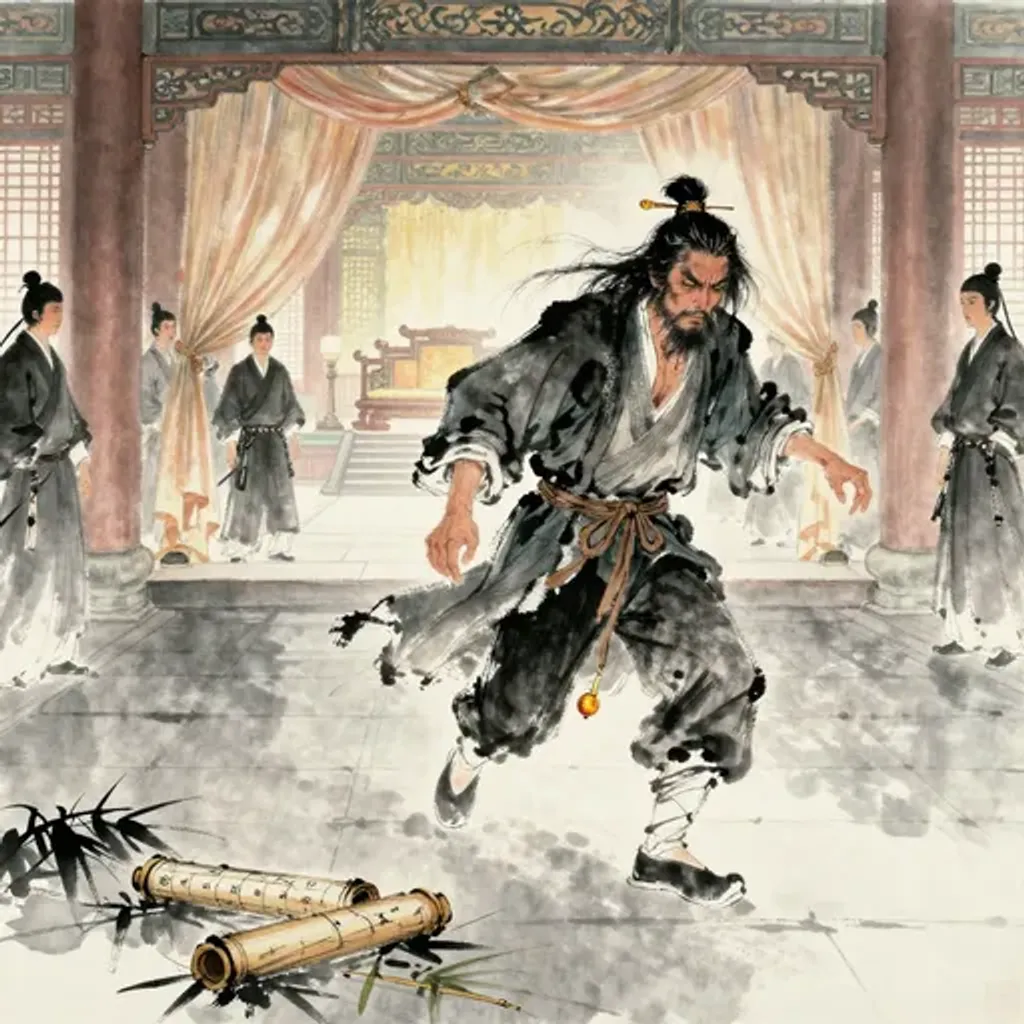
三手六身,莫適所閑。更相搖動,失事便安。箕子佯狂,國乃不昌。
Three hands and six bodies, with no place to rest at ease. Shaking and jostling one another; losing one's footing brings sudden peace. Jizi feigned madness; the state would never prosper.
— Jiao Yanshou, Yilin (Forest of Changes), 1st century BC
Commentary
Heaven stored within the mountain transforms into heaven above the lake — Treading. Three hands and six bodies jostle with no room to spare, shaking one another and losing control of affairs before finding uneasy peace. Then the verse invokes the Viscount of Ji, who feigned madness to survive the court of King Zhou of Shang. His state could never prosper under such conditions. From Great Taming to Treading, the mountain's stored heaven becomes the precarious image of treading upon a tiger's tail. Jizi's feigned insanity is survival through deliberate self-diminishment — reducing oneself to pass through danger. The verse warns: when accumulated power breeds chaos among too many competing forces, sometimes the wisest course is to play the fool.
大畜 → 泰
Hexagram 26 → Hexagram 11: Peace
Changing lines: 6
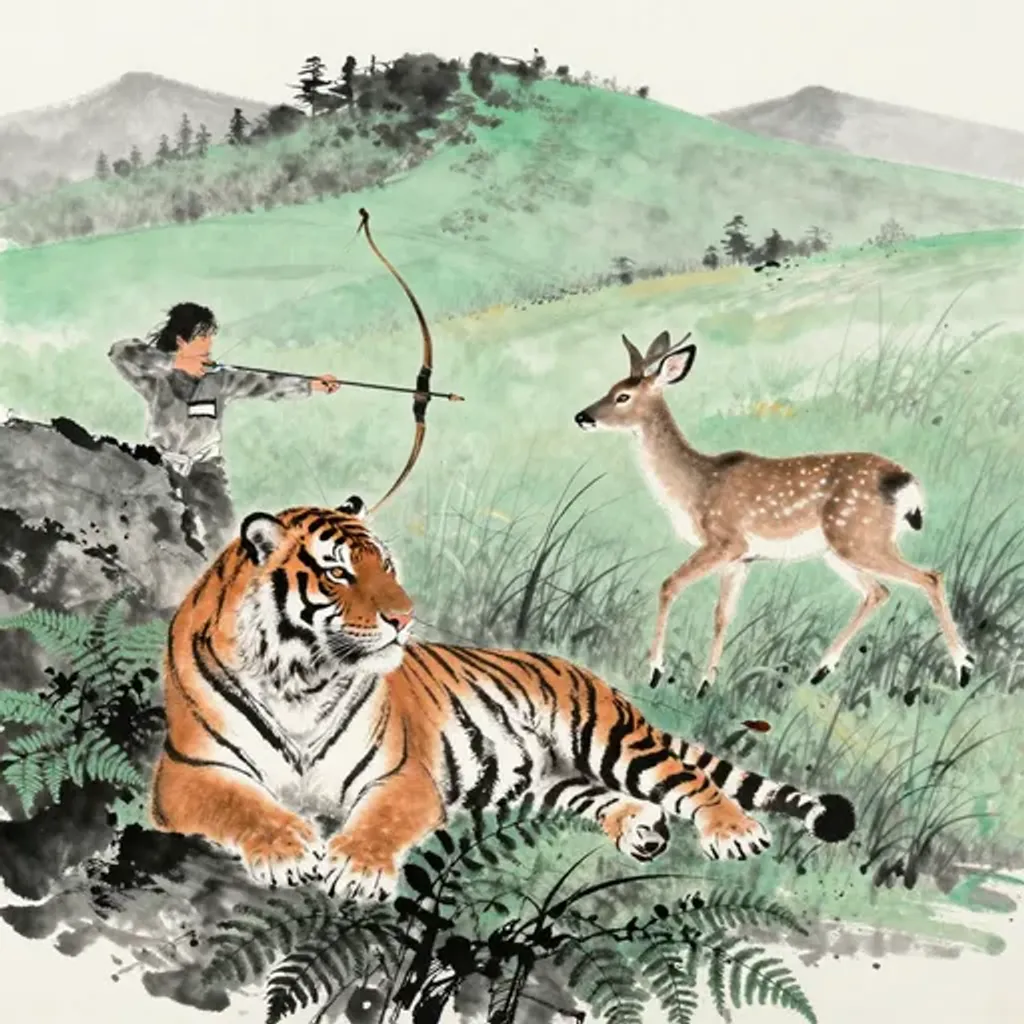
虎臥山隅,鹿過後朐。弓矢設張,會為功曹。伏不敢起,遂全其軀,得我美草。
The tiger lies in the mountain's corner; a deer passes behind the ridge. Bows and arrows are drawn and set; it takes its post as merit officer. Crouching, it dares not rise, and so preserves its body whole; it finds its sweet grass.
— Jiao Yanshou, Yilin (Forest of Changes), 1st century BC
Commentary
Heaven stored within the mountain opens into the free exchange of Peace — earth above, heaven below, all things in communion. A tiger crouches at the mountain's edge while a deer passes behind it. Bows are drawn and arrows set, and the hedgehog serves as Chief Clerk, keeping the tiger pinned to the ground. The tiger dares not rise, and so preserves its life, finding sweet grass at last. The 'hedgehog as Gongcao' — drawn from Han dynasty natural lore — represents the small but formidable functionary who controls raw power through bureaucratic authority. From Great Taming to Peace, accumulated force is not unleashed but administered. The tiger survives precisely because the system restrains it; peace emerges not from the absence of predators but from their proper governance.
大畜 → 否
Hexagram 26 → Hexagram 12: Standstill
Changing lines: 1, 2, 3, 4, 5
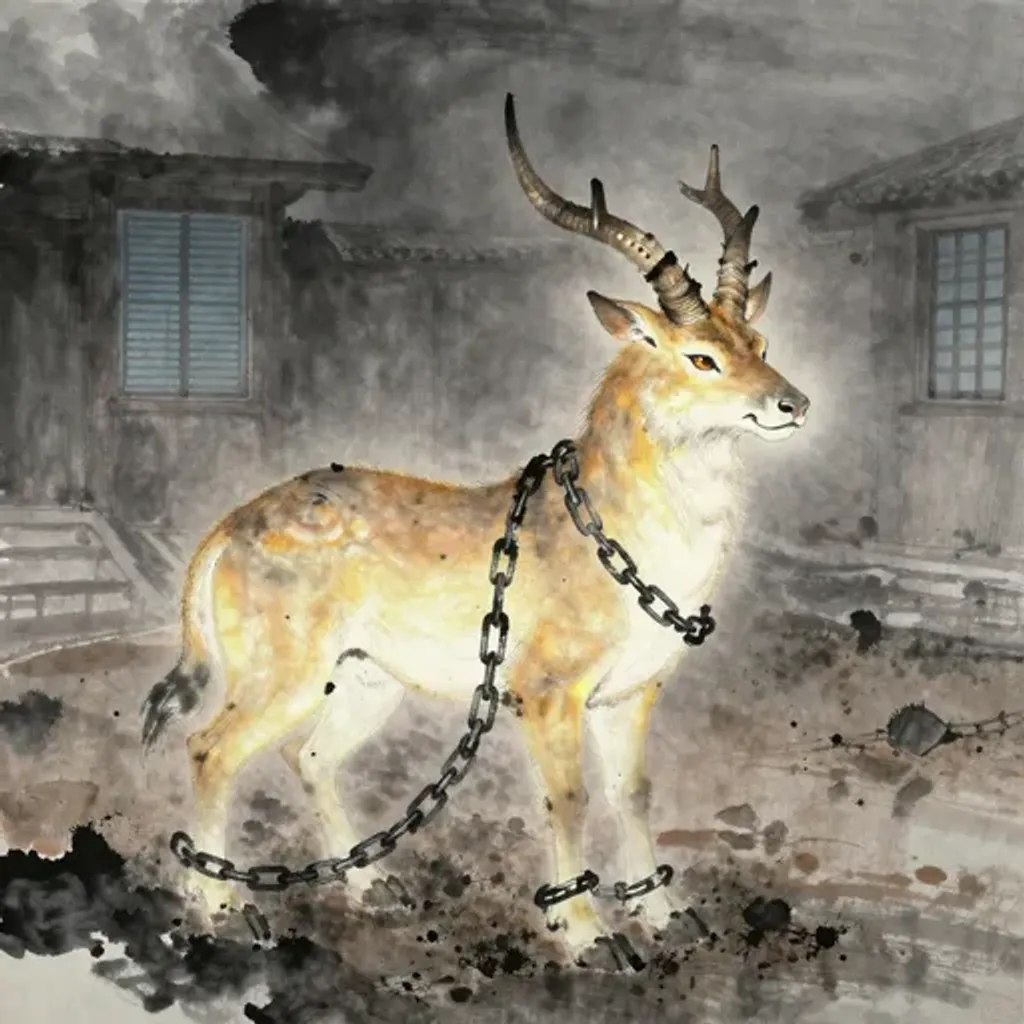
麟鳳執獲,陰雄失職。自衛反魯,猥昧不起。祿福訖已。
Qilin and phoenix are seized and captured; the male hero loses his office. From Wei he returns to Lu; humbled and dim, he does not rise again. Rank and blessing come to their end.
— Jiao Yanshou, Yilin (Forest of Changes), 1st century BC
Commentary
Heaven stored within the mountain gives way to heaven above earth in Standstill — heaven and earth refuse to mingle. The qilin and phoenix are captured, and the yin-heroic lose their posts. 'From Wei he returned to Lu' echoes Confucius's own journey, returning home after years of frustrated wandering only to find the world no better. Blessings and prosperity come to an end. The capture of the qilin — the auspicious creature that appears only under sage rule — in a degenerate age signals the exhaustion of moral order. From Great Taming to Standstill, the mountain's stored heaven separates into heaven rising and earth sinking, communication severed. What was accumulated cannot be spent; what was stored finds no outlet.
大畜 → 同人
Hexagram 26 → Hexagram 13: Fellowship
Changing lines: 2, 4, 5
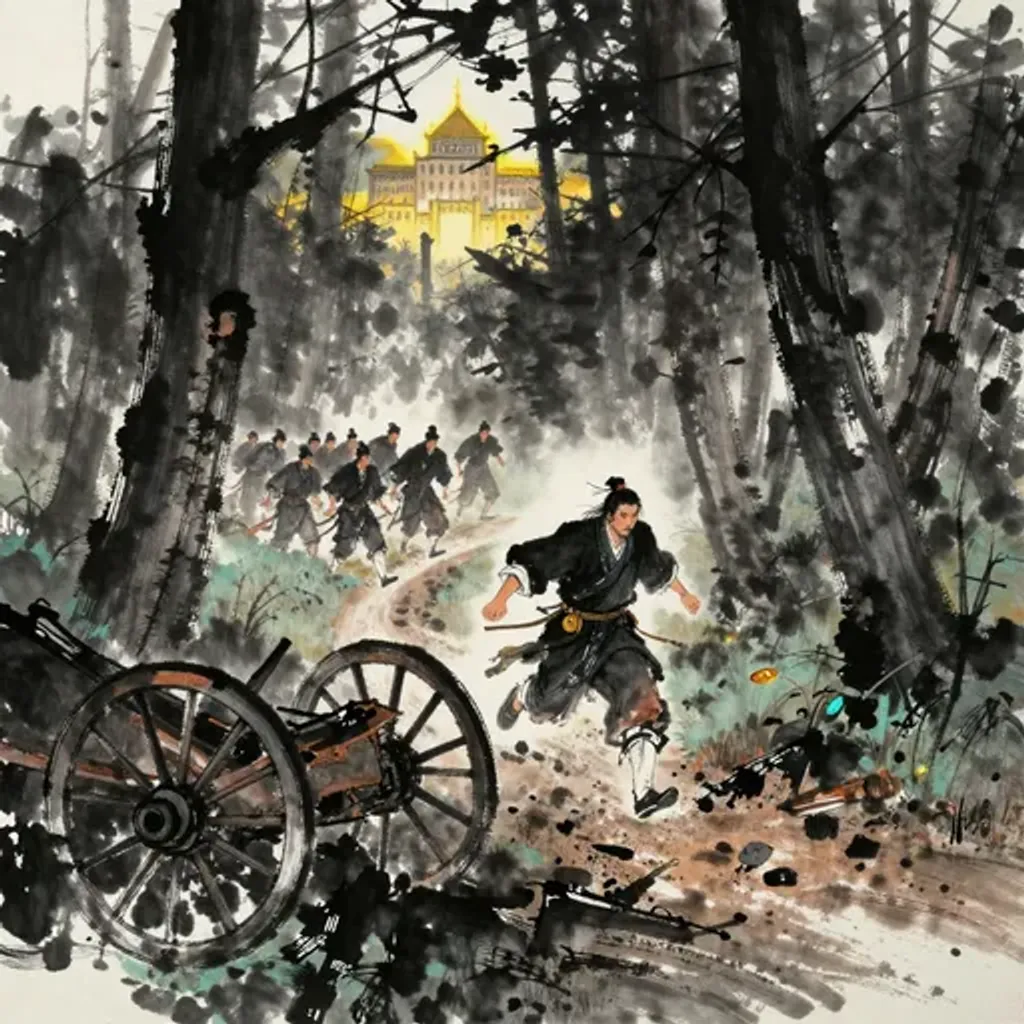
欒子作殃,伯氏誅傷。州犂奔楚,失其寵光。
Lord Luan brought calamity upon himself; the Bo clan was punished and slain. Zhou Li fled to Chu; he lost his favored glory.
— Jiao Yanshou, Yilin (Forest of Changes), 1st century BC
Commentary
Heaven stored within the mountain transforms into heaven with fire — Fellowship. The Luan clan brings calamity upon themselves, and the Bo clan is executed. Zhou Li flees to Chu, losing all favor and glory. This traces the downfall of the Luan family of Jin: Luan Shu, once the most powerful minister in Jin, orchestrated the assassination of Duke Li, but his descendants reaped the consequences. Bo Zong was murdered by the Three Xi clans, and his son Bo Zhou Li fled to Chu, where he too was eventually killed by King Ling. From Great Taming to Fellowship, the mountain's stored heaven becomes fire blazing beneath heaven — a fellowship that demands moral clarity. When accumulated power is used for factional murder, the fellowship shatters and the perpetrators' descendants pay the price.
大畜 → 大有
Hexagram 26 → Hexagram 14: Great Possession
Changing lines: 4
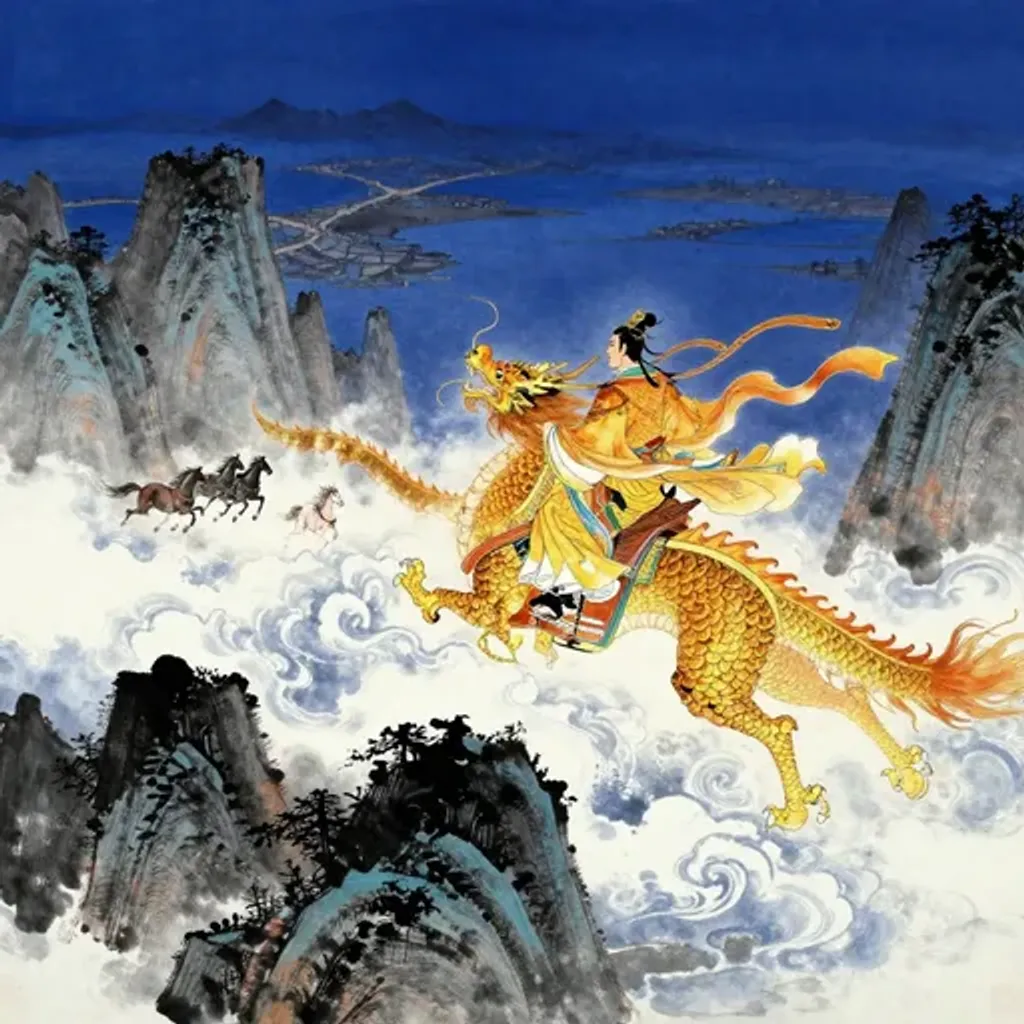
黃帝出遊,駕龍騎馬。東至太山,南過齊魯。王良御左,文武何咎?不利市賈。
The Yellow Emperor sets forth on a tour, riding dragons and mounting horses. Eastward he reaches Mount Tai; southward he passes Qi and Lu. Wang Liang drives on the left; with civil and martial virtue, what fault could there be? Not favorable for trade.
— Jiao Yanshou, Yilin (Forest of Changes), 1st century BC
Commentary
Heaven stored within the mountain rises as fire blazing in heaven — Great Possession. The Yellow Emperor sets forth on a grand tour, riding dragons and driving horses, traveling east to Mount Tai, south through Qi and Lu. Wang Liang, the legendary charioteer, holds the reins on the left, while civil and martial virtues attend without harm. Yet the verse closes: 'Not favorable for trade.' The Yellow Emperor's celestial procession evokes supreme cosmic authority — the primordial ancestor touring his domain. Wang Liang's supreme horsemanship ensures safe passage. From Great Taming to Great Possession, the mountain's stored heaven blazes forth in full glory. Yet even at the zenith of cosmic power, mere commerce holds no place — this is a journey of dominion, not profit.
大畜 → 謙
Hexagram 26 → Hexagram 15: Modesty
Changing lines: 1, 2, 6
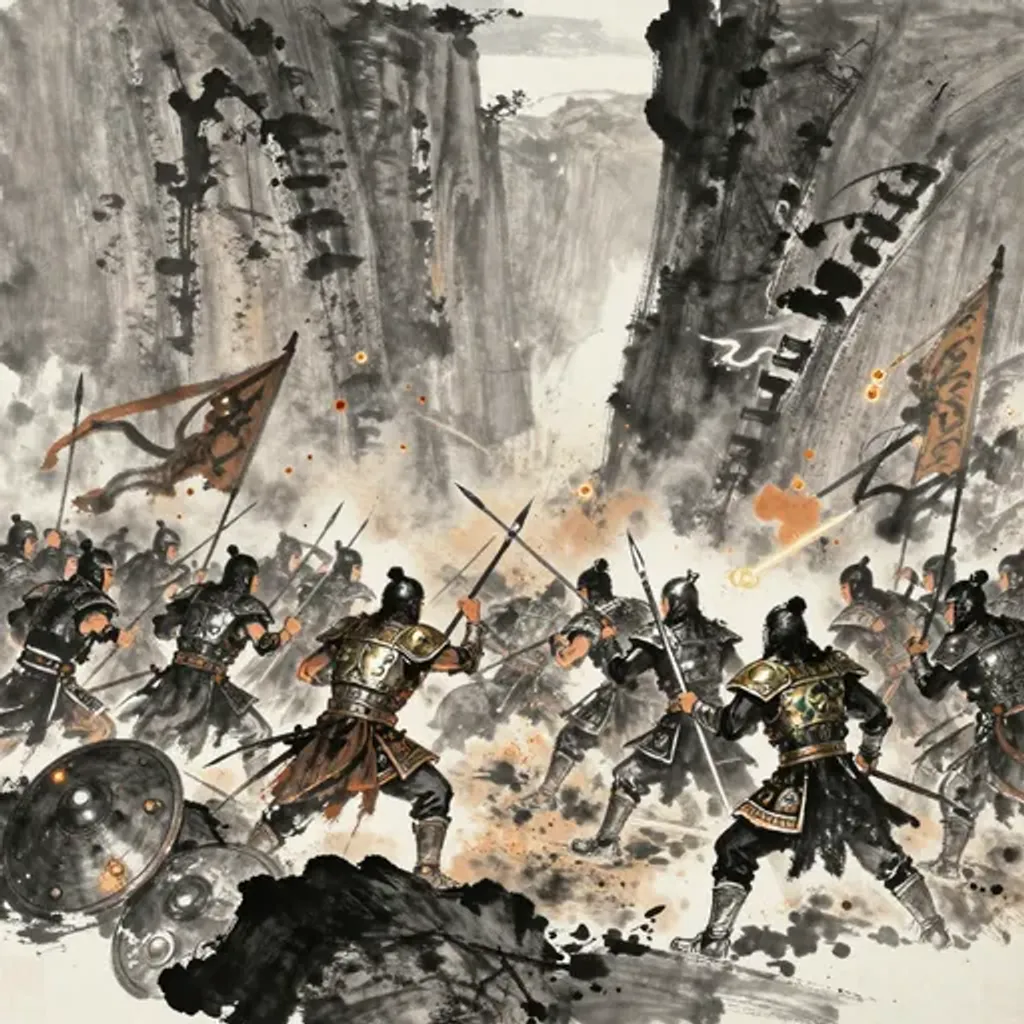
齊魯爭言,戰於龍門。遘怨致禍,三世不安。
Qi and Lu contend with words; they battle at Dragon Gate. Resentment breeds calamity; three generations know no peace.
— Jiao Yanshou, Yilin (Forest of Changes), 1st century BC
Commentary
Heaven stored within the mountain descends into earth above the mountain — Modesty. Qi and Lu quarrel bitterly, battling at Dragon Gate. Resentment breeds disaster that haunts three generations. Dragon Gate, the gorge on the Yellow River carved by Yu the Great, is a threshold of transformation — fish that leap it become dragons, but those who fight at its threshold merely destroy themselves. From Great Taming to Modesty, the mountain's stored heaven should humble itself as earth covers the mountain. Instead, two powerful states squander their accumulated strength in mutual grievance. The verse's warning spans three generations: accumulated resentment, unlike accumulated virtue, compounds into ruin. Modesty demands yielding; these states chose confrontation.
大畜 → 豫
Hexagram 26 → Hexagram 16: Enthusiasm
Changing lines: 1, 2, 3, 4, 6
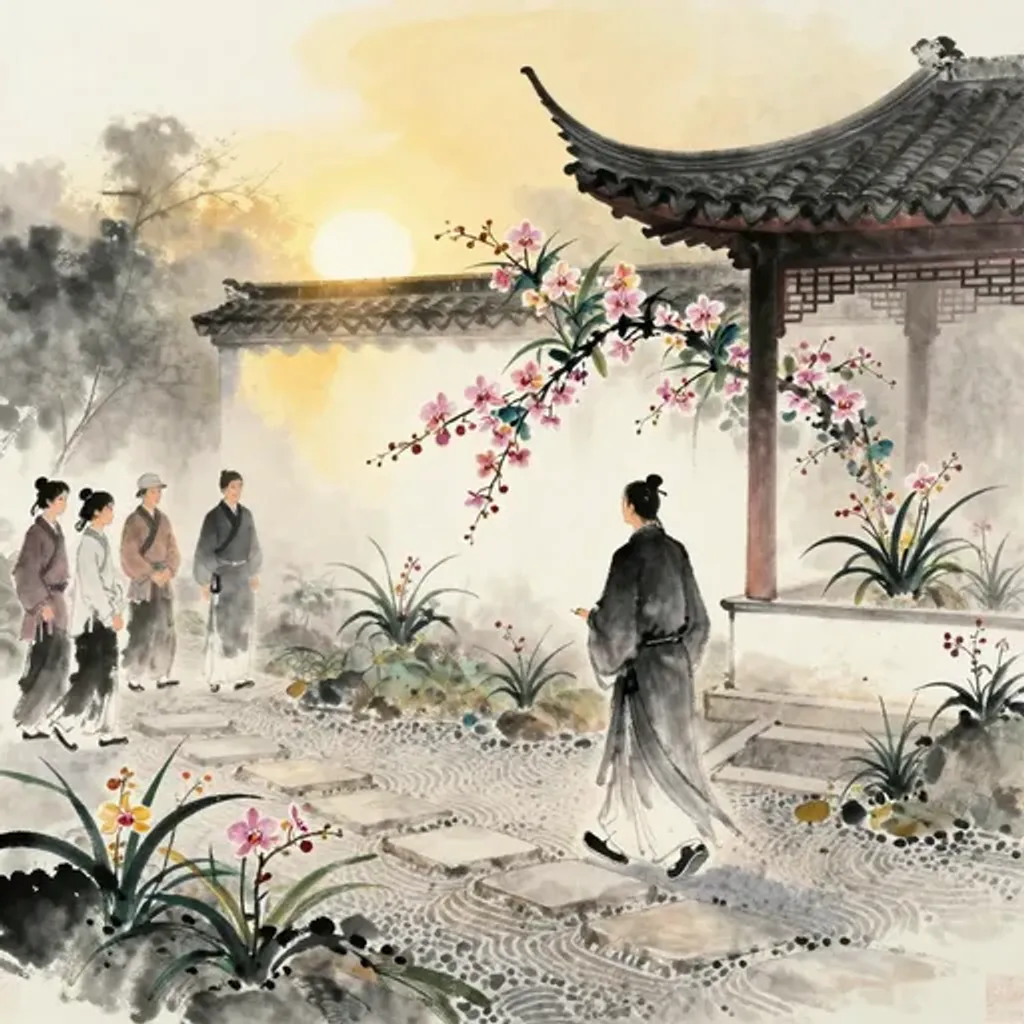
道禮和德,仁不相賊。君子往之,樂有其利。
The Way, ritual, harmony, and virtue; benevolence does not harm. The noble man goes forth in this; he delights in its rewards.
— Jiao Yanshou, Yilin (Forest of Changes), 1st century BC
Commentary
Heaven stored within the mountain erupts as thunder from the earth — Enthusiasm. The way of ritual harmonizes with virtue; benevolence prevails and none do harm to one another. The gentleman proceeds toward this and finds joy and profit together. Great Taming's patient accumulation meets Enthusiasm's exuberant release: thunder bursting from the ground is stored energy finally finding expression. The verse presents the ideal outcome of long cultivation: when virtue, ritual, and benevolence have been thoroughly internalized, their expression brings spontaneous delight. From Great Taming to Enthusiasm, the mountain's stored heaven becomes thunder shaking the earth — the great release that comes when accumulated wisdom finally moves the world.
大畜 → 隨
Hexagram 26 → Hexagram 17: Following
Changing lines: 2, 3, 4, 5, 6
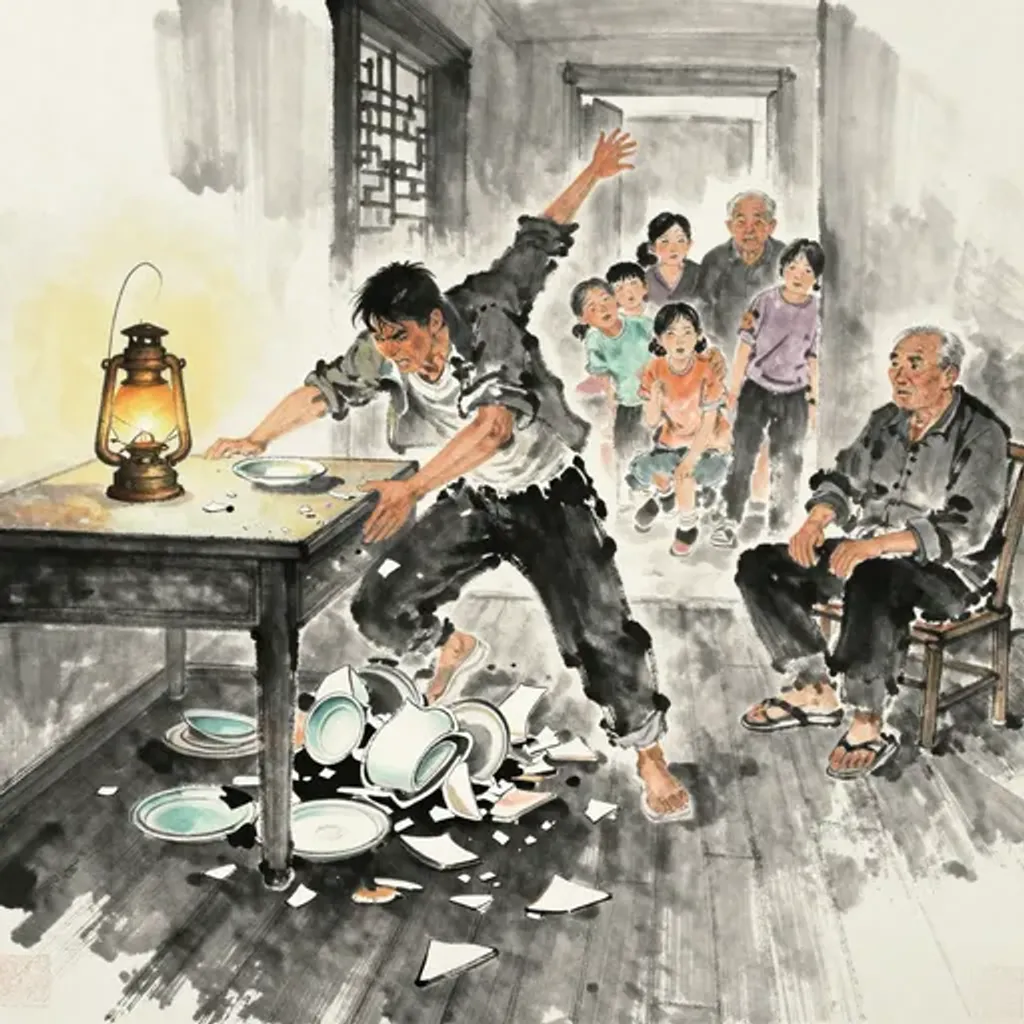
嫗妬公姥,毀益亂賴。使我家憒,利得不遂。
The wife resents the mother-in-law; slander and spite throw all into disorder. She makes our household a shambles; gain and profit cannot be had.
— Jiao Yanshou, Yilin (Forest of Changes), 1st century BC
Commentary
Heaven stored within the mountain becomes the lake with thunder within — Following. A jealous daughter-in-law clashes with her mother-in-law, sowing discord and confusion that unsettles the entire household. Ambitions are thwarted and gains cannot be realized. Great Taming's accumulated domestic reserves are poisoned by internal friction. The lake containing thunder suggests suppressed energy seeking an outlet through the wrong channels. From Great Taming to Following, what should be orderly succession — the young following the old — instead becomes bitter jealousy disrupting the chain of authority. The verse warns that accumulated household wealth means nothing when domestic relationships are corroded by spite. True following requires deference, not rivalry.
大畜 → 蠱
Hexagram 26 → Hexagram 18: Work on the Decayed
Changing lines: 1
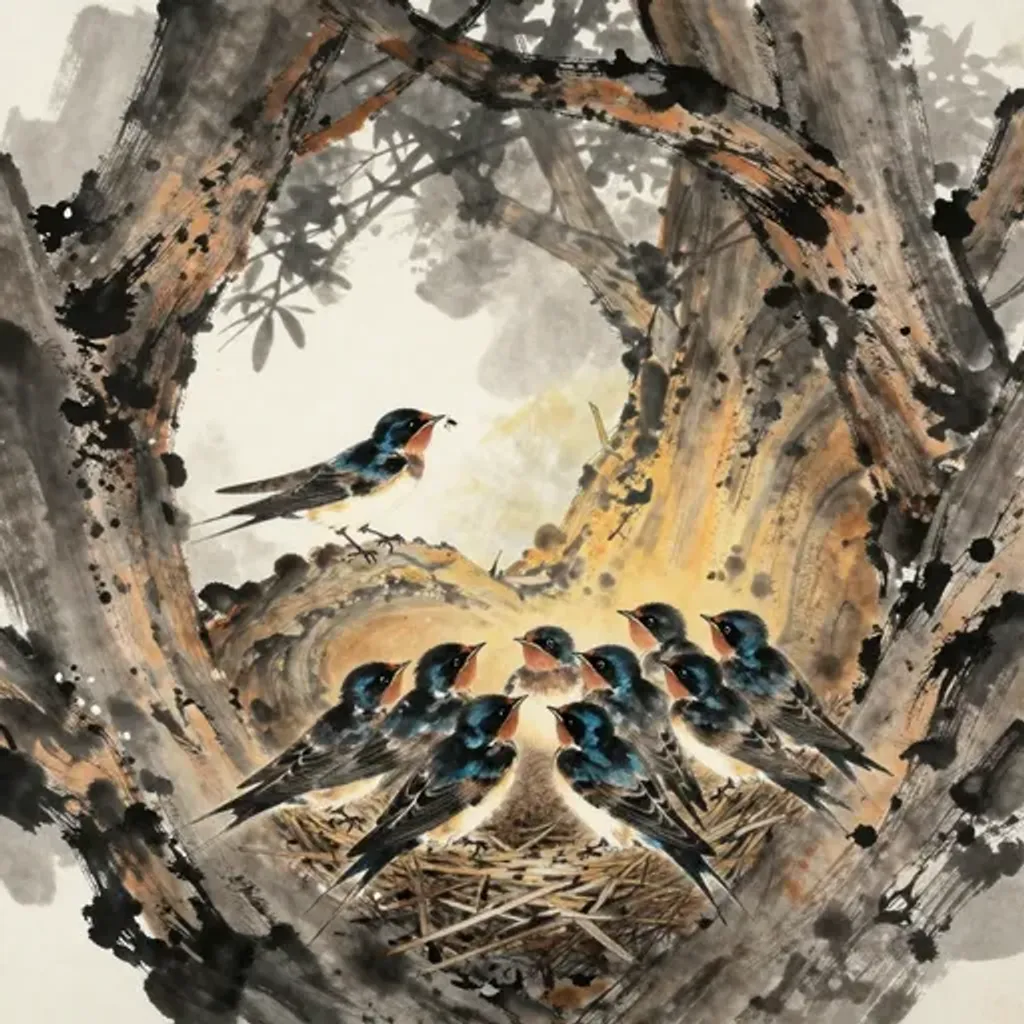
一巢九子,同公共母。柔順利貞,出入不殆。福祿所在。
In the hollow of an old tree, the swallow returns to the nest; nine chicks squeeze together, calling out. The mother bird carries insects, feeding them in turns — the branch is steady, the nest is warm, nothing shakes.
— Jiao Yanshou, Yilin (Forest of Changes), 1st century BC
Commentary
Heaven stored within the mountain descends into mountain over wind — Work on the Decayed. The original verse reads: 'One nest, nine fledglings, sharing one father and mother. Gentle compliance brings auspicious constancy; going out and coming in without danger — here is where blessings and prosperity reside.' The image is tender domesticity: a large brood thriving under devoted parental care. Softness and constancy sustain the household. From Great Taming to Work on the Decayed, the mountain's stored heaven settles into the mountain with wind stirring beneath — the wind of renewal working through what has grown old. Nine fledglings in one nest suggest that even inherited decay can be repaired when the household nurtures its young with patient devotion.
大畜 → 臨
Hexagram 26 → Hexagram 19: Approach
Changing lines: 3, 6
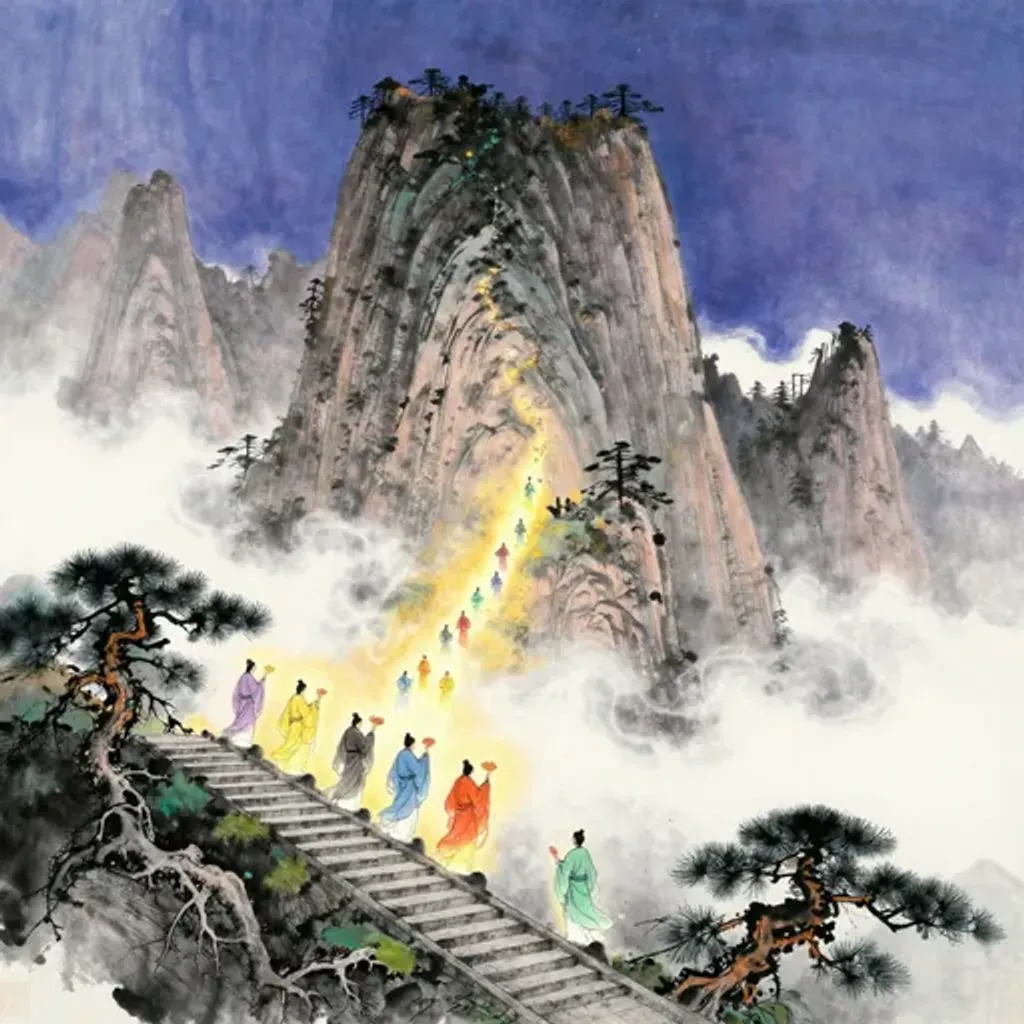
崔嵬北岳,天神貴客。溫仁正直,主布恩德。閔哀不已,蒙受大福。
Lofty and towering, the Northern Peak; heaven's spirits are honored guests. Warm, benevolent, upright, and just, the lord bestows grace and virtue. Grieving ceaselessly in compassion, he receives great blessing.
— Jiao Yanshou, Yilin (Forest of Changes), 1st century BC
Commentary
Heaven stored within the mountain gives way to earth above the lake — Approach. The towering northern peak stands like a sacred host; heavenly spirits arrive as honored guests. Warm benevolence and upright integrity spread blessings and virtue. Compassion never ceases, and great fortune follows. The lofty mountain evokes the Northern Sacred Peak, one of the Five Sacred Mountains, where heaven and earth converge. The divine visitors are drawn by accumulated virtue. From Great Taming to Approach, the mountain's stored heaven becomes the lake's rising water pressing upward toward earth — the approach of benevolent authority. What was stored now descends as grace, and those who cultivated compassion during the taming receive heaven's abundant blessing.
大畜 → 觀
Hexagram 26 → Hexagram 20: Contemplation
Changing lines: 1, 2, 3, 5
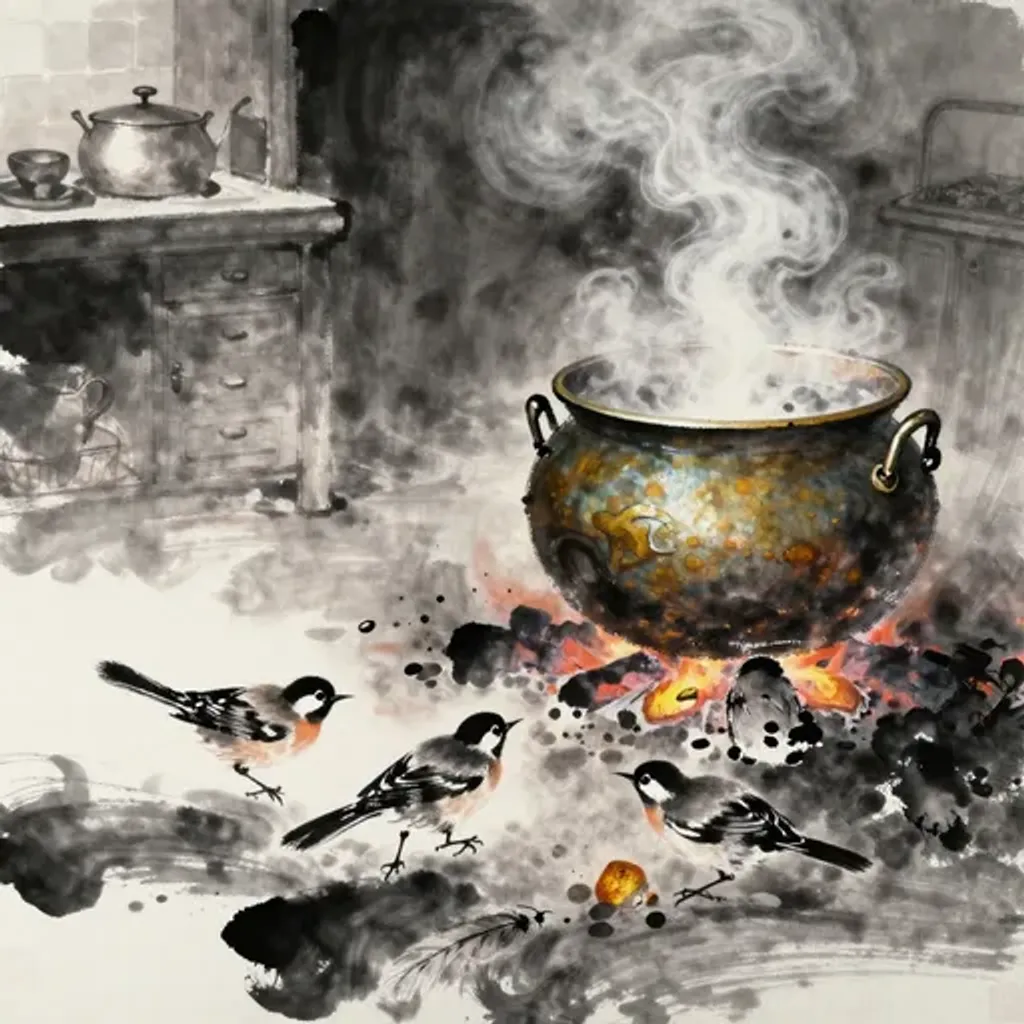
三雎逐蠅,陷墮釜中。灌沸弇殪,與母長決。
Three shrikes chase a fly; they fall into the cauldron. Scalded in boiling water, they perish; parted from their mother forever.
— Jiao Yanshou, Yilin (Forest of Changes), 1st century BC
Commentary
Heaven stored within the mountain becomes wind moving over earth — Contemplation. Three chicks chase a fly and tumble into a boiling cauldron. Scalded and killed in the seething water, they are parted from their mother forever. The image is stark and pitiable: small creatures destroyed by reckless pursuit of something trivial. The fly lures them to their death in the very vessel meant to nourish. From Great Taming to Contemplation, the mountain's stored heaven becomes wind surveying the earth — the sage-king's dispassionate observation. The verse demands that we contemplate folly's consequences: stored resources (the cauldron, the household) become instruments of destruction when young and foolish creatures chase the wrong quarry.
大畜 → 噬嗑
Hexagram 26 → Hexagram 21: Biting Through
Changing lines: 2, 3, 4
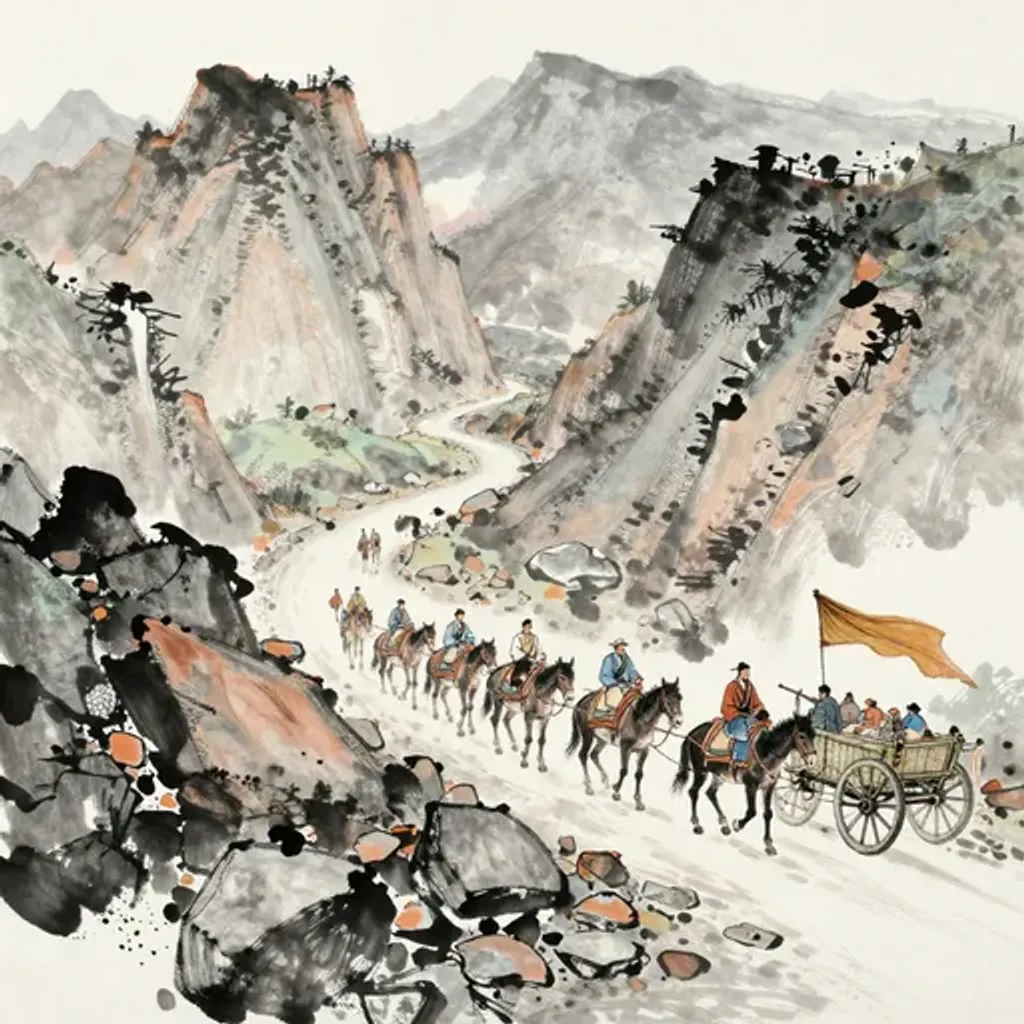
東山西陵,高峻難升。滅夷掘壘,使道不通。商旅無功,復反其邦。
Eastern mountains and western ridges, lofty and steep, hard to climb. Leveling the land and breaching the ramparts, the road is made impassable. Merchants gain nothing; they turn back to their own lands.
— Jiao Yanshou, Yilin (Forest of Changes), 1st century BC
Commentary
Heaven stored within the mountain gives way to fire and thunder — Biting Through. Mountains loom east and west, their ridges steep and nearly impossible to climb. Earthworks are leveled, ramparts torn down, and the road is utterly blocked. Merchants achieve nothing and must return to their own land. The image is of deliberate military obstruction: mountain passes fortified and then demolished to deny passage. From Great Taming to Biting Through, the mountain's stored power is weaponized — not to accumulate but to obstruct. Biting Through's lightning and thunder represent forceful clearing, but here the clearing is done to destroy routes, not open them. Trade halts; the stored mountain becomes a wall.
大畜 → 賁
Hexagram 26 → Hexagram 22: Grace
Changing lines: 2
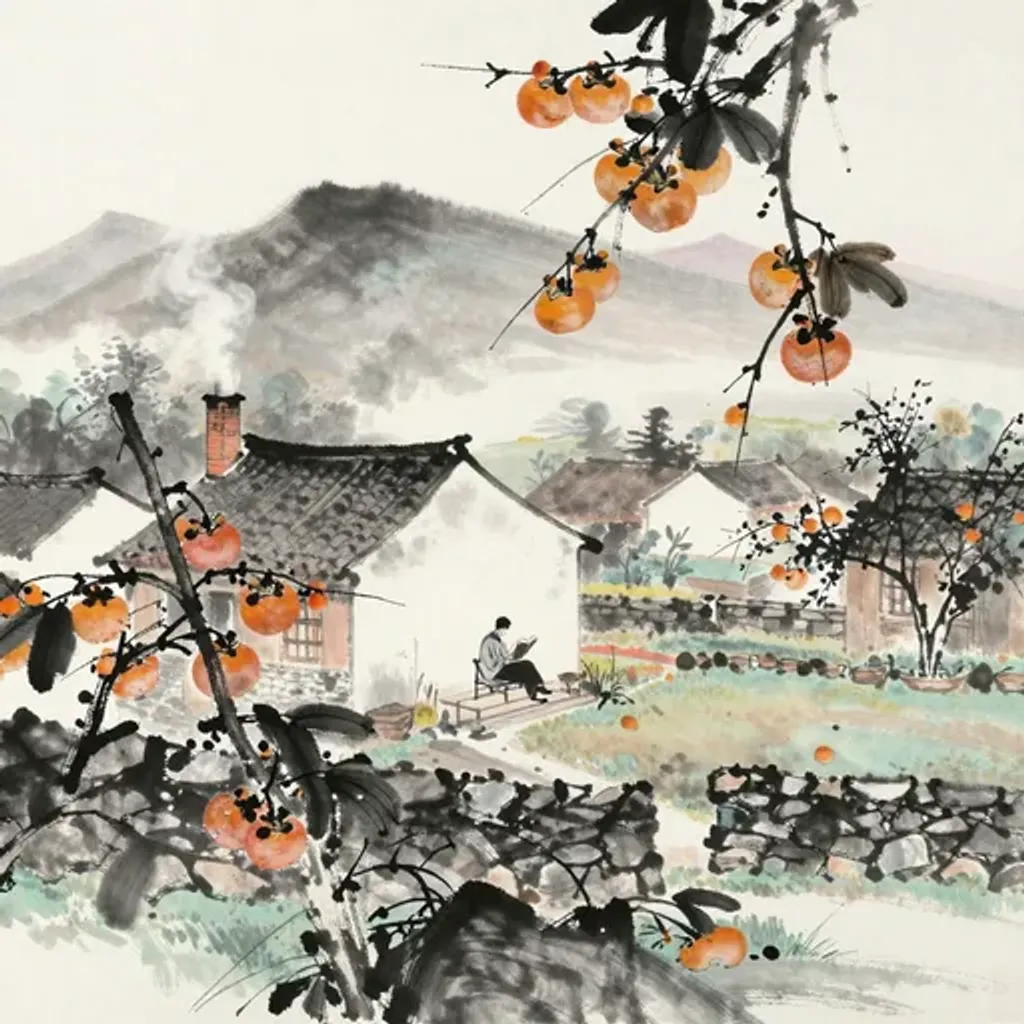
常得自如,不逢禍災。福祿自來。
Always at ease and self-possessed, meeting no calamity or disaster. Blessing and fortune come of their own accord.
— Jiao Yanshou, Yilin (Forest of Changes), 1st century BC
Commentary
Heaven stored within the mountain settles into mountain above fire — Grace. One always finds things going smoothly, encountering neither disaster nor misfortune. Blessings and prosperity come of their own accord. The briefest of verses, its simplicity matches the hexagram perfectly. Grace is the mountain illuminated by fire below — beauty that arises naturally from inner light. The verse asks for nothing, names no threat, seeks no advantage. From Great Taming to Grace, the mountain's stored heaven becomes fire quietly glowing within the mountain. What was accumulated now simply radiates: no effort, no struggle, only the effortless grace of a life built on sufficient reserves.
大畜 → 剝
Hexagram 26 → Hexagram 23: Splitting Apart
Changing lines: 1, 2, 3
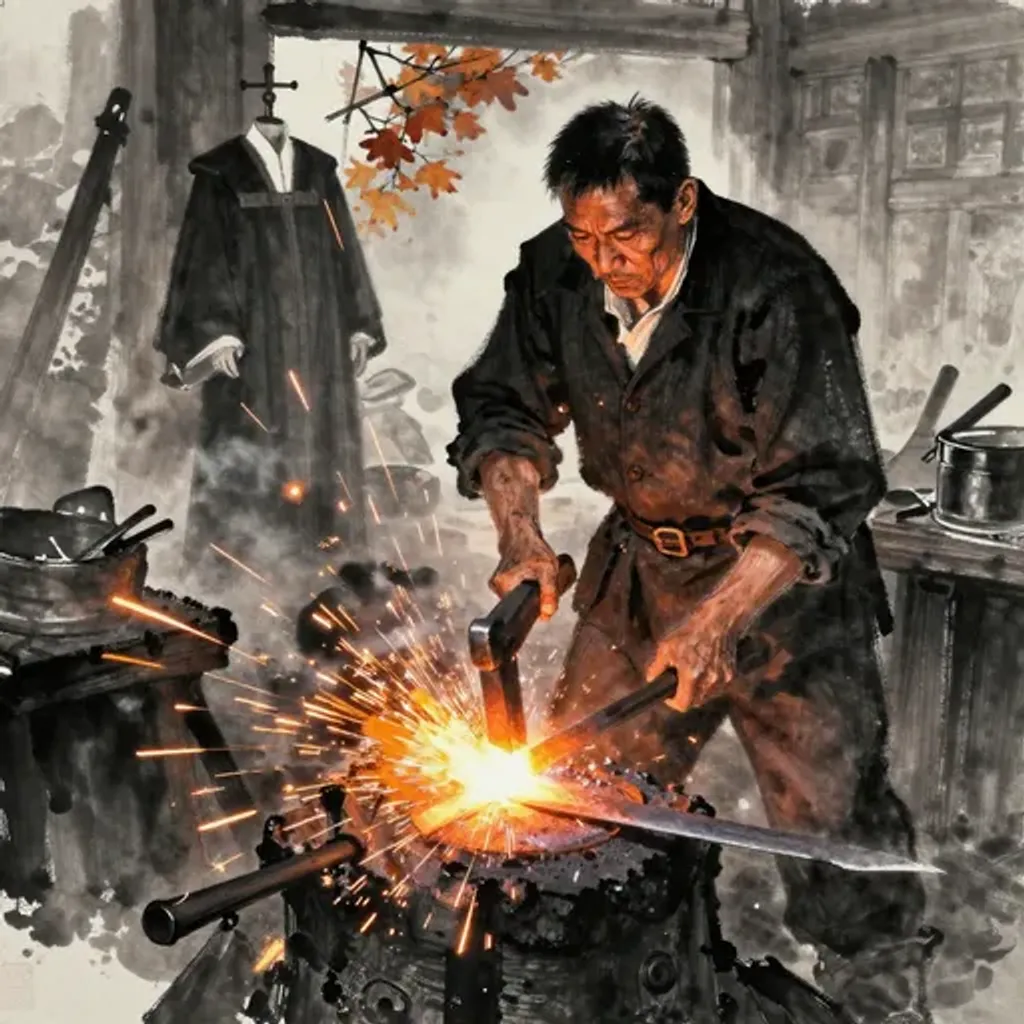
范子妙材,戮辱傷膚。然後相國,封為應侯。
Fierce fire tempers gold to a deeper red; cold iron endures a thousand hammer-blows to become a sharp blade. A body covered in scars — robes now changed; one morning, made chancellor, standing in the autumn wind.
— Jiao Yanshou, Yilin (Forest of Changes), 1st century BC
Commentary
Heaven stored within the mountain crumbles as the mountain rests upon earth — Splitting Apart. The original verse reads: 'Fan Ju, a man of marvelous talent, was humiliated and his body scarred. Afterward he became chief minister and was enfeoffed as the Marquis of Ying.' Fan Ju served the state of Wei until false accusations led to a savage beating — wrapped in a mat and thrown into a latrine. He escaped to Qin under a false name, rose through sheer brilliance to become Prime Minister, and was enfeoffed at Ying. From Great Taming to Splitting Apart, the mountain's stored heaven is the talent buried under layers of humiliation. Splitting Apart strips everything away — status, flesh, dignity — until only the bedrock of ability remains, ready to rebuild.
大畜 → 復
Hexagram 26 → Hexagram 24: Return
Changing lines: 2, 3, 6
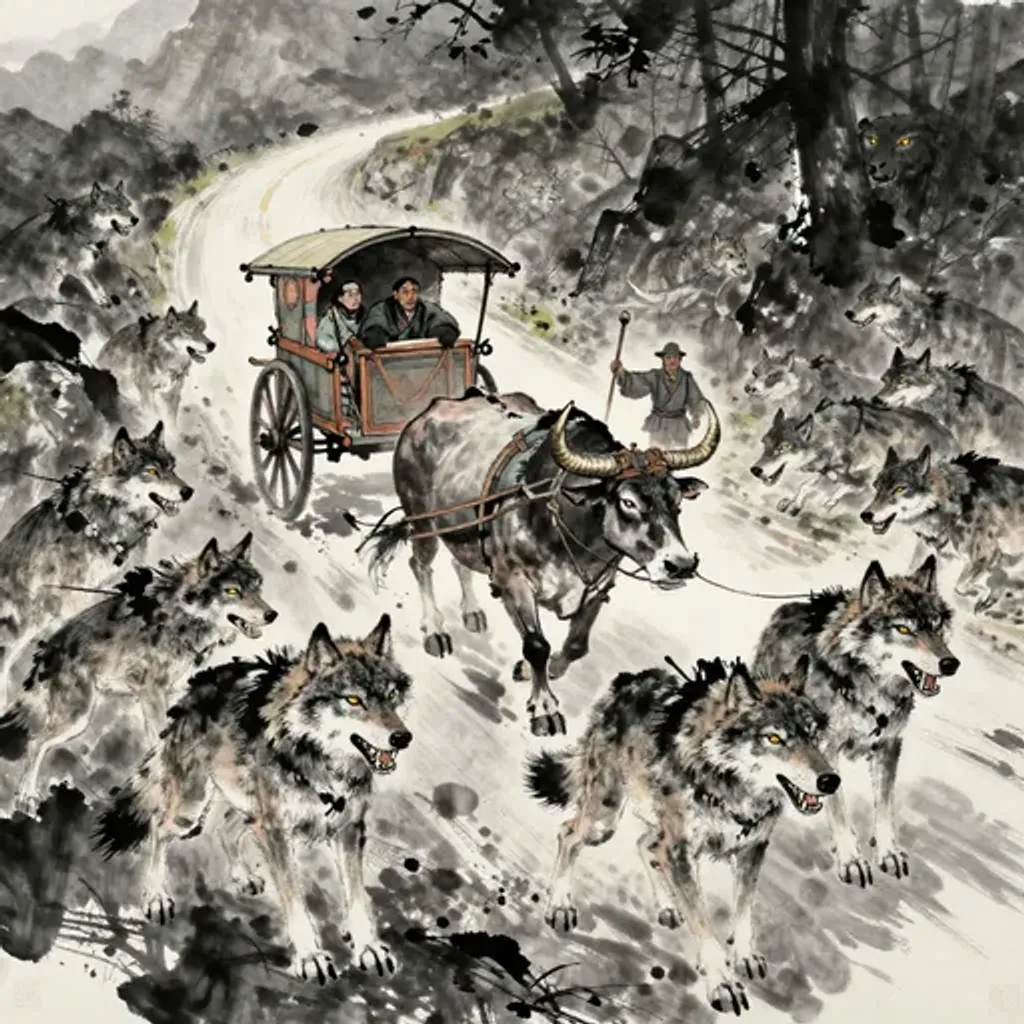
狼虎結集,相聚為保。伺嚙牛羊,道絕不通。病我商人。
Wolves and tigers mass together, banding for mutual protection. They lie in wait to prey on cattle and sheep; the road is severed, impassable. They afflict our merchants.
— Jiao Yanshou, Yilin (Forest of Changes), 1st century BC
Commentary
Heaven stored within the mountain becomes thunder returning within the earth — Return. Wolves and tigers gather in packs for mutual protection, lying in wait to prey on cattle and sheep. The road is utterly cut off with no passage through. Merchants fall ill from the strain. The verse depicts predatory forces that have organized themselves into a blocking formation, transforming the mountain's stored power into roadside menace. From Great Taming to Return, the mountain's heaven enters the earth as a single yang line returns at the bottom — the first stirring of renewal. But renewal arrives into a landscape dominated by predators. The merchant's misfortune warns that even when the cycle turns, the way forward remains dangerous until the wolves disperse.
大畜 → 无妄
Hexagram 26 → Hexagram 25: Innocence
Changing lines: 2, 3, 4, 5
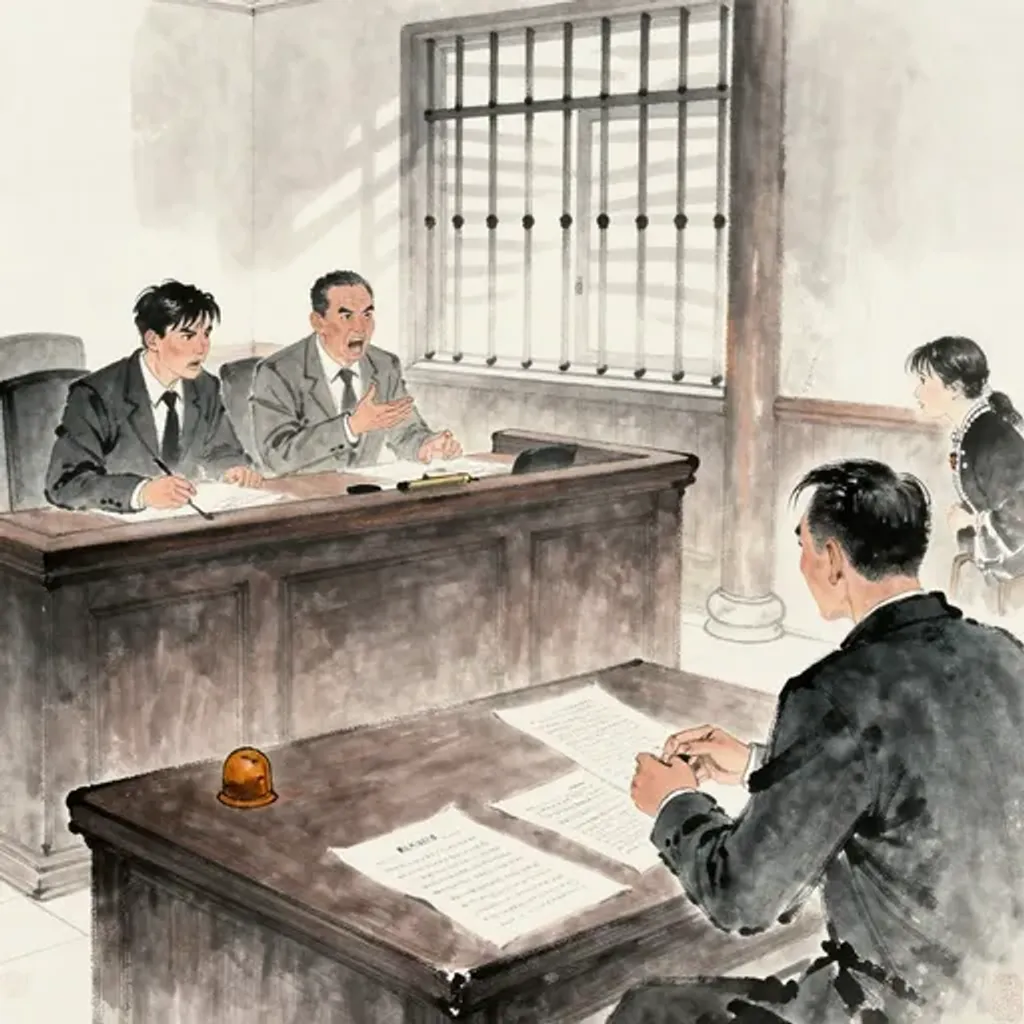
不直杜公,與我爭訟。媒伯無禮,自令塞壅。
The crooked Duke Du contends with me in litigation. The matchmaker lacks propriety, bringing only obstruction and blockage upon himself.
— Jiao Yanshou, Yilin (Forest of Changes), 1st century BC
Commentary
Heaven stored within the mountain becomes thunder moving under heaven — Innocence. An unjust Master Du brings lawsuits against me. The matchmaker acts without propriety, bringing only obstruction upon himself. The verse paints a picture of entanglement with dishonest people who twist institutions — courts and marriage brokers — to serve their own ends. From Great Taming to Innocence, the mountain's stored heaven should become the thunder of heaven's spontaneous action, free from calculation. But the verse warns: when intermediaries act without integrity, innocence is corrupted at the source. The man who accumulates virtue still faces those who weaponize the very structures meant to serve justice. True innocence survives, but not without friction.
大畜 → 大畜
Hexagram 26 → Hexagram 26: Great Taming
No changing lines — the hexagram is unchanged
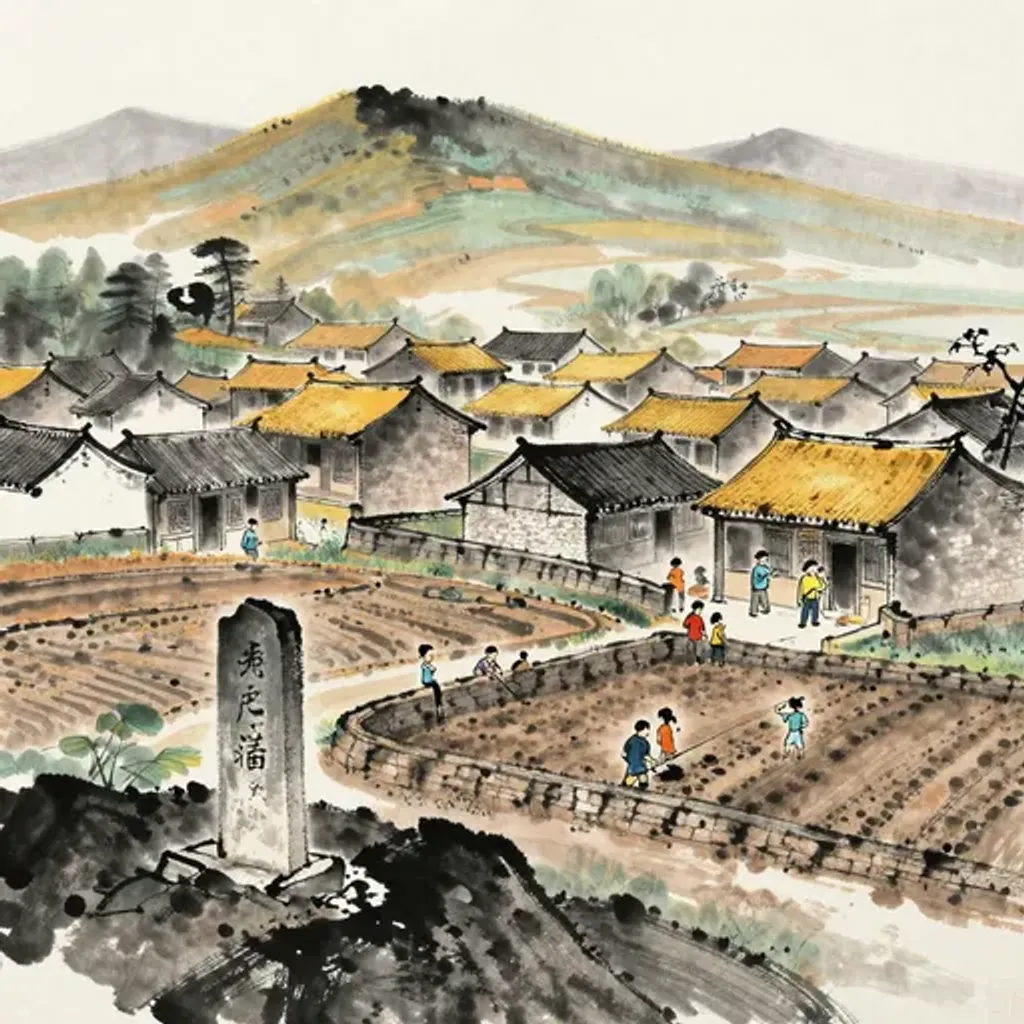
朝鮮之地,箕伯所保。宜人宜家,業處子孫,求事大喜。
The land of Joseon, kept safe by Lord Jizi. Fit for people, fit for families; the enterprise is passed to sons and grandsons. In all undertakings, great joy.
— Jiao Yanshou, Yilin (Forest of Changes), 1st century BC
Commentary
Great Taming doubled upon itself — heaven stored within the mountain, undiluted and self-referencing. The land of Joseon, which the Viscount of Ji protected and preserved. Suitable for person and family alike, a legacy handed down through the generations; all undertakings bring great joy. The Viscount of Ji (Jizi), uncle of the Shang tyrant, feigned madness to survive the court's depravity. After Shang fell, he was enfeoffed at Joseon, where he established a civilized state. This is Great Taming at its purest: the sage who stored virtue within himself during a period of darkness, then carried that accumulated wisdom to a new land and built something lasting. The static hexagram shows accumulation fulfilled across generations.
大畜 → 頤
Hexagram 26 → Hexagram 27: Nourishment
Changing lines: 2, 3
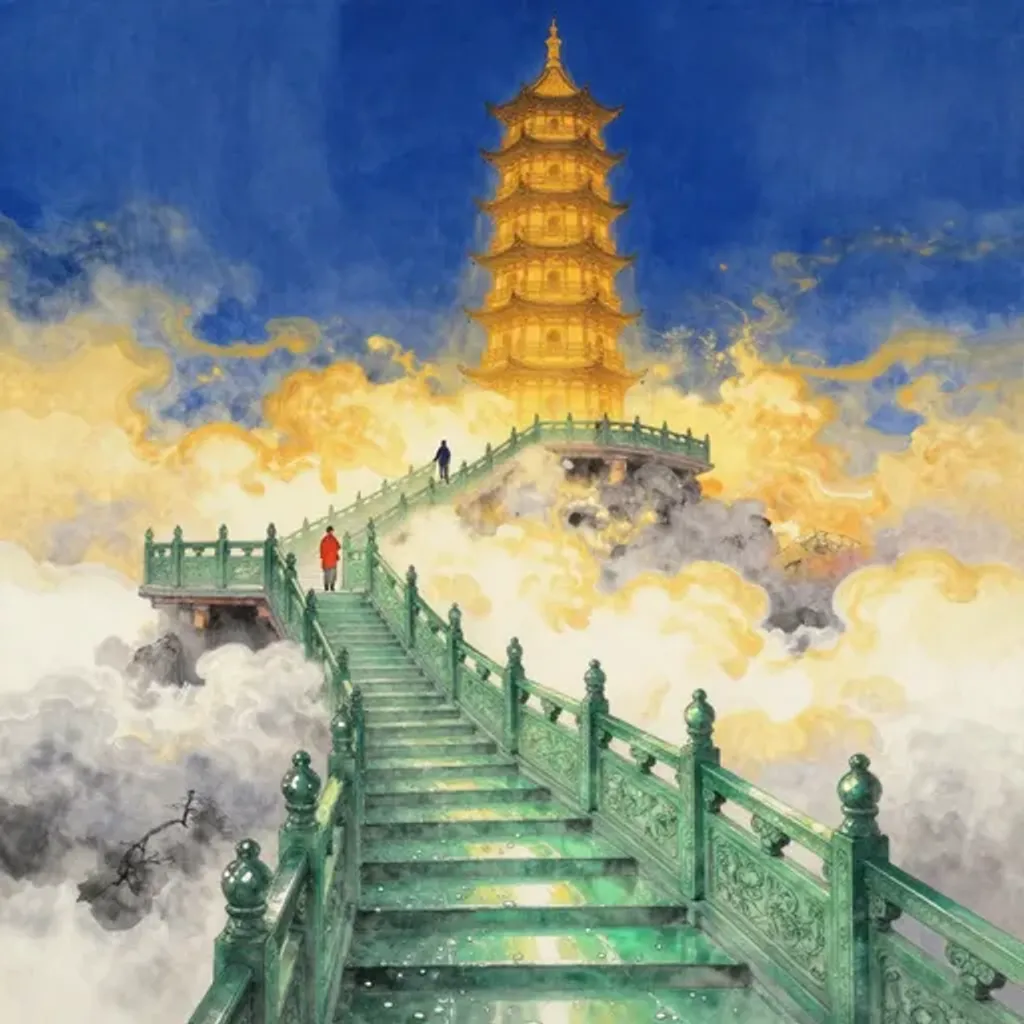
上天樓臺,登降受福,喜慶自來。
Ascending the heavenly tower and terrace; climbing up and down, receiving blessing. Joy and celebration come of their own accord.
— Jiao Yanshou, Yilin (Forest of Changes), 1st century BC
Commentary
Heaven stored within the mountain yields to the mountain with thunder below — Nourishment. Ascending the heavenly tower and terrace, one receives blessings on the way down. Joy and celebration arrive of their own accord. The imagery is vertical: climbing high and descending enriched, a circuit of spiritual nourishment. From Great Taming to Nourishment, the mountain's stored heaven becomes the mountain's sheltering stillness above thunder's vital energy below — the jaw opening and closing, taking in sustenance. The verse captures the simplicity of this transformation: accumulated effort climbs toward heaven, then returns as blessing. What goes up in devotion comes down as nourishment. The terrace stands as a bridge between stored virtue and daily sustenance.
大畜 → 大過
Hexagram 26 → Hexagram 28: Great Exceeding
Changing lines: 1, 4, 5, 6
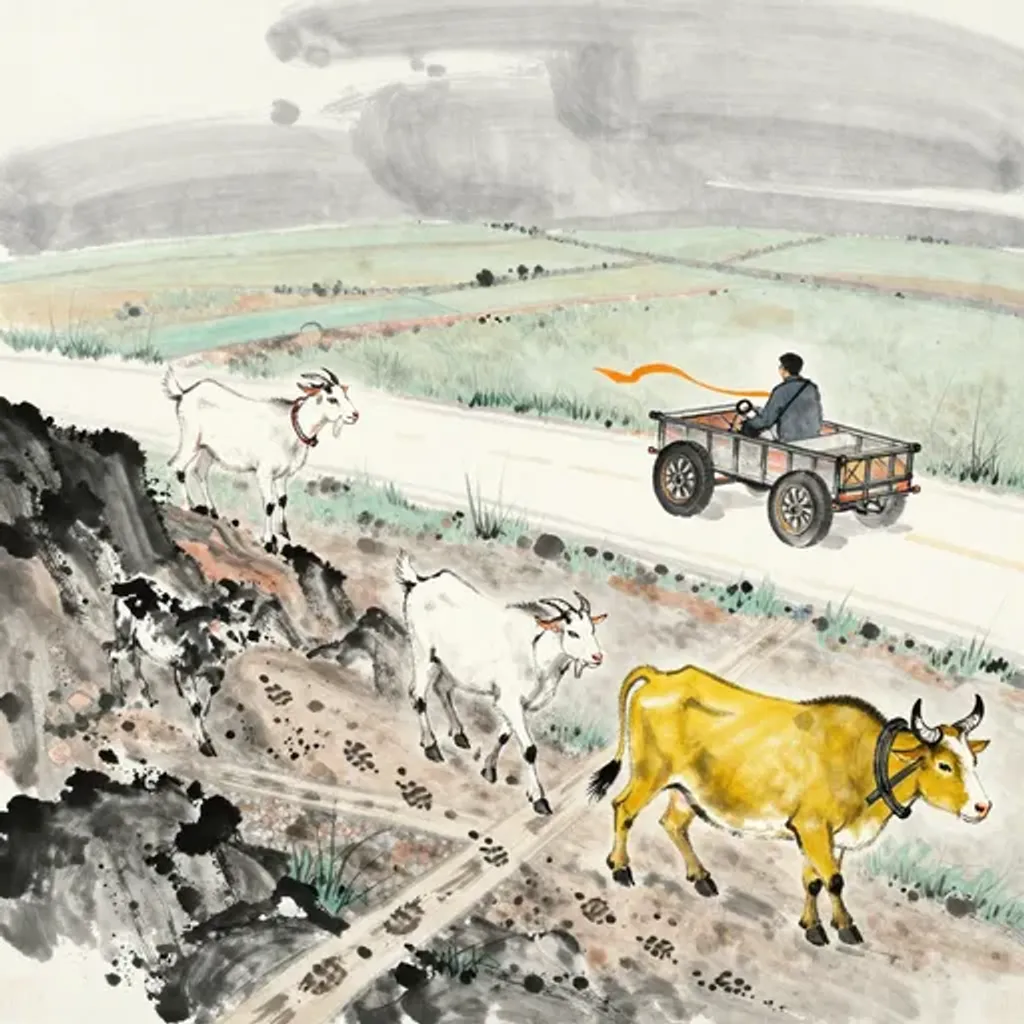
三羊上山,東至平原。黃龍服箱,南至魯陽。貌其佩囊,執綬車中。行人無功。
Three goats climb the mountain, eastward reaching the plain. The yellow dragon is yoked to a cart, southward to Luyang. He shows off his satchel, grasping his sash within the carriage. The traveler gains nothing.
— Jiao Yanshou, Yilin (Forest of Changes), 1st century BC
Commentary
Heaven stored within the mountain gives way to the lake submerging the trees — Great Exceeding. Three rams climb the mountain, then travel east to the open plain. A yellow dragon is yoked to a cart and driven south to Luyang. Someone adjusts his pendant pouch, holding the carriage reins. Yet the traveler achieves nothing. The yellow dragon yoked to a cart directly echoes the Shijing's 'Da Dong': 'That bright Cowherd star cannot serve the cart' — heavenly grandeur forced into menial labor, name without substance. Luyang evokes the lord who raised his halberd to push back the setting sun — heroic excess. From Great Taming to Great Exceeding, accumulated power overreaches: dragons in harness, rams on mountains, grand gestures that produce no result. The ridgepole sags under weight it was never meant to bear.
大畜 → 坎
Hexagram 26 → Hexagram 29: The Abysmal Water
Changing lines: 1, 3, 5, 6
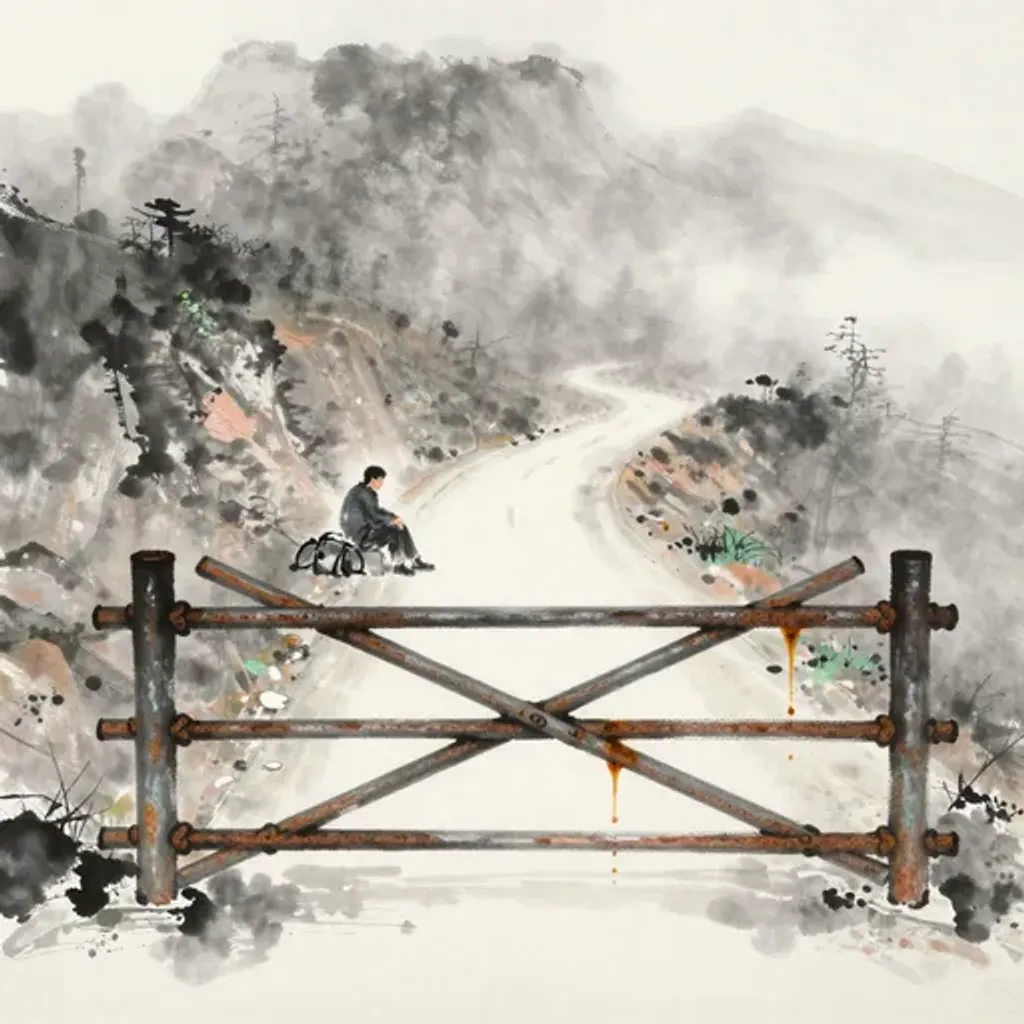
天地閉塞,仁智隱伏。商旅不行,利深難得。
Heaven and earth are closed and blocked; the benevolent and the wise lie hidden. Merchants do not travel; profit is deep but hard to obtain.
— Jiao Yanshou, Yilin (Forest of Changes), 1st century BC
Commentary
Heaven stored within the mountain becomes doubled water — the Abysmal. Heaven and earth are sealed shut; the wise and humane hide themselves away. Merchants cannot travel; profit lies deep and inaccessible. The verse directly quotes the I-Ching's own judgment on Hexagram 12 (Standstill): 'Heaven and earth do not mingle.' Yet the target here is not Standstill but the Abysmal — water upon water, peril upon peril. From Great Taming to the Abysmal, the mountain's stored heaven plunges into an abyss of repeated danger. What was accumulated has no outlet; the wise know to withdraw, merchants know to stay home. The verse counsels patience in the face of compounded obstruction: the profit exists but cannot yet be reached.
大畜 → 離
Hexagram 26 → Hexagram 30: The Clinging Fire
Changing lines: 2, 4
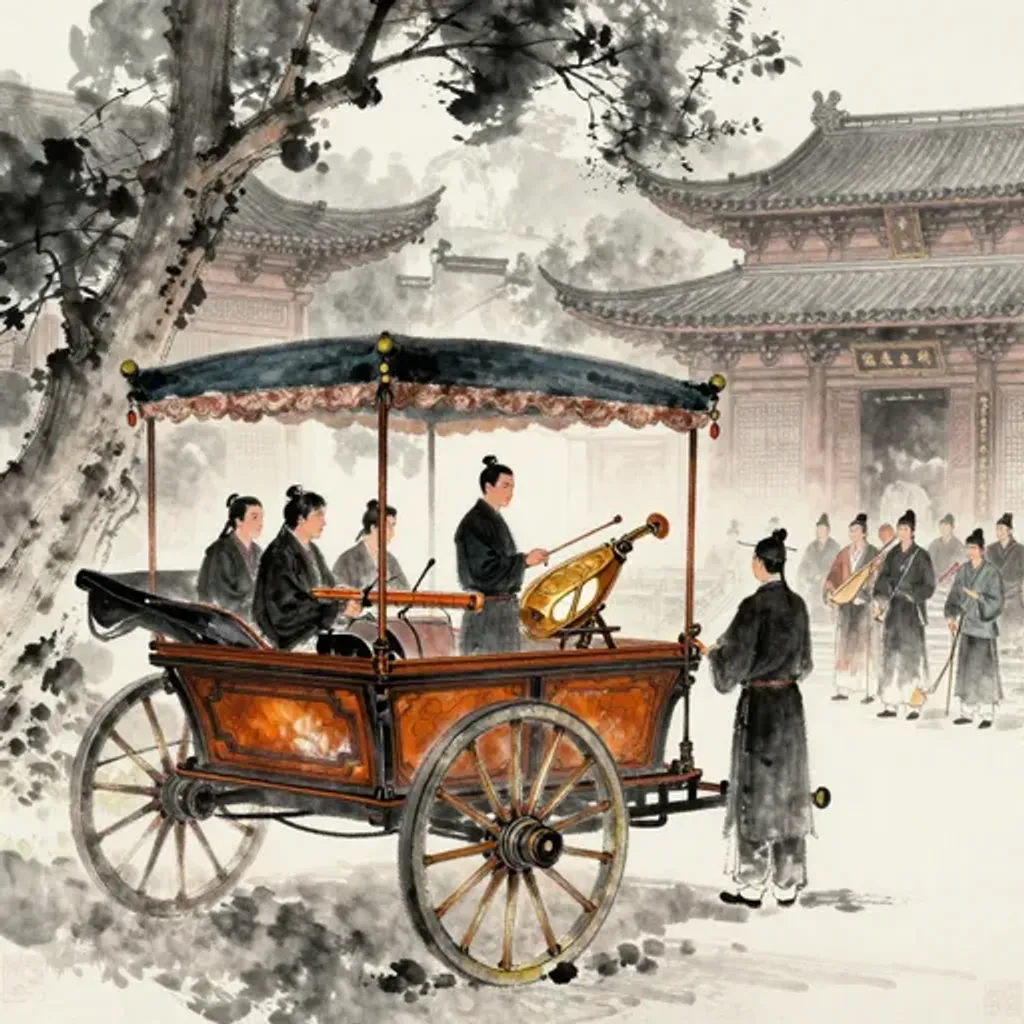
延陵適魯,觀樂太史。車轔白顛,知秦興起。卒兼其國,一統為主。
Yanling visited Lu, observing music at the Grand Scribe's. The chariots rumbled, heads white as hoarfrost; he discerned the rise of Qin. In the end it annexed all states, unifying them under one rule.
— Jiao Yanshou, Yilin (Forest of Changes), 1st century BC
Commentary
Heaven stored within the mountain becomes doubled fire — the Clinging. Ji Zha of Yanling travels to Lu to observe the grand musical performances at the office of the Grand Historian. Chariot wheels rattle and white heads nod — and from these signs, he perceives the future rise of Qin, which will ultimately absorb all states under a single ruler. According to the Zuo Zhuan, Ji Zha's musical discernment was legendary: he could hear in the music of each state its character and destiny. His identification of Qin's future greatness exemplifies the clinging light of discernment — fire upon fire, illumination doubled. From Great Taming to the Clinging, accumulated learning becomes penetrating insight. The mountain's stored wisdom ignites into prophetic clarity.
大畜 → 咸
Hexagram 26 → Hexagram 31: Influence
Changing lines: 1, 2, 4, 5, 6
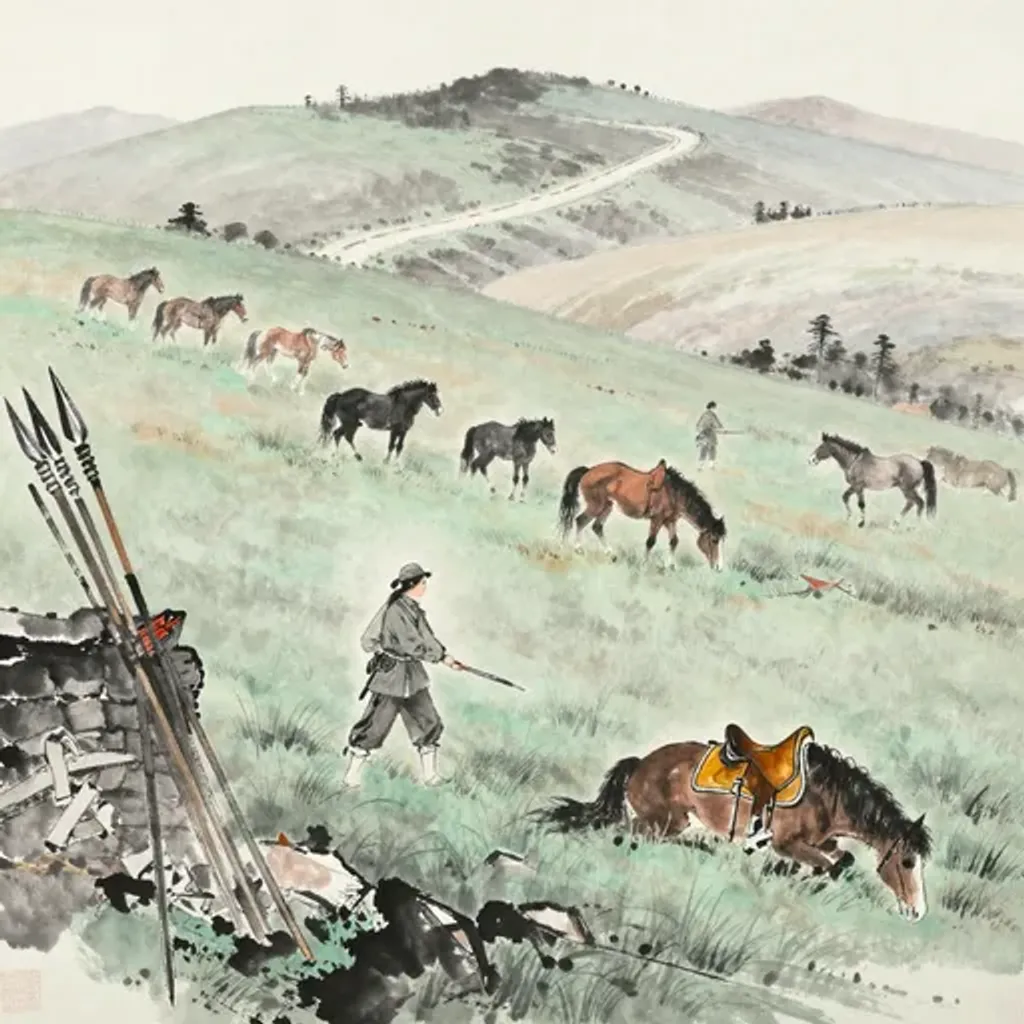
櫜戢甲兵,歸放馬牛。徑路開通,國無凶憂。朽墻不鑿,疾病難治。
Weapons sheathed and armor stored; horses and cattle released and set free. Roads and paths are opened; the state has no dire worry. Yet the crumbling wall is not repaired; illness is hard to cure.
— Jiao Yanshou, Yilin (Forest of Changes), 1st century BC
Commentary
Heaven stored within the mountain opens into the lake above the mountain — Influence. Armor and weapons are sheathed, horses and cattle released to pasture. Roads open freely; the state knows no grief or worry. Yet a decaying wall is not to be pierced, and illness resists cure. The first half celebrates demobilization — the peace dividend of accumulated strength, where taming yields to mutual influence and martial readiness gives way to open exchange. But the closing lines introduce a counter-note: some structures have decayed beyond repair, some diseases beyond treatment. From Great Taming to Influence, the mountain's stored power becomes the lake resting atop the mountain — receptive, open, responsive. Peace follows strength, but not everything damaged during the accumulation period can be restored.
大畜 → 恆
Hexagram 26 → Hexagram 32: Duration
Changing lines: 1, 4, 6
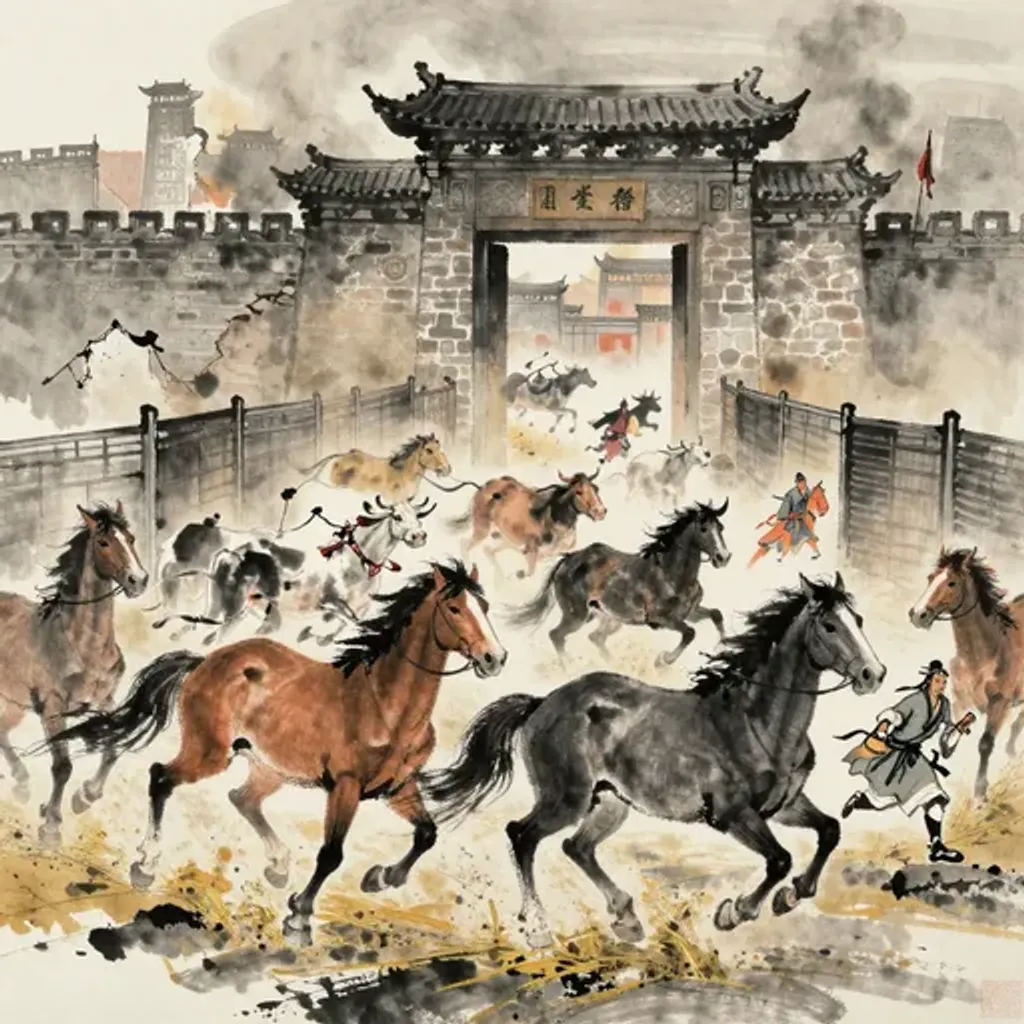
牛驥同堂,郭氏以亡。國破為墟,君奔走逃。
Oxen and thoroughbreds share one stable; the Guo state perishes thereby. The realm is shattered to ruins; the lord flees in headlong flight.
— Jiao Yanshou, Yilin (Forest of Changes), 1st century BC
Commentary
Heaven stored within the mountain becomes thunder and wind — Duration. When the thoroughbred ox and the common nag share the same stable, the Guo state perishes. The country is destroyed and reduced to ruins; the ruler flees in desperate escape. The proverb 'ox and steed in one stall' (牛驥同堂) warns against failing to distinguish between the worthy and the worthless — when no distinction is made, the state collapses. The Guo state's fall is traditionally attributed to its ruler's inability to discriminate between counsel and flattery. From Great Taming to Duration, the mountain's stored heaven becomes the enduring pattern of wind and thunder. But duration without discernment is mere persistence in error. The verse warns: accumulation must include the wisdom to sort what is stored, or the storeroom itself rots.
大畜 → 遯
Hexagram 26 → Hexagram 33: Retreat
Changing lines: 1, 2, 4, 5
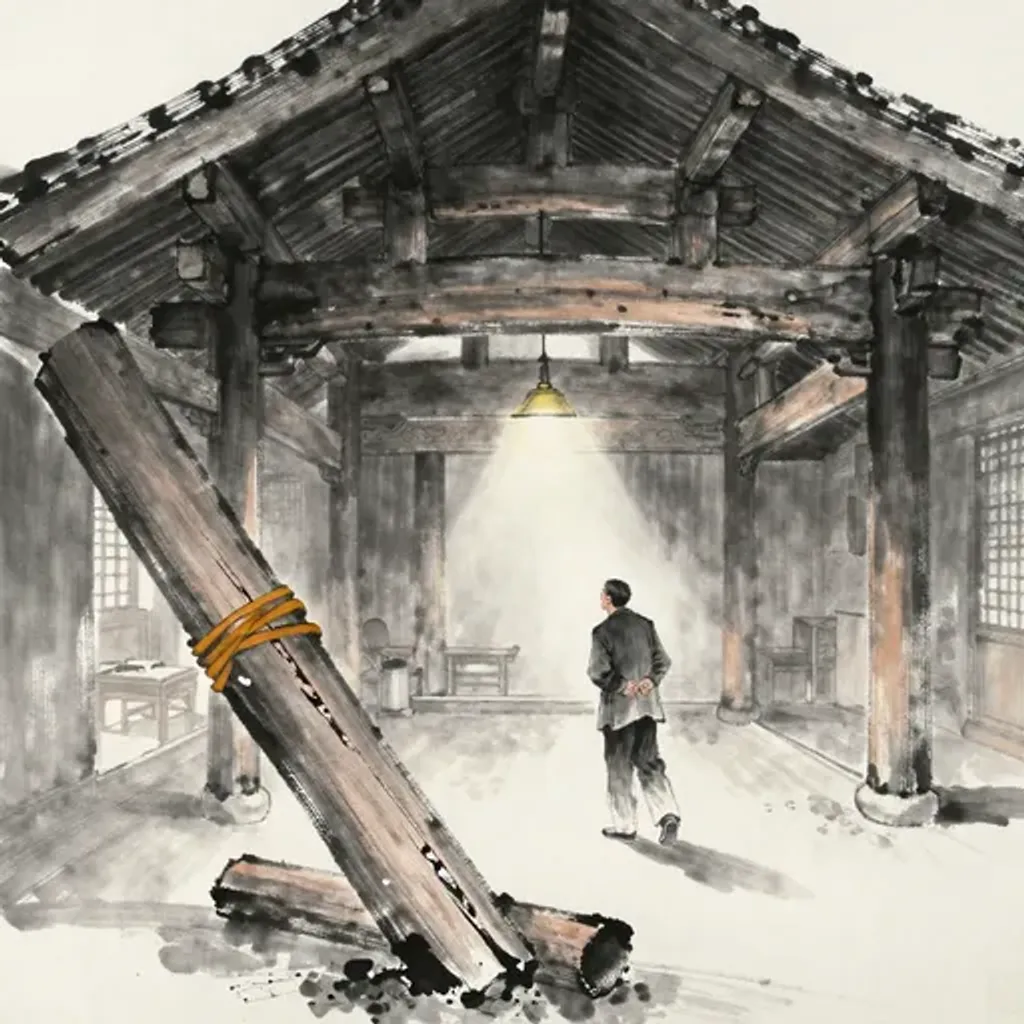
大尾小腰,重不可搖。棟橈榱壞,臣為君憂。陽大之言,消不為患,使我復安。
A great tail and a slender waist; heavy, impossible to move. The ridgepole bows, the rafters crack; the minister worries for the lord. Yang Da's counsel brings no calamity to dissolve; it restores our peace.
— Jiao Yanshou, Yilin (Forest of Changes), 1st century BC
Commentary
Heaven stored within the mountain strains under pressure. A creature with an enormous tail and tiny waist is too heavy to move, echoing the Zuo Zhuan's classic warning: 'When the tail is too large, it cannot wag.' The ridgepole sags and the rafters crack, as ministers fret for their lord. This verse layers two famous structural metaphors from the Chinese political canon. 'Tail too large to wag' warns of subordinates grown too powerful for the center to control; 'the ridgepole sags' from the I-Ching's Great Exceeding hexagram signals governance overburdened to the breaking point. Yet the verse resolves: frank counsel dispels the crisis, and stability returns. From Great Taming to Retreat, accumulated strength must know when to yield, or its own weight becomes the danger.
大畜 → 大壯
Hexagram 26 → Hexagram 34: Great Power
Changing lines: 4, 6
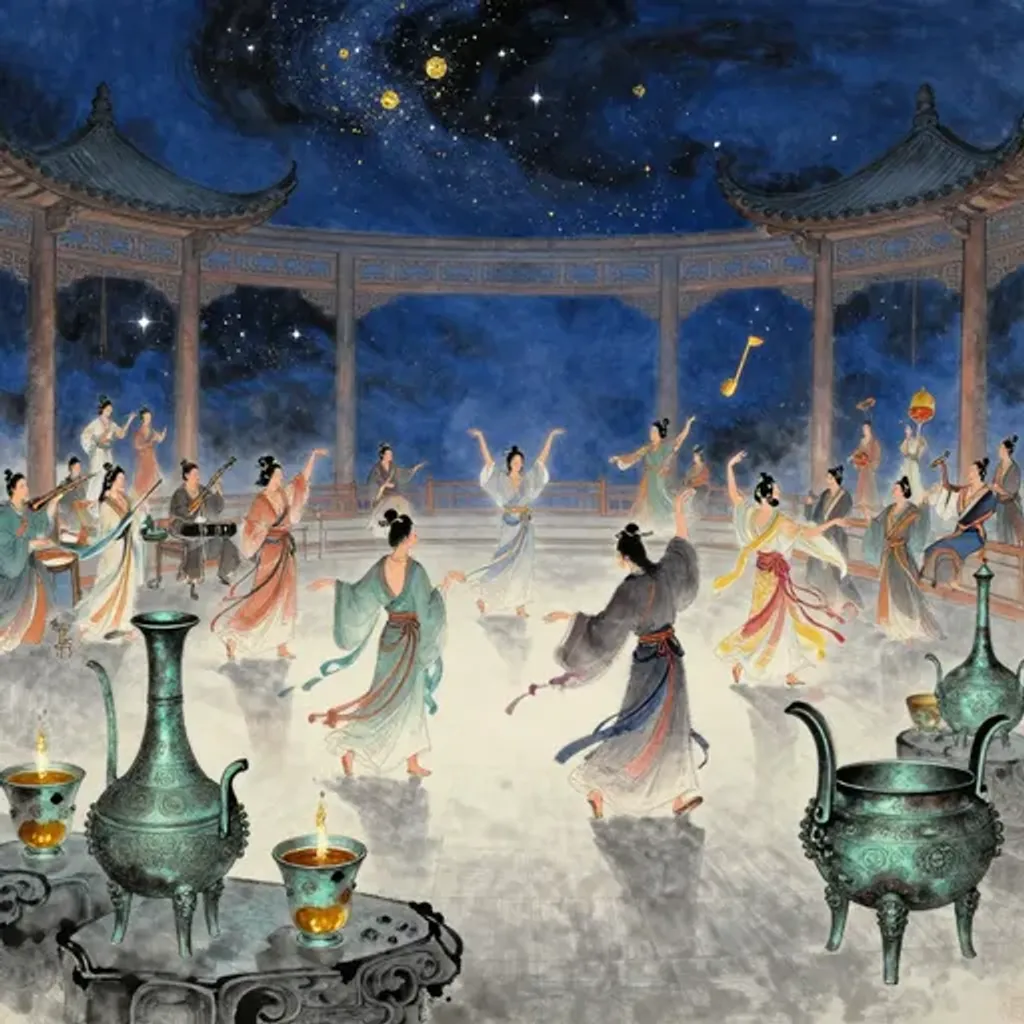
太一置酒,樂正起舞。萬福攸同,可以安處,綏我齯齒。指空無餌,不利為旅。
Tai Yi sets out wine; the music master rises to dance. Ten thousand blessings converge as one; one may dwell in peace. He comforts our aged teeth. Yet pointing at emptiness without bait, it is not favorable for travel.
— Jiao Yanshou, Yilin (Forest of Changes), 1st century BC
Commentary
Heaven stored within the mountain erupts as thunder in heaven — Great Power. Taiyi, the Supreme One, hosts a grand feast; the Master of Music rises to dance. Ten thousand blessings converge, and one may dwell in peace, easing into serene old age. Yet the verse turns: the hook is cast into empty water with no bait, and travel brings no gain. Taiyi, the supreme celestial deity of Han cosmology associated with the pole star, presides over cosmic order. When accumulated virtue is celebrated at the divine level, earthly happiness follows. But the closing warning qualifies the jubilation: spiritual fullness does not guarantee material success. From Great Taming to Great Power, the mountain's stored heaven becomes thunder shaking the heavens — overwhelming force that must still respect limits.
大畜 → 晉
Hexagram 26 → Hexagram 35: Progress
Changing lines: 1, 2, 3, 4

飲酒醉酗,跳起爭鬭。伯傷叔僵,東家治喪。
Drinking wine in drunken rage, they leap up and brawl. The elder is wounded, the younger laid stiff; next door the household mourns.
— Jiao Yanshou, Yilin (Forest of Changes), 1st century BC
Commentary
Heaven stored within the mountain yields to fire rising from the earth — Progress. Men drink until they are roaring drunk, then leap up and brawl. The elder brother is wounded; the younger collapses. Next door, a funeral is being held. The verse is a domestic disaster — accumulated revelry spilling over into violence, with death waiting just across the wall. Progress (fire above earth) shows brightness emerging from darkness, but here the emerging 'brightness' is the ugly glare of a drunken fight. From Great Taming to Progress, the mountain's stored heaven becomes fire breaking through earth's surface. What was patiently accumulated is squandered in a single night of excess. The morning light reveals only casualties.
大畜 → 明夷
Hexagram 26 → Hexagram 36: Darkening of the Light
Changing lines: 2, 6
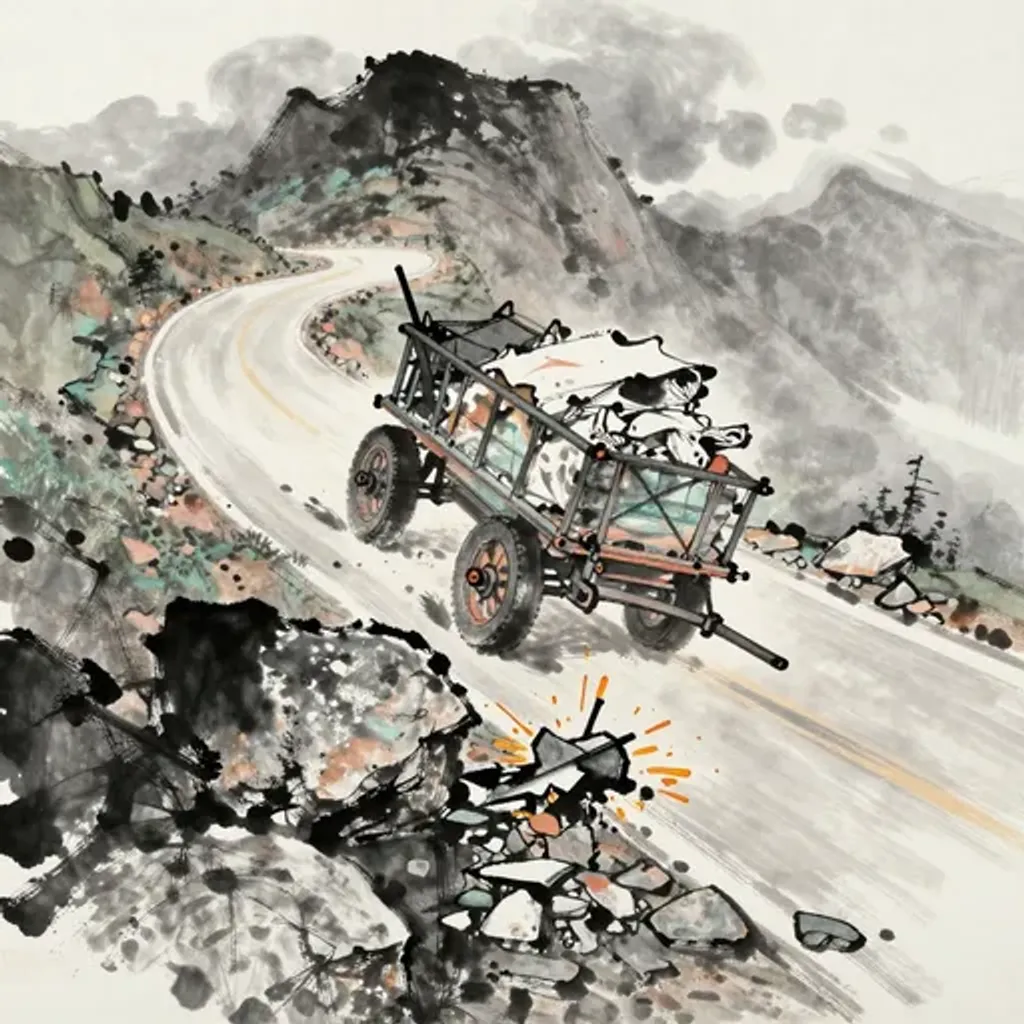
山險難登,渭中多石。車馳轊擊,重載傷軸。載擔善躓,跌踒右足。
The mountain is steep and hard to climb; stones crowd the ford. The cart races, hubs collide; the heavy load cracks the axle. The bearer stumbles easily; he twists and injures his right foot.
— Jiao Yanshou, Yilin (Forest of Changes), 1st century BC
Commentary
Heaven stored within the mountain sinks as fire enters the earth — Darkening of the Light. Mountain passes are steep and nearly impassable; the Wei River bed is strewn with stones. A speeding chariot smashes its axle-cap; a heavily loaded cart snaps its axle. The bearer stumbles and twists his right foot. The verse is a catalog of physical obstruction and injury — every mode of transport fails, and the body itself breaks down. From Great Taming to Darkening of the Light, the mountain's stored heaven is swallowed by the earth. Light descends into darkness; the wise ruler 'uses obscurity to preserve clarity.' The accumulated resources of Great Taming meet a world that breaks everything passing through it. Sometimes, the wisest course is not to travel at all.
大畜 → 家人
Hexagram 26 → Hexagram 37: The Family
Changing lines: 2, 5
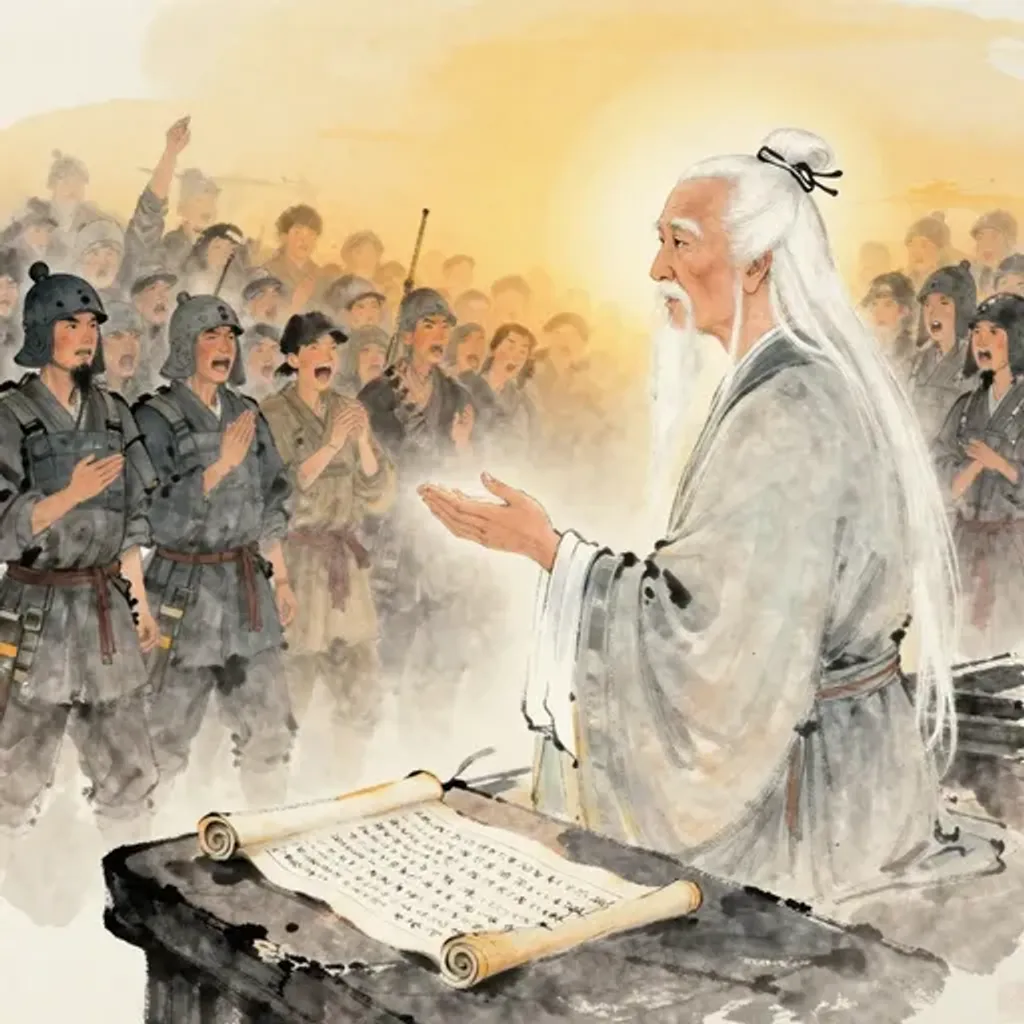
爭訟不已,更相咨詢。張事弱口,被髮北走。耳順從心,躬行至仁。不須以兵,天下太平。
Disputes go on without end; they consult one another in turn. Exaggerating the case with feeble words, hair unbound, they flee northward. When ears obey and heart follows, the body practices perfect benevolence. No need to resort to arms; all under heaven is at peace.
— Jiao Yanshou, Yilin (Forest of Changes), 1st century BC
Commentary
Heaven stored within the mountain preserves the wisdom of ages. Lawsuits multiply and disputants consult one another endlessly, voices raised and arguments strained, until some flee in disheveled panic. Then the verse pivots to Confucius's autobiography from the Analects, Weizheng chapter: 'At sixty my ear was attuned; at seventy I followed my heart's desire without overstepping.' The sage governs through practiced virtue, not through force. No armies are needed; the world finds peace of its own accord. Wind emerging from fire, the image of The Family, suggests that warmth within radiates outward as gentle influence. From Great Taming to The Family, the transformation reveals that true order in the household and the state comes not from accumulated power but from internalized moral cultivation.
大畜 → 睽
Hexagram 26 → Hexagram 38: Opposition
Changing lines: 3, 4
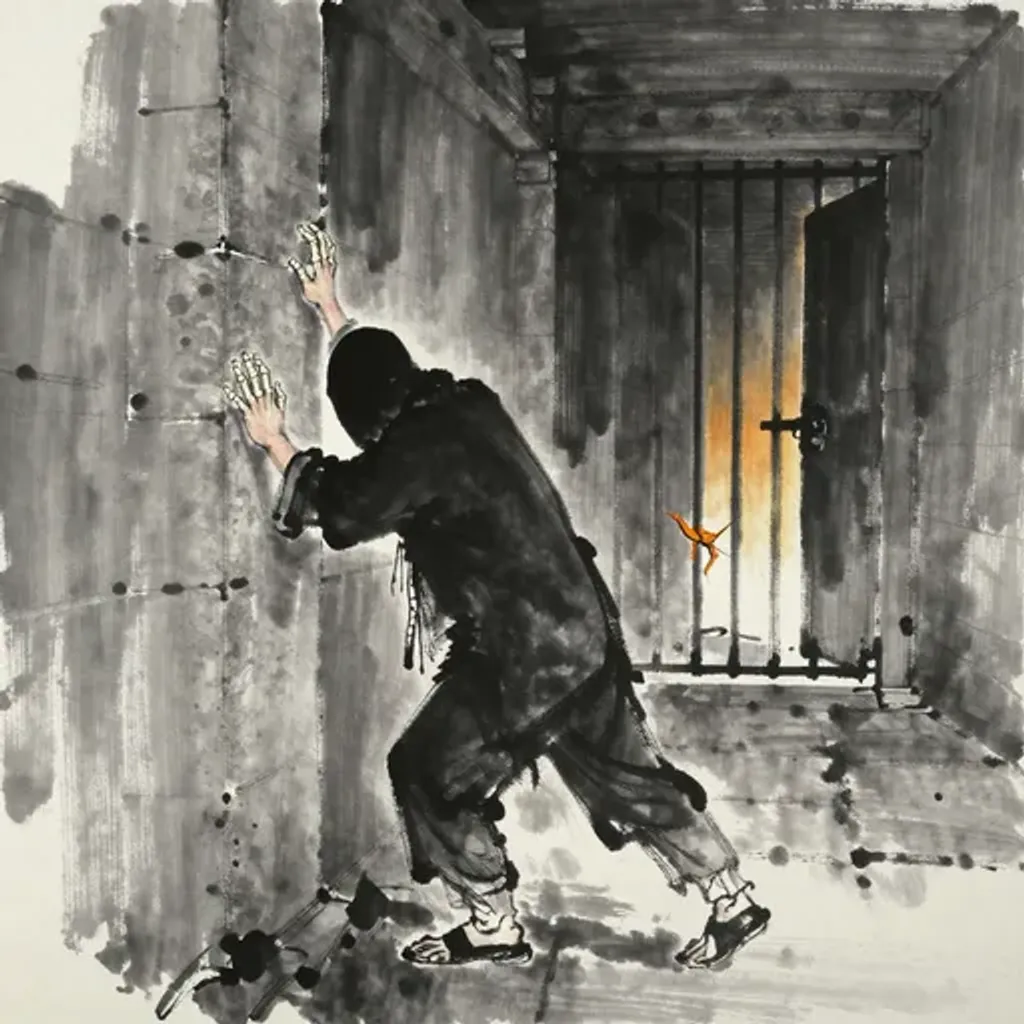
心志無良,傷破妄行。觸墻觝壁,不見戶房。先王閉關,商旅委棄。
The heart's purpose is unsound; recklessly injuring, blindly advancing. Striking walls, colliding with barriers; the doorway cannot be found. The former king shut the passes; merchants and travelers were cast aside.
— Jiao Yanshou, Yilin (Forest of Changes), 1st century BC
Commentary
Heaven stored within the mountain becomes fire above the lake — Opposition. The heart is set on reckless wandering without good purpose, crashing blindly into walls. No doorway or chamber can be found. The former kings closed the passes, and merchants were abandoned and forsaken. The verse is a portrait of disorientation: someone thrashing through a dark space, unable to find the exit, while the very authorities who should maintain order have sealed the gates. From Great Taming to Opposition, the mountain's stored heaven splits into fire above and lake below — elements that naturally diverge. The accumulated reserves of Great Taming become useless when inner confusion meets external closure. Opposition demands finding commonality within difference; this verse finds only collision.
大畜 → 蹇
Hexagram 26 → Hexagram 39: Obstruction
Changing lines: 1, 2, 5, 6
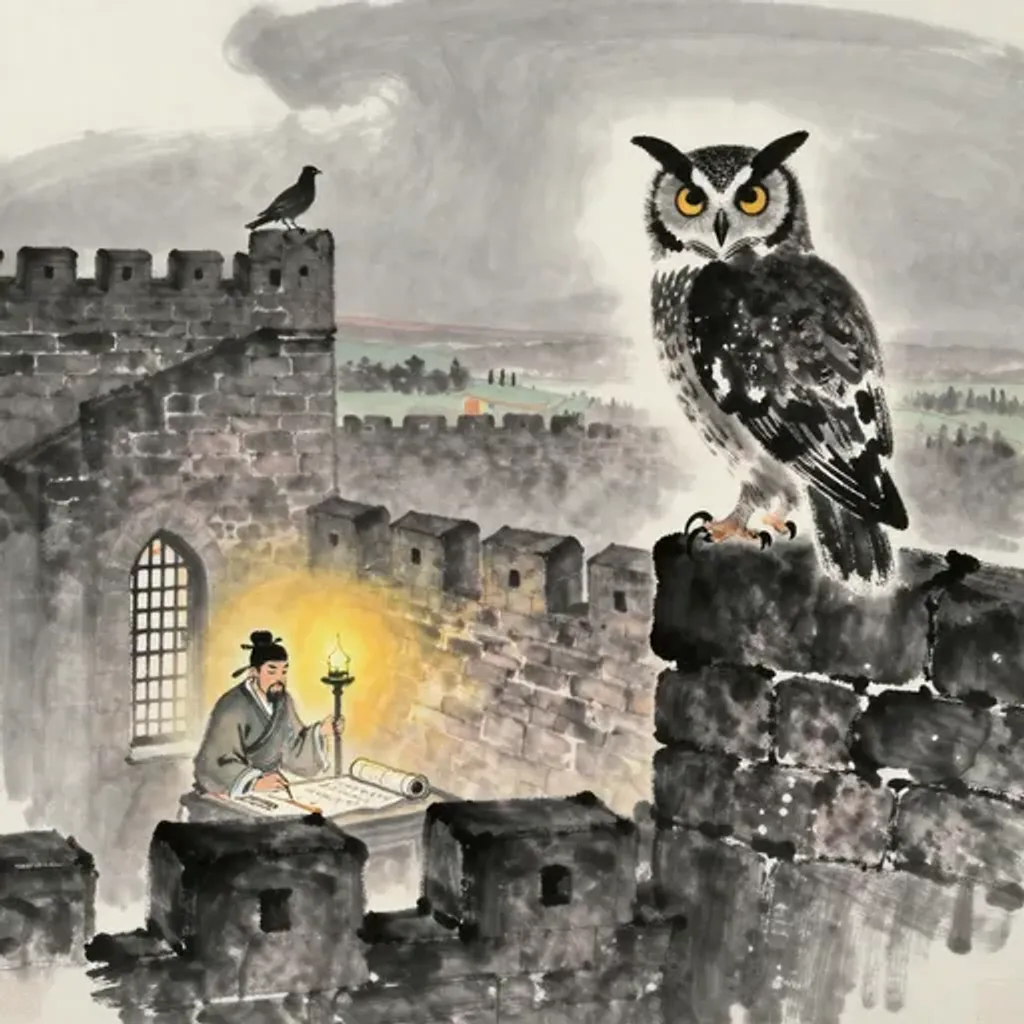
寧夬鴟鴞,治成御災。綏德安家,周公勤勞。
Pacifying the owl, subduing calamity; governance is perfected, disaster averted. Bestowing virtue and settling the household; the Duke of Zhou toiled without rest.
— Jiao Yanshou, Yilin (Forest of Changes), 1st century BC
Commentary
Heaven stored within the mountain yields to water upon the mountain — Obstruction. The verse evokes the Duke of Zhou's 'Owl' ode from the Book of Songs: defeating the owl, governing the realm, and warding off disaster. Through gentleness and virtue, the household is made secure. The Duke of Zhou labors tirelessly. The Shijing poem 'Chixiao' uses the metaphor of an owl threatening a bird's nest to represent enemies menacing the young Zhou state. The Duke of Zhou fought to protect his nephew King Cheng's fragile regime against rebellion. From Great Taming to Obstruction, the mountain's stored heaven meets water blocking the mountain path. The Duke's response to obstruction was not force alone but persistent virtue — taming the crisis through accumulated wisdom and tireless devotion.
大畜 → 解
Hexagram 26 → Hexagram 40: Deliverance
Changing lines: 1, 3, 4, 6
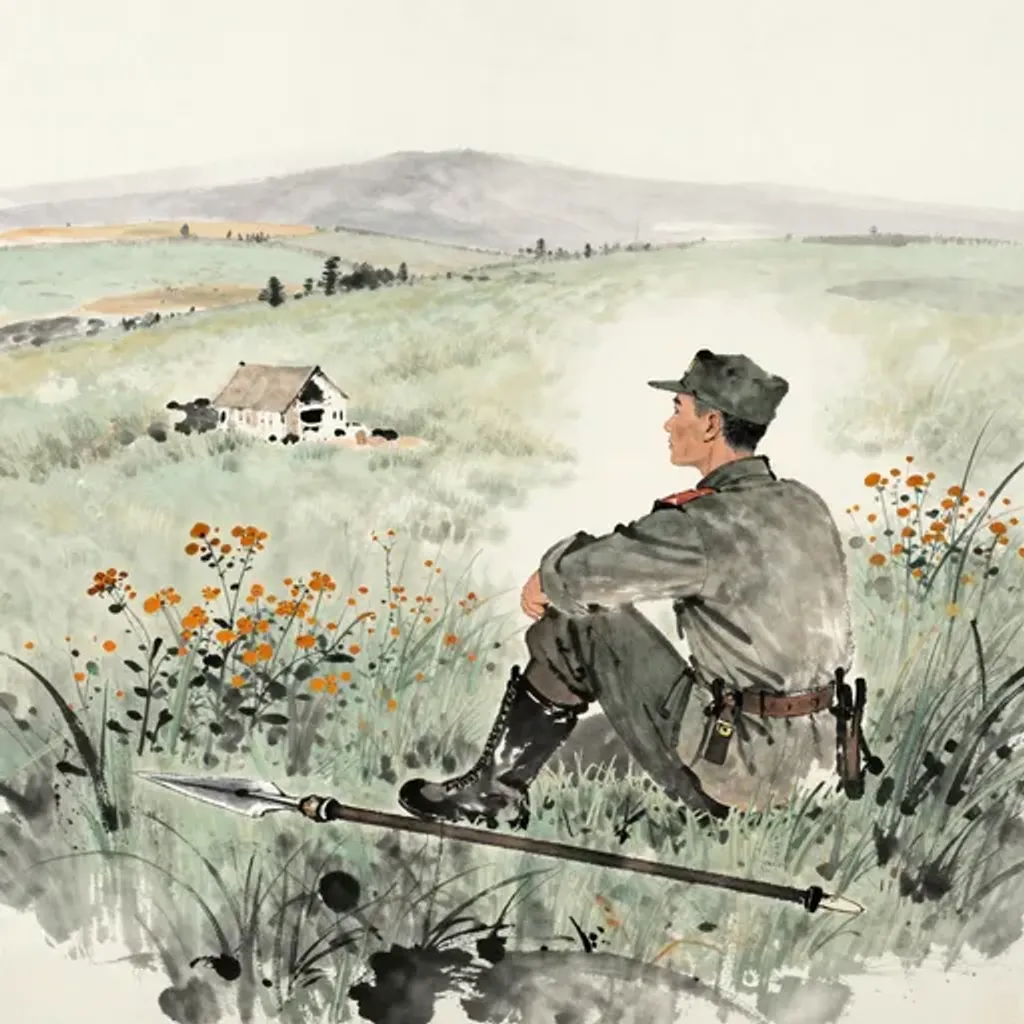
清人高子,久在外野。逍遙不歸,思我慈母。
The man of Qing, Gao Zi, long stationed in the open wilds. Wandering at ease, he does not return; he thinks of his loving mother.
— Jiao Yanshou, Yilin (Forest of Changes), 1st century BC
Commentary
Heaven stored within the mountain gives way to thunder above water — Deliverance. The 'men of Qing' and Commander Gao — long stationed in the frontier wilds, wandering idly without returning home, thinking of their loving mother. This directly references the Shijing poem 'Qing Ren' from the Odes of Zheng, which describes the garrison of Zheng soldiers under General Gao Ke stationed at Qing. The troops idled at the frontier while their commander was too dissolute to lead them home. Eventually the army scattered. From Great Taming to Deliverance, the mountain's stored heaven becomes the releasing storm of thunder and rain. But release here is bittersweet: the soldiers long for home but cannot return. Deliverance requires someone to untie the knot, and Gao Ke never does.
大畜 → 損
Hexagram 26 → Hexagram 41: Decrease
Changing lines: 3
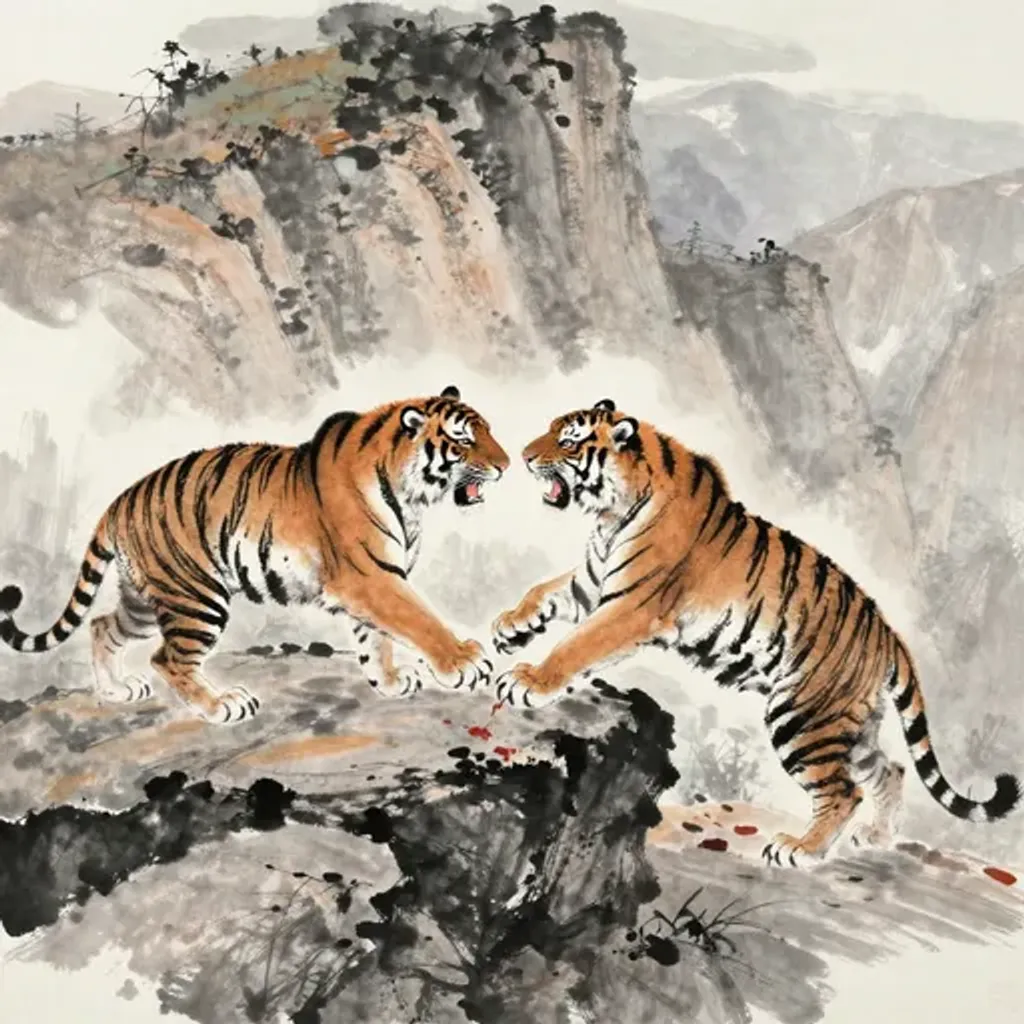
兩虎爭鬭,服創無處。不成仇讎,行解卻去。
Two tigers fight; wounds cover their bodies, nowhere unscathed. They do not become lasting foes; their struggle dissolves and they withdraw.
— Jiao Yanshou, Yilin (Forest of Changes), 1st century BC
Commentary
Heaven stored within the mountain descends into the mountain above the lake — Decrease. Two tigers battle each other, tearing wounds across their bodies with nowhere left unscathed. Yet the fight does not harden into lasting enmity; instead, they separate and walk away. The verse captures the paradox of Decrease: what is lost in the struggle ultimately reduces the conflict itself. Two equally matched forces exhaust themselves, and the exhaustion becomes the resolution. From Great Taming to Decrease, the mountain's accumulated power is spent in mutual destruction. But Decrease is not pure loss — the mountain above the lake gives to the lake by diminishing itself. Sometimes the cost of fighting is exactly what ends the fight.
大畜 → 益
Hexagram 26 → Hexagram 42: Increase
Changing lines: 2, 3, 5
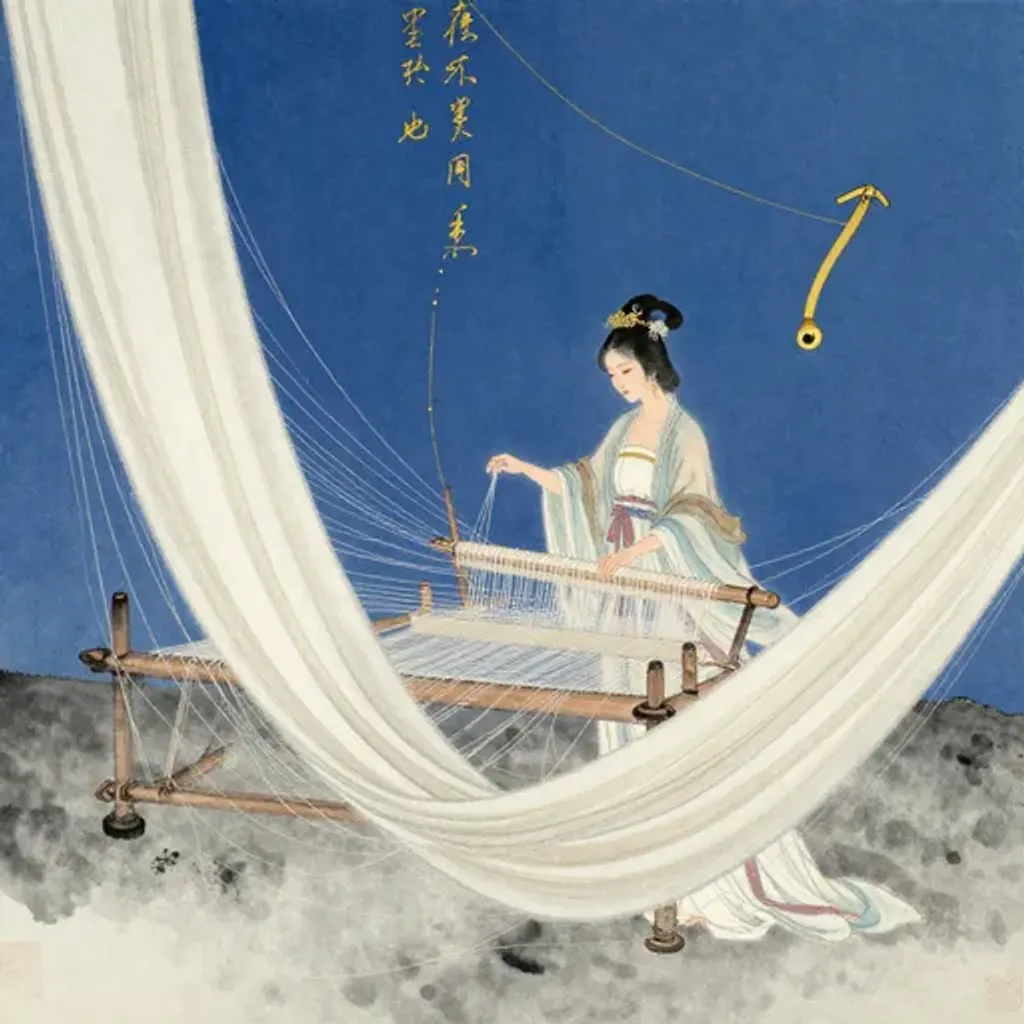
天女推床,不成文章。南箕無舌,飯多沙糖。虛象盜名,雄雞折頸。
The Heavenly Maiden pushes aside her loom; the pattern does not form. The Southern Winnower has no tongue; the rice is mixed with sand and chaff. False image, stolen name; the rooster's neck is wrung.
— Jiao Yanshou, Yilin (Forest of Changes), 1st century BC
Commentary
Heaven stored within the mountain rises as wind and thunder — Increase. The Weaving Maid star pushes at her loom, but no proper fabric is produced. The Southern Dipper has no tongue, yet rice is mixed with sugar and sand. False images steal reputations, and the rooster that crows in vain has its neck wrung. The verse is a catalog of celestial and earthly deception: stars that bear names of useful functions but deliver nothing, counterfeits that claim substance but offer only grit. From Great Taming to Increase, the mountain's stored heaven should generate genuine growth. But this verse warns that false increase — gain built on deception, reputation without substance — ultimately collapses. The rooster's broken neck is the fate of every impostor.
大畜 → 夬
Hexagram 26 → Hexagram 43: Breakthrough
Changing lines: 4, 5, 6
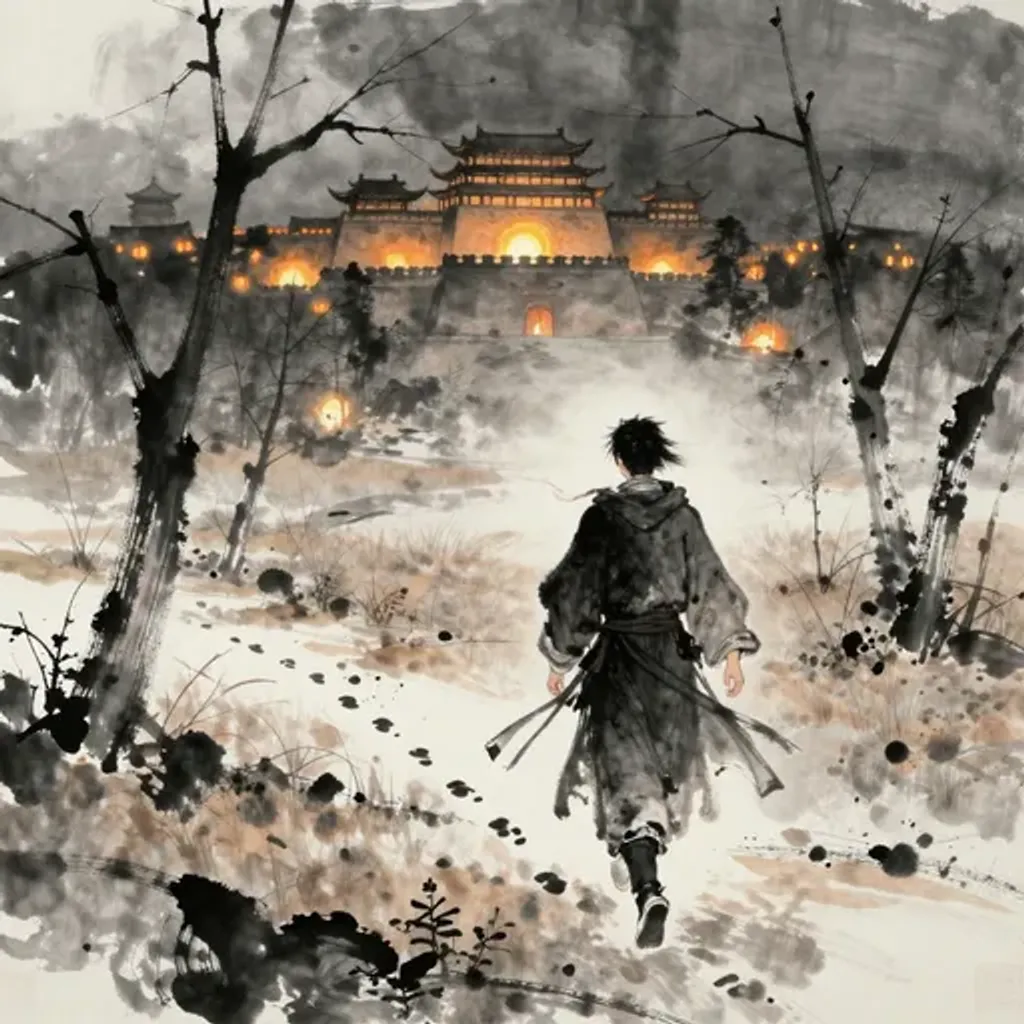
太子扶蘇,走出遠郊。佞幸成邪,改命生憂。慈母之恩,無路致之。
Crown Prince Fusu, sent out to the distant frontier. Sycophants craft their deceit, altering the decree to breed sorrow. A mother's kindness has no road by which to reach him.
— Jiao Yanshou, Yilin (Forest of Changes), 1st century BC
Commentary
Heaven stored within the mountain gives way to the lake rising above heaven — Breakthrough. Crown Prince Fusu is sent out to the distant frontier, exiled from the capital. Sycophants and favorites twist what is right into wrong, forging false decrees that breed calamity. A mother's kindness cannot reach her son — the road between them is severed. According to tradition, Fusu was the virtuous eldest son of the First Emperor of Qin, banished to the northern border for remonstrating against the burning of books. After the emperor's death, Zhao Gao forged an edict ordering Fusu's suicide. From Great Taming to Breakthrough, the mountain's stored heaven should burst free through decisive action. Instead, the breakthrough is corrupted: the wrong people break through to power, and the righteous heir is cut down.
大畜 → 姤
Hexagram 26 → Hexagram 44: Coming to Meet
Changing lines: 1, 4, 5
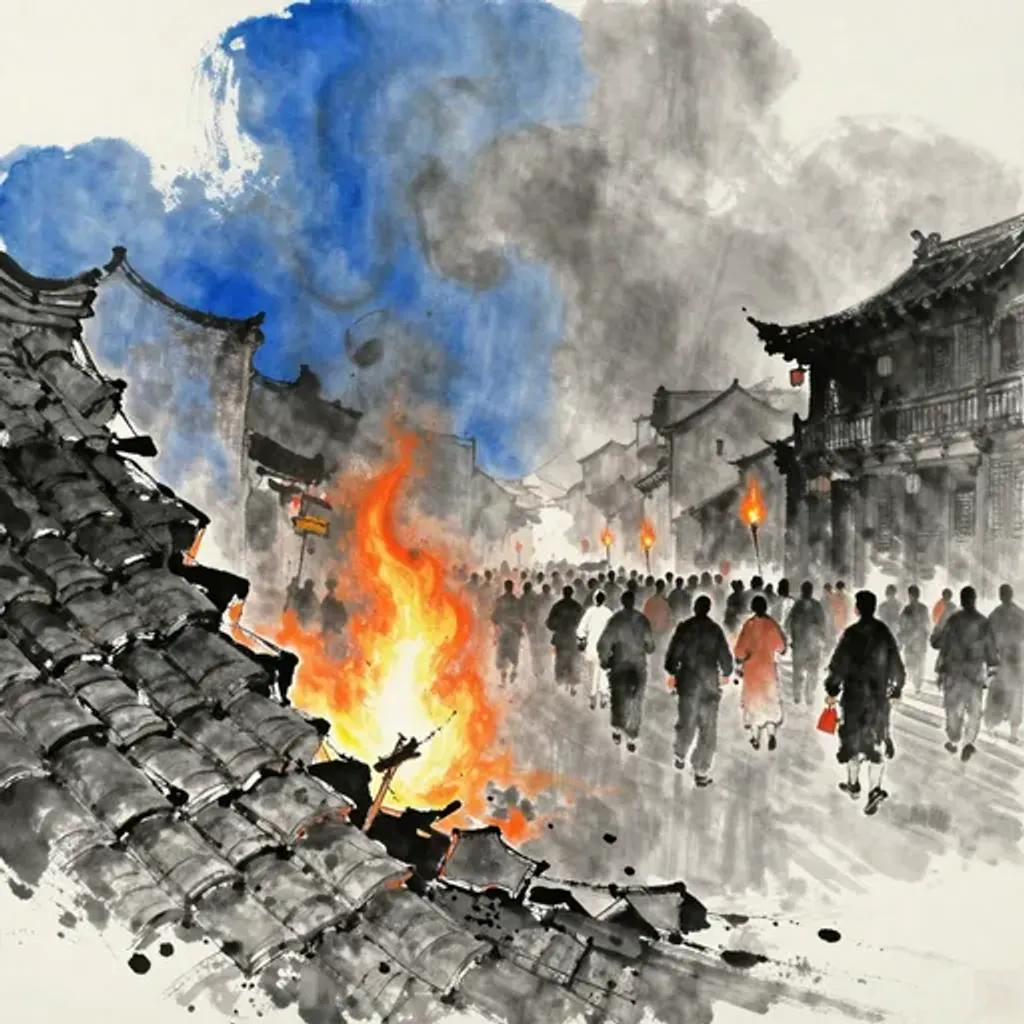
寒暑相推,一明一微。赫赫宗周,光榮滅衰。
Cold and heat push one another onward; one bright, one dim. Illustrious was the house of Zhou; its glory wanes and fades.
— Jiao Yanshou, Yilin (Forest of Changes), 1st century BC
Commentary
Heaven stored within the mountain yields to heaven with wind below — Coming to Meet. Cold and heat push one another forward, one bright, one dim. The illustrious house of Zhou shone gloriously, then dimmed and declined. The verse traces the natural rhythm of cyclical rise and fall through the metaphor of seasonal alternation. The Western Zhou, once the pinnacle of civilized rule, eventually exhausted its mandate. From Great Taming to Coming to Meet, the mountain's stored heaven encounters the wind that arrives uninvited from below — the yin force that meets the yang unexpectedly. Great dynasties are not conquered but met by the inevitable return of what they suppressed. Stored glory dims not through enemy action but through the cosmic rhythm of alternation itself.
大畜 → 萃
Hexagram 26 → Hexagram 45: Gathering Together
Changing lines: 1, 2, 3, 4, 5, 6
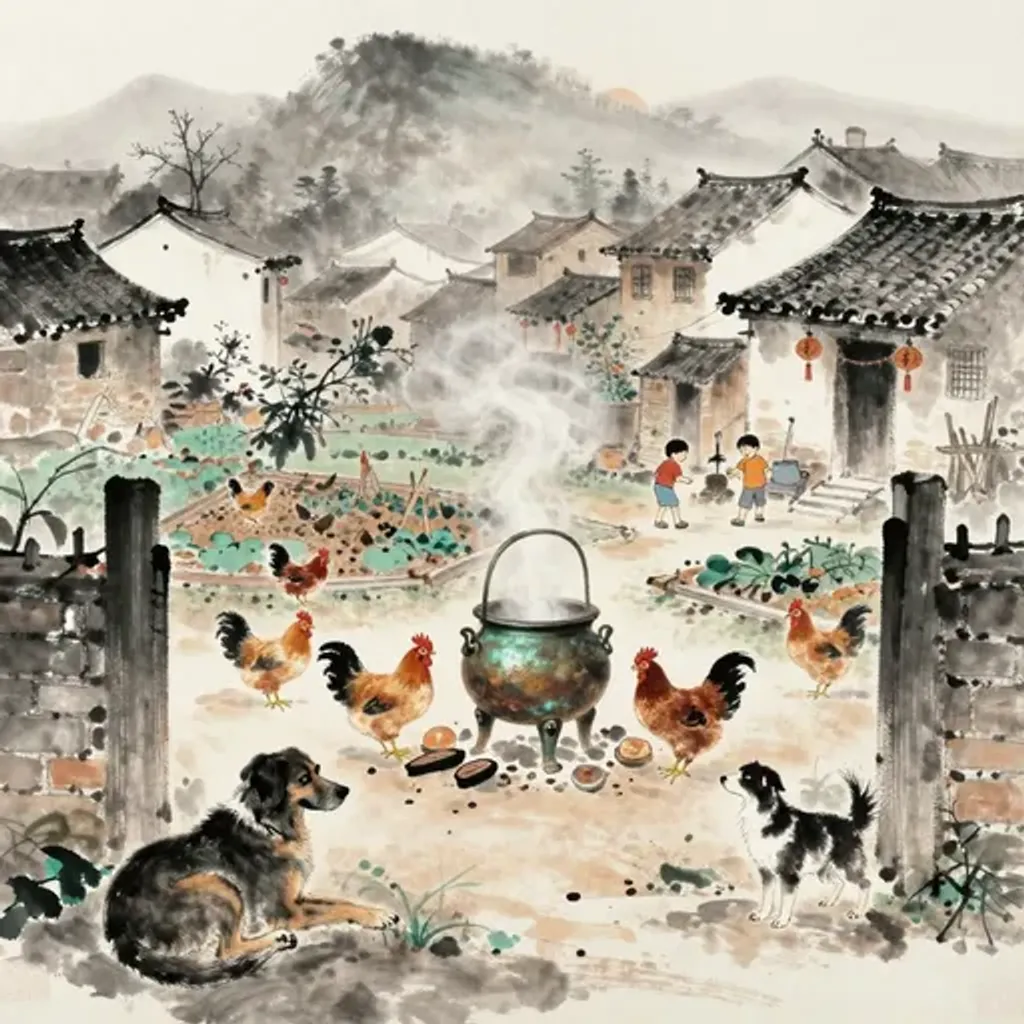
雞狗相望,仁道篤行。不吠昏明,各安其鄉。周鼎和餌,國富民有。八極蒙祐。
Chickens and dogs within sight of one another; the way of benevolence is practiced steadfastly. They do not bark at dusk or dawn; each is at peace in its own village. The tripod of Zhou blends its seasonings; the state is rich, the people have plenty. All within the eight directions receive its blessing.
— Jiao Yanshou, Yilin (Forest of Changes), 1st century BC
Commentary
Heaven stored within the mountain opens onto a vision of pastoral contentment. Roosters and dogs can be heard from neighboring homesteads, yet no one disturbs the dawn or dusk: each household rests secure in its own village. This is Laozi's utopia from Daodejing chapter 80: neighboring communities so self-sufficient and content that 'the people grow old and die without visiting one another.' The verse then adds the Zhou cauldron harmonizing its ingredients, a metaphor for governance as skilled cookery, blending diverse elements into nourishing whole. The nation prospers and all within the eight directions receive blessing. From Great Taming to Gathering, accumulated wisdom yields not expansion but community: the mountain's stored heaven descends as the lake gathers upon the earth, pooling abundance where people naturally congregate.
大畜 → 升
Hexagram 26 → Hexagram 46: Pushing Upward
Changing lines: 1, 6
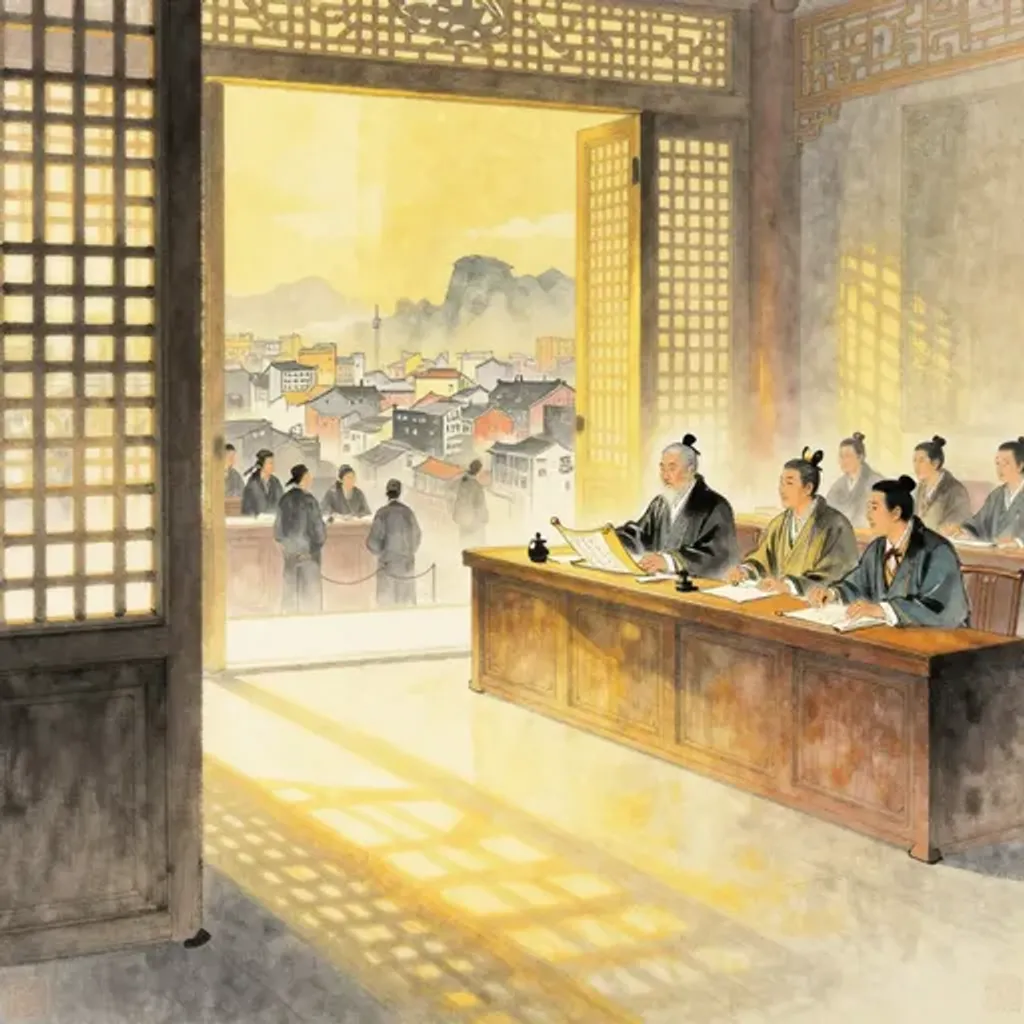
窗牖戶旁,道利明光。賢智輔聖,仁施大行。家給人足,海內殷昌。
Windows and doors beside the wall; the way is bright with profit and light. The wise and worthy assist the sage; benevolence is broadly practiced. Every household has enough, every person is content; within the seas all prosper.
— Jiao Yanshou, Yilin (Forest of Changes), 1st century BC
Commentary
Heaven stored within the mountain gives way to earth above wind — Pushing Upward. Light pours through the windows and doorways, illuminating the path. The wise and virtuous assist the sage; benevolence spreads far and wide. Every household is provided for; the realm within the four seas prospers and flourishes. This is governance at its finest — accumulated wisdom deployed as institutional light. The windows represent transparency; the sage surrounded by worthy counselors represents merit properly employed. From Great Taming to Pushing Upward, the mountain's stored heaven becomes wind growing within the earth, trees pushing slowly skyward. The transformation enacts the principle: what was stored now rises organically, building great height from small, steady increments of virtue and good governance.
大畜 → 困
Hexagram 26 → Hexagram 47: Oppression
Changing lines: 1, 3, 4, 5, 6
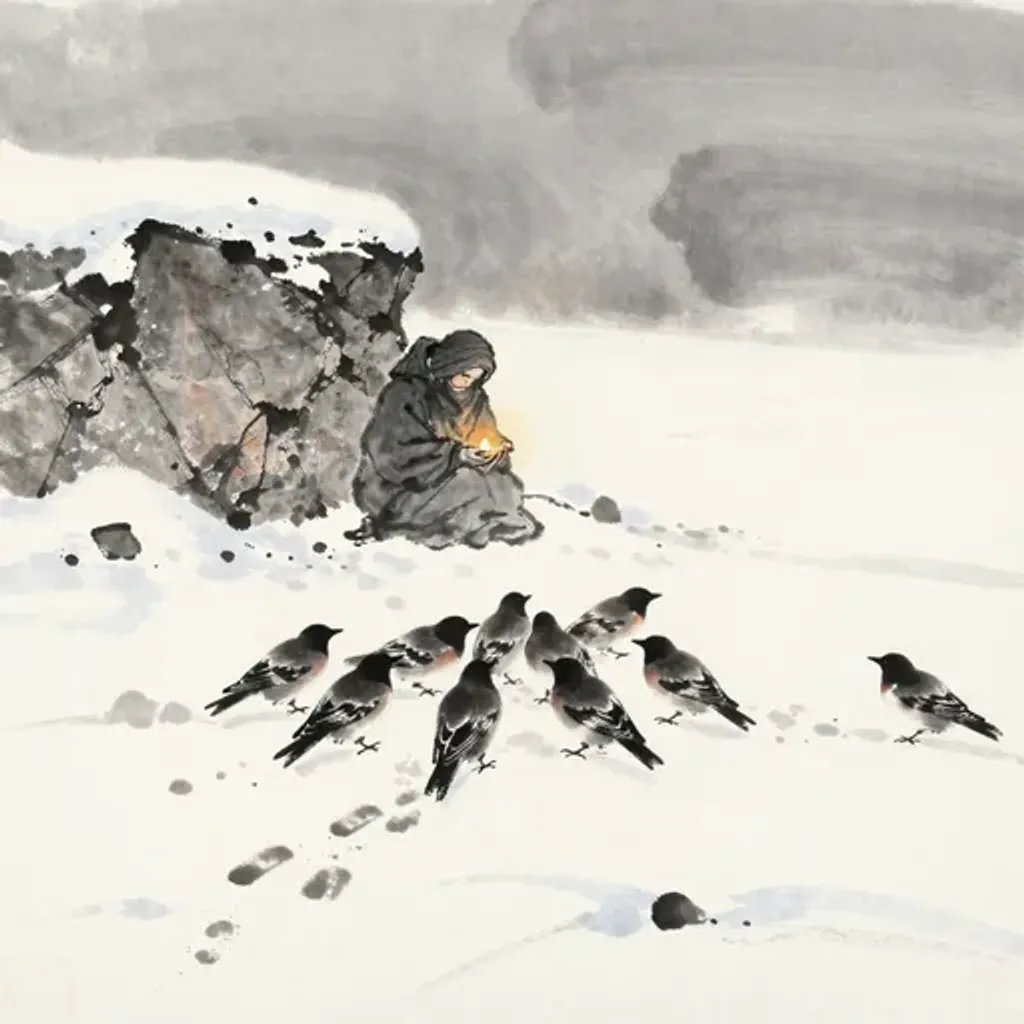
雨雪三日,鳥獸飢乏。旅人失宜,利不可得。幾言解患,以療紛難。危者復安。
Rain and snow for three days; birds and beasts starve and falter. The traveler finds no lodging; profit cannot be obtained. A few apt words dispel the trouble, healing the tangled difficulty. Those in peril are restored to peace.
— Jiao Yanshou, Yilin (Forest of Changes), 1st century BC
Commentary
Heaven stored within the mountain meets the lake drained of water — Oppression. Rain and snow fall for three days straight; birds and beasts go hungry and weak. The traveler finds nothing favorable, and profit lies beyond reach. Then the verse turns: a few well-chosen words resolve the crisis, healing the tangled difficulties. The endangered find safety again. The first half depicts the desolation of Oppression — the lake is dry, resources exhausted, and all creatures suffer. But the second half enacts Oppression's secret teaching: the gentleman 'stakes his life to carry out his purpose.' Sometimes a single phrase of wisdom penetrates where force cannot. From Great Taming to Oppression, accumulated reserves face their ultimate test. Not all reserves are material; the most potent may be a timely word.
大畜 → 井
Hexagram 26 → Hexagram 48: The Well
Changing lines: 1, 5, 6
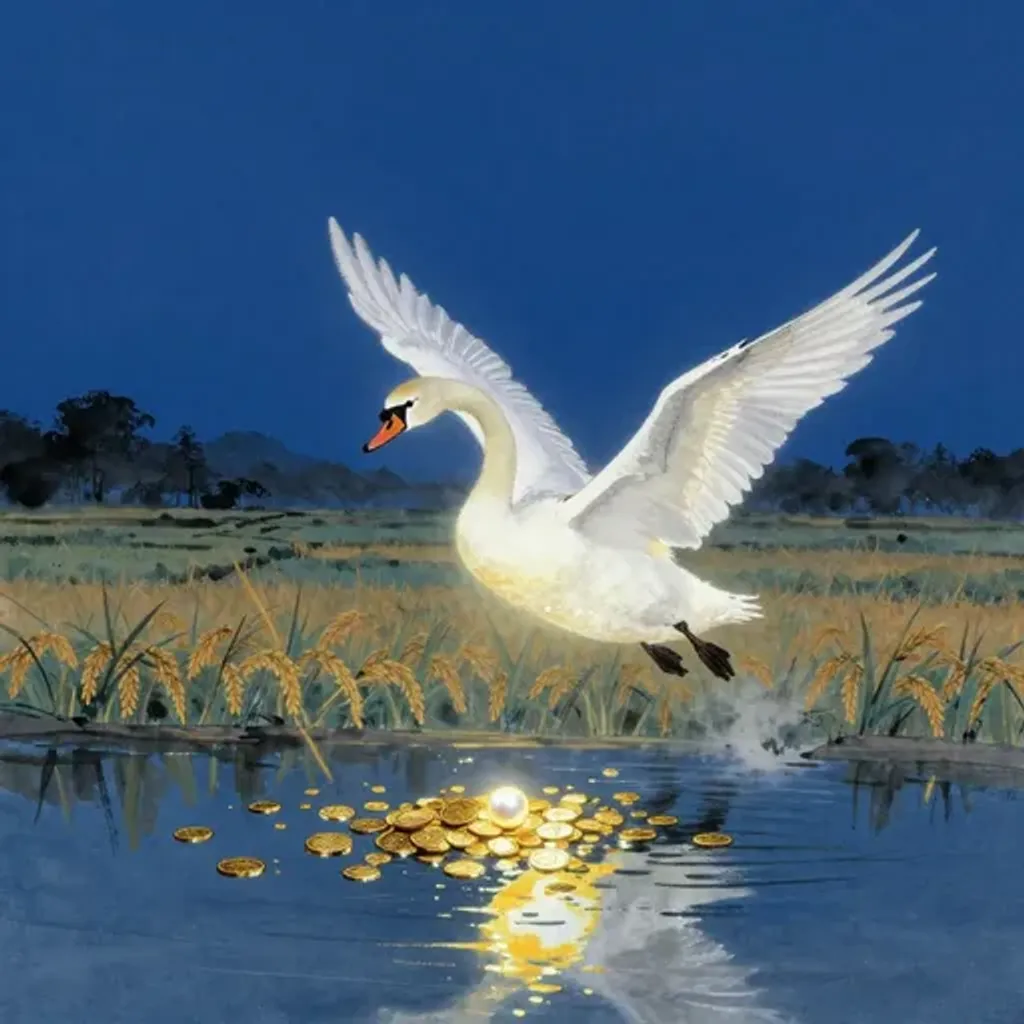
白鵠衘珠,夜食為明。膏潤渥優,國歲年豐。中子來同,見惡不凶。
The white swan holds a pearl in its beak; by night it feeds and gives off light. Its rich moisture is bountiful and fine; the year's harvest is plentiful. The middle son arrives in harmony; seeing ill, he meets no misfortune.
— Jiao Yanshou, Yilin (Forest of Changes), 1st century BC
Commentary
Heaven stored within the mountain gives way to water above wind — the Well. A white swan carries a pearl in its beak, feeding by its light through the night. Rich moisture spreads abundantly; the year's harvest is plentiful. The middle son arrives in harmony, and encountering what seems evil brings no actual harm. The luminous pearl is the well's deep sustenance made visible — hidden nourishment rising to the surface. The white swan, an auspicious creature, bears this light upward. From Great Taming to the Well, the mountain's stored heaven becomes the inexhaustible water drawn up through wood. What was accumulated in the mountain now circulates as communal sustenance. The well never empties when its source runs deep.
大畜 → 革
Hexagram 26 → Hexagram 49: Revolution
Changing lines: 2, 4, 5, 6
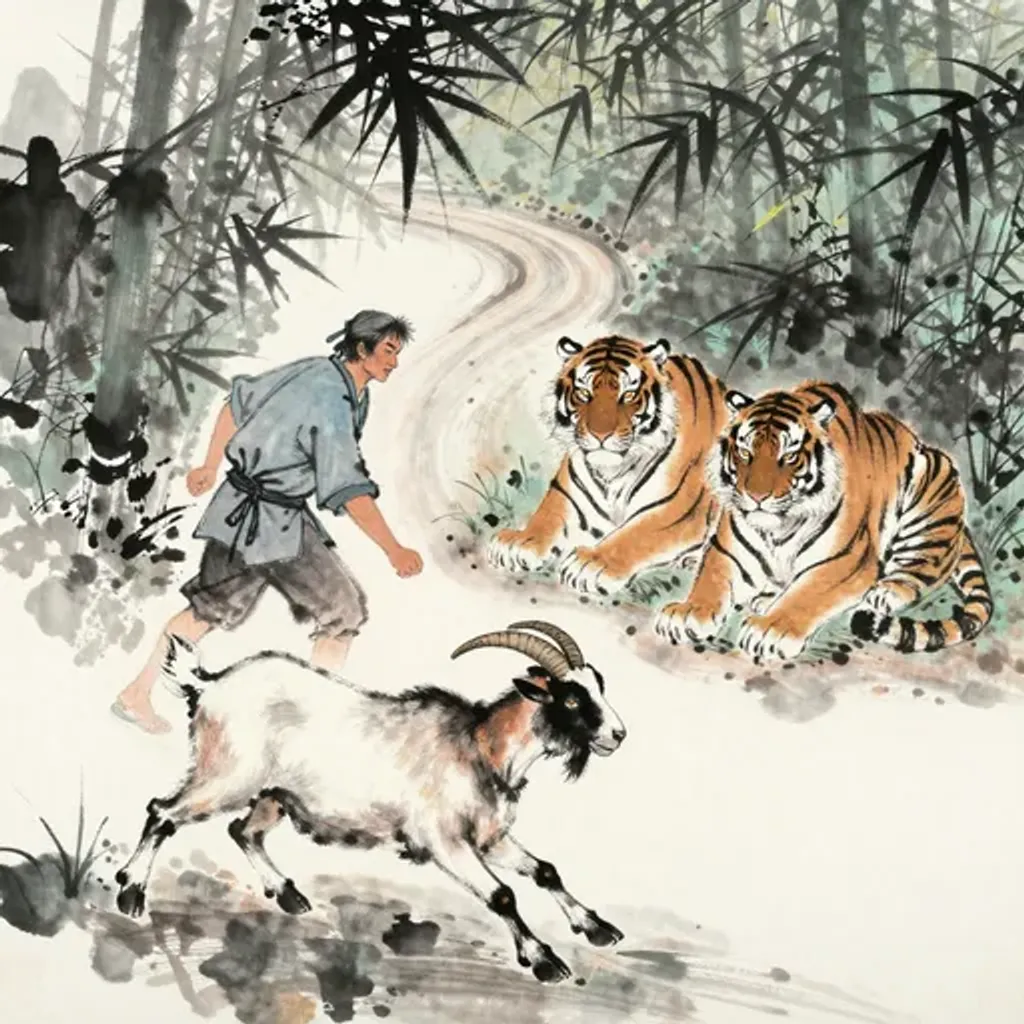
從豕牽羊,與虎相逢,雖驚不凶。
Leading a pig, pulling a goat, he meets a tiger on the road. Though startled, there is no harm.
— Jiao Yanshou, Yilin (Forest of Changes), 1st century BC
Commentary
Heaven stored within the mountain becomes the lake with fire within — Revolution. Driving pigs and leading sheep, one encounters a tiger on the road. Though startled, no harm comes. The verse is strikingly concise: the shepherd with his humble livestock meets the apex predator, yet the encounter passes without injury. Revolution transforms through the meeting of incompatible forces — fire within the lake, destruction within containment. From Great Taming to Revolution, the mountain's stored heaven becomes the revolutionary tension of opposing elements. The tiger and the herd represent forces that should not coexist, yet in this moment they do. The verse suggests that not every revolution ends in bloodshed; sometimes the predator simply passes by.
大畜 → 鼎
Hexagram 26 → Hexagram 50: The Cauldron
Changing lines: 1, 4
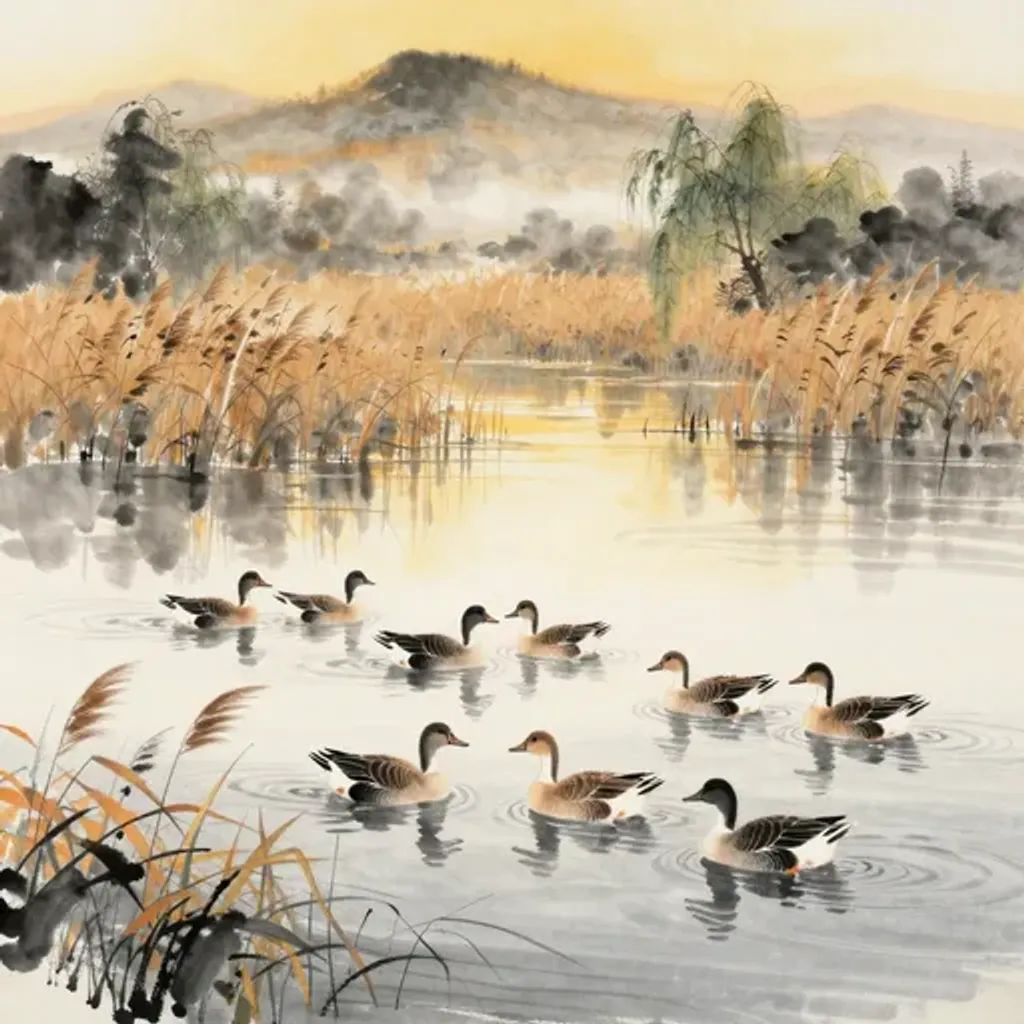
鳧雁啞啞,以水為宅。雌雄相和,心志娛樂。得其所欲,絕其患惡。
Wild ducks and geese call softly, making the water their home. Male and female in harmony; their hearts' delight is contentment. They obtain what they desire; all affliction is cut away.
— Jiao Yanshou, Yilin (Forest of Changes), 1st century BC
Commentary
Heaven stored within the mountain transforms into fire above wind — the Cauldron. Wild ducks and geese call out contentedly, making the water their home. Male and female pair harmoniously, their hearts delighting in one another. They find what they desire and leave behind all trouble and evil. The image is of waterfowl perfectly suited to their element — an emblem of natural harmony. The Cauldron raises raw material through fire into nourishing transformation. From Great Taming to the Cauldron, the mountain's stored heaven becomes the vessel of civilized refinement. What was accumulated raw is now cooked and served: wild nature finds its home in cultivated order. The paired geese embody the Cauldron's promise — proper placement yields lasting contentment.
大畜 → 震
Hexagram 26 → Hexagram 51: The Arousing Thunder
Changing lines: 2, 3, 4, 6
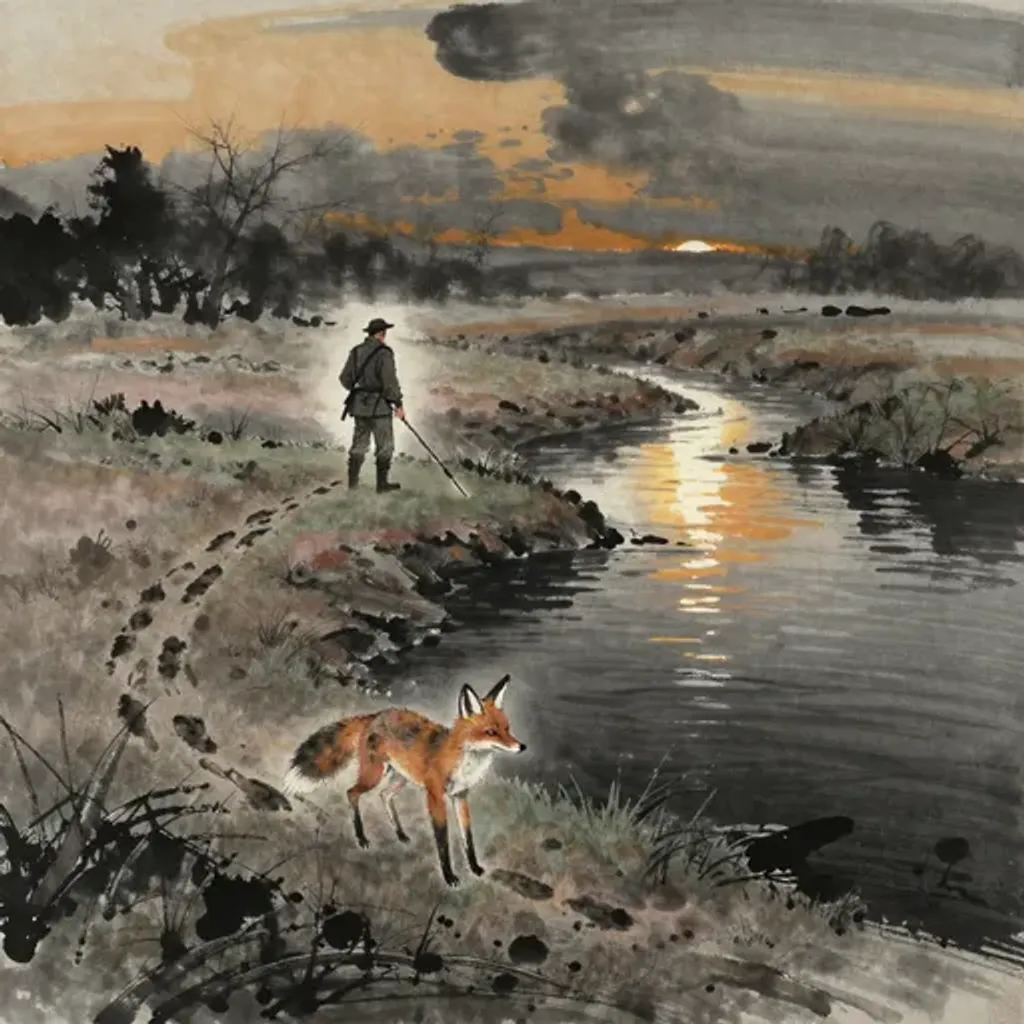
逐狐平原,水遏我前。深不可涉,暮無所得。
Chasing a fox across the plain; water blocks the way ahead. Too deep to wade; by evening, nothing is gained.
— Jiao Yanshou, Yilin (Forest of Changes), 1st century BC
Commentary
Heaven stored within the mountain erupts into doubled thunder — the Arousing. Chasing a fox across the open plain, one is stopped short by water blocking the path. The river is too deep to ford; by evening, one returns empty-handed. The fox — elusive, cunning — is the quarry that always slips away. The doubled thunder of the Arousing shakes everything into motion, but motion without direction produces nothing. Water cuts off the pursuit at the critical moment. From Great Taming to the Arousing, the mountain's stored heaven becomes raw kinetic energy — thunder upon thunder. The verse warns that even accumulated reserves, once converted to reckless pursuit, can be thwarted by a single impassable barrier. Patience was the strength; haste was the undoing.
大畜 → 艮
Hexagram 26 → Hexagram 52: Keeping Still Mountain
Changing lines: 1, 2
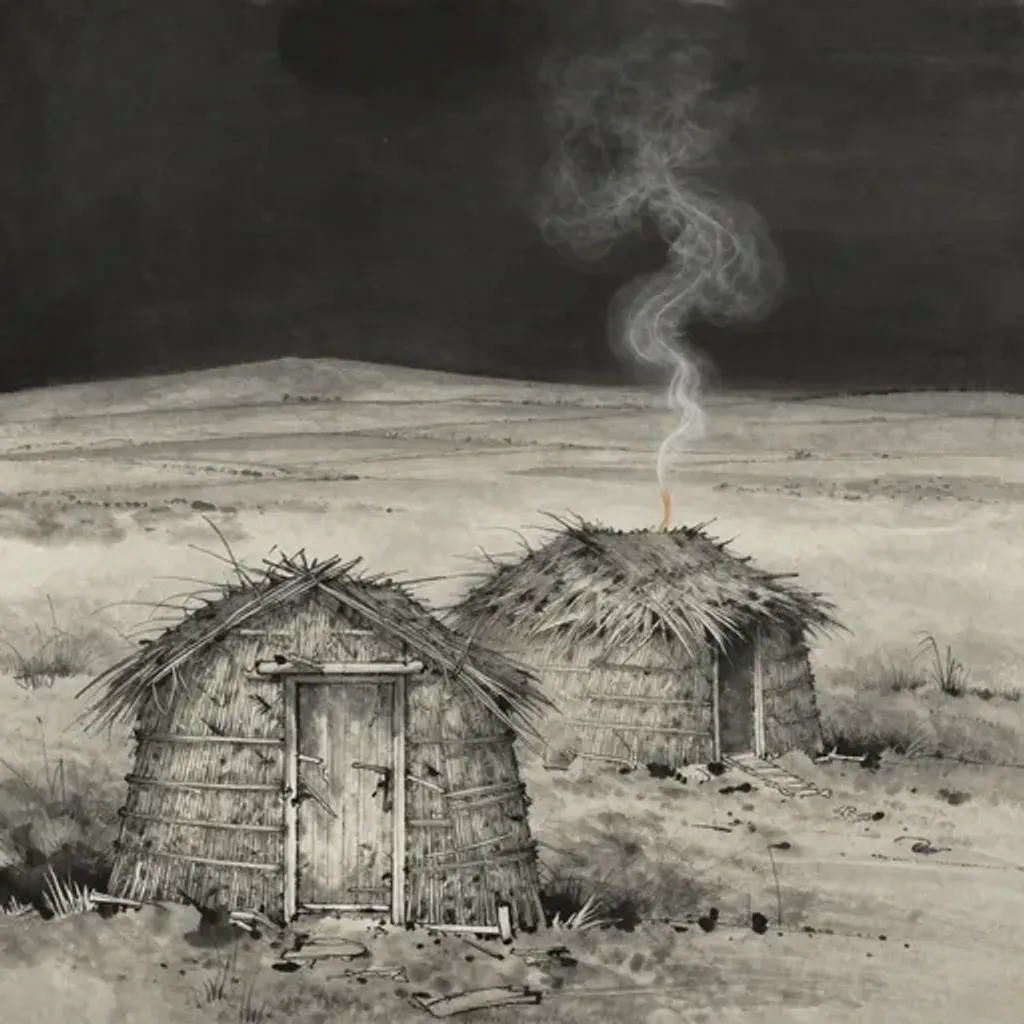
窟室蓬戶,寒賤所處。十里望烟,散渙四方。形體滅亡,下入深淵。終不見君。
A cave dwelling with a rush-woven door; the cold and humble dwell here. For ten li one sees only smoke; scattered and dispersed in all directions. Form and body perish; they descend into the deep abyss. In the end, the lord is never seen.
— Jiao Yanshou, Yilin (Forest of Changes), 1st century BC
Commentary
Heaven stored within the mountain faces doubled mountain — Keeping Still. A cave dwelling with a wormwood door — the abode of the impoverished and lowly. Gazing ten li into the distance, one sees only scattered smoke drifting in all directions. The body wastes away and descends into the abyss. One never sees the lord again. The 'wormwood door and jar-window' is the classical image of virtuous poverty, associated with Confucius's disciple Yuan Xian who chose integrity over comfort. Yet here the image is not noble poverty but terminal desolation: the body perishes, smoke disperses, and the lord is forever beyond reach. From Great Taming to Keeping Still, the mountain doubles down on itself — stillness compounded into paralysis. What was stored becomes a tomb.
大畜 → 漸
Hexagram 26 → Hexagram 53: Development
Changing lines: 1, 2, 5
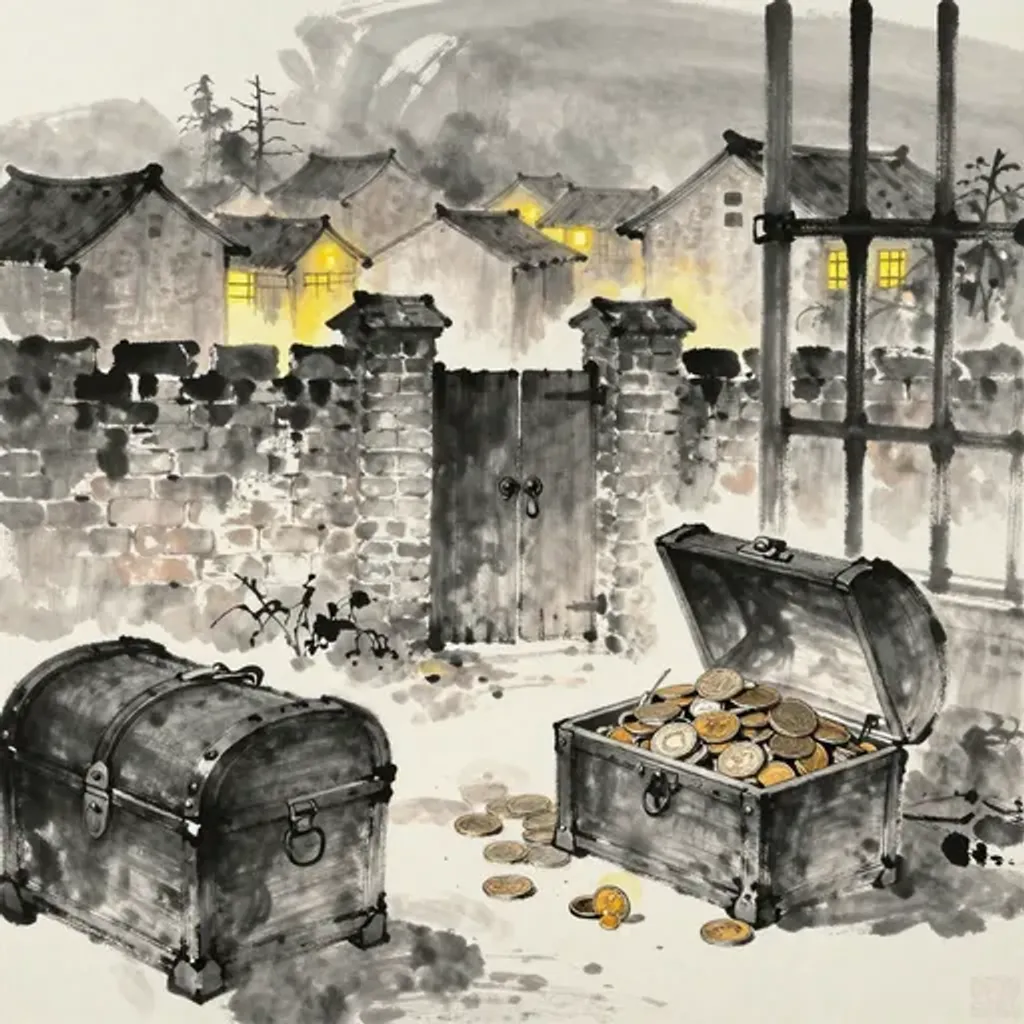
桀紂之主,悖不可輔。貪榮為人,必定其咎。聚鈠積實,野在鄙邑,未得入室。
Rulers like Jie and Zhou, perverse and beyond help. Greedy for glory and serving others, one is certain to incur blame. Hoarding coin and piling goods, stranded in the remote outskirts; he has not gained entry to the chamber.
— Jiao Yanshou, Yilin (Forest of Changes), 1st century BC
Commentary
Heaven stored within the mountain rises as wind above the mountain — Development. With rulers like Jie and Zhou, perverse and impossible to serve, those who cling to honor for personal gain will surely bring blame upon themselves. Wealth may be accumulated and goods piled high, but it all remains out in the wilds and rustic hamlets, unable to enter the inner chambers of power. The tyrants Jie and Zhou are the archetypal bad kings — under such masters, accumulated talent and resources find no legitimate outlet. From Great Taming to Development, the mountain's stored heaven should grow gradually upward like a tree on a mountainside. But when the ruler is corrupt, gradual development is impossible; the worthy scholar remains stranded in the hinterland, his accumulated learning locked outside the gates.
大畜 → 歸妹
Hexagram 26 → Hexagram 54: The Marrying Maiden
Changing lines: 3, 4, 6
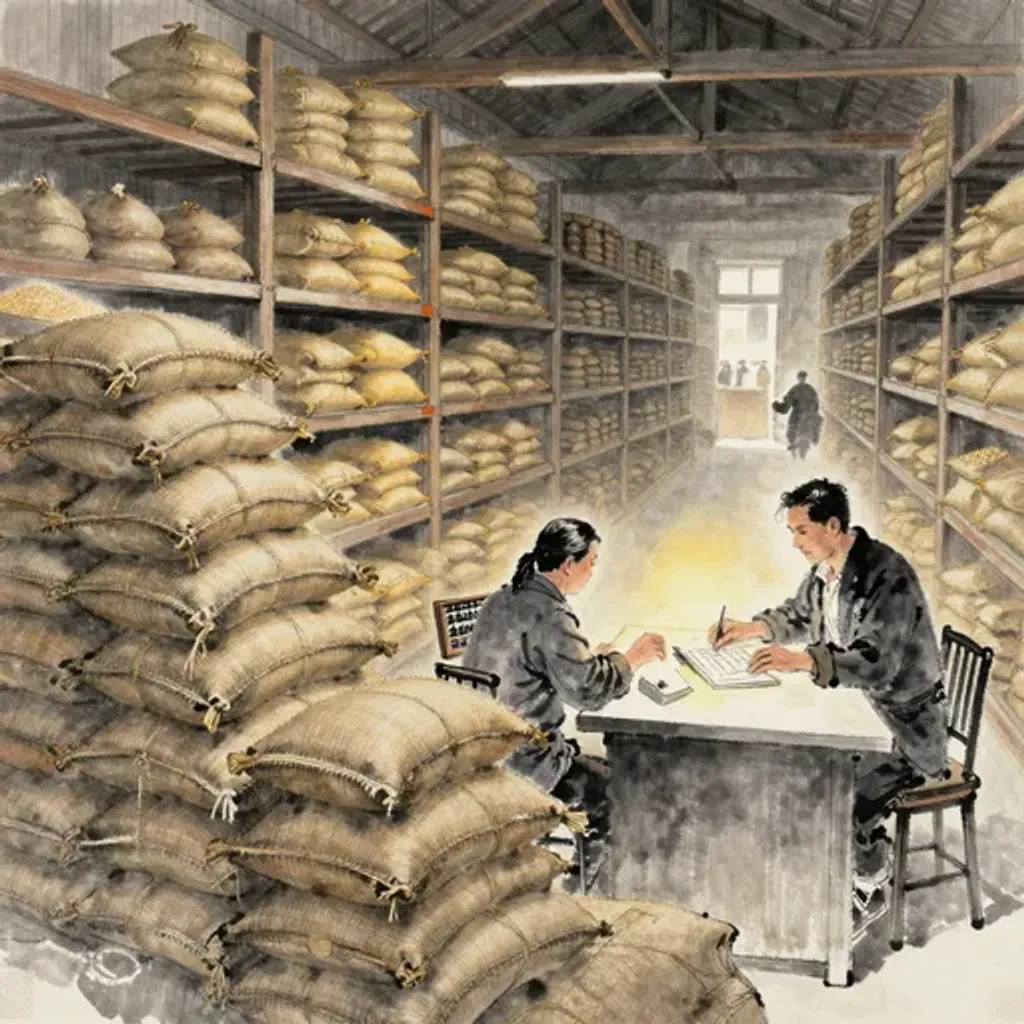
倉庫盈億,年歲有息。商人留連,雖久有得。陰多陽少。因地就力。
Granaries brim with a hundred million; year after year there is increase. The merchant lingers long; though slow, there is gain at last. Yin exceeds yang. Working with the terrain, one draws on its strength.
— Jiao Yanshou, Yilin (Forest of Changes), 1st century BC
Commentary
Heaven stored within the mountain becomes thunder above the lake — the Marrying Maiden. Granaries and storehouses overflow with wealth; the yearly harvest brings interest upon interest. Merchants linger and delay, but even so they eventually profit. Yin exceeds yang; one works with what the terrain provides. The verse presents the steady accumulation of agricultural wealth — reserves that grow through patient waiting rather than active pursuit. The Marrying Maiden suggests subordination: the younger sister given in marriage follows behind the elder. From Great Taming to the Marrying Maiden, the mountain's stored heaven becomes the lake's submission to thunder. Abundance is achieved not through bold initiative but through quiet accommodation — working with existing conditions, accepting a subordinate position, and letting time do the rest.
大畜 → 豐
Hexagram 26 → Hexagram 55: Abundance
Changing lines: 2, 4, 6
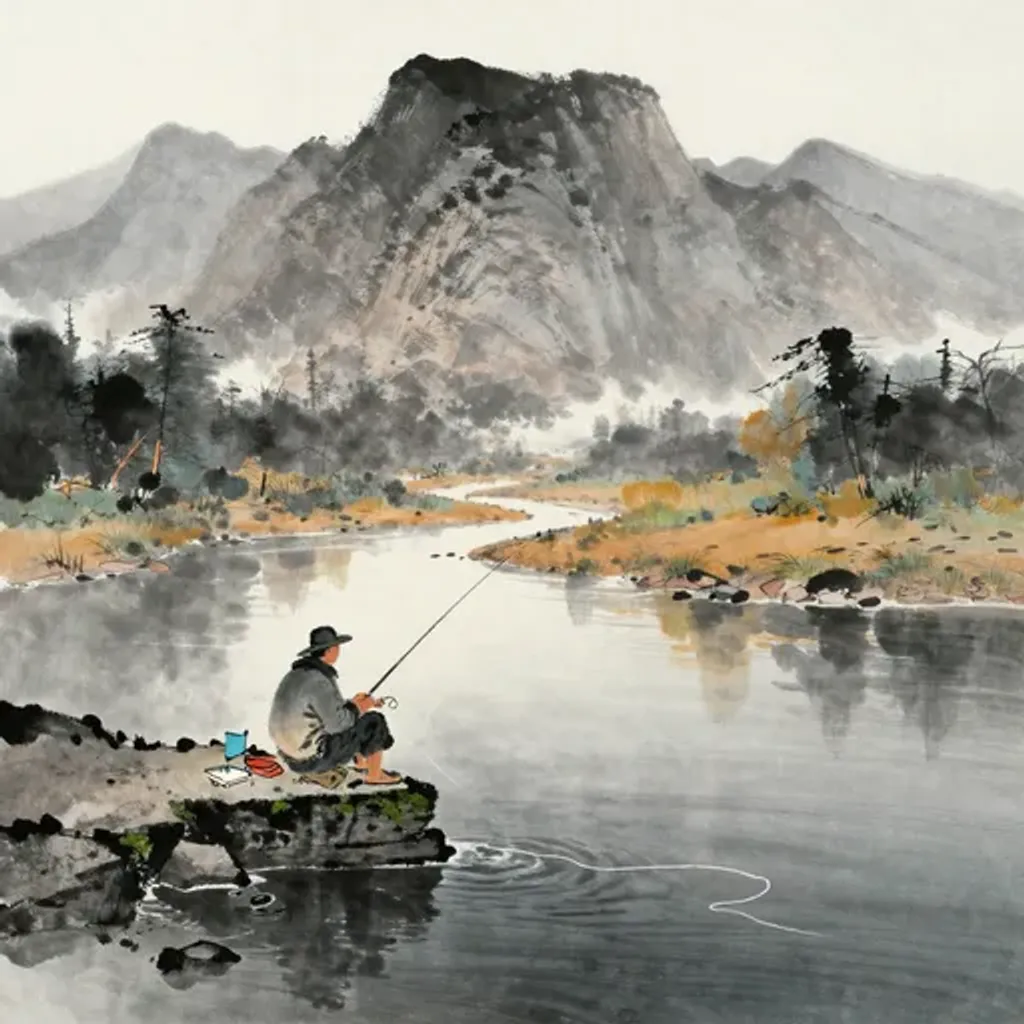
火山不然,釣鯉失綸。魚不可得,利去我北。三人同福,以興周國。君子安息。
The volcano does not burn; the angler's line is lost. The fish cannot be caught; profit departs to the north. Three men share in blessing, raising the state of Zhou. The noble man rests at ease.
— Jiao Yanshou, Yilin (Forest of Changes), 1st century BC
Commentary
Heaven stored within the mountain erupts as thunder and fire — Abundance. The volcano does not burn; the fishing line breaks and the carp is lost. The fish cannot be caught; profit departs to the north. Then the verse pivots: three men share one fortune and together raise the Zhou kingdom. The gentleman rests in peace. The 'three men' who established Zhou are traditionally the Duke of Zhou, the Grand Duke (Taigong), and the Duke of Shao — the three pillars who supported the young King Cheng. Though the verse opens with failed individual efforts (broken lines, lost fish), it resolves through collective strength. From Great Taming to Abundance, the mountain's stored heaven becomes lightning and thunder together — but abundance comes not from solitary striving but from shared purpose among the worthy.
大畜 → 旅
Hexagram 26 → Hexagram 56: The Wanderer
Changing lines: 1, 2, 4
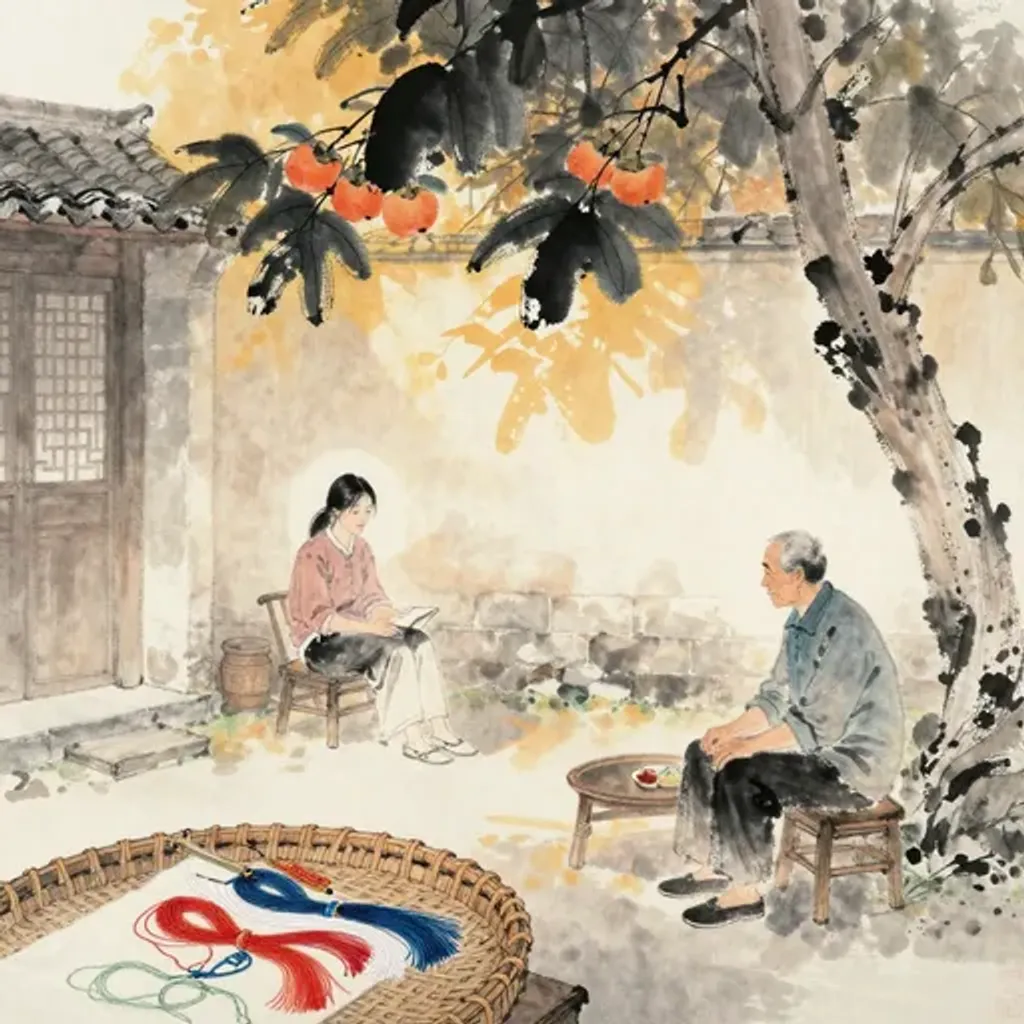
童女無媒,不宜動搖。安其居廬,傅母何憂?
A young maiden without a matchmaker; she should not stir or move. Let her stay at ease in her dwelling; what worry has the guardian mother?
— Jiao Yanshou, Yilin (Forest of Changes), 1st century BC
Commentary
Heaven stored within the mountain becomes fire above the mountain — the Wanderer. A young maiden without a matchmaker should not be moved or disturbed. Let her stay secure in her own dwelling — what has her governess to worry about? The verse is a plea for propriety: a girl of marriageable age needs the proper intermediary before she can leave home. Without one, she should remain in place. The governess (傅母), charged with guarding the young woman's virtue, has nothing to fear so long as order is maintained. From Great Taming to the Wanderer, the mountain's stored heaven becomes fire passing over the mountain — the traveler who stays nowhere for long. The verse advises against premature wandering: some things must be stored and protected until the proper time for departure arrives.
大畜 → 巽
Hexagram 26 → Hexagram 57: The Gentle Wind
Changing lines: 1, 5
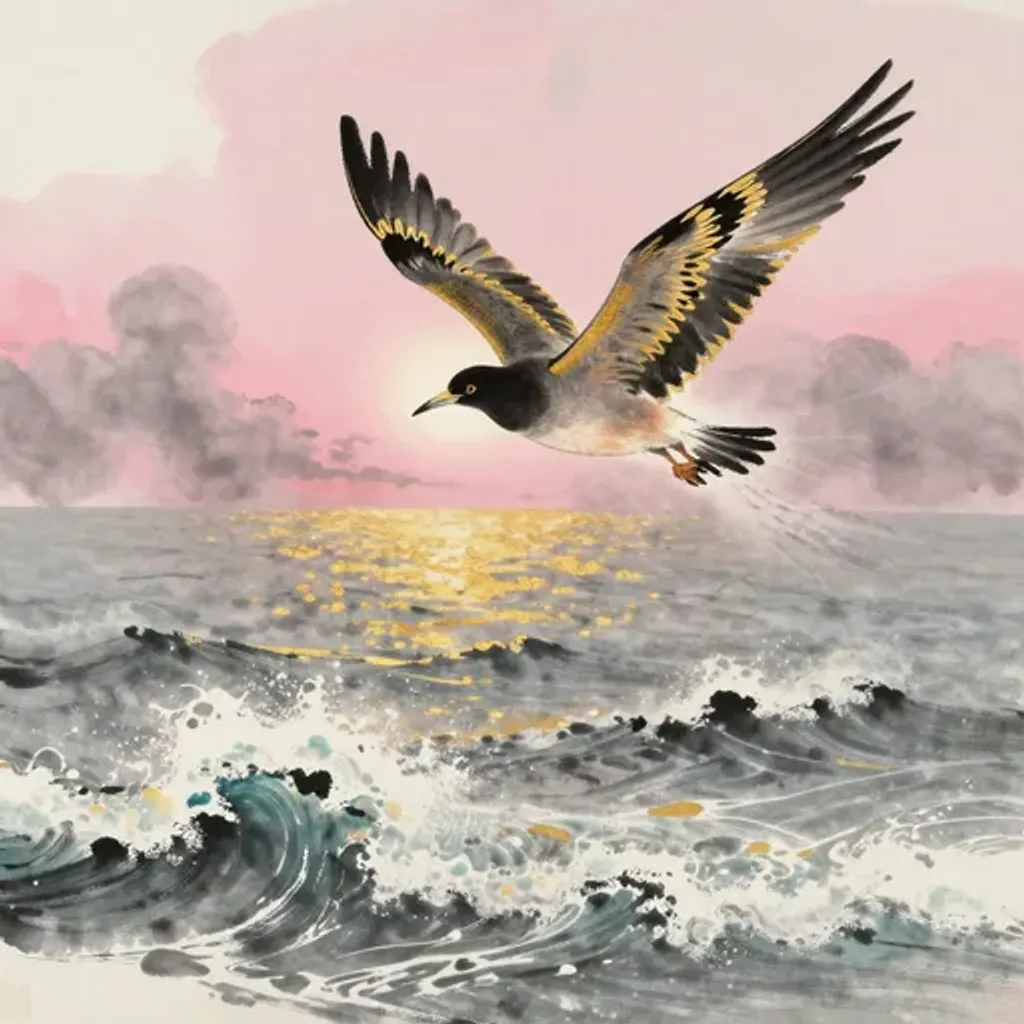
載風雲母,遊觀東海。鼓翼千里,見吾愛子。
Riding the wind on cloud-mother wings, roaming above the Eastern Sea. Beating wings a thousand li; she catches sight of her beloved child.
— Jiao Yanshou, Yilin (Forest of Changes), 1st century BC
Commentary
Heaven stored within the mountain dissolves into doubled wind — the Gentle. Riding wind and cloud-mother, one tours the Eastern Sea. Wings beating for a thousand li, one finds the beloved child at last. The image is transcendent: a mythical flight across the sea, powered by wind and celestial vapor, culminating in reunion. 'Cloud-mother' (雲母) may evoke the mineral mica associated with Daoist immortality practices, or simply the clouds themselves as a maternal vehicle. From Great Taming to the Gentle, the mountain's stored heaven becomes pure wind — doubled, penetrating, going everywhere. What was stored heavily within the mountain now flies free across ten thousand li. The transformation is liberation: accumulated longing finds its object at the edge of the world.
大畜 → 兌
Hexagram 26 → Hexagram 58: The Joyous Lake
Changing lines: 3, 4, 5, 6
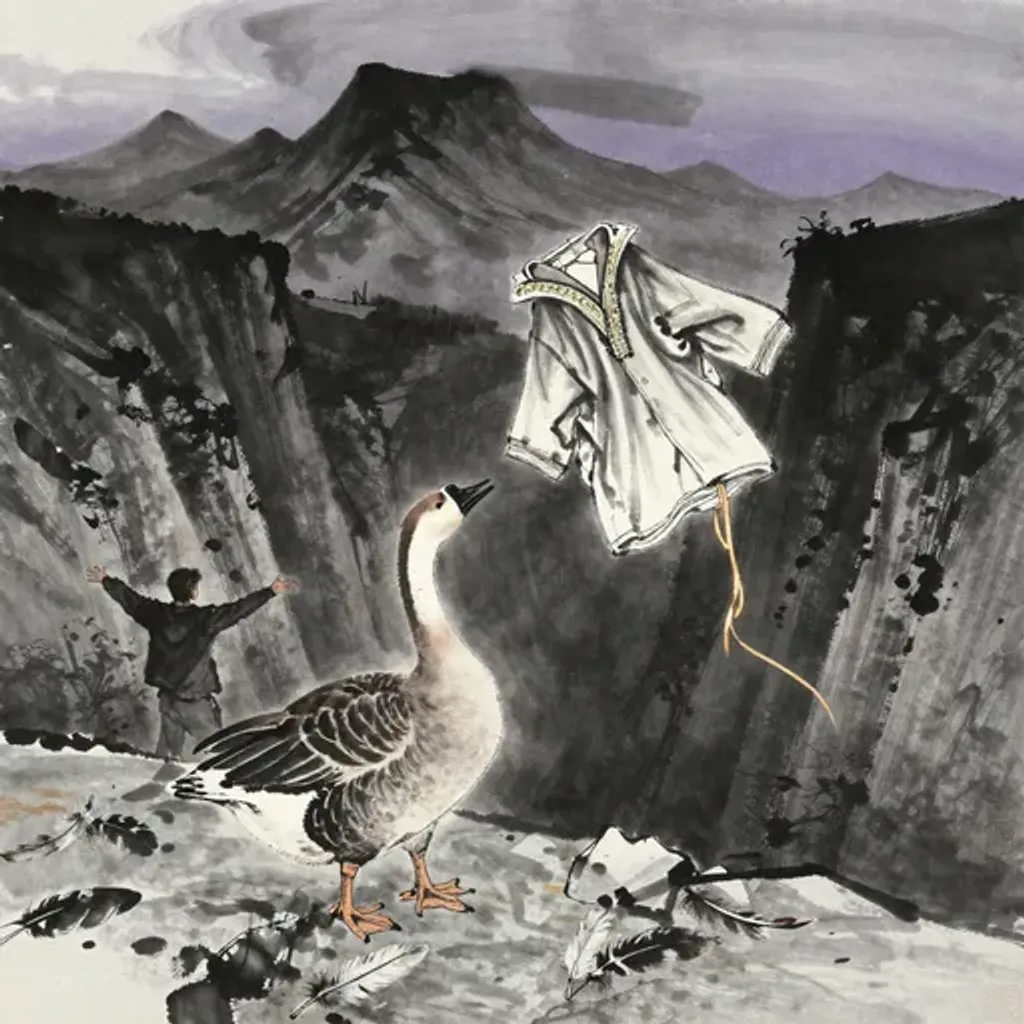
鴻盜我襦,逃於山隅。不見武迹,使伯心憂。
The wild goose stole my coat; it fled to the mountain's edge. Its tracks of valor are nowhere found; the elder brother's heart is filled with worry.
— Jiao Yanshou, Yilin (Forest of Changes), 1st century BC
Commentary
Heaven stored within the mountain opens onto doubled lake — the Joyous. A wild goose steals my jacket and flees to the mountain's edge. No martial trace can be found; the elder brother's heart is filled with worry. The goose — a messenger bird in classical imagery — has absconded with something personal and disappeared into the wilderness. The pursuit yields nothing; the one responsible for finding it (the 'elder brother') is left anxious and helpless. From Great Taming to the Joyous, the mountain's stored heaven becomes the open exchange of twin lakes. But joy here is elusive: what was stored has been stolen, the thief has vanished into the very mountain that should have safeguarded it. The Joyous demands mutual delight; this verse finds only loss and bewilderment.
大畜 → 渙
Hexagram 26 → Hexagram 59: Dispersion
Changing lines: 1, 3, 5
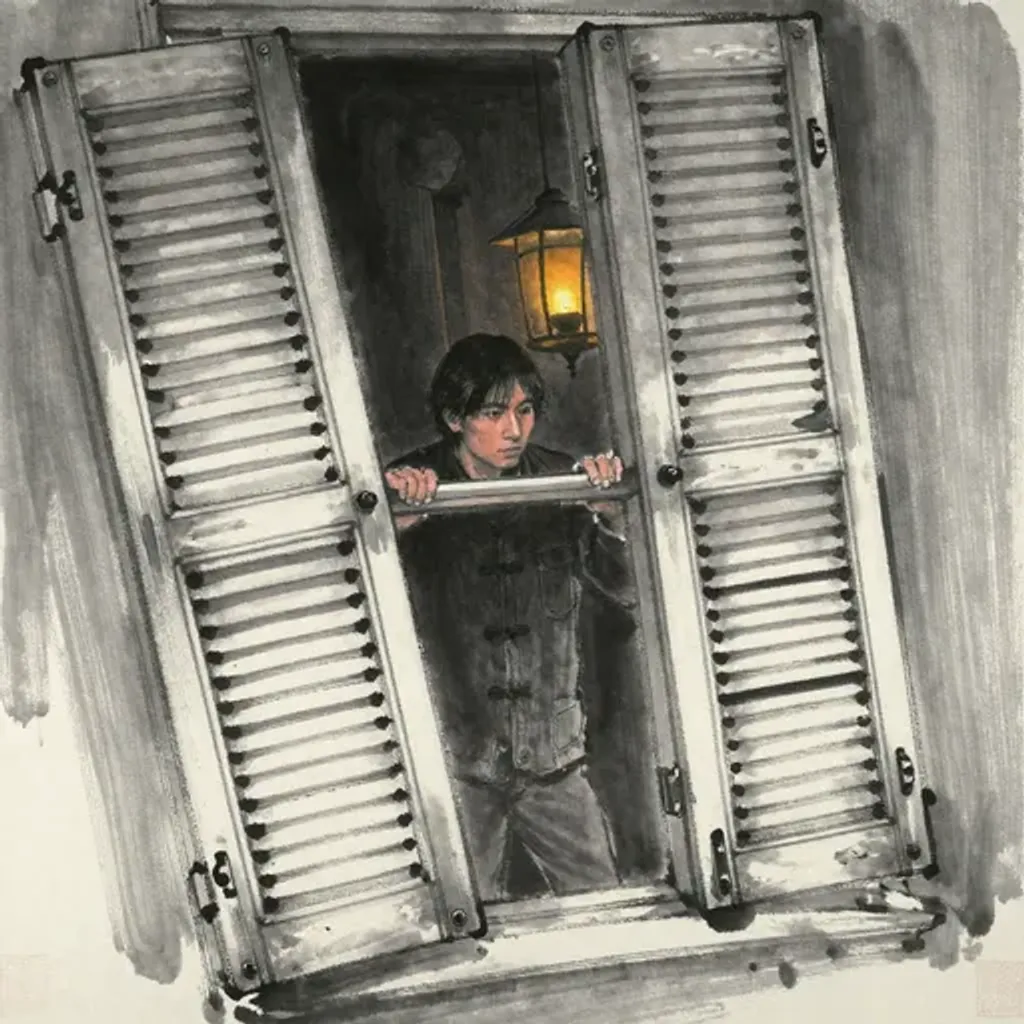
視夜無明,不利遠鄉。閉門塞牖,福為我母。
Gazing into the night without light; not favorable for distant lands. Shut the door and bar the window; blessings serve as our guardian.
— Jiao Yanshou, Yilin (Forest of Changes), 1st century BC
Commentary
Heaven stored within the mountain becomes wind above water — Dispersion. One peers into the night but finds no light; travel to distant lands is inauspicious. Close the door and shut the window — this confinement is my protection. The verse counsels radical withdrawal: when visibility is zero and the outside world offers nothing, the wise response is to seal oneself in and wait. Dispersion scatters what was gathered; wind over water breaks up stagnation. But this verse resists dispersion, choosing enclosure over exposure. From Great Taming to Dispersion, the mountain's stored heaven encounters the dissolving wind. The verse advises that not all dispersion is desirable — sometimes the accumulated reserves are best protected by refusing to open the gate at all.
大畜 → 節
Hexagram 26 → Hexagram 60: Limitation
Changing lines: 3, 5, 6
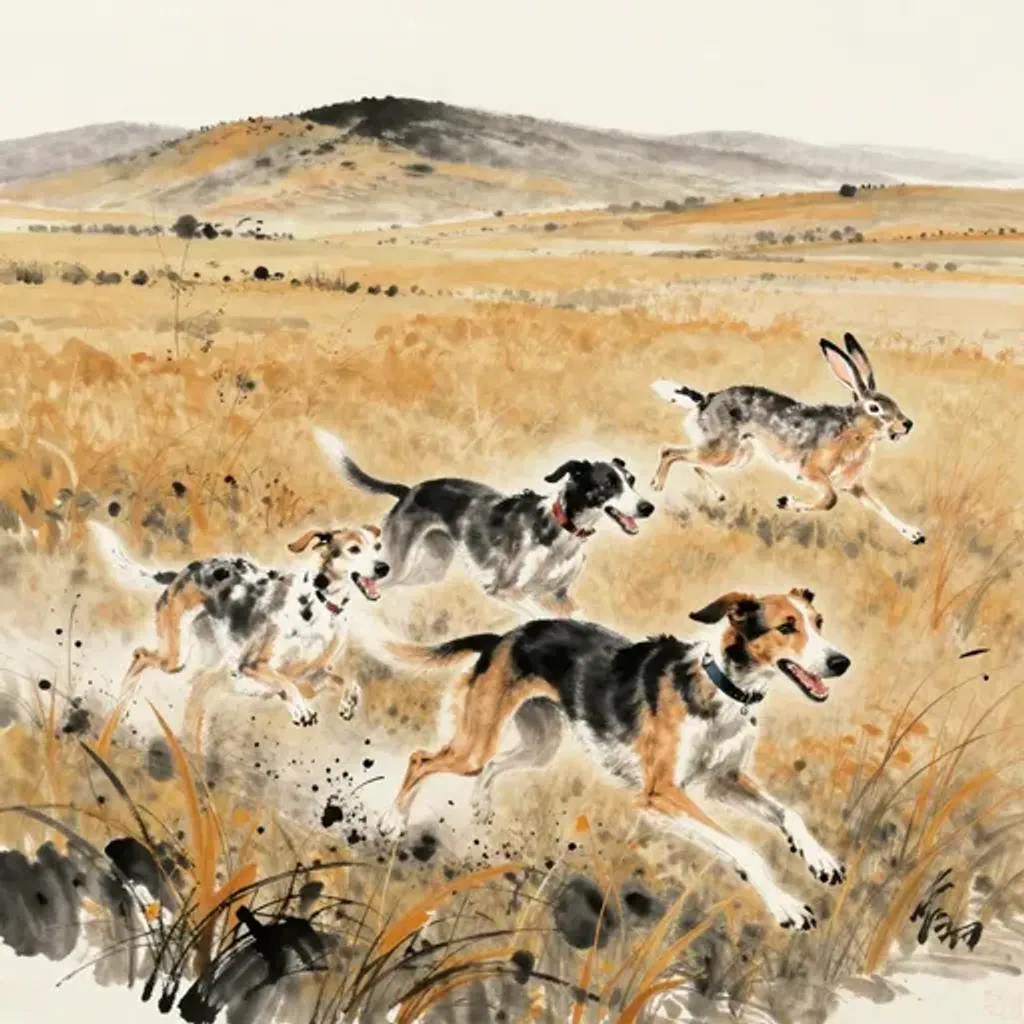
三狗逐兔,子東北路。利以進取,商人有得。
Three hounds chase a hare, running the northeastern road. Favorable for advance and capture; the merchant finds his gain.
— Jiao Yanshou, Yilin (Forest of Changes), 1st century BC
Commentary
Heaven stored within the mountain becomes water above the lake — Limitation. Three hounds chase a rabbit along the road to the northeast. The pursuit favors advance; merchants turn a profit. The verse is crisp and active: hounds pursuing quarry on a definite bearing, with the pursuit itself creating opportunity for trade. Limitation sets proper boundaries — water above the lake regulates the level, ensuring neither overflow nor drought. The three hounds represent focused, disciplined pursuit within defined limits. From Great Taming to Limitation, the mountain's stored power is channeled rather than hoarded. The northeast bearing gives direction; the hounds give chase within bounds. Accumulated reserves, properly limited and directed, become productive commerce.
大畜 → 中孚
Hexagram 26 → Hexagram 61: Inner Truth
Changing lines: 3, 5
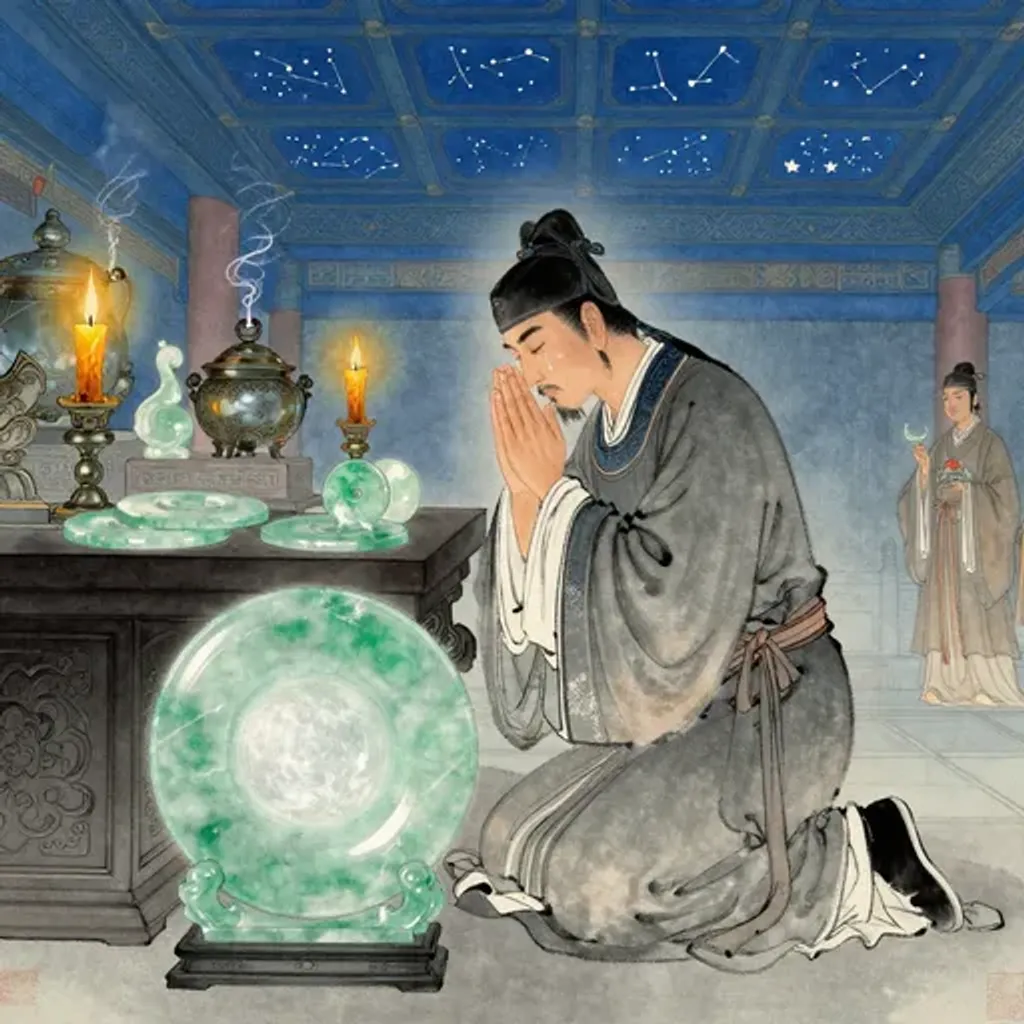
武王不豫,周公禱謝。載璧秉珪,安寧如故。
King Wu fell gravely ill; the Duke of Zhou prayed and offered himself. Bearing jade discs and grasping scepters; peace and well-being were restored as before.
— Jiao Yanshou, Yilin (Forest of Changes), 1st century BC
Commentary
Heaven stored within the mountain yields to wind above the lake — Inner Truth. King Wu falls gravely ill, and the Duke of Zhou offers prayers of intercession. Bearing jade discs and ritual scepters, he pleads with the ancestors to take his life in exchange for the king's. The kingdom is restored to peace and all returns to its former state. This is the famous 'Golden Coffer' episode from the Book of Documents: when King Wu was near death, the Duke of Zhou privately offered himself to the ancestral spirits, writing his prayer on a tablet sealed in a golden coffer. From Great Taming to Inner Truth, the mountain's stored virtue becomes the wind of sincere faith moving over the lake of receptive devotion. The Duke's prayer exemplifies inner truth at its most profound — sincerity so deep it moves the spirits.
大畜 → 小過
Hexagram 26 → Hexagram 62: Small Exceeding
Changing lines: 1, 2, 4, 6
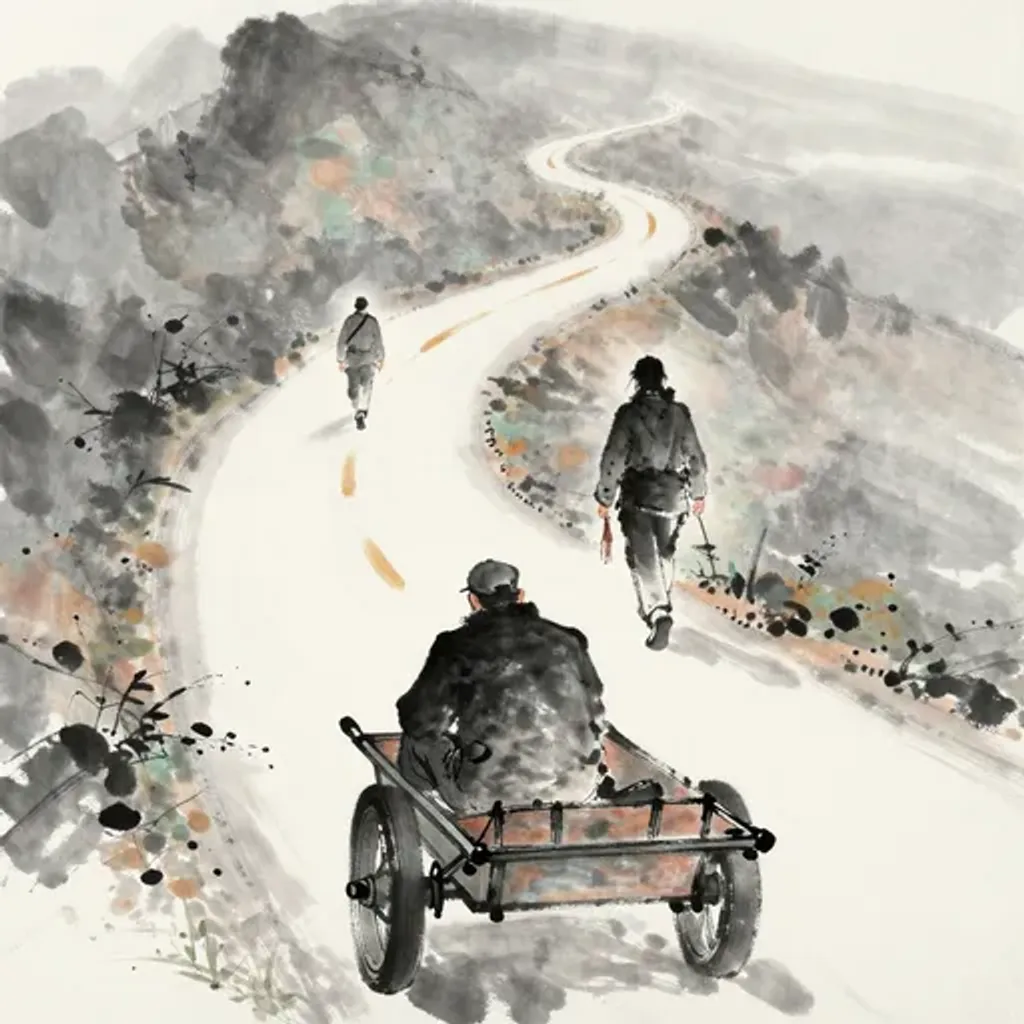
同載共車,中道別去。爵級不進,君子不興。
Sharing a cart, riding together; midway they part and go. Rank and office do not advance; the noble man does not prosper.
— Jiao Yanshou, Yilin (Forest of Changes), 1st century BC
Commentary
Heaven stored within the mountain becomes thunder above the mountain — Small Exceeding. Companions share the same carriage, then part ways midroute. Rank and title do not advance; the gentleman does not prosper. The verse traces a friendship or alliance that begins with shared purpose (riding together) but fails to endure (separating midjourney). Neither party achieves advancement. Small Exceeding warns about overstepping in small matters — thunder rumbling above the mountain, an excess that is minor but persistent. From Great Taming to Small Exceeding, the mountain's stored heaven becomes a small tremor atop the mountain itself — the accumulated reserves produce only a minor disturbance. Partnerships formed from stored capital dissolve when the excess is too small to sustain shared ambition.
大畜 → 既濟
Hexagram 26 → Hexagram 63: After Completion
Changing lines: 2, 5, 6
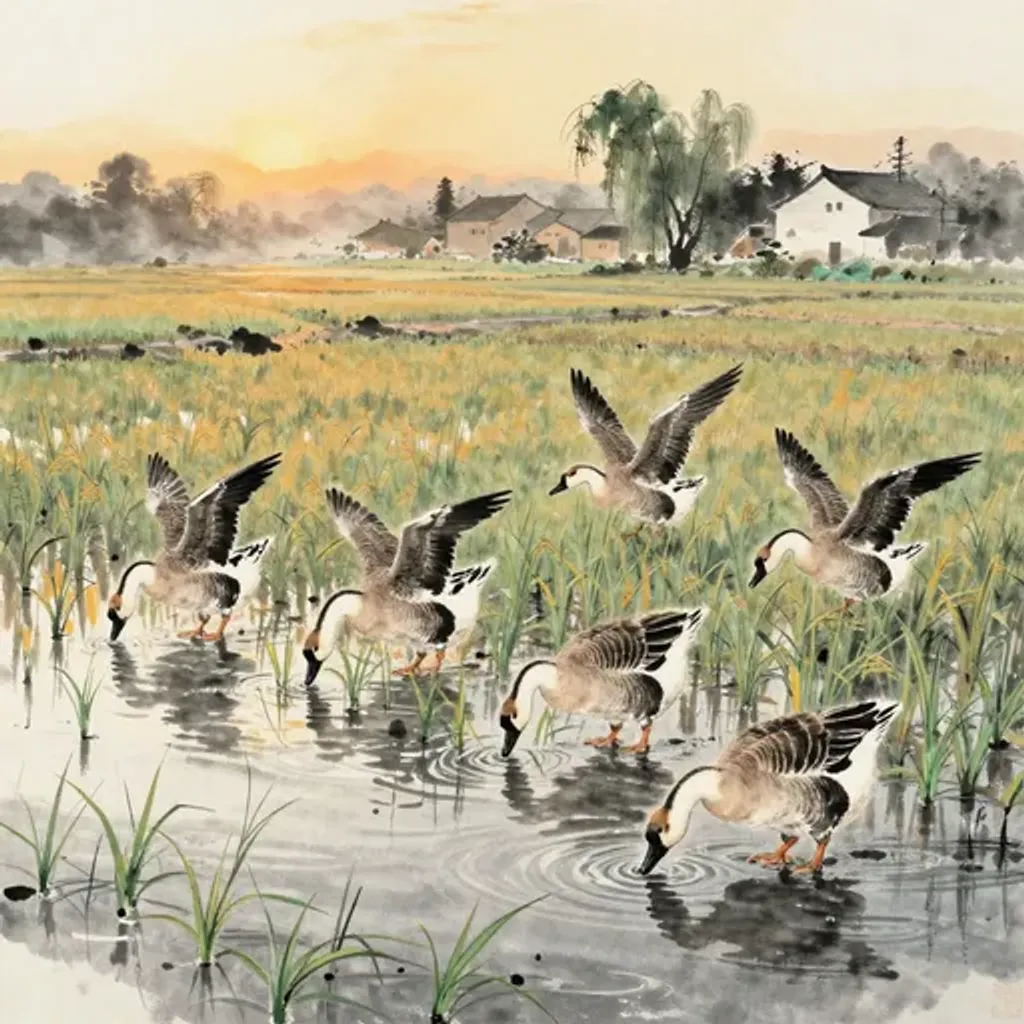
六雁俱飛,遊戲稻池。大飲多食,食飽無患。舉事不遂,商旅作憒。
Six geese fly together, sporting in the rice paddy. Drinking deep and eating much; sated and full, without worry. Yet plans do not succeed; the merchant is thrown into confusion.
— Jiao Yanshou, Yilin (Forest of Changes), 1st century BC
Commentary
Heaven stored within the mountain settles as water above fire — After Completion. Six wild geese fly together, playing in the rice paddies. They eat and drink their fill without a care. Yet the verse turns: undertakings do not succeed, and merchants are thrown into confusion. After Completion is the moment when everything is in place — water and fire in perfect balance — but the I-Ching warns that this very completeness invites decline. The geese feast contentedly, a picture of satiation, but satiation breeds complacency. From Great Taming to After Completion, the mountain's stored heaven achieves perfect equilibrium. The geese are fed; the stores are full. But 'thinking of trouble and preparing against it' — the hexagram's own counsel — goes unheeded, and the merchant's affairs unravel.
大畜 → 未濟
Hexagram 26 → Hexagram 64: Before Completion
Changing lines: 1, 3, 4
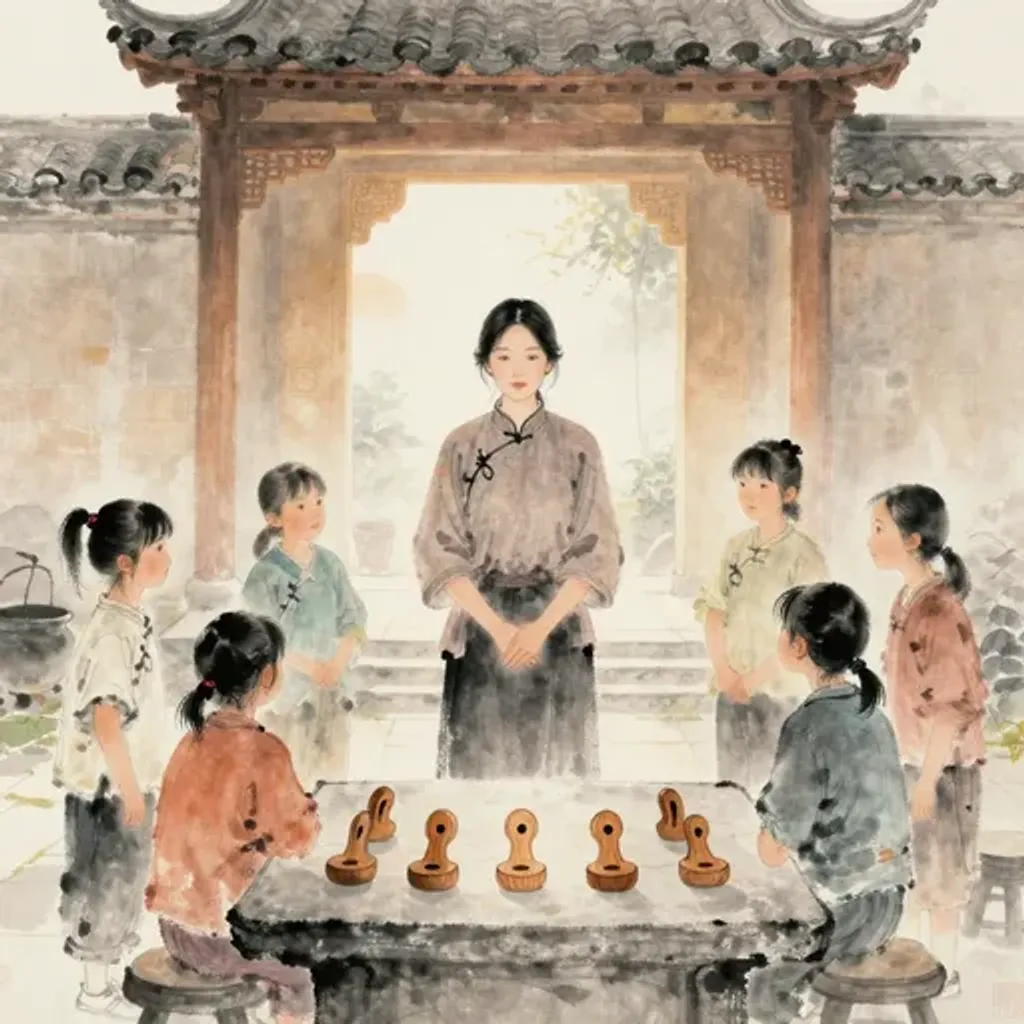
符左契右,相與虐亂。乾坤利貞,幸生六子。長大成就,颯然如母。不利為咎。
Tally left, contract right; together they bring tumult and disorder. Yet Qian and Kun stand firm in constancy; fortunately bearing six children. Grown tall and accomplished, vigorous as their mother. Not favorable for blame.
— Jiao Yanshou, Yilin (Forest of Changes), 1st century BC
Commentary
Heaven stored within the mountain gives way to fire above water — Before Completion. The left tally and right contract are matched, yet the partners turn to mutual cruelty and disorder. Then the verse pivots to cosmic creation: Qian and Kun, steadfast in their constancy, are fortunate to beget six children. The children grow to maturity, vibrant as their mother. Yet 'not favorable for blame' closes the verse with a cautionary note. The 'six children' alludes to the Shuogua's cosmology: Heaven (Qian) and Earth (Kun) generate the six trigrams — Zhen, Kan, Gen, Xun, Li, and Dui. From Great Taming to Before Completion, the mountain's stored heaven faces fire and water still unseated. Creation is underway but not yet finished. The tallies match but trust has fractured; the children are born but the work of ordering them remains.