Transformations of Hexagram 27
Every line of change out of Hexagram 27 頤 Nourishment, with the Yilin verse for each of the 64 resulting hexagrams, its translation, and the original ink brush artwork.
頤 → 乾
Hexagram 27 → Hexagram 1: The Creative
Changing lines: 2, 3, 4, 5
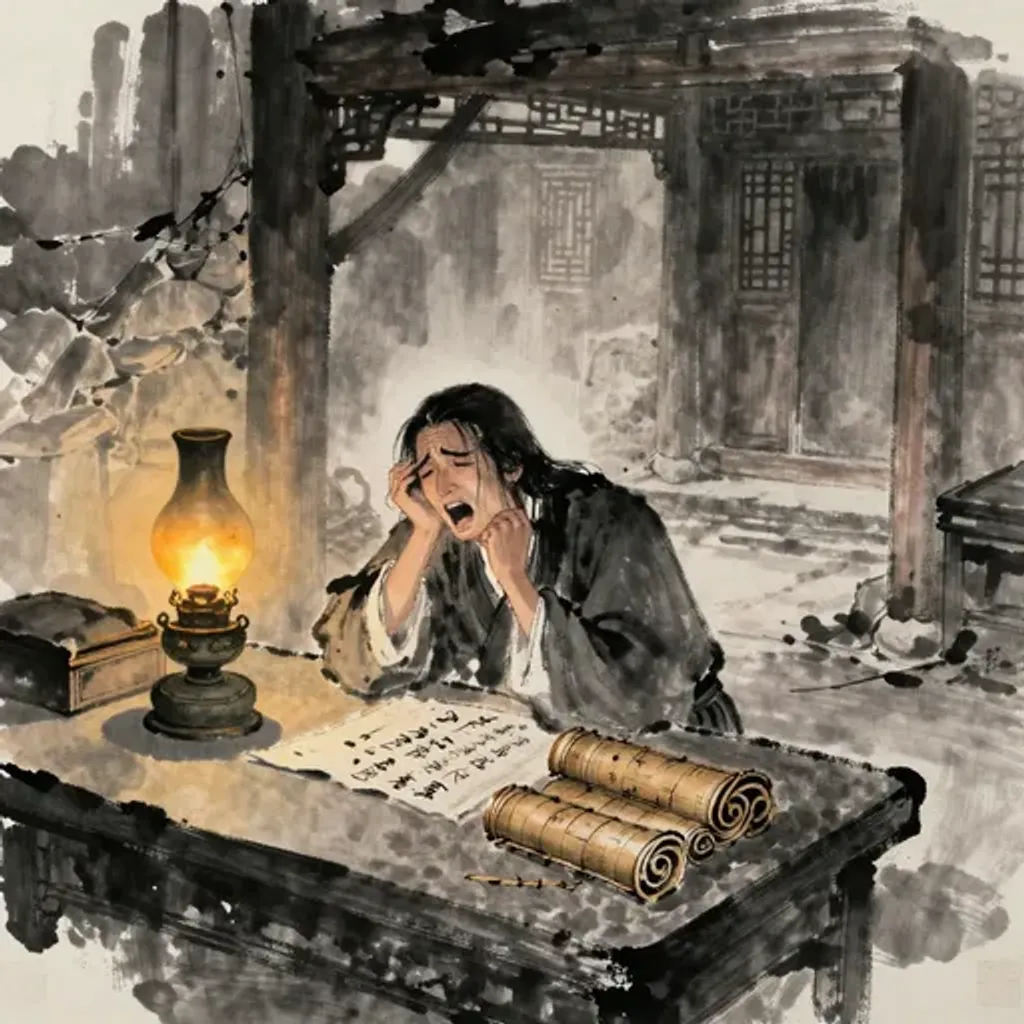
思初道古,哀吟無輔。陽明不制,上失其所。
Pondering beginnings, tracing antiquity; mournful chanting, without support. The bright yang cannot restrain; the superior loses his proper place.
— Jiao Yanshou, Yilin (Forest of Changes), 1st century BC
Commentary
Mountain over thunder, the jaws of nourishment, gives way to pure heaven's self-generating drive. The verse looks backward to ancient ways, lamenting in solitary grief without support. Yang brilliance goes unchecked, and the one above loses his proper place. When nourishment lacks governance, even luminous energy becomes destructive. The imagery evokes a ruler whose vitality outpaces his wisdom, like heaven's doubled strength running without restraint. From Nourishment to the Creative, the transformation warns that raw creative force, untempered by the careful discernment of what to cultivate and what to refuse, loses its seat. The mouth that nourishes must choose wisely, or heaven's own power becomes self-consuming.
頤 → 坤
Hexagram 27 → Hexagram 2: The Receptive
Changing lines: 1, 6
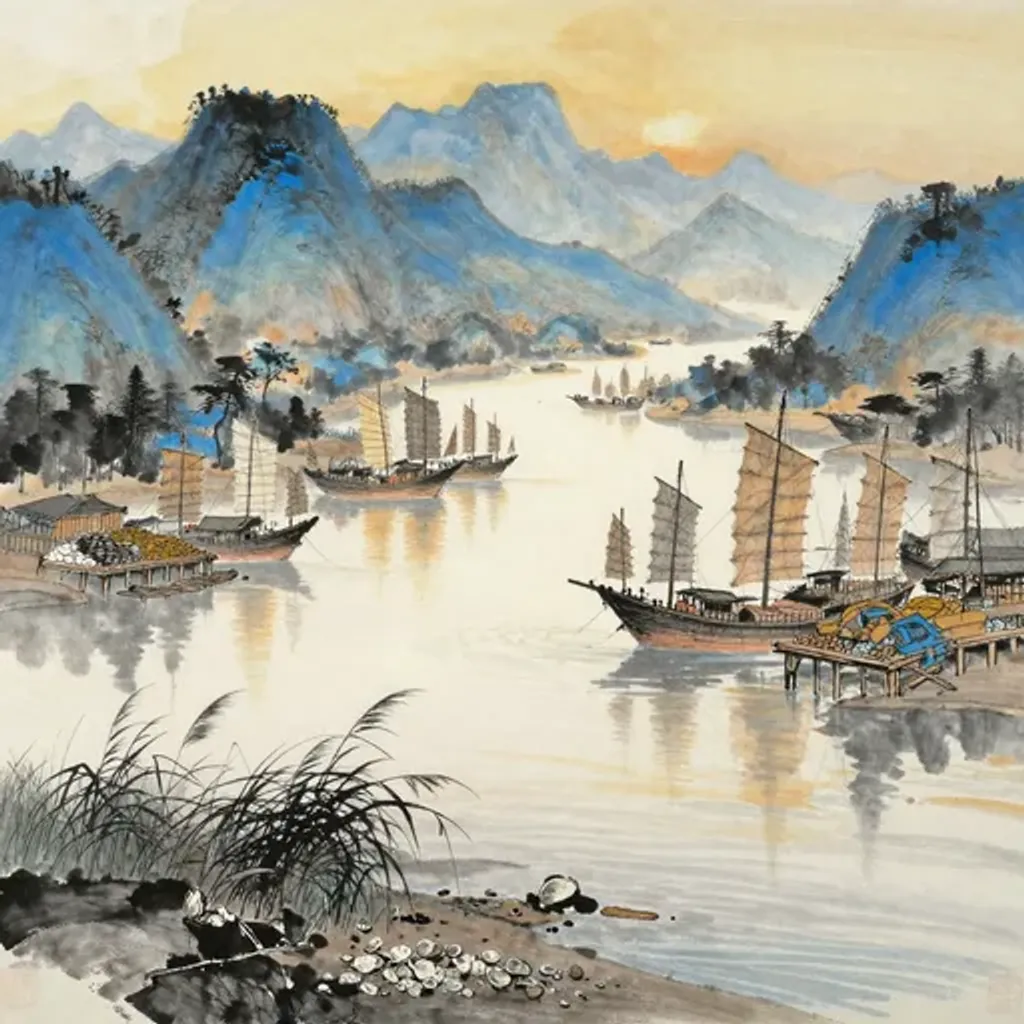
江河淮海,天之奧府。眾利所聚,賓服饒有。樂我君子。
Yangtze, Yellow River, Huai, and sea — heaven’s great storehouses. Where all profit gathers, guests submit and abundance overflows. How it delights our noble lord.
— Jiao Yanshou, Yilin (Forest of Changes), 1st century BC
Commentary
Mountain over thunder opens toward earth's boundless receptivity. Rivers, the Huai, and the sea form heaven's deep treasury, where all profitable things converge. Guests submit in admiration, abundance overflows, and the gentleman rejoices. The Four Great Rivers — the Yangtze, Yellow River, Huai, and Ji — were the framework of China's sacred geography, representing the channels through which heaven's bounty reaches all people. Their convergence signals comprehensive nourishment, not of one locality but of the whole realm. From Nourishment to the Receptive, the transformation unfolds naturally: what the mouth carefully selects and cultivates, the earth receives and multiplies without limit. The mountain's discerning stillness becomes the plain's generous embrace, gathering wealth not by grasping but by opening wide.
頤 → 屯
Hexagram 27 → Hexagram 3: Difficulty at the Beginning
Changing lines: 5, 6
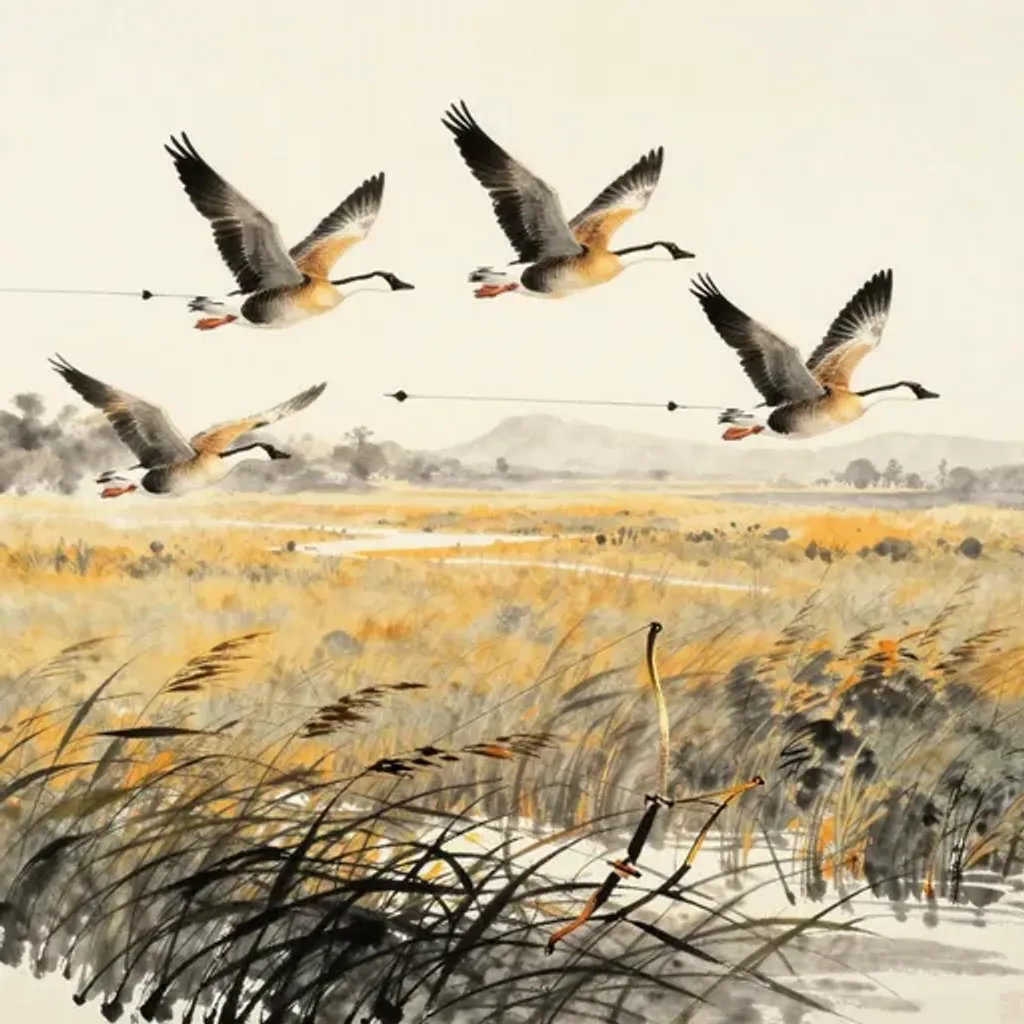
三雁俱行,避暑就涼。適與矰遇,為繳所傷。
Three geese travel together, fleeing heat to seek the cool. They chance upon a stringed arrow; wounded by the tethered shaft.
— Jiao Yanshou, Yilin (Forest of Changes), 1st century BC
Commentary
Mountain over thunder, the still jaws of nourishment, shifts toward clouds and thunder of difficult beginnings. Three wild geese fly together, fleeing summer heat for cooler air, only to encounter a stringed arrow mid-flight and fall wounded. The image is precise: creatures seeking sustenance make themselves vulnerable by moving in the open. The stringed arrow, a hunter's tool for bringing down birds without losing the shaft, turns the geese's natural migration into a trap. From Nourishment to Difficulty at the Beginning, the transformation captures the peril of transition itself. What nourishes in one season exposes in another, and the journey toward better conditions is precisely where danger lies in wait.
頤 → 蒙
Hexagram 27 → Hexagram 4: Youthful Folly
Changing lines: 1, 2
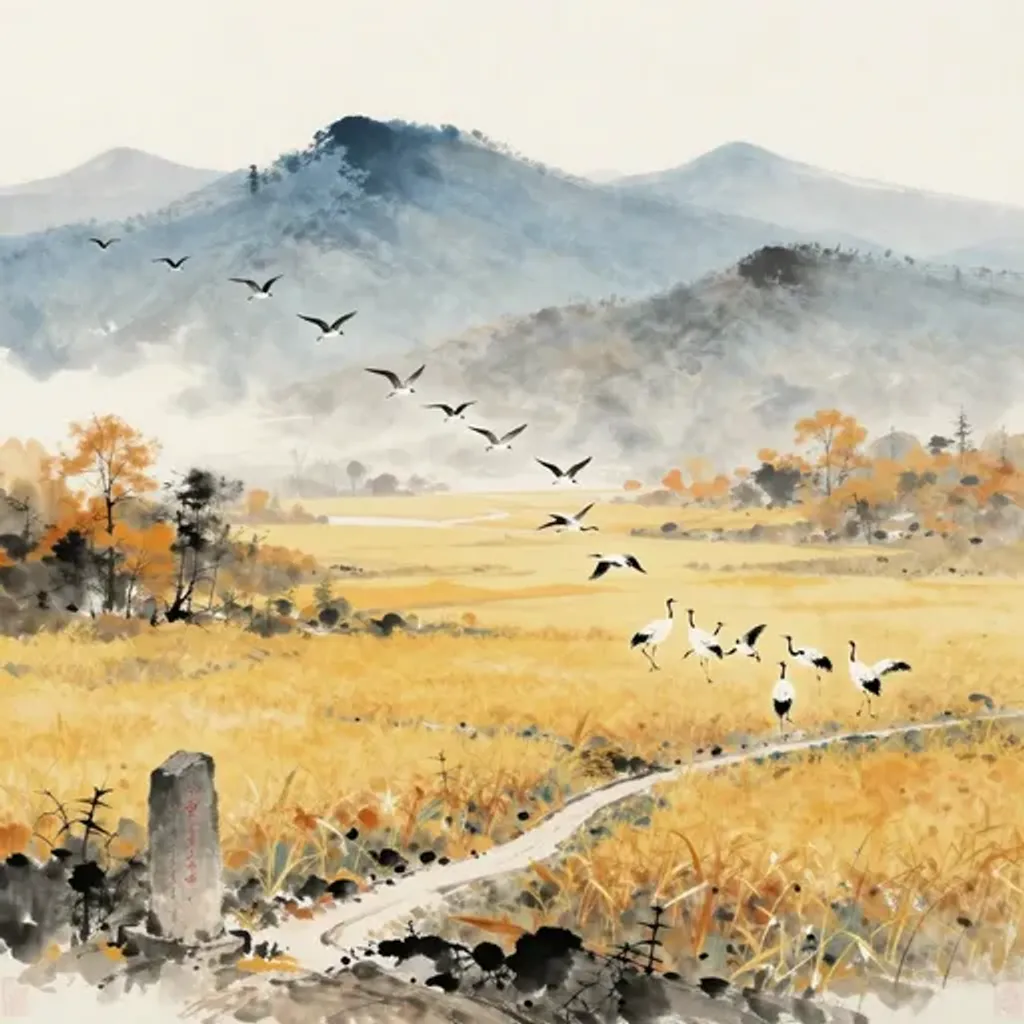
秋南春北,隨時休息。處和履中,安無憂凶。
South in autumn, north in spring; resting according to the season. Dwelling in harmony, treading the mean; peaceful, without worry or misfortune.
— Jiao Yanshou, Yilin (Forest of Changes), 1st century BC
Commentary
Mountain over thunder yields to mountain over water, the spring emerging below. Geese migrate south in autumn and north in spring, following the seasons' rhythm without deviation. Dwelling in harmony and treading the middle way, one rests secure without worry or misfortune. The verse reads like a Yilin proverb on timing: creatures that follow natural cycles avoid disaster. From Nourishment to Youthful Folly, the transformation suggests that true nourishment is itself a form of education. The mountain remains above in both hexagrams, but where thunder once stirred appetite, water now springs forth as innate understanding. To nourish correctly is to learn the Way instinctively.
頤 → 需
Hexagram 27 → Hexagram 5: Waiting
Changing lines: 2, 3, 5, 6
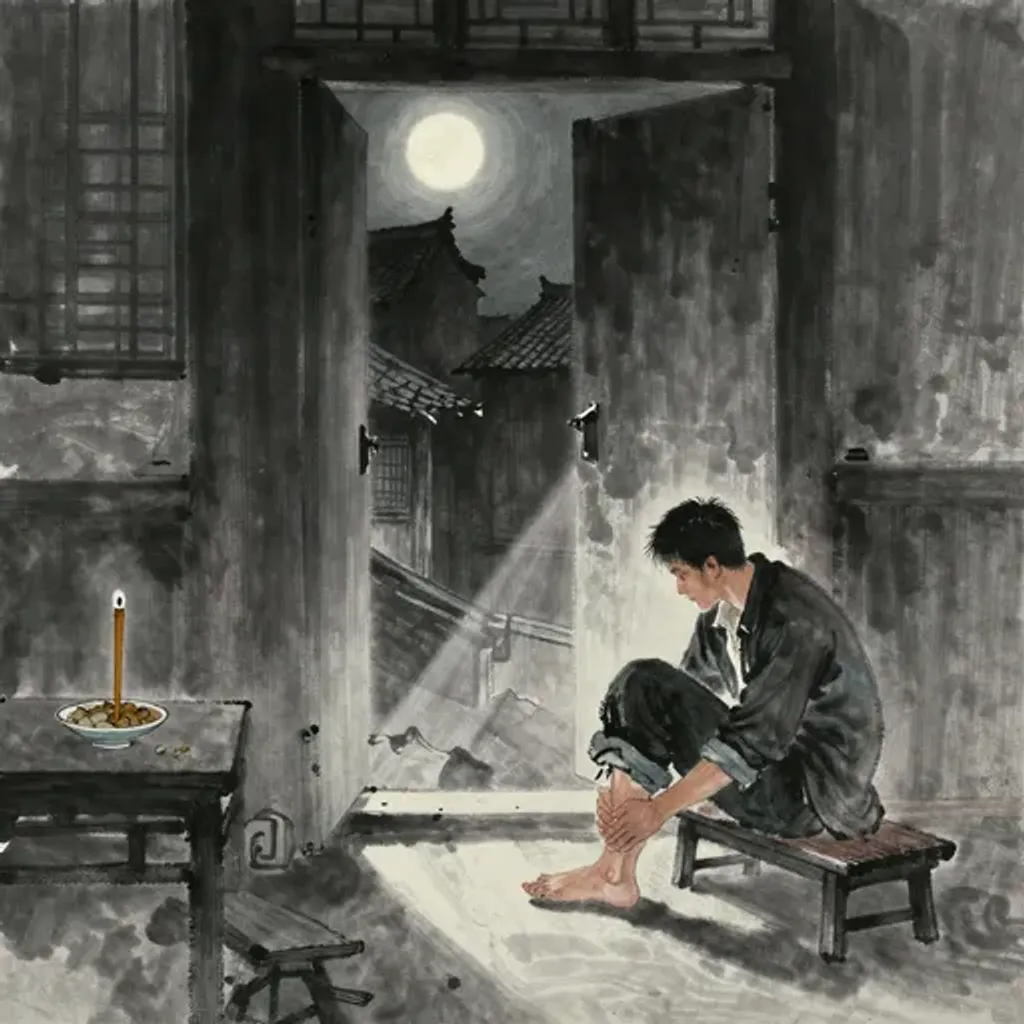
履危無患,跳脫獨全。不利出門,傷我左踝。疾病不食,鬼哭其室。
Treading danger without calamity; leaping free, alone preserved. Ill-favored to go out the door; my left ankle is injured. Illness keeps one from eating; ghosts weep within the chamber.
— Jiao Yanshou, Yilin (Forest of Changes), 1st century BC
Commentary
Mountain over thunder shifts to water suspended above heaven, the posture of waiting. The verse divides sharply: first, one treads danger yet escapes harm, leaping free and surviving alone. Then the scene darkens. It is not auspicious to go out; the left ankle is injured. Illness robs the appetite, and ghosts wail in the household. The left ankle — the body's foundation for stepping forward — is struck, halting all movement. From Nourishment to Waiting, the transformation captures the tension between action and restraint. Nourishment misapplied becomes poisonous, and the one who should wait at home ventures out too soon, inviting both physical injury and spiritual affliction.
頤 → 訟
Hexagram 27 → Hexagram 6: Conflict
Changing lines: 1, 2, 4, 5
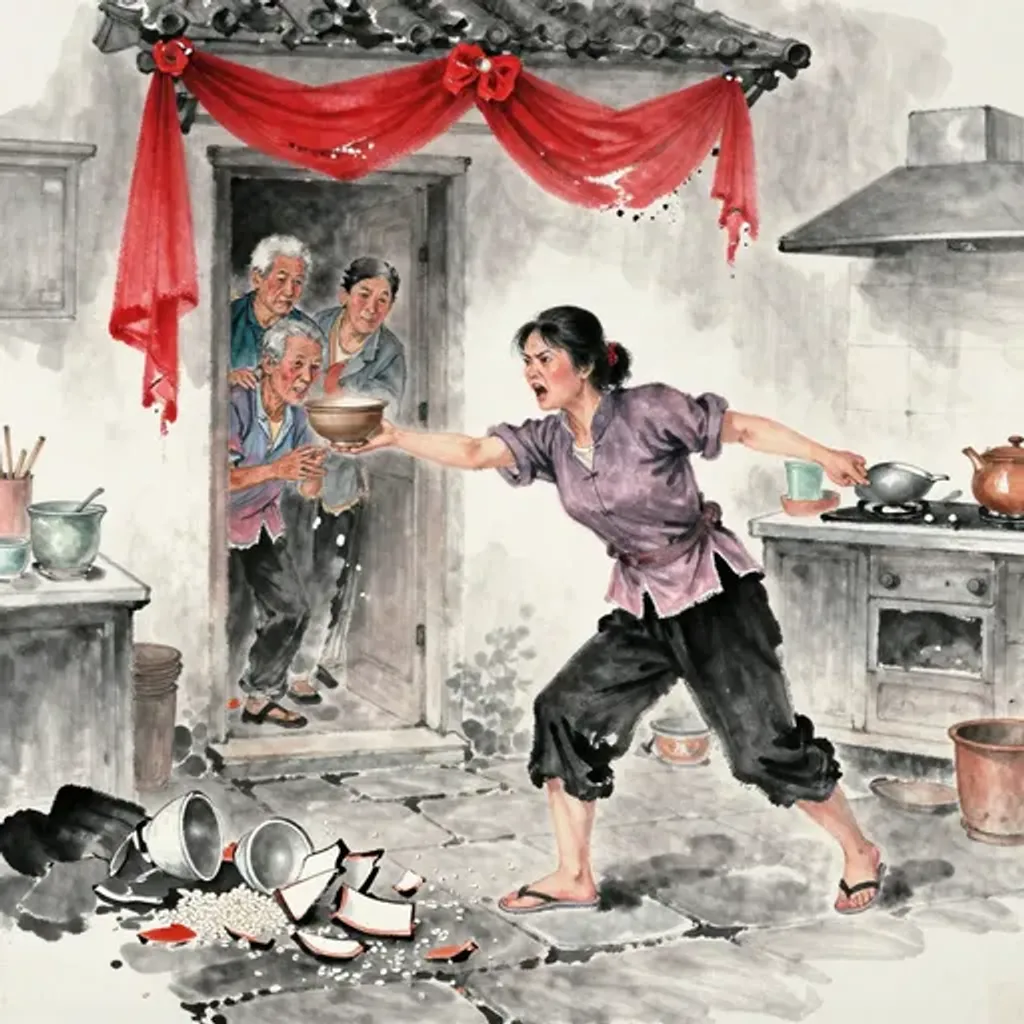
東家凶婦,怒其公姑。毀柈破盆,棄其飯飱。使吾困貧。
The fierce wife of the eastern house rages at her parents-in-law. She smashes plates and breaks basins; casts away their meals. She leaves us destitute and poor.
— Jiao Yanshou, Yilin (Forest of Changes), 1st century BC
Commentary
Mountain over thunder, the careful jaws, gives way to heaven and water pulling apart in conflict. The eastern neighbor's vicious wife rages at her parents-in-law, smashing plates and breaking basins, discarding the family's food and leaving the household destitute. Every element connects to nourishment perverted: the vessels that hold food are shattered, the meals themselves are thrown away, and the result is poverty. The wife who should nourish the family instead destroys its sustenance. From Nourishment to Conflict, the transformation is visceral. When the mouth that should feed instead spews anger, the entire household economy collapses into litigation and ruin.
頤 → 師
Hexagram 27 → Hexagram 7: The Army
Changing lines: 1, 2, 6
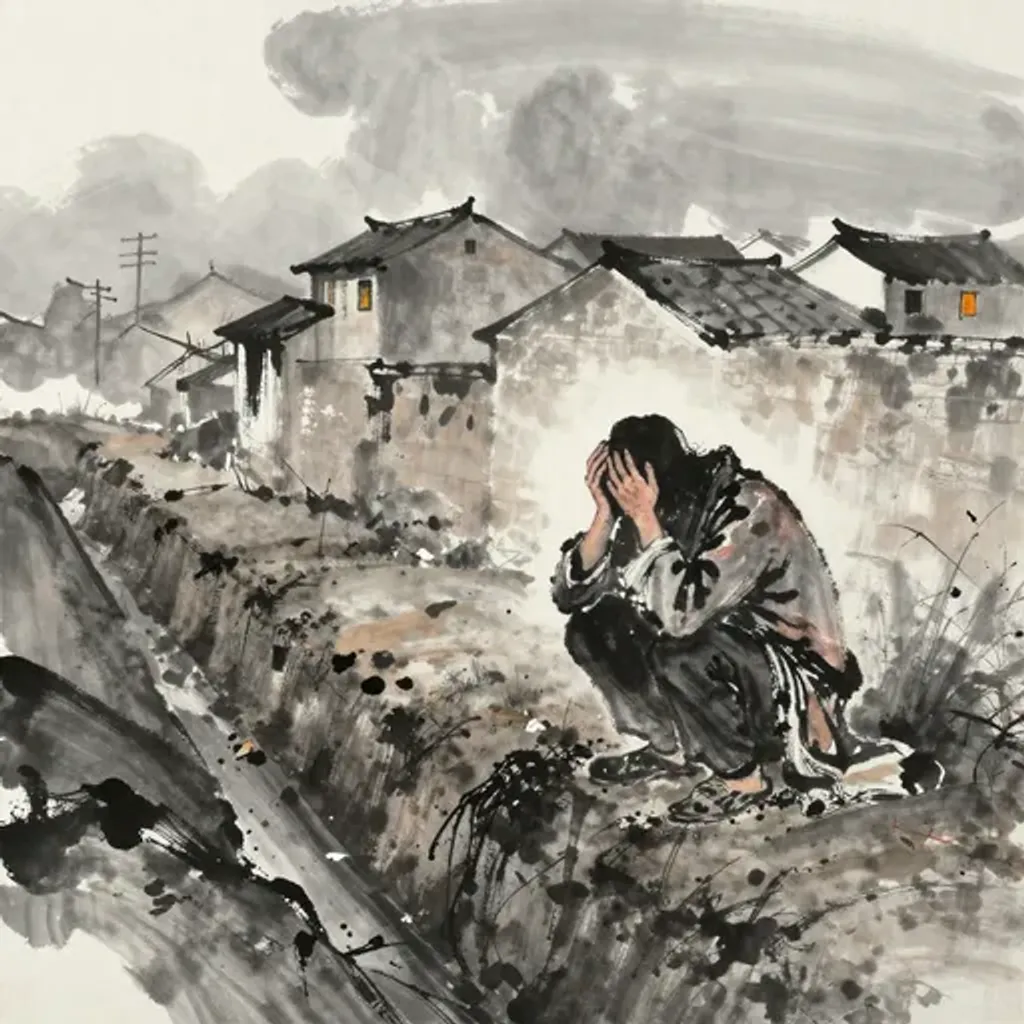
泥滓洿辱,棄捐溝瀆。眾所笑哭,終不顯祿。
Mud and filth bring disgrace; cast into ditch and gutter. Mocked and wept over by all; in the end, no glory or rank.
— Jiao Yanshou, Yilin (Forest of Changes), 1st century BC
Commentary
Mountain over thunder, where nourishment should sustain, collapses into earth over water — the army's disciplined containment. Mud and filth stain and degrade; one is cast into ditches and drains, an object of universal mockery and tears, never to gain rank or recognition. The imagery is of someone discarded like waste, their nourishment withdrawn and their dignity stripped. From Nourishment to the Army, the transformation reveals the dark underside of collective order: where the army gathers and contains the multitude, those deemed unworthy are expelled to the margins. Nourishment denied becomes social death, and the disciplined mass has no place for the outcast.
頤 → 比
Hexagram 27 → Hexagram 8: Holding Together
Changing lines: 1, 5, 6
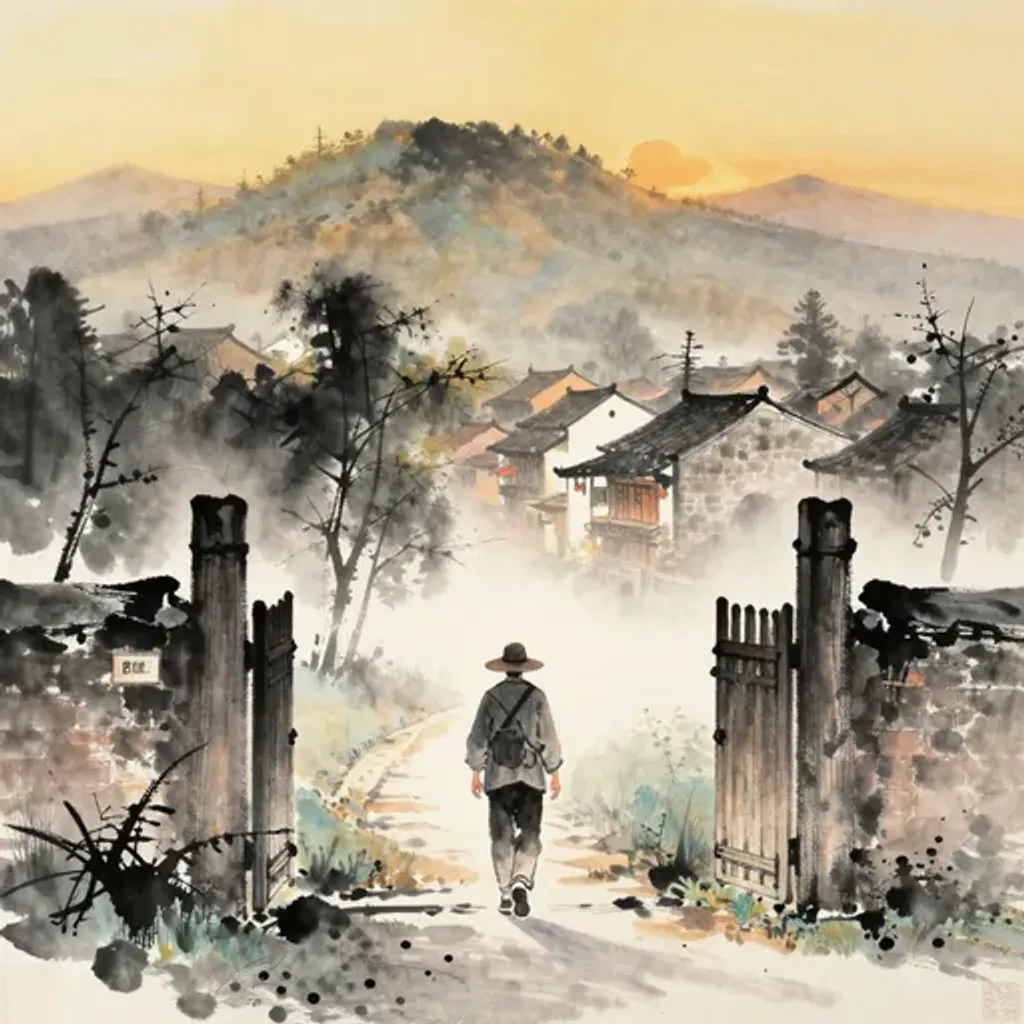
旦往暮還,各與相存,身無凶患。
Setting out at dawn, returning at dusk; each sustaining the other. The body is free from misfortune and calamity.
— Jiao Yanshou, Yilin (Forest of Changes), 1st century BC
Commentary
Mountain over thunder yields to water upon earth, the image of holding together. Going out at dawn and returning at dusk, each person sustains the other, and no harm befalls the body. The verse is brief and serene, a picture of daily reciprocity: neighbors or kin exchange visits, share provisions, and maintain bonds through the simple rhythm of departure and return. From Nourishment to Holding Together, the transformation is organic. What one cultivates through careful nourishment becomes the basis for mutual support. The mountain's solitary discernment dissolves into the water's natural pooling upon earth, where sustenance is no longer hoarded but shared.
頤 → 小畜
Hexagram 27 → Hexagram 9: Small Taming
Changing lines: 2, 3, 5
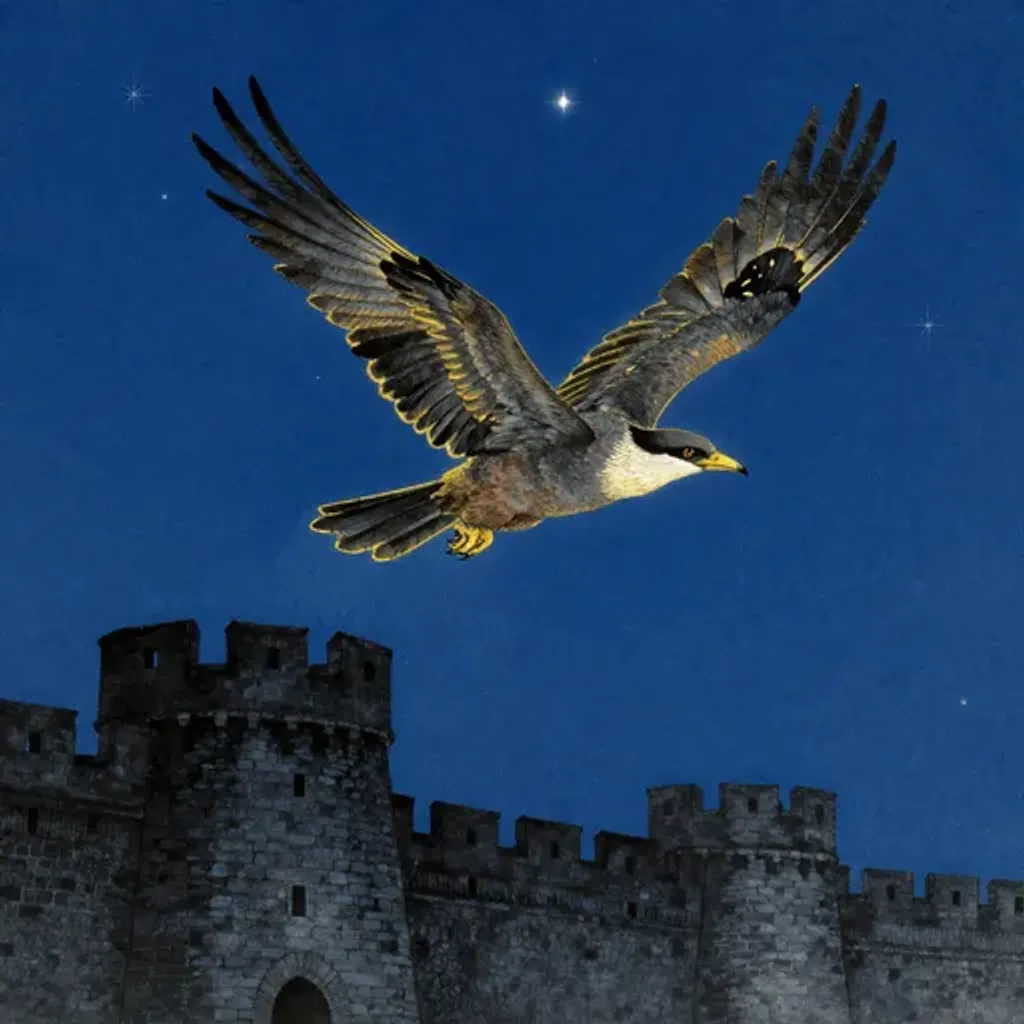
六翮長翼,夜過射國。高飛冥冥,羿氏無得。
Six flight feathers, long wings; passing over the land of archers by night. Soaring high into the boundless dark; the archer Yi cannot catch it.
— Jiao Yanshou, Yilin (Forest of Changes), 1st century BC
Commentary
Mountain over thunder shifts to wind above heaven, the gentle restraint of Small Taming. A bird with six strong pinions and long wings flies through the night, passing over the land of the archer. Soaring high into the darkness, even Archer Yi cannot bring it down. Yi, the divine bowman who shot nine suns from the sky, represents the ultimate predatory force, yet this bird's flight is too high and too swift. From Nourishment to Small Taming, the transformation captures how well-nourished strength, once airborne, eludes even supreme power. The wind above heaven gently accumulates what brute force cannot seize. What is properly nourished rises beyond the reach of violence.
頤 → 履
Hexagram 27 → Hexagram 10: Treading
Changing lines: 2, 4, 5
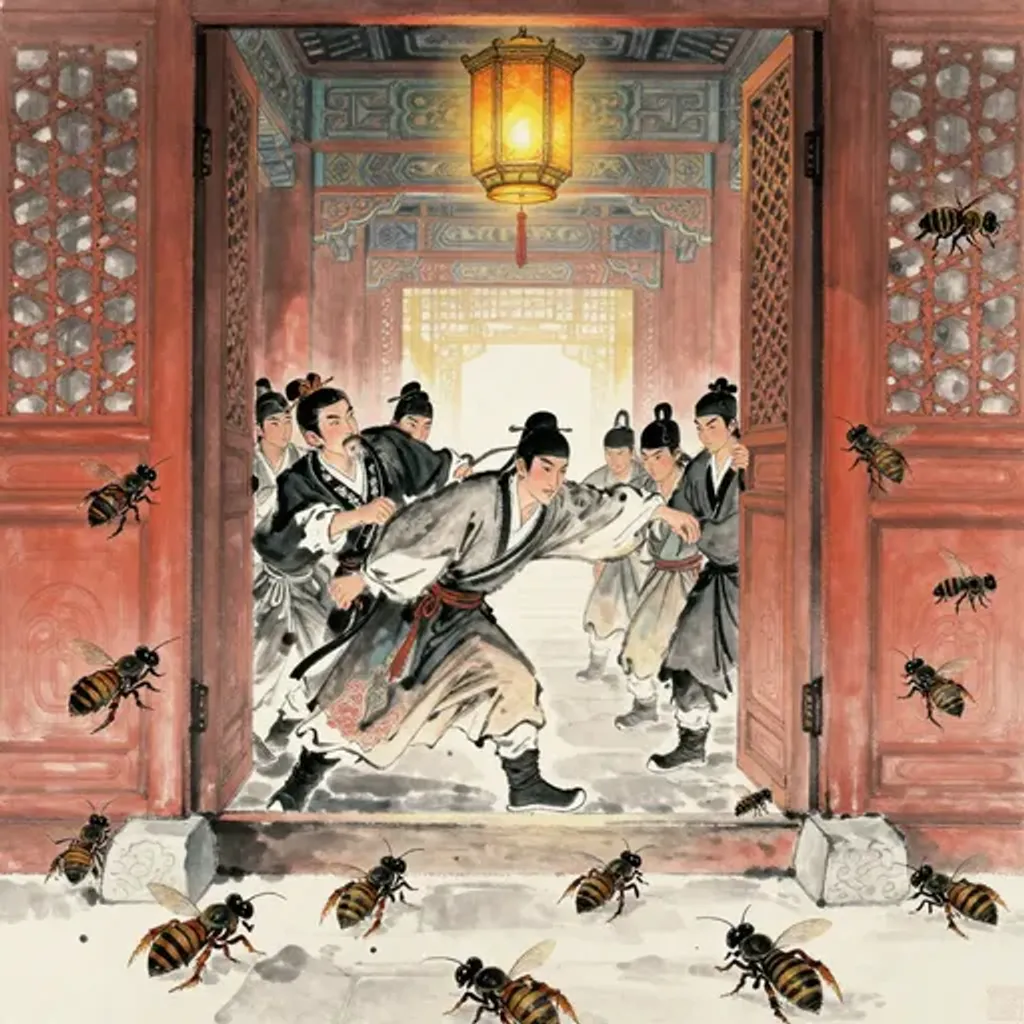
蜂蠆之門,難以止息。嘉媚之士,為王所食。從去其室。
The gate of wasps and scorpions — hard to find rest within. The charming and pleasing scholar is devoured by the king. He is taken from his home.
— Jiao Yanshou, Yilin (Forest of Changes), 1st century BC
Commentary
Mountain over thunder, the jaws of careful nourishment, transforms into heaven above the lake — treading on dangerous ground. The gate of wasps and scorpions offers no rest; their stings are relentless. A pleasing and flattering courtier is consumed by the king, devoured for his very charm, and forced to leave his home. The verse warns that beauty becomes bait in a predatory court. The one who flatters is himself 'eaten' by power. From Nourishment to Treading, the transformation sharpens the danger: to tread upon the tiger's tail requires knowing what to offer and what to withhold. Nourishment misdirected toward flattery feeds the predator and consumes the flatterer.
頤 → 泰
Hexagram 27 → Hexagram 11: Peace
Changing lines: 2, 3, 6
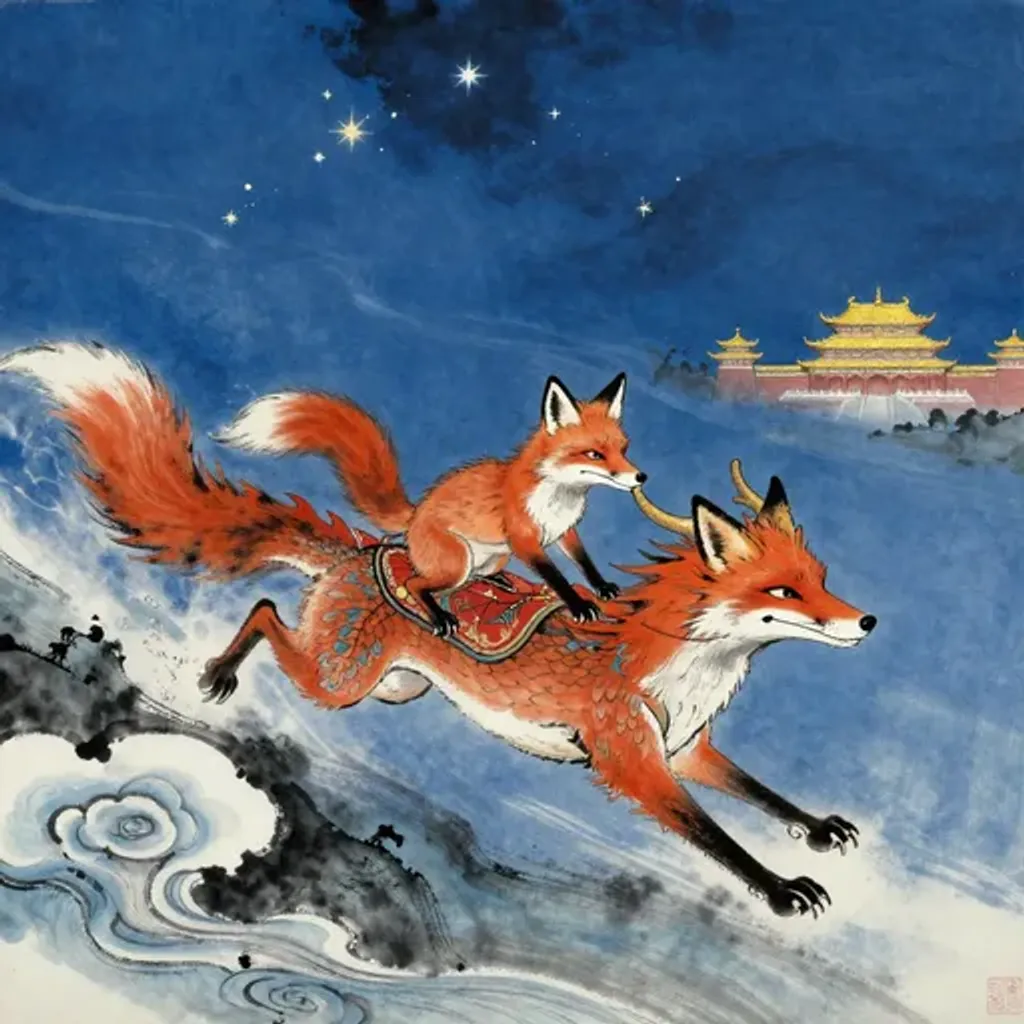
放狐乘龍,為王道東。過時不及,使我憂聾。
A released fox rides a dragon, conducting the king way eastward. Missing the time, arriving too late; leaving us anxious and deaf to counsel.
— Jiao Yanshou, Yilin (Forest of Changes), 1st century BC
Commentary
Mountain over thunder transforms into earth over heaven, the interchange of Peace. A fox is released to ride the dragon, conducting the king's affairs eastward, but the timing slips — too late, never quite arriving — leaving one deaf with worry. The fox, cunning but lowly, mounted upon the dragon, symbol of sovereign power, suggests an unworthy agent entrusted with a royal mission. The window of opportunity passes. From Nourishment to Peace, the transformation reveals how the free exchange between above and below can miscarry when the wrong messenger carries the nourishment. Even in an era of cosmic harmony, mismatched agents spoil the delivery.
頤 → 否
Hexagram 27 → Hexagram 12: Standstill
Changing lines: 1, 4, 5
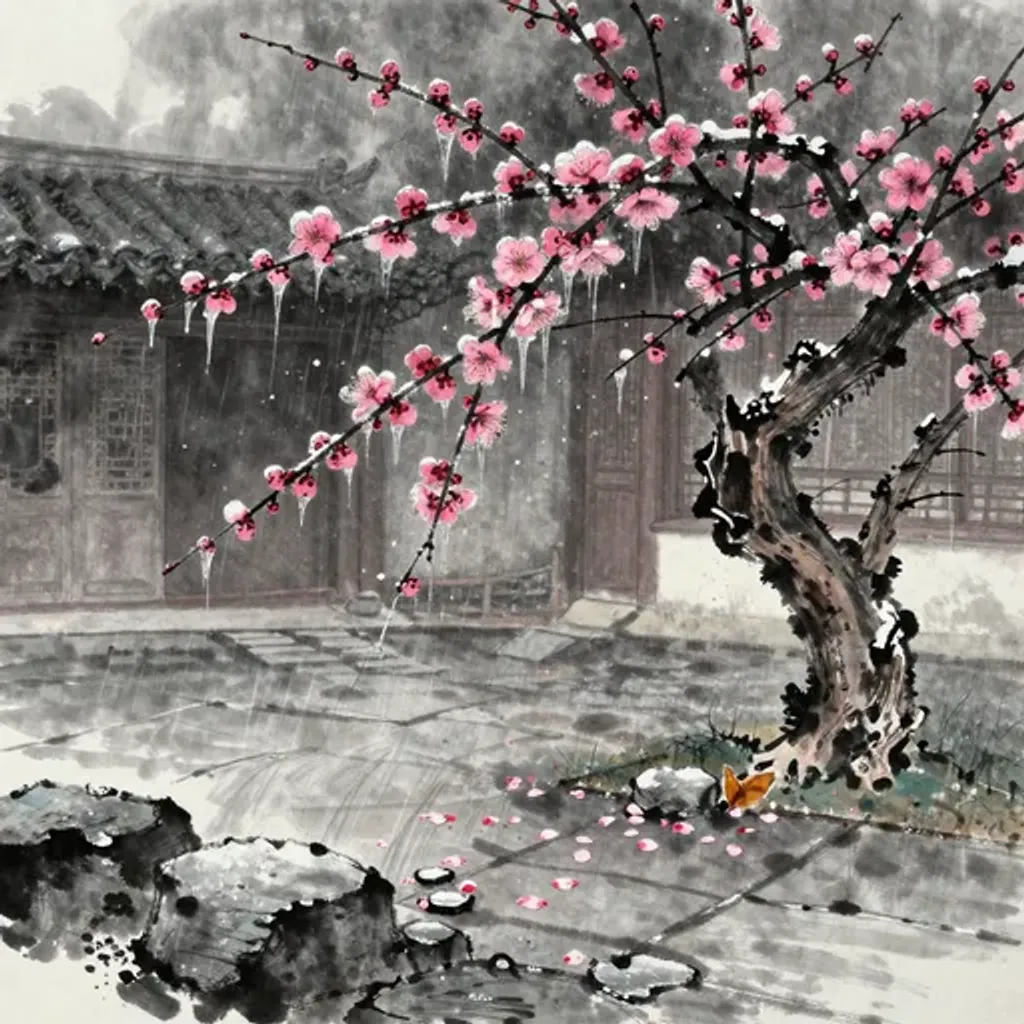
雹梅零墮,心思情憤,亂我魂氣。
Hail batters the plum blossoms, scattering them to the ground. Heart brooding, passions raging; my very soul is thrown into turmoil.
— Jiao Yanshou, Yilin (Forest of Changes), 1st century BC
Commentary
Mountain over thunder, the nourishing stillness, collapses into heaven and earth refusing to meet — Standstill. Hail batters the plum blossoms and they fall. The heart seethes with grief and indignation, scattering the soul's vital energy. The image is compact and devastating: premature frost destroying what should have been nourished into fruit. Plum blossoms, among the earliest to bloom, are most vulnerable to late cold. From Nourishment to Standstill, the transformation is stark. When heaven and earth cease their interchange, nourishment itself is frozen. What the mountain once sheltered, the blocked cosmos now assaults, turning care into chaos and vitality into despair.
頤 → 同人
Hexagram 27 → Hexagram 13: Fellowship
Changing lines: 3, 4, 5
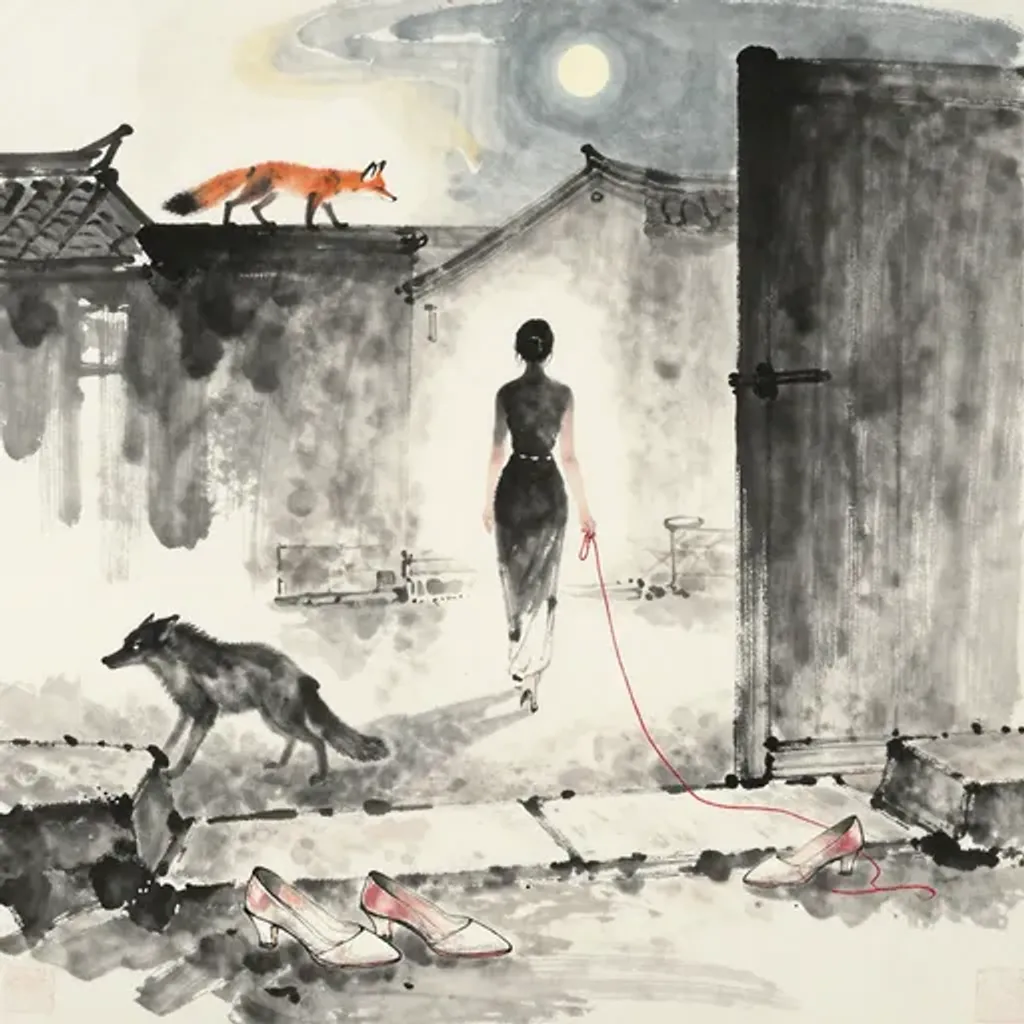
長女三嫁,進退多態。牝狐作妖,夜行離憂。
The eldest daughter marries thrice; advancing and retreating, many shifts. A vixen works mischief; traveling by night, she parts from sorrow.
— Jiao Yanshou, Yilin (Forest of Changes), 1st century BC
Commentary
Mountain over thunder, the discerning jaws, gives way to heaven and fire — Fellowship. The eldest daughter marries three times, advancing and retreating in many guises. A female fox works mischief, prowling by night and breeding sorrow. The eldest daughter's serial marriages suggest instability at the heart of domestic order, while the fox-spirit — a classical figure of seductive deception — compounds the disruption. From Nourishment to Fellowship, the transformation is ironic: fellowship requires trust and constancy, yet this verse shows bonds repeatedly formed and broken. Where nourishment should build lasting community, the fox's shapeshifting sabotages every connection, turning the fire of fellowship into a night-wanderer's anxiety.
頤 → 大有
Hexagram 27 → Hexagram 14: Great Possession
Changing lines: 2, 3, 4
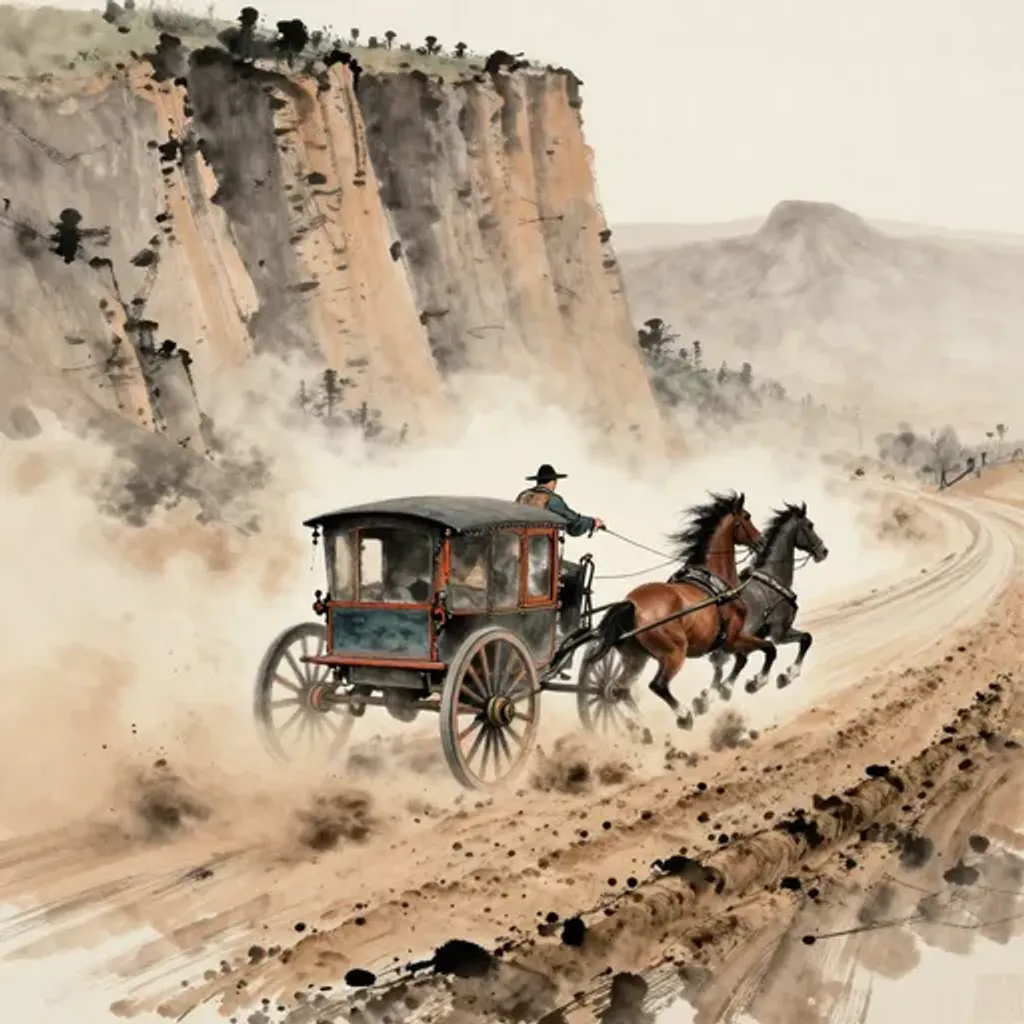
轟轟䡘䡘,驅車東西。盛盈必毀,高位崩顛。
Rumbling and clattering, driving the carriage east and west. What brims must shatter; the high seat topples and collapses.
— Jiao Yanshou, Yilin (Forest of Changes), 1st century BC
Commentary
Mountain over thunder yields to fire blazing in heaven — Great Possession. Chariots rumble and thunder as they race east and west, a display of overwhelming abundance and power. Yet the verse pivots sharply: what brims over must shatter, and the high seat topples. The rumbling wheels echo the thunder beneath Nourishment's mountain, but now unleashed as unchecked momentum. From Nourishment to Great Possession, the transformation carries a warning embedded in the target hexagram itself: fire in heaven illuminates everything, but 'the gentleman curbs evil and promotes good.' Without that curbing, the very fullness that nourishment produces becomes the instrument of its own collapse.
頤 → 謙
Hexagram 27 → Hexagram 15: Modesty
Changing lines: 1, 3, 6
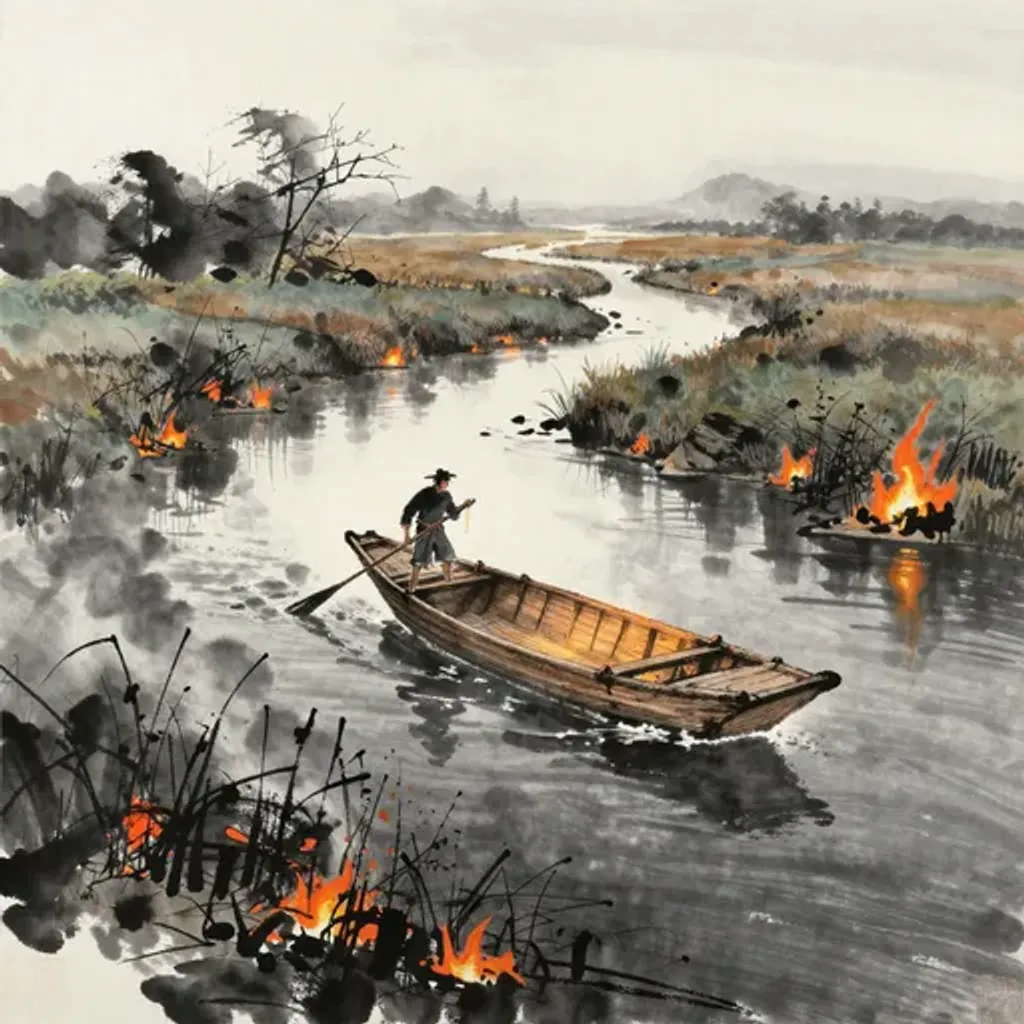
乘船道濟,載水逢火。賴得無患,蒙我生全。
Boarding a boat to cross the ford; the laden vessel meets fire. Fortunate to escape unharmed; blessed, my life is kept whole.
— Jiao Yanshou, Yilin (Forest of Changes), 1st century BC
Commentary
Mountain over thunder, the nourishing jaws, transforms into earth over mountain — Modesty, where the mountain hides within the earth. Boarding a boat to cross the ford, one encounters first water then fire — twin perils in succession. Yet by good fortune no harm results, and life is preserved whole. The verse captures the paradox of surviving what should have been fatal. From Nourishment to Modesty, the transformation reveals the mechanism of survival: the mountain that once stood proud now lies within the earth, lowering itself. The one who is nourished endures danger not through strength but through the modest willingness to ride low and pass through.
頤 → 豫
Hexagram 27 → Hexagram 16: Enthusiasm
Changing lines: 1, 4, 6
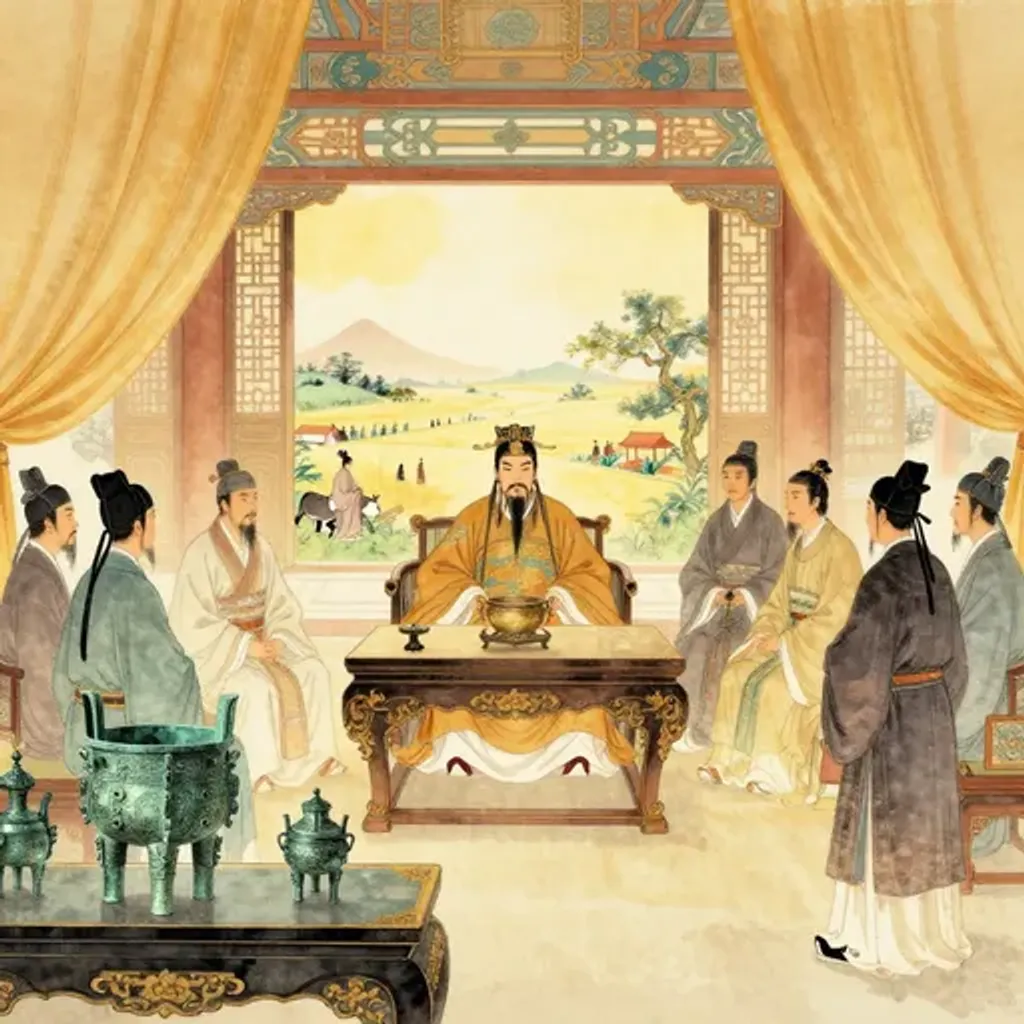
至德之君,政仁且溫。伊呂股肱,國富民安。
A lord of utmost virtue; his governance humane and gentle. With Yi Yin and Lu Shang as limbs; the state grows rich, the people at peace.
— Jiao Yanshou, Yilin (Forest of Changes), 1st century BC
Commentary
Mountain over thunder, the jaws of nourishment, opens into thunder emerging from the earth — Enthusiasm. A ruler of supreme virtue governs with benevolence and warmth. Yi Yin and Lu Shang serve as his arms and legs, the state grows rich and the people rest secure. Yi Yin, the cook-turned-minister who helped King Tang found the Shang, and Lu Shang (Taigong), the fisherman-strategist who aided King Wu of Zhou, represent the ideal of humble talent elevated to serve a righteous ruler. From Nourishment to Enthusiasm, the transformation is joyful: when nourishment is rightly administered through sage ministers, thunder breaks forth from the earth as music and celebration, and the whole realm rejoices.
頤 → 隨
Hexagram 27 → Hexagram 17: Following
Changing lines: 4, 5, 6
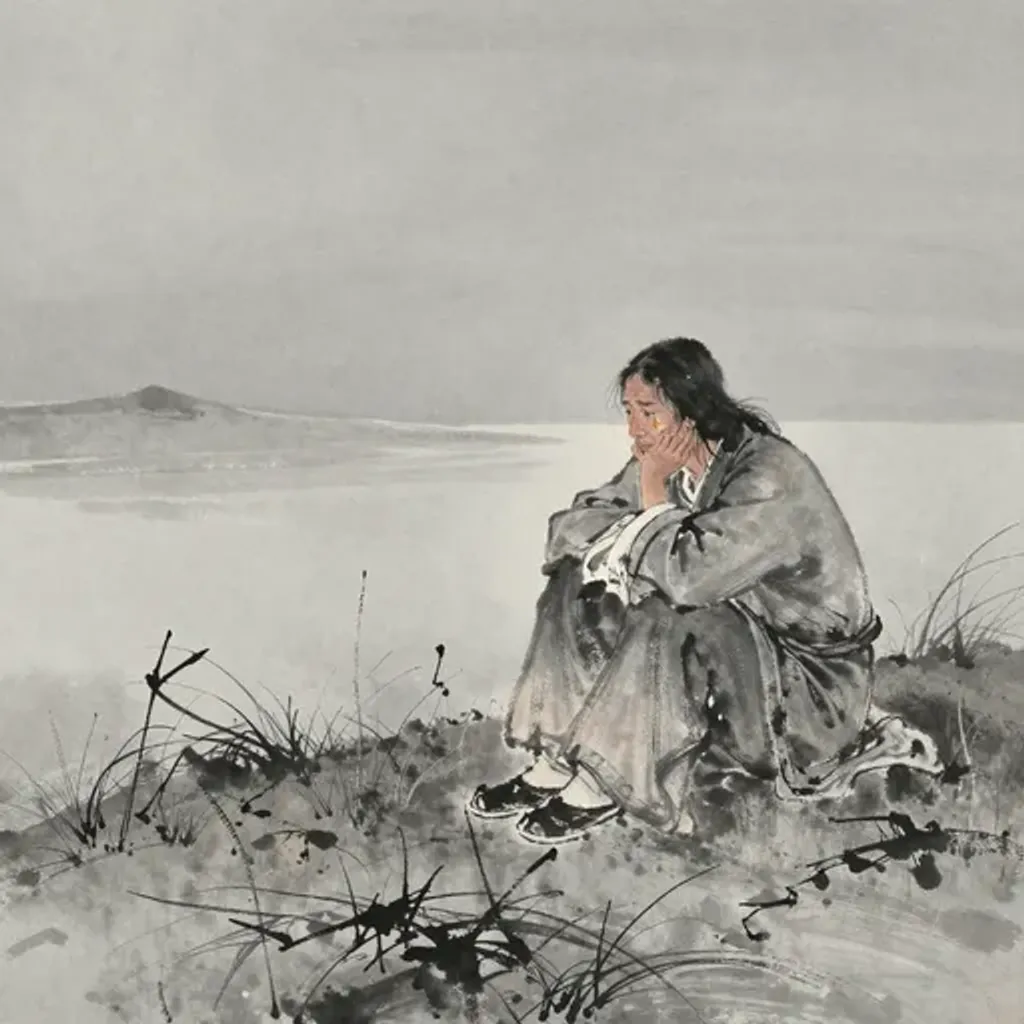
生不逢時,困且多憂。無有冬夏,心常悲愁。
Born out of time; beset and full of worry. Neither winter nor summer brings relief; the heart is ever steeped in sorrow.
— Jiao Yanshou, Yilin (Forest of Changes), 1st century BC
Commentary
Mountain over thunder, the nourishing stillness, gives way to lake over thunder — Following. Born at the wrong time, beset and burdened with worry, knowing neither winter nor summer's relief, the heart perpetually grieves. The verse is a pure lament without resolution: time itself has become hostile, and no season brings comfort. From Nourishment to Following, the transformation is bitter. Following requires adapting to the time, yet this person finds no time worth following. The lake's joyful surface over thunder's dormant energy should offer rest — 'the gentleman at nightfall enters to feast and repose' — but for one born out of season, even the rhythm of following yields only sorrow.
頤 → 蠱
Hexagram 27 → Hexagram 18: Work on the Decayed
Changing lines: 1, 2, 3
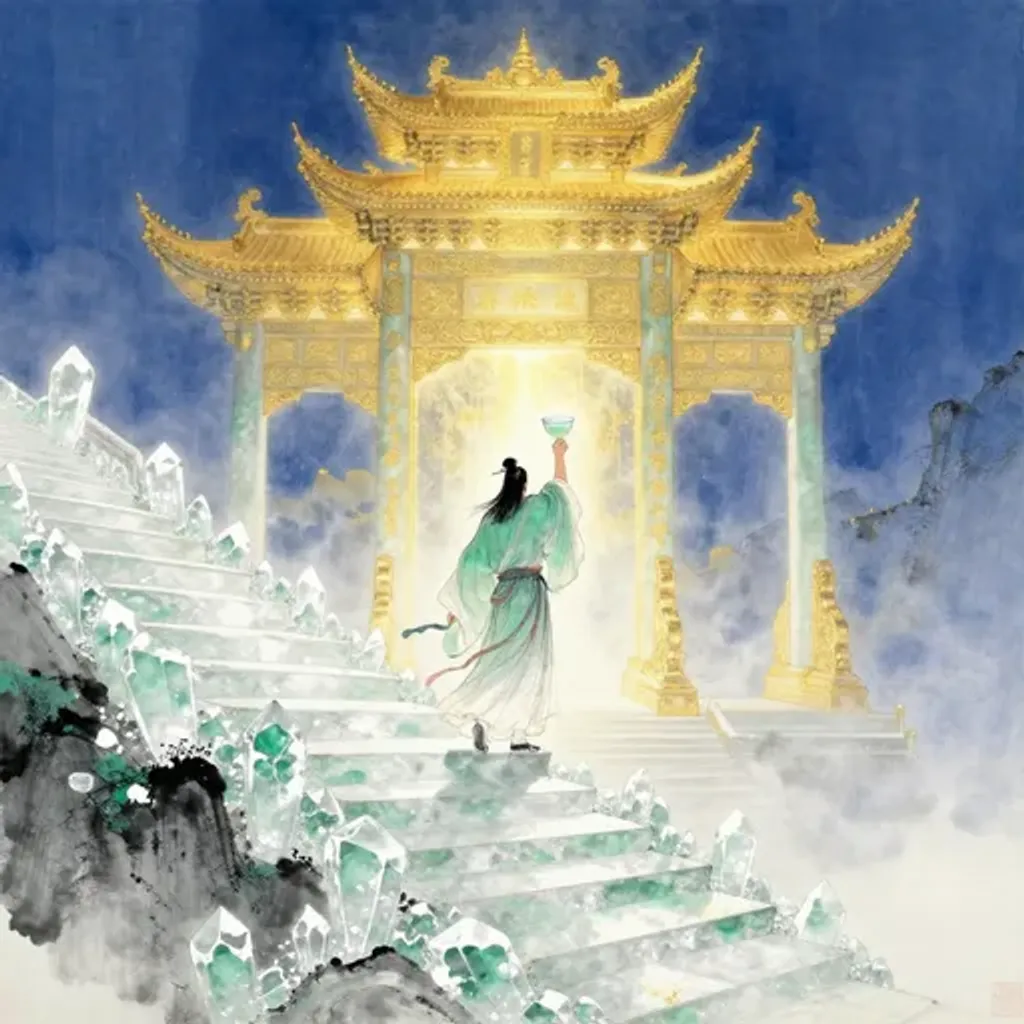
南歷玉山,東入生門。登福上堂,飲萬歲漿。
Journeying south past the Jade Mountain; entering the Gate of Life to the east. Ascending the Hall of Blessing; drinking the elixir of ten thousand years.
— Jiao Yanshou, Yilin (Forest of Changes), 1st century BC
Commentary
Mountain over thunder shifts to mountain over wind — Work on the Decayed. The journey leads south past the Jade Mountain, east through the Gate of Life, ascending the Hall of Blessing to drink the Elixir of Ten Thousand Years. This is a vision of Daoist paradise: the Jade Mountain evokes Kunlun, the Gate of Life suggests rebirth, and the immortal elixir promises transcendence. From Nourishment to Work on the Decayed, the transformation is paradoxical. Gu signifies corruption that must be repaired, yet the verse shows its opposite — perfect nourishment culminating in immortality. The mountain remains above in both hexagrams, but wind replaces thunder, suggesting that what was once urgent appetite has refined into gentle, penetrating restoration.
頤 → 臨
Hexagram 27 → Hexagram 19: Approach
Changing lines: 2, 6
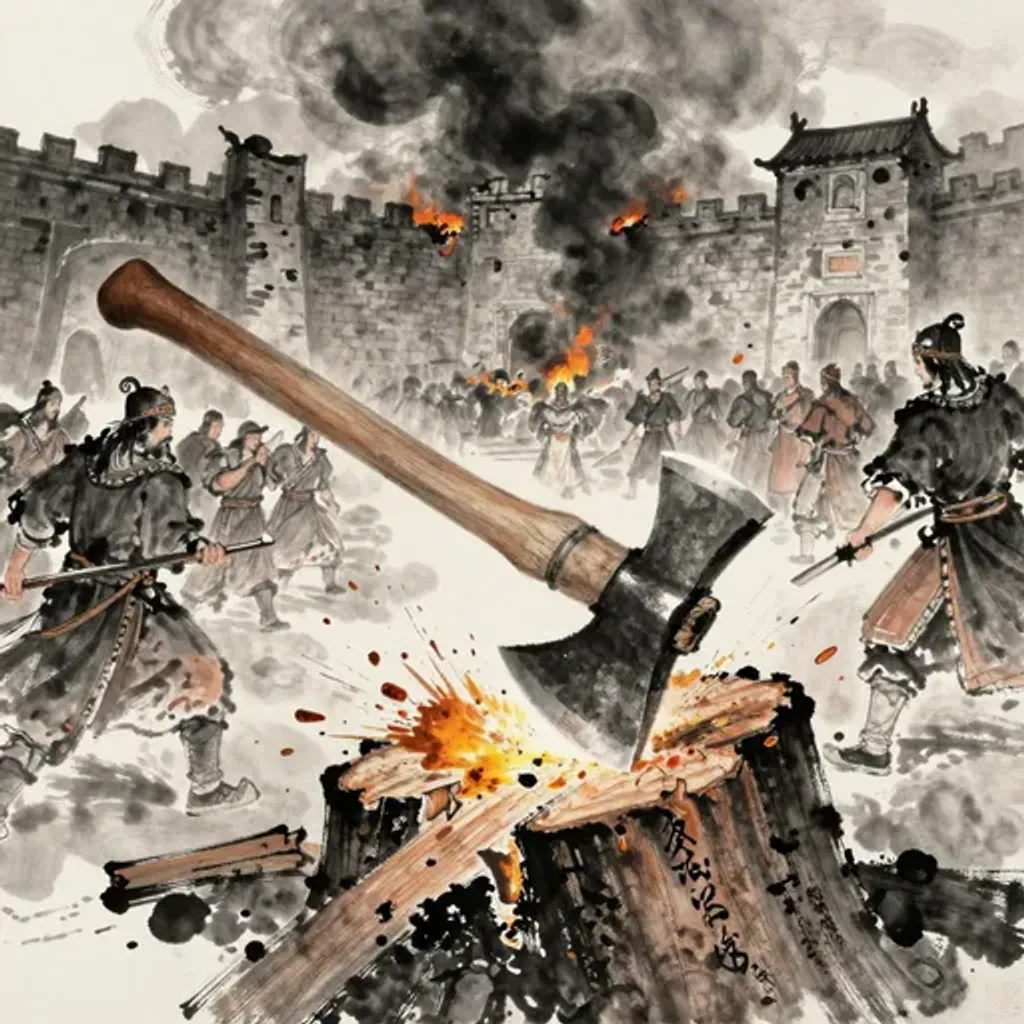
大斧破木,讒人敗國。東關二五,禍及三子。晉人亂危,懷公出走。
A great axe splits the timber; slanderers destroy the state. The two-five of the Eastern Pass bring calamity upon three princes. The state of Jin falls to chaos; Duke Huai flees in exile.
— Jiao Yanshou, Yilin (Forest of Changes), 1st century BC
Commentary
Mountain over thunder transforms into earth over lake — the great Approach of authority. A great axe splits the wood; slanderers destroy the state. The 'Two Fives' at the Eastern Gate — Lady Li's agents Liang Wu and Dongguan Wu — conspired to slander Crown Prince Shensheng and the princes Chong Er and Yiwu. According to the Zuo Zhuan, Lady Li bribed these officials to persuade Duke Xian to exile his sons to frontier posts, then framed Shensheng with poisoned sacrificial meat. The prince hanged himself; his brothers fled. Duke Huai of Jin later lost the throne and was killed. From Nourishment to Approach, the transformation is ominous: authority approaching from below can nourish or destroy, and when slander poisons the source, even royal sons are split like kindling.
頤 → 觀
Hexagram 27 → Hexagram 20: Contemplation
Changing lines: 1, 5
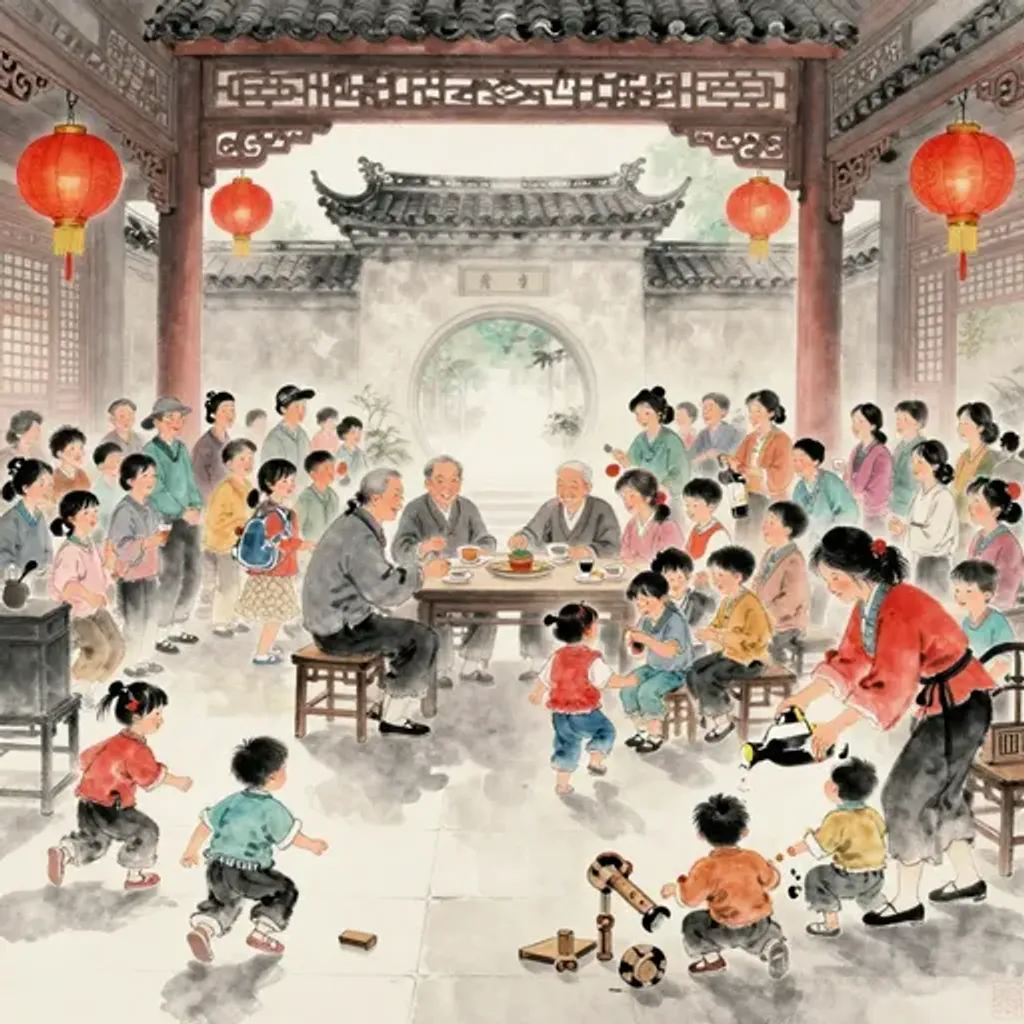
一室百孫,公悅婦歡。相與笑言,家樂以安。
One household, a hundred grandchildren; the patriarch delighted, the wives rejoicing. Together sharing laughter and conversation; the family is happy and at peace.
— Jiao Yanshou, Yilin (Forest of Changes), 1st century BC
Commentary
Mountain over thunder opens toward wind over earth — Contemplation, where the sage surveys the realm and sets his teachings. One household holds a hundred grandchildren; the patriarch delights and the wives rejoice. Laughter and conversation fill the rooms; the family is happy and at peace. This is nourishment fulfilled across generations — the domestic ideal of Chinese civilization. From Nourishment to Contemplation, the transformation is gentle: what begins as the careful feeding of a single mouth becomes a panoramic view of generational abundance. The wind passes over the earth as the elder surveys his flourishing descendants, and the mountain's still nurture radiates outward as moral example.
頤 → 噬嗑
Hexagram 27 → Hexagram 21: Biting Through
Changing lines: 4
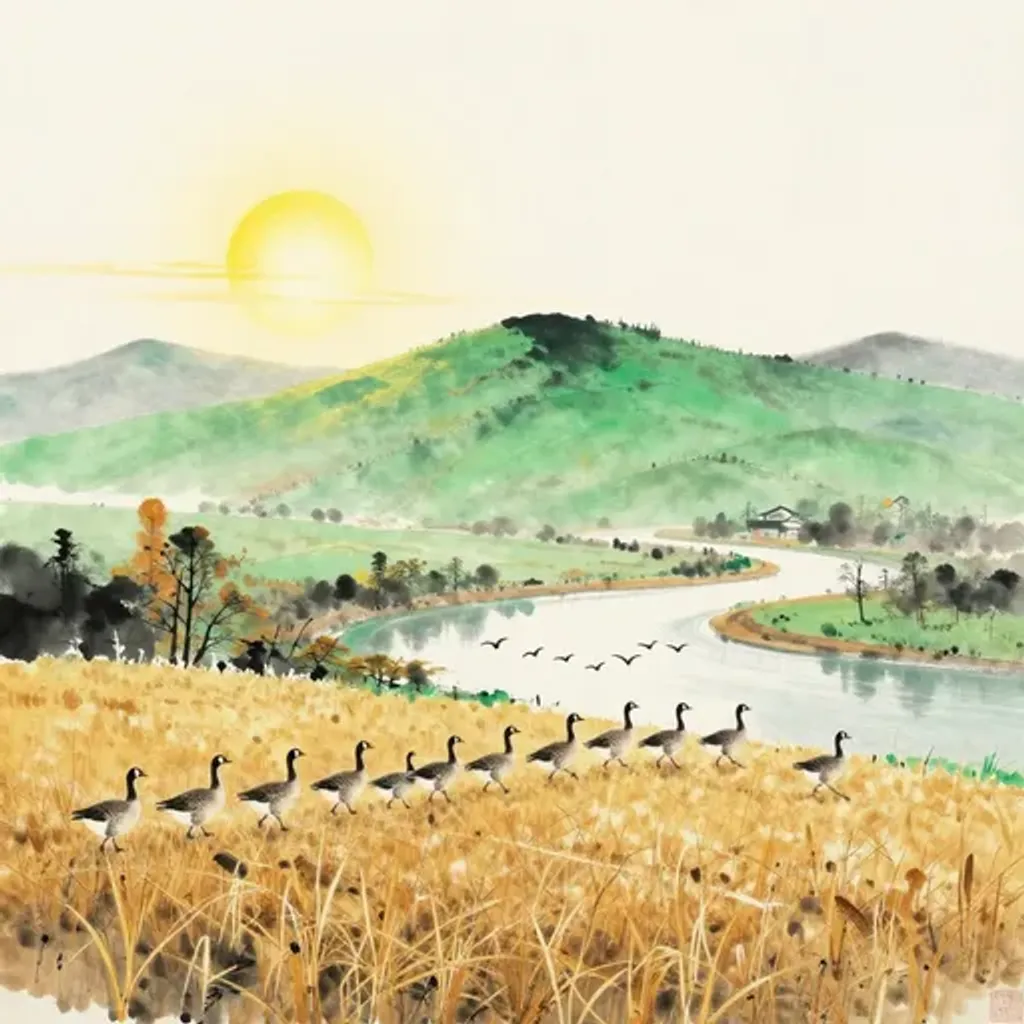
隨陽轉行,不失其常。君安於鄉,國無咎殃。
Following the sun course in turning flight; never straying from the constant way. The lord is secure in his domain; the state suffers no blame or calamity.
— Jiao Yanshou, Yilin (Forest of Changes), 1st century BC
Commentary
Mountain over thunder gives way to fire and thunder — Biting Through, the hexagram of legal clarity. Following the sun's course and turning with its rhythm, one does not lose the constant way. The ruler rests secure in his domain, and the state suffers no calamity. The verse describes governance aligned with cosmic order: like migratory birds following the yang-light of the sun, the ruler who moves with the seasons maintains natural justice without force. From Nourishment to Biting Through, the transformation clarifies: the mouth that nourishes wisely becomes the mouth that adjudicates justly. Thunder and lightning illuminate wrongdoing, but only a ruler nourished on proper rhythm can wield that power without excess.
頤 → 賁
Hexagram 27 → Hexagram 22: Grace
Changing lines: 3
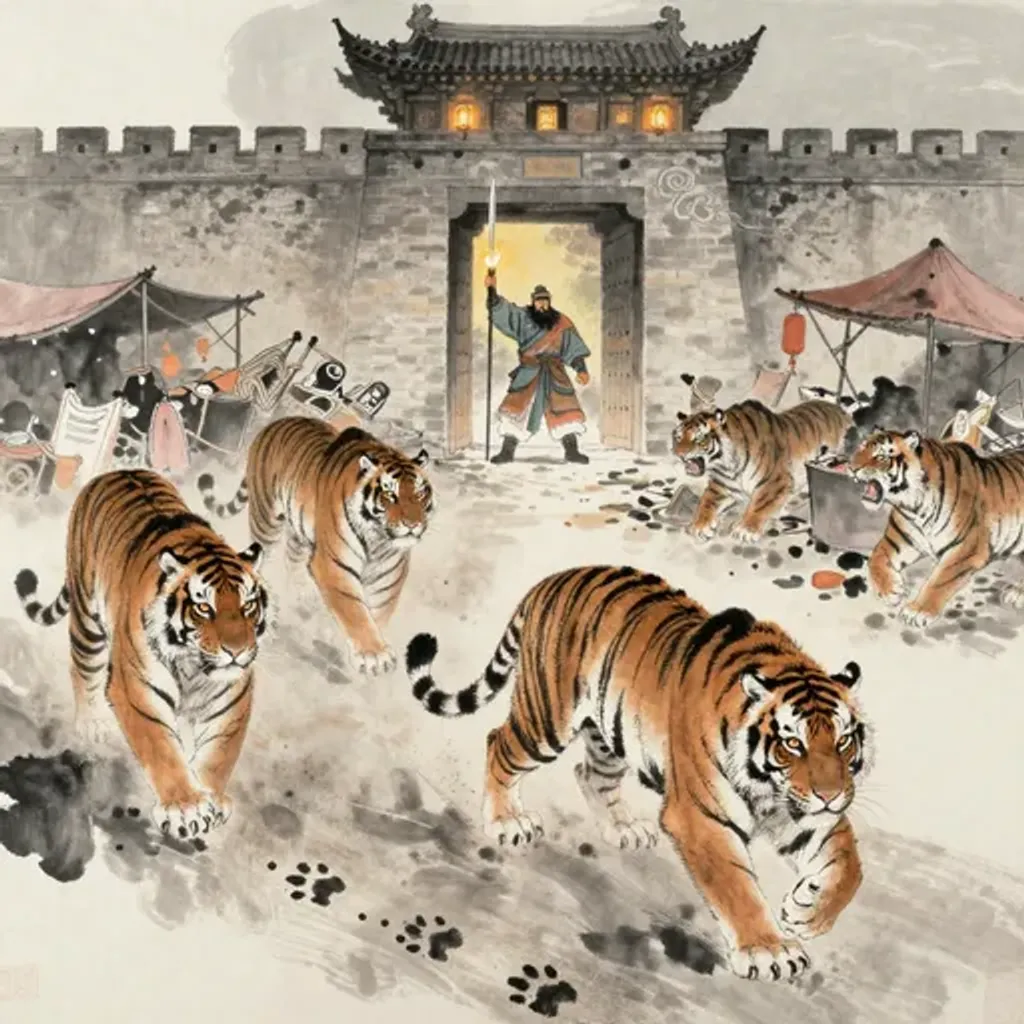
群虎入邑,求索肉食。大人禦守,君不失國。
A pack of tigers enters the town, seeking flesh to eat. The great man stands guard; the lord does not lose his state.
— Jiao Yanshou, Yilin (Forest of Changes), 1st century BC
Commentary
Mountain over thunder yields to mountain over fire — Grace, where fire illuminates beneath the mountain. A pack of tigers enters the town, seeking flesh to devour. The great man stands guard, and the lord does not lose his state. The tigers represent predatory forces — invaders or bandits — drawn by the scent of sustenance. Yet the defender holds firm, and the adorned order of civilization survives. From Nourishment to Grace, the transformation reveals that beauty and culture require protection: the fire beneath the mountain illuminates governance, but only if someone guards the gate. Nourishment attracts predators, and what sustains must also be defended.
頤 → 剝
Hexagram 27 → Hexagram 23: Splitting Apart
Changing lines: 1
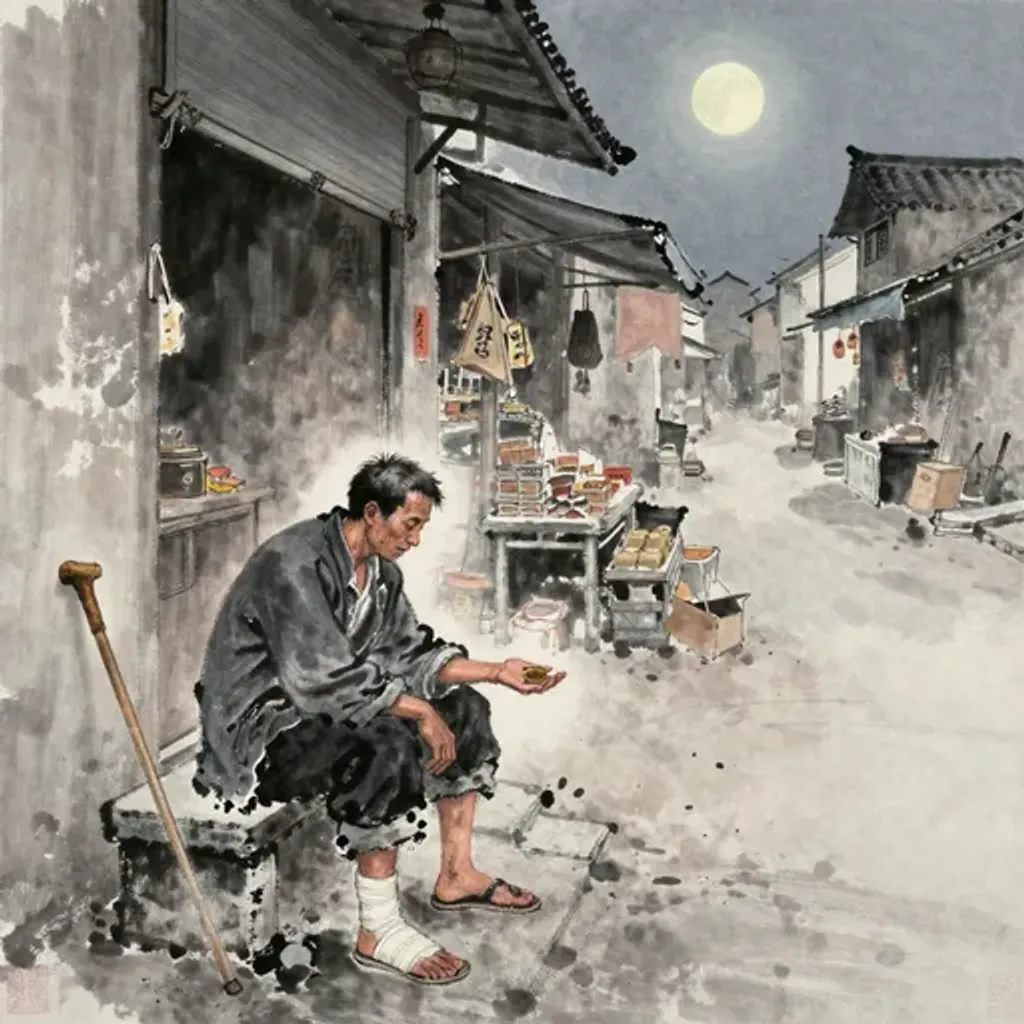
弱足刖跟,不利出門。商賈無贏,折明為患。湯火之憂,轉解喜來。
Weak feet, severed heels; ill-favored to go out the door. Merchants gain no profit; broken brightness becomes affliction. The worry of scalding fire; yet trouble dissolves and joy arrives.
— Jiao Yanshou, Yilin (Forest of Changes), 1st century BC
Commentary
Mountain over thunder shifts to mountain over earth — Splitting Apart, where the bed is stripped from below. Weak feet with severed heels, it is not auspicious to go out. Merchants make no profit; clarity is broken and becomes a source of trouble. Fire and scalding water threaten. Yet at the end, the crisis turns and joy arrives. The verse moves through progressive degradation — bodily maiming, commercial failure, intellectual collapse — before reversing at the last moment. From Nourishment to Splitting Apart, the mountain's nurture erodes from the base upward, stripping everything until only the bare peak remains. But even in the stripping, a seed of return persists.
頤 → 復
Hexagram 27 → Hexagram 24: Return
Changing lines: 6
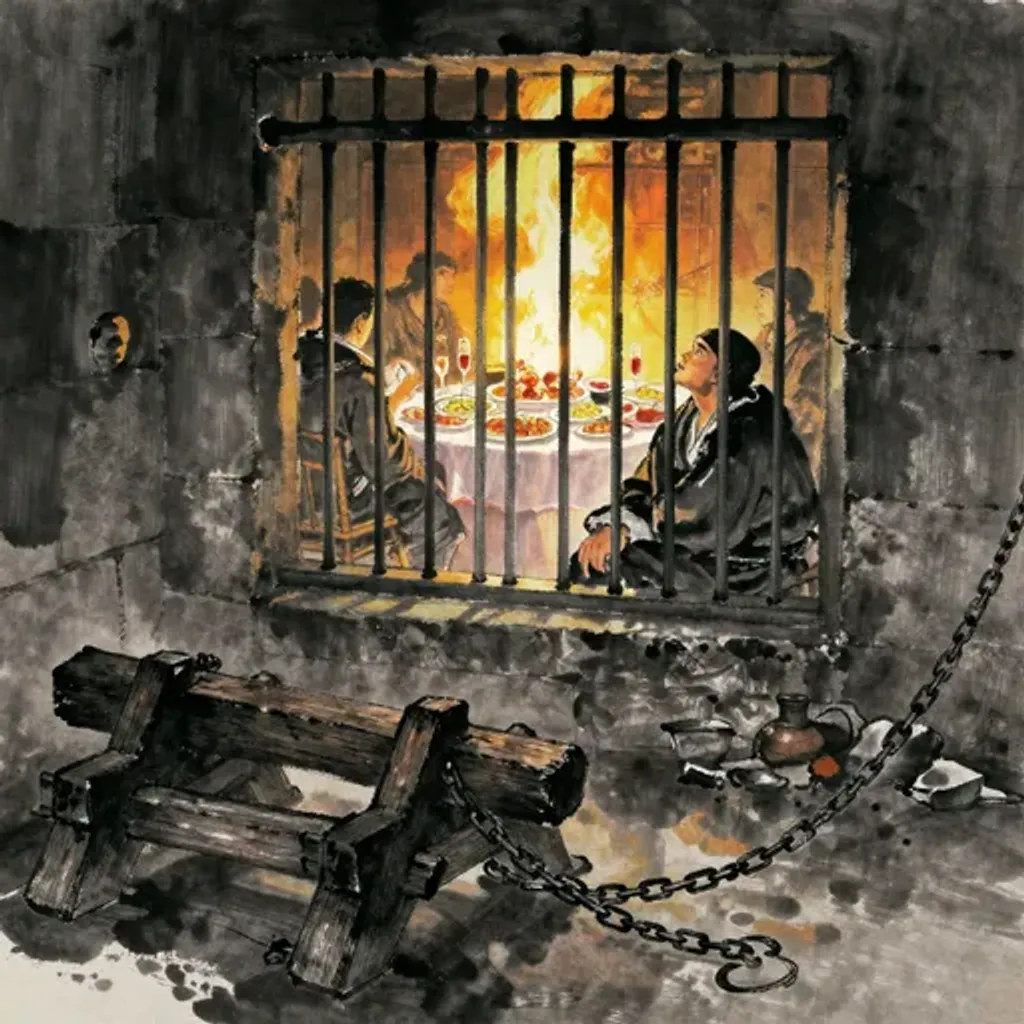
夏臺幽戶,文君厄處。鬼侯飲食,岐人悅喜。
The dark cell of Xiatai; where Lord Wen endures hardship. The Marquis of Gui feasts and drinks; the people of Qi rejoice.
— Jiao Yanshou, Yilin (Forest of Changes), 1st century BC
Commentary
Mountain over thunder transforms into earth over thunder — Return, the single yang stirring beneath the earth. The Xia Prison's dark cell holds the lord of Wen in adversity. The Lord of Gui provides food and drink; the people of Qi rejoice. According to the Shiji, King Zhou of Shang imprisoned the lords of Gui (also called Lord of Jiu) and the Earl of the West (King Wen) alike. The Lord of Gui was killed and his flesh made into paste, but King Wen's loyal ministers ransomed him with treasures and beauties. 'The people of Qi' — Wen's people at the foot of Mount Qi — rejoiced at his return. From Nourishment to Return, imprisonment becomes the womb of renewal: nourishment received even in a dungeon prepares the single yang for its triumphant reemergence.
頤 → 无妄
Hexagram 27 → Hexagram 25: Innocence
Changing lines: 4, 5
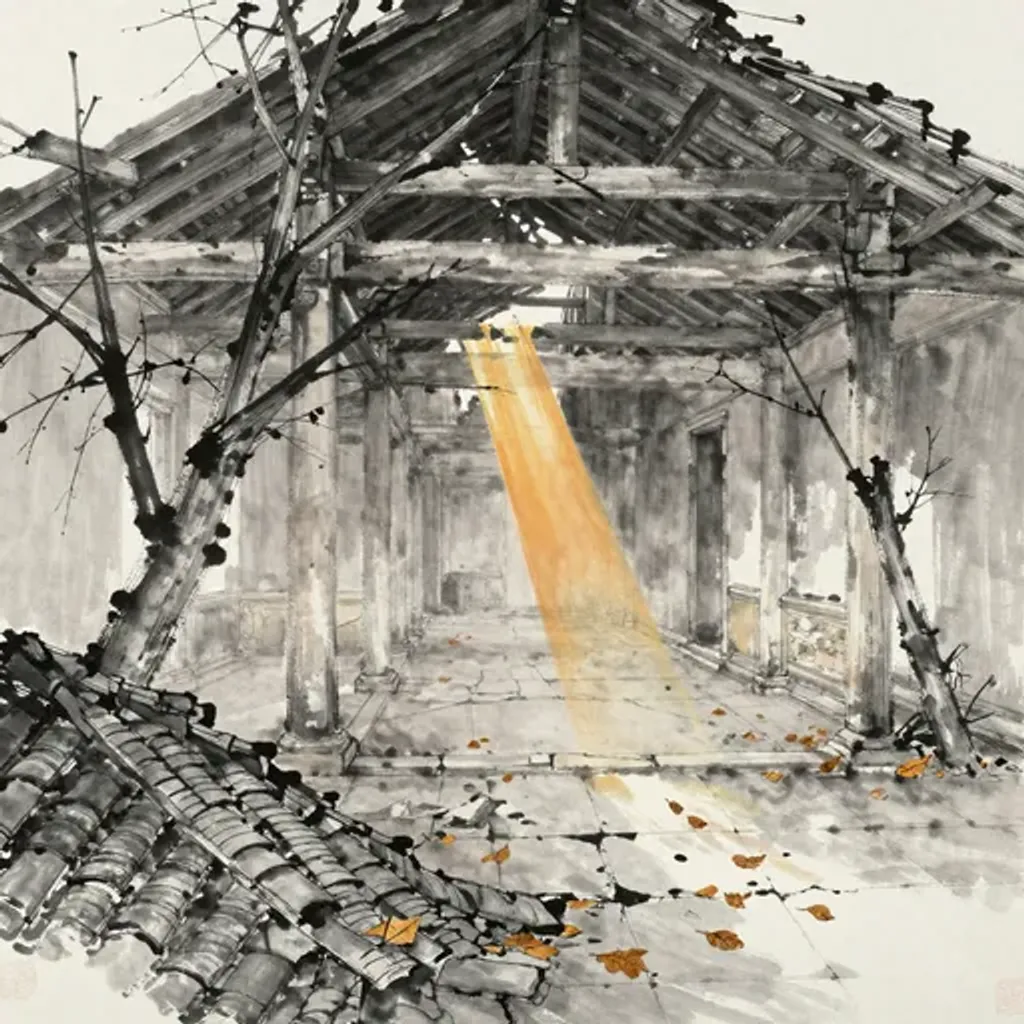
棟橈榱壞,廊屋大敗。宮闕空廊,如冬枯樹。
The ridgepole buckles, the rafters rot; the galleries and halls fall to ruin. Palace towers stand as empty corridors; like winter barren trees.
— Jiao Yanshou, Yilin (Forest of Changes), 1st century BC
Commentary
Mountain over thunder gives way to heaven under thunder — Innocence, the unexpected. The ridgepole sags and the rafters crack; corridors and chambers fall to ruin. Palace halls stand empty, like winter's barren trees. The verse directly echoes the I-Ching's Great Exceeding image of structural failure: the ridgepole, which supports the entire building, bends past its limit. Yet the target hexagram is not Great Exceeding but Innocence — the bolt from heaven that strikes without warning. From Nourishment to Innocence, the transformation is devastating: what was carefully nourished and maintained collapses not from neglect but from forces beyond anticipation. The palace's decay is not gradual rot but sudden, inexplicable failure, like thunder under heaven striking the unprepared.
頤 → 大畜
Hexagram 27 → Hexagram 26: Great Taming
Changing lines: 2, 3
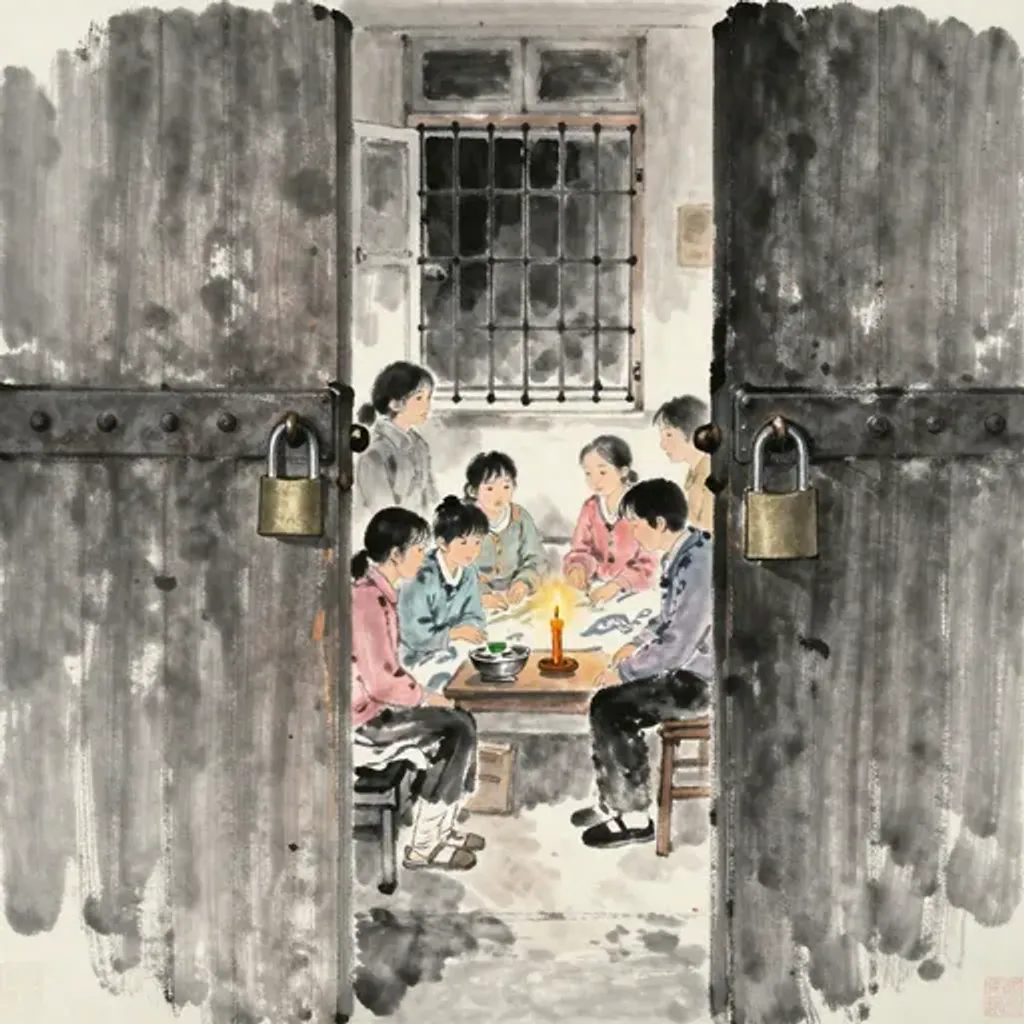
說以內安,不離其國。室家相懽,幽囚重閉。疾病多求,罪亂憒憒。
Content within, finding inner peace; not departing from one domain. The household shares in joy; yet the confined sit in heavy darkness. Illness demands much remedy; guilt and chaos, turmoil upon turmoil.
— Jiao Yanshou, Yilin (Forest of Changes), 1st century BC
Commentary
Mountain over thunder, the jaws of nourishment, turns inward to mountain over heaven — Great Taming, where heaven is stored within the mountain. Contentment and inner peace keep one within the homeland; the household rejoices together. Then the verse darkens: imprisonment behind locked doors, illness demanding constant remedies, guilt and chaos in confusion. The two halves mirror Nourishment's dual nature — what sustains can also confine. From Nourishment to Great Taming, the mountain doubles its containment: heaven stored within should be noble accumulation, but here it becomes claustrophobic. Taming power requires knowing when storage becomes imprisonment and when nourishment becomes obsessive grasping.
頤 → 頤
Hexagram 27 → Hexagram 27: Nourishment
No changing lines — the hexagram is unchanged
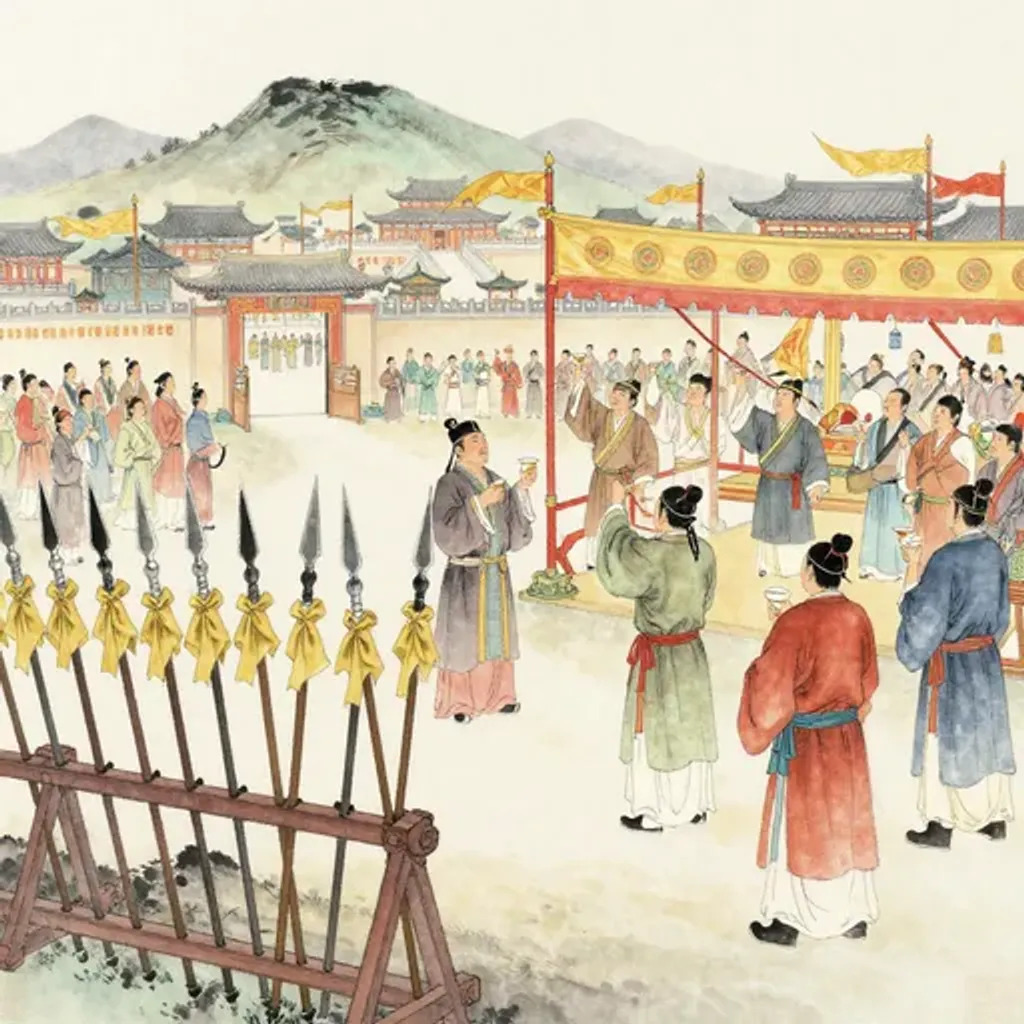
家給人足,頌聲並作。四夷賓服,干戈卷閣。
Every household provided, every person content; songs of praise arise in chorus. The four frontiers submit as guests; weapons of war are rolled up and shelved.
— Jiao Yanshou, Yilin (Forest of Changes), 1st century BC
Commentary
Mountain over thunder remains mountain over thunder — Nourishment unchanged, its essence distilled. Every household is well provisioned and every person satisfied; hymns of praise arise in chorus. The four barbarian peoples submit as guests, and weapons of war are rolled up and stored in the pavilion. This is the golden age vision of nourishment perfected: when the mouth is governed wisely, material abundance cascades into cultural harmony and diplomatic peace. Spears sheathed and songs composed — the realm needs no army because it is properly fed. Nourishment turning upon itself amplifies its own virtue, proving that careful governance of what enters and exits the mouth underlies all civilization.
頤 → 大過
Hexagram 27 → Hexagram 28: Great Exceeding
Changing lines: 1, 2, 3, 4, 5, 6
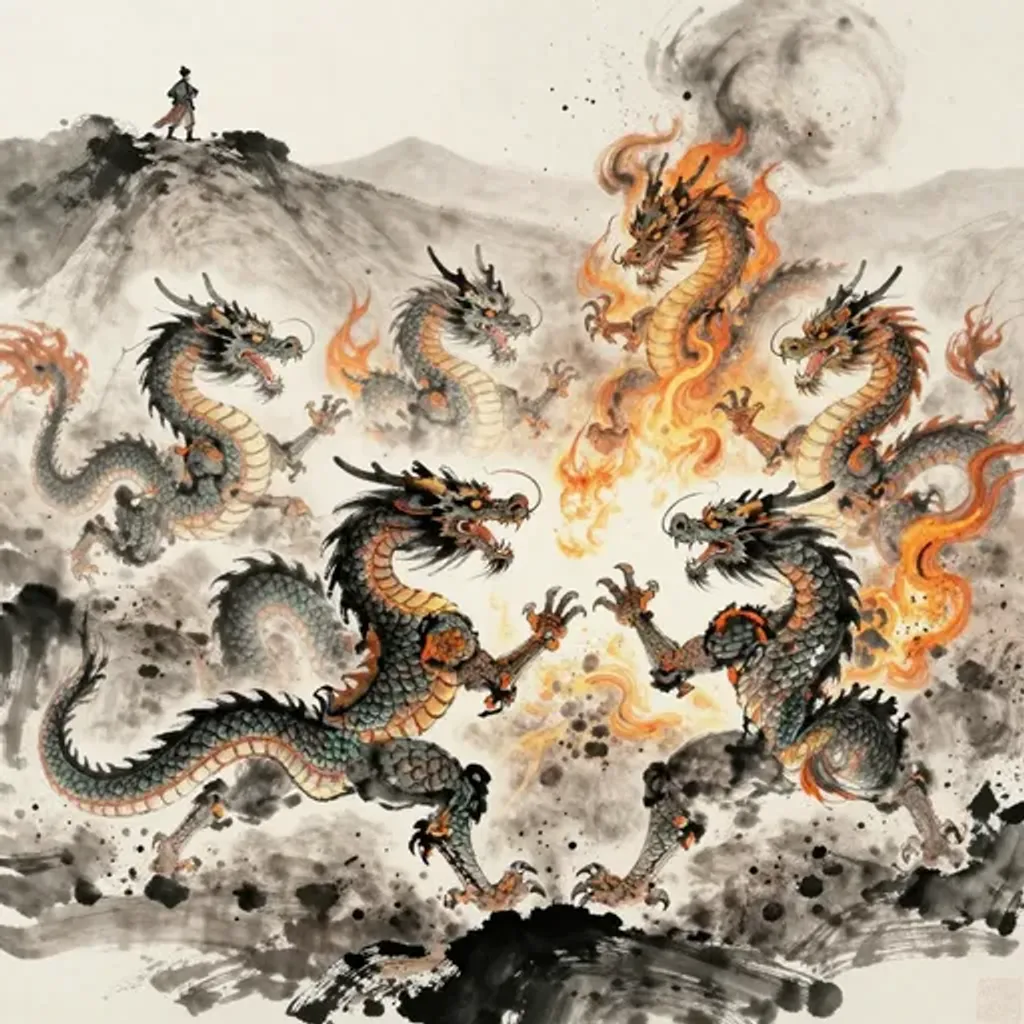
六龍俱怒,戰於阪下。倉黃不勝,旅人難苦。
Six dragons rage together; they battle at the foot of the slope. In haste they cannot prevail; the traveler suffers hardship and distress.
— Jiao Yanshou, Yilin (Forest of Changes), 1st century BC
Commentary
Mountain over thunder erupts into lake over wind — Great Exceeding, the ridgepole strained past its limit. Six dragons rage together, battling at the foot of the slope. In panicked haste they cannot prevail, and the traveler suffers bitterly. The six dragons recall the Qian hexagram's six yang lines, but here they fight rather than create, their energy turned destructive. The slope becomes a battlefield rather than a path of ascent. From Nourishment to Great Exceeding, the transformation overloads: what was carefully measured nourishment bursts its container. The lake submerges the wind's trees, and power that should sustain instead overwhelms. The traveler caught in this excess has no shelter.
頤 → 坎
Hexagram 27 → Hexagram 29: The Abysmal Water
Changing lines: 1, 2, 5, 6
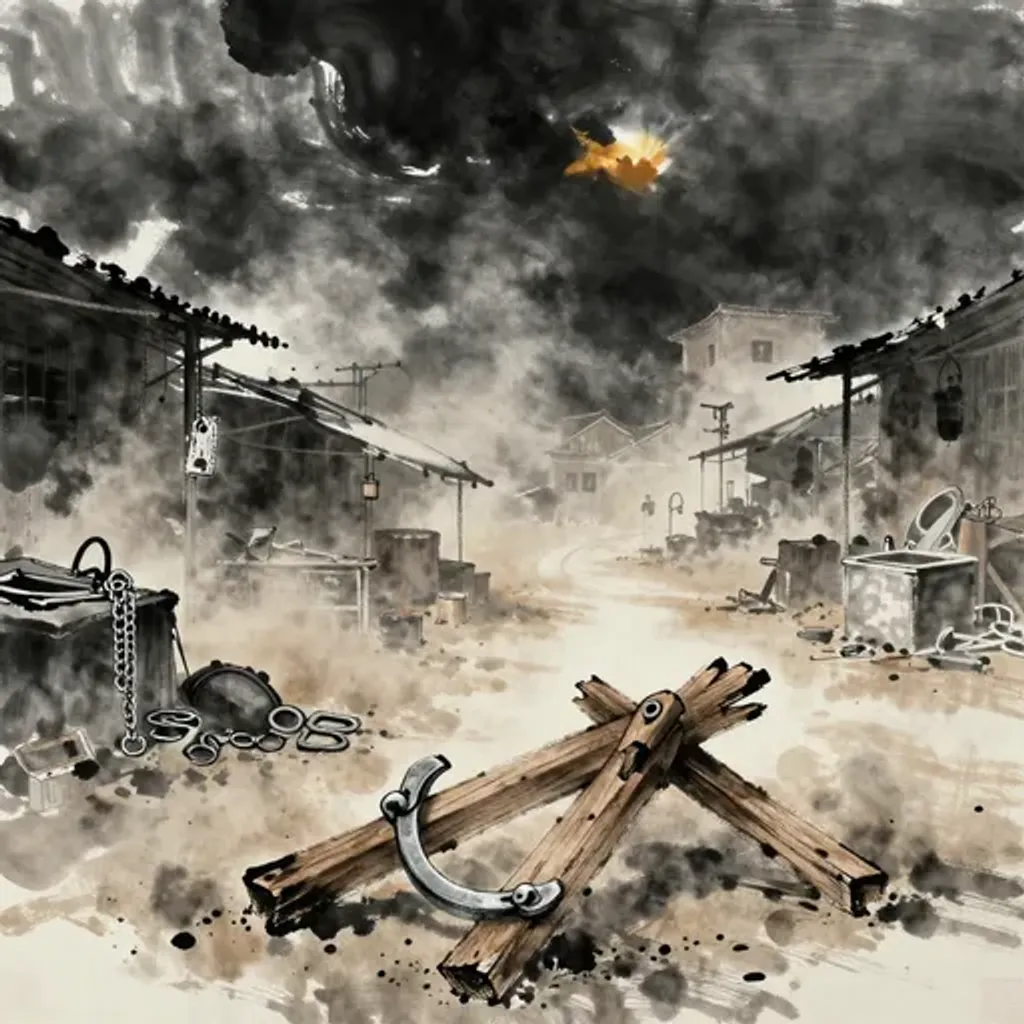
天下雷行,塵起不明。市空無羊,疾人憂凶。三木不辜,脫歸家邦。
Thunder rolls beneath heaven; dust rises, dimming the light. The market is empty, no sheep to be found; the sick are filled with dread. The guiltless in wooden stocks; freed, they return to their homeland.
— Jiao Yanshou, Yilin (Forest of Changes), 1st century BC
Commentary
Mountain over thunder shifts to doubled water — the Abysmal, peril upon peril. Thunder rolls under heaven, dust rises and obscures the light. The marketplace stands empty of sheep; the sick worry over misfortune. One is clamped in the triple wooden stocks, though guiltless, and finally escapes home to one's own state. The 'three wooden stocks' were a Han-era punishment device combining neck, hand, and foot restraints. From Nourishment to the Abysmal, the transformation plunges nourishment into crisis: the market where food is traded is desolate, illness destroys appetite, and the innocent are imprisoned. Yet the verse resolves with return — even from the depths of unjust confinement, the well-nourished spirit finds its way back.
頤 → 離
Hexagram 27 → Hexagram 30: The Clinging Fire
Changing lines: 3, 4
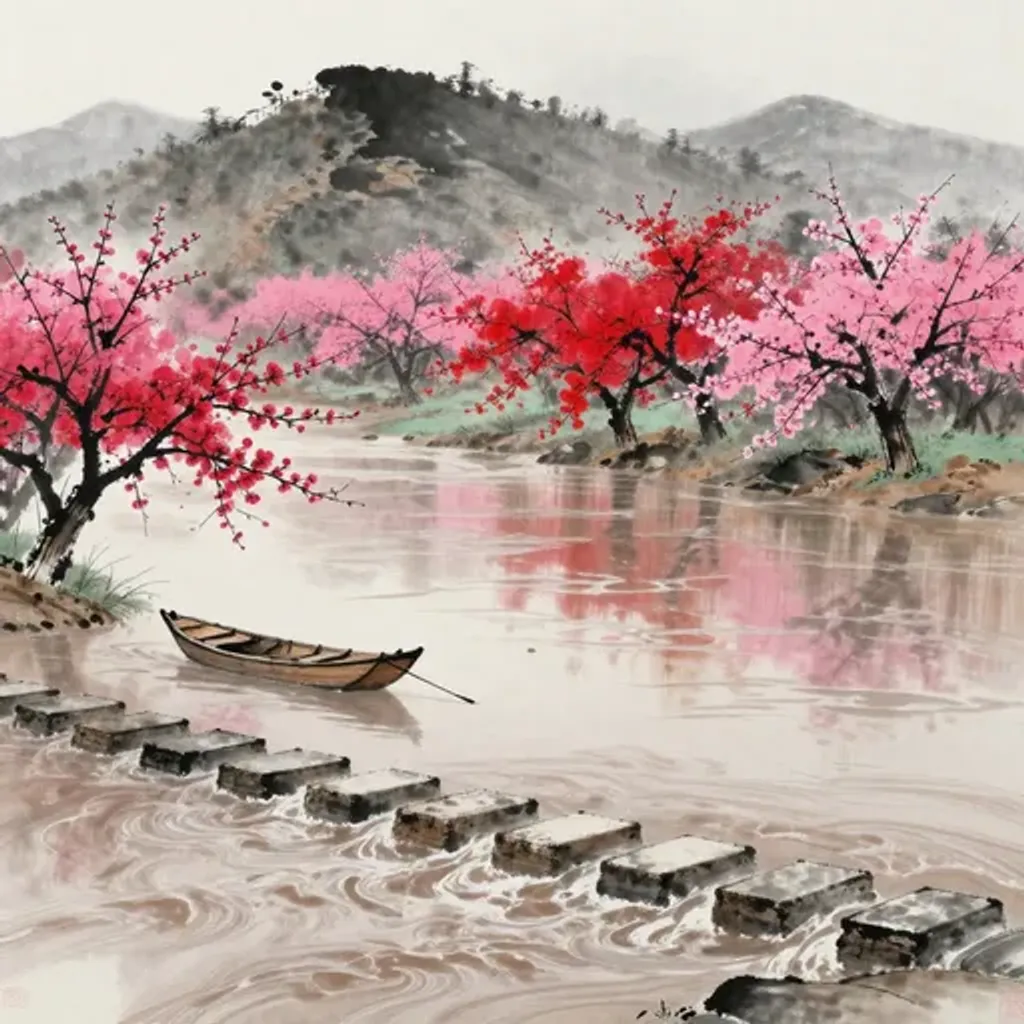
一指食肉,口無所得。染其鼎鼐,舌饞於腹。
Across the bank, peach blossoms burn red; at the crossing there is no boat, water stretches to the sky. Thinking of plums to quench thirst only deepens the thirst — painting a cake to ease hunger makes the belly burn more.
— Jiao Yanshou, Yilin (Forest of Changes), 1st century BC
Commentary
Mountain over thunder transforms into doubled fire — the Clinging, brightness upon brightness. The original verse reads: pointing at meat with one finger, the mouth obtains nothing. Dyeing the great cauldron's contents, the tongue craves what the belly cannot have. This is nourishment tantalizingly close yet utterly unreachable — food visible but not edible, flavor imagined but not tasted. The cauldron is stained but yields nothing to the hungry. From Nourishment to the Clinging, the transformation illuminates desire itself: doubled fire shows everything with painful clarity, yet fire cannot be eaten. The brighter the vision of what one lacks, the sharper the hunger. Clarity without sustenance is its own torment.
頤 → 咸
Hexagram 27 → Hexagram 31: Influence
Changing lines: 1, 3, 4, 5, 6
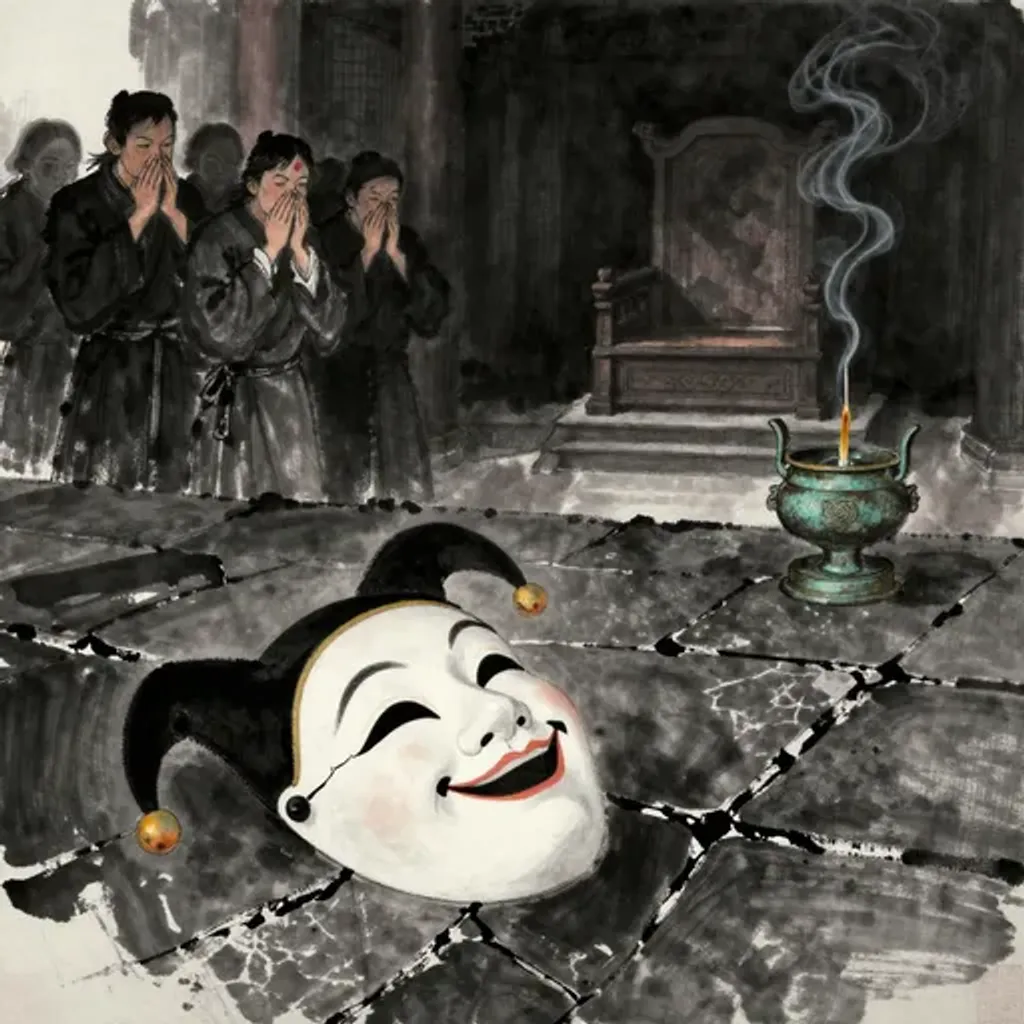
喜笑不常,失其福慶。口辟言𤴾,行者畏忌。
Joy and laughter do not last; blessings and good fortune are lost. The mouth gapes, speech grows rash; travelers grow wary and afraid.
— Jiao Yanshou, Yilin (Forest of Changes), 1st century BC
Commentary
Mountain over thunder yields to lake over mountain — Influence, the mutual attraction of opposites. Laughter and joy are inconstant; blessings and good fortune slip away. The mouth gapes open in crooked speech, and travelers grow wary and avoid the path. The verse presents influence corrupted: what should attract instead repels. The open mouth that should nourish instead produces twisted words, driving others away. From Nourishment to Influence, the transformation inverts: the lake above the mountain should draw things upward through gentle receptivity, but here the mouth's misuse — erratic moods and distorted speech — makes all influence poisonous. Travelers, who depend on hospitality, flee from this corrupted welcome.
頤 → 恆
Hexagram 27 → Hexagram 32: Duration
Changing lines: 1, 2, 3, 4, 6
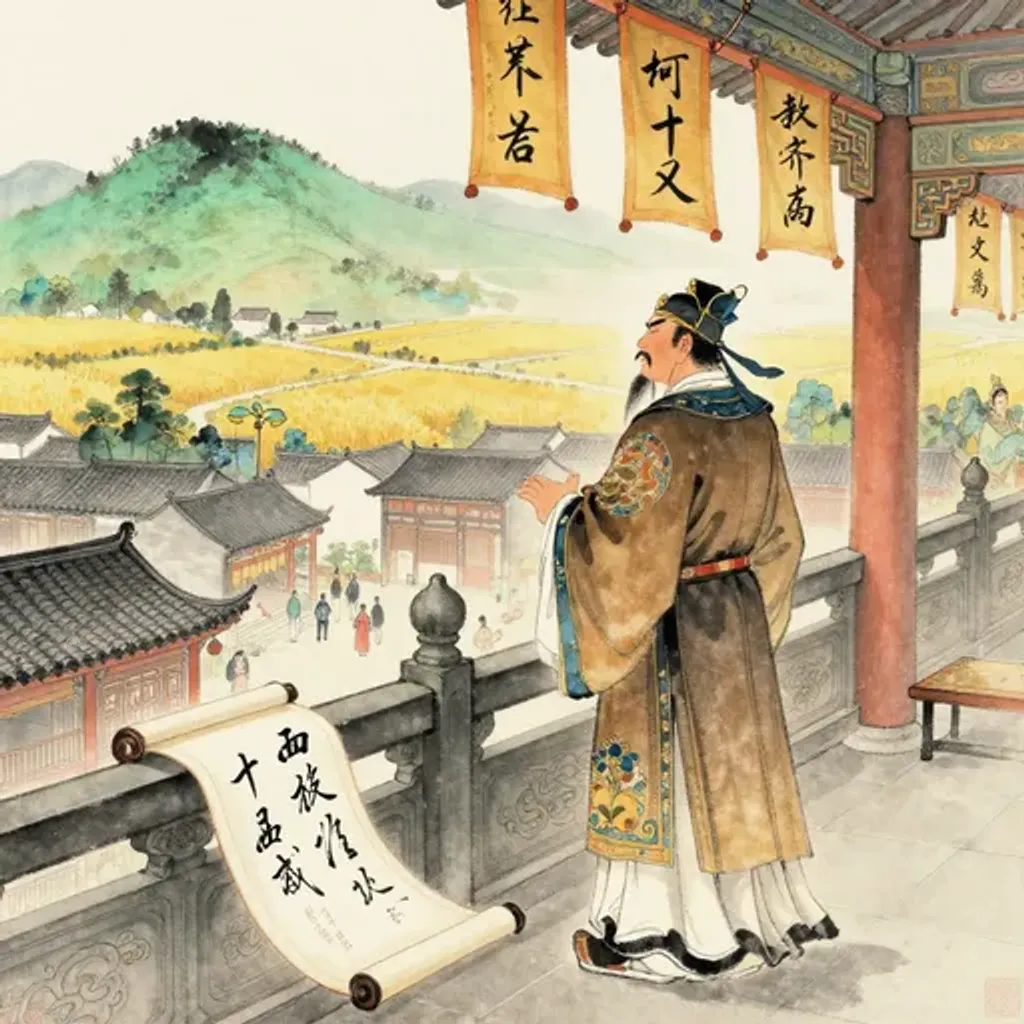
毛生毫背,國樂民富,侯王有德。
Fine hairs grow on the tortoise back; the state rejoices, the people prosper. The lord and prince possess virtue.
— Jiao Yanshou, Yilin (Forest of Changes), 1st century BC
Commentary
Mountain over thunder opens toward thunder over wind — Duration, the hexagram of constancy. Fine fur grows on the animal's back — an omen of rare prosperity. The state delights in its music, the people are wealthy, and the lord possesses virtue. The image of hair growing thick on the back suggests robust health and natural abundance, the kind that only sustained nourishment over time can produce. From Nourishment to Duration, the transformation is one of time: what the mountain's careful feeding initiates, thunder and wind perpetuate through unchanging rhythm. Nourishment extended into constancy becomes civilization itself — not a single meal but an enduring feast.
頤 → 遯
Hexagram 27 → Hexagram 33: Retreat
Changing lines: 1, 3, 4, 5
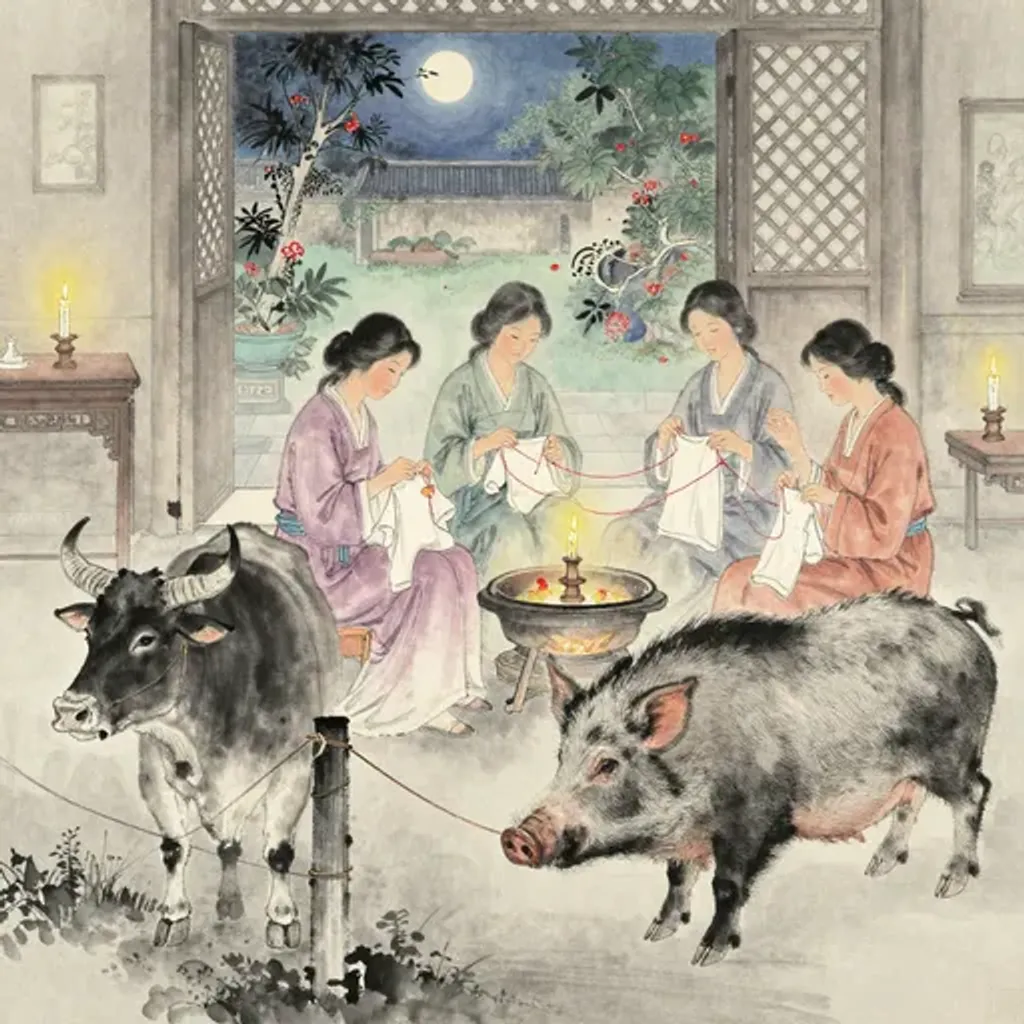
豶豕童牛,童傷不來。三女同堂,生我福人。
A gelded boar, a hornless ox; the horn broken, it does not come. Three daughters share one hall; they give birth to my blessed child.
— Jiao Yanshou, Yilin (Forest of Changes), 1st century BC
Commentary
Mountain over thunder shifts to heaven over mountain — Retreat, where the gentleman distances himself from the petty. A gelded boar and a hornless bull — their aggressive potential has been tamed, and harm does not approach. Three daughters share one hall and give birth to one who brings blessing. The castrated boar and dehorned bull are images drawn from the I-Ching's own Da Xu hexagram: restraining fierce natures by removing their weapons. From Nourishment to Retreat, the transformation domesticates: the wild appetites that nourishment must manage are literally disarmed. What remains is the fertile household — three daughters producing blessings — achieved precisely by withdrawing aggressive energy from the scene.
頤 → 大壯
Hexagram 27 → Hexagram 34: Great Power
Changing lines: 2, 3, 4, 6
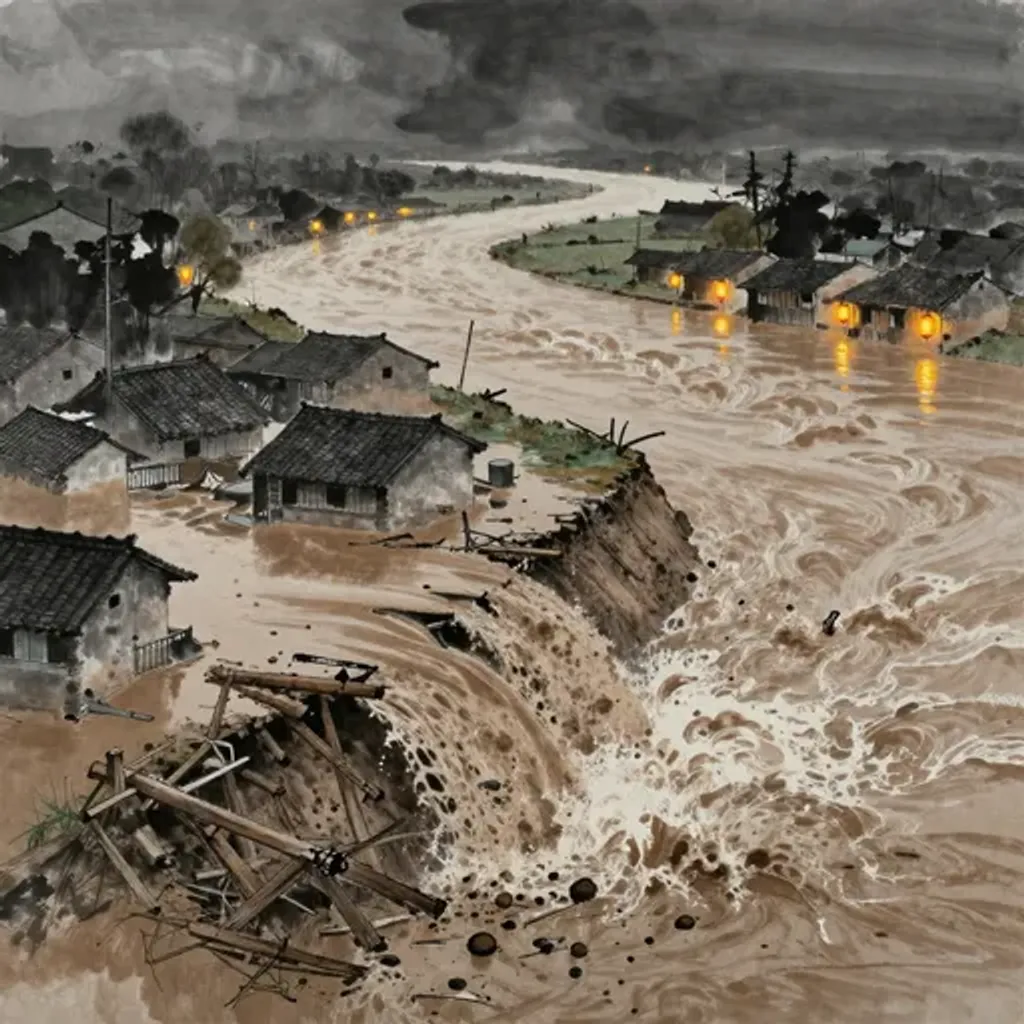
江河淮海,盈溢為害。邑被其瀨,年困無歲。
Yangtze, Yellow River, Huai, and sea; brimming over, they bring calamity. The town is inundated by rapids; the year is blighted, no harvest to count.
— Jiao Yanshou, Yilin (Forest of Changes), 1st century BC
Commentary
Mountain over thunder yields to thunder in heaven — Great Power, raw yang strength unrestrained. Rivers, the Huai, and the sea overflow and become a disaster. Towns are inundated by the rapids, and the year's harvest is ruined beyond recovery. Where verse 27-2 praised these same rivers as heaven's treasury, here they turn catastrophic — the identical waters that nourish now destroy. From Nourishment to Great Power, the transformation overwhelms: thunder above heaven is strength beyond measure, and water that should sustain life becomes a weapon of annihilation when power exceeds its channels. Great Power warns the gentleman not to tread outside propriety; the flood is what happens when nourishment breaks its banks.
頤 → 晉
Hexagram 27 → Hexagram 35: Progress
Changing lines: 1, 4
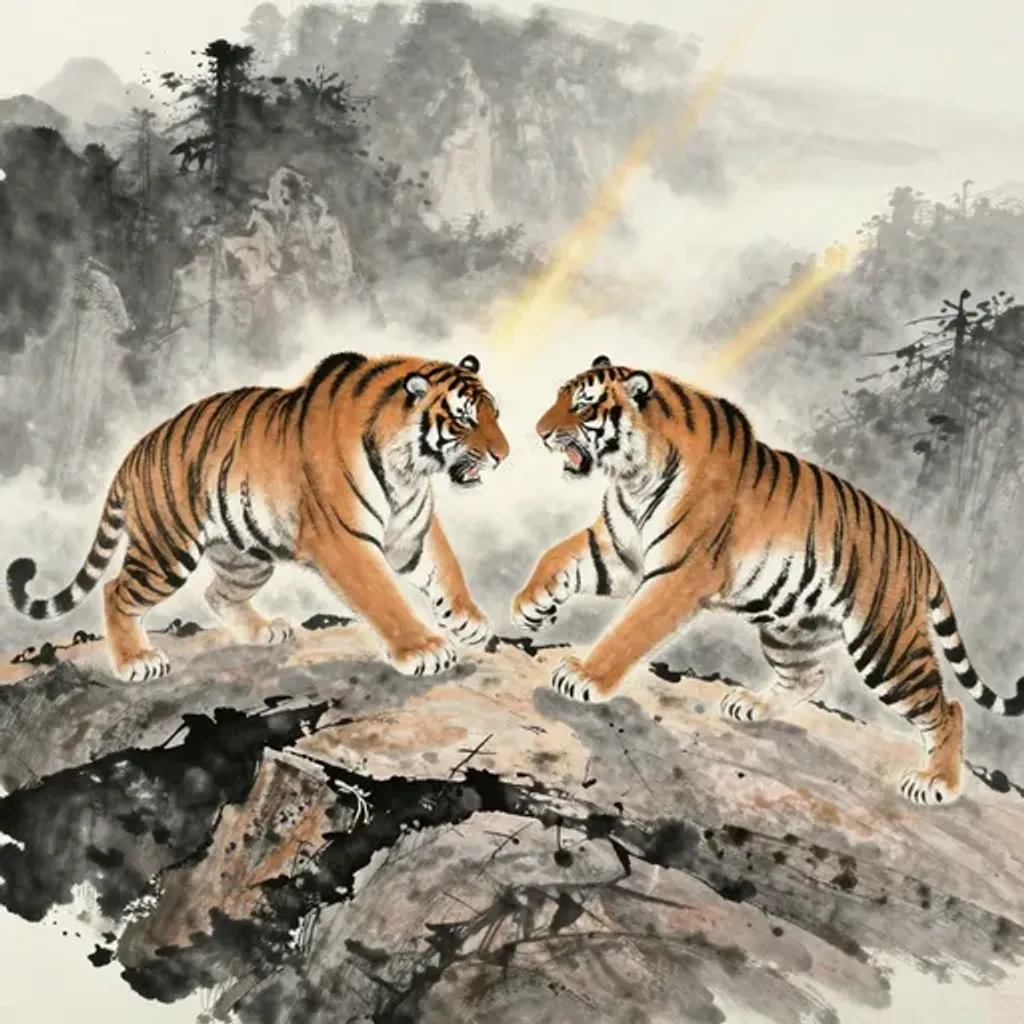
兩虎爭鬭,股瘡無處。不成仇讎,行解欲去。
Two tigers battle fiercely; thighs wounded, no part unscathed. They do not become true enemies; the struggle dissolves, both wish to part.
— Jiao Yanshou, Yilin (Forest of Changes), 1st century BC
Commentary
Mountain over thunder shifts to fire emerging from the earth — Progress, the sun rising above the horizon. Two tigers fight each other, their flanks torn and wounded with nowhere unscathed. Yet the feud does not harden into lasting enmity; the conflict dissolves, and both move to depart. The twin tigers locked in combat are evenly matched forces tearing themselves apart, yet the verse grants an unexpected resolution. From Nourishment to Progress, the transformation offers sunrise after bloodshed: the fire that rises above the earth illuminates a path forward even from mutual destruction. The battlers, having exhausted their aggression, step apart. Progress here means not victory but the wisdom to walk away, letting the light of a new day replace the darkness of the fight.
頤 → 明夷
Hexagram 27 → Hexagram 36: Darkening of the Light
Changing lines: 3, 6
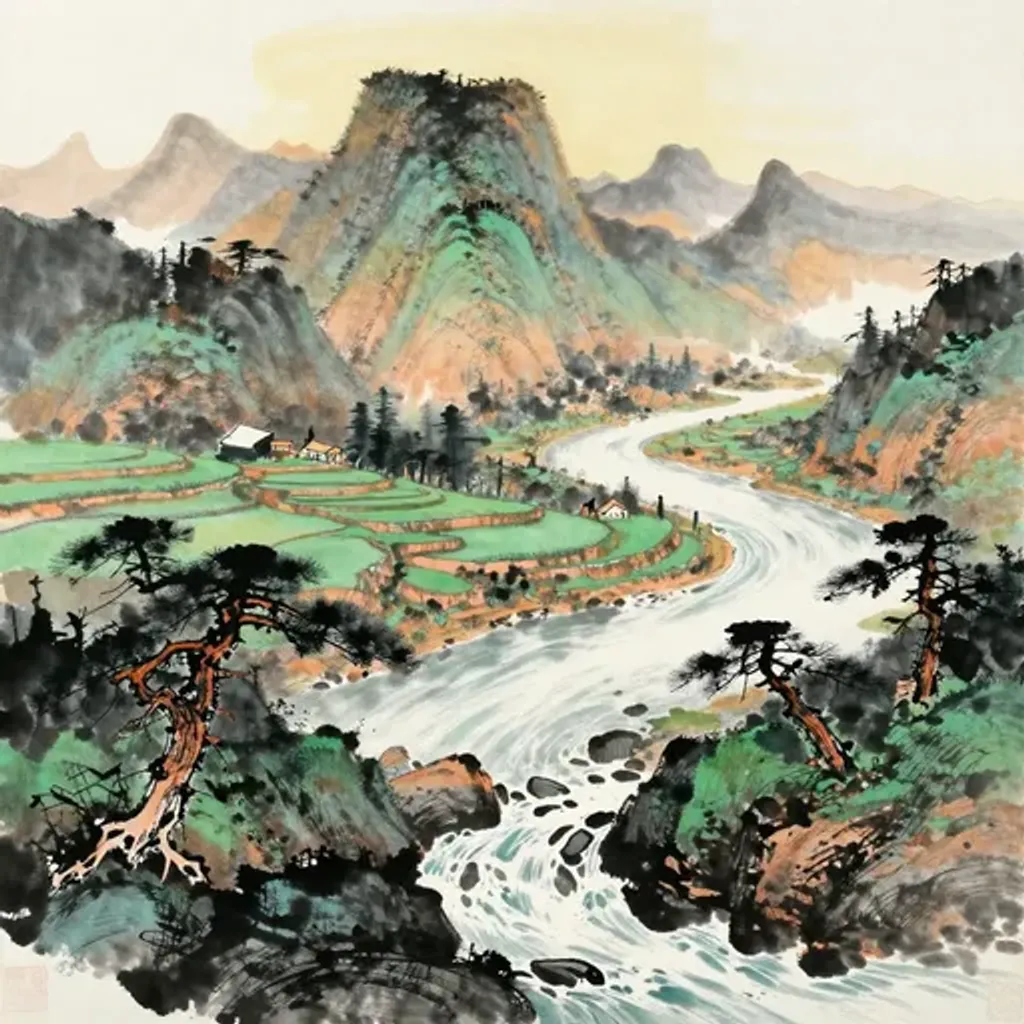
五嶽四瀆,潤洽為德。行不失理,民賴恩福。
The Five Peaks and Four Waterways; their moistening bounty is virtue itself. Conduct does not stray from principle; the people rely upon this grace and blessing.
— Jiao Yanshou, Yilin (Forest of Changes), 1st century BC
Commentary
Mountain over thunder transforms into earth over fire — Darkening of the Light, brightness driven underground. The Five Sacred Mountains and Four Great Rivers moisten and nourish through their virtue. Conduct does not depart from principle, and the people rely on this grace and blessing. Paradoxically, this verse of benign governance appears under Darkening of the Light, the hexagram of the sage who dims his own brilliance to survive tyranny. From Nourishment to Darkening of the Light, the transformation suggests that the truest nourishment operates invisibly: mountains and rivers sustain without display, just as the wise person 'uses obscurity to remain luminous.' The virtue that persists through darkness feeds the people more deeply than any visible splendor.
頤 → 家人
Hexagram 27 → Hexagram 37: The Family
Changing lines: 3, 5
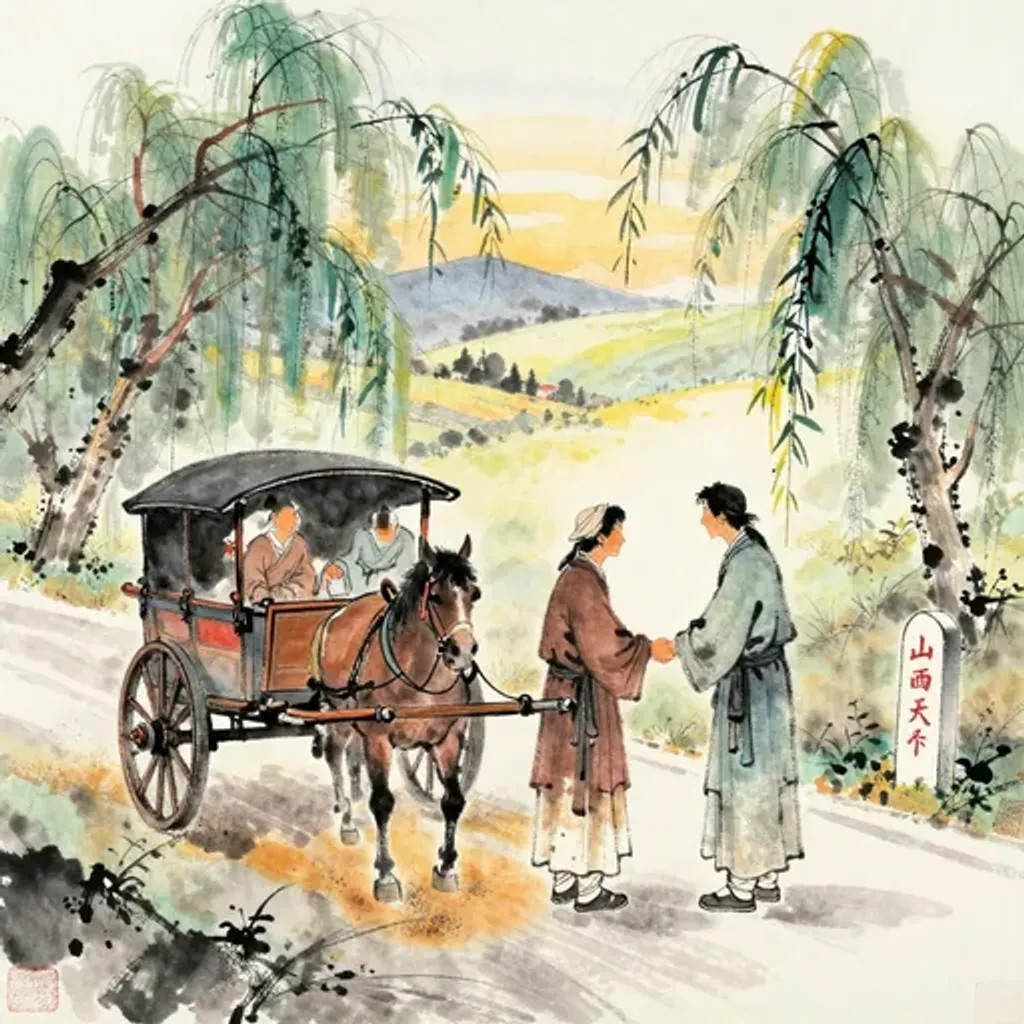
載車乘馬,南逢君子。與我嘉喜,雖憂無咎。
Loading the cart, mounting the horse; heading south, he meets a noble man. He shares with me glad tidings; though there was worry, there is no blame.
— Jiao Yanshou, Yilin (Forest of Changes), 1st century BC
Commentary
Mountain over thunder gives way to wind from fire — the Family, where inner warmth radiates outward as gentle influence. Loading the carriage and mounting the horse, one encounters a gentleman heading south. He brings joy and good news; though worries remain, there is no blame. The southward journey meets good company, and the meeting itself becomes nourishment — shared delight dispelling anxiety. From Nourishment to the Family, the transformation domesticates the wanderer: wind issuing from fire means that warmth within the household reaches outward. The chance encounter on the road draws the traveler back toward the family's hearth, where worry dissolves into communal joy.
頤 → 睽
Hexagram 27 → Hexagram 38: Opposition
Changing lines: 2, 4
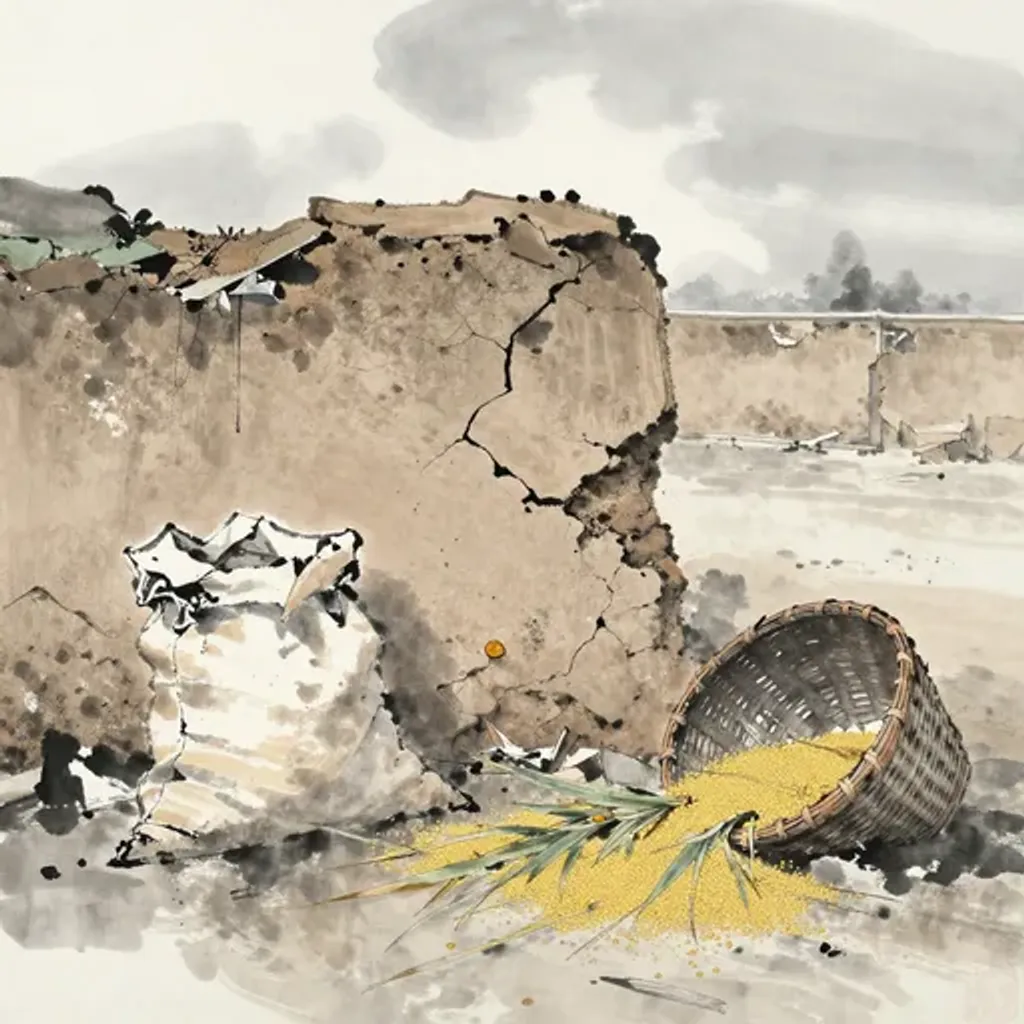
缺囊破筐,空無黍稷。不媚如公,棄於糞墻。
A torn sack, a broken basket; empty of millet and grain. Without flattery, upright as a duke; cast aside by the dung wall.
— Jiao Yanshou, Yilin (Forest of Changes), 1st century BC
Commentary
Mountain over thunder shifts to fire above the lake — Opposition, where two natures diverge. A torn bag and broken basket hold no millet or grain. One who does not flatter like the duke is discarded against the dung wall. The verse is a bitter complaint about integrity punished: the containers of nourishment are destroyed, leaving nothing, and the honest man who refuses to toady is thrown away like refuse. From Nourishment to Opposition, the transformation splits: fire rises while the lake sinks, each going its own way. The one who should be nourished is instead emptied and rejected, because his honesty opposes the prevailing corruption. What feeds the court starves the truthful.
頤 → 蹇
Hexagram 27 → Hexagram 39: Obstruction
Changing lines: 1, 3, 5, 6
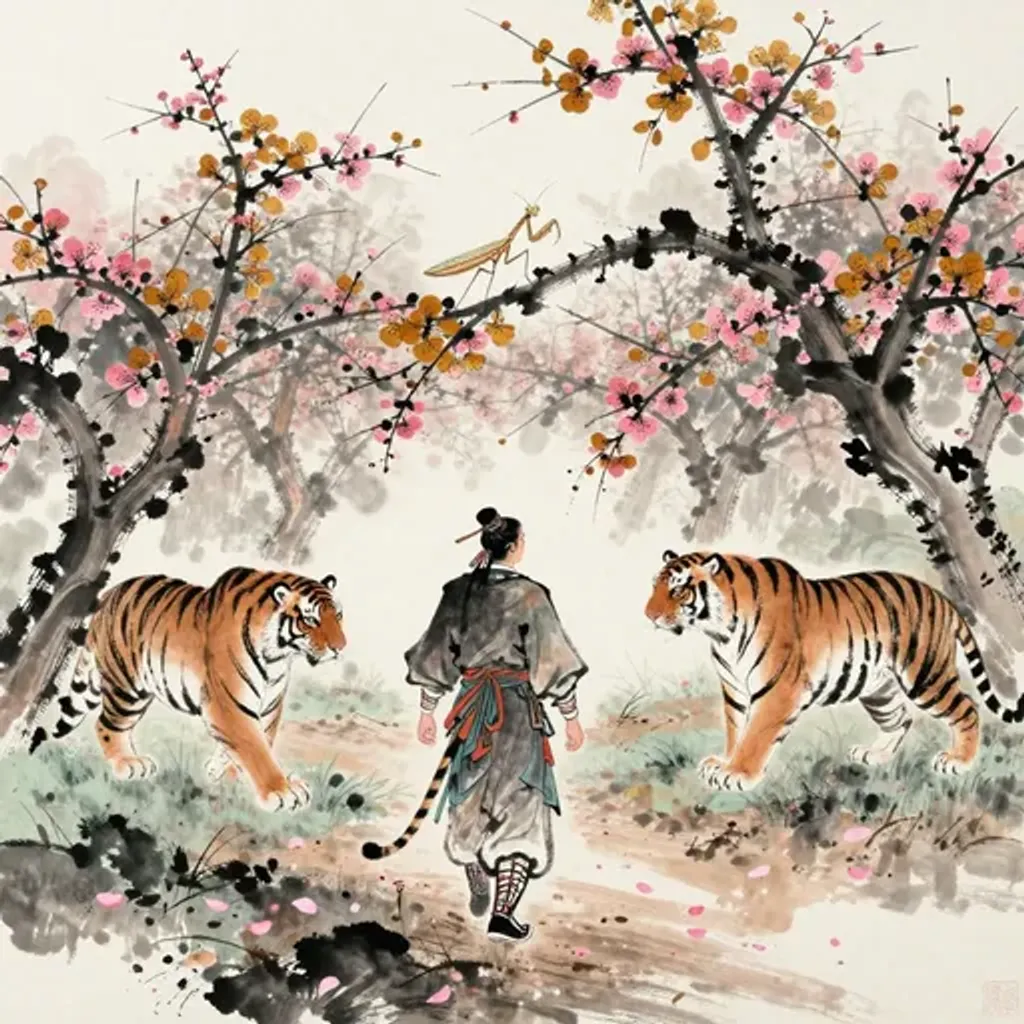
殺行桃園,見虎東西。螳螂之敵,使我無患。
Marching through the peach orchard; tigers appear east and west. The mantis stands as adversary; it keeps me from harm.
— Jiao Yanshou, Yilin (Forest of Changes), 1st century BC
Commentary
Mountain over thunder yields to water above the mountain — Obstruction, difficulty piled upon difficulty. Walking through the peach orchard amid killing intent, one spots tigers prowling east and west. Yet the mantis becomes the enemy's adversary, diverting the threat and keeping one safe. The mantis — legendary for rearing its forelegs against an oncoming chariot — here paradoxically serves as protector. The small creature's audacious defiance draws the predator's attention away. From Nourishment to Obstruction, the transformation blocks the path but offers an unlikely guardian: when water sits atop the mountain, the way forward is impassable, yet even in obstruction, an improbable defender appears. Survival sometimes depends on the smallest, most reckless courage.
頤 → 解
Hexagram 27 → Hexagram 40: Deliverance
Changing lines: 1, 2, 4, 6
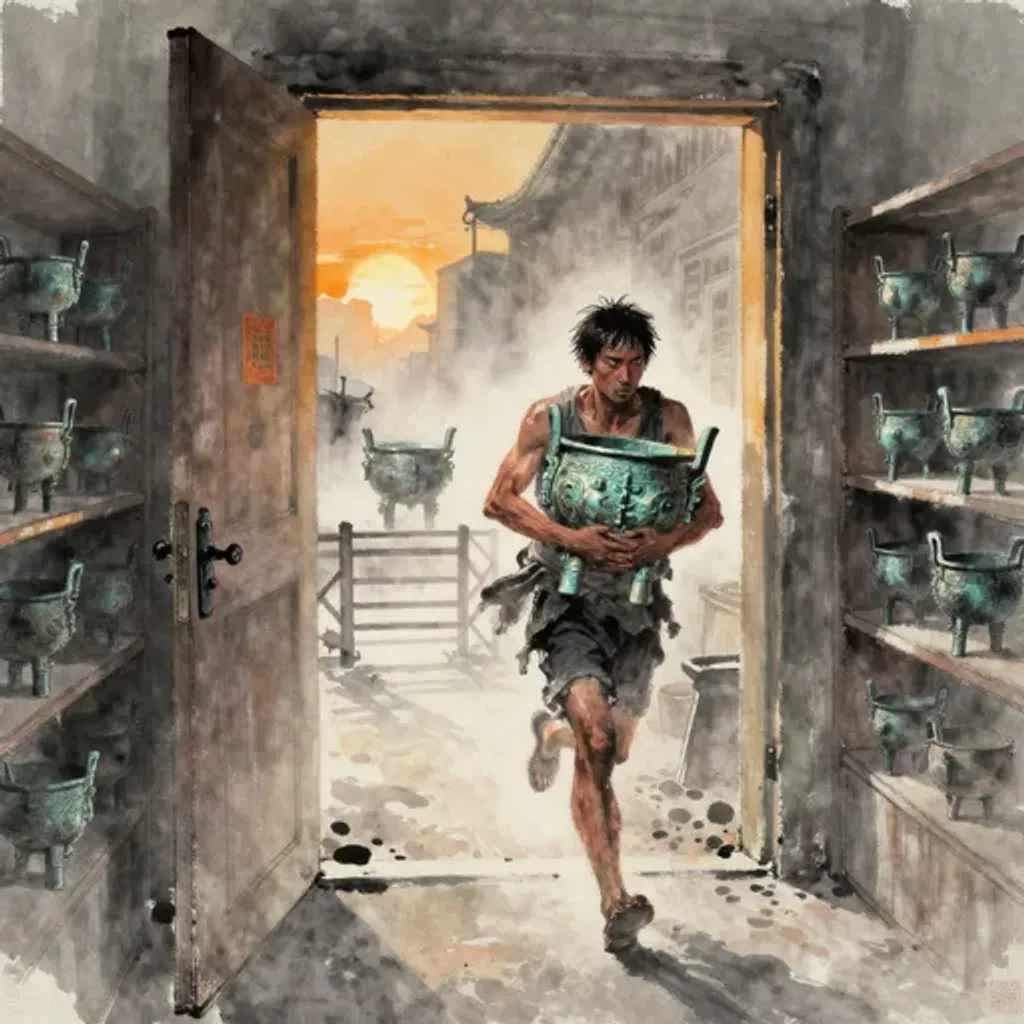
飢人入室,政衰弊極。抱其彝器,奔於他國。因禍受福。
A starving man enters the chamber; governance declines to its lowest ebb. Clutching the ritual vessels, he flees to another state. Through calamity, he receives blessing.
— Jiao Yanshou, Yilin (Forest of Changes), 1st century BC
Commentary
Mountain over thunder transforms into thunder above water — Deliverance, the thunderstorm that breaks tension. Starving people force their way into the granary. Governance has decayed to its extreme. One clutches the ancestral bronze vessels and flees to another state, yet through disaster finds blessing. The verse echoes the flight of Viscount Wei, who left the collapsing Shang carrying its ritual vessels to preserve the lineage's sacred continuity. From Nourishment to Deliverance, the transformation liberates through crisis: thunder and rain dissolve the stagnation. When nourishment fails utterly at home — famine, political collapse — the one who saves the sacred vessels and runs achieves deliverance precisely through the act of leaving. Disaster itself becomes the gate to fortune.
頤 → 損
Hexagram 27 → Hexagram 41: Decrease
Changing lines: 2
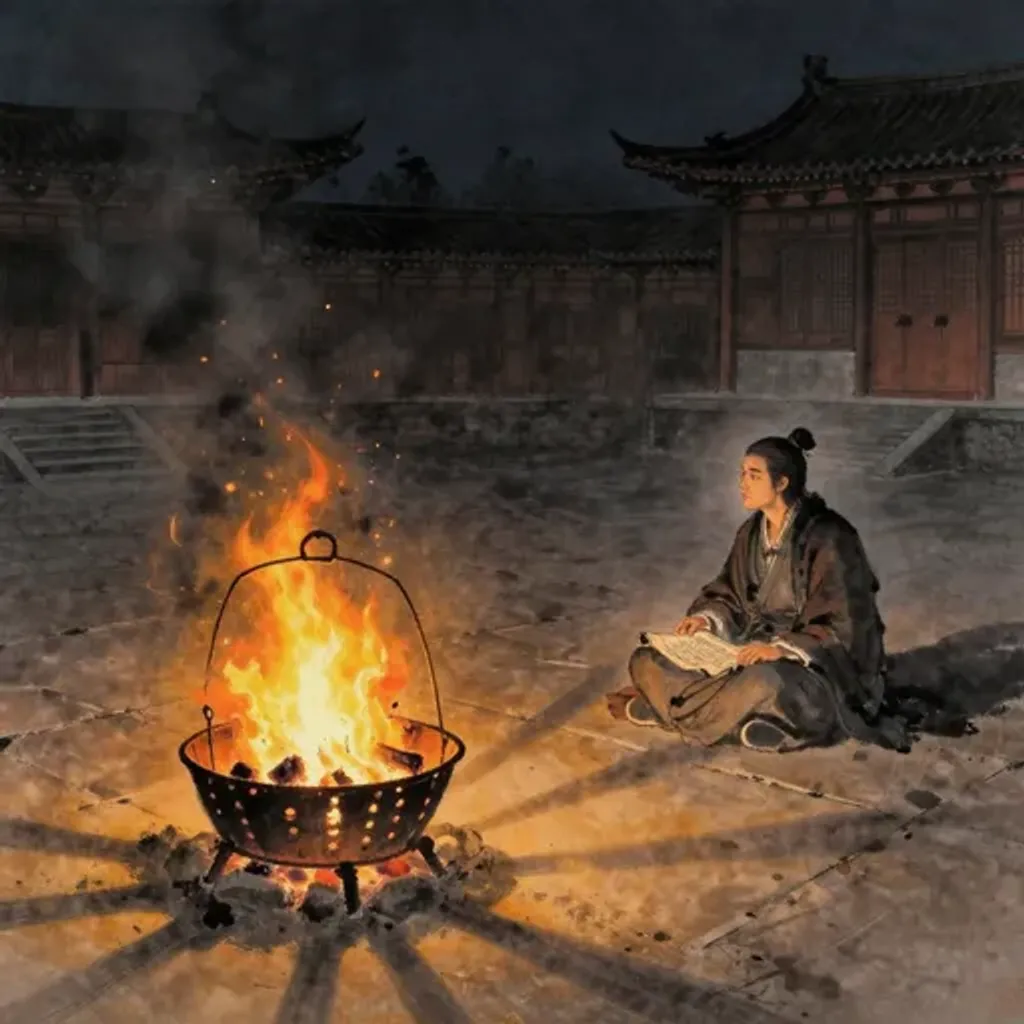
庭燎夜明,追古傷今。陽弱不制,陰雄坐戾。
The courtyard torch burns bright at night; pursuing the past, grieving for the present. The bright yang cannot restrain; the dark yin grows bold and sits in defiance.
— Jiao Yanshou, Yilin (Forest of Changes), 1st century BC
Commentary
Mountain over thunder gives way to mountain over lake — Decrease, where the lower is diminished to serve the upper. The court torches blaze through the night, illuminating a meditation on past and present. The Shijing's 'Ting Liao' ode depicts a diligent king holding audience before dawn by torchlight. Yet here the mood turns elegiac: yang grows weak and cannot govern; yin grows dominant and sits in rebellion. The ancient light reveals only how far the present has fallen. From Nourishment to Decrease, the transformation strips away: the lake beneath the mountain evaporates, diminishing what should be joyful. Nourishment's vitality is drained as yin overpowers yang, and the torch that once celebrated royal virtue now mourns its absence.
頤 → 益
Hexagram 27 → Hexagram 42: Increase
Changing lines: 5
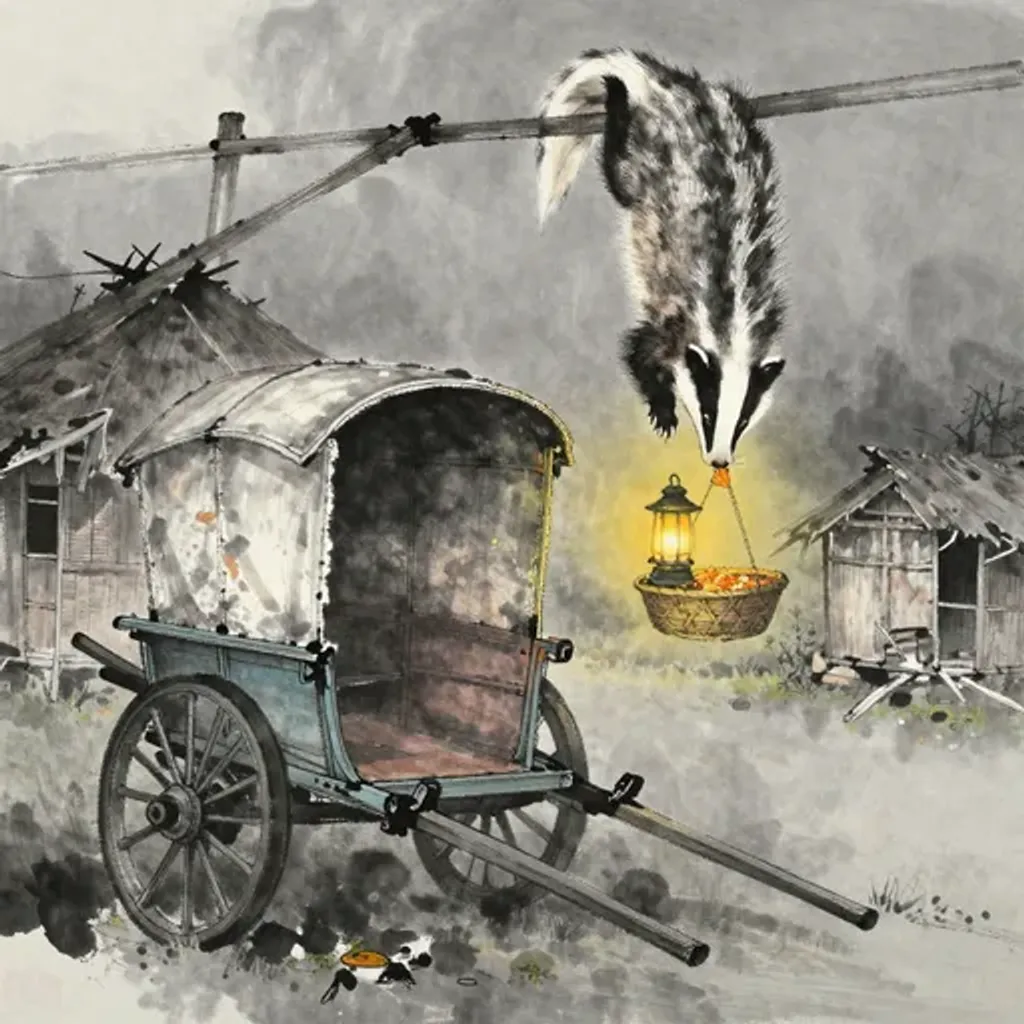
懸狟素飡,食非其任。失輿剝廬,休坐從居。
A hanging badger feeds freely; eating what is not its charge. Losing the carriage, the roof stripped bare; one rests and sits, resigned to stay.
— Jiao Yanshou, Yilin (Forest of Changes), 1st century BC
Commentary
Mountain over thunder shifts to wind over thunder — Increase, where the upper diminishes itself to enrich the lower. A badger hangs upside down, eating without earning its keep, consuming what is not its rightful portion. The carriage is lost, the hut stripped bare; one sits idle, compelled to stay put. The suspended badger feeding greedily suggests parasitic nourishment — taking without contributing. From Nourishment to Increase, the transformation is ironic: Increase should mean generosity flowing downward, yet this verse shows nourishment seized from the wrong position. The one who feeds without working loses both vehicle and shelter. True increase requires reciprocity; nourishment without contribution collapses into enforced stillness.
頤 → 夬
Hexagram 27 → Hexagram 43: Breakthrough
Changing lines: 2, 3, 4, 5, 6
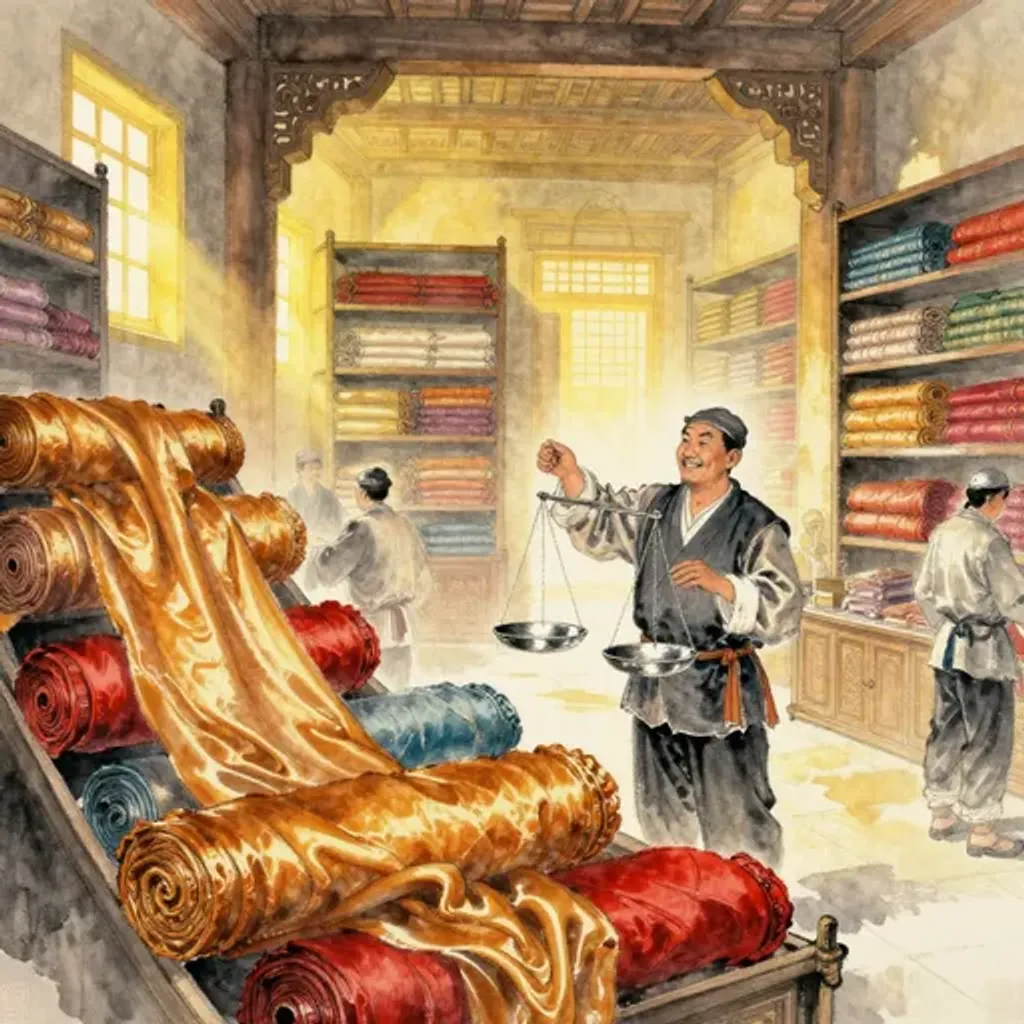
喜門福善,繒帛盛熾。日就為得,財寶敵國。
The gate of joy, the door of blessing; silk and satin blaze in abundance. Day by day it grows and gains; treasure and wealth to rival a kingdom.
— Jiao Yanshou, Yilin (Forest of Changes), 1st century BC
Commentary
Mountain over thunder opens toward lake over heaven — Breakthrough, where accumulated waters burst upward to the sky. The gate of joy and the door of blessing overflow; silk and cloth pile up in blazing abundance. Day by day wealth accumulates, and the treasury rivals a state's. Nourishment here reaches its most material apotheosis: the mouth that is properly governed generates endless surplus. From Nourishment to Breakthrough, the transformation surges: what the mountain carefully stored now breaks through all restraint, flooding upward like the lake ascending above heaven. The decisive moment of Breakthrough carries nourishment past mere subsistence into spectacular abundance, though the hexagram's own warning — 'the gentleman distributes bounty below' — hints that hoarding invites reversal.
頤 → 姤
Hexagram 27 → Hexagram 44: Coming to Meet
Changing lines: 1, 2, 3, 4, 5
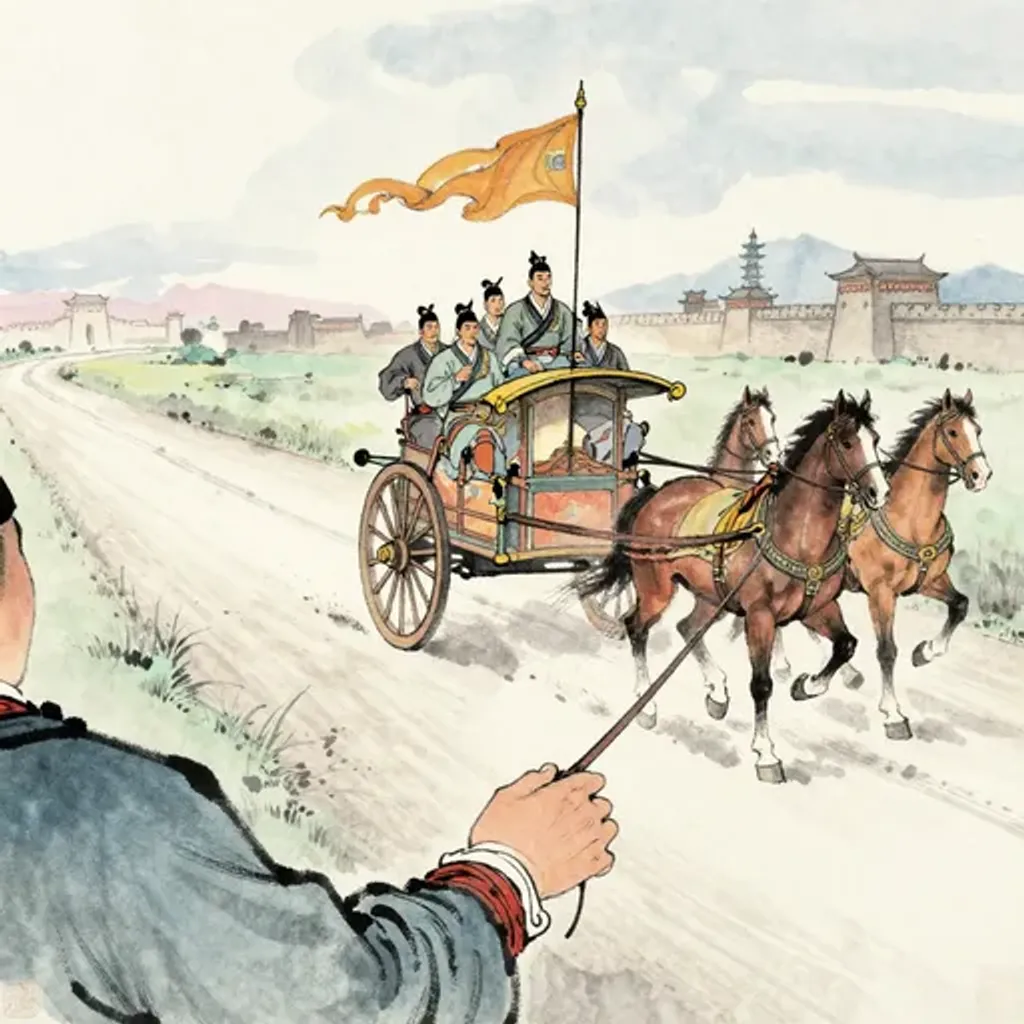
執綏登車,驂乘東遊。說齊解燕,霸國以安。
Grasping the cord, mounting the chariot; with outriders, he tours the east. He persuades Qi, releases Yan; the hegemon state is set at peace.
— Jiao Yanshou, Yilin (Forest of Changes), 1st century BC
Commentary
Mountain over thunder yields to heaven over wind — Coming to Meet, the unexpected encounter. Grasping the carriage strap and mounting the chariot, one rides east with an escort. Persuading Qi and pacifying Yan, the hegemon's state is secured. The verse evokes a Spring and Autumn diplomat — perhaps Guan Zhong or a similar figure — who travels by chariot to broker alliances between the great states of Qi and Yan, stabilizing the hegemonic order. From Nourishment to Coming to Meet, the transformation projects nourishment outward as diplomacy: the wind beneath heaven carries the ruler's commands to the four quarters. What was internal sustenance becomes external statecraft, and the mouth that was once fed now speaks the words that bind nations together.
頤 → 萃
Hexagram 27 → Hexagram 45: Gathering Together
Changing lines: 1, 4, 5, 6
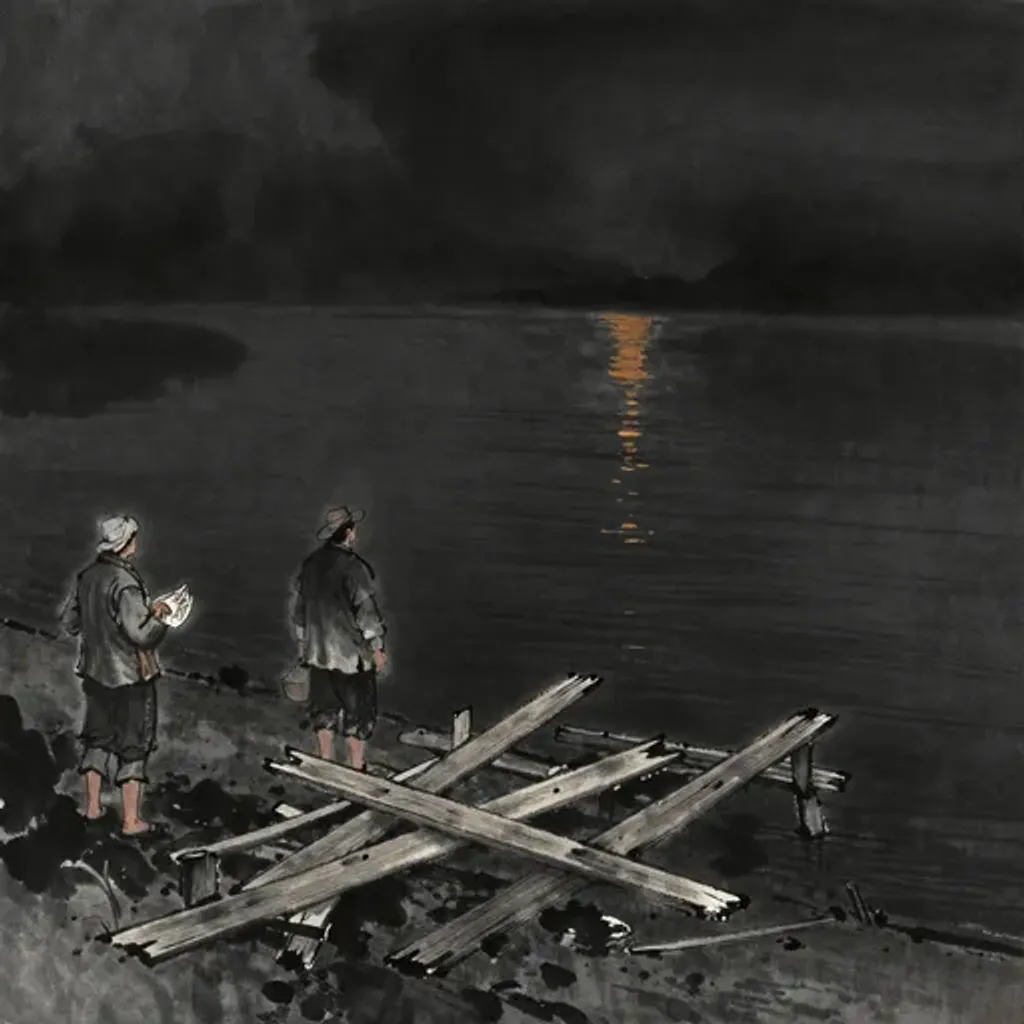
水深無桴,蹇難何游?商伯失利,庶人愁憂。
Water deep, no raft to cross; in such hardship, how to ford? The merchant lord loses his profit; the common folk grieve and worry.
— Jiao Yanshou, Yilin (Forest of Changes), 1st century BC
Commentary
Mountain over thunder transforms into lake upon earth — Gathering, where waters converge. The water is deep with no raft to cross; amid such difficulty, how can one swim? Merchants lose their profits, and commoners are burdened with worry. The gathering of waters that should bring abundance instead creates an impassable barrier. Without a raft — the simplest technology of passage — depth becomes danger rather than resource. From Nourishment to Gathering, the transformation pools nourishment into an inaccessible mass: the lake above the earth concentrates wealth where no one can reach it. Gathering without distribution is hoarding, and hoarded nourishment nourishes no one. The merchant and the commoner suffer equally at the water's uncrossable edge.
頤 → 升
Hexagram 27 → Hexagram 46: Pushing Upward
Changing lines: 1, 2, 3, 6
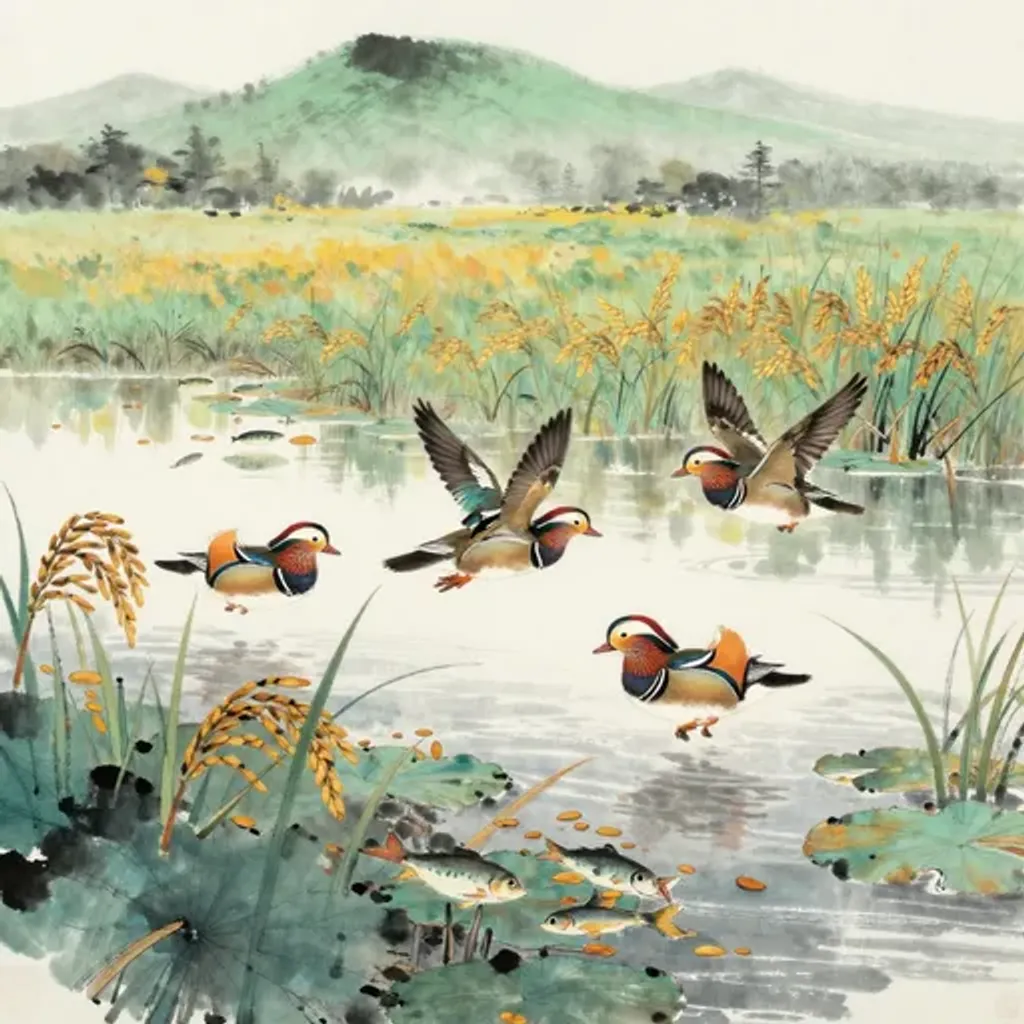
三鳥鴛鴦,相隨俱行。南到饒澤,食魚與粱。君子樂長,見惡不傷。
Three birds — mandarin ducks — follow each other in flight. Southward they reach the rich marshes; feeding on fish and millet. The noble man joy endures; he sees no harm from evil.
— Jiao Yanshou, Yilin (Forest of Changes), 1st century BC
Commentary
Mountain over thunder opens toward earth over wind — Pushing Upward, the tree growing slowly within the earth. Three birds and mandarin ducks travel together southward, reaching a rich marsh where they feast on fish and grain. The gentleman enjoys lasting happiness, encountering harm without being injured. The mandarin ducks — eternal symbols of conjugal devotion — journey to abundance through companionship. The rich marsh offers both fish and grain: nourishment of the complete kind. From Nourishment to Pushing Upward, the transformation is gradual and organic: what the mountain's stillness nurtured now rises steadily, like wood growing within the earth. The journey south to plenty mirrors the upward push of rooted growth, and the gentleman who has nourished well ascends without fear.
頤 → 困
Hexagram 27 → Hexagram 47: Oppression
Changing lines: 1, 2, 4, 5, 6
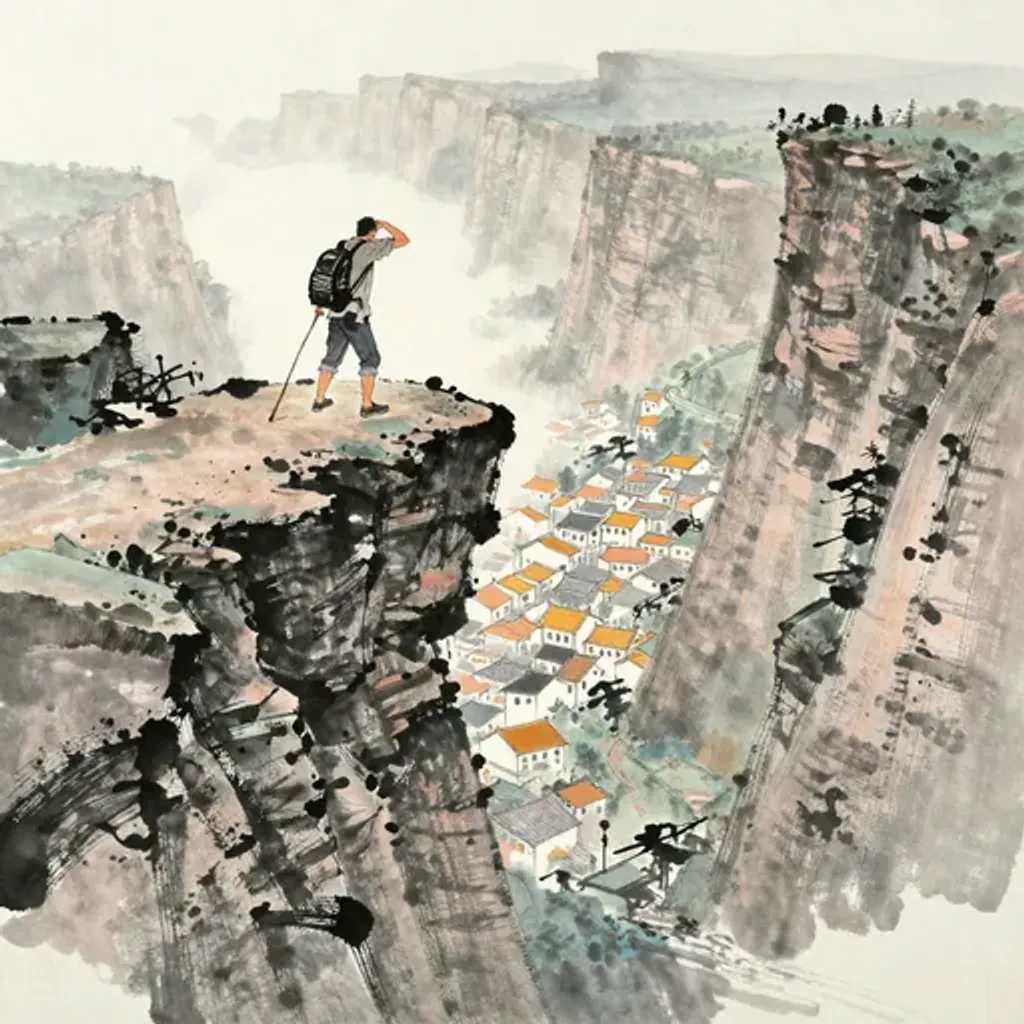
遠視目盻,臨深苦眩。不離越都,旅人留連。
Gazing afar, the eyes strain; looking down into the deep, bitter dizziness. Unable to leave the capital of Yue; the traveler lingers on, reluctant to depart.
— Jiao Yanshou, Yilin (Forest of Changes), 1st century BC
Commentary
Mountain over thunder shifts to lake over water — Oppression, the lake drained dry above the water below. Gazing into the distance strains the eyes; standing at the edge of the deep induces bitter vertigo. Unable to leave the capital of Yue, the traveler lingers on, detained and longing. The verse captures the specific paralysis of being trapped in a place one can see beyond but cannot escape. The reference to Yue — the southeastern kingdom of Goujian — may evoke the state's reputation as a place of dangerous entanglement. From Nourishment to Oppression, the transformation drains: the lake holds no water, and the eyes that should find nourishment in the horizon find only dizziness. One is oppressed by the very distance one cannot cross.
頤 → 井
Hexagram 27 → Hexagram 48: The Well
Changing lines: 1, 2, 3, 5, 6
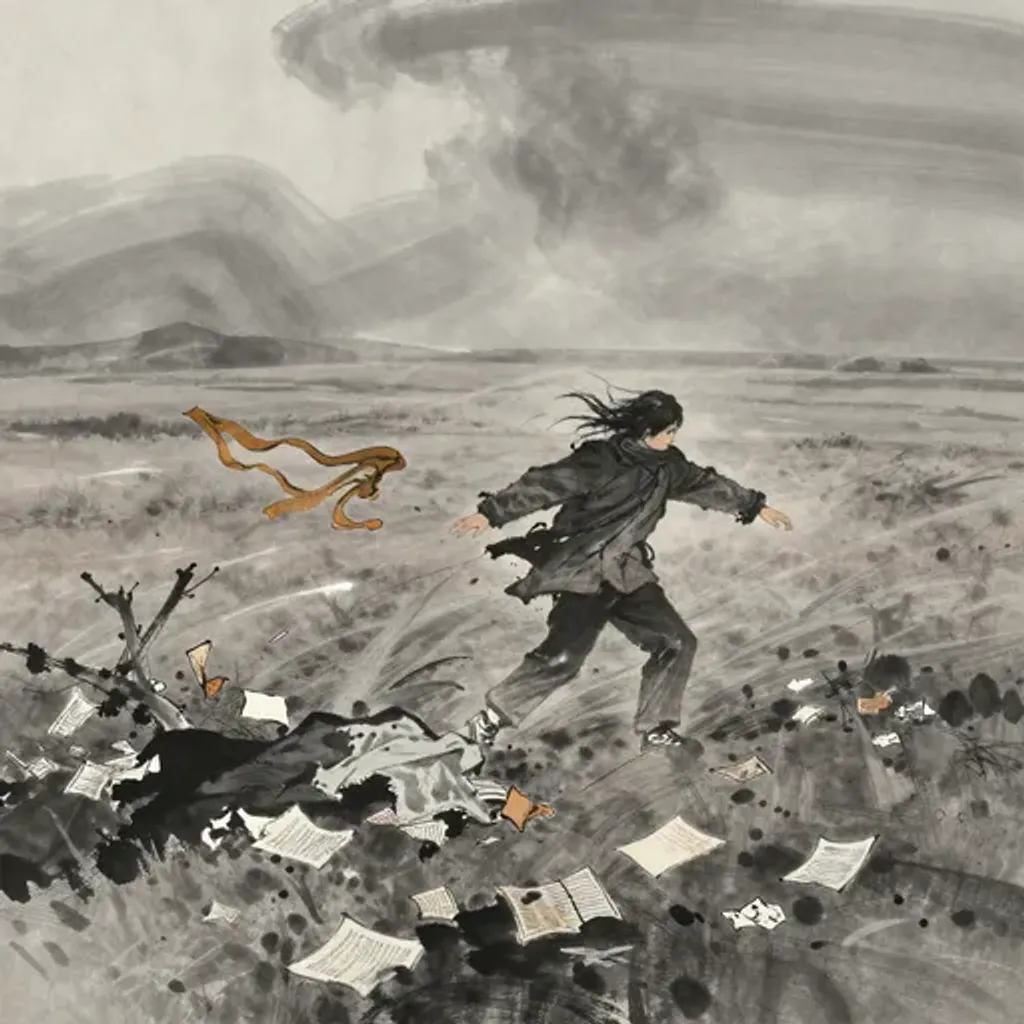
終風東西,散渙四方。終日至暮,不見子懽。
The ceaseless wind blows east and west; scattering and dispersing in all four directions. From daybreak through to dusk; the child joy is not to be seen.
— Jiao Yanshou, Yilin (Forest of Changes), 1st century BC
Commentary
Mountain over thunder gives way to water over wind — the Well, the inexhaustible source. A ceaseless wind blows east and west, scattering things in all four directions. From dawn until dusk one waits, never seeing the son's joyful return. The wind disperses what the well should gather; the nourishment that should rise from the depths is blown apart before it can be drawn. From Nourishment to the Well, the transformation should promise sustenance from a deep, constant source, yet this verse inverts the promise. The well exists — the water is there — but the wind scatters the one who should draw from it. Waiting all day for a reunion that never comes, the well's nourishment goes untapped.
頤 → 革
Hexagram 27 → Hexagram 49: Revolution
Changing lines: 3, 4, 5, 6
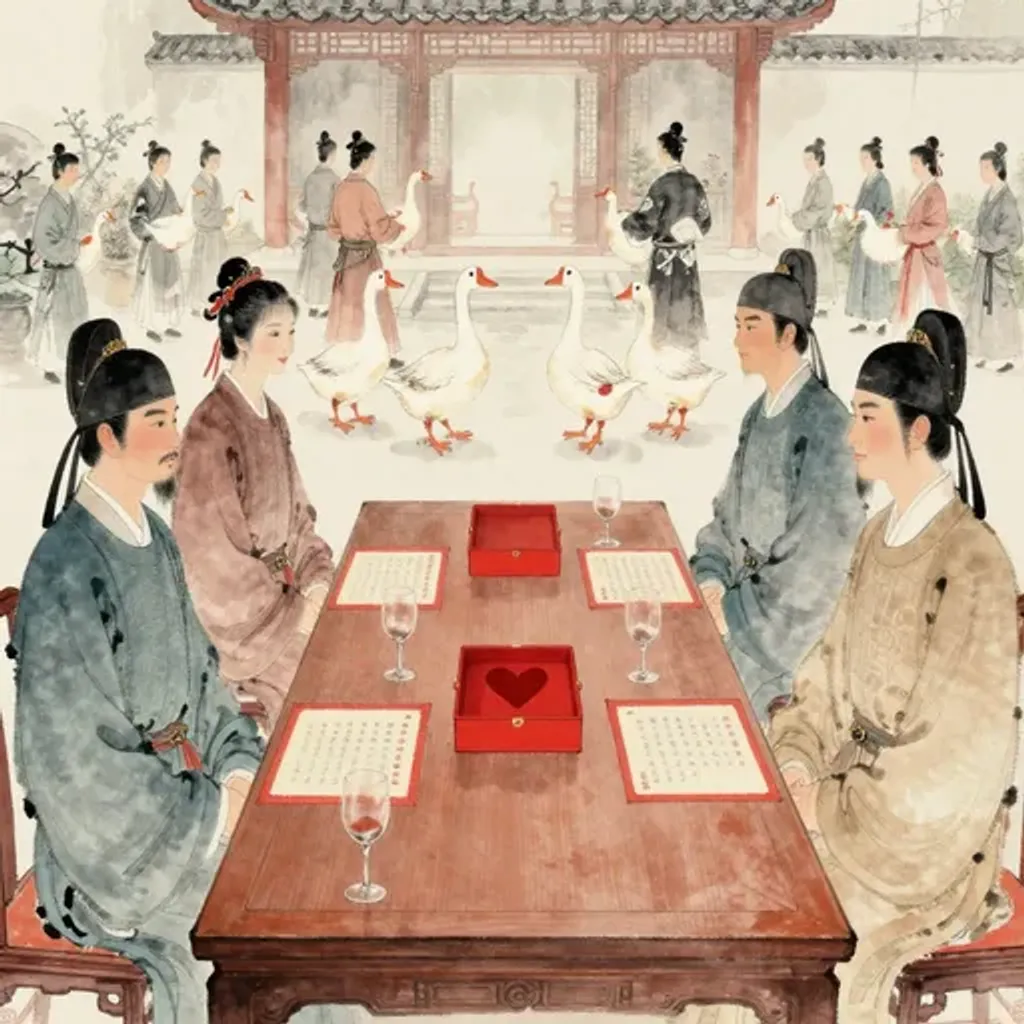
言無要約,不成劵契。殷叔季姬,公孫爭之。彊入委禽,不悅於心。
Words lack binding pledge; no contract or deed is formed. The Yin lord youngest daughter and the Gongsun clan contend for her. The betrothal gifts are forced upon them; it does not please the heart.
— Jiao Yanshou, Yilin (Forest of Changes), 1st century BC
Commentary
Mountain over thunder transforms into lake over fire — Revolution, the hexagram of radical change. Words lack binding force, contracts never finalize. The verse then alludes to a disputed marriage: a lady of the Yin and Ji clans becomes the object of competing suitors who force their betrothal gifts upon her, yet the match pleases no one's heart. The forced marriage — gifts sent (weiqin) without genuine consent — becomes a metaphor for agreements imposed without mutual nourishment. From Nourishment to Revolution, the transformation demands authenticity: revolution succeeds only when the old order is genuinely exhausted. Here, false contracts and coerced unions must be overthrown, because nourishment forced upon the unwilling feeds nothing.
頤 → 鼎
Hexagram 27 → Hexagram 50: The Cauldron
Changing lines: 1, 2, 3, 4
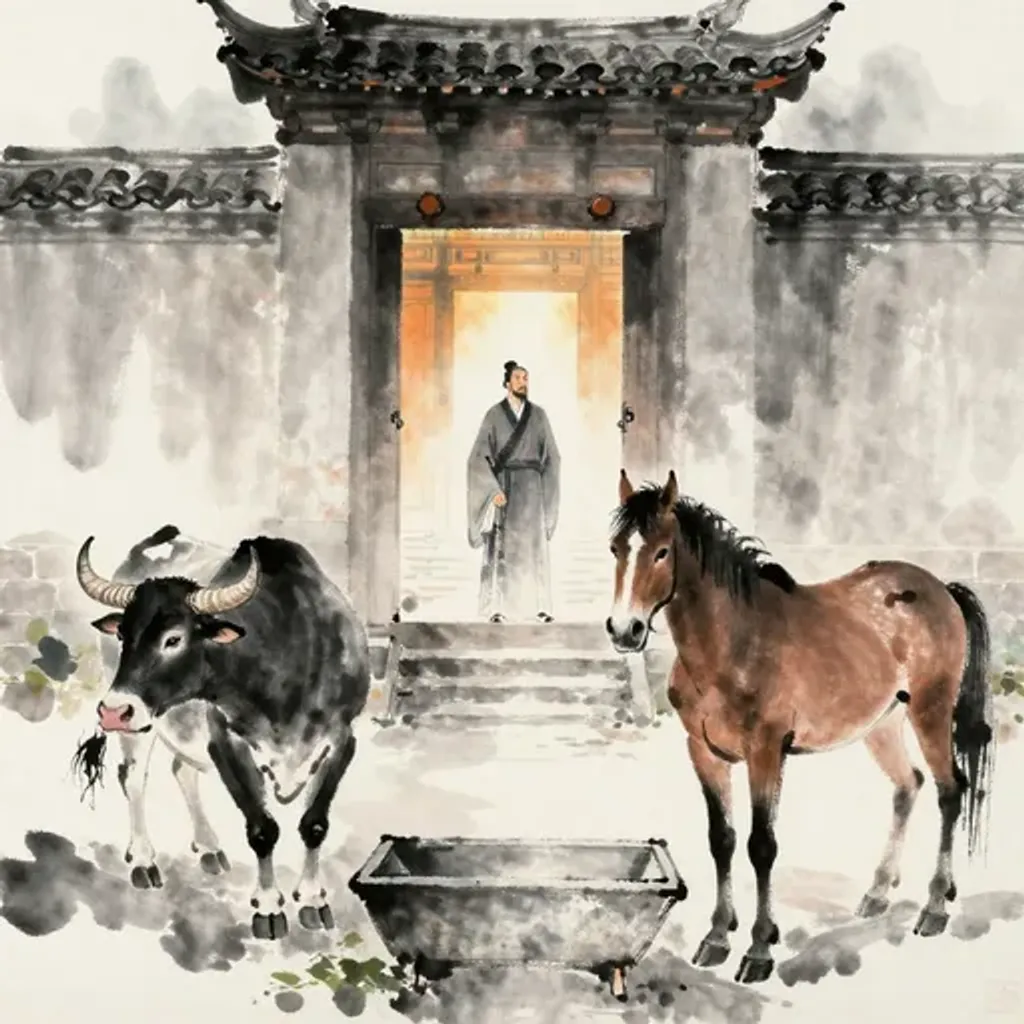
牛馬聾聵,不知聲味。遠賢賤仁,自合亂憒。疾病無患,生福在門。
Oxen and horses, deaf and dull; they know neither sound nor savor. Dismissing the worthy, debasing the humane; bringing confusion upon themselves. Illness brings no lasting harm; life and blessing stand at the door.
— Jiao Yanshou, Yilin (Forest of Changes), 1st century BC
Commentary
Mountain over thunder opens toward fire over wind — the Cauldron, vessel of civilized transformation. Cattle and horses stand deaf and dull, knowing neither sound nor flavor. The worthy are exiled and the humane degraded, bringing chaos of their own accord. Yet illness carries no lasting harm, and at the gate new blessings are born. The deaf livestock represent governance blind to quality — a ruler who cannot distinguish sage from fool, nourishing the wrong things. From Nourishment to the Cauldron, the transformation should refine raw ingredients into civilized sustenance, but here the cook is senseless. Nevertheless, the verse resolves: even mismanaged nourishment eventually rights itself when the cauldron's inherent purpose reasserts. The Cauldron's fire and wind will cook what the deaf handler cannot taste.
頤 → 震
Hexagram 27 → Hexagram 51: The Arousing Thunder
Changing lines: 4, 6
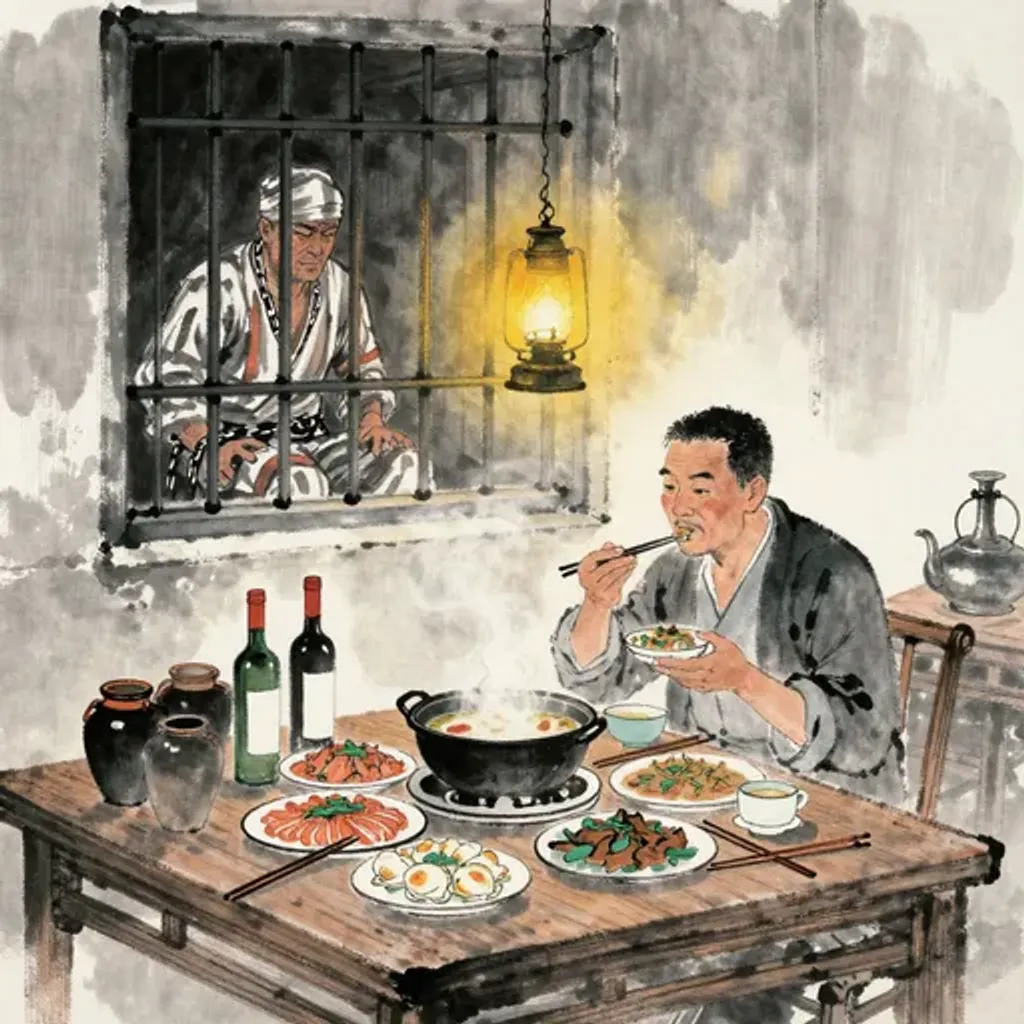
從商近游,飽食無憂。囹圄之困,中子見囚。
Following trade on a short journey; well-fed and without worry. The hardship of the prison cell; the middle son is found in chains.
— Jiao Yanshou, Yilin (Forest of Changes), 1st century BC
Commentary
Mountain over thunder yields to doubled thunder — the Arousing, shock upon shock. Following the merchants on a nearby journey, one eats well without worry. Then the scene fractures: the prison's confinement, and the middle son is found captive. The verse splits between comfort and catastrophe, between the nourished traveler and the imprisoned kin. The 'middle son' held in prison recalls the trigram Kan (middle son in the family metaphor), associated with danger and entrapment. From Nourishment to the Arousing, the transformation jolts: doubled thunder shatters complacency. What seemed a well-fed journey conceals a family member's peril. The Arousing demands that one confront hidden shocks rather than feast in ignorance.
頤 → 艮
Hexagram 27 → Hexagram 52: Keeping Still Mountain
Changing lines: 1, 3
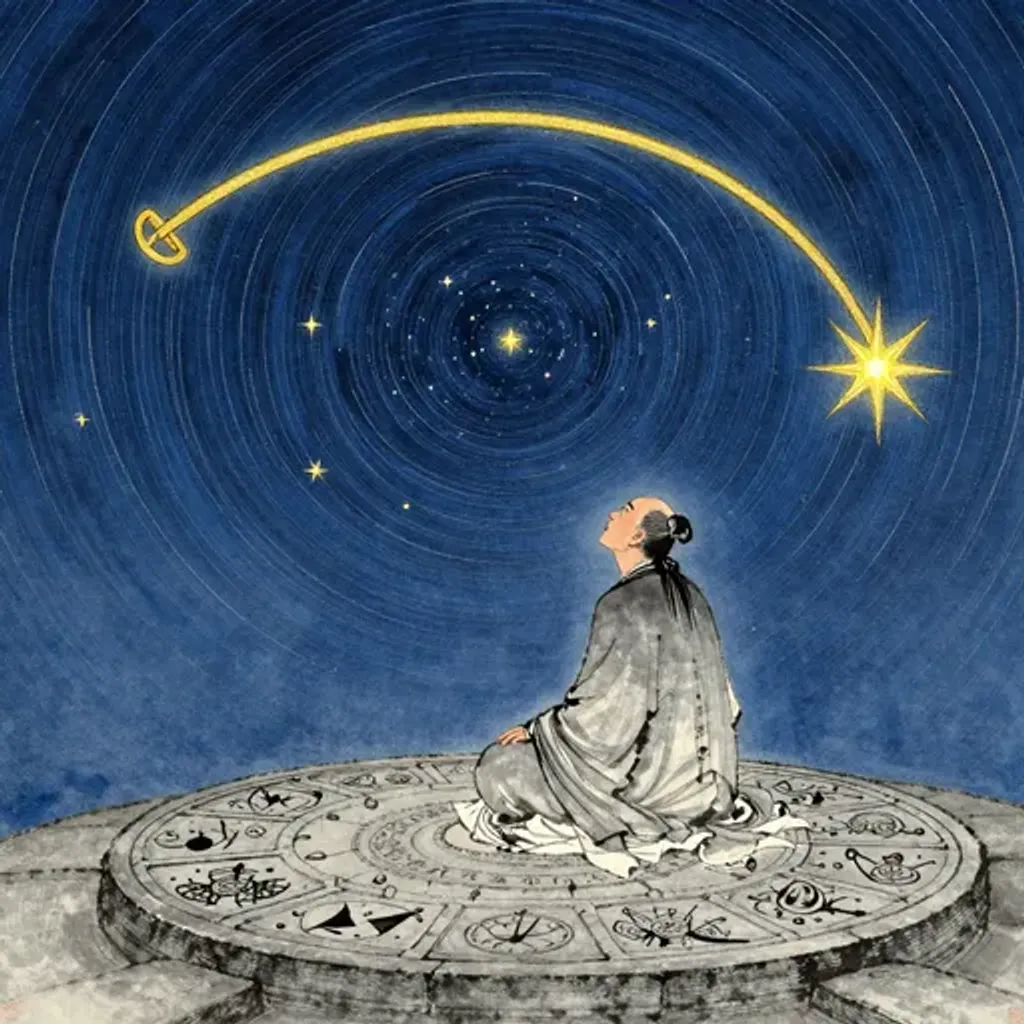
據斗運樞,順天無憂。與樂並居。
Grasping the Dipper, turning the Pivot; following heaven, without worry. Dwelling together with joy.
— Jiao Yanshou, Yilin (Forest of Changes), 1st century BC
Commentary
Mountain over thunder transforms into doubled mountain — Keeping Still, the image of perfect repose. Grasping the Dipper's handle and turning the celestial pivot, one follows heaven's course without worry, dwelling alongside joy. The Dipper — the constellation whose handle marks the seasons — becomes a metaphor for governance aligned with cosmic rhythm. To hold the pivot and turn it is to participate in heaven's own ordering without strain. From Nourishment to Keeping Still, the transformation distills: the mountain that sheltered thunder now stands alone in doubled stillness. What was the restless appetite of nourishment has been refined into serene alignment with the celestial axis. The gentleman 'thinks not beyond his position,' and in that stillness finds joy.
頤 → 漸
Hexagram 27 → Hexagram 53: Development
Changing lines: 1, 3, 5
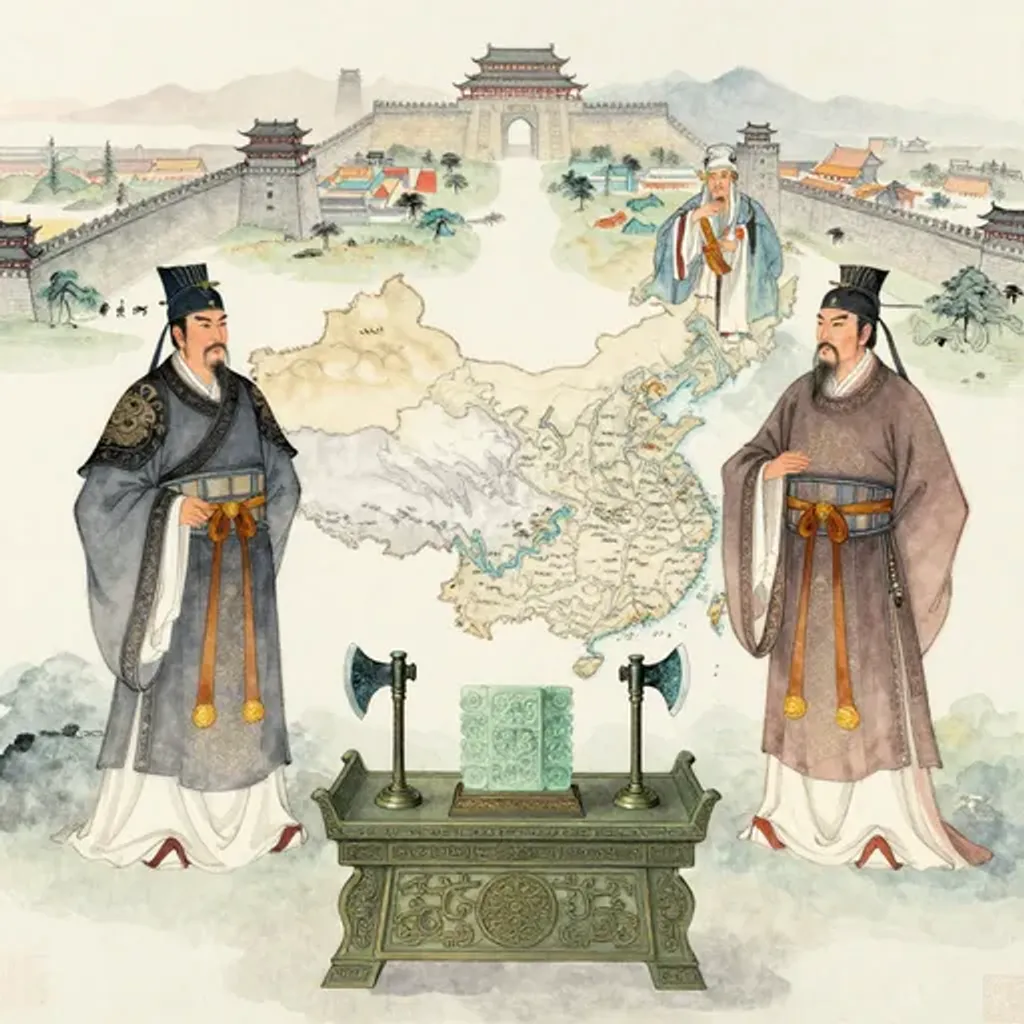
姬奭姜望,為武守邦。藩屏燕齊,周室以彊。子孫億昌。
Ji the Duke of Shao and Jiang Ziya; for King Wu they guard the realm. As shield and screen of Yan and Qi; the house of Zhou is thereby strong. Descendants flourish for a hundred million generations.
— Jiao Yanshou, Yilin (Forest of Changes), 1st century BC
Commentary
Mountain over thunder gives way to wind over mountain — Development, the gradual progress of the tree growing on the mountain. Ji Shi and Jiang Wang guard the realm for King Wu. Ji Shi, the Duke of Shao, was enfeoffed at Yan; Jiang Wang, known as Taigong, was granted Qi. These two ministers served as bulwark and screen for the Zhou kingdom, and the house of Zhou grew mighty, its descendants flourishing for countless generations. From Nourishment to Development, the transformation is gradual and enduring: what the mountain carefully nourishes grows like the tree on the mountain's slope — slowly, steadily, across generations. The feudal system that Wen and Wu established was an act of nourishing the realm through trusted guardians, and its fruit lasted centuries.
頤 → 歸妹
Hexagram 27 → Hexagram 54: The Marrying Maiden
Changing lines: 2, 4, 6
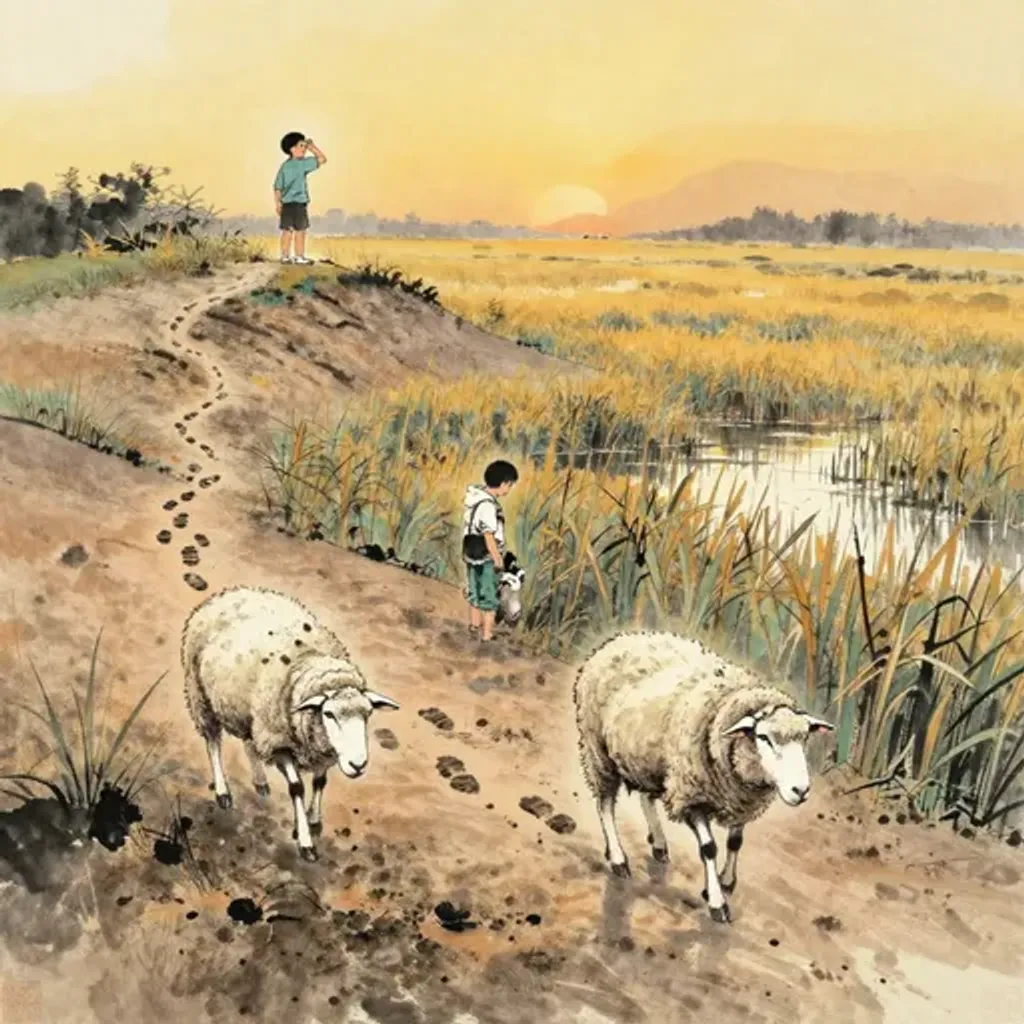
亡羊東澤,循隄直北。子思其母,復返其所。
A sheep lost in the eastern marsh; following the dike, heading due north. The child thinks of its mother; and returns again to its rightful place.
— Jiao Yanshou, Yilin (Forest of Changes), 1st century BC
Commentary
Mountain over thunder shifts to thunder over lake — the Marrying Maiden, a union governed by hierarchy and duty. A sheep goes missing in the eastern marsh; one follows the embankment straight north. The child longs for its mother and returns to its original place. The lost sheep, the search along the dike, and the child's homing instinct all converge on a single theme: the pull back to one's proper place, guided by an attachment deeper than reason. From Nourishment to the Marrying Maiden, the transformation introduces obligation: the maiden enters a household not of her choosing, yet the bond, like the child's longing for its mother, asserts itself through nature. Nourishment's root is belonging, and even the lost eventually find their way home.
頤 → 豐
Hexagram 27 → Hexagram 55: Abundance
Changing lines: 3, 4, 6
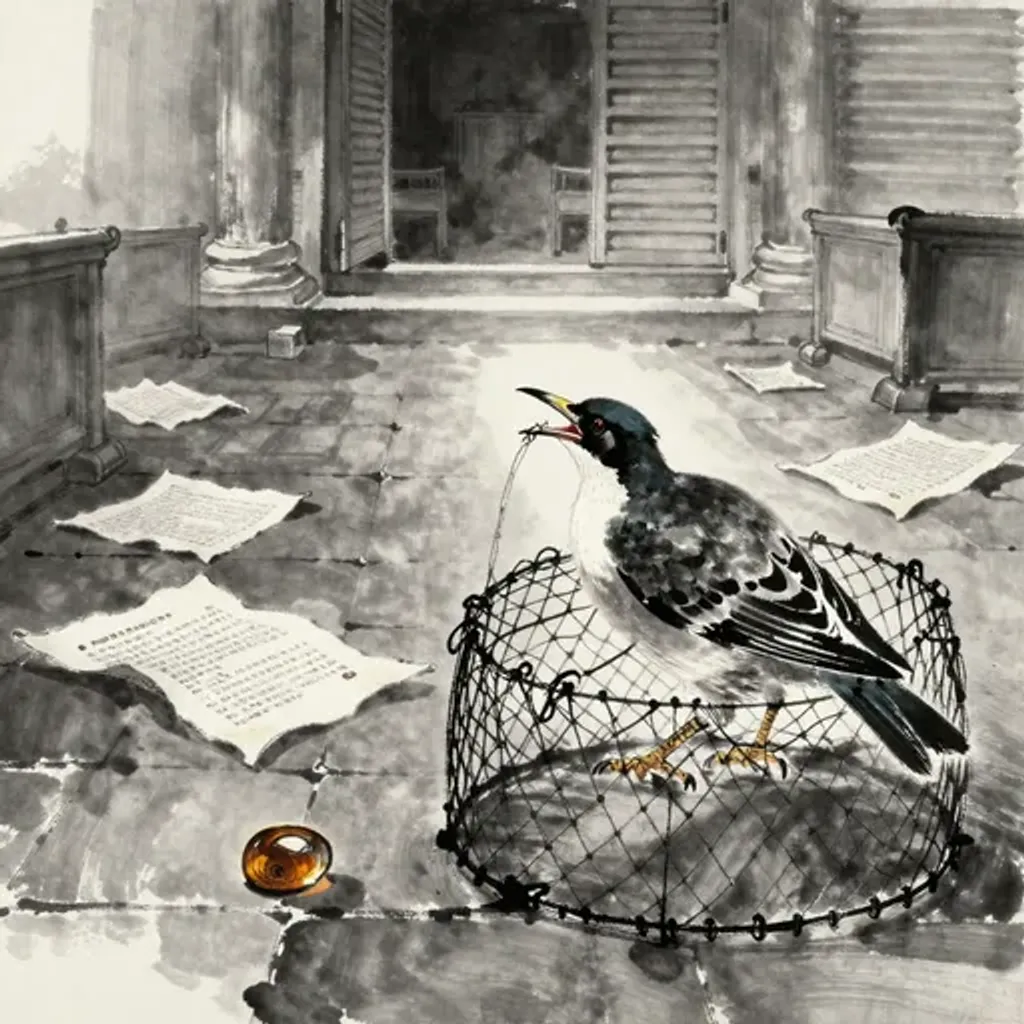
張鳥關口,舌直距齒。然諾不行,政亂無緒。
A bird snared at its open mouth; tongue pressed flat against the teeth. Promises and oaths go unfulfilled; governance falls to chaos, without order.
— Jiao Yanshou, Yilin (Forest of Changes), 1st century BC
Commentary
Mountain over thunder gives way to thunder over fire — Abundance, the zenith of power and clarity. A net is stretched at the bird's beak, the tongue pressed rigid against the teeth. Promises are not kept, and governance descends into disorder without any thread of coherence. The image of the mouth physically restrained — tongue locked, beak netted — inverts Nourishment's core function. The mouth that should both feed and speak truth is silenced and trapped. From Nourishment to Abundance, the transformation should bring thunder and lightning illuminating all things, yet here the mouth's blockage prevents the lightning's judgment from being articulated. Abundance without honest speech is chaos masquerading as plenitude.
頤 → 旅
Hexagram 27 → Hexagram 56: The Wanderer
Changing lines: 1, 3, 4
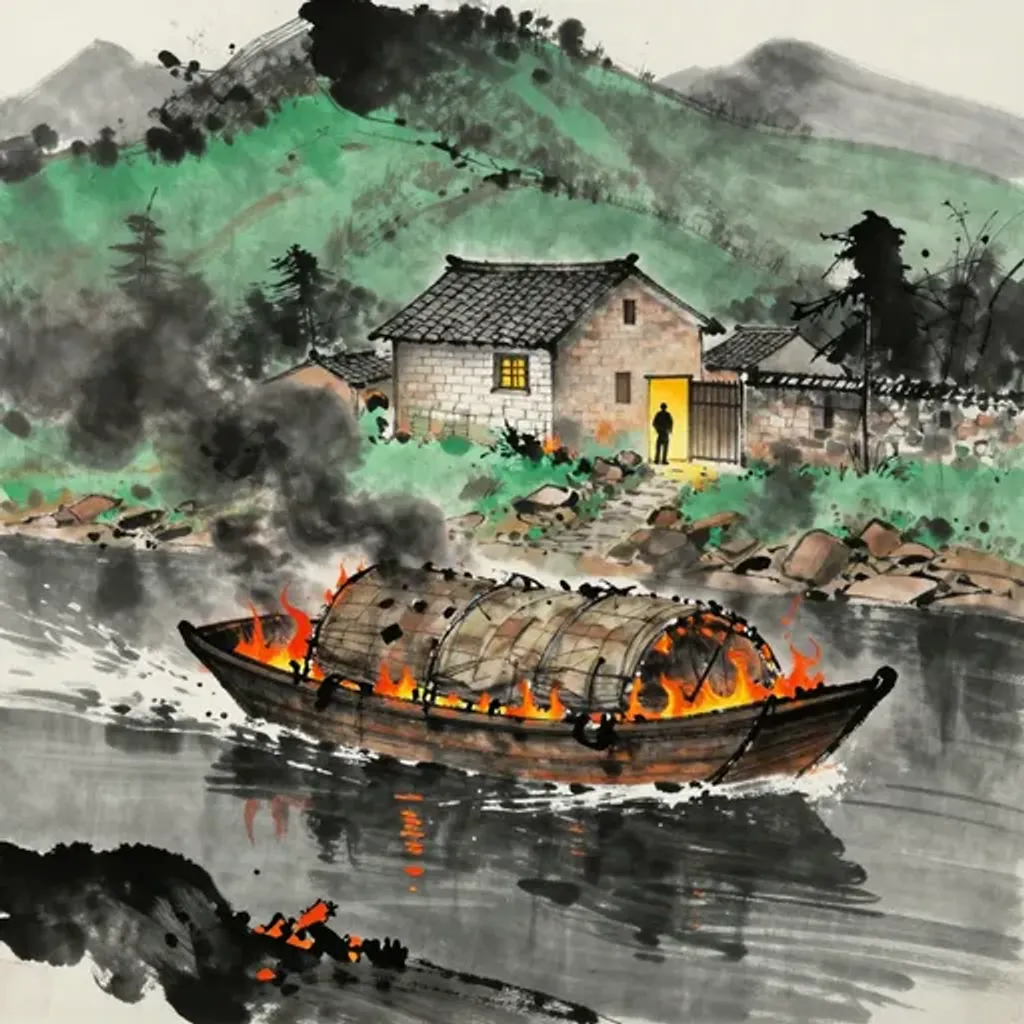
載船逢火,憂不為禍。家在山東,入門見公。
The laden boat meets fire; worry does not become disaster. Home lies east of the mountains; entering the gate, one sees the master.
— Jiao Yanshou, Yilin (Forest of Changes), 1st century BC
Commentary
Mountain over thunder shifts to fire above the mountain — the Wanderer, the traveler far from home. A boat laden with goods encounters fire — a terrifying omen on water — yet the worry does not become disaster. One's family lies east of the mountains, and upon entering the gate one meets the patriarch. The verse moves from maritime peril to homecoming: fire on a boat should mean catastrophe, but it passes. The real destination is the family home, reached through the mountain gate. From Nourishment to the Wanderer, the transformation sends nourishment abroad: fire on the mountain is the wanderer's signal, visible from afar. The one who survives danger on the journey finds nourishment not in the road's provisions but in the family waiting beyond the gate.
頤 → 巽
Hexagram 27 → Hexagram 57: The Gentle Wind
Changing lines: 1, 2, 3, 5
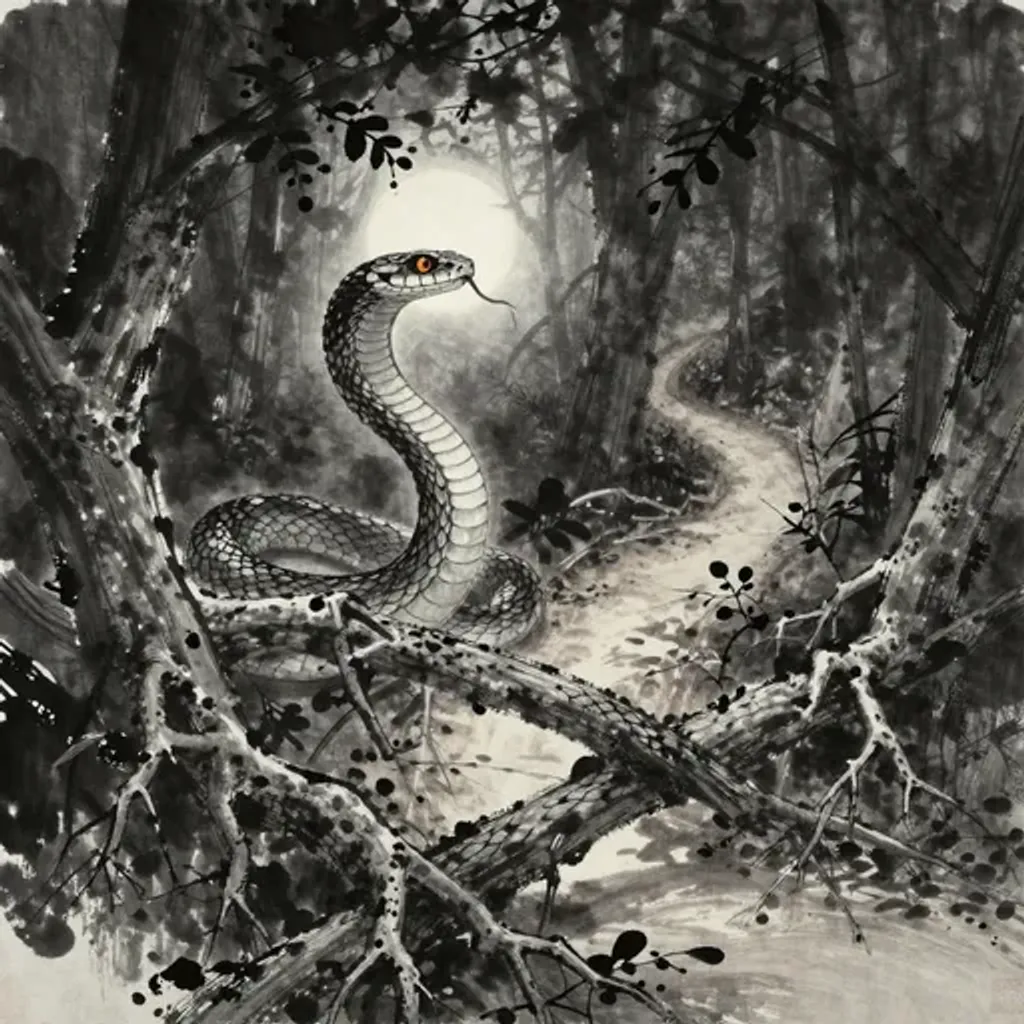
絕言異路,心不相慕。虵子兩角,使我心惡。
Words cut off, paths diverge; hearts hold no longing for each other. A serpent child with two horns; it fills my heart with dread.
— Jiao Yanshou, Yilin (Forest of Changes), 1st century BC
Commentary
Mountain over thunder yields to doubled wind — the Gentle, penetrating influence repeated. Words are cut off, paths diverge, and hearts no longer yearn for one another. A serpent-child with two horns fills one with revulsion. The two-horned snake was an omen of the monstrous in Han-era lore — a creature that defies natural categories, neither fully serpent nor dragon. Communication severed and affection dead, the only thing that appears is this unnatural aberration. From Nourishment to the Gentle, the transformation should bring repeated, penetrating influence — wind following wind — yet here the doubling amplifies alienation rather than connection. What should gently enter the ear as counsel instead drives people apart. Nourishment of the spirit requires words; when speech is severed, only monsters fill the silence.
頤 → 兌
Hexagram 27 → Hexagram 58: The Joyous Lake
Changing lines: 2, 4, 5, 6
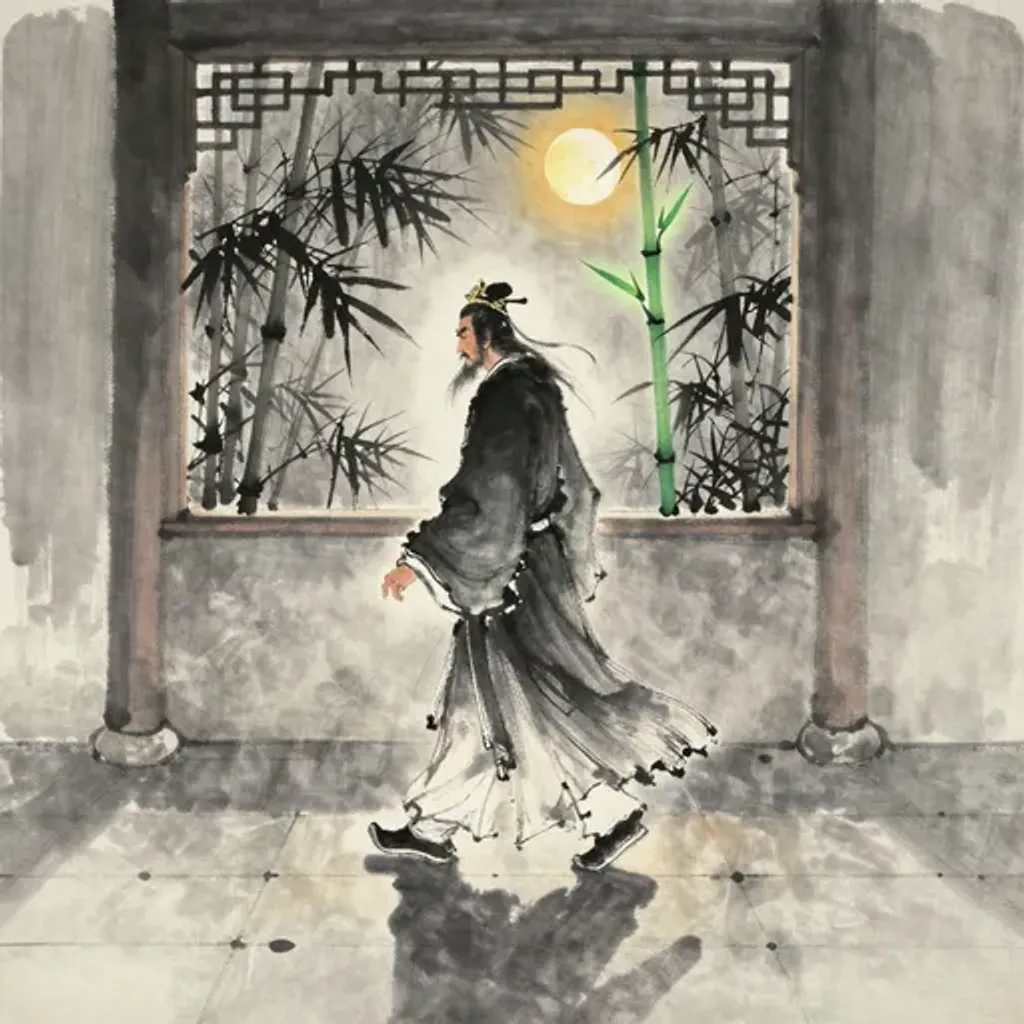
鼻頂移徙,君不安坐。枯竹復生,失其寵榮。
Nose and crown shift and wander; the lord cannot sit at ease. Withered bamboo grows again; he has lost his favor and glory.
— Jiao Yanshou, Yilin (Forest of Changes), 1st century BC
Commentary
Mountain over thunder transforms into doubled lake — the Joyous, mutual delight reflected in still waters. Yet the nose and forehead shift and displace; the ruler cannot sit at ease. Withered bamboo springs back to life, yet one has already lost one's favor and glory. The image of facial features migrating suggests identity itself becoming unstable, a physiognomic nightmare. The reviving bamboo — a classical symbol of renewal — arrives too late; the glory has already departed. From Nourishment to the Joyous, the transformation should pool delight into shared pleasure, yet this verse shows joy fundamentally misaligned: what revives does so after favor is lost, and the seat of honor cannot be held still. The lakes reflect only what has already vanished.
頤 → 渙
Hexagram 27 → Hexagram 59: Dispersion
Changing lines: 1, 2, 5
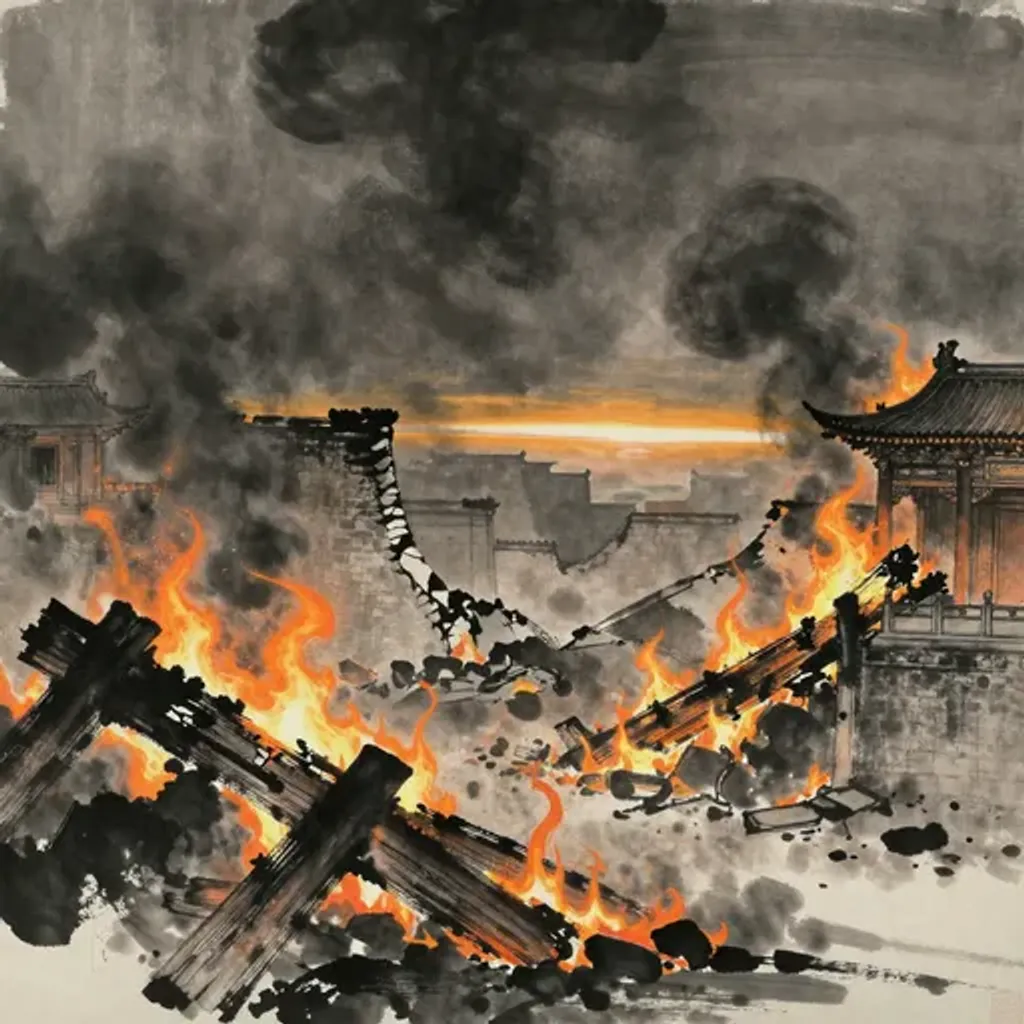
殷商以亡,火息無光。年歲不長,殷湯光明。
The Yin-Shang dynasty perishes; the fire dies, its light extinguished. The years do not endure long; yet Tang of Yin shines with radiance.
— Jiao Yanshou, Yilin (Forest of Changes), 1st century BC
Commentary
Mountain over thunder gives way to wind over water — Dispersion, where the king crosses the great water to gather his people at the temple. The Shang dynasty perishes; the fire is extinguished, its light gone. The years will not be long. Then a dramatic reversal: 'King Tang shines bright.' The fall of Shang and the rise of Tang are collapsed into a single breath — the same dynastic name, Shang, contains both its founding glory and its terminal decay. Tang, who overthrew the Xia from imprisonment at Xia Tai, embodies the phoenix-principle: light reborn from its own ashes. From Nourishment to Dispersion, the transformation scatters the old order so that a new center can form. The wind on the water disperses corruption, and what was extinguished reignites at the ancestral temple.
頤 → 節
Hexagram 27 → Hexagram 60: Limitation
Changing lines: 2, 5, 6
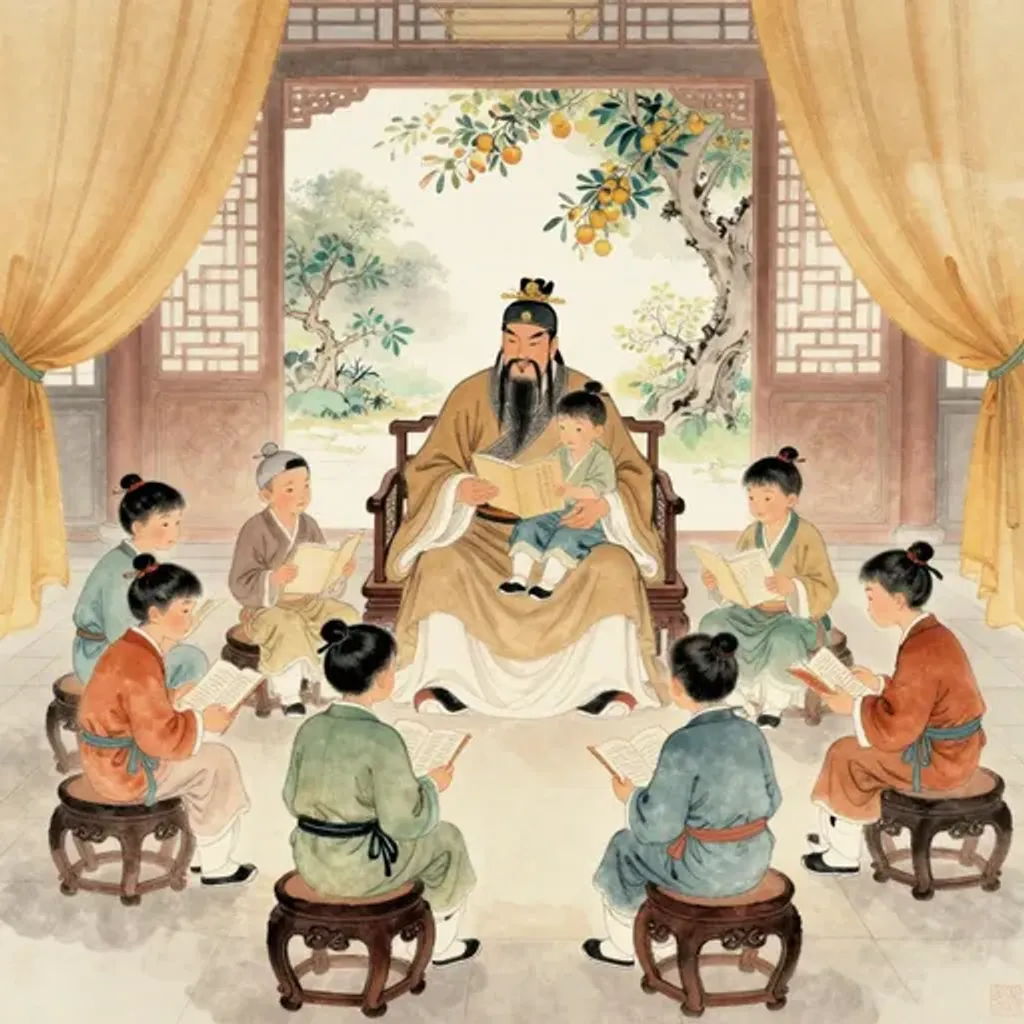
文王四乳,仁愛篤厚。子畜十男,無有折夭。
King Wen with four nipples; his benevolence and love deep and generous. He reared ten sons; not one cut short or lost to early death.
— Jiao Yanshou, Yilin (Forest of Changes), 1st century BC
Commentary
Mountain over thunder shifts to water over lake — Limitation, the hexagram of measured restraint. King Wen, born with four nipples — a sign of sagehood — governs with profound benevolence and generosity. He raises ten sons, and none dies young. According to the Shiji, King Wen's extraordinary physique was itself an omen of his vast capacity for nourishment: four nipples to feed a dynasty. Ten sons surviving infancy, in an era of devastating child mortality, represents nourishment perfected through moral virtue. From Nourishment to Limitation, the transformation channels abundance through proper measure: the water above the lake neither overflows nor runs dry. King Wen's four-nippled bounty exemplifies limitation's paradox — the most nourishing ruler is the one who sets the right boundaries.
頤 → 中孚
Hexagram 27 → Hexagram 61: Inner Truth
Changing lines: 2, 5
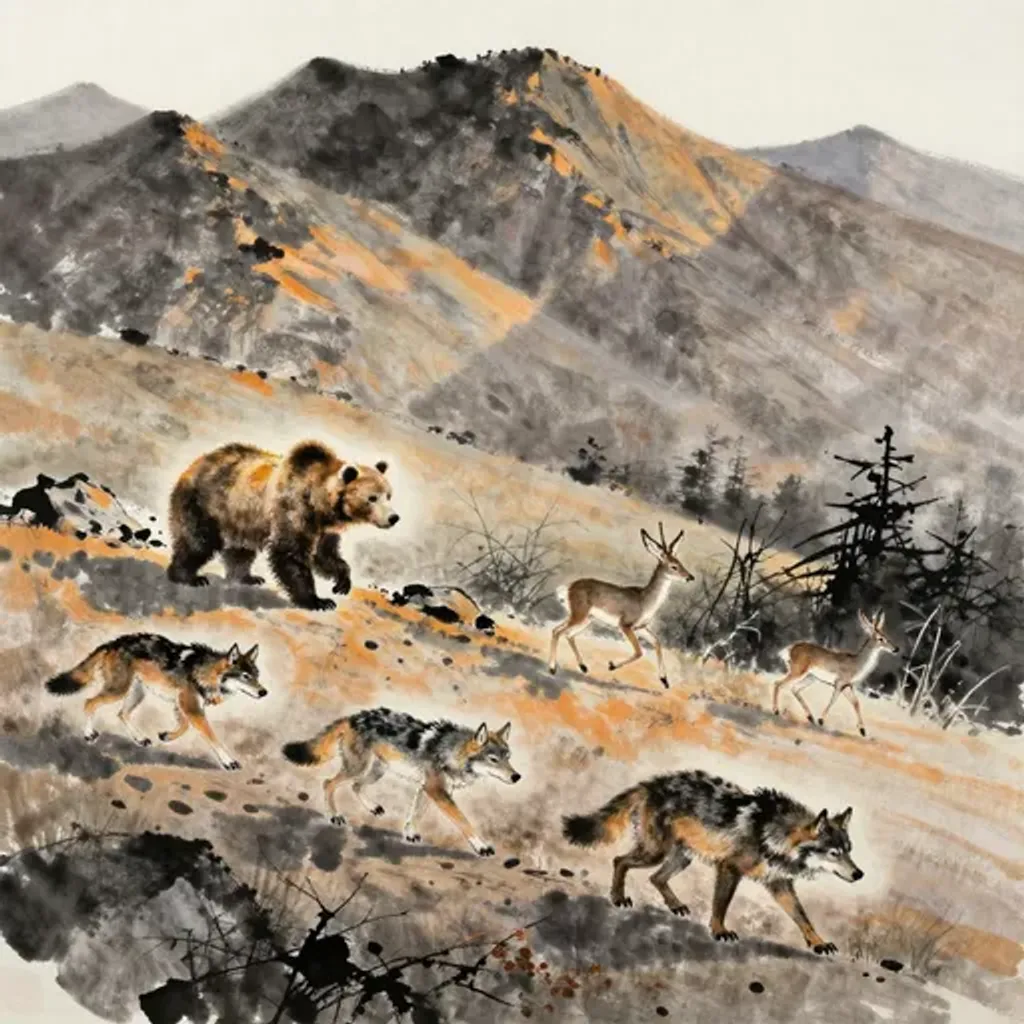
熊羆豺狼,在山陰陽。伺鹿取獐,道候畏難。
Bears and grizzlies, jackals and wolves; on the mountain bright and shadowed slopes. Stalking deer, seizing roe; they watch the road, wary of danger.
— Jiao Yanshou, Yilin (Forest of Changes), 1st century BC
Commentary
Mountain over thunder transforms into wind over lake — Inner Truth, where sincerity reaches across the void. Bears, wolves, and jackals prowl the mountain's shaded slopes and sunny ridges. They stalk deer and hunt roe, yet the road is perilous, and the watcher hesitates before the difficulty. The mountain that nourishes also harbors predators; the same terrain that feeds the deer feeds those who hunt it. From Nourishment to Inner Truth, the transformation deepens: beyond the surface of nourishment lies the question of what is genuinely true. The predators on the mountain test whether one's sincerity can hold amid real danger. Inner Truth's wind over lake reaches even the fish in the deep, but first one must navigate the wolves at the gate.
頤 → 小過
Hexagram 27 → Hexagram 62: Small Exceeding
Changing lines: 1, 3, 4, 6
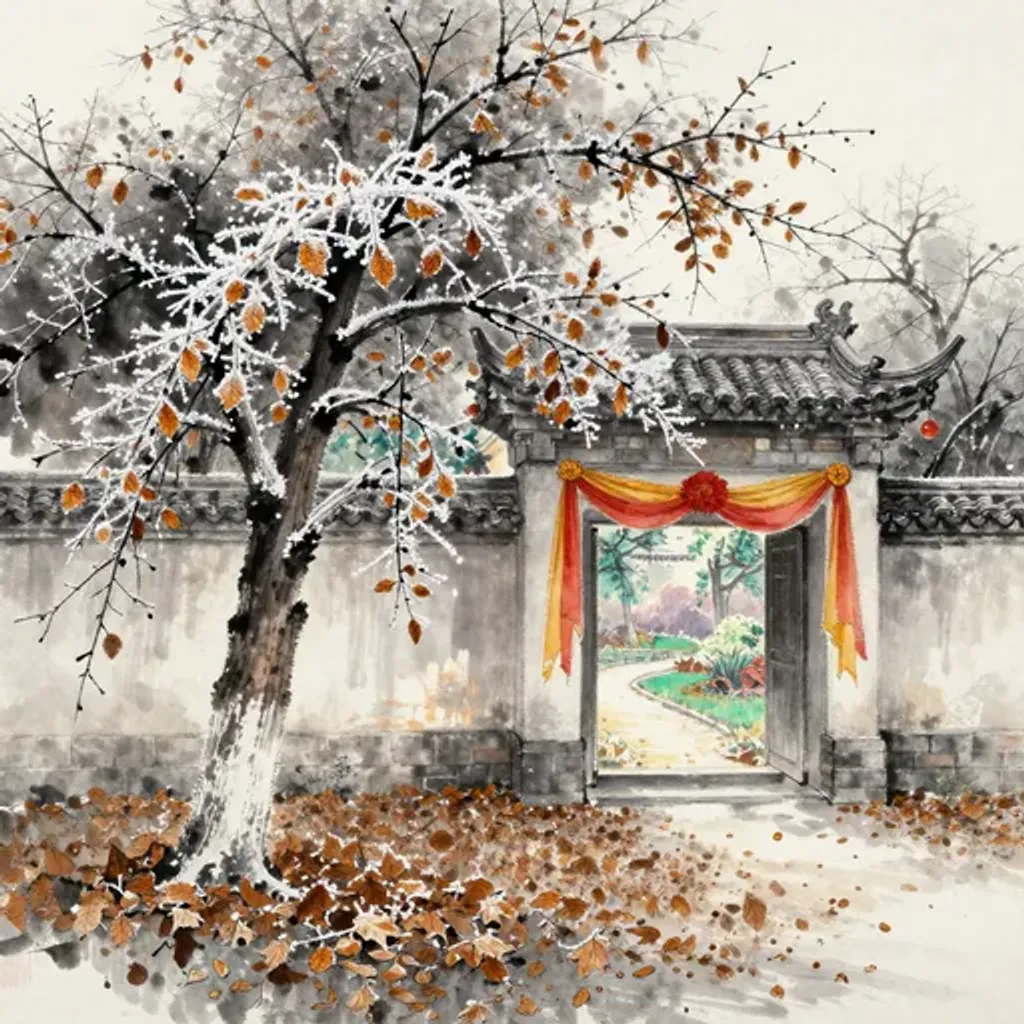
彫葉被霜,獨蔽不傷。駕入喜門,與福為婚。
Carved leaves coated in frost; alone sheltered, unharmed. Driving through the gate of joy; wedding with blessing itself.
— Jiao Yanshou, Yilin (Forest of Changes), 1st century BC
Commentary
Mountain over thunder gives way to thunder over mountain — Small Exceeding, the bird that must descend rather than ascend. Withered leaves are struck by frost, yet one alone is sheltered and unharmed. The carriage enters the gate of joy, and fortune becomes one's bride. The frost-bitten leaves represent general devastation — the season's killing breath — yet a single leaf survives, protected by some unseen grace. From Nourishment to Small Exceeding, the transformation is modest and precise: the small bird does not fly too high but stays low and safe. The surviving leaf embodies this principle — exceeding just enough to endure, not so much as to expose itself. Through small, careful excess in humility, one enters the gate of happiness unscathed while others fall.
頤 → 既濟
Hexagram 27 → Hexagram 63: After Completion
Changing lines: 3, 5, 6
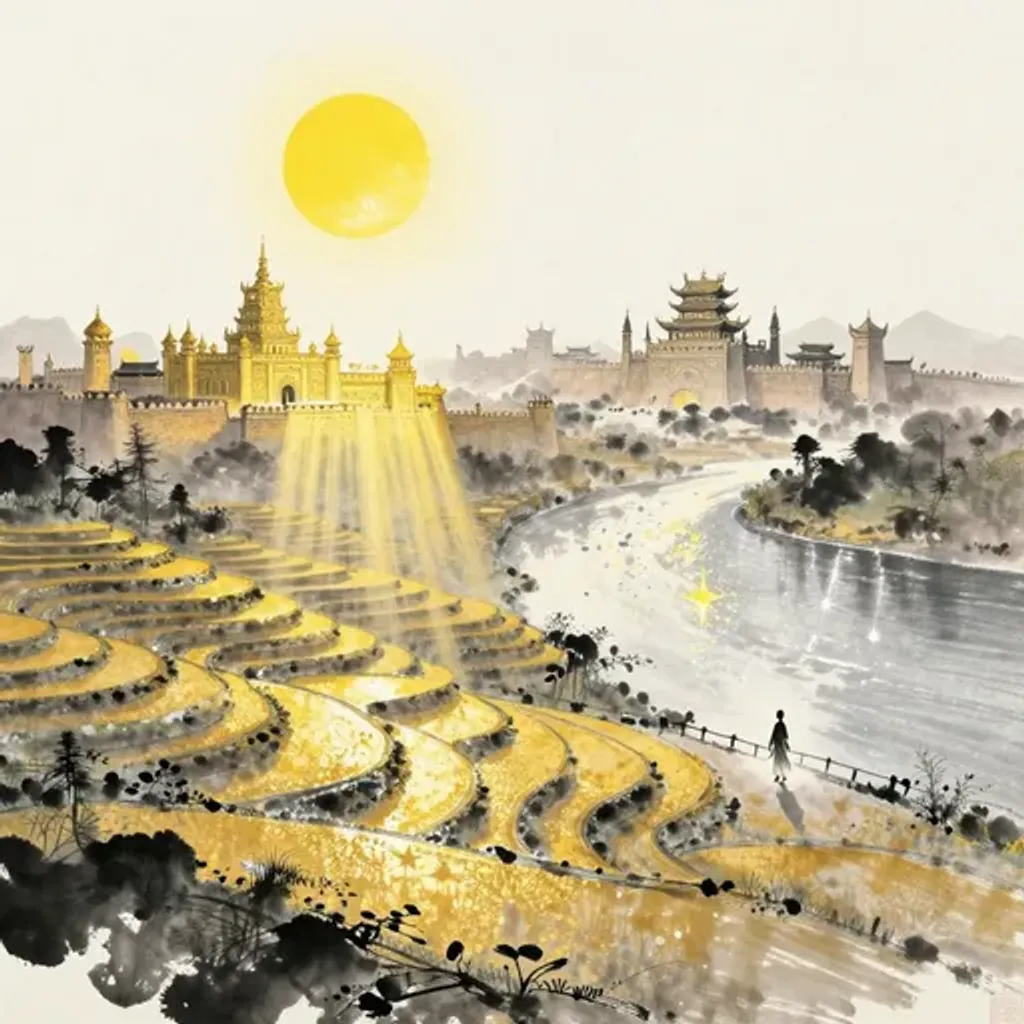
黃離白日,照我四國。元首昭明,民賴恩福。漢有游女。人不可得。
The yellow sun, radiant and white; it illuminates our four kingdoms. The sovereign head shines with brilliance; the people rely on his gracious blessing. By the Han there is a wandering maiden; no man may obtain her.
— Jiao Yanshou, Yilin (Forest of Changes), 1st century BC
Commentary
Mountain over thunder transforms into water over fire — After Completion, where everything has found its proper place. A yellow radiance like the bright sun illuminates the four kingdoms. The sovereign's brilliance is clear, and the people rely on his grace and blessing. Then the verse shifts: 'On the Han River there is a maiden wandering — none can possess her.' This final couplet quotes the Shijing's 'Han Guang' ode, where a woodcutter longs for a girl across the unbridgeable Han River. From Nourishment to After Completion, all seems achieved — order, light, gratitude — yet the wandering maiden introduces an element of unattainable desire. Even in completion, something essential remains beyond reach. The perfectly nourished state still harbors an unfulfilled longing.
頤 → 未濟
Hexagram 27 → Hexagram 64: Before Completion
Changing lines: 1, 2, 4
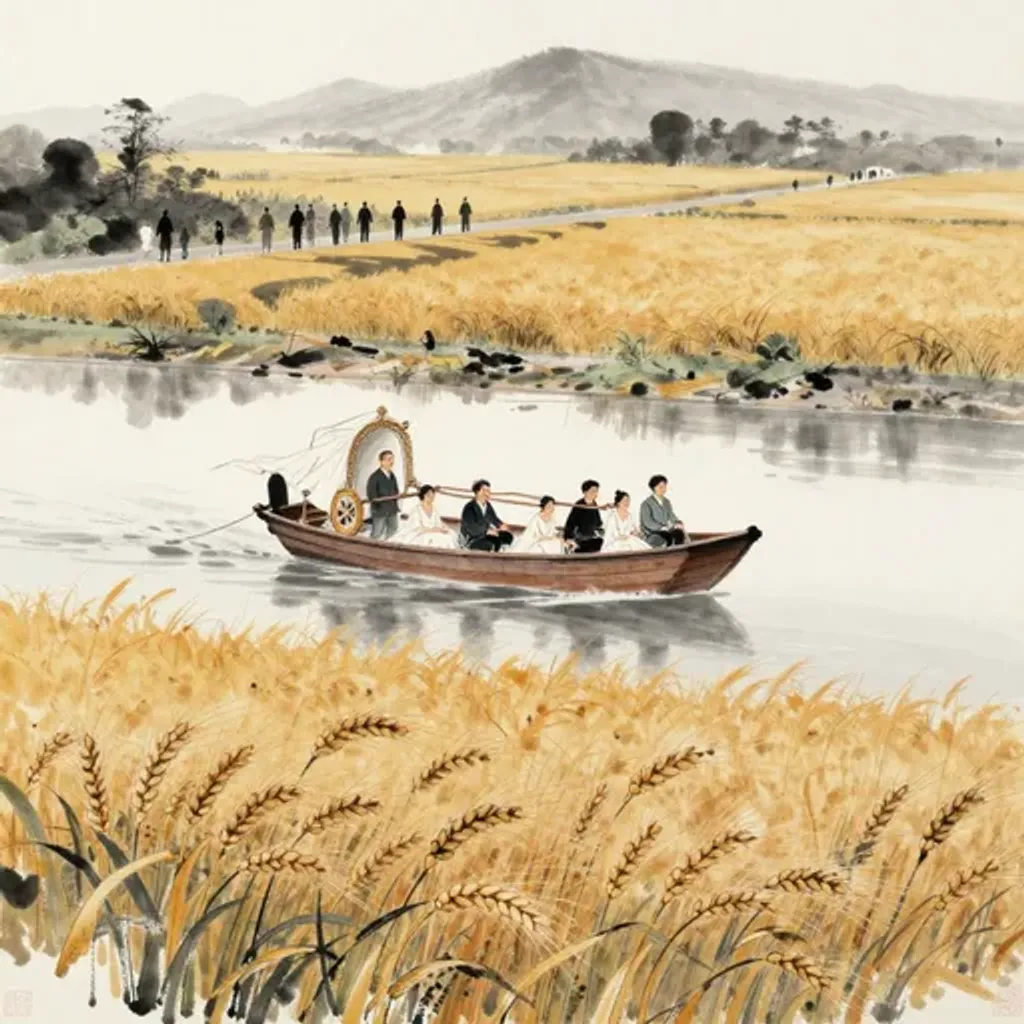
順風直北,與歡相得。歲熟年樂,邑無寇賊。長女行嫁,子孫不昌,係疾為殃。
A fair wind blows due north; meeting joy, finding accord. The harvest ripens, the year is happy; the town has no bandits or thieves. The eldest daughter goes to marry; descendants will not flourish — bound illness becomes calamity.
— Jiao Yanshou, Yilin (Forest of Changes), 1st century BC
Commentary
Mountain over thunder yields to fire over water — Before Completion, the final hexagram where nothing has yet settled into place. Riding the favorable wind straight north, one meets with pleasure and delight. The harvest is ripe, the year is joyful, and the settlement knows no bandits. Then the verse darkens without transition: the eldest daughter goes to be married, but the descendants will not flourish, and lingering illness becomes a curse. The verse's two halves refuse to reconcile — prosperity and affliction coexist without explanation. From Nourishment to Before Completion, the transformation leaves everything unresolved. The fox's tail gets wet crossing the final stream. Nourishment has brought the traveler far, but the last step remains unfinished, and what should culminate in generational blessing trails off into sickness and decline.