Transformations of Hexagram 29
Every line of change out of Hexagram 29 坎 The Abysmal Water, with the Yilin verse for each of the 64 resulting hexagrams, its translation, and the original ink brush artwork.
坎 → 乾
Hexagram 29 → Hexagram 1: The Creative
Changing lines: 1, 3, 4, 6
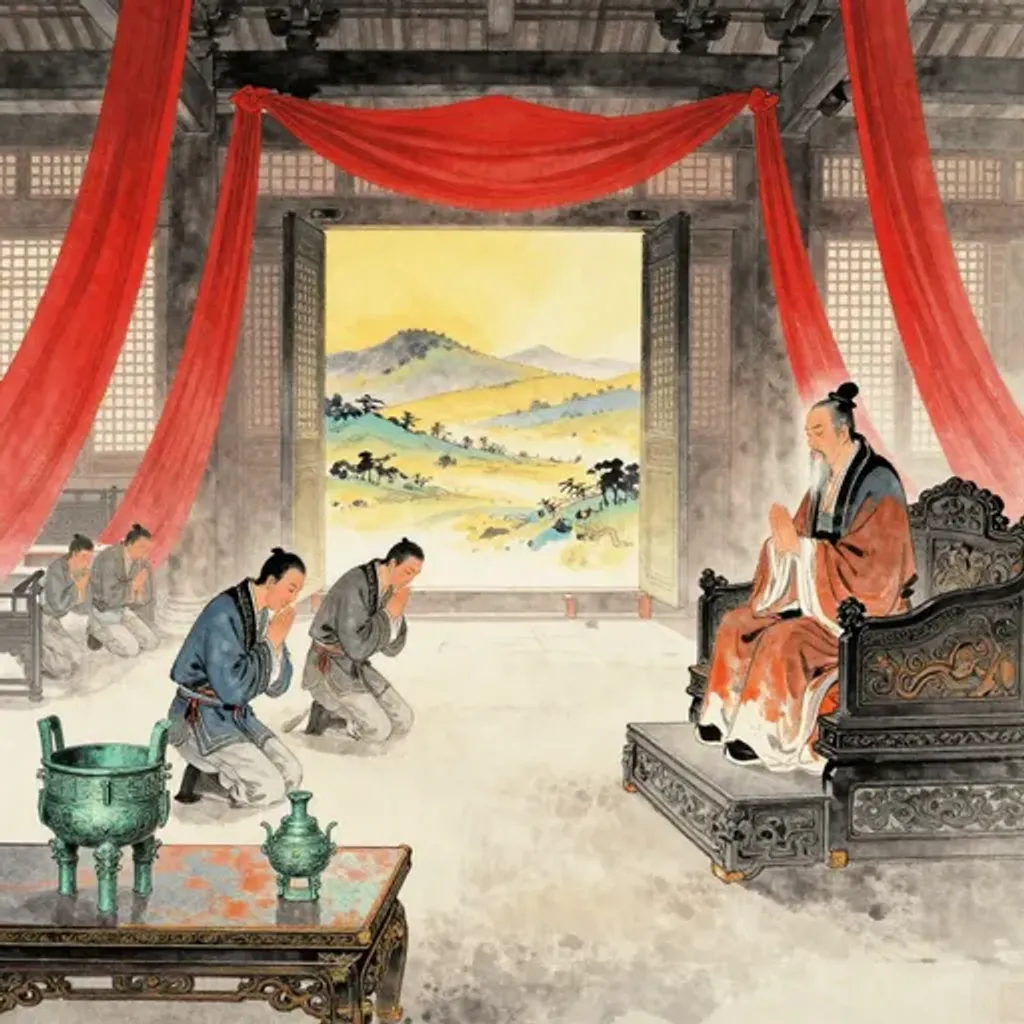
太王為父,季歷孝友。文武聖明,仁德興起。弘張四國,載福綏厚。
The Great King was father; Jili was filial and fraternal. Wen and Wu were sagely and bright; benevolence and virtue arose. They spread their domain across four kingdoms, bearing blessings thick and enduring.
— Jiao Yanshou, Yilin (Forest of Changes), 1st century BC
Commentary
Water flows upon water, doubled peril that tests every generation. The verse traces four generations of Zhou founders: King Tai (Gugong Danfu) established the ancestral base, his youngest son Jili earned the succession through filial devotion, and Jili's son King Wen and grandson King Wu brought sage governance and righteous conquest. Each generation built upon the last, spreading benevolent rule across the four quarters and heaping blessings upon the people. From The Abysmal to The Creative, the transformation is dramatic: repeated danger becomes self-generating initiative. The Zhou lineage did not merely endure peril — it transmuted each trial into the creative force that founded a dynasty, turning water's persistent flow into heaven's inexhaustible drive.
坎 → 坤
Hexagram 29 → Hexagram 2: The Receptive
Changing lines: 2, 5
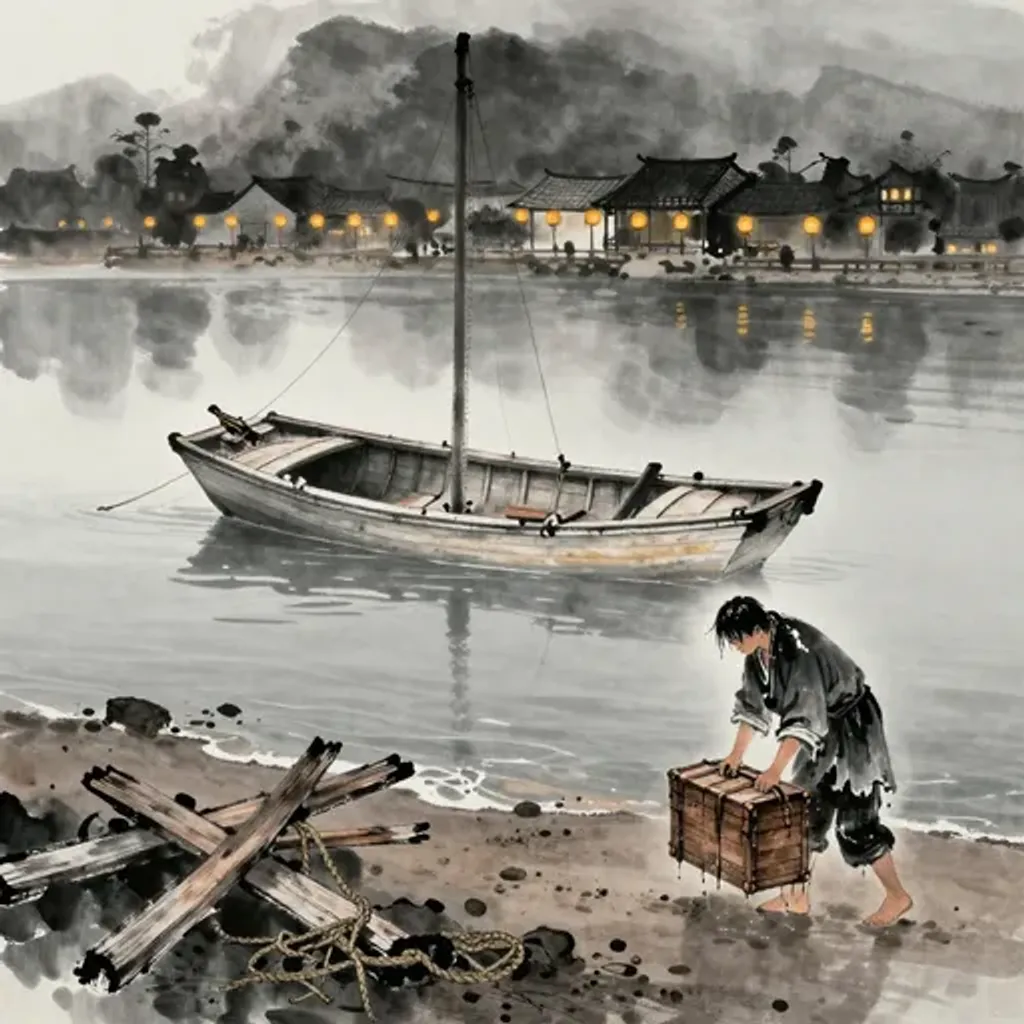
猿墮高木,不踒手足。保我金玉,還歸其室。
The boat breaks but the wind dies and waves calm. In soaked clothes, clutching the chest, climbing ashore. The pack is torn but the gold is not lost — distant lamplight marks the family gate.
— Jiao Yanshou, Yilin (Forest of Changes), 1st century BC
Commentary
Water upon water: the abyss doubles its danger. An ape tumbles from a tall tree yet neither breaks its hands nor its feet — nimble enough to survive the fall. Though shaken, the creature keeps hold of its treasure, gold and jade intact, and returns safely to its den. The original verse captures pure animal resourcefulness: the fall is violent but the instinct to grip tight preserves what matters. From The Abysmal to The Receptive, doubled peril yields to earth's quiet endurance. The ape does not fight the fall or struggle against gravity — it accepts the descent and lands whole. What saves it is not strength but pliancy, the receptive capacity to absorb shock without losing one's essential holdings.
坎 → 屯
Hexagram 29 → Hexagram 3: Difficulty at the Beginning
Changing lines: 1, 2
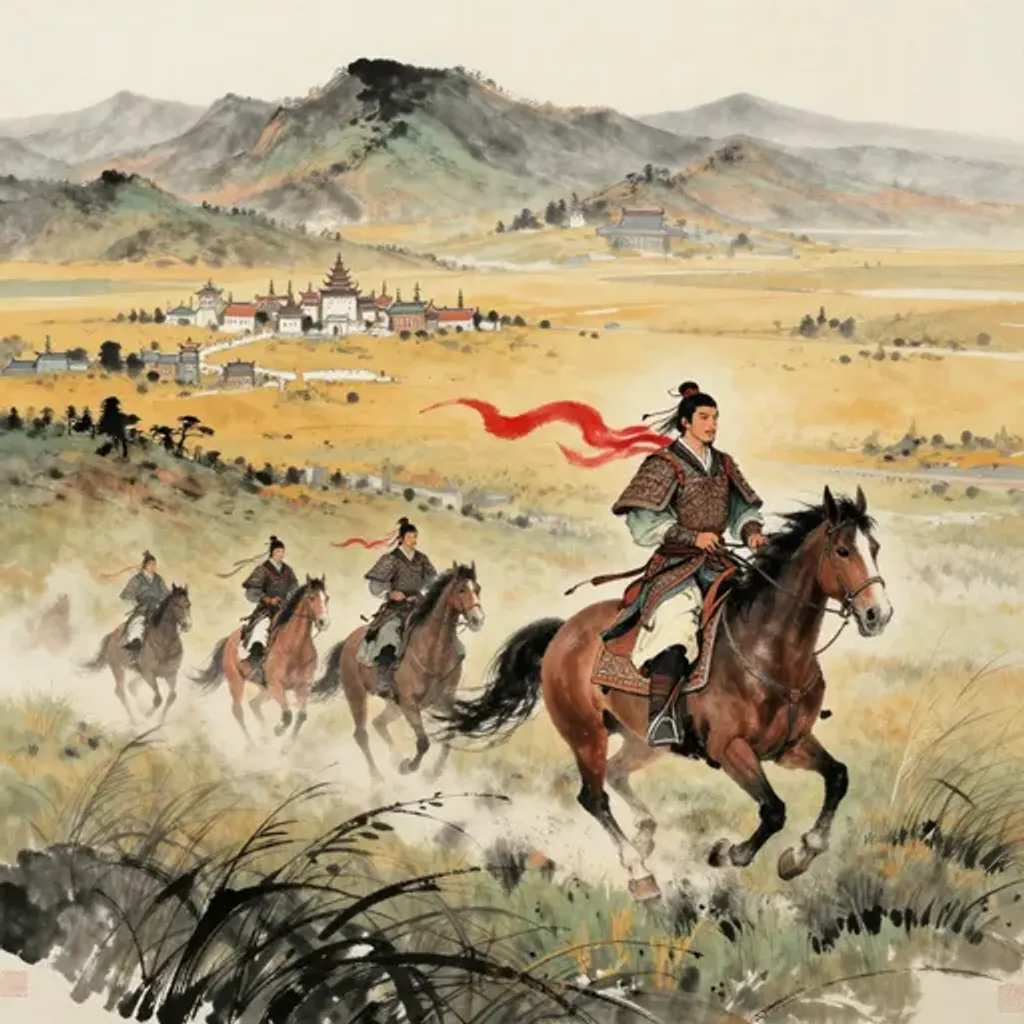
重耳恭敏,遇讒出處。北奔狄戎,經涉齊楚。以秦代懷,誅殺子圉。身為霸主。
Chong'er was reverent and keen, yet met slander and was exiled. He fled north to the Di and Rong, passed through Qi and Chu. With Qin's aid he replaced Huai, and slew Ziyu. He became lord among the hegemons.
— Jiao Yanshou, Yilin (Forest of Changes), 1st century BC
Commentary
Water upon water, the doubled abyss mirrors nineteen years of exile. Chong Er, prince of Jin, was courteous and perceptive but fell victim to slander at court. He fled north to the Di barbarians, then traversed Qi and Chu, gathering loyal followers through every hardship. With Qin's military backing he replaced the usurper Huai and executed Ziyu, returning at last to become one of the Five Hegemons. The verse traces each station of his exile as a descent through successive dangers. From The Abysmal to Difficulty at the Beginning, the pattern fits precisely: clouds and thunder gather before the storm breaks, and the prince who endured repeated peril emerges to establish new order from chaos.
坎 → 蒙
Hexagram 29 → Hexagram 4: Youthful Folly
Changing lines: 5, 6
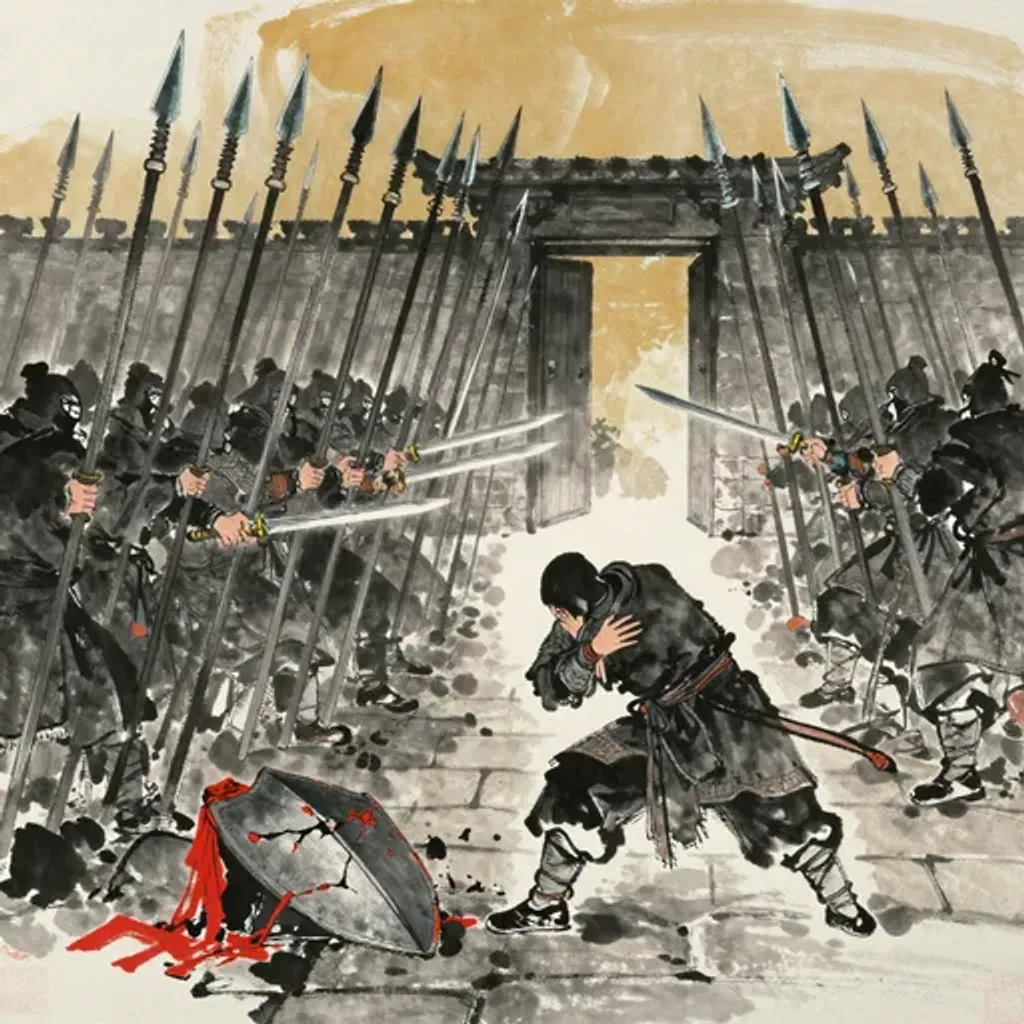
倚鋒據戟,傷我胸臆。拜折不息。
Leaning on blades, bracing against halberds; they wound my breast. Bowing without end.
— Jiao Yanshou, Yilin (Forest of Changes), 1st century BC
Commentary
Water upon water, the doubled abyss threatens bodily harm. Leaning against blades and gripping halberds, the sharp edges wound the chest — yet still the figure bows ceaselessly in supplication. The image is of someone forced into dangerous proximity with weapons, suffering injury while maintaining the posture of deference. The bowing never stops, suggesting either desperate petition or ritual submission under duress. From The Abysmal to Youthful Folly, peril meets naivety: the mountain spring issues forth beneath the mountain, fresh but unaware of the dangers around it. The one who bows before blades is like the untutored student who does not yet know where the real danger lies.
坎 → 需
Hexagram 29 → Hexagram 5: Waiting
Changing lines: 1, 3
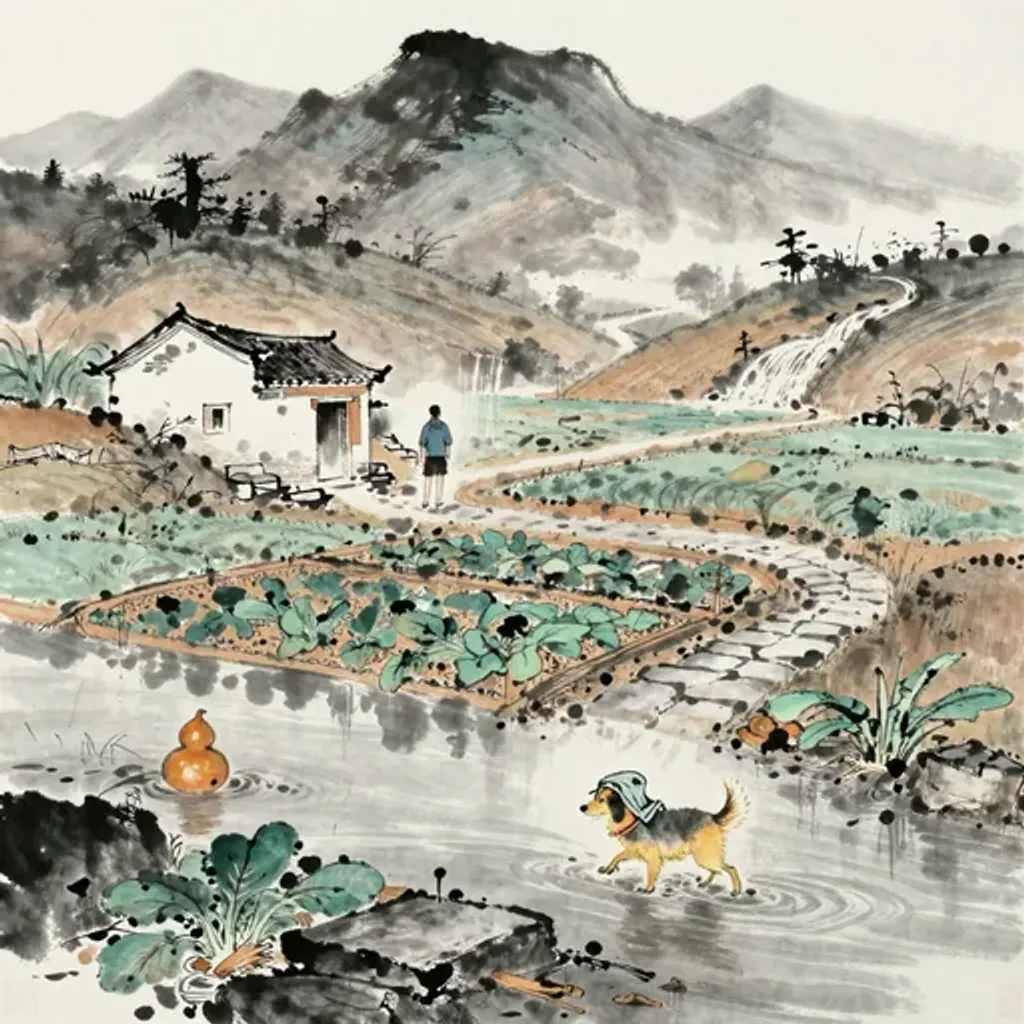
狗冠雛步,君失其居。出門抵山,行者憂難。水灌我園,高陸為泉。
A dog in a cap, walking with chick-like steps; the lord loses his dwelling. Stepping out the door, mountains block the way; the traveler meets hardship. Water floods my garden; the high plateau becomes a spring.
— Jiao Yanshou, Yilin (Forest of Changes), 1st century BC
Commentary
Water upon water, peril overflows its banks. A dog wears a ceremonial cap and struts with the mincing gait of a chick — a grotesque inversion of propriety, signaling that the ruler has lost his place. Stepping outside, one meets only mountains blocking the way; travelers face hardship at every turn. Then the water invades: it floods the garden, and high ground itself becomes a spring. The landscape of order dissolves when authority is misplaced. From The Abysmal to Waiting, the water that was perilous now hovers as clouds above heaven — danger has not vanished but has been suspended, requiring patient watchfulness. The wise response is not to act but to wait for the flood to find its level.
坎 → 訟
Hexagram 29 → Hexagram 6: Conflict
Changing lines: 4, 6
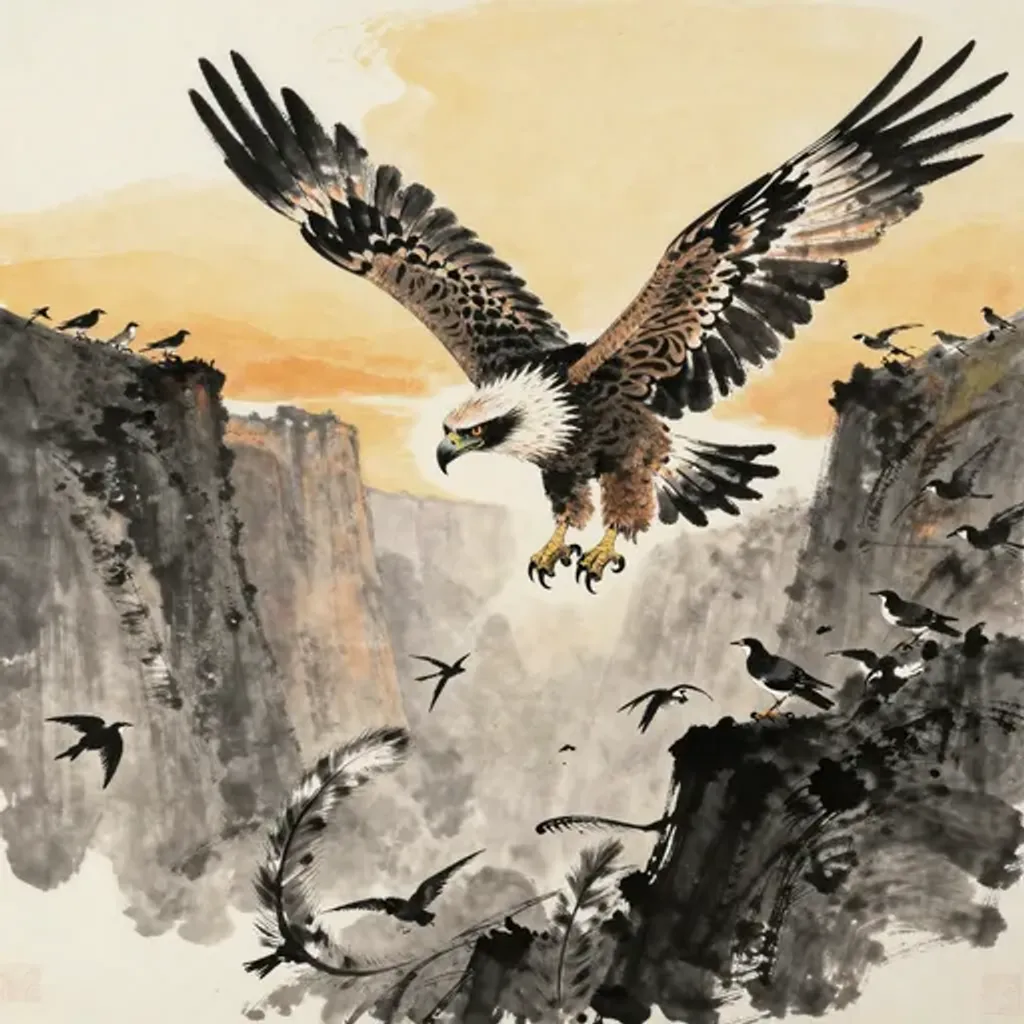
眾鳥所翔,中有大壯。爪牙長頭,為我驚憂。
Where many birds fly, among them a great and powerful one. Talons long, head massive; it is the cause of my alarm and dread.
— Jiao Yanshou, Yilin (Forest of Changes), 1st century BC
Commentary
Water upon water, danger lurks where many gather. Among a flock of birds soars one massive creature, with fearsome talons and an elongated head — a raptor that dwarfs its fellows and fills the observer with dread. The character 壯 (strong, imposing) evokes raw dominance within a group. This is not a protective power but an alarming one: something predatory has entered the communal space. From The Abysmal to Conflict, water and heaven move in opposite directions, and the verse captures that divergence. What should be a harmonious assembly is disrupted by a threatening presence, and the resulting anxiety mirrors the structure of Conflict, where opposing forces generate suspicion and fear.
坎 → 師
Hexagram 29 → Hexagram 7: The Army
Changing lines: 5
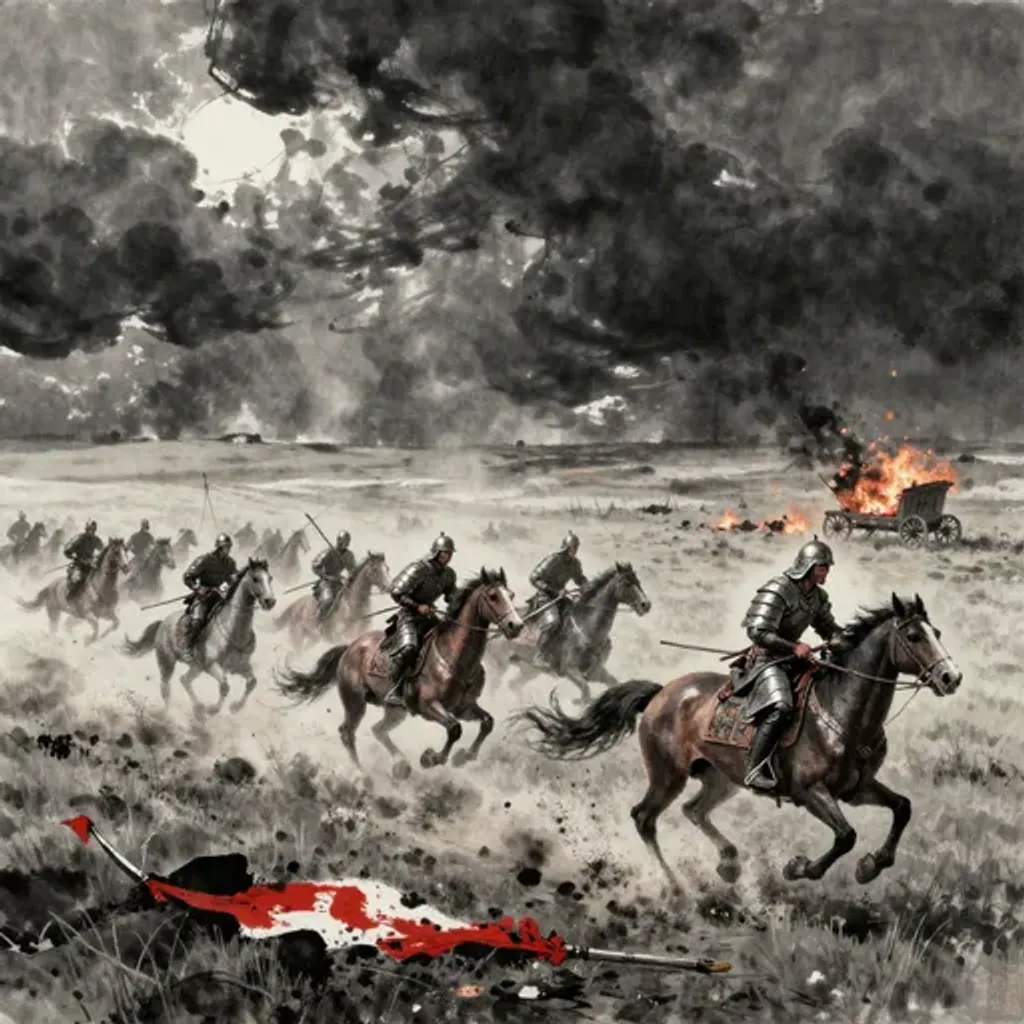
雷行相逐,無有休息。戰於平陸,為夷所覆。
Black clouds press the steppe as war-horses scream. Iron cavalry charges in all directions — dust blots out the sky. Broken flags lie on the ground, no one to lift them — a thousand li of plains, blood runs like rivers.
— Jiao Yanshou, Yilin (Forest of Changes), 1st century BC
Commentary
Water upon water, danger cascades without rest. Thunder pursues thunder in relentless succession — no pause, no respite. The army engages on the open plain at Pinglu, only to be overwhelmed and destroyed by foreign forces. The original verse drives with urgency: chase follows chase as disaster unfolds in the flat terrain where there is nowhere to hide. From The Abysmal to The Army, the transformation reveals water contained within the earth — disciplined force held beneath a calm surface. Yet this verse shows the army's failure: when military power is deployed without strategic depth, when thunder merely chases without plan, the result is annihilation on exposed ground rather than the controlled application of force that The Army demands.
坎 → 比
Hexagram 29 → Hexagram 8: Holding Together
Changing lines: 2
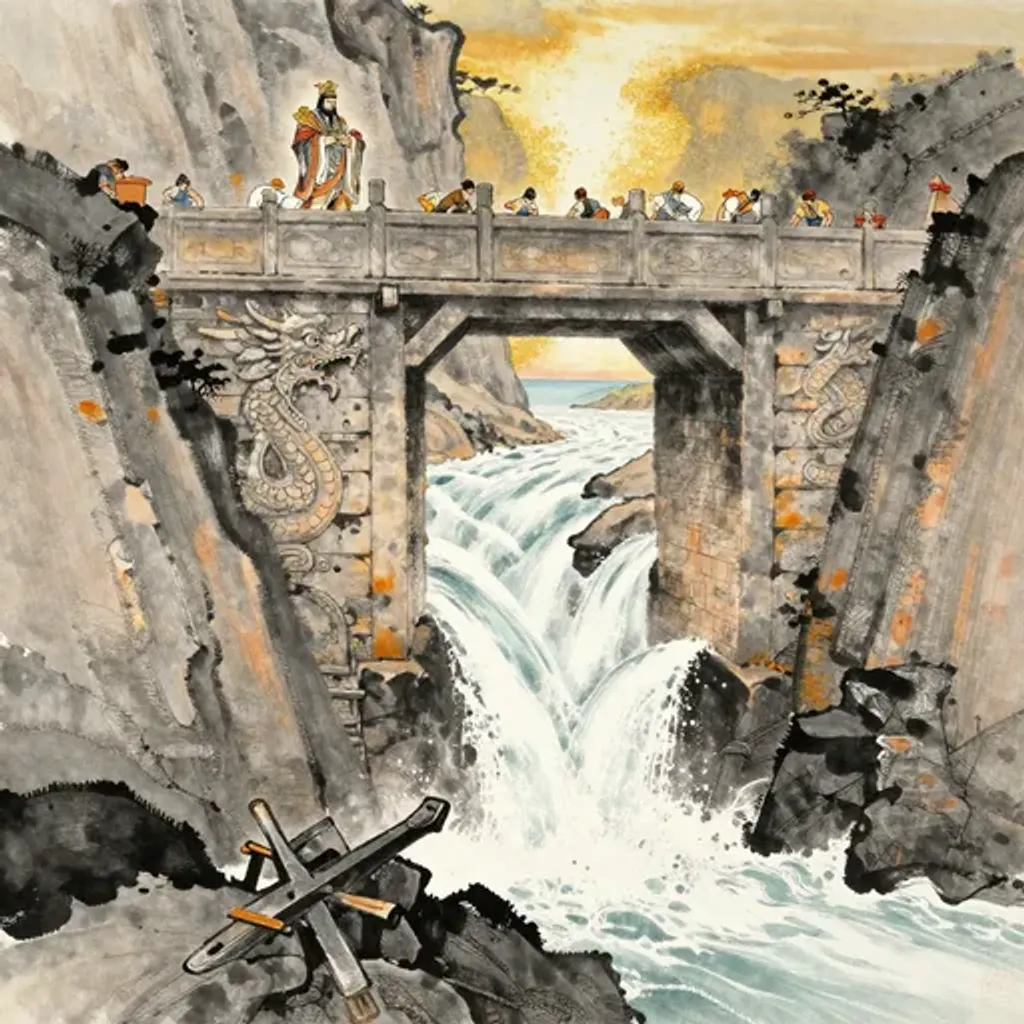
禹鑿龍門,通利水泉。同注滄海,民得安土。
Yu carved open the Dragon Gate, freeing the waterways and springs. Together they pour into the vast sea; the people find peace upon their land.
— Jiao Yanshou, Yilin (Forest of Changes), 1st century BC
Commentary
Water upon water, the doubled abyss recalls the primordial flood. Yu the Great carved open Dragon Gate, clearing the channel so the waters could flow freely to their springs and rivers. All streams converge and pour together into the vast sea, and the people at last find stable ground to dwell upon. The verse celebrates the archetypal act of hydraulic engineering: not damming the flood but giving it a path. From The Abysmal to Holding Together, perilous water becomes water upon earth — no longer threatening but unifying. Yu's achievement is the very image of Holding Together: by opening channels rather than building walls, diverse waters flow as one toward their common destination.
坎 → 小畜
Hexagram 29 → Hexagram 9: Small Taming
Changing lines: 1, 3, 6
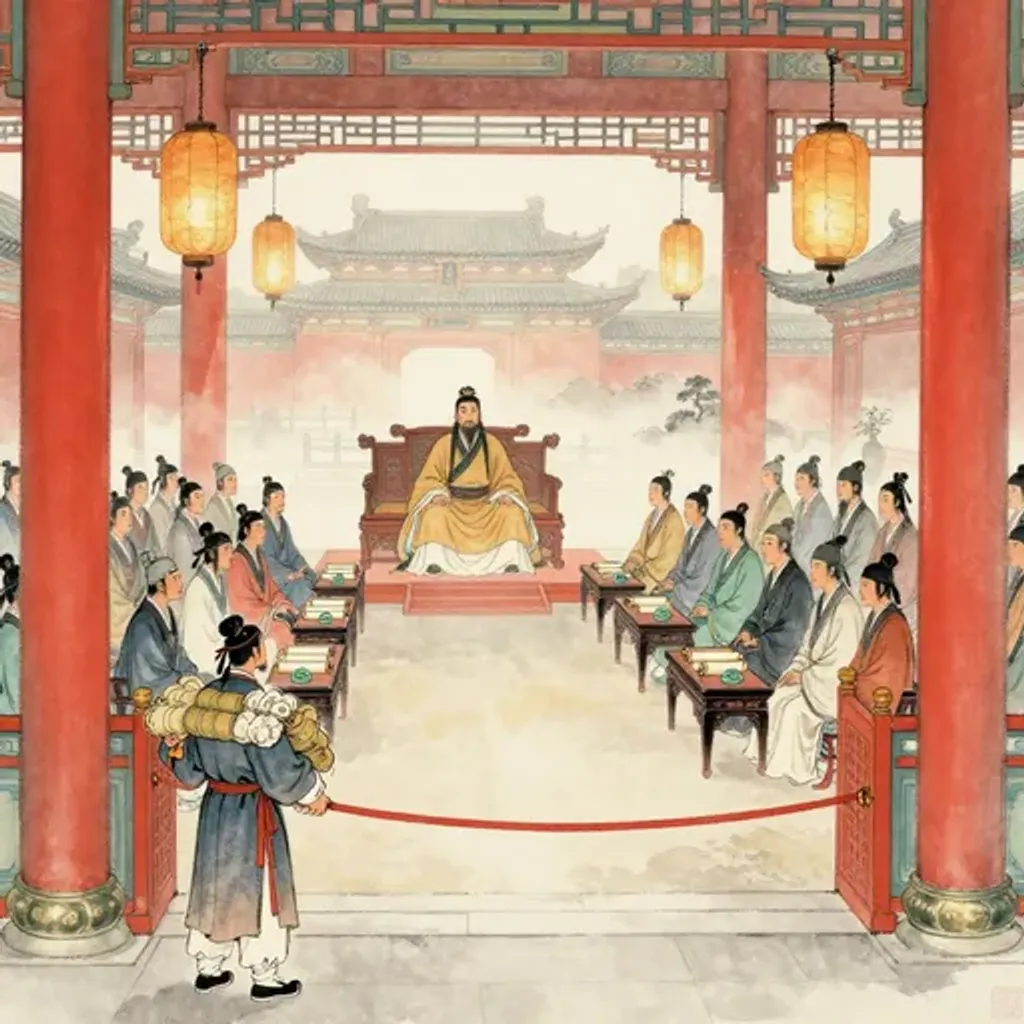
堯舜仁德,養賢致福。眾英積聚,國無寇賊。商人失利,來爭寶貨。
Yao and Shun, benevolent in virtue, nurtured the worthy and brought blessings. Many talents gathered; the state knew no bandits or thieves. Yet merchants lost their profits, coming to contest over precious goods.
— Jiao Yanshou, Yilin (Forest of Changes), 1st century BC
Commentary
Water upon water, peril met with benevolent cultivation. Yao and Shun practiced humane governance, nourishing the worthy and thereby attracting blessings. Outstanding talents gathered around them, and the realm knew neither bandits nor thieves. Yet the verse pivots: merchants lose their advantage as others come to compete for precious goods. From The Abysmal to Small Taming, the wind that gently restrains heaven suggests cultivation through moral influence rather than force. Yao and Shun's accumulation of virtue draws talent naturally, just as wind over heaven gradually tames what is wild. But even in such an age, competition does not vanish — it is merely refined into orderly contest.
坎 → 履
Hexagram 29 → Hexagram 10: Treading
Changing lines: 1, 4, 6
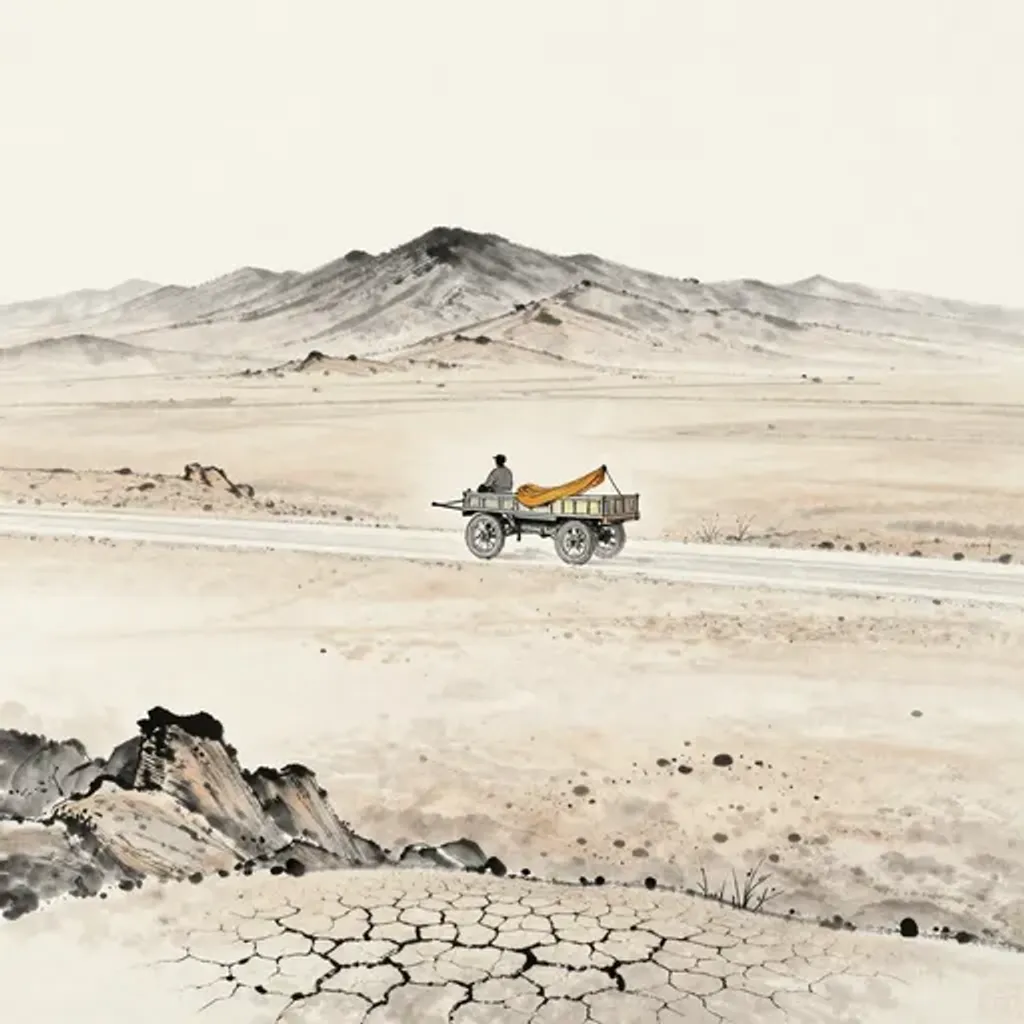
陸居少泉,山高無雲。車行千里,塗不污輪。渴為我怨,佳思廣得。
Dwelling on land with few springs; the mountains high, without clouds. The cart travels a thousand li; the road does not soil its wheels. Thirst becomes my grievance; yet fine thoughts are broadly gained.
— Jiao Yanshou, Yilin (Forest of Changes), 1st century BC
Commentary
Water upon water, yet the scene is parched. The highland has few springs, mountains stand tall without clouds, and a carriage travels a thousand li without mud touching its wheels. This is water's absence within water's hexagram — a paradox that sharpens desire. Thirst itself becomes the grievance, but the verse resolves: fine aspirations are broadly fulfilled. From The Abysmal to Treading, danger gives way to careful steps upon the proper path. The one who traverses a thousand dry miles without soiling the wheels embodies Treading's discipline: walking upon the tiger's tail with such propriety that the tiger does not bite. Scarcity is navigated through measured conduct, not reckless haste.
坎 → 泰
Hexagram 29 → Hexagram 11: Peace
Changing lines: 1, 3, 5
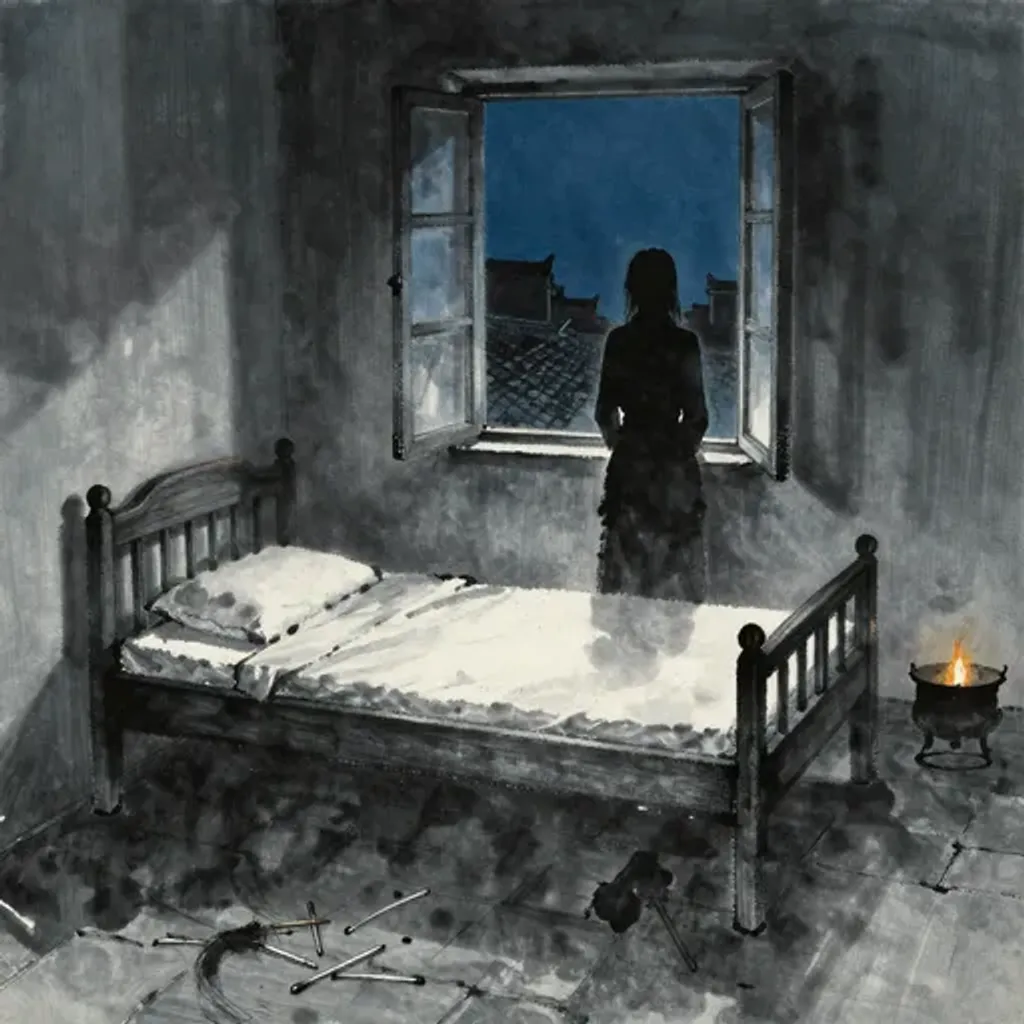
朝視不明,夜不見光。皆抵空床,季女奔亡,愴焉心傷。
By morning, sight is unclear; by night, no light is seen. All reach the empty bed. The youngest daughter has fled; the heart aches with sorrow.
— Jiao Yanshou, Yilin (Forest of Changes), 1st century BC
Commentary
Water upon water, darkness compounds peril. By morning vision is dim; by night no light appears at all. Everyone returns to an empty bed, and the youngest daughter has fled in secret. The heart aches with desolation. The verse paints domestic abandonment in sensory terms — blindness by day, darkness by night, the cold bed, the vanished bride. From The Abysmal to Peace, the transformation seems to mock the present suffering: heaven and earth should be exchanging their energies in cosmic harmony, yet this household knows only absence and grief. The promise of Peace remains latent, suggesting that even in complete darkness, the conditions for renewed communion already exist beneath the surface.
坎 → 否
Hexagram 29 → Hexagram 12: Standstill
Changing lines: 2, 4, 6
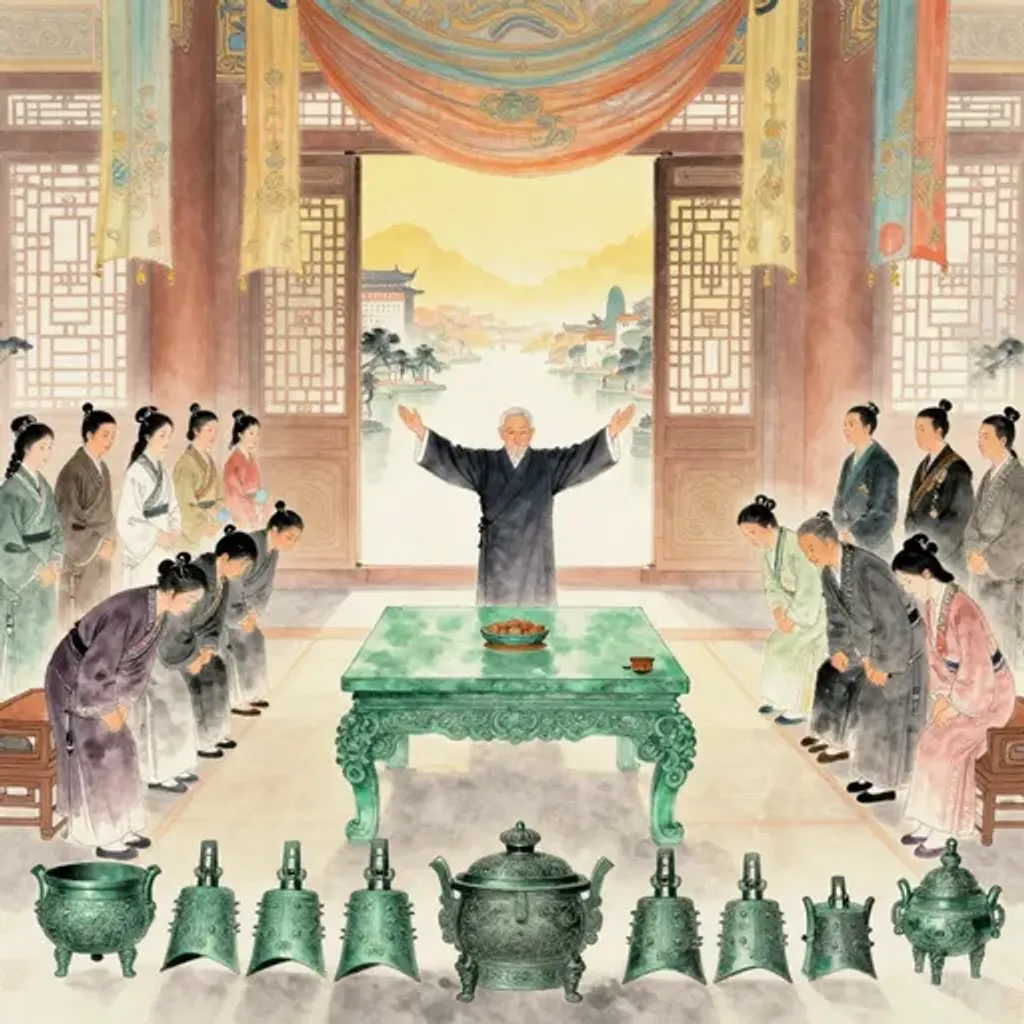
齊魯求國,仁聖輔德,進禮雅言,定公以安。
Qi and Lu sought their states; the sagely and humane upheld virtue. Advancing rites and elegant speech, Duke Ding was thereby set at ease.
— Jiao Yanshou, Yilin (Forest of Changes), 1st century BC
Commentary
Water upon water, peril demands a sage's intervention. Qi and Lu contend for advantage, but a man of humane wisdom and saintly virtue assists with propriety and refined speech — likely evoking Confucius's role at the Jiaqu covenant between Qi and Lu, where as master of ceremonies he recovered Lu's lost territory through ritual authority and moral force. Duke Ding is thereby secured in peace. From The Abysmal to Standstill, the paradox deepens: heaven and earth fail to communicate, yet precisely in that blockage, the sage's intervention becomes indispensable. By advancing ritual and elegant discourse into the void between warring states, the sage prevents total collapse even when cosmic communication has broken down.
坎 → 同人
Hexagram 29 → Hexagram 13: Fellowship
Changing lines: 1, 2, 3, 4, 6
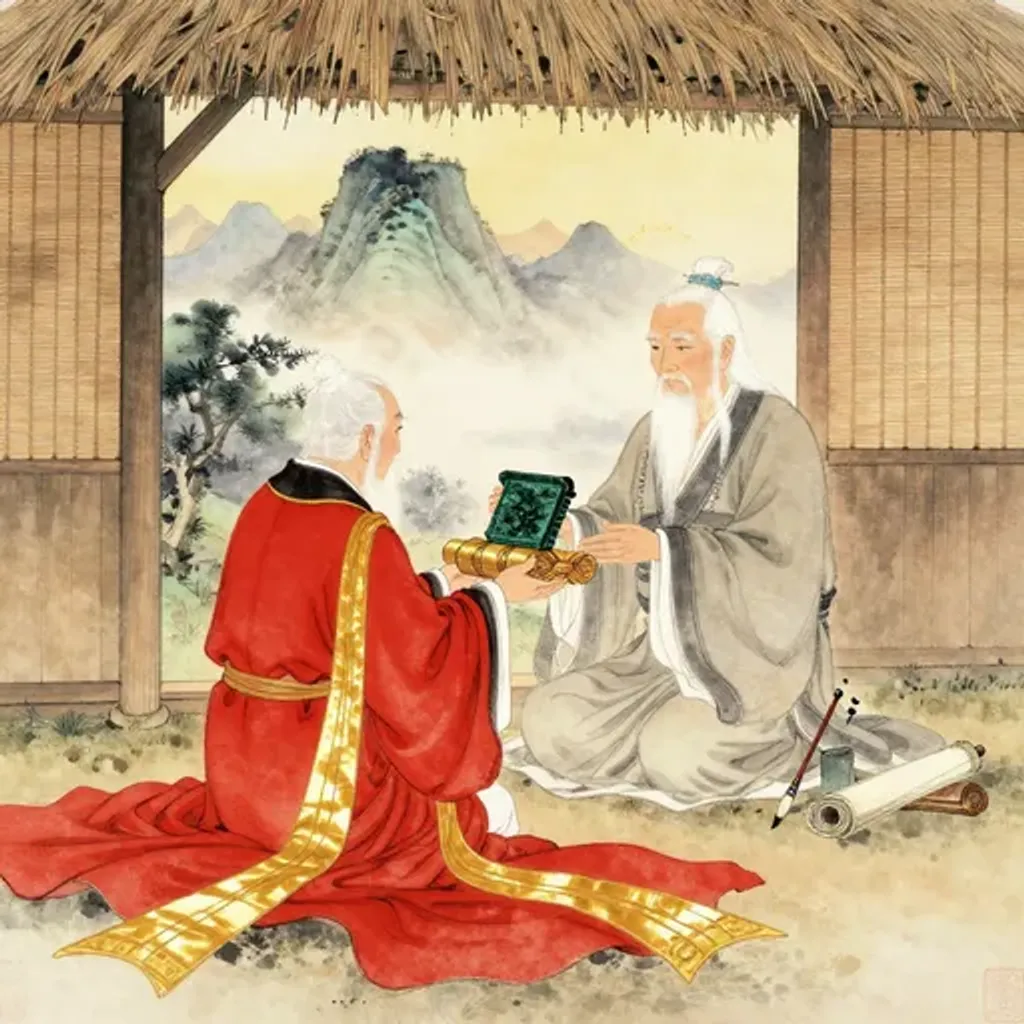
束帛玄圭,君以布德。伊呂百里,應聘輔國。
Bundled silk and dark jade tablets; the lord spreads his virtue thereby. Yi Yin, Lu Shang, Baili Xi -- answering the summons, they aided the state.
— Jiao Yanshou, Yilin (Forest of Changes), 1st century BC
Commentary
Water upon water, peril opens the way for worthy ministers. Bundles of silk and dark jade tablets are sent forth — the ceremonial gifts by which a ruler spreads virtue and summons talent. Yi Yin, Lu Shang, and Baili Xi all answered such calls, rising from obscurity to serve as pillars of state. The verse names the three archetypes of the recruited sage-minister: the cook, the fisherman, and the slave bought for five ram skins. From The Abysmal to Fellowship, water's danger transforms into fire under heaven, illuminating shared purpose. A ruler who sends gifts of sincerity attracts worthy companions, and Fellowship's image — classifying by kind — finds its human expression in recognizing talent across barriers of class.
坎 → 大有
Hexagram 29 → Hexagram 14: Great Possession
Changing lines: 1, 3, 4, 5, 6
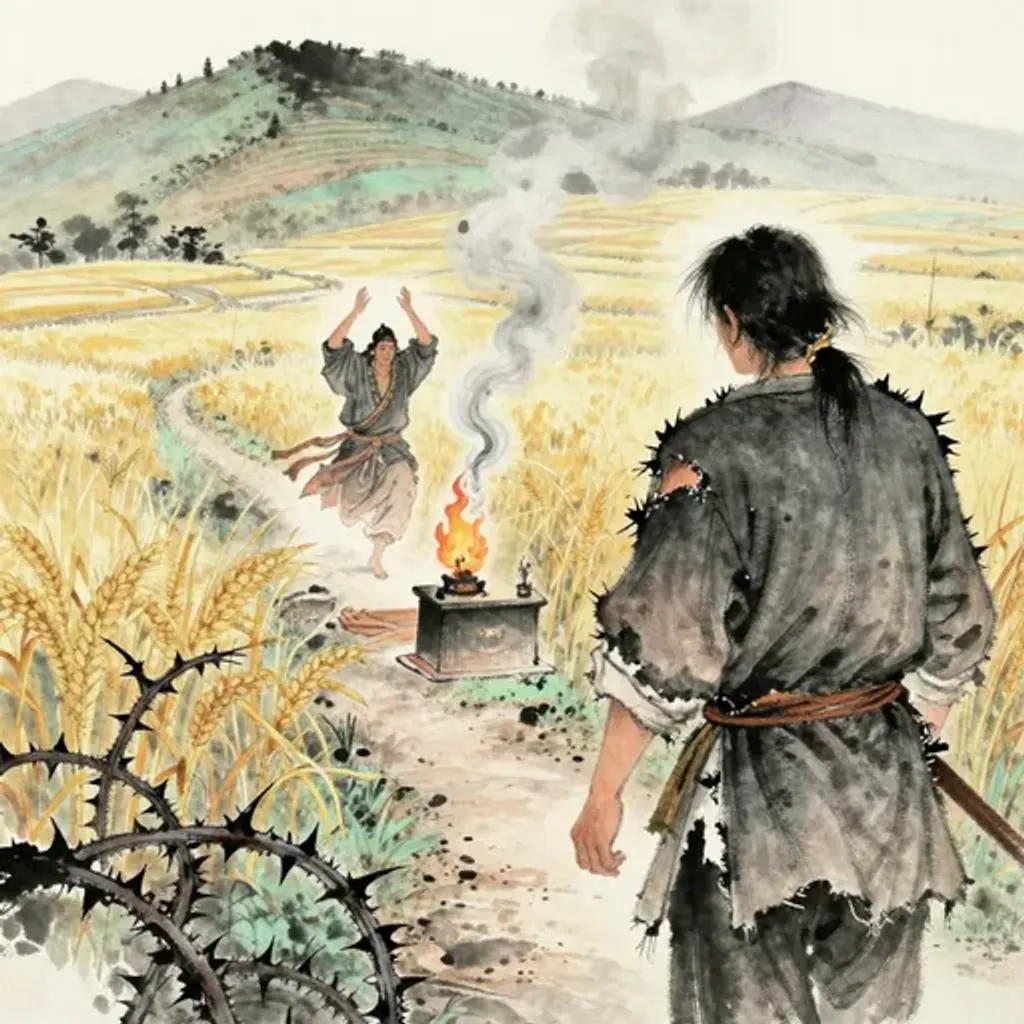
棘鉤我襦,為絆所拘,靈巫拜禱,禍不成災。東山之邑,中有土服,可以饒飽。
Thorns hook my jacket; I am caught and held. The spirit shaman bows and prays; disaster does not become calamity. In the town east of the mountain, there is fertile earth; it can provide abundance.
— Jiao Yanshou, Yilin (Forest of Changes), 1st century BC
Commentary
Water upon water, thorns snag the traveler's robe. Thorn-hooks catch at the jacket, tangling and trapping, but a spirit-medium prays and bows, and the threatened disaster fails to materialize. Then the verse shifts: in the settlements east of the mountains lies fertile land with rich soil, enough to nourish abundantly. The structure moves from entanglement through ritual intercession to material reward. From The Abysmal to Great Possession, perilous water gives way to fire blazing in heaven — what was dark and entangling opens into radiant abundance. The medium's prayer is the pivot: proper invocation transforms obstruction into blessing, and the eastern lands deliver their harvest.
坎 → 謙
Hexagram 29 → Hexagram 15: Modesty
Changing lines: 2, 3, 5
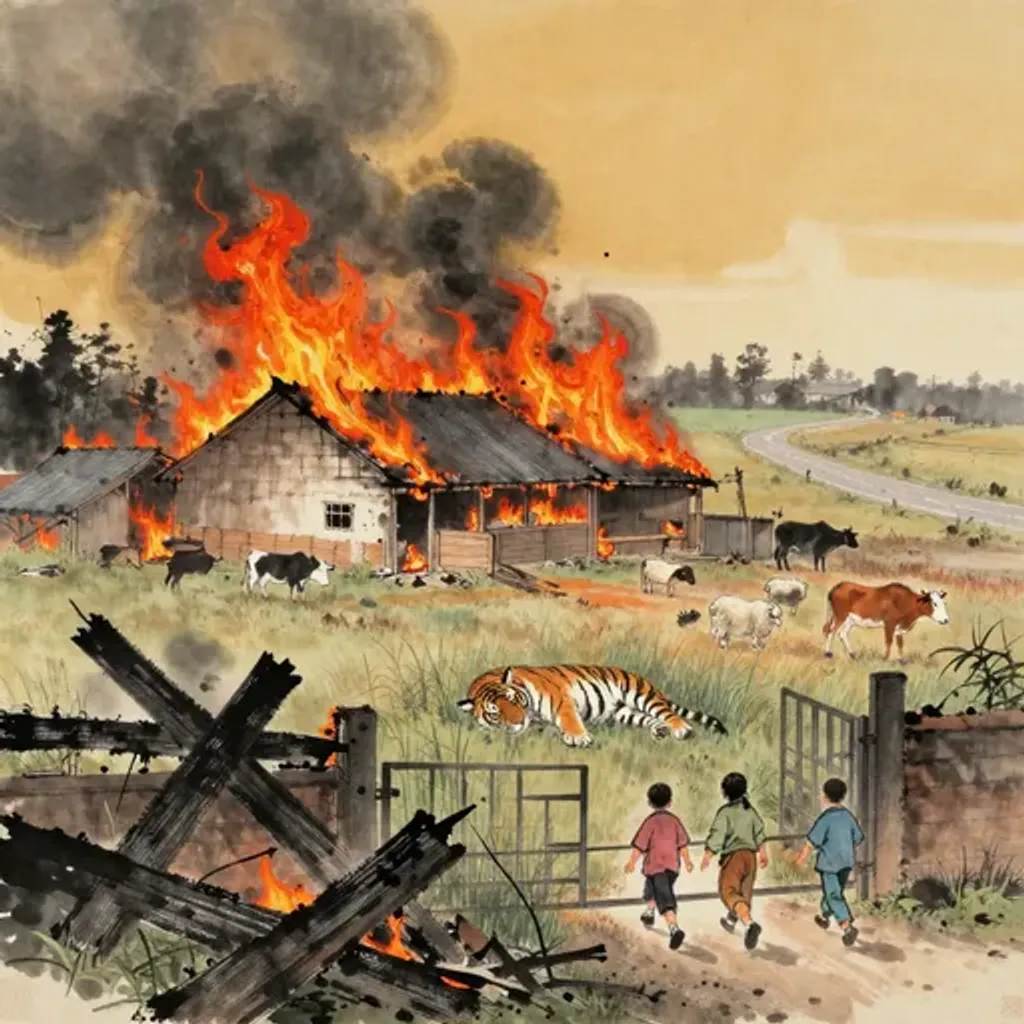
門燒屋燔,為下所殘。西行出戶,順其道理,虎臥不起,牛羊歡喜。
The gate burns, the house is ablaze; destroyed by those below. Going west, stepping out the door, following the proper way -- the tiger lies still and does not rise; the oxen and sheep rejoice.
— Jiao Yanshou, Yilin (Forest of Changes), 1st century BC
Commentary
Water upon water, fire breaks out where it should not. The gate burns, the house blazes, ravaged by forces from below — order collapses from the foundation upward. Yet the verse pivots sharply: go west, step out the door, follow the natural principle of things, and the tiger lies down and does not rise. Cattle and sheep rejoice in safety. The resolution comes not from fighting the fire but from changing direction entirely. From The Abysmal to Modesty, perilous water transforms into the mountain hidden within the earth — great power made invisible through humility. The tiger that refuses to rise embodies Modesty's core mechanism: strength that declines to assert itself, making space for the meek to thrive.
坎 → 豫
Hexagram 29 → Hexagram 16: Enthusiasm
Changing lines: 2, 4, 5
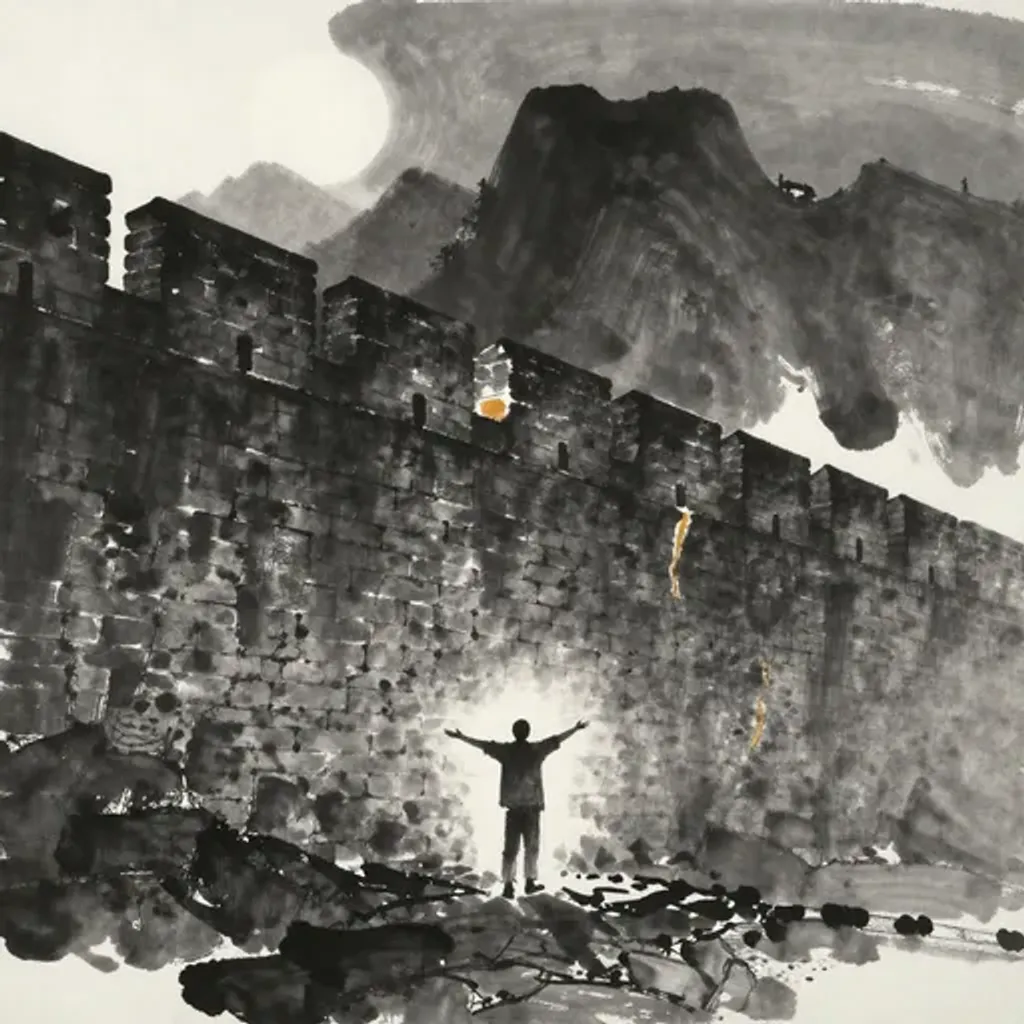
墻高蔽日,崑崙翳月,遠行無明,不見懽叔。
The wall rises high, blocking the sun; Kunlun eclipses the moon. Traveling far without light, one cannot see the beloved uncle.
— Jiao Yanshou, Yilin (Forest of Changes), 1st century BC
Commentary
Water upon water, vision is blocked at every scale. A wall so high it obscures the sun, Kunlun itself veiling the moon — from the domestic to the cosmic, light cannot penetrate. Traveling far without illumination, one cannot find the beloved uncle (懽叔). The verse layers obstruction: architectural, geographical, celestial. Even Kunlun, the axis of the world and gateway to immortality, becomes an instrument of darkness here. From The Abysmal to Enthusiasm, the transformation promises thunder bursting from the earth — spontaneous, irresistible energy. But the verse captures the moment before that release, when every source of light is walled off and the longed-for reunion remains impossible.
坎 → 隨
Hexagram 29 → Hexagram 17: Following
Changing lines: 1, 2, 4
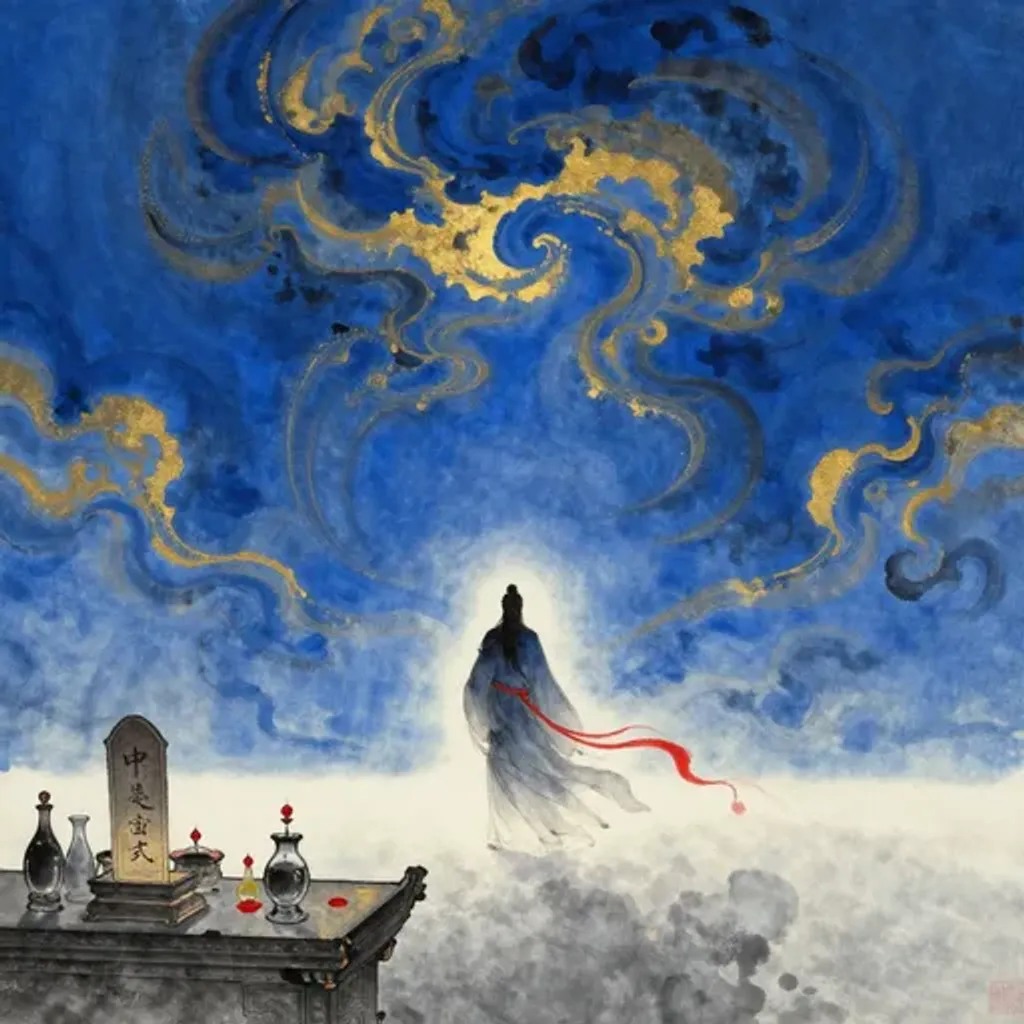
天地際會,不見內外,祖辭遣送,與世長決。
Heaven and earth meet at the boundary; inside and outside vanish. The ancestors speak words of farewell; one parts from the world forever.
— Jiao Yanshou, Yilin (Forest of Changes), 1st century BC
Commentary
Water upon water, the boundary between heaven and earth dissolves. Sky and ground merge until inside and outside are indistinguishable — a cosmic erasure of all orientation. Ancestral rites send the departed off with farewell words, and the living part from the world forever. This is a death verse, spare and final. The ancestors officiate the severance; the departure is absolute. From The Abysmal to Following, danger transforms into the lake's thunder resting at dusk — the natural rhythm of following the day's end into night. Death here is not catastrophe but transition: the sage enters rest as evening falls, following the Way into its darkness without resistance.
坎 → 蠱
Hexagram 29 → Hexagram 18: Work on the Decayed
Changing lines: 3, 5, 6
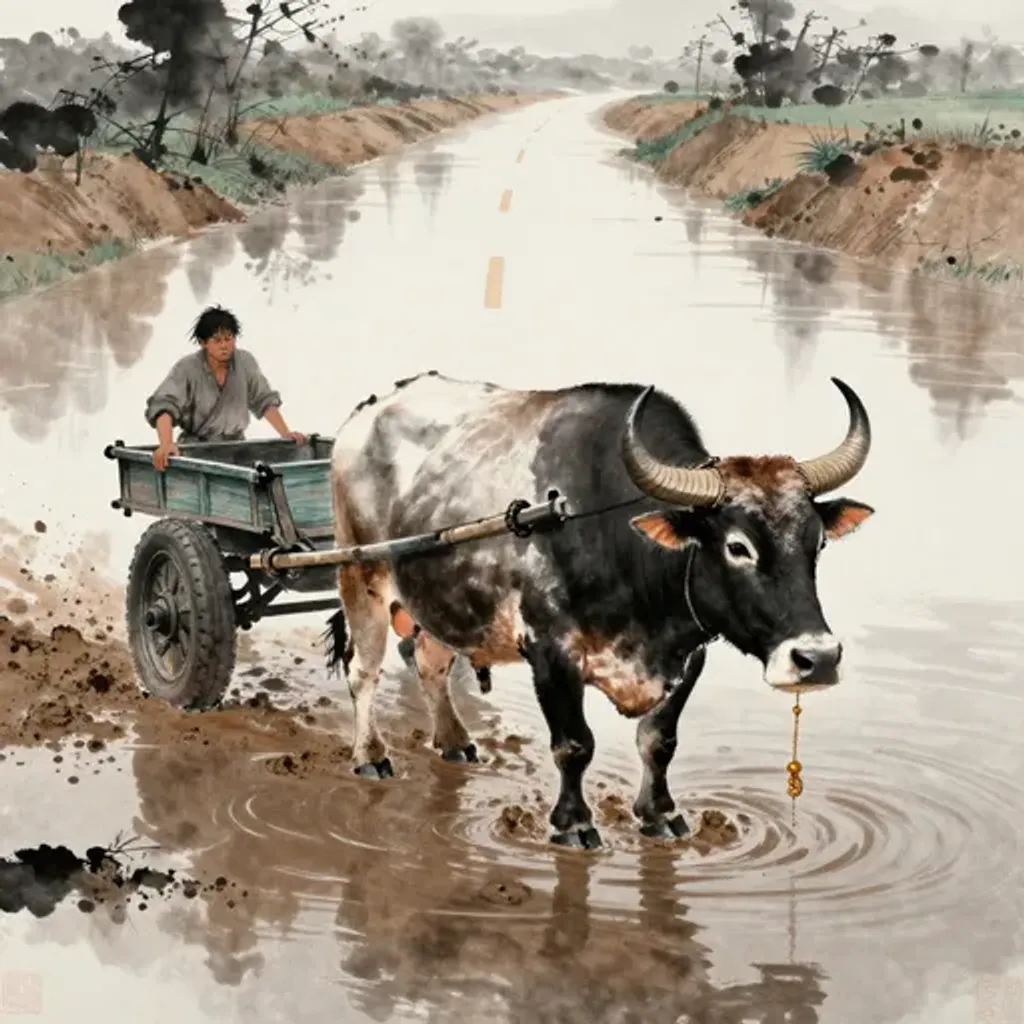
深水難涉,塗難至轂。牛罷不進,濘陷我疾。
Deep water, hard to ford; the mud reaches the axle hubs. The ox is spent and will not advance; the mire traps me in affliction.
— Jiao Yanshou, Yilin (Forest of Changes), 1st century BC
Commentary
Water upon water, every step sinks deeper. The river runs too deep to ford, the mud reaches the axle hubs, and the exhausted ox refuses to advance. Mire traps both beast and traveler in spreading affliction. Each line intensifies: water too deep, mud too thick, ox too tired, and now illness sets in. From The Abysmal to Work on the Decayed, wind stirs beneath the mountain — the gentle infiltration that begins to restore what has rotted. The verse captures the nadir before renovation: everything is stuck, bogged, and failing. Yet decay itself is the precondition for renewal, as the wind beneath the mountain slowly loosens what the mud has seized.
坎 → 臨
Hexagram 29 → Hexagram 19: Approach
Changing lines: 1, 5
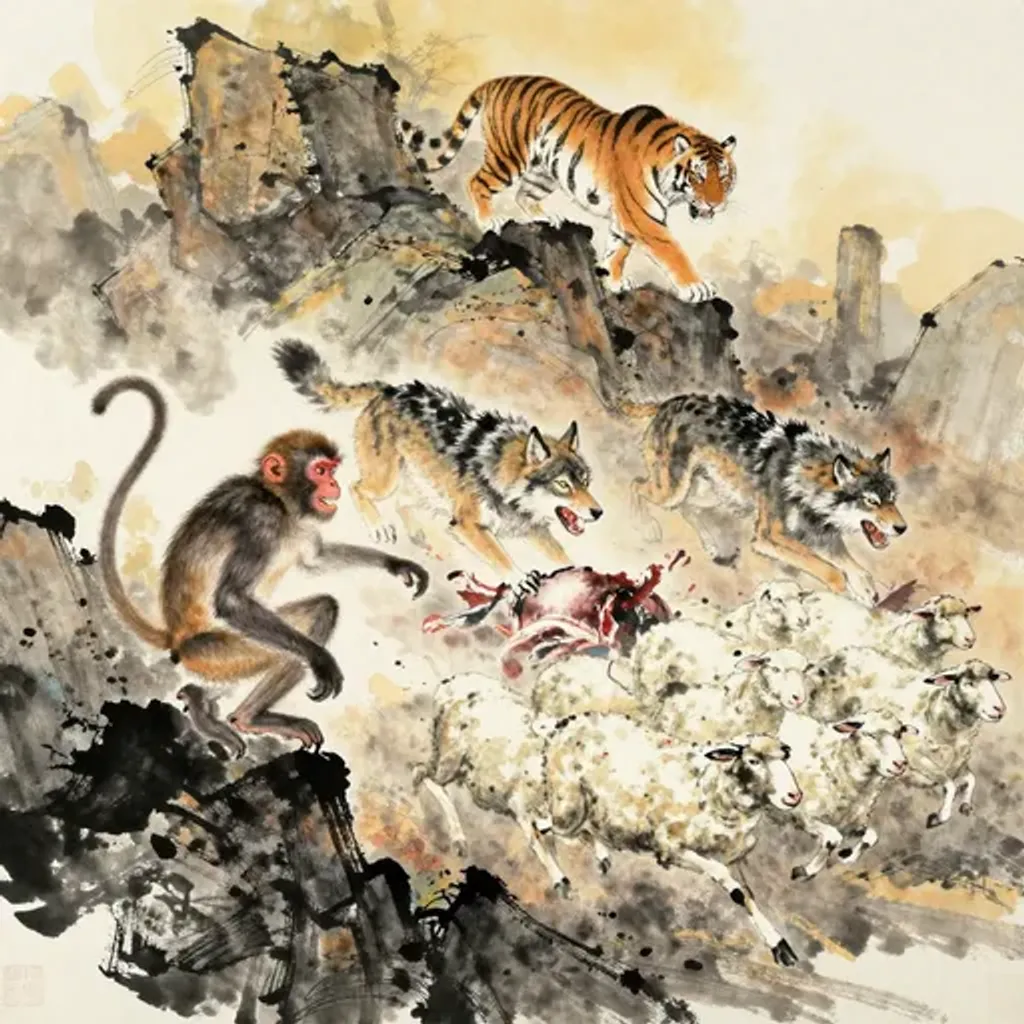
羊驚狼虎,獼猴群走。無益於僵,為齒所傷。
Sheep startled by wolves and tigers; monkeys flee in a troop. It avails nothing against the stiff and fallen; wounded by teeth.
— Jiao Yanshou, Yilin (Forest of Changes), 1st century BC
Commentary
Water upon water, panic spreads through the herd. Sheep scatter in terror before wolves and tigers, monkeys flee in troops. Yet flight brings no relief — stiffened with fear, they are caught and torn by fangs. The verse captures the futility of panicked retreat: running without strategy only delivers prey more completely to predators. From The Abysmal to Approach, perilous water should give way to the lake's gentle bank — the earth overseeing the waters with teaching and protection. Yet the verse shows what happens when approach is misapplied: the powerful descend upon the weak not as shepherds but as predators, and the flock's terror renders all escape meaningless.
坎 → 觀
Hexagram 29 → Hexagram 20: Contemplation
Changing lines: 2, 6
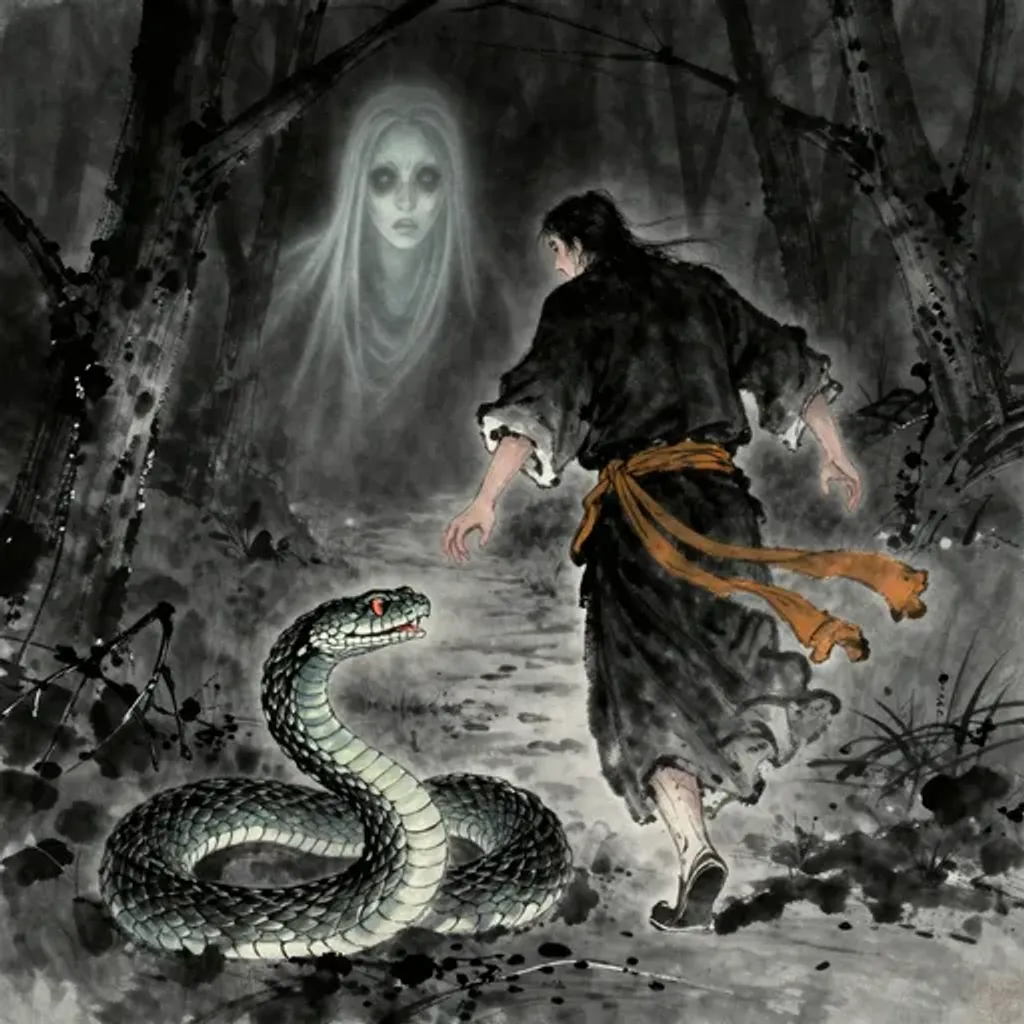
履虵躡虺,與鬼相視,驚哭失氣,如騎虎尾。
Treading on serpents, stepping on vipers; locking eyes with a ghost. Crying out in shock, losing one's breath -- like riding a tiger's tail.
— Jiao Yanshou, Yilin (Forest of Changes), 1st century BC
Commentary
Water upon water, every step treads upon venom. Stepping on serpents and vipers, locking eyes with ghosts — the traveler cries out in terror, losing breath, as though riding the tail of a tiger. The verse piles dread upon dread: snakes underfoot, spectres ahead, and the sensation of clinging to a beast that cannot be controlled. From The Abysmal to Contemplation, the wind moves over the earth, offering the broad view that dispels close-quarters panic. The sage-king surveys his domain from the high tower of Contemplation precisely to avoid the blindness of immersion. This verse captures what happens without that elevated perspective — trapped at ground level, every shadow becomes a ghost.
坎 → 噬嗑
Hexagram 29 → Hexagram 21: Biting Through
Changing lines: 1, 2, 4, 5, 6
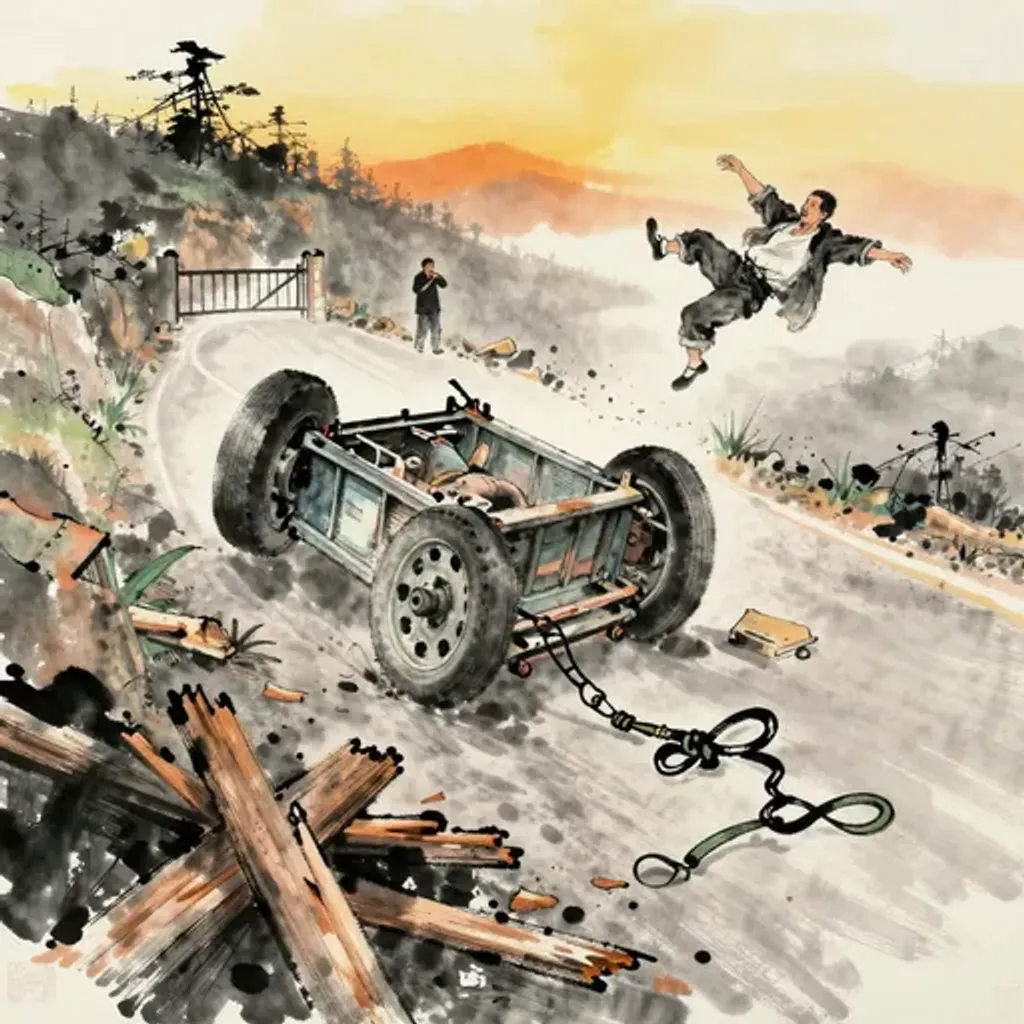
車驚人墮,兩輪脫去。行者不至,主人憂懼。結締復解,夜明為喜。
The cart lurches, the rider falls; both wheels fly off. The traveler does not arrive; the host is filled with dread. Bonds are tied then loosed again; when night turns bright, there is joy.
— Jiao Yanshou, Yilin (Forest of Changes), 1st century BC
Commentary
Water upon water, the carriage lurches and spills its rider. The vehicle startles, the passenger tumbles, and both wheels fly off — the traveler never arrives, leaving the host anxious and afraid. Bonds are tied and then unraveled. But dawn breaks and brings relief: what seemed ruined resolves in morning light. From The Abysmal to Biting Through, fire and thunder combine to enforce clarity. The tangled situation — accident, absence, broken agreements — requires decisive intervention, as lightning illuminates what darkness obscured. The night's confusion yields to the sharp bite of judicial clarity, and what was knotted is cut clean through.
坎 → 賁
Hexagram 29 → Hexagram 22: Grace
Changing lines: 1, 2, 3, 5, 6
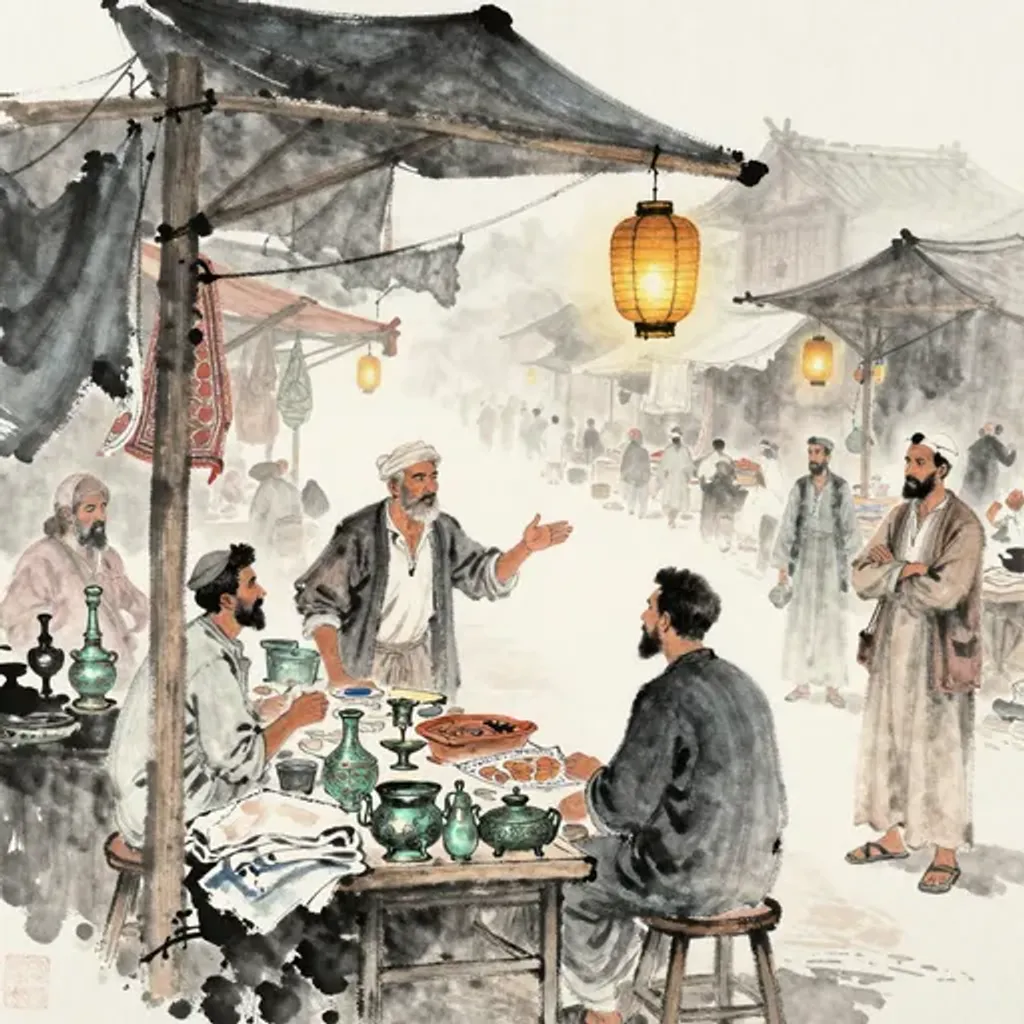
南販北賈,與怨為市,利得自治。
Selling south, trading north; doing business with those one resents. Profit is gained through self-governance.
— Jiao Yanshou, Yilin (Forest of Changes), 1st century BC
Commentary
Water upon water, commerce turns peril into profit. Southern vendors and northern merchants trade even with those they resent — the market compels cooperation between adversaries. Profit, once secured, governs itself. The verse is strikingly pragmatic: animosity does not prevent exchange; self-interest overrides grudges. From The Abysmal to Grace, fire illuminates the mountain's base, adorning what was rough with pattern and beauty. The raw friction of hostile trade is refined into civilized commerce, just as Grace transforms bare stone into decorated surface. Markets bring order to enmity not through moral suasion but through the mutual benefit that makes enemies into trading partners.
坎 → 剝
Hexagram 29 → Hexagram 23: Splitting Apart
Changing lines: 2, 5, 6
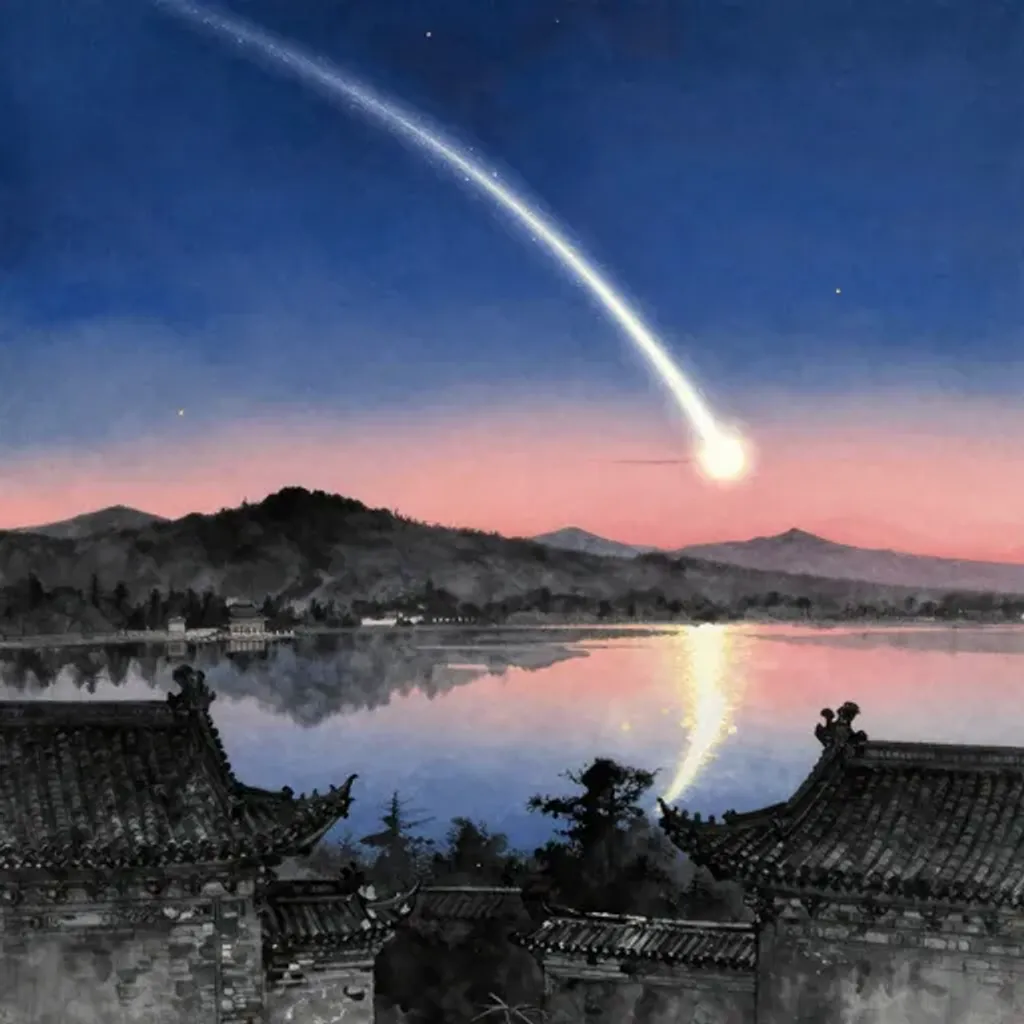
延陵適魯,觀樂太史。車轔白顛,知秦興起,卒兼其國,一統為主。
A star falls in the west; light rises in the east. The old dynasty nears its end — a new lord is destined to rise.
— Jiao Yanshou, Yilin (Forest of Changes), 1st century BC
Commentary
Water upon water, peril reveals the shape of destiny. Ji Zha of Yanling traveled to Lu and observed the ritual music with the Grand Historian, discerning each state's fate from its melodies. Meanwhile, the rumble of chariots on white-headed roads signaled Qin's inexorable rise. In the end, Qin swallowed all states and unified the realm under one ruler. Ji Zha's musical discernment is legendary: from the Zuo Zhuan, his evaluations of each state's odes foretold their fortunes. From The Abysmal to Splitting Apart, the mountain erodes upon the earth — the old order peels away layer by layer. Ji Zha heard the dissolution in the music long before it arrived in history.
坎 → 復
Hexagram 29 → Hexagram 24: Return
Changing lines: 1, 2, 5
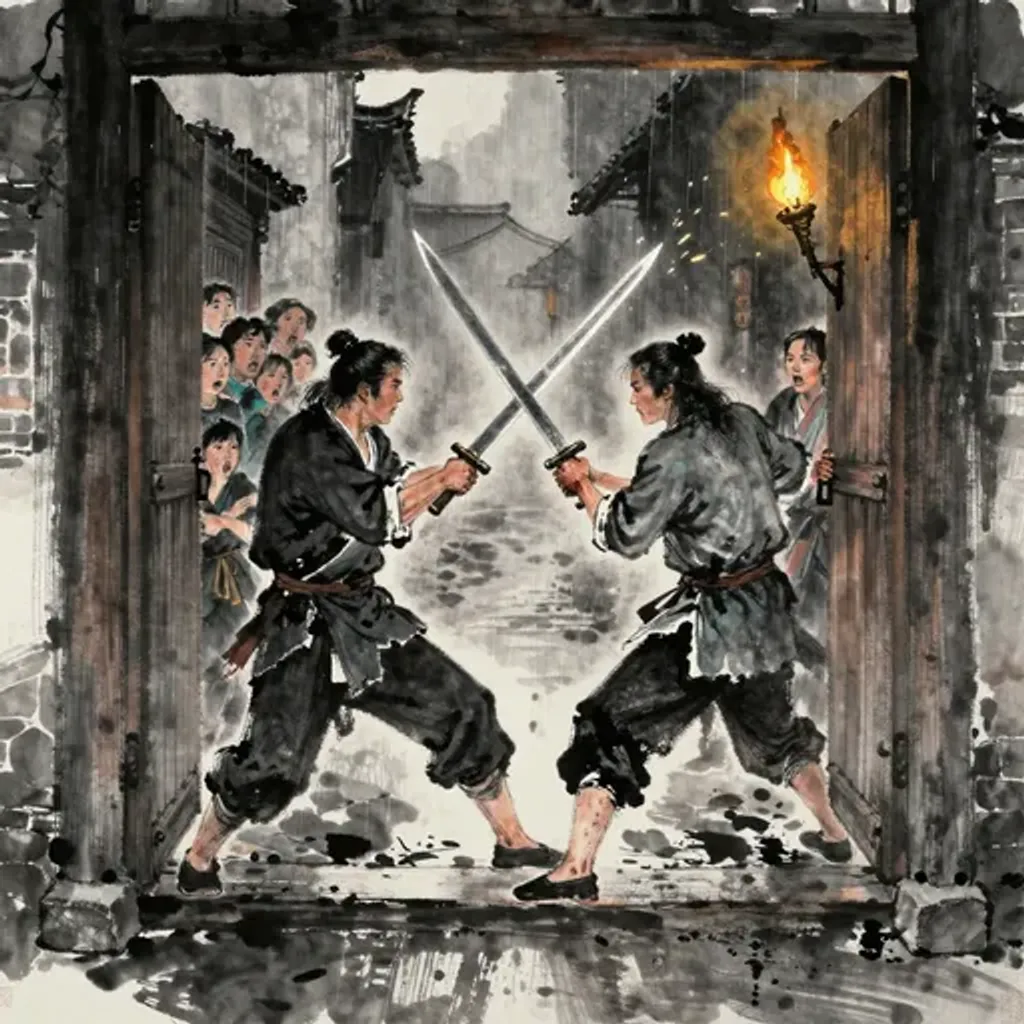
出門逢患,與禍為怨。更相擊刺,傷我手端。
Stepping out the door, one meets calamity; making enemies with disaster. They strike and stab each other; wounding the tips of my fingers.
— Jiao Yanshou, Yilin (Forest of Changes), 1st century BC
Commentary
Water upon water, stepping outside only compounds the danger. Going through the door brings calamity; misfortune itself becomes the enemy. Mutual striking and stabbing ensue, wounding the hand — the instrument of action damaged in pointless combat. The verse is claustrophobic: inside is peril, outside is worse, and the violence rebounds upon the fighter. From The Abysmal to Return, thunder stirs beneath the earth at the winter solstice — the single yang line re-emerging from total darkness. The wound to the hand suggests that premature action in the depths of danger only injures one's capacity for future deeds. Return counsels stillness at the solstice: close the pass and wait.
坎 → 无妄
Hexagram 29 → Hexagram 25: Innocence
Changing lines: 1, 2, 4, 6
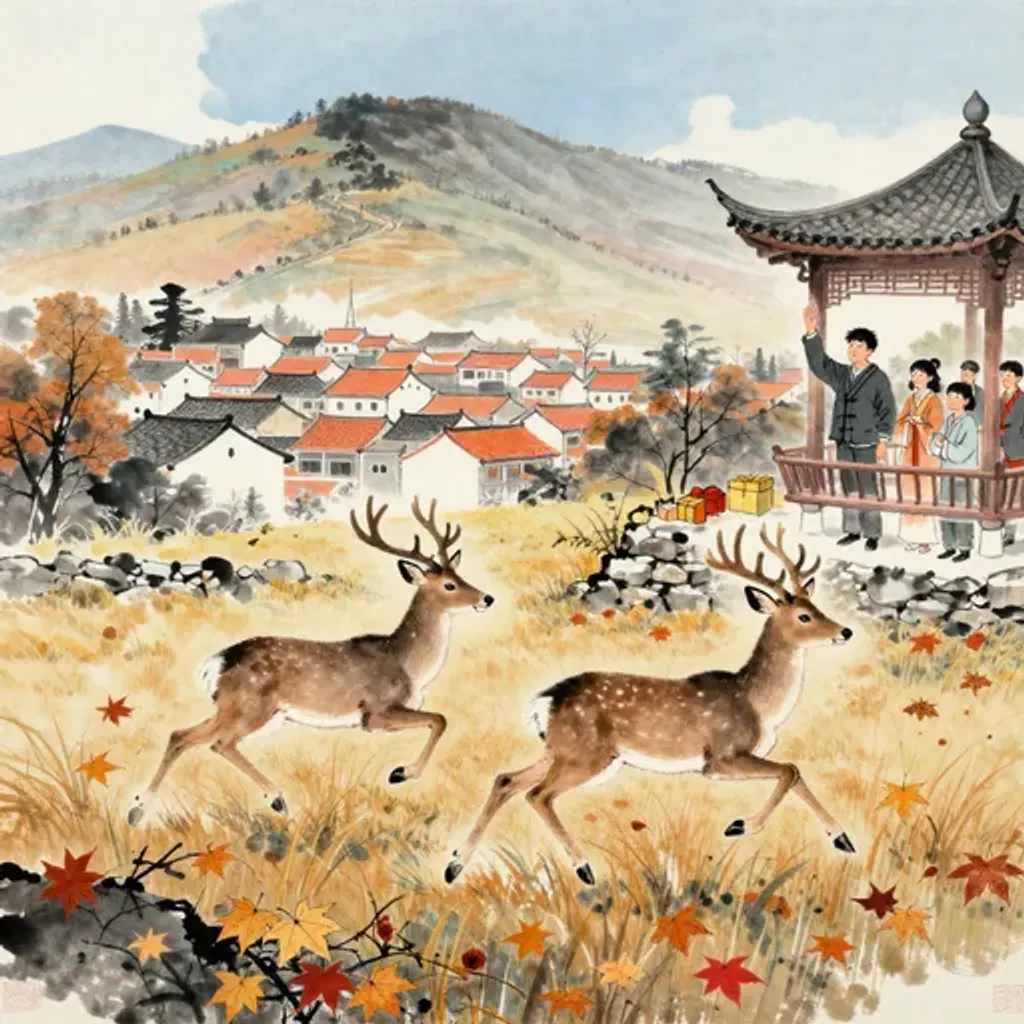
獐鹿同走,自燕嘉喜。公子好遊,他人多有。
Roe deer and stag run together; from Yan comes celebration and joy. The young lord delights in roaming; others have much to share.
— Jiao Yanshou, Yilin (Forest of Changes), 1st century BC
Commentary
Water upon water, yet the deer run free. Roe deer and fallow deer gallop together from the direction of Yan, bringing joy and felicity. The young lord loves to roam, and others share in his abundance. The imagery is pastoral and buoyant: wild animals moving in unison signal natural harmony, and the mention of Yan (the northern state) suggests blessings arriving from an unexpected quarter. From The Abysmal to Innocence, heaven's thunder rolls beneath — action aligned with cosmic timing rather than human scheming. The deer do not calculate their path; they simply run as nature dictates. This spontaneous rightness is Innocence's essence: prosperity that comes without contrivance.
坎 → 大畜
Hexagram 29 → Hexagram 26: Great Taming
Changing lines: 1, 3, 5, 6
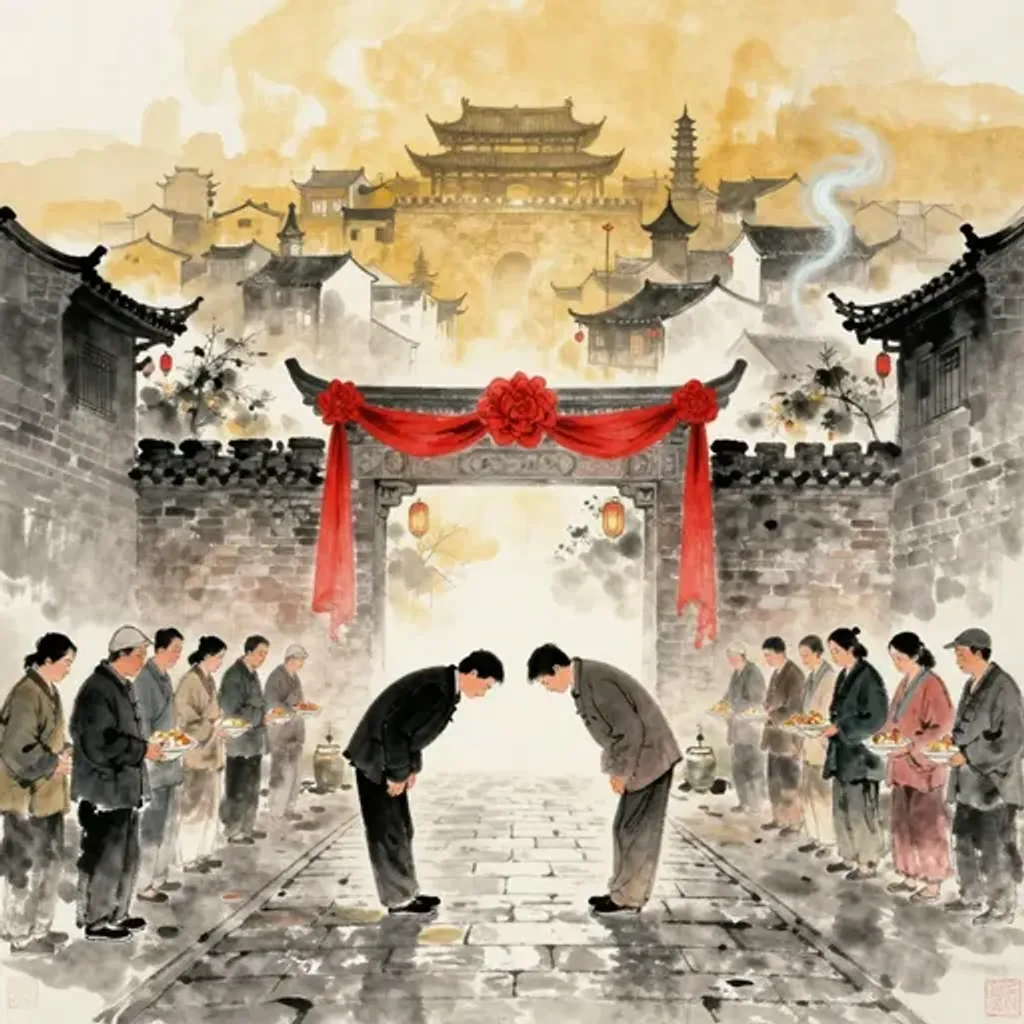
恭寬相信,履福不殆。從其邦域,與喜相得。
Reverent, generous, trusting one another; treading in blessings without peril. Following the ways of their domain, they find joy together.
— Jiao Yanshou, Yilin (Forest of Changes), 1st century BC
Commentary
Water upon water, yet the traveler walks in trust. Reverence and generosity breed mutual confidence; treading in blessing brings no peril. Following the customs of one's domain, joy naturally accompanies the journey. The verse reads as a small blessing oracle: sincerity attracts good fortune, and staying within proper bounds keeps danger at bay. From The Abysmal to Great Taming, perilous water yields to heaven stored within the mountain — the vast energy of creative power held and cultivated through study of ancient words and deeds. The confident traveler of this verse embodies that stored virtue: danger cannot reach the one whose conduct is grounded in accumulated wisdom.
坎 → 頤
Hexagram 29 → Hexagram 27: Nourishment
Changing lines: 1, 2, 5, 6
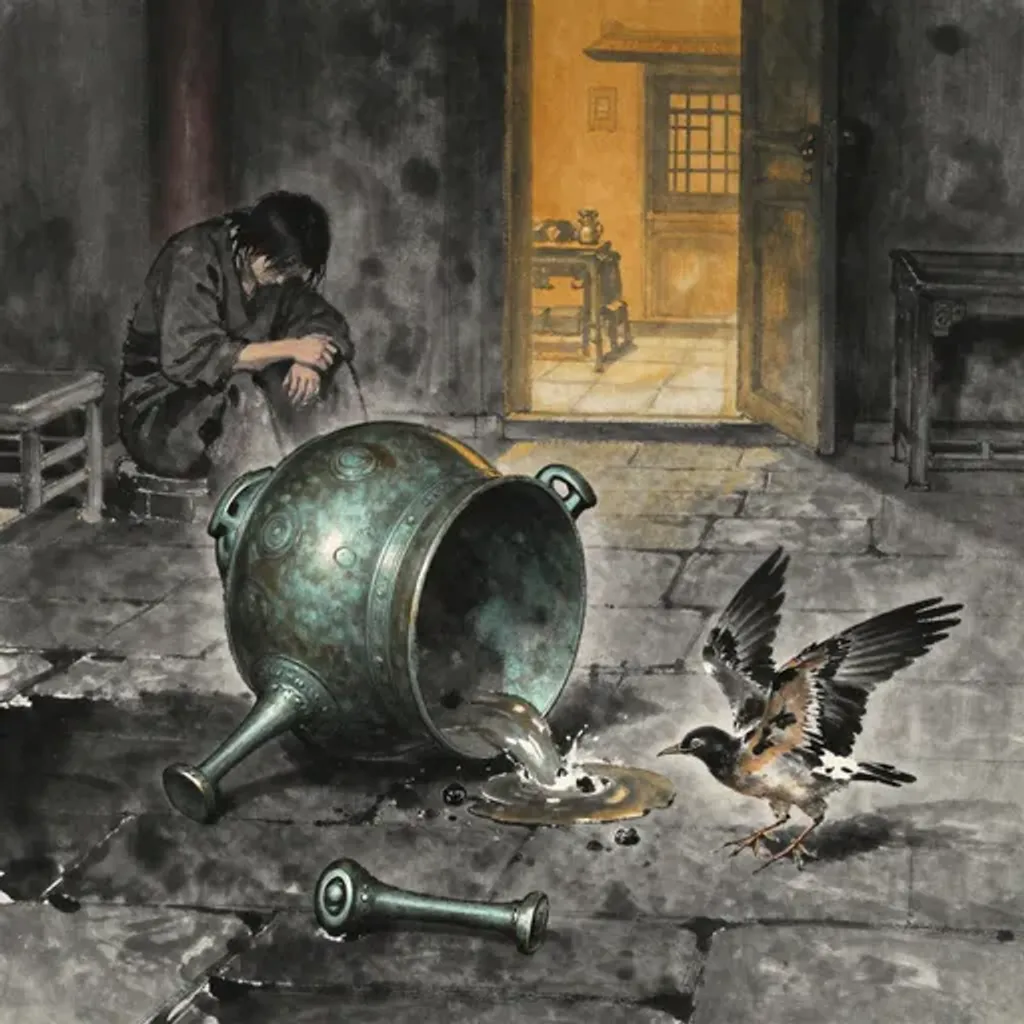
欲飛無翼,鼎重折足。失其喜利,苞羞為賊。上妻之家,喜除我憂,解吾思愁。
Wishing to fly, but lacking wings; the cauldron, heavy, breaks its leg. Losing one's joy and profit; wrapped disgrace becomes a thief. Going to the wife's family home -- joy dispels my worry, unraveling my sorrow.
— Jiao Yanshou, Yilin (Forest of Changes), 1st century BC
Commentary
Water upon water, the doubled abyss, gives way to the mountain's nourishing stillness. A creature longs to fly but has no wings; the great cauldron, too heavy for its legs, snaps its foot and spills its contents. This directly quotes the I-Ching's Ding hexagram, line nine-four: 'The ding breaks its foot, overturning the duke's food; his appearance is drenched.' The loss is compounded by 'harboring shame,' echoing hexagram Pi (Standstill), line six-three, where shame is wrapped up and hidden rather than confronted. Ambition exceeds capacity, and concealed disgrace festers. Yet resolution comes through family: marrying into a wife's household dissolves worry and lifts sorrow. From The Abysmal to Nourishment, peril transforms into sustenance when one accepts humility and finds support in domestic bonds rather than overreaching for glory.
坎 → 大過
Hexagram 29 → Hexagram 28: Great Exceeding
Changing lines: 3, 4
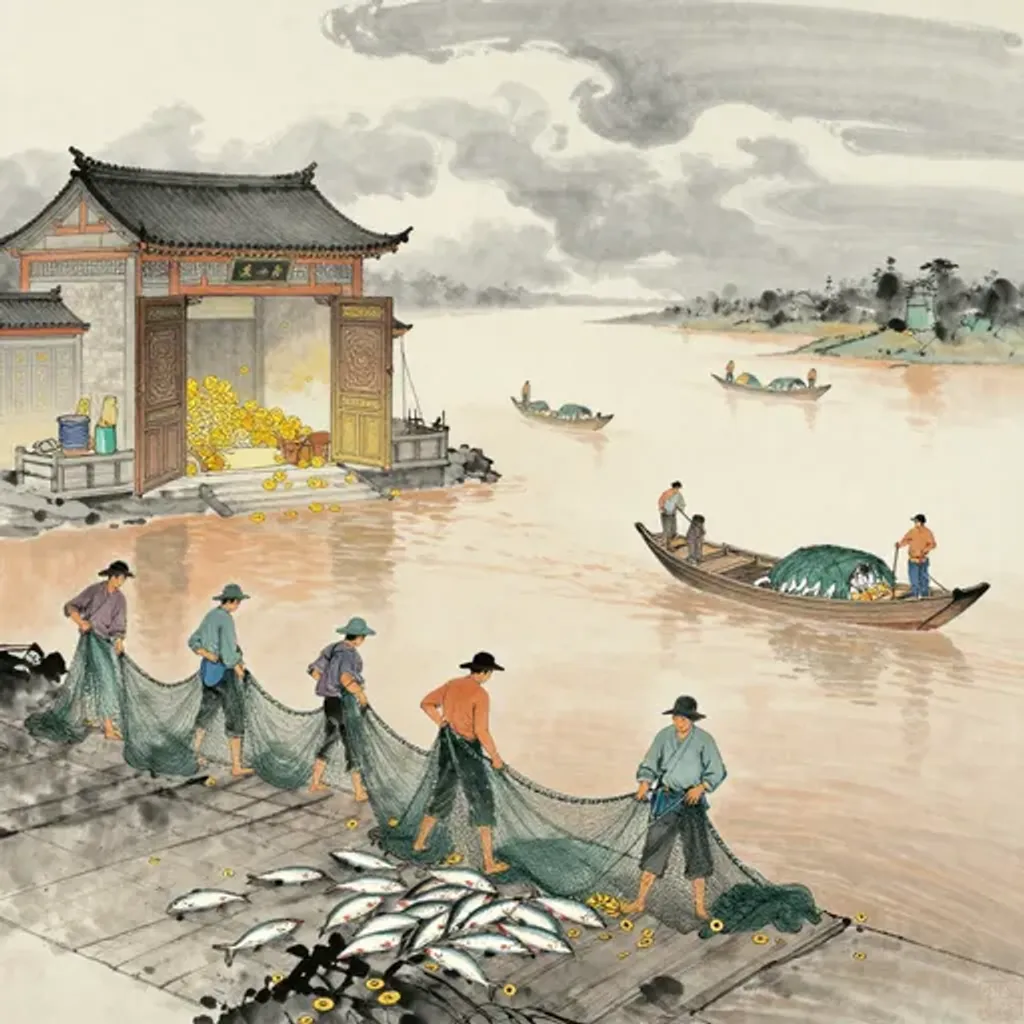
府藏之富,王以振貸。捕魚河海,罟網多得。
The treasury's wealth is rich; the king distributes and lends. Catching fish in rivers and seas, the nets haul in great abundance.
— Jiao Yanshou, Yilin (Forest of Changes), 1st century BC
Commentary
Water upon water, yet the treasury overflows. The royal storehouses are rich, and the king uses this wealth to lend and relieve the people. Fishermen cast their nets across rivers and seas, hauling in great catches. Abundance radiates outward: stored riches are distributed, natural bounty is harvested freely. From The Abysmal to Great Exceeding, water's peril transforms into the lake submerging the trees — excessive abundance that strains all structures. The verse captures the generous phase of this excess: wealth lent out, nets full of fish. But Great Exceeding warns that the ridgepole sags under too much weight. The king's generosity is admirable, yet the pattern carries the seeds of structural overreach.
坎 → 坎
Hexagram 29 → Hexagram 29: The Abysmal Water
No changing lines — the hexagram is unchanged
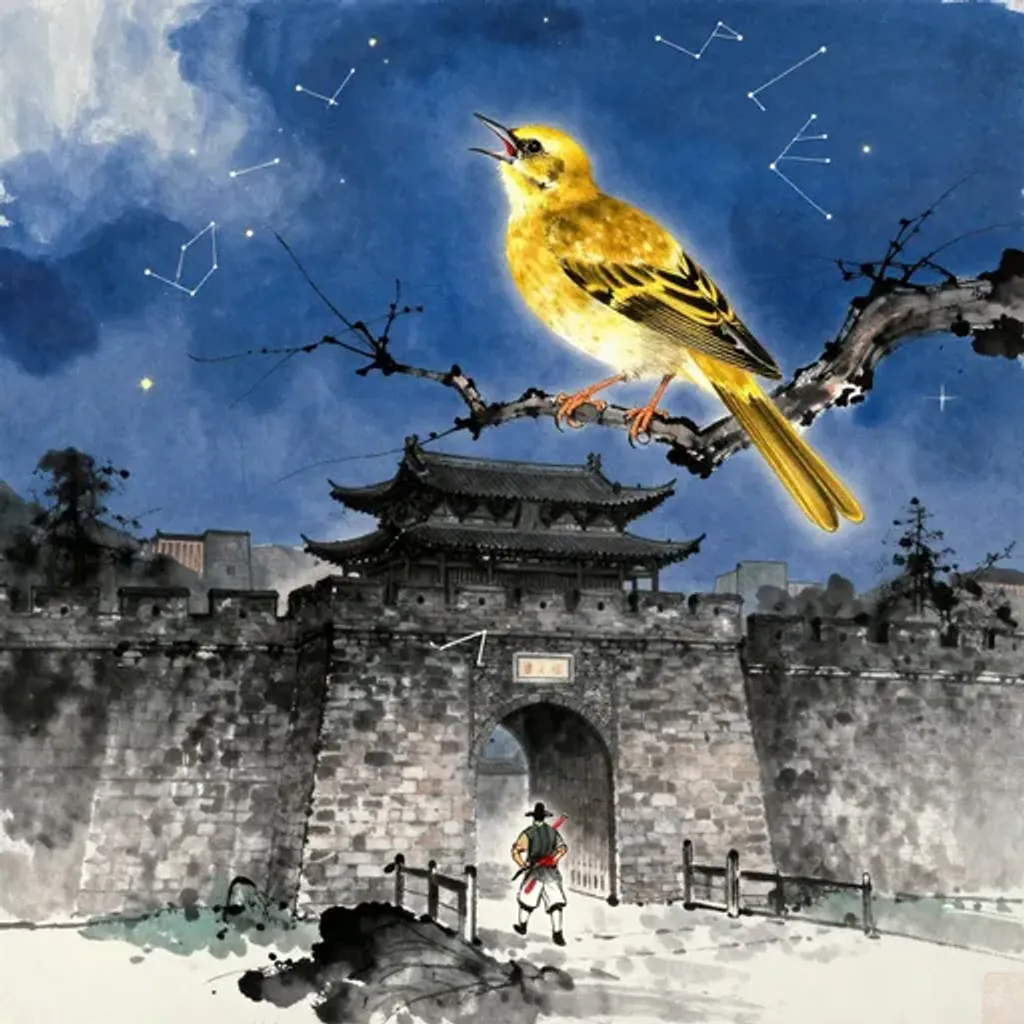
有黃鳥足,歸呼季玉。從我睢陽,可辟刀兵。與福俱行,有命久長。
There is a yellow bird with legs; it calls, summoning Jiyu. Follow me to Suiyang; there one may avoid war and weapons. Walking together with blessings; life shall be long.
— Jiao Yanshou, Yilin (Forest of Changes), 1st century BC
Commentary
Water upon water, the doubled abyss turns inward upon itself. A golden-footed bird appears — evoking the Yellow Bird of the Shijing — and calls out for Jiyu, summoning a companion home. Follow me to Suiyang, the verse counsels, where one may avoid the blades of war. Walk alongside blessings, and life shall be long. Suiyang is the hometown of Jiao Gan, the Yilin's own author; this self-referential note grounds the oracle in the diviner's personal geography. From The Abysmal returning to itself, the message is that within repeated danger lies a fixed center — a home one can return to, a place where even the abyss yields safety to those who know where to stand.
坎 → 離
Hexagram 29 → Hexagram 30: The Clinging Fire
Changing lines: 1, 2, 3, 4, 5, 6
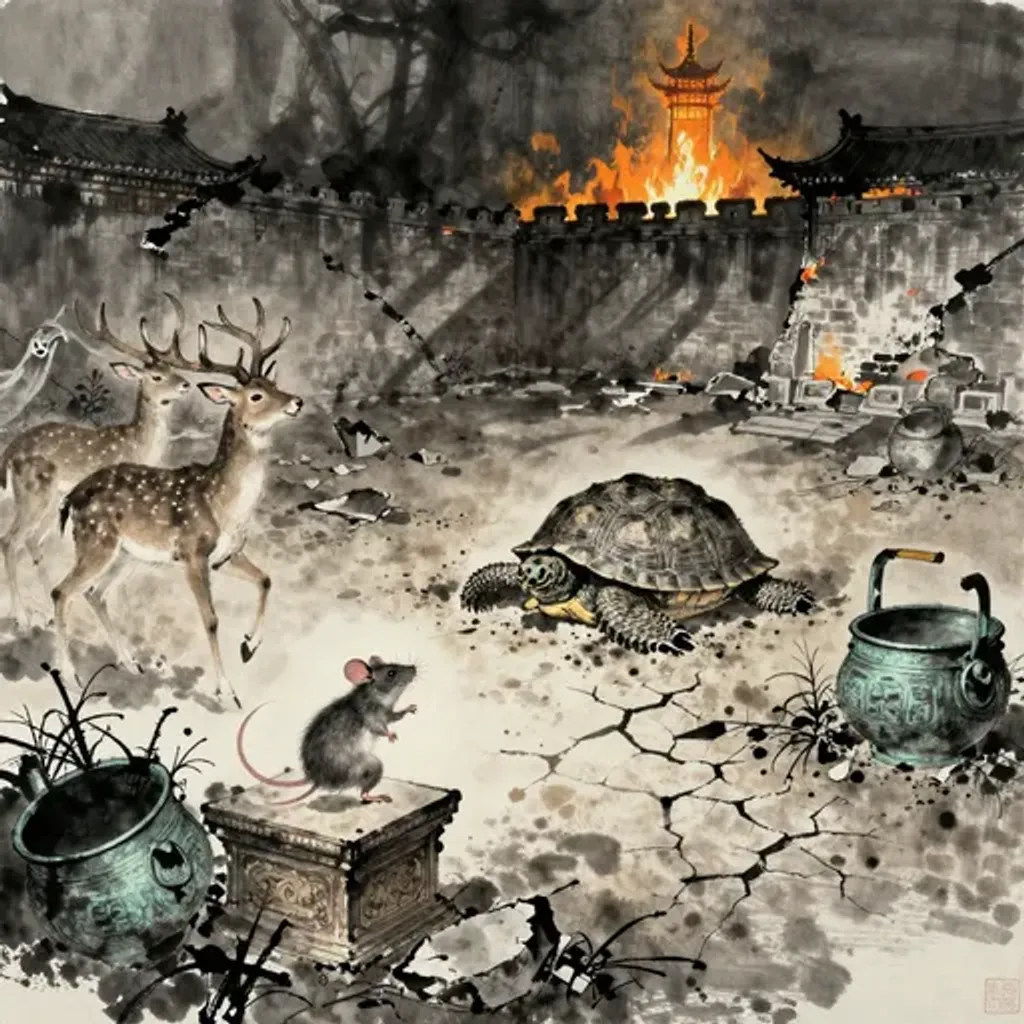
陰生麇鹿,鼠舞鬼哭。靈龜陸蒙,釜甑草土。仁智盤桓,國亂無緒。
In the yin, deer are born; rats dance, ghosts wail. The sacred tortoise is stranded on land; cauldrons and steamers fill with weeds and earth. The wise and humane hesitate; the state is in chaos, without order.
— Jiao Yanshou, Yilin (Forest of Changes), 1st century BC
Commentary
Water upon water, the world inverts into nightmare. Yin energy breeds deer where none should roam, rats dance, and ghosts wail — all signs of cosmic disorder. The sacred tortoise, which should divine in water, is stranded on dry land beneath a shroud. Cauldrons and steamers fill with weeds and dirt instead of sacrificial grain. The wise and humane pace back and forth, helpless before a state in total disarray. From The Abysmal to The Clinging, water should yield to doubled fire — clarity illuminating clarity. But this verse shows fire's terrifying inverse: when illumination fails, the yin creatures overrun the world, and even the instruments of divination and ritual lie buried in dust.
坎 → 咸
Hexagram 29 → Hexagram 31: Influence
Changing lines: 2, 3, 4
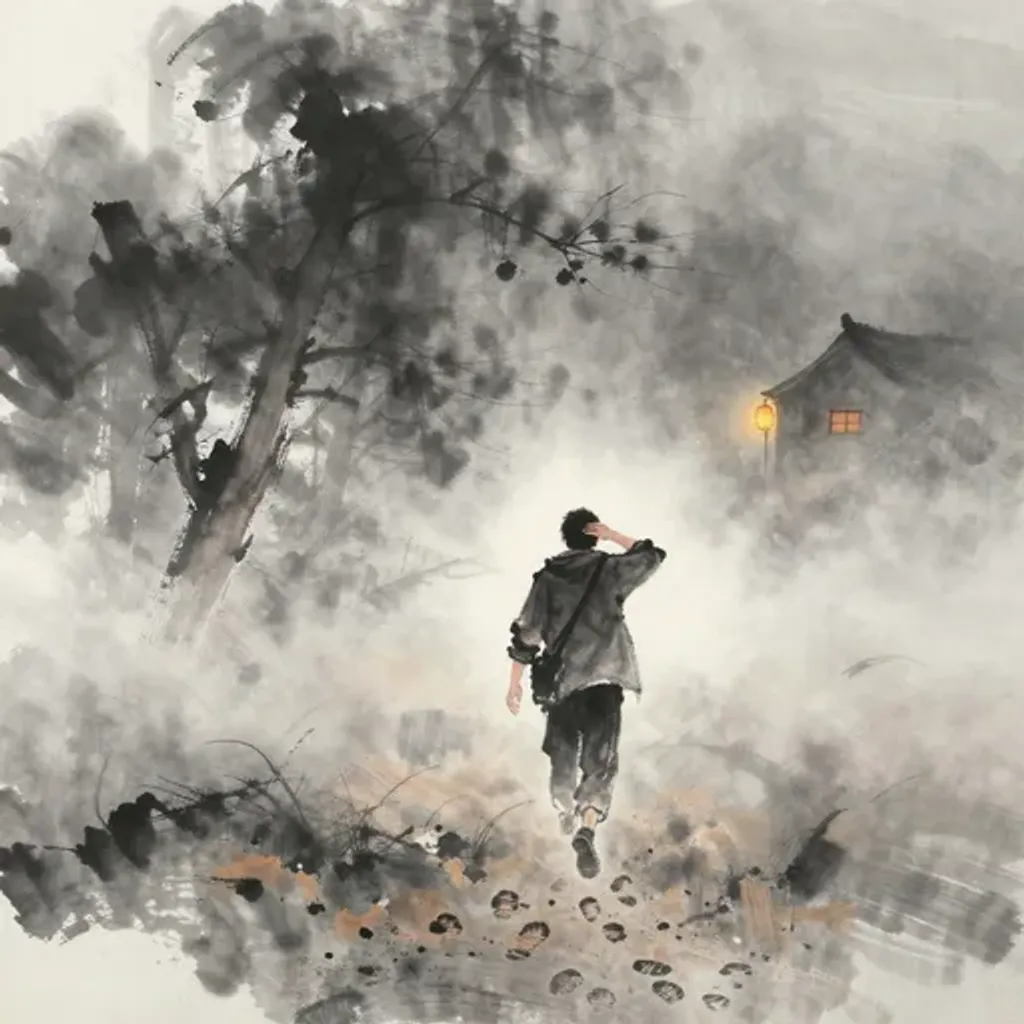
風塵瞑迷,不見南北。行人失路,復反其室。
Wind and dust, dark and blinding; north and south cannot be seen. The traveler loses the road and turns back to his home.
— Jiao Yanshou, Yilin (Forest of Changes), 1st century BC
Commentary
Water upon water, dust storms obliterate all direction. Wind and grit fill the air until north and south are indistinguishable — the traveler loses the road entirely. Yet the verse resolves gently: unable to find the way forward, the wanderer turns back and returns home. From The Abysmal to Influence, the mountain supports the lake above in receptive stillness — the image of mutual attraction through emptiness. The lost traveler who returns home enacts Influence's mechanism: when external orientation fails, one turns inward, and the heart's magnetic pull draws one back to where connection is possible. Disorientation becomes the precondition for genuine encounter.
坎 → 恆
Hexagram 29 → Hexagram 32: Duration
Changing lines: 3, 4, 5
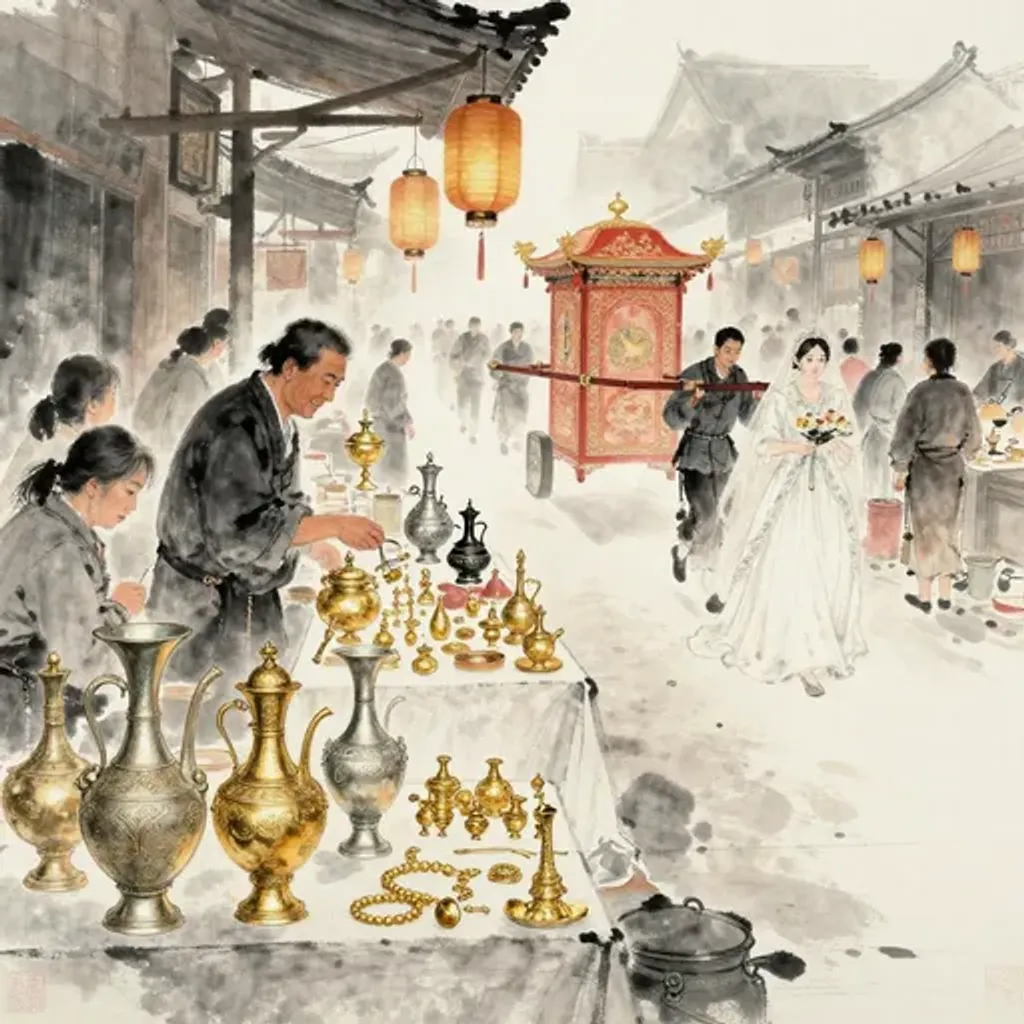
金革白黃,宜利戒市。嫁娶有息,商人悅喜。
Metal and leather, white and yellow; fit for the market of caution and trade. Marriages find rest; merchants are pleased and glad.
— Jiao Yanshou, Yilin (Forest of Changes), 1st century BC
Commentary
Water upon water, yet the marketplace thrives. Gold, leather, and goods of white and yellow — the materials of arms and commerce intermingle. It is favorable to prepare and trade. Marriages find their rest, and merchants rejoice with satisfaction. The verse describes a settled, prosperous commercial scene where military goods and civilian trade coexist in balance. From The Abysmal to Duration, thunder and wind reinforce each other in an enduring pattern. The markets, marriages, and metal-trading of this verse embody Duration's principle: stability not as stasis but as rhythmic, self-sustaining exchange. The gentleman stands firm without changing direction, and commerce steadily circulates.
坎 → 遯
Hexagram 29 → Hexagram 33: Retreat
Changing lines: 2, 3, 4, 6
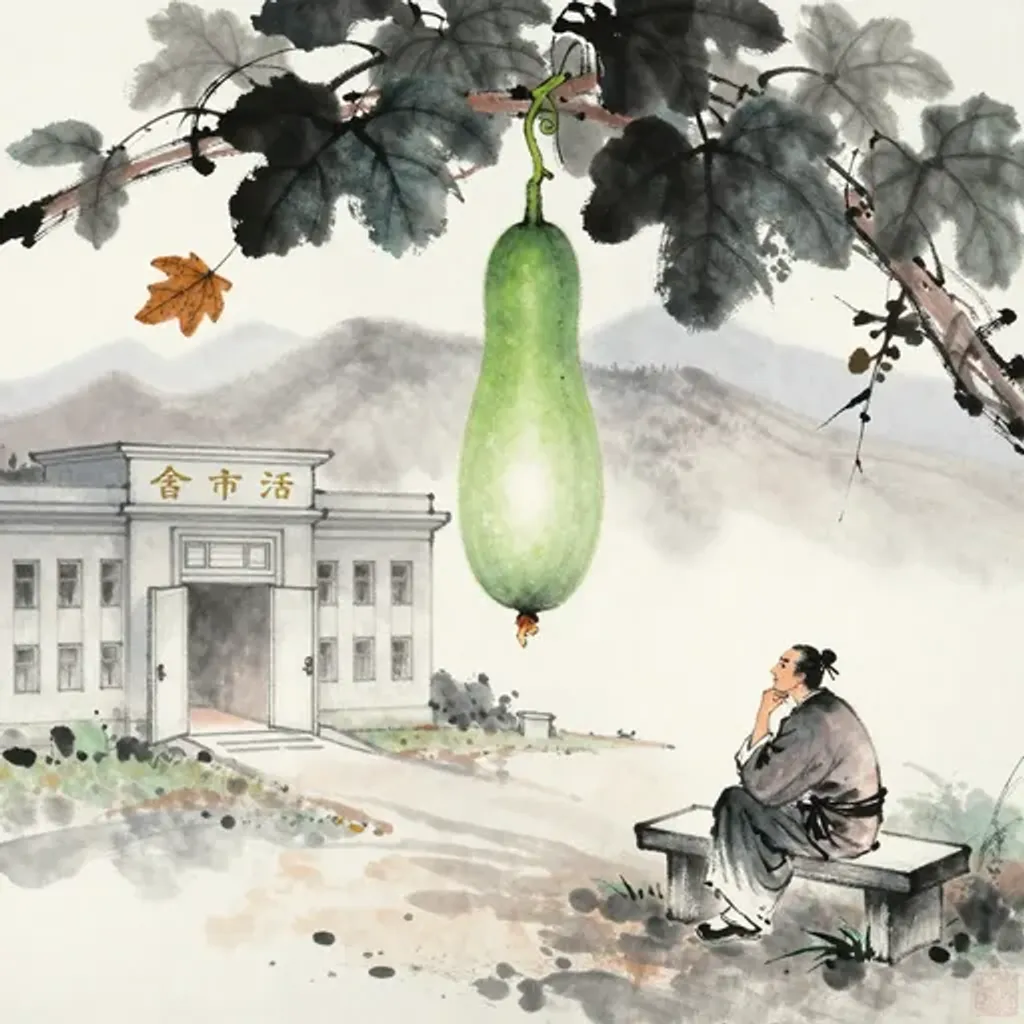
匏瓜之德,宜繫不食。君子失與,官政懷憂。
The virtue of the bottle gourd -- fit to be hung, not to be eaten. The noble man loses his companions; official duties bring only worry.
— Jiao Yanshou, Yilin (Forest of Changes), 1st century BC
Commentary
Water upon water, the worthy man hangs unused like a gourd. The bottle gourd possesses virtue, fit to be hung as an ornament but not to be eaten — echoing Confucius's lament in the Analects: 'Am I a bottle gourd? How can I hang here without being consumed?' The gentleman has lost his allies, and governance fills him with worry. Talent is present but unemployed; capacity exists but finds no outlet. From The Abysmal to Retreat, heaven withdraws above the mountain. The gourd hung and uneaten is the perfect emblem of retreat forced upon the capable: the sage is not absent from the world but suspended in it, visible yet unengaged, his gifts acknowledged but deliberately set aside.
坎 → 大壯
Hexagram 29 → Hexagram 34: Great Power
Changing lines: 1, 3, 4, 5
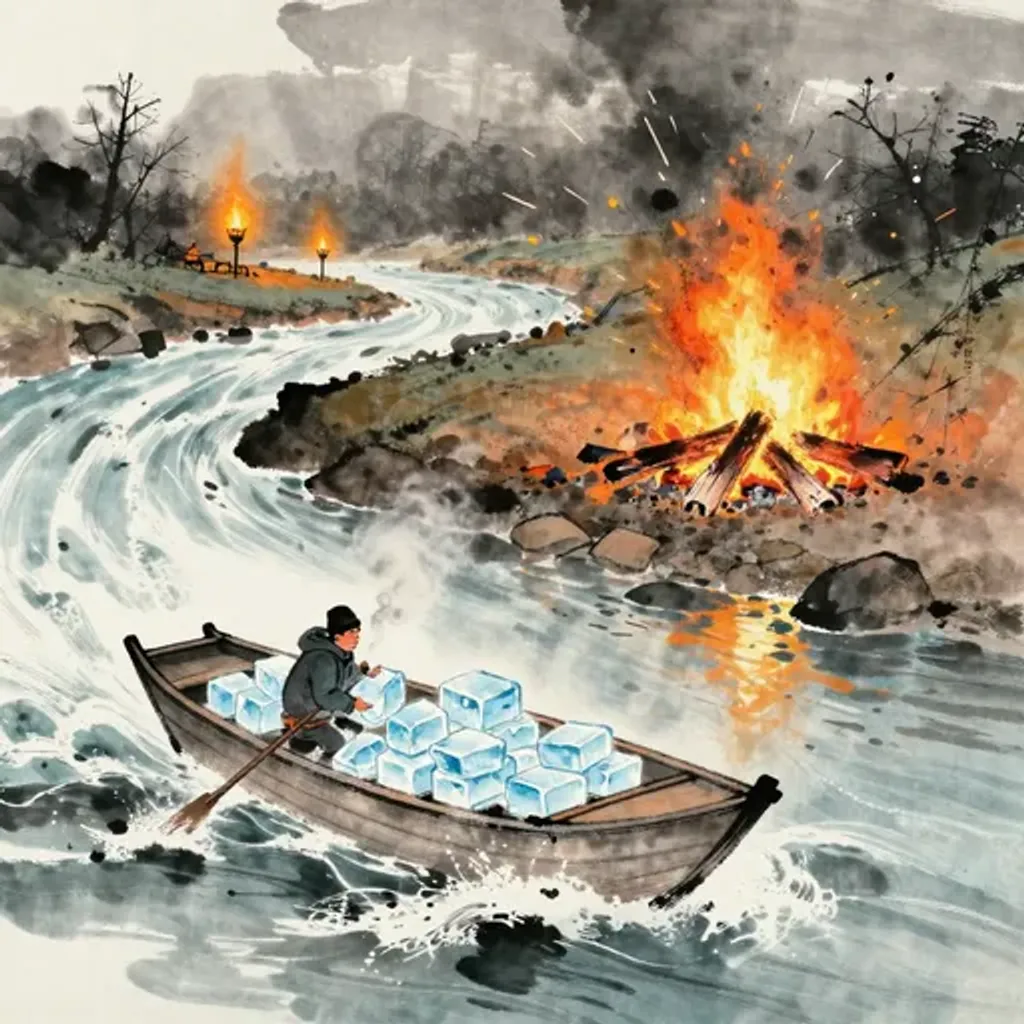
乘船渡濟,載冰逢火,賴得免患,蒙我所恃。
Boarding a boat to cross the ford; carrying ice, one meets fire. Thanks to this, disaster is averted; I rely on what sustains me.
— Jiao Yanshou, Yilin (Forest of Changes), 1st century BC
Commentary
Water upon water, the traveler boards a boat to cross the river. Carrying a load of ice, the vessel encounters fire — what should destroy the cargo instead saves the passenger, dissolving the ice-burden and lightening the ship. Danger is overcome thanks to what one already possesses. From The Abysmal to Great Power, water's peril transforms into thunder roaring in heaven — overwhelming force that tolerates no obstacle. The fire that melts the ice is the very energy of Great Power: what seemed a threat becomes the instrument of liberation. The passenger relies on this force, and what could have sunk the boat instead frees it. Danger met with decisive power converts liability into deliverance.
坎 → 晉
Hexagram 29 → Hexagram 35: Progress
Changing lines: 2, 4, 5, 6
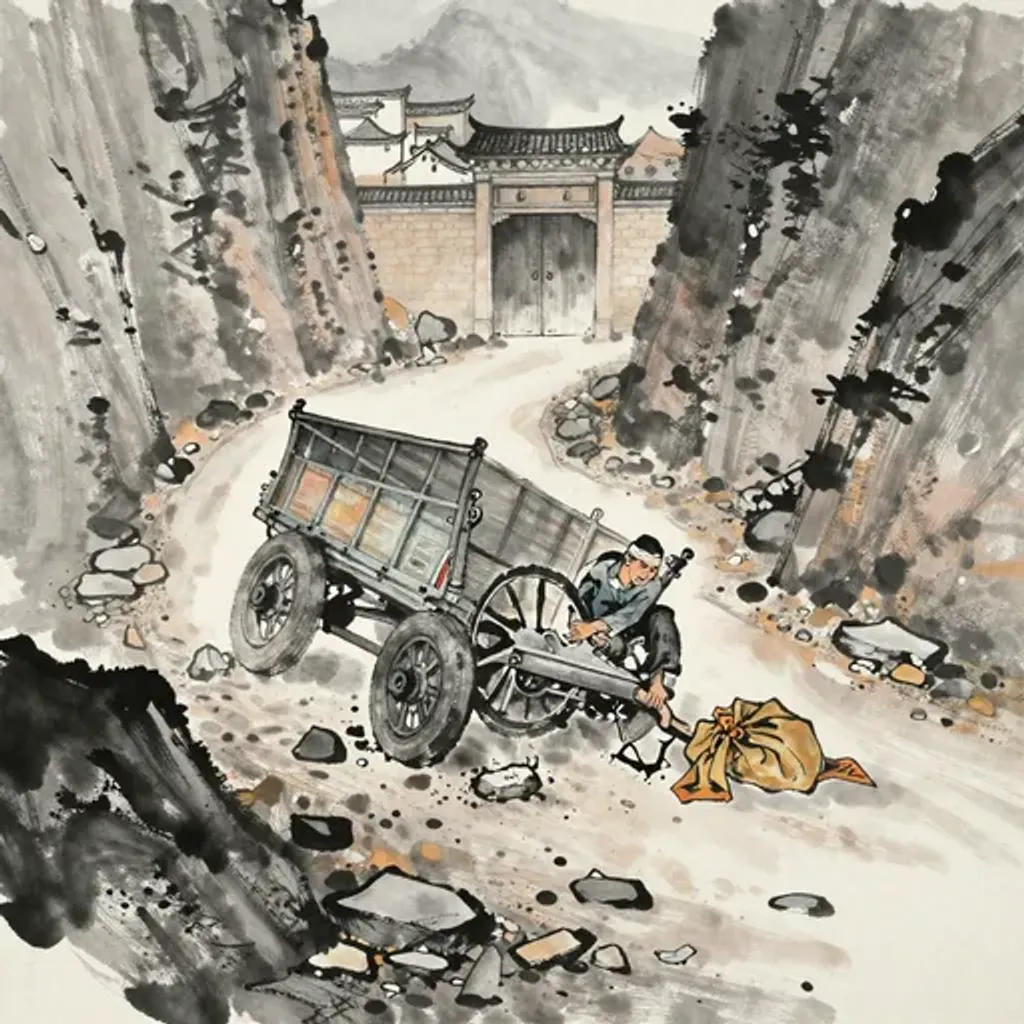
道途多石,傷車折軸。與市為仇,不利客宿。
The road is full of stones; they damage the cart and break the axle. Making enemies at market; not fit for a traveler's lodging.
— Jiao Yanshou, Yilin (Forest of Changes), 1st century BC
Commentary
Water upon water, the road itself becomes the enemy. Stones crowd the path, smashing the carriage and snapping its axle. The marketplace turns hostile, and lodging is denied to the traveling merchant. Every element conspires against forward movement: the terrain wounds, commerce resists, and no shelter can be found. From The Abysmal to Progress, fire should rise above the earth as the sun at dawn — clarity ascending into open sky. Yet this verse shows the obstacles that block that ascent. The broken axle on a stony road is the anti-image of Progress: the light that should advance finds only resistance. The merchant who cannot lodge must persist until the stones are cleared.
坎 → 明夷
Hexagram 29 → Hexagram 36: Darkening of the Light
Changing lines: 1, 2, 3, 5
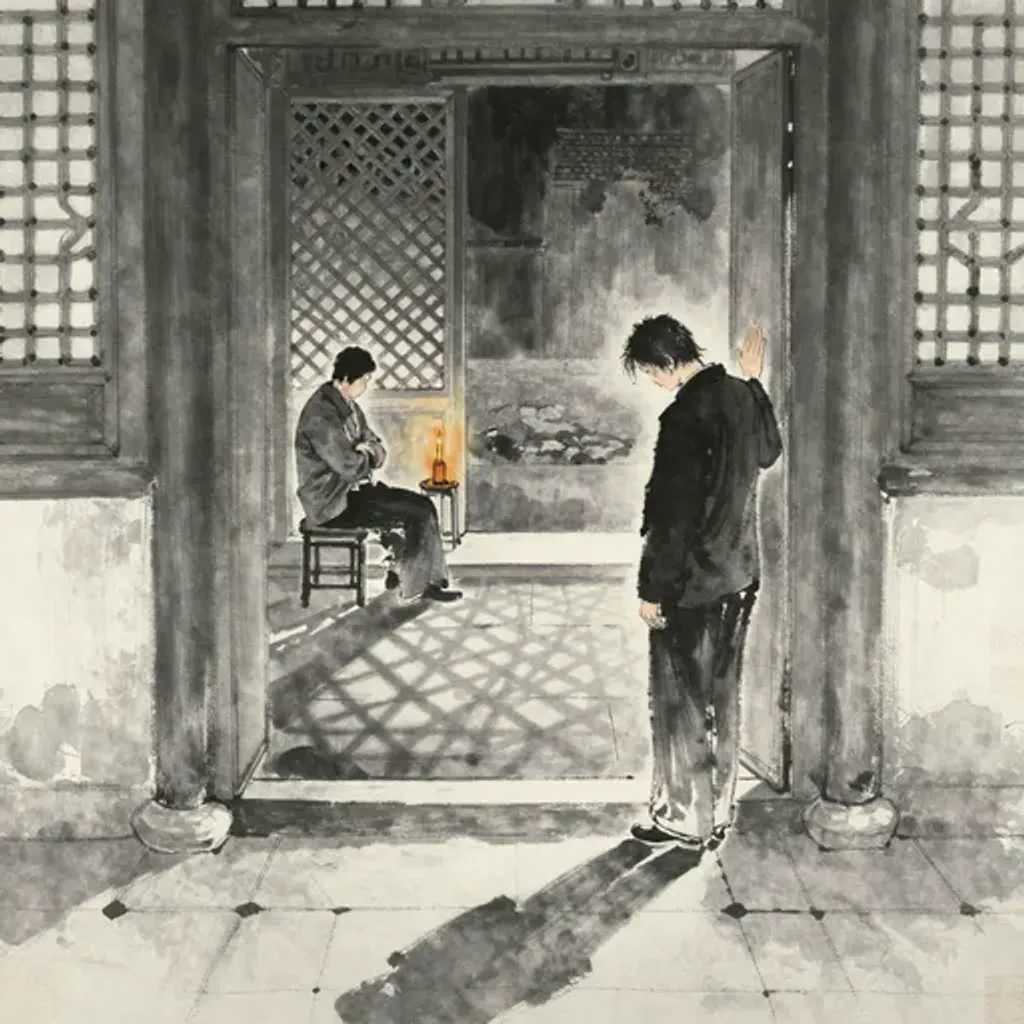
託寄之徒,不利請求。結衿無言,乃有悔患。
Those who lodge as dependents find no gain in making requests. Fastening the collar without a word -- only then comes regret and trouble.
— Jiao Yanshou, Yilin (Forest of Changes), 1st century BC
Commentary
Water upon water, trust is misplaced in those who merely pass through. Dependents and sojourners are not the right people from whom to seek favors — requests directed at transients yield nothing. One fastens one's collar but says nothing, swallowing the words, and regret follows inevitably. The verse warns against asking the wrong person and then compounding the error with silence when speech is needed. From The Abysmal to Darkening of the Light, fire enters the earth and brightness is extinguished. The one who ties the collar shut and holds back words enacts this dimming deliberately: concealing what should be expressed, the light goes underground. In the kingdom of hidden brilliance, knowing when to speak and when to stay silent is everything.
坎 → 家人
Hexagram 29 → Hexagram 37: The Family
Changing lines: 1, 2, 3, 6
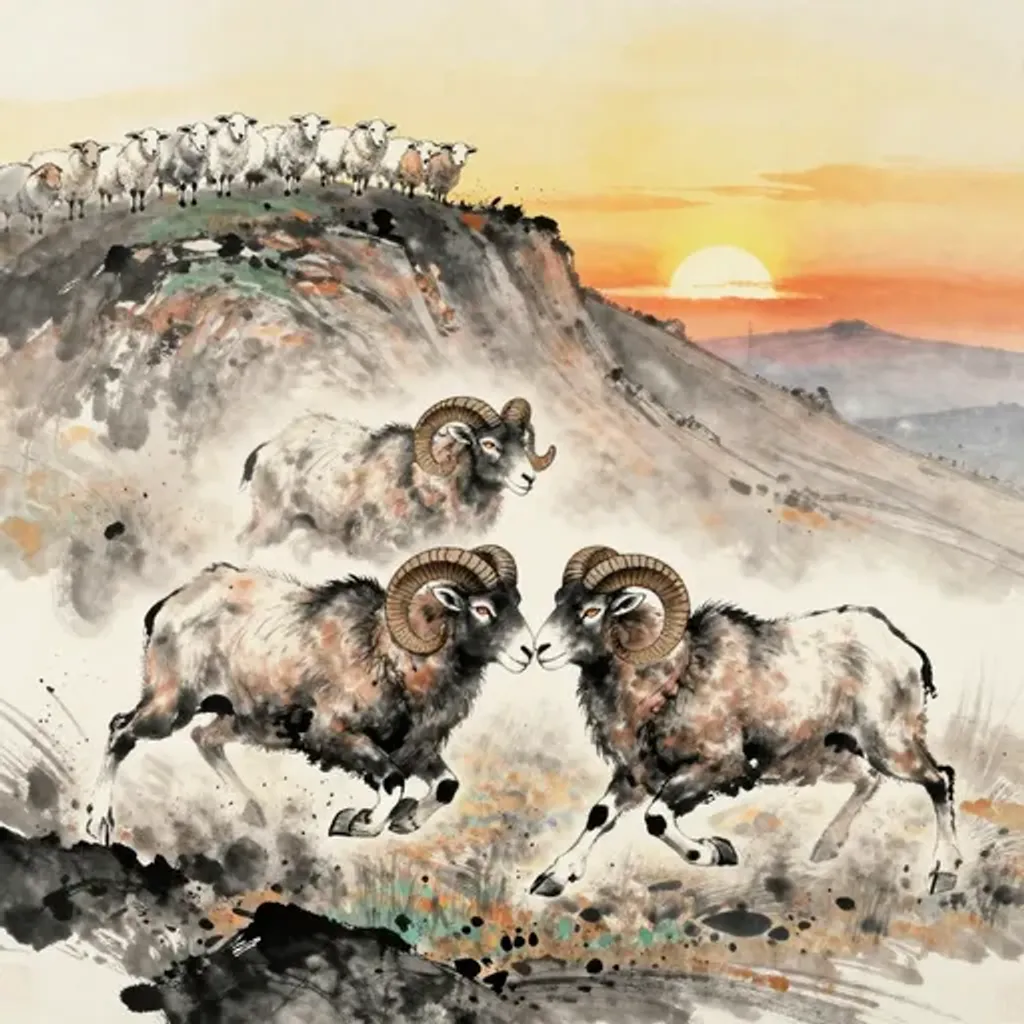
三羊爭妻,相逐奔馳,終日不食,精氣竭罷。
Three rams contest a mate, chasing each other in a gallop. All day without eating; vigor and spirit utterly spent.
— Jiao Yanshou, Yilin (Forest of Changes), 1st century BC
Commentary
Water upon water, desire overrides sustenance. Three rams compete for a single ewe, chasing each other in frantic circles, refusing food all day until their vital energy is utterly spent. The imagery is visceral: lust-driven exhaustion, appetites that consume the competitor rather than nourishing him. From The Abysmal to The Family, the wind should emerge from fire as warmth radiating outward from the hearth — words with substance, actions with constancy. Yet these three rams embody the Family's shadow: when desire replaces devotion, the household becomes a battlefield. The energy that should sustain the family consumes itself in rivalry, and no one eats.
坎 → 睽
Hexagram 29 → Hexagram 38: Opposition
Changing lines: 1, 4, 5, 6
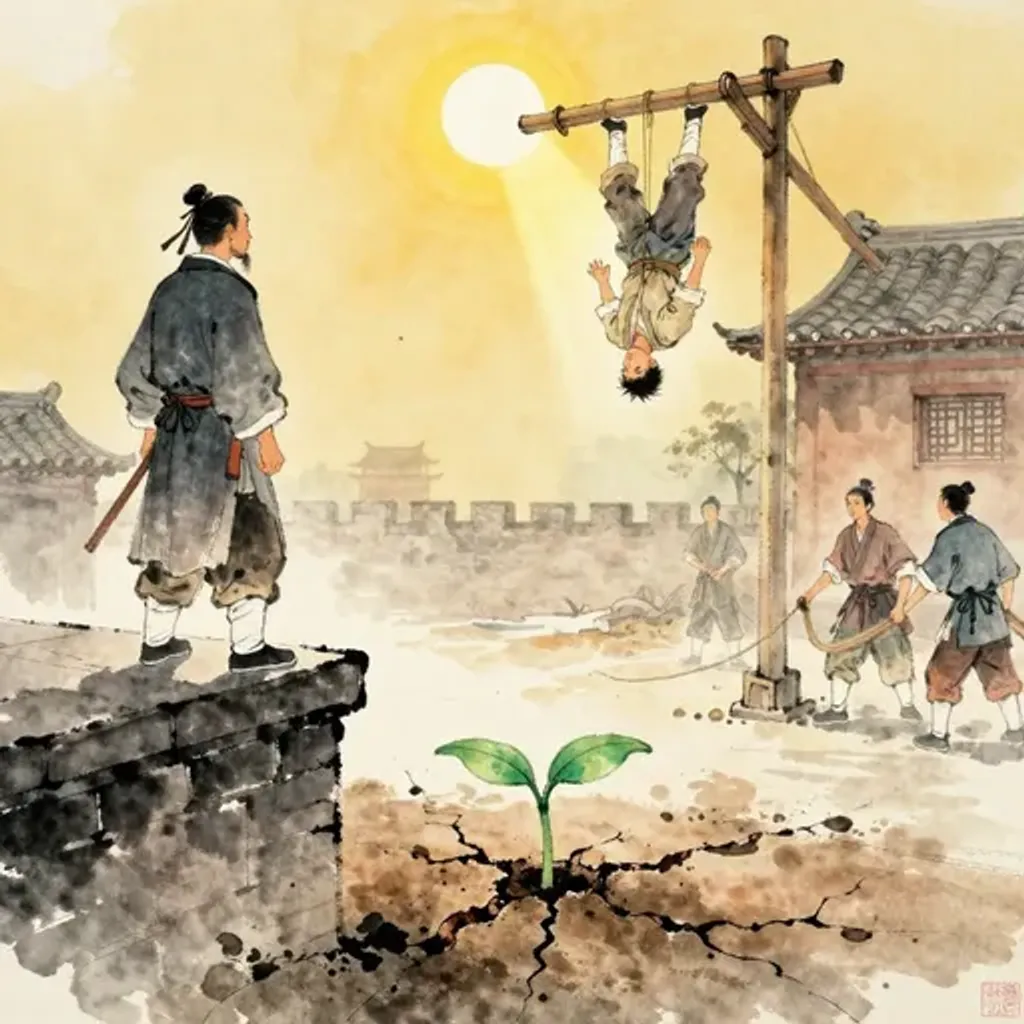
退惡防患,見在心苗。日中之恩,解釋倒懸。
Retreat from evil, guard against trouble; perceive it in the heart's first shoots. The grace of the midday sun releases those hung upside down.
— Jiao Yanshou, Yilin (Forest of Changes), 1st century BC
Commentary
Water upon water, yet vigilance dispels the threat. Retiring from evil and guarding against calamity — one perceives the danger while it is still a seedling in the heart. The grace of the midday sun releases those hung upside down, cutting them free from their inverted torment. The verse moves from defensive alertness to active liberation: seeing danger early, then applying timely intervention to relieve suffering. From The Abysmal to Opposition, fire and lake diverge in opposite directions, yet the verse shows how Opposition's divided vision can serve as diagnostic strength. Seeing the difference between good and evil — 'same yet different' — allows one to detect the sprout of disaster before it grows and to intervene at precisely the right moment.
坎 → 蹇
Hexagram 29 → Hexagram 39: Obstruction
Changing lines: 2, 3
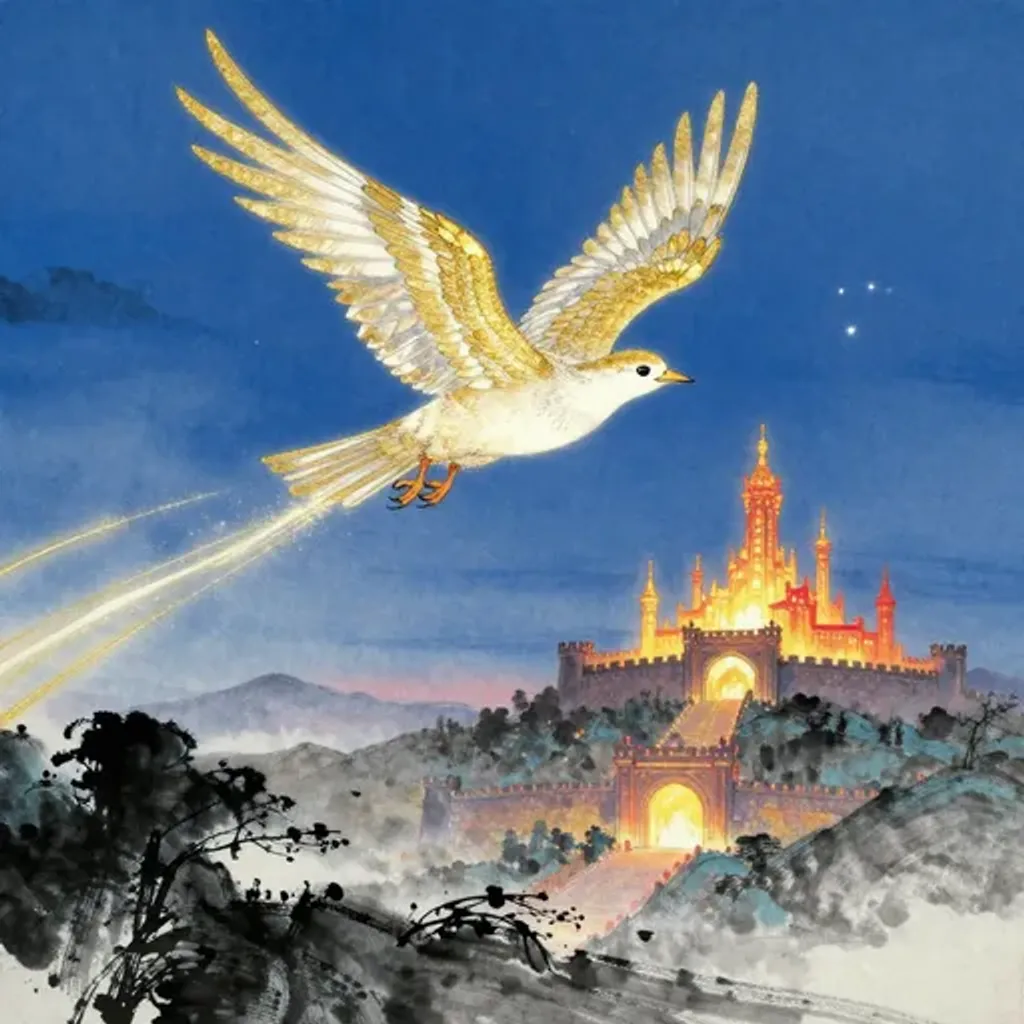
兩足四翼,飛入嘉國。寧我伯姊,與母相得。
Two feet and four wings; it flies into a fair kingdom. It brings peace to my elder sister; together with mother, they are united.
— Jiao Yanshou, Yilin (Forest of Changes), 1st century BC
Commentary
Water upon water, yet a creature with paired feet and double wings takes flight into a blessed land. The image of two feet and four wings suggests paired-wing birds that can only fly together — creatures of mutual dependence achieving what neither could alone. Arriving in this good country, the elder sister finds peace, and mother and daughter are happily reunited. From The Abysmal to Obstruction, water pools upon the mountain, blocking the path forward. Yet the verse resolves this obstruction through familial reunion: the flight into the blessed land bypasses the mountain's barrier entirely. When relationships are restored, even the most formidable obstruction becomes irrelevant — one simply flies over it.
坎 → 解
Hexagram 29 → Hexagram 40: Deliverance
Changing lines: 4, 5
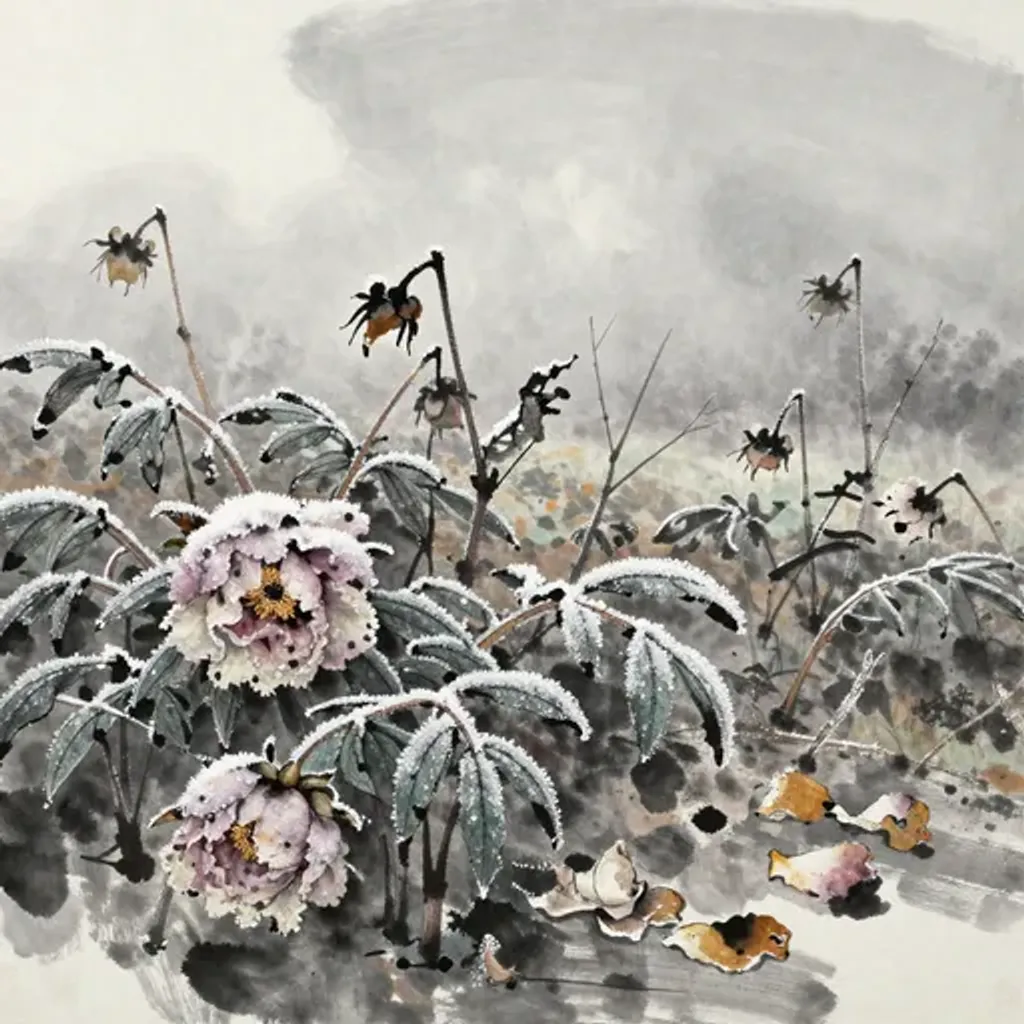
寒露所降,凌制堅冰,草木瘡傷,花落葉亡。
Cold dew descends; frost commands hard ice. Plants and trees are wounded; flowers fall, leaves perish.
— Jiao Yanshou, Yilin (Forest of Changes), 1st century BC
Commentary
Water upon water, cold descends and freezes everything solid. Cold dew falls and frost dominates, forming hard ice that wounds all growing things. Flowers drop, leaves perish, and the vegetable world lies in ruin. The verse reads as a pure seasonal catastrophe: autumn's killing frost arrives and nothing survives. From The Abysmal to Deliverance, thunder and rain should bring release — the storm that breaks the tension and washes everything clean. Yet this verse captures the moment just before deliverance, when destruction is total and no relief is in sight. The frost must complete its work before the thunderstorm of spring can restore what was frozen. Deliverance requires the winter to run its full course.
坎 → 損
Hexagram 29 → Hexagram 41: Decrease
Changing lines: 1, 5, 6
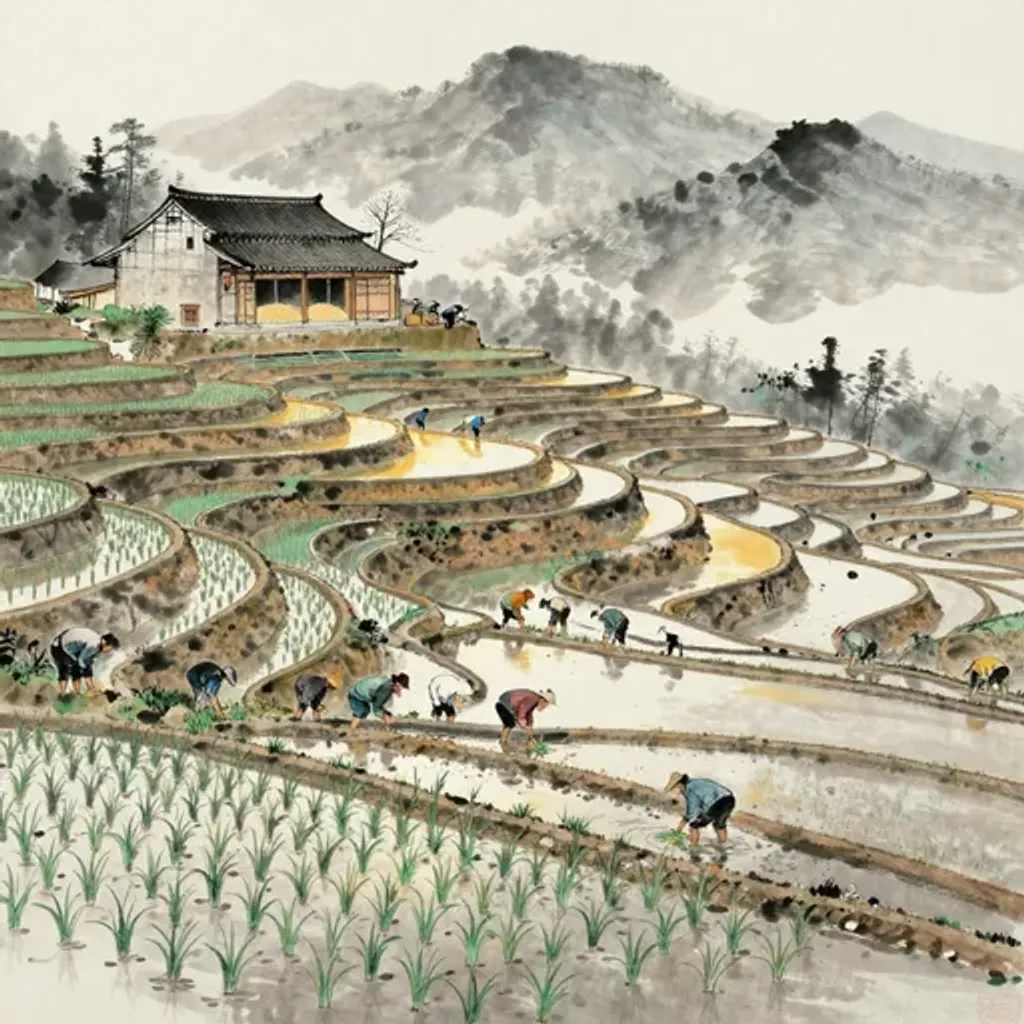
后稷農功,富利我國。南畝治理,一室百子。
Houji's farming merit enriched and profited our state. The southern fields are well-tended; one household, a hundred children.
— Jiao Yanshou, Yilin (Forest of Changes), 1st century BC
Commentary
Water upon water, yet agriculture transforms peril into prosperity. Lord Millet (Hou Ji), the ancestral patron of Zhou agriculture, brought his farming arts to enrich the nation. Southern fields are well managed, and from a single household springs a hundred sons — abundance in both harvest and progeny. The verse celebrates the civilizing power of systematic cultivation. From The Abysmal to Decrease, the mountain towers above the lake, and the gentleman restrains anger and curtails desire. Hou Ji's agricultural discipline is itself a form of decrease: trimming wildness into order, channeling chaotic water into irrigated furrows. The hundred sons born from one household embody how disciplined reduction of waste yields exponential increase.
坎 → 益
Hexagram 29 → Hexagram 42: Increase
Changing lines: 1, 2, 6
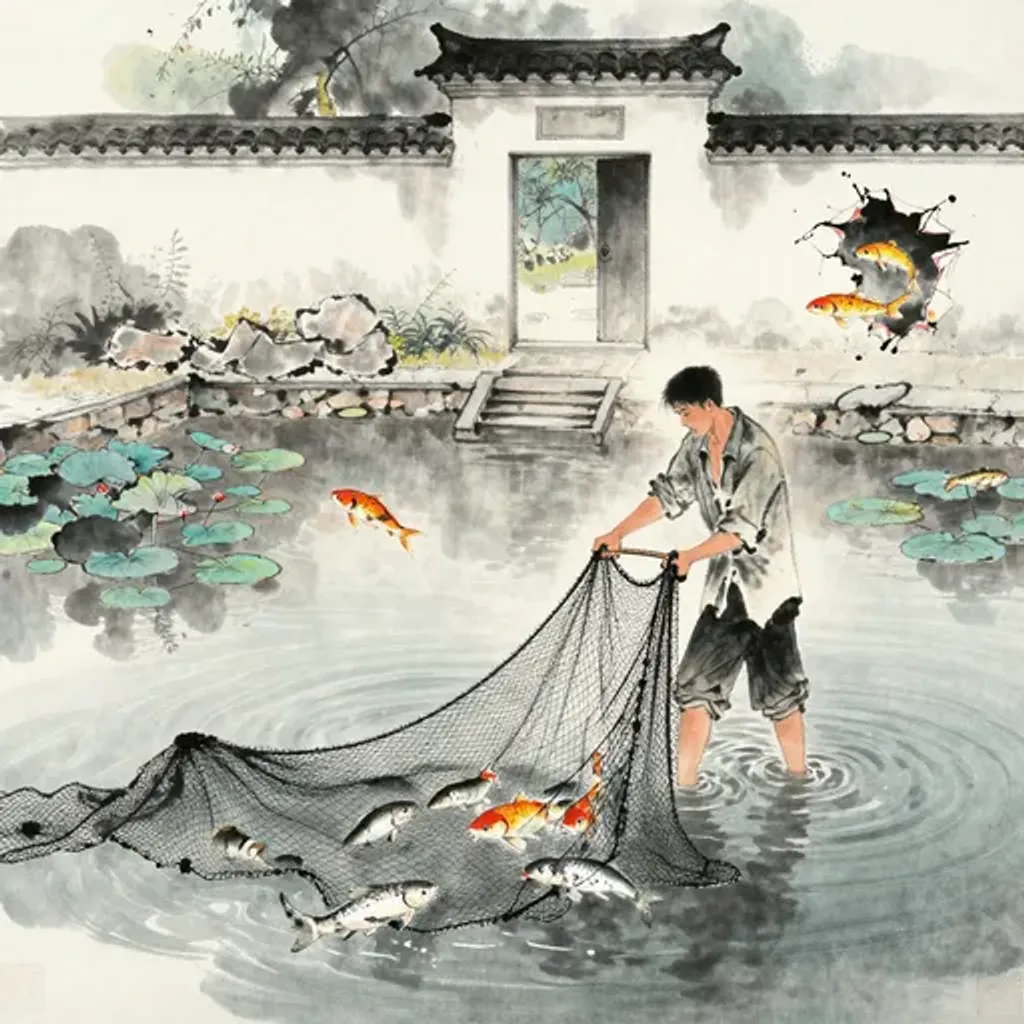
設網張羅,捕魚園池。網罟自決,雖得復失。危訴之患,受其低懽。
Setting nets and spreading snares, catching fish in the garden pond. The mesh tears of itself; though caught, they are lost again. The peril of desperate accusation; one suffers its low pleasures.
— Jiao Yanshou, Yilin (Forest of Changes), 1st century BC
Commentary
Water upon water, the fisherman's effort unravels. Nets and snares are set across garden pools, but the mesh tears open on its own — what was caught slips free, gains made are immediately lost. Then comes the threat of legal trouble, and joy is diminished to humiliation. The verse charts a downward spiral from overreach through loss to disgrace. From The Abysmal to Increase, wind and thunder should work together to multiply benefit — the gentleman sees good and moves toward it. Yet this verse shows Increase's shadow: grasping for more with faulty instruments produces less. The net that breaks itself is the emblem of ambition undermined by inadequate preparation.
坎 → 夬
Hexagram 29 → Hexagram 43: Breakthrough
Changing lines: 1, 3, 4
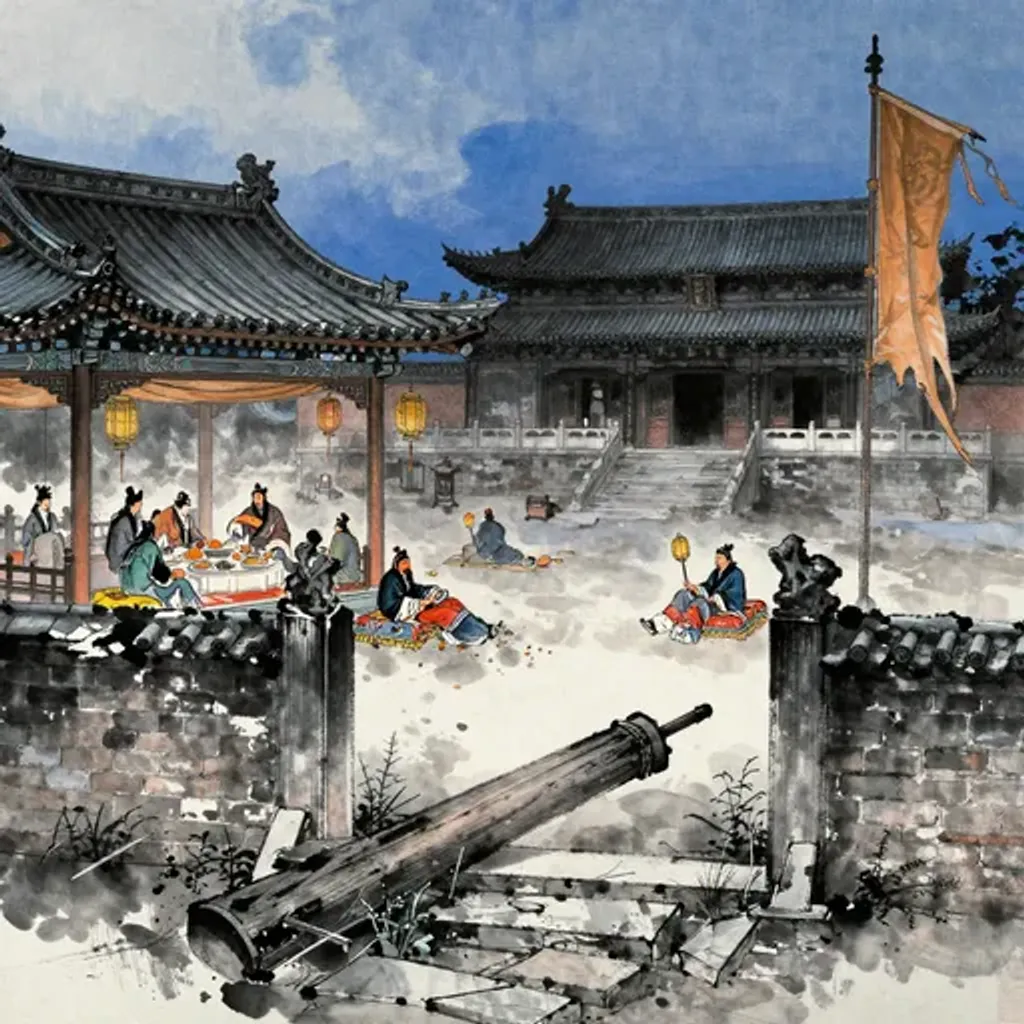
路與縣休,侯伯恣驕。上失其盛,周室衰微。
Roads and counties fall to ruin; the marquises and earls grow wanton. The heights lose their glory; the house of Zhou declines.
— Jiao Yanshou, Yilin (Forest of Changes), 1st century BC
Commentary
Water upon water, the central authority crumbles. Roads fall into disrepair and border posts are abandoned; marquises and earls grow arrogant without restraint. The sovereign loses his grandeur, and the house of Zhou declines into insignificance. The verse describes the slow collapse of the Western Zhou order: when the king's roads no longer connect the realm, local lords fill the vacuum with unchecked ambition. From The Abysmal to Breakthrough, the lake rises above heaven — the single yin line must be expelled by five yangs. The verse shows why Breakthrough is necessary: when feudal arrogance has corroded royal authority, only a decisive, collective upward surge can restore the proper order.
坎 → 姤
Hexagram 29 → Hexagram 44: Coming to Meet
Changing lines: 3, 4, 6
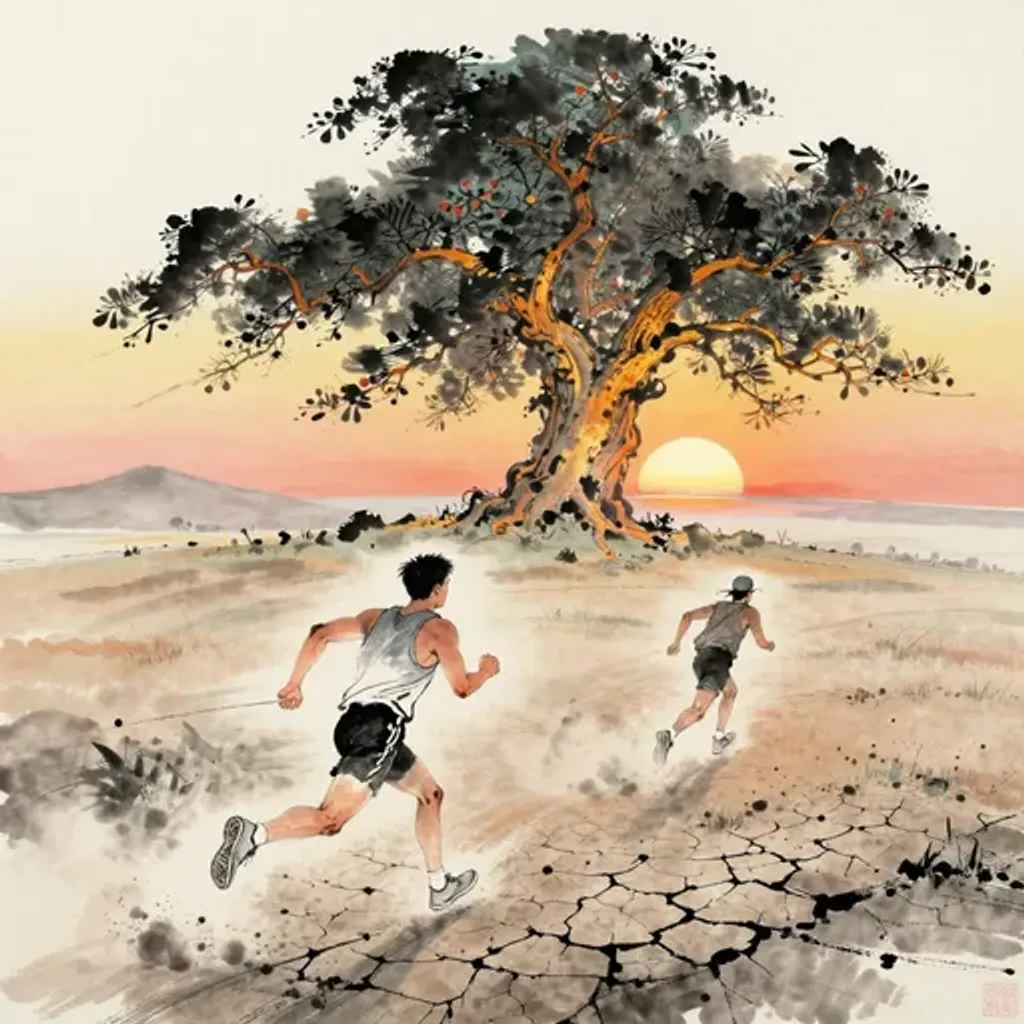
逐走追亡,相及扶桑,復見其鄉,使我悔喪。
Chasing the fled, pursuing the lost; catching up at Fusang. Seeing one's homeland again -- it fills me with remorse and grief.
— Jiao Yanshou, Yilin (Forest of Changes), 1st century BC
Commentary
Water upon water, pursuit reaches the edge of the world. Chasing fugitives and fleeing refugees alike, the pursuit extends all the way to Fusang — the mythological tree in the far east where the sun rises and the ten sun-crows roost. Seeing one's homeland again from that impossible distance brings only regret and mourning. The verse captures exile's cruelest paradox: the homeland is visible but the return brings no joy, only the grief of what was lost. From The Abysmal to Coming to Meet, heaven's wind descends to proclaim commands across the four quarters. Yet this meeting is unwanted — the encounter at the world's edge produces sorrow, not reunion. What comes to meet us is sometimes our own grief.
坎 → 萃
Hexagram 29 → Hexagram 45: Gathering Together
Changing lines: 2, 4
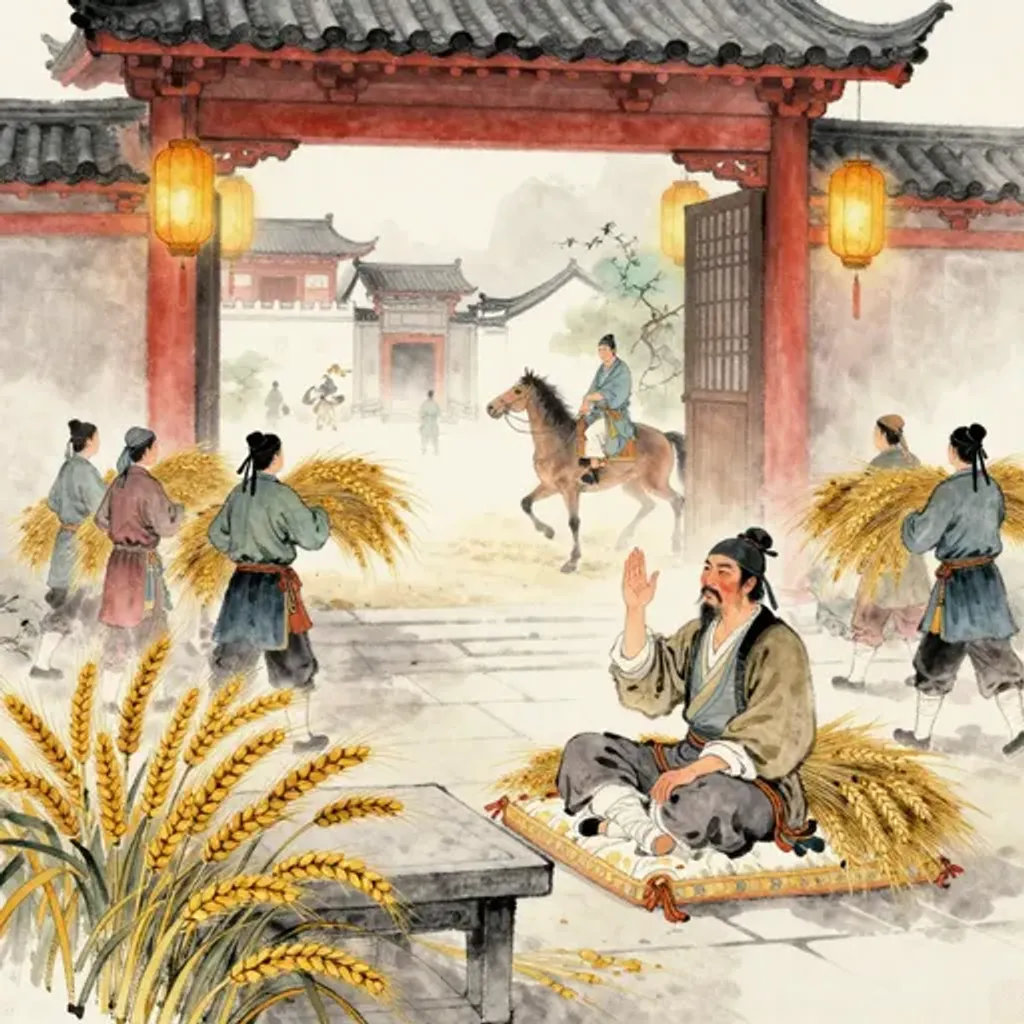
履祿綏厚,載福受祉,衰微復起,繼世長久,疾病獻麥,晉人赴告。
Treading in blessings, receiving thick favor; bearing fortune, accepting benediction. From decline, rising again; continuing through generations, enduring long. In illness, an offering of wheat; the men of Jin send word.
— Jiao Yanshou, Yilin (Forest of Changes), 1st century BC
Commentary
Water upon water, yet blessings accumulate steadily. Treading upon fortune, blessed with thick bounty, receiving the mandate's favor — what had declined now rises again, and the succession endures for generations. Then the verse shifts: illness prompts an offering of wheat, and the people of Jin send urgent word. The juxtaposition of dynastic continuity with emergency dispatch suggests that even in prosperity, vigilance is required. From The Abysmal to Gathering, the lake collects upon the earth as people naturally congregate. The verse embodies Gathering's dual nature: abundance pools and communities form, but the wise ruler keeps weapons ready and guards against the unexpected — even as blessings flow.
坎 → 升
Hexagram 29 → Hexagram 46: Pushing Upward
Changing lines: 3, 5
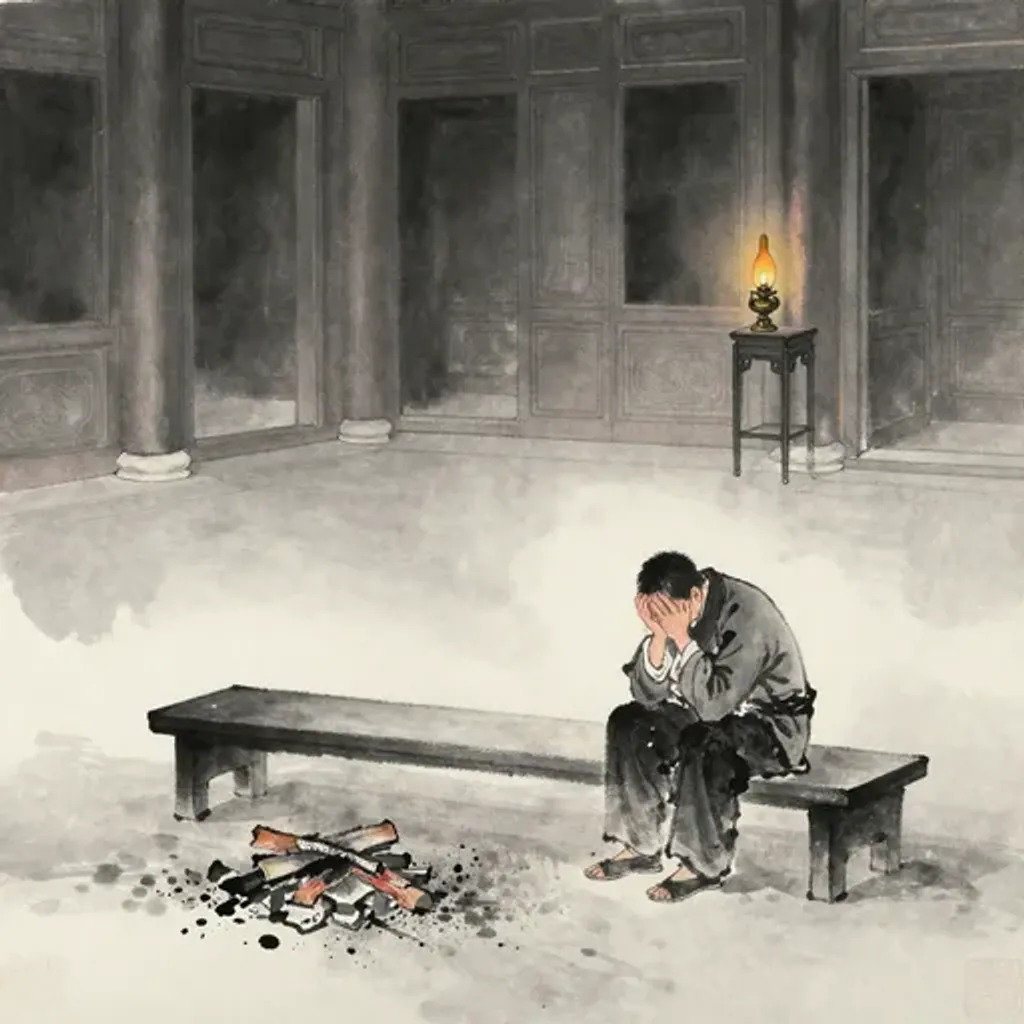
鰥寡孤獨,祿命苦薄,入宮無妻,武子哀悲。
Widowed, orphaned, alone; fate and fortune are bitter and thin. Entering the palace, there is no wife; Wuzi grieves in sorrow.
— Jiao Yanshou, Yilin (Forest of Changes), 1st century BC
Commentary
Water upon water, isolation compounds sorrow. The desolate four — widower, widow, orphan, solitary elder — bear the thinnest fate and bitterest fortune. Entering the palace, there is no wife; the figure named Wuzi weeps in grief. The palace without a consort is a household without its center, and the sorrow of Wuzi (possibly a historical or literary figure whose identity remains uncertain) deepens the sense of irrevocable loss. From The Abysmal to Pushing Upward, wood should grow steadily within the earth, rising by small steps toward height. Yet this verse shows the ground from which nothing grows — the barren soil of absolute loneliness where no upward movement begins.
坎 → 困
Hexagram 29 → Hexagram 47: Oppression
Changing lines: 4
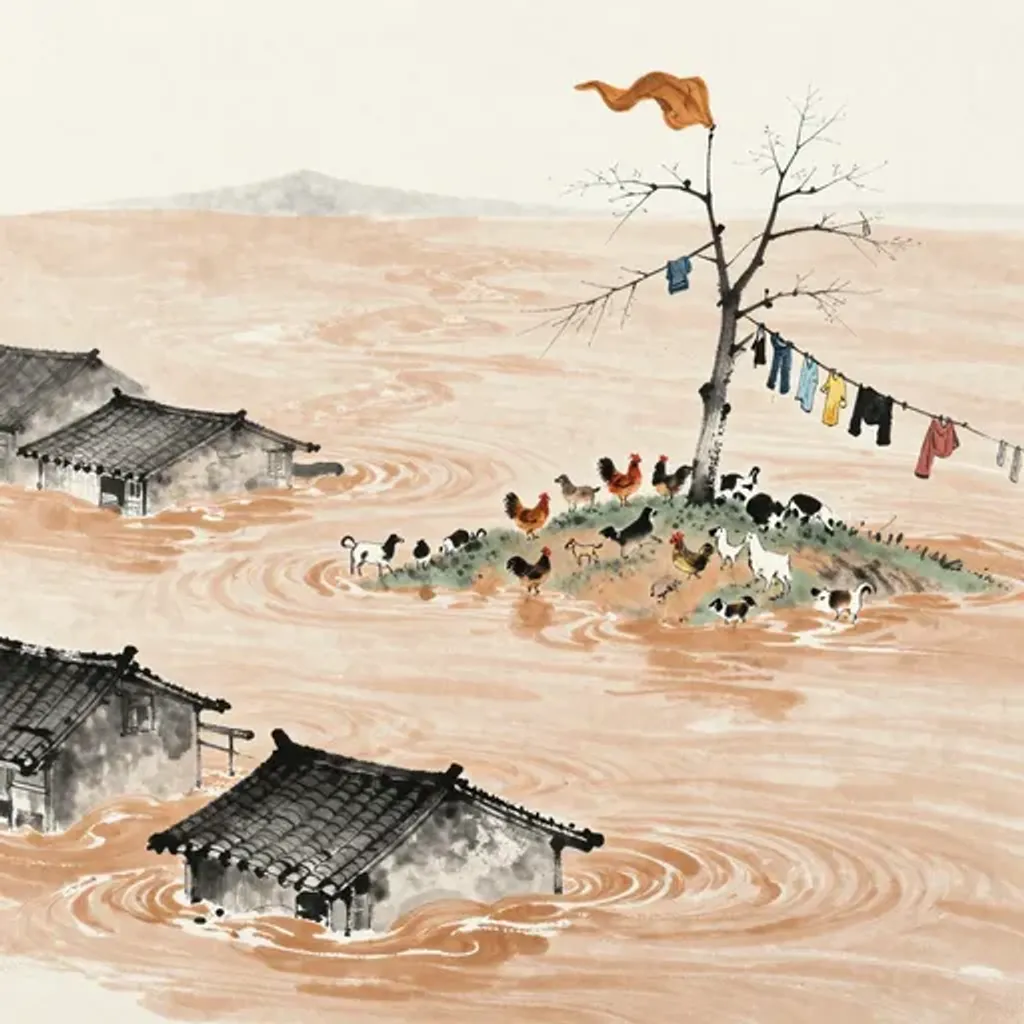
山沒丘浮,陸為水魚,燕雀無巢,民無室廬。
Floodwater over the rooftops — houses drift. Clothes hang from treetops, uncollected. Chickens and dogs crowd onto hilltops fighting for inches of ground — in all four directions, the fields have become islands.
— Jiao Yanshou, Yilin (Forest of Changes), 1st century BC
Commentary
Water upon water, the flood overwhelms everything. Mountains are submerged and hills float like islands; dry land becomes a realm for fish. Swallows and sparrows lose their nests, and the common people have no houses to shelter in. The original verse compresses total inundation into four stark lines: the inversion of land and water, the displacement of every creature from its proper habitat. From The Abysmal to Oppression, the lake has lost its water — drought within flood, emptiness within excess. The paradox is precise: total flooding creates total deprivation. When water is everywhere, its life-giving function ceases, and what should nourish instead destroys. The people must stake their lives on their convictions to endure.
坎 → 井
Hexagram 29 → Hexagram 48: The Well
Changing lines: 3
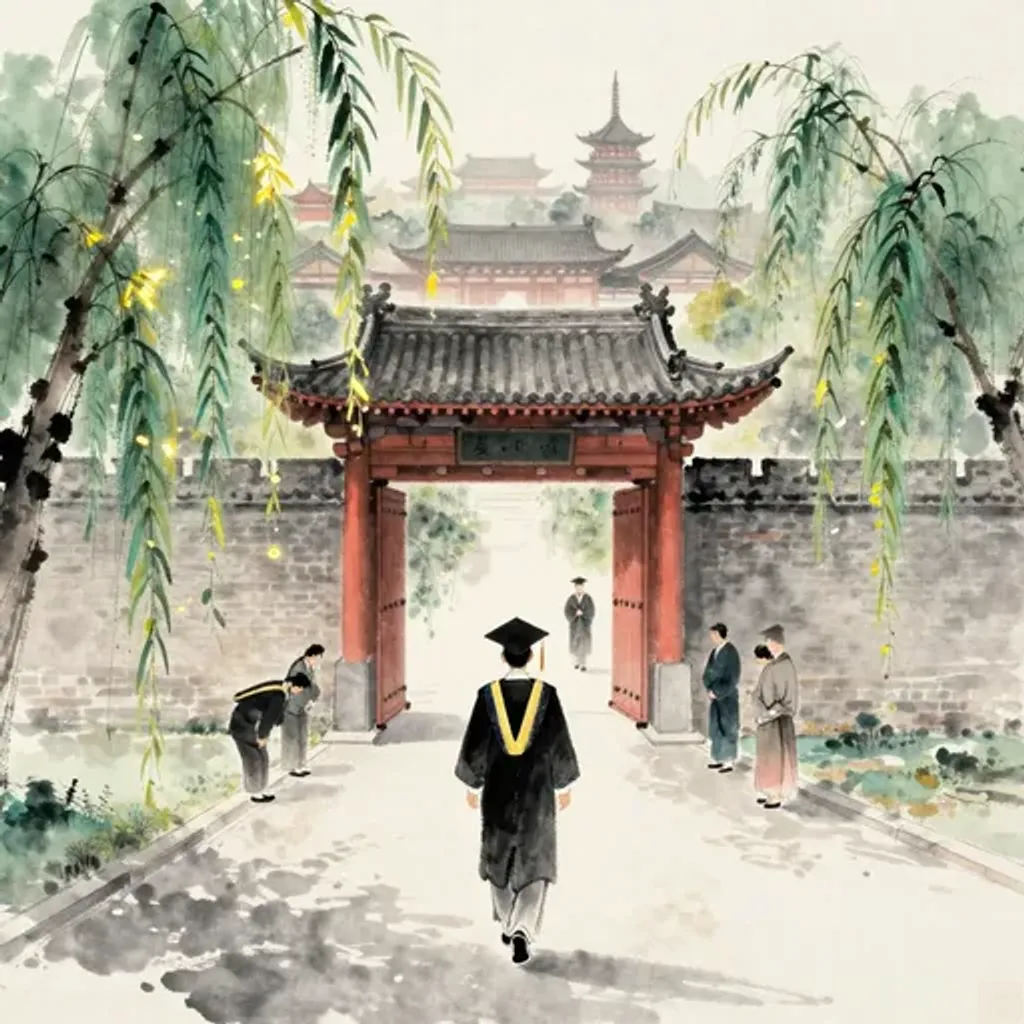
冠帶南遊,與福喜期,徼于嘉國,拜為逢時。
In cap and sash, traveling south; he has a rendezvous with joy and fortune. Reaching a fair kingdom, he is received -- bowing, for the time has come.
— Jiao Yanshou, Yilin (Forest of Changes), 1st century BC
Commentary
Water upon water, yet the scholar travels south in full regalia. Wearing cap and sash, he journeys toward fortune and joy, arriving in a blessed land where he receives an official appointment — his timing is perfect. The verse is an auspicious career oracle: proper attire signals readiness, southward travel brings opportunity, and the appointment comes at exactly the right moment. From The Abysmal to The Well, water rises through wood — the deep source drawn up to nourish all who come. The scholar dressed for office embodies the well's function: deep learning brought to the surface through proper channels. The well does not move to the village; the village comes to the well, and the worthy man is found when the time is right.
坎 → 革
Hexagram 29 → Hexagram 49: Revolution
Changing lines: 1, 2, 3, 4
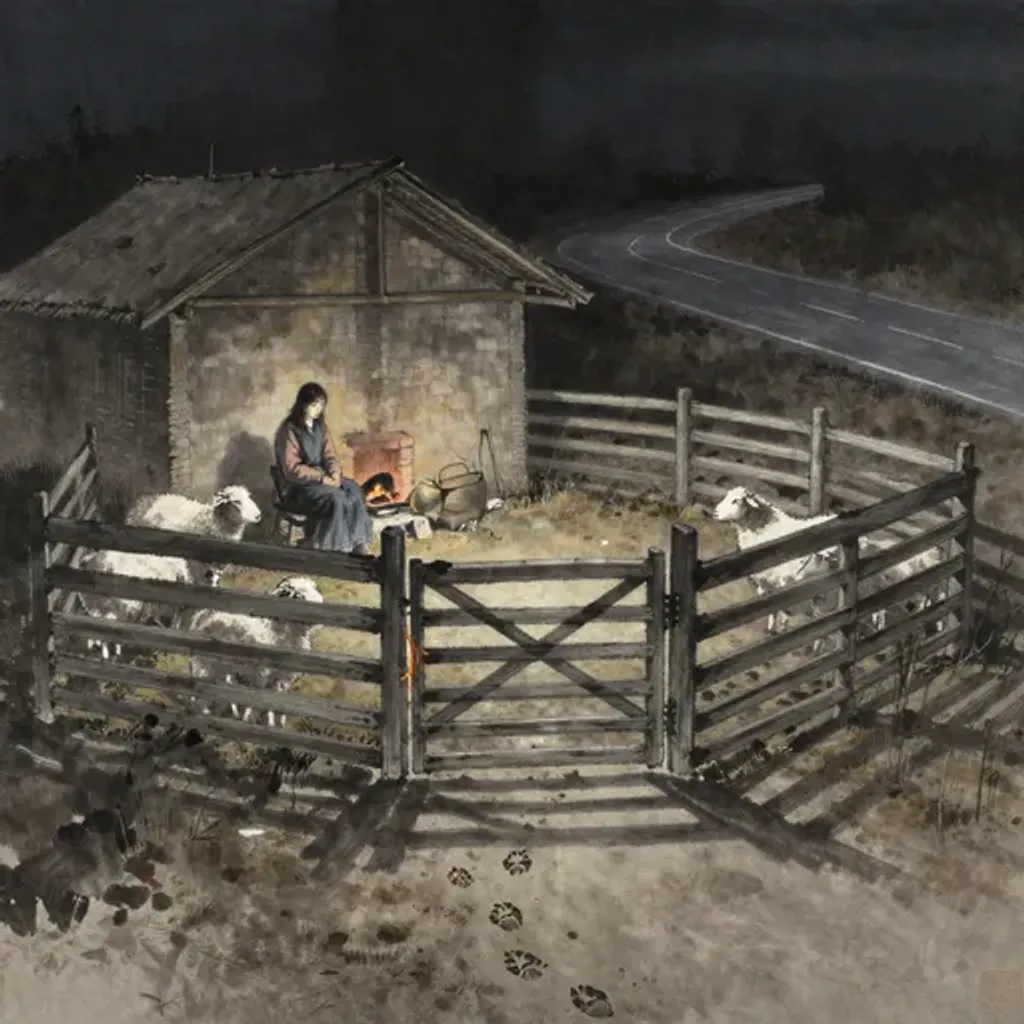
東行亡羊,失其羝牂,少婦無夫,獨坐空廬。
Traveling east, the sheep are lost -- both ram and ewe gone. The young wife has no husband; she sits alone in the empty hut.
— Jiao Yanshou, Yilin (Forest of Changes), 1st century BC
Commentary
Water upon water, loss scatters what should be gathered. Heading east, one loses the flock — rams and ewes vanish along the road. The young wife has no husband and sits alone in an empty house. The verse pairs economic loss with domestic abandonment: the shepherd's livelihood and the woman's companionship are both stripped away. From The Abysmal to Revolution, fire burns within the lake, and opposing forces demand transformation. Yet this verse shows the cost of revolution's dislocations: when the old order is overturned, flocks scatter and families break apart. The empty house and the lost sheep are the human residue of upheaval, the price exacted before any new order can take shape.
坎 → 鼎
Hexagram 29 → Hexagram 50: The Cauldron
Changing lines: 3, 4, 5, 6
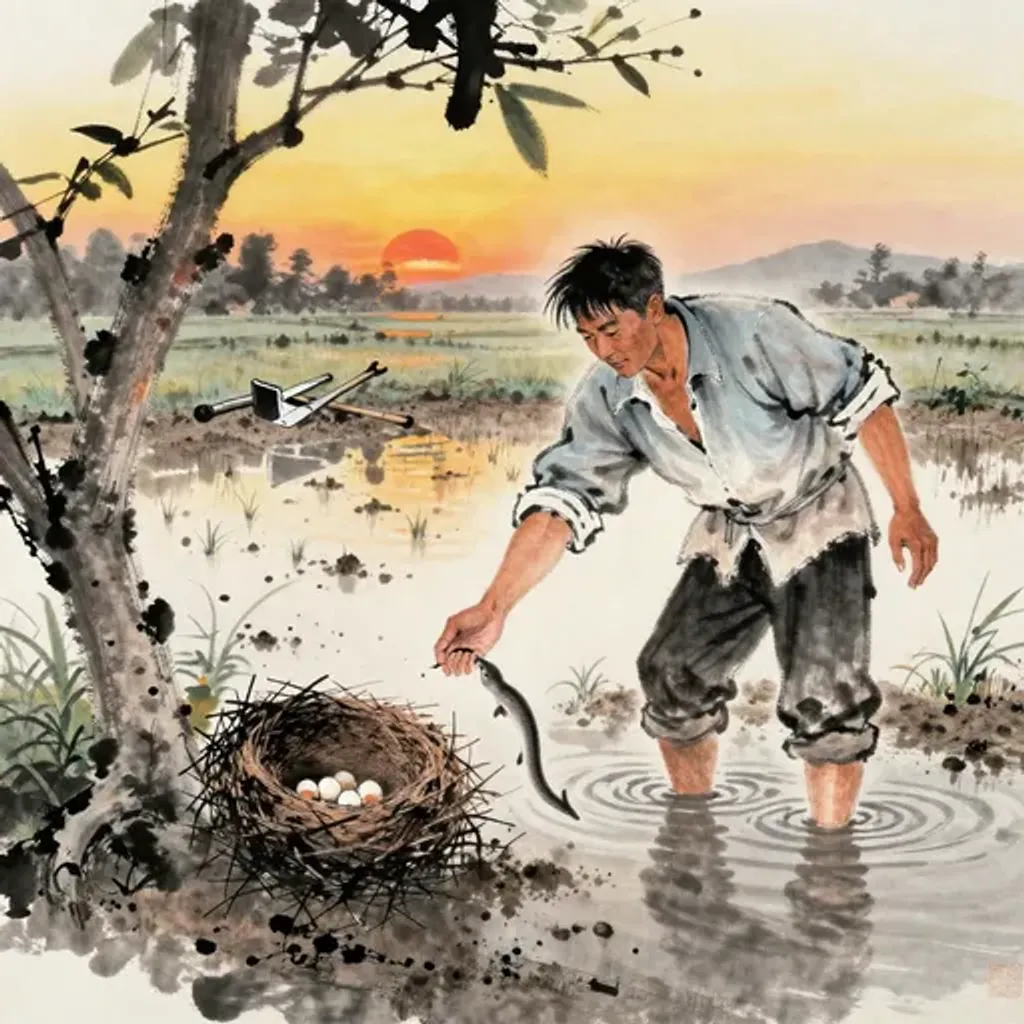
探巢捕魚,耕田捕鰌,費日無功,右手空虛。
Raiding nests, catching fish; plowing fields, hunting loach. Days spent for nothing; the right hand is empty.
— Jiao Yanshou, Yilin (Forest of Changes), 1st century BC
Commentary
Water upon water, effort yields nothing. Raiding nests, catching fish, plowing fields, and hunting loach — every method of acquiring sustenance is attempted, consuming the entire day, yet the right hand remains empty. The verse catalogs failed techniques: climbing for eggs, netting for fish, farming for grain, all exhausting and fruitless. From The Abysmal to The Cauldron, fire should blaze above wood to cook raw material into refined nourishment. Yet without ingredients to place in the cauldron, the transformative vessel sits empty. The Cauldron demands that one first secure the substance before attempting the refinement. All the activity in the world cannot fill an empty pot.
坎 → 震
Hexagram 29 → Hexagram 51: The Arousing Thunder
Changing lines: 1, 2, 4, 5
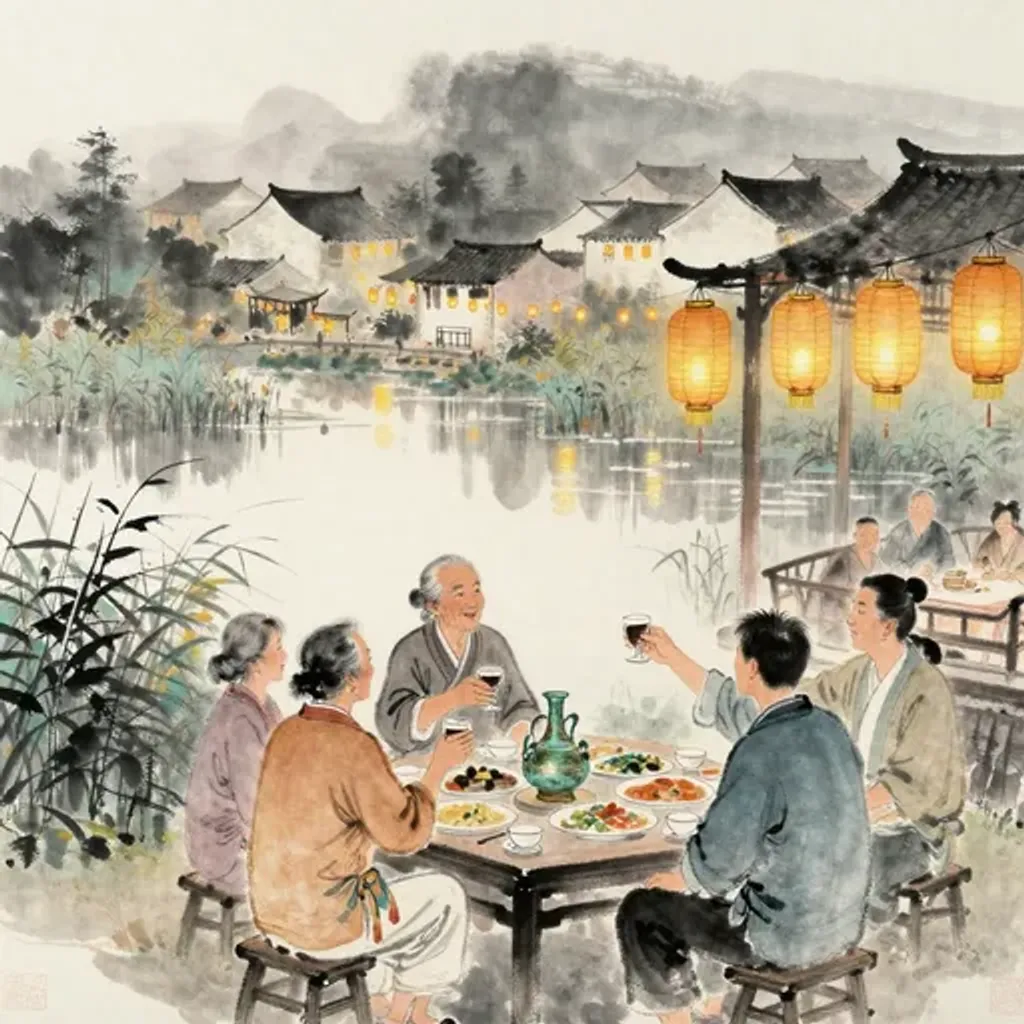
東行飲酒,與喜相抱,福吾家利,來從父母,水澤之徒,望邑而處。
Traveling east to drink wine; embracing joy together. Fortune blesses my family; coming home to father and mother. People of the marshes and lakes; gazing toward the town, they settle.
— Jiao Yanshou, Yilin (Forest of Changes), 1st century BC
Commentary
Water upon water, yet the east brings celebration. Traveling eastward to drink wine, one embraces joy directly — blessings come to the household, returning from father and mother. Those who dwell by water and marshes look toward the town and settle nearby. The verse radiates contentment: wine, reunion, familial blessing, and a view of civilized settlement from the waterside. From The Abysmal to The Arousing, doubled water transforms into doubled thunder — the energy that was flowing and dangerous now shakes the ground with awakening force. The eastward journey toward joy matches Thunder's direction (east in the trigram family), and the drinking of wine celebrates the arousing moment when dormant life stirs into action.
坎 → 艮
Hexagram 29 → Hexagram 52: Keeping Still Mountain
Changing lines: 2, 3, 5, 6
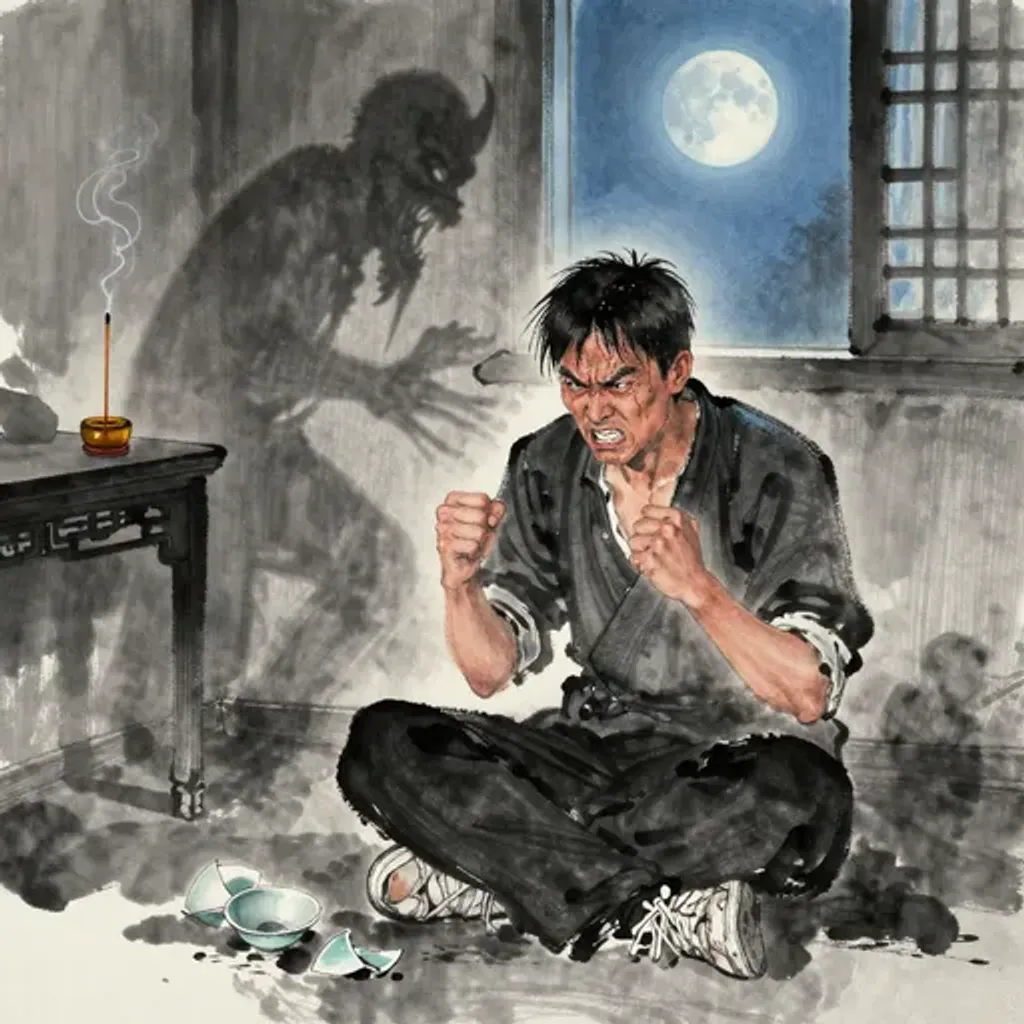
妄怒失精,自令畏悔,忪忪之懼,君子無咎。
Reckless anger wastes one's spirit; it brings only fear and regret. Trembling with dread; the noble man bears no blame.
— Jiao Yanshou, Yilin (Forest of Changes), 1st century BC
Commentary
Water upon water, reckless anger wastes vital energy. Unfounded rage depletes one's essence, breeding self-inflicted fear and regret. Trembling with anxiety, the spirit is shaken — yet for the gentleman, there is no blame. The verse diagnoses the pathology of misdirected emotion: anger without cause exhausts the body and frightens the soul, but the self-aware person recognizes this pattern and stops. From The Abysmal to Keeping Still, surging water comes to rest as the doubled mountain. The transformation prescribes the cure: stillness arrests the hemorrhage of spirit. The gentleman thinks without exceeding his position, and by refusing to chase phantom provocations, he reclaims the energy that anger squandered.
坎 → 漸
Hexagram 29 → Hexagram 53: Development
Changing lines: 2, 3, 6
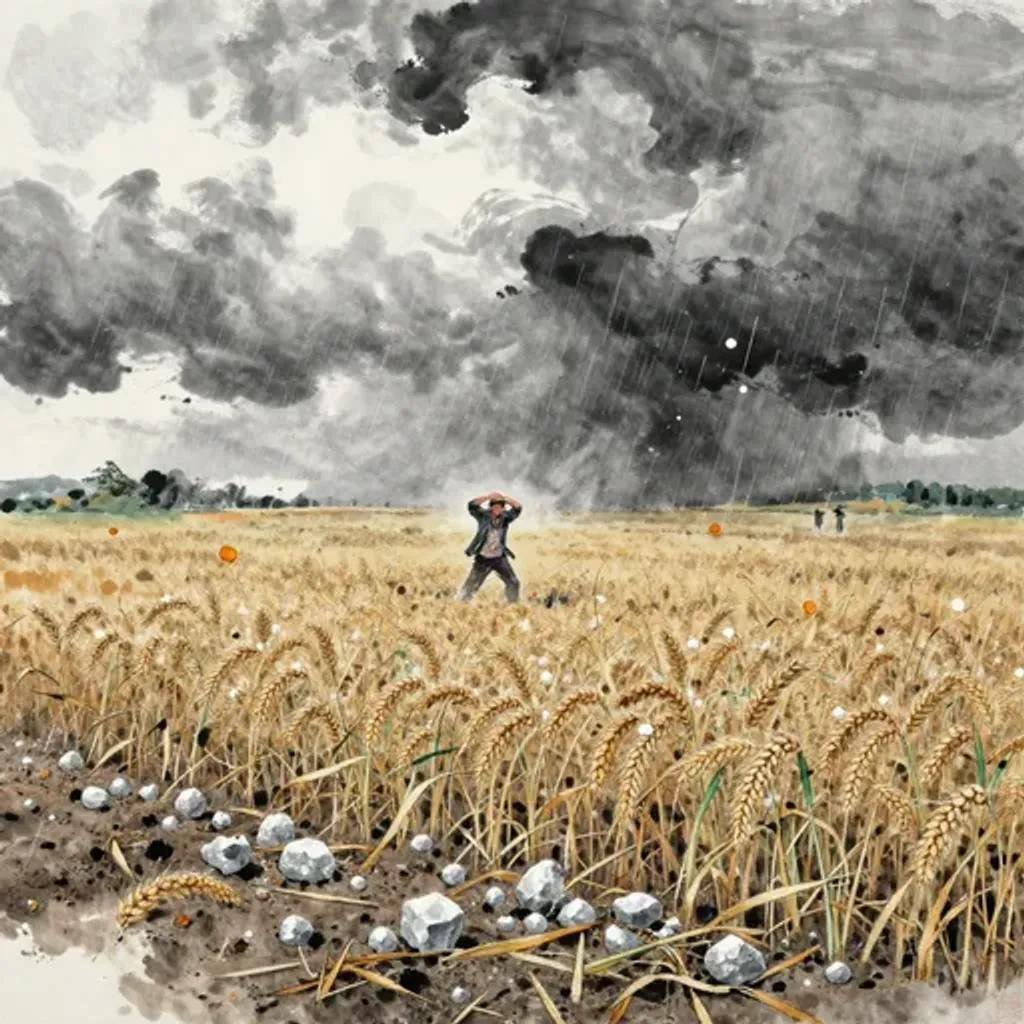
白雲如帶,往往旗處,飛風送迎,大雹將下,擊我禾稼,僵死不起。
White clouds like sashes; everywhere they stand like banners. A fierce wind sends them forth; great hail is about to fall. It strikes my grain and crops; they lie broken and cannot rise.
— Jiao Yanshou, Yilin (Forest of Changes), 1st century BC
Commentary
Water upon water, the sky turns violent. White clouds stretch like banners across the horizon, and suddenly a fierce wind rises to deliver them. Massive hailstones plummet down, pounding the grain and crops until they lie flattened and dead, beyond recovery. The verse captures agricultural catastrophe in real time: the beautiful clouds that seemed like flags were harbingers of destruction. From The Abysmal to Development, wood grows gradually upon the mountain — the patient, step-by-step advance of the wild goose. Yet this verse shows development brutally interrupted: what was slowly growing is destroyed in an instant by forces beyond human control. Gradual progress requires that heaven cooperate, and sometimes it does not.
坎 → 歸妹
Hexagram 29 → Hexagram 54: The Marrying Maiden
Changing lines: 1, 4, 5
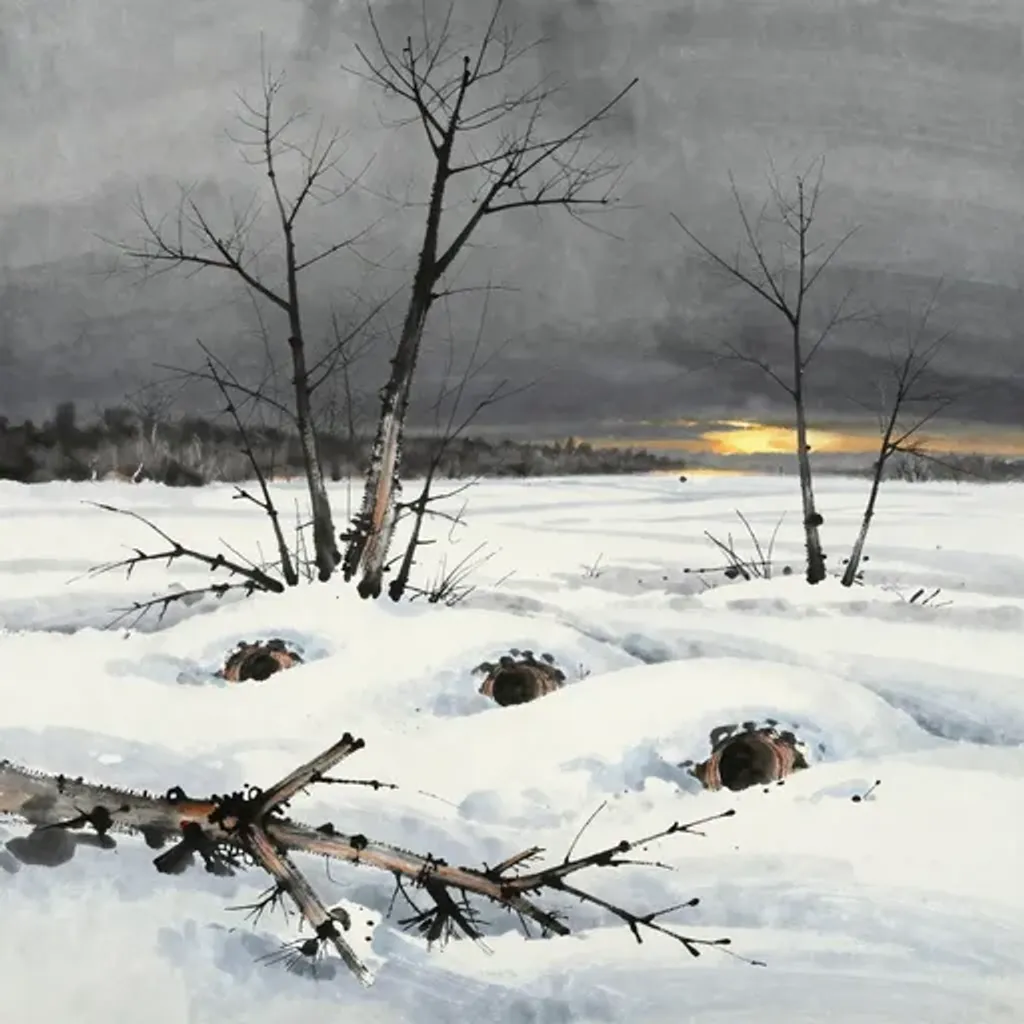
南至之日,陽消不息,北風烈寒,萬物藏伏。
On the day of the southern solstice, yang wanes without rest. The north wind is fierce and cold; the ten thousand things hide and shelter.
— Jiao Yanshou, Yilin (Forest of Changes), 1st century BC
Commentary
Water upon water, the calendar turns toward its darkest point. At the winter solstice — the day the sun reaches its southernmost limit — yang energy has been consumed without ceasing, and bitter north winds bring killing cold. All living things withdraw into hiding. The verse captures the cosmological nadir: the sun at its weakest, cold at its fiercest, nature in full retreat. From The Abysmal to The Marrying Maiden, thunder stirs above the lake — the impulsive, irreversible act of giving the younger daughter in marriage. The solstice marks a similar threshold: once the sun reaches its extreme, the return is inevitable. Even total withdrawal contains the seed of the next emergence, though the timing cannot be forced.
坎 → 豐
Hexagram 29 → Hexagram 55: Abundance
Changing lines: 1, 2, 3, 4, 5
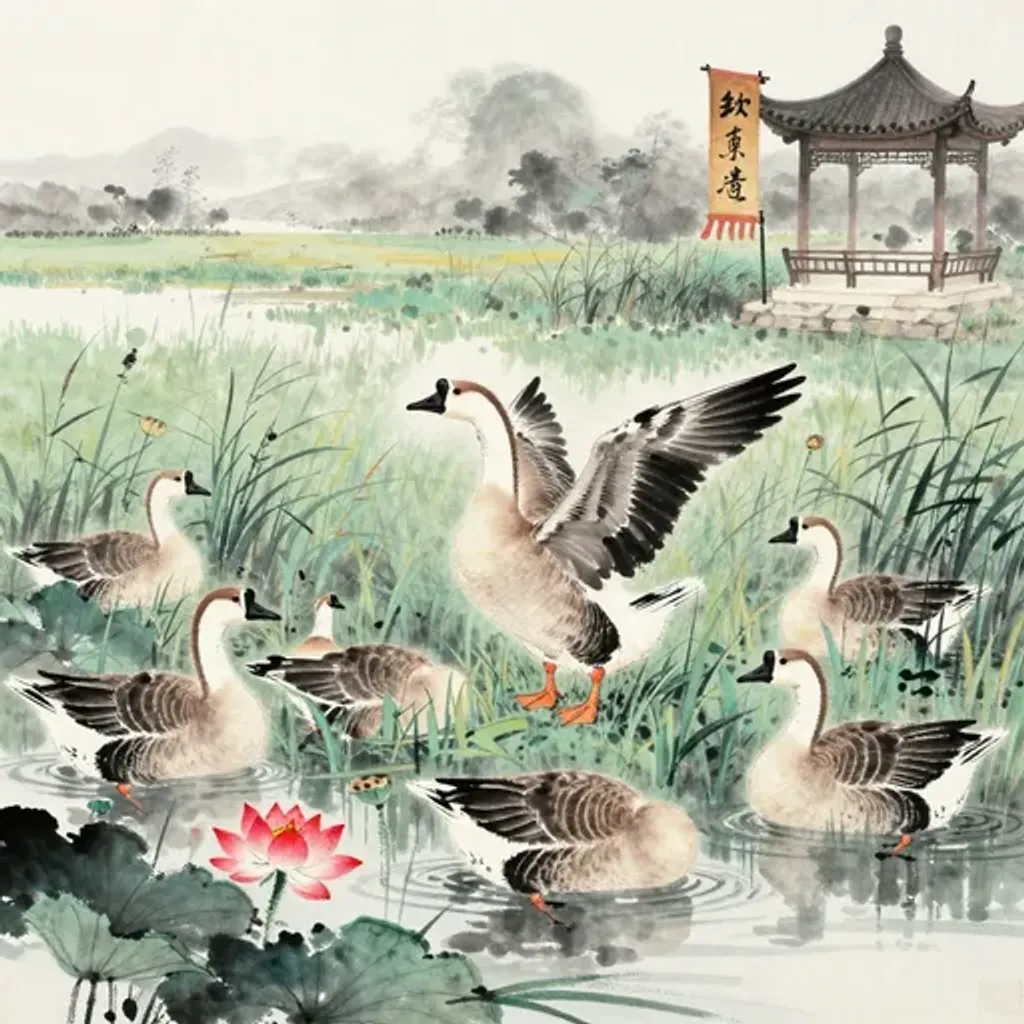
火中仲夏,鴻雁來舍,體重難移,未能高舞,君子顯名,不失其譽。
Fire in midsummer; the wild geese come to rest. Bodies heavy, hard to move; they cannot yet dance on high. The noble man makes his name known; he does not lose his repute.
— Jiao Yanshou, Yilin (Forest of Changes), 1st century BC
Commentary
Water upon water, midsummer's fire brings the wild geese to roost. In the blaze of high summer, the migrating geese arrive and settle, but their bodies are heavy and they cannot dance aloft — grounded by their own weight, they rest rather than soar. Yet the gentleman's reputation shines bright and his honor remains intact. The verse balances physical limitation with moral achievement: the body is earthbound but the name ascends. From The Abysmal to Abundance, thunder and lightning arrive together in full force. The heavy goose that cannot fly high mirrors Abundance's paradox: when everything is at its fullest, mobility is most constrained. Fame endures precisely because it does not try to exceed the natural limit of the moment.
坎 → 旅
Hexagram 29 → Hexagram 56: The Wanderer
Changing lines: 2, 3, 4, 5, 6
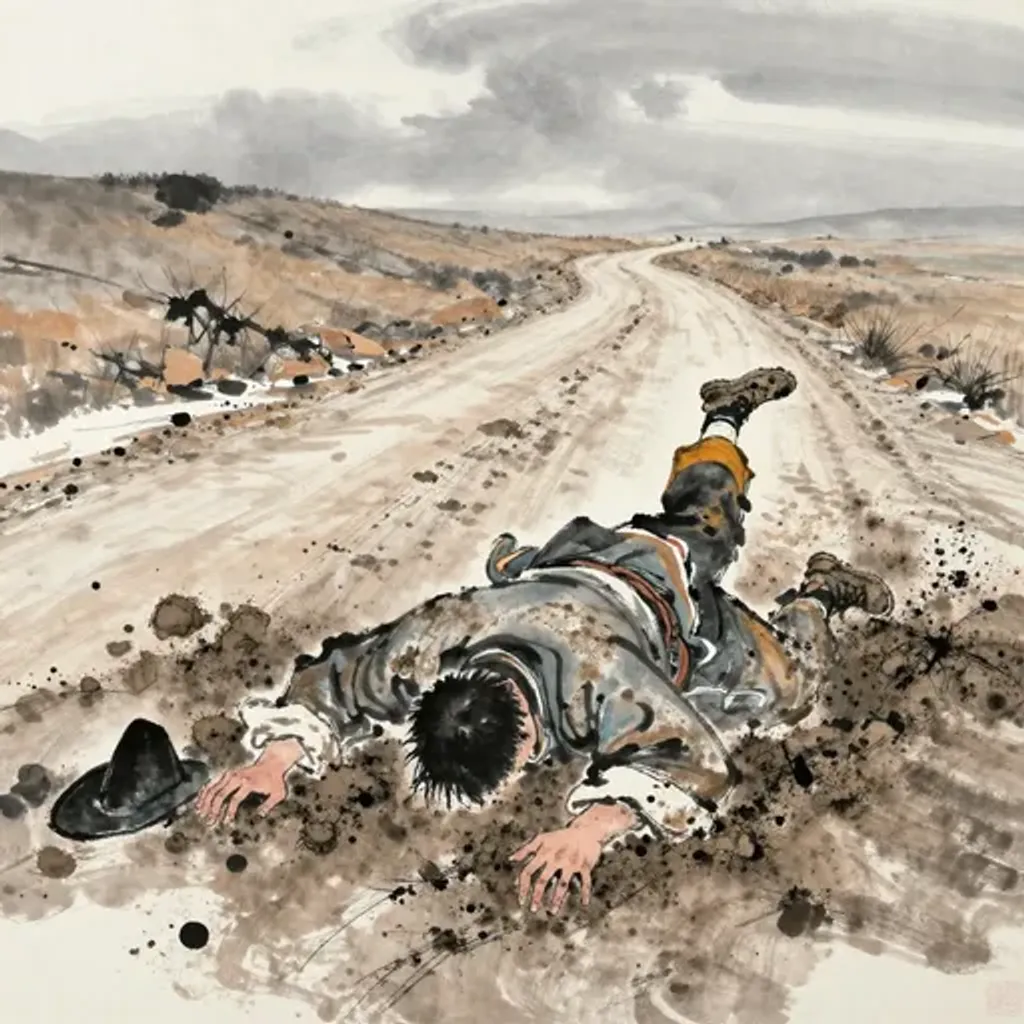
北行出門,履陷躓顛,踒足據塗,污我襦袴。
Going north, stepping out the door; the foot sinks, one stumbles and falls. Twisting the ankle, sprawled in the mud; it soils my jacket and trousers.
— Jiao Yanshou, Yilin (Forest of Changes), 1st century BC
Commentary
Water upon water, the northward journey meets nothing but hazard. Stepping out the door heading north, the road gives way — foot slips, ankle twists, the traveler sprawls face-down in the mud, soiling jacket and trousers. Every line adds indignity: tripping, falling, injury, filth. The verse is a compact catalogue of the traveler's misery. From The Abysmal to The Wanderer, fire blazes atop the mountain — the stranger's campfire on unfamiliar ground, illuminating a place where one does not belong. The mud-spattered northward journey is the Wanderer's harsh initiation: far from home, dignity stripped, the alien traveler must learn that careful judgment and humility are the only protection in foreign territory.
坎 → 巽
Hexagram 29 → Hexagram 57: The Gentle Wind
Changing lines: 3, 6
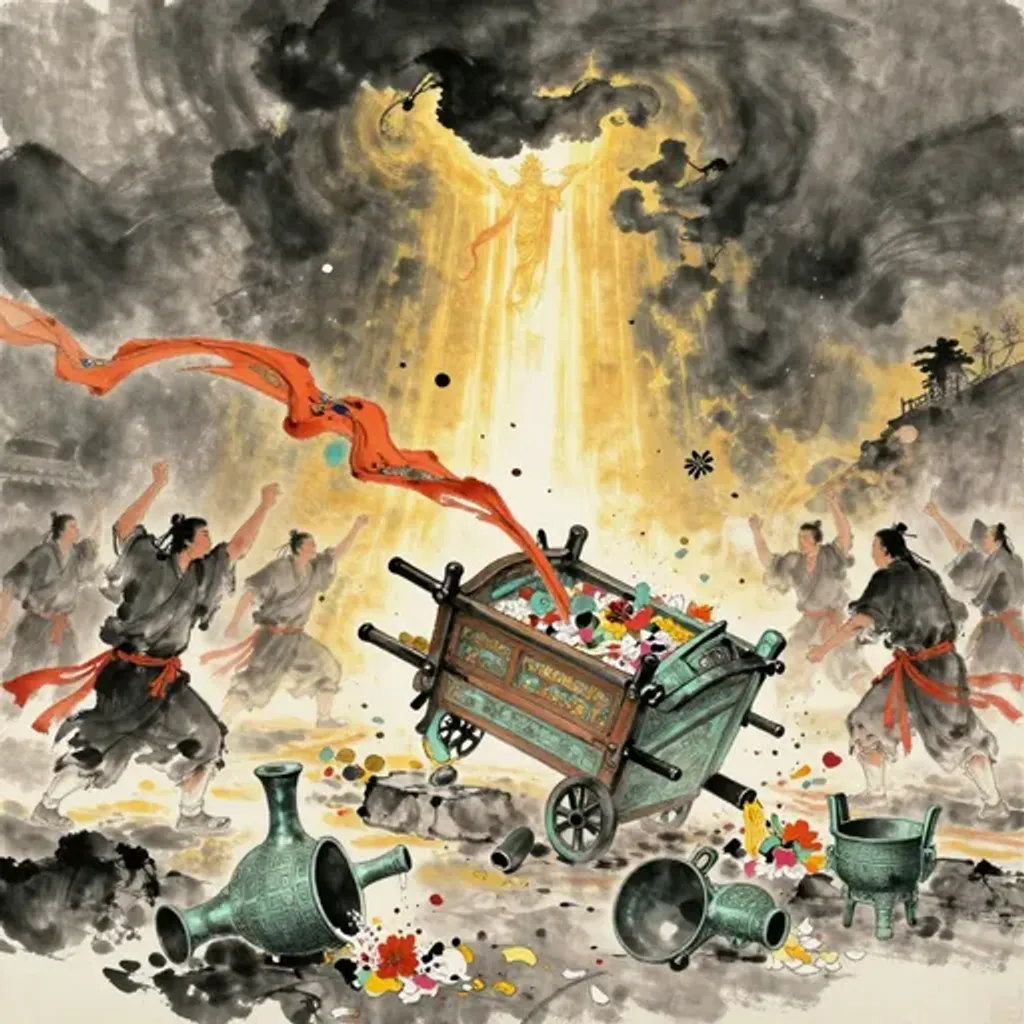
輕車醊祖,焱風暴起,促亂祭器,飛揚錯華,明神降佑,道無害寇。
A light cart pours libation to the ancestors; a sudden gale erupts. It upends the ritual vessels; blossoms and ornaments fly and scatter. The bright spirits send down their blessing; the road is free of harm and raiders.
— Jiao Yanshou, Yilin (Forest of Changes), 1st century BC
Commentary
Water upon water, a sacrificial procession is thrown into chaos. The light carriage sets out to make offerings to the ancestors when a violent whirlwind erupts, scattering the ritual vessels and sending the flower arrangements flying in confusion. Yet despite this disruption, the bright spirits descend with their blessing, and the road ahead is free from harm and bandits. The verse moves from orderly ritual through violent interruption to divine protection. From The Abysmal to The Gentle, doubled wind penetrates everywhere with quiet persistence. The whirlwind that scattered the offerings is wind's destructive face; the divine protection that follows is wind's penetrating grace. The Gentle commands through repeated gentle influence — even after chaos, the mandate reasserts itself.
坎 → 兌
Hexagram 29 → Hexagram 58: The Joyous Lake
Changing lines: 1, 4
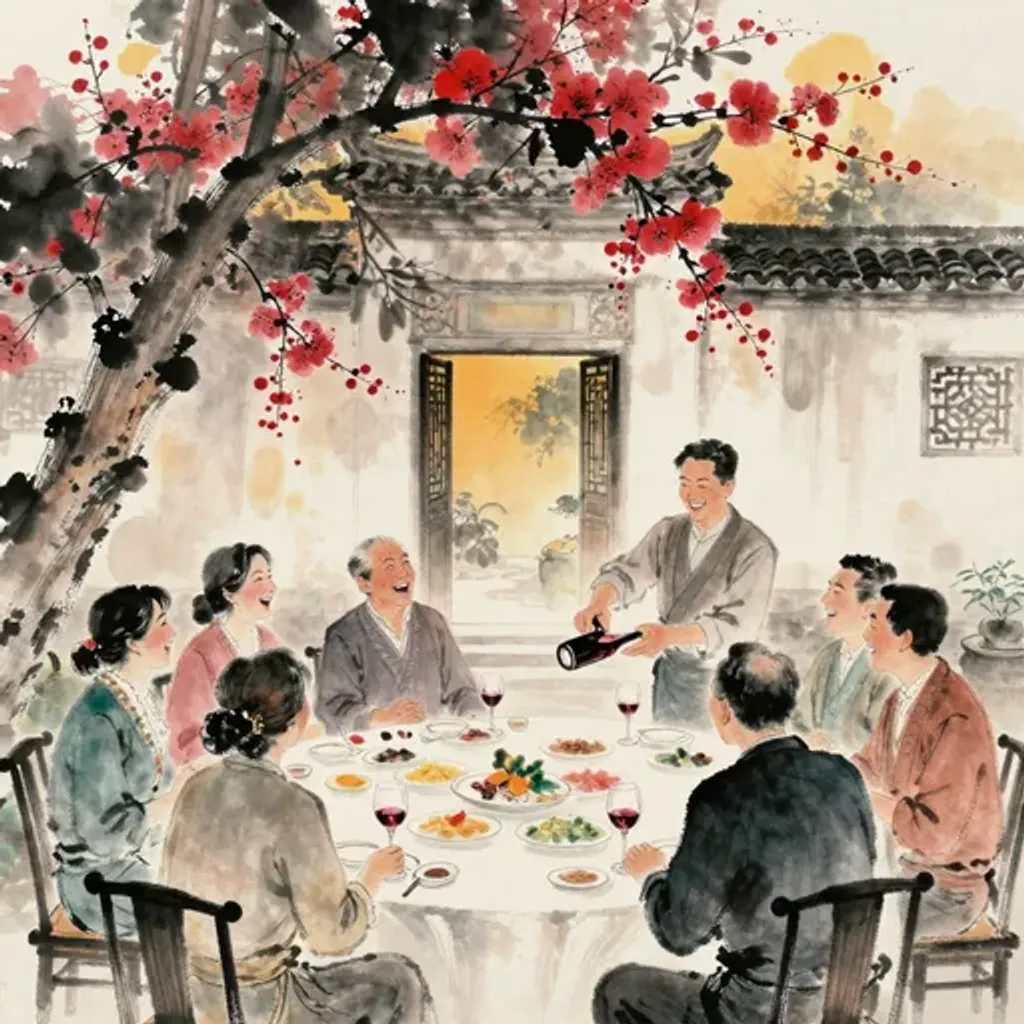
酒為歡伯,除憂來樂,福喜入門,與君相索,使我有德。
Wine is the lord of joy; it banishes worry and brings delight. Fortune and happiness enter the gate; they seek the lord. They grant me virtue.
— Jiao Yanshou, Yilin (Forest of Changes), 1st century BC
Commentary
Water upon water, yet wine dissolves all sorrow. Wine is the 'Earl of Joy' — the personification of conviviality that banishes worry and invites pleasure. Blessings and happiness enter through the door, seeking out the host and bestowing virtue upon him. The verse is pure celebration: wine as social lubricant, joy as an active visitor who comes knocking. From The Abysmal to The Joyous, doubled water transforms into doubled lake — paired pools of delight, friends gathering to study and share. The Joyous thrives on mutual exchange, and wine here serves as its ritual medium: the Earl of Joy presides over the gathering where danger is forgotten and human connection flows freely.
坎 → 渙
Hexagram 29 → Hexagram 59: Dispersion
Changing lines: 6
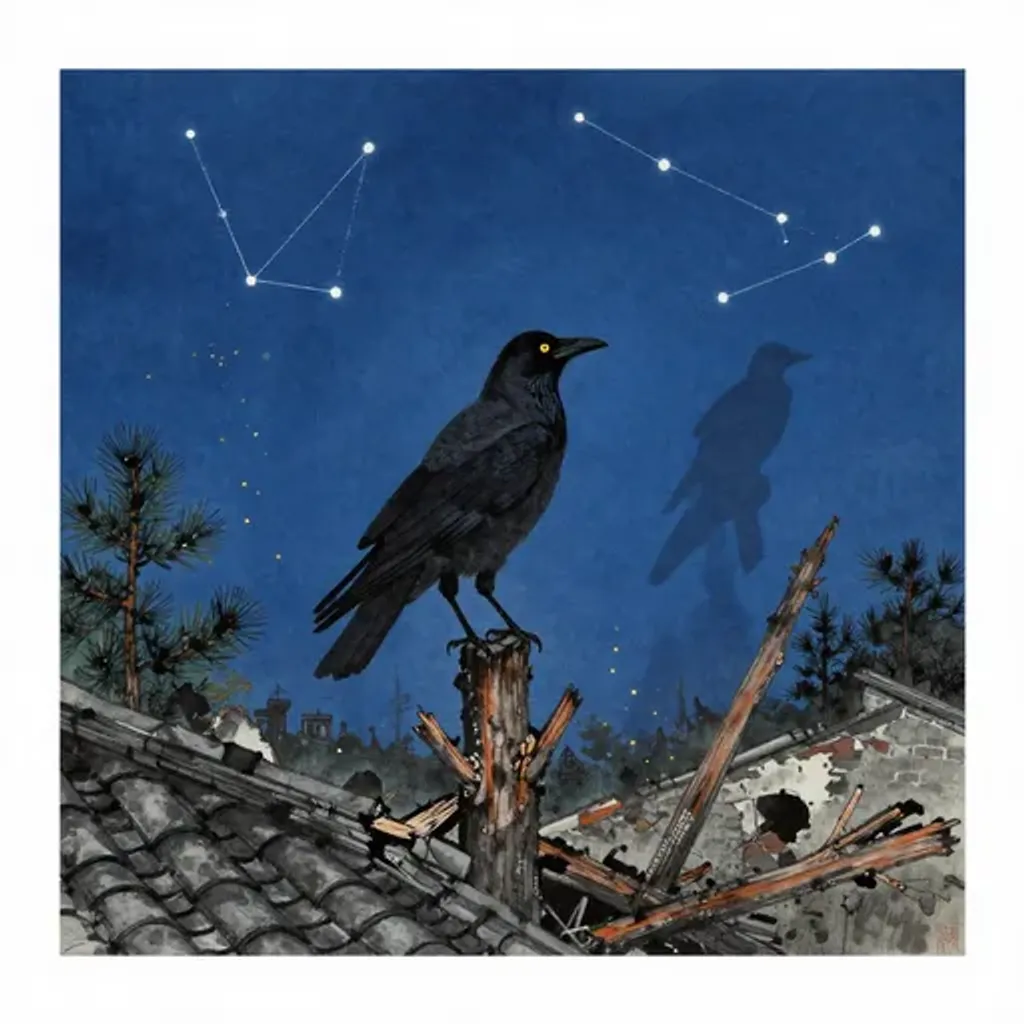
三足孤烏,靈明督郵,司過罰惡。自賊其家,毀敗為憂。
The three-legged solitary crow, spirit-bright inspector of faults, supervises transgressions and punishes evil. It ravages its own house; ruin and destruction are its worry.
— Jiao Yanshou, Yilin (Forest of Changes), 1st century BC
Commentary
Water upon water, the divine inspector keeps watch. The three-legged crow — the sun-bird dwelling within the solar disc — serves here as a spirit-inspector and cosmic dispatch rider, patrolling for transgression and punishing evil. But the sword turns inward: one plunders one's own household, and ruin becomes the cause for worry. The Sun Crow as moral enforcer is an unusual image: the creature that carries the sun across the sky doubles as heaven's police, tracking offenses that even the perpetrator tries to hide. From The Abysmal to Dispersion, wind scatters over water, dispersing what was gathered. Self-inflicted destruction disperses the household as surely as wind breaks up stagnant pools.
坎 → 節
Hexagram 29 → Hexagram 60: Limitation
Changing lines: 1
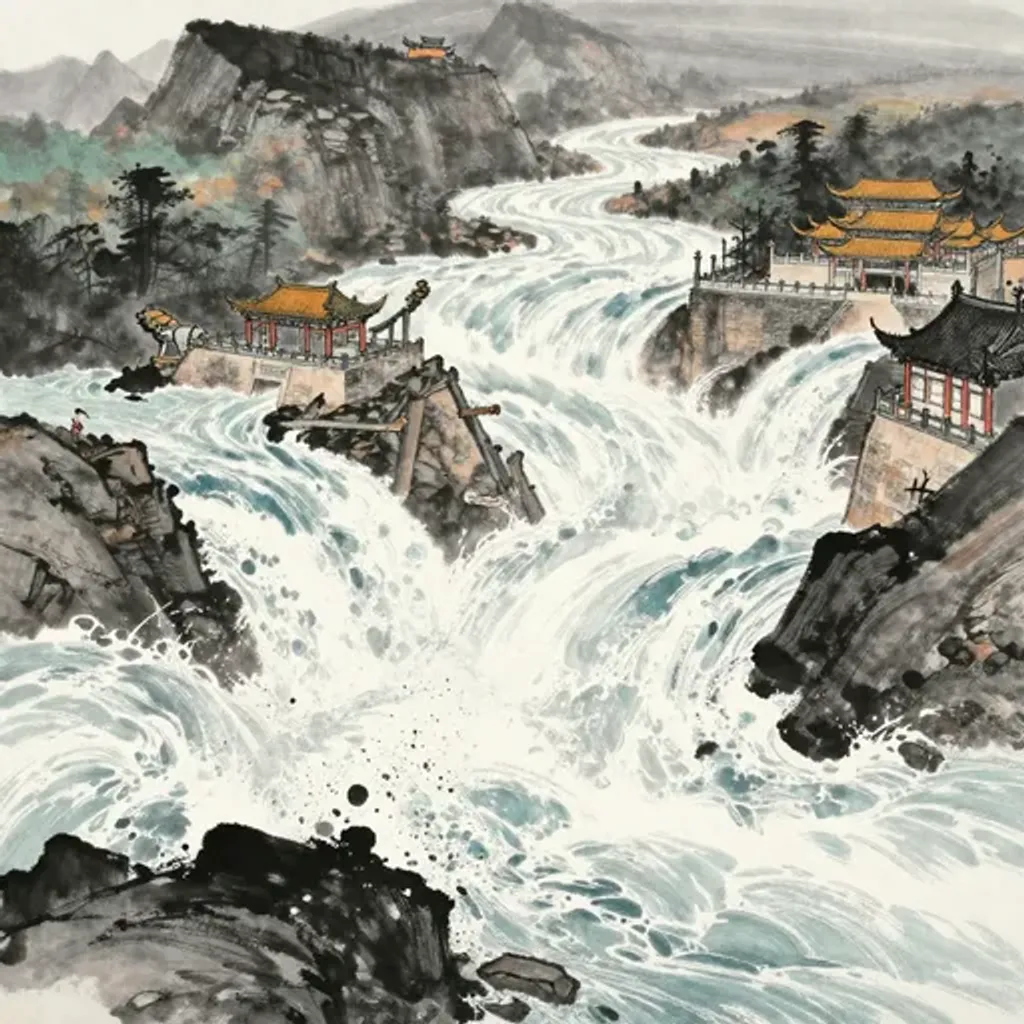
三河俱合,水怒踴躍,壞我王屋,民飢於食。
Three rivers merge together; the waters rage and surge. They destroy the king's hall; the people go hungry for food.
— Jiao Yanshou, Yilin (Forest of Changes), 1st century BC
Commentary
Water upon water, three rivers converge in fury. The waters merge and surge upward in violent agitation, destroying the royal residence and leaving the people starving. The verse is a flood catastrophe at the grandest scale: not one river but three combining their force to overwhelm the seat of power itself. From The Abysmal to Limitation, water pools above the lake — the natural image of measure and restraint. Yet this verse shows what happens when limitation fails: waters that should be regulated by banks and channels instead combine without restraint, and the very structure meant to contain them (the royal house) is swept away. Limitation exists precisely because unchecked water destroys everything.
坎 → 中孚
Hexagram 29 → Hexagram 61: Inner Truth
Changing lines: 1, 6
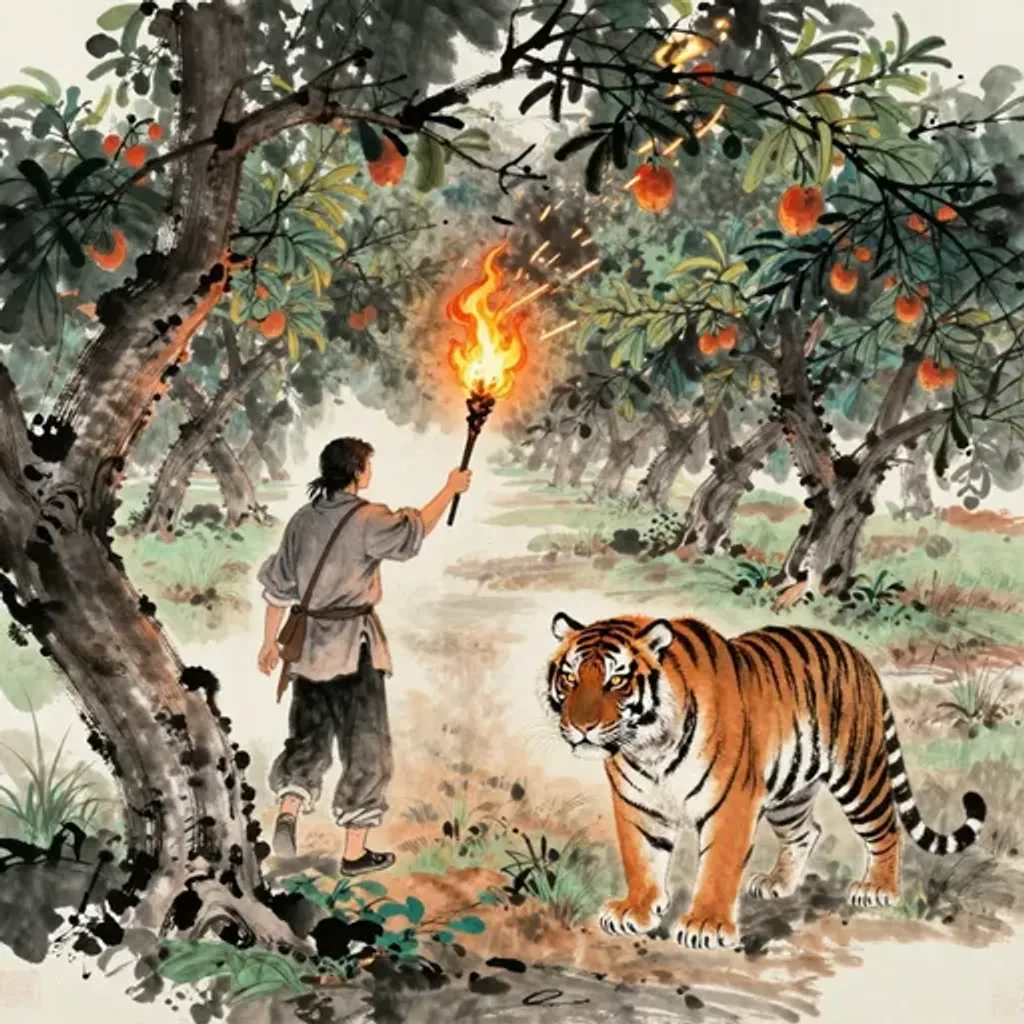
南行棗園,惡虎畏班。執火銷金,使我無患。
Going south to the jujube garden; the fierce tiger fears the markings. Wielding fire to melt metal; it ensures I am free from harm.
— Jiao Yanshou, Yilin (Forest of Changes), 1st century BC
Commentary
Water upon water, the traveler heads south into a grove of jujube trees. A fierce tiger lurks there, but it fears the spotted pattern — perhaps the markings of a larger predator or the dappled shadows that confuse its vision. Fire is brought to bear against metal, melting and refining, and through this process the threat is neutralized. The verse pairs natural danger (the tiger in the grove) with alchemical resolution (fire dissolving metal). From The Abysmal to Inner Truth, wind stirs above the lake, and the gentleman deliberates on justice with compassion. The fire that melts metal is Inner Truth's penetrating sincerity: genuine conviction, applied with precision, transforms even the hardest opposition into something workable.
坎 → 小過
Hexagram 29 → Hexagram 62: Small Exceeding
Changing lines: 2, 3, 4, 5
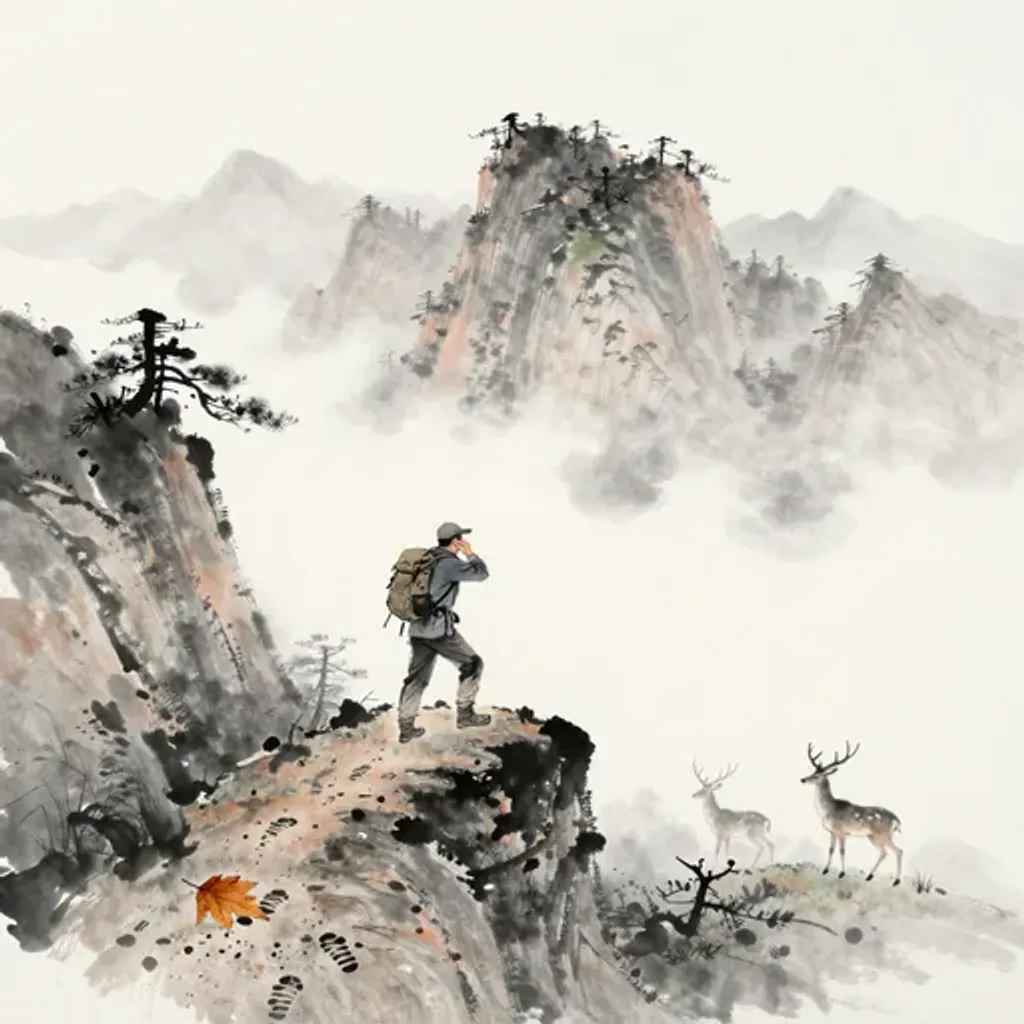
求鹿過山,與利為怨,闇聾不言,誰知其懽。
Seeking deer, one crosses the mountain; gain turns to grievance. Dim and deaf, none will speak; who knows their joy?
— Jiao Yanshou, Yilin (Forest of Changes), 1st century BC
Commentary
Water upon water, the hunter's quest goes awry. Pursuing deer beyond the mountain, the search for profit turns into resentment — what was desired becomes a source of bitterness. Deaf and blind to one's surroundings, unable to speak, who can know if there was ever any joy? The verse is about pursuit that blinds: so fixated on the quarry that all other perception shuts down, the hunter cannot hear, see, or communicate, and pleasure itself becomes unrecognizable. From The Abysmal to Small Exceeding, thunder rumbles above the mountain — the small bird that should not fly too high. Exceeding one's proper range in pursuit of gain produces exactly this: sensory shutdown and joyless acquisition.
坎 → 既濟
Hexagram 29 → Hexagram 63: After Completion
Changing lines: 1, 2, 3
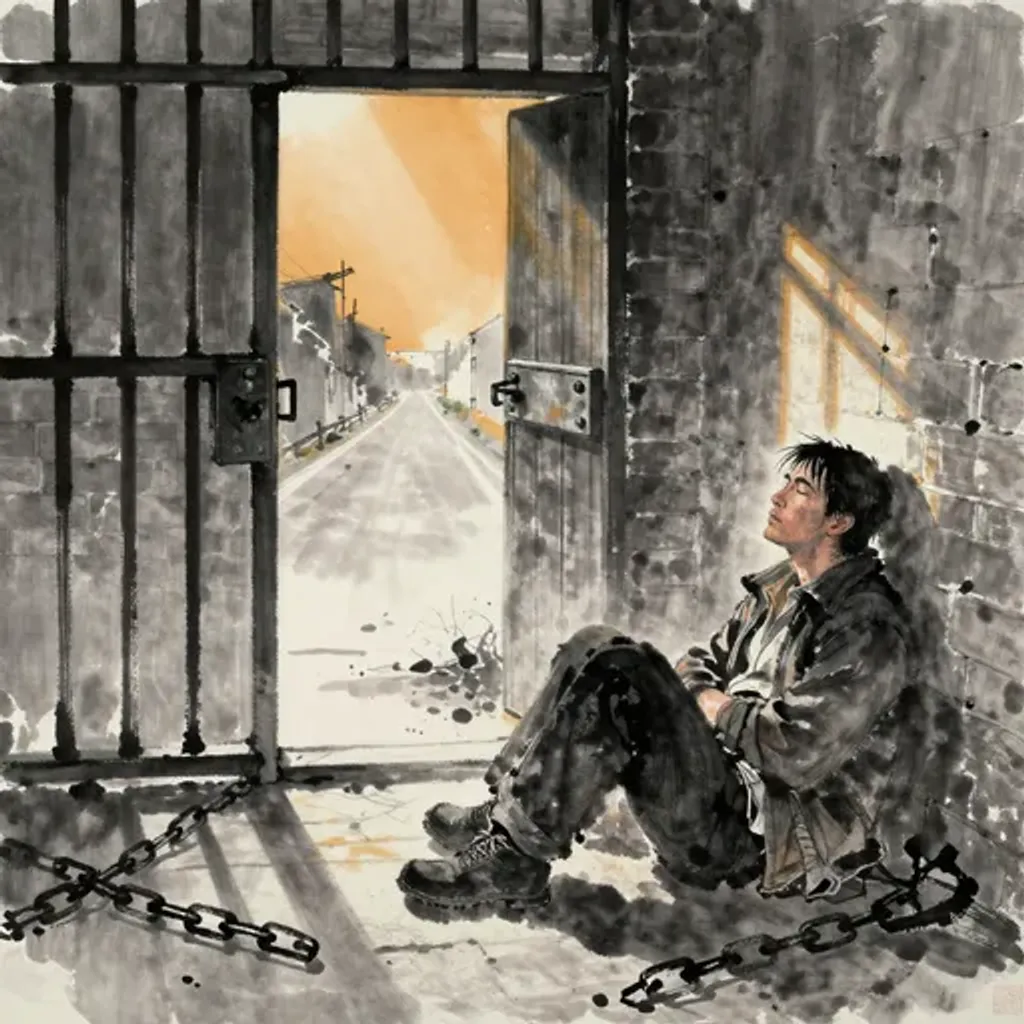
行旅困蹴,失明守宿。囹圄之憂,啟執出遊。
The traveler, weary and hard-pressed, loses his sight and rests in lodging. The worry of prison and chains -- yet the door opens, and one goes forth to travel again.
— Jiao Yanshou, Yilin (Forest of Changes), 1st century BC
Commentary
Water upon water, the traveler is brought low. Exhausted and stumbling on the road, losing sight and forced to shelter for the night — then the anxiety of imprisonment, the walls of a jail closing in. But the verse resolves: the gate opens, the prisoner is released, and free wandering resumes. The structure moves from travel-fatigue through incarceration to liberation. From The Abysmal to After Completion, water sits above fire in perfect balance — everything in its proper place, the crossing already achieved. The prisoner freed embodies this completion: the worst has passed, the ordeal is over, and one emerges on the other side. Yet After Completion counsels vigilance against complacency, for the completed state is inherently fragile.
坎 → 未濟
Hexagram 29 → Hexagram 64: Before Completion
Changing lines: 4, 5, 6
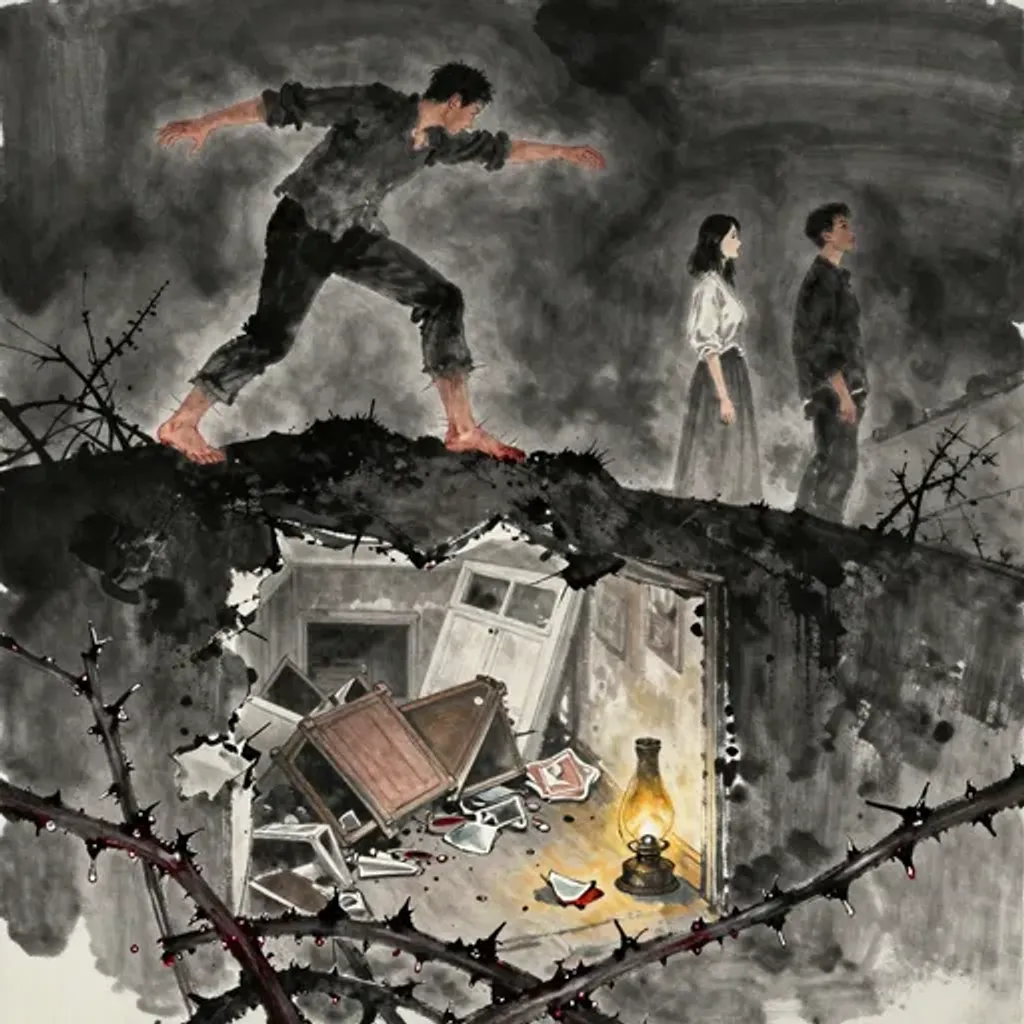
據棘履危,跌刺為憂。夫婦不和,亂我良家。
Grasping thorns, treading on peril; pierced and pricked, a cause of worry. Husband and wife in discord; they bring chaos to my good household.
— Jiao Yanshou, Yilin (Forest of Changes), 1st century BC
Commentary
Water upon water, every surface bristles with thorns. Clinging to brambles and treading upon danger, stumbling into spikes becomes the constant worry. Then the domestic sphere fractures: husband and wife cannot harmonize, and a good household is thrown into disorder. The verse connects external peril with internal discord — the thorns outside mirror the friction within. From The Abysmal to Before Completion, fire hovers above water without touching it, and the fox nearly crosses the river but wets its tail at the last moment. The failing marriage of this verse is Before Completion's essential condition: so close to resolution yet unable to achieve it. The thorns and the quarreling couple both stand at the threshold of order, unable to cross over.