Transformations of Hexagram 3
Every line of change out of Hexagram 3 屯 Difficulty at the Beginning, with the Yilin verse for each of the 64 resulting hexagrams, its translation, and the original ink brush artwork.
屯 → 乾
Hexagram 3 → Hexagram 1: The Creative
Changing lines: 2, 3, 4, 6
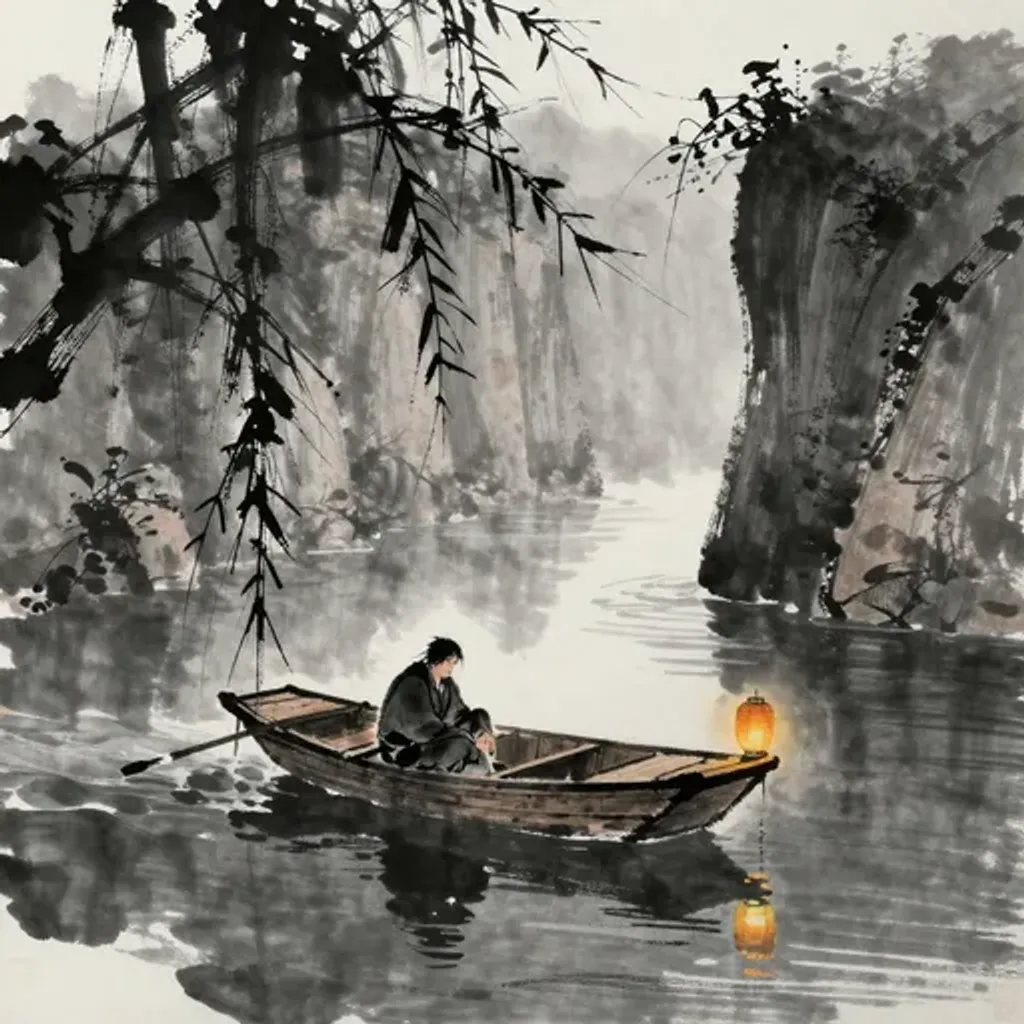
汎汎柏舟,流行不休。耿耿寤寐,心懷大憂。仁不逢時,復隱窮居。
Drifting, drifting, the cypress boat; floating on and on without rest. Sleepless through the watches; the heart bears a great sorrow. Benevolence does not meet its time; one retreats again to dwell in poverty.
— Jiao Yanshou, Yilin (Forest of Changes), 1st century BC
Commentary
Clouds and thunder churn above, but the creative force of pure heaven waits below. A cypress boat drifts endlessly, unable to moor, as its occupant lies awake night after night consumed by worry. This echoes the Shijing's 'Bai Zhou' ode, where a virtuous person adrift laments being unrecognized despite talent. The benevolent one has not met the right time and withdraws into poverty and seclusion. From Difficulty at the Beginning to The Creative, the verse maps the painful interval before breakthrough: the thunder-and-water tangle of Zhun contains latent heaven-over-heaven energy, but that self-generating initiative remains trapped until conditions align. The drift is not permanent defeat but the prelude to self-renewal.
屯 → 坤
Hexagram 3 → Hexagram 2: The Receptive
Changing lines: 1, 5
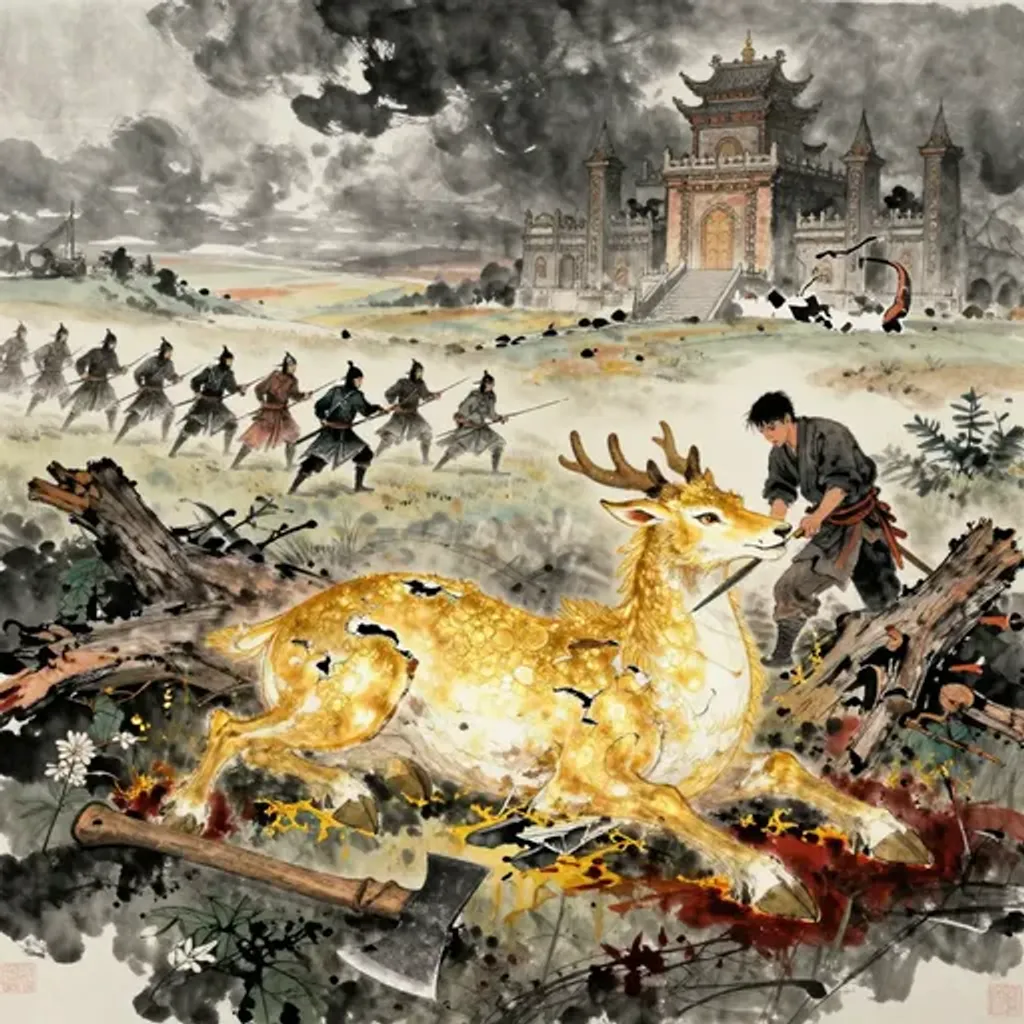
採薪得麟,大命隕顛。豪雄爭名,天下四分。
Gathering firewood, one finds a qilin; the great mandate falls and overturns. Heroes contend for fame; the realm splits into four.
— Jiao Yanshou, Yilin (Forest of Changes), 1st century BC
Commentary
Clouds and thunder struggle as the earth opens wide beneath. A woodcutter gathering fuel captures a qilin, and the great mandate collapses. This directly references the Western Hunt of 481 BC, when a charioteer of the Shusun clan snared a qilin during a hunt in the Great Marsh. Confucius identified the creature and wept: 'My Way is exhausted!' The qilin, harbinger of sage rule, appearing in a broken age signaled the end of the Spring and Autumn moral order. Heroes contend for fame and the realm splits into four. From Difficulty at the Beginning to The Receptive, initial struggle dissolves into fragmented earth: when the cosmic omen is mishandled, creative potential scatters into passive disunity, and no single will can hold the center.
屯 → 屯
Hexagram 3 → Hexagram 3: Difficulty at the Beginning
No changing lines — the hexagram is unchanged
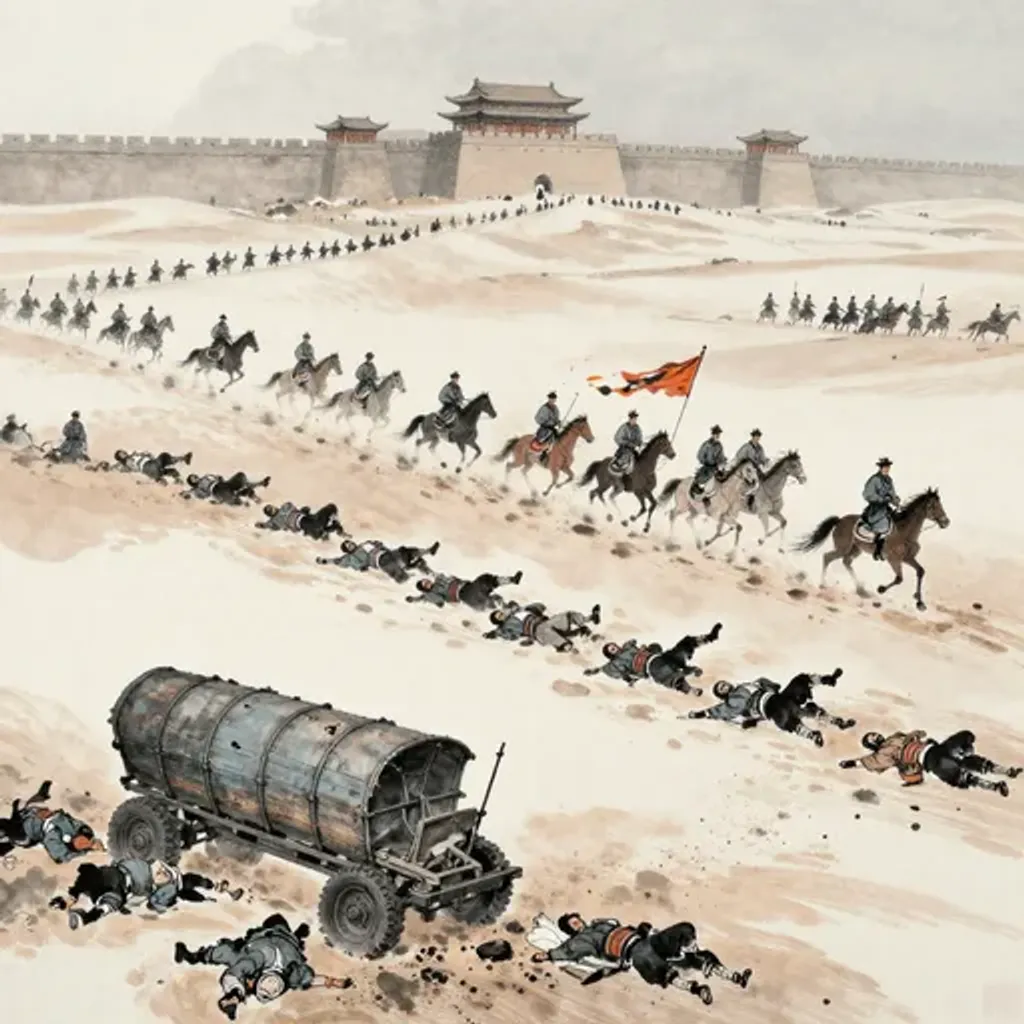
兵征大宛,北出玉關。與胡寇戰,平城道西,七日絕糧,身幾不全。
The army campaigns against Dayuan, going north out through Jade Gate. Battling the Xiongnu raiders west of Pingcheng; seven days without grain, the body nearly lost.
— Jiao Yanshou, Yilin (Forest of Changes), 1st century BC
Commentary
Difficulty doubles upon itself when the hexagram transforms into its own image. Troops march against Dayuan and venture north through the Jade Gate, only to clash with nomad raiders west of Pingcheng, cut off from supplies for seven days, their lives hanging by a thread. This references the Siege of Baideng in 200 BC, when Emperor Gaozu of Han rashly pursued the Xiongnu and was encircled by Modu Chanyu's forty thousand cavalry on Baideng Mountain for seven full days without provisions. Only Chen Ping's secret stratagem, bribing the Chanyu's consort, secured the emperor's escape. Zhun unchanging intensifies its own nature: the initial difficulty is not merely encountered but compounded, and reckless advance into hostile terrain magnifies every vulnerability.
屯 → 蒙
Hexagram 3 → Hexagram 4: Youthful Folly
Changing lines: 1, 2, 5, 6
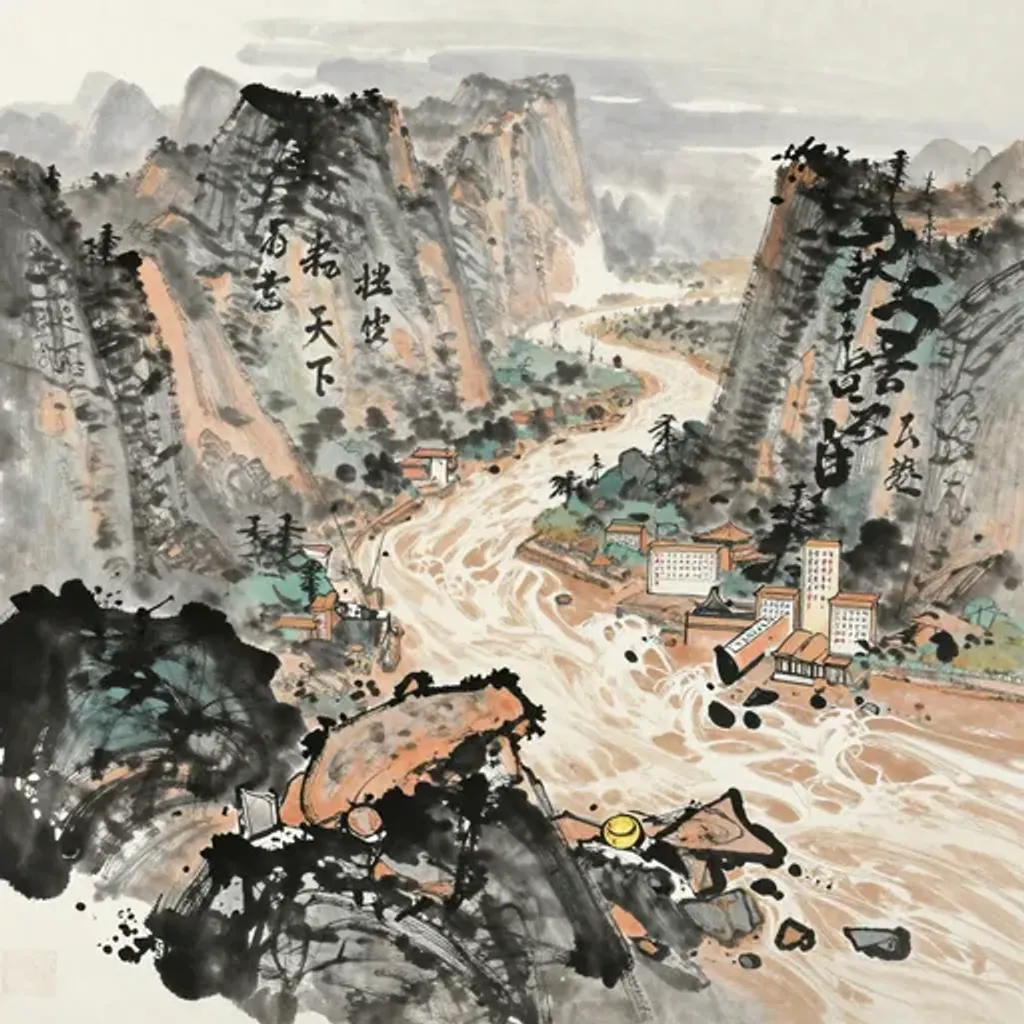
山崩谷絕,天福盡竭。涇渭失紀,玉厤盡已。
Mountains collapse, valleys are severed; heaven’s blessings are utterly exhausted. The Jing and Wei rivers lose their course; the jade calendar has reached its end.
— Jiao Yanshou, Yilin (Forest of Changes), 1st century BC
Commentary
Clouds and thunder yield to a mountain spring emerging below: initial chaos gives way to untutored youth. Mountains collapse and valleys are severed, heaven's blessings entirely exhausted. The Jing and Wei rivers lose their natural courses, and the jade calendar reaches its end. This imagery of cosmic disintegration, where even the reliable markers of geography and time dissolve, suggests a world stripped of its ordering principles. From Difficulty at the Beginning to Youthful Folly, the transformation reveals that when initial creative struggle fails to find form, the result is not maturity but regression into bewilderment. The spring still flows beneath the mountain, but without guidance it wanders, and the structures that once channeled it lie in ruins.
屯 → 需
Hexagram 3 → Hexagram 5: Waiting
Changing lines: 2, 3
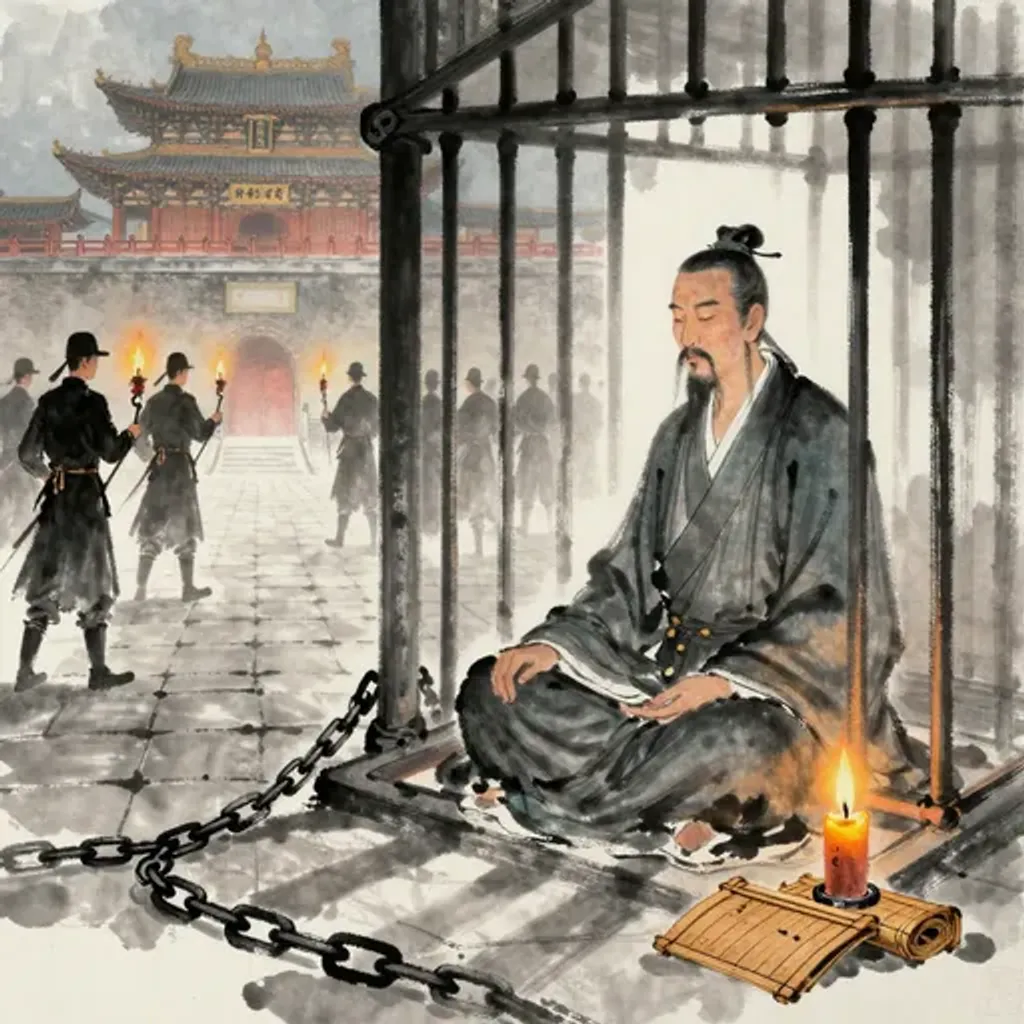
夏臺羑里,湯文所厄。鬼侯俞賄,商王解舍。
Xiatai, Youli—the prisons where Tang and Wen were confined. The Marquis of Gui sent bribes; the Shang king released them.
— Jiao Yanshou, Yilin (Forest of Changes), 1st century BC
Commentary
Clouds and thunder give way to clouds rising above heaven: initial hardship transforms into patient waiting. Xiatai and Youli name the two most famous prisons of antiquity, where King Tang and King Wen were unjustly confined. Tang was imprisoned by the tyrant Jie of Xia; Wen was held by King Zhou of Shang. Yet both emerged to found new dynasties. The verse then pivots: the Ghost Marquis offered bribes, and the Shang king released his captive. According to the Shiji, the Ghost Marquis (Guihou, also called Jiuhou) was one of Shang's three highest nobles; his daughter was killed by King Zhou for refusing debauchery, and Guihou himself was minced into paste. From Difficulty at the Beginning to Waiting, the message is clear: righteous endurance under unjust confinement is the price of future sovereignty.
屯 → 訟
Hexagram 3 → Hexagram 6: Conflict
Changing lines: 1, 2, 4, 6
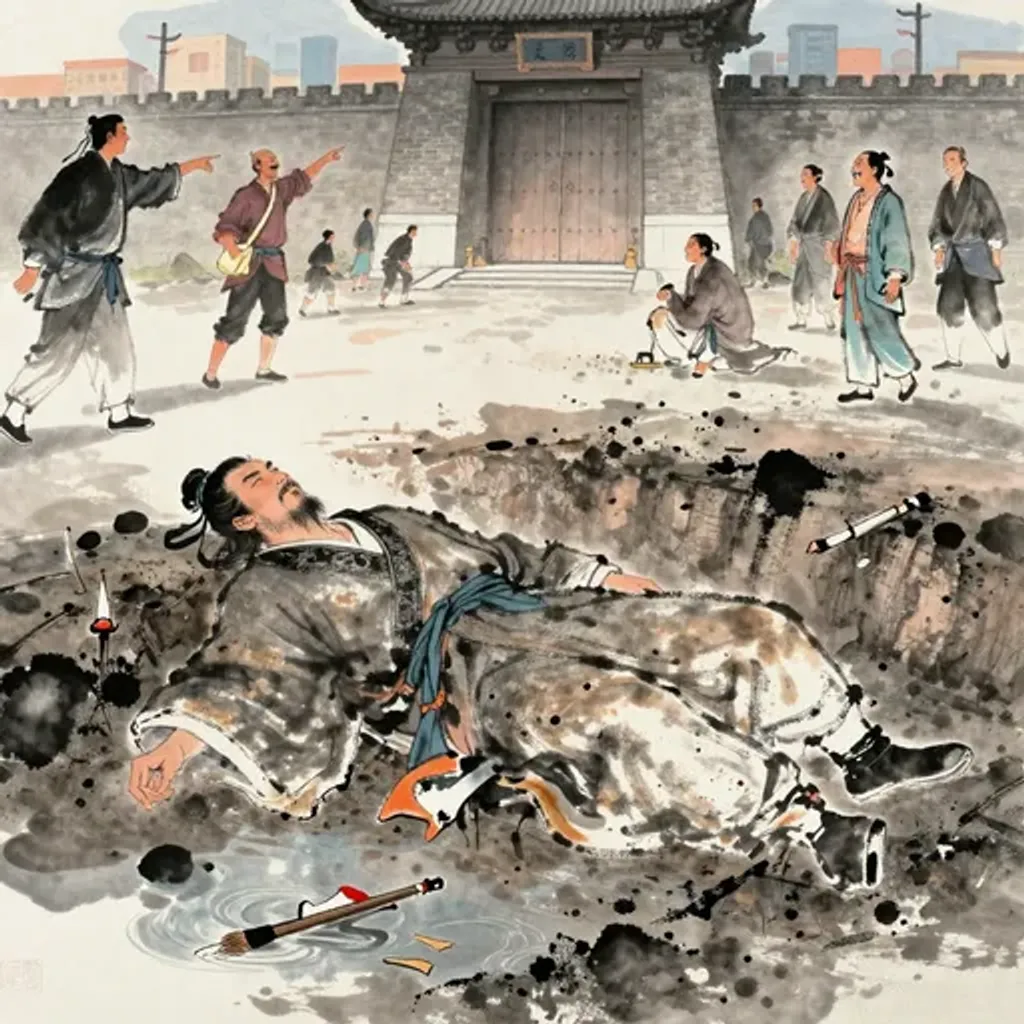
泥津汙辱,棄捐溝瀆。所共笑哭,終不顯錄。
Muddied and soiled in filth; cast away in ditches and drains. An object of shared ridicule and tears; in the end, never distinguished or recorded.
— Jiao Yanshou, Yilin (Forest of Changes), 1st century BC
Commentary
Clouds and thunder descend into heaven and water moving apart: initial struggle hardens into unresolvable contention. Mired in muddy crossings and humiliated, the subject is discarded into ditches and drains. Others laugh and weep over the spectacle, but in the end no recognition ever comes. The imagery is one of utter social degradation: talent cast into the gutter, passed over and forgotten. From Difficulty at the Beginning to Conflict, the transformation reveals how initial disorder, left unresolved, festers into permanent estrangement. Heaven and water pull in opposite directions, and what began as birth-pangs crystallizes into irreconcilable opposition, where the deserving remain unrecorded and the undeserving prevail.
屯 → 師
Hexagram 3 → Hexagram 7: The Army
Changing lines: 1, 2, 5
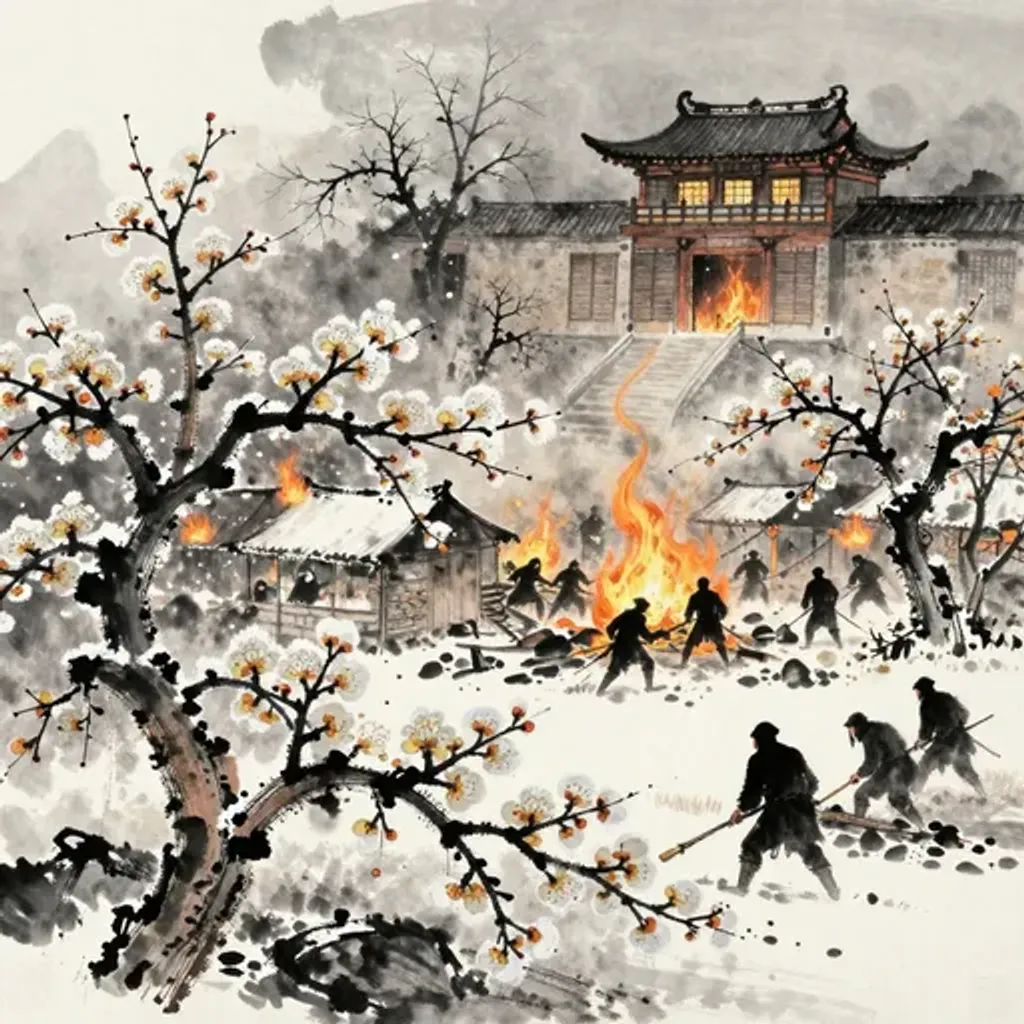
李梅冬實,國多盜賊。擾亂並作,君不能息。
Plum and pear fruit in winter; the land is full of thieves and bandits. Turmoil rises on every side; the lord cannot put it to rest.
— Jiao Yanshou, Yilin (Forest of Changes), 1st century BC
Commentary
Clouds and thunder give way to water hidden within the earth: initial difficulty calls for disciplined response. Plum and apricot trees bear fruit in winter, an unnatural omen signaling that the state swarms with bandits and thieves. Disorder erupts on all sides, and the ruler cannot restore peace. When trees fruit out of season, the natural order has inverted; such portents in Han-dynasty omenology signal governance gone deeply wrong. From Difficulty at the Beginning to The Army, the transformation demands that chaotic energy be organized into structured force. Earth containing water is the image of the masses held in reserve, but here the ruler fails to marshal that potential, and disorder metastasizes unchecked.
屯 → 比
Hexagram 3 → Hexagram 8: Holding Together
Changing lines: 1
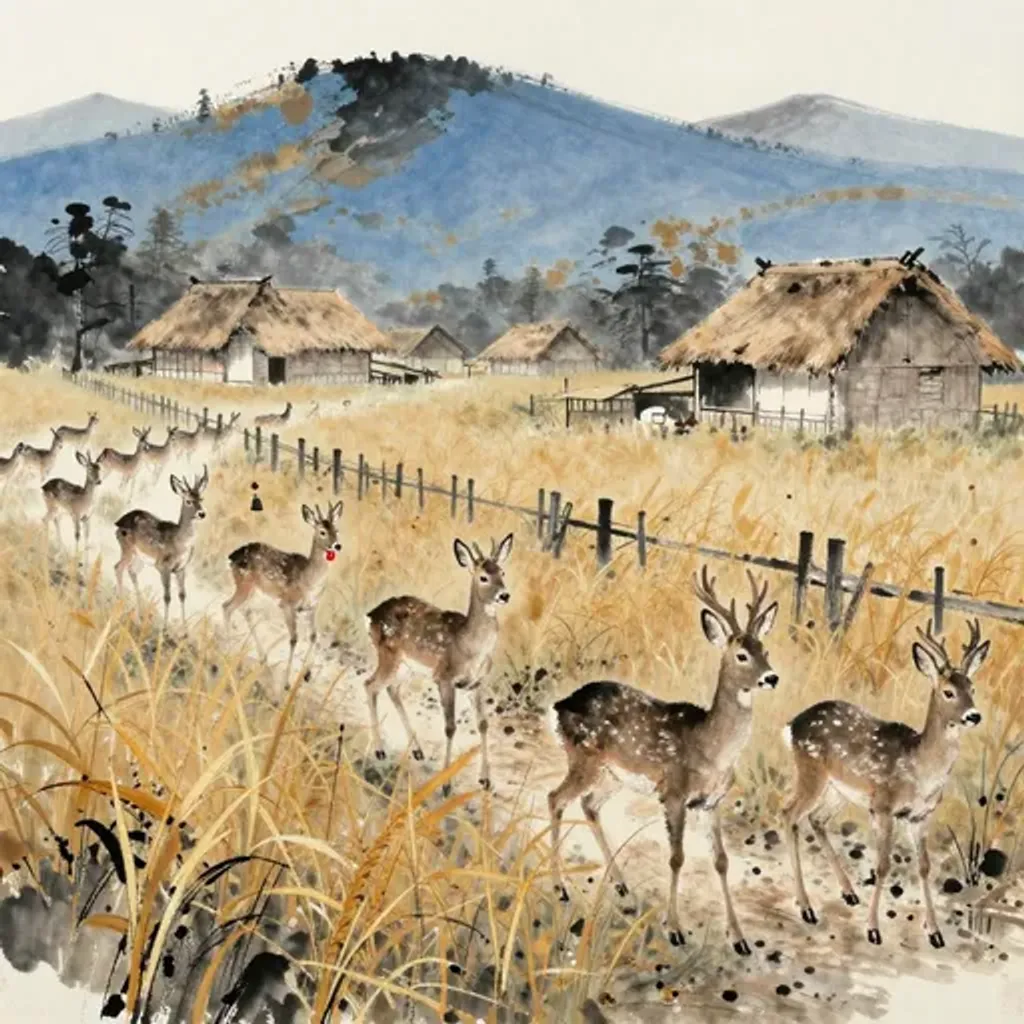
獐鹿逐牧,飽歸其居。反還次舍,無有疾故。
Roe and deer follow the pasture; sated, they return to their dwelling. Coming back to their lodging; without any sickness or mishap.
— Jiao Yanshou, Yilin (Forest of Changes), 1st century BC
Commentary
Clouds and thunder yield to water resting upon earth: initial chaos resolves into natural belonging. Roe deer and deer follow their pastures, graze until sated, and return to their resting places. They come back to their lodgings without illness or mishap. The pastoral imagery is deliberately simple: animals guided by instinct find sustenance and shelter without striving. From Difficulty at the Beginning to Holding Together, the transformation maps how turbulent beginnings settle into organic community. Water upon earth gathers naturally into pools and streams; creatures find their place not through conquest but through following the landscape. The initial tangle of thunder and rain gives way to the quiet gravity of mutual belonging.
屯 → 小畜
Hexagram 3 → Hexagram 9: Small Taming
Changing lines: 2, 3, 6
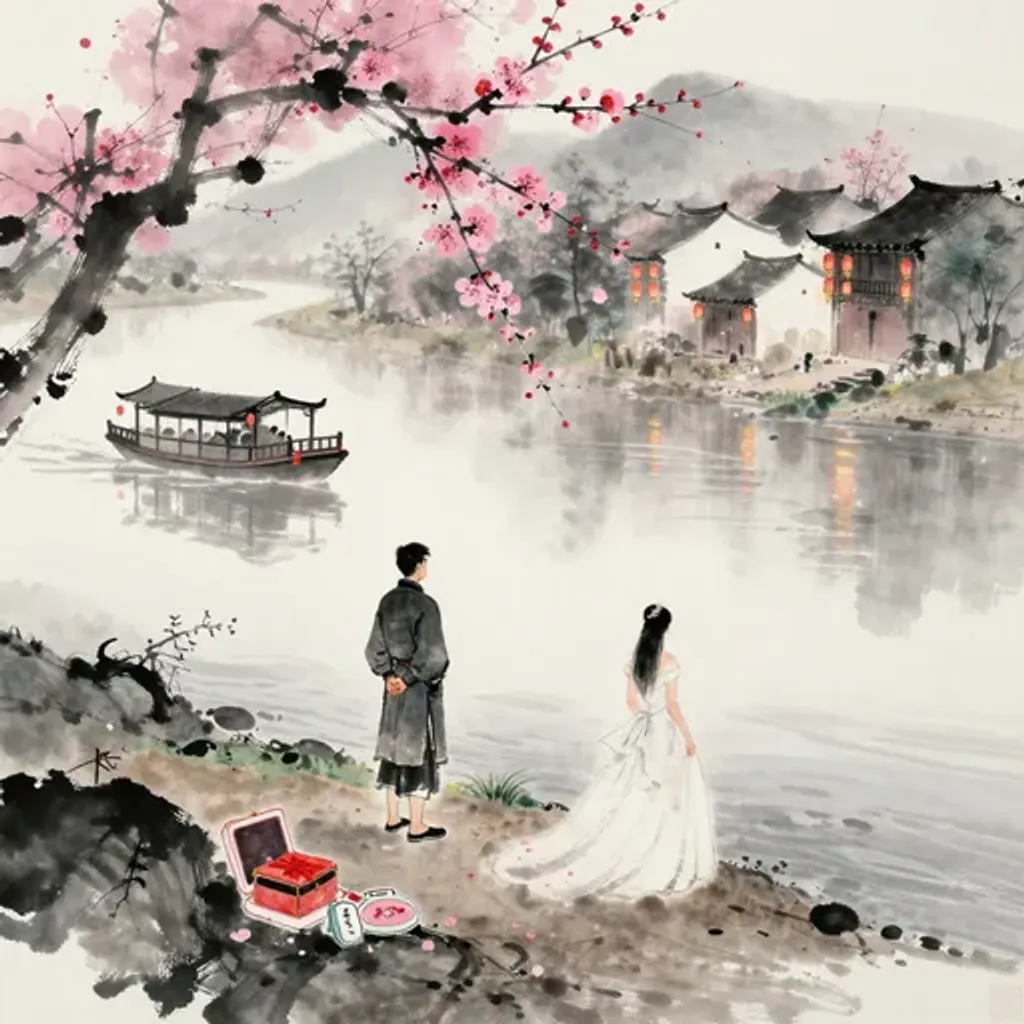
夾河為婚,期至無船。淫心失望,不見所歡。
A marriage arranged across the river; the date arrives but there is no boat. Longing desire is disappointed; the beloved is never seen.
— Jiao Yanshou, Yilin (Forest of Changes), 1st century BC
Commentary
Clouds and thunder strain against wind moving across heaven: initial difficulty encounters gentle restraint that cannot hold. A marriage is arranged across the river, but when the appointed day arrives there is no boat. Desire is thwarted, and the longed-for beloved never appears. The river as impassable barrier between lovers is one of the oldest motifs in Chinese poetry. From Difficulty at the Beginning to Small Taming, the transformation reveals a mismatch of force and means. Wind above heaven exerts only gentle influence, too delicate to overcome Zhun's raw obstacles. The bride cannot cross because the restraining power is insufficient; longing intensifies but the practical means of union remain absent.
屯 → 履
Hexagram 3 → Hexagram 10: Treading
Changing lines: 2, 4, 6
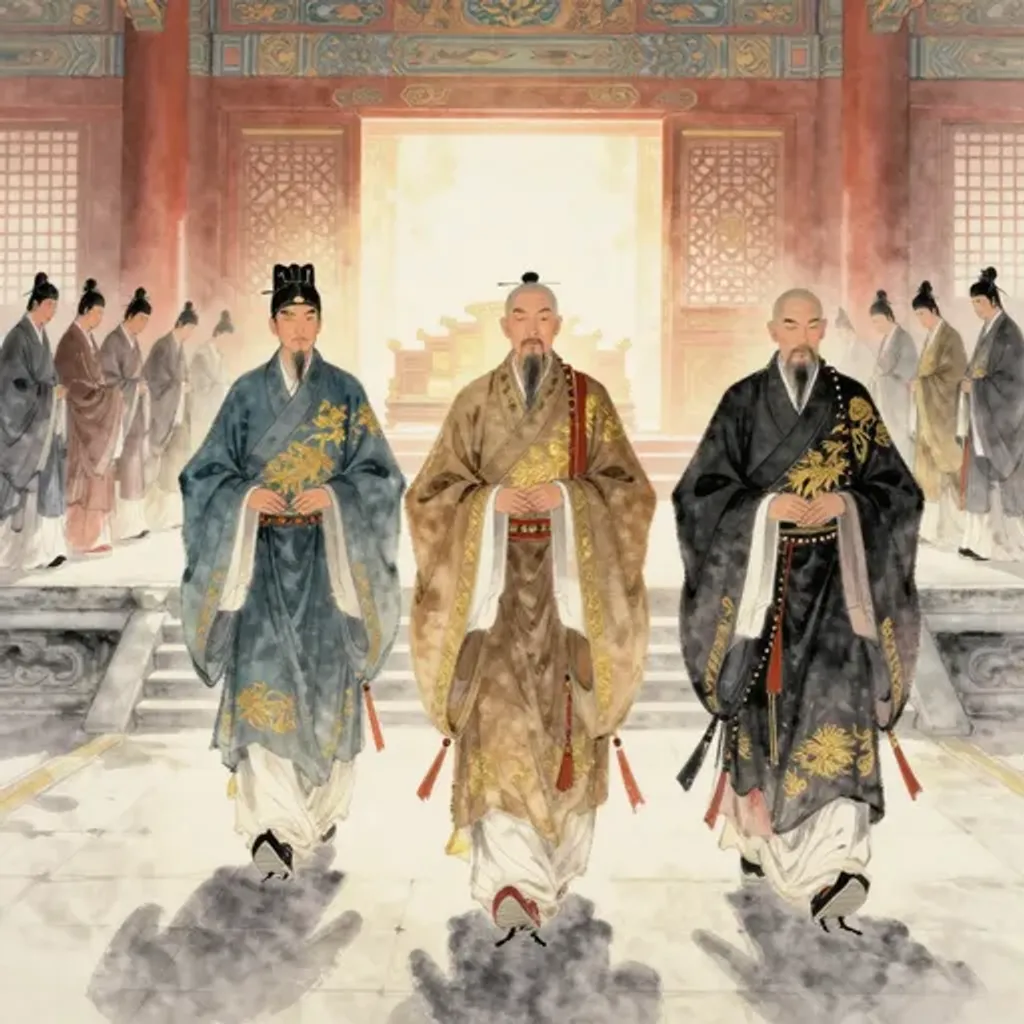
百足俱行,相輔為強。三聖翼事,王室寵光。
A hundred feet all moving together, supporting each other in strength. Three sages assist the enterprise; the royal house is honored and radiant.
— Jiao Yanshou, Yilin (Forest of Changes), 1st century BC
Commentary
Clouds and thunder resolve into heaven above and lake below: initial difficulty finds its footing through proper conduct. A centipede walks with all its legs in concert, each supporting the others to create collective strength. Three sages assist the enterprise, and the royal house shines with honored glory. The 'three sages' likely refers to the Duke of Zhou, the Duke of Shao, and Taigong, who together stabilized the early Zhou dynasty after King Wu's death. From Difficulty at the Beginning to Treading, the transformation shows how coordinated effort and ritual propriety transform chaos into order. Heaven above lake establishes clear hierarchy; the centipede's hundred legs move as one because each knows its place.
屯 → 泰
Hexagram 3 → Hexagram 11: Peace
Changing lines: 2, 3, 5
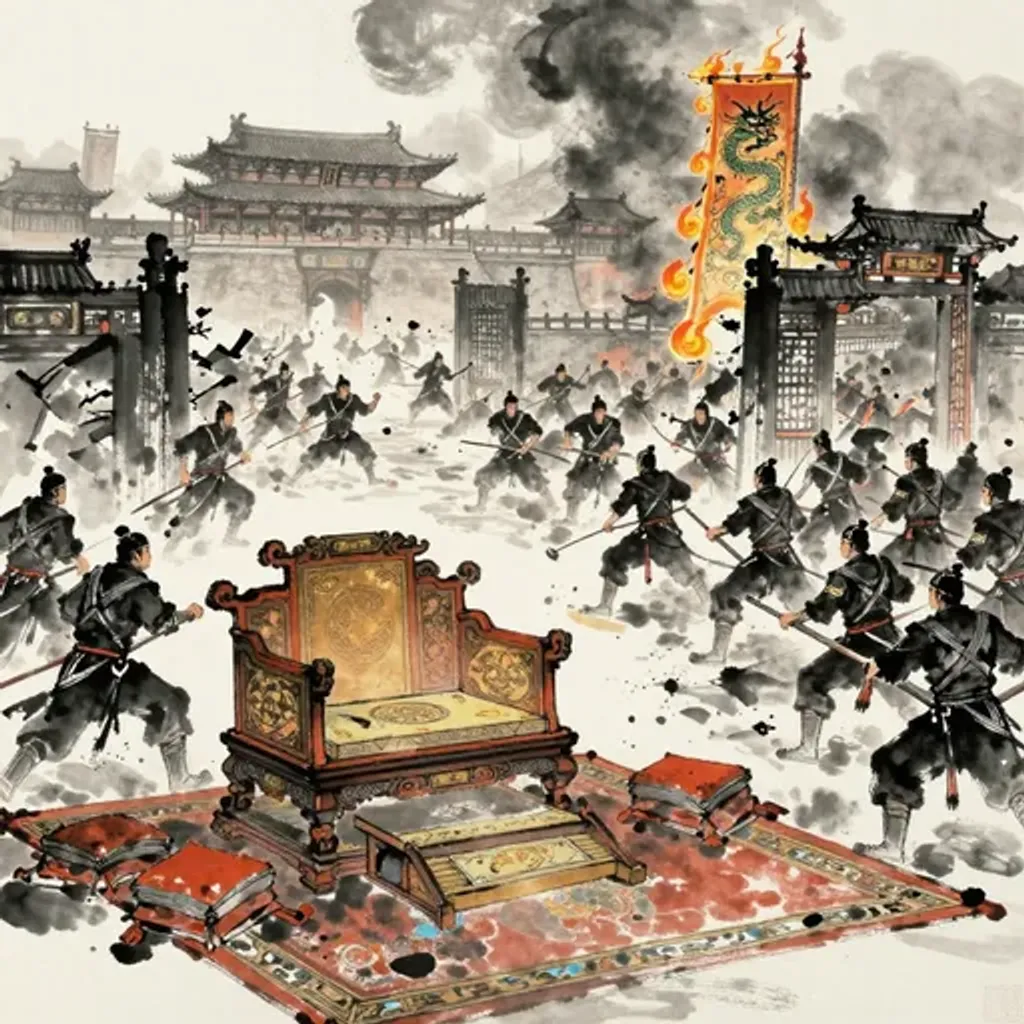
坐位失處,不能自居。賊破王邑,陰陽顛倒。
The seat is lost, its place displaced; one cannot settle in one’s own dwelling. Bandits shatter the royal city; yin and yang are overturned.
— Jiao Yanshou, Yilin (Forest of Changes), 1st century BC
Commentary
Clouds and thunder yield to earth over heaven: initial difficulty inverts into the exchange of Peace, yet the verse describes its opposite. The ruler loses his seat and cannot maintain his position. Bandits breach the royal capital, and yin and yang are turned upside down. The irony is sharp: Tai represents heaven and earth in harmonious intercourse, but the verse names the very conditions that shatter that harmony. From Difficulty at the Beginning to Peace, the potential for cosmic balance exists, yet it remains unrealized. The throne is overturned, the capital falls, and the natural order stands inverted. Peace as a hexagram names a possibility, not a guarantee; without vigilance, its promise collapses into the chaos it was meant to transcend.
屯 → 否
Hexagram 3 → Hexagram 12: Standstill
Changing lines: 1, 4, 6
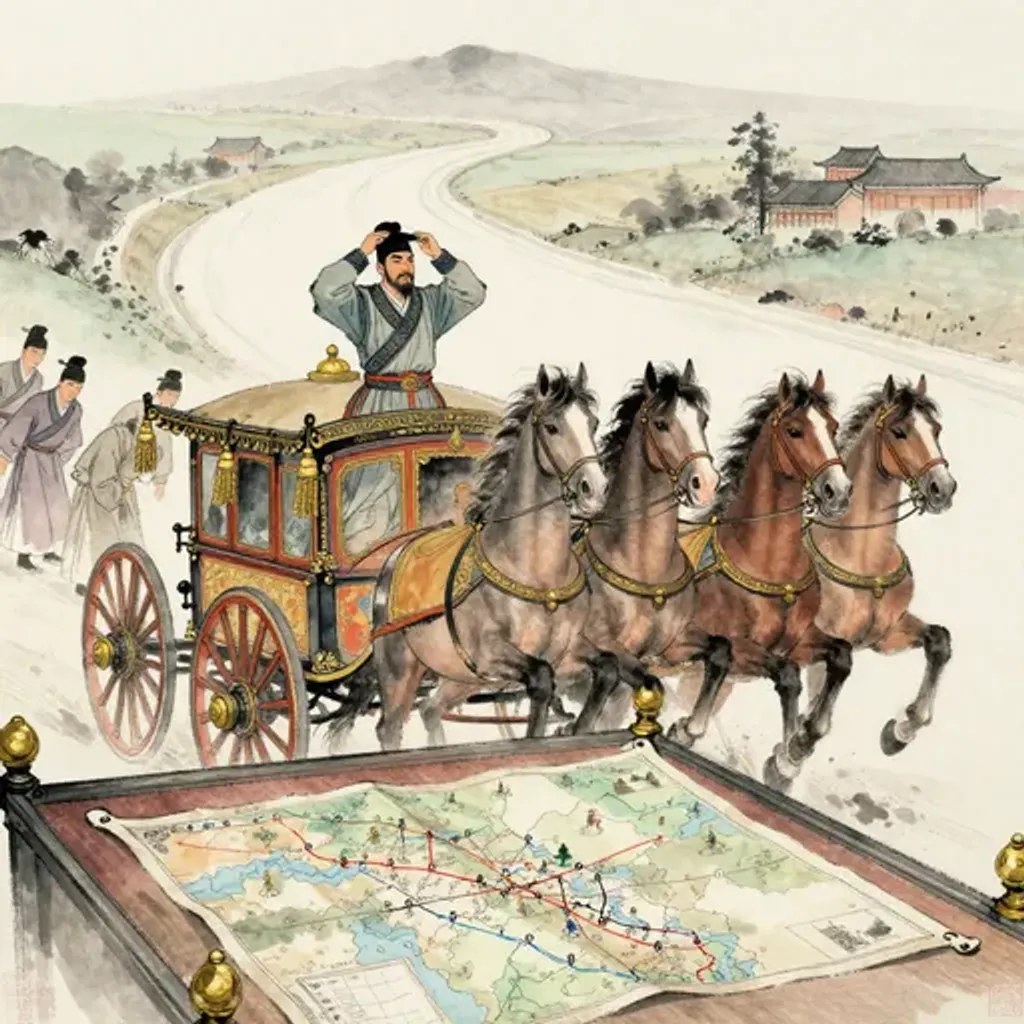
登几上輿,駕駟南遊。合從散橫,燕齊以強。
Ascending the bench, mounting the carriage; driving four horses on a southern journey. Uniting the Vertical Alliance, scattering the Horizontal; Yan and Qi grow strong.
— Jiao Yanshou, Yilin (Forest of Changes), 1st century BC
Commentary
Clouds and thunder give way to heaven and earth refusing to meet: initial struggle hardens into deadlock. A dignitary ascends his carriage and drives south with a team of four, forging the Vertical Alliance to scatter the Horizontal — and Yan and Qi grow strong. This references the Warring States diplomatic strategy: the Vertical Alliance (hezong) united weaker states against Qin, while the Horizontal Alliance (lianheng) was Qin's counter-strategy of bilateral deals. The verse names the moment when coalition-building shifts the balance of power. From Difficulty at the Beginning to Standstill, the paradox emerges: political maneuvering that strengthens individual states simultaneously entrenches mutual blockage, as heaven and earth refuse communication and each side fortifies its position.
屯 → 同人
Hexagram 3 → Hexagram 13: Fellowship
Changing lines: 3, 4, 6
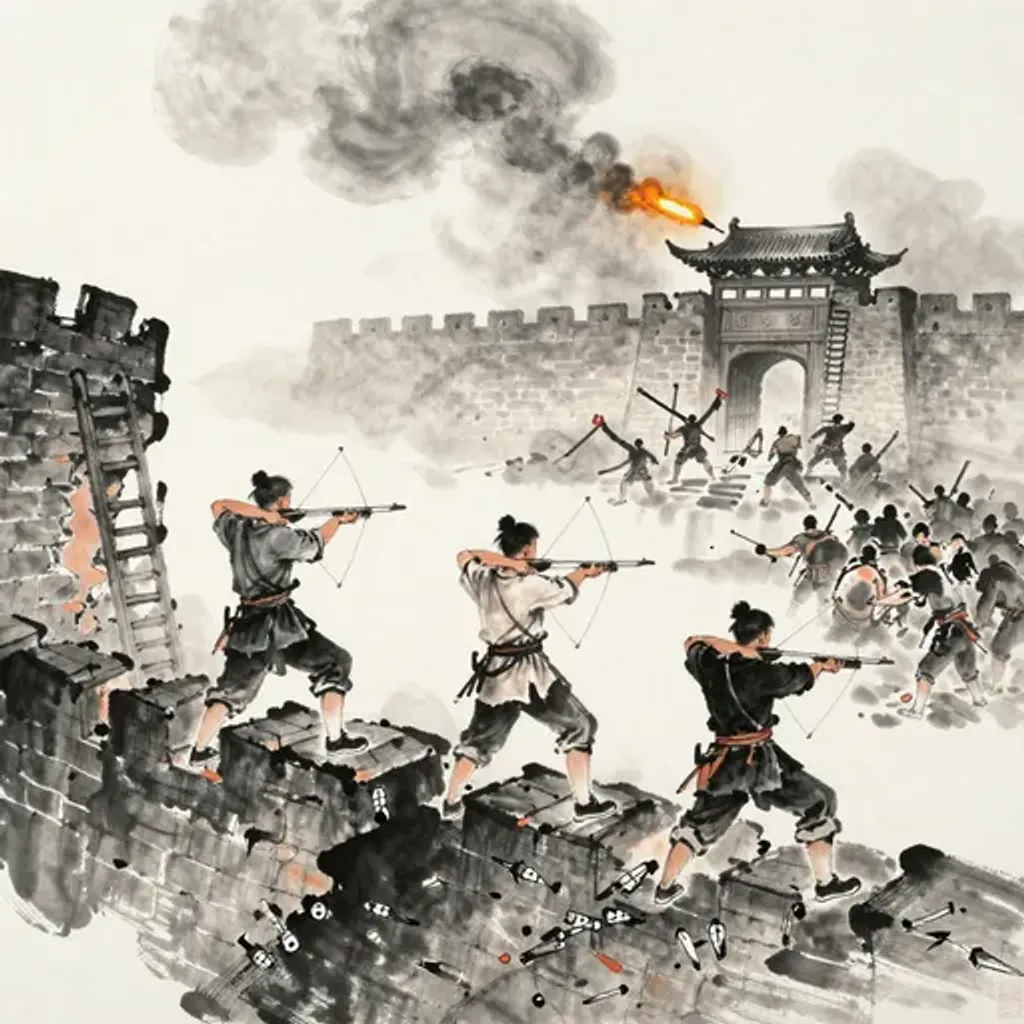
三孫荷弩,無益於輔。城弱不守,邦君受討。
Three grandsons bear crossbows; they are of no help in defense. The walls are weak and cannot hold; the lord of the domain is called to account.
— Jiao Yanshou, Yilin (Forest of Changes), 1st century BC
Commentary
Clouds and thunder transform into heaven and fire together: initial chaos seeks fellowship but finds hollow alliance. Three grandsons shoulder crossbows, yet they bring no real help. The city walls are weak and cannot hold, and the state's lord suffers conquest. Armed retainers without discipline cannot compensate for structural weakness. From Difficulty at the Beginning to Fellowship, the transformation exposes the gap between the appearance of solidarity and its substance. Heaven with fire illuminates broadly, calling for genuine unity of purpose, but here the fellowship is merely nominal. The crossbow-bearers lack coordination, the walls lack strength, and the lord lacks the support that would make alliance meaningful rather than decorative.
屯 → 大有
Hexagram 3 → Hexagram 14: Great Possession
Changing lines: 2, 3, 4, 5, 6
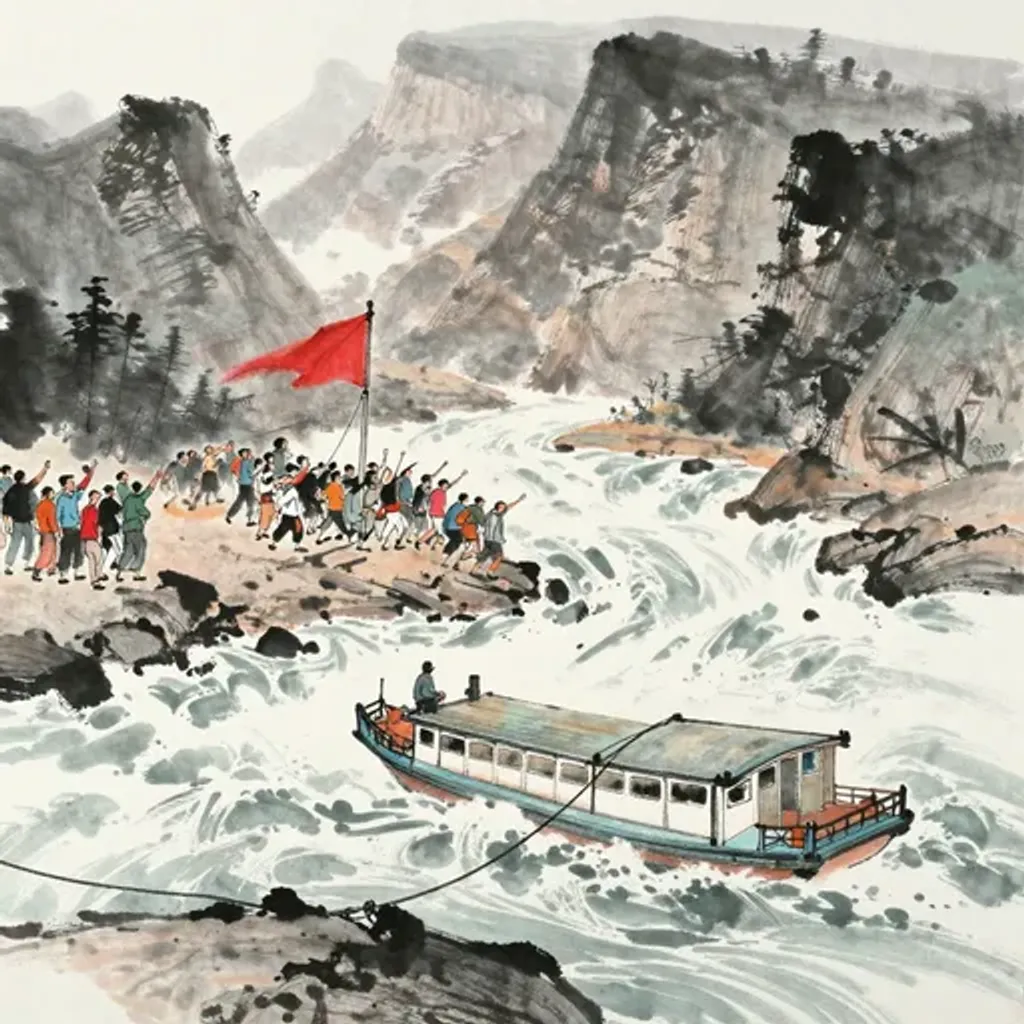
河伯大呼,津不得渡。船空無人,往來亦難。
The River God cries out; the ford cannot be crossed. The boat is empty, no one aboard; coming and going are likewise difficult.
— Jiao Yanshou, Yilin (Forest of Changes), 1st century BC
Commentary
Clouds and thunder give way to fire blazing in heaven: initial difficulty opens into vast possession, yet the river god blocks the way. The Earl of the River bellows, and the ford cannot be crossed. The boat sits empty with no one aboard, and passage back and forth proves impossible. Hebo, the Yellow River deity, demands sacrifice before granting passage. Even when abundance beckons on the far shore, a divine gatekeeper stands between the traveler and his destination. From Difficulty at the Beginning to Great Possession, the transformation promises fire above heaven, illuminating everything, but the verse reveals that great wealth requires crossing dangerous thresholds. The river god's fury warns that not all barriers yield to ambition alone.
屯 → 謙
Hexagram 3 → Hexagram 15: Modesty
Changing lines: 1, 3, 5
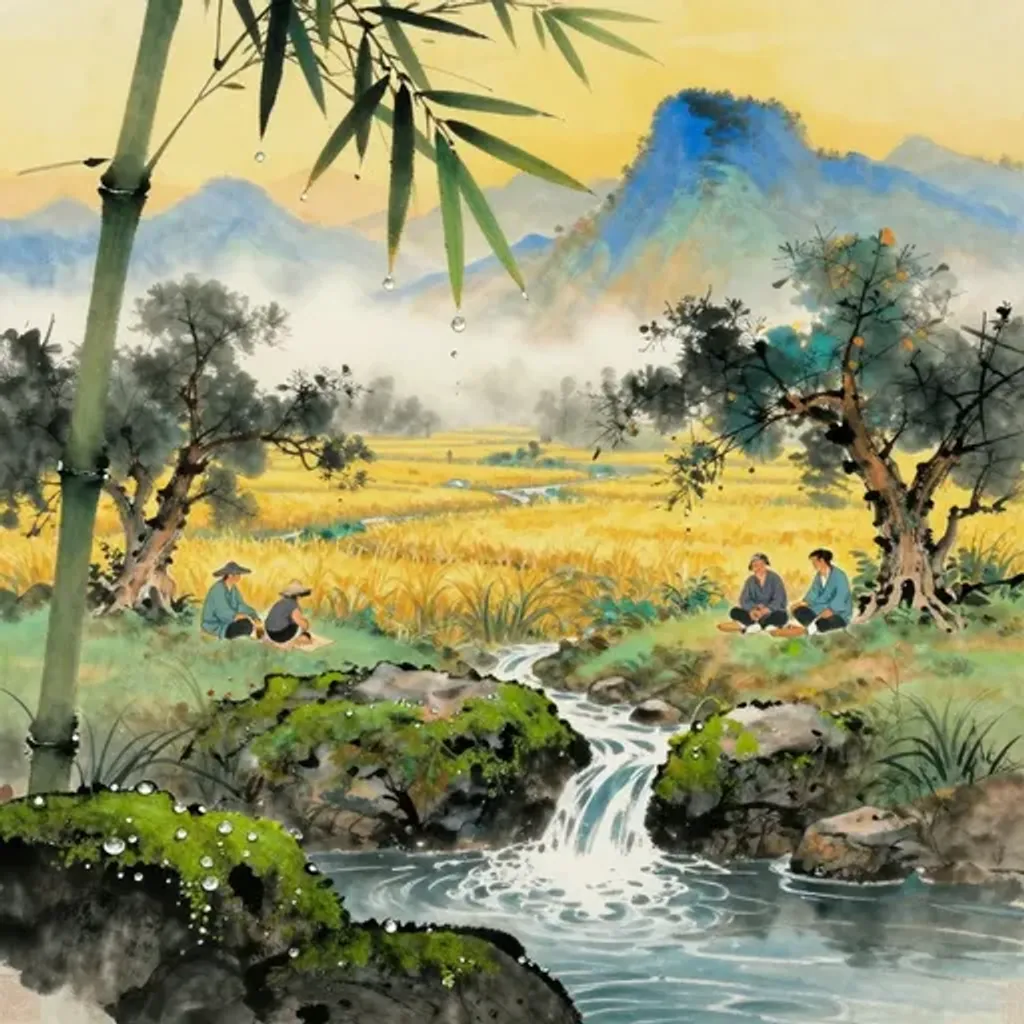
甘露醴泉,太平機關。仁德感應,歲樂民安。
Sweet dew, sweet spring; the pivot of great peace. Benevolent virtue stirs a response; the year brings joy, the people are at rest.
— Jiao Yanshou, Yilin (Forest of Changes), 1st century BC
Commentary
Clouds and thunder dissolve into earth containing mountain: initial struggle yields to genuine modesty. Sweet dew and sweet springs flow forth — these are the tokens of a perfectly governed age, portents that appear only when a ruler's virtue moves heaven. Benevolent virtue resonates with the cosmos, and the people enjoy peace year after year. In Han omenology, sweet dew (ganlu) descending and sweet springs (liquan) rising were considered supreme confirmations of moral governance. From Difficulty at the Beginning to Modesty, the transformation is profound: the mountain hidden within the earth refuses to tower above others, and precisely this self-effacement draws celestial blessing. Initial chaos resolves not through force but through the quiet gravity of genuine virtue.
屯 → 豫
Hexagram 3 → Hexagram 16: Enthusiasm
Changing lines: 1, 4, 5
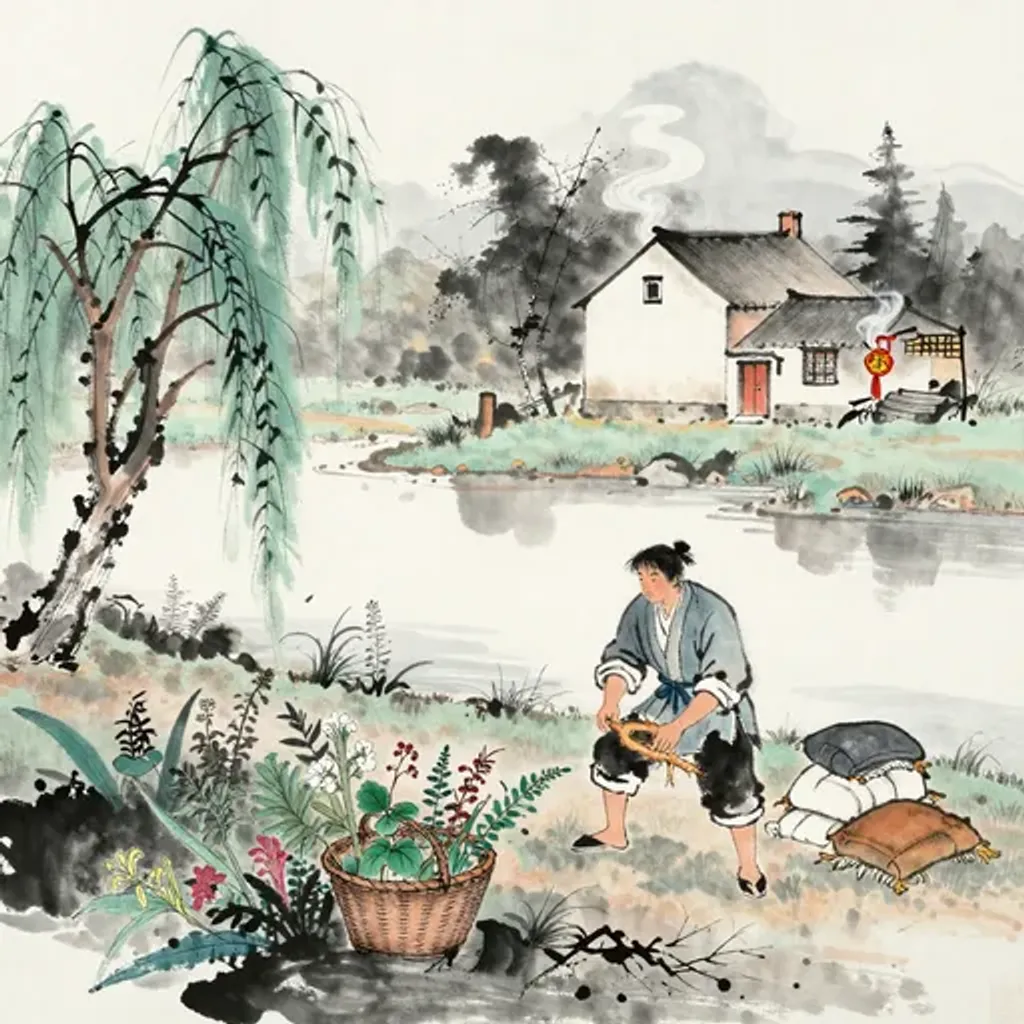
重茵厚席,循皋採藿。雖躓不懼,反復其宅。
Thick quilts, heavy mats; following the marshes to gather greens. Though one stumbles, there is no fear; one returns again to one’s home.
— Jiao Yanshou, Yilin (Forest of Changes), 1st century BC
Commentary
Clouds and thunder give way to thunder bursting from the earth: initial difficulty transforms into joyful readiness. Thick quilts and layered mats cushion the ground as someone gathers greens along the marsh banks. Though stumbling, there is no fear, for the traveler always returns to his dwelling. The imagery pairs material comfort with pastoral foraging, a life simple but secure. From Difficulty at the Beginning to Enthusiasm, the energy that was tangled in Zhun's birth-pangs now erupts freely through earth. Thunder emerging from below shakes the ground with creative force, yet the verse tempers this with domestic assurance: one may stumble on the path, but the way home remains certain. Difficulty has been domesticated into resilient contentment.
屯 → 隨
Hexagram 3 → Hexagram 17: Following
Changing lines: 4
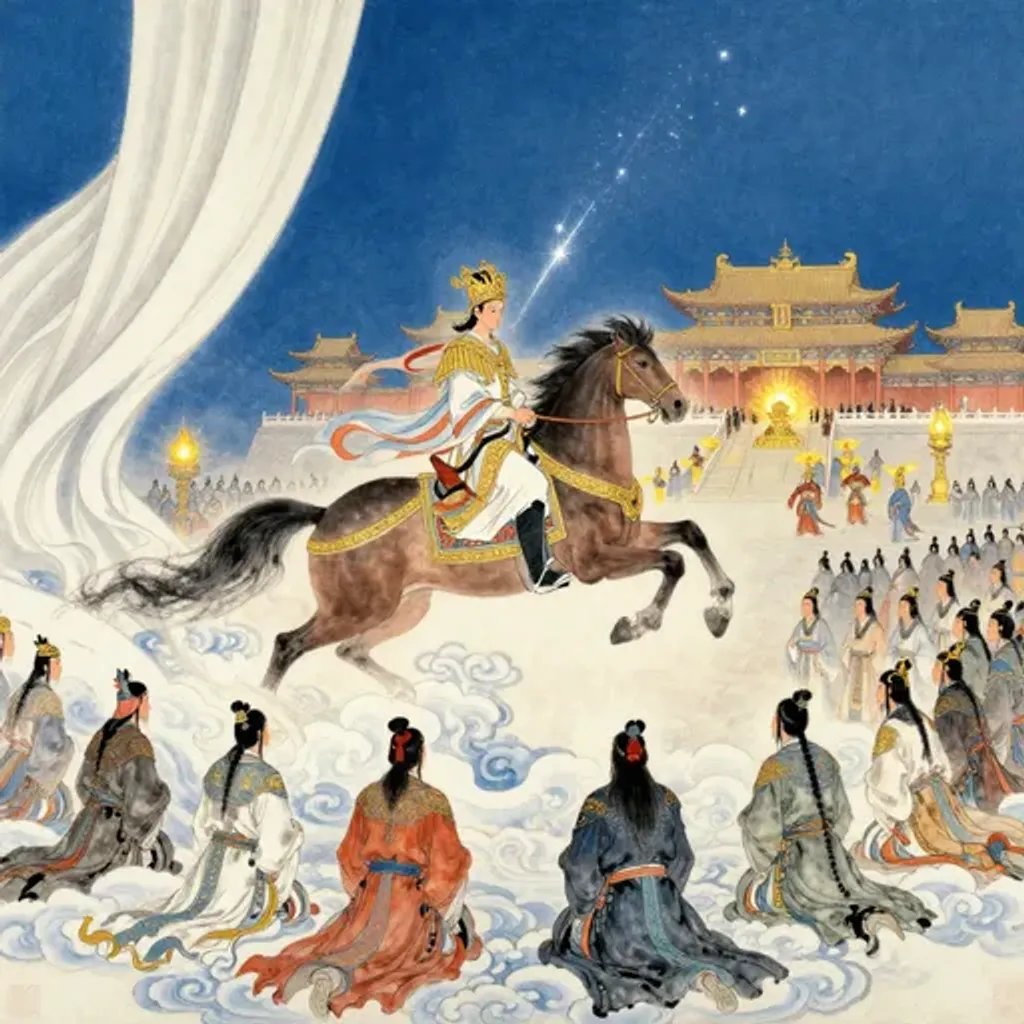
太乙駕騮,從天上來。徵我叔季,封為魯侯。
The Great Unity rides a bay horse, coming down from heaven. He summons my younger uncles and enfeoffs them as Marquis of Lu.
— Jiao Yanshou, Yilin (Forest of Changes), 1st century BC
Commentary
Clouds and thunder yield to lake above thunder: initial hardship gives way to joyful following. The Supreme One rides a bay horse descending from heaven, summoning a younger son and enfeoffing him as Marquis of Lu. Taiyi, the supreme celestial deity of Han cosmology, here acts as divine patron, bestowing political destiny from above. The verse evokes the Zhou investiture tradition, where the Duke of Zhou's descendants received the fief of Lu as reward for loyal service. From Difficulty at the Beginning to Following, the mandate arrives not through human striving but through heavenly summons. Thunder rests beneath the lake; the subject follows the call with willing obedience, and what began in struggle resolves in divinely ordained appointment.
屯 → 蠱
Hexagram 3 → Hexagram 18: Work on the Decayed
Changing lines: 1, 2, 3, 5, 6
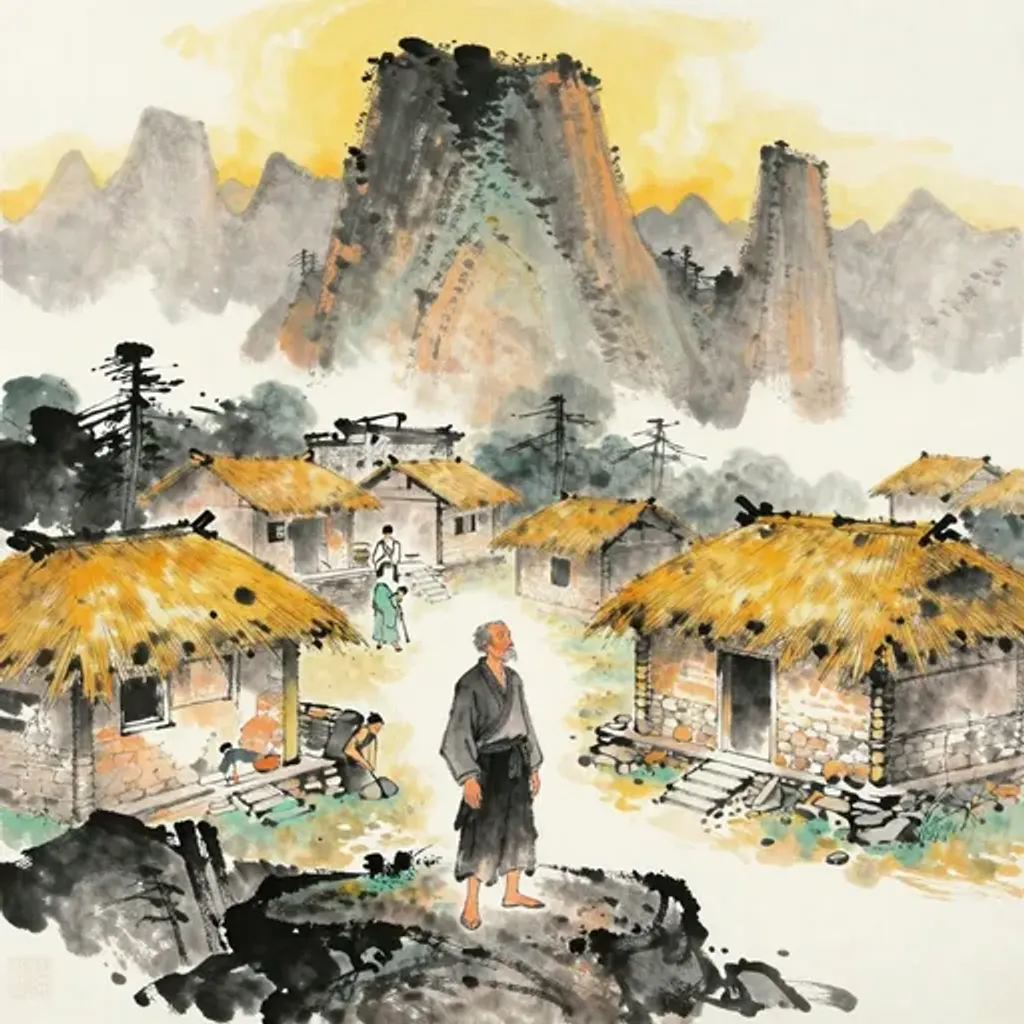
南巴六安,石解戟天。所指不已,耋老復丁。弊室舊墟,更為新家。
Nanba, Liu’an; stones split, halberds point to heaven. Pointing ceaselessly onward; the aged return to youth. The ruined dwelling and old ruins become a new home.
— Jiao Yanshou, Yilin (Forest of Changes), 1st century BC
Commentary
Clouds and thunder transform into mountain above wind: initial chaos becomes the work of renovation. South of Ba and the six settlements of An, rocks crack open and pierce the sky. What was pointed at without ceasing now reverses: the elderly are restored to vigor. The dilapidated house on old ruins is rebuilt as a new home. From Difficulty at the Beginning to Work on the Decayed, the verse traces a complete cycle of destruction and renewal. The mountain stands above the wind that decays its foundations, but this decay is the precondition for rebuilding. What was ancient and exhausted is not merely repaired but fundamentally transformed. The old man becomes young again, the ruin becomes a dwelling, and the initial difficulty of Zhun is revealed as the raw material for Gu's renovating work.
屯 → 臨
Hexagram 3 → Hexagram 19: Approach
Changing lines: 2, 5
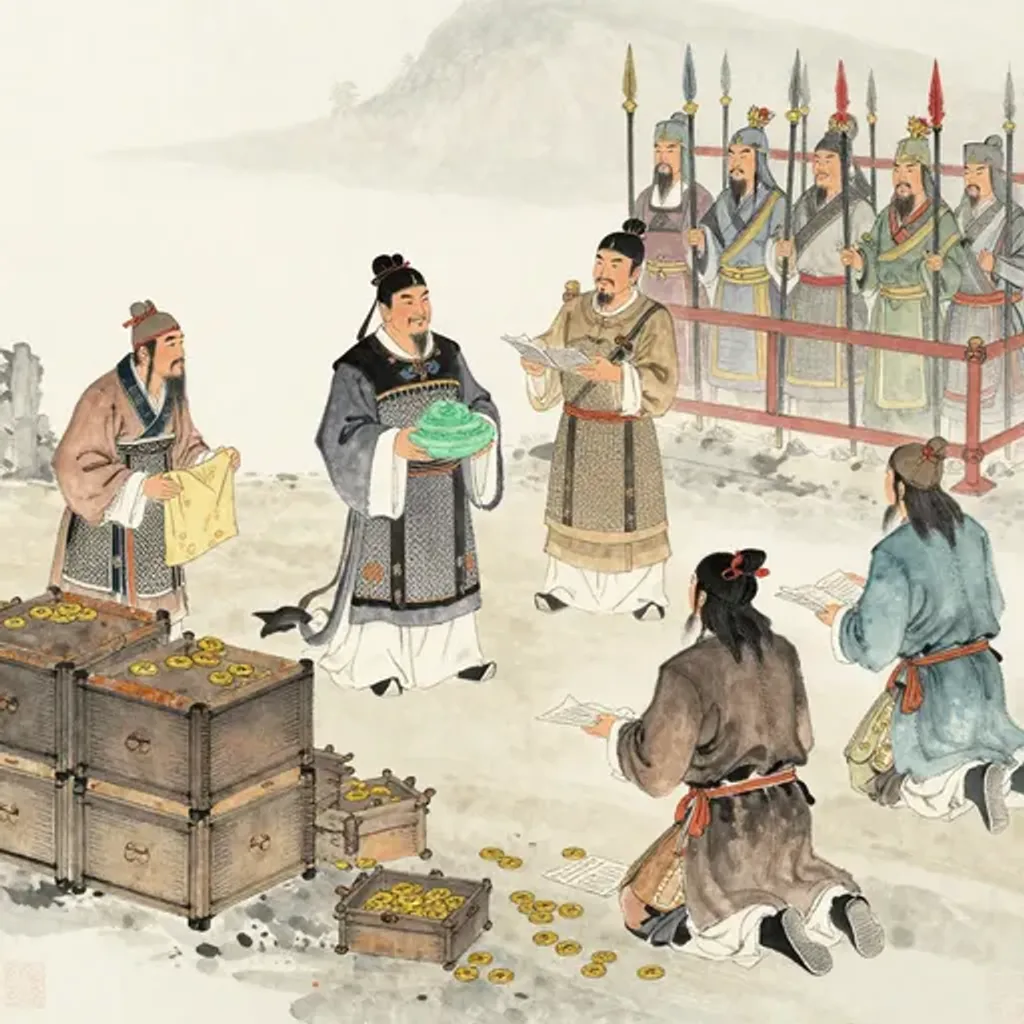
家給人足,頌聲並作。四夷賓伏,干戈韜閣。
Every household is supplied, every person has enough; hymns of praise arise together. The four barbarian tribes submit; weapons are sheathed and stored away.
— Jiao Yanshou, Yilin (Forest of Changes), 1st century BC
Commentary
Clouds and thunder yield to earth over lake: initial struggle blossoms into benevolent oversight. Every household is provided for, every person content. Songs of praise rise in chorus, the four barbarian peoples submit and pay tribute, and weapons of war are stored away in their cabinets. This is the vision of a perfectly governed realm, where material sufficiency generates spontaneous loyalty. From Difficulty at the Beginning to Approach, the sovereign descends to meet the people as earth overhangs the lake. The vastness of initial difficulty has been transmuted into expansive generosity: the ruler draws near with open hands, and the world responds not with fear but with grateful harmony. Spears rest in their racks because they are no longer needed.
屯 → 觀
Hexagram 3 → Hexagram 20: Contemplation
Changing lines: 1, 6
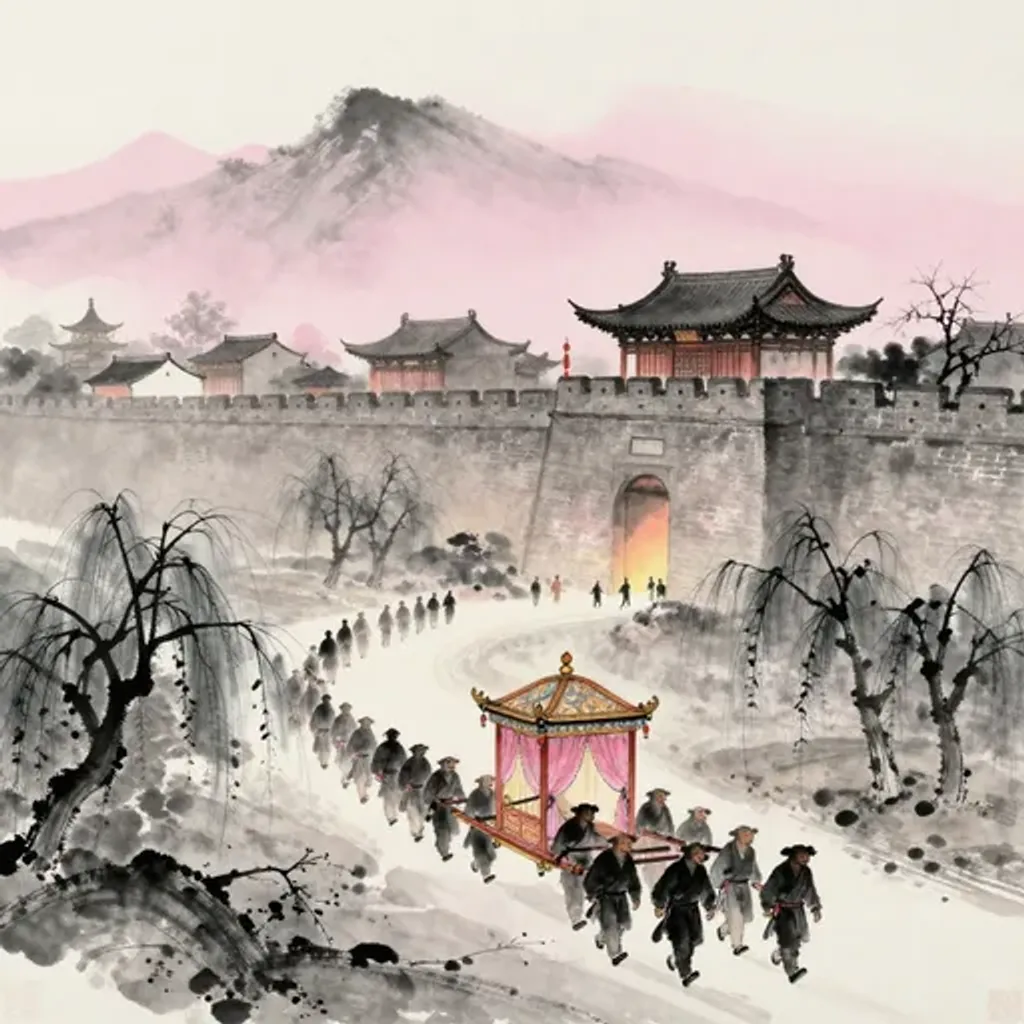
東鄰嫁女,為王妃后。莊公築館,以尊王母。歸于京師,季姜悅喜。
The eastern neighbor’s daughter marries, becoming royal consort and queen. Duke Zhuang builds a hall to honor the queen mother. She returns to the capital; Lady Ji Jiang is pleased.
— Jiao Yanshou, Yilin (Forest of Changes), 1st century BC
Commentary
Clouds and thunder give way to wind moving across earth: initial upheaval resolves into contemplative observation. The eastern neighbor's daughter is married off to become royal consort. Duke Zhuang builds a guest pavilion to honor the king's mother. She returns to the capital, and Lady Ji Jiang rejoices. This references the practice recorded in the Zuo Zhuan where Duke Zhuang of Lu built a pavilion outside the capital to receive a royal bride. The elaborate protocol of interstate marriage reflects how political order was maintained through ritual propriety. From Difficulty at the Beginning to Contemplation, the transformation turns outward chaos into the sovereign's inspection tour: wind over earth observes all beneath it, and proper ceremony reestablishes the bonds that disorder had frayed.
屯 → 噬嗑
Hexagram 3 → Hexagram 21: Biting Through
Changing lines: 4, 5, 6
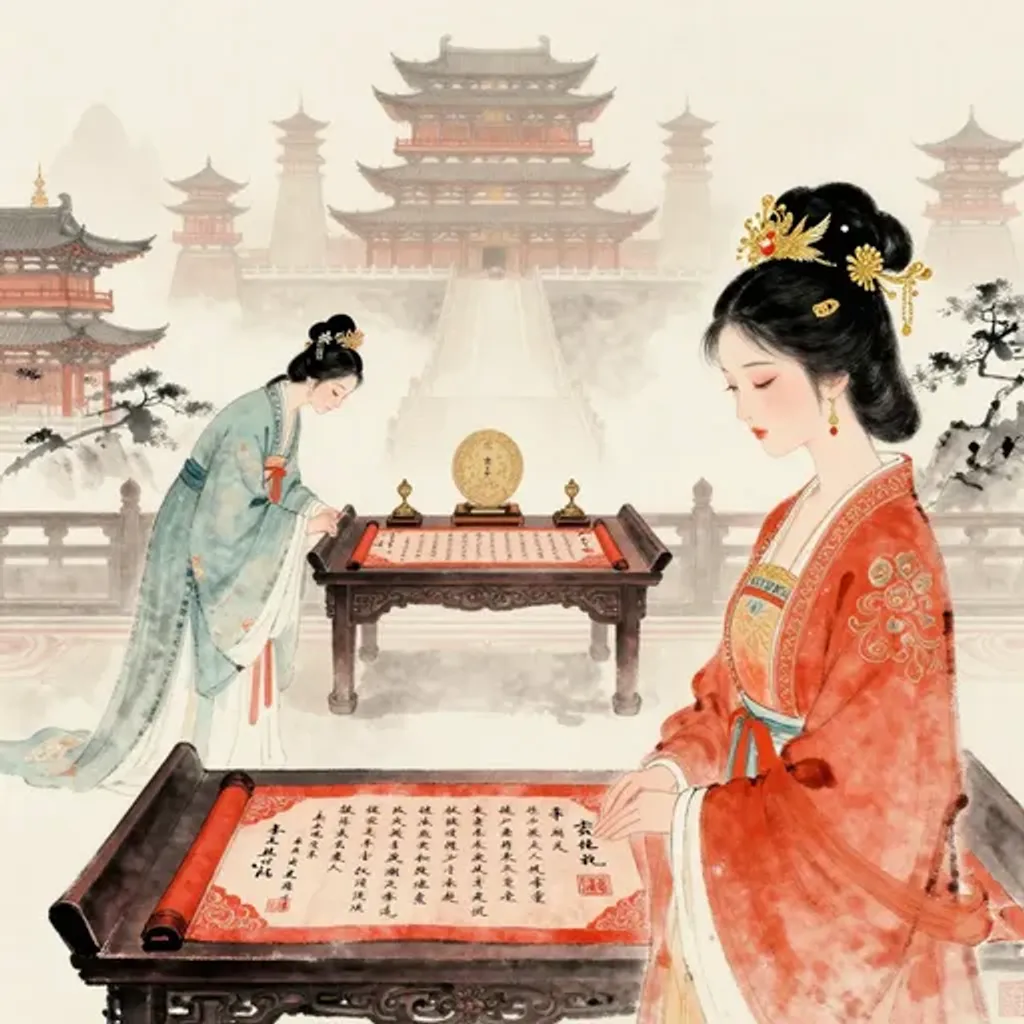
陳妻敬仲,兆興齊姜。營丘是適,八世大昌。
A woman of Chen weds Jing Zhong; the omen foretells prosperity through the Jiang clan of Qi. Making their home at Yingqiu; for eight generations, great flourishing.
— Jiao Yanshou, Yilin (Forest of Changes), 1st century BC
Commentary
Clouds and thunder yield to fire and thunder together: initial chaos is resolved through decisive action. Chen's wife married into the Jingzhong clan, and the omen foretold prosperity replacing the Jiang rulers of Qi. They settled at Yingqiu, and within eight generations the lineage achieved supreme power. This directly references Chen Jingzhong (Chen Wan), a minister who fled the state of Chen to Qi around 672 BC. His descendants, the Tian clan, gradually accumulated influence until they formally replaced the Jiang rulers of Qi in 386 BC. From Difficulty at the Beginning to Biting Through, the transformation applies judicial force: fire and thunder together symbolize law and punishment cutting through obstruction, just as the Tian clan's patient accumulation of power finally bit through the old order.
屯 → 賁
Hexagram 3 → Hexagram 22: Grace
Changing lines: 3, 5, 6
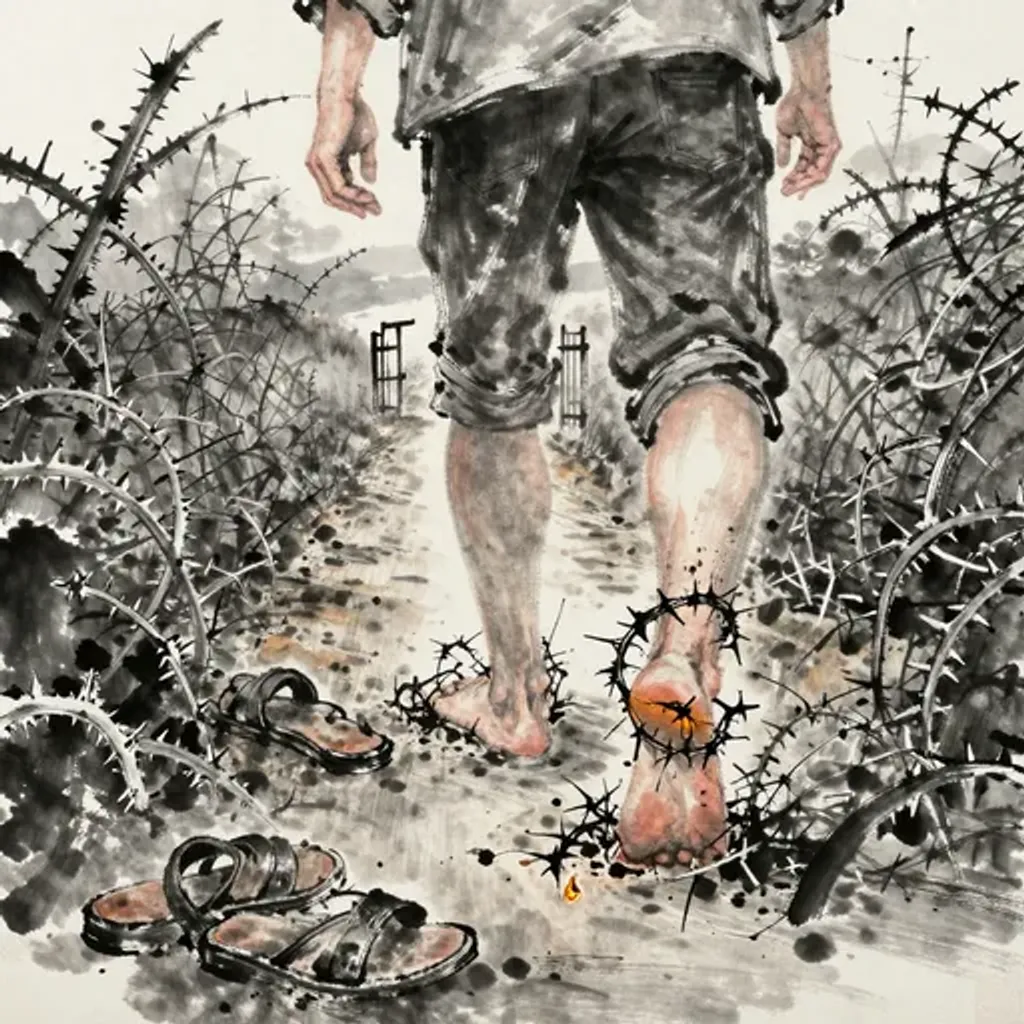
路多枳棘,步刺我足。不利旅客,為心作毒。
The road is thick with thorns; each step pierces my feet. Not fit for the traveler; it poisons the heart.
— Jiao Yanshou, Yilin (Forest of Changes), 1st century BC
Commentary
Clouds and thunder transform into mountain above fire: initial difficulty meets the ornamental surface of Grace. The road is choked with thorns and brambles, piercing the traveler's feet with every step. This path offers no benefit to the wayfarer and poisons the heart with bitterness. The imagery is viscerally physical: each forward step brings pain, and the journey itself becomes toxic. From Difficulty at the Beginning to Grace, the irony cuts deep. Grace places fire beneath the mountain, illuminating form and beauty, yet the verse reveals that surface adornment cannot disguise a path that wounds. The mountain may look beautiful from afar, but the road through it is treacherous. Initial difficulty dressed in ornament remains difficulty nonetheless.
屯 → 剝
Hexagram 3 → Hexagram 23: Splitting Apart
Changing lines: 1, 5, 6
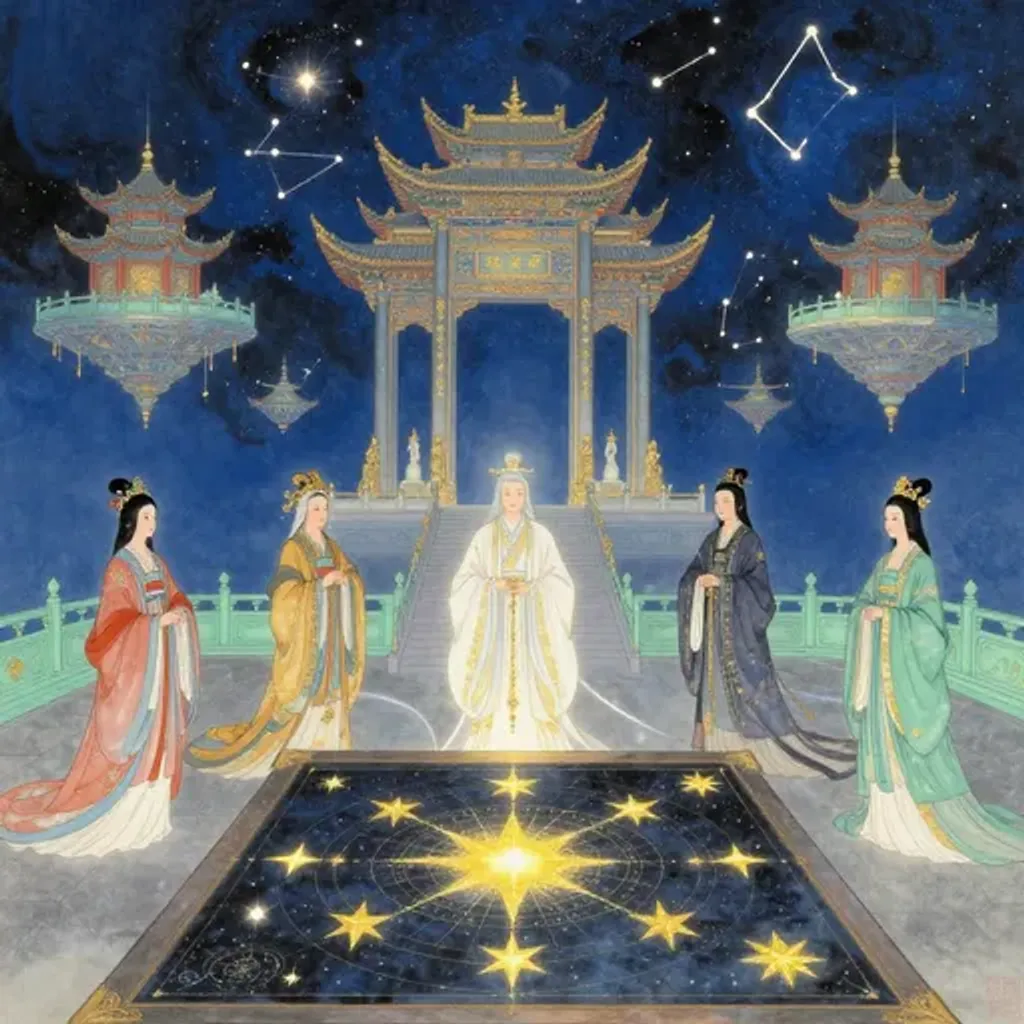
天官列宿,五神共舍。宮闕光堅,君安其居。
The celestial officials in their lodging-stars, five spirits sharing the palace. The halls of heaven shine strong and firm; the lord is at peace in his dwelling.
— Jiao Yanshou, Yilin (Forest of Changes), 1st century BC
Commentary
Clouds and thunder yield to mountain resting upon earth: initial difficulty resolves into the paradox of Splitting Apart. The celestial officials and constellations are arrayed, and the five spirits share their dwelling. The palace gates shine firm and strong, and the ruler rests secure in his abode. The verse describes cosmic and political stability, an auspicious scene where heavenly order mirrors earthly security. Yet the target hexagram, Splitting Apart, warns of erosion from below. From Difficulty at the Beginning to Splitting Apart, the splendid tableau conceals a danger: the mountain sits upon soft earth, and what appears impregnable may be undermined. The ruler's security is real but precarious, the palace gleams while its foundations slowly give way.
屯 → 復
Hexagram 3 → Hexagram 24: Return
Changing lines: 5
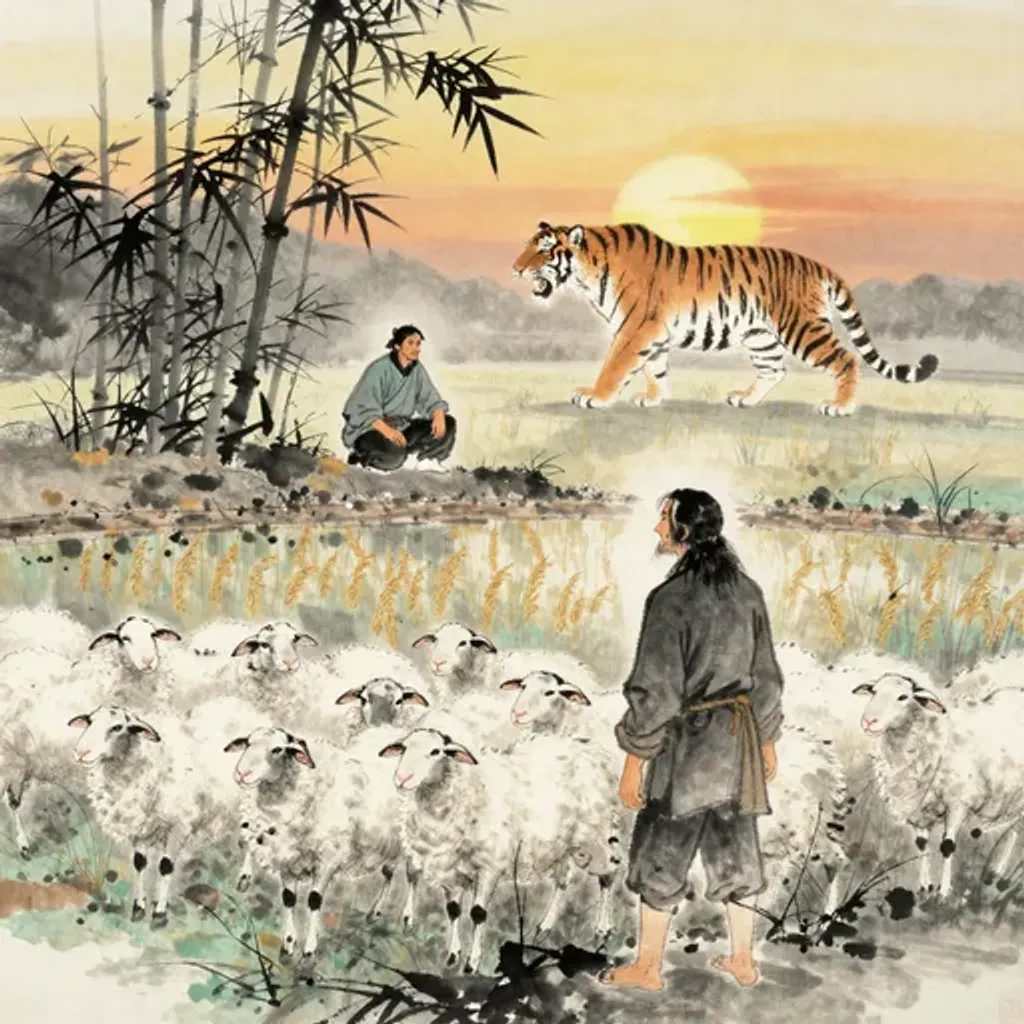
牧羊稻園,聞虎呻喧。懼畏惕息,終無禍患。
Herding sheep in the rice paddies, one hears the tiger’s growling roar. Fearful and holding one’s breath; yet in the end, no disaster befalls.
— Jiao Yanshou, Yilin (Forest of Changes), 1st century BC
Commentary
Clouds and thunder give way to thunder returning within the earth: initial difficulty cycles back to renewal. A shepherd tends his flock in a rice field when a tiger's roar shakes the air. Fear grips his breath and his heart pounds, but in the end no disaster comes. The terror is real but ultimately passes; the threat announces itself and withdraws. From Difficulty at the Beginning to Return, the one yang line re-enters at the bottom, signaling the first stirring of recovery after a dark period. The tiger's roar represents the lingering menace of difficulty, but the verse's resolution confirms that the danger will not materialize. Vigilant fear, rather than panicked flight, is the correct stance as life begins to reassert itself.
屯 → 无妄
Hexagram 3 → Hexagram 25: Innocence
Changing lines: 4, 6
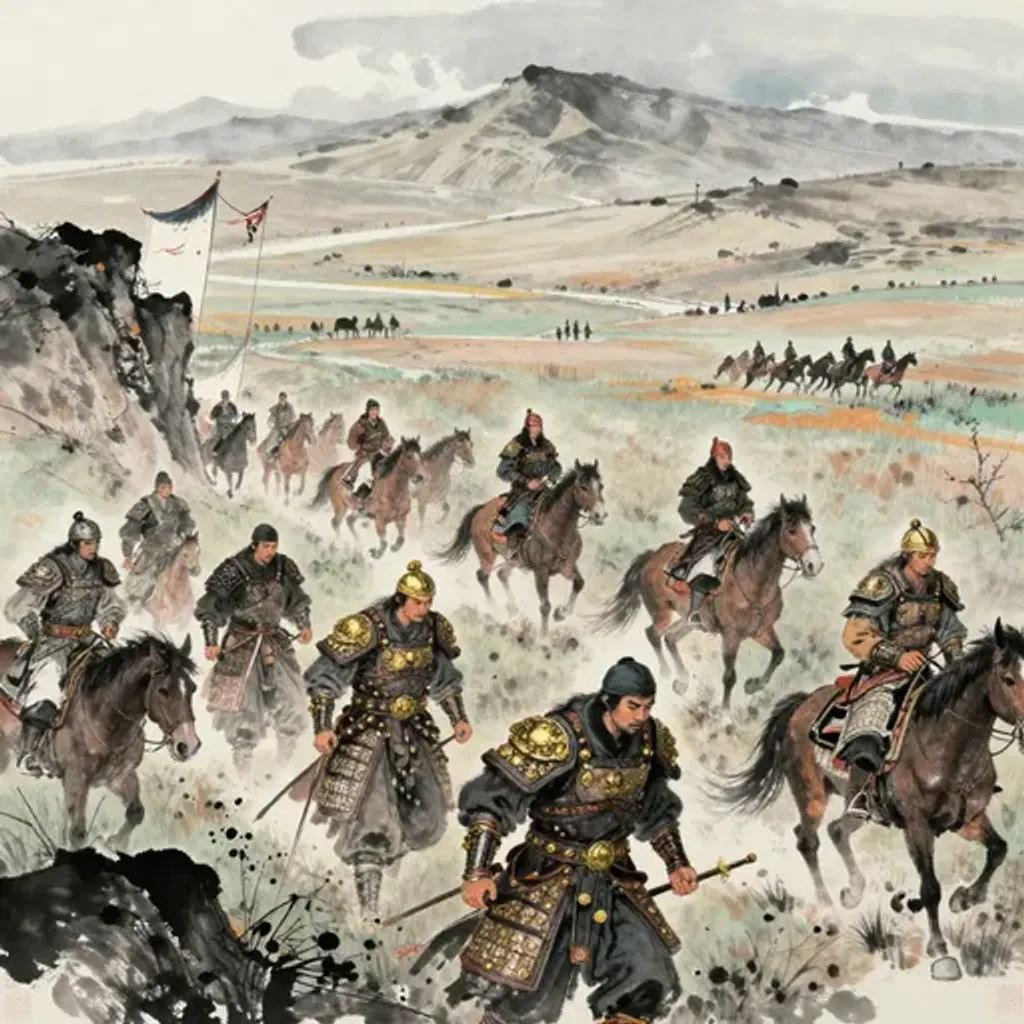
鳴條之圖,北奔犬胡。左衽為長,國號匈奴。主君旄頭,立尊單于。
The map of Mingtiao; fleeing north to the Dog Barbarians. Wearing left-folded robes as their way, their state is called Xiongnu. Their lord follows the yak-tail standard; they set up and honor the Chanyu.
— Jiao Yanshou, Yilin (Forest of Changes), 1st century BC
Commentary
Clouds and thunder transform into heaven with thunder below: initial difficulty meets the unexpected force of Innocence. After the defeat at Mingtiao, the remnants fled north to join the Dog Barbarians. They adopted left-lapel garments as their custom, and their state took the name Xiongnu. Their lord wore the Maotou headdress and was honored as Chanyu. According to the Shiji, the Xiongnu traced their ancestry to Chunwei, a descendant of the Xia dynasty who fled northward after King Tang overthrew King Jie at Mingtiao. From Difficulty at the Beginning to Innocence, the transformation is paradoxical: what seems like catastrophic exile becomes the origin of a formidable new power. Thunder under heaven acts without deliberation; the exiles did not plan an empire but became one through the raw, unmediated force of circumstance.
屯 → 大畜
Hexagram 3 → Hexagram 26: Great Taming
Changing lines: 2, 3, 5, 6
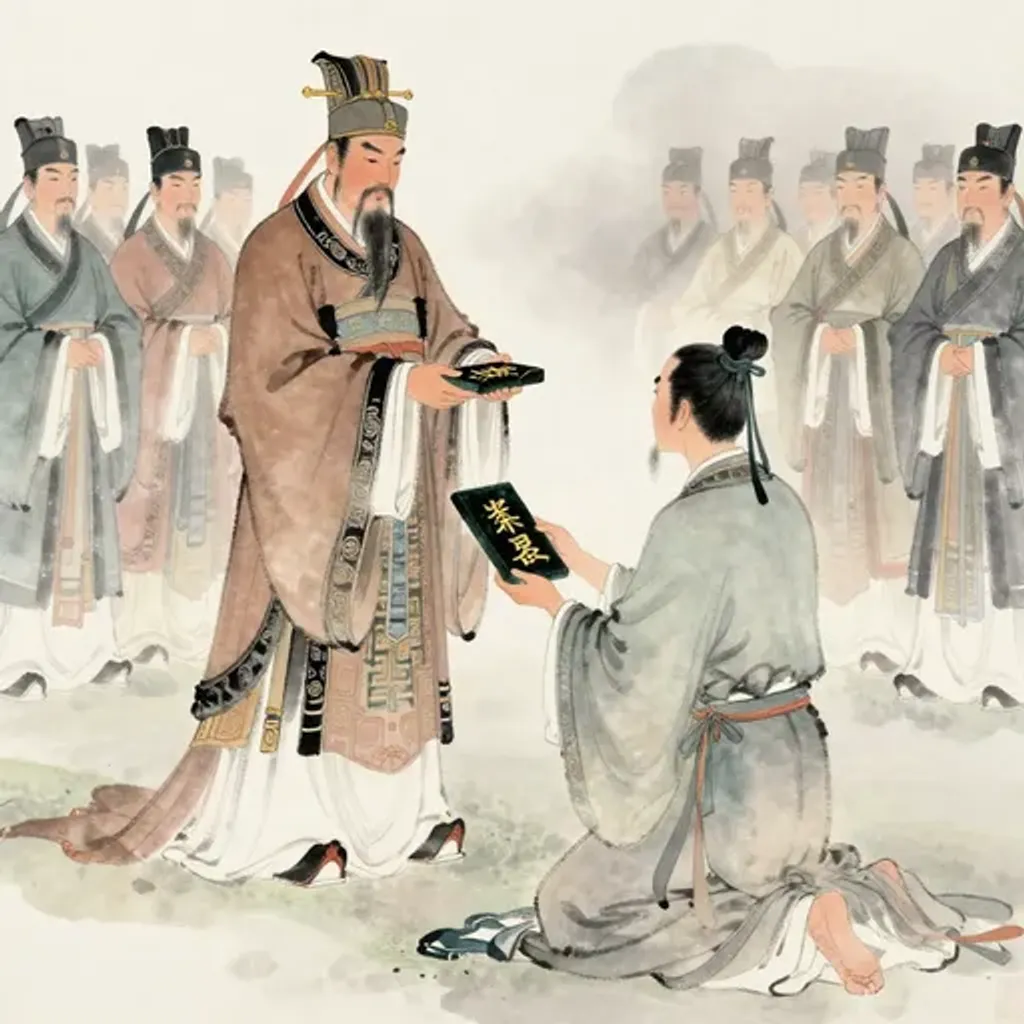
剋身潔己,逢禹巡狩。錫我玄珪,拜受福佑。
Disciplining the body, purifying oneself; one meets Yu on his royal tour. He bestows a dark jade tablet; kneeling, one receives blessing and protection.
— Jiao Yanshou, Yilin (Forest of Changes), 1st century BC
Commentary
Clouds and thunder yield to heaven stored within the mountain: initial difficulty transforms into accumulated virtue. One disciplines the body and purifies the self, then encounters Yu the Great on his royal inspection tour. Yu bestows a dark jade tablet, and the recipient bows to accept this blessing. Yu's inspection tours were legendary acts of governance: he traveled the realm assessing the virtue of local rulers, rewarding the worthy with jade insignia of rank. The dark jade tablet (xuangui) was a symbol of heaven's mandate conferred upon the deserving. From Difficulty at the Beginning to Great Taming, the transformation shows that self-cultivation in adversity attracts recognition from the highest authority. Heaven stored within the mountain preserves virtue until the sage-king arrives to validate it.
屯 → 頤
Hexagram 3 → Hexagram 27: Nourishment
Changing lines: 5, 6
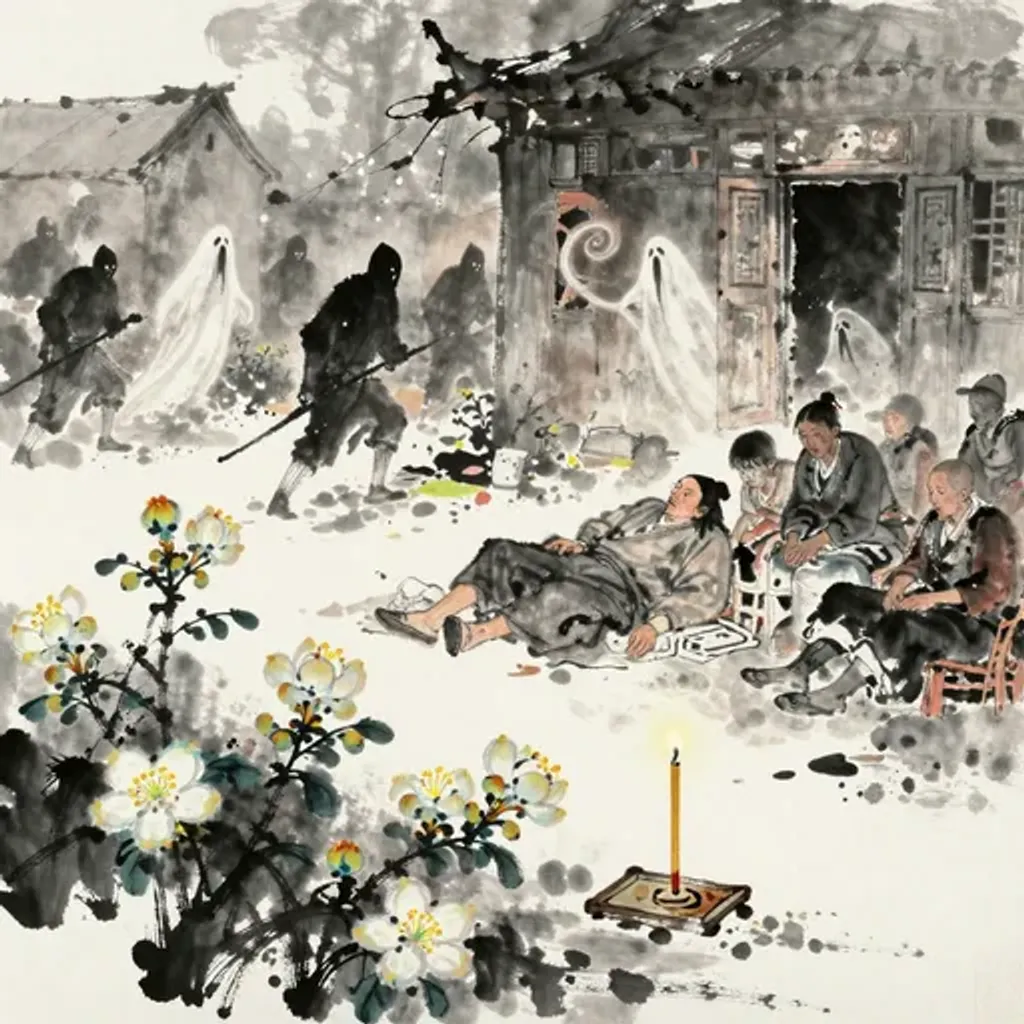
冬華不實,國多盜賊。疾病難醫,鬼哭其室。
Flowers bloom in winter but bear no fruit; the land is full of thieves and bandits. Illness is hard to cure; ghosts wail in the household.
— Jiao Yanshou, Yilin (Forest of Changes), 1st century BC
Commentary
Clouds and thunder give way to mountain above thunder: initial difficulty settles into the question of proper nourishment. Trees bloom in winter but bear no fruit, and the state teems with bandits. Illness proves impossible to cure, and ghosts wail within the household. Winter flowering without fruiting is an omen of inverted natural order: energy expended at the wrong time yields nothing. The parallel between unfruitful trees and untreatable disease suggests a system whose nourishing capacity has been corrupted at the root. From Difficulty at the Beginning to Nourishment, the transformation is cautionary. The mountain above thunder should provide stable nourishment, but when what is consumed is tainted and what is produced is hollow, the jaws of Yi chew on nothing. Disorder has poisoned sustenance itself.
屯 → 大過
Hexagram 3 → Hexagram 28: Great Exceeding
Changing lines: 1, 2, 3, 4
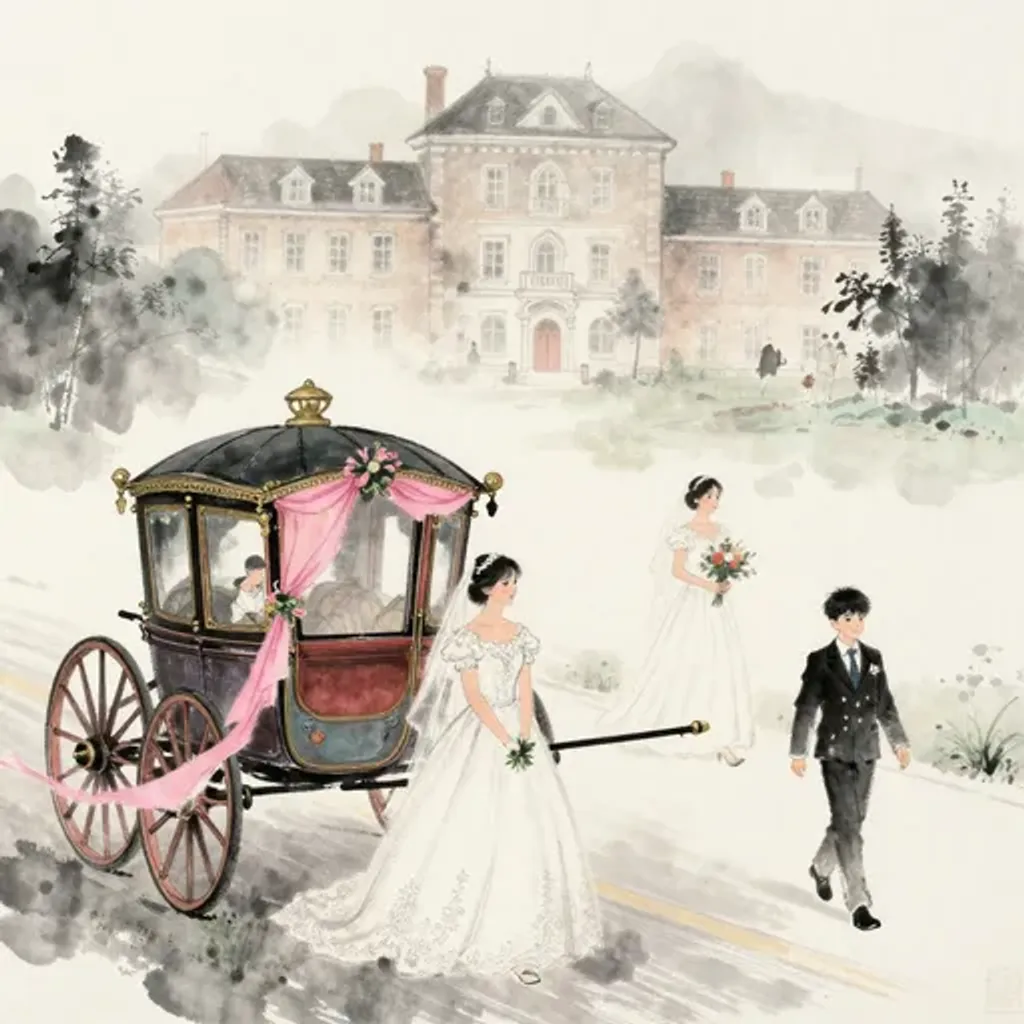
襄送季女,至于蕩道。齊子旦夕,留連久處。
Escorting Lord Xiang’s youngest daughter; arriving at the road of Dang. The son of Qi lingers morning and evening; they stay and tarry for a long time.
— Jiao Yanshou, Yilin (Forest of Changes), 1st century BC
Commentary
Clouds and thunder yield to lake submerging wind: initial difficulty collapses into dangerous excess. Duke Xiang escorts a younger sister to the state of Dang, but along the road the son of Qi lingers morning and evening, delaying the journey with prolonged dalliance. This likely alludes to episodes in the Zuo Zhuan involving diplomatic marriage escorts where improper romantic entanglements compromised the mission. The bride's procession, meant to seal interstate alliance, is derailed by private desire. From Difficulty at the Beginning to Great Exceeding, the ridgepole sags under weight it was never meant to bear. What should have been a straightforward ceremonial passage is warped by excess, and the lake floods the wind below, drowning propriety in indulgence.
屯 → 坎
Hexagram 3 → Hexagram 29: The Abysmal Water
Changing lines: 1, 2
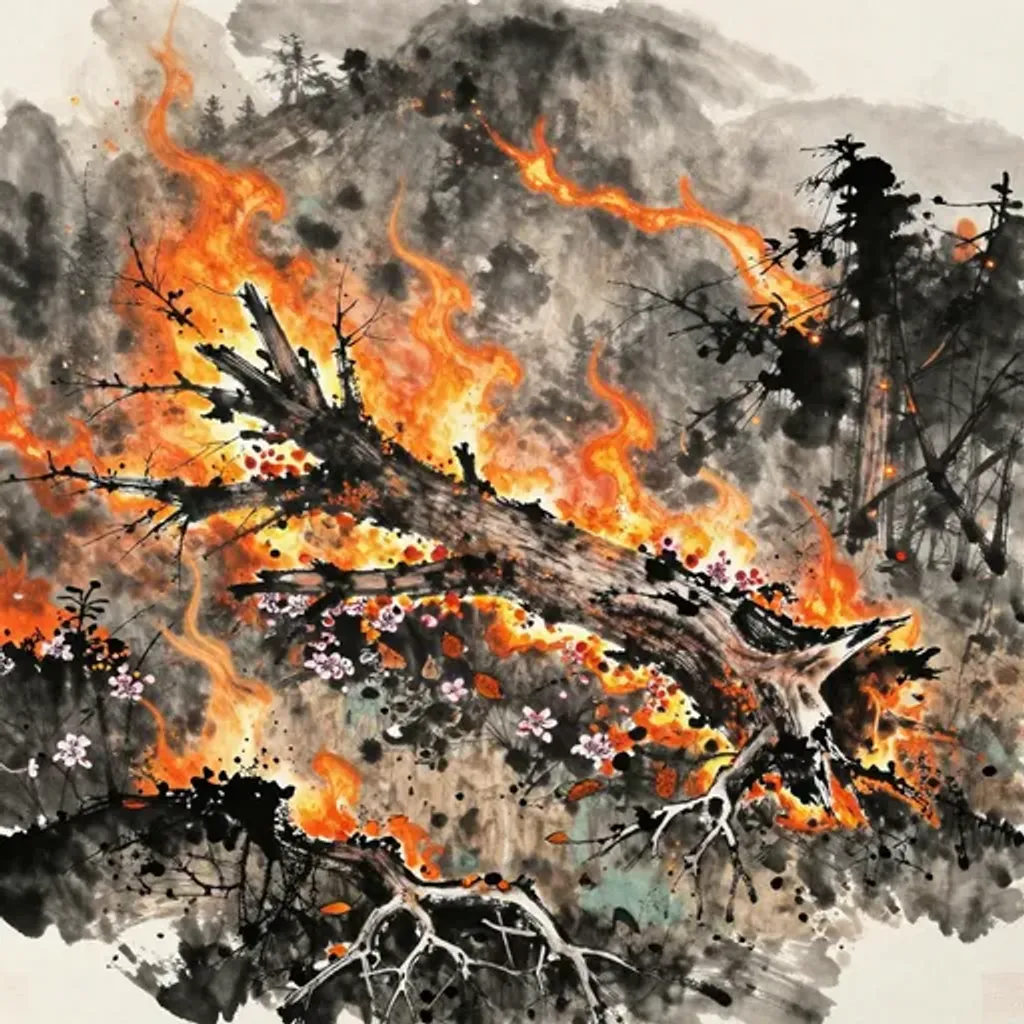
朽根倒樹,花葉落去。卒逢火焱,隨風偃仆。
Rotten roots topple the tree; flowers and leaves fall away. Suddenly meeting a blazing fire; swept down by the wind, it lies prostrate.
— Jiao Yanshou, Yilin (Forest of Changes), 1st century BC
Commentary
Clouds and thunder plunge into doubled water: initial difficulty descends into the deepest abyss. A rotten root topples the tree, flowers and leaves scatter. Then fire suddenly strikes, and the trunk collapses with the wind. The imagery layers destruction upon destruction: first organic decay from within, then catastrophic assault from without. The tree was already dying before the blaze arrived. From Difficulty at the Beginning to The Abysmal, the transformation sinks from surface chaos into structural peril. Water upon water, danger redoubled: there is no stable ground, and the fire that might have purified instead merely accelerates the collapse of what was already compromised. The lesson is stark: internal rot invites external devastation.
屯 → 離
Hexagram 3 → Hexagram 30: The Clinging Fire
Changing lines: 3, 4, 5, 6
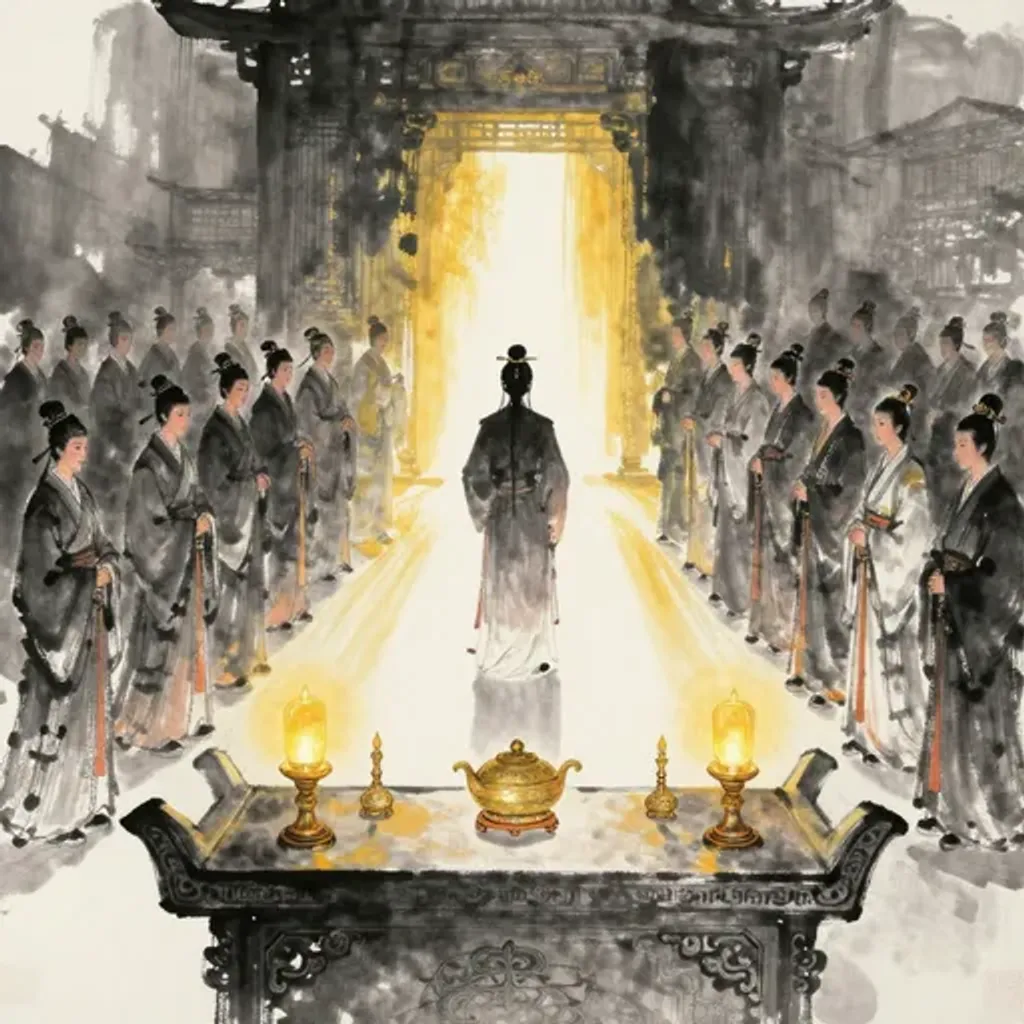
陰變為陽,女化作男。治道得通,君臣相承。
Yin transforms into yang; the female changes into male. The way of governance is made clear; lord and minister succeed one another.
— Jiao Yanshou, Yilin (Forest of Changes), 1st century BC
Commentary
Clouds and thunder transform into doubled fire: initial chaos gives way to luminous clarity. Yin transforms into yang, and the female turns into the male. The way of governance finds its passage, and ruler and minister sustain each other in harmony. The verse describes a fundamental inversion that paradoxically restores proper order. What was dark becomes bright, what was yielding becomes firm. From Difficulty at the Beginning to The Clinging, the doubled fire of Li illuminates all four directions. The initial tangle of thunder and water, where nothing could find its proper place, is burned away, and what remains is clear, bright, and mutually sustaining. The yin-to-yang shift signals not destruction of the feminine but the restoration of dynamic balance between complementary forces.
屯 → 咸
Hexagram 3 → Hexagram 31: Influence
Changing lines: 1, 3, 4
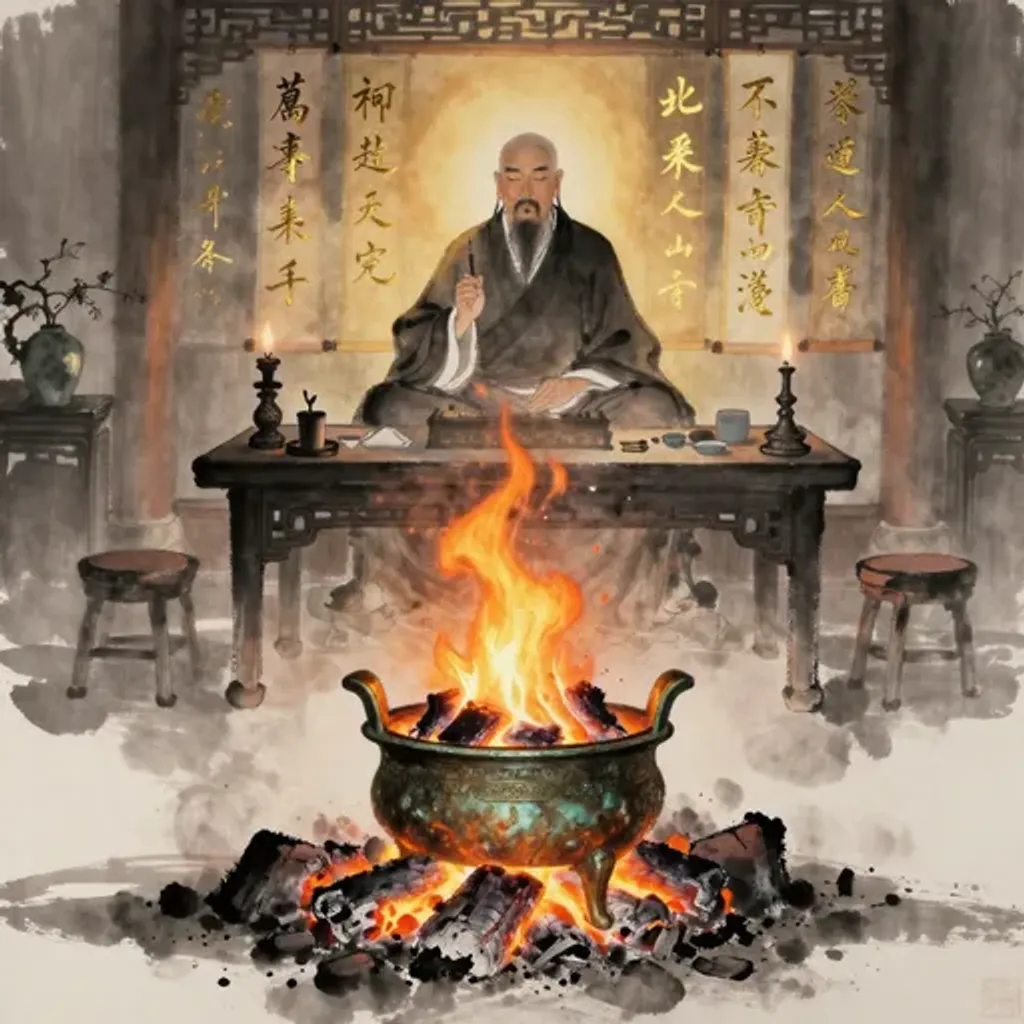
炎絕續光,火滅復明。簡易理得,以成乾功。
The flame goes out, the light continues; the fire dies, then blazes again. Simple and easy, the principle is grasped; thereby the work of Qian is accomplished.
— Jiao Yanshou, Yilin (Forest of Changes), 1st century BC
Commentary
Clouds and thunder yield to lake atop mountain: initial difficulty transforms into mutual influence. A flame extinguished revives its light; a fire quenched blazes again. Through simplicity and ease the principle is grasped, and the work of heaven is accomplished. The verse celebrates resilience: what appears to die springs back, because its underlying pattern endures. From Difficulty at the Beginning to Influence, the lake resting on the mountain creates receptive stillness that invites spontaneous response. Xian operates through emptiness and openness, not through force. The fire's revival embodies this: it reignites not because someone stokes it but because the conditions for combustion remain. Initial difficulty resolves when one stops forcing and allows natural resonance to operate.
屯 → 恆
Hexagram 3 → Hexagram 32: Duration
Changing lines: 1, 2, 3, 4, 5
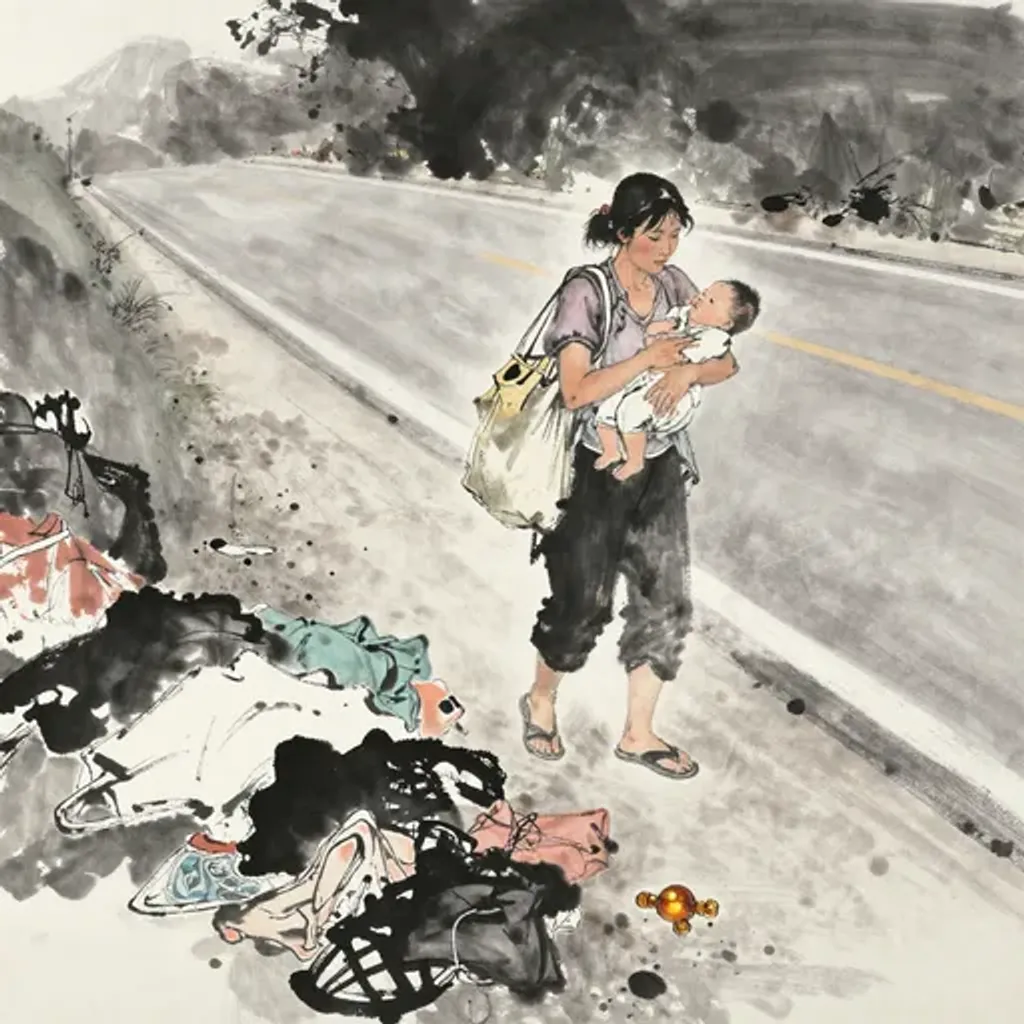
多載重負,捐棄于野。予母誰子,但自勞苦。
Carrying many heavy burdens; abandoning them in the wilds. Who is the mother to this child? Only she herself toils and suffers.
— Jiao Yanshou, Yilin (Forest of Changes), 1st century BC
Commentary
Clouds and thunder give way to thunder and wind in steady union: initial difficulty settles into endurance, but endurance here is bitter. Overloaded with heavy burdens, goods are abandoned by the roadside. 'Whose child am I?' the traveler asks — there is only solitary toil and suffering. The verse strips Duration of any romance: to persist is merely to keep carrying what cannot be put down, alone and unrecognized. From Difficulty at the Beginning to Duration, thunder above wind sustains motion without rest. The hexagram promises constancy, but the verse reveals its shadow: when endurance becomes mere drudgery without purpose or companionship, it grinds the spirit to dust. The traveler endures not by choice but because there is nowhere to stop.
屯 → 遯
Hexagram 3 → Hexagram 33: Retreat
Changing lines: 1, 3, 4, 6
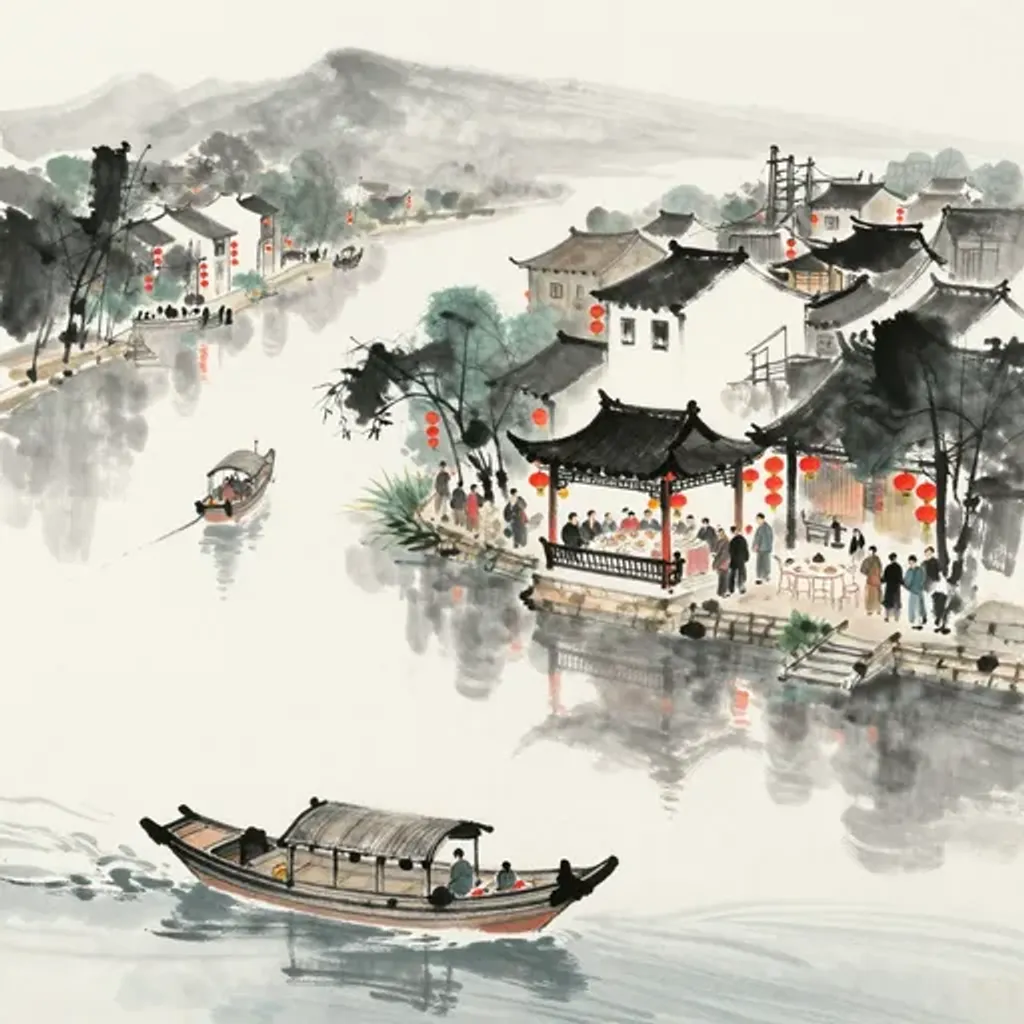
江河海澤,眾利安宅。可以富有,飲御嘉客。
Rivers, seas, and marshes; where all profits find safe dwelling. One may grow rich; feasting and entertaining honored guests.
— Jiao Yanshou, Yilin (Forest of Changes), 1st century BC
Commentary
Clouds and thunder transform into heaven above mountain: initial difficulty opens into strategic withdrawal. Rivers, lakes, and seas gather their resources, and dwelling becomes secure. Wealth accumulates, and one can drink wine and entertain honored guests. The verse paints a portrait of abundance attained through wise positioning rather than aggressive expansion. From Difficulty at the Beginning to Retreat, the transformation is counterintuitive: withdrawal produces prosperity. Heaven above the mountain creates distance from the world below, but that very distance provides security and concentration of resources. The rivers and seas are wealthy precisely because they occupy low ground where all waters converge. The gentleman retreats not in defeat but in the confidence that comes from a well-chosen position.
屯 → 大壯
Hexagram 3 → Hexagram 34: Great Power
Changing lines: 2, 3, 4, 5
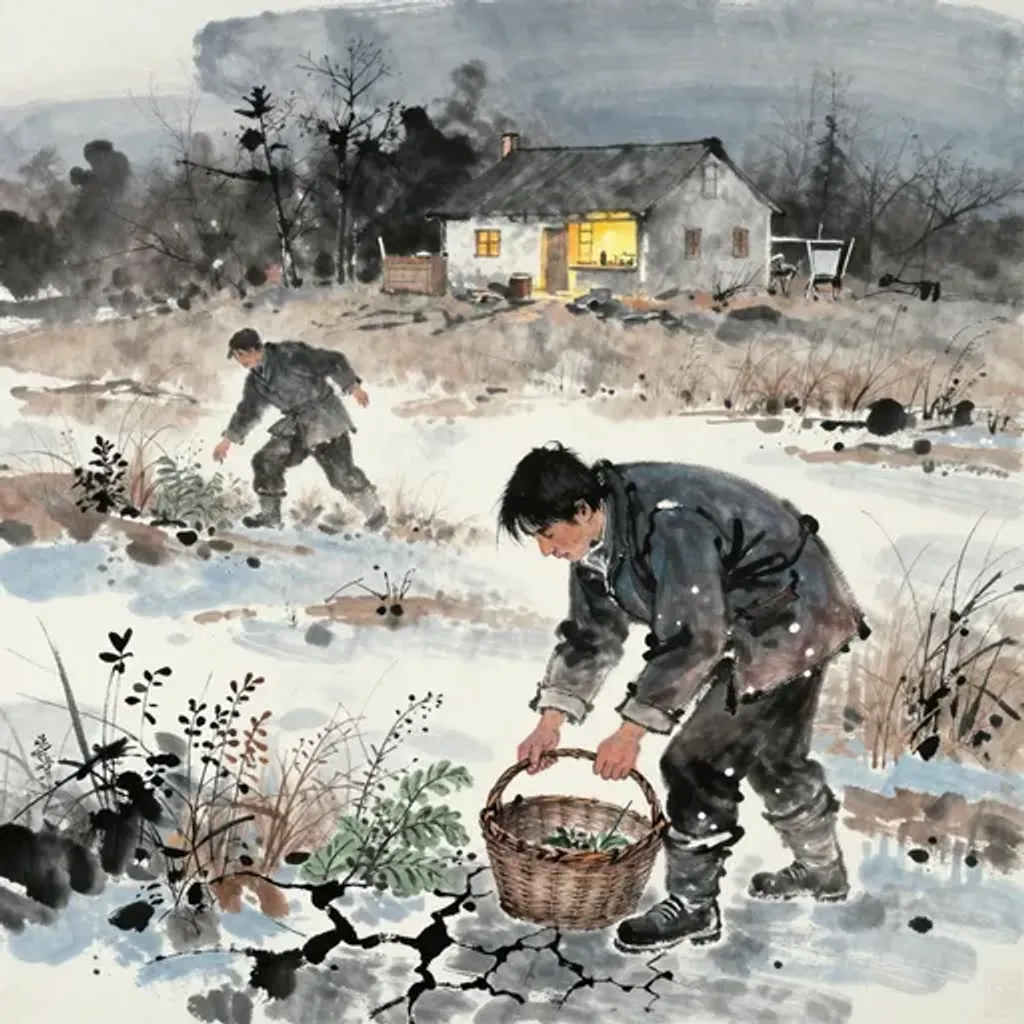
冬採薇蘭,地凍堅坼。利走室北,暮無所得。
Gathering orchids and herbs in winter; the ground is frozen and cracked. Running off to the north of the house; by nightfall, nothing is gained.
— Jiao Yanshou, Yilin (Forest of Changes), 1st century BC
Commentary
Clouds and thunder give way to thunder in heaven: initial difficulty meets overwhelming power, but power misdirected. Gathering ferns and orchids in winter, the ground frozen and cracked, one flees to the north side of the house but by evening gains nothing. The timing is completely wrong: ferns and orchids cannot be harvested in the frozen season, and the effort yields only cold and emptiness. From Difficulty at the Beginning to Great Power, thunder above heaven represents enormous force, yet the verse shows that raw power without proper timing is futile. The ground itself resists. Great strength applied at the wrong moment produces not breakthrough but exhaustion, and the searcher returns empty-handed at dusk.
屯 → 晉
Hexagram 3 → Hexagram 35: Progress
Changing lines: 1, 4, 5, 6
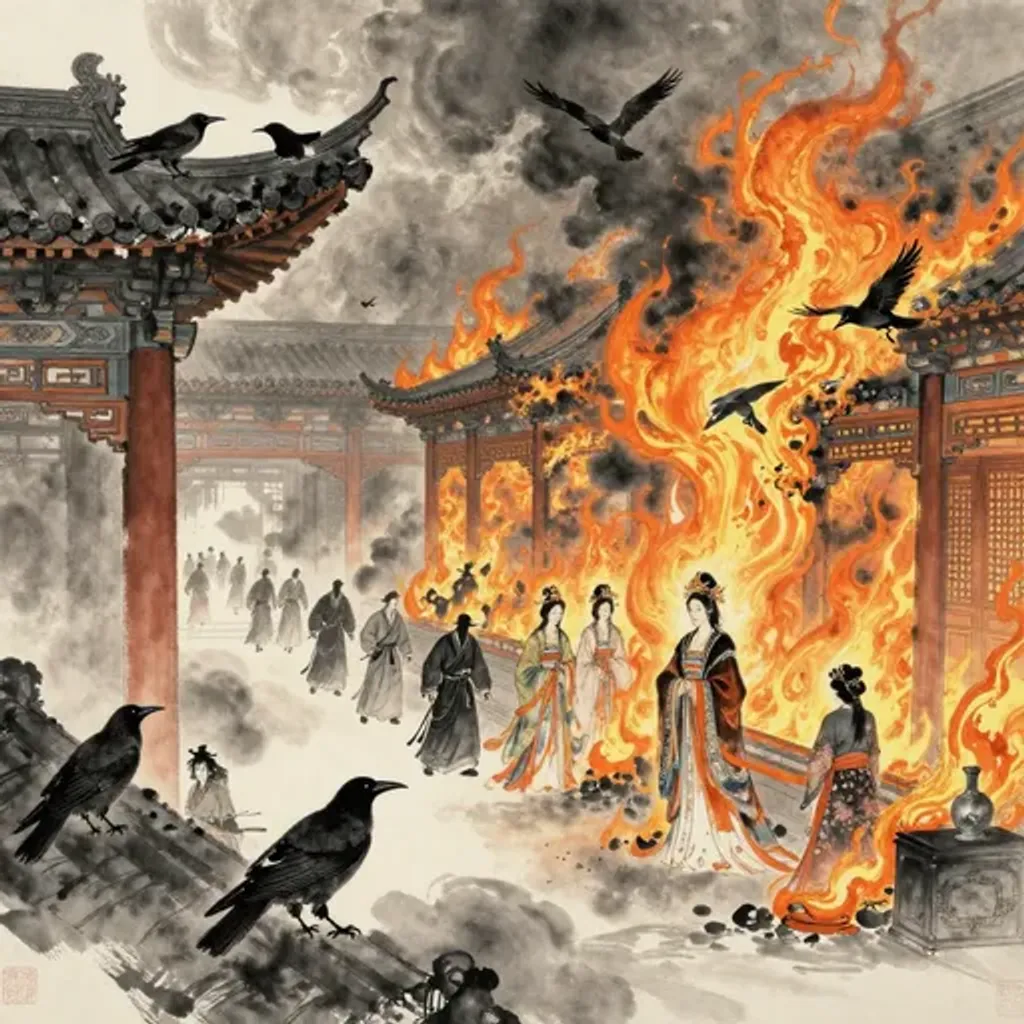
烏鳴嘻嘻,天火將起。燔我室屋,災及姬后。
The crow cries xi-xi; heavenly fire is about to rise. It burns our chambers and rooms; the disaster reaches the lady of Ji.
— Jiao Yanshou, Yilin (Forest of Changes), 1st century BC
Commentary
Clouds and thunder transform into fire emerging from earth: initial difficulty erupts into disastrous brilliance. Crows cry out in alarm as heavenly fire prepares to strike. The flames consume house and chamber, and the disaster reaches the lord's consort. In Han omenology, crows cawing before a fire were considered dire portents. The fire is 'heavenly' — not set by human hands but descending as cosmic judgment. From Difficulty at the Beginning to Progress, fire rising above earth should signify the advance of bright virtue, yet here that same fire destroys rather than illuminates. The light that was meant to clarify instead scorches everything in its path. Progress without restraint becomes conflagration, and the initial difficulty does not resolve — it ignites.
屯 → 明夷
Hexagram 3 → Hexagram 36: Darkening of the Light
Changing lines: 3, 5
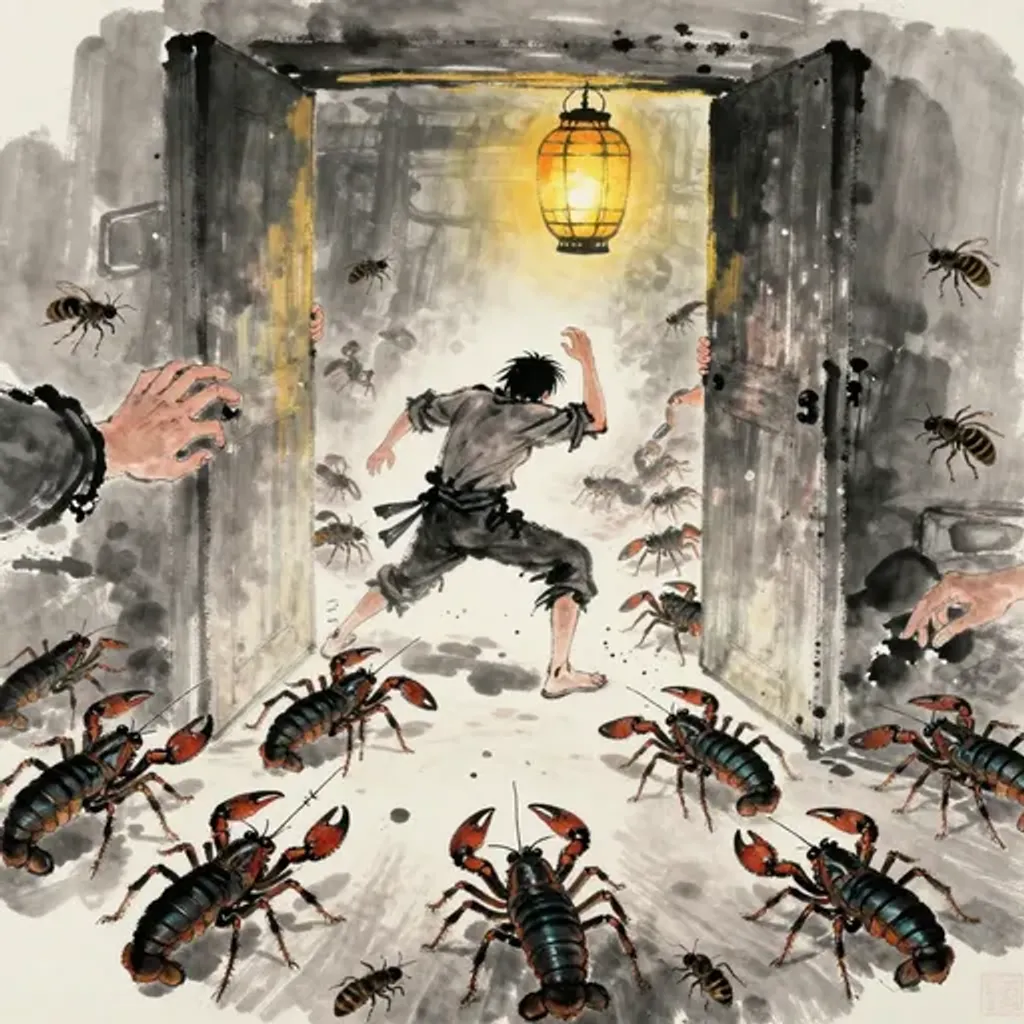
蠆室蜂戶,螫我手足。不可進取,為身害速。
A room of scorpions, a door of wasps; they sting my hands and feet. One cannot press forward; harm comes swiftly to the body.
— Jiao Yanshou, Yilin (Forest of Changes), 1st century BC
Commentary
Clouds and thunder sink into fire buried within earth: initial difficulty deepens into concealed brilliance. A chamber filled with scorpions, a doorway swarming with wasps — they sting hands and feet until nothing can be grasped or stepped upon. Advance is impossible, for to move forward only hastens one's own injury. The imagery is of a space that should be safe, the domestic interior, turned into a trap of hidden venom. From Difficulty at the Beginning to Darkening of the Light, fire enters the earth and goes dark. The wise conceal their brightness in a hostile environment, but the verse goes further: the environment itself attacks anyone who tries to act. In the darkened age, even the threshold stings, and stillness is the only survival strategy.
屯 → 家人
Hexagram 3 → Hexagram 37: The Family
Changing lines: 3, 6
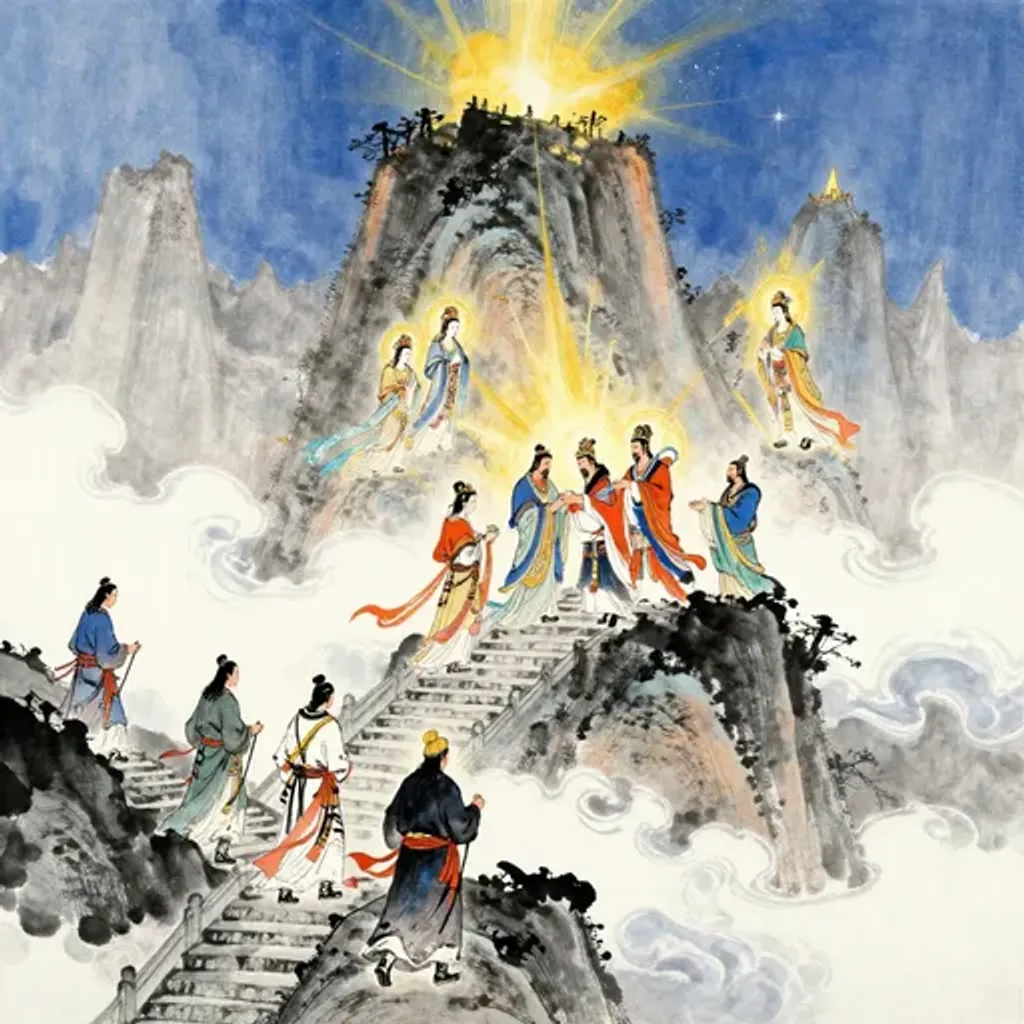
崔嵬北獄,天神貴客。溫仁正直,主布恩德。開衣不已,蒙受大福。
The lofty Northern Peak; celestial spirits, honored guests. Warm, benevolent, upright, and just; they spread grace and virtue. Bestowing robes without cease; great blessings are received.
— Jiao Yanshou, Yilin (Forest of Changes), 1st century BC
Commentary
Clouds and thunder transform into wind issuing from fire: initial chaos resolves into the warmth of family. Towering peaks of the northern sacred mountain host divine and honored guests. The deities are warm, benevolent, upright, and just, distributing grace and virtue. They open their robes without ceasing, and the recipient receives great blessing. The imagery places the scene at a cosmic threshold where heaven's emissaries descend to bestow favor upon the worthy. From Difficulty at the Beginning to The Family, the transformation is one of internalization: external storm becomes domestic warmth. Wind from fire means that inner flame radiates outward as gentle influence. The sacred guest does not conquer the household but blesses it, and the initial turmoil is transmuted into the steady glow of a well-ordered home.
屯 → 睽
Hexagram 3 → Hexagram 38: Opposition
Changing lines: 2, 4, 5, 6
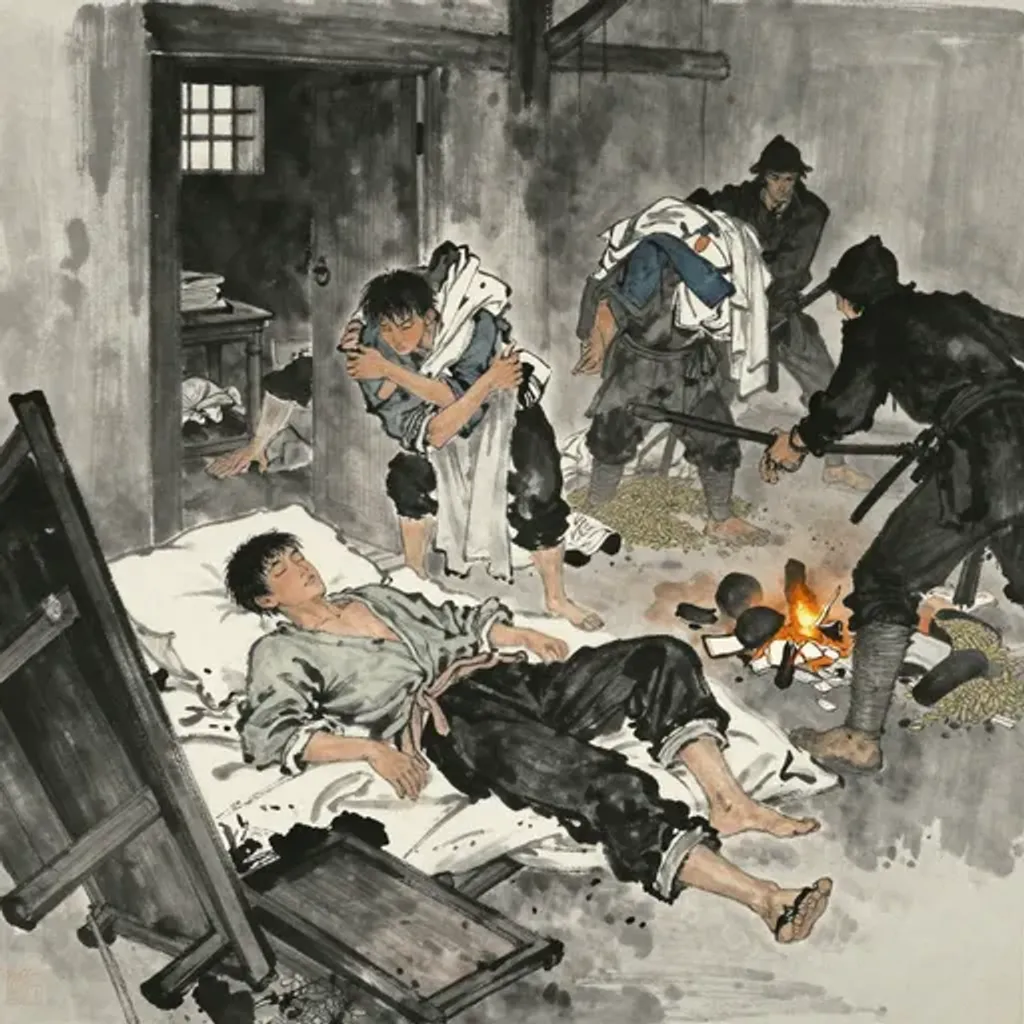
伯蹇叔盲,莫與守床。失我衣裘,伐民除鄉。
The elder brother is lame, the younger is blind; neither can guard the bed. We lose our garments and furs; the people are harassed, the villages destroyed.
— Jiao Yanshou, Yilin (Forest of Changes), 1st century BC
Commentary
Clouds and thunder yield to fire above and lake below looking apart: initial difficulty fractures into opposition. The elder brother limps, the younger brother is blind — neither can guard the household. Garments and furs are lost, the people are conscripted, and villages are uprooted. The paired disabilities create a devastating image: the lame cannot flee, the blind cannot navigate, and together they cannot protect what is theirs. From Difficulty at the Beginning to Opposition, fire and lake pull in opposite directions, each evaporating the other. The household falls apart not from a single blow but from the compounding of individual incapacities. Where Zhun's difficulty was at least unified in its turbulence, Kui's opposition splits even the family against itself, and the disabled guardians embody a defense divided beyond remedy.
屯 → 蹇
Hexagram 3 → Hexagram 39: Obstruction
Changing lines: 1, 3
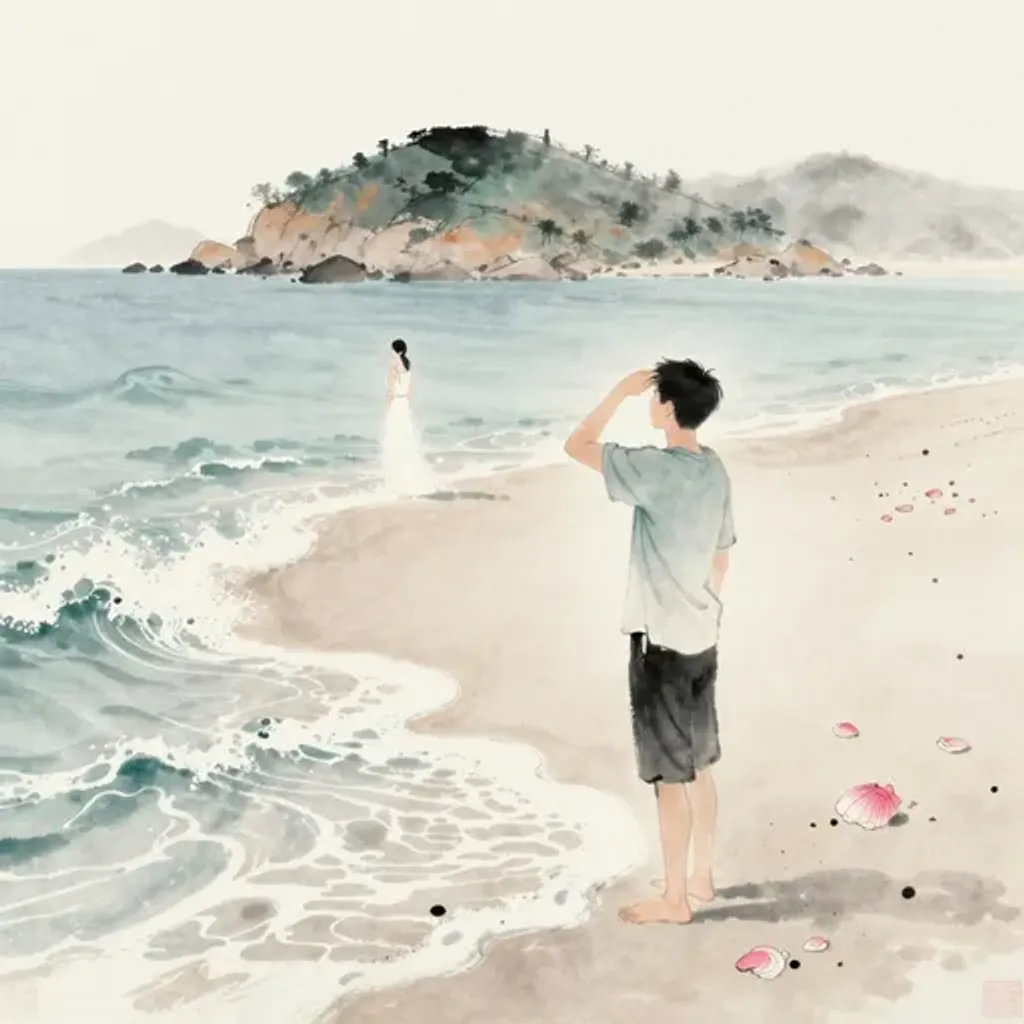
為季求婦,家在東海。水長無船,不見所歡。
Seeking a wife for the youngest brother; her family lives by the eastern sea. The water stretches with no boat; the beloved is never seen.
— Jiao Yanshou, Yilin (Forest of Changes), 1st century BC
Commentary
Clouds and thunder transform into water upon mountain: initial difficulty compounds into layered obstruction. Seeking a bride for a younger brother, the family learns she lives across the eastern sea. The water stretches endlessly with no boat in sight, and the beloved remains unseen. The verse echoes 3-9 (Zhun to Small Taming) with its river-crossing frustration, but here the obstacle is magnified from a river to an ocean. From Difficulty at the Beginning to Obstruction, water pools atop the mountain, blocking every path forward. Jian's response to obstruction is to turn inward and cultivate virtue, but the verse dwells on the pain of separation: longing persists, the sea refuses to part, and no practical means of reunion exists. The gentleman reflects on his own conduct because action is genuinely impossible.
屯 → 解
Hexagram 3 → Hexagram 40: Deliverance
Changing lines: 1, 2, 4, 5
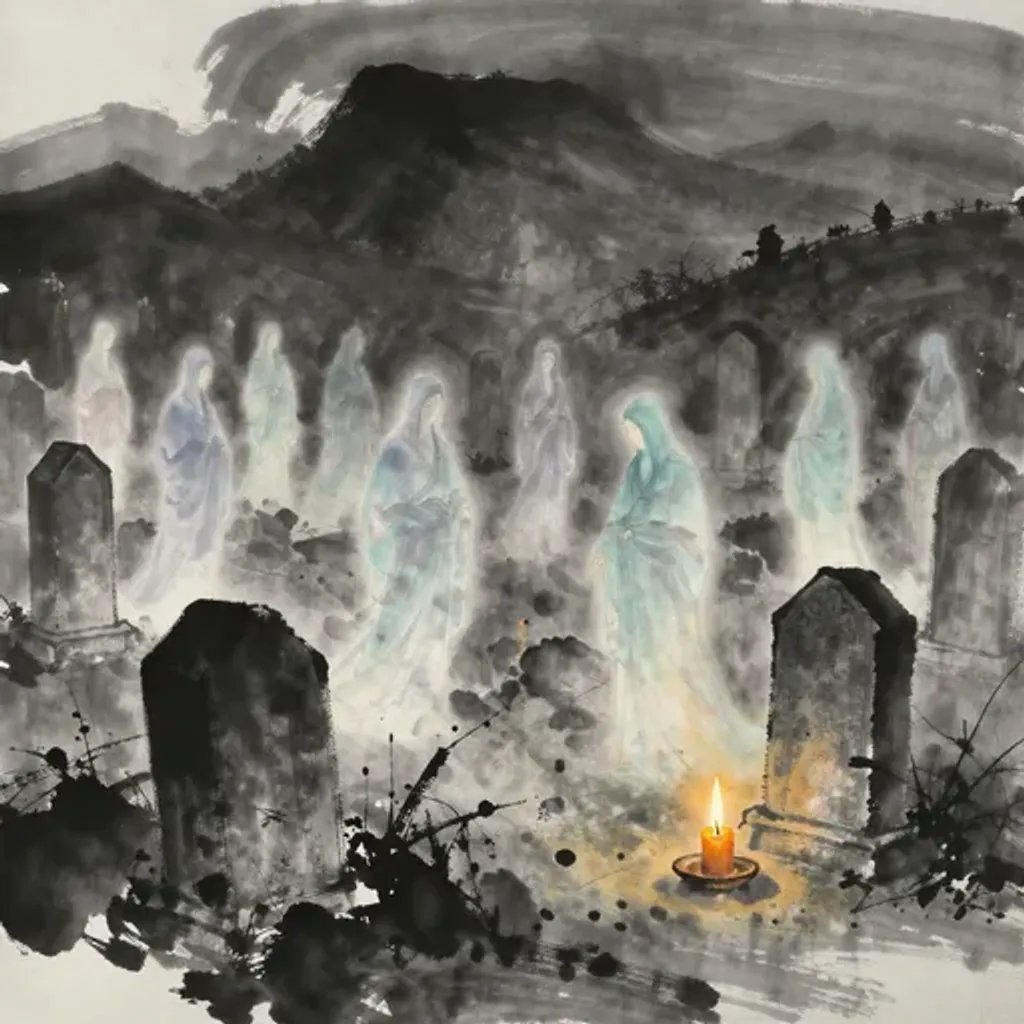
山陵丘墓,魂魄失舍。精神盡竭,長寢不覺。
Hills, mounds, and tombs; the soul and spirit lose their resting place. Vital essence is utterly spent; one lies in long sleep, never waking.
— Jiao Yanshou, Yilin (Forest of Changes), 1st century BC
Commentary
Clouds and thunder give way to thunder above water: initial difficulty finds release, but the release here is death. Hills and burial mounds stand in rows as souls lose their dwelling. Vital spirit is entirely spent, and the sleeper lies in eternal rest, never to wake. The verse describes death without euphemism: the spirit departs, the body is interred, and consciousness ceases. From Difficulty at the Beginning to Deliverance, thunder above water should represent the liberating storm that clears obstruction. Yet this liberation is final and absolute: the soul is delivered from life itself. The deliverance of Jie pardons faults and forgives errors, but some burdens can only be released by surrendering existence entirely. The verse reminds that not all resolution brings renewal.
屯 → 損
Hexagram 3 → Hexagram 41: Decrease
Changing lines: 2, 5, 6
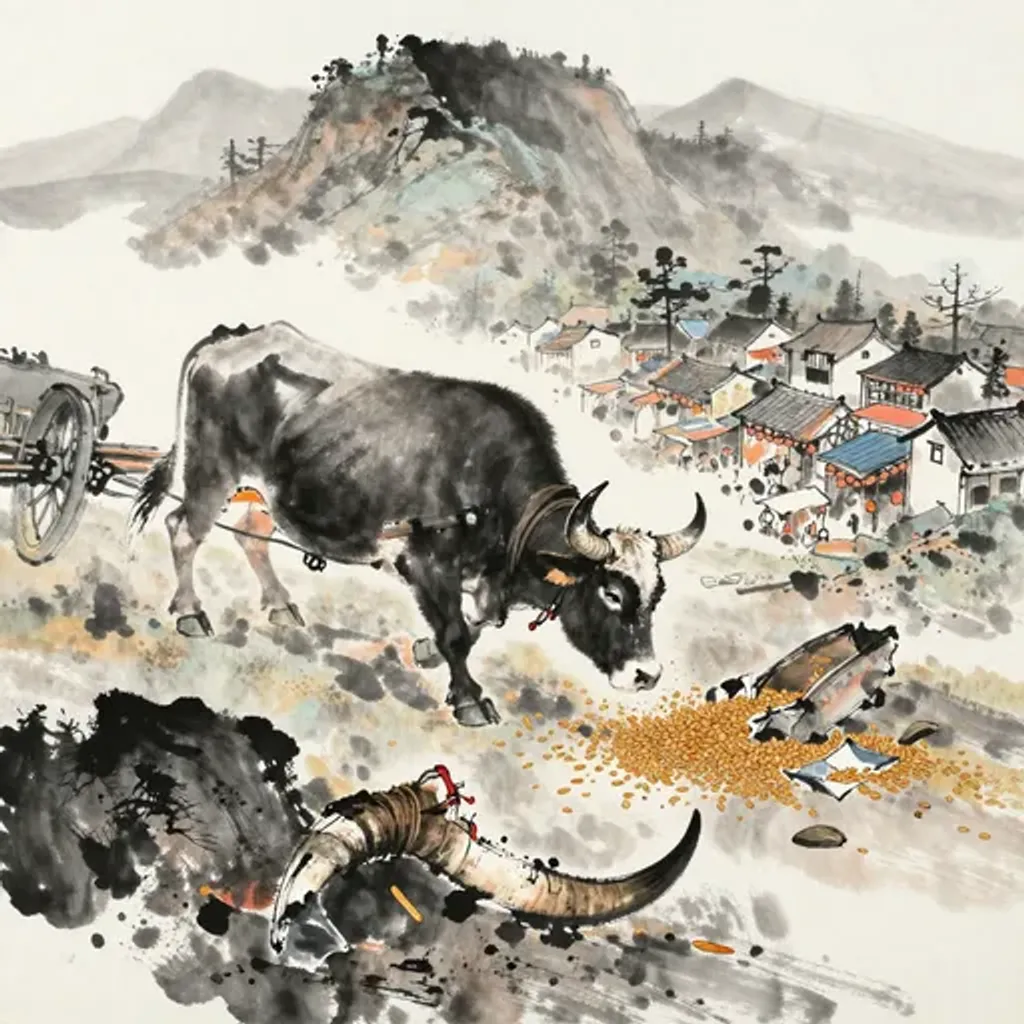
踦牛失角,下山傷軸。失其利祿。
The one-horned ox loses its horn; going downhill, the axle breaks. One’s profit and rank are lost.
— Jiao Yanshou, Yilin (Forest of Changes), 1st century BC
Commentary
Clouds and thunder transform into mountain above lake: initial difficulty descends into loss. A one-horned ox loses its remaining horn coming down the mountain, and the cart axle breaks. Profit and position are forfeited. The verse is tersely catastrophic: each element names a diminishment. The ox already lacked one horn; now it loses the other. The descent that should bring the ox safely home instead shatters the vehicle. From Difficulty at the Beginning to Decrease, the mountain drains the lake below. Sun's principle is deliberate reduction for the sake of higher ends, but here the decrease is involuntary and compounding. What little remained is stripped away, and even the means of conveyance is destroyed. The initial difficulty has not been overcome but has progressively consumed every resource.
屯 → 益
Hexagram 3 → Hexagram 42: Increase
Changing lines: 6
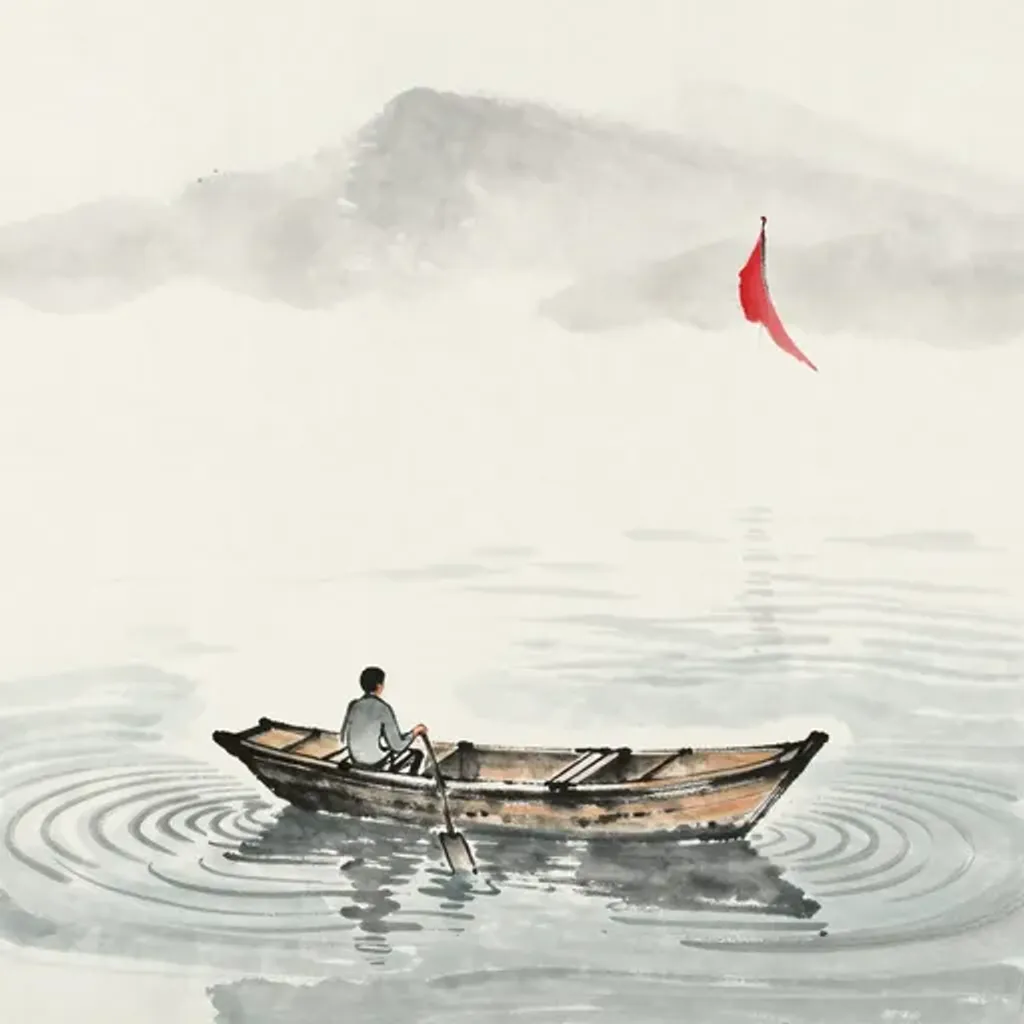
水戴船舟,無根以浮。往往溶溶,心勞且憂。
Water carries the boat; rootless, it floats. Drifting on and on; the heart labors and is full of worry.
— Jiao Yanshou, Yilin (Forest of Changes), 1st century BC
Commentary
Clouds and thunder give way to wind and thunder together: initial difficulty opens into the promise of increase, yet anxiety persists. Water carries the boat, but the vessel has no anchor and drifts aimlessly. The current flows on and on, and the heart labors with worry. The boat floats because water supports it, yet without root or rudder it merely wanders. From Difficulty at the Beginning to Increase, wind above thunder should multiply and enrich, but the verse reveals that increase without direction is merely drift. The resources are present — water, boat, current — but no guiding principle organizes them. The traveler gains motion without destination, freedom without purpose, and the heart's anxiety confirms that aimless increase is no blessing at all.
屯 → 夬
Hexagram 3 → Hexagram 43: Breakthrough
Changing lines: 2, 3, 4
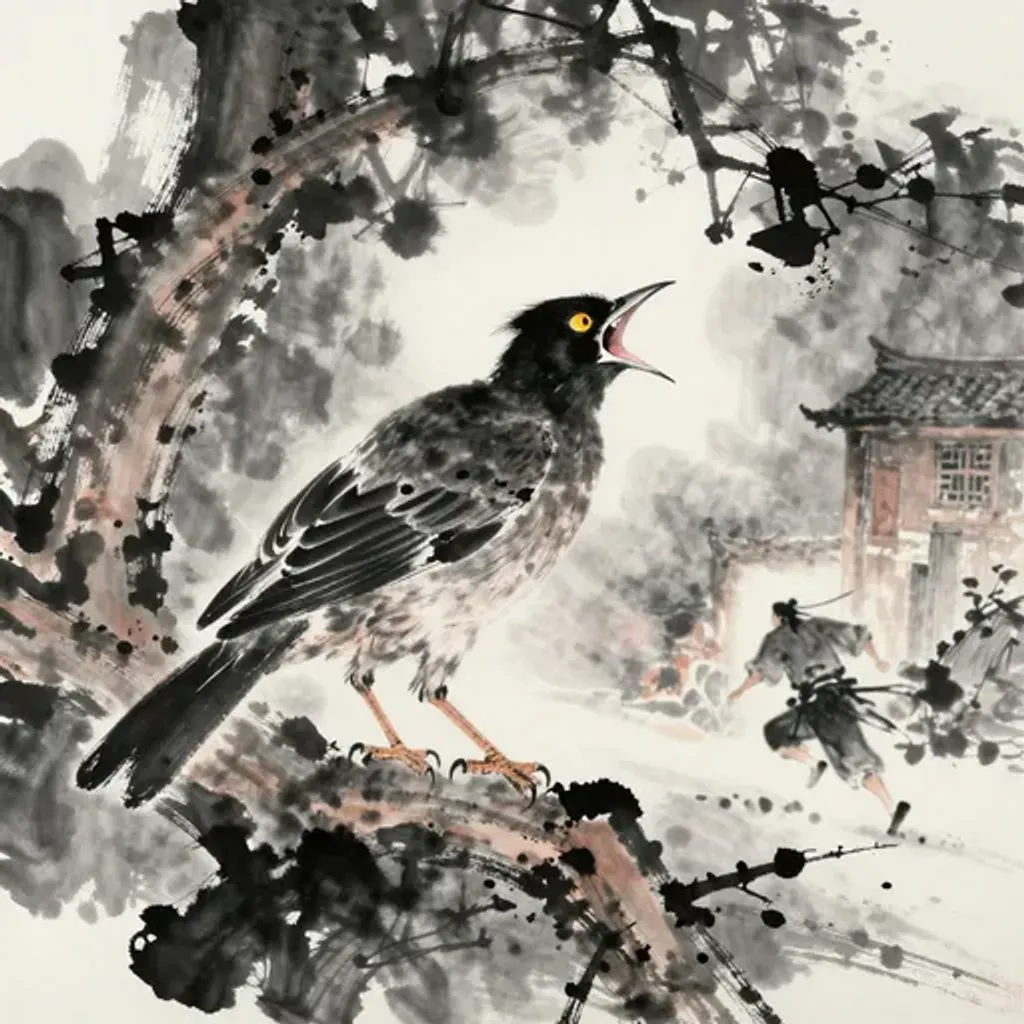
有鳥來飛,集于古樹。鳴聲可惡,主將出去。
A bird comes flying, alighting on an ancient tree. Its cry is hateful; the master will depart.
— Jiao Yanshou, Yilin (Forest of Changes), 1st century BC
Commentary
Clouds and thunder yield to lake above heaven: initial difficulty resolves through decisive breakthrough. A bird flies in and alights upon an ancient tree. Its cries are harsh and hateful, and the master prepares to depart. The ominous bird's arrival forces a decision: stay and endure the ill omen, or leave. From Difficulty at the Beginning to Breakthrough, the lake rising above heaven is an image of decisive overflow that cannot be contained. Guai demands resolution; the bird's unpleasant cry is the catalyst that forces the issue. The master does not negotiate with the omen but simply goes, cutting the situation cleanly. Initial difficulty is not gradually resolved but abruptly abandoned, and the break itself constitutes the breakthrough.
屯 → 姤
Hexagram 3 → Hexagram 44: Coming to Meet
Changing lines: 1, 2, 3, 4, 6
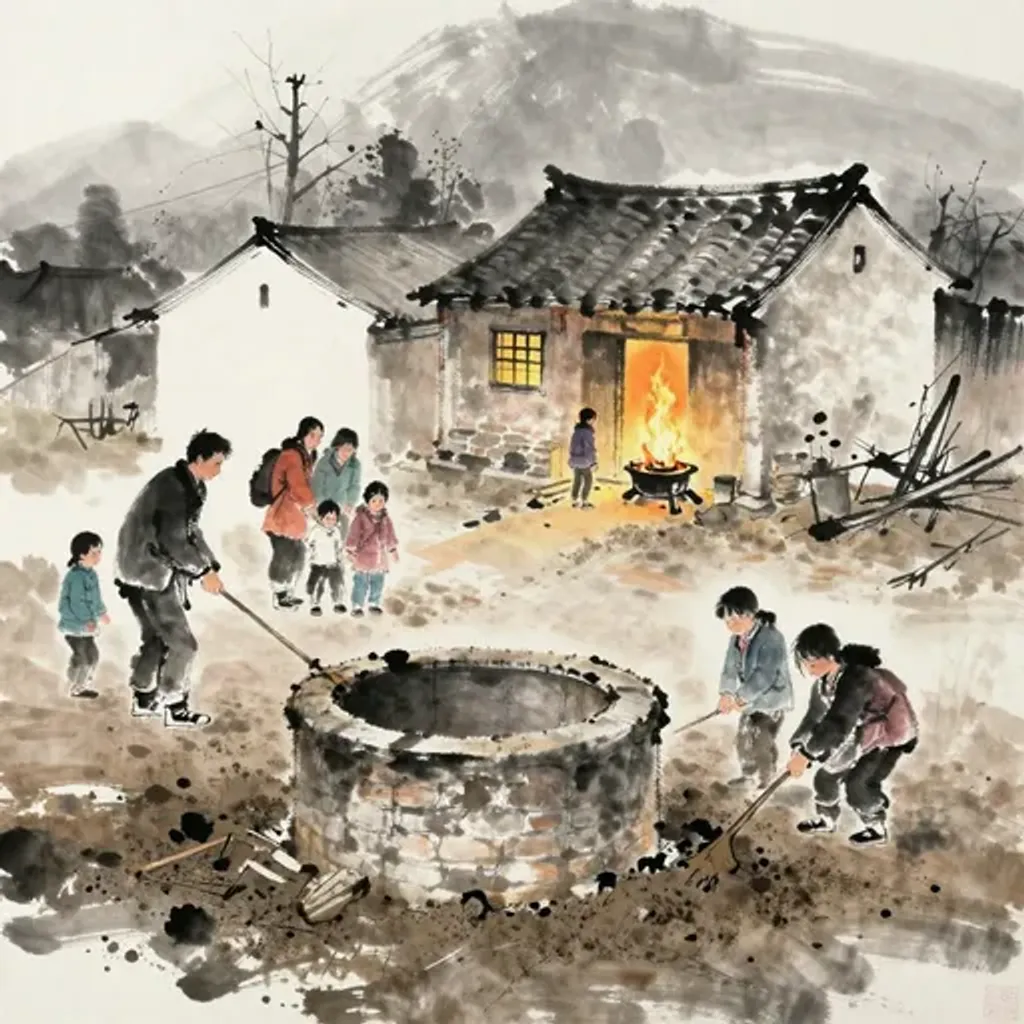
東徙不時,觸患離憂。井泥無濡,思叔舊居。
Moving east at the wrong time, meeting calamity and parting from joy. The well turns to mud, yielding no moisture; one longs for uncle’s old home.
— Jiao Yanshou, Yilin (Forest of Changes), 1st century BC
Commentary
Clouds and thunder transform into heaven above wind: initial difficulty encounters an unexpected intrusion. Moving east at the wrong time, one triggers calamity and falls into grief. The well is muddy and provides no moisture, and the exile thinks longingly of his uncle's old dwelling. The imagery of a fouled well that cannot nourish directly quotes the I-Ching's Jing hexagram, where a muddy well represents neglected institutional resources. From Difficulty at the Beginning to Coming to Meet, heaven above wind issues commands that reach every quarter, but the encounter here is unwelcome. Gou represents the unexpected meeting of yin and yang; the verse shows that such encounters, when ill-timed, bring only displacement. The exile's nostalgia for his former home confirms that the new situation offers nothing to sustain him.
屯 → 萃
Hexagram 3 → Hexagram 45: Gathering Together
Changing lines: 1, 4
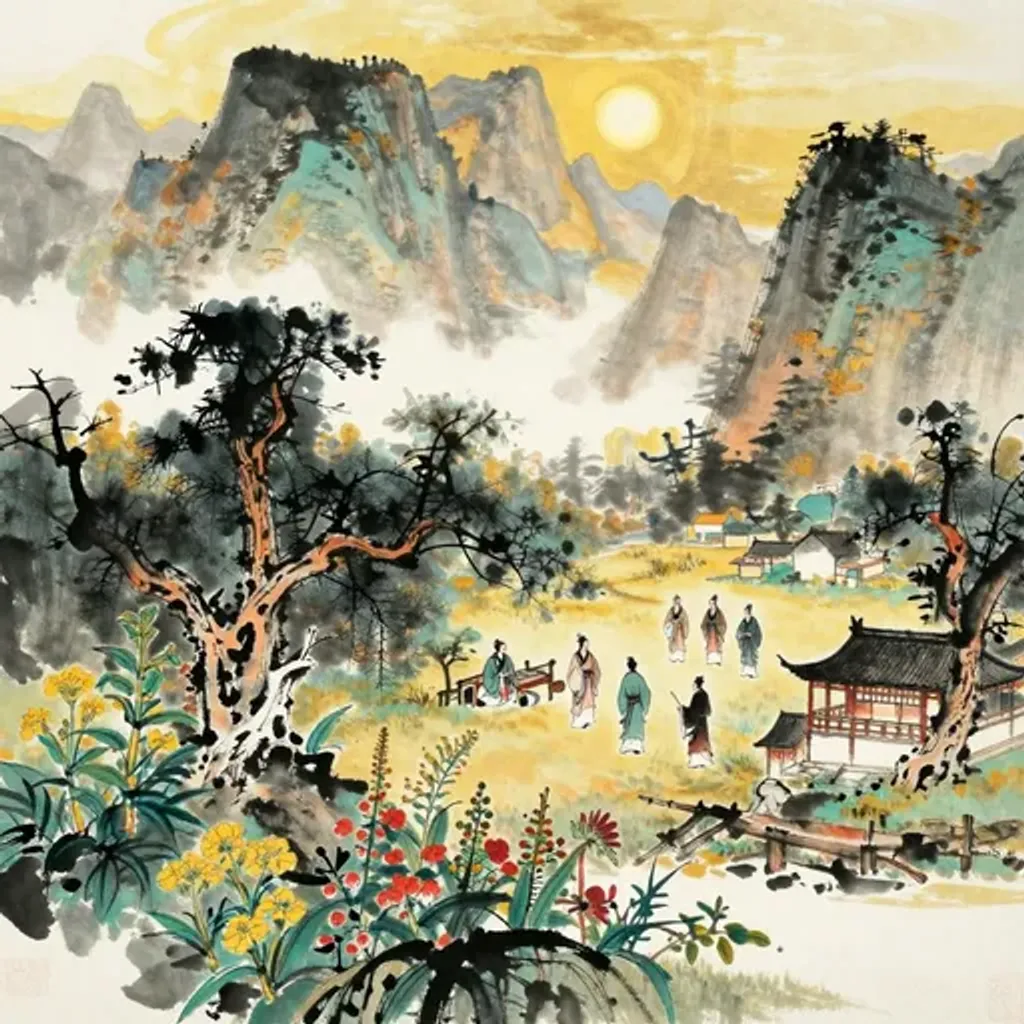
黃帝所生,伏羲之宇。兵刃不至,利以居止。
Birthplace of the Yellow Emperor, realm of Fuxi. No blades or weapons come near; favorable for dwelling and staying.
— Jiao Yanshou, Yilin (Forest of Changes), 1st century BC
Commentary
Clouds and thunder give way to lake gathered upon earth: initial difficulty resolves into peaceful assembly. This is the land where the Yellow Emperor was born and where Fu Xi held court. No blades or weapons reach here, and it is profitable to dwell and remain. The verse invokes the two foundational culture heroes of Chinese civilization as divine patrons of a protected space. The Yellow Emperor, who defeated Chi You and founded civilization, and Fu Xi, who devised the trigrams, together sanctify a place beyond the reach of violence. From Difficulty at the Beginning to Gathering, the lake pools upon earth, drawing all things to congregate naturally. The sacred geography of origin becomes a sanctuary where initial difficulty is not overcome but simply absent, held at bay by ancestral blessing.
屯 → 升
Hexagram 3 → Hexagram 46: Pushing Upward
Changing lines: 1, 2, 3, 5
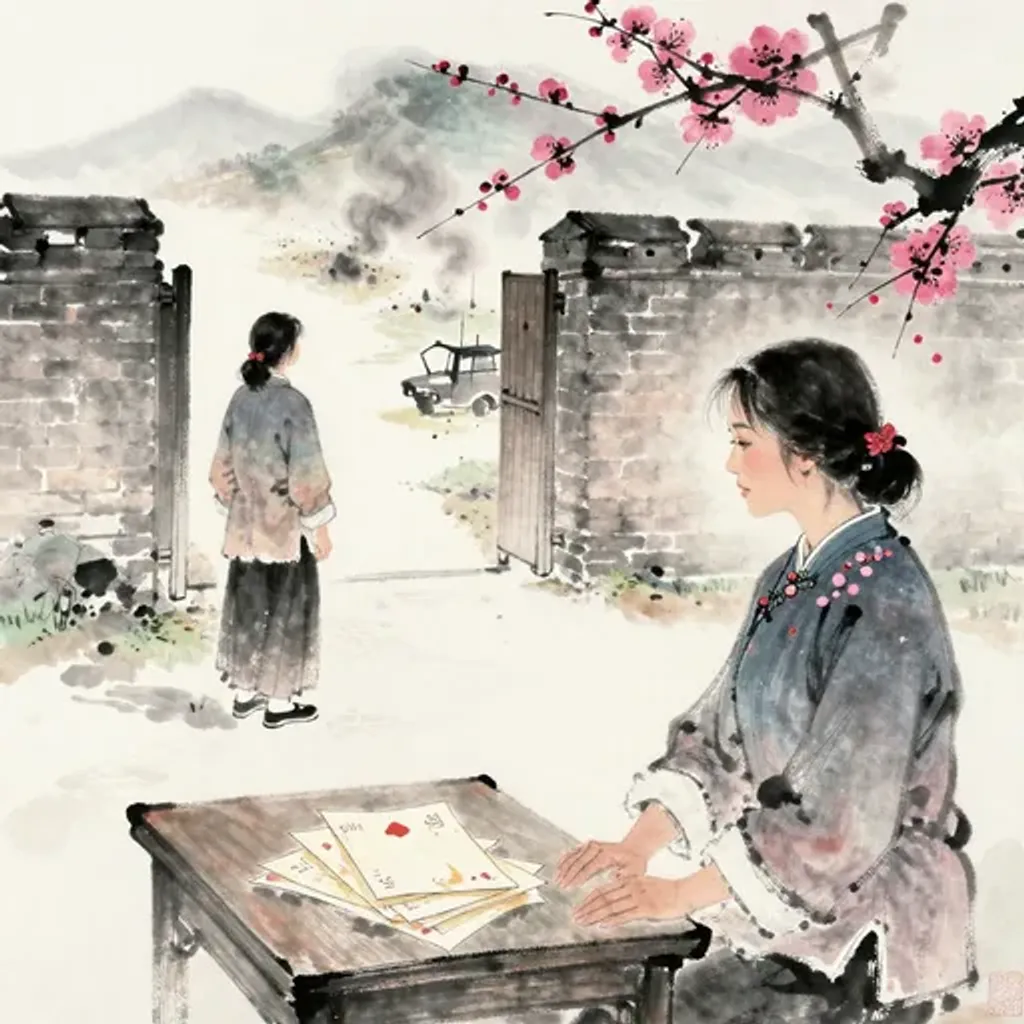
東山救亂,處婦思夫。勞我君子,役無休已。
The eastern mountain campaign quells the rebellion; the wife at home longs for her husband. Toiling, my noble lord; service without rest.
— Jiao Yanshou, Yilin (Forest of Changes), 1st century BC
Commentary
Clouds and thunder transform into earth above wind: initial difficulty pushes upward through patient effort. The 'Eastern Mountain' campaign quells the rebellion, while at home the wife aches for her absent husband. She labors over her lord's affairs, and his service knows no rest. This directly references the Shijing ode 'Dong Shan,' attributed to the Duke of Zhou's eastern expedition to suppress the rebellion of the Three Monitors. The poem is told from the soldier's perspective, imagining his wife's longing during his three-year absence. From Difficulty at the Beginning to Pushing Upward, wood grows slowly within the earth, ascending by steady accumulation. The soldier's grinding service and the wife's patient endurance together embody Sheng's upward movement: gradual, costly, and sustained only by quiet devotion on both sides.
屯 → 困
Hexagram 3 → Hexagram 47: Oppression
Changing lines: 1, 2, 4
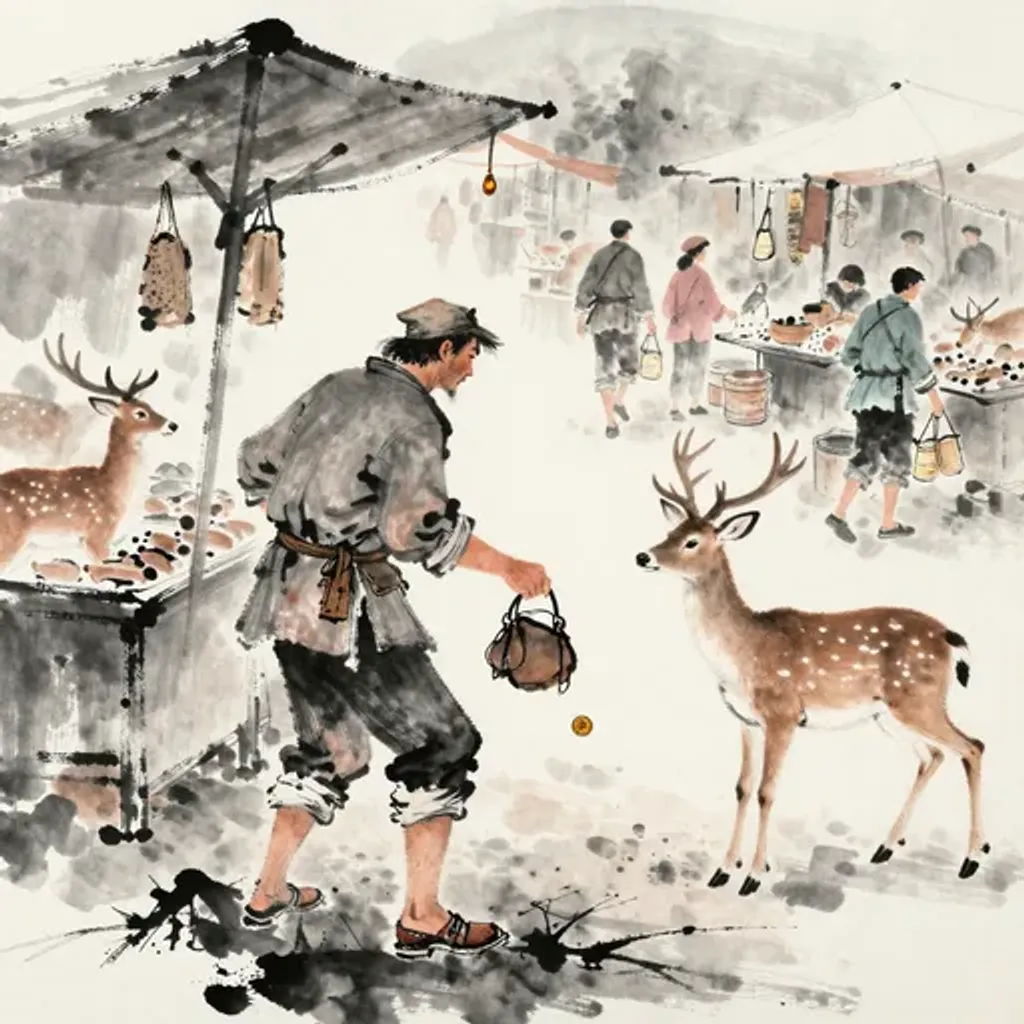
跛躓未起,先利後市,不得鹿子。
Stumbling, not yet risen; first profit, then market. One does not get the fawn.
— Jiao Yanshou, Yilin (Forest of Changes), 1st century BC
Commentary
Clouds and thunder plunge into lake over water: initial difficulty sinks into genuine oppression. Stumbling and lame, one has not yet risen. The profit came first, the market came later, but in the end the deer fawn is not captured. The sequence inverts proper order: one calculates gain before establishing the means to achieve it, and the quarry escapes. The lame hunter who cannot stand has no chance against swift prey. From Difficulty at the Beginning to Oppression, the lake has drained its water — resources are exhausted and the container sits empty. Kun's image is the gentleman who stakes his life on his purpose, but here there is no dignity in the predicament, only miscalculation compounding physical incapacity. The deer escapes because the hunter was never in a position to catch it.
屯 → 井
Hexagram 3 → Hexagram 48: The Well
Changing lines: 1, 2, 3
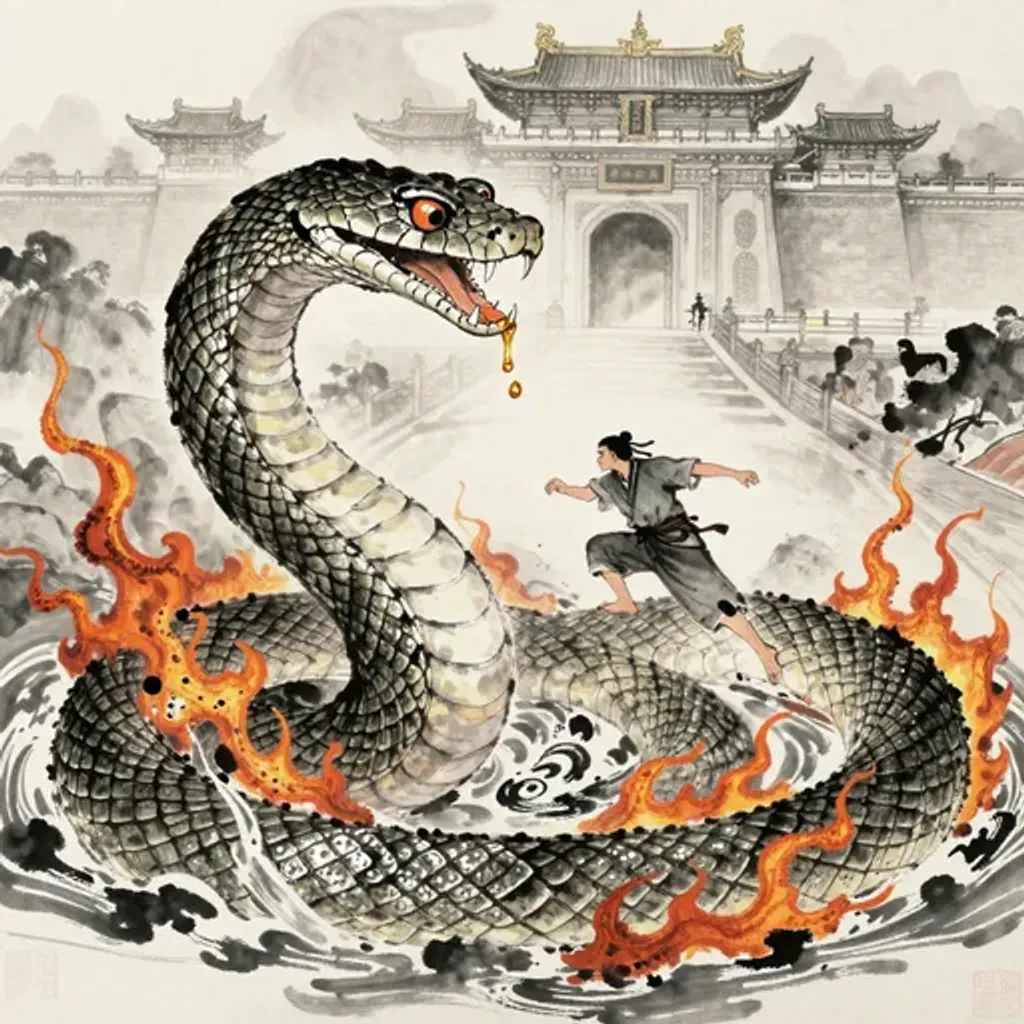
大蛇當路,使季畏懼。湯火之災,切近我膚。賴其天幸,趨於王廬。
A great serpent blocks the road, making the youngest terrified. The calamity of boiling water and fire presses close upon my skin. By heaven’s grace alone, one reaches the king’s abode.
— Jiao Yanshou, Yilin (Forest of Changes), 1st century BC
Commentary
Clouds and thunder transform into water above wind: initial difficulty finds its way to the inexhaustible well. A great serpent blocks the road, terrifying the younger traveler. Fire and boiling water threaten the skin. Yet, by heaven's fortune, the traveler reaches the king's lodge safely. The serpent as road-blocker appears throughout the Yilin as a figure of sudden, visceral danger. The narrow escape from scalding and venom maps perfectly onto the passage from Zhun to The Well: the traveler passes through mortal peril to reach an enduring source of nourishment. The well's water rises through wood, sustaining the community. From Difficulty at the Beginning to The Well, initial chaos gives way to institutional depth: the resource that never runs dry, found only by those who survive the approach.
屯 → 革
Hexagram 3 → Hexagram 49: Revolution
Changing lines: 3, 4
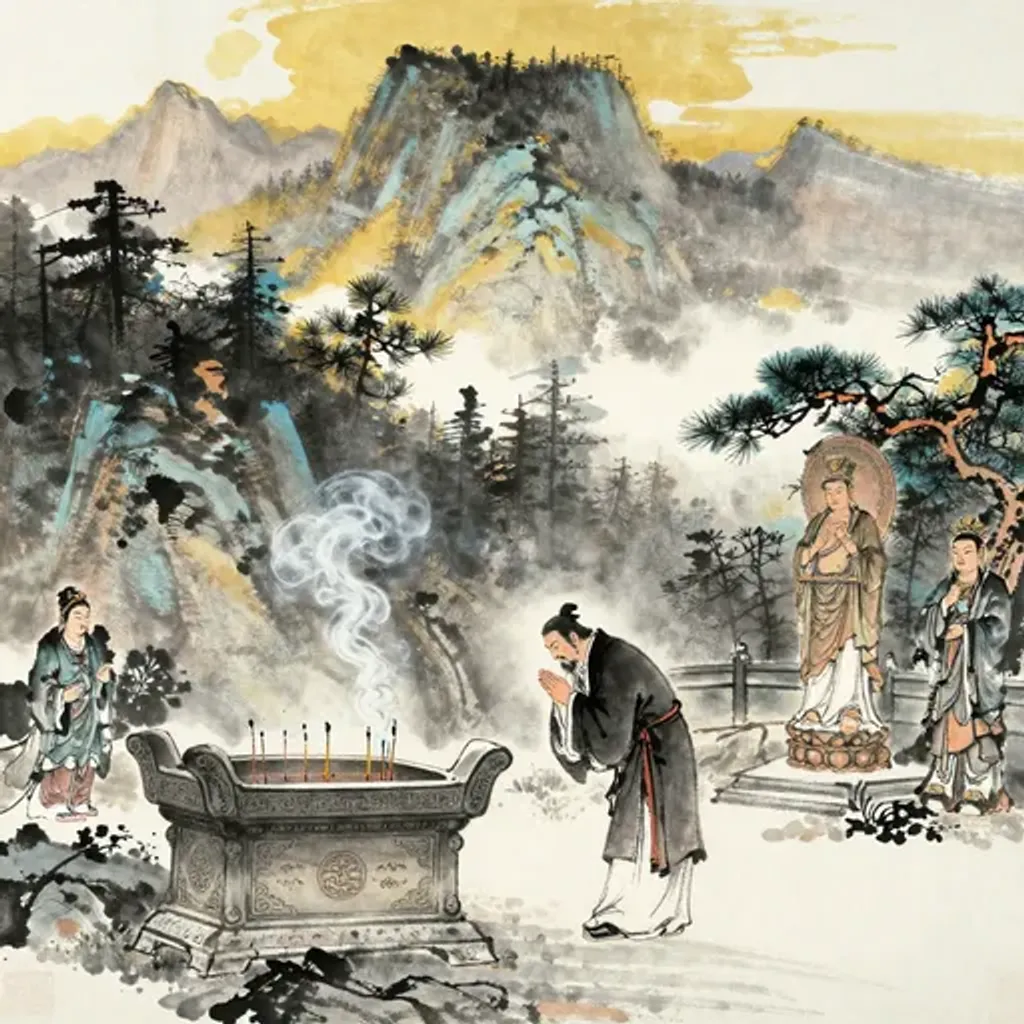
從容長閒,遊戲南山。拜祠禱神,使神無患。
At ease, with long leisure; wandering and playing on the southern mountain. Bowing at shrines, praying to the spirits; keeping the spirits from harm.
— Jiao Yanshou, Yilin (Forest of Changes), 1st century BC
Commentary
Clouds and thunder yield to lake over fire: initial difficulty transforms into revolutionary calm. At leisure and unhurried, one roams and plays upon the southern hills. Bowing at shrines and praying to the spirits, one ensures that the gods inflict no harm. The verse describes a world where danger has been domesticated through ritual: the worshipper is not fleeing but strolling, not desperate but devotional. From Difficulty at the Beginning to Revolution, fire within the lake signals radical transformation, yet the scene is serene. Ge's revolution here is not violent upheaval but the quiet replacement of anxiety with trust. The initial chaos of Zhun has been so thoroughly reformed that its former turbulence survives only as the occasion for grateful worship. Revolution need not be violent; sometimes it is simply the moment when fear gives way to peace.
屯 → 鼎
Hexagram 3 → Hexagram 50: The Cauldron
Changing lines: 1, 2, 3, 4, 5, 6
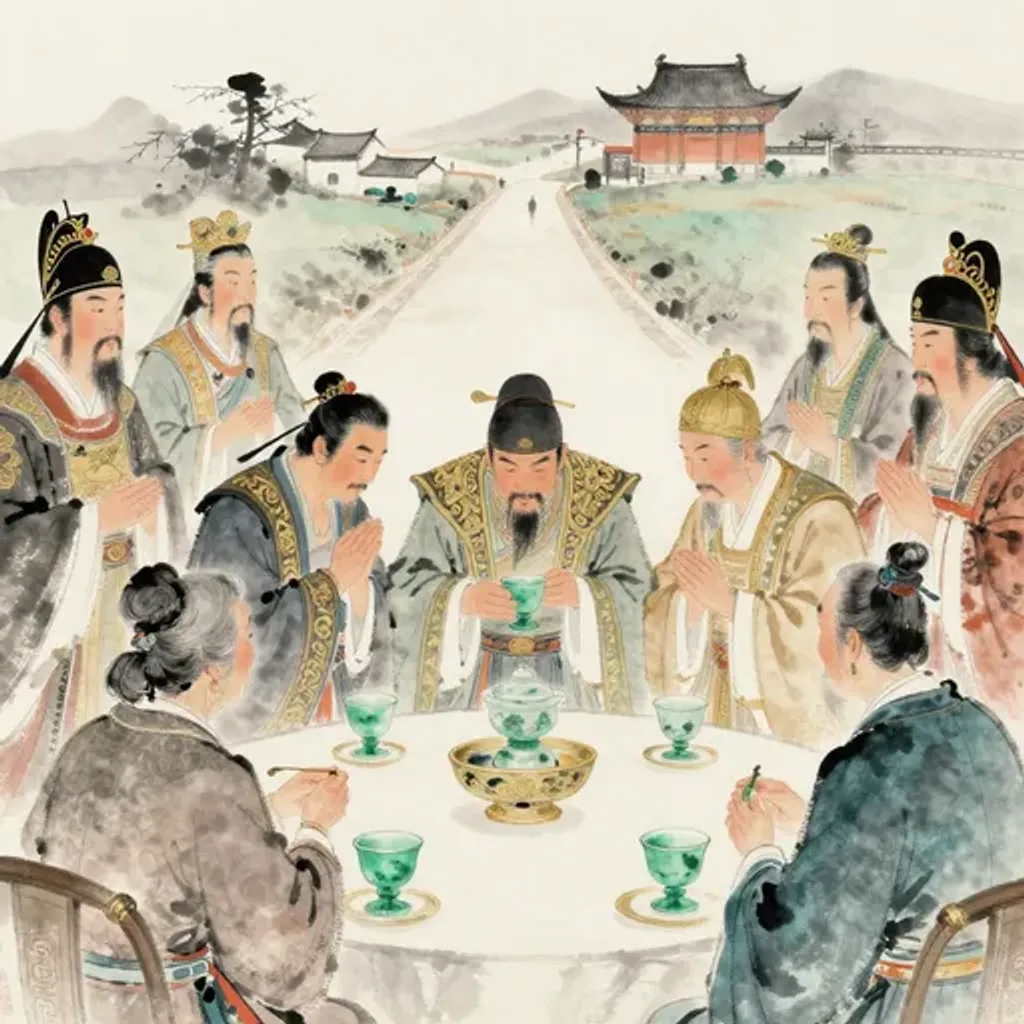
區脫康居,慕義入朝。湛露之歡,三爵畢恩。復歸野廬,與母相扶。
Envoys from distant lands, drawn by righteousness, come to court. Enjoying the feast of glistening dew, three cups complete the grace. They return to their wilderness huts, supporting their mothers.
— Jiao Yanshou, Yilin (Forest of Changes), 1st century BC
Commentary
Clouds and thunder transform into fire above wind: initial difficulty leads to the transformative vessel of The Cauldron. Envoys from the frontier post of Qutuo and the kingdom of Kangju, admiring Chinese civilization, come to pay court. The Abundant Dew banquet welcomes them with three ceremonial toasts. They then return to their frontier lodges to care for their mothers. Qutuo refers to Han-dynasty border garrison posts, and Kangju was a Central Asian kingdom described in the Shiji. The 'Abundant Dew' (zhanlu) alludes to the Shijing ode celebrating the Son of Heaven's feast for vassal lords. From Difficulty at the Beginning to The Cauldron, fire above wind cooks raw materials into refined civilization. Barbarian envoys drawn by virtue to the imperial court embody the Ding's transformative function: the cauldron refines what enters it.
屯 → 震
Hexagram 3 → Hexagram 51: The Arousing Thunder
Changing lines: 4, 5
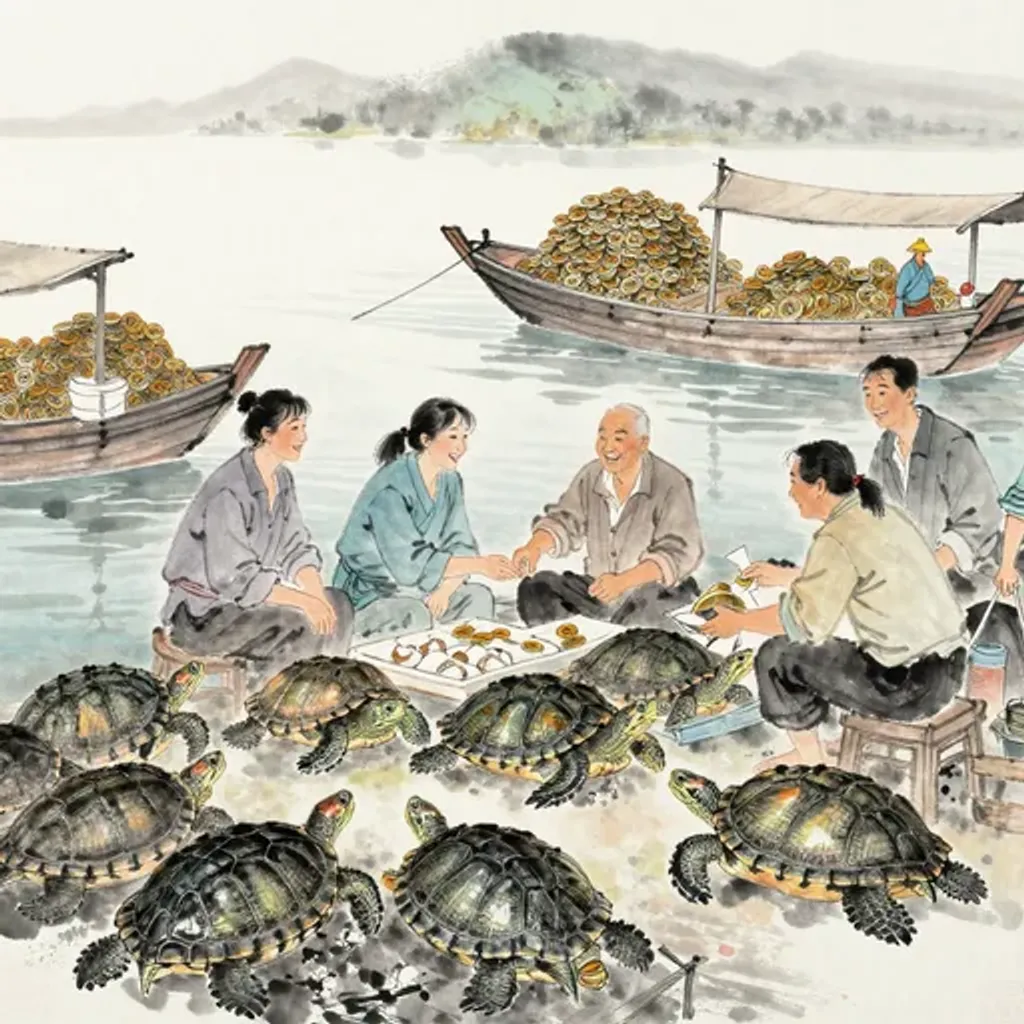
龜鱉列市,河海饒有。長錢善價,商李悅喜。
Turtles and soft-shell fill the market; rivers and seas yield abundance. Long coins, fair prices; the merchants rejoice.
— Jiao Yanshou, Yilin (Forest of Changes), 1st century BC
Commentary
Clouds and thunder transform into doubled thunder: initial difficulty erupts into energized movement. Turtles and softshell tortoises fill the marketplace, the rivers and seas teeming with abundance. Good prices and fair coin flow freely, and the merchants rejoice. The imagery is purely commercial: luxury goods from the waterways find eager buyers, trade prospers, and everyone profits. From Difficulty at the Beginning to The Arousing, thunder upon thunder doubles the activating force. The marketplace buzzes with the energy of doubled Zhen: startling movement that wakes commerce from stagnation. The initial knot of Zhun's clouds and thunder untangles into productive dynamism, and what was chaotic potential becomes organized exchange. The merchants' delight confirms that the shock has been channeled into prosperity.
屯 → 艮
Hexagram 3 → Hexagram 52: Keeping Still Mountain
Changing lines: 1, 3, 5, 6
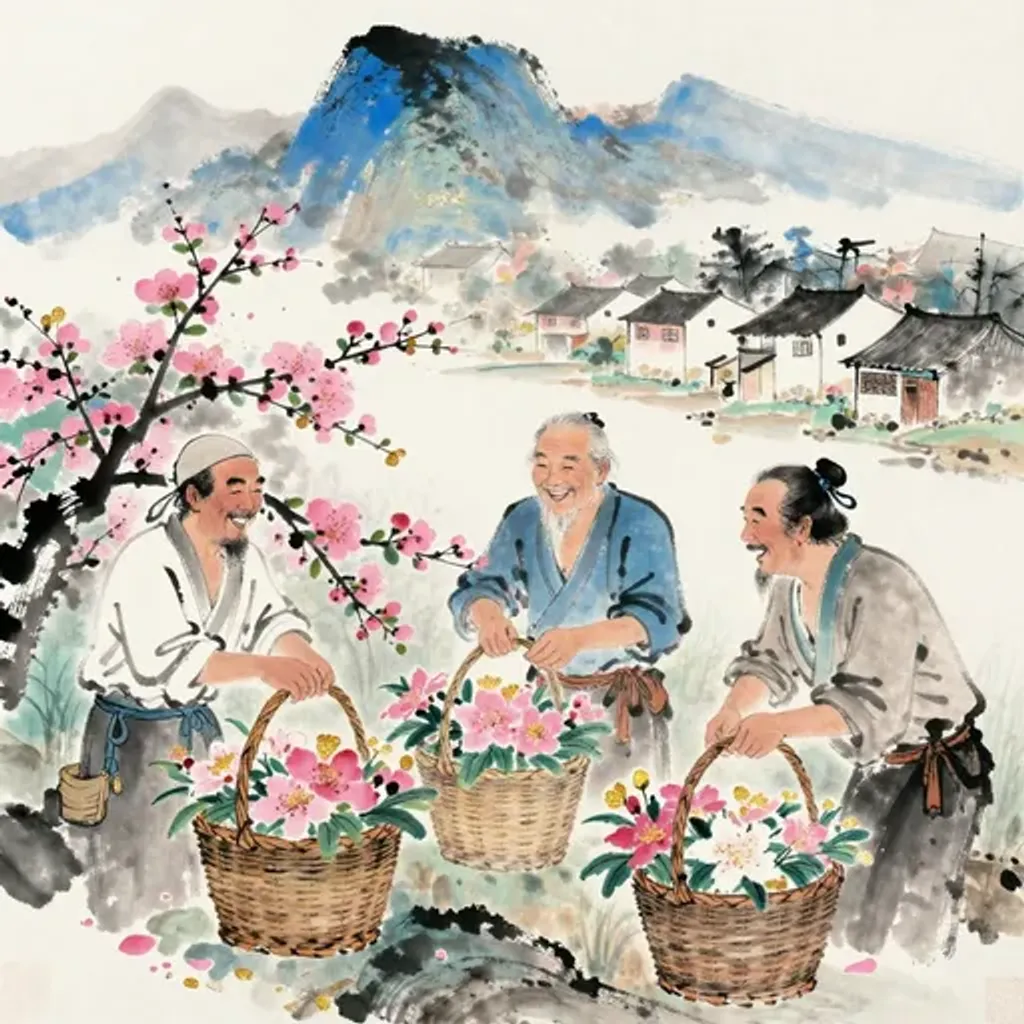
年常蒙慶,今歲受福。三夫採葩,出必有得。
Each year brings blessings; this year receives good fortune. Three men gather blossoms; going out, they are sure to find success.
— Jiao Yanshou, Yilin (Forest of Changes), 1st century BC
Commentary
Clouds and thunder yield to twin mountains: initial difficulty settles into quiet stillness. Year after year blessings accumulate, and this year receives particular fortune. Three men go out to gather blossoms, and whenever they venture forth they surely return with something. The verse is gently optimistic: steady accumulation over time, modest but reliable harvests. From Difficulty at the Beginning to Keeping Still, the gentleman thinks without overstepping his position. The twin mountains of Gen stand firm, and the initial turbulence of Zhun resolves into a settled routine where effort consistently yields return. No grand transformation occurs; instead, the daily practice of going out, gathering, and bringing back produces cumulative abundance. Stillness here is not paralysis but the quiet confidence of a life in rhythm.
屯 → 漸
Hexagram 3 → Hexagram 53: Development
Changing lines: 1, 3, 6
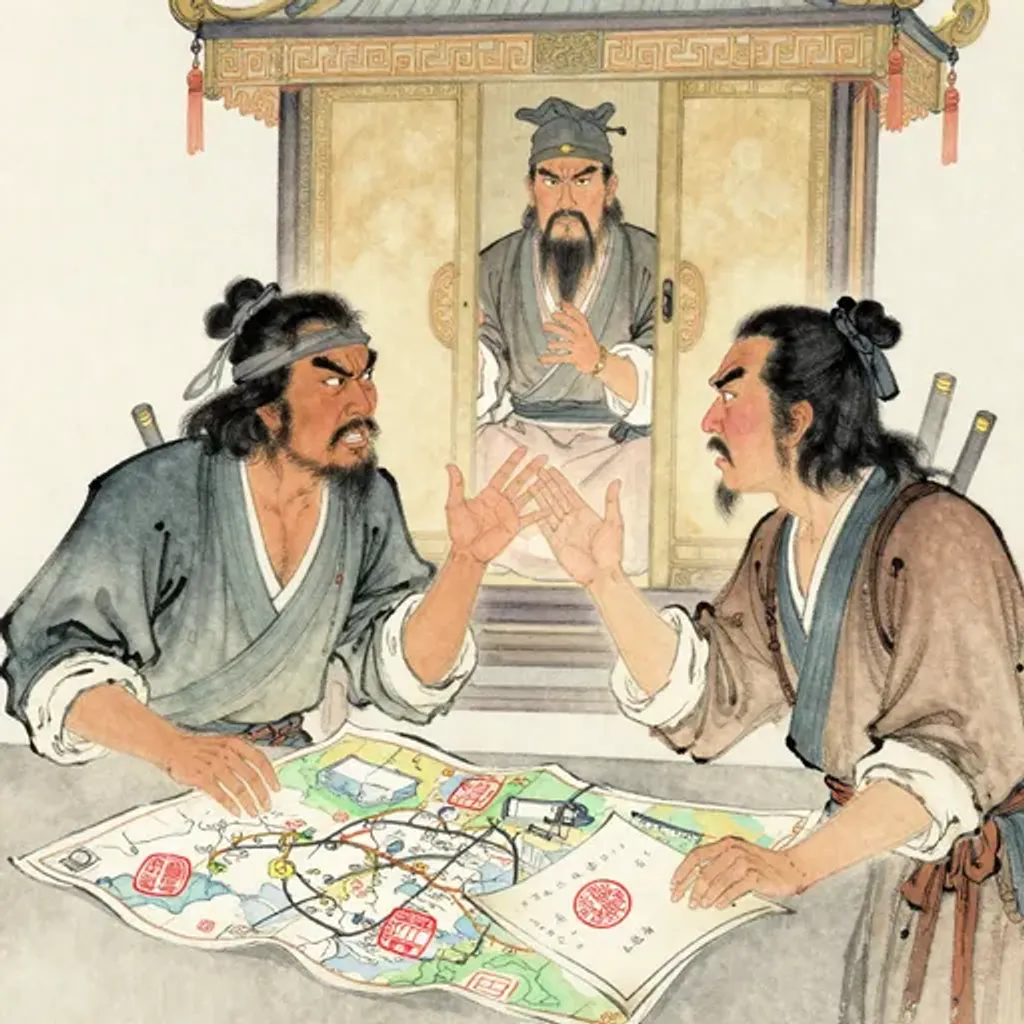
二人俱東,道路爭訟。意乖不同,使君忷忷。
Two men both head east; on the road they fall into dispute. Their intentions diverge and clash; they make their lord anxious and agitated.
— Jiao Yanshou, Yilin (Forest of Changes), 1st century BC
Commentary
Clouds and thunder transform into wind above mountain: initial difficulty aspires toward gradual development, but discord intervenes. Two people travel east together yet quarrel on the road, their intentions diverging and incompatible. The dispute agitates the lord and prevents progress. Wind above the mountain is the image of trees growing slowly on high ground — Development proceeds step by step, organically. But the verse shows what happens when those who should advance together cannot agree on direction: the gradual process stalls. From Difficulty at the Beginning to Development, the transformation promises organic growth, but shared purpose is the precondition. When companions quarrel on the path, even the gentlest upward momentum is arrested, and the lord is left troubled rather than elevated.
屯 → 歸妹
Hexagram 3 → Hexagram 54: The Marrying Maiden
Changing lines: 2, 4, 5
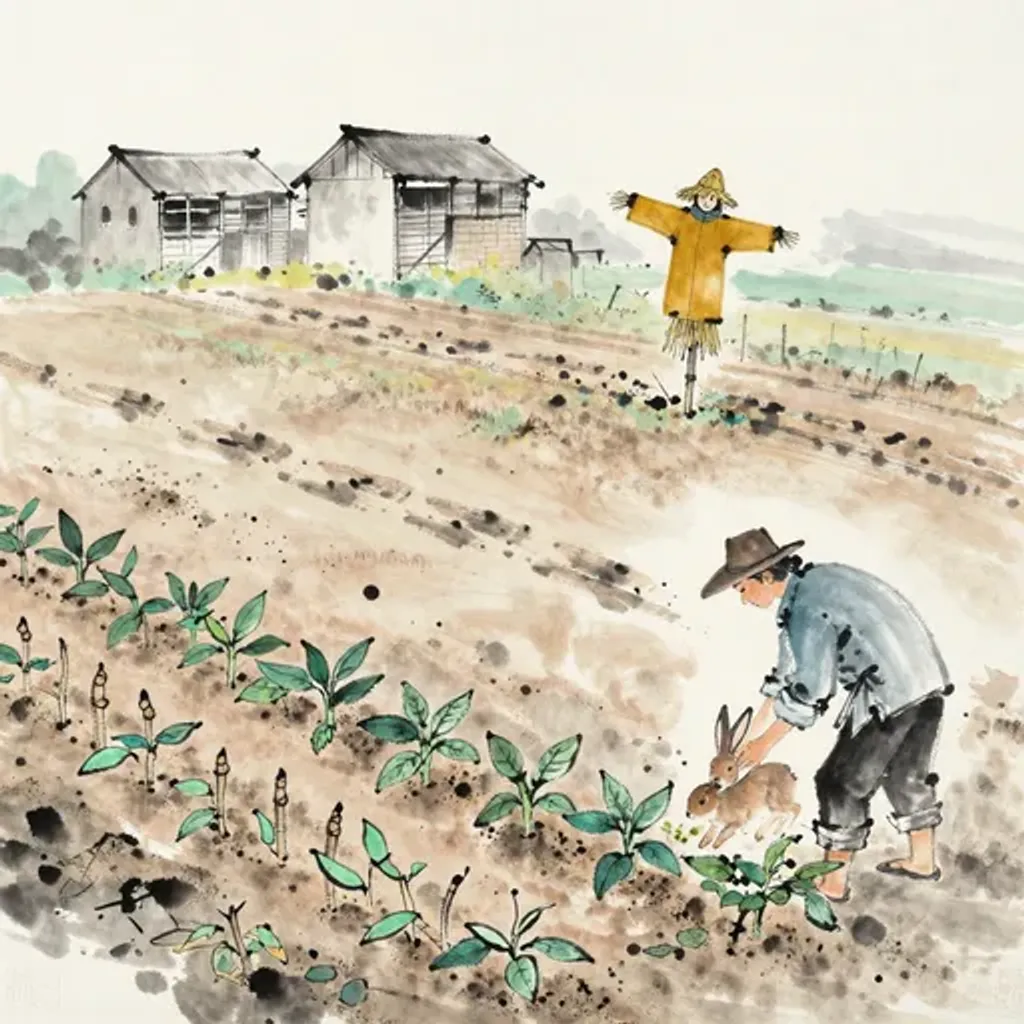
樹我藿豆,鹿兔為食。君不恤護,秋無收入。
I plant my beans and greens; deer and rabbits eat them all. The lord does not care or protect; autumn brings no harvest.
— Jiao Yanshou, Yilin (Forest of Changes), 1st century BC
Commentary
Clouds and thunder yield to thunder above lake: initial difficulty enters the compromised position of the Marrying Maiden. Beans and greens are planted, but deer and rabbits devour them. The lord does not protect or tend the crop, and autumn brings no harvest. The farmer's labor is consumed by wildlife because no one guards the field. From Difficulty at the Beginning to the Marrying Maiden, the transformation carries a warning about subordinate positions. Gui Mei represents entering a relationship where one lacks full authority; the maiden must endure what she cannot control. The unguarded field is the maiden's situation: she invests effort, but the fruits belong to others. The deer eat freely because no sovereign takes responsibility, and the autumn emptiness confirms that devotion without protection is squandered devotion.
屯 → 豐
Hexagram 3 → Hexagram 55: Abundance
Changing lines: 3, 4, 5
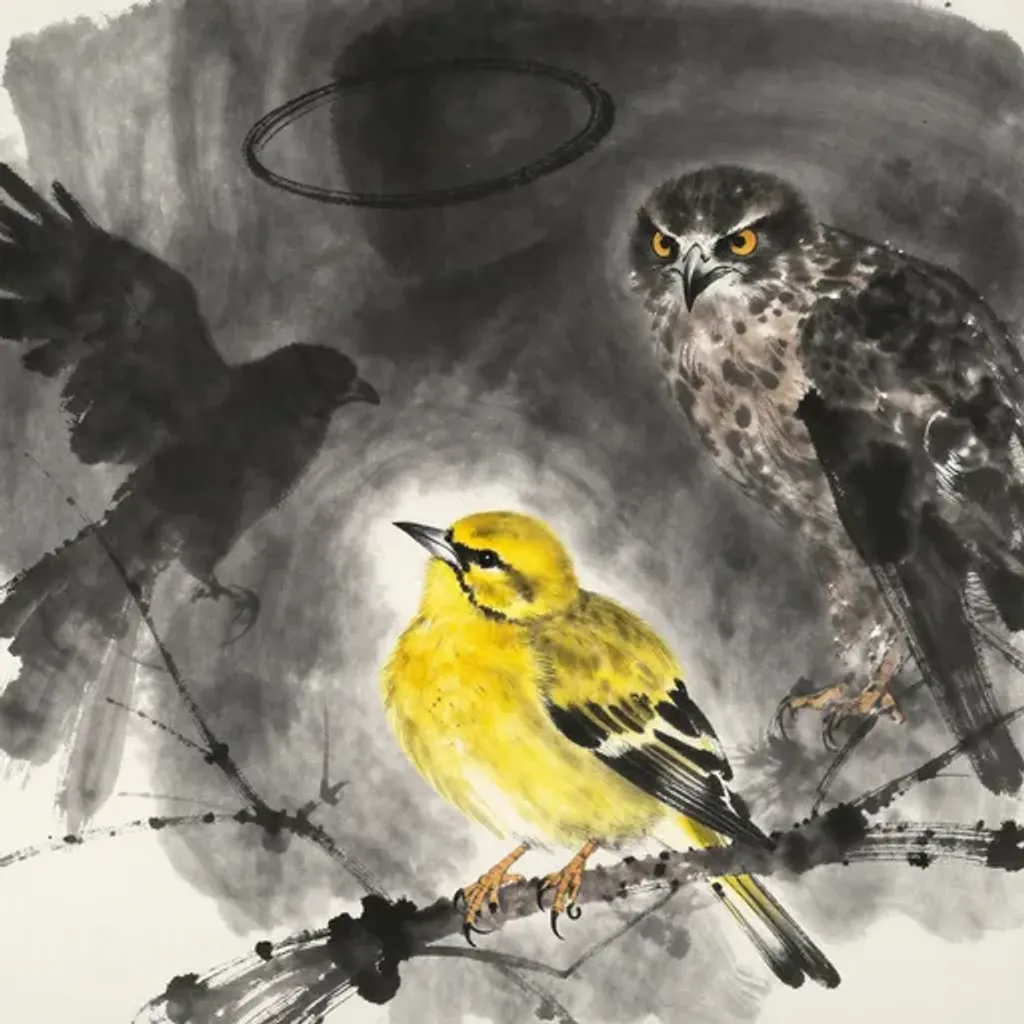
黃鳥悲鳴,愁不見星。困於鷙鳥,鸇使我驚。
The yellow bird sings in sorrow, unable to see the stars. Harried by raptors; a hawk startles me.
— Jiao Yanshou, Yilin (Forest of Changes), 1st century BC
Commentary
Clouds and thunder transform into thunder and fire together: initial difficulty erupts into the overwhelming brilliance of Abundance. Yellow birds cry mournfully, grieving as the stars vanish from sight. A small bird is harried by raptors, and the hawk terrifies with sudden strikes. This echoes the Shijing ode 'Huang Niao' (Small Elegantiae), where the yellow bird, an exile in a hostile land, laments: 'Yellow birds, do not gather in my mulberry.' The small bird represents the displaced person, and the raptors are the hostile powers that surround him. From Difficulty at the Beginning to Abundance, thunder and lightning fill the sky, but the verse shows that not all abundance is benign. When power concentrates without justice, its dazzling energy merely illuminates the predator's hunt. The yellow bird's grief is the sound of Feng's excess crushing the vulnerable.
屯 → 旅
Hexagram 3 → Hexagram 56: The Wanderer
Changing lines: 1, 3, 4, 5, 6
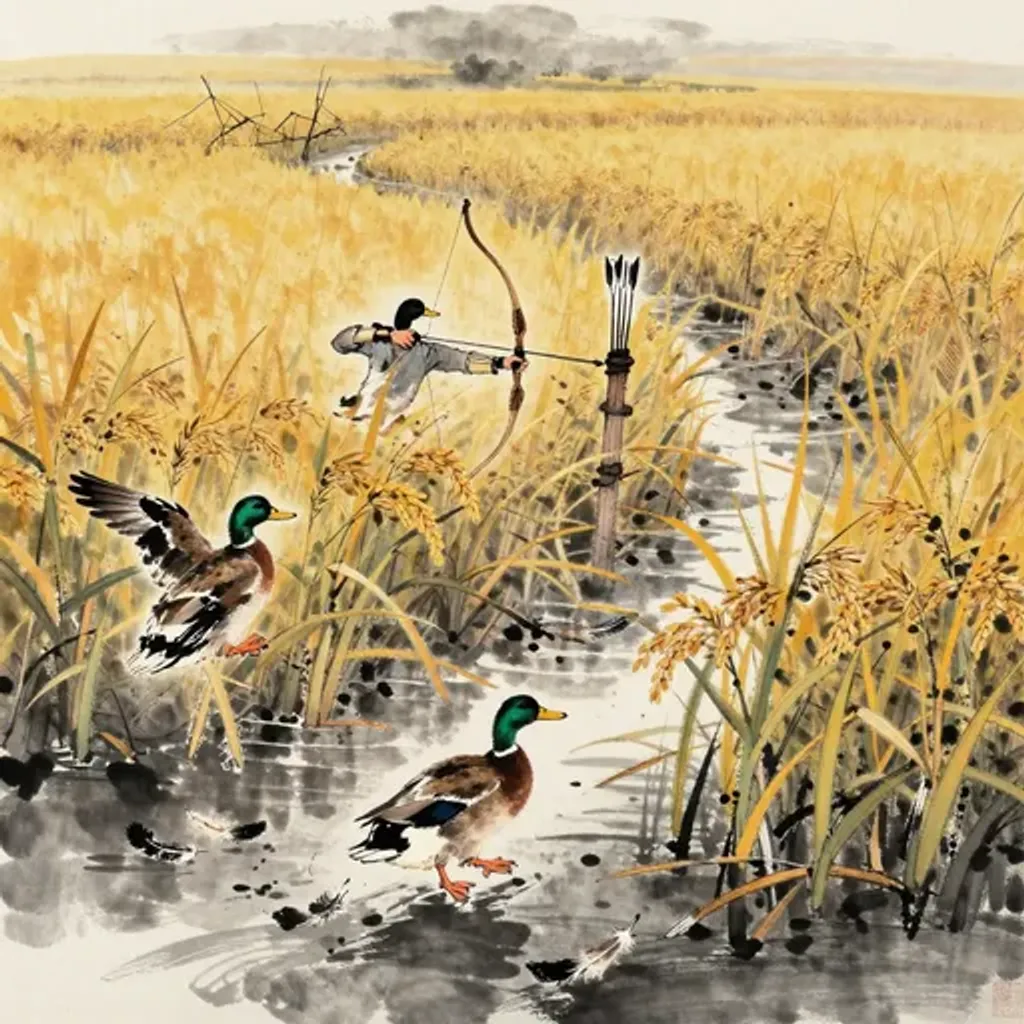
雙鳧俱飛,欲歸稻食。經涉萑澤,為矢所射,傷我胸臆。
A pair of wild ducks fly together, wanting to return and feed on rice. Passing through the reed marshes, they are struck by arrows that pierce breast and wing.
— Jiao Yanshou, Yilin (Forest of Changes), 1st century BC
Commentary
Clouds and thunder give way to fire upon mountain: initial difficulty transforms into the precarious state of The Wanderer. A pair of wild ducks fly together, hoping to return home to feed on rice. But crossing a marsh thick with reeds, they are struck by arrows that pierce their breasts. The paired ducks — a symbol of conjugal fidelity — meet disaster in transit. The journey home, which should be safe, crosses hostile territory, and the travelers are struck down before reaching their destination. From Difficulty at the Beginning to The Wanderer, fire on the mountain burns briefly and moves on, offering no permanent shelter. The wanderer is always exposed, always in passage, and the verse demonstrates the specific danger: it is between places, in the transitional marsh, that violence finds its opportunity.
屯 → 巽
Hexagram 3 → Hexagram 57: The Gentle Wind
Changing lines: 1, 2, 3, 6
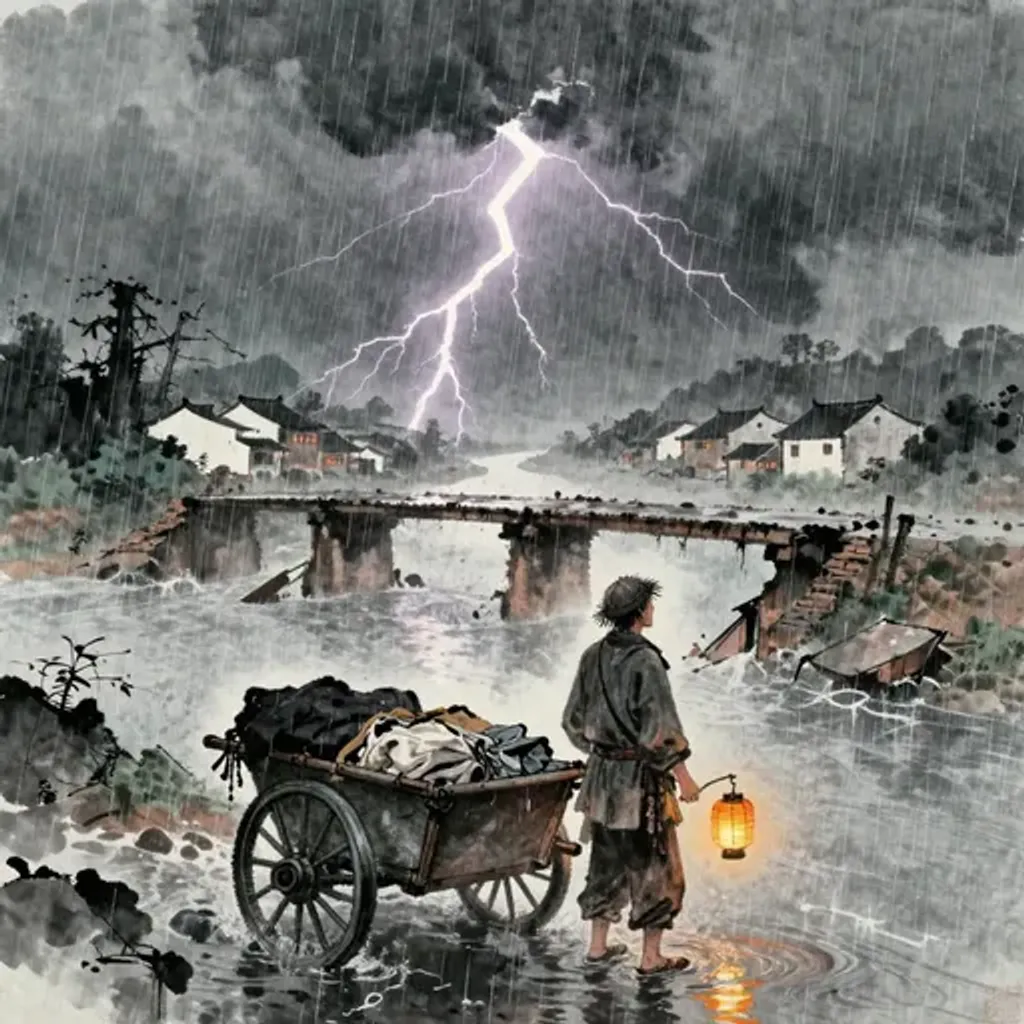
久客無依,思歸我鄉。雷雨盛溢,道未得通。
Long a guest with no support, I think of returning to my homeland. Thunder and rain overflow; the road has not yet opened.
— Jiao Yanshou, Yilin (Forest of Changes), 1st century BC
Commentary
Clouds and thunder yield to doubled wind: initial difficulty meets the gentle persistence of The Gentle. A long-term exile with no one to rely on yearns to return to his homeland. But thunderstorms rage and floods rise, and the road remains impassable. The verse captures the particular anguish of a traveler who knows where home is but cannot reach it. The obstacle is natural, not political — rain and flood block the path. From Difficulty at the Beginning to The Gentle, doubled wind should penetrate like a quiet command reaching everywhere. Yet the verse shows wind's limitation: gentleness cannot force a swollen river to recede. The exile's longing and the wind's persistent whisper share the same quality: continuous, pervasive, and ultimately powerless against the storm. Patience must wait for conditions to change.
屯 → 兌
Hexagram 3 → Hexagram 58: The Joyous Lake
Changing lines: 2, 4
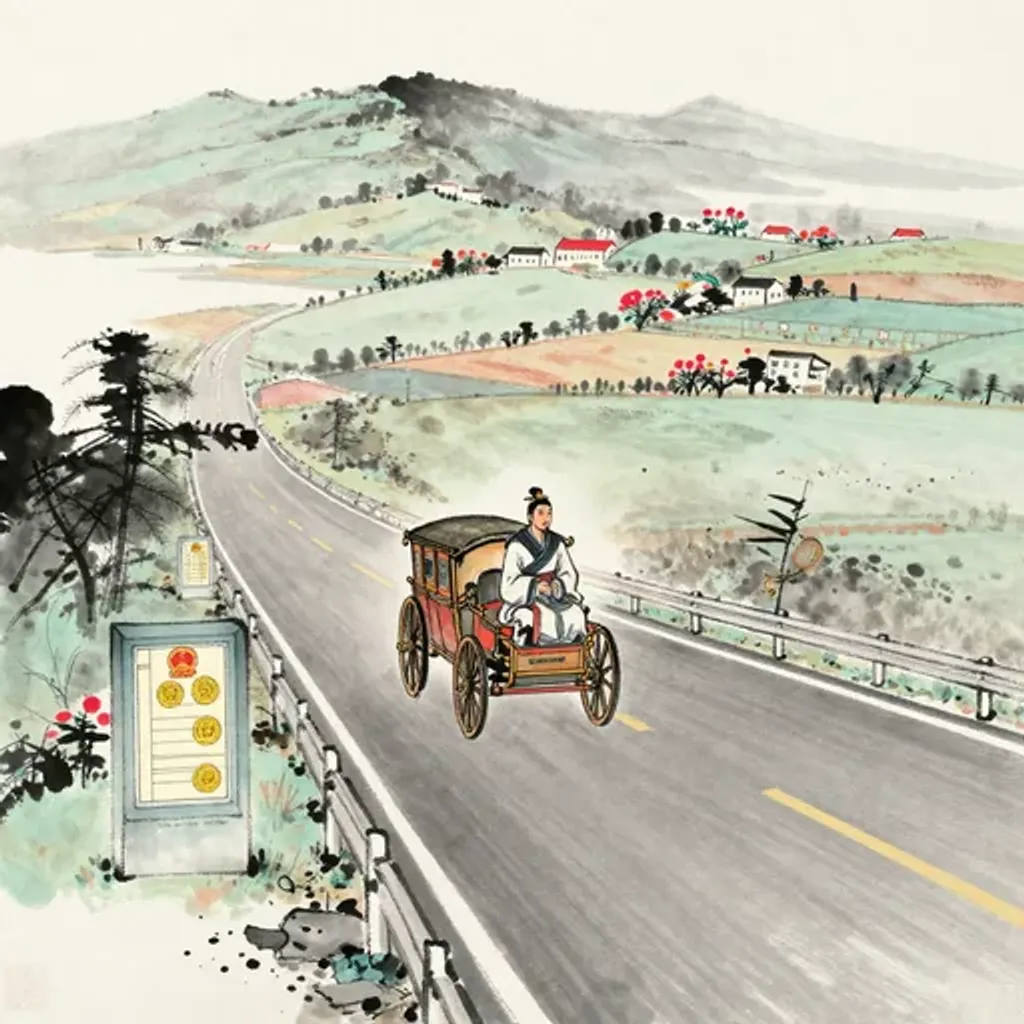
道路僻除,南至東遼。衛子善辭,使國無憂。
The roads are cleared and repaired, south to eastern Liao. The son of Wei speaks well; he keeps the state from worry.
— Jiao Yanshou, Yilin (Forest of Changes), 1st century BC
Commentary
Clouds and thunder transform into doubled lake: initial difficulty resolves into shared joy. The road is cleared and opened, running south to the eastern frontier. The heir of Wei, skilled in diplomatic speech, ensures the state knows no trouble. The verse celebrates competent diplomacy: a road cleared is a connection restored, and a silver-tongued envoy prevents conflict before it begins. 'Wei's heir' may reference the Viscount of Wei (Weizi), who knew when to speak and when to withdraw, saving his integrity under the corrupt Shang court. From Difficulty at the Beginning to The Joyous, paired lakes represent friends sharing knowledge through discourse. The initial tangle is undone not by force but by eloquence: the right words, spoken at the right time, transform obstruction into open road and hostility into peace.
屯 → 渙
Hexagram 3 → Hexagram 59: Dispersion
Changing lines: 1, 2, 6
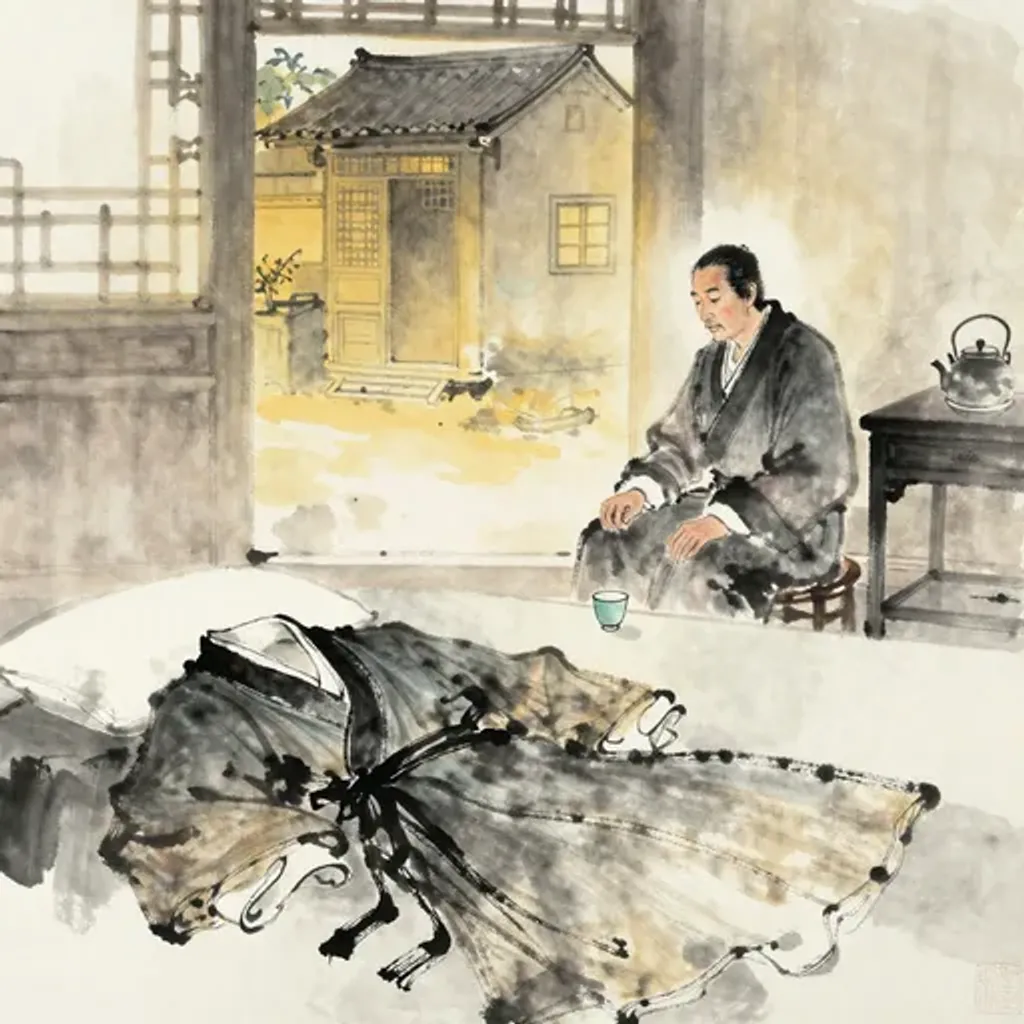
同枕同袍,中年相知。少賈無失,獨居愁思。
Sharing pillow and cloak; in mid-life they know each other. Small trade without loss; dwelling alone in sad thoughts.
— Jiao Yanshou, Yilin (Forest of Changes), 1st century BC
Commentary
Clouds and thunder give way to wind above water: initial difficulty dissolves into dispersion. Sharing the same pillow and the same robe, the two become intimate friends in middle age. Trading modestly without loss, one later dwells alone in melancholy reflection. The verse traces a relationship arc: youthful intimacy, shared fortunes, then solitary old age. The companions who once slept under the same cloak eventually separate, and what remains is lonely reminiscence. From Difficulty at the Beginning to Dispersion, wind scatters the water's surface. Huan dissolves what was solid, and the verse embodies this dissolution through the natural entropy of human bonds. The initial difficulty of forging connection gives way to the slower, quieter difficulty of losing it. Dispersion is not always catastrophic; sometimes it is simply the grief of growing apart.
屯 → 節
Hexagram 3 → Hexagram 60: Limitation
Changing lines: 2
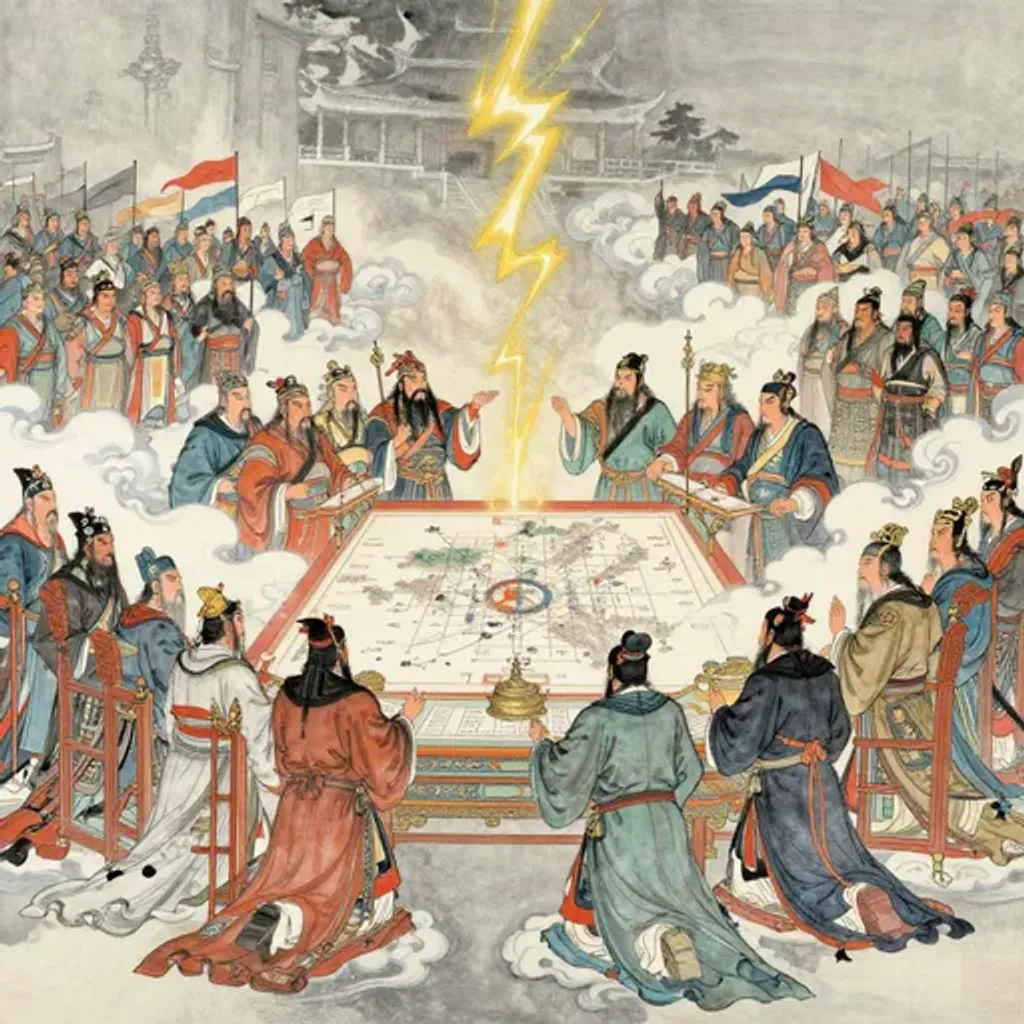
眾神集眾,相與議語。南國虐亂,百姓愁苦。興師征討,更立賢主。
The assembled spirits gather; they confer and discuss together. The southern state is cruel and disordered; the people grieve and suffer. Raising an army to campaign and punish; they set up a worthy lord.
— Jiao Yanshou, Yilin (Forest of Changes), 1st century BC
Commentary
Clouds and thunder transform into water above lake: initial difficulty finds resolution through measured regulation. The assembled spirits gather and deliberate together. In the southern kingdom, tyranny and chaos reign, and the common people suffer bitterly. An army is raised to campaign against the oppressor, and a worthy new ruler is installed. The verse narrates divine assembly leading to political action: the gods convene, diagnose the injustice, and authorize military intervention to replace a tyrant. From Difficulty at the Beginning to Limitation, water above lake establishes proper boundaries. Jie's principle of measured constraint transforms Zhun's raw chaos into regulated order: not unlimited force but proportioned response, not perpetual revolution but a single decisive correction that installs right governance and then stops.
屯 → 中孚
Hexagram 3 → Hexagram 61: Inner Truth
Changing lines: 2, 6
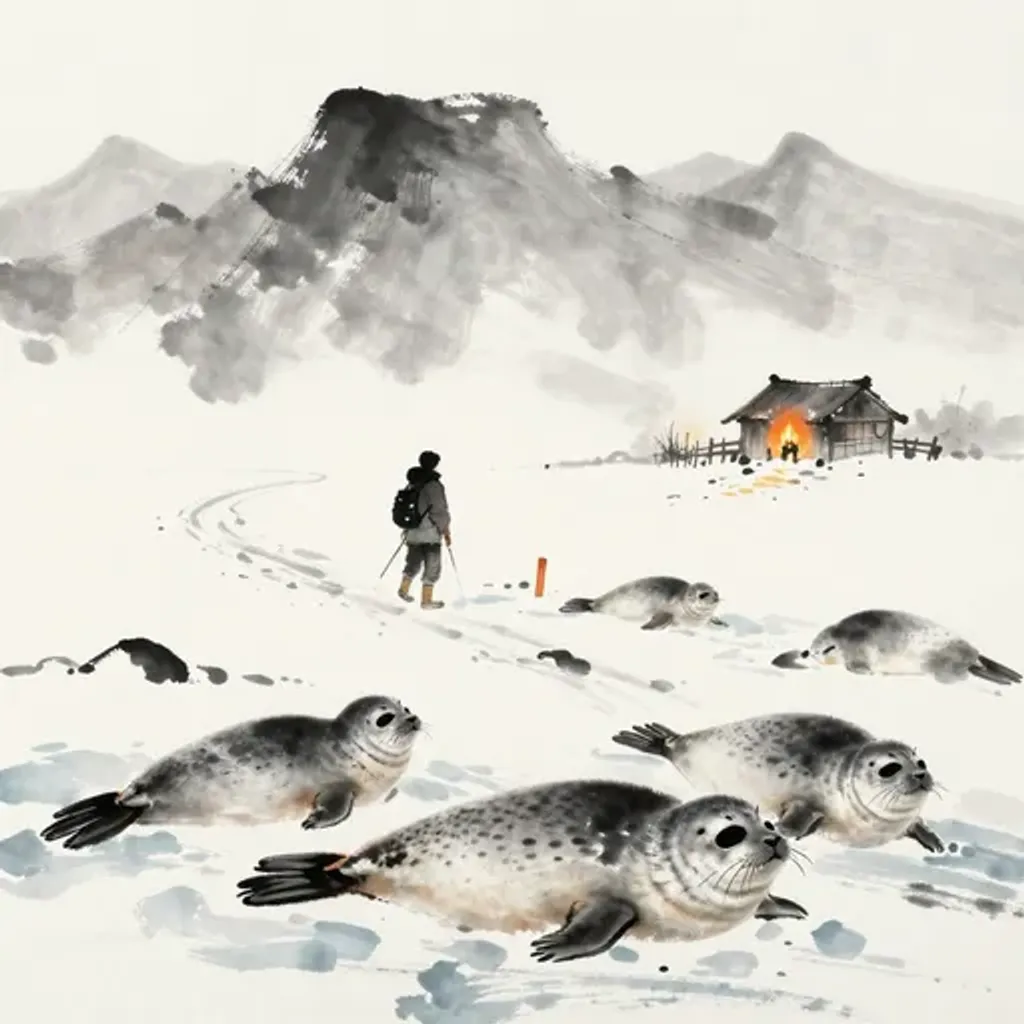
北陸閉蟄,隱伏不出。目盲耳聾,道路不通。
The northern road is sealed in hibernation; hidden and withdrawn, none go out. Eyes blind, ears deaf; the road does not open.
— Jiao Yanshou, Yilin (Forest of Changes), 1st century BC
Commentary
Clouds and thunder yield to wind above lake: initial difficulty transforms into the hollow sincerity of Inner Truth. The Northern Road closes as creatures seal themselves in hibernation, hidden and unmoving. Eyes are blinded and ears are deafened, and the roads are completely blocked. The imagery describes the deep withdrawal of winter solstice, when all life retreats underground and all communication ceases. From Difficulty at the Beginning to Inner Truth, wind over lake should create resonance across the water's surface. Yet the verse shows a world where resonance is impossible: every sensory channel is shut, every pathway sealed. Inner Truth requires an open center, but here the center is frozen solid. The verse maps the extreme limit of Zhun's difficulty: not chaos but total closure, the absolute absence of the exchange that Inner Truth demands.
屯 → 小過
Hexagram 3 → Hexagram 62: Small Exceeding
Changing lines: 1, 3, 4, 5
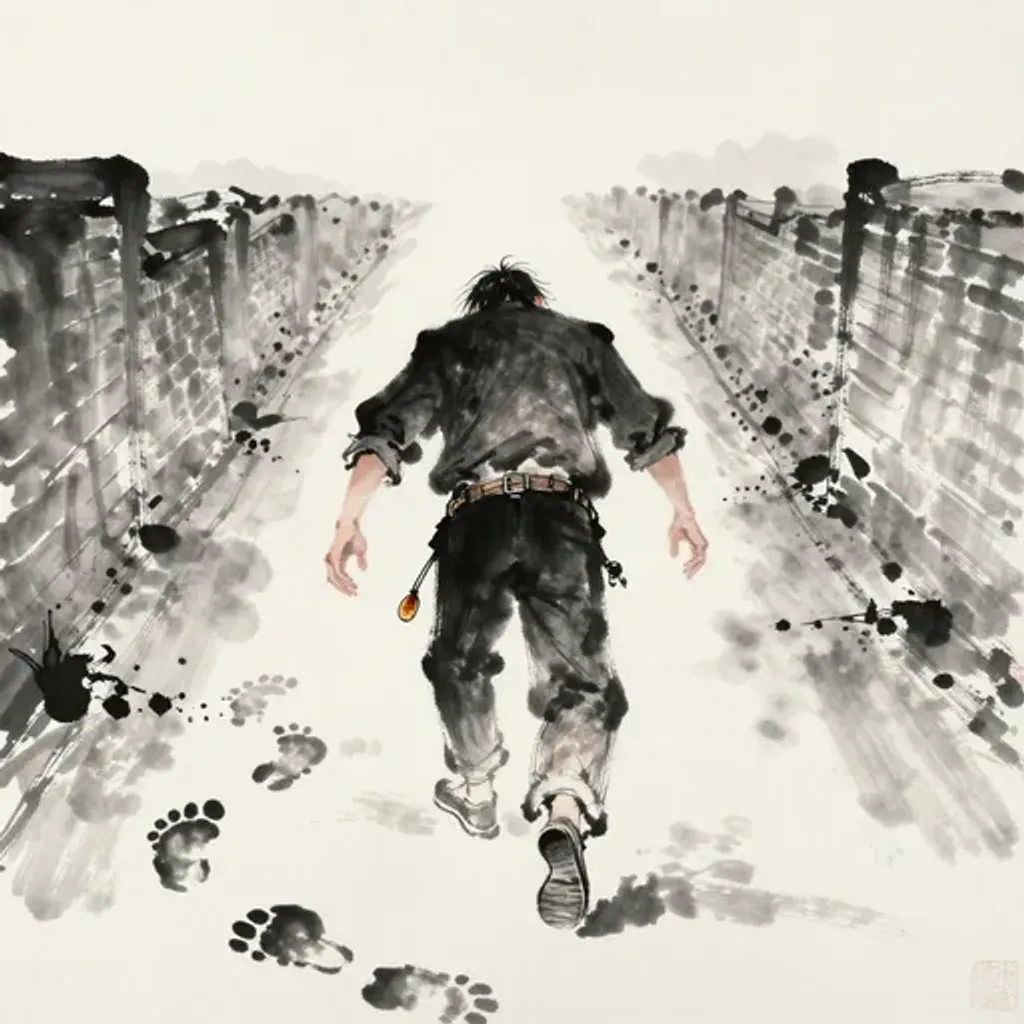
痴狂妄作,心誑善惑。迷行失路,不知南北。
Raving madly without reason; the mind is deluded and easily confused. Wandering astray, losing the road; not knowing south from north.
— Jiao Yanshou, Yilin (Forest of Changes), 1st century BC
Commentary
Clouds and thunder give way to thunder above mountain: initial difficulty transforms into the minor excess of Small Exceeding. The fool acts madly and recklessly, his mind deceived and easily bewitched. Wandering in confusion, he loses his way entirely, unable to tell south from north. The verse describes cognitive collapse: not merely ignorance but active delusion, where the subject's own judgment betrays him. From Difficulty at the Beginning to Small Exceeding, thunder rumbles atop the mountain but the bird cannot fly high — it must stay close to the ground. The hexagram counsels exceeding in small things: excessive humility, excessive grief, excessive frugality. But the verse shows what happens when excess operates without purpose: the fool exceeds all bounds of reason and stumbles blindly. Small Exceeding warns that even minor overstepping can disorient completely.
屯 → 既濟
Hexagram 3 → Hexagram 63: After Completion
Changing lines: 3
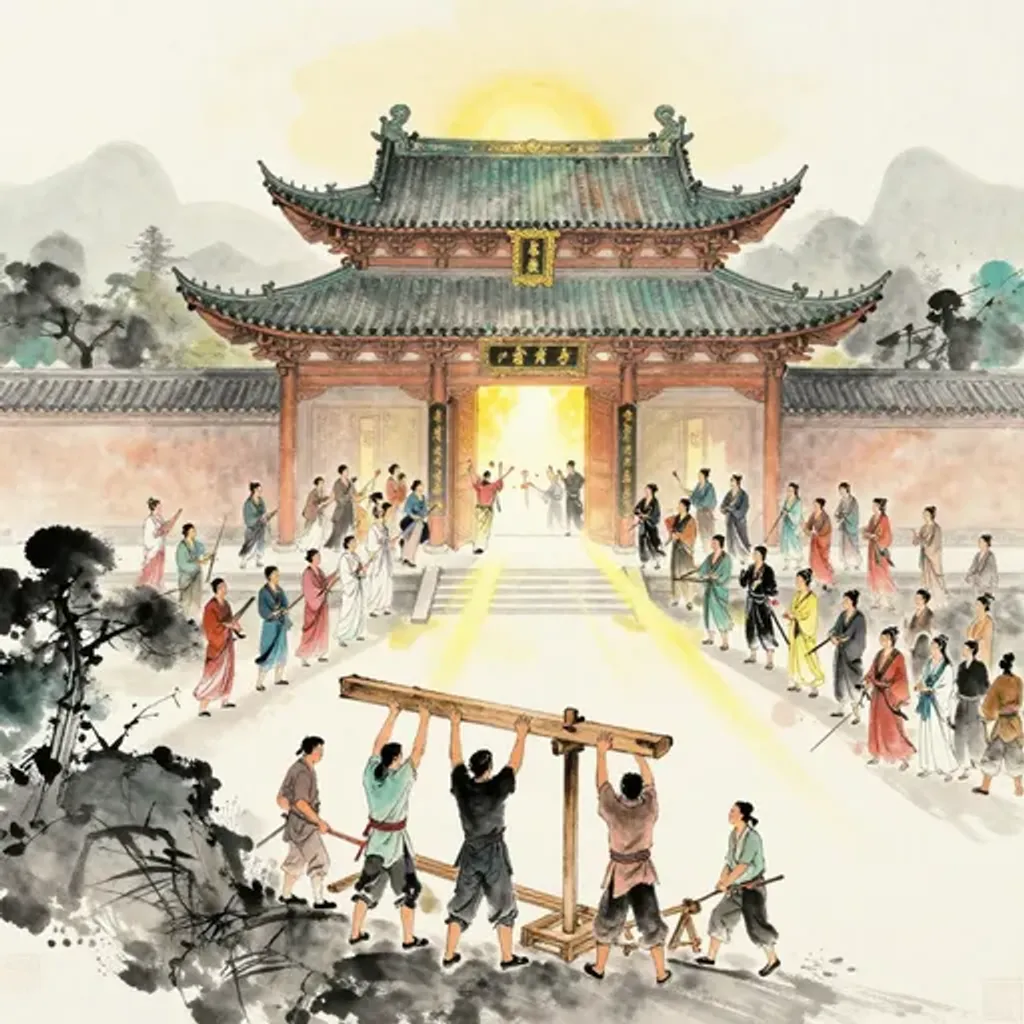
棟隆輔強,寵貴日光。福善並作,樂以高明。
The ridgepole rises strong, the supports firm; honored and esteemed, the radiance grows daily. Blessings and virtue arise together; joy in lofty brilliance.
— Jiao Yanshou, Yilin (Forest of Changes), 1st century BC
Commentary
Clouds and thunder transform into water above fire: initial difficulty reaches the balanced completion of After Completion. The ridgepole rises strong and the supports stand firm. Honor and esteem grow daily bright. Blessings and goodness arise together, and delight reaches the heights of clarity. Every element of the verse names structural soundness: the ridgepole — the central beam of governance — holds, the supports do not crack, and the building radiates stability. From Difficulty at the Beginning to After Completion, water sits properly above fire, each element in its correct place. Ji Ji represents the moment when all lines are where they should be, and the verse celebrates that rare achievement. Yet the I-Ching warns that After Completion is inherently unstable; the very perfection of the arrangement means it can only deteriorate. The verse captures the apex before the inevitable turn.
屯 → 未濟
Hexagram 3 → Hexagram 64: Before Completion
Changing lines: 1, 2, 4, 5, 6
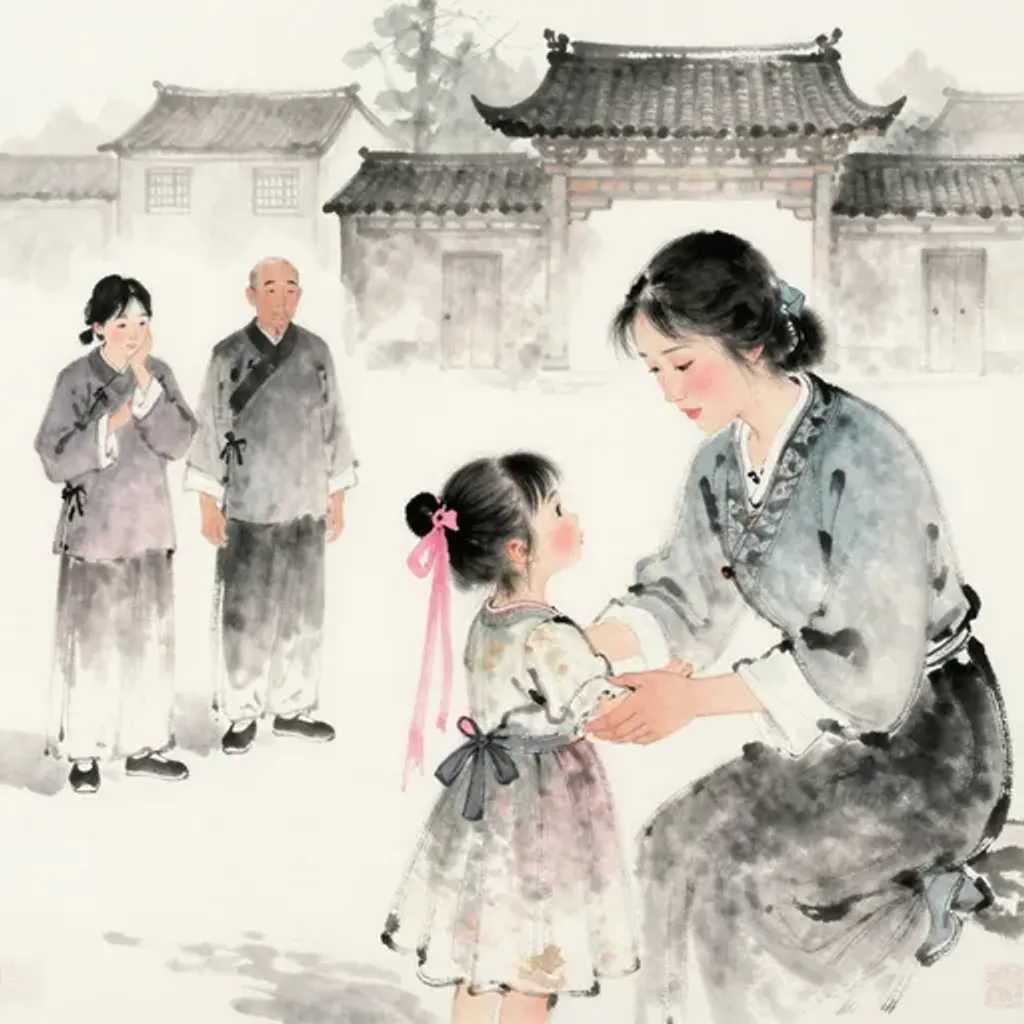
愛我嬰女,牽衣不與。冀幸高貴,反曰賤下。
Loving my young daughter, tugging at her sleeve, unwilling to let go. Hoping for a noble and lofty match; but instead it is said to be lowly.
— Jiao Yanshou, Yilin (Forest of Changes), 1st century BC
Commentary
Clouds and thunder give way to fire above water: initial difficulty remains unresolved in the perpetual crossing of Before Completion. Clinging to a beloved daughter, pulling at her clothes, unwilling to let her go. Hoping for high status and noble position, one receives instead the verdict: lowly and base. The parent's desperate grip on the child mirrors the hexagram's fundamental incompletion: fire above water, each element straining away from the other, unable to accomplish their mutual task. From Difficulty at the Beginning to Before Completion, the transformation is darkly circular. The initial difficulty of Zhun promised eventual birth; Wei Ji promises only that the crossing has not yet been made. Ambitions of elevation are met with humiliation, and the clinging embrace cannot hold what is already departing. The cycle ends without closure, as Before Completion demands.