Transformations of Hexagram 31
Every line of change out of Hexagram 31 咸 Influence, with the Yilin verse for each of the 64 resulting hexagrams, its translation, and the original ink brush artwork.
咸 → 乾
Hexagram 31 → Hexagram 1: The Creative
Changing lines: 1, 2, 6
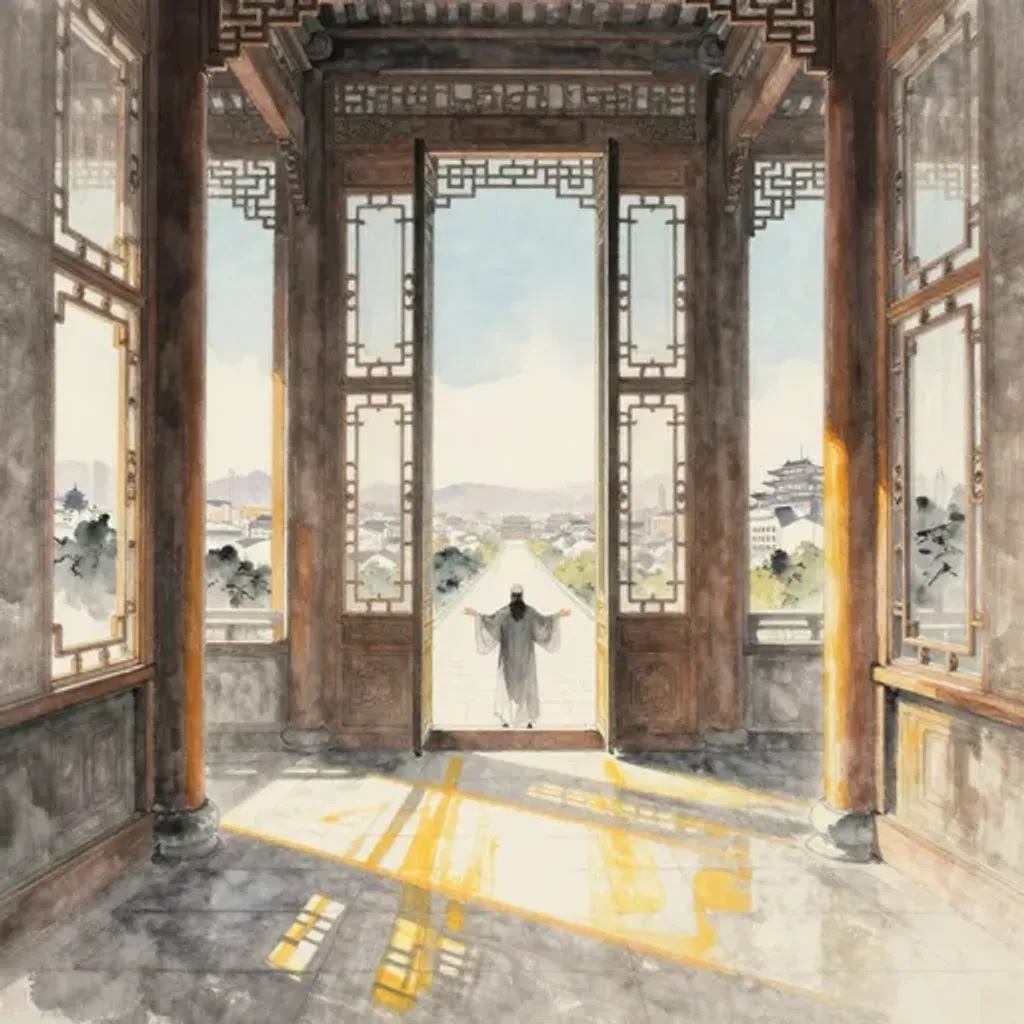
十窗多明,道里通利,仁智君子,國安不僵。
Ten windows, much brightness; the roads run smooth and clear. The benevolent, wise gentleman; the state rests secure, never rigid.
— Jiao Yanshou, Yilin (Forest of Changes), 1st century BC
Commentary
A lake rests upon a mountain, the image of Influence: openness invites resonance. Ten windows flood a hall with light, and the roads run clear in every direction. A ruler of wisdom and benevolence presides, and the state stands firm, never rigidly paralyzed. The verse celebrates a governance so open that clarity penetrates from all sides, like a house with abundant windows. The ten openings suggest the breadth of virtuous counsel received. From Influence to the Creative, the mountain's receptive stillness transforms into heaven's self-generating initiative: mutual responsiveness, once cultivated through humility, becomes the engine of ceaseless self-strengthening. The gentleman who opens himself to others finds that their influence does not weaken him but ignites his own creative power.
咸 → 坤
Hexagram 31 → Hexagram 2: The Receptive
Changing lines: 3, 4, 5
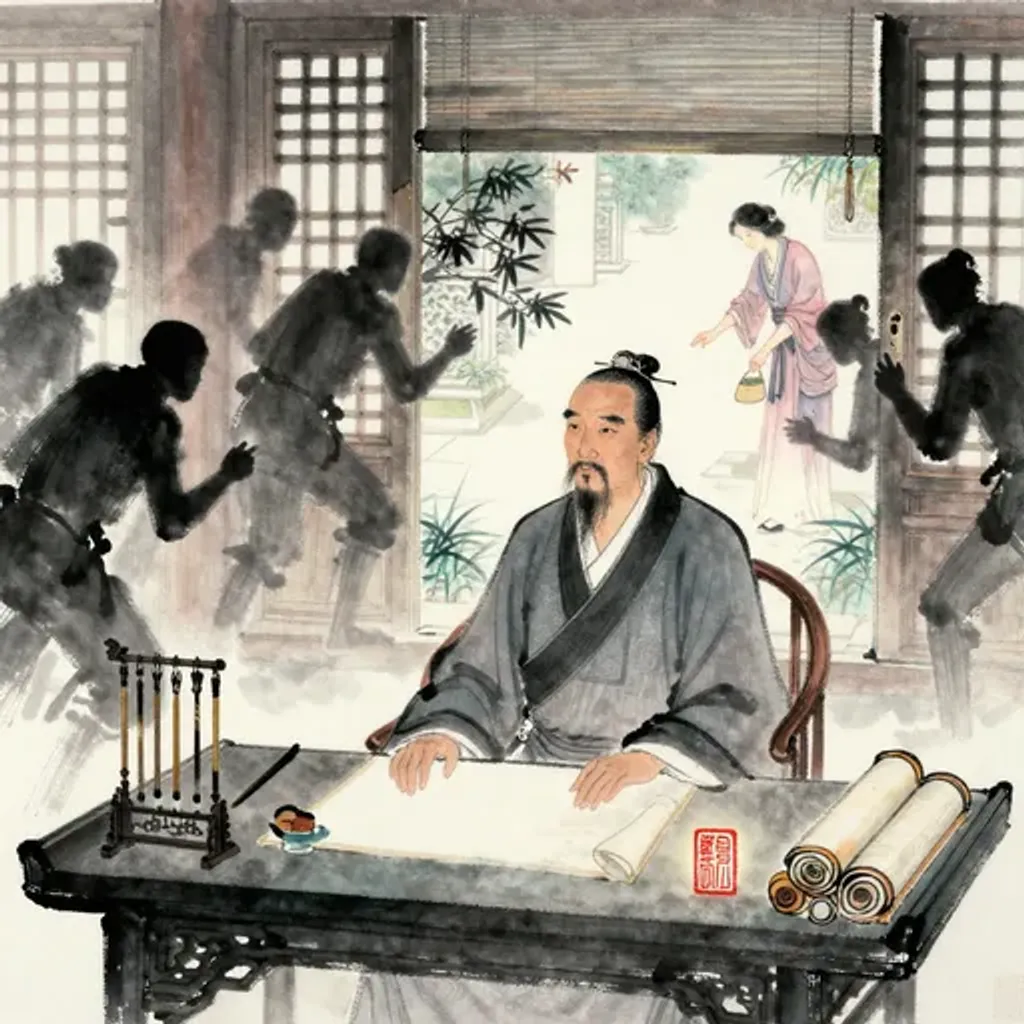
心惡來怪,衝衝何懼?顏伯子騫,尼父聖母。
The heart despises what comes strange; what fear in all this tumult? Yan Bo and Ziqian; Confucius and his sage mother.
— Jiao Yanshou, Yilin (Forest of Changes), 1st century BC
Commentary
A lake upon a mountain opens the heart to unexpected influence. Something fearsome approaches — the mind recoils at the strange — yet what is there truly to dread? The verse names Yan Bo (顏伯), likely Yan Wuyou, father of Confucius's beloved disciple Yan Hui, and Ziqian (子騫), the disciple Min Ziqian, renowned for his filial piety. 'Father Ni' is Confucius himself, and 'sage mother' honors the maternal virtue that nurtured these men. Together they form a constellation of Confucian moral exemplars who met adversity without flinching. From Influence to the Receptive, the lake's mutual feeling descends into earth's boundless capacity: the open heart, once startled by the uncanny, finds its ground in the receptive stillness of maternal devotion and accumulated virtue.
咸 → 屯
Hexagram 31 → Hexagram 3: Difficulty at the Beginning
Changing lines: 1, 3, 4
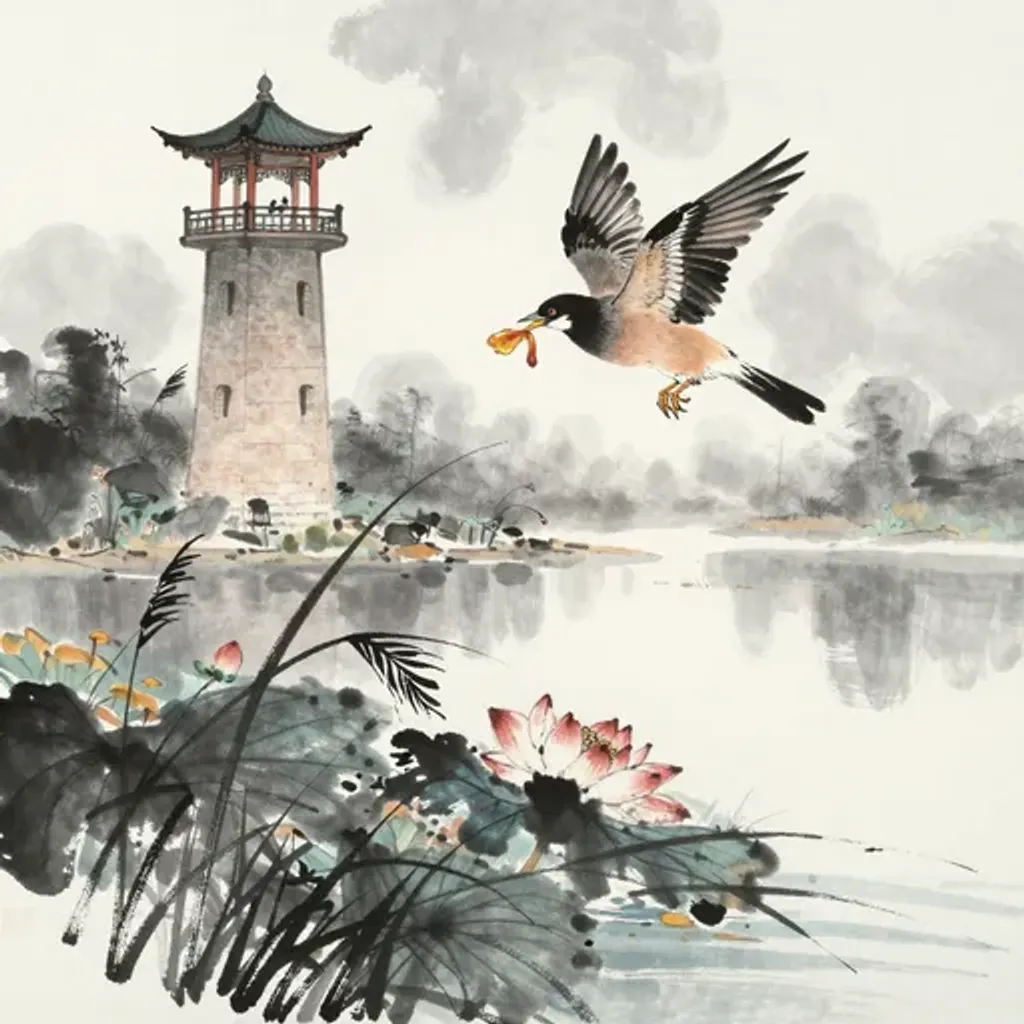
鳥鳴呼子,哺以酒脯,高樓水處,來歸其母。
A bird calls out for its young; it feeds them wine and dried meat. From the high tower above the waters; they come home to their mother.
— Jiao Yanshou, Yilin (Forest of Changes), 1st century BC
Commentary
A lake rests upon a mountain, and influence flows downward like a mother bird calling her young. She cries out to her chicks and feeds them with wine-soaked grain and dried meat — provisions far richer than ordinary fare. From a high tower by the waterside, the fledglings eventually return to their mother. The imagery is of nurture and homecoming: abundant care offered from an elevated place, and the young responding to that call across distance. From Influence to Difficulty at the Beginning, mutual responsiveness encounters the chaos of first emergence — clouds and thunder churning with the effort of new life. Yet the mother's call cuts through the confusion, anchoring the young in the knowledge of where to return when the storm subsides.
咸 → 蒙
Hexagram 31 → Hexagram 4: Youthful Folly
Changing lines: 2, 3, 4, 5, 6
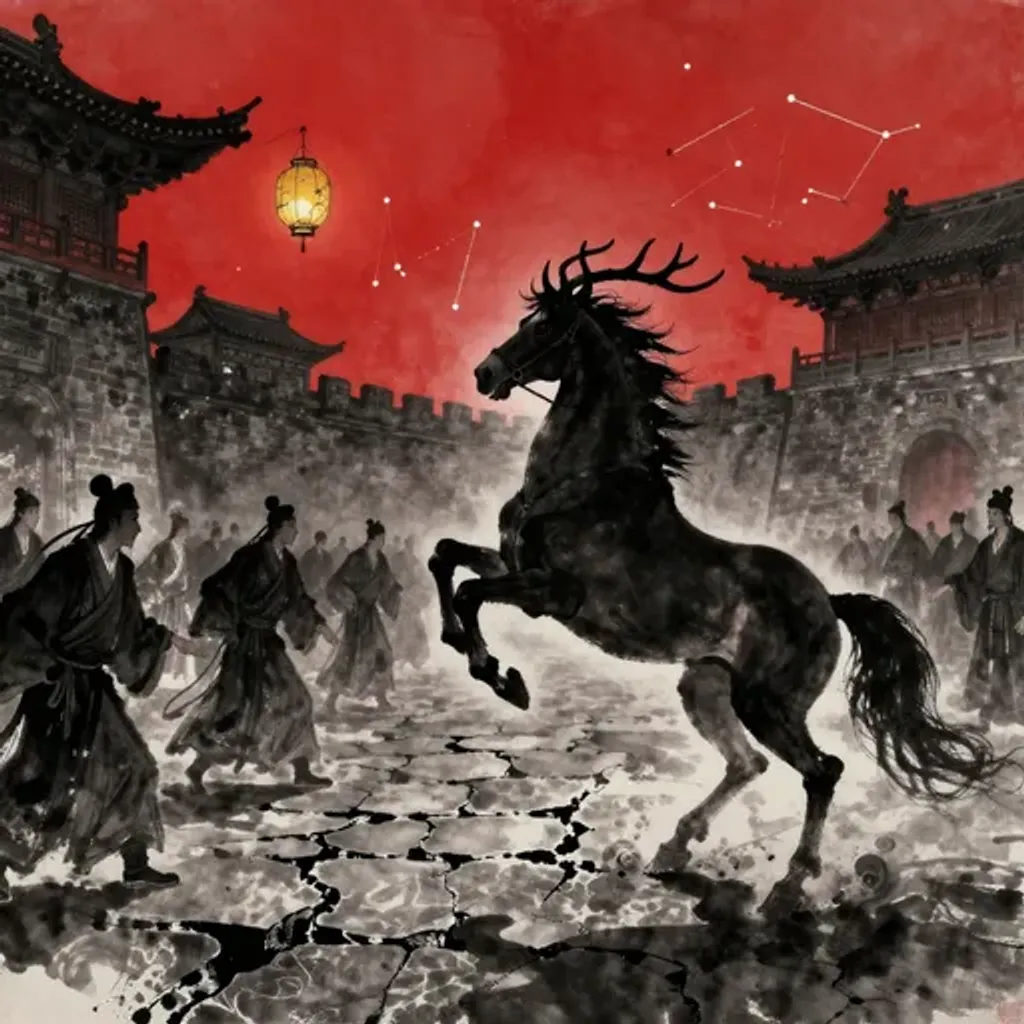
國馬生角,陰孽萌作,變易常服,君失于宅。
The state's horses sprout horns; dark portents begin to stir. They change and alter the proper garments; the ruler loses his dwelling.
— Jiao Yanshou, Yilin (Forest of Changes), 1st century BC
Commentary
A lake upon a mountain stirs mutual feeling, but here that feeling turns ominous. The state's horses sprout horns — an impossible portent signaling that natural categories have collapsed. Dark forces germinate in the shadows, people change their customary dress, and the ruler loses his seat. Horses growing horns is a classical omen of categorical inversion: what should be martial (horses) takes on the attributes of civil authority (horned animals like oxen), suggesting usurpation from within. From Influence to Youthful Folly, the mountain's receptive openness becomes the mountain over water of confused beginnings. What once was healthy mutual responsiveness degenerates into susceptibility to deception, and the ruler, too naive to recognize the dark portent, falls prey to forces he should have disciplined early.
咸 → 需
Hexagram 31 → Hexagram 5: Waiting
Changing lines: 1, 2, 4
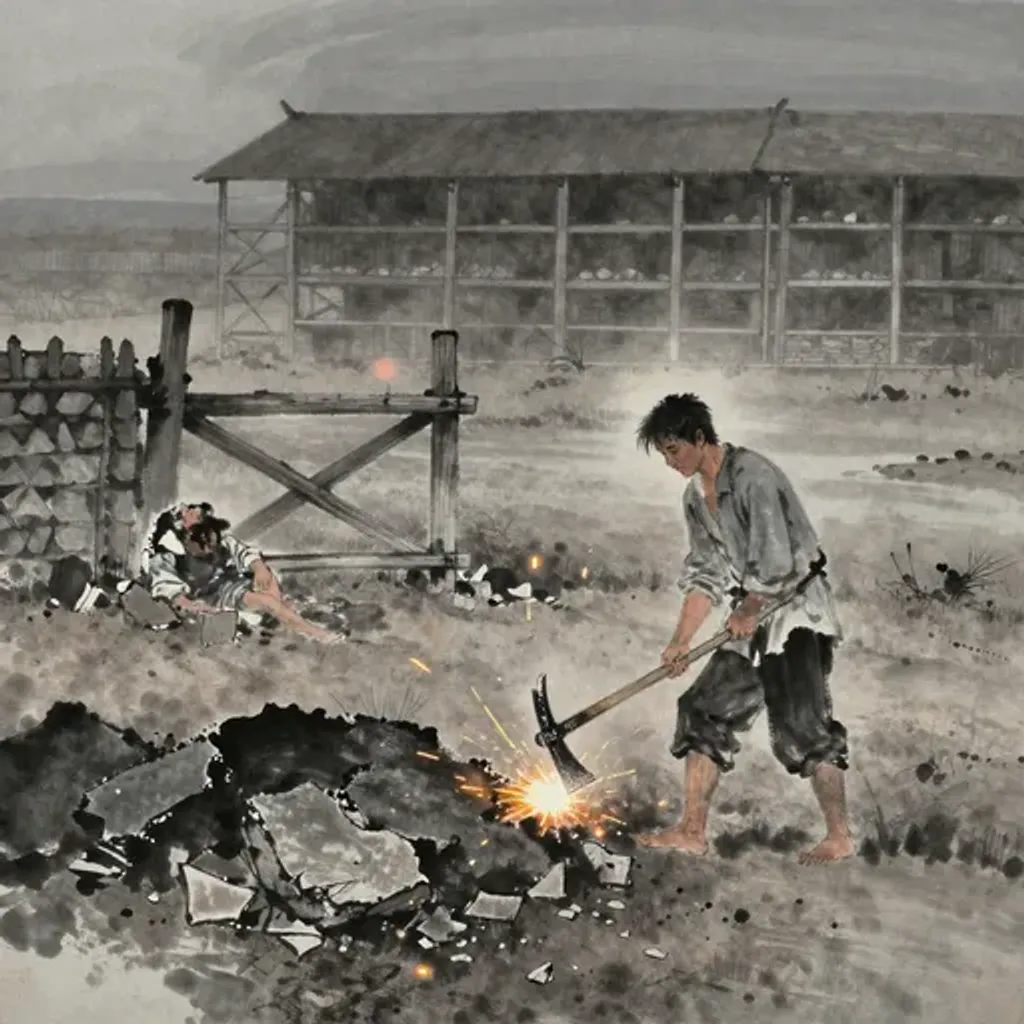
入宇多悔,耕石不富,衡門屢空,使士失意。
Entering the house, much regret; plowing stone yields no wealth. The crossbar gate stands often empty; it makes the scholar lose heart.
— Jiao Yanshou, Yilin (Forest of Changes), 1st century BC
Commentary
A lake upon a mountain draws influence downward, but here the flow yields only regret. Entering a household brings remorse, plowing stony ground produces no harvest, the simple crossbar gate stands repeatedly empty, and the worthy scholar is left frustrated. 'Plowing stone' echoes the futile labor of sowing where nothing can grow. The 'crossbar gate' (衡門) alludes to the Shijing poem of the same name, describing the scholar's modest dwelling. The verse layers images of misdirected effort and unrewarded virtue. From Influence to Waiting, the mountain's openness transforms into heaven beneath gathering clouds: one waits above the abyss with provisions nowhere in sight. The resonance that should bring connection instead brings only the long patience of those whose worth goes unrecognized.
咸 → 訟
Hexagram 31 → Hexagram 6: Conflict
Changing lines: 2, 3, 6
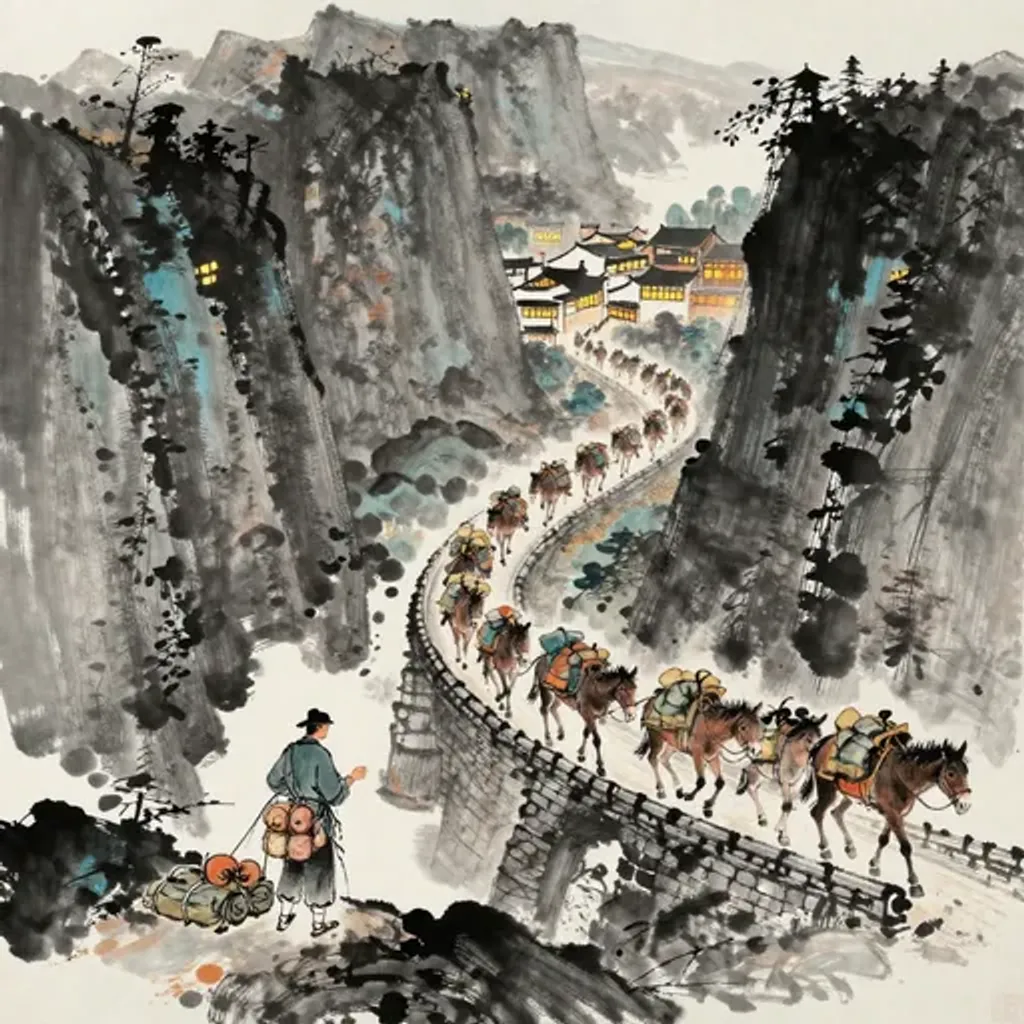
情懦行賈,遠涉山阻,與旅為市,不危不殆,利得十倍。
The timid one travels as merchant; crossing far mountains and barriers. Trading with fellow travelers at market; neither peril nor danger. Profit gained tenfold.
— Jiao Yanshou, Yilin (Forest of Changes), 1st century BC
Commentary
A lake upon a mountain opens channels of influence, and here a timid merchant ventures forth despite his fears. He crosses distant mountains and treacherous terrain, trading with travelers along the way, yet faces neither danger nor peril and returns with tenfold profit. The word 'timid' (情懦) is crucial: this is not a bold adventurer but a reluctant one whose very caution becomes his protection. From Influence to Conflict, the mountain's receptivity transforms into the tension of heaven and water moving in opposite directions. Yet the verse reverses Conflict's expected outcome: precisely because the merchant does not contend or overreach, approaching trade with humility rather than aggression, he navigates opposing forces safely and prospers where the brazen would fail.
咸 → 師
Hexagram 31 → Hexagram 7: The Army
Changing lines: 2, 3, 4, 5
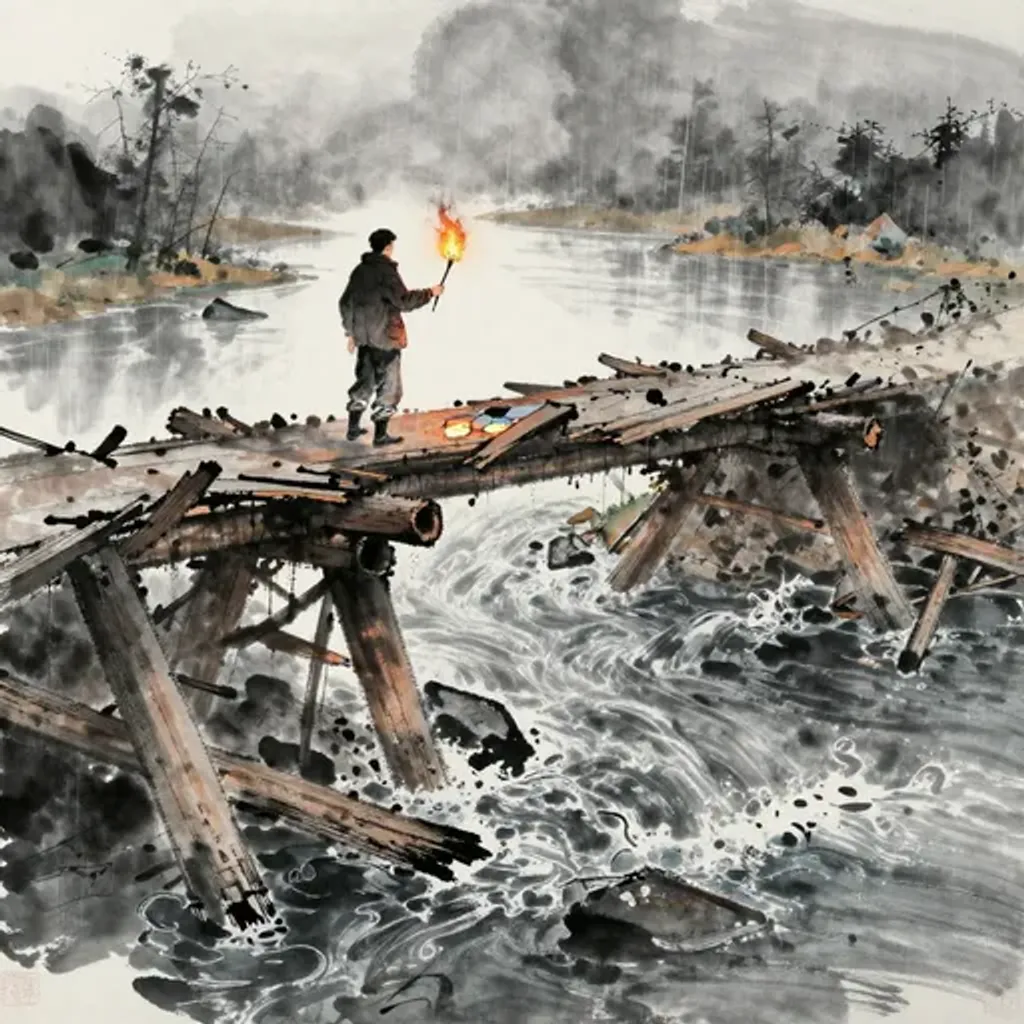
梁破橋壞,水深多畏,陳鄭之間,絕不得前。
The beam breaks, the bridge collapses; the water runs deep and fearsome. Between Chen and Zheng; the way is cut, none can advance.
— Jiao Yanshou, Yilin (Forest of Changes), 1st century BC
Commentary
A lake upon a mountain, but the passage below has been severed. Bridge beams are broken, the span collapses, and the water runs deep and terrifying. Between Chen and Zheng — two states that historically vied for territory along their shared border — the road is cut and no one can advance. The verse evokes a specific strategic geography: the region between Chen and Zheng was a contested corridor, and a broken bridge here meant isolation and military paralysis. From Influence to the Army, mutual feeling transforms into the disciplined masses concealed within the earth. Water hidden beneath earth suggests forces held in reserve, but the broken bridge means those forces cannot be deployed. The army is present yet immobilized — a disciplined response frustrated by severed lines of communication.
咸 → 比
Hexagram 31 → Hexagram 8: Holding Together
Changing lines: 3, 4
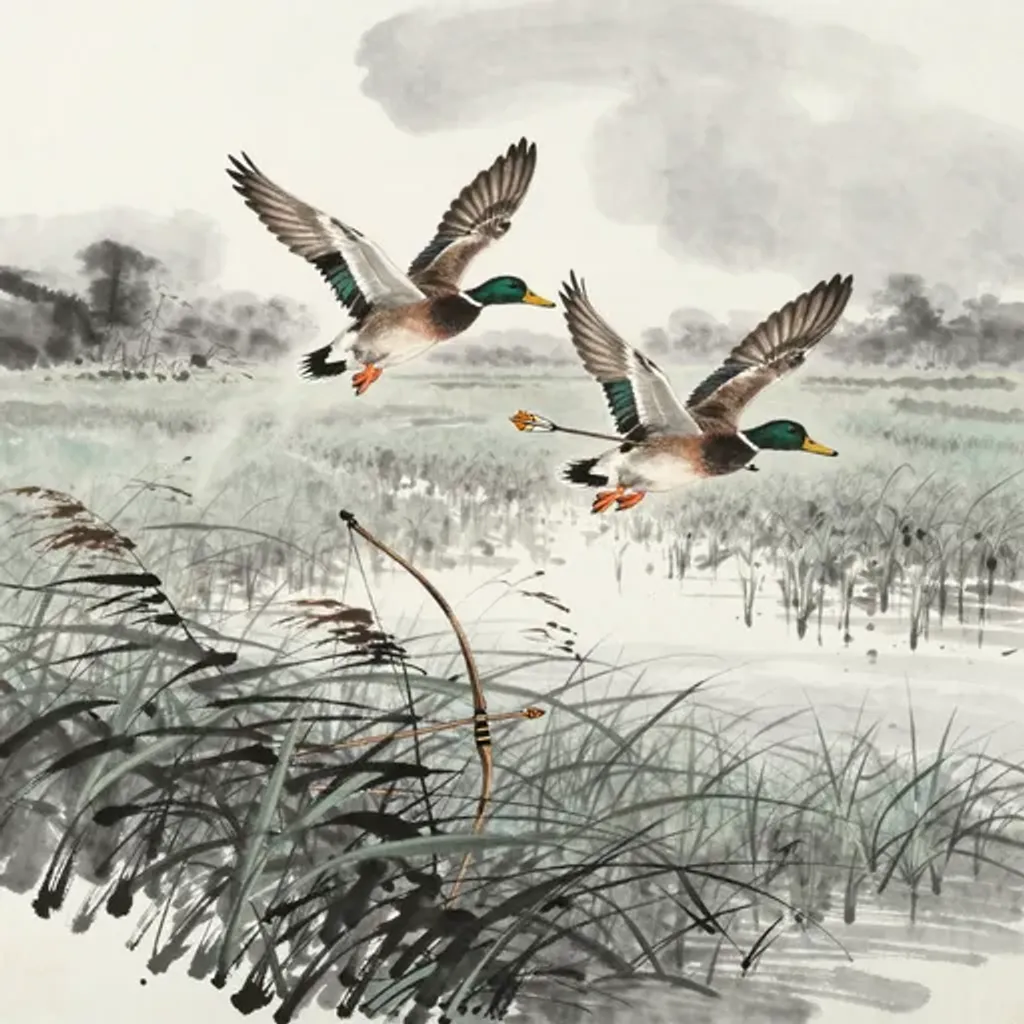
雙鳧俱飛,欲歸稻池,經涉萑澤,為矢所射,傷我胸臆。
A pair of ducks fly together; wishing to return to the rice pond. Passing through the reed marshes; struck by an arrow. It wounds my breast.
— Jiao Yanshou, Yilin (Forest of Changes), 1st century BC
Commentary
A lake upon a mountain: two wild ducks fly together, yearning for the rice paddies below. But their path crosses a marsh of thorny reeds where arrows fly, and one is struck in the breast. The paired ducks — a classical symbol of companionship and conjugal devotion — are wounded not by a predator but by a hunter's arrow, an external force that violates their natural bond. The marsh of thorns (萑澤) was also historically a gathering place for bandits. From Influence to Holding Together, the mountain's mutual resonance becomes water gathering upon the earth, the image of nations uniting. Yet the verse inverts this promise: the journey toward union is ambushed, and closeness itself becomes vulnerability when the path traverses hostile territory.
咸 → 小畜
Hexagram 31 → Hexagram 9: Small Taming
Changing lines: 1, 2, 4, 6
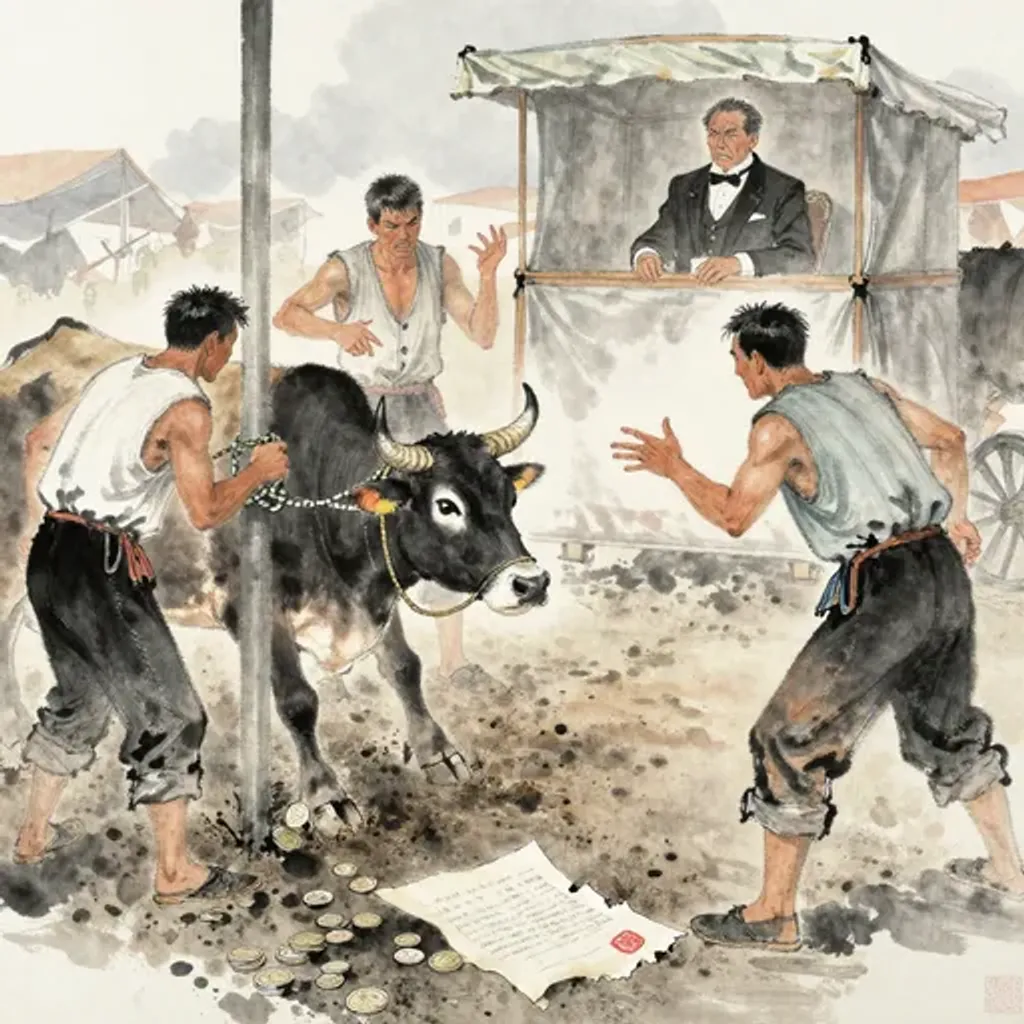
謾誕不成,倍梁滅文,許人賣牛,三失爭之,失利後時,公孫懷憂。
Deceit and falsehood come to naught; turning one's back on good faith, destroying trust. Promising to sell another's ox; three lose what they contest. Profit missed, the moment gone; Lord Gongsun harbors worry.
— Jiao Yanshou, Yilin (Forest of Changes), 1st century BC
Commentary
A lake upon a mountain stirs influence, but here that influence breeds deception. Reckless words fail to produce results, trust is doubled back upon itself and good faith destroyed. Someone promises to sell a bull, but three parties fight over the deal, profit slips away, the moment passes, and a nobleman is left anxious. The verse piles up images of broken contracts and squandered opportunities: boasts that cannot be fulfilled, commercial fraud, and disputes that devour whatever gain might have existed. From Influence to Small Taming, the mountain's open receptivity transforms into wind passing over heaven — a gentle restraining force that lacks the power to hold things together. What should have been a small, patient accumulation is ruined by loose tongues and competing claims.
咸 → 履
Hexagram 31 → Hexagram 10: Treading
Changing lines: 1, 2, 3, 6
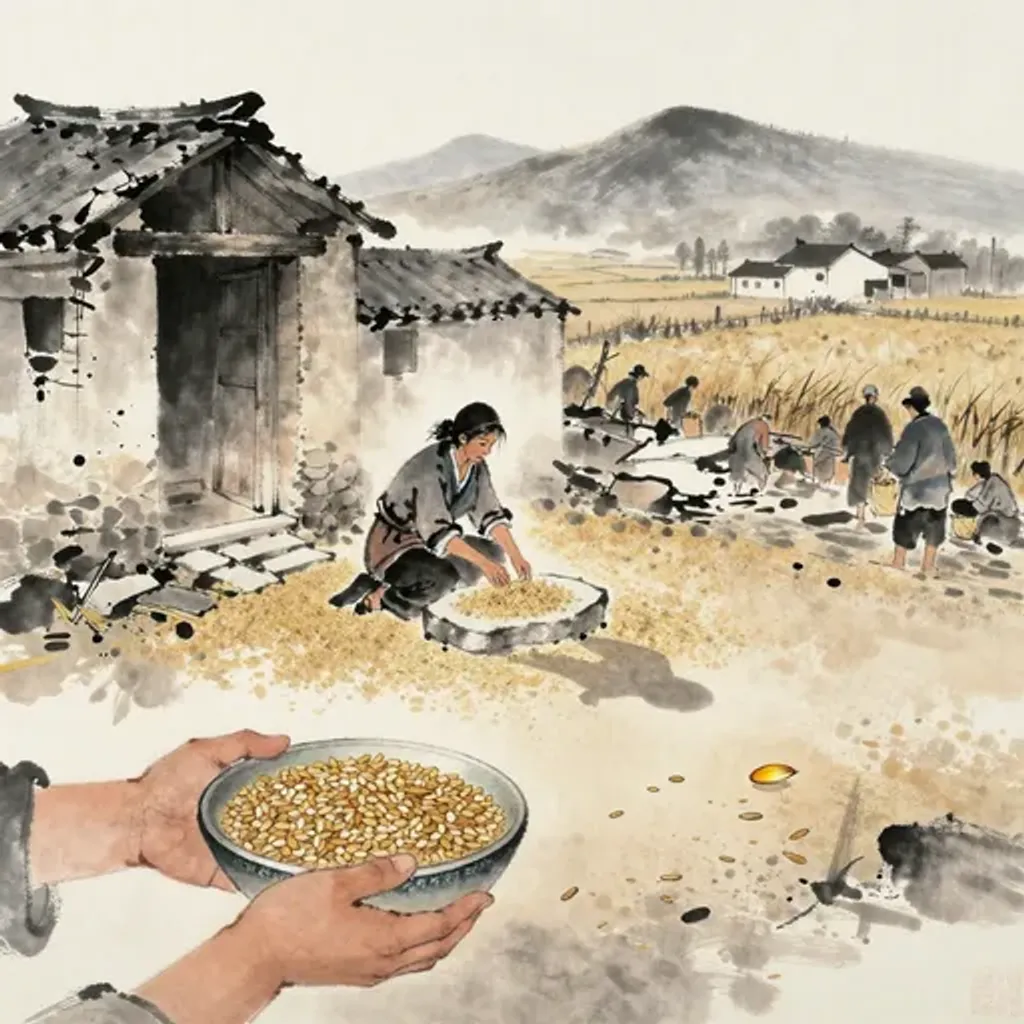
南國凶飢,民食糟糠,少子困捕,利無所得。
The southern lands, fierce famine; the people eat chaff and husks. The young struggle in vain to catch fish; profit cannot be had.
— Jiao Yanshou, Yilin (Forest of Changes), 1st century BC
Commentary
A lake upon a mountain, but the south country starves. The people eat chaff and husks, the young are trapped in poverty, and all efforts to gain profit come to nothing. The 'southern kingdom' in Han-era usage often refers to the Chu region, an area of proverbial abundance now reduced to famine. The verse strips away all comfort: not merely hunger but the degradation of eating what animals eat, not merely poverty but the entrapment of the young who should be building futures. From Influence to Treading, the mountain's receptive openness becomes the image of treading upon a tiger's tail — heaven above, lake below, the weak stepping on the strong. When mutual feeling fails and the land yields nothing, every step forward courts disaster.
咸 → 泰
Hexagram 31 → Hexagram 11: Peace
Changing lines: 1, 2, 4, 5
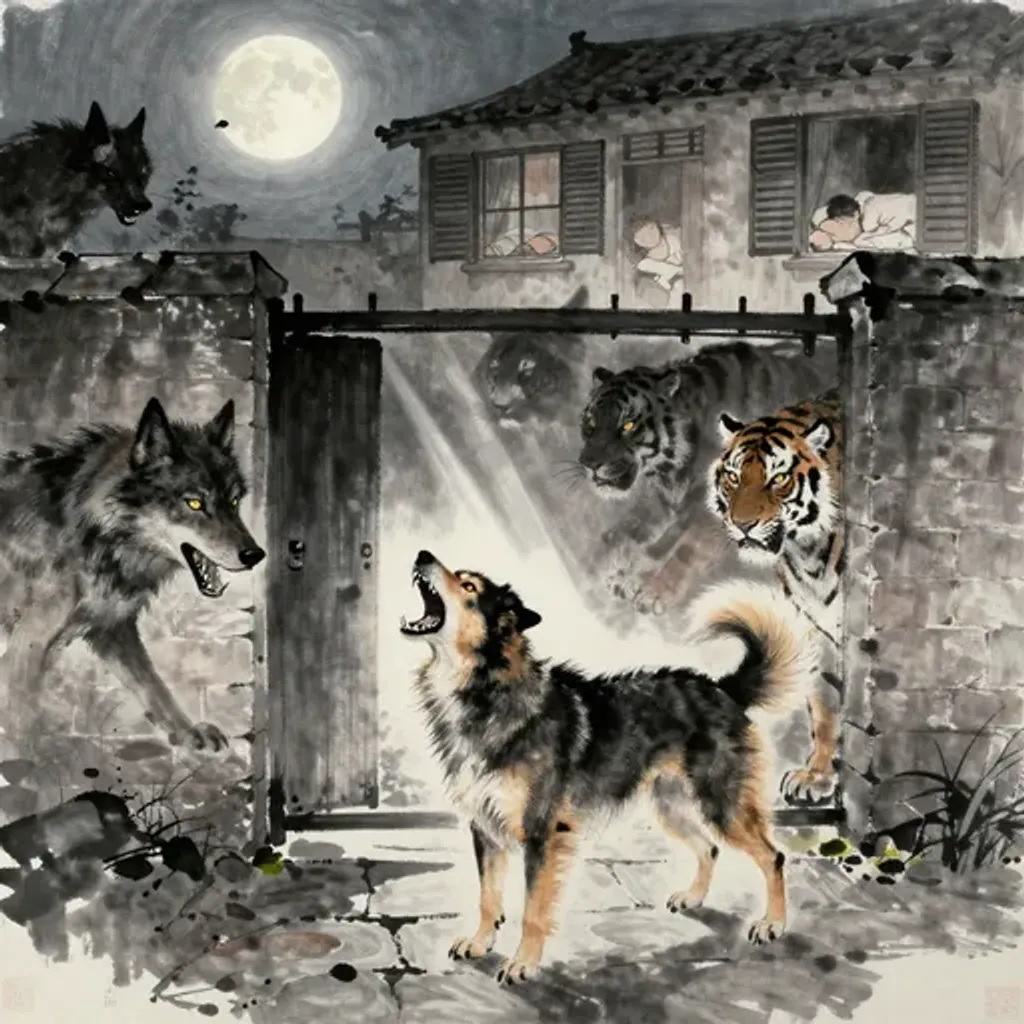
狗吠非主,狼虎夜擾,驚我東西,不為家咎。
The dog barks, but not at its master; wolf and tiger prowl by night. They startle me east and west; yet no blame falls on the house.
— Jiao Yanshou, Yilin (Forest of Changes), 1st century BC
Commentary
A lake upon a mountain stirs feeling, but here the disturbance is merely noise. Dogs bark at strangers who are not their masters, wolves and tigers prowl in the night, startling the household east and west — yet none of this becomes a real calamity. The key phrase is 'not the household's fault' (不為家咎): the threats are external, transient, and ultimately harmless. The barking dogs and roaming predators represent fears that feel overwhelming in the moment but carry no lasting consequence. From Influence to Peace, the mountain's openness transforms into the great interchange of heaven and earth: heaven descends, earth rises, and all things communicate freely. What seemed menacing by night dissolves in the daylight of cosmic harmony. Alarm gives way to stability.
咸 → 否
Hexagram 31 → Hexagram 12: Standstill
Changing lines: 3, 6
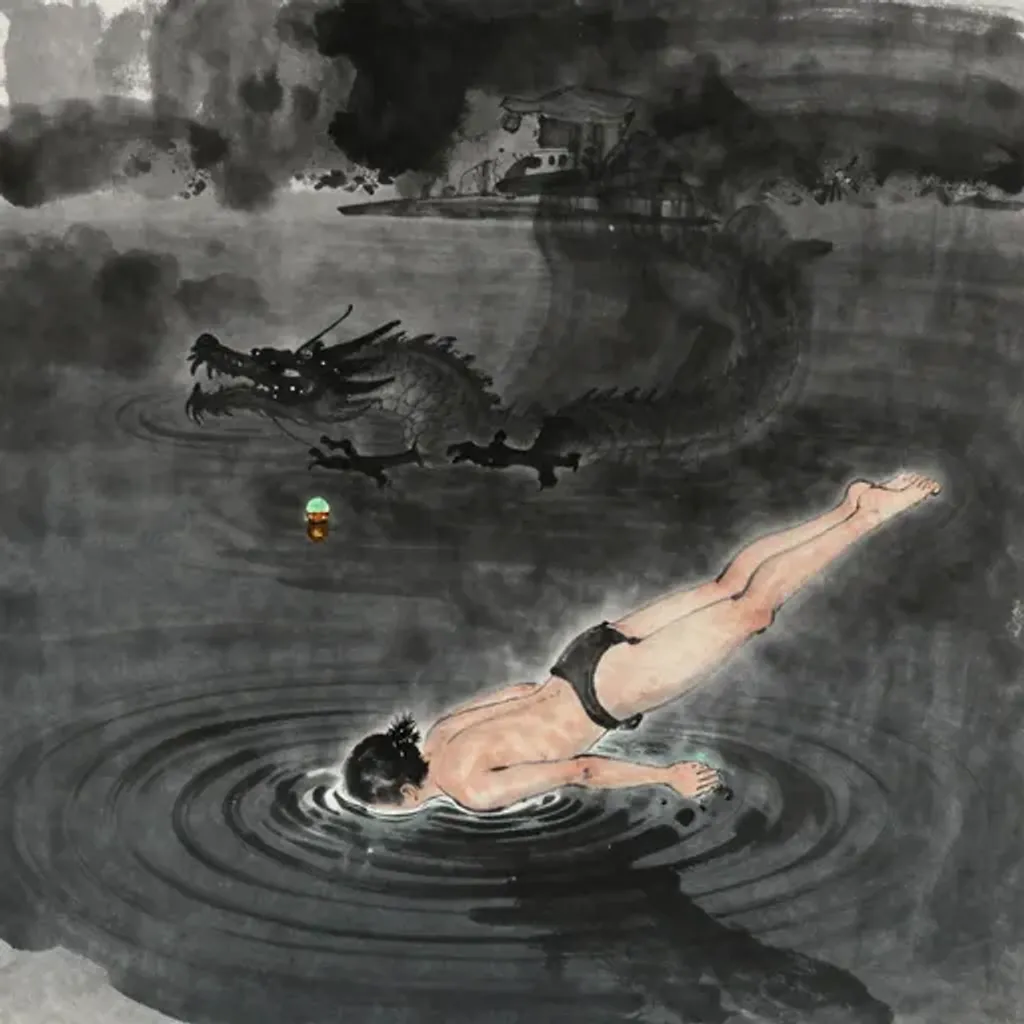
望龍無目,不見手足,入水求玉,失其所欲。
Gazing at a dragon without eyes; not seeing hands or feet. Entering the water seeking jade; losing what one desires.
— Jiao Yanshou, Yilin (Forest of Changes), 1st century BC
Commentary
A lake upon a mountain invites resonance, but here vision itself fails. A dragon is glimpsed but has no eyes; hands and feet vanish from sight. One dives into the water seeking jade but loses what was desired. The eyeless dragon suggests a power structure without discernment — a leader or an age that has lost its capacity to see clearly. Entering water for jade is a gamble on hidden treasure that ends in disorientation. From Influence to Standstill, the mountain's open receptivity becomes heaven and earth refusing to communicate: heaven rises, earth sinks, and the two drift apart. Mutual feeling degenerates into mutual blindness. When above and below can no longer see each other, even precious things within reach slip away unrecognized.
咸 → 同人
Hexagram 31 → Hexagram 13: Fellowship
Changing lines: 1, 6
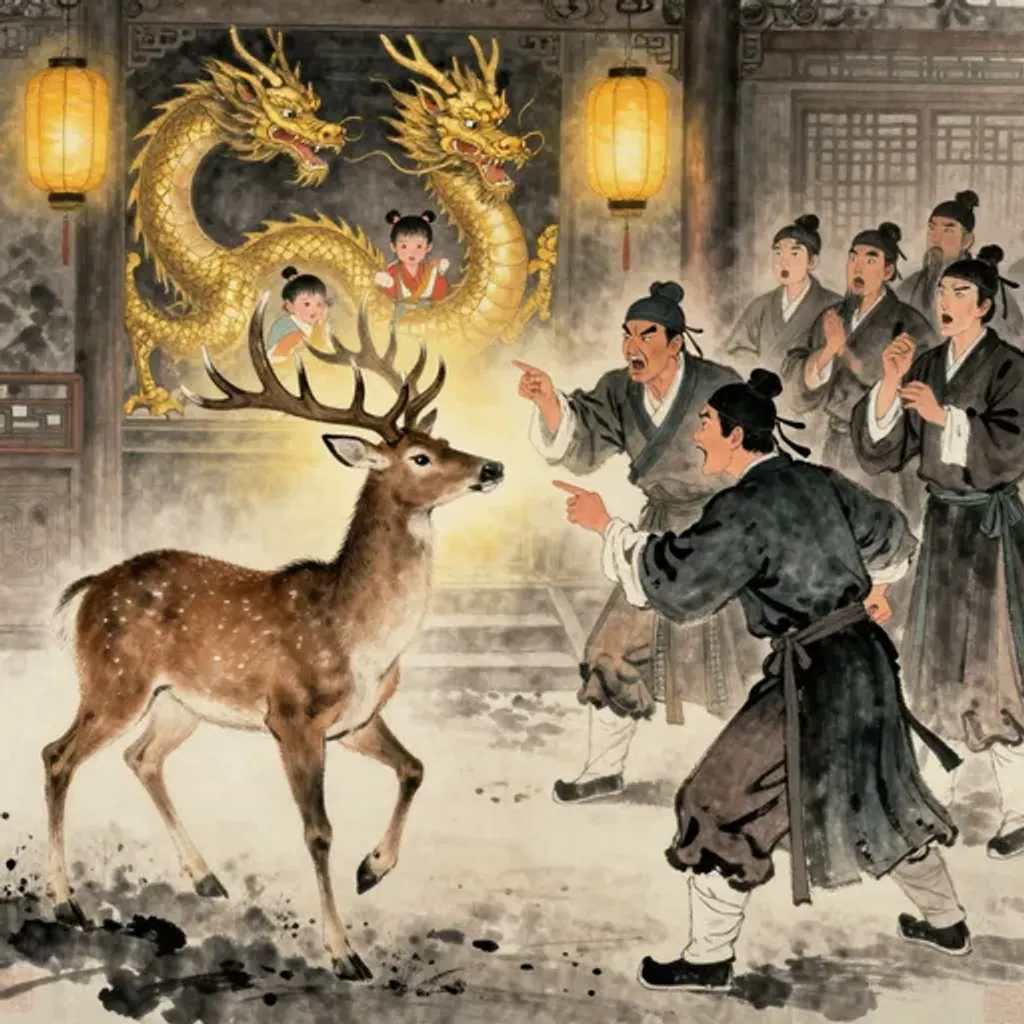
以鹿為馬,欺誤其主,聞言不信,三口為咎,黃龍三子,中樂不殆。
Calling a deer a horse; deceiving and misleading the lord. Words heard but not believed; three mouths bring blame. The Yellow Dragon's three sons; in their midst, joy without peril.
— Jiao Yanshou, Yilin (Forest of Changes), 1st century BC
Commentary
A lake upon a mountain stirs mutual feeling, but here feeling is weaponized as fraud. Someone points at a deer and calls it a horse, deceiving the sovereign — the famous stratagem of the Qin eunuch Zhao Gao, who tested courtiers' loyalty by presenting a deer as a horse and punishing any who disagreed. Words heard are not believed, and three mouths create calamity. Then the verse pivots: a yellow dragon appears with three offspring, and amid joy no harm arises. From Influence to Fellowship, the mountain's openness transforms into heaven and fire blazing together. Zhao Gao's coerced consensus is false fellowship; the yellow dragon's auspicious appearance signals genuine harmony. The transformation distinguishes true community — built on shared vision — from the counterfeit unity imposed by terror.
咸 → 大有
Hexagram 31 → Hexagram 14: Great Possession
Changing lines: 1, 2, 5, 6
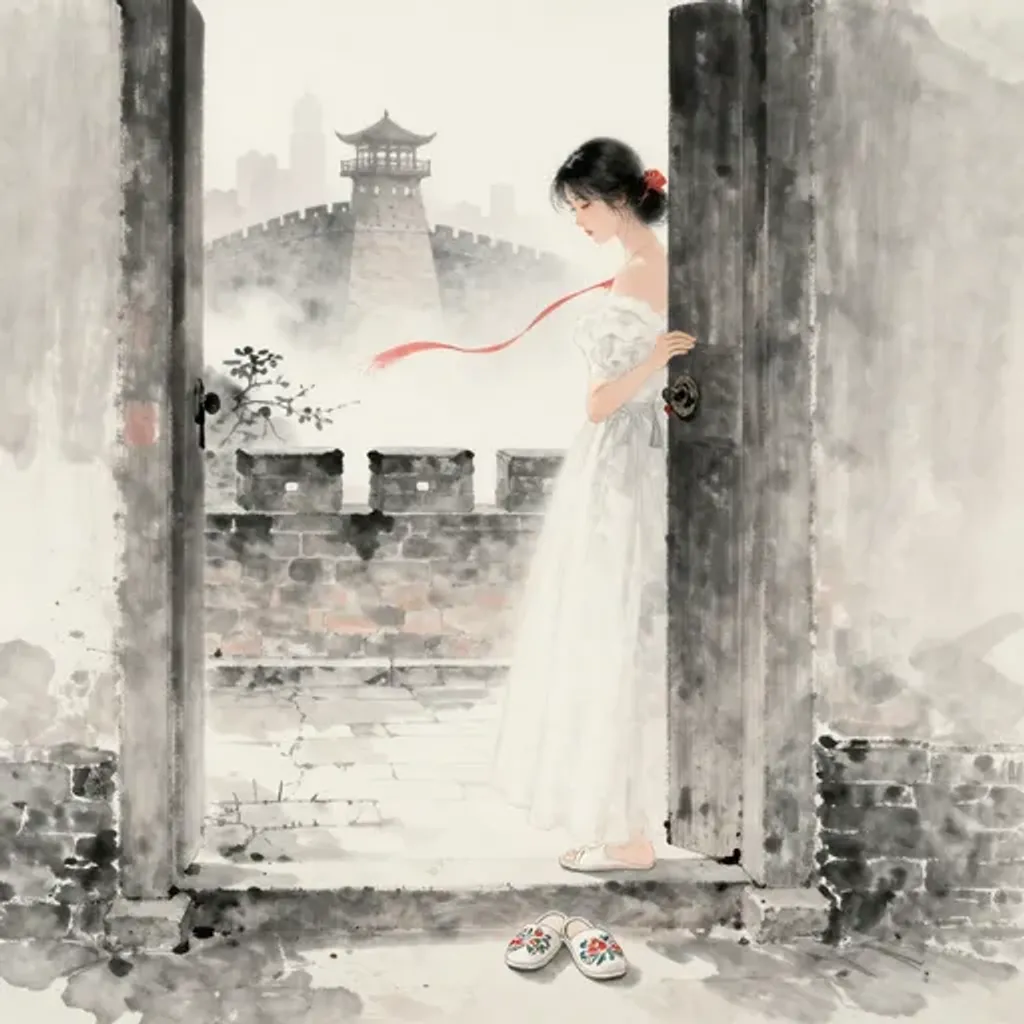
養幼新婚,未能出門,登宋望齊,不見太師。
Nurturing the young, newly wed; not yet able to go out the door. Ascending Song to gaze toward Qi; the Grand Tutor is not seen.
— Jiao Yanshou, Yilin (Forest of Changes), 1st century BC
Commentary
A lake upon a mountain nurtures feeling, and here the feeling is tenderly domestic. A young bride nourishes her newborn, not yet able to step outside the door. Then the verse shifts perspective: someone ascends the heights of Song and gazes toward Qi, but the Grand Preceptor is nowhere to be seen. The juxtaposition is striking — intimate domesticity against the vast distances of statecraft. The bride's confinement is natural and nurturing; the failure to see the Grand Preceptor across state boundaries suggests a broken channel of political influence. From Influence to Great Possession, the mountain's receptivity transforms into fire blazing in heaven: abundance should illuminate everything. Yet what is possessed at home cannot reach the world beyond, and the leader one seeks remains invisible despite the elevation of one's vantage.
咸 → 謙
Hexagram 31 → Hexagram 15: Modesty
Changing lines: 4, 5
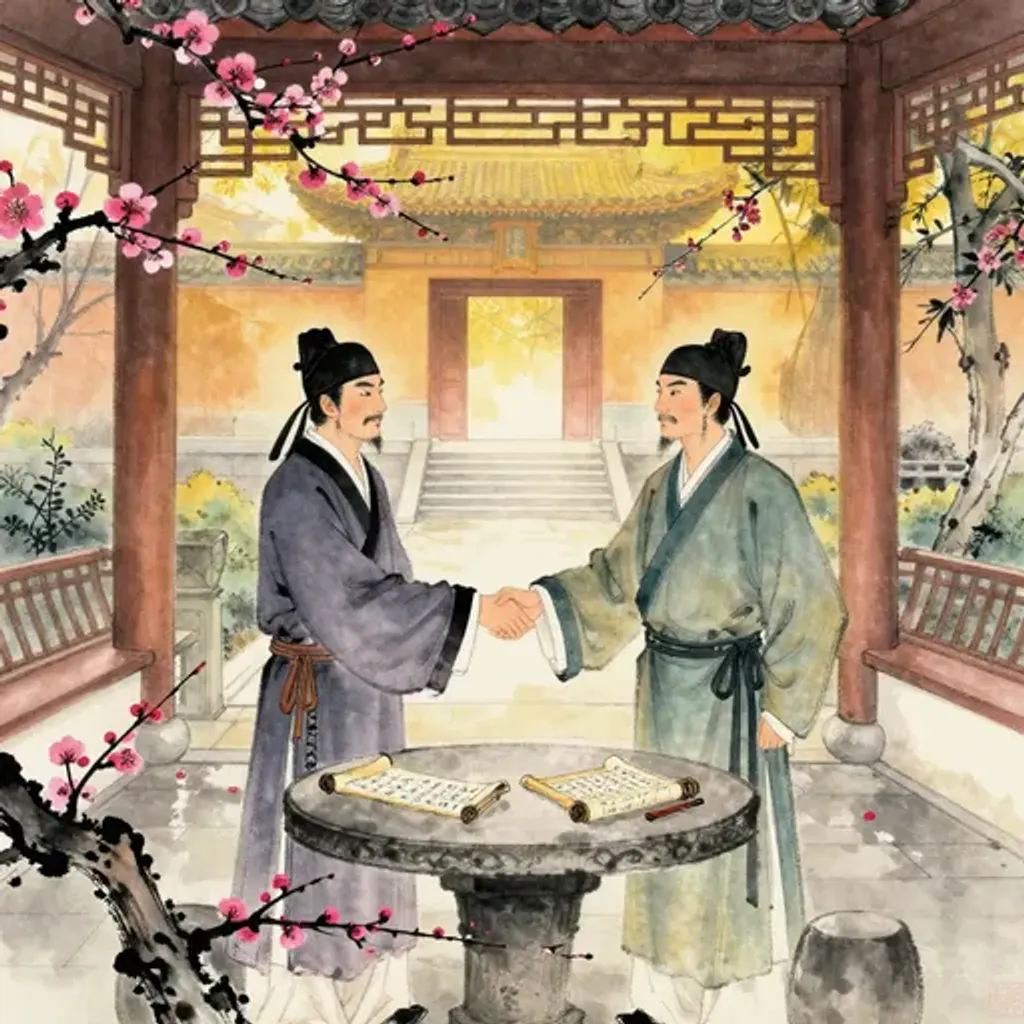
王孫季子,相與為友,明允篤誠,升擢薦舉。
Prince and young lord; they become friends with one another. Bright, sincere, earnest and true; promoted and recommended together.
— Jiao Yanshou, Yilin (Forest of Changes), 1st century BC
Commentary
A lake upon a mountain: openness draws kindred spirits together. A royal scion and a younger nobleman become fast friends, bound by bright sincerity and deep trust. Through their companionship, both are promoted and recommended to higher service. The phrase 'clear and trustworthy, earnest and sincere' (明允篤誠) describes the quality of their bond — not political expedience but genuine moral affinity. From Influence to Modesty, the mountain's receptive lake transforms into the mountain hidden within the earth: greatness concealed beneath humility. Their friendship embodies the modesty hexagram's ethic of leveling what is high and raising what is low. Mutual recognition between the worthy, offered without self-promotion, becomes the very mechanism by which talent rises.
咸 → 豫
Hexagram 31 → Hexagram 16: Enthusiasm
Changing lines: 3, 5
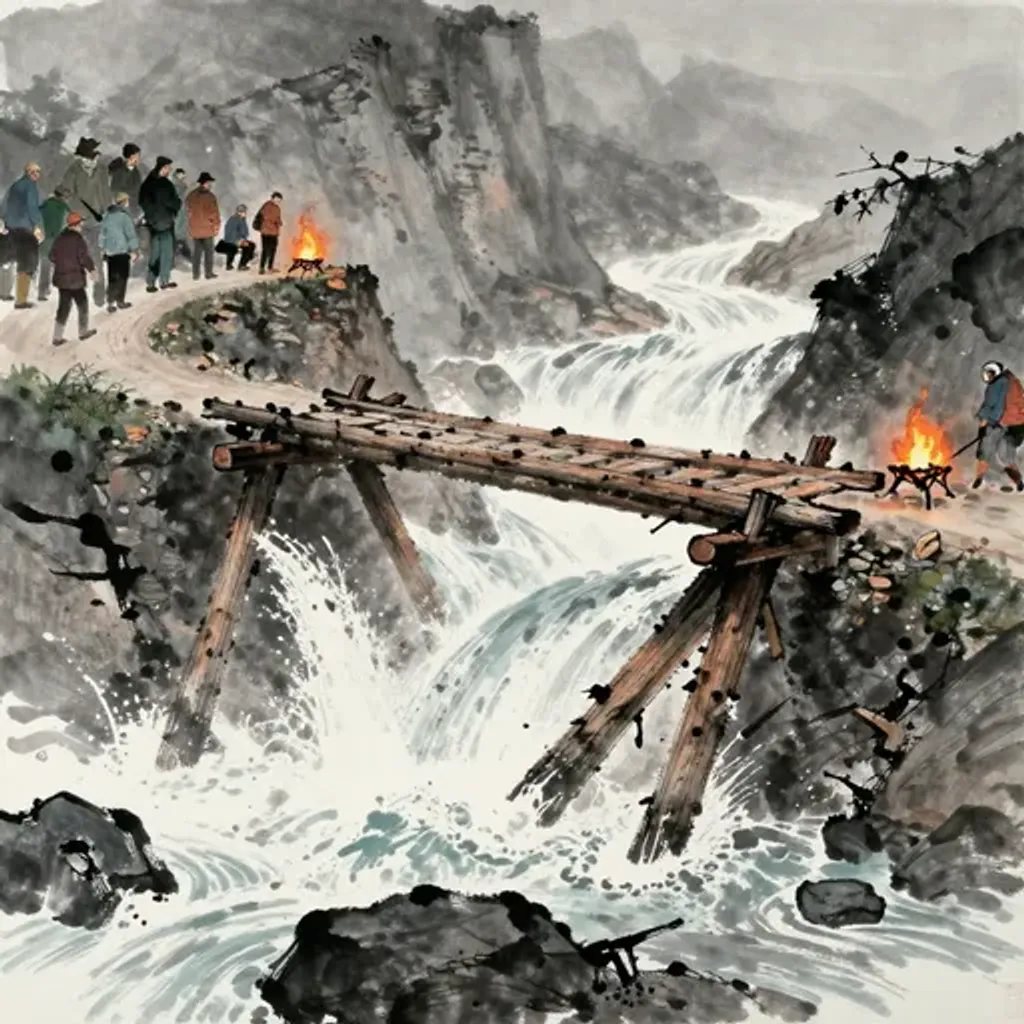
山水暴怒,壞梁折柱。稽難行旅,留連愁苦。
Mountains and waters rage in fury; destroying the bridge, snapping its pillars. Travelers are detained and delayed; lingering on in sorrow and grief.
— Jiao Yanshou, Yilin (Forest of Changes), 1st century BC
Commentary
A lake upon a mountain, and the mountain's waters rage. Flash floods crash down with sudden violence, smashing bridges and snapping pillars. Travelers are stranded, unable to move forward, lingering in worry and bitterness. The 'mountain water's fury' (山水暴怒) directly invokes the physical landscape of hexagram 31 — the lake atop the mountain — but here the lake overflows destructively rather than nourishing gently. From Influence to Enthusiasm, the mountain's receptivity becomes thunder bursting from the earth. Thunder that should inspire joy and music instead manifests as uncontrolled natural force. The enthusiasm of release without channeling becomes mere destruction: bridges that once connected communities are swept away, and what should be joyful movement becomes forced immobility.
咸 → 隨
Hexagram 31 → Hexagram 17: Following
Changing lines: 1, 3
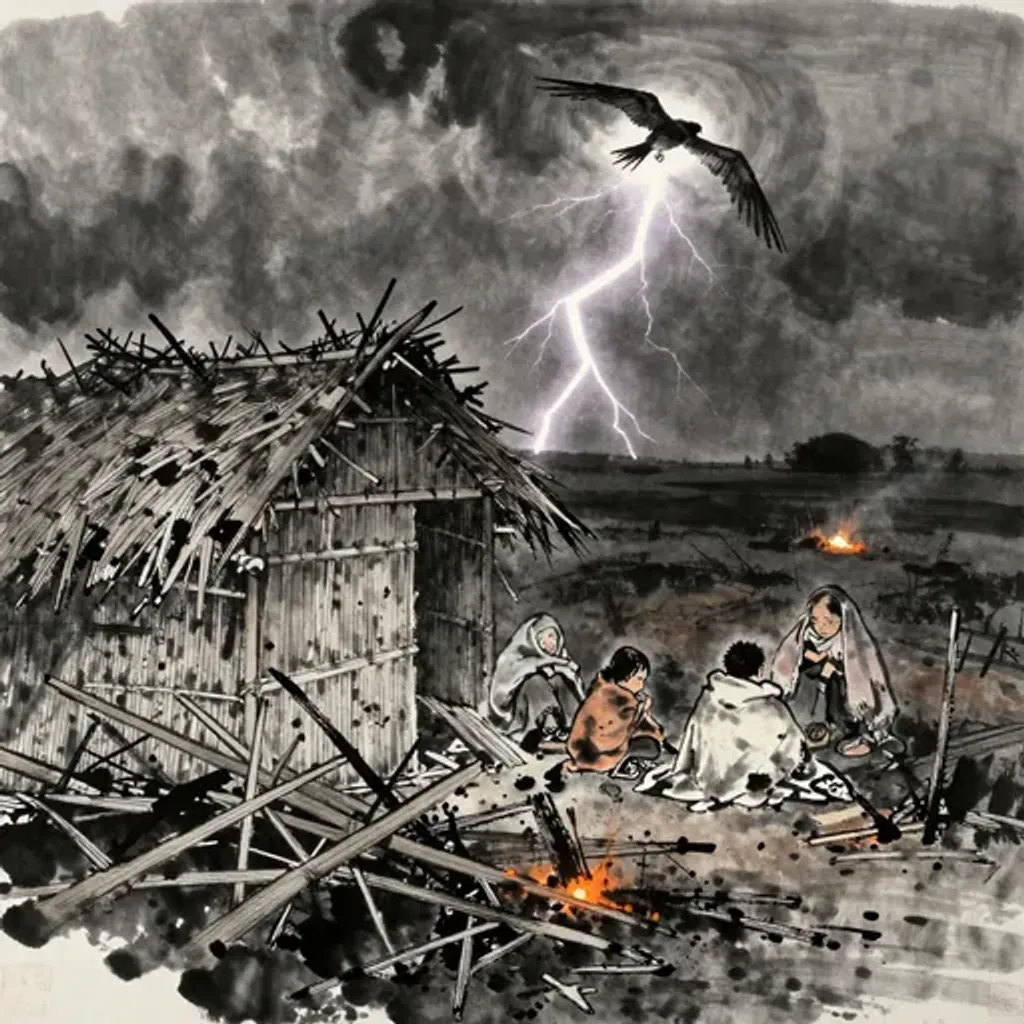
鸇鳩徙巢,西至平州,遭逢雷電,破我葦蘆,室家飢寒,思吾故初。
Hawk and dove move their nest; westward to Pingzhou. They meet with thunder and lightning; it shatters our reed shelter. Household cold and hungry; longing for how things began.
— Jiao Yanshou, Yilin (Forest of Changes), 1st century BC
Commentary
A lake upon a mountain, but the nest must be abandoned. A sparrowhawk and a dove relocate their nest westward to Pingzhou, only to encounter thunder and lightning that shatter their shelter of reeds and rushes. The household shivers in cold and hunger, yearning for how things were in the beginning. The paired birds — predator and prey sharing a nest — evoke an uneasy domestic arrangement, and their forced migration ends in catastrophe. 'Thinking of our original state' (思吾故初) is the lament of refugees who discover that following new circumstances brings only ruin. From Influence to Following, the mountain's open receptivity becomes thunder resting within the lake. Following should mean adaptive movement, but here the birds follow their instinct to relocate and find only destruction. Not all movements deserve to be followed.
咸 → 蠱
Hexagram 31 → Hexagram 18: Work on the Decayed
Changing lines: 2, 4, 5, 6
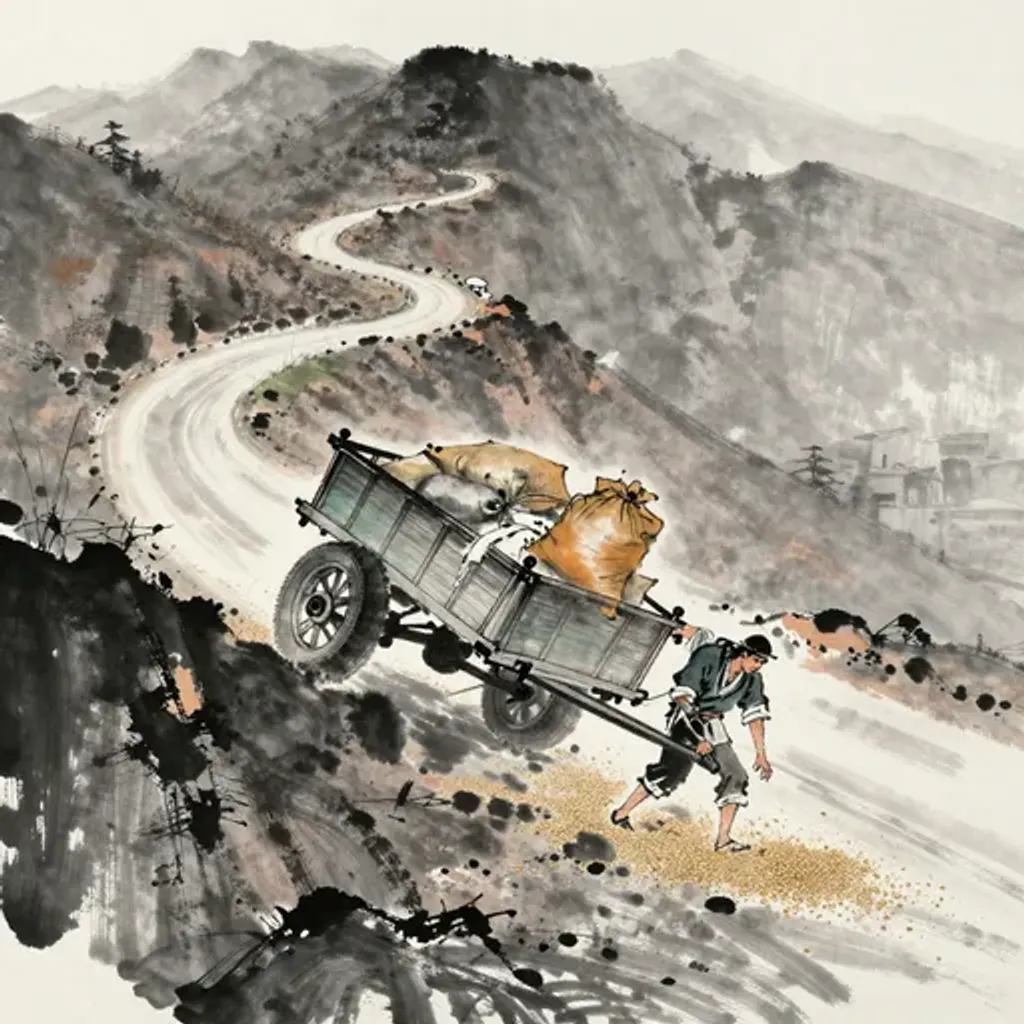
登高傷軸,上阪棄粟,販鹽不利,買牛折角。
Climbing high, the axle breaks; ascending the slope, grain is abandoned. Selling salt without profit; buying an ox that breaks its horn.
— Jiao Yanshou, Yilin (Forest of Changes), 1st century BC
Commentary
A lake upon a mountain, but every venture meets with breakage. Climbing high, the axle snaps; ascending the slope, grain must be abandoned. A salt merchant finds no profit; a cattle buyer gets an ox with broken horns. Each image compounds the last: structural failure, wasted provisions, commercial loss, and damaged goods. The verse is a catalogue of entropy — everything touched deteriorates. From Influence to Work on the Decayed, the mountain's receptive openness transforms into wind trapped beneath the mountain, the image of corruption that must be remedied. The decay is not sudden but accumulated: these are things that broke because they were already weakened. The transformation suggests that what seems like bad luck is actually long-neglected maintenance finally demanding attention.
咸 → 臨
Hexagram 31 → Hexagram 19: Approach
Changing lines: 1, 2, 3, 4, 5
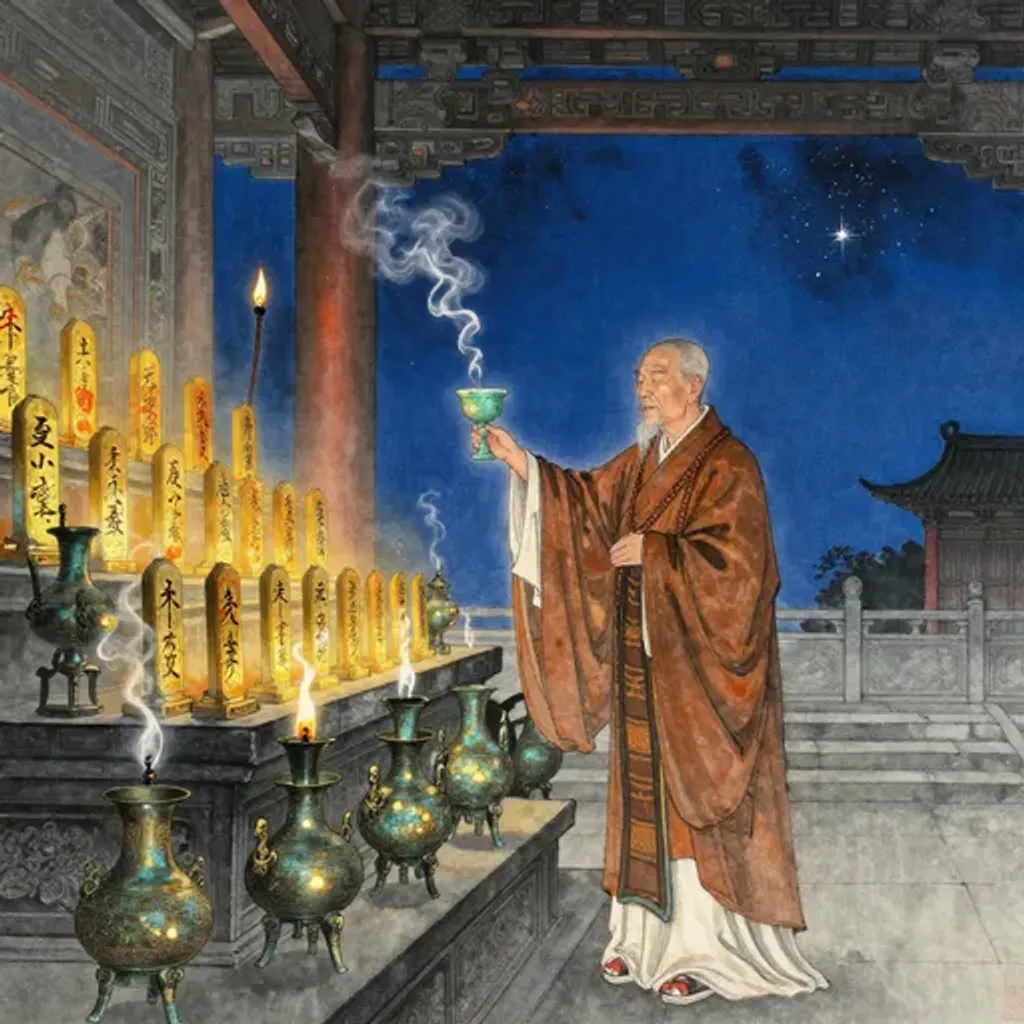
祝駝王孫,能事鬼神,節用綏民,衛國以存,饗我旨酒,眉壽多年。
Zhutuo the prince; able to serve ghosts and gods. Restraining expenditure, easing the people; the state of Wei thus endures. They feast us with fine wine; long-browed longevity, many years.
— Jiao Yanshou, Yilin (Forest of Changes), 1st century BC
Commentary
A lake upon a mountain, and here the mutual influence between human and divine sustains a state. A ritual officiant and a nobleman serve the spirits with skill, practice thrift to pacify the people, and preserve the state of Wei through their devotion. Fine wine is offered, and long life measured in years of abundant blessings follows. The 'serving ghosts and spirits' (能事鬼神) echoes the Confucian understanding that proper ritual maintains the bond between the living and the ancestral world. From Influence to Approach, the mountain's openness transforms into earth above a lake — the ruler drawing near to the people. This mutual approach, between ruler and subject, between human and spirit, generates the enduring stability that keeps a state alive across generations.
咸 → 觀
Hexagram 31 → Hexagram 20: Contemplation
Changing lines: 3, 4, 6
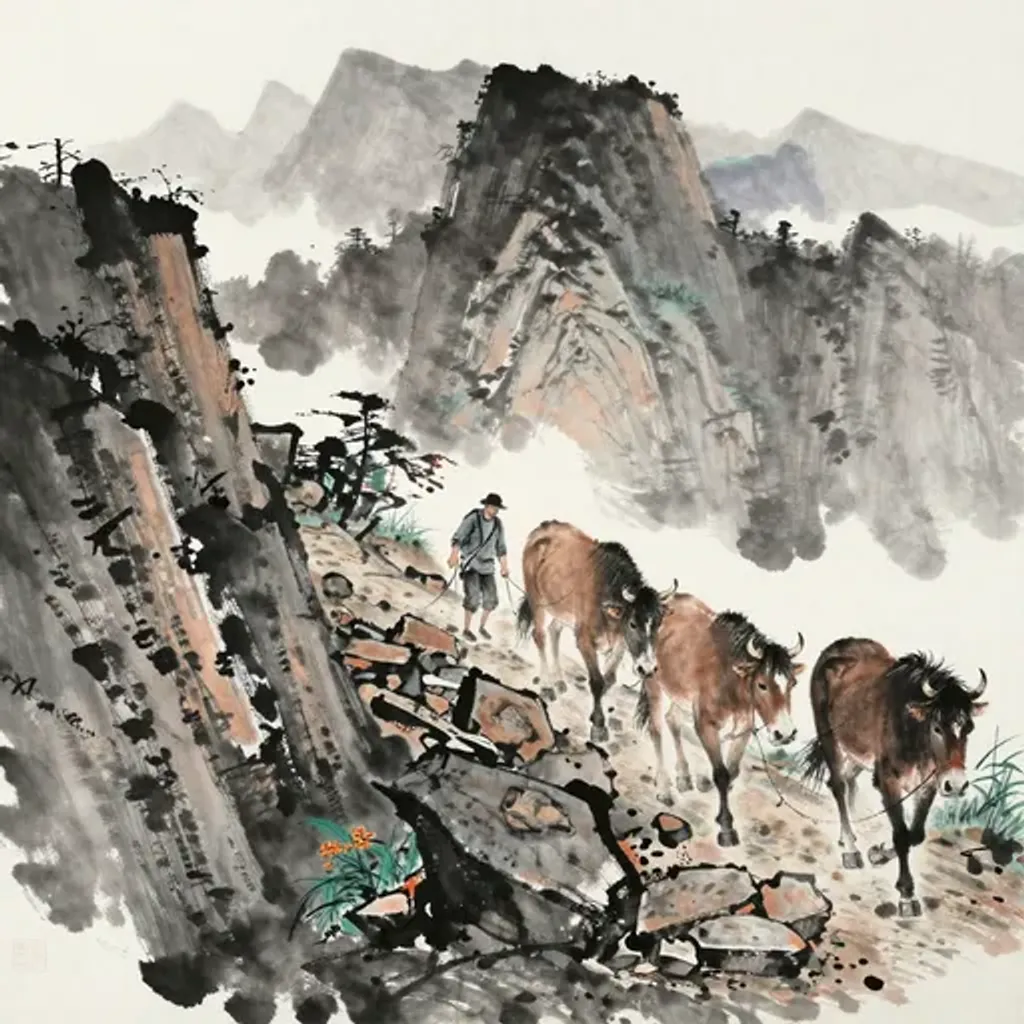
九里十山,道卻峻難,牛馬不前,復反來還。
Nine miles, ten mountains; the road turns steep and hard. Ox and horse will not advance; they turn back and return again.
— Jiao Yanshou, Yilin (Forest of Changes), 1st century BC
Commentary
A lake upon a mountain, but the mountain itself becomes the obstacle. Nine miles and ten peaks — the road is steep and the terrain impossible. Oxen and horses refuse to advance, and the traveler turns back the way he came. The repetition of 'nine' and 'ten' suggests not a specific geography but an overwhelming accumulation of barriers. Even the most patient draft animals balk. From Influence to Contemplation, the mountain's receptive openness transforms into wind moving over the earth: the ruler surveys the land from above. But what he sees is impassable. Contemplation reveals the truth that some paths cannot be forced. The wise response — returning home — is itself an act of clear-sighted observation rather than defeat, recognizing that the terrain demands retreat.
咸 → 噬嗑
Hexagram 31 → Hexagram 21: Biting Through
Changing lines: 1, 3, 5, 6
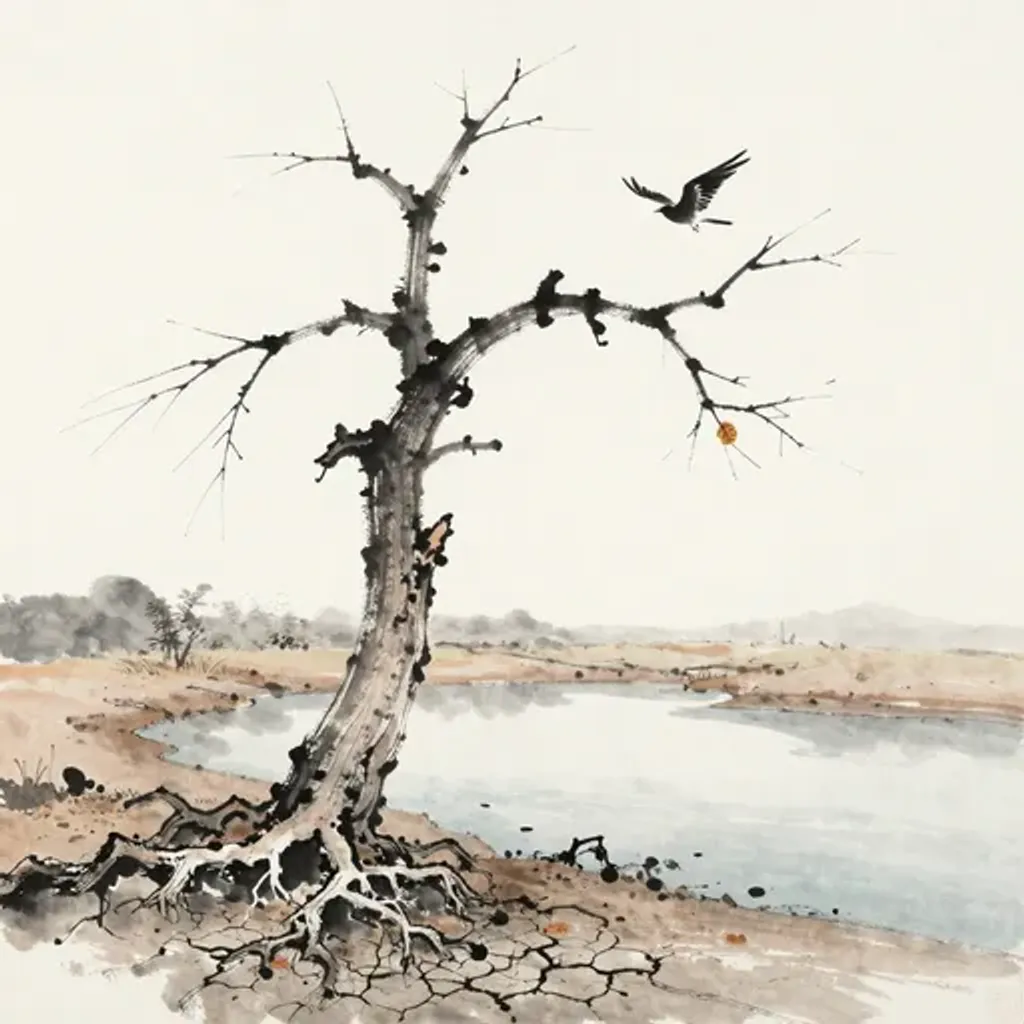
枯樹不花,空淵無魚,蕉鳥飛翔,利棄我去。
A withered tree bears no flowers; an empty pool holds no fish. The anxious bird takes flight; profit departs and leaves me.
— Jiao Yanshou, Yilin (Forest of Changes), 1st century BC
Commentary
A lake upon a mountain, but all vitality has departed. A withered tree bears no flowers, an empty pool holds no fish, and the birds of the marshes take flight, abandoning the speaker as they leave. Every image is one of depletion: the tree that should bloom is dead at the root, the water that should teem with life is drained, and even the companionship of birds dissolves. From Influence to Biting Through, the mountain's gentle receptivity transforms into fire and thunder — the forceful image of law and punishment, jaws clamping down on an obstruction. The emptiness described suggests that what should have been bitten through — the obstacle — was never addressed, and now there is nothing left to salvage. Neglected correction leads to total barrenness.
咸 → 賁
Hexagram 31 → Hexagram 22: Grace
Changing lines: 1, 4, 5, 6
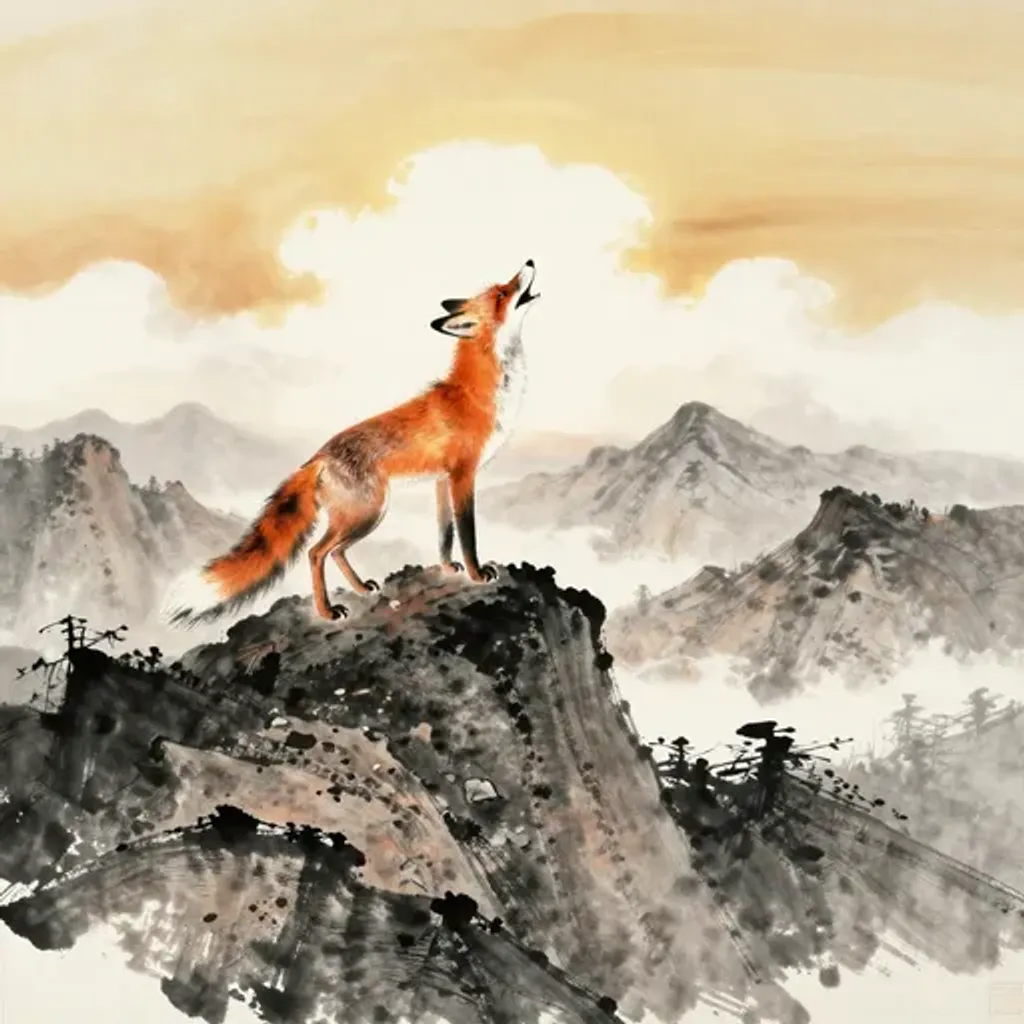
雄狐唯唯,登上山嵬,昭告顯功,大福允興。
The male fox, bold and sure; climbs up the towering peak. Proclaiming bright achievements; great blessings truly flourish.
— Jiao Yanshou, Yilin (Forest of Changes), 1st century BC
Commentary
A lake upon a mountain, and from below a male fox climbs boldly. The fox ascends the high crag with confident steps, announcing great accomplishments for all to see, and abundant blessings flourish. The fox in Chinese symbolism is often cunning or deceptive, but a 'male fox' (雄狐) ascending prominently and proclaiming merit suggests bold assertion rewarded — not trickery but audacity that succeeds because the moment is right. From Influence to Grace, the mountain's open receptivity transforms into fire glowing beneath the mountain: natural beauty illuminating substance. The fox's ascent and proclamation resonates with Grace's principle of form adorning content. Genuine accomplishment, when openly displayed at the proper time, attracts the blessings it deserves.
咸 → 剝
Hexagram 31 → Hexagram 23: Splitting Apart
Changing lines: 3, 4, 5, 6
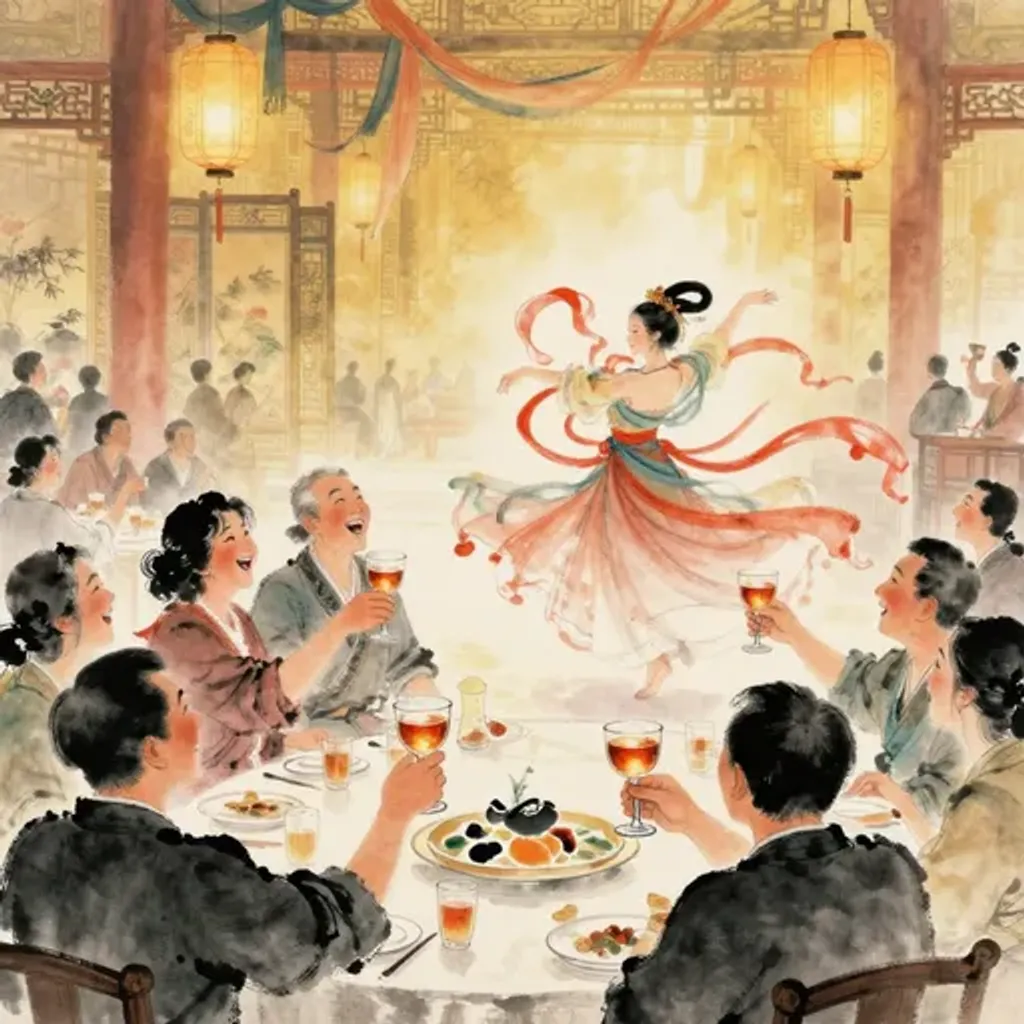
啞啞笑喜,相與飲酒。長樂行觴,千秋起舞,拜受大福。
Babbling laughter and delight; drinking wine together. In the Hall of Lasting Joy, passing the cup; dancing through a thousand autumns. Bowing, they receive great blessings.
— Jiao Yanshou, Yilin (Forest of Changes), 1st century BC
Commentary
A lake upon a mountain, and mutual delight overflows. Laughter rings out in happy chorus as companions gather to drink wine together. In the hall of Changle — the 'Eternal Joy' palace of the Han dynasty — goblets are passed and toasts exchanged while dancers whirl through a thousand autumns, and all bow to receive great blessings. The imagery is of courtly celebration at its peak: wine, music, dance, and reciprocal honor. 'A thousand autumns' (千秋) is the traditional toast wishing ten thousand years of life. From Influence to Splitting Apart, the mountain's joyous reception transforms into the mountain resting upon crumbling earth. The feast is magnificent, but the hexagram warns: what sits atop may soon fall. Enjoy the celebration, but know that peak revelry precedes erosion.
咸 → 復
Hexagram 31 → Hexagram 24: Return
Changing lines: 1, 3, 4, 5
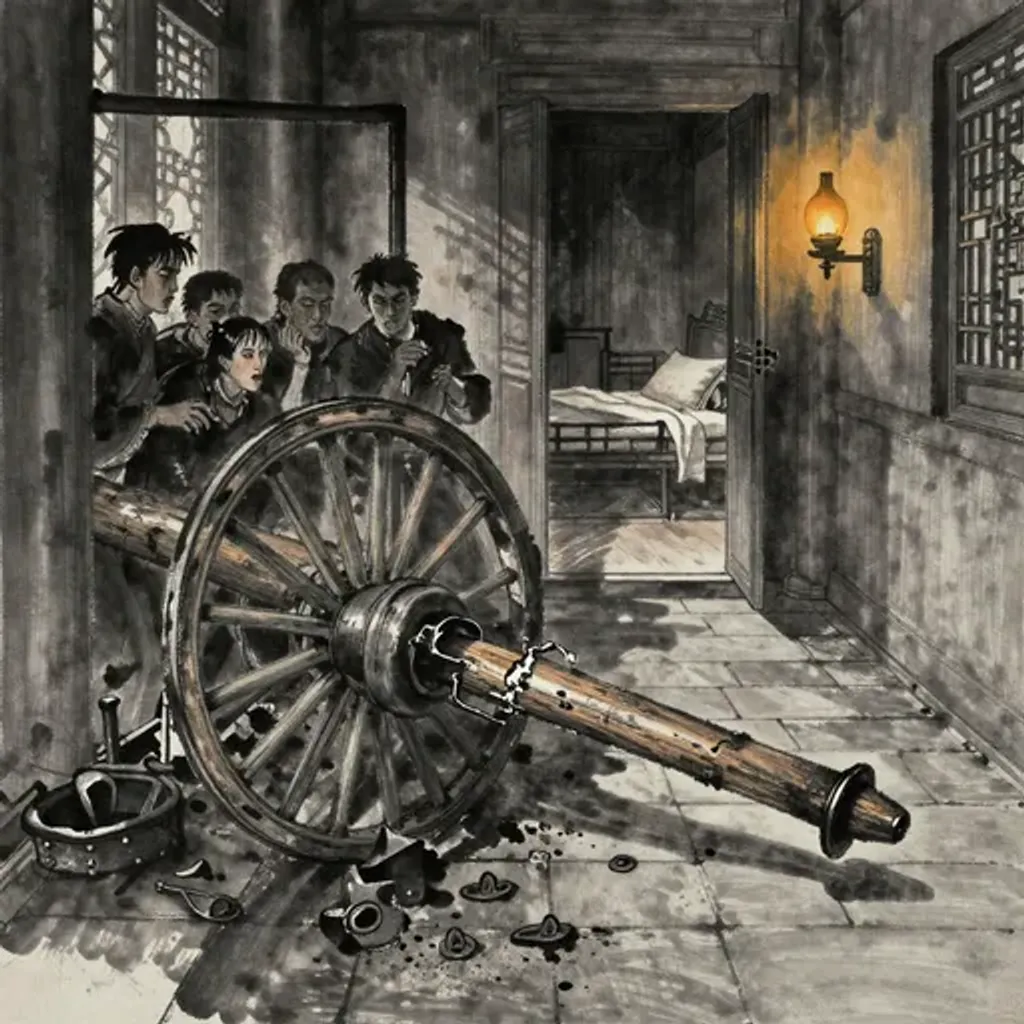
大椎破轂,長舌亂國,床笫之言,三世不安。
The great axle pin shatters the hub; a long tongue disorders the state. Words spoken from the bed; three generations find no peace.
— Jiao Yanshou, Yilin (Forest of Changes), 1st century BC
Commentary
A lake upon a mountain, but the axle pin snaps and the wheel hub shatters — the vehicle of state breaks down. A 'long tongue' (長舌) throws the kingdom into chaos, and pillow talk between bedfellows destabilizes three generations. The 'long tongue that disrupts the state' is a classical allusion to the Shijing poem 'Zhanan' (瞻卬), which warns against women's counsel in governance: 'A woman with a long tongue is a stepping-stone to ruin.' The 'words of the bed-curtain' (床笫之言) specifically refers to intimate influence wielded behind closed doors that corrupts public policy. From Influence to Return, the mountain's openness becomes thunder buried beneath the earth. What should be a fresh beginning — the return of yang — is poisoned at the root by the private whisper that destroys public order across generations.
咸 → 无妄
Hexagram 31 → Hexagram 25: Innocence
Changing lines: 1, 3, 6
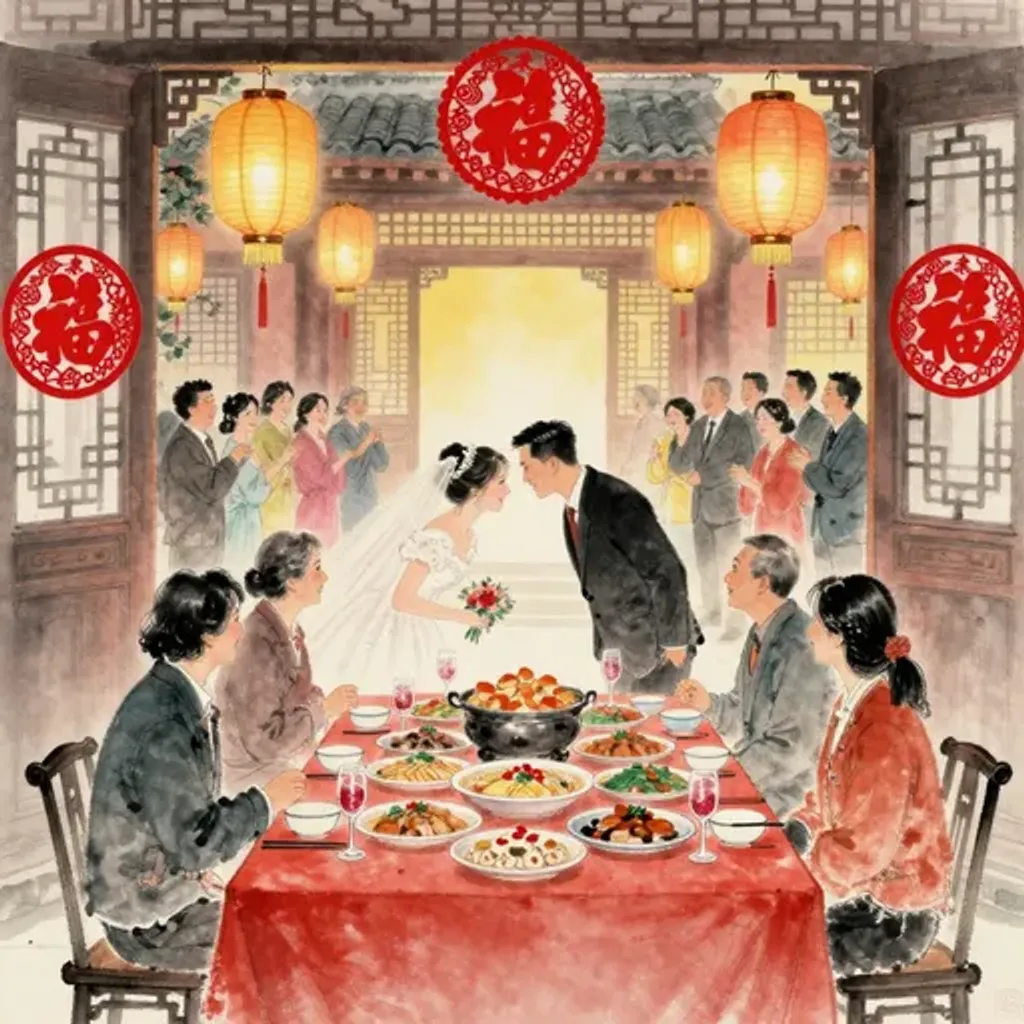
男女合室,二姓同食。婚姻孔云,宜我孝孫。
Man and woman share one room; two families eat together. The marriage is spoken of with great praise; it befits our filial grandchildren.
— Jiao Yanshou, Yilin (Forest of Changes), 1st century BC
Commentary
A lake upon a mountain, the very image of mutual attraction, and here that attraction fulfills itself in marriage. Man and woman share a household, two surnames eat together under one roof. The marriage is auspicious, blessed by ancestral approval, and benefits the filial descendants who carry the line forward. The verse is remarkably direct for the Yilin: no disaster, no ambiguity, simply the proper completion of courtship in wedded harmony. From Influence to Innocence, the mountain's receptive feeling transforms into thunder rolling beneath heaven — spontaneous, natural, free of ulterior motive. Hexagram 25 is the Unexpected, action aligned with heaven's will without calculation. This marriage resonates with that purity: attraction that proceeds honestly to union, without deception or coercion, brings blessings to generations.
咸 → 大畜
Hexagram 31 → Hexagram 26: Great Taming
Changing lines: 1, 2, 4, 5, 6
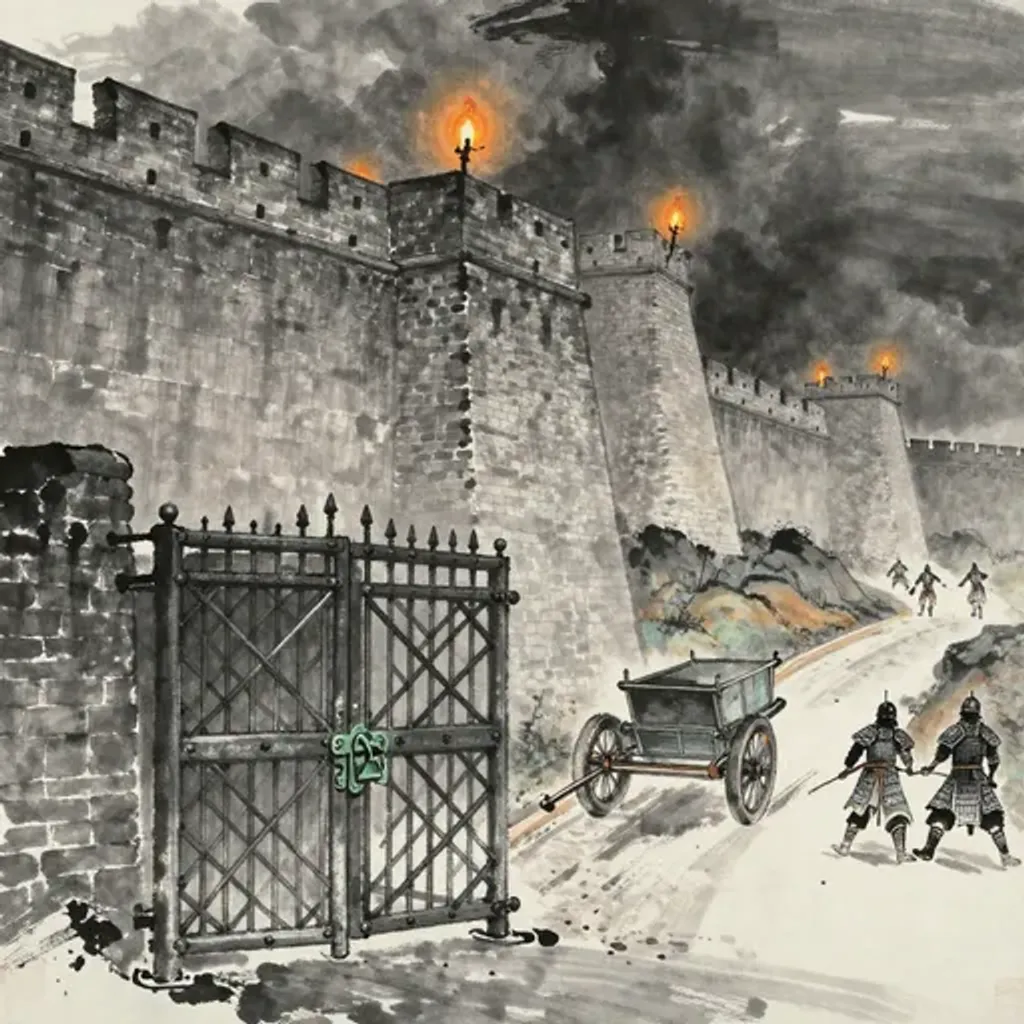
千仞之墻,禍不入門。金籠銕䟽,利以辟兵。欲南上阪,轉萬不轉,還車復反。
A wall of a thousand fathoms; disaster cannot enter the gate. Iron cage and metal bars; useful to ward off soldiers. Wishing to go south, up the slope; ten thousand turns, the cart will not turn. They reverse course and return.
— Jiao Yanshou, Yilin (Forest of Changes), 1st century BC
Commentary
A lake upon a mountain faces a wall a thousand fathoms high — calamity cannot enter the gate. Metal cages and iron lattices serve as barriers against armed threat. Yet when one tries to head south and climb the slope, the wheels refuse to turn even after ten thousand attempts, and the carriage must reverse course. The verse juxtaposes two kinds of security: the wall and the cage protect effectively, but the road itself refuses passage. From Influence to Great Taming, the mountain's receptive openness transforms into heaven stored within the mountain — vast power accumulated and restrained. The thousand-fathom wall embodies Great Taming's principle of containment, but the stalled carriage warns that what is stored must sometimes accept its own immobility. Not every stored force is meant to advance.
咸 → 頤
Hexagram 31 → Hexagram 27: Nourishment
Changing lines: 1, 3, 4, 5, 6
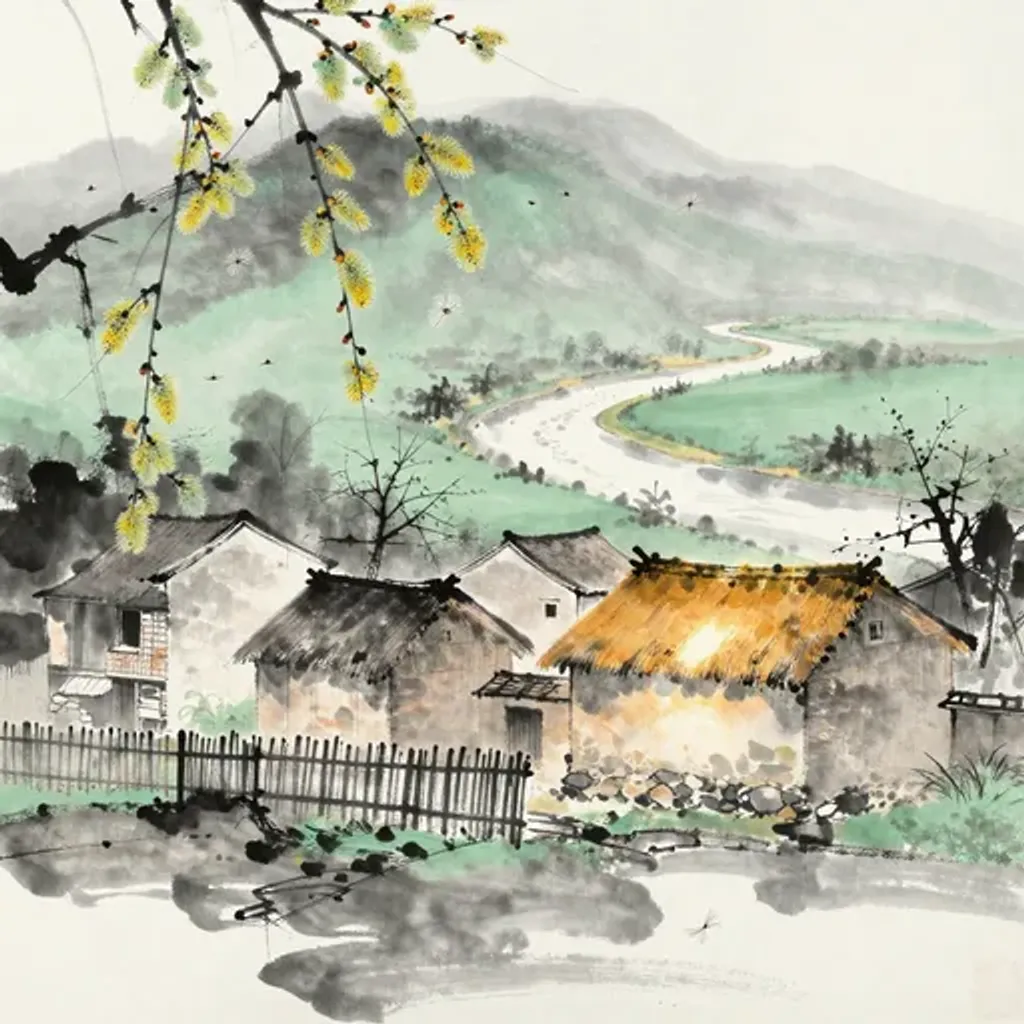
華言風語,自相詿誤,終無凶事,安寧如故。
Flowery words, windy talk; they mislead only themselves. In the end, no ill befalls; all is peaceful as before.
— Jiao Yanshou, Yilin (Forest of Changes), 1st century BC
Commentary
A lake upon a mountain, and the air fills with flowery words and empty rhetoric. People mislead themselves with ornate language, deceiving no one but each other. Yet the verse resolves with unexpected calm: in the end, nothing truly terrible happens, and peace remains as it was before. The 'flowery words and windy speech' (華言風語) describes the kind of gossip and rumor that circulates endlessly but ultimately carries no substance. From Influence to Nourishment, the mountain's receptive openness becomes the mountain above thunder — the jaws of careful sustenance, where one watches what enters and exits the mouth. The lesson is that careless words, though disruptive, need not destroy if one simply waits them out. Nourishment's discipline of speech is the antidote to influence misused as chatter.
咸 → 大過
Hexagram 31 → Hexagram 28: Great Exceeding
Changing lines: 2
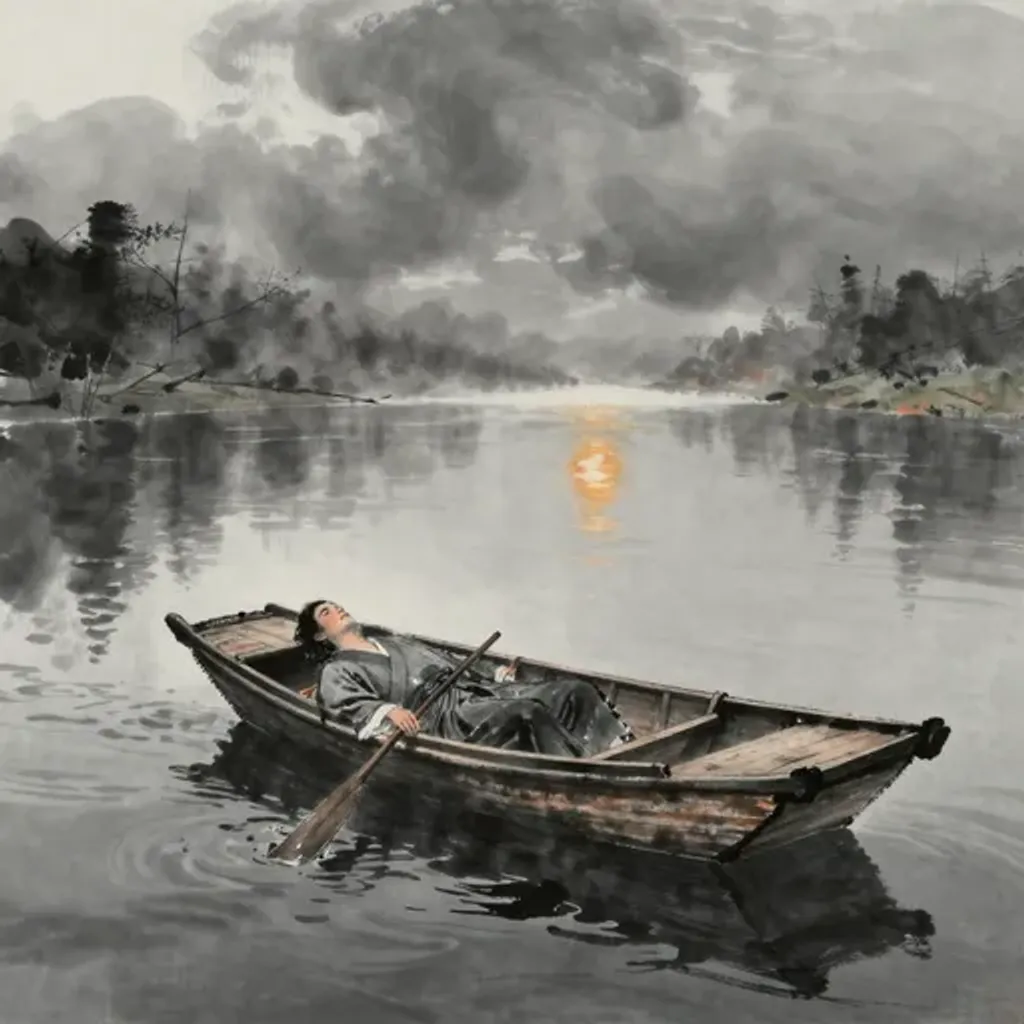
汎汎柏舟,流行不休。耿耿寤寐,公懷大憂,仁不遇時,退隱窮居。
Drifting, drifting, the cypress boat; it floats on without rest. Wakeful and restless through the night; the lord harbors a great sorrow. The benevolent one finds no fit time; he withdraws and hides in poverty.
— Jiao Yanshou, Yilin (Forest of Changes), 1st century BC
Commentary
A lake upon a mountain, but the waters carry a vessel of grief. A cypress boat drifts ceaselessly, unable to find harbor — an image drawn from the Shijing poem 'Baizhou' of the Bei winds, where a loyal minister adrift symbolizes the virtuous person unappreciated by his lord. Sleepless nights of anxious brooding, a duke burdened with great sorrow: benevolence finds no place in its time, and the worthy one retreats into impoverished seclusion. From Influence to Great Exceeding, the mountain's gentle receptivity becomes the lake submerging the trees — an extraordinary burden that overwhelms ordinary structures. The ridgepole sags under weight that cannot be borne. Yet Great Exceeding also counsels standing alone without fear. The recluse who withdraws from an unworthy age practices precisely that solitary courage.
咸 → 坎
Hexagram 31 → Hexagram 29: The Abysmal Water
Changing lines: 2, 3, 4
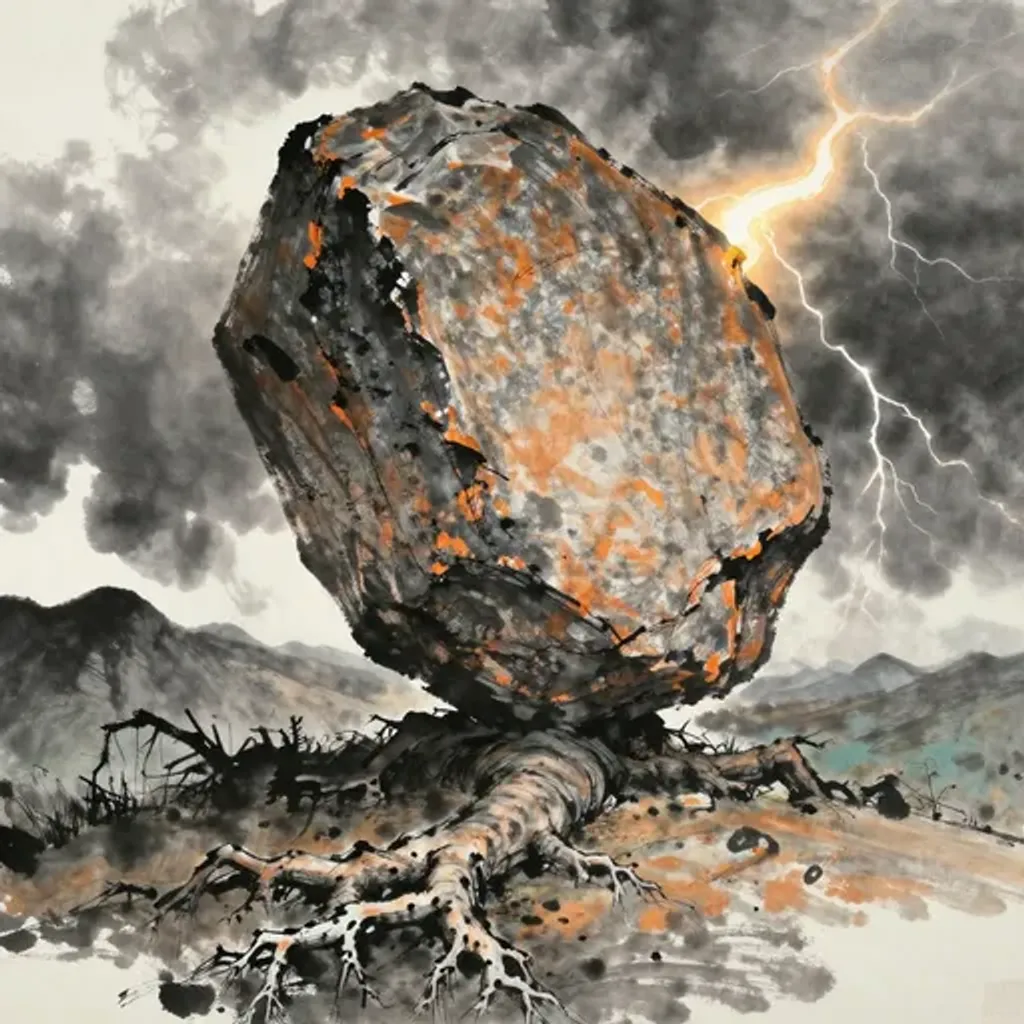
大尾小頭,重不可搖。上弱下強,陰制其雄。
Great tail, small head; heavy and immovable. The upper is weak, the lower strong; yin controls the male.
— Jiao Yanshou, Yilin (Forest of Changes), 1st century BC
Commentary
A lake upon a mountain, but the body politic is grotesquely misshapen. A creature with a huge tail and tiny head is too heavy to move — the base overpowers the summit. The strong dominate from below while the nominal authority above grows weak, and yin controls what should be yang's domain. This echoes the Zuo Zhuan's warning of 'a tail too large to wag': when subordinates or peripheral forces become too powerful, the center loses control. From Influence to the Abysmal, the mountain's open receptivity becomes water upon water — doubled danger with no solid ground. The top-heavy inversion described is precisely the condition that produces the Abysmal's repeated peril: when leadership is hollow and the base ungovernable, every step forward sinks deeper into hazard.
咸 → 離
Hexagram 31 → Hexagram 30: The Clinging Fire
Changing lines: 1, 5, 6
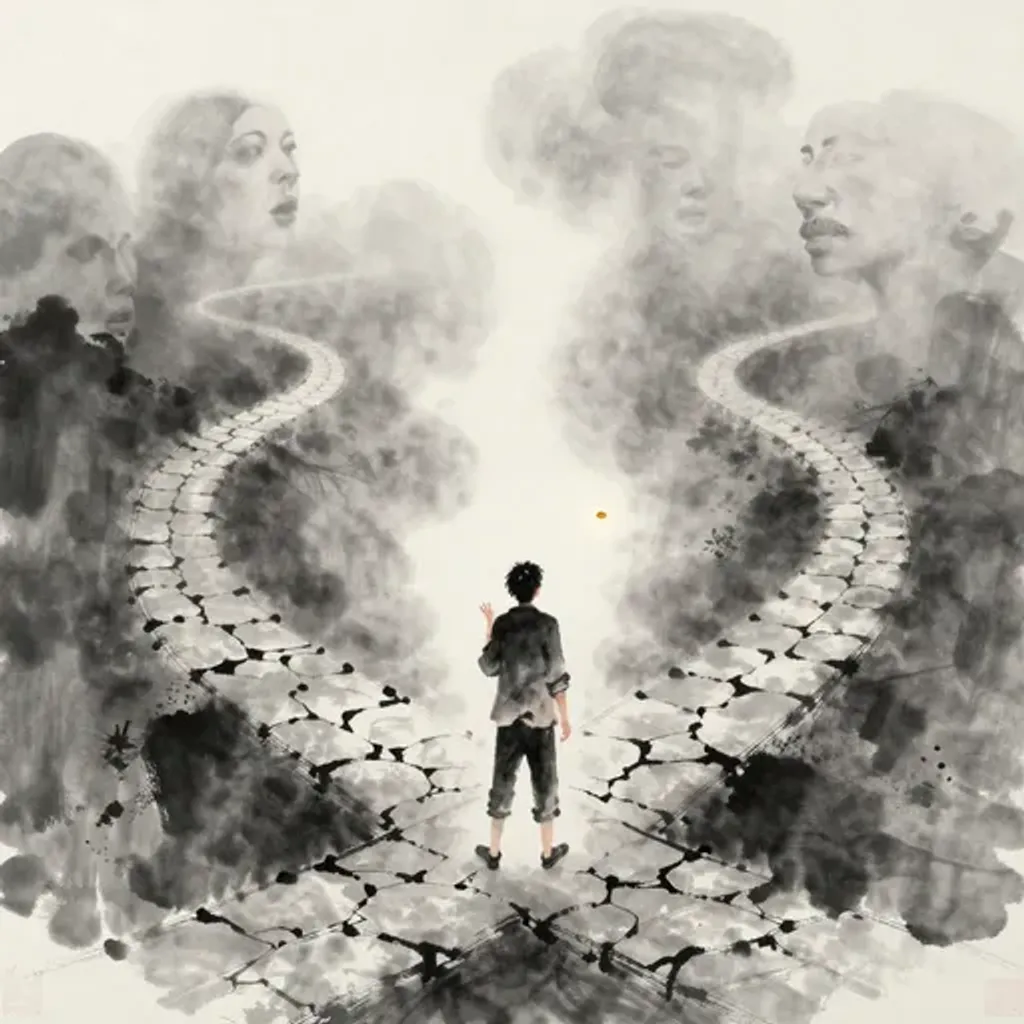
一身三口,語無所主。東西南北,迷惑失道。
One body, three mouths; words with no clear master. East, west, south, north; bewildered, losing the way.
— Jiao Yanshou, Yilin (Forest of Changes), 1st century BC
Commentary
A lake upon a mountain, but the body has one torso and three mouths, each speaking a different thing — words have no master. East, west, south, north — bewildered and lost in every direction. The 'three mouths' suggest conflicting counsel from multiple advisors, none aligned, creating paralysis rather than clarity. When everyone speaks and no one listens, direction dissolves entirely. From Influence to the Clinging, the mountain's receptive openness becomes doubled fire — brightness upon brightness, the sage's illumination cast across the four quarters. Yet here the doubled light only exposes confusion: what should be clarity of vision instead reveals that there is no coherent direction to illuminate. The Clinging requires something to cling to; without a unified voice, fire flickers without purpose.
咸 → 咸
Hexagram 31 → Hexagram 31: Influence
No changing lines — the hexagram is unchanged
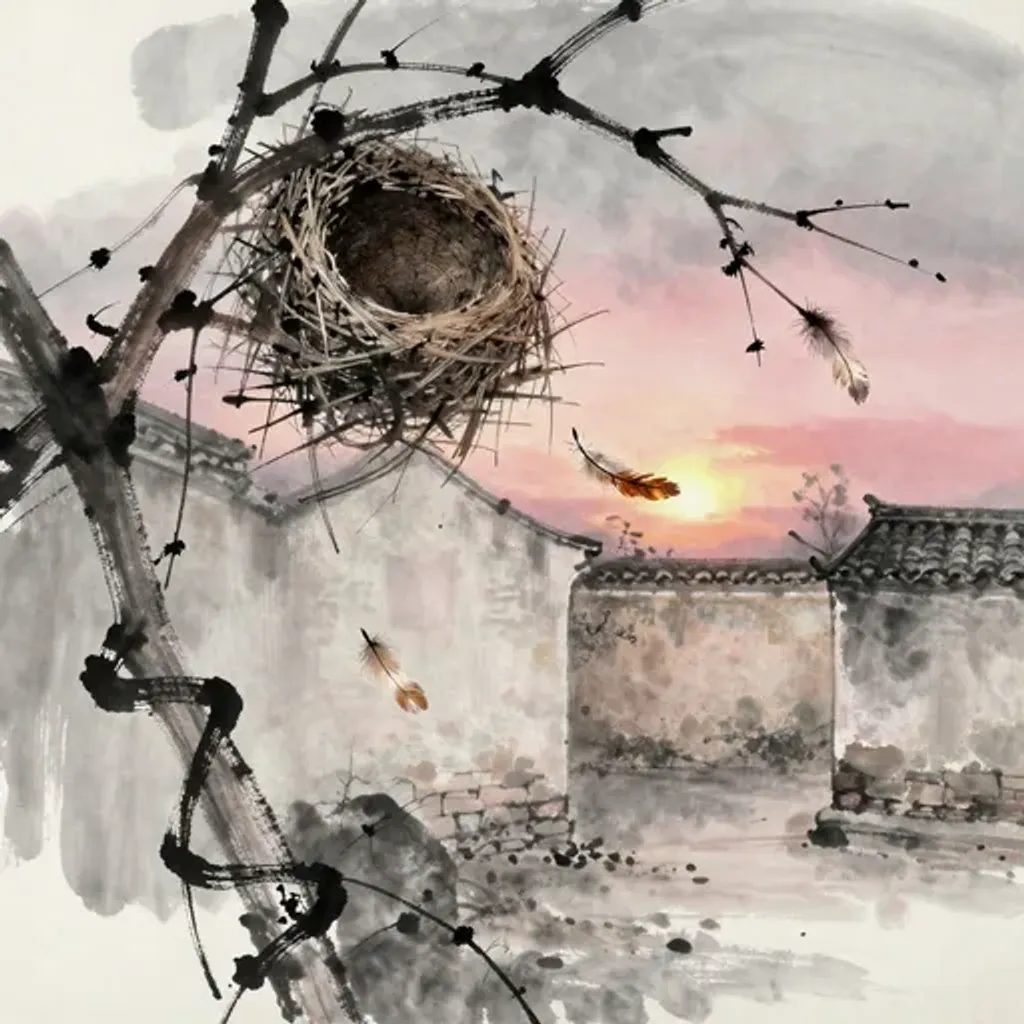
雌單獨居,歸其本巢,毛羽憔悴,志如死灰。
An empty nest, remnant feathers sway in the wind; dead vines tangle the branches beyond untangling. The last rays of sunset illuminate a cold wall — a lone shadow, solitary form, desolate.
— Jiao Yanshou, Yilin (Forest of Changes), 1st century BC
Commentary
A lake upon a mountain returns to itself — Influence reflecting upon Influence. The original verse reads: a lone female bird dwells solitary, returning to her own nest, feathers withered and bedraggled, her spirit like dead ashes. This is desolation at its most intimate: not exile but voluntary retreat into an empty home, not anger but the extinction of desire itself. The 'dead ashes' (死灰) alludes to the Zhuangzi's image of the sage whose heart has become still as cold cinders. Yet here it carries no transcendence, only grief. From Influence to Influence, the hexagram does not transform — the lake remains upon the mountain, openness receives only its own echo. Mutual resonance, turned inward with no partner, becomes the loneliest of all conditions.
咸 → 恆
Hexagram 31 → Hexagram 32: Duration
Changing lines: 2, 5
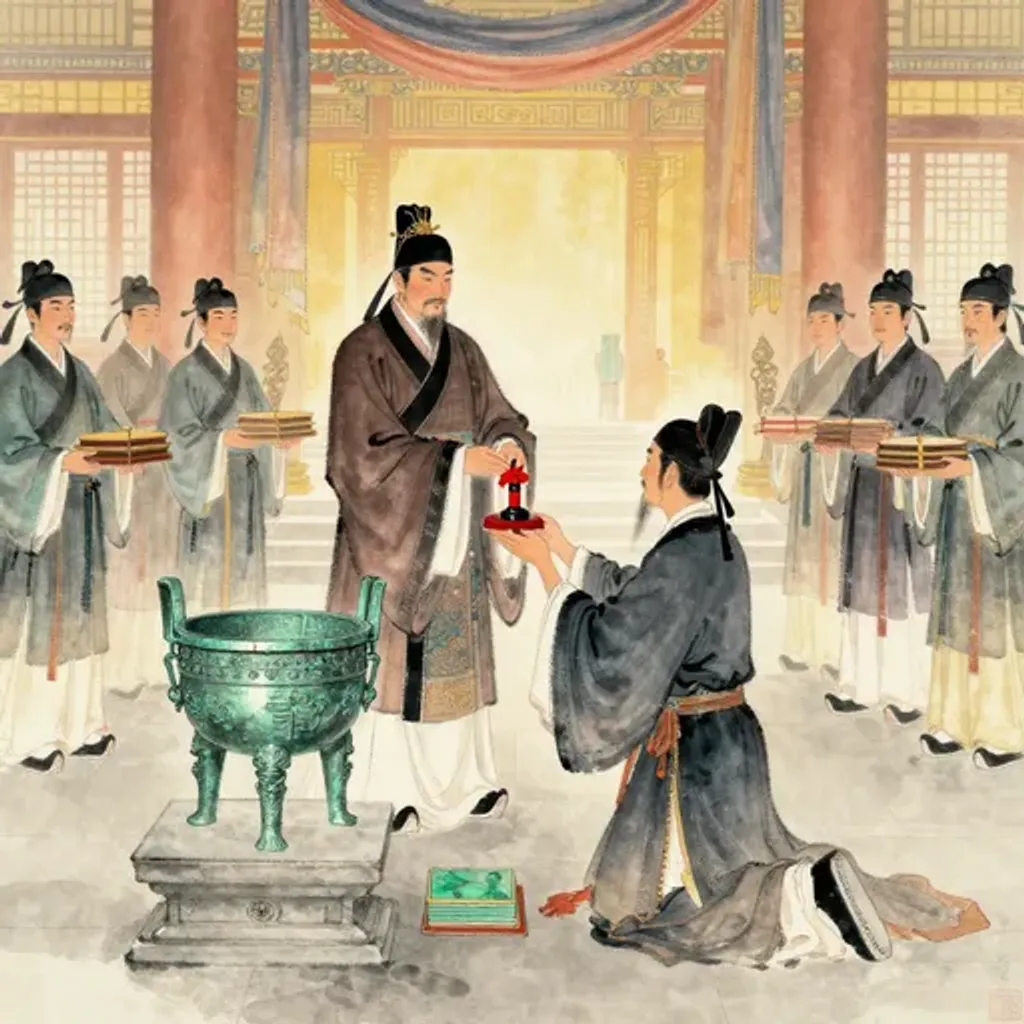
南行求福,與喜相得。封受上賞,鼎足輔國。
Journeying south to seek blessings; meeting with good fortune. Enfeoffed and granted the highest reward; a tripod leg supporting the state.
— Jiao Yanshou, Yilin (Forest of Changes), 1st century BC
Commentary
A lake upon a mountain, and the journey south brings fortune. Traveling southward in search of blessing, one meets joy along the way. Enfeoffment follows with highest honors, and the recipient supports the state like one leg of a three-legged cauldron. The 'tripod's foot supporting the kingdom' (鼎足輔國) evokes the image of the three great ministers who uphold the throne — a metaphor drawn from the bronze ritual cauldron's three legs. From Influence to Duration, the mountain's momentary responsiveness becomes the enduring constancy of thunder and wind reinforcing each other. What begins as an auspicious encounter solidifies into lasting institutional support. The transformation captures how a single resonant meeting — south, toward warmth and light — can establish a relationship that endures across the span of a reign.
咸 → 遯
Hexagram 31 → Hexagram 33: Retreat
Changing lines: 6
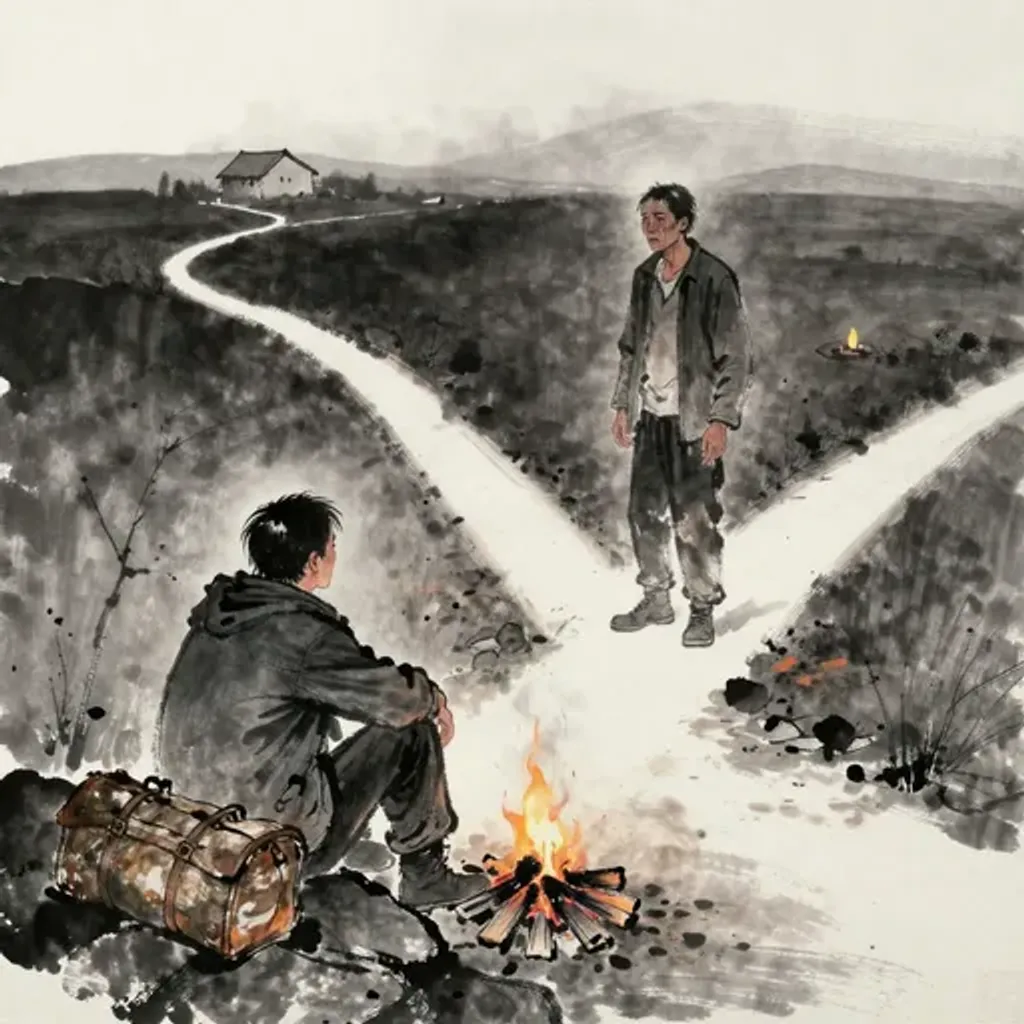
過時不歸,苦悲雄惟。徘徊外國,與母分離。
The time has passed, yet he does not return; bitter grief, the male bird cries. Lingering in a foreign land; separated from his mother.
— Jiao Yanshou, Yilin (Forest of Changes), 1st century BC
Commentary
A lake upon a mountain, but the traveler has lingered too long abroad. The time for return has passed, and now only bitter grief remains. A male bird cries alone, wandering in a foreign land, separated from its mother. The verse distills the agony of exile: not the drama of banishment but the slow realization that the window for homecoming has closed. 'Lingering outside the country' (徘徊外國) suggests neither purpose nor progress — just restless pacing in a place that will never be home. From Influence to Retreat, the mountain's openness becomes heaven above a mountain — the noble withdrawal that knows when to pull back. Yet the exile here has missed the moment for proper retreat. What should have been a timely strategic withdrawal has become permanent displacement, and the maternal bond that anchored identity stretches until it snaps.
咸 → 大壯
Hexagram 31 → Hexagram 34: Great Power
Changing lines: 1, 2, 5
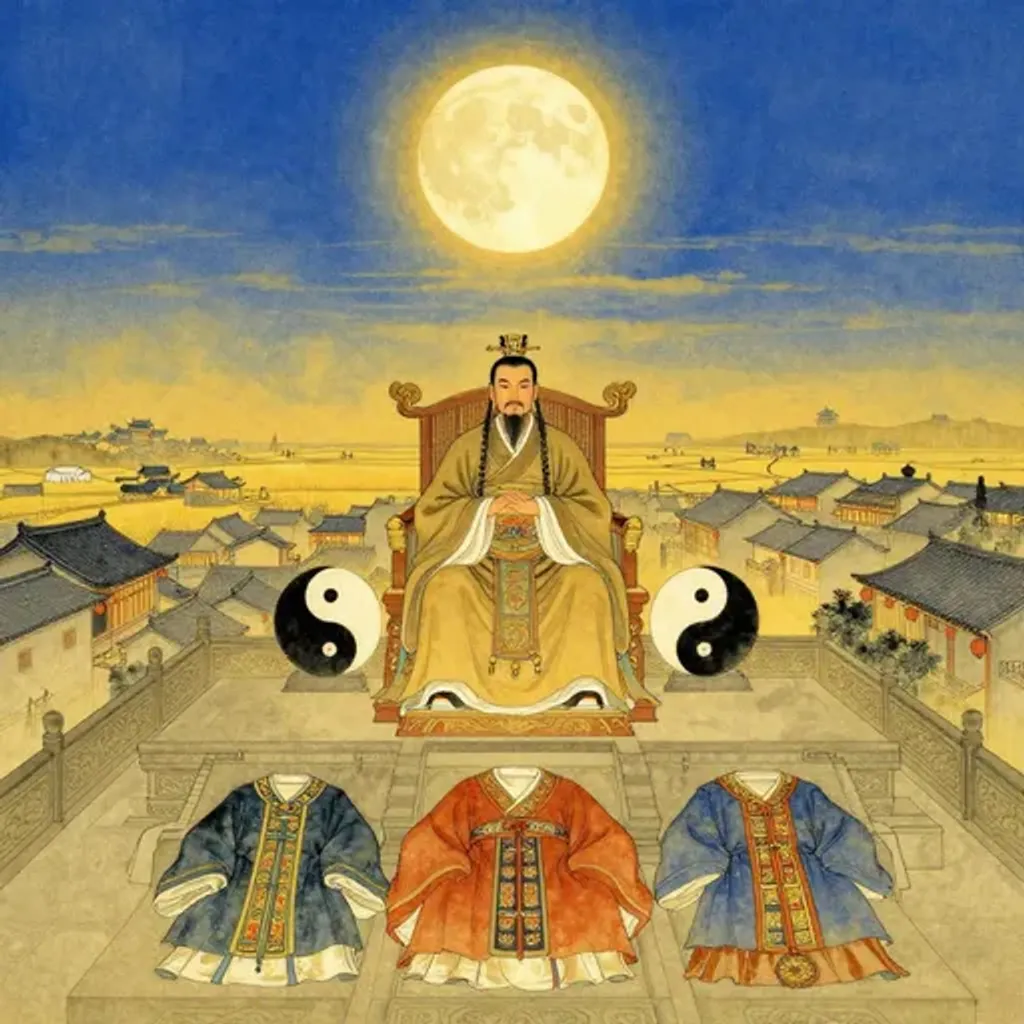
堯舜在國,陰陽和得。涿聚衣常,晉人無殃。
Yao and Shun rule the land; yin and yang find their balance. Gathering garments in proper order; the people of Jin suffer no harm.
— Jiao Yanshou, Yilin (Forest of Changes), 1st century BC
Commentary
A lake upon a mountain, and the golden age is invoked. Yao and Shun preside over the realm, yin and yang achieve perfect harmony. The people of Zhuo gather in their everyday garments, and the people of Jin suffer no calamity. The verse names the two supreme sage-kings to evoke an era when governance required no force because the cosmos itself was in balance. 'Yin and yang harmonized' is the highest possible political praise in classical thought. From Influence to Great Power, the mountain's receptive feeling becomes thunder rolling above heaven — explosive yang energy surging forward. Under Yao and Shun, such power needs no coercion; it manifests as natural abundance. The transformation suggests that genuine mutual influence, perfected through virtue, unleashes power far greater than force alone could generate.
咸 → 晉
Hexagram 31 → Hexagram 35: Progress
Changing lines: 3, 5, 6
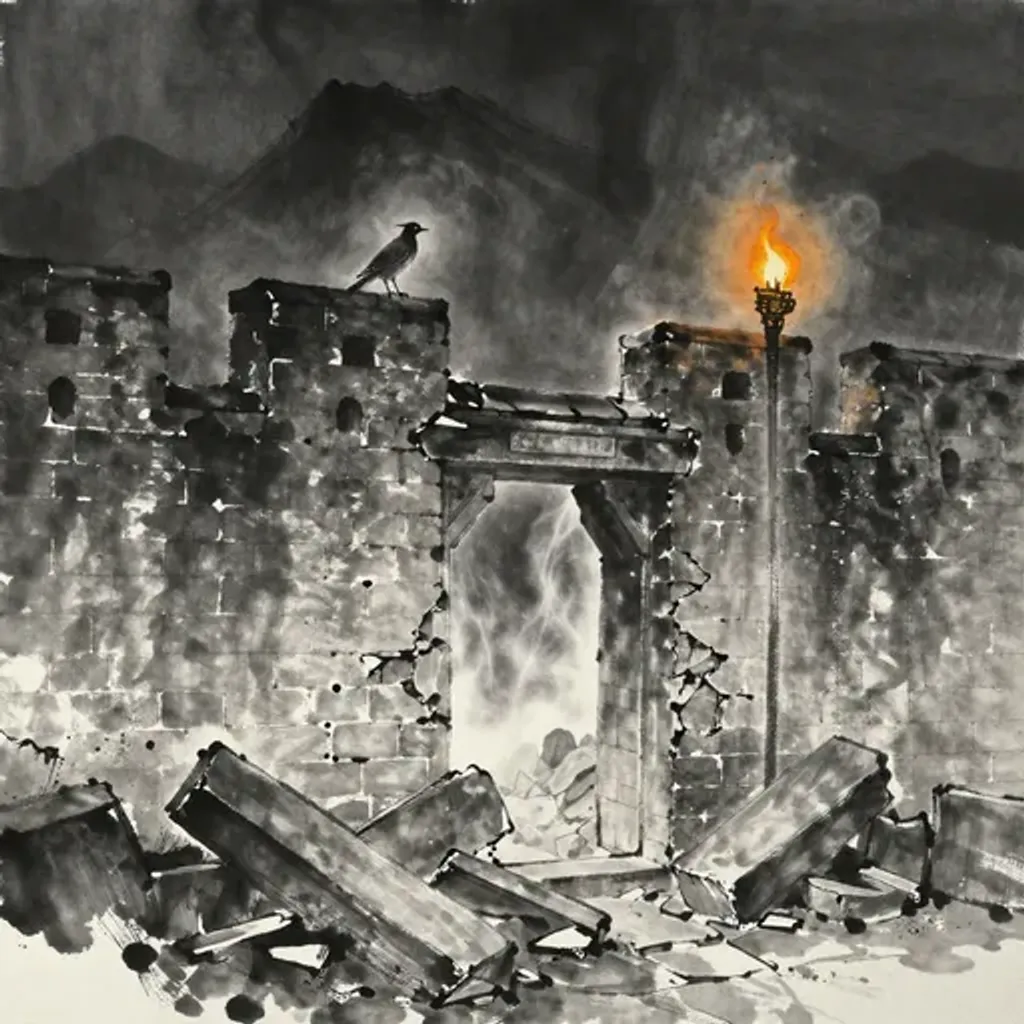
周城之降,越裳夷通。疾病多祟,鬼哭其公,鳥子野心,宿客不同。
The walls of Zhou fall; the distant Yuechang barbarians come through. Illness brings many hauntings; ghosts weep for their lord. The bird's offspring have a wild heart; the lodged guest does not belong.
— Jiao Yanshou, Yilin (Forest of Changes), 1st century BC
Commentary
A lake upon a mountain, and the verse unfolds in contrasting panels. First, the fall of a Zhou city and the tribute of the distant Yuechang people — the Yuechang, a people from the far south (modern Vietnam region), who according to tradition sent white pheasants to the court of King Cheng of Zhou, acknowledging Zhou's virtue. Then a dark pivot: illness multiplied by demonic affliction, spirits wailing over a lord, a bird's fledgling harboring wild ambitions, and a guest whose loyalties lie elsewhere. From Influence to Progress, the mountain's receptive feeling becomes fire emerging above the earth — daylight advancing. The dual structure mirrors Progress's complexity: virtue's radiance reaches even the remotest peoples, yet within the court itself, sickness and disloyalty fester beneath the surface of advancing light.
咸 → 明夷
Hexagram 31 → Hexagram 36: Darkening of the Light
Changing lines: 1, 4, 5
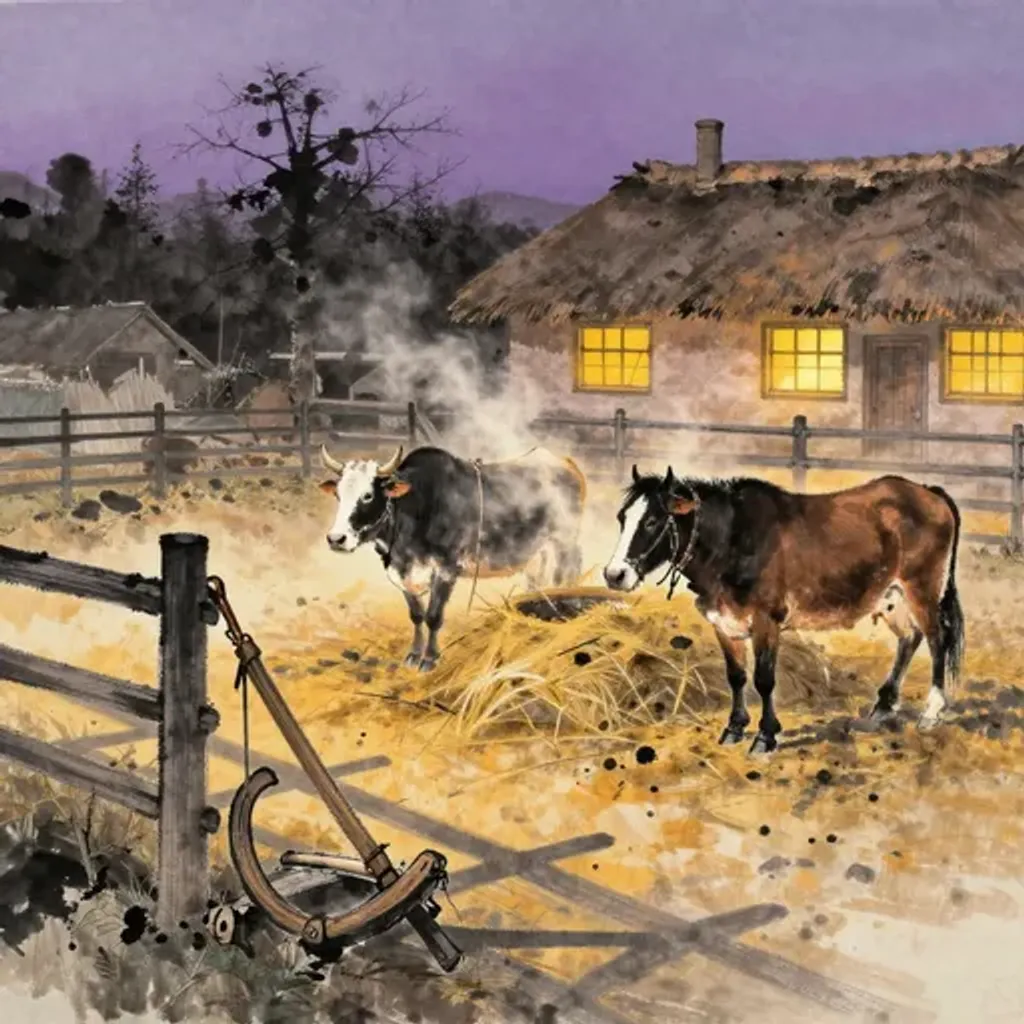
申酉脫服,牛馬休息。君子以安,勞者得懽。
At the hours of Shen and You, harness removed; ox and horse rest. The gentleman finds peace; the laborer gains his joy.
— Jiao Yanshou, Yilin (Forest of Changes), 1st century BC
Commentary
A lake upon a mountain, and evening brings release. At the hours of shen and you — late afternoon into dusk — workers shed their laboring garments, oxen and horses rest from their toil. The gentleman settles into peace, and the weary find joy at last. The 'shen-you hours' (申酉) mark the transition from work to rest in the traditional Chinese day-cycle, roughly 3 to 7 PM. The verse celebrates the natural rhythm of labor followed by repose, the dignity of earned rest. From Influence to Darkening of the Light, the mountain's openness becomes fire sinking into the earth — brightness entering darkness. Yet here the darkening carries no menace; it is the gentle dimming of evening that signals the day's work is done. The wise ruler uses darkness strategically, governing with concealed brilliance while allowing his people their peace.
咸 → 家人
Hexagram 31 → Hexagram 37: The Family
Changing lines: 1, 4, 6
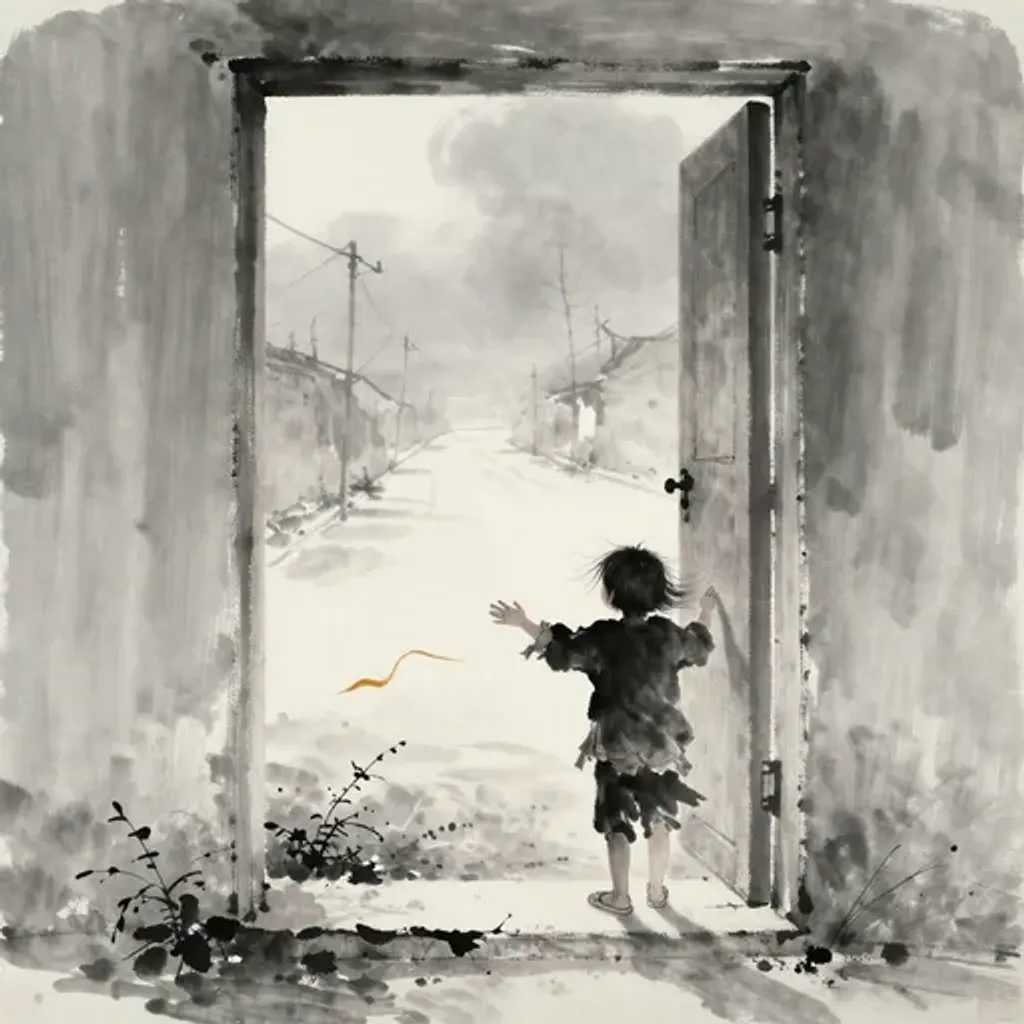
凱風無母,何恃何怙?幼孤弱子,為人所咎。
The warm south wind, yet motherless; on whom to rely, whom to depend? A young orphan, a helpless child; blamed by all the world.
— Jiao Yanshou, Yilin (Forest of Changes), 1st century BC
Commentary
A lake upon a mountain, but the nurturing influence is absent. The verse opens with a direct allusion to the Shijing poem 'Kaifeng' from the Bei winds: 'The warm south wind blows — but I have no mother. On whom can I rely, on whom can I depend?' A young orphan, frail and alone, is blamed by others for what is not his fault. The Kaifeng poem is traditionally read as a lament by filial sons whose widowed mother is mistreated, or a child's grief at losing maternal protection. From Influence to the Family, the mountain's open receptivity transforms into wind born from fire — warmth within radiating outward as household order. Yet the verse presents the Family hexagram's dark inverse: without a mother, the family has no center from which warmth can emanate, and the orphan bears the world's censure alone.
咸 → 睽
Hexagram 31 → Hexagram 38: Opposition
Changing lines: 1, 2, 3, 5, 6
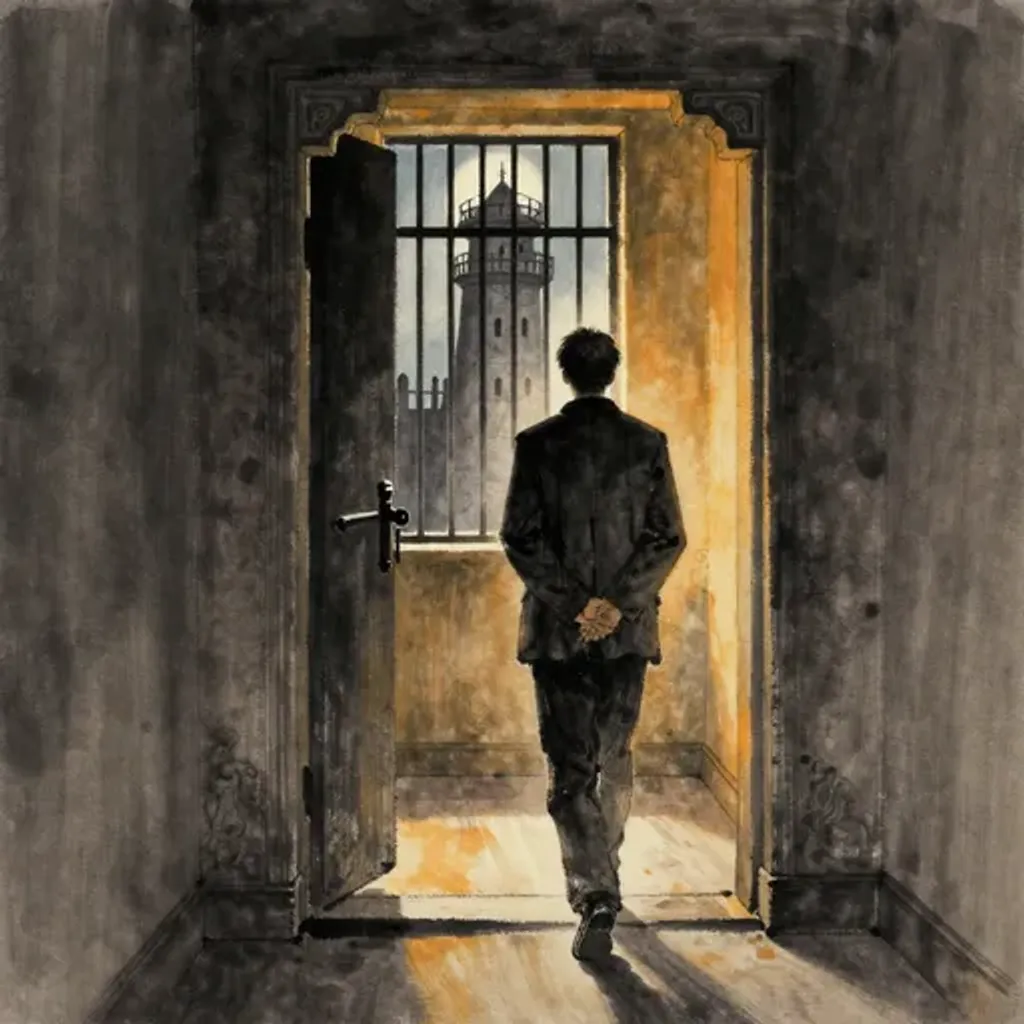
出門上堂,從容牖房,不失其常,天牢北戶,勞者憂苦。
Going out the door, ascending the hall; composed, passing by the window and room. Not losing the proper way; yet heaven's prison faces north. The laborer endures sorrow and hardship.
— Jiao Yanshou, Yilin (Forest of Changes), 1st century BC
Commentary
A lake upon a mountain, and the scene unfolds in two contrasting registers. First, composure: one steps out the door, enters the hall, passes leisurely through the windowed chamber, maintaining proper decorum throughout. Then confinement: the celestial prison faces north, and those who labor within it suffer in anguish. The 'Tianlao' (天牢) — the 'Heaven Jail' — was both a constellation name and a metaphor for imprisonment. The juxtaposition is between freedom exercised with grace and captivity endured in misery. From Influence to Opposition, the mountain's open receptivity becomes fire above and lake below — heat rising while moisture sinks, two elements that see each other but cannot merge. The verse embodies Opposition's essence: parallel existences, one free and one confined, visible to each other yet irreconcilable.
咸 → 蹇
Hexagram 31 → Hexagram 39: Obstruction
Changing lines: 4
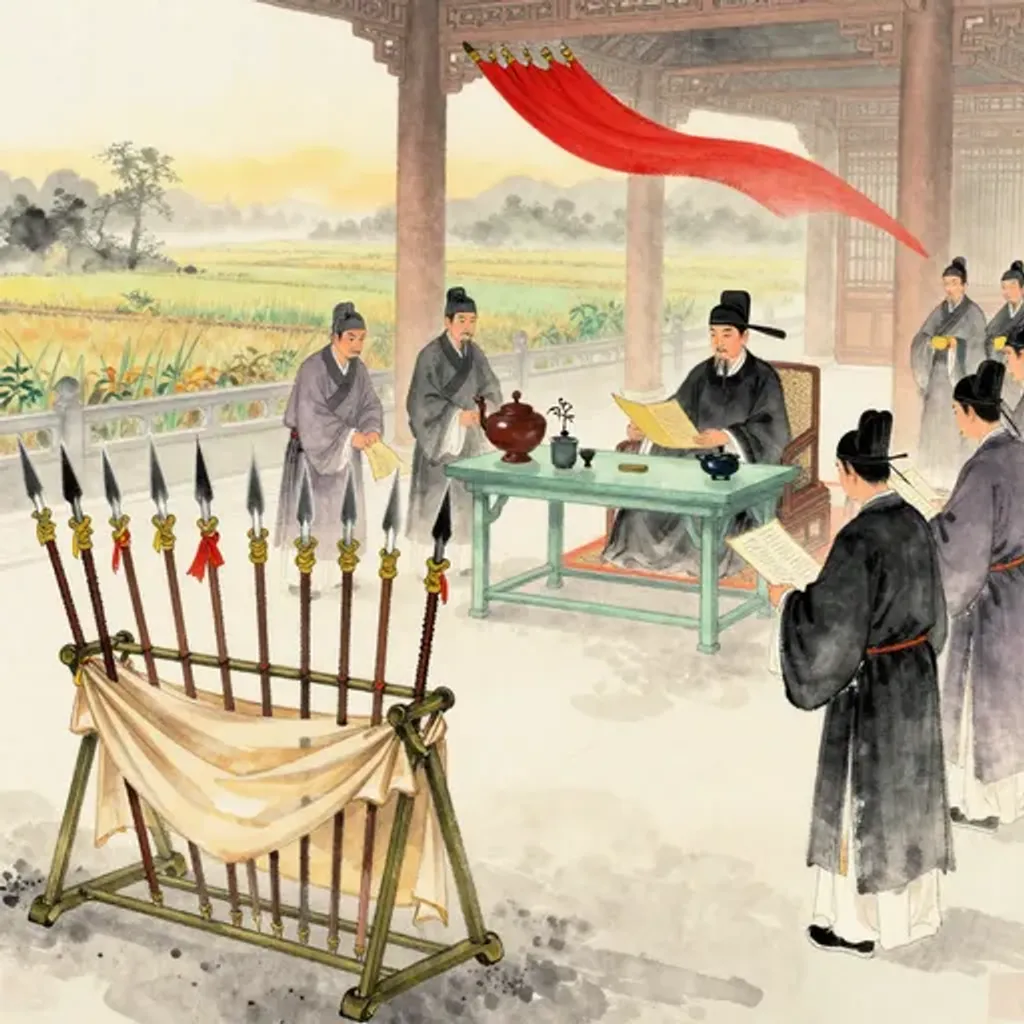
天厭周德,命與南國,以禮靜民,兵革休息。
Heaven wearies of Zhou's virtue; the mandate passes to the southern kingdom. With ritual they calm the people; weapons and war find rest.
— Jiao Yanshou, Yilin (Forest of Changes), 1st century BC
Commentary
A lake upon a mountain, and heaven's mandate shifts. Heaven wearies of Zhou's virtue and bestows its charge upon the southern kingdom — an allusion to the rise of Chu, or more broadly the transfer of legitimacy southward. Yet the new power rules not by force but through ritual: pacifying the people with propriety, and letting weapons of war fall silent. The phrase 'heaven wearies of Zhou's virtue' (天厭周德) echoes the language of dynastic transition in the Zuozhuan and the Documents. From Influence to Obstruction, the mountain's receptive feeling becomes water upon the mountain — difficulty piled upon height. Yet the verse resolves positively: obstruction is overcome not through military conquest but through moral governance. The new mandate holder, facing the mountain of transition, chooses ritual stillness over the sword.
咸 → 解
Hexagram 31 → Hexagram 40: Deliverance
Changing lines: 2, 3, 5
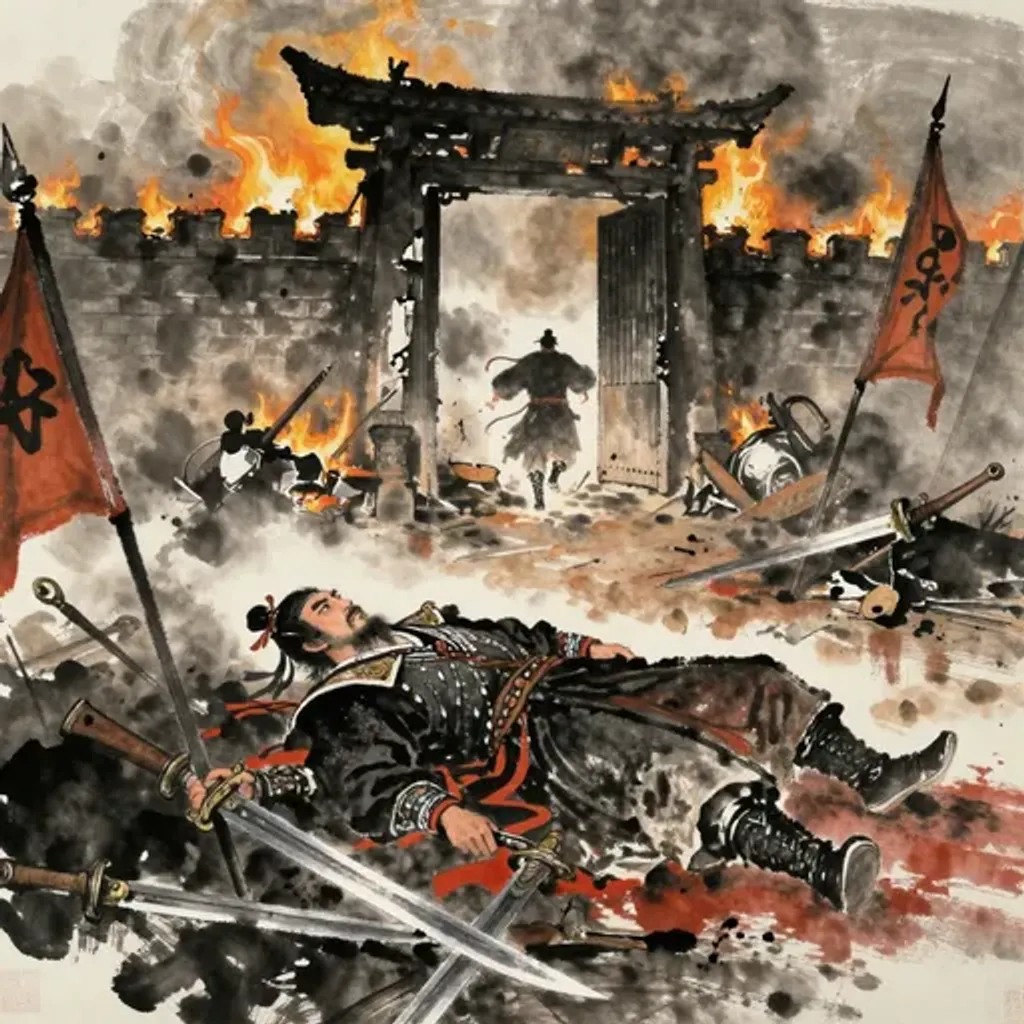
常葉折衝,佐鬭者傷,暴臣失國,良臣破殃。
Evergreen leaves break in the clash; those who join the fray are wounded. The violent minister loses the state; the loyal minister is destroyed by calamity.
— Jiao Yanshou, Yilin (Forest of Changes), 1st century BC
Commentary
A lake upon a mountain, and those who intervene in conflict are themselves destroyed. Those who assist in battle suffer wounds; violent ministers lose the state, and even loyal ministers are broken by the catastrophe. The phrase 'folding the rushes to mediate a fight' (常葉折衝) suggests attempting to buffer a collision with fragile material — a futile intervention. The verse is a warning against getting caught between warring forces: the peacemaker is crushed, the aggressor is ruined, and the loyal servant shares in the destruction regardless of virtue. From Influence to Deliverance, the mountain's receptive feeling becomes thunder and rain that release accumulated tension. Deliverance pardons past wrongs, but the verse reminds us that before the storm breaks, those standing in its path are destroyed indiscriminately.
咸 → 損
Hexagram 31 → Hexagram 41: Decrease
Changing lines: 1, 2, 3, 4, 5, 6
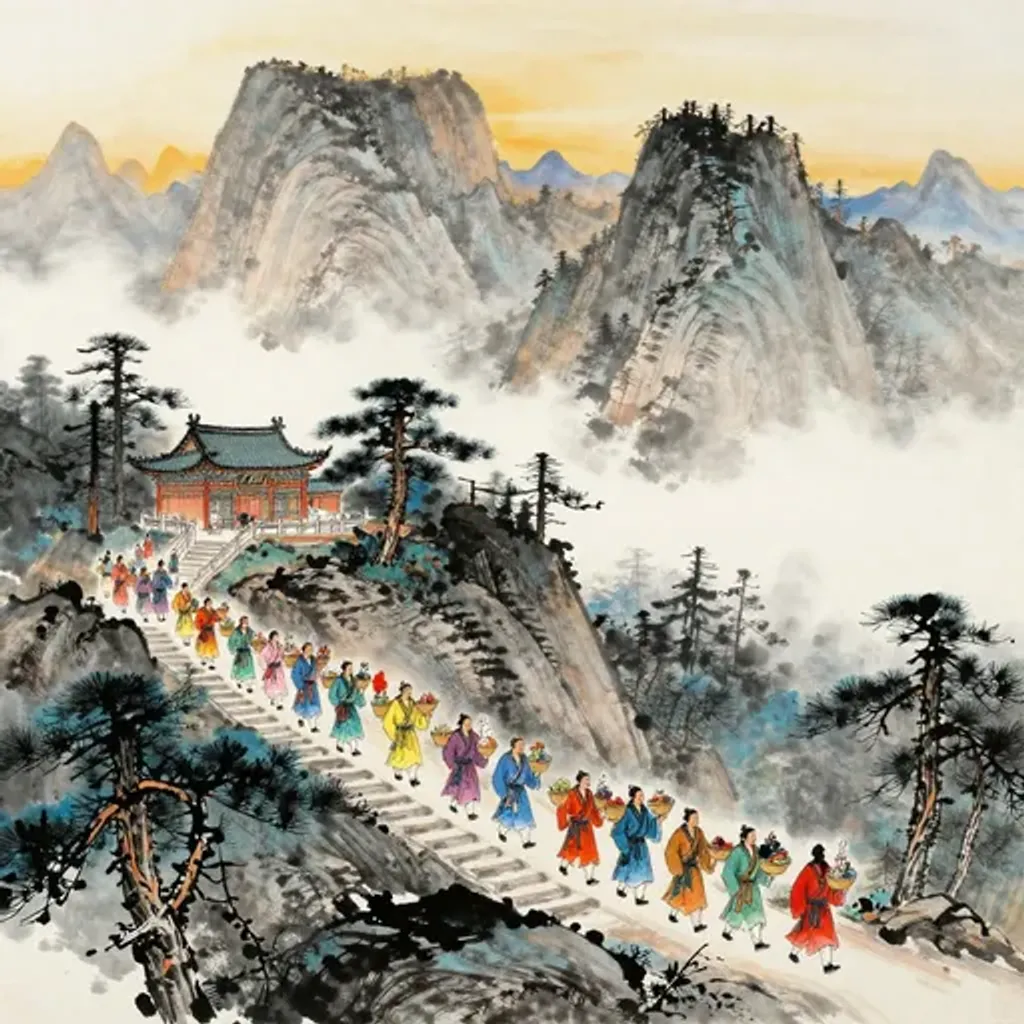
合歡之國,嘉喜我福,東岳西山,朝齊成恩。
The land of Joined Happiness; auspicious joy blesses our fortune. Eastern peak and western mountain; paying court to Qi, completing the bond of grace.
— Jiao Yanshou, Yilin (Forest of Changes), 1st century BC
Commentary
A lake upon a mountain, and mutual delight gives rise to auspicious union. A nation of shared joy, blessings bestowed upon us — happiness radiates from collective harmony. The eastern peak and western mountain stand together, paying homage at Qi's court and receiving grace in return. The 'Eastern Peak' (東岳) is Mount Tai, the holiest of the Five Sacred Mountains, while the 'Western Mountain' may represent the western ranges. Their pairing suggests the full compass of the realm united in tribute. From Influence to Decrease, the mountain's receptive openness transforms into the mountain above a lake — the upper gives to the lower in willing sacrifice. The joy described is not accumulation but the happiness that arises when what is above freely yields to what is below, creating reciprocal blessing.
咸 → 益
Hexagram 31 → Hexagram 42: Increase
Changing lines: 1, 3, 4, 6
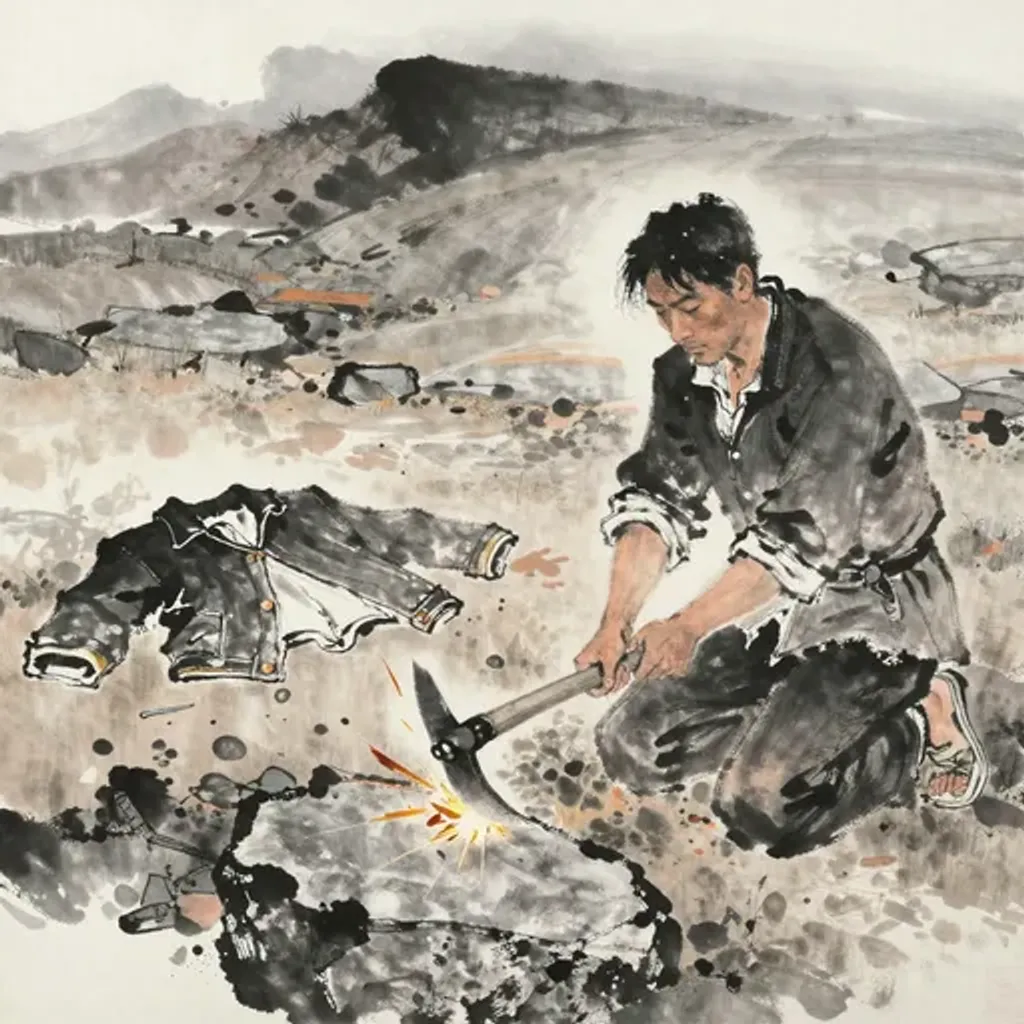
耕石不生,棄禮無名,縫衣失針,襦袴不成。
Plowing stone, nothing grows; abandoning ritual, losing one's name. Sewing a garment, the needle is lost; jacket and trousers cannot be finished.
— Jiao Yanshou, Yilin (Forest of Changes), 1st century BC
Commentary
A lake upon a mountain, but nothing grows and nothing holds together. Plowing stone yields no harvest — a reprise of the futile-labor motif. Abandoning propriety leaves one nameless and without standing. Sewing a garment but losing the needle means the trousers and jacket can never be completed. Each image strips away a necessary tool: the farmer's fertile soil, the scholar's ritual standing, the tailor's needle. Without these essentials, effort produces nothing. From Influence to Increase, the mountain's receptive openness transforms into wind and thunder, the dynamic of improvement through correcting faults. The verse presents the condition that demands Increase's remedy: everything has been diminished to the point of dysfunction. Only by restoring the missing fundamentals — good soil, proper ritual, the right tools — can the pattern of loss be reversed.
咸 → 夬
Hexagram 31 → Hexagram 43: Breakthrough
Changing lines: 1, 2
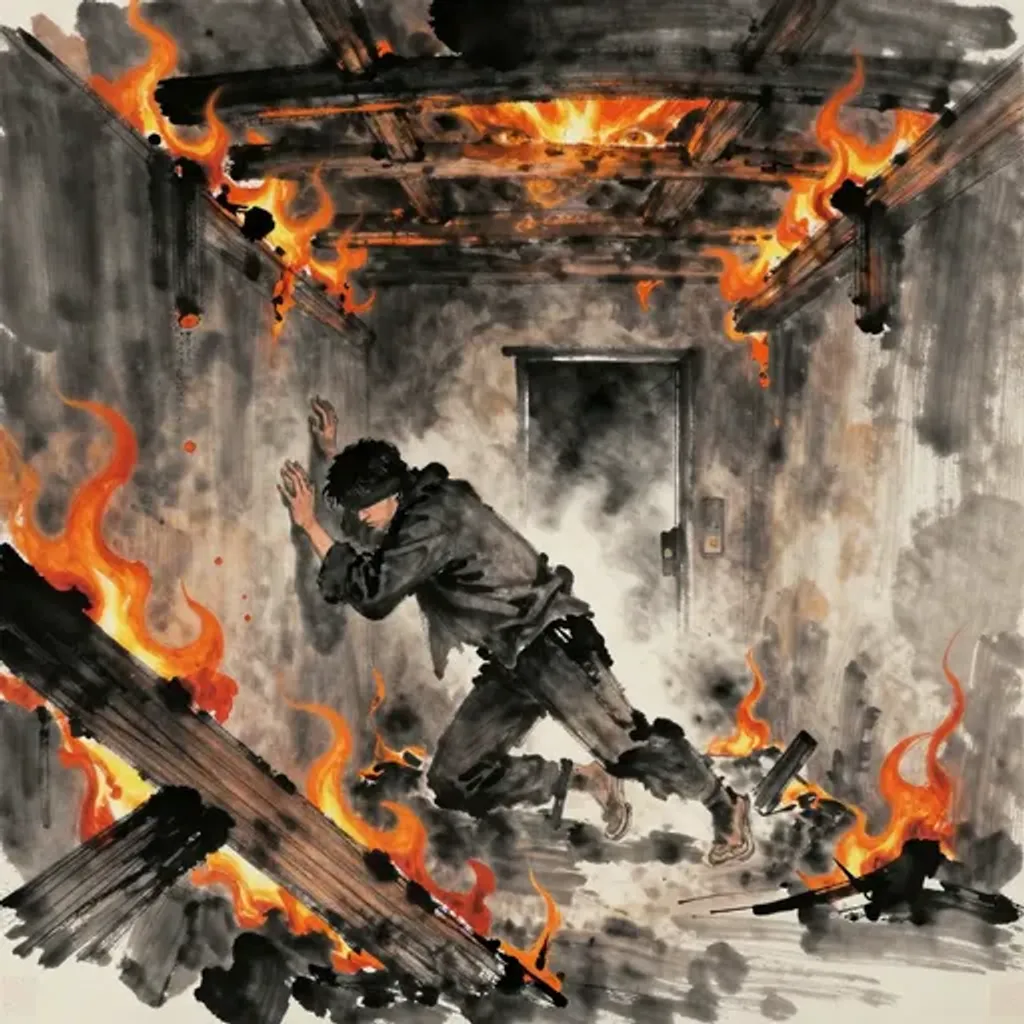
聾瞢闇瞢,跛倚不行,坐尸爭骸,身被火災,因其多憂。
Deaf and dim, blind and dark; lame, leaning, unable to walk. Sitting rigid, contesting over bones; the body suffers fire's calamity. Thus are his many sorrows.
— Jiao Yanshou, Yilin (Forest of Changes), 1st century BC
Commentary
A lake upon a mountain, but every faculty is impaired. Deaf and blind, half-sighted and stumbling, the lame prop themselves up and cannot walk. A corpse sits in dispute over its own remains, and the body is engulfed by fire — all compounded by relentless anxiety. The verse accumulates disabilities and catastrophes until the human form itself is dismembered: eyes, ears, legs, and finally the body consumed by flames. From Influence to Breakthrough, the mountain's gentle receptivity transforms into the lake rising to heaven — the decisive moment when accumulated waters burst through. But here, the one who should break through is utterly incapacitated. Breakthrough demands clarity, resolution, and forward momentum; this verse presents its opposite — a body too broken to act, consumed before it can decide.
咸 → 姤
Hexagram 31 → Hexagram 44: Coming to Meet
Changing lines: 2, 6
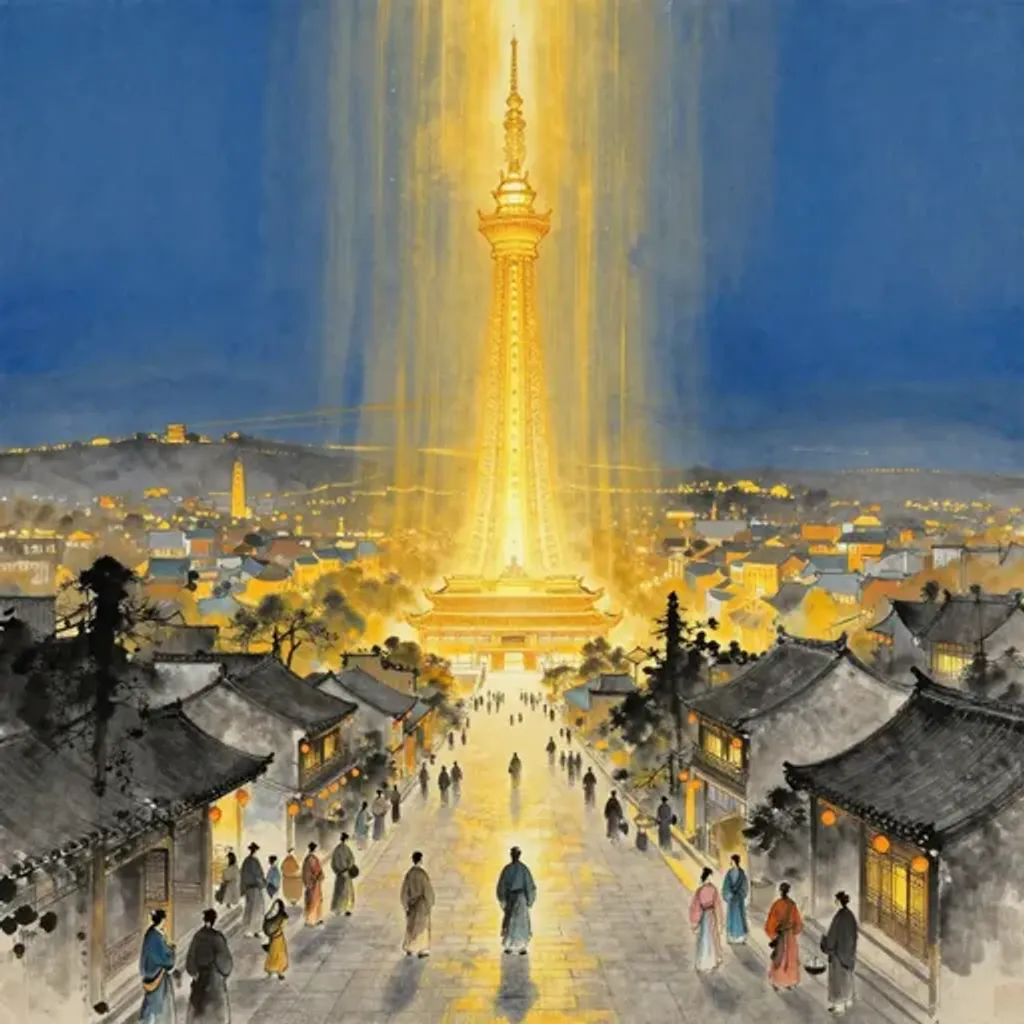
長生太平,仁政流行,四方歸德,社稷康榮。
Long life and great peace; benevolent governance spreads abroad. The four directions return to virtue; the altars of state thrive in glory.
— Jiao Yanshou, Yilin (Forest of Changes), 1st century BC
Commentary
A lake upon a mountain, and the mutual influence between ruler and people achieves its ideal form. Long life and great peace prevail, benevolent governance flows throughout the land, the four quarters turn toward virtue, and the altars of state flourish in health and glory. Every phrase radiates political utopia: not merely the absence of strife but the active presence of moral cultivation reaching the realm's farthest corners. From Influence to Coming to Meet, the mountain's receptive openness transforms into wind moving beneath heaven — a sovereign decree carried to all directions. Coming to Meet describes the moment when yin unexpectedly encounters yang; here, the gentle wind of virtue reaches places that force never could. The ruler does not chase his subjects — his influence meets them naturally, as wind meets the earth.
咸 → 萃
Hexagram 31 → Hexagram 45: Gathering Together
Changing lines: 3
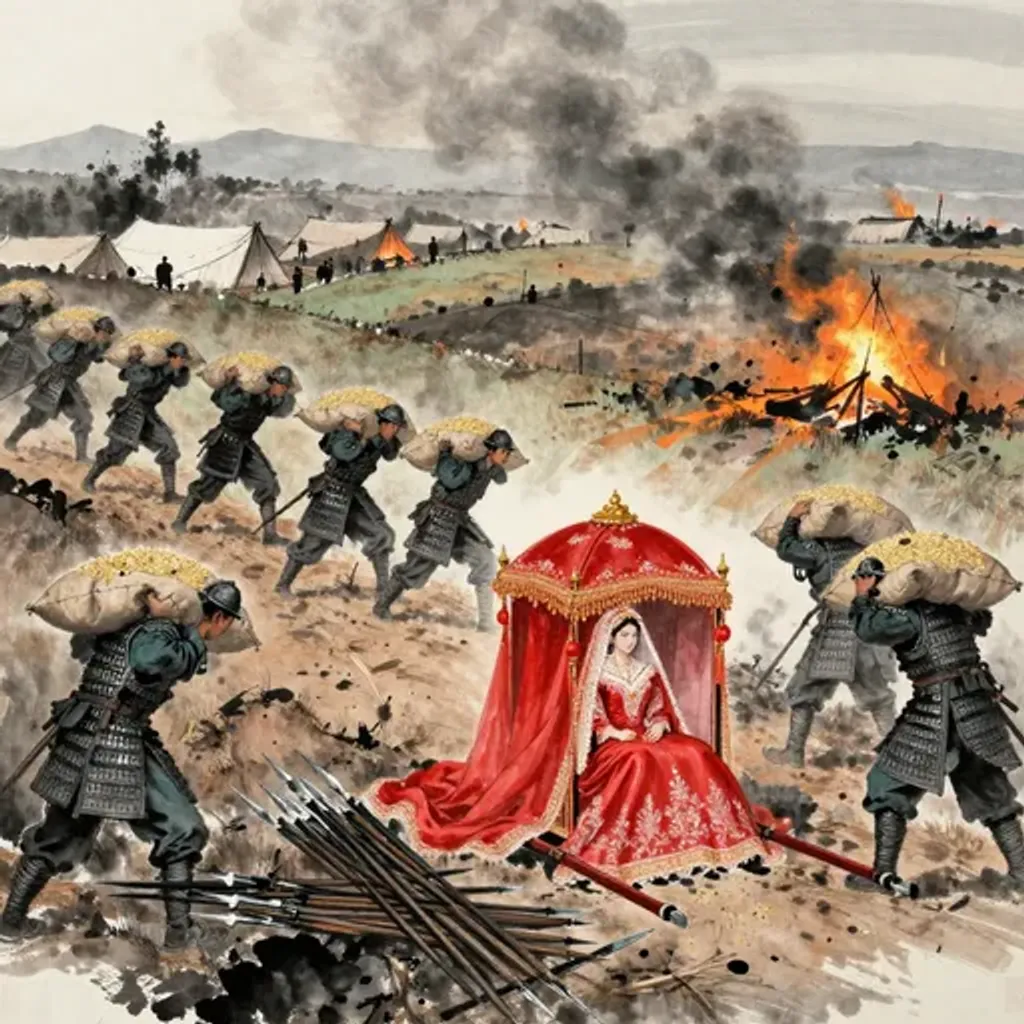
桀跖並處,民之愁苦,擁兵荷糧,戰於齊魯,合巹同牢,姬姜並居。
Jie and Zhi dwell together; the people grieve in sorrow. Bearing arms and shouldering grain; they fight between Qi and Lu. Sharing the wedding cup and feast; Ji and Jiang reside together.
— Jiao Yanshou, Yilin (Forest of Changes), 1st century BC
Commentary
A lake upon a mountain, and the scene shifts between tyranny and union. Jie and Zhi dwell together — the Xia tyrant and the great bandit side by side — and the people groan under their shared oppression. Armies clash with provisions on their backs, battling between Qi and Lu. Then an abrupt pivot: the wedding chalice is shared, the ceremonial meal prepared, and the Ji and Jiang clans — the two great surname groups of Zhou nobility — live together in harmony. The verse juxtaposes the worst of political chaos with the best of domestic union. From Influence to Gathering, the mountain's receptive feeling becomes the lake pooling upon the earth. Gathering's purpose is to prepare against the unexpected; this verse shows why — tyranny and war are never far from the feast of peace.
咸 → 升
Hexagram 31 → Hexagram 46: Pushing Upward
Changing lines: 2, 4, 5
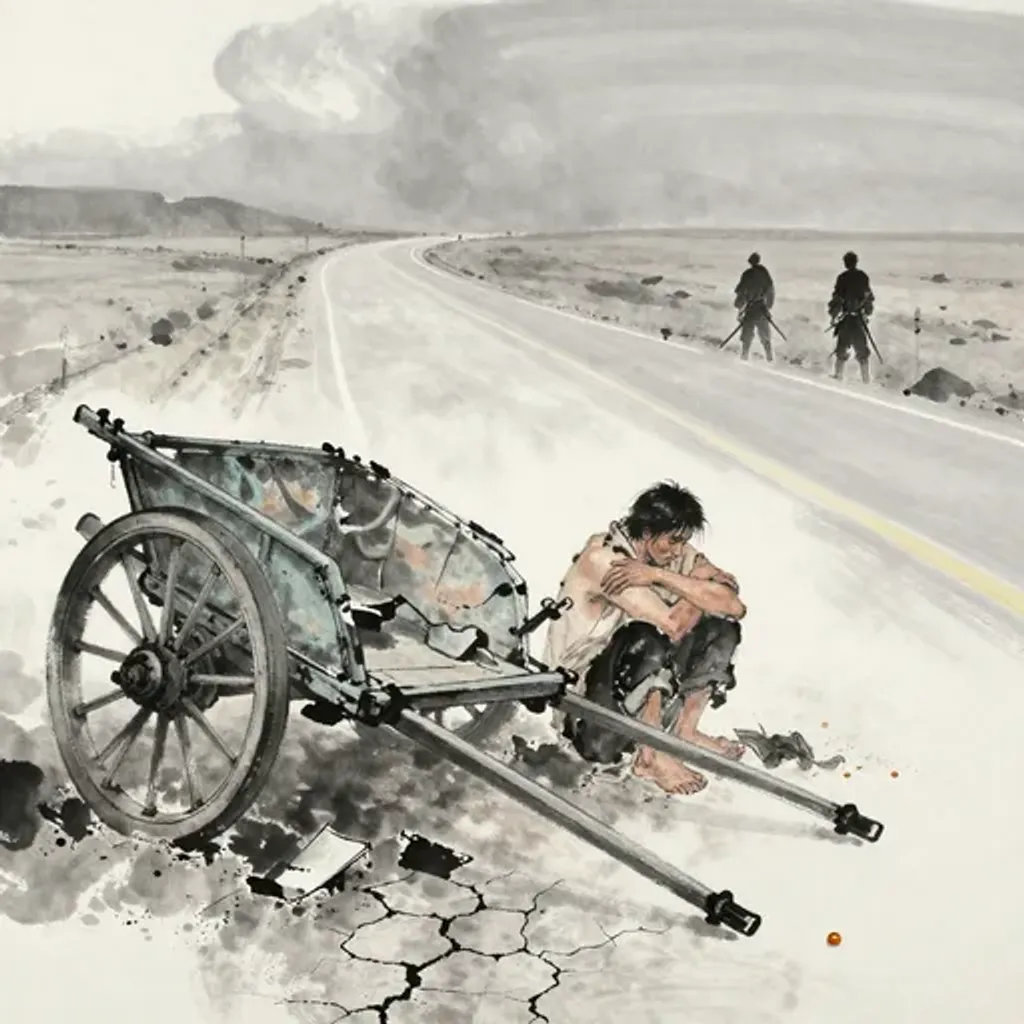
南與凶俱,破車失襦,西行無袴,亡其寶賂。
Going south with misfortune; the cart breaks, the jacket is lost. Traveling west without trousers; losing one's precious goods.
— Jiao Yanshou, Yilin (Forest of Changes), 1st century BC
Commentary
A lake upon a mountain, but the southward journey brings only ruin. Traveling south alongside misfortune, the cart breaks and the jacket is lost. Heading west, one has no trousers, and treasures and bribes vanish along the way. Every direction strips the traveler of another possession: vehicle, clothing, wealth — the progressive loss of all that sustains a journey. From Influence to Pushing Upward, the mountain's receptive openness becomes the earth above wind, the image of a tree growing slowly from below. Pushing Upward counsels steady, incremental rise through favorable conditions. Yet the verse presents the opposite: forced movement in the wrong direction, where each step upward costs more than the last. Without proper conditions, ascent becomes mere hemorrhage.
咸 → 困
Hexagram 31 → Hexagram 47: Oppression
Changing lines: 2, 3
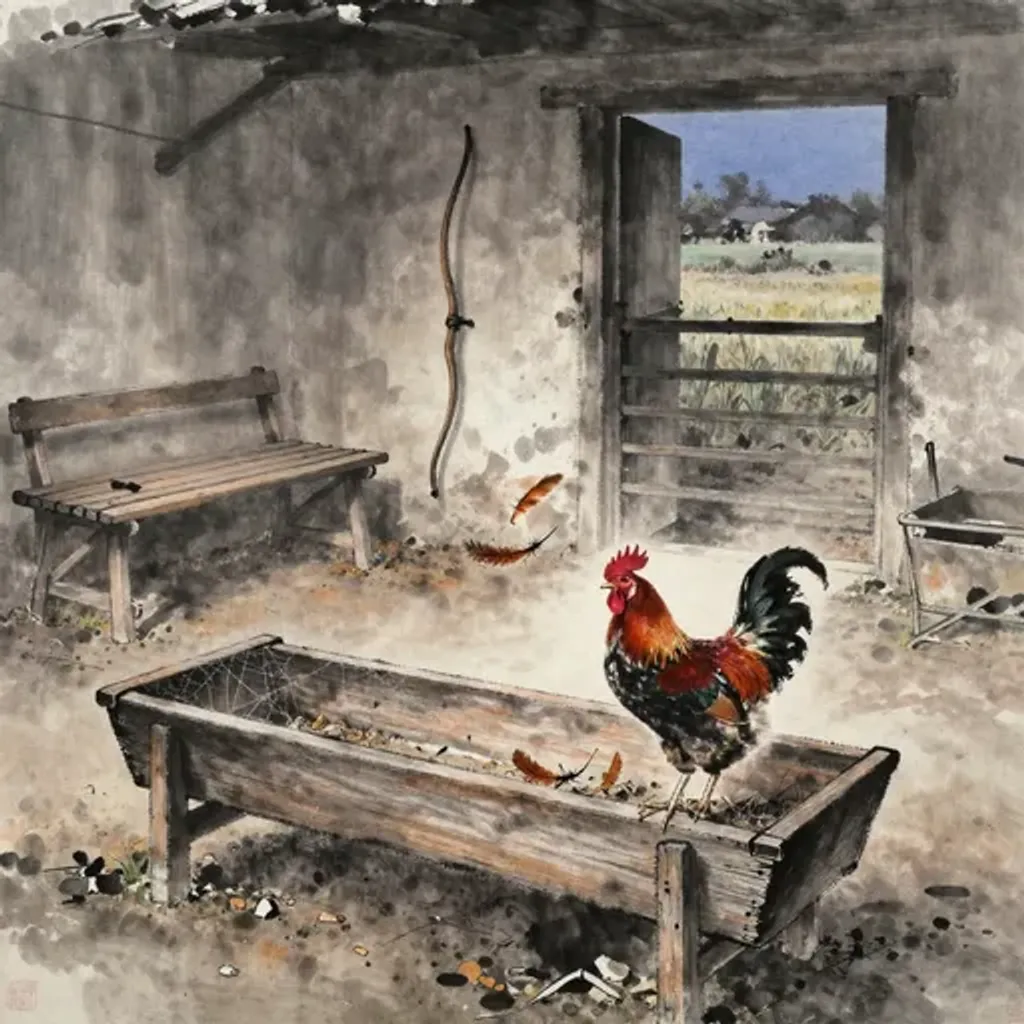
空槽注器,豚彘不至,長弓祝雞,雄父飛去。
Empty trough, vessels laid out; pigs never arrive. The long bow prays for the rooster; the cock flies away.
— Jiao Yanshou, Yilin (Forest of Changes), 1st century BC
Commentary
A lake upon a mountain, but the troughs are empty and the offerings fail. An empty feeding trough awaits an animal that never arrives; pigs and boars are nowhere to be found. A long bow is drawn to salute the sacrificial rooster, but the old cock flies away. Every preparation meets with absence: the vessel has no content, the ritual has no animal, the hunt has no quarry. From Influence to Oppression, the mountain's receptive openness becomes a lake drained of water — the marsh with no moisture, the ultimate image of depletion. The verse literalizes this image: containers without contents, sacrifices without victims, weapons aimed at empty air. When receptivity receives nothing, influence becomes the experience of one's own emptiness amplified by futile effort.
咸 → 井
Hexagram 31 → Hexagram 48: The Well
Changing lines: 2, 4
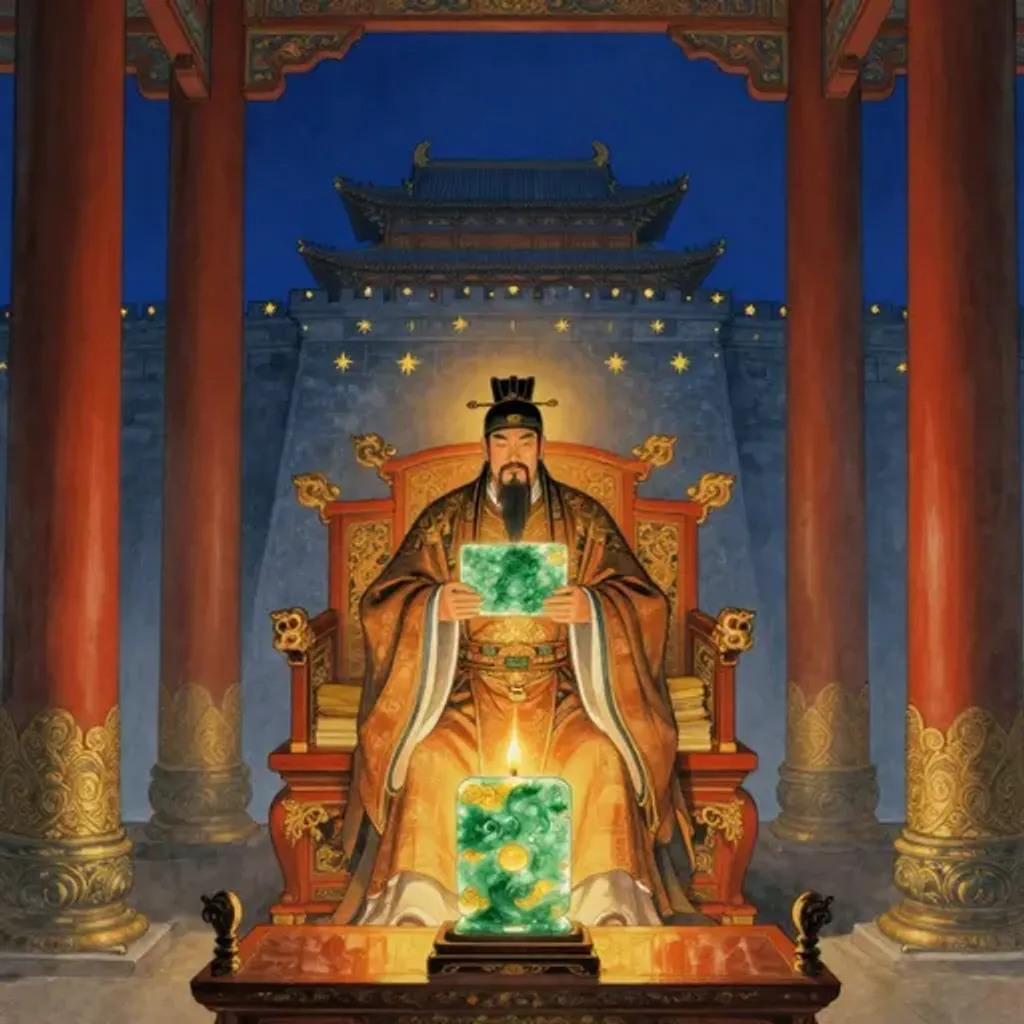
望尚阿衡,太宰周公。藩屏湯武,立為王侯。
Looking up to the Shang minister Yi Yin; Grand Steward, the Duke of Zhou. Shields and screens for Tang and Wu; established as lords and kings.
— Jiao Yanshou, Yilin (Forest of Changes), 1st century BC
Commentary
A lake upon a mountain, and the greatest ministers are summoned by name. Yi Yin — honored as 'Aheng' (阿衡) — the cook from Youshen who became the founding chancellor of the Shang dynasty, and the Duke of Zhou, Grand Steward of the realm, who served as regent for the young King Cheng. These two are the supreme exemplars of ministerial devotion: Yi Yin who guided Tang to overthrow tyranny, and the Duke of Zhou who shielded the dynasty he helped create. They served as bulwarks for Tang and Wu, establishing them as kings. From Influence to the Well, the mountain's openness becomes water drawn up through wood — the inexhaustible resource that nourishes all who come. Like the well that never runs dry, the wisdom of these great ministers sustains the state across generations.
咸 → 革
Hexagram 31 → Hexagram 49: Revolution
Changing lines: 1
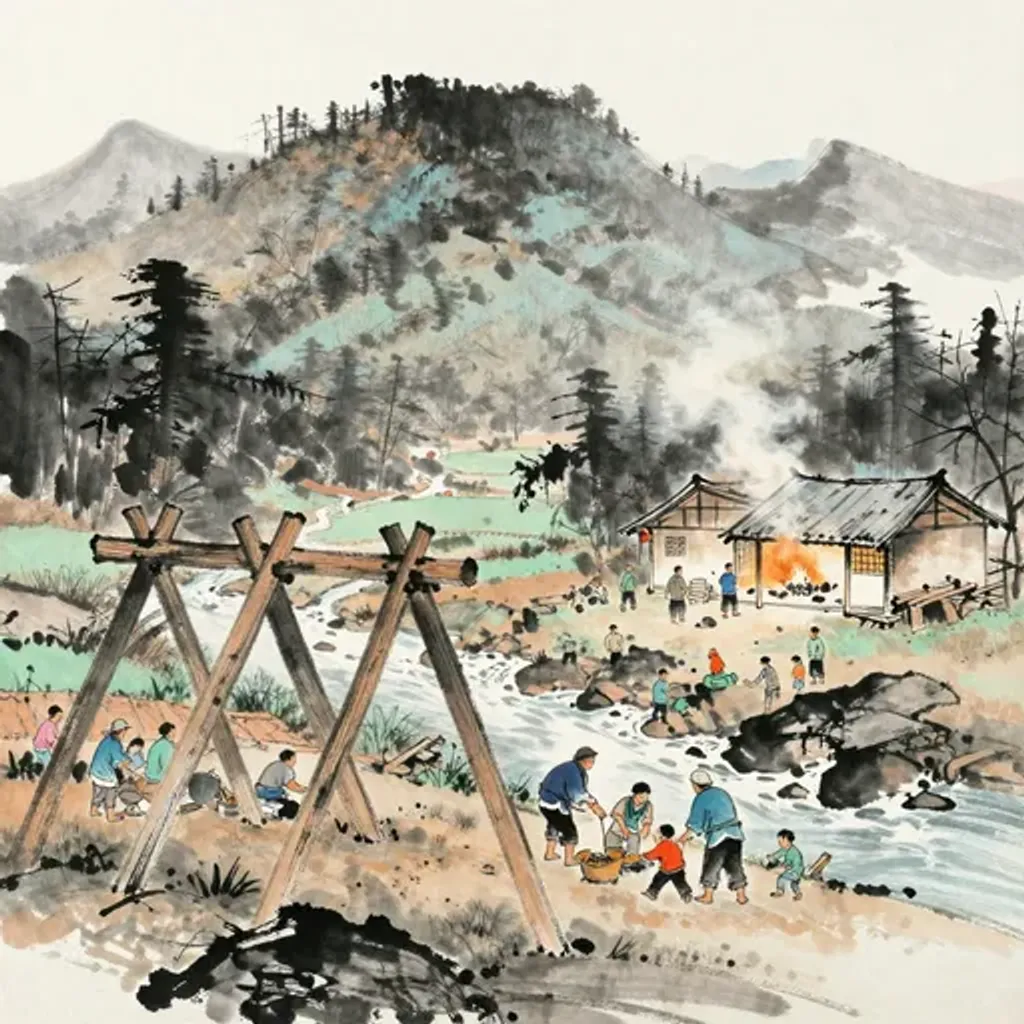
朝鮮之地,箕子所保,宜家宜人,業處子孫。
The land of Chaoxian; what Jizi safeguarded. Befitting family and people; their work endures through the generations.
— Jiao Yanshou, Yilin (Forest of Changes), 1st century BC
Commentary
A lake upon a mountain, and an ancient exile finds lasting refuge. The land of Joseon (朝鮮) is where the Viscount of Ji found sanctuary. After feigning madness to survive the tyrannical court of King Zhou of Shang, Jizi was enfeoffed in the far northeast, establishing a domain that would shelter his descendants for generations. The verse celebrates this outcome: a good land for family and people, an enterprise that sustains children and grandchildren. From Influence to Revolution, the mountain's receptive openness becomes fire within a lake — the transformative upheaval that replaces an exhausted order. Jizi survived Shang's collapse and carried its culture forward under a new mandate. Revolution does not merely destroy; it preserves what is worthy by transplanting it to new soil.
咸 → 鼎
Hexagram 31 → Hexagram 50: The Cauldron
Changing lines: 2, 5, 6
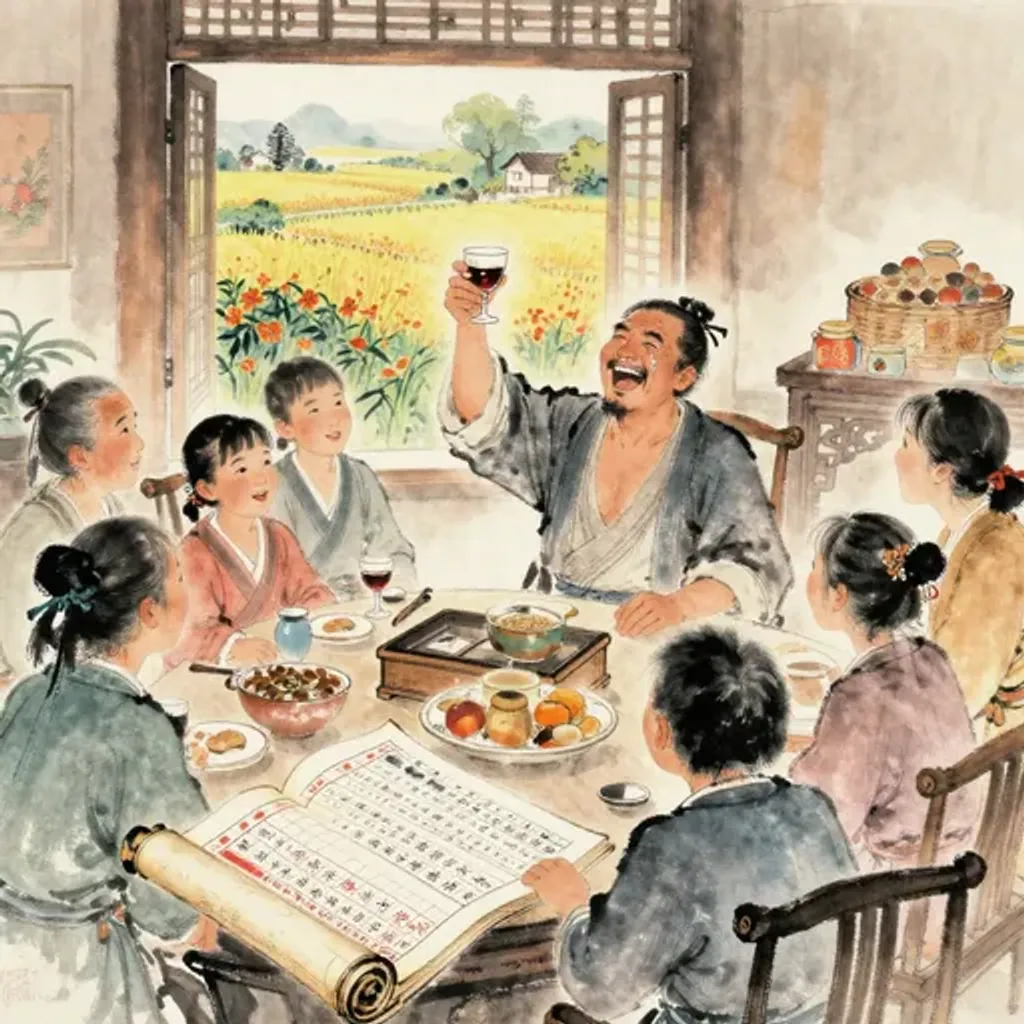
昔憂解笑,故貪今富,載策履善,與福俱遇。
Past sorrows dissolve in laughter; former poverty turns to present wealth. Bearing plans, treading the path of good; meeting fortune at every turn.
— Jiao Yanshou, Yilin (Forest of Changes), 1st century BC
Commentary
A lake upon a mountain, and the fortunes reverse completely. What was once a source of worry dissolves into laughter; former poverty transforms into present wealth. One loads the cart with good counsel, walks the path of virtue, and encounters blessing at every turn. The verse traces a complete arc from adversity to prosperity: anxiety gives way to joy, scarcity to abundance, all through the deliberate choice to follow the good. 'Loading strategy and treading virtue' (載策履善) suggests that the transformation is not luck but the accumulated reward of right action. From Influence to the Cauldron, the mountain's openness becomes fire above wind — the ritual vessel that refines raw offerings into sacred nourishment. The Cauldron transforms base material into something worthy, just as virtuous conduct transmutes past hardship into present fortune.
咸 → 震
Hexagram 31 → Hexagram 51: The Arousing Thunder
Changing lines: 1, 3, 5
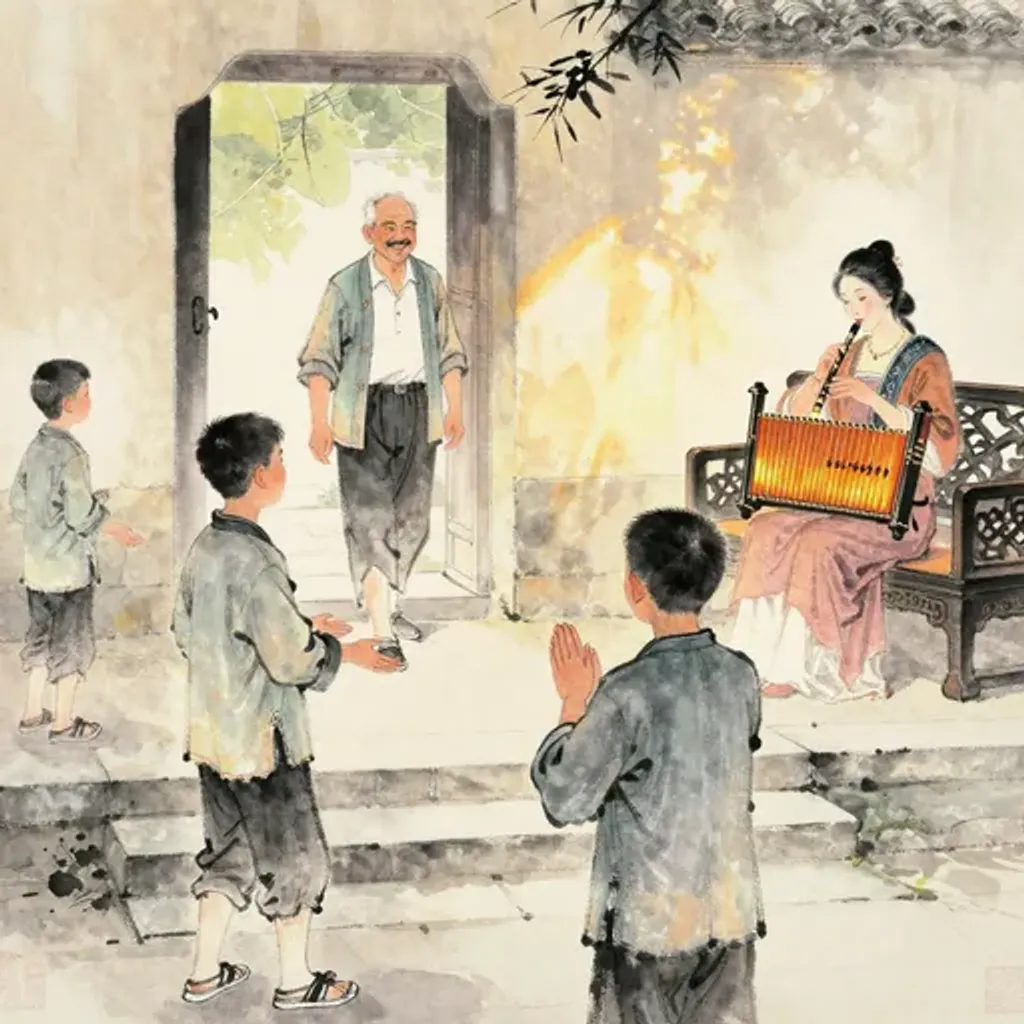
叔迎伯兄,遇卷在陽,君子季姬,並坐鼓簧。
The younger welcomes the elder brother; meeting his lord in the sunlight. The gentleman and Lady Ji; sitting together, playing the reed organ.
— Jiao Yanshou, Yilin (Forest of Changes), 1st century BC
Commentary
A lake upon a mountain, and brothers are reunited in celebration. A younger brother goes out to welcome his elder, and they meet joyfully in the sunlight. A gentleman and his Lady Ji sit together playing the reed-organ, making music in harmony. The verse radiates domestic warmth: kinship restored, husband and wife in musical accord, all bathed in the yang energy of an open, sunlit meeting. The reed-organ (簧) is a traditional instrument associated with courtship and marital harmony in the Shijing. From Influence to the Arousing, the mountain's gentle receptivity transforms into doubled thunder — shock upon shock, the force that startles but also revitalizes. Here the arousal is joyful: the thunder of reunion that shakes loose the stiffness of separation and fills the air with music.
咸 → 艮
Hexagram 31 → Hexagram 52: Keeping Still Mountain
Changing lines: 4, 5, 6
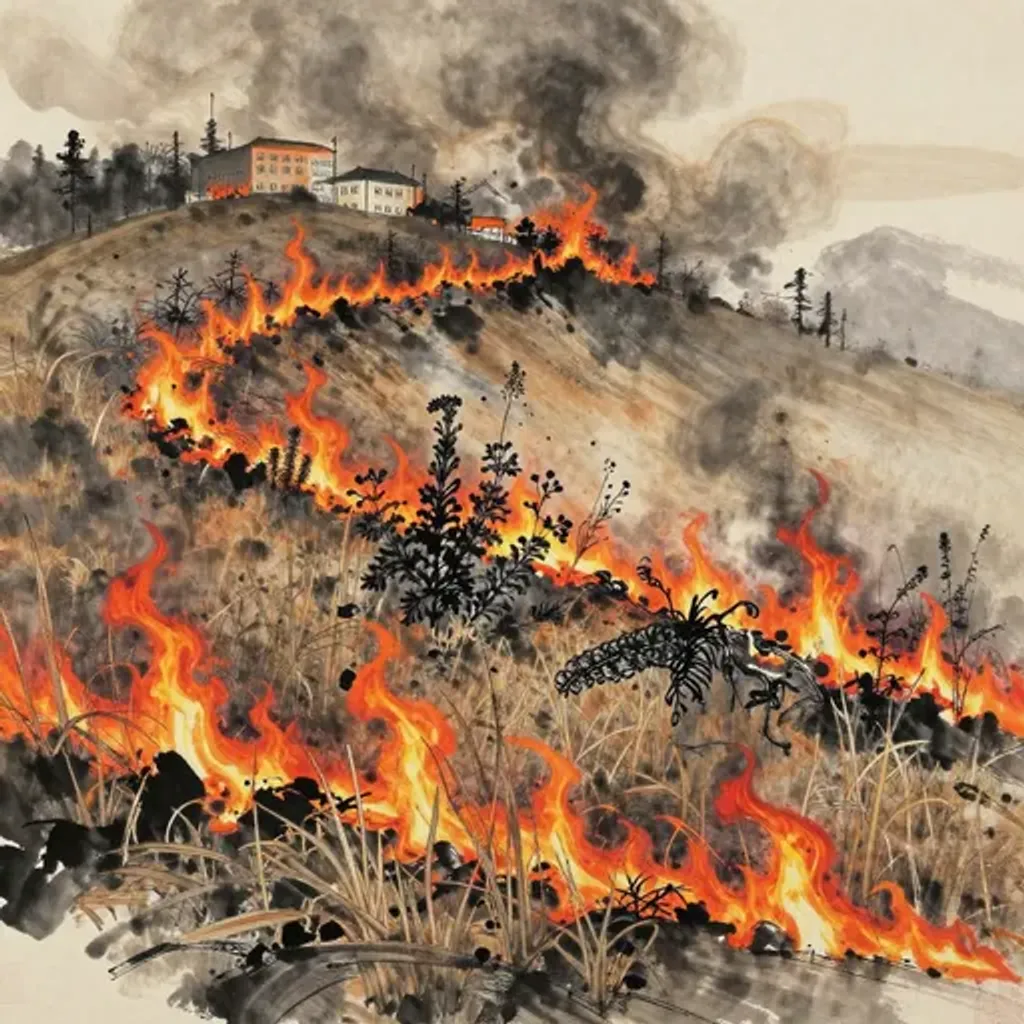
順風縱火,芝艾俱死,三官集房,十子中傷。
Setting fire downwind; orchid and mugwort both die. Three officials gather in their chambers; ten sons are struck down among them.
— Jiao Yanshou, Yilin (Forest of Changes), 1st century BC
Commentary
A lake upon a mountain, but the wind carries fire indiscriminately. Setting fire downwind, both the precious lingzhi fungus and common mugwort burn together — the worthy and the worthless destroyed without distinction. Three officials gather in their chambers while ten of their sons are wounded in the conflagration. The proverb 'burning zhi and ai together' (芝艾俱焚) is a classical warning against collective punishment that destroys good and bad alike. From Influence to Keeping Still, the mountain's receptive openness doubles into twin mountains — stillness upon stillness. The verse presents what happens when one acts rashly before achieving that stillness: unleashed force, once started, cannot distinguish what it burns. Keeping Still's wisdom is to think before acting, staying within one's proper bounds.
咸 → 漸
Hexagram 31 → Hexagram 53: Development
Changing lines: 4, 6
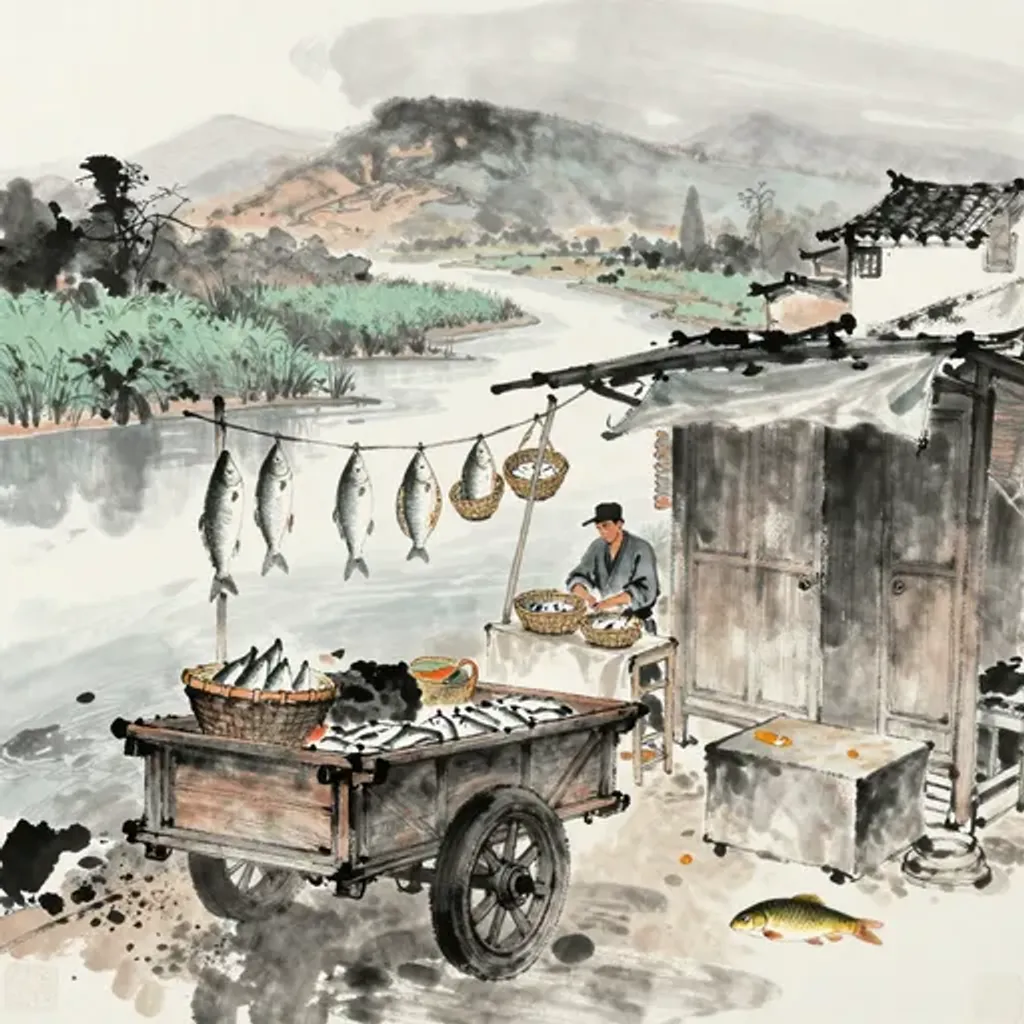
駕車入里,求鮮魴鯉,非其肆居,自令失市。君子所在,安無危咎。
Driving a cart into the village; seeking fresh bream and carp. Not where they keep their market; bringing the loss of trade upon oneself. Where the gentleman resides; peace reigns, no harm or blame.
— Jiao Yanshou, Yilin (Forest of Changes), 1st century BC
Commentary
A lake upon a mountain, and a merchant drives his cart into the wrong neighborhood. He enters the village seeking fresh bream and carp, but this is not the proper market district, and he loses his trade entirely. Then a pivot: where the gentleman dwells, there is peace and no danger. The verse contrasts misplaced effort with proper placement. The fishmonger in the wrong lane cannot sell no matter how fine his wares; the gentleman in the right position radiates stability by his mere presence. From Influence to Development, the mountain's receptive openness becomes wind above the mountain — the gradual, tree-like growth of the well-placed. Development's key insight is that progress must follow a natural, step-by-step sequence. The merchant who skips the proper market disrupts that sequence; the gentleman who remains in his proper place exemplifies it.
咸 → 歸妹
Hexagram 31 → Hexagram 54: The Marrying Maiden
Changing lines: 1, 2, 3, 5
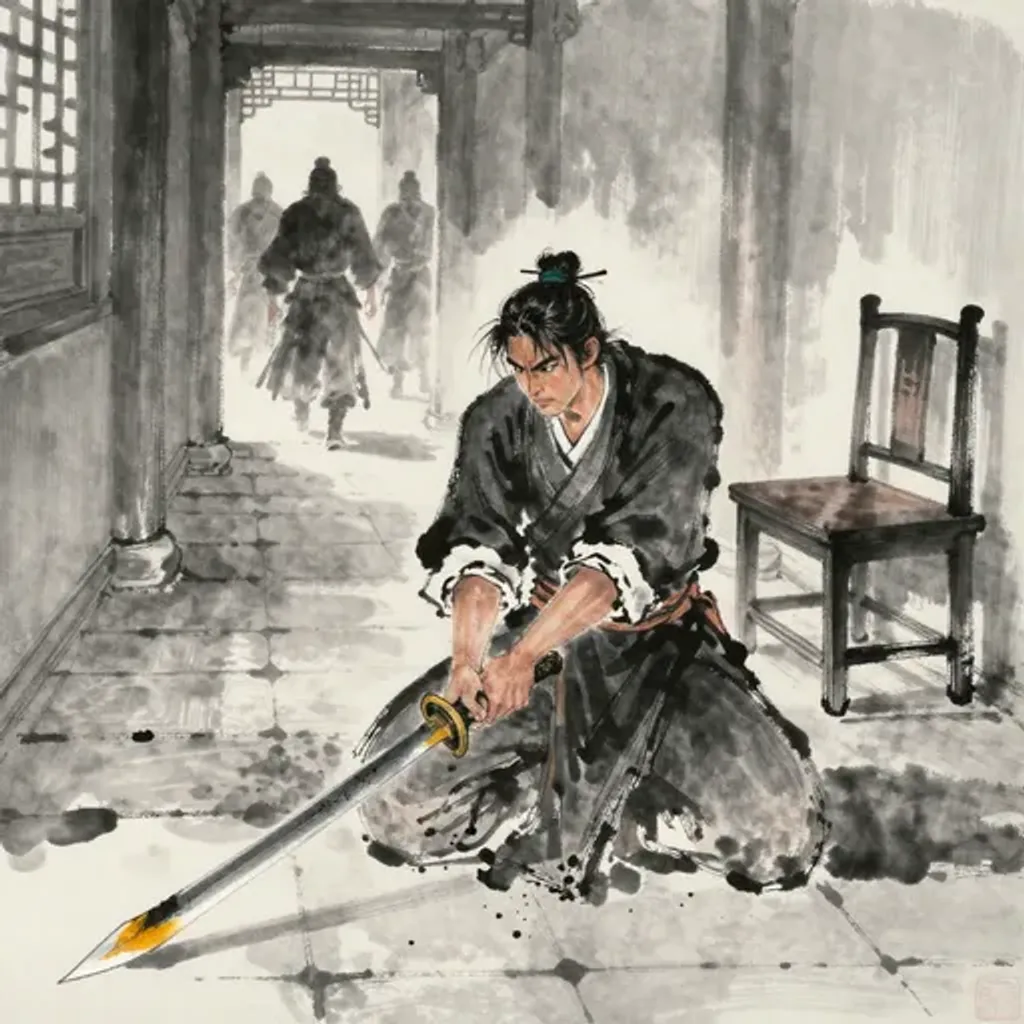
拔劍傷手,見敵不起,良臣無佐,困辱為咎。
Drawing the sword, he wounds his hand; seeing the enemy, he cannot rise. The loyal minister lacks support; trapped in disgrace and blame.
— Jiao Yanshou, Yilin (Forest of Changes), 1st century BC
Commentary
A lake upon a mountain, but the sword turns against its wielder. Drawing the blade, one cuts one's own hand; facing the enemy, one cannot rise to fight. A loyal minister has no support, and his predicament becomes his disgrace. The self-inflicted wound is the verse's central image: the very instrument meant for defense causes harm to its bearer, suggesting fatal incompetence or misdirected energy at the critical moment. From Influence to the Marrying Maiden, the mountain's receptive openness becomes thunder above a lake — the impulsive younger sister given in marriage, an arrangement governed more by obligation than by wisdom. The Marrying Maiden counsels awareness of enduring consequences. Here, the minister who draws his sword too hastily — like a match made too rashly — finds himself wounded by his own ill-timed action.
咸 → 豐
Hexagram 31 → Hexagram 55: Abundance
Changing lines: 1, 5
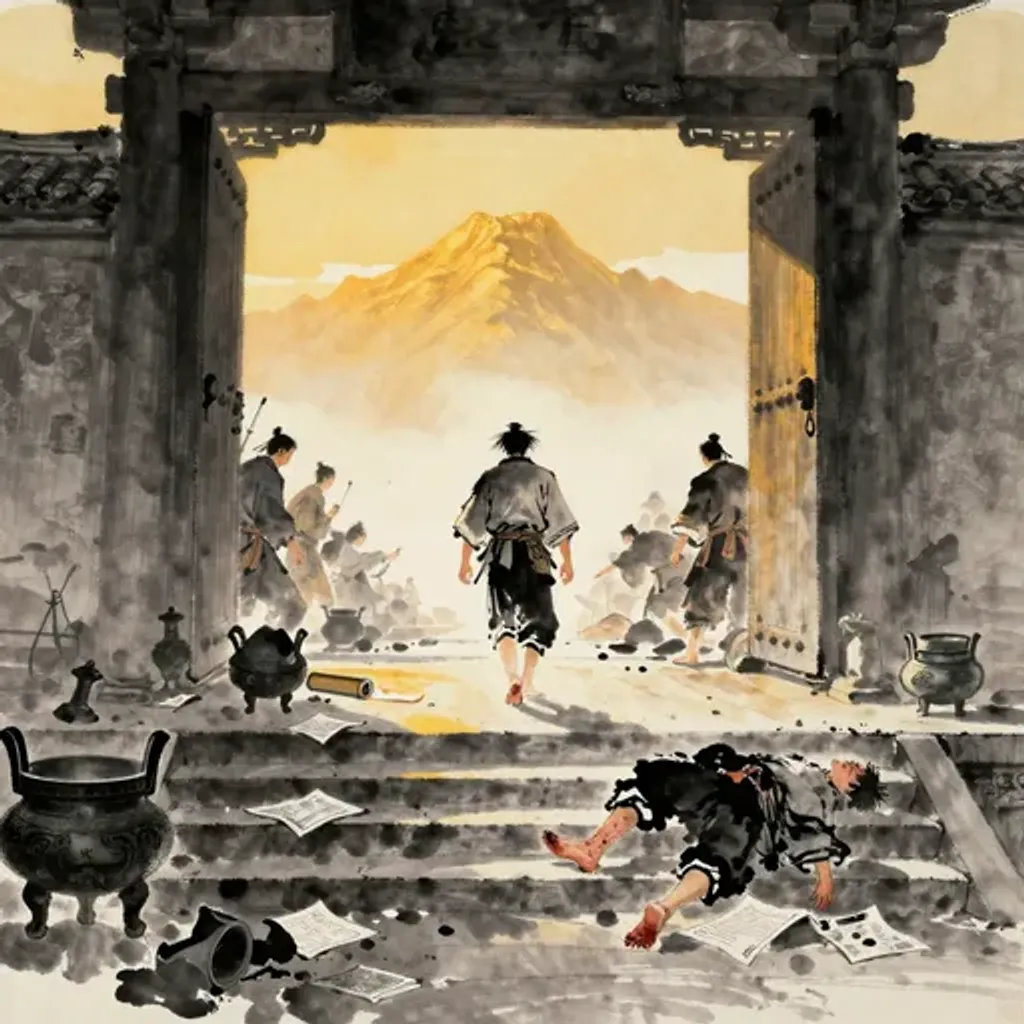
亂君之門,佐鬭傷跟,營私貪祿,身為悔殘,東下泰山,見我所歡。
At the disordered lord's gate; joining the fray, heels are wounded. Scheming for private gain and salary; the body is left in regret and ruin. Descending east from Mount Tai; there I see my beloved.
— Jiao Yanshou, Yilin (Forest of Changes), 1st century BC
Commentary
A lake upon a mountain, and the scene at the gate of a disordered ruler unfolds. Those who abet the lord's quarrels are wounded in the heel; those who pursue private gain and covet stipends find their bodies ruined by remorse. Then an unexpected turn: descending eastward from Mount Tai, one meets the beloved. The verse divides into two halves — the political and the personal. Court intrigue destroys those who participate; only by departing the corrupt center and descending the sacred mountain does one find genuine human connection. From Influence to Abundance, the mountain's openness becomes thunder and lightning together — overwhelming fullness. Abundance warns that the sun at zenith must decline. The verse enacts this: leaving the peak of power for the eastern slope, one trades false abundance for true reunion.
咸 → 旅
Hexagram 31 → Hexagram 56: The Wanderer
Changing lines: 5, 6
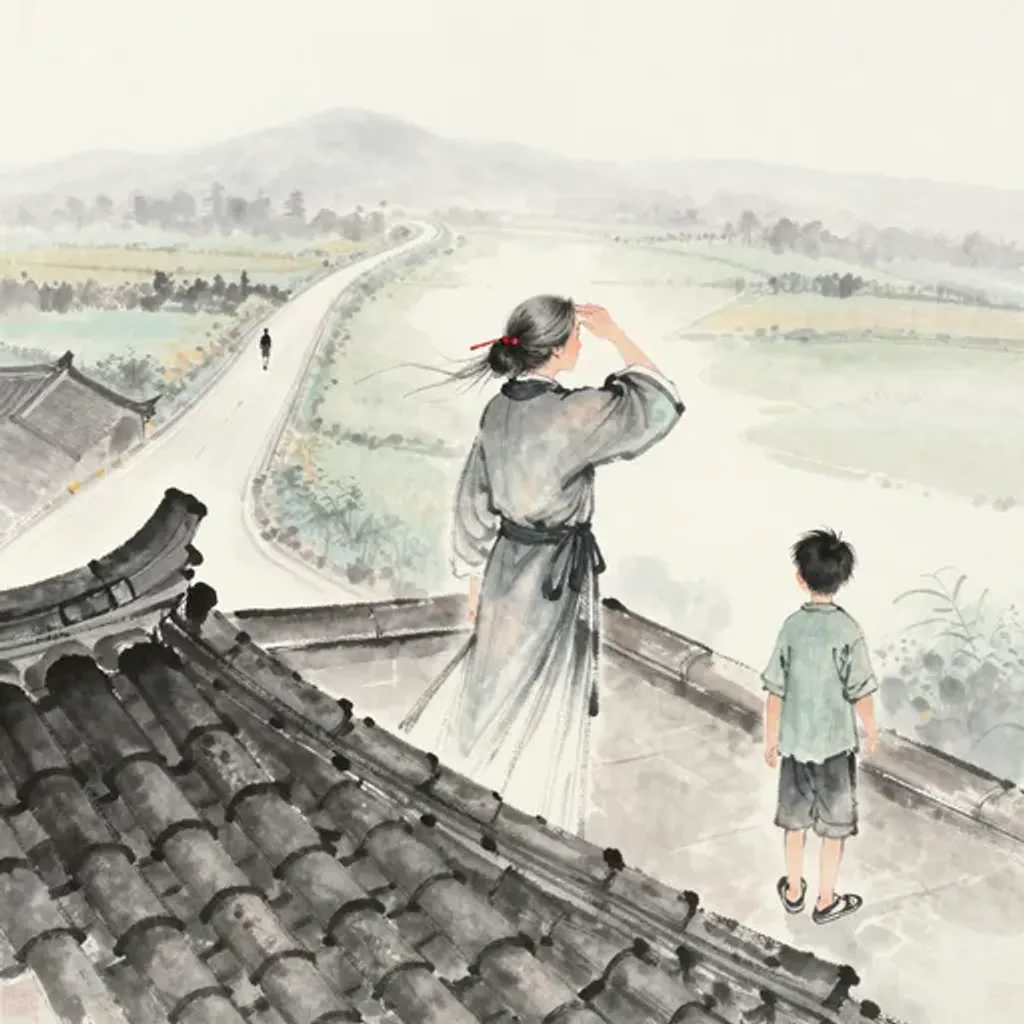
慈母望子,遙思不已,久客外野,使我心苦。
A loving mother watches for her son; yearning from afar without cease. Long a sojourner in distant wilds; it makes my heart bitter.
— Jiao Yanshou, Yilin (Forest of Changes), 1st century BC
Commentary
A lake upon a mountain, and a mother's love spans the distance. A compassionate mother gazes toward her absent child, her longing never ceasing. He has been a wanderer in the open wilderness for too long, and the separation makes her heart ache. The verse is pure emotional directness: no historical allusion, no political metaphor, just the irreducible bond between mother and child stretched across distance and time. From Influence to the Wanderer, the mountain's receptive openness becomes fire upon the mountain — the transient flame of the traveler who has no fixed home. The Wanderer's condition is defined by impermanence: lodging briefly, moving on, never belonging. Against this rootlessness, the mother's unchanging gaze becomes the only fixed point in the child's drifting world.
咸 → 巽
Hexagram 31 → Hexagram 57: The Gentle Wind
Changing lines: 2, 4, 6
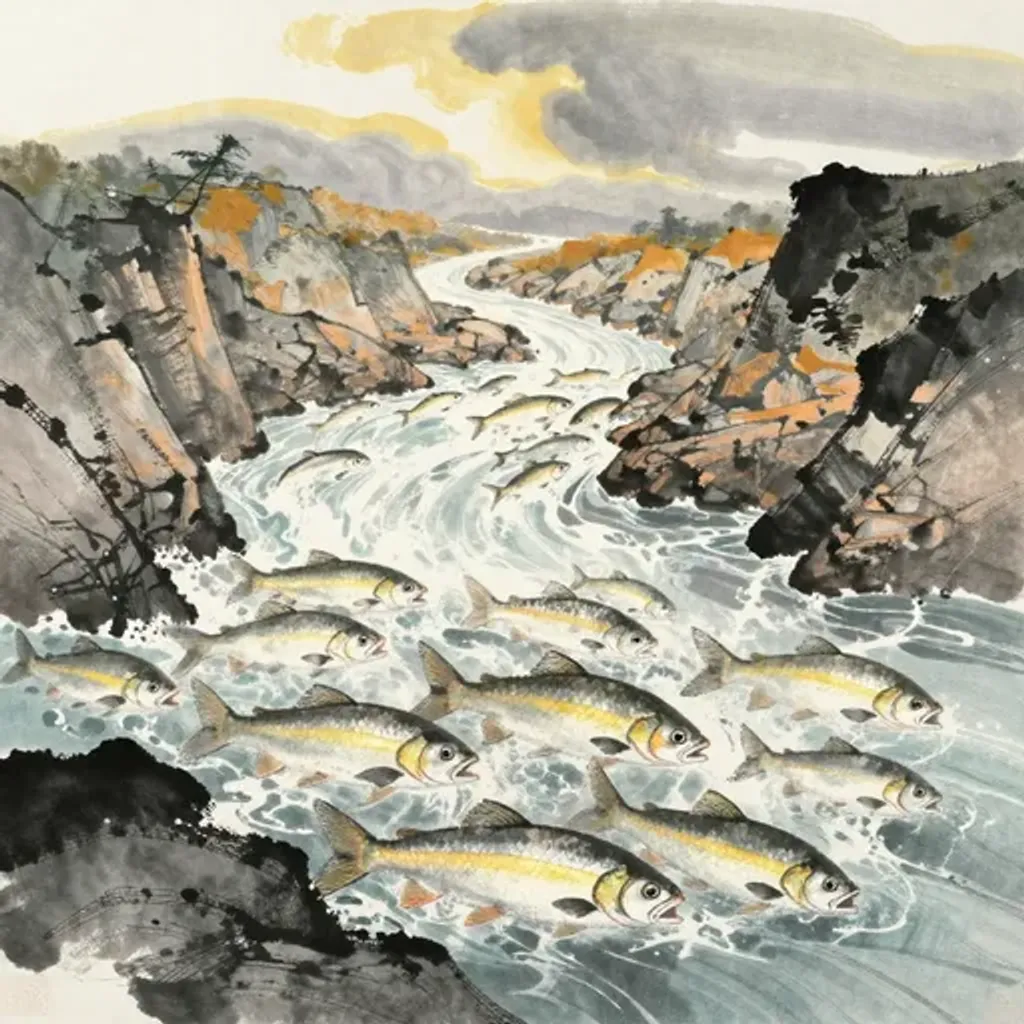
魴生淮郤,一轉為百,周流四海,無有患惡。
Bream are born in the waters of the Huai; one becomes a hundred. Circling through the four seas; without misfortune or harm.
— Jiao Yanshou, Yilin (Forest of Changes), 1st century BC
Commentary
A lake upon a mountain, and from a single source, abundance multiplies. Bream fish born in the bend of the Huai River multiply a hundredfold from one generation, circulating through all four seas without encountering harm or ill fortune. The Huai River was one of the Four Great Rivers of classical geography, and its bream (魴) was prized. The verse celebrates exponential natural increase: from a single origin, wealth and vitality spread everywhere with no obstacle. From Influence to the Gentle, the mountain's receptive openness becomes doubled wind — the persistent, penetrating influence that enters everywhere gradually. What begins as a small stirring of mutual feeling multiplies through the Gentle's pervasive quality until it reaches every corner of the world, spreading benefit like fish multiplying through connected waterways.
咸 → 兌
Hexagram 31 → Hexagram 58: The Joyous Lake
Changing lines: 1, 2, 3
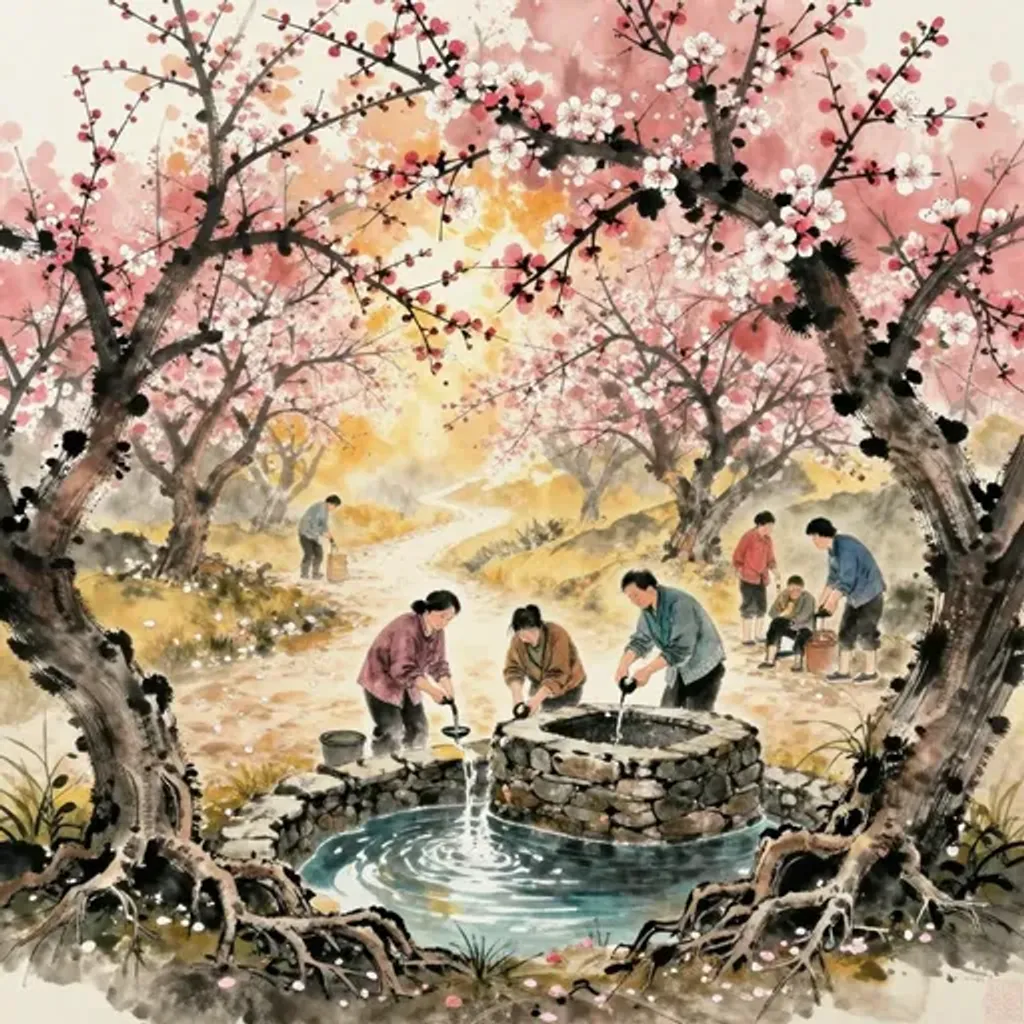
甘露醴泉,太平機關,仁德感應,歲樂民安。
Peach and plum trees create a path — without a word, people come. The well spring is sweet and clear; those who drink forget to leave.
— Jiao Yanshou, Yilin (Forest of Changes), 1st century BC
Commentary
A lake upon a mountain, the very image of mutual attraction, and the original verse distills this into its purest form. Sweet dew and sweet springs mark the auspicious turning-point of great peace. Benevolence and virtue stir mutual response, and the people enjoy tranquility year after year. The 'sweet dew and sweet springs' (甘露醴泉) are classical omens of a sage ruler's reign — when governance is virtuous, even the waters of the earth turn sweet. From Influence to the Joyous, the mountain's open receptivity transforms into doubled lakes — joy reflecting upon joy, friends learning together. The Joyous achieves what Influence promises: genuine mutual delight that sustains itself. Sweet springs and sweet dew are nature's way of expressing what human hearts experience as spontaneous, shared happiness under virtuous rule.
咸 → 渙
Hexagram 31 → Hexagram 59: Dispersion
Changing lines: 2, 3, 4, 6
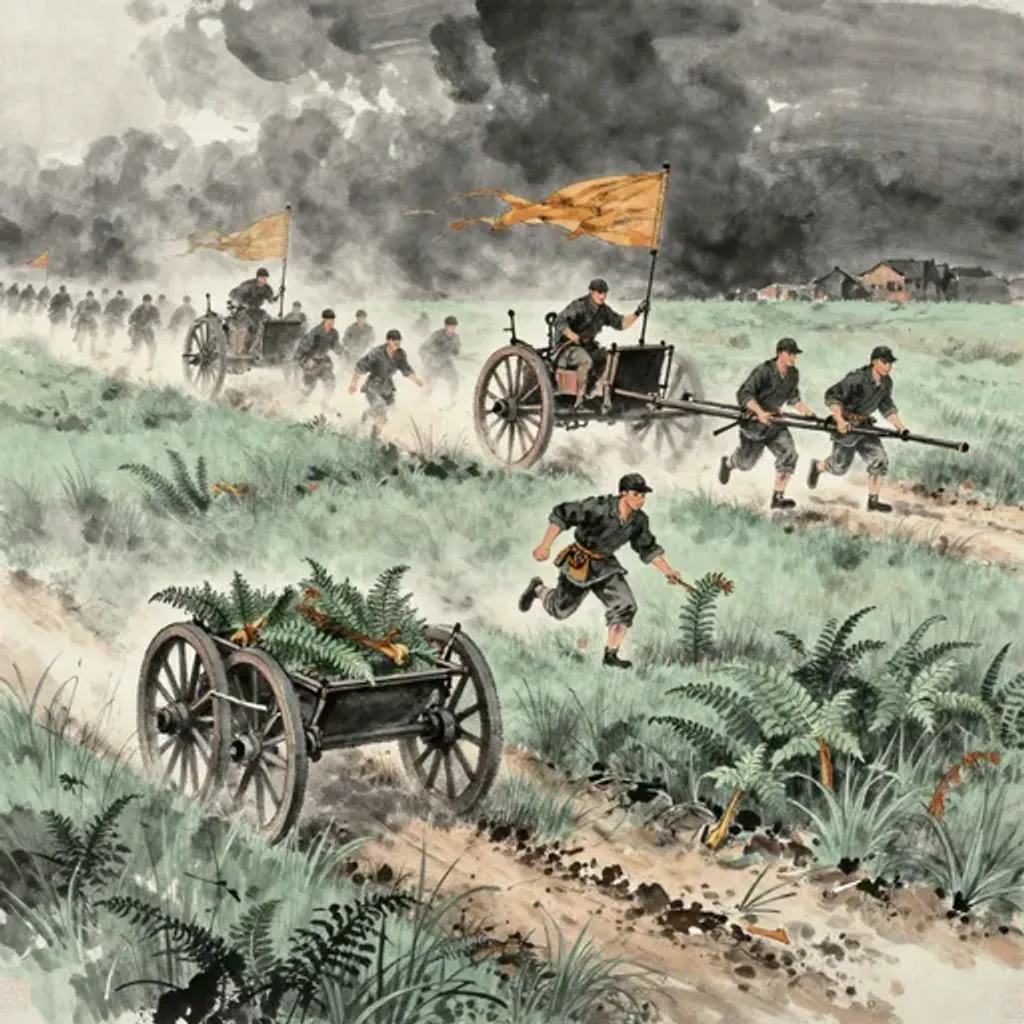
采薇出車,魚麗思初,上下從急,君子免憂。
Picking fern shoots, sending forth chariots; fish nets recall the beginning. Above and below press on in haste; the gentleman is spared from worry.
— Jiao Yanshou, Yilin (Forest of Changes), 1st century BC
Commentary
A lake upon a mountain, and the Shijing's military poems are summoned as rallying cries. 'Gathering ferns' (采薇) is the soldier's lament; 'dispatching chariots' (出車) is the mobilization ode; 'fish in formation' (魚麗) recalls the orderly procession of plenty that follows victory. Together they trace the full arc of military campaign: recruitment, deployment, and the restored prosperity that validates the sacrifice. When superiors and inferiors both respond with urgency to the crisis, the gentleman is freed from worry. From Influence to Dispersion, the mountain's receptive feeling transforms into wind moving over water — the scattering of what is frozen, the dissolution of blockages. The poems' sequence mirrors Dispersion's dynamic: concentrated suffering is scattered through decisive collective action, and what was rigid with fear flows free again.
咸 → 節
Hexagram 31 → Hexagram 60: Limitation
Changing lines: 1, 2, 3, 4
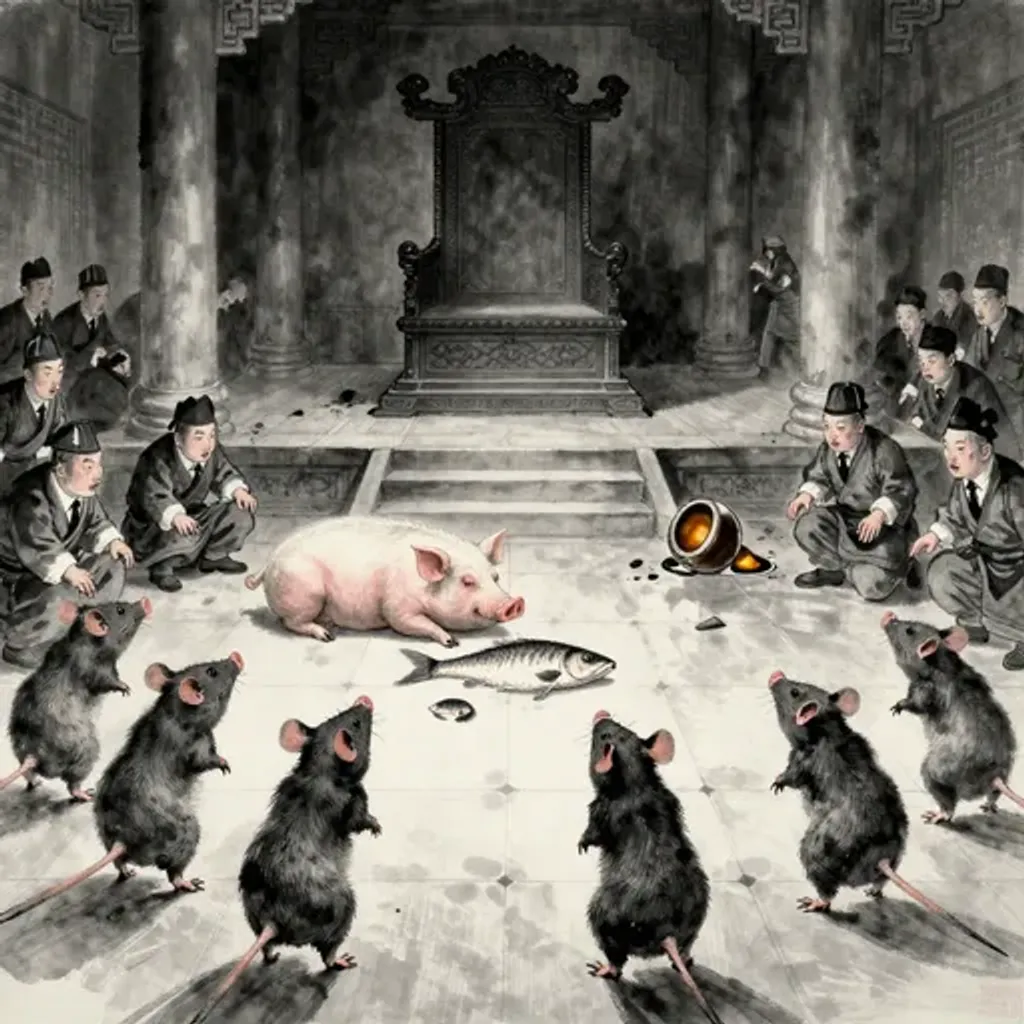
豕生魚魴,鼠舞庭堂,雄佞施毒,上下昏荒,君失其邦。
Pigs give birth to bream; rats dance in the hall. The treacherous male spreads his poison; above and below, all is dim and wild. The ruler loses his domain.
— Jiao Yanshou, Yilin (Forest of Changes), 1st century BC
Commentary
A lake upon a mountain, but the categories of nature collapse into chaos. Pigs give birth to bream fish, rats dance in the courtyard — portents of cosmic disorder made grotesquely physical. A cunning flatterer spreads his poison, and both ruler and court sink into befuddled darkness. The sovereign loses his domain. Pigs producing fish and rats performing in the hall are classical omens of yin-yang inversion: creatures acting against their nature signal that governance has lost its way. From Influence to Limitation, the mountain's openness becomes water upon a lake — proper boundaries that contain excess. The verse depicts the precise failure that Limitation exists to prevent. Without limits on flattery, without boundaries between species of conduct, the court becomes a menagerie of deformity and the state dissolves.
咸 → 中孚
Hexagram 31 → Hexagram 61: Inner Truth
Changing lines: 1, 2, 3, 4, 6
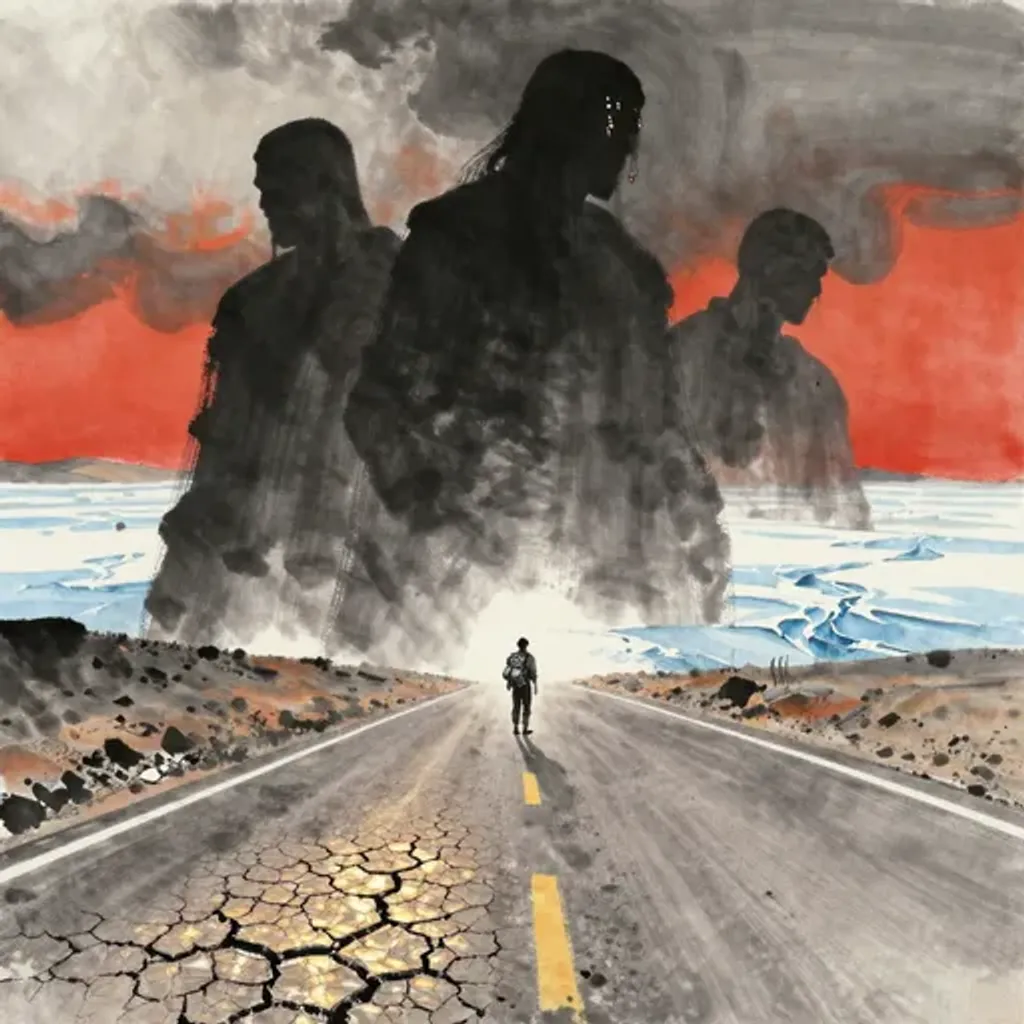
三頭六月,道畏難宿,寒苦之國,利不可得。
Three heads in the sixth month; the road is fearsome, hard to find lodging. A land of cold and hardship; profit cannot be had.
— Jiao Yanshou, Yilin (Forest of Changes), 1st century BC
Commentary
A lake upon a mountain, but the landscape offers no rest. Three passes and the sixth-month heat — the road is frightening and no lodging can be found. This is a cold and bitter land where profit cannot be obtained. The 'three heads' (三頭) may refer to three mountain passes, and 'sixth month' (六月) to the height of summer when travel is most punishing. The combination of impassable terrain and hostile climate makes any venture futile. From Influence to Inner Truth, the mountain's receptive openness becomes wind above a lake — the image of trust penetrating hearts. Yet the verse presents the conditions under which Inner Truth cannot take root: when the environment is too harsh, when every external circumstance conspires against connection, even sincerity finds no purchase. Truth requires a minimum of shelter to survive.
咸 → 小過
Hexagram 31 → Hexagram 62: Small Exceeding
Changing lines: 5
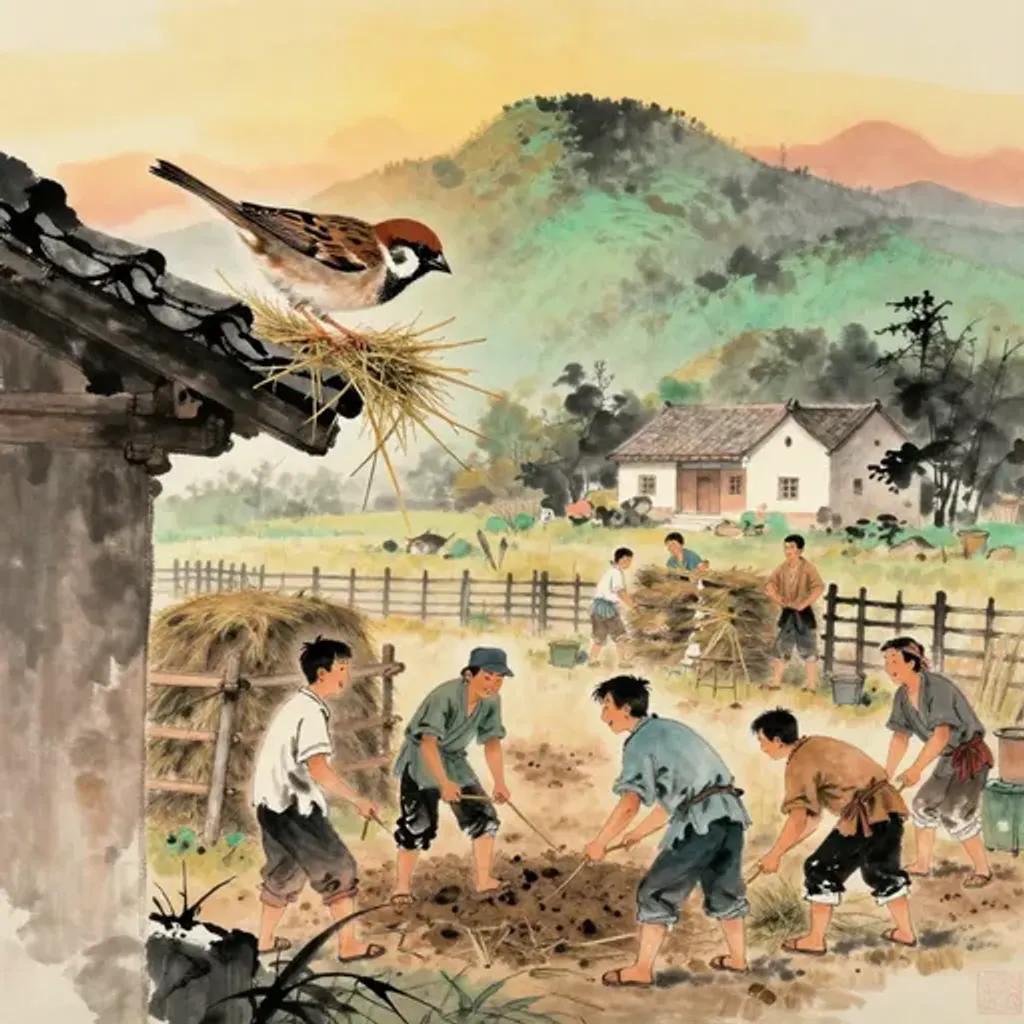
驚雀衘茅,以生孚乳,昆弟六人,姣好悌孝,各同心願,和悅相樂。
The startled sparrow carries thatch; to birth and nurse its young. Six brothers; handsome, respectful, and filial. Each sharing the same heart's wish; in harmony and joy together.
— Jiao Yanshou, Yilin (Forest of Changes), 1st century BC
Commentary
A lake upon a mountain, and a startled sparrow carries straw in its beak to build a nest for its brood. Six brothers grow up handsome and filial, each sharing the same wish in their hearts, living in harmony and mutual delight. The image moves from alarm to nurture to concord: the bird's instinctive nest-building, prompted by a fright, produces the shelter in which a harmonious family thrives. The 'six brothers' (昆弟六人) living in 'accord and joy' (和悅相樂) is the verse's destination — a small community bound by shared virtue. From Influence to Small Exceeding, the mountain's receptive openness becomes thunder above the mountain — the small bird that exceeds its station by flying high. Small Exceeding counsels modest overreach: the sparrow may aim higher than expected, and six brothers in perfect harmony slightly exceed what the world demands. Grace lies in the excess of goodness.
咸 → 既濟
Hexagram 31 → Hexagram 63: After Completion
Changing lines: 1, 4
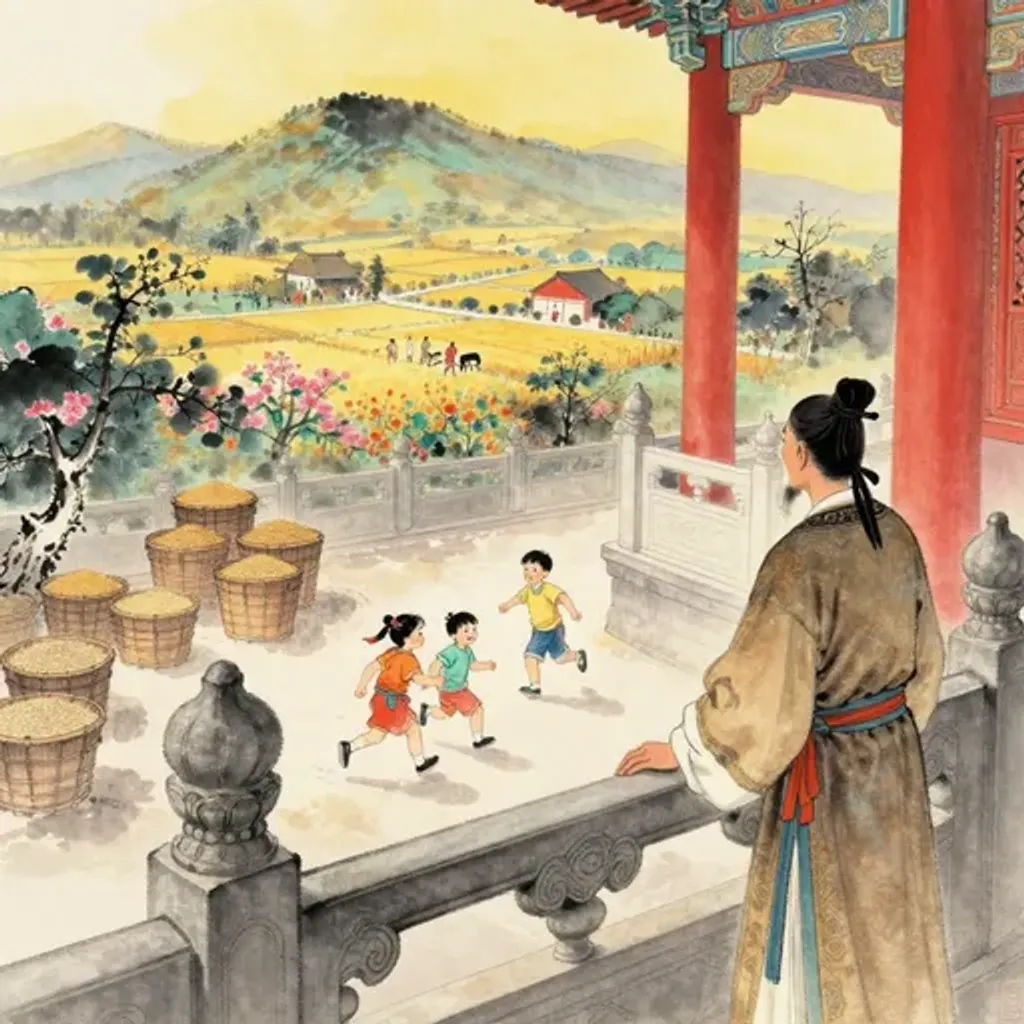
文君之德,仁義致福,年無胎夭,國富民實,君子在室,曾累益恩。
The cultured lord's virtue; benevolence and righteousness bring blessings. No year of infant death; the state is rich, the people full. The gentleman resides at home; layered blessings, ever-growing grace.
— Jiao Yanshou, Yilin (Forest of Changes), 1st century BC
Commentary
A lake upon a mountain, and the ruler's virtue radiates as comprehensive blessing. The 'cultured lord' (文君) governs through moral example, and benevolence and righteousness bring fortune in their wake. Year after year, no infant dies prematurely, the nation grows wealthy, the people prosper, and the gentleman sits securely in his chambers while accumulated favors multiply as enduring grace. Every line adds another dimension of flourishing: moral virtue produces material abundance, which in turn sustains demographic growth and political stability. From Influence to After Completion, the mountain's receptive openness becomes water above fire — everything in its proper place, each element fulfilling its function. The verse describes what After Completion looks like at its zenith: total harmony achieved, all positions filled, all needs met, fortune compounding upon itself.
咸 → 未濟
Hexagram 31 → Hexagram 64: Before Completion
Changing lines: 2, 3, 5, 6
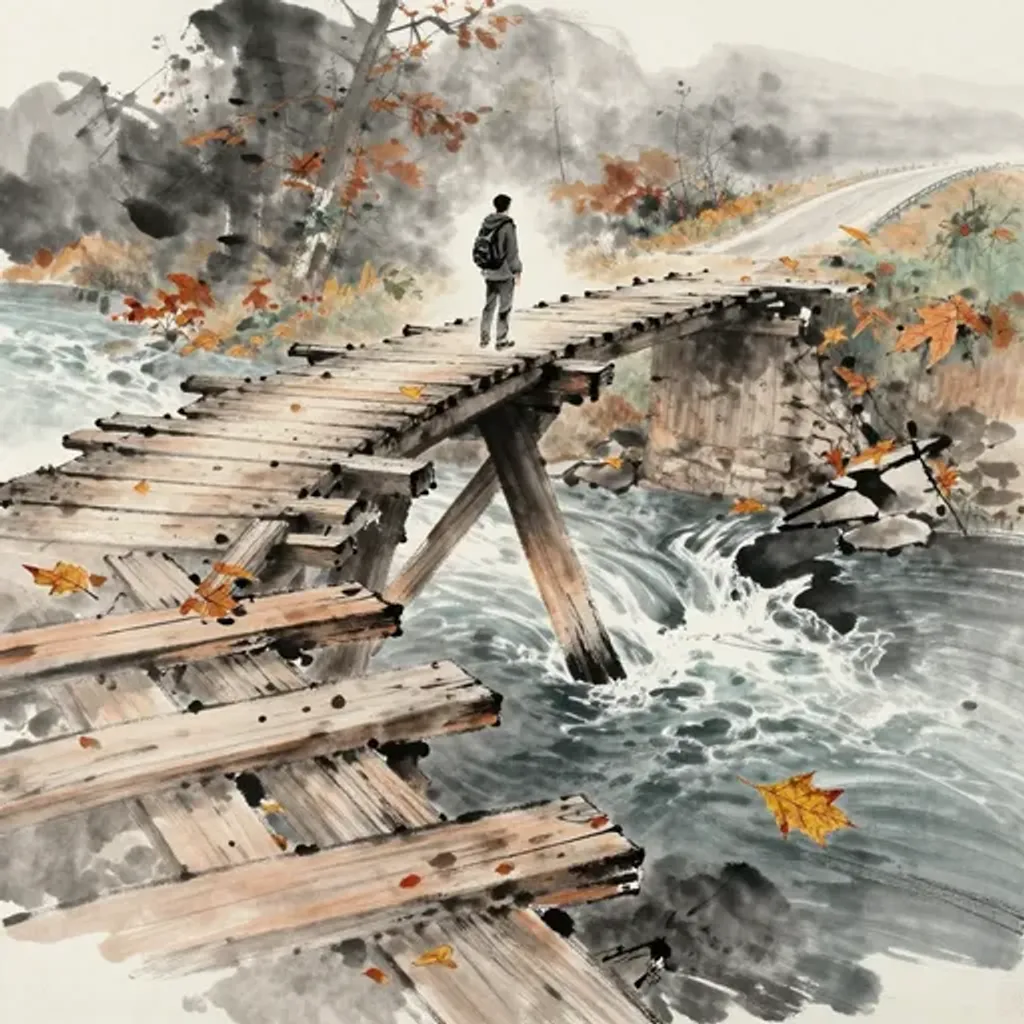
秋梁未成,無以至陳,水深難涉,使我不前。
The autumn bridge is not yet finished; there is no way to reach Chen. The water runs deep, hard to ford; it keeps me from going forward.
— Jiao Yanshou, Yilin (Forest of Changes), 1st century BC
Commentary
A lake upon a mountain, but the crossing remains unbuilt. The autumn bridge is not yet finished, and there is no way to reach the state of Chen. The water runs too deep to ford, holding the traveler back from advancing. Every image is one of incompletion: the bridge half-built, the river uncrossed, the destination unreached. 'Autumn bridge' (秋梁) suggests a seasonal structure — perhaps a pontoon bridge that should be erected after the autumn floods recede but has not been completed in time. From Influence to Before Completion, the mountain's receptive openness becomes fire above water — the elements visible to each other but not yet in their proper relationship. The verse is a precise emblem of Before Completion's essence: everything can be seen, the destination is known, but the final step that would bring order has not yet been taken.