Transformations of Hexagram 34
Every line of change out of Hexagram 34 大壯 Great Power, with the Yilin verse for each of the 64 resulting hexagrams, its translation, and the original ink brush artwork.
大壯 → 乾
Hexagram 34 → Hexagram 1: The Creative
Changing lines: 5, 6
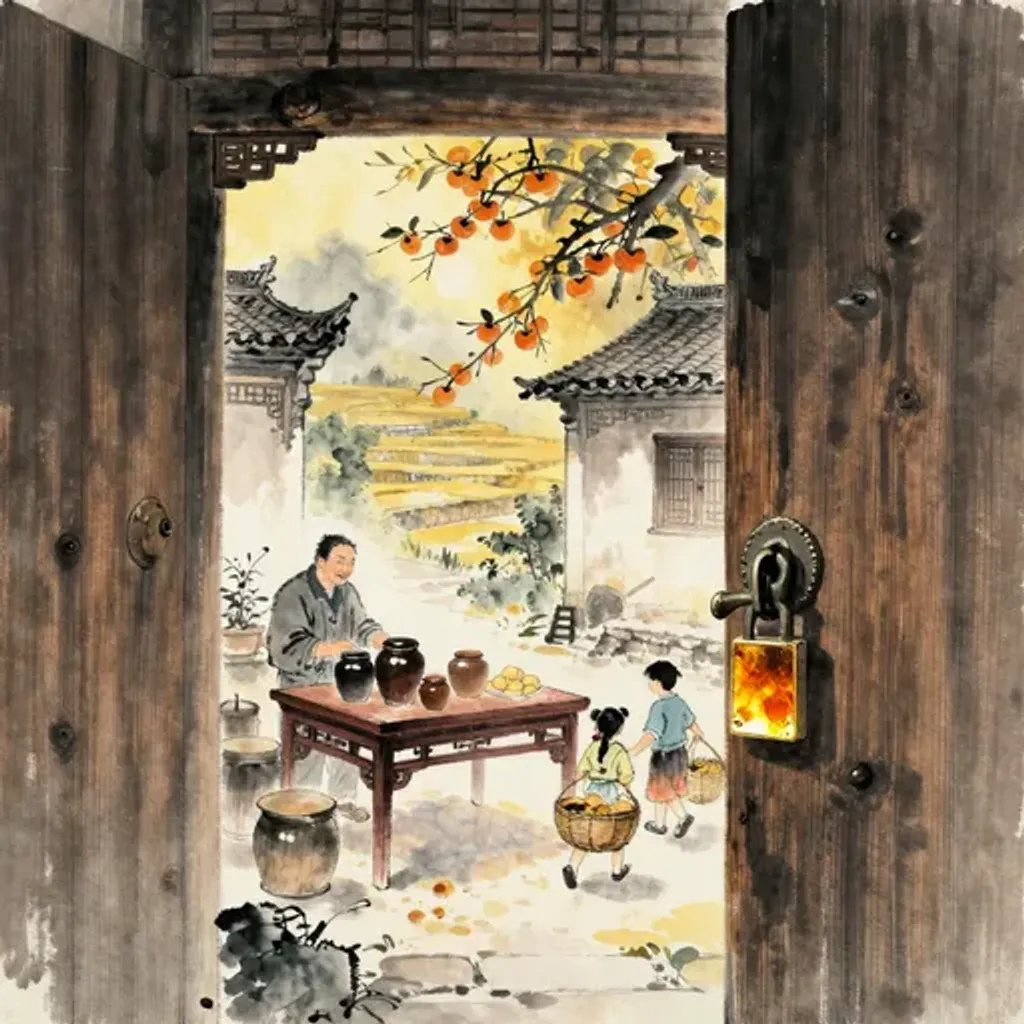
金齒鐵牙,壽考宜家,年歲有儲。貪利者得,離其咎憂。
Teeth of gold, jaws of iron; long life befitting the household, stores enough for the year. The covetous find gain; calamity and worry depart.
— Jiao Yanshou, Yilin (Forest of Changes), 1st century BC
Commentary
Thunder roars above heaven, the image of Great Power: raw yang force demanding proper conduct. Teeth of gold and jaws of iron suggest a constitution built to last, a body forged for endurance. The household thrives, granaries overflow year after year, and even the profit-seeker finds gain without falling into blame. This is not passive good fortune but the active vigor of one whose strength is so well grounded that it naturally generates abundance. The transformation from Great Power to the Creative doubles heaven's energy: thunder over heaven becomes heaven upon heaven. When power is exercised with self-generating initiative rather than reckless force, longevity and prosperity follow as natural consequences, and even ambition finds its proper channel.
大壯 → 坤
Hexagram 34 → Hexagram 2: The Receptive
Changing lines: 1, 2, 3, 4
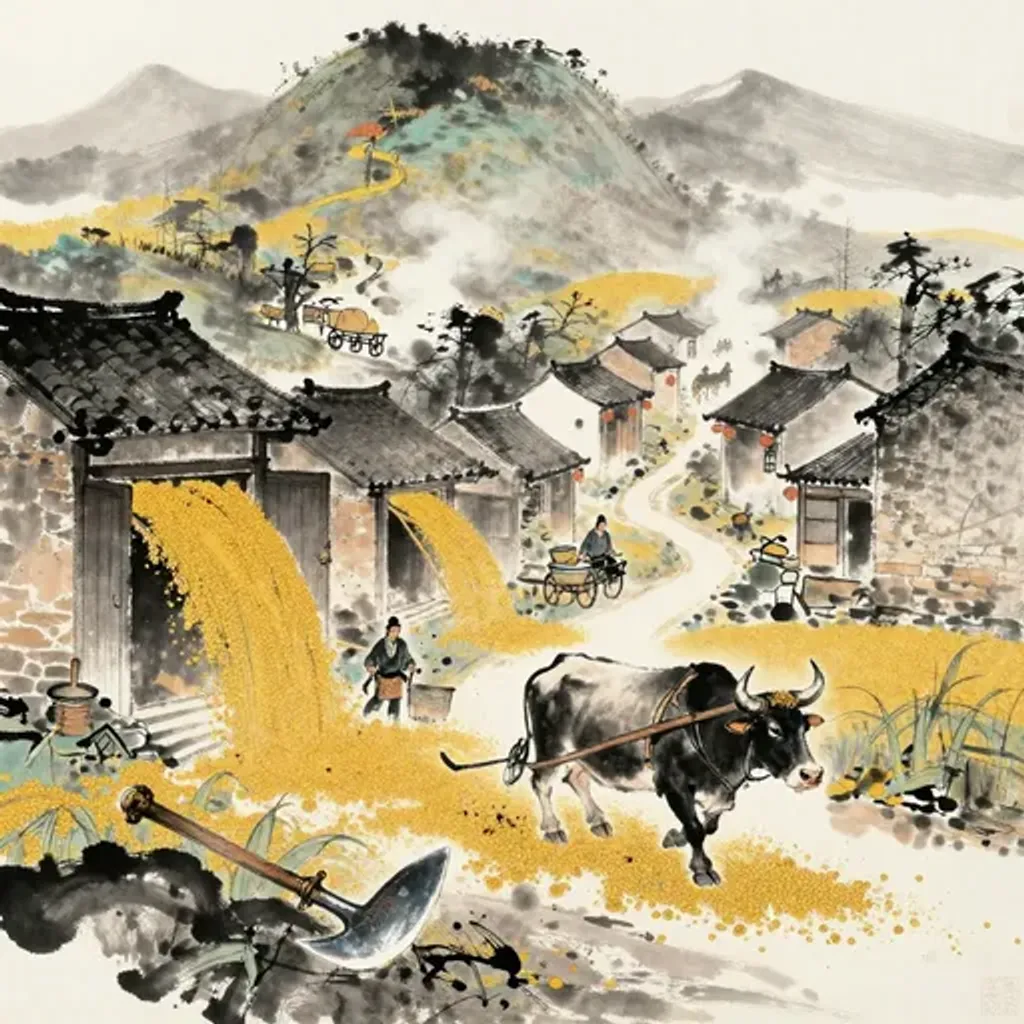
家給人足,頌聲並作,四夷賓服,干戈囊閣。
Granaries overflow — even the mice don't steal. Weapons are forged into plows; oxen pull the autumn harvest. Merchants travel freely between neighboring nations, north and south — cooking smoke from ten thousand homes thickens into cloud.
— Jiao Yanshou, Yilin (Forest of Changes), 1st century BC
Commentary
Thunder over heaven transforms into earth upon earth: Great Power yields to the Receptive. The original verse depicts an era of universal sufficiency — every household provided for, hymns of praise rising in harmony, the four barbarian peoples submitting voluntarily, and weapons sheathed and stored away. This is the vision of a realm so abundantly governed that military strength becomes unnecessary. The image recalls the golden age rhetoric of Han imperial panegyric: when virtue radiates outward, even border peoples respond. From Great Power to the Receptive, the transformation traces how vigorous initiative, once it achieves its purpose, wisely dissolves into receptive stillness. The earth carries all things without assertion; power at its zenith finds fulfillment not in further conquest but in generous repose.
大壯 → 屯
Hexagram 34 → Hexagram 3: Difficulty at the Beginning
Changing lines: 2, 3, 4, 5
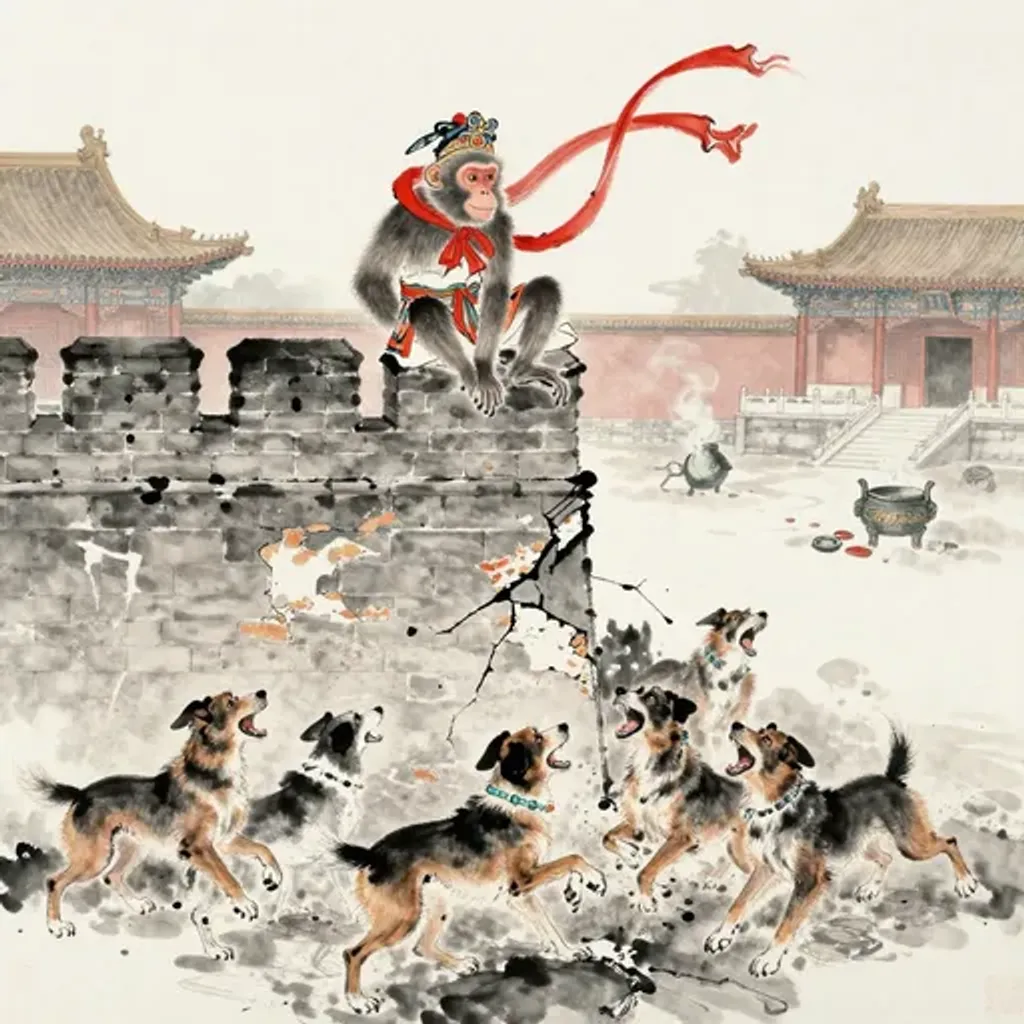
獮猴冠帶,盜載非位,眾犬嘈吠,狂走厥足。
A monkey in cap and sash; a thief bearing what is not his station. A pack of dogs bark and bay; he bolts in mad flight on frantic feet.
— Jiao Yanshou, Yilin (Forest of Changes), 1st century BC
Commentary
Thunder crashes above heaven, but a monkey in official robes makes a mockery of power. The verse invokes the proverb of the 'monkey in cap and sash' — a creature dressed in authority it cannot comprehend. Bandits ride in carriages meant for ministers, occupying positions they have no right to hold. The dogs of the neighborhood bark furiously at the imposture, and the pretender runs until his feet give out. From Great Power to Difficulty at the Beginning, the transformation captures precisely this mismatch: raw force thrust into a situation that demands patient cultivation. Water gathers above thunder in Zhun, signaling the chaos of a new order struggling to coalesce. Strength without legitimacy breeds not progress but pandemonium.
大壯 → 蒙
Hexagram 34 → Hexagram 4: Youthful Folly
Changing lines: 1, 3, 4, 6
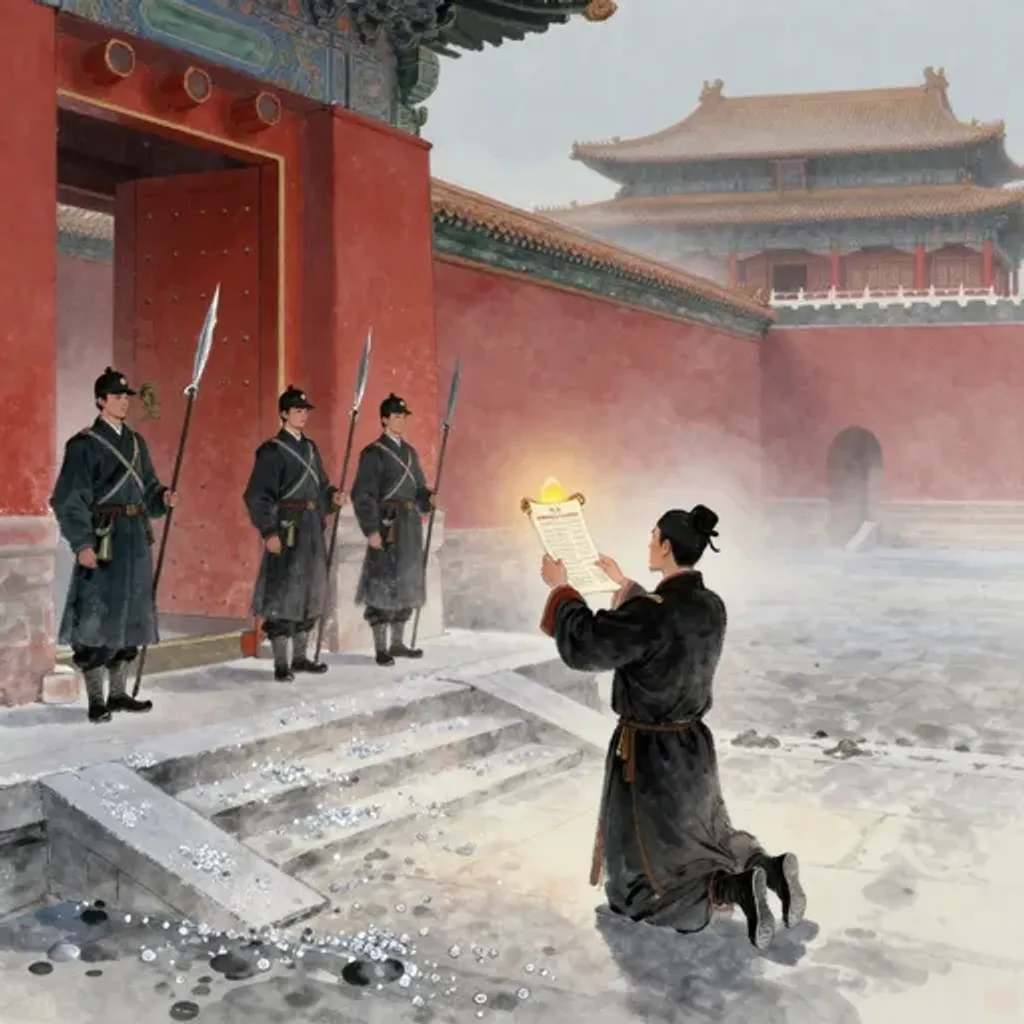
心患其身,不念安存,忠臣孝子,為國除患。
The heart fears for the body; it does not think of its own safety. The loyal minister and filial son rid the state of peril.
— Jiao Yanshou, Yilin (Forest of Changes), 1st century BC
Commentary
Thunder above heaven shakes the body awake with worry: one who fears for the realm cannot rest in personal comfort. The verse celebrates the loyal minister and filial son who set aside self-preservation to eliminate threats for the state. Their bodies are burdened, their minds consumed, yet they act not from ambition but from devotion. From Great Power to Youthful Folly, the transformation traces how vigorous action must eventually yield to the patient education that prevents future harm. The mountain spring of Meng emerges slowly, teaching through experience rather than force. True service to the state means not only wielding power against present dangers but cultivating the wisdom to forestall the next crisis before it forms.
大壯 → 需
Hexagram 34 → Hexagram 5: Waiting
Changing lines: 4, 5
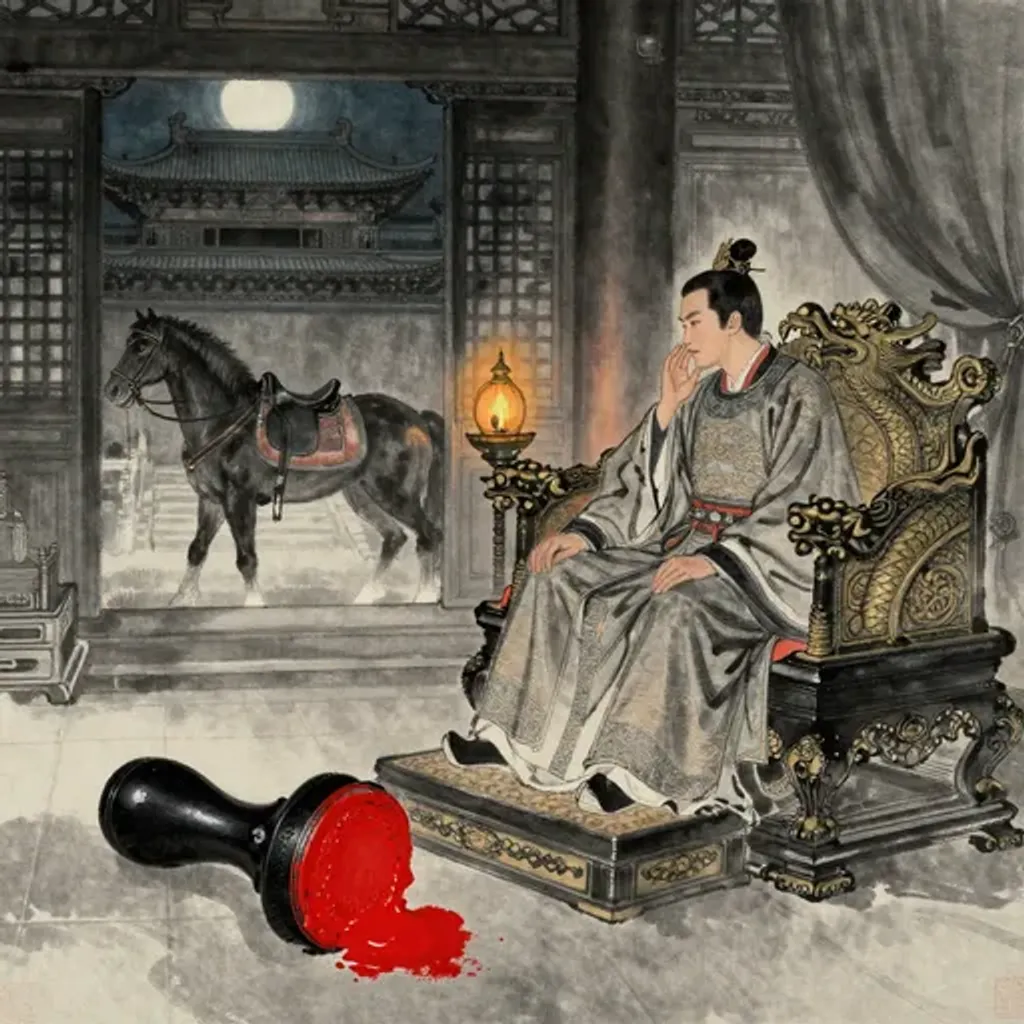
君不明德,臣亂為惑,丞相命馬,胡亥失所。
The ruler lacks luminous virtue; the minister sows chaos and delusion. The prime minister commands the horse; Huhai loses his rightful place.
— Jiao Yanshou, Yilin (Forest of Changes), 1st century BC
Commentary
Thunder over heaven demands that power obey propriety, yet here the sovereign abandons virtue entirely. The verse names its figures plainly: the chancellor 'commands the horse' — an unmistakable allusion to Zhao Gao, who pointed at a deer and called it a horse, bending reality itself to his will. Huhai, the Second Emperor of Qin, loses his throne and his life because he surrendered judgment to a manipulator. When the ruler lacks moral clarity, the minister's corruption fills the vacuum. From Great Power to Waiting, the transformation is bitterly ironic: clouds gather above heaven in Xu, promising nourishment that never arrives. Power that should sustain the realm instead hangs suspended, inert, while those who should wait patiently for the right moment have already seized control through deception.
大壯 → 訟
Hexagram 34 → Hexagram 6: Conflict
Changing lines: 1, 3, 5, 6
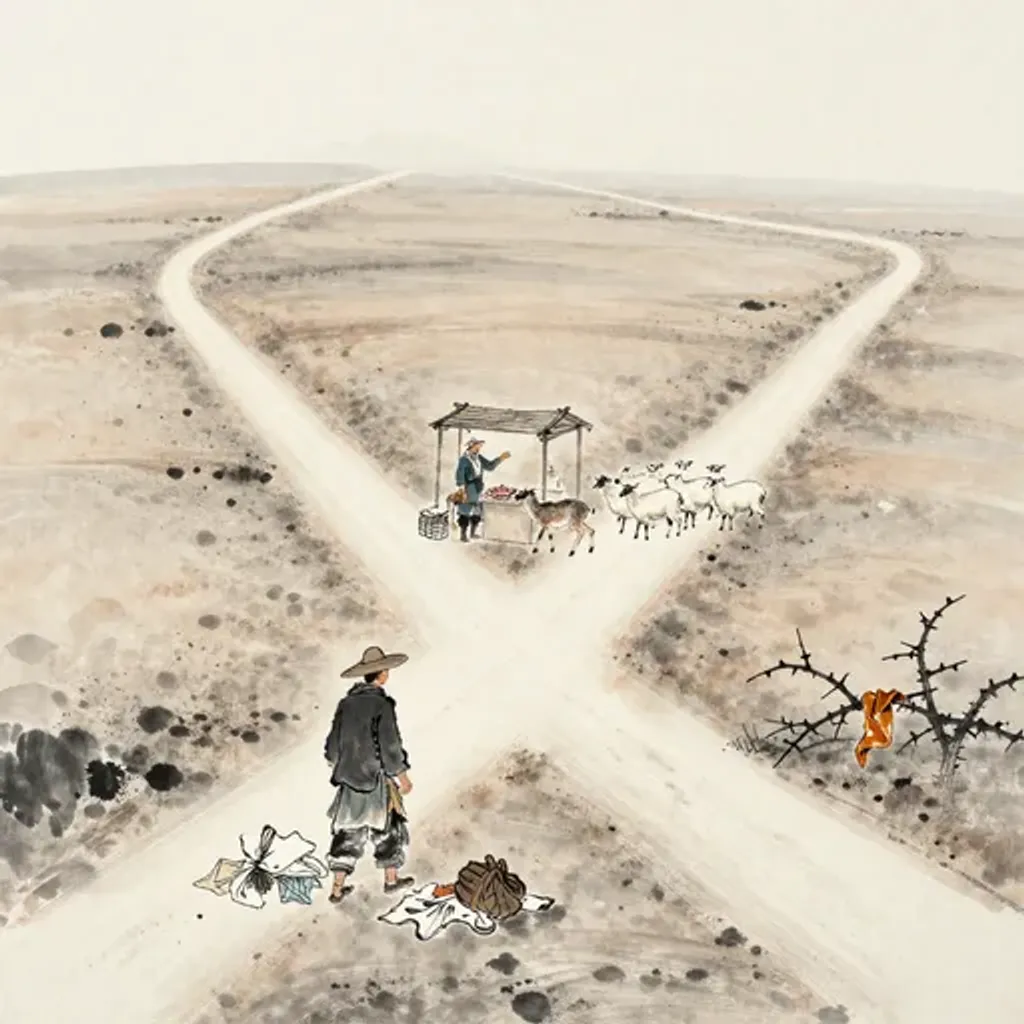
東行西窮,南北无功,張伯賣鹿,從者失羊。
Go east and the west is exhausted; go south or north, no success. Zhang Bo sells his deer; his followers lose their sheep.
— Jiao Yanshou, Yilin (Forest of Changes), 1st century BC
Commentary
Thunder above heaven propels action in every direction, yet nothing connects. East meets exhaustion, west finds poverty, south and north yield no result. Zhang Bo sells his deer but his followers lose their sheep — a proverbial image of misdirected commerce where gain in one quarter leaks away in another. The name Zhang Bo may reference a minor historical figure or serve as a generic type for the merchant who chases profit without a coherent strategy. From Great Power to Conflict, heaven and water move in opposing directions. The energetic force of Dazhuang, applied without focus, scatters into the adversarial friction of Song. Every venture becomes a lawsuit, every trade a dispute, because raw power without deliberate planning simply generates friction wherever it lands.
大壯 → 師
Hexagram 34 → Hexagram 7: The Army
Changing lines: 1, 3, 4
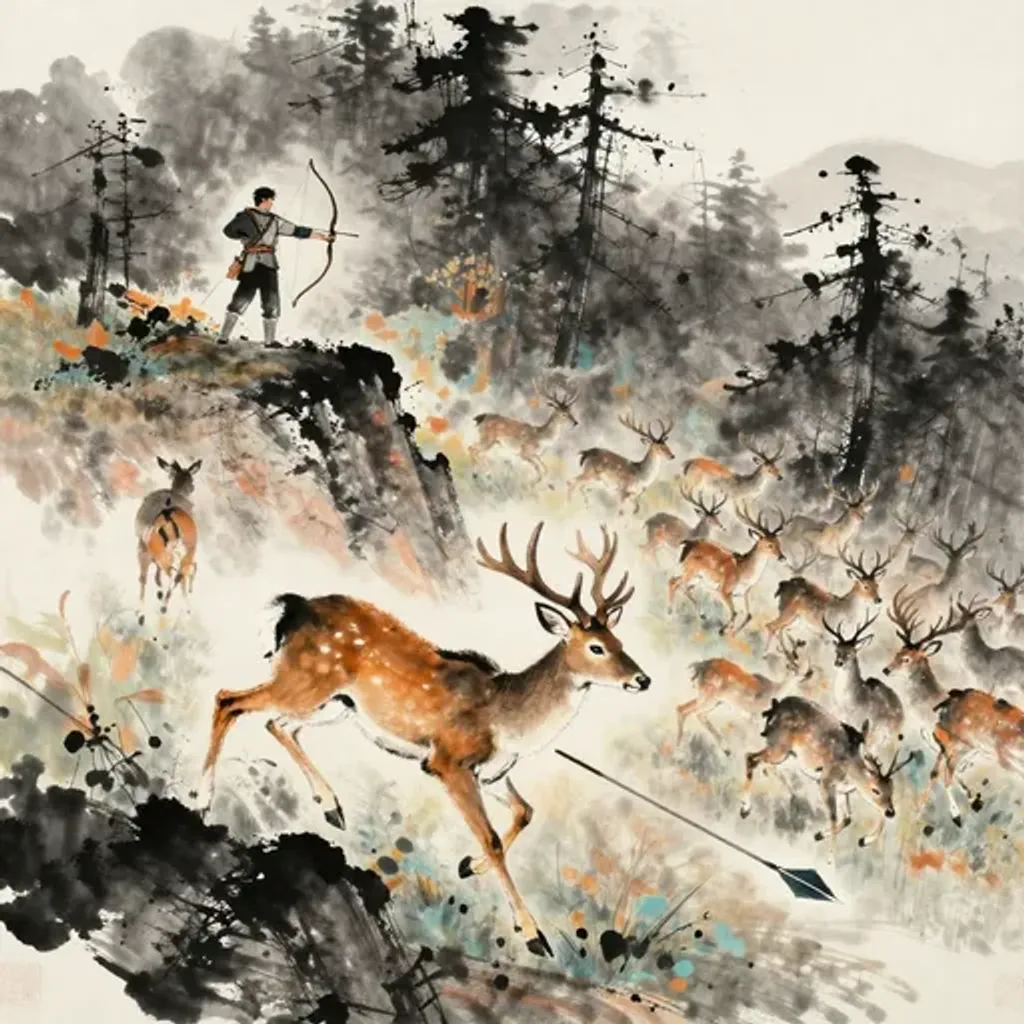
鹿下西山,欲歸其群,逢羿箭鋒,死於矢端。
A deer descends the western mountain, longing to rejoin its herd. It meets the arrow-point of Yi; it dies upon the shaft.
— Jiao Yanshou, Yilin (Forest of Changes), 1st century BC
Commentary
Thunder above heaven drives the deer down the western mountain, seeking to rejoin its herd. But the legendary Archer Yi waits with drawn bow, and the deer meets its end on the arrow's point. Yi's name evokes both the mythological sun-shooter and the historical lord of the Youqiong clan — in either case, an embodiment of lethal precision. The deer's longing for its group becomes the very impulse that delivers it into danger. From Great Power to the Army, the transformation is stark: earth contains water in Shi, the disciplined force hidden within the landscape. What appeared as open terrain conceals a military trap. Power exercised without reconnaissance meets organized, patient lethality.
大壯 → 比
Hexagram 34 → Hexagram 8: Holding Together
Changing lines: 1, 2, 3, 4, 5
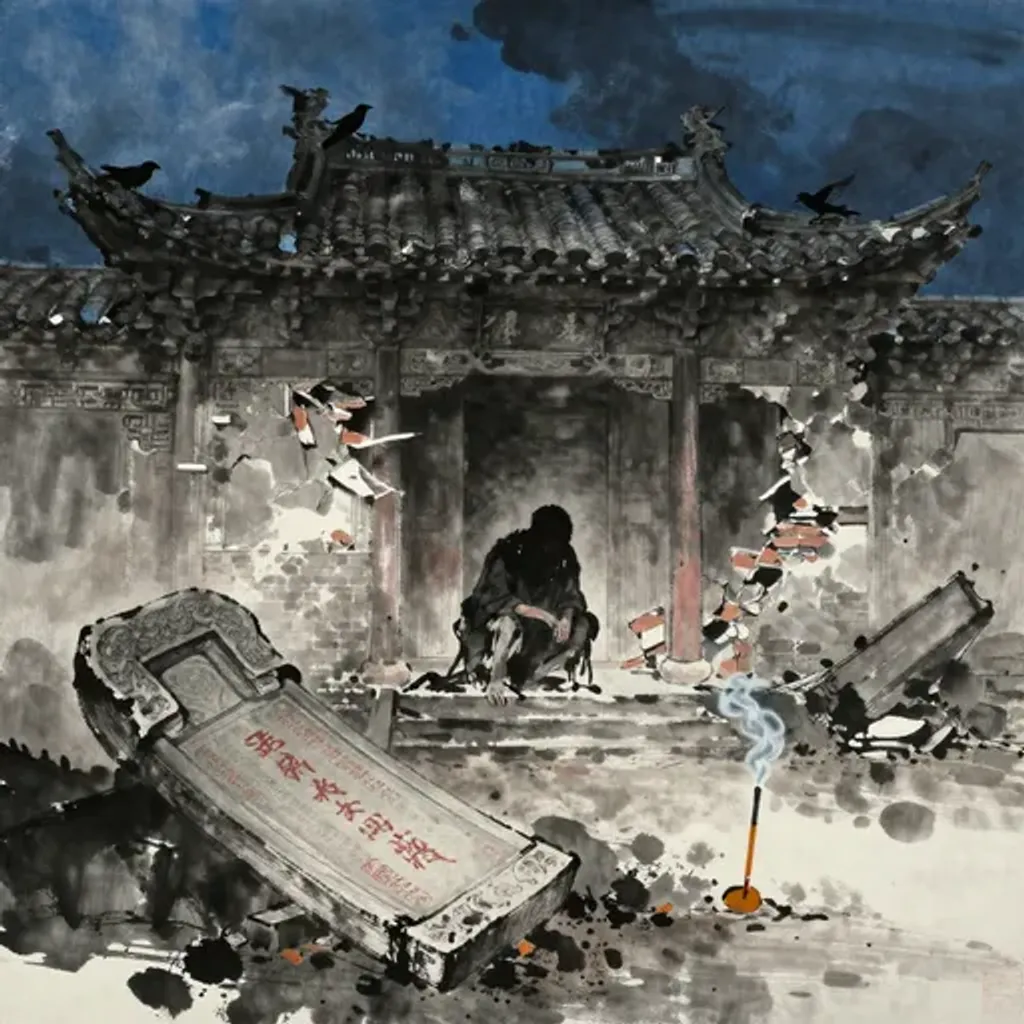
明夷兆初,三日為災,以讒後歸,名曰豎牛,剝亂叔孫,餒卒虛丘。
Brightness wounded at its beginning; for three days disaster reigns. By slander he returns at last, named Shu Niu; he undoes the Shusun clan, starving to death at the empty mound.
— Jiao Yanshou, Yilin (Forest of Changes), 1st century BC
Commentary
Thunder over heaven illuminates a tale of domestic treachery. The verse names Shuniu, the illegitimate eldest son of Shusun Bao of Lu, whose machinations form one of the darkest episodes in the Zuo Zhuan. Around 537 BC, Shuniu murdered his half-brother Zhongren, then systematically starved his own father to death to seize control of the Shusun clan. 'Brightness wounded at the beginning' and 'three days of disaster' evoke the Mingyi hexagram's imagery of light driven underground. From Great Power to Holding Together, the transformation is deeply ironic: water rests upon earth in Bi, the image of alliances and mutual trust. Yet Shuniu weaponized precisely these bonds of kinship, corrupting the family's internal cohesion to serve his ambition, until the patriarch perished in desolate solitude.
大壯 → 小畜
Hexagram 34 → Hexagram 9: Small Taming
Changing lines: 4, 5, 6
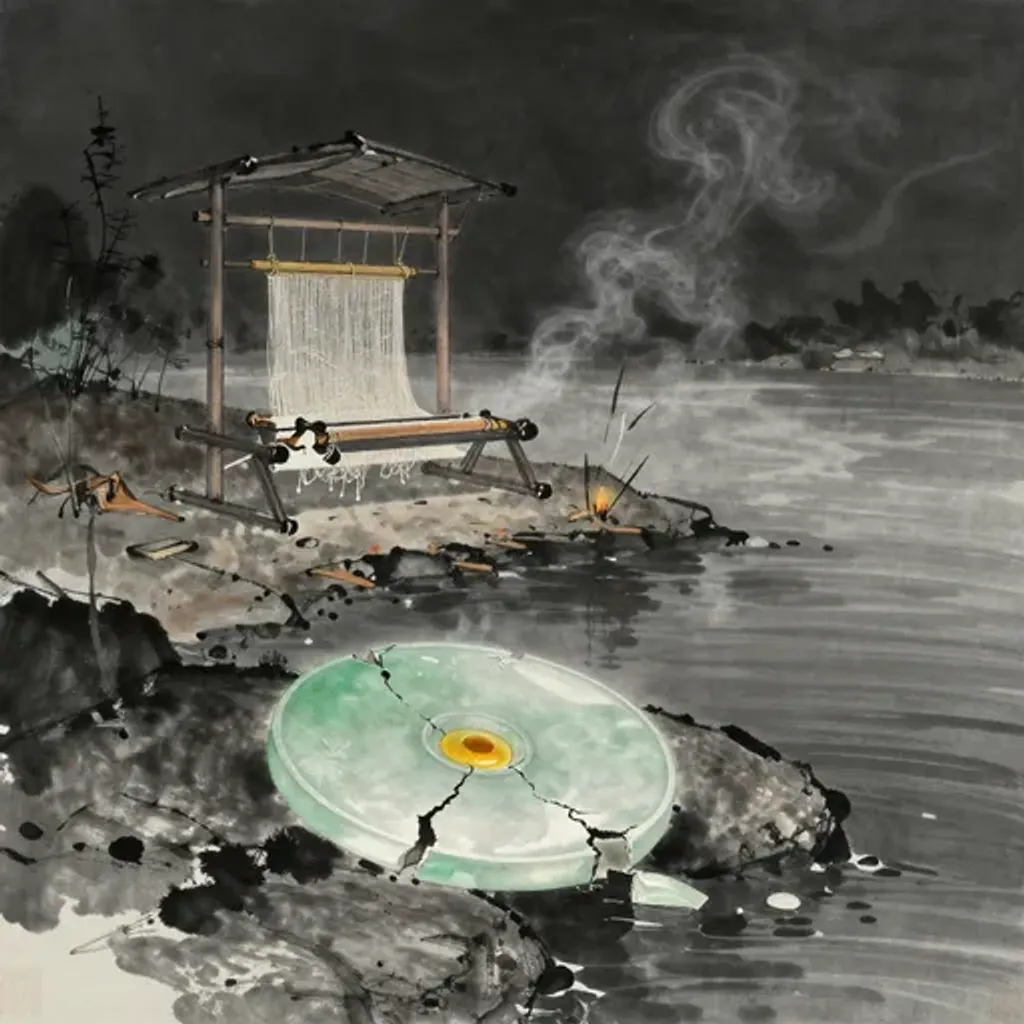
秦失嘉居,河伯為怪,還其御璧,神怒不祐,織組无文,燒香弗芬。
Qin loses its fine dwelling; the River Lord works mischief. The jade disc is returned; the spirits rage and grant no favor. The weave has no pattern; the incense burning yields no fragrance.
— Jiao Yanshou, Yilin (Forest of Changes), 1st century BC
Commentary
Thunder over heaven meets wind above heaven in the target hexagram, yet the divine refuses to cooperate. Qin loses its auspicious dwelling, and the Earl of the River stirs calamity. The returned jade disc — likely an offering rejected by the spirits — signals that heaven withdraws its favor. Incense burned brings no fragrance, woven fabric shows no pattern: every ritual gesture falls flat. The verse may allude to Qin's troubled relationship with the Chenbao cult or to broader failures of state sacrifice when virtue is absent. From Great Power to Small Taming, the wind that should gently accumulate cultural refinement instead scatters the offerings. Power without spiritual sincerity cannot be stored or cultivated; it simply dissipates, leaving the ritualist empty-handed.
大壯 → 履
Hexagram 34 → Hexagram 10: Treading
Changing lines: 3, 5, 6
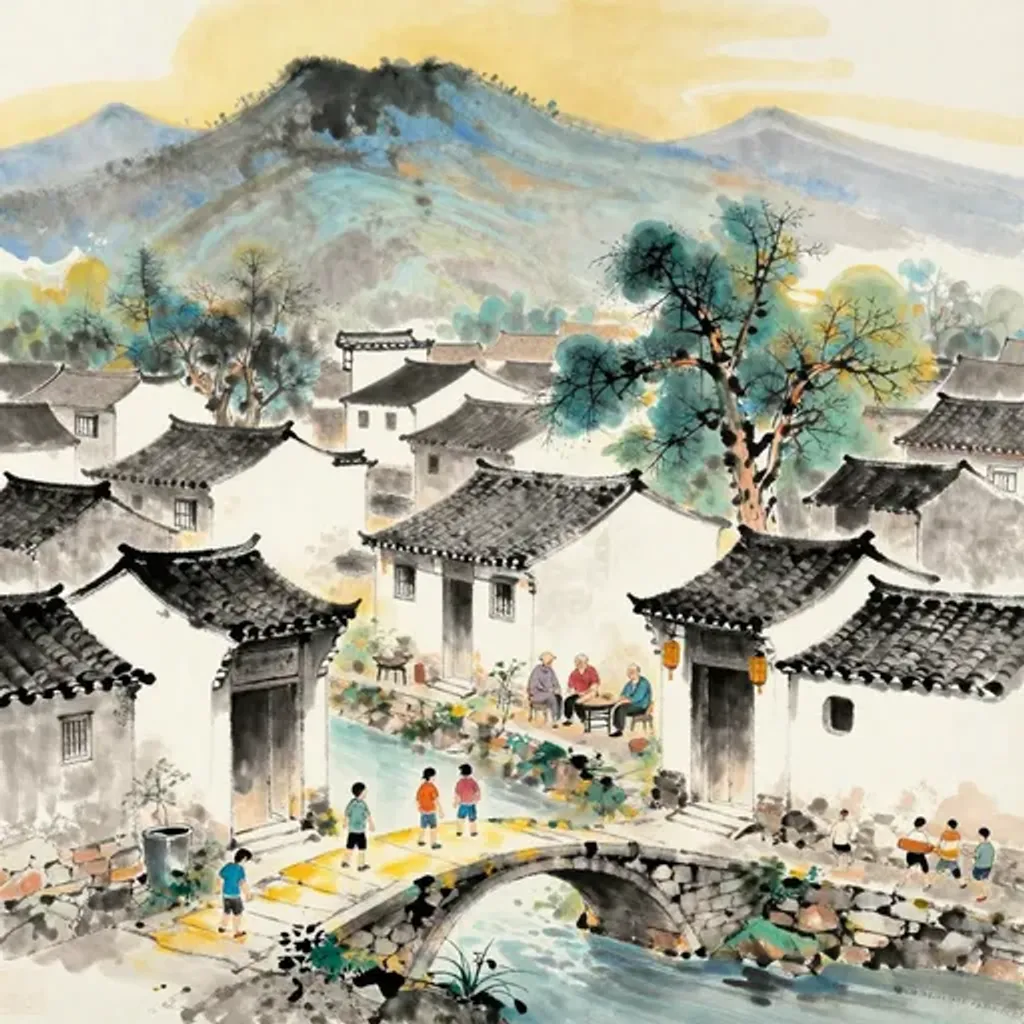
德至之君,禍不過鄰,使我世存,身無患災。
A ruler of utmost virtue; calamity does not cross the threshold. He lets our generations endure; the body knows neither peril nor disaster.
— Jiao Yanshou, Yilin (Forest of Changes), 1st century BC
Commentary
Thunder rolls above heaven, but the ruler of supreme virtue contains disaster at the threshold. Calamity does not spread beyond the neighbors; the sovereign's moral presence shields the realm, ensuring that he and his house endure without harm. This is the Confucian ideal of de — virtue so potent that it functions as a protective field, deflecting misfortune by sheer moral gravity. From Great Power to Treading, the transformation refines raw strength into disciplined conduct. Heaven above lake in Lu establishes proper hierarchy: one treads upon the tiger's tail yet is not bitten, because propriety governs every step. Power wielded with virtue does not merely survive — it walks through danger unscathed.
大壯 → 泰
Hexagram 34 → Hexagram 11: Peace
Changing lines: 4
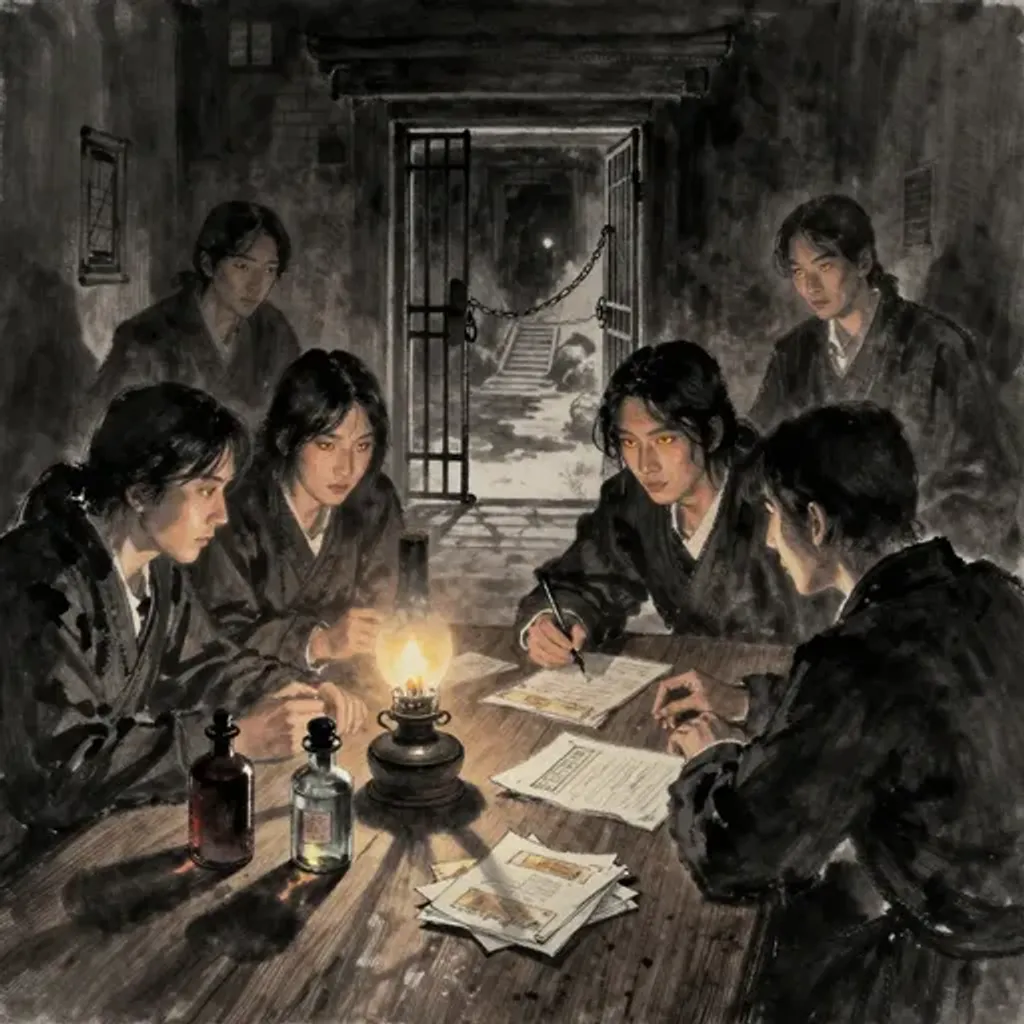
眾惡之堂,相聚為殃,出毒良人,使道不通。
A hall of assembled evils; they gather to bring calamity. They spread poison against the worthy; they make the road impassable.
— Jiao Yanshou, Yilin (Forest of Changes), 1st century BC
Commentary
Thunder above heaven shakes the hall where evil men gather, conspiring harm. The verse depicts a court dominated by a malicious clique: they congregate as a faction, spread poison against the virtuous, and block the roads of governance until nothing can pass. This is the perennial threat of sycophants clustering around power, forming a cabal that chokes legitimate administration. From Great Power to Peace, the transformation is paradoxical: heaven and earth exchange positions in Tai, creating the free flow of creative energy. Yet the verse warns that this ideal communion can be perverted. When the powerful gather not for harmony but for mutual predation, the very channels meant for circulation become conduits for venom.
大壯 → 否
Hexagram 34 → Hexagram 12: Standstill
Changing lines: 1, 2, 3, 5, 6
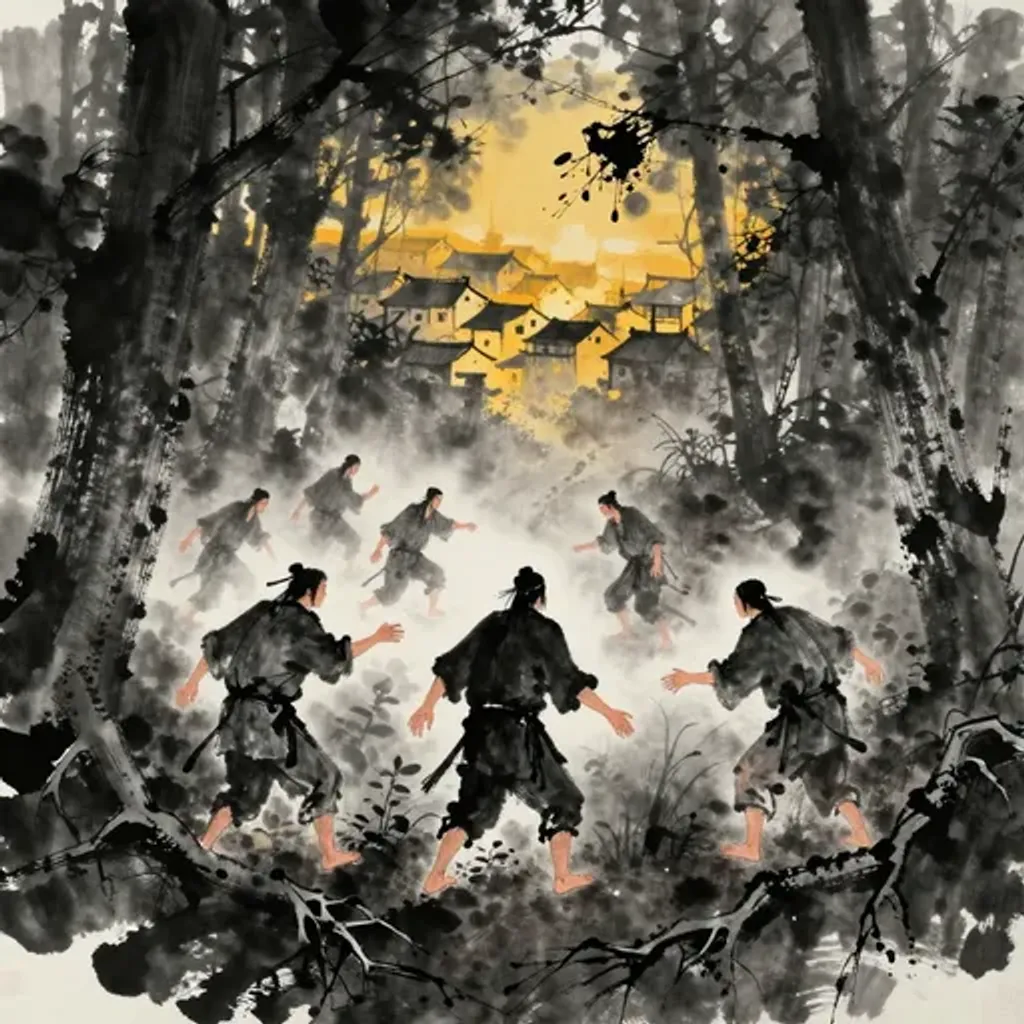
三痴六狂,欲之平鄉,迷惑失道,不知昏明。
Three fools and six madmen seek the level country. Bewildered, they lose the way; they cannot tell dusk from dawn.
— Jiao Yanshou, Yilin (Forest of Changes), 1st century BC
Commentary
Thunder over heaven drives three fools and six madmen toward a land of peace they cannot find. They seek the level plain but lose their way, unable to distinguish dusk from dawn. The numbers three and six suggest a critical mass of incompetence — not a single misguided soul but a whole cohort stumbling in collective delusion. From Great Power to Standstill, heaven and earth refuse to communicate. In Pi, heaven rises and earth sinks, each retreating into isolation. Power misdirected by confusion does not merely fail; it freezes into total obstruction. The road to the level country exists, but those who cannot tell light from dark will never find it, and their combined vigor only deepens the impasse.
大壯 → 同人
Hexagram 34 → Hexagram 13: Fellowship
Changing lines: 2, 5, 6
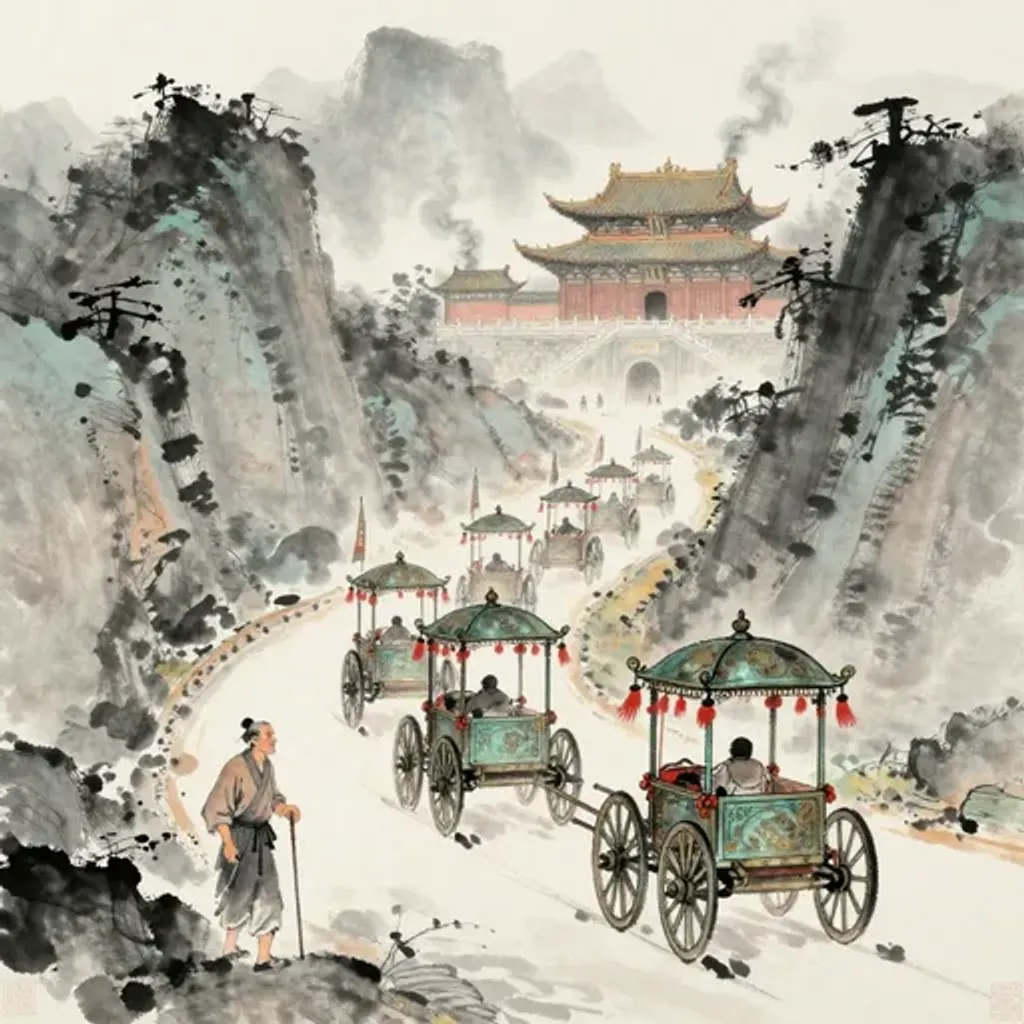
老弱无子,不能自理,郭氏雖憂,終不離咎,管子治國,侯伯之服,乘輿八百,尊祀祖德。
Old and frail, without an heir; unable to tend to himself. Though the Guo clan grieves, in the end they cannot escape blame. Guan Zhong governs the state; lords and earls submit. Eight hundred chariots in the retinue; he honors the ancestral rites.
— Jiao Yanshou, Yilin (Forest of Changes), 1st century BC
Commentary
Thunder above heaven yields to the union of heaven and fire in Fellowship. The verse opens with desolation — the old and weak without heirs, unable to manage affairs — then pivots sharply to Guan Zhong governing Qi. Under his stewardship, Duke Huan achieved hegemony: eight hundred war chariots assembled, ancestral virtue was honored, and the feudal lords submitted. Guan Zhong rose from poverty and near-execution to become the architect of Qi's dominance, a transformation from helplessness to supreme administrative power. From Great Power to Fellowship, fire blazes alongside heaven, classifying and unifying diverse peoples. The verse embodies this: what begins as isolated weakness becomes, through capable leadership, a gathering of allies under shared purpose.
大壯 → 大有
Hexagram 34 → Hexagram 14: Great Possession
Changing lines: 6
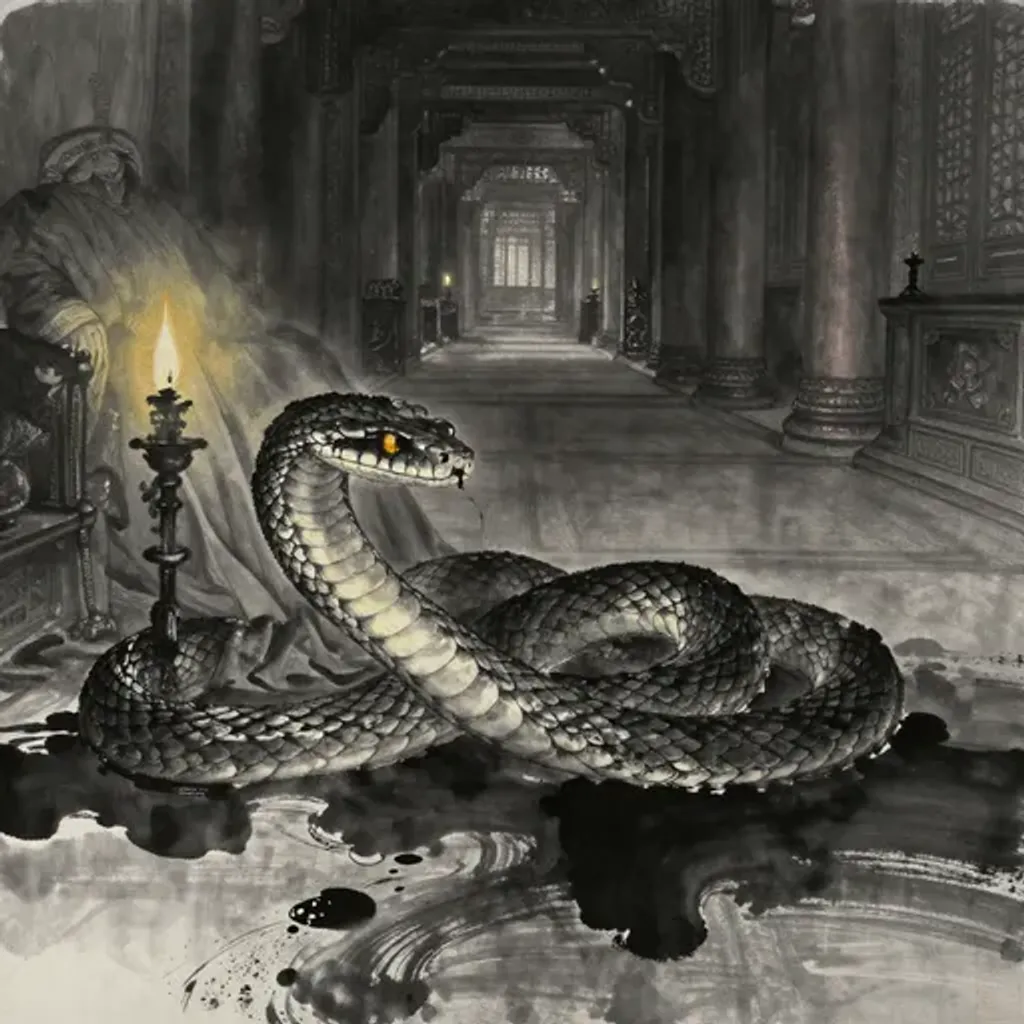
褒后生蛇,經老皆微,追跌衰光,酒滅黃離。
Lady Bao gave birth to a serpent; through age all things diminish. Stumbling in declining light; wine extinguishes the yellow flame.
— Jiao Yanshou, Yilin (Forest of Changes), 1st century BC
Commentary
Thunder above heaven illuminates the disastrous lineage of Bao Si, the consort who brought down the Western Zhou. The verse traces her mythological origin: the 'serpent born of Lady Bao' refers to the ancient dragon spittle that was sealed for generations until it produced a girl-child of uncanny beauty. 'Aging and withering' follows her path as radiance dims and glory fades — the beacon fires lit in jest, the feudal lords' trust squandered. Wine extinguishes the 'yellow brightness,' evoking the drunken dissolution of the court. From Great Power to Great Possession, fire blazes above heaven in Dayou, yet this verse inverts its promise: what should be great abundance becomes great ruin when beauty and power serve only indulgence.
大壯 → 謙
Hexagram 34 → Hexagram 15: Modesty
Changing lines: 1, 2, 4
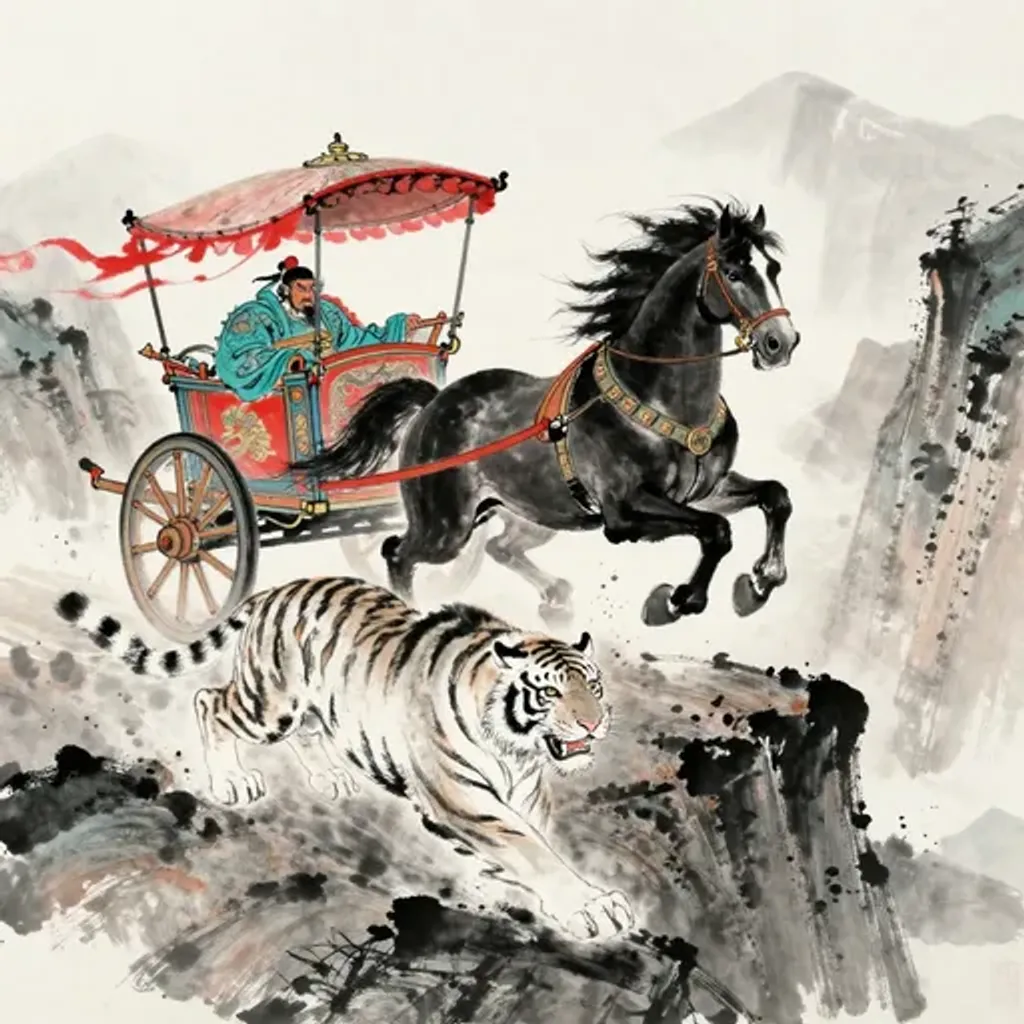
驄𩦞黑𩭳,東歸高鄉,白虎推輪,蒼龍把衡,遂至夷傷,不離咎殃。
A dappled horse with black mane gallops east toward the highland. White Tiger pushes the wheel; Azure Dragon grasps the crossbar. At last they meet with wound and ruin; they do not escape calamity.
— Jiao Yanshou, Yilin (Forest of Changes), 1st century BC
Commentary
Thunder over heaven sends a dappled stallion with dark mane galloping eastward toward the highlands. The White Tiger pushes the wheel and the Azure Dragon grasps the crossbar — two of the Four Celestial Symbols yoked to a single chariot, cosmic forces deployed in tandem. Yet despite this magnificent equipage, the journey ends in injury and blame. From Great Power to Modesty, the mountain hidden within the earth in Qian represents the antithesis of this display. The verse warns that even when one commands heaven's own guardians, flaunting such power invites disaster. The destination demanded humility; instead, the rider arrived with celestial pomp, and the mismatch between force and occasion proved ruinous.
大壯 → 豫
Hexagram 34 → Hexagram 16: Enthusiasm
Changing lines: 1, 2, 3
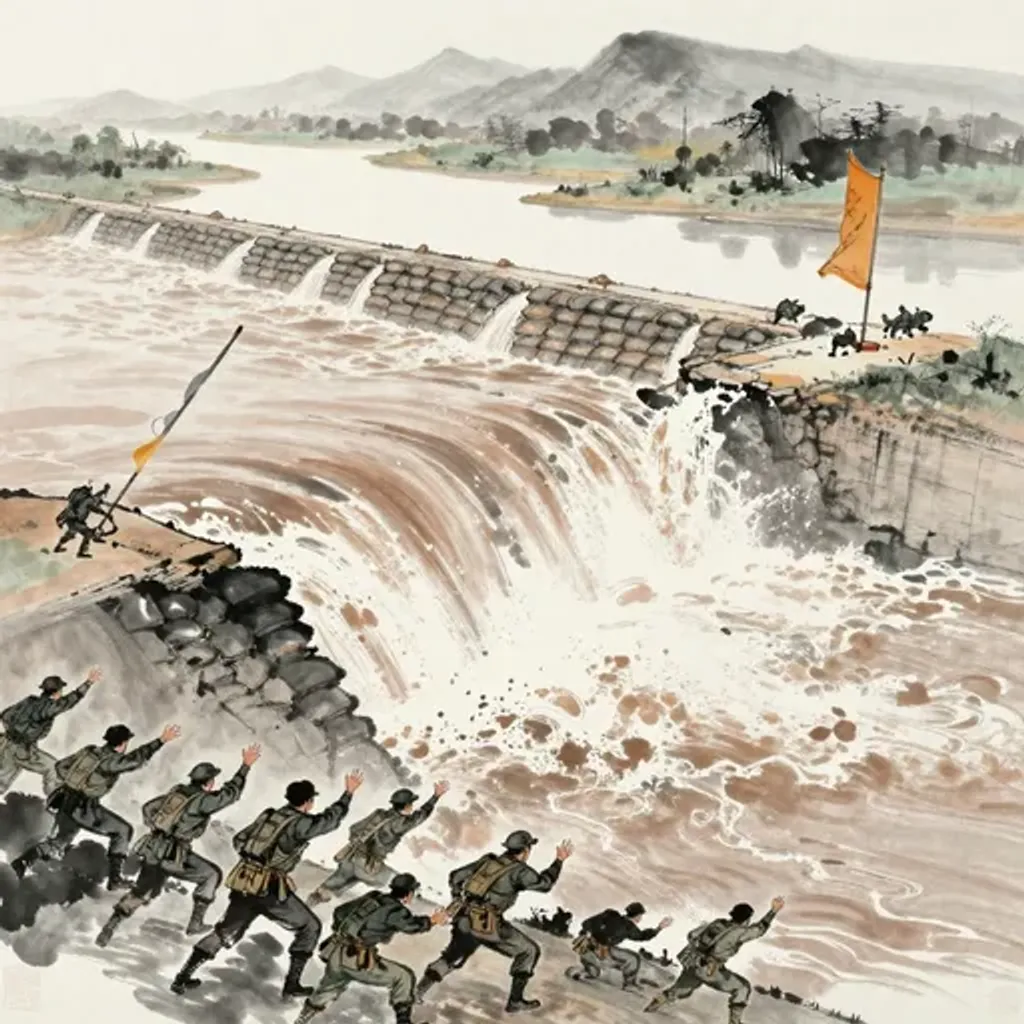
信譎龍且,塞水上流,半涉決囊,楚師覆凶。
Trusting in deceit against Long Ju; he dams the river's upper flow. At mid-crossing the sandbags burst; the army of Chu is overthrown.
— Jiao Yanshou, Yilin (Forest of Changes), 1st century BC
Commentary
Thunder above heaven sends a flood crashing down upon the unwary. The verse alludes to Han Xin's devastating stratagem at the Battle of the Wei River in 204 BC. The Chu general Long Ju, brave but credulous, advanced to engage Han Xin's forces. Han Xin had secretly dammed the upper river with sandbags; when Long Ju's troops were halfway across, the dam was breached. The torrent swallowed the Chu army, and Long Ju perished in the deluge. From Great Power to Enthusiasm, thunder erupts from the earth in Yu — a surge of energy released with perfect timing. Han Xin's genius lay not in brute force but in choreographing nature's power to strike at the precise moment of vulnerability.
大壯 → 隨
Hexagram 34 → Hexagram 17: Following
Changing lines: 2, 3, 5
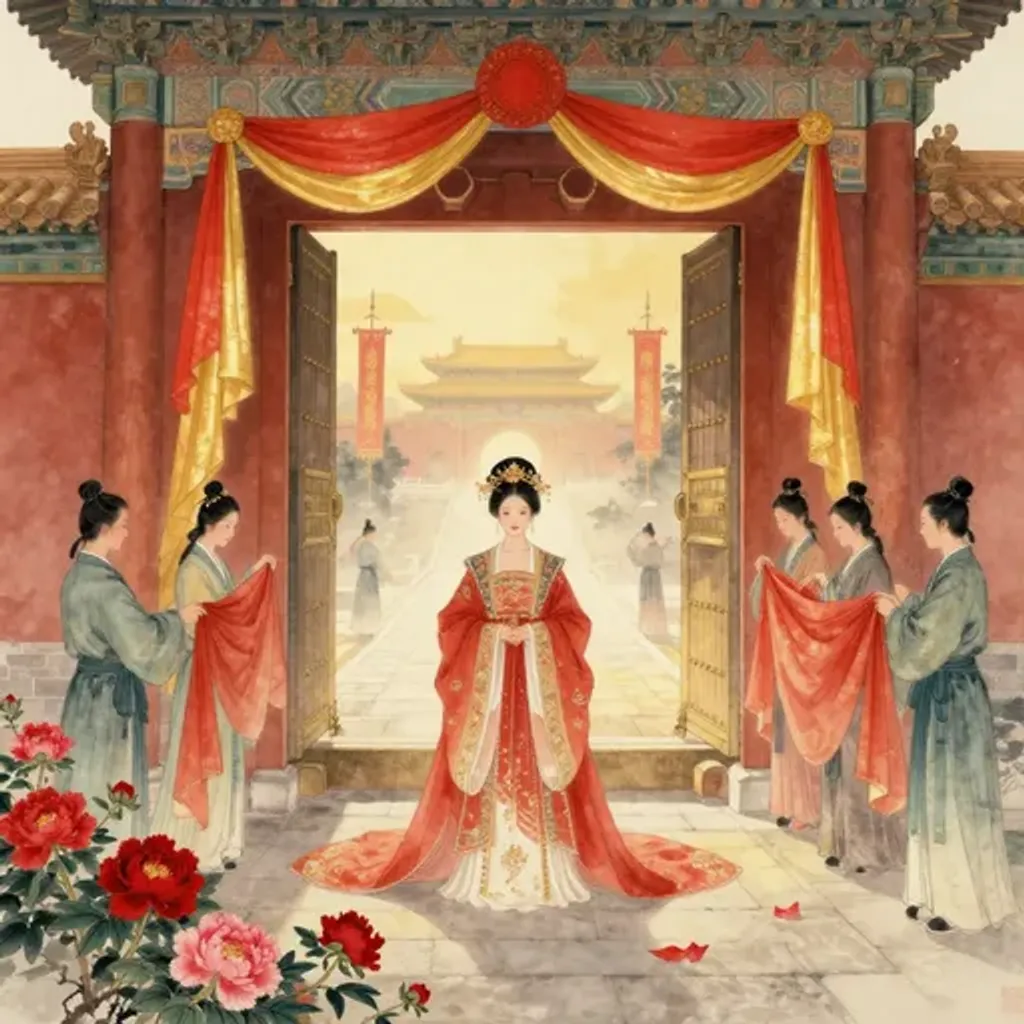
有莘季女,為王妃后,貴夫壽子,母字四海。
The young woman of Youxin becomes royal consort and queen. Noble husband, long-lived sons; mother to all within the four seas.
— Jiao Yanshou, Yilin (Forest of Changes), 1st century BC
Commentary
Thunder above heaven heralds a union of cosmic proportions. The maiden of Youshen becomes queen — this is the woman of the You Shen clan who married King Tang of Shang, bringing with her the brilliant cook Yi Yin, who would become the dynasty's founding minister. A noble husband, long-lived sons, and the title 'Mother of the Four Seas' mark her as the ideal consort whose influence radiates outward to encompass the realm. From Great Power to Following, lake rests within thunder in Sui: joyful responsiveness within dynamic movement. The verse captures Following's essential mechanism — greatness attracts loyalty not through domination but through the magnetic pull of virtue, and the Youshen maiden's marriage set in motion the entire Shang enterprise.
大壯 → 蠱
Hexagram 34 → Hexagram 18: Work on the Decayed
Changing lines: 1, 4, 6
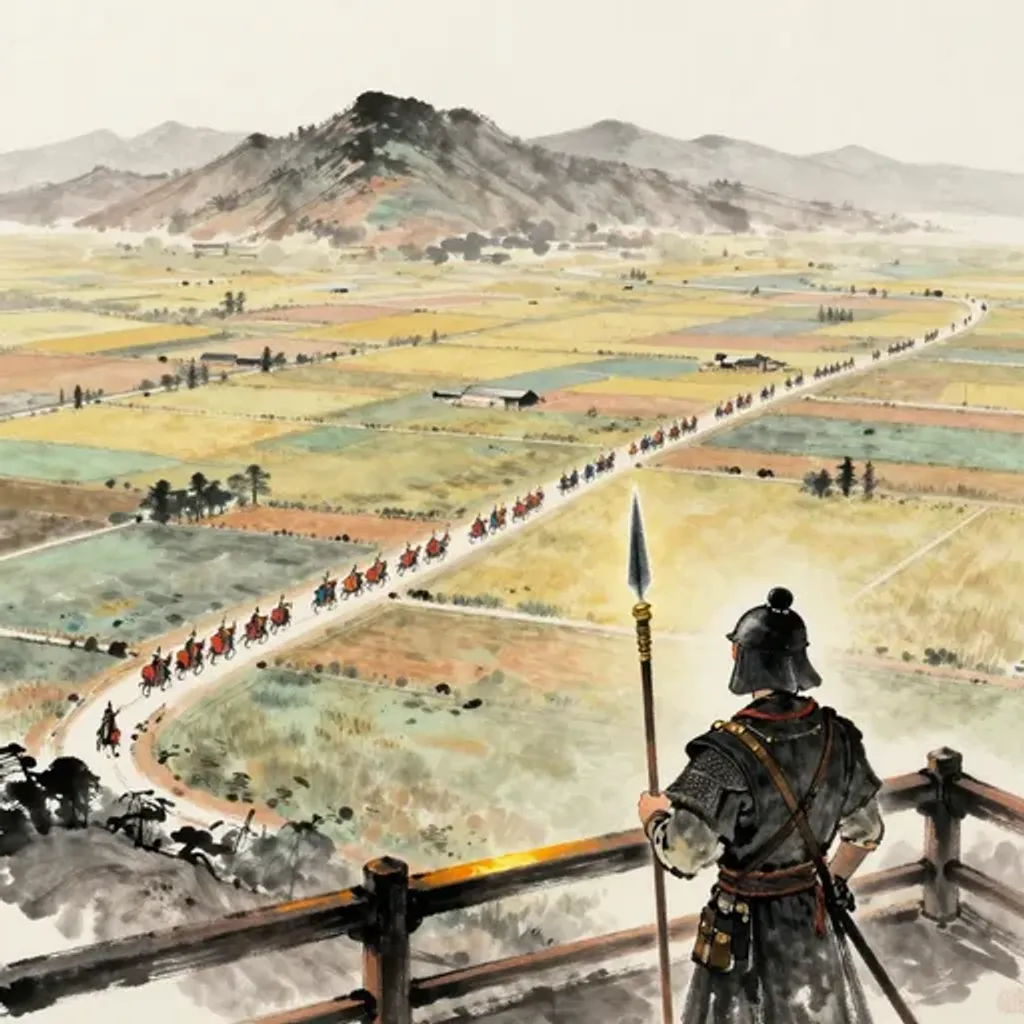
德被八表,蠻夷率服,蝥賊不作,道無苛慝。
Virtue covers the eight directions; the barbarian peoples all submit. Pests and brigands do not arise; the road is free of cruelty and evil.
— Jiao Yanshou, Yilin (Forest of Changes), 1st century BC
Commentary
Thunder above heaven extends virtue to the eight directions. Barbarian peoples submit willingly, pest insects cease their destruction, and the roads are free of cruelty and wickedness. This is the idealized vision of sage governance where moral radiation alone pacifies the world — no armies needed, no punishments required. The phrase 'virtue covers the eight regions' echoes Han-era panegyric describing the reach of imperial civilization. From Great Power to Work on the Decayed, wind stirs beneath the mountain in Gu. The paradox is telling: Gu represents corruption that must be repaired, yet the verse describes a world already perfected. The implication is that such perfection is the result of having already done the difficult work of renovation — power channeled into moral repair yields a realm where decay no longer breeds.
大壯 → 臨
Hexagram 34 → Hexagram 19: Approach
Changing lines: 3, 4
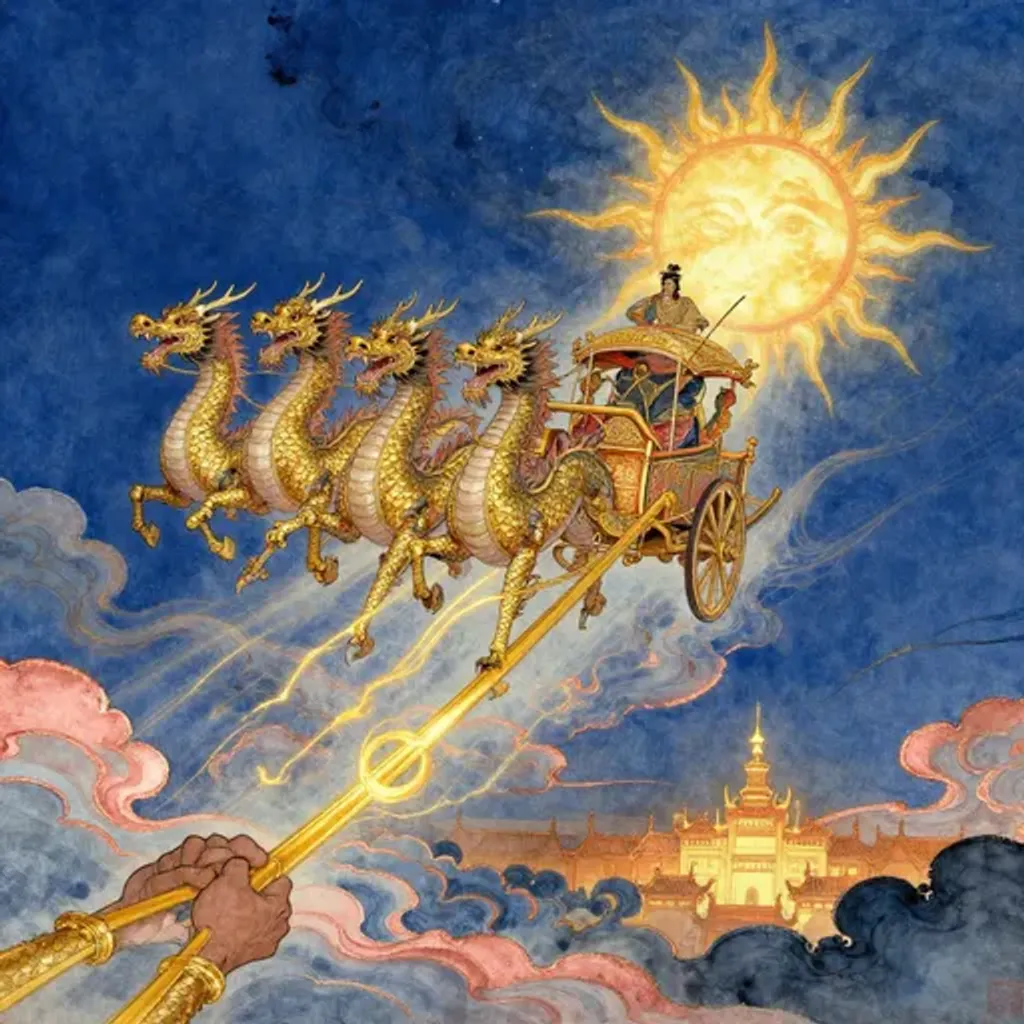
載日精光,驂駕六龍,祿命徹天,封為燕王。
Bearing the sun's brilliant light, riding a carriage drawn by six dragons. Fortune and destiny reach to heaven; enfeoffed as King of Yan.
— Jiao Yanshou, Yilin (Forest of Changes), 1st century BC
Commentary
Thunder above heaven carries the sun's radiance, with six dragons harnessed to the celestial chariot. The imagery draws from the I-Ching's own Creative hexagram: 'Time-riding on six dragons to patrol the heavens.' Fortune and mandate pierce through to heaven itself, and the reward is a kingship — 'enfeoffed as King of Yan.' This likely references an early Han enfeoffment, when meritorious generals received kingdoms. From Great Power to Approach, earth rests above lake in Lin, the image of authority drawing near to the people. The transformation captures how celestial mandate descends to earthly governance: the dragon-rider who commands heaven's brilliance now approaches the realm below, teaching without limit and sheltering the people without boundary.
大壯 → 觀
Hexagram 34 → Hexagram 20: Contemplation
Changing lines: 1, 2, 3, 4, 5, 6
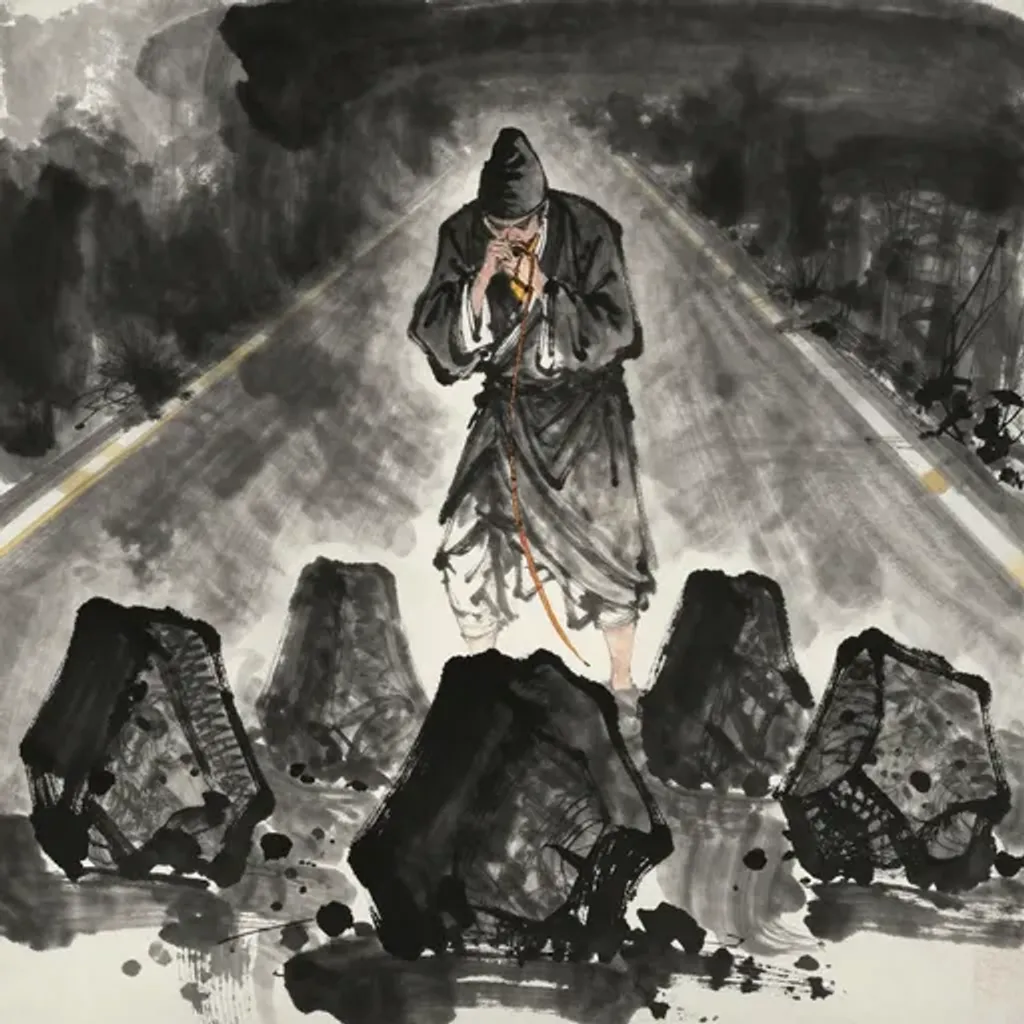
纓急縮頸,行不得前,五石示象,襄霸不成。
The cord pulls tight, the neck shrinks; one cannot go forward. Five stones show the omen; Duke Xiang's hegemony fails.
— Jiao Yanshou, Yilin (Forest of Changes), 1st century BC
Commentary
Thunder above heaven tightens the chin-strap until the neck contracts — one cannot advance at all. 'Five stones reveal an omen' may allude to Duke Xiang of Song, whose quixotic pursuit of hegemony ended in humiliating defeat at the Battle of Hong River in 638 BC. He insisted on fighting by the rules of chivalry against Chu's vastly superior forces, refusing to attack before the enemy had fully crossed the river. His hegemonic ambition never materialized. From Great Power to Contemplation, wind blows across the earth in Guan: the sage-king surveys the realm and sets teachings. The transformation suggests that when power is strangled by misplaced principle, one must step back and observe rather than press forward. Failed ambition demands not more force but deeper reflection.
大壯 → 噬嗑
Hexagram 34 → Hexagram 21: Biting Through
Changing lines: 2, 3, 6
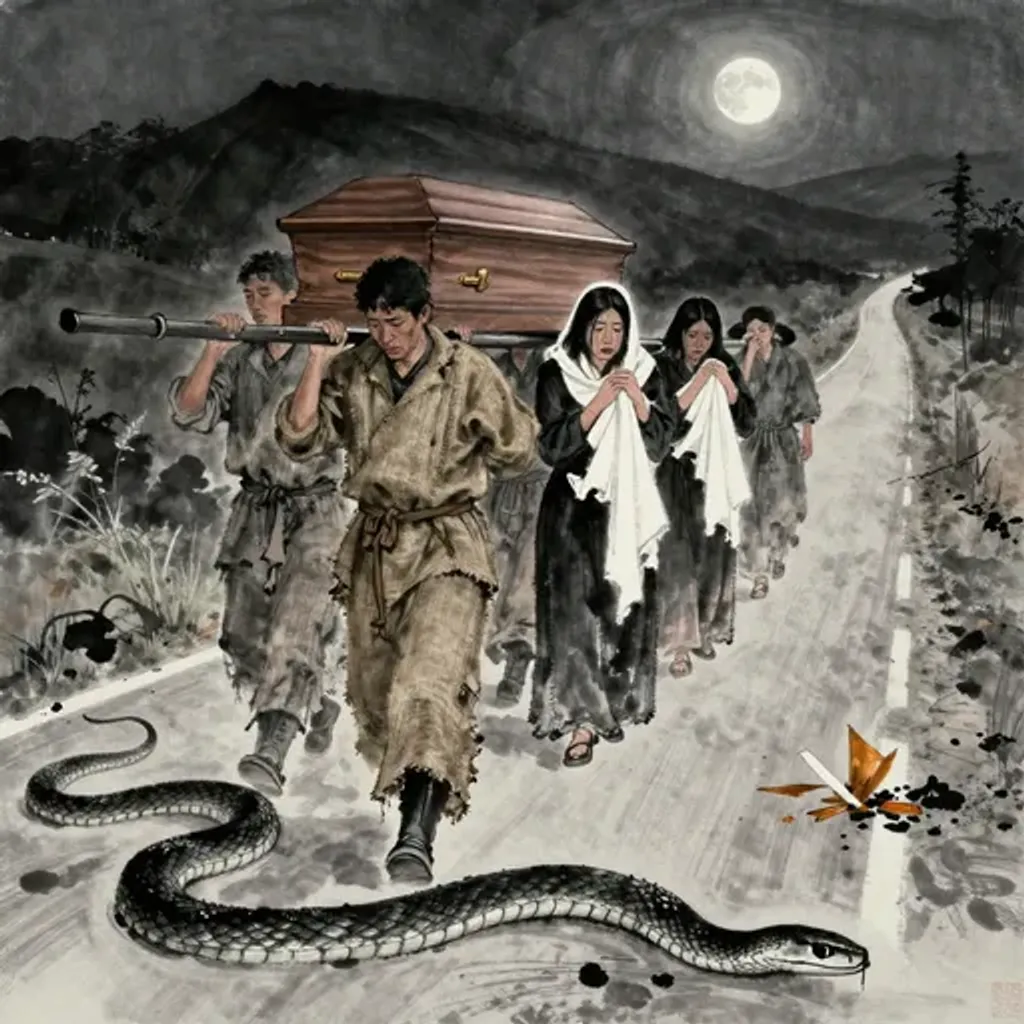
蛇失其公,載麻當喪,哀悲哭泣,送死離鄉。
The serpent loses its lord; hempen cloth is worn in mourning. Sorrow, weeping, and wailing; escorting the dead, departing the homeland.
— Jiao Yanshou, Yilin (Forest of Changes), 1st century BC
Commentary
Thunder above heaven announces a lord's death: the serpent loses its master. 'Loading hemp for mourning' and 'weeping in grief as the dead is sent from home' paint a funeral cortege departing the capital. The serpent losing its 'duke' may reference a specific Spring and Autumn lord whose death left his state leaderless — serpents in the Yilin often symbolize cunning subordinates or ill omens. From Great Power to Biting Through, fire and thunder combine in Shihe to enforce justice and clarify punishments. The transformation suggests that a lord's death, however grievous, triggers the mechanism of legal and institutional reckoning. When power's center falls, the apparatus of judgment must bite through the confusion to restore order.
大壯 → 賁
Hexagram 34 → Hexagram 22: Grace
Changing lines: 2, 4, 6
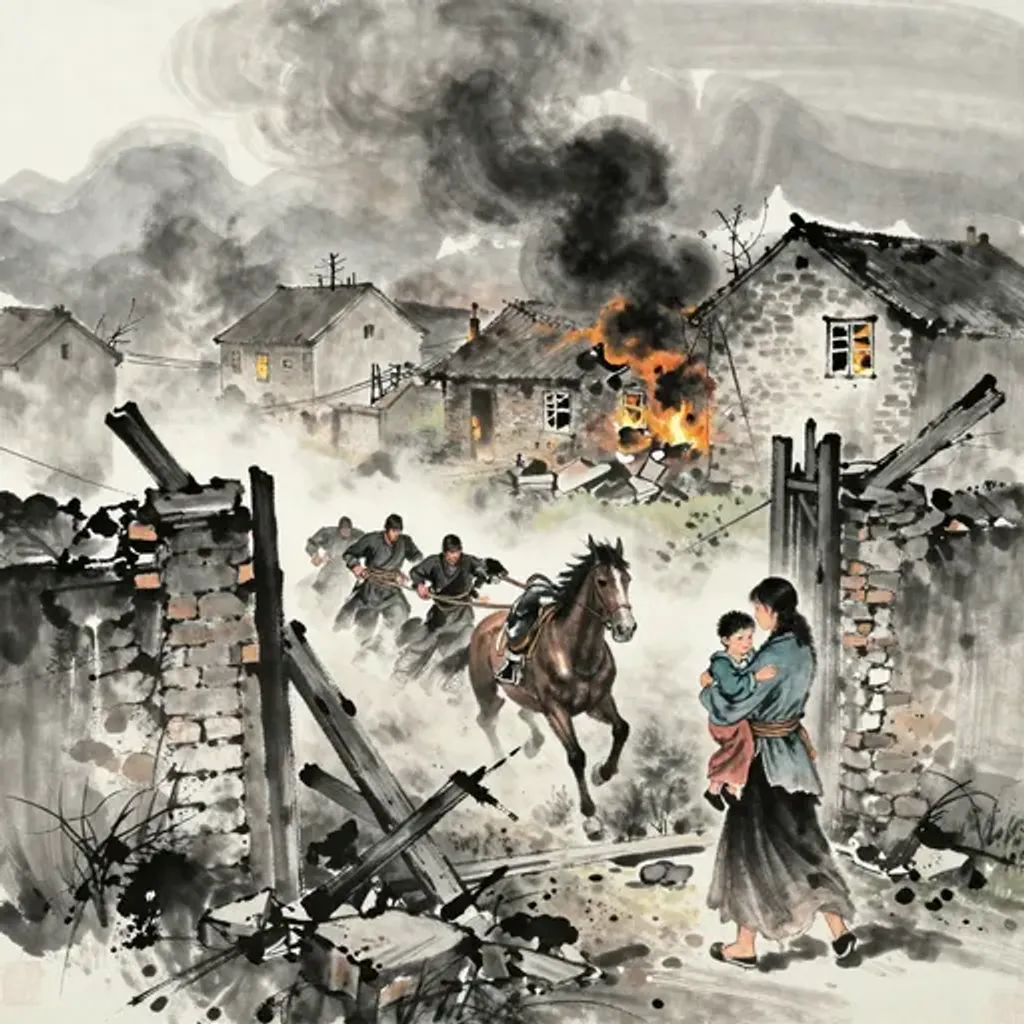
回隤不安,兵革為患,掠我妻子,客屬飢寒。
Turmoil and upheaval without rest; weapons and war bring disaster. They seize our wives and children; the sojourners are left in hunger and cold.
— Jiao Yanshou, Yilin (Forest of Changes), 1st century BC
Commentary
Thunder above heaven shakes the realm into ruin: the fortress walls crumble, armies rampage through the land, wives and children are seized, and the displaced endure cold and hunger. The verse depicts the devastation of war with unflinching directness — no allegory, no mythological distance, just the raw reality of military occupation. From Great Power to Grace, fire glows beneath the mountain in Bi, the hexagram of adornment and civilization. The transformation is savagely ironic: where there should be cultural refinement and aesthetic order, there is only plunder. Grace stripped bare reveals its dependence on stability; when the thunderclap of unrestrained power shatters civil society, beauty becomes the first casualty.
大壯 → 剝
Hexagram 34 → Hexagram 23: Splitting Apart
Changing lines: 1, 2, 3, 4, 6
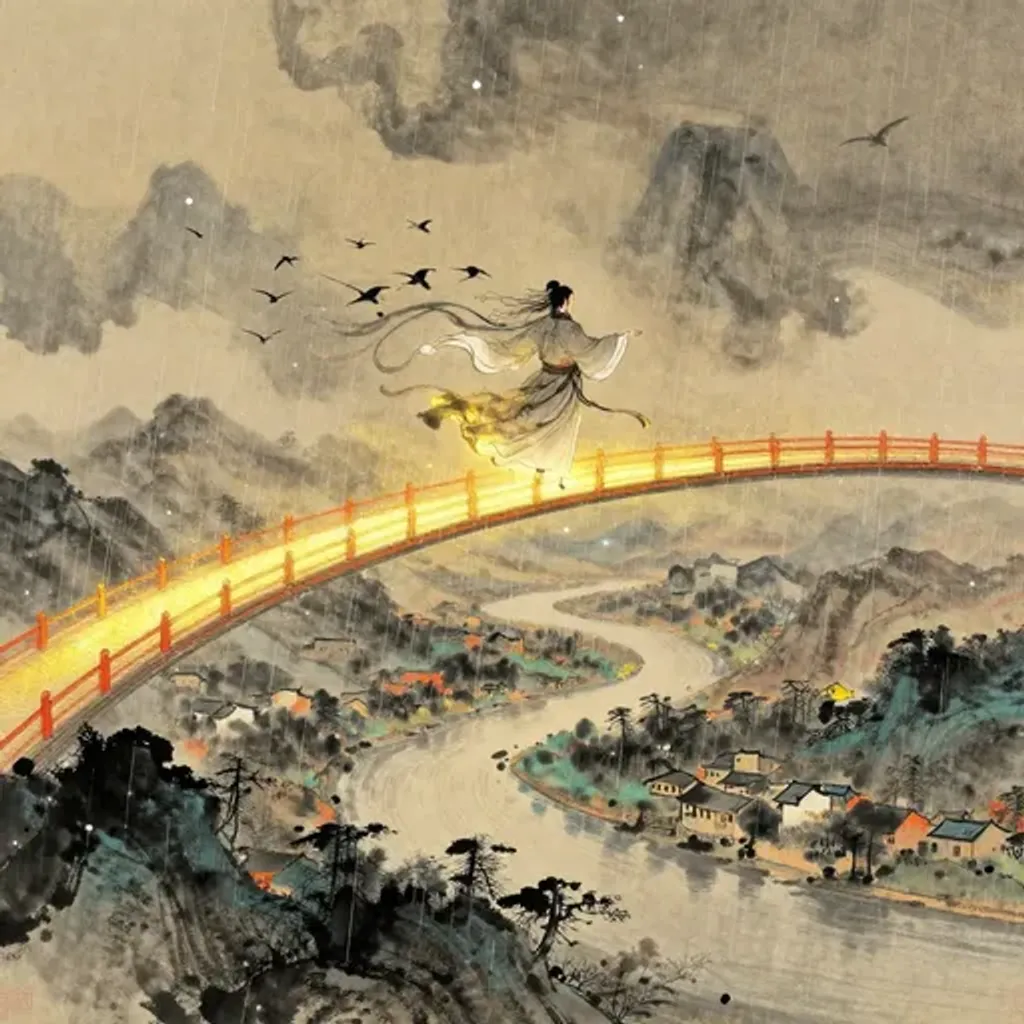
乘風雨橋,與鳥飛俱,一舉千里,見吾愛母。
Riding the wind on a rain bridge, soaring alongside the birds. One leap, a thousand li; I behold my beloved mother.
— Jiao Yanshou, Yilin (Forest of Changes), 1st century BC
Commentary
Thunder above heaven lifts the traveler into the sky: riding wind and rain across a bridge of clouds, flying alongside birds, covering a thousand li in a single leap to see one's beloved mother. The imagery is exhilarating — a fantasy of transcendence driven by filial longing. The emotional engine is not ambition but love, and the power that carries the traveler is not military but elemental. From Great Power to Splitting Apart, the mountain rests upon the earth in Bo, its base slowly eroding. The paradox cuts deep: this ecstatic flight ends at a hexagram of disintegration. Perhaps the mother is ill, the household crumbling; the urgency of the flight reveals the decay that awaits at the destination. Great power serves greatest need.
大壯 → 復
Hexagram 34 → Hexagram 24: Return
Changing lines: 2, 3, 4
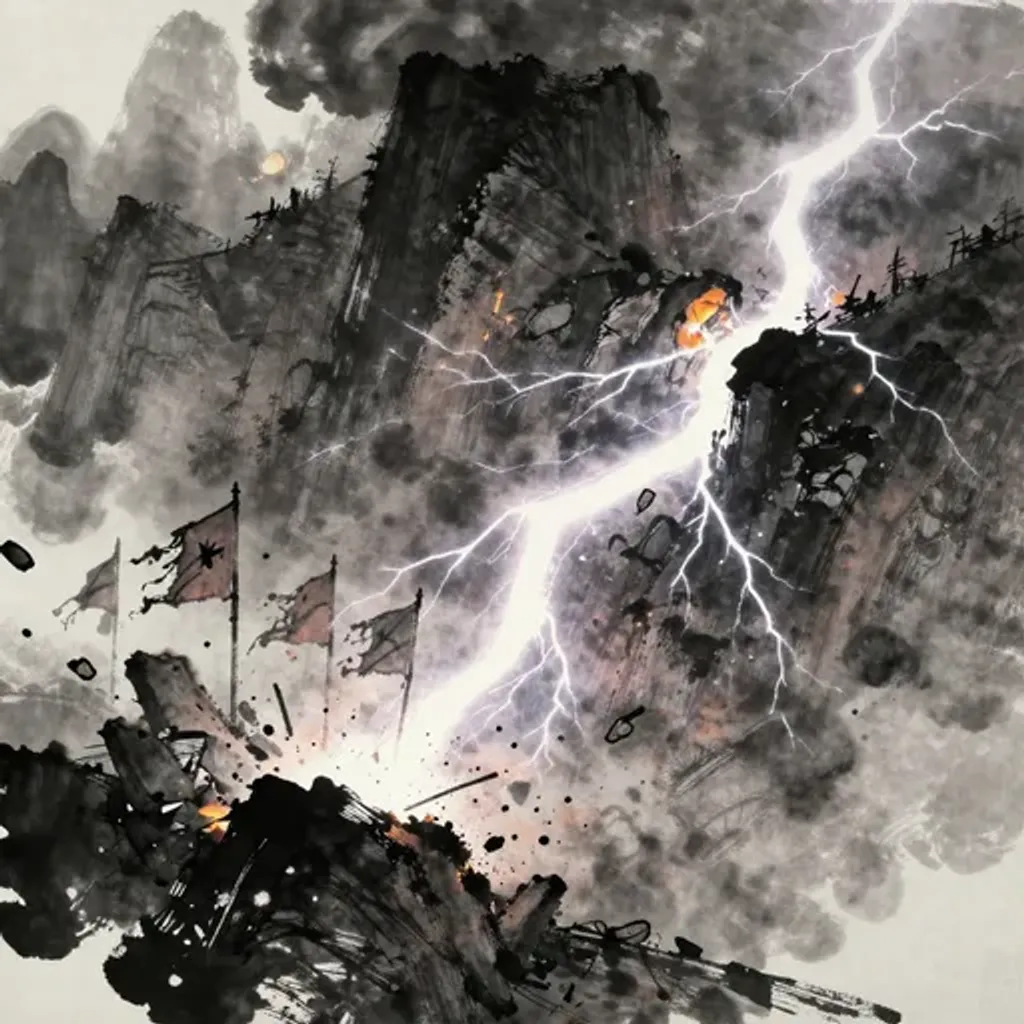
雷霆所擊,誅者五逆,磨滅無迹,有懼方息。
Where thunderbolts strike, they punish the five treasons. Ground to dust, no trace remains; only with dread does it cease.
— Jiao Yanshou, Yilin (Forest of Changes), 1st century BC
Commentary
Thunder above heaven doubles: Great Power transforms into Return, where thunder rests beneath the earth, gathering for renewal. The verse speaks of thunderbolts striking down the 'five rebellions' — the most extreme transgressions against the moral order. The guilty are ground to nothing, their traces obliterated, and only through fear does the disruption finally cease. This is cosmic justice delivered with overwhelming force, the thunder that punishes without appeal. From Dazhuang to Fu, the thunder that once raged in the heavens now returns to the earth, entering its period of rest at the winter solstice. The transformation suggests that after power has executed its harshest judgment, it must descend underground and regenerate. Destruction precedes renewal; fear precedes peace.
大壯 → 无妄
Hexagram 34 → Hexagram 25: Innocence
Changing lines: 2, 3, 5, 6
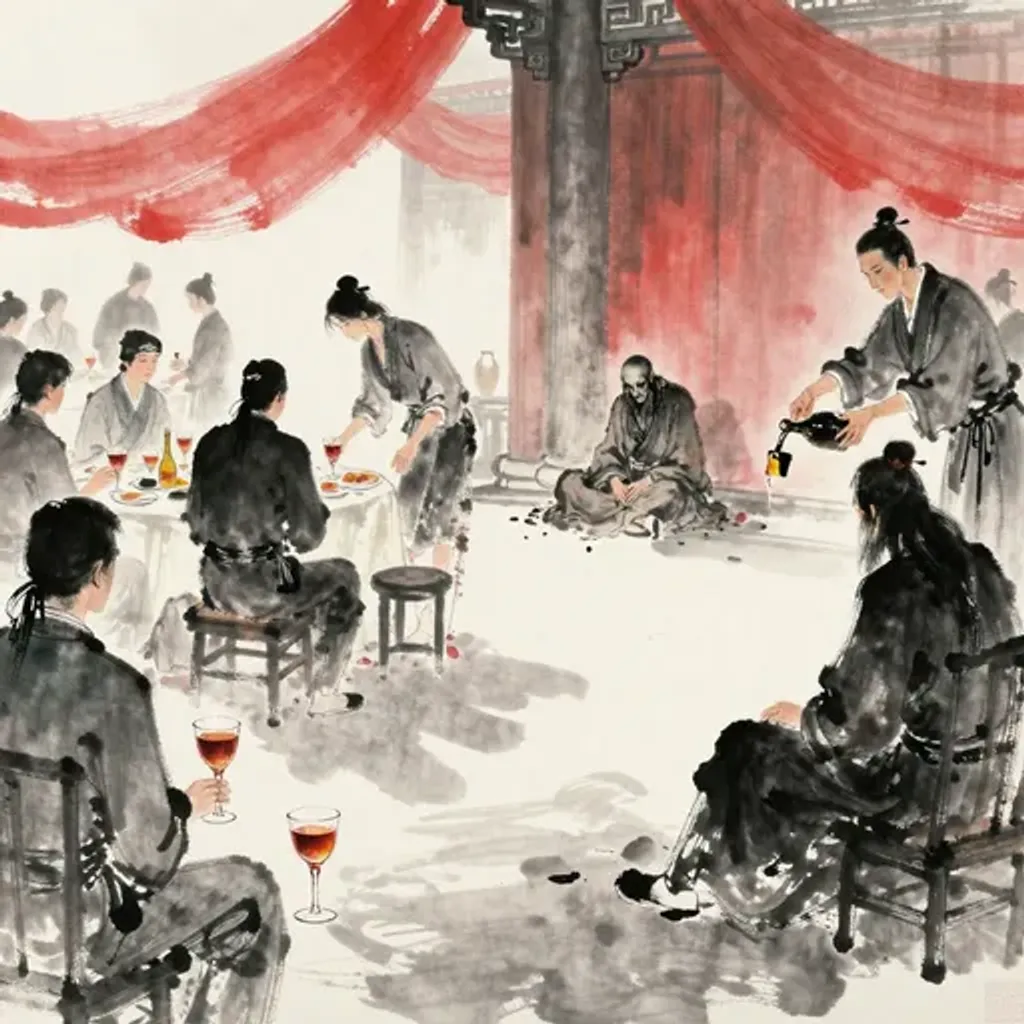
張氏揖酒,請謁左右,王叔枯槁,獨不蒙所。
Master Zhang raises his cup, welcoming guests on every side. Wang Shu, withered and haggard, alone receives no favor.
— Jiao Yanshou, Yilin (Forest of Changes), 1st century BC
Commentary
Thunder above heaven gives way to heaven and thunder moving together in Innocence. Zhang pours wine and toasts left and right, seeking favor and audience with the powerful. But Wang Shu withers alone, receiving no shelter. The contrast between the social climber's glad-handing and the solitary figure's neglect captures a perennial injustice: those who flatter are rewarded, while the upright go unrecognized. From Great Power to Innocence, the transformation poses a sharp question. Wuwang demands action free of ulterior motive — 'the unexpected,' where one acts in alignment with heaven rather than human calculation. The verse suggests that Zhang's networking, however effective, violates this principle, while Wang Shu's desolation, however painful, preserves it.
大壯 → 大畜
Hexagram 34 → Hexagram 26: Great Taming
Changing lines: 4, 6
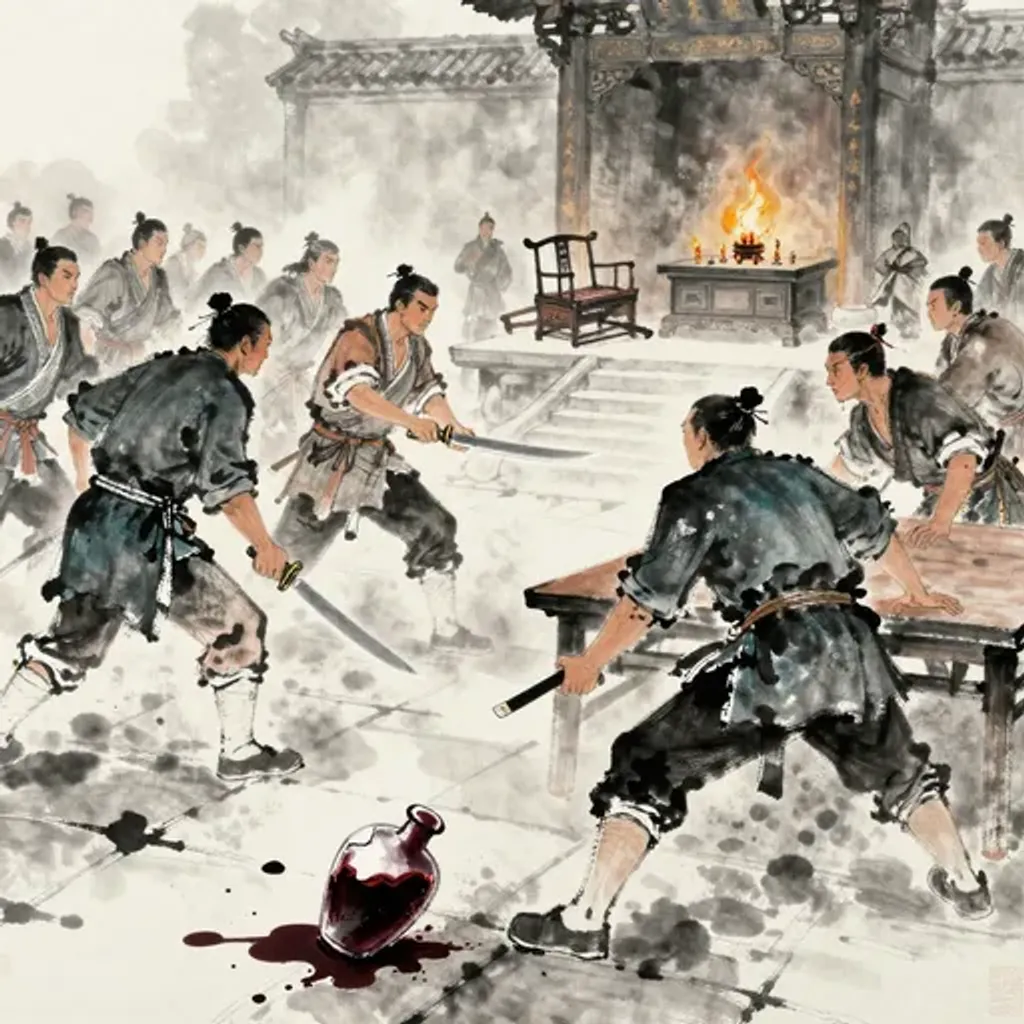
坐爭立訟,紛紛匈匈,卒成禍亂,災及家公。
Seated they quarrel, standing they litigate; in turmoil and uproar. At last it becomes catastrophe and rebellion; disaster reaches the head of the house.
— Jiao Yanshou, Yilin (Forest of Changes), 1st century BC
Commentary
Thunder above heaven erupts into litigation and chaos. People sit down quarreling and stand up suing, the noise and confusion escalating without end, until the disorder crystallizes into genuine calamity that strikes the head of the household. The verse traces the familiar trajectory of petty disputes that metastasize into institutional collapse. From Great Power to Great Taming, heaven is stored within the mountain in Daxu — the image of accumulated wisdom restraining force. The transformation is cautionary: the mountain that should contain heaven's energy instead watches it leak through cracks of contention. When strength is squandered on internal strife rather than stored for purposeful action, even the patriarch cannot escape the consequences.
大壯 → 頤
Hexagram 34 → Hexagram 27: Nourishment
Changing lines: 2, 3, 4, 6
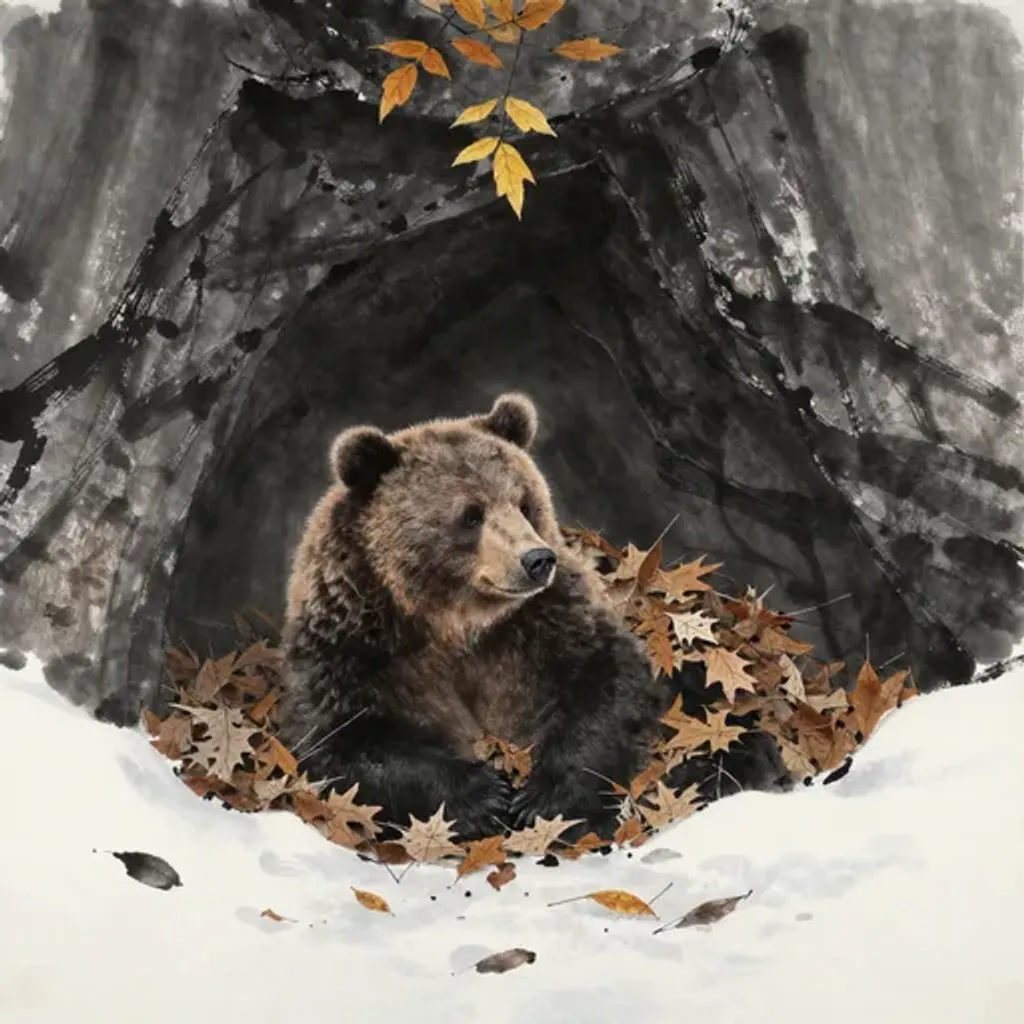
霜降閉戶,蟄虫隱處,不見日月,與死為伍。
The bear enters its cave, dry leaves for bedding. Snow seals the cave mouth — no sound from outside enters.
— Jiao Yanshou, Yilin (Forest of Changes), 1st century BC
Commentary
Thunder above heaven yields to the mountain's nourishing stillness. The original verse reads: 'At Frost Descent the doors close, hibernating creatures hide away, seeing neither sun nor moon, keeping company with death.' This is the radical withdrawal of winter dormancy — not death itself but death's neighbor, the suspension of all activity until conditions permit renewal. The creatures do not fight the season; they surrender to it completely. From Great Power to Nourishment, mountain rests above thunder in Yi: careful attention to what enters and exits, guarding the mouth. The transformation maps exactly onto hibernation's logic. Power that once thundered across heaven now contracts into absolute stillness, sustaining life through self-imposed restriction, nourishing through refusal to consume.
大壯 → 大過
Hexagram 34 → Hexagram 28: Great Exceeding
Changing lines: 1, 5
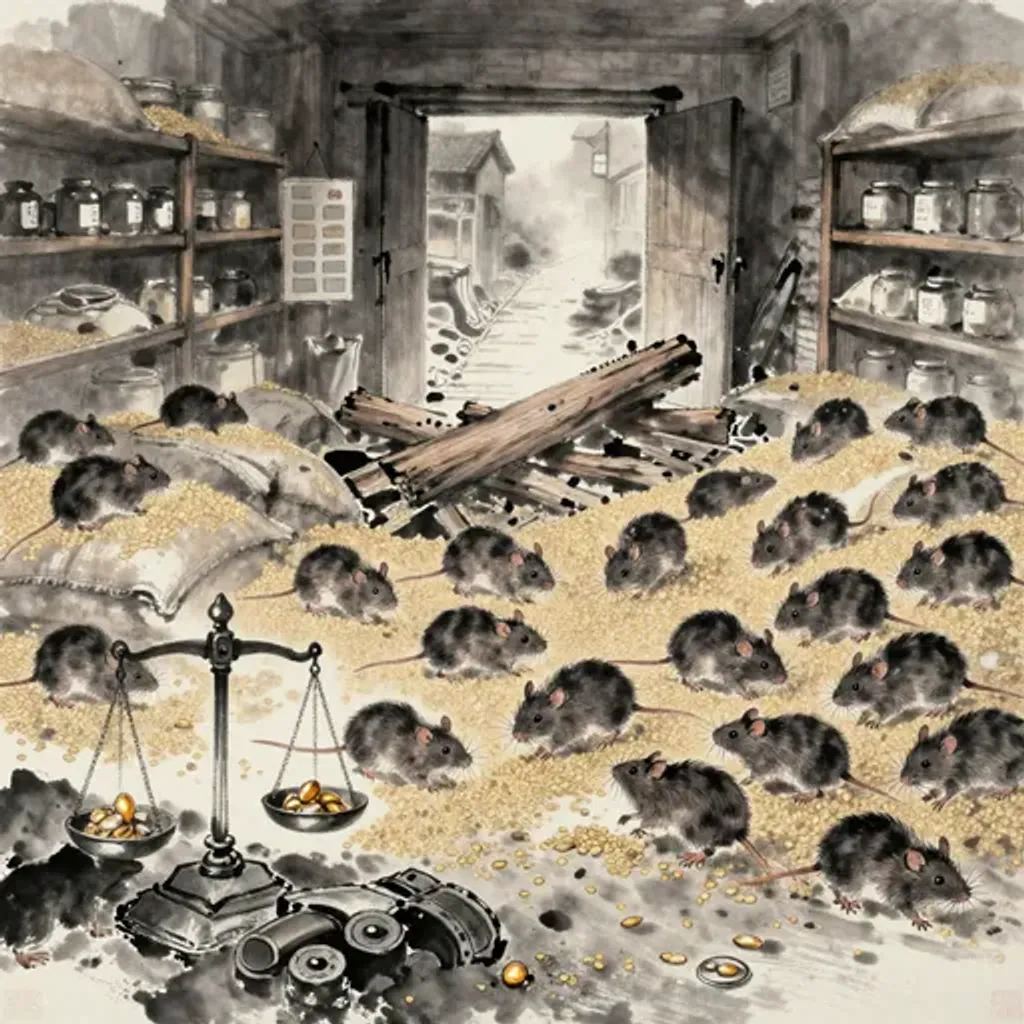
鼠聚生怪,為我患悔,道絕不通,商旅失意。
Rats swarm and breed monstrosities, bringing regret and grief to us. The road is severed, impassable; the merchant loses his way.
— Jiao Yanshou, Yilin (Forest of Changes), 1st century BC
Commentary
Thunder above heaven drives rats into unnatural aggregation, breeding monstrous portents. The swarming rodents bring misfortune and regret; the roads are cut and travelers cannot pass. Merchants lose their investments, commerce grinds to halt. Rats in classical Chinese symbolism represent petty men who gnaw at the foundations — their unnatural gathering signals systemic corruption. From Great Power to Great Exceeding, the lake submerges the trees in Daguo, the ridgepole sagging under impossible weight. The transformation reveals how power corrupted by vermin collapses under its own burden. When small creatures accumulate beyond proportion, the structure that once contained them buckles. Roads blocked by rats become a realm overburdened past its breaking point.
大壯 → 坎
Hexagram 34 → Hexagram 29: The Abysmal Water
Changing lines: 1, 3, 4, 5
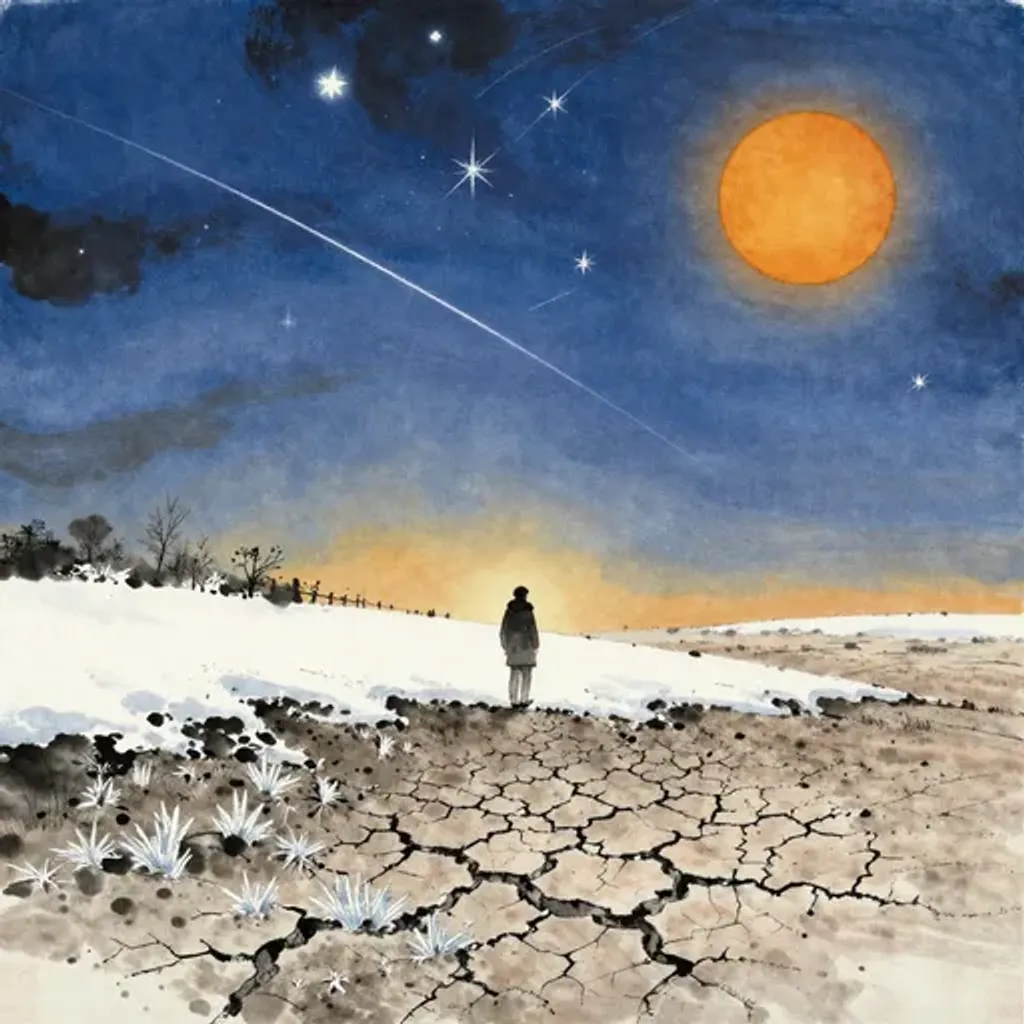
寒暑不當,軌度失常,一前一後,年歲鮮有。
Cold and heat fall out of season; the orbits lose their regularity. One ahead, one behind; the years yield little harvest.
— Jiao Yanshou, Yilin (Forest of Changes), 1st century BC
Commentary
Thunder above heaven disrupts the cosmic calendar: cold and heat fall out of sequence, the orbital measures lose their regularity. One season arrives before or after its proper time, and harvests dwindle to scarcity. The verse describes a world where the fundamental rhythms governing agriculture and life have broken down — not a human political failure but a cosmological disorder. From Great Power to the Abysmal, water doubles upon water in Kan, peril heaped upon peril. The transformation captures how the misalignment of natural cycles plunges everything into compounding danger. When the thunderous power that should regulate the seasons goes awry, the abyss opens — not as a single crisis but as a cascading failure of the systems that sustain life.
大壯 → 離
Hexagram 34 → Hexagram 30: The Clinging Fire
Changing lines: 2, 6
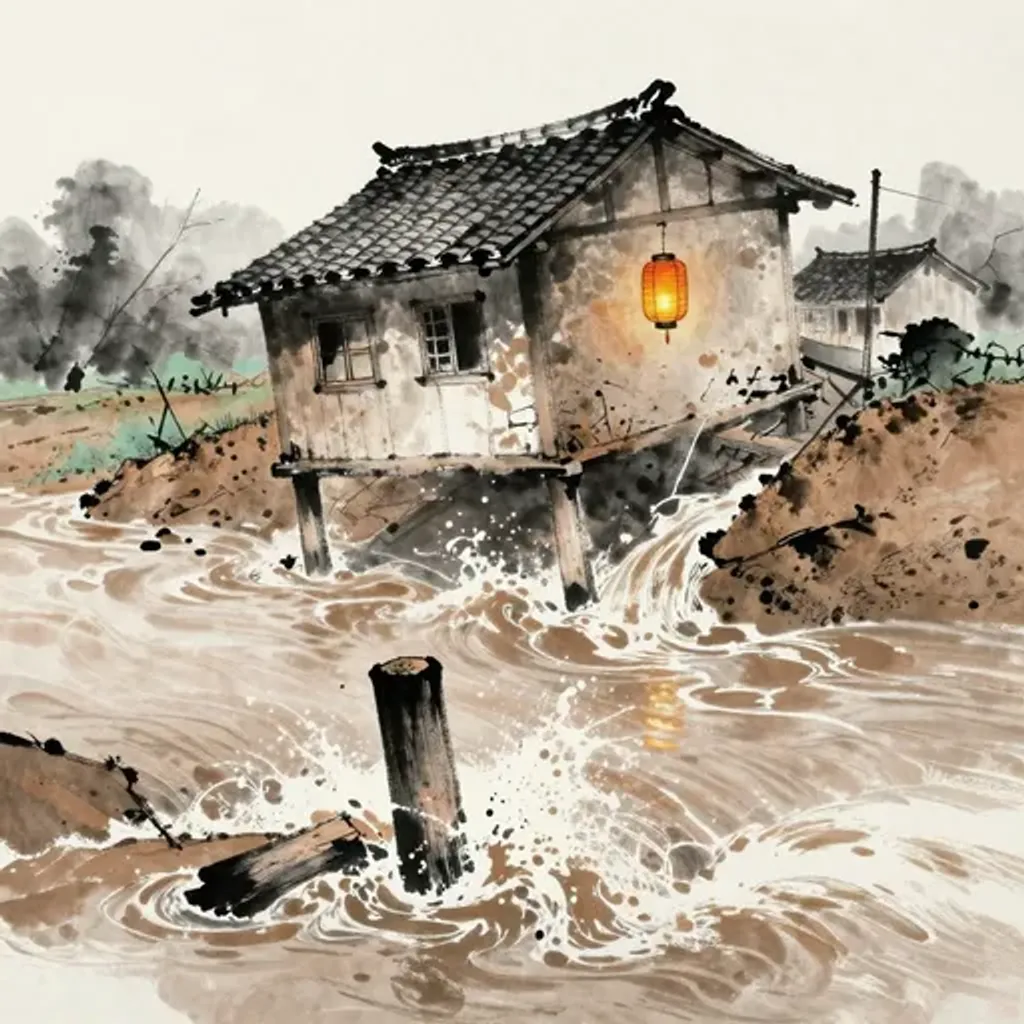
築室水上,危於一齒,丑寅不徙,辰卯有咎。
A house built upon the water, perilous as a single tooth. If one does not move in chou and yin, by chen and mao there is blame.
— Jiao Yanshou, Yilin (Forest of Changes), 1st century BC
Commentary
Thunder above heaven builds a house upon the water — a structure balanced on the edge of a single tooth, precarious beyond reason. The verse warns: if one fails to relocate during the yin-earth and yang-wood periods (chou and yin), then by the wood-yang and earth-yin periods (chen and mao) disaster arrives. The calendrical specificity suggests a divination concerning timing: there is a narrow window for action, and missing it means ruin. From Great Power to the Clinging, doubled fire in Li illuminates with brilliant clarity but also exposes every flaw. The transformation reveals that building power on unstable foundations is like constructing over water — the very light that should guide reveals the absurdity of the enterprise. Clarity without structural soundness is merely a brighter view of the coming collapse.
大壯 → 咸
Hexagram 34 → Hexagram 31: Influence
Changing lines: 1, 2, 5
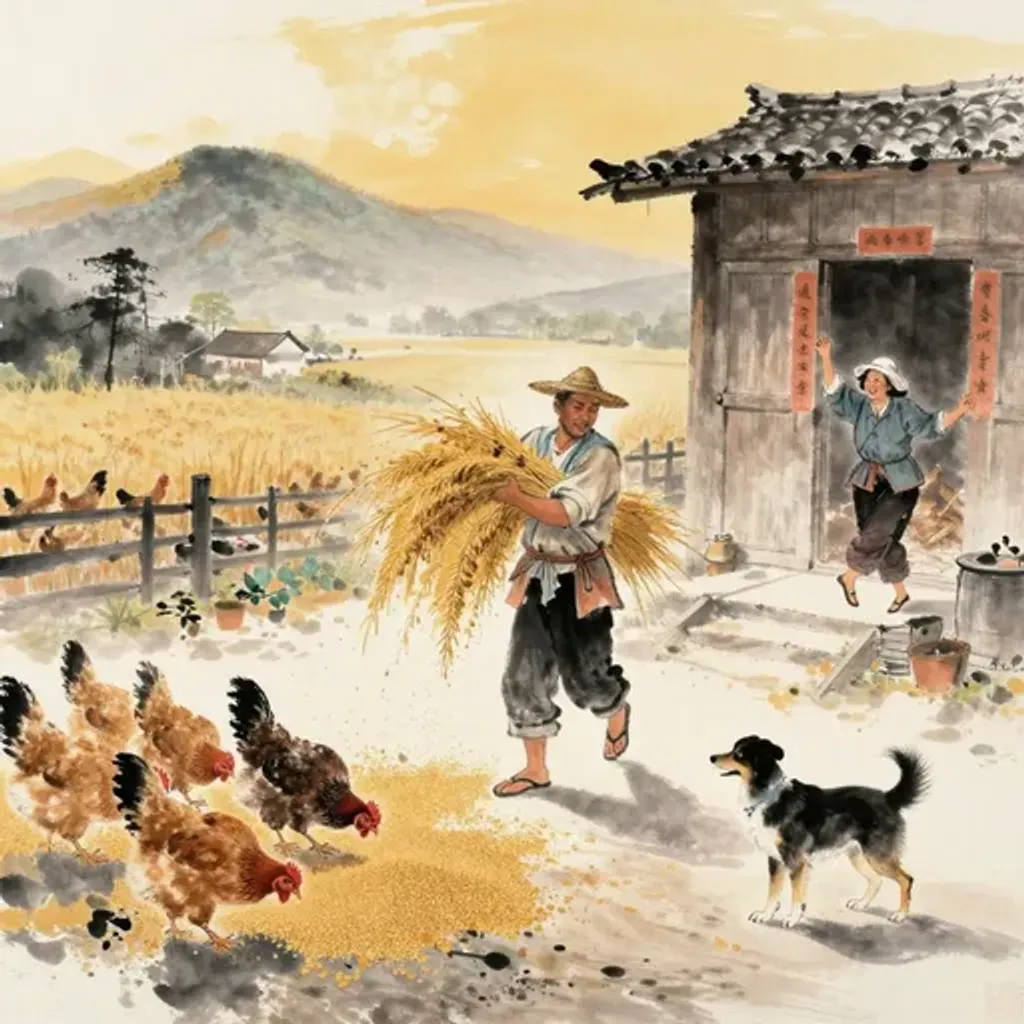
畜雞養狗,長息有儲,耕田得黍,王母喜舞。
Raising chickens, keeping dogs; long rest with stores aplenty. Plowing the fields, harvesting millet; the Queen Mother dances with joy.
— Jiao Yanshou, Yilin (Forest of Changes), 1st century BC
Commentary
Thunder above heaven settles into pastoral contentment: raising chickens and dogs, accumulating stores over the long term, plowing fields to harvest millet. The Queen Mother of the West dances in celebration — an extraordinary image linking humble farmstead prosperity to divine approval. When even the Queen Mother on Mount Kunlun rejoices, the abundance must be genuine and deeply rooted. From Great Power to Influence, the lake rests atop the mountain in Xian, the image of mutual responsiveness and heartfelt connection. The transformation traces how raw power, channeled into patient husbandry, creates the kind of organic prosperity that resonates between heaven and earth. The farmer's quiet diligence moves even the immortals to dance.
大壯 → 恆
Hexagram 34 → Hexagram 32: Duration
Changing lines: 1
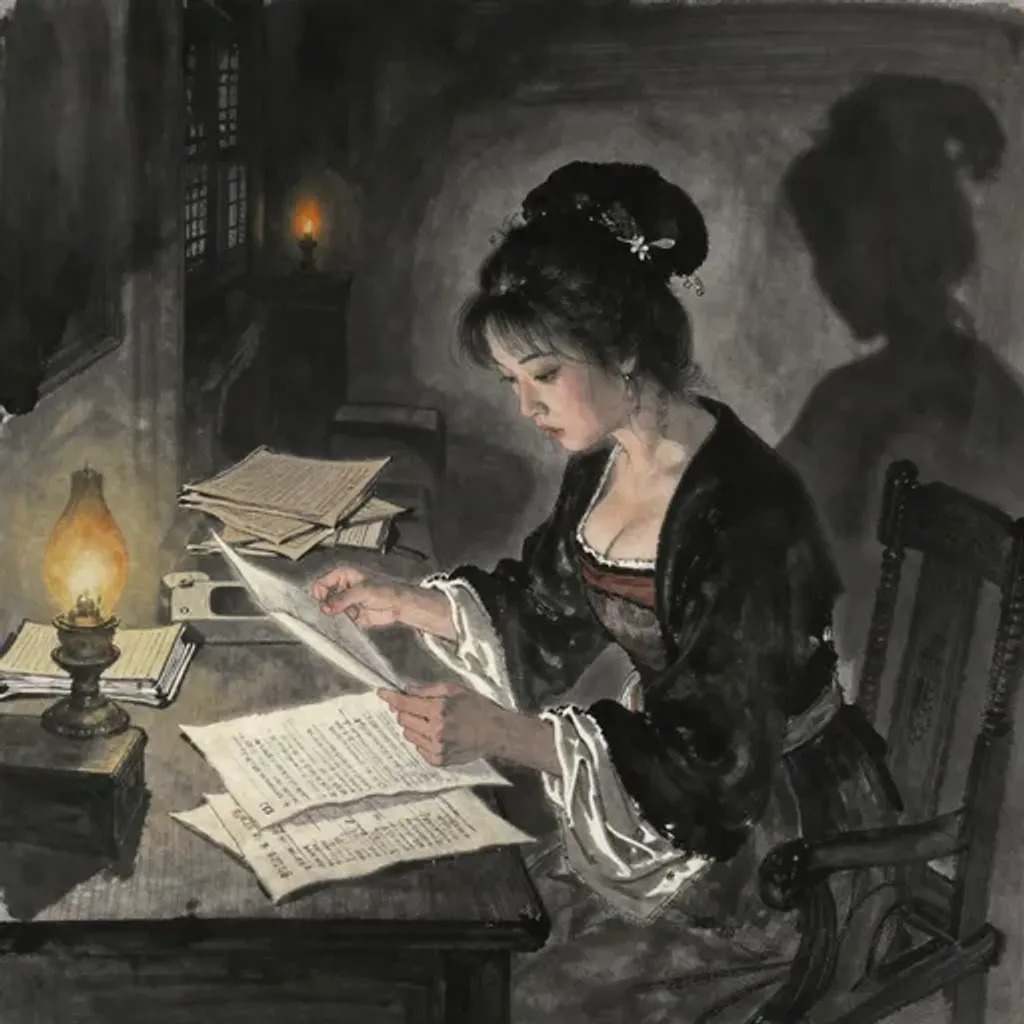
東壁餘光,數暗不明,主母嫉妬,亂我業事。
The lamp on the eastern wall sheds its last light; dim and dark, it does not shine. The chief wife, consumed by jealousy, throws our affairs into ruin.
— Jiao Yanshou, Yilin (Forest of Changes), 1st century BC
Commentary
Thunder above heaven fades to a residual glow on the eastern wall — a light too dim to illuminate, its numbers exhausted and its brilliance spent. The mistress of the house, consumed by jealousy, disrupts the household's affairs and livelihood. The eastern wall's fading light suggests a once-prosperous domain now declining, while the jealous matriarch accelerates the ruin from within. From Great Power to Duration, thunder and wind persist together in Heng, the image of standing firm without changing course. The transformation is bitterly ironic: Duration demands constancy, but what endures here is the mistress's jealousy itself — a corrosive force that becomes permanent, turning the household's constancy into a prison of chronic sabotage.
大壯 → 遯
Hexagram 34 → Hexagram 33: Retreat
Changing lines: 1, 2, 5, 6
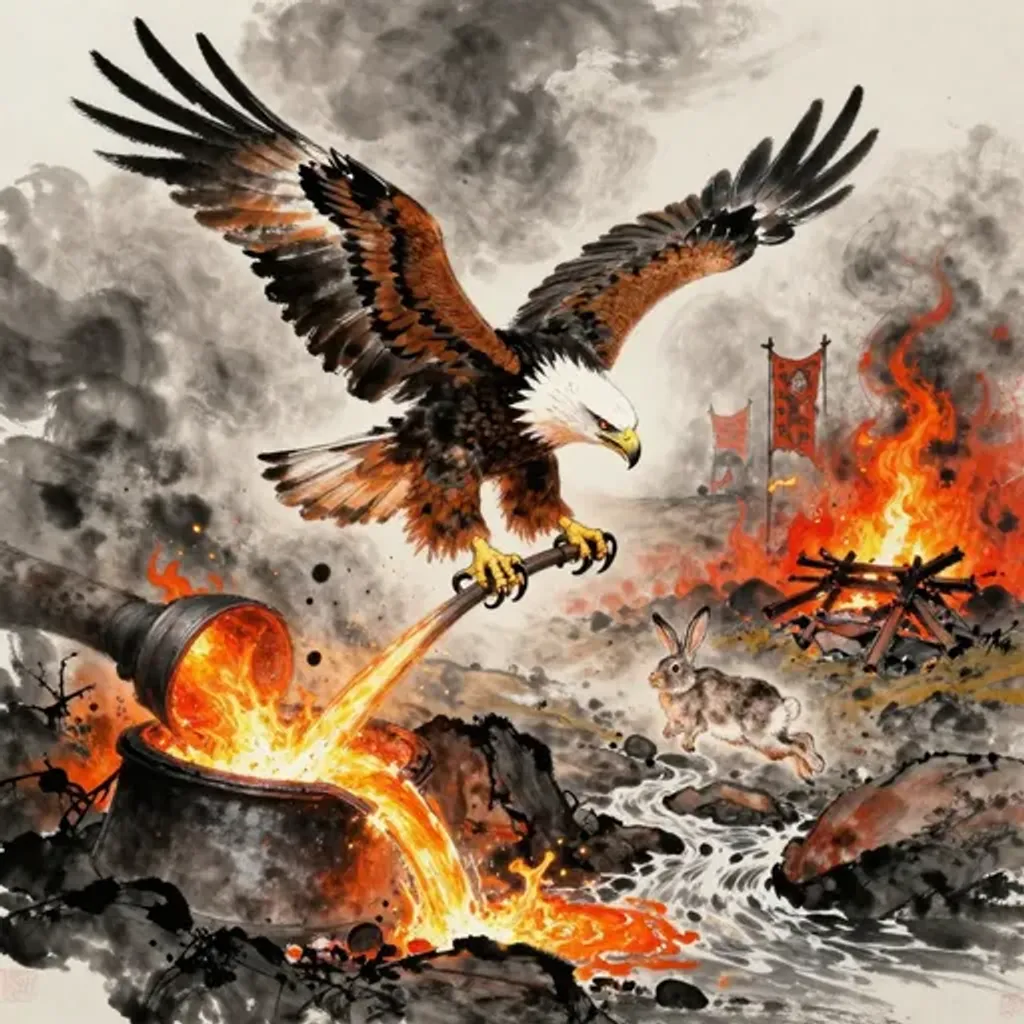
剛柔相傷,火爛銷金,鵰鷹制兔,伐楚有功。
Hard and soft wound each other; fire melts and consumes gold. The eagle and hawk seize the rabbit; the campaign against Chu is victorious.
— Jiao Yanshou, Yilin (Forest of Changes), 1st century BC
Commentary
Thunder above heaven sets hard and soft against each other: fire melts metal, and the eagle-hawk seizes the rabbit. The opening line names the fundamental dynamic — rigid and yielding in mutual injury — then illustrates it with two images of overwhelming force applied to weaker material. Fire dissolving metal and raptors catching prey are both natural processes, but the verse then pivots to a specific military reference: 'attacking Chu with success.' This likely recalls one of the many northern campaigns against the southern giant. From Great Power to Retreat, heaven stands above the mountain in Dun. The transformation reveals the wisdom of tactical withdrawal after a decisive strike: the eagle does not linger over its kill, and the victorious army retreats while its advantage holds.
大壯 → 大壯
Hexagram 34 → Hexagram 34: Great Power
No changing lines — the hexagram is unchanged
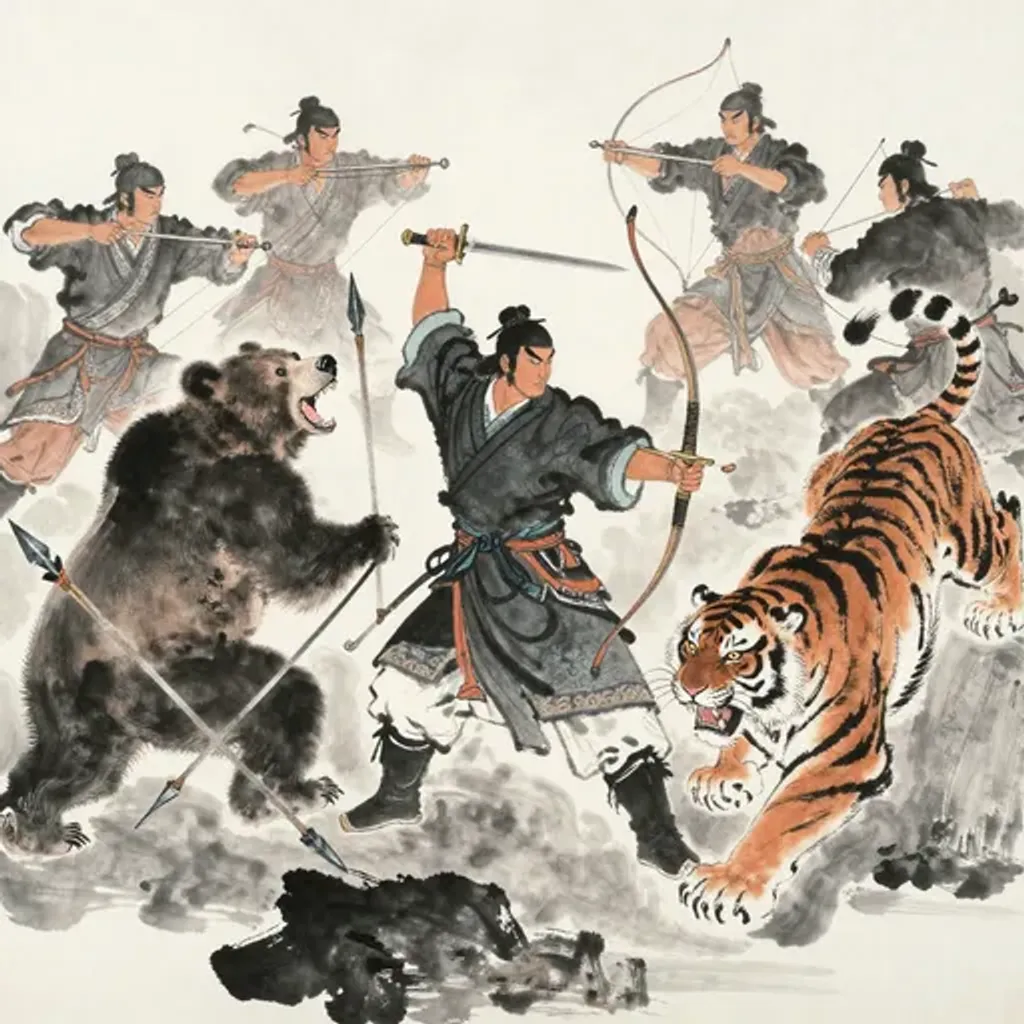
左有噬熊,右有囓虎,前觸銕矛,後躓強弩,無可抵者。
On the left, a biting bear; on the right, a gnawing tiger. Ahead, the iron spear's point; behind, the strong crossbow's string. None can withstand it.
— Jiao Yanshou, Yilin (Forest of Changes), 1st century BC
Commentary
Thunder doubles upon thunder above heaven — Great Power remains Great Power, the hexagram transforming into itself. The verse paints a warrior surrounded on all sides: a biting bear to the left, a gnawing tiger to the right, iron spears ahead, strong crossbows behind. There is no safe direction, no angle of escape, no one who can resist such concentrated force. This is power at its absolute zenith, hemmed in by its own magnitude. From Dazhuang to Dazhuang, the image mirrors itself: when power faces equally matched power from every quarter, even the mightiest stands paralyzed. The verse reads not as triumph but as warning — total strength without maneuver room becomes total entrapment.
大壯 → 晉
Hexagram 34 → Hexagram 35: Progress
Changing lines: 1, 2, 3, 6
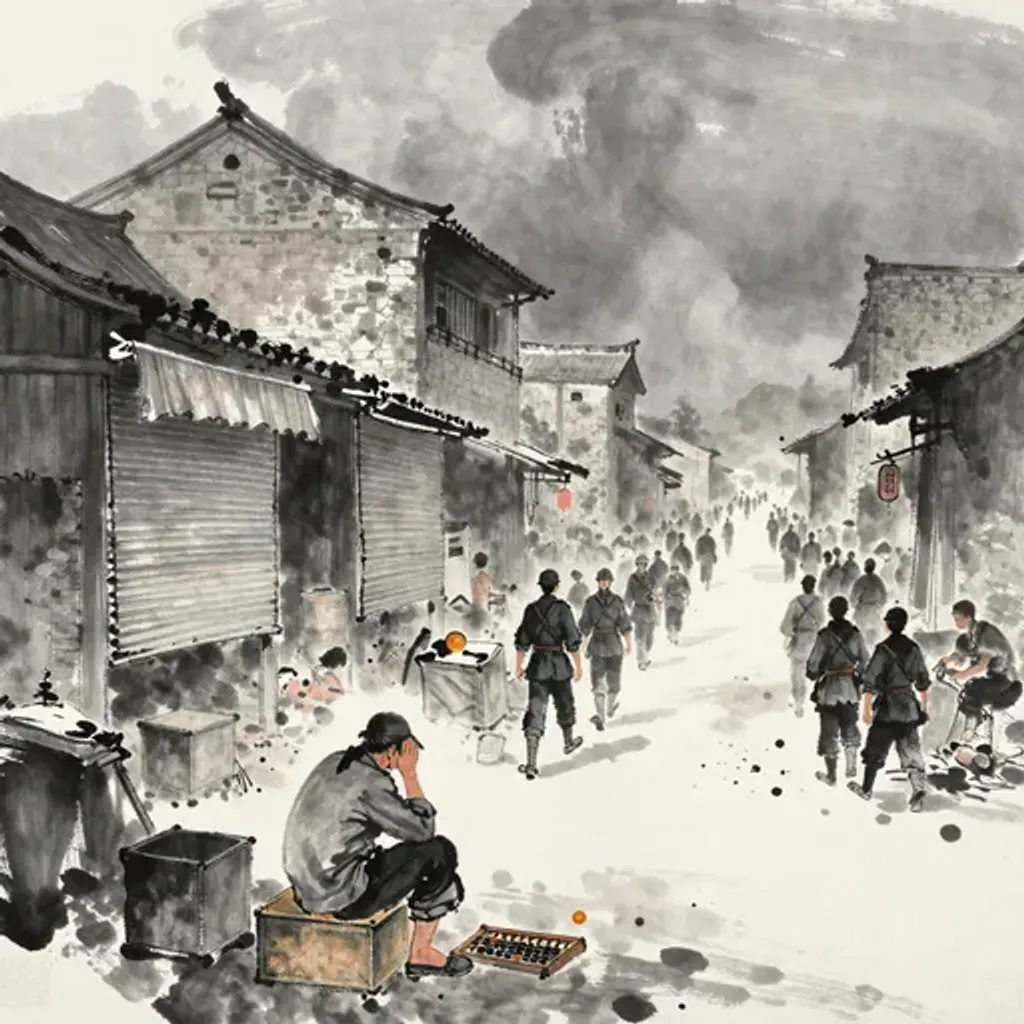
鄭國讒多,數被楚憂,商人愁苦,民困無聊。
In the state of Zheng, slander abounds; repeatedly they suffer the sorrows of Chu. The merchants grieve in bitterness; the people are exhausted and without relief.
— Jiao Yanshou, Yilin (Forest of Changes), 1st century BC
Commentary
Thunder above heaven illuminates the plight of Zheng, a small state caught between great powers. Zheng's court was plagued by slander and intrigue, leaving it perpetually vulnerable to Chu's aggression from the south. Merchants suffered, the people were exhausted and destitute. Zheng's geographical curse — wedged between Jin and Chu — meant that internal discord immediately invited external attack. From Great Power to Progress, fire rises above the earth in Jin, the image of brightness emerging. The transformation is aspirational but undercut by the verse's reality: the light that should announce progress instead exposes a state too fractured to advance. When power is consumed by internal slander, the dawn arrives only to reveal the damage more clearly.
大壯 → 明夷
Hexagram 34 → Hexagram 36: Darkening of the Light
Changing lines: 2, 4
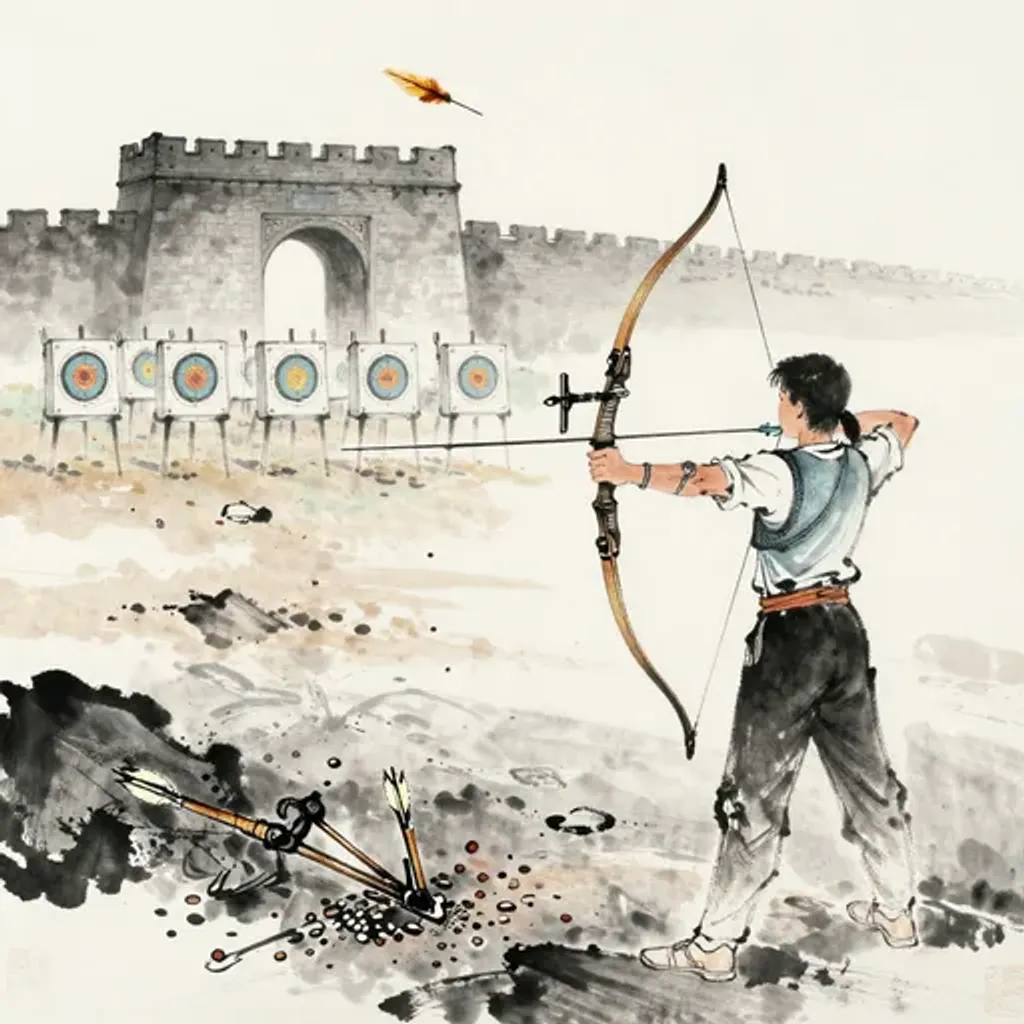
弓矢其張,把彈弦折,九發不至,道過害患。
The bow is drawn taut; the slingshot string snaps. Nine shots, none reaching the mark; the road leads past only to harm.
— Jiao Yanshou, Yilin (Forest of Changes), 1st century BC
Commentary
Thunder above heaven draws the bow to its fullest, but the pellet-string snaps. Nine shots are fired and none reaches the target; the path ahead brings only harm. The imagery is of weaponry at full extension that fails at the critical moment — not from lack of strength but from mechanical breakdown. The string that connects force to projectile gives way, and all that stored power achieves nothing. From Great Power to Darkening of the Light, fire sinks beneath the earth in Mingyi: brilliance buried, vision obscured. The transformation maps precisely: the broken bow is the darkened light, power that cannot reach its mark because the medium of delivery has failed. In Mingyi, one must use darkness wisely; here, the darkness is simply the result of shattered aim.
大壯 → 家人
Hexagram 34 → Hexagram 37: The Family
Changing lines: 2, 4, 5, 6
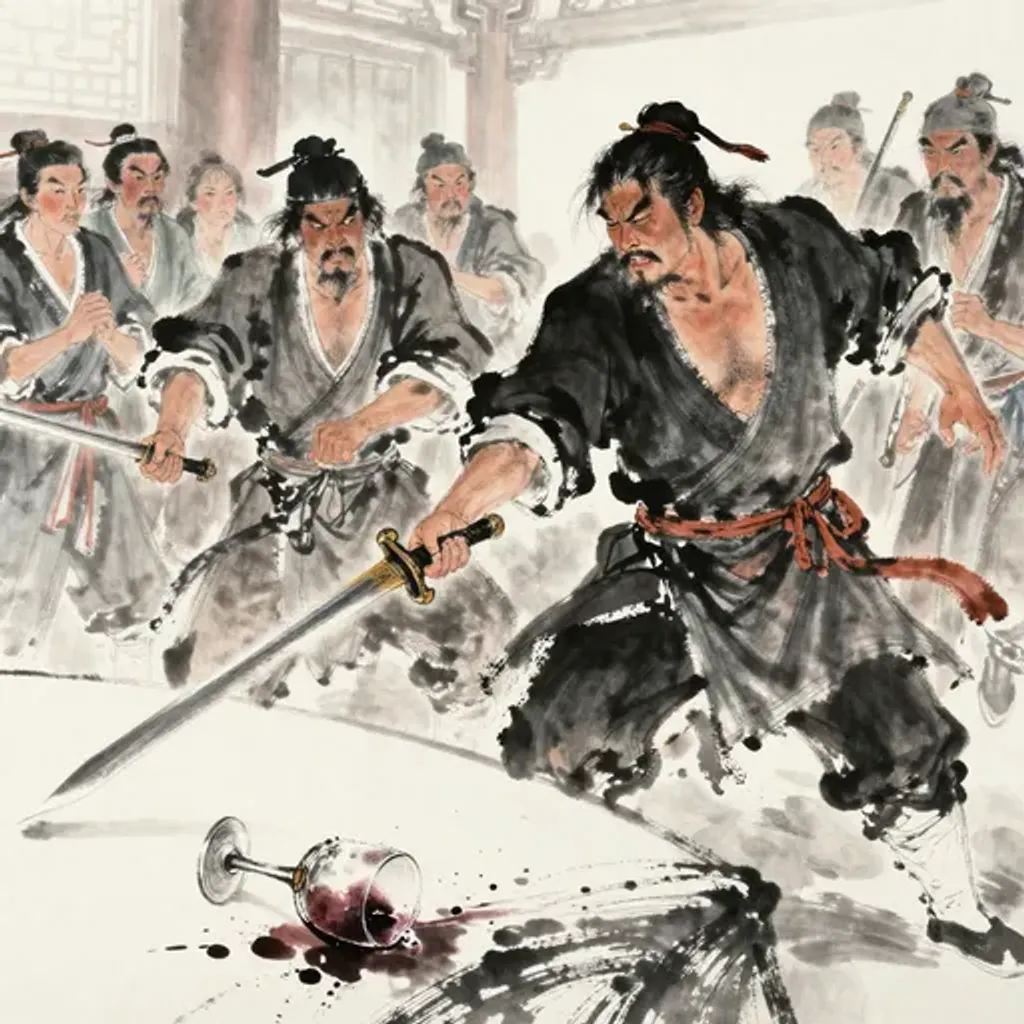
舉觴飲酒,未得至口,側弁醉酗,拔劍相怒,武侯作悔。
Raising the cup to drink wine, it does not reach the mouth. Cap askew, drunk and raging, swords drawn in mutual anger. Lord Wu regrets what follows.
— Jiao Yanshou, Yilin (Forest of Changes), 1st century BC
Commentary
Thunder above heaven erupts at a banquet gone wrong. Wine cups are raised but never reach the lips; caps tilt askew as drunken rage takes hold. Swords are drawn in anger across the feast table, and 'Lord Wu' is left with regret. This may allude to a historical incident at a Zhou-era court feast, or to any of several episodes where drinking led to drawn weapons and political disaster — echoing Zi Fan of Chu, who was too drunk to command at Yanling, or similar tales of wine and violence. From Great Power to the Family, wind issues from fire in Jiaren: words must have substance, conduct must have constancy. The transformation demands exactly what the banquet lacked — domestic order, measured speech, and the discipline to contain powerful emotions within proper bounds.
大壯 → 睽
Hexagram 34 → Hexagram 38: Opposition
Changing lines: 3, 6
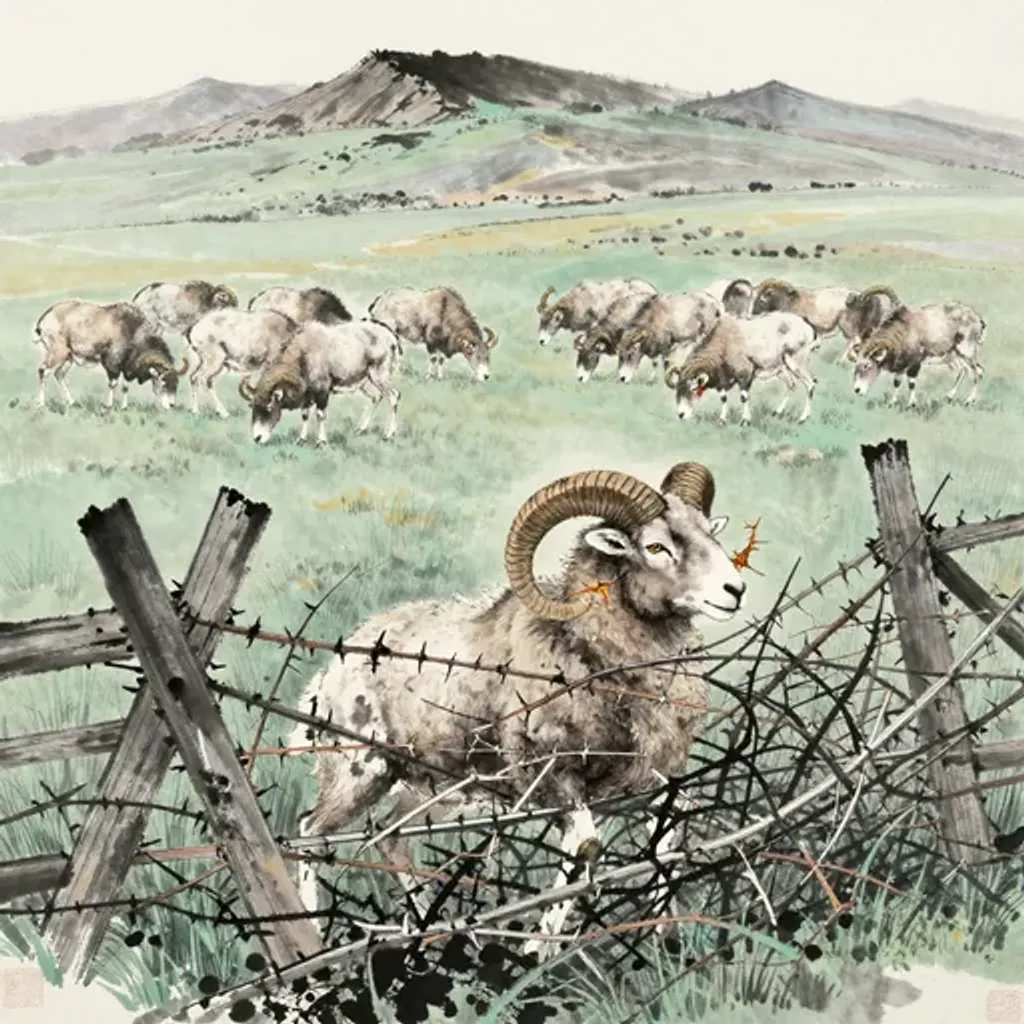
原缺
The strong ram butts the fence; its horns catch in the thorns. Great strength with no right target — the herd turns on itself. East and west they graze apart, no longer recognizing one another.
— Jiao Yanshou, Yilin (Forest of Changes), 1st century BC
Commentary
Thunder above heaven sends a mighty ram charging into a thorn fence — its horns catch fast in the brambles. This echoes Dazhuang's own line text: 'The ram butts the hedge and entangles its horns.' Strength without direction becomes self-imprisonment. The original verse is lost, but the reconstructed imagery extends the metaphor: the herd splits apart, east and west graze separately, no longer recognizing each other. From Great Power to Opposition, fire above and lake below in Kui move in contrary directions, the essence of estrangement. The transformation is seamless: the ram's entanglement causes the flock to fracture, and what was a unified group becomes strangers. Power misapplied does not merely fail — it severs the bonds that once held the community together.
大壯 → 蹇
Hexagram 34 → Hexagram 39: Obstruction
Changing lines: 1, 2, 4, 5
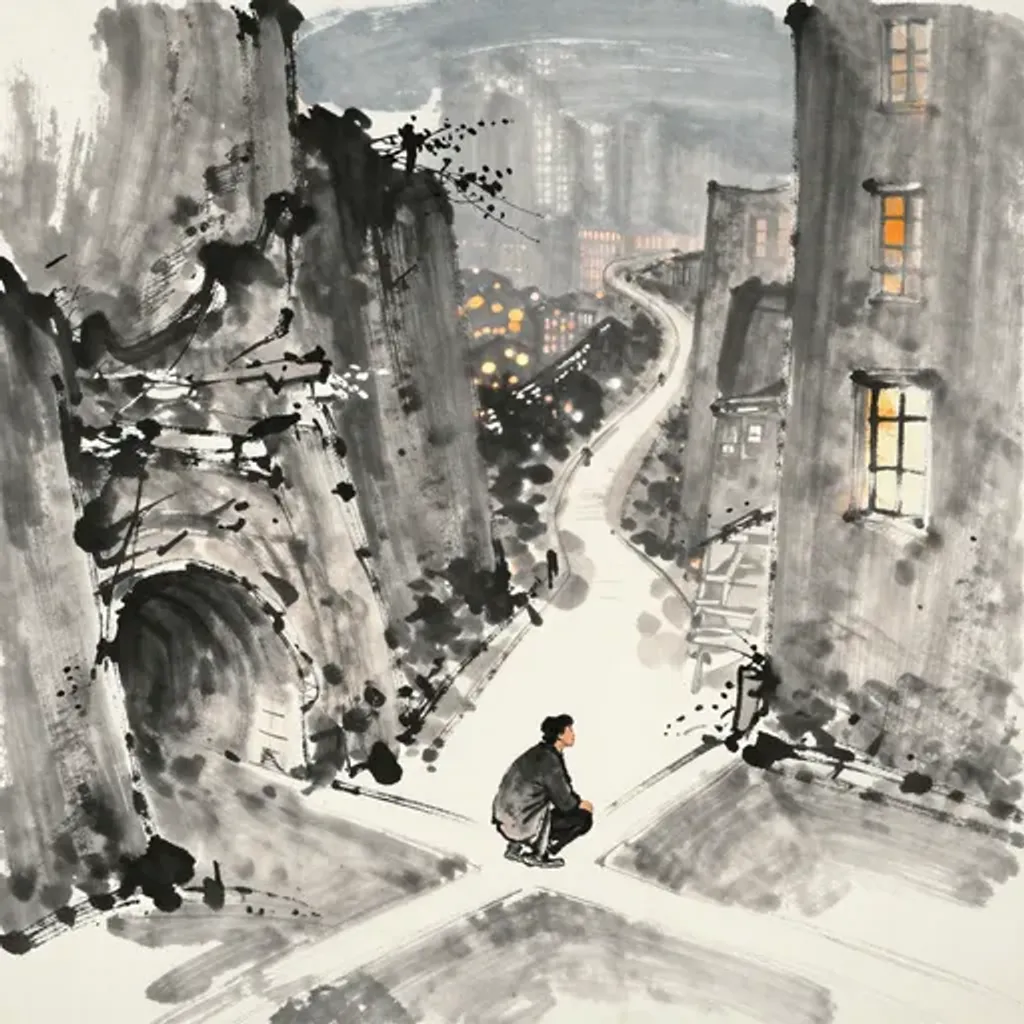
穿空相宜,利倍我北,循邪詭道,逃不可得,南北望邑,遂歸入室。
Threading empty spaces, finding advantage; profit doubled to the north. Following devious and crooked paths; escape cannot be had. Looking north and south at the town; at last one returns and enters the house.
— Jiao Yanshou, Yilin (Forest of Changes), 1st century BC
Commentary
Thunder above heaven opens a passage through the void — a profitable route to the north. But those who follow crooked and deviant paths find escape impossible. The verse juxtaposes legitimate advantage with illicit scheming: the straight path yields double profit, while the deceitful path leads to capture. Looking north and south at the towns, one finally abandons flight and returns home. From Great Power to Obstruction, water sits atop the mountain in Jian: the path forward is blocked, and the sage turns inward to cultivate virtue. The transformation reveals that when honest routes are available, those who choose deception encounter the very obstruction they tried to circumvent. The verse resolves with return — the fugitive accepts limitation and goes home.
大壯 → 解
Hexagram 34 → Hexagram 40: Deliverance
Changing lines: 1, 3
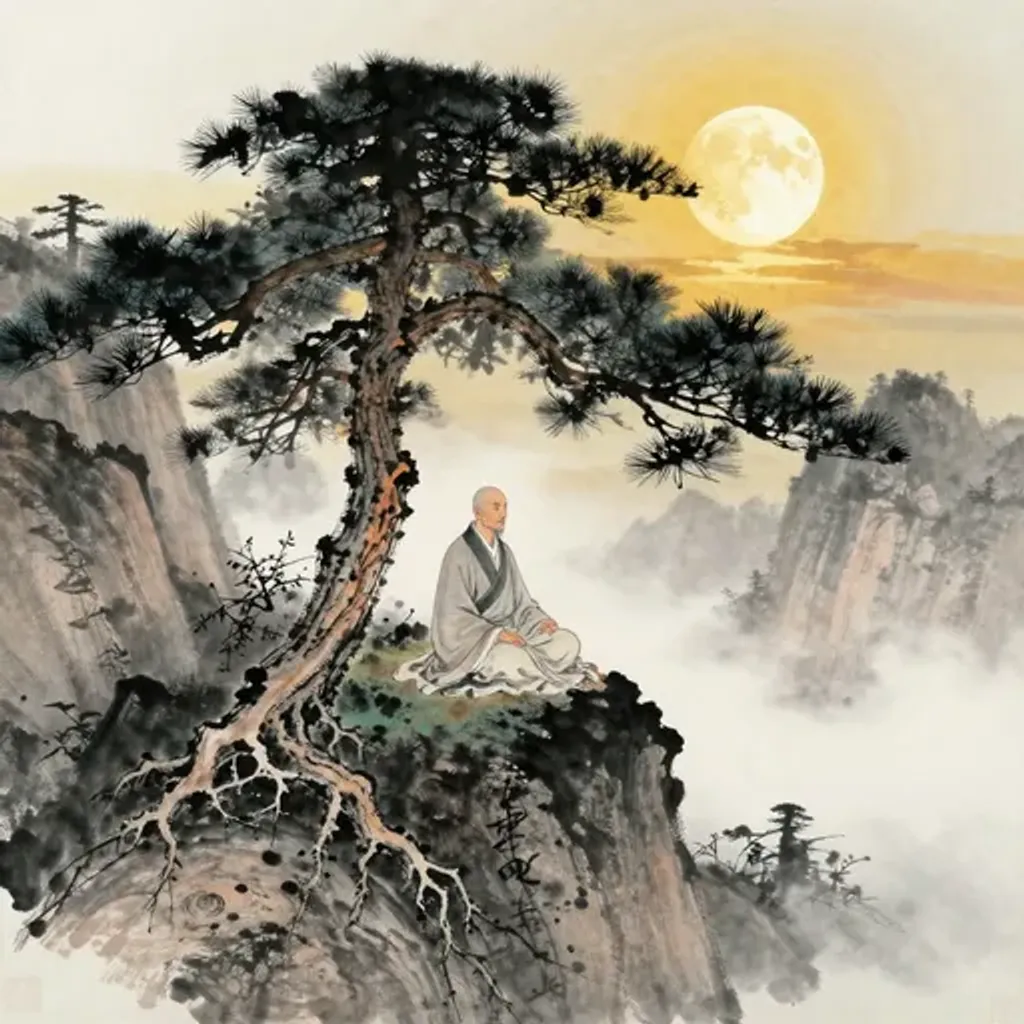
壽如松喬,與日月俱,常安康樂,不離禍憂。
Long-lived as Master Song and Master Qiao, enduring alongside sun and moon. Ever at peace and in good health; calamity and worry kept at bay.
— Jiao Yanshou, Yilin (Forest of Changes), 1st century BC
Commentary
Thunder above heaven promises longevity as enduring as the immortals Song and Qiao — Chisongzi the Rain Master and Wang Qiao the prince who ascended on a crane. Life extends alongside the sun and moon, enjoying perpetual health and happiness without misfortune. The verse reads as a pure blessing, unburdened by complication or caveat. From Great Power to Deliverance, thunder and rain act together in Jie: the storm breaks, tension dissolves, and prisoners are pardoned. The transformation reveals how sustained power, when it achieves equilibrium, releases its own pressure. The immortals' secret was not eternal striving but knowing when to let go. Deliverance comes not through more strength but through the dissolution of whatever held strength captive.
大壯 → 損
Hexagram 34 → Hexagram 41: Decrease
Changing lines: 3, 4, 6
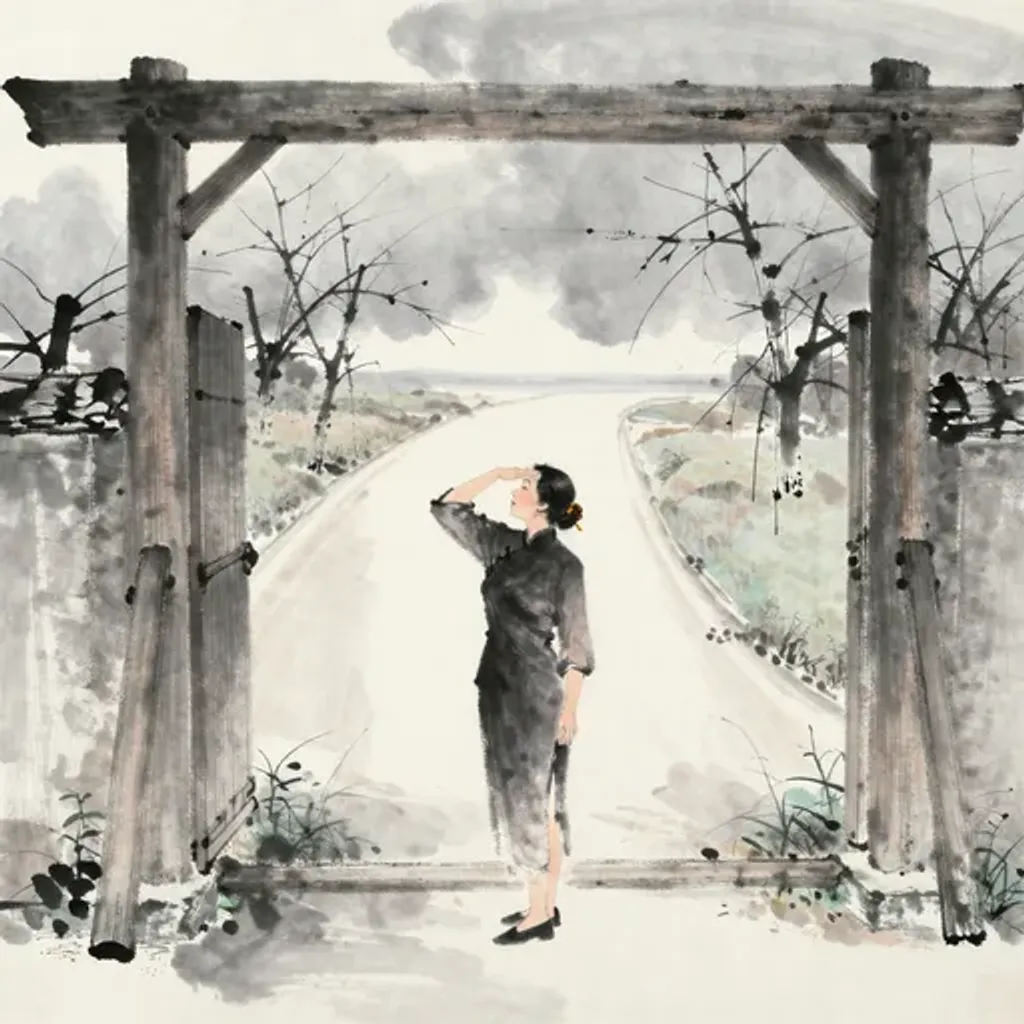
出門望東,伯仲不來,疾病為患,使母憂歎。
Going out the door, gazing east; the elder brothers do not come. Illness brings affliction; it makes the mother grieve and sigh.
— Jiao Yanshou, Yilin (Forest of Changes), 1st century BC
Commentary
Thunder above heaven drives a mother to the eastern gate, watching for sons who do not come. The elder and younger brothers — bo and zhong — fail to appear, and illness fills the household with dread. The mother's sigh carries the weight of all parents waiting for absent children: are they detained, injured, dead? From Great Power to Decrease, the mountain looms above the lake in Sun, diminishing what is below to benefit what is above. The transformation captures the emotional logic exactly: the family's vitality is drained by the sons' absence. Decrease here is not willing sacrifice but involuntary loss — the household's strength leaking away through the gap where the children should stand. Power without its heirs is power hemorrhaging.
大壯 → 益
Hexagram 34 → Hexagram 42: Increase
Changing lines: 2, 3, 4, 5, 6
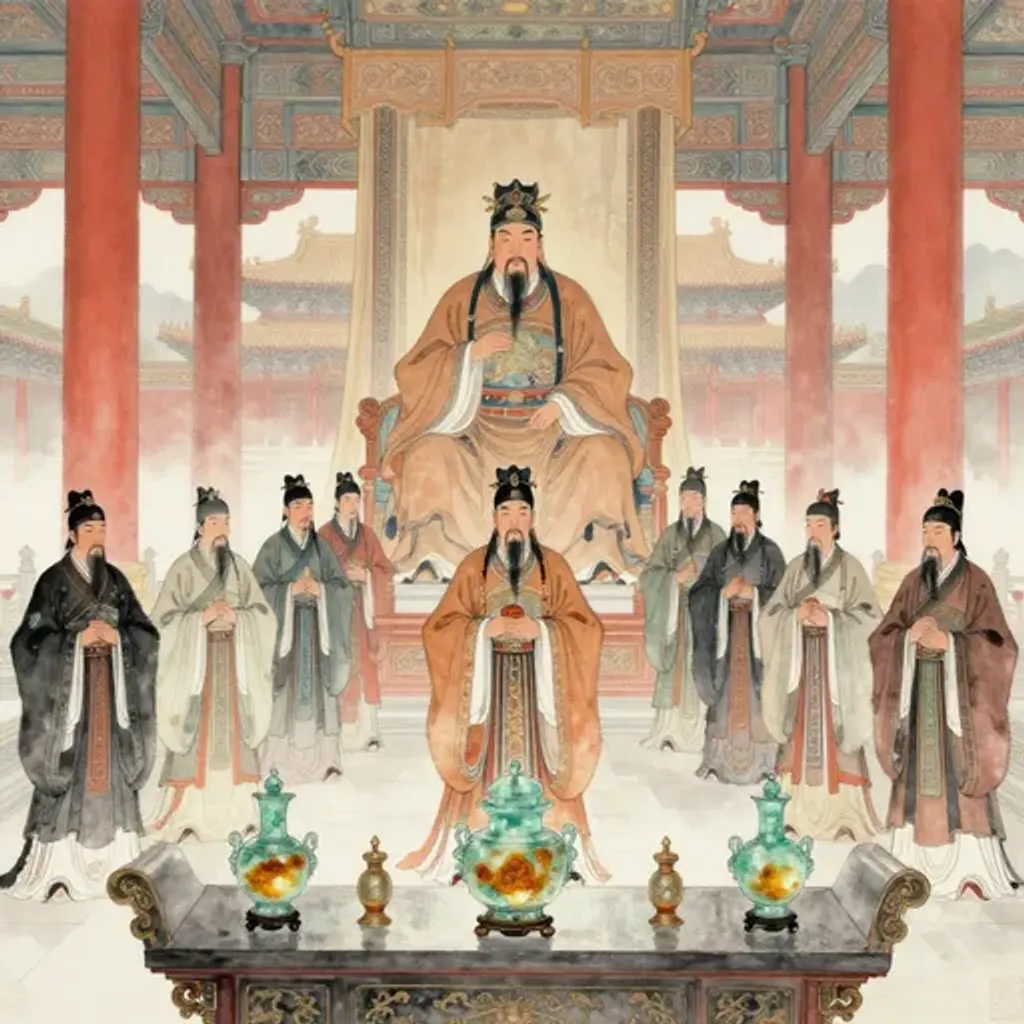
太姒之孫,周文九子,咸遂受成,寵貴富有。
The grandsons of Tai Si, the nine sons of King Wen of Zhou; all accomplished and received their patrimony, favored, noble, and wealthy.
— Jiao Yanshou, Yilin (Forest of Changes), 1st century BC
Commentary
Thunder above heaven celebrates the progeny of Tai Si, consort of King Wen of Zhou. Her sons — tradition counts ten, though the verse says nine, possibly excluding the eldest Bo Yikao who was killed — all achieved success and received their inheritances, honored and wealthy. Tai Si represents the ideal mother whose virtue multiplied through her children to build the Zhou dynasty. From Great Power to Increase, wind and thunder reinforce each other in Yi: seeing goodness, one moves toward it; finding fault, one corrects it. The transformation reveals how dynastic power propagates through virtuous descendants. The increase is biological and moral simultaneously — each son carries forward both the bloodline and the ethical inheritance of the founders.
大壯 → 夬
Hexagram 34 → Hexagram 43: Breakthrough
Changing lines: 5
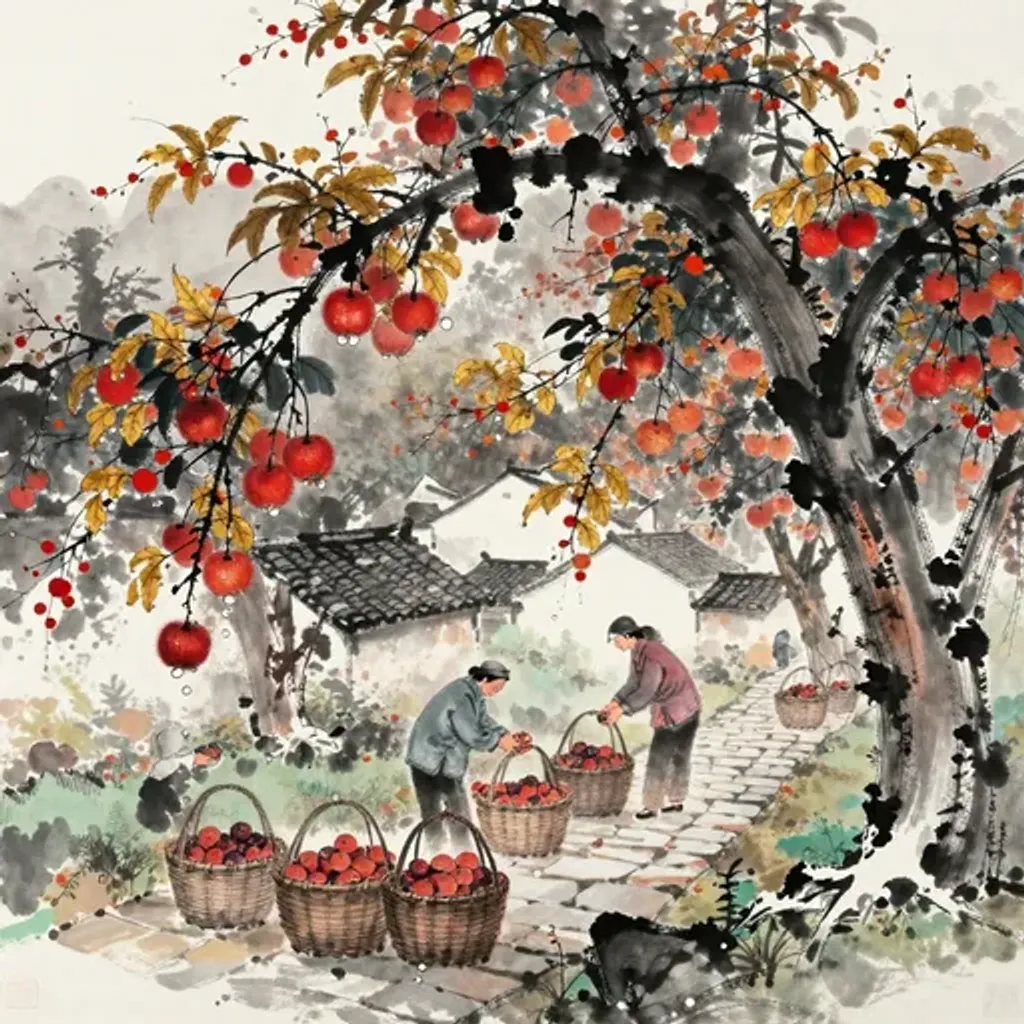
桃李花實,累累日息,長大成熟,甘美可食,為我利福。
The autumn orchard — branches bent under golden weight. Dewdrops roll off fruit red as rouge. Baskets pile up along the path before the gate — neighbors share and taste, a time of laughter.
— Jiao Yanshou, Yilin (Forest of Changes), 1st century BC
Commentary
Thunder above heaven ripens into harvest. The original verse reads: 'Peach and plum flower and fruit, hanging heavy day by day; growing large and ripening, sweet and fine and fit to eat, bringing us blessing and profit.' This is nature's own Breakthrough — the gradual swelling from blossom to edible fruit, accumulation reaching the moment of release. From Great Power to Breakthrough, the lake rises above heaven in Guai, moisture gathering until it must fall as rain. The transformation maps onto the ripening exactly: stored energy in the fruit cannot be contained indefinitely; it must be harvested, shared, distributed. The verse's peaches and plums embody Guai's core dynamic — decisive action at the moment of fullness, distributing abundance before it spoils.
大壯 → 姤
Hexagram 34 → Hexagram 44: Coming to Meet
Changing lines: 1, 5, 6

婚禮不明,男女失常,行露反言,出爭我訟。
The wedding rites lack propriety; man and woman transgress what is proper. The Dew on the Path speaks in reversal; going out, they contend and bring us to litigation.
— Jiao Yanshou, Yilin (Forest of Changes), 1st century BC
Commentary
Thunder above heaven disrupts the marriage rites: the ceremony lacks clarity, the proper roles of man and woman are inverted. The verse then invokes the Shijing ode 'Xing Lu' (Treading on Dew), where a woman refuses an improper suitor — 'Though you force me to trial, I will not follow you.' Here the allusion is reversed: the marriage proceeds despite violated propriety, and from it come only quarrels and lawsuits. From Great Power to Coming to Meet, wind moves beneath heaven in Gou, the unexpected encounter. Gou warns of yin infiltrating yang from below — an unsanctioned union that looks incidental but corrupts from within. Power that ignores ritual propriety in its most intimate bonds breeds the very contention it should prevent.
大壯 → 萃
Hexagram 34 → Hexagram 45: Gathering Together
Changing lines: 1, 2, 3, 5
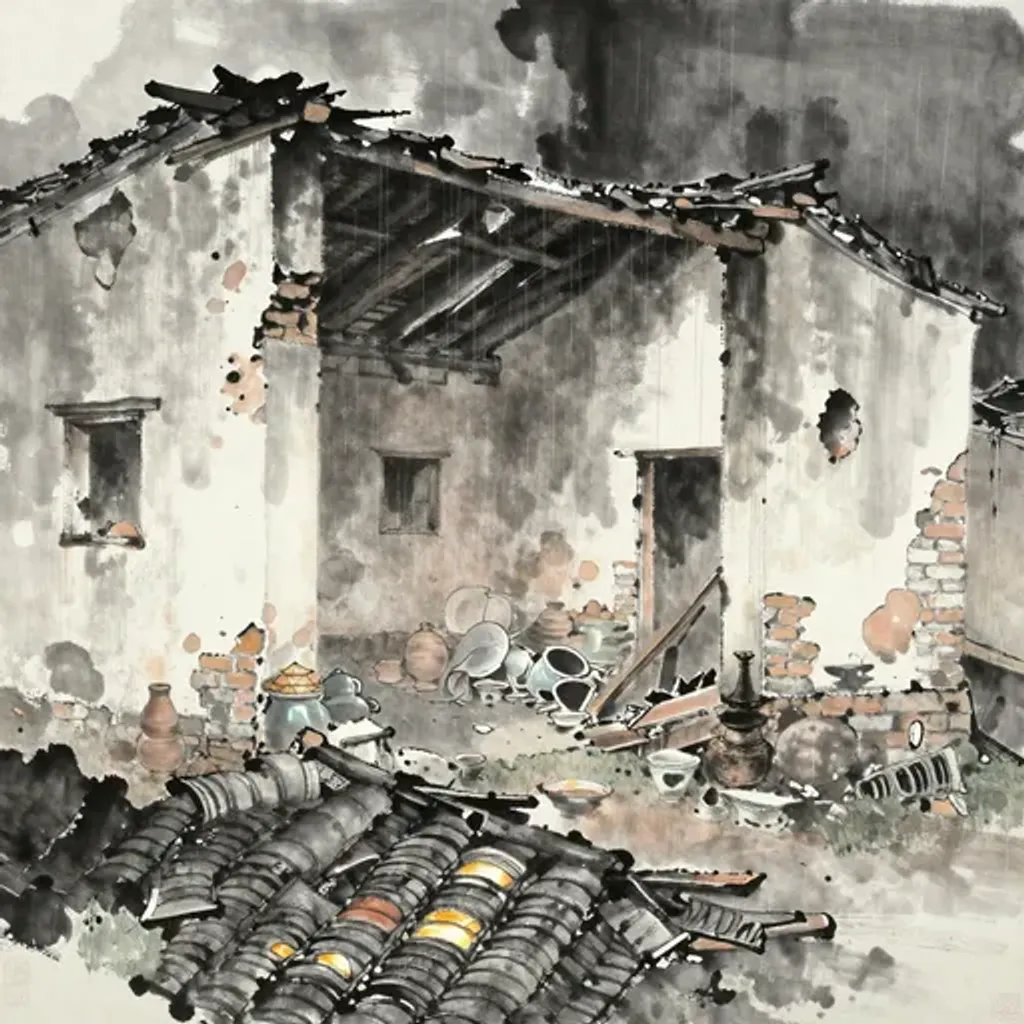
空穿漏敝,破桴殘缺,陰弗能完,瓦碎不全。
Pierced through, leaking and worn; the raft broken, in tatters. What is hollow cannot be made whole; tiles shattered, nothing intact.
— Jiao Yanshou, Yilin (Forest of Changes), 1st century BC
Commentary
Thunder above heaven meets only hollowness and ruin. Everything is pierced through and threadbare, the raft broken and incomplete. The yin element cannot make things whole, and tiles shatter into fragments. The verse is a catalogue of structural failure — not dramatic collapse but chronic decay, things wearing through until nothing holds together. From Great Power to Gathering, the lake rests upon the earth in Cui, the image of congregation and preparation for the unexpected. The transformation is deeply ironic: Gathering depends on intact vessels to hold what is collected, yet every container in this verse is cracked. Power that cannot maintain its own infrastructure will find its attempts to gather and consolidate defeated by the holes through which resources leak away.
大壯 → 升
Hexagram 34 → Hexagram 46: Pushing Upward
Changing lines: 1, 4
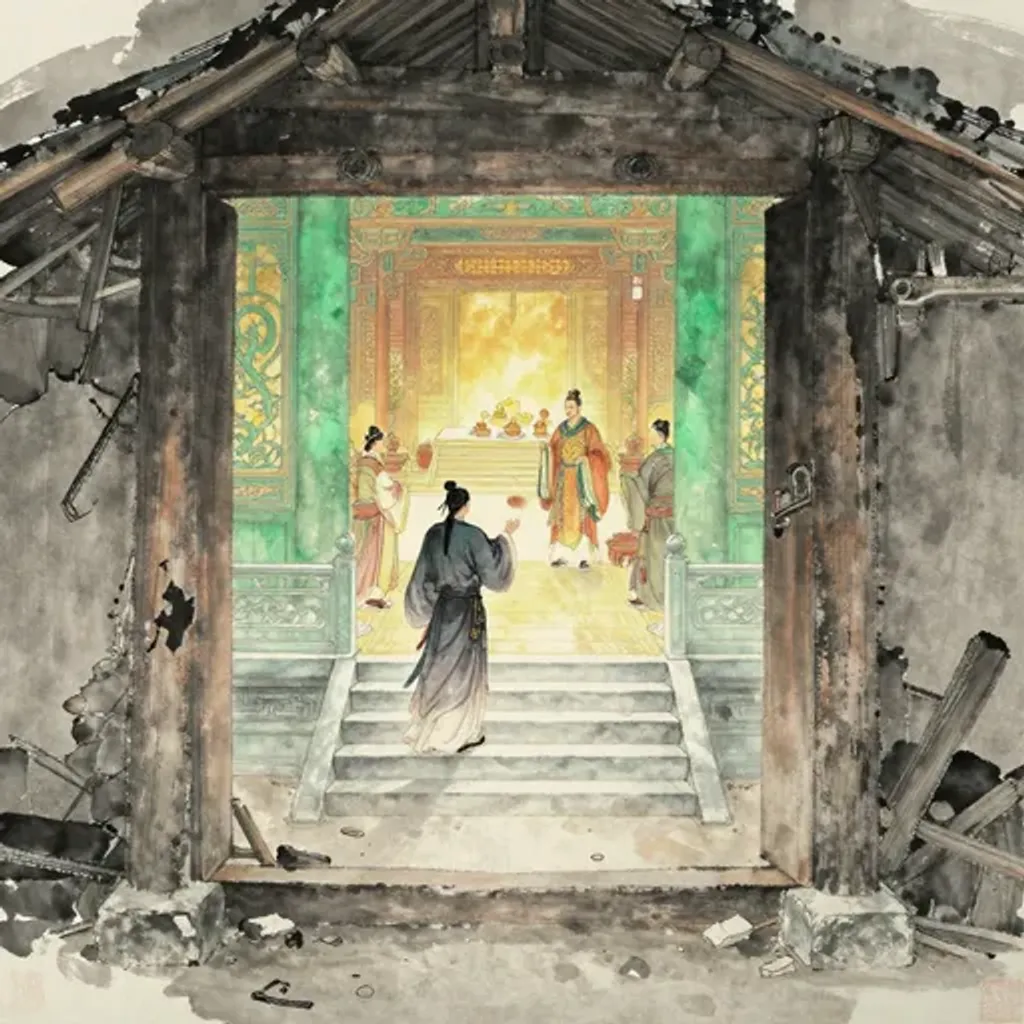
數窮廓落,困於歷室,往登玉堂,與堯侑食。
Fortune exhausted, fallen and desolate; trapped in a wretched chamber. He goes up and enters the Jade Hall; he dines alongside Yao himself.
— Jiao Yanshou, Yilin (Forest of Changes), 1st century BC
Commentary
Thunder above heaven traces a trajectory from utter desolation to imperial glory. Fortune is exhausted, the dwelling dilapidated and empty — the nadir of worldly circumstance. Then the verse pivots dramatically: one ascends the Jade Hall and dines alongside Emperor Yao himself. This is the archetype of reversal from poverty to honor, recalling figures like Fu Yue, who was found building walls and raised to chief minister, or Baili Xi, ransomed from slavery for five ram skins. From Great Power to Pushing Upward, wood grows slowly within the earth in Sheng: accumulating small gains into great height. The transformation embodies patient ascent — the Jade Hall is not stormed but climbed, step by step, from the very bottom.
大壯 → 困
Hexagram 34 → Hexagram 47: Oppression
Changing lines: 1, 3, 5
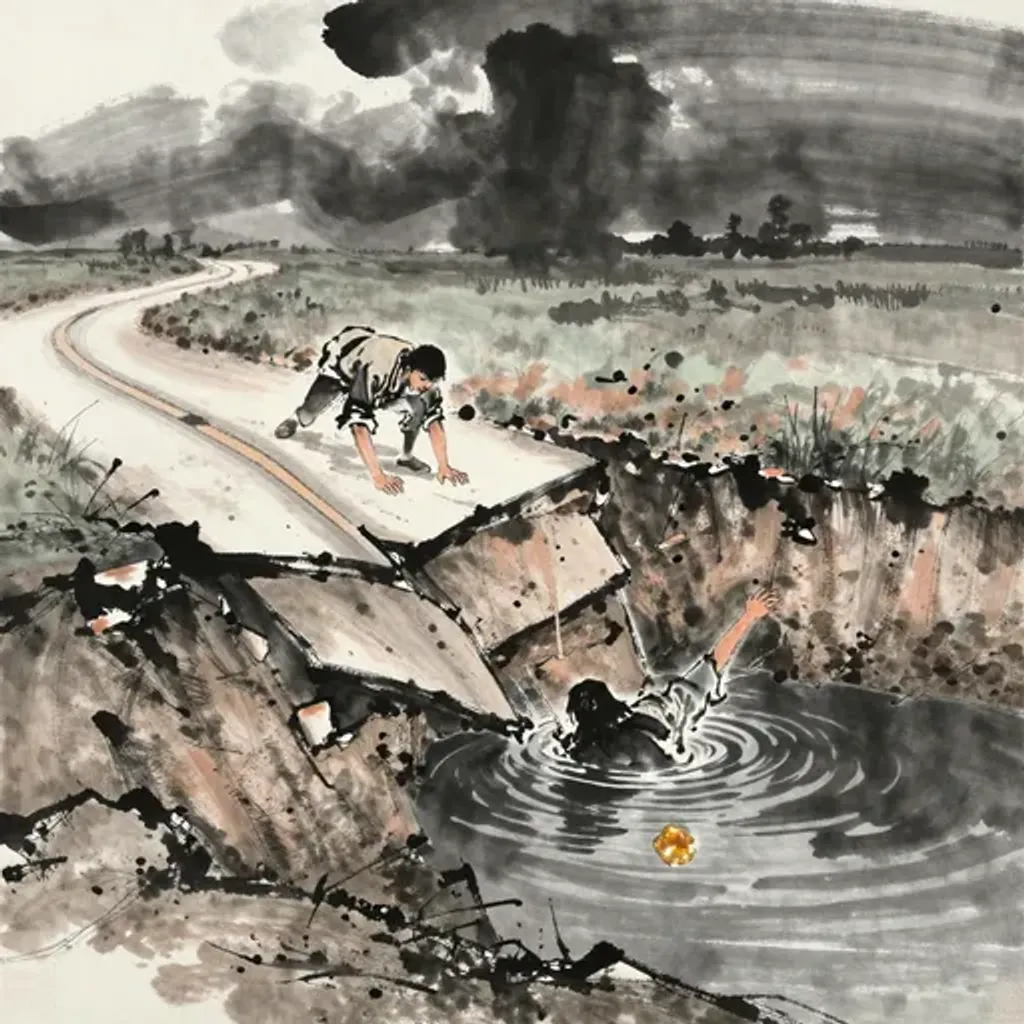
道濕為坑,轉陷躓彊,南國作諱,使我多畏。
The wet road becomes a pit; stumbling, one sinks deeper into the mire. The southern kingdom utters taboo words; it fills us with much fear.
— Jiao Yanshou, Yilin (Forest of Changes), 1st century BC
Commentary
Thunder above heaven hits a road sodden with water, turning the path into a pit. One stumbles and falls, forced along against resistance. The southern kingdom invokes a taboo — 'makes a prohibited name' — spreading an atmosphere of dread. The wet road becoming a trap evokes a journey where every step sinks deeper into difficulty. From Great Power to Oppression, the lake drains dry above water in Kun: resources visible but inaccessible, the essence of futility. The transformation captures how power exercised on treacherous ground becomes its own prison. The thunder that should clear obstacles instead drives the traveler deeper into mud. Oppression is not the absence of strength but its ineffectuality against structural constraint.
大壯 → 井
Hexagram 34 → Hexagram 48: The Well
Changing lines: 1, 4, 5
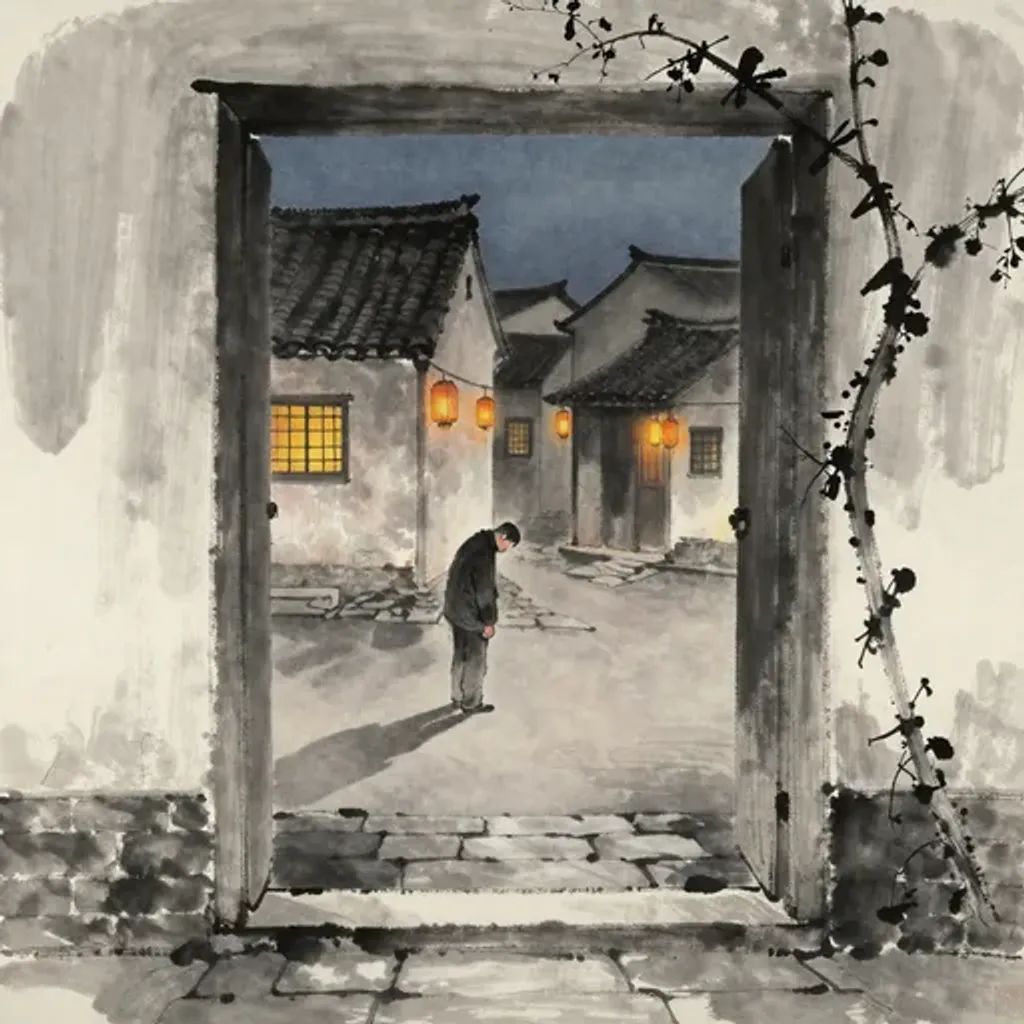
鰥寡孤獨,福祿苦薄,入室無妻,武子哀悲。
Widowed, orphaned, alone; blessings and fortune bitterly thin. Entering the house, there is no wife; Master Wu grieves in sorrow.
— Jiao Yanshou, Yilin (Forest of Changes), 1st century BC
Commentary
Thunder above heaven exposes the desolation of one who has lost everything: widowed, orphaned, alone, bereft of fortune and blessing. Entering the chamber, there is no wife. 'Master Wu' grieves in sorrow — possibly a reference to a historical figure whose domestic life collapsed despite public stature. The inventory of loss — no spouse, no kin, no luck — strips the subject to bare existence. From Great Power to the Well, water drawn up through wood in Jing represents the communal resource that nourishes all equally. The transformation is poignant: the Well serves everyone, yet this person has no one to draw water for. Power without connection to community cannot access the sustenance that the Well provides. Solitude is the deepest poverty.
大壯 → 革
Hexagram 34 → Hexagram 49: Revolution
Changing lines: 2, 5
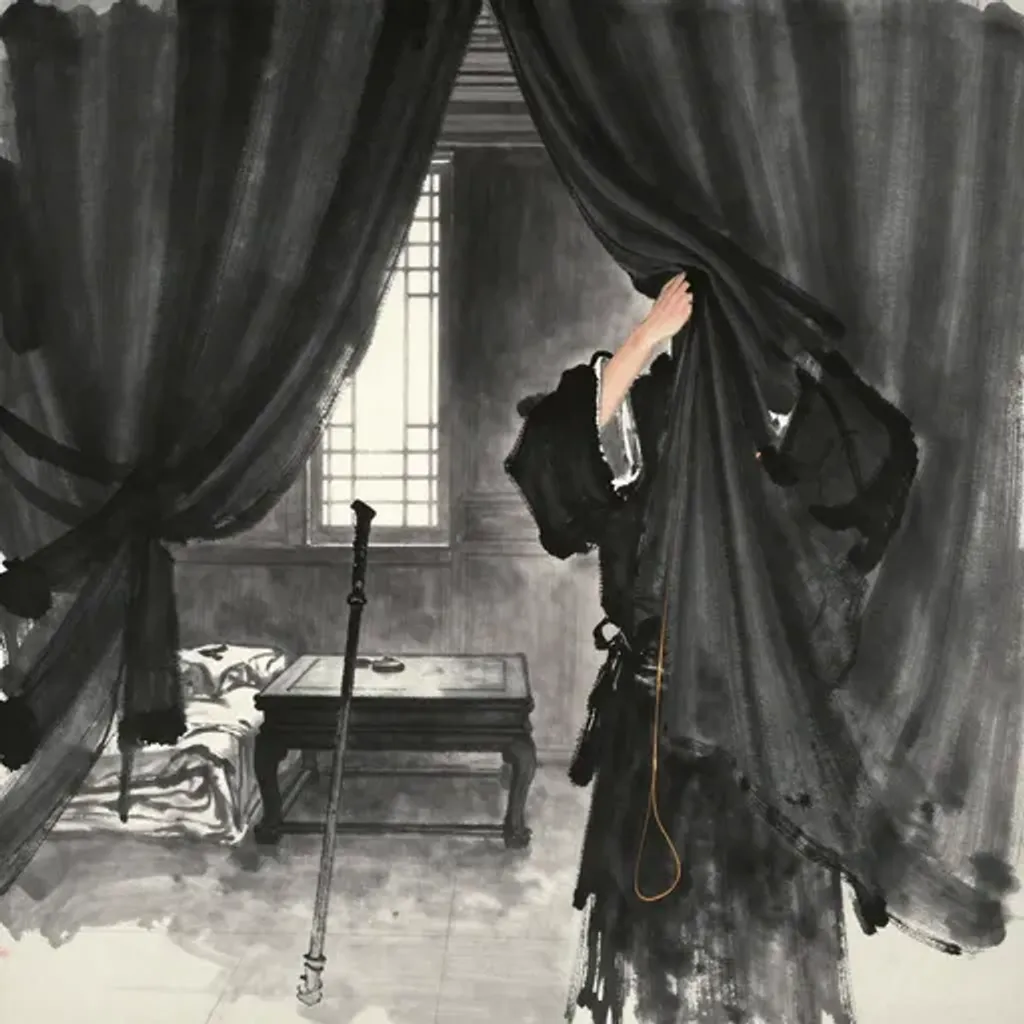
舉袂覆目,不見日月,衣衾杖机,就其夜室。
Raising the sleeve to cover the eyes; he sees neither sun nor moon. Quilts, staff, and table at hand; he retires to his night chamber.
— Jiao Yanshou, Yilin (Forest of Changes), 1st century BC
Commentary
Thunder above heaven retreats behind a sleeve raised to cover the eyes. One sees neither sun nor moon, wrapped in quilts, leaning on a stool, withdrawing into the night chamber. The imagery is of total withdrawal from the world — whether in mourning, illness, or political exile, the subject shuts out all light and retreats into darkness. From Great Power to Revolution, fire burns within the lake in Ge: the old order must be overturned to make way for the new. The transformation reveals the paradox of revolutionary change: before the new calendar can be established, one must first enter absolute darkness. The sleeve covering the eyes is not defeat but the necessary blindness that precedes transformation — the chrysalis stage before emergence.
大壯 → 鼎
Hexagram 34 → Hexagram 50: The Cauldron
Changing lines: 1, 6
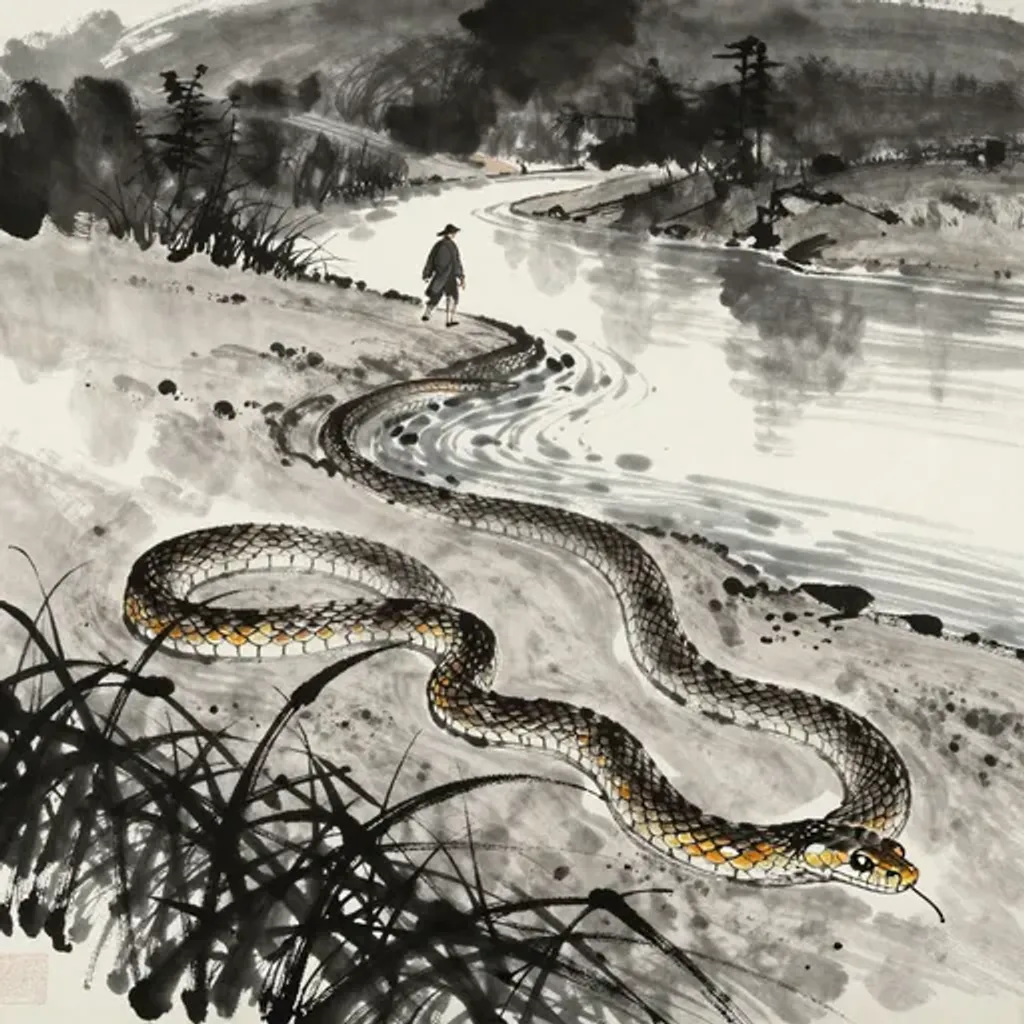
長尾踒虵,畫地為河,深不可涉,絕無以北,惆然憤息。
A long-tailed serpent drags along; a line drawn on the ground becomes a river. Deep and impossible to ford; utterly cut off from the north. One sighs in bitter frustration.
— Jiao Yanshou, Yilin (Forest of Changes), 1st century BC
Commentary
Thunder above heaven confronts an impassable barrier. A long-tailed serpent coils across the ground, and a line drawn in the earth becomes a river too deep to ford. There is no way north — the path is absolutely severed. One can only sigh in frustrated anger. The verse evokes the legend of drawing a line to serve as a boundary, turning imagination into real obstacle. From Great Power to the Cauldron, fire blazes above wind in Ding, the sacred vessel that transforms raw offerings into refined nourishment. The transformation is blocked: the cauldron requires ingredients to reach it, but the river drawn in the earth prevents delivery. Power that cannot cross the threshold of transformation remains raw, unrefined, and ultimately useless — strength that sighs at its own irrelevance.
大壯 → 震
Hexagram 34 → Hexagram 51: The Arousing Thunder
Changing lines: 2, 3
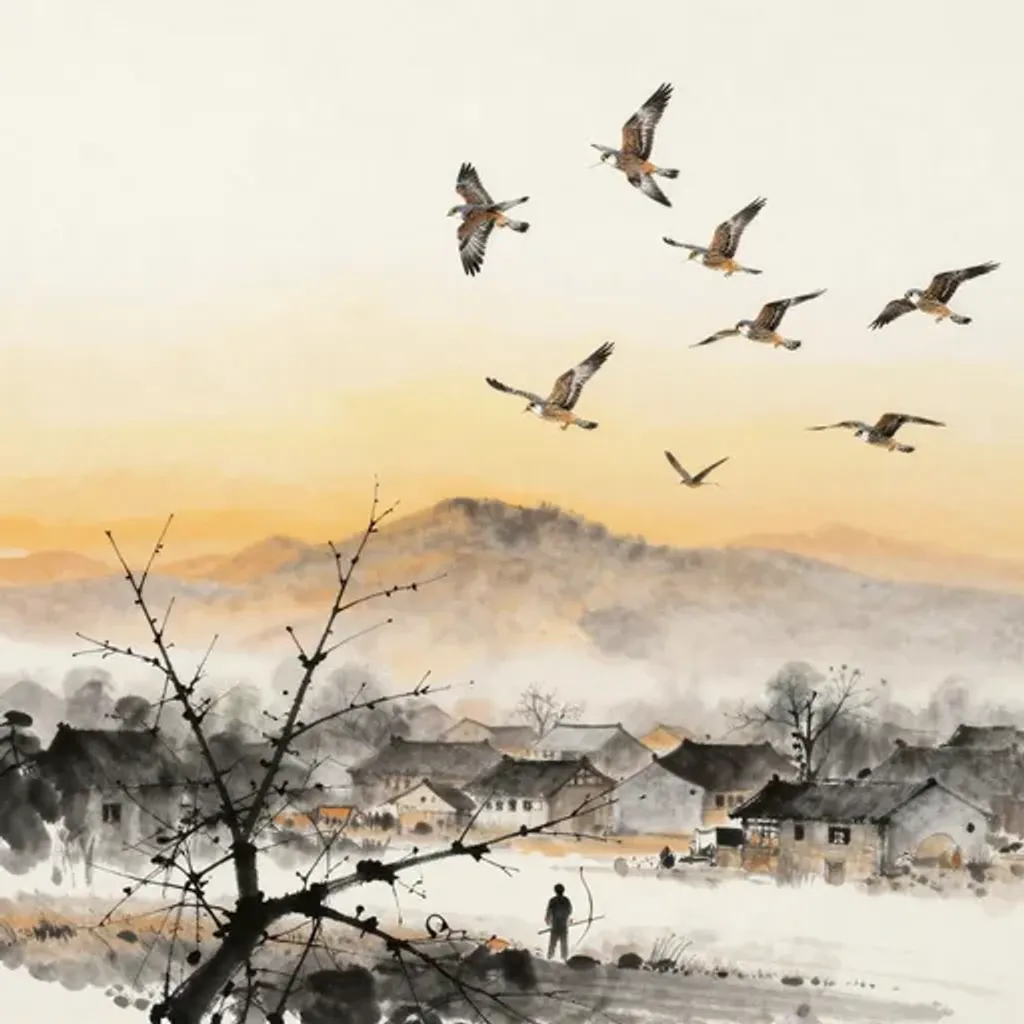
晨風文翰,大舉就溫,昧過我邑,羿无所得。
The kestrel with patterned plumes takes great flight toward warmth. Passing swiftly over our town in the dark; Yi gains nothing from them.
— Jiao Yanshou, Yilin (Forest of Changes), 1st century BC
Commentary
Thunder above heaven doubles into thunder upon thunder: Great Power transforms into the Arousing. The morning wind-falcon — the chenguang, a swift raptor — spreads its patterned wings and takes flight southward toward warmth. It passes through the traveler's territory at dawn, too quick to catch. Even the legendary Archer Yi gains nothing from this encounter; the bird is simply too fast. From Great Power to the Arousing, the doubling of thunder amplifies the falcon's startling speed. Zhen embodies the shock of sudden movement, the first crack of spring thunder that sets dormant things in motion. The verse captures this perfectly: power transformed into pure velocity outruns even the greatest hunter's aim.
大壯 → 艮
Hexagram 34 → Hexagram 52: Keeping Still Mountain
Changing lines: 1, 2, 4, 6
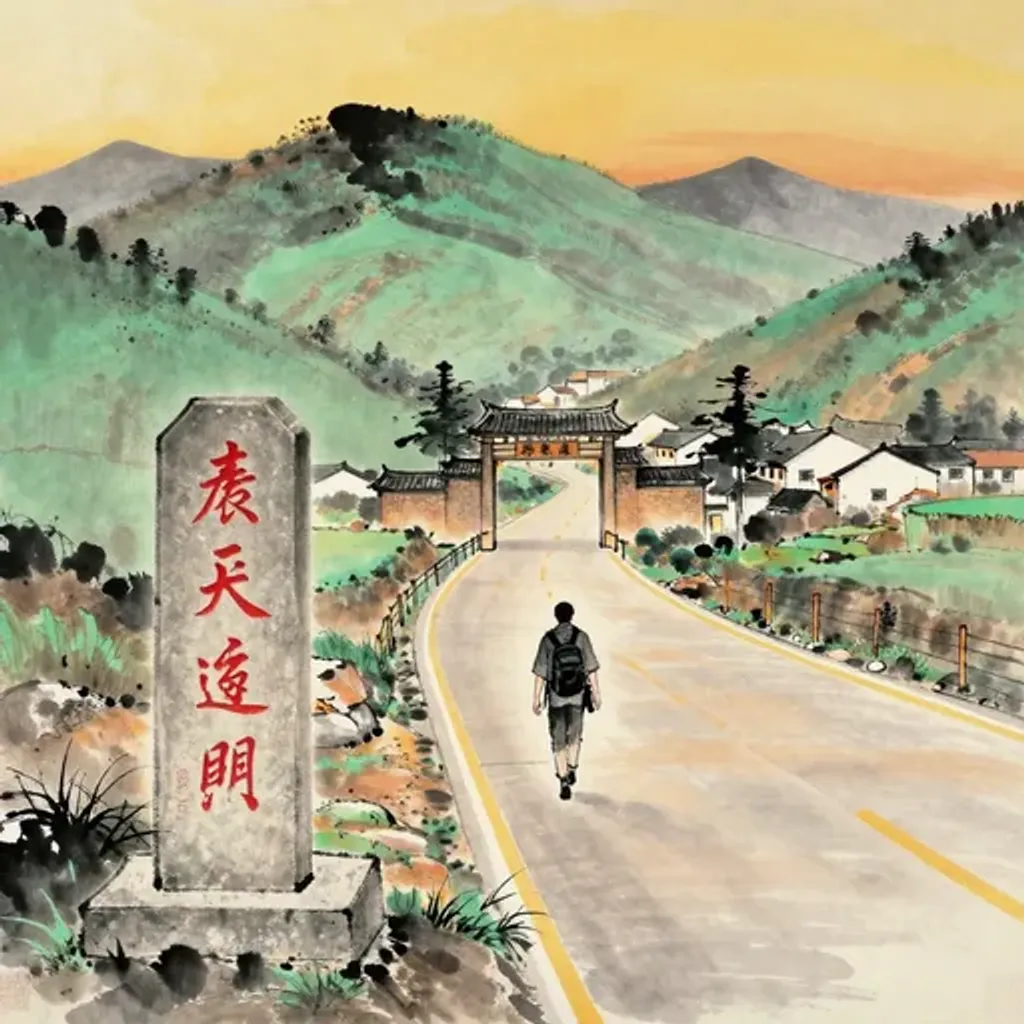
出入節時,南北无憂,行者亟至,在外歸來。
Going out and coming in, each in its season; north and south, without worry. The traveler arrives in haste; from abroad, he returns home.
— Jiao Yanshou, Yilin (Forest of Changes), 1st century BC
Commentary
Thunder above heaven gives way to the doubled mountain of Keeping Still. Coming and going follow their proper seasons, moving north and south without worry. The traveler presses on and arrives swiftly; the one abroad returns home safely. The verse reads as a simple blessing of orderly movement — departures and arrivals governed by natural rhythm rather than anxiety. From Great Power to Keeping Still, the transformation traces how forceful movement resolves into composed stillness. The twin mountains of Gen hold their positions, 'thinking does not exceed its place.' The traveler who arrives has completed the journey; the wanderer who returns has found his resting point. Power fulfills itself not in perpetual motion but in knowing when to stop.
大壯 → 漸
Hexagram 34 → Hexagram 53: Development
Changing lines: 1, 2, 4, 5, 6
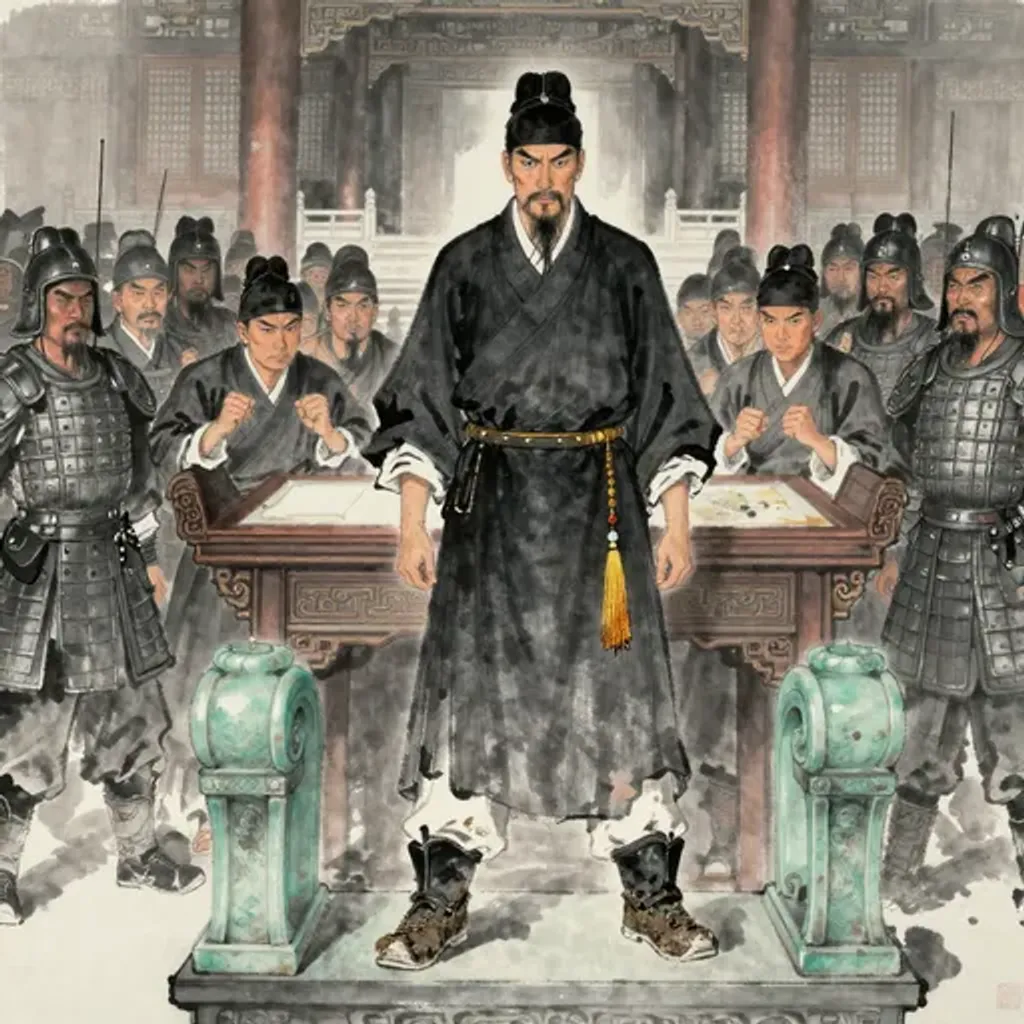
陽氏狂惑,季孫亂憒,陪臣執政,平子拘折,我心不快。
The Yang clan is wild and deluded; the Ji Sun house is in turmoil and confusion. The household minister seizes power; Ping Zi is constrained and broken. My heart is not at ease.
— Jiao Yanshou, Yilin (Forest of Changes), 1st century BC
Commentary
Thunder above heaven exposes the chaos of Lu's late Spring and Autumn politics. The 'Yang clan's madness' refers to Yang Hu, the ambitious retainer who seized control of the Jisun family around 504 BC, effectively making himself regent of Lu. 'Jisun in confusion and disorder, a vassal's vassal seizing governance' — this is the Zuo Zhuan's own diagnosis of Lu's constitutional crisis: the duke had lost power to the Three Huan families, and now even the Huan families lost power to their own retainers. 'Pingzi restrained and broken' recalls how Jisun Pingzi was humiliated and constrained. From Great Power to Development, trees grow slowly on the mountain in Jian. The transformation offers remedy through patient, incremental cultivation — the opposite of Yang Hu's violent shortcuts.
大壯 → 歸妹
Hexagram 34 → Hexagram 54: The Marrying Maiden
Changing lines: 3
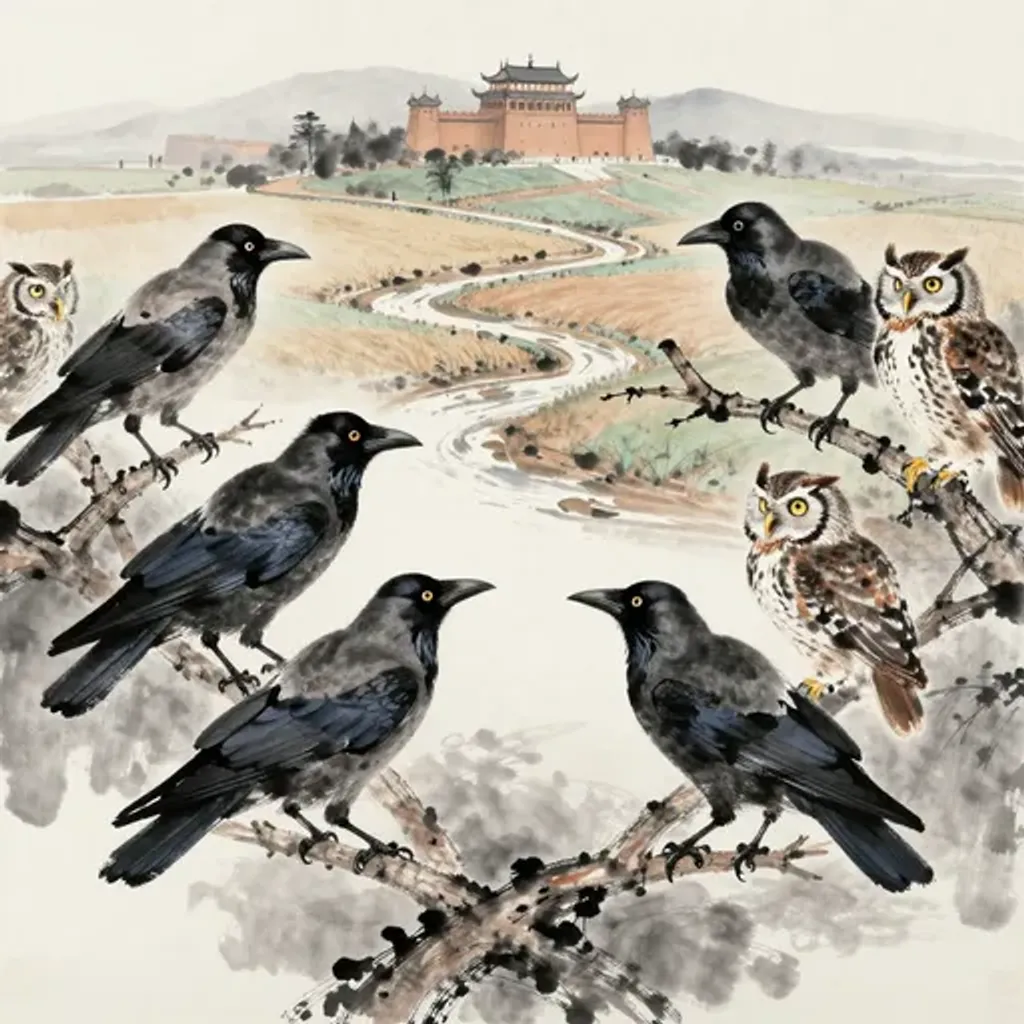
五烏六鴟,相對蹲跂,禮讓不興,虞芮爭訟。
Five crows and six owls crouch facing each other. Ritual and deference do not flourish; Yu and Rui go to litigation.
— Jiao Yanshou, Yilin (Forest of Changes), 1st century BC
Commentary
Thunder above heaven assembles five crows and six kites, squatting face to face in confrontation. Courtesy and deference are extinct, and the verse then invokes the Yu-Rui dispute — two small states whose territorial quarrel was famously resolved by King Wen of Zhou. According to tradition, when the rulers of Yu and Rui entered Zhou territory and saw its people yielding to one another, they were so ashamed that they settled their dispute without needing adjudication. Here the verse inverts the lesson: without such moral authority, birds of prey simply glare at each other in perpetual standoff. From Great Power to the Marrying Maiden, thunder moves above the lake in Guimei, a union governed by impulse rather than proper arrangement. Power without ritual propriety breeds not resolution but endless, undignified confrontation.
大壯 → 豐
Hexagram 34 → Hexagram 55: Abundance
Changing lines: 2
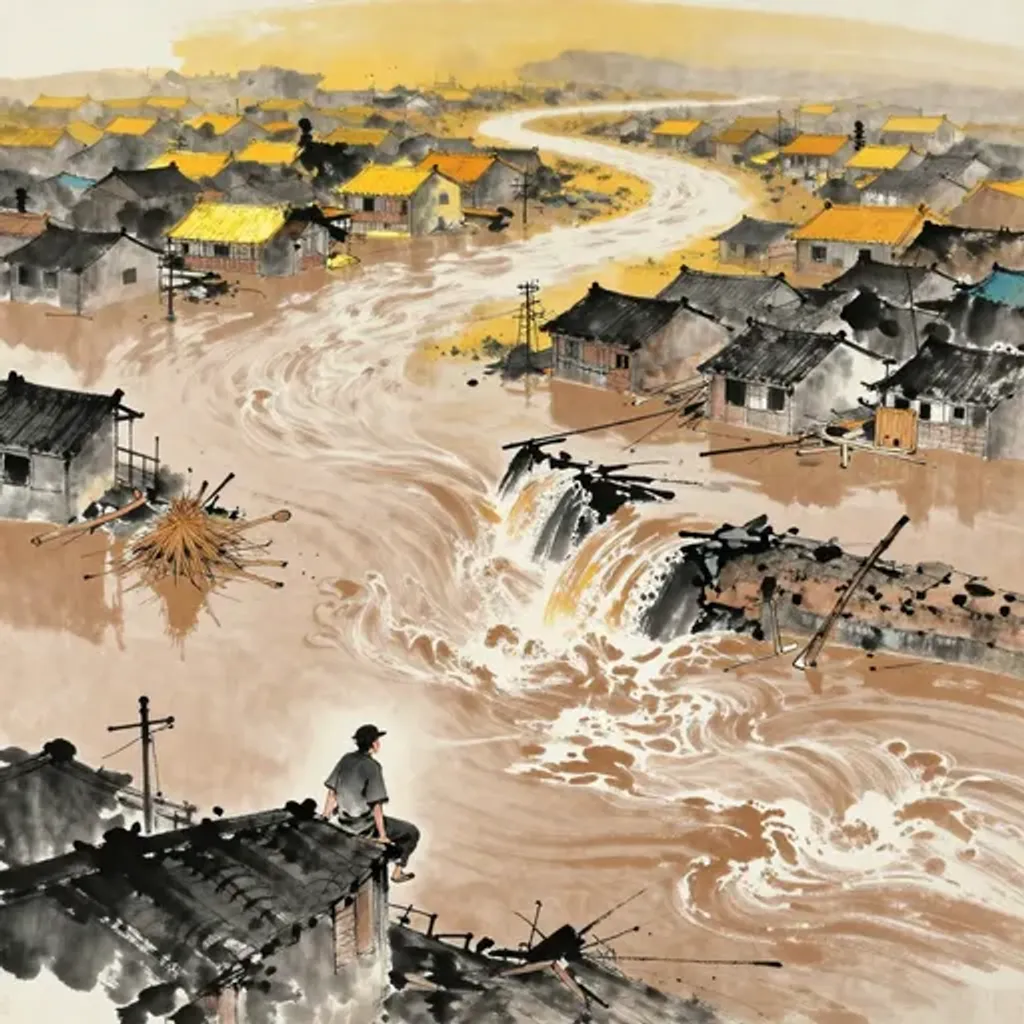
顧念所生,隔在東平,遭離滿沸,河川決潰,幸得无恙,復歸相室。
Thinking anxiously of those born to us, separated at Dongping. Caught in the raging flood, the rivers and streams burst their banks. By fortune, no one is harmed; once more they return to the family home.
— Jiao Yanshou, Yilin (Forest of Changes), 1st century BC
Commentary
Thunder above heaven sends a parent's thoughts eastward to Dongping, where a child is separated by rising floodwaters. The river boils and surges, dikes burst and channels overflow — yet through fortune's mercy, all survive unharmed, and the family is reunited at home. The verse moves from anxious separation through natural catastrophe to joyful reunion, a complete emotional arc compressed into six phrases. From Great Power to Abundance, thunder and lightning arrive together in Feng: overwhelming force paired with illuminating clarity. The transformation captures the flood's double nature — destructive power that paradoxically clarifies what matters most. In Abundance, the sage 'does not grieve at midday's zenith'; here, surviving the deluge restores both household and perspective.
大壯 → 旅
Hexagram 34 → Hexagram 56: The Wanderer
Changing lines: 1, 2, 6
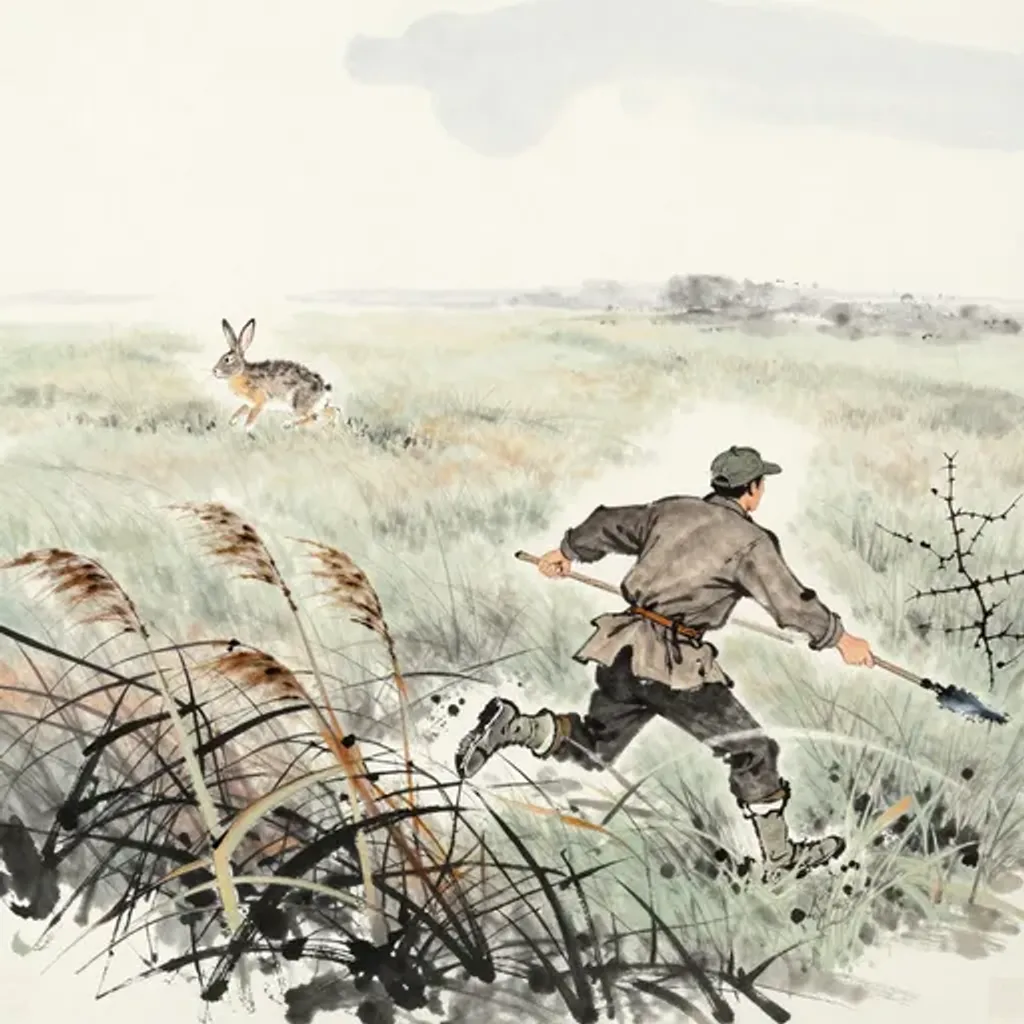
追獵東走,兔逃我後,吾銳不利,獨空无有。
Chasing eastward in the hunt; the rabbit escapes behind me. My sharp edge proves useless; alone and empty-handed, I have nothing.
— Jiao Yanshou, Yilin (Forest of Changes), 1st century BC
Commentary
Thunder above heaven drives the hunter eastward in pursuit, but the rabbit flees behind him — always in the wrong direction. His weapons are sharp but not sharp enough, and he returns alone, empty-handed. The verse captures the frustration of the chase that never connects: effort expended, terrain covered, quarry glimpsed but never caught. From Great Power to the Wanderer, fire burns atop the mountain in Lu, the image of the traveler who must keep moving. The transformation reveals the hunter's deeper predicament: he has become the wanderer himself. Having failed to capture what he sought, he is now a figure of displacement — all that power directed outward has left him homeless, possessing nothing, a stranger on the very ground he hunted across.
大壯 → 巽
Hexagram 34 → Hexagram 57: The Gentle Wind
Changing lines: 1, 4, 5, 6
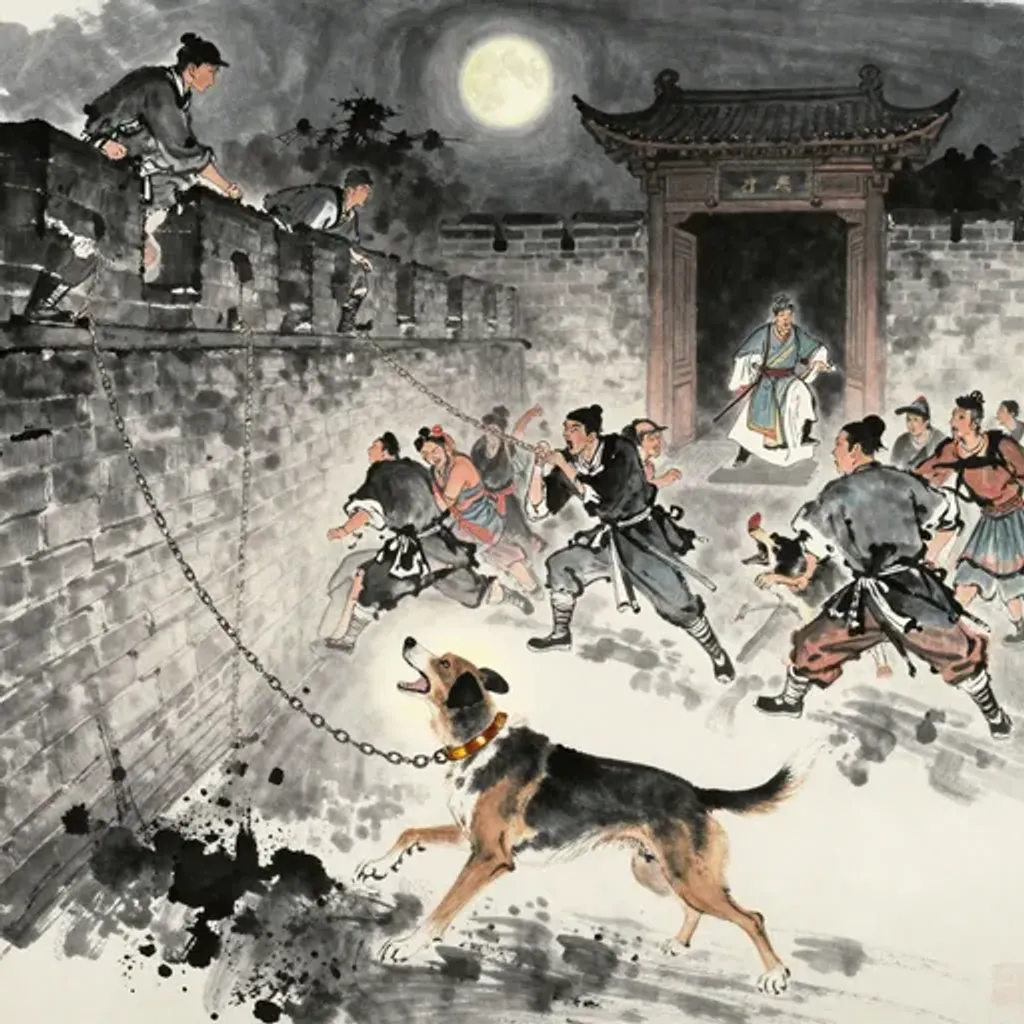
犬吠非主,上下膠擾,敵人襲戰,閔王逃走。
The dog barks at one not its master; above and below are in turmoil and confusion. The enemy attacks in battle; King Min of Qi flees.
— Jiao Yanshou, Yilin (Forest of Changes), 1st century BC
Commentary
Thunder above heaven sets dogs barking at strangers — not at enemies but at their own master, unable to distinguish friend from foe. Above and below are in turmoil, glued together in mutual confusion. Then the enemy strikes, and King Min of Qi flees. This alludes to the devastating invasion of Qi by Yue Yi's coalition of five states in 284 BC. King Min's arrogance had alienated his own people and allies, so when the blow fell, his court collapsed and he fled to Ju, where he was eventually killed. From Great Power to the Gentle, doubled wind in Xun carries orders outward. The transformation reveals what Min lacked: the gentle, persistent penetration of clear communication. His dogs barked at shadows because his commands had already lost all authority.
大壯 → 兌
Hexagram 34 → Hexagram 58: The Joyous Lake
Changing lines: 3, 5
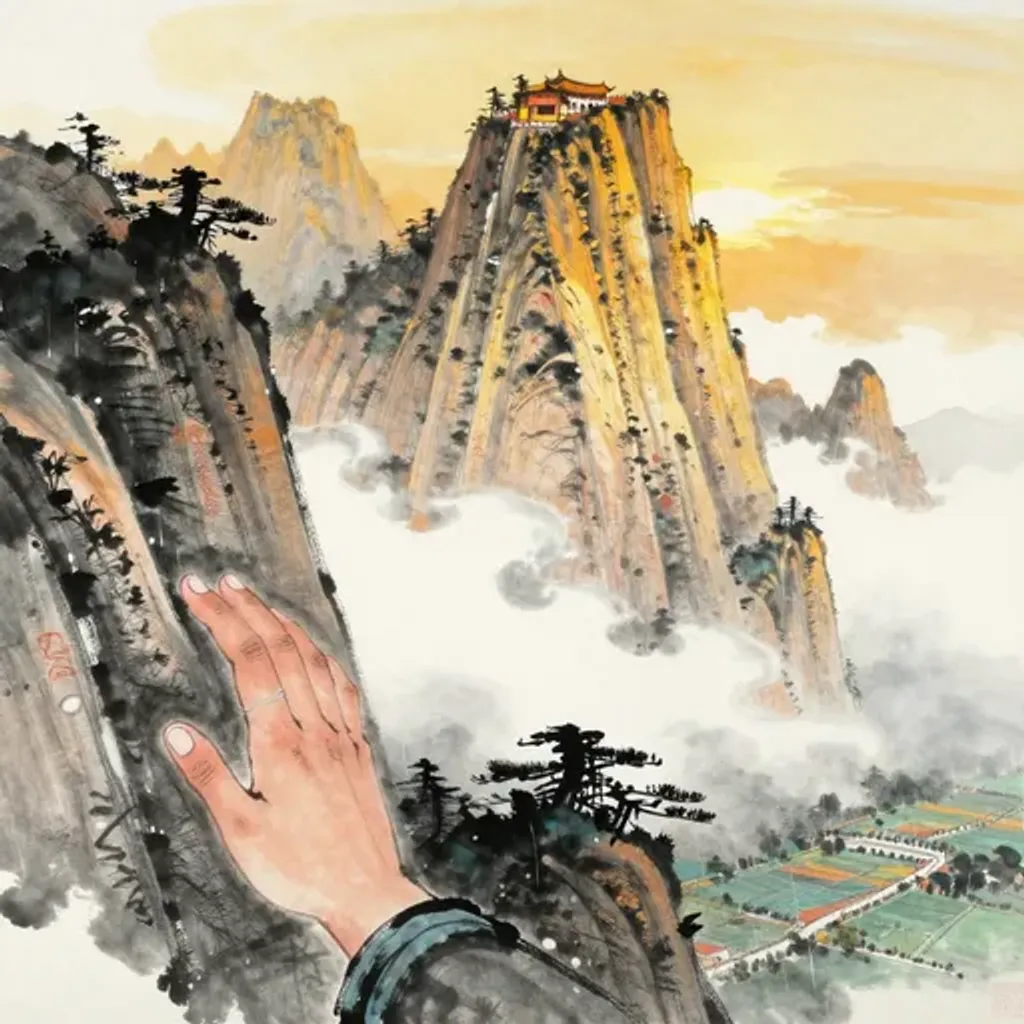
嵩高岱宗,峻直且神,觸石膚寸,千里蒙恩。
Lofty Song, great Tai; steep, upright, and divine. Clouds rise from a hand-span of stone; a thousand li receive their grace.
— Jiao Yanshou, Yilin (Forest of Changes), 1st century BC
Commentary
Thunder above heaven invokes the twin sacred mountains: Mount Song the lofty and Mount Tai the ancestral summit, both towering and divine. 'Touching the stone, spreading a fist's breadth' alludes to the classical description of how clouds form on sacred peaks — moisture gathers on the rock face, starting as a patch no wider than a hand, then spreading across a thousand li as rain that nourishes the realm. From Great Power to the Joyous, doubled lake in Dui reflects the image of friends sharing knowledge. The transformation reveals how concentrated, almost imperceptible power — the first wisp of cloud on stone — expands into universal blessing. Joy arises not from force but from the mountain's quiet gift: a thousand li of grace born from a single point of contact.
大壯 → 渙
Hexagram 34 → Hexagram 59: Dispersion
Changing lines: 1, 3, 4, 5, 6
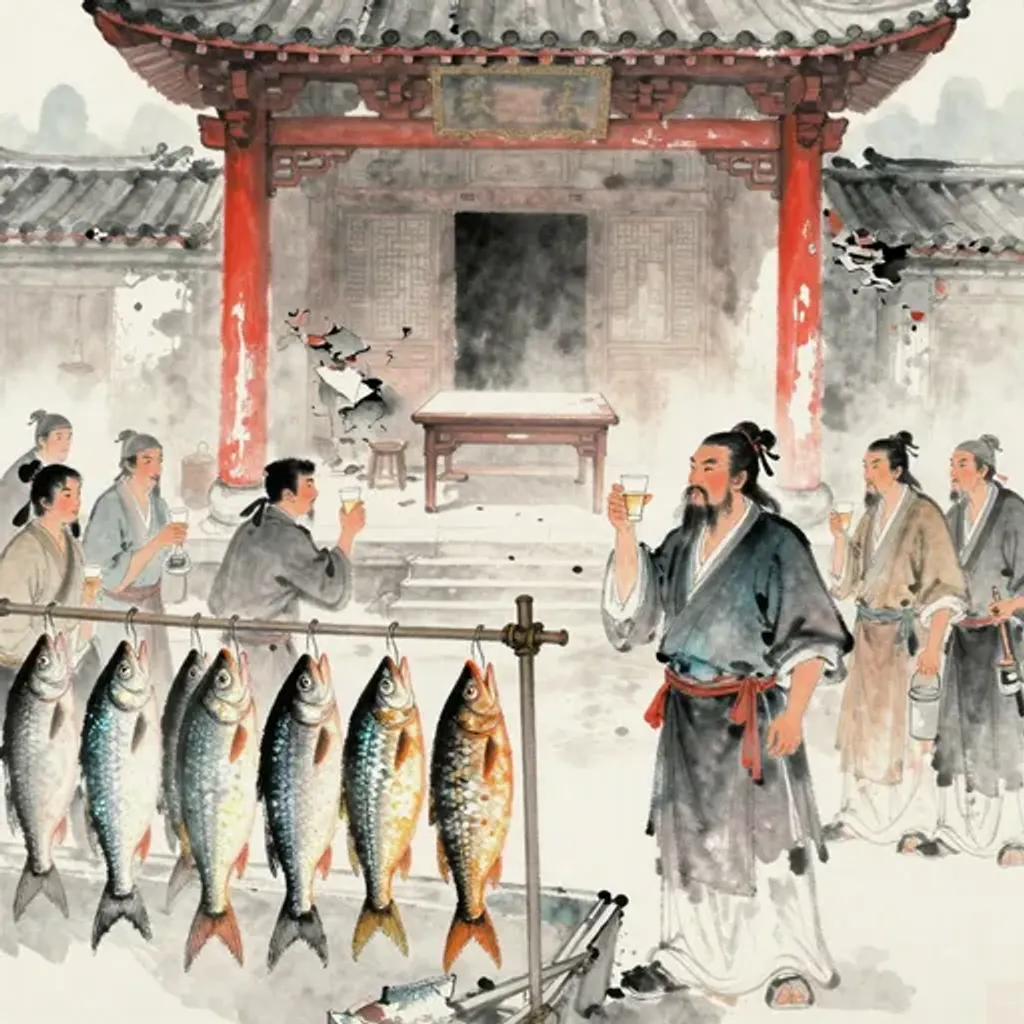
陳魚觀社,佷荒踰矩,為民開緒,亡其祖考。
Displaying fish at the village festival; wild and excessive, transgressing the bounds. He opens the way for the people's ruin; the ancestral rites are lost.
— Jiao Yanshou, Yilin (Forest of Changes), 1st century BC
Commentary
Thunder above heaven exposes a ruler's spectacular impropriety. 'Displaying fish and watching the land sacrifice' alludes to Duke Ling of Chen, who paraded the intimate garments of his lover Xia Ji at court while viewing sacred rites — a brazen fusion of lechery and sacrilege. 'Willful and dissolute, overstepping all bounds' follows naturally. The verse then pivots: attempting to 'open threads for the people' while 'forgetting ancestral forebears' — reform undertaken by one who has already destroyed the moral foundations it requires. From Great Power to Dispersion, wind blows across water in Huan, scattering what should be gathered. The transformation captures how Chen's dissolution began from the throne itself, radiating outward until no social bond remained intact.
大壯 → 節
Hexagram 34 → Hexagram 60: Limitation
Changing lines: 3, 4, 5
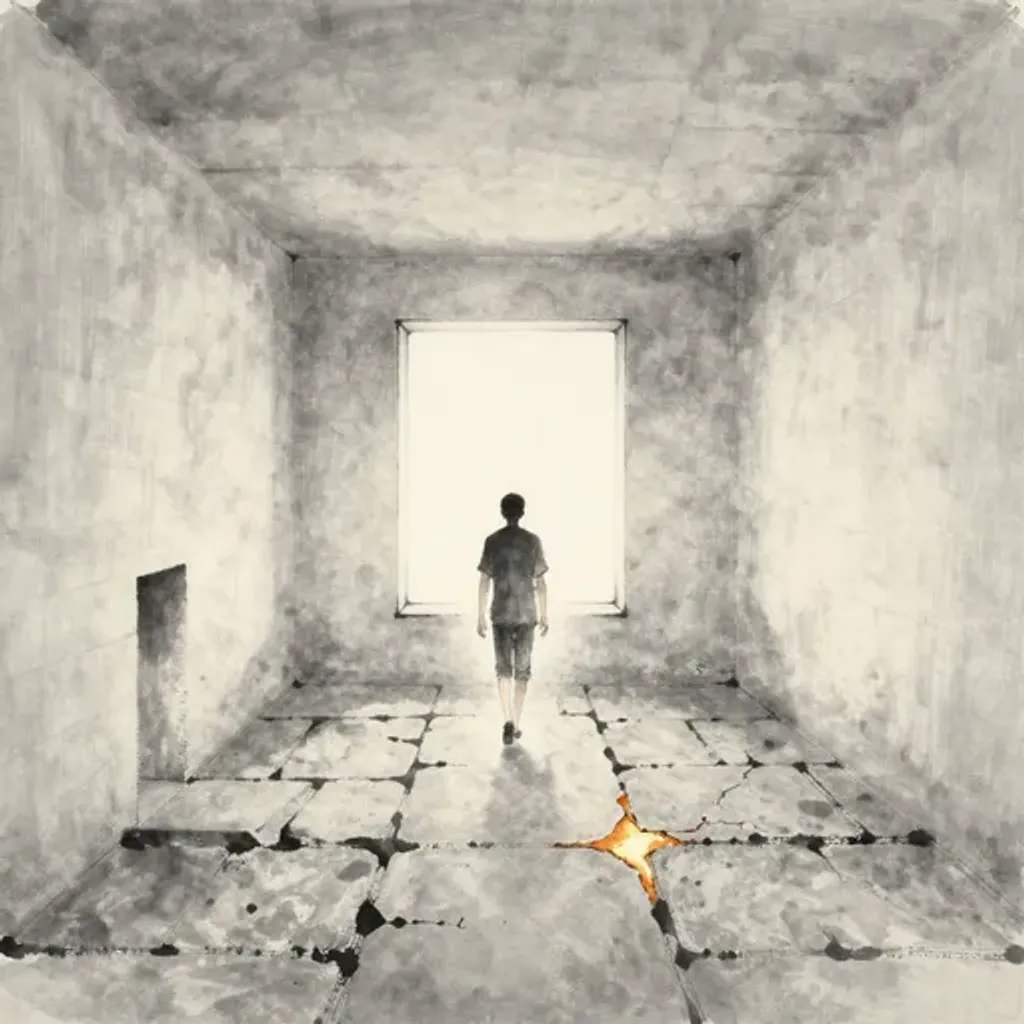
四壁无戶,三步一止,東西南北,利不可得。
Four walls without a door; three steps and one must halt. East, west, south, or north — no profit can be gained.
— Jiao Yanshou, Yilin (Forest of Changes), 1st century BC
Commentary
Thunder above heaven hits four walls without a door — a sealed chamber from which there is no exit. Every three steps one must halt; east, west, south, north, no profit can be found in any direction. The verse describes absolute confinement, not through imprisonment but through environmental limitation: the walls are featureless, the ground permits only halting movement, and the compass offers no escape route. From Great Power to Limitation, water sits above lake in Jie: setting proper measures and deliberating on conduct. The transformation reframes the confinement: what feels like a prison is actually the structure of necessary restraint. Power without limits destroys itself; the four blank walls are not punishment but the boundaries that make meaningful action possible.
大壯 → 中孚
Hexagram 34 → Hexagram 61: Inner Truth
Changing lines: 3, 4, 5, 6
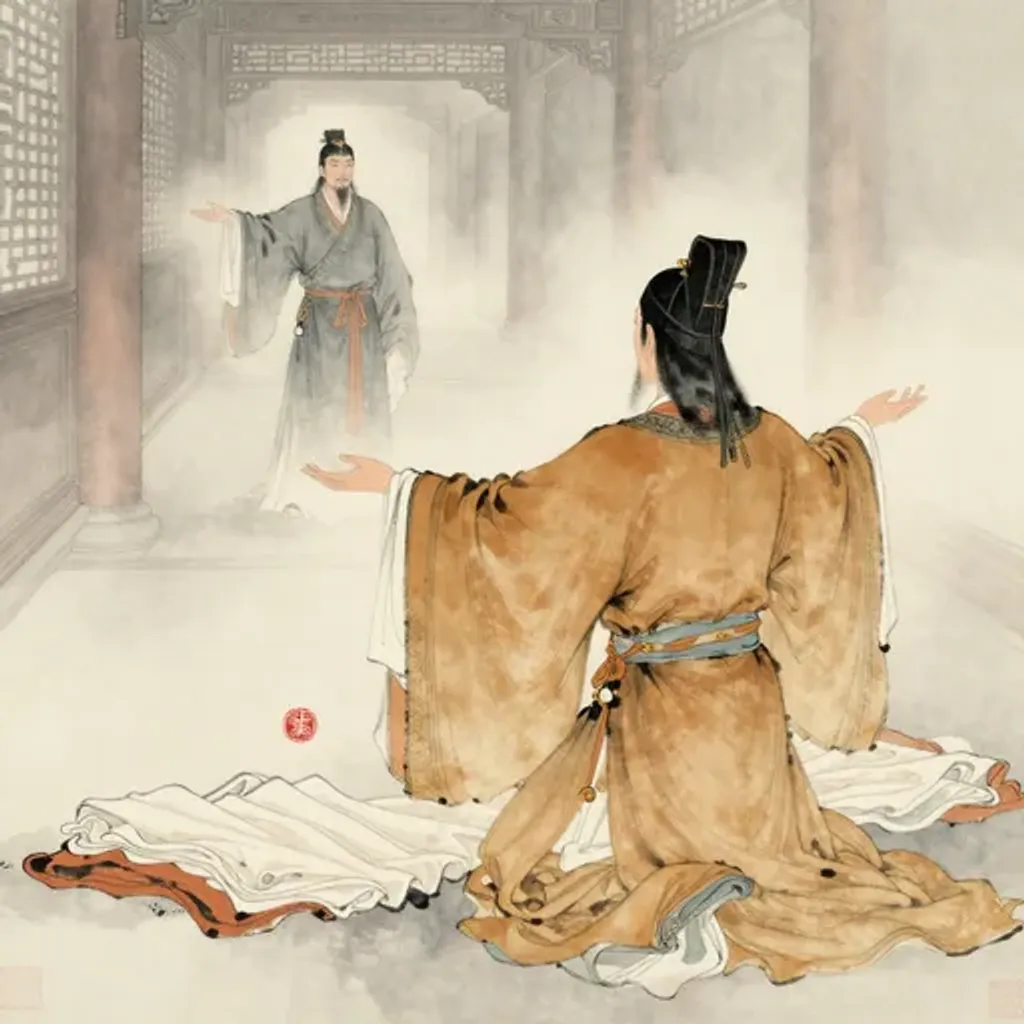
求君衣裳,情不可當,觸諱西行,為伯生殃。君之上歡,得其安存。
Seeking the lord's robes; the feeling cannot be borne. Touching taboo, going west; for the elder it brings calamity. When the lord above is pleased, one finds peace and survival.
— Jiao Yanshou, Yilin (Forest of Changes), 1st century BC
Commentary
Thunder above heaven sends a petitioner seeking the lord's robes — emotions running too high to contain. But the request touches a taboo, and the westward journey brings disaster upon the elder brother. Then the verse pivots: the lord's highest favor arrives, and security is restored. The emotional arc moves from desperate appeal through transgression to eventual grace. 'Seeking the lord's garments' suggests a plea for recognition or investiture, while 'touching a taboo' implies overstepping protocol. From Great Power to Inner Truth, wind moves above the lake in Zhongfu: the sage deliberates on judicial matters and delays execution. The transformation reveals that sincere petition, even when it stumbles against propriety, may ultimately reach the truth if the petitioner's heart is genuine.
大壯 → 小過
Hexagram 34 → Hexagram 62: Small Exceeding
Changing lines: 1, 2
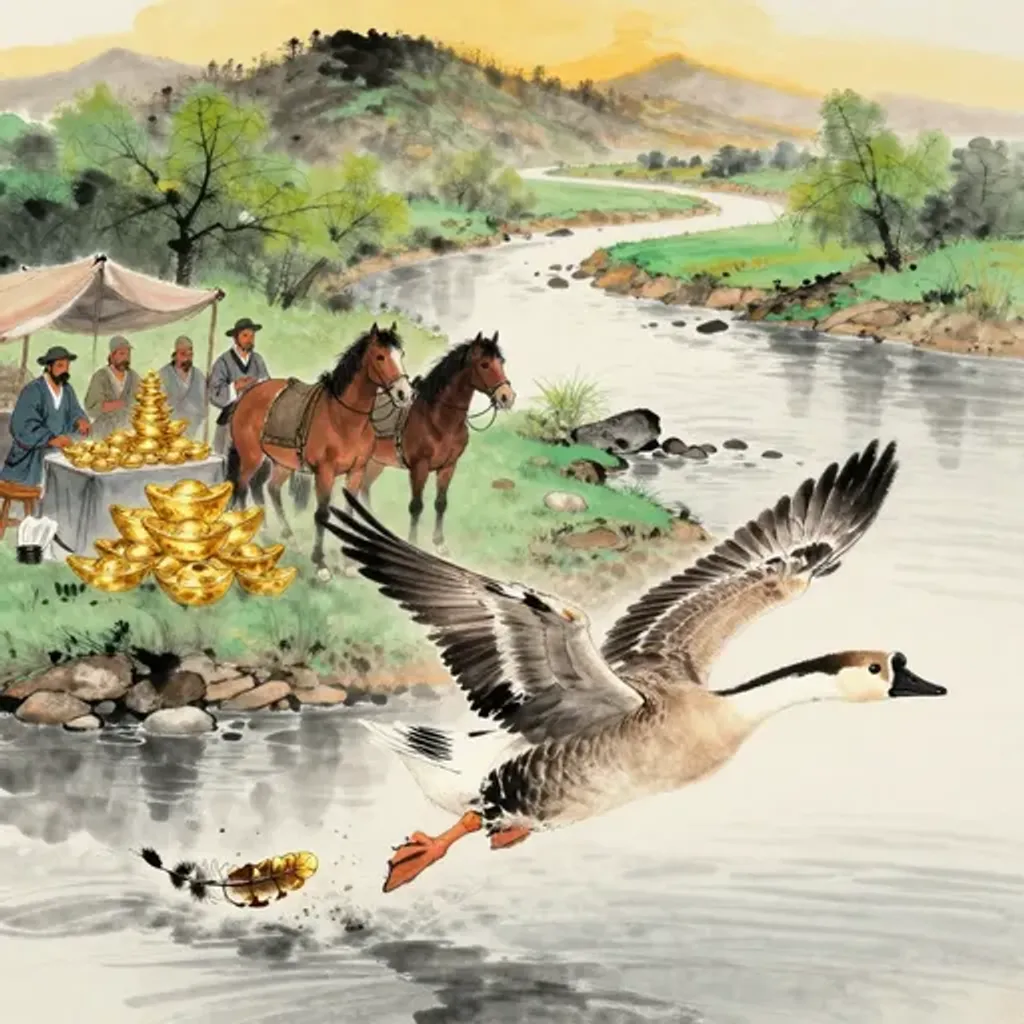
春鴻飛東,以馬貿金,利可得深。
The spring goose flies east; trading a horse for gold, the profit runs deep.
— Jiao Yanshou, Yilin (Forest of Changes), 1st century BC
Commentary
Thunder above heaven sends the spring wild goose flying eastward — a migratory image of natural timing and directional instinct. Trading horses for gold, one obtains deep profit. The verse is compact and auspicious: the goose follows its season, the merchant follows his opportunity, and both arrive at abundance. Spring geese moving east signal renewal and the reliable return of warmth. From Great Power to Small Exceeding, thunder sits above the mountain in Xiaoguo: conduct slightly exceeds the norm, as in excessive reverence, excessive grief, excessive frugality. The transformation suggests that the profit here comes from a modest overstep — trading the large (horses) for the refined (gold), accepting a small excess that yields concentrated value. Power wisely contracted outperforms power broadly spread.
大壯 → 既濟
Hexagram 34 → Hexagram 63: After Completion
Changing lines: 2, 4, 5
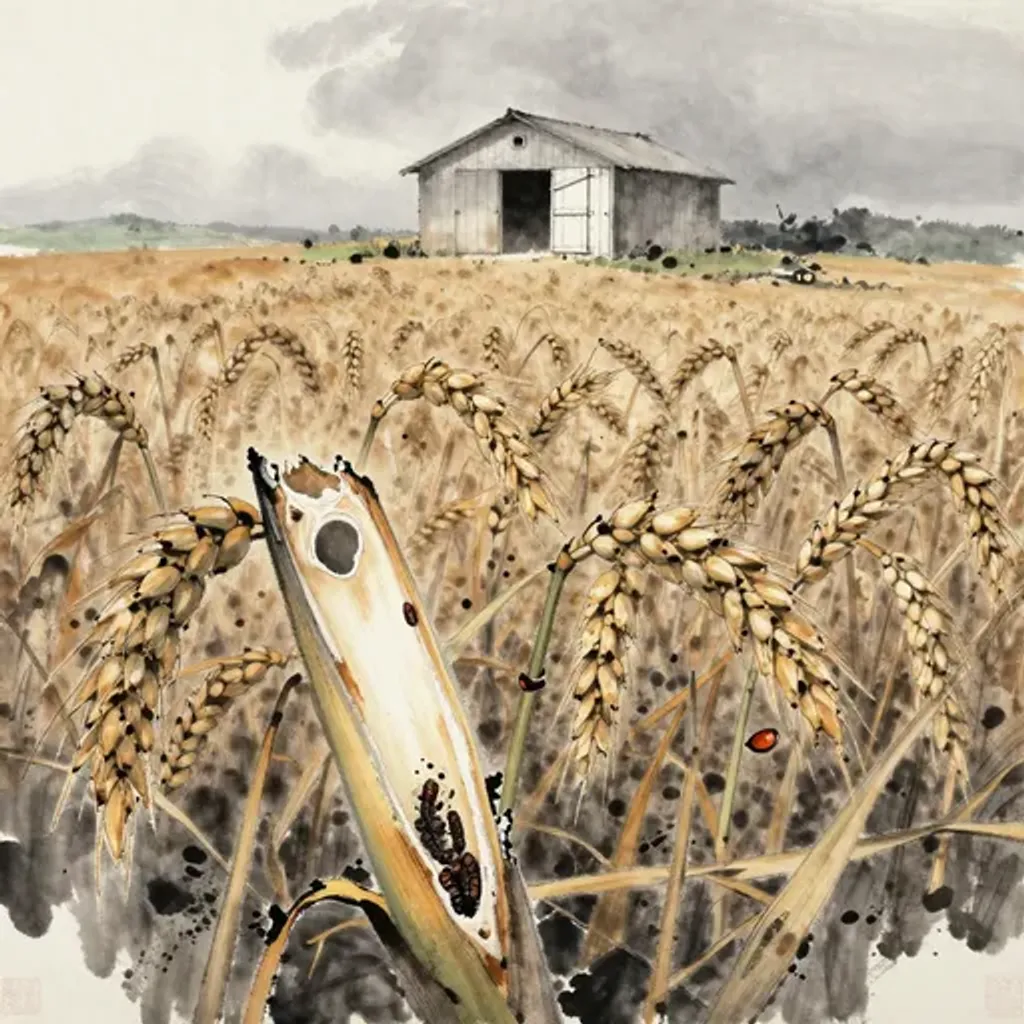
禾生䖝蠹,還自剋賊,使我无得。
The grain breeds worms and borers; they turn and prey upon themselves. They leave us with nothing gained.
— Jiao Yanshou, Yilin (Forest of Changes), 1st century BC
Commentary
Thunder above heaven watches as grain stalks breed their own destroyers: caterpillars and borers infest the crop, the harvest consuming itself from within. The pests 'return to rob their own host,' a phrase that suggests parasitism so complete that the organism kills what sustains it. The result: total loss, nothing gained. From Great Power to After Completion, water sits above fire in Jiji — everything in its proper place, all tasks accomplished. The transformation is bitterly ironic: completion should mean harvest gathered and stored, but the pests have already consumed the yield. The structure is perfect; the content is devoured. Power that breeds its own parasites achieves a hollow completion — the form of success emptied of substance.
大壯 → 未濟
Hexagram 34 → Hexagram 64: Before Completion
Changing lines: 1, 3, 6
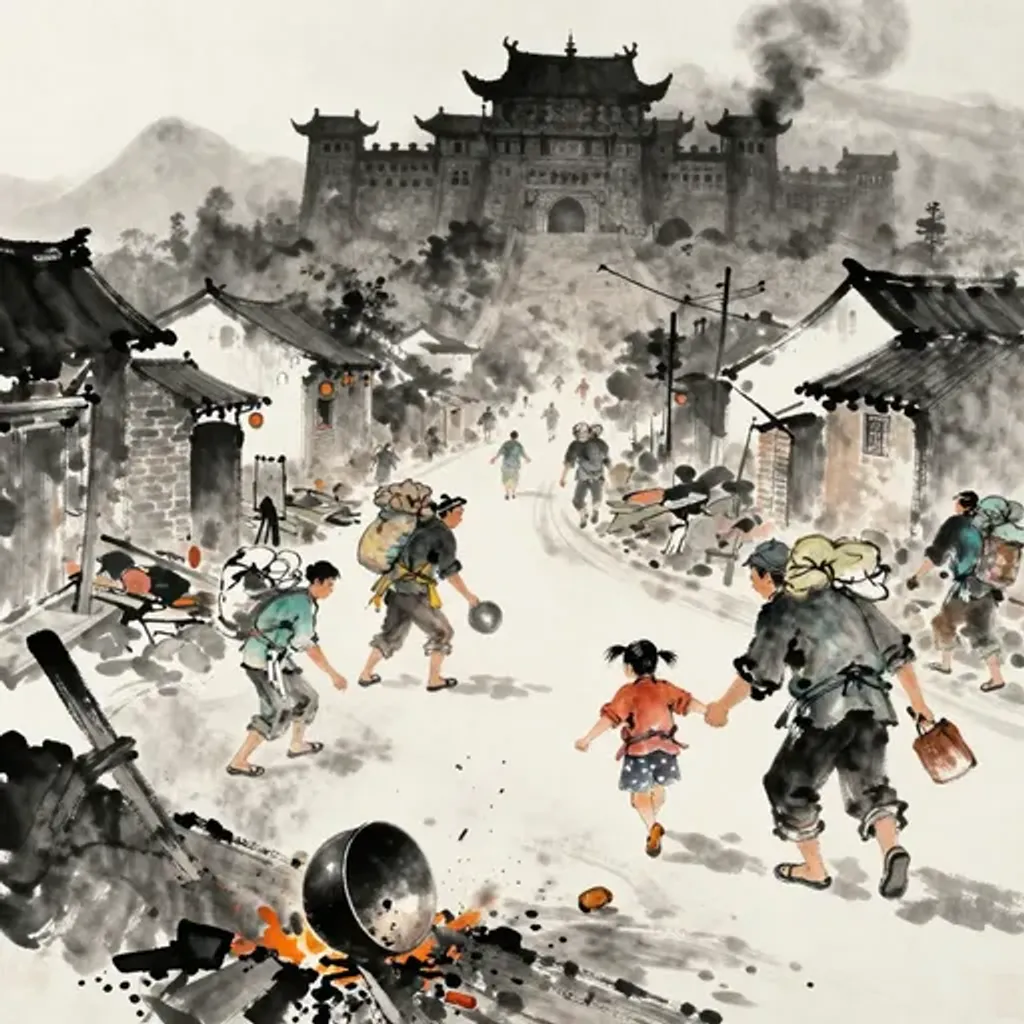
桀亂無道,民散不聚,倍室棄家,逃遁出走。
Jie is lawless and without the Way; the people scatter and will not gather. They abandon their rooms and leave their homes; they flee and run away.
— Jiao Yanshou, Yilin (Forest of Changes), 1st century BC
Commentary
Thunder above heaven meets the tyranny of King Jie, last ruler of the Xia dynasty. His reign was so cruel and dissolute that the people scattered, refusing to gather, abandoning their homes and fleeing in all directions. The verse names no specific atrocity — the chaos is total, beyond individual incident. When the ruler himself embodies disorder, the entire social fabric unravels. From Great Power to Before Completion, fire floats above water in Weiji: the elements refuse to interact, each stuck in its natural but unproductive position. The transformation captures the essence of Jie's failure — fire that should descend to heat the water and water that should rise to quench the fire remain permanently estranged. A kingdom of unfinished potential, where power was present but order was never achieved.