Transformations of Hexagram 38
Every line of change out of Hexagram 38 睽 Opposition, with the Yilin verse for each of the 64 resulting hexagrams, its translation, and the original ink brush artwork.
睽 → 乾
Hexagram 38 → Hexagram 1: The Creative
Changing lines: 3, 5
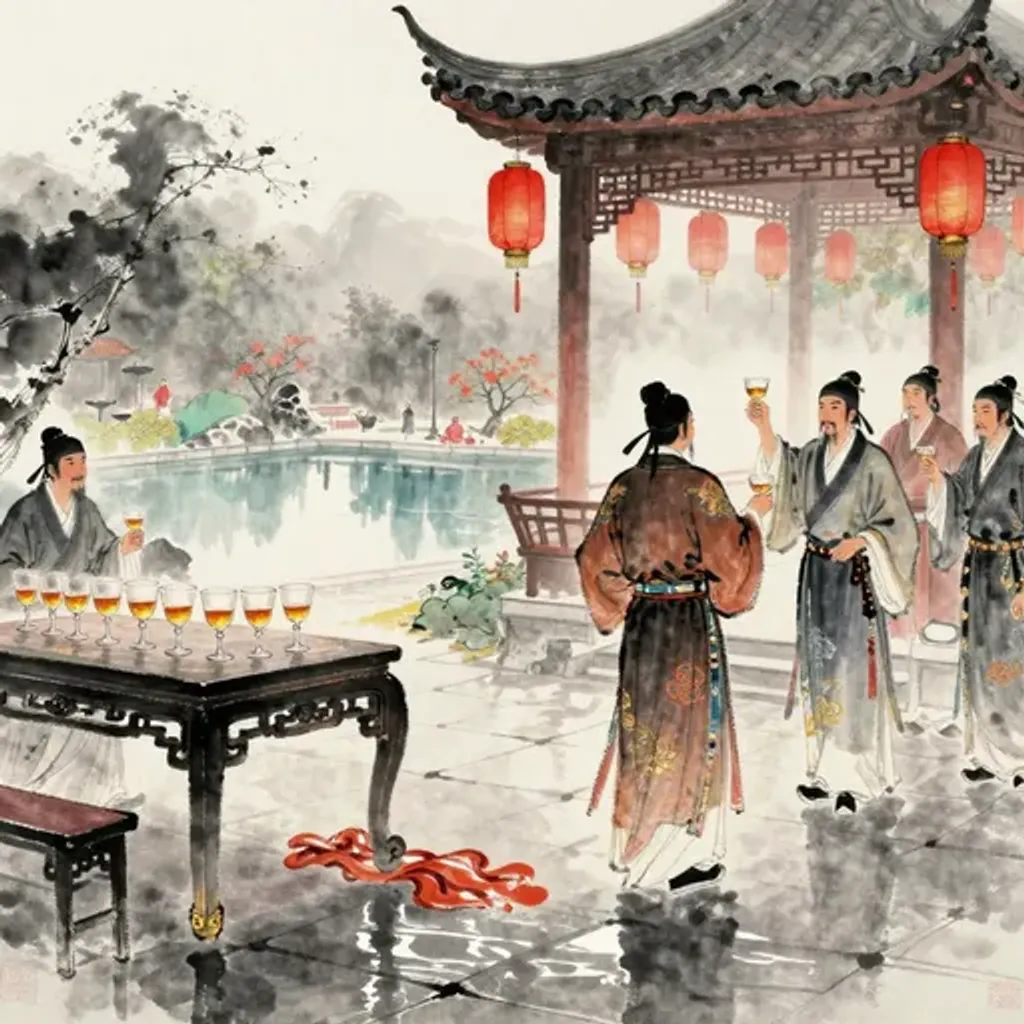
被服文衣,遊觀酒池,上堂見觴。喜為吾兄,使我憂亡。
Clad in patterned robes; wandering to view the wine pool. Ascending the hall, he sees the goblet. Glad it is my brother; yet it makes me forget my sorrows.
— Jiao Yanshou, Yilin (Forest of Changes), 1st century BC
Commentary
Fire above the lake, two natures estranged, yet here a figure dons embroidered robes and strolls through a wine pool. The imagery evokes King Zhou of Shang's infamous court: his Wine Pool and Meat Forest, where courtiers caroused in abandon while the realm unraveled. Ascending the hall, one finds goblets raised in fraternal welcome — 'rejoice, for you are my brother' — but the warmth curdles into dread, for such indulgence breeds annihilation. The brother who offers delight also brings the shadow of ruin. From Opposition to The Creative, heaven ceaselessly renews itself. Only when one recognizes the peril concealed within false joy does genuine self-generating initiative emerge — the will to act with disciplined vigor rather than drown in borrowed pleasure.
睽 → 坤
Hexagram 38 → Hexagram 2: The Receptive
Changing lines: 1, 2, 4, 6
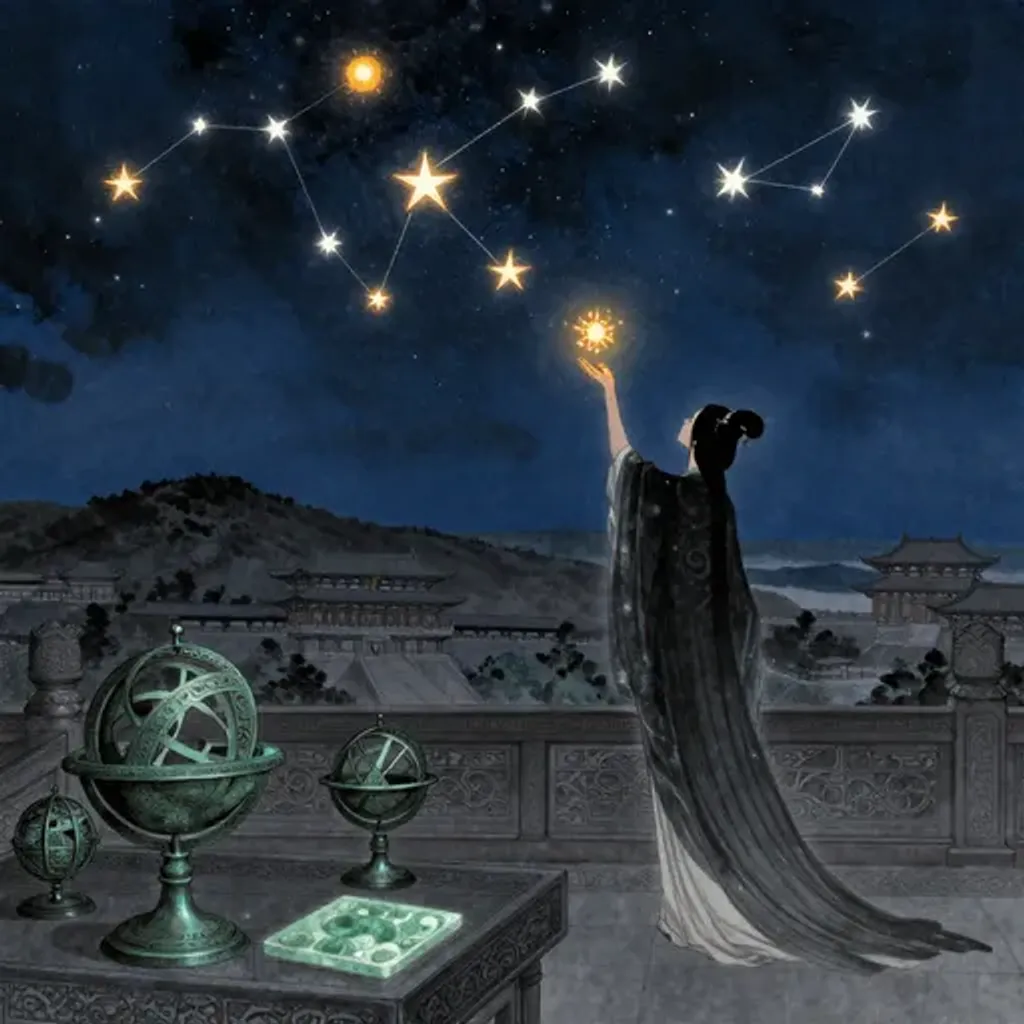
邑姜叔子,天文在手。實沉參墟,封為晉侯。
Yi Jiang's worthy son; the patterns of heaven in his hand. Shi Chen and Shen Xu aligned; he was enfeoffed as Marquis of Jin.
— Jiao Yanshou, Yilin (Forest of Changes), 1st century BC
Commentary
Fire above the lake, two forces pulling apart, yet destiny weaves them back together. Lady Yijiang, wife of King Wu of Zhou, bore a son with the character 'Yu' inscribed on his palm. Astronomical signs confirmed his fate: the stellar lodge Shichen, associated with the ancient Shen territory, aligned with the land of Tang. According to the Zuo Zhuan, King Cheng of Zhou — honoring a playful promise made with a tung leaf — enfeoffed the boy as lord of Tang, later renamed Jin. From Opposition to The Receptive, earth upon earth, estrangement gives way to the vast acceptance of terrain. Divergent signs scattered across heaven and palm converge through patient receptivity, and what seems sundered resolves into the founding of a great state upon yielding ground.
睽 → 屯
Hexagram 38 → Hexagram 3: Difficulty at the Beginning
Changing lines: 2, 4, 5, 6
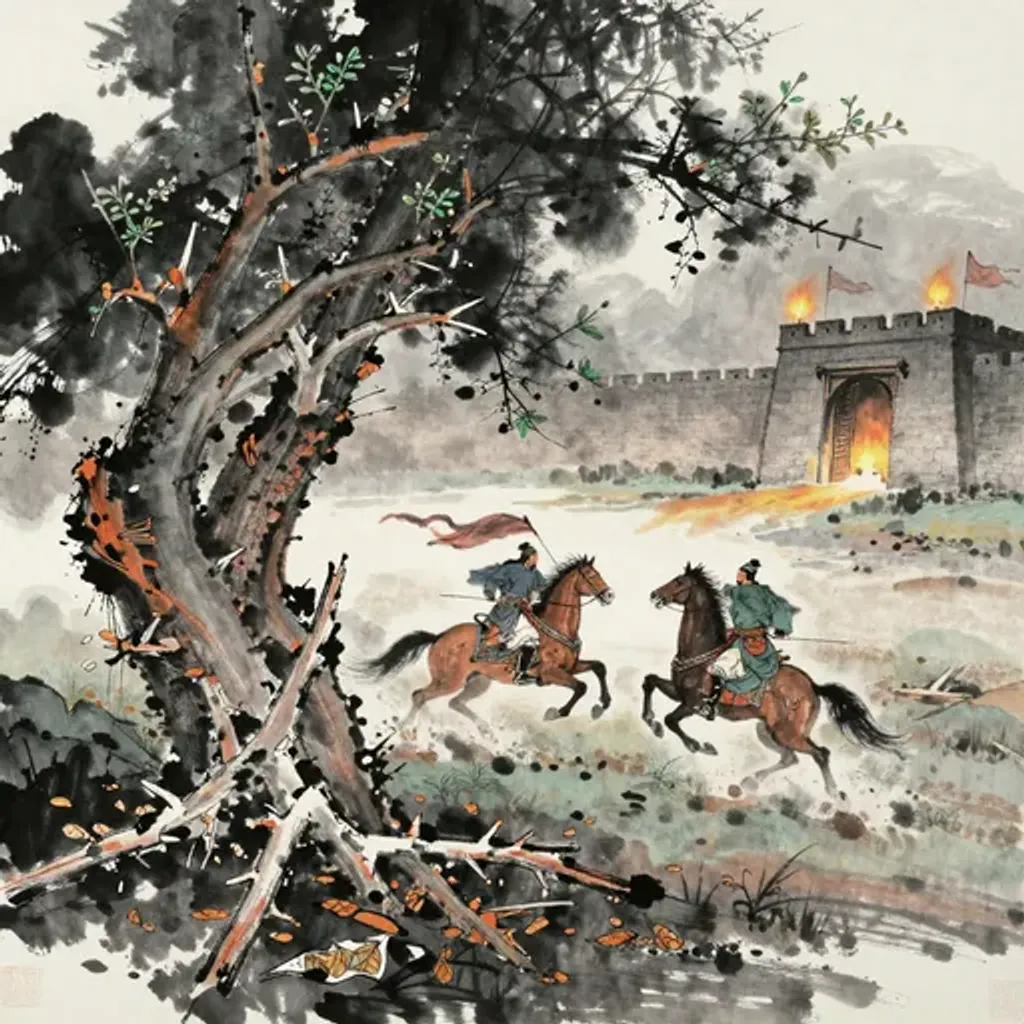
改柯易葉,飯溫不食。豪雄爭強,先者受福。
Changing branch and swapping leaf; the meal grows cold, uneaten. Bold heroes vie for dominance; the first to act receives the blessing.
— Jiao Yanshou, Yilin (Forest of Changes), 1st century BC
Commentary
Fire above the lake pulls in opposing directions as the old order sheds its skin. Branches change shape, leaves transform; cooked food grows cold and goes uneaten. In such times of upheaval, bold contenders vie for supremacy, and whoever moves first seizes the advantage. The verse captures the energy of revolutionary transition: when the familiar decays, hesitation means starvation. From Opposition to Difficulty at the Beginning, the estranged energies of fire and lake reform as thunder rumbling beneath gathering clouds — the birth-storm of a new world. Clouds and thunder signal that creative potential is coalescing, but only the daring who act before the storm breaks can plant their standard in the nascent terrain.
睽 → 蒙
Hexagram 38 → Hexagram 4: Youthful Folly
Changing lines: 1, 4
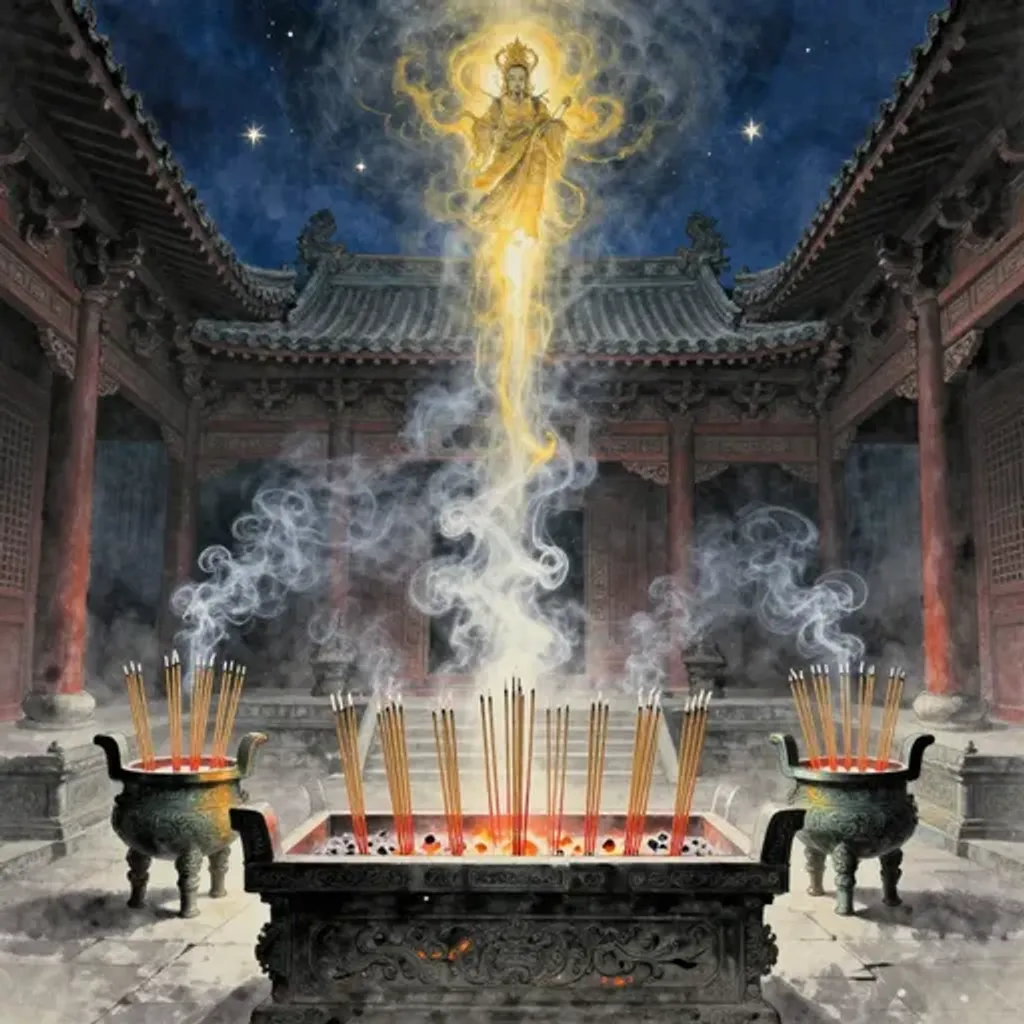
馨香陟降,明德上登。社神佑顧,命予大鄰。
Fragrant offerings ascending and descending; brilliant virtue rises on high. The earth god watches and protects; the mandate bestows a great neighbor.
— Jiao Yanshou, Yilin (Forest of Changes), 1st century BC
Commentary
Fire above the lake, estranged elements, yet fragrant offerings rise and descend between heaven and earth. Bright virtue ascends to the high powers, and the guardian spirit of the soil altar looks down with favor, bestowing the mandate of a great domain. The verse echoes the Zhou founding narrative: ritual purity and moral luminance attract divine sanction, recalling how King Wen's accumulated virtue earned heaven's endorsement. The phrase 'great neighbor' invokes the language of cosmic partnership between worthy ruler and responsive deity. From Opposition to Youthful Folly, a spring emerges from beneath the mountain. What was estranged becomes a source of fresh instruction, as the bright virtue that overcame division now nourishes the unformed with patient guidance.
睽 → 需
Hexagram 38 → Hexagram 5: Waiting
Changing lines: 3, 4, 5, 6
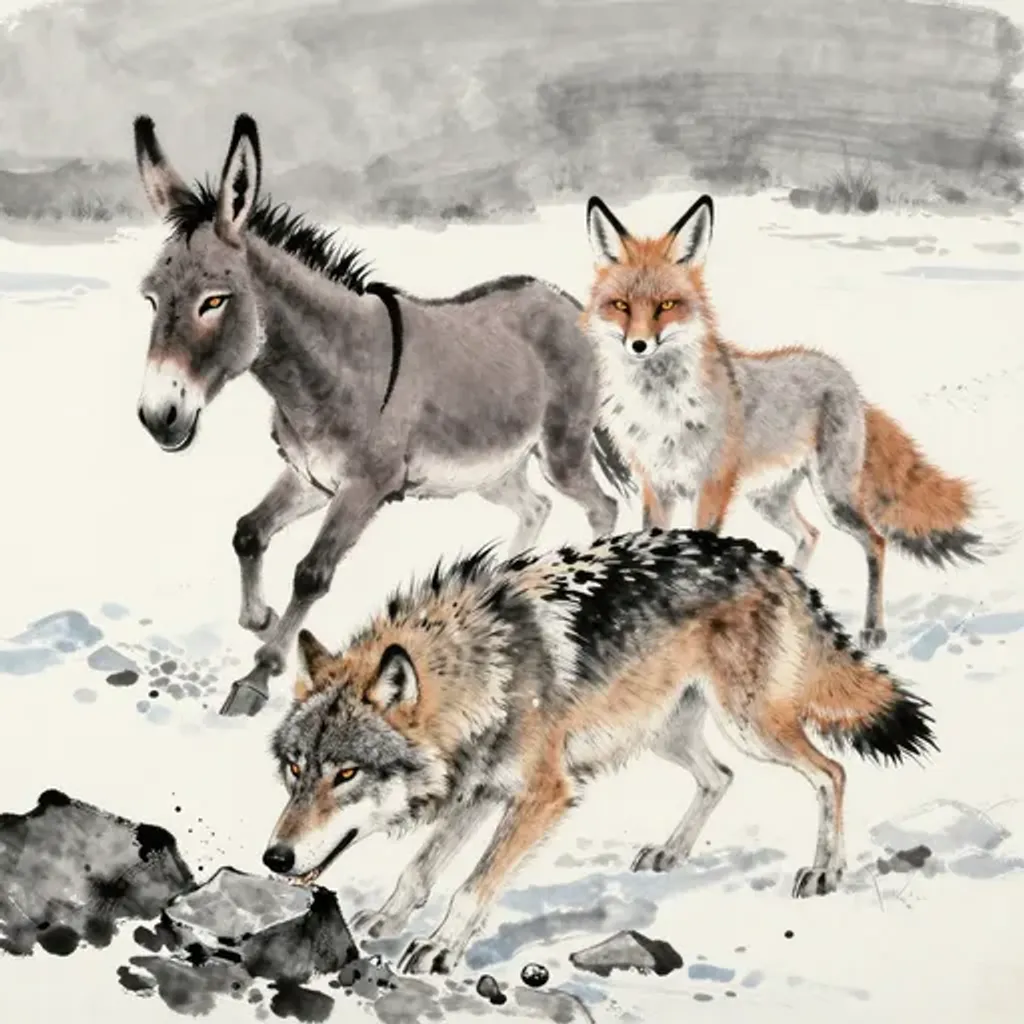
老狼白驢,長尾大狐,前顛卻躓,進退遇祟。
Old wolf, white donkey; long-tailed great fox. Stumbling forward, tripping back; advance and retreat alike meet with misfortune.
— Jiao Yanshou, Yilin (Forest of Changes), 1st century BC
Commentary
Fire above the lake, two forces at odds, and through the gap shamble grotesque beasts: an old wolf, a white donkey, a long-tailed fox. They stumble forward and trip backward, cursed at every turn by malign spirits. The verse paints a procession of awkward, duplicitous creatures unable to find their footing — each associated in Han symbolism with cunning and misfortune. From Opposition to Waiting, the estranged energies shift to clouds gathering above heaven, a posture of enforced patience. These clumsy creatures cannot barge through; the way forward demands stillness and composure. Yet for beings so constitutionally ill-suited to waiting, patience itself becomes another form of torment.
睽 → 訟
Hexagram 38 → Hexagram 6: Conflict
Changing lines: 1, 5
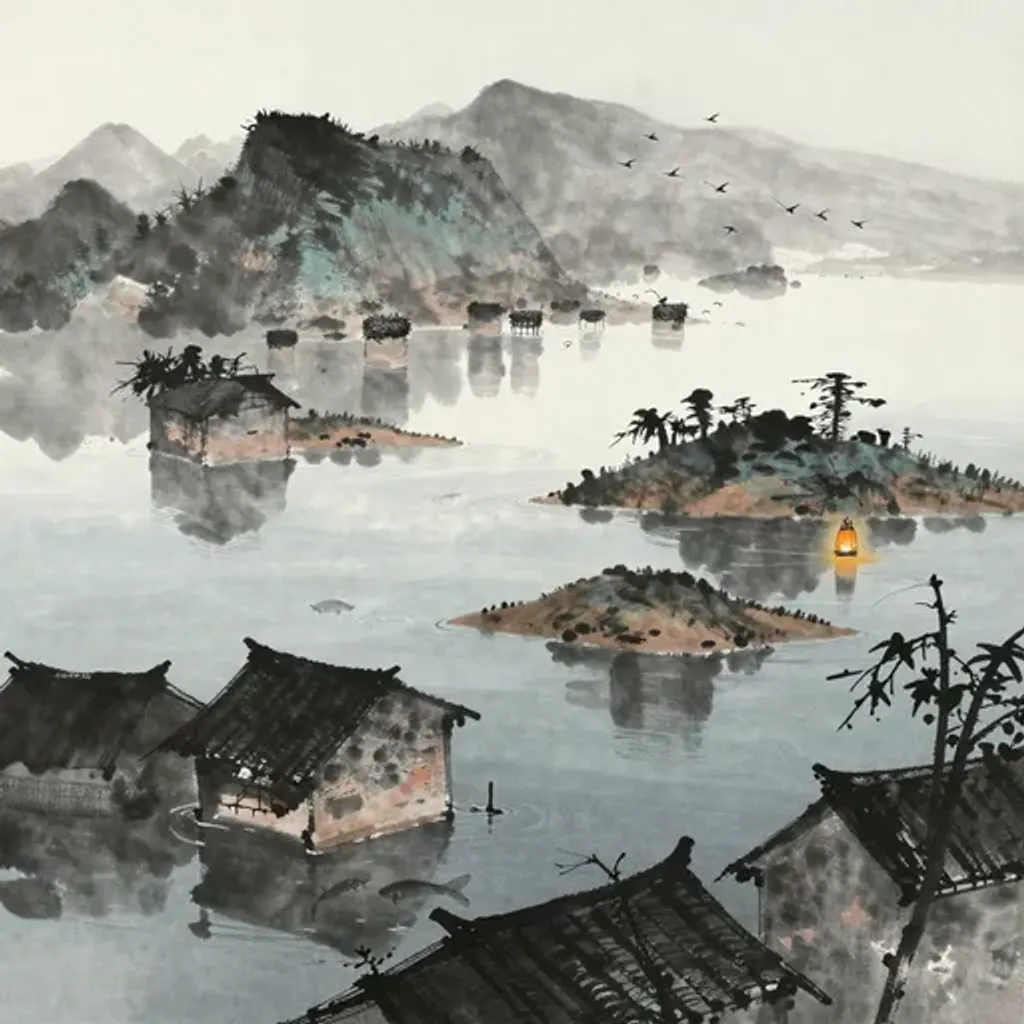
山沒丘浮,陸為水魚,燕雀无廬。
Mountains submerged, hills afloat; dry land becomes a realm of fish. Swallows and sparrows have lost their shelter.
— Jiao Yanshou, Yilin (Forest of Changes), 1st century BC
Commentary
Fire above the lake, the world inverted. Mountains sink beneath the waves, hilltops float like boats, dry land turns to fish ponds, and the sparrows and swallows lose their nests entirely. The verse depicts total environmental catastrophe: the natural order so thoroughly overturned that every creature is displaced from its proper station. This is estrangement carried to the absolute extreme — not merely between people but between earth and water, land and sky. From Opposition to Conflict, heaven and water move in contrary directions. The transformation deepens division into a fundamental dispute between elements that should cooperate. When the very ground dissolves, no appeal to custom or prior agreement can help; one must plan from the very beginning.
睽 → 師
Hexagram 38 → Hexagram 7: The Army
Changing lines: 1, 4, 6
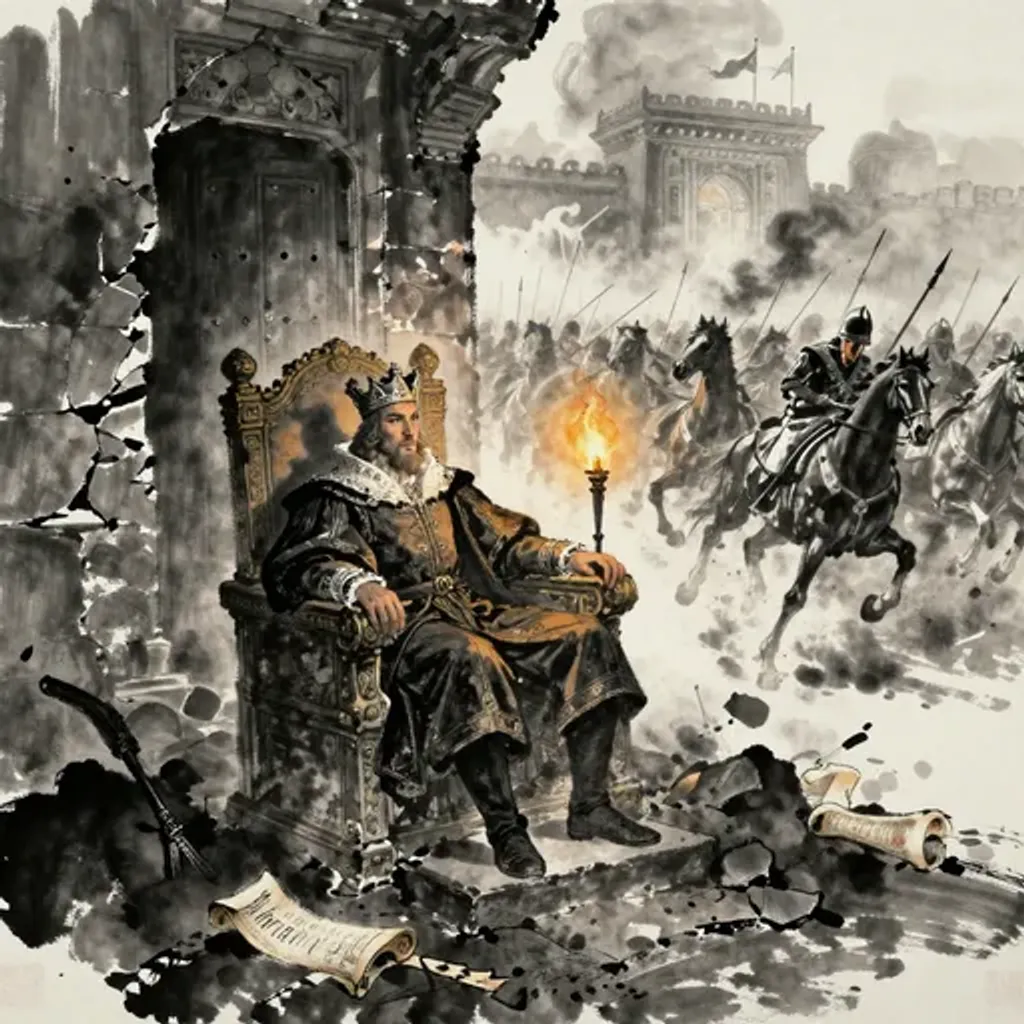
懿公淺愚,不深受謀。无援失國,為狄所賊。
Duke Yi was shallow and foolish; he did not deeply heed counsel. Without allies he lost his state; destroyed by the Di barbarians.
— Jiao Yanshou, Yilin (Forest of Changes), 1st century BC
Commentary
Fire above the lake exposes what others would conceal. Duke Yi of Wei was shallow and foolish, indulging his passion for cranes while spurning all counsel. According to the Zuo Zhuan, he granted his cranes noble rank and carriages while his soldiers starved for recognition. When the Di barbarians invaded in 660 BC, his own people refused to fight, asking bitterly: 'Let the cranes defend us.' The duke lost his state and his life, devoured by the invaders until only his liver remained. From Opposition to The Army, the lesson cuts deep: water stored within the earth represents a disciplined populace held in reserve. When estrangement between ruler and people festers through misplaced devotion, even the deepest reserves cannot be marshaled for defense.
睽 → 比
Hexagram 38 → Hexagram 8: Holding Together
Changing lines: 1, 2, 4, 5, 6
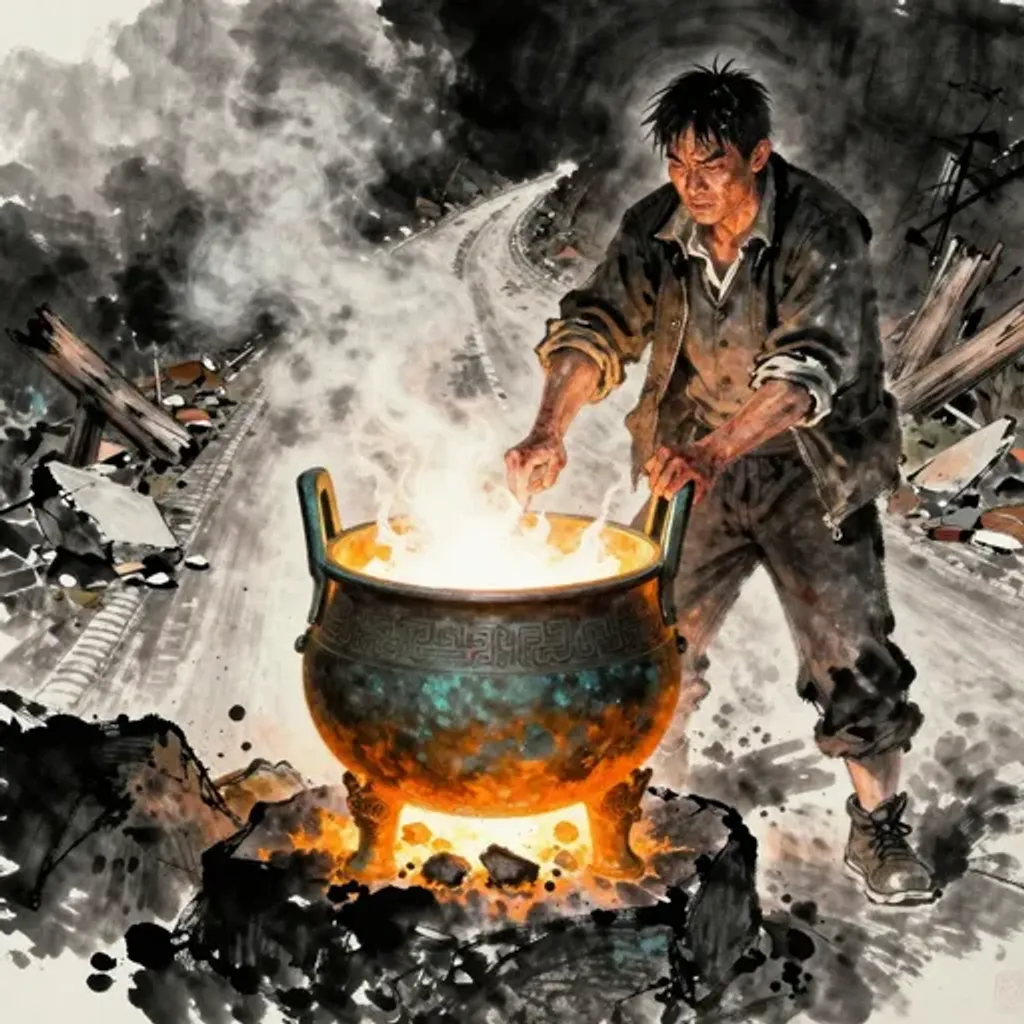
鼎煬其耳,熱不可舉。大塗塞壅,旅人心苦。
The cauldron scorches its ears; too hot to lift. The great road is blocked and choked; the traveler's heart is bitter.
— Jiao Yanshou, Yilin (Forest of Changes), 1st century BC
Commentary
Fire above the lake, and the heat migrates to the wrong place. A cauldron blazes until its ears burn too hot to grip — no one can lift it, no one can move it, and its contents are trapped. Meanwhile, the great road is choked and blocked, leaving travelers stranded and heartsick. The cauldron's ears, meant for carrying, become instruments of immobility; the road, meant for passage, becomes a wall. Both images converge on the same frustration: essential connections severed, vital channels sealed. From Opposition to Holding Together, water rests upon the earth, forming the basis of alliance and mutual support. Only by cooling the overheated vessel and clearing the obstructed path can estranged parties rediscover solidarity.
睽 → 小畜
Hexagram 38 → Hexagram 9: Small Taming
Changing lines: 3, 4, 5
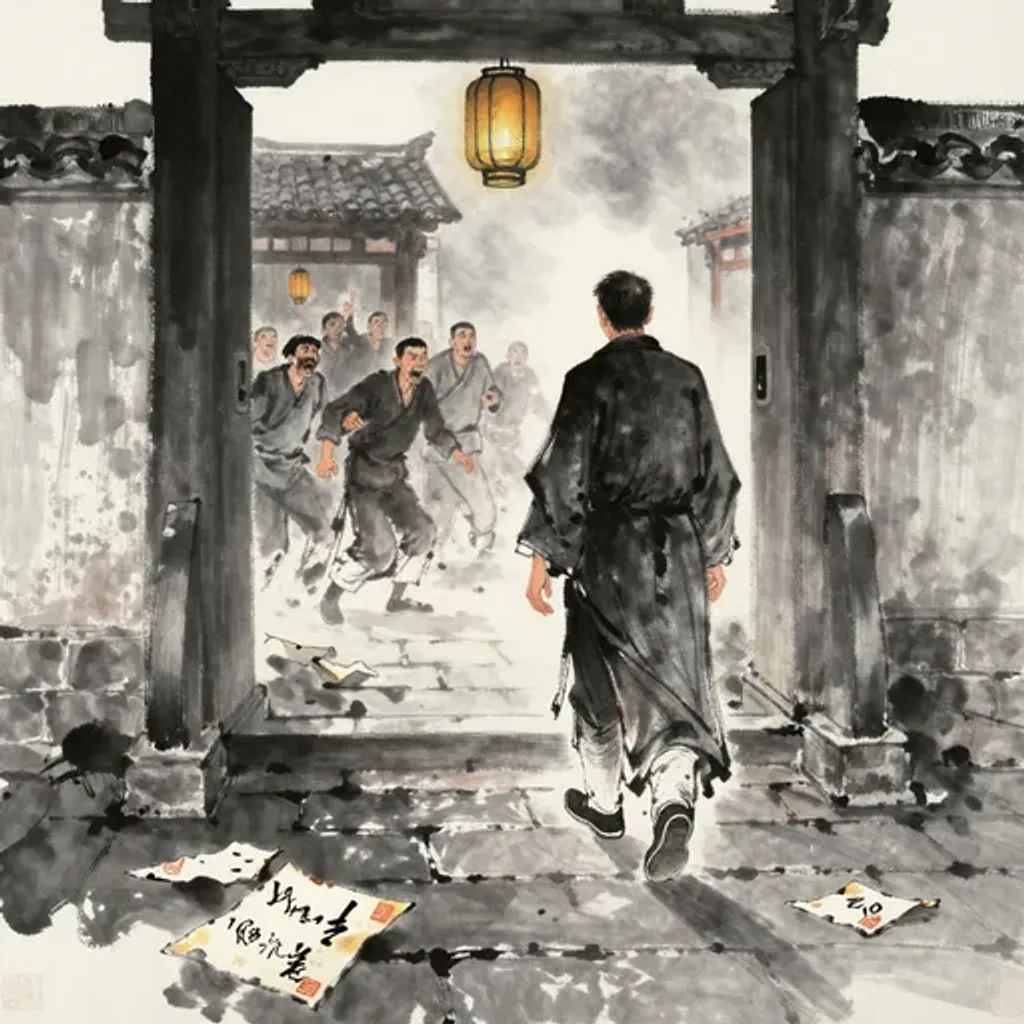
凶聲醜言,惡不可聞。君子舍之,往恨我心。
Wicked sounds and ugly words; evil that cannot be endured. The gentleman abandons them; what he leaves wounds my heart.
— Jiao Yanshou, Yilin (Forest of Changes), 1st century BC
Commentary
Fire above the lake, two natures clashing, and from the friction comes vicious speech. Ugly sounds and foul words fill the air, so repellent they cannot be endured. The gentleman withdraws from such pollution, turning away — yet departure brings its own anguish, a lingering regret that gnaws at the heart. The verse captures a painful dilemma: staying means contamination, leaving means sorrow. There is no clean exit from a corrupted environment. From Opposition to Small Taming, wind moves across heaven, gently cultivating virtue through refinement rather than force. The transformation suggests that the proper response to vilification is not counter-attack but quiet self-cultivation — the wind that polishes without breaking.
睽 → 履
Hexagram 38 → Hexagram 10: Treading
Changing lines: 5
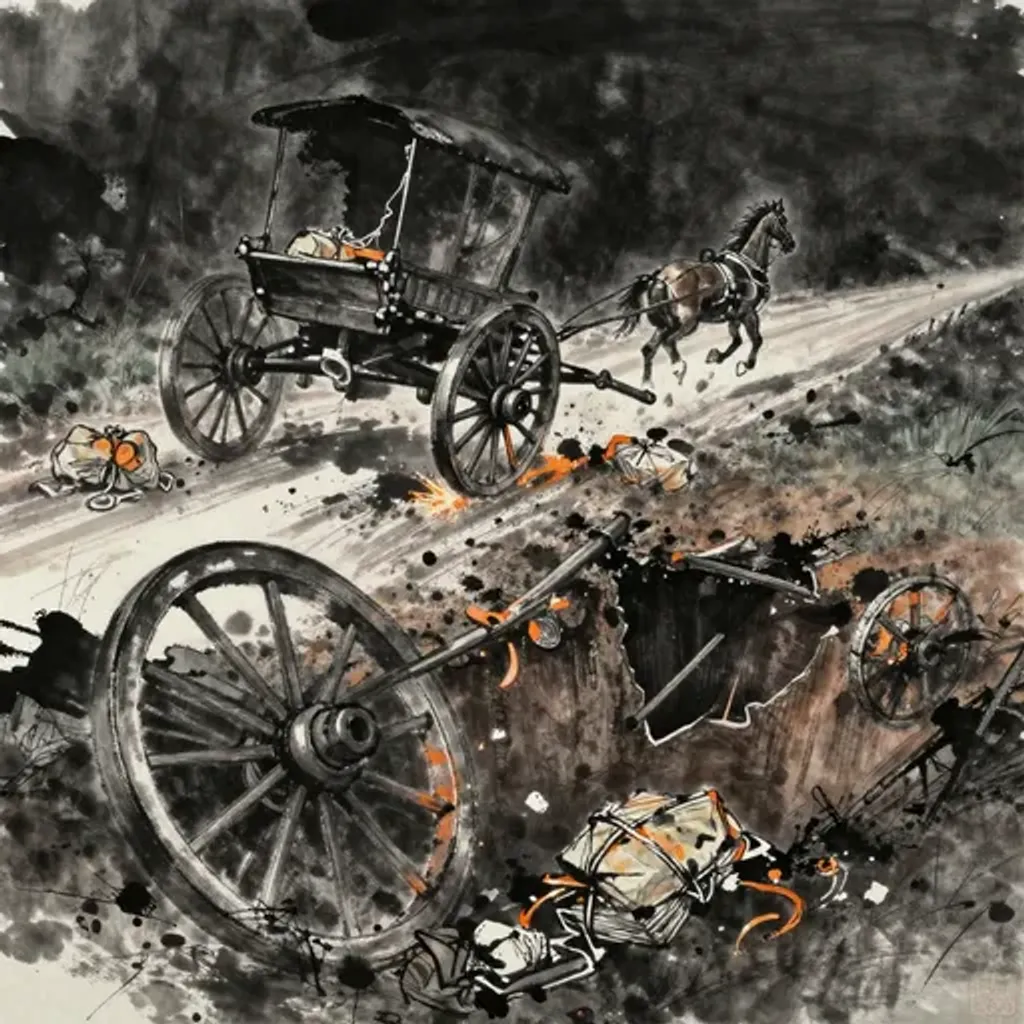
昧暮乘車,履危蹈溝。亡失群物,摧折兩軸。
Dim twilight, mounting a carriage; treading peril, falling into a ditch. Possessions lost and scattered; both axles broken.
— Jiao Yanshou, Yilin (Forest of Changes), 1st century BC
Commentary
Fire above the lake, vision estranged from footing. A traveler drives through dusk so dim that the road ahead vanishes, treading on danger and plunging into ditches. Possessions scatter and both axles snap, leaving the carriage wrecked in darkness. The verse is a study in compounded misjudgment: setting out too late, seeing too poorly, moving too fast for the conditions. Each error feeds the next until the whole conveyance collapses. From Opposition to Treading, heaven above and lake below define proper hierarchy. The transformation insists on careful discernment of boundaries: one must distinguish safe ground from peril before stepping forward. Treading on the tiger's tail requires clarity — exactly what this benighted traveler lacks.
睽 → 泰
Hexagram 38 → Hexagram 11: Peace
Changing lines: 3, 4, 6
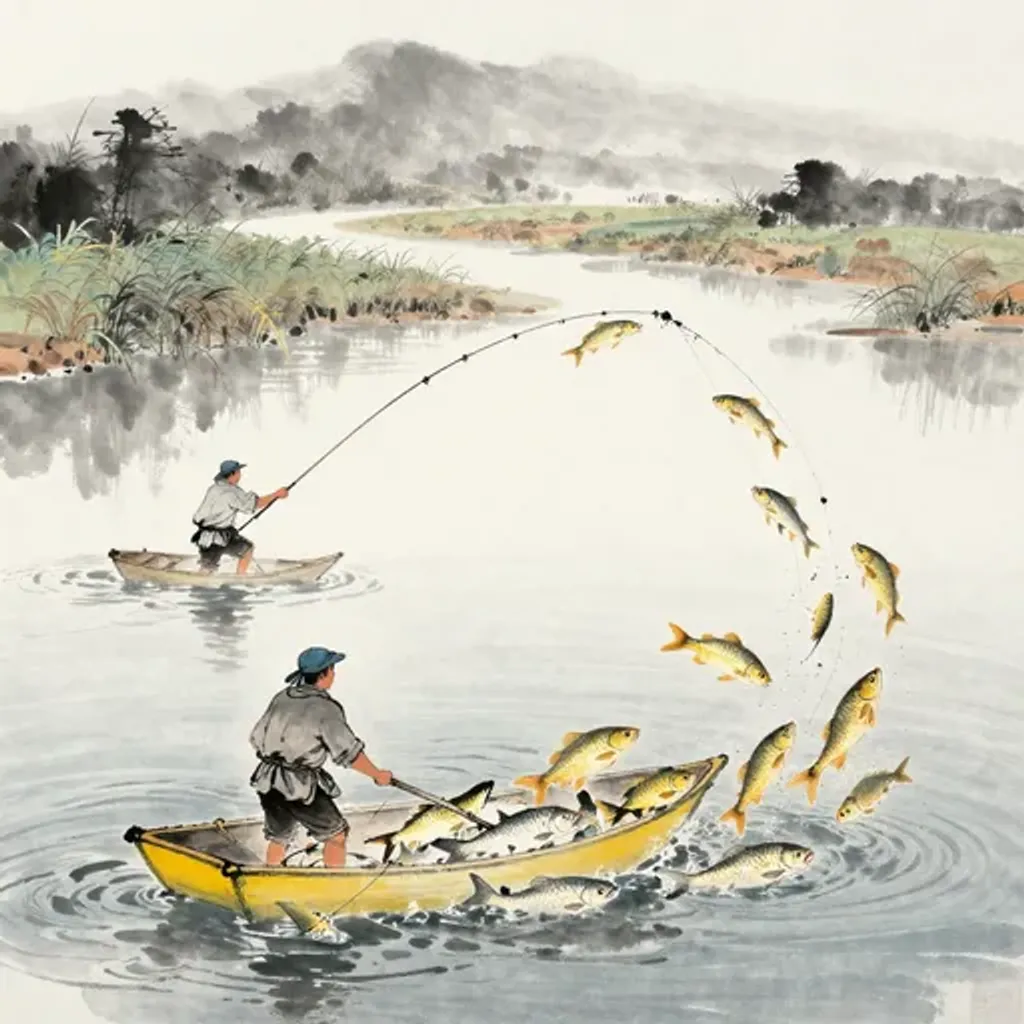
南有嘉魚,駕黃取𩹊。魴鱮詡詡,利來毋憂。
In the south there are fine fish; driving the yellow boat to catch bream. Bream and silver carp leap merrily; profit comes without worry.
— Jiao Yanshou, Yilin (Forest of Changes), 1st century BC
Commentary
Fire above the lake, estranged forces, yet the waters below teem with abundance. In the south swim fine fish; one harnesses a yellow horse and rides out to catch bream and carp. The fish leap and flash in profusion, and profit arrives without cause for worry. The imagery echoes the Shijing ode 'Nan You Jia Yu,' celebrating generous feasting and natural abundance bestowed by heaven. From Opposition to Peace, heaven and earth exchange positions and mingle freely. The transformation dissolves estrangement into cosmic harmony: what was divided — fire fleeing upward, water sinking below — now circulates as heaven descends and earth rises. Abundance flows naturally when opposites interpenetrate rather than pull apart.
睽 → 否
Hexagram 38 → Hexagram 12: Standstill
Changing lines: 1, 2, 5
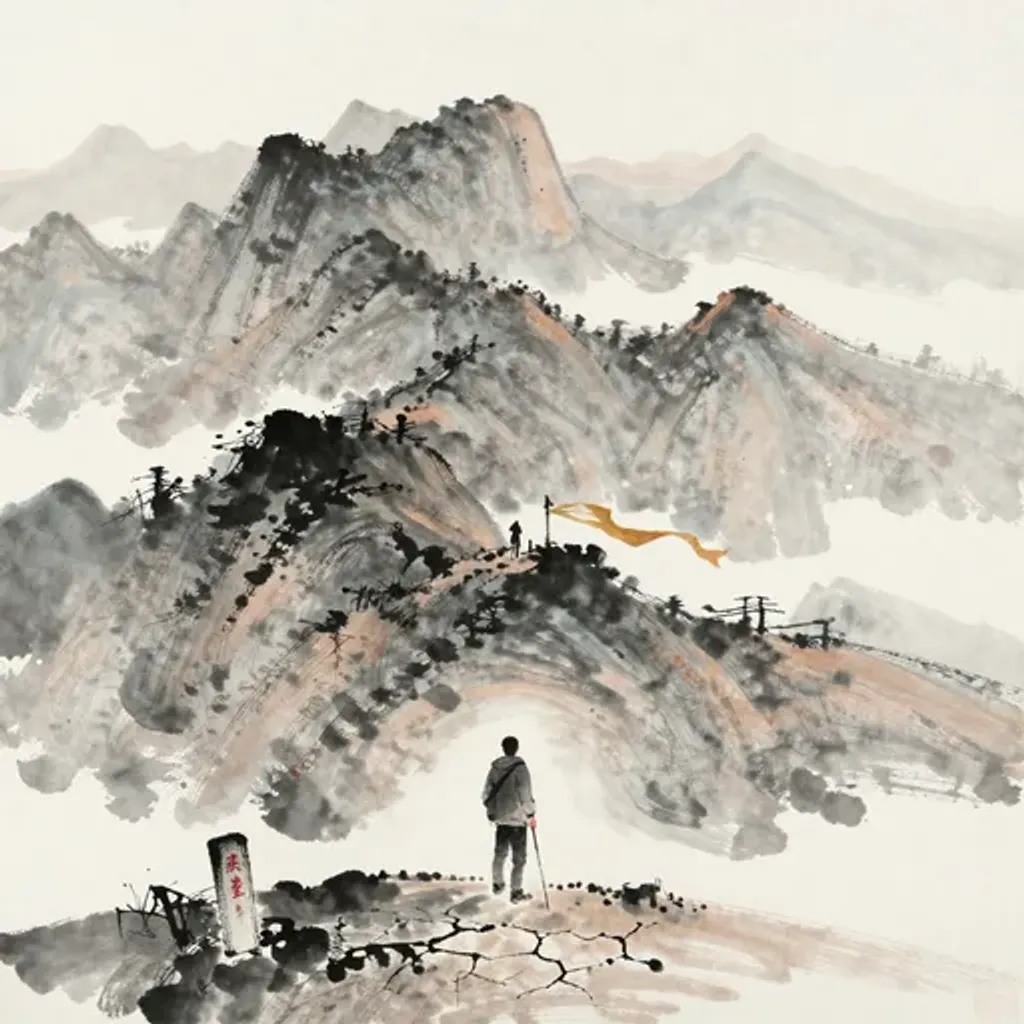
隔在九山,往來勞難。心結不通,失其所歡。
Separated by nine mountains; coming and going is toilsome and hard. The heart knotted, unable to reach through; he has lost his beloved.
— Jiao Yanshou, Yilin (Forest of Changes), 1st century BC
Commentary
Fire above the lake, separation crystallized into geography. Nine mountains stand between, and every journey back and forth is grueling labor. The heart knotted shut, unable to communicate, one loses the beloved entirely. The verse distills estrangement into its purest spatial form: not a quarrel, not a betrayal, but sheer insurmountable distance. The nine mountains are both literal and symbolic — each range another layer of obstruction between minds that once touched freely. From Opposition to Standstill, heaven and earth refuse to mingle, each retreating to its own sphere. The transformation confirms the paralysis: when communication ceases, the gentleman must practice frugal virtue and endure the dark passage, for no force can compel what will not meet.
睽 → 同人
Hexagram 38 → Hexagram 13: Fellowship
Changing lines: 2, 3, 5
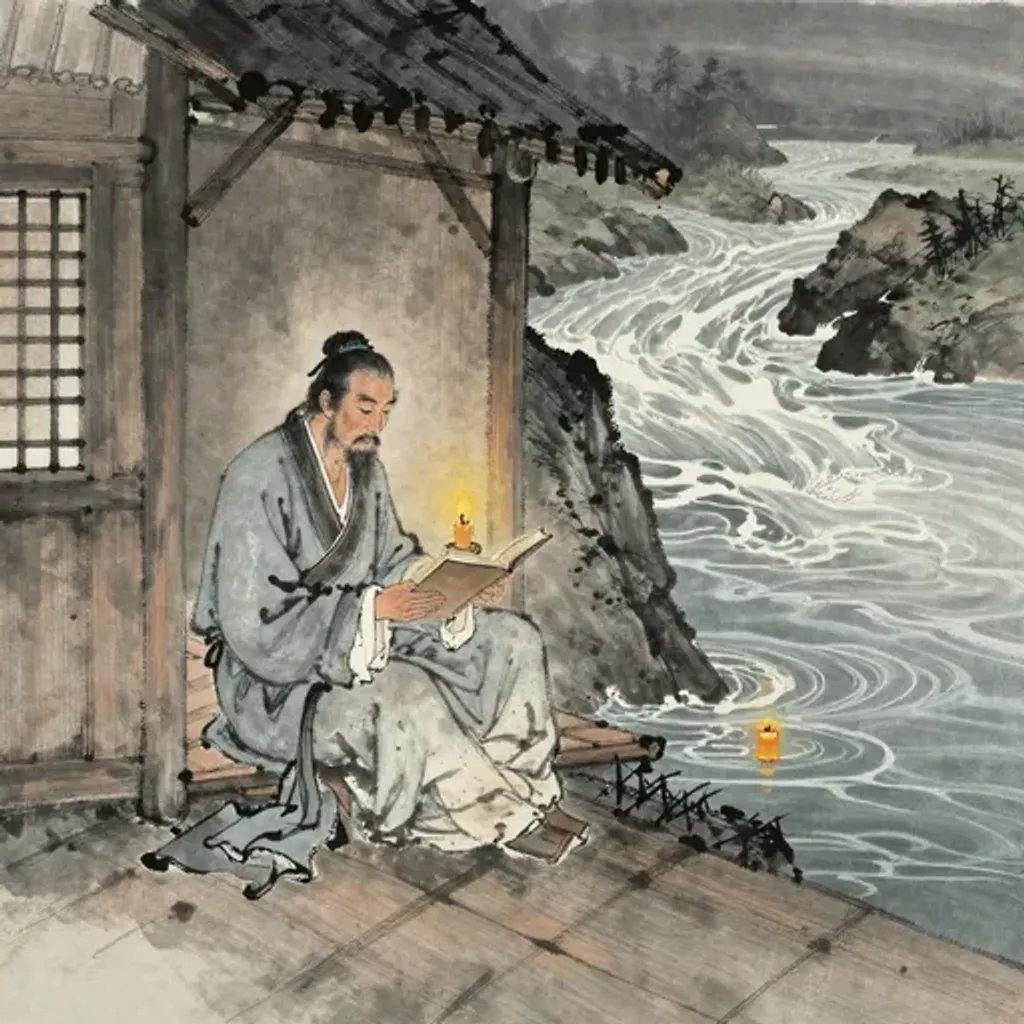
下流難居,狂夫多罷。貞良溫柔,年歲不富。
A low station is hard to dwell in; the reckless man grows weary. The steadfast and gentle one; his years are not enriched.
— Jiao Yanshou, Yilin (Forest of Changes), 1st century BC
Commentary
Fire above the lake, and the low-lying ground proves hard to inhabit. In degraded quarters, reckless men exhaust themselves in futile strife, while the upright and gentle soul finds no prosperity despite years of effort. The verse contrasts two modes of failure: the coarse fail through excess, the virtuous fail through scarcity. Neither finds a footing in this disordered terrain. From Opposition to Fellowship, fire rises to meet heaven, and the gentleman distinguishes categories and discerns things. The transformation suggests that when the landscape is hostile to all, the path forward lies not in individual struggle but in finding true companions — sorting allies from adversaries with the clarity that fire in heaven provides.
睽 → 大有
Hexagram 38 → Hexagram 14: Great Possession
Changing lines: 3
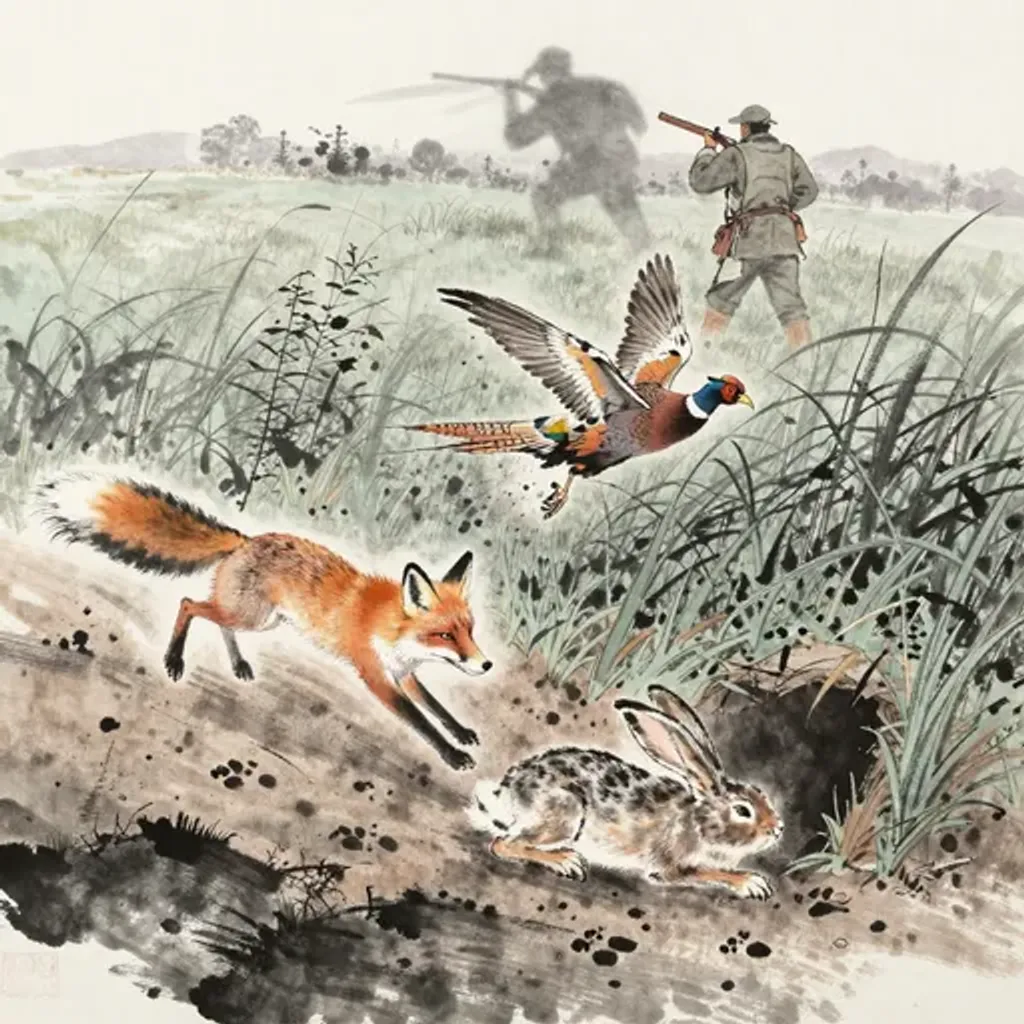
狐狸雉兔,畏人逃去。分走竄匿,不知所處。
Fox and pheasant, hare and rabbit; fearing humans, they flee. Scattering and hiding away; not knowing where to go.
— Jiao Yanshou, Yilin (Forest of Changes), 1st century BC
Commentary
Fire above the lake, predator and prey estranged by mutual terror. Foxes, pheasants, and hares all fear humankind and scatter in every direction — fleeing, hiding, burrowing — until none knows where any has gone. The verse captures panic as a contagion: one creature bolts and all follow, each running blindly without destination. The scene is Opposition manifested as universal flight, where estrangement has become so total that every being treats every other as a threat. From Opposition to Great Possession, fire blazes in heaven, illuminating all. The transformation reveals that scattered fear can resolve into abundance only when a clarifying light appears overhead, suppressing evil and elevating good, restoring trust so that creatures need no longer flee.
睽 → 謙
Hexagram 38 → Hexagram 15: Modesty
Changing lines: 1, 2, 3, 4, 6
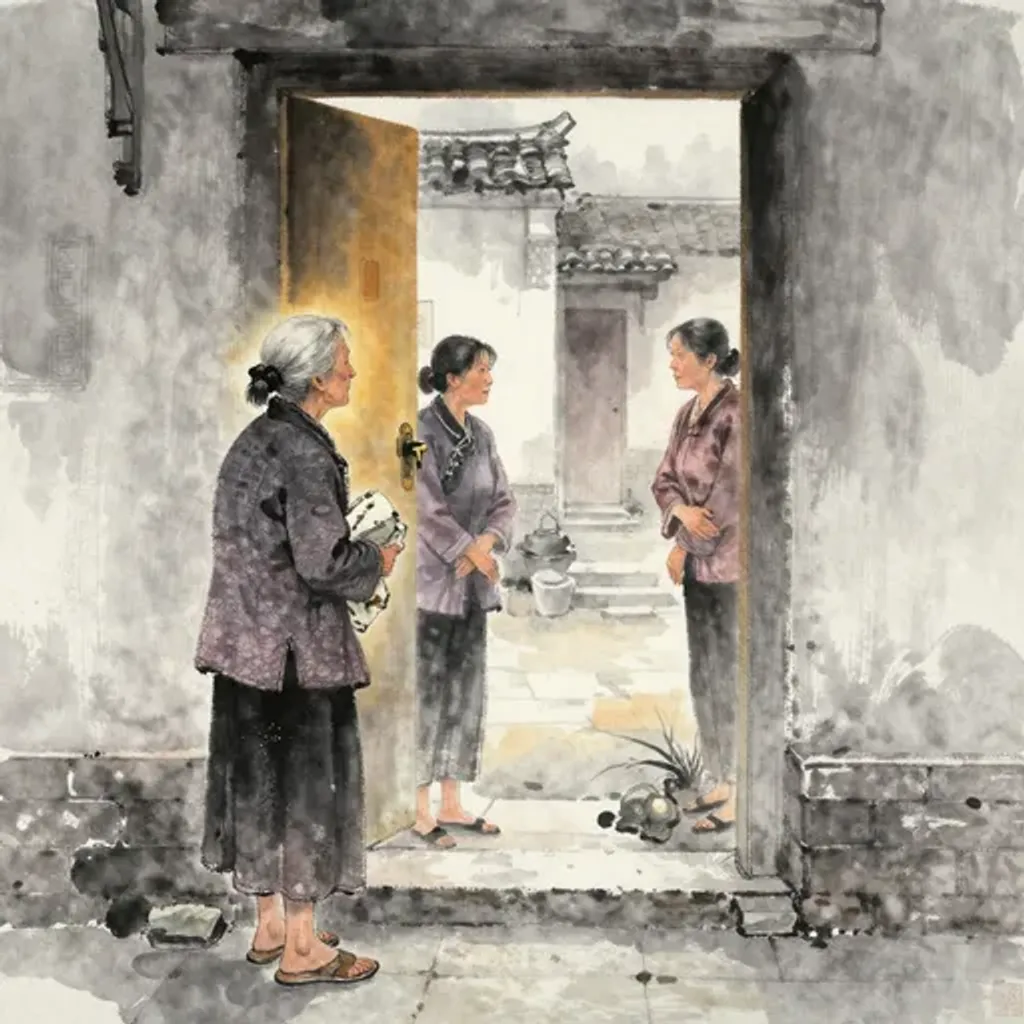
異體殊俗,各有所屬。西鄰孤嫗,欲寄我室。主母罵詈,終不可得。
Different forms, foreign customs; each belongs to a separate kind. The old widow from the west quarter wished to lodge in my house. The matron cursed and scolded; in the end it could not be.
— Jiao Yanshou, Yilin (Forest of Changes), 1st century BC
Commentary
Fire above the lake, bodies and customs differ, each belonging to a separate world. A lonely old woman from the western neighbor seeks shelter in another household, hoping to lodge there. But the matron of the house scolds and curses her, and the old woman is turned away, unable to find a place. The verse dramatizes the cruelty of estrangement between those who should be kin: different customs become walls, and charity freezes at the doorstep. From Opposition to Modesty, a mountain hidden within the earth, the transformation counsels that true accommodation requires lowering oneself. The mountain beneath the ground equalizes excess and deficit — but here no such leveling occurs, and the displaced remain displaced.
睽 → 豫
Hexagram 38 → Hexagram 16: Enthusiasm
Changing lines: 1, 2, 6
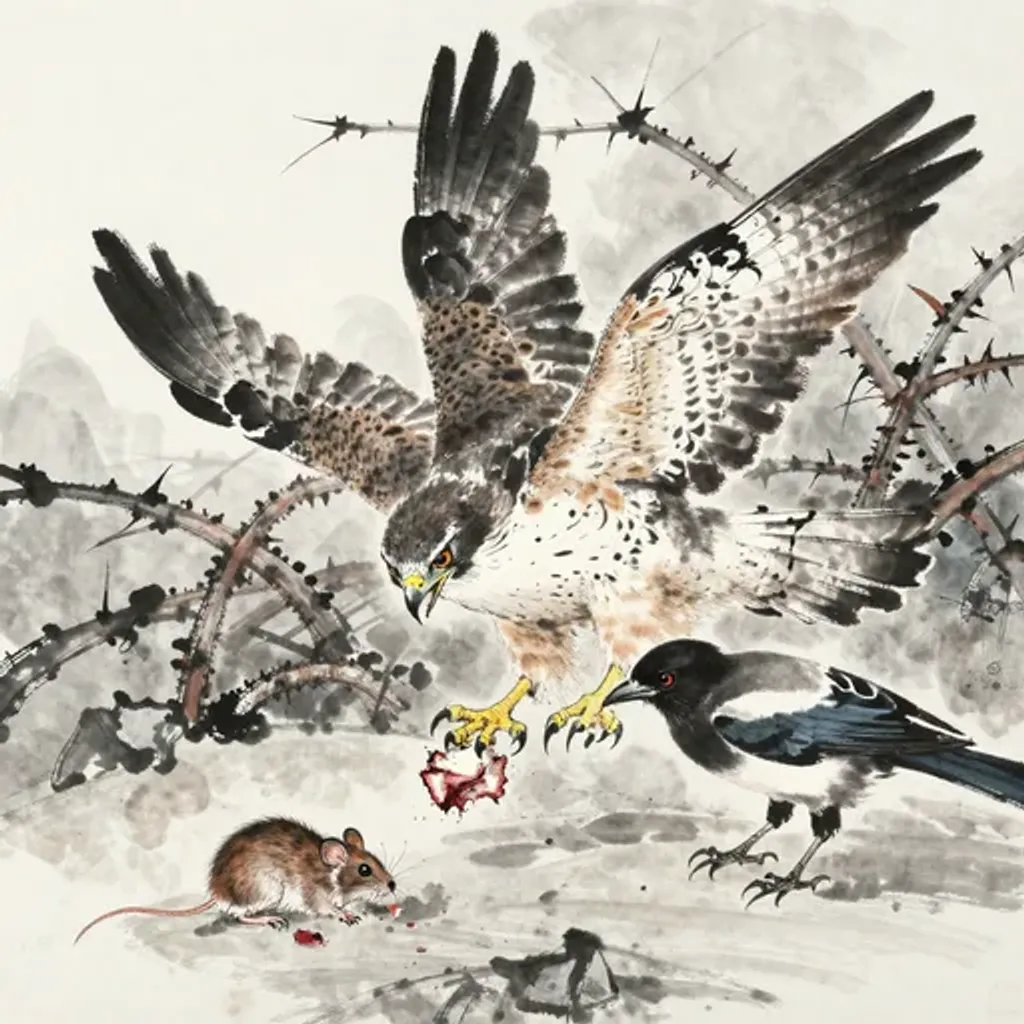
怒非怨妬,貪得腐鼠。而呼鵲鸇,自令失餌,致被困患。
Not from hatred or jealousy; coveting a rotten mouse. He calls the magpie and the hawk; and so loses his own bait, bringing trouble upon himself.
— Jiao Yanshou, Yilin (Forest of Changes), 1st century BC
Commentary
Fire above the lake, and anger misdirected spoils everything. The verse opens with fury born not of real grievance but of jealous greed: someone covets a rotten mouse and, in the frenzy to possess it, calls down hawks and falcons upon the scene. The intervention of predators, summoned for a worthless prize, scatters the original quarry and leaves the instigator trapped in self-made calamity. Desire for something contemptible mobilizes forces that cannot be controlled. From Opposition to Enthusiasm, thunder bursts from the earth in celebration. The transformation suggests that true joy arises from communal devotion and music, not from hoarding trivialities — but this figure, fixated on his rotten mouse, inverts the dynamic and manufactures disaster from nothing.
睽 → 隨
Hexagram 38 → Hexagram 17: Following
Changing lines: 2, 5, 6
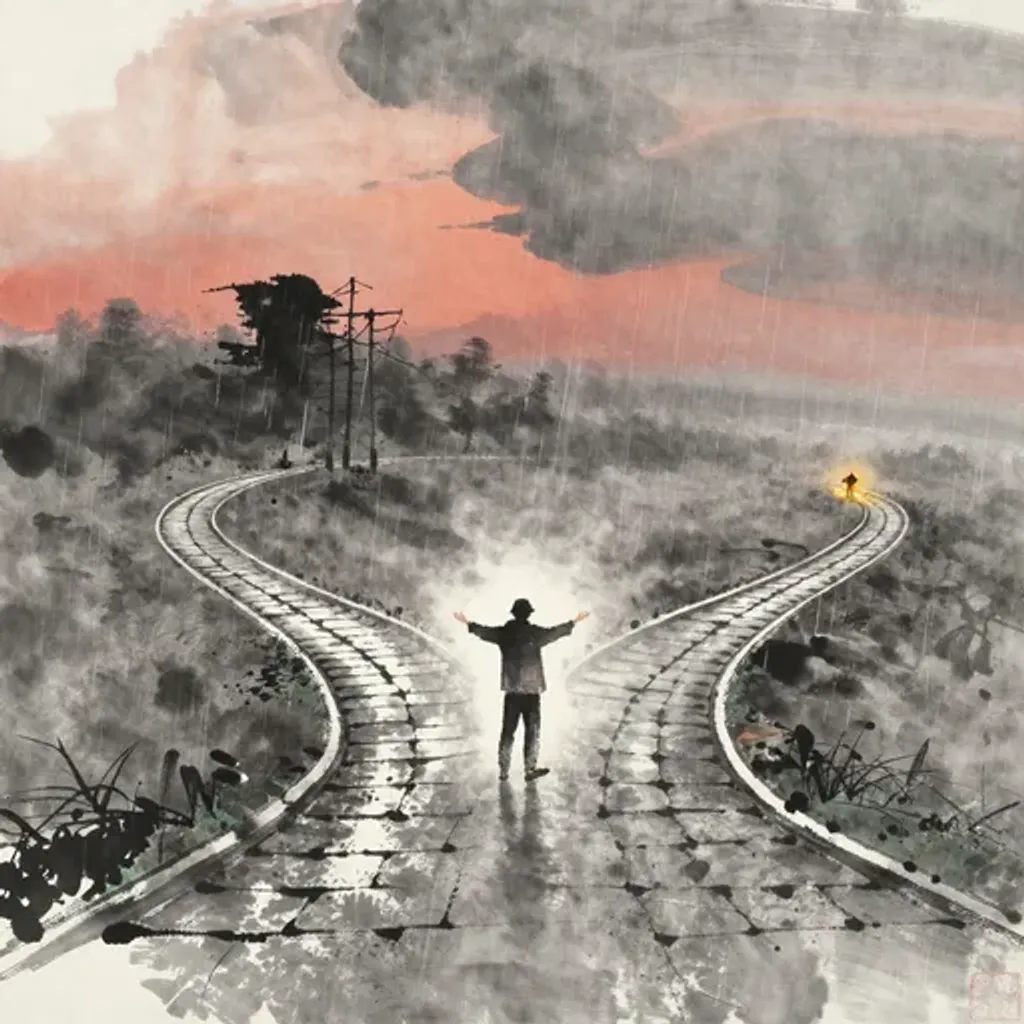
五心六意,岐道多怪。非君本志,生我恨悔。
Standing at a three-forked crossroad at dusk — east wind, west rain, each going its own way. Asking the woodcutter for directions, he points two ways. Turning back, the gate one came from is already forgotten.
— Jiao Yanshou, Yilin (Forest of Changes), 1st century BC
Commentary
Fire above the lake, the mind pulled in every direction. The original verse reads: 'Five hearts, six intentions — at the fork in the road, many strange things lurk. This is not your true purpose; it breeds only regret.' Indecision at a crossroads becomes a breeding ground for confusion, where every path seems equally alien and none reflects the traveler's authentic will. The rewrite paints a figure standing at dusk where three roads diverge, each weathered by a different wind, with the woodcutter's directions contradicting one another. From Opposition to Following, thunder rests within the lake at nightfall. The transformation from scattered vacillation into proper following requires surrendering the illusion of control and choosing one path with commitment, as the gentleman retires to rest when darkness falls.
睽 → 蠱
Hexagram 38 → Hexagram 18: Work on the Decayed
Changing lines: 1, 3, 4
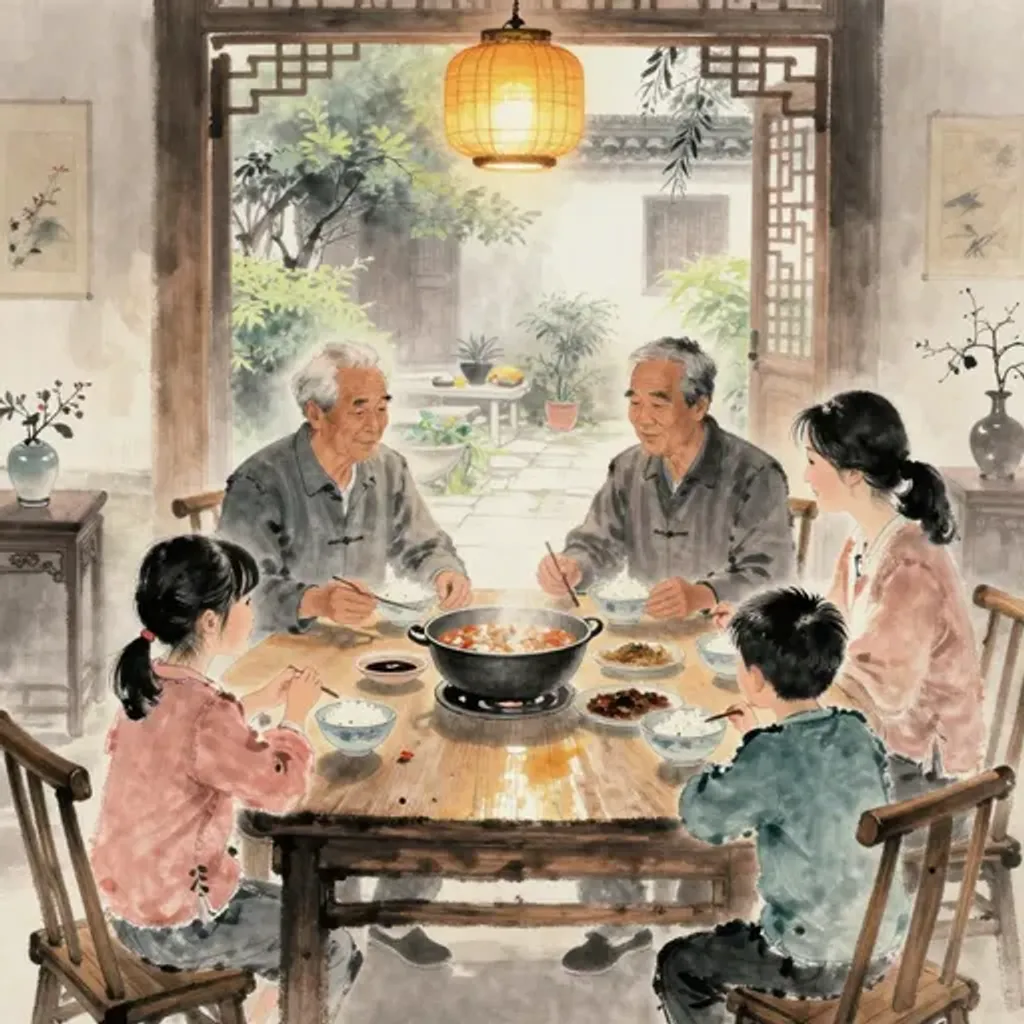
三班六黑,同室共食。日長月息,我家有德。
Three clans and six households; sharing a single room and common meals. As days lengthen and months pass; our family possesses virtue.
— Jiao Yanshou, Yilin (Forest of Changes), 1st century BC
Commentary
Fire above the lake, estranged forces, yet within the household harmony prevails. Three shifts and six watches share the same room and eat together — a vision of orderly communal life where different schedules and duties coexist under one roof. As days lengthen and months wax, the family accumulates virtue. The 'three shifts, six darknesses' suggests a well-organized household or garrison where rotation ensures continuous function without friction. From Opposition to Work on the Decayed, wind stirs beneath the mountain, renewing what has stagnated. The transformation reveals that the antidote to estrangement is not grand reconciliation but the steady daily practice of sharing meals and maintaining routine — the patient rehabilitation of what has decayed through sustained cohabitation.
睽 → 臨
Hexagram 38 → Hexagram 19: Approach
Changing lines: 4, 6
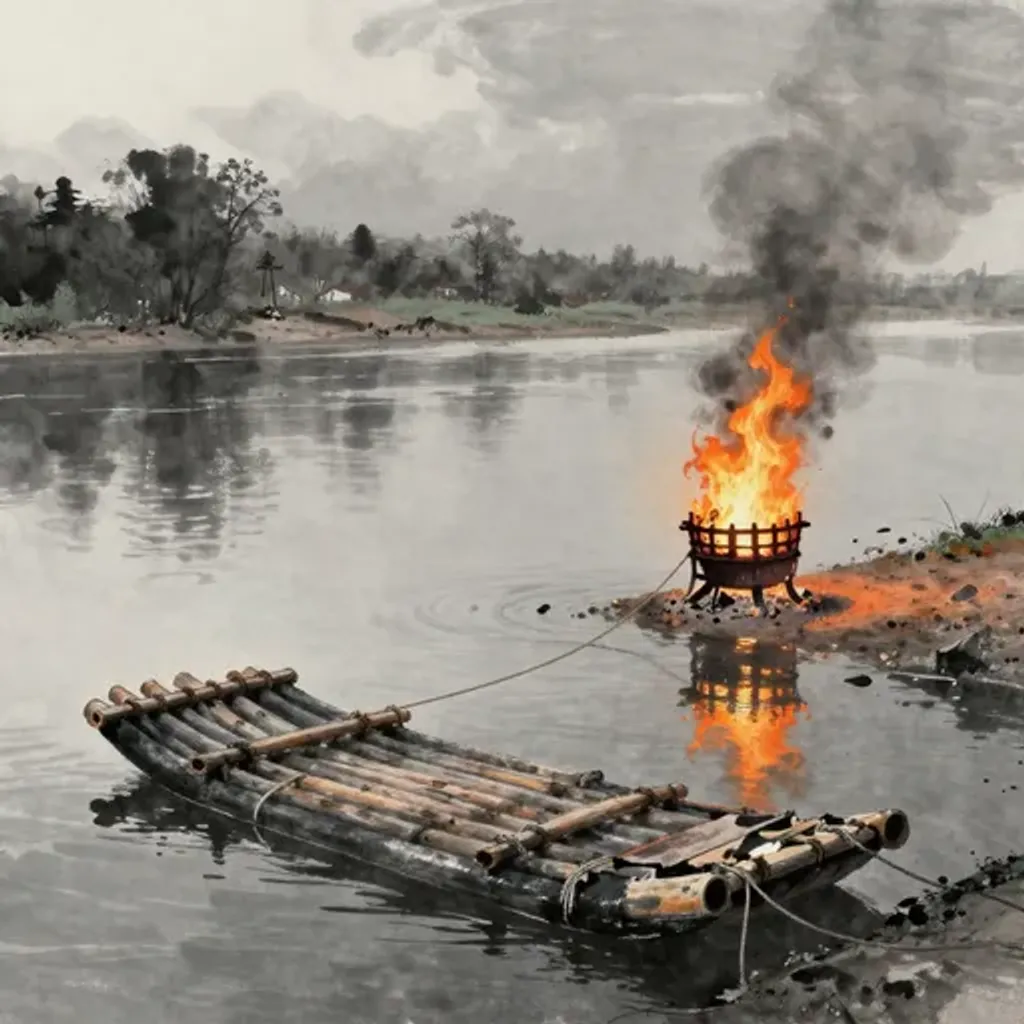
方船備水,旁河燃火,終身无禍。
Square boats guard against flood; fire kept along the riverbank. To the end of one's days, no calamity.
— Jiao Yanshou, Yilin (Forest of Changes), 1st century BC
Commentary
Fire above the lake, elements at odds, yet preparedness bridges the divide. Square boats stand ready for the flood; along the riverbank, fires burn as beacons or defenses. With water and fire both accounted for, one lives out a lifetime without disaster. The verse is a miniature treatise on risk management: anticipate water, prepare boats; anticipate threats, maintain fire. By honoring both opposing elements rather than choosing one over the other, the wise person neutralizes the danger of each. From Opposition to Approach, earth rests above the lake, the posture of the superior drawing near to the subordinate. The transformation shows that when estranged forces are properly managed through foresight and dual preparation, authority can approach its domain with teaching and protection unbounded.
睽 → 觀
Hexagram 38 → Hexagram 20: Contemplation
Changing lines: 1, 2, 4, 5
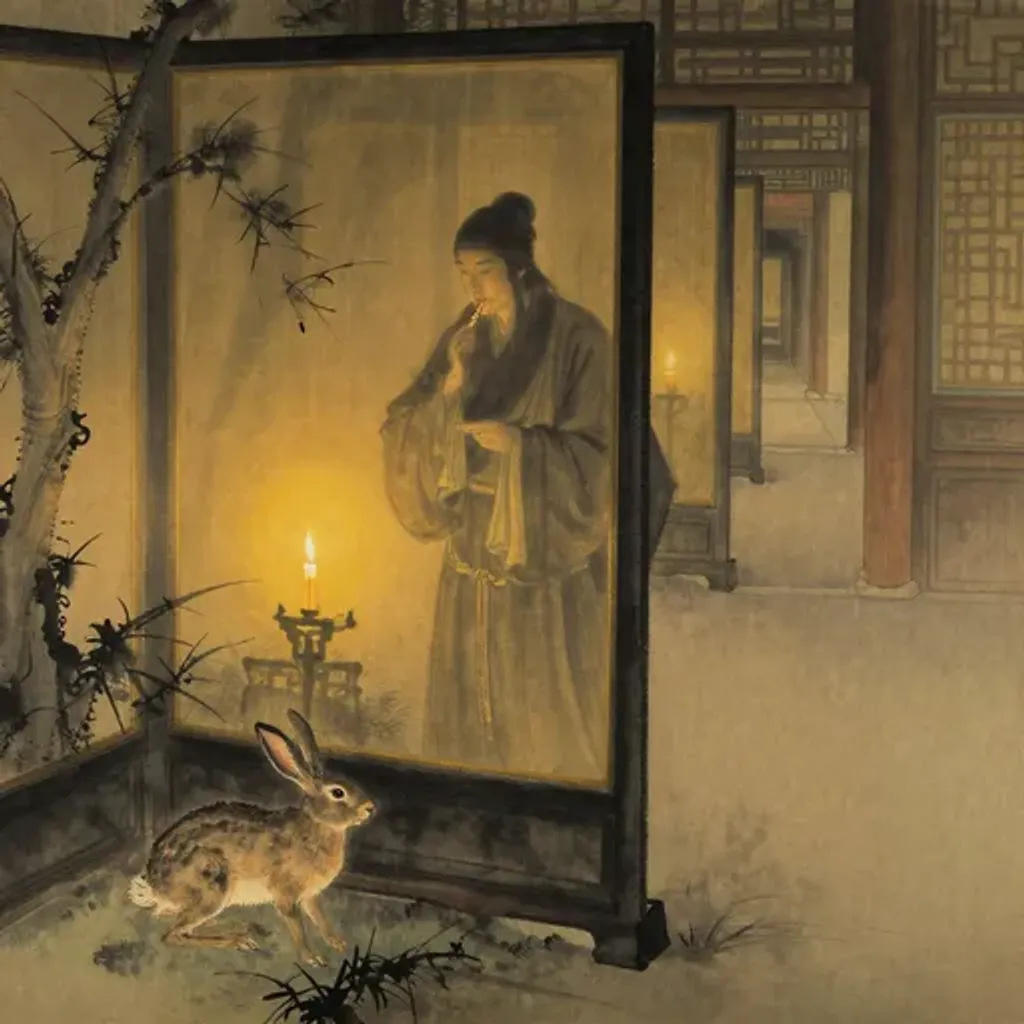
翳屏獨語,不聞朝市。以利居服,兔跛後聞。
Hidden behind a screen, talking to himself; he hears nothing of court or market. Using profit to stay and serve; the lame hare is heard of afterward.
— Jiao Yanshou, Yilin (Forest of Changes), 1st century BC
Commentary
Fire above the lake, and a figure hides behind a screen, muttering alone, deaf to the bustle of court and market. Living in seclusion for personal advantage, this recluse dresses in comfort while the world goes on without notice. Then the verse pivots: a limping rabbit is heard of only belatedly, its news arriving too late to matter. The image suggests someone whose withdrawal from public life has cost them both relevance and information — isolation purchased at the price of awareness. From Opposition to Contemplation, wind moves across the earth as the ancient kings surveyed their domains and instructed the people. The transformation insists that true observation requires engagement, not retreat behind a curtain.
睽 → 噬嗑
Hexagram 38 → Hexagram 21: Biting Through
Changing lines: 2
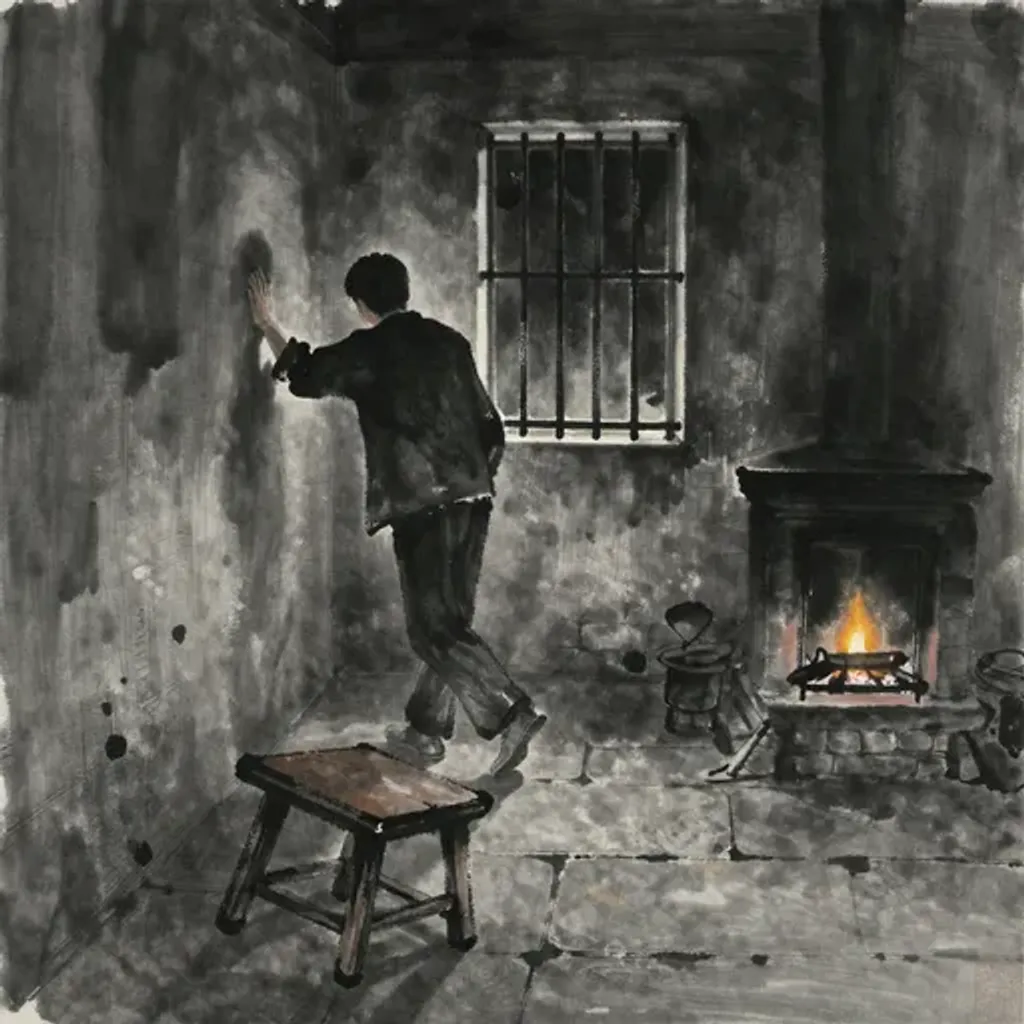
以處不安,從反觸患。
Remaining in place brings no peace; following the turn invites affliction.
— Jiao Yanshou, Yilin (Forest of Changes), 1st century BC
Commentary
Fire above the lake, and nowhere is safe. Staying put brings no peace; moving only encounters fresh calamity. In just ten characters the verse distills the existential trap of Opposition: every option leads to harm, every direction triggers a new collision. The brevity itself is telling — there is nothing more to say when both staying and going are equally cursed. From Opposition to Biting Through, fire and thunder combine as the ancient kings clarified penalties and enforced the law. The transformation suggests that the only way to break this paralysis of mutual harm is decisive judicial intervention — biting through the obstruction lodged between the jaws, excising the source of conflict with the precision of a legal ruling.
睽 → 賁
Hexagram 38 → Hexagram 22: Grace
Changing lines: 2, 3, 4
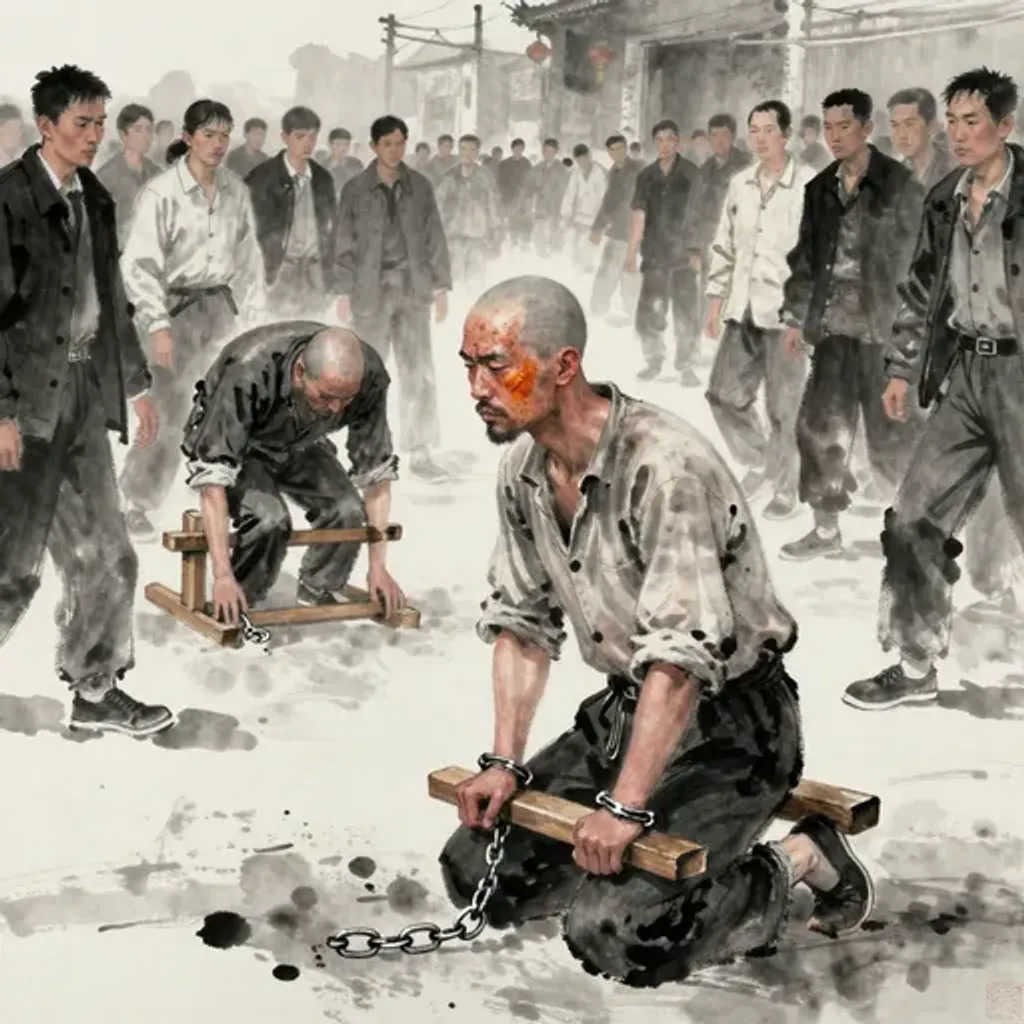
剠刖髡劓,人所賤棄。批捍之言,我心不快。
Branded, maimed, shorn, and mutilated; despised and cast off by all. Harsh and hostile words; my heart finds no ease.
— Jiao Yanshou, Yilin (Forest of Changes), 1st century BC
Commentary
Fire above the lake, and the body bears the marks of estrangement. Branding on the face, severed feet, shaved head, cropped nose — the five mutilating punishments of ancient law render a person repulsive and discarded by society. Then harsh, dismissive words assault the ears, and the heart recoils in bitterness. The verse layers physical disfigurement upon verbal abuse: first the body is ruined, then the spirit is assaulted. The victim becomes an object of universal contempt. From Opposition to Grace, fire glows beneath the mountain, illuminating the base of things with understated beauty. The transformation from disfigurement to adornment suggests that even after severe damage, a measure of dignity can be restored through the quiet, modest grace that comes from within.
睽 → 剝
Hexagram 38 → Hexagram 23: Splitting Apart
Changing lines: 1, 2, 4
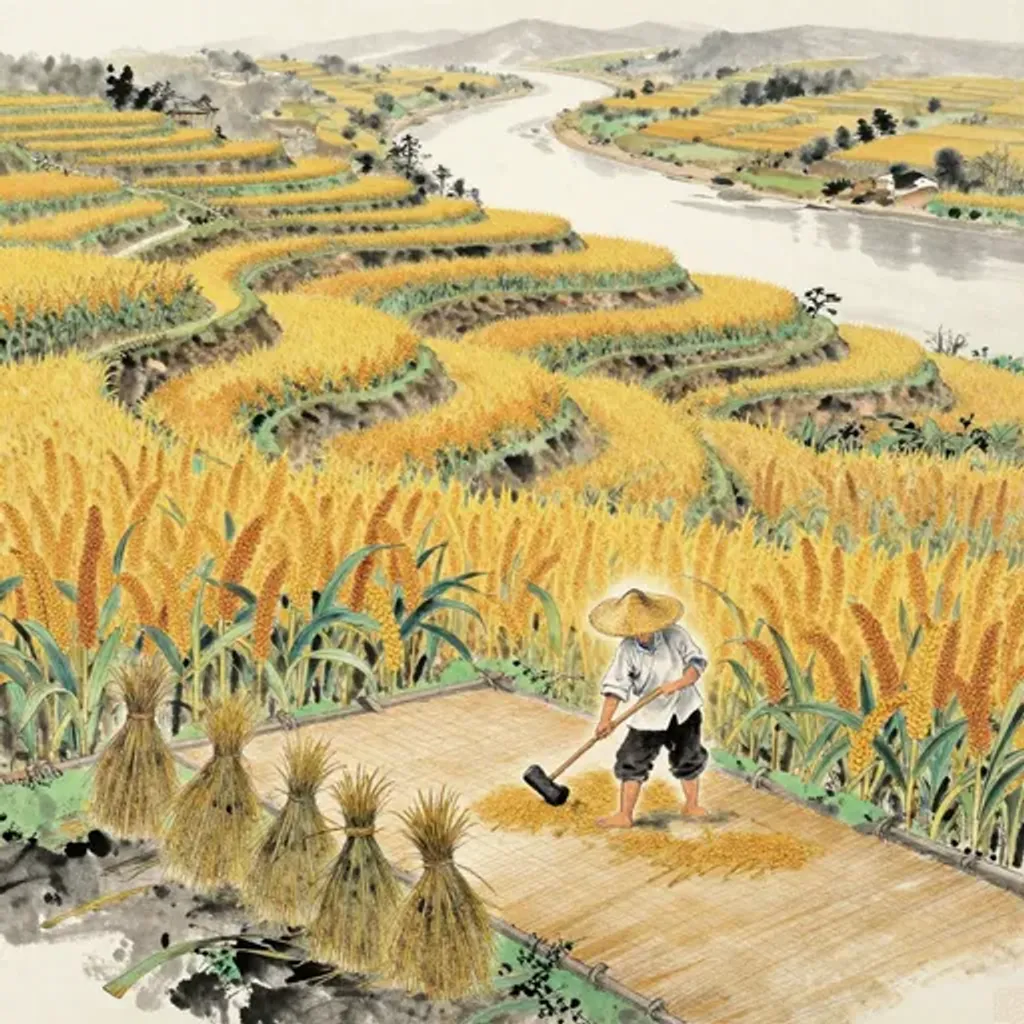
皋田禾黍,搥壤麻阜。衣食我躬,室家饒有。
Marsh fields of grain and millet; pounding the earth, hemp on the hillside. Clothing and feeding my body; the household has plenty.
— Jiao Yanshou, Yilin (Forest of Changes), 1st century BC
Commentary
Fire above the lake, estranged elements, yet the low-lying fields yield their harvest quietly. On the marshy terraces, millet and grain grow thick; hemp and flax cover the hillsides where the soil is pounded smooth. These crops clothe and feed the farmer's own body, and the household overflows with sufficiency. The verse is a pastoral counterpoint to Opposition's usual discord — here, patient cultivation of humble ground produces genuine abundance. No one fights, no one flees; the earth simply gives. From Opposition to Splitting Apart, the mountain rests upon the earth, and those above must strengthen what is below. The transformation warns that even this quiet plenty is fragile: abundance can erode if its foundation is neglected. The ruler must thicken the base to secure the dwelling.
睽 → 復
Hexagram 38 → Hexagram 24: Return
Changing lines: 2, 4, 6
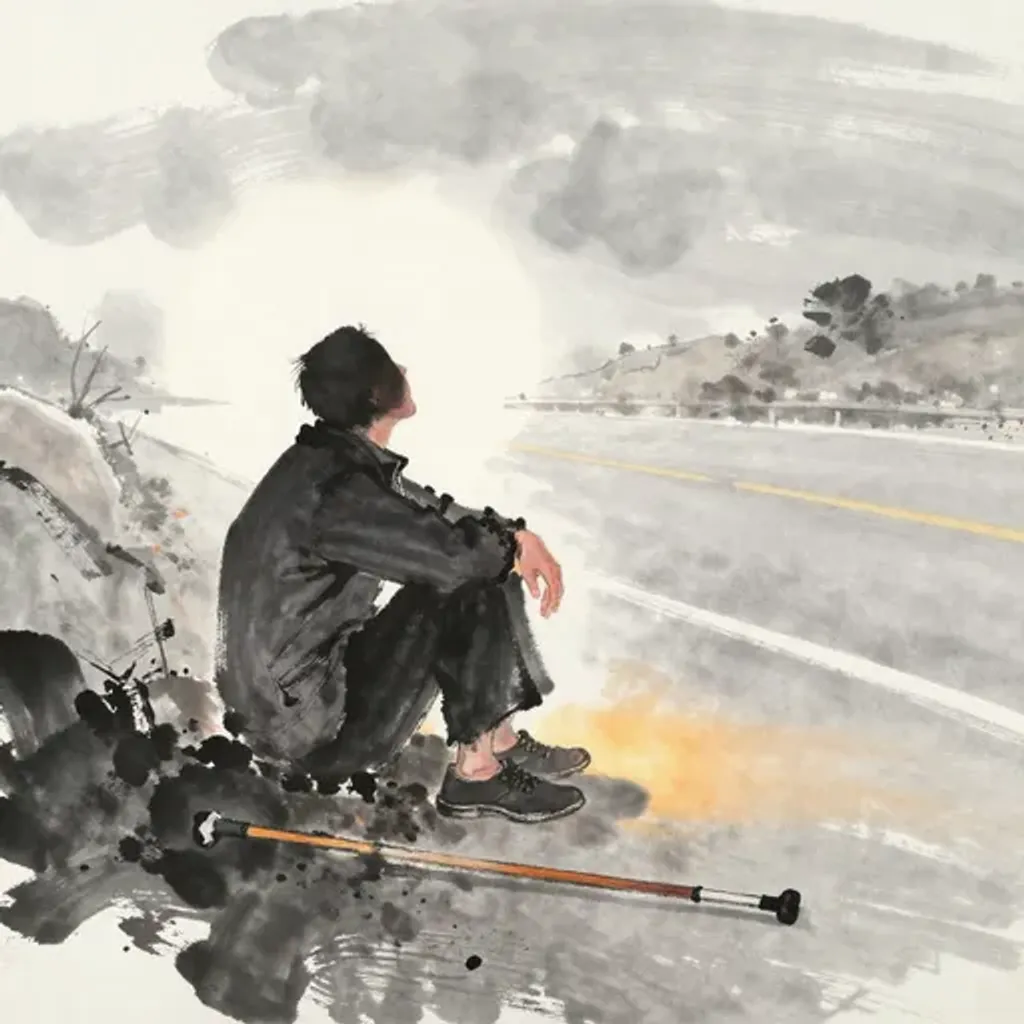
兩目失明,日奪无光。脛足跛踦,不可以行,頓於丘傍。
Both eyes have lost their sight; the sun is robbed of light. Shins and feet lame and stumbling; he cannot walk, and collapses by the hillside.
— Jiao Yanshou, Yilin (Forest of Changes), 1st century BC
Commentary
Fire above the lake, vision and movement both extinguished. Both eyes lose their sight, the sun stripped of its light; the legs are lame and uneven, unable to walk, and one collapses beside a barren hill. The verse systematically disables every capacity for agency: sight, which connects one to the world, is gone; mobility, which connects one to a destination, is gone. What remains is utter helplessness, stranded at the roadside. From Opposition to Return, thunder stirs within the earth, a single yang line re-enters at the bottom. The transformation offers a slender thread of hope: even in total darkness and immobility, the primal impulse of renewal begins underground, invisible and unbidden. Return begins precisely when all external resources have been exhausted.
睽 → 无妄
Hexagram 38 → Hexagram 25: Innocence
Changing lines: 2, 5
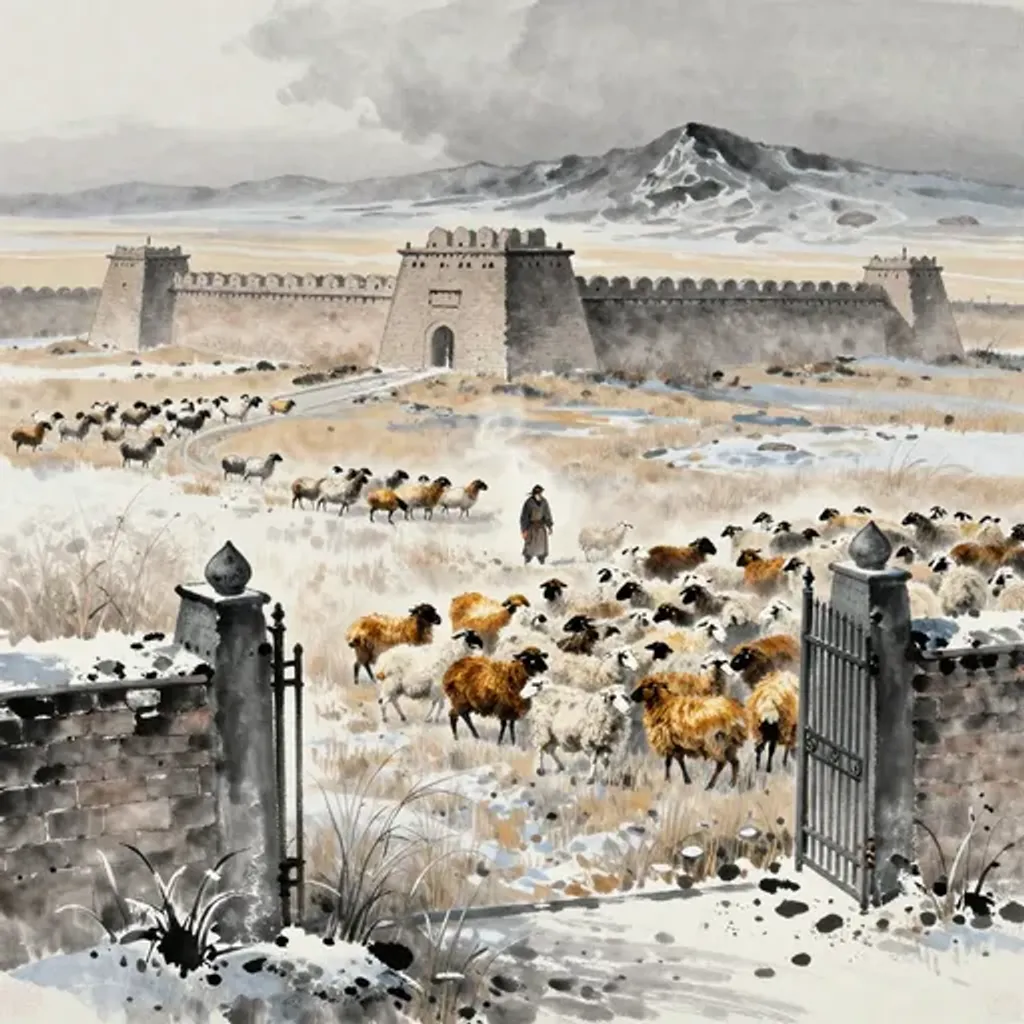
金城朔方,外國多羊。履霜不時,去復為憂。
Golden city on the northern frontier; the foreign lands have many sheep. Treading frost out of season; departure and return alike bring worry.
— Jiao Yanshou, Yilin (Forest of Changes), 1st century BC
Commentary
Fire above the lake, and the gaze turns toward the frontier. Golden walls guard Shuofang in the far north, where foreign tribes herd vast flocks of sheep across windswept steppes. But frost descends out of season, disrupting the natural cycle, and departure and return alike become sources of anxiety. The verse captures the precariousness of border existence: even behind metal ramparts, one is subject to heaven's irregularities. Unseasonable frost — nature acting without precedent — recalls the hexagram name Wuwang, Innocence or the Unexpected. From Opposition to Innocence, thunder rolls beneath heaven as all things align with their proper nature. The transformation insists that when heavenly timing goes awry, no human fortification suffices; only alignment with heaven's organic rhythm restores security.
睽 → 大畜
Hexagram 38 → Hexagram 26: Great Taming
Changing lines: 3, 4
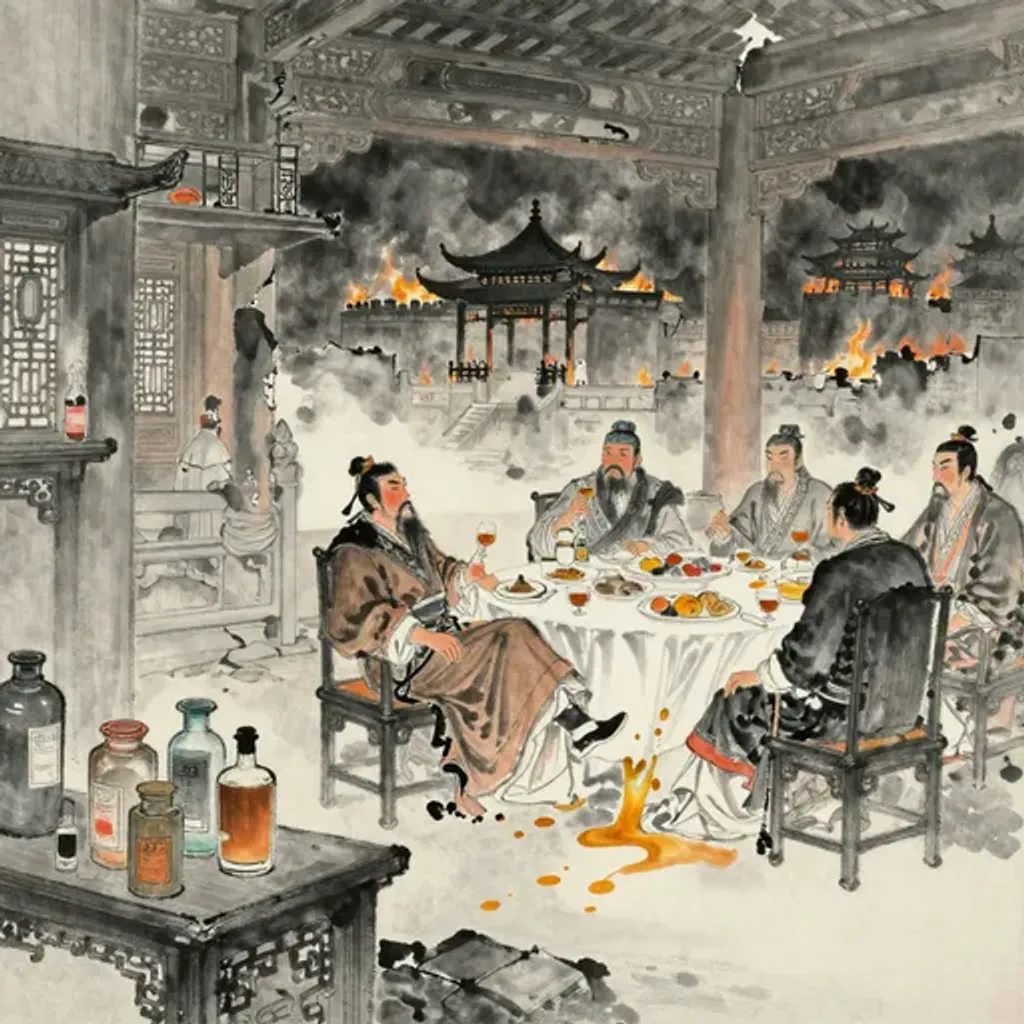
匿病不醫,亂政傷災。紂作淫虐,商破其墟。
Concealing illness, refusing the physician; misrule invites calamity. Zhou crafted cruelty and excess; Shang was shattered, its capital ruined.
— Jiao Yanshou, Yilin (Forest of Changes), 1st century BC
Commentary
Fire above the lake, sickness concealed until the state itself sickens. The verse draws a sharp parallel: hiding disease and refusing treatment mirrors a ruler who lets governance rot. King Zhou of Shang indulged in debauchery and cruelty unchecked — his excesses are the undiagnosed illness of the body politic. Shang's capital was laid waste, its foundations reduced to ruins. The idiom 'conceal illness and avoid the doctor' carries the force of willful self-destruction: the patient who refuses treatment has chosen ruin. From Opposition to Great Taming, heaven stored within the mountain, the gentleman studies the words and deeds of the past to nurture virtue. The transformation warns that accumulated power must be informed by historical memory, or it calcifies into the very tyranny it should restrain.
睽 → 頤
Hexagram 38 → Hexagram 27: Nourishment
Changing lines: 2, 4
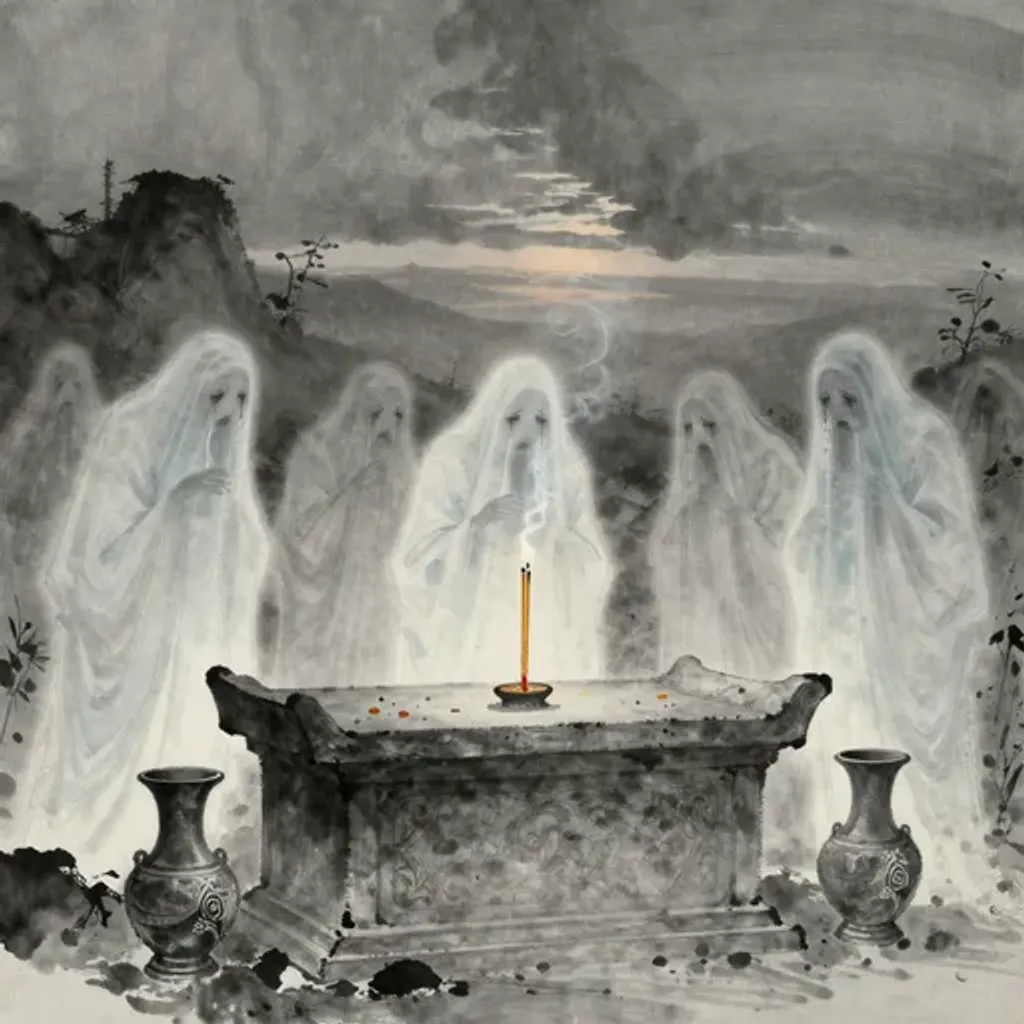
鬼泣哭枉,悲傷無後。甲子昧爽,殷人絕祀。
Ghosts weep and cry out in grief; sorrow at having no posterity. On the jiazi day at dawn's first light; the Yin people's sacrifices are cut off.
— Jiao Yanshou, Yilin (Forest of Changes), 1st century BC
Commentary
Fire above the lake, and ancestral ghosts weep in wronged anguish, grieving the extinction of their line. On a jiazi morning at dawn's first grey light, the Yin people's sacrificial rites cease forever. The verse points unmistakably to the fall of the Shang dynasty: 'jiazi at dawn' (甲子昧爽) echoes the Shangshu's 'Mushi' chapter, which opens with King Wu's dawn address at Muye on the jiazi day that ended Shang. The ghosts who weep are Shang's ancestral spirits, lamenting that their descendants have been severed and no one remains to perform the rites. From Opposition to Nourishment, the mountain stands above thunder — careful words, measured sustenance. The transformation from severed rites to Nourishment underscores that spiritual feeding, once cut, leaves only ghostly lamentation.
睽 → 大過
Hexagram 38 → Hexagram 28: Great Exceeding
Changing lines: 1, 3, 5, 6
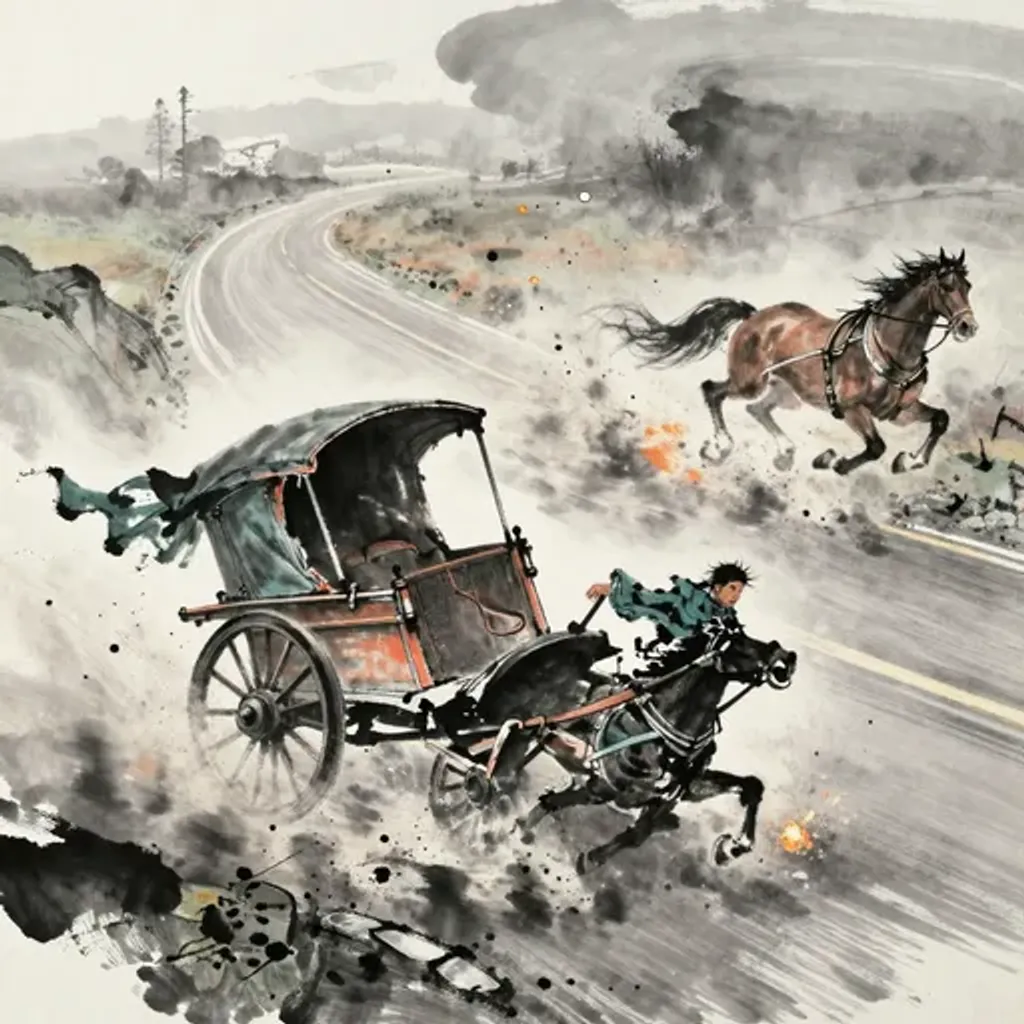
焱風卒起,車馳袍褐。棄古追亡,失其和節,心憂惙惙。
A blazing wind rises suddenly; the carriage races, the cloak flies off. Abandoning the old to chase the lost; losing harmony and measure, the heart grieves bitterly.
— Jiao Yanshou, Yilin (Forest of Changes), 1st century BC
Commentary
Fire above the lake, and a sudden violent wind tears through without warning. Chariots race wildly, robes and coats flapping in the blast, as someone abandons the old and chases what has already fled. Harmony and measure are lost; the heart fills with anxious dread. The verse captures the panic of someone who has thrown away stable foundations to pursue a vanishing opportunity — a gambler who bets everything on speed and loses rhythm entirely. From Opposition to Great Exceeding, the lake overwhelms the trees, the ridgepole sags under intolerable weight. The transformation confirms the excess: what began as estrangement has become structural overload. The gentleman stands alone without fear, but this figure has already broken his own ridgepole through reckless haste.
睽 → 坎
Hexagram 38 → Hexagram 29: The Abysmal Water
Changing lines: 1, 4, 5, 6
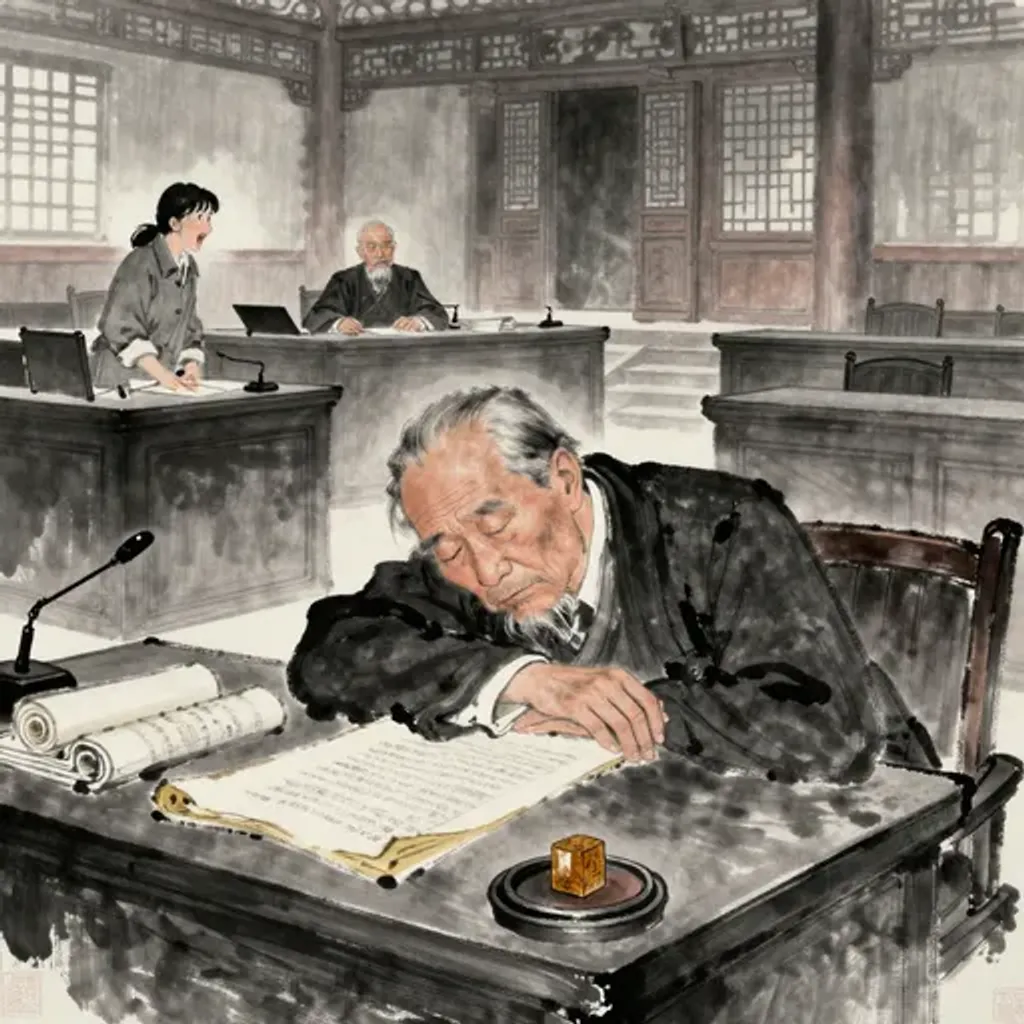
耄老失明,聞善不從。自令顛沛,敗為咎殃。
Aged and blind, he has lost his sight; hearing what is good, he will not follow. He brings ruin upon himself; failure becomes his calamity.
— Jiao Yanshou, Yilin (Forest of Changes), 1st century BC
Commentary
Fire above the lake, and an aged figure has gone blind, yet refuses good counsel. The verse depicts a ruler or elder grown senile — eyes darkened, ears closed — who hears wise advice but will not follow it. The result is self-inflicted downfall, a disaster born entirely of obstinacy. 'Old and blind' is both literal and metaphorical: the inability to perceive danger and the refusal to accept guidance combine into a single fatal posture. From Opposition to The Abysmal, water upon water, danger doubled. The transformation drives the point home: willful blindness does not merely maintain the current peril but plunges into a second abyss. One who refuses to see when shown the way falls not once but twice, each pit deeper than the last.
睽 → 離
Hexagram 38 → Hexagram 30: The Clinging Fire
Changing lines: 2, 3
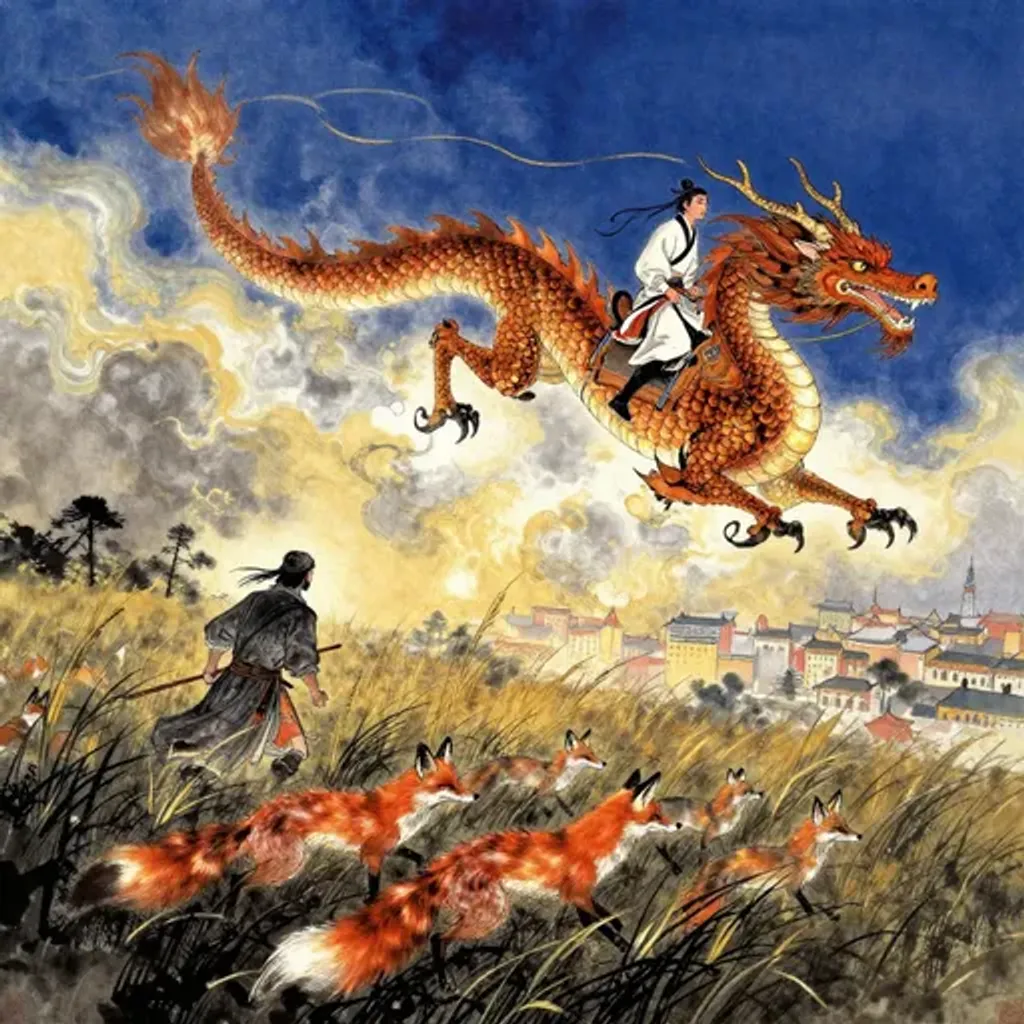
隨風騎龍,與利相逢。田獲三狐,商伯有功。衝衝之邑,長安无他。
Riding the wind on a dragon; meeting profit along the way. The hunt yields three foxes; the Shang lord achieves merit. In the bustling city; lasting peace prevails.
— Jiao Yanshou, Yilin (Forest of Changes), 1st century BC
Commentary
Fire above the lake, yet here the wind carries a dragon-rider to meet with profit. The hunter takes three foxes in the field, and a great merchant achieves lasting success. The verse names a 'Shang Bo' — a merchant lord or possibly the Earl of Shang — who brings order and prosperity to a bustling settlement where all live in lasting peace. Riding a dragon with the wind evokes the legendary sage who harnesses cosmic forces for benign ends. From Opposition to The Clinging, doubled fire illuminates in succession. The transformation from estrangement to radiance reveals that when vision clarifies and attaches to the right object, what was scattered coalesces into bright achievement. The Clinging's fire draws strength from what it adheres to.
睽 → 咸
Hexagram 38 → Hexagram 31: Influence
Changing lines: 1, 2, 3, 5, 6
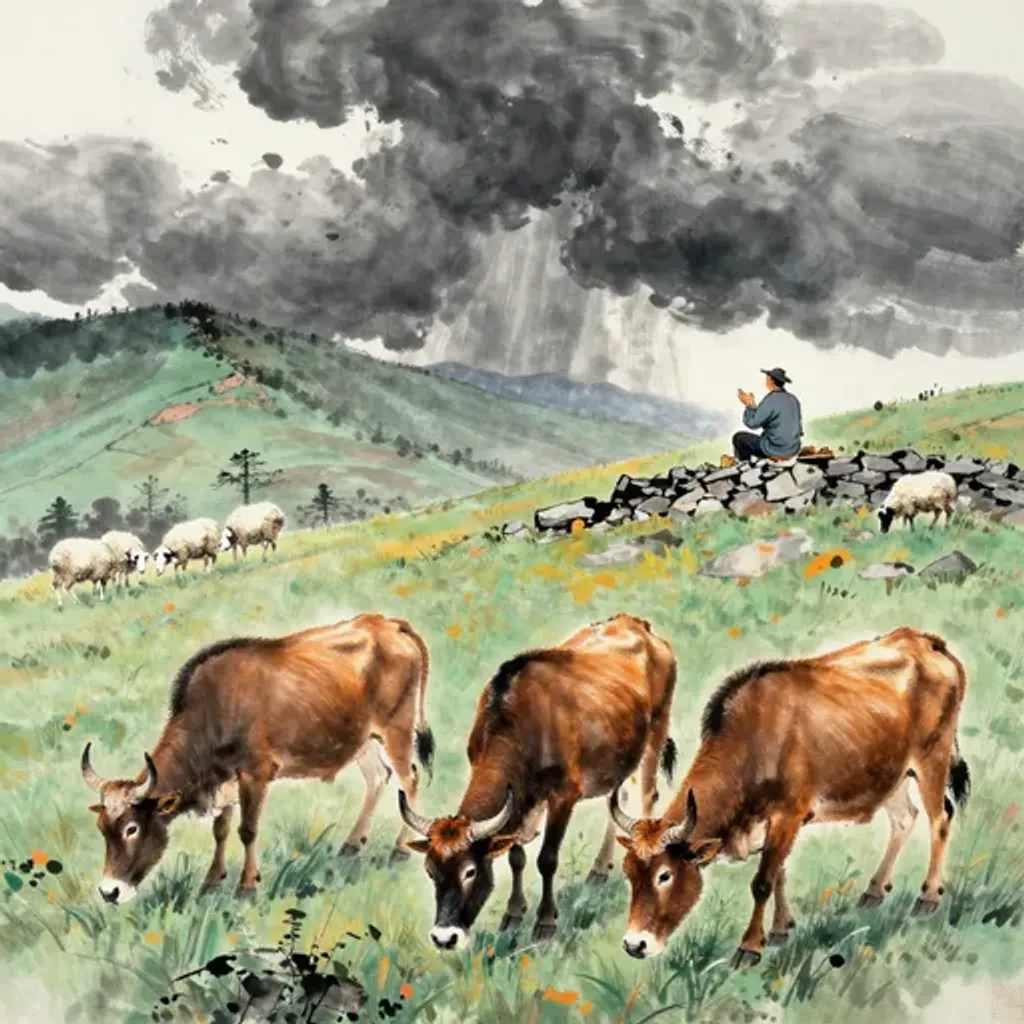
三牛五䍧,重明作福,使我有得。疾人官獄,憂在心腹。
Three oxen and five rams; doubled brightness brings blessings, granting me gain. The afflicted man faces prison; worry lodges in the heart.
— Jiao Yanshou, Yilin (Forest of Changes), 1st century BC
Commentary
Fire above the lake, estranged forces, yet sacrificial offerings restore the balance. Three oxen and five rams — a generous ritual offering — bring redoubled brightness and bestow fortune. But the verse pivots sharply: those afflicted face lawsuits and imprisonment, and worry gnaws at the very core. The juxtaposition is deliberate: sacred rites that should secure blessing coexist with legal persecution that breeds dread. The gain is real but so is the danger lurking within. From Opposition to Influence, the lake rests upon the mountain, and the gentleman receives others with an open, empty heart. The transformation from anxious duality to mutual responsiveness suggests that only by emptying oneself of internal conflict can outward fortune and inward peace coincide.
睽 → 恆
Hexagram 38 → Hexagram 32: Duration
Changing lines: 1, 3, 6
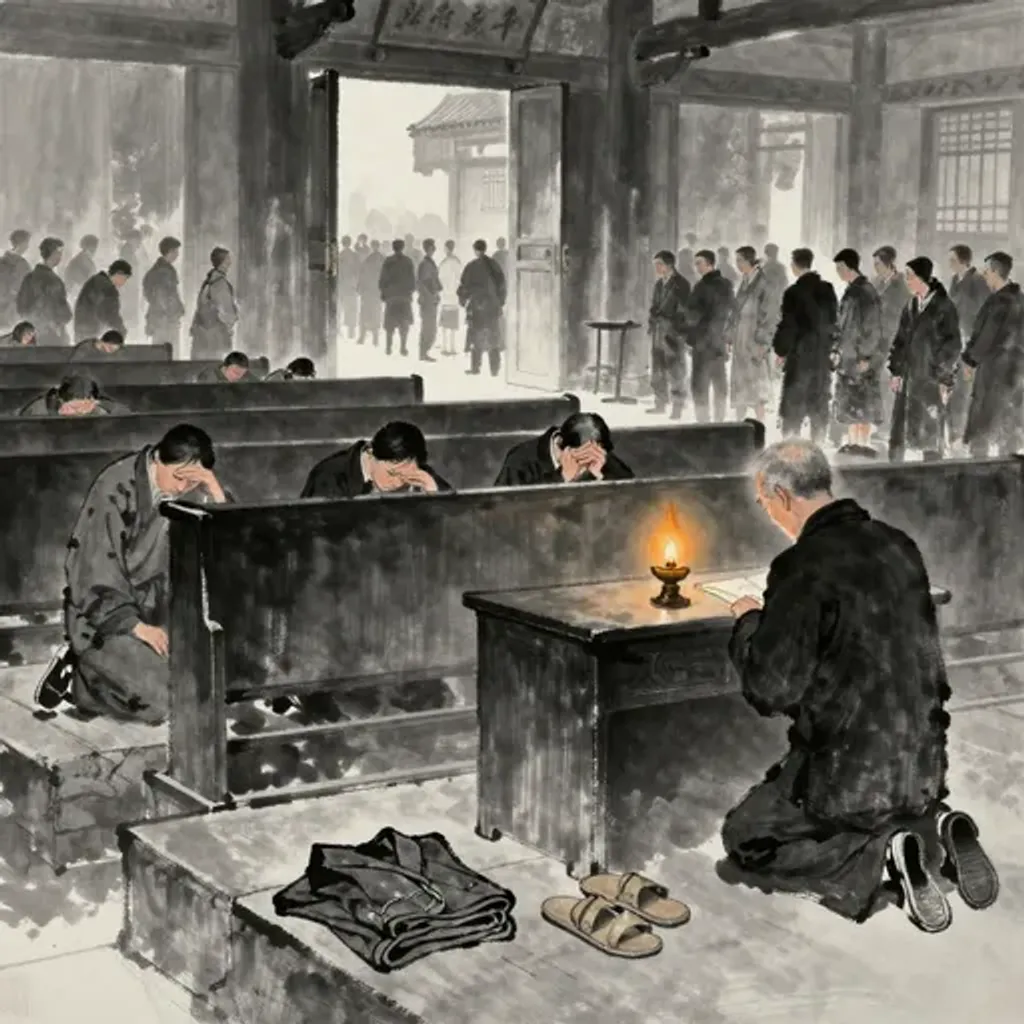
孟巳乙丑,哀呼尼父。明德訖終,亂害滋起。
In the mengsi year, the yichou month; mournful cries for the sage Confucius. Bright virtue has reached its end; disorder and harm now arise.
— Jiao Yanshou, Yilin (Forest of Changes), 1st century BC
Commentary
Fire above the lake, and a mournful cry echoes across the ages. On a meng-si or yi-chou day, voices wail for 'Father Ni' — Confucius. The Master's luminous virtue has reached its end, and in its wake, chaos and harm multiply without restraint. Confucius died in 479 BC, and the Yilin treats this event as the hinge of civilization: once the sage's guiding light extinguished, the moral order disintegrated. The Spring and Autumn Annals cease, and the world enters darkness. From Opposition to Duration, thunder and wind reinforce each other endlessly as the gentleman stands firm without shifting ground. The transformation insists that what endures is not the sage's physical life but the principled stance he embodied — duration through unwavering commitment.
睽 → 遯
Hexagram 38 → Hexagram 33: Retreat
Changing lines: 1, 2, 3, 5
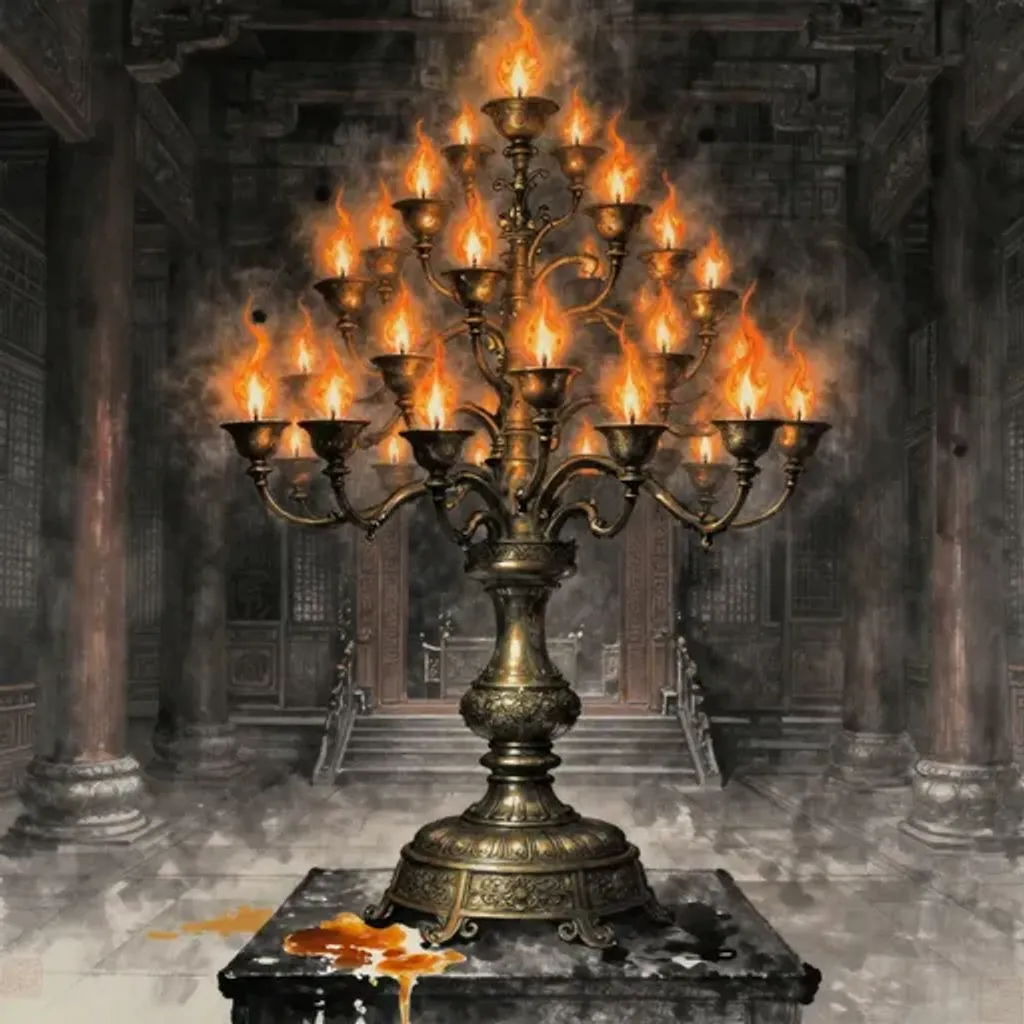
華燈百枝,消暗衰微。精光訖盡,奄如灰縻。
A splendid lamp of a hundred branches; its darkness fades and weakens. Its brilliant light is spent and gone; suddenly it becomes like ash and dust.
— Jiao Yanshou, Yilin (Forest of Changes), 1st century BC
Commentary
Fire above the lake, and a hundred-branched chandelier blazes in the night — then gutters, fades, and dies. The brilliant light exhausts itself to the last spark, collapsing like ash scattered in the wind. The verse traces the arc of splendor to extinction: what once illuminated a hall with overwhelming radiance dwindles to nothing, its energy consumed beyond recovery. The hundred branches suggest a great house or dynasty whose many lights burn simultaneously but cannot sustain themselves. From Opposition to Retreat, heaven stands above the mountain, and the gentleman distances himself from petty persons with stern composure. The transformation counsels timely withdrawal: when the light is failing, the wise retreat before they share its extinction.
睽 → 大壯
Hexagram 38 → Hexagram 34: Great Power
Changing lines: 3, 6
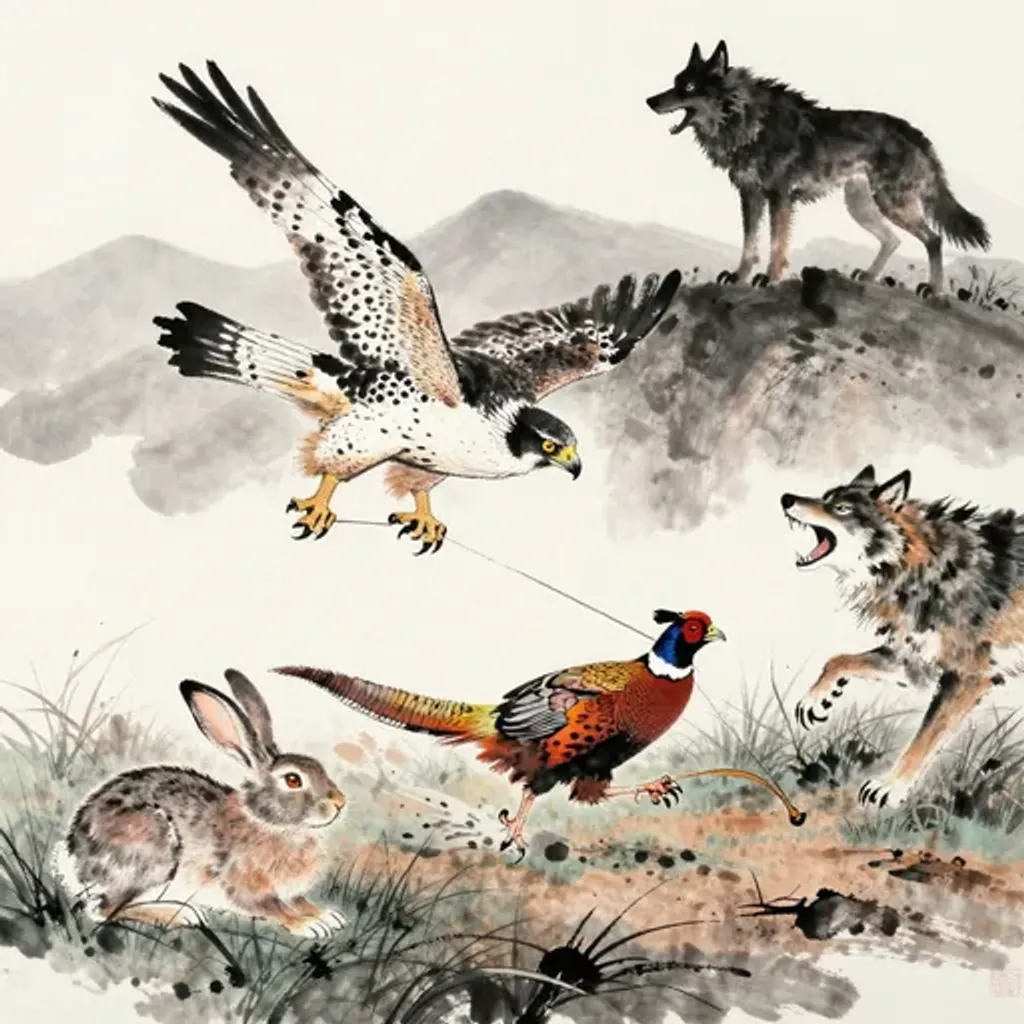
鷹飛雉退,兔伏不起。弧張狼鳴,野雞飛驚。
The hawk soars, the pheasant retreats; the rabbit crouches, daring not rise. The bow is drawn and the wolf howls; the wild pheasant startles into flight.
— Jiao Yanshou, Yilin (Forest of Changes), 1st century BC
Commentary
Fire above the lake, and the hunting field erupts with predatory energy. A hawk swoops and the pheasant retreats; a rabbit crouches frozen, unable to rise. The bow is drawn and the wolf howls as wild roosters burst from cover in terror. Every creature occupies its role in the food chain: the strong strike, the weak scatter. The verse captures raw natural power operating without negotiation — pure dominance in the animal kingdom. From Opposition to Great Power, thunder roars above heaven, and the gentleman treads only the path of propriety. The transformation channels brute force through ritual restraint: the thunder's might is real, but the gentleman's power lies in knowing where not to step. Great Power unchecked becomes mere predation.
睽 → 晉
Hexagram 38 → Hexagram 35: Progress
Changing lines: 1, 2
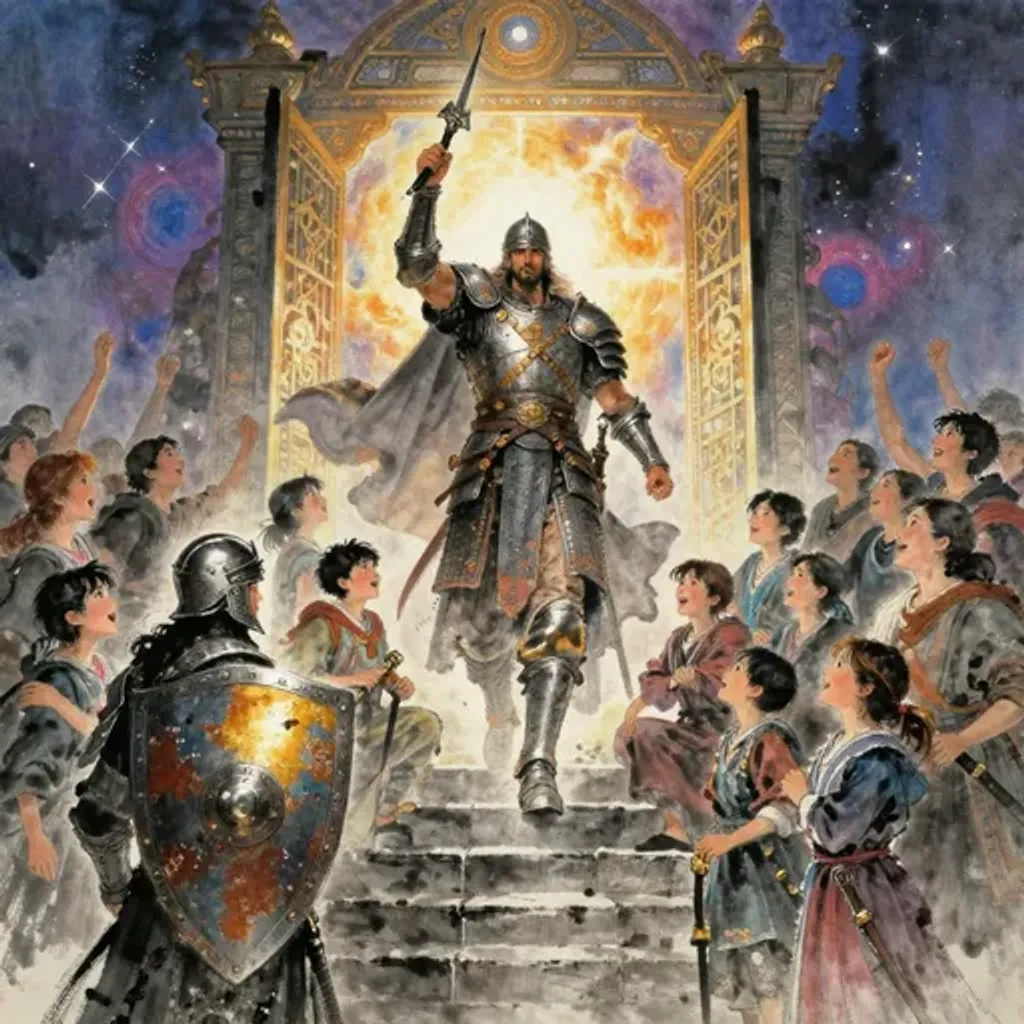
鬭戰天門,身有何患?室家具在,不失其歡。
Battling at heaven's gate; what harm could touch this body? House and family remain intact; he does not lose his joy.
— Jiao Yanshou, Yilin (Forest of Changes), 1st century BC
Commentary
Fire above the lake, and a warrior battles at heaven's gate without sustaining harm. The verse is remarkably confident: though one fights at the threshold of the celestial realm — the highest and most perilous ground imaginable — the body suffers no injury, the household remains intact, and joy is undiminished. The 'gate of heaven' suggests both cosmic and military supremacy, a battle fought on the grandest stage with complete assurance. From Opposition to Progress, fire rises above the earth as the sun emerges from the ground, illuminating all with self-generating brightness. The transformation from estrangement to progress reveals that when one's cause is aligned with heaven's mandate, even the fiercest opposition yields only to advancing light.
睽 → 明夷
Hexagram 38 → Hexagram 36: Darkening of the Light
Changing lines: 2, 3, 4, 6
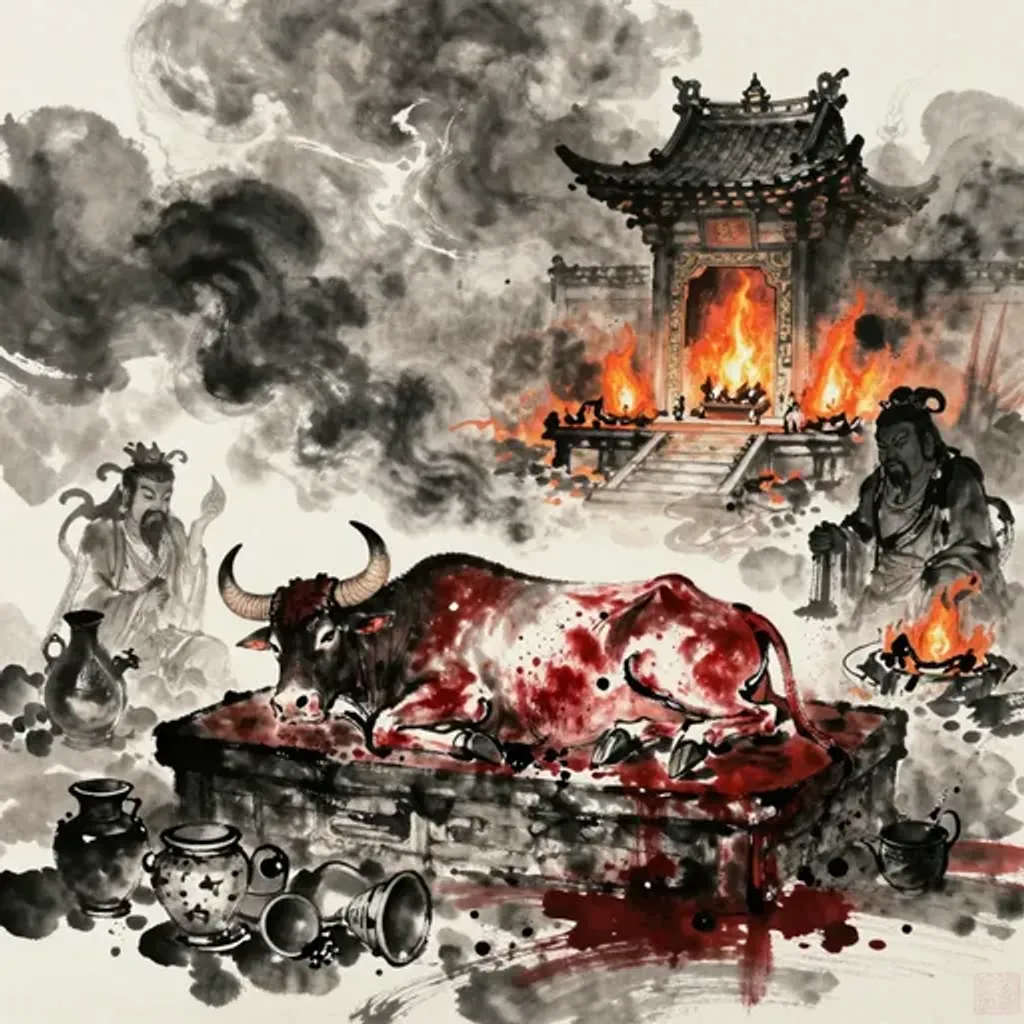
東家殺牛,行逆腥臊,神背西顧,命衰絕周。亳社災燒,宋人夷誅。
The eastern house slaughters an ox; the act is contrary, reeking and foul. The spirits turn west in revulsion; fate wanes and the Zhou line is severed. The Bo shrine burns in disaster; the people of Song are destroyed.
— Jiao Yanshou, Yilin (Forest of Changes), 1st century BC
Commentary
Fire above the lake, and sacrificial rites go fatally wrong. The eastern neighbor slaughters an ox in a transgressive manner, its offering reeking of blood and foulness, causing the spirits to turn their backs and look westward. Heaven's mandate withers, and the Zhou cosmic order expires. Then the Bo shrine — the ancient Shang altar preserved at Song — catches fire and burns, and the Song people are slaughtered and leveled. The Bo shrine was the sacred altar of the Shang dynasty, maintained by their descendants in the state of Song; its destruction symbolizes the final severing of a once-great lineage's spiritual connection. From Opposition to Darkening of the Light, brightness sinks into the earth, and the gentleman governs by concealing his illumination. When even the ancestral altar burns, the wise must hide their light to survive the darkness.
睽 → 家人
Hexagram 38 → Hexagram 37: The Family
Changing lines: 2, 3, 4, 5
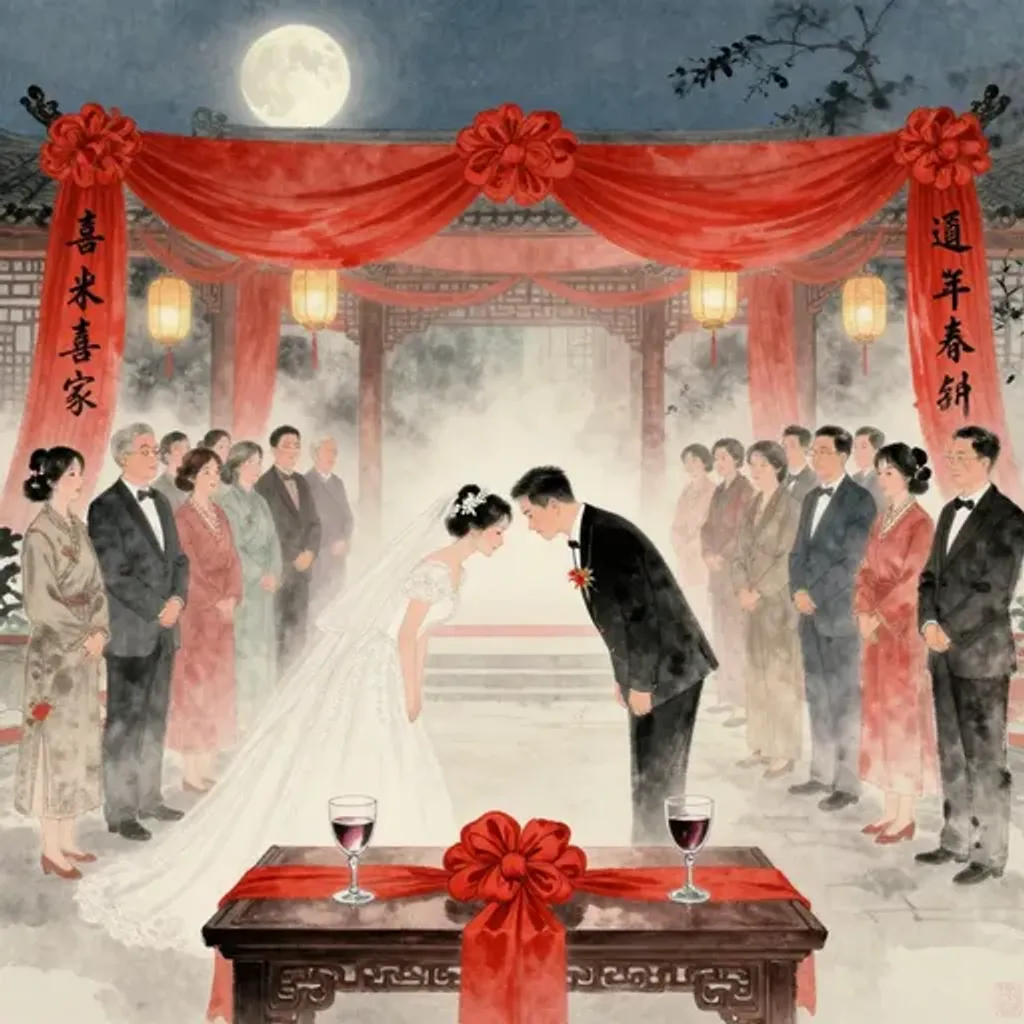
陰陽辨舒,二姓相合。婚姻孔云,生我利福。
Yin and yang separate and extend; two surnames join together. Marriage is blessed and abundant; it brings me profit and fortune.
— Jiao Yanshou, Yilin (Forest of Changes), 1st century BC
Commentary
Fire above the lake, estranged elements, yet yin and yang unfold and harmonize. Two surnames join in marriage, and the union is blessed — the classical 'Kong Yun' formula evokes the Shijing's wedding odes, where the coming together of different clans generates prosperity. The verse pivots Opposition's essential tension into a generative force: it is precisely because the two are different that their union is fertile. From Opposition to The Family, wind emerges from fire as warmth within a household radiates outward through consistent speech and steady conduct. The transformation from estrangement to kinship reveals that the deepest family bonds form not despite difference but through it — two natures joined in complementary rhythm, producing blessing.
睽 → 睽
Hexagram 38 → Hexagram 38: Opposition
No changing lines — the hexagram is unchanged
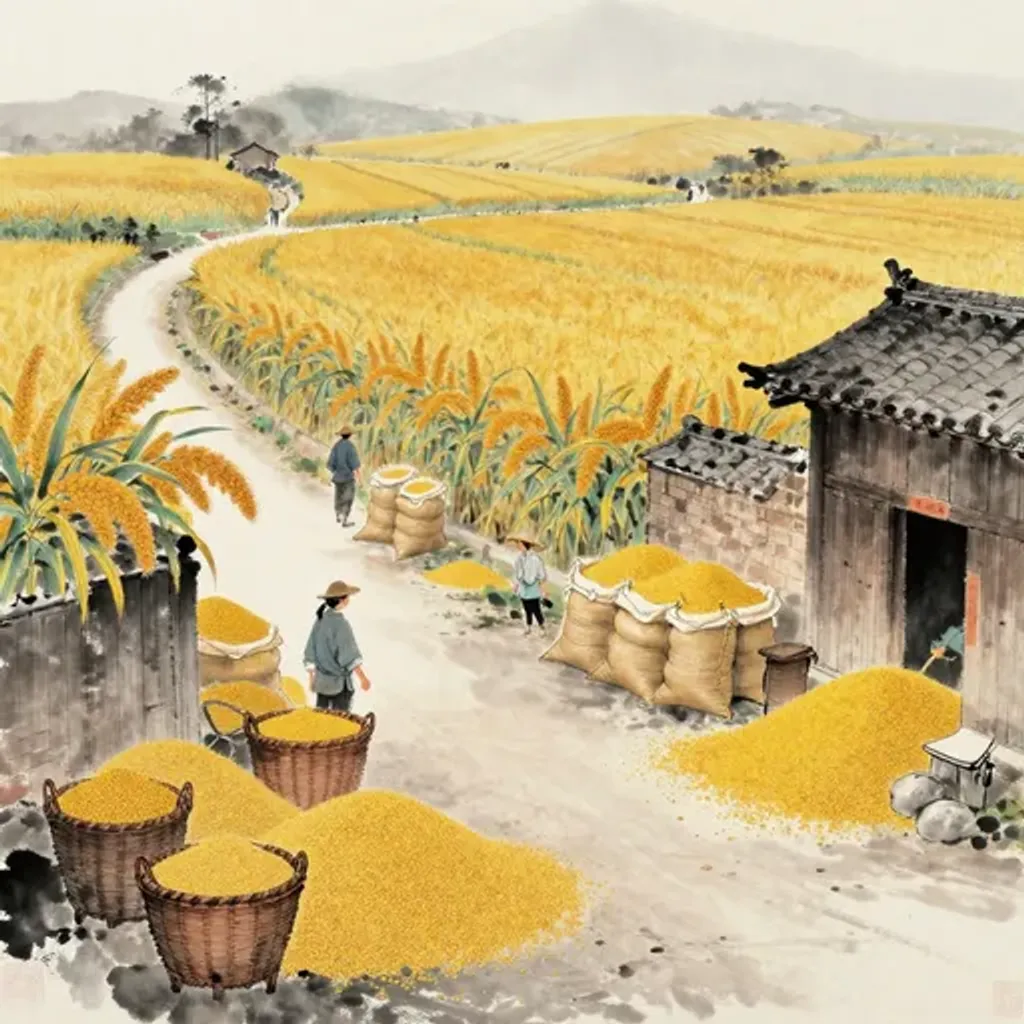
倉盈庾億,宜稼黍稷,年歲有息。
Granaries brimming, stores in the billions; fit for planting millet and grain. The year yields its increase.
— Jiao Yanshou, Yilin (Forest of Changes), 1st century BC
Commentary
Fire above the lake returning to itself — Opposition contemplating its own reflection. Yet the verse describes not discord but abundance: granaries overflow with billions of measures, the land is perfectly suited for millet and grain, and the harvest yields surplus year upon year. When Opposition meets itself, the doubled estrangement paradoxically cancels out: two mirrors facing each other reveal not infinite regression but clarity. The fire-lake tension, confronting its own nature, resolves into the recognition that opposing forces held in stable equilibrium are the very mechanism of agricultural prosperity — sun above, water below, each feeding the other. The same hexagram sustained becomes its own remedy through self-aware balance.
睽 → 蹇
Hexagram 38 → Hexagram 39: Obstruction
Changing lines: 1, 2, 3, 4, 5, 6
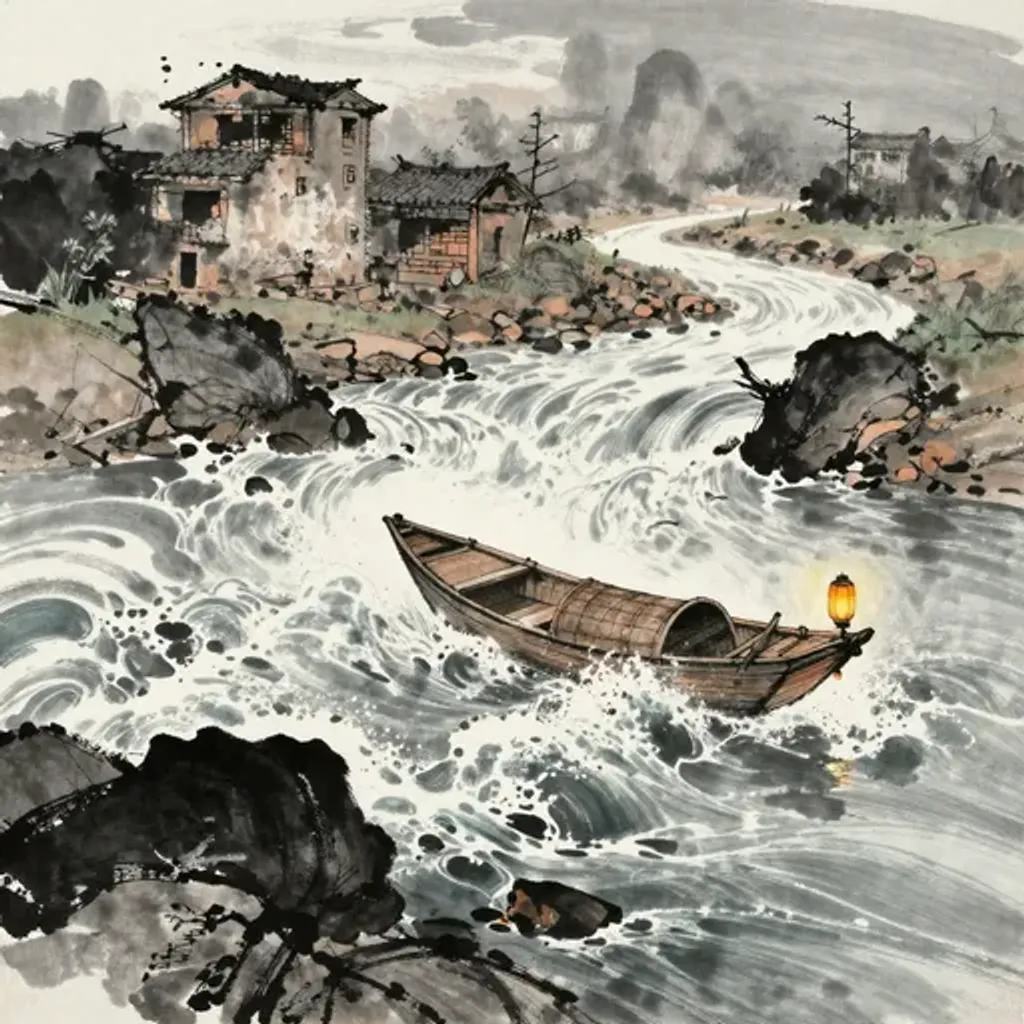
東入海口,循流北走。一高一下,五邑无主。十日六夜,死於水涘。
Entering the sea mouth to the east; following the current running north. Rising and falling, high and low; five towns without a lord. Ten days and six nights; death at the water's brink.
— Jiao Yanshou, Yilin (Forest of Changes), 1st century BC
Commentary
Fire above the lake, and a journey enters the mouth of the eastern sea, following the current northward. The terrain rises and falls unpredictably, five towns lie abandoned without lords, and after ten days and six nights the traveler dies at the water's edge. The verse traces a doomed odyssey: entering the sea at its mouth means leaving solid ground forever, and the northward drift suggests being carried by forces beyond control. The lordless towns mark a landscape of political collapse. From Opposition to Obstruction, water piles upon the mountain, and the gentleman turns inward to cultivate virtue. The transformation from fatal drift to self-reflection suggests that when the external world dissolves into leaderless chaos, the only navigable terrain is one's own moral character.
睽 → 解
Hexagram 38 → Hexagram 40: Deliverance
Changing lines: 1, 6
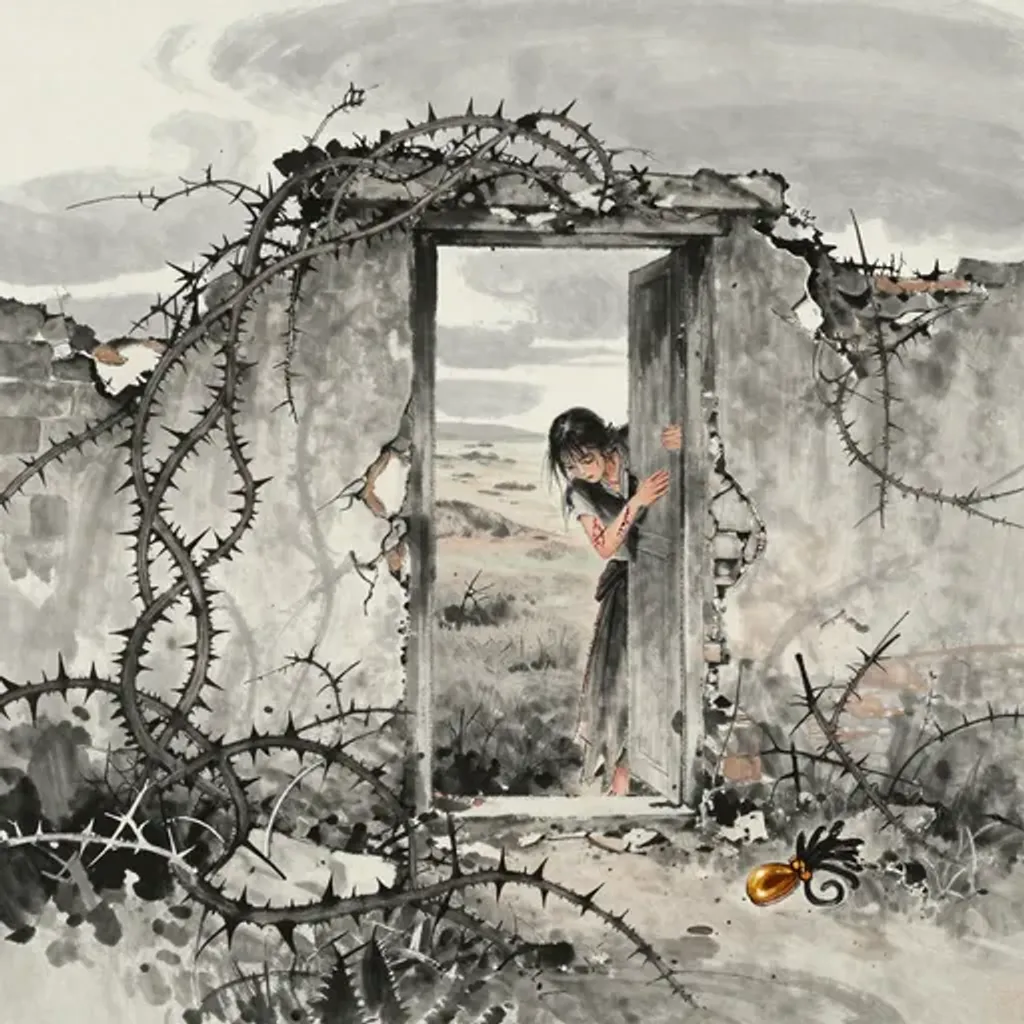
孤竹之墟,失婦无夫。傷於蒺藜,不見其妻。東郭棠姜,武子以亡。
The ruins of Guzhu; the wife lost, the husband gone. Wounded by thorns and brambles; he does not see his wife. Dongguo Tang Jiang; by Wuzi he was undone.
— Jiao Yanshou, Yilin (Forest of Changes), 1st century BC
Commentary
Fire above the lake, and the ruins of Guzhu echo with loss. A wife vanishes, a husband is gone — wounded by thorns and briars, one cannot find one's spouse. Then the verse names the historical parallel directly: Dongguo Tangjiang and the destruction of Wuzi. According to the Zuo Zhuan, Cui Zhu of Qi married the beautiful Tangjiang from the Dongguo clan, but Duke Zhuang of Qi conducted an affair with her. Cui Zhu murdered the duke in 548 BC, triggering a chain of vengeance that consumed his own clan. The ruins of Guzhu — the ancient state of the brothers Boyi and Shuqi — frame this as a place where loyalty and betrayal intertwine fatally. From Opposition to Deliverance, thunder and rain clear the air; the gentleman pardons faults and forgives transgressions.
睽 → 損
Hexagram 38 → Hexagram 41: Decrease
Changing lines: 4
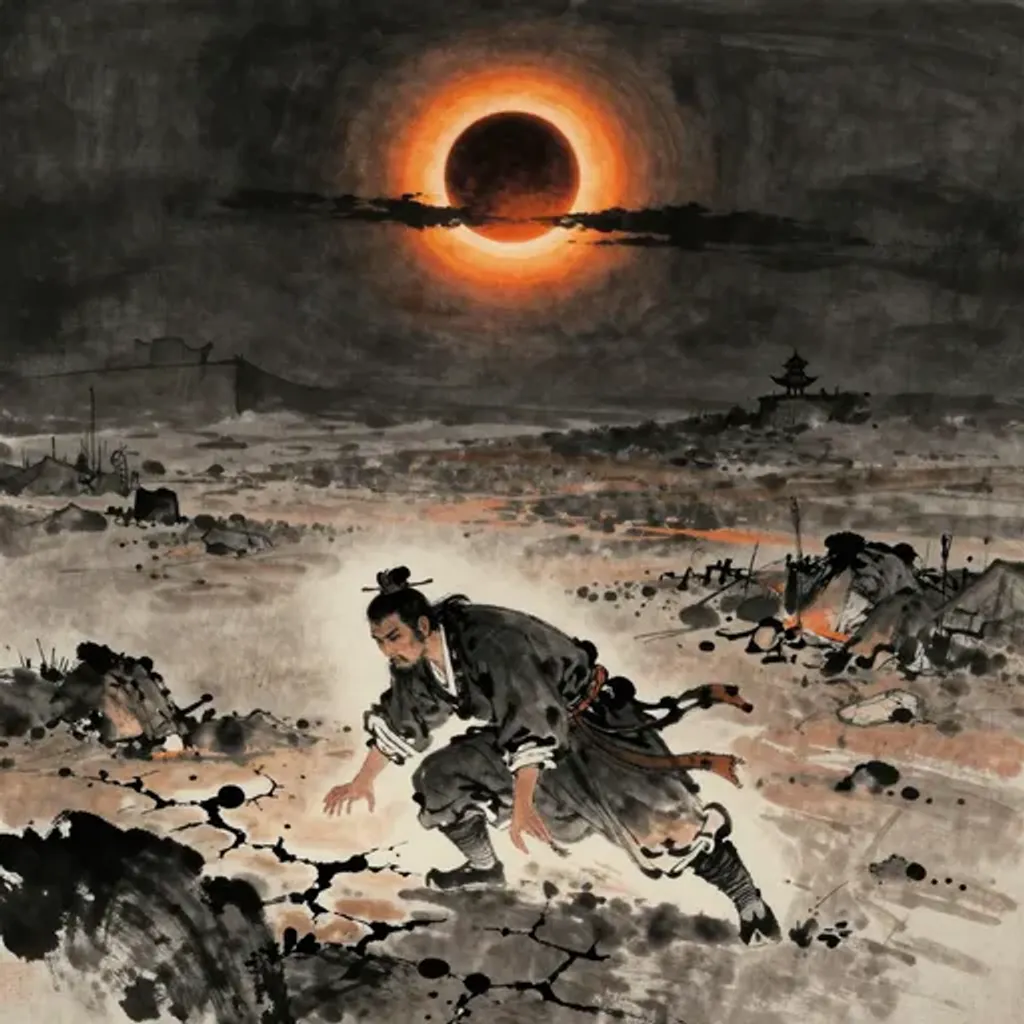
天戶東墟,盡既為災。跰𨂡黯聾,秦伯受殃。
Heaven's door at the eastern horizon; the eclipse becomes a disaster. Stumbling, deaf and dark; the Lord of Qin suffers calamity.
— Jiao Yanshou, Yilin (Forest of Changes), 1st century BC
Commentary
Fire above the lake, and the celestial gate opens upon the eastern ruins — an ominous configuration that portends total calamity. Limping, stumbling, deafened, and blinded, the figure of a lord of Qin suffers bodily punishment. The verse may allude to Duke Mu of Qin's disastrous campaign at the Battle of Xiao in 627 BC, where his entire expeditionary force was captured by Jin. Despite warnings from the elder Jian Shu, Mu ignored counsel and sent his army to certain defeat — a pattern of 'hearing good advice and refusing to follow' that resonates throughout this hexagram. From Opposition to Decrease, the mountain looms above the lake, and the gentleman restrains anger and curbs desire. The transformation warns that unchecked ambition must be diminished before it cripples the ruler entirely.
睽 → 益
Hexagram 38 → Hexagram 42: Increase
Changing lines: 2, 4, 5
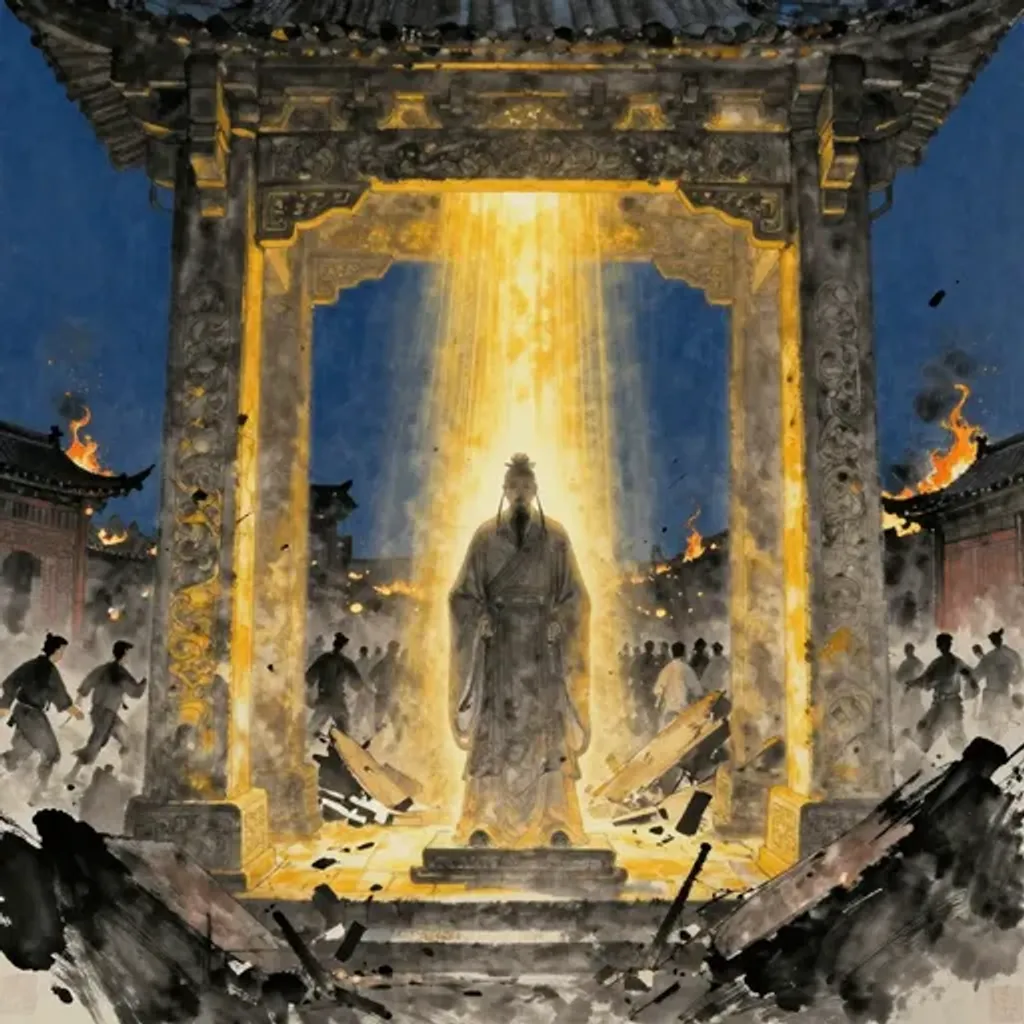
賴先休光,受福之祉。雖遭亂潰,獨不危殆。
Relying on the ancestor's glorious light; receiving the blessings of fortune. Though beset by turmoil and collapse; alone he is not endangered.
— Jiao Yanshou, Yilin (Forest of Changes), 1st century BC
Commentary
Fire above the lake, and one draws upon the brilliance of ancestors past. Relying on the glory and grace of forebears, one receives fortune's blessing. Though chaos erupts and disorder swirls all around, this person alone escapes danger and remains unharmed. The verse celebrates inherited moral capital: the accumulated virtue of prior generations functions as a protective shield, allowing descendants to pass through catastrophe unscathed. The 'ancestral light' is not mere luck but earned spiritual credit. From Opposition to Increase, wind and thunder reinforce each other as the gentleman sees good and moves toward it, perceives error and corrects it. The transformation reveals that ancestral blessing finds its full expression when the heir actively cultivates virtue — passively relying on inherited grace is not enough.
睽 → 夬
Hexagram 38 → Hexagram 43: Breakthrough
Changing lines: 3, 5, 6
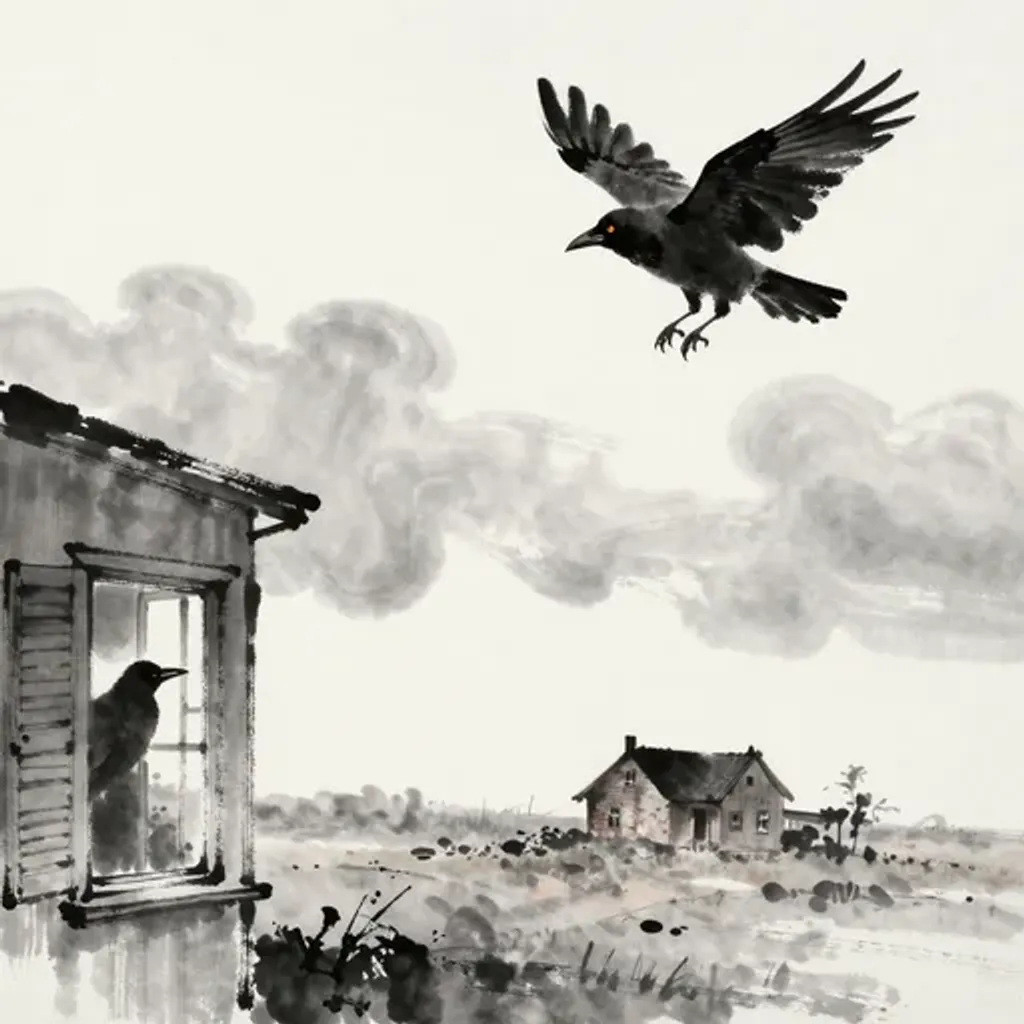
折若閉目,不見稚叔。三足孤烏,遠去家室。
Snapping shut, closing the eyes; the young and the old are not seen. The three-legged solitary crow; far from home it goes.
— Jiao Yanshou, Yilin (Forest of Changes), 1st century BC
Commentary
Fire above the lake, and the eyes close upon a world of loss. Folding up like shutting one's eyes, the young nephew or uncle — the 'zhishu' — can no longer be seen. The three-legged crow, solar emblem dwelling within the sun, has flown far from home. Both images converge on the theme of severed connection: a family member vanishes from sight, and the sun-bird itself departs its rightful place. The three-legged crow's exile from the sun is a cosmic version of domestic estrangement. From Opposition to Breakthrough, the lake ascends to heaven and the gentleman distributes blessings to those below. The transformation from sealed-eyed loss to decisive resolution suggests that the way to recover what has been lost is through forceful, generous action — breaking through the barrier rather than mourning behind closed eyes.
睽 → 姤
Hexagram 38 → Hexagram 44: Coming to Meet
Changing lines: 1, 3, 5
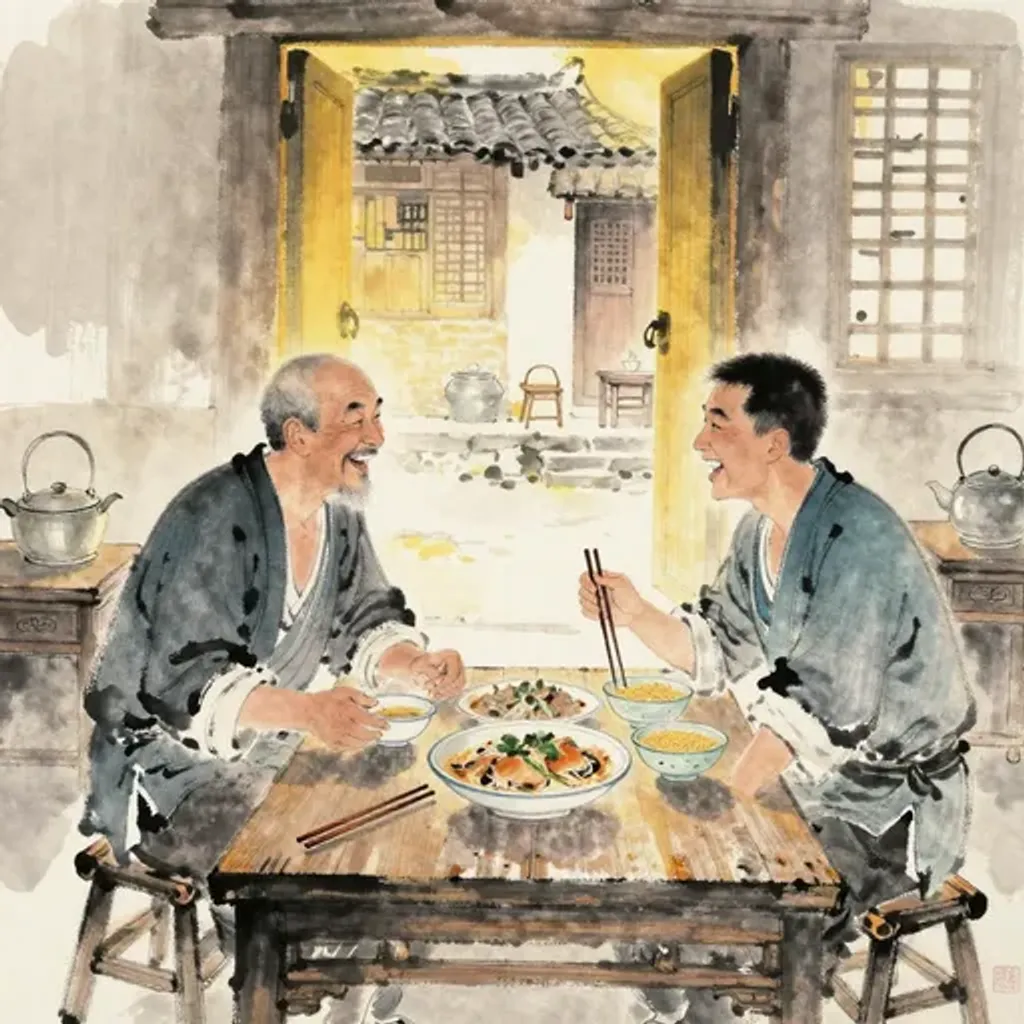
二人同室,兄弟合食。和樂相好,各得所敬。
Two people share a room; brothers eat together. Harmonious and joyful, caring for one another; each receives the other's respect.
— Jiao Yanshou, Yilin (Forest of Changes), 1st century BC
Commentary
Fire above the lake, estranged elements, yet two people share a single room. Brothers eat together at the same table, harmonious and joyful, each treating the other with genuine respect. The verse presents the simplest and most powerful antidote to Opposition: shared domesticity. No grand reconciliation, no cosmic realignment — just two people sitting down to a meal and choosing mutual regard. From Opposition to Coming to Meet, heaven spreads wind beneath it as the ruler issues commands to the four quarters. The transformation from fraternal intimacy to sovereign encounter suggests that the pattern of respectful meeting between unequal parties — host and guest, elder and younger, ruler and subject — begins at this most basic level: two brothers breaking bread.
睽 → 萃
Hexagram 38 → Hexagram 45: Gathering Together
Changing lines: 1, 2, 5, 6
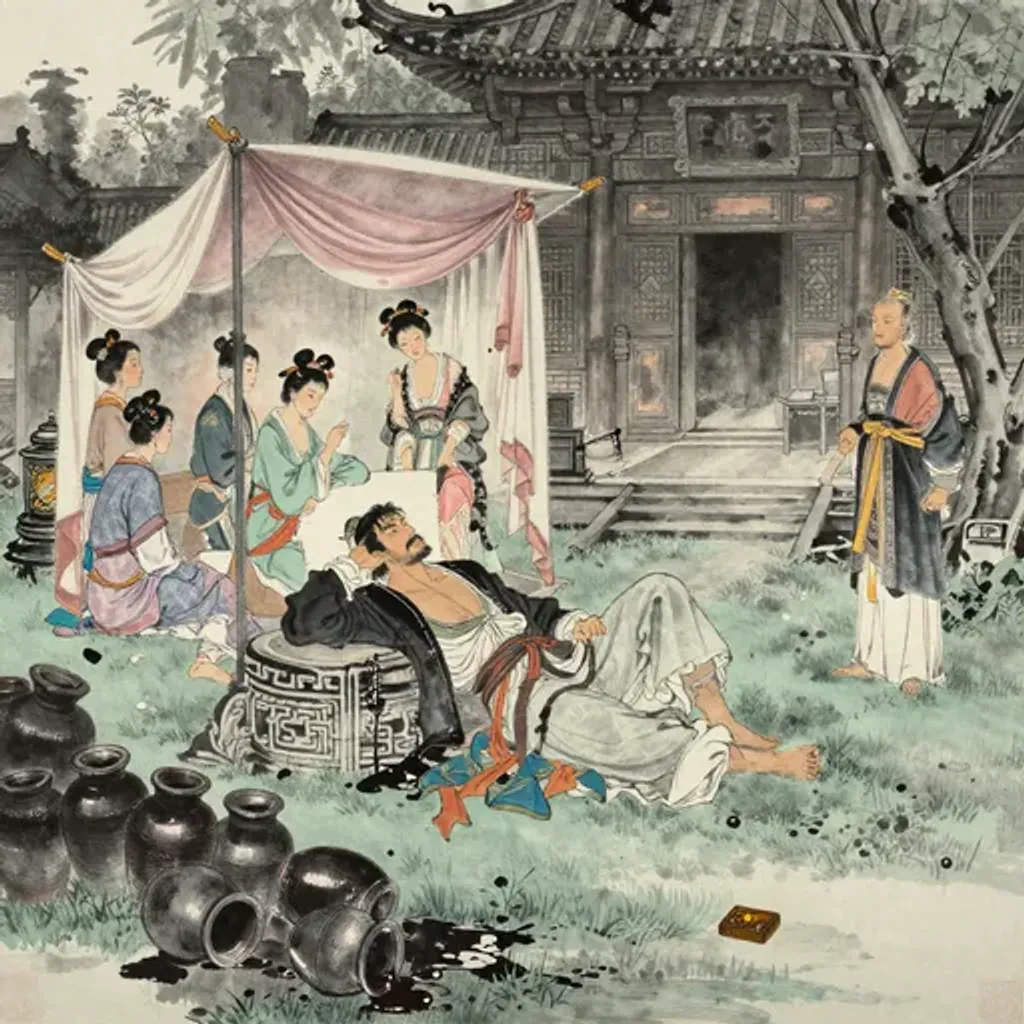
繼體守藩,縱欲廢賢。君臣淫遊,夏氏失身。側室之門,福祿來存。
Inheriting the domain, guarding the fief; indulging desire, discarding the worthy. Lord and ministers wander in excess; the house of Xia loses itself. From the side chamber's door; blessings and fortune still endure.
— Jiao Yanshou, Yilin (Forest of Changes), 1st century BC
Commentary
Fire above the lake, and a successor-ruler guards his domain but squanders it through indulgence, dismissing the worthy and promoting the corrupt. The verse then names the catastrophe: 'the Xia woman lost her virtue' — an allusion to Lady Xia (夏姬), the notorious beauty of Chen whose allure destroyed men and states. According to the Zuo Zhuan, the ministers Kong Ning and Yi Xingfu both carried on affairs with her, leading to Duke Ling of Chen's assassination. Yet the verse closes with an unexpected turn: through the side-chamber door, fortune and prosperity arrive. From Opposition to Gathering, the lake rests upon the earth, and the gentleman prepares weapons against the unforeseen. The transformation warns that when pleasure corrupts the main hall, survival may come only through the back entrance.
睽 → 升
Hexagram 38 → Hexagram 46: Pushing Upward
Changing lines: 1, 3, 4, 6
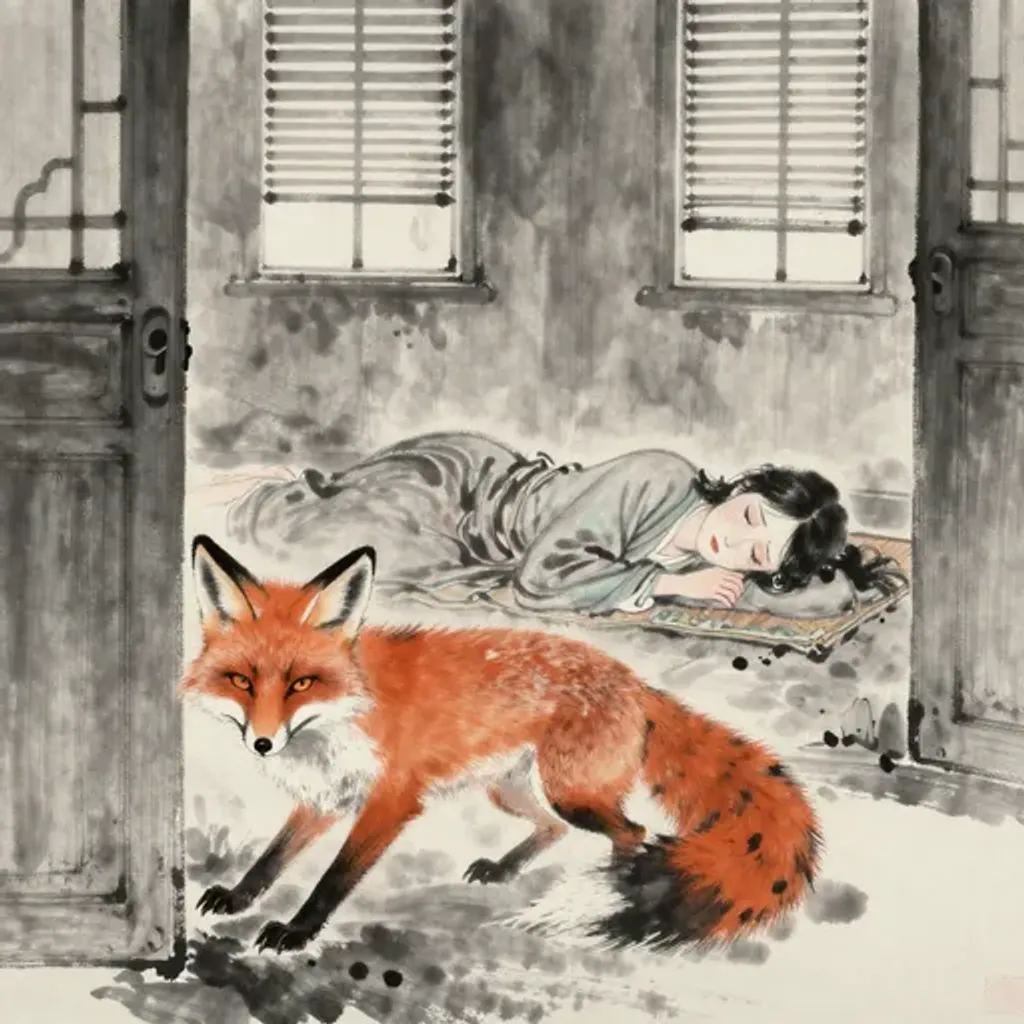
老狐屈尾,東西為鬼。病我長女,坐涕詘指。或西或東,大華易誘。
The old fox curls its tail; east and west it becomes a ghost. It sickens my eldest daughter; she sits weeping, bending her fingers. Wandering west or east; the great flower is easily enticed.
— Jiao Yanshou, Yilin (Forest of Changes), 1st century BC
Commentary
Fire above the lake, and an old fox curls its tail, wandering east and west as a ghost. It afflicts the eldest daughter with illness, leaving her weeping and wringing her fingers. The fox drifts westward then eastward, easily swayed and impossible to pin down — its restless haunting embodies Opposition's inability to settle. The 'great Hua' mentioned may refer to Mount Hua or a figure of allure who tempts one astray. From Opposition to Pushing Upward, wood grows within the earth, rising incrementally through steady accumulation. The transformation from spectral wandering to organic growth suggests that the fox's aimless drifting can only be cured by rooting oneself in one place and growing slowly upward — patient, vertical, committed to the ground beneath.
睽 → 困
Hexagram 38 → Hexagram 47: Oppression
Changing lines: 1, 5, 6
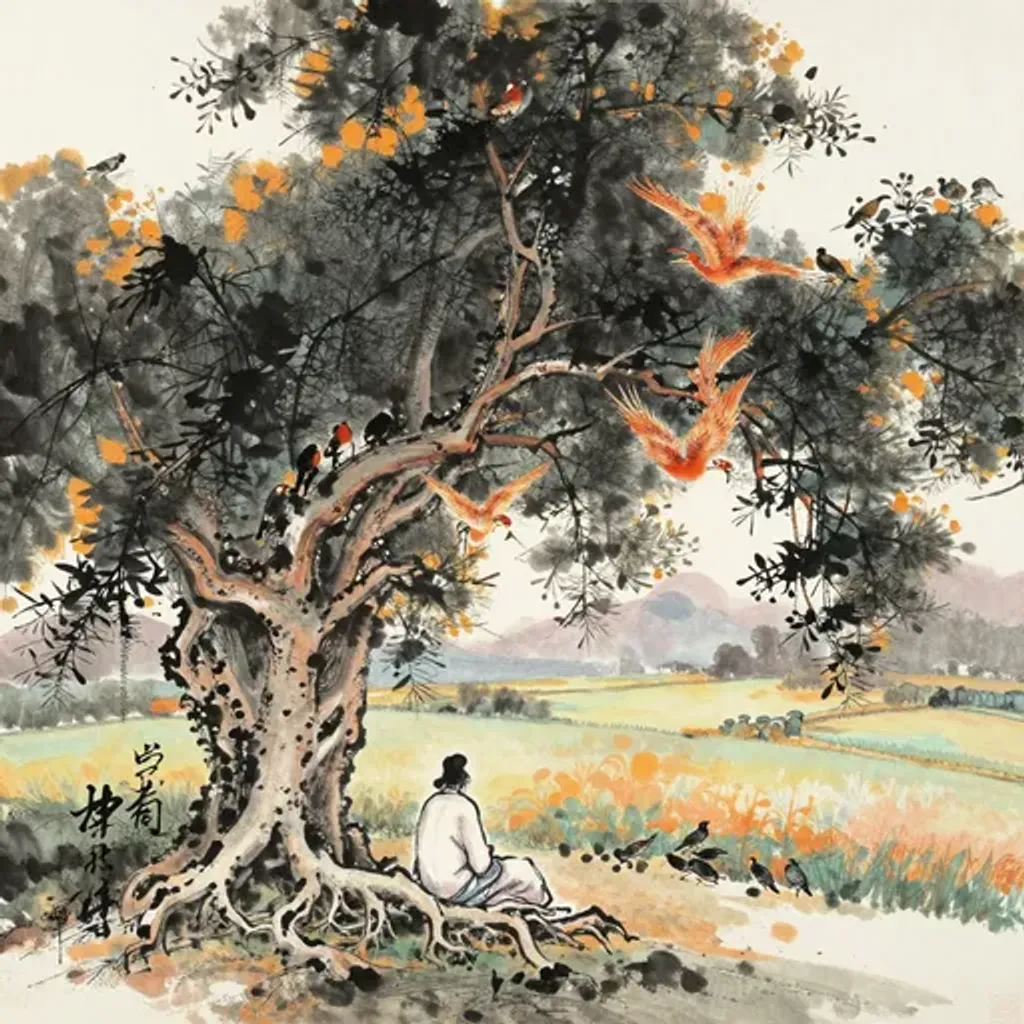
大樹之子,百條共母。當夏六月,枝葉盛茂。鸞鳳以庇,召伯避暑。穉穉卭甚,各得其所。
Children of the great tree; a hundred branches share one mother. In the height of summer, the sixth month; boughs and leaves flourish thick. Phoenix and simurgh find shelter; the Duke of Shao escapes the heat. The tender young ones struggle; yet each finds its place.
— Jiao Yanshou, Yilin (Forest of Changes), 1st century BC
Commentary
Fire above the lake, yet a great tree shelters all beneath its canopy. A hundred branches share a single mother-trunk. In the height of summer's sixth month, the foliage is lush and dense. Phoenixes and luan-birds take shelter in its shade, and the Duke of Shao rests from the heat beneath it — an allusion to the Shijing ode 'Gan Tang,' celebrating the Duke of Shao who administered justice under a sweet pear tree. Even the youngest and most vulnerable find their place. From Opposition to Oppression, the lake drains its water and the gentleman stakes his life to fulfill his purpose. The transformation reveals a paradox: the sheltering tree that resolves estrangement grows from the same pattern that, carried further, becomes the leafless lake of Oppression — abundance and depletion share a single root.
睽 → 井
Hexagram 38 → Hexagram 48: The Well
Changing lines: 1, 3, 4, 5, 6
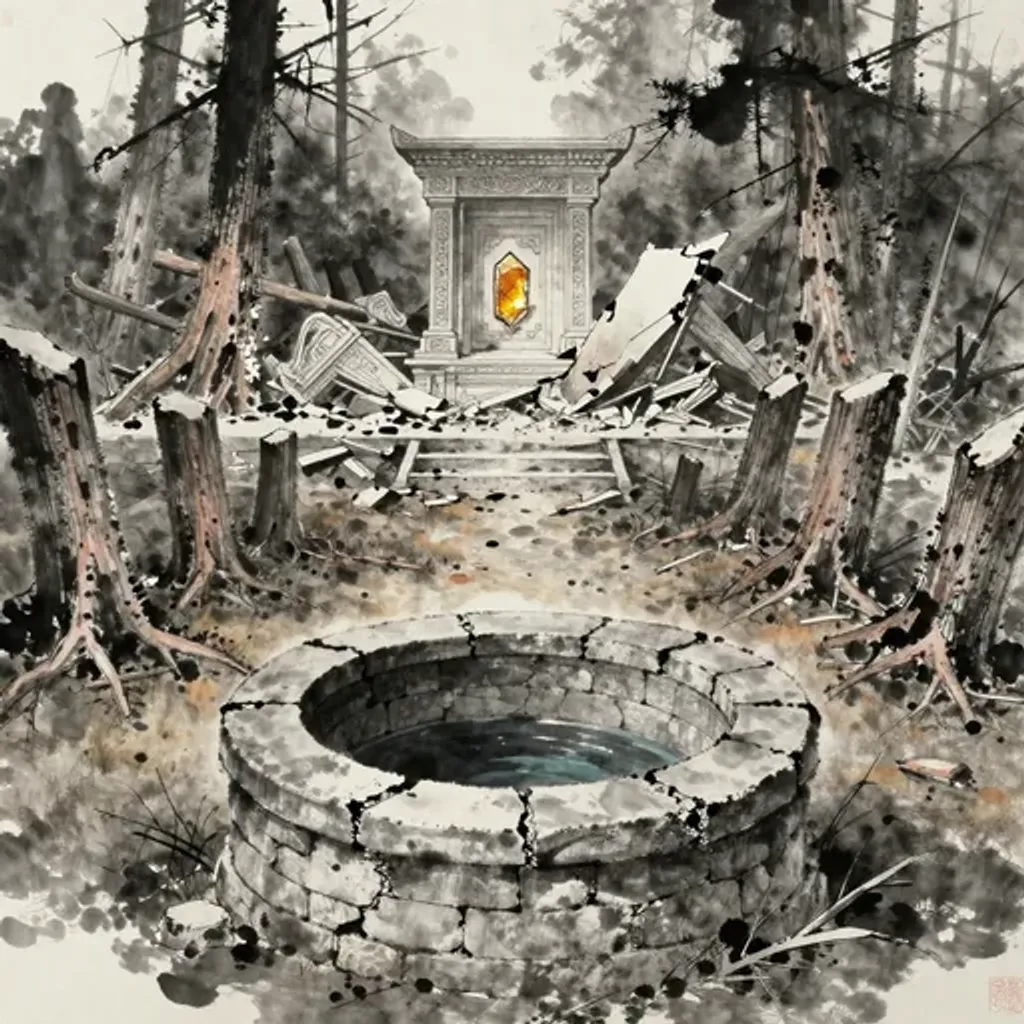
井堙木刊,國多暴殘。秦王失戍,壞其太壇。
The well is choked, the trees are felled; the state is full of violence and ruin. The King of Qin lost his garrison; his great altar was destroyed.
— Jiao Yanshou, Yilin (Forest of Changes), 1st century BC
Commentary
Fire above the lake, and the infrastructure of civilization collapses. Wells are choked with debris, trees are felled to stumps, and the land is overrun by violence and cruelty. A king of Qin loses his garrison, and the great altar — the foundation of political and spiritual legitimacy — is destroyed. The well in the Yijing is the image of communal sustenance that serves all equally; when it is silted up and the timber cut, the community's lifeline is severed. From Opposition to The Well, water rises above the wood as the gentleman encourages the people through shared labor. The transformation from ruined well to functioning well is a call to restoration: the choked infrastructure must be dredged and rebuilt through collective effort, for the well cannot be moved — only renewed.
睽 → 革
Hexagram 38 → Hexagram 49: Revolution
Changing lines: 2, 3, 5, 6
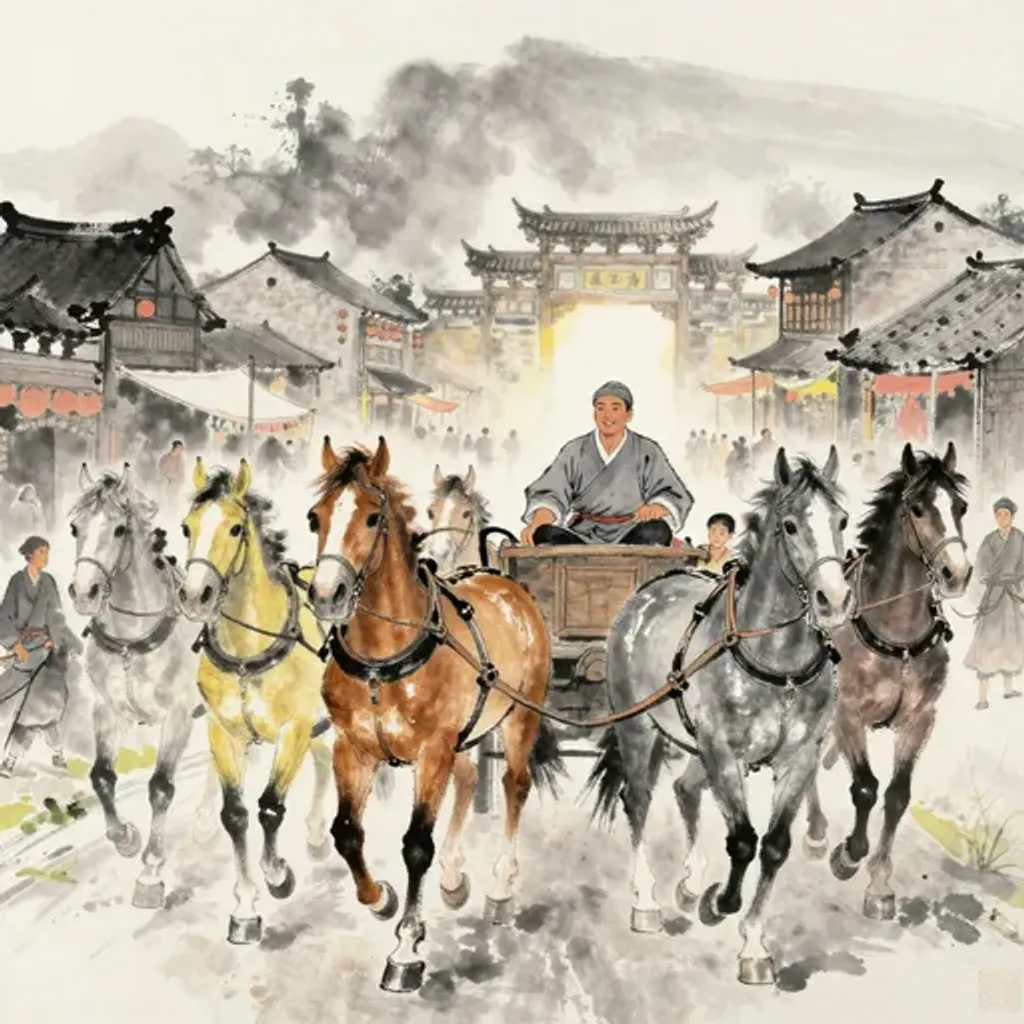
駕黃買蒼,與利相迎。心獲所守,不累弟兄。
Harnessing the yellow, buying the grey; meeting profit on the way. The heart finds what it guards; not encumbering brothers.
— Jiao Yanshou, Yilin (Forest of Changes), 1st century BC
Commentary
Fire above the lake, and a merchant harnesses yellow horses to a chariot, setting out to purchase fine stock — perhaps blue-grey horses or simply good merchandise. Profit comes to meet him on the road. The heart finds what it seeks to hold, and no burden falls upon brothers or kin. This is a verse of clean transaction: desire aligns with opportunity, and the gain enriches without entangling. The family is left unencumbered because the venture stands on its own merit. From Opposition to Revolution, fire blazes within the lake, and the gentleman reforms the calendar to clarify the seasons. The transformation from successful commerce to fundamental change suggests that once the right exchange is made, one can restructure the very framework of time and order.
睽 → 鼎
Hexagram 38 → Hexagram 50: The Cauldron
Changing lines: 1, 3
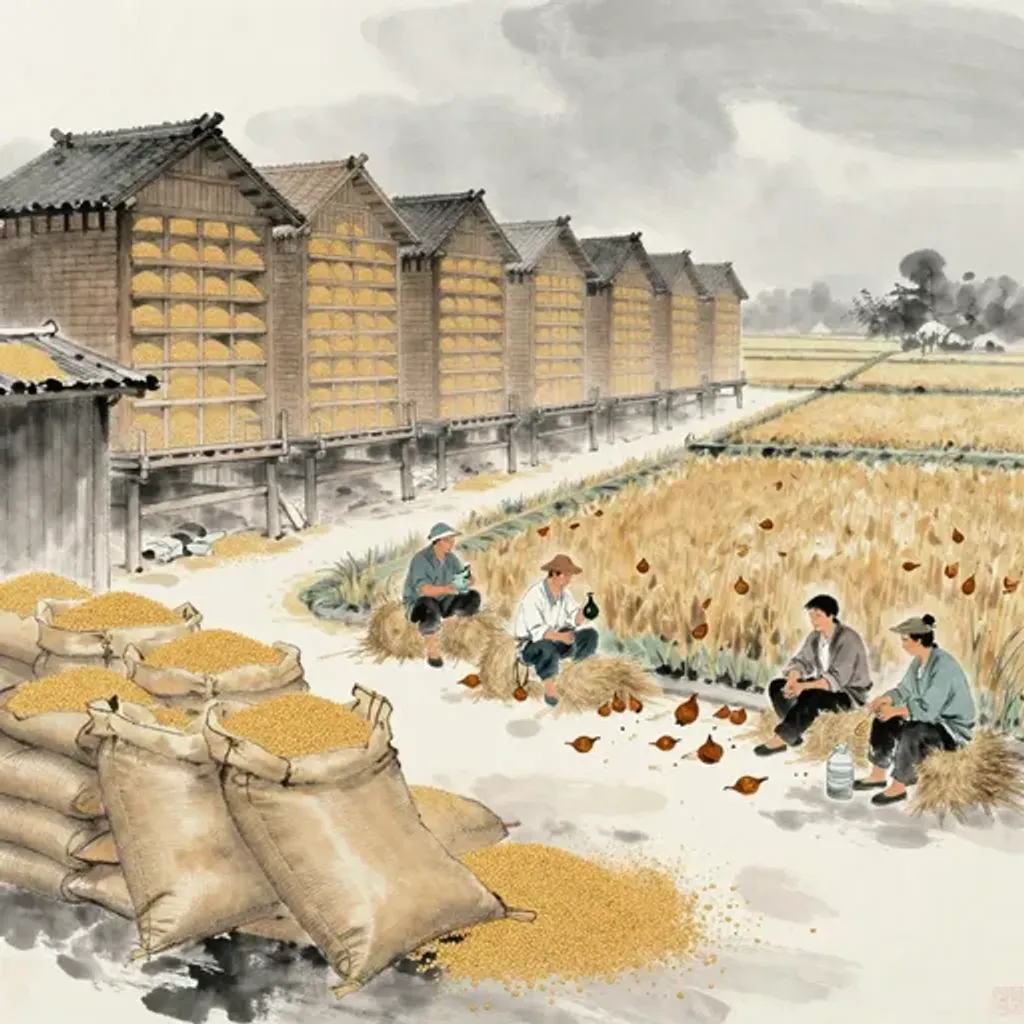
庾億倉盈,年歲安寧,稼穡熟成。
Stores in the billions, granaries brimming; the year is peaceful and calm. The grain and harvest ripen to completion.
— Jiao Yanshou, Yilin (Forest of Changes), 1st century BC
Commentary
Fire above the lake, estranged forces, yet the verse sings of nothing but abundance. Granaries overflow with billions of measures, the year passes in tranquility, and crops ripen to full maturity. This verse nearly mirrors 38→38 (granaries overflowing, grain suitable for planting), but here the transformation changes: the harvest is not merely stored but ritually consecrated. From Opposition to The Cauldron, fire blazes above wood as the gentleman takes his proper position and solidifies his mandate. The cauldron transforms raw offerings into sacred nourishment — it does not merely accumulate wealth but refines it into something fit for heaven. The shift from estrangement to consecration reveals that true prosperity becomes meaningful only when it is offered upward, transmuted from material surplus into spiritual sustenance.
睽 → 震
Hexagram 38 → Hexagram 51: The Arousing Thunder
Changing lines: 2, 6
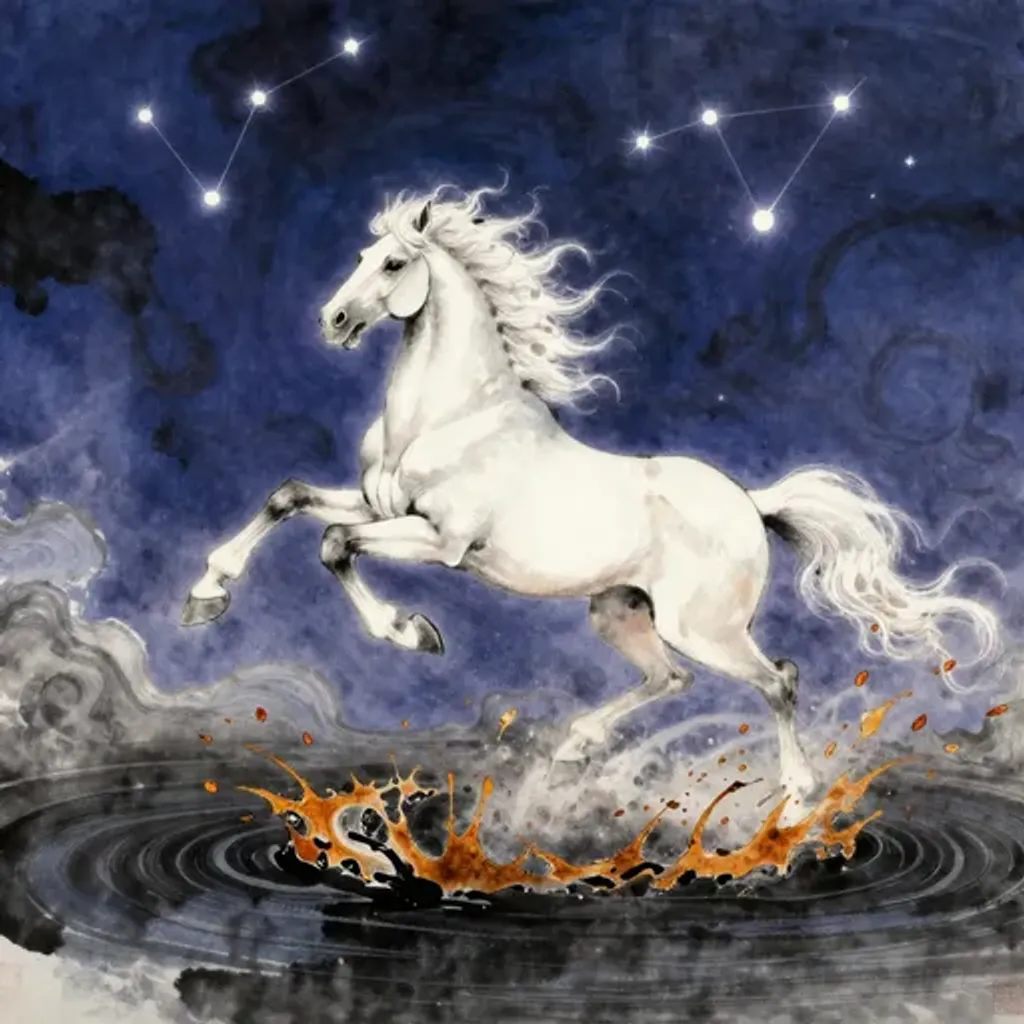
人生馬淵,壽老且神。飛騰上天,舍宿軒轅,居常樂安。
Born of a human, emerging from Ma Yuan; long-lived, aged, and divine. Flying and soaring to heaven; lodging with Xuanyuan. Dwelling in constancy, joyful and at peace.
— Jiao Yanshou, Yilin (Forest of Changes), 1st century BC
Commentary
Fire above the lake, and from this tension a being of extraordinary destiny emerges. Born in a horse-abyss — a name evoking the Dragon Pool — this figure achieves great longevity and spiritual transcendence. Flying and soaring, it ascends to heaven and lodges among the stars near the Xuanyuan constellation, dwelling in eternal ease. The 'horse-abyss' birth recalls legends of dragon-horses emerging from sacred waters, while Xuanyuan is the star associated with the Yellow Emperor. From Opposition to The Arousing, doubled thunder shakes the world, and the gentleman cultivates self-reflection through reverent fear. The transformation from celestial flight to thunderous awakening suggests that the transcendence described is not passive escape but dynamic arousal — the thunder that startles the world into awareness.
睽 → 艮
Hexagram 38 → Hexagram 52: Keeping Still Mountain
Changing lines: 1, 2, 3, 4
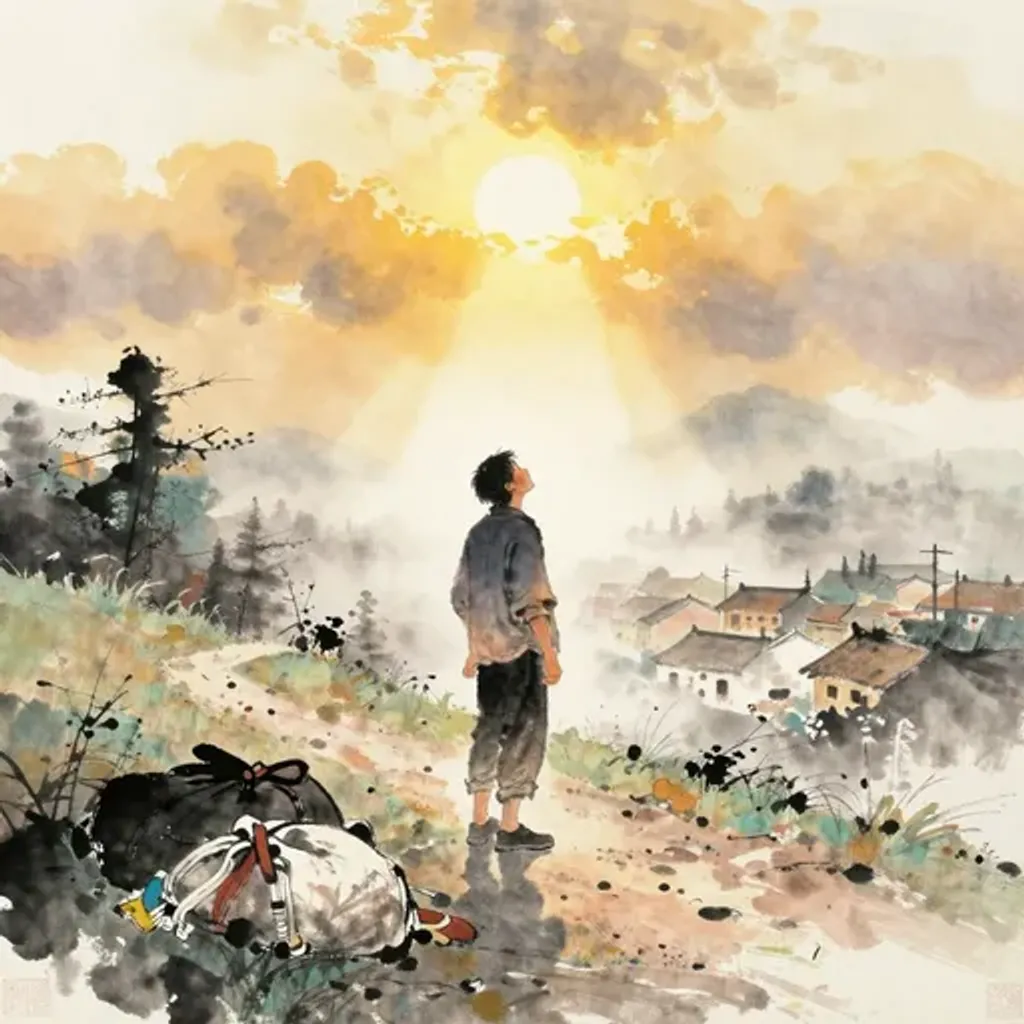
思顧所之,乃令逢時。洗我故憂,拜我歡來。
Thinking carefully on where to go; and so he meets the right time. Washing away old sorrows; bowing as joy arrives.
— Jiao Yanshou, Yilin (Forest of Changes), 1st century BC
Commentary
Fire above the lake, and a thoughtful pause yields perfect timing. Reflecting on where to go, one finds the moment ripe — an encounter with timeliness itself. Old worries are washed clean, and joy comes bowing in to take their place. The verse traces a brief inner journey: from anxious deliberation to serendipitous alignment, from accumulated sorrow to its ritual cleansing. 'Washing away old worries' suggests a purification rite, while 'bowing to welcome joy' implies that happiness arrives with the formality of a guest properly received. From Opposition to Keeping Still, twin mountains stand in meditative silence, and the gentleman's thoughts do not stray beyond his position. The transformation from restless seeking to perfect stillness reveals that the right moment finds you when you stop chasing it.
睽 → 漸
Hexagram 38 → Hexagram 53: Development
Changing lines: 1, 2, 3, 4, 5
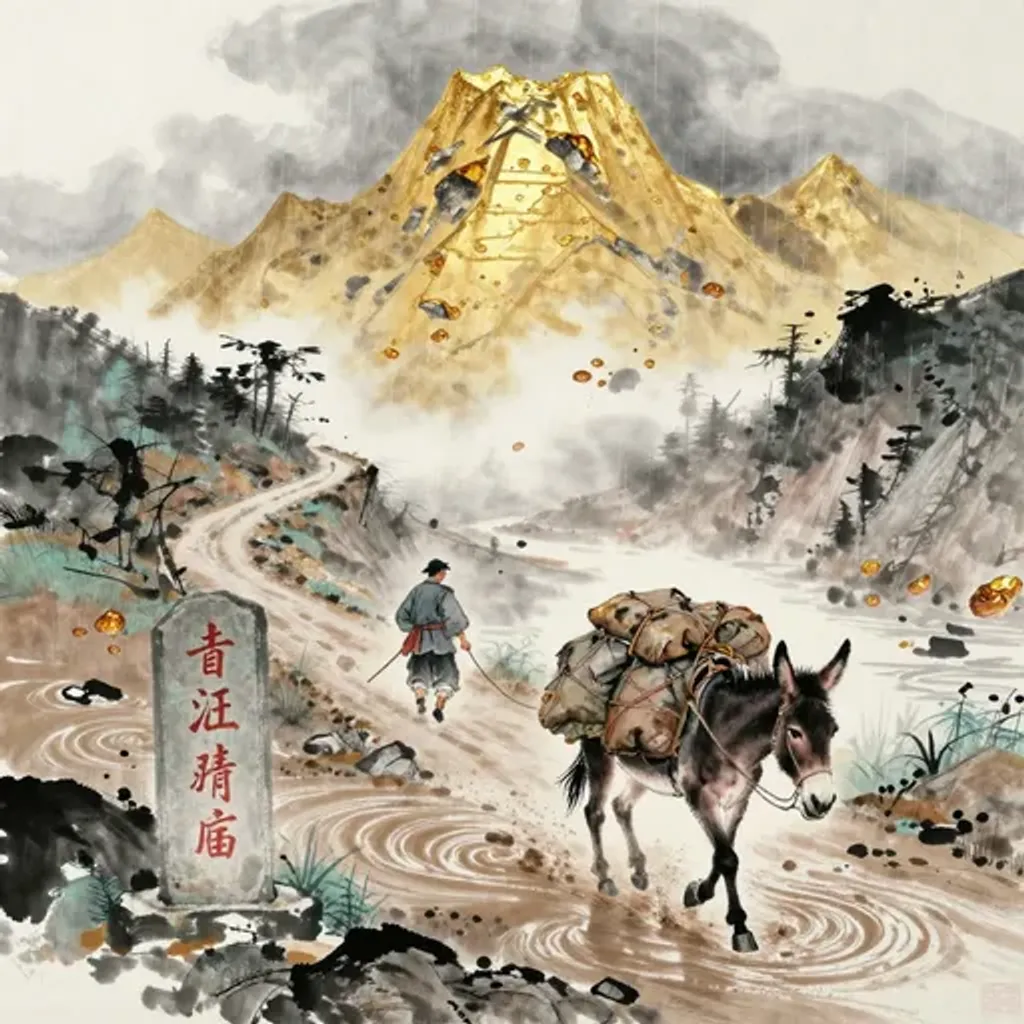
魁罡所當,初為敗殃。君子留連,困於水漿。求金東山,利在代鄉。賈市有息,子載母行。
Where the Dipper and the Great Ridge point; first comes ruin and disaster. The gentleman lingers and delays; troubled by want of provisions. Seeking gold at the eastern mountain; profit lies in the land of Dai. Trading brings increase; the child carries on while the mother goes forth.
— Jiao Yanshou, Yilin (Forest of Changes), 1st century BC
Commentary
Fire above the lake, and the stars impose an inauspicious beginning. The Dipper's handle and the Great Ridge star bring initial defeat and calamity. A gentleman lingers in difficulty, stranded without even water to drink. Yet the verse pivots: seek gold at the Eastern Mountain, where profit lies in the land of Dai. The marketplace yields returns, and the son carries on while the mother journeys forth. Category C marks this as a complex, multi-layered verse resisting neat interpretation. From Opposition to Development, trees grow slowly upon the mountain, and the gentleman cultivates virtue to improve local customs. The transformation from chaotic misfortune to gradual development counsels patience: even when the stars are hostile and the start is disastrous, slow, organic growth eventually bears fruit.
睽 → 歸妹
Hexagram 38 → Hexagram 54: The Marrying Maiden
Changing lines: 6
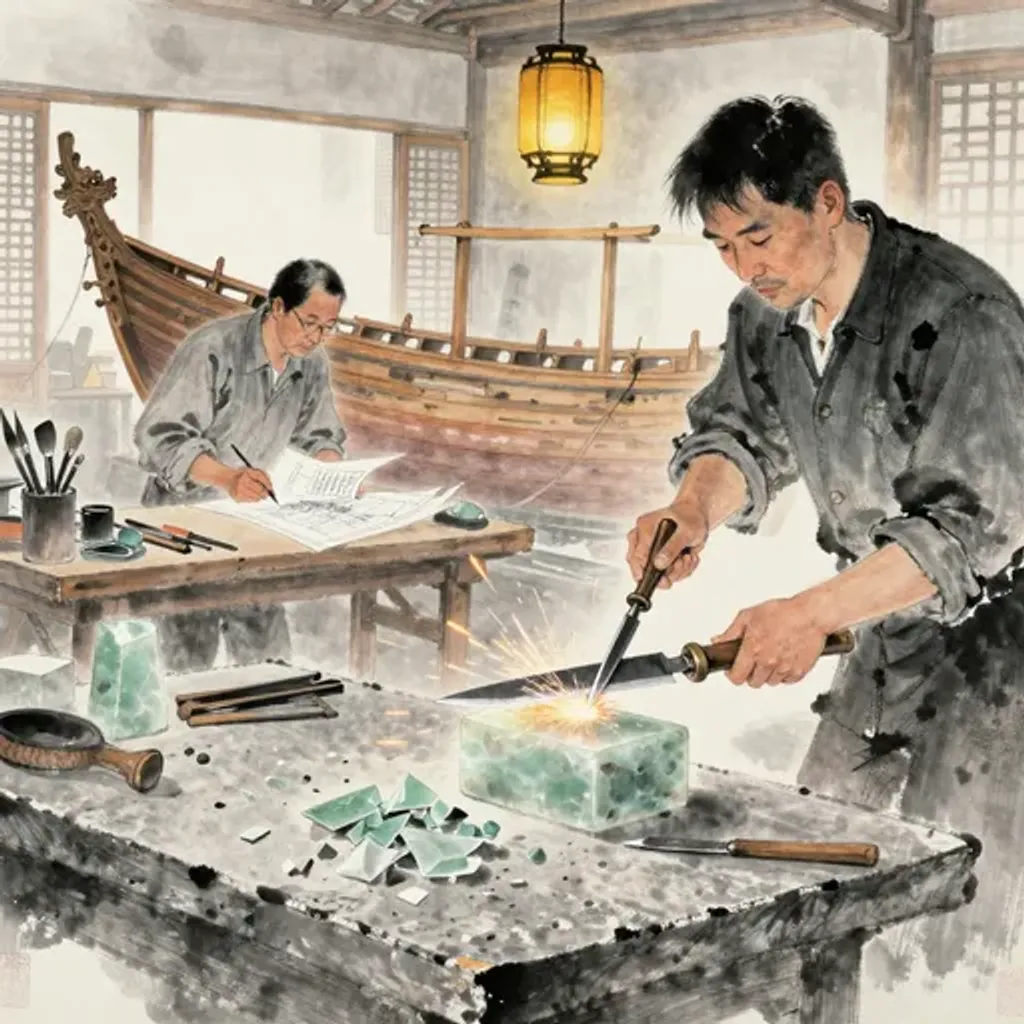
鉛刀攻玉,无不鑽鑿。龍體其舉,魯般為輔。三仁翼事,所求必喜。
A lead knife works the jade; nothing it cannot bore and carve. The dragon body shall rise; Master Lu Ban is the aide. Three sages wing the enterprise; whatever is sought must bring delight.
— Jiao Yanshou, Yilin (Forest of Changes), 1st century BC
Commentary
Fire above the lake, and even a lead knife can carve jade. The verse declares that no material is so humble it cannot accomplish great work: a blunt lead blade, given persistence, drills and chisels through the hardest stone. A dragon-bodied vessel rises with Lu Ban — the legendary master craftsman — serving as its support. The Three Benevolent Ones of Shang (Weizi, Jizi, and Bigan) lend their wings to the enterprise, and whatever is sought succeeds with delight. The 'lead knife attacking jade' is a classical metaphor for modest talent achieving great results through sheer determination. From Opposition to the Marrying Maiden, thunder stirs above the lake, and the gentleman understands endings through knowing their flaws. The transformation suggests that even imperfect instruments, properly committed, can accomplish what seems beyond their nature.
睽 → 豐
Hexagram 38 → Hexagram 55: Abundance
Changing lines: 2, 3, 6
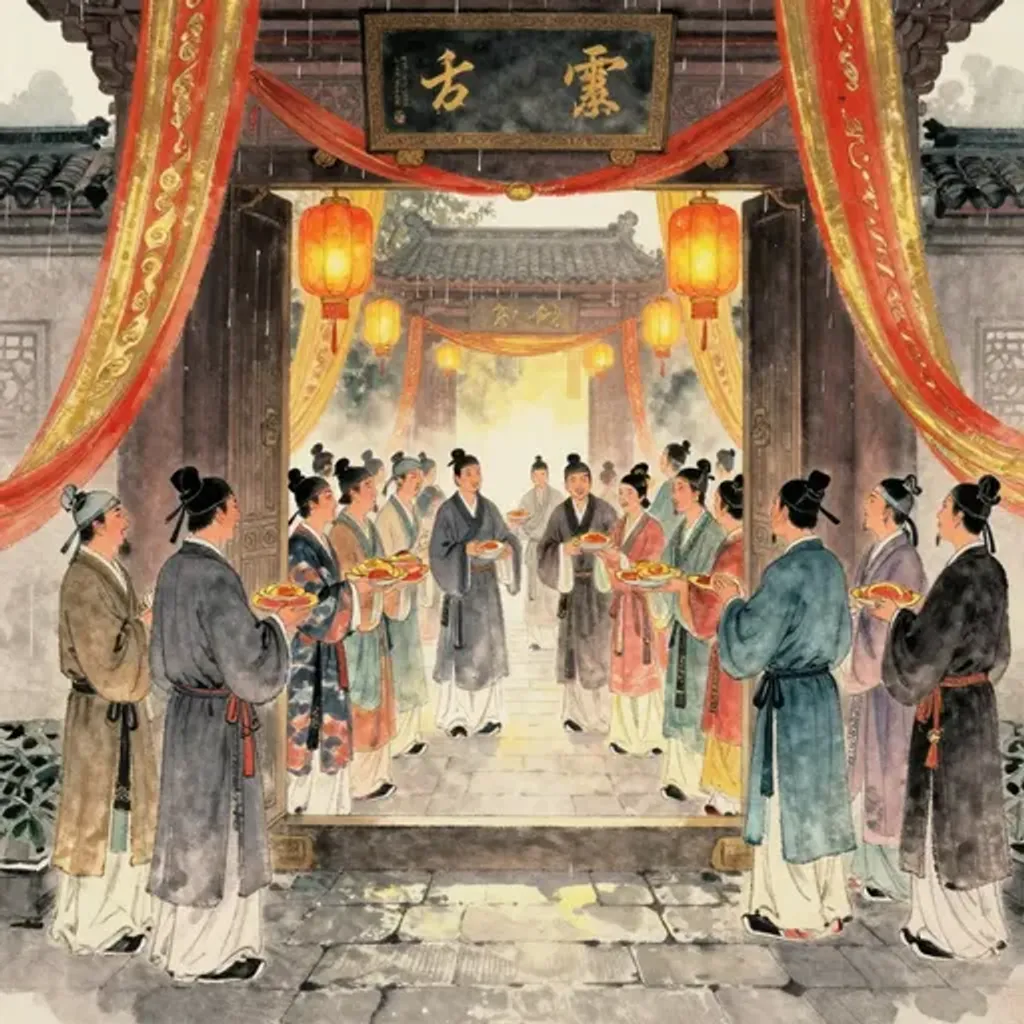
喜來如雲,舉家蒙歡。眾才君子,駕福盈門。
Joy comes like clouds; the whole house is wrapped in delight. A multitude of talented gentlemen; driving blessings through the gate.
— Jiao Yanshou, Yilin (Forest of Changes), 1st century BC
Commentary
Fire above the lake, and joy arrives like gathering clouds, enveloping the entire household in delight. Talented gentlemen of many abilities drive fortune right up to the gate — blessings so abundant they overflow the threshold. The verse radiates uncomplicated happiness: good people appear, the family celebrates, and prosperity arrives not through struggle but through the natural convergence of virtue and opportunity. There is no shadow in this poem, no hidden reversal. From Opposition to Abundance, thunder and lightning arrive together, and the gentleman renders judgments and executes punishment with decisive clarity. The transformation from communal joy to sovereign abundance reveals that when talented people gather around a worthy center, the resulting fullness carries with it the responsibility of clear governance — abundance must be administered, not merely enjoyed.
睽 → 旅
Hexagram 38 → Hexagram 56: The Wanderer
Changing lines: 1, 2, 3
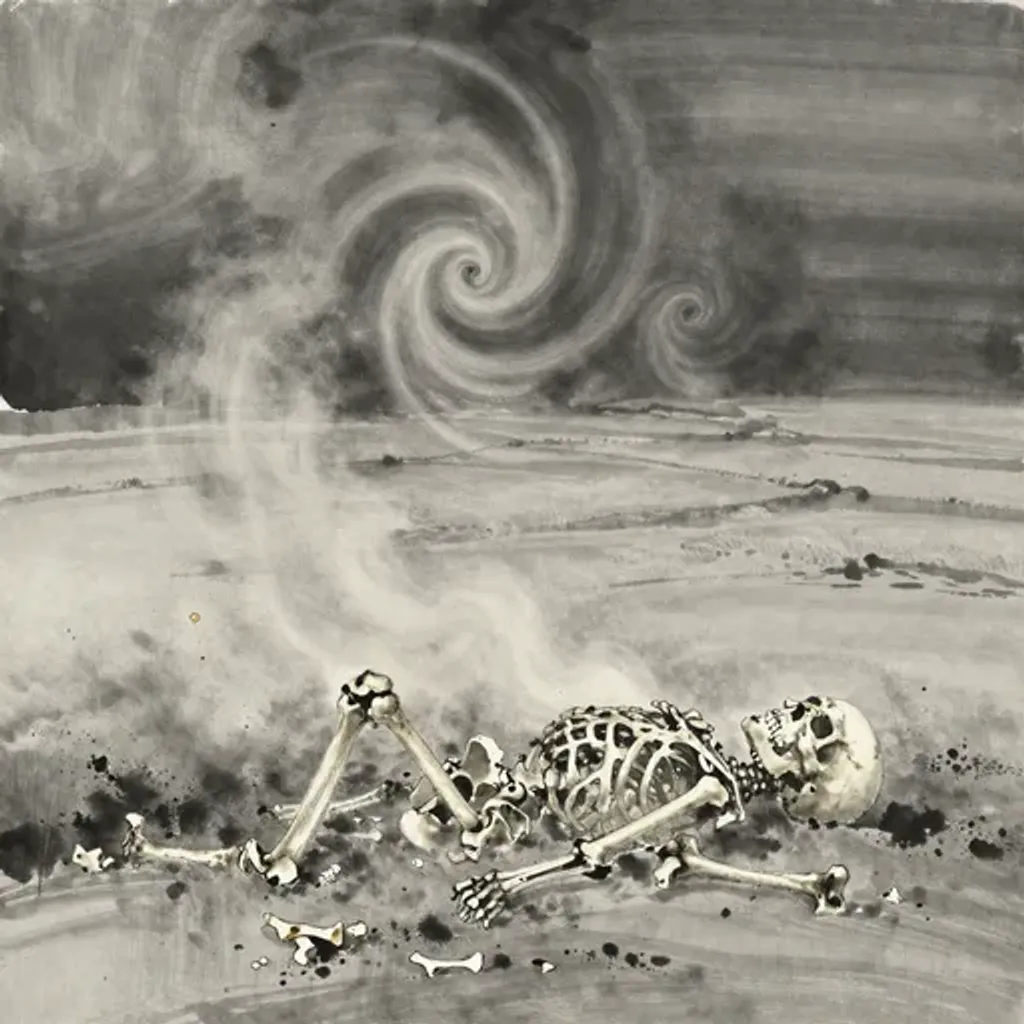
響像无形,骨體不成。微行衰索,消滅無名。
Echoes and reflections without form; flesh and bone never take shape. Faint and declining, fading away; extinguished and nameless.
— Jiao Yanshou, Yilin (Forest of Changes), 1st century BC
Commentary
Fire above the lake, and what should be visible dissolves into nothing. Echoes without form, a skeleton without flesh — the body never coalesces into anything tangible. Activity dwindles to a thread, withering and fraying, until the name itself is extinguished without trace. The verse describes a process of radical dematerialization: not destruction but non-formation, as though existence itself failed to take hold. From Opposition to The Wanderer, fire burns upon the mountain, and the gentleman applies punishments with careful clarity, never prolonging imprisonment. The transformation from formlessness to wandering suggests that what cannot take root in one place must drift — the wanderer at least has a body, however transient, while this verse depicts something that never even achieved that much.
睽 → 巽
Hexagram 38 → Hexagram 57: The Gentle Wind
Changing lines: 1, 3, 4, 5
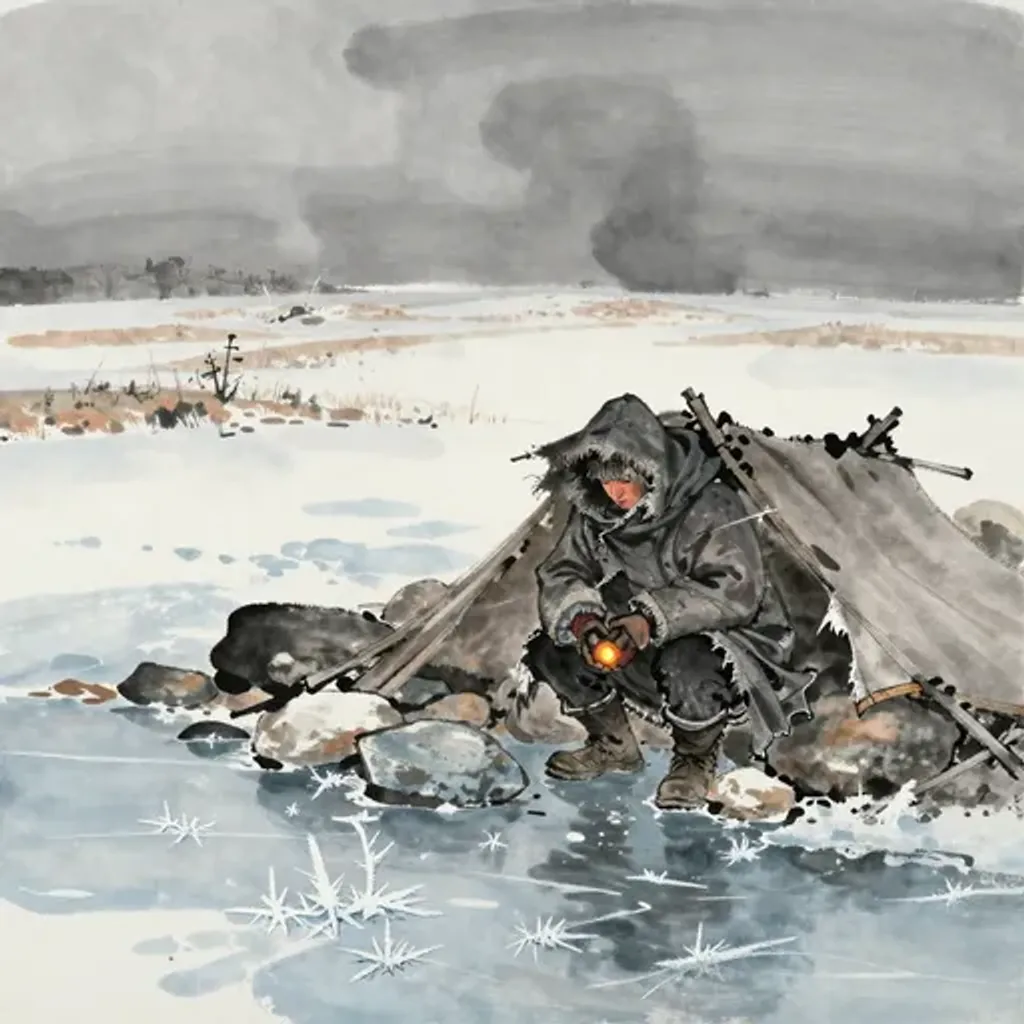
積水不溫,北陸苦寒。露宿多風,君子傷心。
Stagnant water gives no warmth; the northern lands are bitterly cold. Sleeping exposed to wind; the gentleman is pained at heart.
— Jiao Yanshou, Yilin (Forest of Changes), 1st century BC
Commentary
Fire above the lake, yet all warmth has been leached away. Stagnant water refuses to warm; the northern continent is locked in bitter cold. One sleeps in the open, battered by wind, and the gentleman's heart aches with sorrow. The verse systematically cancels every comfort: water that should sustain is frigid, shelter is absent, wind assaults the exposed sleeper, and even the 'gentleman' — the ideal figure of composure — cannot maintain his equanimity. From Opposition to The Gentle, doubled wind, the gentleman issues commands and carries out affairs. The transformation from frozen exposure to penetrating wind suggests that the Gentle's soft persistence can eventually permeate even frozen terrain — but only if one survives the night. The cold here is existential, not seasonal.
睽 → 兌
Hexagram 38 → Hexagram 58: The Joyous Lake
Changing lines: 5, 6
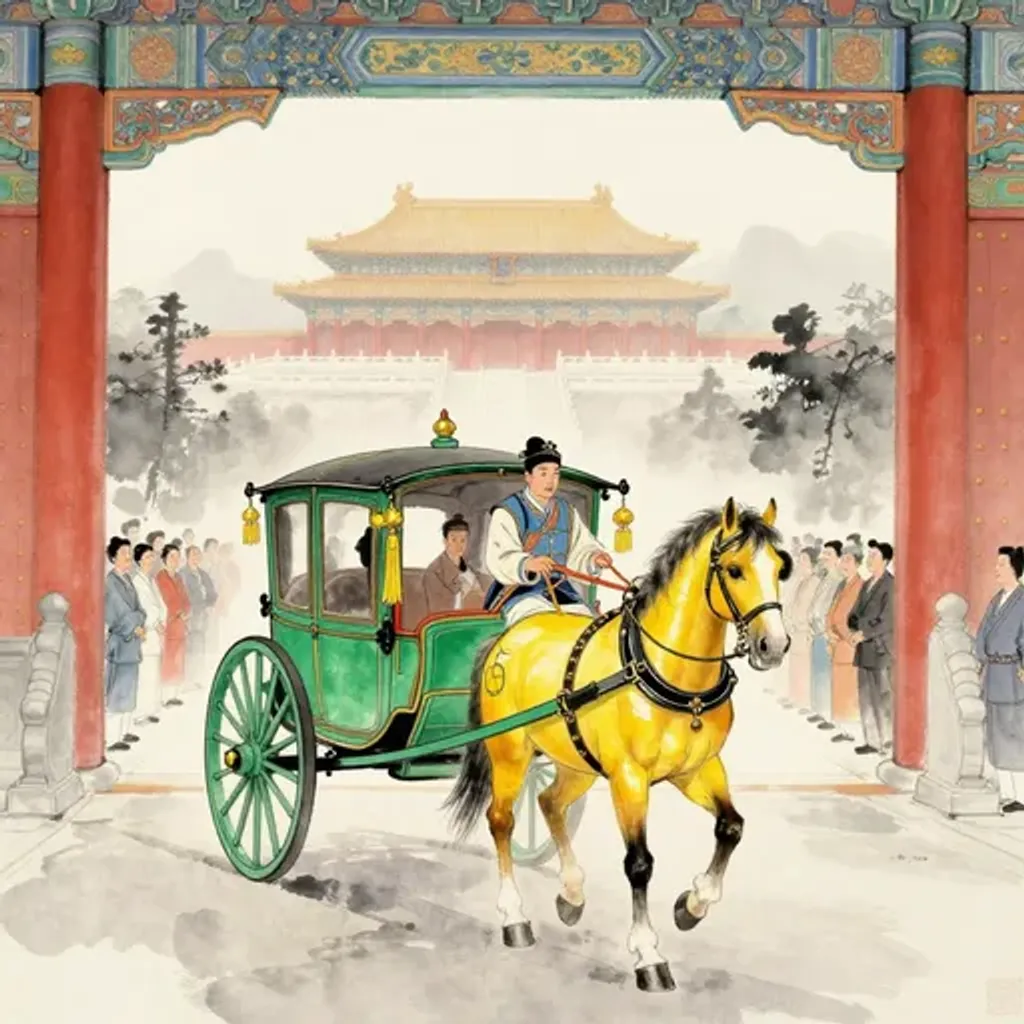
黃馬綠車,駕之大都。讚達才能,使我无憂。
Yellow horse, green carriage; driving to the great capital. Praising and advancing talent; making me free of worry.
— Jiao Yanshou, Yilin (Forest of Changes), 1st century BC
Commentary
Fire above the lake, and a yellow horse draws a green carriage toward the great capital. Talent is commended and ability is recognized, dispelling all worry. The verse is a portrait of successful advancement: the colors yellow and green — earthy and vital — signal proper alignment with the natural order, while the 'great capital' implies arrival at the center of power. Someone's abilities have been praised and promoted, their merit acknowledged at the highest level. From Opposition to The Joyous, twin lakes reflect each other, and the gentleman gathers with friends for mutual learning and discussion. The transformation from solitary journey to shared joy reveals that the truest reward of recognition is not isolated glory but the fellowship it makes possible — the joyous exchange between equals.
睽 → 渙
Hexagram 38 → Hexagram 59: Dispersion
Changing lines: 1, 4, 5
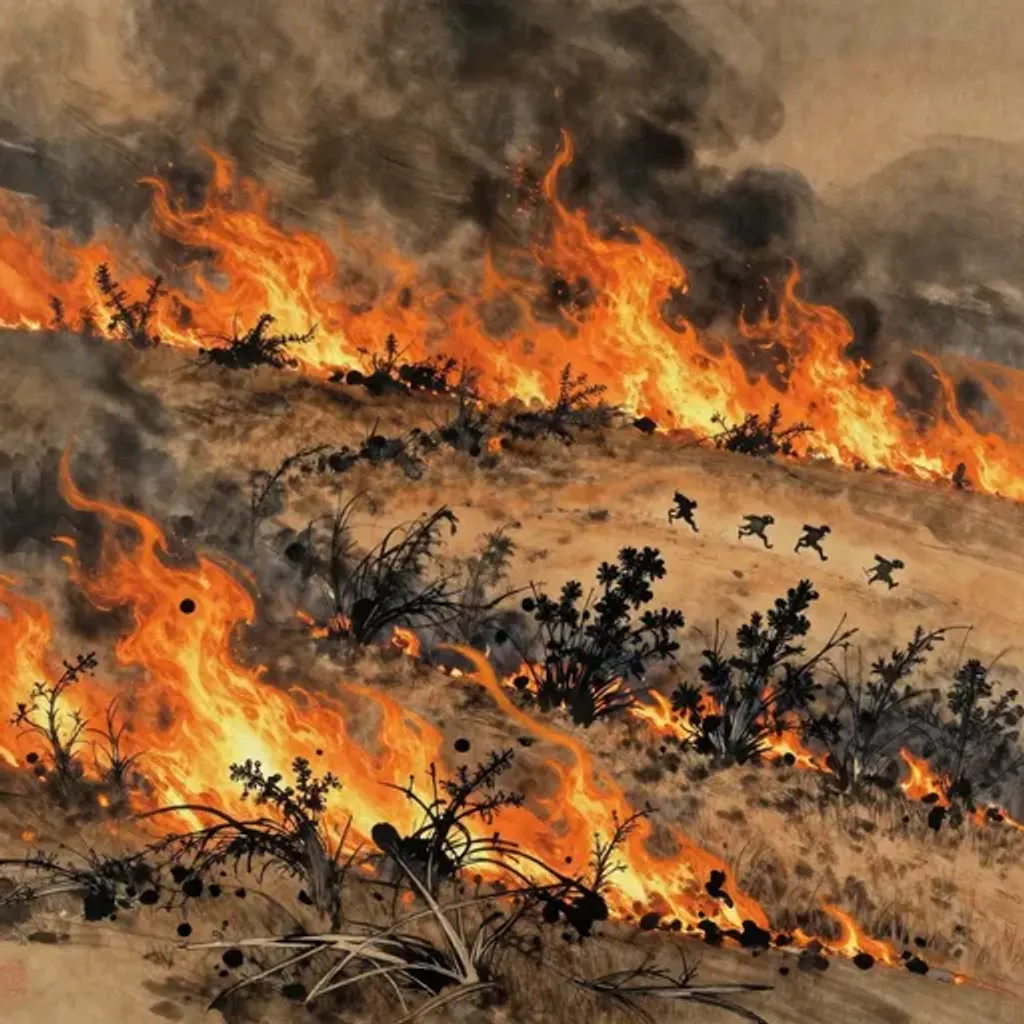
從風放火,艾芝俱死。三害集聚,十子患傷。
Following the wind, setting fire; wormwood and angelica alike perish. Three harms gather together; ten children are wounded and hurt.
— Jiao Yanshou, Yilin (Forest of Changes), 1st century BC
Commentary
Fire above the lake, and wind-driven fire destroys without discrimination. Mugwort and magical lingzhi alike perish in the blaze — the worthless and the precious burn together indiscriminately. Three calamities converge, and ten children are wounded and afflicted. The verse depicts catastrophe as radically egalitarian: fire does not sort the sacred from the common, the artemisia from the mushroom of immortality. When wind feeds flame, everything in its path is consumed regardless of value. From Opposition to Dispersion, wind sweeps across water, scattering what was gathered. The transformation from indiscriminate destruction to intentional dispersal suggests that dissolution can be either catastrophic or ritual — the ancient kings offered sacrifices and established temples to channel dispersive forces toward renewal rather than ruin.
睽 → 節
Hexagram 38 → Hexagram 60: Limitation
Changing lines: 4, 5, 6
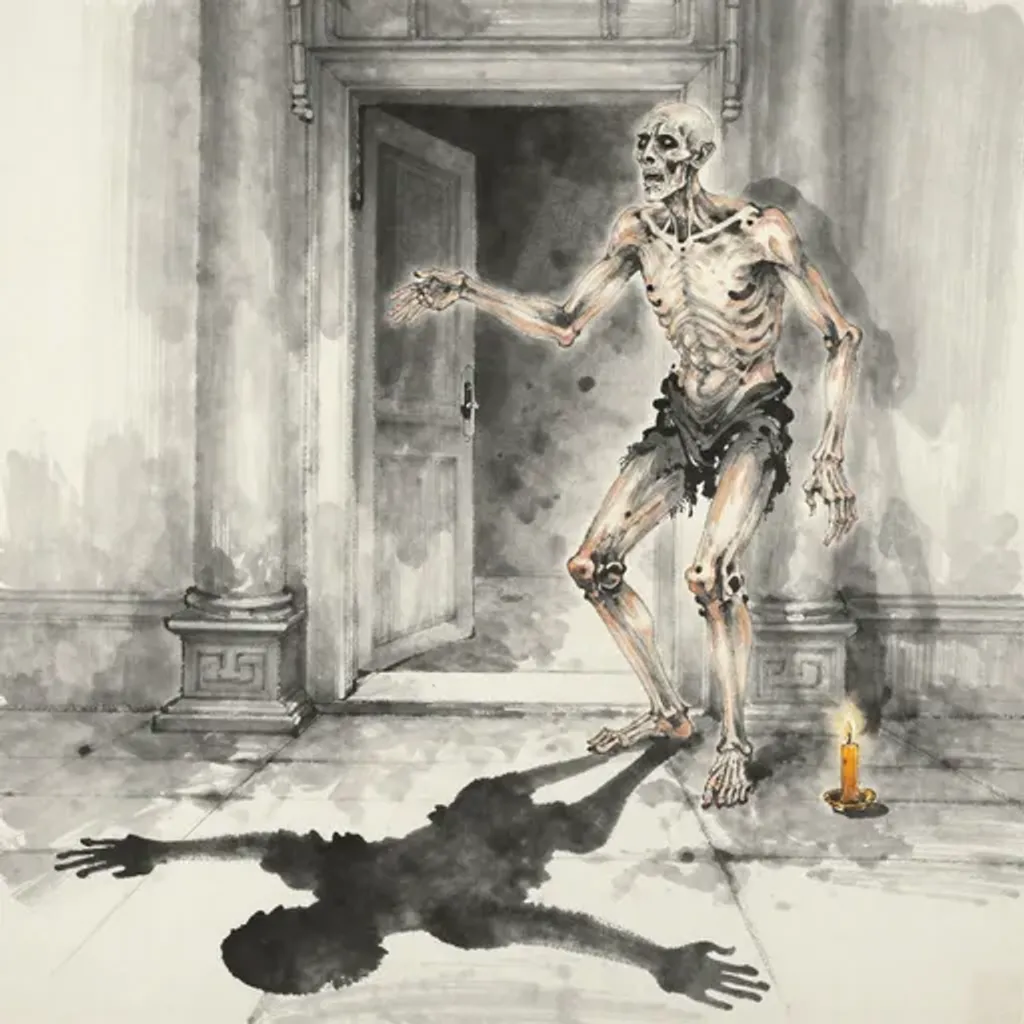
一身三手,无益於輔。兩足共節,不能克敏。
One body with three hands; no help for its support. Two feet sharing one joint; unable to be nimble.
— Jiao Yanshou, Yilin (Forest of Changes), 1st century BC
Commentary
Fire above the lake, and the body itself embodies contradiction. One torso with three hands offers no additional help — the extra limbs get in each other's way rather than assisting. Two feet sharing a single joint cannot move with agility. The verse uses anatomical absurdity to illustrate the futility of excess without coordination: more hands do not mean more capability when they lack a unified purpose, and joined feet cannot walk faster than separated ones. From Opposition to Limitation, water stands above the lake, and the gentleman establishes measures and deliberates on proper conduct. The transformation from grotesque excess to measured restraint suggests that the solution to Opposition's dysfunction is not accumulation but discipline — defining limits, setting boundaries, and accepting that less, properly organized, accomplishes more.
睽 → 中孚
Hexagram 38 → Hexagram 61: Inner Truth
Changing lines: 4, 5
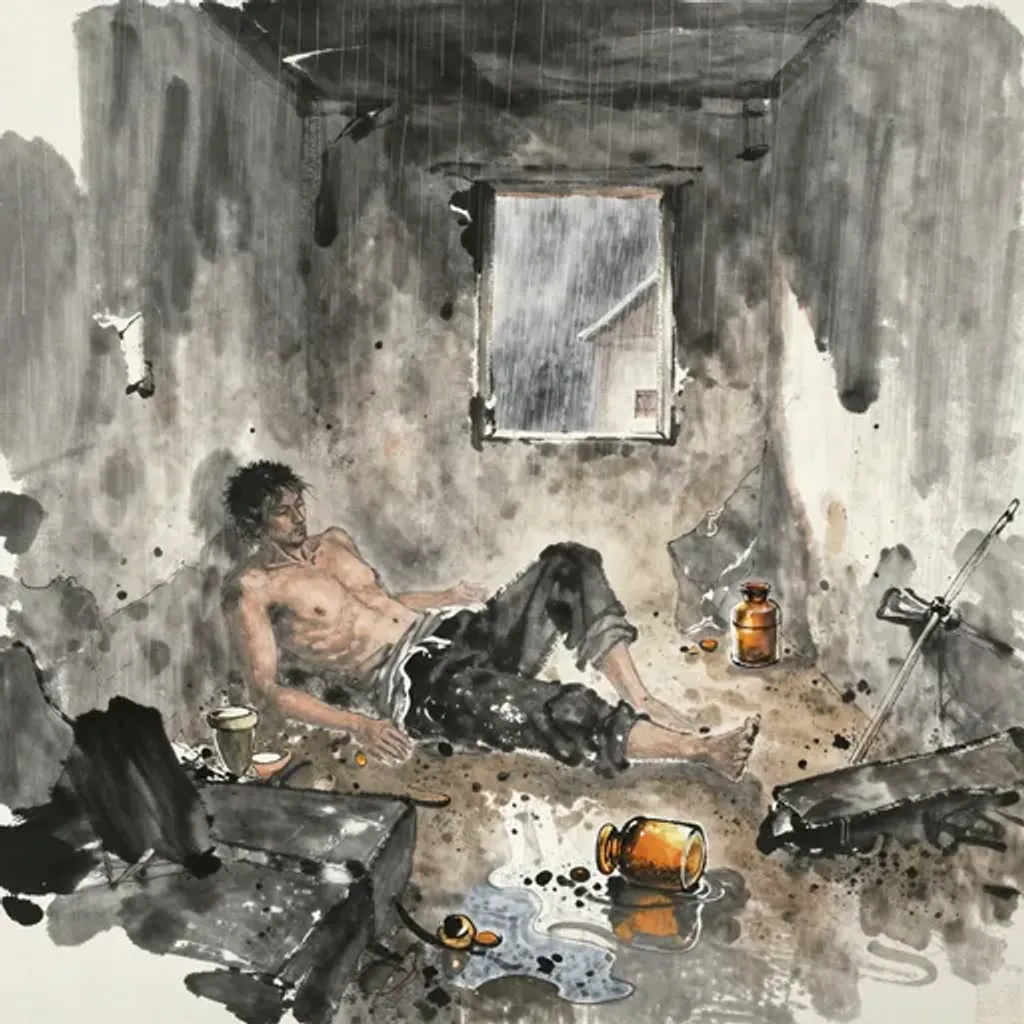
南向一室,風雨並入。塵埃積濕,主毋盲痺,偏枯心疾,亂我家資。
A south-facing room; wind and rain pour in together. Dust and grime collect in the damp; the master suffers blindness and paralysis, half the body withered. A sickness of the heart; it disorders my household's resources.
— Jiao Yanshou, Yilin (Forest of Changes), 1st century BC
Commentary
Fire above the lake, and a south-facing room is invaded by both wind and rain simultaneously. Dust and damp accumulate together, causing the mistress of the house to fall ill with blindness and paralysis — body half-withered, heart afflicted — while the family's wealth is thrown into disorder. The south-facing room should be the most auspicious position in Chinese geomancy, yet here it admits every destructive force at once. When the most protected space is breached, nothing remains secure. From Opposition to Inner Truth, wind moves above the lake, and the gentleman deliberates cases and stays executions. The transformation from violated sanctuary to inner truth suggests that when external defenses fail, the only remaining refuge is the sincerity within — but this verse's occupant has already been broken in both body and spirit.
睽 → 小過
Hexagram 38 → Hexagram 62: Small Exceeding
Changing lines: 1, 2, 3, 6
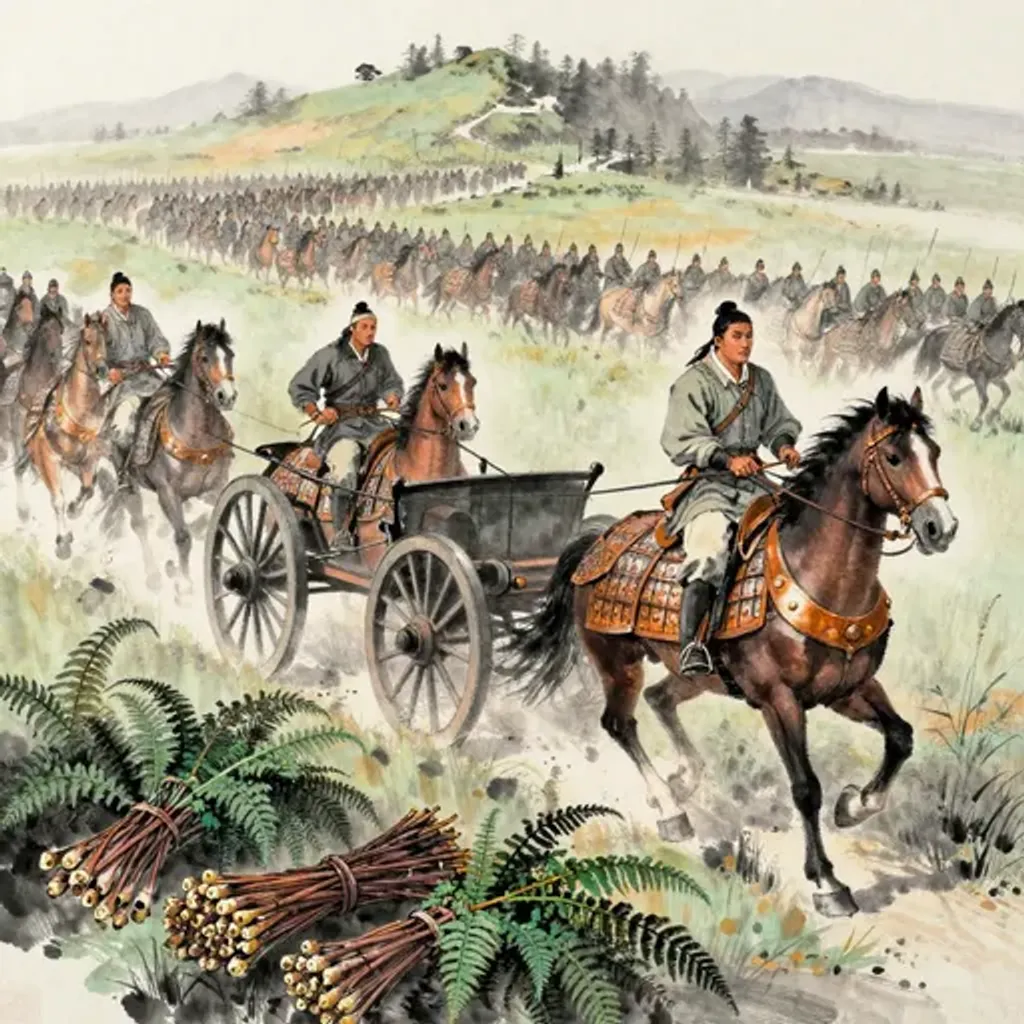
采薇出車,魚麗思初。上下促急,君子懷憂。
Gathering bracken, sending forth chariots; the fish-scale ranks recall the beginning. Above and below press urgently; the gentleman harbors worry.
— Jiao Yanshou, Yilin (Forest of Changes), 1st century BC
Commentary
Fire above the lake, and the Shijing's military odes echo through the verse. 'Caiwei' names the soldiers gathering ferns on the frontier as they wait to fight the Xianyun; 'Chu Che' sends war chariots rolling out in defense; 'Yu Li' recalls the feast of fish after a successful campaign. The verse compresses these poetic memories into a single urgent frame: superiors and subordinates press each other anxiously, and the gentleman's heart fills with worry. These odes, from the Xiao Ya section, chronicle the cycle of war — mobilization, hardship, and the longing for peace. From Opposition to Small Exceeding, thunder rumbles above the mountain, and the gentleman practices excessive reverence, excessive grief, and excessive frugality. The transformation counsels that in times of military anxiety, one should err on the side of too much caution rather than too little.
睽 → 既濟
Hexagram 38 → Hexagram 63: After Completion
Changing lines: 2, 3, 4, 5, 6
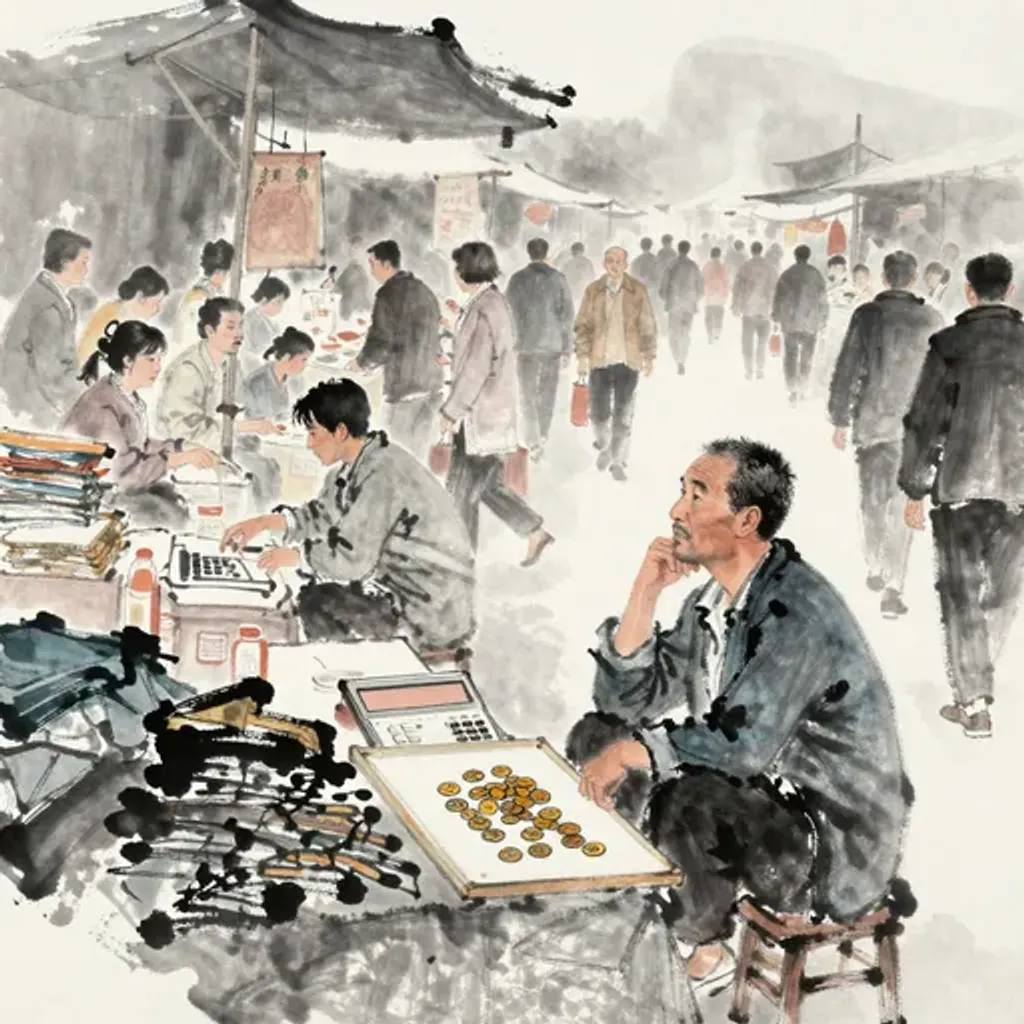
先易後否,告我利市。騷蘇自苦,思吾故止。
First ease, then hardship; it tells me the market is profitable. Restless and bitter of its own accord; yet I reflect, and therefore I stop.
— Jiao Yanshou, Yilin (Forest of Changes), 1st century BC
Commentary
Fire above the lake, and the market's fortune reverses course. What begins easily ends in obstruction — 'first ease, then negation.' Yet the oracle speaks of favorable trading: 'it announces a profitable market.' The second half shifts tone entirely: one toils and frets in self-imposed anxiety, then reflects and decides to stop. The verse captures the wisdom of knowing when to cease: initial success tempts further engagement, but the prudent trader recognizes the turn and withdraws before loss compounds. From Opposition to After Completion, water rests above fire in perfect but precarious balance, and the gentleman thinks of danger in advance to prevent it. The transformation from fluctuating fortune to accomplished order warns that completion is the moment of greatest vulnerability — one must guard it vigilantly.
睽 → 未濟
Hexagram 38 → Hexagram 64: Before Completion
Changing lines: 1
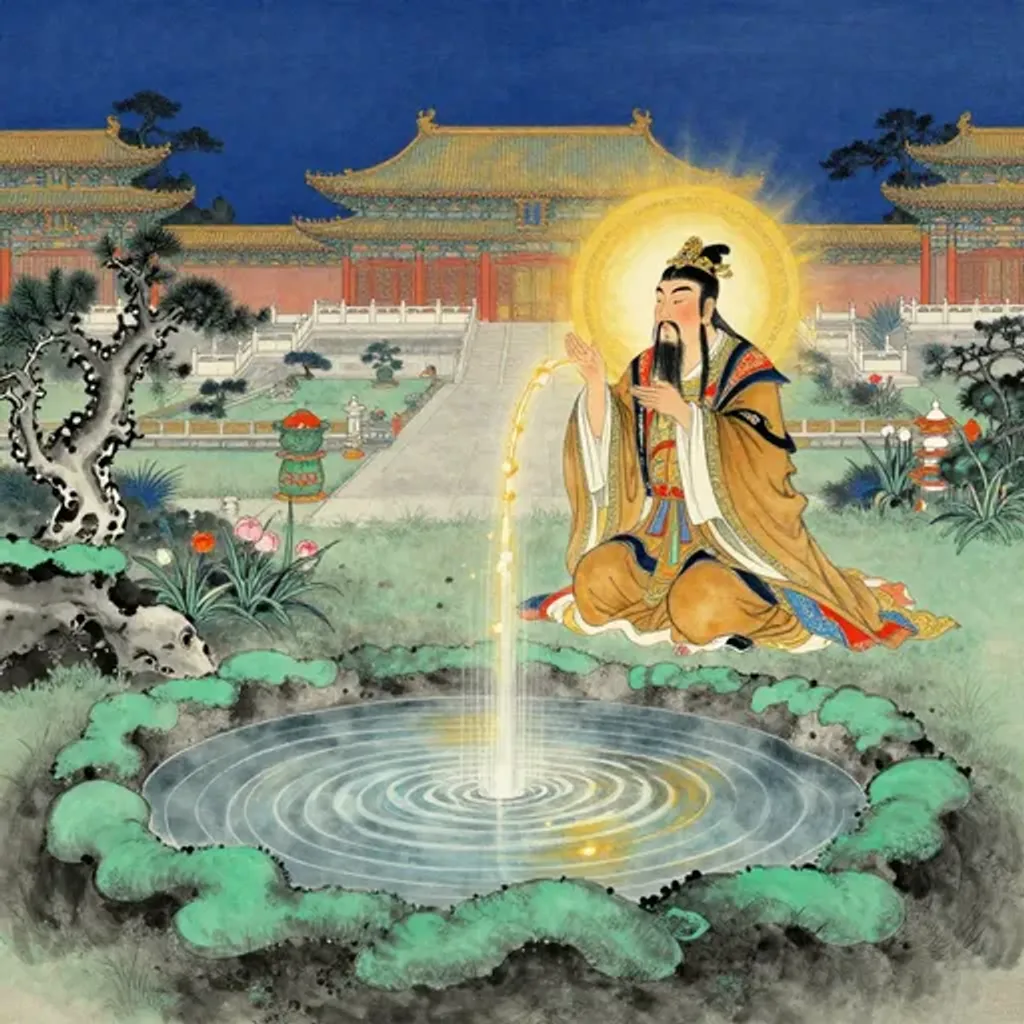
生宜地乳,上皇大喜。隆我祉福,貴壽无極。
Born from the earth's sweet milk; the Supreme One is greatly pleased. He heaps blessings and fortune upon us; noble longevity without end.
— Jiao Yanshou, Yilin (Forest of Changes), 1st century BC
Commentary
Fire above the lake, and from this final transformation springs unexpected blessing. Born in a place of nourishing earth-milk — perhaps a geomantic site where the ground itself exudes vitality — the supreme ancestor rejoices greatly. Blessings rain down abundantly, conferring noble rank and longevity without limit. The verse closes the entire cycle of hexagram 38 on an exalted note: after sixty-three transformations through estrangement, the last arrives at transcendent joy. The 'earth-milk' (地乳) recalls sites where landscape concentrates vital energy, and the 'Supreme Sovereign' (上皇) suggests the highest divine authority bestowing favor. From Opposition to Before Completion, fire hovers above water, and the gentleman carefully distinguishes things and assigns them their proper places. The transformation toward the unfinished reminds us that even this benediction stands at the threshold — blessings are promised but the work of completion continues forever.