Transformations of Hexagram 39
Every line of change out of Hexagram 39 蹇 Obstruction, with the Yilin verse for each of the 64 resulting hexagrams, its translation, and the original ink brush artwork.
蹇 → 乾
Hexagram 39 → Hexagram 1: The Creative
Changing lines: 1, 2, 4, 6
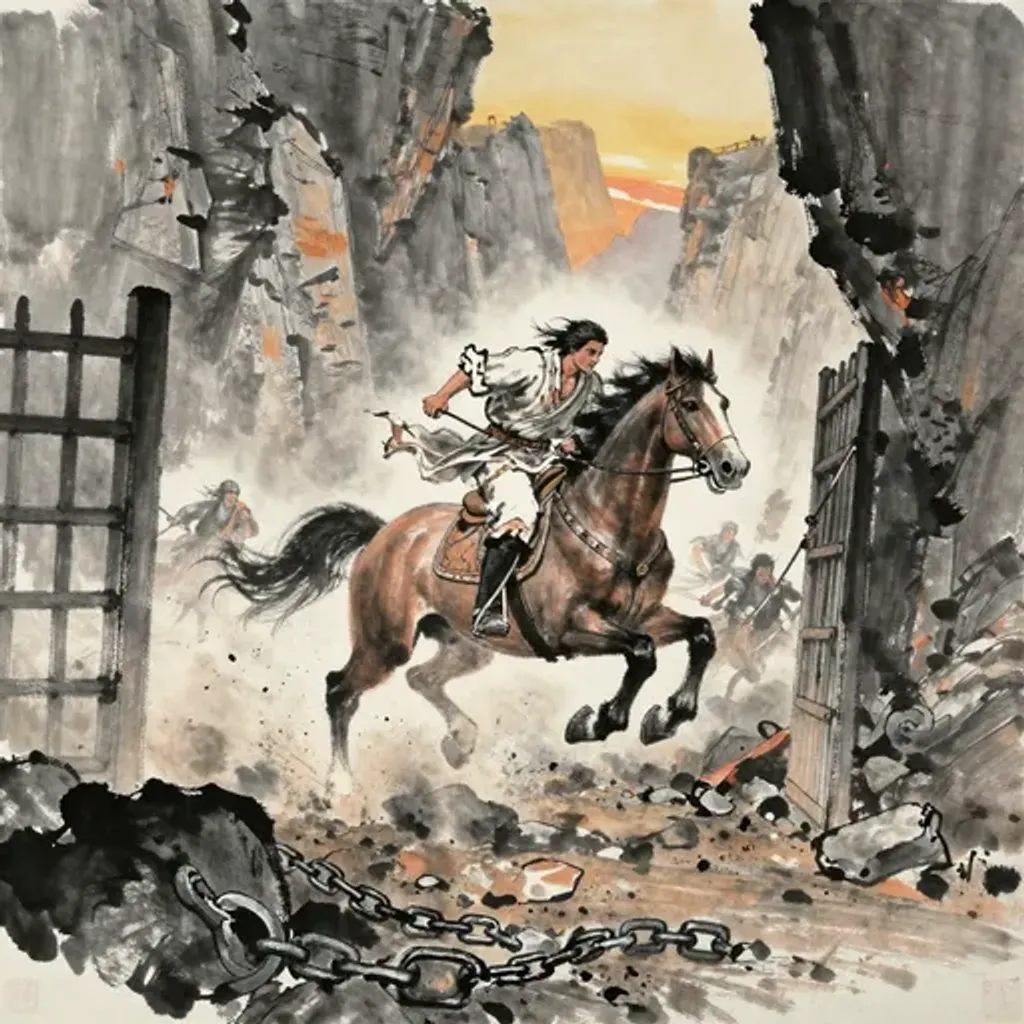
叔盻拘冤,祁子自邑。乘遽解患,羊舌免脫,賴得全生。
Shu Xi was held in false imprisonment; Qi Zi fled from his own city. Mounting a courier horse to escape disaster; Yang She slipped free, and was fortunate to survive.
— Jiao Yanshou, Yilin (Forest of Changes), 1st century BC
Commentary
Water pools upon the mountain, and the path forward is blocked — yet rescue comes from an unexpected quarter. Shu Xiang (Yangshe Xi), the celebrated minister of Jin, was unjustly imprisoned when his brother Yangshe Hu fell afoul of the powerful Fan clan. The retired elder Qi Xi, renowned for recommending talent without regard to personal ties, rode from his estate to intercede with Fan Xuanzi. Thanks to Qi Xi's intervention, Shu Xiang was freed and restored to office. The Yangshe clan survived what could have been annihilation. From Obstruction to The Creative, the pattern shifts from mountain-blocked water to heaven upon heaven — pure self-generating initiative. The man trapped in another's feud escapes not by force but through the principled advocacy of a sage elder, and what was frozen obstruction becomes unbounded creative momentum.
蹇 → 坤
Hexagram 39 → Hexagram 2: The Receptive
Changing lines: 3, 5
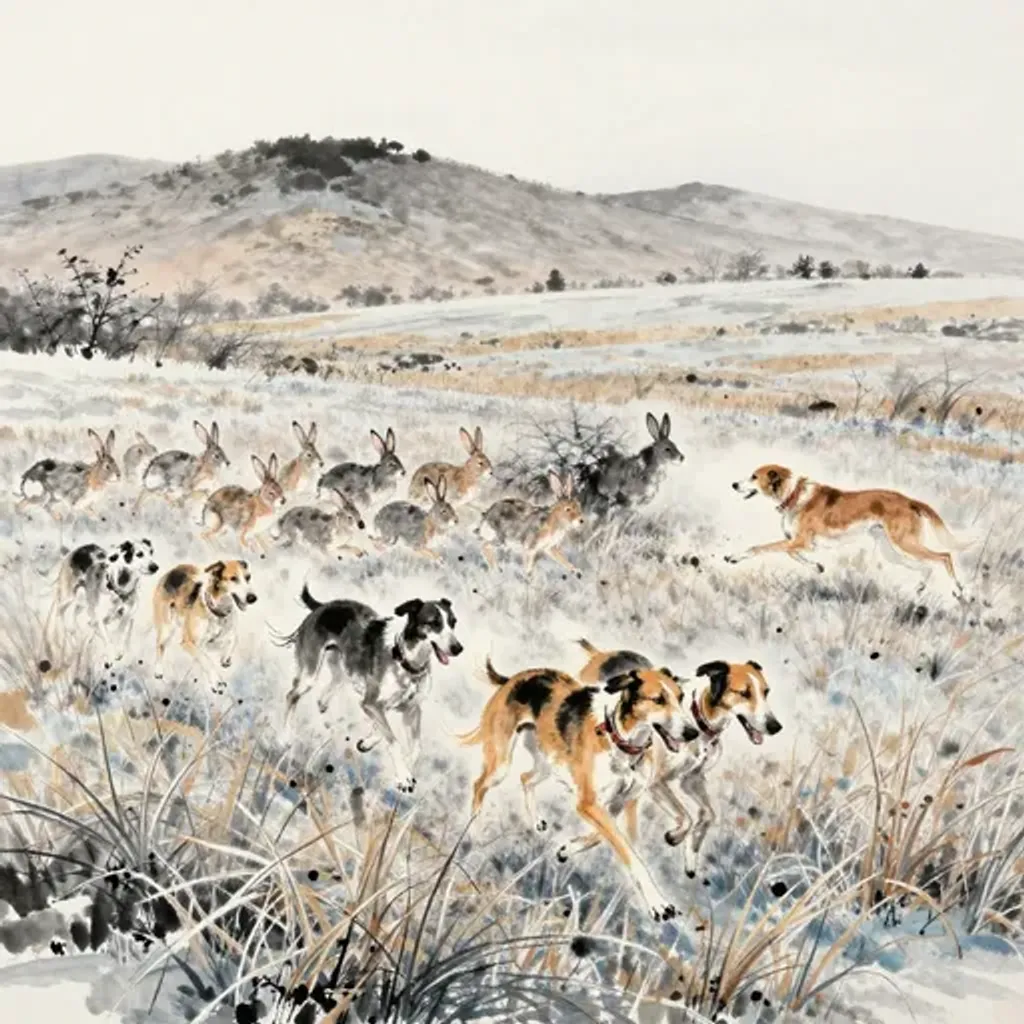
兔聚東郭,眾犬俱獵。圍缺不成,无所能獲。
Rabbits gather at the eastern wall; many dogs hunt together. The encirclement breaks and fails; nothing at all is caught.
— Jiao Yanshou, Yilin (Forest of Changes), 1st century BC
Commentary
Water gathers on the mountain while below, a hunt dissolves into futility. Rabbits cluster at the Eastern Wall, and a pack of dogs sets out in pursuit. Yet the encirclement has gaps — the ring never closes — and no catch is made. The image is of coordinated effort that falls apart through poor execution: the prey is there, the hunters are ready, but the formation is broken. From Obstruction to The Receptive, the mountain's resistance gives way to earth's boundless passivity. The Receptive's power lies in yielding completeness, but here the yielding is premature — the net opens before it should, and the quarry slips through. When obstruction transforms into pure receptivity without structure, effort dissipates into the open field. The lesson: even the most willing pursuit fails when the encirclement lacks discipline.
蹇 → 屯
Hexagram 39 → Hexagram 3: Difficulty at the Beginning
Changing lines: 1, 3
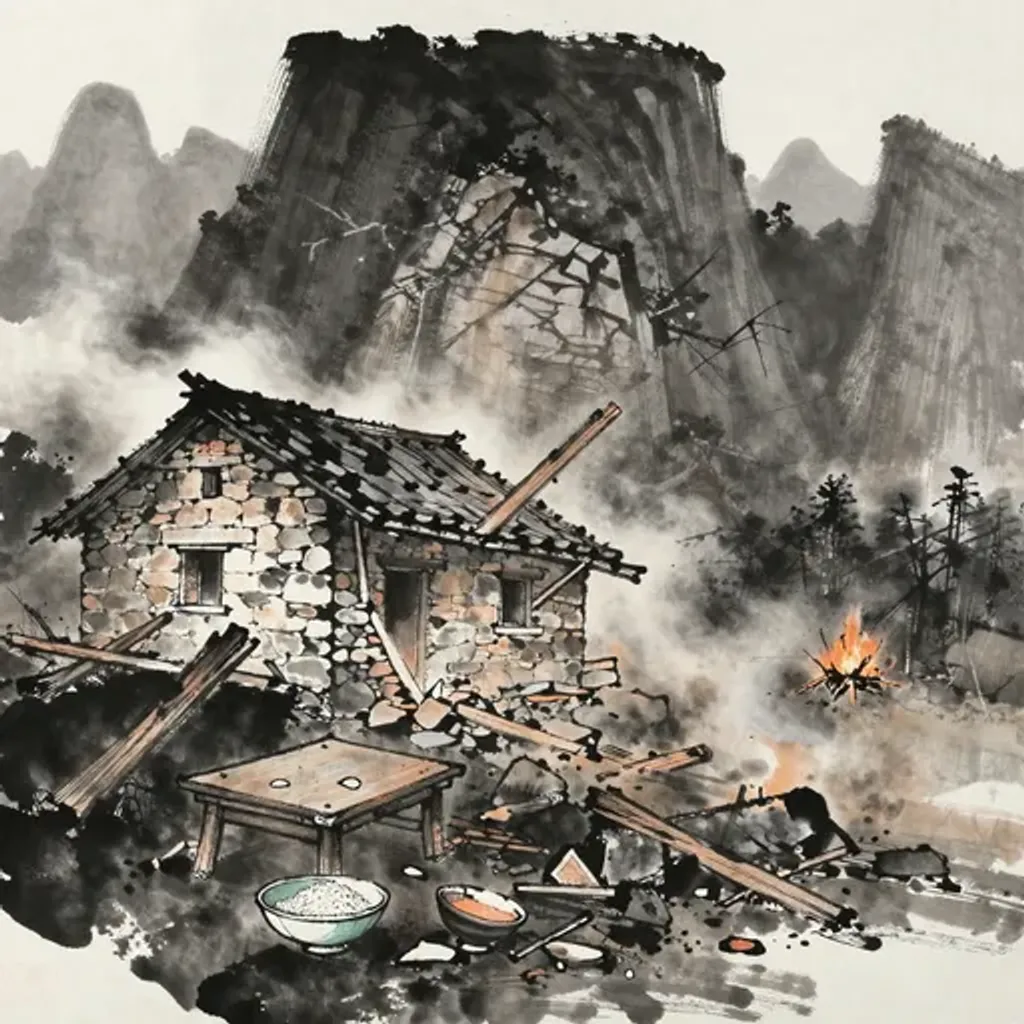
作室山根,人以為安。一旦崩頹,敗我盤飡。
A house built on a mountain's base; people thought it safe. One morning it collapses and crumbles, ruining our meal and board.
— Jiao Yanshou, Yilin (Forest of Changes), 1st century BC
Commentary
Water pools dangerously on the mountainside, and a house built on a cliff-root collapses without warning. The dwelling seemed secure — anchored to the mountain's base, it gave every appearance of stability. Then one day the slope gives way, the walls crumble, and even the meal on the table is ruined. The verse captures the treachery of false security: what looked like solid ground was always precarious. From Obstruction to Difficulty at the Beginning, water atop the mountain transforms into clouds and thunder churning below — the chaos of new emergence. The collapse is not an ending but a violent return to the primordial state where everything must be rebuilt from scratch. The beginning that follows destruction is harder than any first attempt, for it carries the memory of what was lost.
蹇 → 蒙
Hexagram 39 → Hexagram 4: Youthful Folly
Changing lines: 2, 3, 5, 6
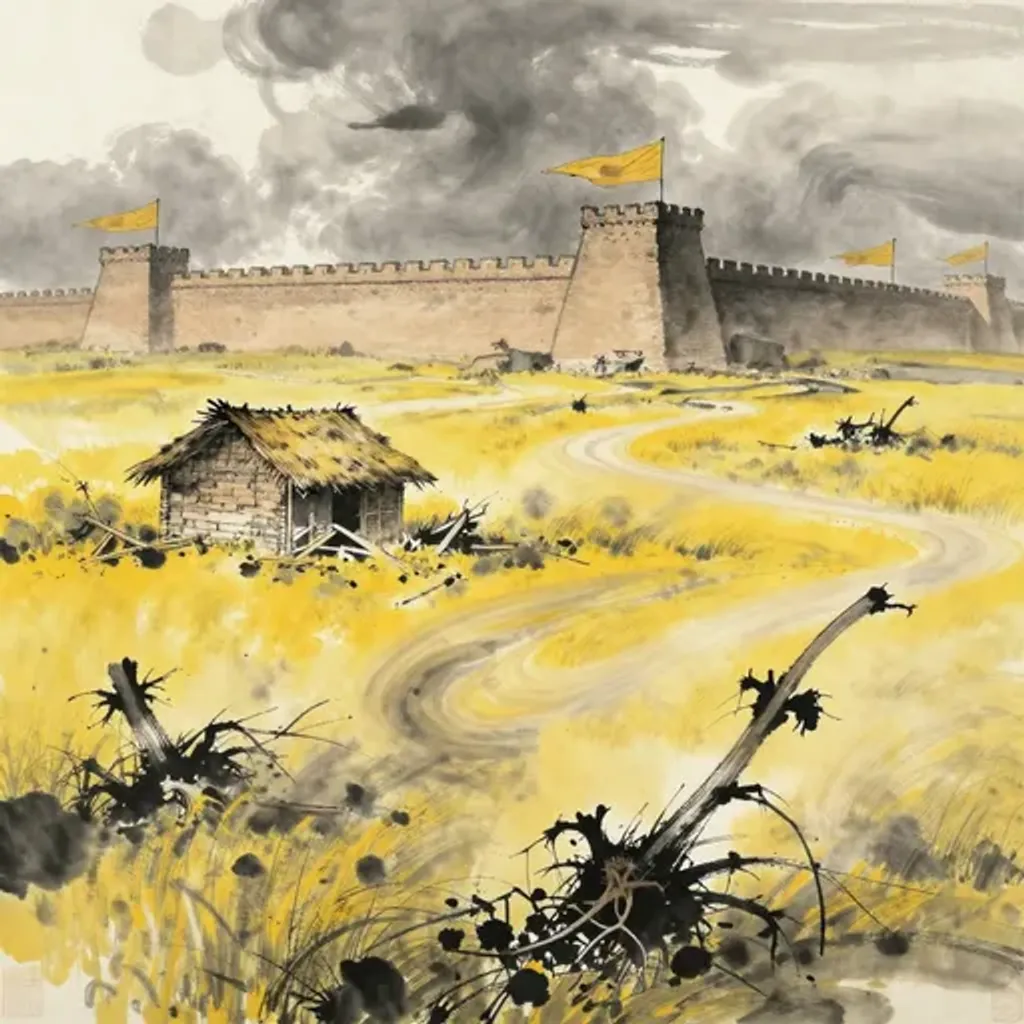
疾風塵起,亂擾崩始。強大并小,先否後喜。
A fierce wind rises with dust; turmoil and collapse begin. The strong swallow the small; first hardship, then joy.
— Jiao Yanshou, Yilin (Forest of Changes), 1st century BC
Commentary
Water on the mountain meets a violent gale that raises choking dust, and the scene dissolves into upheaval. The strong swallow the small in a whirlwind of consolidation — yet the verse ends with a reversal: what begins in negation concludes in joy. The dust storm is not mere destruction but the turbulence that precedes a new settlement. From Obstruction to Youthful Folly, the mountain shifts from blocking water above to sheltering a spring below. The spring at the mountain's base is naive but pure; it emerges only after the storm has blown the old dust away. The pattern traces adversity's pedagogy: obstruction breeds confusion, confusion invites absorption by stronger forces, and through that painful merger, something fresh and uncontaminated is born.
蹇 → 需
Hexagram 39 → Hexagram 5: Waiting
Changing lines: 1, 2
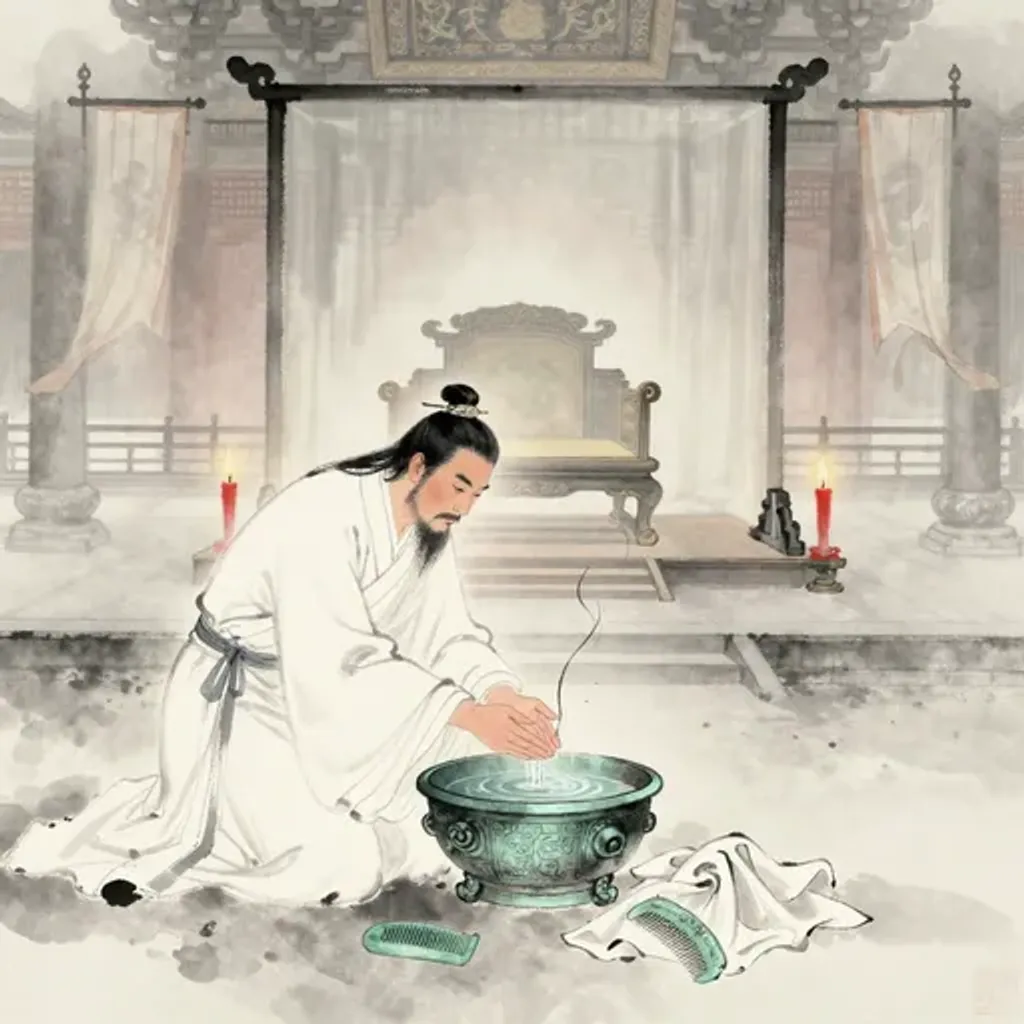
潔齊沐浴,思明君德。哀公怯弱,風氏復北。
Purified and bathed in ritual cleansing, contemplating a wise lord's virtue. Duke Ai was timid and weak; the Feng clan was driven north again.
— Jiao Yanshou, Yilin (Forest of Changes), 1st century BC
Commentary
Water lies upon the mountain as one purifies body and mind through ritual bathing, yearning for an enlightened sovereign's virtue. Yet Duke Ai proves feeble and irresolute, and the Feng clan retreats northward in defeat. The verse contrasts pious aspiration with political failure: the devotee prepares with utmost sincerity, but the ruler cannot sustain the mandate. 'Duke Ai' likely refers to a weak ruler archetype, and the Feng clan's northward flight suggests military collapse under poor leadership. From Obstruction to Waiting, water shifts from the mountain's surface to clouds suspended above heaven. Waiting demands trust that nourishment will come — but the verse warns that without capable leadership, even the most devout preparation yields only retreat. The clouds gather, but rain never falls.
蹇 → 訟
Hexagram 39 → Hexagram 6: Conflict
Changing lines: 2, 3, 4, 6
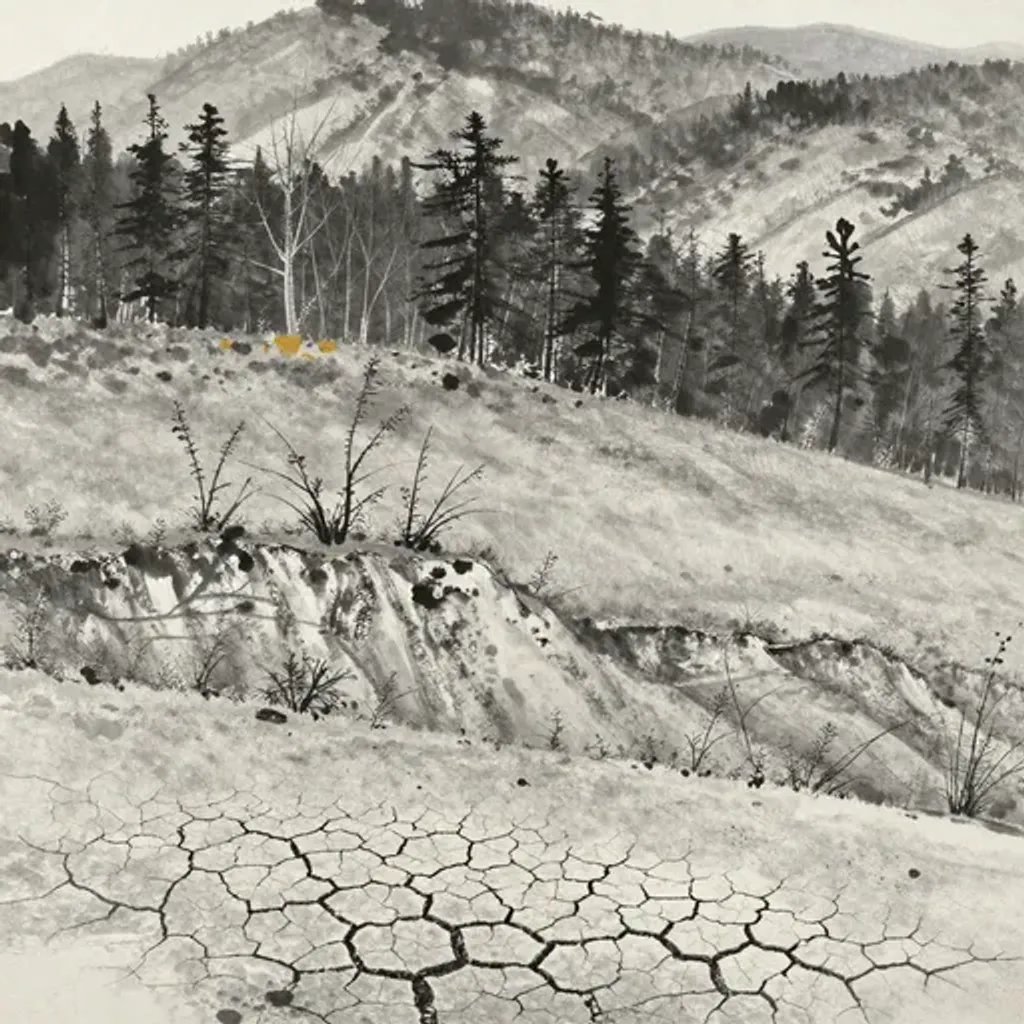
土瘠瘦薄,培塿无柏,使我不樂。
The soil is lean and thin; the low mound bears no cypress. This makes me joyless.
— Jiao Yanshou, Yilin (Forest of Changes), 1st century BC
Commentary
Water on the mountain finds no purchase in the barren soil below. The earth is thin and poor, the hillocks bare of cypresses — not even the hardiest tree can take root here. The speaker is left without joy, stranded on ground that yields nothing. Cypresses traditionally mark graves and ancestral sites; their absence signals a place unfit for habitation or remembrance. From Obstruction to Conflict, the mountain's blocked water gives way to heaven and water moving in opposite directions. The barren soil becomes a site of structural discord: what should nourish diverges from what should shelter. No planting, no growth, no monument — just the grinding friction of resources mismatched with need. Desolation deepens when even the possibility of cultivation is absent.
蹇 → 師
Hexagram 39 → Hexagram 7: The Army
Changing lines: 2, 3, 5
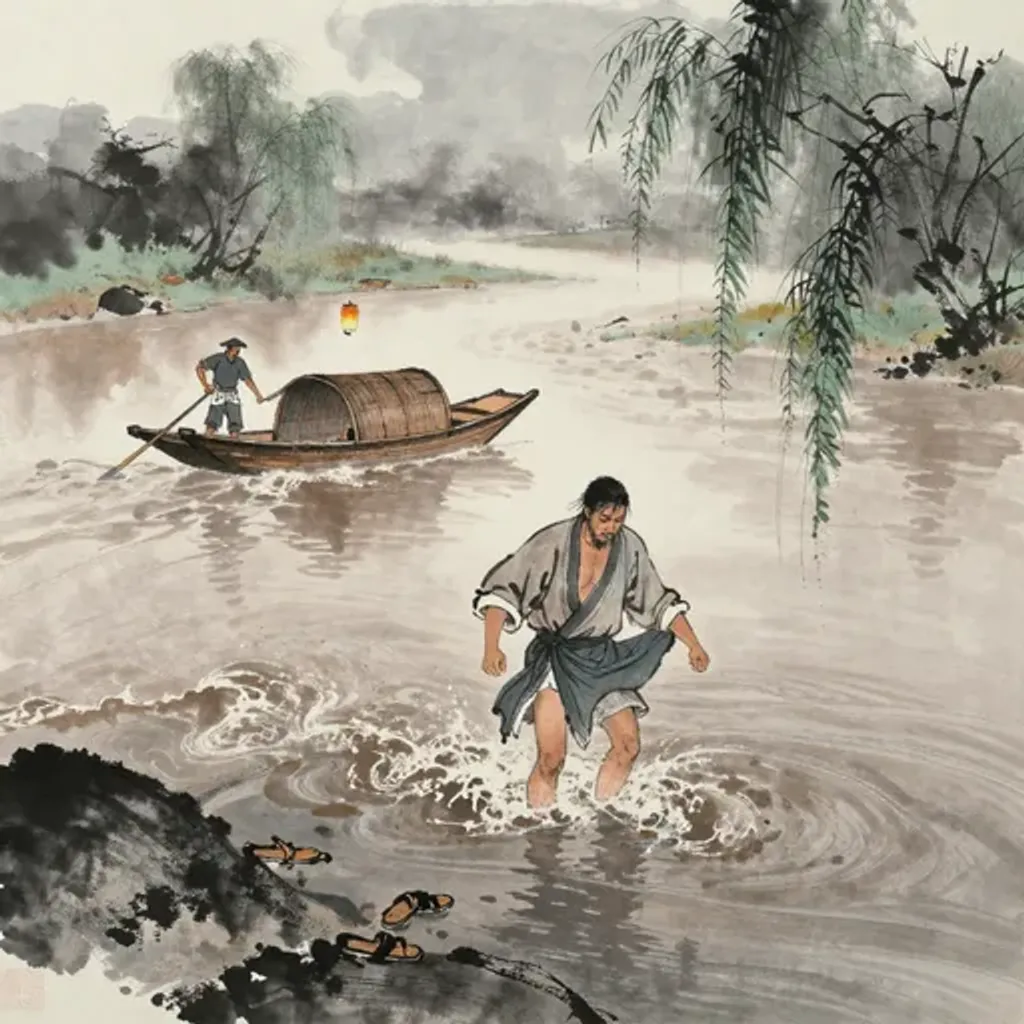
褰衣涉河,水深漬罷。賴幸舟子,濟脫无他。
Lifting his robes to ford the river, the water is deep and the crossing exhausting. Fortunate to find a boatman; he is ferried across without mishap.
— Jiao Yanshou, Yilin (Forest of Changes), 1st century BC
Commentary
Water pours down the mountain as a traveler lifts his robes to ford a river, only to find the water chest-deep and the current overwhelming. Exhausted and soaked, he would have drowned — but a boatman appears and ferries him across. He emerges on the far bank unharmed. The verse captures the essence of Obstruction's promise: the path is genuinely dangerous, not merely inconvenient, yet help arrives when the traveler commits to crossing. From Obstruction to The Army, earth contains water in disciplined reserve. The boatman embodies the Army's principle: organized capability deployed at the critical moment. The rescue is not luck but readiness — someone who understood the river was already stationed there. Discipline anticipates danger before the traveler even arrives.
蹇 → 比
Hexagram 39 → Hexagram 8: Holding Together
Changing lines: 3
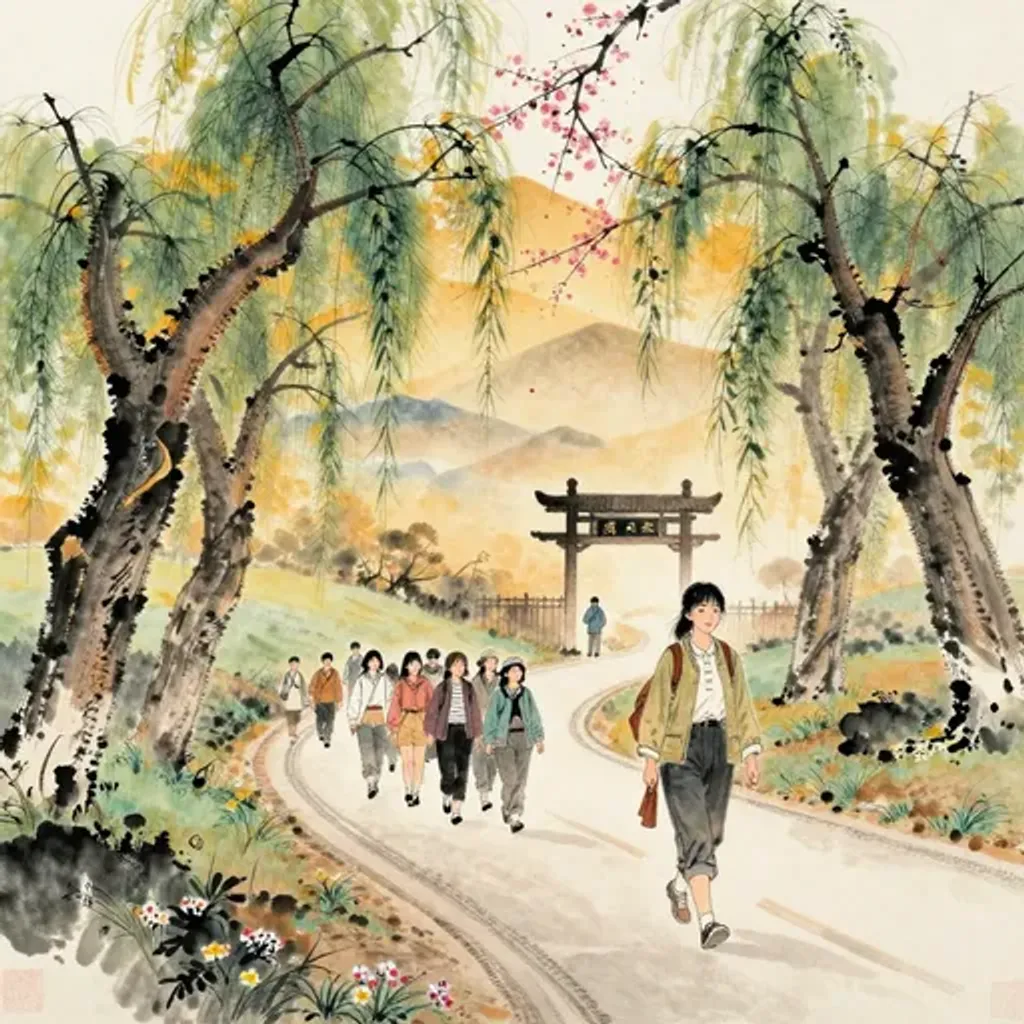
送我季女,至于蕩道。齊子旦夕,留連久處。
Escorting my youngest daughter, arriving at the Dang road. The man of Qi lingers morning and evening, staying on and on.
— Jiao Yanshou, Yilin (Forest of Changes), 1st century BC
Commentary
Water on the mountain blocks the road, yet a wedding procession presses forward. A younger sister is sent off and reaches Dangdao — a place-name evoking the road of passage. A young man of Qi lingers morning and evening, reluctant to part. The scene echoes Shijing marriage poetry: the bride departing her family, the groom's eager waiting, the bittersweet transition from one household to another. From Obstruction to Holding Together, the mountain's blocked water yields to water resting upon earth — the natural image of people gathering and bonding. The obstruction of departure becomes the intimacy of arrival. The groom's lingering presence transforms the difficult road into a place of connection; what was an obstacle becomes the threshold of belonging.
蹇 → 小畜
Hexagram 39 → Hexagram 9: Small Taming
Changing lines: 1, 2, 6
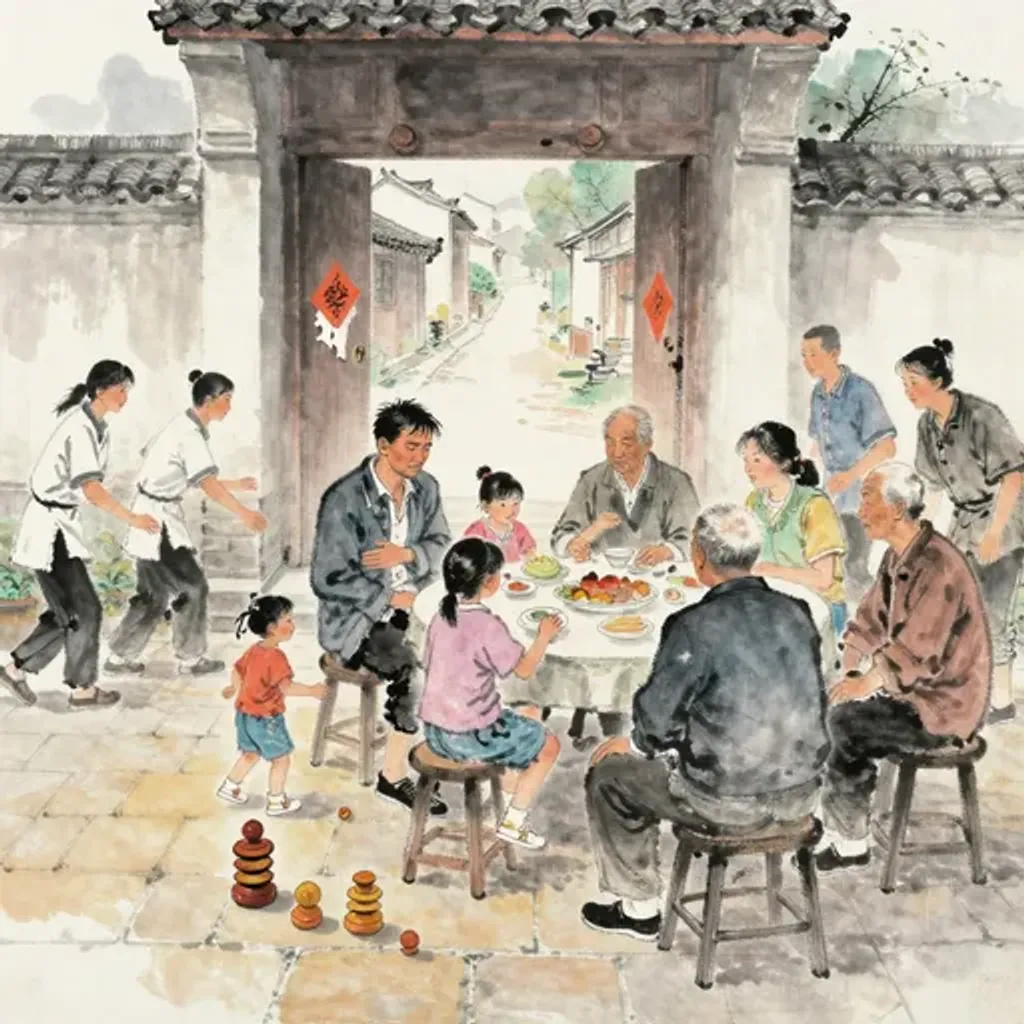
三孫六子,安无所苦。中歲發殆,亡我所使。
Three grandsons and six sons, peaceful and free from suffering. In middle age, peril arises; we lose our servants and means.
— Jiao Yanshou, Yilin (Forest of Changes), 1st century BC
Commentary
Water on the mountain promises a family of abundance — three grandsons, six sons — living in comfort with nothing to trouble them. Yet at middle age catastrophe strikes: the household loses its laborers and servants, and the prosperity that seemed assured crumbles. The verse traces the full arc of domestic fortune, from effortless plenty to sudden deprivation. From Obstruction to Small Taming, wind rides above heaven, gently restraining the creative force. Small Taming succeeds through subtle accumulation, not grand reserves. The family that relied on large numbers and easy comfort had no practice in restraint; when the wind of circumstance shifted, their untamed abundance scattered. True security lies not in headcount but in the discipline of small, steady cultivation.
蹇 → 履
Hexagram 39 → Hexagram 10: Treading
Changing lines: 1, 2, 3, 4, 6
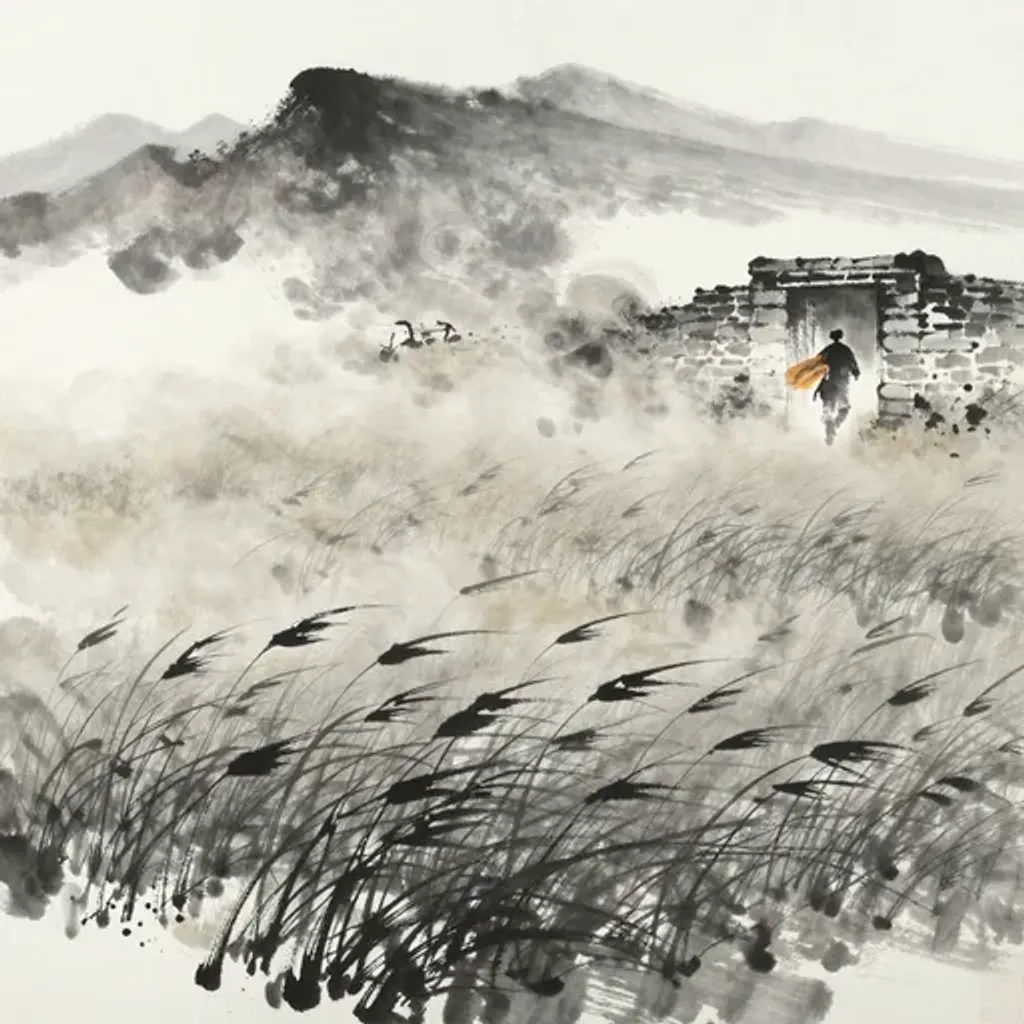
揚風偃草,塵埃俱起。清濁溷散,忠直隱處。
The wind spreads and the grass bends flat; dust rises everywhere. Clear and murky mix in confusion; the loyal and upright hide away.
— Jiao Yanshou, Yilin (Forest of Changes), 1st century BC
Commentary
Water on the mountain stalls all movement, and a fierce wind flattens the grass, stirring dust until clean and foul swirl together indistinguishably. The loyal and upright have no choice but to withdraw into seclusion. The image of wind bending grass is a classic political metaphor from the Analerta: 'The virtue of the superior man is the wind; the virtue of the common man is the grass.' But here the wind is not virtuous influence — it is a storm that obliterates moral distinctions, driving the worthy into hiding. From Obstruction to Treading, heaven stands above the lake as one treads carefully beside a tiger. The honest man's retreat is itself an act of treading: knowing when the landscape has grown too dangerous for integrity to survive in the open.
蹇 → 泰
Hexagram 39 → Hexagram 11: Peace
Changing lines: 1, 2, 5
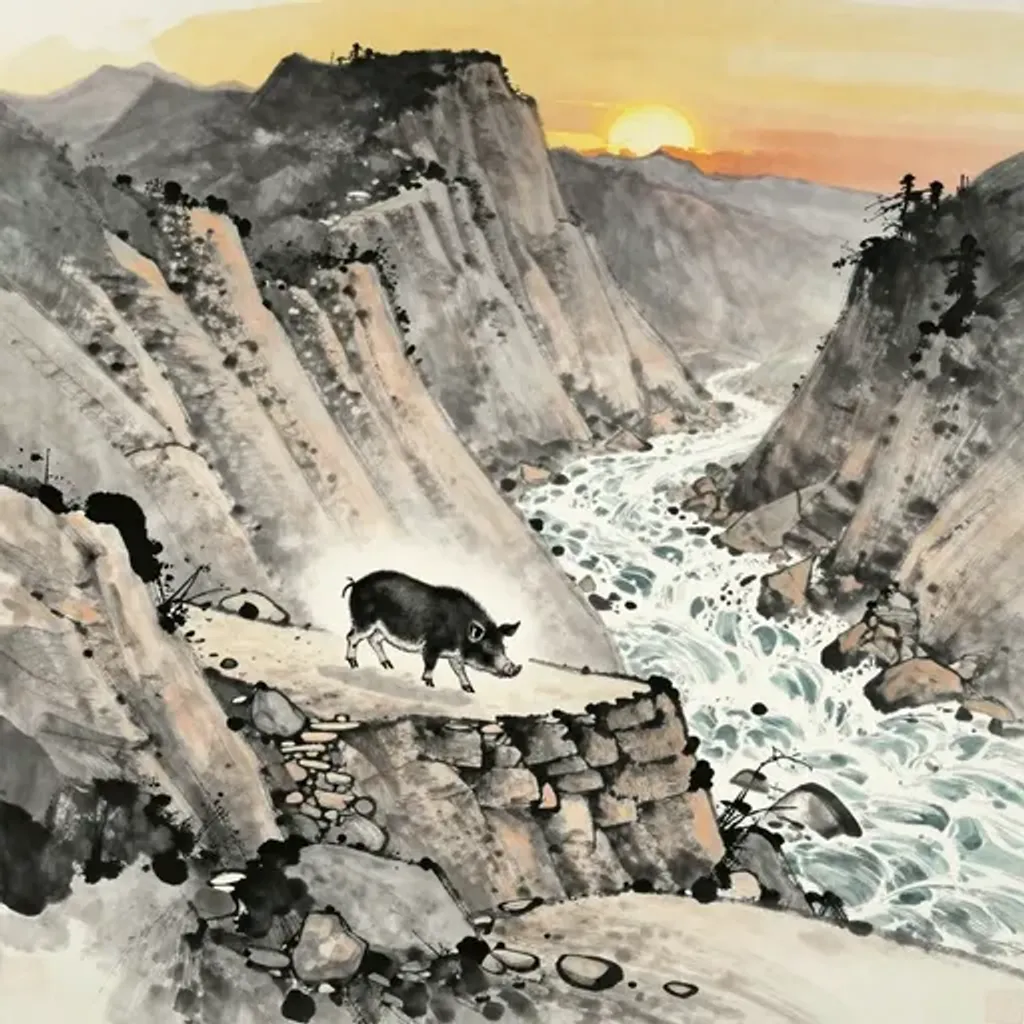
歷險登危,道遠勞疲。玄豕自歸,困涉大波。
Traversing danger and climbing peril; the road is far and the body weary. The black pig returns on its own, struggling through great waves.
— Jiao Yanshou, Yilin (Forest of Changes), 1st century BC
Commentary
Water on the mountain makes every step a trial. The traveler scales cliffs and traverses dangers, the road stretching endlessly, body worn to exhaustion. Then a dark boar returns of its own accord — an omen of natural restoration — but the journey home still requires struggling through great waves. The black pig's spontaneous homecoming signals that the destination is right, yet the crossing remains brutal. From Obstruction to Peace, earth sinks below while heaven rises above; the two forces exchange places and interpenetrate. Peace is not the absence of difficulty but the completion of a grueling passage where high and low finally meet. The exhausted traveler and the homing boar both testify: the hardest road sometimes leads to the most harmonious arrival.
蹇 → 否
Hexagram 39 → Hexagram 12: Standstill
Changing lines: 3, 4, 6
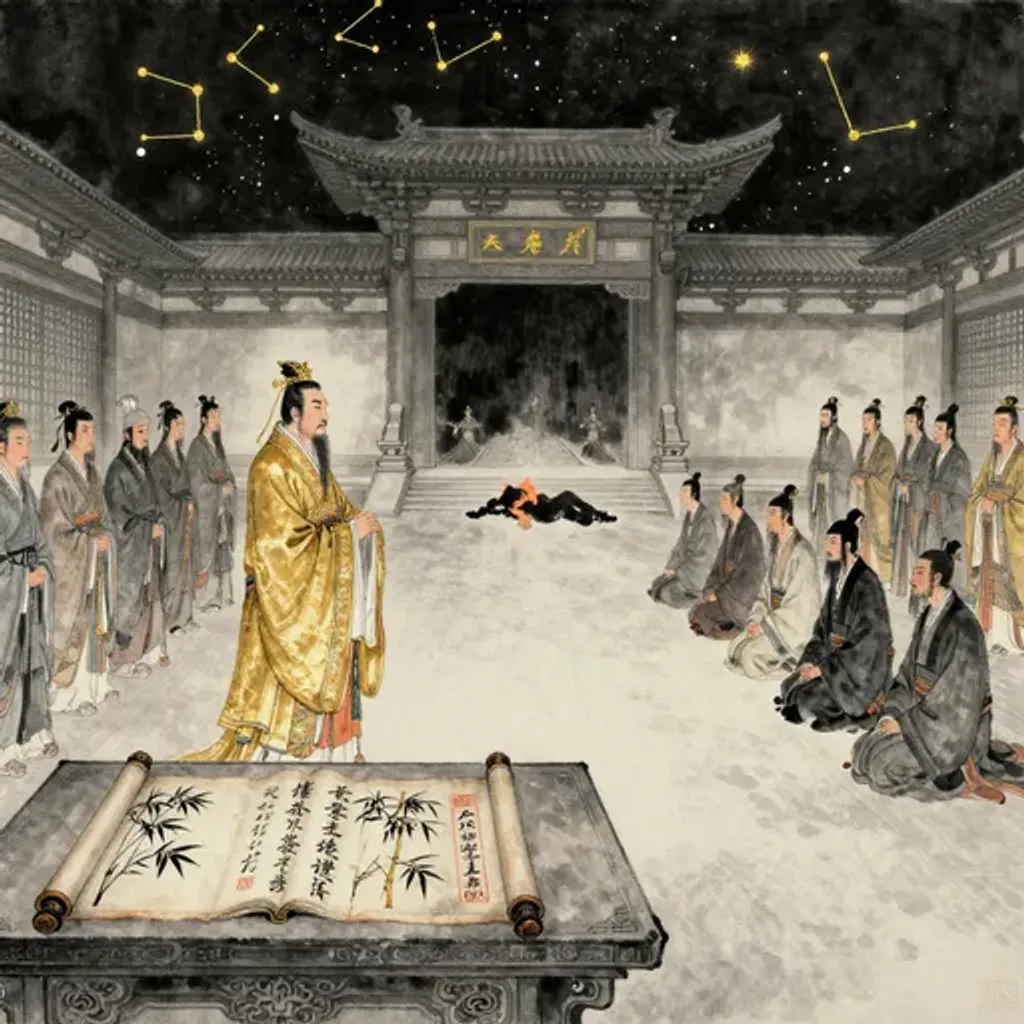
六藝之門,仁義俱存。鎡基逢時,堯舜為君。傷寒熱溫,下至黃泉。
At the gate of the Six Arts, benevolence and righteousness abide. The hoe meets its season; Yao and Shun are sovereign. But cold and fever strike, and one descends to the Yellow Springs.
— Jiao Yanshou, Yilin (Forest of Changes), 1st century BC
Commentary
Water on the mountain frames a paradox of aspiration and collapse. The Six Arts stand as gates to civilization, benevolence and righteousness dwell within — and at the right moment, even a farmer with a hoe may encounter an age of Yao and Shun. Yet the verse pivots sharply: illness strikes with burning fever, and the afflicted descend to the Yellow Springs of death. The juxtaposition is deliberately jarring: the highest ideals and the cruelest fate coexist without resolution. From Obstruction to Standstill, heaven and earth cease to communicate. The Six Arts may preserve their wisdom, but when the cosmos itself is in blockage, even the virtuous fall ill and die. Standstill is obstruction perfected — not merely a blocked path but a severed cosmos where moral cultivation cannot prevent physical annihilation.
蹇 → 同人
Hexagram 39 → Hexagram 13: Fellowship
Changing lines: 1, 4, 6
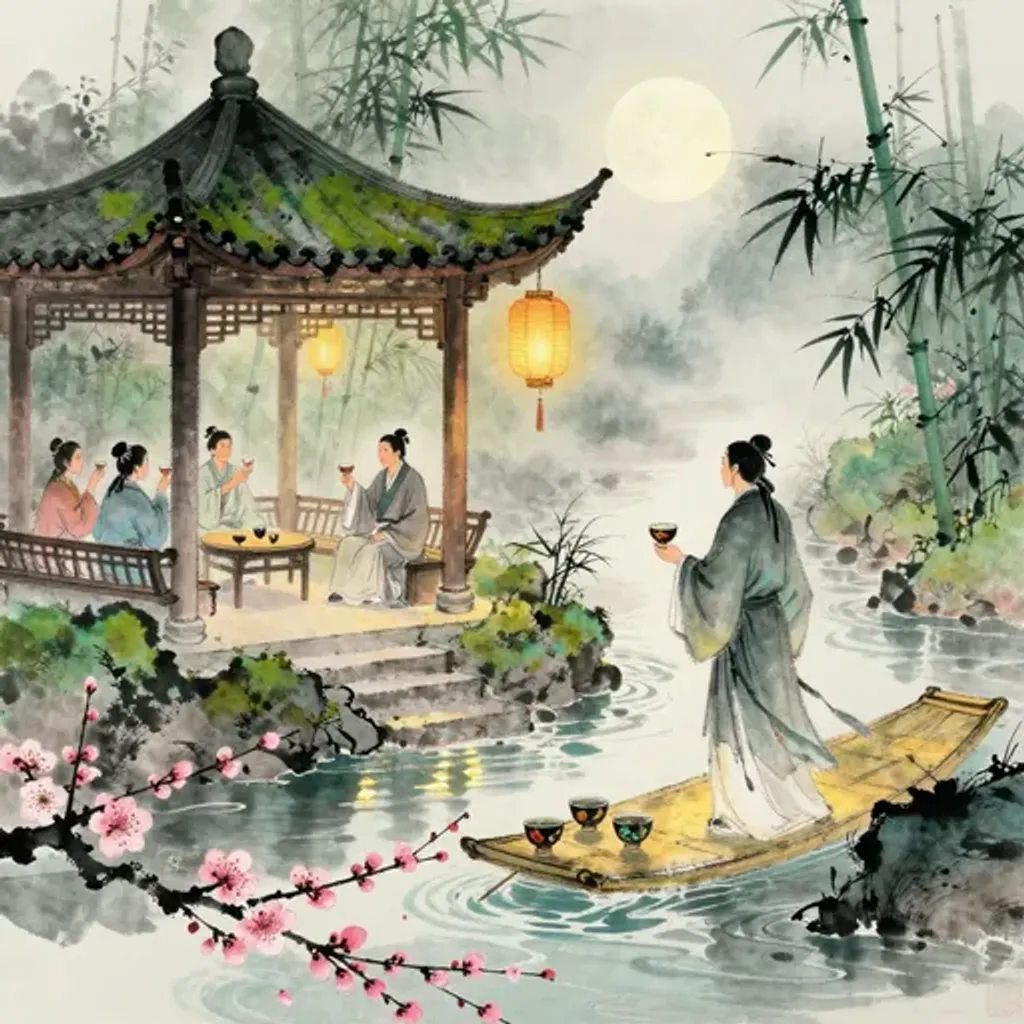
被服文衣,遊觀酒池。上堂見觴,喜為吾兄,使我憂亡。
Brocade robes and jade belt, strolling through the flower garden. Winding streams carry floating wine cups past the green pavilion. Raising a cup to invite a friend and the sky's moon — falling asleep drunk in the pine breeze without realizing.
— Jiao Yanshou, Yilin (Forest of Changes), 1st century BC
Commentary
Water on the mountain obstructs, but this verse (a rewrite) must be read through the original: 'Clad in patterned garments, wandering by the wine pool, ascending the hall to find goblets. Joyful as my elder brother — yet he leaves me without worry.' The original describes a figure in fine robes visiting a lavish feast, encountering a kinsman amid wine and celebration. The joy of reunion is real but fleeting; the parting leaves a hollow absence. From Obstruction to Fellowship, fire blazes beneath heaven as companions gather in open daylight. Fellowship demands the clarity to distinguish true bonds from festive illusions. The wine pool glitters, the robes are splendid, but the brother departs — and what felt like fellowship dissolves into the solitude of one who mistook a banquet for belonging.
蹇 → 大有
Hexagram 39 → Hexagram 14: Great Possession
Changing lines: 1, 2, 4, 5, 6
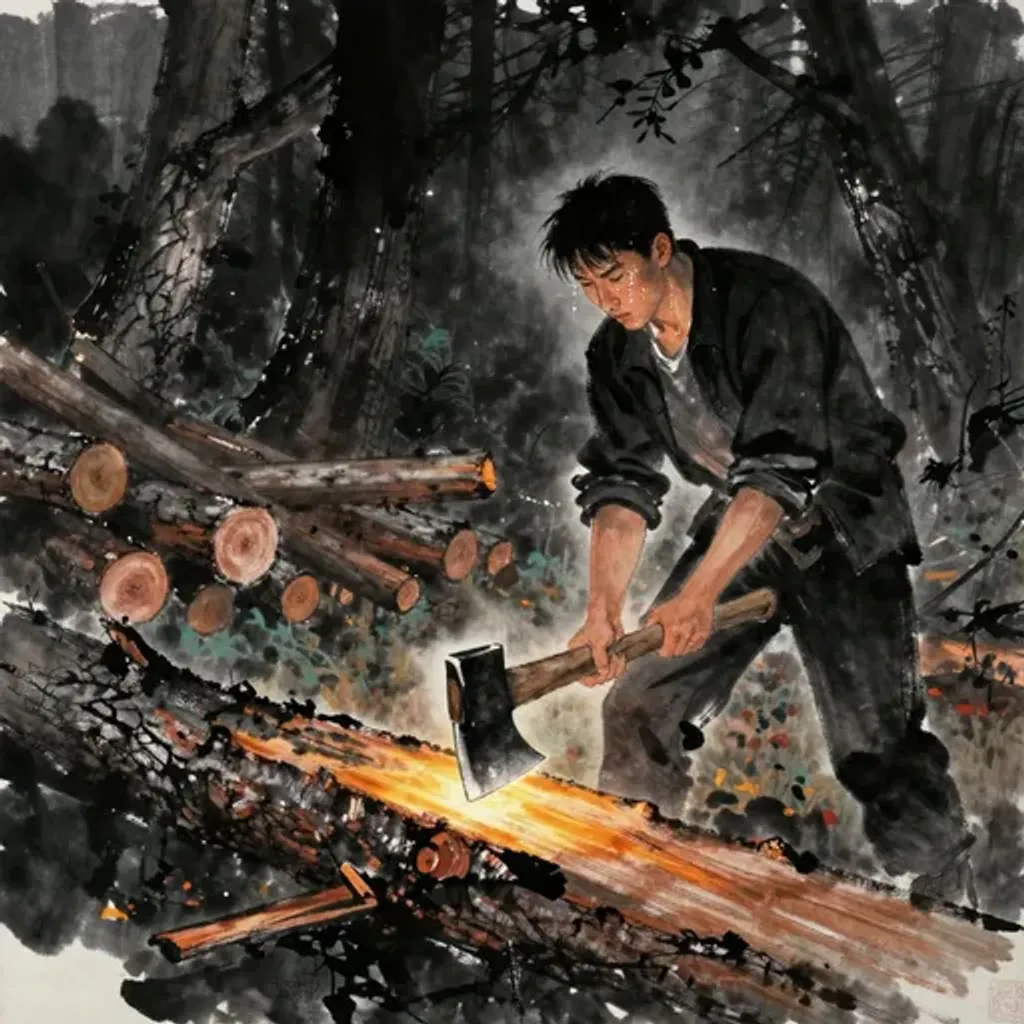
生時不利,天命災至。制於斧瘢,晝夜苦勤。
Born at an unlucky hour; heaven's fate brings disaster. Governed by the axe's scar, toiling bitterly day and night.
— Jiao Yanshou, Yilin (Forest of Changes), 1st century BC
Commentary
Water on the mountain signals hardship from birth. Born at an inauspicious hour, fate delivers calamity upon calamity. Bound to the chopping block's scars — 'controlled by the axe-wounds' — the speaker toils day and night without respite. The axe-marks suggest penal labor or forced servitude, a life shaped by punishment rather than choice. From Obstruction to Great Possession, fire blazes in heaven — the fullest expression of radiant abundance. The contrast is excruciating: the verse describes someone whose entire existence is defined by constraint and suffering, while the target hexagram promises the greatest prosperity. Great Possession demands suppressing evil and promoting good; here, the subject is ground down by a system that mistakes the good for something to be punished. The fire in heaven illuminates an injustice that the obstructed can only endure.
蹇 → 謙
Hexagram 39 → Hexagram 15: Modesty
Changing lines: 5
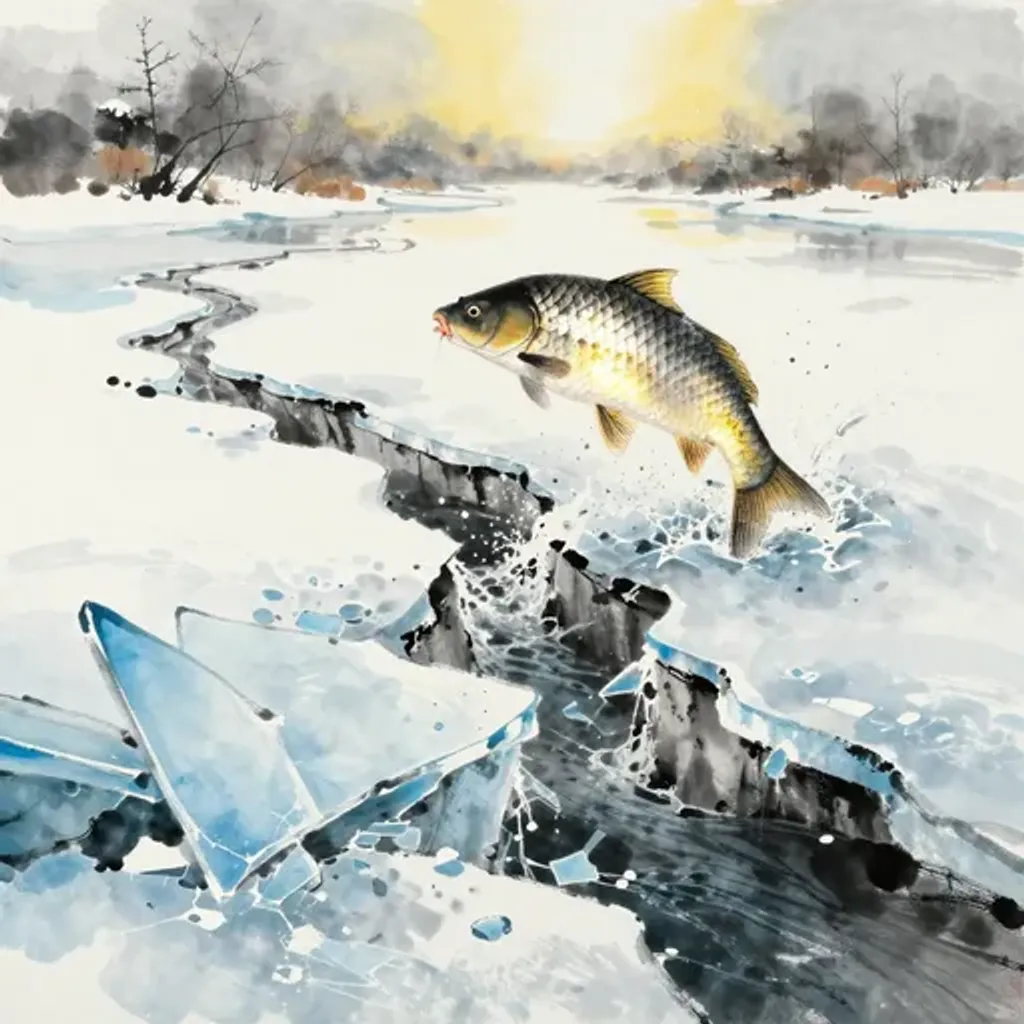
天門開闢,牢戶寥廓。桎梏解脫,拘囚縱釋。
The frozen river cracks open; spring water surges forth. The trapped fish leaps free — silver scales flash in the sun.
— Jiao Yanshou, Yilin (Forest of Changes), 1st century BC
Commentary
Water on the mountain freezes into obstruction, but this verse (a rewrite) must be read through the original: 'Heaven's gate opens wide, the prison walls turn vast and empty; shackles are removed, the captive is set free.' The original describes an absolute liberation — the gates of heaven swing open, the dungeon dissolves, fetters fall away. What was imprisoned walks free into boundless space. From Obstruction to Modesty, the mountain hidden within the earth practices the quietest form of power. The liberation described is not triumphant ascent but humble emergence: the freed prisoner does not storm the heights but settles gently into the landscape. Modesty levels mountains and fills valleys; the captive's release enacts this leveling — what was high and locked is brought low and opened, what was buried rises to the surface.
蹇 → 豫
Hexagram 39 → Hexagram 16: Enthusiasm
Changing lines: 3, 4, 5
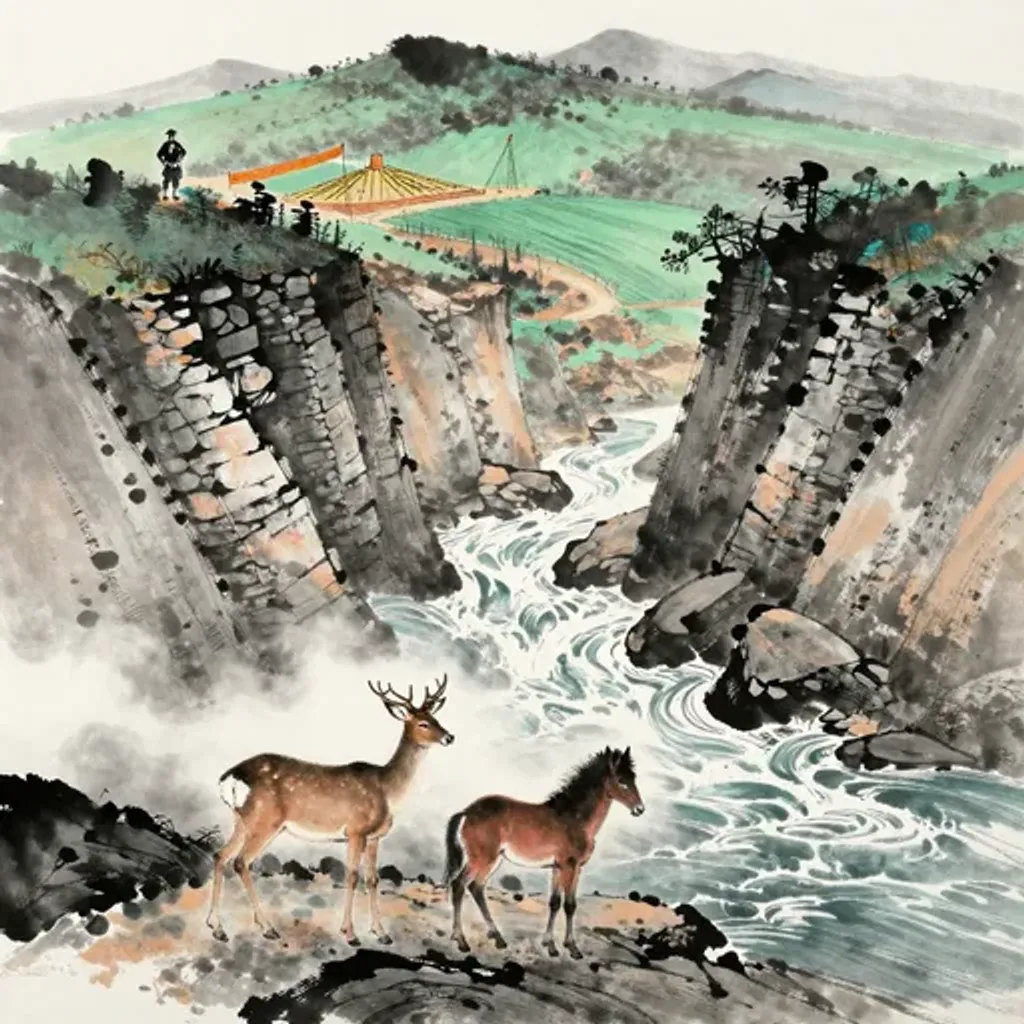
川淵難遊,水為我憂。多言少實,命鹿為駒。建德開基,君子逢時。利以仲疑。
Rivers and depths are hard to swim; water brings me worry. Much talk and little substance, calling a deer a colt. Establishing virtue and laying foundations; the gentleman meets his time. Profitable through the second divination.
— Jiao Yanshou, Yilin (Forest of Changes), 1st century BC
Commentary
Water on the mountain deepens into a treacherous abyss. Rivers and pools are perilous to swim; water itself becomes the source of worry. Many words but little substance — someone 'calls a deer a horse,' inverting truth for political advantage, echoing Zhao Gao's infamous manipulation at the Qin court. Yet the verse turns: a man of established virtue lays foundations, and the superior person encounters his proper time. The phrase 'calling a deer a horse' signals deliberate deception at the highest level, where language itself becomes a weapon against reality. From Obstruction to Enthusiasm, thunder erupts from the earth in a surge of mobilizing energy. The transformation promises that once deception is exposed and true virtue finds its moment, the frozen obstruction breaks into collective celebration.
蹇 → 隨
Hexagram 39 → Hexagram 17: Following
Changing lines: 1, 3, 4
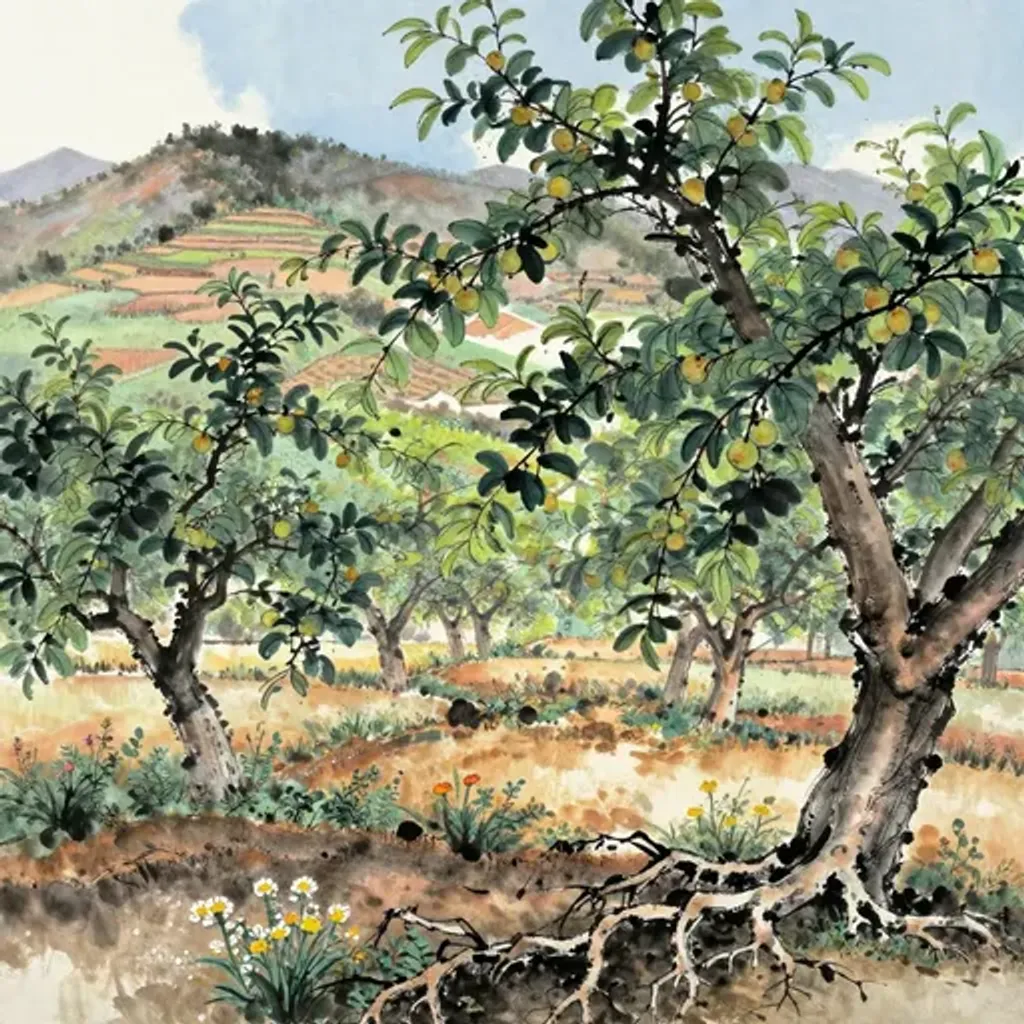
鄉歲逢時,與生為期。枝葉盛茂,君子无憂。
The village harvest meets its season, bringing life in due time. Branches and leaves flourish abundantly; the gentleman is free from worry.
— Jiao Yanshou, Yilin (Forest of Changes), 1st century BC
Commentary
Water on the mountain relents as the seasons turn favorable. The local harvest meets its proper time, and life aligns with the rhythm of growth. Branches and leaves flourish luxuriantly, and the superior person has nothing to worry about. This is one of the Yilin's simplest blessings: when the right season arrives, what was obstructed finds its natural course. No heroic intervention is required — just the patience to wait for spring. From Obstruction to Following, lake rests above thunder as the natural world responds to the season's call. Following means moving with the current rather than against it; the verse captures this perfectly. The blocked mountain path simply becomes a verdant hillside when the calendar turns, and the wise person follows nature's timing rather than forcing premature action.
蹇 → 蠱
Hexagram 39 → Hexagram 18: Work on the Decayed
Changing lines: 2, 5, 6
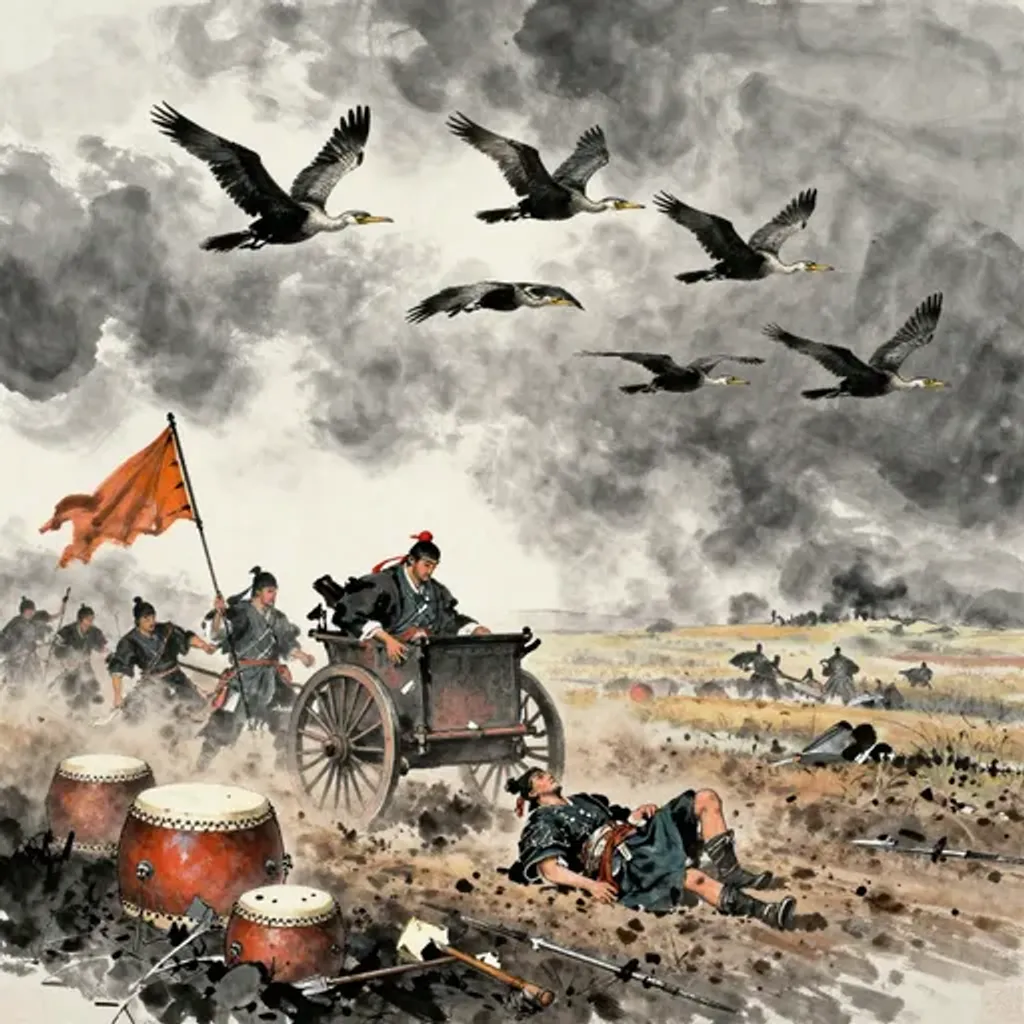
六鷁退飛,為衰敗祥。陳師合戰,左股夷傷。遂崩不起,霸功不成。
Six cormorants fly backward, an omen of decline and defeat. Marshaling troops and joining battle, the left thigh is wounded. He collapses and does not rise; the hegemon's work is left undone.
— Jiao Yanshou, Yilin (Forest of Changes), 1st century BC
Commentary
Water on the mountain portends a military catastrophe. Six cormorants fly backward over Song — a famous omen from the Spring and Autumn Annals (Duke Xi, Year 16, 644 BC) presaging decline and defeat. Troops are marshaled for battle, but the left flank is wounded and the commander falls, never to rise again. Hegemonic ambitions collapse with him. The backward-flying birds are a cosmic signal of reversal: what should advance retreats, and the natural order inverts. From Obstruction to Work on the Decayed, wind stirs beneath the mountain, exposing what has rotted within. The military defeat is not sudden misfortune but the surfacing of accumulated decay. The six cormorants announced what was already true — the state's strength was hollow, and the battle merely revealed the corruption that the mountain had concealed.
蹇 → 臨
Hexagram 39 → Hexagram 19: Approach
Changing lines: 1, 2, 3, 5
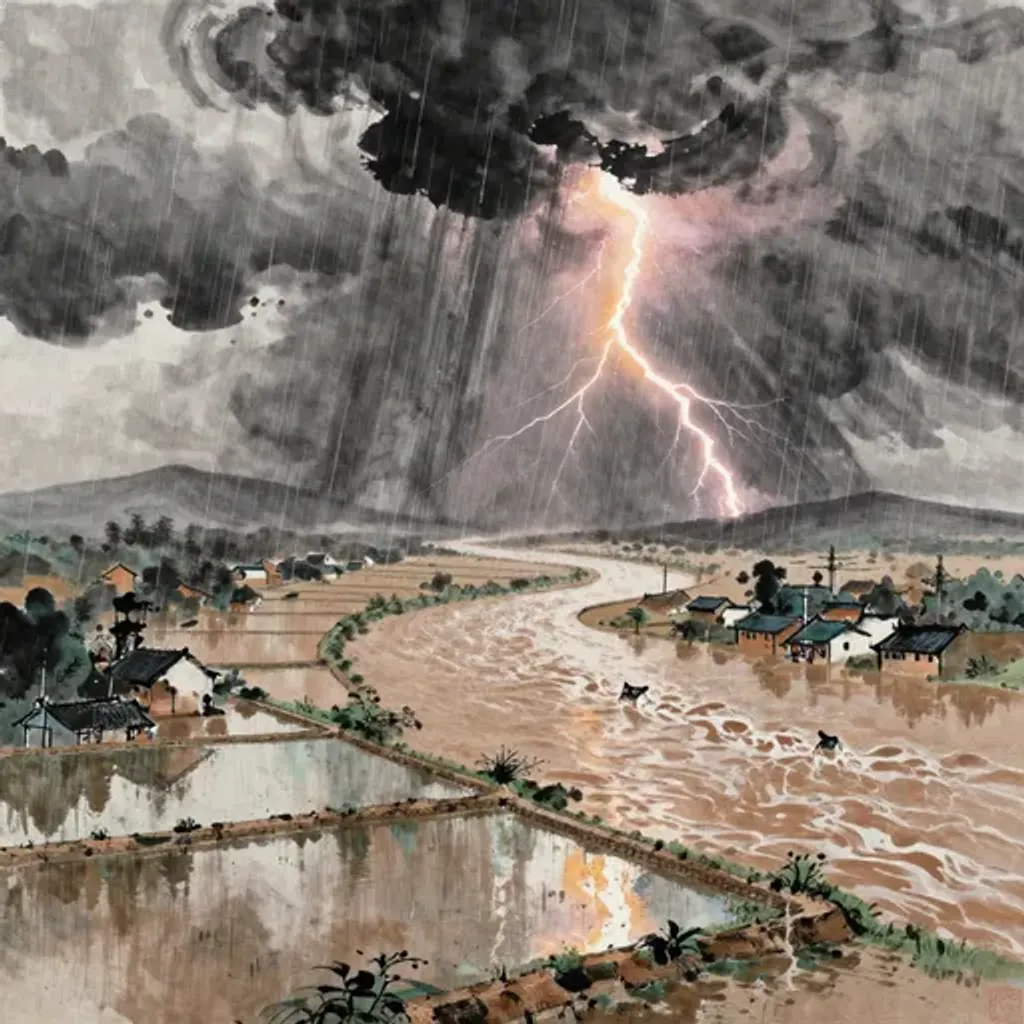
雷君出裝,隱隱西行。霖雨不止,流為巨江,南國以傷。
The thunder lord sets forth in procession, rumbling westward. Ceaseless rains pour down, flowing into a great river; the southern lands are laid to ruin.
— Jiao Yanshou, Yilin (Forest of Changes), 1st century BC
Commentary
Water on the mountain intensifies as the thunder lord rides forth in full regalia, rumbling westward with hidden menace. Unceasing downpour swells into a mighty river, and the southern lands are ravaged by flood. The 'Thunder Lord' evokes the storm deity marshaling his forces — not benevolent rain but overwhelming inundation. The southern region's suffering suggests the floods that historically devastated the Yangtze basin. From Obstruction to Approach, earth rests above the lake as authority descends to meet the people. But the verse inverts Approach's benevolent intent: what descends here is not teaching or governance but destructive water. When the approaching force is uncontrolled, what should nourish becomes catastrophe. Authority without restraint is indistinguishable from natural disaster.
蹇 → 觀
Hexagram 39 → Hexagram 20: Contemplation
Changing lines: 3, 6
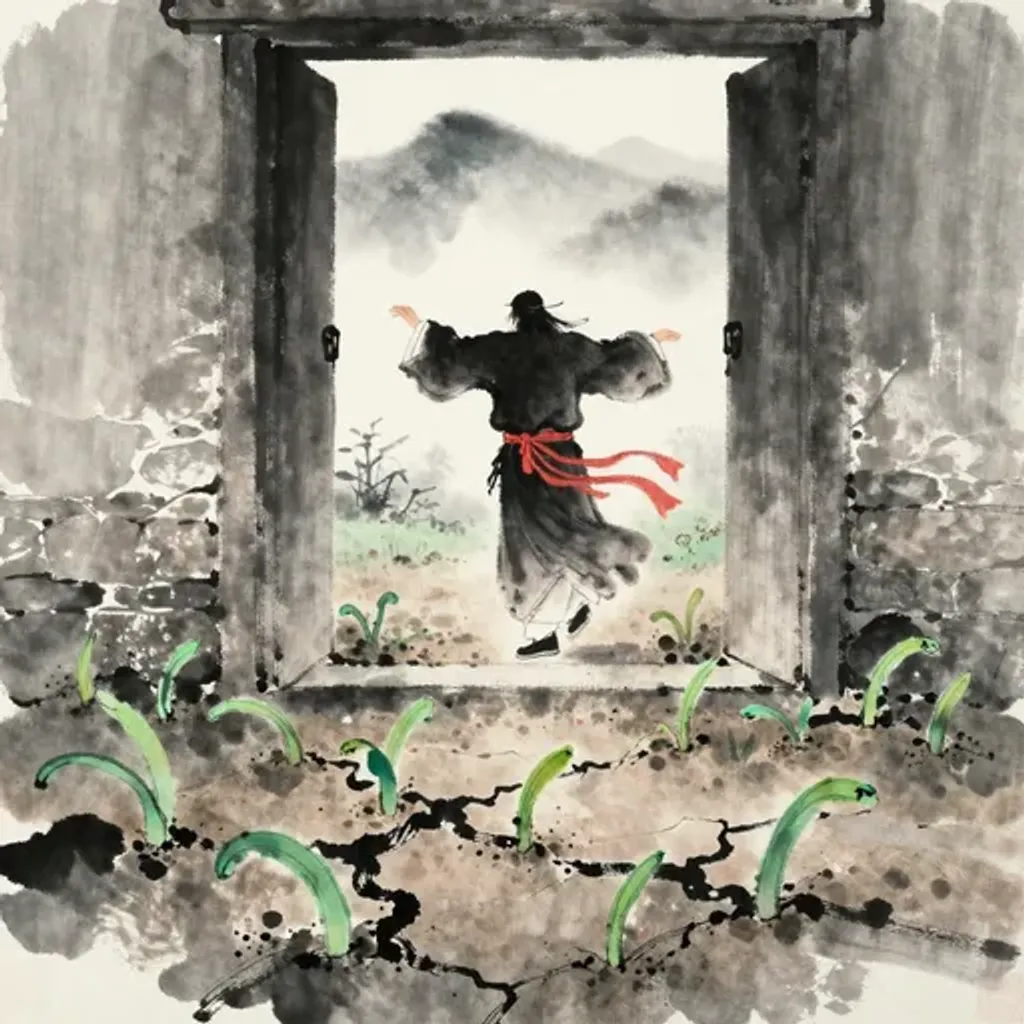
牙孽生齒,室蟠啟戶。幽人利貞,鼓翼起舞。
Buds and shoots break through like teeth; coiled in the chamber, the door opens. The hidden one finds benefit in steadfastness, spreading wings and rising to dance.
— Jiao Yanshou, Yilin (Forest of Changes), 1st century BC
Commentary
Water on the mountain conceals new growth stirring below. Buds push through where teeth once stood — new life replacing what was old and worn. A door opens in the dark chamber, and the hidden person, who profits from steadfast integrity, beats his wings and begins to dance. The imagery moves from dormancy to awakening: what seemed trapped in the mountain's grip finds an exit. The 'hidden person' (幽人) is a Yi Jing archetype of the sage in seclusion who maintains virtue during dark times. From Obstruction to Contemplation, wind sweeps over the earth as the ruler surveys his realm. The hidden person's emergence into dance mirrors Contemplation's principle: patient observation from within darkness eventually allows one to see — and be seen — with clarity.
蹇 → 噬嗑
Hexagram 39 → Hexagram 21: Biting Through
Changing lines: 1, 3, 4, 5, 6
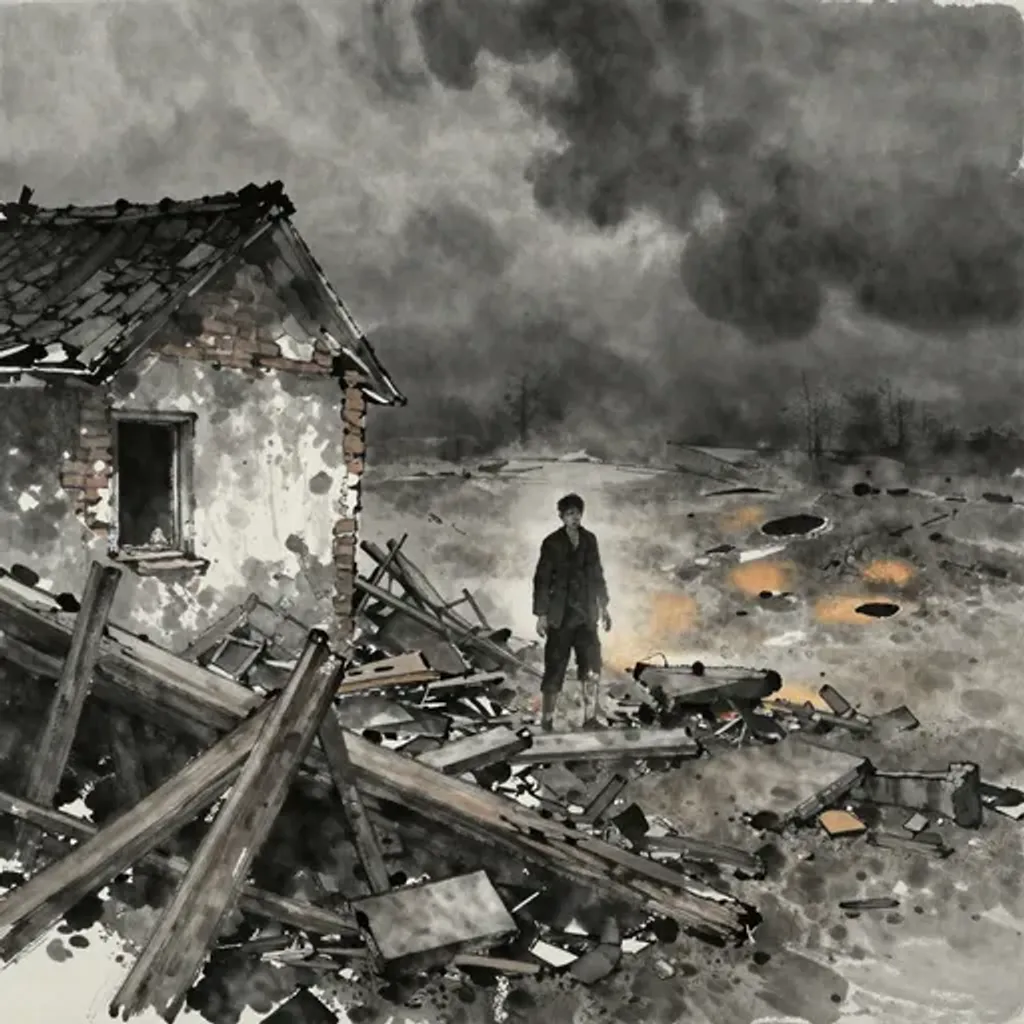
火起上門,不為我殘。跳脫東西,獨得生完。不利出鄰,病疾憂患。
The beam breaks, the house collapses — but the person is unharmed. Tiles and bricks fallen everywhere, standing in an empty lot. Looking back after the ordeal, cold all over — not daring to take a step for fear of hidden pits.
— Jiao Yanshou, Yilin (Forest of Changes), 1st century BC
Commentary
Water on the mountain brings peril, and this verse (a rewrite) must be read through the original: 'Fire breaks out at the front gate, yet it does not consume me. Leaping east and west, I alone survive whole. But it is not good to venture past the threshold — sickness and suffering follow.' The original captures a narrow escape from fire: the speaker dodges the flames and survives intact, but remains terrified and unable to step outside, knowing that illness lurks beyond the door. From Obstruction to Biting Through, thunder and lightning combine as the state enforces law with clarity. The survivor's paralysis inverts Biting Through's decisive action — where the hexagram demands cutting through obstacles, the traumatized speaker cannot bring himself to move forward, trapped between the fire behind and the danger ahead.
蹇 → 賁
Hexagram 39 → Hexagram 22: Grace
Changing lines: 1, 5, 6
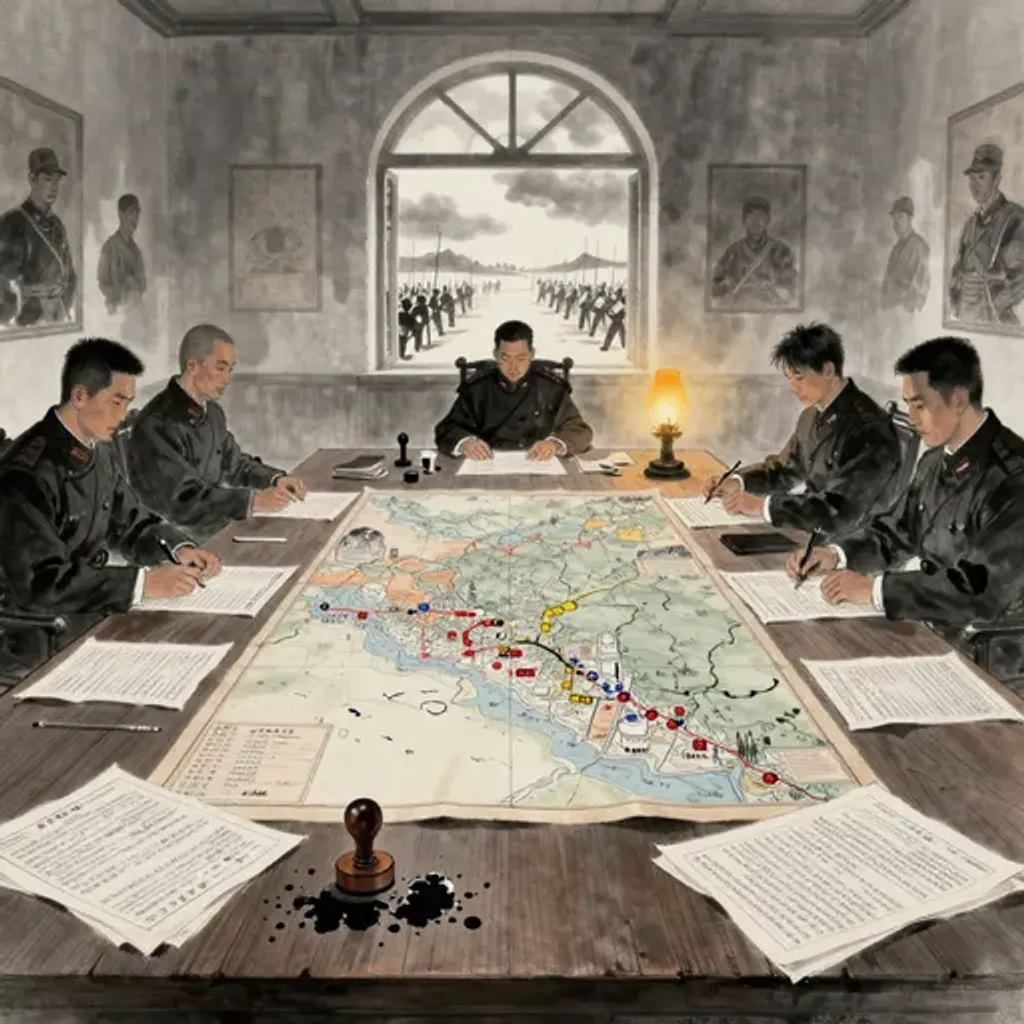
舉事无成,不利出征。言不可用,眾莫能平。
Undertakings meet with no success; it is not favorable to march forth. Words cannot be heeded; the multitude cannot be pacified.
— Jiao Yanshou, Yilin (Forest of Changes), 1st century BC
Commentary
Water on the mountain stops every initiative dead. Undertakings yield no result, military expeditions fare badly, counsel falls on deaf ears, and the multitude cannot be pacified. The verse is a catalog of comprehensive failure: action fails, force fails, words fail, authority fails. Nothing works when the obstruction is total. From Obstruction to Grace, fire glows at the base of the mountain, illuminating surface beauty while the substance beneath remains dark. Grace is adornment — the appearance of order without its structural foundation. The verse's failures stem from exactly this mismatch: when ornament substitutes for genuine capacity, expeditions collapse and words ring hollow. The mountain remains beautiful while everything built upon it crumbles.
蹇 → 剝
Hexagram 39 → Hexagram 23: Splitting Apart
Changing lines: 3, 5, 6
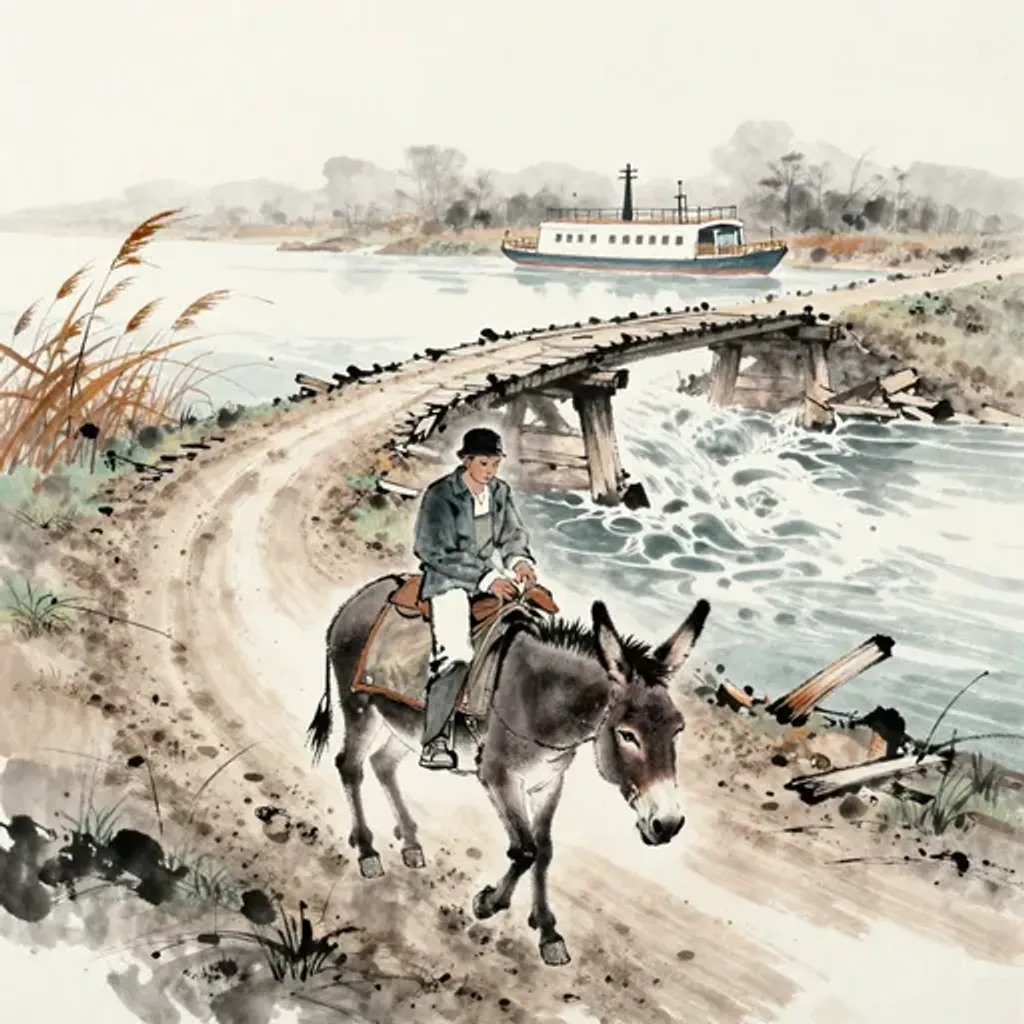
老狼白驢,長尾大狐。前顛卻躓,進退遇祟。
A lame donkey carries a blind man; a blind horse leads a drunk. Every bridge they reach is broken; every ferry they find has no boat.
— Jiao Yanshou, Yilin (Forest of Changes), 1st century BC
Commentary
Water on the mountain blocks every way forward, and this verse (a rewrite) must be read through the original: 'An old wolf and a white donkey, a long-tailed great fox — stumbling forward and tripping backward, advancing or retreating, they encounter only demons.' The original piles up images of crippled, ungainly beasts staggering along a road haunted by malevolent spirits. Every creature is damaged — the wolf old, the donkey white-haired, the fox ungainly — and every direction cursed. From Obstruction to Splitting Apart, the mountain sits upon bare earth, its base eroding from below. Splitting Apart is the final stage of disintegration: what the obstructed path promised, the crumbling mountain delivers. There is no cunning escape here, only the honest recognition that every support has given way and the only option is to wait for the cycle to reach its nadir before renewal becomes possible.
蹇 → 復
Hexagram 39 → Hexagram 24: Return
Changing lines: 1, 3, 5
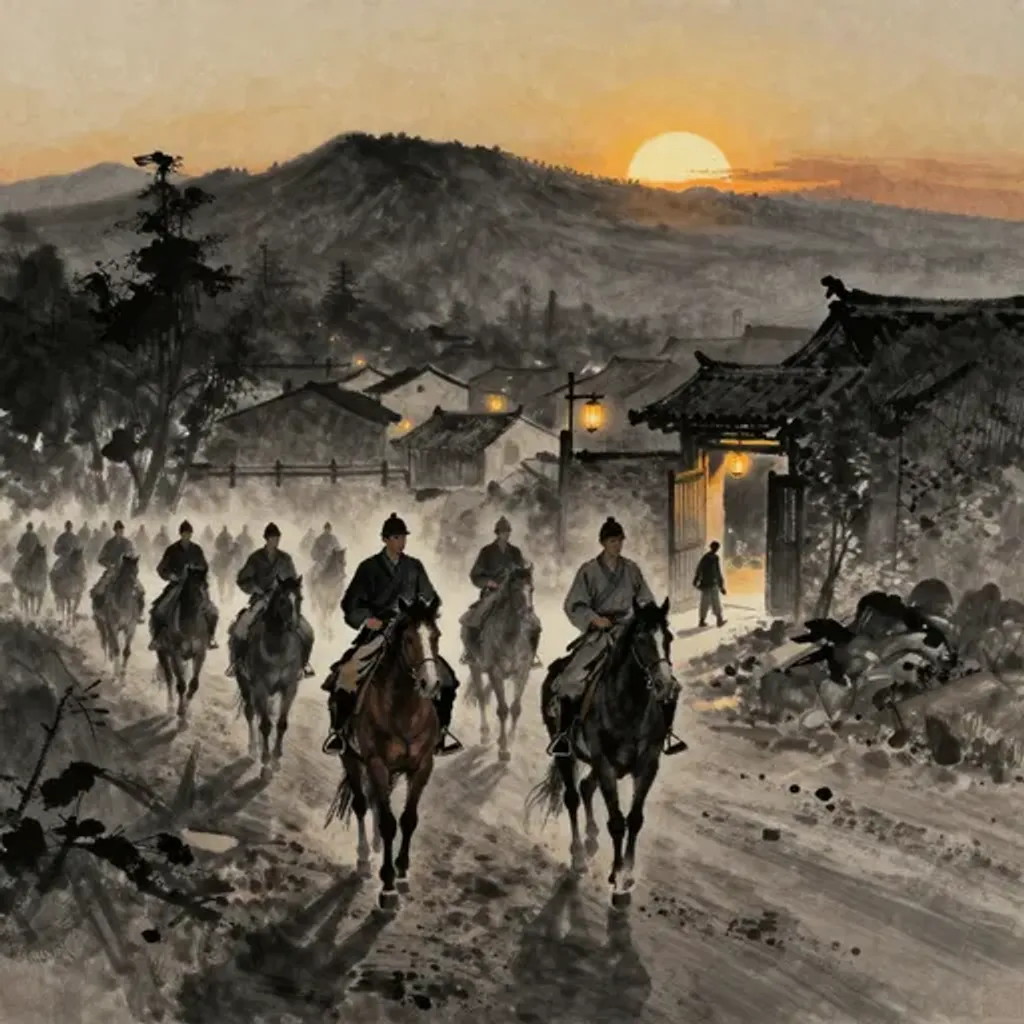
日入道極,勞者休息。班馬還師,復我燕室。
The sun sets at the road's end; the weary find their rest. The army's horses return from campaign, restored to our peaceful chambers.
— Jiao Yanshou, Yilin (Forest of Changes), 1st century BC
Commentary
Water on the mountain yields to the setting sun and the end of a long march. As daylight fades, the weary rest at last. The war-horses are called home, the army disbands, and the speaker returns to his own chamber. 'Calling the horses home' (班馬還師) evokes the formal order to withdraw troops — a commander's decision that the campaign is over. From Obstruction to Return, thunder stirs within the earth at the winter solstice. Return marks the first stirring of yang after the darkest point: the solstice rest, when gates are closed and travelers stay home. The verse maps perfectly onto this image: the exhausted journey ends, the horses return to their stable, the soldier to his room. Obstruction does not end in triumph but in the quiet recognition that one has come far enough, and it is time to turn back.
蹇 → 无妄
Hexagram 39 → Hexagram 25: Innocence
Changing lines: 1, 3, 4, 6
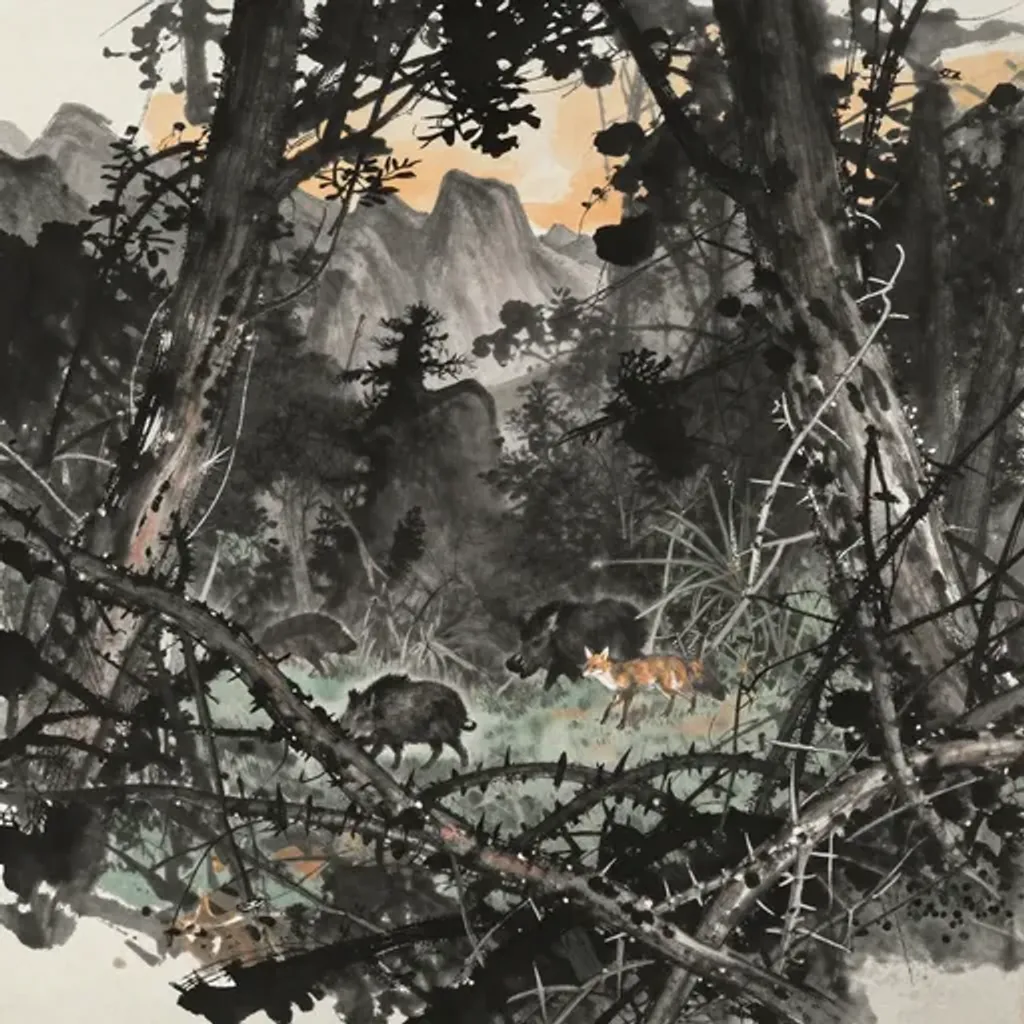
林麓山藪,非人所處。鳥獸无禮,使我心苦。
Forest thickets and mountain marshes, no place for people to dwell. Birds and beasts lack propriety; they cause my heart to suffer.
— Jiao Yanshou, Yilin (Forest of Changes), 1st century BC
Commentary
Water on the mountain drives the traveler into untamed wilderness. Dense forests and mountain marshes — places unfit for human habitation. Birds and beasts know no propriety, and their lawlessness makes the speaker's heart bitter. The verse captures exile in its rawest form: not political banishment but the existential anguish of being cast into a world that operates without human norms. From Obstruction to Innocence, thunder rolls beneath heaven and all things receive their true nature. Innocence (Wuwang) means acting without ulterior motive, in alignment with heaven's spontaneous order. Yet the exile experiences the wild's innocence as cruelty — nature is 'without delusion' precisely because it has no morality. The transformation reveals innocence's shadow: in a world of pure spontaneity, the cultivated person finds only suffering.
蹇 → 大畜
Hexagram 39 → Hexagram 26: Great Taming
Changing lines: 1, 2, 5, 6
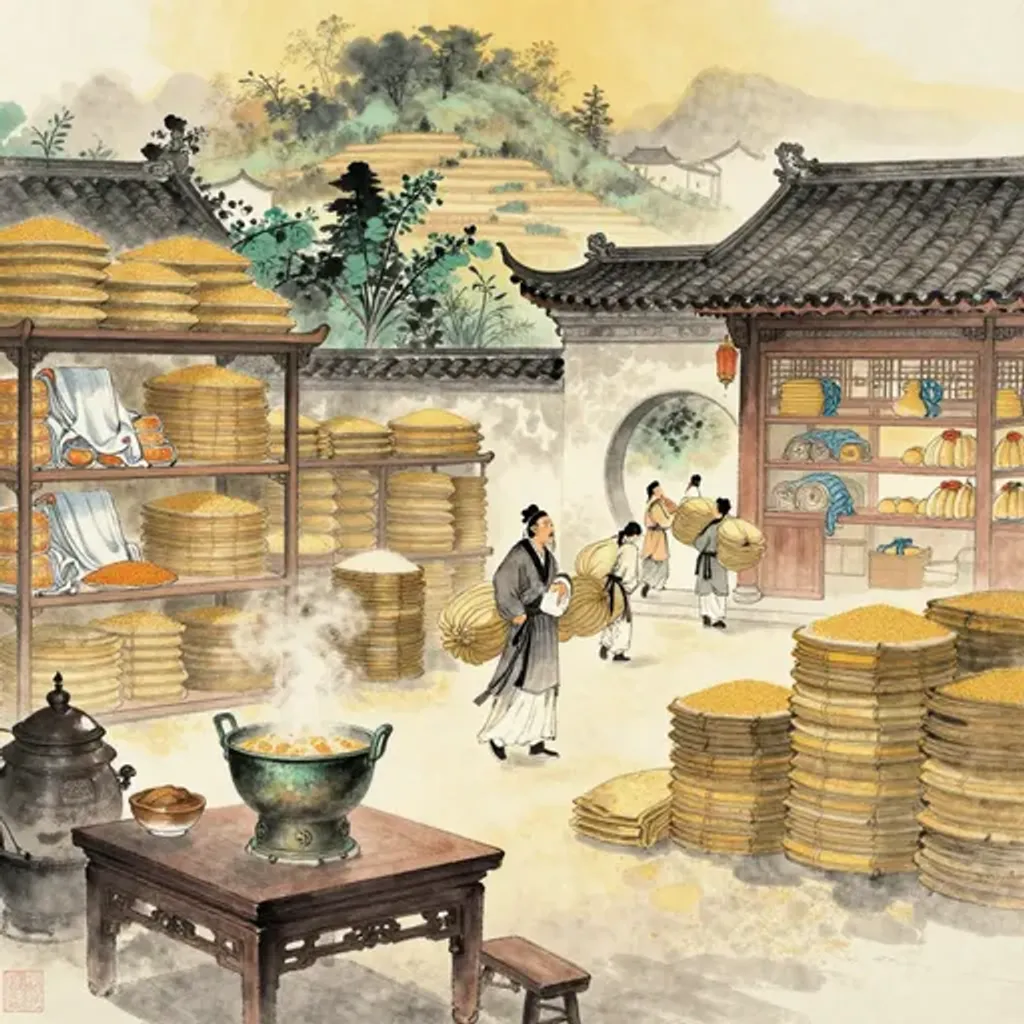
蓄利積福,日新其德。高氏飲食,憂不為患。
Storing profit and gathering blessings, renewing virtue day by day. The house of Gao eats and drinks well; worry does not become calamity.
— Jiao Yanshou, Yilin (Forest of Changes), 1st century BC
Commentary
Water on the mountain stores what others overlook. The verse counsels accumulation of advantage and virtue, renewing one's character day by day — a near-direct echo of the Great Learning's 'renew the people, daily make new.' The Gao clan's household enjoys abundant food and drink, and worry does not become calamity. The Gao clan of Qi was one of the great ministerial families; their security here signals the rewards of steady moral investment. From Obstruction to Great Taming, heaven is stored within the mountain. Great Taming excels at containing immense power through accumulated wisdom. The verse enacts this: what begins as blocked passage becomes a reservoir. Obstruction, properly understood, is the mountain's method of taming heaven — holding vast energy until the time for its release arrives.
蹇 → 頤
Hexagram 39 → Hexagram 27: Nourishment
Changing lines: 1, 3, 5, 6
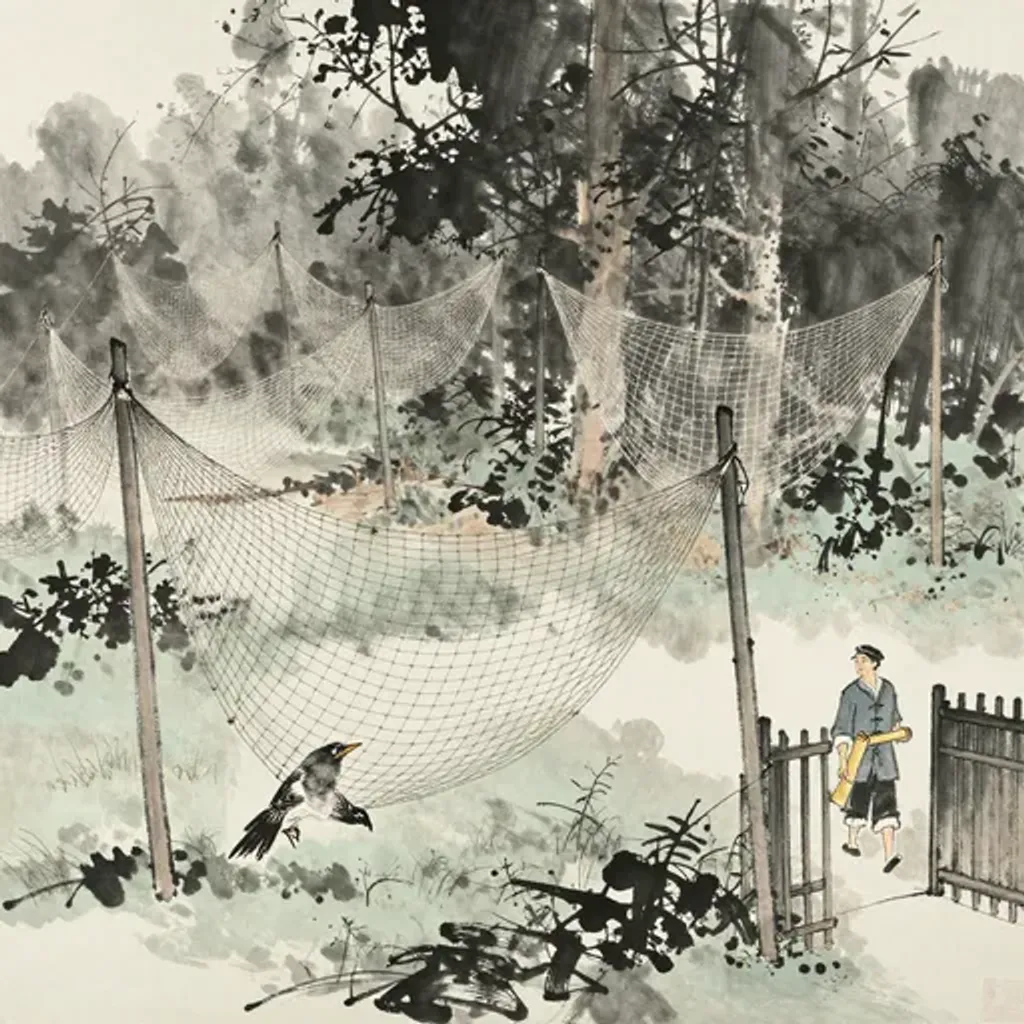
張羅百目,鳥不得北。縮頸掛翼,困於窘國。君子治德,獲譽受福。
A net spread with a hundred eyes; the birds cannot flee north. Necks drawn back and wings pinned, trapped in a desperate land. The gentleman cultivates virtue and reaps praise and blessings.
— Jiao Yanshou, Yilin (Forest of Changes), 1st century BC
Commentary
Water on the mountain forms a snare. A net of a hundred eyes is spread wide, and the birds cannot flee northward. Necks retracted, wings folded, they are trapped in a desperate state. Yet the verse pivots: the superior person cultivates virtue and thereby wins praise and blessings. The bird-net is a classic metaphor for political encirclement — when every avenue of escape is closed, the only recourse is inner cultivation. From Obstruction to Nourishment, mountain over thunder governs careful speech and moderated consumption. The trapped birds, necks drawn in, mirror Nourishment's image of the closed jaw: survival depends on what one takes in and what one holds back. The man who cultivates virtue amid entrapment is practicing the discipline of the mouth — choosing sustenance over complaint.
蹇 → 大過
Hexagram 39 → Hexagram 28: Great Exceeding
Changing lines: 2, 4
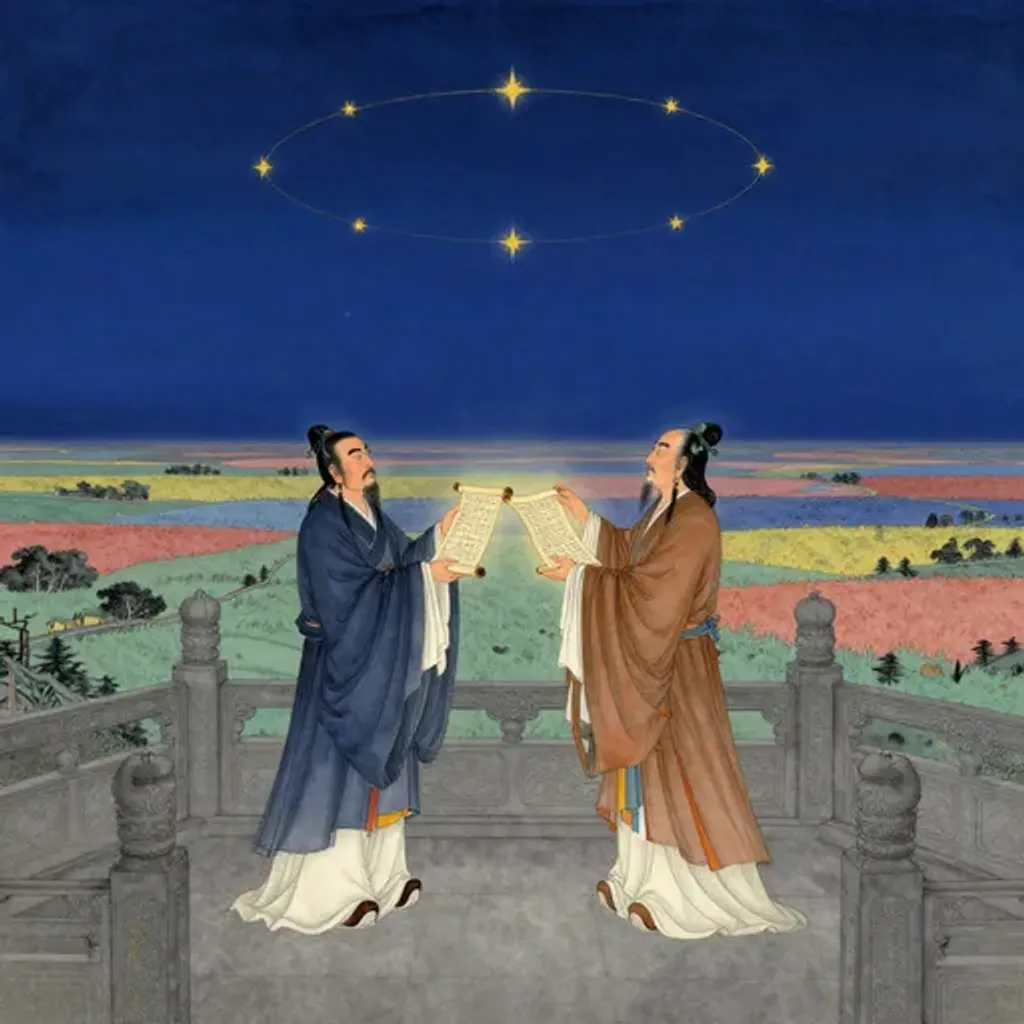
伯虎仲熊,德義淵弘。使布五教,陰陽順序。
Bo Hu and Zhong Xiong, their virtue and righteousness profound and vast. They spread the Five Teachings abroad; yin and yang follow their proper order.
— Jiao Yanshou, Yilin (Forest of Changes), 1st century BC
Commentary
Water on the mountain parts before the virtue of ancient sages. Bo Hu and Zhong Xiong — names drawn from the legendary Eight Talented Ones (八元) who served Emperor Shun — spread the Five Teachings of human relations, and yin and yang fall into proper sequence. These culture-heroes brought cosmic order through moral education rather than force: father and son in affection, ruler and subject in righteousness, husband and wife in distinction, elder and younger in precedence, friend and friend in trust. From Obstruction to Great Exceeding, the lake submerges the trees as extraordinary pressure builds. Great Exceeding demands that one stand alone without fear. The verse affirms that when extraordinary individuals apply extraordinary virtue, even the most obstructed cosmic order can be set right — but the effort required is itself 'great exceeding.'
蹇 → 坎
Hexagram 39 → Hexagram 29: The Abysmal Water
Changing lines: 2, 3
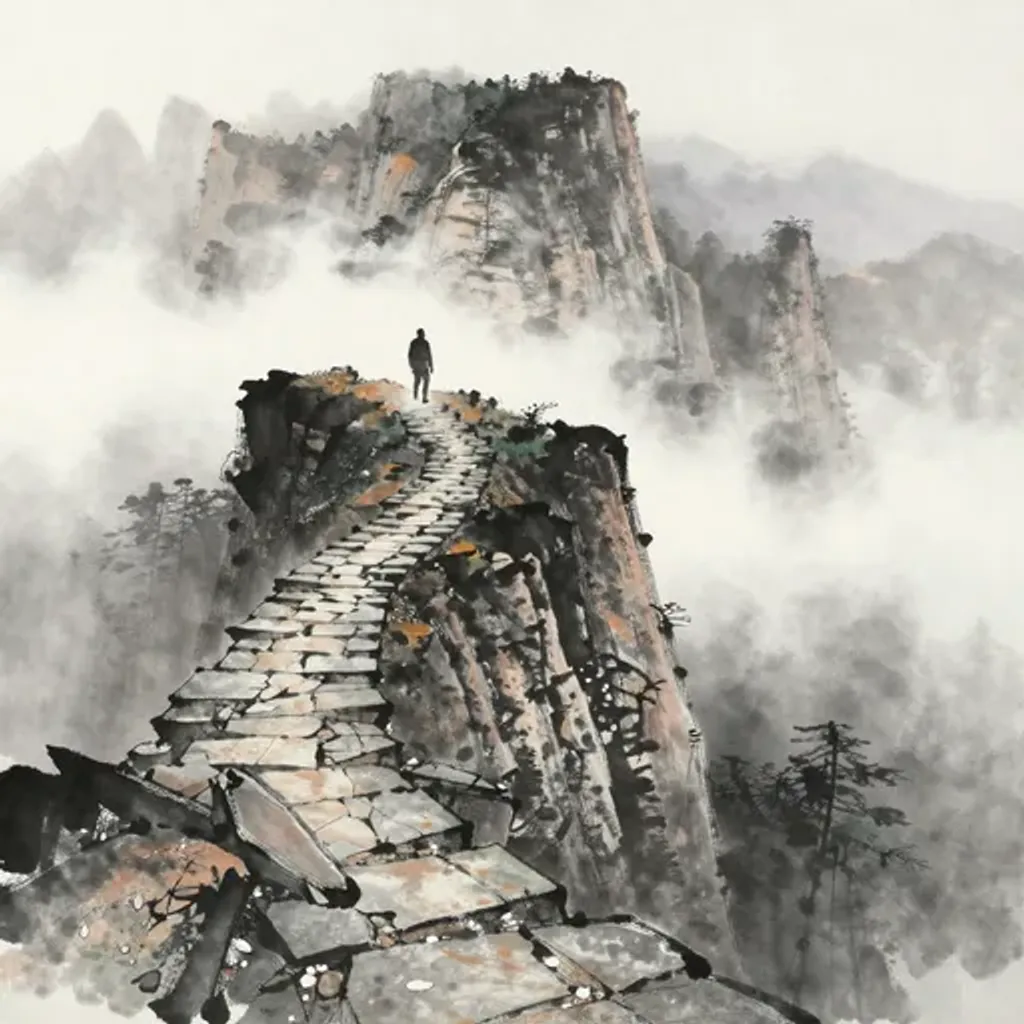
跛踦相隨,日暮牛罷。陵遲後旅,失利亡雌。
Fog locks the mountainside; the stone path breaks off entirely. Ahead, a deep chasm — behind, nothing to lean on.
— Jiao Yanshou, Yilin (Forest of Changes), 1st century BC
Commentary
Water on the mountain doubles into water upon water, and this verse (a rewrite) must be read through the original: 'The lame and crippled follow one another, by sunset the ox is spent. Trailing behind the caravan, they lose their profit and their mate.' The original describes a group of disabled travelers falling further and further behind a caravan as daylight fades. The ox is exhausted, the pace slows, and what they hoped to gain — trade profit, companionship — slips away. From Obstruction to The Abysmal, water upon mountain becomes water upon water, danger doubled. The transformation deepens rather than resolves the difficulty: the lame do not find level ground but another abyss. This is the Yilin's starkest warning that some obstructions lead not to liberation but to deeper peril, and the only wisdom is to recognize the danger before committing further.
蹇 → 離
Hexagram 39 → Hexagram 30: The Clinging Fire
Changing lines: 1, 4, 5, 6
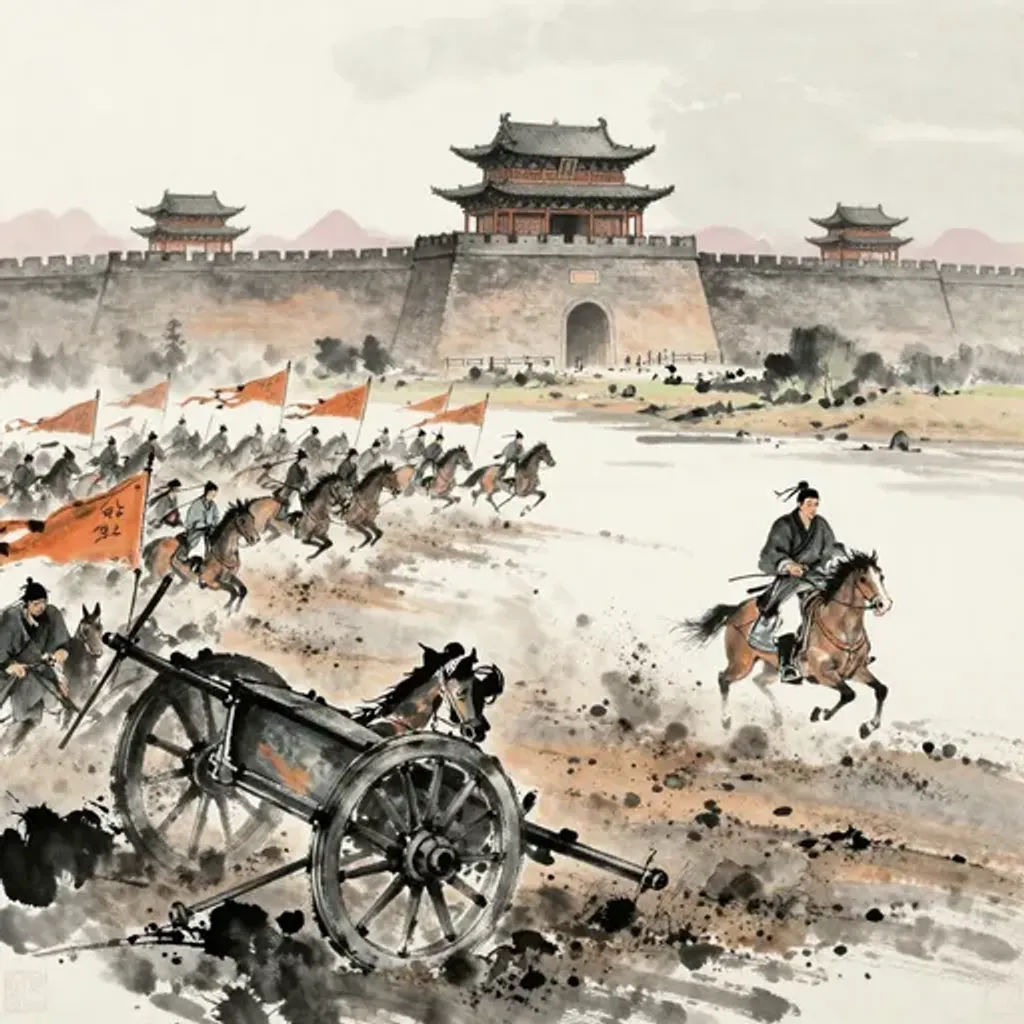
嬴氏違良,使孟尋兵。師老不已,敗於齊卿。
The house of Ying acted against the good, sending Meng to raise troops. The army aged without ceasing; defeated by the minister of Qi.
— Jiao Yanshou, Yilin (Forest of Changes), 1st century BC
Commentary
Water on the mountain witnesses a military blunder of the Ying clan — the surname of the Qin ruling house. The Ying lord disregards sound counsel and sends Meng to seek battle. But the army grows weary from prolonged campaigning, and defeat comes at the hands of a Qi minister. This likely alludes to a Qin military failure against the state of Qi, where overextension and poor strategy led to humiliation. From Obstruction to The Clinging, double fire blazes with penetrating clarity. The Clinging demands attachment to what is bright and correct. The Ying lord's error was precisely a failure to cling to good counsel — 'disregarding the worthy' (違良) — and instead clinging to aggressive ambition. Fire illuminates both triumph and folly; here it exposes the ruin that follows when leaders attach themselves to the wrong course.
蹇 → 咸
Hexagram 39 → Hexagram 31: Influence
Changing lines: 4
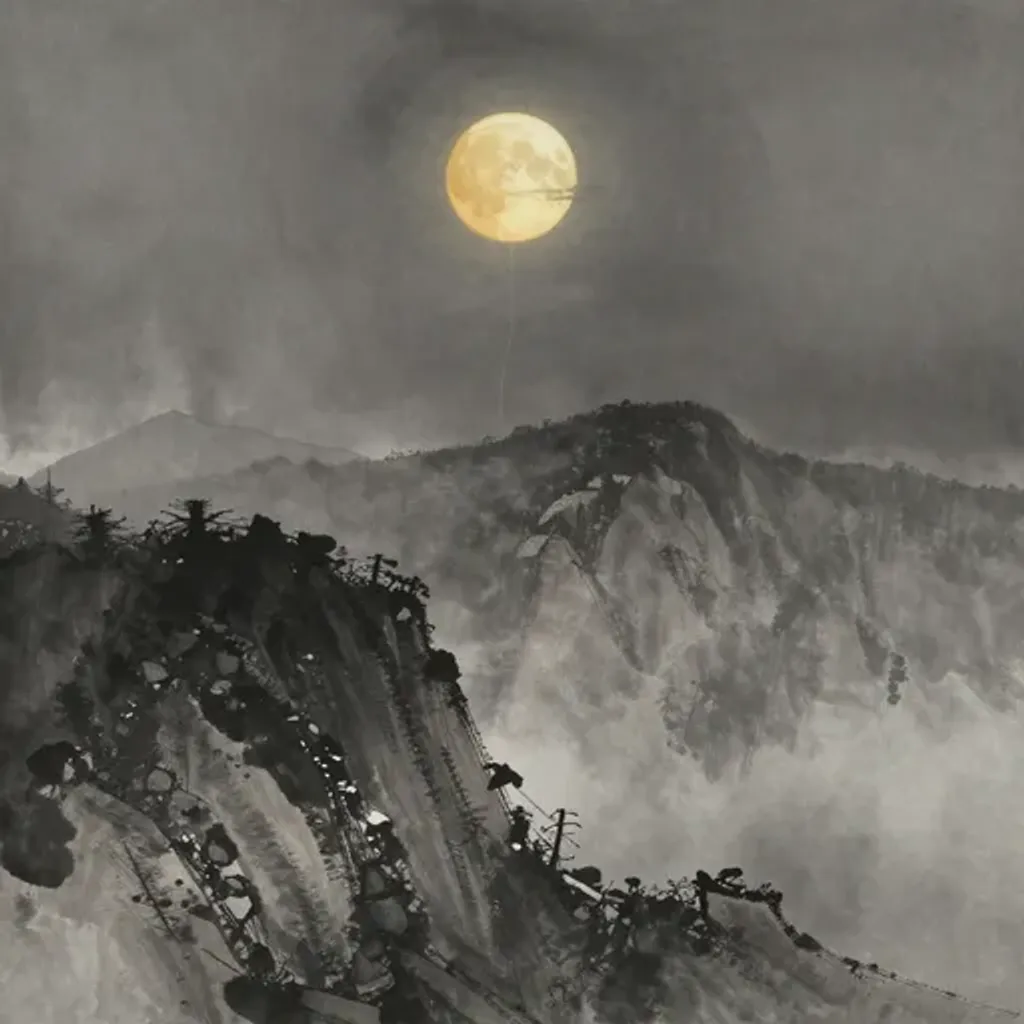
日月並居,常暗且微。高山萌顛,丘陵為谿。
Sun and moon dwell together, ever dark and dim. High mountains crumble from their peaks; hills become valleys.
— Jiao Yanshou, Yilin (Forest of Changes), 1st century BC
Commentary
Water on the mountain dims the celestial lights. Sun and moon share the sky yet remain perpetually dark and faint — the luminaries are present but unable to shine. Mountains crumble from their peaks, and hills dissolve into valleys. The cosmic and geographic order simultaneously inverts: light fails in heaven while the earth's contours collapse. This is the Yilin's imagery of total systemic failure, where both the moral compass (sun and moon) and the physical landscape (mountains and valleys) lose their definition. From Obstruction to Influence, the lake gathers above the mountain as mutual receptivity creates attraction. But the verse depicts the opposite: when sun and moon cannot illuminate and mountains cannot stand, no authentic influence can form. Influence requires distinct poles — here, all distinctions have collapsed.
蹇 → 恆
Hexagram 39 → Hexagram 32: Duration
Changing lines: 2, 4, 5
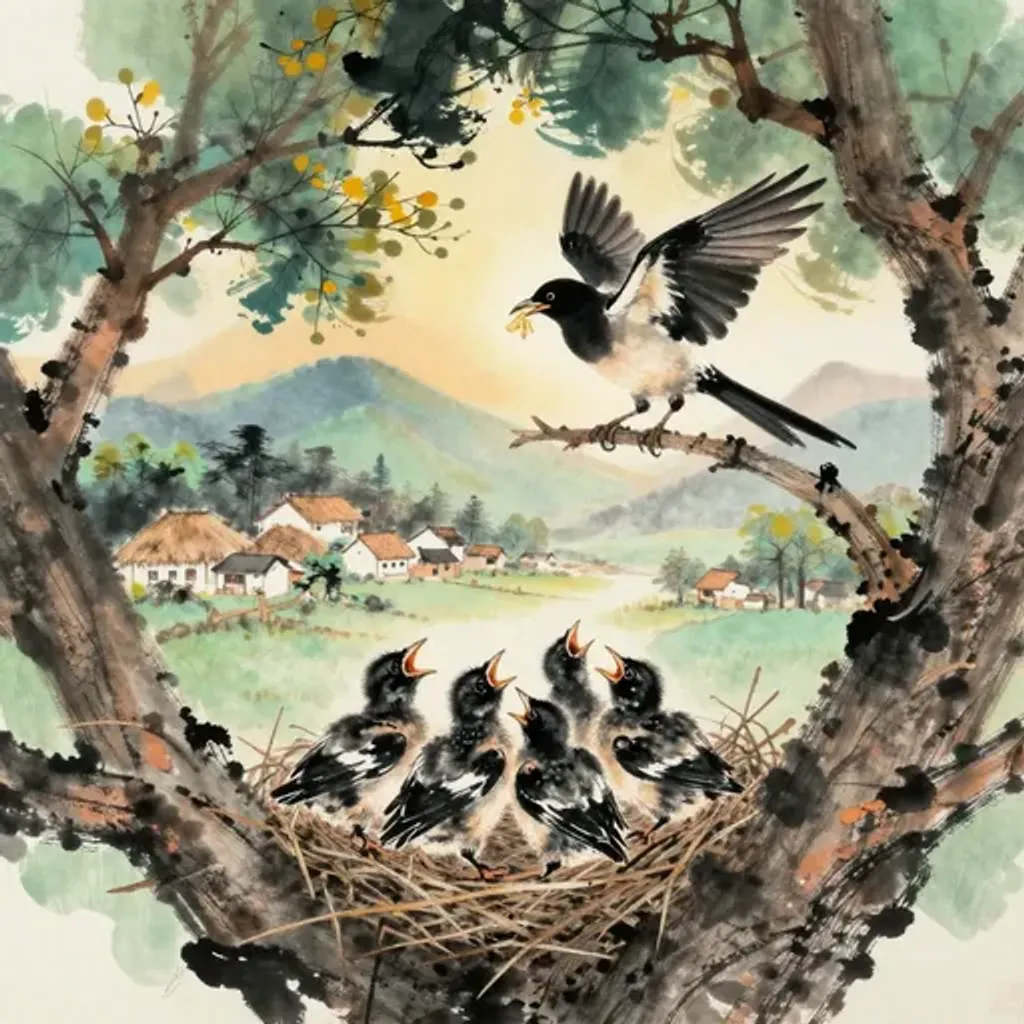
鳥鵲食穀,張口受哺。蒙被恩德,長大成就。柔順利貞,君臣合好。
Magpies eat grain, mouths open to receive their feeding. Covered in kindness and virtue, they grow to full achievement. Gentle and steadfast; lord and minister in harmony.
— Jiao Yanshou, Yilin (Forest of Changes), 1st century BC
Commentary
Water on the mountain nurtures what patience sustains. Young magpies eat grain with mouths open for feeding, receiving grace and nourishment from their parents. Covered in kindness, they grow to full maturity and achievement. The verse then declares: soft compliance and steadfast rectitude bring harmony between ruler and minister. The fledgling-to-adult arc mirrors the transformation of obstruction into enduring constancy. From Obstruction to Duration, thunder and wind reinforce one another in an unceasing cycle. Duration is not static permanence but dynamic continuity — the same pattern reproduced faithfully over time. The birds that began as helpless chicks, fed by another's grace, grow into creatures that will feed the next generation. Obstruction becomes duration when the nourishment received is transformed into nourishment given.
蹇 → 遯
Hexagram 39 → Hexagram 33: Retreat
Changing lines: 4, 6
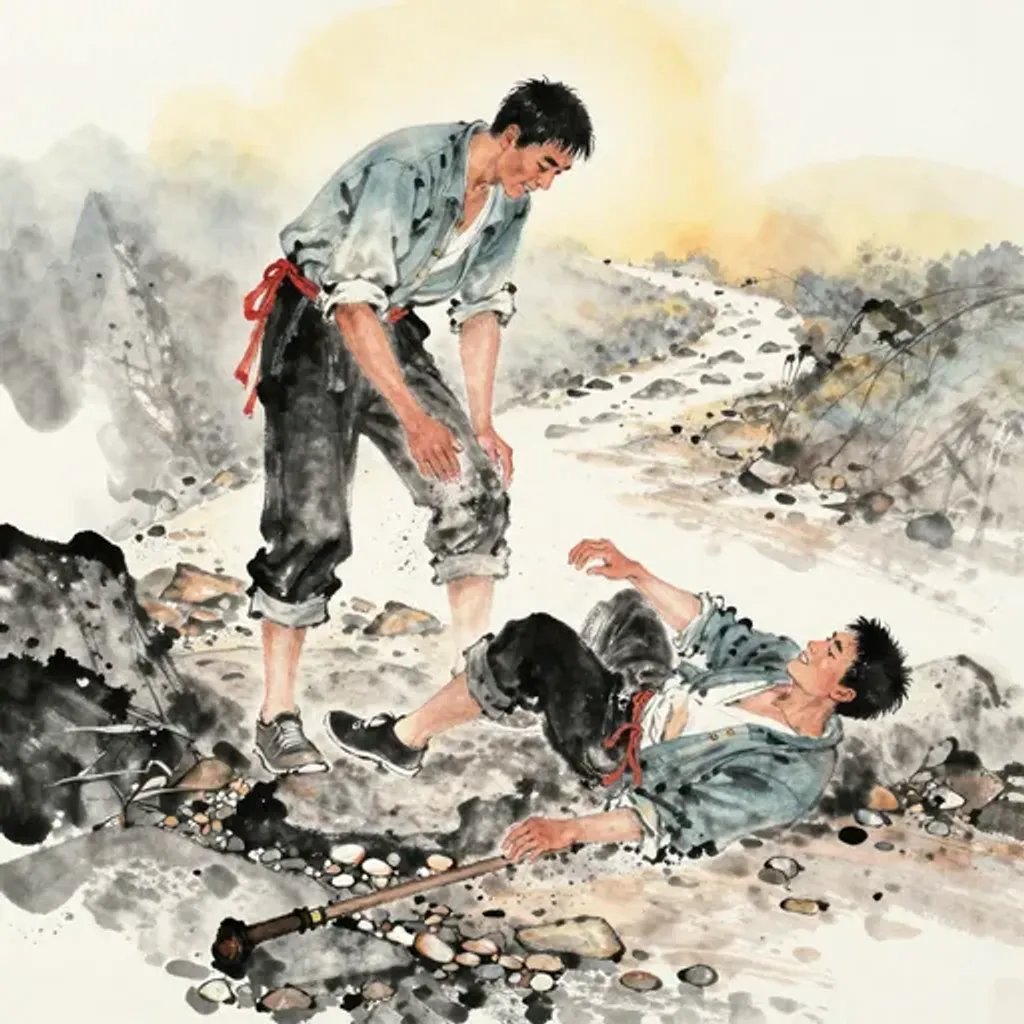
雖躓復起,不毀牙齒。克免平復,憂除无疾。
Though he stumbles, he rises again; his teeth are not broken. Overcoming and recovering in peace, worry is dispelled and illness is no more.
— Jiao Yanshou, Yilin (Forest of Changes), 1st century BC
Commentary
Water on the mountain trips the traveler, but he rises again. Though he stumbles, he does not break his teeth — the damage is superficial, not structural. He recovers steadily, worry fades, and illness does not take hold. The verse celebrates the resilience of one who falls on a difficult road and gets up without lasting injury. The teeth, in Chinese medical and divinatory symbolism, represent fundamental vitality; keeping them intact means the core self survives. From Obstruction to Retreat, heaven withdraws above the mountain as the sage distances himself from petty forces. The stumble-and-recovery pattern enacts Retreat's wisdom: the man does not conquer the obstacle but outlasts it. By retreating from confrontation with the mountain path — accepting the fall rather than fighting it — he preserves what matters most.
蹇 → 大壯
Hexagram 39 → Hexagram 34: Great Power
Changing lines: 1, 2, 4, 5
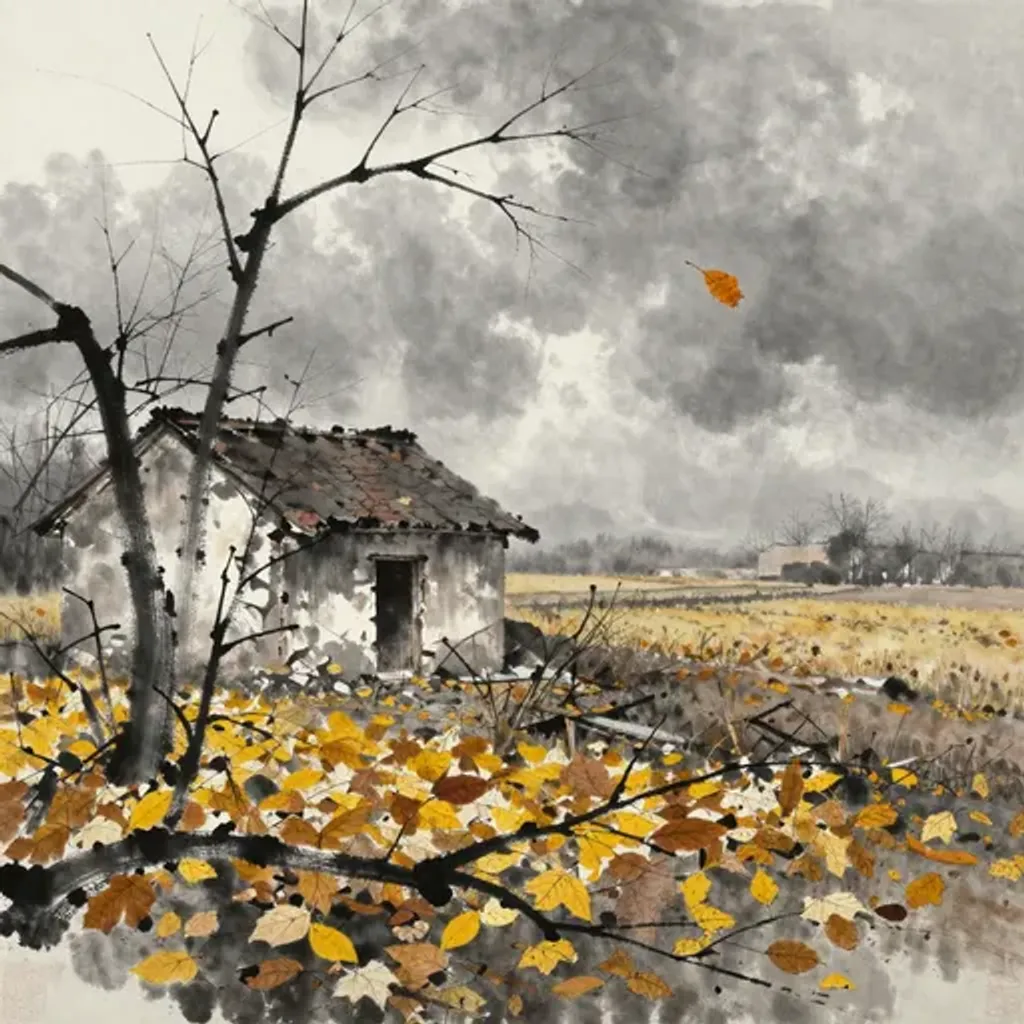
草木黃落,歲暮无室。虐政為賊,大人失福。
Grass and trees turn yellow and fall; at year's end there is no shelter. Cruel governance becomes a scourge; the great man loses his blessing.
— Jiao Yanshou, Yilin (Forest of Changes), 1st century BC
Commentary
Water on the mountain presides over a desolate autumn. Grass and trees yellow and fall, the year draws to its bitter end, and there is no shelter. Cruel governance acts as a thief to the people, and the great man loses his blessings. The image layers natural decay with political misrule: winter's barrenness is compounded by oppressive leadership that strips the people bare. From Obstruction to Great Power, thunder rumbles above heaven in a display of overwhelming force. Yet the verse reveals Great Power's shadow: when power is used as 'banditry' (虐政為賊) rather than legitimate authority, the thunderous force destroys rather than invigorates. The leafless landscape is what remains when great power is wielded without propriety — the very thing the hexagram warns against when it says 'the superior man does not tread paths contrary to ritual.'
蹇 → 晉
Hexagram 39 → Hexagram 35: Progress
Changing lines: 3, 4, 5, 6
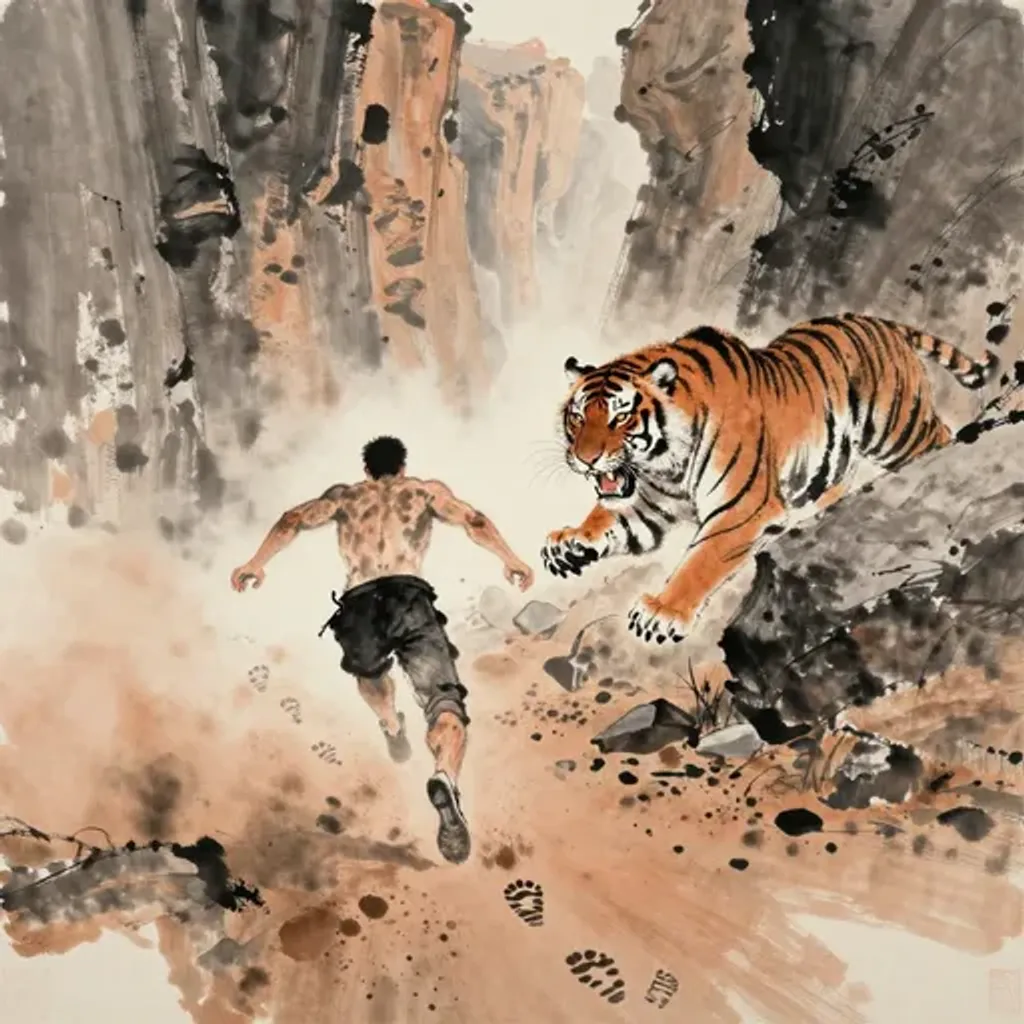
避凶東走,反入禍口。制於牙爪,骨為灰土。
Fleeing danger by running east, he enters instead the mouth of disaster. Seized by fangs and claws; bones turned to ash and dust.
— Jiao Yanshou, Yilin (Forest of Changes), 1st century BC
Commentary
Water on the mountain drives a desperate flight. Fleeing disaster eastward, the fugitive runs straight into the jaws of another catastrophe. Seized by fangs and claws, his bones are ground to ash and dust. The verse is a study in lethal irony: the act of escape becomes the instrument of destruction. Every direction is blocked — the mountain's water has flooded all routes, and the one path that seemed open leads to the predator's den. From Obstruction to Progress, fire rises above the earth as light emerges from darkness. Progress promises illumination and advancement, but the verse subverts this utterly: the one who 'advances' eastward meets annihilation. Progress without discernment — rushing toward the light without checking what lurks in the brightness — is simply walking faster into the trap.
蹇 → 明夷
Hexagram 39 → Hexagram 36: Darkening of the Light
Changing lines: 1, 5
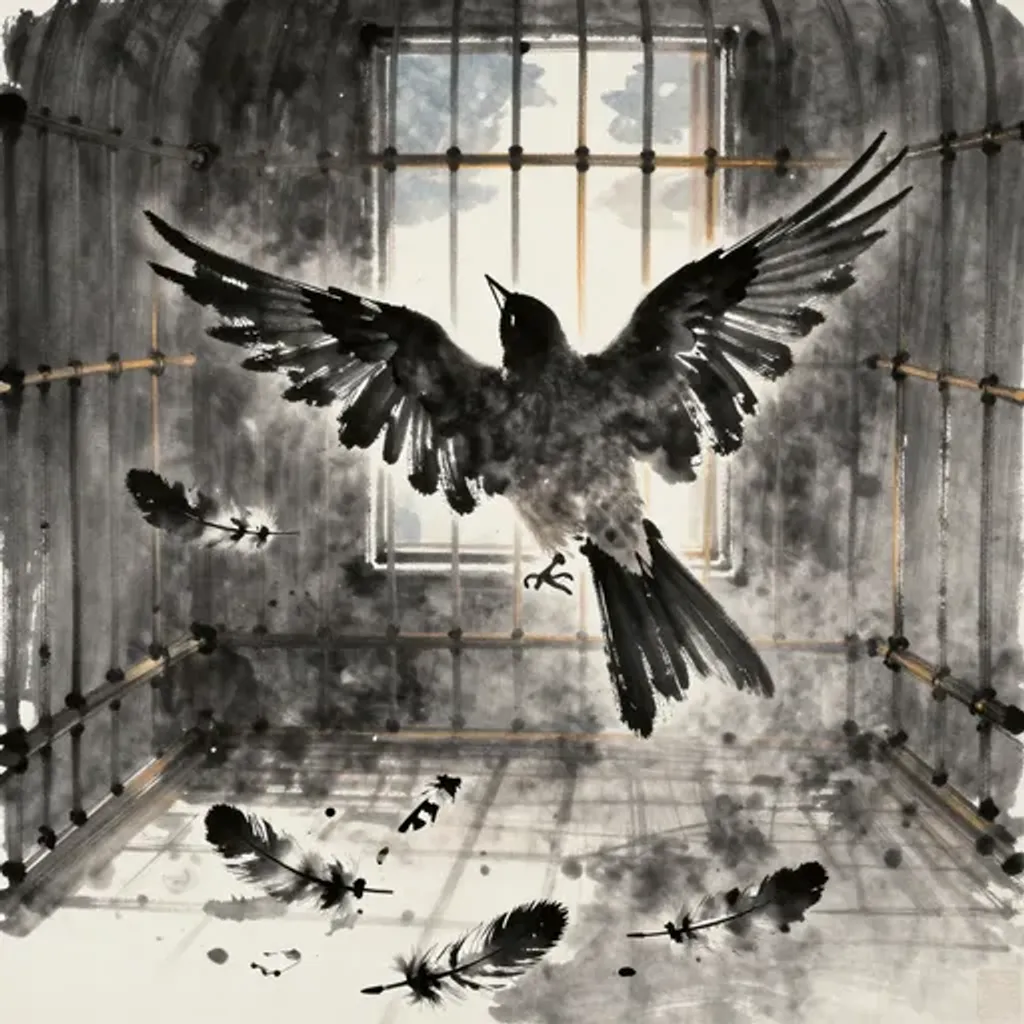
欲飛不能,志苦心勞,福不我求。
Wishing to fly yet unable; the will is bitter and the heart toils. Blessings do not seek me out.
— Jiao Yanshou, Yilin (Forest of Changes), 1st century BC
Commentary
Water on the mountain weighs upon wings that cannot spread. Longing to fly but unable, the spirit toils in bitter frustration, and blessings refuse to come. The verse is among the Yilin's most compressed expressions of thwarted aspiration — three short phrases that capture an entire life of unfulfilled potential. The bird that cannot fly is not caged but simply incapable; the obstruction is internal as much as external. From Obstruction to Darkening of the Light, fire sinks beneath the earth. Brightness enters the ground and is buried. The transformation deepens the anguish: the aspiration to fly meets not just obstruction but active suppression. The light that should illuminate is forced underground, and the spirit that should soar is pressed into the mountain's weight. Yet Darkening of the Light counsels using 'darkness to remain bright' — surviving by concealing one's flame.
蹇 → 家人
Hexagram 39 → Hexagram 37: The Family
Changing lines: 1, 6
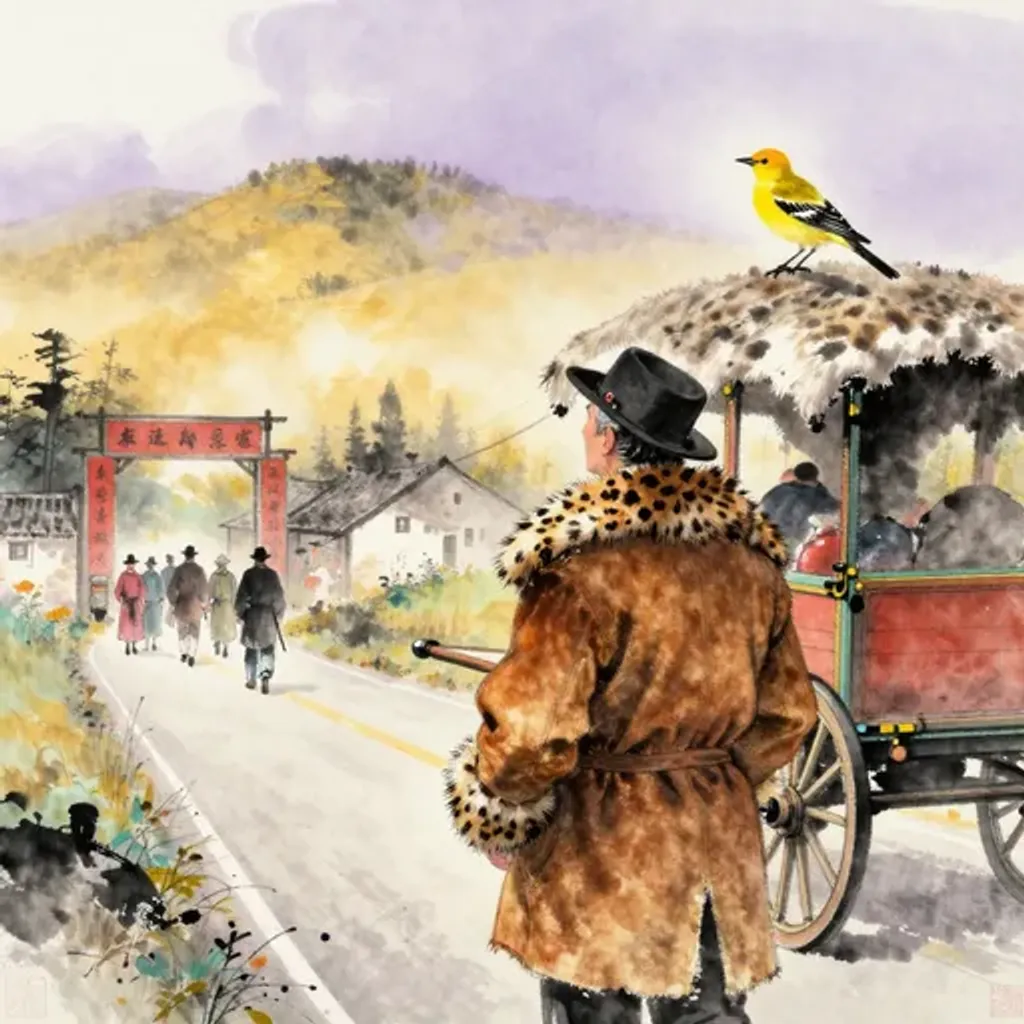
羔裘豹祛,東與福遇。駕迎吾兄,送我鸝黃。
In a lambskin coat with leopard-fur cuffs, he meets blessings heading east. Driving the carriage to welcome my brother; he sends me an oriole.
— Jiao Yanshou, Yilin (Forest of Changes), 1st century BC
Commentary
Water on the mountain yields to an auspicious homecoming. Wearing a lamb-skin robe with leopard-fur cuffs — the ceremonial dress of a Shijing nobleman — the speaker travels east and meets good fortune. A carriage is sent to welcome his elder brother, and an oriole is presented as a gift. The lamb-skin robe with leopard trim echoes the Shijing ode 'Gaoqiu' from the Zheng winds, symbolizing the well-appointed official. The oriole (鸝黃) adds a note of spring warmth and beauty. From Obstruction to The Family, wind emerges from fire as the household radiates warmth outward. The blocked mountain road transforms into the avenue leading home, and the traveler arrives not as a refugee but as a returning kinsman welcomed with ceremony and joy.
蹇 → 睽
Hexagram 39 → Hexagram 38: Opposition
Changing lines: 1, 2, 3, 4, 5, 6
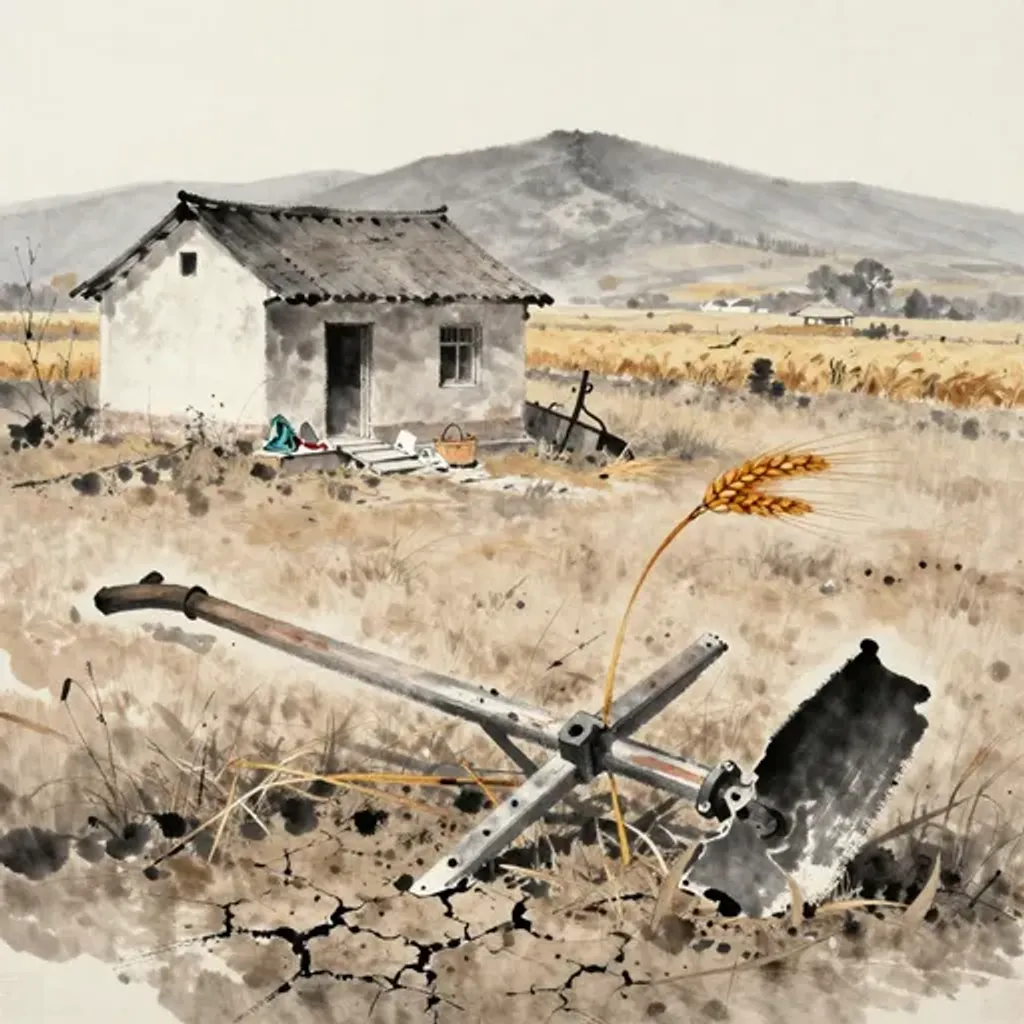
東耕破犂,西失良妻。災害不避,家貧无資。
Plowing east, the plow breaks; in the west, a good wife is lost. Disaster and harm are not avoided; the family is poor and without means.
— Jiao Yanshou, Yilin (Forest of Changes), 1st century BC
Commentary
Water on the mountain ruins every endeavor on both fronts. Plowing the eastern field breaks the plow; in the west, a good wife is lost. Disaster cannot be avoided, and the household falls into poverty with nothing left. The verse distributes calamity across all domains — livelihood (the broken plow), family (the lost wife), security (unavoidable disaster), and resources (empty coffers). From Obstruction to Opposition, fire rises above the lake as two forces that should complement each other instead diverge. Opposition is estrangement made structural: what belongs together is pulled apart. The broken plow and the lost wife embody this perfectly — east and west, work and home, male and female domains all fracture simultaneously. When obstruction compounds into opposition, even the complementary halves of a life cannot hold together.
蹇 → 蹇
Hexagram 39 → Hexagram 39: Obstruction
No changing lines — the hexagram is unchanged
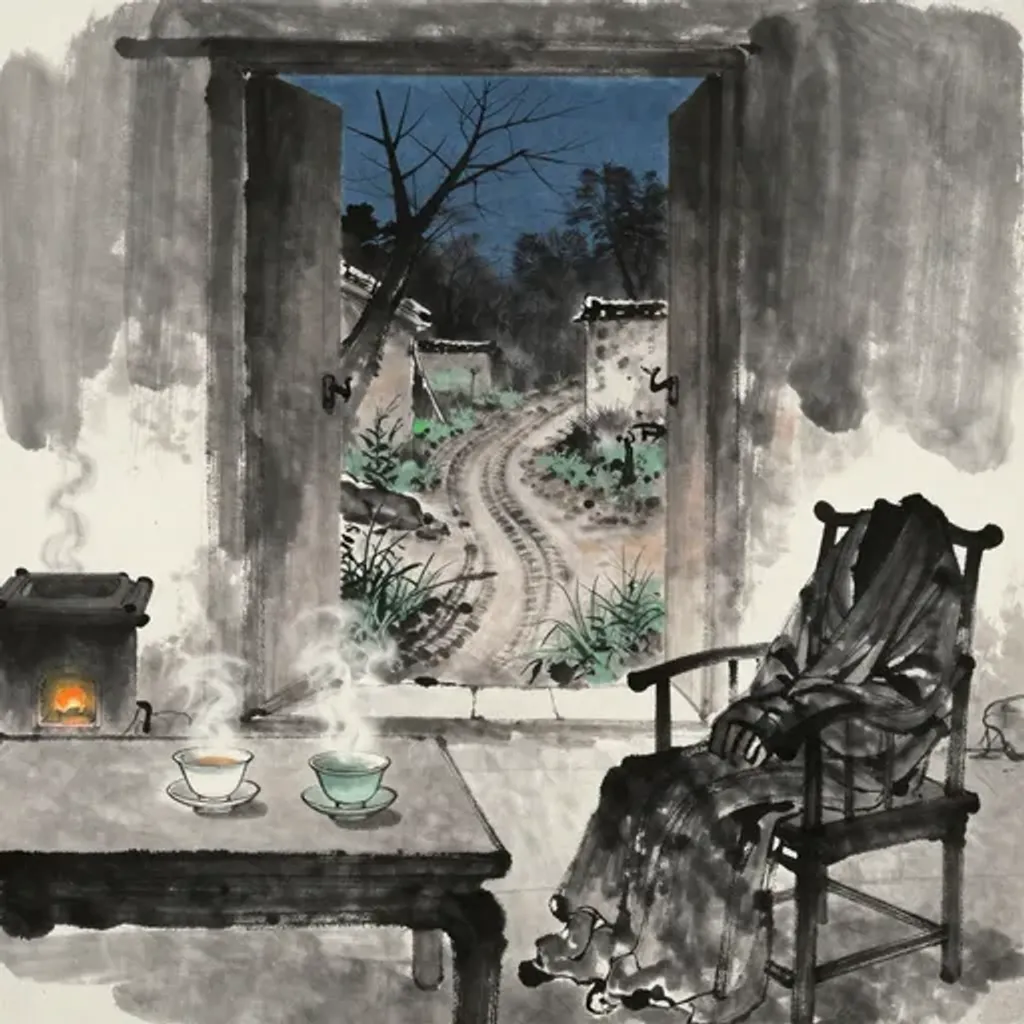
同載共輿,中道別去。喪我元夫,獨與孤居。
Two cups of tea — one cold, one still warm. On the chair, clothes still hold a trace of warmth. Outside the gate, the carriage ruts are overgrown with grass — night after night, listening to the wind, waiting for no one.
— Jiao Yanshou, Yilin (Forest of Changes), 1st century BC
Commentary
Water on the mountain returns to water on the mountain — Obstruction unchanged. This verse (a rewrite) must be read through the original: 'Sharing one carriage, we traveled together, but midway you departed. I have lost my husband, and dwell alone in solitude.' The original captures the most intimate form of abandonment: two who rode the same carriage, bound by marriage and shared direction, until one simply left. The survivor remains, companionless, in an empty house. From Obstruction to Obstruction, the pattern holds: the mountain does not move, the water does not flow. When the same hexagram meets itself, there is no transformation — only the pure, unrelieved experience of the condition. The empty chair and the cold tea are obstruction without exit, grief without the consolation of change.
蹇 → 解
Hexagram 39 → Hexagram 40: Deliverance
Changing lines: 2, 3, 4, 5
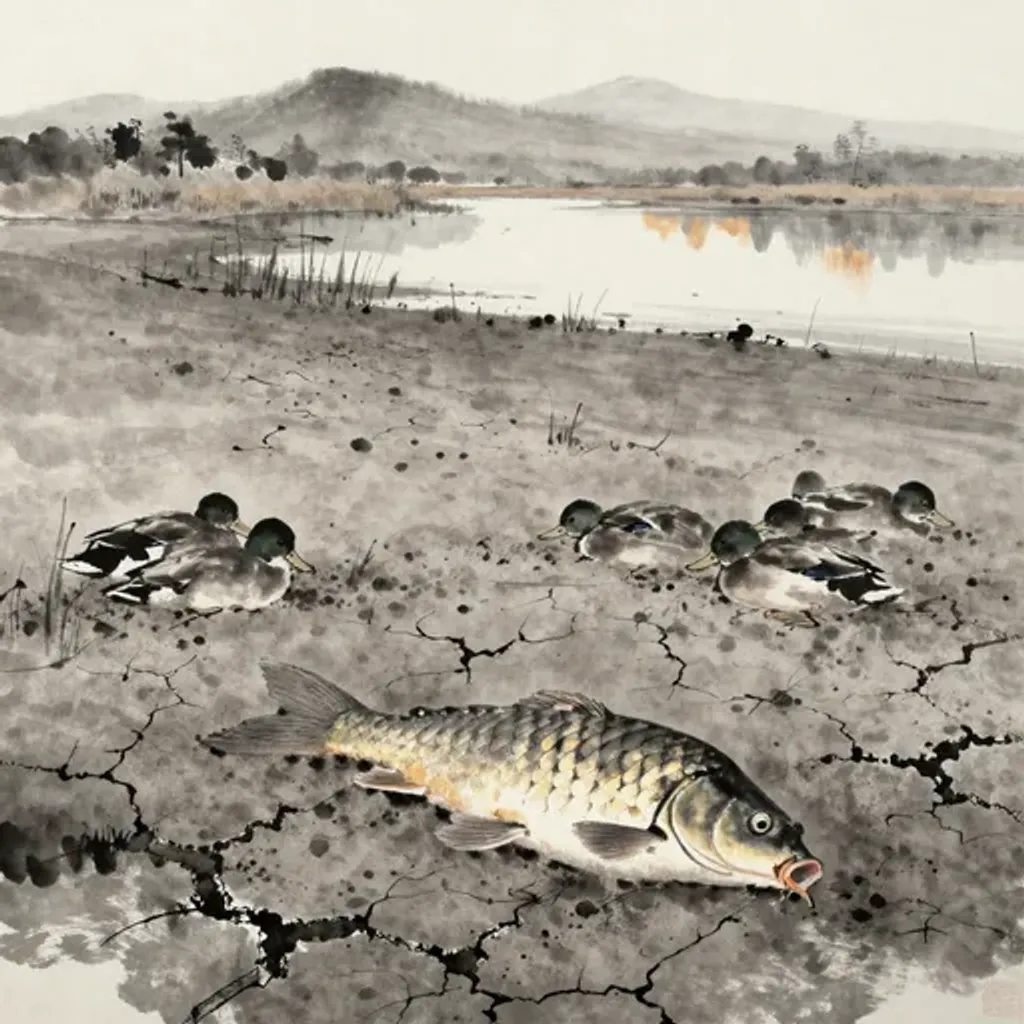
魚陸失所,鳧䵷困苦。澤无雚蒲,晉國以虛。
Fish stranded on land, out of their element; ducks and geese in distress. The marsh has no reeds or rushes; the state of Jin is emptied.
— Jiao Yanshou, Yilin (Forest of Changes), 1st century BC
Commentary
Water on the mountain strands every creature out of its element. Fish are beached on dry land, ducks and geese suffer in hardship. The marshes lack their reeds and cattails, and the state of Jin is left hollow and depleted. Each image reinforces displacement: fish without water, waterfowl without shelter, wetlands without vegetation, a great state without substance. The systematic removal of each life-form's sustaining element creates a landscape of thoroughgoing desolation. From Obstruction to Deliverance, thunder and rain break the tension. Deliverance is the release after crisis — the storm that washes the drought away. The verse's utter barrenness sets the stage for this relief: only when the displacement is total can the thunder-rain of Deliverance arrive and restore each being to its proper place.
蹇 → 損
Hexagram 39 → Hexagram 41: Decrease
Changing lines: 1, 2, 3, 5, 6
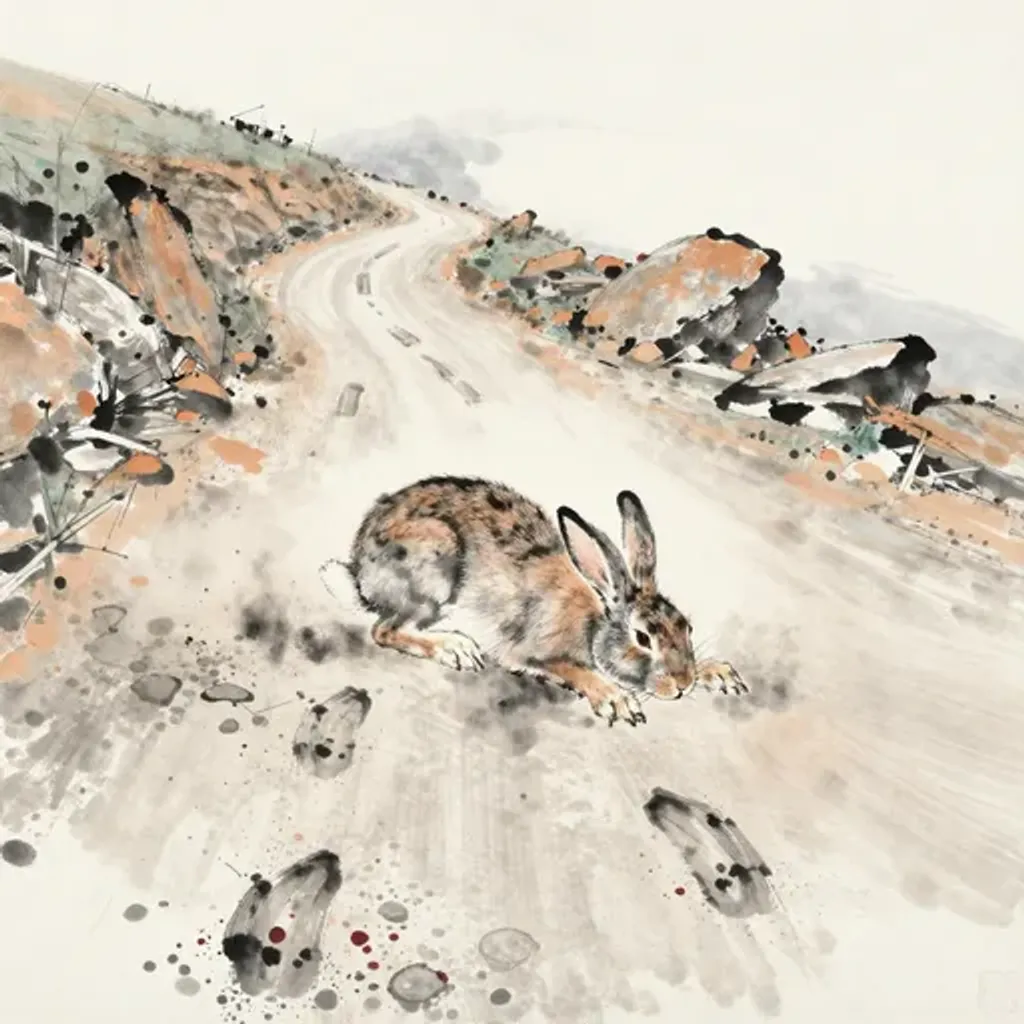
脫兔无蹄,三步五罷。南行不進,後市身苦。
A fleeing rabbit with no hooves; three steps and five collapses. Going south it cannot advance; its body suffers at the latter market.
— Jiao Yanshou, Yilin (Forest of Changes), 1st century BC
Commentary
Water on the mountain cripples even the swiftest creatures. A rabbit that has lost its hooves — the very organ of escape — staggers three steps and collapses five times. Heading south makes no progress, and the body suffers at every market stop. The rabbit, symbol of speed and evasion, is rendered helpless by the loss of its most essential capacity. From Obstruction to Decrease, the mountain rises above the lake as resources are deliberately curtailed. Decrease teaches that sometimes reduction strengthens the whole — giving up excess to nourish the core. But the verse shows decrease without strategy: the rabbit's loss is not voluntary sacrifice but senseless deprivation. When obstruction strips away essential faculties rather than mere excess, what remains is not lean strength but pure incapacity.
蹇 → 益
Hexagram 39 → Hexagram 42: Increase
Changing lines: 1, 3, 6
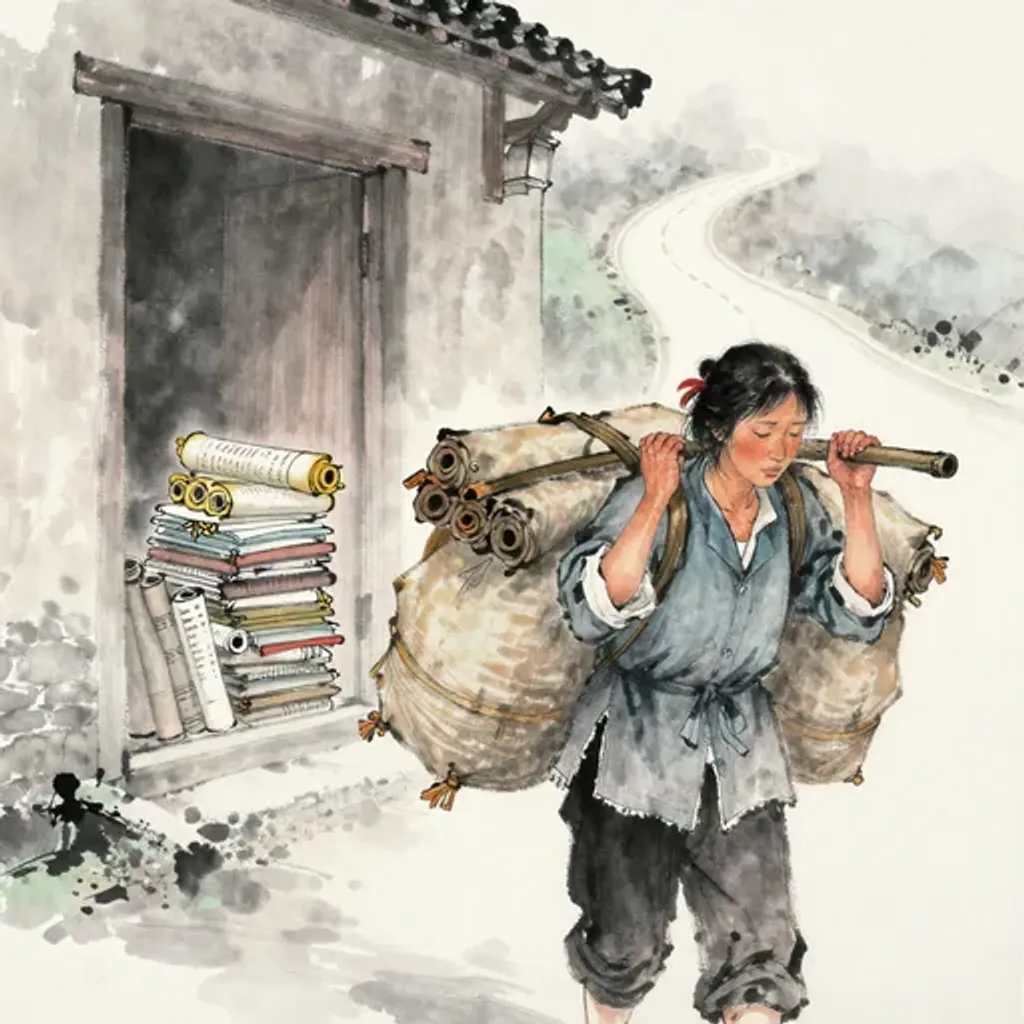
行役未已,新事復起。姬姜勞苦,不得休止。
The campaign is not yet finished; new affairs arise again. The Ji and Jiang women toil bitterly, never given rest.
— Jiao Yanshou, Yilin (Forest of Changes), 1st century BC
Commentary
Water on the mountain piles task upon unfinished task. Military service has not yet ended when new obligations arise. The women of the Ji and Jiang clans — aristocratic surnames signifying the household's female members — toil ceaselessly without rest. The verse names exhaustion as a compounding condition: it is not one hardship but the layering of demands before the previous ones are resolved that breaks the spirit. From Obstruction to Increase, wind and thunder cooperate as heaven supplements what is deficient below. Increase promises aid flowing downward — the opposite of the verse's unrelenting extraction. The transformation implies that the cure for compounded obstruction is deliberate, top-down support: someone must intervene to lighten the burden, or the women will labor until they break.
蹇 → 夬
Hexagram 39 → Hexagram 43: Breakthrough
Changing lines: 1, 2, 4
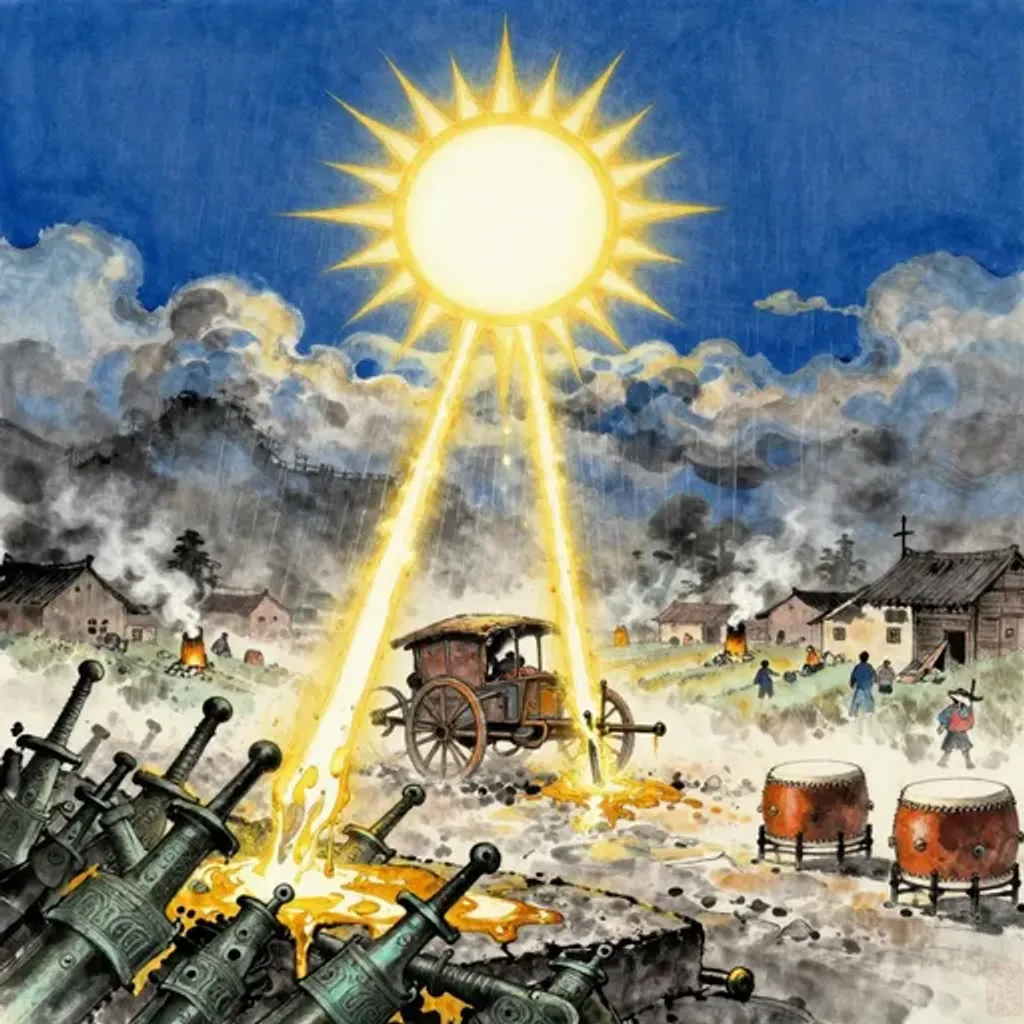
向日揚光,火為正王。消金厭兵,雷車避藏。陰雨不行,民安其鄉。
Facing the sun, it spreads its light; fire becomes the true king. Melting metal and quelling arms, the thunder chariot hides away. The clouded rain does not fall; the people are at peace in their homeland.
— Jiao Yanshou, Yilin (Forest of Changes), 1st century BC
Commentary
Water on the mountain dissolves under the power of the sun. Facing the sun and radiating brilliance, fire reigns as the rightful sovereign. Metal is melted and weapons are consumed, war-chariots of thunder are driven into hiding. Dark rains cease their march, and the people rest peacefully in their villages. The verse narrates the triumph of solar authority over every competing force: metal (autumn/war), thunder (upheaval), and rain (obscurity) all yield to the sun's supreme clarity. From Obstruction to Breakthrough, the lake rises above heaven in a dramatic assertion. Breakthrough is the moment when accumulated pressure finally overcomes the last barrier. The sun's sovereign fire is that breakthrough force — dissolving weapons, dispersing storms, and restoring the people to their homes through sheer radiant authority.
蹇 → 姤
Hexagram 39 → Hexagram 44: Coming to Meet
Changing lines: 2, 4, 6
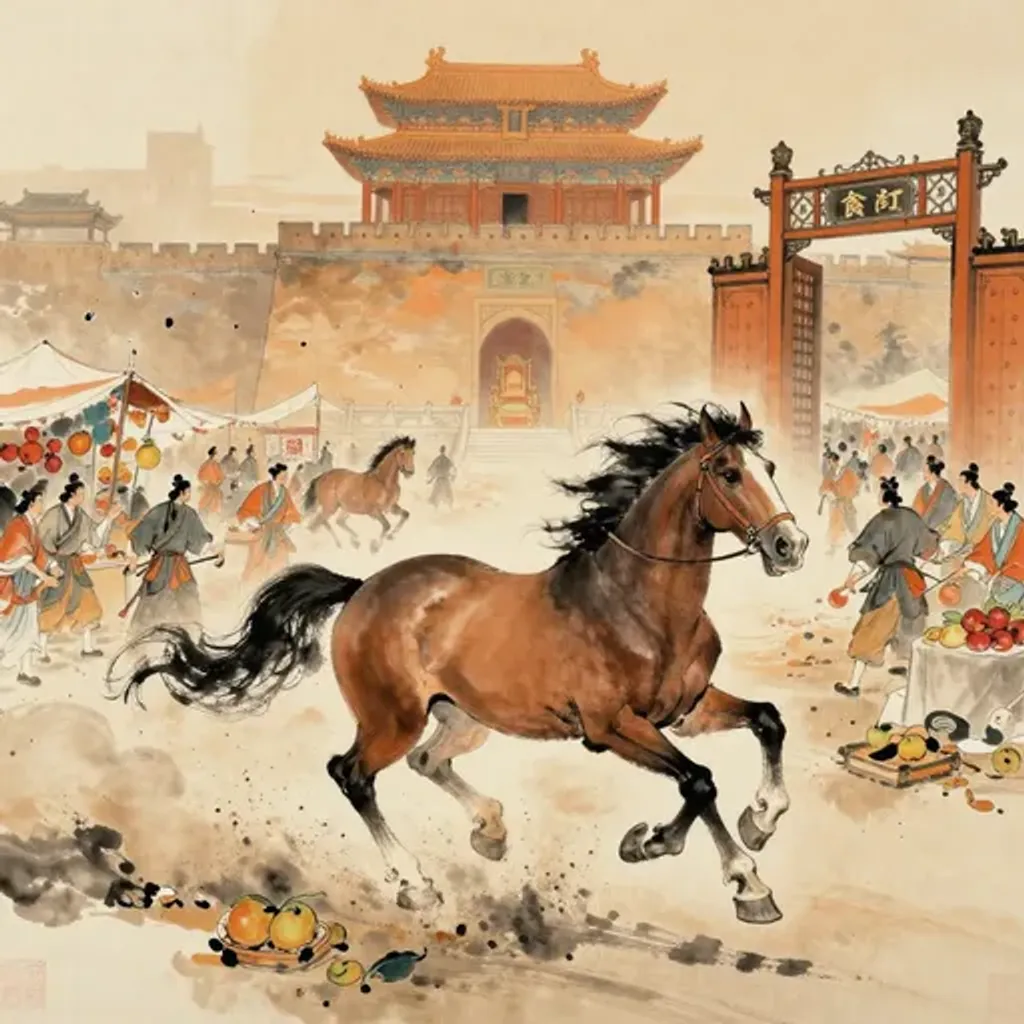
放衘垂轡,奔馬不制,棄法作奸,君失其位。
The bit released and reins hanging loose; the galloping horse cannot be controlled. Abandoning law to practice treachery; the lord loses his position.
— Jiao Yanshou, Yilin (Forest of Changes), 1st century BC
Commentary
Water on the mountain mirrors the chaos of an ungoverned state. The bit is loosened, the reins hang slack, and a runaway horse cannot be controlled. Laws are abandoned and villainy flourishes; the ruler loses his throne. The horse imagery is politically precise: the bit (衘) and reins (轡) represent the institutional controls that keep power in check. When these are dropped, raw force runs wild and legitimate authority collapses. From Obstruction to Coming to Meet, wind blows beneath heaven as something unexpected enters from below. Coming to Meet warns against the unchecked intrusion of inferior forces. The runaway horse is exactly this: an ungoverned energy that should have been restrained at first encounter. The transformation reveals that obstruction left unmanaged does not simply persist — it metastasizes into anarchy.
蹇 → 萃
Hexagram 39 → Hexagram 45: Gathering Together
Changing lines: 3, 4
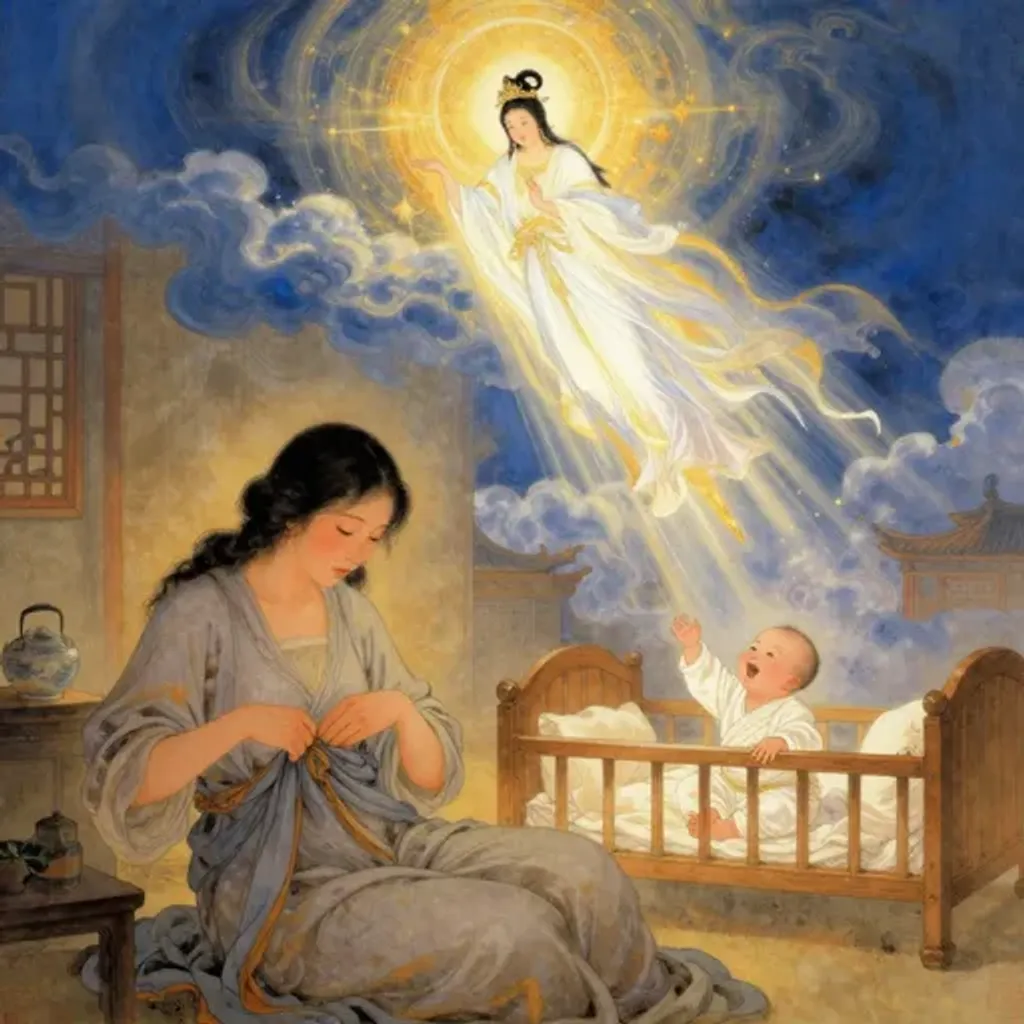
司命下游,喜解我憂。皇母緩帶,嬰子笑喜。
The God of Destiny descends to visit, joyfully dissolving my worries. The imperial mother loosens her sash; the infant laughs with delight.
— Jiao Yanshou, Yilin (Forest of Changes), 1st century BC
Commentary
Water on the mountain recedes as divine intervention brings relief. The Director of Fate descends from his celestial tour and joyfully resolves the speaker's worries. The Sovereign Mother loosens her sash — a gesture of ease and intimacy — and the infant laughs with delight. Si Ming, the celestial official who governs lifespan and fortune, appears here as a benevolent arbiter who personally undoes the knot of affliction. The loosened sash and the baby's laughter signal that the crisis has passed at its most fundamental level — the maternal bond is restored. From Obstruction to Gathering, the lake rests upon the earth as people naturally congregate. The divine visit gathers what was scattered: worry dissolves, the mother relaxes, the child rejoices, and the household reconstitutes around joy.
蹇 → 升
Hexagram 39 → Hexagram 46: Pushing Upward
Changing lines: 2, 5
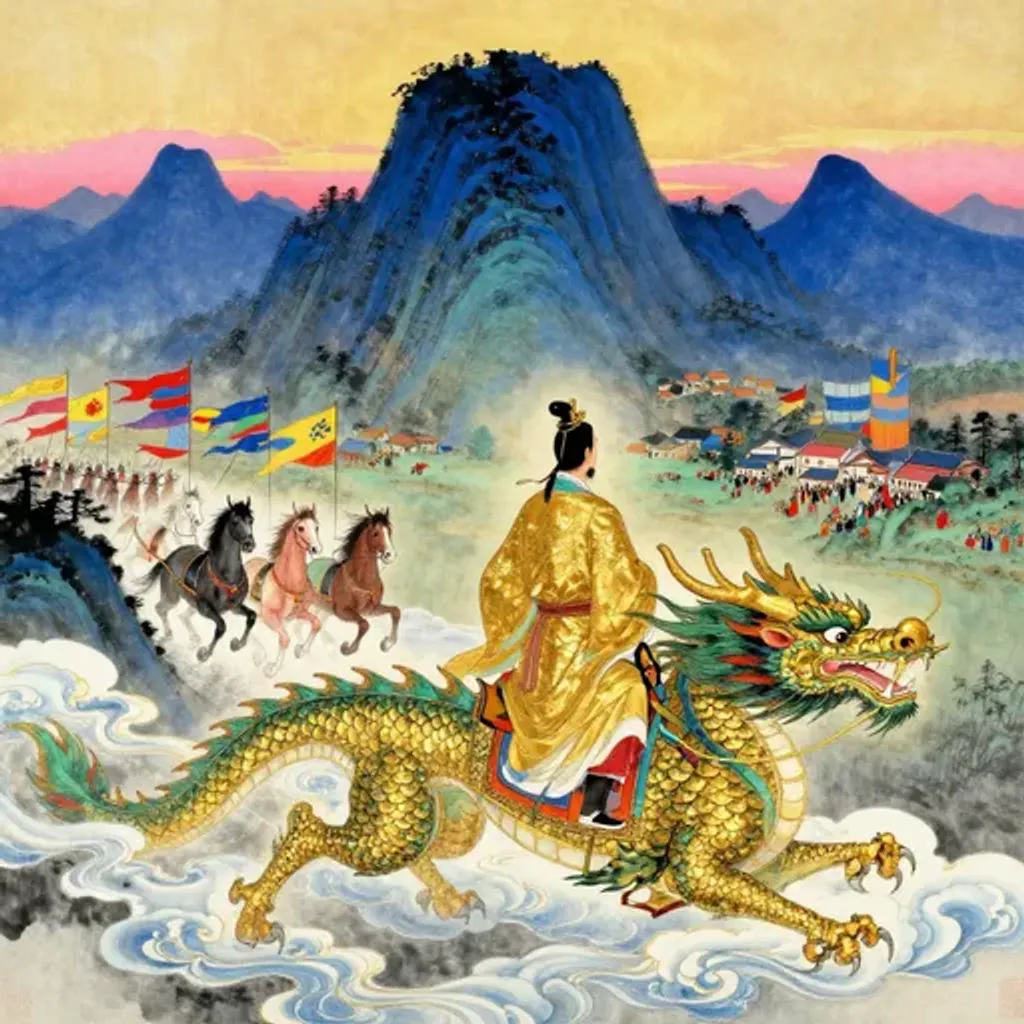
黃帝出遊,駕龍乘馬。東上泰山,南過齊魯,郡國咸喜。
The Yellow Emperor sets forth on his journey, riding dragons and driving horses. East he ascends Mount Tai, south he passes Qi and Lu; all the provinces rejoice.
— Jiao Yanshou, Yilin (Forest of Changes), 1st century BC
Commentary
Water on the mountain parts before the majesty of an imperial progress. The Yellow Emperor sets out on a grand tour, riding dragons and driving horses. Ascending Mount Tai in the east, passing through the lands of Qi and Lu in the south, every commandery and kingdom rejoices at his approach. This verse invokes the primordial sovereign's inspection journey — the mythic template for all later imperial tours — where the ruler's presence consecrates the landscape and renews the bond between heaven and the people. From Obstruction to Pushing Upward, wood grows within the earth in steady, incremental ascent. The Yellow Emperor's tour is Pushing Upward made visible: a sovereign force that rises through the realm, gathering allegiance and spreading order as it climbs from the eastern mountain through the southern plains.
蹇 → 困
Hexagram 39 → Hexagram 47: Oppression
Changing lines: 2, 3, 4
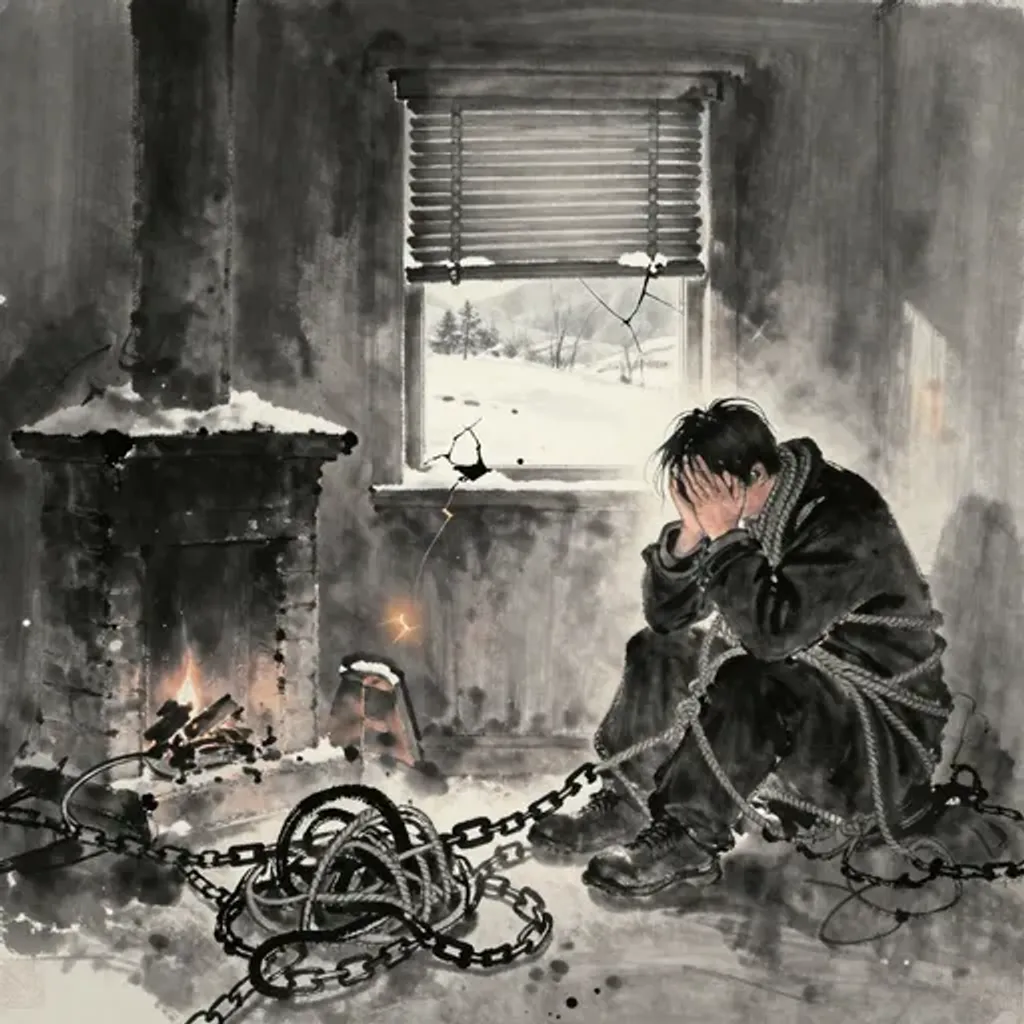
既往不說,憂來禍結。北戶為患,无所申雪。
What is past cannot be spoken of; worries come and disasters knot together. The northern door brings calamity; there is nowhere to find redress.
— Jiao Yanshou, Yilin (Forest of Changes), 1st century BC
Commentary
Water on the mountain compounds into deeper entrapment. What is past cannot be spoken of — the time for explanation has expired. Worry arrives and disaster crystallizes. The northern door becomes a source of affliction, and there is nowhere to find redress or vindication. The verse captures the condition of accumulated injustice: wrongs piled upon wrongs with no court of appeal. The 'northern door' traditionally signifies the back entrance, the servant's passage, the way through which trouble enters unseen. From Obstruction to Oppression, the lake has no water — its very medium of life is gone. Oppression is obstruction perfected into depletion: not merely a blocked path but an empty well. The transformation strips away even the water that defined Obstruction, leaving only the dry basin of unrelieved suffering.
蹇 → 井
Hexagram 39 → Hexagram 48: The Well
Changing lines: 2
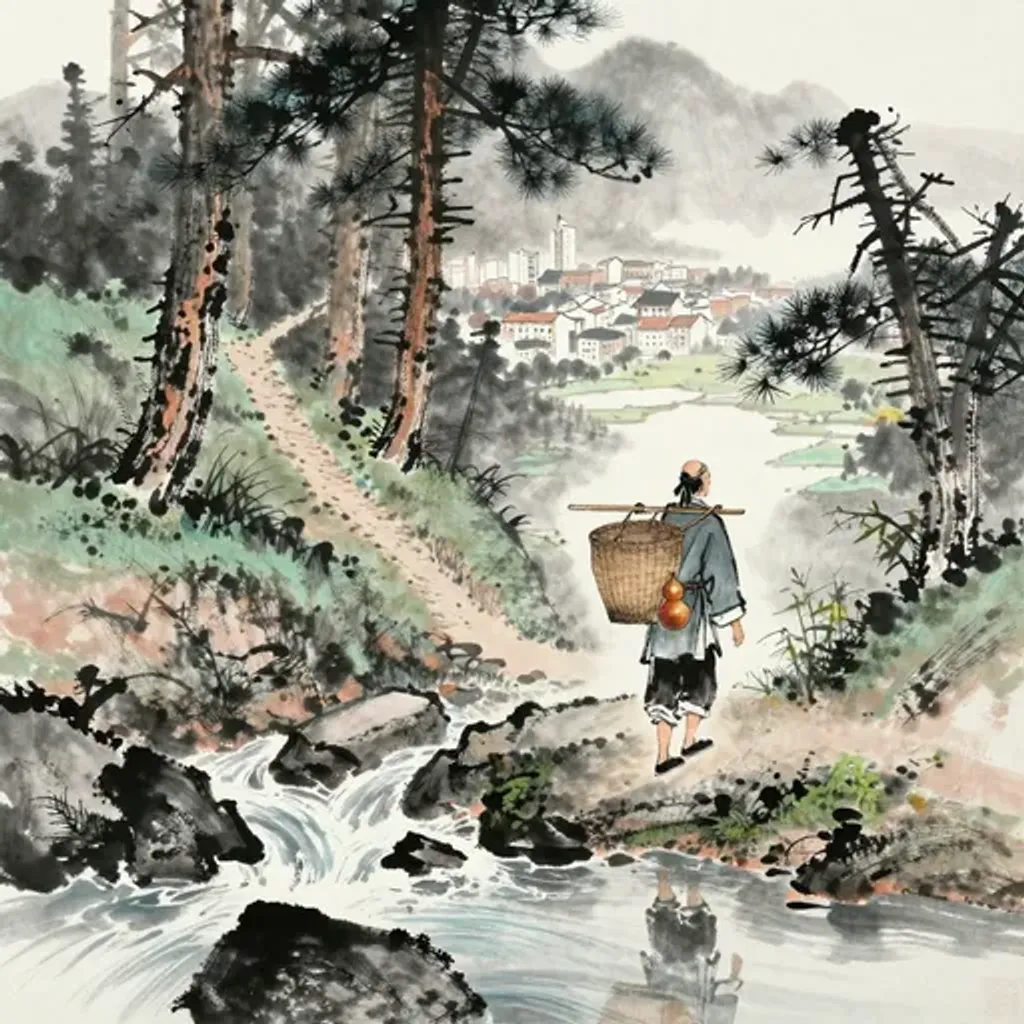
荷蕢隱名,以避亂傾。終身不仕,遂其潔清。
Carrying a basket, he hides his name, to escape the chaos and upheaval. He never serves in office his whole life, thereby preserving his purity.
— Jiao Yanshou, Yilin (Forest of Changes), 1st century BC
Commentary
Water on the mountain shelters a recluse who has chosen obscurity. The 'man who carries a straw basket' (荷蕢) conceals his name to avoid the chaos of his age. He never takes office for his entire life, thereby perfecting his purity and integrity. The figure alludes to the basket-carrier in the Analerta (Xianwen chapter) who critiqued Confucius's stone-chime playing, recognizing the sage's frustrated ambition in the sound. This unnamed recluse embodies the choice to preserve moral clarity through withdrawal rather than compromise through service. From Obstruction to The Well, water rises through wood as the well's inexhaustible virtue serves all comers. The recluse is himself a well — his purity sustains anyone who draws from it, even though he never enters the public square. The Well's virtue does not require office; it requires only that the water remain clean.
蹇 → 革
Hexagram 39 → Hexagram 49: Revolution
Changing lines: 1, 4
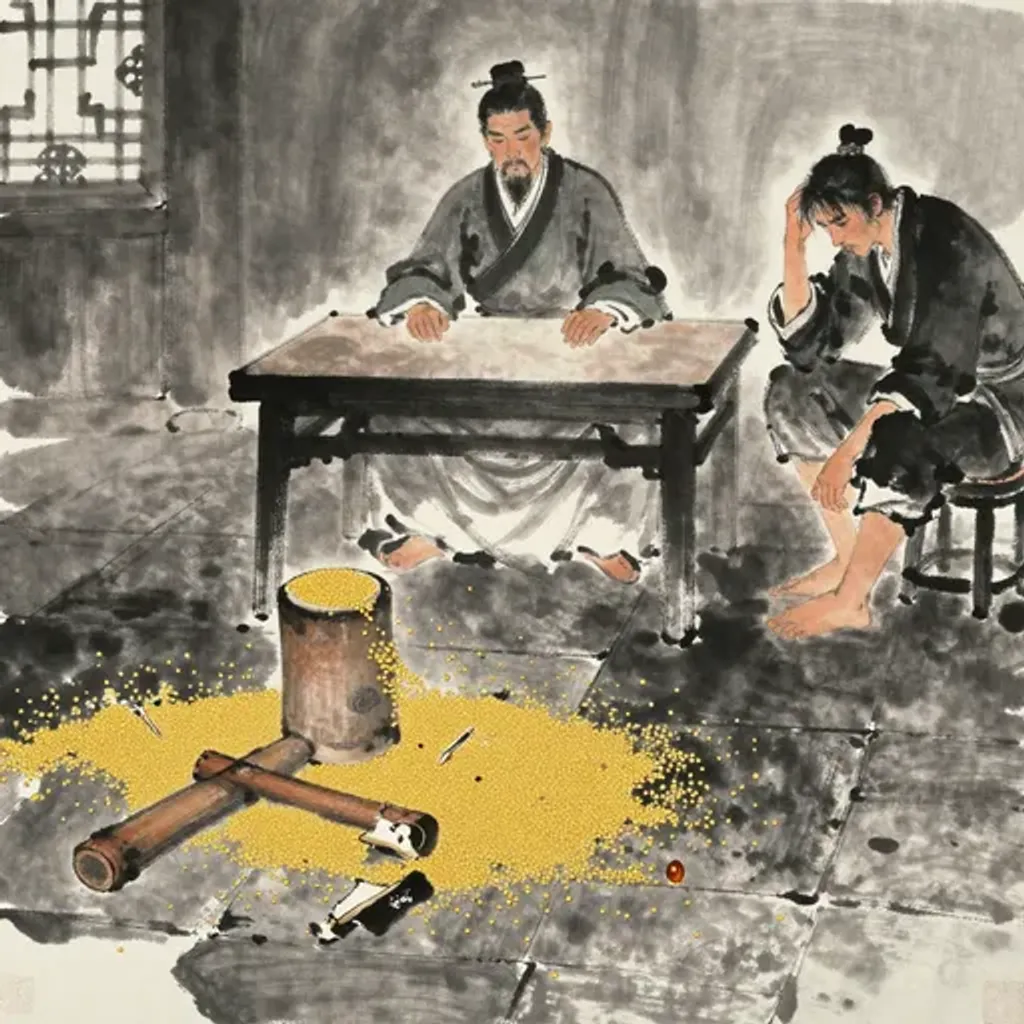
折挺舂稷,君不得食。頭痒搔跟,无益於疾。
The pestle breaks while pounding millet; the lord does not get to eat. Scratching the heel when the head itches; it does nothing for the ailment.
— Jiao Yanshou, Yilin (Forest of Changes), 1st century BC
Commentary
Water on the mountain frustrates every practical effort. The pestle is broken while pounding millet — the lord cannot eat. One scratches one's heel when the head itches, a proverbial image of misapplied effort that brings no relief. The two images share the same diagnosis: the tools and the methods are wrong for the problem. A broken pestle cannot process grain; scratching the foot cannot cure an itchy scalp. From Obstruction to Revolution, fire burns within the lake as the old order is fundamentally overturned. Revolution demands the right tool at the right time — 'When the day comes, you are believed.' The verse's futility is the pre-revolutionary condition: the existing instruments have failed, and incremental repair is useless. Only a complete change of method — Revolution's radical replacement — can address what patchwork cannot.
蹇 → 鼎
Hexagram 39 → Hexagram 50: The Cauldron
Changing lines: 2, 4, 5, 6
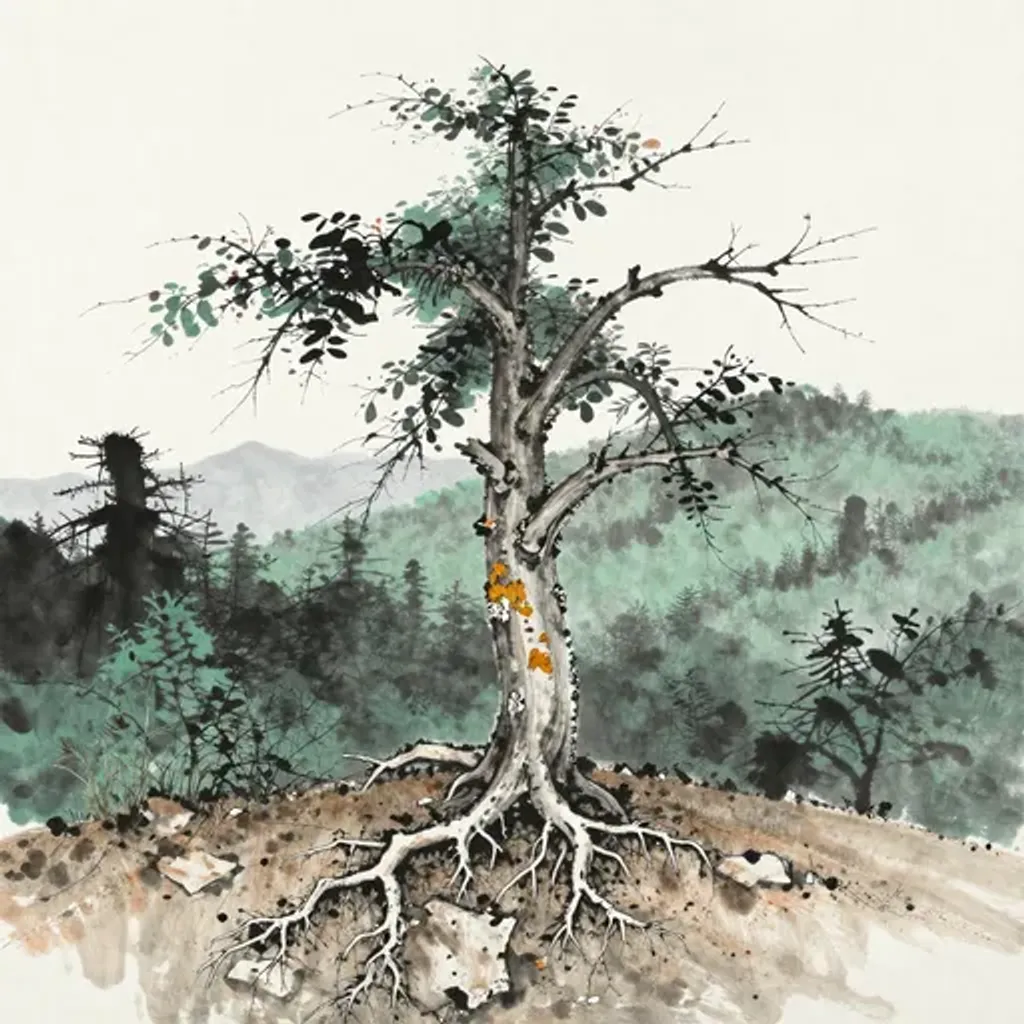
植根不固,華葉落去,便為枯樹。
Roots planted without firmness; blossoms and leaves fall away, becoming a dead tree.
— Jiao Yanshou, Yilin (Forest of Changes), 1st century BC
Commentary
Water on the mountain erodes the roots that should hold firm. A tree whose roots are not securely planted loses its flowers and leaves, and quickly becomes a dead stump. Three phrases — no more — deliver a complete trajectory of decline: weak foundation, lost vitality, irreversible death. The tree's root system is the hidden structure that determines whether the visible canopy thrives or withers. From Obstruction to The Cauldron, fire blazes above wind as the vessel of transformation refines its contents. The Cauldron depends on a stable base — its three legs must bear the weight of what it holds. The rootless tree is the Cauldron without legs: it cannot sustain the transformative process, and what should have been refined is instead lost. Establishment must precede transformation, or nothing endures.
蹇 → 震
Hexagram 39 → Hexagram 51: The Arousing Thunder
Changing lines: 1, 3, 4, 5
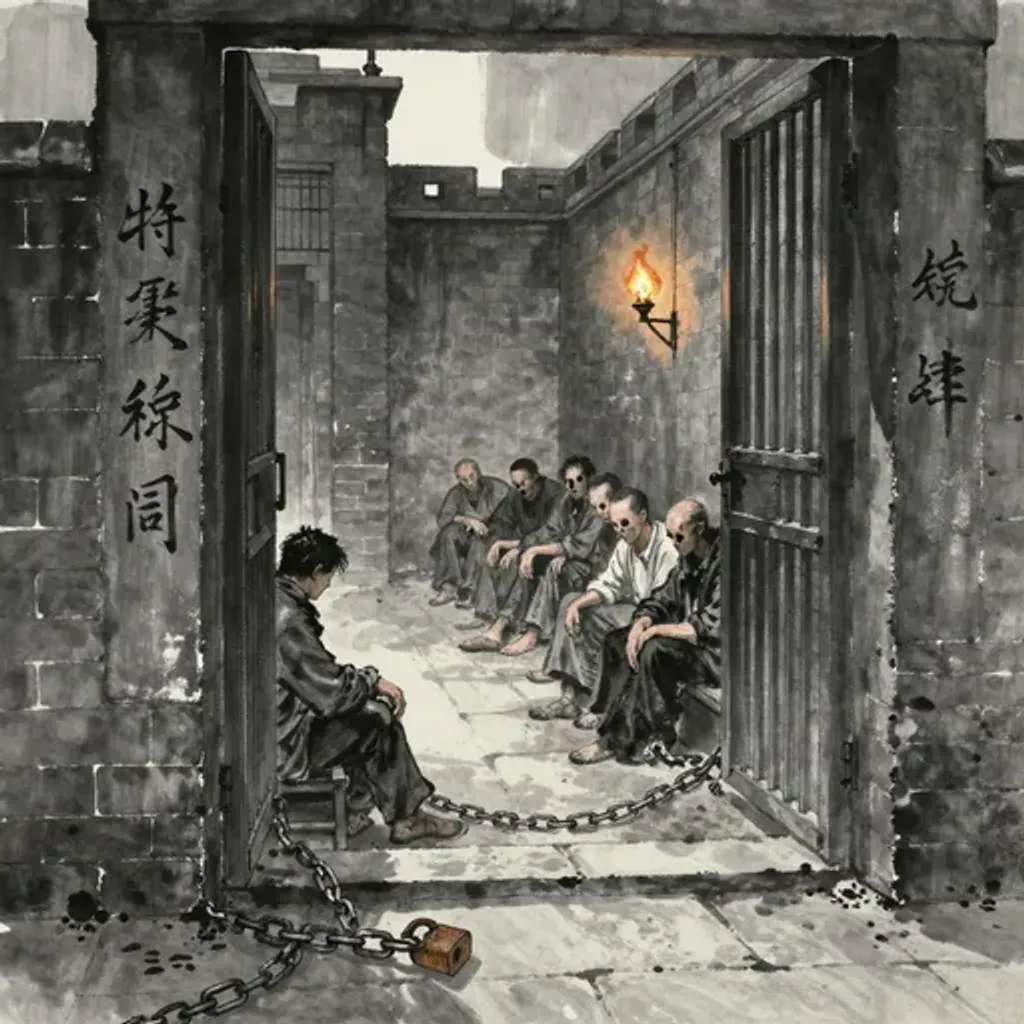
凶門生患,牢戶多冤。沙池禿齒,使叔困貧。
The gate of ill fortune breeds calamity; the prison holds many wronged. Sand pools and broken teeth; it leaves Uncle in destitution.
— Jiao Yanshou, Yilin (Forest of Changes), 1st century BC
Commentary
Water on the mountain breeds affliction at the gate of misfortune. The 'door of ill omen' generates calamity, and the prison overflows with the wrongly accused. Sandy pools leave teeth ground bare — a visceral image of depletion — and the uncle is driven into poverty and hardship. Every element signals institutional decay: gates that produce harm instead of shelter, prisons that hold the innocent, resources that erode the body, and family members abandoned to destitution. From Obstruction to The Arousing, double thunder crashes as shock jolts the world awake. The Arousing's function is precisely to break the complacency that allows such systemic rot: the thunder of consequence arrives to shatter the corrupt gate and empty the unjust prison. Whether the shock heals or merely terrifies depends on the capacity of those shaken to reform.
蹇 → 艮
Hexagram 39 → Hexagram 52: Keeping Still Mountain
Changing lines: 5, 6
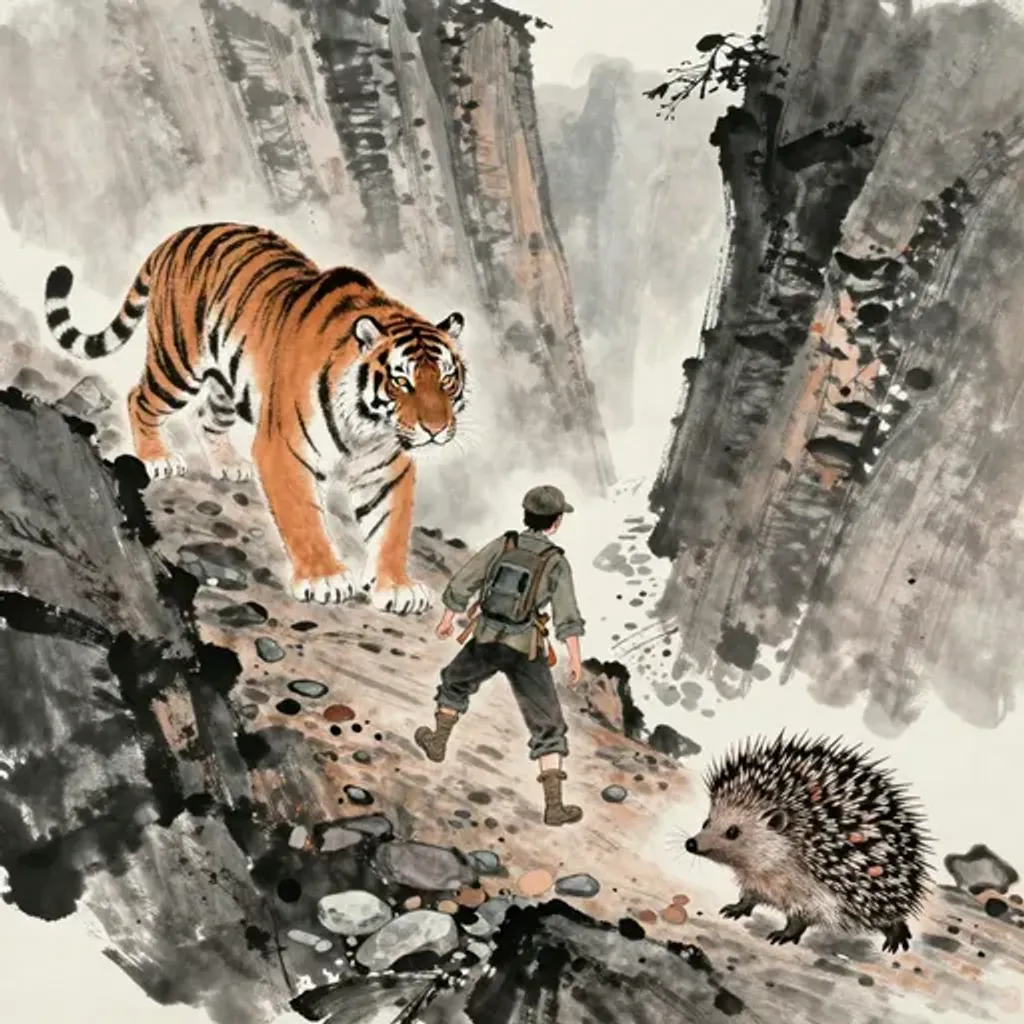
登山履谷,與虎相觸。猬為功曹,班叔奔北,脫之喜國。
Climbing mountains and treading valleys, encountering a tiger face to face. The hedgehog serves as marshal; Ban Shu flees north, escaping to the land of joy.
— Jiao Yanshou, Yilin (Forest of Changes), 1st century BC
Commentary
Water on the mountain drives the traveler into the tiger's path. Ascending mountains and traversing valleys, one encounters a tiger face to face. Yet the hedgehog serves as Chief Clerk — that small, armored creature whose spines keep even the tiger at bay — and someone identified as 'Ban Shu' flees northward, ultimately reaching safety in a fortunate land. The hedgehog-as-Gongcao allusion, drawn from the Shiji's Treatise on Divination, represents the bureaucratic functionary whose institutional authority subdues raw power. From Obstruction to Keeping Still, double mountains stand firm. The tiger's menace is met not by counter-force but by stillness and structural defense — the hedgehog's spines, the mountain's immobility. When Obstruction doubles down as Keeping Still, survival comes from knowing when to stop moving entirely and let the predator exhaust its fury against an impenetrable surface.
蹇 → 漸
Hexagram 39 → Hexagram 53: Development
Changing lines: 6
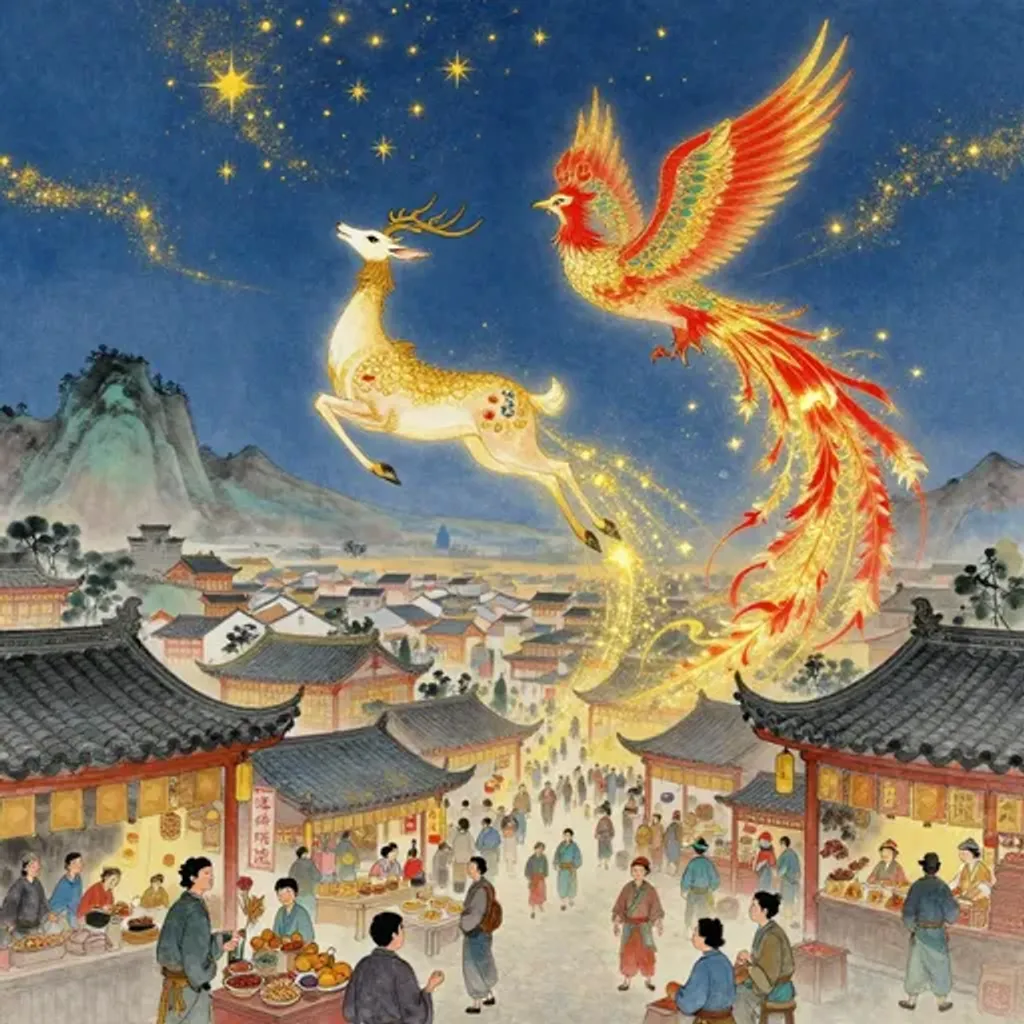
麟鳳所翔,國无咎殃。賈市十倍,復歸惠里。
Where qilin and phoenix fly, the land is free from blame and disaster. Trade profits tenfold; all return to the village of grace.
— Jiao Yanshou, Yilin (Forest of Changes), 1st century BC
Commentary
Water on the mountain gives way to auspicious creatures soaring overhead. Where the qilin and phoenix fly, the state is free from calamity and blame. Trade yields tenfold profit, and the speaker returns to a village of grace and generosity. The qilin and phoenix together form the supreme omen of sage governance — their appearance signals that the cosmic order is functioning perfectly. Commercial prosperity and communal harmony follow naturally. From Obstruction to Development, wind blows over the mountain as the tree grows gradually toward the sky. Development (Jian) is the hexagram of organic, step-by-step progress. The verse shows what Development looks like when it succeeds: trade enriches, the village thrives, and mythical beasts signal that the process has reached its fulfilled state. Obstruction's patience has borne fruit, slowly and properly.
蹇 → 歸妹
Hexagram 39 → Hexagram 54: The Marrying Maiden
Changing lines: 1, 2, 3, 4, 5
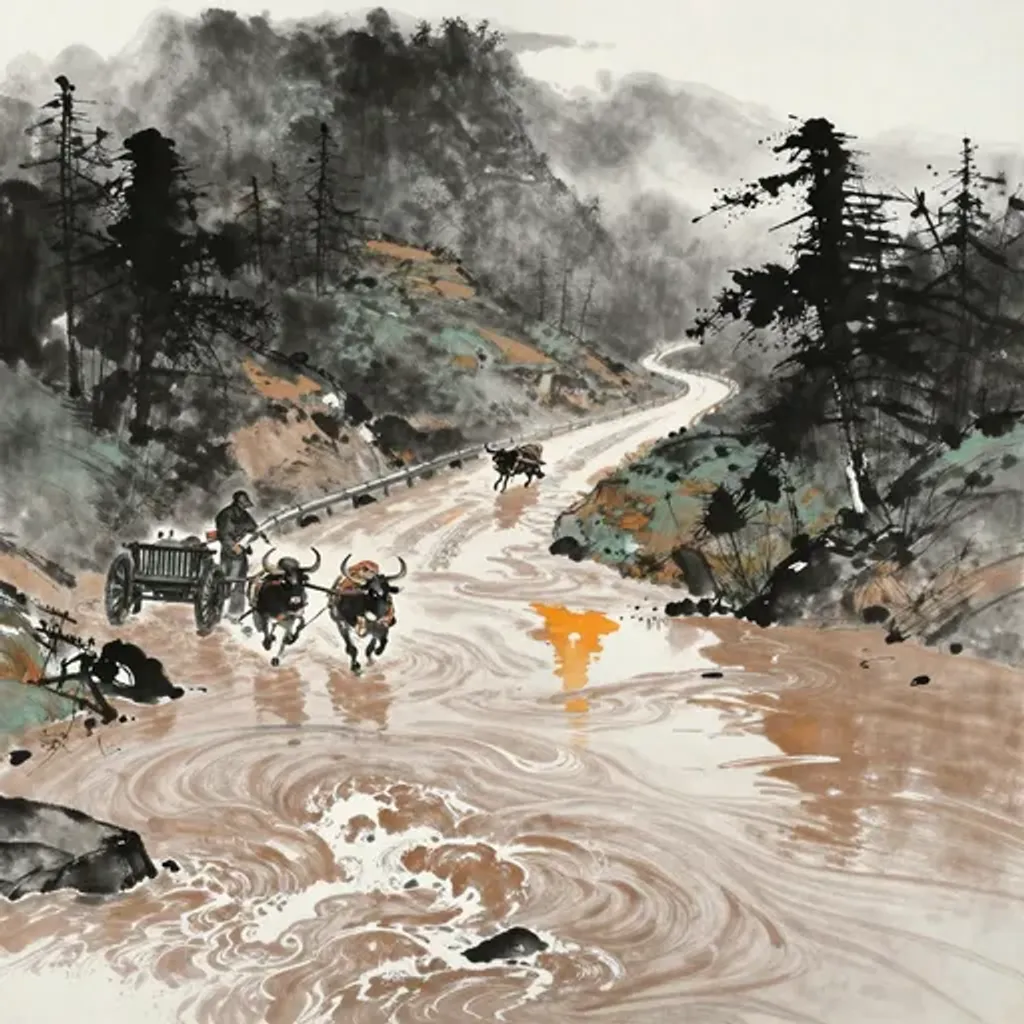
路險道難,水遏我前。進往不利,回車復還。
The road is perilous and the way hard; water blocks my path ahead. Advancing brings no profit; he turns the cart and returns.
— Jiao Yanshou, Yilin (Forest of Changes), 1st century BC
Commentary
Water on the mountain blocks the road with elemental finality. The path is steep and the way treacherous; water stands directly before the traveler, cutting off advance. Going forward brings no advantage — the only option is to turn the carriage around and head back. The verse is pure, distilled Obstruction: no historical allusion, no rescue, no clever escape. Just the mountain, the water, and the decision to turn around. From Obstruction to the Marrying Maiden, thunder above the lake represents a union entered rashly or under compulsion. The retreat from the flooded road mirrors the Marrying Maiden's warning: some advances are simply not meant to be pursued. The wisdom lies in recognizing this before disaster strikes, and the carriage that turns back is wiser than the one that plunges into the flood.
蹇 → 豐
Hexagram 39 → Hexagram 55: Abundance
Changing lines: 1, 4, 5
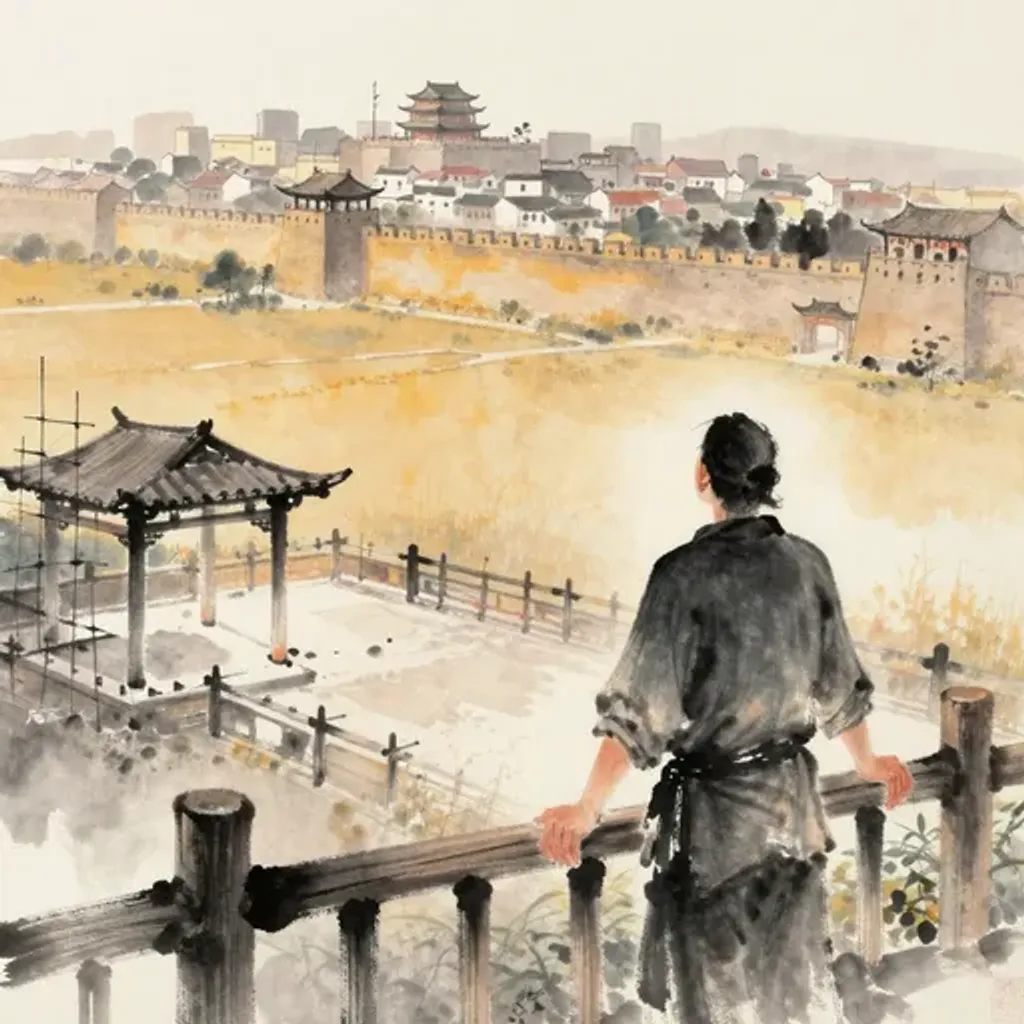
延頸望邑,恩歸其室。臺榭不成,未得安息。
Craning his neck, he gazes toward the city, hoping grace will return to his home. Terraces and pavilions remain unfinished; he has not yet found rest.
— Jiao Yanshou, Yilin (Forest of Changes), 1st century BC
Commentary
Water on the mountain leaves the traveler straining to see home. Stretching one's neck to gaze toward the distant city, longing for grace to return to one's household. Yet the terraces and pavilions are never completed, and rest remains elusive. The image combines homesickness with frustrated ambition: the speaker can see where he wants to be but cannot arrive, and the structures he hoped to build remain unfinished. From Obstruction to Abundance, thunder and lightning combine in the fullest display of energy. Abundance promises the zenith of power and illumination, but the verse reveals what happens when Abundance remains just out of reach: the terraces that should crown the estate stand half-built, and the traveler who should be feasting in his completed hall is still craning his neck on the mountain road.
蹇 → 旅
Hexagram 39 → Hexagram 56: The Wanderer
Changing lines: 4, 5, 6
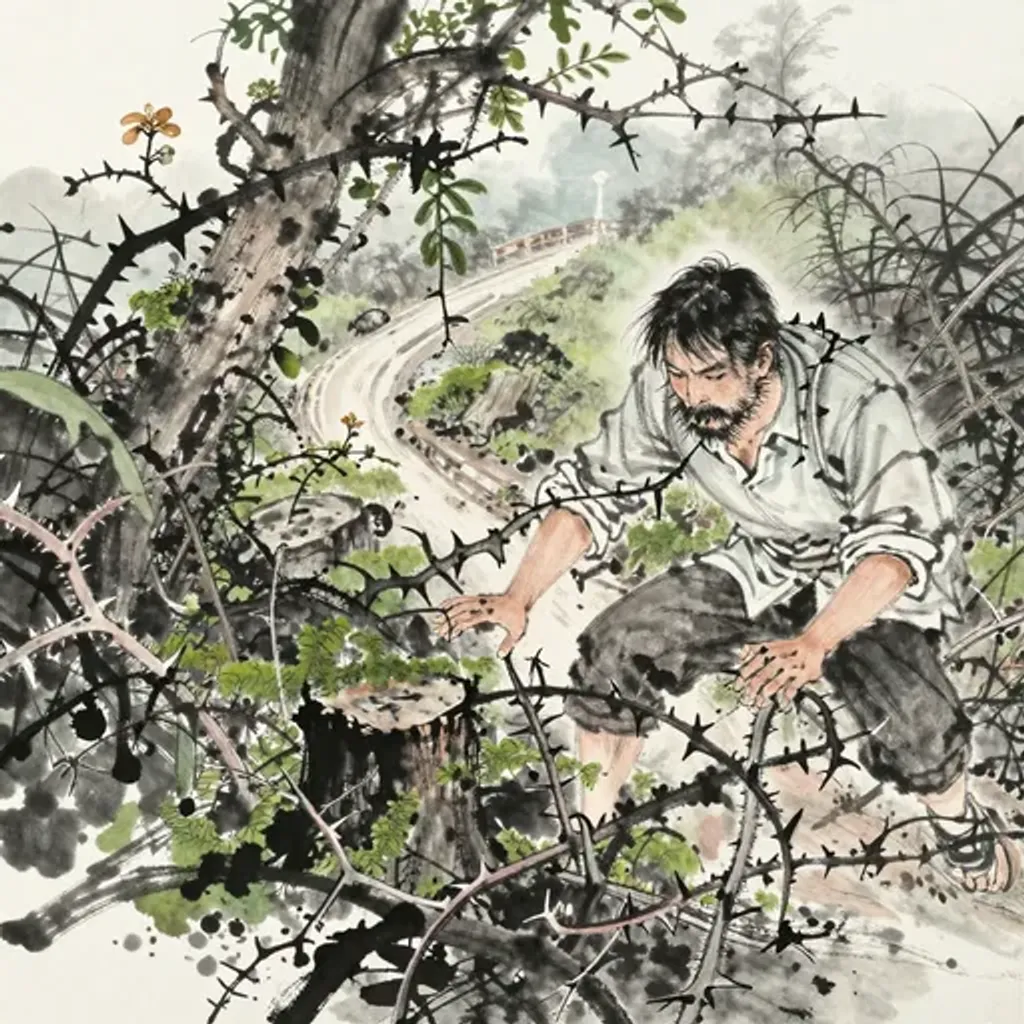
蒙生株瞿,棘掛我須。小人妬嫉,使恩不遂。
Creeping plants grow on the stump; thorns catch and snag my beard. Petty men are jealous and envious; they prevent kindness from reaching its end.
— Jiao Yanshou, Yilin (Forest of Changes), 1st century BC
Commentary
Water on the mountain tangles the traveler in thorns. Parasitic growth sprouts on dead stumps, and thorn-bushes snag the speaker's beard. Petty men nurse jealousy and ensure that intended kindness never reaches its destination. The verse presents obstruction as sabotage: the path is not merely difficult but actively hostile, with thorns and envious rivals conspiring to prevent good from being done. From Obstruction to The Wanderer, fire burns above the mountain as the traveler moves through alien territory. The Wanderer knows that every step in foreign land carries risk, and local hostility can transform a journey into a catastrophe. The snagged beard is the Wanderer's particular nightmare — detained by trivial obstacles while malicious locals ensure that his mission fails. Caution and clarity of judgment are the Wanderer's only armor.
蹇 → 巽
Hexagram 39 → Hexagram 57: The Gentle Wind
Changing lines: 2, 6
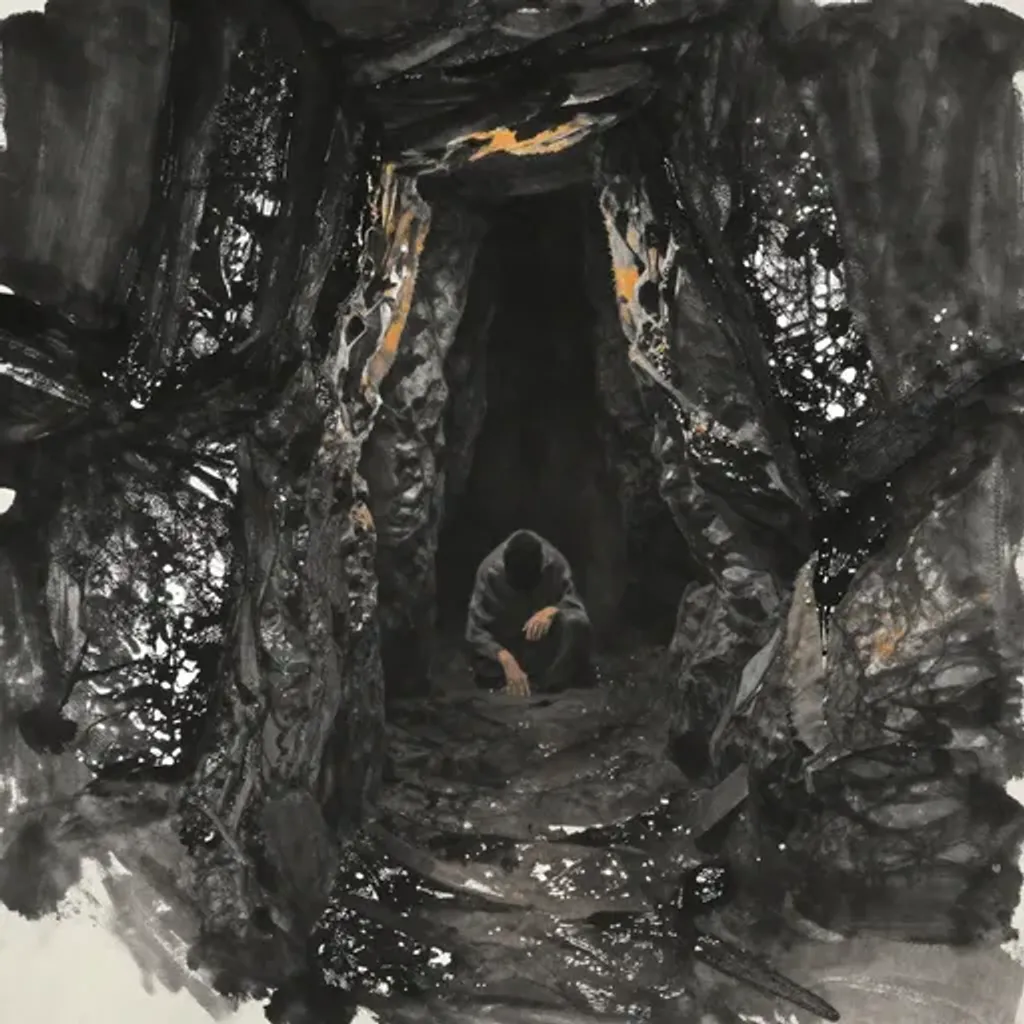
南至隱域,深潛處匿。聰明閉塞,與死為伍。
Going south to a hidden realm, submerged deep in concealment. Perception and wisdom are sealed shut; dwelling in the company of death.
— Jiao Yanshou, Yilin (Forest of Changes), 1st century BC
Commentary
Water on the mountain pushes the speaker into the deepest south, into hidden realms where one crouches in concealment. Perception is sealed off — ears and eyes are blocked — and one keeps company with death itself. The verse describes not merely hiding but burial alive: the senses are shut down, the world disappears, and what remains is indistinguishable from the grave. From Obstruction to The Gentle, doubled wind penetrates softly and persistently. The Gentle's penetrating quality works through patience and subtlety, entering where force cannot reach. The verse's entombment is the extreme condition that The Gentle must address: only the most penetrating, most patient influence can reach someone sealed in a crypt of desolation. The wind finds cracks where nothing else can enter — but first it must know where to look.
蹇 → 兌
Hexagram 39 → Hexagram 58: The Joyous Lake
Changing lines: 1, 2, 3, 4
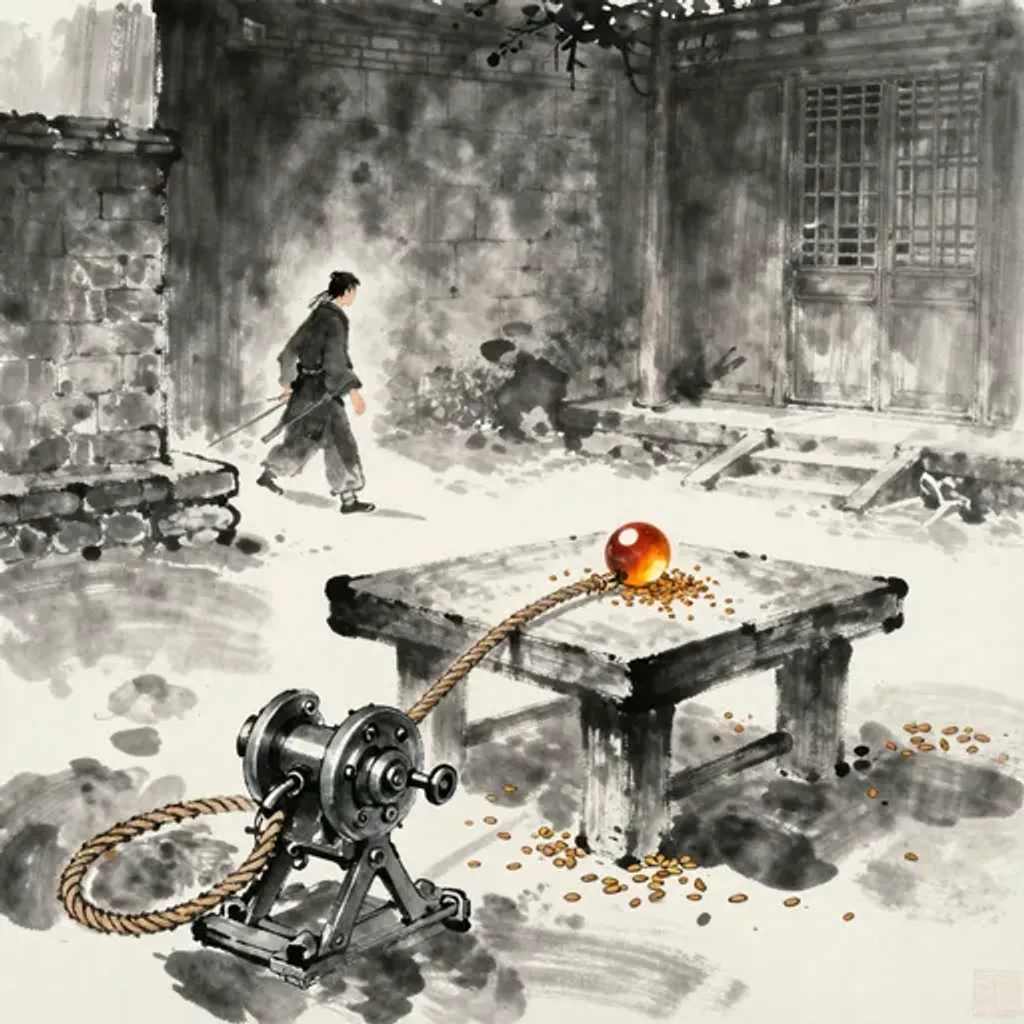
機餌設張,司暴子良。范叔不廉,凶害及身。
Bait and snare are set and spread; the tyrant's executioner Zi Liang. Fan Shu was not incorruptible; evil and harm came upon his own body.
— Jiao Yanshou, Yilin (Forest of Changes), 1st century BC
Commentary
Water on the mountain conceals a trap. Bait and snares are set with cunning precision by those who 'enforce violence' — the officers Sibao and Ziliang, names suggesting judicial or enforcement functionaries. Then 'Fan Shu proves unchaste,' and harm falls upon his own person. Fan Shu may refer to Fan Sui (范雎), the Qin chancellor famed for repaying every grudge, whose own student Zheng Anping later surrendered to the enemy, bringing disgrace back upon his patron. From Obstruction to The Joyous, doubled lakes mirror one another in mutual delight. But the verse subverts this: what appears as a joyous exchange is actually a trap. The Joyous at its worst becomes seduction — pleasure used as the mechanism of destruction. The snare disguised as an invitation is the Joyous's shadow made manifest.
蹇 → 渙
Hexagram 39 → Hexagram 59: Dispersion
Changing lines: 2, 3, 6
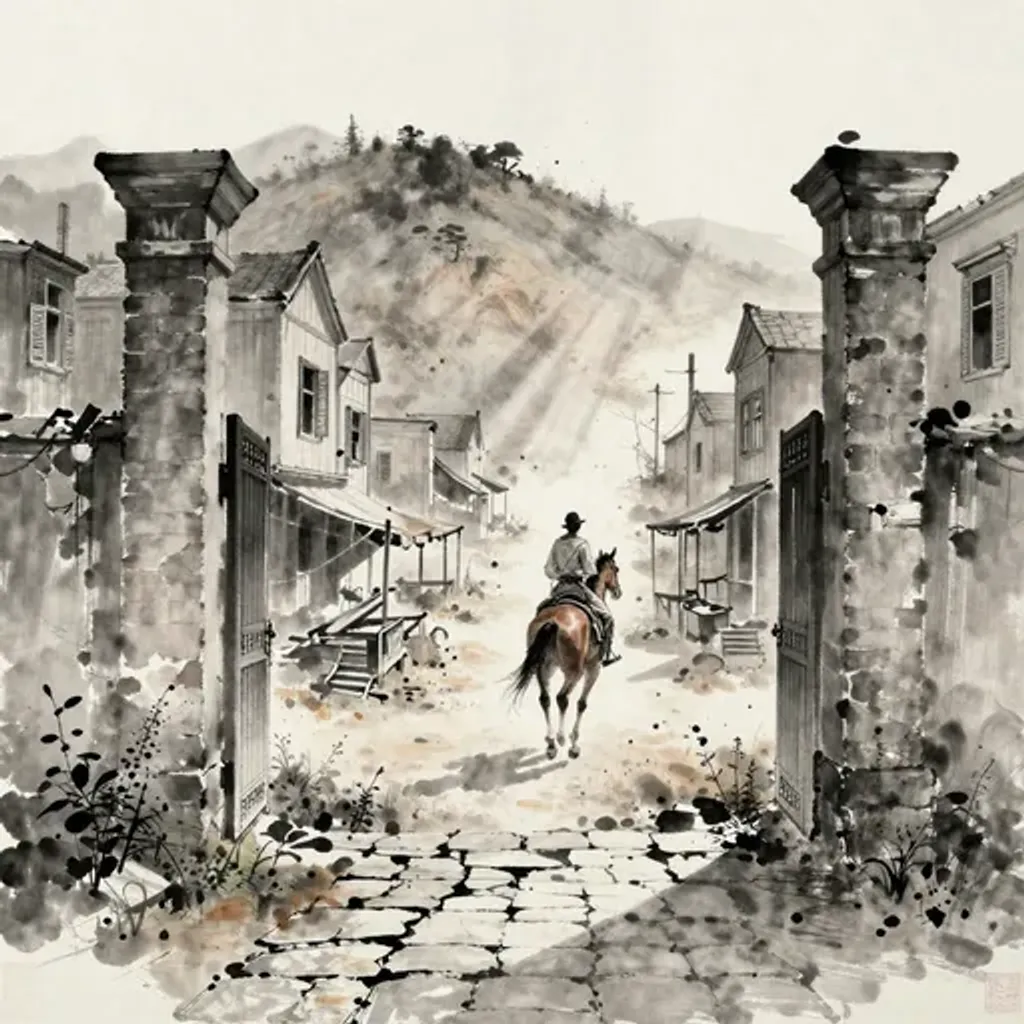
從騎出門,遊戲空城。阪高不進,利无所得。
Riding out from the gate on horseback, roaming through an empty city. The slope is high and he cannot advance; no profit is to be gained.
— Jiao Yanshou, Yilin (Forest of Changes), 1st century BC
Commentary
Water on the mountain drains away into an empty landscape. Riding out through the gate with an escort, the speaker wanders through a deserted city. The slope ahead is too steep to climb, and no profit is gained from the venture. The empty city and impassable hill combine futility with desolation — there is no one to trade with and nowhere to go. The escort makes the loneliness worse: even with companions, the emptiness of the mission is inescapable. From Obstruction to Dispersion, wind sweeps over water, scattering what was gathered. Dispersion dissolves blockages through diffusion — but the verse shows dispersion's negative face. The city is already empty, the resources already scattered; what should have been a gathering place has been dispersed beyond recovery.
蹇 → 節
Hexagram 39 → Hexagram 60: Limitation
Changing lines: 1, 2, 3
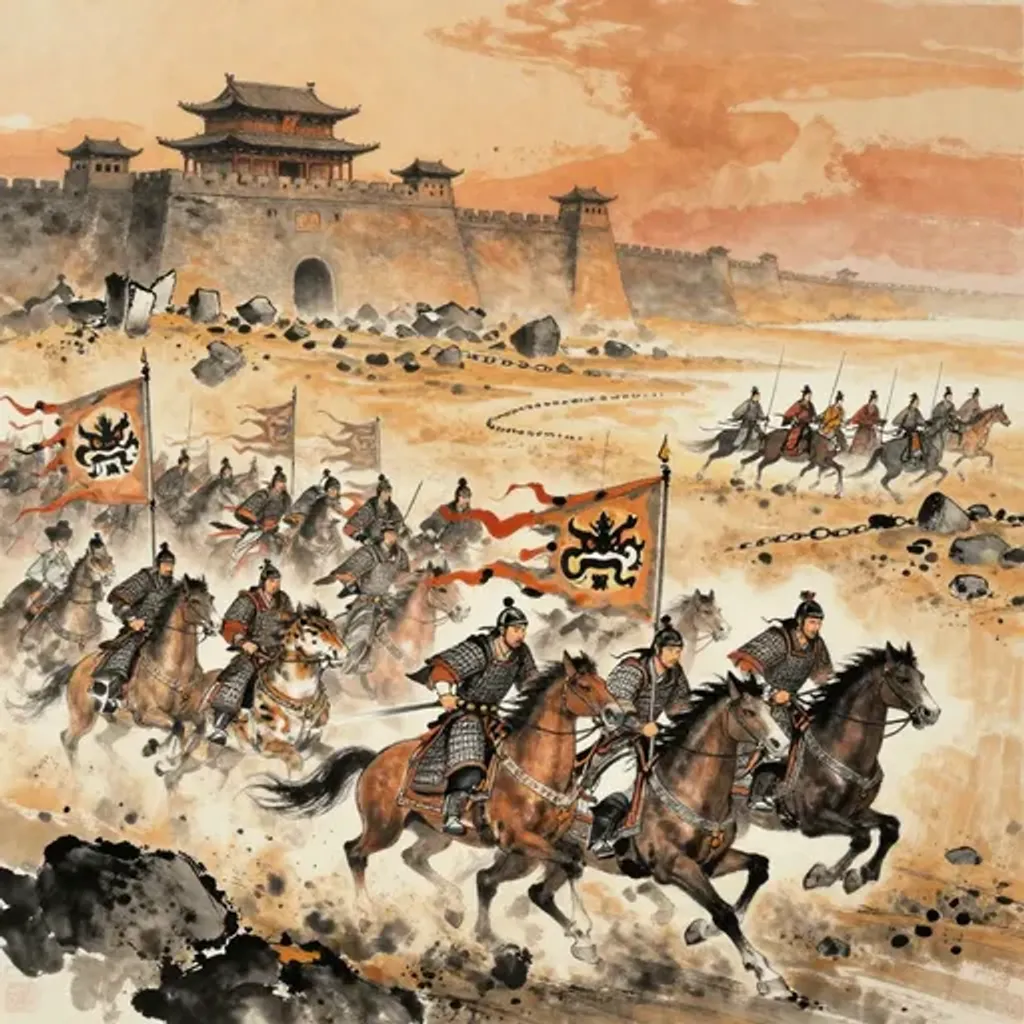
西國疆梁,為虎作狼。東吞楚齊,并有其王。
The western kingdom, strong as a bridge, becomes tigers and wolves. Eastward it devours Chu and Qi, annexing their kings.
— Jiao Yanshou, Yilin (Forest of Changes), 1st century BC
Commentary
Water on the mountain frames the rise of a predatory western power. The western state builds up its borders and defenses, acting as tiger and wolf to its neighbors. Eastward it swallows Chu and Qi, annexing their rulers along with their territories. The imagery unmistakably evokes the state of Qin's relentless expansion during the Warring States period — the 'tiger-wolf state' (虎狼之國) that devoured the six eastern kingdoms. From Obstruction to Limitation, water sits above the lake as boundaries are drawn and measured. Limitation governs through imposed structure: quotas, borders, rules. The verse reveals Limitation's martial shadow — when one state imposes its limits on all others, 'limitation' becomes conquest. The western state does not simply defend its borders; it redraws them to include the entire world.
蹇 → 中孚
Hexagram 39 → Hexagram 61: Inner Truth
Changing lines: 1, 2, 3, 6
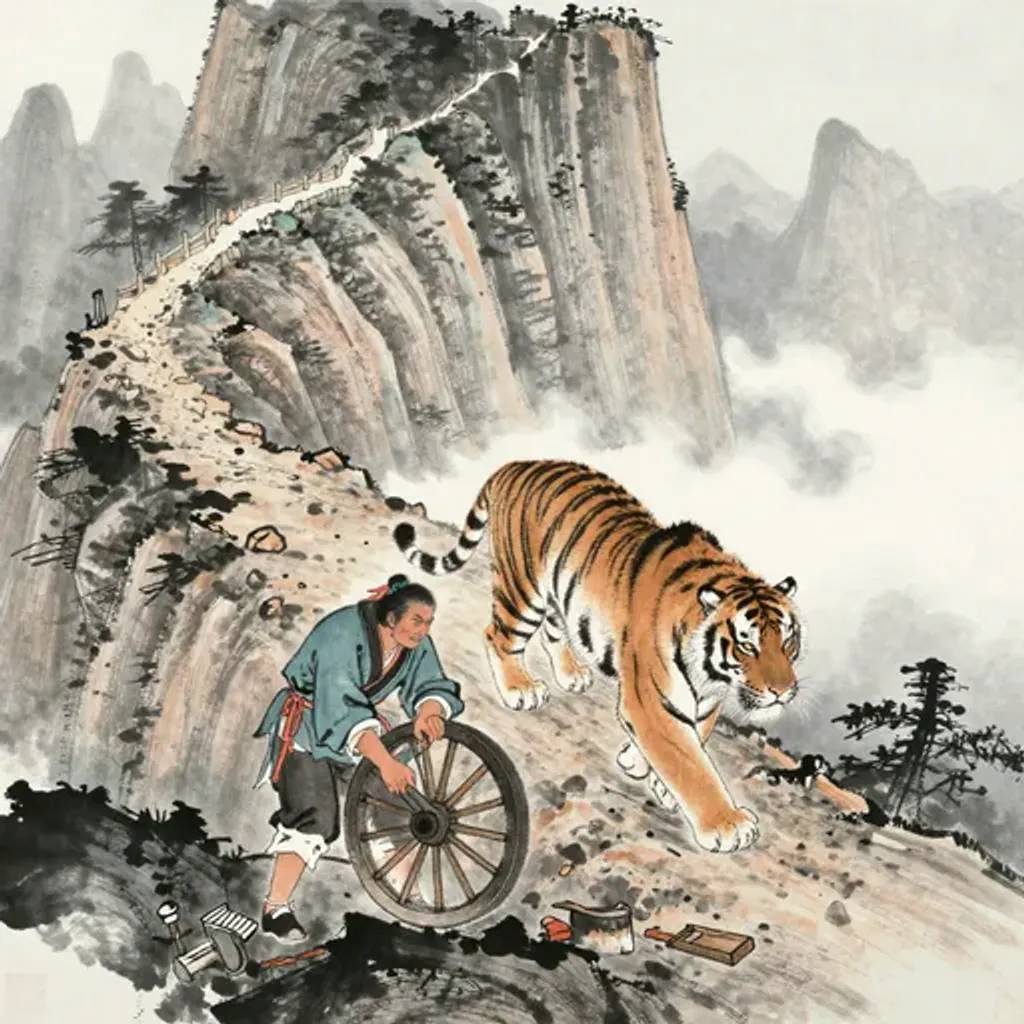
登山代輻,虎在我側。王孫无懼,仁見不賊。
Climbing the mountain to repair a wheel spoke, a tiger at my side. The prince is without fear; the benevolent are not harmed.
— Jiao Yanshou, Yilin (Forest of Changes), 1st century BC
Commentary
Water on the mountain tests the traveler's moral nerve. Ascending the mountain to gather wood for wheel-spokes, a tiger appears at one's side. Yet the 'prince's grandson' shows no fear — the benevolent man sees no threat, for 'goodness perceives no harm.' The phrase echoes Confucian teachings on the power of ren (�ate benevolence): the truly virtuous person does not attract violence because his inner state radiates a harmony that even wild beasts respect. This may also echo the story of the filial son who walked among tigers unharmed. From Obstruction to Inner Truth, wind blows over the lake as sincerity touches what cannot be reached by force. The tiger at the traveler's side is the ultimate test of inner truth — one whose sincerity is complete need not fear even the most dangerous encounter.
蹇 → 小過
Hexagram 39 → Hexagram 62: Small Exceeding
Changing lines: 4, 5
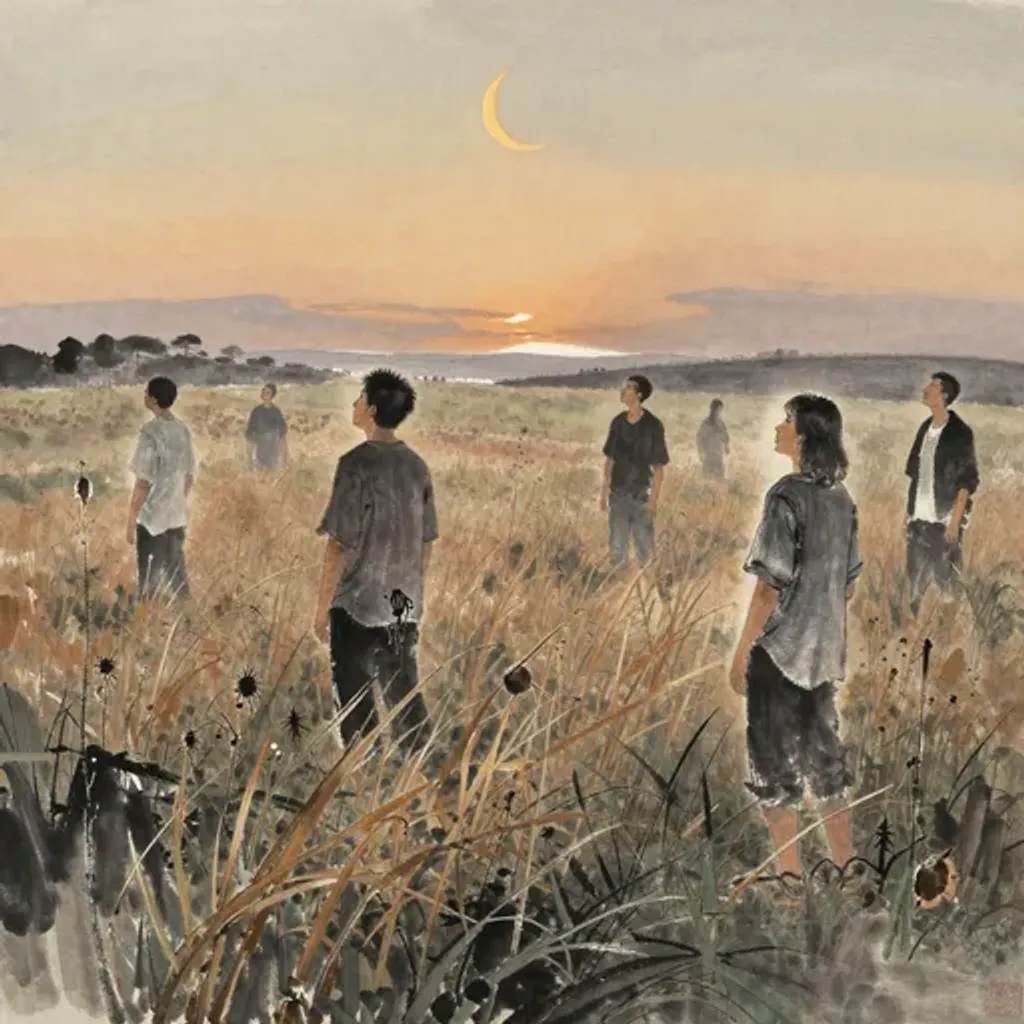
六月睽睽,各欲有望。後來未壯,俟時旦明。
In the sixth month, eyes gaze wide; each has their own hopes. What comes later is not yet strong; they must wait for the moment of dawn.
— Jiao Yanshou, Yilin (Forest of Changes), 1st century BC
Commentary
Water on the mountain holds everyone in anxious suspense. In the sixth month, all eyes strain watchfully — each person harbors hopes and expectations. Yet the time is not ripe: what comes next is still unformed, and one must wait for the dawn to brighten before acting. The verse counsels restraint during a period of collective anticipation: desires are present but premature, and forcing the issue will fail. From Obstruction to Small Exceeding, thunder rumbles above the mountain. Small Exceeding permits small matters to succeed while great ambitions must be deferred — 'the flying bird leaves its call: it is not fitting to ascend, only to descend.' The verse matches this exactly: the watchful sixth-month crowd must not overreach but content themselves with small, timely actions until the light fully arrives.
蹇 → 既濟
Hexagram 39 → Hexagram 63: After Completion
Changing lines: 1
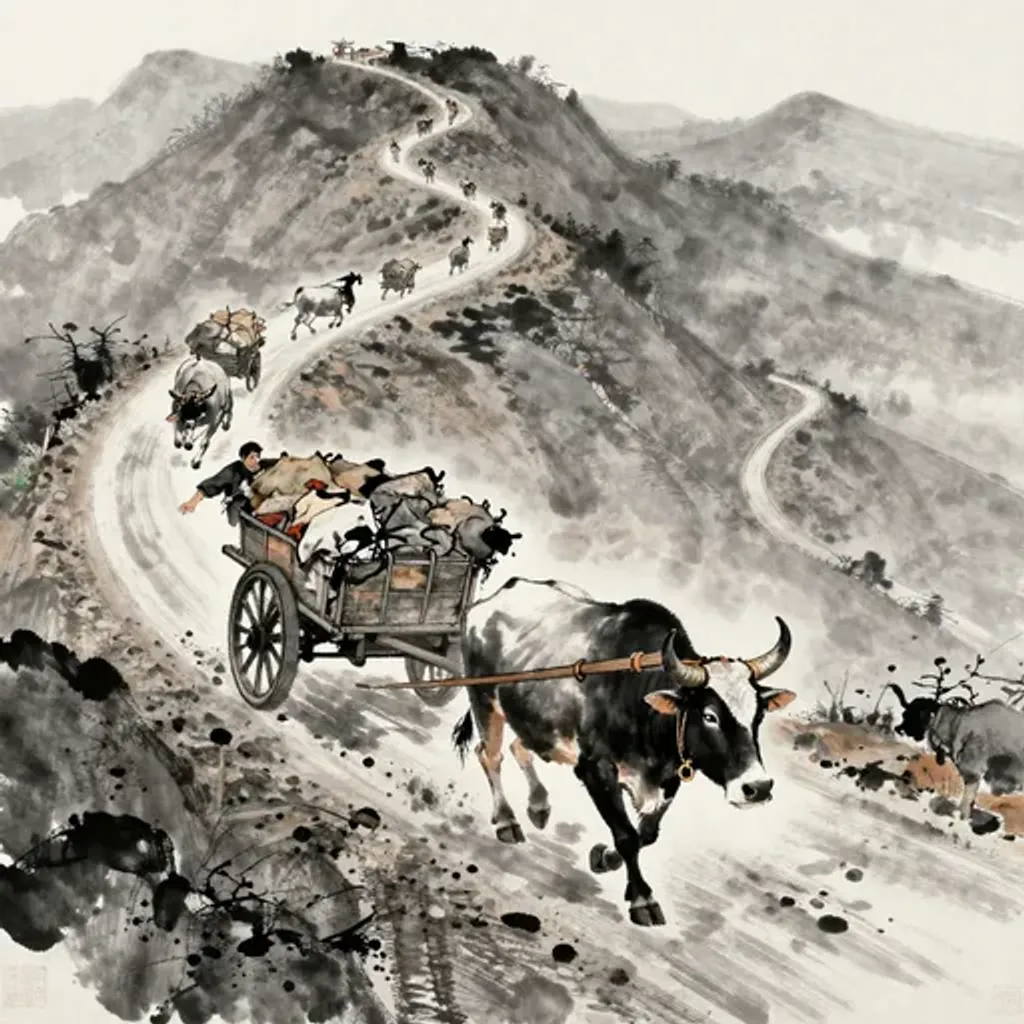
道涉多阪,牛馬蜿蟺。車不麗載,請求不得。
The road passes over many steep hills; oxen and horses twist and struggle. The cart cannot hold its load; what is sought cannot be obtained.
— Jiao Yanshou, Yilin (Forest of Changes), 1st century BC
Commentary
Water on the mountain makes the road a succession of hillocks and ridges. Oxen and horses wind slowly through the switchbacks, struggling with every step. The cart cannot maintain its load — goods shift and tumble — and petitions go unanswered. The verse describes the frustration of a merchant or official whose journey is defeated by terrain: the cargo cannot be delivered, the request cannot be granted, and every ridge reveals another ridge beyond it. From Obstruction to After Completion, water sits above fire in perfect but precarious balance. After Completion represents the moment when everything is in its proper place — yet the verse's endless hillocks show the journey to that completion is agonizing. The pattern suggests that arriving at After Completion from Obstruction requires passing through every obstacle without shortcuts, and the very completeness of the suffering is what makes the final settling possible.
蹇 → 未濟
Hexagram 39 → Hexagram 64: Before Completion
Changing lines: 2, 3, 4, 5, 6
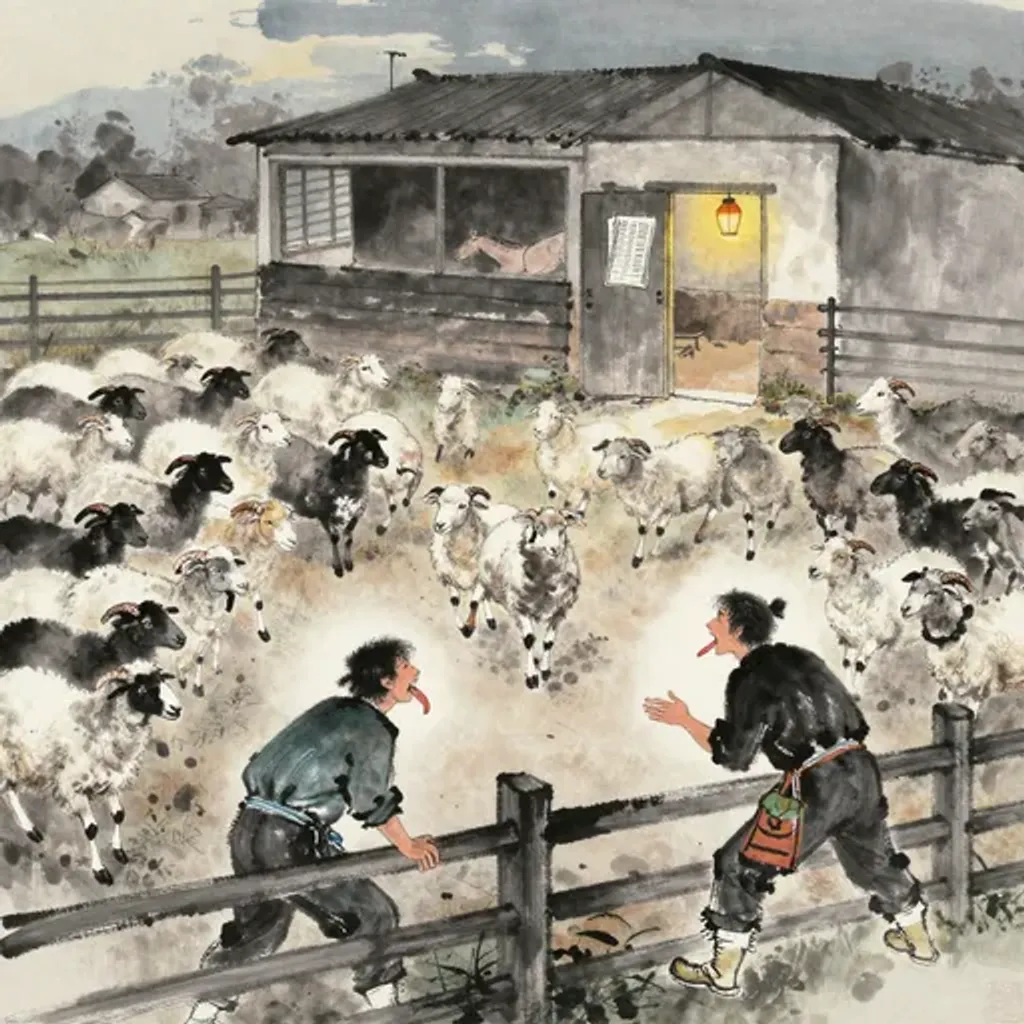
一口三舌,相妨无益。群羊百䍧,不為威強。亡馬失駒,家耗於財。
One mouth with three tongues, mutually hindering and without benefit. A hundred rams in the flock, yet they do not make for strength. Horses and colts are lost; the household's wealth is consumed.
— Jiao Yanshou, Yilin (Forest of Changes), 1st century BC
Commentary
Water on the mountain splinters into discord and dissipation. One mouth with three tongues — conflicting speech that only obstructs, never clarifies. A flock of sheep, a hundred rams, yet they do not constitute a formidable force. Horses and foals are lost, and the household hemorrhages its wealth. The verse piles up images of quantity without quality: many tongues but no coherent voice, many sheep but no real strength, many animals but they slip away. Numbers alone cannot overcome obstruction when there is no unity of direction. From Obstruction to Before Completion, fire hovers above water without the two forces meeting. Before Completion is the permanent state of almost-but-not-yet: everything is present but nothing has clicked into alignment. The three-tongued mouth, the scattered flock, the lost horses — all embody this tantalizing incompletion where resources abound but resolution remains forever one step away.