Transformations of Hexagram 40
Every line of change out of Hexagram 40 解 Deliverance, with the Yilin verse for each of the 64 resulting hexagrams, its translation, and the original ink brush artwork.
解 → 乾
Hexagram 40 → Hexagram 1: The Creative
Changing lines: 1, 3, 5, 6
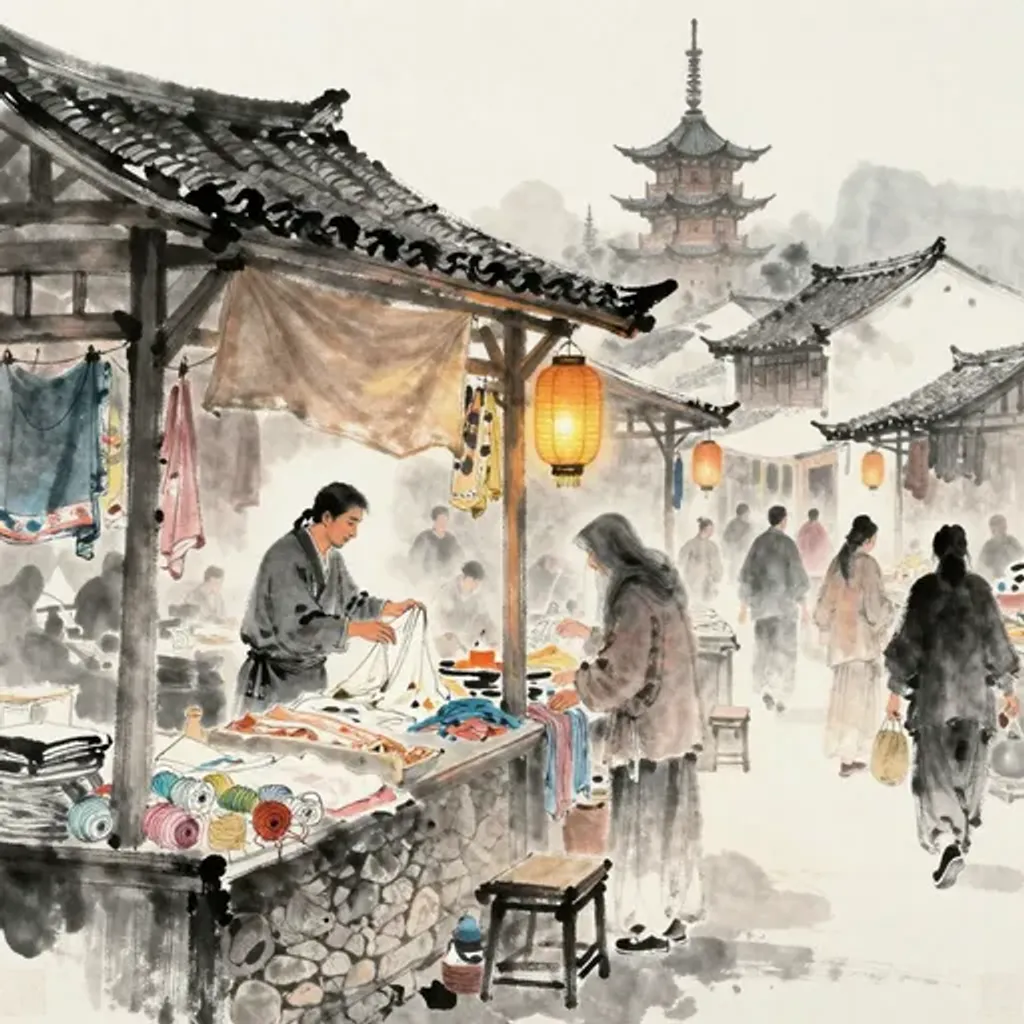
大都之居,无物不具。抱布貿絲,所求必得。
Dwelling in the great capital, nothing lacks among its goods. Carrying cloth to trade for silk; what one seeks, one surely obtains.
— Jiao Yanshou, Yilin (Forest of Changes), 1st century BC
Commentary
Thunder over water breaks the sky open, and deliverance floods in. The verse borrows from the Shijing's 'Mang' poem: 'Carrying cloth to trade for silk' — the suitor who comes with goods and leaves with a bride. Here, though, the image is of a great capital where nothing is lacking. Whatever you seek, you obtain. From Deliverance to the Creative, the transformation traces how the release of tension becomes self-generating momentum. The thunderstorm clears and heaven's tireless motion takes over: obstacles dissolve not into rest but into the creative drive that needs no external prompt. When the knot unties, initiative surges forward of its own accord.
解 → 坤
Hexagram 40 → Hexagram 2: The Receptive
Changing lines: 2, 4
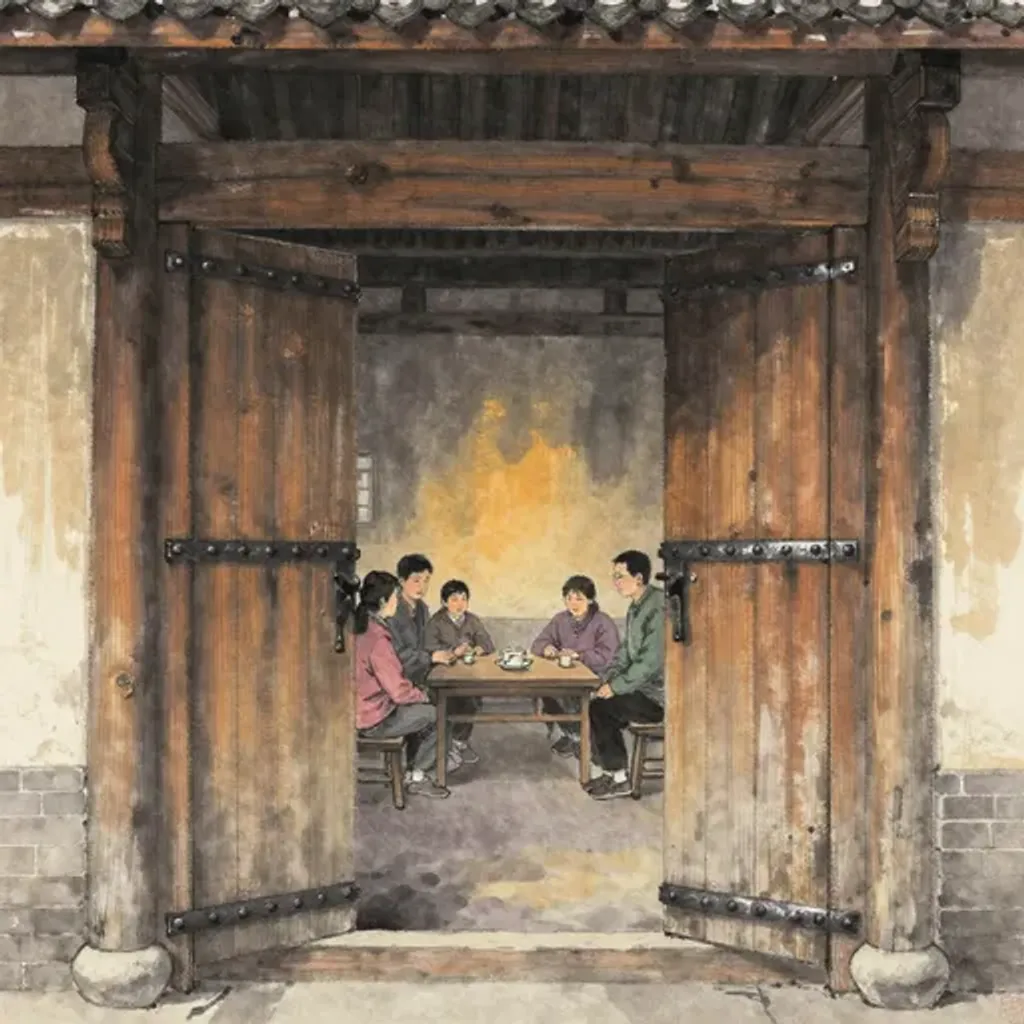
膠著木連,不出牢關。家室相安。
Glued fast, wood joined to wood; one does not leave the barred gate. The household rests in peace.
— Jiao Yanshou, Yilin (Forest of Changes), 1st century BC
Commentary
Thunder over water stills into the deep receptivity of doubled earth. Glue binds wood together, and nothing passes the prison gate — yet the household rests in peace. The verse plays on confinement as stability: what cannot escape also cannot be disturbed. The adhesive that locks the joints is not a trap but a seal of domestic security. From Deliverance to the Receptive, the transformation reveals how release paradoxically finds its fulfillment in willing constraint. The thunderstorm subsides and the earth holds steady. Freedom is not flight but the choice to remain where bonds are strong and the family endures undisturbed.
解 → 屯
Hexagram 40 → Hexagram 3: Difficulty at the Beginning
Changing lines: 1, 2, 4, 5
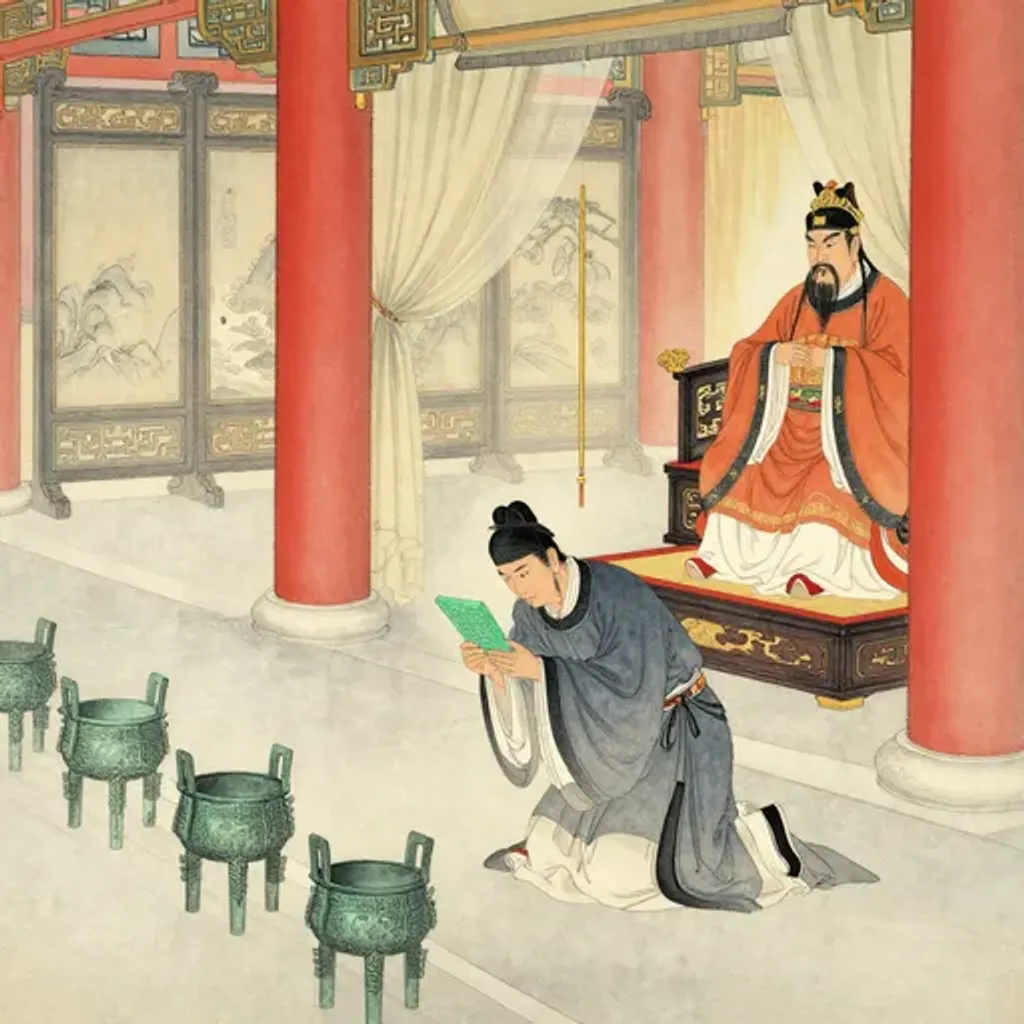
孟伯食長,懼其畏王。賴四蒙五,抱福歸房。
Meng Bo feasts on the eldests portion, fearing the kings displeasure. Relying on the fourth and fifth, he embraces good fortune and returns to his chamber.
— Jiao Yanshou, Yilin (Forest of Changes), 1st century BC
Commentary
Thunder over water releases into the gathering storm of new beginnings. The verse likely alludes to succession struggles among feudal lords: the eldest takes the larger portion but fears the king's displeasure. By relying on the fourth and fifth — perhaps loyal ministers or younger brothers — he secures blessings and returns safely home. The imagery suggests a political settlement where hierarchy is negotiated under pressure. From Deliverance to Difficulty at the Beginning, the release of one crisis births another: clouds and thunder churn as new order struggles to emerge. Yet the verse's resolution is positive — blessings are gathered precisely through alliance and deference.
解 → 蒙
Hexagram 40 → Hexagram 4: Youthful Folly
Changing lines: 4, 6
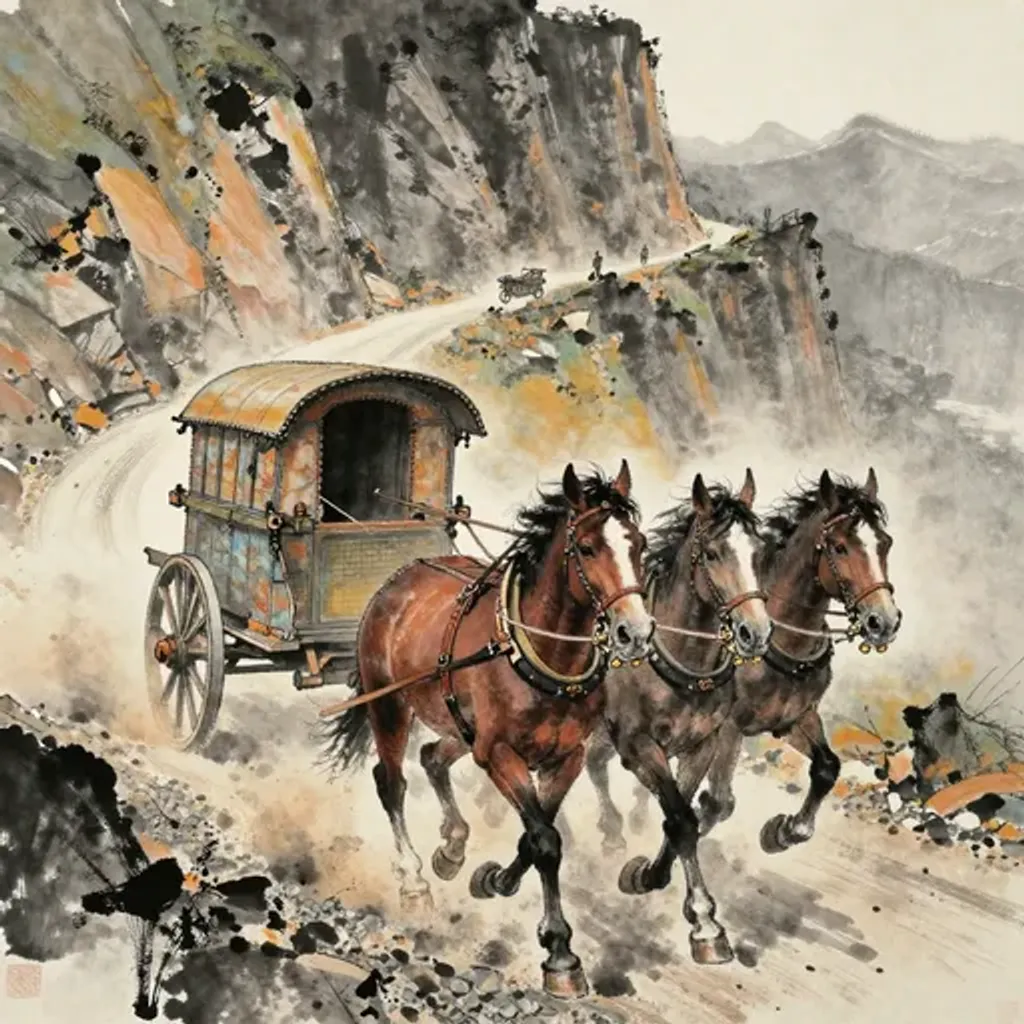
防輿疲駟,不任衘轡。君子服之,談何容易。
A war carriage with weary steeds; they cannot bear the bit and bridle. The noble man undertakes the task — how easily said, how hard to do.
— Jiao Yanshou, Yilin (Forest of Changes), 1st century BC
Commentary
Thunder over water dissolves into the mountain spring of youthful folly. A war chariot with broken crossbar and exhausted horses can no longer bear the reins. Even a gentleman who undertakes this task must concede — it is far from easy. The verse describes capability exceeded by burden: the vehicle of governance has deteriorated beyond what any driver can manage. Worn harness and spent steeds answer to no hand. From Deliverance to Youthful Folly, the transformation is sobering: the release from crisis does not guarantee competence. The spring emerging beneath the mountain has not yet learned its course; freedom without skill produces new confusion rather than progress.
解 → 需
Hexagram 40 → Hexagram 5: Waiting
Changing lines: 1, 3, 4, 5
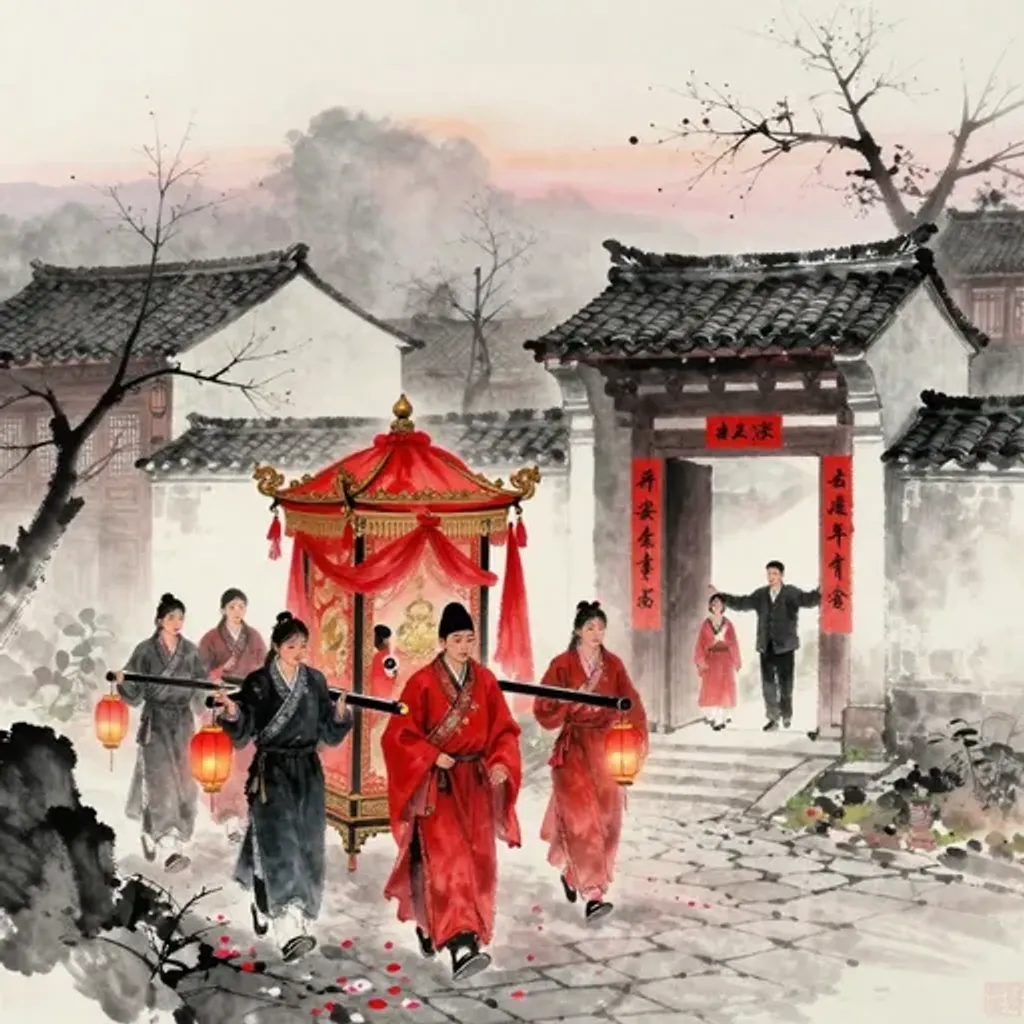
許嫁既婚,利福在身。適惠生桓,為我魯君。
Betrothed and now wed; blessings and fortune rest upon her. She goes to the house of Hui and bears Huan, who becomes our lord of Lu.
— Jiao Yanshou, Yilin (Forest of Changes), 1st century BC
Commentary
Thunder over water delivers blessings through an auspicious marriage. The verse alludes to the ducal succession of Lu: a woman properly betrothed and married brings fortune to herself and her lineage. 'Going to Hui and bearing Huan' points to the mother of Duke Huan of Lu, whose union with Duke Hui produced the heir who became 'our lord of Lu.' The marriage follows proper rites — betrothal then wedding — and fortune flows naturally from that propriety. From Deliverance to Waiting, the transformation shows how release from uncertainty culminates in patient trust. Clouds gather above heaven, and the one who waits correctly receives the heir that secures the future.
解 → 訟
Hexagram 40 → Hexagram 6: Conflict
Changing lines: 5, 6
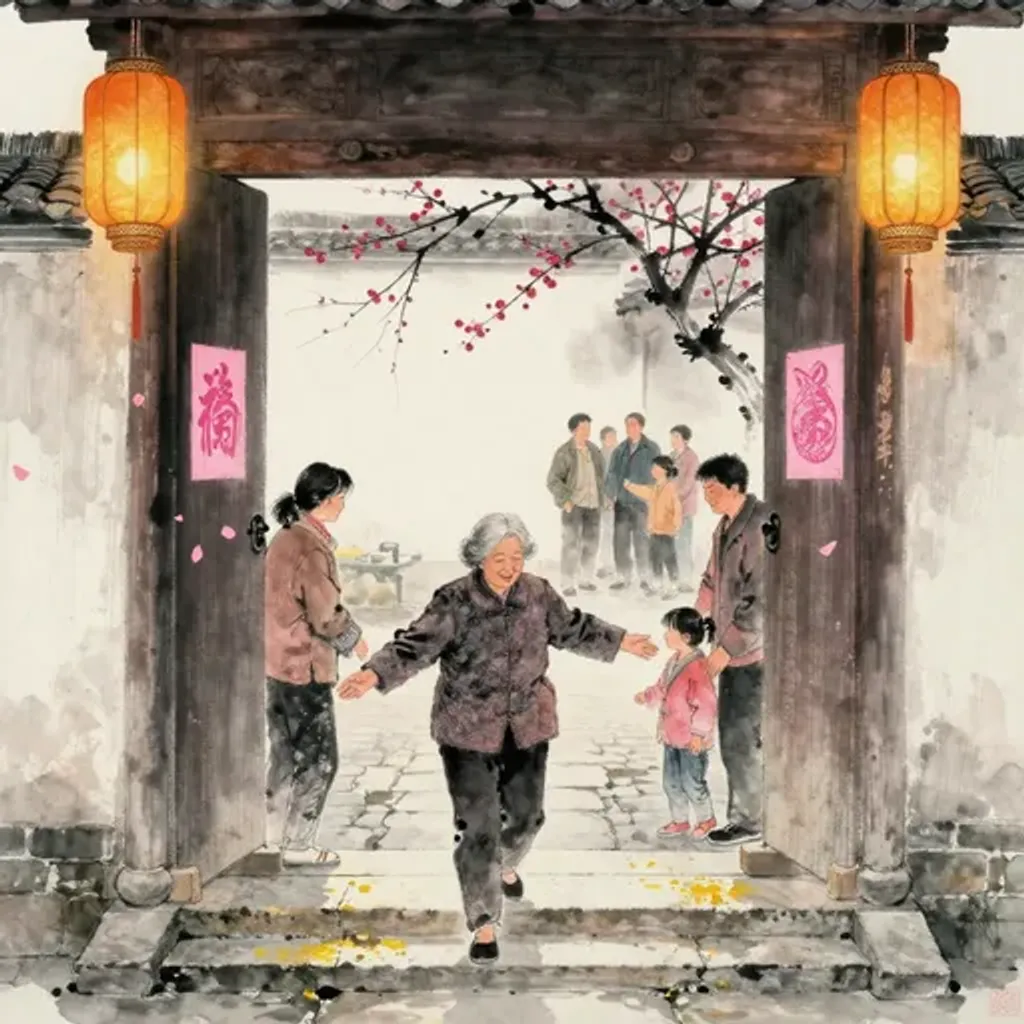
入門大喜,上堂見母。妻子俱在,兄弟饒友。
Entering the gate, great joy; ascending the hall, he sees his mother. Wife and children all present; brothers and friends abound.
— Jiao Yanshou, Yilin (Forest of Changes), 1st century BC
Commentary
Thunder over water dissolves all estrangement, and a joyful homecoming unfolds. Entering the gate brings great delight; ascending the hall, one sees one's mother. Wife and children are all present; brothers gather as friends. Every bond that crisis strained is now restored. The verse is a pure image of reunion — no historical allusion, just the elemental relief of a family made whole again. From Deliverance to Conflict, the transformation carries a quiet warning: heaven and water move in contrary directions, and this present harmony exists against a structural tension. Savor the reunion, for the forces that separated this family have not vanished — they have merely paused.
解 → 師
Hexagram 40 → Hexagram 7: The Army
Changing lines: 4
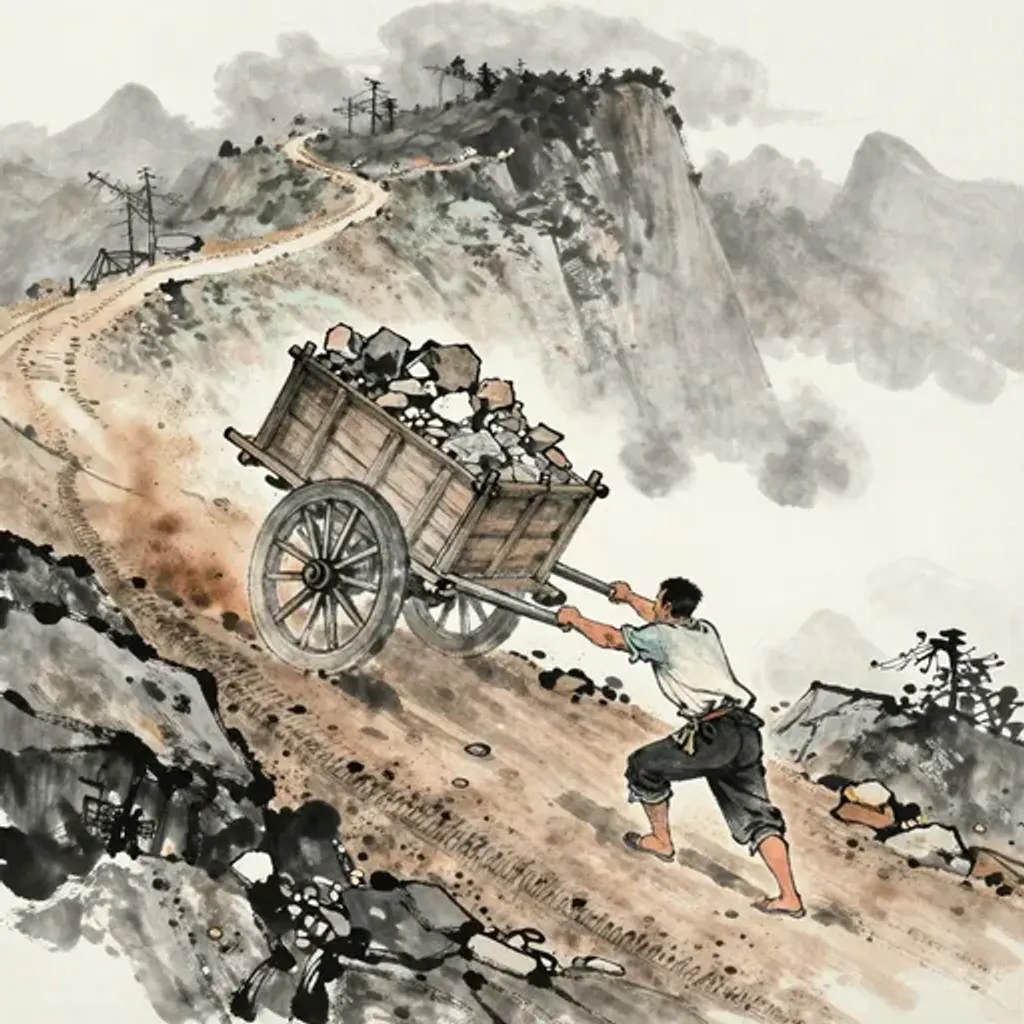
推車上山,力不能任。顛蹶蹉跌,傷我中心。
Pushing a cart uphill, strength unequal to the task. Stumbling and falling, tripping and sliding; it wounds my very heart.
— Jiao Yanshou, Yilin (Forest of Changes), 1st century BC
Commentary
Thunder over water becomes earth concealing water — the army's hidden discipline. Pushing a cart uphill, strength fails. Stumbling and tripping, the traveler injures his very heart. The image is visceral: a task beyond capacity undertaken alone, with no troops or structure to support it. From Deliverance to The Army, the transformation highlights the gap between individual effort and collective power. Water hidden within the earth can marshal vast forces; a lone person pushing a cart up a mountain cannot. The release from one hardship has led to another, but this time the verse implies a remedy — disciplined organization, not raw willpower, is what the situation demands.
解 → 比
Hexagram 40 → Hexagram 8: Holding Together
Changing lines: 2, 4, 5
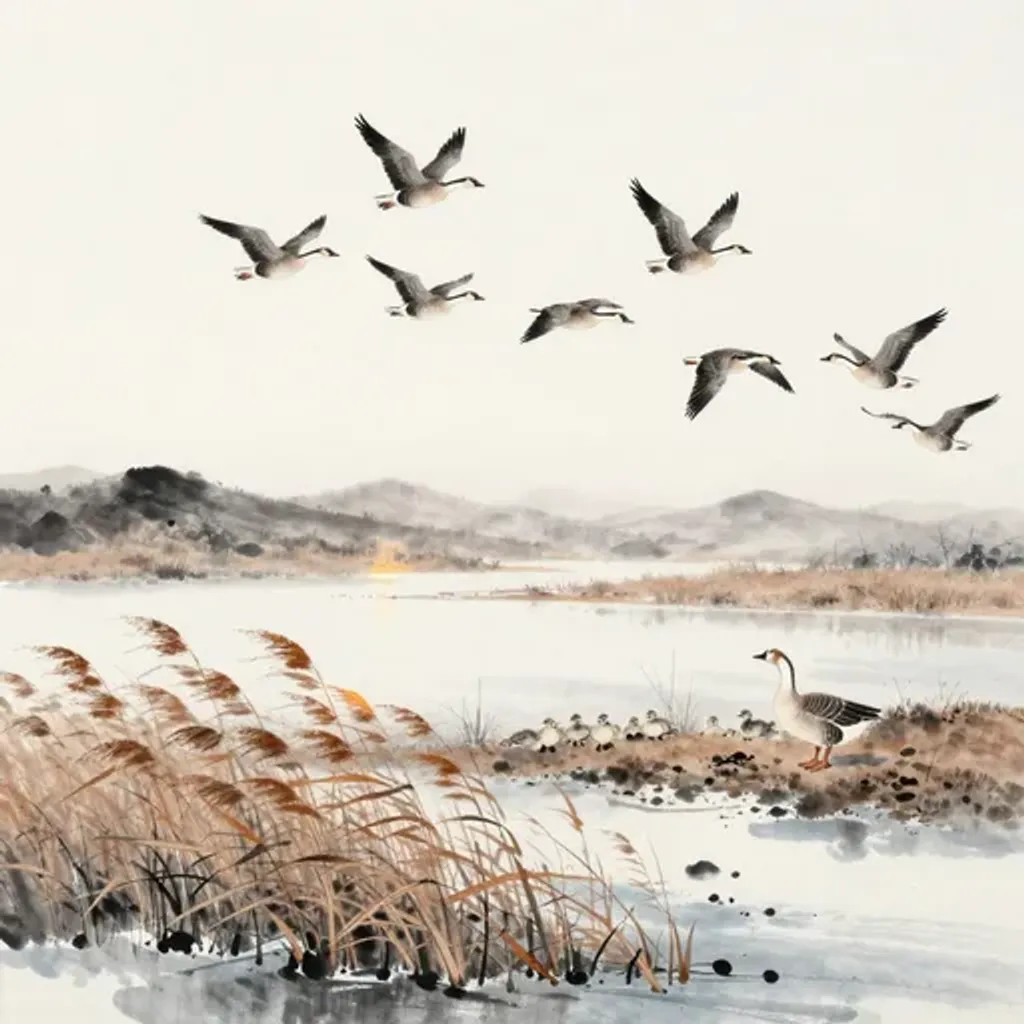
鴈飛退去,不食其雛。禽尚如此,何況人與?
The wild goose flies away in retreat; it does not feed its young. Even birds are thus — how much more so for men?
— Jiao Yanshou, Yilin (Forest of Changes), 1st century BC
Commentary
Thunder over water gives way to water resting upon earth — the tender bond of holding together. A goose flies away and retreats, refusing to eat its own young. If even birds act with such devotion, how much more should humans? The verse uses the natural behavior of wild geese — fiercely protective parents — to shame those who abandon their dependents. From Deliverance to Holding Together, the release from crisis leads to the question of loyalty: will the freed person return to those who need them? Water upon earth flows toward its natural gathering place, and the goose circles back. True deliverance is not flight from bonds but return to them.
解 → 小畜
Hexagram 40 → Hexagram 9: Small Taming
Changing lines: 1, 3, 4, 5, 6
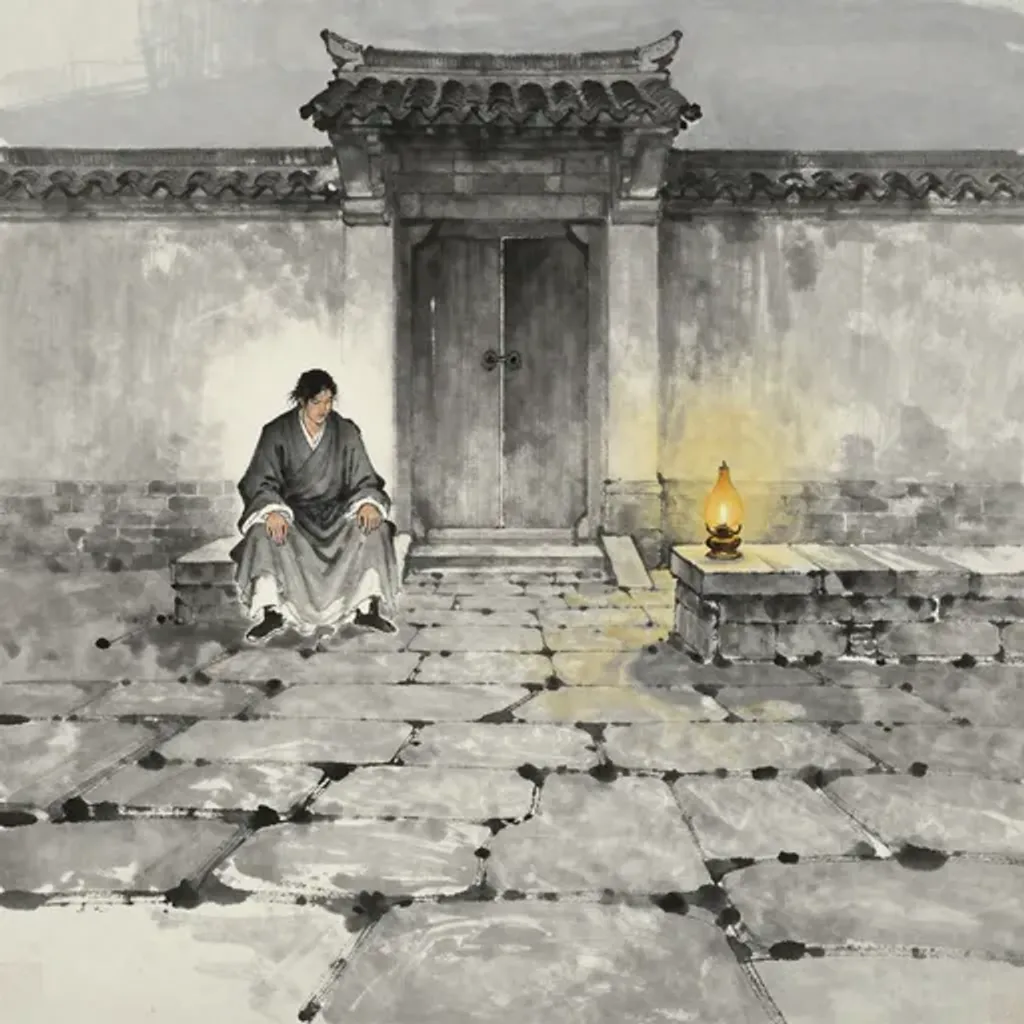
福棄我走,利不可得。幽人利貞,終无怨慝。
Fortune abandons me and flees; profit cannot be obtained. The recluse holds to what is right, and in the end bears no resentment or blame.
— Jiao Yanshou, Yilin (Forest of Changes), 1st century BC
Commentary
Thunder over water releases into wind drifting above heaven — the gentle restraint of small accumulation. Fortune abandons and flees; profit cannot be caught. Yet the hermit who holds to integrity finds no cause for resentment or malice. The verse borrows phrasing from the I-Ching's own Xiao Xu hexagram: 'The secluded person benefits from constancy.' When external fortune departs, inner rectitude becomes the only wealth that endures. From Deliverance to Small Taming, the storm's release dissipates into a light breeze too gentle to bring rain. Not every liberation leads to abundance — sometimes freedom simply means having nothing left to lose, and dignity intact.
解 → 履
Hexagram 40 → Hexagram 10: Treading
Changing lines: 1, 5, 6
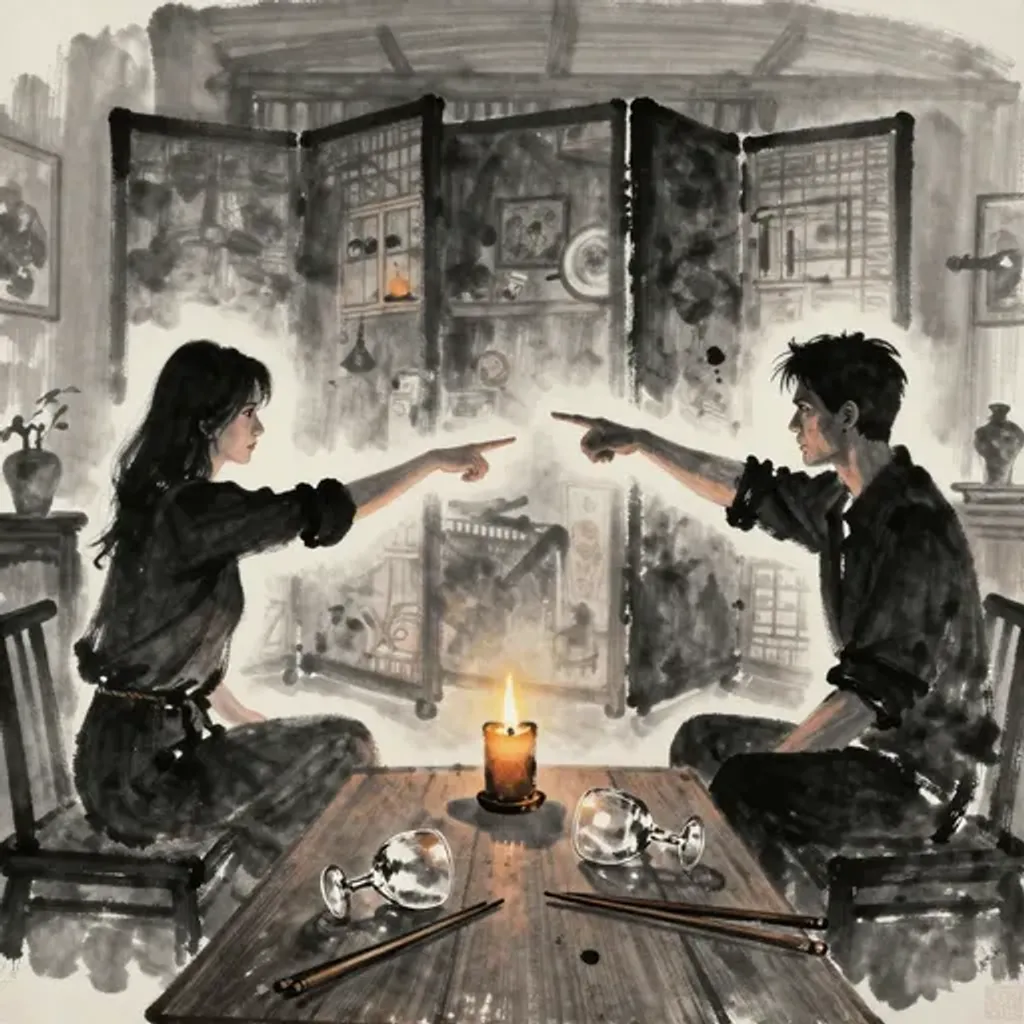
夫妻反目,不能正室。翁云于南,姬言還北。並后匹嫡,二政亂國。
Husband and wife glare at each other; the household cannot be set right. He says go south, she says return north. Two powers rival the throne; dual rule throws the state into chaos.
— Jiao Yanshou, Yilin (Forest of Changes), 1st century BC
Commentary
Thunder over water dissolves into heaven treading above the lake — proper order must be maintained or chaos follows. Husband and wife turn against each other, unable to govern the household. The elder says south, the consort insists north. When a secondary wife is elevated to match the principal wife, and two rival authorities divide policy, the state descends into turmoil. The verse warns against the classic catastrophe of 'parallel empresses and matched consorts,' a phrase from political discourse about divided sovereignty. From Deliverance to Treading, freedom without hierarchy becomes anarchy. The lake must remain beneath heaven; when it rises to the same level, the tiger's tail is stepped upon.
解 → 泰
Hexagram 40 → Hexagram 11: Peace
Changing lines: 1, 3, 4
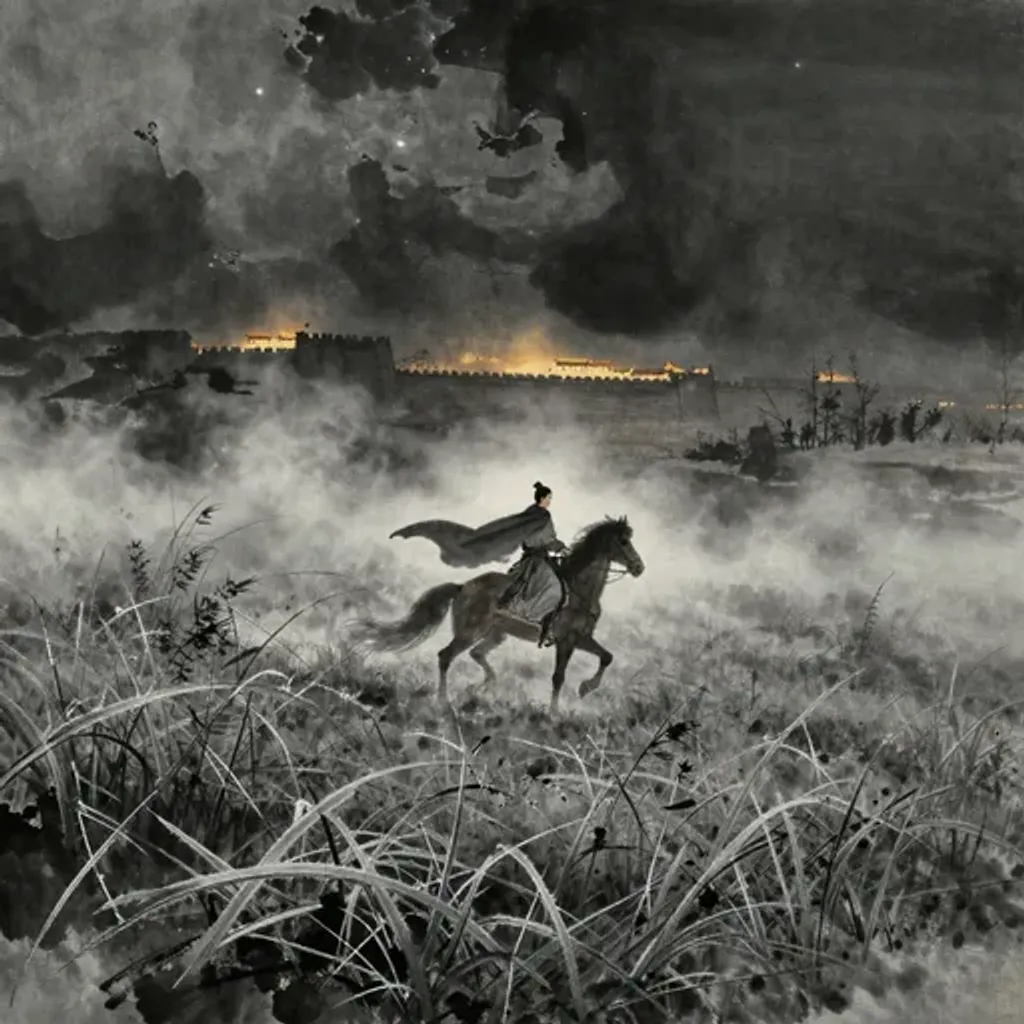
陽衰伏匿,陰淫為賊。賴幸王孫,遂至喜國。
Yang weakens, hidden and eclipsed; yin runs rampant as a thief. Fortunate through the royal scion, one reaches at last the land of joy.
— Jiao Yanshou, Yilin (Forest of Changes), 1st century BC
Commentary
Thunder over water releases into the grand communion of heaven and earth meeting. Yang wanes and hides; yin grows dominant and turns destructive. Yet through the fortune of a 'prince' — a noble ally — one reaches the land of joy at last. The verse describes a period when dark forces prevail and the righteous are suppressed, but a timely rescue intervenes. From Deliverance to Peace, the transformation is the most hopeful in the I-Ching: heaven descends and earth rises, their energies mingling freely. The thunderstorm's release becomes cosmic harmony, but only because someone intervened at the critical moment when yin threatened to overwhelm all light.
解 → 否
Hexagram 40 → Hexagram 12: Standstill
Changing lines: 2, 5, 6
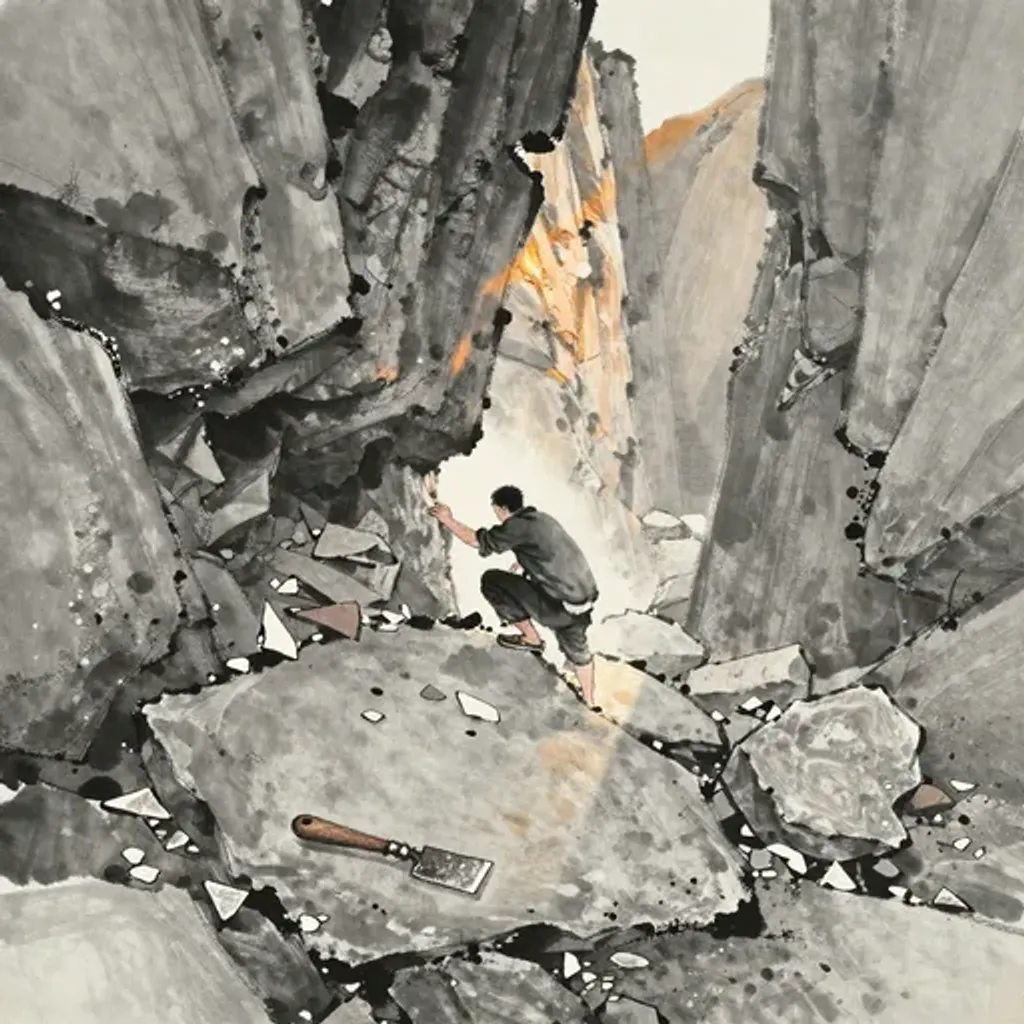
入山求玉,不見和璞。終日至暮,勞无所得。
Entering the mountain to seek jade, one does not find the He stone. From morning until dusk the whole day through, toiling without reward.
— Jiao Yanshou, Yilin (Forest of Changes), 1st century BC
Commentary
Thunder over water releases into the stagnation of heaven and earth severed. One enters the mountain seeking jade but never finds the He jade — the fabled rough stone that Bian He presented three times before its inner treasure was recognized. Laboring from dawn to dusk, one returns with nothing. The He jade allusion deepens the futility: even a real treasure might be present, but without the discernment to see through its rough exterior, the search is hopeless. From Deliverance to Standstill, the storm clears but heaven and earth cease to communicate. Freedom from one trap leads to the isolation of fruitless seeking — effort without connection to the source of value.
解 → 同人
Hexagram 40 → Hexagram 13: Fellowship
Changing lines: 1, 2, 3, 5, 6
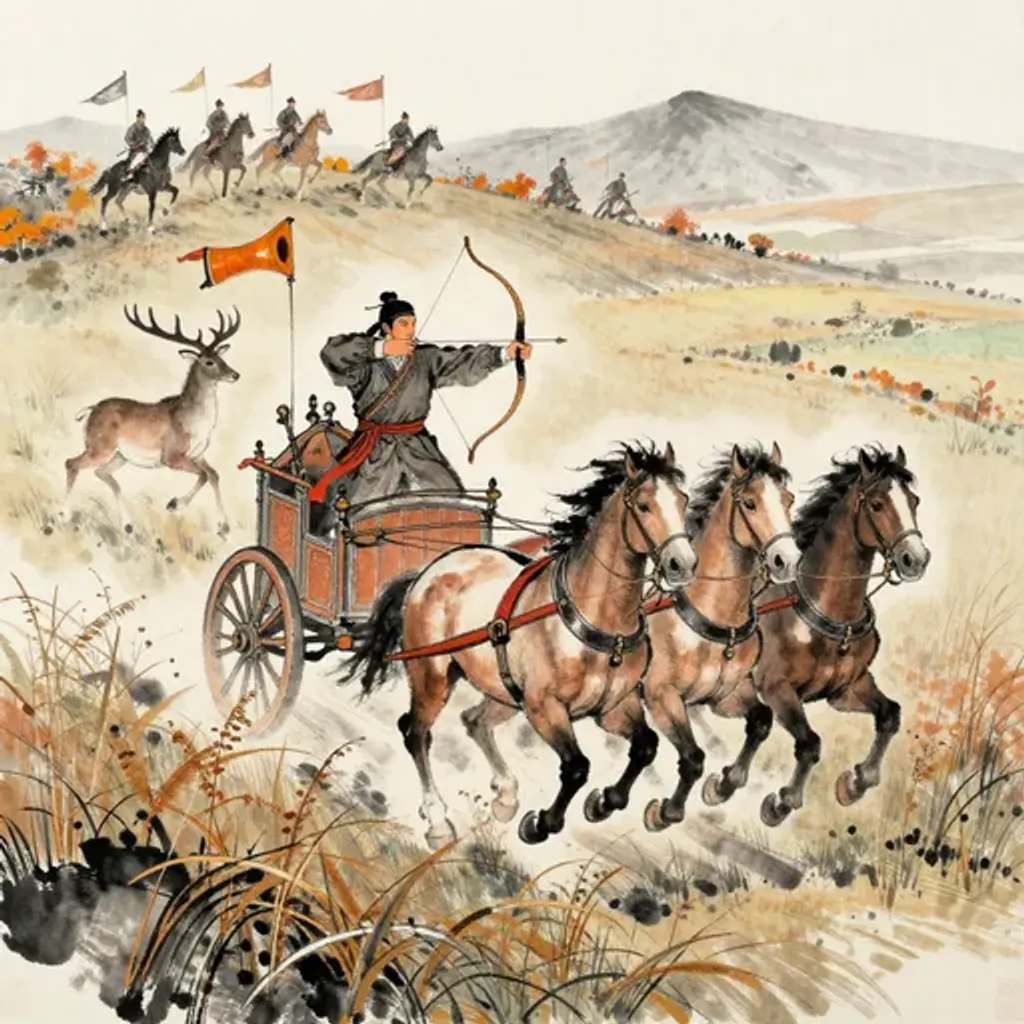
鳴鸞四牡,駕出行狩。合格有獲,獻公飲酒。
Ringing bells on four stallions, the chariot drives out for the hunt. Beaters close the net with a catch; the duke is presented wine to drink.
— Jiao Yanshou, Yilin (Forest of Changes), 1st century BC
Commentary
Thunder over water resolves into heaven and fire — the fellowship of a great hunt. Luan-bell chariots drawn by four horses ride forth to hunt. The nets close and quarry is taken; a lord offers the catch and drinks ceremonial wine. The term 'Xian Gong' may allude to Duke Xian of Jin, who was known for his hunts and feasts, though the verse may simply celebrate any feudal lord's successful hunt. From Deliverance to Fellowship, the release of energy channels into communal ritual. Heaven paired with fire illuminates shared purpose, and the hunt becomes a political act — bonding lord and retainers through coordinated effort and shared feasting.
解 → 大有
Hexagram 40 → Hexagram 14: Great Possession
Changing lines: 1, 3, 6
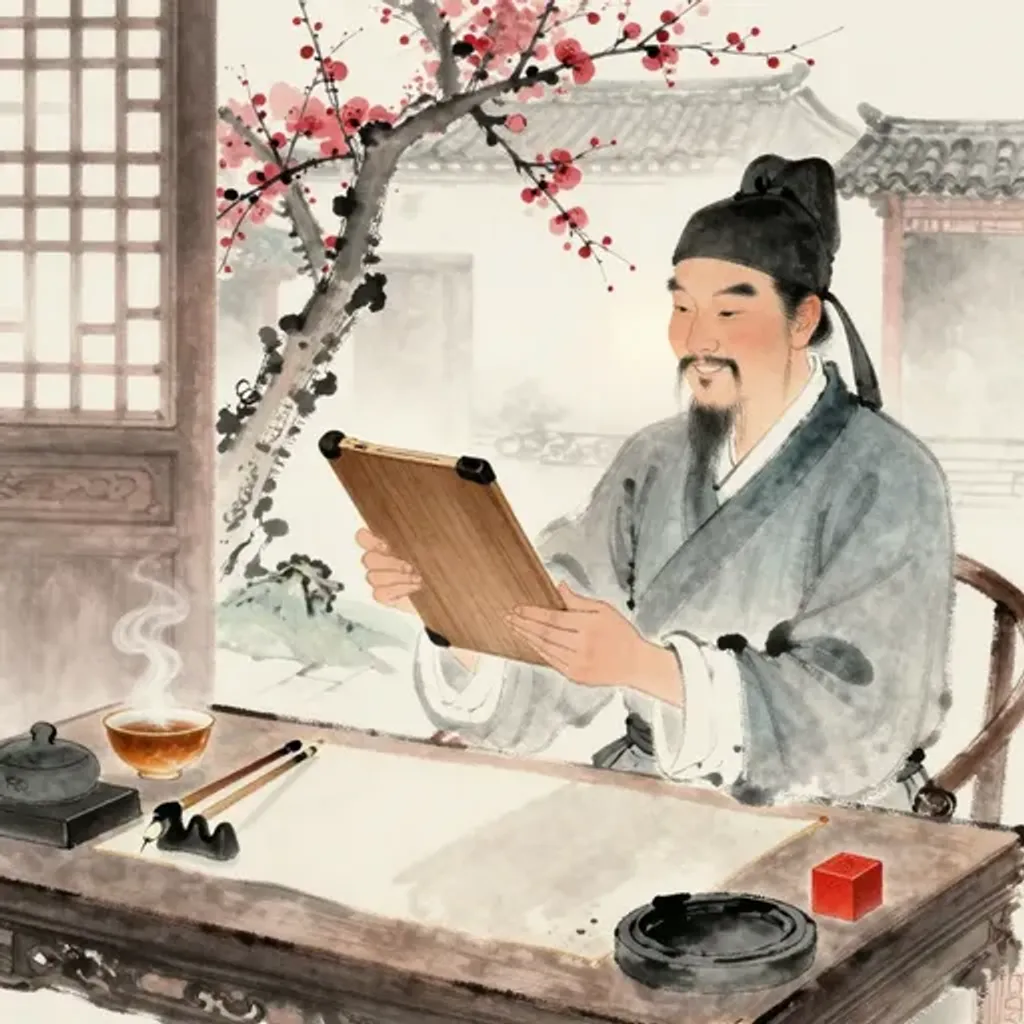
覆手舉牘,易為功力。月正元日,平飲致福。
Turning the hand to lift the tablet — easy to accomplish, little effort required. On the first proper day of the new year, one drinks in peace and receives blessings.
— Jiao Yanshou, Yilin (Forest of Changes), 1st century BC
Commentary
Thunder over water releases into fire blazing above heaven — great abundance with minimal effort. Flipping the hand lifts the document; the task is accomplished with ease. On the first day of the first month, all drink together and blessings descend. The verse describes effortless governance: administration so smooth that a mere turn of the wrist completes the business, leaving time for New Year's celebrations. From Deliverance to Great Possession, the thunderstorm's release opens into the radiance of fire in heaven. What was once bound and laborious now flows freely; great wealth gathers because the obstruction has been removed, and virtue aligns with heaven's mandate.
解 → 謙
Hexagram 40 → Hexagram 15: Modesty
Changing lines: 2, 3, 4
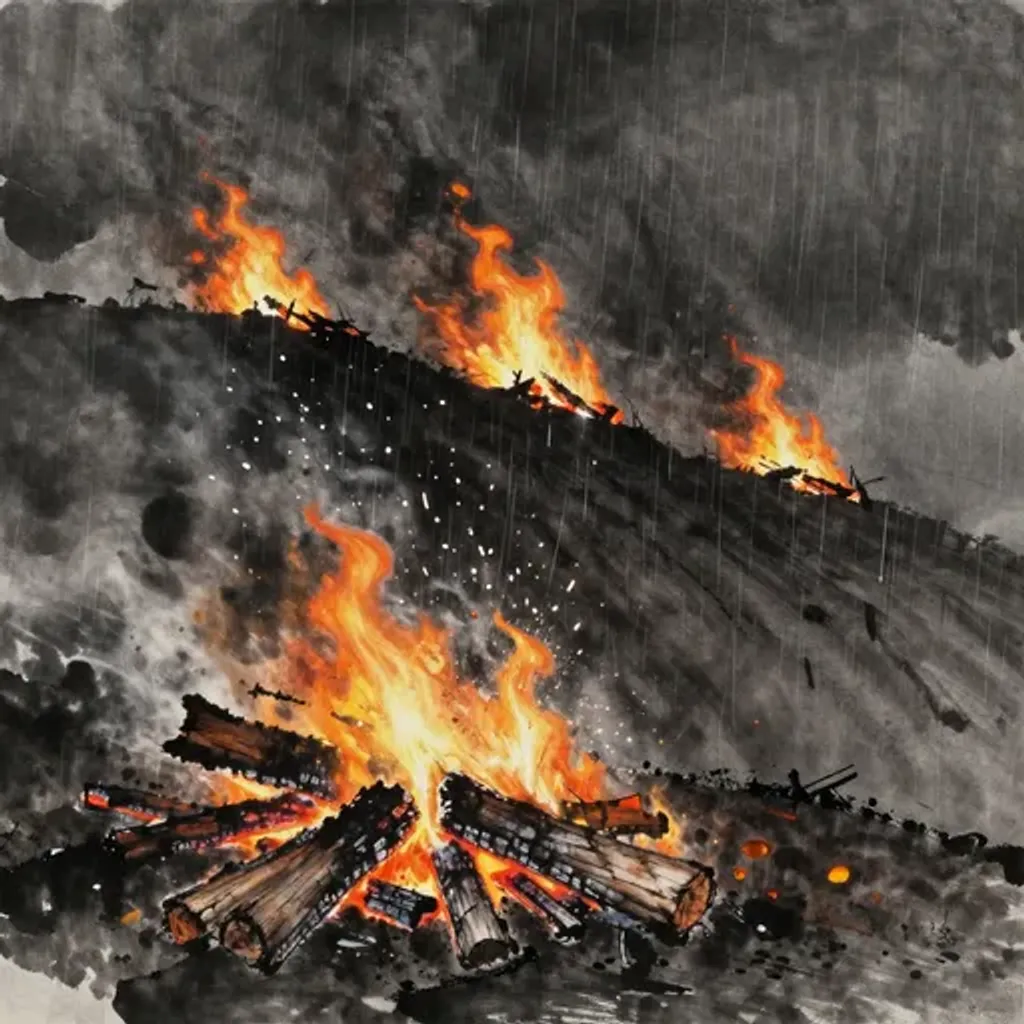
三火高明,雨滅其光。高位疾顛,驕恣誅傷。
Three fires blaze bright; rain extinguishes their light. Those in high places fall swiftly; the arrogant and reckless are punished and harmed.
— Jiao Yanshou, Yilin (Forest of Changes), 1st century BC
Commentary
Thunder over water descends into the mountain hidden within the earth — the leveling force of modesty. Three fires blaze high and bright, but rain extinguishes their light. Those in lofty positions fall swiftly; the arrogant and self-indulgent are cut down and harmed. The three fires may symbolize three powerful figures or factions whose brilliance provokes the heaven's correction. From Deliverance to Modesty, the transformation is a stern lesson: release from constraint tempts the liberated toward excess, but the mountain within the earth reminds that what rises too high will be brought low. Rain quenches fire as surely as heaven levels pride.
解 → 豫
Hexagram 40 → Hexagram 16: Enthusiasm
Changing lines: 2
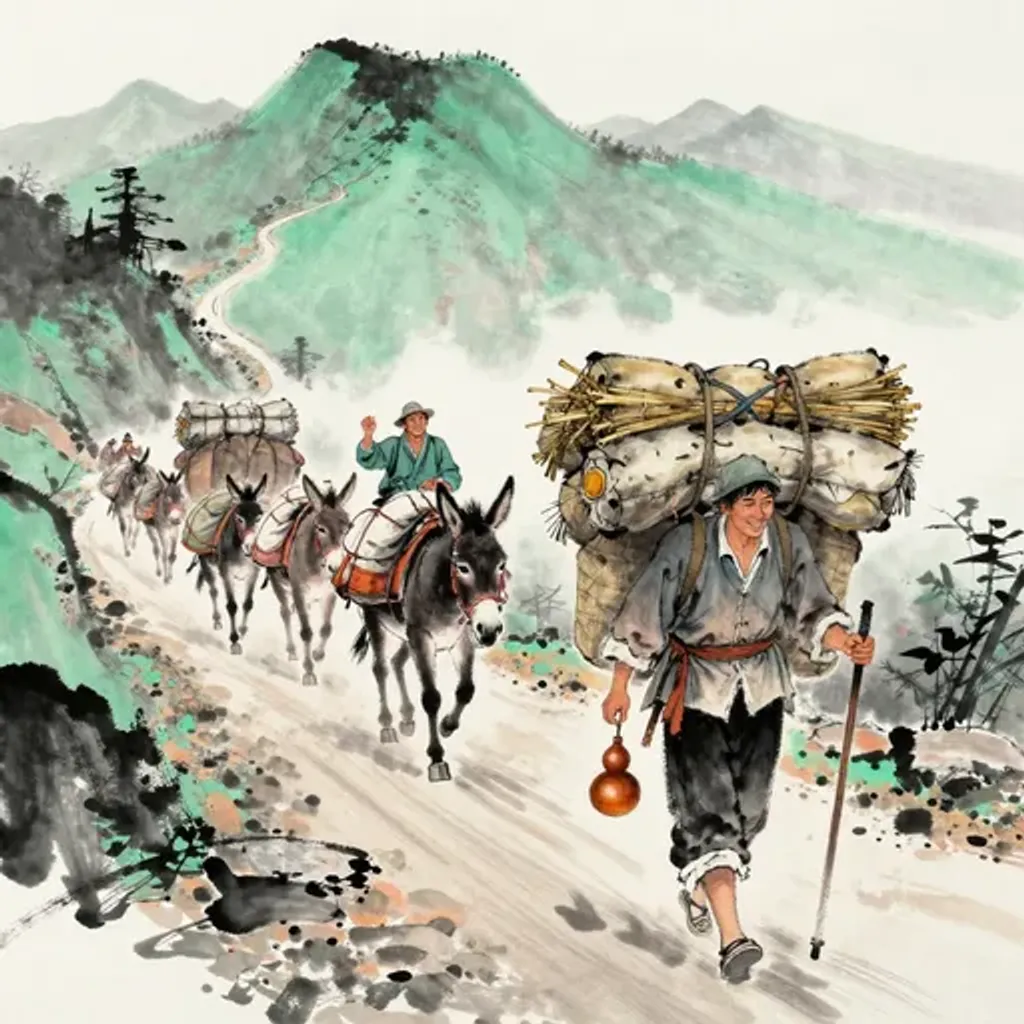
褁糗荷糧,與利相逢。高飛有德,君大獲福。
Wrapping provisions and shouldering grain, one meets with fortune along the way. Soaring high with virtue, the lord reaps great blessings.
— Jiao Yanshou, Yilin (Forest of Changes), 1st century BC
Commentary
Thunder over water breaks free into thunder rising from the earth — the joyous momentum of enthusiasm. Wrapping dried rations and shouldering provisions, the traveler meets good fortune on the road. Soaring high with virtue, the lord reaps great blessings. The verse captures the moment after deliverance when one packs supplies and sets out with renewed purpose, encountering prosperity along the way. From Deliverance to Enthusiasm, thunder emerges from the earth with exuberant force. The obstruction is behind; ahead lies the open road where preparation meets opportunity and heaven's favor rewards the virtuous traveler.
解 → 隨
Hexagram 40 → Hexagram 17: Following
Changing lines: 1, 2, 5
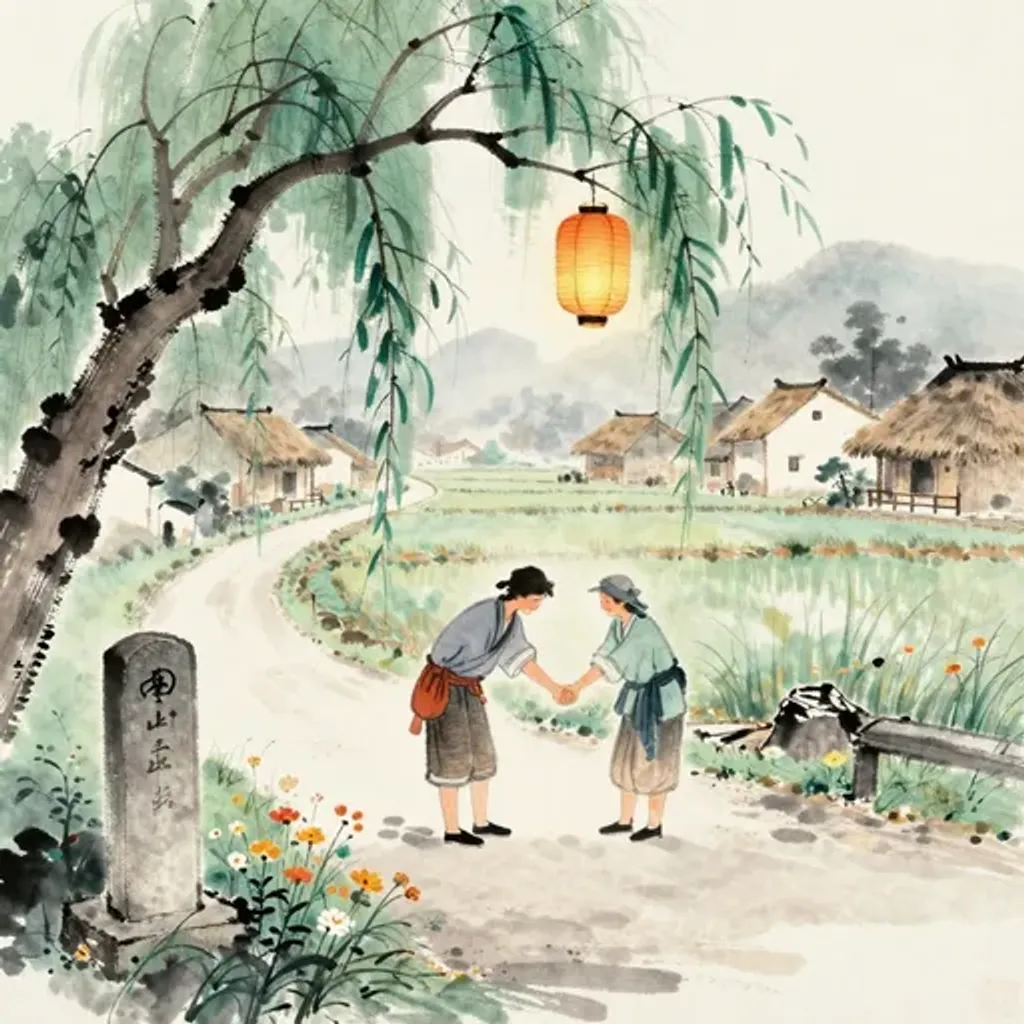
道理和得,人不相賊。君子往之,樂有利福。
The Way and reason are in accord; people do no harm to one another. The noble man proceeds thus, and joyfully receives blessings and fortune.
— Jiao Yanshou, Yilin (Forest of Changes), 1st century BC
Commentary
Thunder over water dissolves into the lake resting within thunder — the willing responsiveness of following. The Way and principle are harmonized; people do not prey upon one another. The gentleman proceeds and finds joy with blessing. The verse describes a post-deliverance world where moral order has been restored and trust governs human relations. No thievery, no suspicion — only the mutual accord that allows genuine following. From Deliverance to Following, the thunder that once shattered bonds now rumbles gently within the lake of mutual delight. Release leads not to isolation but to a community where each follows the other in willing trust.
解 → 蠱
Hexagram 40 → Hexagram 18: Work on the Decayed
Changing lines: 3, 4, 6
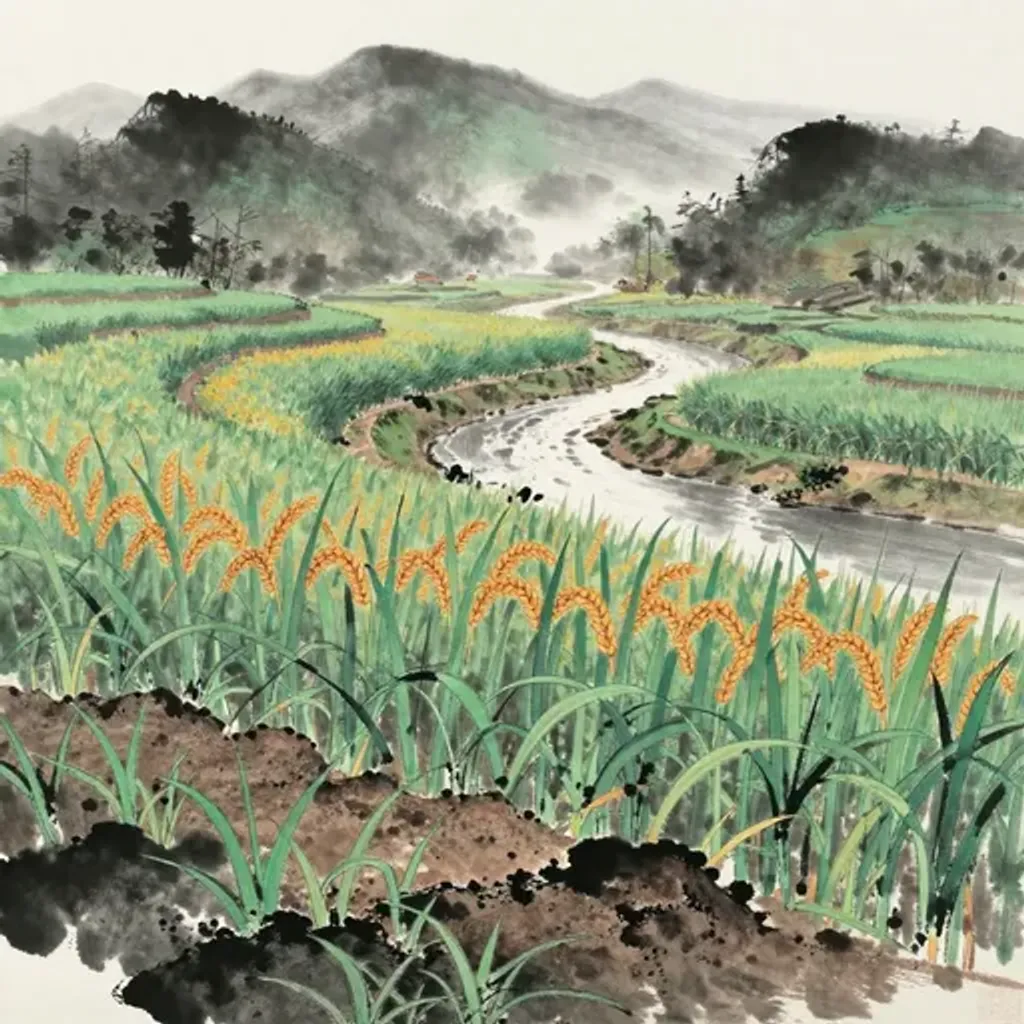
水土相得,萬物蕃殖。膏澤優渥,君子有德。
Water and earth in harmony; the ten thousand things multiply and flourish. Rich rains and fertile moisture; the noble man possesses virtue.
— Jiao Yanshou, Yilin (Forest of Changes), 1st century BC
Commentary
Thunder over water transforms into wind stirring beneath the mountain — the work of renovation. Water and earth complement each other, and all things multiply abundantly. Moisture and nourishment are generous, and the gentleman possesses virtue. The verse celebrates the ideal of natural cooperation: when water meets receptive earth, fertility is the result. From Deliverance to Work on the Decayed, the release of blocked energy does not merely restore the old order but enables renewal from within. Wind beneath the mountain stirs what has stagnated, and the gentleman's virtue acts like water on fertile soil — quietly generating new growth from the ruins of what was broken.
解 → 臨
Hexagram 40 → Hexagram 19: Approach
Changing lines: 1, 4
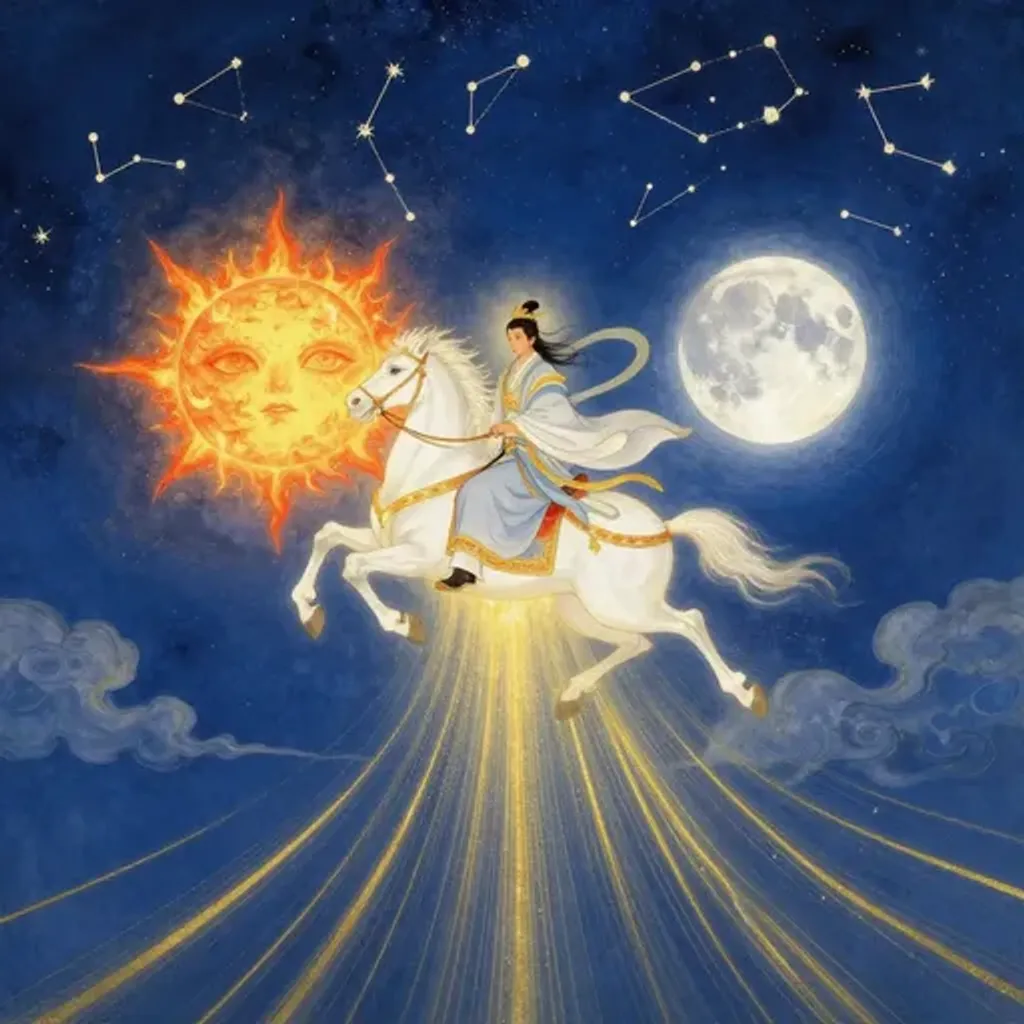
天孫帝子,與日月處。光榮於世,福祿繁祉。
The heavenly grandson, the emperors child, dwells alongside sun and moon. Radiant glory in the world; blessings, fortune, and abundant joy.
— Jiao Yanshou, Yilin (Forest of Changes), 1st century BC
Commentary
Thunder over water opens into earth resting above the lake — the generous approach of authority. The heaven's grandchild, the emperor's child, dwells alongside the sun and moon. Radiant to the world, blessings and good fortune multiply without end. The 'heaven's grandchild and emperor's child' suggests a figure of supreme celestial lineage, an ideal ruler whose legitimacy is cosmic. From Deliverance to Approach, the release from obstruction allows benevolent power to descend. Earth over the lake: the ruler approaches his people with inexhaustible generosity, teaching without limit and sheltering without boundary. The storm has cleared, and what approaches now is royal grace itself.
解 → 觀
Hexagram 40 → Hexagram 20: Contemplation
Changing lines: 2, 4, 5, 6
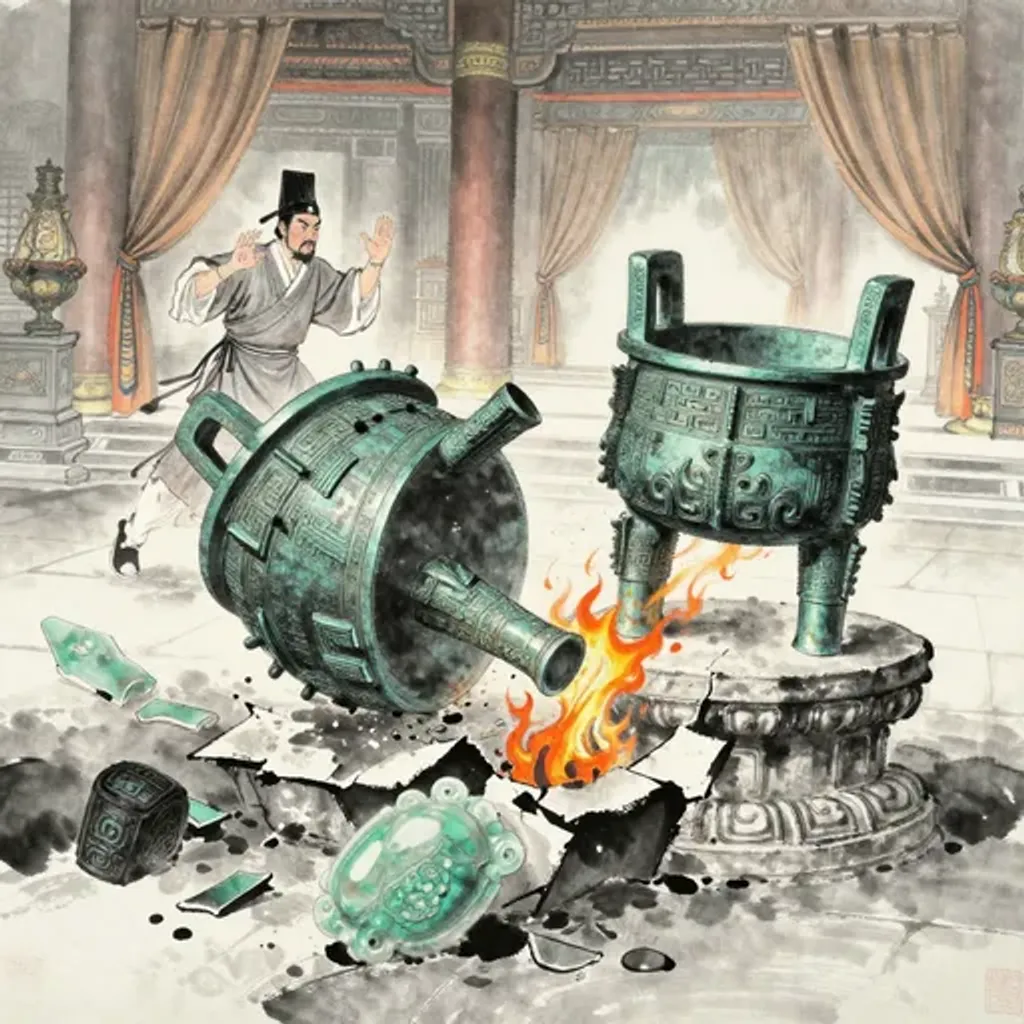
陪依在位,乘非其器。折足覆餗,毀傷寶玉。
Placed through favor, not merit, riding a vessel beyond his worth. The cauldrons leg breaks, stew overturns; precious jade is ruined and harmed.
— Jiao Yanshou, Yilin (Forest of Changes), 1st century BC
Commentary
Thunder over water releases into wind blowing across the earth — the wide vista of contemplation. One who occupies a position through favor rather than merit, wielding instruments beyond one's competence, is doomed to fail. The tripod breaks its foot and spills the duke's meal — a direct allusion to the I-Ching's Ding hexagram, line nine-four. Precious jade is damaged and destroyed. From Deliverance to Contemplation, the freed person who ascends without qualification invites public humiliation. Wind sweeps across the earth revealing all things clearly; under such scrutiny, incompetence cannot hide. The broken tripod spills its contents for all to see.
解 → 噬嗑
Hexagram 40 → Hexagram 21: Biting Through
Changing lines: 1, 2, 6
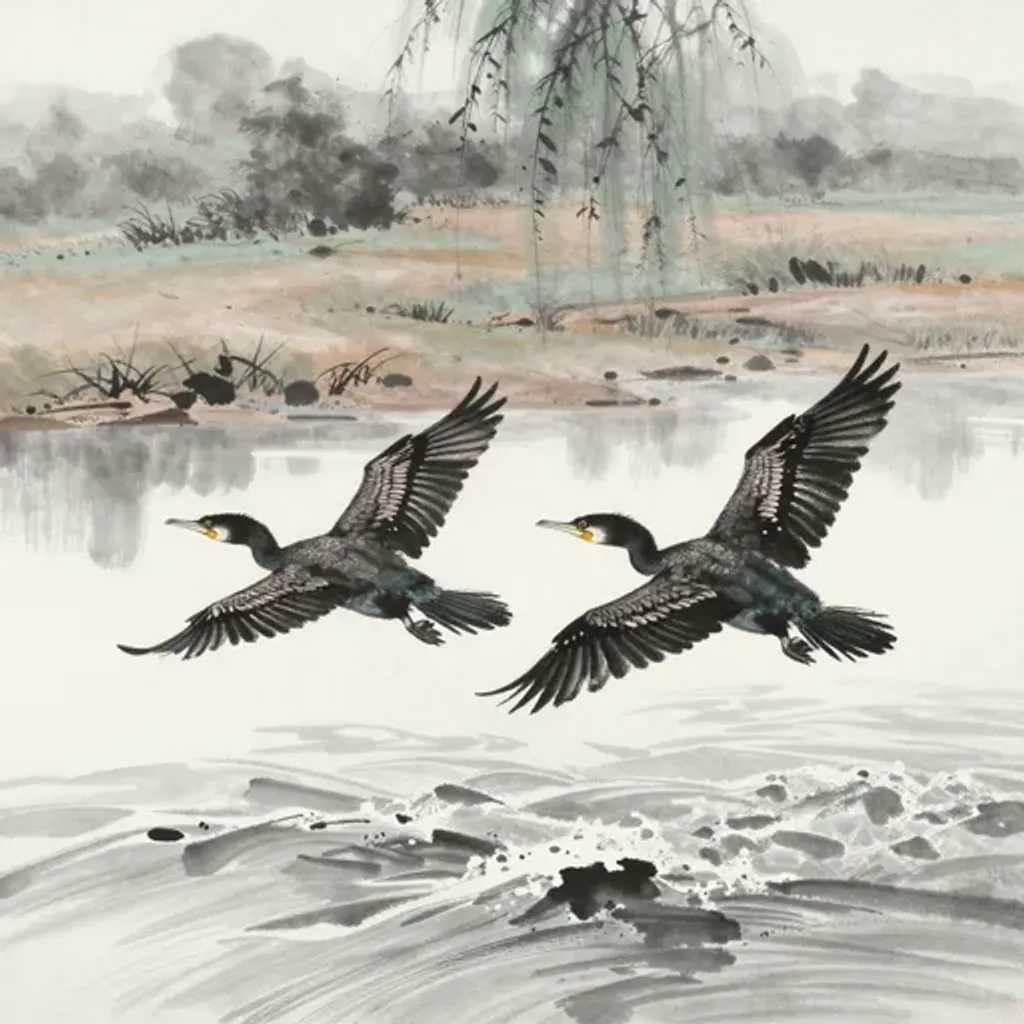
鷁飛中退,舉事不遂。且守仁德,猶免失墜。
The yi birds fly forth then retreat; the venture undertaken does not succeed. Yet holding to benevolence and virtue, one may still avoid falling and ruin.
— Jiao Yanshou, Yilin (Forest of Changes), 1st century BC
Commentary
Thunder over water resolves into fire and thunder — the decisive bite that enforces order. The yi-bird retreats mid-flight; undertakings fail to reach completion. The yi (a large waterbird) flying backward in the wind was a famous omen recorded in the Spring and Autumn Annals: in 644 BC, six yi-birds were seen retreating over Song's capital, blown backward by a high wind. The verse counsels: hold to benevolence and virtue, and you may yet avoid falling. From Deliverance to Biting Through, the storm gives way to lightning that illuminates and punishes. When enterprises stall mid-course, only moral clarity — not more force — prevents disgrace.
解 → 賁
Hexagram 40 → Hexagram 22: Grace
Changing lines: 1, 2, 3, 4, 6
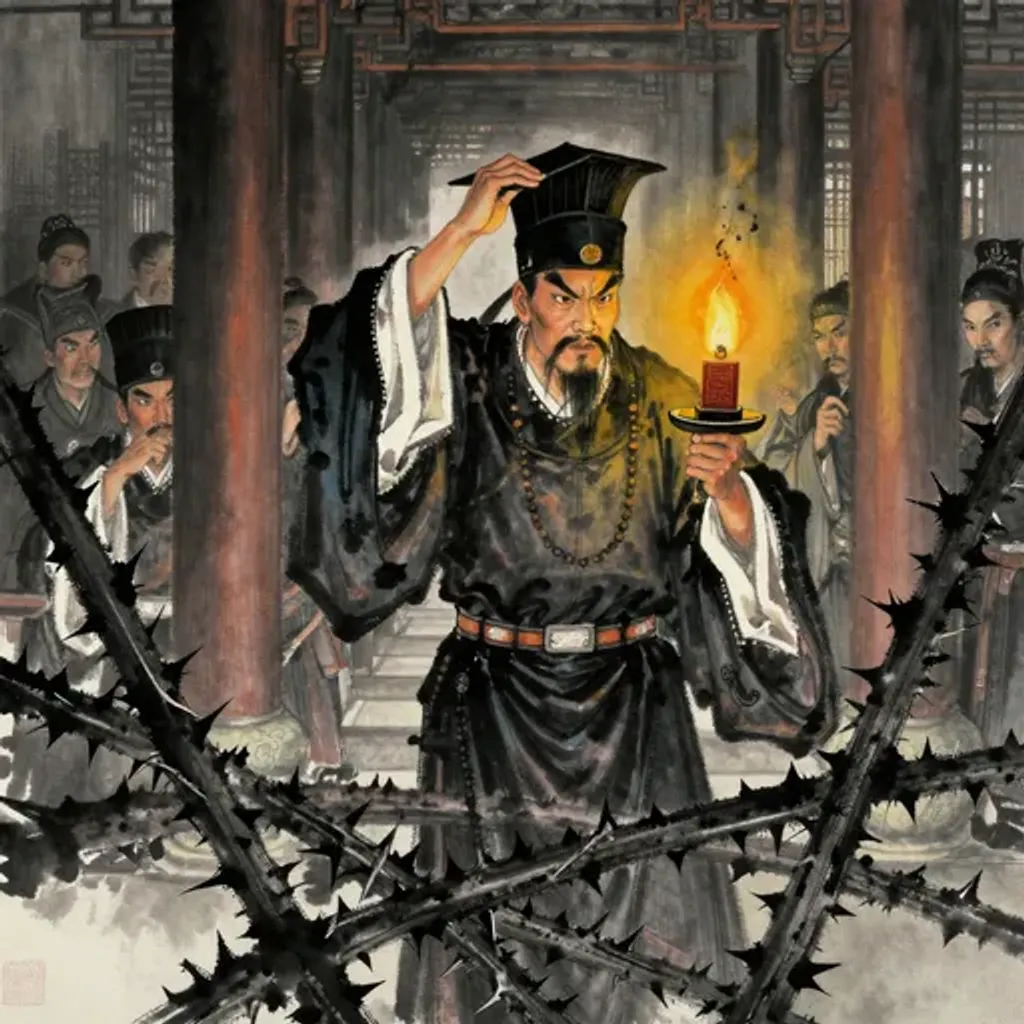
經棘正冠,意盈不廉。桀紂迷惑,讒佞傷賢,使國亂煩。
Passing through thorns to straighten his cap, full of desire and lacking restraint. Jie and Zhou, lost in delusion; slanderers and flatterers harm the worthy, throwing the state into turmoil.
— Jiao Yanshou, Yilin (Forest of Changes), 1st century BC
Commentary
Thunder over water dissolves into the mountain with fire at its base — the outward adornment of Grace. Walking through thorns while adjusting one's cap — the classic proverb warns against inviting suspicion through careless posture. Here the meaning deepens: self-satisfaction and greed masquerade as propriety. Jie and Zhou, the archetypal tyrants, were deluded by flattery; slanderers harmed the worthy, and the state fell into chaos. From Deliverance to Grace, the freed person mistakes surface decoration for substance. Fire beneath the mountain illuminates only the exterior while darkness grows within. When the cap is straightened amid thorns, one's hands are in the wrong place entirely.
解 → 剝
Hexagram 40 → Hexagram 23: Splitting Apart
Changing lines: 2, 4, 6
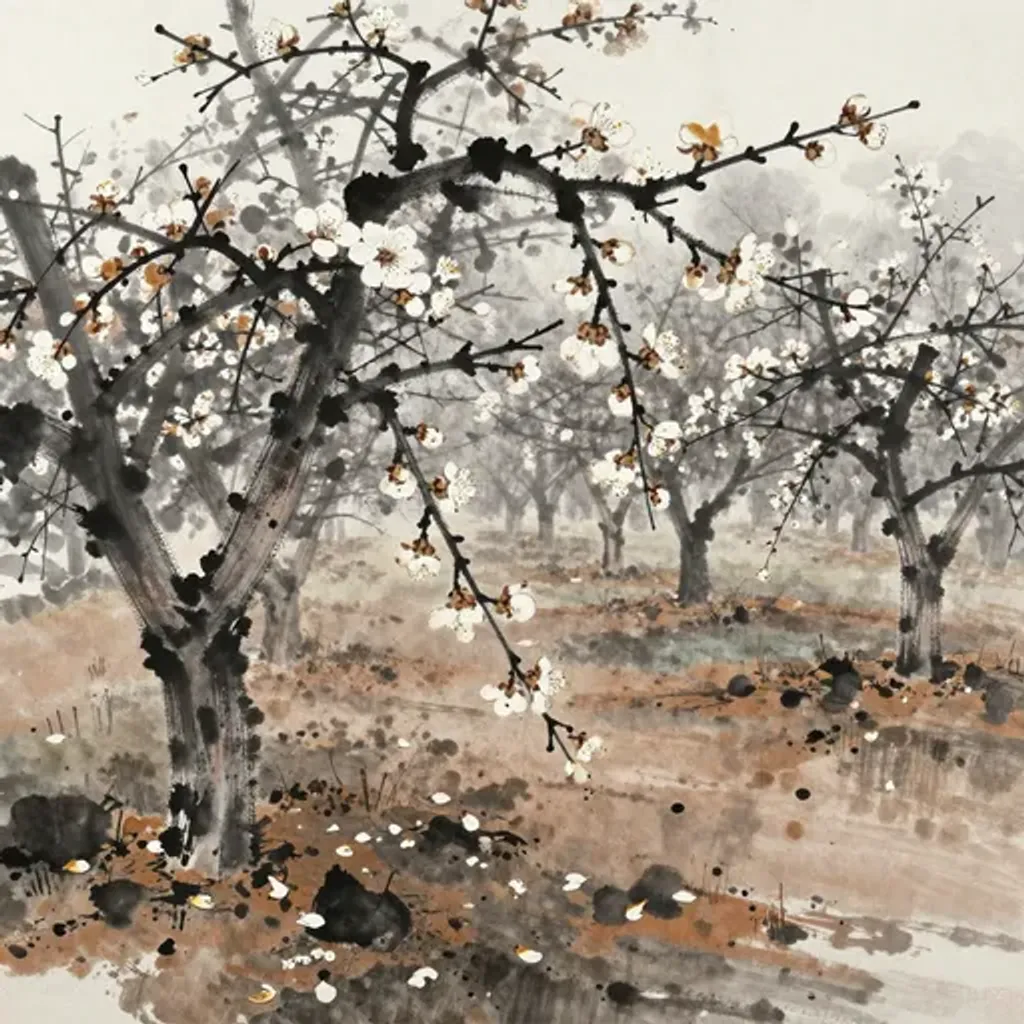
申酉退跌,陰慝前作。柯條花枝,復泥不白。
In the hours of Shen and You, things retreat and stumble; yin wickedness rises ahead. Boughs, twigs, and blossoming branches sink back into the mire, unable to emerge white.
— Jiao Yanshou, Yilin (Forest of Changes), 1st century BC
Commentary
Thunder over water subsides into the mountain resting upon earth — the slow stripping away. The hours of Shen and You (mid-afternoon to evening) bring decline; dark forces advance. Branches and blossoms that once flourished are dragged back into the mud, unable to whiten again. The verse uses the earthly branches as time markers: the westward turn of the day signals waning yang. Flowers fouled by mud cannot recover their purity. From Deliverance to Splitting Apart, the release achieved proves temporary. The mountain erodes from below, and what was freed slowly loses its form — petals returning to earth, brightness returning to darkness.
解 → 復
Hexagram 40 → Hexagram 24: Return
Changing lines: 1, 2, 4
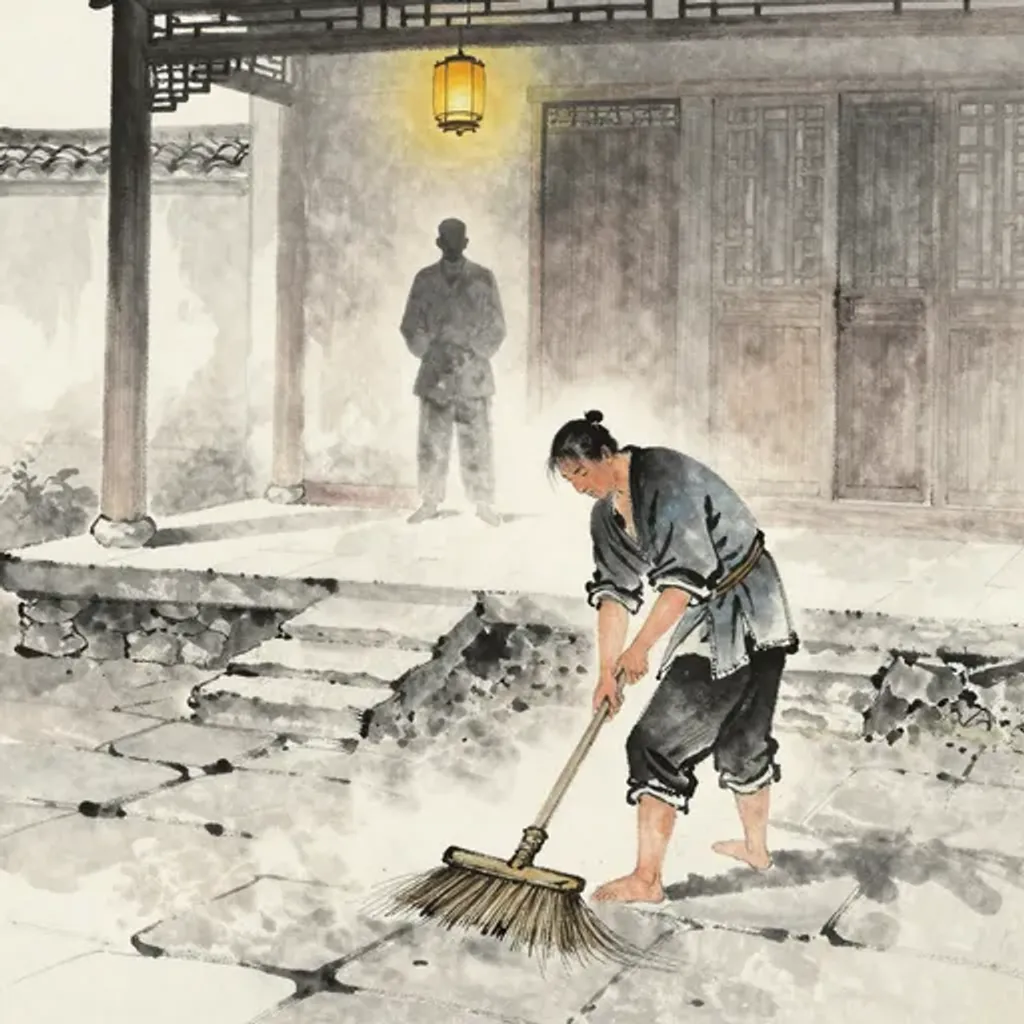
平正賤使,主服苦事。
Lowly and humble, made to serve; the master endures bitter labor.
— Jiao Yanshou, Yilin (Forest of Changes), 1st century BC
Commentary
Thunder over water stills into thunder hidden beneath the earth — the quiet stirring of return. The upright and just are sent on menial errands; the master endures bitter labor. The verse is brief but pointed: those who should command are instead made servants, fairness inverted into drudgery. Yet from Deliverance to Return, the transformation promises reversal. Thunder sleeps within the earth at the winter solstice, preparing to stir. The righteous who serve in lowly stations are not lost — they are seeds buried in darkness, waiting for the solstice turn that restores them to their proper place.
解 → 无妄
Hexagram 40 → Hexagram 25: Innocence
Changing lines: 1, 2, 5, 6
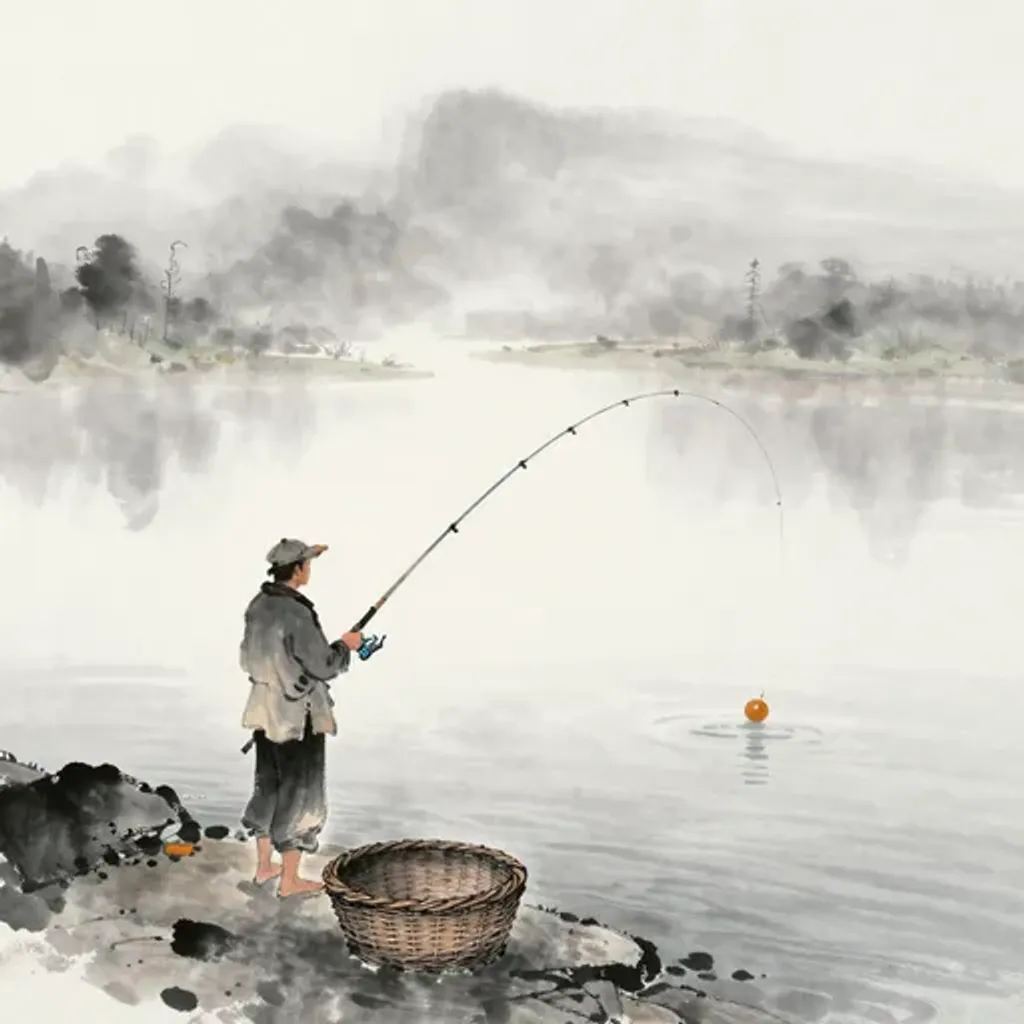
釣魴河湄,水長无涯,振手徒歸。上下昏迷,屬公孫齊。
Angling for bream on the rivers edge, the water stretches on without end. He shakes his empty hands and returns. Above and below, all is confusion; it pertains to Lord Gongsun of Qi.
— Jiao Yanshou, Yilin (Forest of Changes), 1st century BC
Commentary
Thunder over water dissolves into heaven with thunder below — the unexpected of Innocence. Fishing for bream at the river's edge, but the water rises endlessly and one returns empty-handed. Above and below are lost in confusion, attributed to 'Lord Gongsun of Qi.' This figure may refer to a historical minister of Qi whose mismanagement led to chaos, though the exact allusion is uncertain. From Deliverance to Innocence, the transformation is paradoxical: one acts without guile yet catches nothing. Thunder beneath heaven moves all things without intention, yet the fisherman's honest effort meets only rising floodwaters. Sometimes the innocent suffer not through fault but through the sheer indifference of circumstance.
解 → 大畜
Hexagram 40 → Hexagram 26: Great Taming
Changing lines: 1, 3, 4, 6
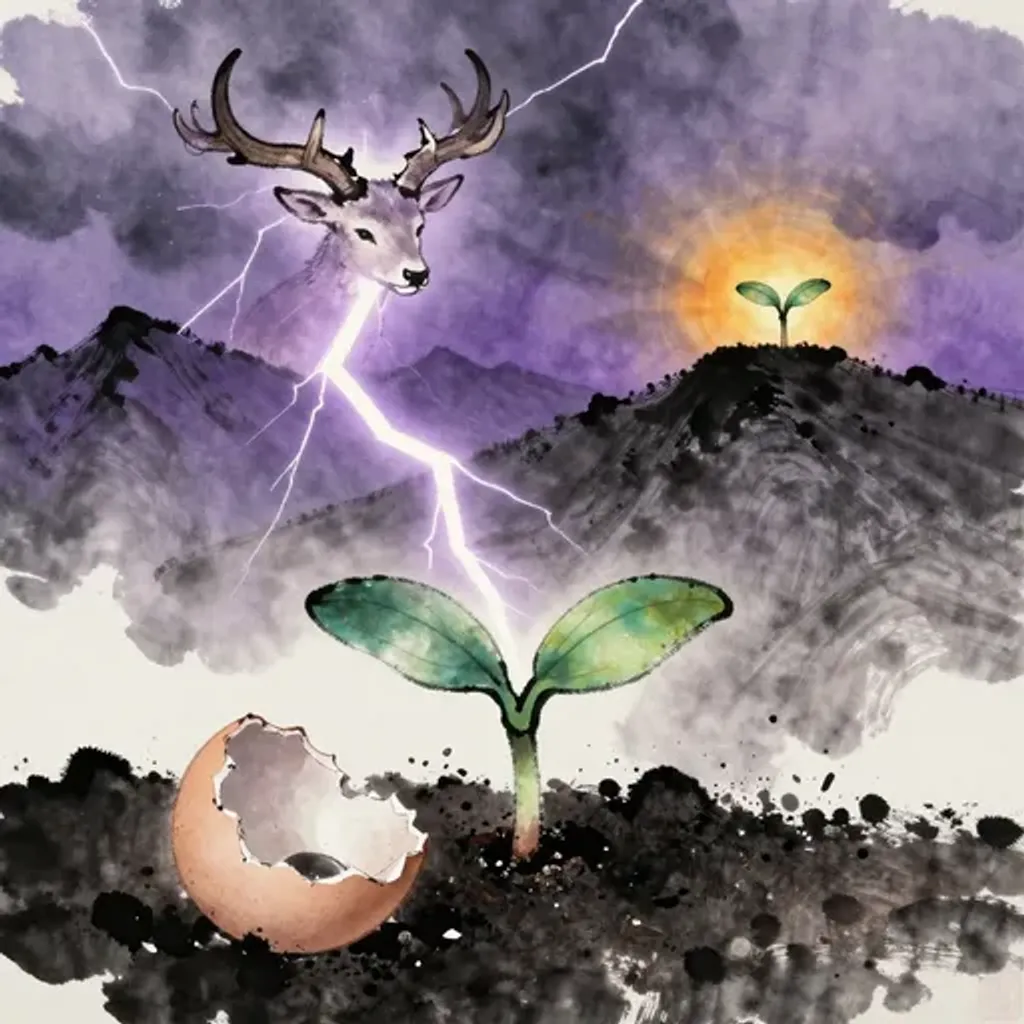
胎養萌生,始見兆形。遭逢雷電,摧角折頸。采䖟山頭,終安不傾。
The embryo stirs and the sprout emerges; first the sign, then the form. Meeting thunder and lightning, horns shatter and neck breaks. Yet gathering herbs on the hilltop, it stands secure and does not topple.
— Jiao Yanshou, Yilin (Forest of Changes), 1st century BC
Commentary
Thunder over water releases into heaven stored within the mountain — the vast accumulation of Great Taming. An embryo begins to form, a sprout just showing its first shape. Then lightning and thunder strike, breaking horns and snapping necks — violent disruption of what was barely begun. Yet the verse resolves: gathering herbs atop the mountain, one is ultimately safe and does not topple. From Deliverance to Great Taming, the transformation shows how nascent potential survives catastrophic shock through deep reserves. Heaven within the mountain absorbs the blow; what began as a fragile seedling, battered by storm, endures because the mountain's stored strength holds firm beneath it.
解 → 頤
Hexagram 40 → Hexagram 27: Nourishment
Changing lines: 1, 2, 4, 6
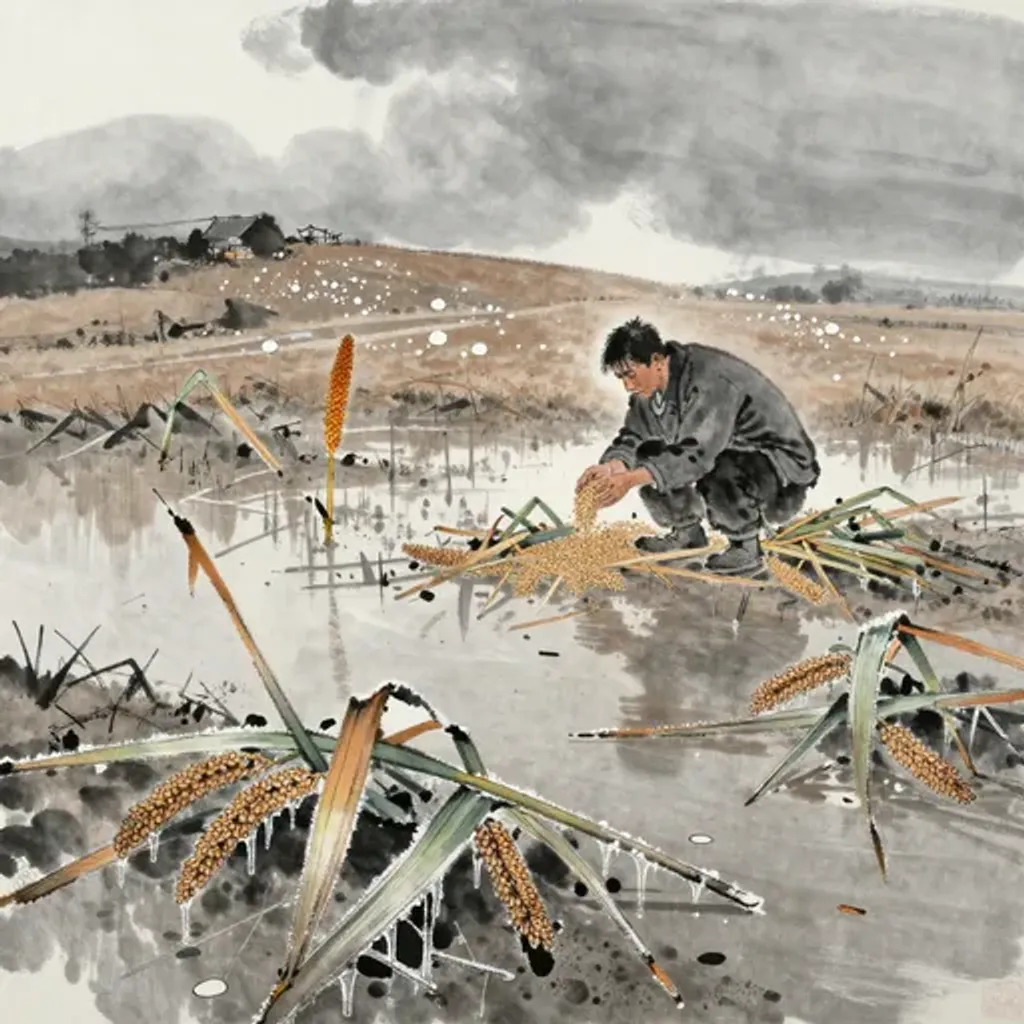
陽春枯槁,夏多水潦。霜雹俱擊,傷我禾黍,年歲困苦。
Spring drought withers the crops; summer brings too much rain and flood. Frost and hail strike together, destroying our grain and millet. The year is one of hardship and suffering.
— Jiao Yanshou, Yilin (Forest of Changes), 1st century BC
Commentary
Thunder over water dissolves into the mountain resting above thunder — the careful nourishment of the mouth. Spring brings drought instead of rain; summer brings floods instead of warmth. Frost and hail strike together, damaging grain and millet, and the harvest year is one of hardship. Every season delivers the wrong element at the wrong time: a calendar of agricultural misfortune. From Deliverance to Nourishment, the transformation is bitter — the freed community cannot feed itself. The mountain above thunder counsels restraint in speech and moderation in diet, but when the harvest fails entirely, moderation becomes involuntary fasting. Nourishment denied is the cruelest form of liberation.
解 → 大過
Hexagram 40 → Hexagram 28: Great Exceeding
Changing lines: 3, 5
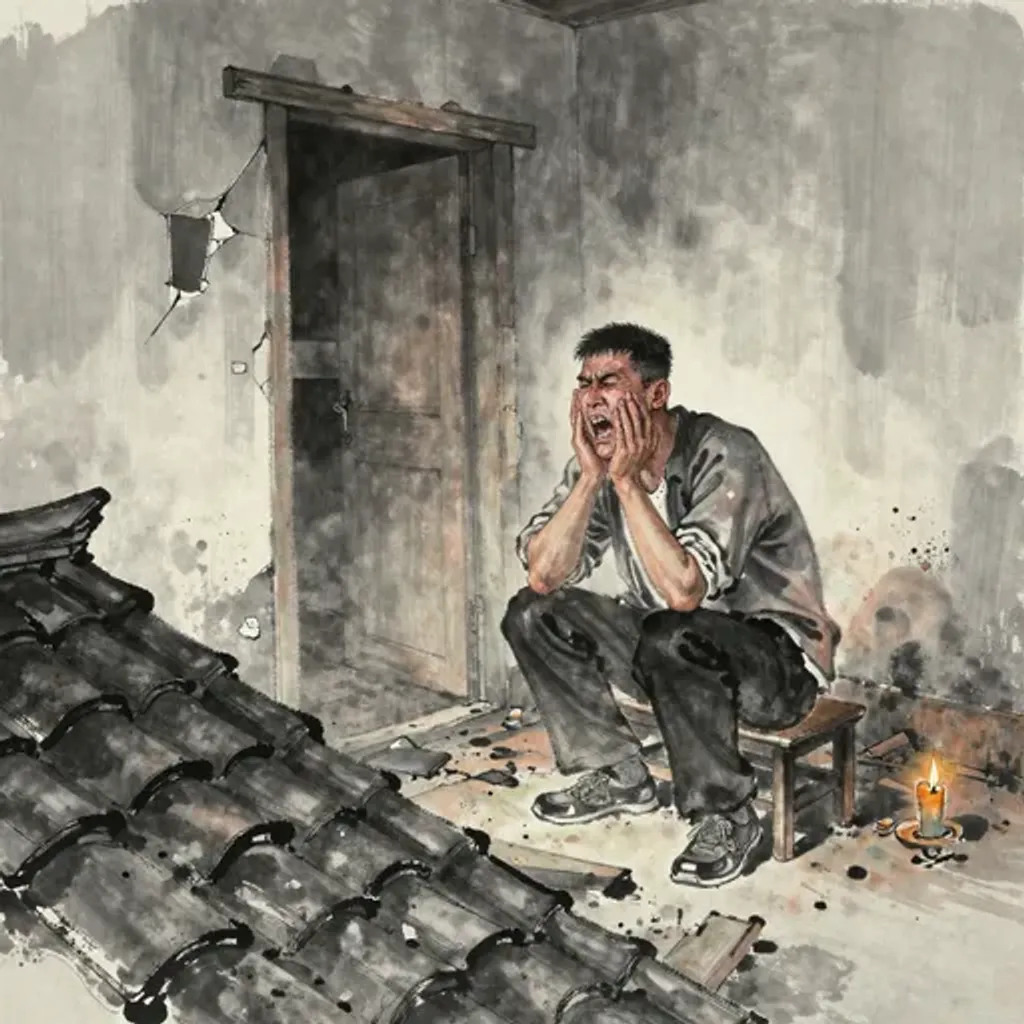
三身六齒,痛疾不已。齲病蠹缺,墮落其宅。
Three bodies and six teeth — the aching sickness never ceases. Cavities rot and worm through; the dwelling itself crumbles and falls.
— Jiao Yanshou, Yilin (Forest of Changes), 1st century BC
Commentary
Thunder over water dissipates into the lake submerging the trees — the precarious excess of Great Exceeding. Three bodies and six teeth ache without cease; cavities and decay eat away at their dwelling, causing them to fall from their sockets. The verse uses the vivid image of rotting teeth as a metaphor for structural collapse. The 'dwelling' that crumbles is the jaw itself — the foundation that holds everything in place. From Deliverance to Great Exceeding, the release of pressure reveals that the structure was already rotten within. The lake overwhelms the trees; the ridgepole sags. What seemed like liberation was merely the moment when the last support gave way.
解 → 坎
Hexagram 40 → Hexagram 29: The Abysmal Water
Changing lines: 4, 5
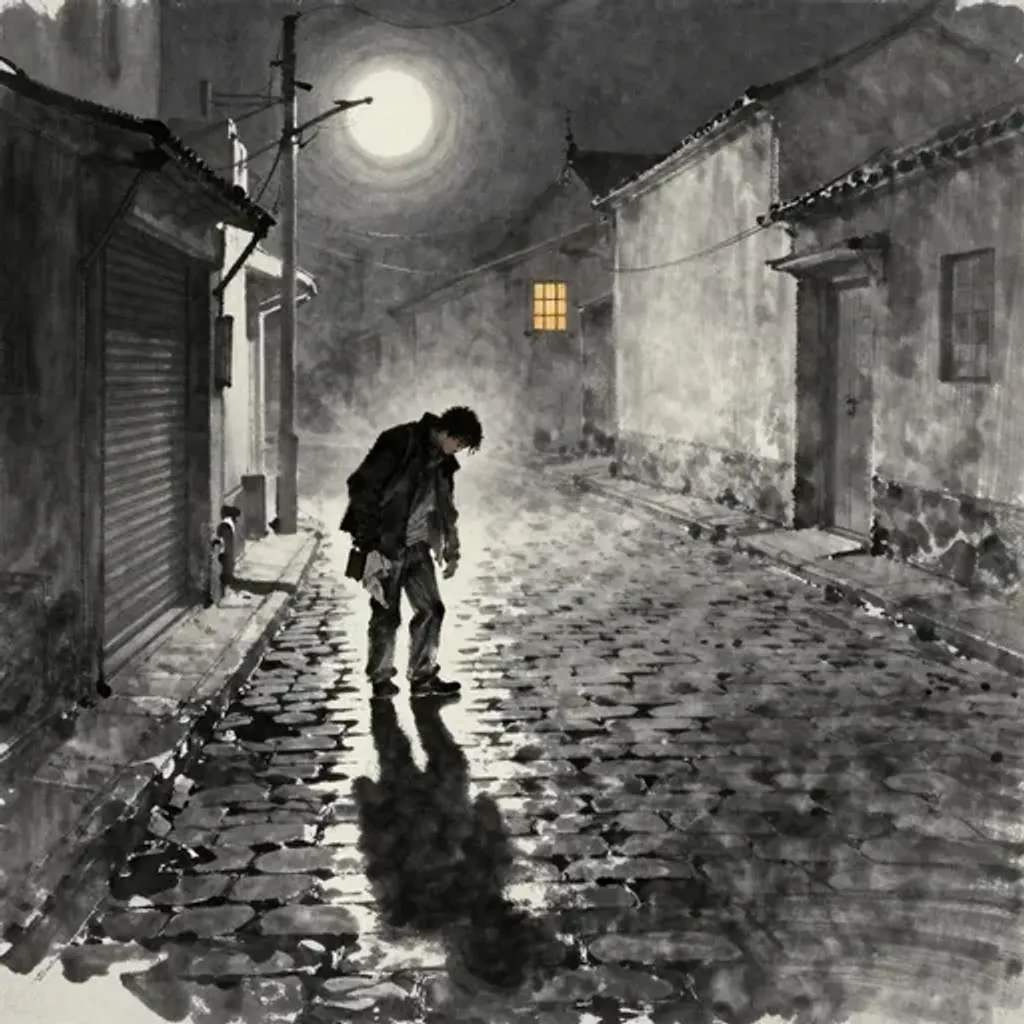
失恃无友,嘉耦出走,傫如喪狗。
Without support, without friends; even his good companion has fled. Weary and downcast, like a homeless dog.
— Jiao Yanshou, Yilin (Forest of Changes), 1st century BC
Commentary
Thunder over water plunges into doubled water — the repeated abyss. Losing one's support, bereft of friends, even one's spouse flees. Dejected like a stray dog — the verse alludes to Confucius's famous description when he arrived at Zheng and was separated from his disciples. Someone told Zigong that a man stood by the east gate 'looking like a stray dog,' and Confucius laughed, saying 'That fits perfectly.' From Deliverance to The Abysmal, the release from one peril drops directly into another. Water upon water offers no shore; the freed wanderer finds only deeper isolation and the humiliation of utter abandonment.
解 → 離
Hexagram 40 → Hexagram 30: The Clinging Fire
Changing lines: 1, 2, 3, 6
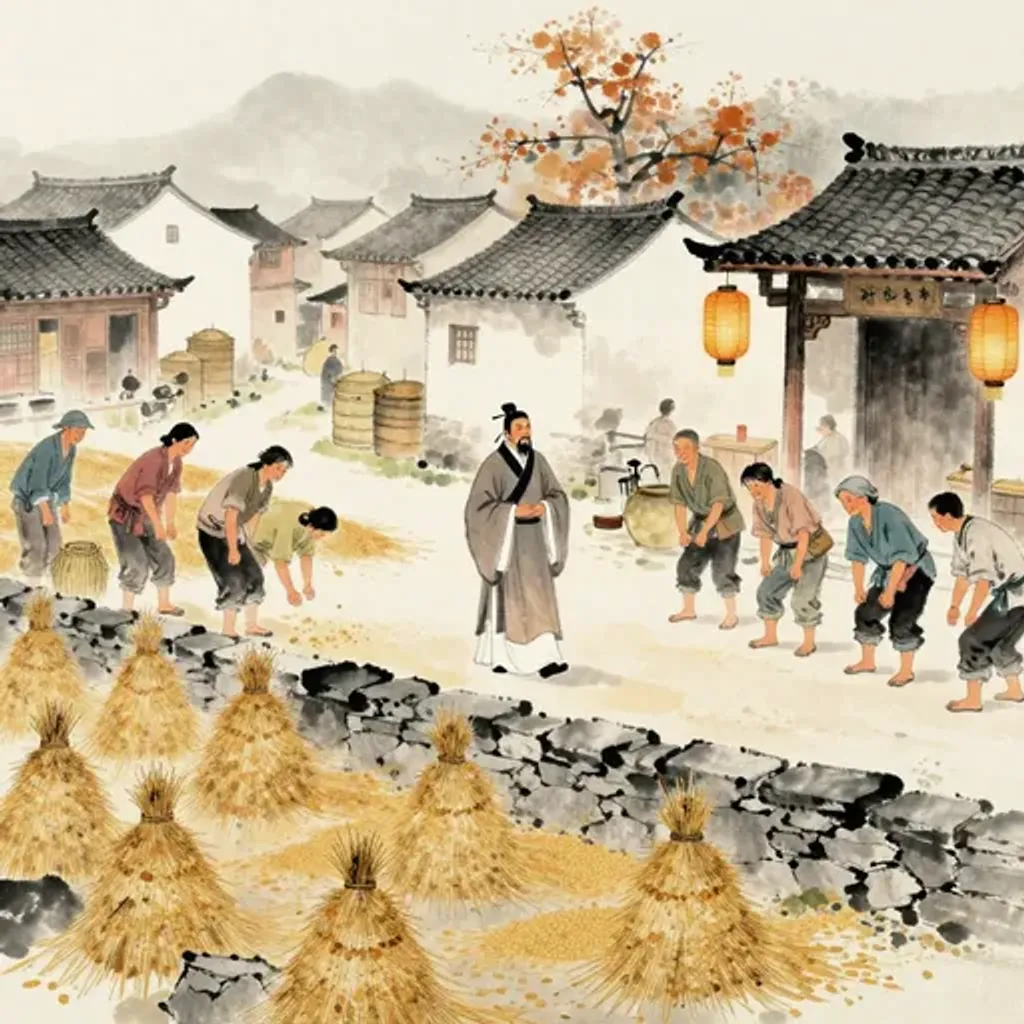
寅重微民,歲樂年息。有國无咎,君子安喜。
Reverently attending to the humble folk; the year brings joy and the people find rest. The state has no calamity; the noble man dwells in peace and gladness.
— Jiao Yanshou, Yilin (Forest of Changes), 1st century BC
Commentary
Thunder over water brightens into doubled fire — the luminous continuity of Clinging. The ruler is reverent toward the humble folk; the year is peaceful and the people rest. The state is without fault, and the gentleman finds tranquility and joy. The verse describes ideal governance: a ruler who treats common people with genuine respect, producing a year of contentment. From Deliverance to The Clinging, the storm's release becomes sustained illumination. Fire upon fire: the great person continues the light, shining in all four directions. Release from crisis leads not to darkness but to the steady flame of good governance that nourishes an entire nation in peace.
解 → 咸
Hexagram 40 → Hexagram 31: Influence
Changing lines: 2, 3, 5
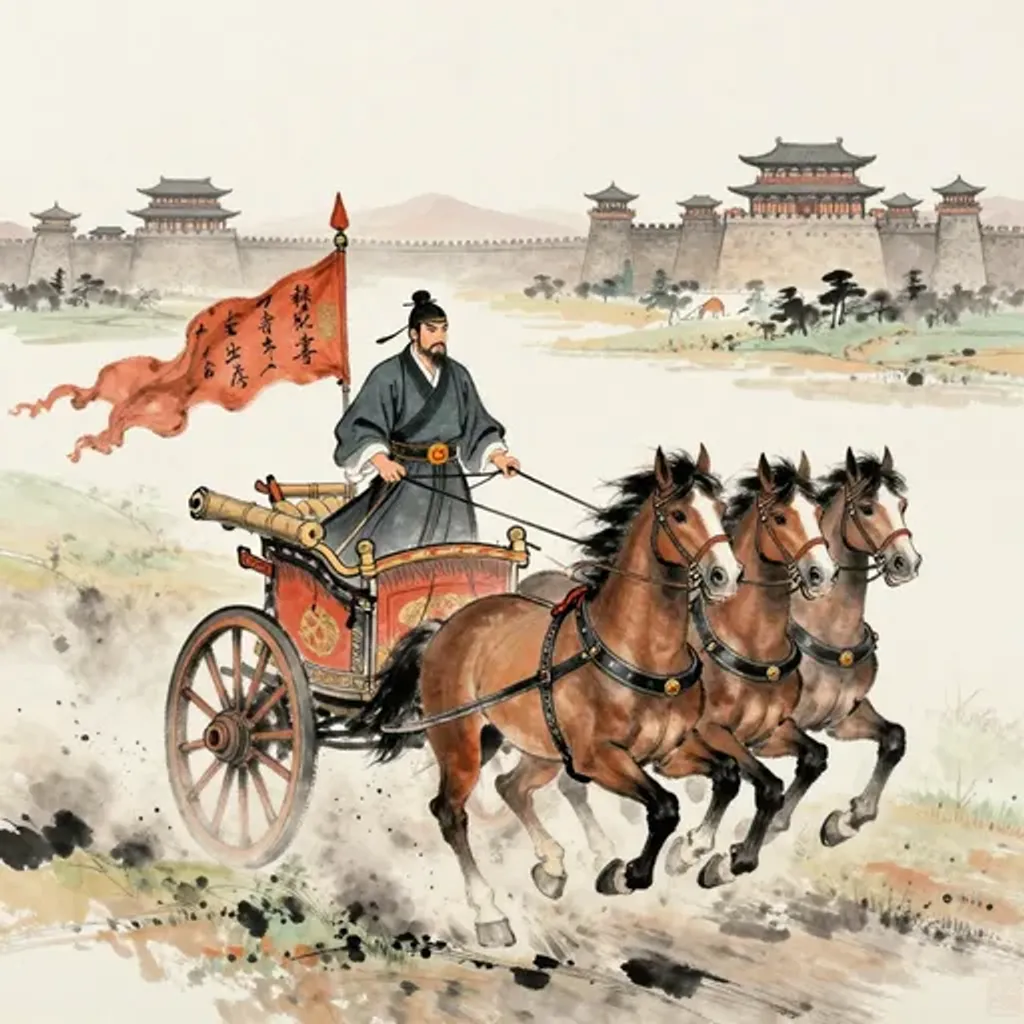
登几上車,駕駟南遊。合散從橫,燕秦以強。
Mounting the platform and boarding the chariot, he drives four steeds south on a grand tour. Allying and sundering, weaving vertical and horizontal; Yan and Qin thereby grow strong.
— Jiao Yanshou, Yilin (Forest of Changes), 1st century BC
Commentary
Thunder over water resolves into the lake resting atop the mountain — the mutual attraction of Influence. Mounting the carriage bench, harnessing four horses, one tours southward. Alliances are formed and dissolved, the vertical and horizontal strategies at play — and through this, Yan and Qin grow strong. The verse alludes to Warring States diplomacy: the persuaders who traveled by chariot between courts, forging the coalitions that reshaped the political landscape. From Deliverance to Influence, the storm's energy transforms into the magnetic pull of political attraction. Lake above mountain: openness crowning stillness. The diplomat's art lies not in force but in the mutual responsiveness that makes alliance irresistible.
解 → 恆
Hexagram 40 → Hexagram 32: Duration
Changing lines: 3
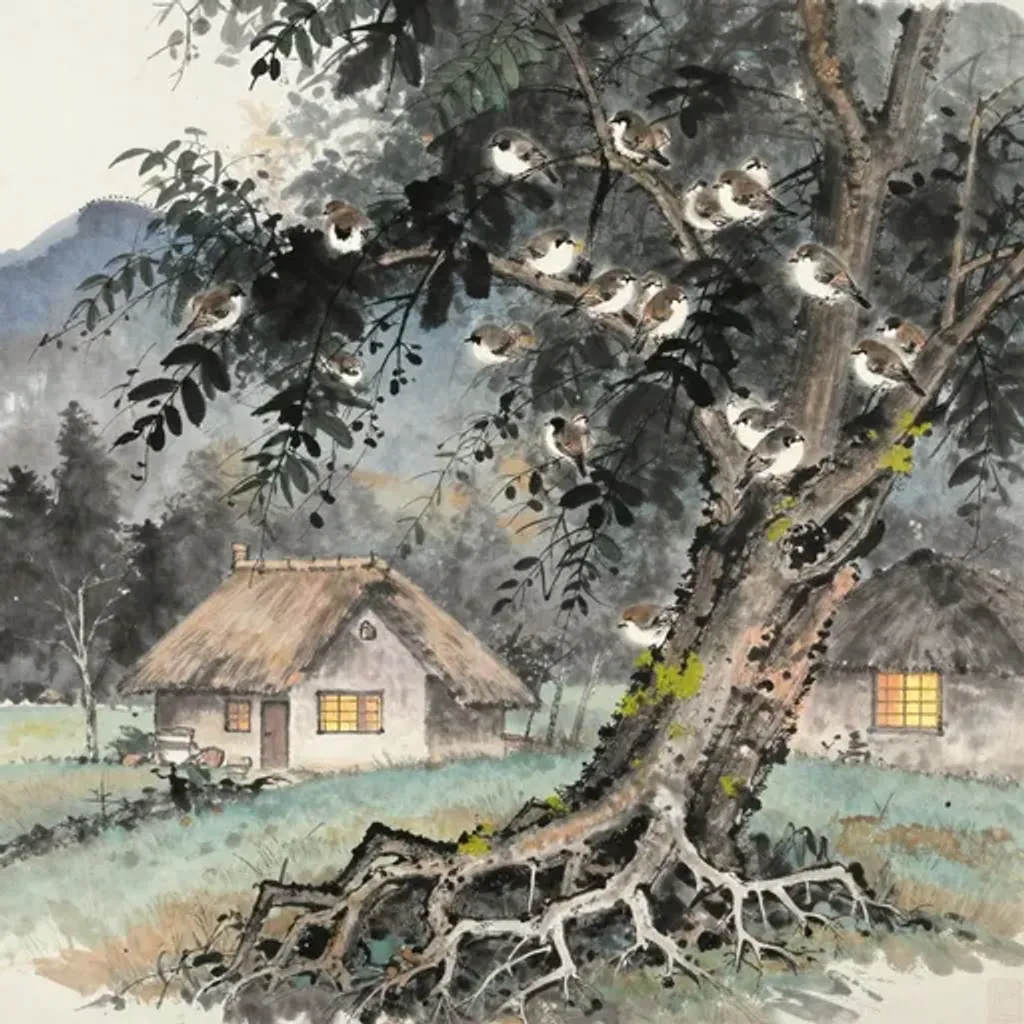
鳥集茂木,順柔利貞。心樂願得,感戴慈母。
Birds gather in the flourishing tree; gentle and yielding, holding to what is right. The heart is glad and the wish fulfilled, embracing gratitude for the loving mother.
— Jiao Yanshou, Yilin (Forest of Changes), 1st century BC
Commentary
Thunder over water settles into thunder and wind — the steady persistence of Duration. Birds gather in luxuriant trees, yielding to the gentle and holding to what is right. The heart delights in its wishes fulfilled, grateful and devoted as to a loving mother. The verse paints a scene of natural belonging: birds finding the right tree, the heart finding contentment, the child finding the mother. Nothing forced, nothing strained. From Deliverance to Duration, the release from crisis finds its lasting form. Thunder and wind reinforce each other without ceasing; the freed heart does not wander but settles where it belongs, sustained by bonds that endure precisely because they are natural.
解 → 遯
Hexagram 40 → Hexagram 33: Retreat
Changing lines: 2, 3, 5, 6
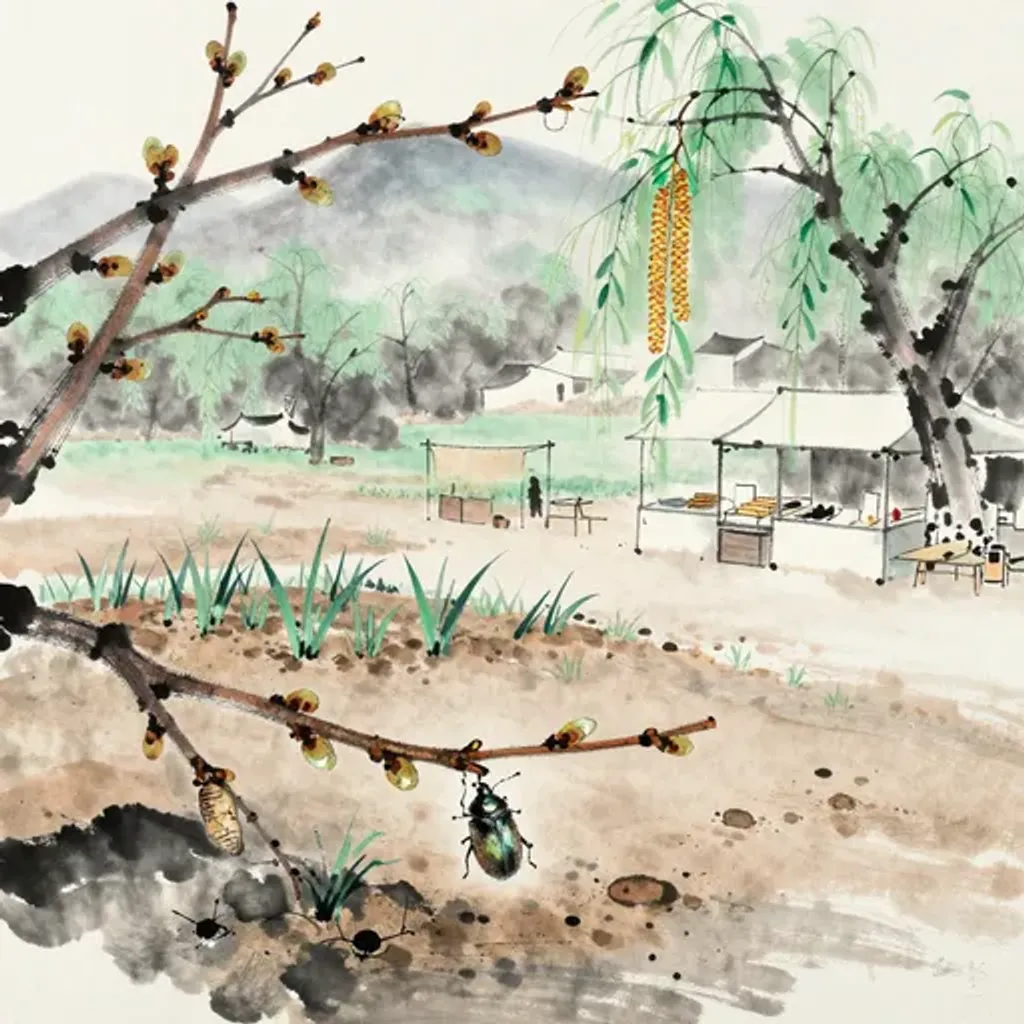
啟蟄始生,萬物美榮。祉祿未成,市賈无嬴。
Hibernating creatures stir and are born; the ten thousand things bloom in beauty. Yet blessings and fortune are not yet achieved; the market yields no profit.
— Jiao Yanshou, Yilin (Forest of Changes), 1st century BC
Commentary
Thunder over water recedes into heaven above the mountain — the strategic withdrawal of Retreat. Insects emerge from hibernation, and all things bloom in beauty. Yet blessings and prosperity have not yet materialized; merchants in the market find no profit. The verse captures the paradox of spring: nature stirs brilliantly, but the economy has not yet caught up. Beauty without profit, promise without fulfillment. From Deliverance to Retreat, the transformation warns that premature engagement wastes the season. Heaven above the mountain counsels distance from petty entanglements. The wise person retreats not from fear but from timing — the market is not yet ready, and the blossoming is for its own sake, not for sale.
解 → 大壯
Hexagram 40 → Hexagram 34: Great Power
Changing lines: 1, 3
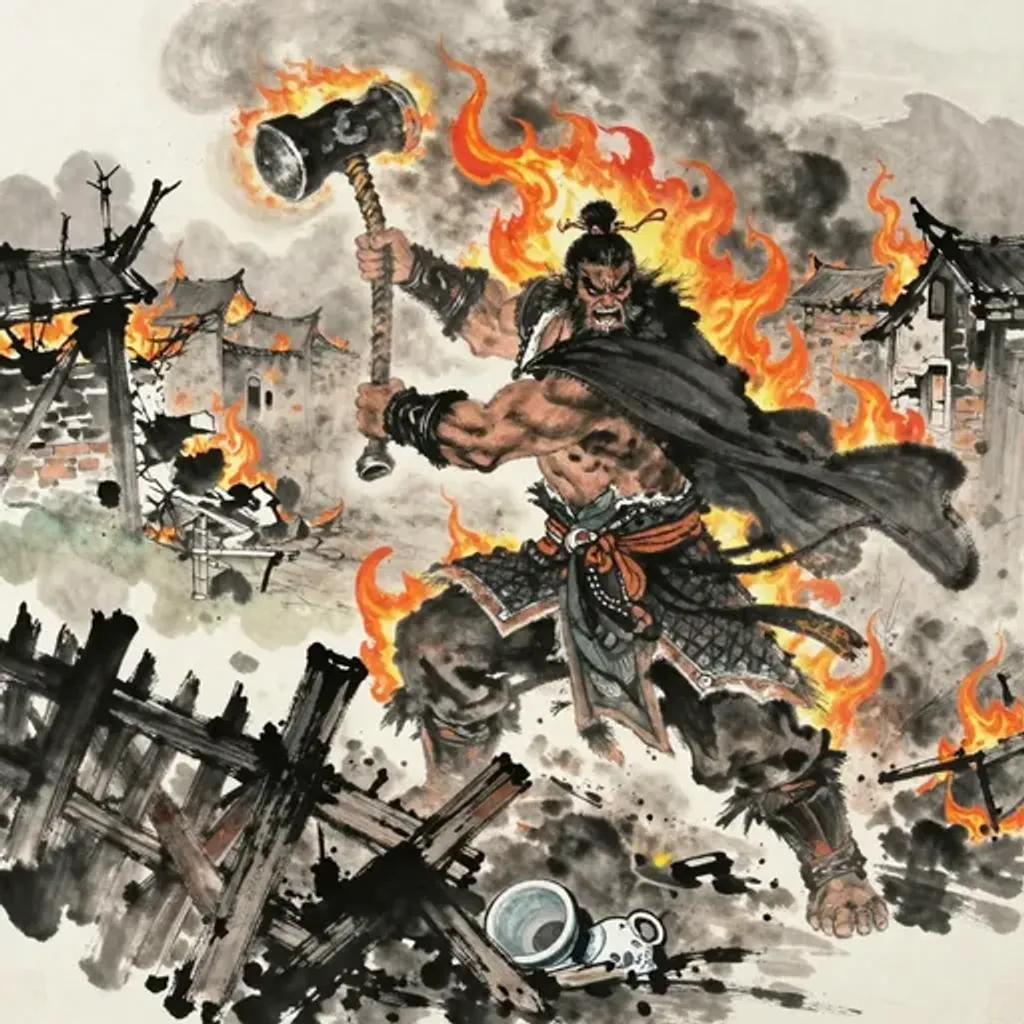
驕胡大形,造惡作凶。无所能成,還自滅身。
The arrogant barbarian, great in form, creates evil and works destruction. Accomplishing nothing in the end, he brings annihilation upon himself.
— Jiao Yanshou, Yilin (Forest of Changes), 1st century BC
Commentary
Thunder over water erupts into thunder charging above heaven — the reckless force of Great Power. An arrogant barbarian of enormous form creates evil and commits violence. Unable to accomplish anything, he ultimately destroys himself. The verse describes raw power without moral direction: the larger the frame, the harder the fall. Aggression unchecked by principle turns inward and becomes self-annihilation. From Deliverance to Great Power, the release from constraint unleashes energy that, without propriety to guide it, becomes catastrophic. Thunder in heaven has tremendous force, but the gentleman must not tread where ritual forbids. Unrestrained power is indistinguishable from self-destruction.
解 → 晉
Hexagram 40 → Hexagram 35: Progress
Changing lines: 2, 6
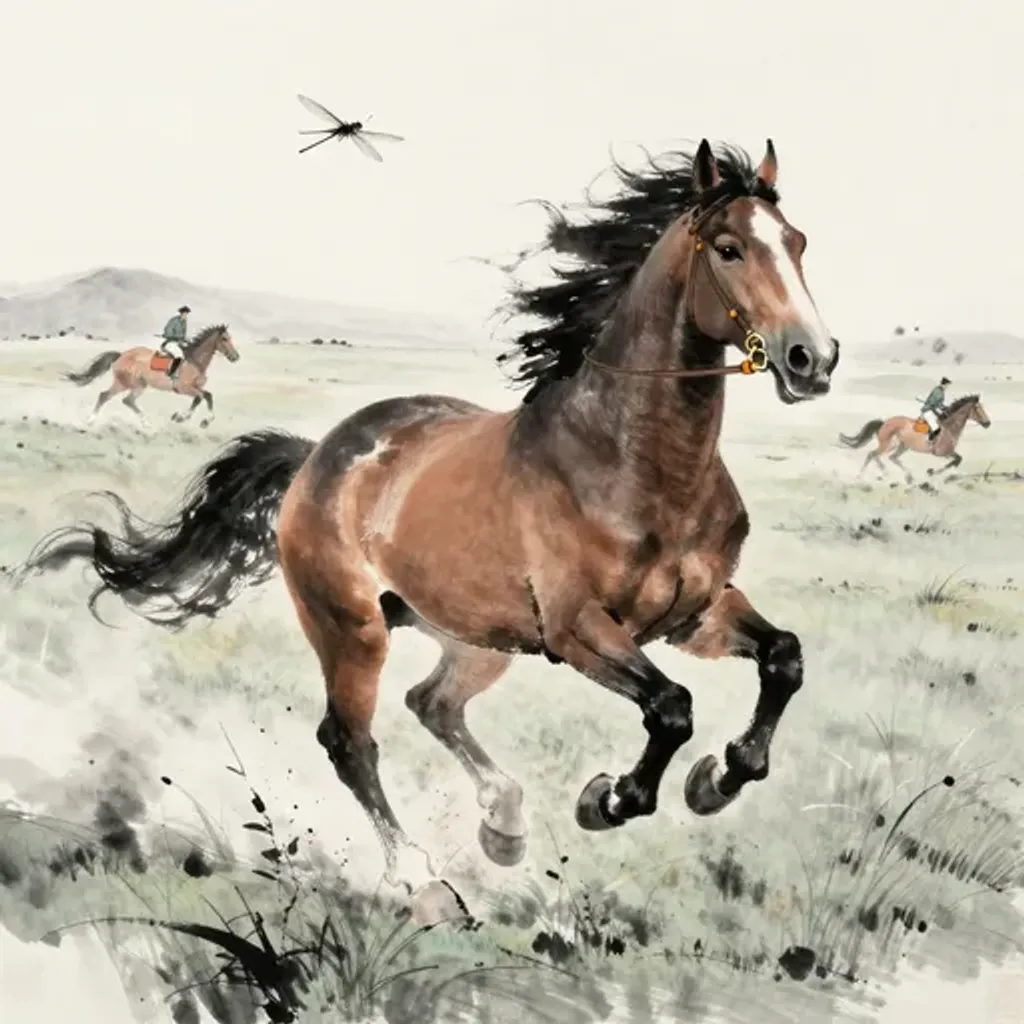
異國他土,出良駿馬。去如奔䖟,害不能傷。
From a distant foreign land comes a fine and spirited horse. It departs swift as a flying wasp; no harm can touch it.
— Jiao Yanshou, Yilin (Forest of Changes), 1st century BC
Commentary
Thunder over water shines forth as fire rising above the earth — the steady advance of Progress. From a foreign land comes a fine steed, swift as a galloping horsefly, so fast that harm cannot touch it. The verse celebrates the rare find: talent or treasure arriving from an unexpected quarter, and its speed rendering danger irrelevant. From Deliverance to Progress, the thunderstorm gives way to the sun emerging above the horizon. The gentleman makes his own virtue shine, and what arrives from distant territory is not threat but gift. Liberation becomes forward momentum when one recognizes that speed itself is a form of protection.
解 → 明夷
Hexagram 40 → Hexagram 36: Darkening of the Light
Changing lines: 1, 2, 3, 4
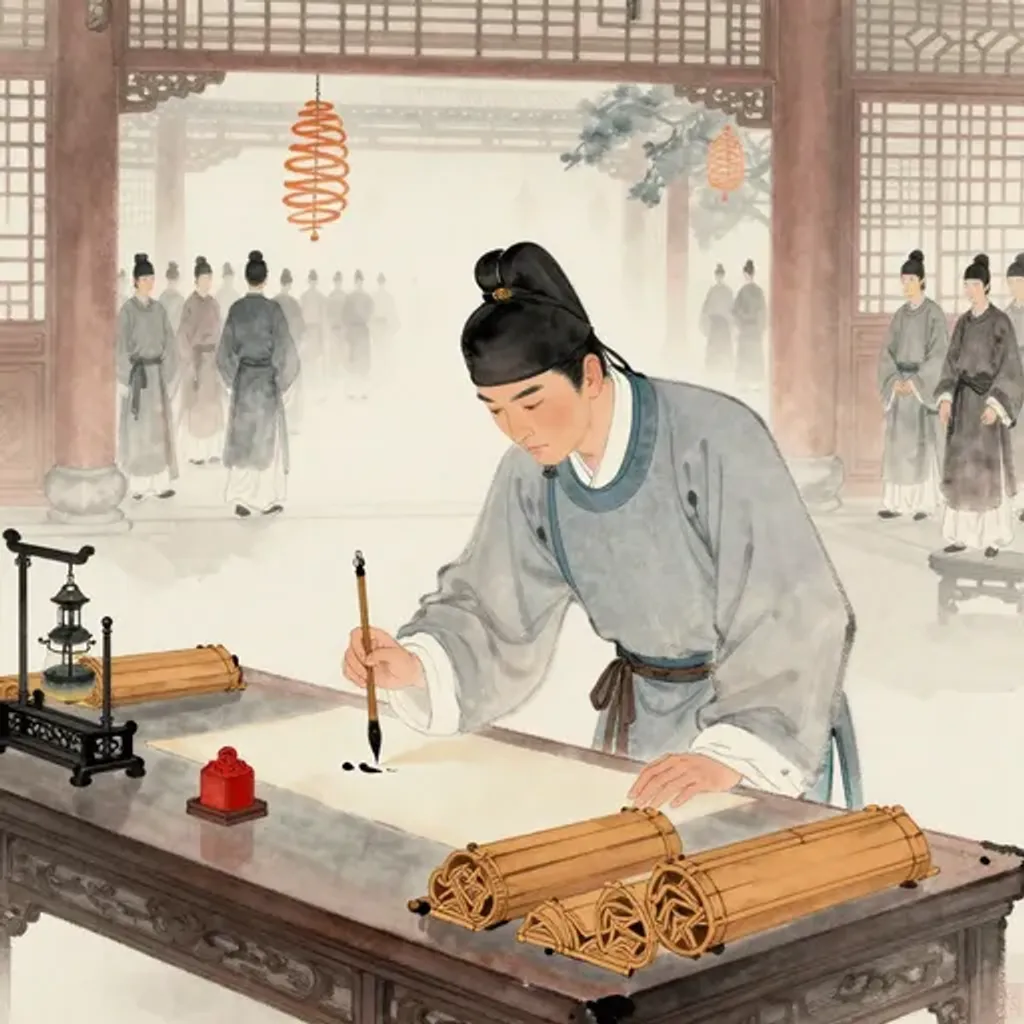
恪敬竟職,心不作慝。君明臣忠,民賴其福。
Reverent and devoted, he fulfills his office; his heart harbors no wickedness. The ruler is enlightened, the minister loyal; the people rely upon his blessings.
— Jiao Yanshou, Yilin (Forest of Changes), 1st century BC
Commentary
Thunder over water descends into fire hidden beneath the earth — the deliberate dimming of Darkening of the Light. Diligent and reverent, one fulfills one's duties completely, harboring no dark intent. The ruler is enlightened, the ministers loyal, and the people rely on their blessings. The verse describes the ideal of conscientious service under a just sovereign — a rare alignment of virtue at every level. From Deliverance to Darkening of the Light, the transformation carries an ironic undertone: this perfect harmony exists within a hexagram whose nature is concealment. Light enters the earth not to die but to preserve itself. Perhaps the verse whispers that such exemplary governance is itself a kind of protective concealment — virtue so quietly practiced that it endures.
解 → 家人
Hexagram 40 → Hexagram 37: The Family
Changing lines: 1, 2, 3, 4, 5, 6
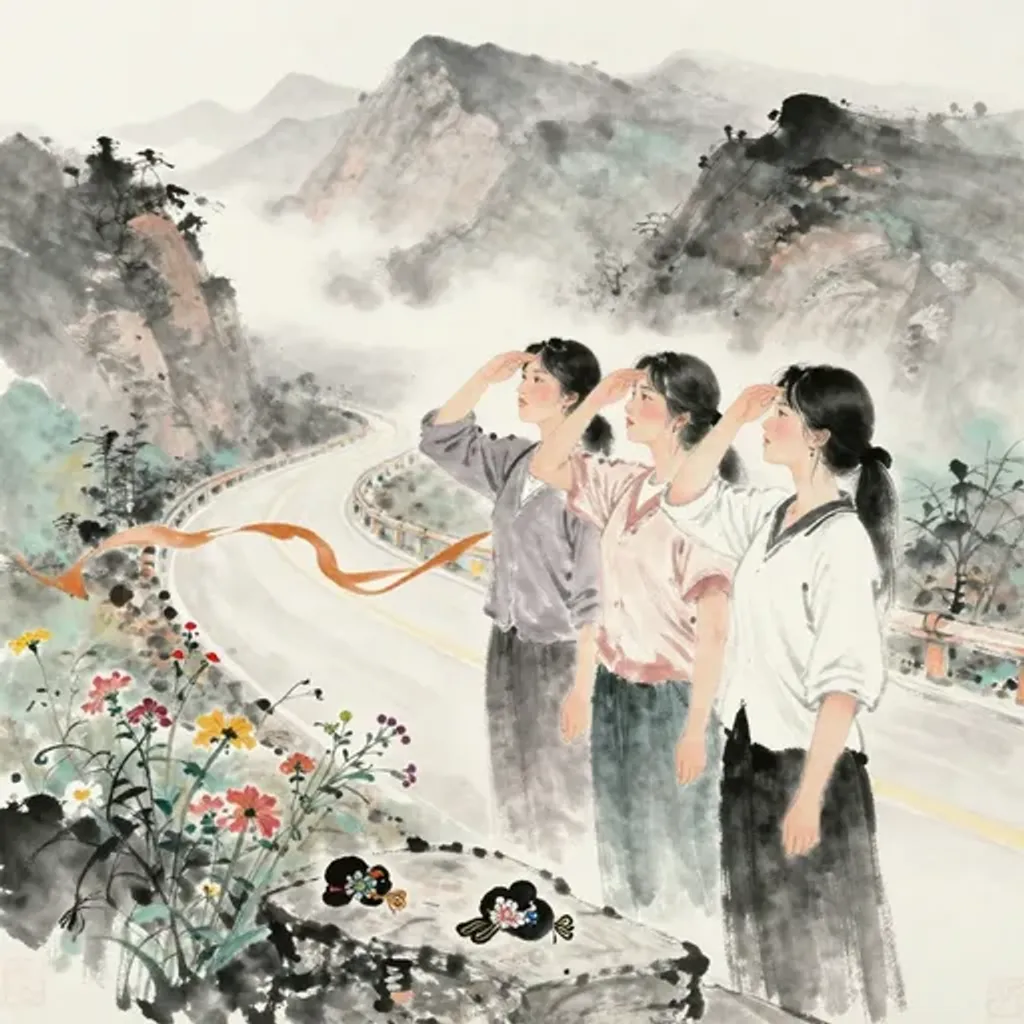
三女求夫,伺候山隅。不見復關,長思憂歎。
Three women seek a husband, waiting at the mountains edge. They do not see him return past the barrier; long is their longing and deep their sighs.
— Jiao Yanshou, Yilin (Forest of Changes), 1st century BC
Commentary
Thunder over water dissolves into wind emerging from fire — the warmth and order of the Family. Three women seek husbands, waiting at the mountain's edge. They do not see the returning cart, and their longing turns to sighs. The verse echoes the Shijing's 'Mang' poem: 'Not seeing Fuguan' — the woman watches for the man's cart at the wall but it never appears. From Deliverance to The Family, the release from crisis confronts the longing for domestic belonging. Wind from fire: words must have substance, conduct must be constant. The women wait because the family they seek has not yet formed — deliverance without arrival, freedom without home.
解 → 睽
Hexagram 40 → Hexagram 38: Opposition
Changing lines: 1, 6
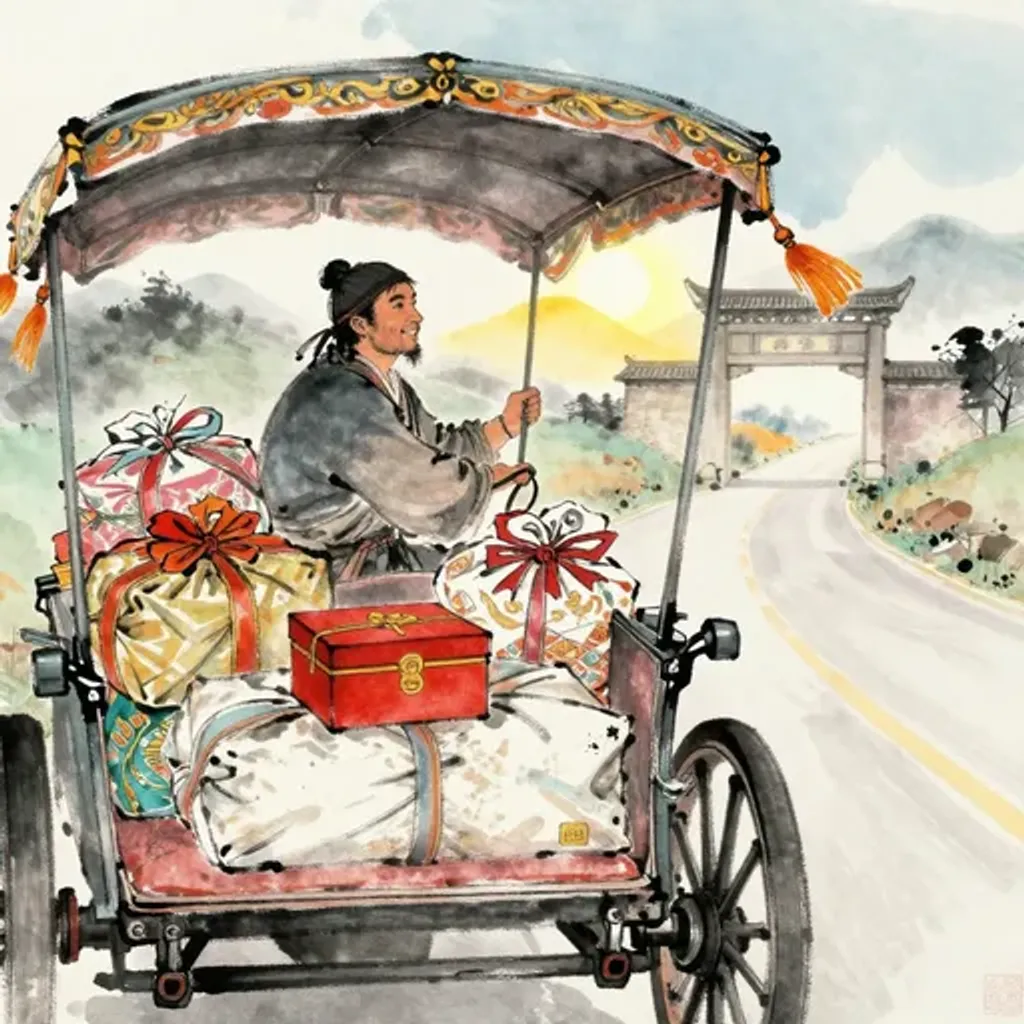
駕福乘喜,東至嘉國。戴慶南行,離我室居。
Harnessing fortune and riding joy, eastward to a blessed land. Bearing celebration southward, leaving behind my former dwelling.
— Jiao Yanshou, Yilin (Forest of Changes), 1st century BC
Commentary
Thunder over water separates into fire above the lake — the divergent vision of Opposition. Harnessing good fortune and riding joy, one travels east to a blessed land. Bearing celebration southward, one departs from home. The verse moves in two contrary directions: eastward to abundance, southward away from one's dwelling. Joy is real but displacement accompanies it. From Deliverance to Opposition, fire and lake pull apart — one rises while the other sinks. The freed traveler discovers that every gain involves a departure, every arrival a farewell. Opposition does not negate the blessing; it reveals that movement toward one good necessarily moves away from another.
解 → 蹇
Hexagram 40 → Hexagram 39: Obstruction
Changing lines: 2, 3, 4, 5
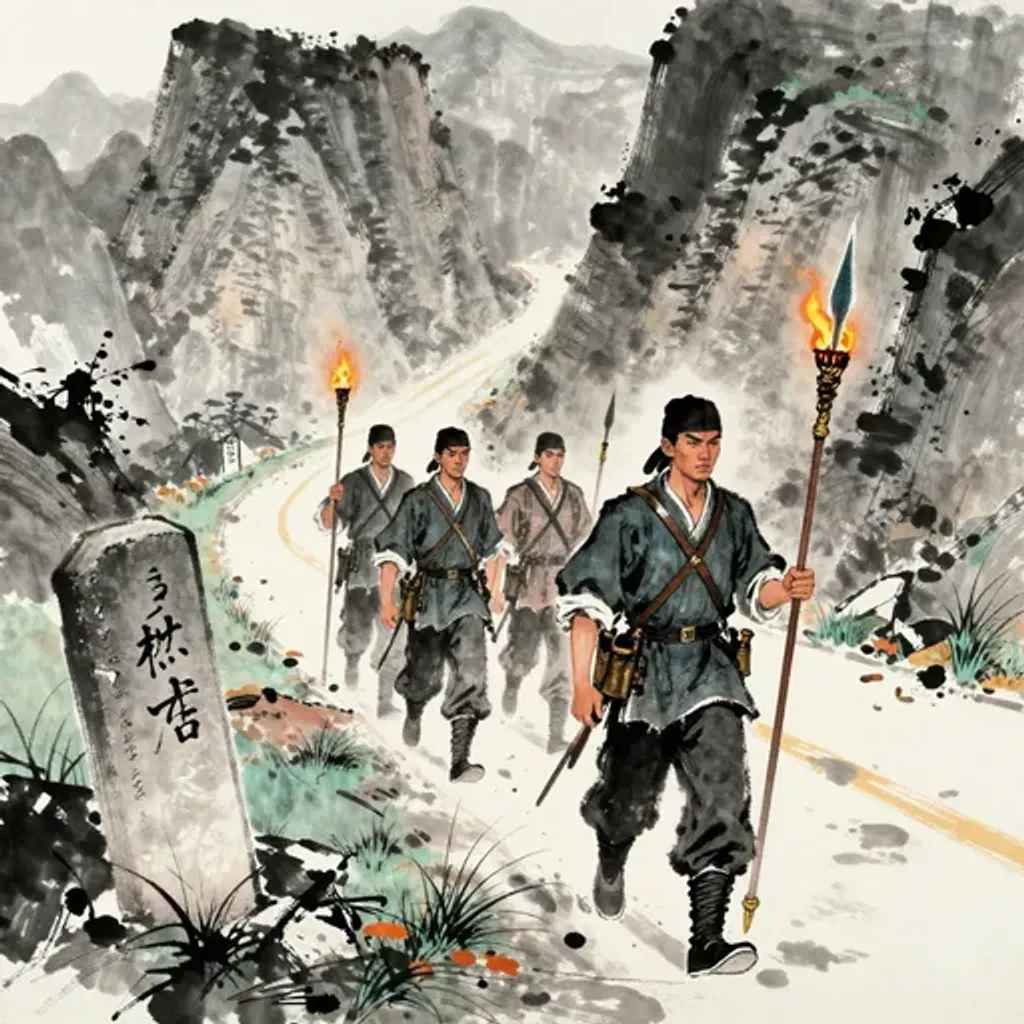
四姦為殘,齊魯道難。前驅執殳,戒守无患。
Four villains work their ruin; the road between Qi and Lu is perilous. The vanguard bears his halberd; keeping watch and guard, there is no disaster.
— Jiao Yanshou, Yilin (Forest of Changes), 1st century BC
Commentary
Thunder over water freezes into water atop the mountain — the cold impasse of Obstruction. Four villains conspire to wreak destruction; the roads of Qi and Lu grow dangerous. But vanguard soldiers bearing weapons stand ready, and watchful defense wards off disaster. The verse names specific geography — the borderlands between Qi and Lu — as a zone of banditry or invasion, and prescribes military vigilance as the remedy. From Deliverance to Obstruction, the release from one danger reveals another blocking the path. Water on the mountain cannot flow freely; the gentleman turns inward to cultivate virtue. Yet the verse insists on active defense: obstruction is navigated not by passivity but by readiness.
解 → 解
Hexagram 40 → Hexagram 40: Deliverance
No changing lines — the hexagram is unchanged
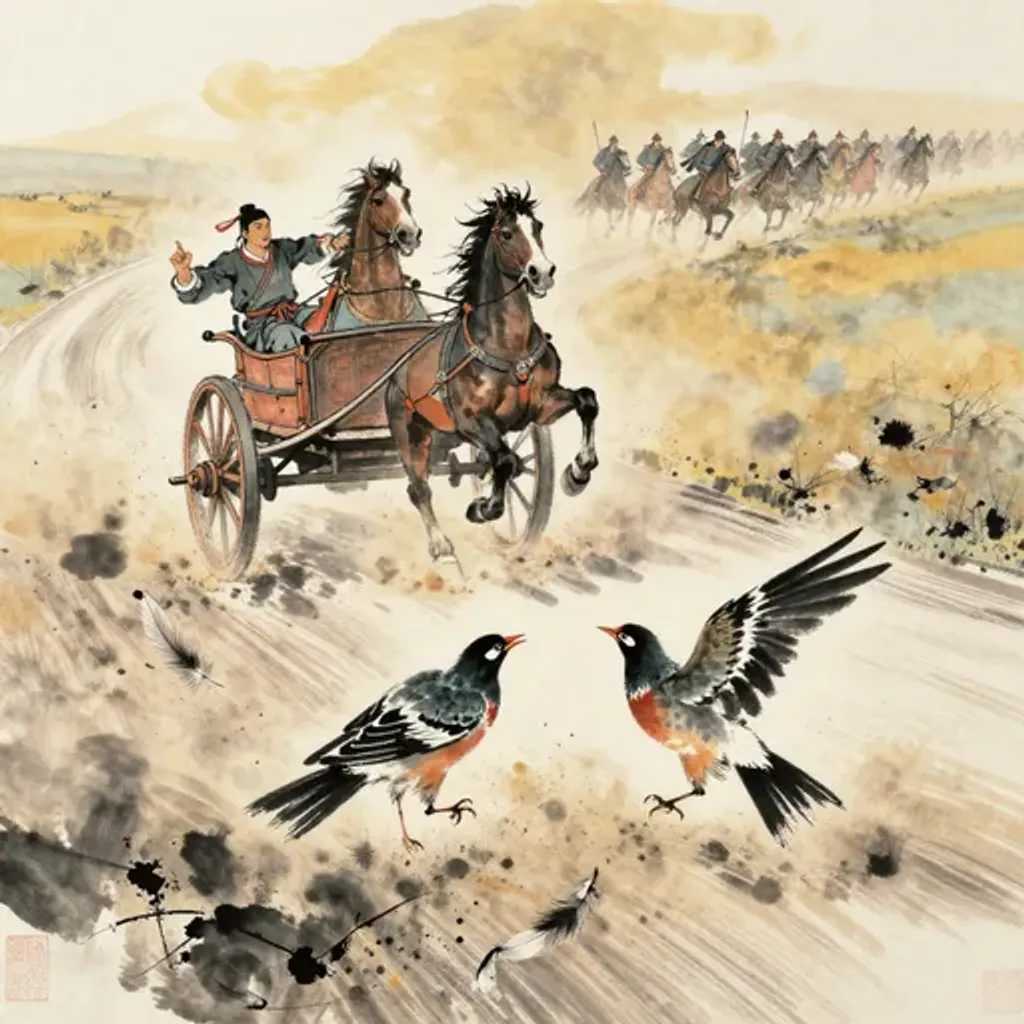
駕行出遊,鳥鬭車前,更相捽滅。兵寇旦來,回車亟還,可以无憂。
Driving out for a journey, birds battle before the chariot, tearing at each other. Soldiers and brigands arrive at dawn; he turns the chariot and races back, and thus avoids all worry.
— Jiao Yanshou, Yilin (Forest of Changes), 1st century BC
Commentary
Thunder over water encounters itself — Deliverance meeting Deliverance. Driving out on a journey, birds fight before the carriage, tearing at each other. Then word comes that soldiers and bandits approach at dawn; one turns the carriage and races home, and thereby avoids worry. The verse dramatizes the instinct for timely retreat: omens appear (fighting birds), danger confirms (approaching troops), and the wise traveler does not hesitate to reverse course. From Deliverance to Deliverance, the pattern doubles rather than transforms. Release from one predicament comes through the release of attachment to the journey itself. Sometimes the most decisive act of deliverance is simply turning around.
解 → 損
Hexagram 40 → Hexagram 41: Decrease
Changing lines: 1, 4, 6
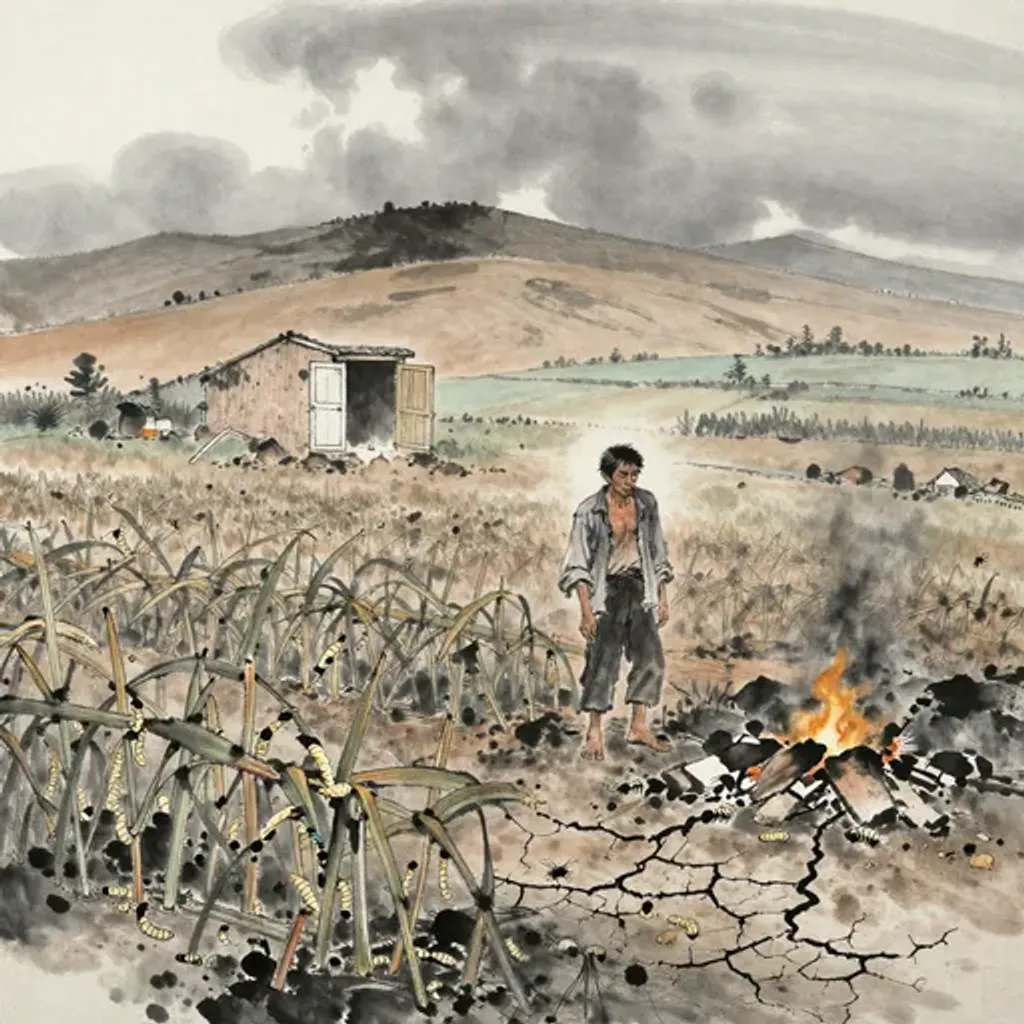
下擾上煩,蠹蠱為患,歲飢无年。
Below, turmoil; above, vexation. Borers and pests bring calamity; the year is starved, the harvest lost.
— Jiao Yanshou, Yilin (Forest of Changes), 1st century BC
Commentary
Thunder over water diminishes into the mountain above the lake — the voluntary sacrifice of Decrease. Below is turmoil, above is vexation; parasites and rot infest as plagues, and the harvest fails, leaving a year without grain. The verse describes systemic decay from both ends: the common people suffer disruption while the leadership is harassed. Vermin compound the misery, and starvation follows. From Deliverance to Decrease, the release of one constraint reveals that resources have been depleted. The mountain draws from the lake below; sacrifice is required. When both high and low are exhausted and the granary is empty, decrease is not chosen but imposed by the logic of scarcity.
解 → 益
Hexagram 40 → Hexagram 42: Increase
Changing lines: 1, 2, 4, 5, 6
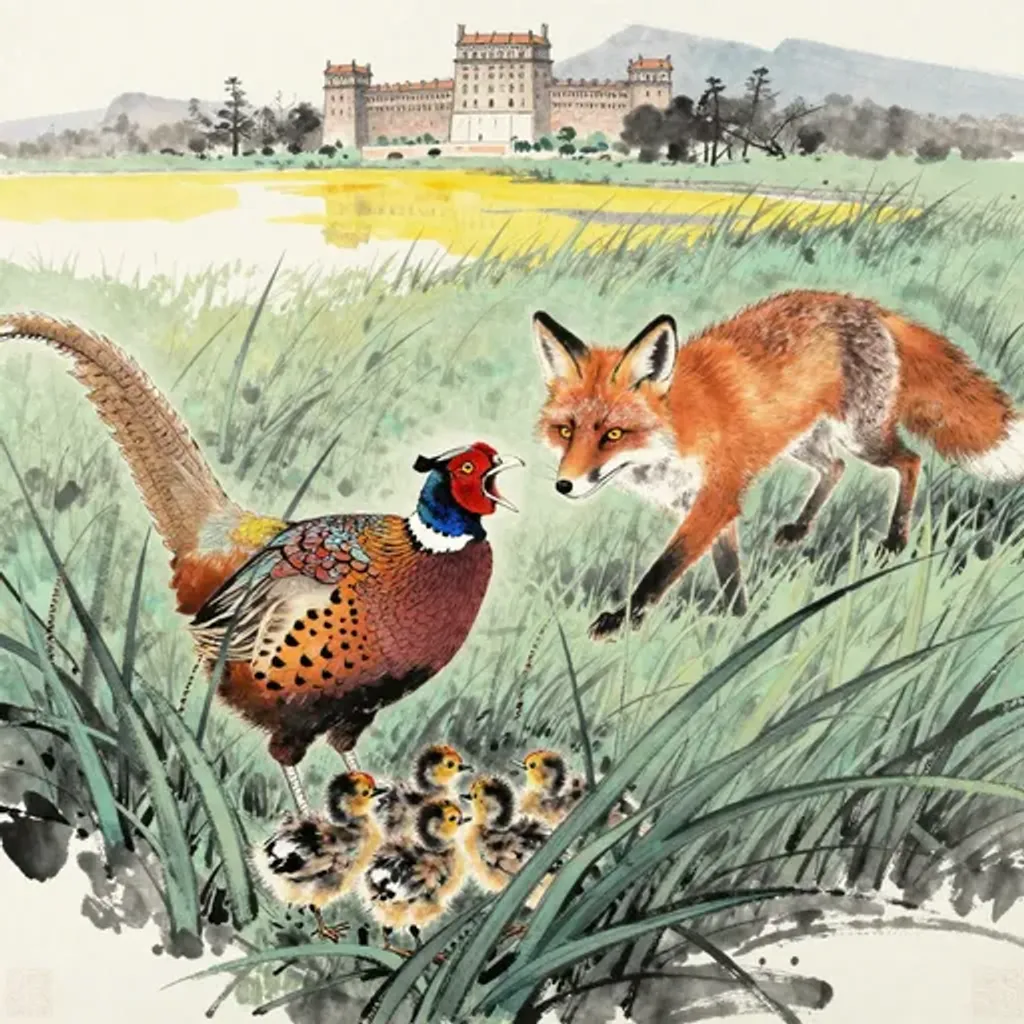
雞雉失雛,常畏狐狸。黃池要盟,越國以昌。
Hen and pheasant lose their brood, ever fearing the fox. At the Yellow Pool an oath is sworn; the state of Yue thereby flourishes.
— Jiao Yanshou, Yilin (Forest of Changes), 1st century BC
Commentary
Thunder over water surges into wind and thunder — the generous expansion of Increase. Hens and pheasants lose their chicks, always fearing the fox. But at the Yellow Pool covenant, while Wu's forces were engaged far from home, Yue seized its chance and rose to dominance. The verse pivots from vulnerability to strategic triumph: the mother bird's anxiety mirrors Wu's distracted court, and Yue's exploitation of the opening echoes the fox that preys on unguarded nests. From Deliverance to Increase, release of energy benefits whoever is positioned to receive it. Wind and thunder amplify each other; Goujian's patient years of gall-tasting culminated in the moment his rival looked away.
解 → 夬
Hexagram 40 → Hexagram 43: Breakthrough
Changing lines: 1, 3, 5
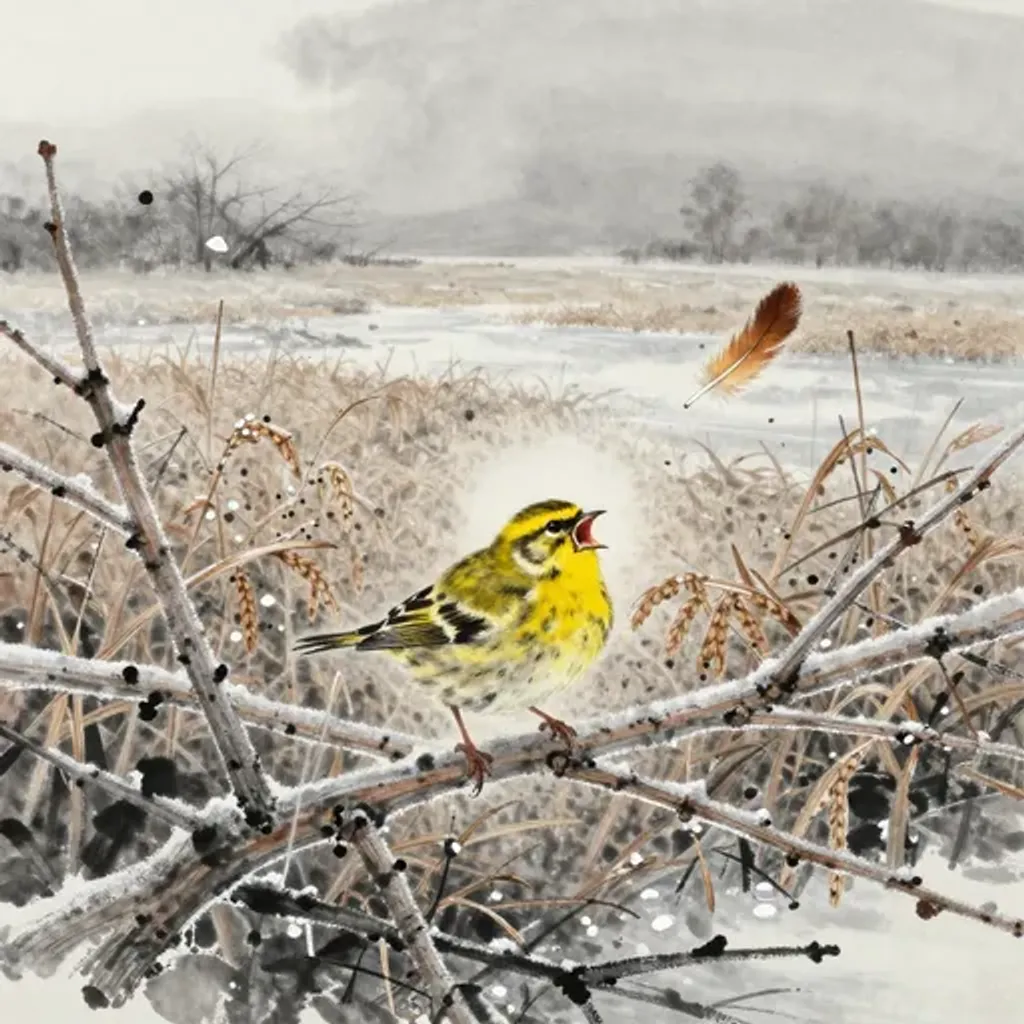
堅冰黃鳥,終日悲號。不見白粒,但觀蓬蒿。數驚鷙鳥。孰為我憂?
Hard ice and a yellow bird, crying in sorrow all day long. No white grain to be seen, only brambles and weeds. Hawks startle again and again — who will grieve for me?
— Jiao Yanshou, Yilin (Forest of Changes), 1st century BC
Commentary
Thunder over water shatters upward as the lake rising to heaven — the decisive breakthrough. Solid ice, yellow birds crying sorrowfully all day long. No white grain is seen, only weeds and brambles. Startled raptors wheel repeatedly — who will grieve for me? The verse layers images of desolation: winter ice, lamenting birds, barren fields overrun with brush, predators circling above. From Deliverance to Breakthrough, the transformation demands decisive action against accumulated negativity. The lake overflows heaven's boundary, washing away what must go. Yet the verse's tone is elegiac rather than triumphant — the breakthrough reveals devastation, and the speaker stands alone amid the ruins asking who cares.
解 → 姤
Hexagram 40 → Hexagram 44: Coming to Meet
Changing lines: 3, 5, 6
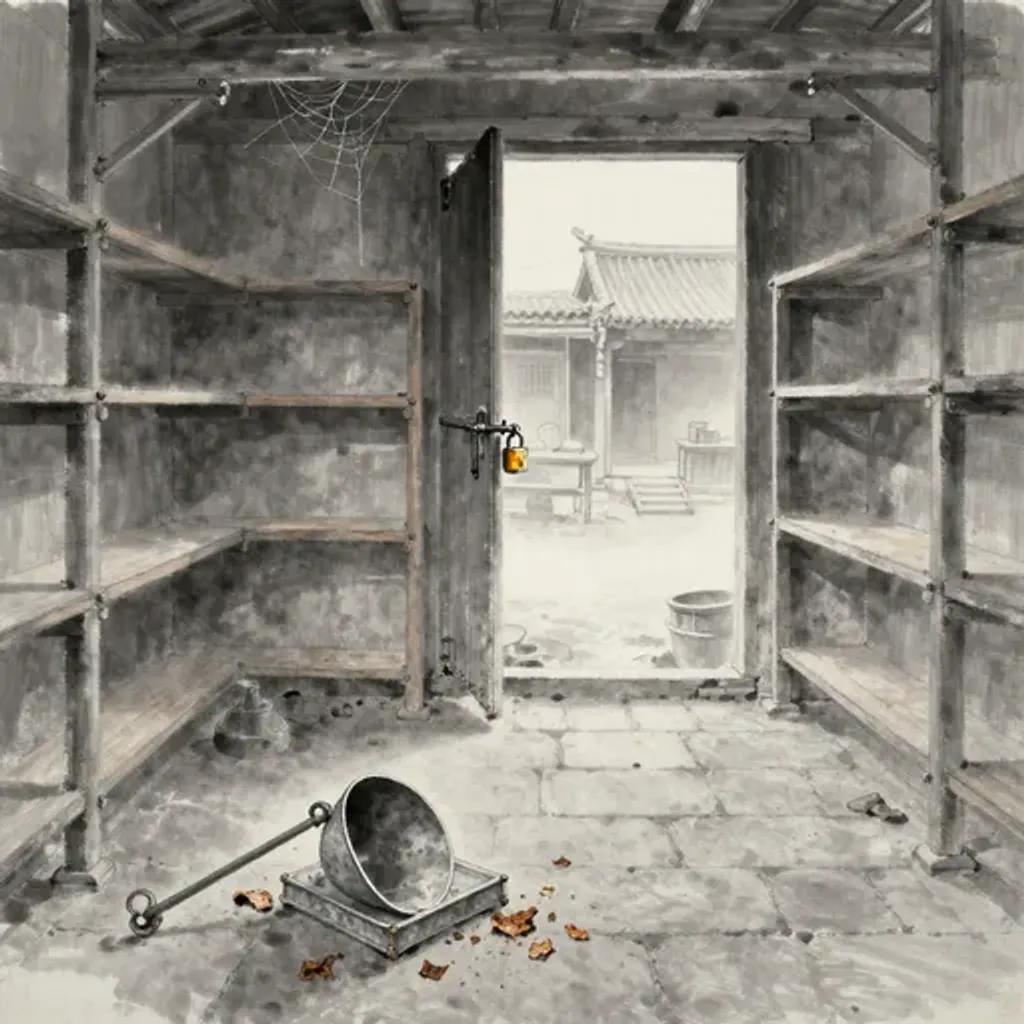
王銑鐵頤,倉庫空虛。市賈無盈,與我為仇。
The kings iron chin is bare; storehouse and granary stand empty. The market yields no profit; fortune turns against us.
— Jiao Yanshou, Yilin (Forest of Changes), 1st century BC
Commentary
Thunder over water meets heaven with wind below — the unexpected encounter of Coming to Meet. The king smelts iron for his jaw, yet the granaries stand empty. Merchants in the market find no profit, and all turns hostile. The verse describes an economy of scarcity: the ruler invests in military hardware (iron) while the food supply collapses and commerce withers. The 'iron jaw' may suggest a ruler who consumes resources meant for others. From Deliverance to Coming to Meet, wind beneath heaven carries decrees to the four directions, but what arrives unbidden here is shortage and enmity. Not every encounter is welcome; sometimes what meets you is ruin.
解 → 萃
Hexagram 40 → Hexagram 45: Gathering Together
Changing lines: 2, 5
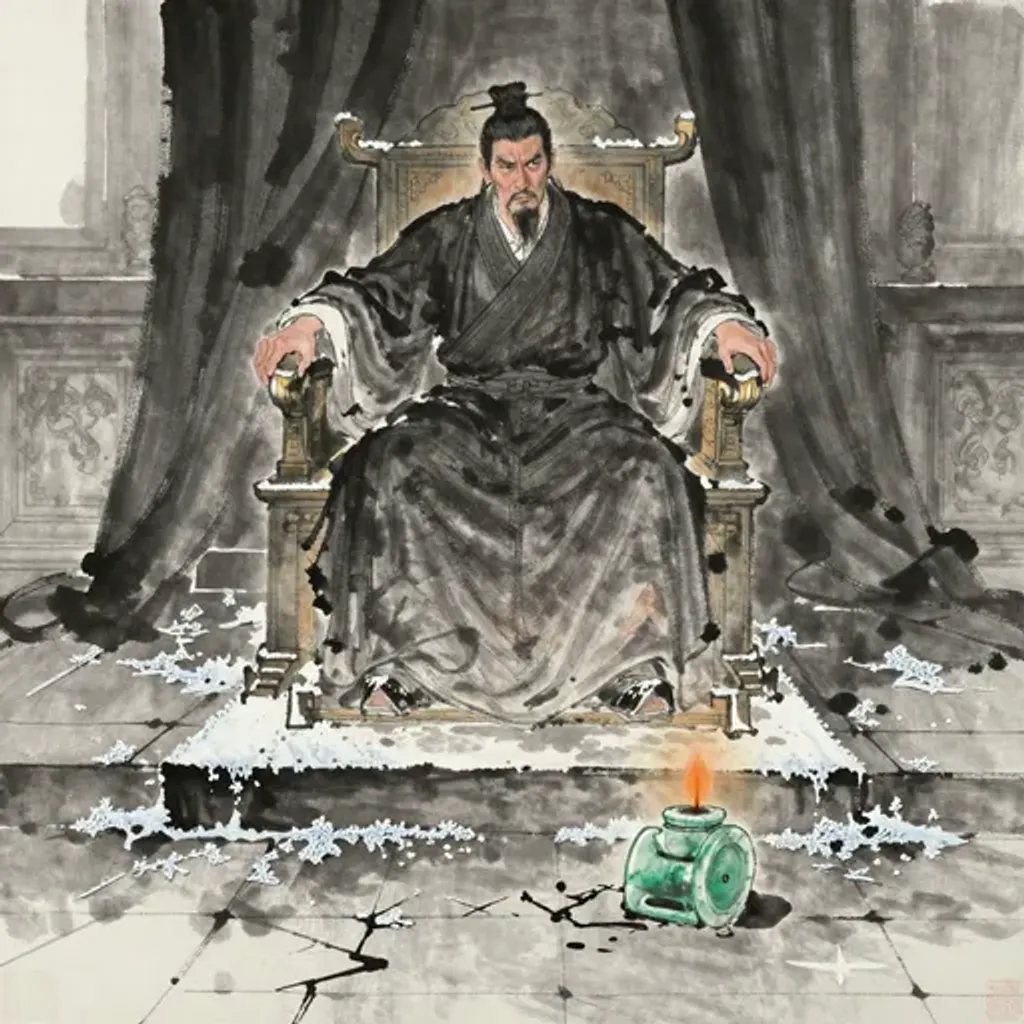
竊名盜位,居非其家。霜隕不實,為陰所賊。
Stealing a name, usurping a seat; dwelling in a house not his own. Frost falls, the fruit does not ripen; yin wickedness devours him.
— Jiao Yanshou, Yilin (Forest of Changes), 1st century BC
Commentary
Thunder over water gathers into the lake upon the earth — but the gathering of Gathering Together here is fraudulent. One steals a reputation and usurps a position, dwelling in a house that is not one's own. Frost falls and the fruit does not ripen; yin forces have sabotaged everything. The verse describes an impostor: someone occupying a role through deceit rather than merit, and the natural consequence of that illegitimacy — nothing comes to fruition under a false steward. From Deliverance to Gathering, the release from crisis creates a power vacuum that the unworthy rush to fill. Frost kills the fruit that a true occupant would have nurtured to harvest.
解 → 升
Hexagram 40 → Hexagram 46: Pushing Upward
Changing lines: 3, 4
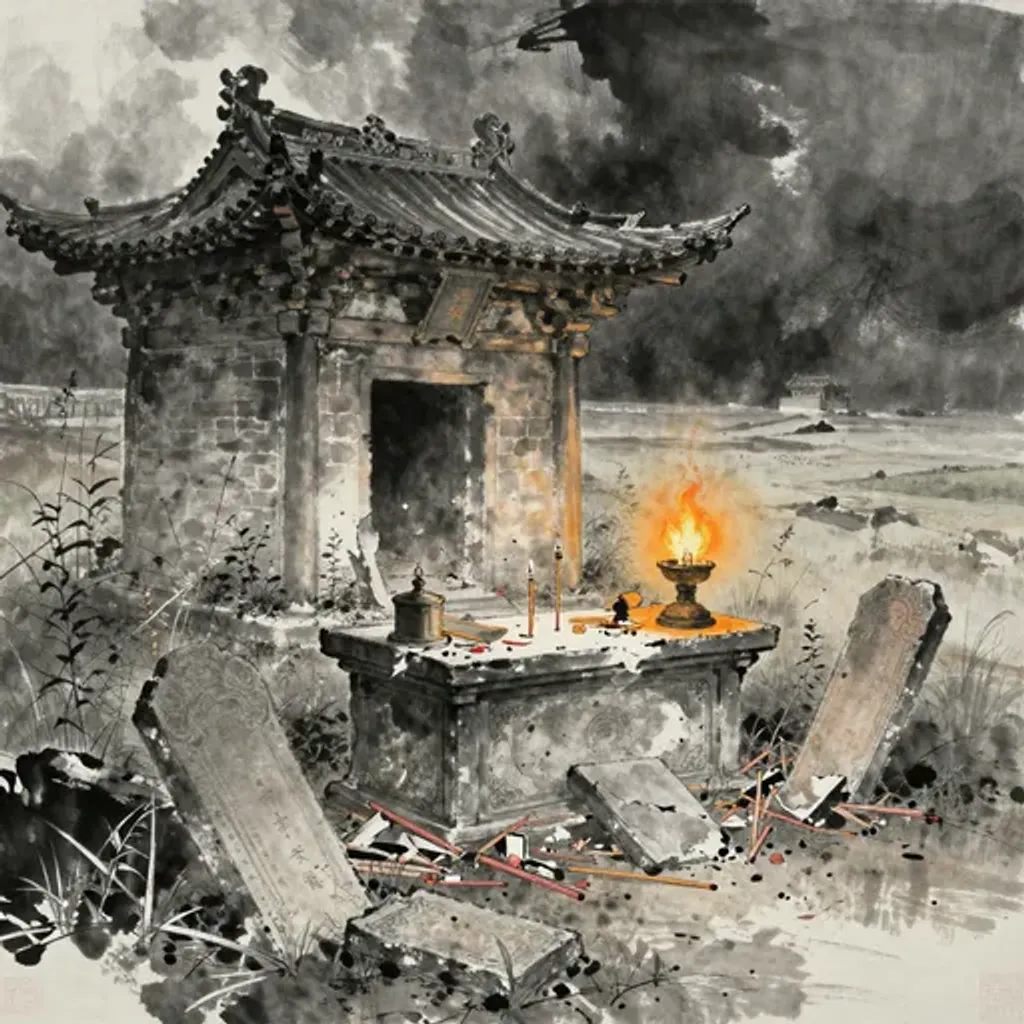
賊仁傷德,天怒不福。斬刈宗社,失其本域。
Harming benevolence, wounding virtue — heaven rages and withholds its blessing. The ancestral shrine is cut down and razed; the domain itself is lost.
— Jiao Yanshou, Yilin (Forest of Changes), 1st century BC
Commentary
Thunder over water rises into earth with wind below — the gradual ascent of Pushing Upward. But this ascent is aborted: harming benevolence and wounding virtue provokes heaven's wrath. The ancestral temple is cut down, and one loses one's homeland. The verse describes a ruler whose cruelty and impiety destroy the very foundations of his state — the zongmiao (ancestral shrine) that legitimizes his rule. From Deliverance to Pushing Upward, the irony is complete: the hexagram promises steady growth through accumulated virtue, but the verse shows its negation. When the one who should ascend instead 'hacks at benevolence,' the tree grows downward into its own grave. Upward momentum requires moral root.
解 → 困
Hexagram 40 → Hexagram 47: Oppression
Changing lines: 5
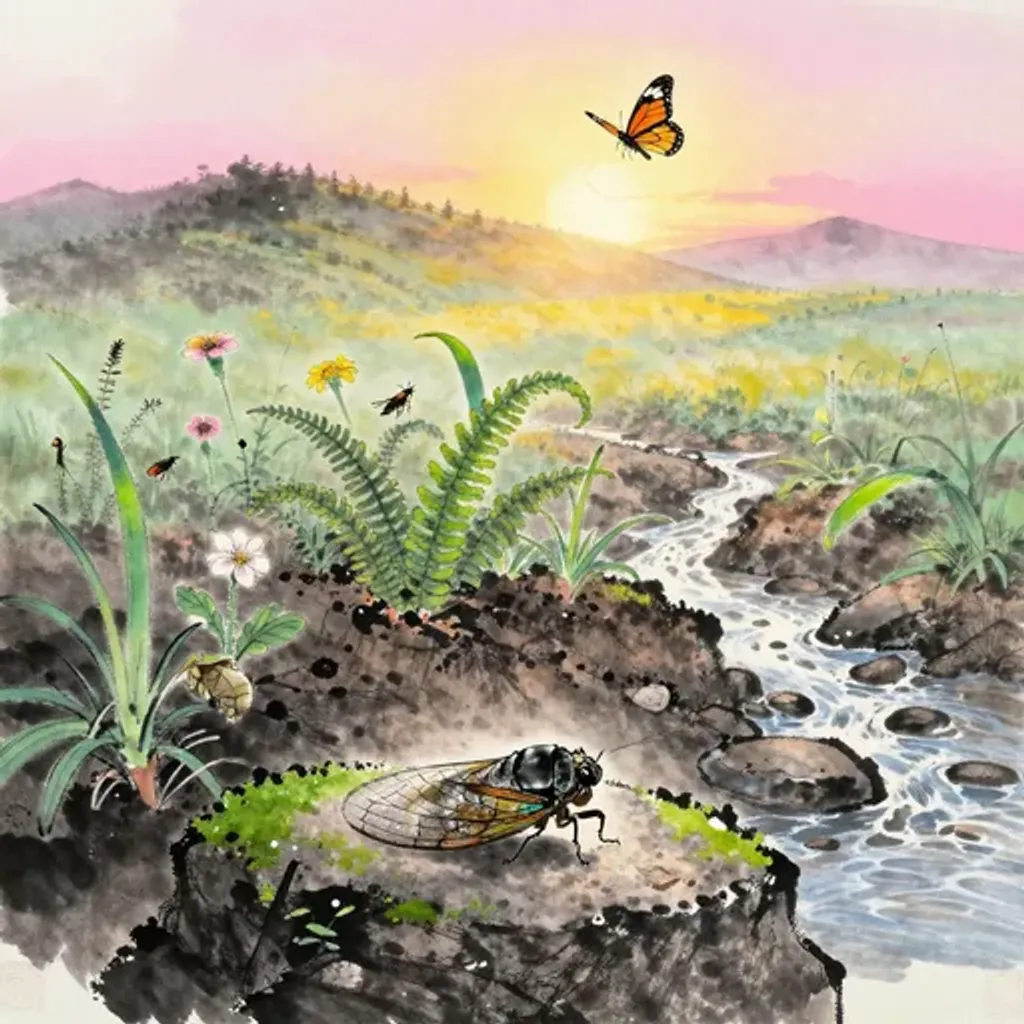
萬物初生,蟄虫振起。益壽增福,日受其喜。
The ten thousand things first stir; hibernating creatures rise and shake themselves awake. Life increases and fortune grows; day by day one receives its joy.
— Jiao Yanshou, Yilin (Forest of Changes), 1st century BC
Commentary
Thunder over water flows into the lake with no water — the paradox of Oppression concealing renewal. All things are newly born; hibernating creatures stir and rise. Longevity increases, blessings multiply, and each day brings fresh joy. The verse is entirely auspicious, describing the first stirrings of spring: new life, new energy, new fortune. From Deliverance to Oppression, the transformation seems contradictory — how can such abundance lead to a hexagram of exhaustion? The answer lies in the cycle: this spring joy is what exists just before the lake runs dry. Alternatively, the verse may capture the hidden vitality within oppression itself — even when the lake has no water, life stirs underground, waiting.
解 → 井
Hexagram 40 → Hexagram 48: The Well
Changing lines: 3, 4, 5
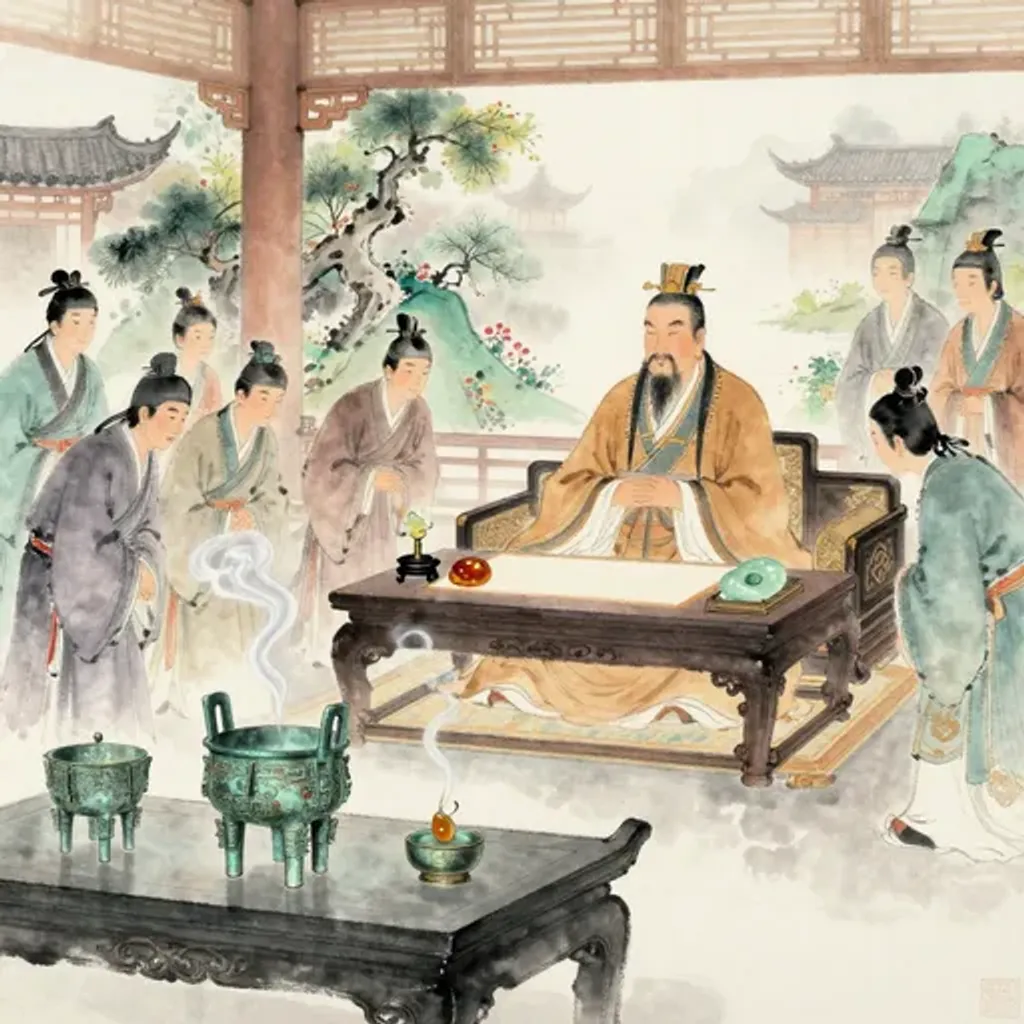
和氣所在,物皆不朽。聖賢居位,國无凶咎。
Where harmonious virtue resides, nothing decays or perishes. A sage and worthy man holds the throne; the state is free of misfortune and calamity.
— Jiao Yanshou, Yilin (Forest of Changes), 1st century BC
Commentary
Thunder over water settles into water drawn up through wood — the nourishing constancy of the Well. Where harmonious energy resides, nothing decays. Sages and worthies occupy their proper positions, and the state suffers no misfortune. The verse describes governance as an inexhaustible well: when the right people are in the right places, the source of communal nourishment never runs dry. From Deliverance to The Well, the thunderstorm's release becomes the steady, reliable supply of water that serves everyone without moving from its place. The well does not go to the village; the village comes to the well. True deliverance establishes not freedom of movement but permanence of provision.
解 → 革
Hexagram 40 → Hexagram 49: Revolution
Changing lines: 1, 2, 3, 5
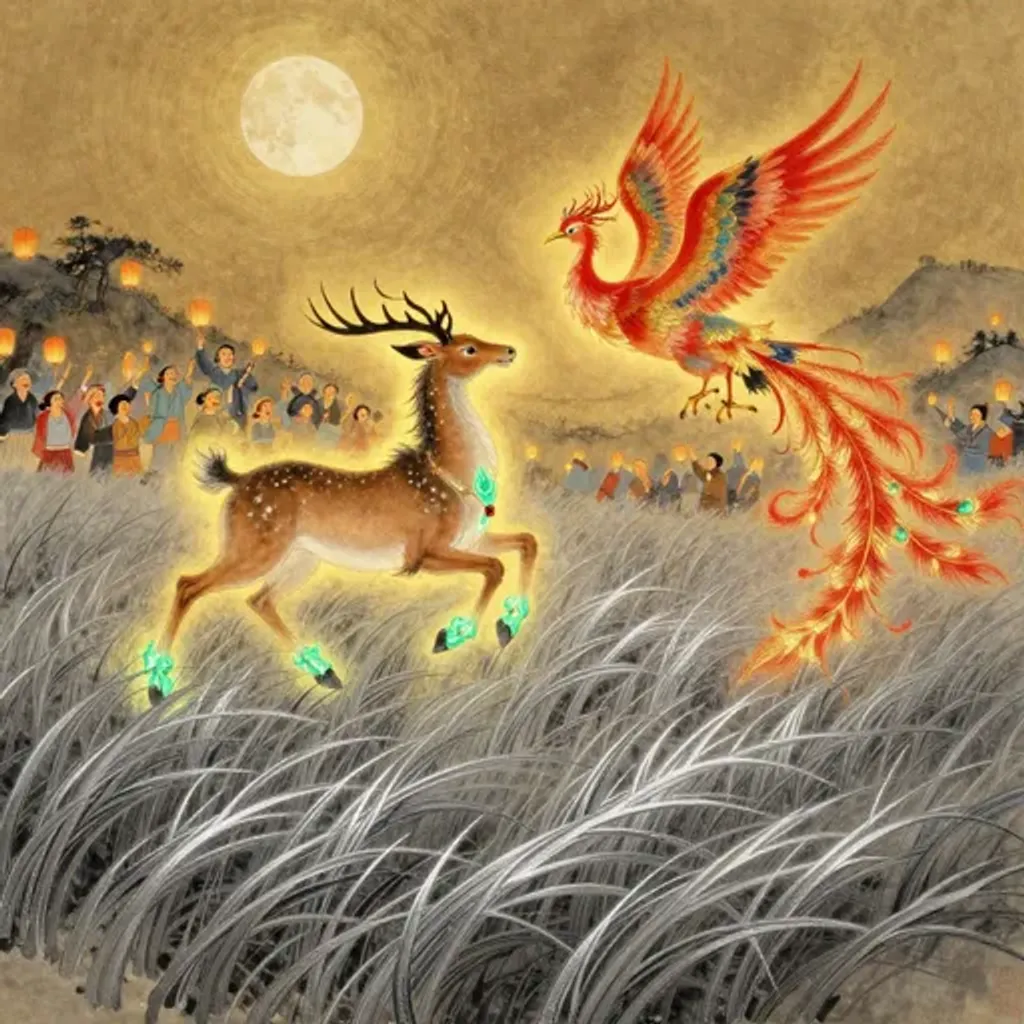
麟游鳳舞,歲樂民喜。
The qilin roams and the phoenix dances; the year brings joy and the people delight.
— Jiao Yanshou, Yilin (Forest of Changes), 1st century BC
Commentary
Thunder over water transforms into fire within the lake — the radical renewal of Revolution. Unicorns roam and phoenixes dance; the harvest year is joyful and the people delight. The verse is brief but unmistakable: qilin and phoenix appear only under sage rule, signaling a cosmic endorsement of the new order. From Deliverance to Revolution, the storm that released old tensions now burns away the old dispensation entirely. Fire within the lake: irreconcilable elements forced together produce transformation, not destruction. The appearance of mythological auspicious creatures confirms that this revolution is heaven-sanctioned — not chaos but a new mandate emerging from the ashes of the old.
解 → 鼎
Hexagram 40 → Hexagram 50: The Cauldron
Changing lines: 3, 6
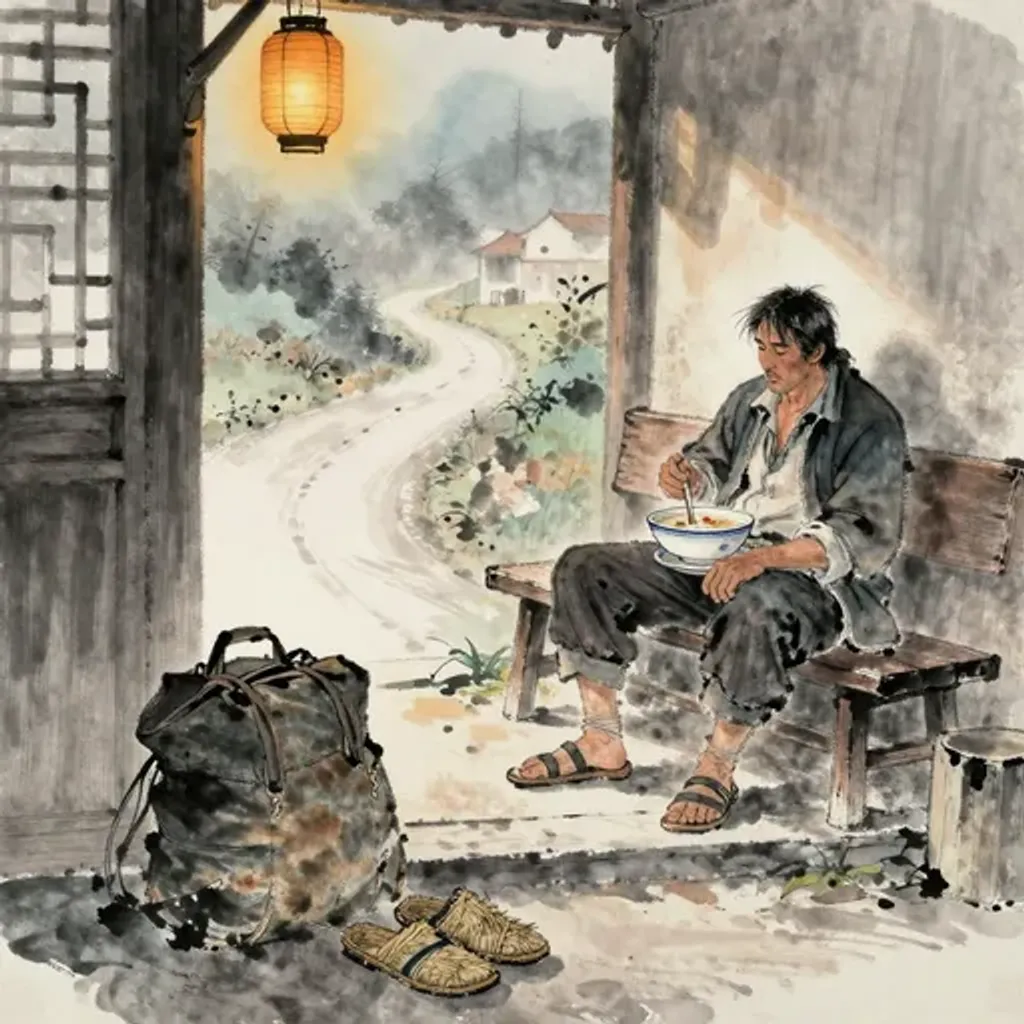
行行窘步,次宿方舍。居安不懼,姬姜何憂?
Step by weary step, halting and stumbling; at last he finds an inn to rest. Dwelling in peace and feeling no fear — what should the Ji and Jiang clans worry about?
— Jiao Yanshou, Yilin (Forest of Changes), 1st century BC
Commentary
Thunder over water refines into fire above wind — the transformative vessel of the Cauldron. Trudging step by labored step, one finally finds lodging at the next station. Settled in safety, no longer afraid — what have the noble clans of Ji and Jiang to worry about? Ji and Jiang are the two great surname groups of the Zhou aristocracy: Ji (the royal house) and Jiang (the Taigong's line, including Qi). The verse reassures the weary traveler that rest comes at last. From Deliverance to The Cauldron, exhausting movement gives way to the sacred vessel that transforms raw ingredients into nourishment. The journey's hardship was the fire; the arrival is the offering.
解 → 震
Hexagram 40 → Hexagram 51: The Arousing Thunder
Changing lines: 1, 2
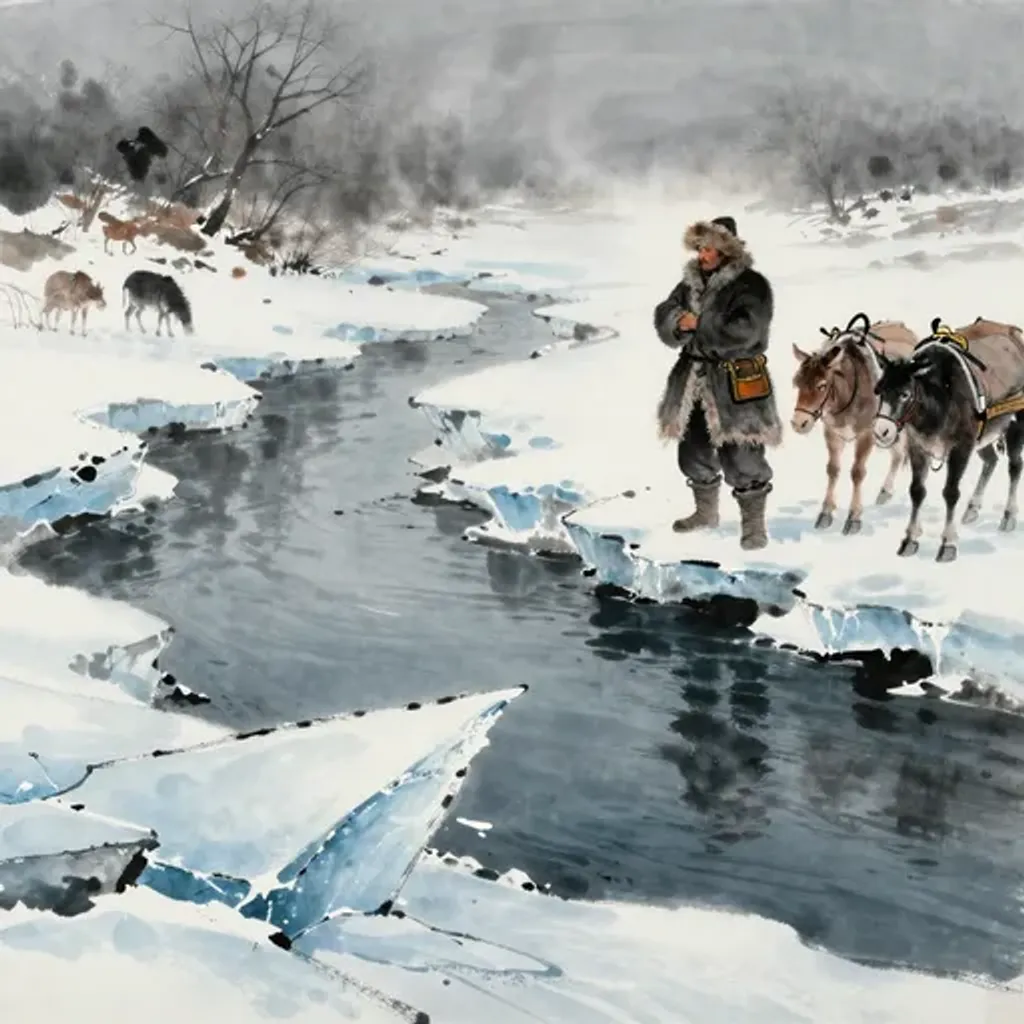
水深難遊,霜寒難涉。商伯失利,旅人稽留。
The water is deep, hard to swim; the frost is bitter, hard to ford. The traveling merchant loses his profit; the journeying man is detained and delayed.
— Jiao Yanshou, Yilin (Forest of Changes), 1st century BC
Commentary
Thunder over water doubles into repeated thunder — the startling shock of The Arousing. Waters run deep and are hard to swim; frost bites cold and is hard to ford. The merchant lord loses his profit; the traveler is detained and cannot proceed. The verse describes paralysis at a crossing: the river is too deep, the cold too severe, commerce too risky, movement too dangerous. From Deliverance to The Arousing, one shock gives way to another. Thunder upon thunder: the gentleman cultivates fear and self-examination. The freed person finds that the way forward shakes beneath every step — not one crisis resolved but a cascading series of tremors that demand constant alertness.
解 → 艮
Hexagram 40 → Hexagram 52: Keeping Still Mountain
Changing lines: 2, 3, 4, 6
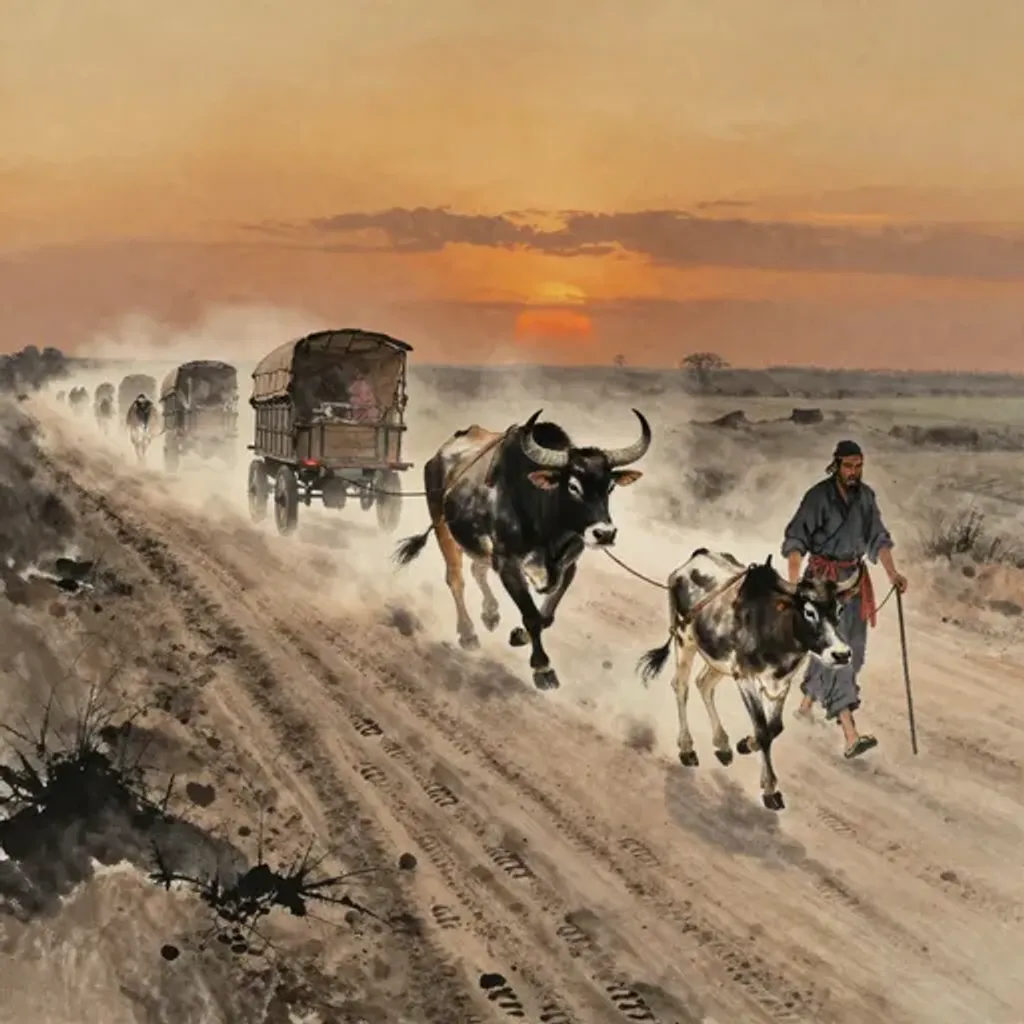
跛踦相隨,日莫牛罷。陵遲後旅,失利亡雌。
Lame and halting, they follow each other; as day ends, the ox is spent. Falling behind the distant travelers, they lose their profit and their mate.
— Jiao Yanshou, Yilin (Forest of Changes), 1st century BC
Commentary
Thunder over water stills into doubled mountain — the absolute stillness of Keeping Still. Lame and limping, they follow each other; at dusk the ox is exhausted. Falling behind the traveling party, one loses profit and mate alike. The verse describes a caravan in decline: the crippled leading the crippled, the work-beast spent, the group fragmenting as evening falls. Everything slows to a halt. From Deliverance to Keeping Still, the storm's energy dissipates into immobility. The mountain thinks not beyond its own position; here that stillness is involuntary rather than contemplative. The freed travelers find they can go no further — not because they choose to stop, but because capacity is exhausted.
解 → 漸
Hexagram 40 → Hexagram 53: Development
Changing lines: 2, 3, 4, 5, 6
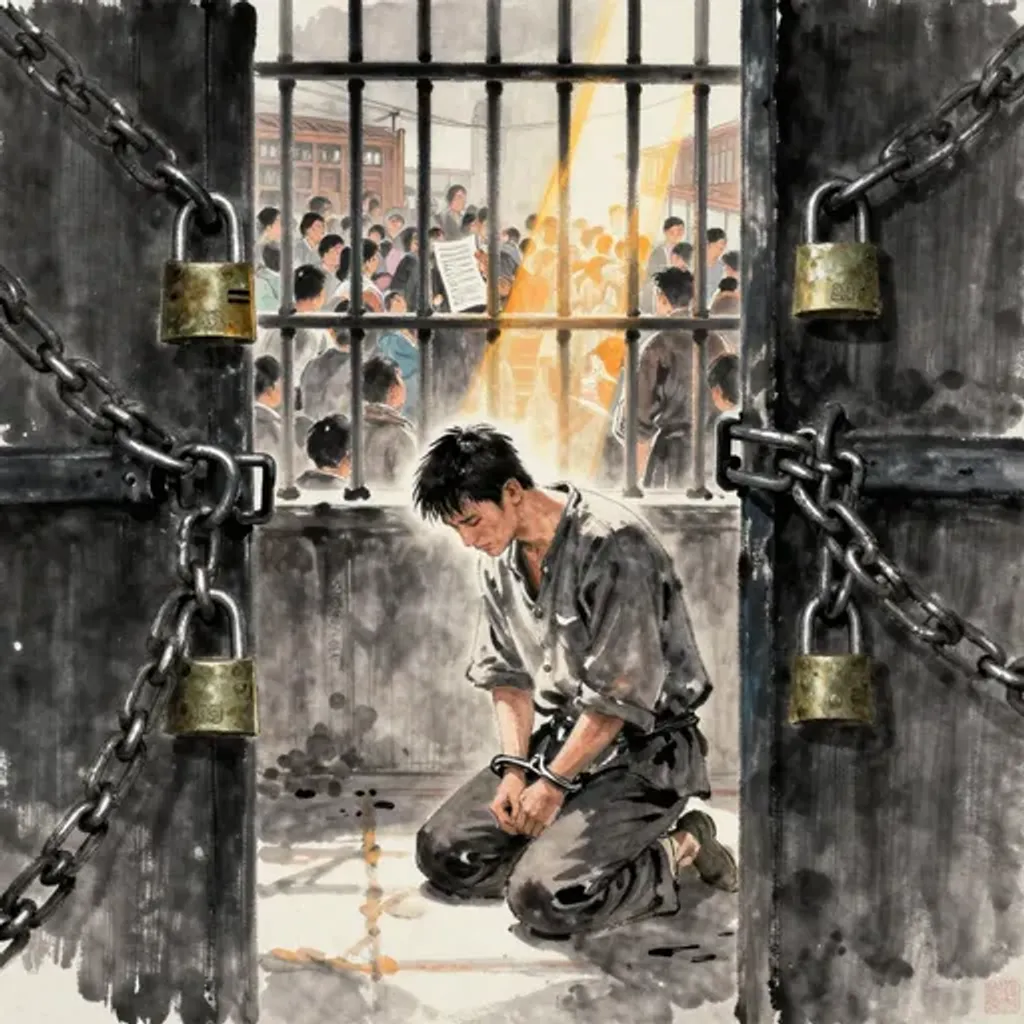
一年九鎖,更相牽攣。案明如市,不得東西。請讞得報,日中被刑。
Nine locks in a single year, each pulling and binding the next. The case laid bare as in a marketplace, no freedom east or west. The plea is submitted and the verdict returned; at midday the sentence falls.
— Jiao Yanshou, Yilin (Forest of Changes), 1st century BC
Commentary
Thunder over water advances slowly into wind above the mountain — the gradual development that cannot be rushed. Nine locks in a single year, each shackle pulling upon the next. The case is as public as a marketplace, yet one cannot move east or west. A petition is submitted and the verdict returned: execution at midday. The verse describes judicial entrapment — cascading legal binds, public exposure, a death sentence carried out at the hour of maximum visibility. From Deliverance to Development, the irony is savage: the hexagram of gradual, natural progression here manifests as the slow, inexorable tightening of a legal noose. Each step of 'development' brings the prisoner closer to the scaffold.
解 → 歸妹
Hexagram 40 → Hexagram 54: The Marrying Maiden
Changing lines: 1

春桃生花,季女宜家。受福多年,男為邦君。
Red candles cast twin shadows; they drink from crossed cups at the wedding. A cassia tree planted before the courtyard — every year, a branch is broken off in triumph.
— Jiao Yanshou, Yilin (Forest of Changes), 1st century BC
Commentary
Thunder over water releases into thunder above the lake — the irrevocable commitment of the Marrying Maiden. The original verse reads: 'Spring peach bursts into bloom; the young woman suits her new household. Receiving blessings for many years, her son becomes lord of the state.' This is a direct echo of the Shijing's 'Tao Yao' wedding ode: the peach tree blossoming signals an auspicious marriage that brings lasting fertility and political fortune. From Deliverance to Marrying Maiden, the release from one condition commits to another — marriage is both liberation and permanent bond. Thunder over the lake: the gentleman understands endings within beginnings, knowing that this joyful union will also know its seasons of decline.
解 → 豐
Hexagram 40 → Hexagram 55: Abundance
Changing lines: 1, 2, 3
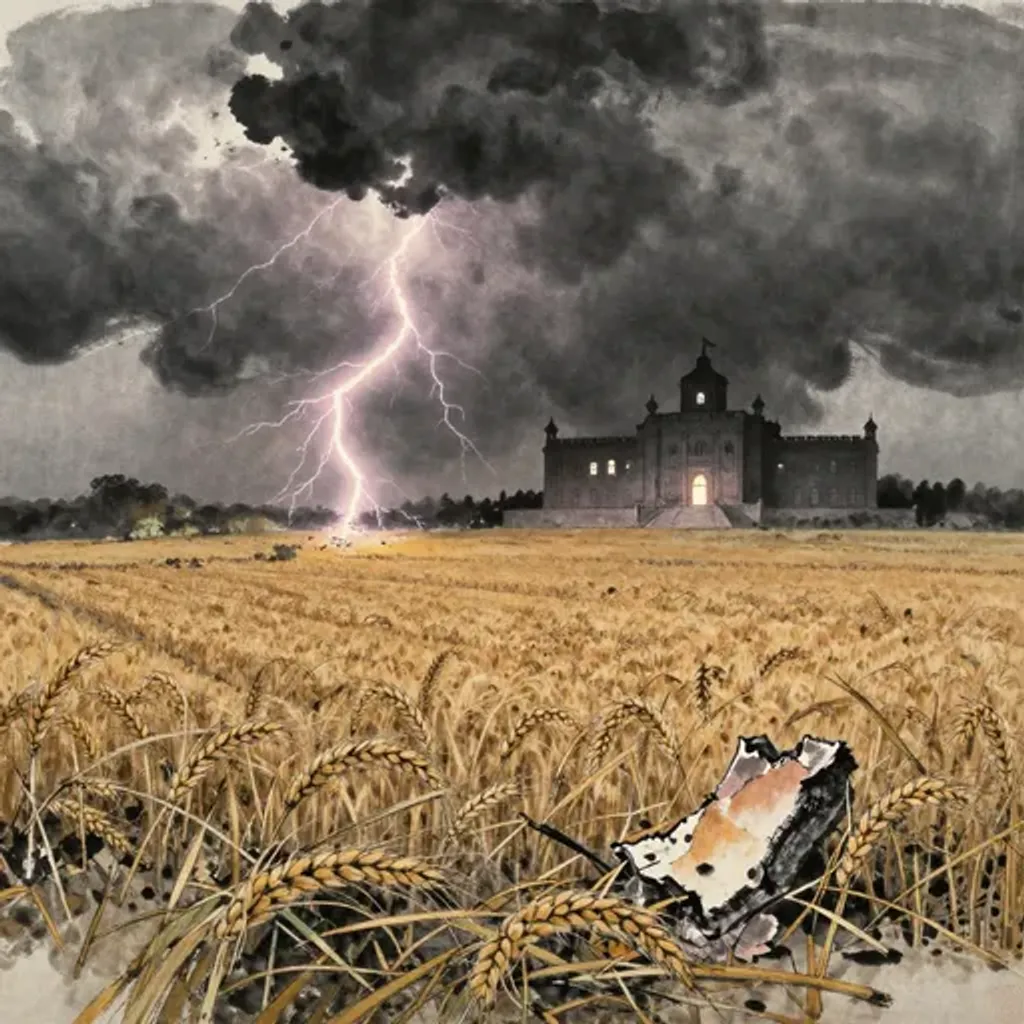
雷鼓東行,稼穡凋傷。大夫執政,君替其明。
Thunder drums eastward; grain and harvest wither and fall. The great minister seizes power; the lord is eclipsed in his radiance.
— Jiao Yanshou, Yilin (Forest of Changes), 1st century BC
Commentary
Thunder over water thunders again beside fire — the overwhelming fullness of Abundance. Thunder drums eastward, but crops and harvests wither. A powerful minister seizes governance while the lord's brightness is eclipsed. The verse describes a political usurpation disguised by spectacle: the thunder of military display moves eastward, but agriculture — the true foundation — collapses. The minister who 'holds governance' has displaced the ruler's clarity. From Deliverance to Abundance, the release of energy produces excess rather than balance. Thunder and lightning blaze together, but when the minister eclipses the ruler, abundance becomes the darkness that follows a too-bright flash.
解 → 旅
Hexagram 40 → Hexagram 56: The Wanderer
Changing lines: 2, 3, 6
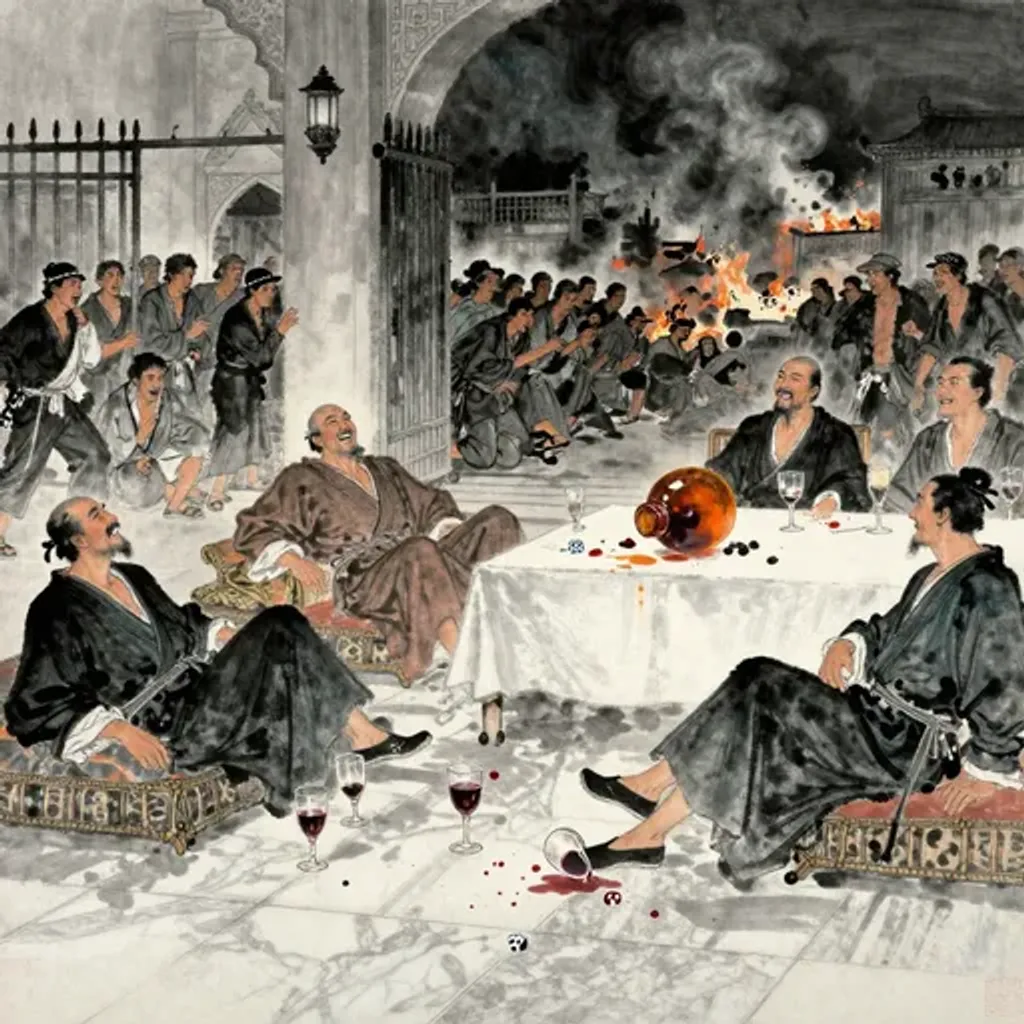
季世多憂,亂國淫遊。殃禍立至,民無以休。
In these last days, much sorrow; the disordered state wallows in reckless pleasure. Calamity and disaster arrive at once; the people have no rest.
— Jiao Yanshou, Yilin (Forest of Changes), 1st century BC
Commentary
Thunder over water scatters into fire upon the mountain — the restless displacement of the Wanderer. In the final age, worries multiply; the disordered state indulges in dissipation. Calamity arrives at once, and the people find no rest. The verse reads like a historical diagnosis: a late-period kingdom dissolving in excess and misrule, disaster following as a natural consequence. From Deliverance to The Wanderer, the freed populace becomes a displaced populace — not liberated but uprooted. Fire on the mountain burns and moves on, never settling. The wanderer's clarity of judgment serves no purpose when the state itself has become the disaster from which there is no shelter.
解 → 巽
Hexagram 40 → Hexagram 57: The Gentle Wind
Changing lines: 3, 4, 5, 6
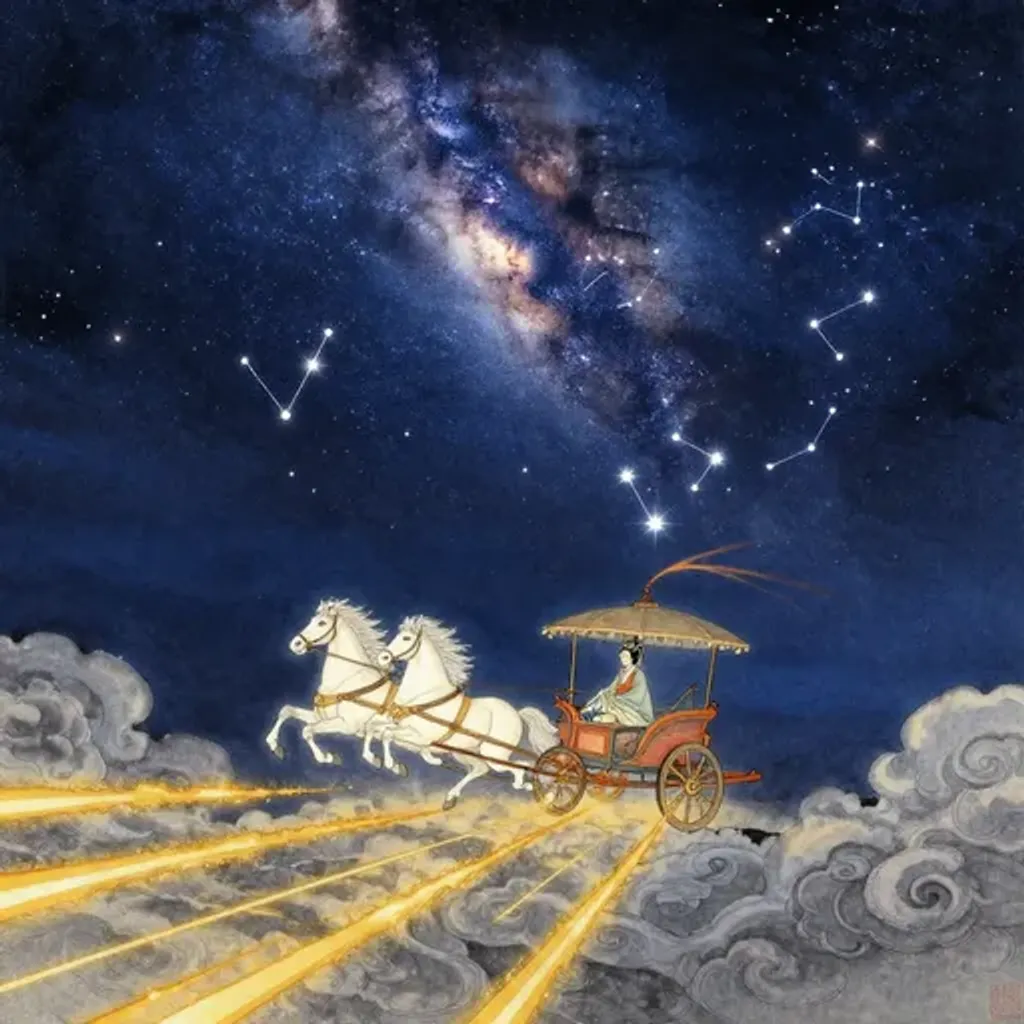
發輗溫湯,過角宿房。宜時布和,无所不通。
Setting forth the carriage axle through warm springs, passing the lodges of Jiao and Fang. Spreading harmony in due season, nothing is barred from passage.
— Jiao Yanshou, Yilin (Forest of Changes), 1st century BC
Commentary
Thunder over water gentles into doubled wind — the penetrating subtlety of the Gentle. Releasing the carriage pin and warming the bath, one passes through the stellar lodges of Horn and Chamber. Distributing harmony at the proper season, nothing is without passage. The verse blends practical imagery (loosening mechanisms, warming water) with celestial navigation (the lunar mansions Jiao and Fang, marking spring). When the season is right and the approach gentle, all channels open. From Deliverance to The Gentle, the thunderstorm's violent release refines into the quiet, persistent wind that enters everywhere. Force gives way to permeation; the decree issued gently reaches further than the one shouted.
解 → 兌
Hexagram 40 → Hexagram 58: The Joyous Lake
Changing lines: 1, 5
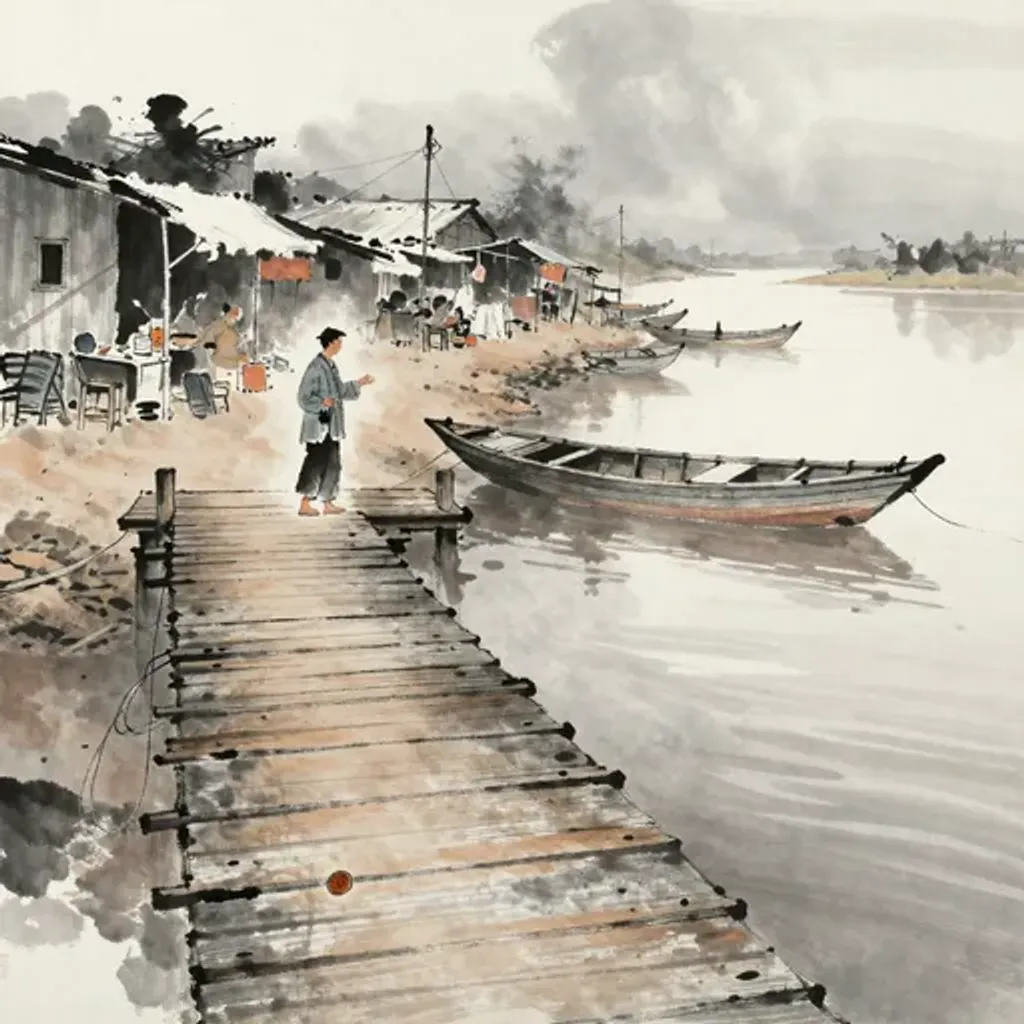
水中大賈,求利食子。商人至市,空无所有。
A great merchant on the water seeks profit and feeds his family. The trader arrives at market — empty, with nothing to be had.
— Jiao Yanshou, Yilin (Forest of Changes), 1st century BC
Commentary
Thunder over water opens into the doubled lake — the shared delight of the Joyous. Yet this joy is hollow: the great merchant on the water seeks profit but consumes his own capital. When traders arrive at the market, they find nothing at all. The verse describes commercial failure dressed in optimistic setting — lakes symbolize joy and exchange, but the marketplace is empty and the merchant eats into his reserves. From Deliverance to The Joyous, the freed merchant discovers that release from constraint does not guarantee prosperity. Paired lakes promise mutual enrichment through shared discourse, but when there is nothing to trade, even joy becomes a form of depletion.
解 → 渙
Hexagram 40 → Hexagram 59: Dispersion
Changing lines: 4, 5, 6
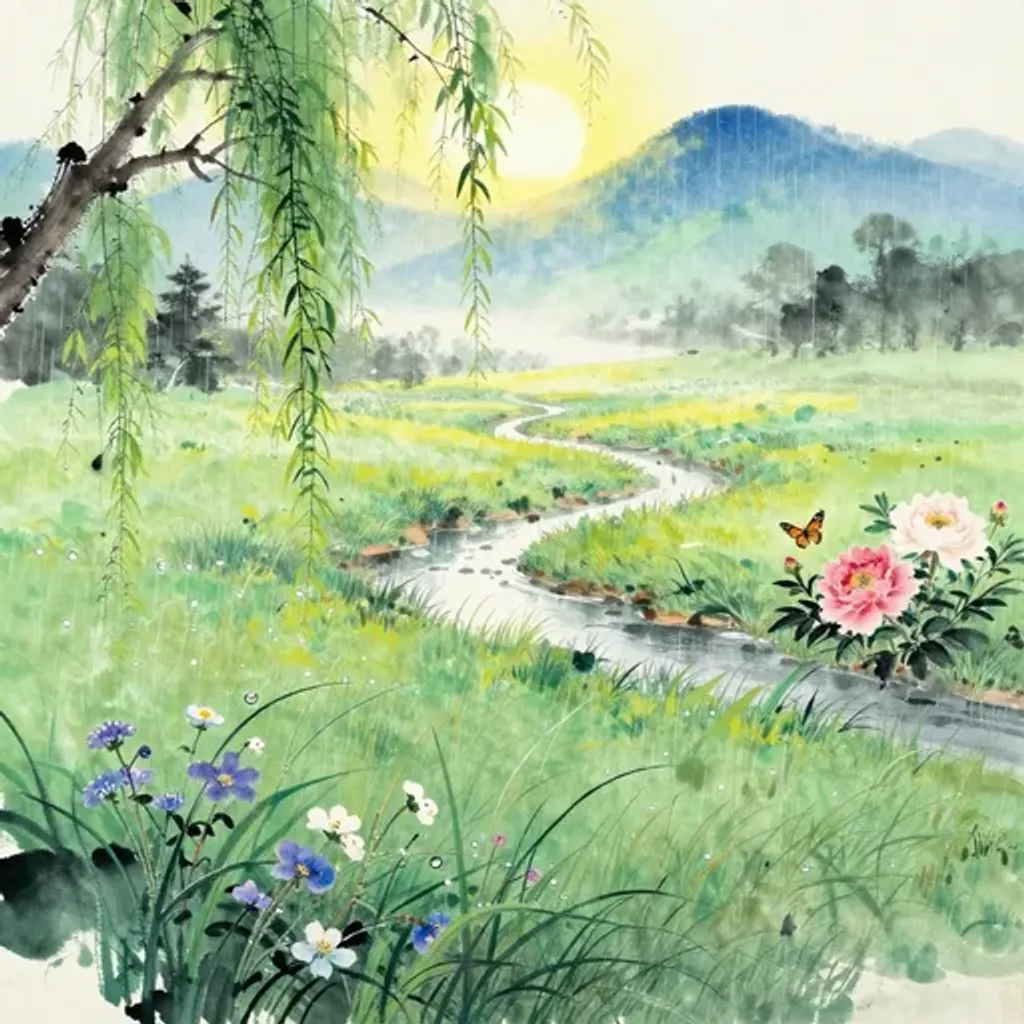
春草萌生,萬物敷榮。陰陽和調,國樂无憂。
Spring grass sprouts and grows; the ten thousand things spread in glory. Yin and yang are harmonized; the state is joyful, free of worry.
— Jiao Yanshou, Yilin (Forest of Changes), 1st century BC
Commentary
Thunder over water disperses into wind over water — the scattering and renewal of Dispersion. Spring grasses sprout and grow; all things spread forth in splendor. Yin and yang are harmoniously balanced, and the state is joyful without sorrow. The verse celebrates the cosmic springtime when opposing forces reconcile and life flourishes universally. From Deliverance to Dispersion, the thunderstorm's energy dissipates not into loss but into the gentle spreading of vitality across the whole landscape. Wind over water: the ancient kings offered sacrifice and established temples. What disperses is not value but rigidity — the ice breaks, the waters flow, and what was frozen becomes fertile.
解 → 節
Hexagram 40 → Hexagram 60: Limitation
Changing lines: 1, 4, 5
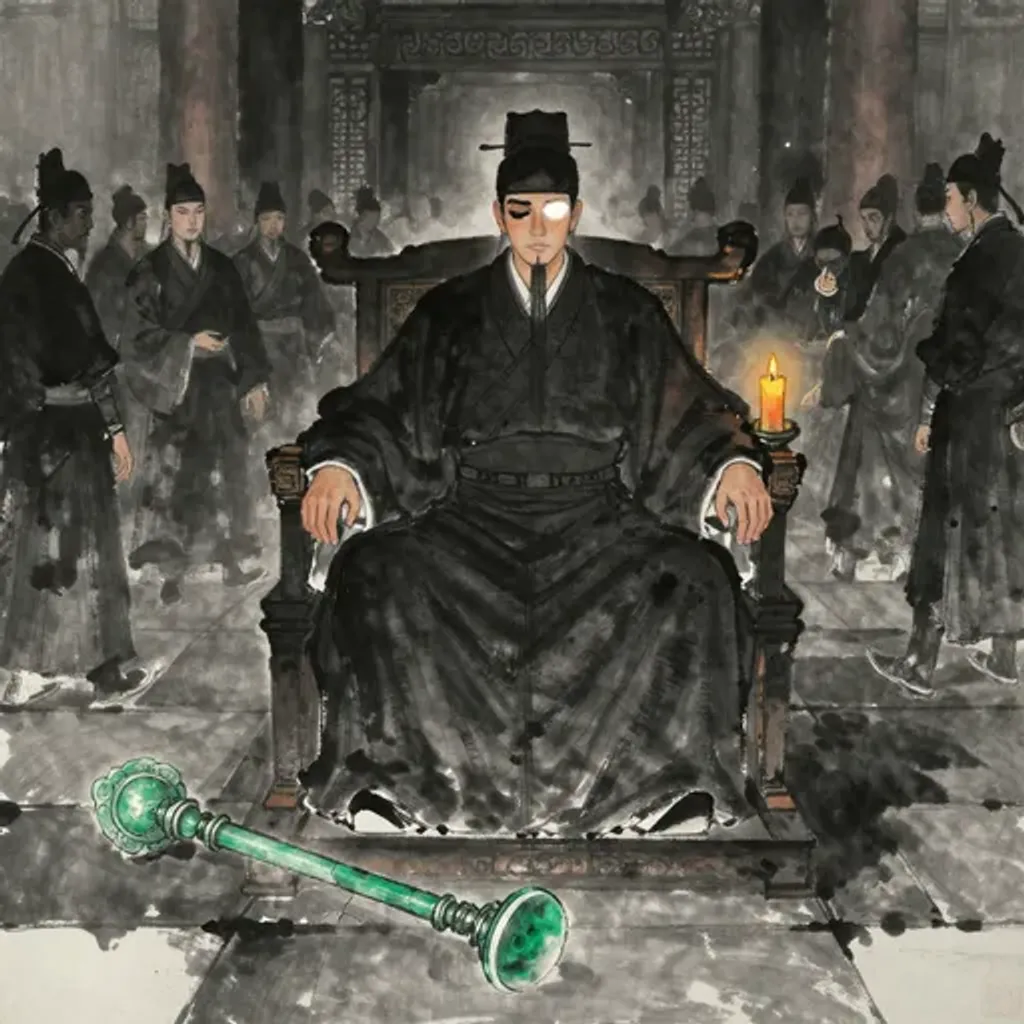
左眇右盲,目視不明。下民多孽,君失其常。
The left eye squints, the right eye is blind; his gaze cannot see clearly. The common folk multiply their offenses; the ruler loses his constancy.
— Jiao Yanshou, Yilin (Forest of Changes), 1st century BC
Commentary
Thunder over water constricts into water above the lake — the measured restraint of Limitation. The left eye is squinting, the right eye is blind; vision fails entirely. The common people commit many sins, and the ruler loses his constancy. The verse describes the failure of governance as a failure of perception: when the ruler cannot see clearly, neither moral limits nor political boundaries hold. From Deliverance to Limitation, the freed society desperately needs boundaries but has lost the faculty to set them. Water above the lake defines proper measure, but here the measure-maker is blind. Without clear sight, limitation becomes arbitrary and the people suffer under rules that have lost their rationale.
解 → 中孚
Hexagram 40 → Hexagram 61: Inner Truth
Changing lines: 1, 4, 5, 6
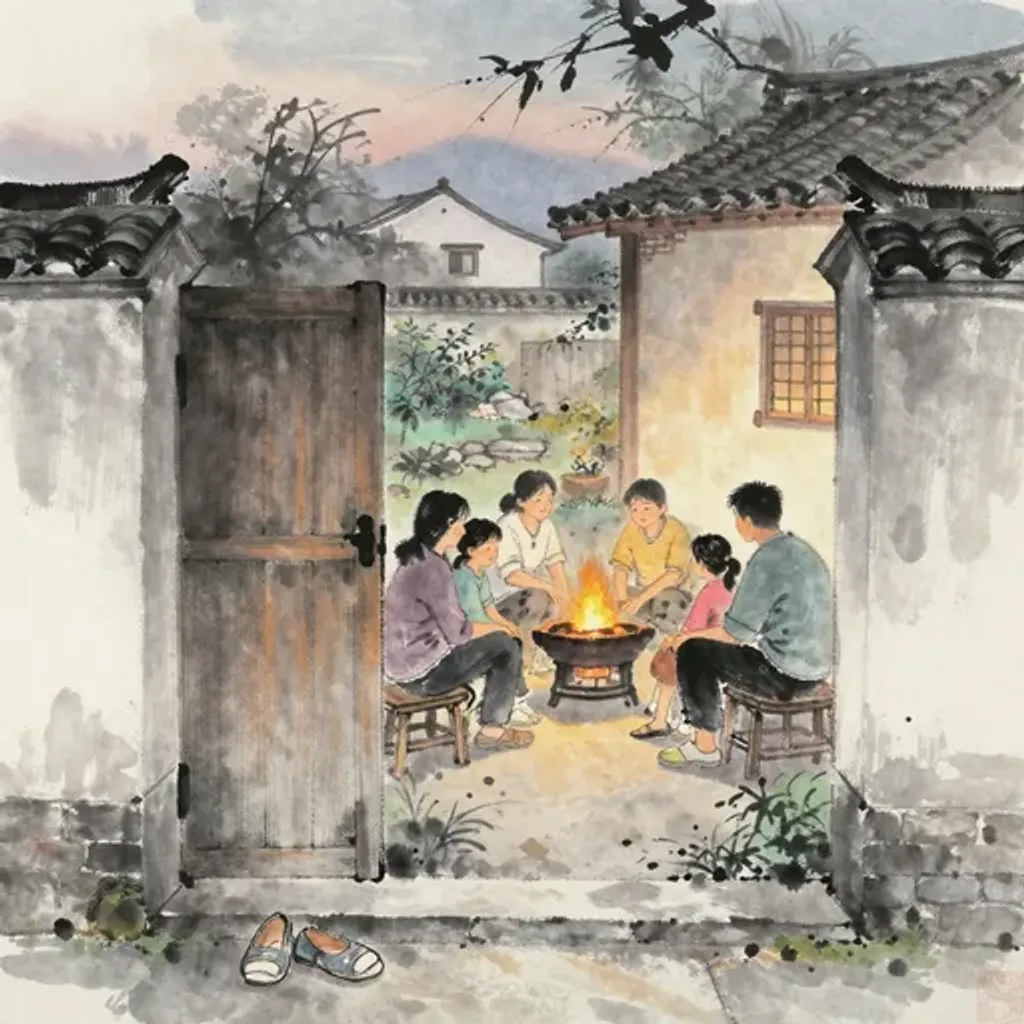
悅以內安,不利出門。憂除禍消,公孫何尤。
Content within, the household is at peace; it is not favorable to venture out the gate. Worry is lifted and misfortune fades; what fault can Lord Gongsun bear?
— Jiao Yanshou, Yilin (Forest of Changes), 1st century BC
Commentary
Thunder over water resolves into wind above the lake — the transparent sincerity of Inner Truth. Joy within brings inner peace; it is not favorable to go out the door. Worries are removed and calamities dissolve — what blame can Lord Gongsun bear? The verse counsels staying home: true security comes from internal contentment, not external adventure. The reference to 'Gongsun' — a common aristocratic surname meaning 'duke's grandson' — may point to a figure whose troubles vanished when he ceased striving outward. From Deliverance to Inner Truth, the storm's release becomes the still lake reflecting the gentle wind. The crane's cry carries across the marshes; sincerity does not need to travel far to be heard.
解 → 小過
Hexagram 40 → Hexagram 62: Small Exceeding
Changing lines: 2, 3
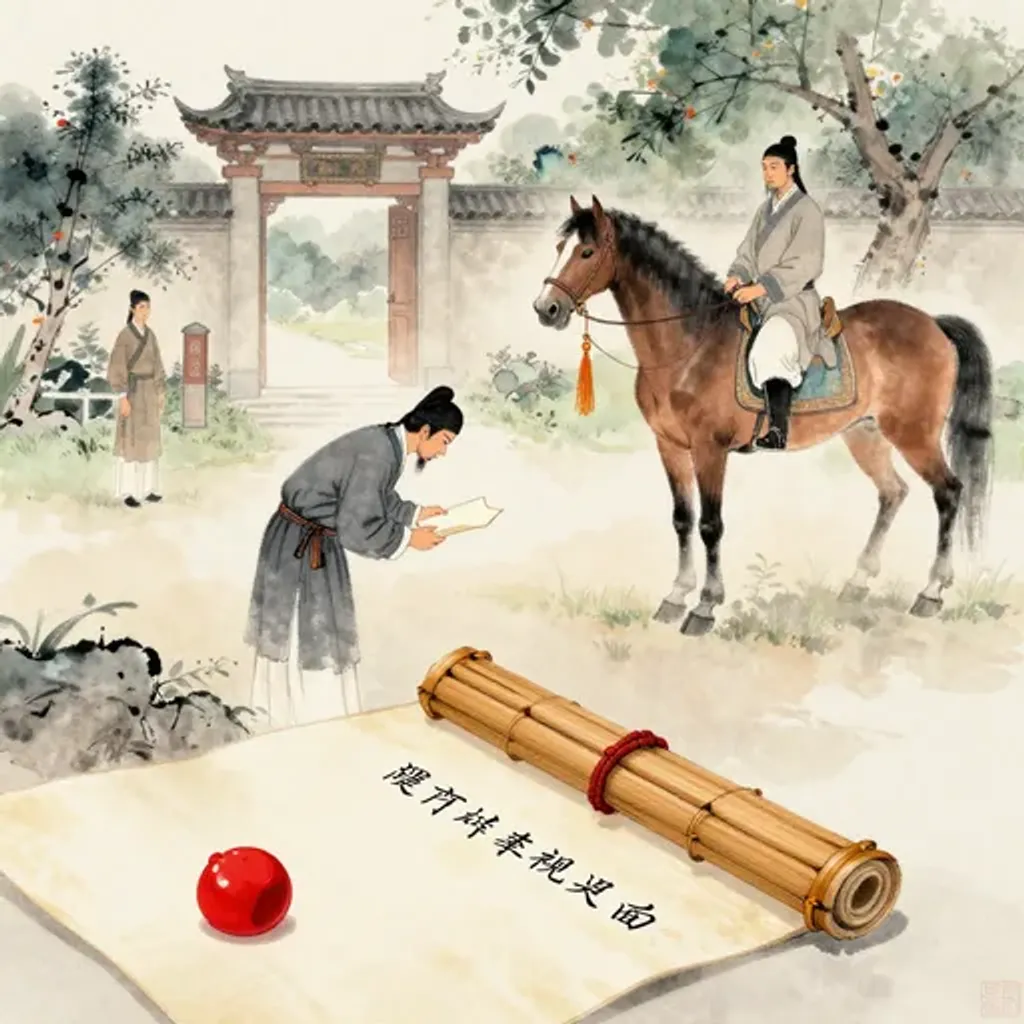
丹書之信,言不負語。易我驎驥,君子有德。
The cinnabar letter pledges faith; its words do not betray the promise. Exchanged for my fine qilin steed, the noble man possesses virtue.
— Jiao Yanshou, Yilin (Forest of Changes), 1st century BC
Commentary
Thunder over water exceeds slightly into thunder above the mountain — the careful modesty of Small Exceeding. The trust of a vermilion letter: words never betray their promise. In exchange for my fine steeds, the gentleman demonstrates his virtue. The 'cinnabar letter' (danshu) refers to a pledge written in red, the most solemn form of covenant in ancient China — later formalized as the 'iron credential' guaranteeing protection. The exchange of noble horses for trustworthy alliance embodies honorable dealing. From Deliverance to Small Exceeding, the freed person acts with slightly more than expected — exceeding in courtesy, exceeding in faithfulness. The mountain below absorbs the thunder above: great power expressed in small, precise gestures of integrity.
解 → 既濟
Hexagram 40 → Hexagram 63: After Completion
Changing lines: 1, 2, 3, 4, 5
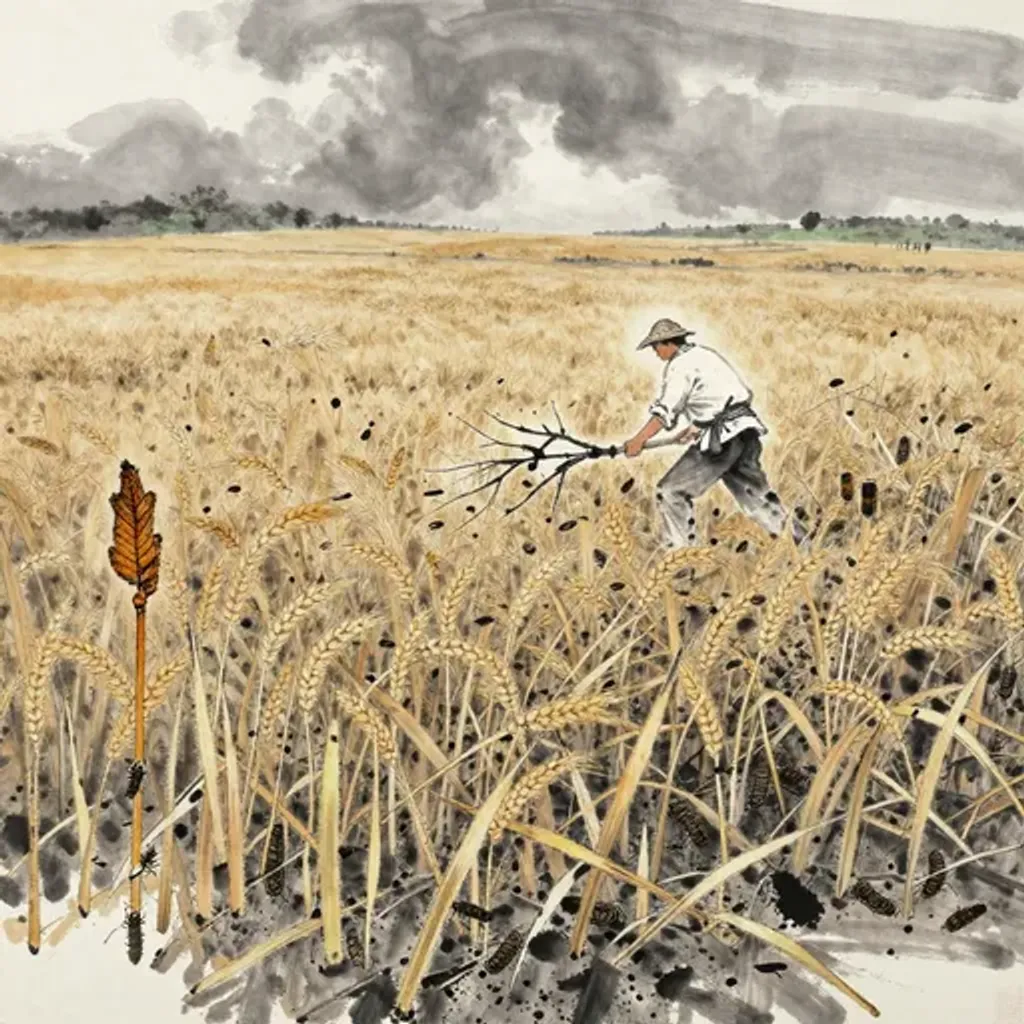
上政搔擾,螟䖝並起。害我嘉穀,年歲无稷。
The government above harasses and disturbs; locusts and pests rise together. They devour our fine grain; the year yields no millet.
— Jiao Yanshou, Yilin (Forest of Changes), 1st century BC
Commentary
Thunder over water completes into water above fire — the precarious balance of After Completion. Government from above harasses and disturbs; crop-eating insects rise in swarms. They ravage the fine grain, and the year produces no millet. The verse presents a double assault on the harvest: misgovernance from above and pestilence from below. The state's policies agitate rather than nurture, creating conditions where vermin multiply and the agricultural base collapses. From Deliverance to After Completion, every element is technically in its proper place — water above fire, the meal being cooked — yet the verse shows how a 'completed' system can still produce famine. The gentleman thinks of calamity and prepares against it, but here preparation came too late.
解 → 未濟
Hexagram 40 → Hexagram 64: Before Completion
Changing lines: 6
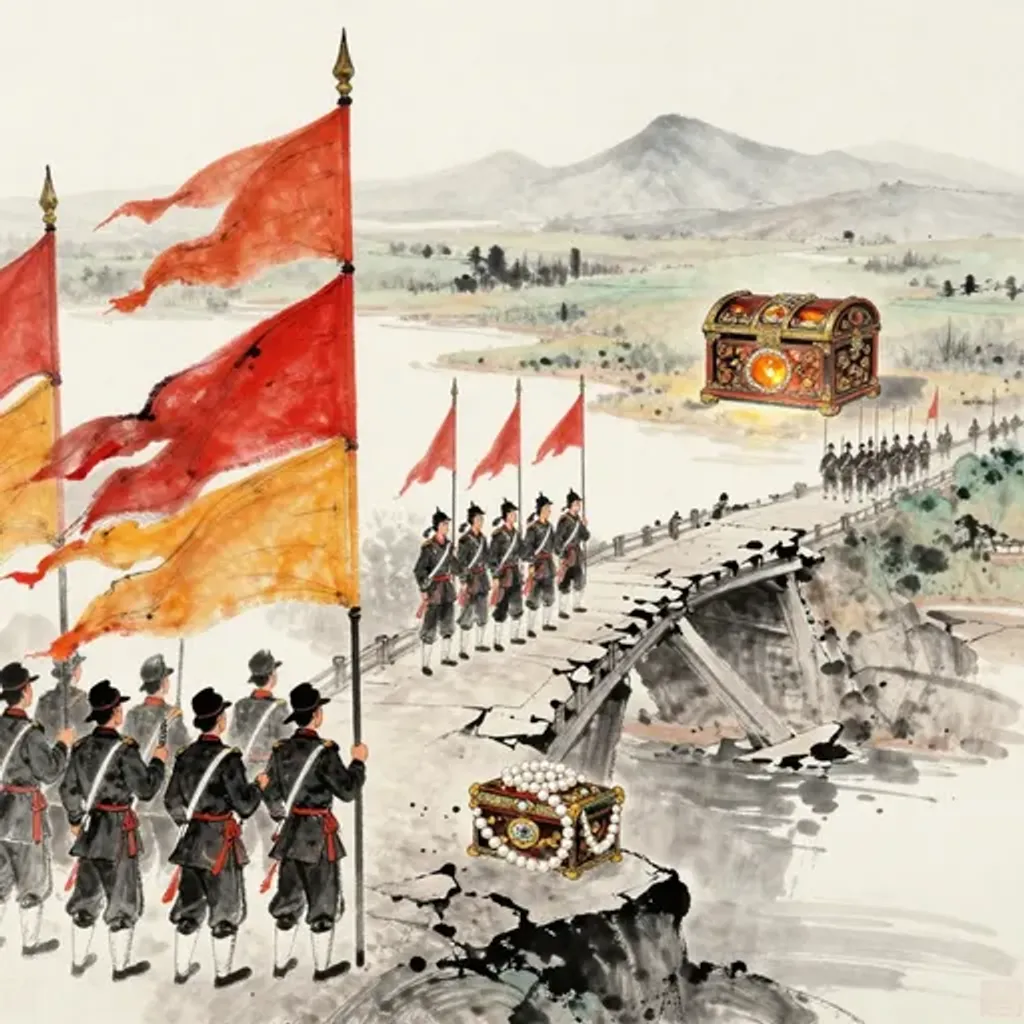
干旄旌旗,執職在郊。雖有寶珠,无路致之。
Banners and flags wave at the frontier; the officers stand at their posts in the field. Though there be precious pearls, there is no road to deliver them.
— Jiao Yanshou, Yilin (Forest of Changes), 1st century BC
Commentary
Thunder over water reaches toward fire above water — the unfinished crossing of Before Completion. Banners and pennants wave in the field as officials stand at their posts in the borderlands. Though one possesses precious pearls, there is no road to bring them to market. The verse captures the frustration of potential unrealized: the ceremony is in place, the treasure exists, but the connection between the two is severed. From Deliverance to Before Completion, the final transformation of this cycle is the most honest: liberation does not mean arrival. Fire and water have not yet exchanged their proper places; the young fox has not yet crossed the stream. The pearls gleam in the hand, but the road to where they matter has yet to be built.