Transformations of Hexagram 41
Every line of change out of Hexagram 41 損 Decrease, with the Yilin verse for each of the 64 resulting hexagrams, its translation, and the original ink brush artwork.
損 → 乾
Hexagram 41 → Hexagram 1: The Creative
Changing lines: 3, 4, 5
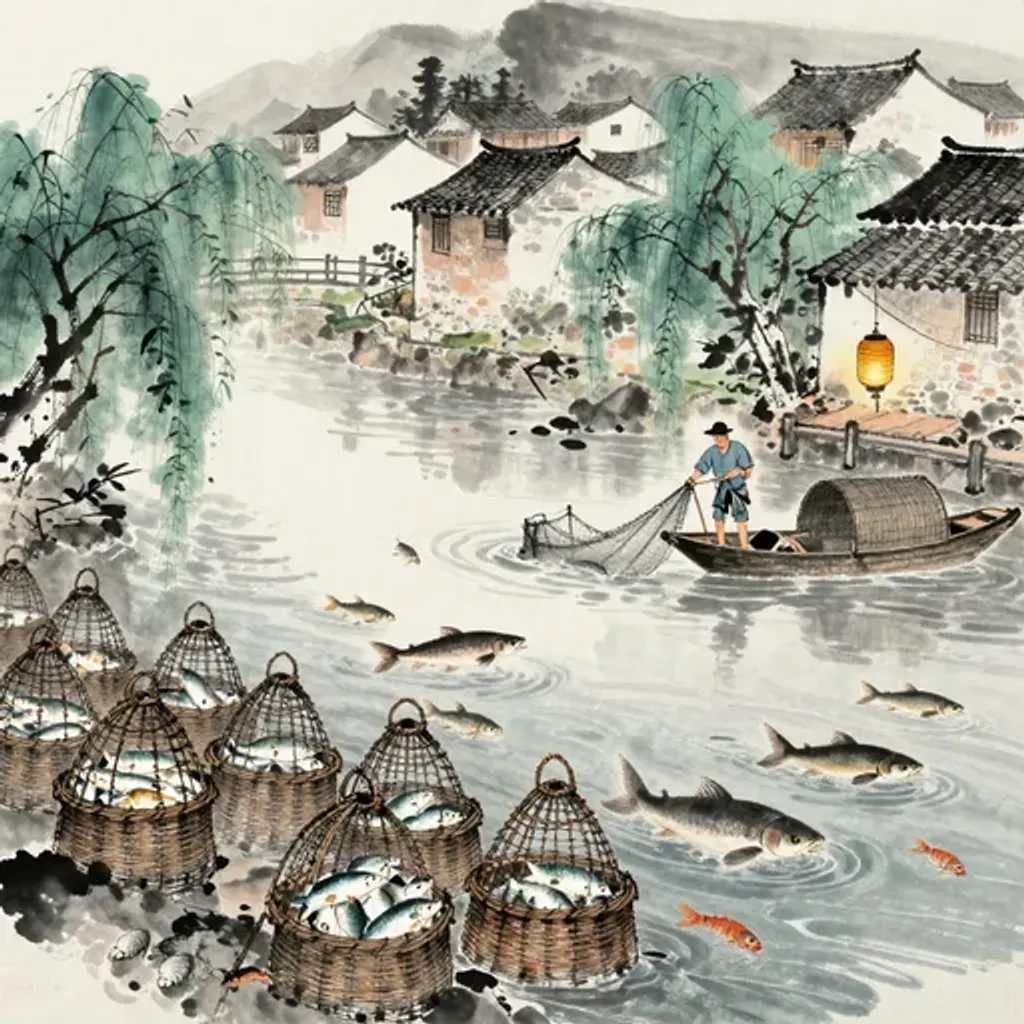
鯉鮒鮪鰕,𠢳福多魚。資所有无,富我邦家。
Carp, crucian, sturgeon, shrimp; blessings abundant, many fish. Trading what one has for what one lacks; enriching our homeland.
— Jiao Yanshou, Yilin (Forest of Changes), 1st century BC
Commentary
Mountain above lake, the image of Decrease: what is below diminishes to enrich what is above. Carp, crucian, sturgeon, and shrimp — the verse names an abundance of fish, each species a blessing multiplied. What one possesses fills the coffers of the state, enriching the entire realm. The lake beneath the mountain teems with life; Decrease here is not deprivation but purposeful sacrifice that yields compound returns. From Decrease to the Creative, the transformation is striking: voluntary restraint at the base generates pure, self-sustaining strength at the summit. The act of giving away becomes the act of self-creation — diminishing the self to generate inexhaustible creative power, as heaven's doubled vigor needs no external support.
損 → 坤
Hexagram 41 → Hexagram 2: The Receptive
Changing lines: 1, 2, 6
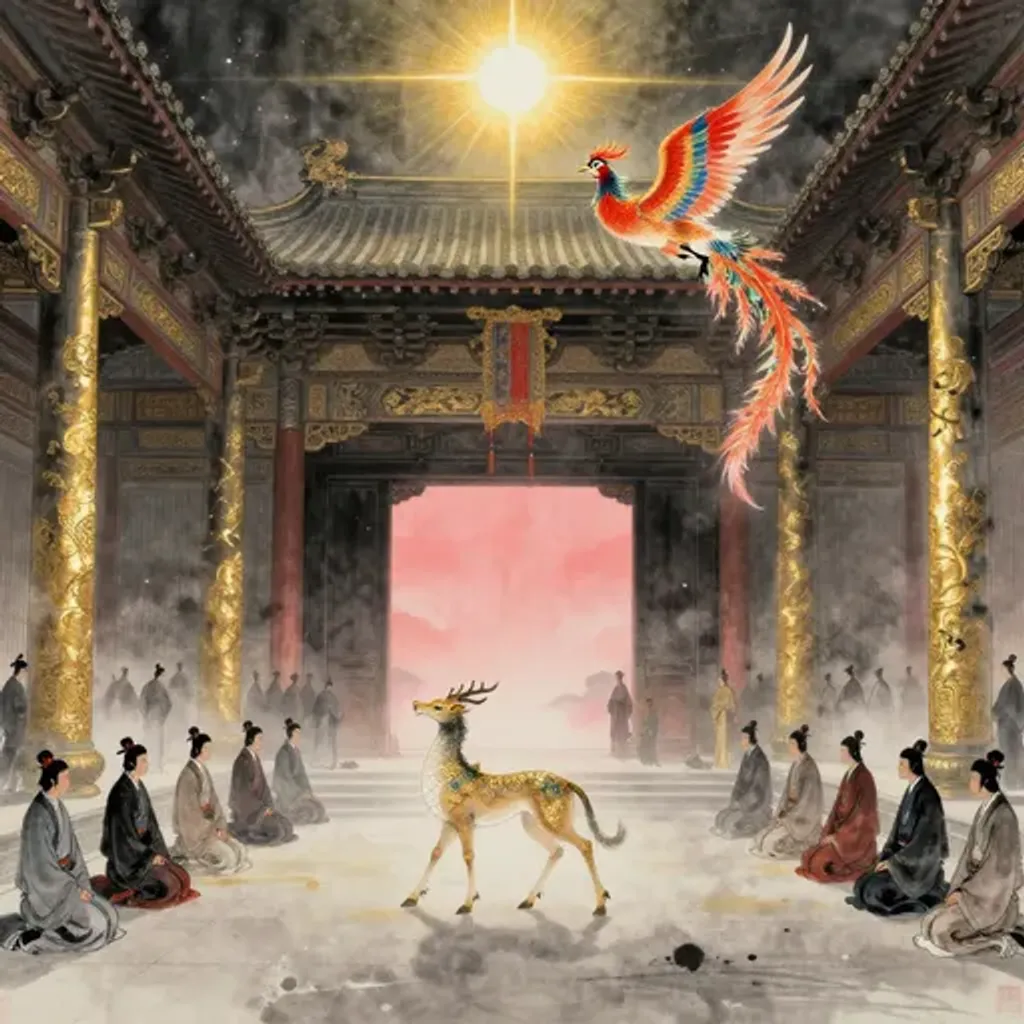
景星照堂,麟遊鳳翔。仁施大行,頌聲作興。征者无明,失其寵光。
An auspicious star illuminates the hall; the qilin roams, the phoenix soars. Benevolence spreads, greatly enacted; hymns of praise arise. Yet the campaigner lacks clarity; he loses his favor and light.
— Jiao Yanshou, Yilin (Forest of Changes), 1st century BC
Commentary
Mountain above lake opens onto an auspicious vision that dims at its close. A felicitous star illuminates the hall, the qilin roams and the phoenix soars — triple portents of a sage-king's reign. Benevolence spreads wide, hymns of praise arise. Yet the verse pivots: those who march forth find no clarity, losing their luster and favor. The auspicious signs belong to a court that cultivates virtue at rest, not to those who venture abroad seeking glory. From Decrease to the Receptive, the mountain's restraint dissolves into earth's boundless yielding. Decrease counsels sacrifice; the Receptive rewards stillness and receptivity. Those who insist on advancing despite the pattern's call for quiet devotion find themselves stripped of the very brightness that lit the hall.
損 → 屯
Hexagram 41 → Hexagram 3: Difficulty at the Beginning
Changing lines: 2, 5, 6
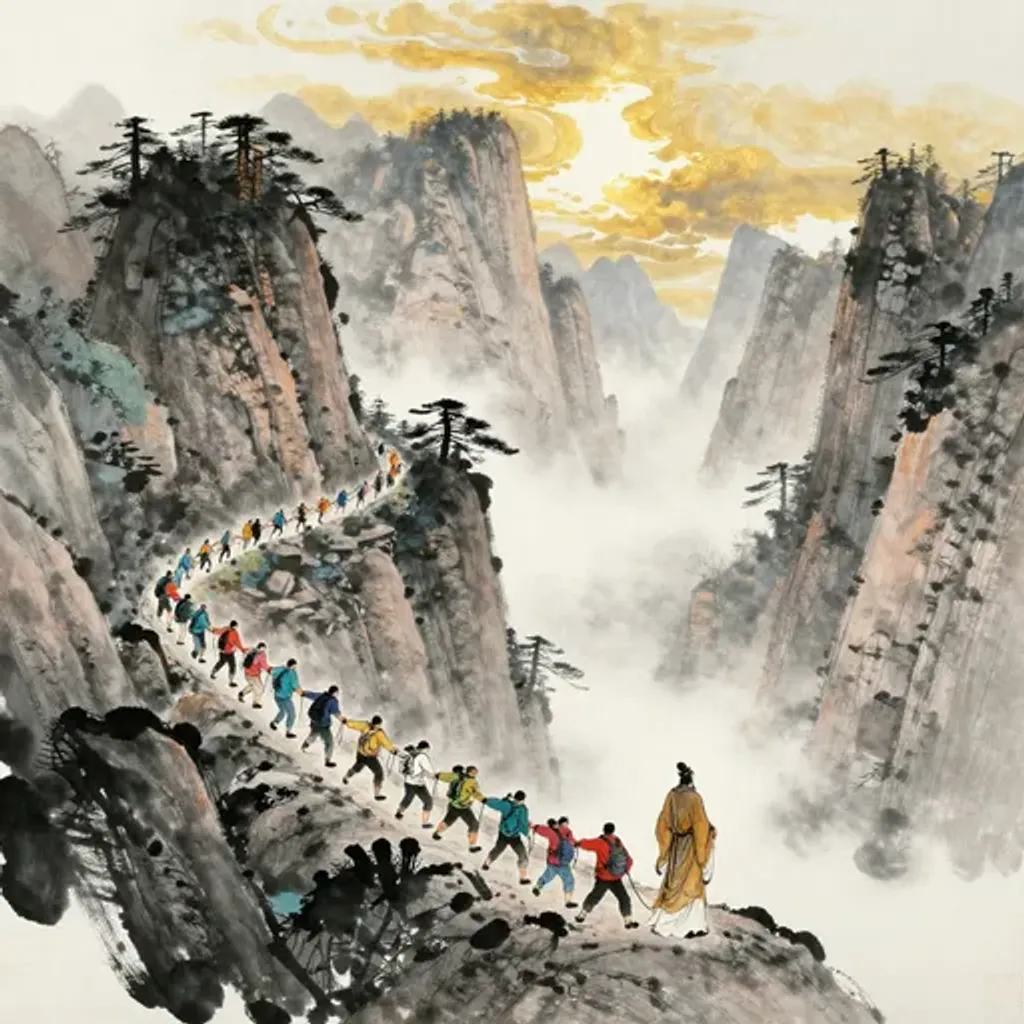
羊腸九縈,相推稍前。止須王孫,迺能上天。
The sheep-gut path winds nine times; pushing one another, inching forward. Wait for the prince's son; then you may ascend to heaven.
— Jiao Yanshou, Yilin (Forest of Changes), 1st century BC
Commentary
Mountain above lake gives way to water above thunder — the treacherous birth pangs of Difficulty at the Beginning. The path coils like a sheep's intestine through nine bends, each step pushed forward only by the pressure of those behind. The Yangyichang road through the Taihang Mountains was one of antiquity's most feared passes, so narrow that carts shattered against its walls. Yet the verse counsels patience: wait for the noble patron, and only then can one ascend to heaven. From Decrease to Difficulty at the Beginning, voluntary sacrifice meets the primal struggle of emergence. The winding path demands that one shed haste and pride — the very essence of Decrease — before the thunderous breakthrough of new life becomes possible.
損 → 蒙
Hexagram 41 → Hexagram 4: Youthful Folly
Changing lines: 1
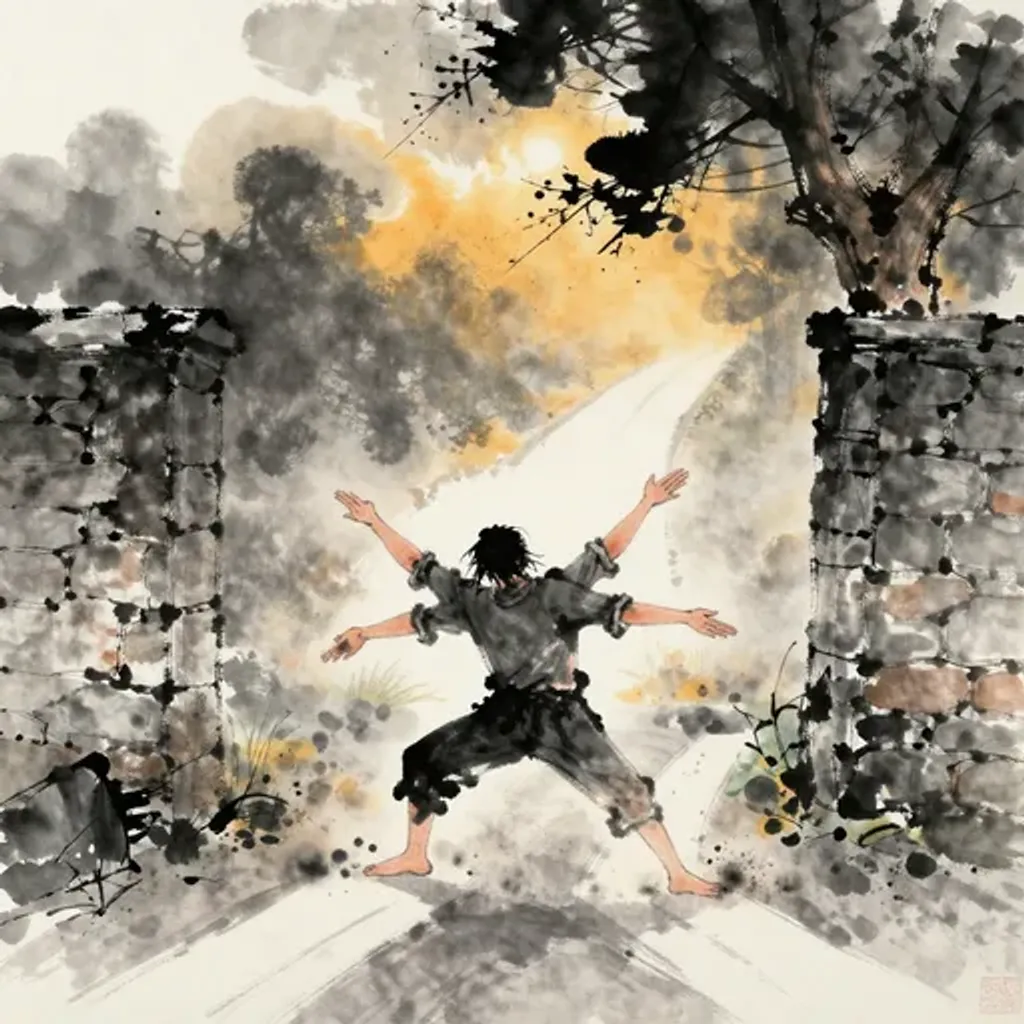
四手共身,莫失所閑。更相放接,動失事便。
Four hands share one body; do not lose your proper bounds. Taking turns grasping and releasing; every movement misses its chance.
— Jiao Yanshou, Yilin (Forest of Changes), 1st century BC
Commentary
Mountain above lake transforms into mountain above water — the confusion of Youthful Folly. Four hands share a single body, each struggling to maintain its station. When they jostle and grab at one another, every movement misses its proper moment. The image evokes a creature pulling itself in opposite directions, an organism at war with its own limbs. From Decrease to Youthful Folly, the mountain remains but the lake beneath becomes water flowing downhill with no direction. Decrease demands clarity about what to relinquish; Folly lacks precisely this discernment. The verse warns against undisciplined collaboration — when partners fail to coordinate their sacrifices, the shared enterprise collapses into mutual interference.
損 → 需
Hexagram 41 → Hexagram 5: Waiting
Changing lines: 3, 5, 6
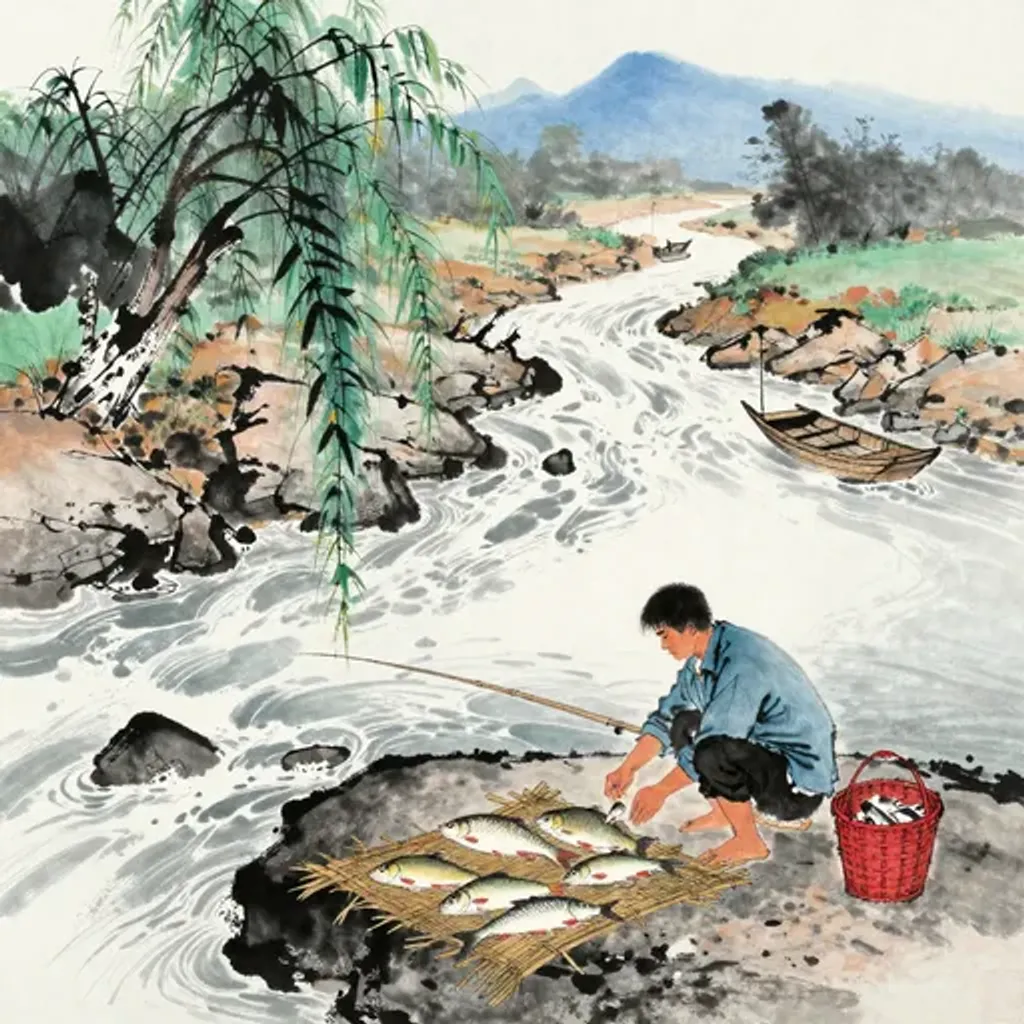
水流趨下,逯至東來。求我所有,買魴與鯉。
Water flows and tends downward; swiftly it arrives from the east. Seeking what I have to offer; buying bream and carp.
— Jiao Yanshou, Yilin (Forest of Changes), 1st century BC
Commentary
Mountain above lake gives way to water above heaven — Waiting. Water flows downhill, arriving steadily from the east. One seeks what one already has: bream and carp, the bounty of the flowing current. The verse is remarkably tranquil: no struggle, no striving, just the natural convergence of supply and demand. From Decrease to Waiting, the lake's voluntary diminishment becomes the cloud that gathers above heaven, promising nourishment in due season. What is decreased below reappears as abundance above. The fish come to the buyer; there is no need to chase them. Decrease here enacts the Daoist paradox: by reducing effort and desire, one attracts exactly what is needed, as water naturally seeks its own level.
損 → 訟
Hexagram 41 → Hexagram 6: Conflict
Changing lines: 1, 4, 5
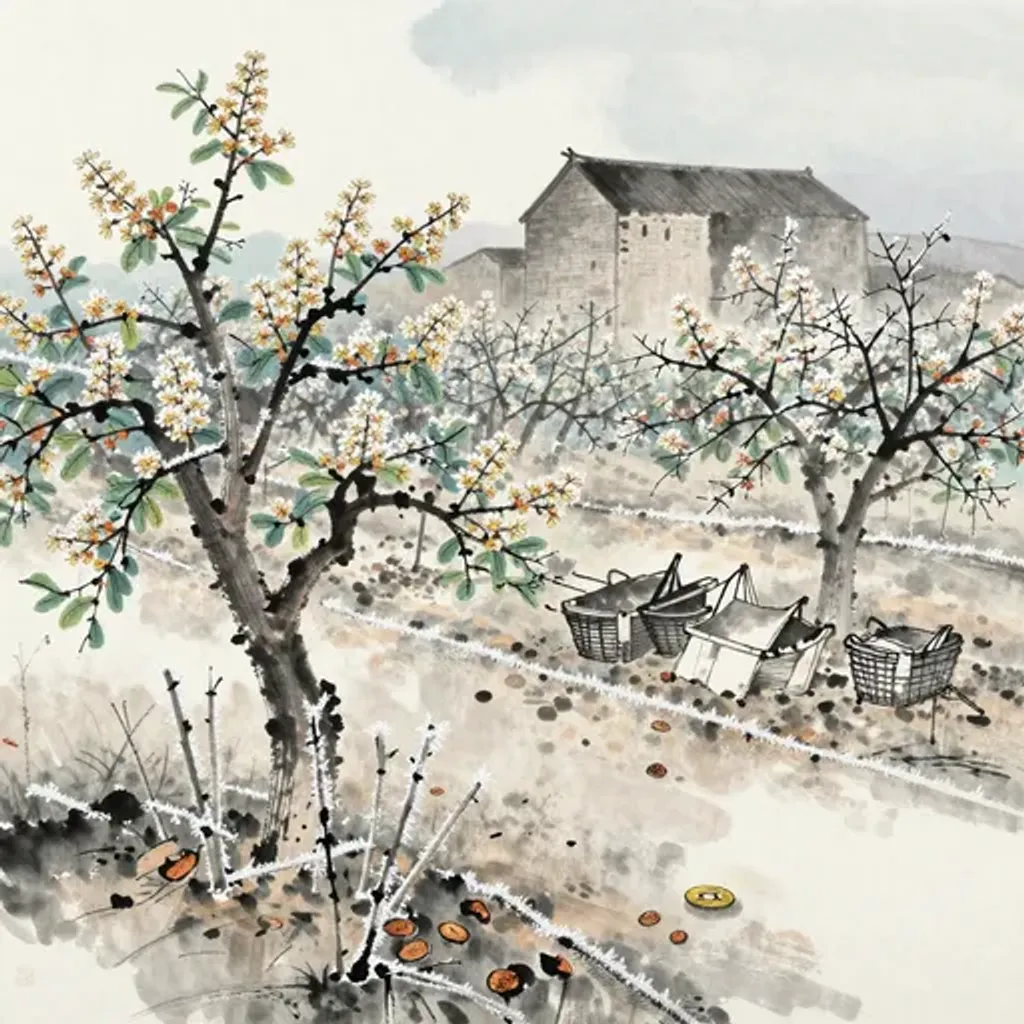
春栗夏棗,少鮮希有。斗千石萬,貴不可販。
Spring chestnuts, summer jujubes; rare and seldom found. A peck costs a thousand, a stone ten thousand; too dear to sell.
— Jiao Yanshou, Yilin (Forest of Changes), 1st century BC
Commentary
Mountain above lake transforms into heaven above water, their currents flowing in opposite directions — Conflict. Spring chestnuts and summer jujubes are out of season, rare to the point of nonexistence. When scarcity drives the price to a thousand per peck and ten thousand per stone, goods become too dear to trade. The verse captures a market frozen by absurd valuations: seeking fruit out of season guarantees failure. From Decrease to Conflict, the voluntary restraint of Decrease warps into the irreconcilable opposition of heaven and water. What should be patient waiting becomes contentious grasping. Demanding what the season cannot provide is the very definition of conflict with natural order — a loss compounded rather than transmuted.
損 → 師
Hexagram 41 → Hexagram 7: The Army
Changing lines: 1, 6
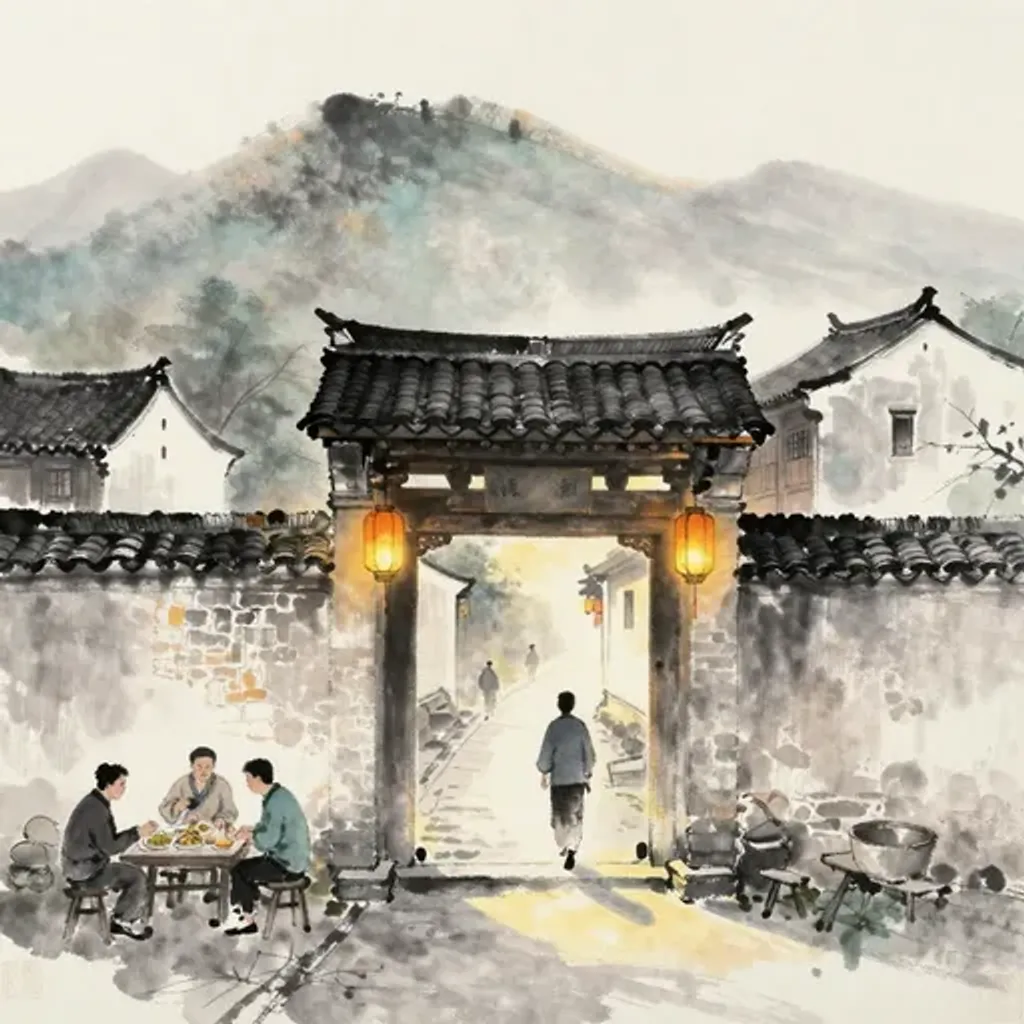
旦往暮還,相佑與聚,无有凶患。
Departing at dawn, returning at dusk; helping and gathering together, free from misfortune and calamity.
— Jiao Yanshou, Yilin (Forest of Changes), 1st century BC
Commentary
Mountain above lake gives way to earth above water — the Army marshaled in disciplined reserve. Going forth at dawn, returning by dusk, companions aid and gather together: no misfortune befalls. The verse describes a daily rhythm of cooperative labor and mutual support, a community that works outward during the day and draws inward at night. From Decrease to the Army, the lake's voluntary self-emptying becomes water contained within earth — latent power held in collective discipline. The simplicity of the verse mirrors the simplicity of the Army's principle: water within earth sustains the multitude. By decreasing individual ambition and gathering together, the community eliminates danger through solidarity rather than force.
損 → 比
Hexagram 41 → Hexagram 8: Holding Together
Changing lines: 1, 2, 5, 6
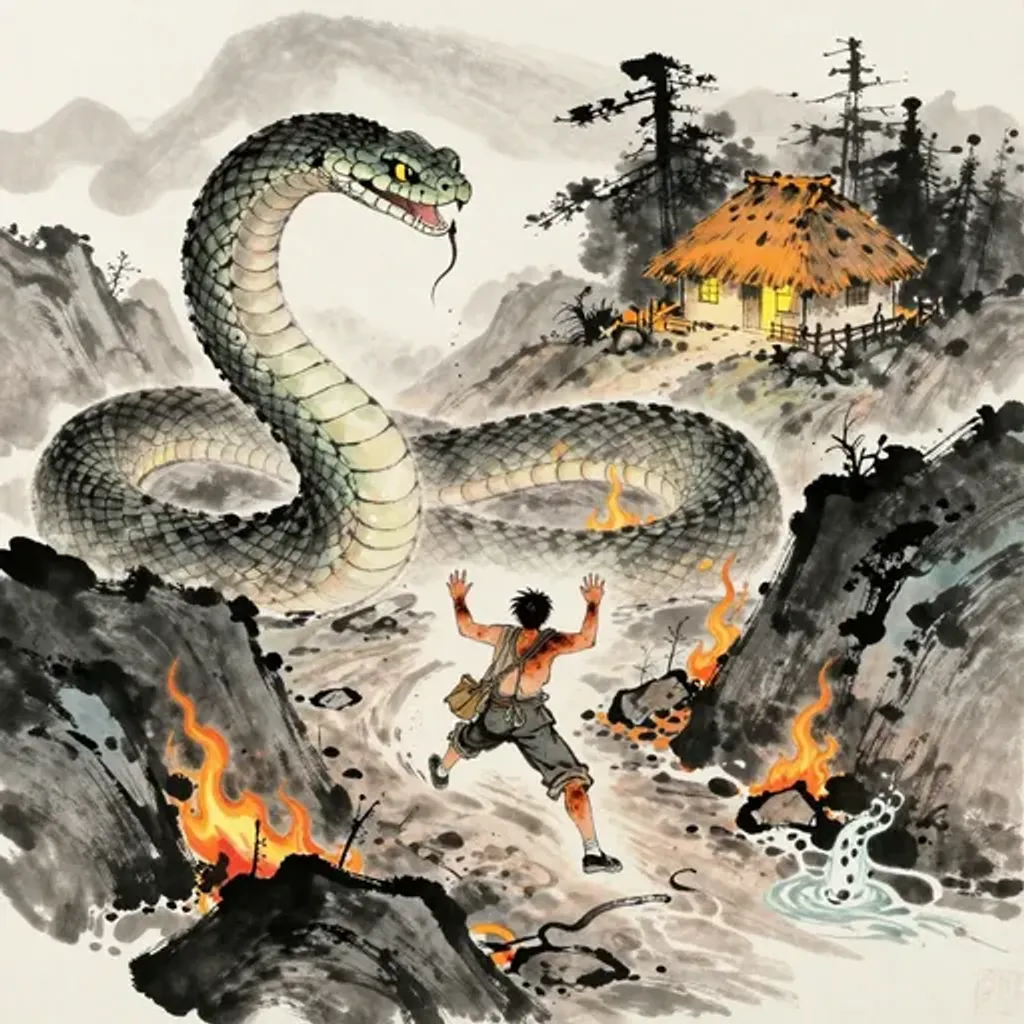
大虵當路,使季畏懼。湯火之災,切直我膚。賴其天幸,歸于生廬。
A great serpent blocks the road, filling the youngest with dread. Calamity of boiling water and fire, searing my very flesh. Relying on heaven's fortune, returning to my living home.
— Jiao Yanshou, Yilin (Forest of Changes), 1st century BC
Commentary
Mountain above lake transforms into water above earth — Holding Together. A great serpent blocks the road, terrifying the youngest brother. Scalding and burning calamity sears the very skin. Yet through heaven's protection, one returns alive to the house of the living. The verse builds from mortal peril to narrow escape: the snake, the fire, the near-fatal danger, all survived by grace rather than strength. From Decrease to Holding Together, the mountain's withdrawal allows water to gather upon earth, forming bonds of alliance and mutual protection. The verse enacts this precisely: survival depends not on personal power but on clinging to what sustains — heaven's favor, the shelter of home, the bonds that hold one together when individual resources are exhausted.
損 → 小畜
Hexagram 41 → Hexagram 9: Small Taming
Changing lines: 3, 5
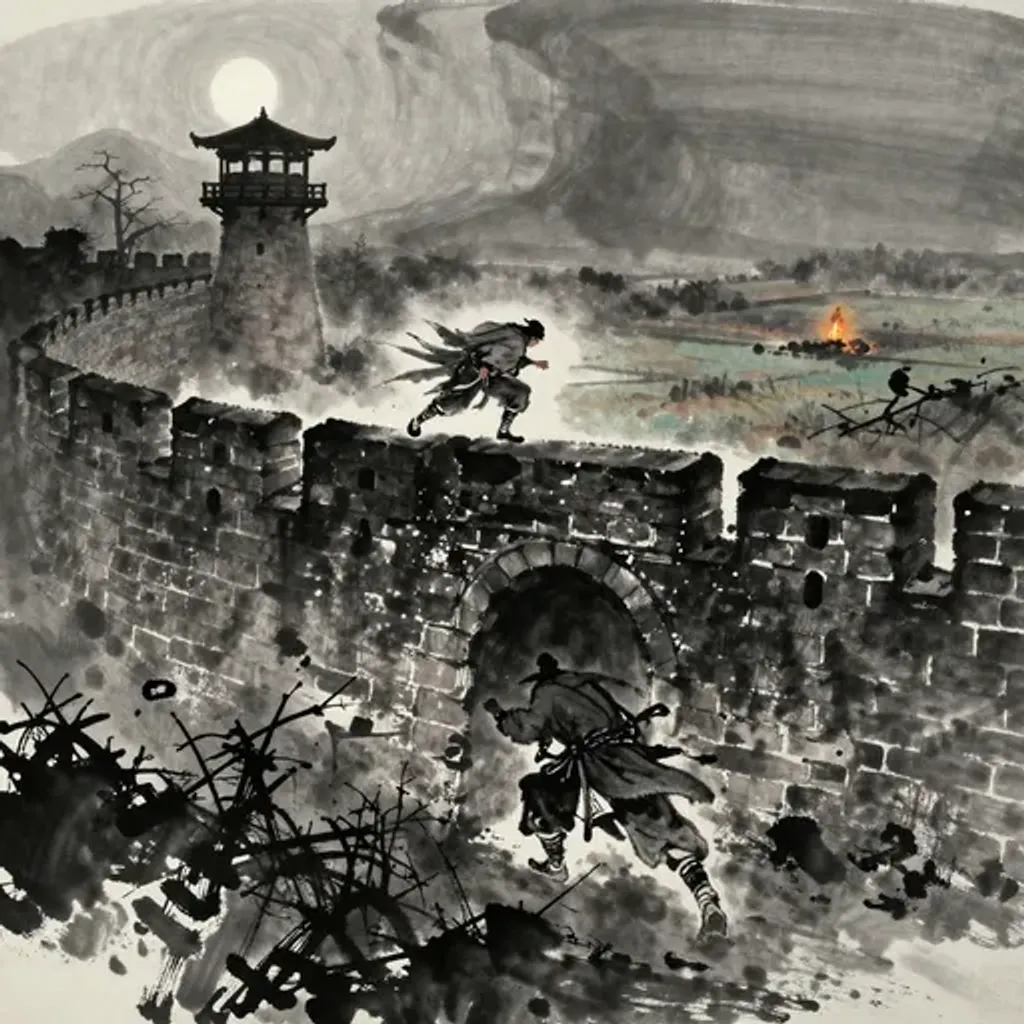
從足去域,飛入陳國。有所畏避,深藏邃匿。
From foot he flees the domain, flying into the state of Chen. Having something to fear and avoid; he hides deep, concealed in secret.
— Jiao Yanshou, Yilin (Forest of Changes), 1st century BC
Commentary
Mountain above lake yields to wind above heaven — the gentle restraint of Small Taming. Feet flee their domain, darting into the state of Chen. There is something to fear, something to avoid, so one hides deep and conceals oneself in the farthest recess. The verse depicts urgent flight and deliberate disappearance — a fugitive seeking sanctuary in a foreign land. From Decrease to Small Taming, the mountain's solidity dissolves into wind riding above heaven: a force that restrains not through mass but through persistent, subtle pressure. The fugitive who hides has decreased everything — home, position, identity — in order to survive. Small Taming's wind gently holds heaven in check, just as the exile's quiet concealment holds danger at bay through patience rather than confrontation.
損 → 履
Hexagram 41 → Hexagram 10: Treading
Changing lines: 4, 5
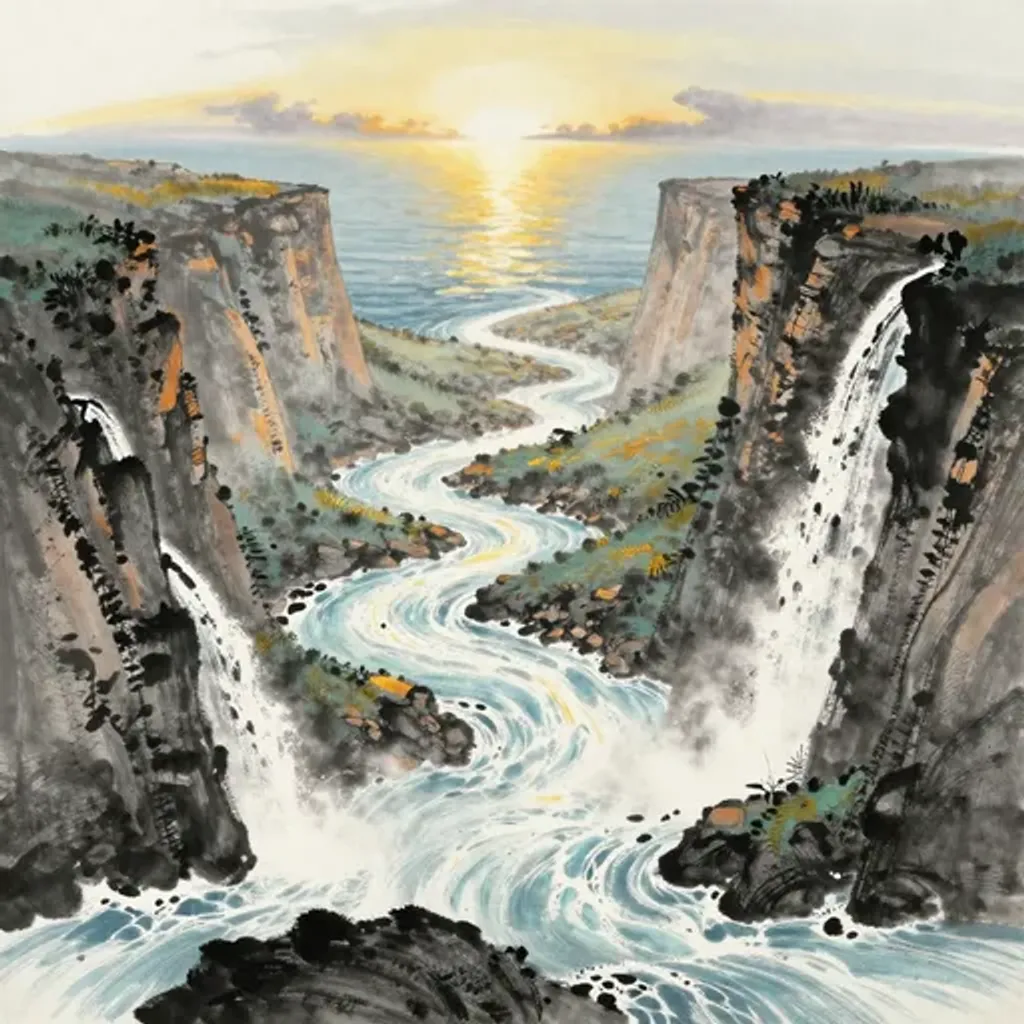
海為水宗,聰明且聖。百流歸德,无有叛逆,常饒優足。
The sea is the ancestor of waters; wise and sagely. A hundred streams submit to its virtue; none dare rebel. Ever abundant and sufficient.
— Jiao Yanshou, Yilin (Forest of Changes), 1st century BC
Commentary
Mountain above lake transforms into heaven above lake — Treading. The sea is the ancestor of all waters, wise and sagely in its depth. A hundred streams flow toward it in willing allegiance; none rebels or resists. The sea is always generous, always sufficient. The verse celebrates natural authority that commands loyalty through sheer capacity — the sea receives all rivers because it occupies the lowest ground. From Decrease to Treading, the mountain above the lake reconfigures as heaven above lake: proper hierarchy established through natural placement. Treading means walking carefully in the presence of something greater. The sea's supremacy arises from its willingness to be below, which is Decrease's own teaching: diminish the self to become the natural destination of all abundance.
損 → 泰
Hexagram 41 → Hexagram 11: Peace
Changing lines: 3, 6
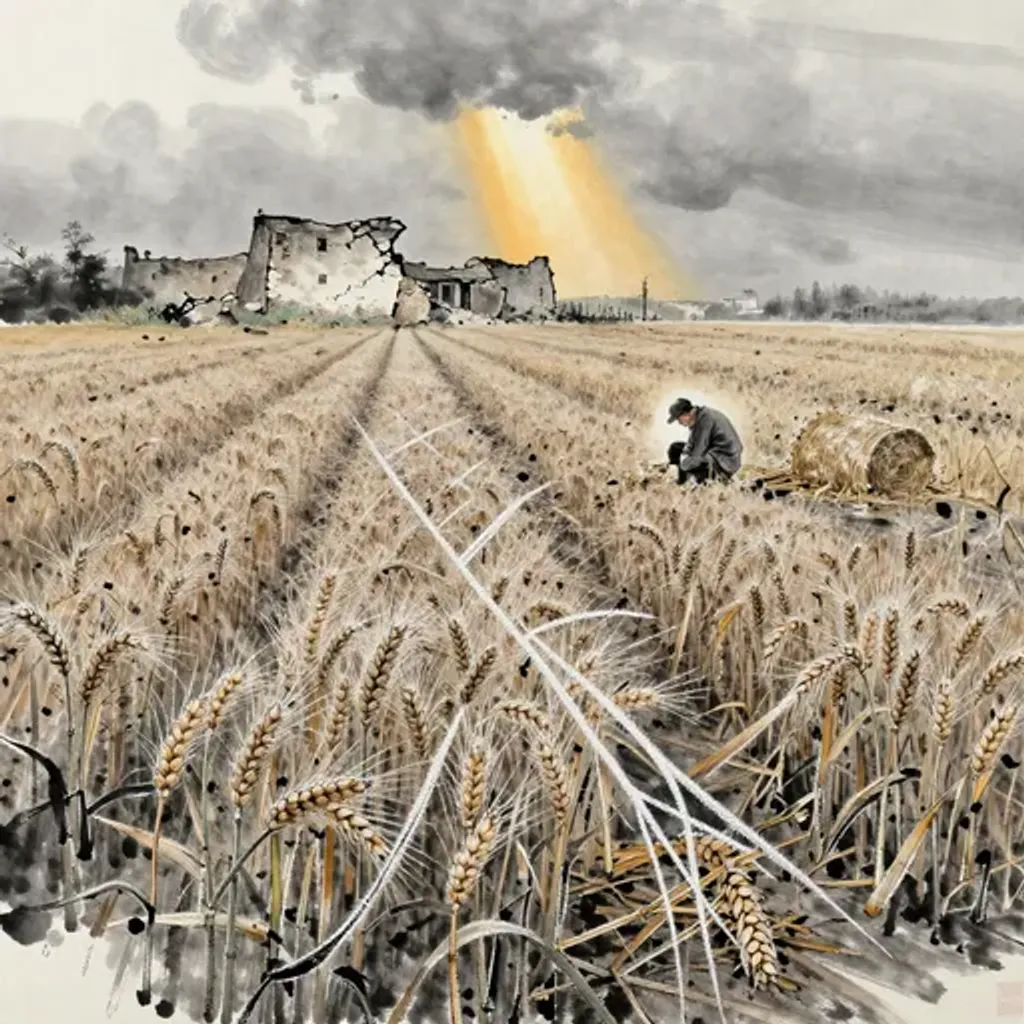
夏麥麩䵃,霜擊其芒。病君敗國,使年大傷。
Summer wheat turns to bran and chaff; frost strikes its awns. A sick lord ruins the state; causing the harvest year great harm.
— Jiao Yanshou, Yilin (Forest of Changes), 1st century BC
Commentary
Mountain above lake gives way to earth above heaven — Peace, where high and low exchange places freely. Yet the verse inverts the promise: summer wheat produces only bran, and frost strikes the grain's awning. A sick ruler ruins the state, bringing a year of great injury. The imagery is agricultural catastrophe compounded by political failure. Wheat that should nourish yields only chaff; frost in the wrong season destroys what remains. From Decrease to Peace, the exchange between above and below should bring harmony, but here the exchange is poisoned: the ruler's illness infects the harvest. Decrease without wisdom becomes mere waste, and Peace's open channels transmit corruption as readily as virtue.
損 → 否
Hexagram 41 → Hexagram 12: Standstill
Changing lines: 1, 2, 4, 5
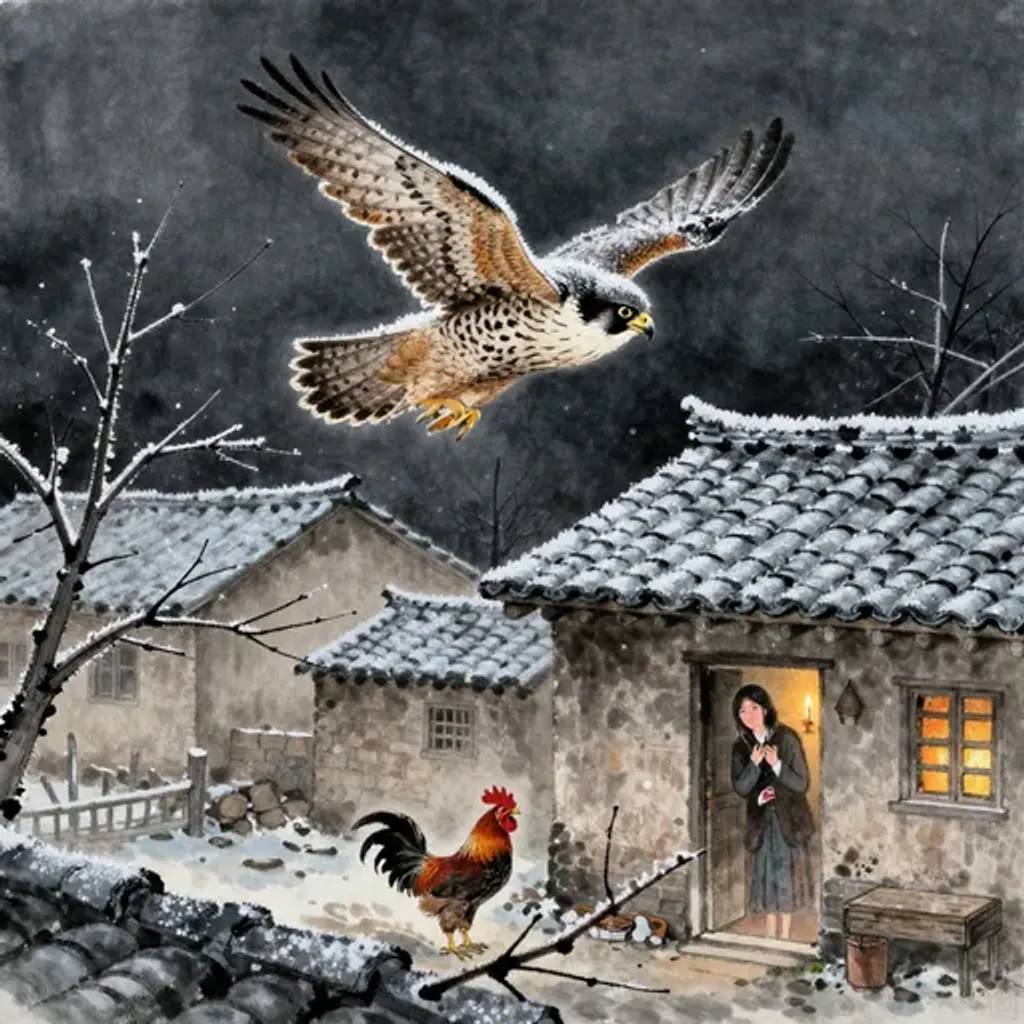
秋隼冬翔,數被嚴霜。雄父夜鳴,家憂不寧。
The autumn falcon soars in winter; repeatedly struck by bitter frost. The cock crows in the night; the household worries, finding no peace.
— Jiao Yanshou, Yilin (Forest of Changes), 1st century BC
Commentary
Mountain above lake yields to heaven above earth — Standstill, where communication between above and below ceases entirely. An autumn hawk soars through winter skies, repeatedly struck by bitter frost. The male rooster crows in the night, and the household knows neither rest nor peace. Every image is out of season: hawks in winter, roosters at midnight, frost pounding relentlessly. From Decrease to Standstill, the lake's willing diminishment receives no reciprocal return; what flows downward never comes back up. The verse paints a world frozen in disconnection. When Decrease operates without response — when sacrifice meets only indifference from above — the result is Standstill: heaven and earth sealed off from each other, the household trembling under omens that no one heeds.
損 → 同人
Hexagram 41 → Hexagram 13: Fellowship
Changing lines: 2, 3, 4, 5
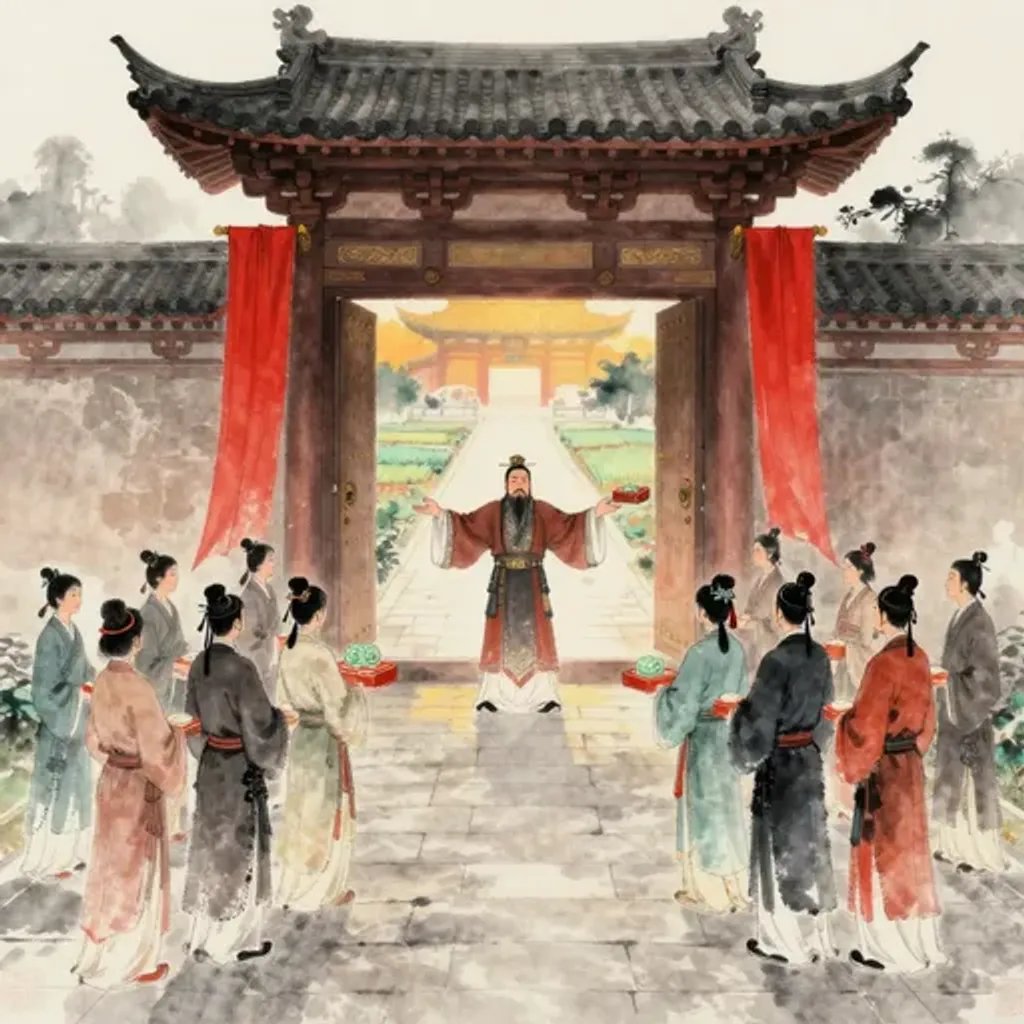
樂仁上德,東鄰慕義,來安吾國。
Delighting in benevolence, esteeming virtue; the eastern neighbor admires righteousness and comes to bring peace to our state.
— Jiao Yanshou, Yilin (Forest of Changes), 1st century BC
Commentary
Mountain above lake gives way to heaven above fire — Fellowship. The people delight in benevolence and prize virtue; the eastern neighbor admires righteousness and comes willingly to bring peace to the realm. No force compels them, no treaty binds them — moral gravity alone draws them in. The verse depicts the ideal of soft power in its purest form: a state so virtuous that neighboring peoples migrate toward it of their own accord. From Decrease to Fellowship, the mountain's restraint over the lake transforms into heaven's natural kinship with fire. Fire rises toward heaven as if drawn by affinity, just as the eastern neighbor is drawn by shared values. Decrease's self-discipline becomes the magnetic center of voluntary alliance.
損 → 大有
Hexagram 41 → Hexagram 14: Great Possession
Changing lines: 3, 4
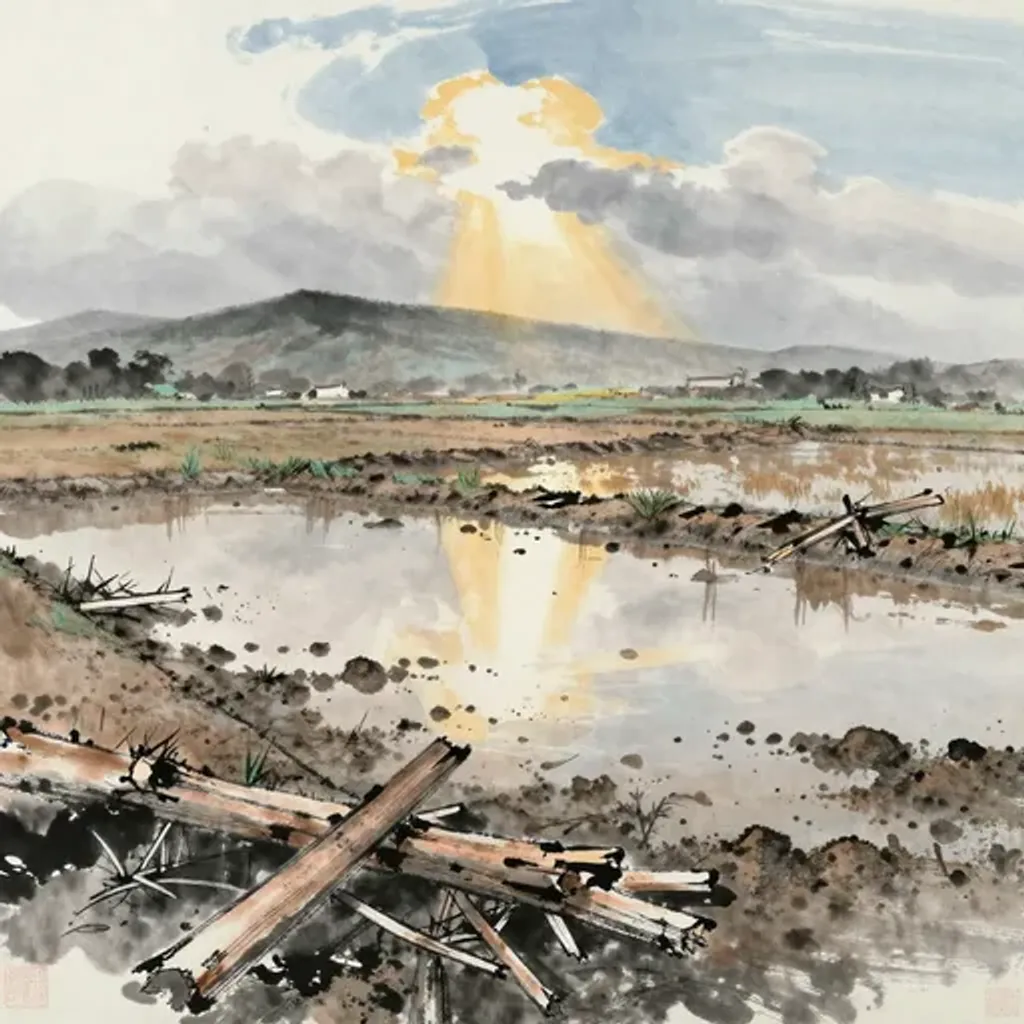
遂憂除殃,污泥生梁,下田為汪。
Worry expelled, calamity removed; muddy mire produces the ridgepole. The low field becomes a pond.
— Jiao Yanshou, Yilin (Forest of Changes), 1st century BC
Commentary
Mountain above lake transforms into fire above heaven — Great Possession. Troubles dissolve and calamity is swept away. Muddy silt generates a ridge beam; low-lying fields become a pool. The verse traces an unexpected metamorphosis: what was polluted becomes structural, what was humble becomes a reservoir. From Decrease to Great Possession, the lake beneath the mountain evaporates upward as fire blazes in heaven. Decrease here is the process of purification — the mud that settles out of troubled water becomes the foundation for something new. The low field that floods becomes a resource rather than a wasteland. By accepting diminishment, the verse suggests, one discovers that loss itself can be the raw material of abundance.
損 → 謙
Hexagram 41 → Hexagram 15: Modesty
Changing lines: 1, 2, 3, 6
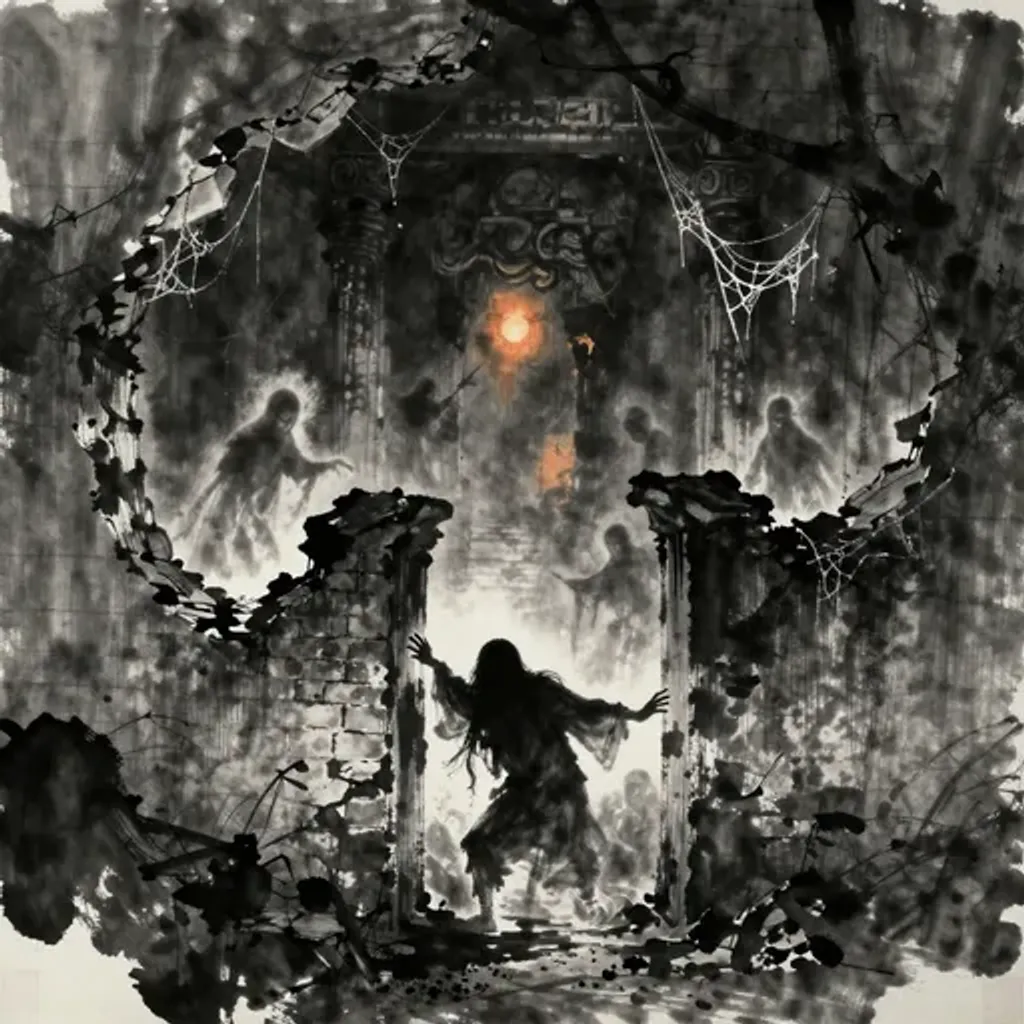
暗昧冥語,轉相詿誤。鬼魅所居,誰知臥處。
Dark and obscure, murmuring in shadow; passing along errors to one another. Where ghosts and spirits dwell; who knows their resting place?
— Jiao Yanshou, Yilin (Forest of Changes), 1st century BC
Commentary
Mountain above lake becomes earth above mountain — Modesty, where the mountain hides itself beneath the earth. Dark murmuring and obscure speech pass from person to person, each relay compounding the distortion. Ghosts and specters haunt the place; who can tell where one rests? The verse describes a world of rumor, deception, and spiritual danger. Words spoken in shadow mislead all who hear them. From Decrease to Modesty, the mountain that once stood above the lake now buries itself beneath the earth. Modesty's virtue is self-effacement, but here the concealment is involuntary and sinister — not the mountain choosing to hide, but truth itself being buried under layers of whispered falsehood. Decrease becomes not pruning but erasure, and humility degenerates into helpless obscurity.
損 → 豫
Hexagram 41 → Hexagram 16: Enthusiasm
Changing lines: 1, 2, 4, 6
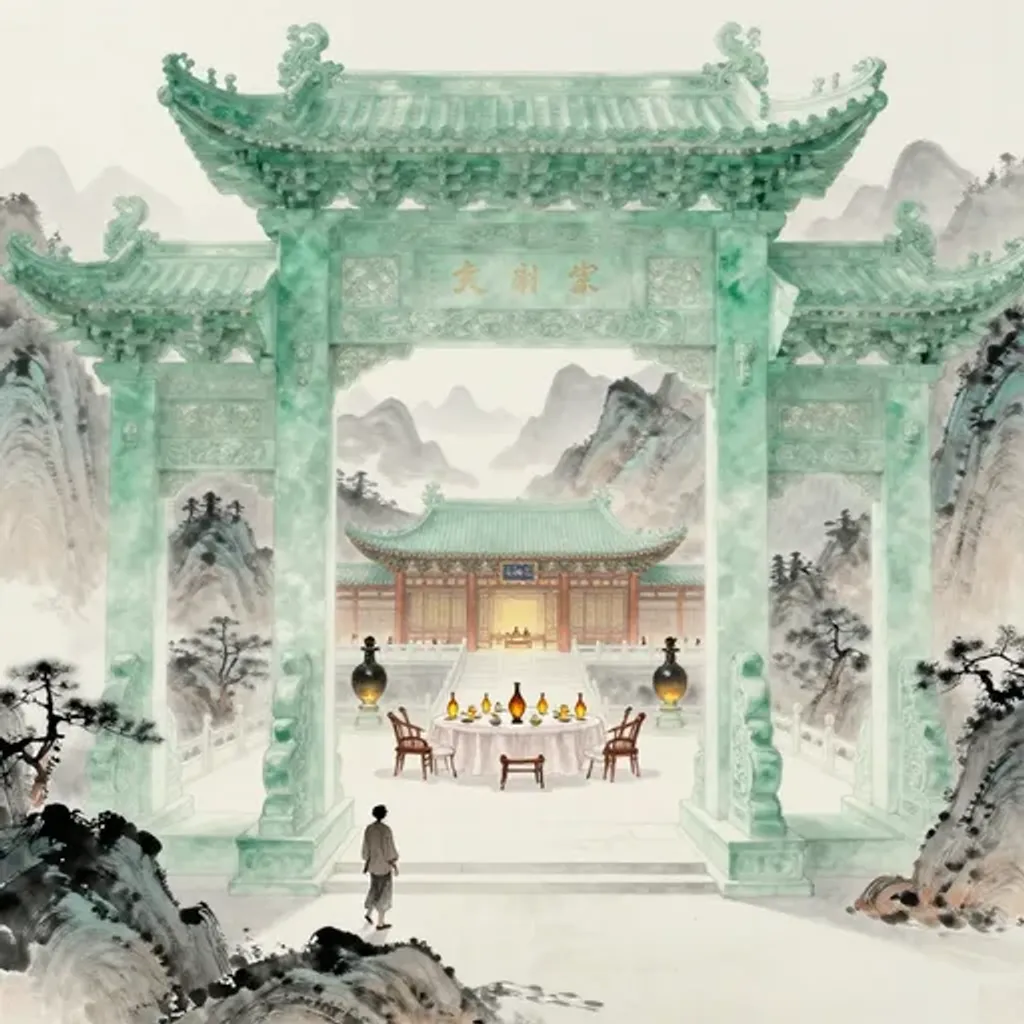
南歷玉山,東入玉關。登上福堂,飲萬歲漿。
Traveling south past Jade Mountain, entering east through the Jade Pass. Ascending to the Hall of Blessings; drinking the elixir of ten thousand years.
— Jiao Yanshou, Yilin (Forest of Changes), 1st century BC
Commentary
Mountain above lake yields to thunder above earth — Enthusiasm bursting forth from below. The verse traces a journey through paradise: south past Jade Mountain, east through Jade Gate, ascending to the Hall of Fortune to drink the Elixir of Ten Thousand Years. These are the landmarks of Kunlun mythology — the celestial realm of the Queen Mother of the West, where immortality flows like wine. From Decrease to Enthusiasm, the mountain's quiet restraint explodes into thunderous celebration. The lake that was diminished now resonates with the earth's joy. Decrease's voluntary sacrifice earns passage to the immortal feast; the one who has given away earthly attachments is rewarded with the elixir that transcends mortality itself.
損 → 隨
Hexagram 41 → Hexagram 17: Following
Changing lines: 2, 4, 5, 6
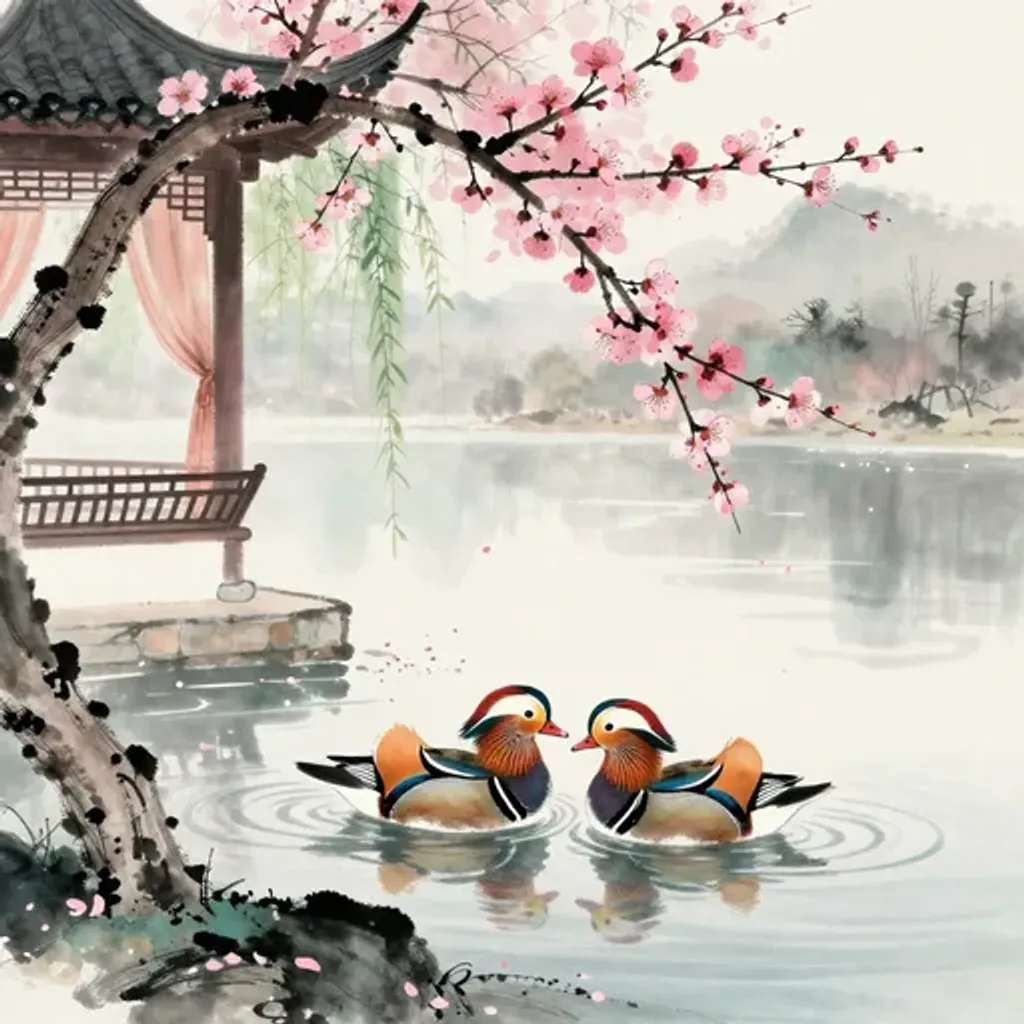
比目四翼,來安我國。福善上堂,與我同床。
Mandarin ducks play in water, never parting; on intertwined branches, flowers bloom side by side. Spring wind carries warmth through layered curtains — joy fills the gate, a hundred blessings arrive.
— Jiao Yanshou, Yilin (Forest of Changes), 1st century BC
Commentary
Mountain above lake gives way to lake above thunder — Following. The original verse reads: 'Paired-eye fish and shared-wing birds come to bring peace to our state. Fortune and goodness ascend the hall, sharing the same bed with me.' These mythological creatures — the one-eyed fish that swims only in pairs and the one-winged bird that flies only together — are classical symbols of inseparable love and mutual dependence. From Decrease to Following, the mountain releases its hold on the lake, and the lake settles above the still thunder of evening rest. Following means yielding to the natural rhythm of companionship. The verse celebrates the arrival of a perfect partner: when one decreases pride and self-sufficiency, what follows is the intimate union that completes both halves.
損 → 蠱
Hexagram 41 → Hexagram 18: Work on the Decayed
Changing lines: 1, 3
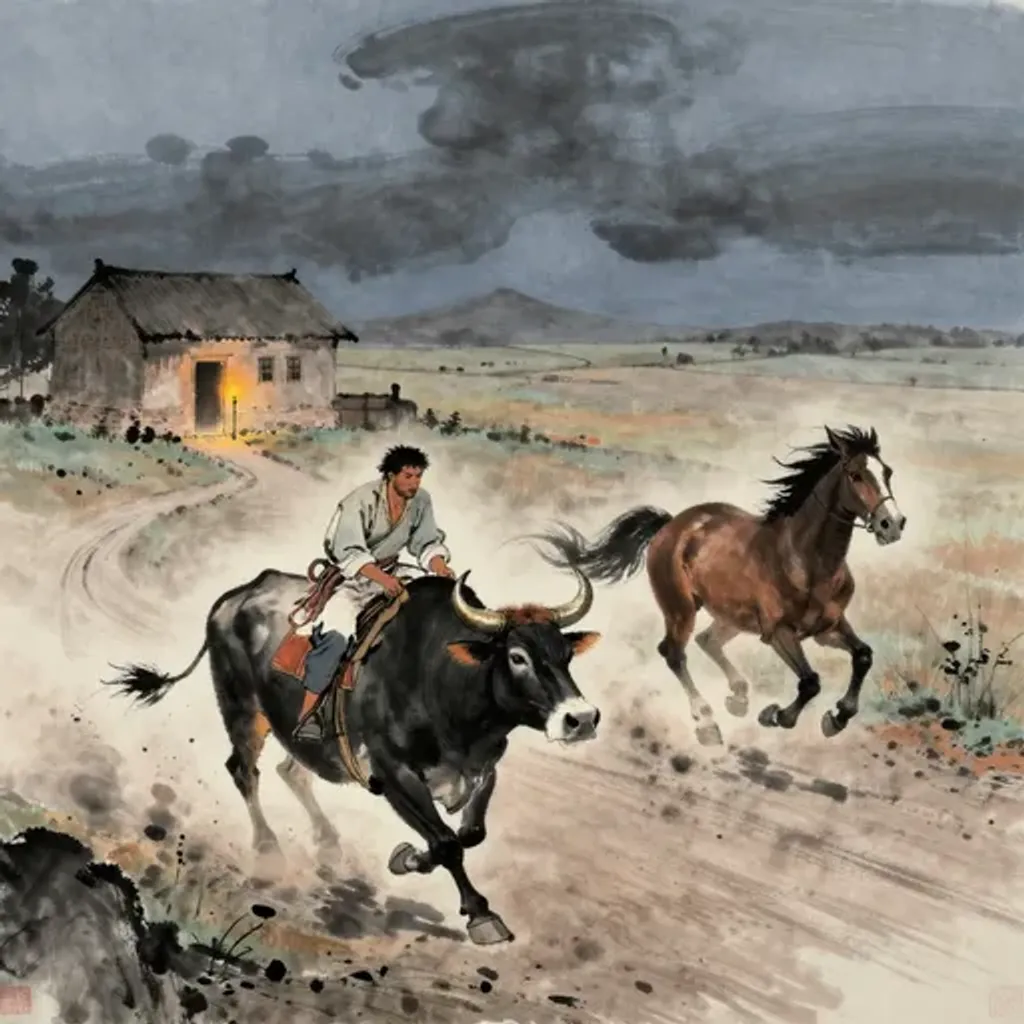
乘牛逐驥,日暮不至。路宿多畏,亡其騂騅。
Riding an ox to chase a stallion; by nightfall, still not arrived. Lodging on the road brings many fears; losing his fine red-and-white steed.
— Jiao Yanshou, Yilin (Forest of Changes), 1st century BC
Commentary
Mountain above lake transforms into mountain above wind — Work on the Decayed. Riding an ox to chase a thoroughbred, one cannot arrive before nightfall. Lodging on the road invites fear, and the fine bay-and-white steed is lost. The verse is a parable of mismatched means and ends: an ox cannot catch a racehorse, no matter how long the chase. The effort exhausts without achieving, and what one already had — the good horse — is forfeited in the futile pursuit. From Decrease to Work on the Decayed, the mountain remains while the lake beneath rots into stagnant wind. Decay arises precisely from this mismatch: applying the wrong tool to the task accelerates deterioration rather than repair. Decrease demands knowing what to let go — here, the rider should have released the ambition, not the horse.
損 → 臨
Hexagram 41 → Hexagram 19: Approach
Changing lines: 6
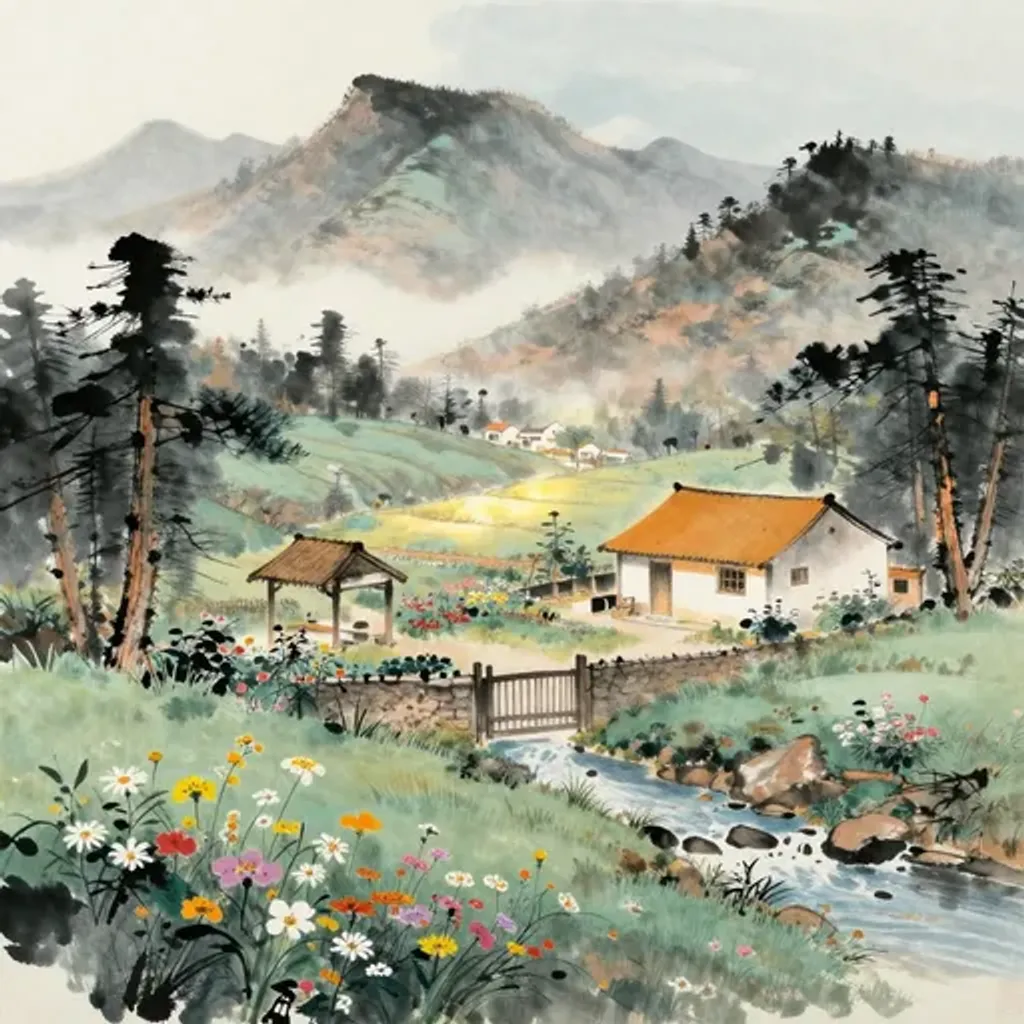
元吉无咎,安寧不殆。
Supremely auspicious, without blame; peaceful and tranquil, free from peril.
— Jiao Yanshou, Yilin (Forest of Changes), 1st century BC
Commentary
Mountain above lake yields to earth above lake — Approach, where authority descends with benevolent oversight. 'Supremely auspicious, no blame, peaceful and free from danger.' The verse is among the shortest in the corpus, consisting entirely of formulaic blessings. No allusion, no narrative — only the calm assurance of safety. From Decrease to Approach, the mountain steps back and the earth advances to meet the lake from above. Approach means drawing near with care: a superior attending to what is below. The terseness of the verse mirrors the effortlessness of the transition — when Decrease has done its work of clearing away excess, Approach arrives without drama. Peace is not won but inherited, the natural consequence of prior restraint.
損 → 觀
Hexagram 41 → Hexagram 20: Contemplation
Changing lines: 1, 2, 5
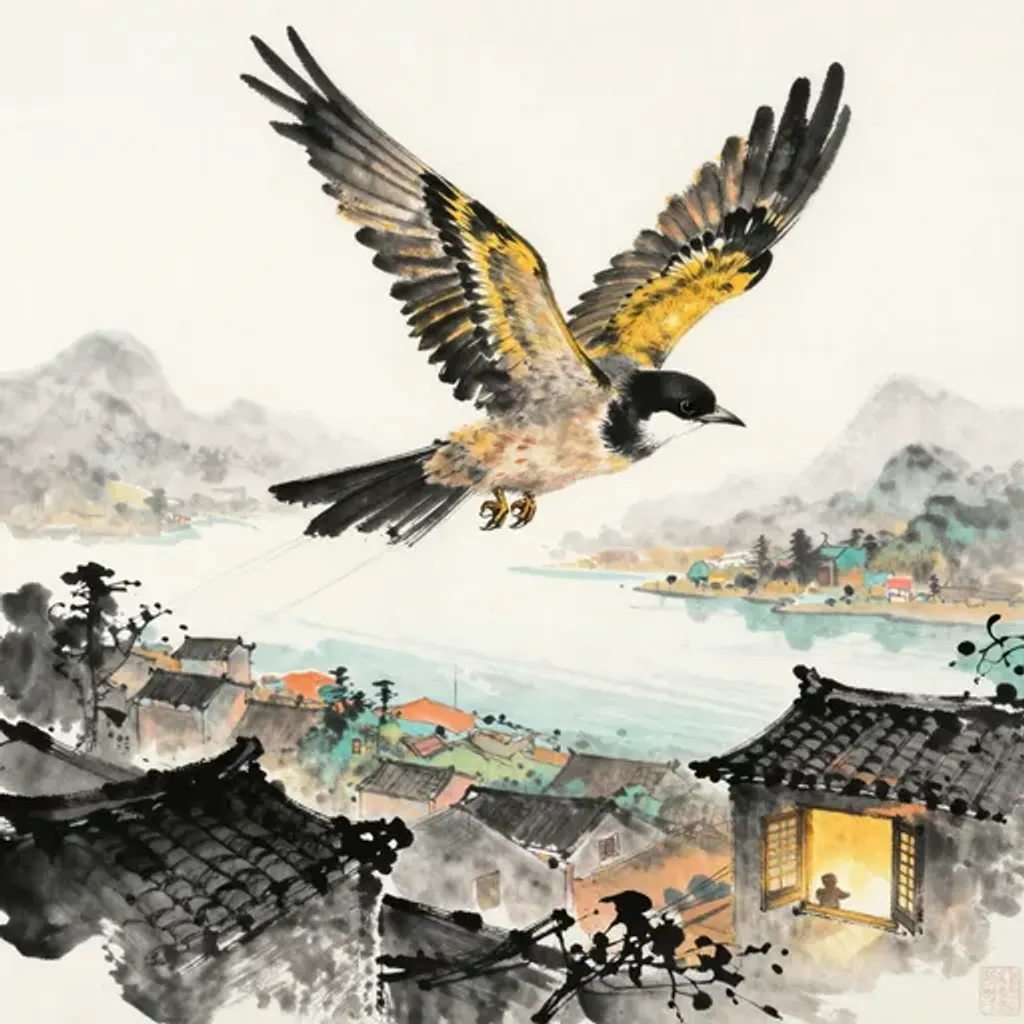
奮翅鼓翼,翱翔外國。逍遙徙倚,來歸溫室。
Spreading wings, beating pinions; soaring and roaming in foreign lands. Wandering at ease, lingering and leaning; returning home to the warm chamber.
— Jiao Yanshou, Yilin (Forest of Changes), 1st century BC
Commentary
Mountain above lake transforms into wind above earth — Contemplation, where the ruler surveys the realm from on high. Wings spread and beating, one soars above foreign lands in broad flight. Wandering at leisure, leaning and resting, one returns at last to the warm chamber. The verse traces an arc from adventurous flight to contented homecoming. The bird explores distant countries but ultimately circles back to its nest. From Decrease to Contemplation, the mountain gives way to wind sweeping across the earth — the sage-king's inspection tour, observing the people and setting customs. Decrease here is the act of releasing: the bird must leave its perch to see the world. But Contemplation's purpose is return — seeing widely in order to understand one's own place more deeply.
損 → 噬嗑
Hexagram 41 → Hexagram 21: Biting Through
Changing lines: 2, 4
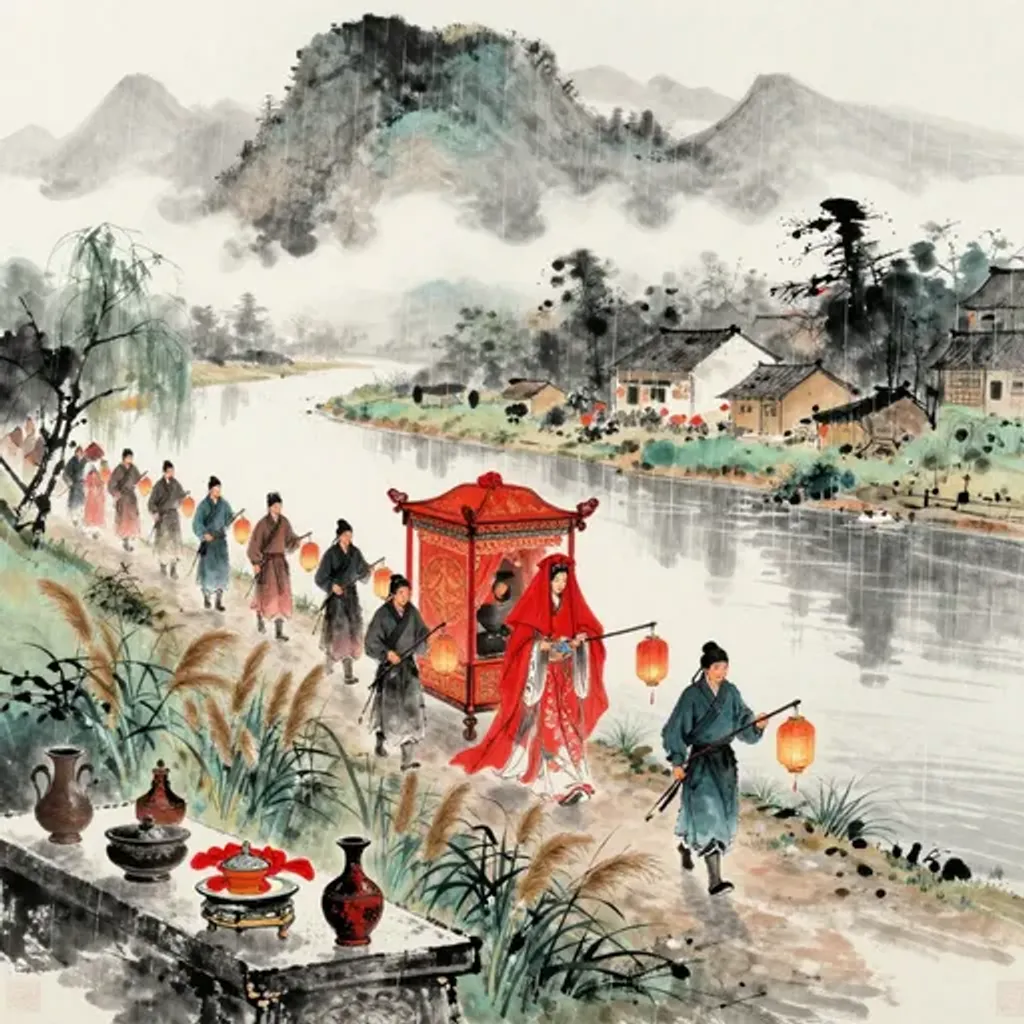
河伯娶婦,東山氏女。新婚三日,浮雲洒雨。露我菅茅,萬家之祐。
The River Lord takes a bride, a woman of the Eastern Mountain clan. Three days after the wedding; drifting clouds scatter rain. Wetting our rushes and thatch; a blessing for ten thousand homes.
— Jiao Yanshou, Yilin (Forest of Changes), 1st century BC
Commentary
Mountain above lake yields to fire above thunder — Biting Through, the hexagram of decisive legal action. The Earl of the River takes a bride from the Dongshan clan. Three days after the wedding, clouds gather and rain pours down, wetting the rushes and thatch, bringing blessings to ten thousand households. The 'River Earl's wedding' draws on the ancient cult of sacrificing brides to the Yellow River god, later debunked by the magistrate Ximen Bao at Ye. Yet here the sacrifice succeeds: the divine marriage produces rain for the people. From Decrease to Biting Through, the lake's offering to the mountain becomes the lightning flash that resolves obstruction. The bride is decreased — sacrificed — but through that sacrifice the entire community receives life-giving rain. Biting Through demands that something be broken to restore flow.
損 → 賁
Hexagram 41 → Hexagram 22: Grace
Changing lines: 2, 3
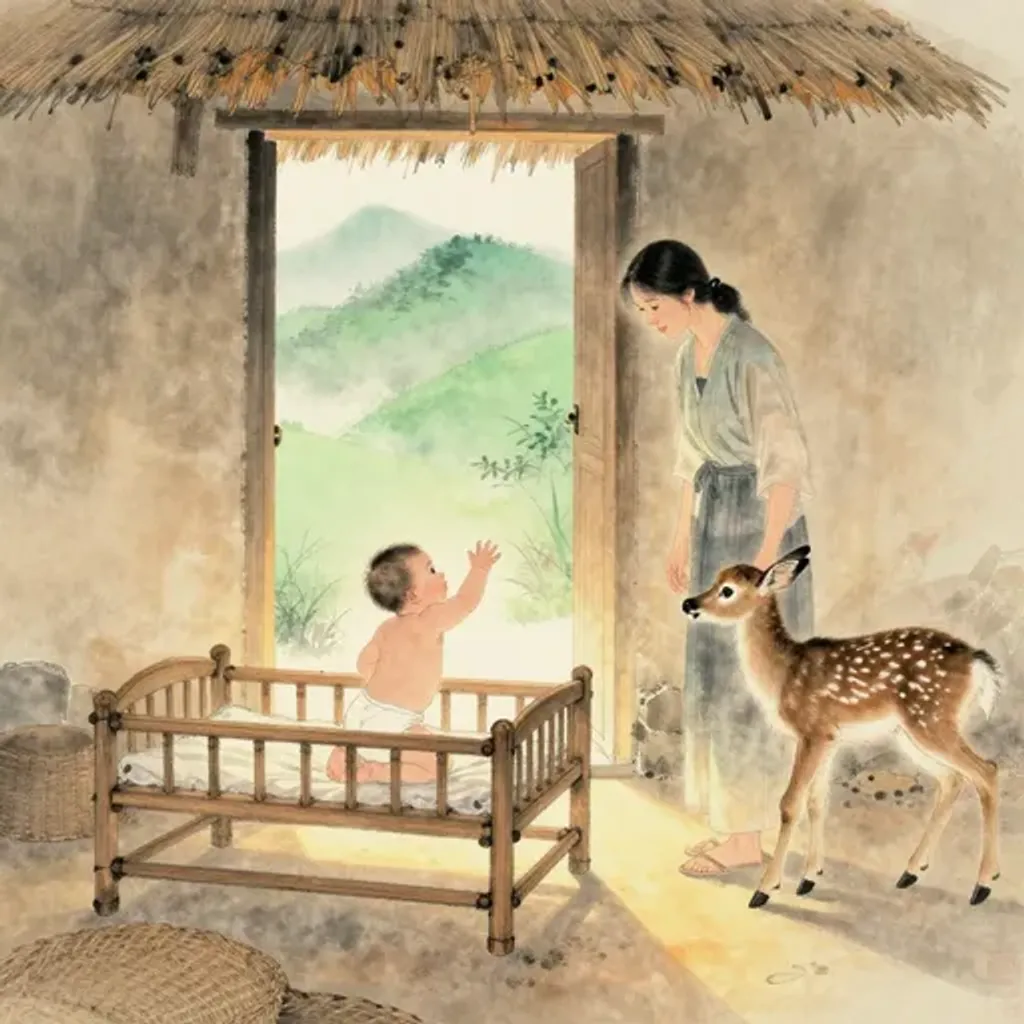
嬰兒求乳,慈母歸子。黃麑悅喜,得見甘飽。
The infant seeks milk; the loving mother returns to her child. The yellow fawn, joyful and content; at last sees its fill and is sated.
— Jiao Yanshou, Yilin (Forest of Changes), 1st century BC
Commentary
Mountain above lake gives way to mountain above fire — Grace, where beauty illuminates the solid. An infant seeks its mother's milk; the loving mother returns to her child. A young fawn rejoices, finding sweetness and fullness at last. Every image radiates warmth and natural fulfillment: hunger met, mother and child reunited, the fawn at pasture. From Decrease to Grace, the lake beneath the mountain transforms into fire beneath the mountain — light glowing from within, adorning what was plain. The verse enacts Grace's principle: true beauty is the radiance of satisfied need, not ornamental excess. Decrease strips away the unnecessary, and what remains — the mother's breast, the green meadow — shines with inherent loveliness.
損 → 剝
Hexagram 41 → Hexagram 23: Splitting Apart
Changing lines: 1, 2
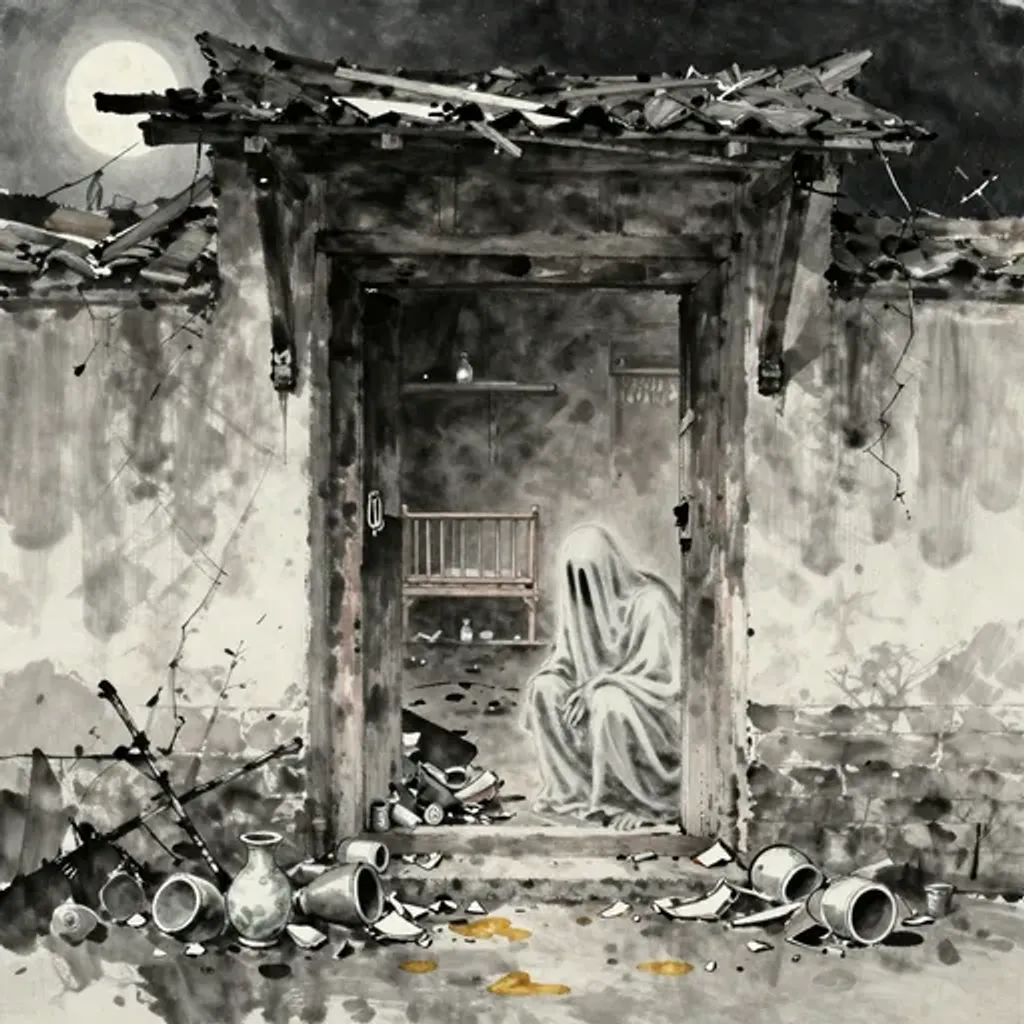
貧鬼守門,日破我盆。毀罌傷瓶,空虛無子。
The ghost of poverty guards the gate, daily smashing my pots. Urns destroyed, jars broken; empty and hollow, without heir.
— Jiao Yanshou, Yilin (Forest of Changes), 1st century BC
Commentary
Mountain above lake becomes mountain above earth — Splitting Apart, where the mountain erodes from below until only the topmost line remains. A poverty ghost guards the door, smashing the basin every day. Jars are shattered, bottles broken, and the household is left empty and without heirs. The verse catalogues destruction with methodical thoroughness: each vessel broken is another piece of the household's substance stripped away. The 'poverty ghost' is a folk figure who brings relentless bad luck. From Decrease to Splitting Apart, the lake beneath the mountain dries into bare earth, and the mountain itself begins to crumble. Decrease here has passed its useful limit and become pure erosion — not voluntary sacrifice but involuntary disintegration, leaving nothing behind.
損 → 復
Hexagram 41 → Hexagram 24: Return
Changing lines: 2, 6
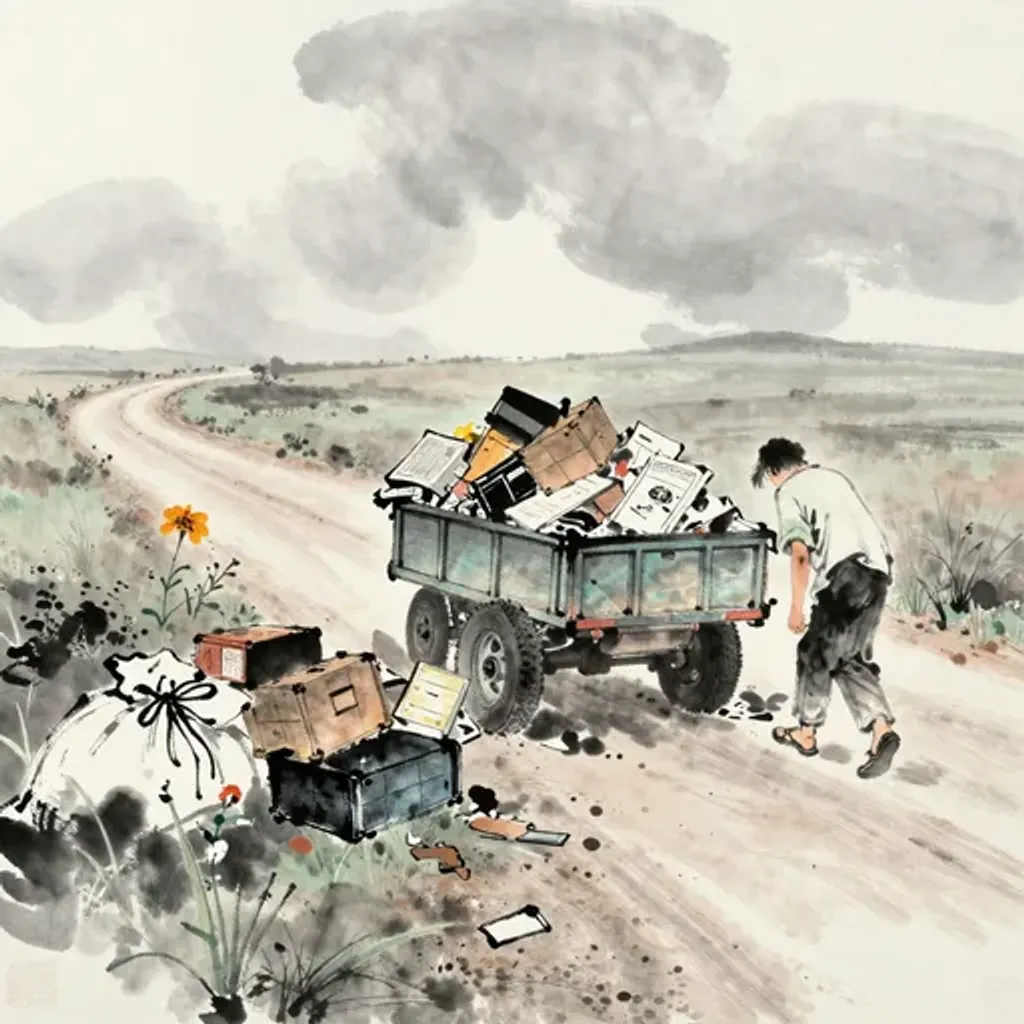
多載重負,損棄於野。予無稚子,但自勞苦。
Heavily loaded, overburdened; goods cast aside in the wild. I have no young child; only toiling bitterly by myself.
— Jiao Yanshou, Yilin (Forest of Changes), 1st century BC
Commentary
Mountain above lake yields to earth above thunder — Return, where the first yang re-enters at the bottom after total darkness. Heavily loaded and overburdened, goods are abandoned in the wild. Without a young child to help, one toils alone in futile labor. The verse captures exhaustion without relief: the load is too great, the support nonexistent, and what was carried must be cast aside. From Decrease to Return, the mountain collapses into earth while thunder stirs beneath. Return's promise is rebirth after hitting bottom — but the verse shows only the bottom, the moment of surrender before renewal begins. The discarded load in the wilderness is Decrease pushed past endurance, the point where one must let go of everything to begin again.
損 → 无妄
Hexagram 41 → Hexagram 25: Innocence
Changing lines: 2, 4, 5
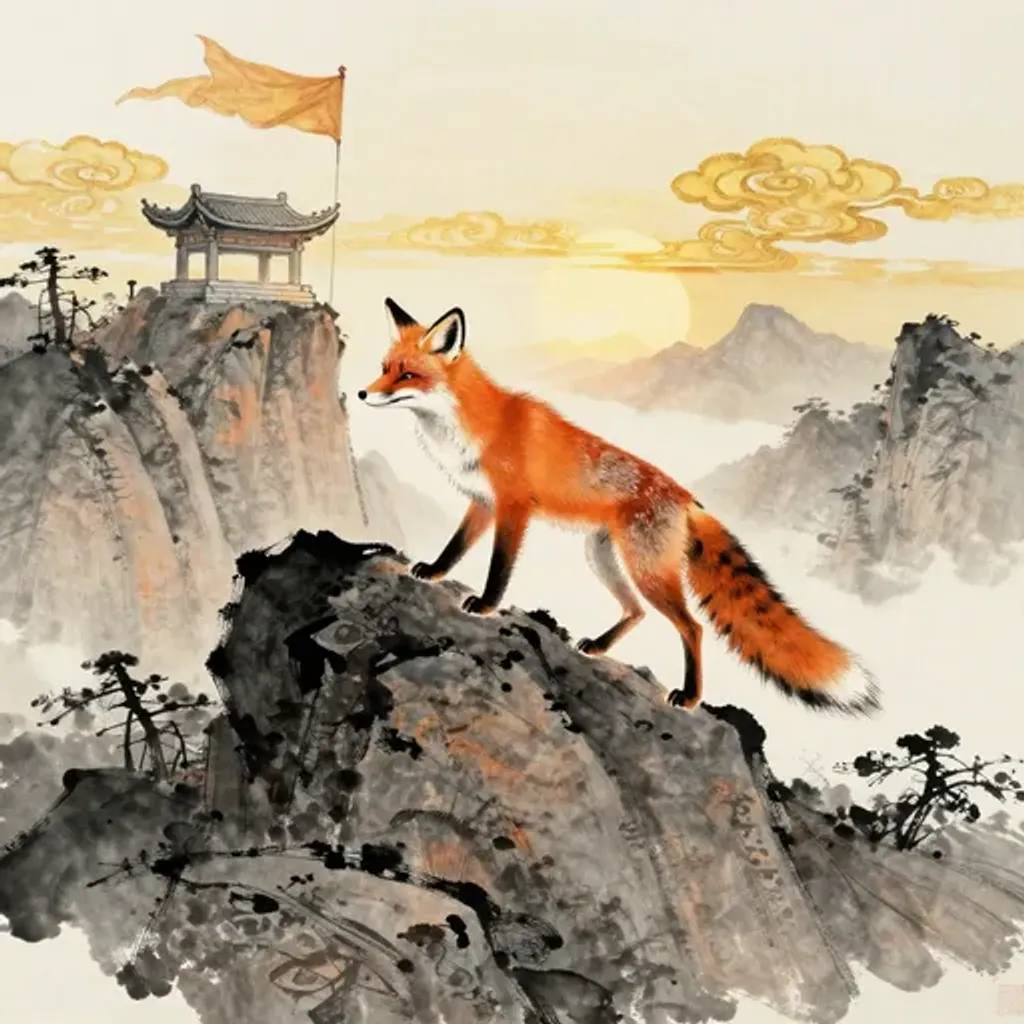
雄狐綏綏,登山崔嵬。昭告顯功,大福允興。
The male fox moves with ease; climbing the steep, towering mountain. Brightly proclaiming illustrious merit; great fortune truly flourishes.
— Jiao Yanshou, Yilin (Forest of Changes), 1st century BC
Commentary
Mountain above lake transforms into heaven above thunder — Innocence, where action aligns with cosmic will without deliberate calculation. A male fox strides confidently, tail swaying, ascending the towering crag. There it proclaims its merits to all: great fortune rises in full sincerity. The fox in Chinese literature often signifies cunning, but here it ascends openly, declaring itself without guile. From Decrease to Innocence, the mountain gives way to heaven while the lake's thunder rumbles below. Innocence demands action uncorrupted by ulterior motive. The fox that climbs the peak and announces its achievements has nothing to hide — its confidence arises from genuine accomplishment. Decrease has stripped away pretense; what remains is the unadorned truth that Innocence requires.
損 → 大畜
Hexagram 41 → Hexagram 26: Great Taming
Changing lines: 3
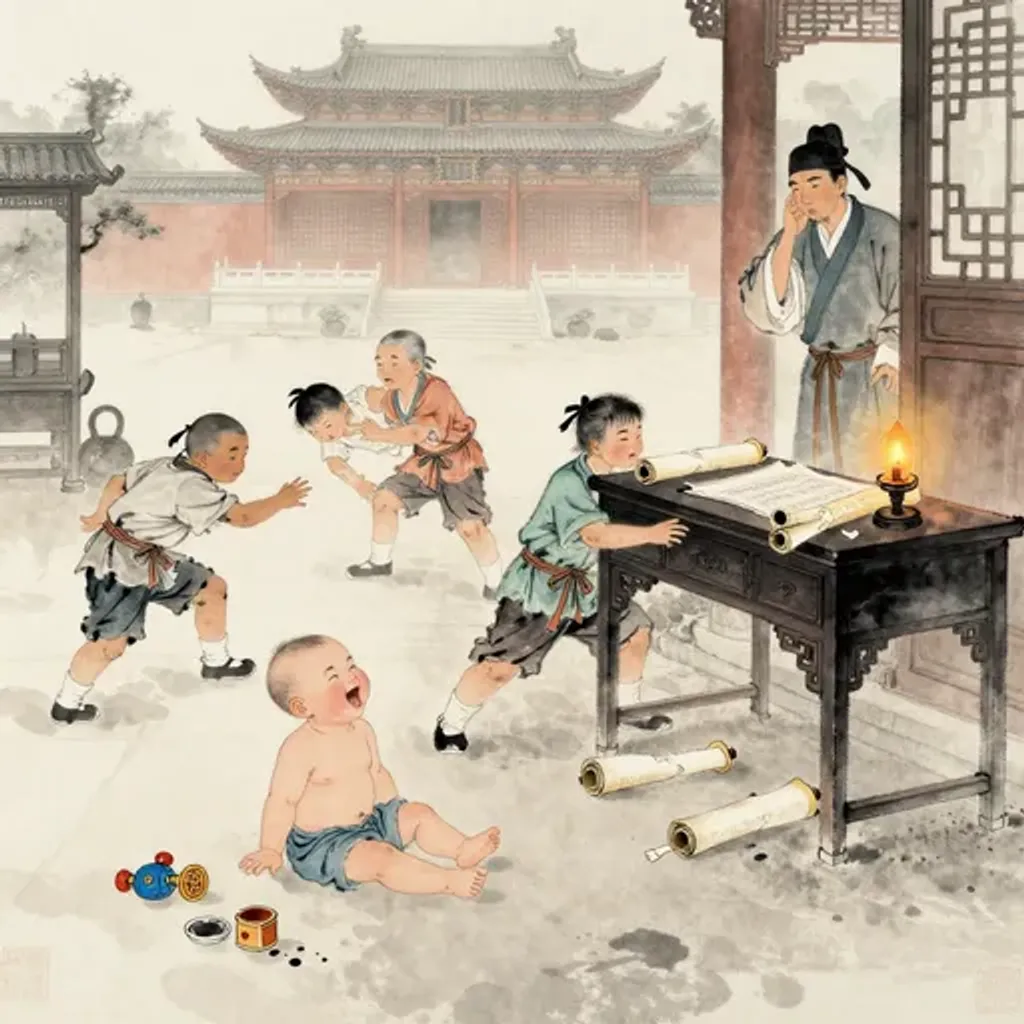
嬰兒孩笑,未有所識。彼童而爭,亂我政事。
The infant laughs innocently, knowing nothing yet. Those children quarrel; they disorder my affairs of state.
— Jiao Yanshou, Yilin (Forest of Changes), 1st century BC
Commentary
Mountain above lake gives way to mountain above heaven — Great Taming, where accumulated wisdom restrains raw power. An infant laughs innocently, knowing nothing of the world. But that childish ignorance, applied to governance, throws political affairs into chaos. The verse warns against confusing innocence with competence: the baby's charm masks its incapacity, and those who are childish yet contentious disrupt the order of the state. From Decrease to Great Taming, one mountain remains while the lake crystallizes into heaven stored within. Great Taming's charge is to accumulate knowledge of 'former words and past deeds.' The verse demonstrates the cost when this accumulation is absent: without stored wisdom, the infant-ruler's laughter becomes the prelude to institutional collapse.
損 → 頤
Hexagram 41 → Hexagram 27: Nourishment
Changing lines: 2
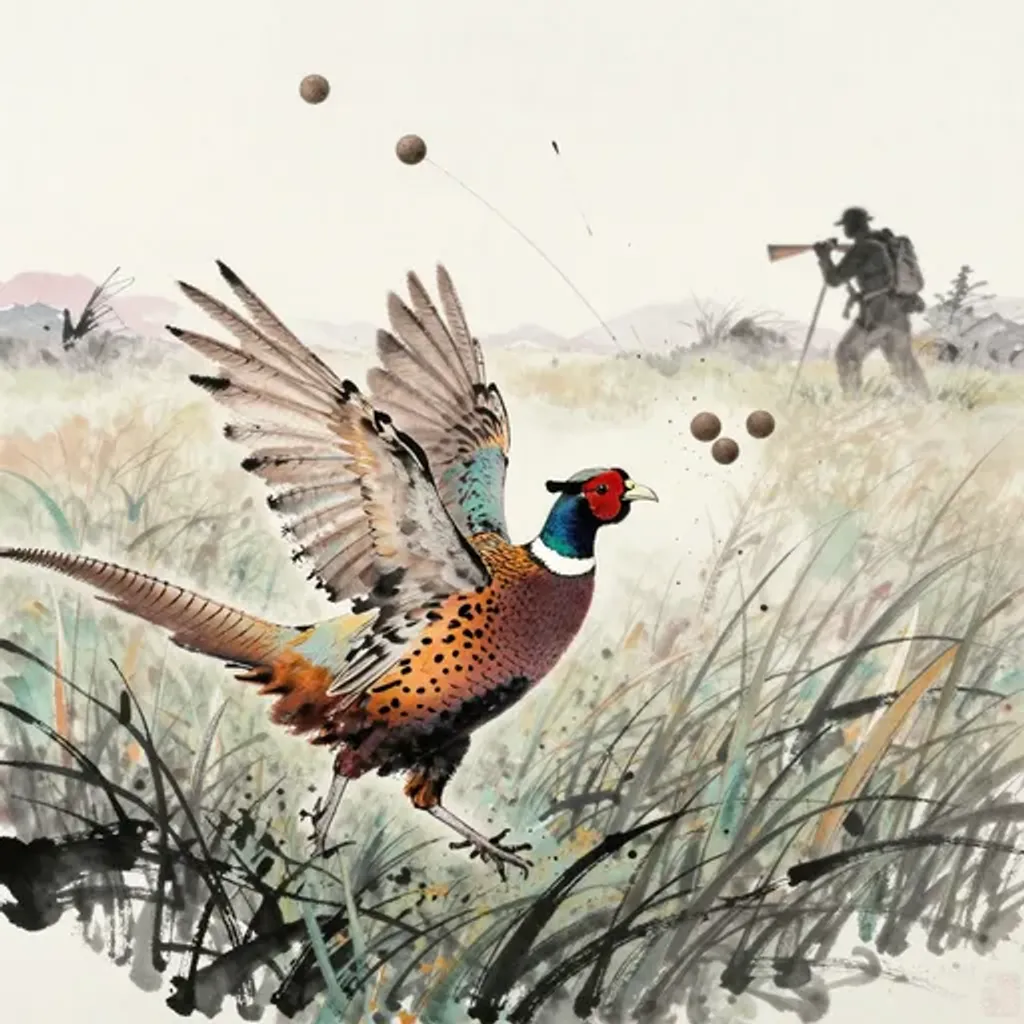
十丸同投,為雉所維。獨得跳脫,完全不虧。
Ten pellets thrown together; caught in the pheasant's snare. Alone, one leaps free; whole and complete, suffering no loss.
— Jiao Yanshou, Yilin (Forest of Changes), 1st century BC
Commentary
Mountain above lake transforms into mountain above thunder — Nourishment, where the mouth opens and closes to sustain life. Ten pellets are thrown together, but a pheasant snares them all. Only one escapes independently, remaining whole and undiminished. The verse reads like a gambling scene: ten tokens cast, nine captured, one free. The surviving pellet owes its freedom to autonomous movement — it jumped clear while the rest were netted. From Decrease to Nourishment, the lake transforms into thunder beneath the mountain, the jaw's motion of chewing and selection. Nourishment is about choosing what to take in and what to reject. The lone survivor represents the one who decreases attachment to the group, preserving integrity through independence rather than being consumed alongside the herd.
損 → 大過
Hexagram 41 → Hexagram 28: Great Exceeding
Changing lines: 1, 3, 4, 5, 6
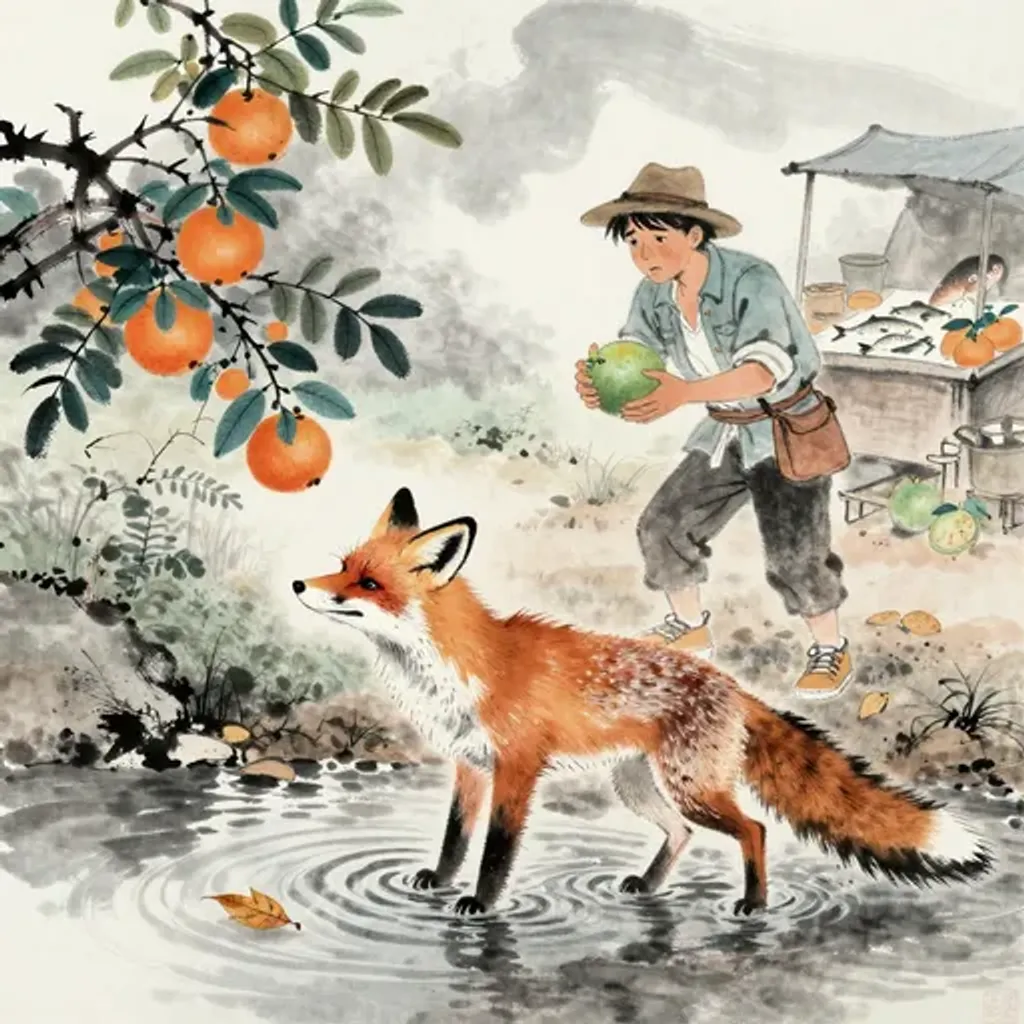
狐濟濡尾,求橘得枳。季妣懷悔,鮑舍魚臭。
The fox fords the stream, wetting its tail; seeking tangerines, obtaining only bitter citron. The youngest wife harbors regret; the abode of Bao reeks of fish.
— Jiao Yanshou, Yilin (Forest of Changes), 1st century BC
Commentary
Mountain above lake becomes lake above wind — Great Exceeding, where the structure bends under intolerable weight. A fox crossing the river wets its tail; seeking oranges, one gets only bitter trifoliate. The ancestress harbors regret, and Bao She reeks of stale fish. Every line substitutes the desired for the disappointing: wet failure instead of dry crossing, sour citrus instead of sweet, shame instead of satisfaction, stench instead of freshness. The idiom 'seeking oranges, getting thorny citrus' (求橘得枳) is proverbial for transplanted virtue that degenerates in foreign soil. From Decrease to Great Exceeding, the mountain's steady containment gives way to a lake submerging the wind — excess that warps everything it touches. Decrease cannot save what is fundamentally misapplied.
損 → 坎
Hexagram 41 → Hexagram 29: The Abysmal Water
Changing lines: 1, 5, 6
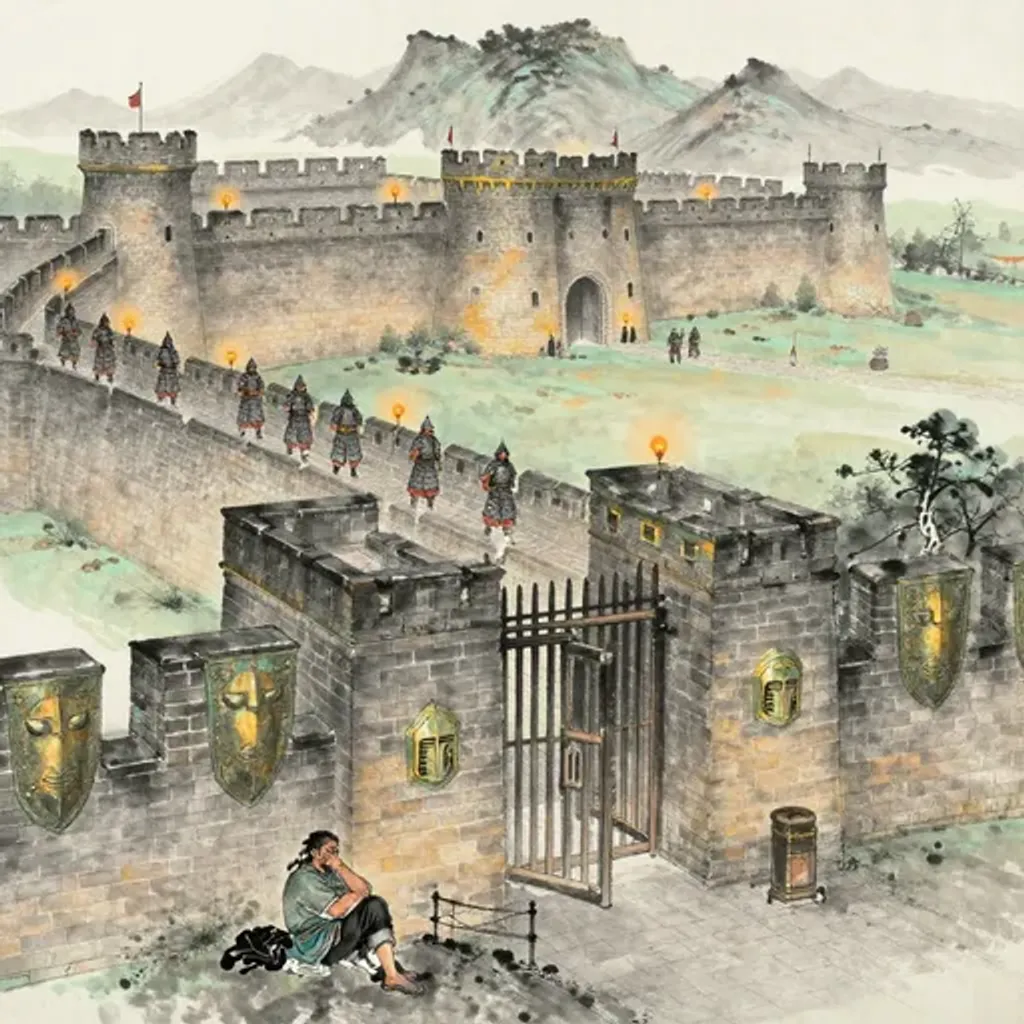
跌足息肩,所忌不難。金城銅郭,以銕為關。藩屏周衛,安止无患。
Resting feet and easing shoulders; what is feared proves no hardship. Walls of gold, ramparts of bronze, gates barred with iron. Screens and shields guard the perimeter; resting secure, without calamity.
— Jiao Yanshou, Yilin (Forest of Changes), 1st century BC
Commentary
Mountain above lake gives way to doubled water — the Abysmal, repeated danger. Yet the verse is paradoxically secure: one rests with feet propped up and shoulders eased, fearing nothing that others dread. Walls of gold and ramparts of bronze, gates forged of iron — the defenses are absolute. Screens and guards encircle on every side; one rests safely without worry. From Decrease to the Abysmal, the lake deepens into water upon water, doubling the danger. But the verse answers danger with preparation so thorough that peril becomes irrelevant. Decrease's discipline built these iron walls long before the flood arrived. The transformation reveals that true security within the Abysmal comes not from escaping danger but from having reduced all vulnerability in advance.
損 → 離
Hexagram 41 → Hexagram 30: The Clinging Fire
Changing lines: 2, 3, 4
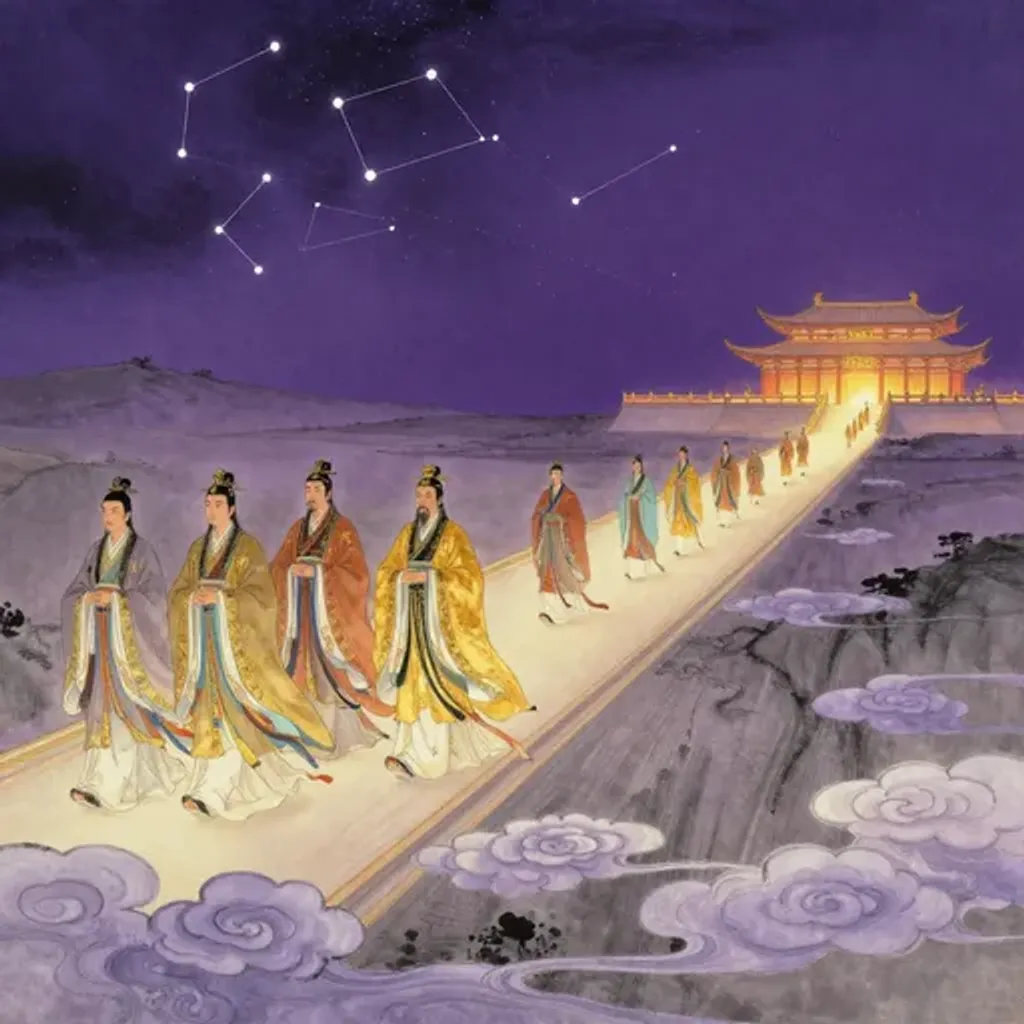
戴堯扶禹,松喬彭祖。西過王母,道路夷易,无敢難者。
Upholding Yao, supporting Yu; Chisong and Pengzu. Journeying west past the Queen Mother; the road smooth and easy, none daring to hinder.
— Jiao Yanshou, Yilin (Forest of Changes), 1st century BC
Commentary
Mountain above lake yields to doubled fire — the Clinging, brilliance continuing brilliance. The verse invokes the greatest names of sage-kingship and immortality: upheld by Yao's virtue and supported by Yu's labor, accompanied by the immortals Chisongzi and Pengzu, passing westward beyond the Queen Mother of the West. The road is smooth and easy; nothing dares obstruct. This is a triumphal procession through the entire moral and mythological cosmos. From Decrease to the Clinging, the mountain's restraint transforms into doubled illumination — fire upon fire, clarity compounded. Decrease here operates as the shedding of mortal limitation: stripped of earthly weight, one moves freely among sages and immortals, the path made luminous by their combined radiance.
損 → 咸
Hexagram 41 → Hexagram 31: Influence
Changing lines: 1, 2, 3, 4, 5, 6
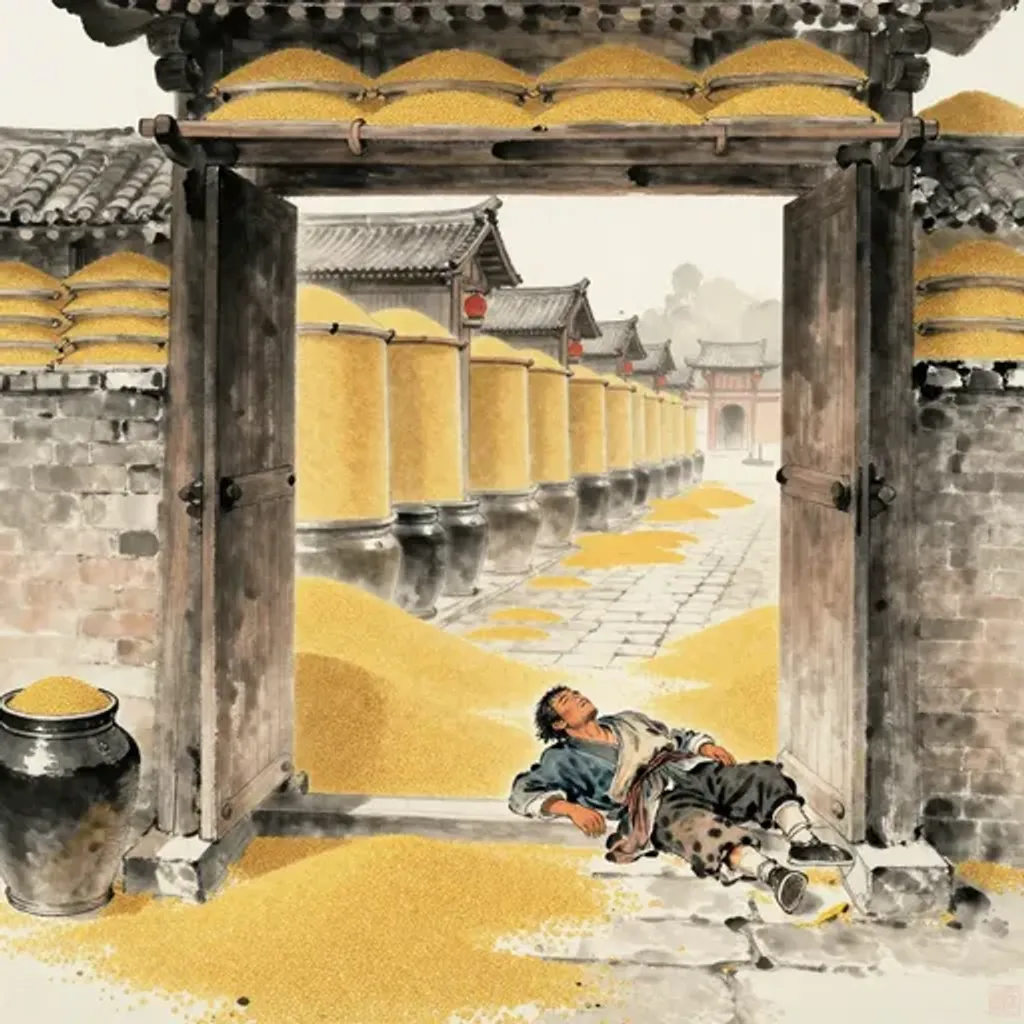
京庾積聚,黍稷以極。行者疾至,可以厭飽。
The capital granaries piled high; millet and grain to the brim. The traveler arrives in haste; able at last to eat his fill.
— Jiao Yanshou, Yilin (Forest of Changes), 1st century BC
Commentary
Mountain above lake gives way to lake above mountain — Influence, where the mountain yields to the lake's attraction above it. The capital granaries overflow with stored millet and grain, accumulated to the brim. Travelers arrive swiftly and find themselves sated to fullness. The verse celebrates abundance so complete that even the wayfarer need not struggle — provisions are ready before the need arises. From Decrease to Influence, the mountain and lake reverse positions: where Decrease placed the mountain above suppressing the lake, Influence places the lake above the mountain, a posture of receptive openness. Stored grain becomes available grain. The transformation shows Decrease's harvest: what was patiently accumulated through restraint now flows outward as generous sustenance, attracting all who draw near.
損 → 恆
Hexagram 41 → Hexagram 32: Duration
Changing lines: 1, 3, 4, 6
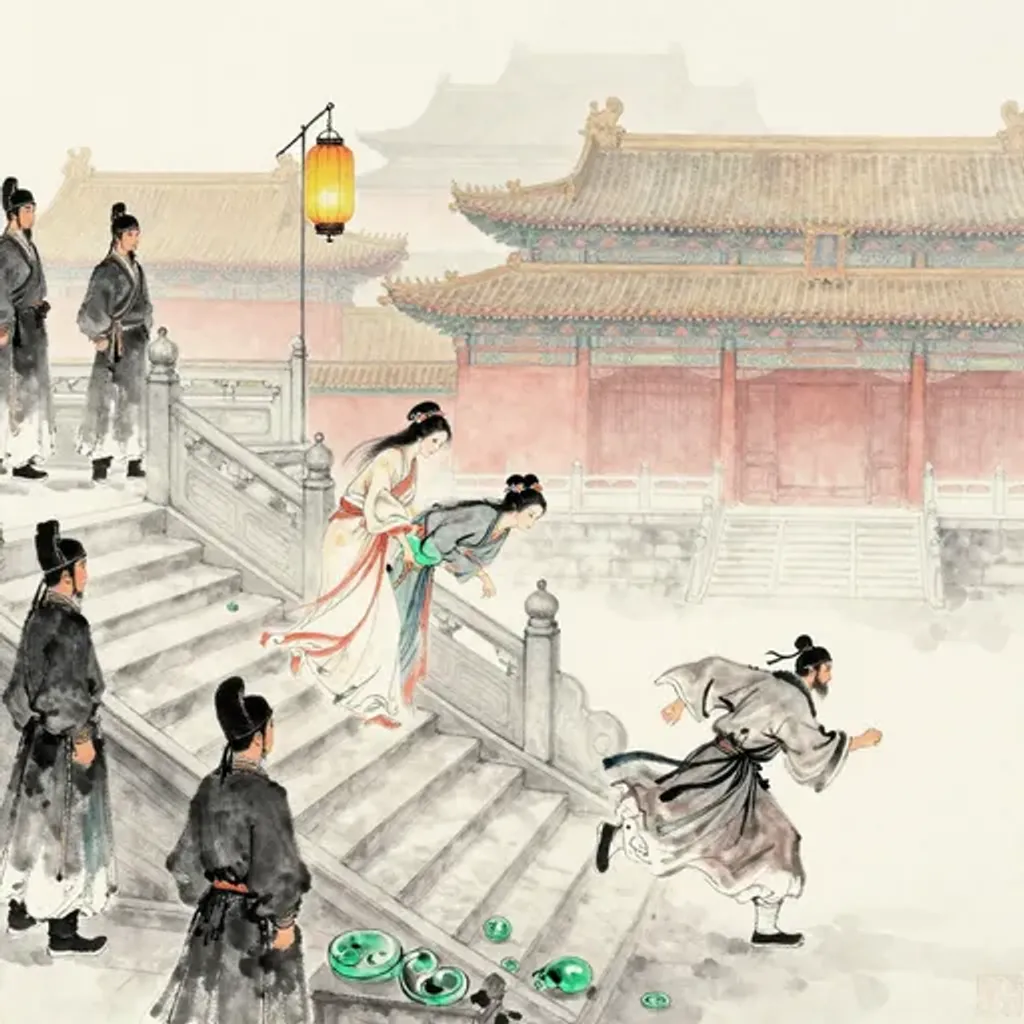
良天孔姬,脅悝登臺。樂季不扶,叔輒走逃。
Lord Liang and Lady Kong Ji; Xie Kui ascends the terrace. Le Ji does not intervene; Uncle Zhe flees in haste.
— Jiao Yanshou, Yilin (Forest of Changes), 1st century BC
Commentary
Mountain above lake transforms into thunder above wind — Duration, the constancy of established patterns. The verse alludes to the Wei state coup of 480 BC: Liang Tian and Kong Ji coerced Kong Kui onto the tower platform. When Yue Ji refused to support the usurper, Shu Zhe fled in panic. According to the Zuo Zhuan, the exiled former crown prince Kuai Kui returned to Wei, using his sister Kong Ji and armed men to seize her son Kong Kui as hostage atop a tower, forcing a political oath. Confucius's disciple Zilu died attempting a rescue. From Decrease to Duration, the mountain gives way to thunder over wind — forces that should endure but here are weaponized by those who subvert proper succession. Duration demands steadfastness, but the verse shows loyalty itself being coerced.
損 → 遯
Hexagram 41 → Hexagram 33: Retreat
Changing lines: 1, 2, 3, 4, 5
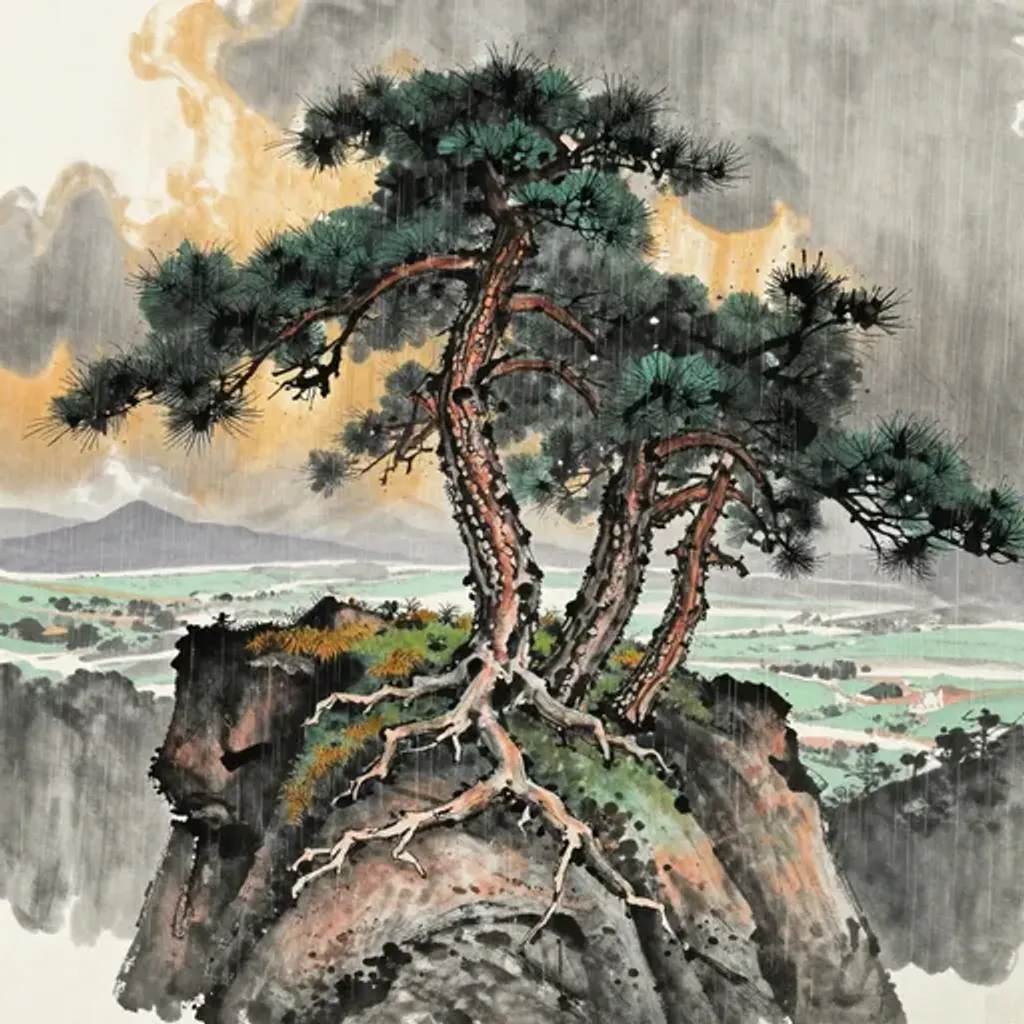
天之所予,福祿常在,不憂危殆。
Pines and cypresses stay green in all four seasons; Mount Tai has not moved in a thousand years. Heaven sends sweet rain to nourish dry timber — with deep roots, why fear the storm's blast?
— Jiao Yanshou, Yilin (Forest of Changes), 1st century BC
Commentary
Mountain above lake yields to heaven above mountain — Retreat, where the gentleman distances himself from petty forces. The original verse reads simply: 'What heaven bestows, fortune and blessing abide forever, free from worry or peril.' This is unconditional assurance: divine favor that requires no action, no vigilance, no effort to sustain. From Decrease to Retreat, the lake beneath the mountain evaporates, leaving heaven resting above the mountain in serene distance. Retreat's strength is precisely this: withdrawing not in fear but in confidence that what heaven grants cannot be taken by human grasping. Decrease has removed the need for defense; Retreat secures the blessing by placing it beyond the reach of interference.
損 → 大壯
Hexagram 41 → Hexagram 34: Great Power
Changing lines: 3, 4, 6
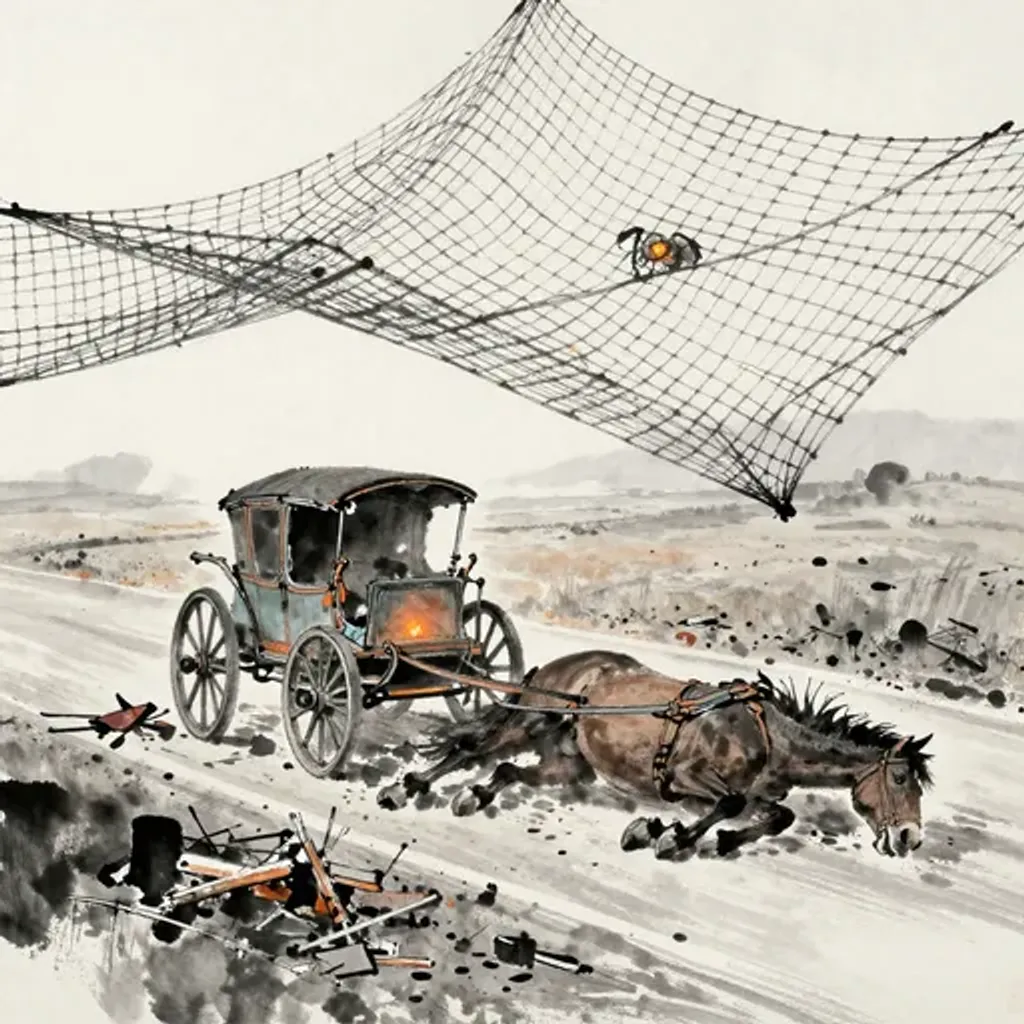
行觸天綱,馬死車傷。身无憀賴,困窮乏糧。
Traveling, he strikes heaven's net; the horse dies, the carriage wrecked. His person left without recourse; destitute and lacking provisions.
— Jiao Yanshou, Yilin (Forest of Changes), 1st century BC
Commentary
Mountain above lake transforms into thunder above heaven — Great Power, yang energy at its most aggressive. Yet the verse depicts power catastrophically misapplied: one collides with heaven's net, the horse dies, the chariot is wrecked. Left without support or recourse, one is stranded in poverty and want. The 'heavenly net' is cosmic law that cannot be evaded — those who crash against it are destroyed by their own momentum. From Decrease to Great Power, the mountain's restraint gives way to thunder roaring above heaven, raw force with no container. Great Power's hexagram warns: 'The gentleman does not tread where propriety forbids.' The verse shows what happens when Decrease's discipline is abandoned for reckless advance — the very strength that should empower becomes the instrument of self-destruction.
損 → 晉
Hexagram 41 → Hexagram 35: Progress
Changing lines: 1, 2, 4
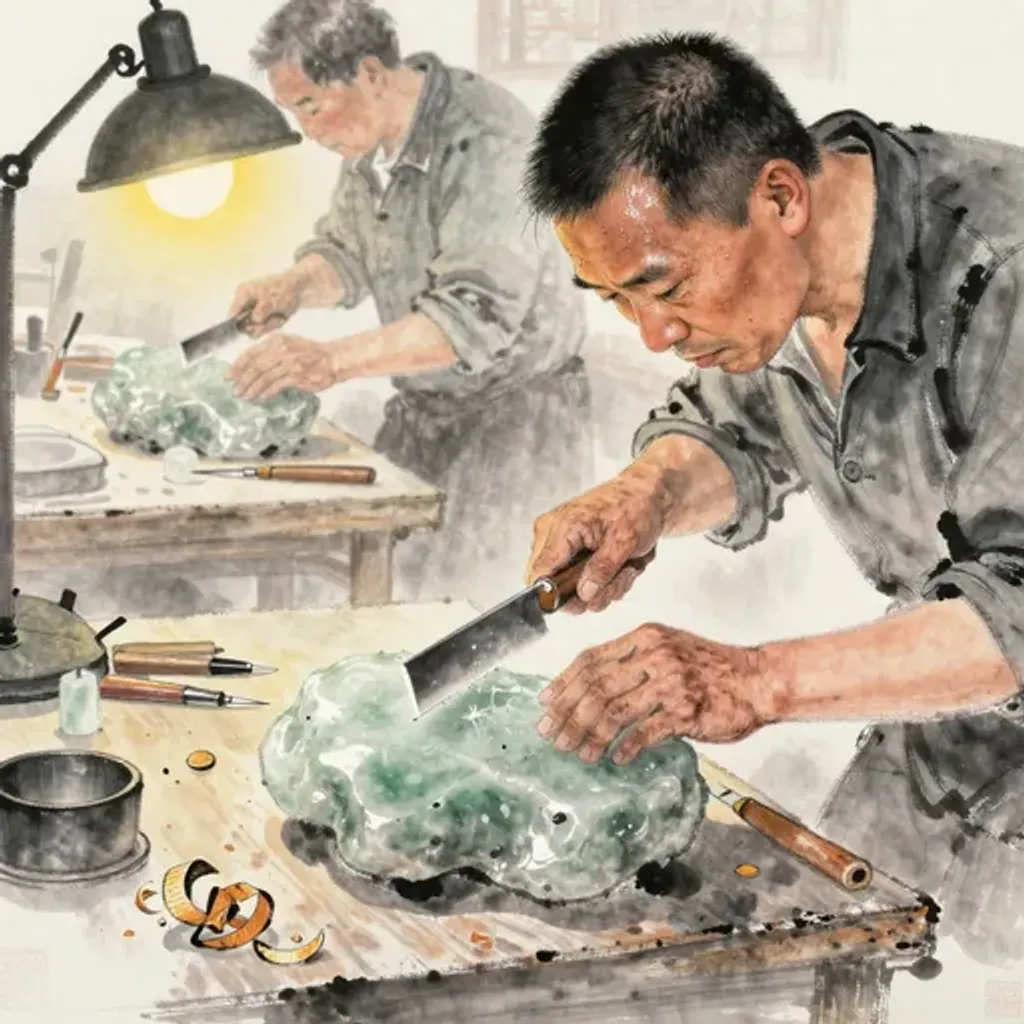
鉛刀攻玉,堅不可得。盡我筋力,胝蠒為疾。
Attacking jade with a lead knife; the hardness cannot be overcome. Exhausting all my sinew and strength; calluses and blisters become my affliction.
— Jiao Yanshou, Yilin (Forest of Changes), 1st century BC
Commentary
Mountain above lake yields to fire above earth — Progress, where light rises above the horizon. A lead knife attempts to carve jade: the stone is too hard, the blade too soft. One exhausts every sinew, raising blisters thick as cocoons, yet the jade remains unmarked. The 'lead knife' is a classical metaphor for inadequate tools applied to noble material — a self-deprecating trope found in writers like Ban Gu. From Decrease to Progress, the mountain gives way to fire emerging from the earth, light advancing into the world. But the verse reveals Progress's shadow: advancement requires the right instrument. Decrease alone — simply trying harder, grinding away more effort — cannot compensate for a fundamental mismatch between tool and task.
損 → 明夷
Hexagram 41 → Hexagram 36: Darkening of the Light
Changing lines: 2, 3, 6
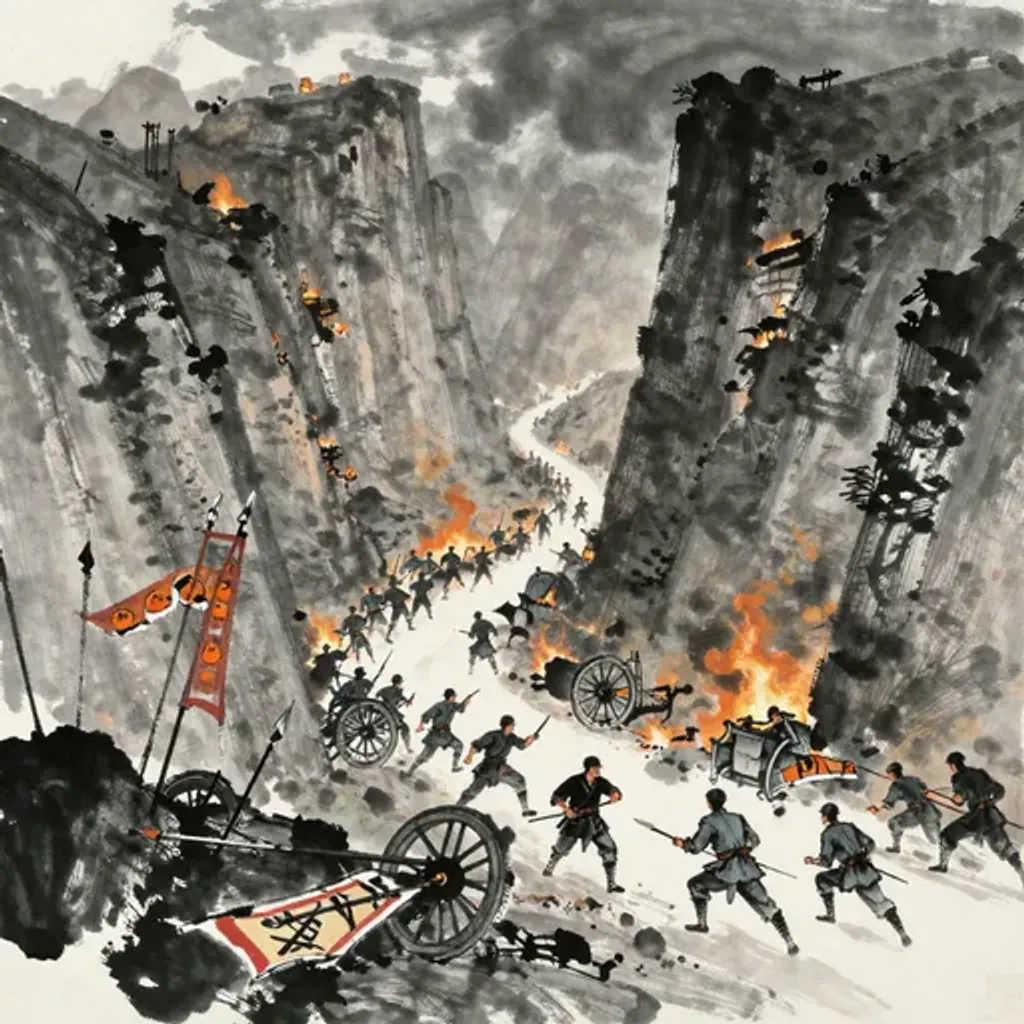
穆違百里,使孟奮武。將軍師戰,敗於殽口。
Duke Mu defied Baili Xi; sending Meng to take up arms. The general led his troops to battle; defeated at the pass of Xiao.
— Jiao Yanshou, Yilin (Forest of Changes), 1st century BC
Commentary
Mountain above lake becomes earth above fire — Darkening of the Light, where brilliance is buried underground. Duke Mu of Qin defied Baili Xi's counsel and dispatched Meng Mingshi to wage war. The generals led the army into battle and were defeated at the Pass of Xiao. According to the Zuo Zhuan, in 627 BC the elder statesman Jian Shu wept at the army's departure, predicting disaster. The Qin force was ambushed by Jin troops in the narrow Xiao gorge; all three commanders were captured. From Decrease to Darkening of the Light, the mountain's wisdom sinks beneath the earth. Light enters the ground — the counsel of the wise is ignored, and disaster follows. Decrease here is the ruler's refusal to diminish his ambition when the advisor's warning demanded restraint.
損 → 家人
Hexagram 41 → Hexagram 37: The Family
Changing lines: 2, 3, 5
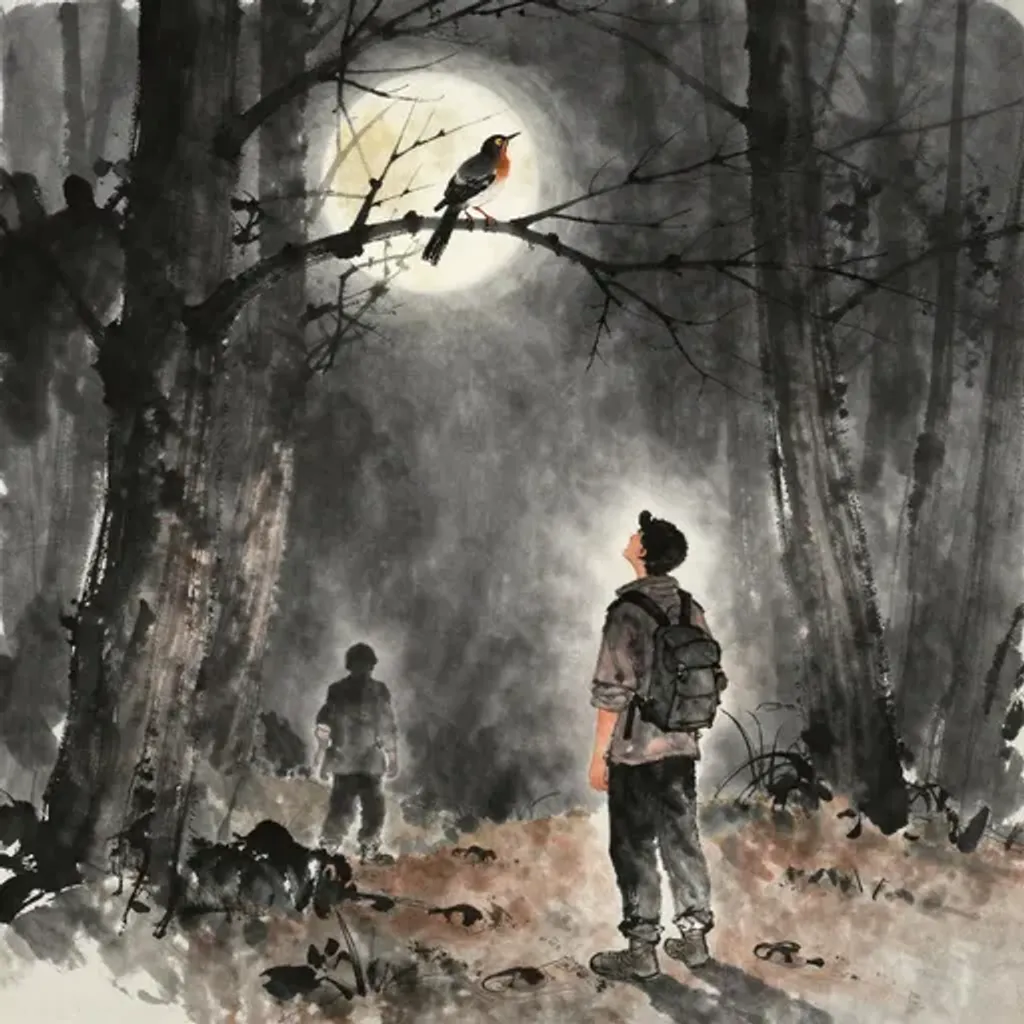
有人追亡,鳥言所匿,不旅日得。
Someone pursues a fugitive; a bird's call reveals the hiding place. Before the day is done, the quarry is found.
— Jiao Yanshou, Yilin (Forest of Changes), 1st century BC
Commentary
Mountain above lake transforms into wind above fire — the Family, where inner warmth radiates outward as gentle influence. Someone pursues a fugitive, and a bird's call reveals the hiding place; within a short time the quarry is found. The verse is terse and almost eerie: the bird serves as informant, nature itself conspiring to restore what was lost. From Decrease to the Family, the mountain's restraint dissolves into wind born of fire — warmth generating movement, the household's inner order extending outward. The bird's revelation mirrors the Family hexagram's principle: words must have substance, conduct must be consistent. Nothing remains hidden when the household is properly ordered. Decrease strips away concealment; the Family's warmth illuminates every corner.
損 → 睽
Hexagram 41 → Hexagram 38: Opposition
Changing lines: 4
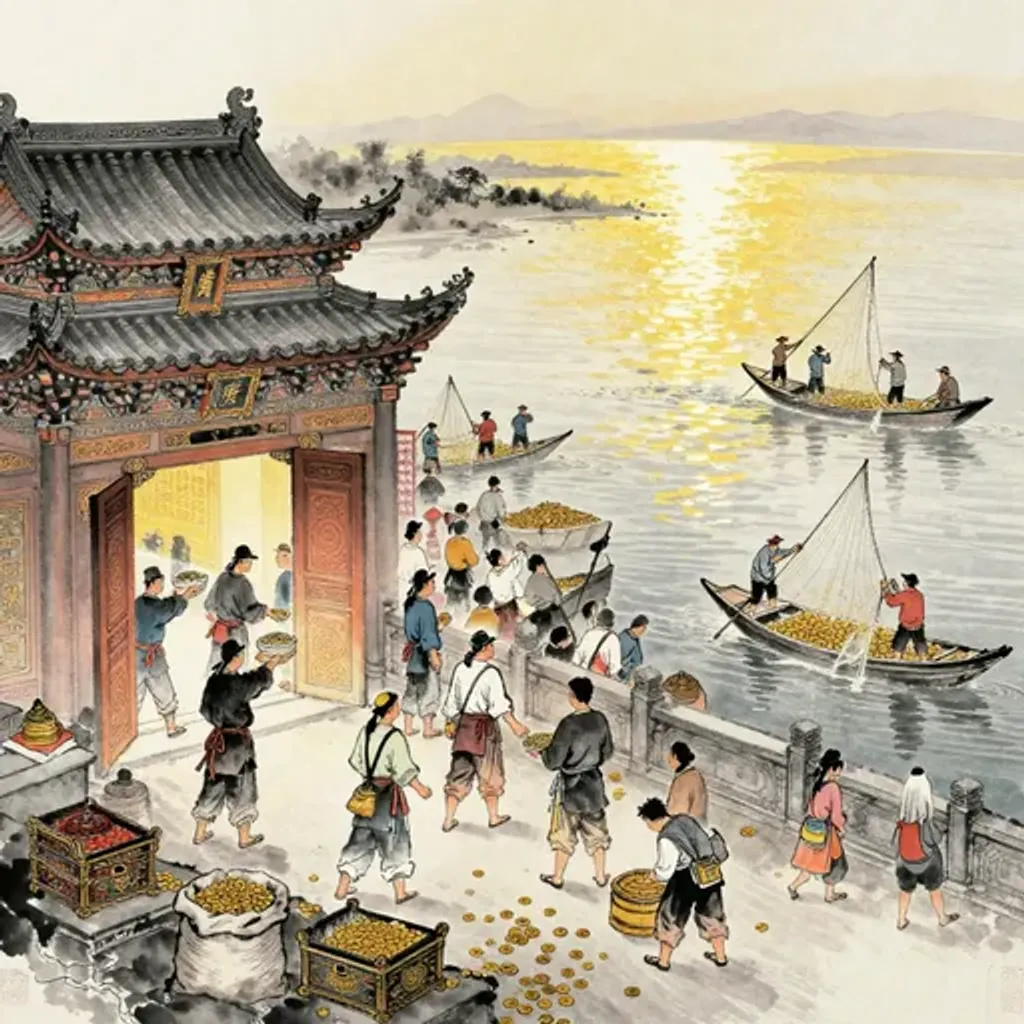
府藏之富,王以賑貸。捕魚河海,苟罔多得。
The riches of the treasury; the king uses them for relief and loans. Casting nets in rivers and seas; the mesh captures abundant catches.
— Jiao Yanshou, Yilin (Forest of Changes), 1st century BC
Commentary
Mountain above lake gives way to fire above lake — Opposition, where two unlike elements illuminate each other across a divide. The royal treasury overflows with wealth; the king uses it to provide relief and loans. Casting nets in rivers and seas, the fisher spreads wide and catches abundantly. The verse pairs two acts of generous dispersal: the ruler distributing state wealth, the fisherman harvesting from the deep. From Decrease to Opposition, the mountain lifts away and fire blazes above the lake, their natures divergent yet complementary. Opposition's image is 'the gentleman acts alike yet differently' — finding unity in apparent contradiction. Decrease here is the act of giving away: the treasury diminishes so the people are fed, the net empties to fill the storehouse. Opposing motions produce mutual benefit.
損 → 蹇
Hexagram 41 → Hexagram 39: Obstruction
Changing lines: 1, 2, 3, 5, 6
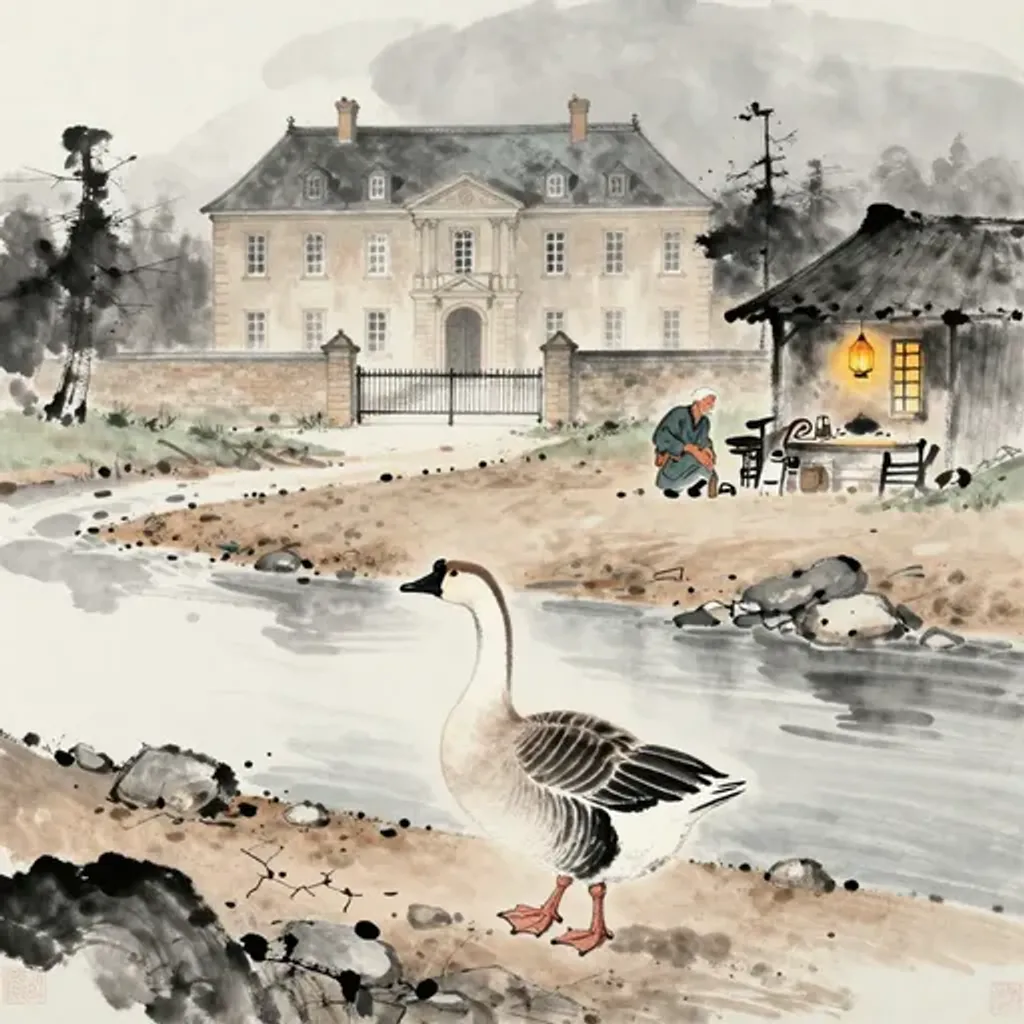
鴻飛遵陸,公歸不復,伯氏客宿。
The wild goose follows the land, walking instead of flying. The duke departs and does not return; the elder lodges abroad.
— Jiao Yanshou, Yilin (Forest of Changes), 1st century BC
Commentary
Mountain above lake becomes water above mountain — Obstruction, where the path ahead is blocked by perilous water upon the mountain. Wild geese follow the land route, the duke departs and does not return, the elder brother lodges abroad as a stranger. The geese that should fly now walk; the lord who left never comes home; family members scatter into exile. The Shijing's 'Geese follow the land' (鴻飛遵陸) evokes displacement — waterfowl forced onto dry ground, creatures out of their element. From Decrease to Obstruction, the lake freezes into treacherous water pooling atop the mountain, blocking all forward progress. Decrease has removed the resources needed for the journey, and what remains is a diminished household stranded on opposite sides of an impassable barrier.
損 → 解
Hexagram 41 → Hexagram 40: Deliverance
Changing lines: 1, 4, 6
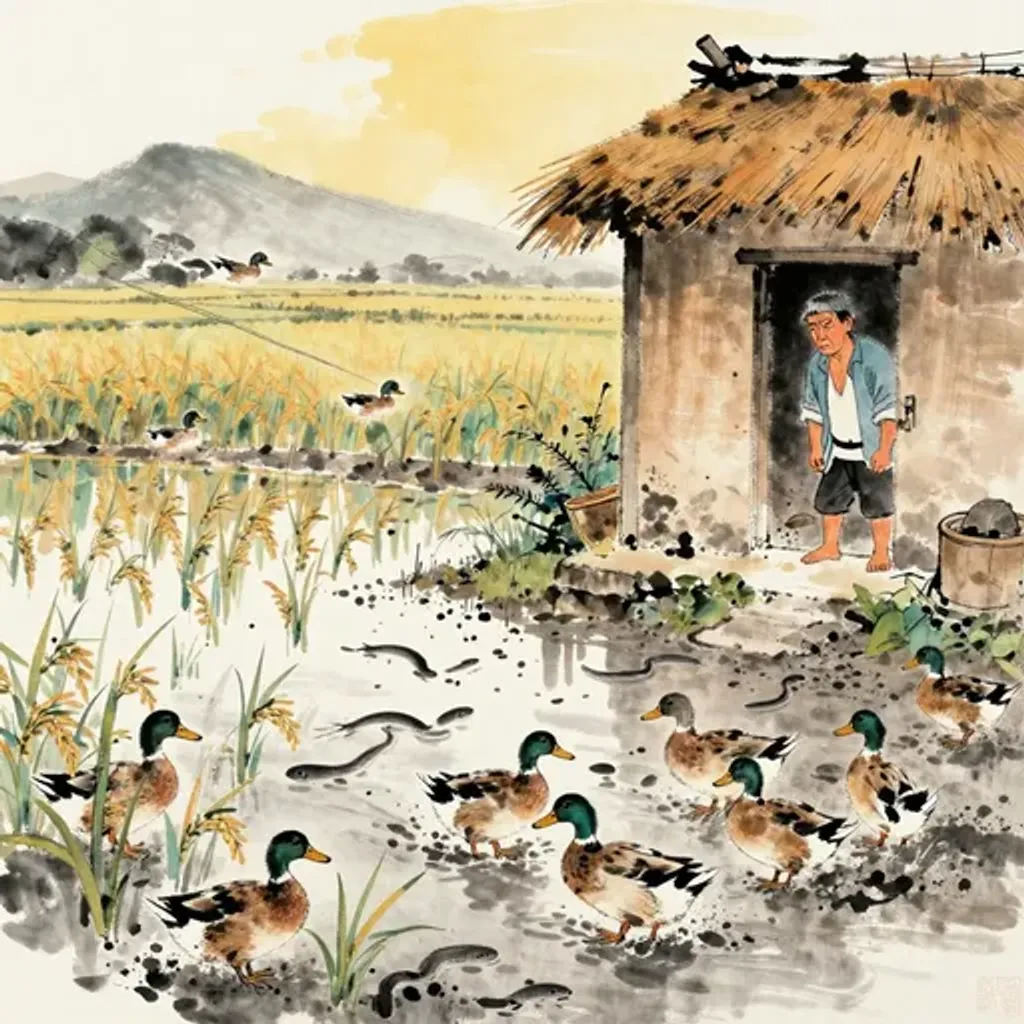
鳧過稻廬,甘樂廣鰌。雖驚不去,田畯懷憂。
Wild ducks pass by the rice hut; happily delighting in the plentiful loach. Though startled, they do not leave; the field overseer harbors worry.
— Jiao Yanshou, Yilin (Forest of Changes), 1st century BC
Commentary
Mountain above lake transforms into thunder above water — Deliverance, the release of tension after obstruction. Wild ducks pass the rice paddies and loach ponds, delighting in the abundance. Though startled, they refuse to leave, causing the field overseer constant worry. The ducks have found paradise and will not be chased away; the farmer watches helplessly as his crops are devoured. From Decrease to Deliverance, the mountain breaks open as thunder, releasing the lake's water in a sudden downpour. Deliverance is liberation — but liberation for whom? The ducks are delivered from hunger; the farmer is delivered into anxiety. Decrease here acquires an ironic edge: the field's abundance, meant to sustain the household, is decreased by uninvited guests who experience their own deliverance at the farmer's expense.
損 → 損
Hexagram 41 → Hexagram 41: Decrease
No changing lines — the hexagram is unchanged
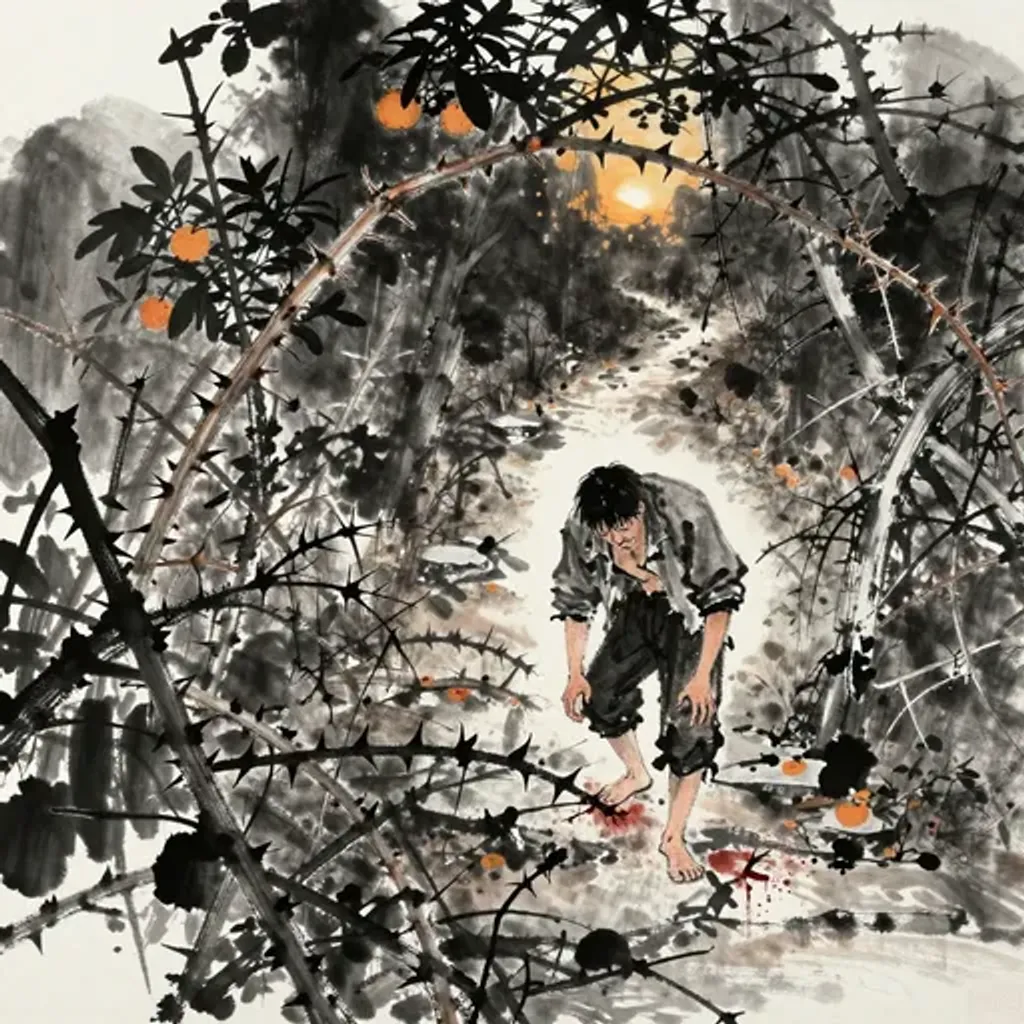
路多枳棘,步刺我足。不利孤客,為心作毒。
The road thick with thorns and brambles; each step pierces my feet. Unfavorable for the lone traveler; it becomes poison to the heart.
— Jiao Yanshou, Yilin (Forest of Changes), 1st century BC
Commentary
Mountain above lake returns to itself — Decrease unchanged, the pattern reinforced. The road bristles with thorns and brambles, each step piercing the foot. This path is no friend to the solitary traveler; it poisons the heart. When Decrease transforms into itself, there is no escape from the dynamic of diminishment. The thorns multiply underfoot, and the lone walker has no companion to share the burden or clear the way. From Decrease to Decrease, the recursion intensifies: what was voluntary sacrifice becomes compulsive self-harm, the road itself becoming hostile. The verse captures the existential weight of isolation within a system designed to take. Solitude makes every thorn sharper; without reciprocity, Decrease is just loss.
損 → 益
Hexagram 41 → Hexagram 42: Increase
Changing lines: 2, 5
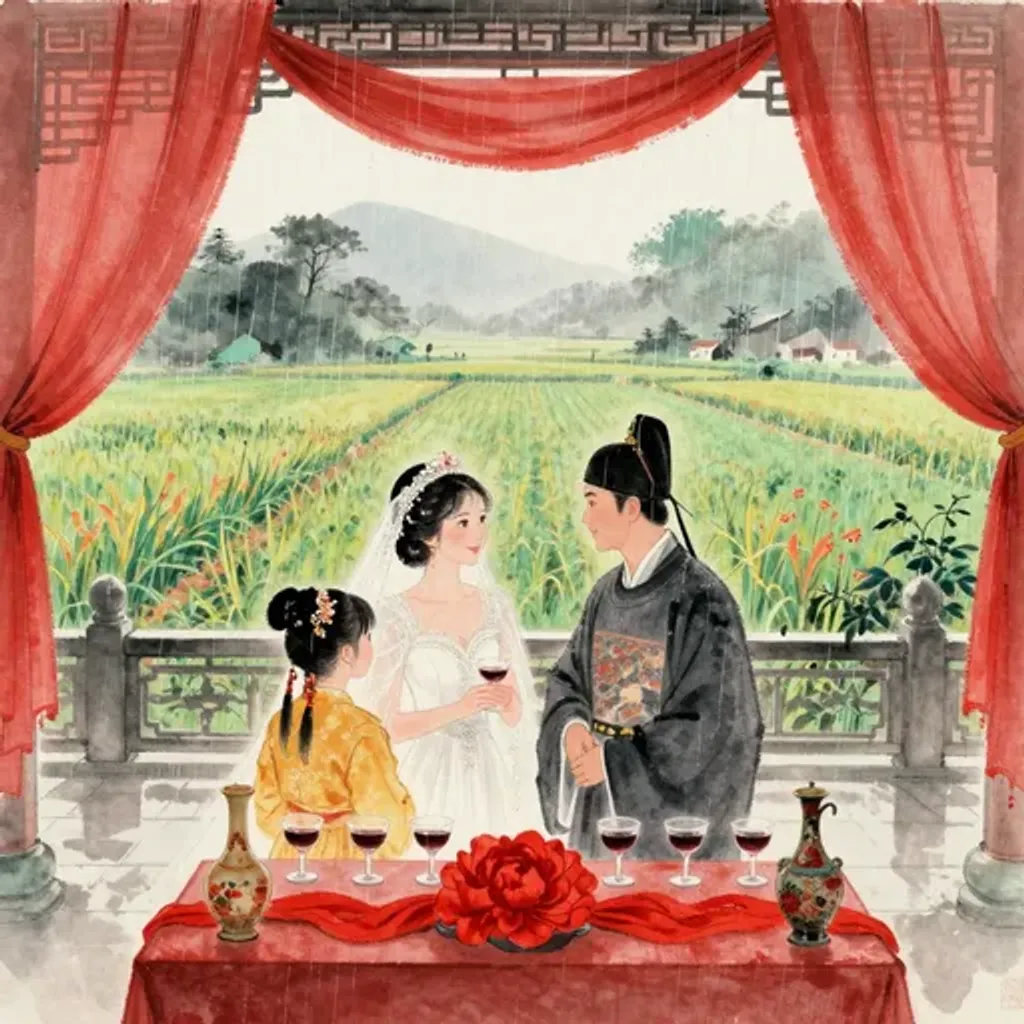
雨師娶婦,黃岩季子。成禮既婚,相呼面南。膏澤應時,年豐大喜。
The Rain Master takes a bride, the youngest daughter of Huangyan. Rites completed, the marriage made; they face each other, turning south. Timely rain and rich moisture; a bountiful year, great rejoicing.
— Jiao Yanshou, Yilin (Forest of Changes), 1st century BC
Commentary
Mountain above lake gives way to wind above thunder — Increase, Decrease's complementary opposite. The Rain Master takes a wife, the young lord of Huang Cliff. The rites are completed and the marriage sealed; the couple face south together. Timely rains and sweet dew fall in their season, bringing a year of great harvest and joy. The Rain Master's wedding is a fertility myth: when the rain deity finds his consort, the cosmic union produces the moisture that sustains all life. From Decrease to Increase, the reversal is complete. The mountain that suppressed the lake becomes wind that amplifies thunder — every sacrifice repaid with compound interest. The verse enacts the fundamental promise: decrease faithfully, and increase follows as surely as rain follows the marriage of heaven and earth.
損 → 夬
Hexagram 41 → Hexagram 43: Breakthrough
Changing lines: 3, 4, 5, 6
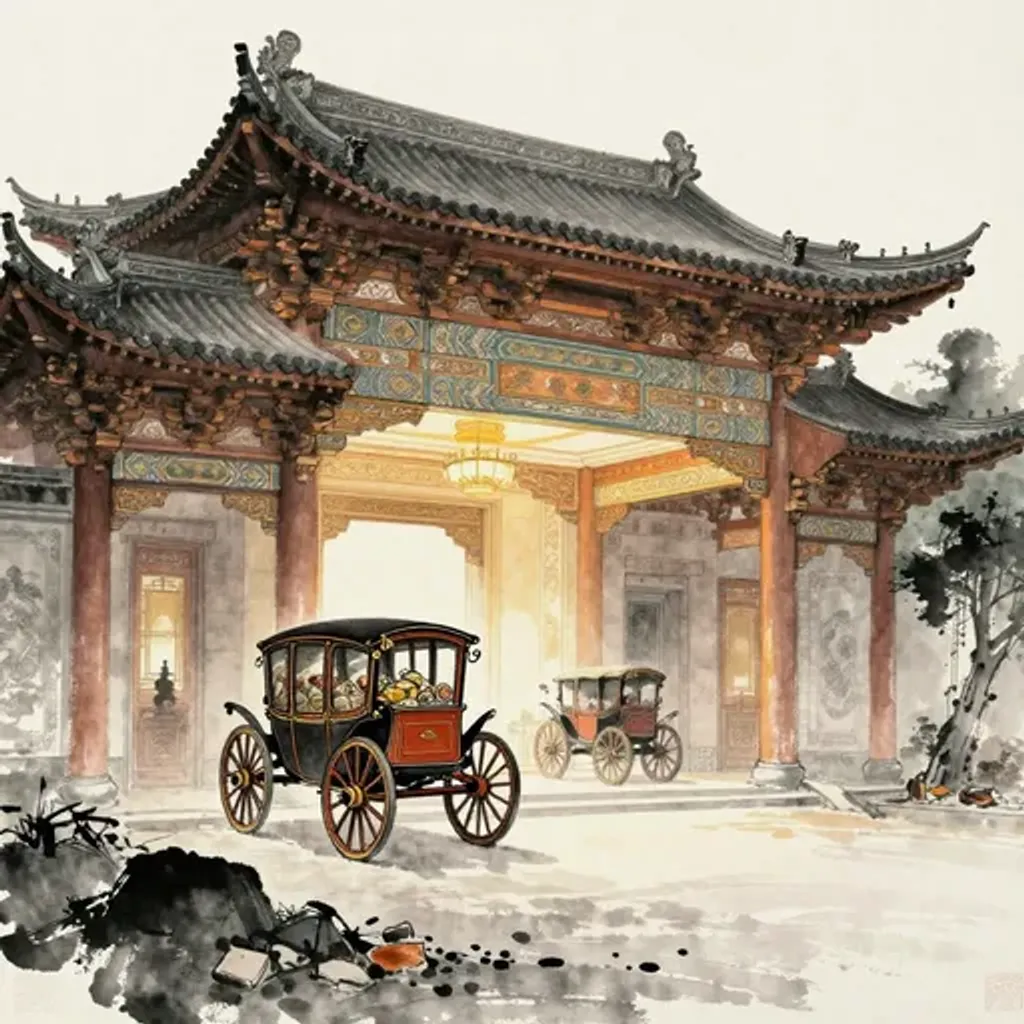
蓄積有餘,糞土不居。美哉輪奐,出有高車。
Stores accumulated in surplus; dung and filth do not linger. How fine, how splendid the halls; going out, there is a grand carriage.
— Jiao Yanshou, Yilin (Forest of Changes), 1st century BC
Commentary
Mountain above lake transforms into lake above heaven — Breakthrough, where accumulated water bursts upward in decisive release. Stores overflow with surplus; filth and dross have no place to settle. 'How magnificent, how splendid!' — the phrase echoes the Zuo Zhuan's praise of grand architecture. One rides forth in a high carriage. The verse celebrates abundance so complete that waste is expelled and beauty takes its place. From Decrease to Breakthrough, the lake rises above heaven in a surge of decisive action. Breakthrough's image is the lake gathered high above, ready to pour down. Decrease's patient accumulation has filled the reservoir to bursting; now the dam breaks and wealth flows outward. The splendid carriage is the visible reward of long restraint finally released.
損 → 姤
Hexagram 41 → Hexagram 44: Coming to Meet
Changing lines: 1, 3, 4, 5
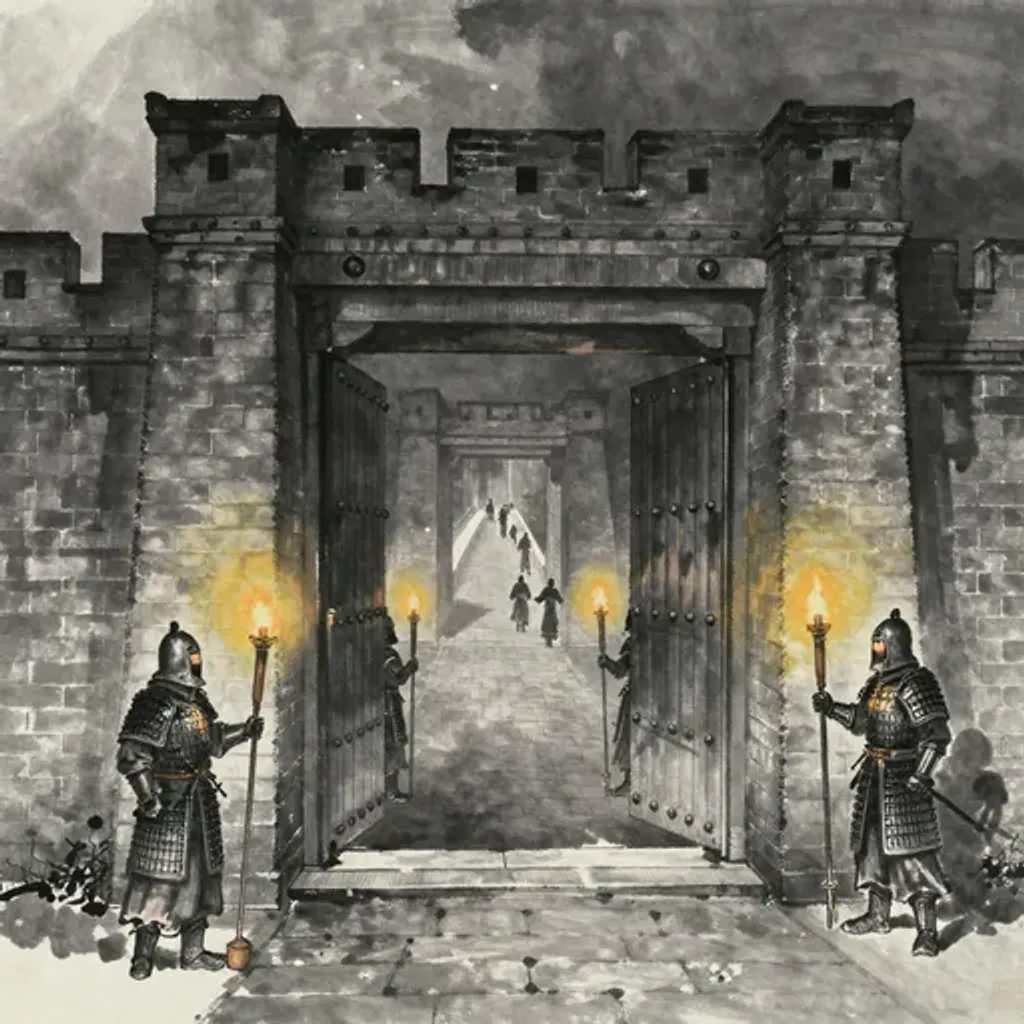
重門擊柝,介士守護。終有他道,雖驚不懼。
Double gates, striking the watchman's clapper; armed guards stand watch. Though there is another way in; despite the alarm, no fear.
— Jiao Yanshou, Yilin (Forest of Changes), 1st century BC
Commentary
Mountain above lake gives way to heaven above wind — Coming to Meet, where yin rises unexpectedly from below. Double gates are barred and watchmen strike the clappers; armored guards stand sentinel. Yet an alternative path exists: though startled, one need not fear. The 'double gates and striking clappers' quotes directly from the I-Ching's commentary on the Yijing's own hexagram system — the sage-kings' method of warning the people. From Decrease to Coming to Meet, the mountain releases its grip and heaven meets the wind rising from below. Coming to Meet warns of yin's insidious approach, yet the verse reassures: with proper vigilance, the encounter need not become an invasion. Decrease built the fortifications; now they hold against the unexpected guest.
損 → 萃
Hexagram 41 → Hexagram 45: Gathering Together
Changing lines: 1, 2, 4, 5, 6
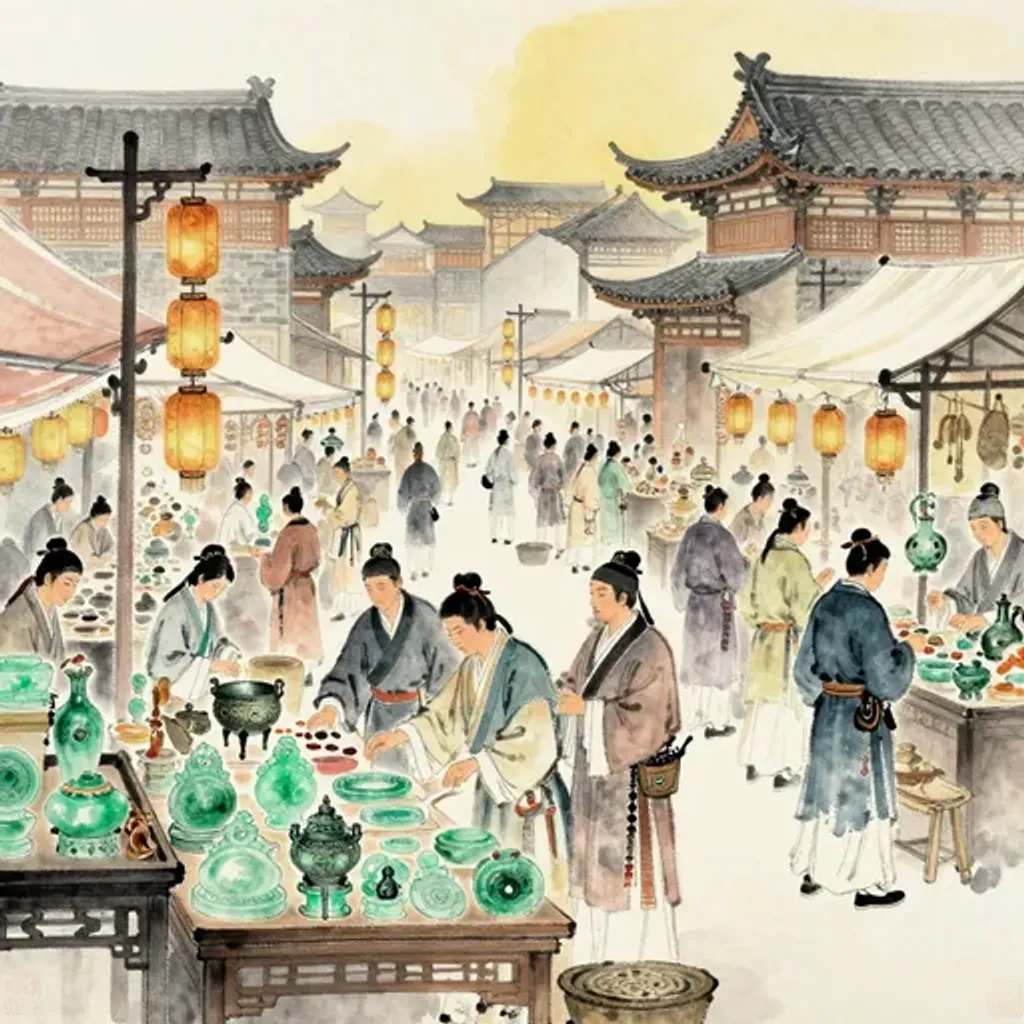
大都王市,稠人多寶。公孫宜賈,其貸萬倍。
The great capital's royal market; dense crowds, abundant treasures. Lord Gongsun trades well; his profits multiply ten thousandfold.
— Jiao Yanshou, Yilin (Forest of Changes), 1st century BC
Commentary
Mountain above lake becomes lake above earth — Gathering, where abundance pools and people congregate. The great capital and royal market bustle with crowds and treasures. A nobleman named Gongsun proves adept at commerce, his profits multiplying ten thousandfold. The verse paints a metropolitan scene of concentrated wealth: dense population, piled goods, and merchants who turn investment into fortune. From Decrease to Gathering, the mountain disappears while the lake spreads across the earth, collecting everything that flows toward the lowest ground. Gathering's image is the lake upon earth — natural convergence. Decrease's careful pruning has created the conditions for accumulation: by reducing waste and concentrating resources, the market achieves the critical mass where wealth generates more wealth.
損 → 升
Hexagram 41 → Hexagram 46: Pushing Upward
Changing lines: 1, 3, 6
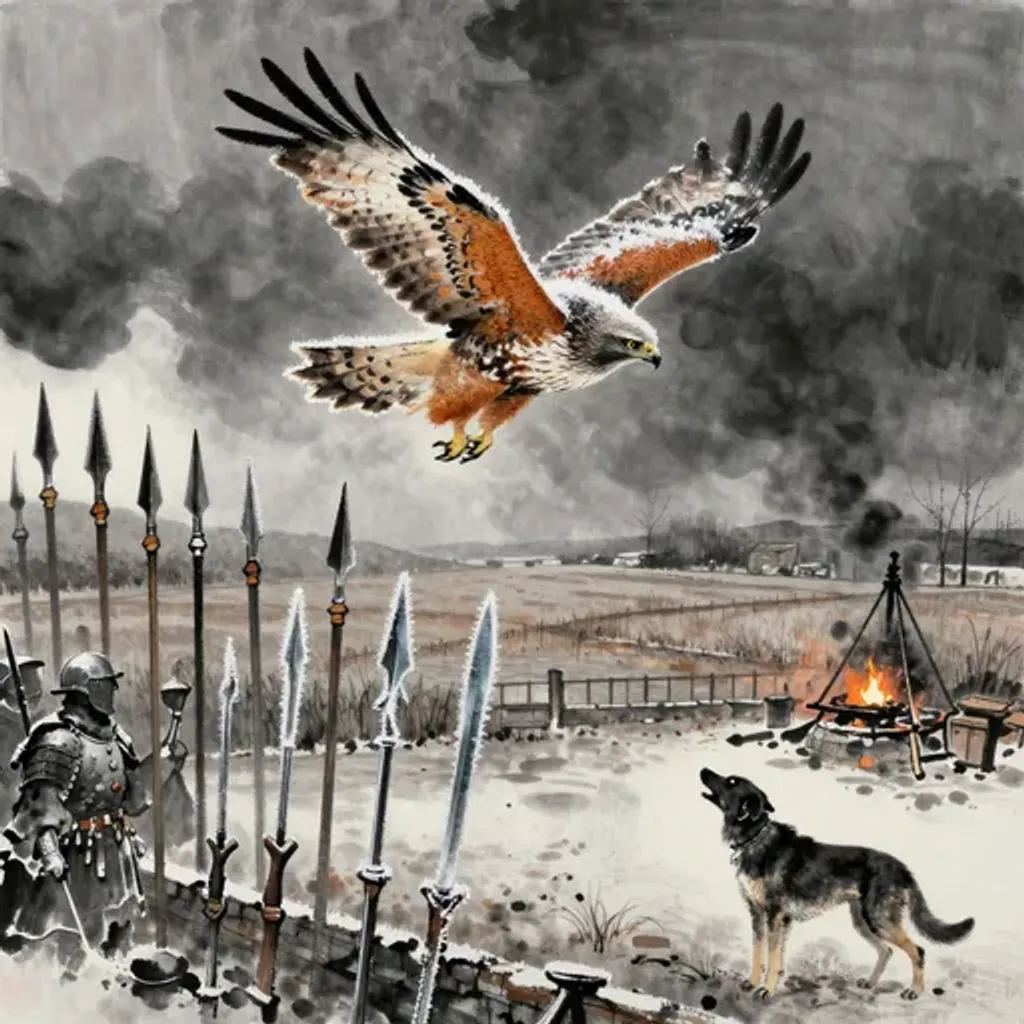
秋隼冬翔,數被嚴霜。甲兵當庭,萬物不生。雄犬夜鳴,民擾以驚。
The autumn falcon soars in winter; repeatedly struck by bitter frost. Arms and armor fill the courtyard; the ten thousand things cannot grow. The male hound howls at night; the people are disturbed and alarmed.
— Jiao Yanshou, Yilin (Forest of Changes), 1st century BC
Commentary
Mountain above lake yields to earth above wind — Pushing Upward, where growth proceeds steadily from below. Yet the verse paints not growth but devastation: an autumn hawk soars through winter skies, battered by frost. Weapons fill the courtyard, nothing grows. A war dog howls through the night; the people are terrified. Every image negates the promise of organic ascent. From Decrease to Pushing Upward, the mountain should give way to wood rising within earth — gradual, patient growth. Instead, the seasonal disruption freezes the process: frost in the wrong season, weapons where seedlings should be, nocturnal alarms instead of quiet germination. Decrease misapplied as military requisition strips the earth of its capacity to nurture upward growth.
損 → 困
Hexagram 41 → Hexagram 47: Oppression
Changing lines: 1, 4, 5, 6
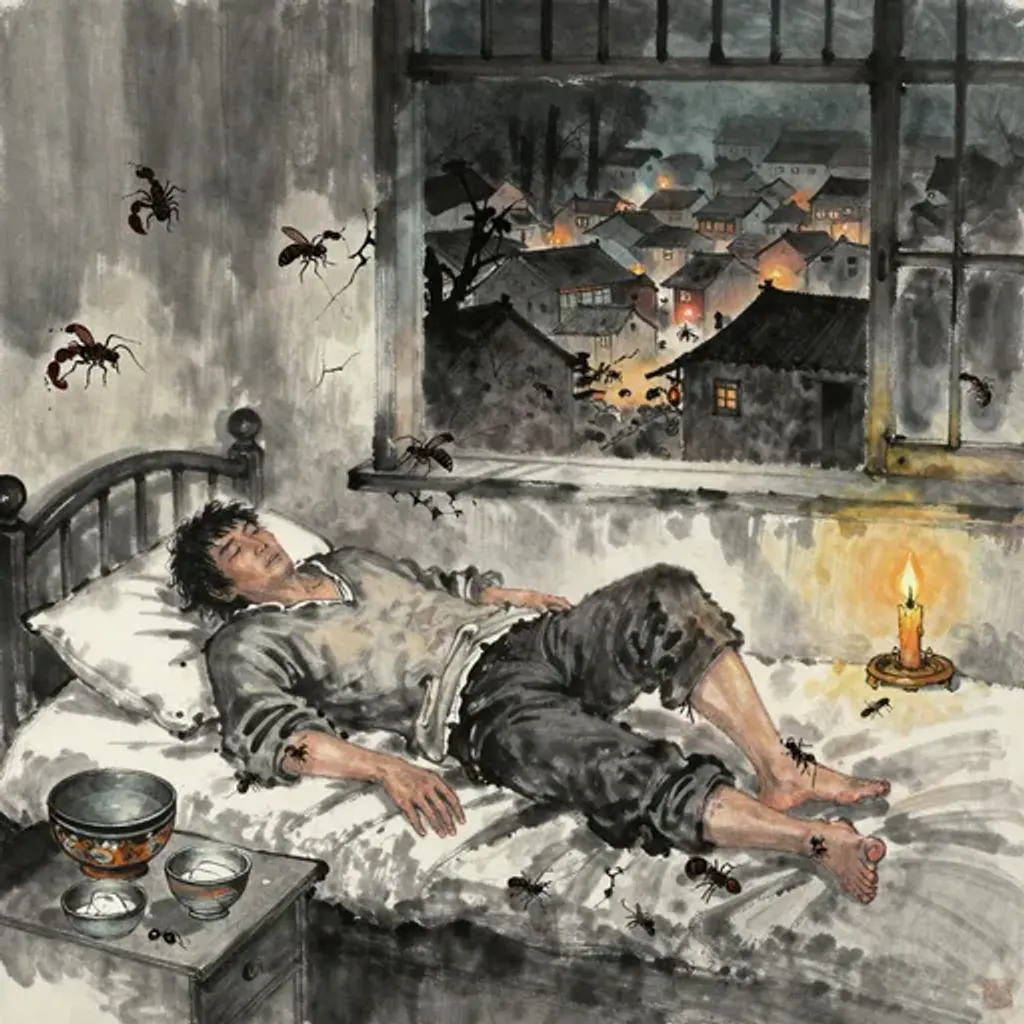
招禍致凶,來螫我邦。痛在手足,不得安息。
Inviting disaster, bringing calamity; stinging insects plague our land. Pain in hands and feet; unable to find rest.
— Jiao Yanshou, Yilin (Forest of Changes), 1st century BC
Commentary
Mountain above lake transforms into lake above water — Oppression, where the lake has leaked dry and water sinks below. Calamity is invited and misfortune drawn in: stinging venom strikes the realm. Pain seizes the hands and feet; there is no rest. The verse describes affliction that is both invited and inescapable — the language of 'inviting disaster' implies agency, a calamity brought upon oneself. From Decrease to Oppression, the mountain vanishes while the lake empties above water that has drained away. Oppression is the hexagram of exhausted resources: the lake without water, the well without sustenance. Decrease here has been carried past all useful limit, depleting the very reserves that might have provided relief. The venom in the limbs is the body politic consuming itself.
損 → 井
Hexagram 41 → Hexagram 48: The Well
Changing lines: 1, 3, 5, 6
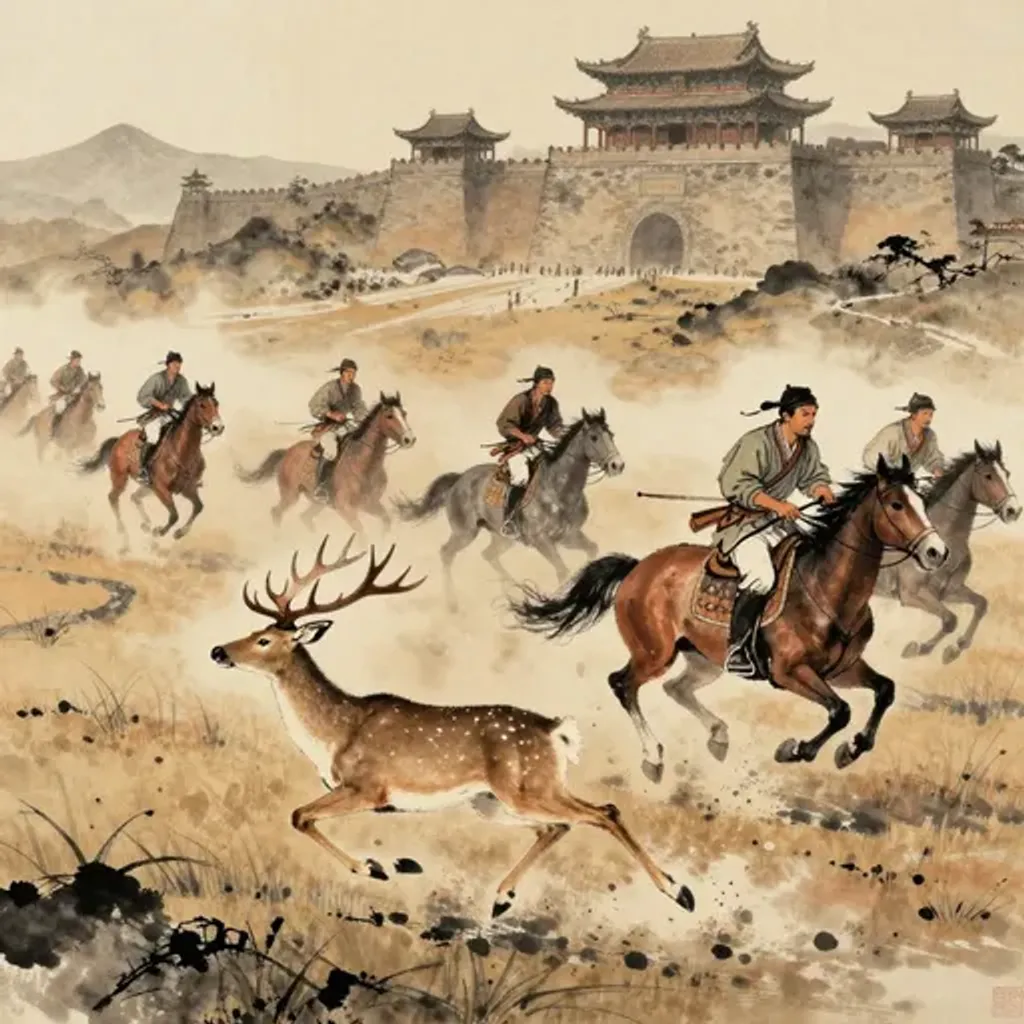
秦失其鹿,疾走先得。勇夫慕義,君子變服。
Qin lost its deer; the swift runner seizes it first. The brave man, moved by righteousness; the gentleman changes his garb.
— Jiao Yanshou, Yilin (Forest of Changes), 1st century BC
Commentary
Mountain above lake becomes water above wind — the Well, an inexhaustible source that nourishes without being depleted. 'When Qin lost its deer, the swift runner seized it first.' This famous phrase from Kuai Tong's speech in the Shiji describes the collapse of the Qin dynasty as a deer escaping its owner — whoever runs fastest claims the empire. Brave men rally to righteousness; the gentleman changes his garments, adopting a new role for a new age. From Decrease to the Well, the mountain dissolves while water rises through wood — the well's eternal cycle of drawing from below. The deer metaphor captures the moment of dynastic transition: when the old order decreases to nothing, a fresh source must be found. The Well never runs dry; the gentleman who changes costume survives the revolution.
損 → 革
Hexagram 41 → Hexagram 49: Revolution
Changing lines: 2, 3, 4, 5, 6
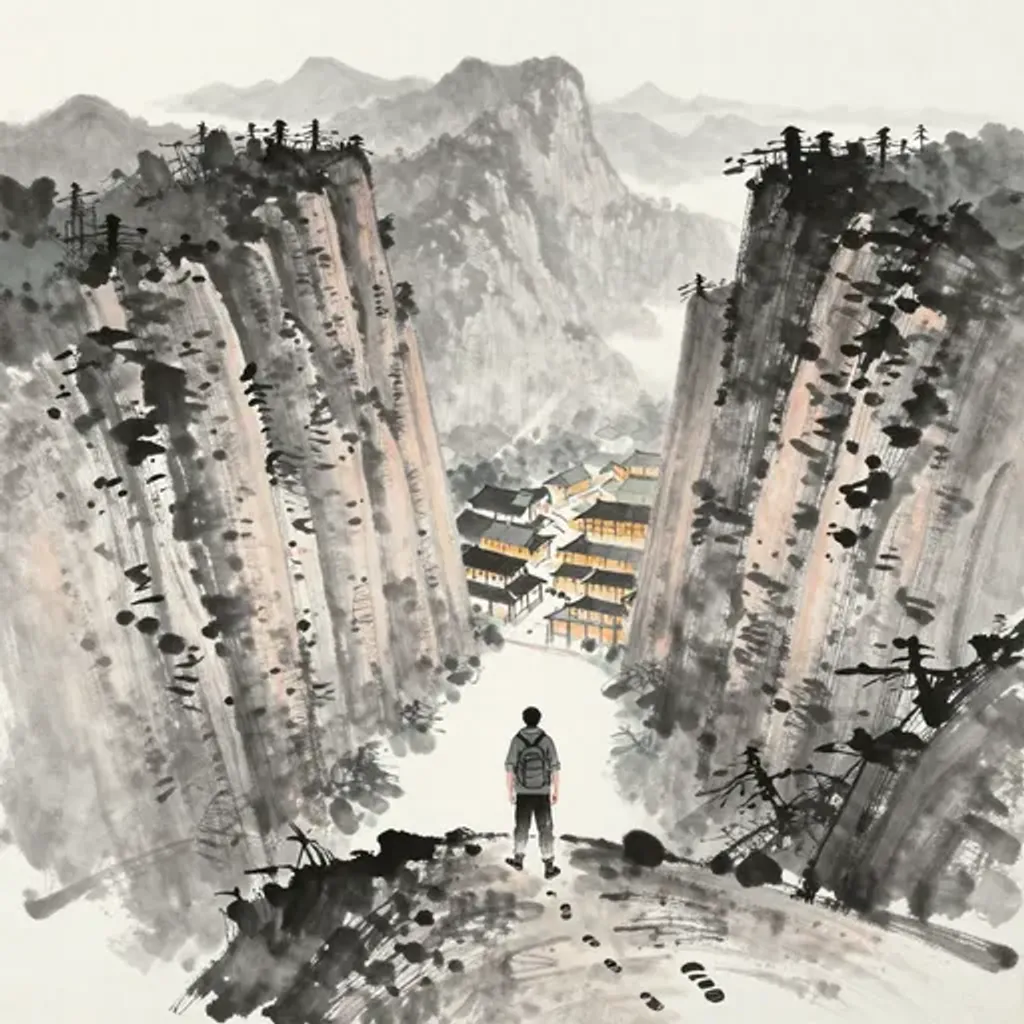
山陵四塞,遏我逕路。欲前不得,復還故處。
Mountain ridges block all four sides; barring my path and road. Wishing to advance but unable; returning again to the old place.
— Jiao Yanshou, Yilin (Forest of Changes), 1st century BC
Commentary
Mountain above lake gives way to lake above fire — Revolution, where old structures are consumed and replaced. Mountains block the way on all four sides, cutting off the path entirely. One wishes to advance but cannot; one turns back to the place of origin. The verse depicts total encirclement — a traveler hemmed in by terrain with no way through. From Decrease to Revolution, the mountain becomes the lake that quenches fire: the revolutionary impulse is drowned before it can ignite. Revolution demands that old forms be burned away, but here the old terrain refuses to yield. Decrease has removed the resources for breakthrough without creating an opening. The traveler who returns to the starting point has lost both ground and supplies — revolution attempted without sufficient preparation ends in retreat.
損 → 鼎
Hexagram 41 → Hexagram 50: The Cauldron
Changing lines: 1, 3, 4
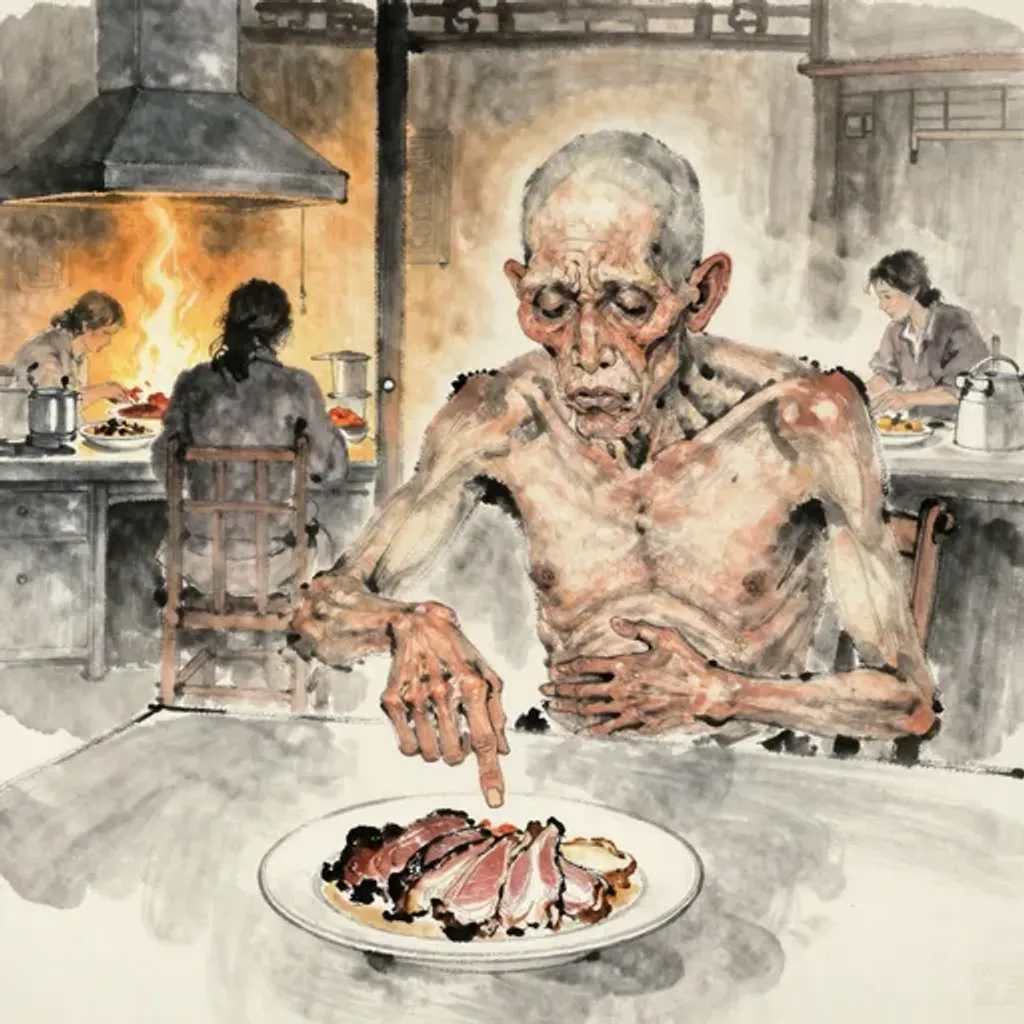
一指食肉,口无所得。舌嚵於腹。
One finger points at the meat; the mouth obtains nothing. The tongue craves but the belly stays empty.
— Jiao Yanshou, Yilin (Forest of Changes), 1st century BC
Commentary
Mountain above lake transforms into fire above wind — the Cauldron, vessel of sacred transformation. One finger points at meat, but the mouth receives nothing. The tongue craves what the belly lacks. The verse is a study in tantalization: sustenance is visible, proximate, yet unreachable. A single finger gestures toward the feast but cannot convey it to the mouth. From Decrease to the Cauldron, the mountain becomes fire that should cook and transform raw material into nourishment. The Cauldron's promise is alchemical change — base ingredients refined into something higher. But here the transformation stalls: the cauldron is present, the food is present, yet the mechanism of transfer fails. Decrease has removed the means of conveyance; the gap between seeing and eating becomes unbridgeable.
損 → 震
Hexagram 41 → Hexagram 51: The Arousing Thunder
Changing lines: 2, 4, 6
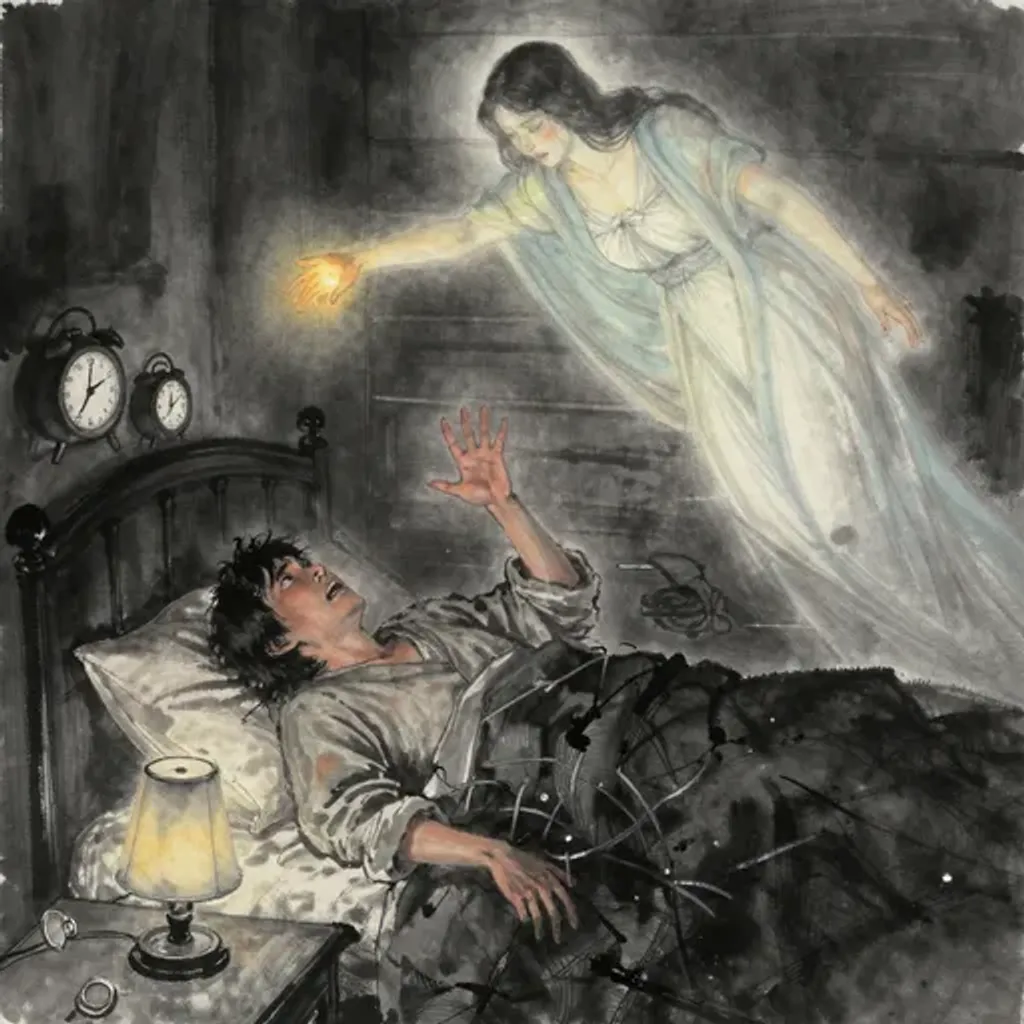
晨夜驚駭,不知所止。皇母相佑,卒得安處。
Dawn and night, startled and terrified; not knowing where to stop. The August Mother offers her aid; at last finding a place of peace.
— Jiao Yanshou, Yilin (Forest of Changes), 1st century BC
Commentary
Mountain above lake yields to doubled thunder — the Arousing, shock upon shock. Night and morning, one is startled and terrified, not knowing where to stop. Yet the Divine Mother offers her protection, and finally one finds a place to rest. The verse moves from disorientation to rescue: the shaking never stops until a maternal force intervenes. From Decrease to the Arousing, the mountain splits into thunder while the lake adds its own rumble — double thunder, the hexagram of successive shocks that test the cultivated person. Decrease's steady discipline is violently disrupted, but the verse promises that after the shaking subsides, a sacred protector ensures survival. The 'Imperial Mother' may reference a deity like the Queen Mother of the West — celestial compassion descending to steady what Decrease alone cannot hold.
損 → 艮
Hexagram 41 → Hexagram 52: Keeping Still Mountain
Changing lines: 1, 2, 3
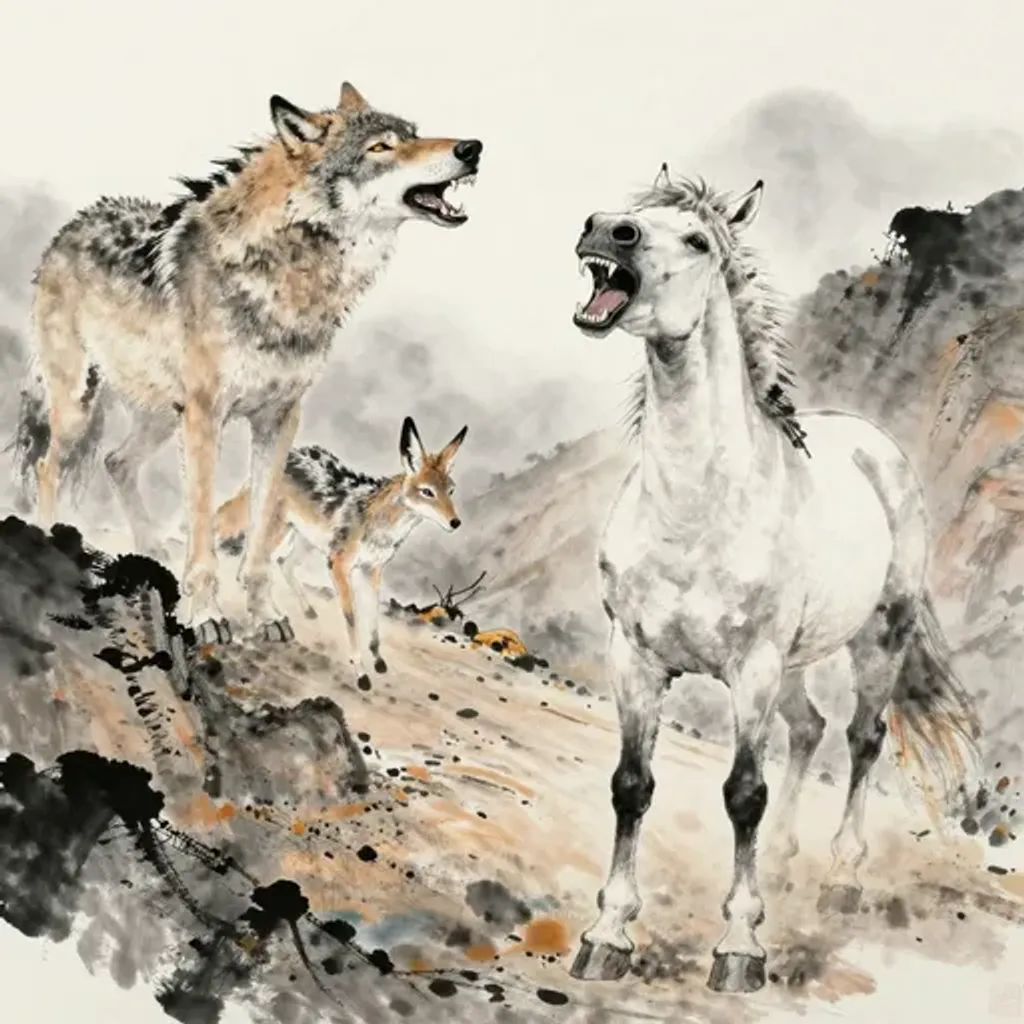
豺狼所言,語无成全。誤我白馬,使乾口來。
What the wolf and jackal speak; their words hold nothing true. They deceive my white horse; making it come with a parched mouth.
— Jiao Yanshou, Yilin (Forest of Changes), 1st century BC
Commentary
Mountain above lake becomes doubled mountain — Keeping Still, absolute cessation. The jackal and wolf speak, but their words accomplish nothing. Their counsel leads the white horse astray, leaving it to arrive parched and dry-mouthed. Predatory advisors offer promises that disintegrate upon contact with reality. The white horse — a symbol of noble purpose — is deceived and arrives exhausted, having followed a false path. From Decrease to Keeping Still, the lake evaporates entirely and only twin mountains remain: immovable, silent, refusing to engage. Decrease here has removed all fluidity, all adaptability. The wolves' empty words are the last motion in a world freezing into paralysis. Stillness becomes not meditation but the rigid aftermath of betrayal — everything stopped, nothing nourished.
損 → 漸
Hexagram 41 → Hexagram 53: Development
Changing lines: 1, 2, 3, 5
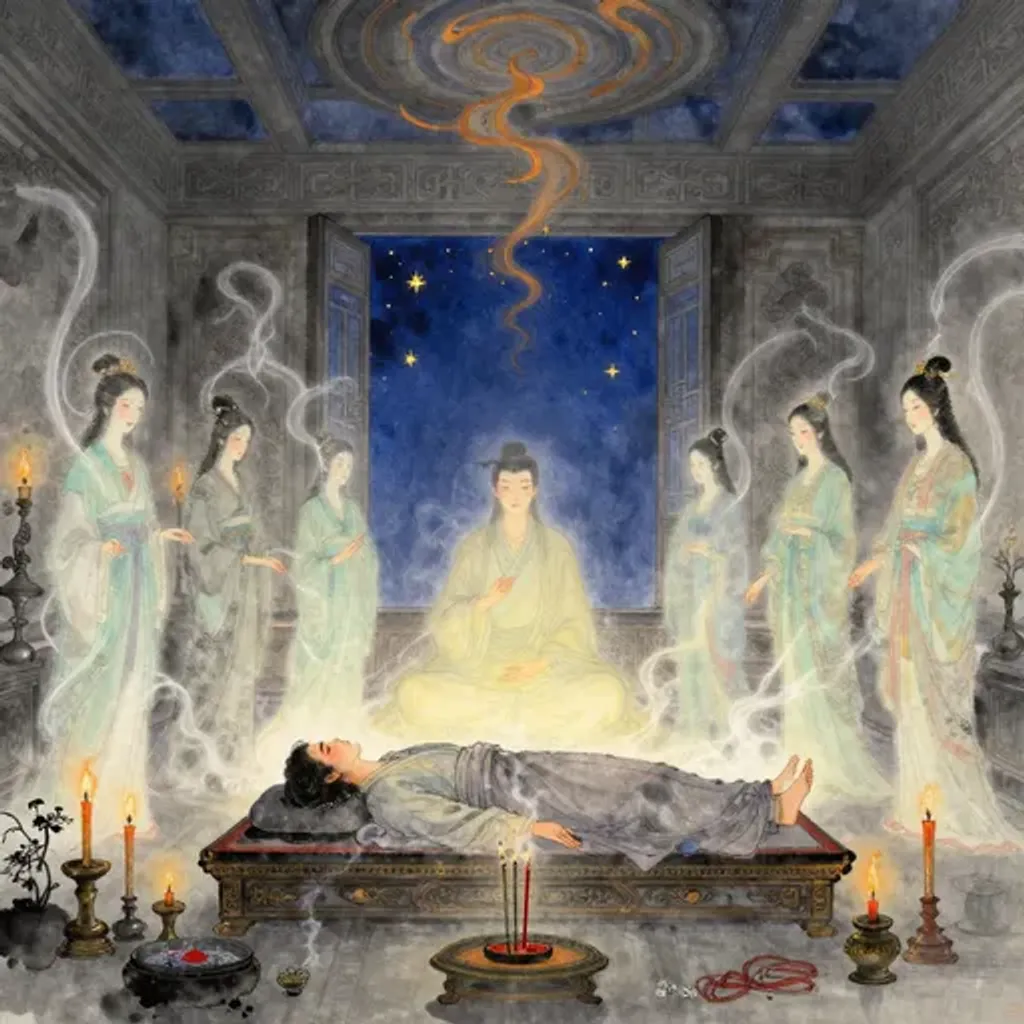
呼精靈來,魄生无憂。疾病愈瘳,解我患愁。
Calling the vital spirits to come; the soul is born anew without worry. Illness healed and cured; dissolving my grief and sorrow.
— Jiao Yanshou, Yilin (Forest of Changes), 1st century BC
Commentary
Mountain above lake gives way to wind above mountain — Development, where growth proceeds gradually like a tree on a mountainside. Spirits are summoned and the soul is called back; the vital force is reborn without sorrow. Illness heals and suffering ends; worries and anxieties dissolve. The verse describes a shamanic healing ritual: calling the wandering spirit home, restoring the patient's vitality. From Decrease to Development, the lake becomes wind that rises through the mountain's trees — slow, organic growth replacing the lake's downward drainage. Development's key quality is gradual restoration: the goose alighting step by step, the tree growing ring by ring. The healing ritual enacts exactly this tempo. Decrease removed the illness by stripping it away; Development rebuilds health through patient, incremental return of the life force.
損 → 歸妹
Hexagram 41 → Hexagram 54: The Marrying Maiden
Changing lines: 4, 6
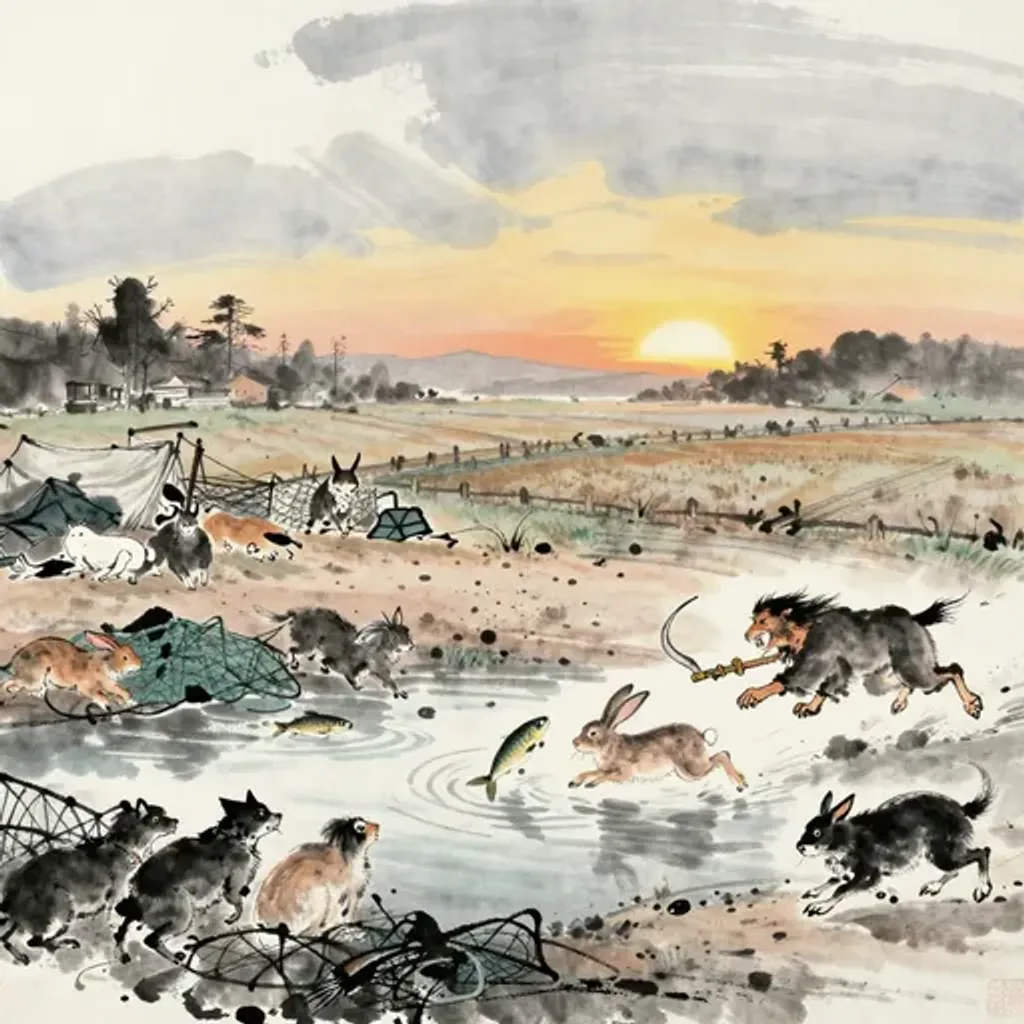
牧羊逐兔,使魚相捕。任非其人,卒歲无功,不免辛苦。
Herding sheep to chase rabbits; sending fish to catch one another. Entrusting the task to the wrong person; at year's end, no achievement, unable to escape bitter toil.
— Jiao Yanshou, Yilin (Forest of Changes), 1st century BC
Commentary
Mountain above lake transforms into thunder above lake — the Marrying Maiden, where impetuousness leads to improper union. Shepherds chase rabbits, fish are set to catch fish — every task assigned to the wrong agent. The person is unfit for the role, and by year's end nothing is accomplished; hardship is the only reward. The verse is a catalogue of categorical errors: sheep cannot catch hares, fish cannot hunt fish, and a miscast appointee cannot fulfill a mandate. From Decrease to the Marrying Maiden, the mountain breaks into thunder crashing above the lake — impulsive action that disrupts the calm surface. The Marrying Maiden warns against unions made in haste without proper alignment. Decrease demands discernment about what to sacrifice; here, discernment itself has been sacrificed.
損 → 豐
Hexagram 41 → Hexagram 55: Abundance
Changing lines: 2, 3, 4, 6
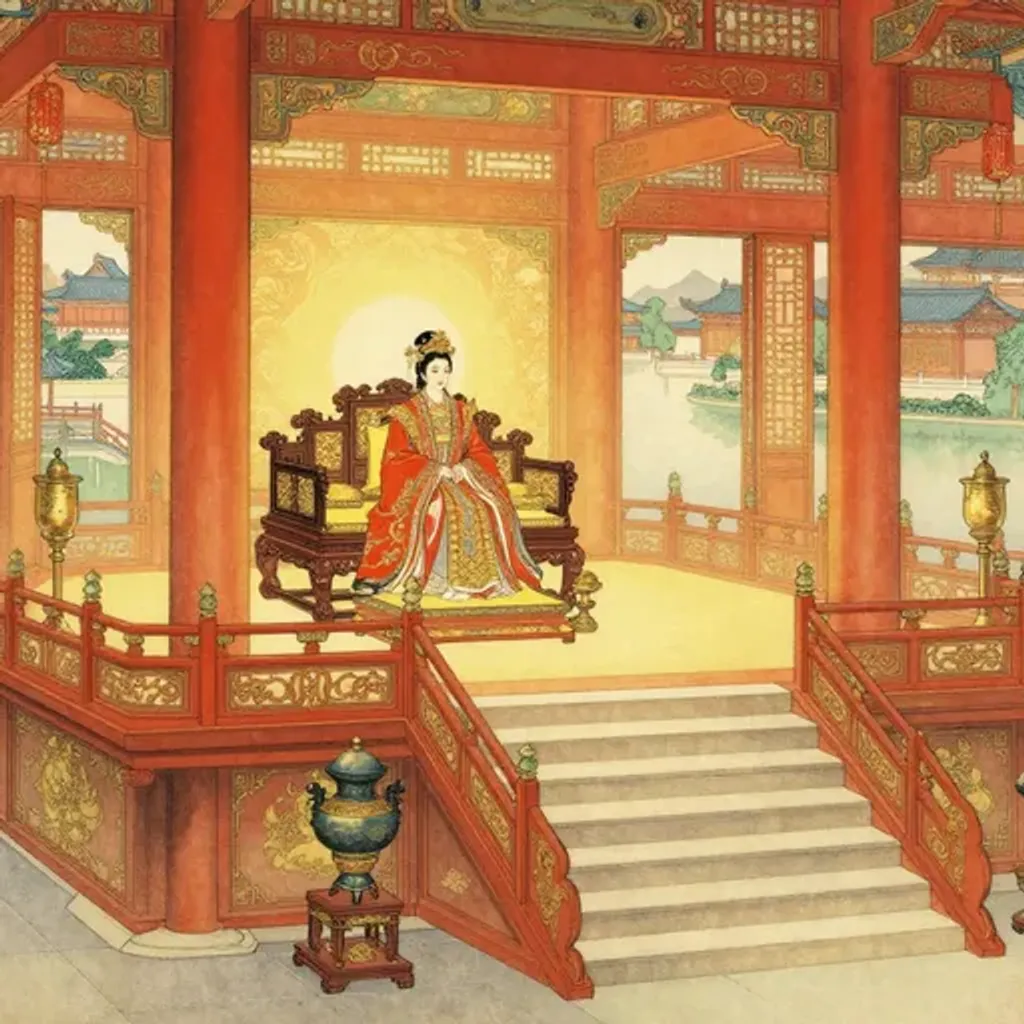
堂祥上樓,與福俱居。席地妃治,國安无憂。
Auspicious omens ascend the hall; dwelling together with fortune. The consort seated, the realm well-governed; the state is peaceful, without worry.
— Jiao Yanshou, Yilin (Forest of Changes), 1st century BC
Commentary
Mountain above lake yields to thunder above fire — Abundance, where illumination and action combine at their peak. Auspicious omens ascend to the upper story; fortune takes up residence alongside the household. The consort governs with grace from her rightful seat; the state rests secure and free from worry. The verse envisions political abundance through proper domestic order — the consort in her place, blessings accumulating upward. From Decrease to Abundance, the mountain gives way to thunder and the lake ignites as fire — the maximum intensity of both movement and clarity. Decrease's restraint has cleared the way for this culmination: by sacrificing excess, the household arrives at the fullness that Abundance represents. Thunder and lightning together illuminate and animate; nothing is wasted, nothing is lacking.
損 → 旅
Hexagram 41 → Hexagram 56: The Wanderer
Changing lines: 1, 2, 3, 4
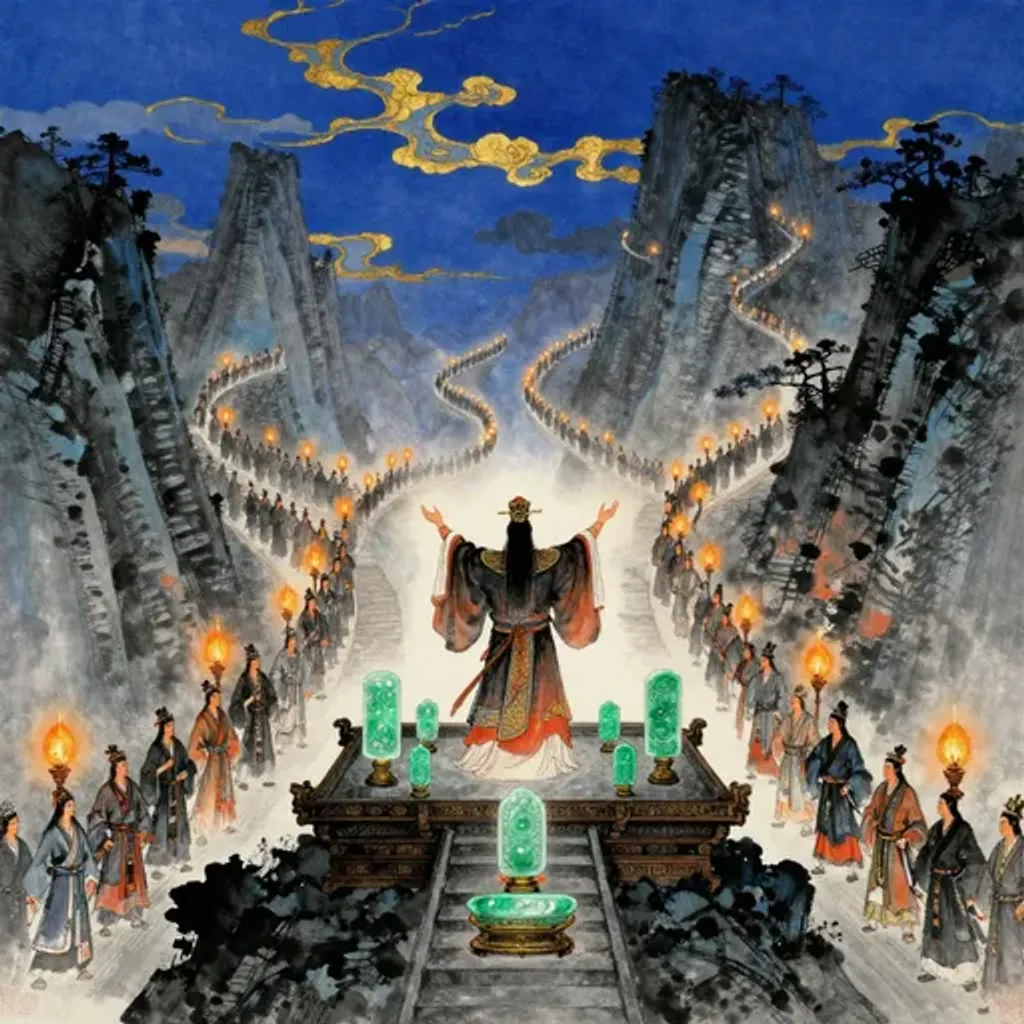
禹召諸神,會稽南山。執玉萬國,天下康安。
Yu summons the spirits; assembling at Kuaiji, the southern mountain. Ten thousand states present their jade; all under heaven is peaceful and secure.
— Jiao Yanshou, Yilin (Forest of Changes), 1st century BC
Commentary
Mountain above lake transforms into fire above mountain — the Wanderer, where the traveler passes through foreign lands with cautious discernment. Yu the Great summons the assembled spirits to Mount Kuaiji in the south. Ten thousand states present their jade tribute; all under heaven rests in peace and security. According to tradition, Yu convened the feudal lords at Kuaiji to establish order after taming the floods — the supreme act of legitimate assembly. From Decrease to the Wanderer, the lake ignites as fire atop the mountain, illuminating the landscape for the sojourner. The Wanderer suggests transience, yet Yu's gathering at Kuaiji transforms wandering into arrival. Decrease's sacrifice — Yu's legendary years of selfless toil, passing his own door three times without entering — earns the right to convene the world at a single mountain.
損 → 巽
Hexagram 41 → Hexagram 57: The Gentle Wind
Changing lines: 1, 3, 5
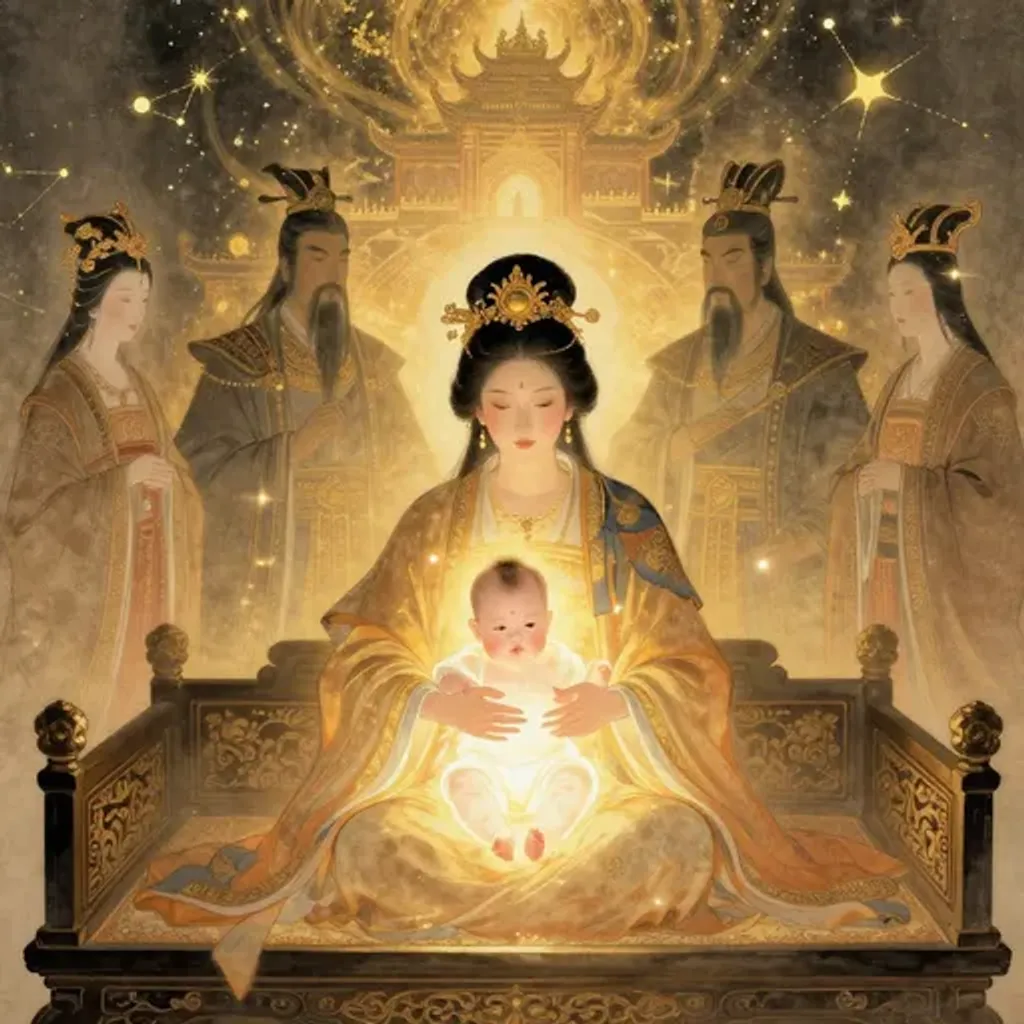
太姒文母,乃生聖子。昌發受命,為天下主。
Great Lady Si, the Cultured Mother; she bore a sage son. Chang and Fa received the mandate; becoming masters of all under heaven.
— Jiao Yanshou, Yilin (Forest of Changes), 1st century BC
Commentary
Mountain above lake yields to doubled wind — the Gentle, where penetrating influence spreads through quiet persistence. Tai Si, the 'Cultured Mother,' bore sagely sons: Chang and Fa received heaven's mandate and became rulers of all under heaven. Tai Si was the wife of King Wen of Zhou and mother of King Wu (Fa) and the Duke of Zhou. The Shijing praises her as inheriting the fine reputation of her mother-in-law Tai Ren. From Decrease to the Gentle, the mountain dissolves into doubled wind — influence that penetrates without force. Tai Si's contribution was not military or political but generative: she 'decreased' herself into the background, yet her sons' virtue radiated through the entire realm. The Gentle's doubled wind is maternal influence replicated across generations.
損 → 兌
Hexagram 41 → Hexagram 58: The Joyous Lake
Changing lines: 4, 5, 6
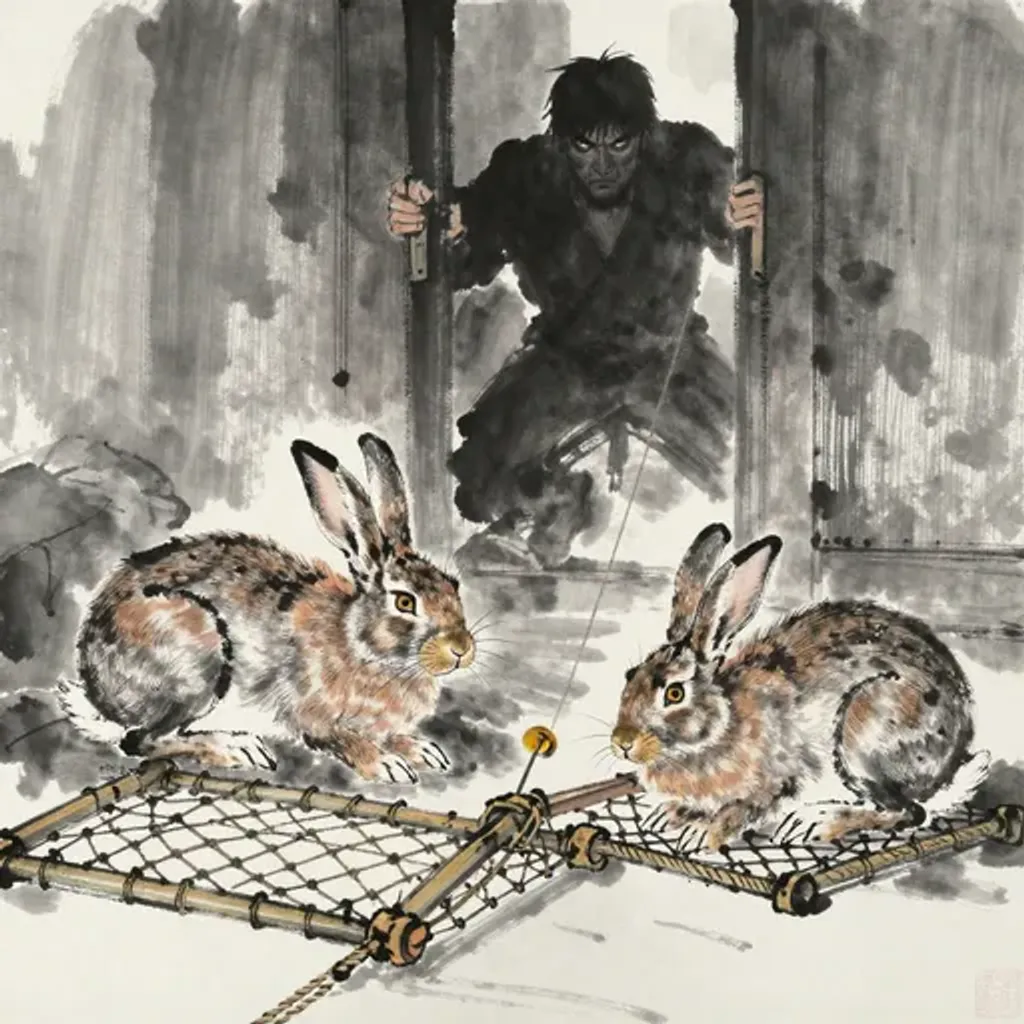
兩罝同室,兔无誰告,與狂相觸,蒙我以惡。
Two snares in one room; the rabbit has no one to tell. Colliding with a madman; smeared with his malice.
— Jiao Yanshou, Yilin (Forest of Changes), 1st century BC
Commentary
Mountain above lake transforms into doubled lake — the Joyous, where mutual delight overflows. Two snares share a single chamber, but the rabbit has no one to appeal to. Colliding with a madman, one is smeared with blame. The verse is claustrophobic: two traps in one room leave the rabbit no escape, and an encounter with a raving figure brings only disgrace. The 'madman' (狂) echoes the Shijing's 'not seeing Zidu, I meet only a madman' — expecting beauty but finding chaos. From Decrease to the Joyous, the mountain vanishes and the lake doubles — joy reflecting joy. But the verse reveals the shadow of doubled pleasure: when indulgence multiplies without restraint, the room becomes a cage and delight curdles into entrapment. Two joys without boundaries destroy the very creature they were meant to catch.
損 → 渙
Hexagram 41 → Hexagram 59: Dispersion
Changing lines: 1, 5
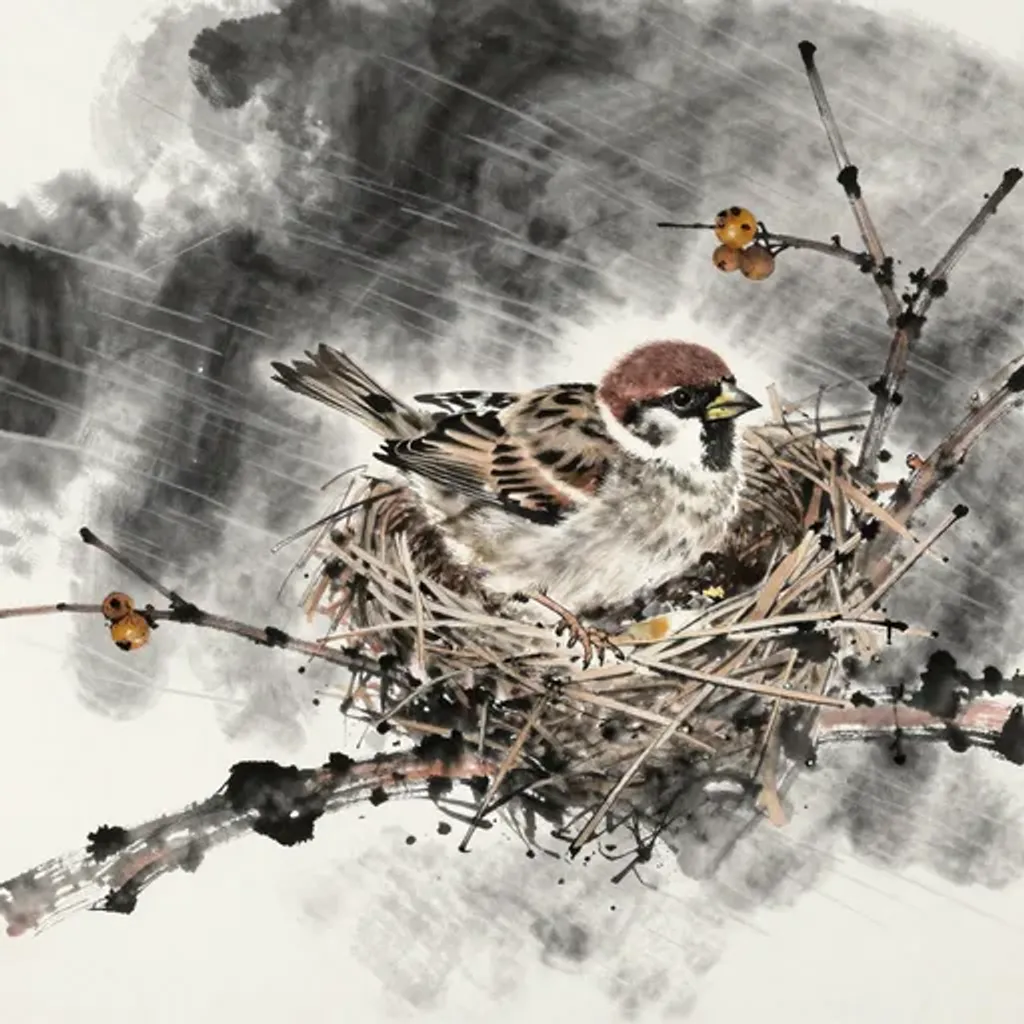
桃雀竊脂,巢於小枝。動搖不安,為風所吹。寒恐悚慄,常憂殆危。
The sparrow steals fat; nesting on a slender branch. Swaying, never at rest; blown about by the wind. Cold, shivering with fright; ever worrying over peril.
— Jiao Yanshou, Yilin (Forest of Changes), 1st century BC
Commentary
Mountain above lake gives way to wind above water — Dispersion, where cohesion dissolves and structures scatter. A sparrow steals grease, nesting on a slender branch. Swaying unsteadily, buffeted by wind, it shivers with cold and dread, forever anxious about danger. The image is exquisitely precarious: the tiny bird perches on a twig too thin to hold it, clutching stolen sustenance, rocked by every gust. From Decrease to Dispersion, the mountain crumbles and the lake fragments into water blown apart by wind. The sparrow's predicament embodies Dispersion perfectly: nothing holds together, nothing is secure. Decrease has stripped away the stable perch, and what remains is a creature clinging to a branch that the next wind will break, consumed by the very anxiety it sought to escape through theft.
損 → 節
Hexagram 41 → Hexagram 60: Limitation
Changing lines: 5, 6
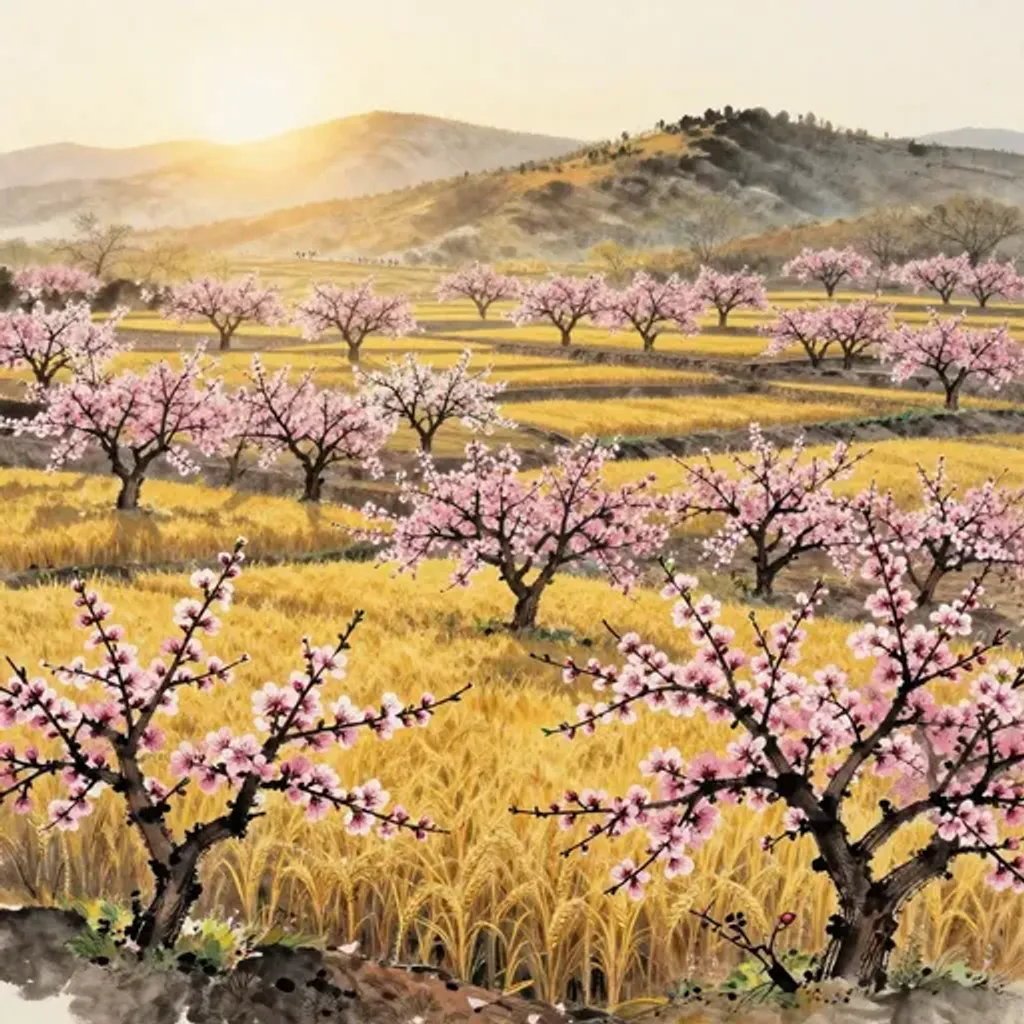
陽春長日,萬物華實,樂有利福。
Warm spring, long days; the ten thousand things flower and bear fruit. Joyful, possessing blessings and fortune.
— Jiao Yanshou, Yilin (Forest of Changes), 1st century BC
Commentary
Mountain above lake becomes water above lake — Limitation, where boundaries give shape to abundance. 'Long spring days, all things bloom and bear fruit: there is joy and profit and blessing.' The verse is pure seasonal celebration, radiant and unqualified. The yang light of spring, extended to its fullest, brings everything to fruition — flowers open, fruit sets, and the world overflows with goodness. From Decrease to Limitation, the mountain transforms into water held by the lake — the image of measured containment. Limitation's virtue is knowing how much is enough. The spring joy described here is not excess but seasonal rightness: each thing blooms in its proper measure, limited by the natural cycle. Decrease creates the discipline; Limitation channels it into sustainable abundance.
損 → 中孚
Hexagram 41 → Hexagram 61: Inner Truth
Changing lines: 5
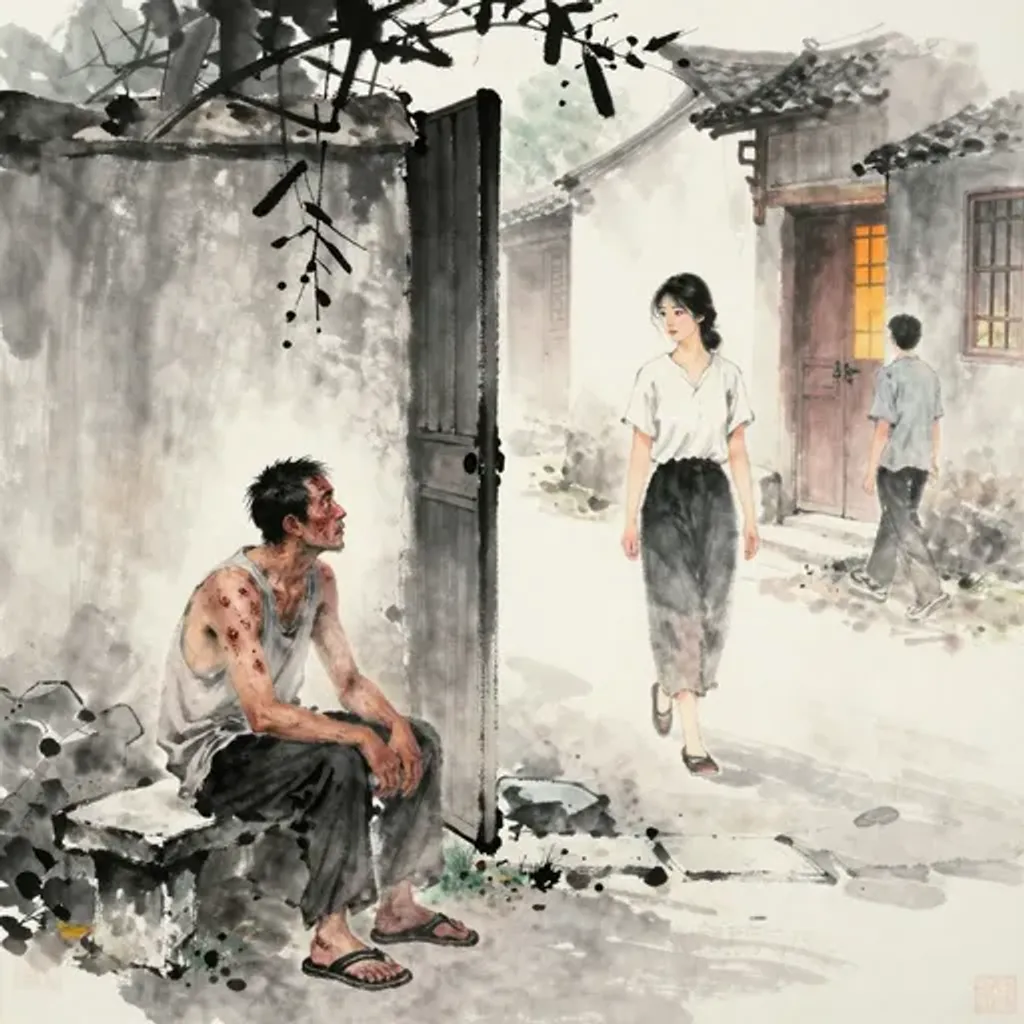
鄰不我顧,而望玉女。身疾瘡癩,誰肯媚者?
The neighbor does not look my way, yet I gaze upon the jade maiden. My body sick with sores and lesions; who would be willing to court me?
— Jiao Yanshou, Yilin (Forest of Changes), 1st century BC
Commentary
Mountain above lake gives way to wind above lake — Inner Truth, where sincerity penetrates like wind across water. The neighbor does not look at me, yet I gaze longingly at the beautiful woman. My body is covered with sores and lesions — who would find me attractive? The verse is a lament of unrequited desire compounded by self-awareness: the speaker knows his condition makes him repulsive, yet cannot stop longing for what is unattainable. From Decrease to Inner Truth, the mountain dissolves into wind that plays across the lake's surface — the transparency of water revealing what lies beneath. Inner Truth demands honesty, and the verse delivers it with painful clarity. Decrease has stripped away all pretense, leaving the speaker face to face with an unflattering truth: sincerity without capacity is just another form of suffering.
損 → 小過
Hexagram 41 → Hexagram 62: Small Exceeding
Changing lines: 1, 2, 3, 4, 6
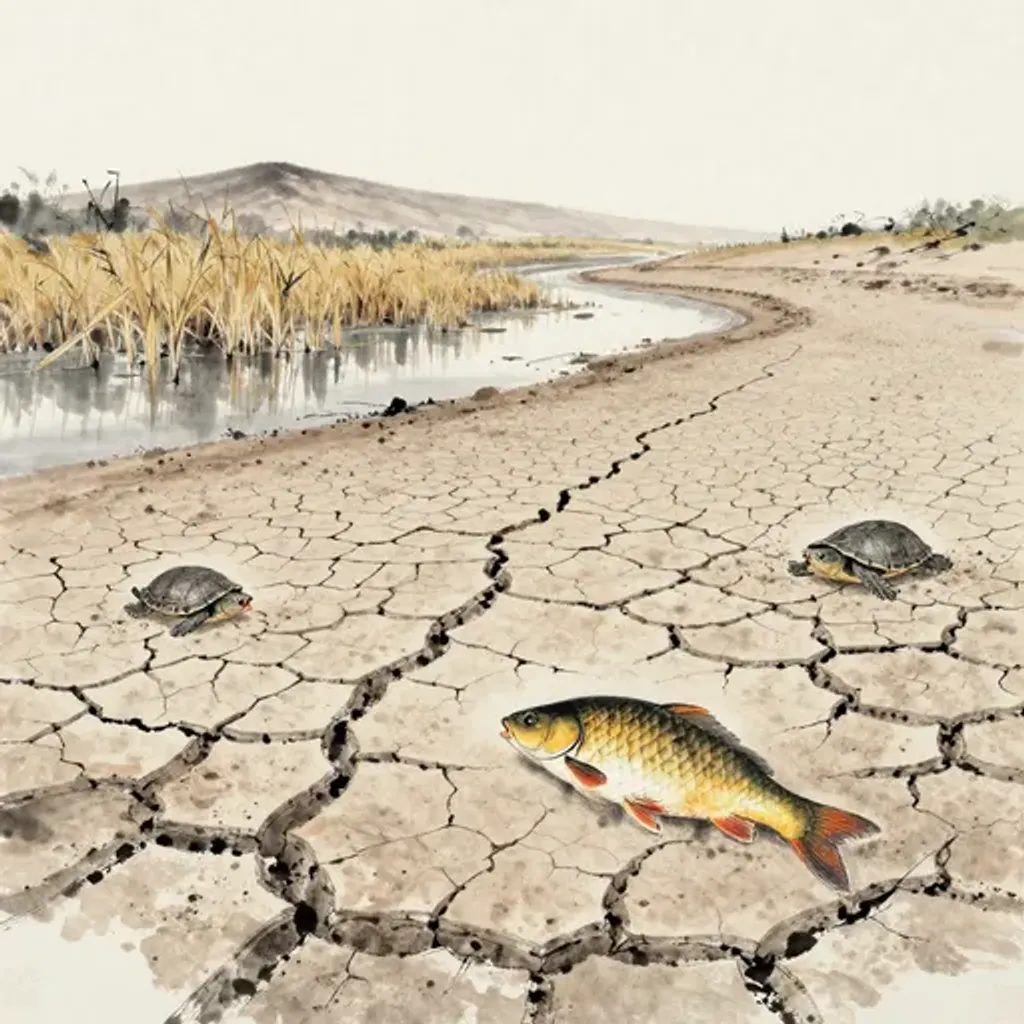
涸旱不雨,澤竭无流。魚鱉乾口,皇天不憂。
Parched drought without rain; the marshes dry, no water flows. Fish and turtles gasp with parched mouths; august Heaven shows no concern.
— Jiao Yanshou, Yilin (Forest of Changes), 1st century BC
Commentary
Mountain above lake transforms into thunder above mountain — Small Exceeding, where the small bird flies too high and loses its way. Drought grips the land without rain; the marsh dries up and streams cease to flow. Fish and turtles gasp with parched mouths, yet heaven shows no concern. The verse describes ecological catastrophe with theological silence: the creatures suffer, and the sky offers nothing. From Decrease to Small Exceeding, the lake evaporates into thunder that rumbles above the mountain without releasing rain — sound without substance, excess without effect. Small Exceeding warns against overreach in small matters; here even the small is denied. Decrease has emptied the reservoir, and the thunder's empty promise only mocks the drought below. Heaven's indifference is the final cruelty: the pattern decreases, and no one intervenes.
損 → 既濟
Hexagram 41 → Hexagram 63: After Completion
Changing lines: 2, 3, 5, 6
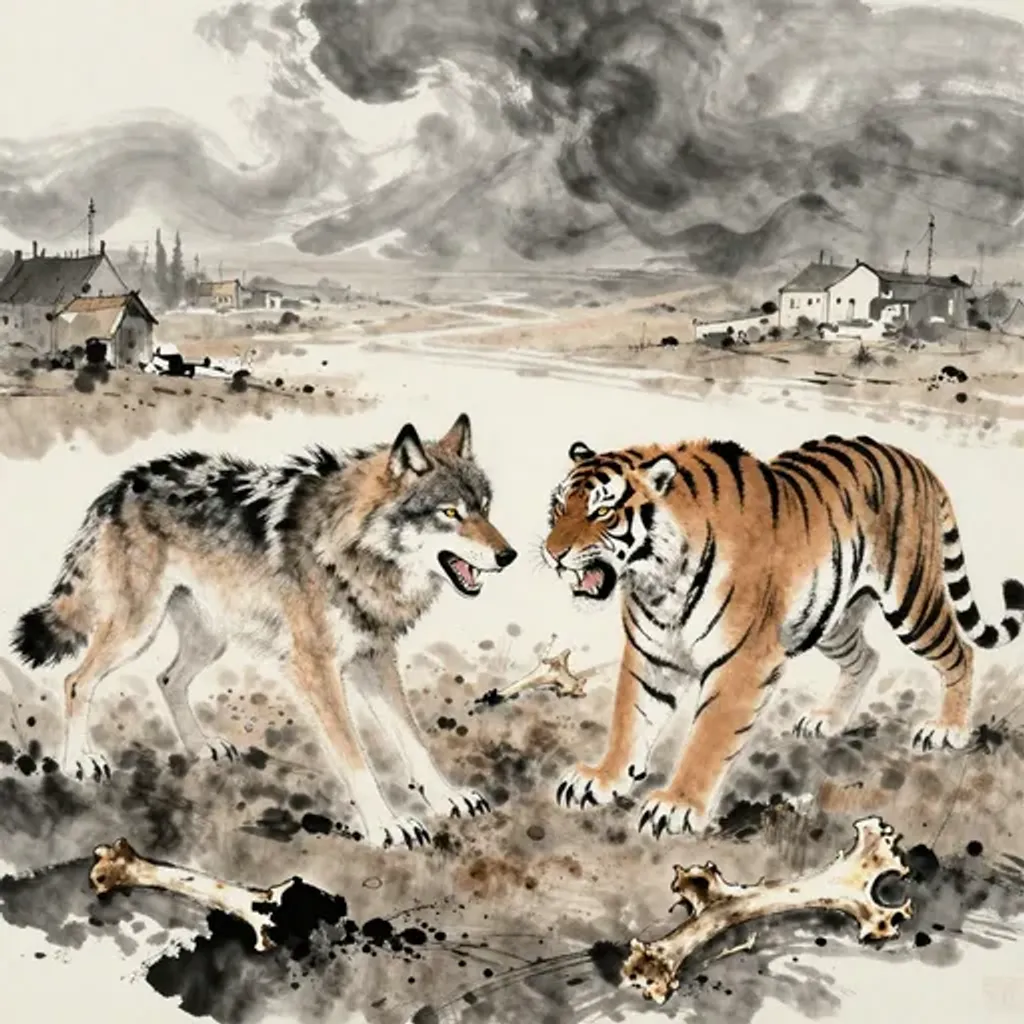
狼虎之鄉,日爭凶訟。受性貪饕,不能容縱。
A land of wolves and tigers; daily they contend in fierce dispute. Born with greedy, gluttonous natures; unable to yield or make room.
— Jiao Yanshou, Yilin (Forest of Changes), 1st century BC
Commentary
Mountain above lake gives way to water above fire — After Completion, where every element occupies its proper position yet stability remains precarious. Wolves and tigers prowl their territory, daily embroiled in fierce litigation. Their nature is rapacious and gluttonous; they cannot tolerate or accommodate. The verse depicts a domain where predators have established perfect mutual antagonism — each in its place, each at the other's throat. From Decrease to After Completion, the mountain settles as water perfectly atop fire: apparent order concealing imminent reversal. After Completion's warning is that the completed state is inherently unstable. The wolves and tigers have decreased nothing — neither appetite nor aggression. Without the discipline of genuine Decrease, After Completion becomes merely the organized expression of insatiable predation.
損 → 未濟
Hexagram 41 → Hexagram 64: Before Completion
Changing lines: 1, 4
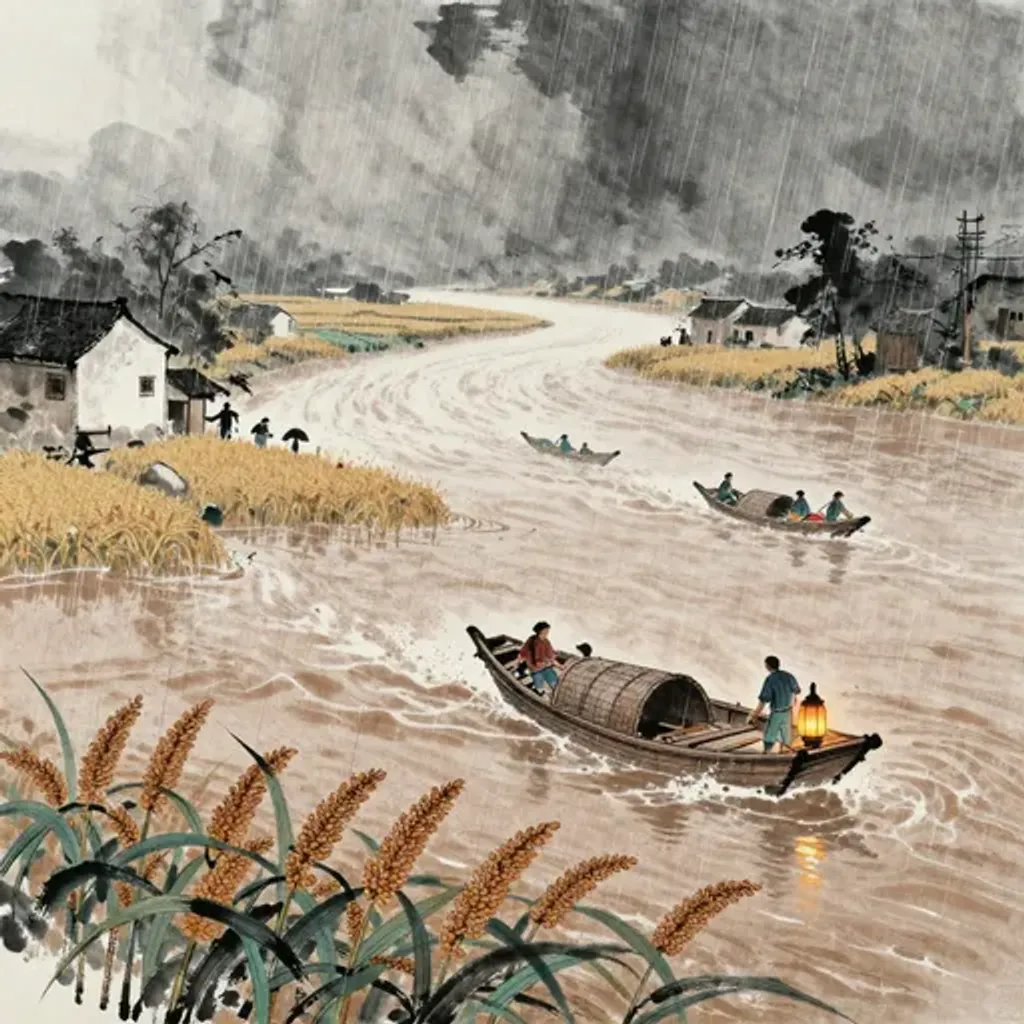
陰注陽疾,水離其室。舟楫大作,傷害黍稷。民飢於食,亦病心腹。
Yin rains and yang sickness; water leaves its channels. Boats and oars are put to great use; harming the millet and grain. The people starve for food; sickness also afflicts their hearts and bellies.
— Jiao Yanshou, Yilin (Forest of Changes), 1st century BC
Commentary
Mountain above lake becomes fire above water — Before Completion, where elements remain out of alignment and the crossing is not yet made. Yin rains pour down, bringing yang illness; water breaks free of its channels. Boats and oars labor mightily, but the flood damages the grain. The people go hungry; heart and belly both ache. The verse depicts a world where nothing works as intended: rain that should nourish instead sickens, water that should stay contained instead overflows, boats built for crossing instead witness destruction. From Decrease to Before Completion, the mountain dissolves and the lake rises as fire and water refuse to interact properly. Before Completion means the fox has not yet crossed — the tail still drags in the water. Decrease's sacrifices have not been sufficient to bring the process to term; the crossing remains unfinished, and suffering continues.