Transformations of Hexagram 42
Every line of change out of Hexagram 42 益 Increase, with the Yilin verse for each of the 64 resulting hexagrams, its translation, and the original ink brush artwork.
益 → 乾
Hexagram 42 → Hexagram 1: The Creative
Changing lines: 2, 3, 4
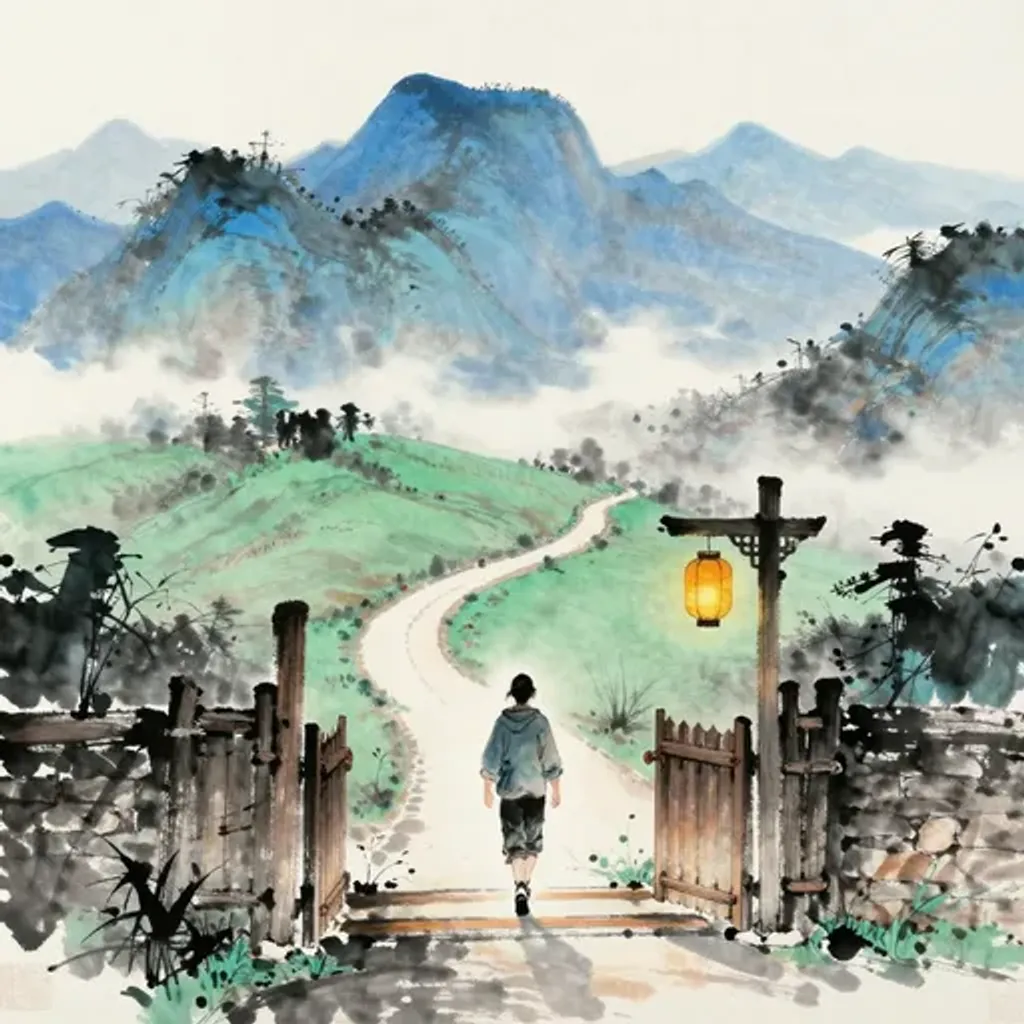
下堂出門,東至九山。逢福值喜,得其安閑。
Descending the hall and passing through the gate, journeying east to the nine mountains. Meeting fortune and finding joy, one attains peace and leisure.
— Jiao Yanshou, Yilin (Forest of Changes), 1st century BC
Commentary
Wind and thunder join forces below, bestowing increase; the transformation leads to pure heaven, doubled and self-renewing. The verse depicts someone stepping down from the hall and out the gate, journeying east to the Nine Mountains, where fortune and joy await in tranquil ease. This is the image of a person who, having received benefit, ventures forth with confidence. The 'Nine Mountains' evoke the sacred peaks of imperial inspection tours, places where heaven's mandate is confirmed. No danger threatens because the traveler moves in alignment with the natural order. From Increase to the Creative, the dynamic is one of generous endowment refined into self-generating initiative: what was given as a gift now becomes intrinsic strength, and the recipient walks freely into an open horizon.
益 → 坤
Hexagram 42 → Hexagram 2: The Receptive
Changing lines: 1, 5, 6
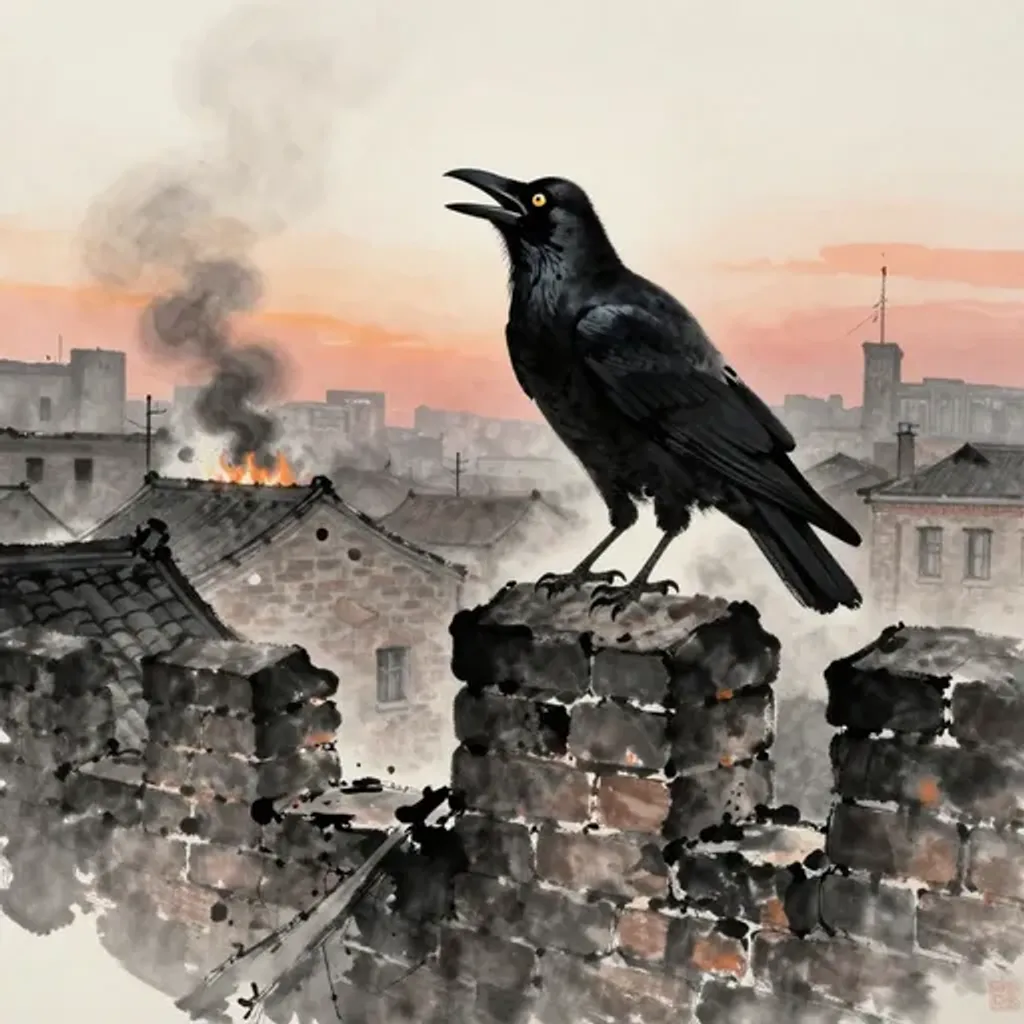
城上有烏,自名破家。招呼鴆毒,為國患災。
Atop the city wall sits a crow, calling itself the destroyer of homes. It summons poison and venom, becoming a plague upon the state.
— Jiao Yanshou, Yilin (Forest of Changes), 1st century BC
Commentary
Wind and thunder bestow increase, but the transformation leads to pure earth, passive and undirected. A crow perches on the city wall, its very name meaning 'household-destroyer.' It summons poison and pestilence, becoming a disaster for the entire state. The crow on the wall is an omen of ruin brought from within — a figure whose nature is destructive yet who dwells at the heart of the fortification. The allusion to 'zhen poison' recalls court intrigues where trusted insiders introduce lethal corruption. From Increase to the Receptive, the pattern reveals how generosity misplaced upon the wrong recipient dissolves into formless harm: earth without heaven's guidance accepts everything indiscriminately, and the beneficence intended to nourish instead feeds the parasite that consumes the house.
益 → 屯
Hexagram 42 → Hexagram 3: Difficulty at the Beginning
Changing lines: 6
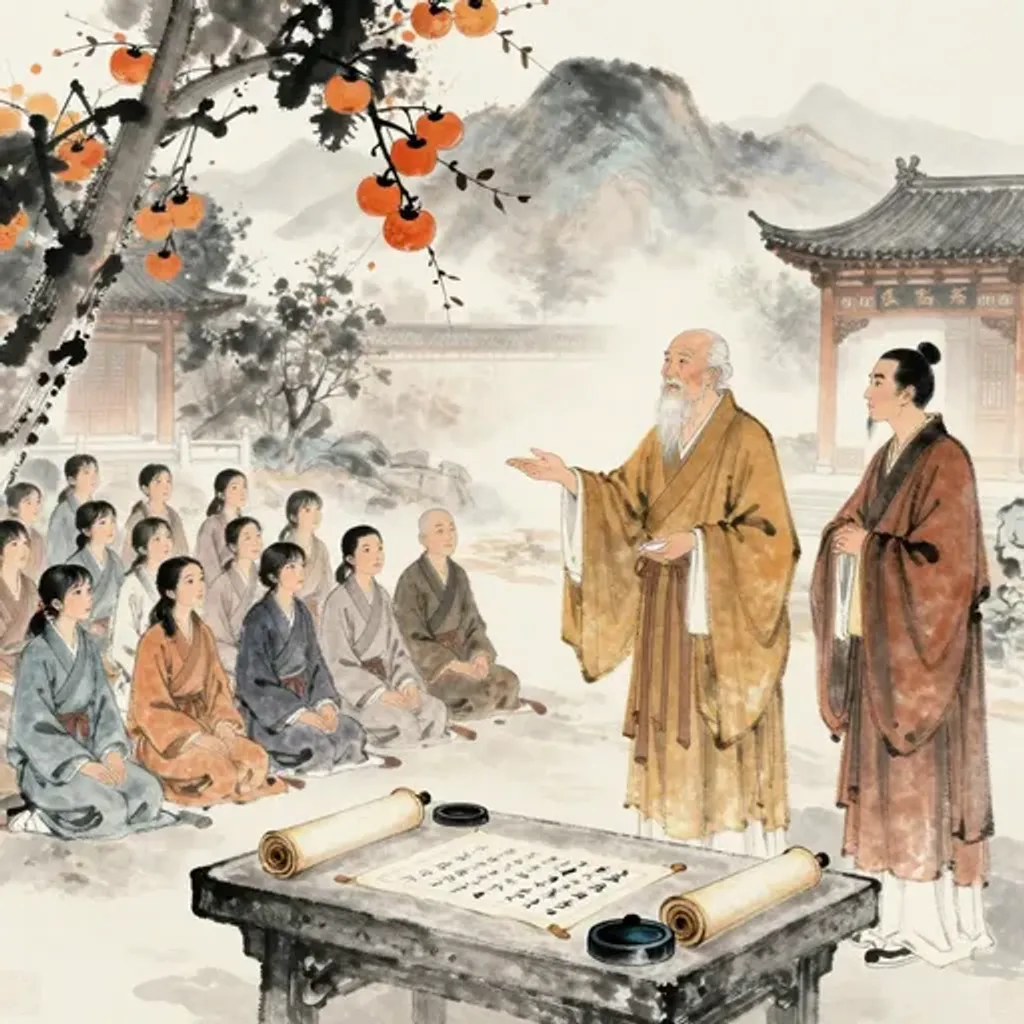
伯虎仲熊,德義淵聞。使敷五教,陰陽順序。
Bo Hu and Zhong Xiong, their virtue and righteousness deeply renowned. They spread the five teachings; yin and yang followed proper order.
— Jiao Yanshou, Yilin (Forest of Changes), 1st century BC
Commentary
Wind and thunder bestow increase, and the transformation leads to clouds and thunder gathering at the threshold of new beginnings. Bohu and Zhongxiong — members of the Eight Worthies of the High Xin clan — were renowned for virtue and righteousness heard far and wide. Emperor Shun appointed them to spread the Five Teachings, and yin and yang fell into proper order. According to the Zuo Zhuan, the High Xin clan produced eight talented sons whom the world called the 'Eight Worthies'; Shun elevated them to civilize the people through filial piety, fraternal duty, and trust. From Increase to Difficulty at the Beginning, the message is precise: even amid the chaos of a new order taking shape, appointing the right educators transforms confusion into civilization. The thunder below the clouds signals the first stirrings of a moral cosmos.
益 → 蒙
Hexagram 42 → Hexagram 4: Youthful Folly
Changing lines: 1, 2, 5
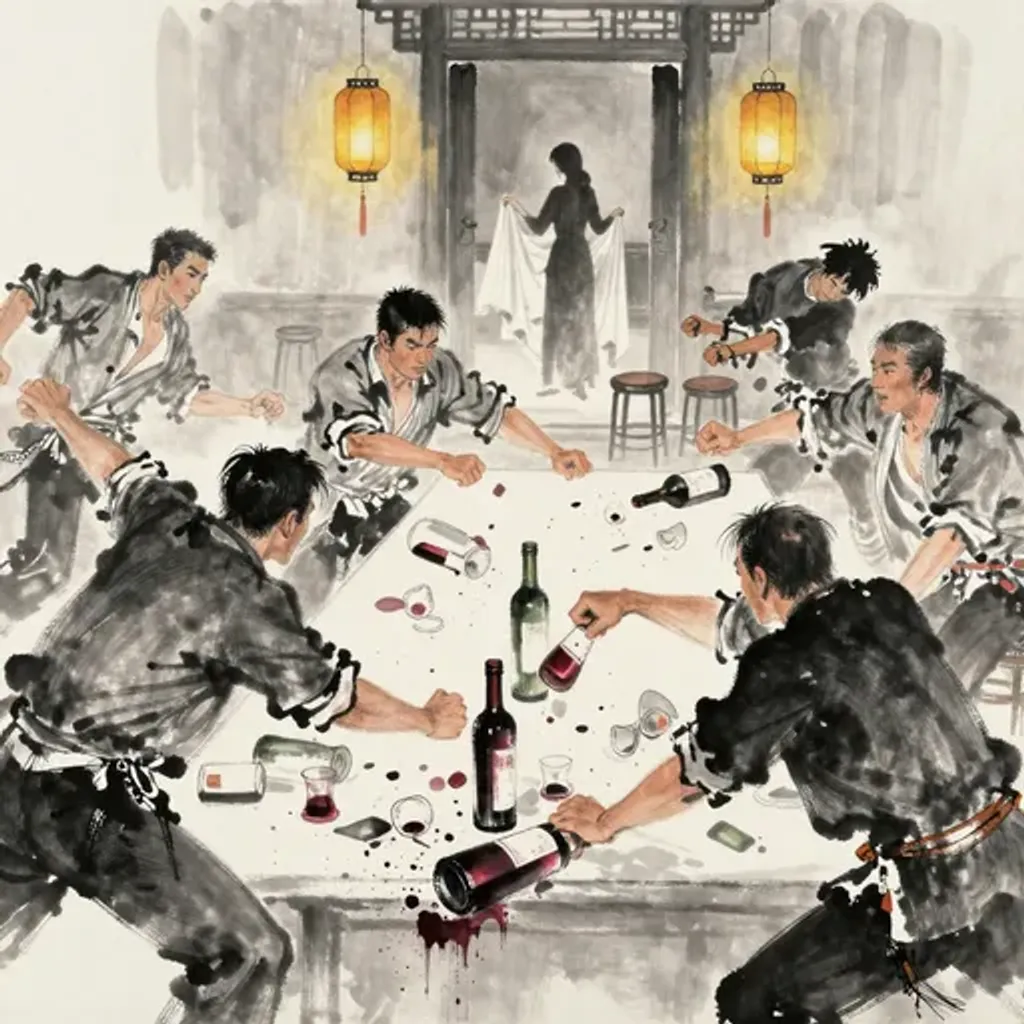
飲酒醉酣,跳起爭鬭。手足紛挐,伯傷仲僵,東家治喪。
Drinking wine in drunken abandon, they leap up to brawl. Hands and feet flail in tangled fury; the eldest is wounded, the second collapses. The eastern household prepares for mourning.
— Jiao Yanshou, Yilin (Forest of Changes), 1st century BC
Commentary
Wind and thunder bestow increase, but the transformation leads to the mountain spring of youthful folly, where ignorance breeds disaster. Men drink themselves into a stupor, then leap up to brawl. Fists and feet fly in confusion — the eldest is wounded, the second collapses, and the neighbor's household prepares a funeral. What begins as festive abundance descends into lethal foolishness. The verse captures the archetype of a feast turned fatal, where wine unlocks violence that reason would have restrained. From Increase to Youthful Folly, the dynamic is sharp: resources poured into an undisciplined vessel produce not growth but reckless self-destruction. The mountain spring of Meng flows clear, but those who refuse its teaching drown in their own excess.
益 → 需
Hexagram 42 → Hexagram 5: Waiting
Changing lines: 2, 3, 6
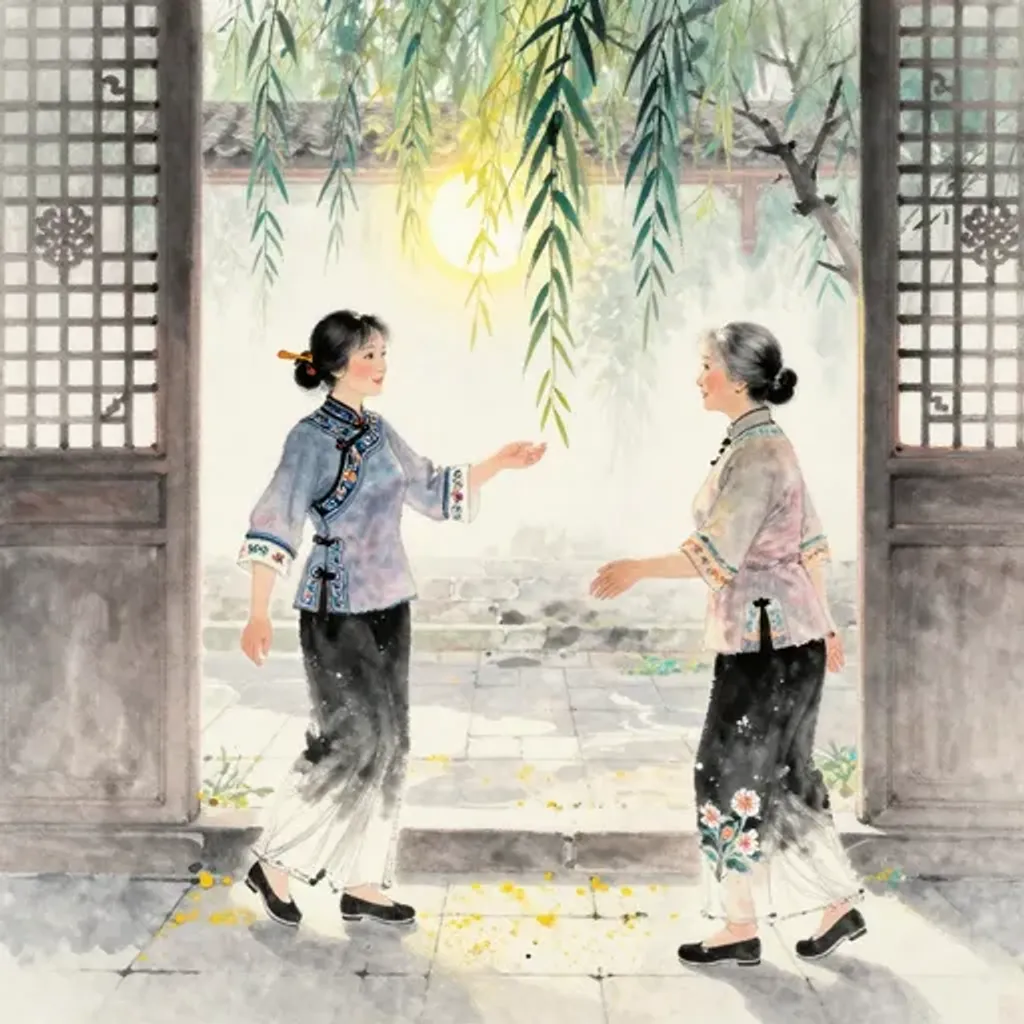
四目相視,稍近同機。日昳之後,見吾伯姊。
Four eyes gaze at each other, drawing near in shared purpose. After the sun has passed its zenith, I meet my elder sister.
— Jiao Yanshou, Yilin (Forest of Changes), 1st century BC
Commentary
Wind and thunder bestow increase, and the transformation leads to clouds rising above heaven — the patience of Waiting. Four eyes meet in mutual gaze, drawing imperceptibly closer toward a shared moment. After the sun passes its zenith and begins to decline, the speaker finally meets their elder sister. The 'four eyes gazing' suggests two people recognizing each other across distance, gradually converging. The timing is precise: the reunion happens in the afternoon, when the day's waiting has been fulfilled. From Increase to Waiting, the verse illustrates that beneficial encounters require patience and ripening. The clouds gather above heaven but the rain has not yet fallen; the connection is real, but it arrives only when the moment is ripe.
益 → 訟
Hexagram 42 → Hexagram 6: Conflict
Changing lines: 1, 2, 4
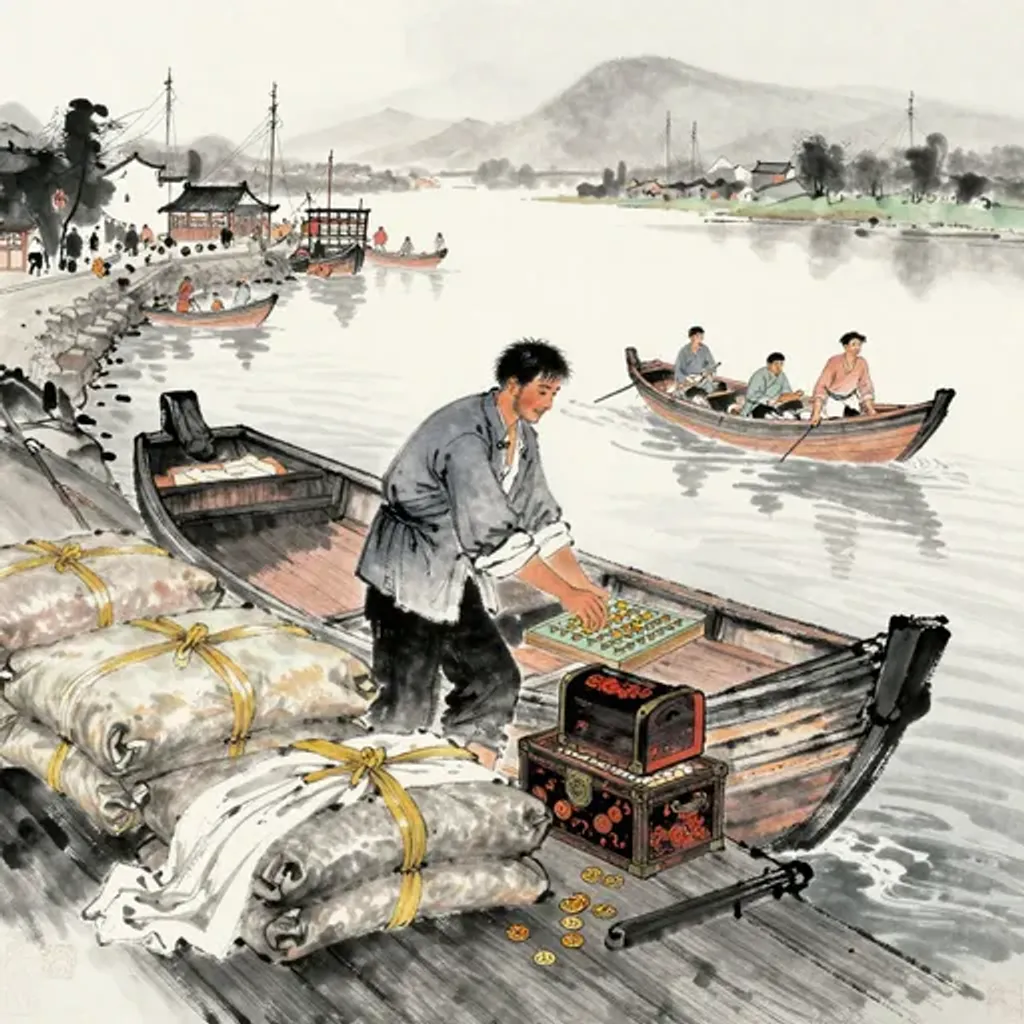
隨時逐便,不失利門。多獲得福,富於封君。
Following the times and seizing advantage, never missing the gate of profit. Gaining fortune in abundance, wealthier than an enfeoffed lord.
— Jiao Yanshou, Yilin (Forest of Changes), 1st century BC
Commentary
Wind and thunder bestow increase, and the transformation leads to heaven and water moving in opposing directions — the tension of Conflict. Yet the verse speaks of seizing every opportunity as it arises, never missing the gate of profit, accumulating wealth surpassing that of an enfeoffed lord. This is the merchant or strategist who reads the currents of fortune and rides them deftly. 'Following the time and chasing convenience' echoes the Yijing counsel to act in accord with the moment. From Increase to Conflict, the dynamic reveals a paradox: precisely because opposing forces create friction, the shrewd operator profits from the turbulence. Where heaven and water move against each other, the one who plans carefully at the outset turns contention itself into a source of abundance.
益 → 師
Hexagram 42 → Hexagram 7: The Army
Changing lines: 1, 2, 5, 6
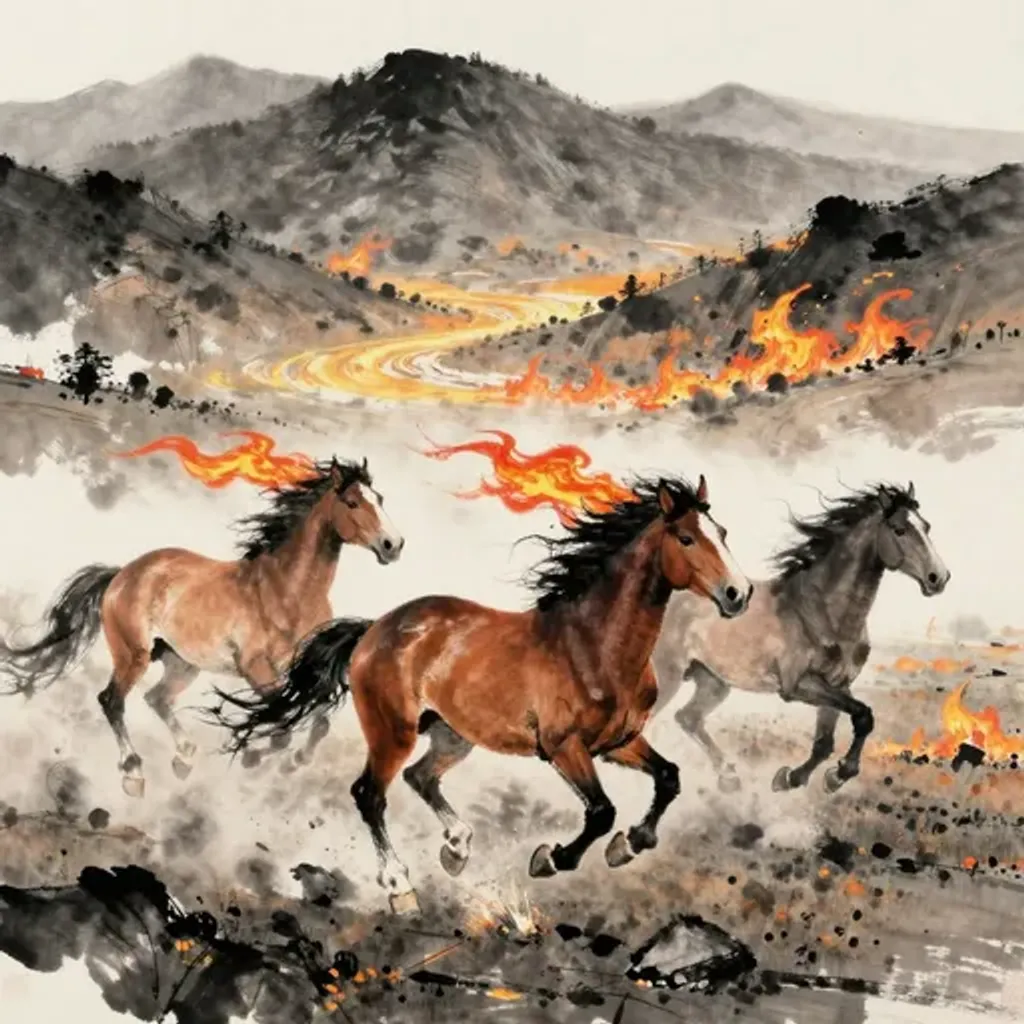
隴西冀北,多見駿馬。去如焱颺,害不能傷。
West of the ridges and north of Ji, fine warhorses abound. They vanish like windblown flame; no harm can touch them.
— Jiao Yanshou, Yilin (Forest of Changes), 1st century BC
Commentary
Wind and thunder bestow increase, and the transformation leads to water hidden within the earth — the disciplined reserve of the Army. In Longxi and Jizhong, fine warhorses abound. They gallop swift as rising flame, and no harm can touch them. These two regions — Longxi in the far west and Jizhong in the north — were famous throughout Han dynasty China as breeding grounds for the empire's finest cavalry mounts. The verse evokes military preparedness through superb resources: horses so swift they outrun any threat. From Increase to the Army, the transformation shows how abundance channeled into disciplined organization creates invincible force. The earth contains the water; the general contains the multitude. Speed and strength serve not chaos but commanded purpose.
益 → 比
Hexagram 42 → Hexagram 8: Holding Together
Changing lines: 1, 6
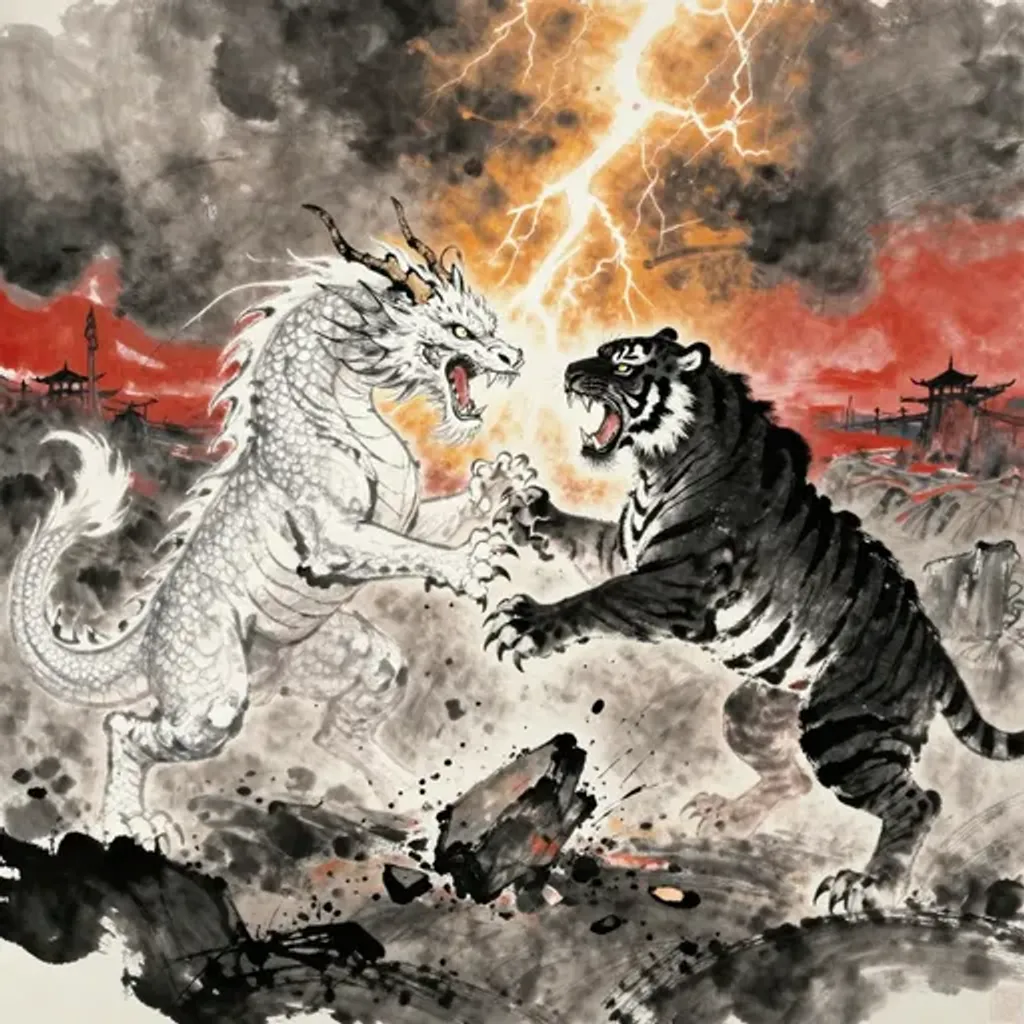
白龍黑虎,起伏俱怒。蚩尤敗走,死於魯首。
White dragon and black tiger rise in shared fury. Chi You flees in defeat, slain at Lu Shou.
— Jiao Yanshou, Yilin (Forest of Changes), 1st century BC
Commentary
Wind and thunder bestow increase, and the transformation leads to water upon the earth — the gathering force of Holding Together. White Dragon and Black Tiger rise together in fury, cosmic forces unleashed in tandem. Chi You, the bronze-headed war god, flees in defeat and dies at Luzhou. According to tradition, the Yellow Emperor marshaled heavenly beasts and elemental spirits to defeat Chi You at the Battle of Zhuolu. The white dragon and black tiger evoke the celestial and terrestrial forces allied against the rebel deity. From Increase to Holding Together, the verse demonstrates that even overwhelming martial power must be held together by righteous alliance. The Yellow Emperor prevailed not through solitary might but through the coalescence of all loyal forces around a central mandate.
益 → 小畜
Hexagram 42 → Hexagram 9: Small Taming
Changing lines: 2, 3
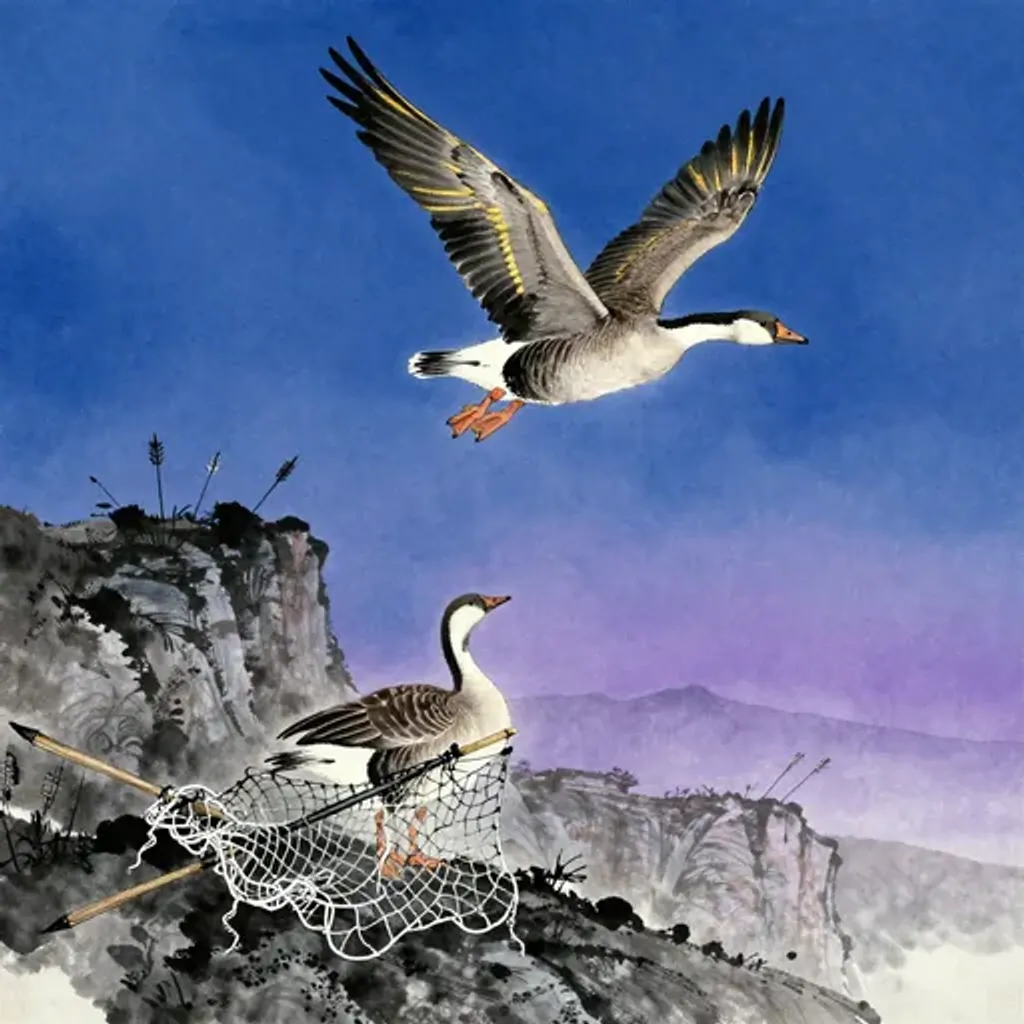
鴻飛戾天,避害紫淵。雖有鋒門,不能危身。
The wild goose flies to the heavens, escaping danger at the Purple Depths. Though sharp blades guard the gate, they cannot endanger its life.
— Jiao Yanshou, Yilin (Forest of Changes), 1st century BC
Commentary
Wind and thunder bestow increase, and the transformation leads to wind moving across heaven — the gentle restraint of Small Taming. A wild goose soars to the very vault of heaven, avoiding danger by retreating to purple depths. Though sharp blades guard the gate, they cannot threaten its life. The goose that flies highest is beyond the reach of hunters below; the one who seeks the purple abyss — a poetic name for deep waters — finds sanctuary where weapons cannot follow. From Increase to Small Taming, the verse shows how augmented capability, when paired with the wisdom to withdraw, renders one untouchable. Wind rides upon heaven but does not force; the gentleman refines his virtue. True safety lies not in armor but in the elevation that places one beyond the range of harm.
益 → 履
Hexagram 42 → Hexagram 10: Treading
Changing lines: 2, 4
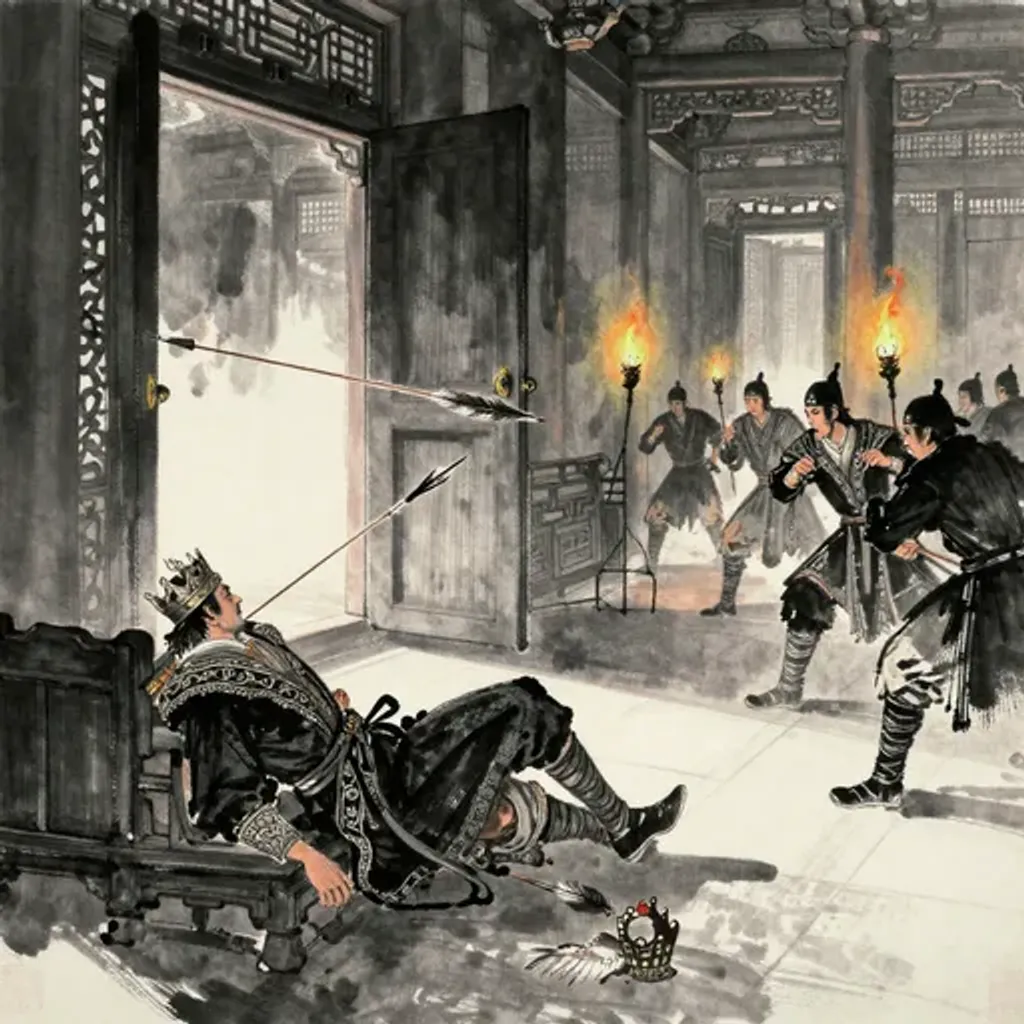
平國不君,夏氏作亂。烏號竊發,靈公隕命。
The state of Ping lacks a true lord; the Xia clan stirs rebellion. The dark bow fires in secret; Duke Ling meets his end.
— Jiao Yanshou, Yilin (Forest of Changes), 1st century BC
Commentary
Wind and thunder bestow increase, but the transformation leads to heaven above the lake — the perilous propriety of Treading. The state lacks a true ruler; the Xia clan rises in rebellion. The Wuhao bow is secretly fired, and Duke Ling loses his life. This alludes to the assassination of Duke Ling of Chen in 599 BC. According to the Zuo Zhuan, Duke Ling conducted a scandalous affair with Lady Xia alongside ministers Kong Ning and Yi Xingfu. The duke's humiliation of Xia Zhengshu, Lady Xia's son, provoked the young man to ambush and shoot him. The Wuhao was a legendary bow of great power. From Increase to Treading, the verse warns that when one treads upon the tail of the tiger without propriety, even sovereign power cannot prevent destruction. The ruler who violates decorum invites the very violence he should govern.
益 → 泰
Hexagram 42 → Hexagram 11: Peace
Changing lines: 2, 3, 5, 6
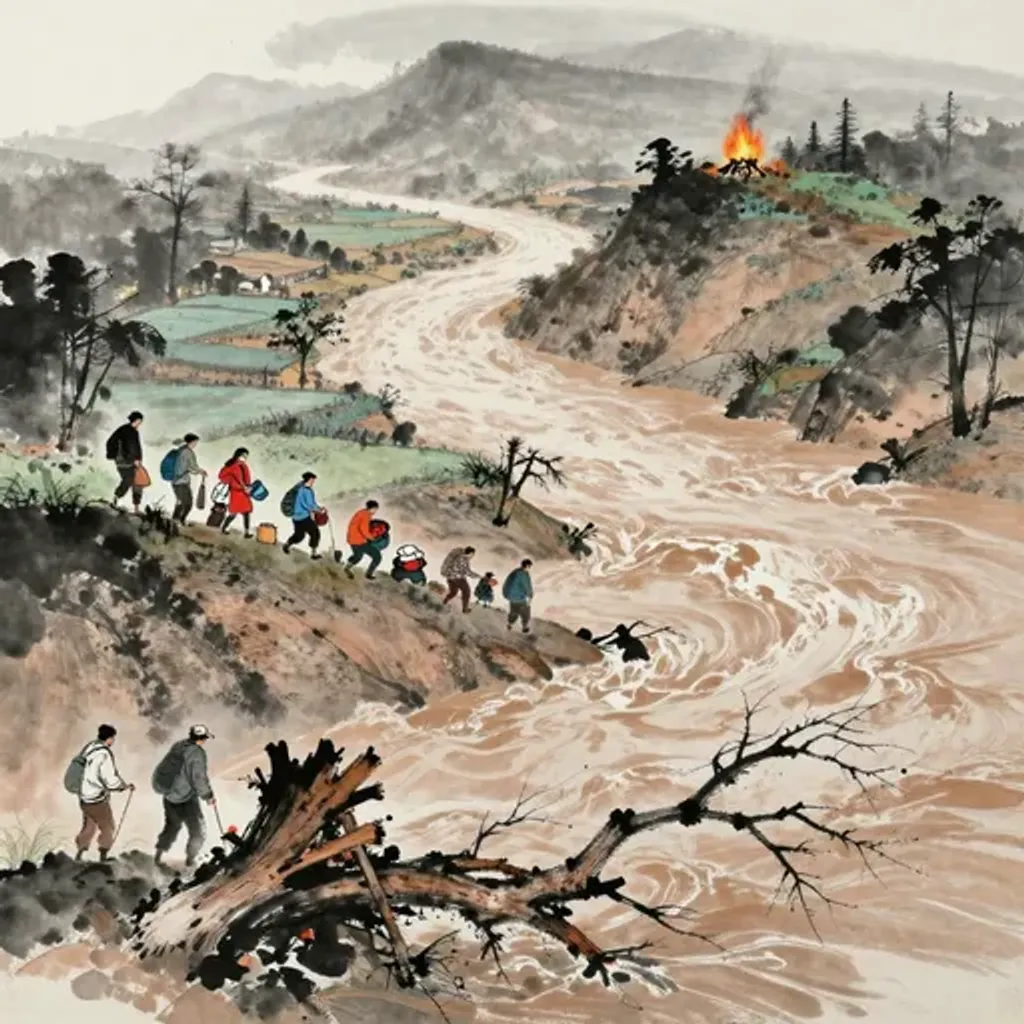
江漢上遊,政逆民憂。陰伐其陽,雄受其殃。
Along the upper reaches of the Jiang and Han, governance is perverse and the people grieve. Yin encroaches upon yang; the male suffers its calamity.
— Jiao Yanshou, Yilin (Forest of Changes), 1st century BC
Commentary
Wind and thunder bestow increase, but the transformation leads to earth above heaven — the open intercourse of Peace, here inverted into disorder. Along the upper reaches of the Yangtze and Han rivers, governance runs contrary and the people grieve. Yin attacks yang; the strong one suffers calamity. The rivers flowing upstream serve as metaphor for political reversal — power exercised against its natural direction. When yin usurps yang's position, the natural hierarchy collapses and even the powerful are victimized. From Increase to Peace, the irony is acute: Tai's image of heaven and earth in harmonious exchange presupposes each element keeping its proper place. Here, generosity perverted into overreach destroys the very balance that produces prosperity.
益 → 否
Hexagram 42 → Hexagram 12: Standstill
Changing lines: 1, 4
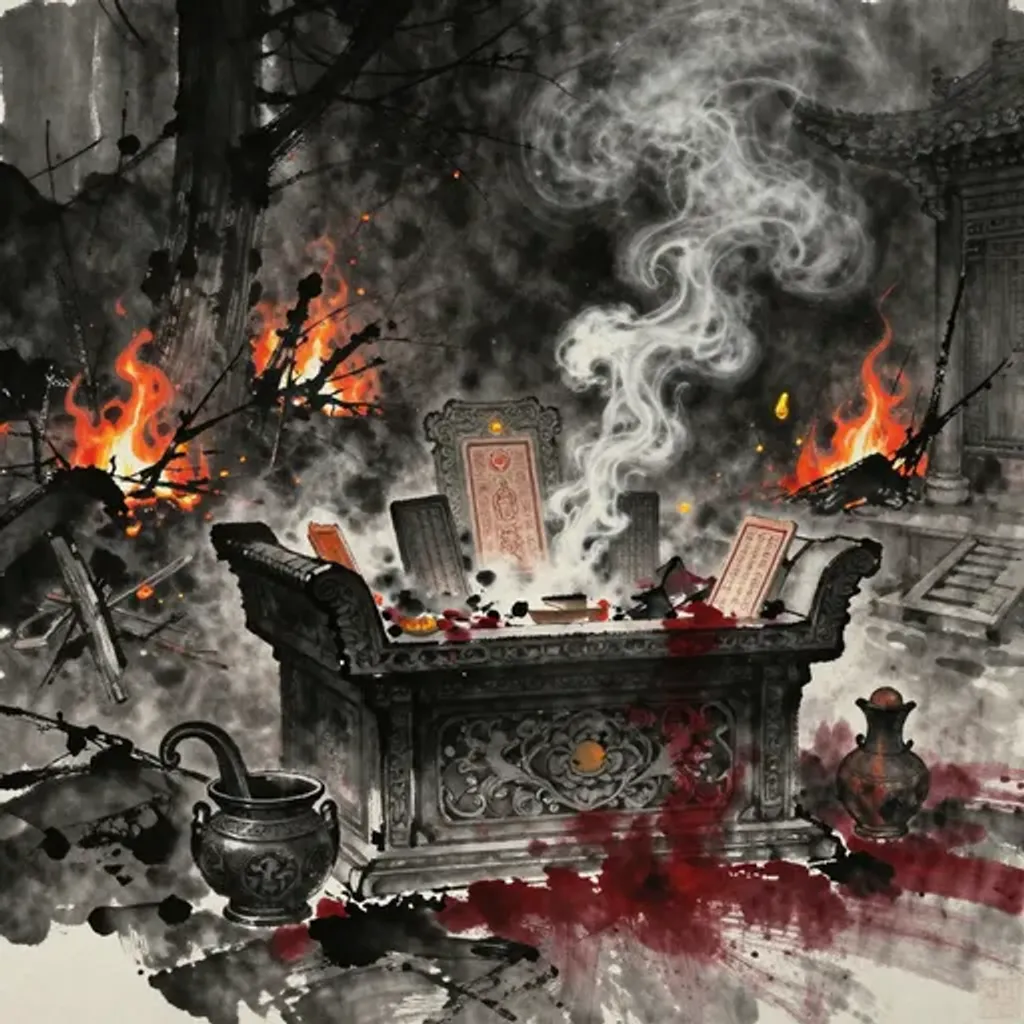
東家殺牛,聞臭腥臊。神怒不顧,命衰絕周。亳社災燒,妄夷誅愁。
The eastern household slaughters an ox; the stench of blood offends. The spirits rage and turn away; fate declines and the Zhou line ends. The Bo shrine burns in calamity; reckless destruction brings sorrow.
— Jiao Yanshou, Yilin (Forest of Changes), 1st century BC
Commentary
Wind and thunder bestow increase, but the transformation leads to heaven and earth sealed off from each other — the total blockage of Standstill. The eastern neighbor slaughters an ox, but the stench of blood offends the spirits. The gods turn away in anger; the mandate withers and the Zhou line is severed. The Bo shrine burns; the innocent are slaughtered in anguish. The Bo shrine was the ancestral altar of the Shang dynasty, preserved by Zhou as a reminder of the fallen order. Its burning signals the complete collapse of an era's moral foundations. Improper sacrifice — generating offense rather than blessing — embodies governance that has lost heaven's favor entirely. From Increase to Standstill, every channel of communication between high and low has been severed. What was meant to nourish the spirits instead drives them away, and the state collapses into ruin.
益 → 同人
Hexagram 42 → Hexagram 13: Fellowship
Changing lines: 3, 4
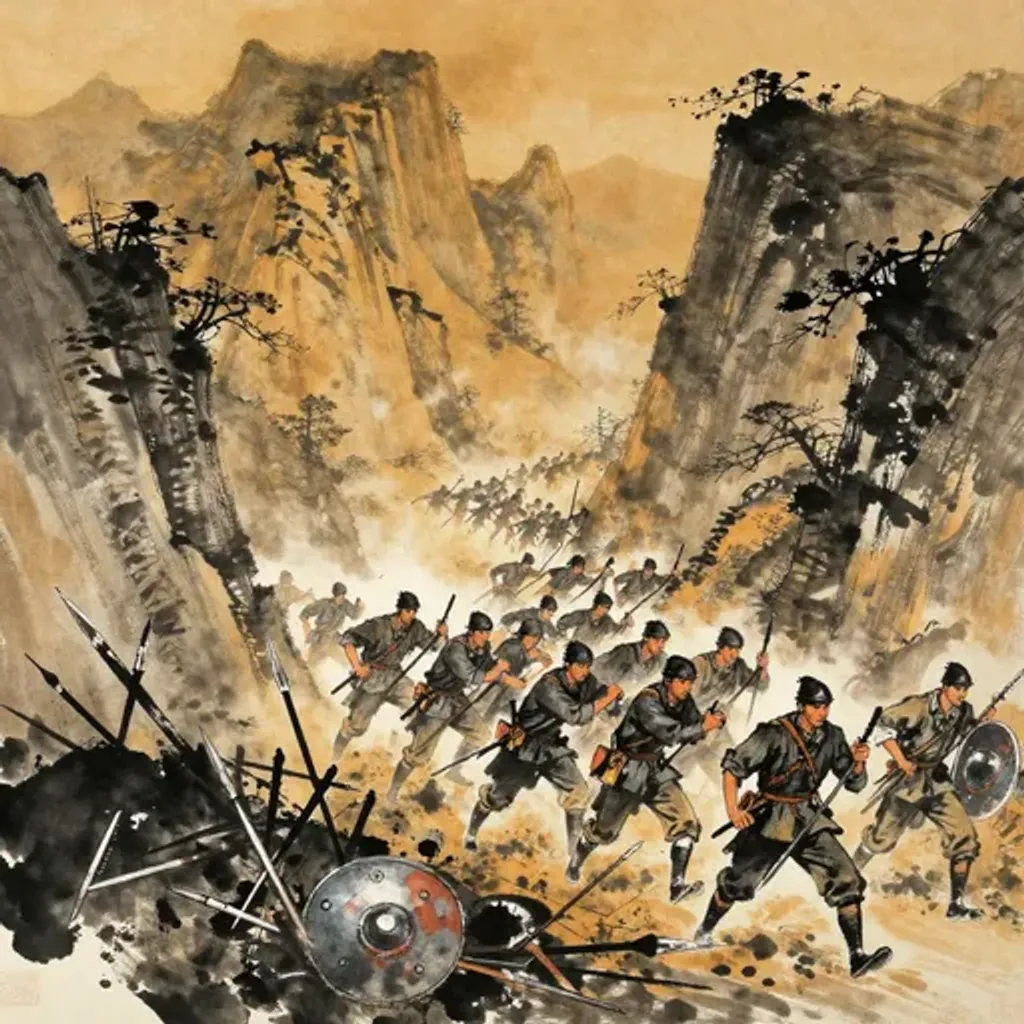
西誅不服,恃強負力。倍道趍敵,師走敗覆。
Marching west to punish the defiant, relying on strength and force. Doubling the pace to meet the enemy, the army flees in utter defeat.
— Jiao Yanshou, Yilin (Forest of Changes), 1st century BC
Commentary
Wind and thunder bestow increase, but the transformation leads to heaven joining with fire — the broad fellowship of Gathering with Kindred. A western expedition punishes the insubordinate, relying on overwhelming strength. The army doubles its marches to rush at the enemy, but the troops are routed and the campaign collapses. Forced marches exhaust soldiers before battle is even joined — a classic error documented throughout the Zuo Zhuan and military treatises. Reliance on brute force without strategic coordination invites disaster. From Increase to Fellowship, the verse delivers a sharp lesson: true fellowship requires shared purpose, not mere aggregation of power. Heaven and fire move in the same direction only when aligned by principle. An army that rushes headlong, trusting raw strength alone, finds that its fellowship dissolves at the first real test.
益 → 大有
Hexagram 42 → Hexagram 14: Great Possession
Changing lines: 2, 3, 4, 5
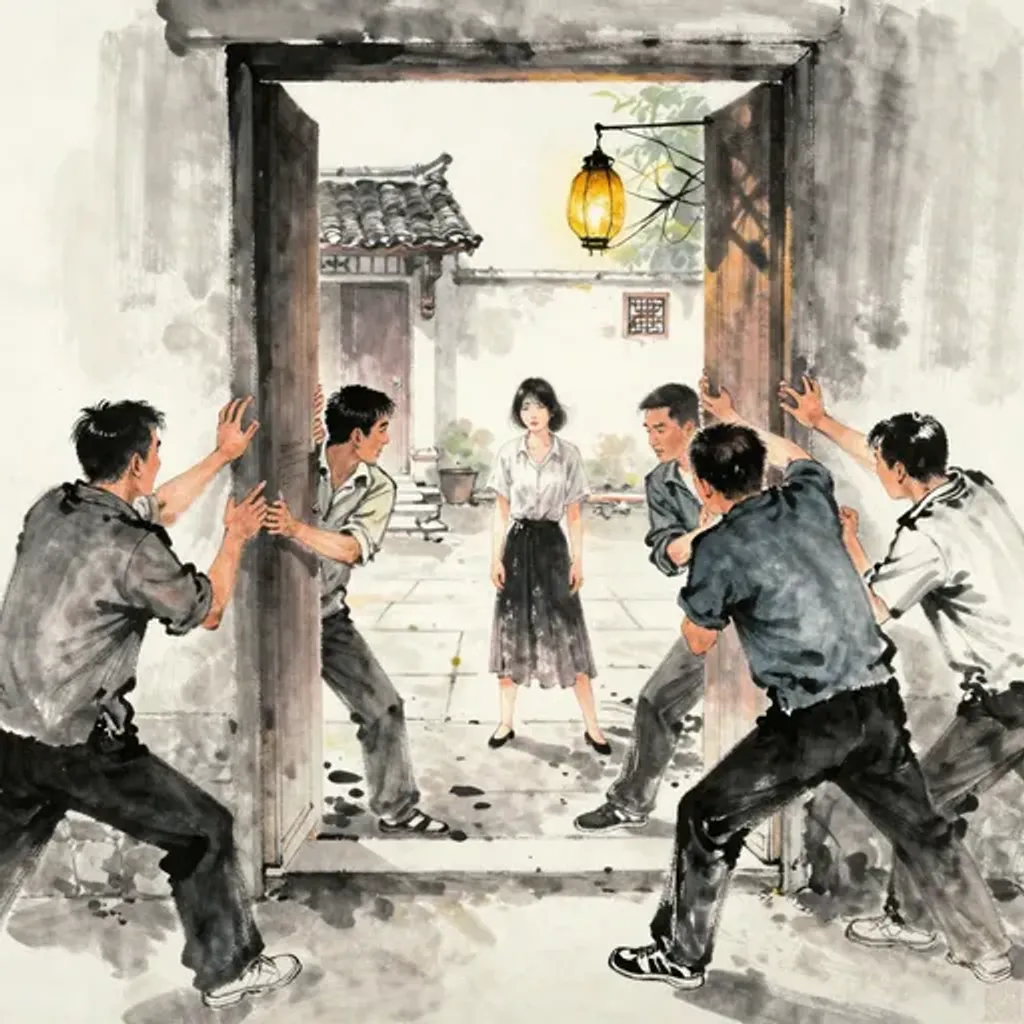
一婦六夫,亂擾不治。張王季疾,莫適為公。政道壅塞,周君失邦。
One woman and six husbands, disorder and turmoil beyond remedy. Zhang, Wang, and Ji all ail; none is fit to govern. The way of governance is blocked; the lord of Zhou loses his domain.
— Jiao Yanshou, Yilin (Forest of Changes), 1st century BC
Commentary
Wind and thunder bestow increase, but the transformation leads to fire blazing above heaven — the magnificent potential of Great Possession, here squandered. One wife and six husbands create disorder beyond remedy. The lords Zhang and Wang fall ill in succession; none can serve as the legitimate authority. The channels of governance are blocked, and the Zhou ruler loses his domain. The 'one wife, six husbands' is a metaphor for multiple claimants to a single seat of power, each undermining the others. When succession is contested and no clear mandate exists, even abundant resources produce only chaos. From Increase to Great Possession, the irony is stark: fire in heaven should illuminate all, yet without a single legitimate holder, great wealth and power become instruments of mutual destruction.
益 → 謙
Hexagram 42 → Hexagram 15: Modesty
Changing lines: 1, 3, 5, 6
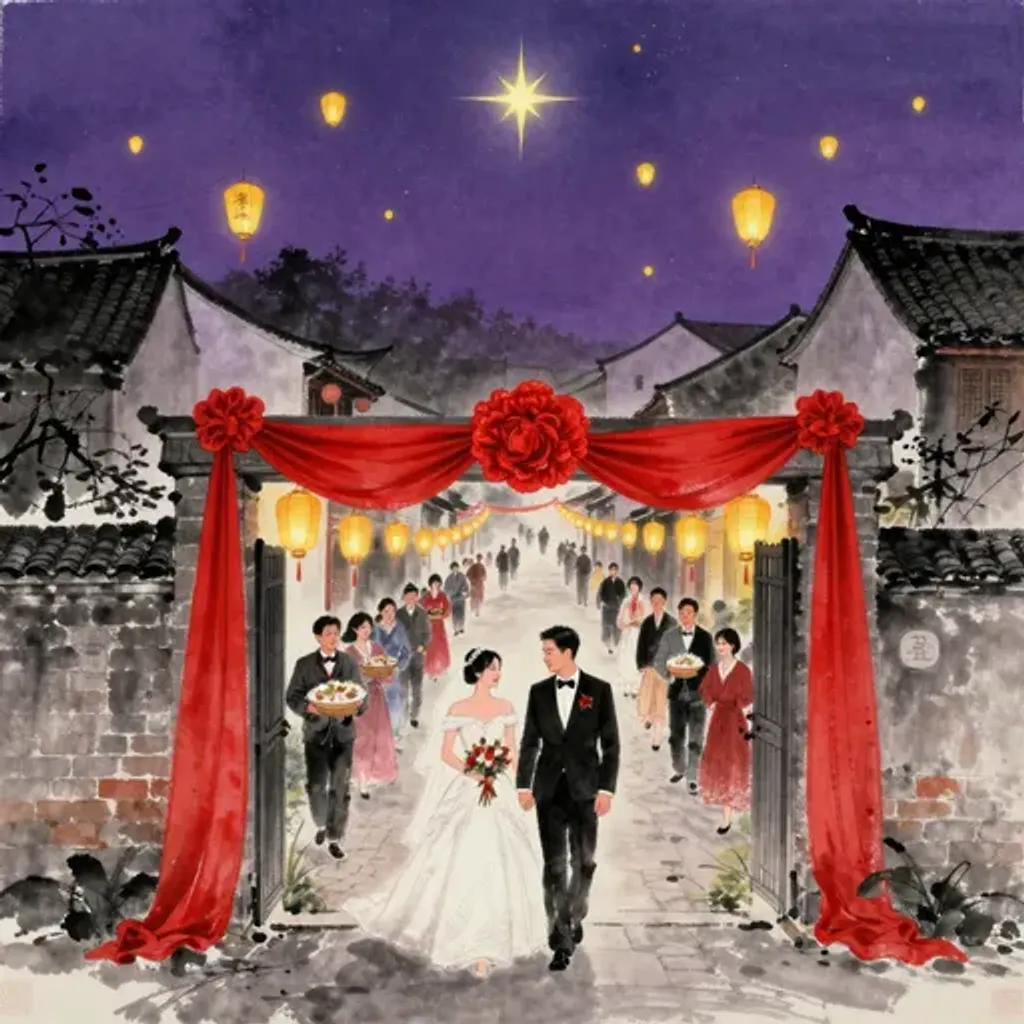
配合相迎,利之四鄉。昏以為期,明星煌煌。欣喜爽澤,所言得當。
Matched and joined in welcome, blessing the four directions. Dusk is set as the appointed hour; the morning star shines brilliantly. Hearts are glad and spirits bright; every word rings true.
— Jiao Yanshou, Yilin (Forest of Changes), 1st century BC
Commentary
Wind and thunder bestow increase, and the transformation leads to the mountain hidden within the earth — the self-effacing grace of Modesty. Matched partners come to greet each other, bringing benefit to all four directions. Dusk is set as the appointed time, and the bright stars glitter overhead. Joy and refreshment abound; every word spoken hits its mark. This is the image of a well-matched betrothal conducted with proper timing and mutual respect. The stars shining at the wedding hour recall the Shijing ode tradition of celestial omens blessing a union. From Increase to Modesty, the dynamic unfolds naturally: generosity offered with humility creates the conditions for perfect reciprocity. The mountain within the earth lifts the low and levels the high, and the couple meets on equal, auspicious ground.
益 → 豫
Hexagram 42 → Hexagram 16: Enthusiasm
Changing lines: 1, 4, 5, 6
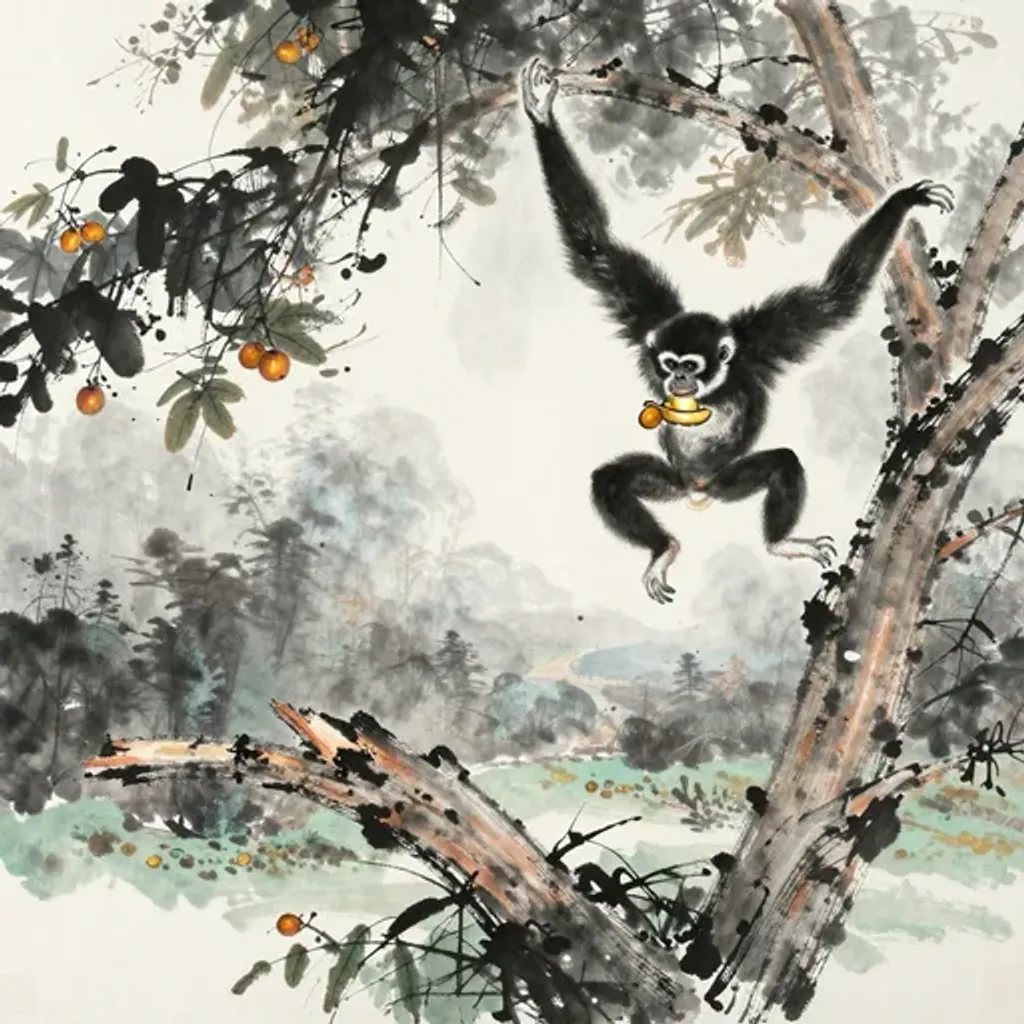
猿墮高木,不踒手足。握金懷玉,還歸其室。
The ape falls from the tall tree, yet does not break hand or foot. Clutching gold and cradling jade, it returns safely to its chamber.
— Jiao Yanshou, Yilin (Forest of Changes), 1st century BC
Commentary
Wind and thunder bestow increase, and the transformation leads to thunder bursting from the earth — the exuberant readiness of Enthusiasm. An ape tumbles from a tall tree yet injures neither hand nor foot. It lands clutching gold and clasping jade, then returns safely to its dwelling. The ape's acrobatic fall without injury is a marvel of natural agility — what seems catastrophic turns out to be effortless. Moreover, the creature emerges from apparent disaster with treasure in hand. From Increase to Enthusiasm, the pattern reveals how one who moves in natural rhythm turns even a fall into fortune. Thunder erupts from the earth with irresistible energy; the ape's tumble is not a failure but a release, and the ground it strikes yields riches rather than ruin.
益 → 隨
Hexagram 42 → Hexagram 17: Following
Changing lines: 4, 6
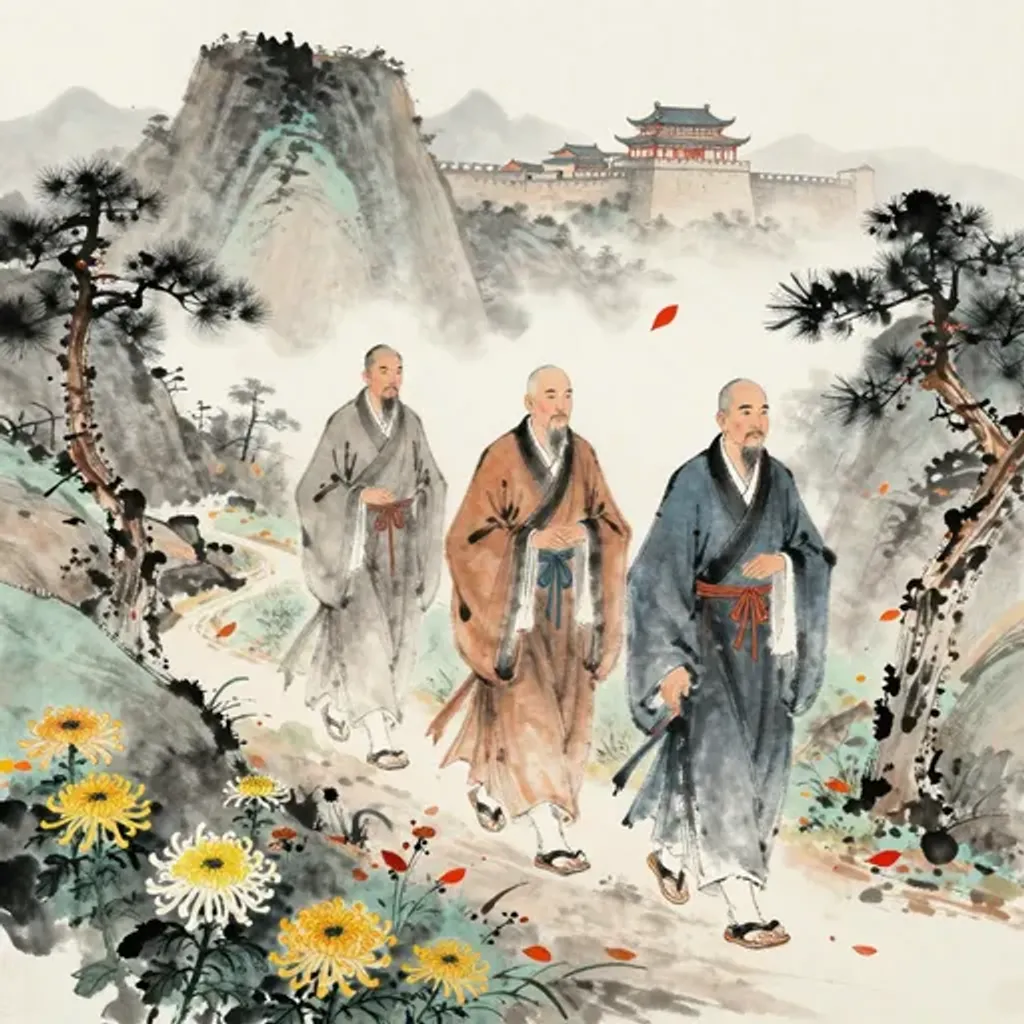
卷領遁世,仁德不害。三聖攸同,周國茂興。
Rolling up the collar and withdrawing from the world, benevolent virtue suffers no harm. Three sages walk as one; the Zhou domain flourishes greatly.
— Jiao Yanshou, Yilin (Forest of Changes), 1st century BC
Commentary
Wind and thunder bestow increase, and the transformation leads to thunder resting within the lake — the willing responsiveness of Following. Wrapping their collars and withdrawing from the world, their benevolent virtue remains unharmed. Three sages share one purpose, and the Zhou state flourishes mightily. The 'wrapped collar' suggests a recluse who conceals himself in plain clothing, departing from worldly affairs. The 'three sages' are traditionally identified as the Duke of Zhou, Taigong, and the Duke of Shao — the triumvirate who guided the early Zhou dynasty to greatness. Their shared virtue elevated the state not through force but through moral authority. From Increase to Following, the dynamic is clear: when sages willingly subordinate themselves to a righteous cause, their very withdrawal from personal ambition creates the conditions for collective flourishing.
益 → 蠱
Hexagram 42 → Hexagram 18: Work on the Decayed
Changing lines: 1, 2, 3, 5
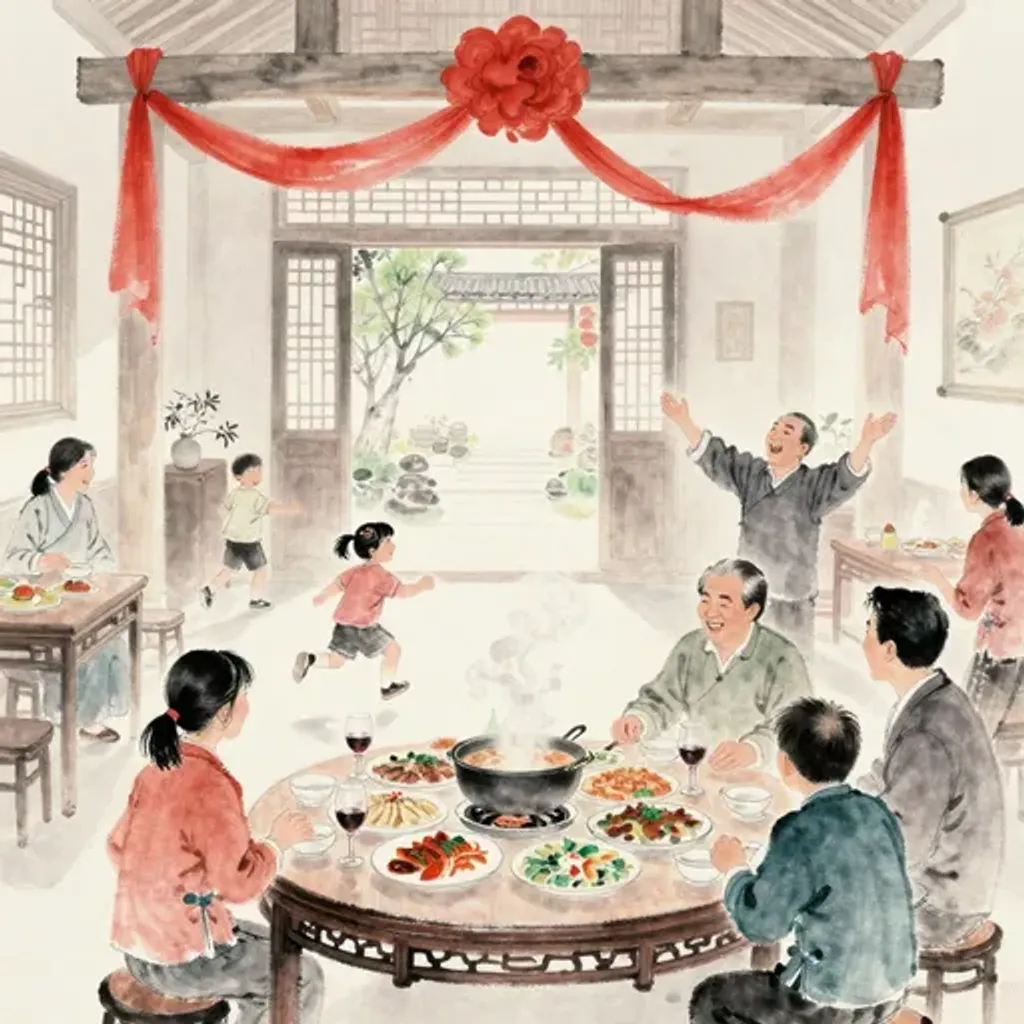
去患脫厄,安无怵惕。上福喜堂,見我懽悅。
Troubles dispelled and hardship shed, peaceful and free from alarm. Ascending to the hall of blessings, we behold each other in joy.
— Jiao Yanshou, Yilin (Forest of Changes), 1st century BC
Commentary
Wind and thunder bestow increase, and the transformation leads to the mountain standing above wind — the corrective work of Repairing the Decayed. Troubles and perils are swept away; one rests free from anxiety and alarm. Ascending to the hall of blessings, the speaker is greeted with delight and celebration. The verse traces a clean arc from danger to relief: what was once a source of dread has been thoroughly removed, and the household can rejoice. From Increase to Work on the Decayed, the connection is precise. Gu represents corruption that must be addressed — the wind beneath the mountain has stagnated. The verse captures the moment after the repair is complete: the decay has been cleared, the patient healed, and the family gathers in renewed joy. Increase provides the resources; the work of restoration completes the cure.
益 → 臨
Hexagram 42 → Hexagram 19: Approach
Changing lines: 2, 5, 6
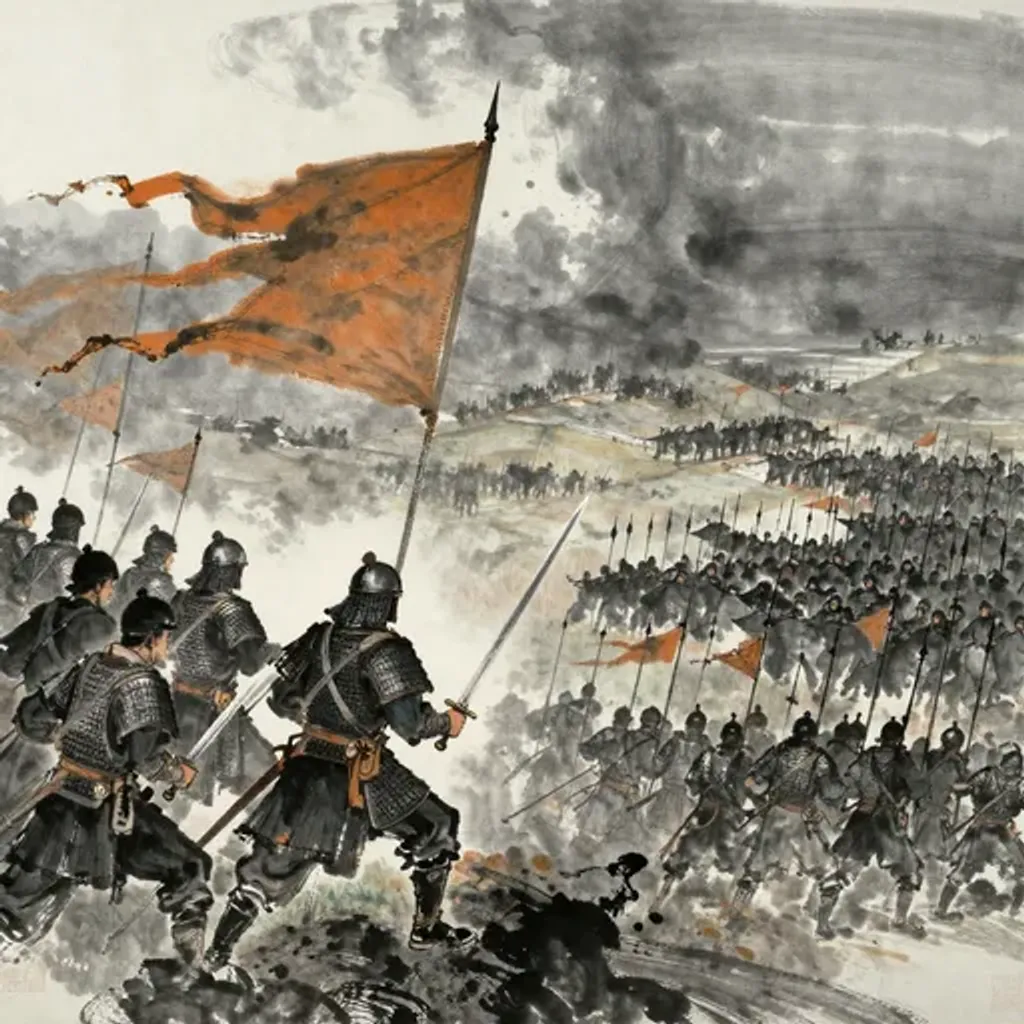
帶季兒良,明知權兵。將師合戰,敵不能當,趙魏以強。
Dai Ji and Er Liang, brilliant in strategy and warfare. Leading the army into battle, the enemy cannot withstand them; Zhao and Wei grow mighty thereby.
— Jiao Yanshou, Yilin (Forest of Changes), 1st century BC
Commentary
Wind and thunder bestow increase, and the transformation leads to earth above the lake — the authoritative approach of the sovereign in Approach. Generals Dai, Ji, Er, and Liang understood the art of war and the calculus of power. They led their forces into battle, and no enemy could withstand them; thus Zhao and Wei grew mighty. These names likely refer to accomplished commanders of the Warring States period whose combined military acumen secured dominance for the allied states of Zhao and Wei. From Increase to Approach, the transformation shows how augmented power, when wielded by those who truly understand strategy, creates an irresistible advance. Earth overarches the lake: the sovereign descends to oversee directly, and the generals who serve with both courage and calculation ensure that approach becomes conquest.
益 → 觀
Hexagram 42 → Hexagram 20: Contemplation
Changing lines: 1
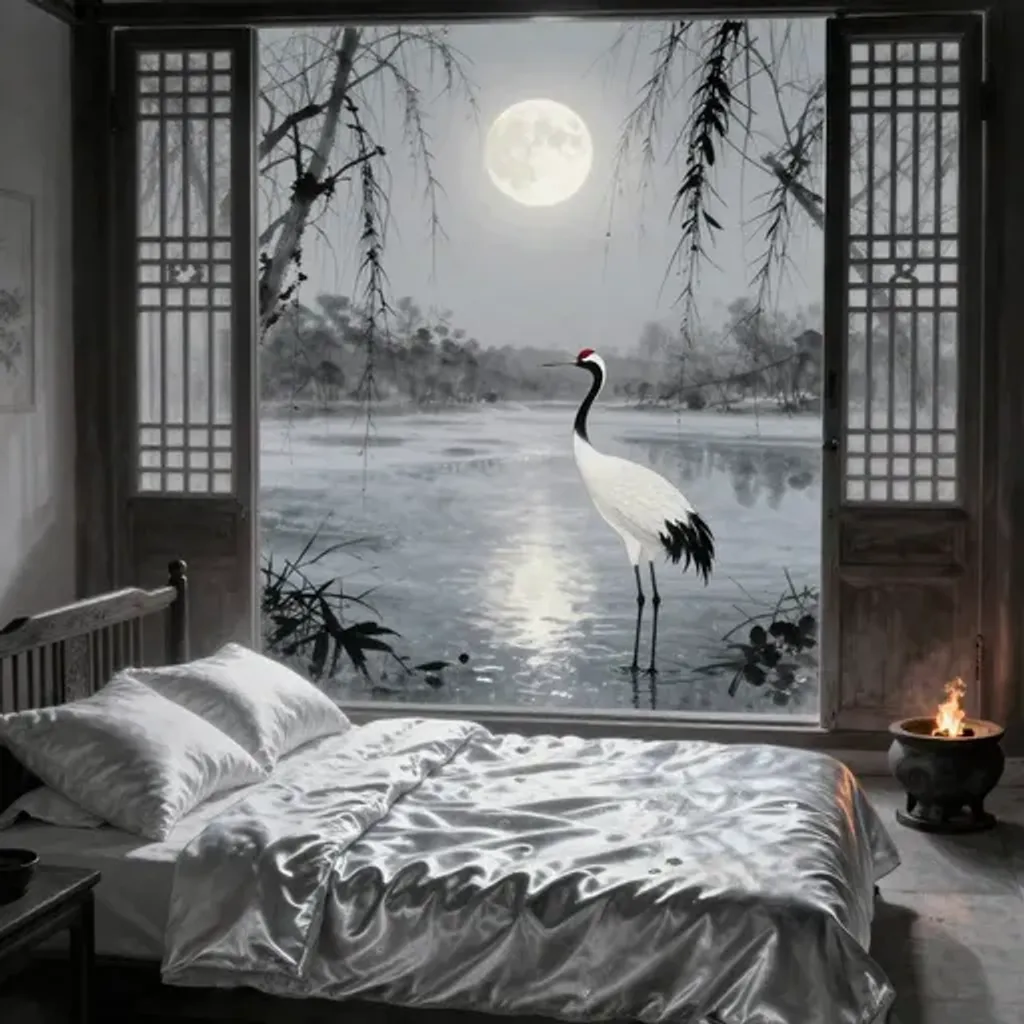
鵠思其雄,欲隨鳳東。順理羽翼,出次須日。中留北邑,復反其室。
Moonlight fills the empty chamber, shadows fall across two pillows. A lone crane stands still — the water is cold, it will not fly.
— Jiao Yanshou, Yilin (Forest of Changes), 1st century BC
Commentary
Wind and thunder bestow increase, but the transformation leads to wind sweeping over the earth — the distant gaze of Contemplation. This is a rewritten verse; the original reads: 'The swan goose longs for its mate, wishing to follow the phoenix eastward. It grooms its wings and feathers, sets out at the appointed day, yet lingers in the northern town and returns to its chamber.' A bird prepares for a journey of reunion but cannot complete it, held back at the midpoint. The longing is real, the preparation sincere, yet something — duty, circumstance, propriety — prevents the departure from reaching its destination. From Increase to Contemplation, the wind moves across the earth but observes from above rather than engaging. The increased desire to connect is tempered by the contemplative recognition that the time has not yet come.
益 → 噬嗑
Hexagram 42 → Hexagram 21: Biting Through
Changing lines: 4, 5
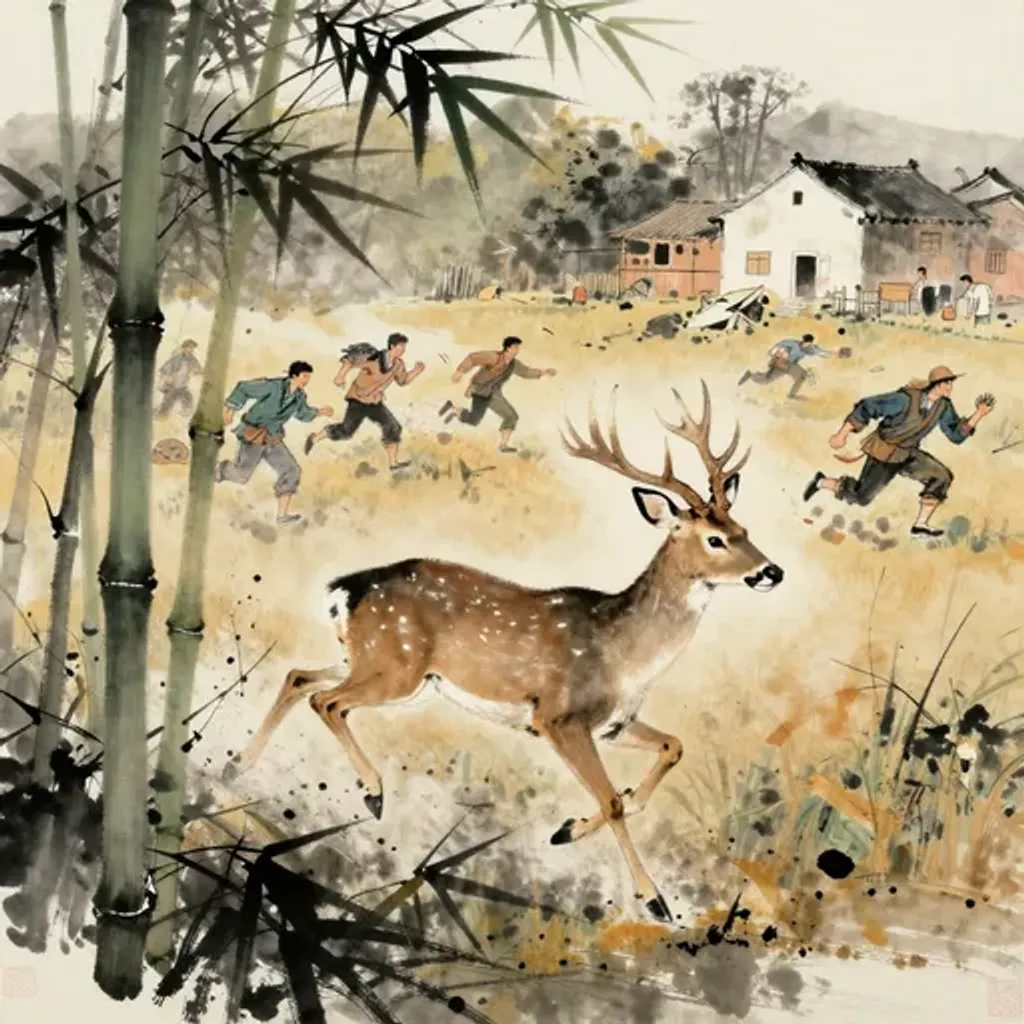
耳如驚鹿,不能定足。室家分散,各走匿竄。
Ears alert like a startled deer, unable to steady its footing. The household scatters apart; each flees and hides in secret.
— Jiao Yanshou, Yilin (Forest of Changes), 1st century BC
Commentary
Wind and thunder bestow increase, but the transformation leads to fire and thunder — the decisive bite of Biting Through, here experienced as the terror of being bitten. Ears prick like a startled deer, feet unable to find stable ground. The household scatters, each member fleeing and hiding in different directions. The imagery is visceral: a family unit disintegrating under sudden threat, every member reverting to animal instinct. The startled deer is pure flight response — no reasoning, no plan, only terror. From Increase to Biting Through, the verse captures the moment when accumulated tension snaps. Lightning and thunder bring clarity through shock; what cannot hold together is violently separated. The increase that should have strengthened the household instead amplified the tensions that finally tore it apart.
益 → 賁
Hexagram 42 → Hexagram 22: Grace
Changing lines: 3, 5
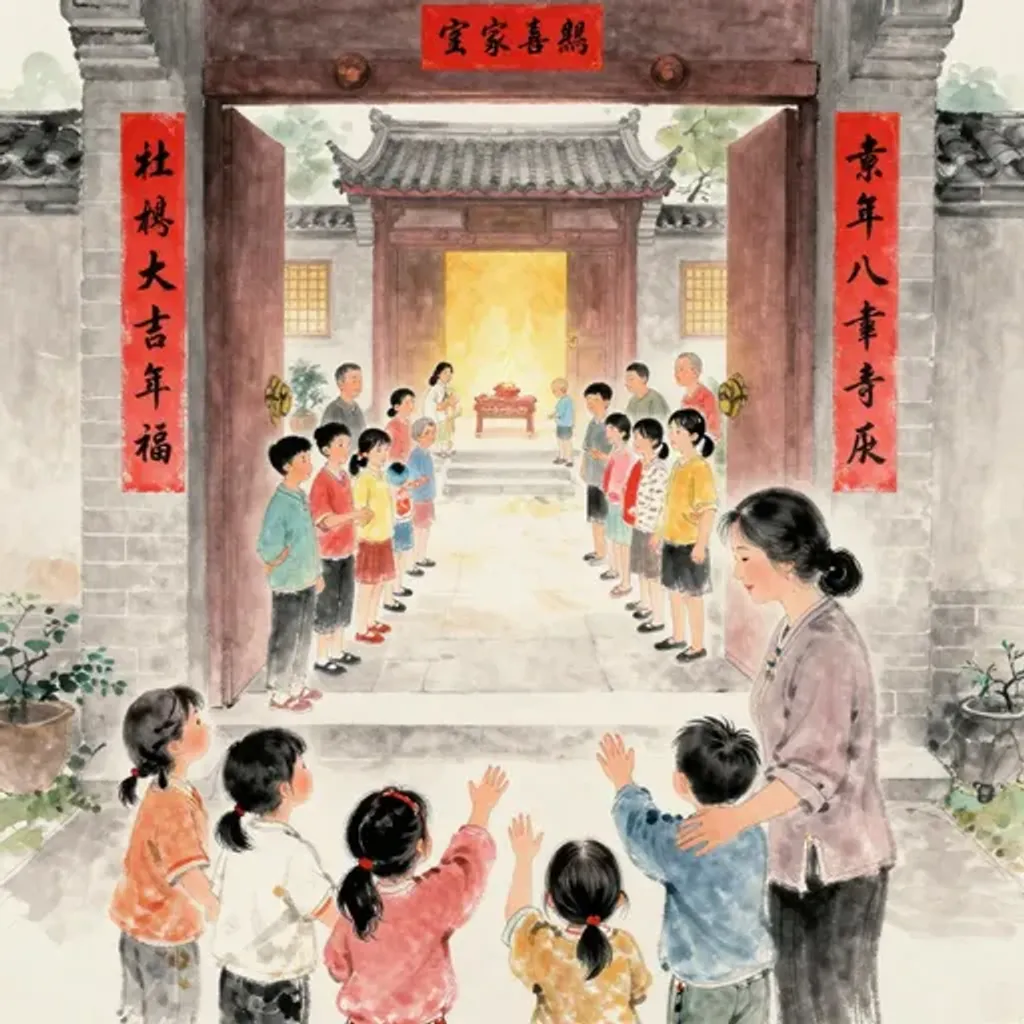
甲乙丙丁,俱位我庭。三丑六子,入門見母。
Jia, Yi, Bing, Ding — all take their places in our courtyard. Three daughters-in-law and six sons enter the gate to greet their mother.
— Jiao Yanshou, Yilin (Forest of Changes), 1st century BC
Commentary
Wind and thunder bestow increase, and the transformation leads to fire at the mountain's base — the adornment of Grace. Jia, Yi, Bing, Ding — the first four Heavenly Stems — all take their positions in the courtyard. Three 'ugly' and six children enter through the gate to see their mother. The Heavenly Stems arranged in the courtyard suggest cosmic order made visible in domestic space: everything in its proper station, each element adorned and aligned. The children gathering before their mother is the image of a well-ordered household where hierarchy and affection coexist. From Increase to Grace, the transformation reveals how abundance finds its most beautiful expression in harmonious arrangement. Fire beneath the mountain illuminates without consuming; increase channeled through proper form becomes lasting elegance.
益 → 剝
Hexagram 42 → Hexagram 23: Splitting Apart
Changing lines: 1, 5
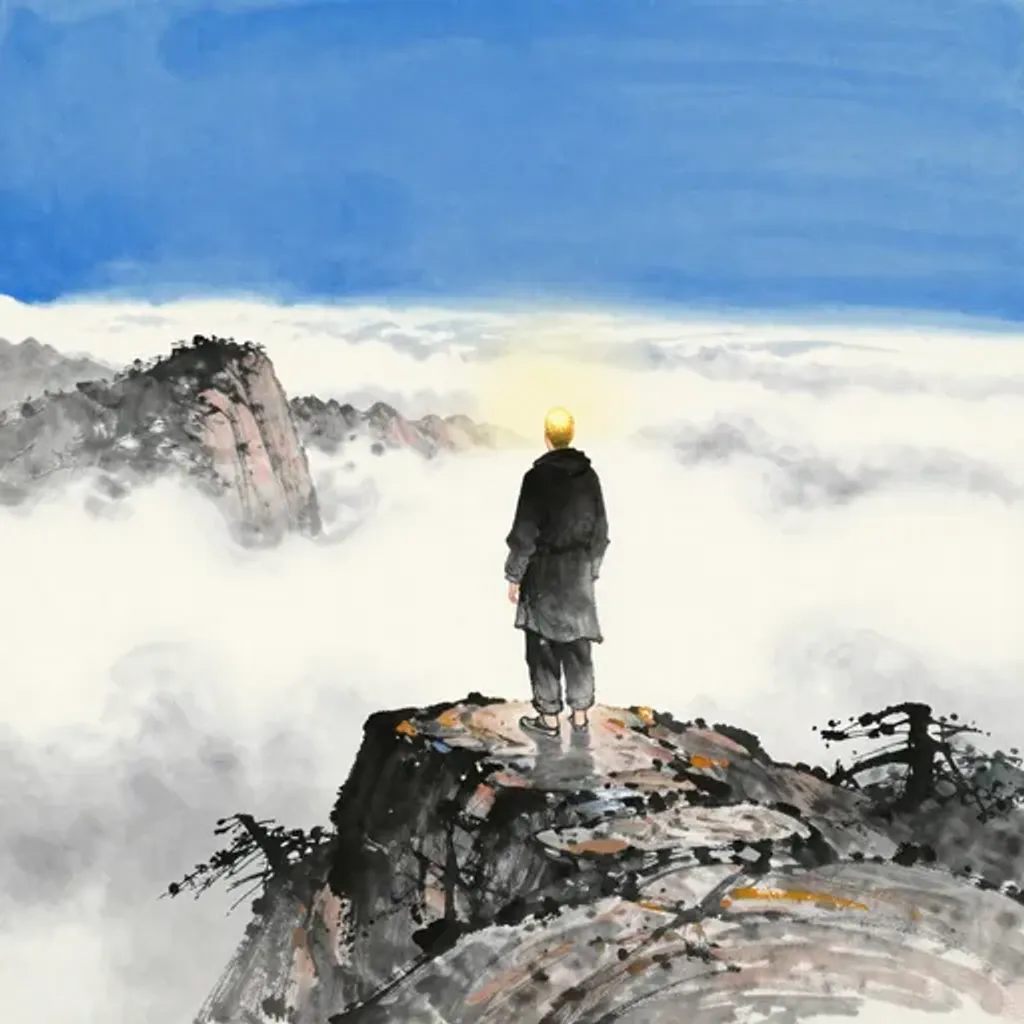
躡華顛,觀浮雲。風不搖,雨不薄。心安吉,无患咎。
Treading the flower-crowned summit, gazing upon floating clouds. The wind does not stir; the rain does not strike. The heart is at peace, auspicious, with neither trouble nor blame.
— Jiao Yanshou, Yilin (Forest of Changes), 1st century BC
Commentary
Wind and thunder bestow increase, and the transformation leads to the mountain resting upon the earth — the quiet resilience of Splitting Apart, here experienced from the summit rather than the erosion below. Climbing the crest of Hua Mountain, one gazes upon drifting clouds. The wind does not shake, the rain does not press close. The heart is at peace, auspicious; there is no misfortune or blame. Standing at the highest point, the observer finds perfect serenity above the turmoil. Clouds float past harmlessly; weather that might threaten at lower elevations cannot reach this vantage. From Increase to Splitting Apart, the verse offers a counterintuitive comfort: even as the mountain's base erodes, the one who dwells at the summit remains untouched. Increased elevation becomes a form of protection.
益 → 復
Hexagram 42 → Hexagram 24: Return
Changing lines: 5, 6
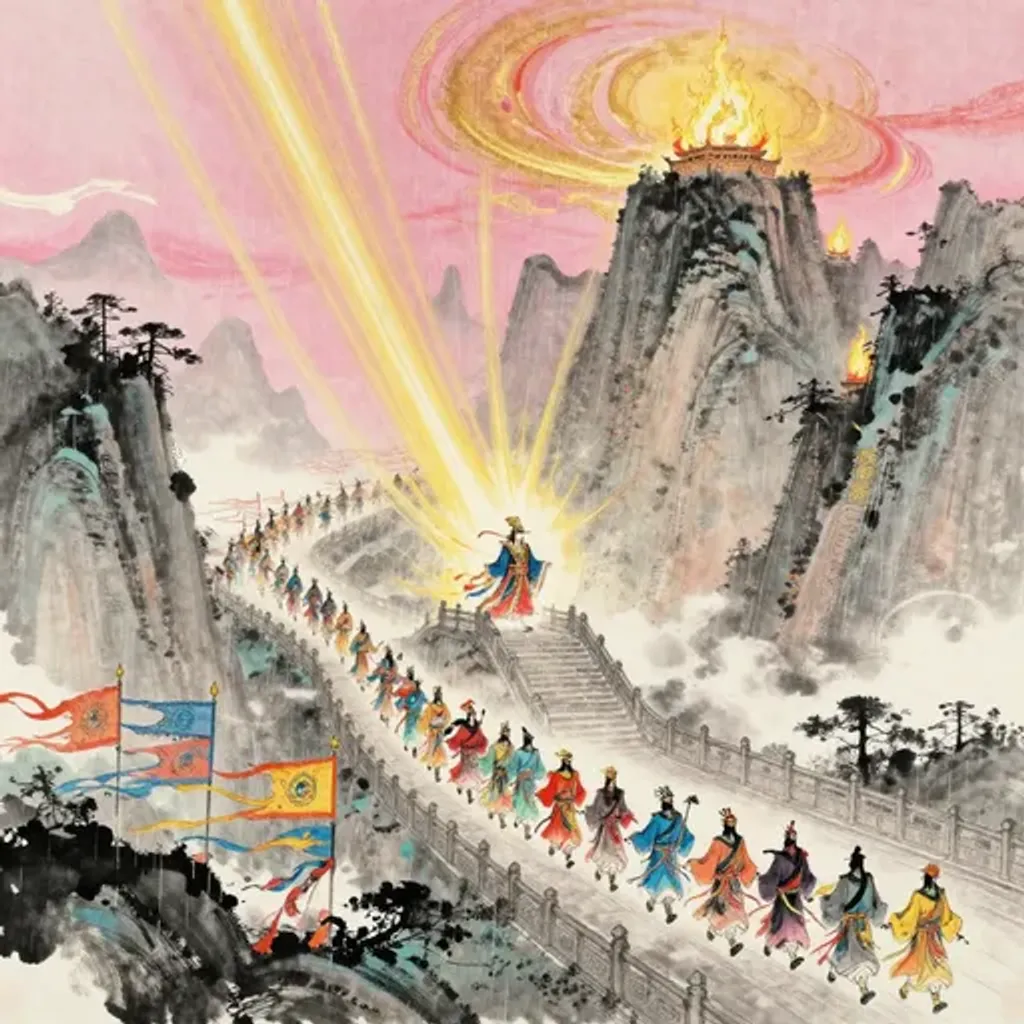
德施流行,利之四鄉。雨師洒道,風伯逐殃。巡狩封禪,以告成功。
Virtue spreads and flows forth, blessing the four directions. The Rain Master sprinkles the roads; the Wind Lord drives calamity away. On the royal tour to the sacred peak, the sovereign announces the work's completion.
— Jiao Yanshou, Yilin (Forest of Changes), 1st century BC
Commentary
Wind and thunder bestow increase, and the transformation leads to thunder returning within the earth — the regenerative pulse of Return. Virtue and grace flow forth, bringing benefit to all four directions. The Rain Master sprinkles the road clean; the Wind Earl drives calamity away. The sovereign makes an inspection tour to the sacred mountains and performs the feng and shan sacrifices, announcing the completion of his great work. This is the image of the sage-king at the apex of his reign, having brought such order that even the weather gods serve as his attendants. The feng and shan sacrifices at Mount Tai were the supreme ritual acknowledgment of cosmic harmony. From Increase to Return, the cycle completes: the thunderous first yang stirs again within the earth, and the virtue that was bestowed now regenerates from its source.
益 → 无妄
Hexagram 42 → Hexagram 25: Innocence
Changing lines: 4
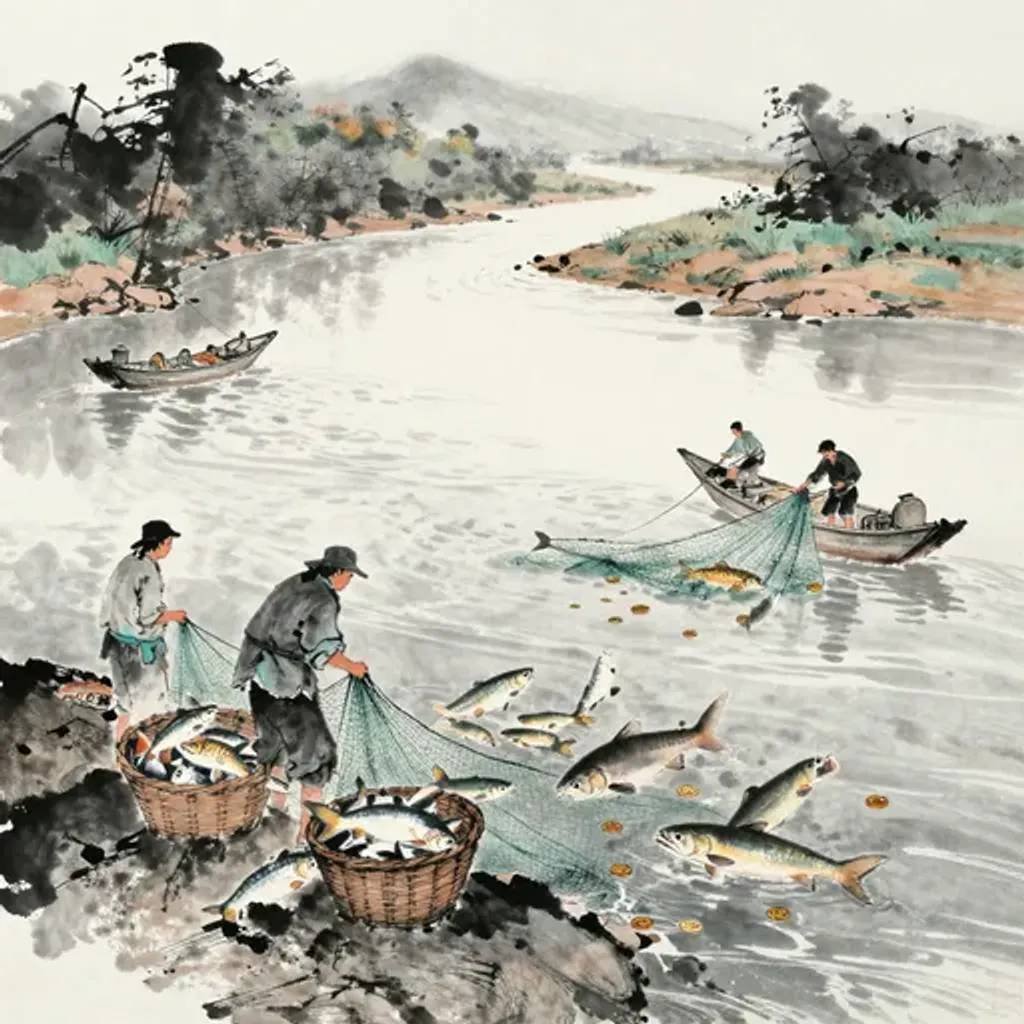
水流趍下,遂成東海。求我所有,買鱣與鯉。
Water flows downward, at last becoming the eastern sea. Seeking what we possess, we buy sturgeon and carp.
— Jiao Yanshou, Yilin (Forest of Changes), 1st century BC
Commentary
Wind and thunder bestow increase, and the transformation leads to thunder moving beneath heaven — the spontaneous rightness of Innocence. Water flows downhill and eventually forms the eastern sea. One seeks what one already possesses, buying sturgeon and carp at the market. The first image captures the effortless fulfillment of natural law: water does not strive to reach the sea, yet it inevitably arrives. The second image adds a note of practical wisdom — even abundance requires the simple act of going to market. From Increase to Innocence, the transformation reveals that the greatest benefits come without contrivance. Thunder beneath heaven sets all things in motion according to their nature. The one who acts without ulterior motive finds that what is needed comes to hand as naturally as rivers find the sea.
益 → 大畜
Hexagram 42 → Hexagram 26: Great Taming
Changing lines: 2, 3, 5
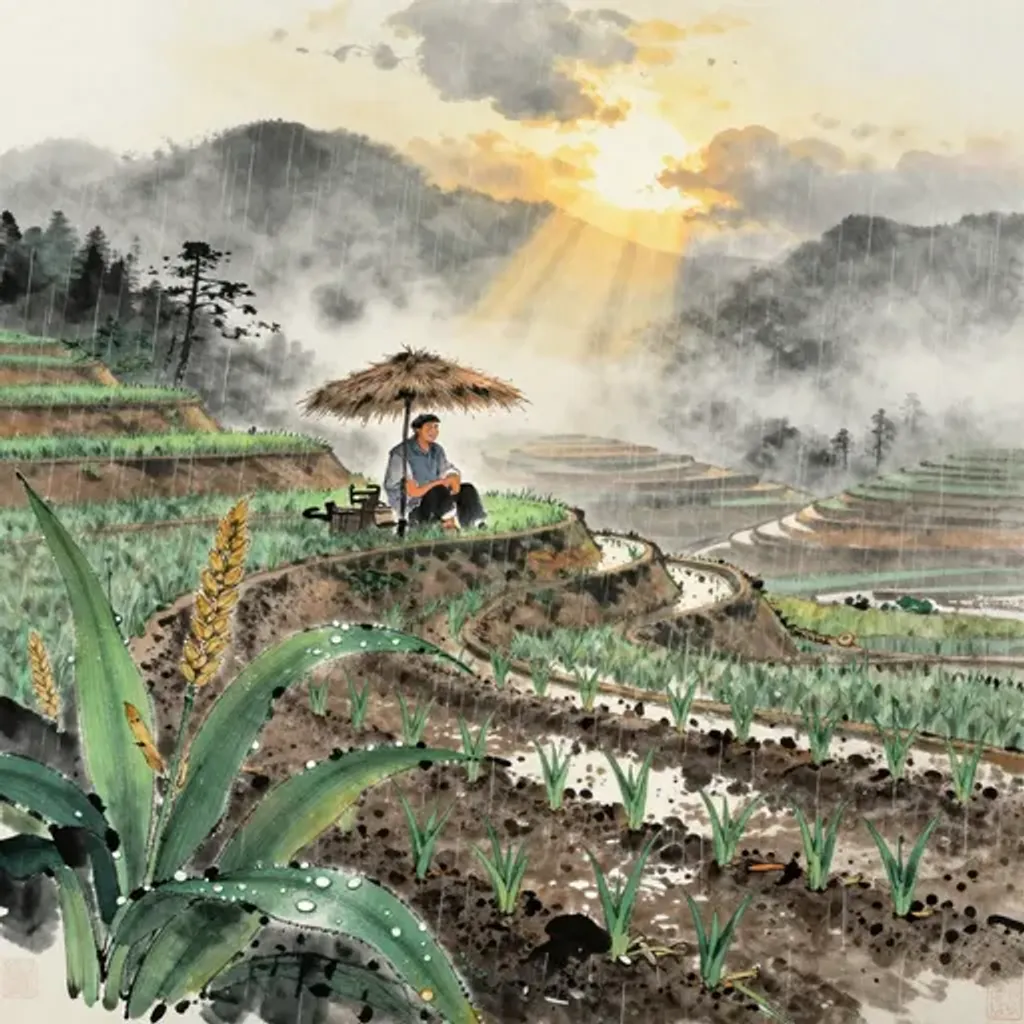
和氣相薄,膏潤津澤,生我嘉穀。
Harmonious vapors press together; rich moisture anoints and nourishes, bringing forth our fine grain.
— Jiao Yanshou, Yilin (Forest of Changes), 1st century BC
Commentary
Wind and thunder bestow increase, and the transformation leads to heaven stored within the mountain — the deep accumulation of Great Taming. Harmonious vapors press together; rich moisture and fertile dew nourish and produce fine grain. The verse is spare but luminous: when warm and cool airs mingle in proper measure, the resulting condensation feeds the earth. This is agriculture at its most elemental — no human intervention, only the cosmic kitchen of yin and yang producing sustenance. From Increase to Great Taming, the dynamic is one of generous endowment stored and concentrated. The mountain holds heaven within it, accumulating virtue over time. The harmonious vapors are increase itself, compressed and retained until they yield something nourishing and lasting.
益 → 頤
Hexagram 42 → Hexagram 27: Nourishment
Changing lines: 5
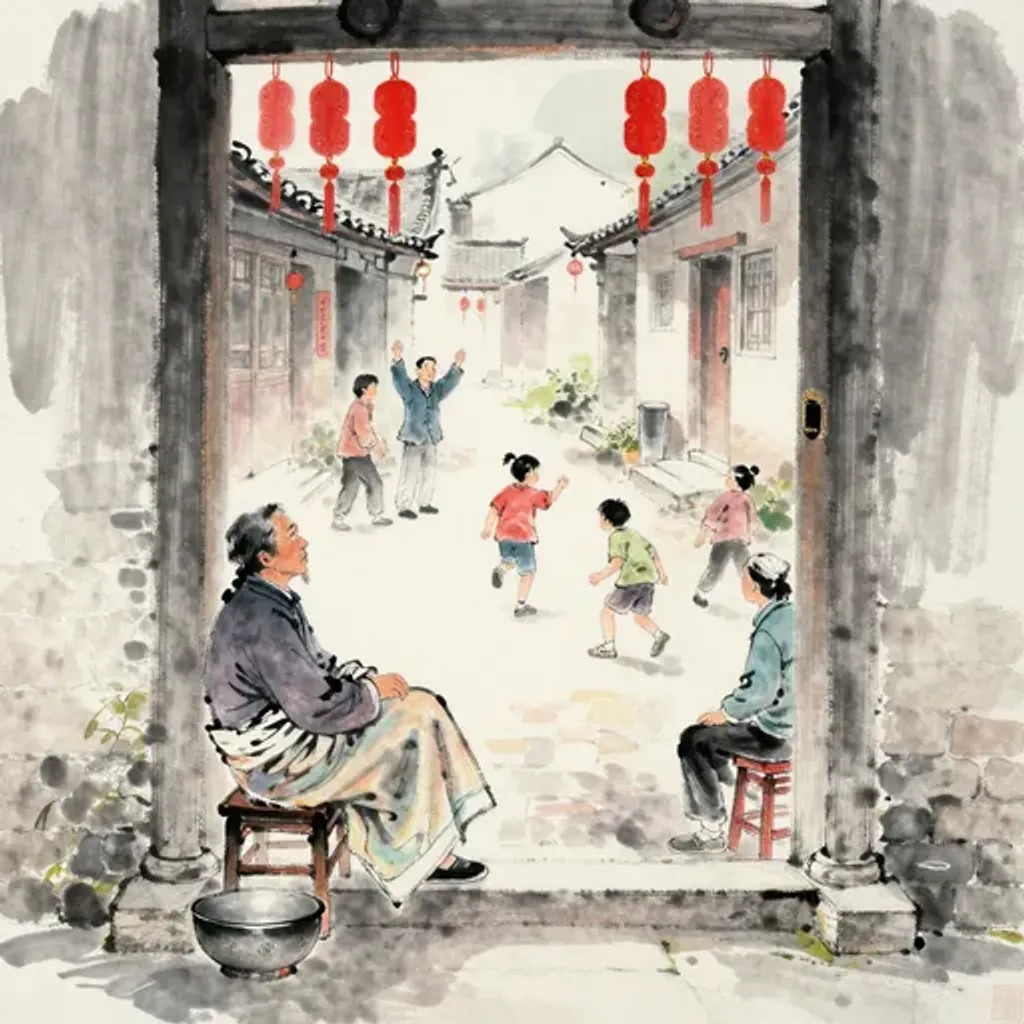
憂驚以除,禍不成災,安全以來。
Worry and alarm have departed; disaster does not become calamity. Safety and wholeness arrive at last.
— Jiao Yanshou, Yilin (Forest of Changes), 1st century BC
Commentary
Wind and thunder bestow increase, and the transformation leads to the mountain above thunder — the watchful stillness of Nourishment. Anxiety and alarm are dispelled; calamity does not ripen into disaster, and safety arrives at last. The verse captures the moment of deliverance: what seemed threatening dissolves before it can crystallize into real harm. The terseness of the language mirrors the simplicity of the resolution — no heroic intervention, just the natural dissipation of danger when the conditions shift. From Increase to Nourishment, the dynamic is one of careful provision. The mountain stands above the rumbling thunder, containing its energy. Increase addresses the crisis by providing exactly what is needed: not excess, not force, but the measured sustenance that transforms fear into security.
益 → 大過
Hexagram 42 → Hexagram 28: Great Exceeding
Changing lines: 1, 2, 3, 4, 6
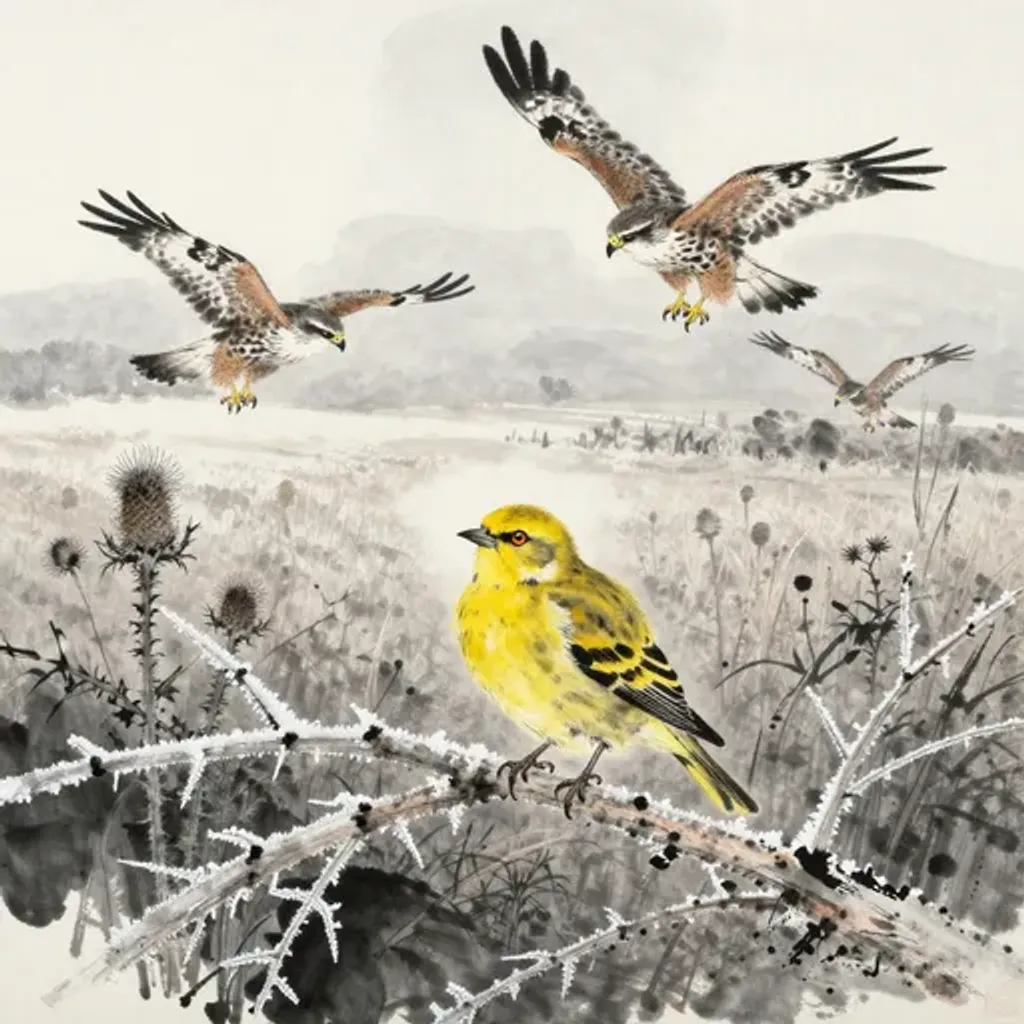
堅冰黃鳥,常哀悲愁。不見白粒,但覩藜蒿。數驚鷙鳥,飄為我憂。
Hard ice and a yellow bird, forever wailing in sorrow. No white grain to be seen, only goosefoot and wormwood. Startled again and again by hunting hawks, drifting, a source of endless worry.
— Jiao Yanshou, Yilin (Forest of Changes), 1st century BC
Commentary
Wind and thunder bestow increase, but the transformation leads to the lake submerging the trees — the dangerous excess of Great Exceeding. Hard ice, a yellow bird singing in perpetual sorrow. No white grain is seen, only goosefoot and mugwort. Startled raptors scatter repeatedly, drifting anxiety all around. Every image compounds the desolation: winter's grip, mournful birdsong, famine replacing harvest, and predators in disarray. The yellow bird recalls the Shijing exile lament, a stranger finding no welcome in hostile territory. From Increase to Great Exceeding, the verse reveals the dark side of too much: excess pressure bends the ridgepole past its breaking point. What should have been a season of increase has produced only frozen ground, weeds instead of grain, and birds too frightened to settle.
益 → 坎
Hexagram 42 → Hexagram 29: The Abysmal Water
Changing lines: 1, 2, 6
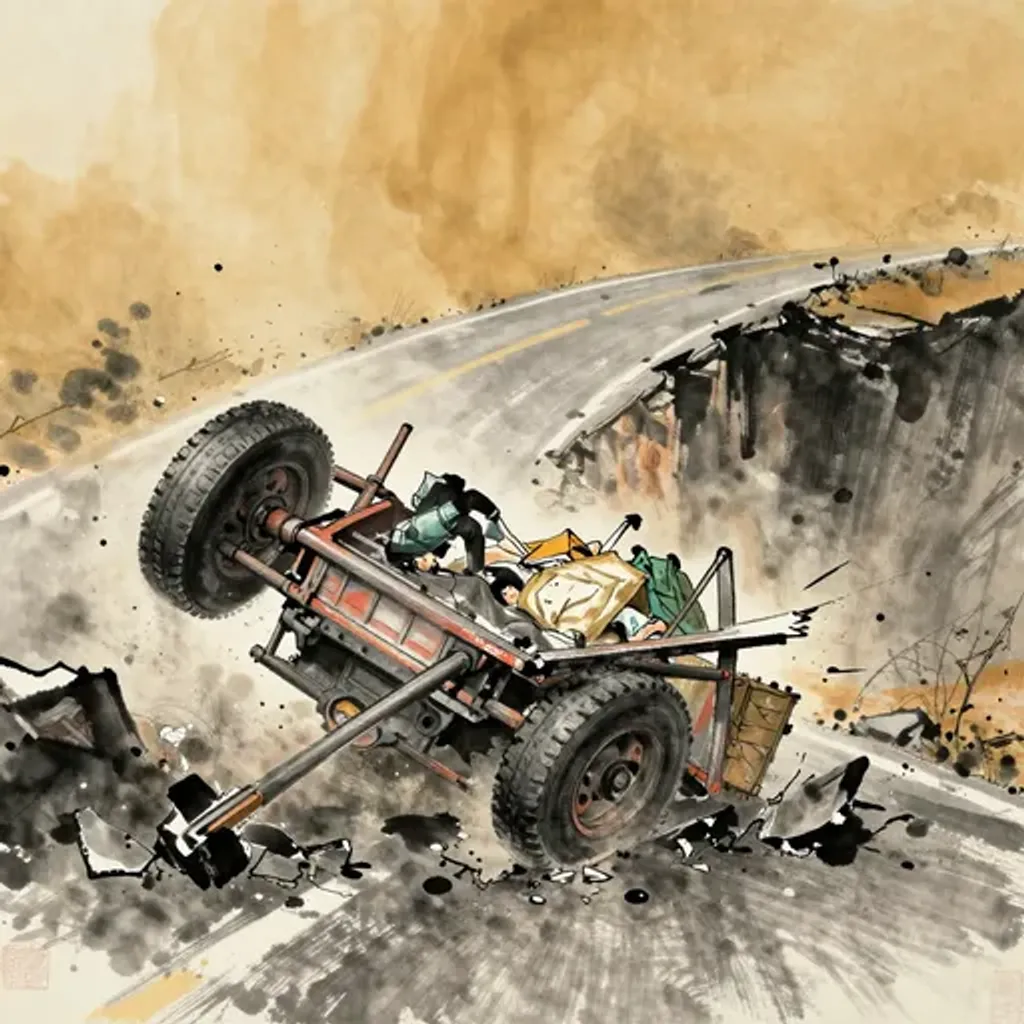
翕翕䡘䡘,實墜崩顛。滅其命身。
Rattling and jolting, crashing and toppling, truly plunging and falling. The body and life are destroyed.
— Jiao Yanshou, Yilin (Forest of Changes), 1st century BC
Commentary
Wind and thunder bestow increase, but the transformation leads to doubled water — the perilous abyss of the Abysmal, pit upon pit. Pressed and crowded together, everything truly collapses and tumbles down, destroying both life and body. The verse is brutally compressed: gathering pressure, sudden collapse, total annihilation. There is no rescue, no gradual decline — just the moment when the structure gives way entirely. From Increase to the Abysmal, the transformation is one of abundance cascading into danger. Water piled upon water creates not a deeper well but a flood. What was meant as increase overwhelms every container, and the excess that should have enriched instead drowns its recipient. The doubled abyss admits no foothold.
益 → 離
Hexagram 42 → Hexagram 30: The Clinging Fire
Changing lines: 3, 4, 5
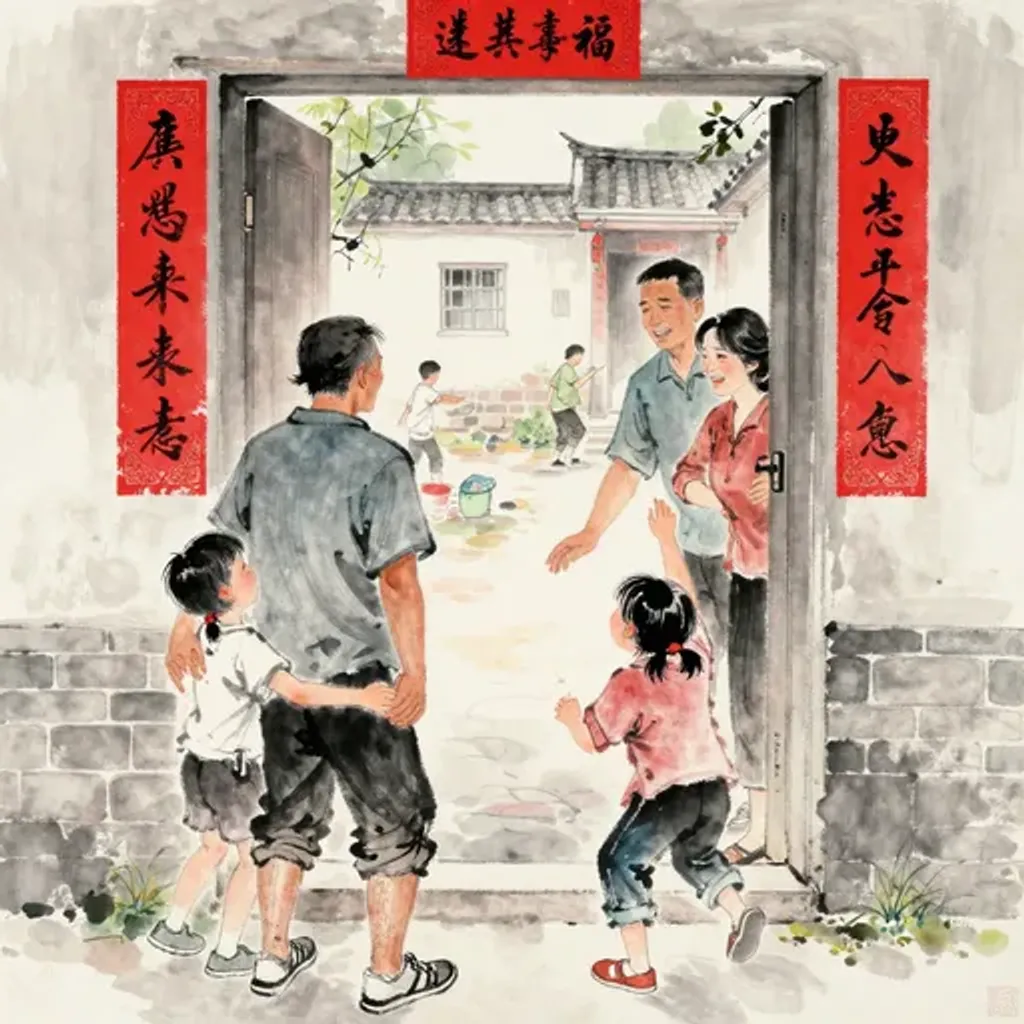
因禍致福,喜盈其室。
Through disaster, fortune is found; joy fills the household.
— Jiao Yanshou, Yilin (Forest of Changes), 1st century BC
Commentary
Wind and thunder bestow increase, and the transformation leads to doubled fire — the radiant clarity of the Clinging. Through disaster, blessings are achieved; joy fills the household. The verse is the shortest in this batch yet carries one of the most potent messages: the alchemical reversal where catastrophe becomes the very instrument of fortune. 'Through misfortune, arriving at blessing' is a cornerstone of Yijing philosophy — the turning point embedded within every extreme. From Increase to the Clinging, the doubled brightness emerges precisely from the darkness that preceded it. Fire clinging to fire creates illumination that reaches all directions. The great person uses this continuing brightness to shine upon the four quarters, and what began as calamity is transmuted into lasting joy.
益 → 咸
Hexagram 42 → Hexagram 31: Influence
Changing lines: 1, 3, 4, 6
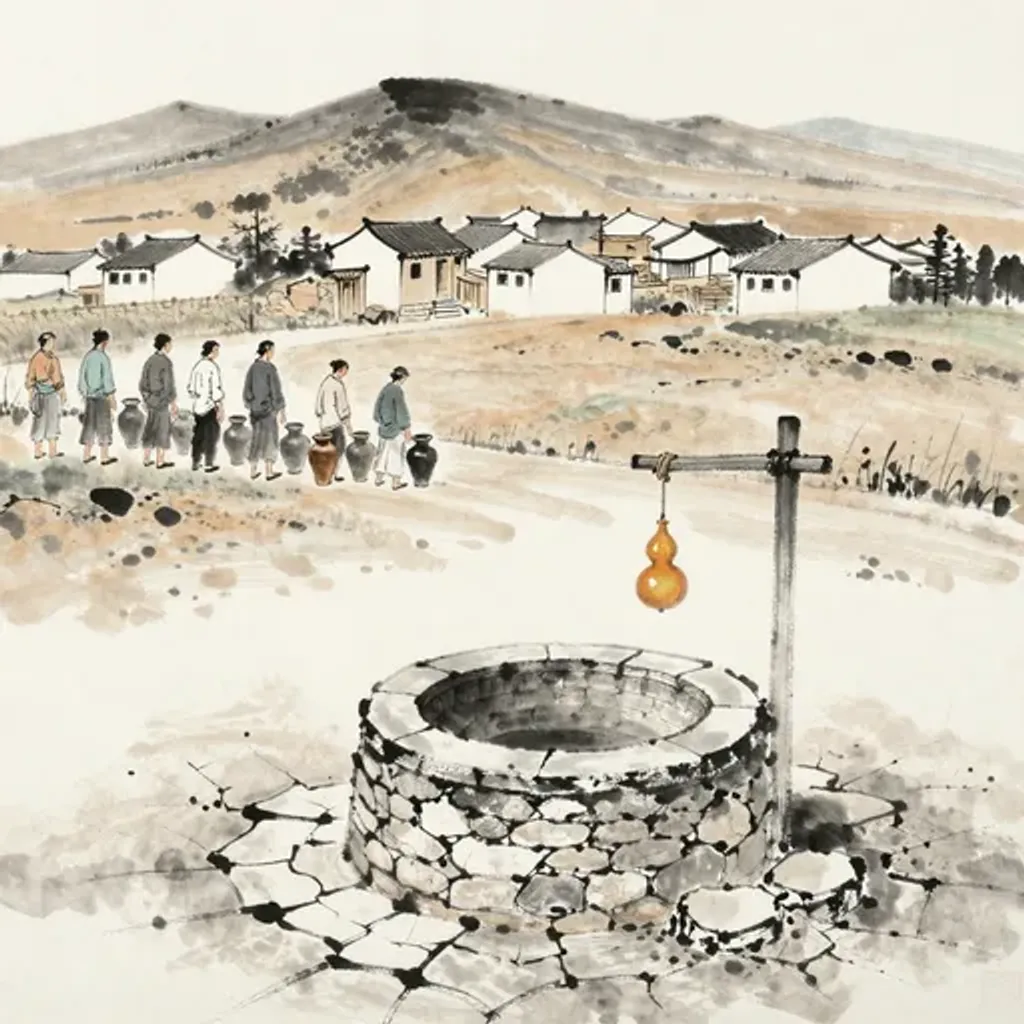
佳居千里,不見河海,无有魚市。
A fine dwelling a thousand li from any shore, seeing neither river nor sea; there is no fish market to be found.
— Jiao Yanshou, Yilin (Forest of Changes), 1st century BC
Commentary
Wind and thunder bestow increase, but the transformation leads to the lake resting upon the mountain — the mutual influence of Influence, here marked by absence. A fine dwelling sits a thousand li from any river or sea, with no fish market in sight. What is beautiful and well-established is nonetheless isolated from the nourishment it needs. A home without access to water and its bounty is a place of structural want despite surface comfort. From Increase to Influence, the verse highlights a specific failure of connection. Xian's image of mountain and lake in mutual resonance depends on proximity; here, the thousand-li distance negates that possibility. Increase has provided the dwelling, but not the conditions for it to receive what sustains. Influence requires receptivity, and receptivity requires being within reach.
益 → 恆
Hexagram 42 → Hexagram 32: Duration
Changing lines: 1, 2, 3, 4, 5, 6
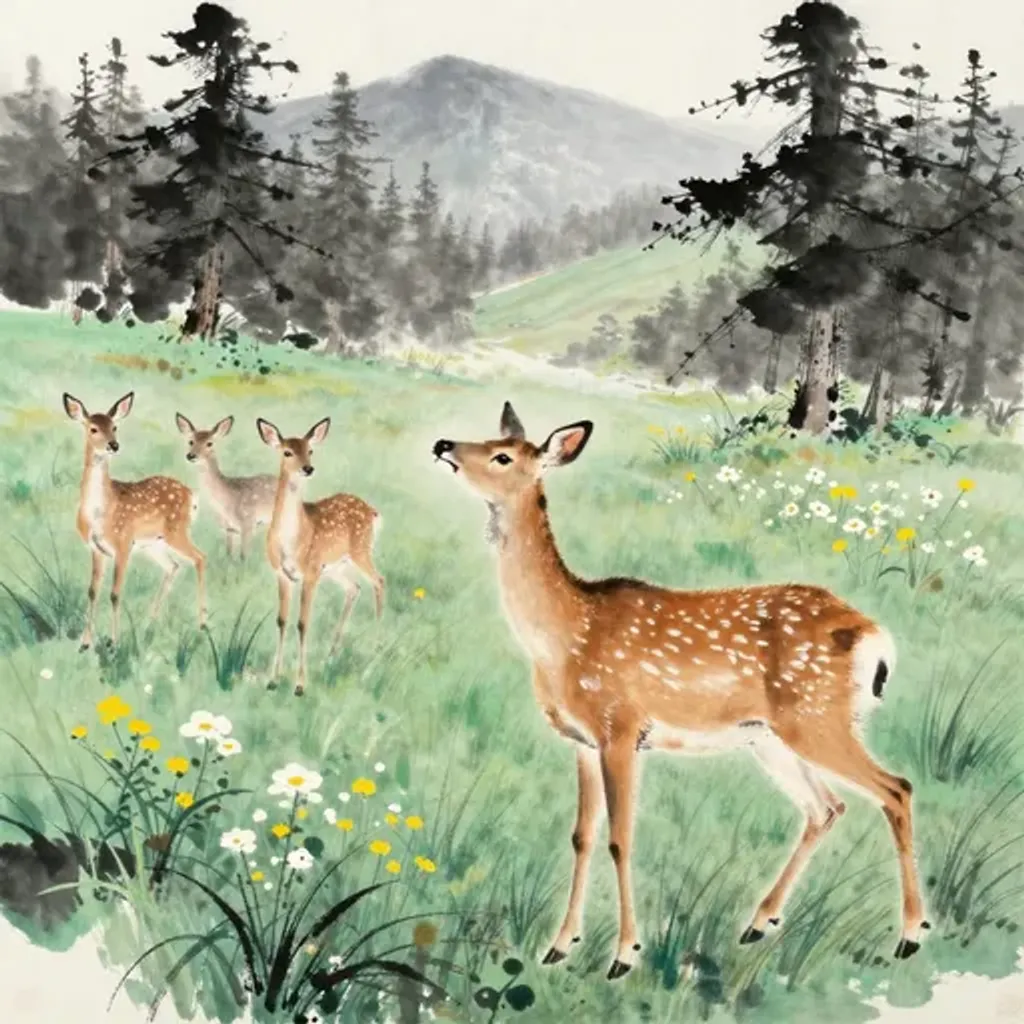
鹿得美草,鳴呼其友。九族和睦,不憂飢乏。
The deer finds fine grass and cries out to its companions. The nine clans dwell in harmony, never fearing hunger or want.
— Jiao Yanshou, Yilin (Forest of Changes), 1st century BC
Commentary
Wind and thunder bestow increase, and the transformation leads to thunder and wind in perpetual partnership — the steadfast continuity of Duration. A deer finds fine grass and calls out to its companions. The nine clans live in harmony, free from fear of hunger or want. The deer calling its friends to share good pasture is one of the oldest images of communal generosity, drawn from the Shijing ode 'Luming': 'The deer cry out, eating the celery of the fields; I have honored guests.' From Increase to Duration, the dynamic is one of abundance shared so widely that it becomes self-sustaining. Thunder and wind reinforce each other perpetually; the gentleman stands firm and does not change course. When good fortune is shared among kinfolk, the nine degrees of relation all flourish without end.
益 → 遯
Hexagram 42 → Hexagram 33: Retreat
Changing lines: 1, 3, 4
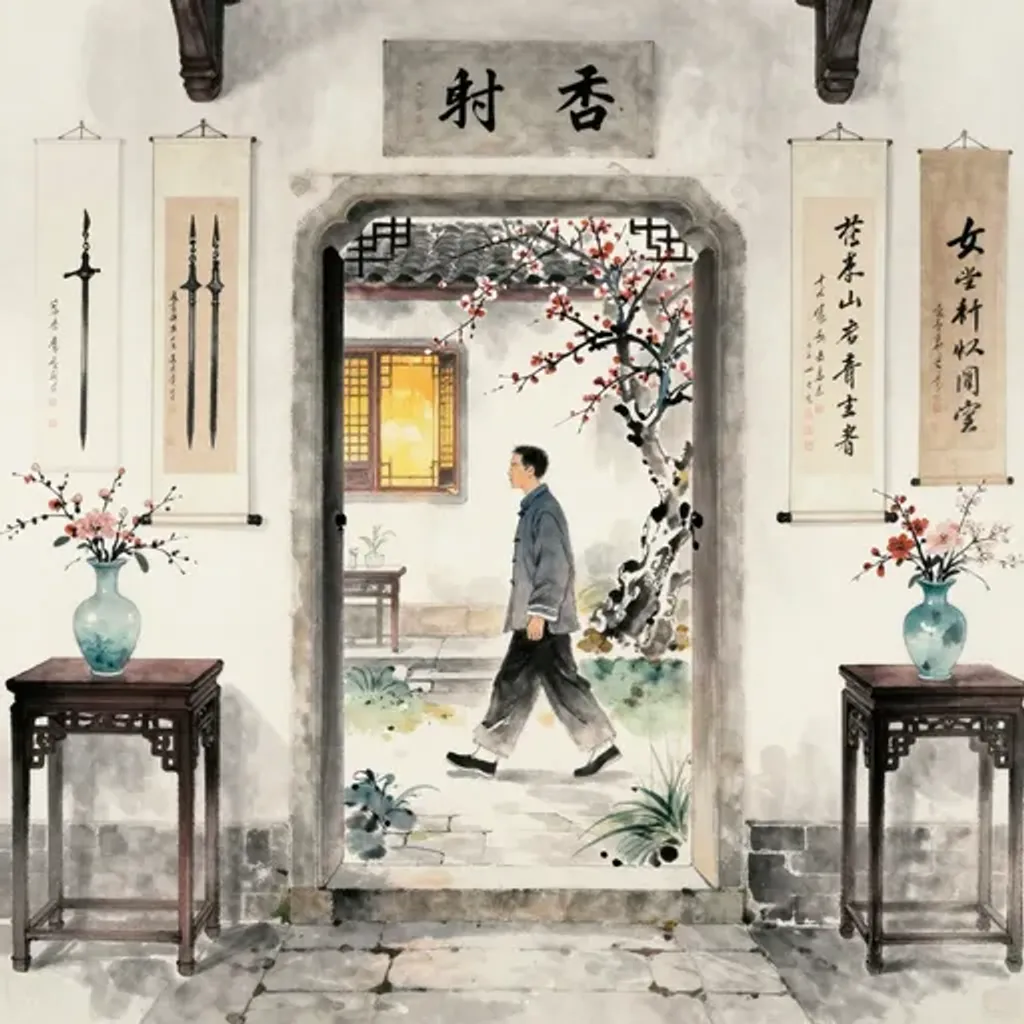
出門得堂,不逢禍殃。入戶自若,不見矛戟。
Stepping through the gate one finds the hall; no disaster or calamity is met. Entering the household at ease, one sees neither spear nor halberd.
— Jiao Yanshou, Yilin (Forest of Changes), 1st century BC
Commentary
Wind and thunder bestow increase, and the transformation leads to heaven above the mountain — the strategic withdrawal of Retreat. Stepping out the door, one finds a spacious hall; no calamity is encountered. Entering the household, everything is as it should be; no spears or halberds are in sight. The verse describes total safety in both public and private spheres: going out brings openness rather than danger, coming home reveals peace rather than armed threat. From Increase to Retreat, the paradox resolves beautifully. The gentleman who retreats distances himself from petty people, not through hostility but through dignified separation. The absence of weapons at home and hazards abroad is the hallmark of a life wisely withdrawn from conflict. Increase provides the resources for a comfortable retreat; wisdom chooses when to use them.
益 → 大壯
Hexagram 42 → Hexagram 34: Great Power
Changing lines: 2, 3, 4, 5, 6
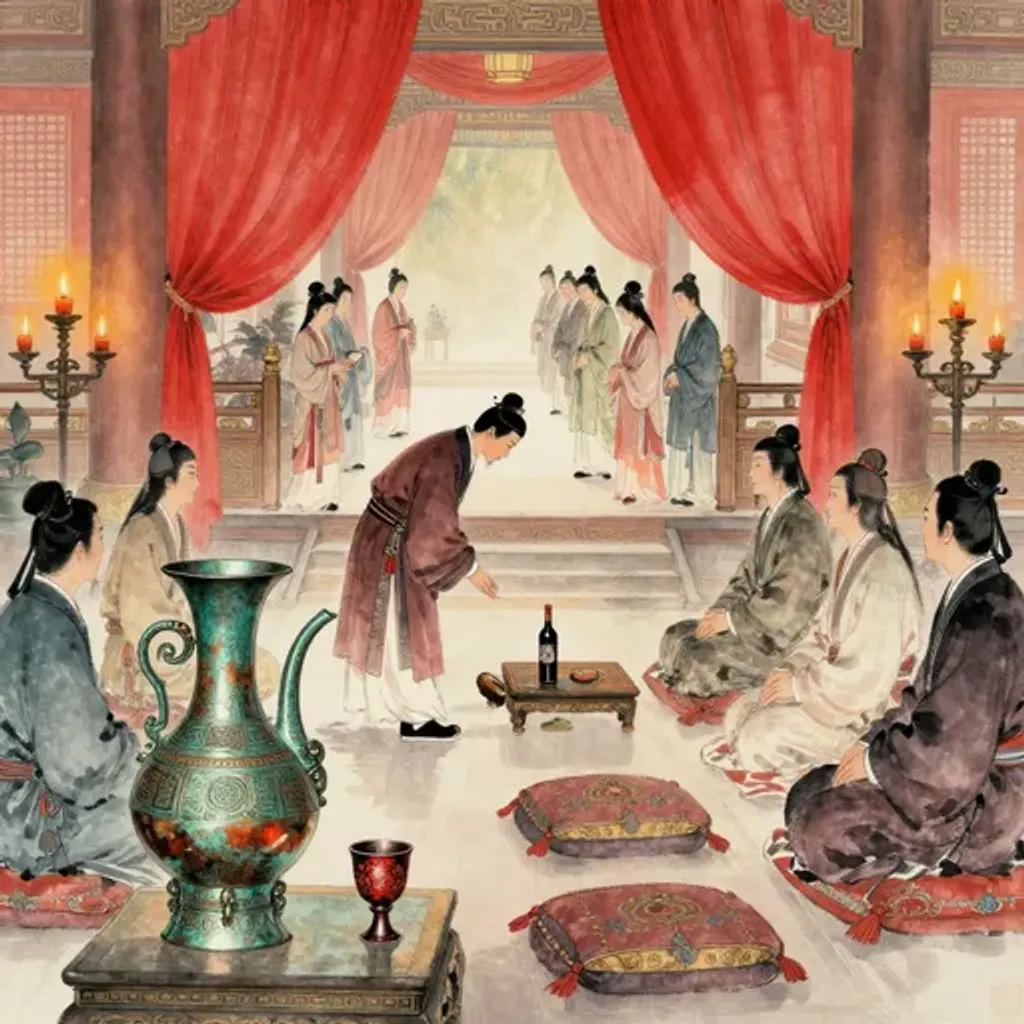
罍尊重席,命我嘉客。福祐久長,不見禍殃。
Bronze vessels and layered mats, we welcome our honored guests. Blessings endure for long ages; no calamity is seen.
— Jiao Yanshou, Yilin (Forest of Changes), 1st century BC
Commentary
Wind and thunder bestow increase, and the transformation leads to thunder roaring above heaven — the irresistible vigor of Great Power. Bronze lei vessels and layered mats are set out; the host formally invites honored guests. Blessings and divine protection extend far into the future, and no calamity appears. The lei vessel was a ritual wine container used in the most solemn ceremonies of hospitality. Layered sitting mats signified the highest respect for guests. The verse presents a feast conducted with full ceremonial propriety — power expressed through generosity rather than force. From Increase to Great Power, the connection lies in righteous exercise of strength. Thunder above heaven is overwhelming energy, but the gentleman channels it through ritual propriety, never treading outside the bounds of li. Great power well-governed manifests as magnificent hospitality.
益 → 晉
Hexagram 42 → Hexagram 35: Progress
Changing lines: 1, 4, 5
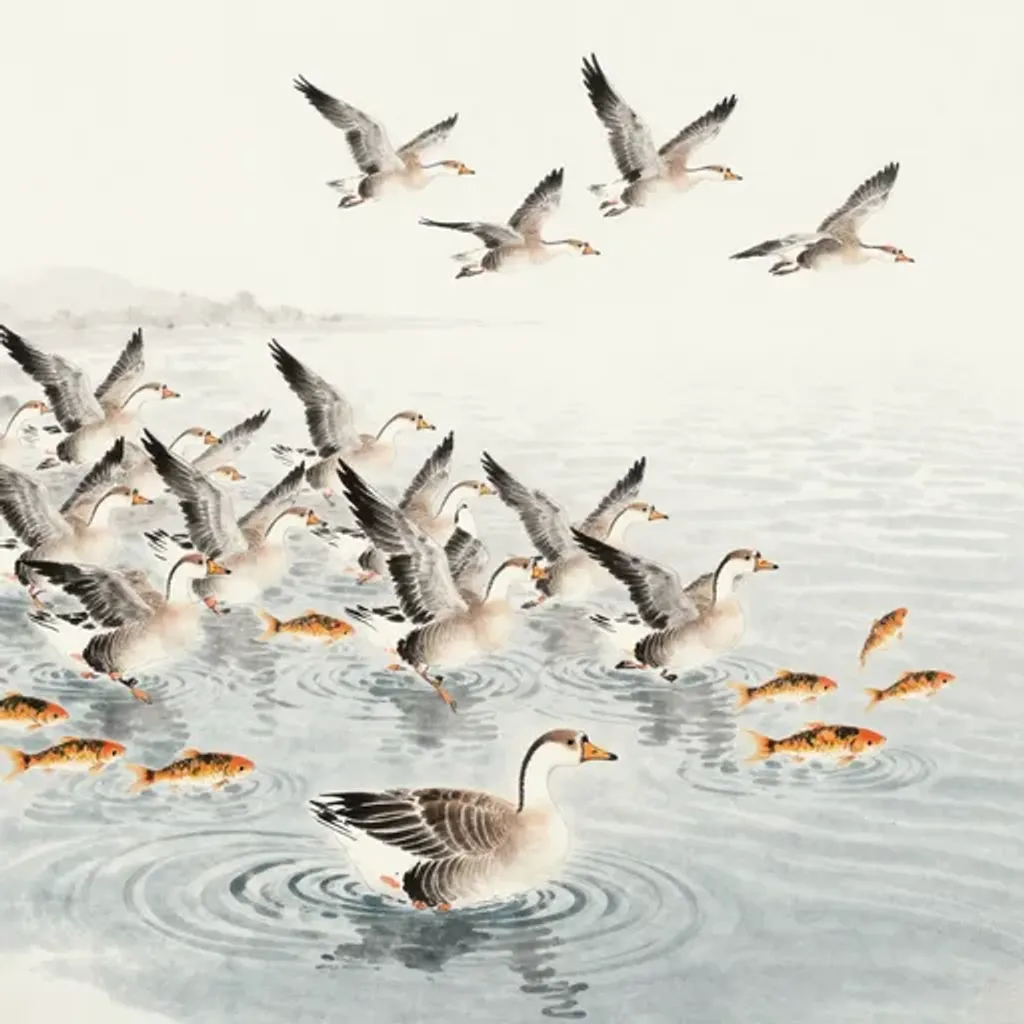
鳴鴻俱飛,北就魚池。鱣鮪鰋鯉,多饒所有。一笱獲兩,利之過倍。
Calling geese fly together, heading north to the fish pond. Sturgeon, bream, catfish, and carp — abundance beyond measure. One basket-trap catches a pair; the profit doubles the cost.
— Jiao Yanshou, Yilin (Forest of Changes), 1st century BC
Commentary
Wind and thunder bestow increase, and the transformation leads to fire rising above the earth — the bright advance of Progress. Wild geese cry and fly together, heading north toward the fish ponds. Sturgeon, catfish, and carp abound in rich profusion. A single fish trap captures two at once — the profit doubles the expectation. The northward flight of geese toward teeming waters is an image of purposeful migration to abundant resources. The doubled catch from a single trap is the essence of Increase perfected: not merely enough, but surplus beyond anticipation. From Increase to Progress, the advance follows naturally. Fire emerging above the earth illuminates the path forward; the gentleman makes his own virtue shine. Those who move in concert toward clear abundance find that the yield surpasses even generous expectations.
益 → 明夷
Hexagram 42 → Hexagram 36: Darkening of the Light
Changing lines: 3, 5, 6
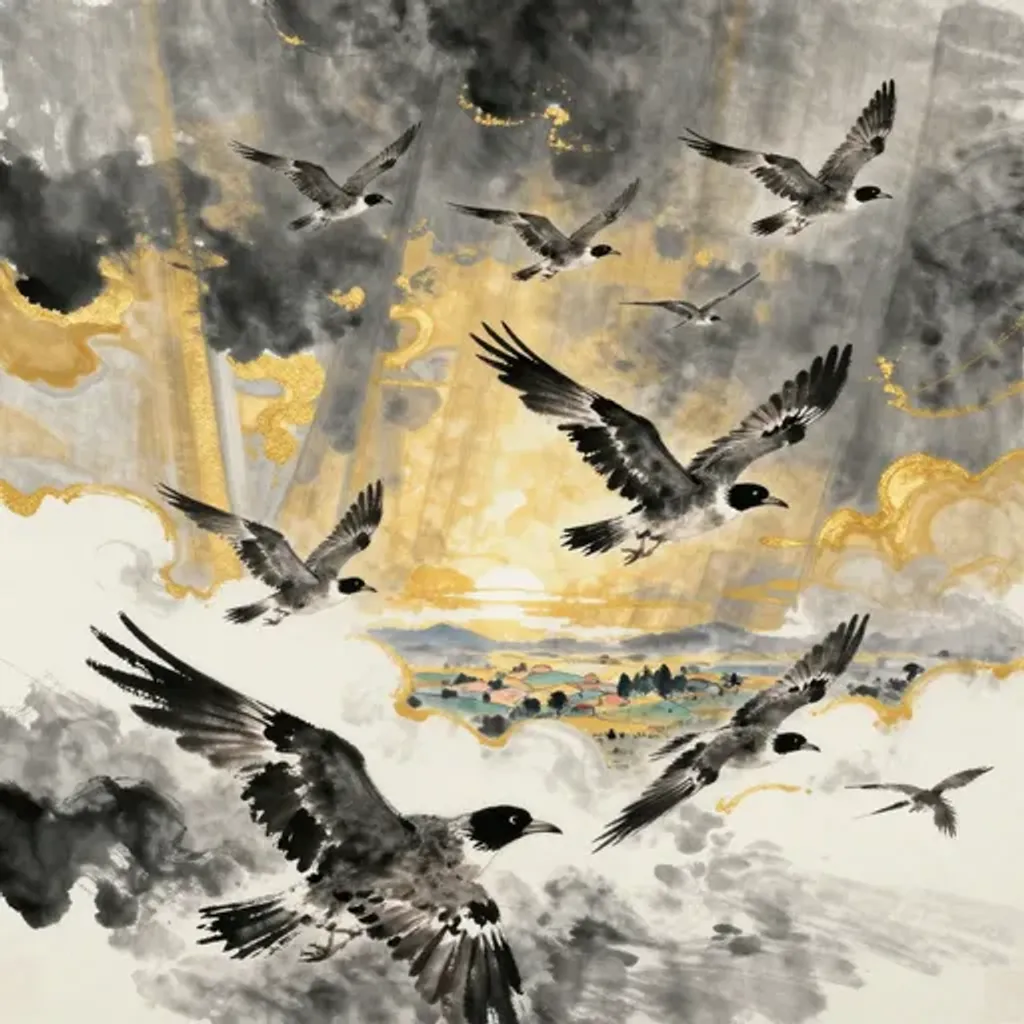
當風奮翼,與鳥飛北。入我嘉國,見吾慶室。
Facing the wind and spreading wings, flying north with the birds. Entering our fair land, beholding our blessed home.
— Jiao Yanshou, Yilin (Forest of Changes), 1st century BC
Commentary
Wind and thunder bestow increase, but the transformation leads to brightness entering the earth — the concealment of Darkening of the Light. Riding the wind with wings unfurled, one flies northward together with the birds. Arriving at a blessed realm, one sees a hall of celebration. The verse depicts a joyful migration — riding the wind, joining a flock, reaching a land of goodness. Yet the transformation into Ming Yi suggests this bright arrival conceals deeper complexity: brightness has entered the earth, and the wise must use obscurity to maintain their clarity. From Increase to Darkening of the Light, the pattern reveals that sometimes the wisest response to a generous endowment is to carry it quietly into a place where light is hidden but not extinguished.
益 → 家人
Hexagram 42 → Hexagram 37: The Family
Changing lines: 3
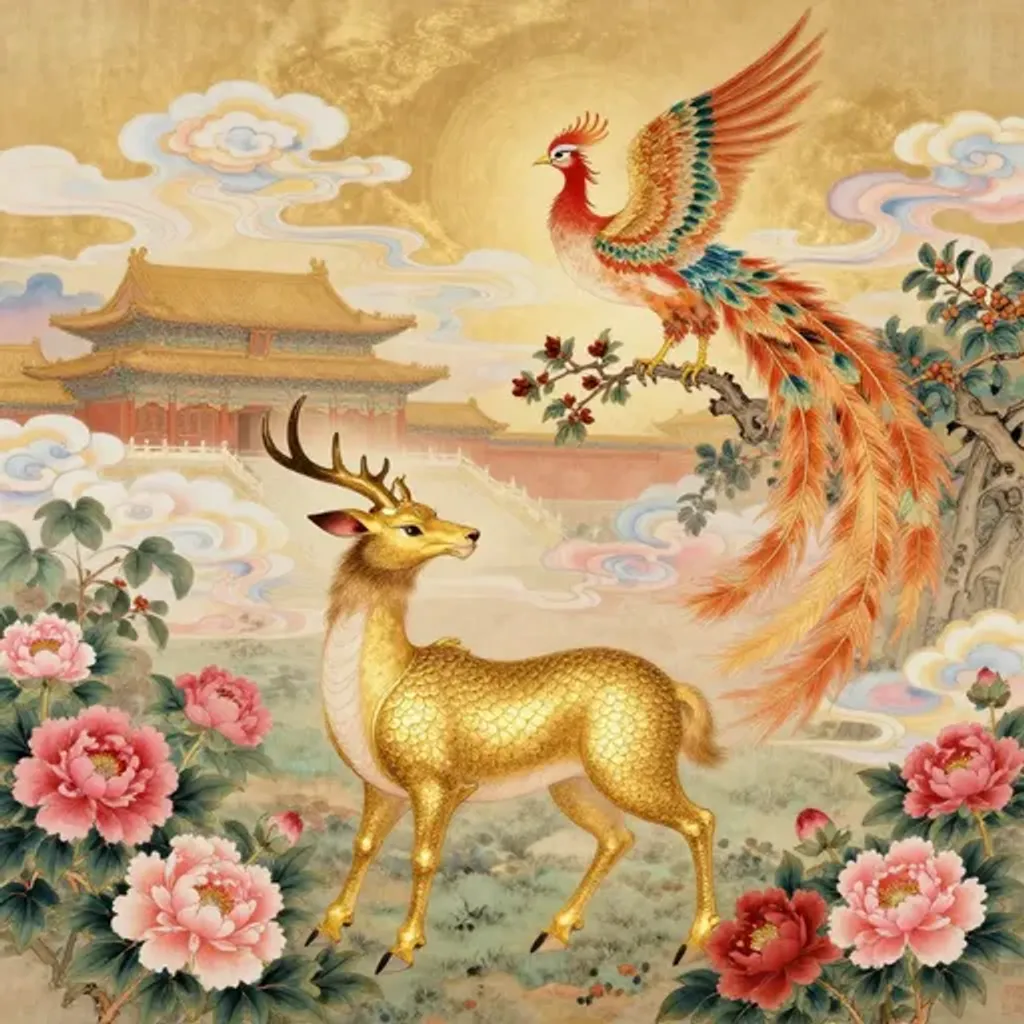
麒麟鳳凰,善政得祥。陰陽和調,國无災殃。
Qilin and phoenix — good governance brings forth auspicious signs. Yin and yang blend in harmony; the state is free from calamity.
— Jiao Yanshou, Yilin (Forest of Changes), 1st century BC
Commentary
Wind and thunder bestow increase, and the transformation leads to wind issuing from fire — the radiant warmth of the Family. Qilin and phoenix appear: auspicious omens summoned by virtuous governance. Yin and yang are harmoniously balanced, and the state suffers no calamity. The qilin and phoenix are the supreme tokens of cosmic approval, appearing only when a sage ruler's virtue has brought the world into alignment. Their manifestation is not the cause of peace but its confirmation — the resonance between earthly governance and celestial order made visible. From Increase to the Family, the transformation is natural: wind issues from fire as warmth radiates outward from a well-tended hearth. The increase of virtue within the household extends as gentle influence to the state, and the auspicious creatures respond to what has already been achieved.
益 → 睽
Hexagram 42 → Hexagram 38: Opposition
Changing lines: 2, 4, 5
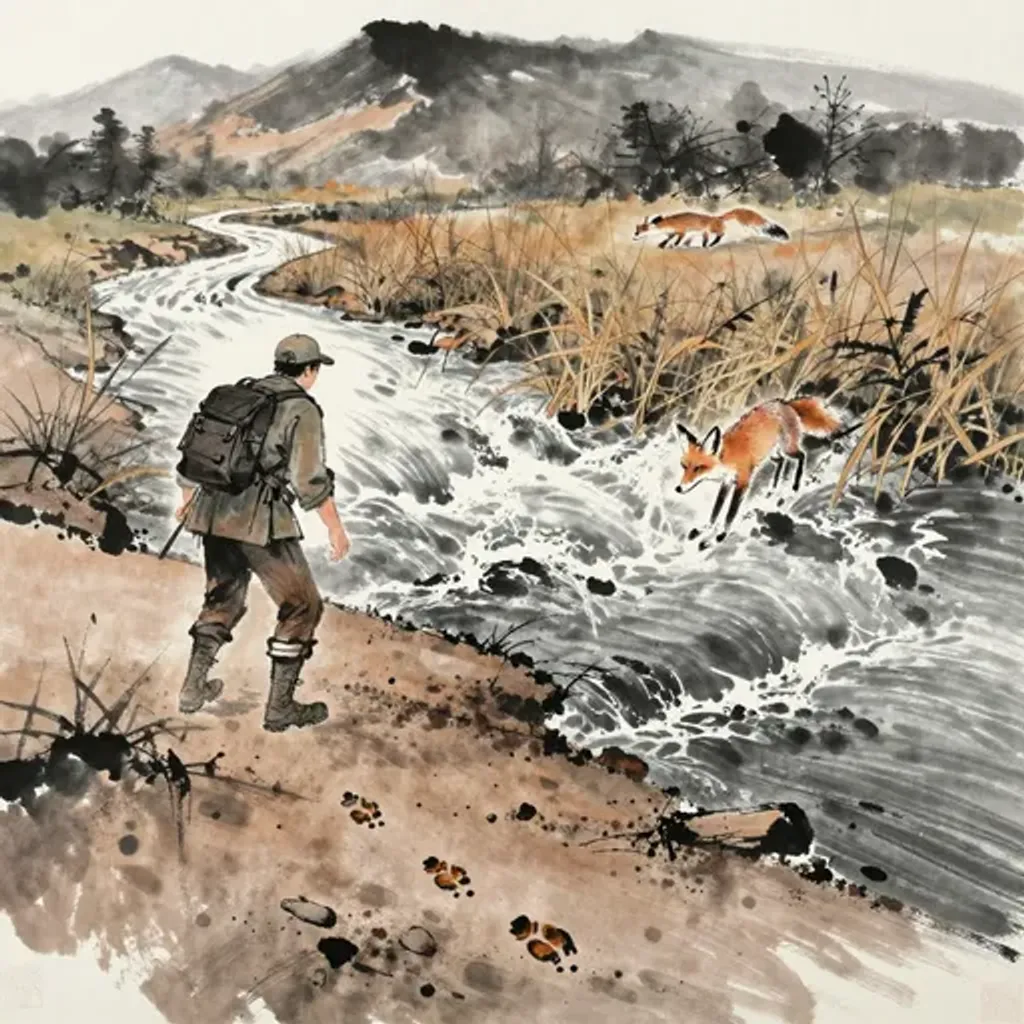
逐狐東山,水遏我前。深不可涉,失其後便。
Chasing the fox across the eastern hills, water blocks the way ahead. Too deep to ford, the advantage is lost.
— Jiao Yanshou, Yilin (Forest of Changes), 1st century BC
Commentary
Wind and thunder bestow increase, but the transformation leads to fire above the lake — the divergent perceptions of Opposition. Chasing a fox toward the eastern mountain, water blocks the way ahead. Too deep to wade across, the pursuer loses the advantage. The fox is a creature of cunning, and pursuing it leads the hunter into terrain that favors the quarry. The impassable water is not merely an obstacle but a revelation: the pursuit itself was misconceived. From Increase to Opposition, the verse illustrates how divergent aims create impasses. Fire and lake cannot merge — they see the same situation from irreconcilable positions. The increased energy devoted to the chase only carries the pursuer further from success, and the fox escapes precisely because water and mountain refuse to cooperate with the hunter's design.
益 → 蹇
Hexagram 42 → Hexagram 39: Obstruction
Changing lines: 1, 3, 6
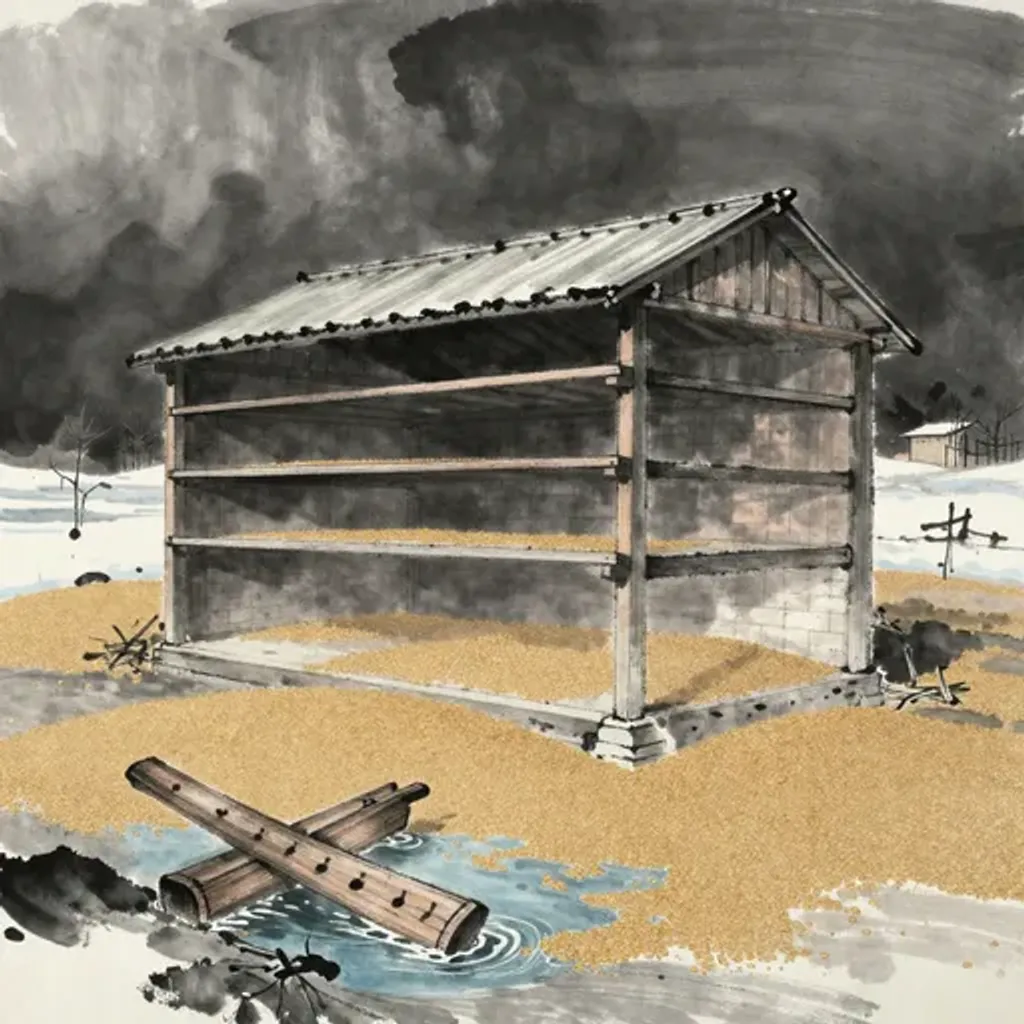
丑戌亥子,飢饉前生。陰陽暴客,水絕我食。
In the hours of Chou, Xu, Hai, and Zi, famine precedes all else. Yin and yang — violent visitors — flood and sever our food.
— Jiao Yanshou, Yilin (Forest of Changes), 1st century BC
Commentary
Wind and thunder bestow increase, but the transformation leads to water upon the mountain — the treacherous terrain of Obstruction. The earthly branches Chou, Xu, Hai, and Zi herald a time when famine has already begun. Yin and yang clash like violent intruders, and floodwaters cut off the food supply. The four branches mentioned all correspond to the cold, dark months of the calendar — deep winter when stores run low and nature offers nothing. The 'violent guests' of yin and yang suggest unseasonable weather or cosmic disorder that destroys what little remains. From Increase to Obstruction, the pattern is grim: water atop the mountain cannot flow to nourish the fields below. Every path forward is blocked, and the increase that should have prevented famine instead arrives as the flood that completes the destruction.
益 → 解
Hexagram 42 → Hexagram 40: Deliverance
Changing lines: 1, 2, 4, 5, 6
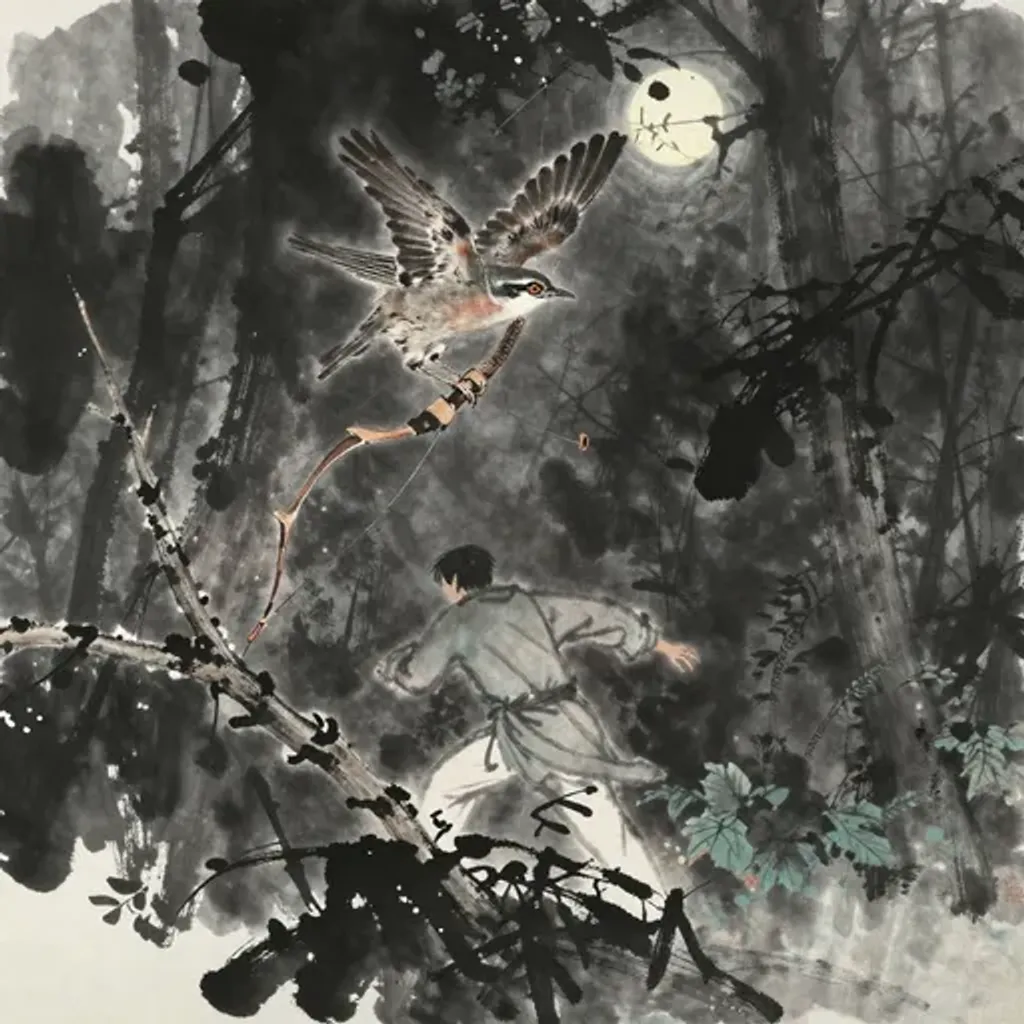
狐狸雉兔,畏人逃去。分走竄匿,不知所處。
A bird once startled by a bow dares not perch. A snake's shadow in the wine cup — suspicion on all sides. Every rustling grass and wind-sound is an enemy — fleeing into the deep forest, not daring to return.
— Jiao Yanshou, Yilin (Forest of Changes), 1st century BC
Commentary
Wind and thunder bestow increase, and the transformation leads to thunder above water — the liberating release of Deliverance. This is a rewritten verse; the original reads: 'Fox, pheasant, and rabbit, fearing humans, flee and scatter. They run apart and hide, not knowing where they are.' Animals disperse in pure terror, each seeking its own refuge without direction or plan. The image captures panic without resolution — creatures overwhelmed by threat who scatter rather than unite. From Increase to Deliverance, the verse carries an implicit promise within its desperation. Thunder and rain work together to dissolve accumulated tensions; the gentleman pardons faults and forgives crimes. Though the animals flee in confusion now, the storm that frightens them is also the storm that clears the air.
益 → 損
Hexagram 42 → Hexagram 41: Decrease
Changing lines: 2, 5
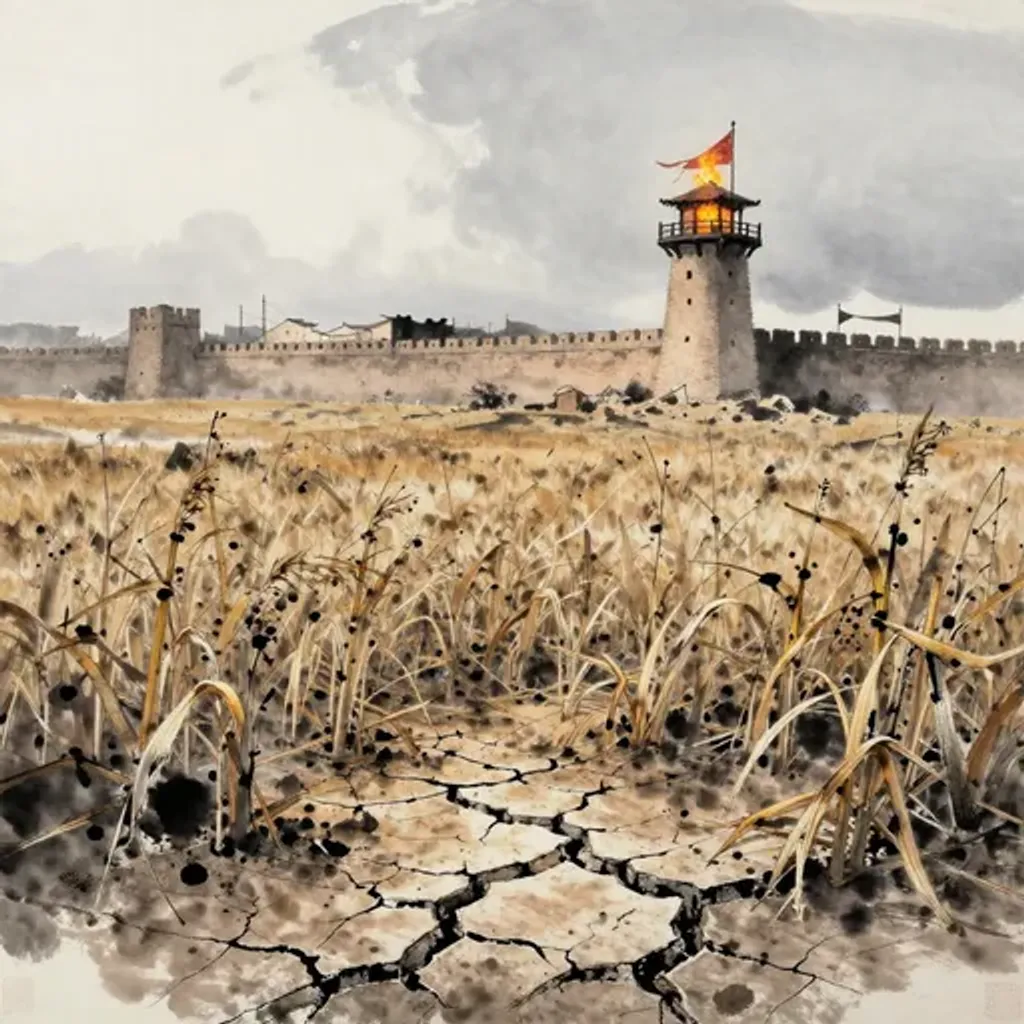
桀跖惡人,使德不通。炎旱為殃,年穀大傷。
Jie and Zhi, wicked men, obstruct the way of virtue. Scorching drought becomes a scourge; the year's grain is utterly destroyed.
— Jiao Yanshou, Yilin (Forest of Changes), 1st century BC
Commentary
Wind and thunder bestow increase, but the transformation leads to the mountain above the lake — the sacrificial reduction of Decrease. Jie and Zhi, archetypal villains, obstruct the flow of virtue. Scorching drought becomes a plague, and the year's harvest is devastated. Jie, the last tyrant of Xia, and Robber Zhi, the legendary bandit, together embody the extremes of misrule and lawlessness. Their presence blocks every channel through which benevolence might reach the people. The resulting drought is both literal and metaphorical: when virtue is dammed up, the land itself withers. From Increase to Decrease, the dynamic is one of abundance systematically stripped away. The mountain takes from the lake below — but here, the taking is not disciplined sacrifice but predatory extraction by those who corrupt every gift they touch.
益 → 益
Hexagram 42 → Hexagram 42: Increase
No changing lines — the hexagram is unchanged
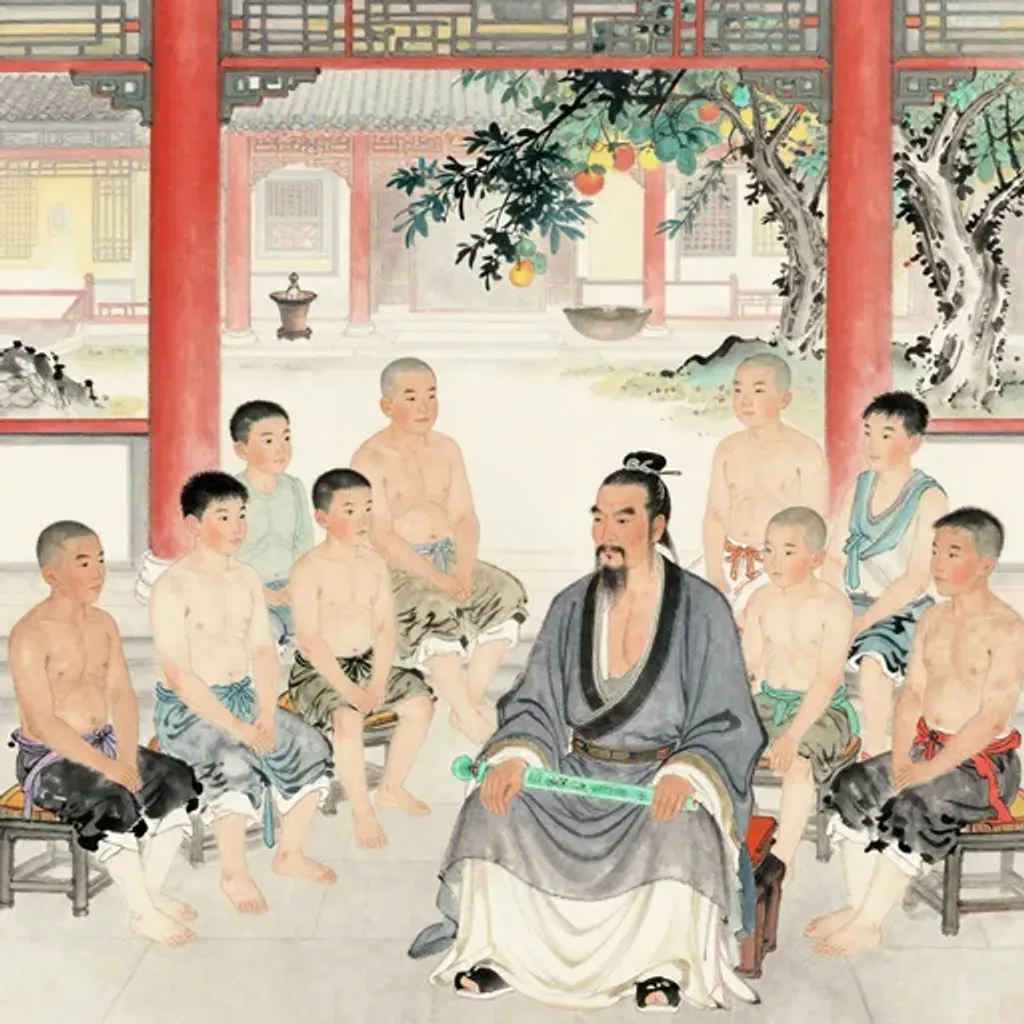
文王四乳,仁愛篤厚。子畜十男,无有折夭。
King Wen with his four breasts, benevolent love deep and generous. He reared ten sons; not one met an early death.
— Jiao Yanshou, Yilin (Forest of Changes), 1st century BC
Commentary
Wind and thunder bestow increase, and the transformation returns to itself — Increase upon Increase, the hexagram doubled. King Wen possessed four nipples, a sign of profound benevolence and sagely compassion. He raised ten sons, and not one suffered an early death. According to the Huainanzi, 'King Wen had four nipples; this is called great benevolence — all under heaven turn to him, and the hundred clans draw near.' The four nipples were understood as a bodily mark of superabundant virtue, an outward sign that this ruler could nourish more than ordinary men. From Increase to Increase, the verse celebrates the pure archetype of the hexagram: generosity so complete that it reproduces itself across generations without diminishment. The sage's body itself overflows with the capacity to sustain.
益 → 夬
Hexagram 42 → Hexagram 43: Breakthrough
Changing lines: 2, 3, 4, 6
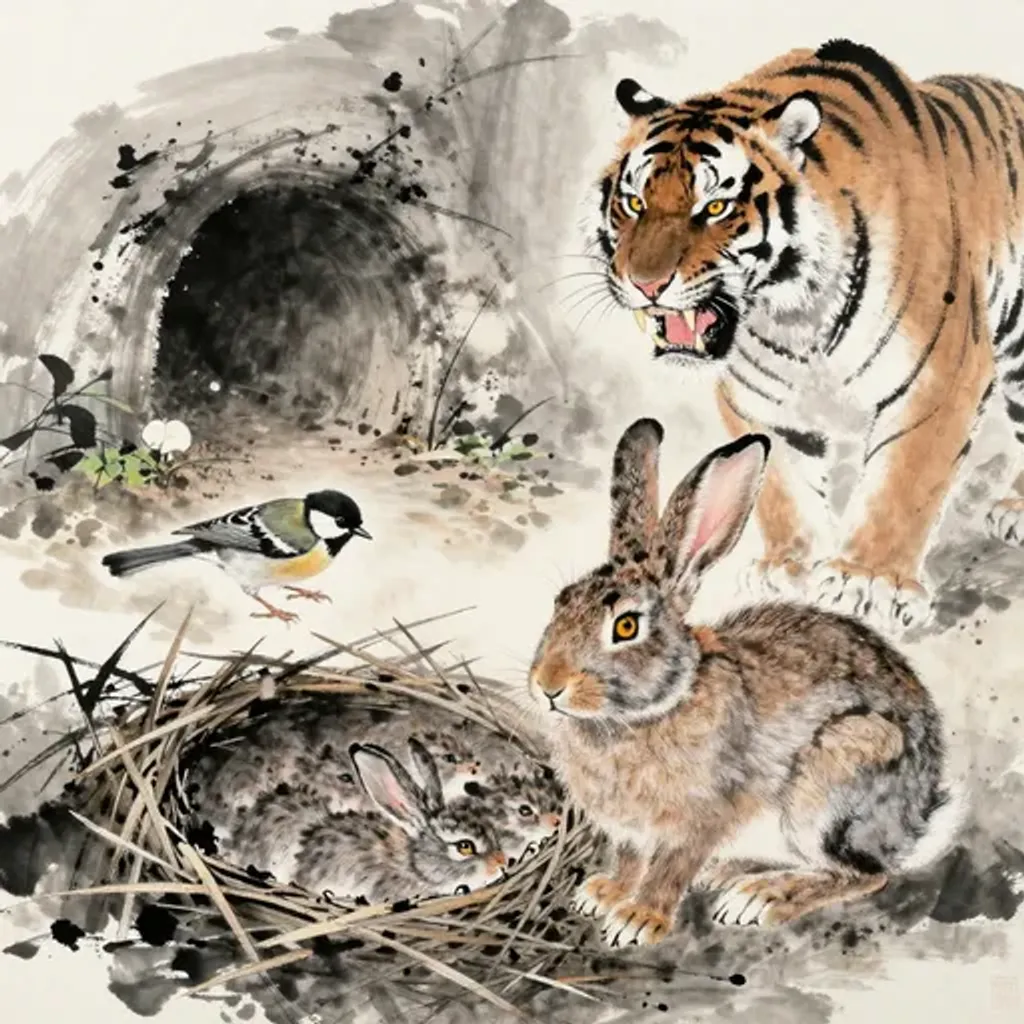
兔乳在室,行來雀食。虎懼我子,長號不已。
Rabbits nurse their young inside the den; sparrows come to feed on them. The tiger threatens our children; the long wail does not cease.
— Jiao Yanshou, Yilin (Forest of Changes), 1st century BC
Commentary
Wind and thunder bestow increase, but the transformation leads to the lake rising above heaven — the decisive breakthrough of Breakthrough. Rabbits nurse their young indoors, but when they venture out, sparrows devour them. A tiger menaces the speaker's children, and long wailing fills the air. The domestic scene of nursing rabbits gives way to predation and terror: the small and vulnerable, once they leave the safety of the burrow, face threats from both sky and ground. The tiger's presence escalates the danger to existential levels. From Increase to Breakthrough, the verse reveals the cost of decisive action. When the lake surges above heaven, what was contained breaks free — but not all breakthroughs are liberating. Here, the breach in domestic security exposes the young to every predator that the walls once held at bay.
益 → 姤
Hexagram 42 → Hexagram 44: Coming to Meet
Changing lines: 1, 2, 3, 4
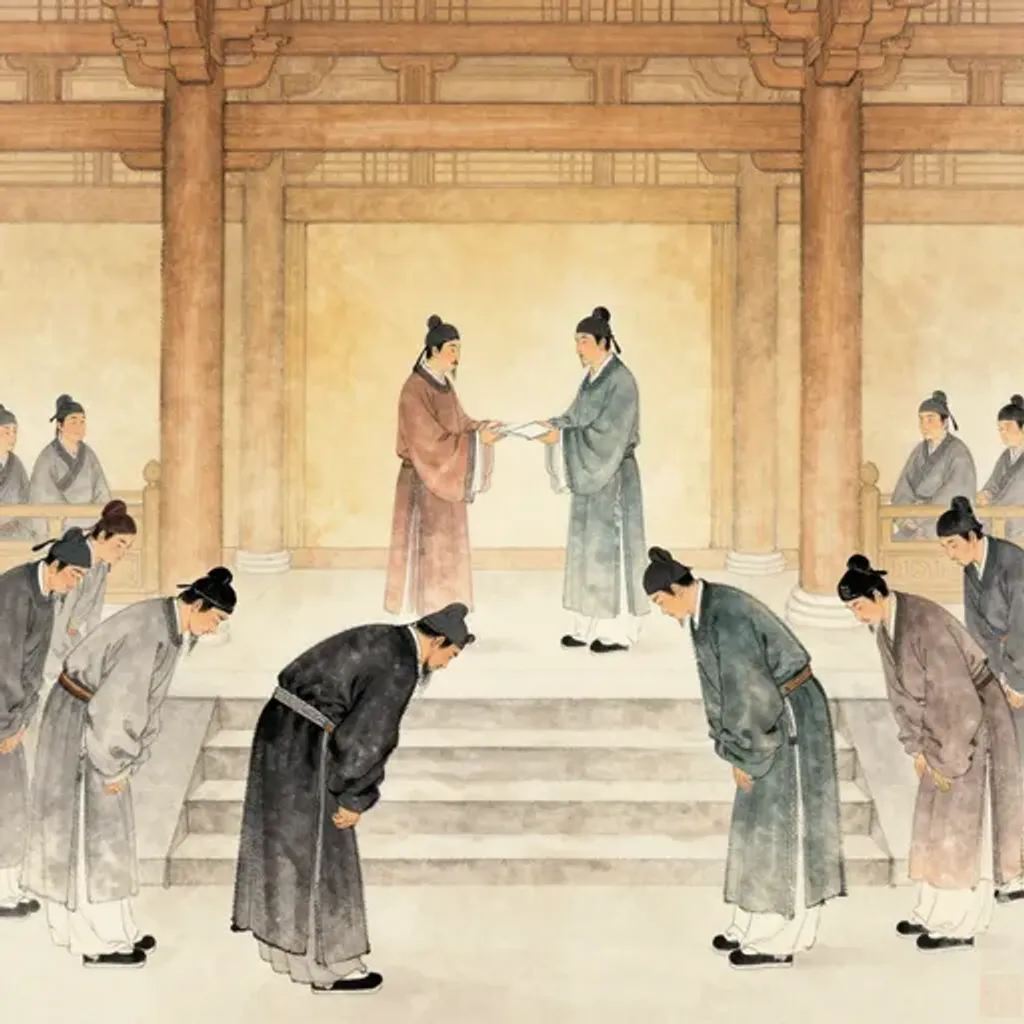
土階明堂,禮讓益興。雄二相得,使民无疾。
Earthen steps and a plain hall — ritual courtesy and deference flourish. Two leaders find accord and make the people free from affliction.
— Jiao Yanshou, Yilin (Forest of Changes), 1st century BC
Commentary
Wind and thunder bestow increase, and the transformation leads to heaven beneath which wind moves — the far-reaching proclamation of Coming to Meet. Earthen steps lead to the Bright Hall; ritual yielding and deference flourish ever more. Two worthy leaders find accord with each other, bringing the people health and freedom from illness. The 'earthen steps and Bright Hall' evoke the legendary simplicity of Emperor Yao's palace — unfired earthen stairs leading to the hall of governance, contrasting grandeur of purpose with austerity of means. The 'two worthies in accord' suggests paired ministers or rulers whose mutual deference strengthens the realm. From Increase to Coming to Meet, heaven sends its wind across all four directions. Virtuous governance, proclaimed from a humble throne, reaches everywhere without force.
益 → 萃
Hexagram 42 → Hexagram 45: Gathering Together
Changing lines: 1, 4, 6
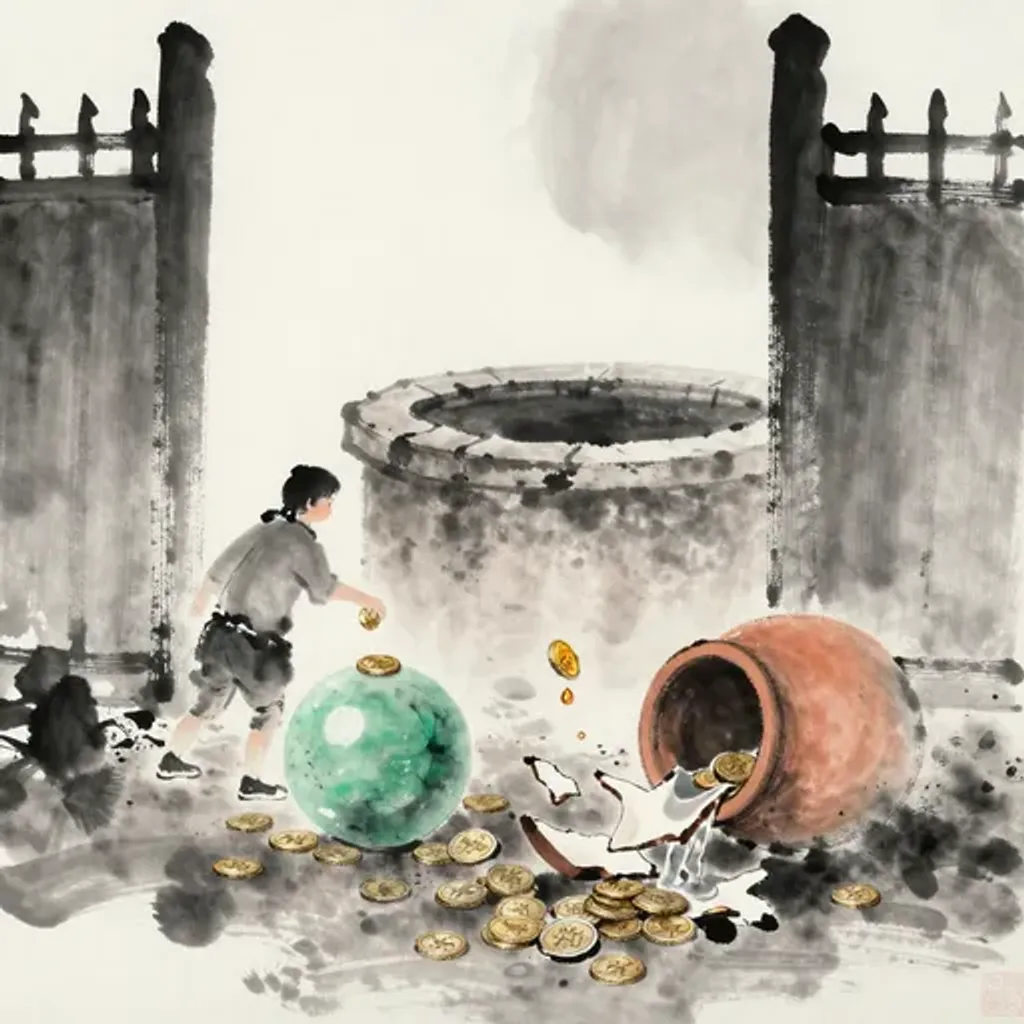
送金出門,并失玉丸。往來井上,破甕壞盆。
Sending gold out the gate, losing the jade ball as well. Going back and forth to the well, smashing jug and breaking basin.
— Jiao Yanshou, Yilin (Forest of Changes), 1st century BC
Commentary
Wind and thunder bestow increase, but the transformation leads to the lake above the earth — the anxious gathering of Gathering, here experienced as loss upon loss. Seeing gold off at the gate, one simultaneously loses a jade ball. Going back and forth to the well, the water jar breaks and the basin shatters. Every action meant to preserve something ends in further breakage. Escorting treasure out the door means it leaves the house; returning to the well for water produces only broken vessels. From Increase to Gathering, the verse inverts the hexagram's promise. Gathering should mean pooling resources, but here the gathering point — the well — becomes a site of destruction. The lake above the earth should collect; instead, everything that approaches it is shattered. Increase given without a sound vessel to receive it is increase thrown away.
益 → 升
Hexagram 42 → Hexagram 46: Pushing Upward
Changing lines: 1, 2, 3, 5, 6
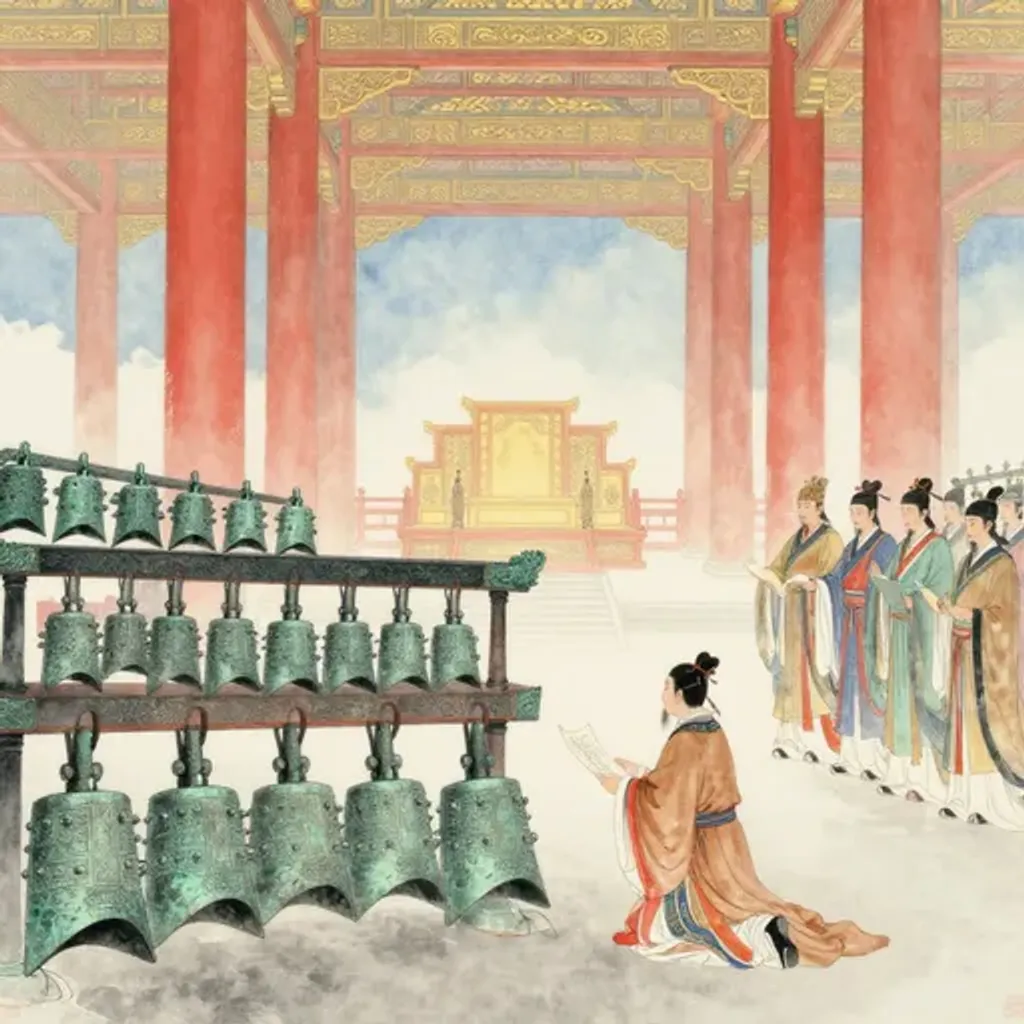
諷德誦功,美周盛隆。加其旦輔,光濟沖人。
Reciting virtue and chanting merit, praising the splendor of Zhou. Adding a dawn minister to aid and illumine the young sovereign.
— Jiao Yanshou, Yilin (Forest of Changes), 1st century BC
Commentary
Wind and thunder bestow increase, and the transformation leads to earth rising above wind — the steady ascent of Pushing Upward. Reciting virtue and praising achievement, one celebrates the flourishing glory of Zhou. Adding the support of the Dan ministers, their radiance sustains the young ruler. 'Praising virtue and reciting merit' evokes the court hymns of the Shijing that celebrated Zhou's founders. The 'Dan ministers' likely refers to the Duke of Zhou (named Dan) and the elder statesmen who guided the young King Cheng. Their brilliance did not overshadow but illuminated the sovereign they served. From Increase to Pushing Upward, the tree grows from the earth's interior — organic, gradual, irreversible. The increase of loyal ministerial support allows the young state to push steadily upward into its full stature.
益 → 困
Hexagram 42 → Hexagram 47: Oppression
Changing lines: 1, 2, 4, 6
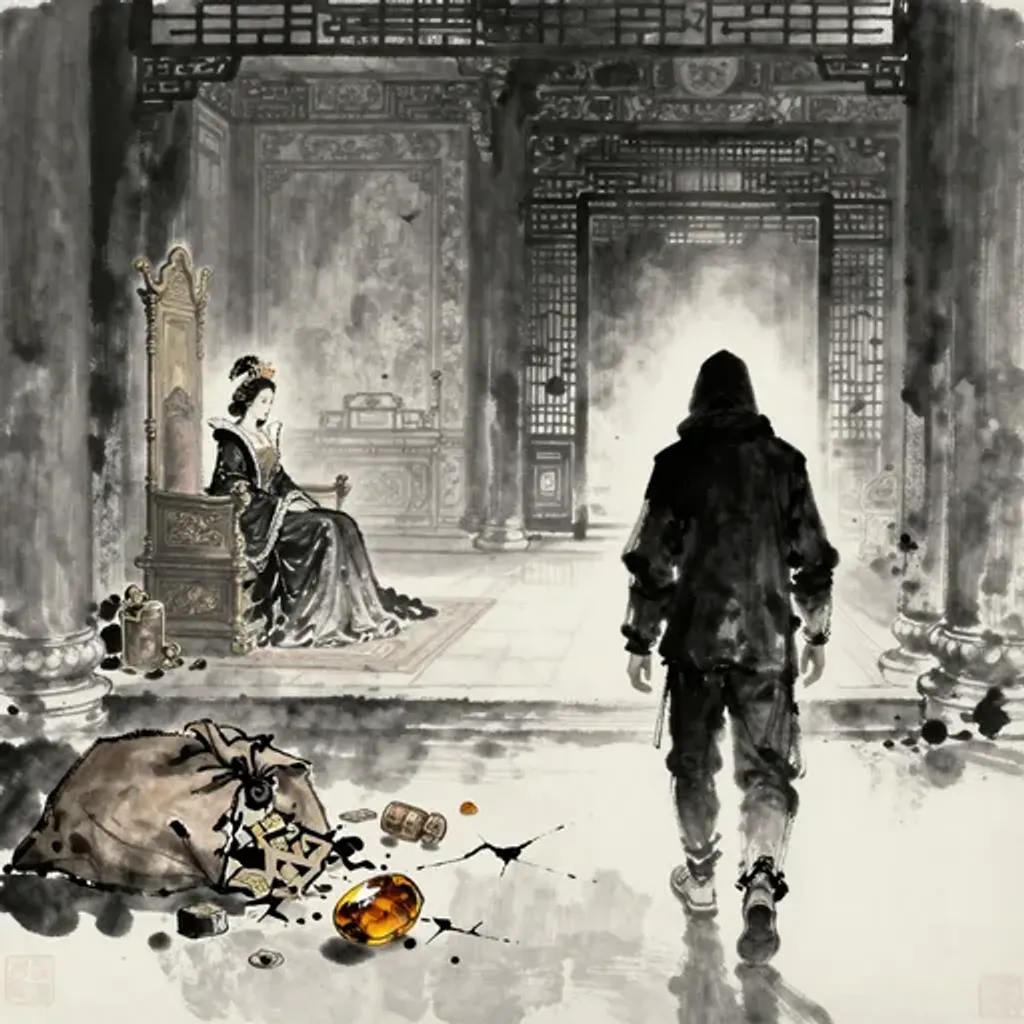
盜竊滅身,貳母不親。王后無黨,毀其寶靈。
Theft and plunder destroy the person; the stepmother finds no love. The queen stands without allies; her precious spirit is broken.
— Jiao Yanshou, Yilin (Forest of Changes), 1st century BC
Commentary
Wind and thunder bestow increase, but the transformation leads to the lake drained of water — the desolation of Oppression. Theft and robbery destroy one's person; the second mother shows no affection. The queen has no allies, and her precious spiritual authority is shattered. The verse layers betrayals: criminal violence, a stepmother's coldness, and a queen stripped of support. The 'second mother' who lacks warmth recalls the archetype of the cruel stepmother who displaces the true heir. The queen without a faction embodies power isolated from every source of legitimacy. From Increase to Oppression, the transformation is devastating: the lake has lost its water, and every relationship that should sustain — family, court, heaven — has been emptied. Increase poured into a vessel riddled with betrayal drains away to nothing.
益 → 井
Hexagram 42 → Hexagram 48: The Well
Changing lines: 1, 2, 3, 6
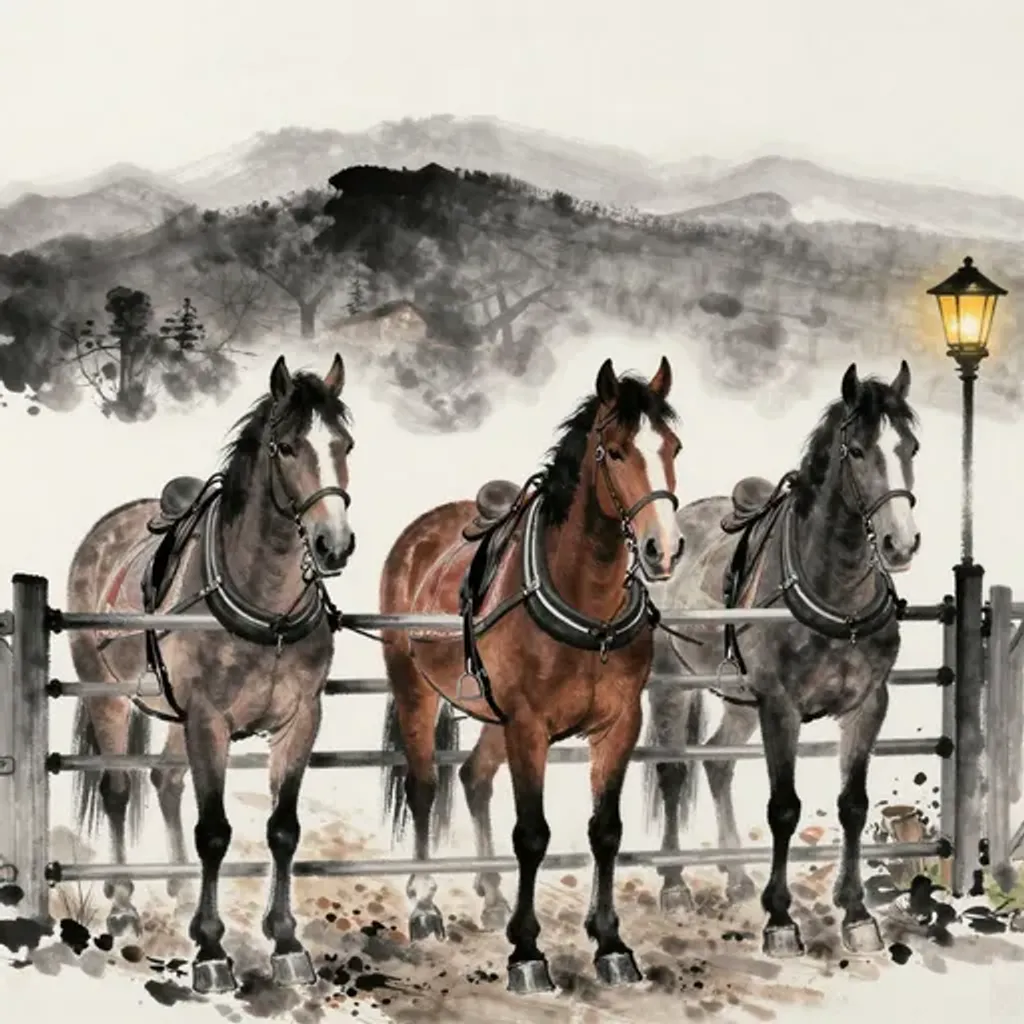
六目騤騤,各欲有至。專止未裝,俟侍旦明。
Six eyes gleam with eagerness, each wishing to set forth. Halting, not yet packed for travel, they wait and attend the dawn.
— Jiao Yanshou, Yilin (Forest of Changes), 1st century BC
Commentary
Wind and thunder bestow increase, and the transformation leads to water above wood — the inexhaustible well of the Well. Six eyes gleam with eagerness, each desiring to reach a destination. But all halt, their baggage still unpacked, waiting for the dawn to break. Three people — 'six eyes' — are poised to depart but hold themselves in check, not yet setting out. The shared anticipation creates a charged stillness: everyone is ready, but the right moment has not arrived. They wait for first light to travel safely. From Increase to the Well, the dynamic is one of resources gathered and held in readiness. The well nourishes without being depleted; the travelers who wait for dawn rather than rushing into darkness demonstrate the Well's principle: patient service at the right time yields far more than impulsive action.
益 → 革
Hexagram 42 → Hexagram 49: Revolution
Changing lines: 3, 4, 6
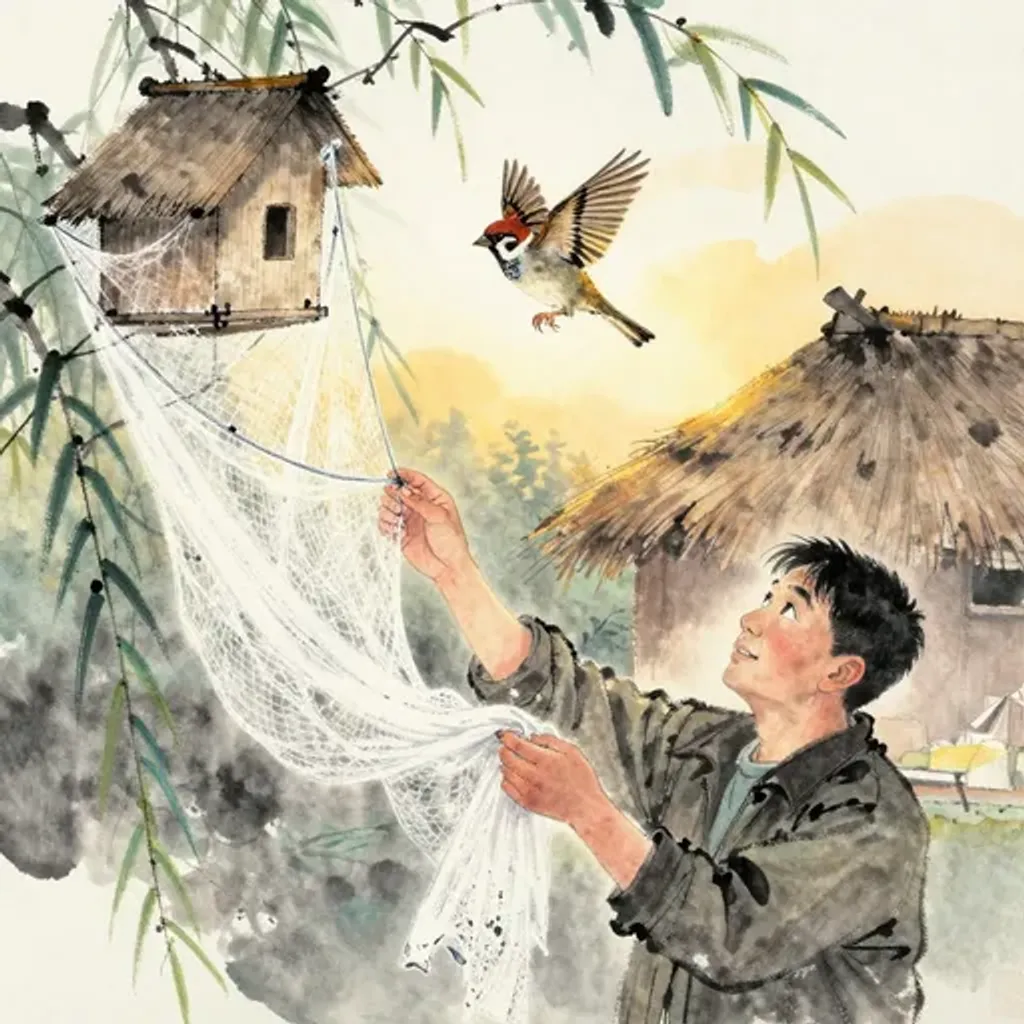
雀行求粒,誤入罟罭。賴仁君子,復脫歸室。
The sparrow ventures out seeking grain and stumbles into net and snare. Thanks to a benevolent soul, it is freed and returns to its home.
— Jiao Yanshou, Yilin (Forest of Changes), 1st century BC
Commentary
Wind and thunder bestow increase, and the transformation leads to fire within the lake — the decisive change of Revolution. A sparrow hops about seeking grain but blunders into a net and snare. Fortunately, a benevolent gentleman comes along and frees it, allowing it to return safely home. The sparrow's predicament is innocent hunger leading to entrapment — a common creature caught by an apparatus designed to exploit its basic need. The rescuer does not condemn the bird for its error but simply liberates it. From Increase to Revolution, the verse reveals that true revolution is merciful, not merely destructive. Fire in the lake transforms by eliminating what is unjust. Here, the net — the oppressive structure — is what must be reformed, and the revolutionary act is one of compassion: freeing the trapped rather than punishing them.
益 → 鼎
Hexagram 42 → Hexagram 50: The Cauldron
Changing lines: 1, 2, 3, 4, 5
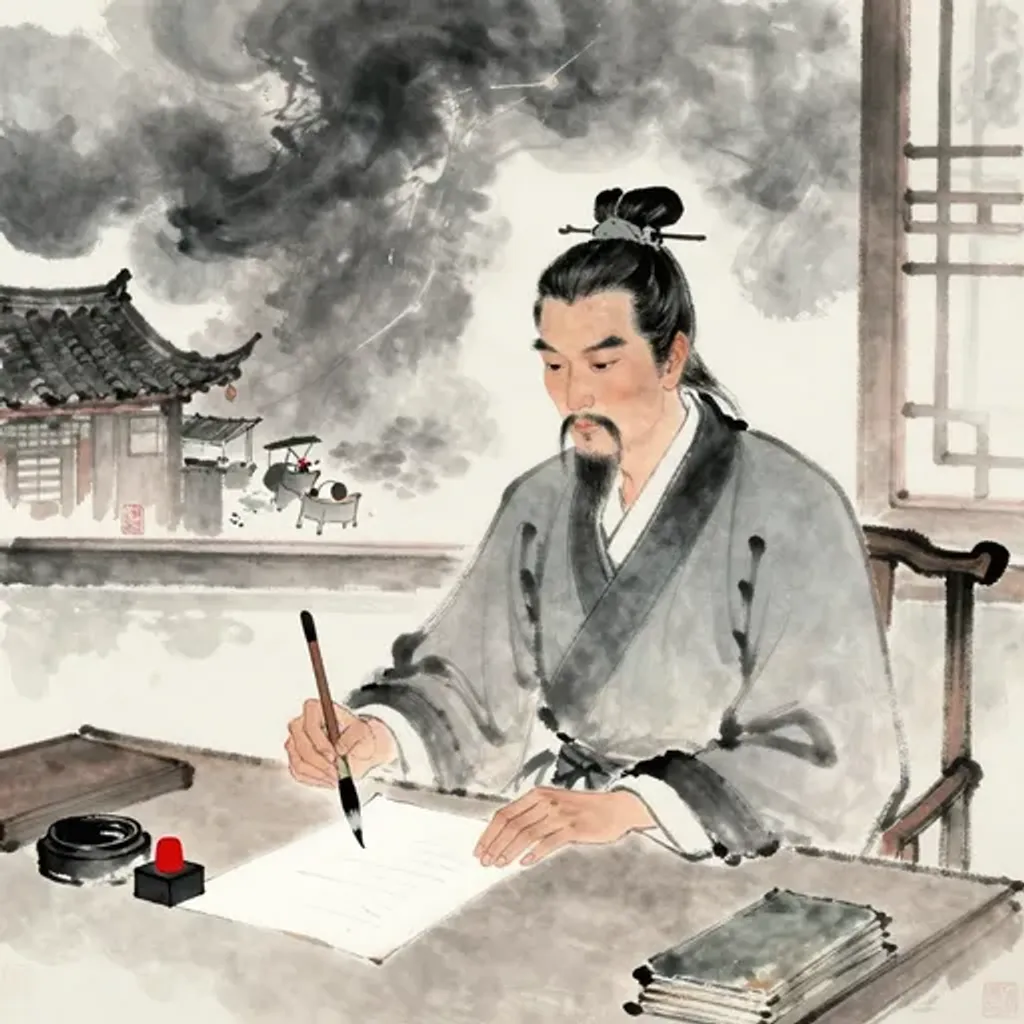
仁德孔明,患禍不傷。期誓不至,室人衘恤。
Benevolent virtue, bright as Kongming — disaster and misfortune cause no harm. The promised one does not arrive; the household grieves in quiet sorrow.
— Jiao Yanshou, Yilin (Forest of Changes), 1st century BC
Commentary
Wind and thunder bestow increase, and the transformation leads to fire above wind — the consecrated vessel of the Cauldron. Benevolent virtue shines bright as Kongming; disasters and calamities cannot cause harm. Yet the sworn pledge fails to arrive on time, and the household is filled with anxiety and grief. The first half celebrates the protective power of accumulated virtue — the luminous goodness that repels misfortune. But the second half pivots: despite this moral armor, someone expected does not appear, and worry overtakes the household. From Increase to the Cauldron, the vessel is properly positioned and the fire burns beneath it, yet the offering is incomplete because a crucial element is missing. The cauldron can transform raw into refined only when all ingredients are present. Virtue alone does not suffice if the anticipated commitment fails to materialize.
益 → 震
Hexagram 42 → Hexagram 51: The Arousing Thunder
Changing lines: 4, 5, 6
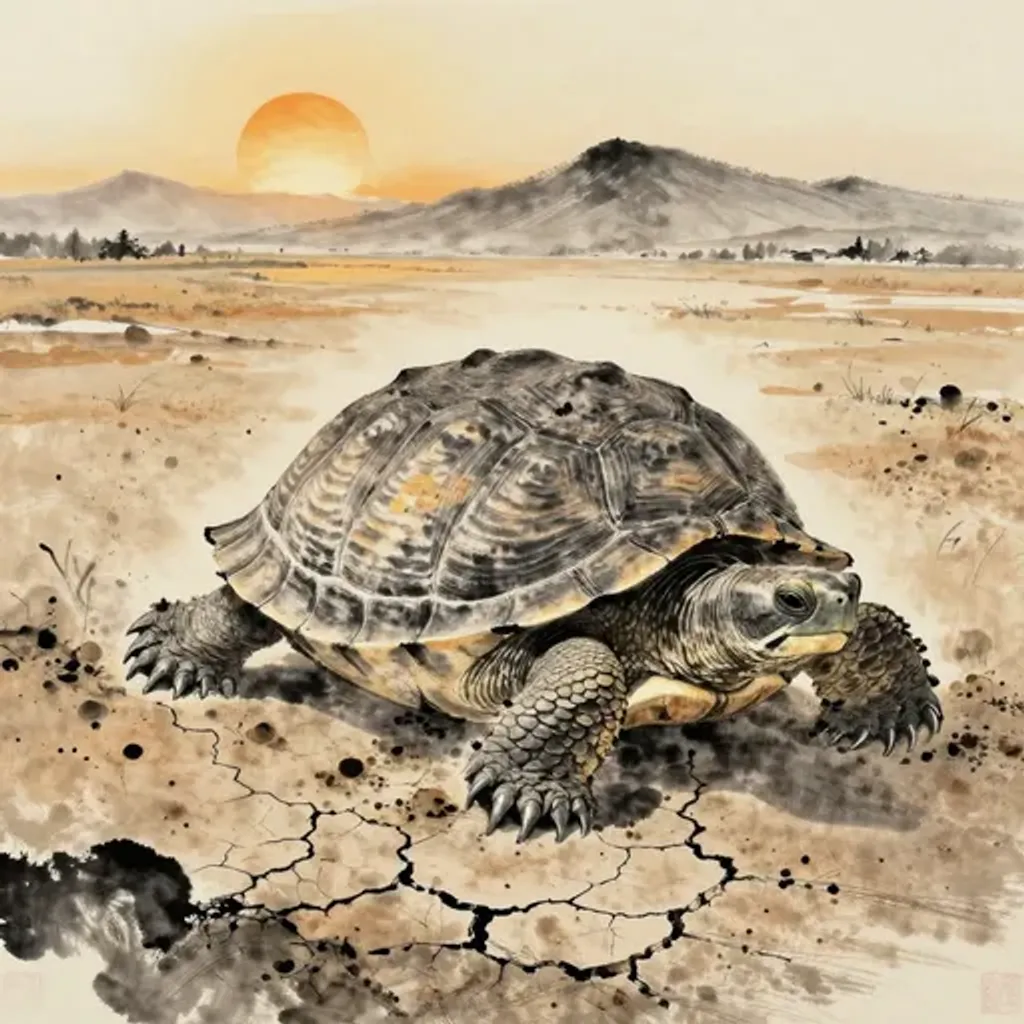
龜厭江海,陸行不止。自令枯槁,失其都市,雖憂無咎。
The turtle wearies of rivers and seas, walking on land without ceasing. It brings upon itself withering and ruin, losing its city and market. Though there is worry, no blame attaches.
— Jiao Yanshou, Yilin (Forest of Changes), 1st century BC
Commentary
Wind and thunder bestow increase, but the transformation leads to doubled thunder — the shocking arousal of the Arousing. A turtle grows weary of rivers and seas and sets out walking on land without stopping. It drives itself to desiccation, losing its city and marketplace. Yet though there is sorrow, there is no blame. The turtle belongs in water but chooses to leave its element, marching stubbornly across dry ground until it withers. The loss of 'city and market' suggests abandoning the social world and its sustaining exchanges. Yet the judgment is unexpectedly mild: worry, but no fault. From Increase to the Arousing, the doubled thunder jolts a creature from its natural habitat. The turtle's overland march sacrifices comfort for an imperative it cannot articulate. Sometimes the arousal demands departure even when departure costs everything — and the courage to leave carries no blame.
益 → 艮
Hexagram 42 → Hexagram 52: Keeping Still Mountain
Changing lines: 1, 3, 5
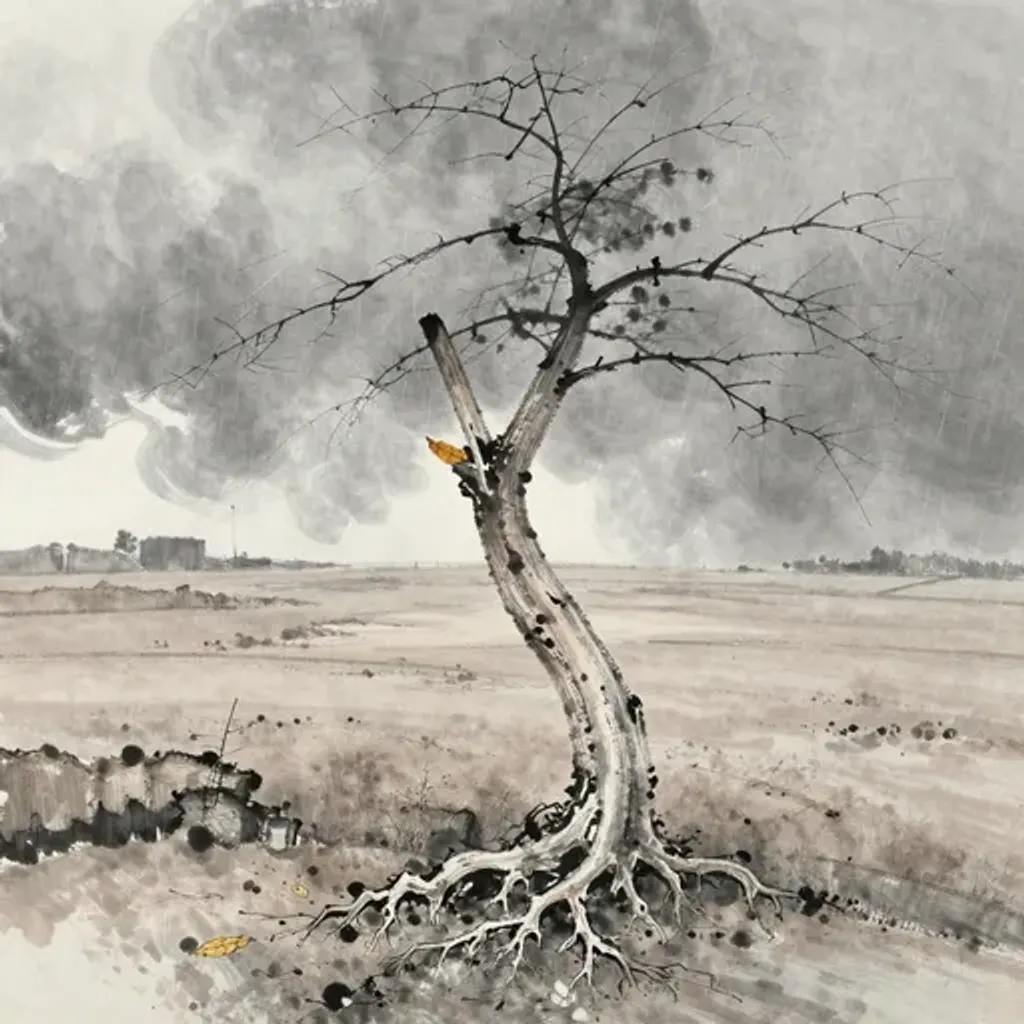
孤獨特處,莫依為輔,心勞志苦。
A dead tree stands alone; in all four directions, no village. When wind comes, nothing blocks it; when rain comes, nothing shelters.
— Jiao Yanshou, Yilin (Forest of Changes), 1st century BC
Commentary
Wind and thunder bestow increase, but the transformation leads to doubled mountain — the absolute stillness of Keeping Still. This is a rewritten verse; the original reads: 'Alone and isolated in a solitary place, with no one to rely upon for support; the heart labors and the will suffers.' A figure stands utterly alone, without companion or refuge, exhausting both body and spirit in a position no one chose and no one shares. The 'solitary place' is not retreat but abandonment — there is no community, no ally, no structure of mutual aid. From Increase to Keeping Still, the transformation is poignant: the twin mountains think not beyond their own position, and the stillness that should be contemplative becomes imprisoning. Increase offered to one who has no connections simply accumulates as unbearable weight upon a single, unsupported frame.
益 → 漸
Hexagram 42 → Hexagram 53: Development
Changing lines: 1, 3
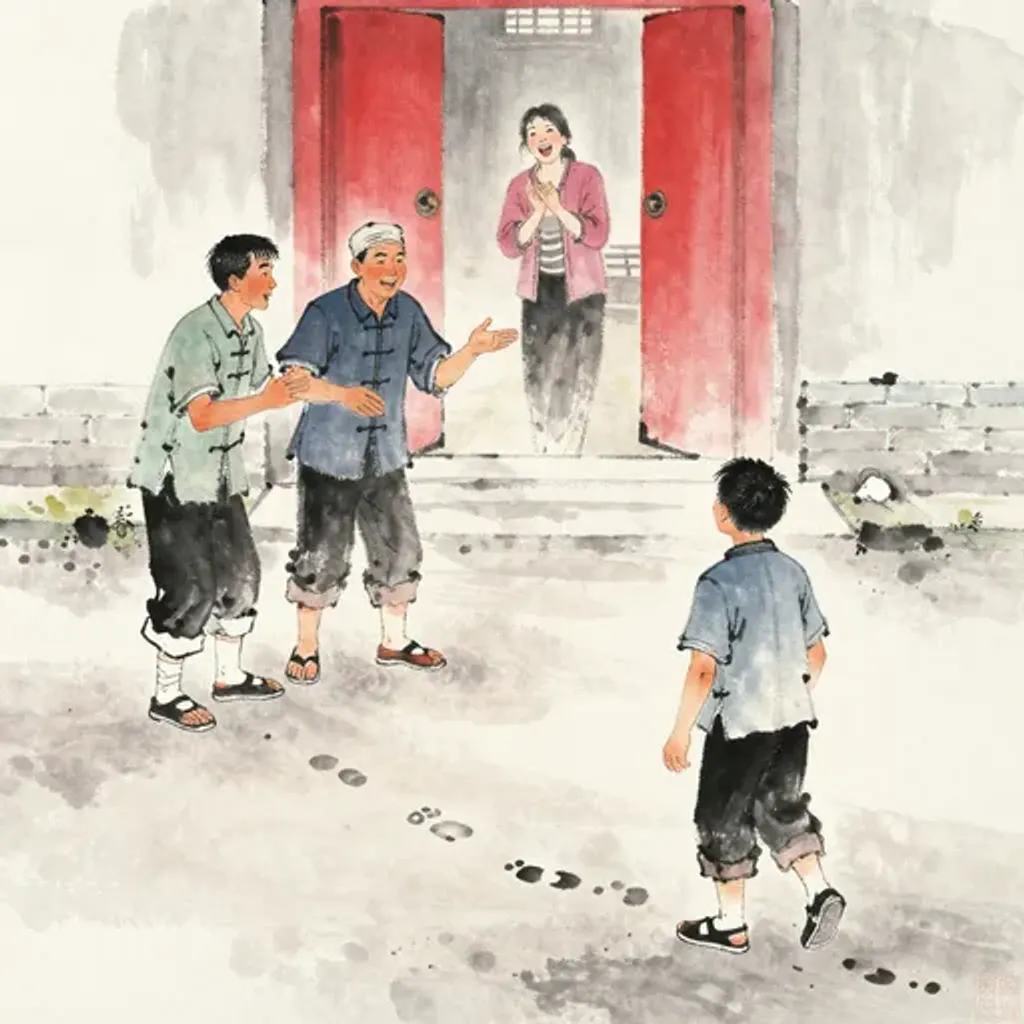
伯仲言留,叔子云去。雖自无咎,主母大喜。
The elder brothers say remain; the youngest says depart. Though one incurs no blame of one's own, the mistress of the house is greatly pleased.
— Jiao Yanshou, Yilin (Forest of Changes), 1st century BC
Commentary
Wind and thunder bestow increase, and the transformation leads to trees growing on the mountain — the gradual advance of Development. The eldest and second brothers say 'stay'; the third son says 'go.' Though he himself incurs no blame, the matriarch is greatly delighted. A family debate over departure: the elder brothers counsel remaining, but the youngest insists on leaving. His departure brings no misfortune to himself and — surprisingly — makes the mother happy. Perhaps the youngest's journey outward serves the family better than his staying; perhaps his leaving resolves a tension that his presence maintained. From Increase to Development, the gradual advance of the wild goose image applies perfectly: the third son's departure is not flight but measured progression to the next stage, and the family recognizes this even through the pain of parting.
益 → 歸妹
Hexagram 42 → Hexagram 54: The Marrying Maiden
Changing lines: 2, 4, 5, 6
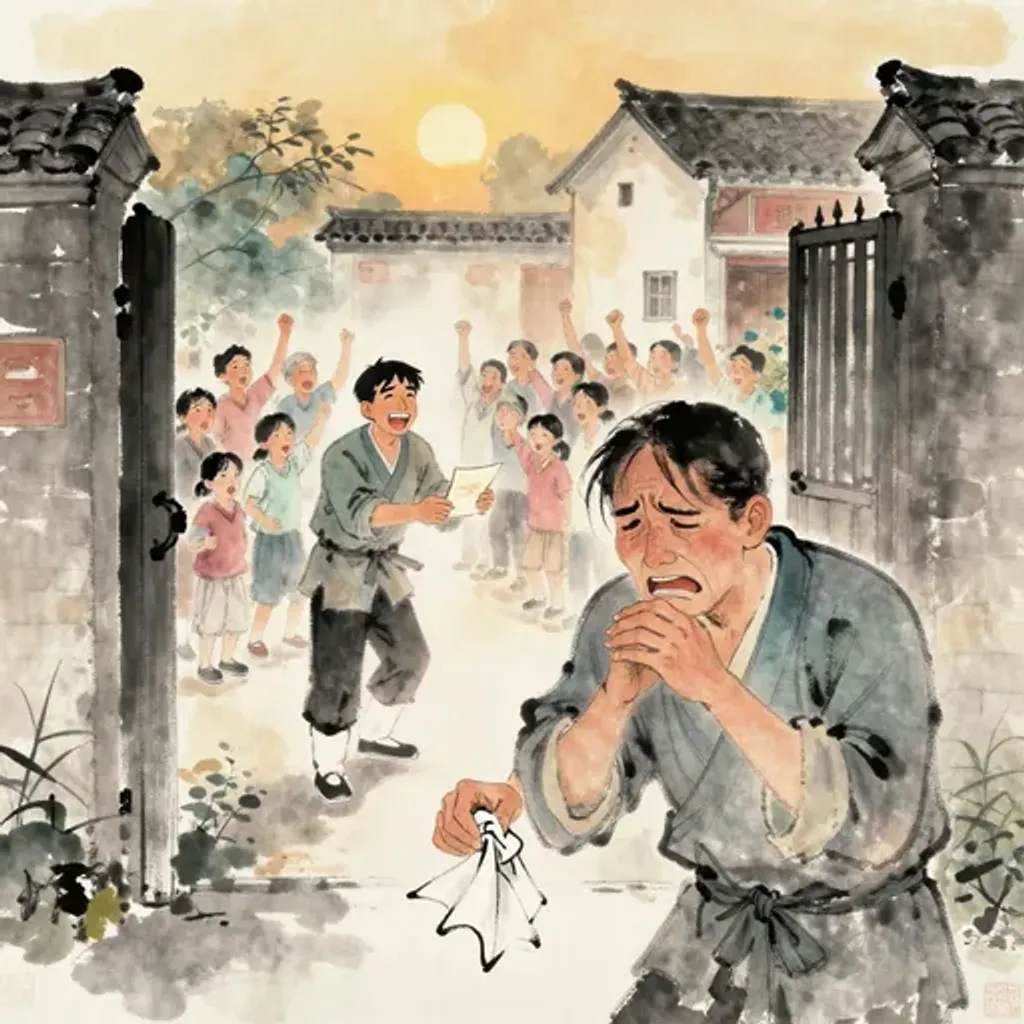
初憂不安,後得笑懽,雖懼无患。
At first, worry and unease; afterward, laughter and delight. Though there was fear, no misfortune comes.
— Jiao Yanshou, Yilin (Forest of Changes), 1st century BC
Commentary
Wind and thunder bestow increase, and the transformation leads to thunder above the lake — the irreversible commitment of the Marrying Maiden. At first there is worry and unease, but afterward comes laughter and joy. Though there is fear, ultimately there is no disaster. The emotional arc traces a complete journey from anxiety through terror to relief — the pattern of a bride entering an unfamiliar household, where initial dread gives way to acceptance and happiness. The fear is real but does not materialize into actual harm. From Increase to the Marrying Maiden, the transformation embodies the irreversible threshold: once crossed, there is no return, and the maiden must accept both the joy and the vulnerability of her new position. The thunder over the lake signals a commitment that reverberates beyond the moment, and the verse assures that enduring through the initial fear leads to genuine gladness.
益 → 豐
Hexagram 42 → Hexagram 55: Abundance
Changing lines: 3, 4, 5, 6
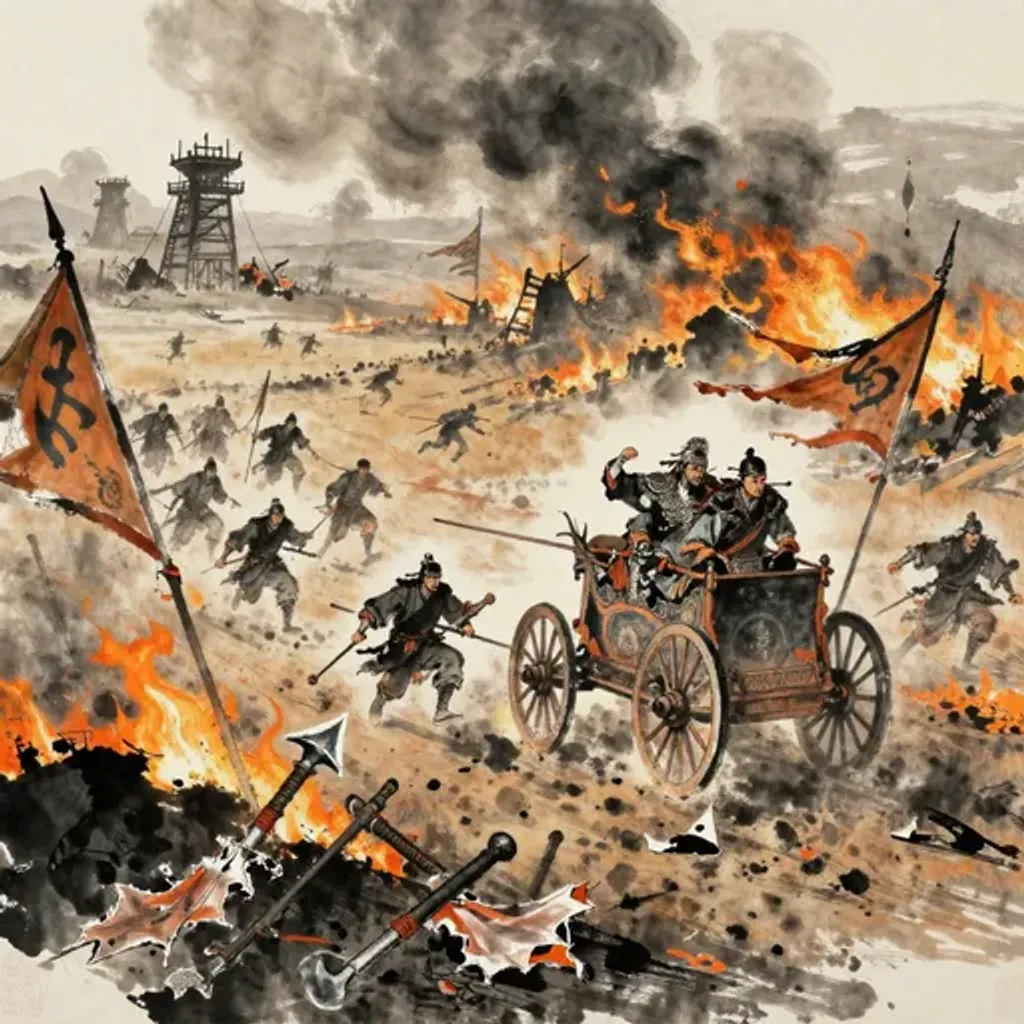
好戰亡國,師不以律。稱上殞墜,齊侯狠戾,其被災祟。
Loving war and losing the state, the army cast off all discipline. The ruler falls from on high; the Marquis of Qi, cruel and savage, is struck by calamity and curse.
— Jiao Yanshou, Yilin (Forest of Changes), 1st century BC
Commentary
Wind and thunder bestow increase, but the transformation leads to thunder and lightning arriving together — the overwhelming fullness of Abundance, here experienced as catastrophic excess. Warmongering destroys the state; the army operates without discipline. The exalted one falls from his height; the Duke of Qi, cruel and violent, suffers his calamity. This likely refers to one of the militaristic Qi rulers whose aggressive campaigns overextended and ruined the state. 'The army not governed by law' is a direct inversion of the Yijing's ideal of disciplined force. The fall from the heights — 'ascending then plummeting' — captures the Abundance hexagram's central warning: fullness at its peak is already beginning to decline. From Increase to Abundance, the verse reveals how increase pushed past its natural limit becomes the very engine of destruction. Thunder and lightning illuminate brilliantly but briefly.
益 → 旅
Hexagram 42 → Hexagram 56: The Wanderer
Changing lines: 1, 3, 4, 5
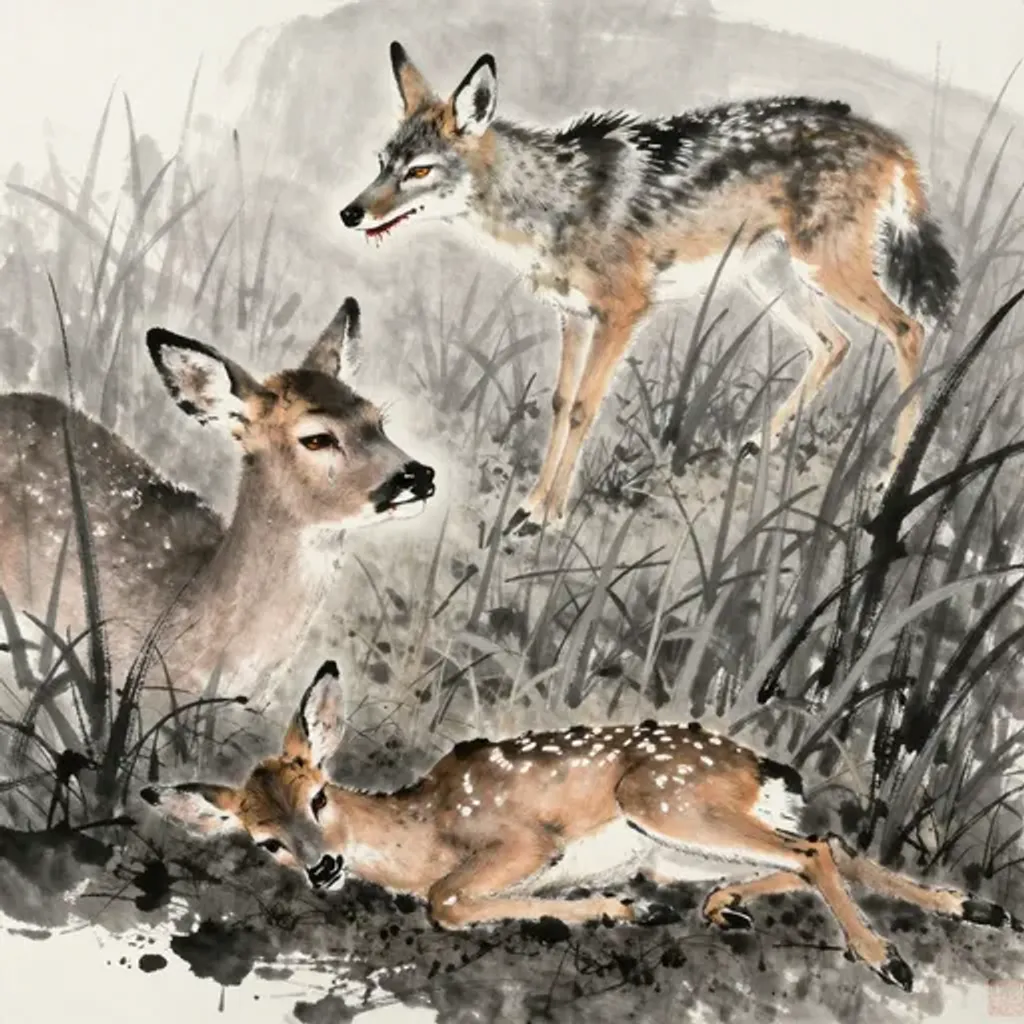
鹿在澤陂,豺傷其麑,泣血獨哀。
The deer stands at the marsh bank; the jackal has wounded its fawn. Weeping blood in lonely sorrow.
— Jiao Yanshou, Yilin (Forest of Changes), 1st century BC
Commentary
Wind and thunder bestow increase, but the transformation leads to fire upon the mountain — the exposed vulnerability of the Wanderer. A deer stands by the marsh bank, and a jackal injures its fawn. The mother weeps bloody tears in solitary grief. The image is devastating in its simplicity: a nursing deer at the water's edge, the most vulnerable moment and place, where a predator strikes the young. The mother survives but can only mourn — there is no rescue, no retaliation, only the finality of loss. From Increase to the Wanderer, the verse captures the traveler's essential exposure. Fire on the mountain illuminates but also exposes; the wanderer who has no permanent shelter faces dangers that settled people avoid. The deer at the marsh is increase without protection — abundance of life concentrated in a place where it can be taken.
益 → 巽
Hexagram 42 → Hexagram 57: The Gentle Wind
Changing lines: 1, 2, 3
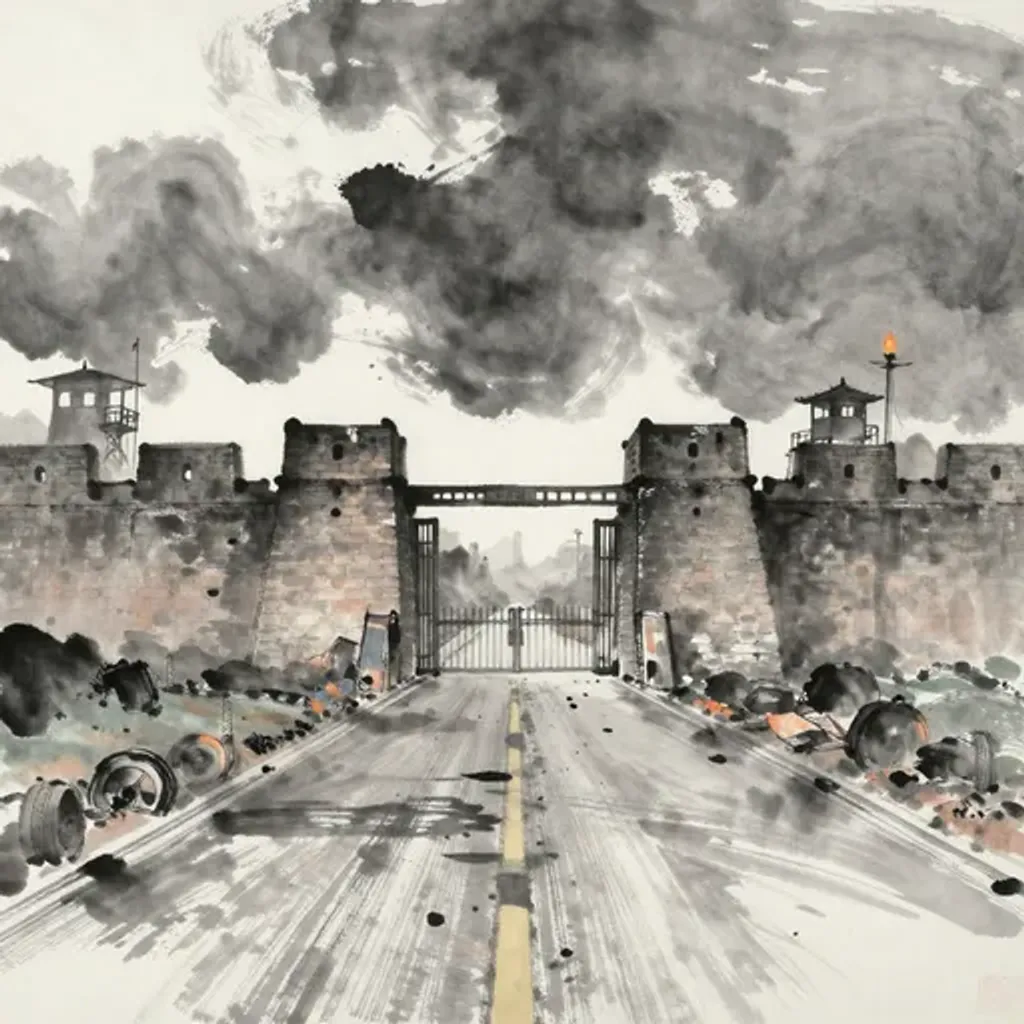
天地閉塞,仁智隱伏,商旅不行,利潤難得。
Heaven and earth are sealed shut; the wise and virtuous hide away. Merchants and travelers do not move; profit is hard to come by.
— Jiao Yanshou, Yilin (Forest of Changes), 1st century BC
Commentary
Wind and thunder bestow increase, but the transformation leads to doubled wind — the penetrating persistence of the Gentle, here experienced as paralysis. Heaven and earth are sealed shut; the wise and benevolent conceal themselves. Merchants and travelers cannot move; profit is impossible to obtain. The language directly echoes the I-Ching's description of hexagram Pi (Standstill): 'Heaven and earth do not interact; the myriad things do not communicate.' Commerce halts, wisdom hides, and every channel of exchange closes. From Increase to the Gentle, the irony cuts deep: doubled wind should penetrate everywhere, carrying commands to the four quarters. Yet when heaven and earth have shut their gates, even the most persistent wind finds nothing to move through. Increase is rendered meaningless when all circulation has ceased.
益 → 兌
Hexagram 42 → Hexagram 58: The Joyous Lake
Changing lines: 2, 4, 6
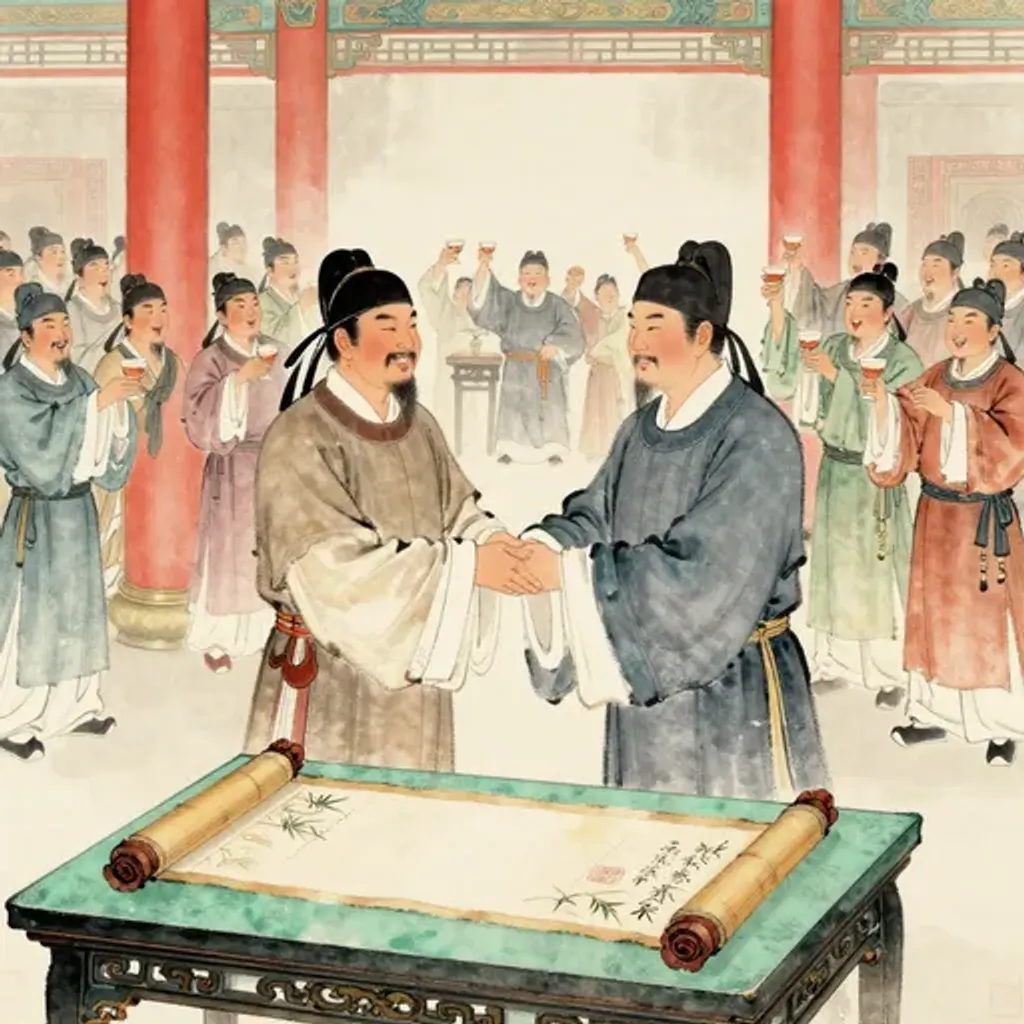
福德之士,歡悅日喜。夷吾相桓,三歸為臣,賞流子孫。
A man of blessed virtue, gladness and delight grow daily. Yi Wu serves Duke Huan; the three inheritances pass to his heirs. Rewards flow down to sons and grandsons.
— Jiao Yanshou, Yilin (Forest of Changes), 1st century BC
Commentary
Wind and thunder bestow increase, and the transformation leads to doubled lake — the shared delight of the Joyous. A man of blessed virtue, happy and joyful day after day. Yi Wu served as minister to Duke Huan, receiving the 'three returns' as a vassal, with rewards flowing down to his descendants. Yi Wu is the personal name of Guan Zhong, the legendary prime minister of Qi who helped Duke Huan achieve hegemony over the feudal states. The 'three returns' refers to the lavish estates Guan Zhong received — a level of reward normally reserved for the ruler himself. Yet this extravagance was justified by the extraordinary service rendered. From Increase to the Joyous, the dynamic is one of benefit shared in mutual celebration. Two lakes nourish each other through friendship and discourse; ruler and minister prosper together, and the joy ripples through generations.
益 → 渙
Hexagram 42 → Hexagram 59: Dispersion
Changing lines: 1, 2
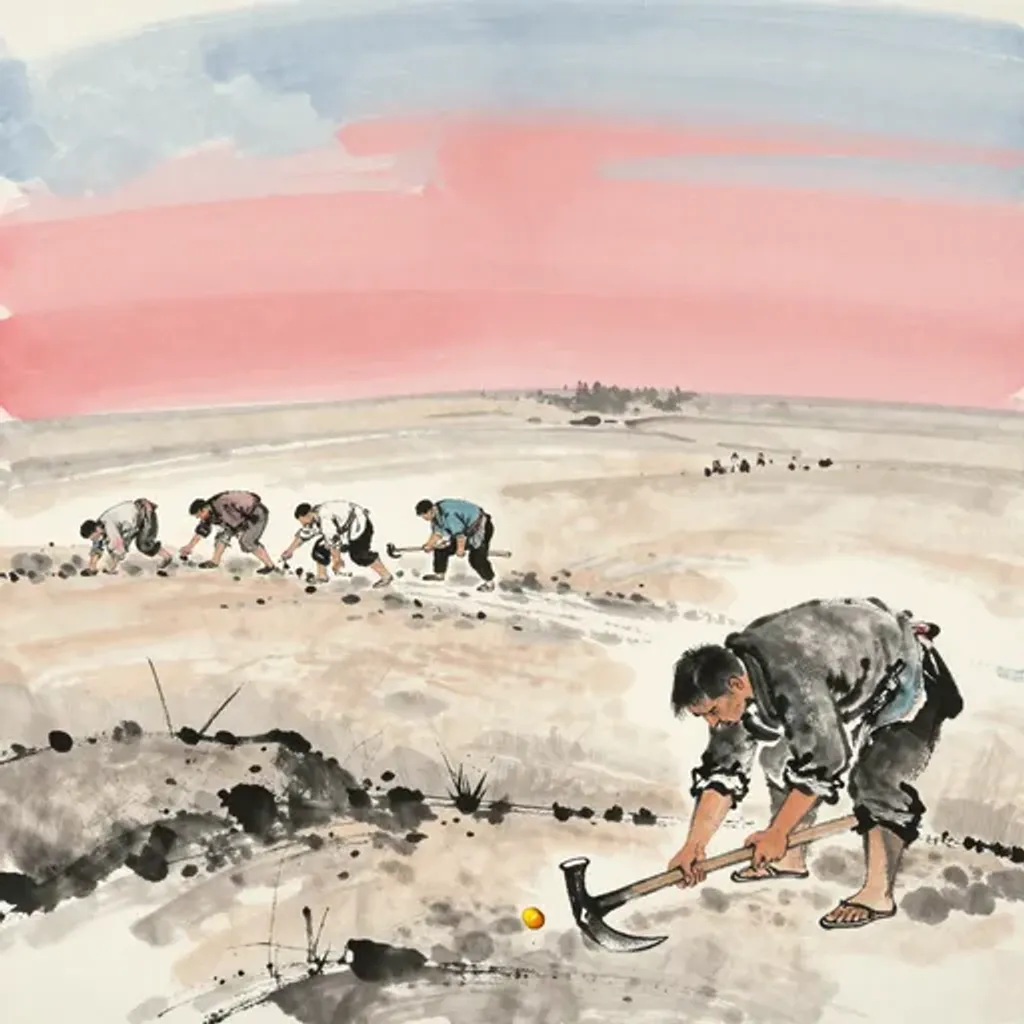
上无飛鳥,下乏走獸。亂擾未治,民勞於事。
Above, no bird flies; below, no beast runs. Disorder and unrest are not yet healed; the people toil at endless tasks.
— Jiao Yanshou, Yilin (Forest of Changes), 1st century BC
Commentary
Wind and thunder bestow increase, but the transformation leads to wind moving above water — the scattering dissolution of Dispersion. Above, no birds fly; below, no beasts run. Disorder has not been quelled, and the people are exhausted by their labors. The complete absence of wildlife signals a landscape stripped bare — an environment so degraded that even animals have fled. The people's exhaustion compounds the desolation: human effort is expended without producing recovery. From Increase to Dispersion, the verse captures the worst outcome of scattering: not liberating release but total dissipation. Wind above water disperses what it touches, and when the increase of energy meets only chaos, it spreads the disorder further rather than gathering it into form. The absence of both birds and beasts marks a world emptied beyond repair.
益 → 節
Hexagram 42 → Hexagram 60: Limitation
Changing lines: 2, 6
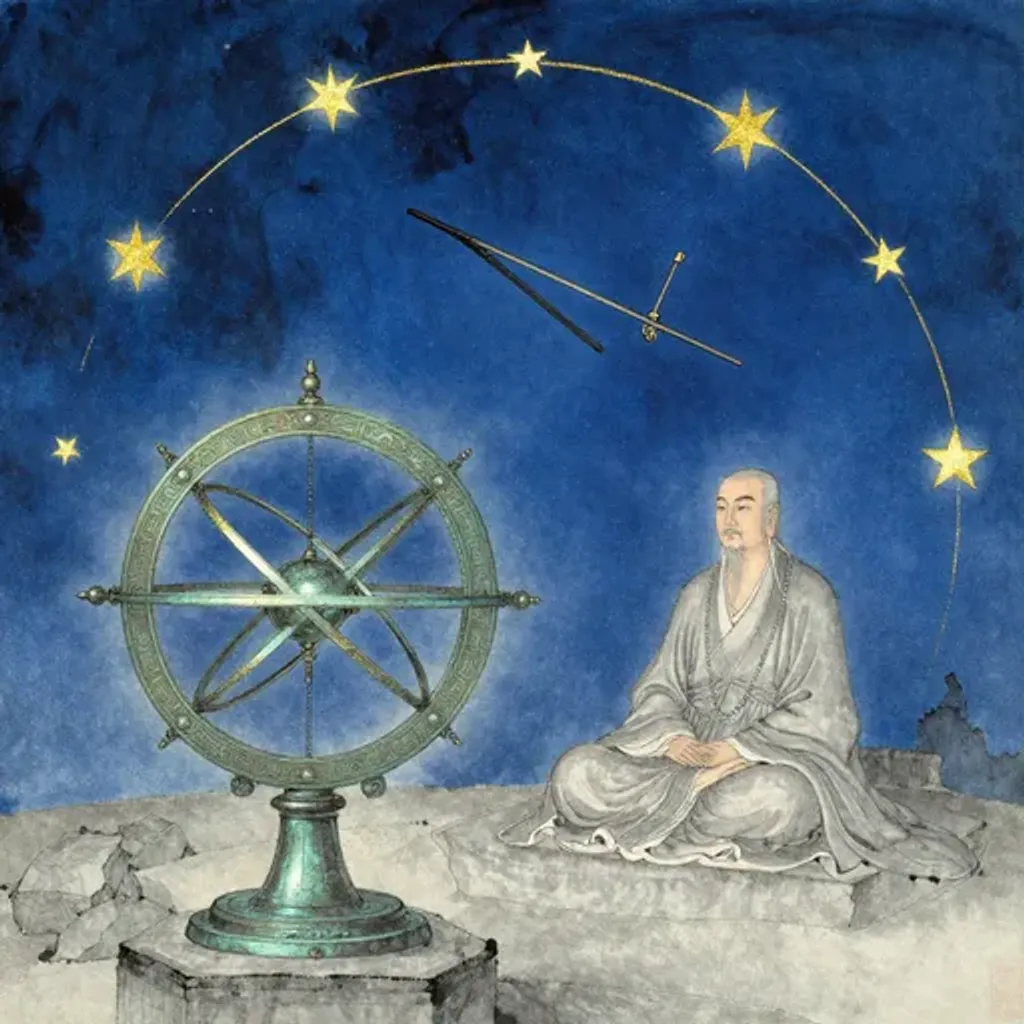
據斗運樞,順天无憂,與樂並居。
Grasping the Dipper and turning the Pivot, following heaven without worry, dwelling together with joy.
— Jiao Yanshou, Yilin (Forest of Changes), 1st century BC
Commentary
Wind and thunder bestow increase, and the transformation leads to water above the lake — the calibrated measure of Limitation. Grasping the Dipper and turning the celestial pivot, one follows heaven's rhythm without worry, dwelling in harmony with joy. The image of wielding the Dipper — the constellation that marks the seasons by its rotation — places the subject at the very axis of cosmic order. To turn the celestial mechanism is to govern time itself, and governance aligned with heaven produces effortless peace. From Increase to Limitation, the dynamic reveals that proper measure is itself the highest form of increase. Water above the lake sets boundaries that prevent overflow; the gentleman institutes proper degrees and discusses virtue. The one who grasps the cosmic pivot does not need unlimited resources — alignment with natural rhythm is wealth enough.
益 → 中孚
Hexagram 42 → Hexagram 61: Inner Truth
Changing lines: 2
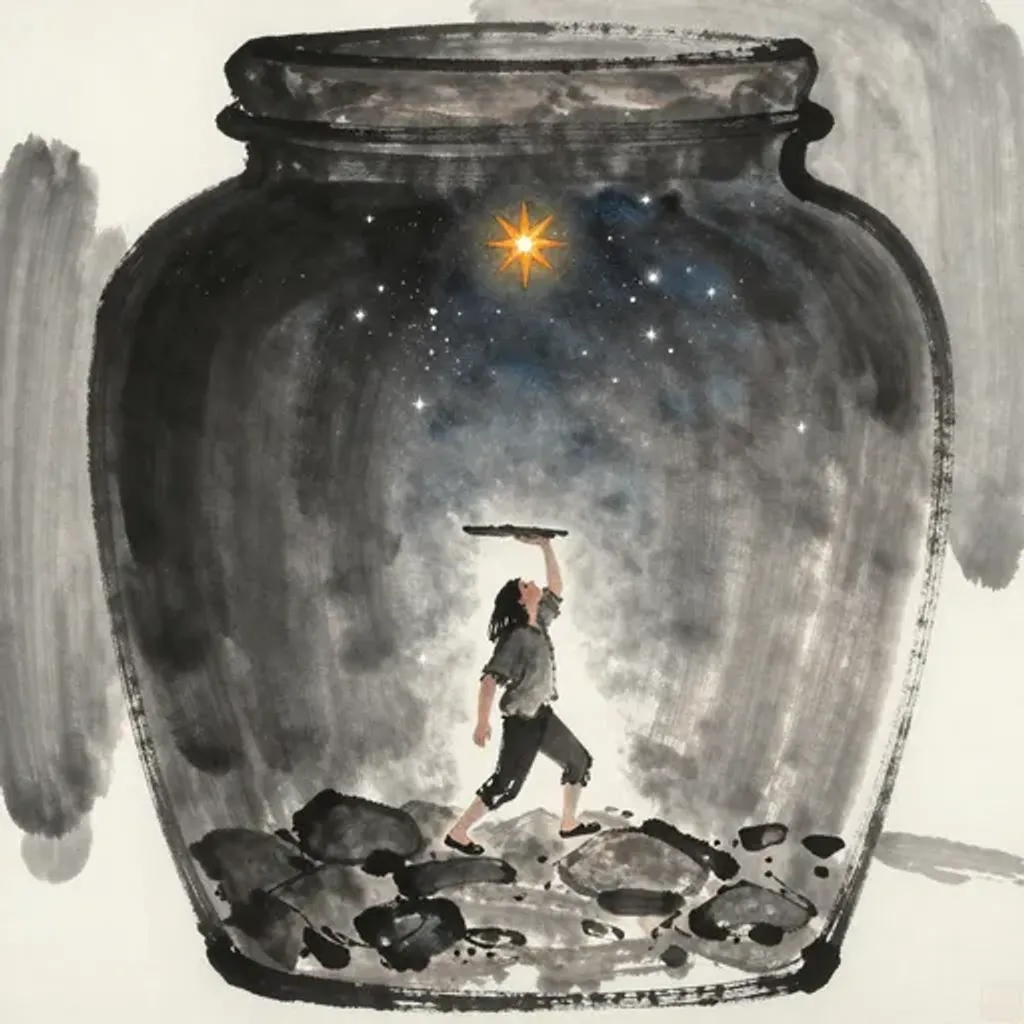
戴瓶望天,不見星辰。顧小失大,福逃廬外。
Carrying a jar atop the head and gazing at heaven, one sees no stars at all. Attending to the small and losing the great; fortune flees past the doorstep.
— Jiao Yanshou, Yilin (Forest of Changes), 1st century BC
Commentary
Wind and thunder bestow increase, but the transformation leads to wind above the lake — the open center of Inner Truth, here inverted into self-deception. Balancing a jar on one's head and gazing skyward, one cannot see the stars. Fixating on the small, one loses the great; blessings flee beyond the doorstep. The jar blocks the very heaven one seeks — a perfect image of self-imposed blindness. The person looks upward with genuine intent but has placed an obstacle directly in the line of sight. The jar that should carry water now blocks the view of the cosmos. From Increase to Inner Truth, the verse delivers a devastating inversion. Inner Truth requires an empty center — the open space between the trigrams that allows sincerity to resonate. Here, that center is stuffed with a jar, and the truth one seeks is precisely what one cannot see.
益 → 小過
Hexagram 42 → Hexagram 62: Small Exceeding
Changing lines: 1, 3, 4, 5, 6
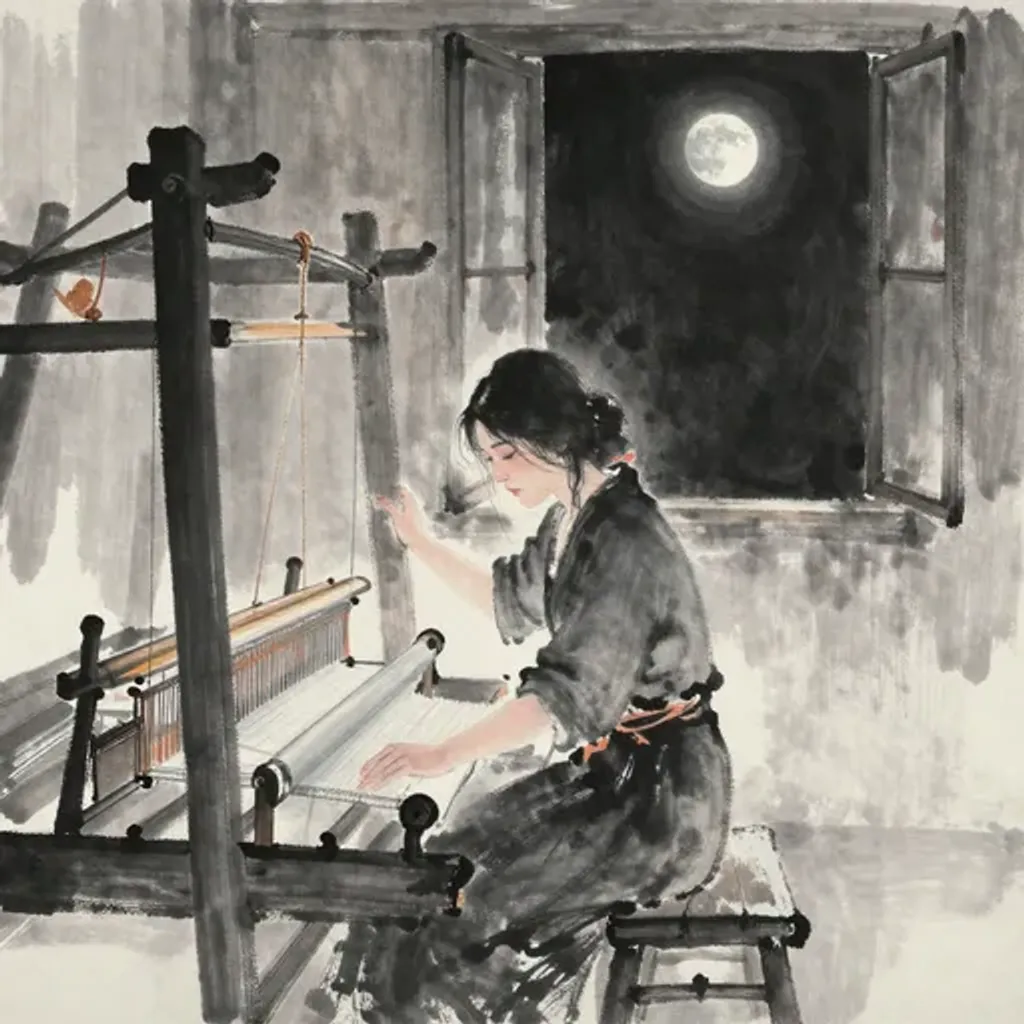
月削日衰,工女下機。宇宙滅明,不見三光。
The moon wanes and the sun declines; the weaving woman steps down from her loom. The cosmos dims and loses brightness; the three luminaries are seen no more.
— Jiao Yanshou, Yilin (Forest of Changes), 1st century BC
Commentary
Wind and thunder bestow increase, but the transformation leads to thunder above the mountain — the cautious smallness of Small Exceeding. The moon wanes and dims day by day; the weaving woman descends from her loom. The cosmos loses its light, and the Three Luminaries — sun, moon, and stars — can no longer be seen. Every image speaks of diminishment: the moon shrinking, the industrious woman ceasing her work, the heavens themselves going dark. The Three Luminaries were the fundamental markers of cosmic order; their disappearance signals not merely bad fortune but ontological crisis. From Increase to Small Exceeding, the dynamic inverts the hexagram's counsel of modest, careful action. Here, the smallness is not prudent restraint but systemic collapse — everything that once shone is fading, and even the most diligent worker cannot continue when the light itself has failed.
益 → 既濟
Hexagram 42 → Hexagram 63: After Completion
Changing lines: 3, 6
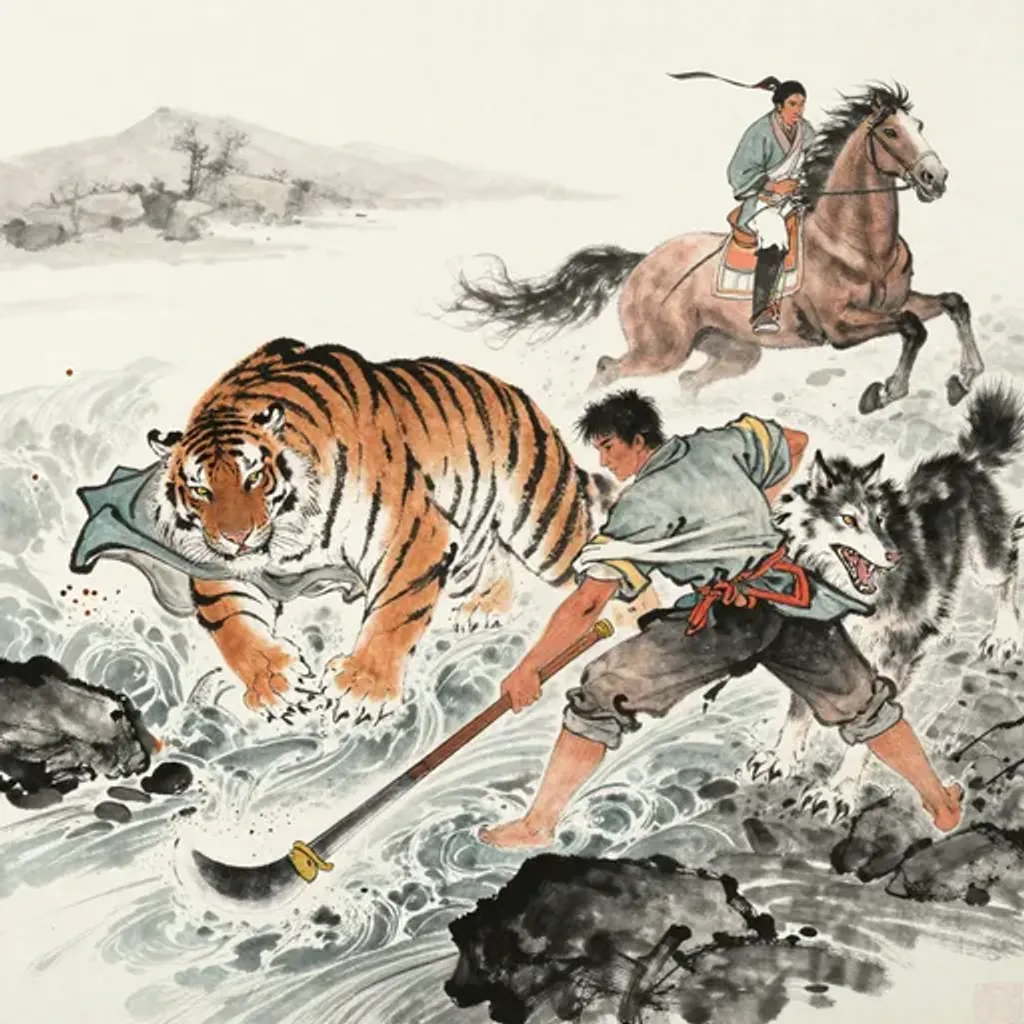
操戟刺魚,被髮立憂,虎脫我衣,狼取我袍,亡馬失財。
Wielding a halberd to spear fish, hair unbound, standing in dread. The tiger strips my coat; the wolf takes my cloak — horse lost, wealth gone.
— Jiao Yanshou, Yilin (Forest of Changes), 1st century BC
Commentary
Wind and thunder bestow increase, but the transformation leads to water above fire — the precarious completion of After Completion, where every element is in place but nothing is secure. Wielding a halberd to spear fish, hair disheveled and standing in distress. A tiger strips away the speaker's garment; a wolf seizes the robe. Horses are lost and wealth vanishes. The images cascade in accelerating disaster: martial effort misdirected at fishing, personal dignity abandoned, clothing torn away by predators, and finally the loss of all material resources. Each line strips another layer of security. From Increase to After Completion, the verse illustrates the hexagram's fundamental warning: when everything appears complete, decline has already begun. Water above fire will eventually extinguish it. The increase that brought the speaker to this moment of apparent fullness now drains away through every breach, until nothing remains.
益 → 未濟
Hexagram 42 → Hexagram 64: Before Completion
Changing lines: 1, 2, 4, 5
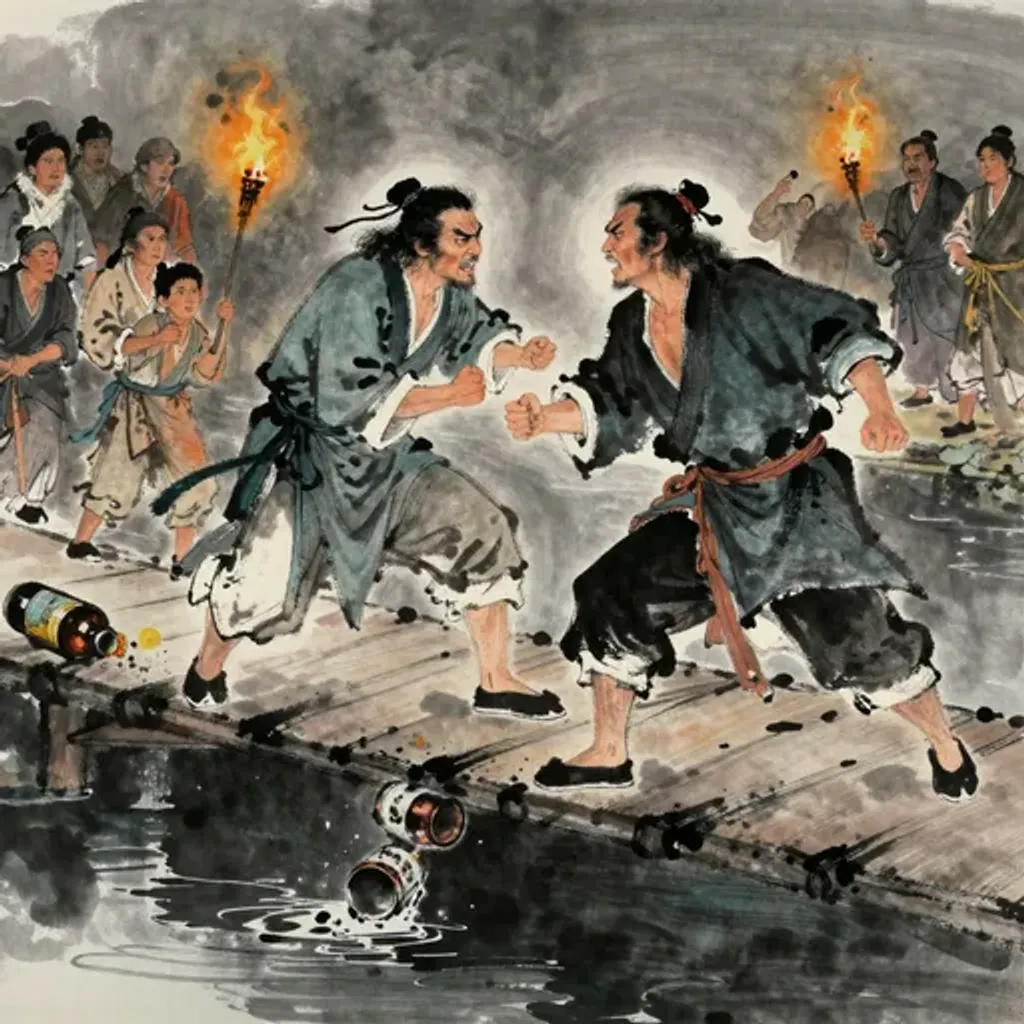
兩人俱醉,相與悖戾。心乖不同,爭訟匈匈。
Two men both drunk, together they turn perverse and hostile. Hearts at odds and minds divided, they rage in bitter dispute.
— Jiao Yanshou, Yilin (Forest of Changes), 1st century BC
Commentary
Wind and thunder bestow increase, but the transformation leads to fire above water — the unresolved incompletion of Before Completion. Two men are both drunk, quarreling with each other in mutual hostility. Their hearts diverge and cannot agree, and their dispute grows loud and bitter. The doubled intoxication creates a symmetry of impairment: neither party can think clearly, and their conflict feeds on itself with no arbiter to intervene. The noise of their lawsuit fills the air, but no resolution is possible because both are equally incapacitated. From Increase to Before Completion, the verse captures the hexagram's essential tension: fire and water are not yet in their proper positions, and the crossing has not been made. Increase poured into two drunken disputants simply amplifies the chaos. The final hexagram of the cycle ends as it must — with everything still unfinished, suspended in contention.