Transformations of Hexagram 46
Every line of change out of Hexagram 46 升 Pushing Upward, with the Yilin verse for each of the 64 resulting hexagrams, its translation, and the original ink brush artwork.
升 → 乾
Hexagram 46 → Hexagram 1: The Creative
Changing lines: 1, 4, 5, 6
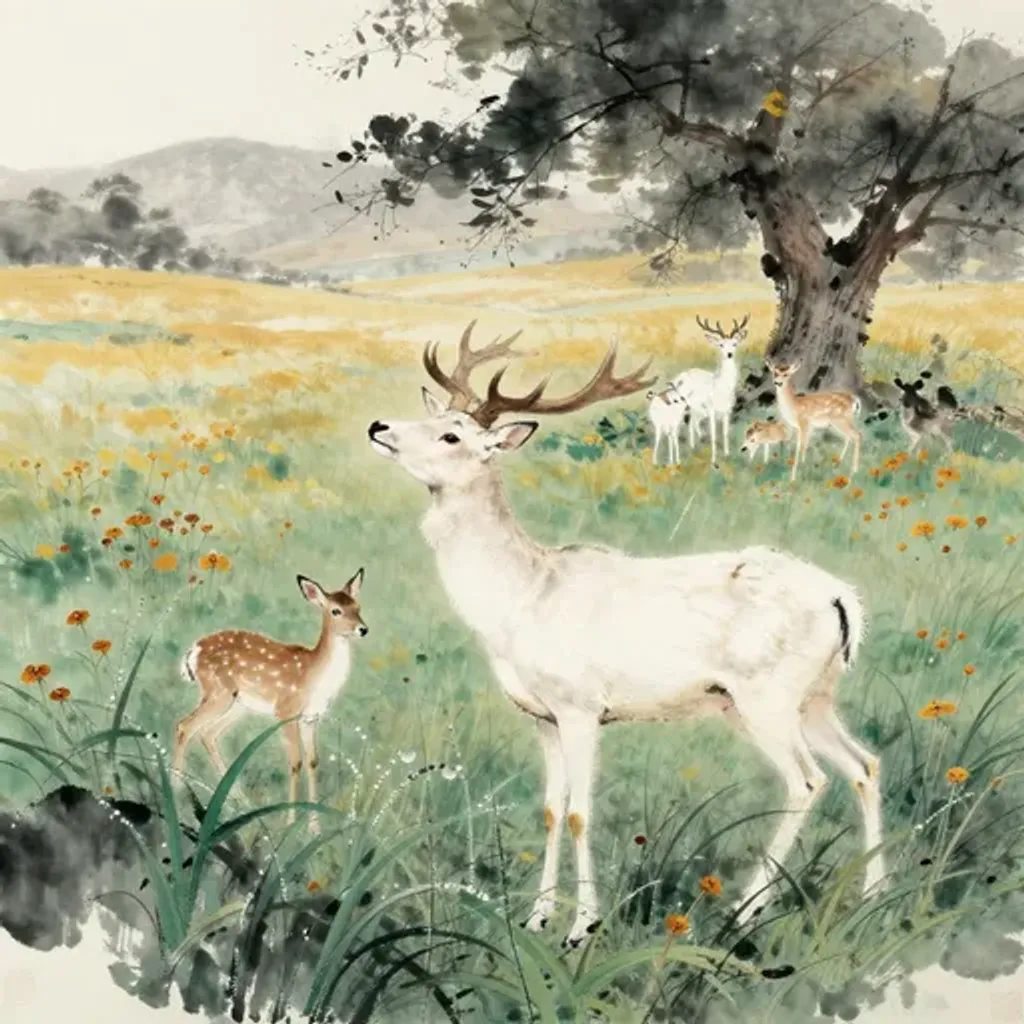
白鹿鳴呦,呼其老小。喜彼茂草,樂我君子。
The white deer cries out; it calls to its old and young. Rejoicing in those lush grasses, delighting our noble lord.
— Jiao Yanshou, Yilin (Forest of Changes), 1st century BC
Commentary
Wood grows within the earth, pushing upward toward heaven's self-renewing power. White deer call out with clear, resonant cries, summoning young and old alike to gather. They rejoice in lush grass and delight the lord who hosts them. The Shijing's 'Deer Cry' ode celebrates a ruler's banquet where worthy guests assemble in harmony, and the white deer — a creature of celestial purity — signals auspicious abundance in the natural world. From Pushing Upward to the Creative, the slow organic ascent of wood through earth culminates in the pure self-generating energy of doubled heaven. What began as patient, rooted growth now unfolds as sovereign vitality, the gentleman's ceaseless self-strengthening that requires no external support.
升 → 坤
Hexagram 46 → Hexagram 2: The Receptive
Changing lines: 2, 3
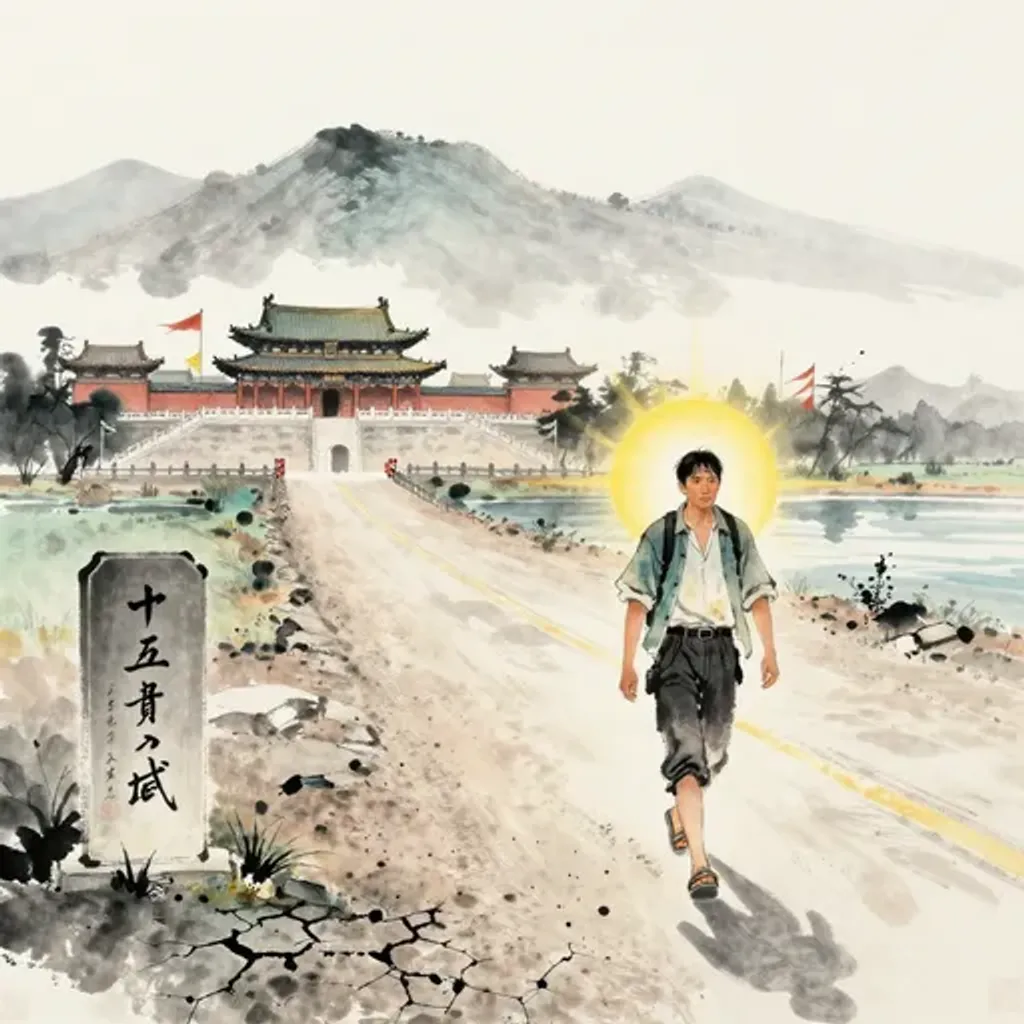
百里南行,雖微得明。去虞適秦,為穆國卿。
A hundred li journeying south; though humble, one gains clarity. Leaving Yu and going to Qin, he became minister to Duke Mu.
— Jiao Yanshou, Yilin (Forest of Changes), 1st century BC
Commentary
Wood grows within the earth, and a man walks a hundred li southward. Though humble and obscure, he finds the light at last. Baili Xi left the fallen state of Yu, traveled through hardship to Qin, and became chief minister to Duke Mu. Bought from slavery for five ram skins, he rose from feeding cattle to governing a great power — one of the most celebrated transformations in Chinese political history. The verse traces his journey from obscurity to eminence with spare precision. From Pushing Upward to the Receptive, the ascent from earth meets earth's own boundless capacity to receive and sustain. Baili Xi's genius required Qin's receptive soil: the vast, yielding earth that nurtures what rises through it.
升 → 屯
Hexagram 46 → Hexagram 3: Difficulty at the Beginning
Changing lines: 1, 2, 3, 5
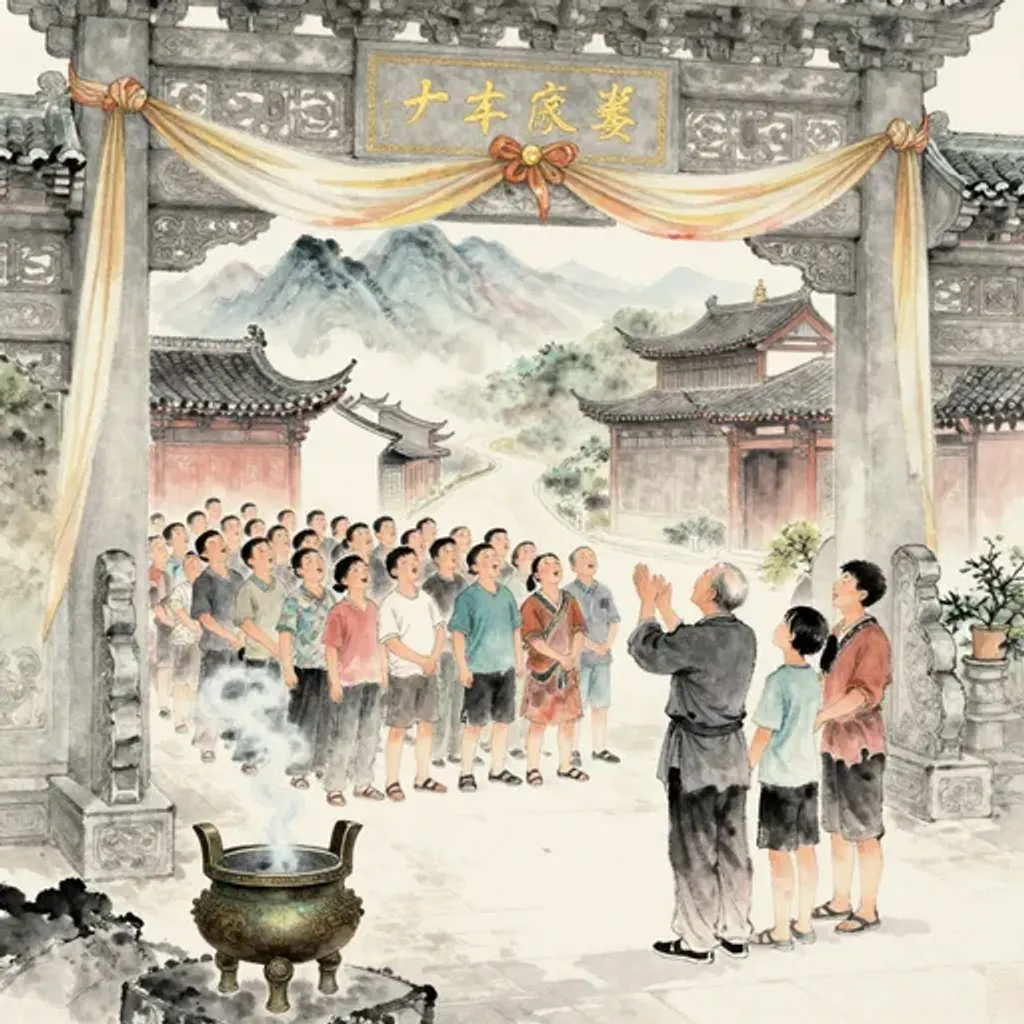
王宜孫喜,張名益有。龍子善行,西得大壽。
The king is fitting, the grandson rejoices; fame is displayed, blessings multiply. The dragon's son walks in virtue; journeying west, he attains great longevity.
— Jiao Yanshou, Yilin (Forest of Changes), 1st century BC
Commentary
Wood grows within the earth as cloud and thunder gather above. The verse speaks of royal joy, spreading fame, and increasing fortune. A dragon's child travels well, gaining great longevity in the west. The language evokes blessings upon a noble lineage: names honored, fortunes multiplied, descendants thriving across the realm. The 'dragon child' suggests a prince or heir whose virtuous conduct secures lasting fortune far from home. From Pushing Upward to Difficulty at the Beginning, the organic ascent encounters the turbulence of new birth — cloud and thunder colliding before the rain can fall. Yet the verse is optimistic: even amid initial hardship, the foundations laid through steady cultivation yield enduring prosperity and long life.
升 → 蒙
Hexagram 46 → Hexagram 4: Youthful Folly
Changing lines: 3, 6
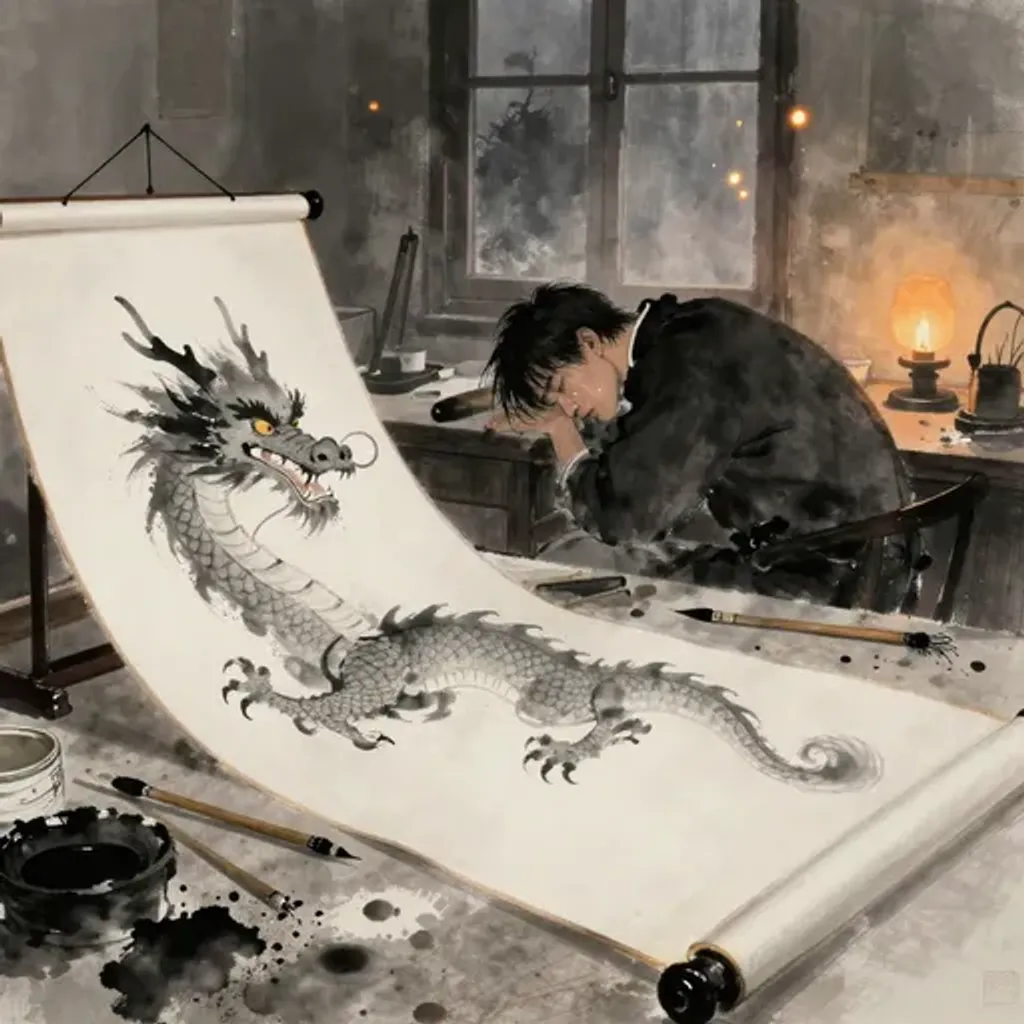
畫龍頭頸,文章不成。所求不得,失利後時。
Painting the dragon's head and neck, the pattern remains unfinished. What is sought cannot be obtained; profit is lost, the hour has passed.
— Jiao Yanshou, Yilin (Forest of Changes), 1st century BC
Commentary
Wood grows within the earth, but a painted dragon lacks its head and neck — the composition remains forever unfinished. What is sought cannot be obtained; profit is lost and the right moment missed. The image of an incomplete dragon — body sketched but vital parts absent — speaks to ambition that cannot cohere into a finished form. Without the head, the dragon has no direction; without the neck, no connection between vision and body. Mountain over water, the image of Youthful Folly, suggests effort shrouded in immaturity and confusion. From Pushing Upward to Youthful Folly, steady growth falters when ambition outpaces competence. The ascending impulse enters fog: a half-formed vision that cannot complete itself.
升 → 需
Hexagram 46 → Hexagram 5: Waiting
Changing lines: 1, 5
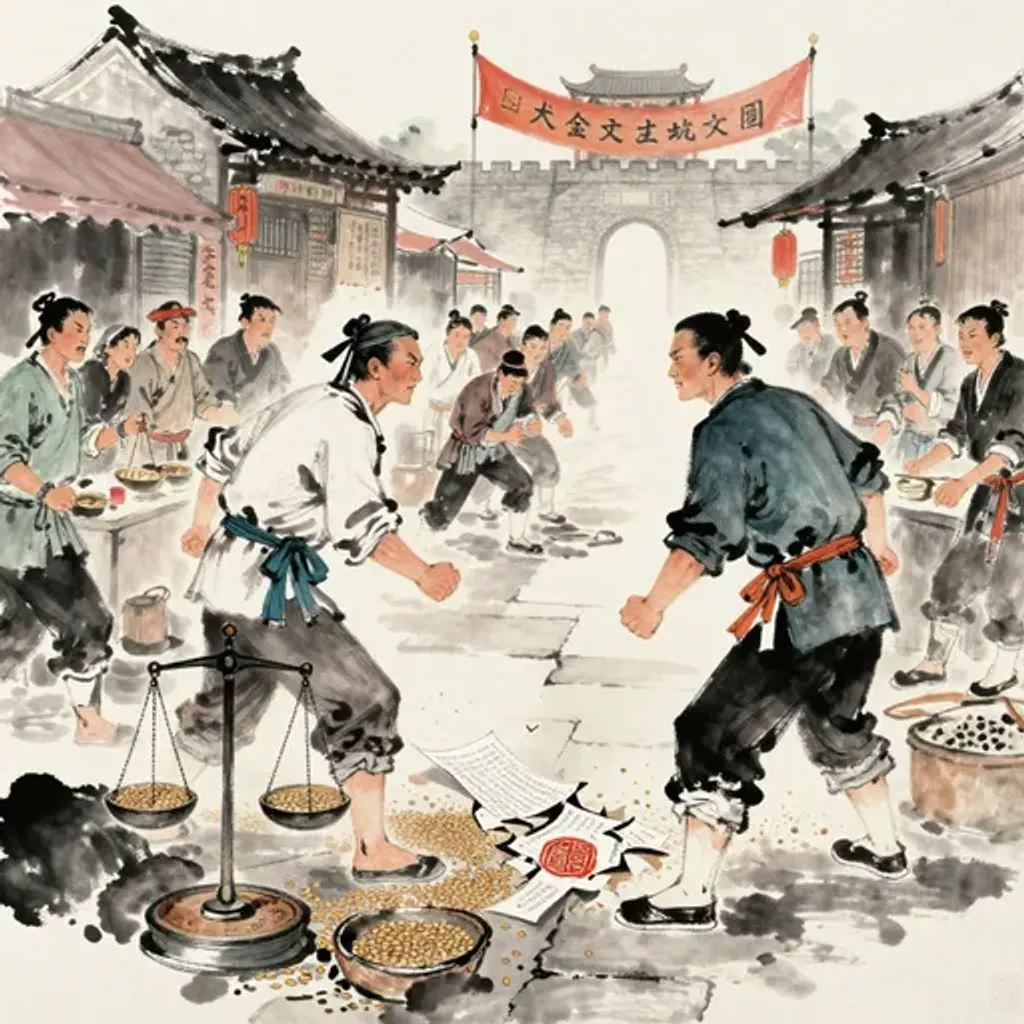
商子无良,相怨一方。引剛交爭,咎自以當。
The Shang lords lack virtue; they blame each other in their own domain. Drawing hard steel into mutual strife, they bear the fault upon themselves.
— Jiao Yanshou, Yilin (Forest of Changes), 1st century BC
Commentary
Wood grows within the earth, but the merchants of Shang lack goodness and blame one another on every side. Hard force is drawn in, contention flares between them, and the blame falls squarely on those who provoked the quarrel. 'Shang' may refer to the merchant class or to the people of the Shang state whose mutual resentments bred disorder from within. Conflict erupts not from external attack but from internal friction among supposed allies who cannot govern their own grievances. From Pushing Upward to Waiting, the upward impulse encounters clouds massing over heaven — danger gathering but not yet broken. The quarrelsome must learn that waiting through conflict is wiser than escalating it into catastrophe.
升 → 訟
Hexagram 46 → Hexagram 6: Conflict
Changing lines: 3, 4, 5, 6
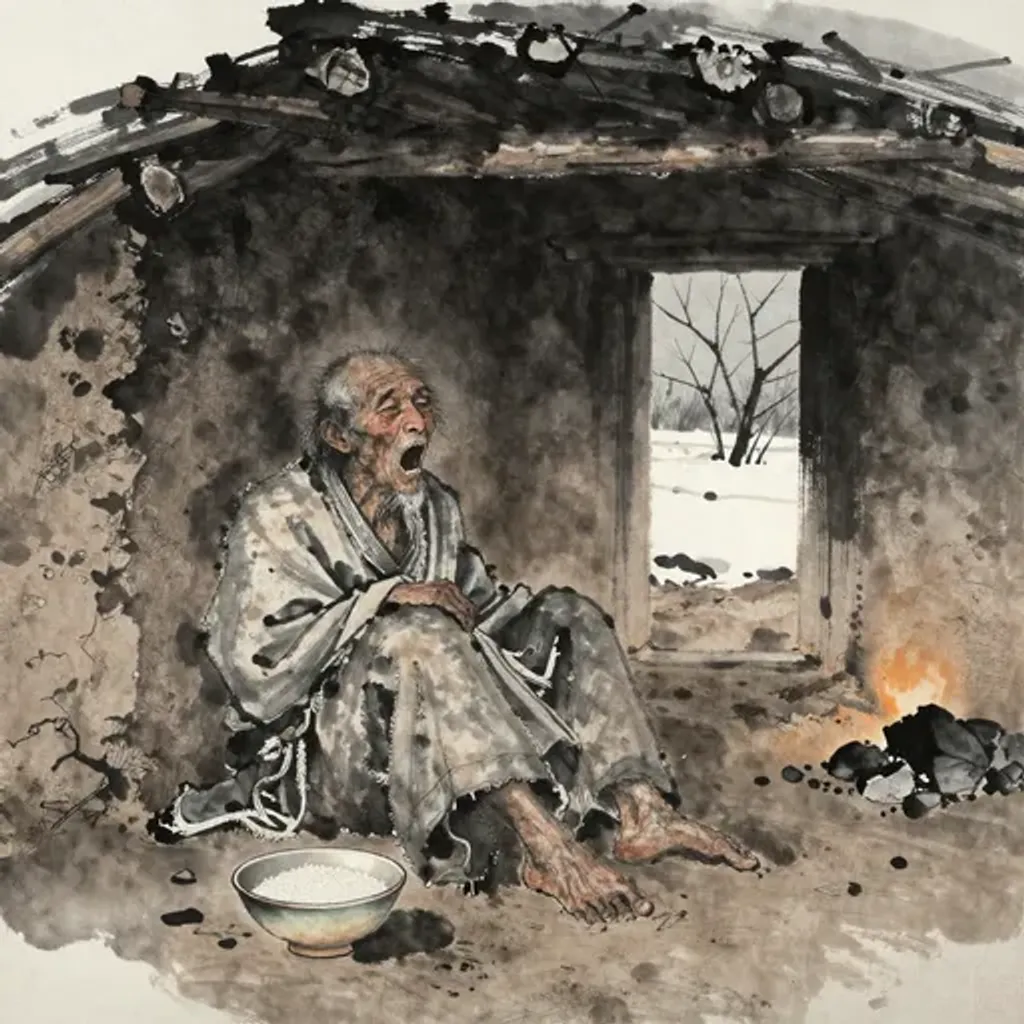
衰老困極,无齒不食。痔病痟瘵,就陰為室。
Wasted and aged, reduced to the uttermost; without teeth, unable to eat. Afflicted by sores and wasting illness, he retreats to the darkness for his chamber.
— Jiao Yanshou, Yilin (Forest of Changes), 1st century BC
Commentary
Wood grows within the earth, yet here the body decays beyond all repair. Aged and exhausted to the utmost, toothless and unable to eat, afflicted with hemorrhoids and consumption, the sufferer retreats into the shade as though entering a tomb. The verse catalogs physical collapse with clinical, unflinching precision: every organ failing, every function impaired, life force guttering out. From Pushing Upward to Conflict, the ascending life force encounters heaven and water moving in opposite directions. What should rise instead meets resistance at every turn, and the body that once pushed upward now retreats into darkness — growth's opposite, where even the impulse to contend has been exhausted beyond recovery.
升 → 師
Hexagram 46 → Hexagram 7: The Army
Changing lines: 3
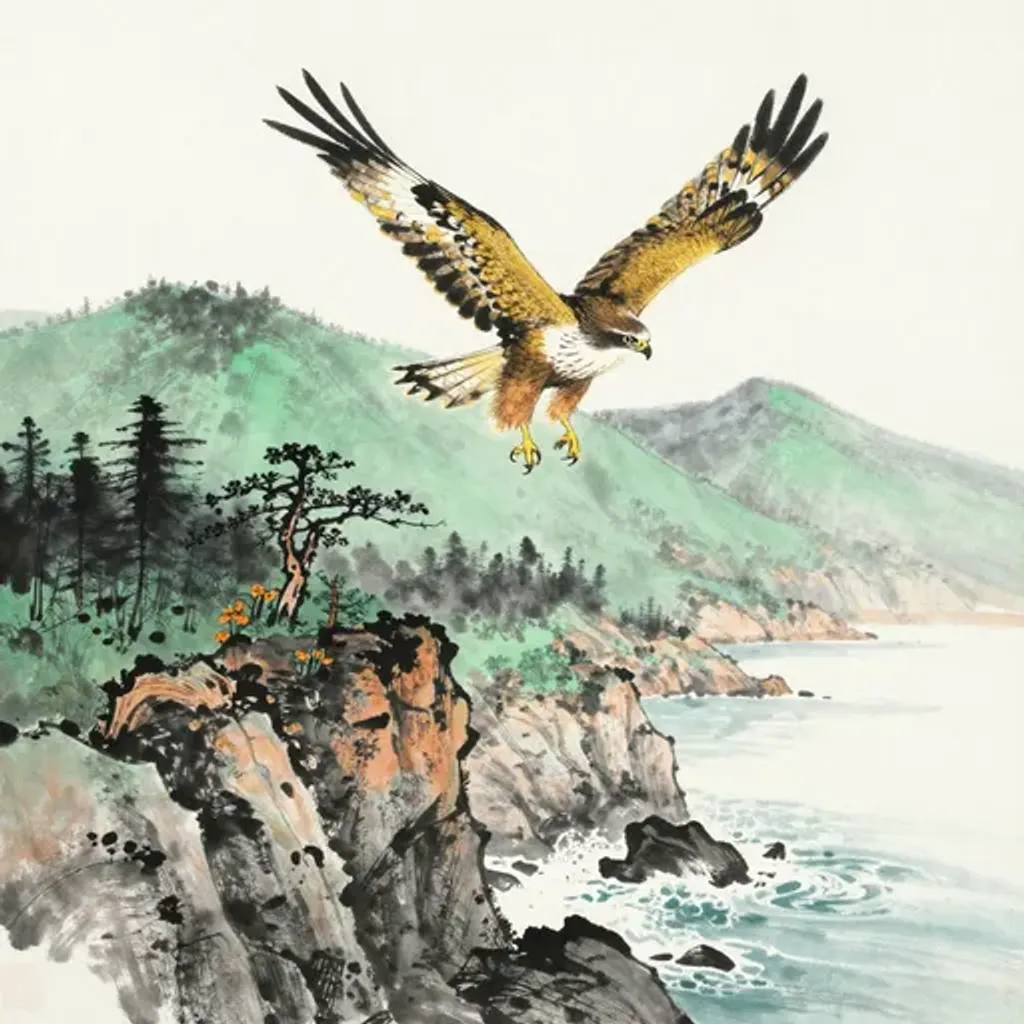
鳶生會稽,稍巨能飛。翱翔桂林,為眾鳥雄。
The kite is born at Kuaiji; growing large, it learns to fly. Soaring above the cinnamon groves, it becomes lord among all birds.
— Jiao Yanshou, Yilin (Forest of Changes), 1st century BC
Commentary
Wood grows within the earth; a kite hatches at Kuaiji and grows gradually until it can take flight. Soaring over the forests of Guilin, it becomes chief among all birds, commanding the sky. The kite — a raptor of keen sight and commanding wingspan — starts small in the marshes of the southeast, then rises through patient maturation to dominate the heavens above. Earth containing water, the image of the Army, evokes disciplined multitudes led by a single strong figure from obscurity into power. From Pushing Upward to the Army, organic growth transforms into organized strength. The kite's ascent from Kuaiji to aerial supremacy mirrors the commander who rises from modest origins to marshal great forces under a single will.
升 → 比
Hexagram 46 → Hexagram 8: Holding Together
Changing lines: 2, 3, 5
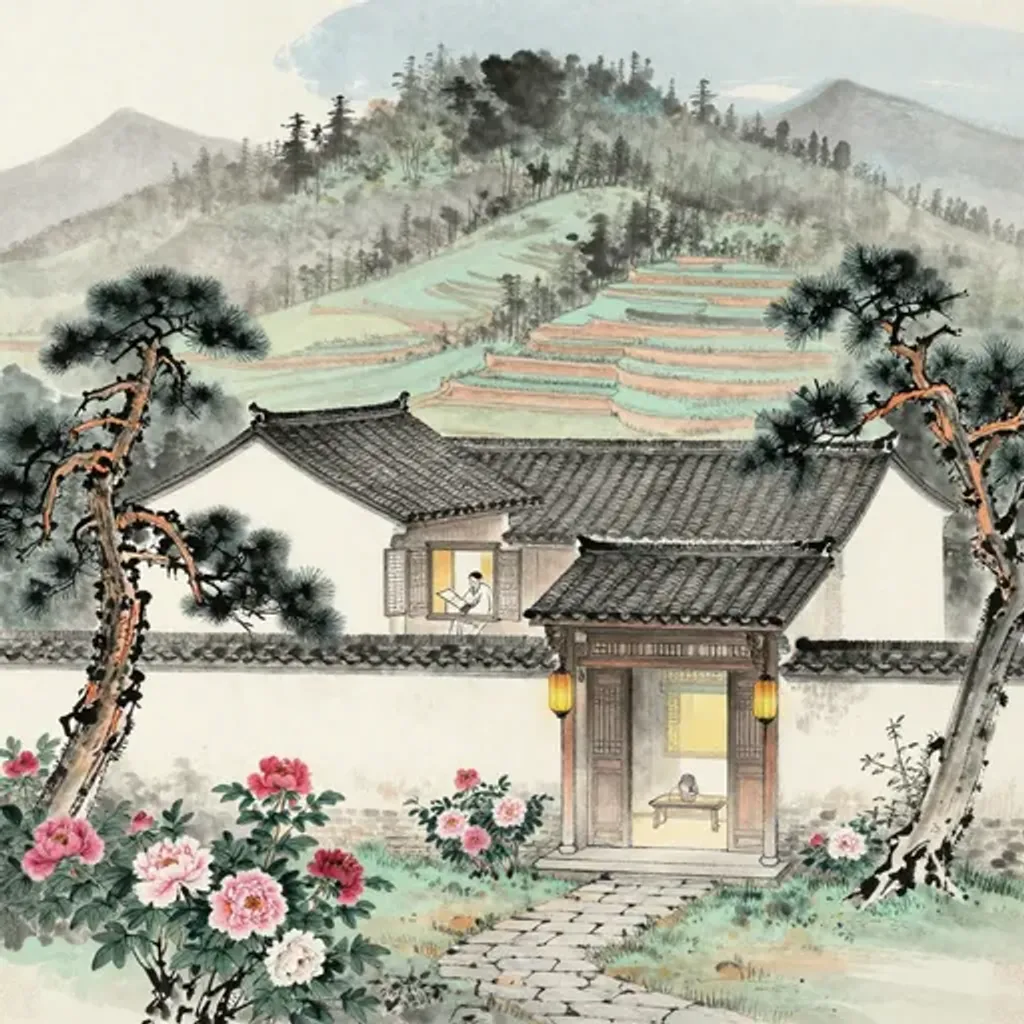
安平不傾,載福長生,君子以寧。
Peaceful and level, never toppling; bearing blessings and long life, the noble lord finds tranquility.
— Jiao Yanshou, Yilin (Forest of Changes), 1st century BC
Commentary
Wood grows within the earth, and the world stands level and utterly secure. Peaceful, untilting, carrying blessings and long life, the gentleman dwells in tranquility with nothing to disturb his rest. Water resting upon earth, the image of Holding Together, shows people naturally gathering where conditions are stable and the land can sustain them. The verse offers a luminous vision of political and personal contentment: no danger of collapse, no threat of upheaval, only steady accumulation of benefit over time. From Pushing Upward to Holding Together, the slow, rooted growth of wood through earth produces a landscape so settled that others naturally converge upon it. The ascending impulse, having reached stable ground, becomes the center around which community forms.
升 → 小畜
Hexagram 46 → Hexagram 9: Small Taming
Changing lines: 1, 5, 6
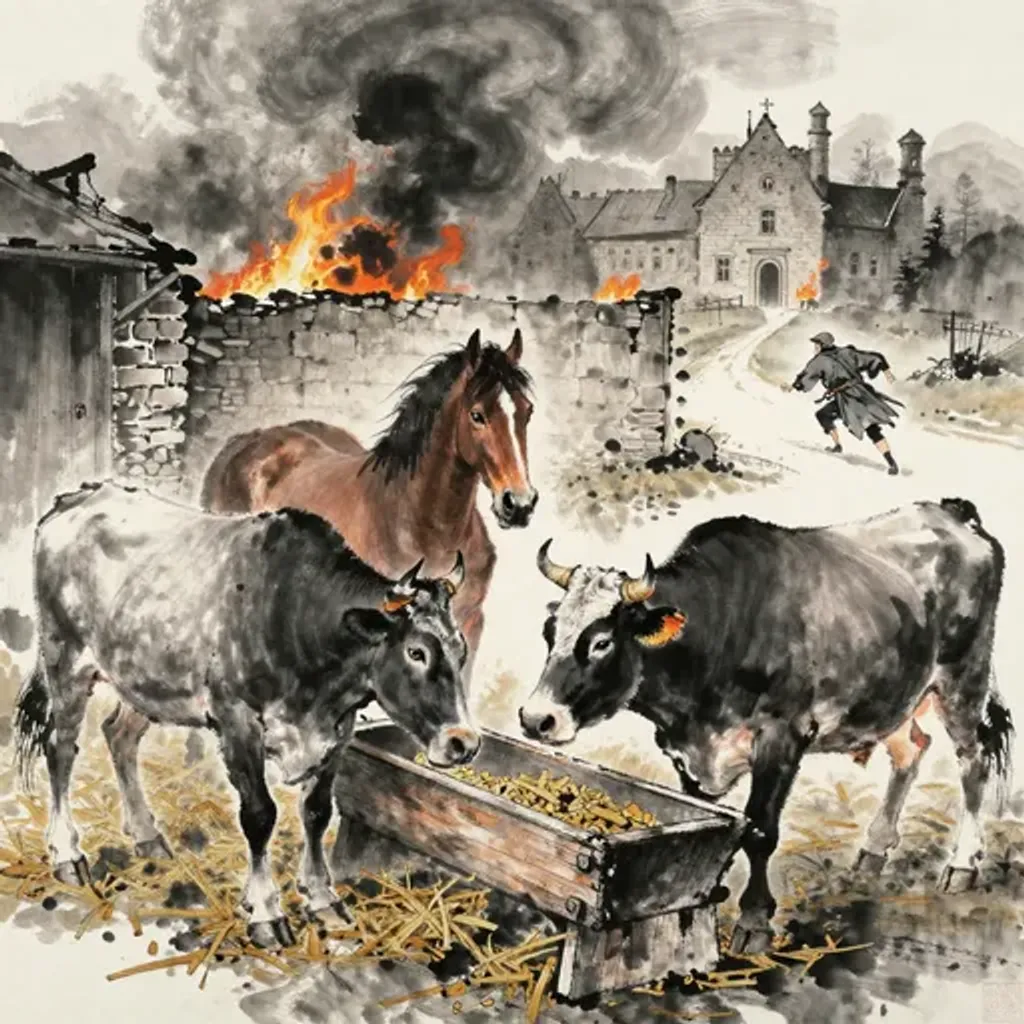
牛驥同槽,郭氏以亡。國破為墟,君奔走逃。
The ox and the thoroughbred share the same trough; by this the house of Guo perishes. The state broken and made a ruin, the lord flees in haste.
— Jiao Yanshou, Yilin (Forest of Changes), 1st century BC
Commentary
Wood grows within the earth, but when thoroughbreds and oxen share the same trough, the house of Guo falls. The state is shattered into ruins, its lord flees in panic. The idiom 'oxen and fine steeds at one manger' comes from Zou Yang's famous prison letter: when talent and mediocrity are treated alike, ruin follows inevitably. The Guo clan's collapse illustrates what happens when no one distinguishes the worthy from the worthless. Wind over heaven, the image of Small Taming, suggests gentle restraint that proves fatally insufficient. From Pushing Upward to Small Taming, rising ambition meets inadequate containment — the wind's gentle force cannot hold back the catastrophe that indiscriminate governance invites.
升 → 履
Hexagram 46 → Hexagram 10: Treading
Changing lines: 1, 3, 4, 5, 6
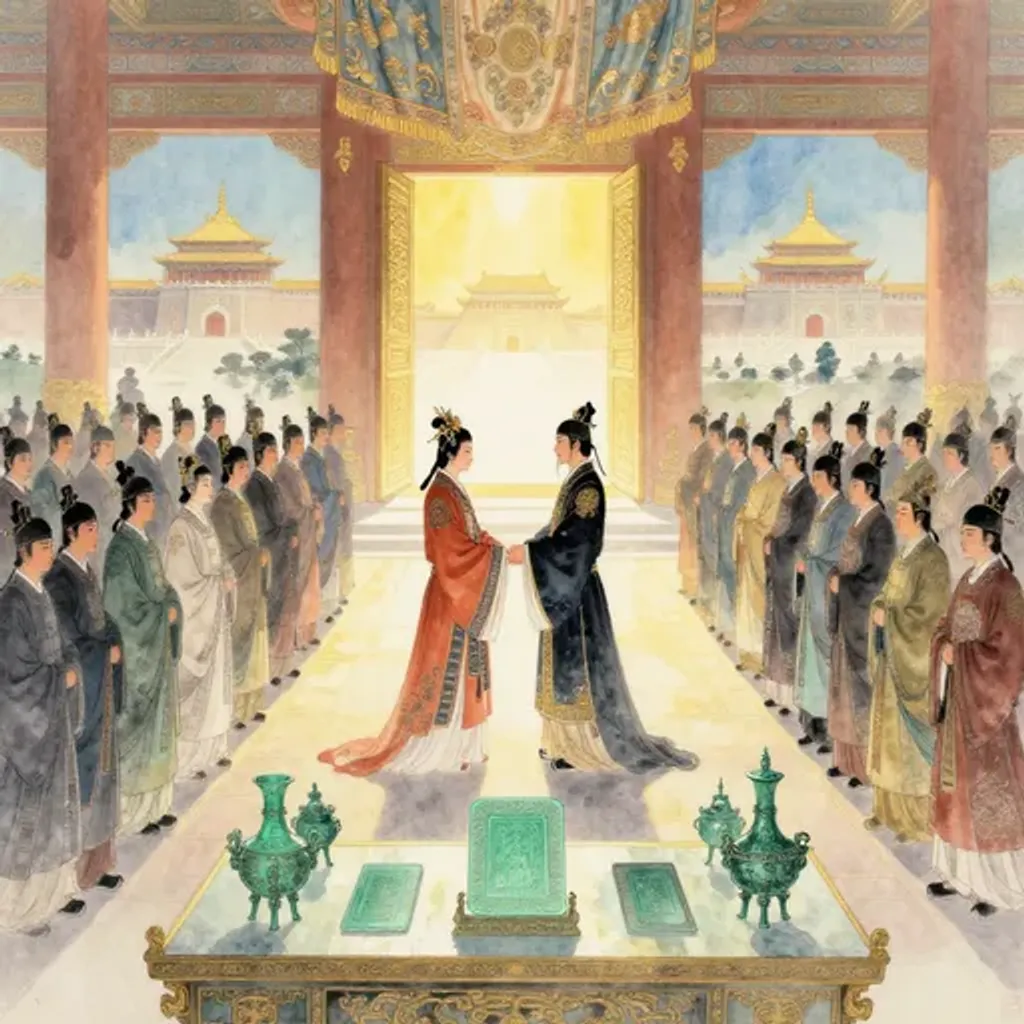
日中明德,盛興兩國。仁聖會遇,君受其福,臣多榮祿。
The sun at zenith, radiant in virtue; two kingdoms rise in splendor. The humane sage meets his match; the lord receives his blessing, the ministers share abundant glory.
— Jiao Yanshou, Yilin (Forest of Changes), 1st century BC
Commentary
Wood grows within the earth as bright virtue shines at midday, raising two states to simultaneous greatness. A benevolent sage meets his counterpart in governance; the ruler receives blessings while ministers enjoy abundant rank and generous rewards. The 'two states' likely evoke the Zhou founding partnership of King Wen's civil virtue and King Wu's martial completion, or the complementary strengths of allied kingdoms flourishing under shared moral clarity. Heaven over lake, the image of Treading, shows proper hierarchy where each person knows their place. From Pushing Upward to Treading, organic growth achieves its full expression in ceremonial order. The ascending wood becomes the measured step that treads upon established ground with confidence.
升 → 泰
Hexagram 46 → Hexagram 11: Peace
Changing lines: 1
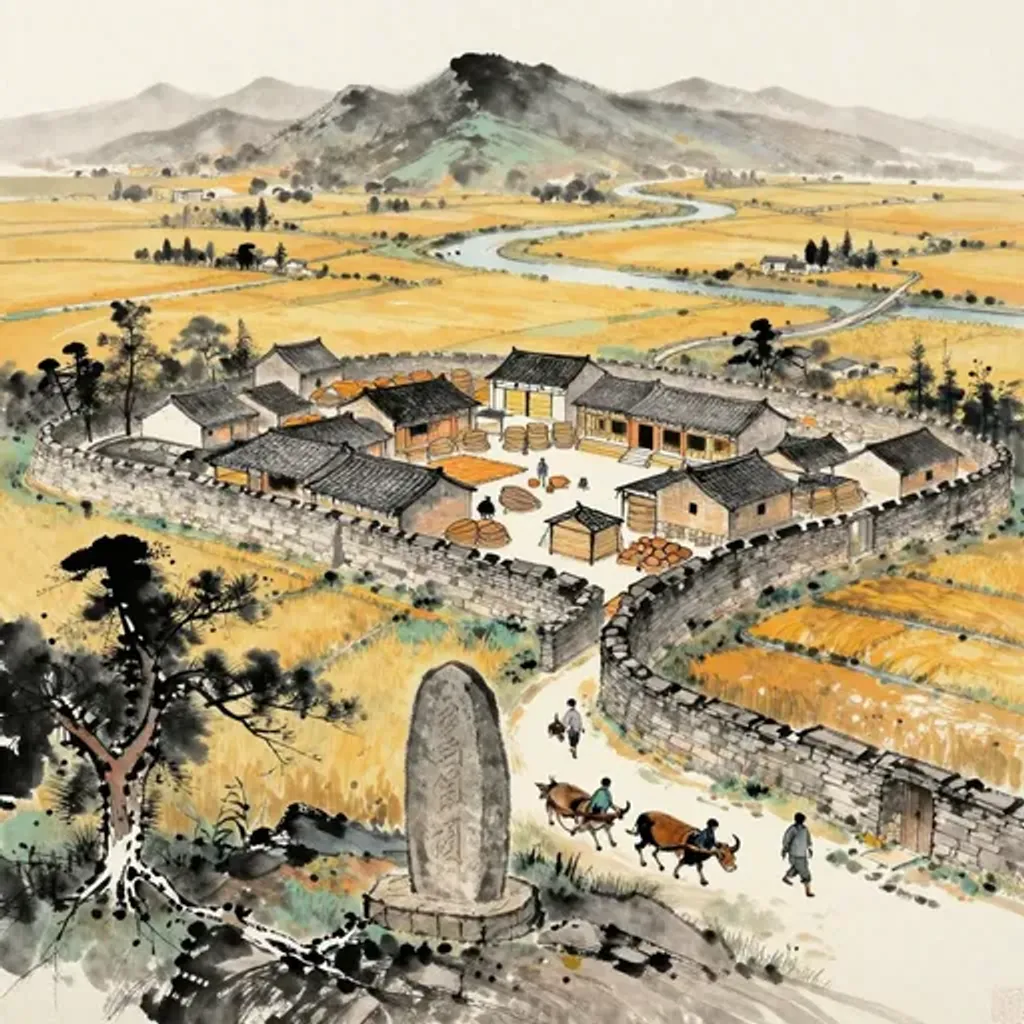
公劉之居,太王所業。可以長生,拜受福爵。
The dwelling that Gongliu established, the enterprise that Taiwang built upon. Here one may live in long prosperity, bowing to receive blessings and rank.
— Jiao Yanshou, Yilin (Forest of Changes), 1st century BC
Commentary
Wood grows within the earth, and the verse invokes two legendary Zhou ancestors: Gongliu, who settled the people at Bin and revived Hou Ji's agricultural tradition, and the Great King (Tai Wang), who migrated from Bin to the foot of Mount Qi and founded the territorial base of the Zhou dynasty. Their patient, generational work yields long life, blessings, and noble rank for all who follow. Earth over heaven, the image of Peace, shows heaven and earth mingling freely in perfect exchange. From Pushing Upward to Peace, the gradual cultivation of land and people across generations culminates in the golden age of cosmic harmony. Gongliu planted; Tai Wang built; their descendants reaped the fullness of the Zhou mandate.
升 → 否
Hexagram 46 → Hexagram 12: Standstill
Changing lines: 2, 3, 4, 5, 6
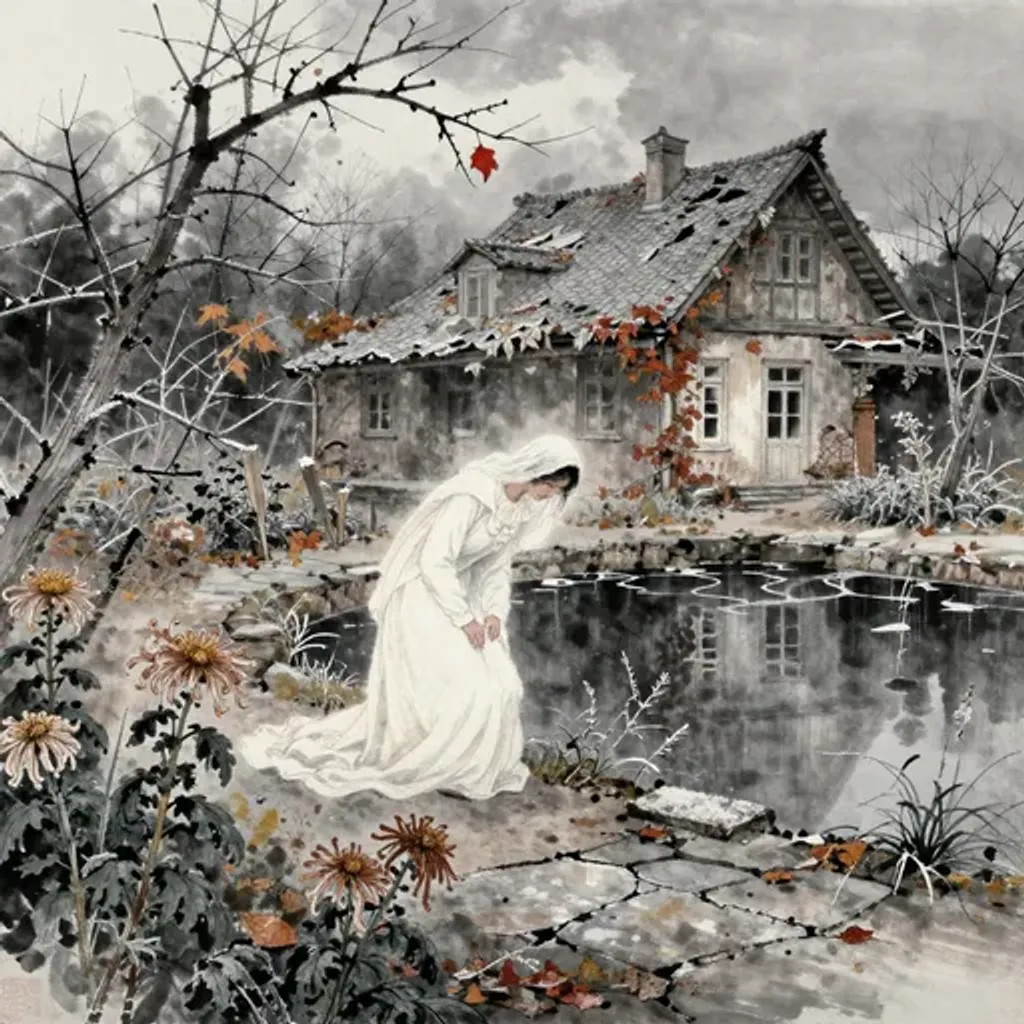
時凋歲霜,君子疾病。宗女无辜,鄭受其殃。
The season withers, the year brings frost; the noble lord falls ill. The daughter of the clan, blameless, yet Zheng suffers the calamity.
— Jiao Yanshou, Yilin (Forest of Changes), 1st century BC
Commentary
Wood grows within the earth, but frost descends and the season turns to decay. The gentleman falls ill; a blameless noblewoman of the royal clan suffers innocently, and the state of Zheng bears the undeserved disaster. The 'Zong Nu' — a princess or noblewoman married into another state for alliance — becomes the innocent victim of political misfortune beyond anyone's control. Time itself turns hostile: the season withers, the body weakens, and an allied state absorbs the punishment that belongs elsewhere. Heaven over earth with no exchange between them, the image of Standstill. From Pushing Upward to Standstill, the ascending impulse meets total blockage. What should grow is frozen; what should communicate falls silent.
升 → 同人
Hexagram 46 → Hexagram 13: Fellowship
Changing lines: 1, 2, 4, 5, 6
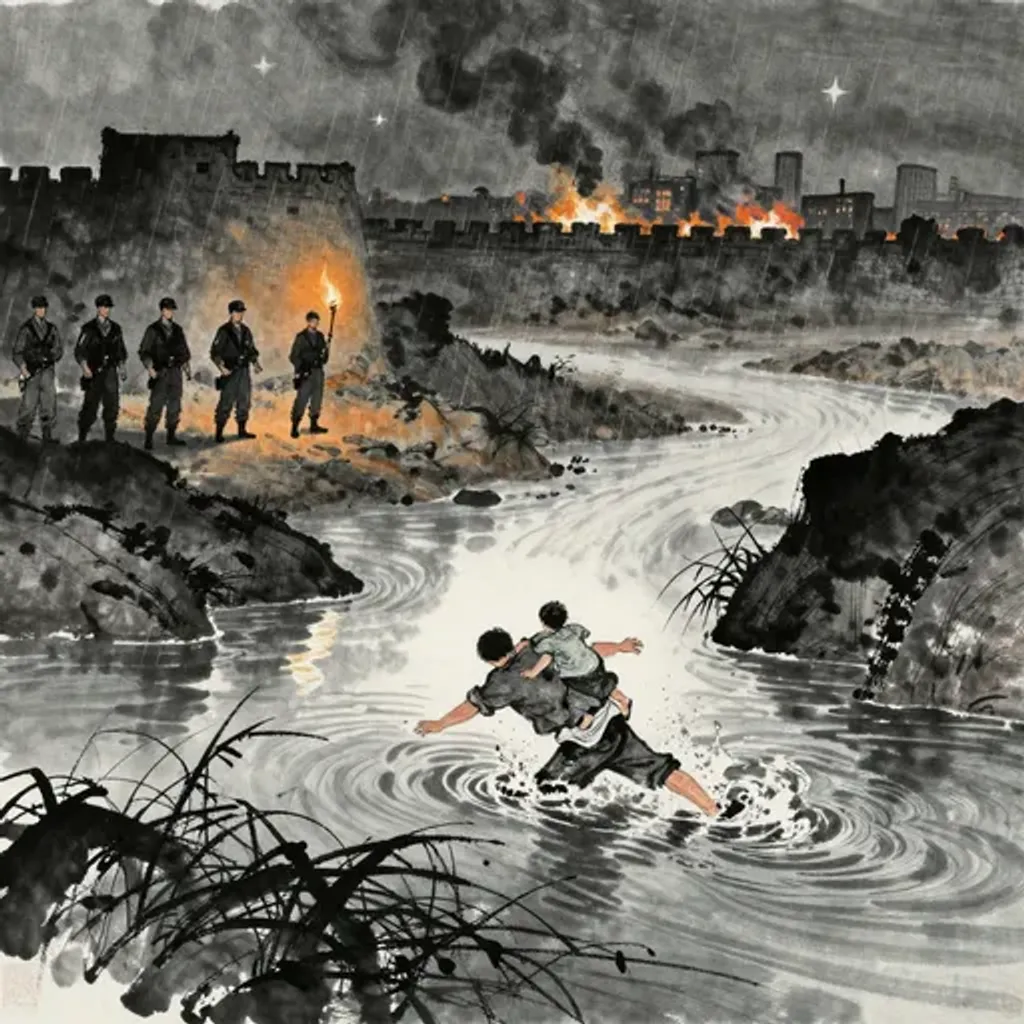
濟河踰阨,脫母怵惕。四叔為衛,使惠不廢。
Crossing the river, passing through the narrows; freeing the mother from terror. The four uncles defend Wei, ensuring Lord Hui is not deposed.
— Jiao Yanshou, Yilin (Forest of Changes), 1st century BC
Commentary
Wood grows within the earth, and someone crosses the Yellow River through perilous narrows, rescuing a mother from danger and distress. The 'four uncles' defend the state of Wei, ensuring that Duke Hui's line endures and is not extinguished. When the Di barbarians destroyed Wei in 660 BC, loyal retainers rallied to reconstitute the state at Cao and then at Chu Qiu. The verse celebrates those who risked their lives to preserve a threatened lineage and its governing institutions. Heaven and fire combine in the image of Fellowship: people of shared purpose uniting across barriers. From Pushing Upward to Fellowship, the slow growth of loyalty through hardship becomes the bond that transcends danger and distance.
升 → 大有
Hexagram 46 → Hexagram 14: Great Possession
Changing lines: 1, 4, 6
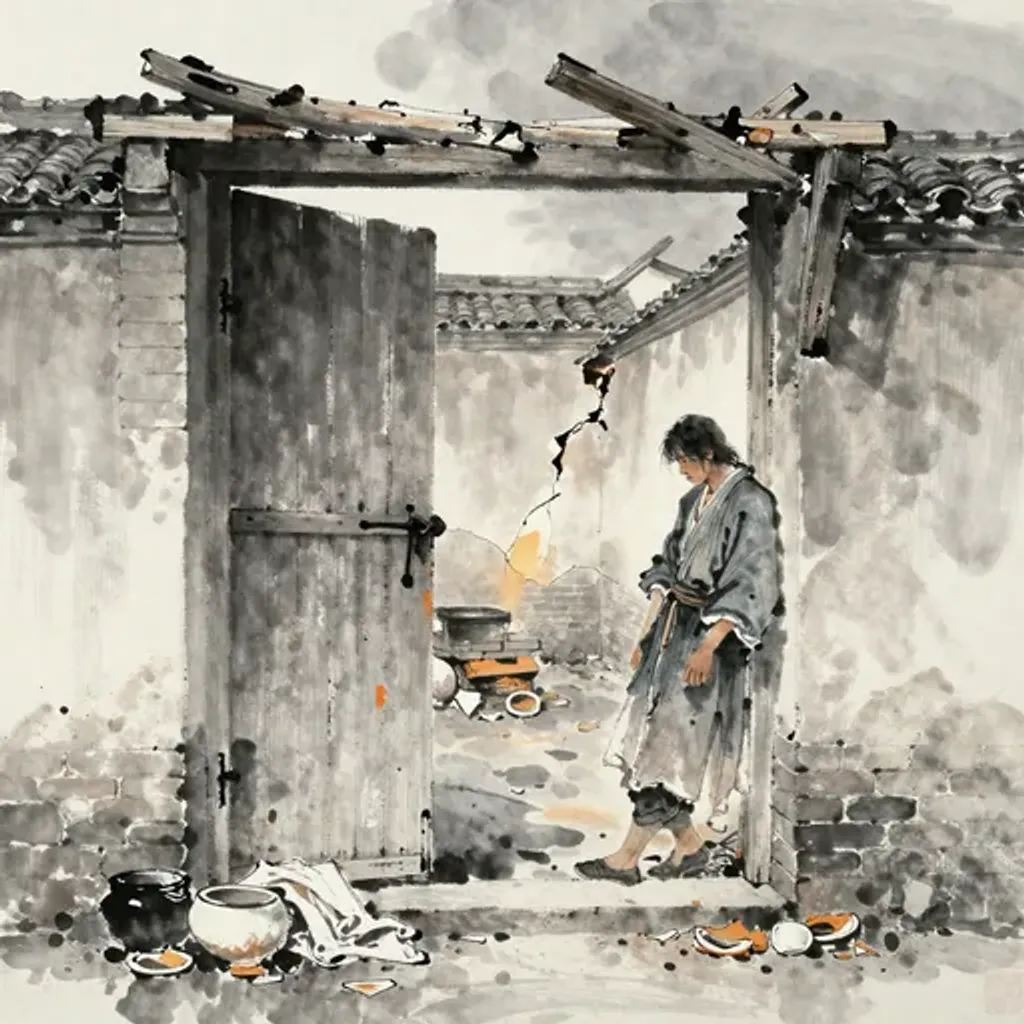
缺破不完,殘瘵側偏。公孫幽遏,跛踦後門。
Broken and incomplete, damaged and diminished. The duke's grandson confined and shut away; limping, he passes through the back gate.
— Jiao Yanshou, Yilin (Forest of Changes), 1st century BC
Commentary
Wood grows within the earth, yet everything here is broken and incomplete. Chipped, cracked, and unfinished, the body leans crippled and afflicted to one side. A Gongsun — a nobleman's descendant — is confined and blocked, limping through the back gate in humiliation. The imagery suggests a figure of high birth reduced to physical and political brokenness, denied the main entrance and forced to slink through side passages like a servant. Fire over heaven, the image of Great Possession, promises brilliance and expansive wealth above. From Pushing Upward to Great Possession, the ascent should culminate in supreme abundance. Yet here the transformation is bitterly ironic: the rising figure arrives broken at the gates of plenty, his great possession a prison of infirmity.
升 → 謙
Hexagram 46 → Hexagram 15: Modesty
Changing lines: 2
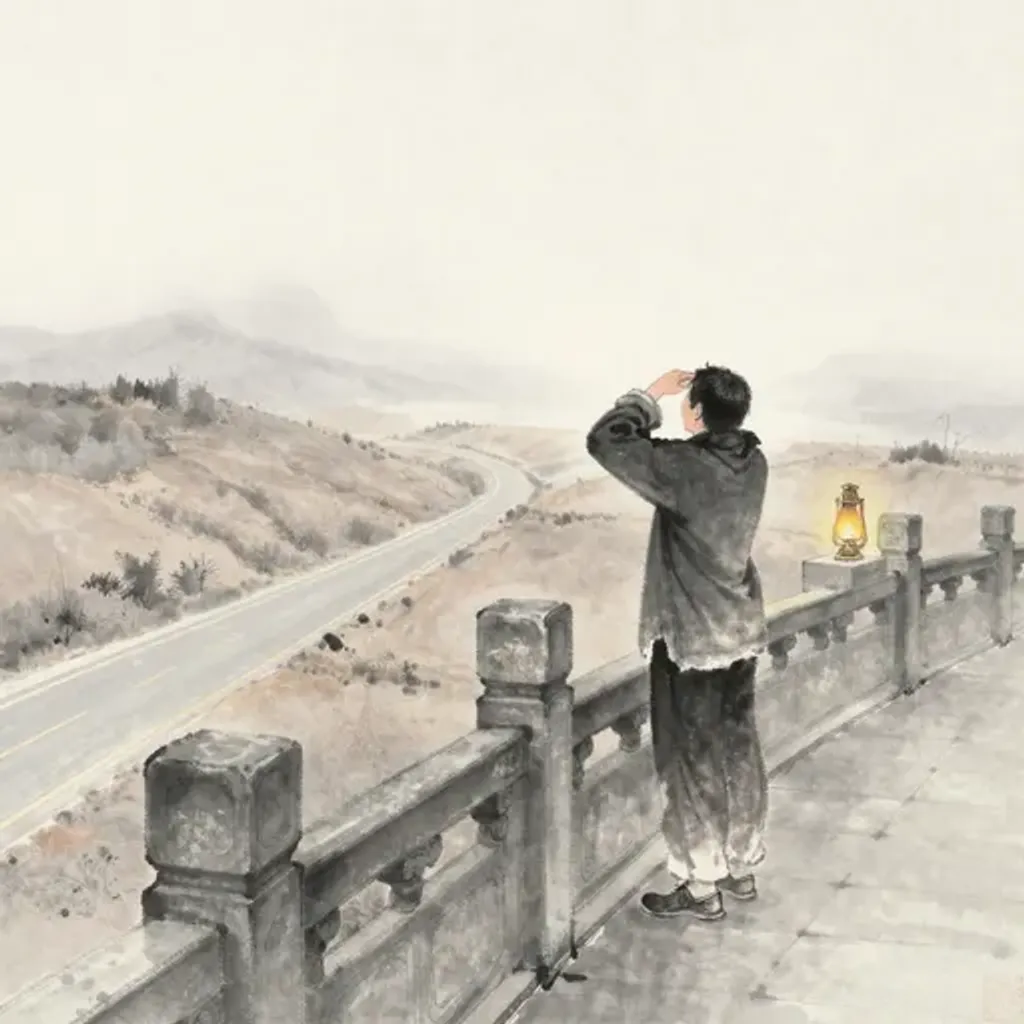
延頸遠望,昧為目病。不見叔姬,使伯憂心。
Craning the neck, gazing far; the eyes grow dim with illness. Not seeing the younger sister, the elder brother's heart is filled with worry.
— Jiao Yanshou, Yilin (Forest of Changes), 1st century BC
Commentary
Wood grows within the earth as someone cranes their neck, gazing far into the distance, but failing eyesight clouds the view into darkness. The elder brother cannot see his younger sister Shuji, and anxiety gnaws at his heart without relief. The scene evokes a kinsman separated from family, straining to catch sight of a loved one across an impossible distance while his own vision betrays him. Earth over mountain, the image of Modesty, hides strength within lowliness — the mountain sinking into the ground. From Pushing Upward to Modesty, the ascending impulse reverses as the mountain descends. The one who rises cannot find what matters most; the higher the vantage, the more painful the absence.
升 → 豫
Hexagram 46 → Hexagram 16: Enthusiasm
Changing lines: 2, 3, 4
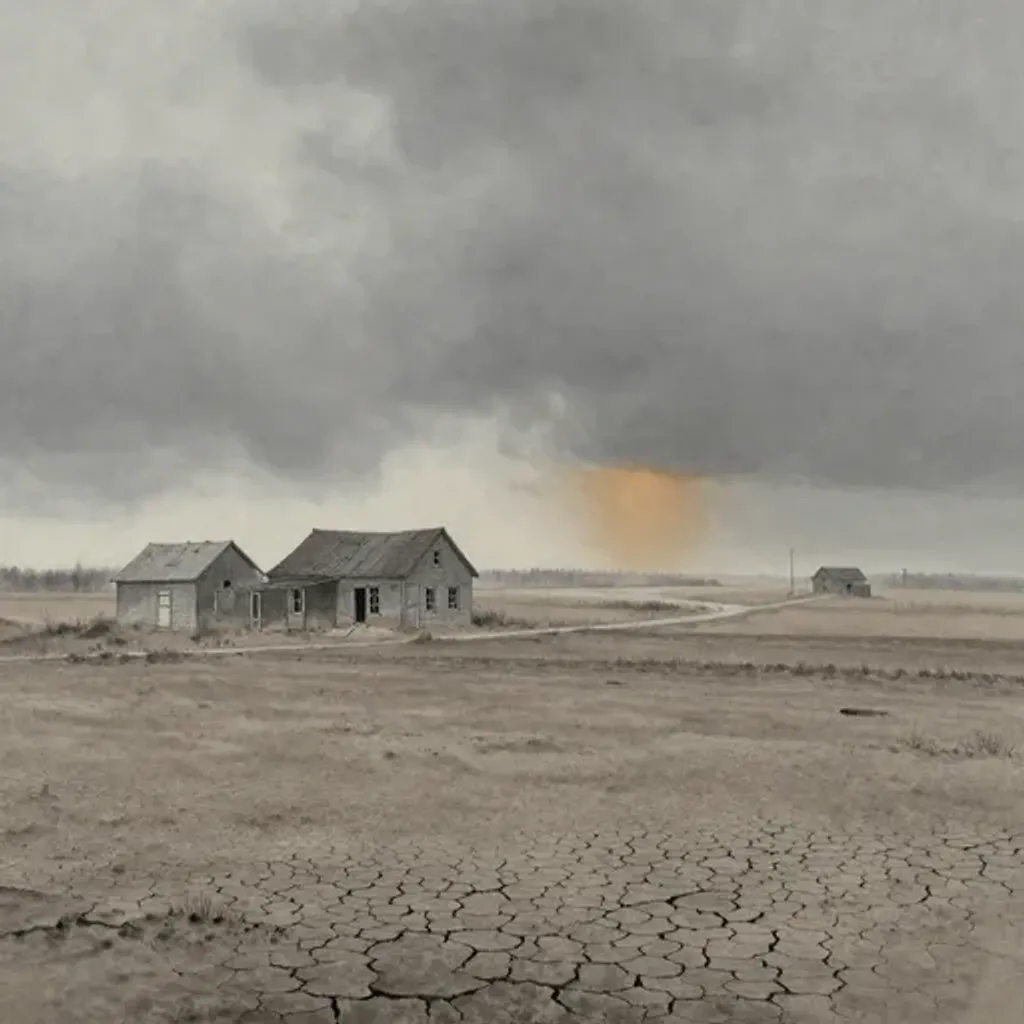
上无飛鳥,下无走獸。擾亂未清,民勞於事。
Above, no birds in flight; below, no beasts that run. Turmoil not yet settled, the people toil in their labors.
— Jiao Yanshou, Yilin (Forest of Changes), 1st century BC
Commentary
Wood grows within the earth, but above there are no flying birds and below no running beasts — the land has been stripped of all living creatures. Disorder remains uncleared and the people are exhausted by unending labor and conscription. A landscape empty of wing and hoof signals a world drained by misgovernance, where even animals have fled the oppressive conditions. Thunder emerging from the earth, the image of Enthusiasm, should inspire music and collective celebration. From Pushing Upward to Enthusiasm, the steady ascent should culminate in communal joy and ritual harmony. Instead, the people's vitality has been consumed by ceaseless demands, leaving a barren realm where the conditions for celebration simply do not exist.
升 → 隨
Hexagram 46 → Hexagram 17: Following
Changing lines: 1, 2, 3, 4, 5
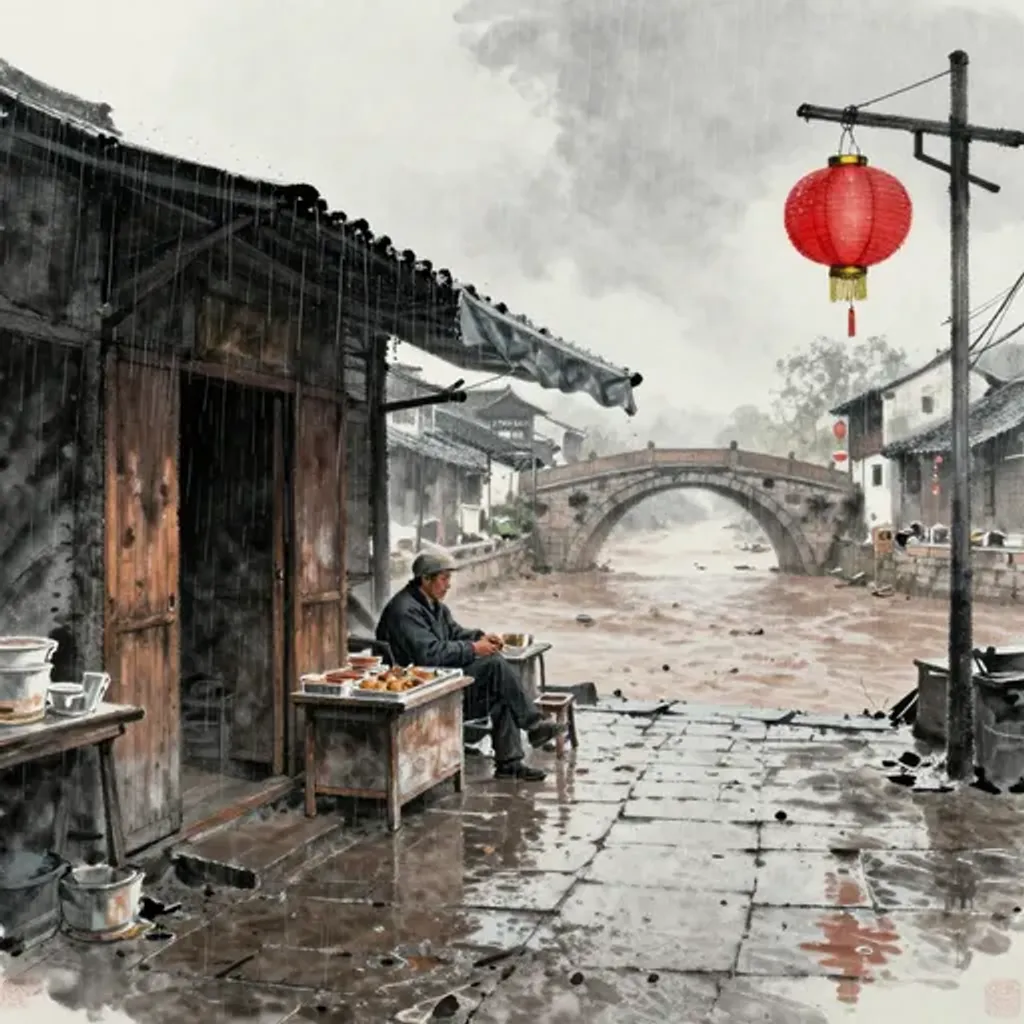
久陰霖雨,塗行泥潦。商人休止,市空无有。
Long rains of yin and gloom; the roads run thick with mud. The merchants cease their trade; the market stands empty, with nothing to be had.
— Jiao Yanshou, Yilin (Forest of Changes), 1st century BC
Commentary
Wood grows within the earth, but prolonged yin rains soak the roads into impassable mud and mire. Merchants halt their journeys; the marketplace stands deserted, with nothing to buy and nothing to sell. The image is economic paralysis brought on by relentless weather: endless rain chokes commerce, isolates communities, and renders all movement futile. Lake over thunder, the image of Following, suggests yielding to the natural rhythm rather than forcing action against hostile conditions. From Pushing Upward to Following, the ascending impulse must learn to accommodate obstruction. When the roads are flooded, the wise merchant stops and waits for the sky to clear rather than pushing through mud to certain ruin.
升 → 蠱
Hexagram 46 → Hexagram 18: Work on the Decayed
Changing lines: 6
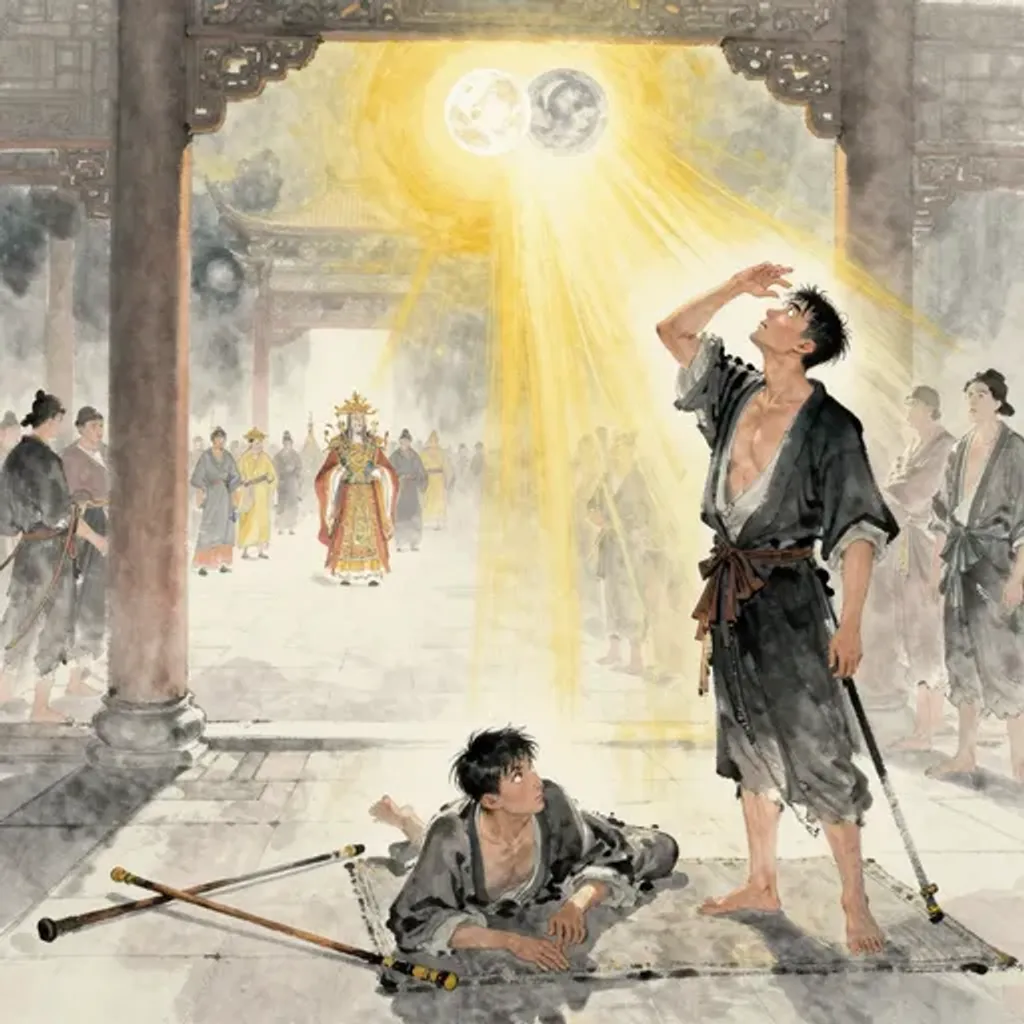
盲者張目,跛踦起行。瞻望日月,與王相迎。
The blind man opens his eyes; the lame man rises and walks. They gaze upon the sun and moon, and go forth to greet the king.
— Jiao Yanshou, Yilin (Forest of Changes), 1st century BC
Commentary
Wood grows within the earth, and a miraculous restoration unfolds before our eyes. The blind open their eyes and see; the lame rise and walk once more. They gaze upon the sun and moon in wonder and go forth to greet the king in audience. Mountain over wind, the image of Work on the Decayed, calls for reviving what has deteriorated through neglect and time. The verse reads like a healing miracle: faculties once lost are fully recovered, and the restored subjects present themselves before their sovereign with renewed dignity. From Pushing Upward to Work on the Decayed, the organic ascent encounters a structure in need of repair and breathes new life into it. Decay is not final destruction — it is the ground from which renewal rises.
升 → 臨
Hexagram 46 → Hexagram 19: Approach
Changing lines: 1, 3
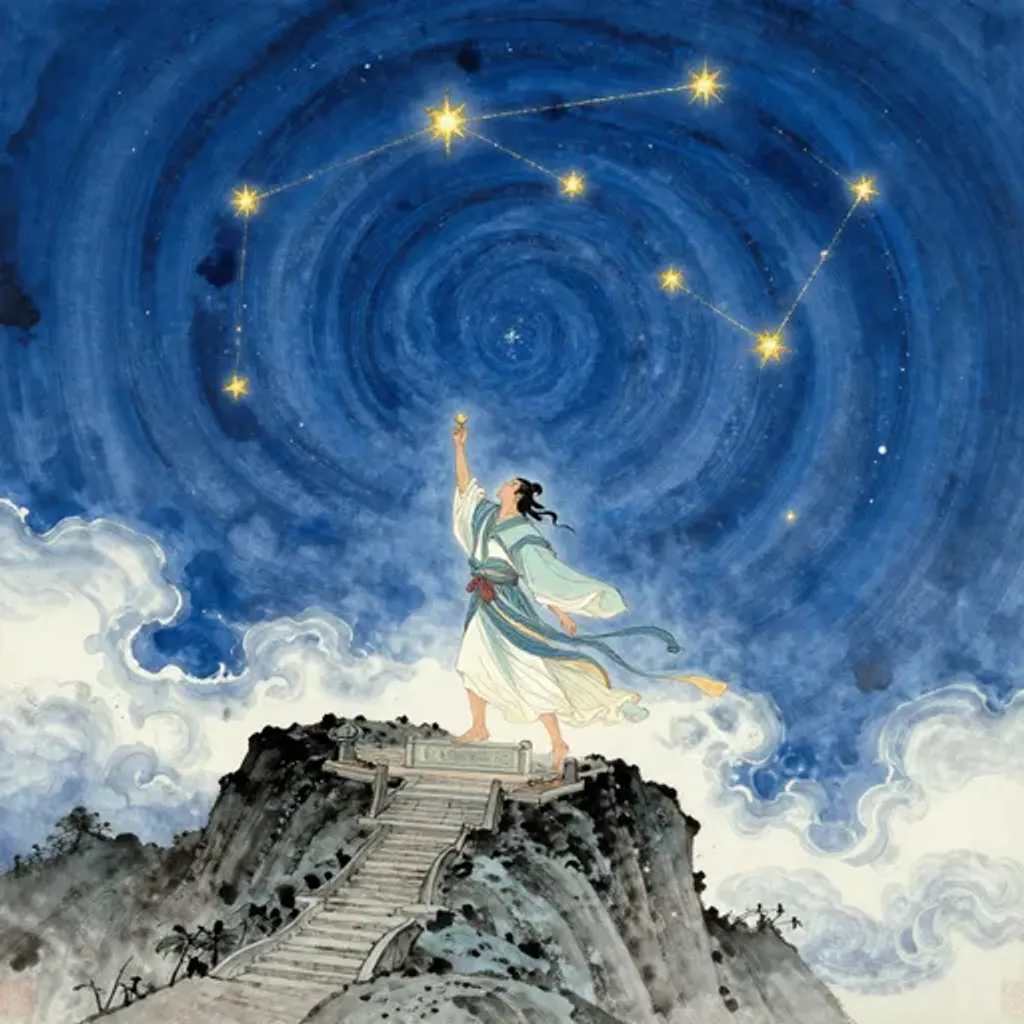
據斗運樞,高步六虛。權既在手,寰宇可驅。國大無憂,與樂並居。
Grasping the Dipper, turning the pivot; striding high through the six voids. With authority already in hand, the whole world may be commanded. The realm is great and without worry; dwelling together with joy.
— Jiao Yanshou, Yilin (Forest of Changes), 1st century BC
Commentary
Wood grows within the earth, and one who commands the Dipper and turns the celestial pivot strides high through the six voids of heaven. With authority firmly in hand, the whole world can be driven forward. The state prospers without worry, and joy fills every dwelling. This verse celebrates sovereign power at its absolute zenith: the ruler who grasps the cosmic mechanism and governs all under heaven with effortless command. Earth over lake, the image of Approach, shows authority descending to engage the world below with compassion. From Pushing Upward to Approach, the gradual ascent achieves the commanding height from which one can oversee all. The wood that grew from soil now moves the very axis of the sky.
升 → 觀
Hexagram 46 → Hexagram 20: Contemplation
Changing lines: 2, 3, 5, 6
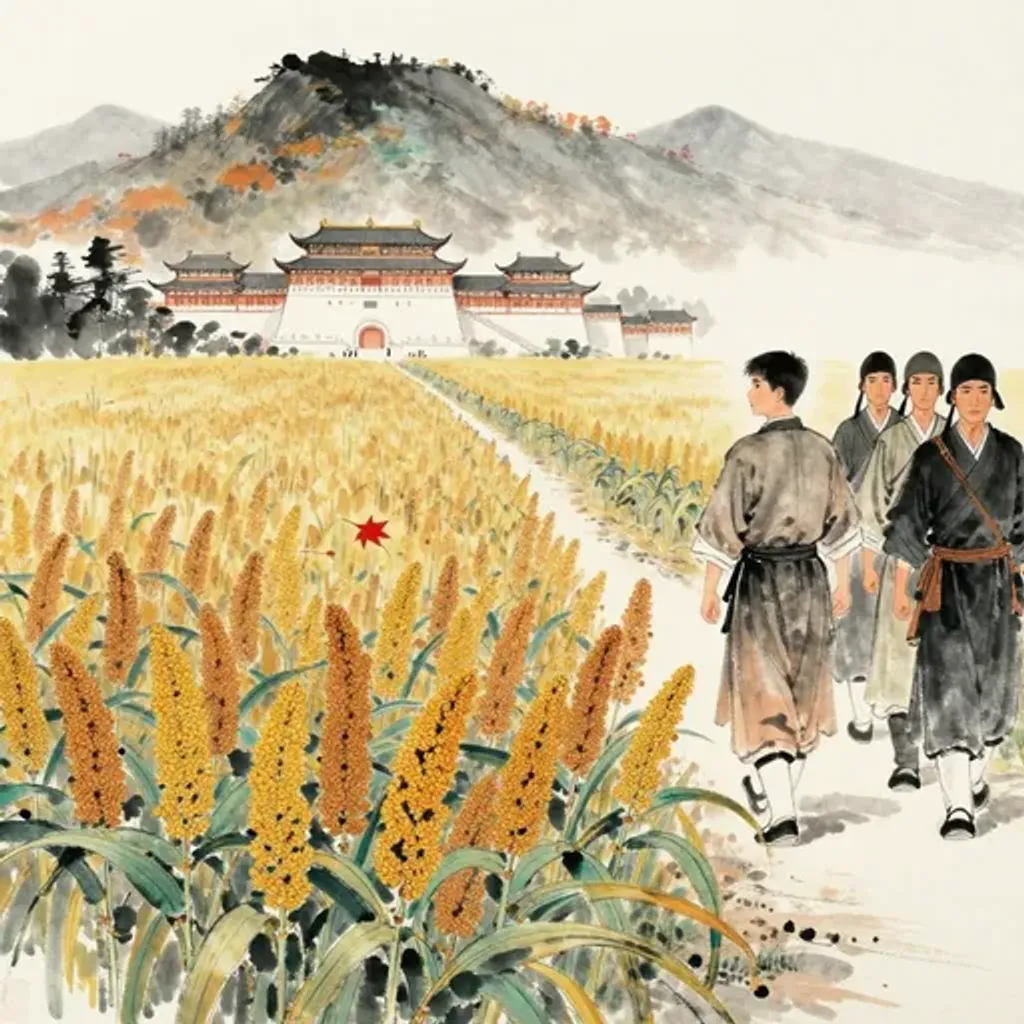
稼穡不偏,重過不傾。巧言賊忠,傷我申生。
The sowing and reaping are not partial; the heavy load does not tip. Clever words destroy loyalty; they wound our Shensheng.
— Jiao Yanshou, Yilin (Forest of Changes), 1st century BC
Commentary
Wood grows within the earth, and the harvest is honest and impartial — grain grows neither favoring one side nor tilting to another. Yet cunning words assassinate loyalty, and Prince Shensheng of Jin is destroyed. According to the Zuo Zhuan, Lady Li slandered the crown prince with poisoned meat, framing him for attempted patricide. Shensheng, too filial to defend himself against his father's consort, chose death rather than expose the plot. Wind over earth, the image of Contemplation, watches from above as the ruler observes his domain. From Pushing Upward to Contemplation, steady growth encounters the gaze that distorts reality. Slander transforms what rises honestly into something the observer fears and destroys.
升 → 噬嗑
Hexagram 46 → Hexagram 21: Biting Through
Changing lines: 1, 2, 3, 4, 6
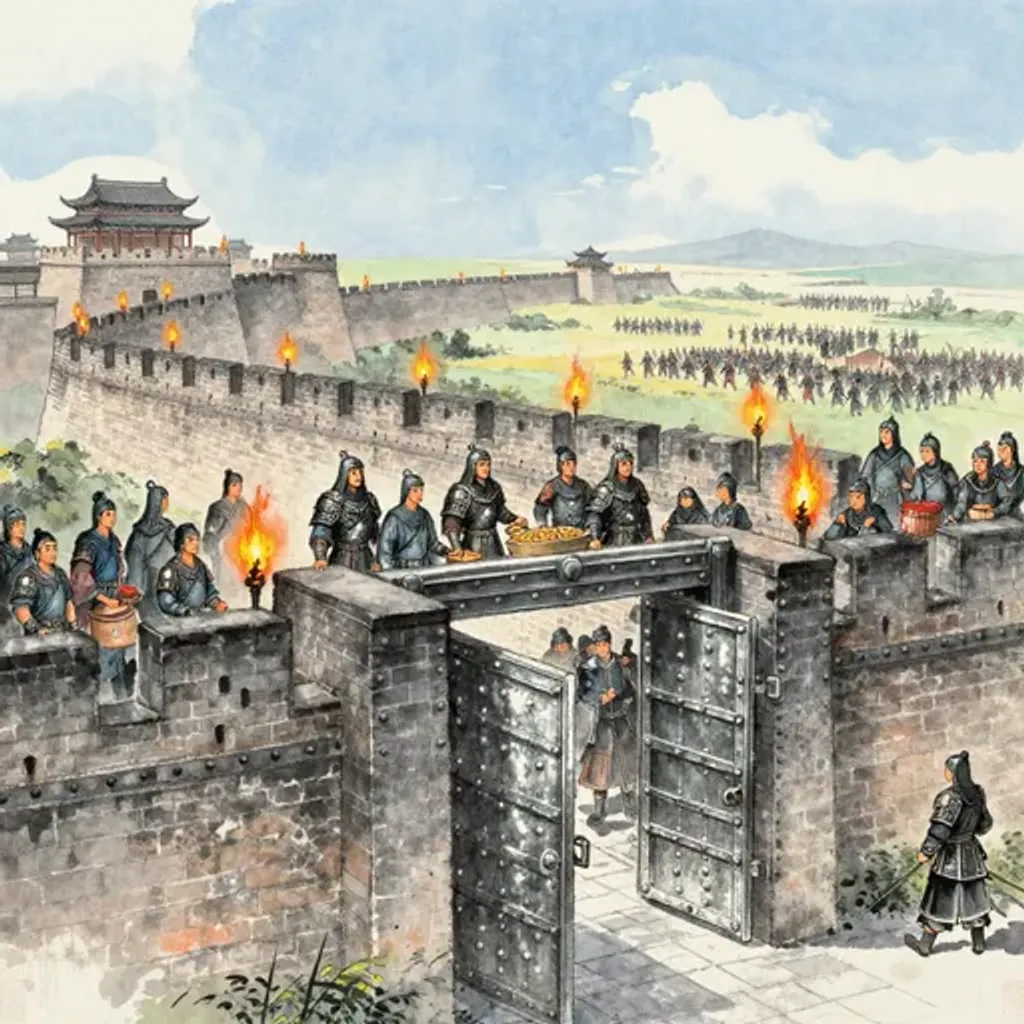
金城銕郭,上下同力。政平民親,寇不敢賊。
Walls of gold, ramparts of iron; above and below, united in strength. Governance is just, the people are loyal; bandits dare not plunder.
— Jiao Yanshou, Yilin (Forest of Changes), 1st century BC
Commentary
Wood grows within the earth, and walls of gold and ramparts of iron stand impervious to all assault. High and low unite their strength in common purpose; governance is fair, the people draw near with trust, and no bandit dares transgress these borders. The 'metal city and iron walls' is a classical metaphor for an impregnable stronghold built on the solidarity of ruler and ruled rather than mere military force. Fire over thunder, the image of Biting Through, enforces order by removing the obstruction that blocks the jaws. From Pushing Upward to Biting Through, the steady accumulation of moral authority creates a polity so cohesive that external threats dissolve before contact. Gradual growth yields an unbreakable governance.
升 → 賁
Hexagram 46 → Hexagram 22: Grace
Changing lines: 1, 2, 6
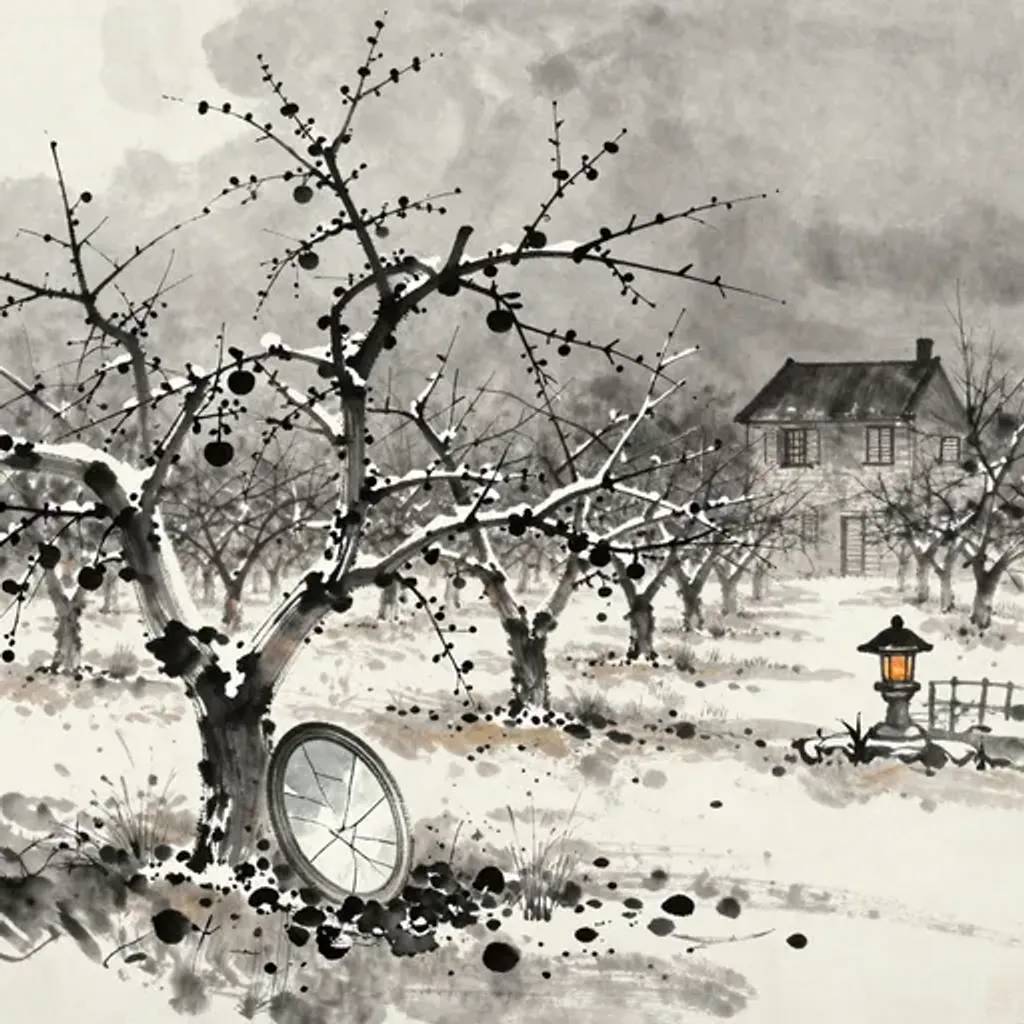
目鏡不明,冬災大傷。盜花失實,十年消亡。
The eye's mirror is not clear; winter's blight brings great harm. Blossoms stolen, fruit is lost; in ten years, all has perished.
— Jiao Yanshou, Yilin (Forest of Changes), 1st century BC
Commentary
Wood grows within the earth, but the mirror of vision has gone dark and winter's catastrophe strikes with devastating force. Blossoms are stolen, leaving no fruit, and within ten years all has perished and disappeared. The 'stolen flowers' that bear no fruit suggest promise plundered before it can mature — a harvest sabotaged at the moment of greatest vulnerability by some unseen thief. Mountain over fire, the image of Grace, adorns the surface while deeper structures fail beneath. From Pushing Upward to Grace, the ascending growth is betrayed by ornamental distraction. What looks beautiful on the surface is hollow within: the eye cannot see clearly, the season is hostile, and decorative appearance masks a decade of slow annihilation.
升 → 剝
Hexagram 46 → Hexagram 23: Splitting Apart
Changing lines: 2, 3, 6
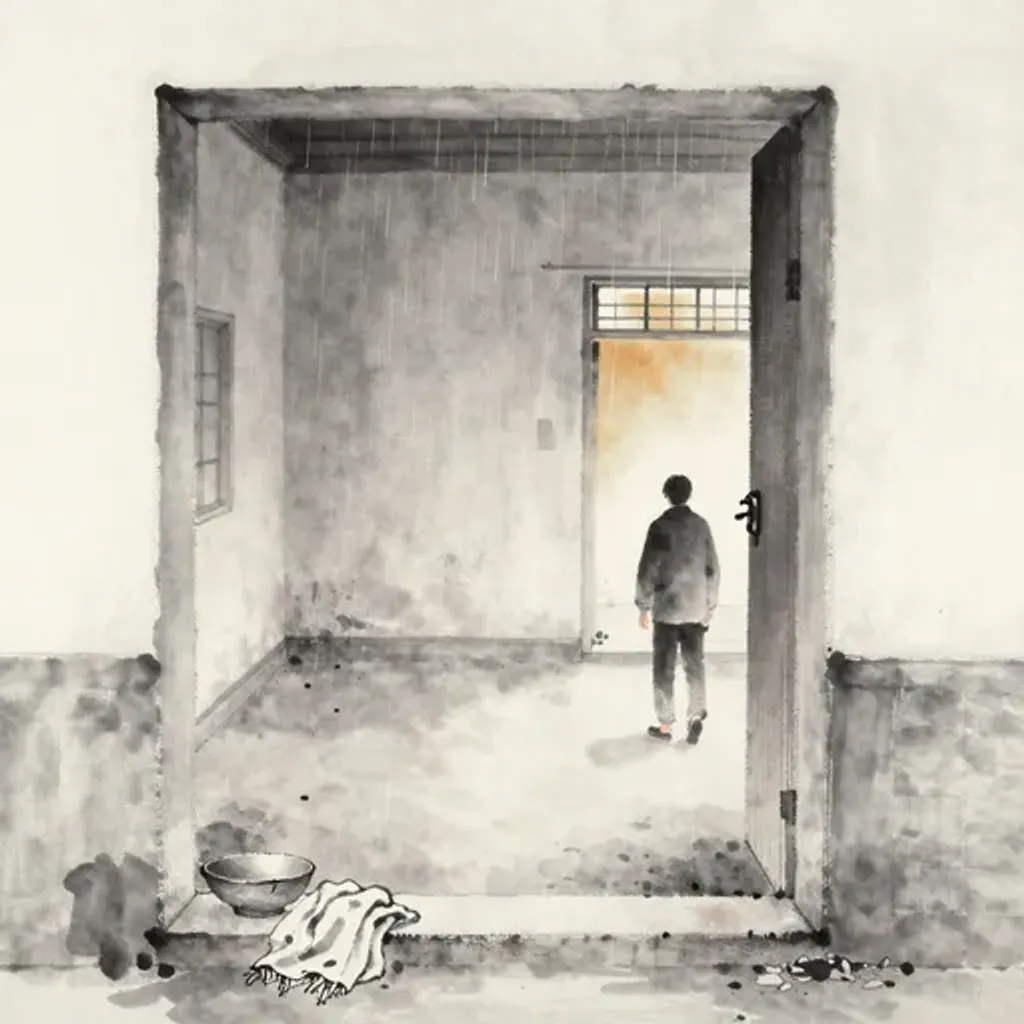
鰥寡孤獨,命祿苦薄。入室无妻,武子悲哀。
Widowed, orphaned, alone; fate and fortune bitterly thin. He enters his chamber but finds no wife; Master Wu grieves in sorrow.
— Jiao Yanshou, Yilin (Forest of Changes), 1st century BC
Commentary
Wood grows within the earth, yet this verse portrays absolute desolation. Widowed, orphaned, alone and bereft — fate is bitter and fortune impossibly meager. One enters the house but finds no wife; a figure called Wuzi weeps in inconsolable sorrow. Every bond that should sustain a human life — marriage, kinship, companionship — has been stripped away until nothing remains but bare solitude. Mountain resting upon earth, the image of Splitting Apart, shows the structure eroding layer by layer from below. From Pushing Upward to Splitting Apart, the ascending impulse meets a foundation that crumbles beneath it. The wood grows, but the earth it rises through is collapsing, and each layer that falls takes another support with it.
升 → 復
Hexagram 46 → Hexagram 24: Return
Changing lines: 1, 2, 3
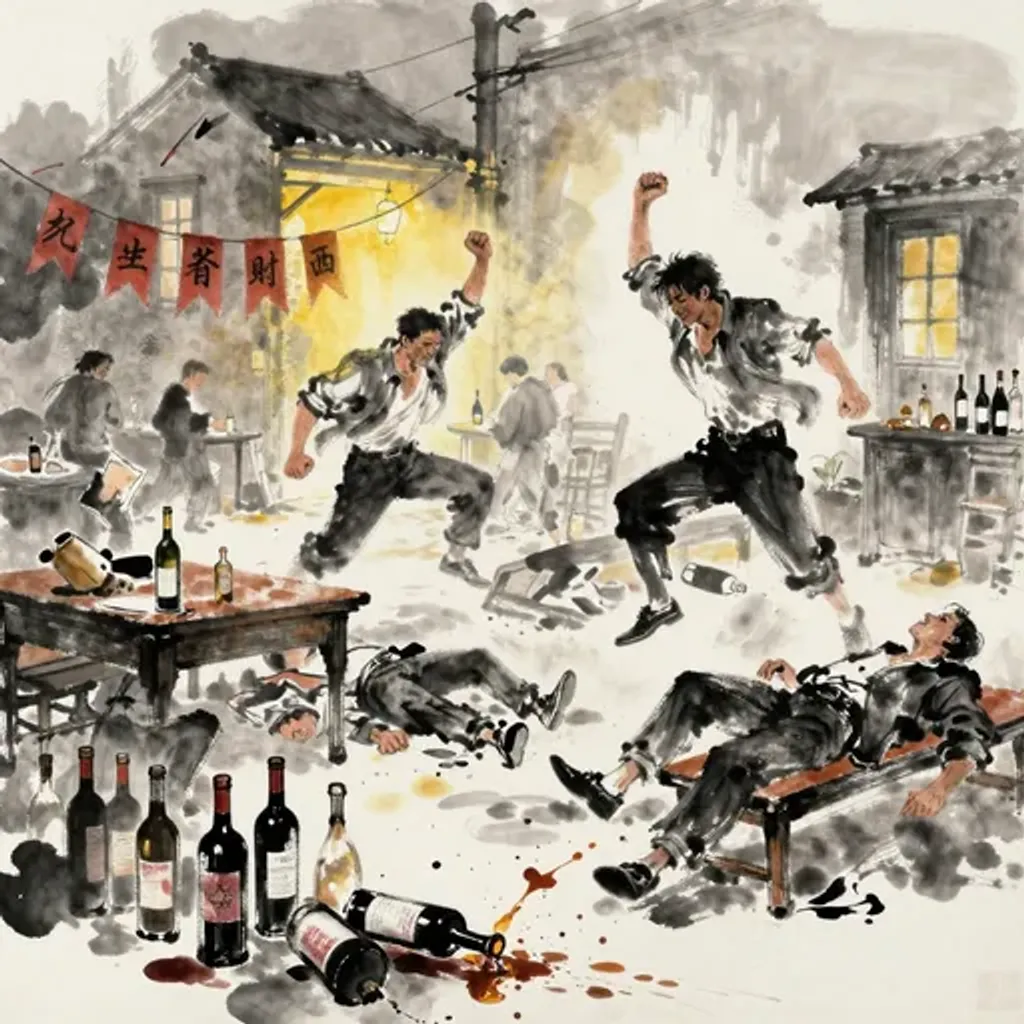
飲酒醉飽,跳起爭鬭。伯喪叔僵,東家治喪。
Drinking wine, drunk and sated; they leap up and brawl. The elder brother is lost, the younger brother falls; the eastern household prepares for mourning.
— Jiao Yanshou, Yilin (Forest of Changes), 1st century BC
Commentary
Wood grows within the earth, but wine transforms fellowship into carnage. Drinking to satiety, the guests leap up and brawl without restraint. The elder brother is slain, the younger collapses, and the family to the east prepares a funeral. A feast meant to celebrate becomes a bloodbath: intoxication releases the aggression that courtesy had barely restrained, and kinsmen turn on each other with lethal violence. Earth over thunder, the image of Return, shows one yang stirring beneath five yin — the first impulse of renewal after total darkness. From Pushing Upward to Return, the ascending energy reverses to its origin point. What rose through patient cultivation is demolished in a single drunken outburst, and the household must begin again from nothing.
升 → 无妄
Hexagram 46 → Hexagram 25: Innocence
Changing lines: 1, 2, 3, 4, 5, 6
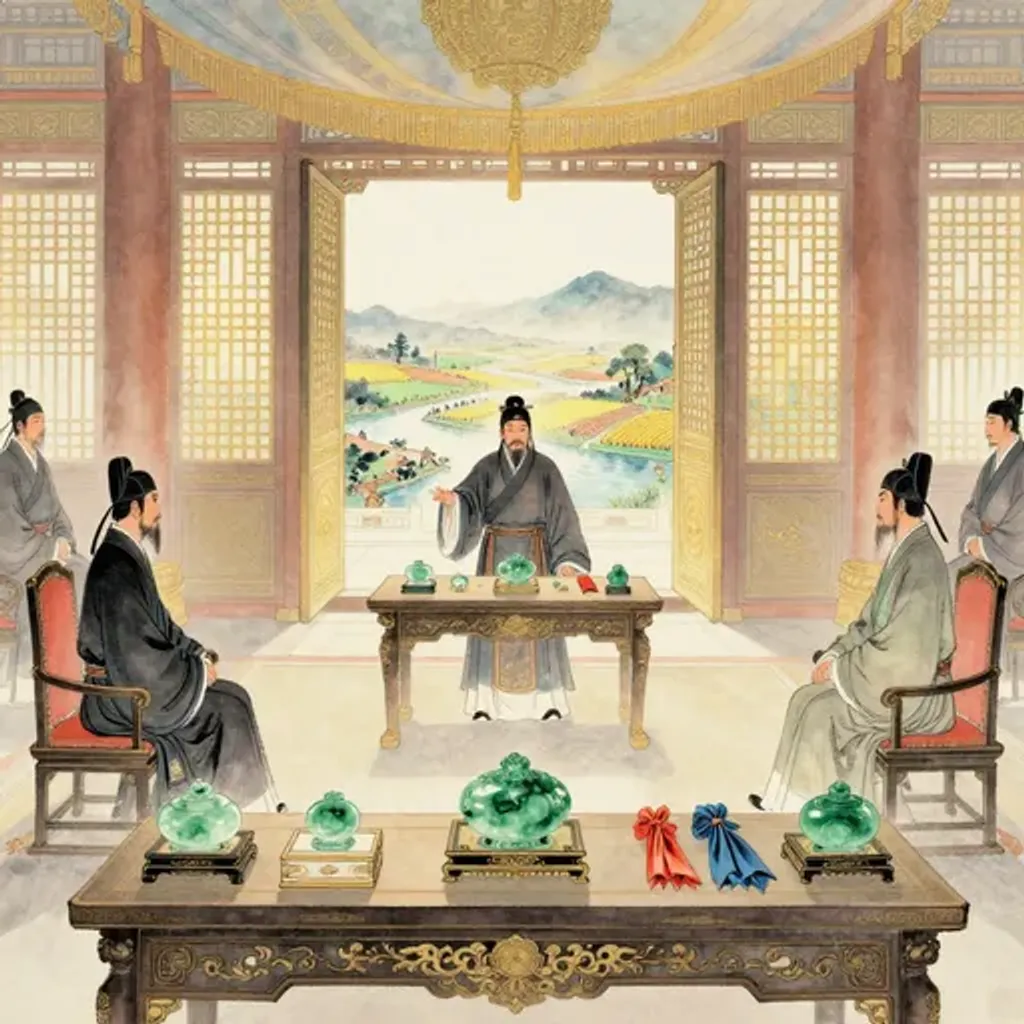
介紹微子,使君不殆。二國合歡,燕齊以安。
Introducing and presenting the Viscount of Wei, he keeps the lord from peril. The two states join in harmony; Yan and Qi find peace.
— Jiao Yanshou, Yilin (Forest of Changes), 1st century BC
Commentary
Wood grows within the earth, and a mediator introduces a figure reminiscent of Weizi — the Shang prince who preserved his integrity by departing the corrupt court of King Zhou — ensuring that the ruler averts catastrophe. Two states join in harmony; Yan and Qi find lasting peace through diplomatic reconciliation. The act of introduction and mediation prevents conflict between neighboring powers that might otherwise have destroyed both. Heaven over thunder, the image of Innocence, shows action aligned with heaven's will rather than human calculation. From Pushing Upward to Innocence, the gradual ascent achieves its breakthrough through honest mediation. No artifice is needed: a single trustworthy introduction connects what was estranged, and peace follows as naturally as wood rises through soil.
升 → 大畜
Hexagram 46 → Hexagram 26: Great Taming
Changing lines: 1, 6
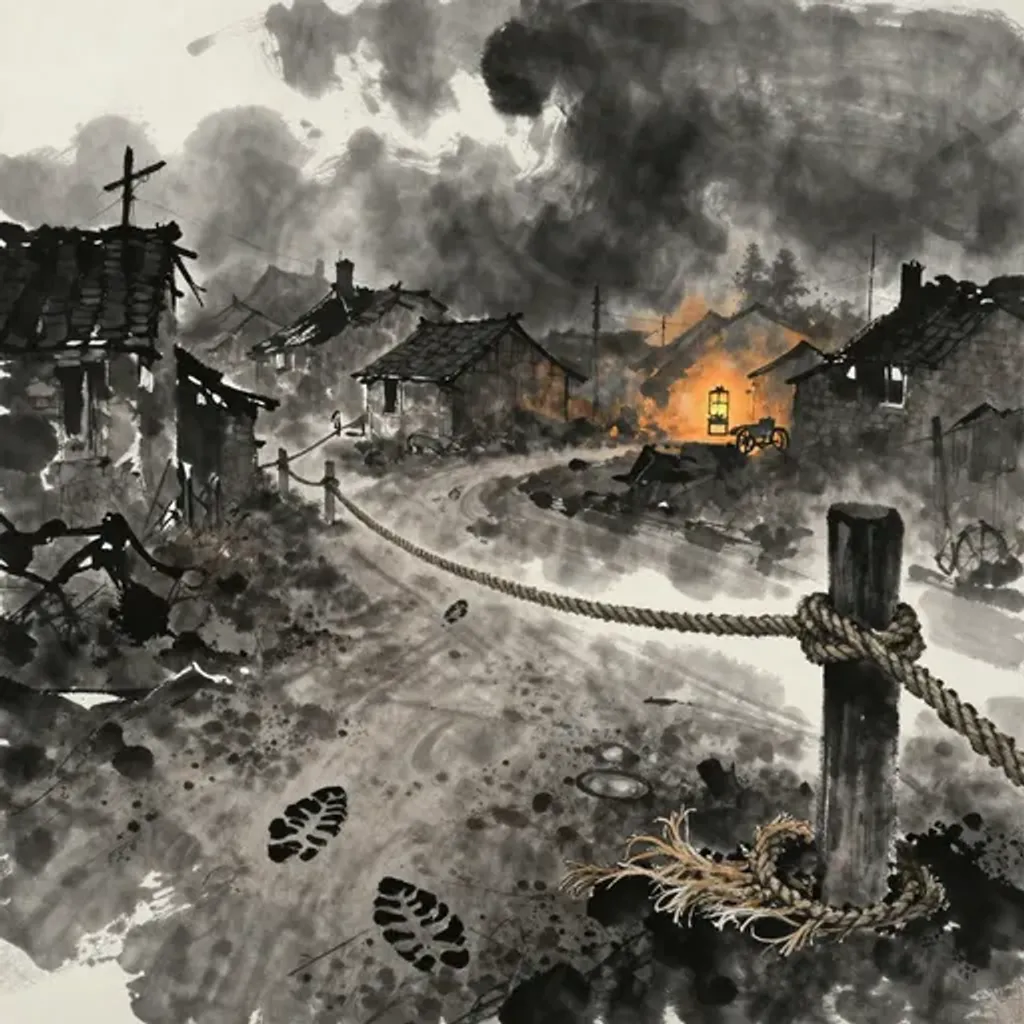
牽牛繫尾,詘折幾死。彫世无仁,不知所在。
Pulling the ox by the tail, it is bent and twisted nearly to death. In a declining age without mercy, one knows not where it leads.
— Jiao Yanshou, Yilin (Forest of Changes), 1st century BC
Commentary
Wood grows within the earth, but an ox is dragged by its tail, twisted and bent nearly to the point of death. The world is decadent and devoid of benevolence; no one knows where virtue still resides. The image is brutal: the animal's natural strength turned against it by those who seize its most vulnerable part and wrench it backward. Mountain over heaven, the image of Great Taming, should store creative power within the mountain for future use. From Pushing Upward to Great Taming, the ascending life force encounters forcible restraint. But this is taming perverted into cruelty: instead of nurturing strength until the right moment, the decadent age abuses and distorts what should be carefully cultivated.
升 → 頤
Hexagram 46 → Hexagram 27: Nourishment
Changing lines: 1, 2, 3, 6
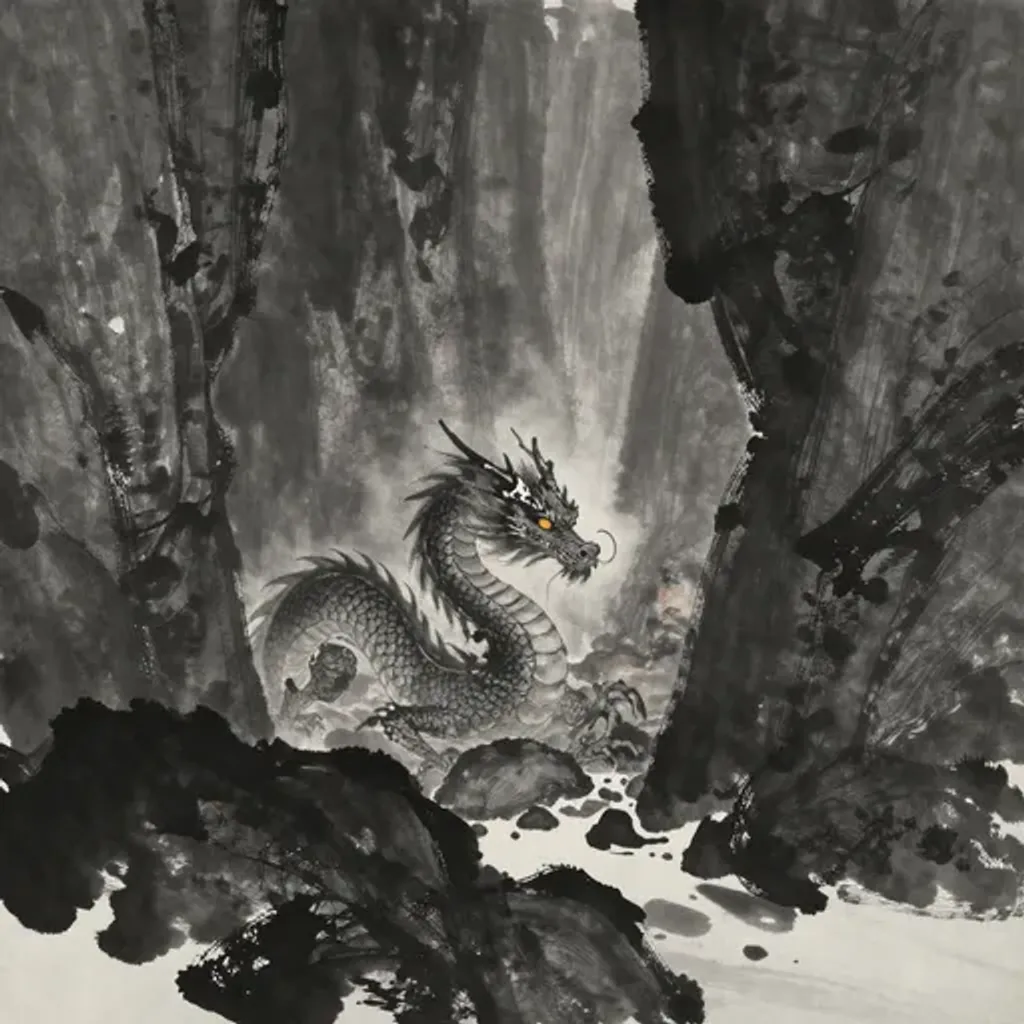
東龍冤獨,不知所觸。南北困窮,王子危急。
The eastern dragon, aggrieved and alone, knows not what it has struck against. North and south, pinched in distress; the prince is in dire peril.
— Jiao Yanshou, Yilin (Forest of Changes), 1st century BC
Commentary
Wood grows within the earth, but the eastern dragon wanders alone and aggrieved, not knowing what obstacle it has struck or where to turn. North and south are alike trapped in hardship; a royal prince faces mortal danger with no ally in sight. The dragon, supreme symbol of sovereign power, is isolated and disoriented — a ruler's heir cut off from every direction and surrounded by peril. Mountain over thunder, the image of Nourishment, counsels careful speech and temperate sustenance. From Pushing Upward to Nourishment, the ascending impulse must learn what truly sustains life. The wandering prince, starved of allies and bereft of direction, discovers that upward movement without proper nourishment leads only to exhaustion.
升 → 大過
Hexagram 46 → Hexagram 28: Great Exceeding
Changing lines: 4, 5
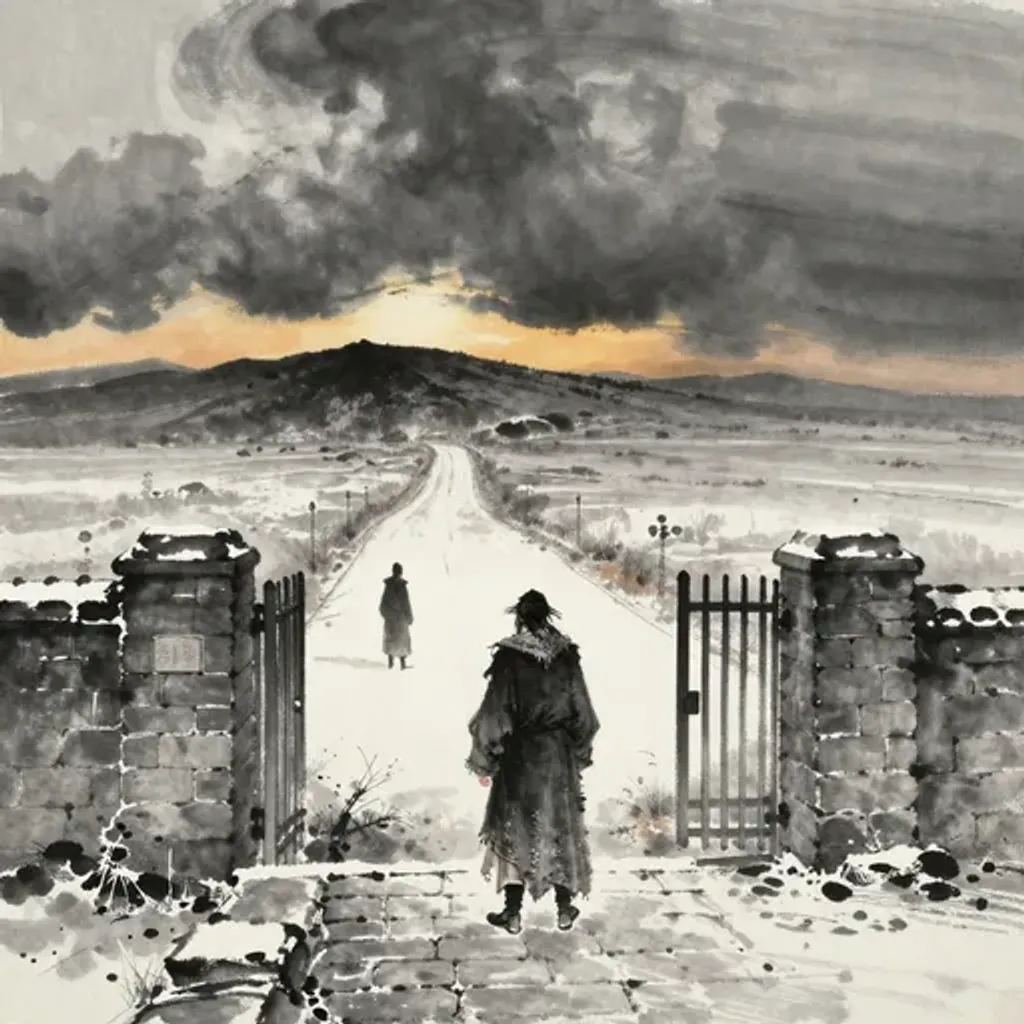
疾貧王孫,北陸无禪。祿命苦薄,兩事孤門。
The impoverished prince, ailing and destitute; on the northern frontier, no succession. Fate and fortune bitterly thin; both matters end at a solitary gate.
— Jiao Yanshou, Yilin (Forest of Changes), 1st century BC
Commentary
Wood grows within the earth, yet poverty and illness afflict a royal scion wandering in the northern wilds. There is no succession, no heir to carry forward the line; fate is bitter, fortune meager, and the household stands orphaned at its gate. The phrase 'northern wilds without succession' suggests a lineage broken at its most remote and hostile frontier, with no one left to perform the ancestral rites. Lake over wind, the image of Great Exceeding, shows the ridgepole sagging under impossible weight. From Pushing Upward to Great Exceeding, the ascending impulse pushes beyond what the structure can bear. A family pressed to its limit finds no heir, no continuation — the wood grows too high for its roots.
升 → 坎
Hexagram 46 → Hexagram 29: The Abysmal Water
Changing lines: 3, 5
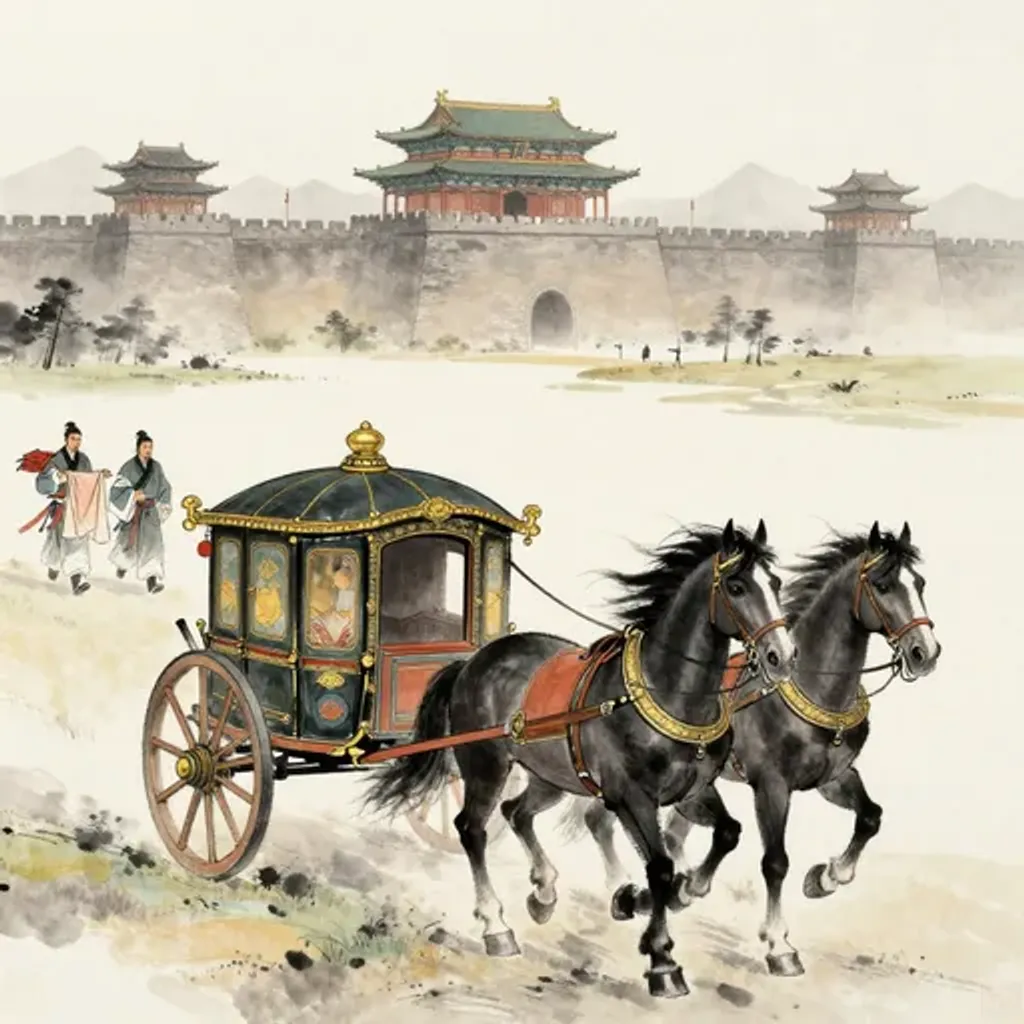
公孫駕驪,載遊東齊。延陵說產,遺季紵衣。
The duke's grandson drives black horses, traveling east to roam in Qi. Yanling admires Zichan and leaves behind a gift of ramie cloth.
— Jiao Yanshou, Yilin (Forest of Changes), 1st century BC
Commentary
Wood grows within the earth, and a nobleman harnesses a team of dark horses to travel east to Qi. Ji Zha of Yanling, the Wu prince famed for integrity and musical discernment, commends Zi Chan of Zheng and presents him with a gift of fine ramie cloth as a token of respect between statesmen. According to tradition, Ji Zha's diplomatic tour of the northern states produced celebrated evaluations of each kingdom's music and governance. His gift honored a fellow man of rare merit. Doubled water, the image of the Abysmal, represents constancy through repeated danger. From Pushing Upward to the Abysmal, steady ascent enters perilous waters, but maintains integrity through every trial — as Ji Zha maintained his principles across every border he crossed.
升 → 離
Hexagram 46 → Hexagram 30: The Clinging Fire
Changing lines: 1, 2, 4, 6
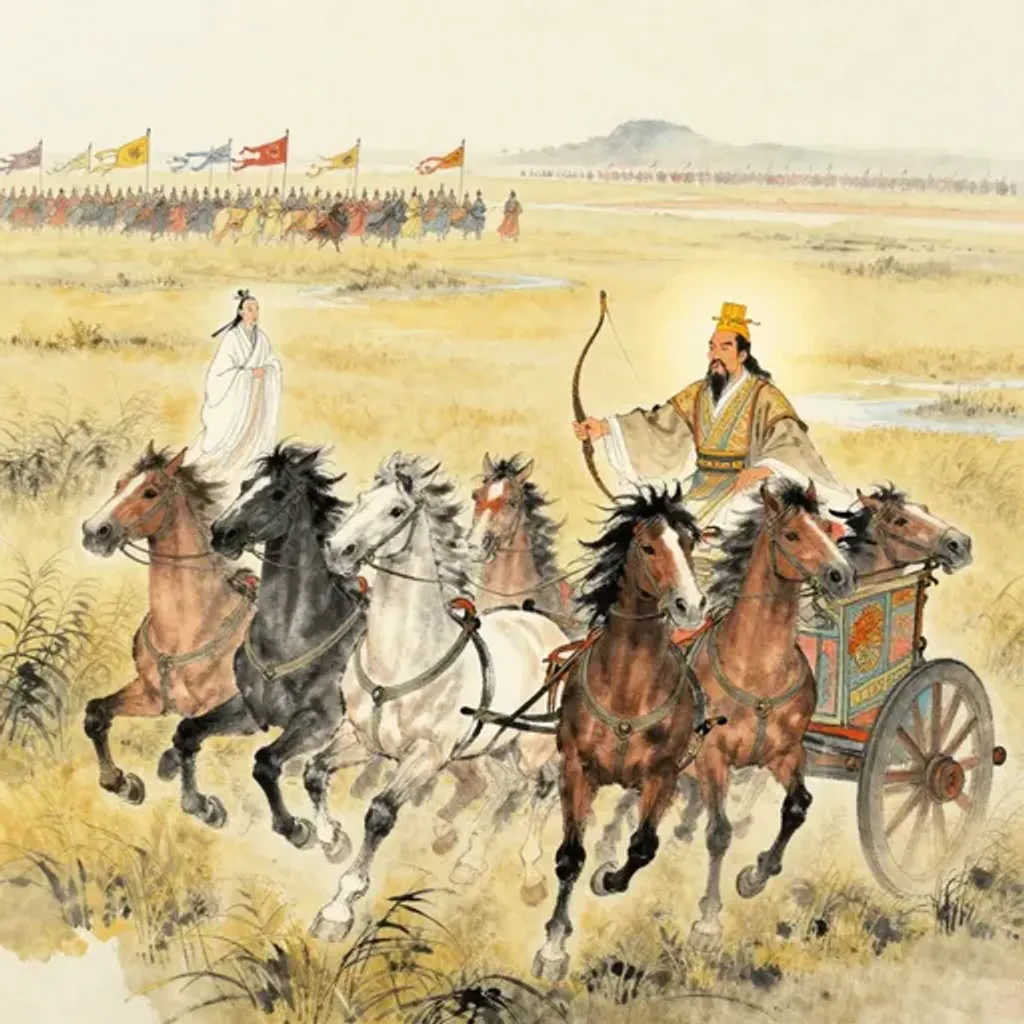
王良善御,伯樂知馬。文王東獵,獲喜聖事。開福佑賢,周發興起。
Wang Liang excels at driving; Bole knows horses. King Wen hunts in the east and finds a joyous, sagely affair. Blessings open and sustain the worthy; the Zhou rise under King Wu.
— Jiao Yanshou, Yilin (Forest of Changes), 1st century BC
Commentary
Wood grows within the earth, and great talent meets its perfect match at last. Wang Liang excels at chariotry; Bole knows horses at a single glance. King Wen hunts in the east and discovers a sage — the joyful event that opens a dynasty's founding. Blessings descend upon the worthy, and the Zhou line rises as King Wu completes his father's work. The verse assembles three classical figures of talent recognition: the supreme charioteer, the legendary horse judge, and the king who finds his minister by the Wei River. Doubled fire, the image of the Clinging, illuminates everything it touches. From Pushing Upward to the Clinging, organic growth ignites into radiant clarity. The wood that rose patiently now catches fire and shines across the four directions.
升 → 咸
Hexagram 46 → Hexagram 31: Influence
Changing lines: 2, 4, 5
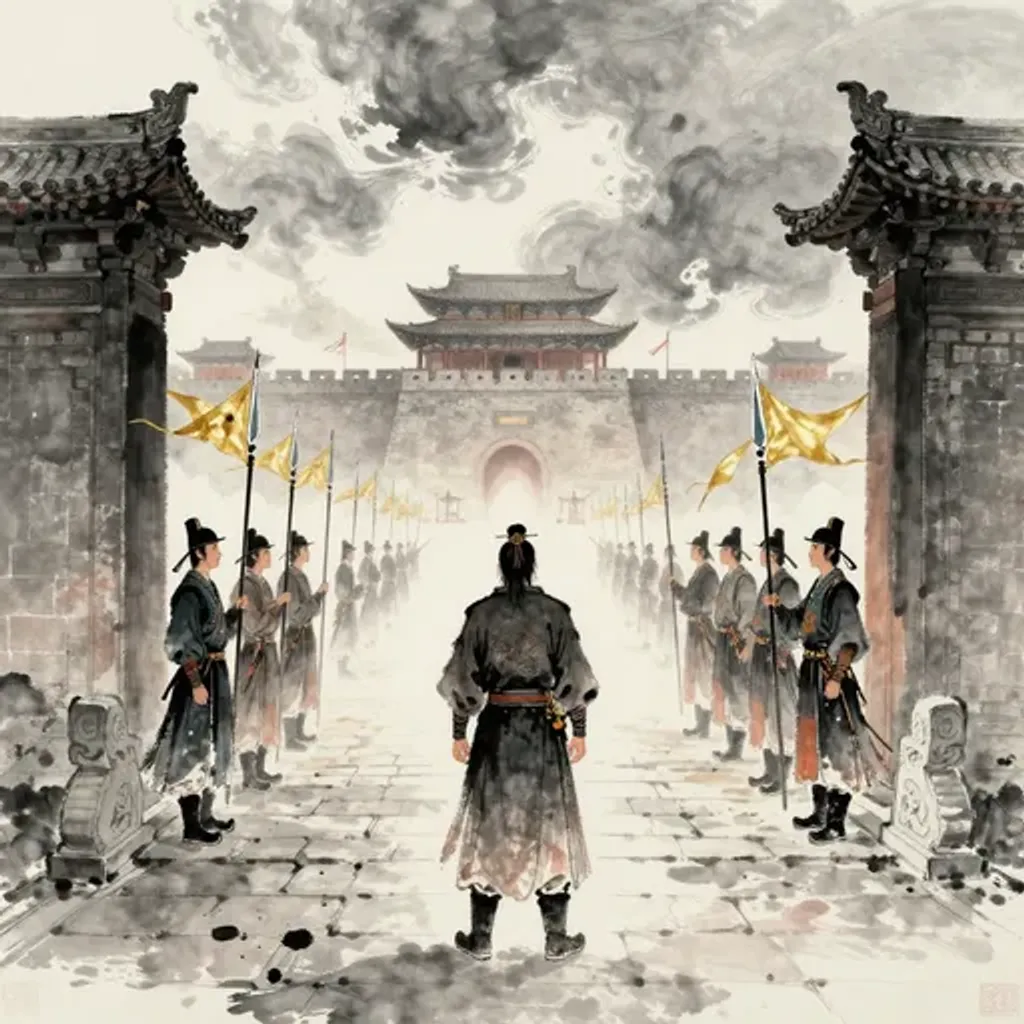
日月不居,重耳趍舍。遊燕入秦,晉國是霸。
Sun and moon tarry not; Chong'er hastens from lodging to lodging. Roaming through Yan, entering Qin; he becomes hegemon of Jin.
— Jiao Yanshou, Yilin (Forest of Changes), 1st century BC
Commentary
Wood grows within the earth as the sun and moon never pause in their courses, and Chong Er hastens from one lodging to another across the states. Wandering through Yan and entering Qin, he returns at last to make Jin the hegemon of the age. Prince Chong Er of Jin spent nineteen years in exile — traversing Di, Qi, Cao, Song, Chu, and finally Qin — before Duke Mu of Qin helped him regain his throne in 636 BC. Lake over mountain, the image of Influence, shows the yielding above stimulating the firm below. From Pushing Upward to Influence, years of patient wandering build the network of relationships that ultimately moves kingdoms. Chong Er's exile was not wasted time but the slow accumulation of alliances and resilience.
升 → 恆
Hexagram 46 → Hexagram 32: Duration
Changing lines: 4
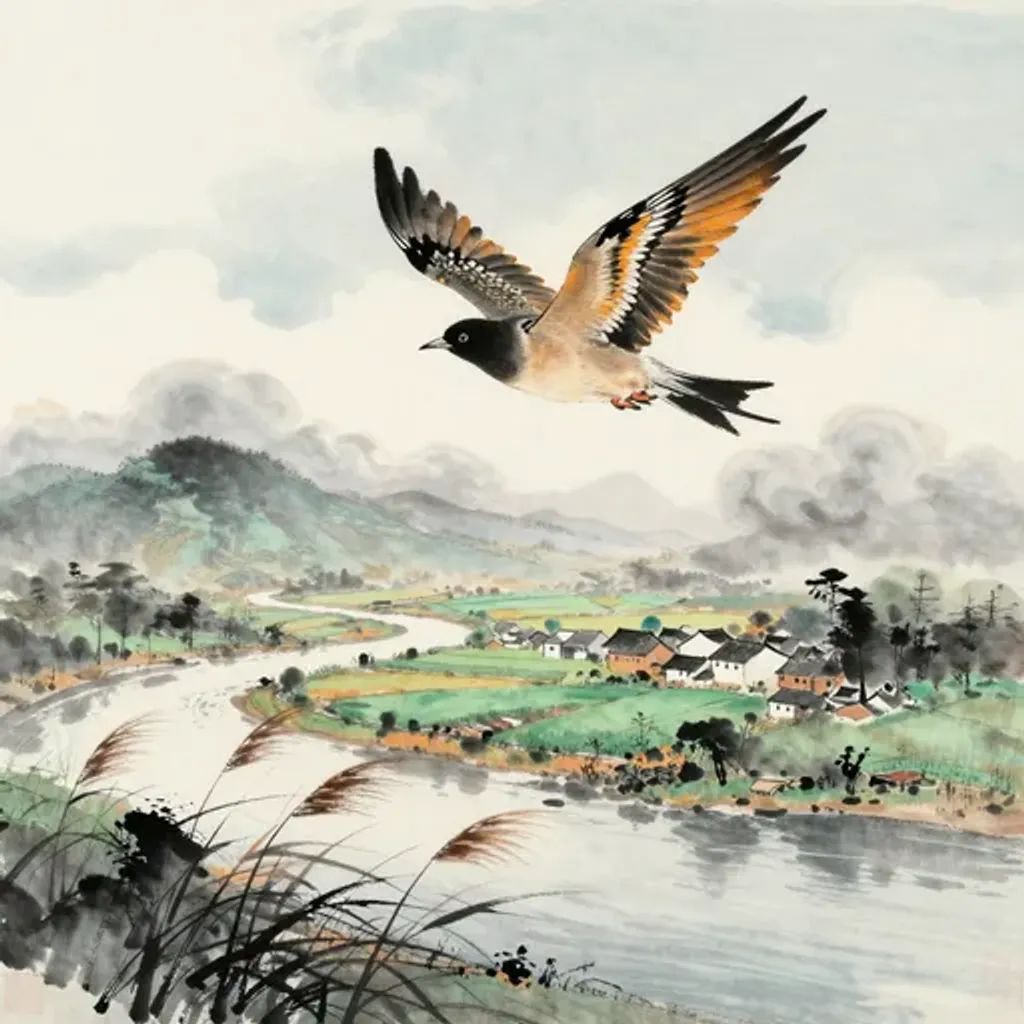
假文翰翼,隨風偕北。至虞夏國,興愛相得。年歲大樂,邑无盜賊。
Borrowing patterned wings, it follows the wind and flies northward. Reaching the realm of Yu and Xia, it finds love and mutual accord. The years bring great joy; the domain is free of thieves.
— Jiao Yanshou, Yilin (Forest of Changes), 1st century BC
Commentary
Wood grows within the earth, and borrowing the wings of literature and culture, one travels northward with the wind. Arriving at a realm reminiscent of the golden ages of Yu and Xia, love and trust are mutually attained between ruler and people. Years of great joy follow; no thieves trouble the towns and villages. The verse envisions cultural transmission carried on wind and wing — the spread of civilizing influence that transforms distant lands into peaceful, prosperous communities. Thunder over wind, the image of Duration, stands without changing direction. From Pushing Upward to Duration, the ascending impulse consolidates into enduring stability. What rose through cultivation now persists: a harmonious order that maintains itself through its own internal coherence.
升 → 遯
Hexagram 46 → Hexagram 33: Retreat
Changing lines: 2, 4, 5, 6
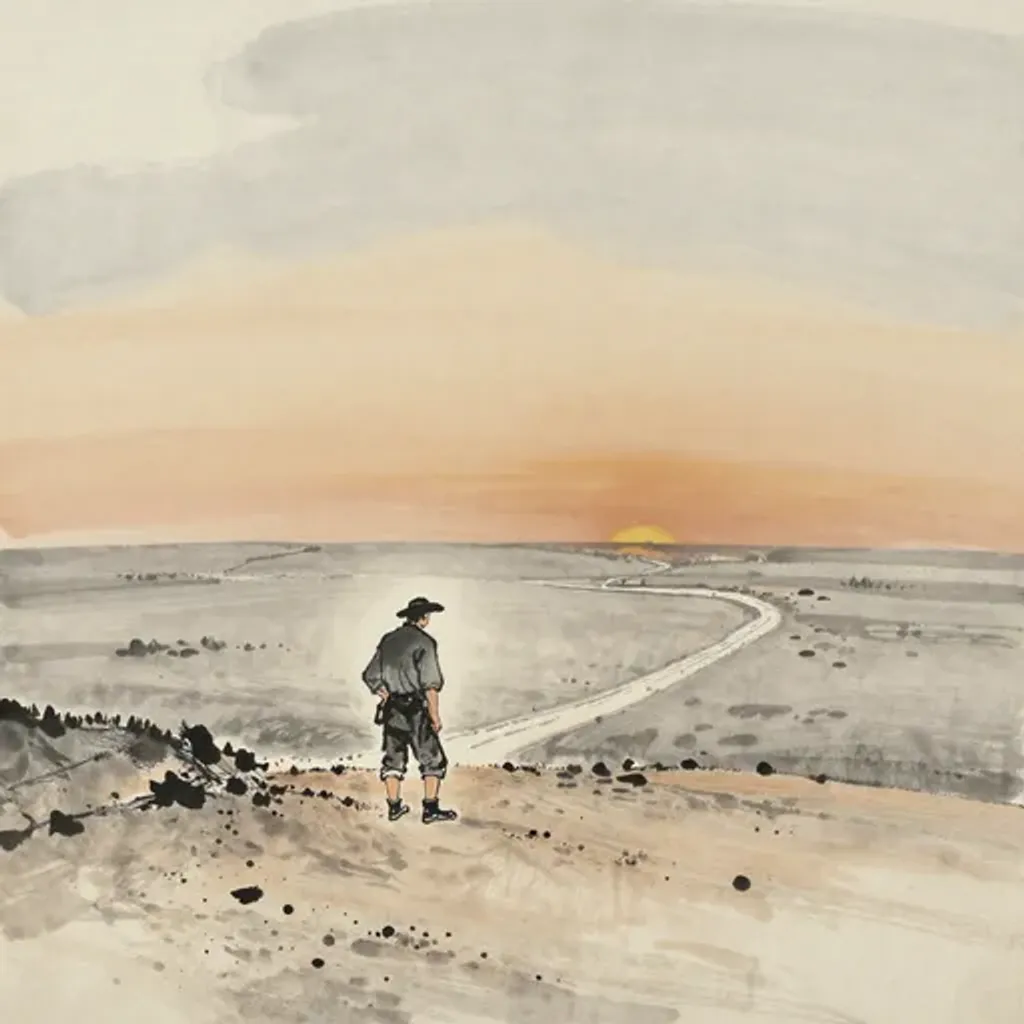
南行無遯,延頸後食。舉止失利,累為子孫。
Journeying south, no refuge to be found; craning the neck, eating only after delay. Every step loses advantage; the burden falls upon one's descendants.
— Jiao Yanshou, Yilin (Forest of Changes), 1st century BC
Commentary
Wood grows within the earth, but the southward journey offers no escape or sanctuary. Craning the neck, one eats only after others have finished; every move brings loss, and the accumulated failures burden the descendants who come after. Heaven over mountain, the image of Retreat, advises withdrawing from petty influences without malice. The verse shows a figure trapped in a downward spiral: heading south without shelter, always last in line for sustenance, accumulating debts that future generations must bear. From Pushing Upward to Retreat, the ascending impulse is reversed into withdrawal. Yet this retreat brings no strategic relief — only compounding failure that spreads forward in time, turning one generation's misfortune into a lasting inheritance.
升 → 大壯
Hexagram 46 → Hexagram 34: Great Power
Changing lines: 1, 4
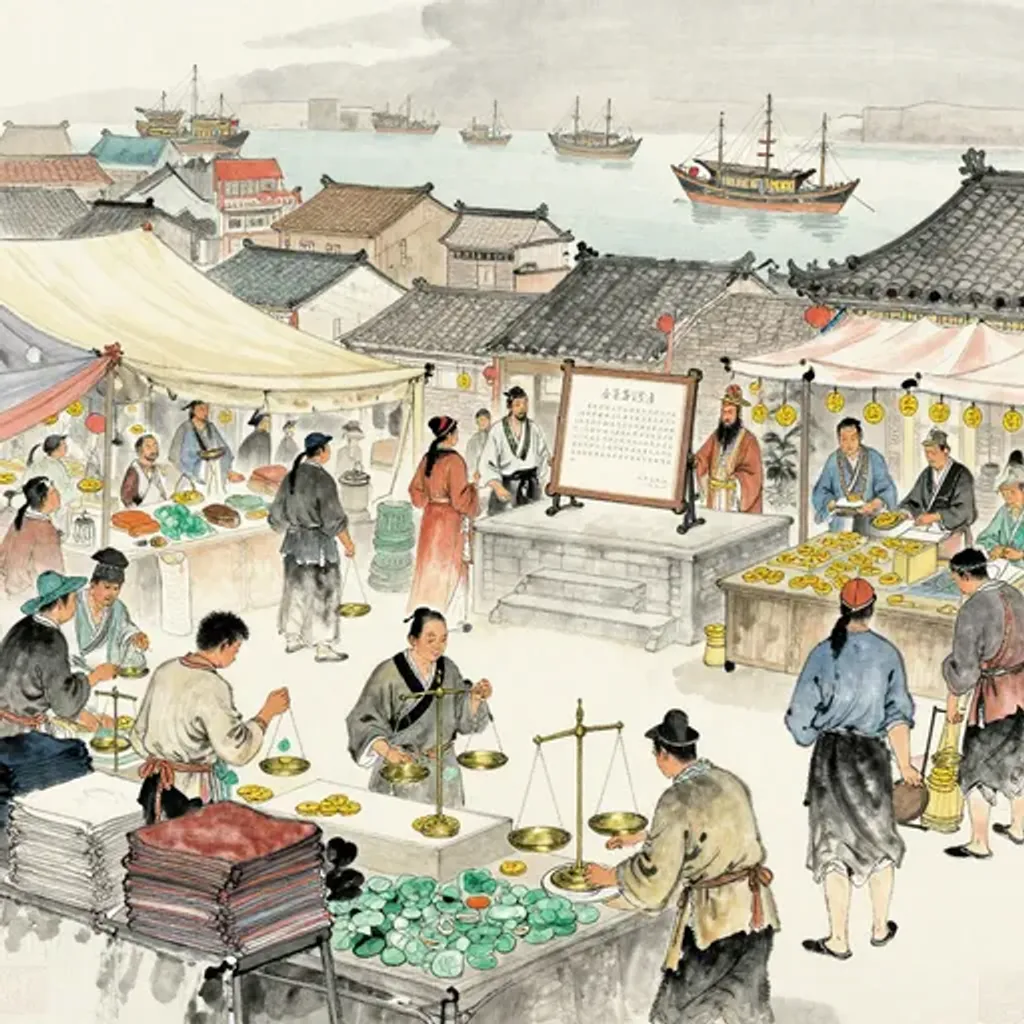
開元作喜,建造利事。平準貨寶,海內殷富。
A new era begins with rejoicing; construction and enterprise prosper. Standards set for goods and treasure; all within the seas grow rich and abundant.
— Jiao Yanshou, Yilin (Forest of Changes), 1st century BC
Commentary
Wood grows within the earth as a new era dawns with celebrations and the construction of auspicious works. Standards are set for trade, treasures are priced fairly, and the realm from coast to coast prospers in abundance. The phrase 'Kaiyuan' evokes the opening of a new epoch — the moment when accumulated potential breaks into manifest greatness and the whole economy flourishes. Thunder over heaven, the image of Great Power, represents overwhelming energy properly directed through righteous channels. From Pushing Upward to Great Power, the slow growth of wood through earth finally erupts into thunderous strength above heaven. Patient cultivation across generations yields an age of unmistakable vigor: markets flourish, wealth circulates freely, and the entire realm shares in abundance.
升 → 晉
Hexagram 46 → Hexagram 35: Progress
Changing lines: 2, 3, 4, 6
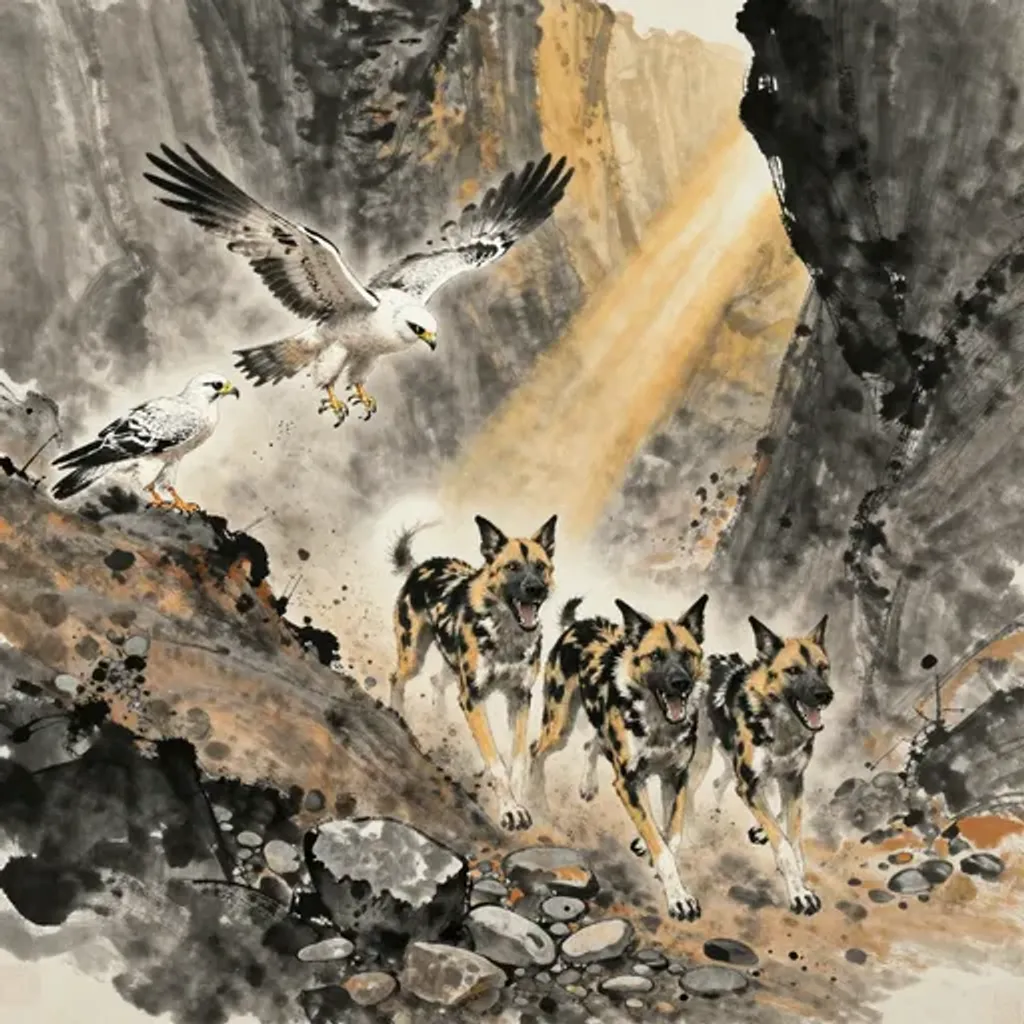
三犬俱走,鬭於谷口。白鷰不勝,死於坂下。
Three dogs run together, fighting at the gorge mouth. The white falcon cannot prevail; it dies at the foot of the slope.
— Jiao Yanshou, Yilin (Forest of Changes), 1st century BC
Commentary
Wood grows within the earth, but three dogs race together and clash savagely at the mouth of a valley. The white swallow cannot prevail against their ferocity and dies at the foot of the slope. The imagery is of brutal competition in a confined space: three rivals converging on a narrow pass where only the strongest survives and the gentle are crushed. The white swallow — swift, delicate, and fragile — is outmatched by the dogs' raw violence. Fire over earth, the image of Progress, shows brightness emerging from the ground into open view. From Pushing Upward to Progress, the ascent should bring advancement into light. Yet here the light exposes a killing ground: not all who push upward arrive at the top.
升 → 明夷
Hexagram 46 → Hexagram 36: Darkening of the Light
Changing lines: 1, 2
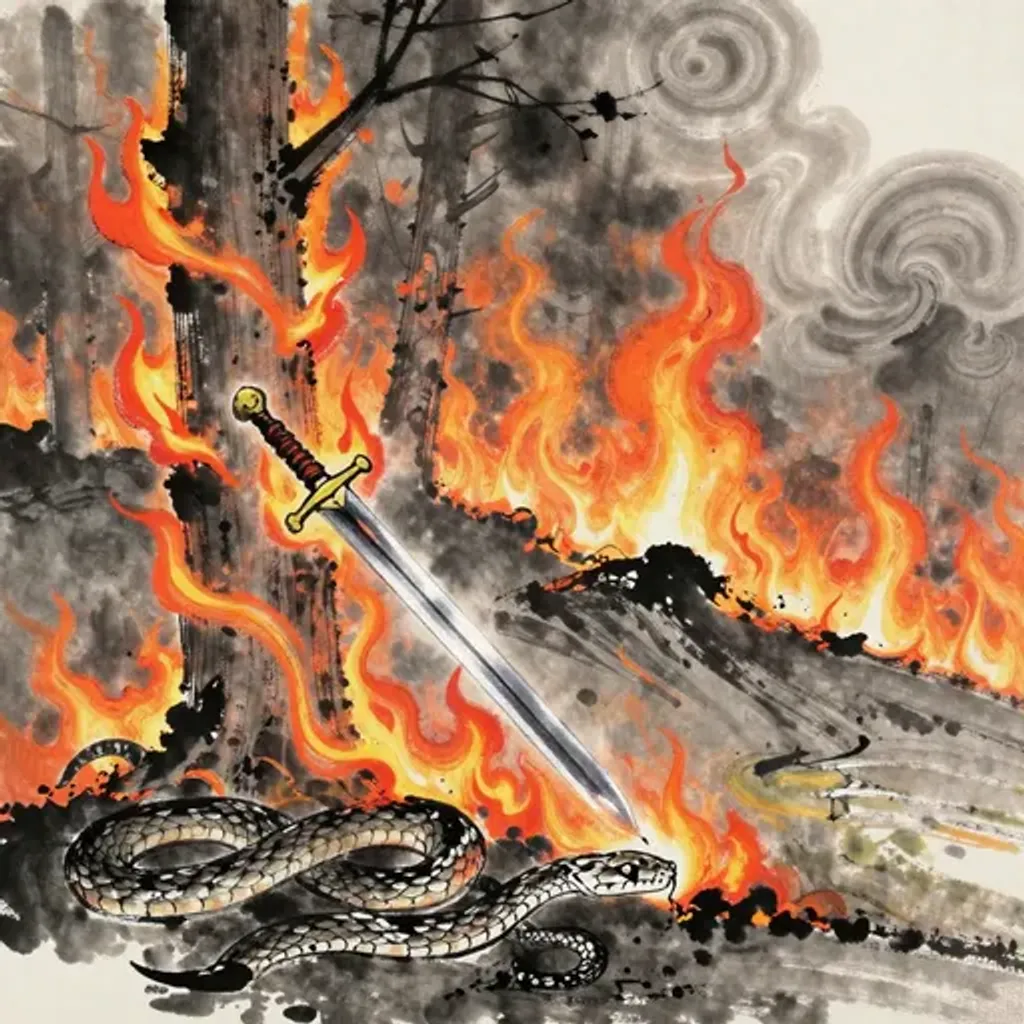
驕胡犬形,造惡作凶。无所能成,還自滅身。
Fierce flames burn the forest — the fire scorches itself. The venomous snake bites its own tail — the tail chars first. Forging a sword to harm all travelers — the blade snaps back and pierces his own waist.
— Jiao Yanshou, Yilin (Forest of Changes), 1st century BC
Commentary
Wood grows within the earth, but the original verse reveals a figure of barbarous, dog-like shape — arrogant, foreign, and violent — who creates evil and destruction yet achieves nothing of lasting worth, and ultimately destroys himself. The 'proud Hu of canine form' conjures a northern raider whose cruelty is directed outward but whose ruin comes from within. Earth over fire, the image of Darkening of the Light, buries brightness underground where it cannot be seen. From Pushing Upward to Darkening of the Light, the ascending impulse is driven beneath the surface and extinguished. The tyrant who rose through brute force finds his own savagery consumes him — destruction carried far enough inevitably devours its own source.
升 → 家人
Hexagram 46 → Hexagram 37: The Family
Changing lines: 1, 2, 5, 6
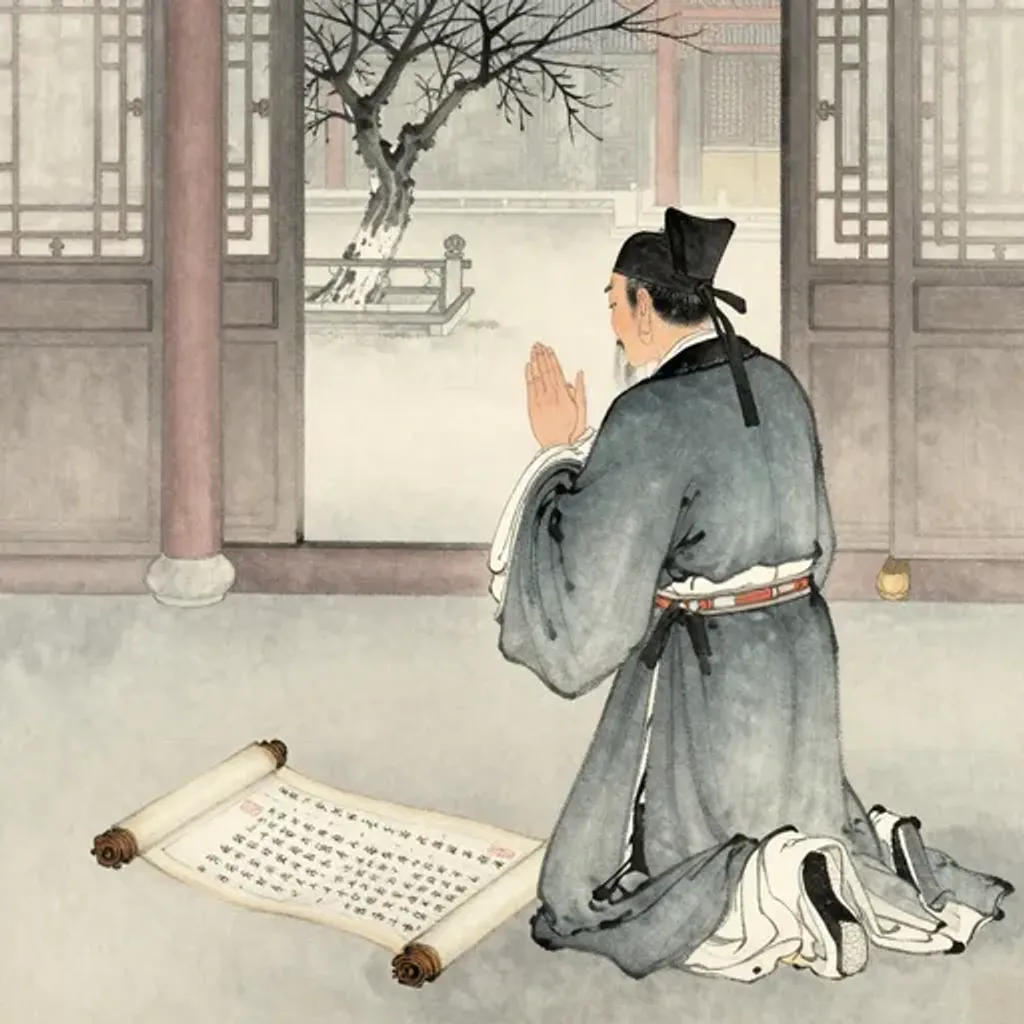
拜跪贊辭,无益於尤。大夫頑嚚,使我生憂。
Kneeling and bowing with words of praise, yet it avails nothing against reproach. The minister is obstinate and deaf; he fills my heart with sorrow.
— Jiao Yanshou, Yilin (Forest of Changes), 1st century BC
Commentary
Wood grows within the earth, but bowing, kneeling, and offering polished words of praise bring no benefit whatsoever against real misfortune. The minister is obstinate and deaf to reason, causing the ruler unending worry and grief. Wind emerging from fire, the image of the Family, prescribes that words carry substance and actions maintain constancy — the household runs on genuine communication. Yet here the household is corrupted by a stubborn official whose foolishness mocks the very rituals meant to sustain domestic order. From Pushing Upward to the Family, organic growth should mature into a well-ordered home. Instead, empty ceremony meets unyielding stupidity: the ascending wood enters a house where warmth has been replaced by the smoke of futile ritual.
升 → 睽
Hexagram 46 → Hexagram 38: Opposition
Changing lines: 1, 3, 4, 6
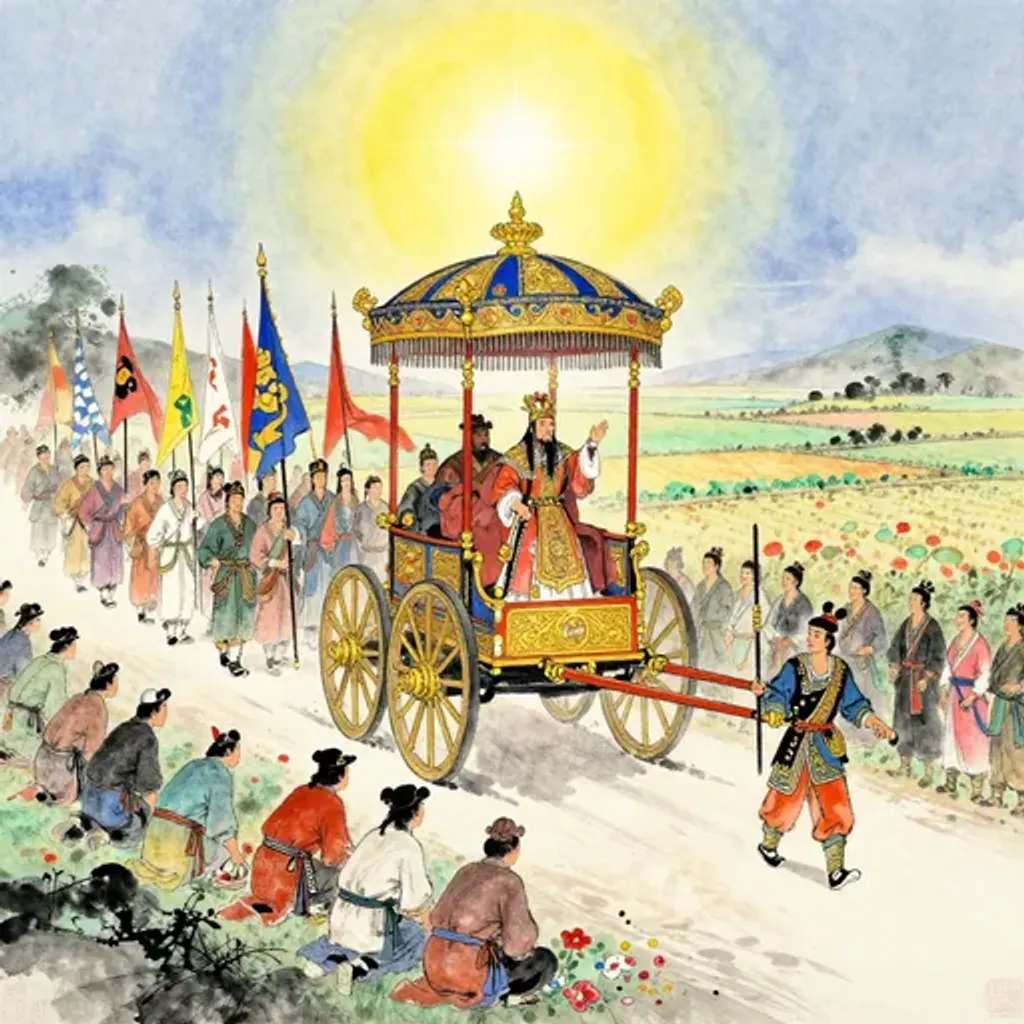
辰以降婁,王駕巡狩。廣佑施惠,萬國咸喜。
In the season of Jianglou, the king's chariot tours the realm. Broadly bestowing aid and grace, the ten thousand states all rejoice.
— Jiao Yanshou, Yilin (Forest of Changes), 1st century BC
Commentary
Wood grows within the earth as the celestial lodges align at the Descending Lou constellation, and the king sets forth on a grand royal inspection tour of his realm. Grace is dispensed broadly and kindness extended to every quarter; the ten thousand states rejoice in unison. The royal progress — the ancient institution of the Son of Heaven touring his domain to observe conditions and bestow favor — represents sovereign virtue made visible across the land. Fire over lake, the image of Opposition, holds two unlike forces in productive tension. From Pushing Upward to Opposition, the ascending impulse encounters difference and transforms it into complementarity. The touring king unifies opposing regions not by erasing difference but by bestowing grace upon each nature.
升 → 蹇
Hexagram 46 → Hexagram 39: Obstruction
Changing lines: 2, 5
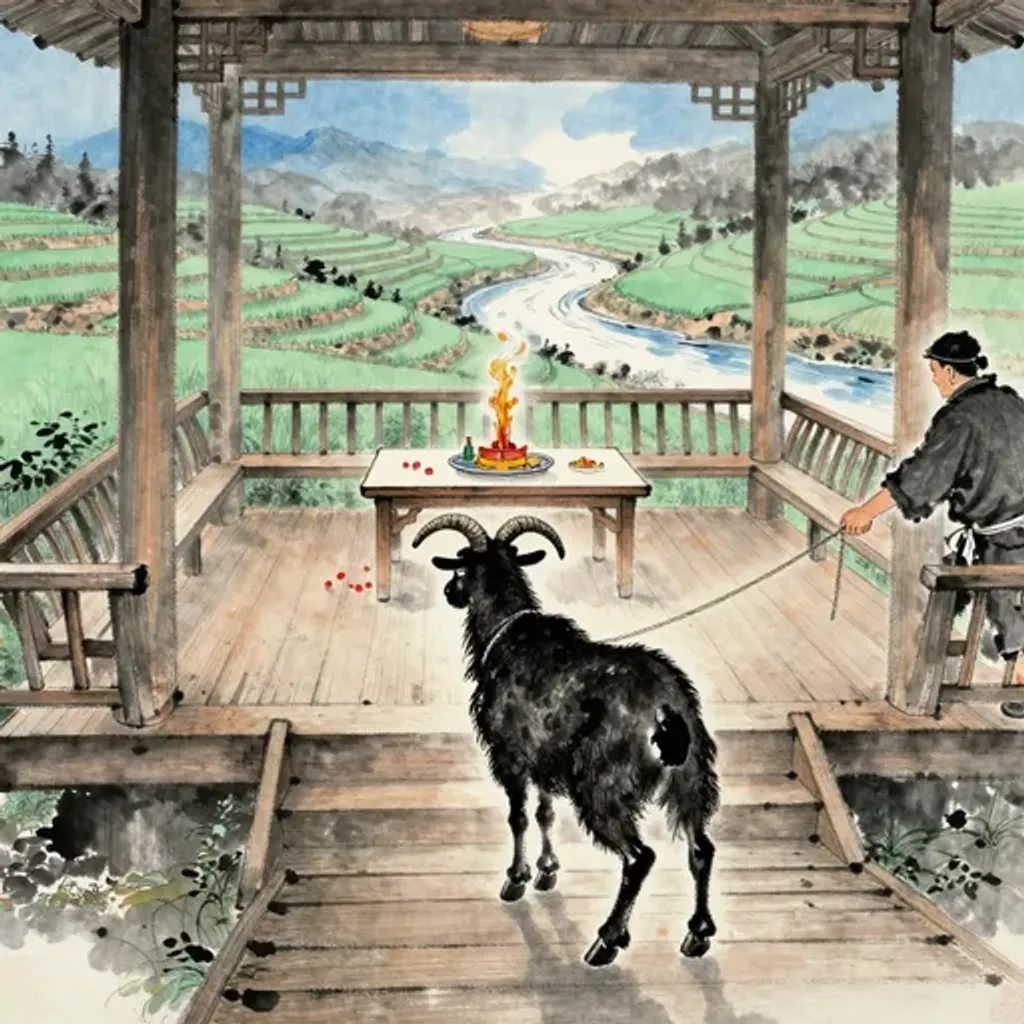
牽羭上樓,與福俱居。勞躬治國,安樂无憂。
Leading the ram up to the tower, dwelling together with blessings. Laboring in person to govern the state, at peace and joyful, without worry.
— Jiao Yanshou, Yilin (Forest of Changes), 1st century BC
Commentary
Wood grows within the earth, and a ram is led upstairs to dwell alongside blessings and good fortune. Through diligent personal effort the state is governed well, and peace reigns without worry or disturbance. The ram ascending to an upper floor echoes pastoral imagery of abundance brought to a high place — offerings carried upward to where they yield the greatest blessing for the community. Water over mountain, the image of Obstruction, calls for self-examination and virtue cultivation when the forward path is blocked. From Pushing Upward to Obstruction, the ascending impulse meets resistance but responds not with retreat but with redoubled effort. The ruler who labors personally at governance transforms the obstacle itself into the foundation for lasting tranquility.
升 → 解
Hexagram 46 → Hexagram 40: Deliverance
Changing lines: 3, 4
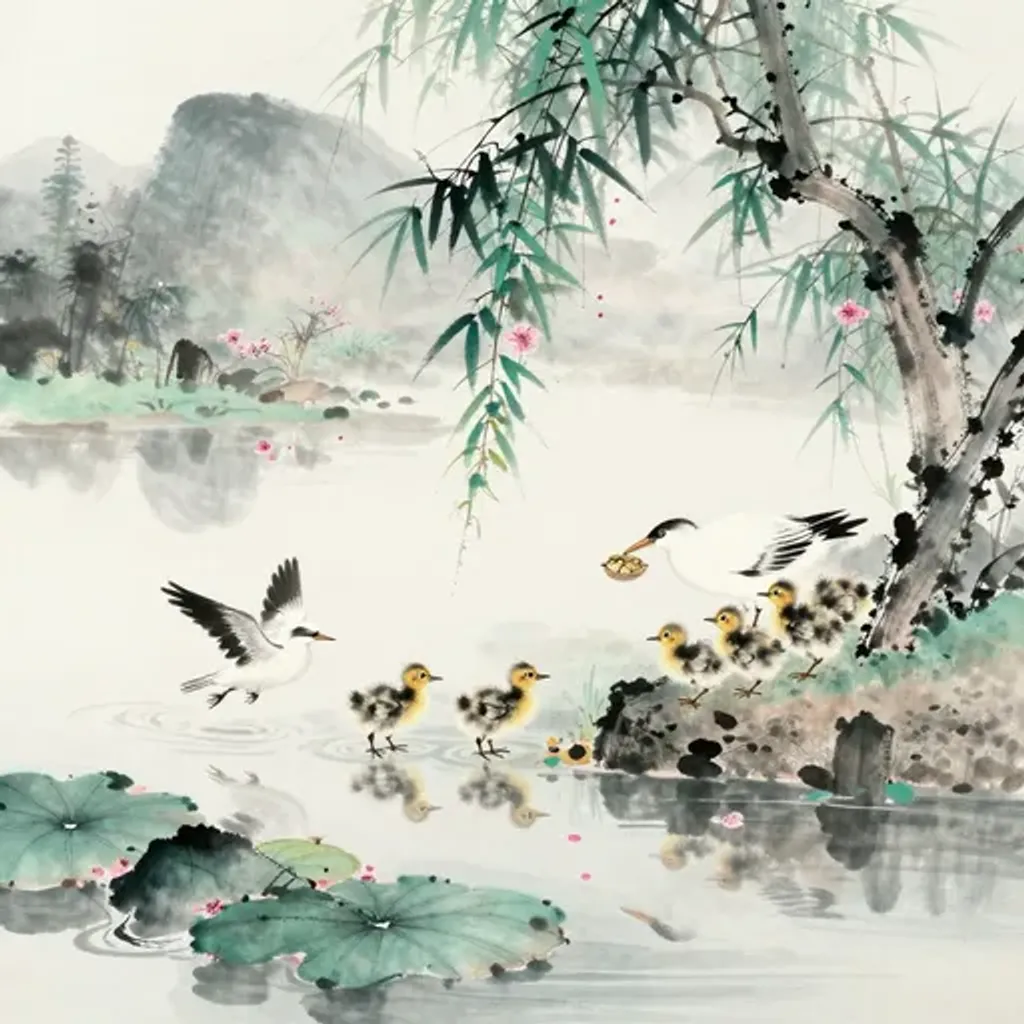
白鳥衘餌,鳴呼其子。挾施張翅,來從其母。
The white bird carries food in its beak, calling out to its young. Spreading wings and stretching pinions, they come to follow their mother.
— Jiao Yanshou, Yilin (Forest of Changes), 1st century BC
Commentary
Wood grows within the earth, and a white bird carries food in its beak, calling to its young with tender cries. Spreading its wings wide, it glides homeward to rejoin the mother bird. The scene is pure domestic tenderness: a parent foraging in distant fields and returning with nourishment, the family reuniting in a moment of instinctive natural grace. Thunder over water, the image of Deliverance, releases accumulated tension like a spring thunderstorm clearing stale, oppressive air. From Pushing Upward to Deliverance, the slow accumulation of effort gives way to the ease of a burden lifted. The white bird's homecoming distills this transformation: what was patiently gathered is freely given, and the family's anxiety dissolves in the simple act of coming home.
升 → 損
Hexagram 46 → Hexagram 41: Decrease
Changing lines: 1, 3, 6
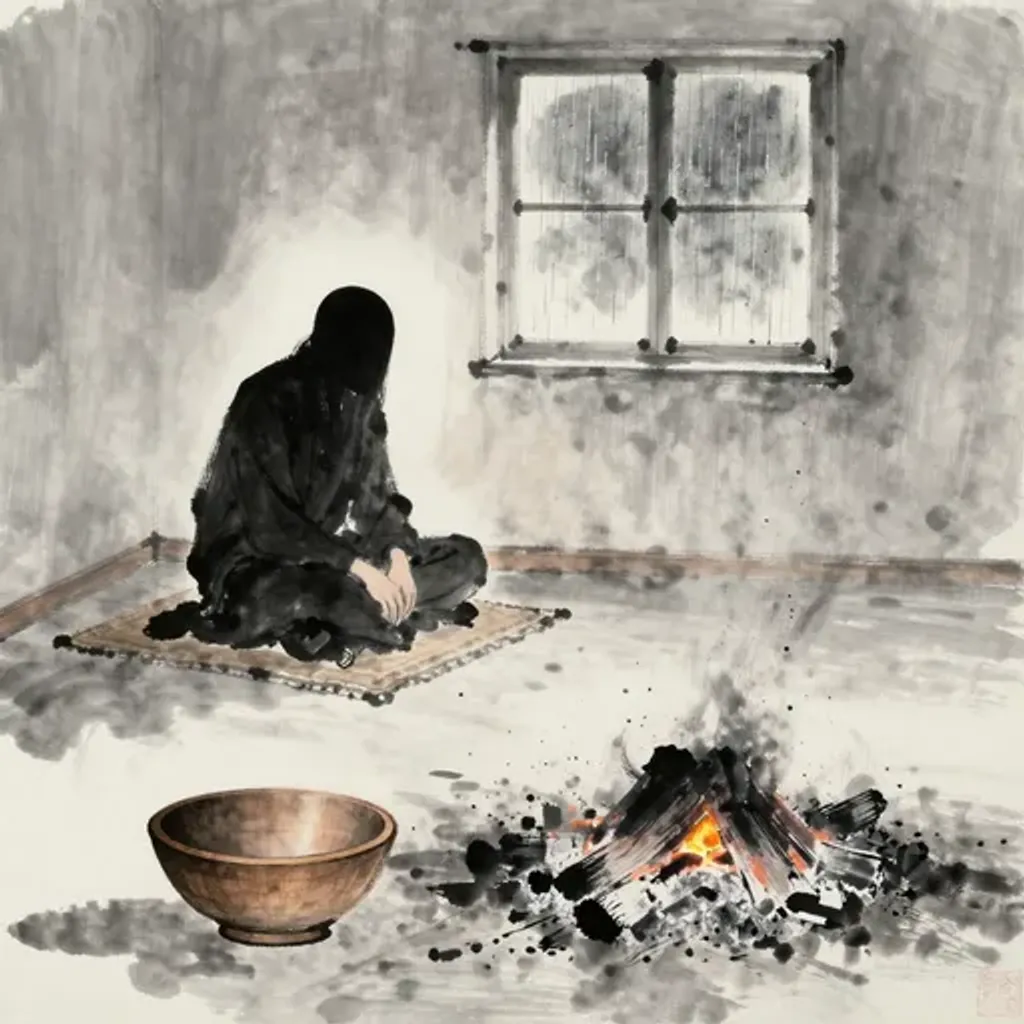
盲瞽獨宿,莫與共食。老窮於人,病在心腹。
The blind man lodges alone; no one shares his meal. Aged and destitute among men, his illness lies deep within.
— Jiao Yanshou, Yilin (Forest of Changes), 1st century BC
Commentary
Wood grows within the earth, but the blind and sightless sleep alone with no one to share even a simple meal. Old, impoverished, and rejected by everyone, illness gnaws at the very heart and belly. Every human connection has been severed: no sight to find others, no companion to ease the darkness, no sustenance to maintain the body. Mountain over lake, the image of Decrease, reduces the lower to benefit the upper — but here the reduction has no beneficiary at all. From Pushing Upward to Decrease, the ascending impulse is stripped of everything that once supported it. What grew through slow accumulation is now diminished to bare, painful existence. The verse inverts the promise of patient growth: sometimes what rises is ground back down to nothing.
升 → 益
Hexagram 46 → Hexagram 42: Increase
Changing lines: 1, 2, 3, 5, 6
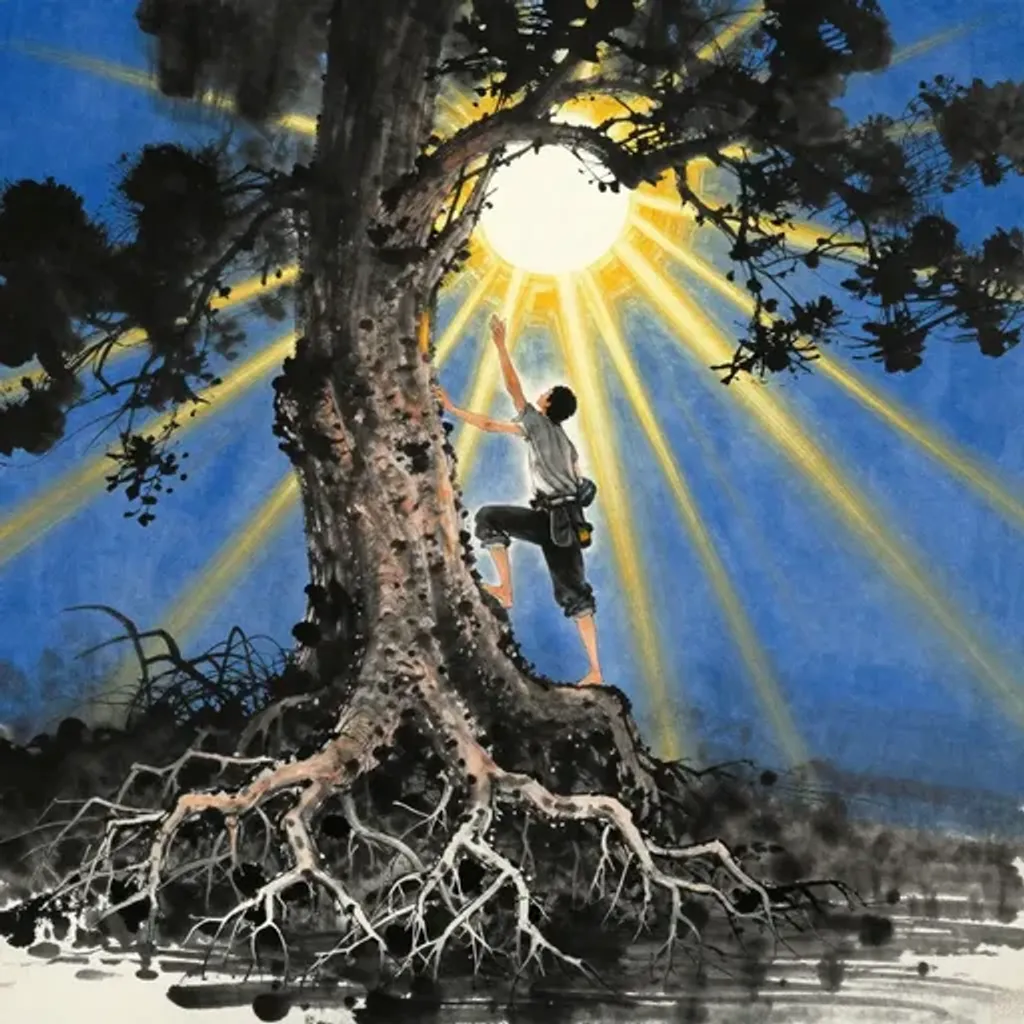
登木出淵,稍上升天。明德孔聖,白日載榮。
Climbing the tree, emerging from the depths; step by step ascending toward heaven. Bright virtue, most sagely and holy; the white sun bears all into glory.
— Jiao Yanshou, Yilin (Forest of Changes), 1st century BC
Commentary
Wood grows within the earth: climbing a tree, emerging from an abyss, one gradually ascends toward heaven itself. Bright virtue rivals that of Confucius the sage; the white sun carries renewed glory across the sky. The imagery maps the full arc of Pushing Upward's promise — from the lowest depths to the highest firmament, from darkness to radiance. Wind over thunder, the image of Increase, shows virtue flowing downward to enrich all that lies below. From Pushing Upward to Increase, the organic ascent completes its purpose by amplifying benefit for others. The one who rose through patient effort now radiates virtue like the sun at noon, and every layer traversed — root, trunk, and canopy — becomes a source of nourishment for the world.
升 → 夬
Hexagram 46 → Hexagram 43: Breakthrough
Changing lines: 1, 4, 5
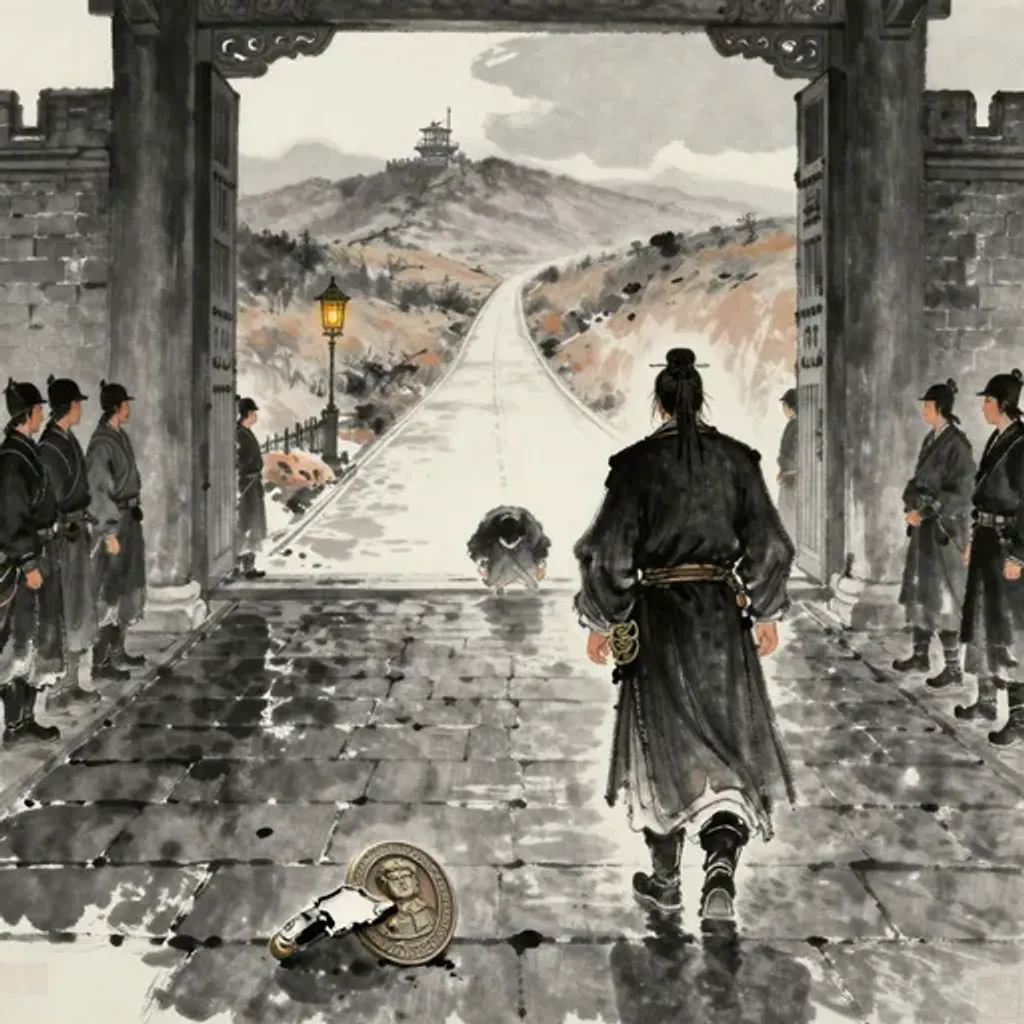
彭離濟東,遷廢上庸。狠戾无節,失其寵功。
Pengli is banished east, exiled and cast down to Shangyong. Cruel and without restraint, he loses his favor and merit.
— Jiao Yanshou, Yilin (Forest of Changes), 1st century BC
Commentary
Wood grows within the earth, but Peng Li, King of Jidong under the Han dynasty, is relocated and stripped of his fief at Shangyong. Brutal, licentious, and unrestrained, he squanders his favor and loses every achievement. According to the Han Shu, Peng Li held his kingdom for twenty-nine years before being deposed for repeatedly killing people in secret hunts. Lake over heaven, the image of Breakthrough, shows accumulated force that must be released decisively. From Pushing Upward to Breakthrough, the ascending figure reaches a height from which the fall becomes catastrophic. Peng Li's elevation was real, but his savagery triggered the decisive break that cast him down from power forever.
升 → 姤
Hexagram 46 → Hexagram 44: Coming to Meet
Changing lines: 4, 5, 6
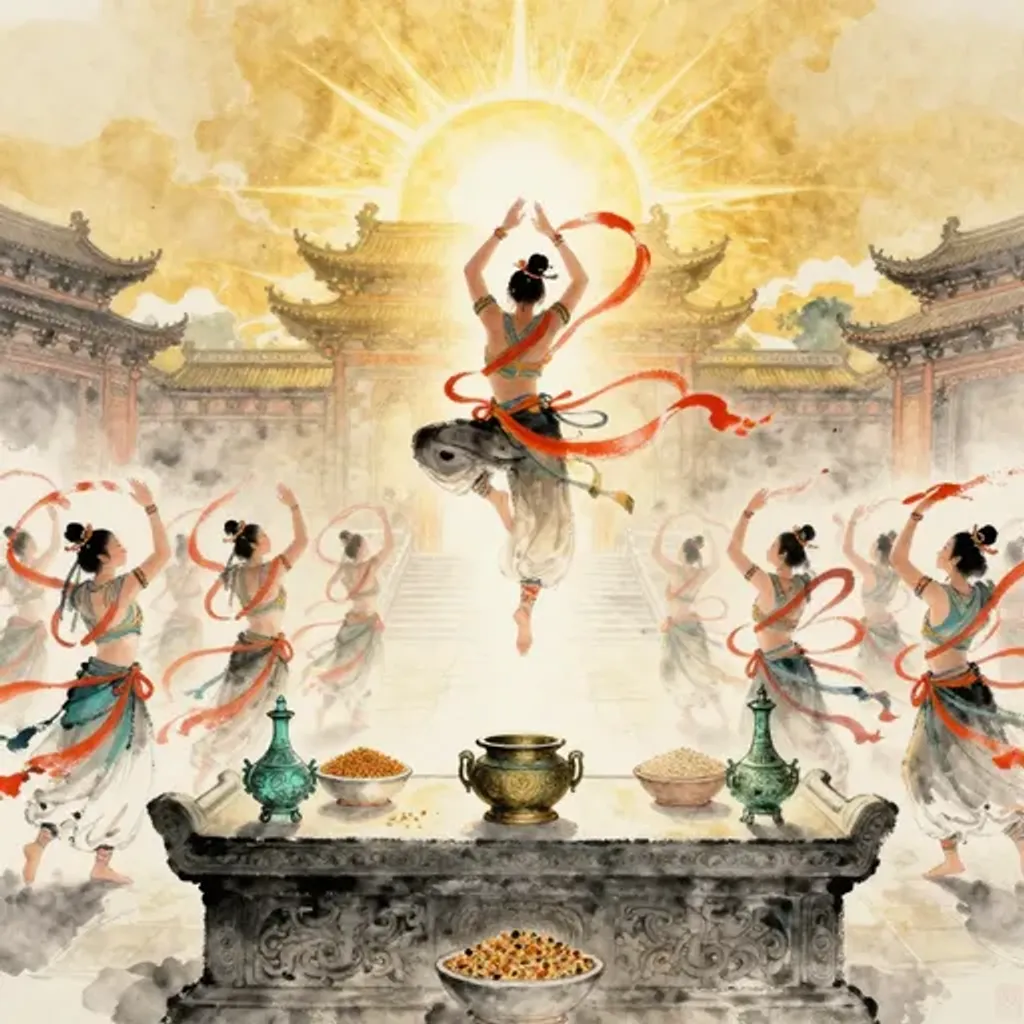
讚陽上舞,神明生氣。拜禹受福,君施我德。
Praising the yang, dancing above; the spirits stir with living breath. Bowing before Yu to receive blessings, the lord bestows his virtue upon us.
— Jiao Yanshou, Yilin (Forest of Changes), 1st century BC
Commentary
Wood grows within the earth, and dancers celebrate the ascending yang with movements that channel the vitality of spirits and gods. Bowing before Yu the Great, they receive his ancient blessing; the sovereign bestows virtue upon the gathered people. The verse evokes a grand ritual scene where sacred dance invokes the energy of legendary rulers — particularly Yu, the flood-tamer who embodies selfless public service and tireless devotion. Heaven over wind, the image of Coming to Meet, sees the ruler issuing commands that reach all four directions. From Pushing Upward to Coming to Meet, the organic ascent reaches the moment of encounter between heaven's decree and the world's reception. Dance and prayer draw sovereign virtue downward into the human realm.
升 → 萃
Hexagram 46 → Hexagram 45: Gathering Together
Changing lines: 2, 3, 4, 5
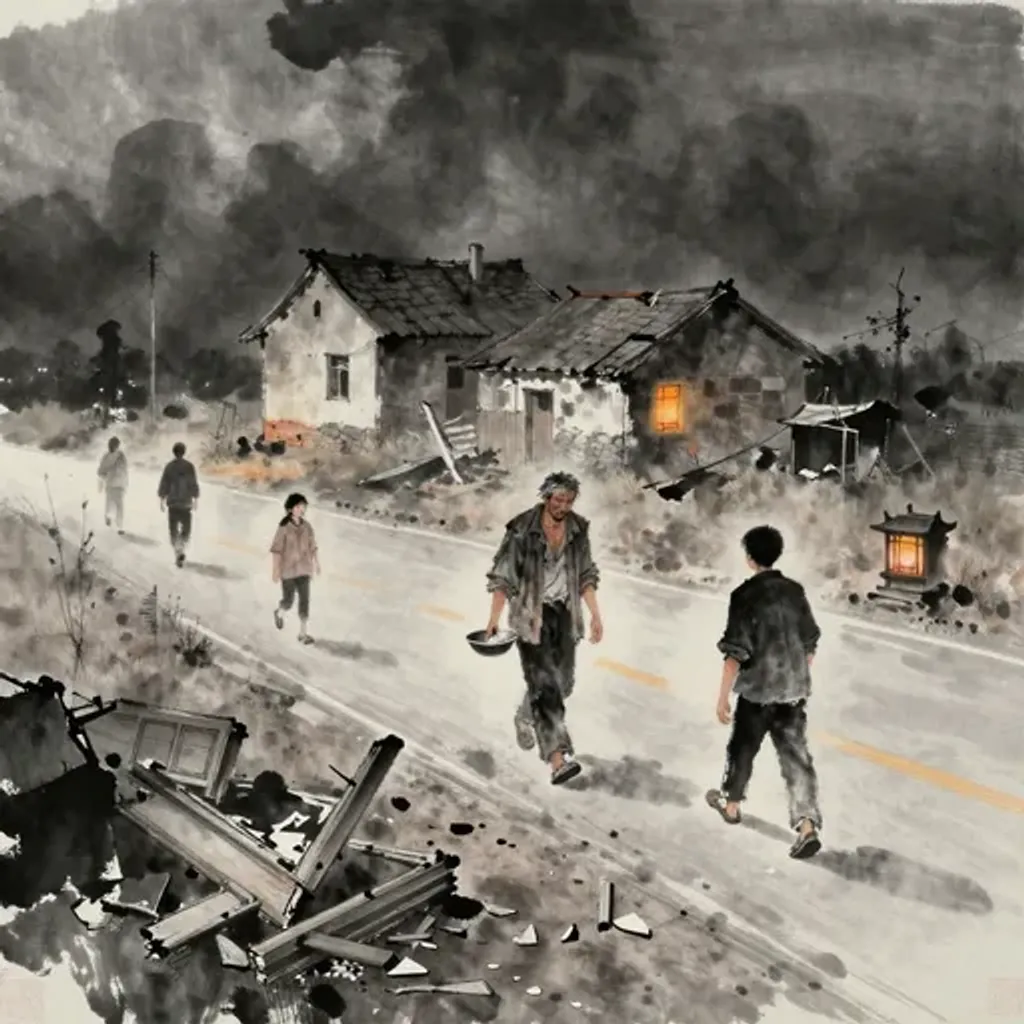
從首至足,部分為六。室家離散,逐南乞食。
From head to foot, divided into six parts. The household is scattered and torn apart; driven southward, begging for food.
— Jiao Yanshou, Yilin (Forest of Changes), 1st century BC
Commentary
Wood grows within the earth, but the body is divided from head to foot into six parts, and the family scatters in all directions. The survivors flee southward, begging for food along the road. The dismemberment of the body into six sections mirrors the dissolution of the household: what should be one organic whole is fragmented beyond recognition or repair. Lake over earth, the image of Gathering, should draw people together into community. From Pushing Upward to Gathering, the ascent should culminate in convergence. Yet here the gathering fails utterly — instead of converging, the family disperses to the winds. The wood that rose through unified earth now splinters, and the six severed parts find no center to hold them together.
升 → 升
Hexagram 46 → Hexagram 46: Pushing Upward
No changing lines — the hexagram is unchanged
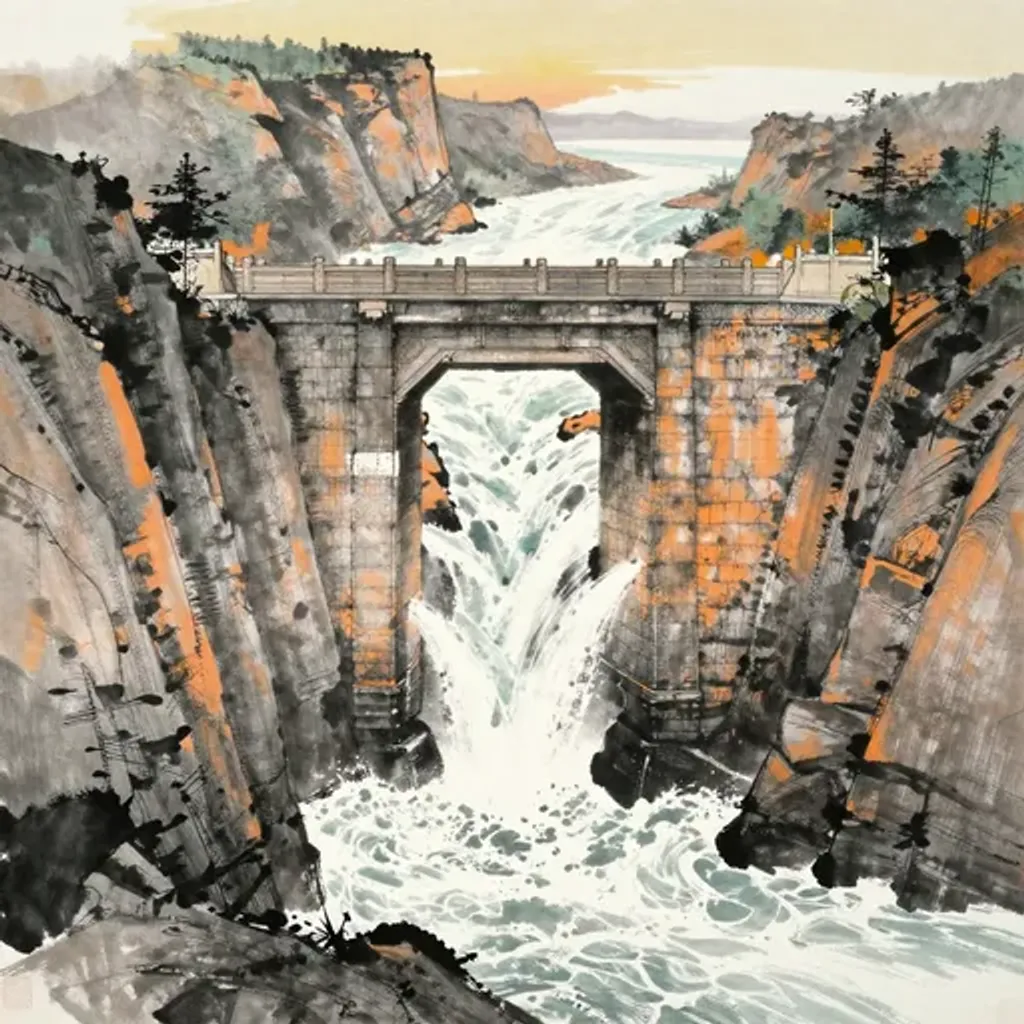
禹鑿龍門,通利水泉。東注滄海,民得安全。
Yu carved the Dragon Gate, opening a passage for the flowing springs. Eastward they pour into the vast sea; the people find safety and peace.
— Jiao Yanshou, Yilin (Forest of Changes), 1st century BC
Commentary
Wood grows within the earth, and Yu the Great carves open the Dragon Gate, freeing the waters of springs and rivers to flow as nature intended. The floods rush eastward into the vast sea, and the people find safety and security at last. When source and target hexagram are identical, the verse distills the hexagram's essential nature. Pushing Upward doubled is ascent perfected: Yu's legendary engineering did not fight the water but channeled its natural downward course, removing obstacles so that what must flow could flow freely. The people are saved not by force but by alignment with nature's grain. To push upward is to clear the path for organic movement — the wood grows because the earth permits it.
升 → 困
Hexagram 46 → Hexagram 47: Oppression
Changing lines: 3, 4, 5
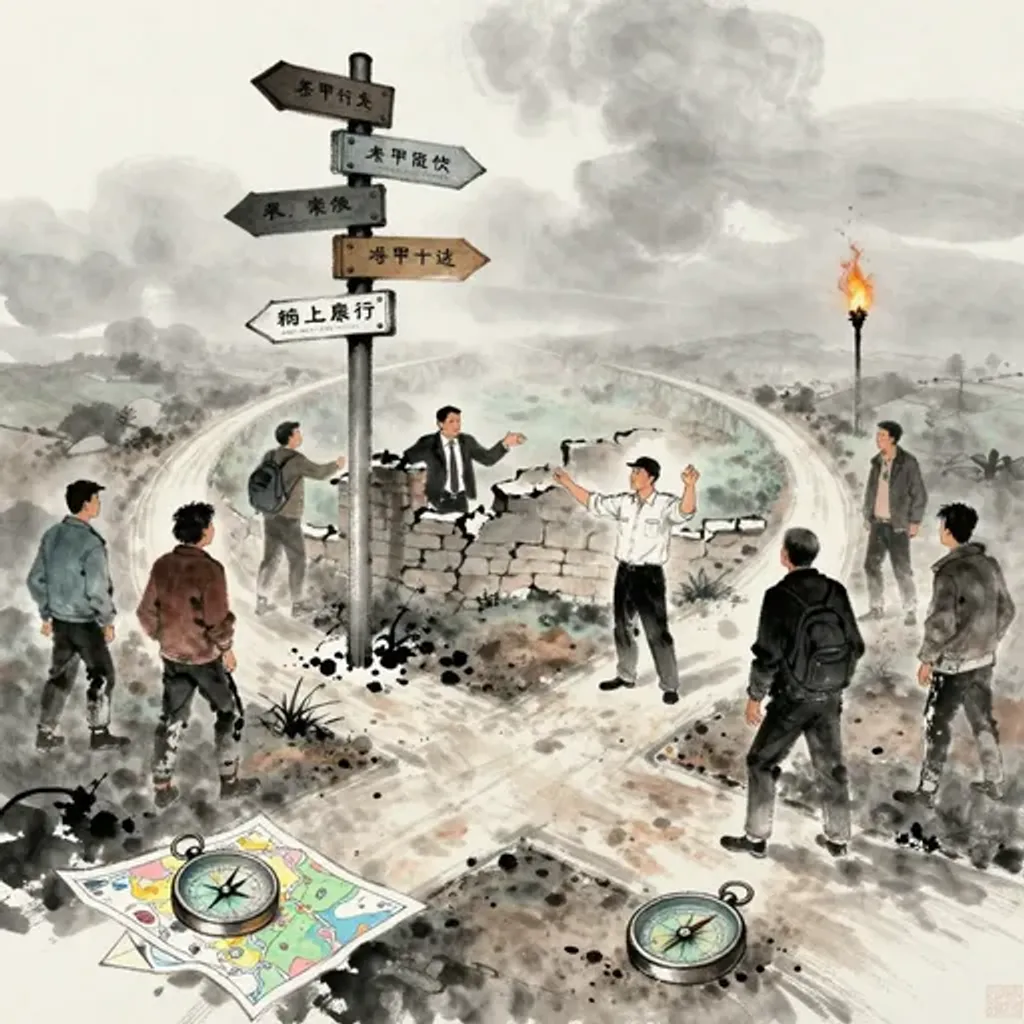
民迷失道,亂我統紀。空使乾革,賓无所有。
The people are lost and stray from the way; our order and discipline are thrown into chaos. Vainly causing upheaval and change, the realm is left with nothing.
— Jiao Yanshou, Yilin (Forest of Changes), 1st century BC
Commentary
Wood grows within the earth, but the people have lost their way and the governing order falls into thorough confusion. Hasty reforms exhaust the treasury to no effect, and the guests — those who should benefit from governance — are left with nothing at all. Lake drained of water, the image of Oppression, shows a vessel that has lost the substance it was meant to contain. From Pushing Upward to Oppression, the ascending impulse enters a landscape of depleted resources and broken legitimacy. The people wander because leadership has failed; reforms are attempted but yield nothing because the wellspring of authority has run dry. The wood pushes upward through earth that can no longer nourish it — growth without sustenance, effort without any return.
升 → 井
Hexagram 46 → Hexagram 48: The Well
Changing lines: 5
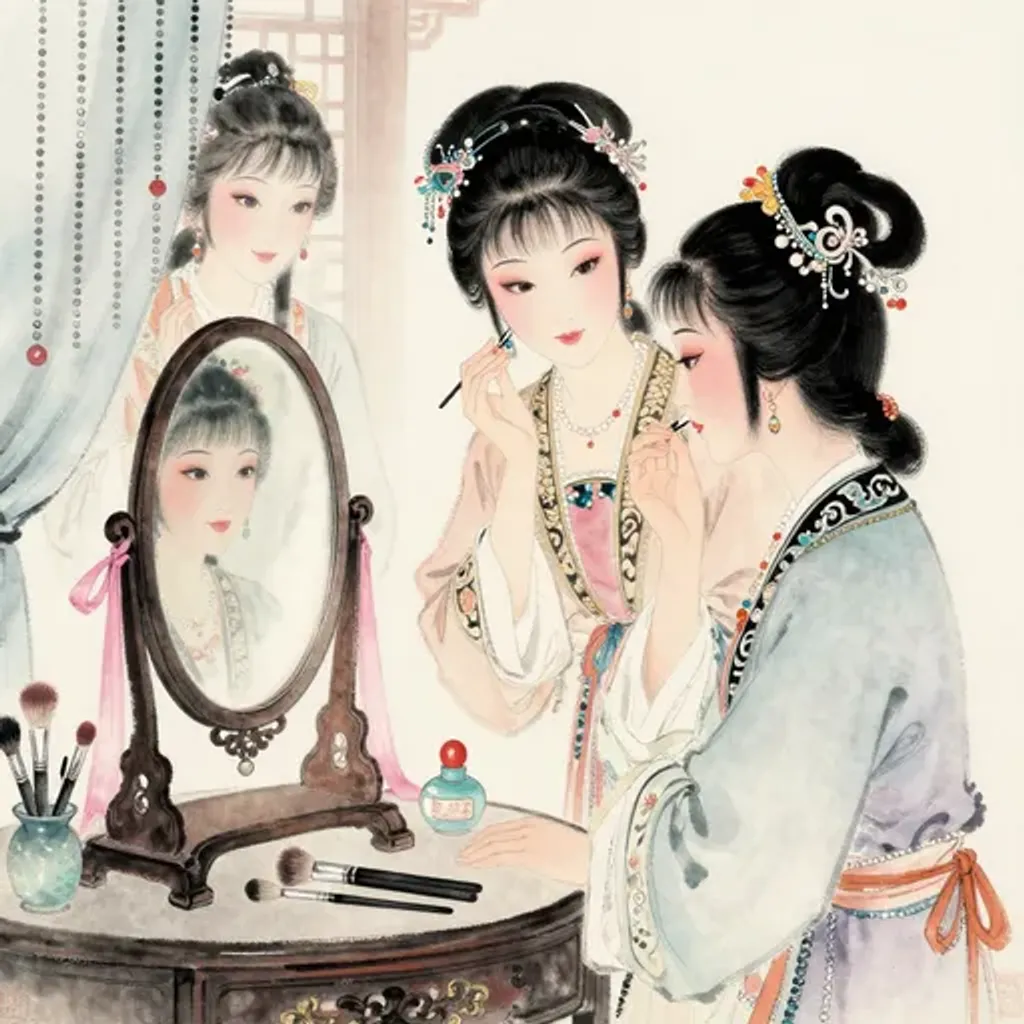
刻畫為飾,嫫母無鹽。毛嬙西施,求事必得。
Painting and adorning as decoration: Momo, Wuyan, Mao Qiang, Xi Shi. What one seeks shall surely be obtained.
— Jiao Yanshou, Yilin (Forest of Changes), 1st century BC
Commentary
Wood grows within the earth, and even ugliness can be adorned into beauty through artful effort. Mo Mu and Wuyan were legendarily plain women of antiquity, yet Mao Qiang and Xi Shi were famed as the most radiant beauties of the age. The verse suggests that diligent transformation can bridge the gap between the homely and the sublime — that what is sought will surely be obtained through persistent refinement. Water over wind, the image of the Well, draws nourishment from deep below through a wooden bucket. From Pushing Upward to the Well, the organic ascent becomes the mechanism that brings hidden worth to the surface. Like the well's windlass, patient effort draws beauty from unlikely depths. Skill applied with care can transform the plainest vessel.
升 → 革
Hexagram 46 → Hexagram 49: Revolution
Changing lines: 1, 2, 4, 5
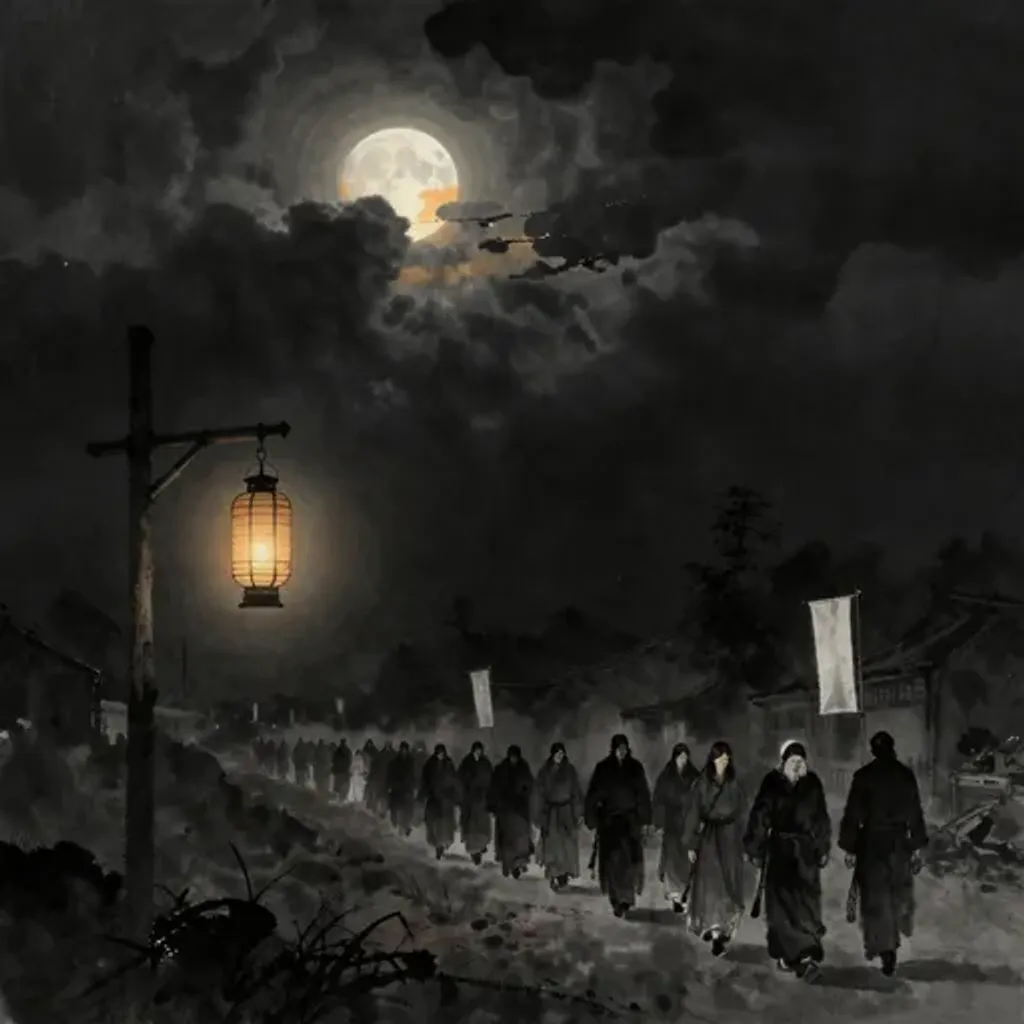
居諸日月,遇暗不明。長夜喪中,絕其紀綱。
O sun and moon; one meets darkness, not light. Through the long night, deep in mourning, all bonds and order are severed.
— Jiao Yanshou, Yilin (Forest of Changes), 1st century BC
Commentary
Wood grows within the earth, yet the sun and moon move through darkness alone, encountering no brightness along their course. Through the long night of mourning, every bond of governance is severed utterly and the realm's institutional fabric dissolves. The phrase 'Ju zhu ri yue' echoes the Shijing ode lamenting time's ceaseless passage, here given a funereal cast: luminaries eclipsed, cosmic order shattered, and all the threads that hold the state together cut at once. Lake over fire, the image of Revolution, replaces one order with another through decisive transformation. From Pushing Upward to Revolution, the gradual ascent encounters a rupture so complete that the old structure cannot be reformed — only overthrown and rebuilt from the ground up.
升 → 鼎
Hexagram 46 → Hexagram 50: The Cauldron
Changing lines: 4, 6
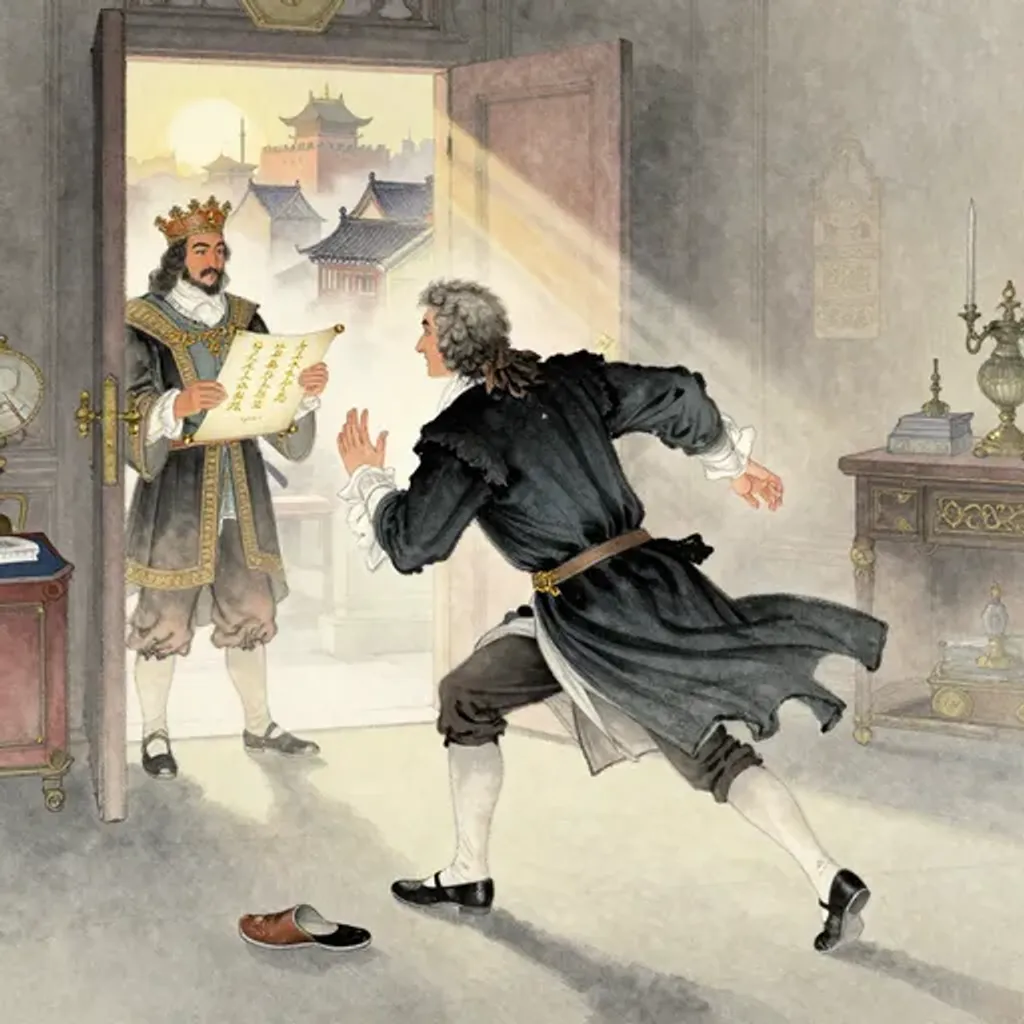
衣裳顛倒,為王來呼。成就東國,封受大休。
Clothes and cap thrown on in haste, the king has come to call. Achieving greatness in the eastern state, one receives a grand enfeoffment.
— Jiao Yanshou, Yilin (Forest of Changes), 1st century BC
Commentary
Wood grows within the earth, and someone dresses in frantic haste — garments thrown on inside-out — answering the king's urgent summons. The eastern state is successfully established, and a great honor is conferred upon the loyal minister. The image of 'garments reversed' echoes the Shijing ode about a devoted official roused from sleep by his sovereign's call, so eager to serve that he dresses without care for appearance. Fire over wind, the image of the Cauldron, establishes proper order and solidifies the state's sacred mandate through ritual transformation. From Pushing Upward to the Cauldron, the organic ascent reaches the vessel where raw material becomes refined offering. The wood that grew patiently through earth now fuels the sacred fire of a new institutional founding.
升 → 震
Hexagram 46 → Hexagram 51: The Arousing Thunder
Changing lines: 1, 2, 3, 4
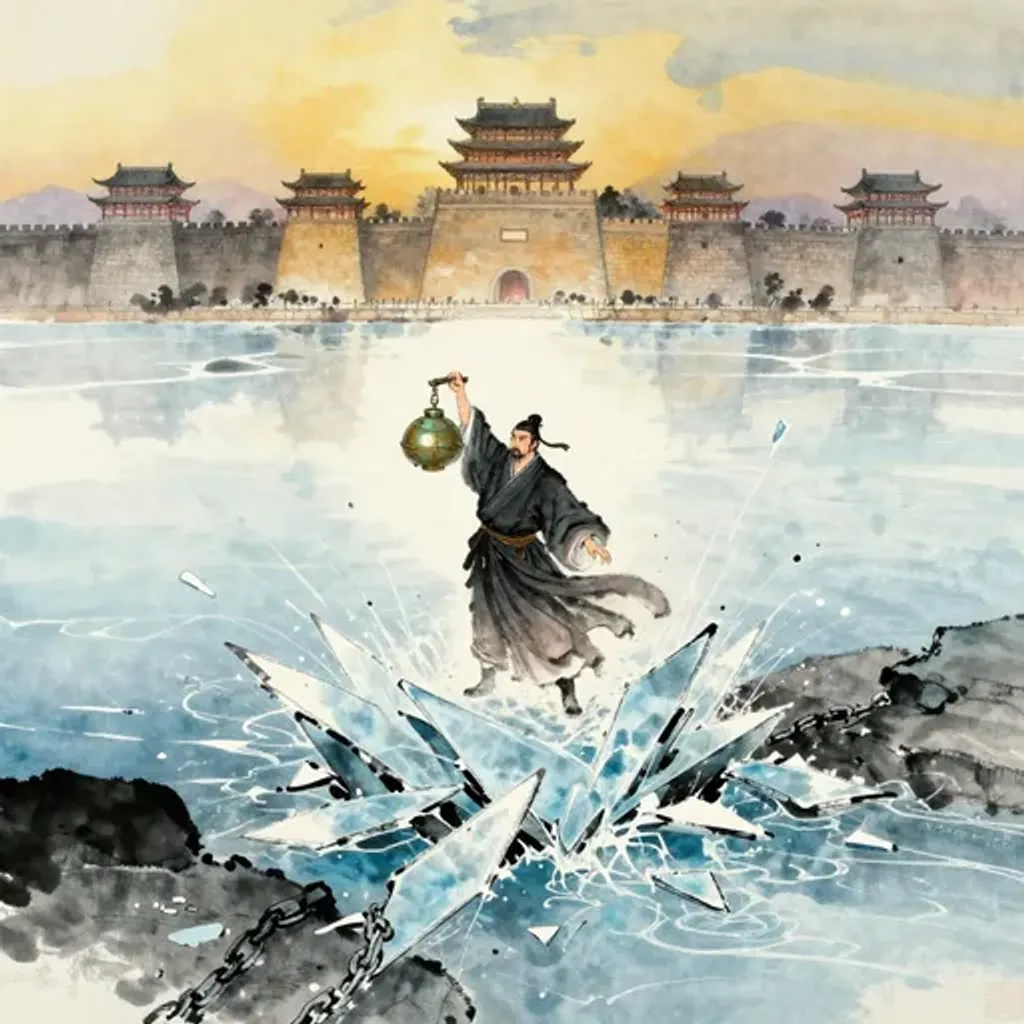
當變立權,擿解患難。渙然冰釋,六國以寧。
Meeting change, one establishes authority and untangles every hardship. Dissolving like melting ice, the six states find peace.
— Jiao Yanshou, Yilin (Forest of Changes), 1st century BC
Commentary
Wood grows within the earth, and decisive authority is established at the critical moment to unravel entangled crises and resolve impossible deadlocks. Accumulated tensions dissolve like ice in spring; the six states find peace at last. The classical expression 'dissolving like ice' (渙然冰釋) describes the sudden, complete resolution of difficulties that had seemed intractable. The 'six states' may evoke the Warring States confederacies whose conflicts required a master strategist's intervention to untangle. Doubled thunder, the image of the Arousing, shocks the world awake with its repeated blows. From Pushing Upward to the Arousing, patient accumulation explodes into decisive action. What grew slowly now moves with the speed and force of double thunder.
升 → 艮
Hexagram 46 → Hexagram 52: Keeping Still Mountain
Changing lines: 2, 6
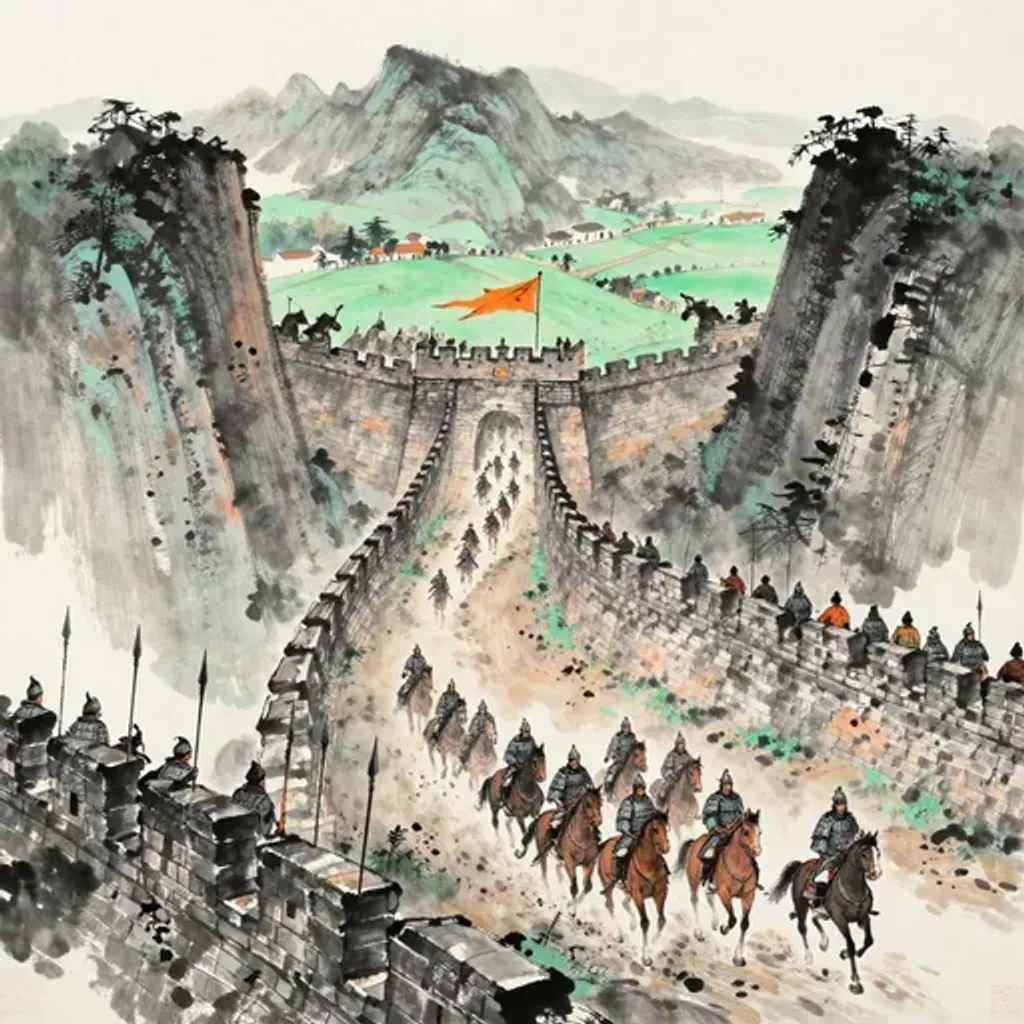
西戎獯鬻,病於我國。扶陝之岐,以保乾德。
The western Rong and Xianyun afflict our state. Holding the pass at Shan and Qi, one preserves the virtue of Qian.
— Jiao Yanshou, Yilin (Forest of Changes), 1st century BC
Commentary
Wood grows within the earth, yet the western Rong and Xianyun barbarians plague the realm with raids and incursions. Defending the strategic passes of Shan and Qi, the people preserve their sovereign virtue and hold the line against chaos. The Xianyun were the nomadic raiders who menaced the Western Zhou frontier; their incursions tested the state's resilience across generations and forced the realm to choose between reckless advance and disciplined defense. Doubled mountain, the image of Keeping Still, counsels thinking that does not overstep its place. From Pushing Upward to Keeping Still, the ascending impulse reaches a point where movement must cease. Against the barbarian tide, the wisest response is to hold firm and let the mountain's stillness outlast the raider's fury.
升 → 漸
Hexagram 46 → Hexagram 53: Development
Changing lines: 2, 5, 6
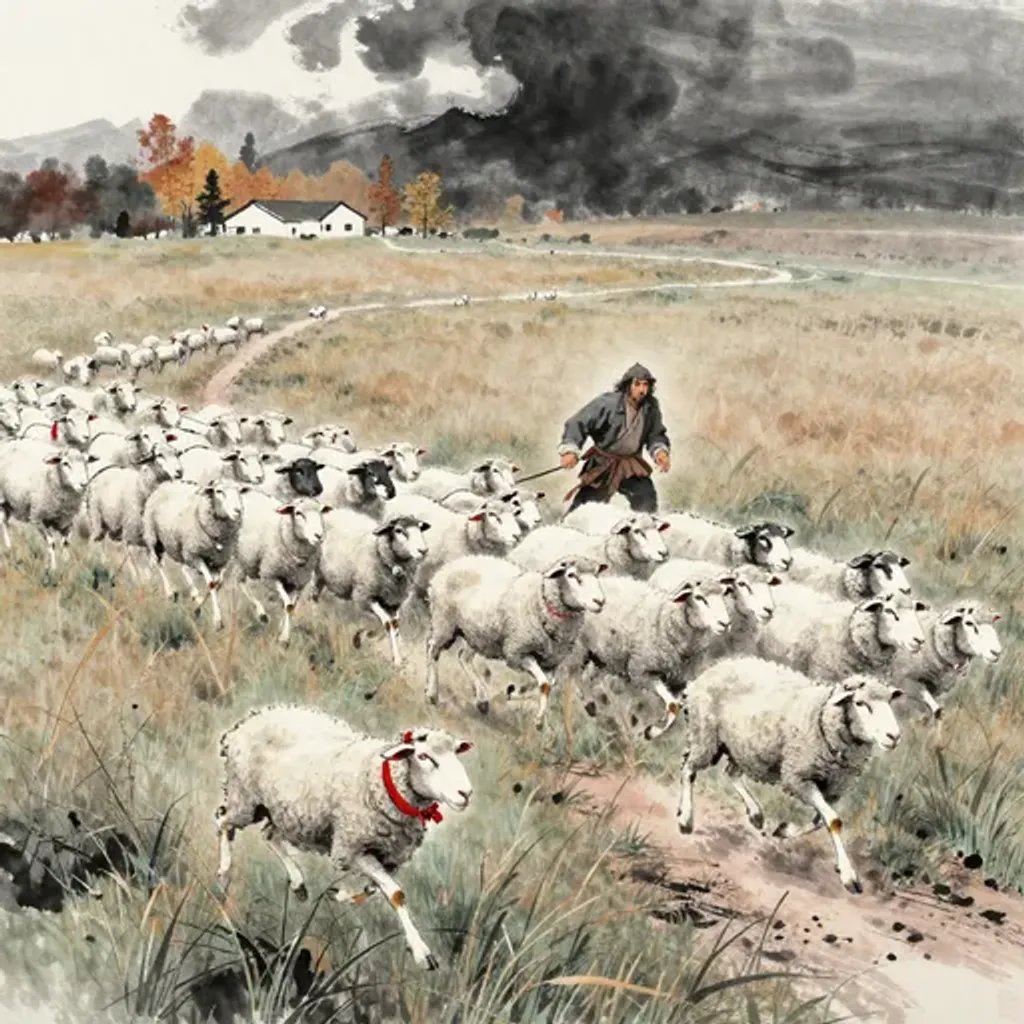
南行逐羊,予利喜亡。陰孽為病,復返其邦。
Journeying south to chase the sheep; profit and joy are lost. Yin's mischief becomes an illness; one returns again to one's own land.
— Jiao Yanshou, Yilin (Forest of Changes), 1st century BC
Commentary
Wood grows within the earth, and someone travels south chasing profit like a shepherd chasing sheep, but joy and gain are both lost along the way. Dark forces breed illness in the body, and the traveler is forced to return to his own country empty-handed and afflicted. The southward pursuit of quick wealth ends in disappointment and sickness — a venture that promised gain delivers only physical affliction, forcing retreat to familiar ground. Wind over mountain, the image of Development, shows a tree growing gradually on the mountaintop over many seasons. From Pushing Upward to Development, the ascending impulse encounters a demand for patience it refuses to meet. The hasty chase short-circuits the gradual process that true growth requires.
升 → 歸妹
Hexagram 46 → Hexagram 54: The Marrying Maiden
Changing lines: 1, 3, 4
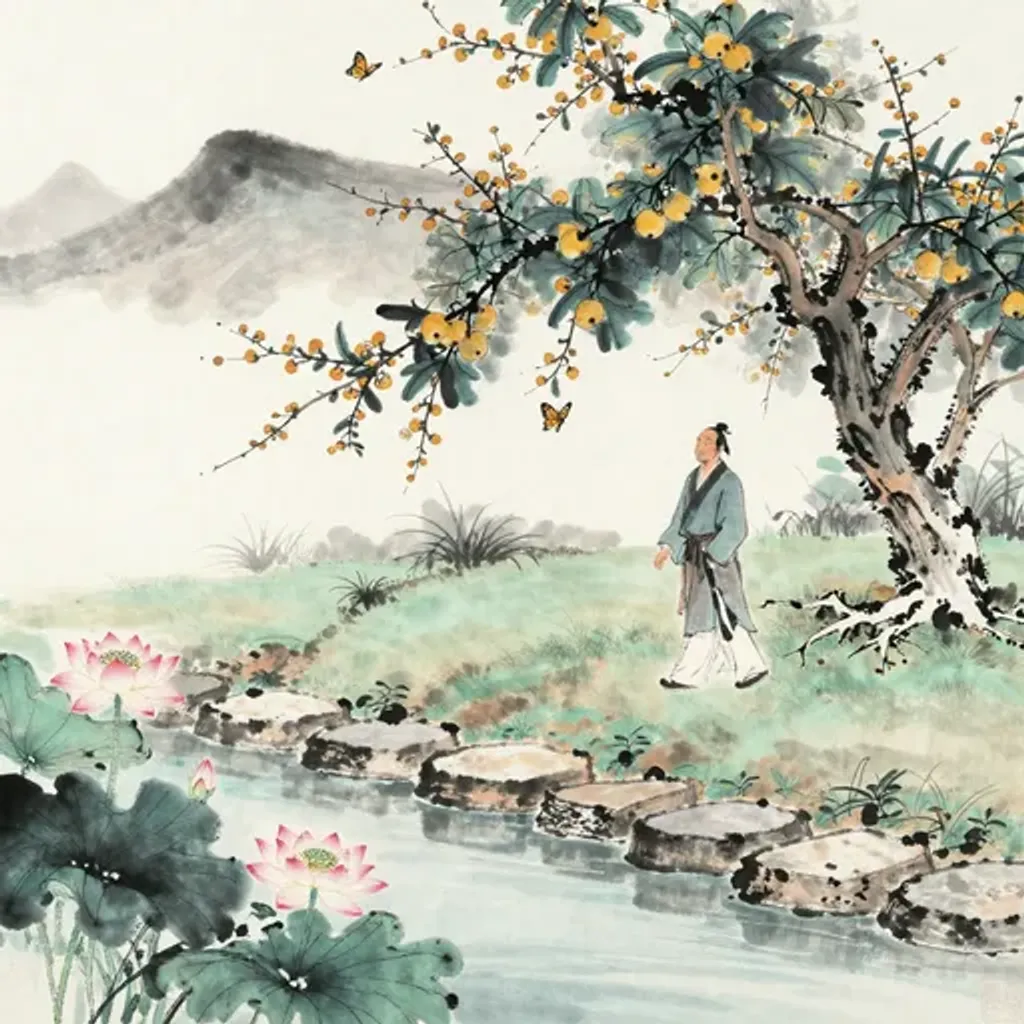
遊戲仁德,日益有福。凶言不至,妖孽滅息。
Wandering in benevolence and virtue, blessings increase day by day. No ill tidings arrive; calamity and misfortune are extinguished and cease.
— Jiao Yanshou, Yilin (Forest of Changes), 1st century BC
Commentary
Wood grows within the earth, and one who cultivates benevolence through daily practice of virtue finds blessings increasing with each passing day. No ill words approach the household; misfortune and supernatural calamity alike are extinguished before they arrive. The verse describes the cumulative protective power of virtuous living: evil simply cannot attach itself to a person whose conduct is consistently and genuinely humane over time. Thunder over lake, the image of the Marrying Maiden, teaches that lasting bonds require understanding inevitable limitations. From Pushing Upward to the Marrying Maiden, the ascending impulse enters a commitment that demands both devotion and realism. Virtue steadily accumulated becomes an invisible shield no malign force can pierce.
升 → 豐
Hexagram 46 → Hexagram 55: Abundance
Changing lines: 1, 2, 4
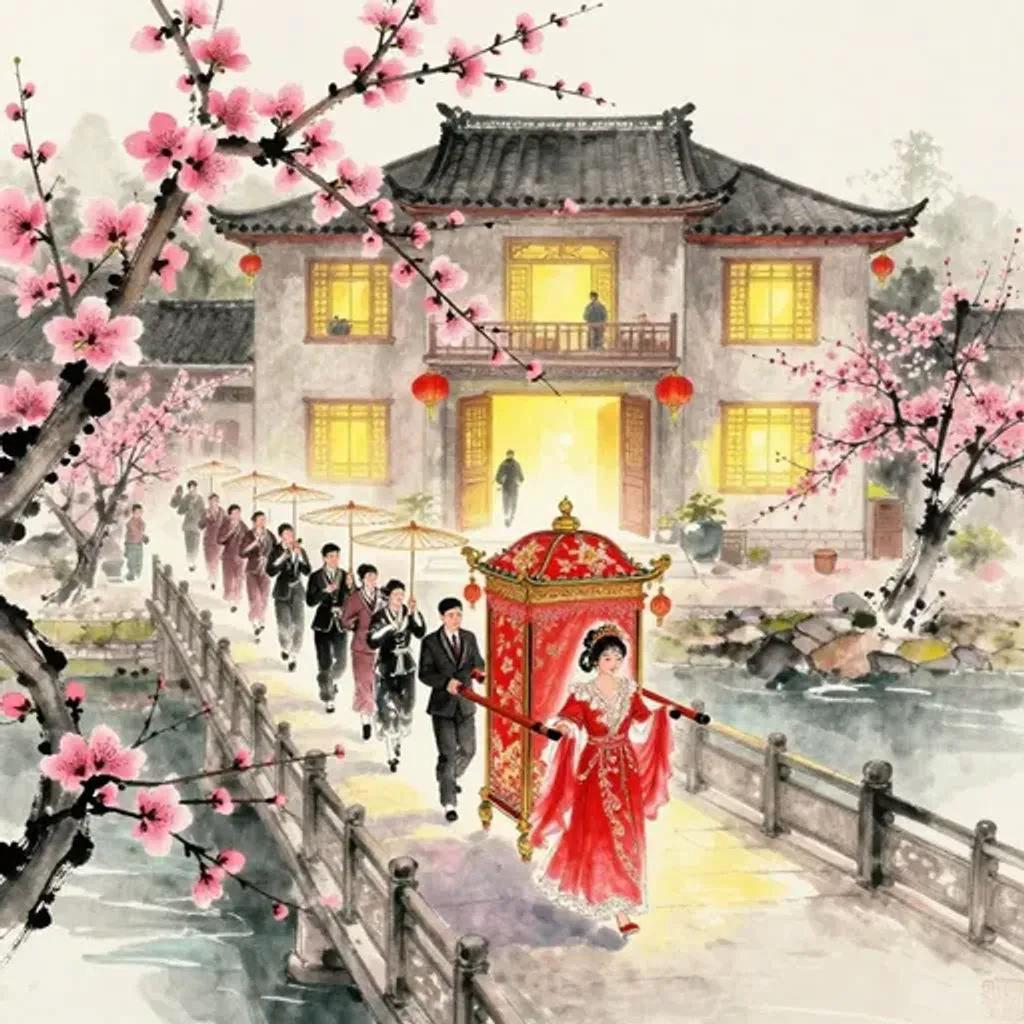
春日新婚,就陽曰溫。喜樂萬歲,獲福有年。
A spring day, a new marriage; approaching the warmth of yang. Joy and delight for ten thousand years; blessings are attained for a long age.
— Jiao Yanshou, Yilin (Forest of Changes), 1st century BC
Commentary
Wood grows within the earth, and on a spring day a new marriage fills the world with warmth and brightness. The couple turns toward the sun — 'drawing near to yang' — and the verse overflows with joy: ten thousand years of happiness, abundant harvests stretching into the future. The spring setting connects the wedding to nature's most generative season; the union itself radiates the yang warmth that makes all things flourish and multiply. Thunder and fire together, the image of Abundance, shows the convergence of brightness and movement at their absolute peak. From Pushing Upward to Abundance, the slow organic ascent culminates in the fullest possible expression of life. The wedding is that culminating moment: patient cultivation blossoming into overflowing, unreserved joy.
升 → 旅
Hexagram 46 → Hexagram 56: The Wanderer
Changing lines: 2, 4, 6
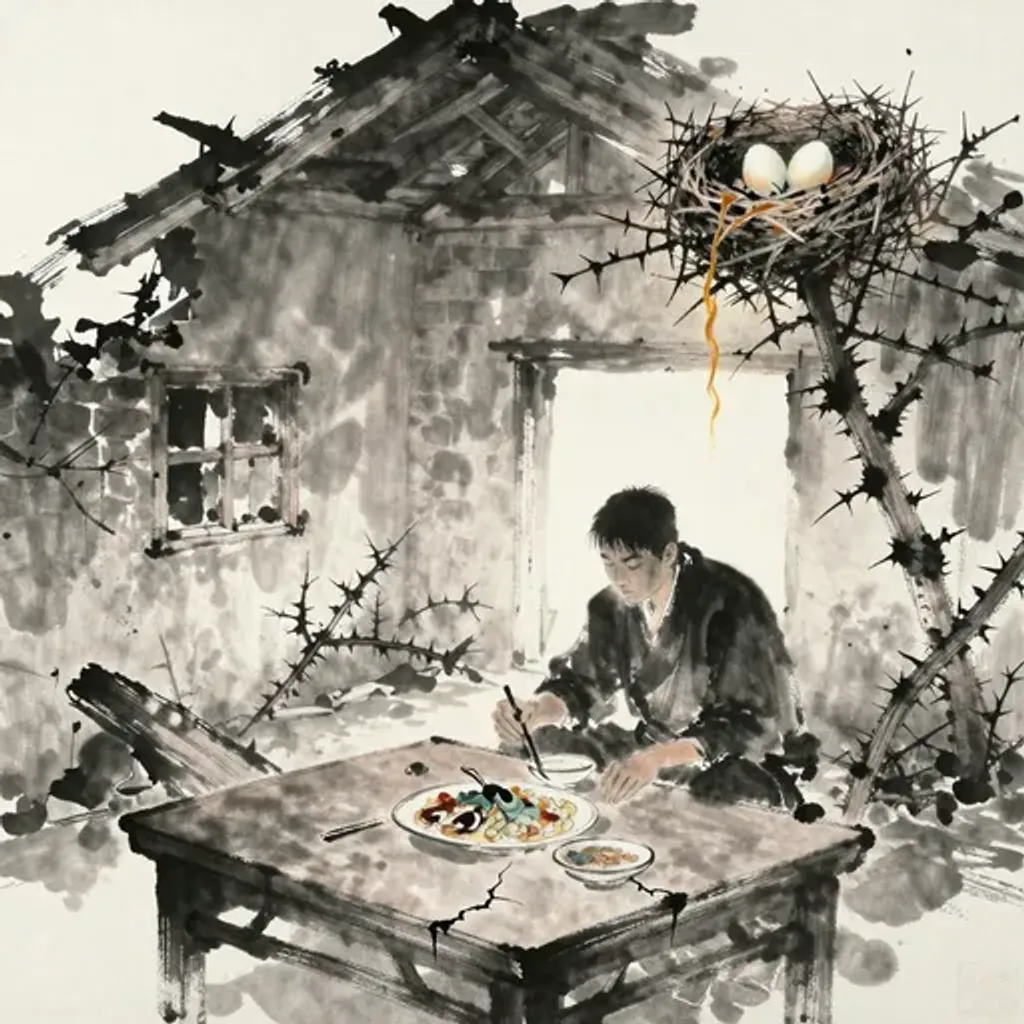
陰升陽伏,舜失其室。相飾不食,安巢如棘。
Yin ascends, yang lies hidden; Shun loses his household. Adorned yet unable to eat; the nest rests upon thorns.
— Jiao Yanshou, Yilin (Forest of Changes), 1st century BC
Commentary
Wood grows within the earth, but yin ascends while yang retreats into hiding, and the sage-king Shun loses his proper dwelling. Ornaments are displayed yet no one eats from the table; the nest feels as uncomfortable and hostile as a bed of thorns. Shun — the paragon of virtue displaced from his rightful place — embodies the cosmic disorder of yin and yang inverted: the worthy driven out, the unworthy enthroned. Fire over mountain, the image of the Wanderer, describes the traveler who finds no permanent home anywhere under heaven. From Pushing Upward to the Wanderer, the ascending impulse produces not arrival but perpetual displacement. What should have risen to stable height instead drifts, rootless, across an inhospitable landscape where no nest brings rest.
升 → 巽
Hexagram 46 → Hexagram 57: The Gentle Wind
Changing lines: 5, 6
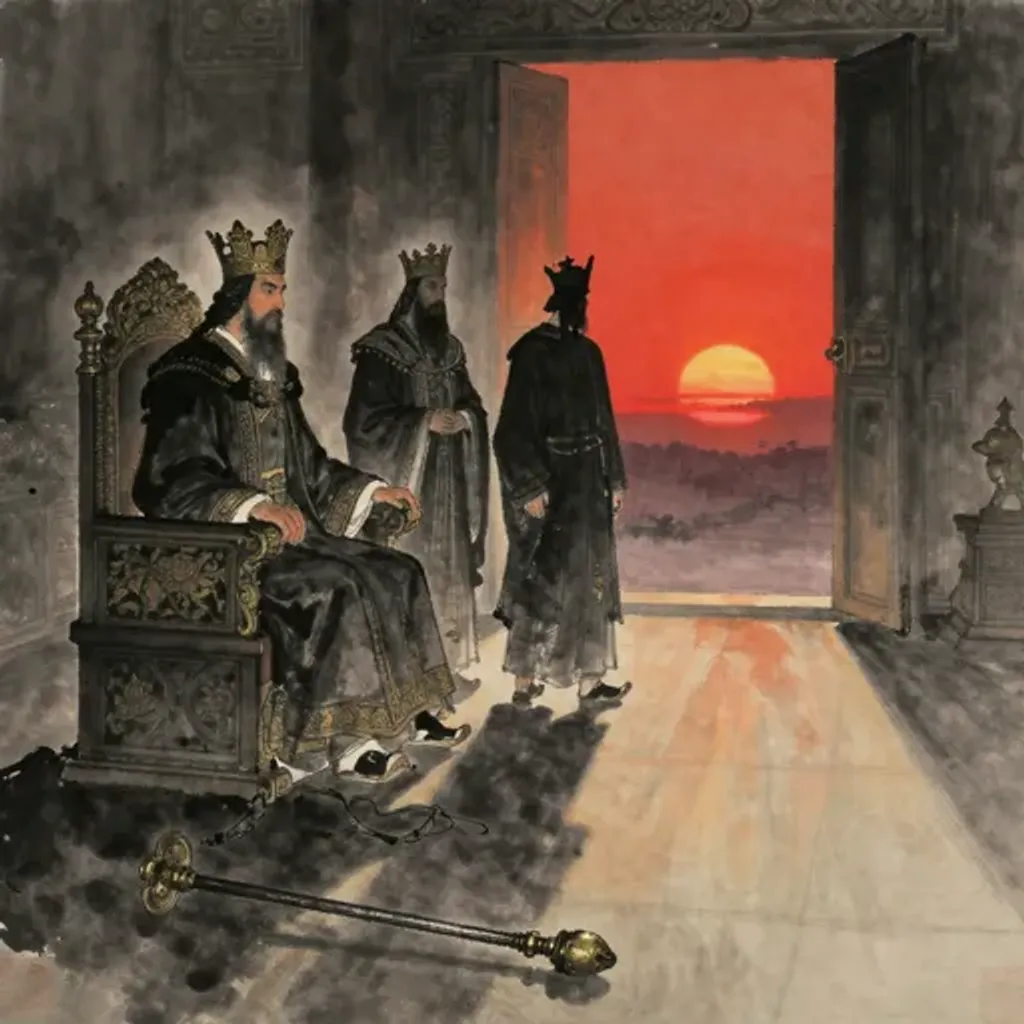
臣尊主卑,威權日衰。侵奪无光,三家逐公。
The minister is exalted, the lord debased; authority and power wane day by day. Encroaching and seizing, dimming the light; the three houses drive out the duke.
— Jiao Yanshou, Yilin (Forest of Changes), 1st century BC
Commentary
Wood grows within the earth, but the minister towers above the ruler, and royal authority withers by the day. Power is seized, brilliance stolen, and three great families drive the duke from his own state into exile. The 'three families expelling the ruler' most directly evokes the Three Huan of Lu — the Jisun, Shusun, and Mengsun clans — who usurped ducal power over generations until Duke Zhao was forced to flee in 517 BC and died abroad. Doubled wind, the image of the Gentle, commands through repeated, penetrating influence. From Pushing Upward to the Gentle, the ascending impulse is subverted: what should be the ruler's rise becomes the minister's creeping encroachment, wind eroding the throne from within until nothing remains.
升 → 兌
Hexagram 46 → Hexagram 58: The Joyous Lake
Changing lines: 1, 3, 4, 5
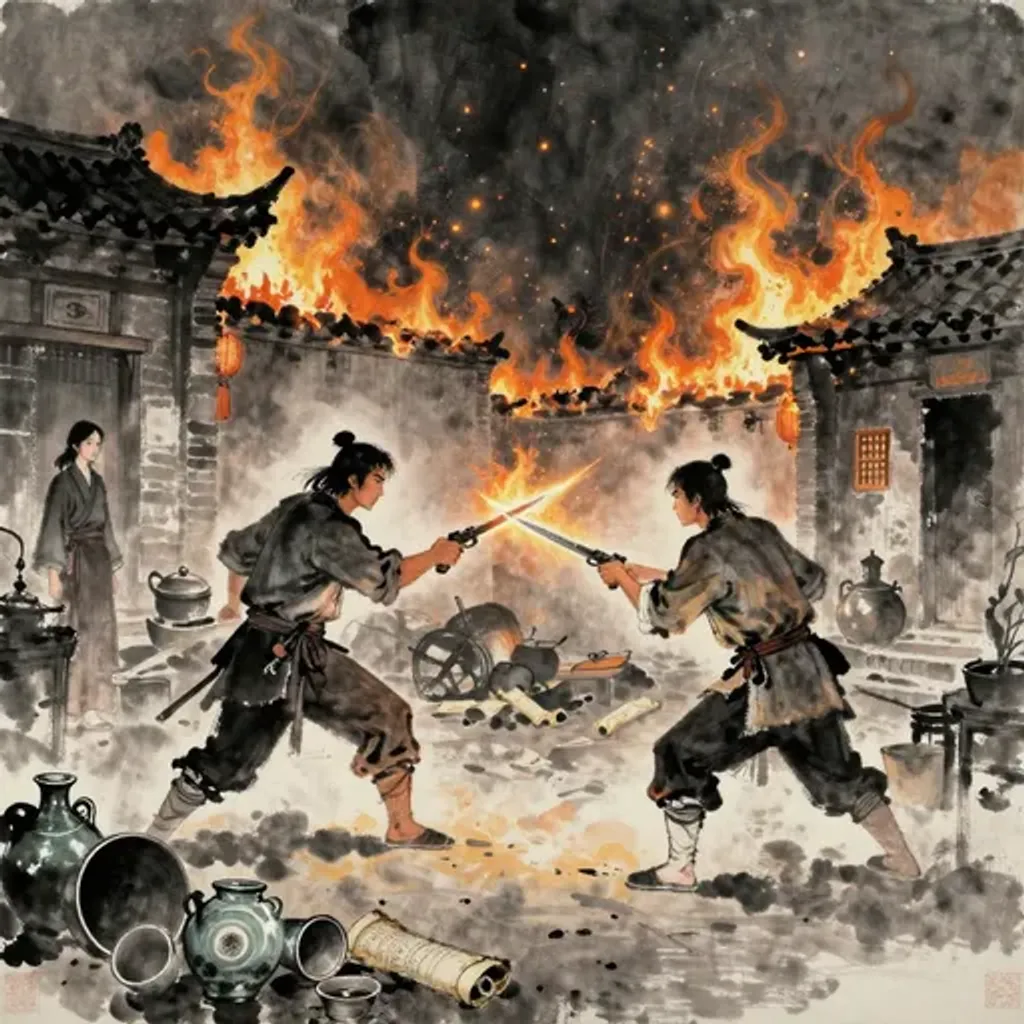
反言為賊,戎女生患。亂吾家國,父子相賊。
Words twisted to treachery; the foreign woman breeds disaster. She throws our house and state into chaos; father and son turn on each other.
— Jiao Yanshou, Yilin (Forest of Changes), 1st century BC
Commentary
Wood grows within the earth, but deceitful words turn into weapons of destruction, and a woman from the barbarian frontier breeds catastrophic disaster within the ruling house. State and household are thrown into mutual chaos; father and son turn murderous against each other in a spiral of betrayal. The 'Rong woman' who destroys a ruling lineage recalls the archetype of the foreign consort whose seductive influence corrodes domestic order from within. Doubled lake, the image of the Joyous, should manifest as friends learning together in mutual trust and harmony. From Pushing Upward to the Joyous, the ascent should reach shared delight. Instead, false speech poisons joy: the paired lakes become pools of mutual destruction rather than reservoirs of shared wisdom.
升 → 渙
Hexagram 46 → Hexagram 59: Dispersion
Changing lines: 3, 5, 6
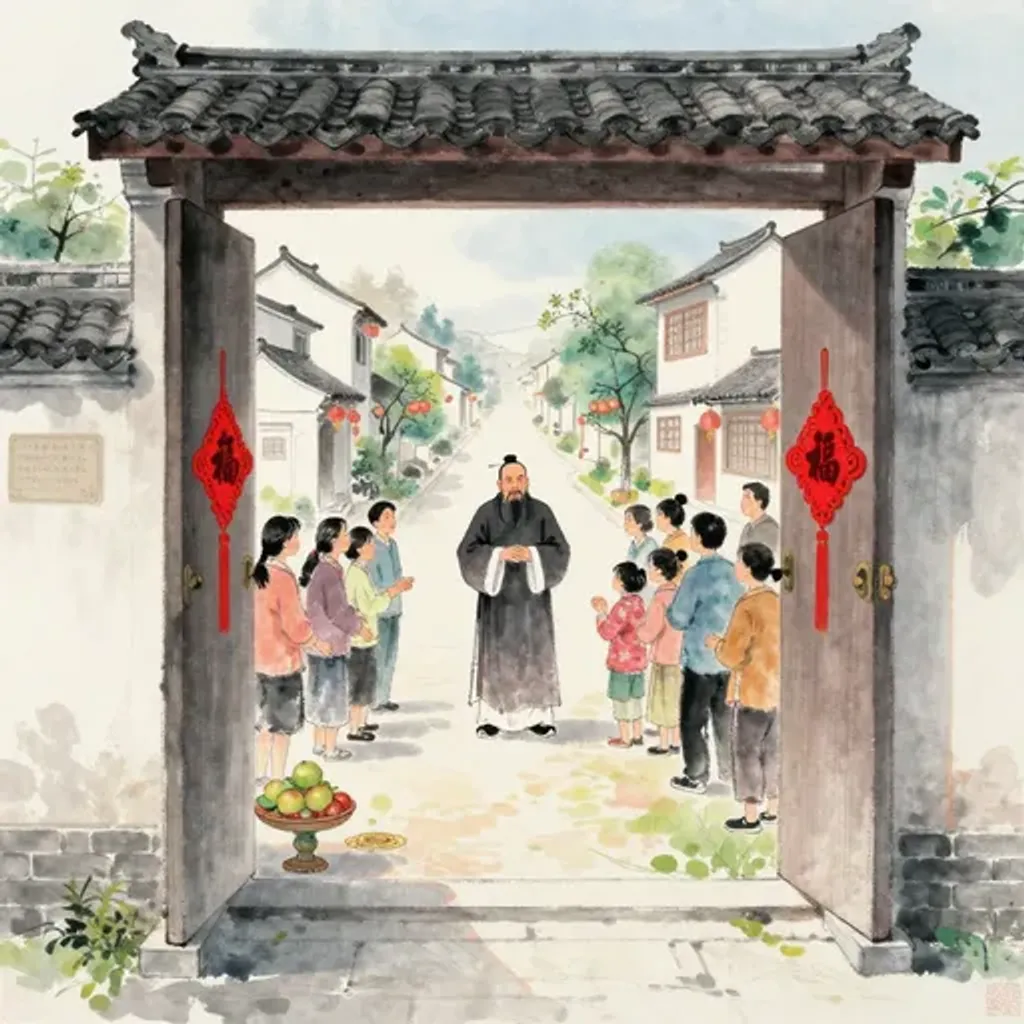
迎福開戶,喜隨我後。康伯愷悌,治民以禮。
Opening the door to welcome blessings, joy follows in our wake. Kangbo, kind and benevolent, governs the people with propriety.
— Jiao Yanshou, Yilin (Forest of Changes), 1st century BC
Commentary
Wood grows within the earth as the door is opened wide to welcome blessings, and joy follows close behind like a faithful companion. Kangbo — likely referring to Kang Shu of Wei or his descendant Wei Kangbo — governs with gracious benevolence and easy warmth, administering the people through ritual propriety rather than harsh punishment. The Shangshu's 'Kangao' chapter records the Duke of Zhou's instructions to Kang Shu on governing the former Shang territories with virtue and measured fairness. Wind over water, the image of Dispersion, dissolves rigidity through gentle penetration. From Pushing Upward to Dispersion, the ascending impulse reaches outward, dispersing accumulated benefit like wind spreading across water. Governance at its best scatters blessing broadly.
升 → 節
Hexagram 46 → Hexagram 60: Limitation
Changing lines: 1, 3, 5
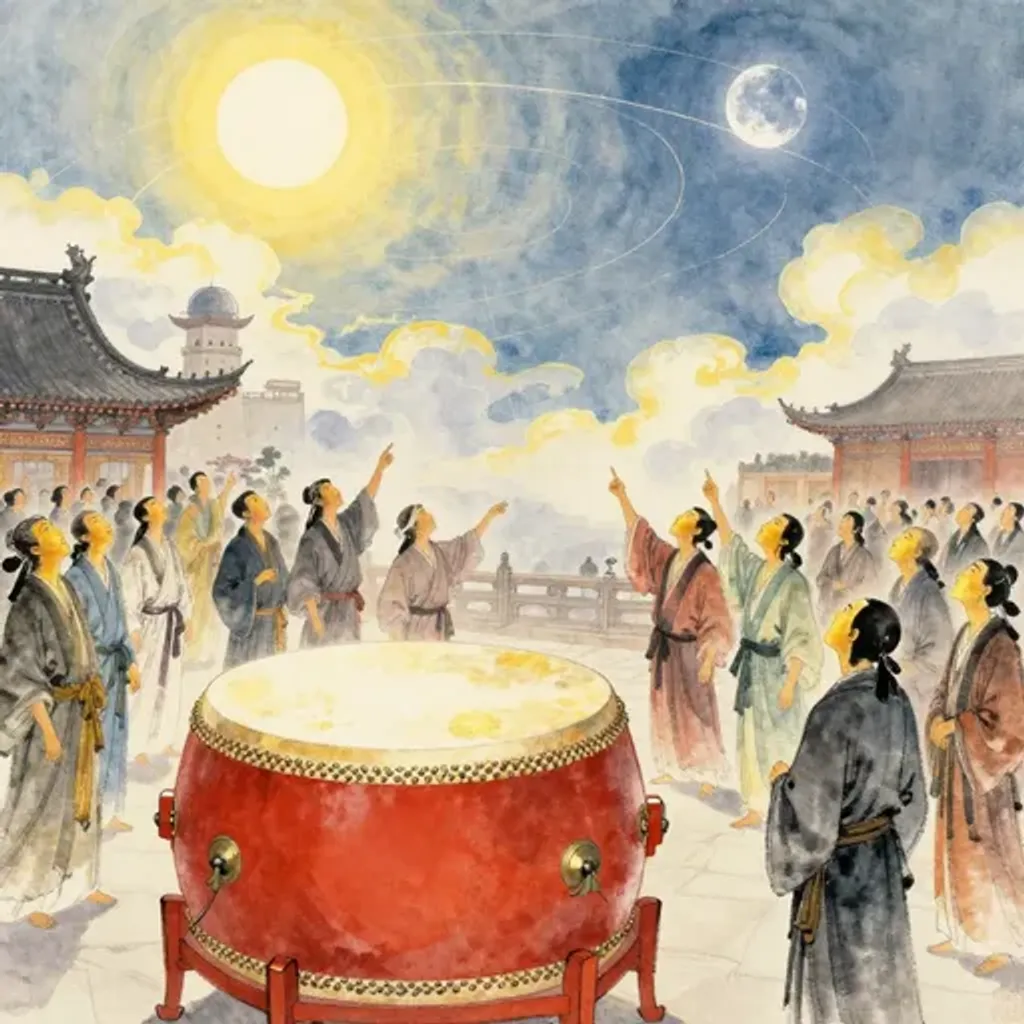
日就月將,昭明有功。靈臺歡賞,膠鼓作人。
Day by day advancing, month by month progressing; shining brightly with achievement. At the Lingtai they rejoice and admire; drums resound, stirring all the people.
— Jiao Yanshou, Yilin (Forest of Changes), 1st century BC
Commentary
Wood grows within the earth, progressing daily and advancing monthly, with luminous achievements shining bright for all to see. At the Sacred Terrace, people rejoice and admire the spectacle; drums covered in glue-hardened hide beat out rhythms that inspire and organize the people. King Wen's Ling Tai — the observatory and audience hall celebrated in the Shijing — represents the ruler's virtue made architecturally manifest, a place where commoners and nobles alike gather in shared festivity and civic purpose. Water over lake, the image of Limitation, counsels measured regulation and proper boundaries. From Pushing Upward to Limitation, the organic ascent achieves its lasting form through structure and discipline. Growth without limit becomes chaos, but growth within proper measure becomes civilization.
升 → 中孚
Hexagram 46 → Hexagram 61: Inner Truth
Changing lines: 1, 3, 5, 6
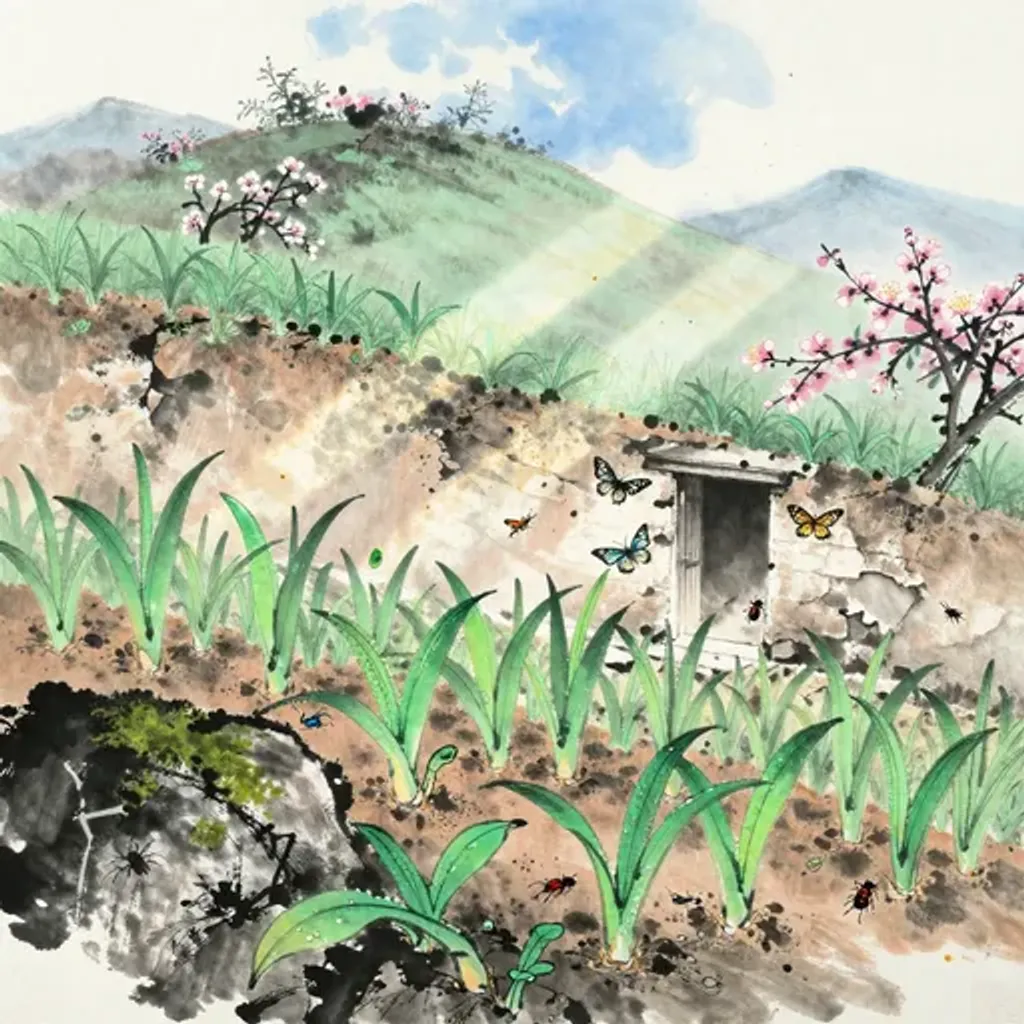
百草嘉卉,萌芽將出。昆䖝扶戶,陽明得所。
A hundred grasses and fine plants, their shoots about to emerge. Insects crowd the doorways; the yang finds its rightful brightness and place.
— Jiao Yanshou, Yilin (Forest of Changes), 1st century BC
Commentary
Wood grows within the earth, and a hundred grasses and fine herbs send forth their sprouts as the season turns. Insects stir at the doorway emerging from dormancy; the yang sun finds its proper place at last and warmth returns to the ground. The verse captures the exact moment of early spring germination: buried seeds crack the soil, dormant creatures awaken, and the returning light confirms that warmth has penetrated to the roots. Wind over lake, the image of Inner Truth, resonates with sincerity that reaches even pigs and fish in their depths. From Pushing Upward to Inner Truth, the organic ascent is validated at its most elemental level. The sprouting grass proves that growth is not forced but inherent — truth embedded in the seed itself.
升 → 小過
Hexagram 46 → Hexagram 62: Small Exceeding
Changing lines: 2, 4
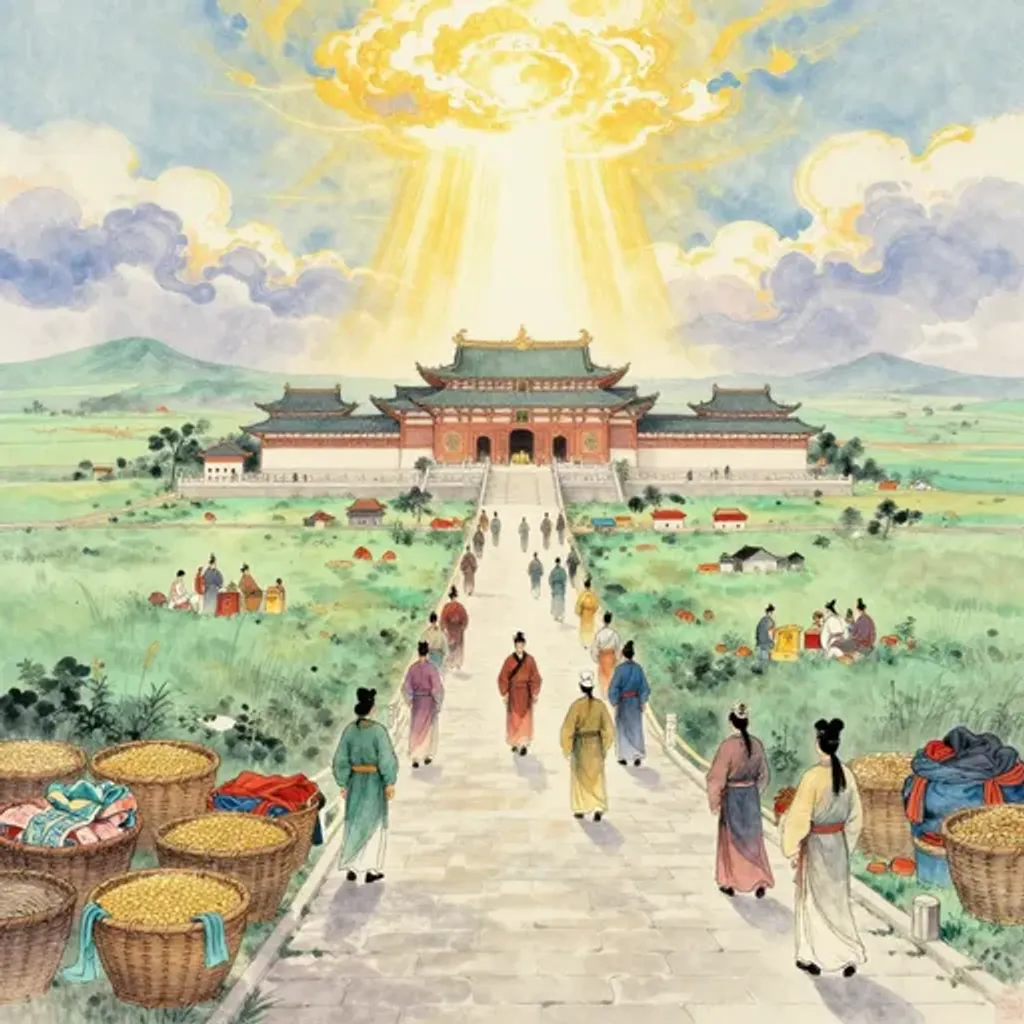
天所佑助,萬國日有。福至禍去,壽命長久。
What heaven aids and sustains, the ten thousand states receive day by day. Blessings arrive, misfortune departs; life and longevity endure long.
— Jiao Yanshou, Yilin (Forest of Changes), 1st century BC
Commentary
Wood grows within the earth, and heaven itself extends its protecting aid to the realm below. The ten thousand states flourish with each passing day; blessings arrive steadily while misfortune departs, and life extends long and full toward a natural completion. The verse reads as an unambiguous benediction from the cosmos: divine favor, universal prosperity, and the steady replacement of ill fortune with good across the whole world. Thunder over mountain, the image of Small Exceeding, counsels actions that slightly exceed convention — humility pressed a degree beyond custom, frugality taken one step further than expected. From Pushing Upward to Small Exceeding, the ascending impulse is tempered by modesty. Heaven's aid comes precisely to those who do a little more than required in virtue, never in ambition.
升 → 既濟
Hexagram 46 → Hexagram 63: After Completion
Changing lines: 1, 2, 5
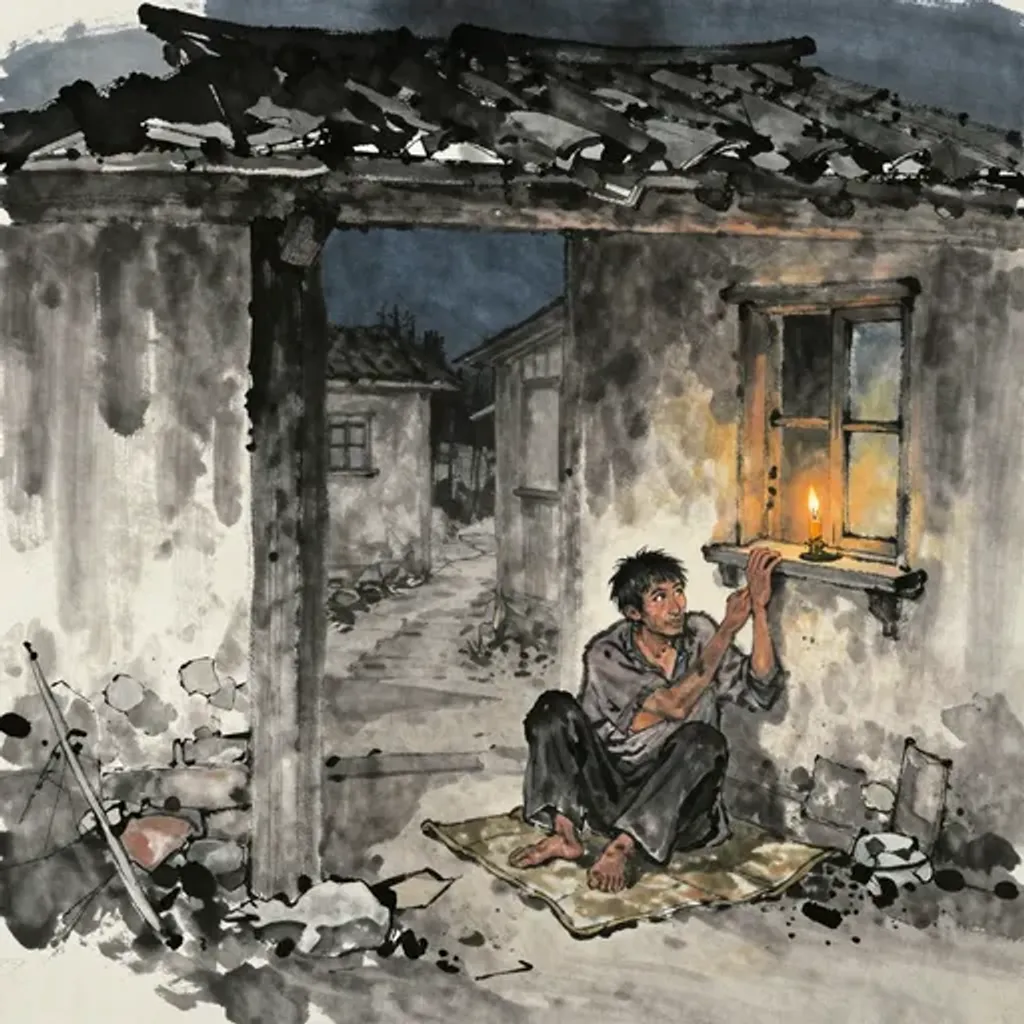
窮夫失居,惟守弊廬。初憂中懼,終日兢競,无悔无虞。
The destitute man, driven from his home, clings only to his broken hut. First comes worry, then dread within; all day long he trembles in vigilance, yet finds neither regret nor blame.
— Jiao Yanshou, Yilin (Forest of Changes), 1st century BC
Commentary
Wood grows within the earth, but a poor man has lost his dwelling and clings to a crumbling, dilapidated hut as his only shelter. At first there is worry, then mounting fear, and all day long he treads with anxious, unrelenting vigilance — yet in the end there is no regret and no mishap befalls him. Water over fire, the image of After Completion, warns that even when all elements are perfectly in place, the wise mind anticipates trouble before it arrives. From Pushing Upward to After Completion, the ascending journey reaches its conclusion in watchful, careful maintenance. The poor man survives not through comfort but through unrelenting caution. His ascent was modest — merely holding on — but his constant vigilance brings him through intact and without cause for regret.
升 → 未濟
Hexagram 46 → Hexagram 64: Before Completion
Changing lines: 3, 4, 6
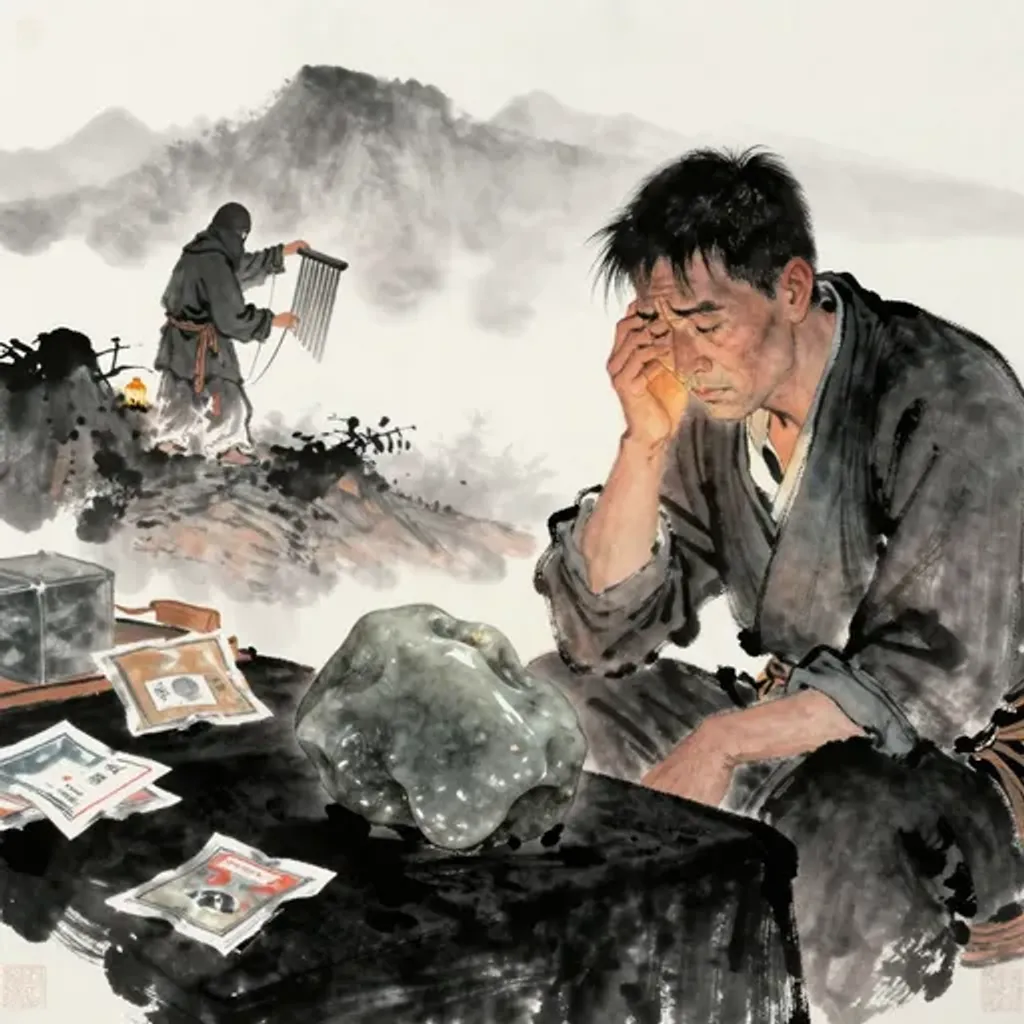
買玉得石,失其所欲。荷蕢擊磬,隱世无聲。
Buying jade, one gets stone; losing what was desired. Bearing a straw basket, striking the chime stone; hidden from the world, making no sound.
— Jiao Yanshou, Yilin (Forest of Changes), 1st century BC
Commentary
Wood grows within the earth, but one who buys jade receives only stone, losing the very thing desired. Meanwhile, the man who 'carries a basket and strikes the stone chime' hides from the world, making no sound at all. The basket-carrier striking the chime comes from the Analects: a recluse heard Confucius playing his stone chime and remarked, 'How stubborn, this chiming! If no one understands you, simply stop.' The verse pairs counterfeit value with chosen silence — the jade that was never jade, and the sage who refuses to perform for an uncomprehending world. Fire over water, the image of Before Completion, shows everything still out of place and uncrossed. From Pushing Upward to Before Completion, the ascending impulse arrives at a threshold it cannot cross. Not every ascent reaches its destination.