Transformations of Hexagram 47
Every line of change out of Hexagram 47 困 Oppression, with the Yilin verse for each of the 64 resulting hexagrams, its translation, and the original ink brush artwork.
困 → 乾
Hexagram 47 → Hexagram 1: The Creative
Changing lines: 1, 3, 6
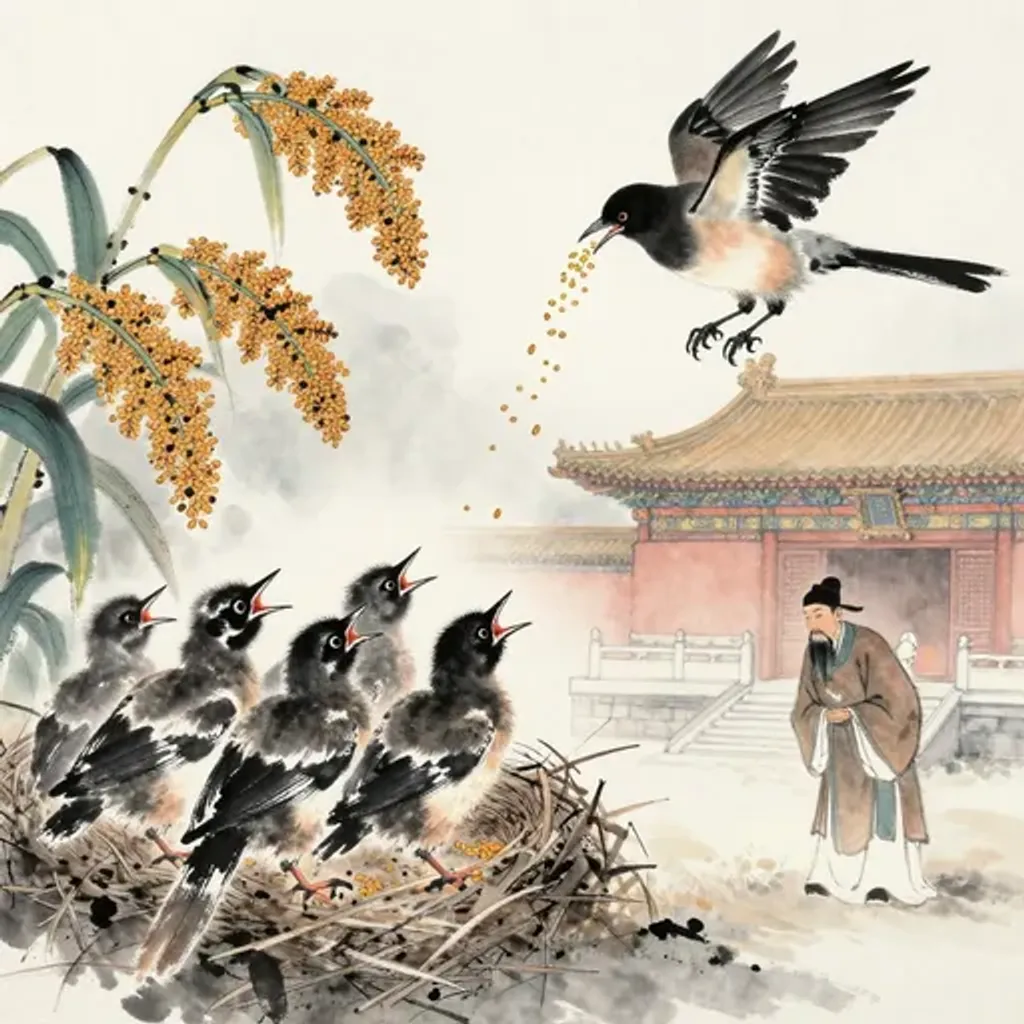
烏鵲食穀,張口受哺。蒙被恩德,長大成就。柔順利貞,君臣合好。
Crows and magpies feed on grain, opening their mouths to receive nourishment. Cloaked in grace and kindness, they grow and achieve greatness. Gentle and yielding, faithful and true; lord and minister join in harmony.
— Jiao Yanshou, Yilin (Forest of Changes), 1st century BC
Commentary
A lake drained of water marks Oppression, yet crows and magpies feed on grain, mouths open to receive nourishment. Sheltered by grace, they grow and flourish. The verse unfolds as an allegory of patronage: the helpless fledgling, sustained by generosity, matures into something capable. Compliance and constancy bind ruler and minister in mutual trust. From Oppression to the Creative, the transformation is striking: what begins in dependency and exhaustion ends in self-generating initiative. The heaven-over-heaven image of Qian means ceaseless self-renewal. The bird that once begged for food now rides the wind on its own wings. Oppression does not destroy potential; it incubates it, provided one receives aid with humility and repays it with steadfast virtue.
困 → 坤
Hexagram 47 → Hexagram 2: The Receptive
Changing lines: 2, 4, 5
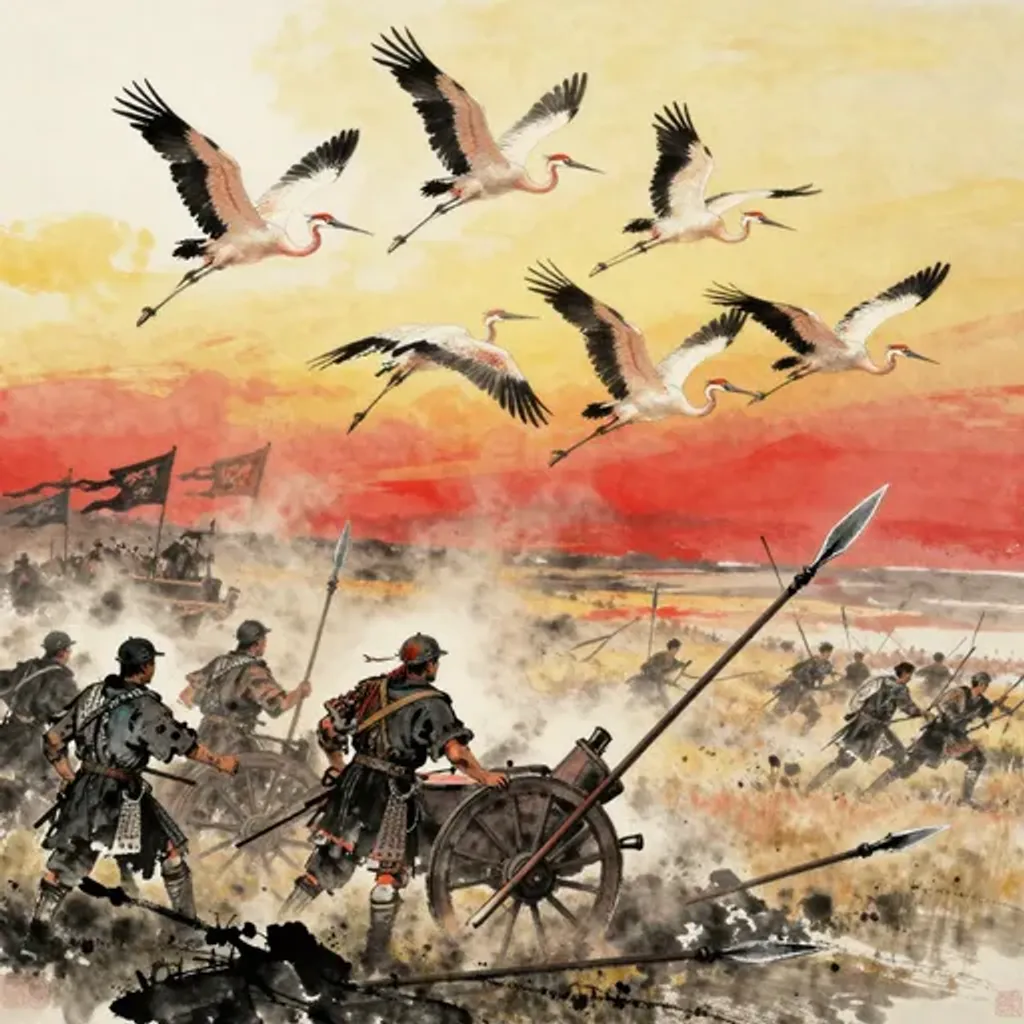
六鷁退飛,為襄敗祥。陳師合戰,右股夷傷。遂以薨崩,霸功不終。
Six herons fly in retreat, an ill omen for Duke Xiang. Marshaling troops and joining battle, his right thigh is wounded. Thereupon he perishes; his hegemon's work left unfinished.
— Jiao Yanshou, Yilin (Forest of Changes), 1st century BC
Commentary
A lake without water signals exhaustion, and six fish-hawks fly backward across the sky. The Zuo Zhuan records that in 642 BC, six yi birds were seen retreating over the Song capital, blown back by an unseen gale, an omen interpreted as portending defeat for Duke Xiang of Song. True to the sign, the duke marched against Chu at the Battle of Hong River, refused to attack while the enemy crossed, was wounded in the right thigh, and died shortly after. His hegemonic ambitions ended unfinished. From Oppression to the Receptive, doubled earth swallows all initiative. The duke's rigid chivalry became passive submission to fate. What began as noble principle collapsed into receptive ground that absorbed his ruin without resistance.
困 → 屯
Hexagram 47 → Hexagram 3: Difficulty at the Beginning
Changing lines: 1, 2, 4
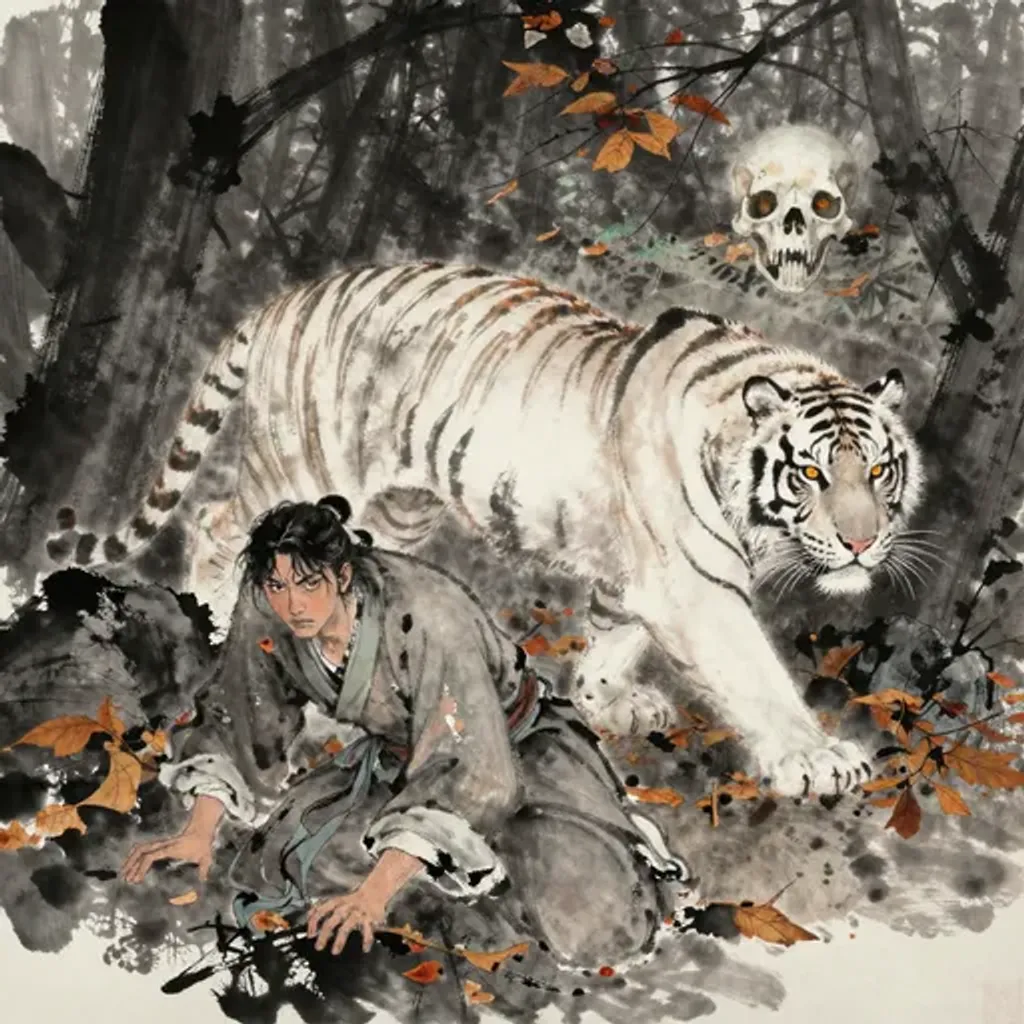
匍匐出走,驚惶悼恐。白虎王孫,蓐收在後,居中无咎。
Crawling and fleeing in haste, startled and stricken with dread. The White Tiger, prince of beasts, with Rushou close behind. Holding to the center, there is no blame.
— Jiao Yanshou, Yilin (Forest of Changes), 1st century BC
Commentary
A lake drained dry, and someone crawls out in terror, scrambling forward on hands and knees. The White Tiger, celestial guardian of the west, looms behind, and Rushou, the autumn deity of metal and execution, follows close. Yet the verse resolves: holding to the center, there is no blame. The White Tiger and Rushou together embody autumn's lethal energy, the force that ends the growing season and executes heaven's judgment. To flee in panic invites pursuit; to hold one's ground at the center neutralizes the threat. From Oppression to Difficulty at the Beginning, the image shifts from drained emptiness to storm clouds gathering with thunder. The terror is real, but so is the nascent potential: those who steady themselves amid fear find the seed of a new beginning.
困 → 蒙
Hexagram 47 → Hexagram 4: Youthful Folly
Changing lines: 4, 5, 6
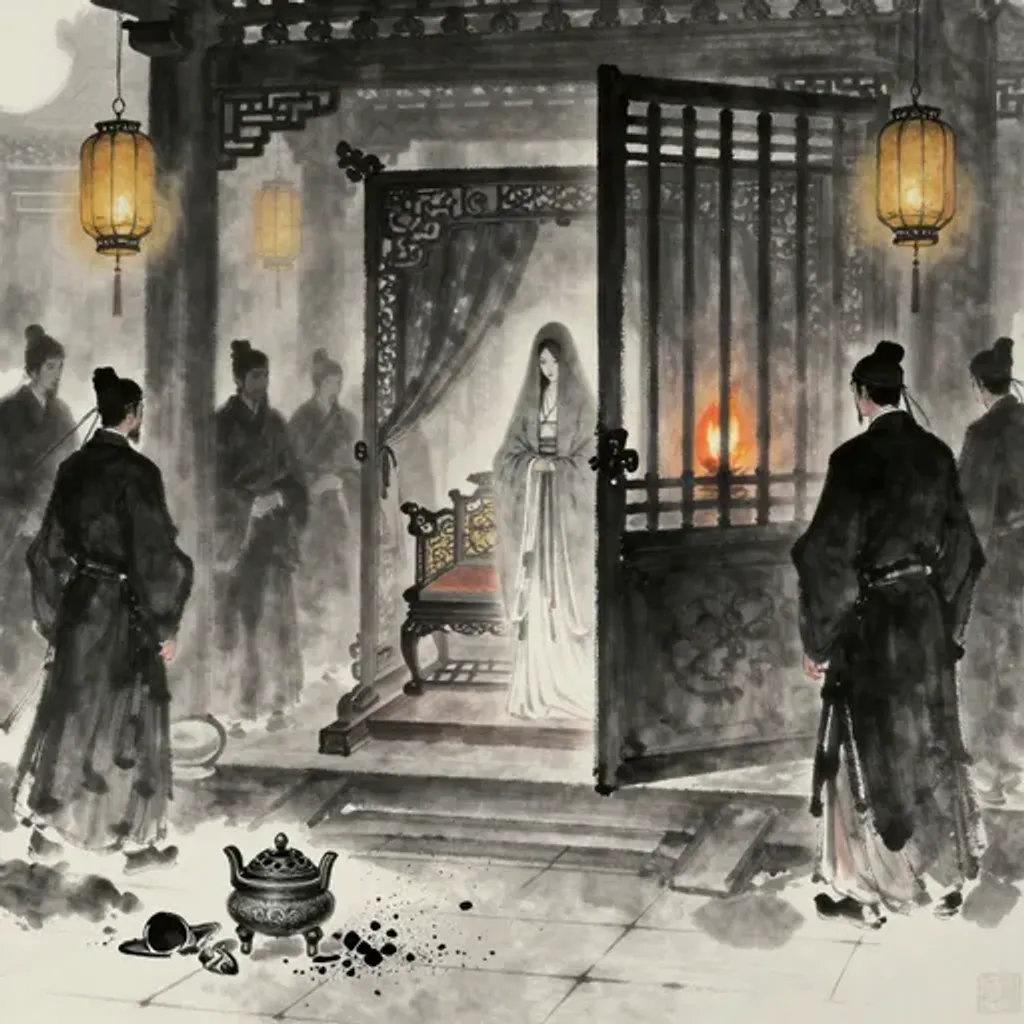
庇盧不明,使孔德妨。女孽亂國,虐政傷仁。
A shelter dim and unlit, obstructing Confucius's virtue. A woman's mischief disorders the state; tyrannical rule injures benevolence.
— Jiao Yanshou, Yilin (Forest of Changes), 1st century BC
Commentary
A lake without water, the dwelling darkened, its shelter offering no clarity. Virtue of the highest order is obstructed. The verse alludes to the incident when the state of Qi sent a troupe of female musicians to Lu, captivating Duke Ding and his minister Ji Huanzi so thoroughly that court business was abandoned for days. Confucius, whose moral authority (kong de, 'great virtue') was thereby undermined, departed Lu in disappointment. A woman's seductive influence disorders the state; cruel governance wounds benevolence. From Oppression to Youthful Folly, a spring emerges beneath a mountain but gropes in darkness. When those in power are beguiled by spectacle, wisdom goes unheeded and the state stumbles blindly forward, its judgment cloaked in fog.
困 → 需
Hexagram 47 → Hexagram 5: Waiting
Changing lines: 1, 3, 4
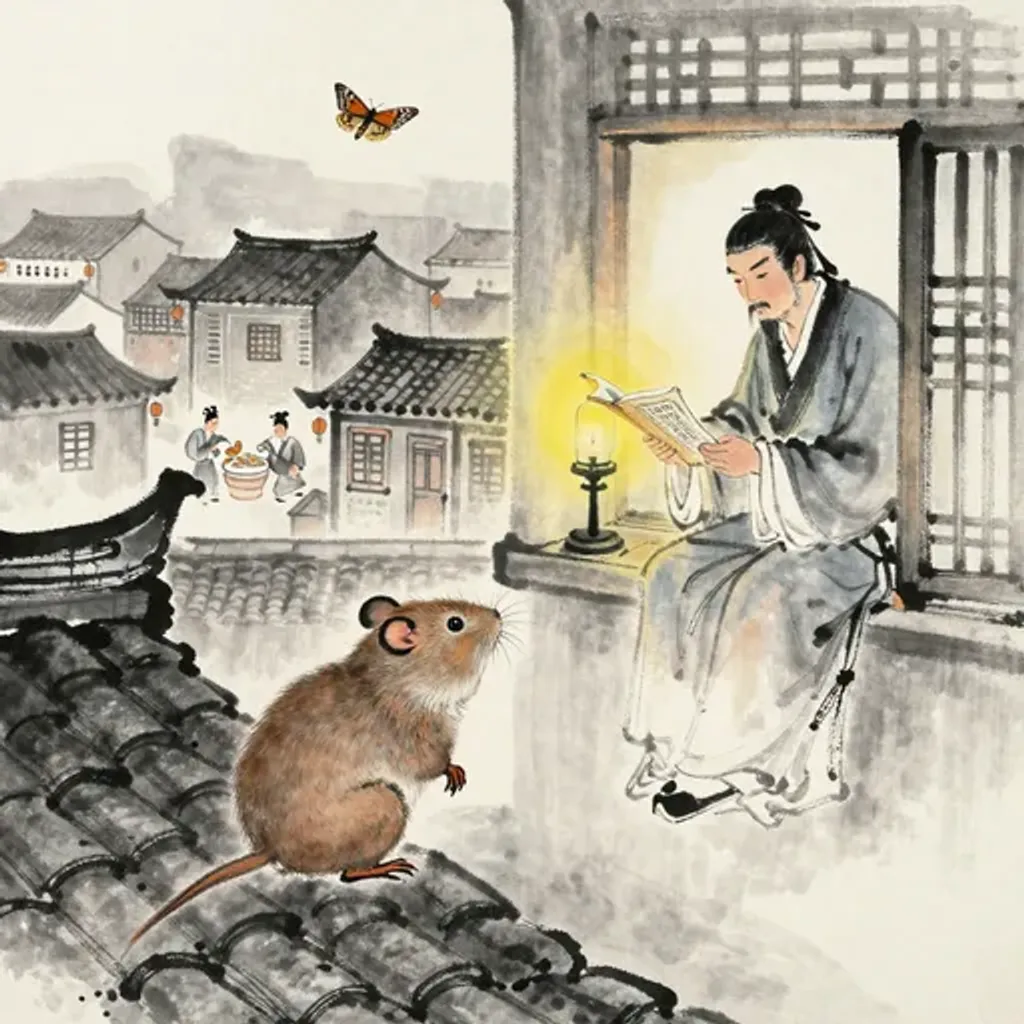
石鼠四足,不能上屋。顏氏淑德,未有爵祿。
The stone rat has four feet but cannot climb to the roof. The Yan clan possesses pure virtue yet has neither rank nor stipend.
— Jiao Yanshou, Yilin (Forest of Changes), 1st century BC
Commentary
A lake without water: a stone rat scurries on four legs but cannot climb to the rooftop. The image echoes the Shijing's 'Shuo Shu' ode, where the bloated rat symbolizes those who consume without contributing. Then comes Yan Hui, Confucius's most beloved disciple, whose sublime virtue went unrewarded with rank or salary. He lived in a narrow lane on a single bowl of rice and a ladle of water, yet never lost his joy. From Oppression to Waiting, clouds mass above heaven but the rain has not yet fallen. The worthy man's time has not arrived. The fat rat occupies what it cannot earn; the sage starves in his lane. Oppression here is not poverty of character but poverty of recognition, and the one who waits must wait longer still.
困 → 訟
Hexagram 47 → Hexagram 6: Conflict
Changing lines: 6
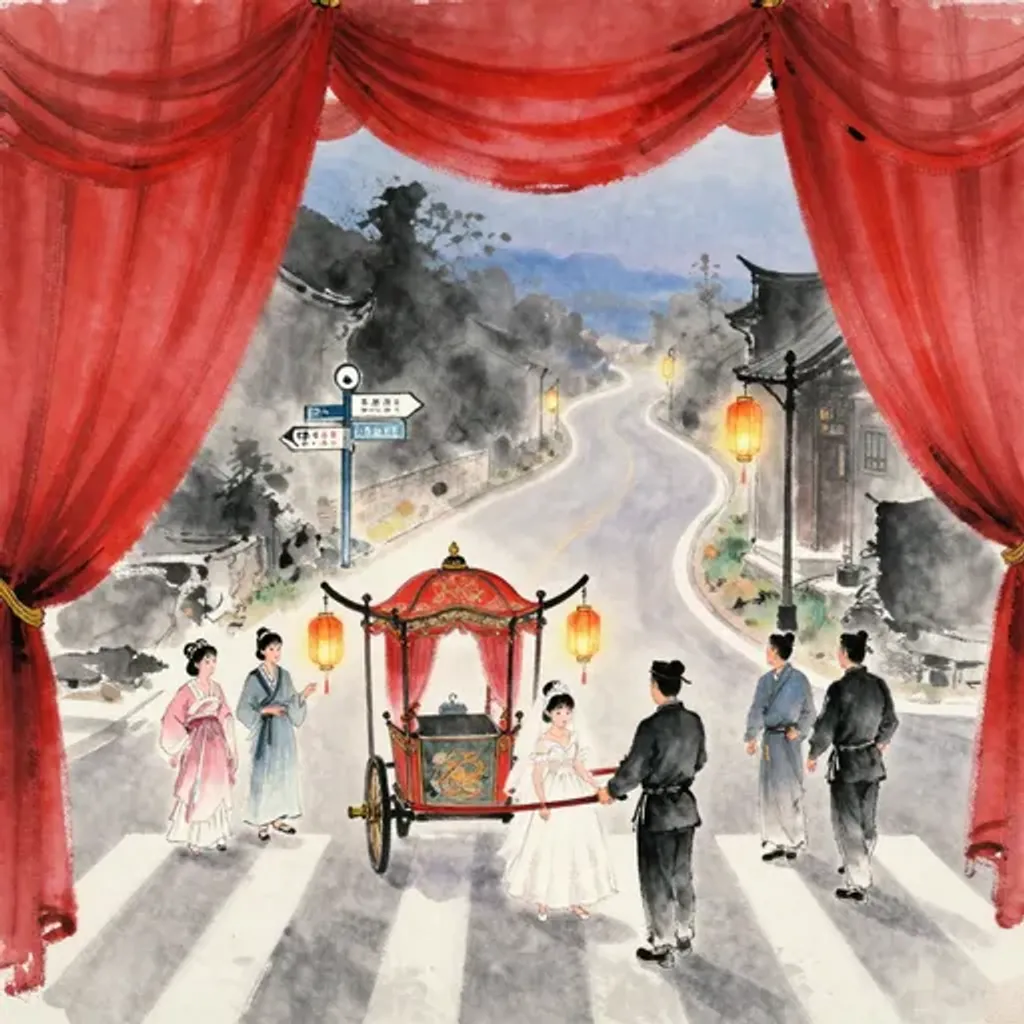
襄送季女,至於蕩道。齊子旦夕,留連久處。
Duke Xiang escorts the youngest daughter, arriving at the road of Dang. The son of Qi lingers morning and evening, detained and long delayed.
— Jiao Yanshou, Yilin (Forest of Changes), 1st century BC
Commentary
A lake without water marks entrapment. Duke Xiang escorts his younger sister, a 'season-born daughter,' as far as Tangdao for her marriage. But a prince of Qi lingers morning and evening, delaying the journey indefinitely. The Zuo Zhuan records several instances where marriage processions between states became pretexts for diplomatic entanglement or romantic dalliance, disrupting what should have been straightforward alliances. The escort becomes a snare, the road a place of lingering rather than passage. From Oppression to Conflict, heaven and water move in contrary directions. What began as a ritual obligation devolves into crossed purposes and mutual suspicion. The journey stalls because desire and duty pull against each other, and no arbitration resolves the impasse.
困 → 師
Hexagram 47 → Hexagram 7: The Army
Changing lines: 4, 5
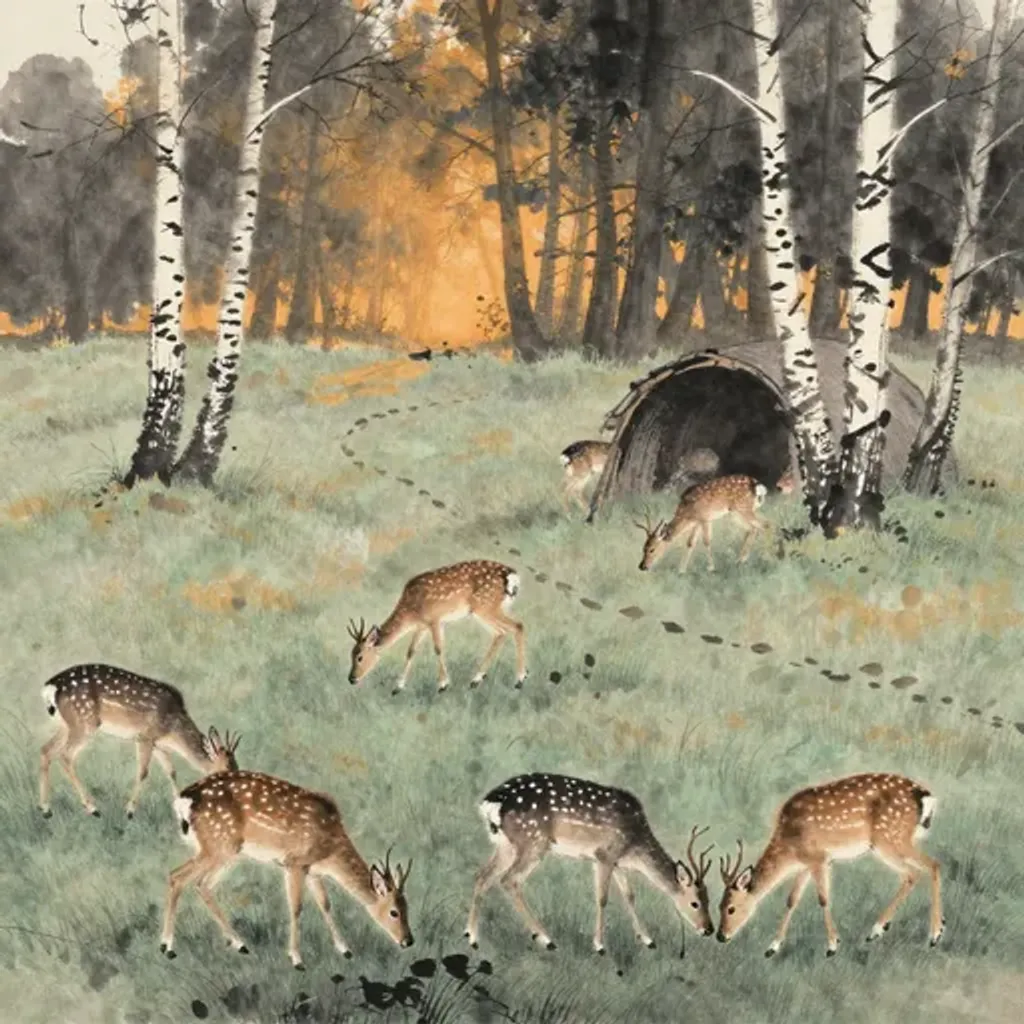
麞鹿逐牧,飽歸其居。還反次舍,樂得自如。
Deer and muntjac follow the pasture, sated they return to their dwelling. Coming back to rest in their shelter, content and at ease of their own accord.
— Jiao Yanshou, Yilin (Forest of Changes), 1st century BC
Commentary
A lake without water, yet the deer and river-deer follow their pasture, eat their fill, and return contentedly to their lodgings. The verse paints a scene of pastoral satisfaction: animals graze freely, then come home to rest, taking pleasure in their natural routine. No allusion complicates the image; it is pure divinatory felicity. From Oppression to the Army, the transformation is quietly instructive. Water hidden within the earth gives the general his disciplined mass. These grazing animals return to their quarters in orderly fashion, each knowing its place. The contentment of well-managed creatures mirrors the Army's ideal: people nourished and properly organized do not rebel. Even from oppression, disciplined return to one's proper station yields peace and self-sufficiency.
困 → 比
Hexagram 47 → Hexagram 8: Holding Together
Changing lines: 2, 4
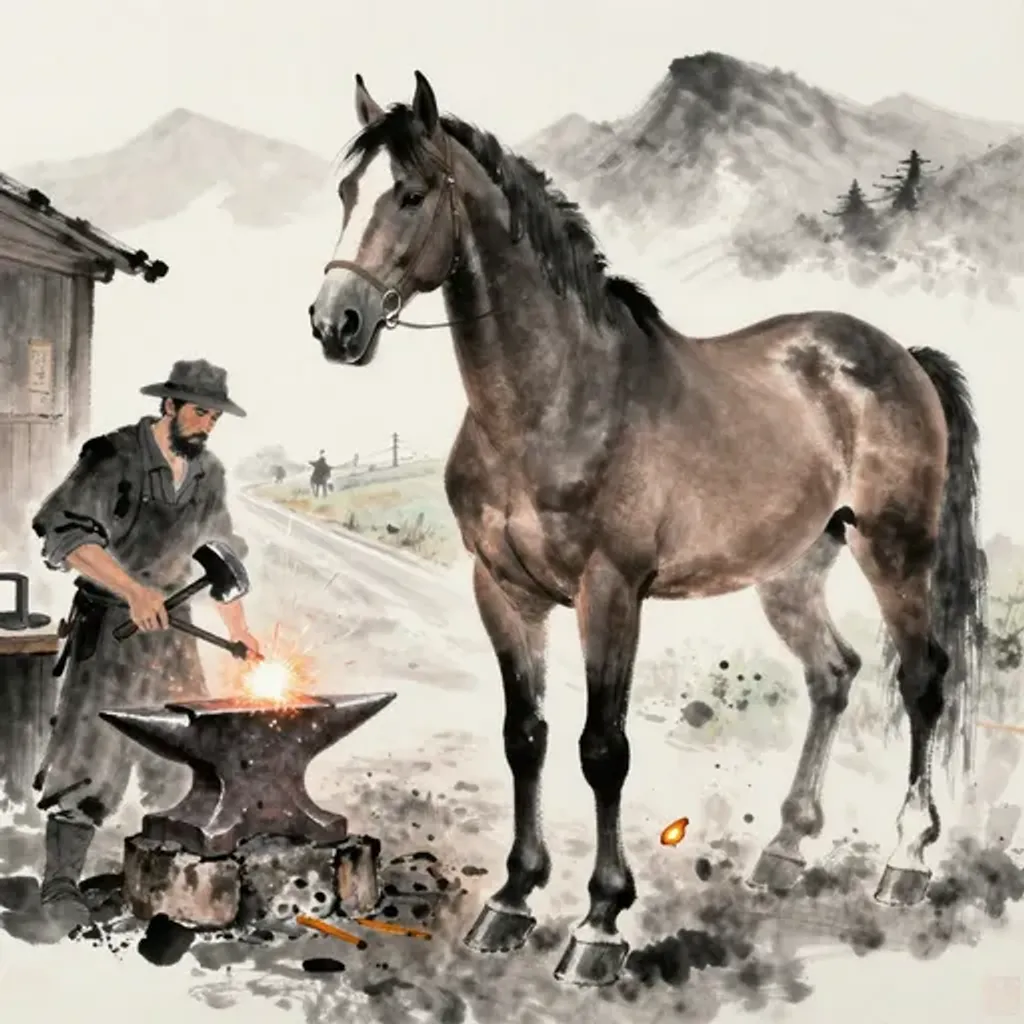
望尚阿衡,太宰周公。藩屏湯武,立為侯王。
The fine horse awaits its Bo Le; cold iron awaits the master smith. Once meeting the one who understands — a thousand li of road opens.
— Jiao Yanshou, Yilin (Forest of Changes), 1st century BC
Commentary
A lake without water, yet the original verse gazes upward toward deliverance. Yi Yin, the Aheng, rose from cook to chief minister under King Tang; the Duke of Zhou served as regent to young King Cheng. Both men became 'fence and shield' to their respective founders, Tang and Wu, who thereby established their royal houses. The verse names the supreme model of minister-patron union: the worthy man finds his sovereign, and together they build an enduring dynasty. From Oppression to Holding Together, water rests upon earth, and the former kings use this image to establish myriad states and bind the feudal lords. Oppression dissolves the moment the right patron appears, transforming isolation into the foundational bond of political order.
困 → 小畜
Hexagram 47 → Hexagram 9: Small Taming
Changing lines: 1, 3, 4, 6
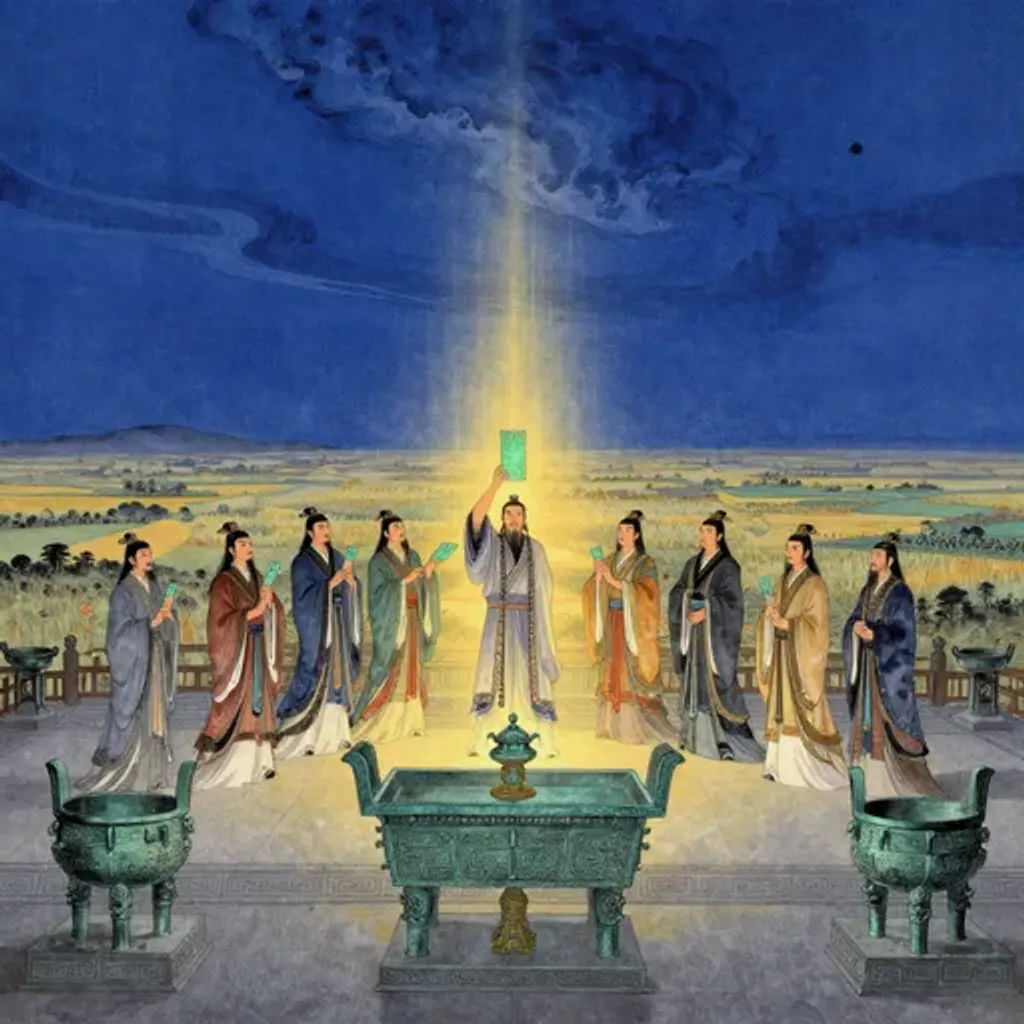
開廓洪緒,王迹所基。報以八子,功得俟時。
Opening vast foundations, the base upon which a king's legacy rests. Repaid with eight sons, whose merit awaits its appointed time.
— Jiao Yanshou, Yilin (Forest of Changes), 1st century BC
Commentary
A lake without water, yet here the foundations of kingship are being laid. The verse speaks of opening vast territories and establishing the origins from which a royal lineage springs. The phrase 'rewarded with eight sons' likely alludes to the legend of King Wen's prolific descendants, traditionally credited with producing numerous worthy heirs who anchored the Zhou feudal system. Merit is stored up and waits for the proper season to manifest. From Oppression to Small Taming, wind rides above heaven, gently restraining creative force. The small accumulation of virtue, the patient cultivation of moral capital across generations, becomes the infrastructure of empire. What seems like waiting is actually the slow, invisible work of building something that will outlast the oppression.
困 → 履
Hexagram 47 → Hexagram 10: Treading
Changing lines: 1, 6
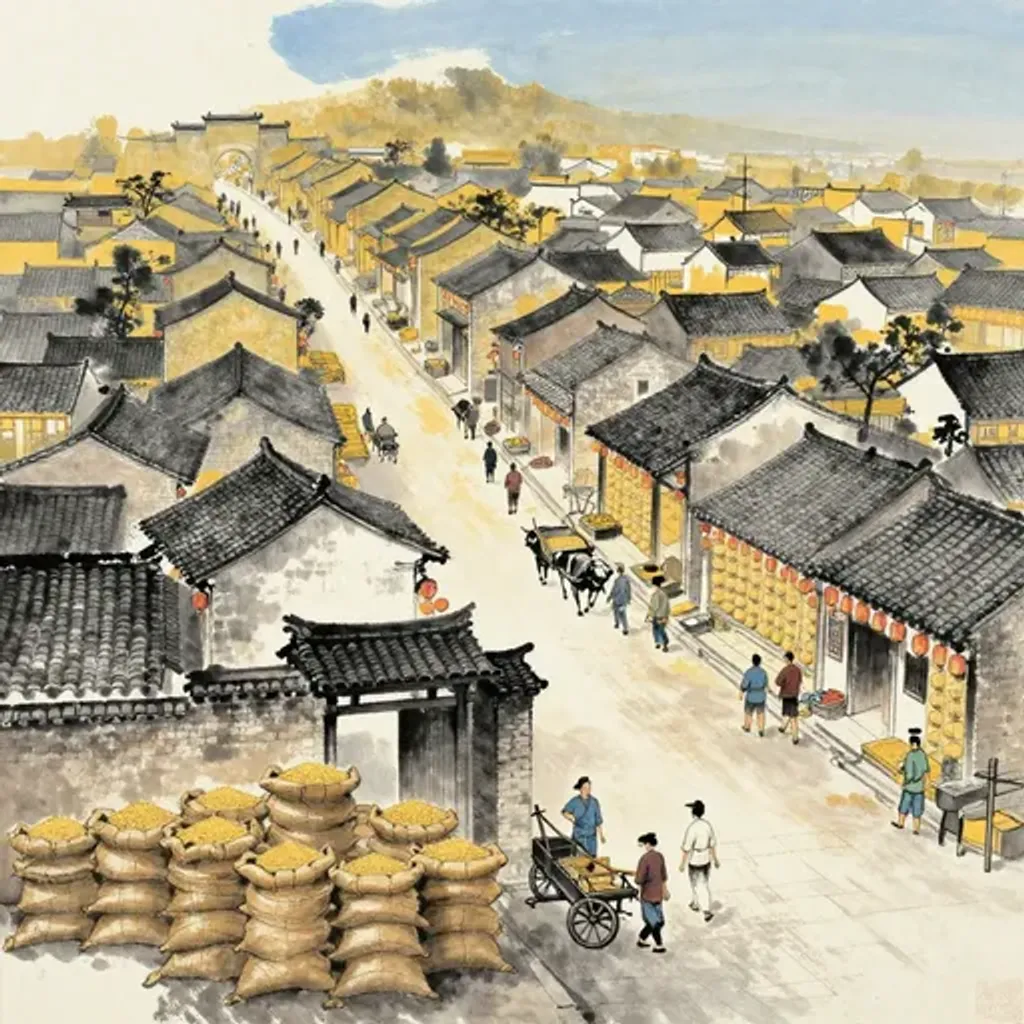
八會大都,饒富有餘。安民利國,可以長居。
Eight roads converge at the great capital, abundant and rich with surplus. The people are settled, the state enriched; fit for long and lasting dwelling.
— Jiao Yanshou, Yilin (Forest of Changes), 1st century BC
Commentary
A lake drained dry, yet the verse pivots to abundance. Eight regional assemblies converge on the great capital, and wealth overflows. The people are settled, the state prospers, and long residence is assured. The 'eight assemblies' evoke the ancient system of regional markets or feudal gatherings, where commerce and governance intersected to create shared prosperity. From Oppression to Treading, heaven above the lake establishes proper hierarchy. The gentleman distinguishes high from low and settles the people's aspirations. Oppression ends when proper order is restored and each person treads carefully within legitimate boundaries. The drained lake refills not through force but through the steady commerce of a well-ordered society, where wealth circulates because roles are respected.
困 → 泰
Hexagram 47 → Hexagram 11: Peace
Changing lines: 1, 3, 4, 5
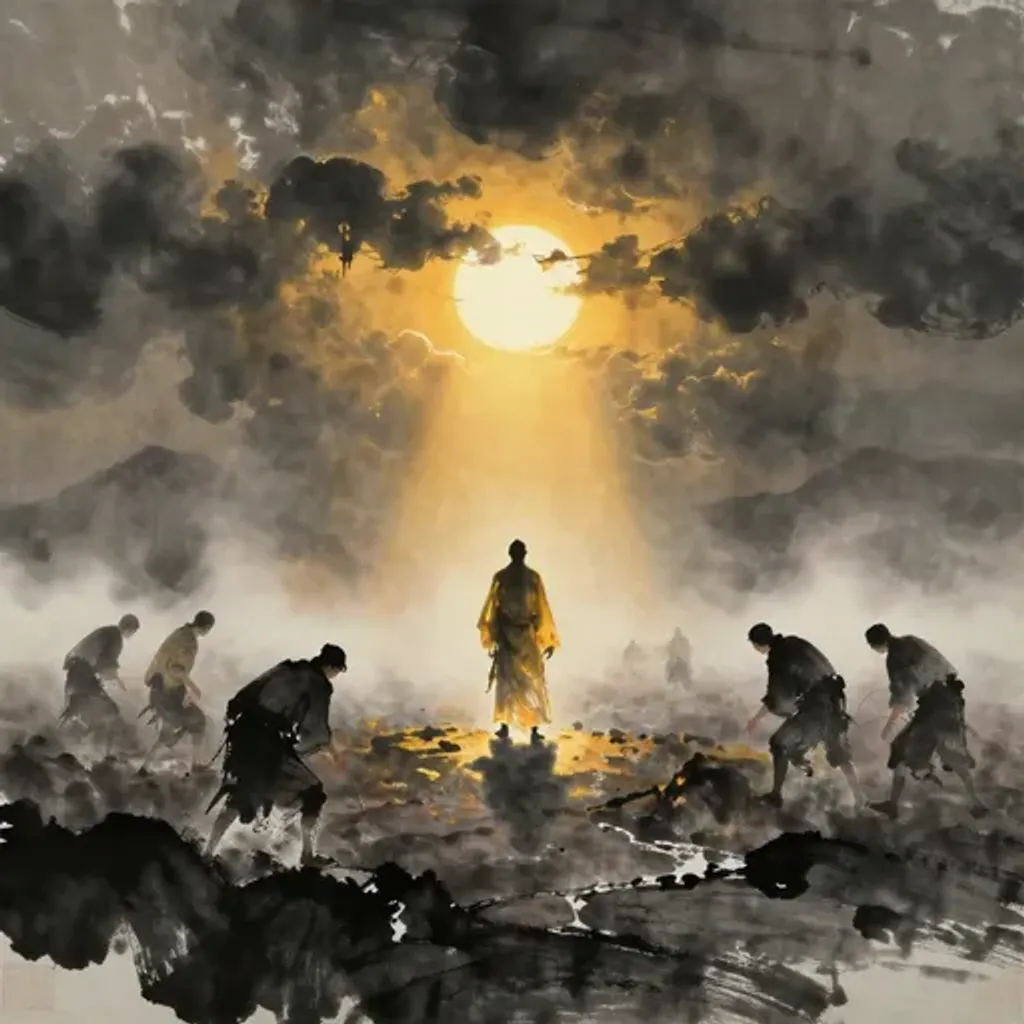
陰雲四方,日在中央。人雖昏霧,我獨昭明。
Yin clouds gather from every quarter, yet the sun stands at the center. Though others are lost in haze and fog, I alone shine with brilliance.
— Jiao Yanshou, Yilin (Forest of Changes), 1st century BC
Commentary
A lake without water, yet the sun stands firm at the center while dark clouds press in from all four directions. Others stumble through fog; I alone remain luminous. The verse captures the experience of inner clarity maintained against external oppression, the sage who keeps his light burning when the world goes dark. From Oppression to Peace, heaven and earth exchange their energies in the most harmonious of all hexagrams. The isolated sun is no longer alone: when the yin clouds of oppression finally yield, heaven descends and earth rises to meet it. The one who preserved clarity through the darkest hour finds that the world has turned to match his inner state. Solitary illumination becomes universal peace.
困 → 否
Hexagram 47 → Hexagram 12: Standstill
Changing lines: 2, 6
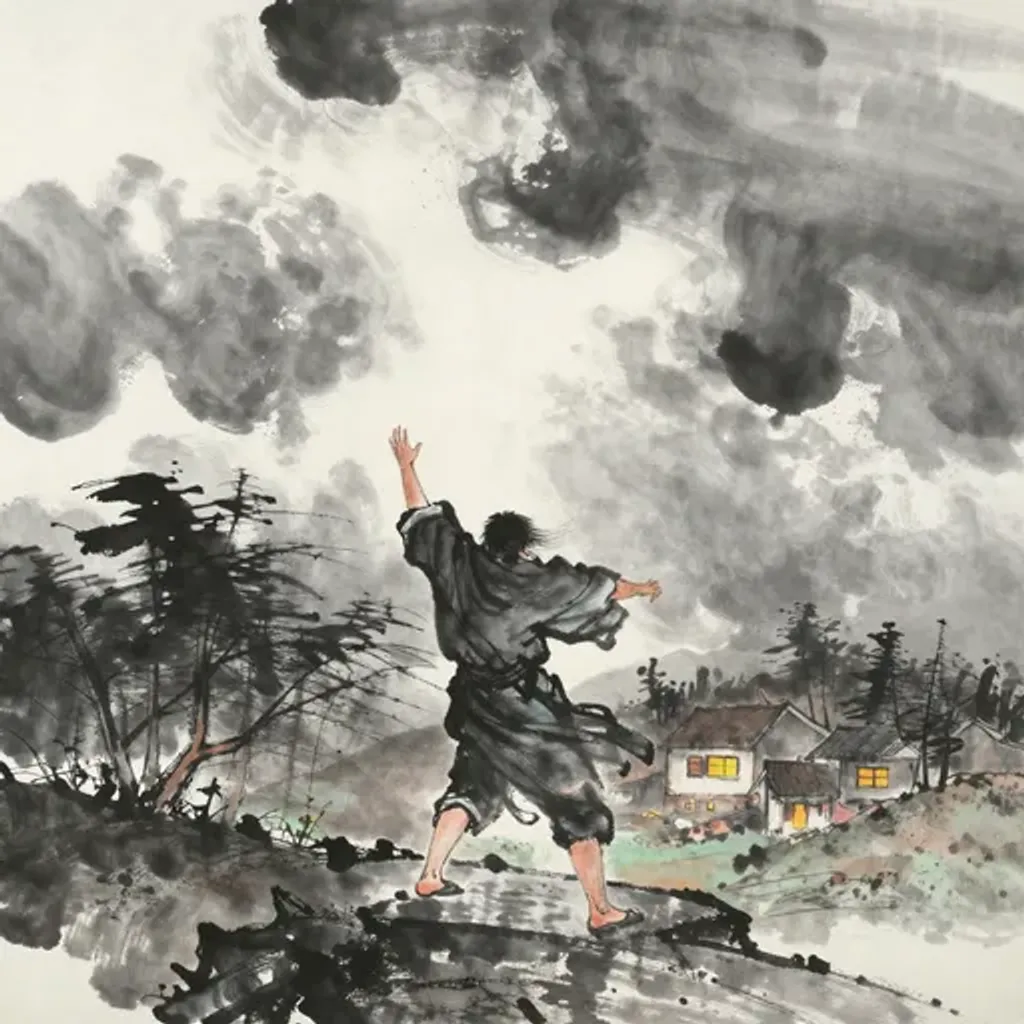
薄為災虐,風吹雲卻。欲上不得,復歸其宅。
Calamity strikes with cruel force; wind blows the clouds away. Wanting to rise but unable, one returns again to one's abode.
— Jiao Yanshou, Yilin (Forest of Changes), 1st century BC
Commentary
A lake without water: thin and meager forces bring calamity, wind scatters the clouds. One wishes to rise but cannot, and returns instead to one's dwelling. The verse captures frustrated ambition: the resources are too slight to mount a challenge, and nature itself conspires to disperse whatever gathers. The wind that should carry the clouds upward blows them apart. From Oppression to Standstill, heaven and earth cease to communicate. The gentleman withdraws into frugal virtue to avoid harm. This is not defeat but strategic retreat: the clouds that cannot gather, the ambition that cannot ascend, must accept the season of non-interaction. Returning home is not failure but prudent self-preservation when the cosmic currents run against one.
困 → 同人
Hexagram 47 → Hexagram 13: Fellowship
Changing lines: 1, 2, 3, 6
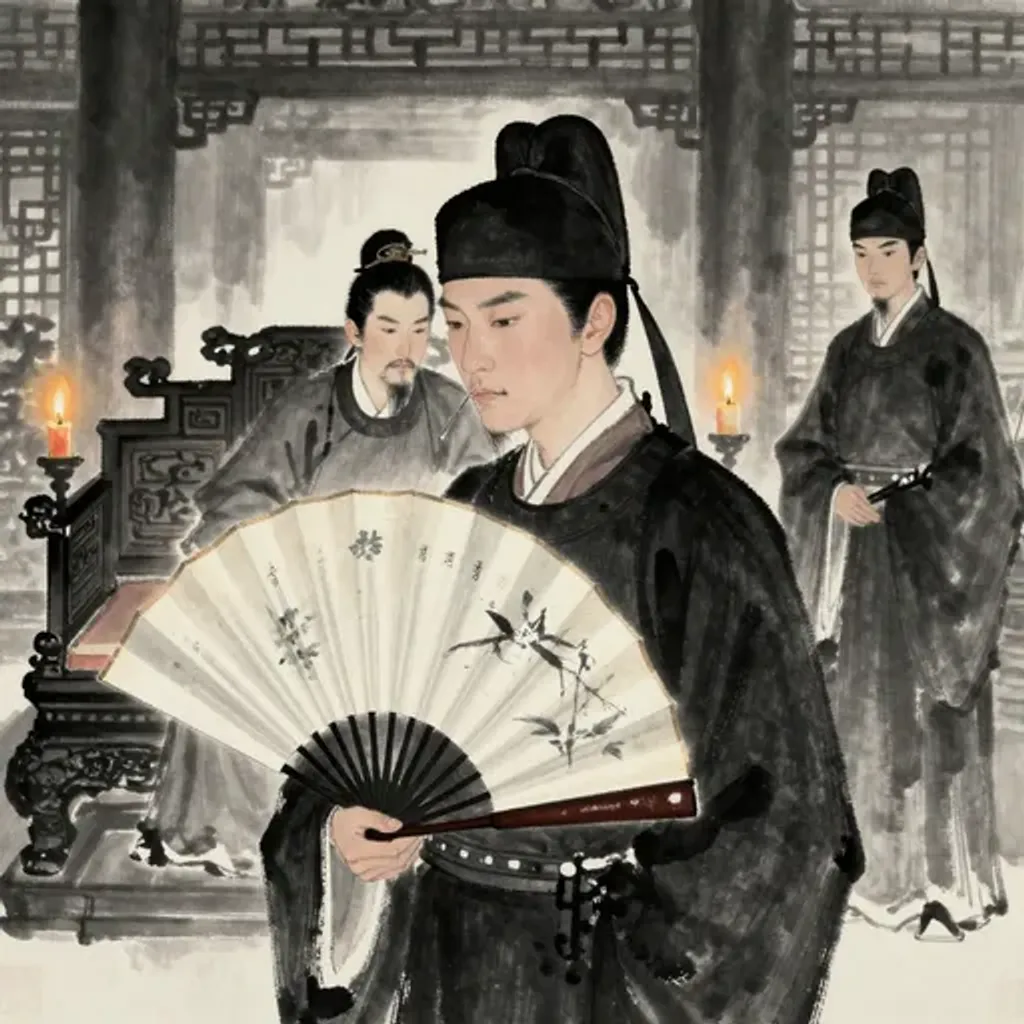
昭昭略略,非忠信客。言語反覆,以黑為白。
Glib and shifty, no loyal or faithful guest. Words twist and reverse themselves, calling black what is white.
— Jiao Yanshou, Yilin (Forest of Changes), 1st century BC
Commentary
A lake without water: all appears bright and open, yet the guest is neither loyal nor trustworthy. Words twist and turn, calling black white and white black. The verse indicts a smooth-tongued deceiver who presents a polished exterior while speaking falsehoods, the classic flatterer whose every reversal of truth deepens the oppression of honest men. From Oppression to Fellowship, heaven and fire share the sky, and the gentleman distinguishes kindred from strangers. The transformation is pointed: true fellowship requires sorting the genuine from the counterfeit. When duplicity infiltrates the inner circle, the fire's clarity must burn away pretense. Fellowship forged without this discernment is merely oppression wearing a friendlier mask.
困 → 大有
Hexagram 47 → Hexagram 14: Great Possession
Changing lines: 1, 3, 5, 6
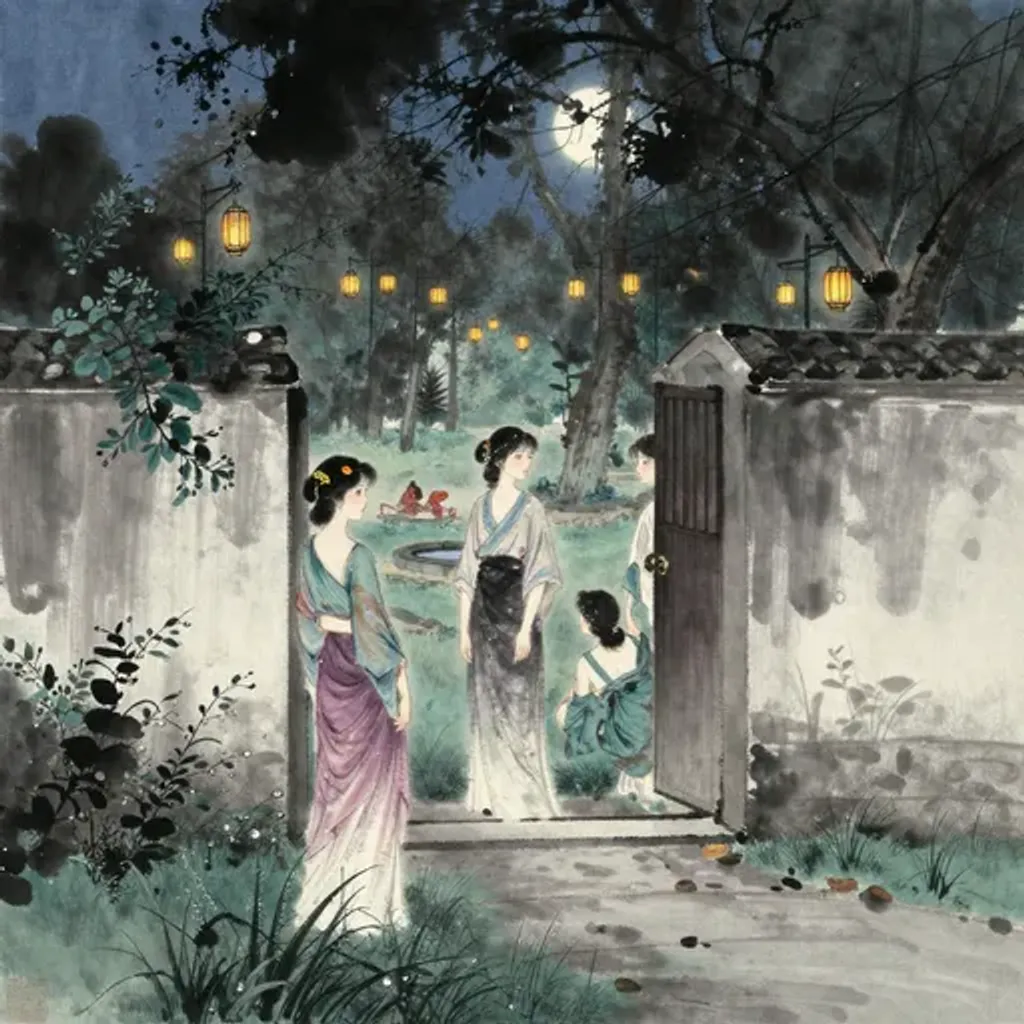
三女為姦,俱遊高園。背室夜行,與伯笑言。禍及乃身,冤死誰禱?
Three women conspire in wickedness, roaming together in the high garden. Leaving the chamber to walk by night, they laugh and talk with the lord. Disaster reaches their very persons; who will pray for the wrongly slain?
— Jiao Yanshou, Yilin (Forest of Changes), 1st century BC
Commentary
A lake without water, and three women conspire together, strolling through the high garden. They leave their chambers at night, laughing and talking with the eldest son. Disaster reaches them in person; they die unjustly, with no one to pray for their souls. The verse warns of illicit nocturnal liaisons that bring ruin to all parties. The 'three women' may echo classical warnings about feminine influence undermining court order, a recurring motif in the Yilin. From Oppression to Great Possession, fire blazes above heaven. The transformation is paradoxical: what should be abundant luminosity is instead squandered on scandal. Great Possession demands suppressing evil and promoting good; here the fire's brilliance only exposes the wrongdoing more completely, sealing the participants' doom.
困 → 謙
Hexagram 47 → Hexagram 15: Modesty
Changing lines: 2, 3, 4, 5
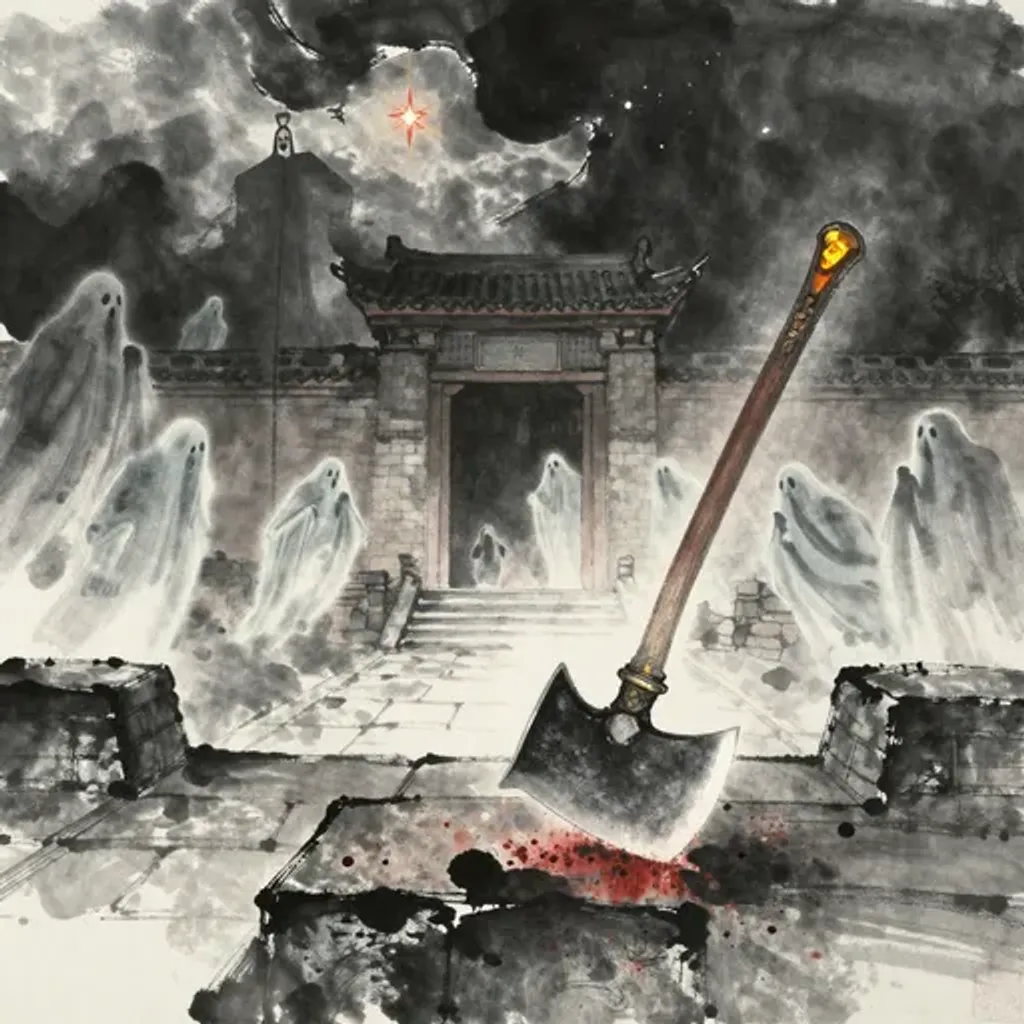
涉尸留鬼,大斧所視。文昌司過,簡公亂死。
Wading through corpses, lingering ghosts; the great axe watches over them. Wenchang records transgressions; Duke Jian meets a violent end.
— Jiao Yanshou, Yilin (Forest of Changes), 1st century BC
Commentary
A lake without water: corpses lie in the ford, ghosts linger, and the great axe casts its shadow. The star Wenchang presides over transgressions, and Duke Jian dies in chaos. The 'Jian Gong' most likely refers to Duke Jian of Qi, assassinated by the powerful minister Tian Chengzi in 481 BC. Wenchang, the celestial arbiter of records and faults, watches as political murder unfolds. The great axe symbolizes the executioner's instrument hovering over the doomed. From Oppression to Modesty, a mountain hidden within the earth, the transformation is grimly appropriate. Modesty levels the high and raises the low, but Duke Jian's downfall shows that forced leveling through assassination is Modesty's dark inversion: the ruler brought low not by virtue but by violence.
困 → 豫
Hexagram 47 → Hexagram 16: Enthusiasm
Changing lines: 2, 5
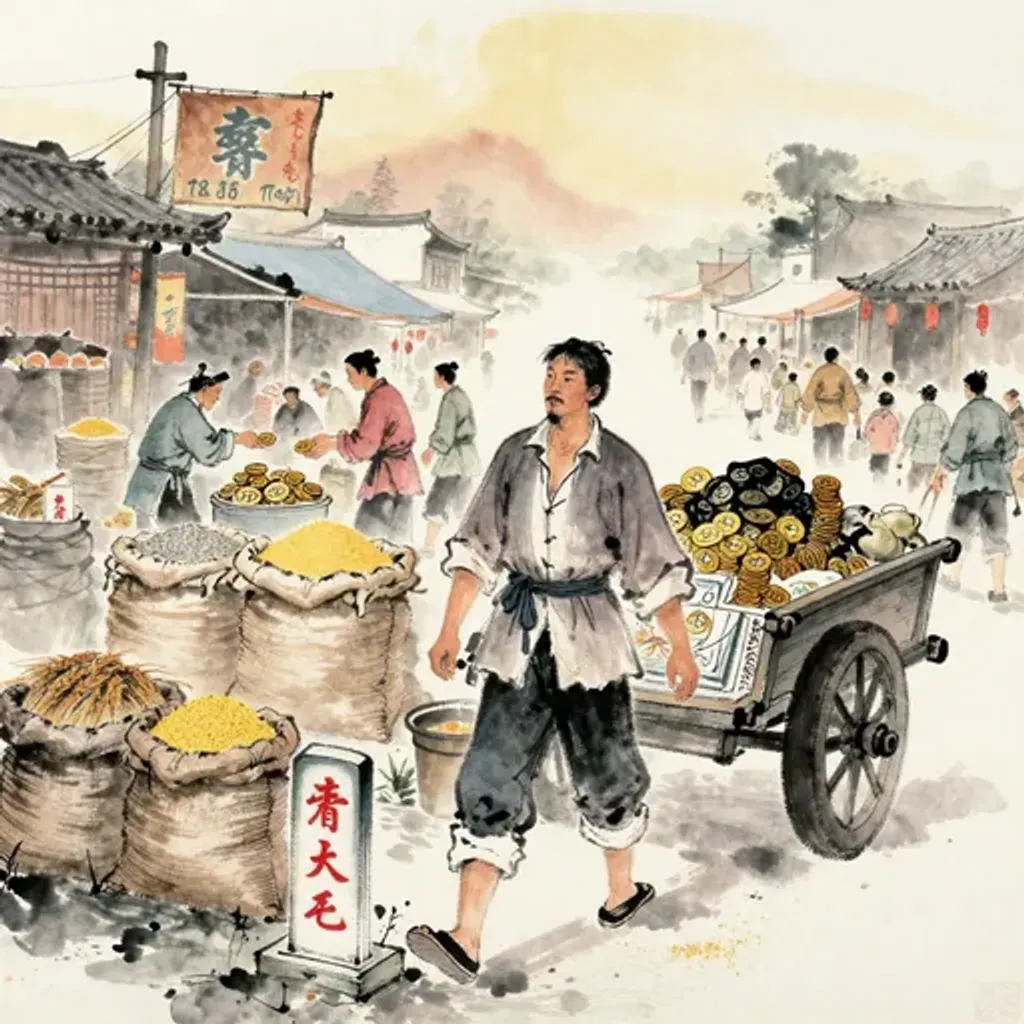
大足長股,利出行道。囷倉充盈,䟽齒善市。宜錢富家,事得萬倍。
Great feet and long legs, profitable for traveling the road. Granaries brim and overflow; with fine teeth one trades well at market. Wealth enriches the household; in every affair, a hundredfold return.
— Jiao Yanshou, Yilin (Forest of Changes), 1st century BC
Commentary
A lake without water, yet the verse overflows with bounty. Great feet and long legs stride freely along the road. Granaries and round bins brim with grain, the spaced-tooth comb works the market well. Wealth suits the household; returns multiply a hundredfold. The imagery is entirely commercial: a body built for travel, storehouses full, sharp trading instincts, profits compounding. From Oppression to Enthusiasm, thunder bursts from the earth in a joyous release. The ancient kings used this image to compose music in praise of virtue. Oppression breaks open into exuberant prosperity, the stored energy of hardship erupting into movement and celebration. The feet that were trapped now stride; the empty granary now overflows.
困 → 隨
Hexagram 47 → Hexagram 17: Following
Changing lines: 1, 2
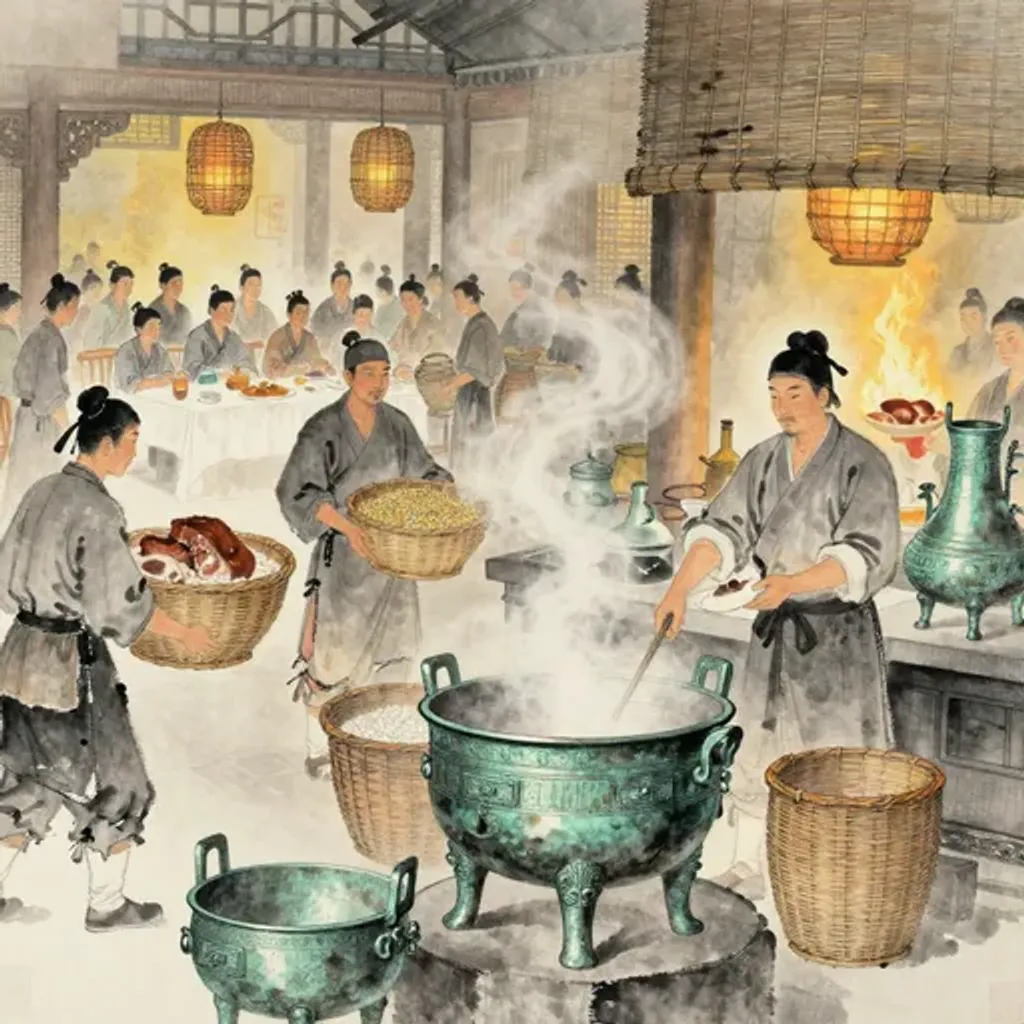
筐筥錡釜,可活百口。伊氏鼎俎,大福所起。
Baskets and kettles, cauldrons and pots, enough to sustain a hundred mouths. Yi Yin's sacrificial vessels are the wellspring of great fortune.
— Jiao Yanshou, Yilin (Forest of Changes), 1st century BC
Commentary
A lake without water, but baskets and cauldrons stand ready. Square baskets and round containers, tripod kettles and cooking pots are enough to feed a hundred mouths. Then comes the cauldron of the Yi clan: Yi Yin, once a humble cook from the land of Youshen, who carried his tripod and chopping board to King Tang and through the art of cookery earned a minister's trust. From that cauldron, great blessings arose. From Oppression to Following, thunder rests within the lake, and the gentleman enters evening rest at dusk. The one who prepares nourishment for others discovers that others naturally follow. Yi Yin's cookery was not servility but adaptive leadership: meeting the patron where he stood and gently guiding him onward.
困 → 蠱
Hexagram 47 → Hexagram 18: Work on the Decayed
Changing lines: 3, 4, 5, 6
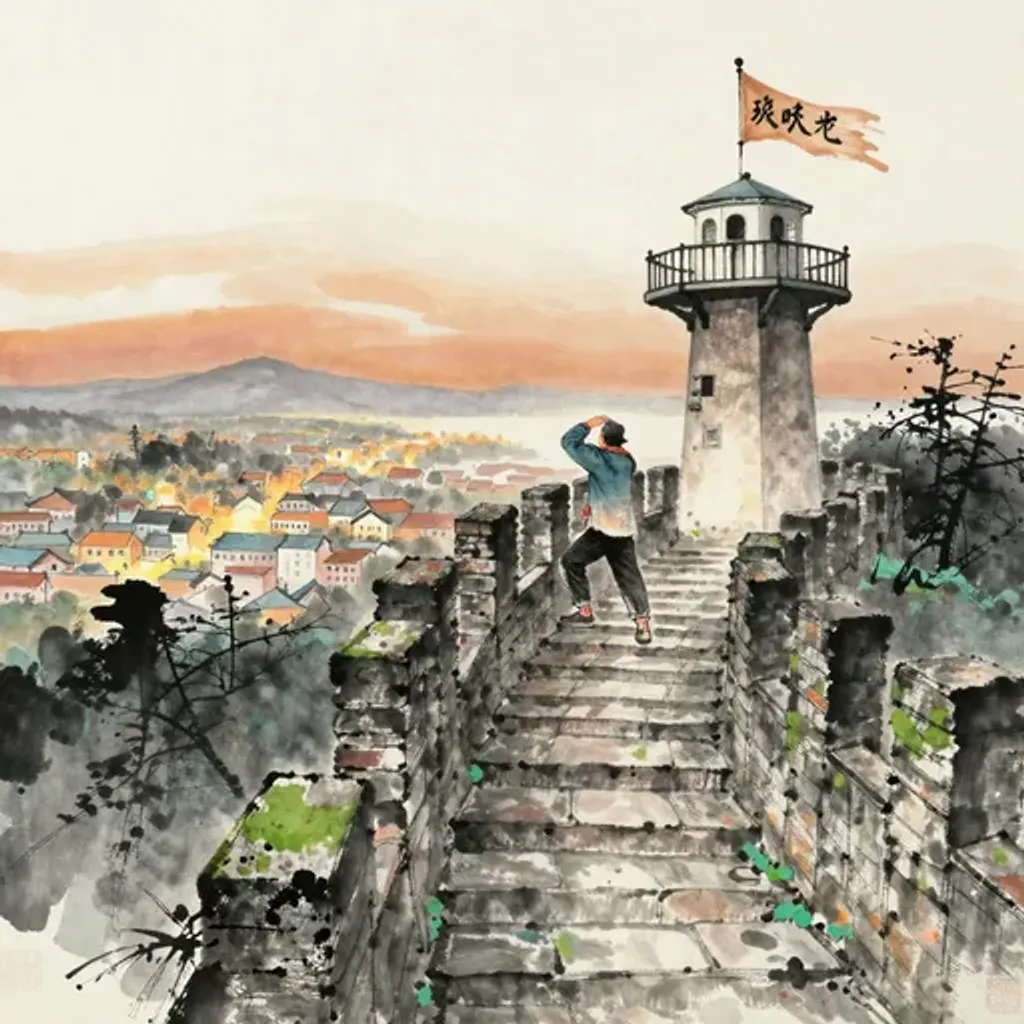
升高登虛,欲有望候。駕之北邑,與喜相扶。
Ascending high to the empty tower, hoping to keep watch. Driving northward to that town, one meets with joy and mutual support.
— Jiao Yanshou, Yilin (Forest of Changes), 1st century BC
Commentary
A lake without water: one ascends to a high vantage, climbing into open space to survey the terrain and watch for what lies ahead. Then the chariot is driven northward to the settlement, where joy arrives as a companion. The verse moves from anxious searching to fortunate encounter: the oppressed one scans the horizon for opportunity, finds it in the northern town, and meets happiness there. From Oppression to Work on the Decayed, wind stirs beneath the mountain, and the gentleman rouses the people and cultivates virtue. The one who climbed high to see was diagnosing what needed repair; the northern journey is the active step of remediation. Decay, once identified from above, can be corrected from within.
困 → 臨
Hexagram 47 → Hexagram 19: Approach
Changing lines: 1, 4, 5
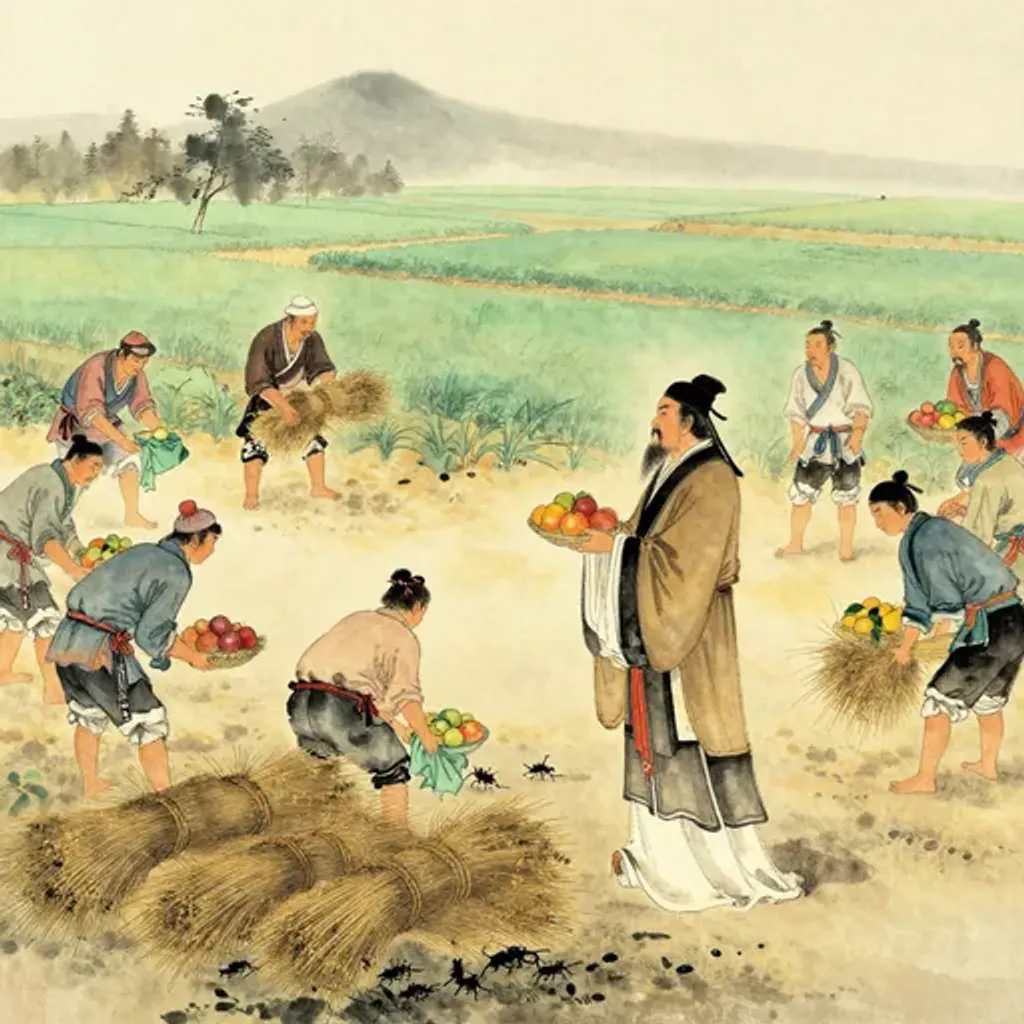
用彼嘉賓,政平且均。螟䖝不作,民得安寧。
Employing worthy guests, governance is fair and balanced. Locusts and pests do not arise; the people find peace and tranquility.
— Jiao Yanshou, Yilin (Forest of Changes), 1st century BC
Commentary
A lake without water, yet governance flourishes. Worthy guests are appointed, administration is fair and evenly distributed, insect pests do not arise, and the people enjoy tranquility. The 'jia bin' (honored guests) likely alludes to the Shijing ode 'Lu Ming,' where a lord feasts his guests and gains their counsel, creating the ideal feedback loop between sovereign hospitality and ministerial wisdom. When the right advisors are employed, even nature cooperates. From Oppression to Approach, the lake rests upon the earth, and the gentleman teaches without limit, sheltering the people without boundary. Oppression lifts when leadership draws near to the governed, and the ruler's approach transforms barren exhaustion into nurturing oversight.
困 → 觀
Hexagram 47 → Hexagram 20: Contemplation
Changing lines: 2, 4, 6
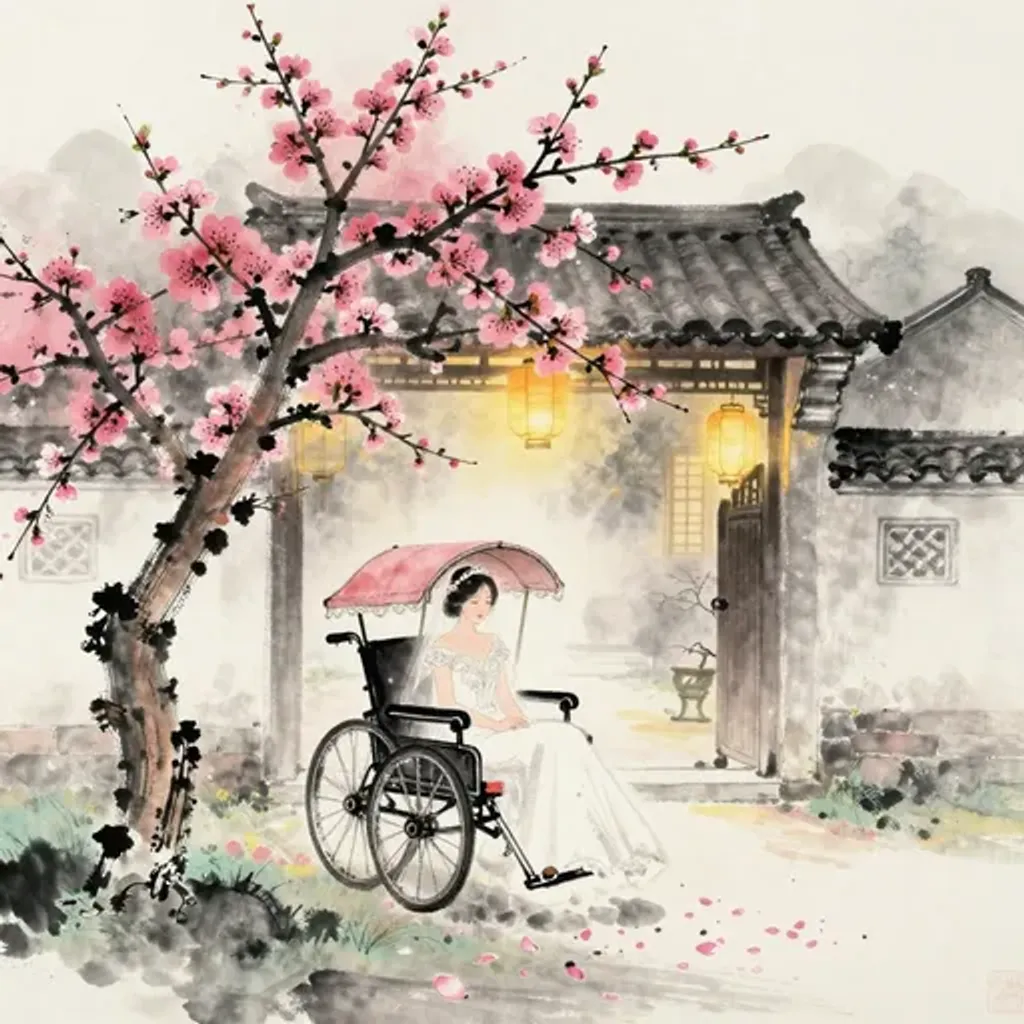
桃夭少葉,婚悅宜家。君子樂胥,長利止居。
The peach tree is young with few leaves, yet the marriage brings delight and harmony. The gentleman finds happiness; lasting fortune in a settled home.
— Jiao Yanshou, Yilin (Forest of Changes), 1st century BC
Commentary
A lake without water, but a young peach tree blossoms with few leaves, signaling a joyful marriage and a harmonious household. The verse directly quotes the Shijing ode 'Tao Yao': 'The peach tree is young and elegant; this young lady goes to her new home and will order well her chamber and house.' The gentleman takes pleasure in his domestic happiness and finds lasting benefit in settled dwelling. From Oppression to Contemplation, wind moves over the earth, and the ancient kings surveyed their domains to educate the people. The intimate joy of a new marriage opens into a wider view: personal contentment becomes the foundation from which one observes and understands the world. Domestic harmony radiates outward as civilizing influence.
困 → 噬嗑
Hexagram 47 → Hexagram 21: Biting Through
Changing lines: 1, 2, 5, 6
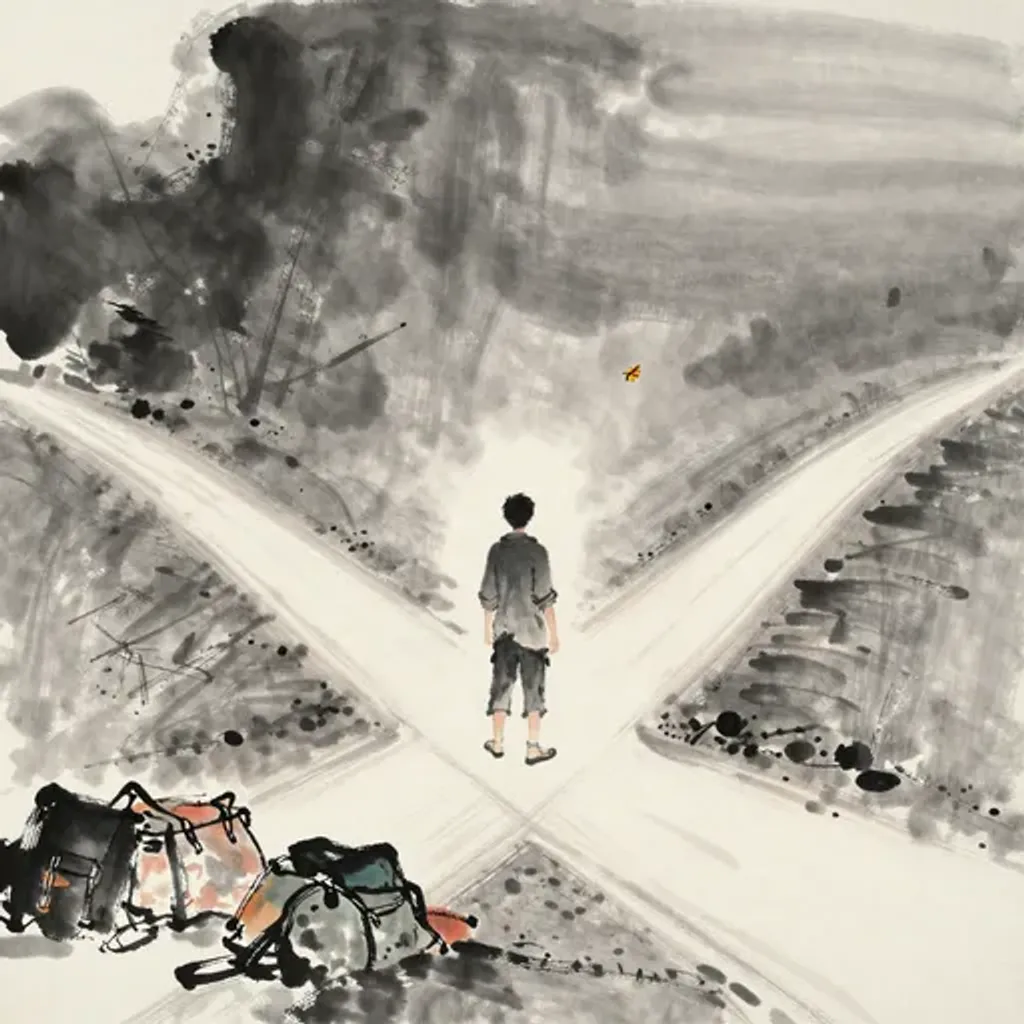
東行失旅,不知所處。西歸无妃,莫與笑語。
Traveling east, one loses one's companions and knows not where to stay. Returning west, there is no mate; none to share laughter or speech.
— Jiao Yanshou, Yilin (Forest of Changes), 1st century BC
Commentary
A lake without water, and a traveler heading east loses his companions, not knowing where he is. Turning west to return, he finds no wife, no one to share laughter or conversation. The verse captures double isolation: lost abroad, abandoned at home. The journey yields nothing, the return is equally empty. From Oppression to Biting Through, fire and thunder combine in the image of decisive judgment. The ancient kings used this to clarify punishments and correct the law. The wanderer's lostness calls for a sharp, clarifying bite, something to cut through the confusion and restore direction. Without that decisive act, the cycle of departure and empty return repeats endlessly, oppression feeding on its own inertia.
困 → 賁
Hexagram 47 → Hexagram 22: Grace
Changing lines: 1, 2, 3, 4, 5, 6
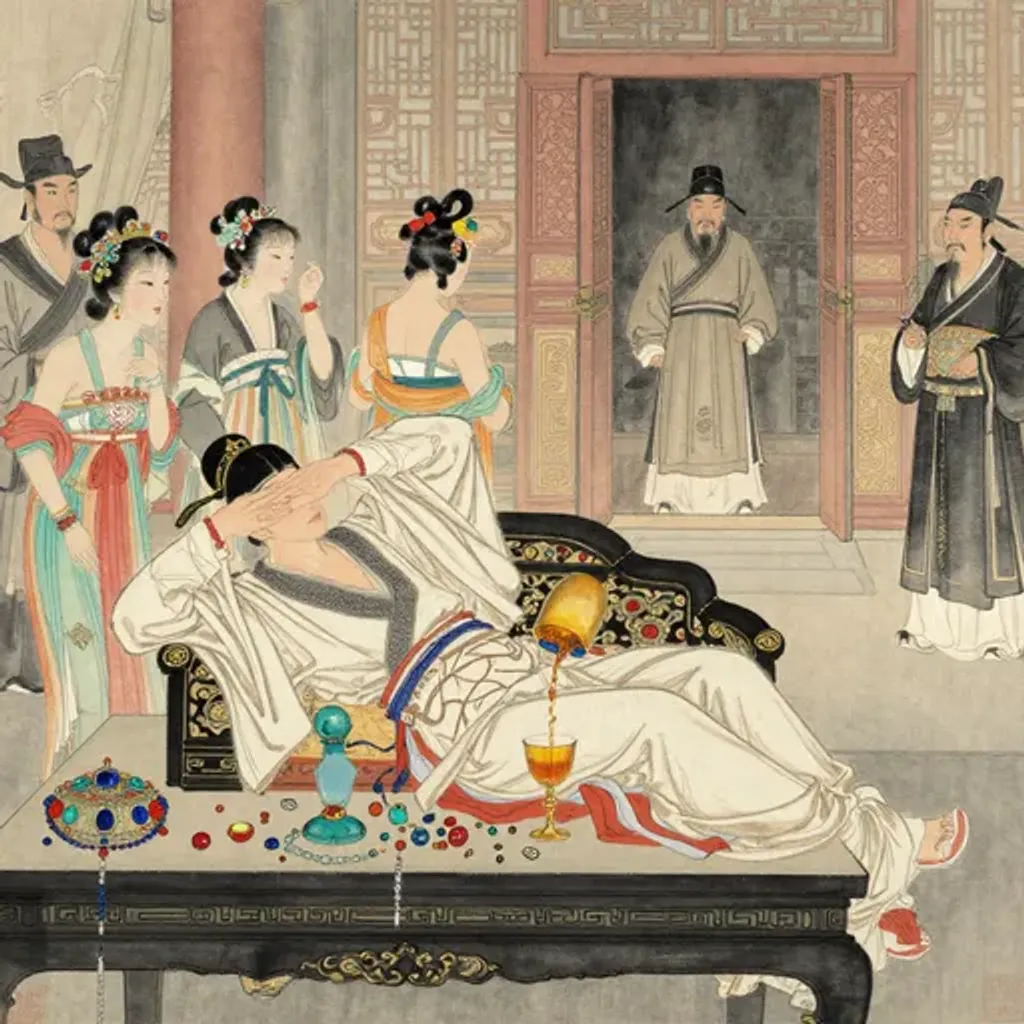
玩好亂目,巧聲迷耳。賊敗貞良,君受其咎。
Dazzling playthings confuse the eyes; cunning sounds beguile the ears. They corrupt and ruin the loyal and true; the lord bears the blame.
— Jiao Yanshou, Yilin (Forest of Changes), 1st century BC
Commentary
A lake without water, and playthings dazzle the eyes while clever sounds bewitch the ears. These seductions ruin the upright and loyal, bringing blame upon the ruler. The verse diagnoses a specific pathology: a sovereign mesmerized by ornamental pleasures while his honest ministers are destroyed by slanderers who exploit the distraction. The pattern recurs throughout Chinese political history, from Shang Zhou's Wine Pool to the singing girls of Qi. From Oppression to Grace, fire glows beneath the mountain, illuminating surface beauty. Grace adorns but must not dominate substance. The gentleman uses this light to clarify governance, never daring to decide legal cases by surface appearance alone. When decoration usurps judgment, grace becomes a trap.
困 → 剝
Hexagram 47 → Hexagram 23: Splitting Apart
Changing lines: 2, 4, 5, 6
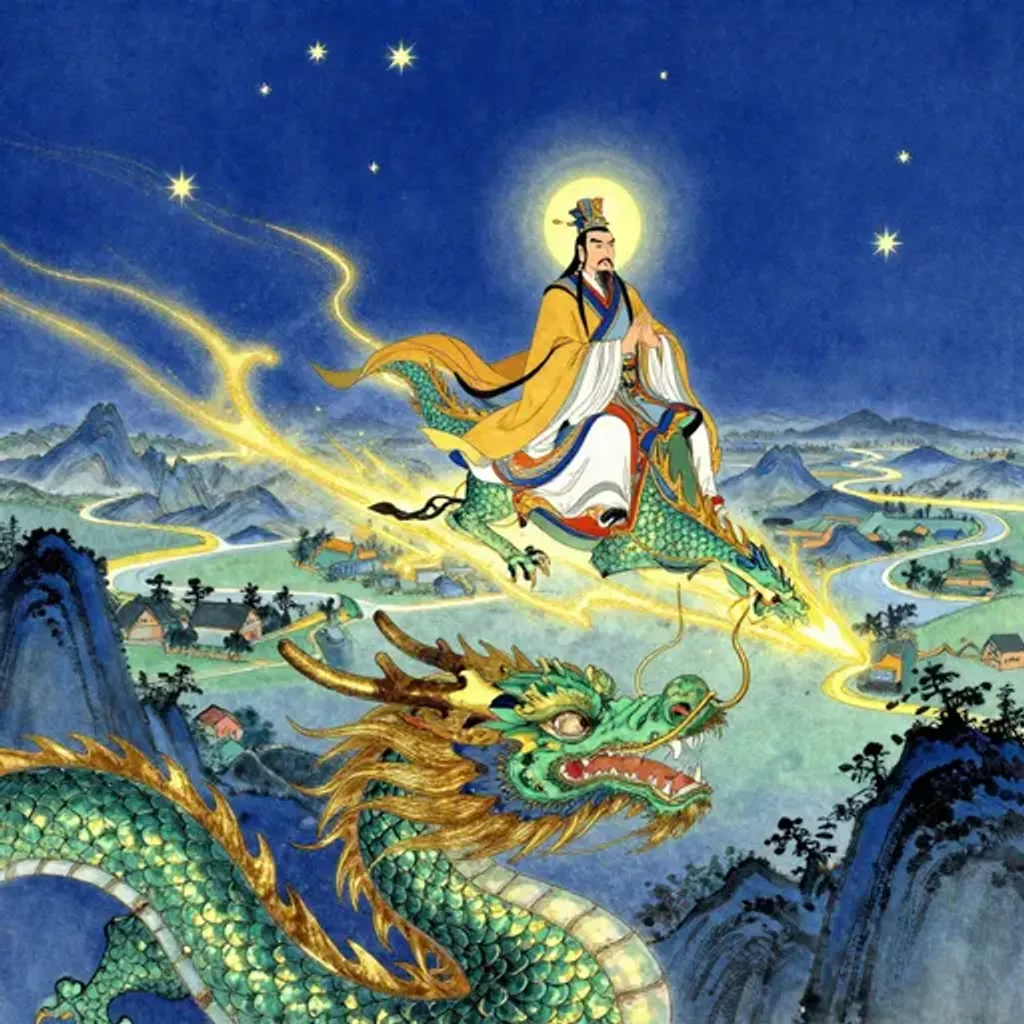
明德孔嘉,萬歲无虧。駕龍巡狩,王得安所。
Bright virtue exceedingly fine, ten thousand years without diminishment. Riding the dragon on a royal tour, the king finds a place of rest.
— Jiao Yanshou, Yilin (Forest of Changes), 1st century BC
Commentary
A lake without water, yet illustrious virtue shines with utmost excellence, enduring ten thousand years without diminishment. A dragon chariot carries the sage-king on his inspection tour, and the sovereign finds his place of rest. The verse evokes the legendary sage-kings, perhaps the Yellow Emperor riding his dragon or Emperor Shun touring the south. Their moral radiance transcends any earthly oppression, sustained by virtue rather than by circumstance. From Oppression to Splitting Apart, the mountain rests upon the earth, its substance slowly eroding from below. The ruler secures his foundation by 'enriching those below to stabilize the dwelling.' Even as the structure strips away, the virtue enshrined within it remains intact, its brilliance outlasting the material form.
困 → 復
Hexagram 47 → Hexagram 24: Return
Changing lines: 1, 2, 4, 5
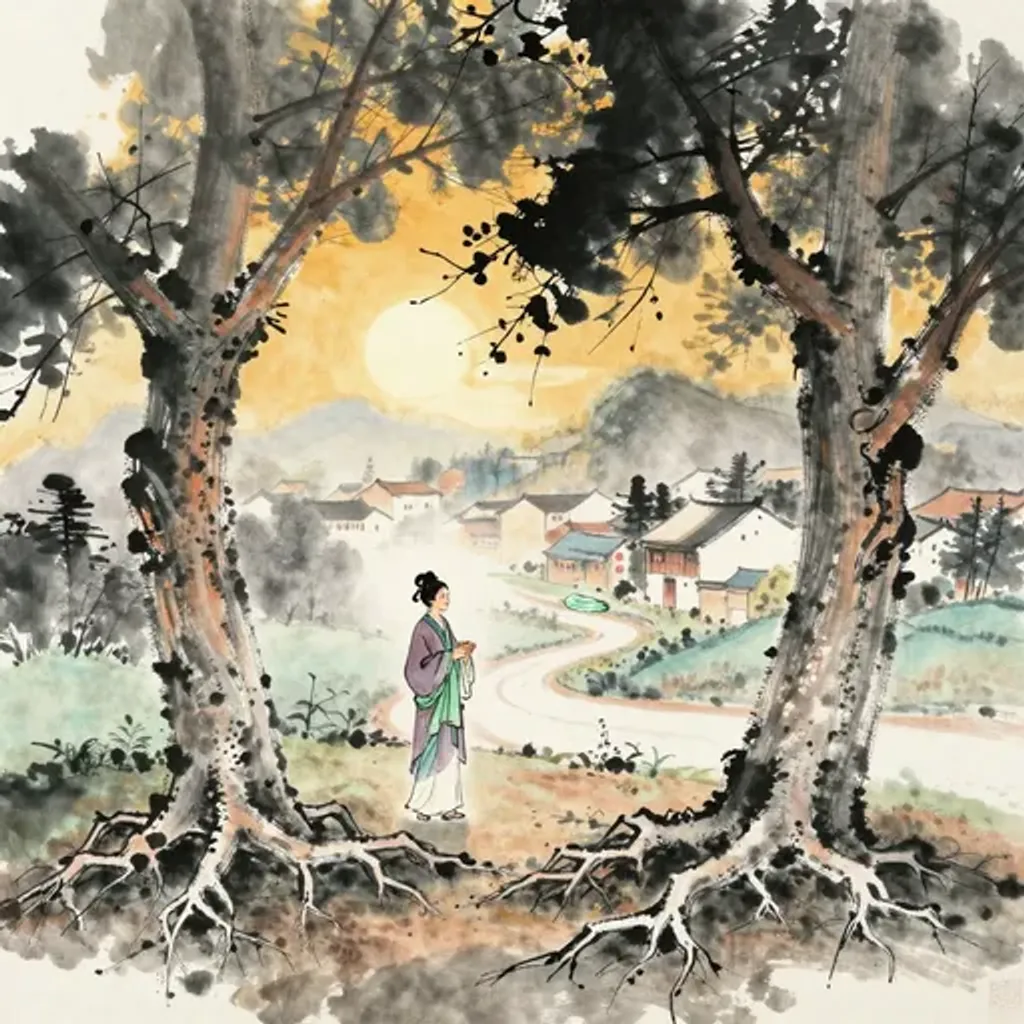
同本異葉,樂仁尚德。東鄰慕義,來興吾國。
Sharing the same root yet bearing different leaves, delighting in benevolence and esteeming virtue. The eastern neighbor admires righteousness and comes to prosper our state.
— Jiao Yanshou, Yilin (Forest of Changes), 1st century BC
Commentary
A lake without water: trees share the same root but bear different leaves. They delight in benevolence and esteem virtue. The eastern neighbor, admiring righteousness, comes to revitalize our state. The image of a common root with divergent branches captures the ideal of unity in diversity: different peoples, different customs, but a shared moral foundation. The eastern neighbor who voluntarily draws near echoes the classical Confucian theme that virtue attracts without coercion. From Oppression to Return, thunder stirs within the earth, marking the winter solstice when yang's first pulse revives. The neighbor's arrival is precisely this returning pulse: virtue, long dormant beneath oppression, sends its first signal outward, and those who recognize it come of their own accord.
困 → 无妄
Hexagram 47 → Hexagram 25: Innocence
Changing lines: 1, 2, 6
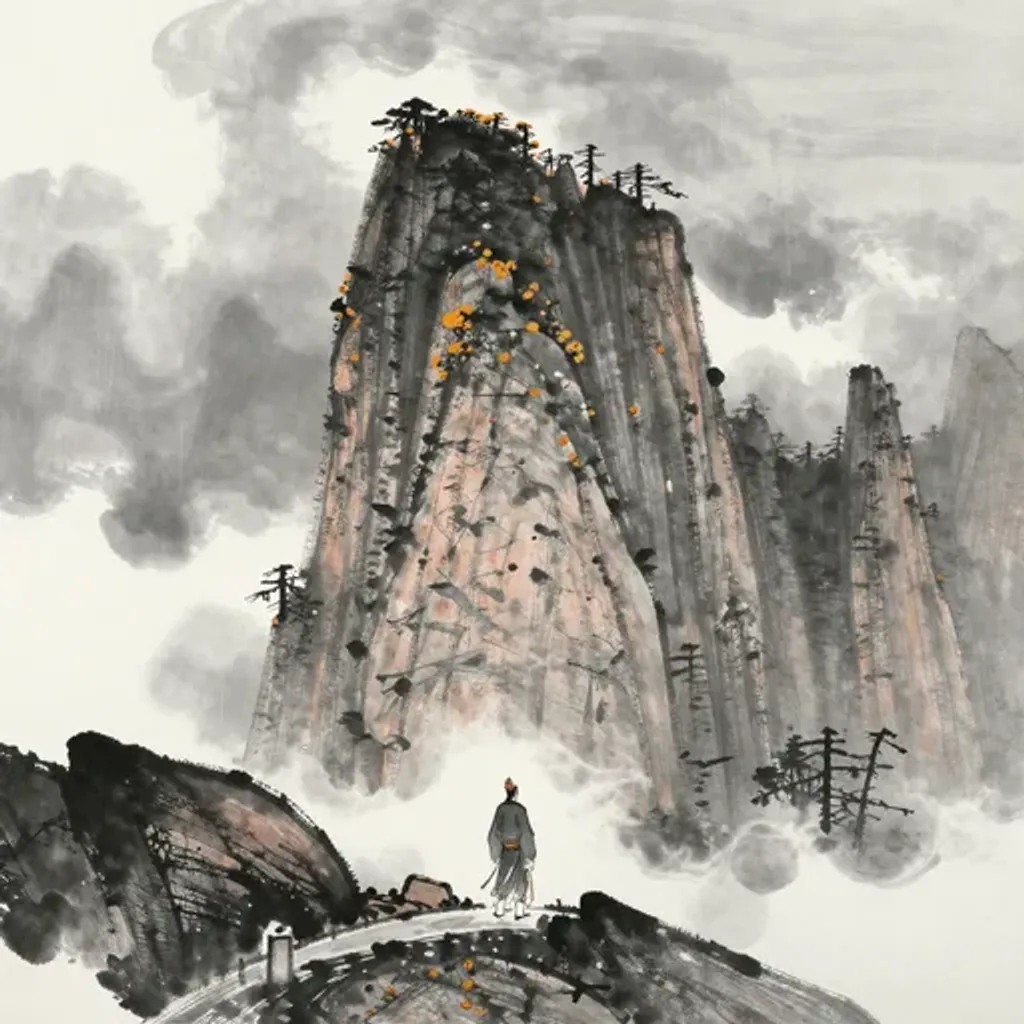
戴山崔嵬,曰高无頹。君主好德,賜以家國。
Bearing the mountain, steep and lofty, rising high without collapse. The sovereign lord cherishes virtue; he is granted both household and state.
— Jiao Yanshou, Yilin (Forest of Changes), 1st century BC
Commentary
A lake without water, yet a towering mountain is borne aloft, lofty and uncrumbling. The ruler cherishes virtue and bestows upon the worthy a household and a state. The image of carrying a mountain on one's back suggests extraordinary endurance and capacity. The mountain that does not crumble symbolizes moral solidity that no oppression can erode. From Oppression to Innocence, heaven moves with thunder beneath it, and all beings partake of spontaneous sincerity. The virtuous ruler governs not through contrivance but through alignment with heaven's natural course. The bestowal of a fiefdom is not a political calculation but an act of genuine recognition, as inevitable as thunder following heaven's movement. True innocence cannot be exhausted.
困 → 大畜
Hexagram 47 → Hexagram 26: Great Taming
Changing lines: 1, 3, 4, 5, 6
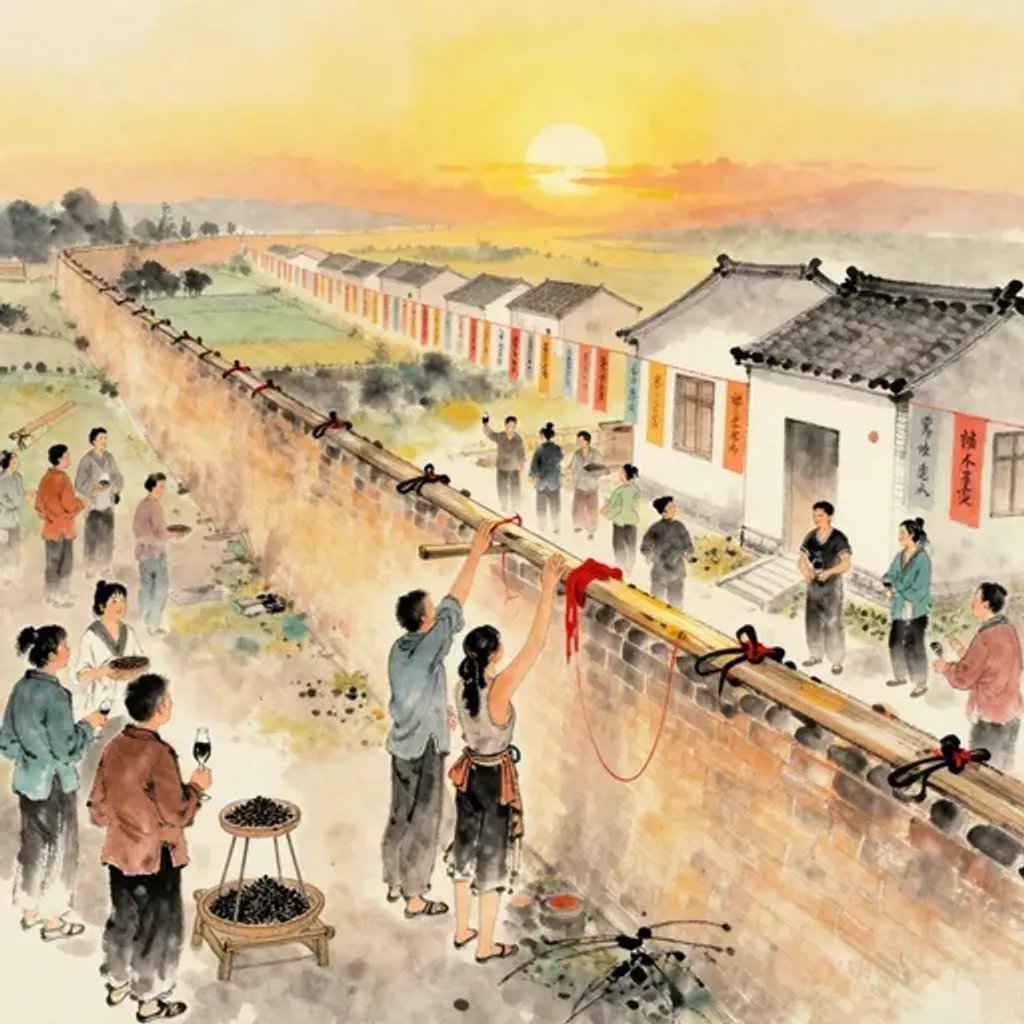
築室合歡,千里无患。周公萬年,佑我二人。
Building a home in shared delight, a thousand leagues free of trouble. The Duke of Zhou for ten thousand years, protecting us both together.
— Jiao Yanshou, Yilin (Forest of Changes), 1st century BC
Commentary
A lake without water, but here a house is built for shared rejoicing, and for a thousand li around there is no trouble. The Duke of Zhou's blessings endure ten thousand years, protecting 'the two of us.' The 'two persons' likely refers to the partnership between the Duke of Zhou and his royal charge, King Cheng, or more broadly to the bond between loyal minister and young sovereign. Building a house together is both literal construction and metaphorical state-building. From Oppression to Great Taming, heaven stored within the mountain, the gentleman studies the words and deeds of the ancients to accumulate virtue. The Duke of Zhou's institutional legacy, his ritual system, his legal code, is precisely this accumulated wisdom, transforming present oppression into enduring order.
困 → 頤
Hexagram 47 → Hexagram 27: Nourishment
Changing lines: 1, 2, 4, 5, 6
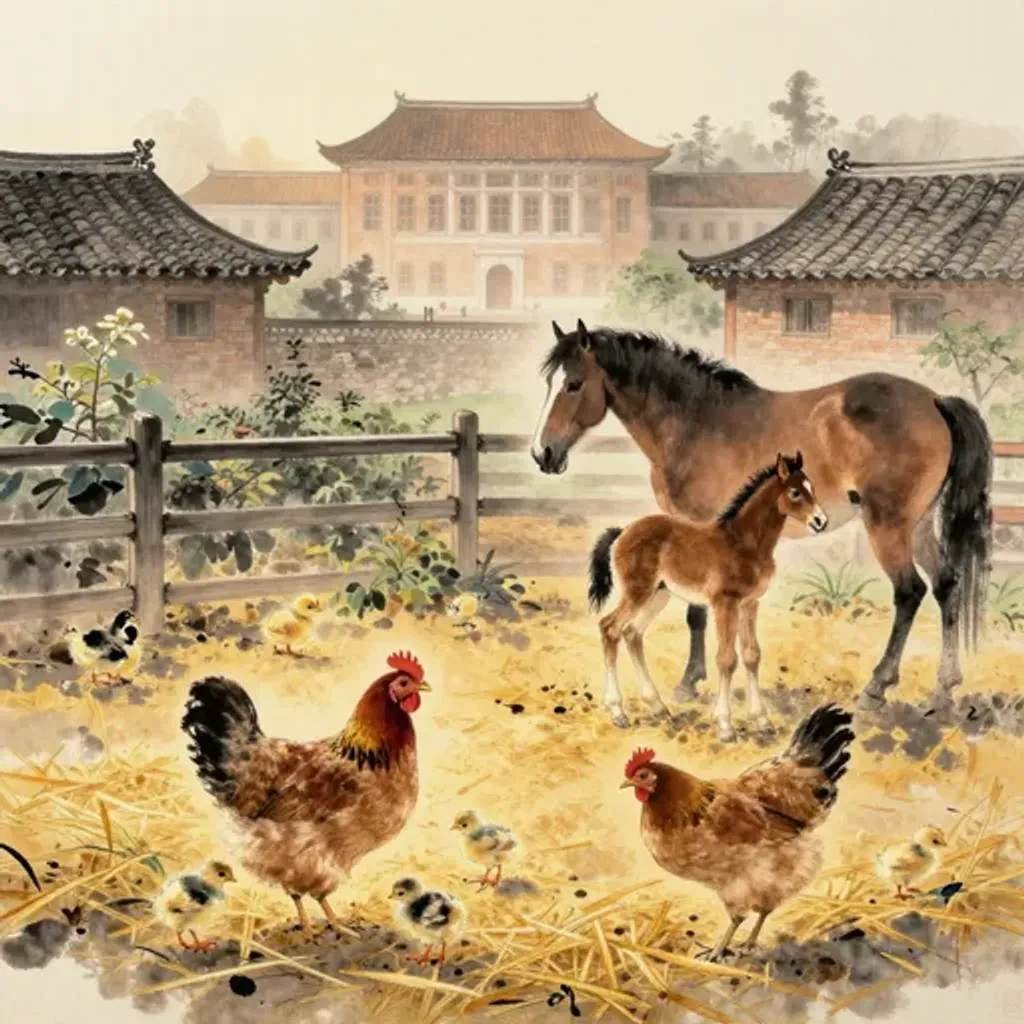
養雞生雛,畜馬得駒。明堂太學,君子所居。
Raising chickens that hatch chicks, keeping horses that bear foals. The Hall of Light and the Grand Academy, where the virtuous man resides.
— Jiao Yanshou, Yilin (Forest of Changes), 1st century BC
Commentary
A lake without water, yet chickens are raised and produce chicks, horses are bred and yield foals. The Bright Hall and the Grand Academy stand ready, the places where the gentleman resides. The Mingtang was the sacred hall where the Son of Heaven conducted ritual governance, and the Taixue the imperial academy for cultivating talent. The verse pairs biological nourishment with institutional nourishment: animals multiply naturally, scholars are trained deliberately. Both require patient cultivation. From Oppression to Nourishment, the mountain rests above thunder, and the gentleman is careful in speech and moderate in diet. Nourishment, whether of livestock or scholars, demands restraint and attention. What was drained in oppression refills through the disciplined work of raising the next generation.
困 → 大過
Hexagram 47 → Hexagram 28: Great Exceeding
Changing lines: 3
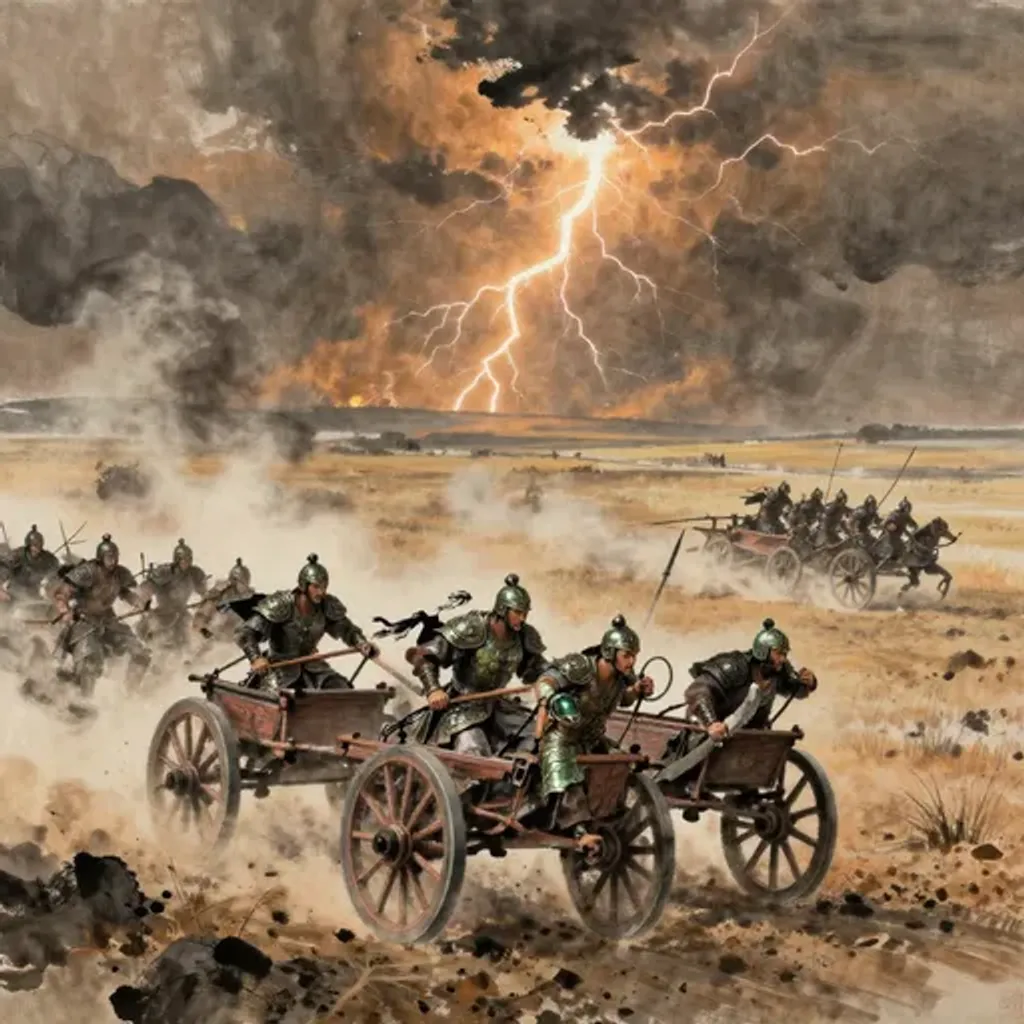
雷行相逐,无有休息。戰于平陸,為夷所覆。
Thunder rolls on without rest, chasing and never ceasing. Battling on the open plain, they are overwhelmed by the barbarians.
— Jiao Yanshou, Yilin (Forest of Changes), 1st century BC
Commentary
A lake without water, and thunder rolls relentlessly, chasing itself with no rest. The army fights at Pinglu and is overwhelmed by the barbarian Yi. The verse combines cosmic exhaustion with military catastrophe: thunder that cannot stop echoing mirrors an army that cannot stop marching, until fatigue invites annihilation. Pinglu was a frontier region vulnerable to nomadic incursion. From Oppression to Great Exceeding, the lake drowns the trees beneath, the ridgepole sags under impossible weight. The gentleman stands alone without fear and withdraws from the world without resentment. When the structure is overloaded to the point of collapse, when even thunder exhausts itself, the only dignified response is solitary endurance. The system has exceeded its capacity and must break before it can be rebuilt.
困 → 坎
Hexagram 47 → Hexagram 29: The Abysmal Water
Changing lines: 4
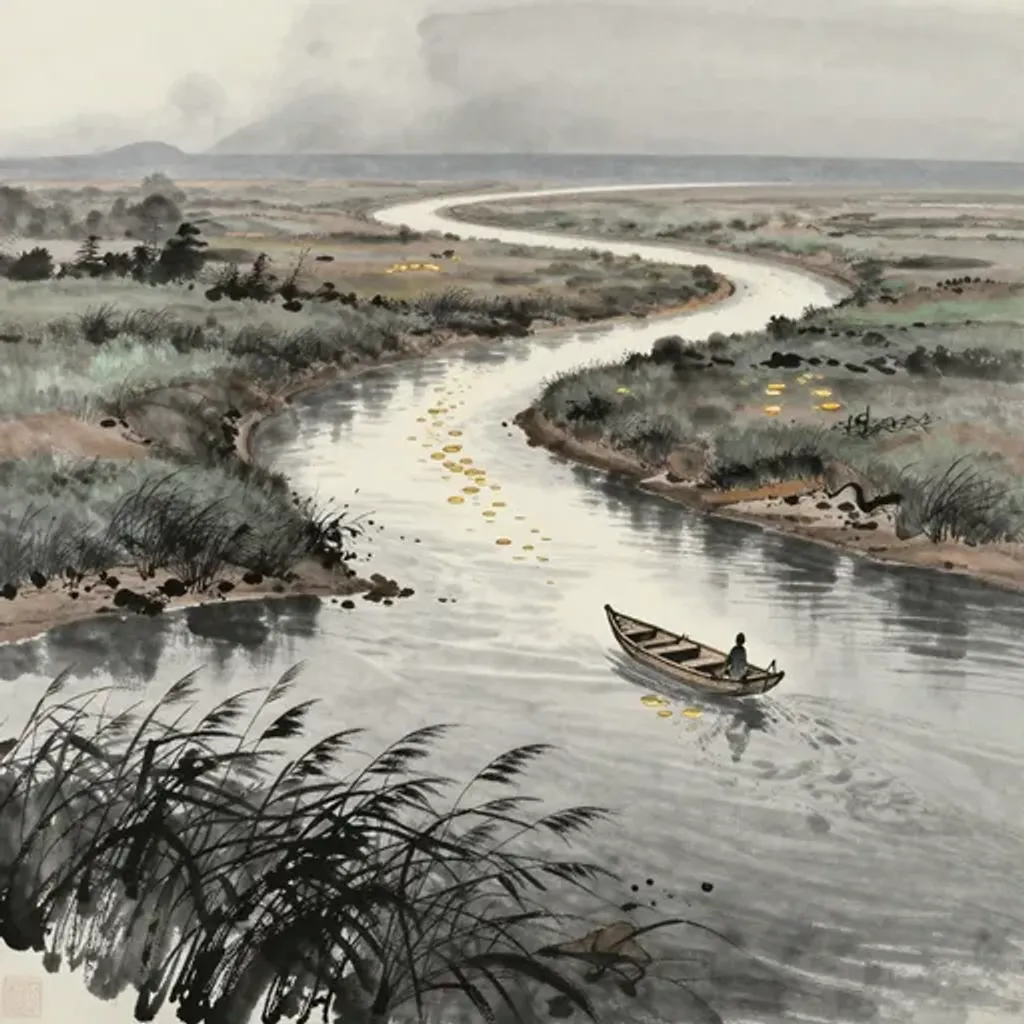
委蛇循河,北至海涯。涉歷要荒,君世无他。
Winding along the river's course, northward to the ocean's edge. Traversing the distant wilds, the lord's generation knows no other fate.
— Jiao Yanshou, Yilin (Forest of Changes), 1st century BC
Commentary
A lake without water gives way to doubled water, the Abysmal repeated. A serpentine course follows the river northward to the ocean's edge, traversing the far reaches of the realm. Yet the sovereign's line continues without incident. The image evokes the great inspection tours of antiquity: the sage-king traveling to the empire's remotest borders, not in conquest but in governance, ensuring that even the frontier peoples are reached. From Oppression to the Abysmal, water upon water doubles the peril but also doubles the constancy. The gentleman practices virtue unceasingly and teaches by repetition. The sovereign who journeys through the wasteland and returns unscathed demonstrates precisely this: steady presence maintained through danger, the ruler's Way unchanged despite the abyss.
困 → 離
Hexagram 47 → Hexagram 30: The Clinging Fire
Changing lines: 1, 2, 3, 5, 6
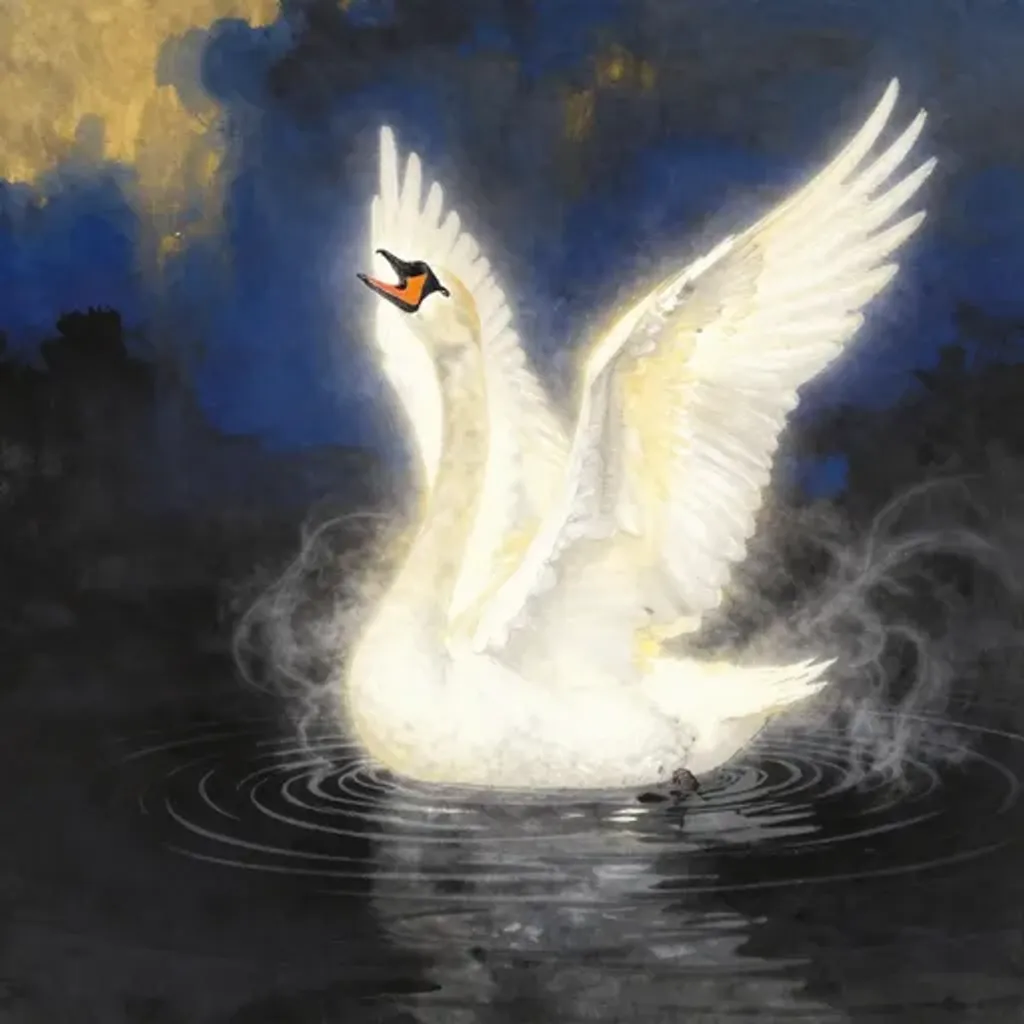
鴻聲大視,高舉神化。背昧向明,以道福功。
The swan's call carries far, its vision wide; it rises high in divine transformation. Turning from darkness toward light, through the Way it attains blessings and merit.
— Jiao Yanshou, Yilin (Forest of Changes), 1st century BC
Commentary
A lake without water, yet a wild goose calls with a great voice and soars high, undergoing a divine transformation. Turning its back on darkness, it faces the light, achieving blessed merit through the Way. The goose's ascent mirrors the journey from oppression to illumination: what was trapped in a drained lake now rises into radiant clarity. From Oppression to the Clinging, doubled fire lights the heavens, and the great man continues the brightness to illuminate all four directions. The transformation is one of the most dramatic in the cycle: from utter depletion to pure luminosity. The key pivot is 'backing darkness, facing light' — a deliberate reorientation, choosing clarity over comfortable murk. Enlightenment here is not passive reception but active turning.
困 → 咸
Hexagram 47 → Hexagram 31: Influence
Changing lines: 2, 3
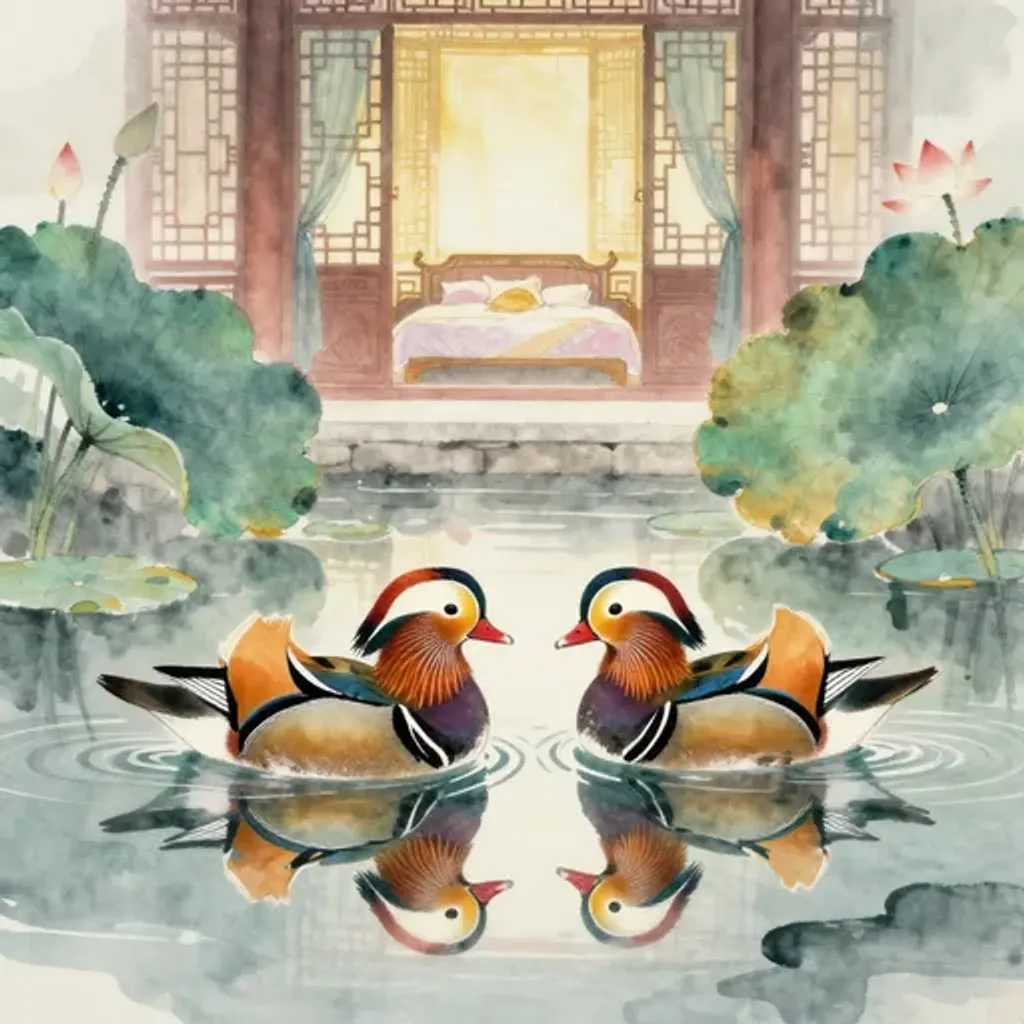
比目四翼,來安吾國。福喜上堂,與我同床。
Paired eyes and joined wings, they come to settle our realm. Blessings and joy ascend to the hall, sharing our very bed.
— Jiao Yanshou, Yilin (Forest of Changes), 1st century BC
Commentary
A lake without water, yet paired-eye fish and four-winged birds arrive to bring peace to the state. Happiness and blessings ascend the hall and share the bed. The 'paired-eye fish and shared-wing birds' are classical symbols of inseparable union: one-eyed fish that must swim in pairs, one-winged birds that can only fly together. Their appearance signals that an ideal partnership has formed, whether conjugal, political, or both. From Oppression to Influence, a lake rests upon a mountain, and the gentleman receives others with emptiness. Xian means mutual stimulus, the magnetic attraction between complementary forces. Oppression dissolves when the missing half arrives: incompleteness was the source of suffering, and completion brings immediate joy.
困 → 恆
Hexagram 47 → Hexagram 32: Duration
Changing lines: 3, 5
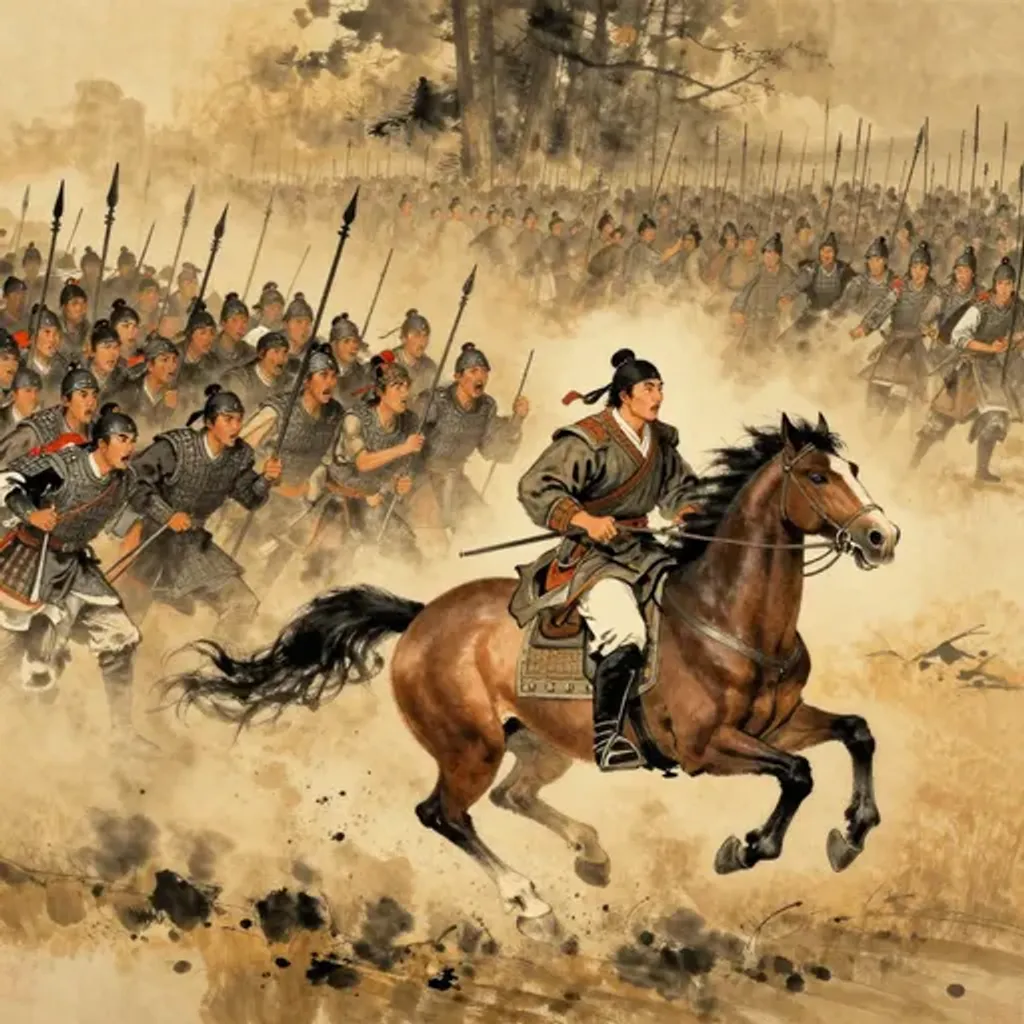
先縠彘季,反謀桓子。不從元帥,遂行挑戰,為荊所敗。
Xian Hu and Zhi Ji rebel against Huan Zi's counsel. Defying the commander-in-chief, they ride out to provoke battle and are defeated by Chu.
— Jiao Yanshou, Yilin (Forest of Changes), 1st century BC
Commentary
A lake without water, and the generals Xian Hu and Zhi Ji conspire against the commander Huan Zi. They refuse to follow the supreme marshal's orders, insist on provoking battle, and are defeated by Chu. This alludes to the Battle of Bi in 597 BC, when the Jin generals disobeyed their commander Xun Linfu. Xian Hu (先縠) rashly crossed the river to challenge Chu, dragging the reluctant army into a disaster that became one of Jin's most humiliating defeats. From Oppression to Duration, thunder and wind reinforce each other, and the gentleman stands firm without changing his direction. The bitter irony: Duration demands constancy, but the defeated generals were constant only in their insubordination, persisting in defiance when obedience was required.
困 → 遯
Hexagram 47 → Hexagram 33: Retreat
Changing lines: 2, 3, 6
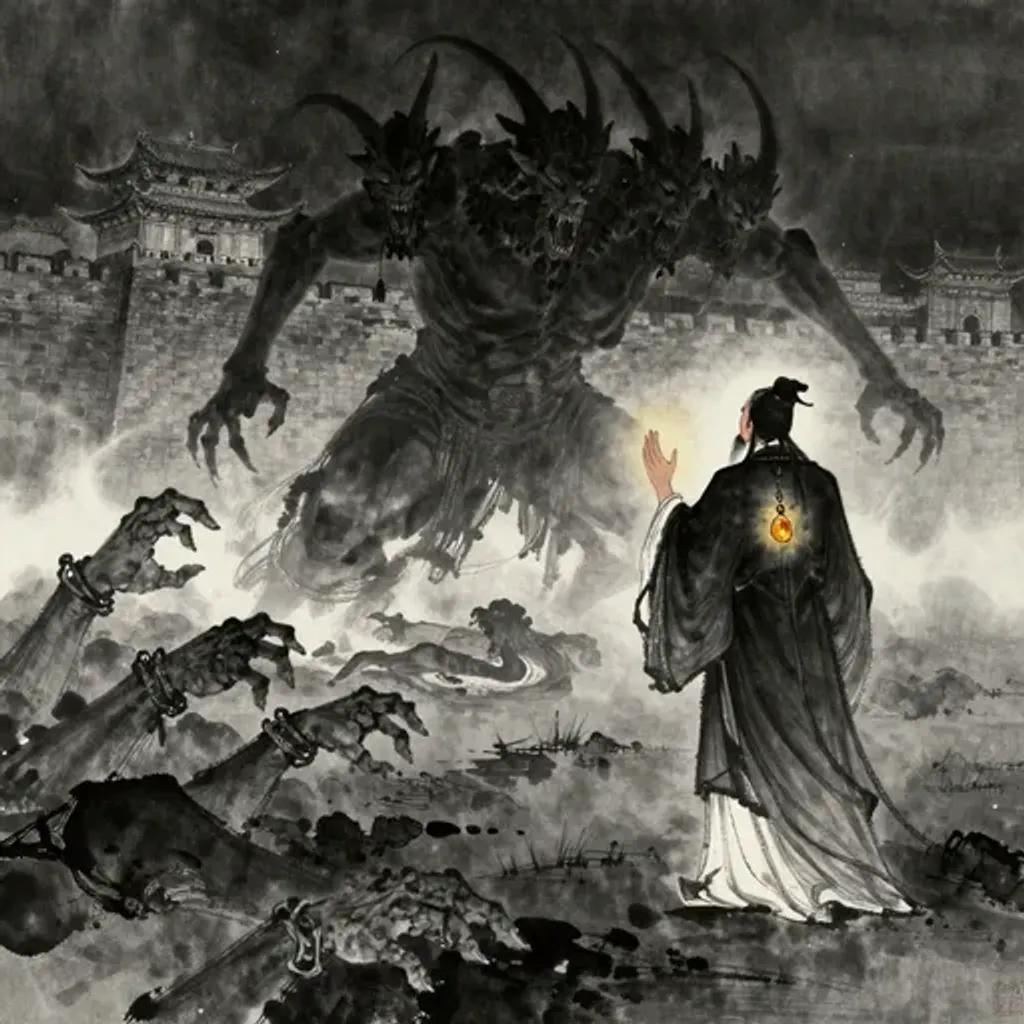
三頭六足,欲盜東國。顏子在邇,禍滅不成。
Three heads and six feet, scheming to plunder the eastern state. But Yan Zi stands nearby; the plot dissolves and comes to nothing.
— Jiao Yanshou, Yilin (Forest of Changes), 1st century BC
Commentary
A lake without water: a creature with three heads and six legs schemes to steal the eastern state. But Yan Zi stands nearby, and the plot collapses before it succeeds. The 'three-headed, six-legged' monster evokes a many-headed conspiracy, perhaps an alliance of usurpers plotting to seize a neighboring domain. Yan Zi (Yanzi, 晏子) was the celebrated minister of Qi known for his integrity, frugality, and ability to neutralize threats through sheer moral authority. His mere proximity dissolves the conspiracy. From Oppression to Retreat, heaven stands above the mountain, and the gentleman distances himself from petty men without hostility. The sage does not fight the plotters; he simply withdraws, and they find their schemes have no ground to stand on.
困 → 大壯
Hexagram 47 → Hexagram 34: Great Power
Changing lines: 1, 3, 5
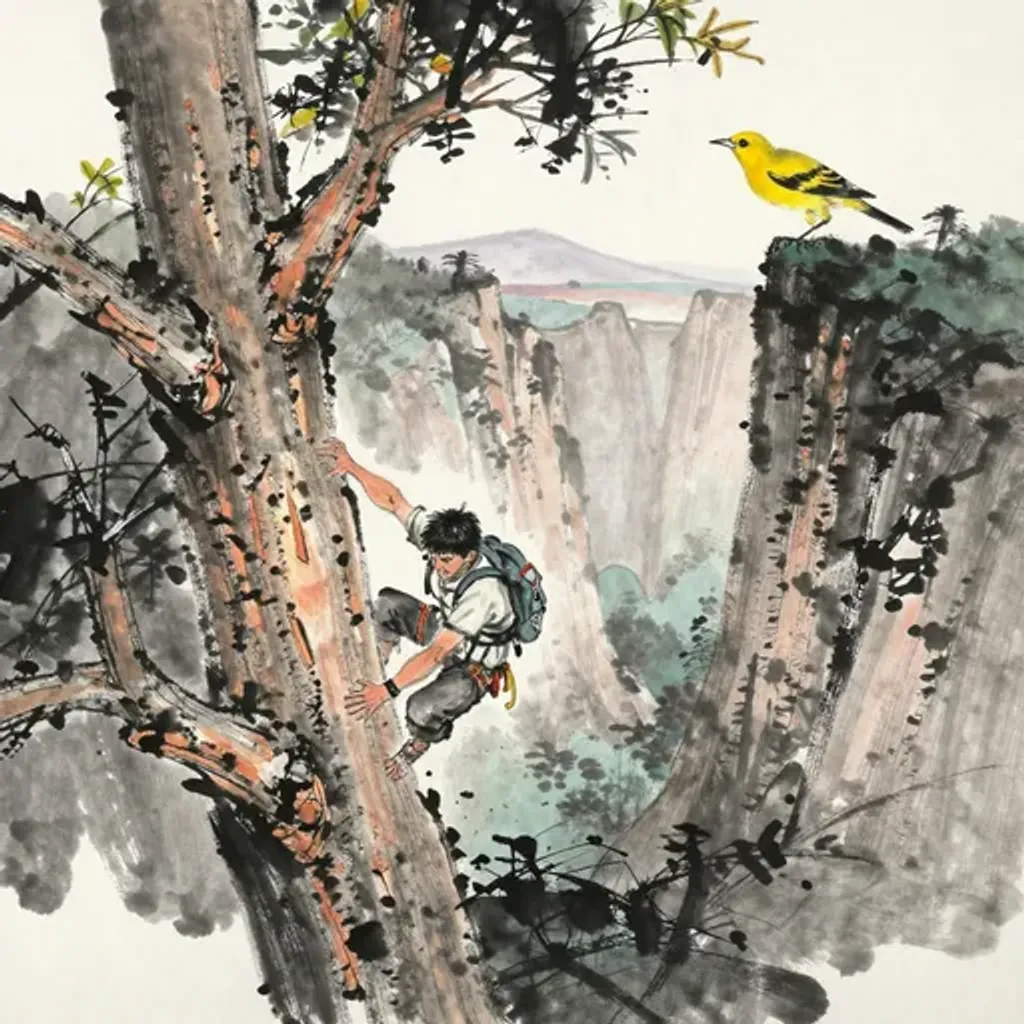
緣山升木,中墮於谷。子輿失勞,黃鳥哀作。
Scaling the mountain, climbing the tree, halfway up one falls into the valley. The carriage overturns, the labor lost; the golden oriole sings its sorrow.
— Jiao Yanshou, Yilin (Forest of Changes), 1st century BC
Commentary
A lake without water: someone climbs the mountain and ascends a tree, then falls midway into the valley. Zi Yu loses his laborious effort, and the yellow bird sings its mournful song. Zi Yu is a style-name for Mencius (Mengzi), and the imagery resonates with the Shijing's 'Huang Niao' ode from the Xiao Ya, an exile's lament about being a stranger in hostile lands: 'Yellow birds, do not gather in my mulberry.' The climber who falls captures ambition exceeded by circumstance. From Oppression to Great Power, thunder rides above heaven in a display of tremendous force. Yet the verse warns that raw power misapplied results only in a harder fall. The gentleman refrains from treading where propriety forbids, lest great strength become great ruin.
困 → 晉
Hexagram 47 → Hexagram 35: Progress
Changing lines: 2, 5, 6
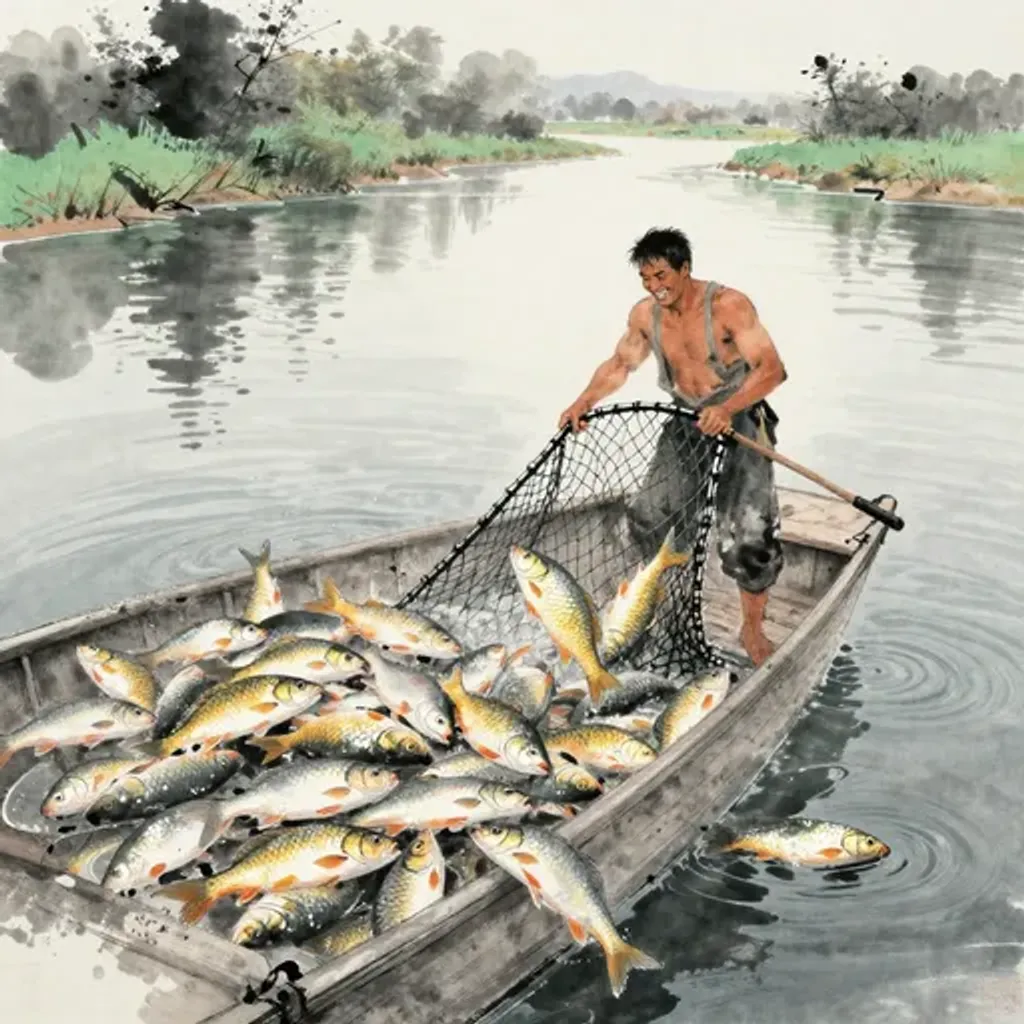
南有嘉魚,駕黃取鱗。魴鯉瀰瀰,利來无憂。
In the south there are fine fish; one drives the yellow-scaled boat to take them. Bream and carp in great abundance; profit comes without sorrow.
— Jiao Yanshou, Yilin (Forest of Changes), 1st century BC
Commentary
A lake without water, yet in the south fine fish abound. Yellow teams are harnessed to haul in the catch; bream and carp teem in profusion, and profit comes without worry. The verse echoes the Shijing ode 'Nan You Jia Yu': 'In the south there are fine fish; we use our nets to catch them.' The abundance of fish symbolizes the blessings that flow from benevolent governance, the natural world responding to the ruler's virtue. From Oppression to Progress, fire rises above the earth, and the gentleman manifests his own bright virtue. The dawn that breaks over the southern waters is Progress's defining image: light emerging from the ground. Oppression yields to natural bounty when the right approach is taken, as easily as fish swim into a waiting net.
困 → 明夷
Hexagram 47 → Hexagram 36: Darkening of the Light
Changing lines: 1, 2, 3, 4, 5
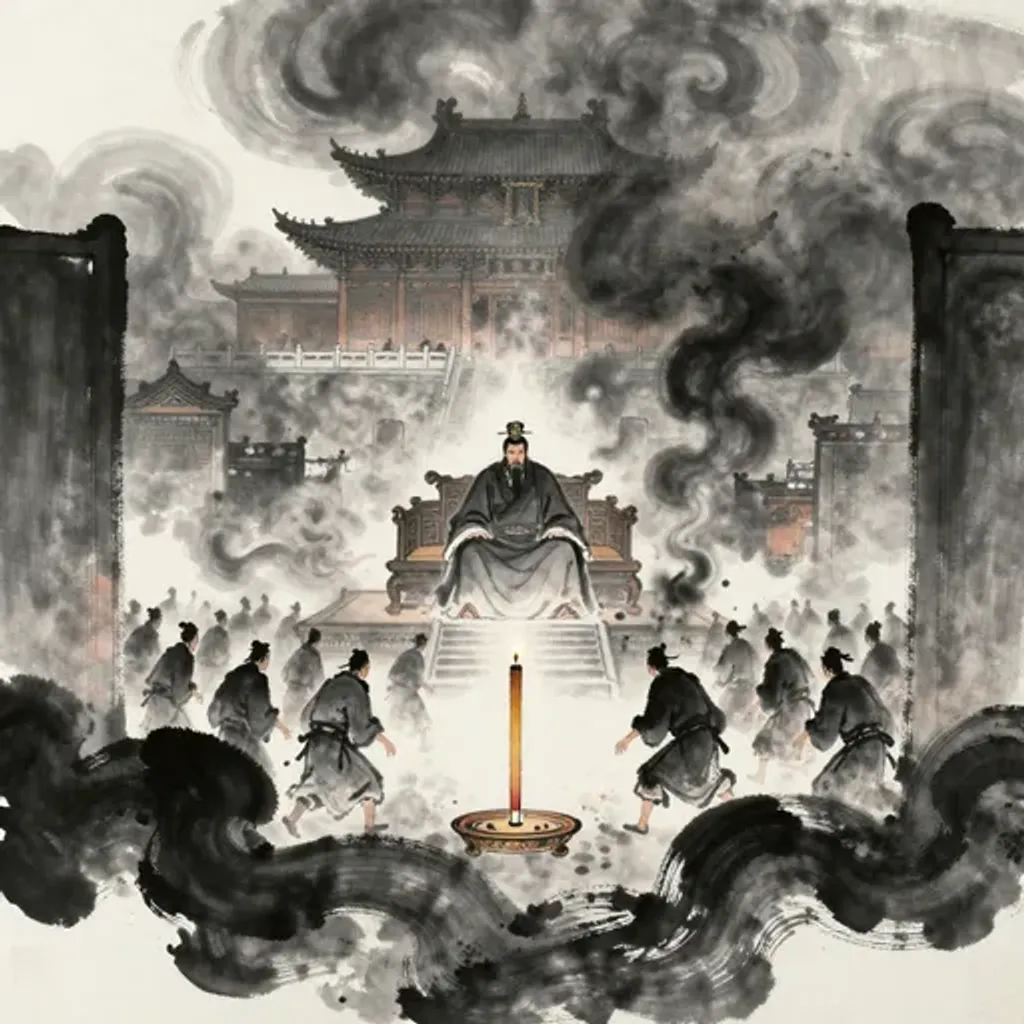
邃氣作雲,蒙覆大君。塞聰閉明,殷人賈傷。
Noxious vapors form clouds, cloaking and covering the great lord. Blocking his hearing and shutting his eyes; the people of Yin suffer ruin and harm.
— Jiao Yanshou, Yilin (Forest of Changes), 1st century BC
Commentary
A lake without water, and dark vapors condense into clouds that smother the great sovereign. His ears are blocked, his eyes sealed shut: the Yin people suffer injury in their commerce. The verse describes a ruler enveloped in murk, cut off from information, while his merchants and subjects pay the price. 'Yin people' directly names the Shang dynasty's populace, famous as traders (the word for 'merchant,' shang ren, derives from them). The 'dark vapor covering the lord' recalls the blindness of the last Shang kings. From Oppression to Darkening of the Light, fire sinks beneath the earth. The gentleman governs the multitude by using dimness to preserve his inner light. When the sovereign himself is darkened, the wise must hide their brightness to survive.
困 → 家人
Hexagram 47 → Hexagram 37: The Family
Changing lines: 1, 2, 3, 4, 6
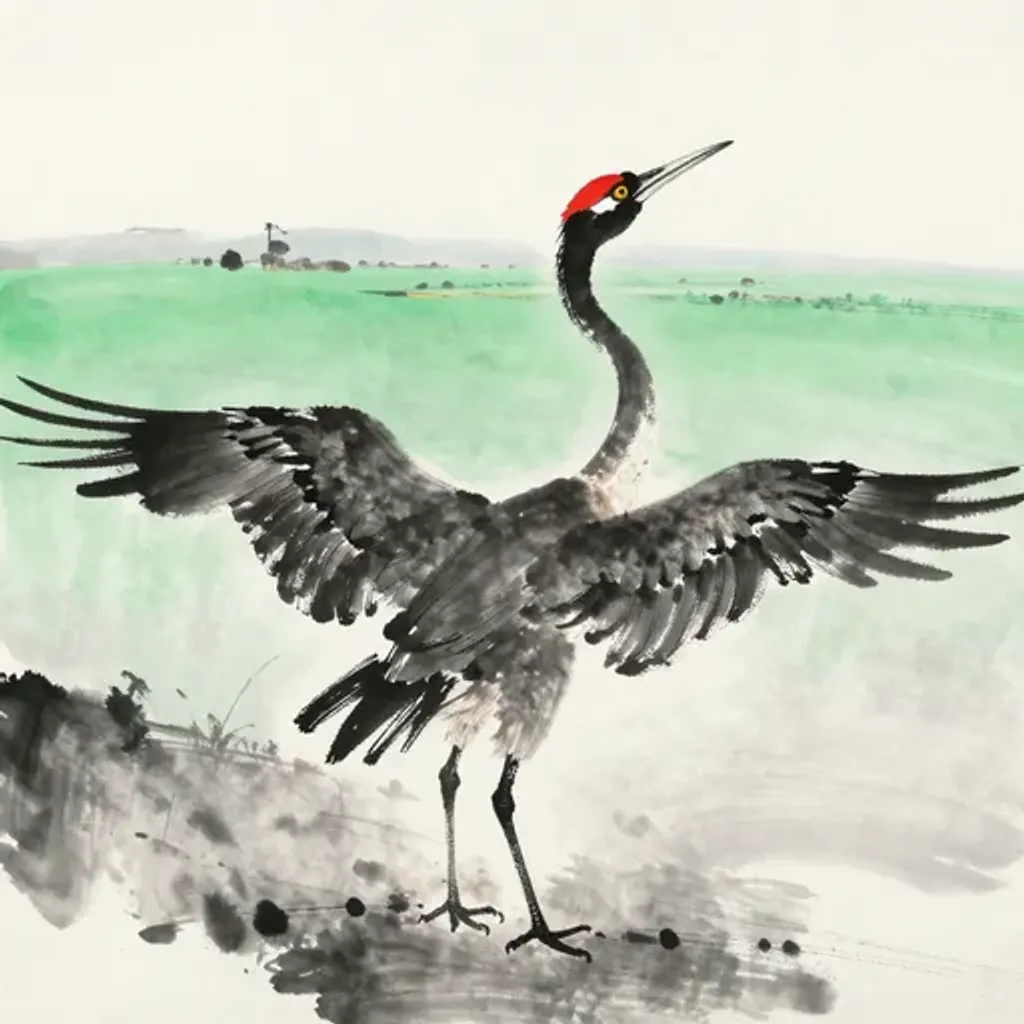
舉翅攄翼,跂望南國。延頸卻縮,未有所得。
Lifting wings and spreading pinions, gazing expectantly toward the southern land. Stretching the neck then drawing back; nothing yet obtained.
— Jiao Yanshou, Yilin (Forest of Changes), 1st century BC
Commentary
A lake without water: a bird lifts its wings and spreads them wide, straining on tiptoe to gaze toward the southern lands. It stretches its neck forward, then draws back, having gained nothing. The image is of longing without consummation: desire fixed on a distant goal, the body straining toward it, but no progress made. The neck extends and retreats in a painful rhythm of hope and disappointment. From Oppression to the Family, wind issues from fire, and the gentleman ensures his words have substance and his conduct has constancy. The bird that gazes south but never arrives must learn the Family's lesson: lasting influence begins at home, in the immediate and the intimate, not in grand aspirations toward far horizons.
困 → 睽
Hexagram 47 → Hexagram 38: Opposition
Changing lines: 1, 5, 6
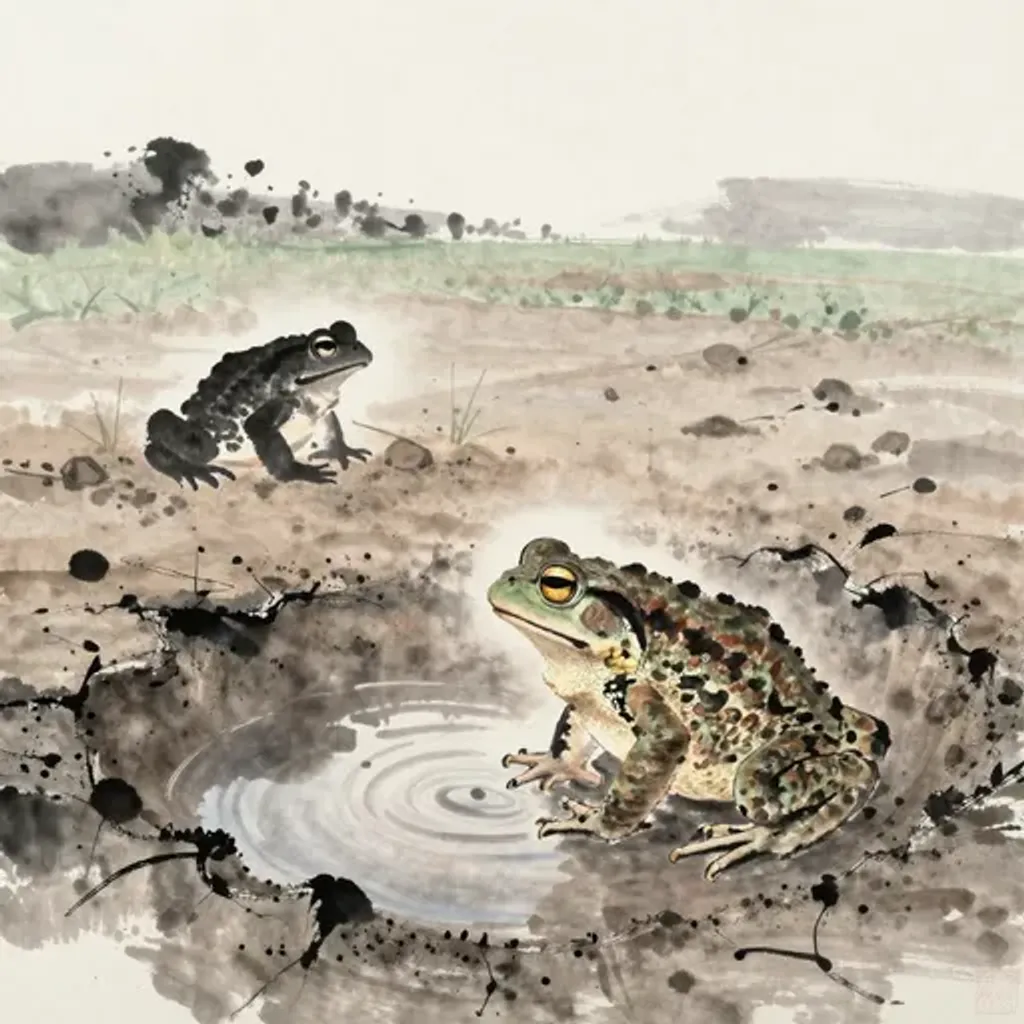
坎中蝦蟆,乍盈乍虛。三夕二朝,形消无餘。
The toad in the hollow, now full and now empty. After three evenings and two dawns, the form wastes away to nothing.
— Jiao Yanshou, Yilin (Forest of Changes), 1st century BC
Commentary
A lake without water, and a toad sits in a pit, sometimes full, sometimes empty. Within two mornings and three evenings, its form wastes away to nothing. The toad in its hollow is a creature of cycles, swelling and shrinking with the water level, but here the water never returns and the toad simply diminishes until it vanishes. The image captures entropy without renewal, oppression that depletes without replenishment. From Oppression to Opposition, fire above and lake below pull apart, each moving in its own direction. The toad's fate embodies this divergence: body and sustenance separate irreversibly. Opposition's challenge is to find unity within estrangement, but this verse shows what happens when the estrangement is total and the resources simply drain away.
困 → 蹇
Hexagram 47 → Hexagram 39: Obstruction
Changing lines: 2, 3, 4
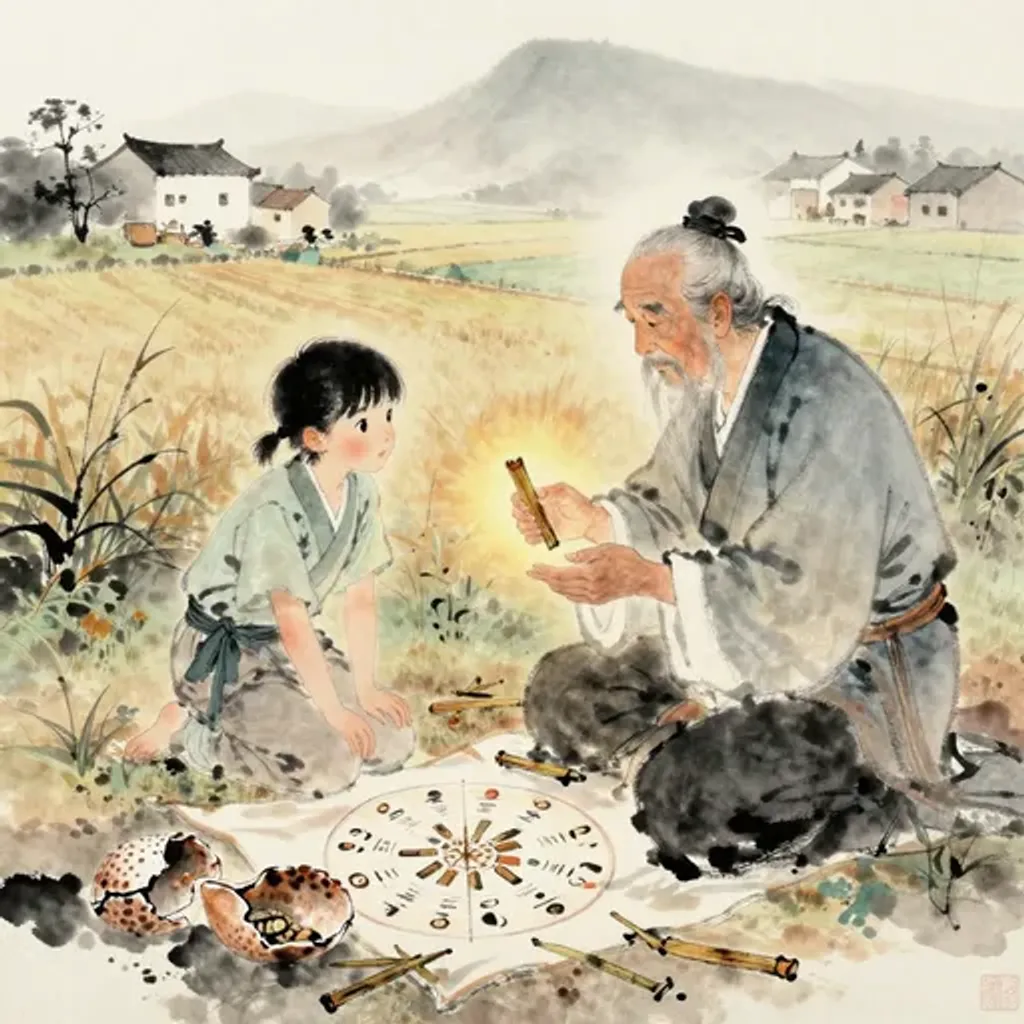
僮子射御,不知所定。質疑蓍龜,孰知所避?國安土樂,宜利止居。兵寇不至,民无騷擾。
The young one shoots and drives, not knowing where to settle. Consulting milfoil and tortoiseshell, who can know what to avoid? The state is secure, the land content, fit for lasting dwelling. Soldiers and brigands do not come; the people suffer no disturbance.
— Jiao Yanshou, Yilin (Forest of Changes), 1st century BC
Commentary
A lake without water: a young boy handles the bow and reins but does not know where to aim. He consults the milfoil stalks and tortoise shells, yet who truly knows what to avoid? Then the verse pivots: the state is at peace, the land content, well-suited for settled dwelling. Soldiers and bandits do not come, and the people are free from disturbance. The untrained youth and the uncertain divination set up an expectation of trouble that never materializes. From Oppression to Obstruction, water pools upon the mountain, and the gentleman turns inward to cultivate virtue. The paradox resolves itself: when one ceases straining for control and simply reflects, the danger passes on its own. Peace was always available; it was the anxious searching that obscured it.
困 → 解
Hexagram 47 → Hexagram 40: Deliverance
Changing lines: 5
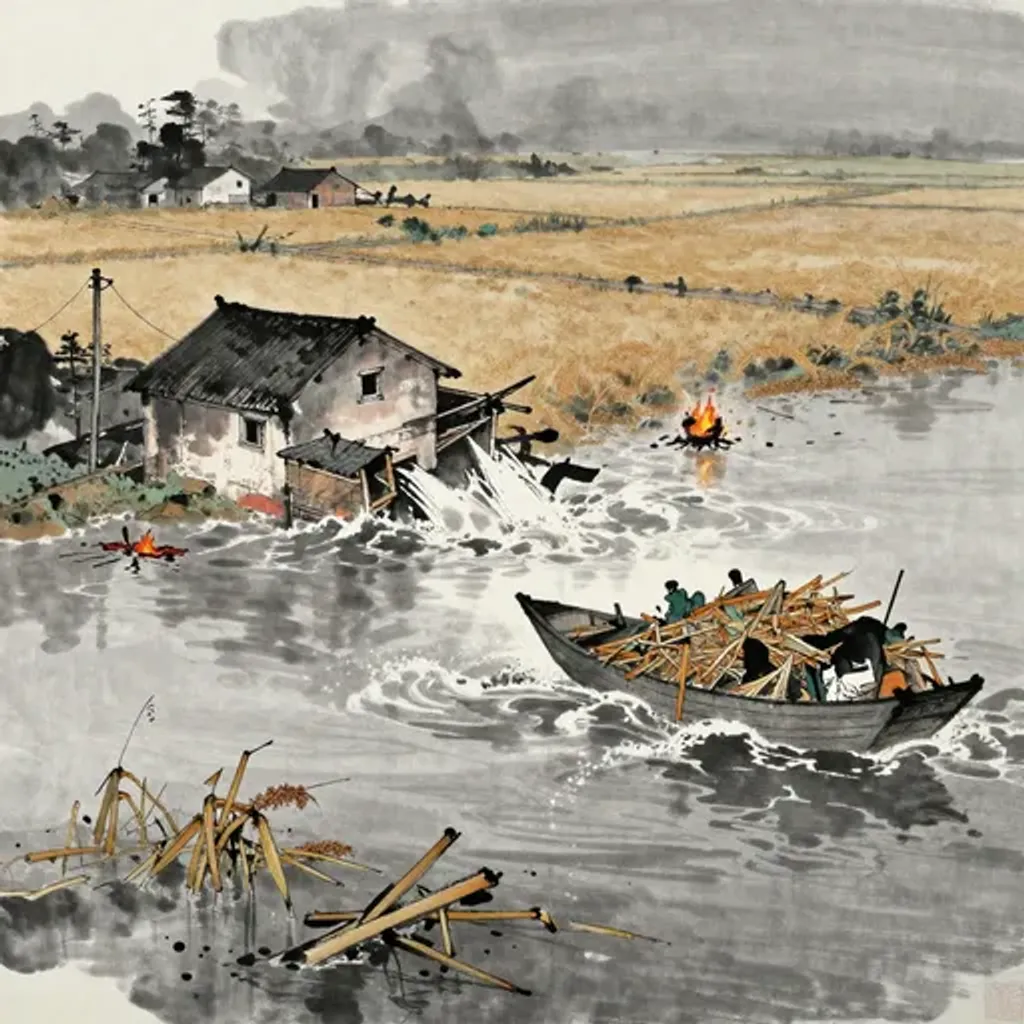
陰淫寒疾,水離其室。舟楫大作,傷害黍稷。民飢於食,不无病厄。
Yin excess brings cold and plague; the waters leave their course. Boats and rafts are hastily built, yet the crops are ruined. The people starve for food; sickness and hardship are inescapable.
— Jiao Yanshou, Yilin (Forest of Changes), 1st century BC
Commentary
A lake without water, yet excessive yin brings cold and illness. Water breaks free from its channels, boats and oars multiply as floods spread, and the grain harvest is ruined. The people starve; disease and hardship compound. The verse is a catalogue of flood disaster: cosmic imbalance (excess yin) triggers natural catastrophe, which cascades into famine and plague. The boats multiplying is grimly paradoxical: water that should nourish instead requires vessels of emergency rescue. From Oppression to Deliverance, thunder and rain arrive together, and the gentleman pardons transgressions and forgives faults. Deliverance should release the tension, but the verse shows that release without structure, water freed from its channels, becomes destruction rather than relief.
困 → 損
Hexagram 47 → Hexagram 41: Decrease
Changing lines: 1, 4, 5, 6
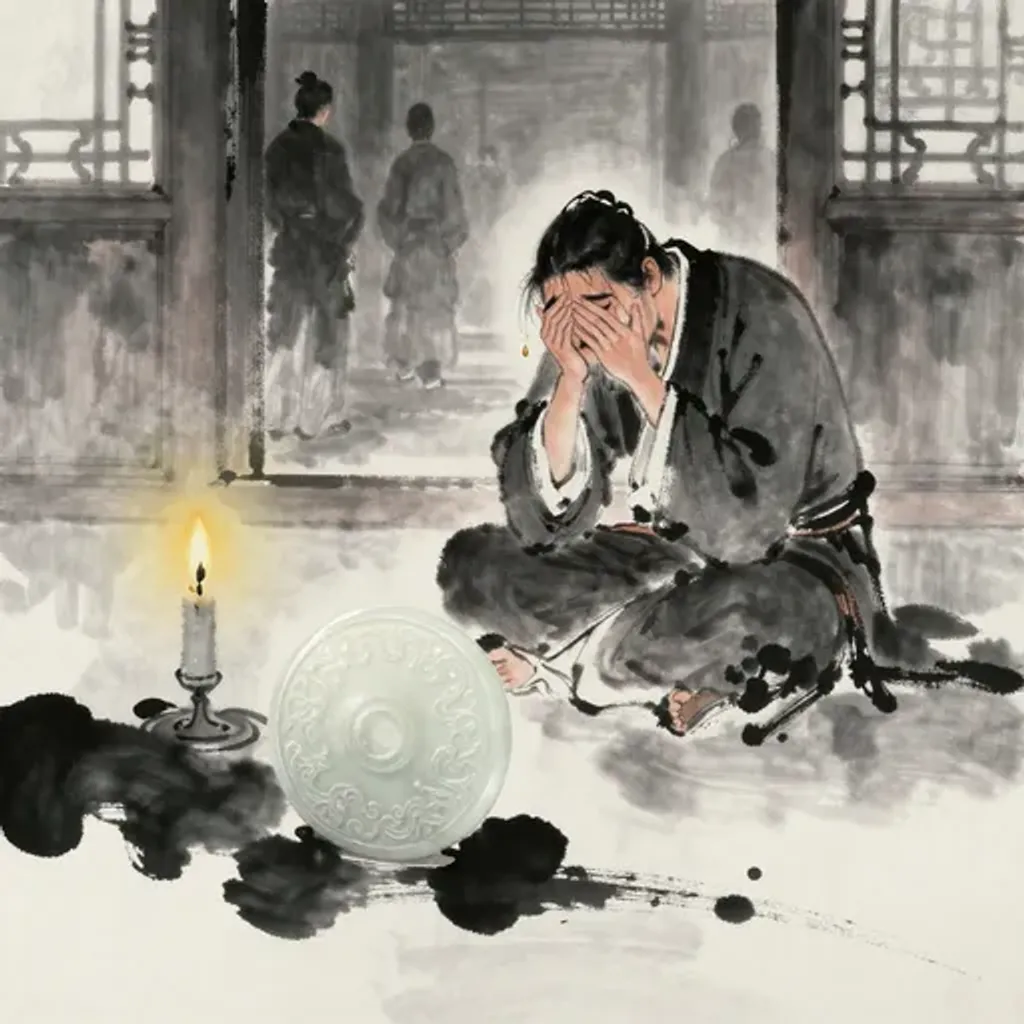
離友絕朋,巧言讒匿。覆白污玉,顏叔哀哭。
Severed from friends, cut off from companions; cunning words and hidden slander. White is overturned and jade defiled; Yan Shu weeps in grief.
— Jiao Yanshou, Yilin (Forest of Changes), 1st century BC
Commentary
A lake without water: friends are abandoned, companions severed. Clever words and hidden slander separate the closest bonds. White is covered over and jade is stained; Yan Shuzi weeps in anguish. Yan Shuzi was a man of legendary moral purity from the state of Lu. According to tradition, when a neighbor woman sought shelter in his house during a storm, he held a candle through the night to prevent any suspicion of impropriety. Despite his scrupulous conduct, he was slandered, his reputation 'stained.' From Oppression to Decrease, the mountain stands above the lake, draining it. Slander decreases what was whole: friendships are stripped away, purity is soiled, and the innocent suffer the loss of what they most carefully guarded.
困 → 益
Hexagram 47 → Hexagram 42: Increase
Changing lines: 1, 2, 4, 6
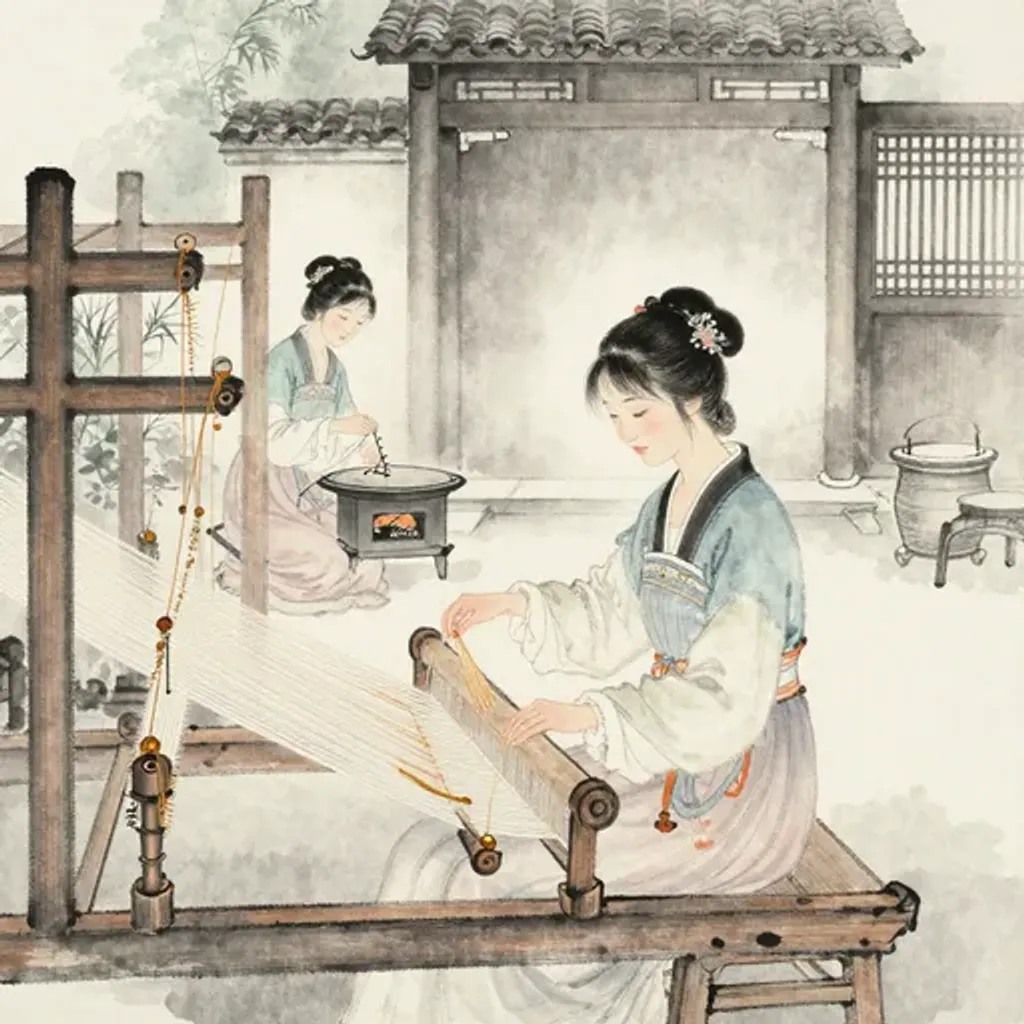
童女无媒,不宜動搖。安其室廬,傅母何憂?
The maiden has no matchmaker; it is unfit to be stirred or moved. She remains secure in her dwelling, and the governess has no cause for worry.
— Jiao Yanshou, Yilin (Forest of Changes), 1st century BC
Commentary
A lake without water: a young girl has no matchmaker and should not be stirred into action. She stays quietly in her dwelling, and what need her chaperone worry? The verse counsels patience and propriety in matters of marriage. Without a matchmaker, no courtship should proceed; the girl who remains in her chambers preserves both her reputation and her prospects. The 'fu mu' (chaperone-mother) rests easy knowing her charge is secure. From Oppression to Increase, wind and thunder reinforce each other, and the gentleman sees good and pursues it, finds fault and corrects it. Increase comes not from rash movement but from recognizing that the right conditions have not yet formed. Staying still within oppression is itself the increase: virtue preserved is virtue gained.
困 → 夬
Hexagram 47 → Hexagram 43: Breakthrough
Changing lines: 1, 3
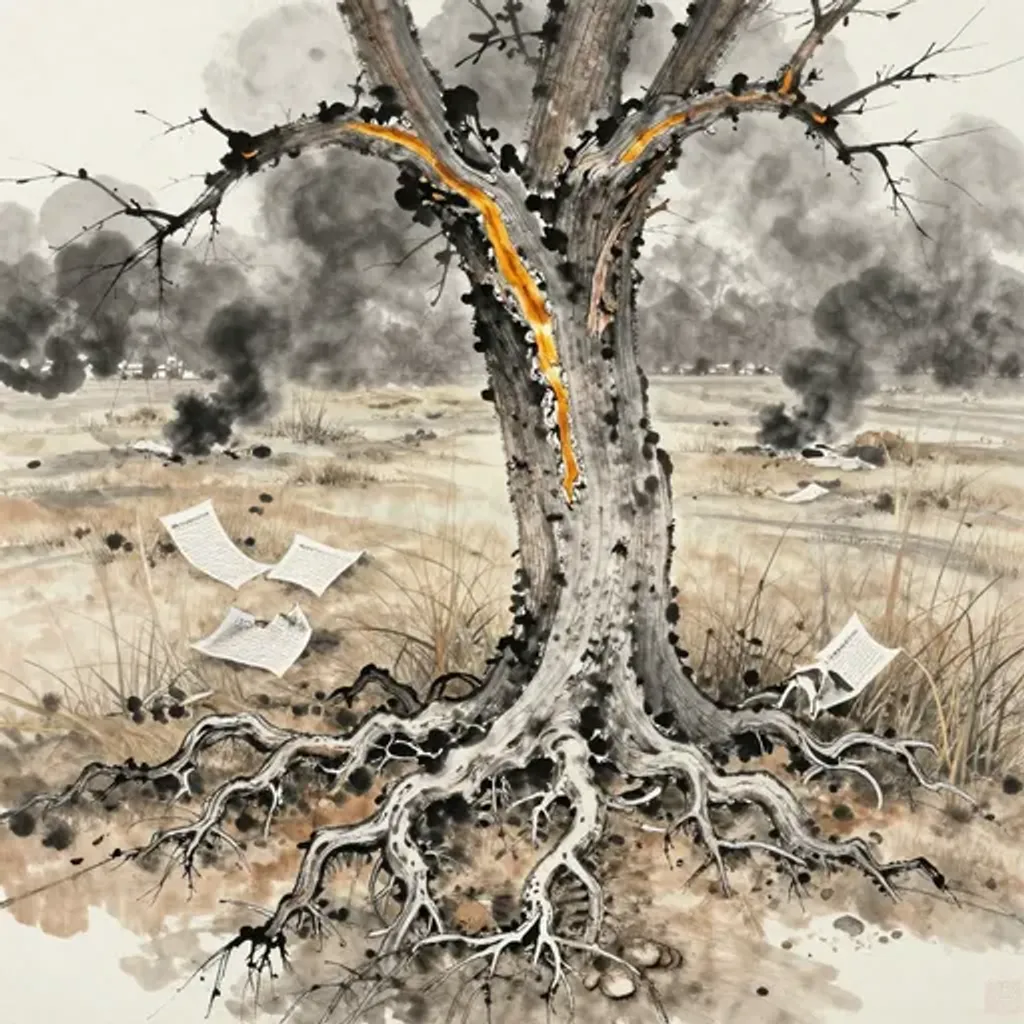
作凶作患,北檄困貧。東與禍連,傷我老根。
Bringing calamity and disaster, northern dispatches spell poverty and hardship. In the east, misfortune spreads; it wounds our elder root.
— Jiao Yanshou, Yilin (Forest of Changes), 1st century BC
Commentary
A lake without water: violence and calamity erupt. Urgent dispatches from the north bring poverty and distress. In the east, disaster spreads, wounding the ancient foundations. The verse paints a two-front crisis: hostile forces from the north compound with contagious misfortune from the east, together damaging what has been built over generations. The 'old root' signifies ancestral heritage or long-established institutions now under assault. From Oppression to Breakthrough, the lake rises above heaven, and the gentleman distributes blessings downward while guarding against complacency. Breakthrough demands decisive removal of what is harmful, but the verse shows the situation before that resolution: oppression metastasizing across borders, the root system under siege from multiple directions at once.
困 → 姤
Hexagram 47 → Hexagram 44: Coming to Meet
Changing lines: 3, 6
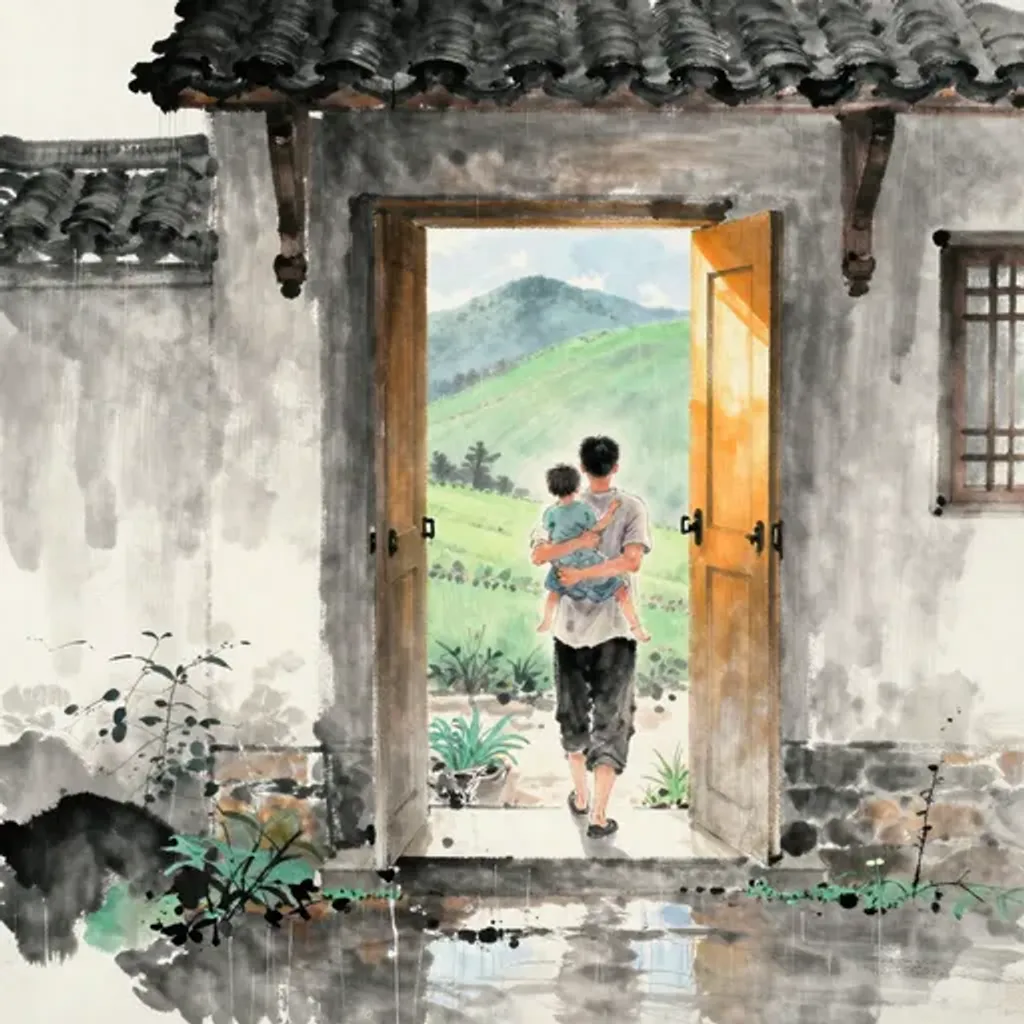
東南其戶,風雨不處。曣晲仁人,父子相保。
Its doors face southeast; wind and rain do not linger. Warm sun shines on the benevolent; father and son keep each other safe.
— Jiao Yanshou, Yilin (Forest of Changes), 1st century BC
Commentary
A lake without water: the door faces southeast, but wind and rain never settle there. Warm sunlight shines upon the benevolent, and father and son protect each other. The southeastern exposure catches morning light and avoids the worst storms, a domestic architecture of natural wisdom. The house that faces the right direction weathers disturbance while sheltering its inhabitants in warmth. From Oppression to Coming to Meet, wind moves beneath heaven, and the sovereign issues decrees to the four quarters. The encounter here is gentle and providential: the wind that carries decrees also carries shelter. A household aligned with natural order does not need to fight the elements. The father-son bond, strengthened by shared shelter, becomes a microcosm of the sovereign's protective reach.
困 → 萃
Hexagram 47 → Hexagram 45: Gathering Together
Changing lines: 2
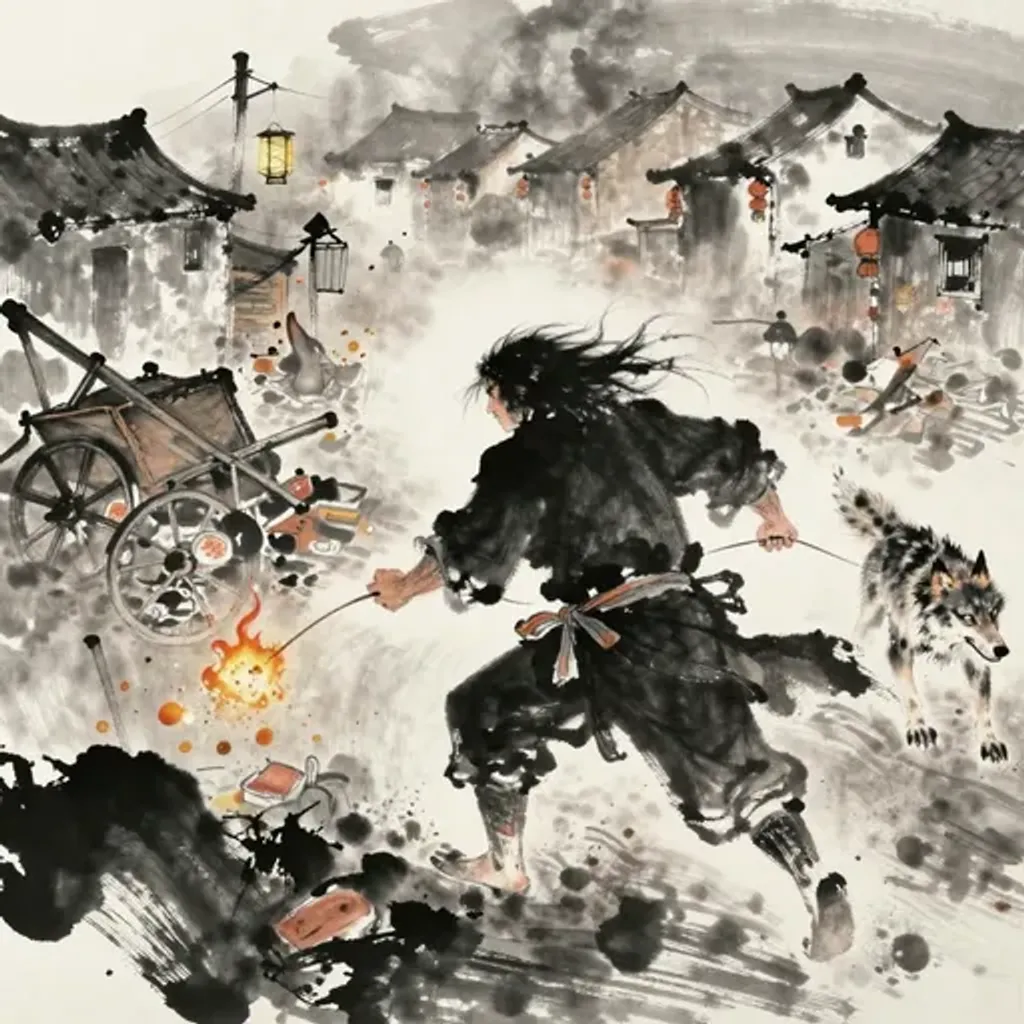
被髮獸心,難與比鄰。來如飄風,去似絕絃,為狼所殘。
Hair unbound and beast of heart, hard to keep as a neighbor. Coming like a whirlwind, departing like a severed string; devoured by the wolf.
— Jiao Yanshou, Yilin (Forest of Changes), 1st century BC
Commentary
A lake without water: hair disheveled and heart of a beast, impossible to live beside as a neighbor. It arrives like a whirlwind, departs like a snapped bowstring, and is torn apart by wolves. The verse describes a barbarian or bandit figure, someone operating outside civilization's norms. The wild hair and bestial disposition mark the outsider; the whirlwind arrival and snapped-string departure capture terrifying speed and unpredictability. The wolves that destroy him suggest that the lawless are ultimately consumed by a force even more savage. From Oppression to Gathering, the lake pools upon the earth, and the gentleman prepares weapons and guards against the unexpected. The verse is the reason such readiness matters: when predators roam, the gathered community must be armed and vigilant.
困 → 升
Hexagram 47 → Hexagram 46: Pushing Upward
Changing lines: 3, 4, 5
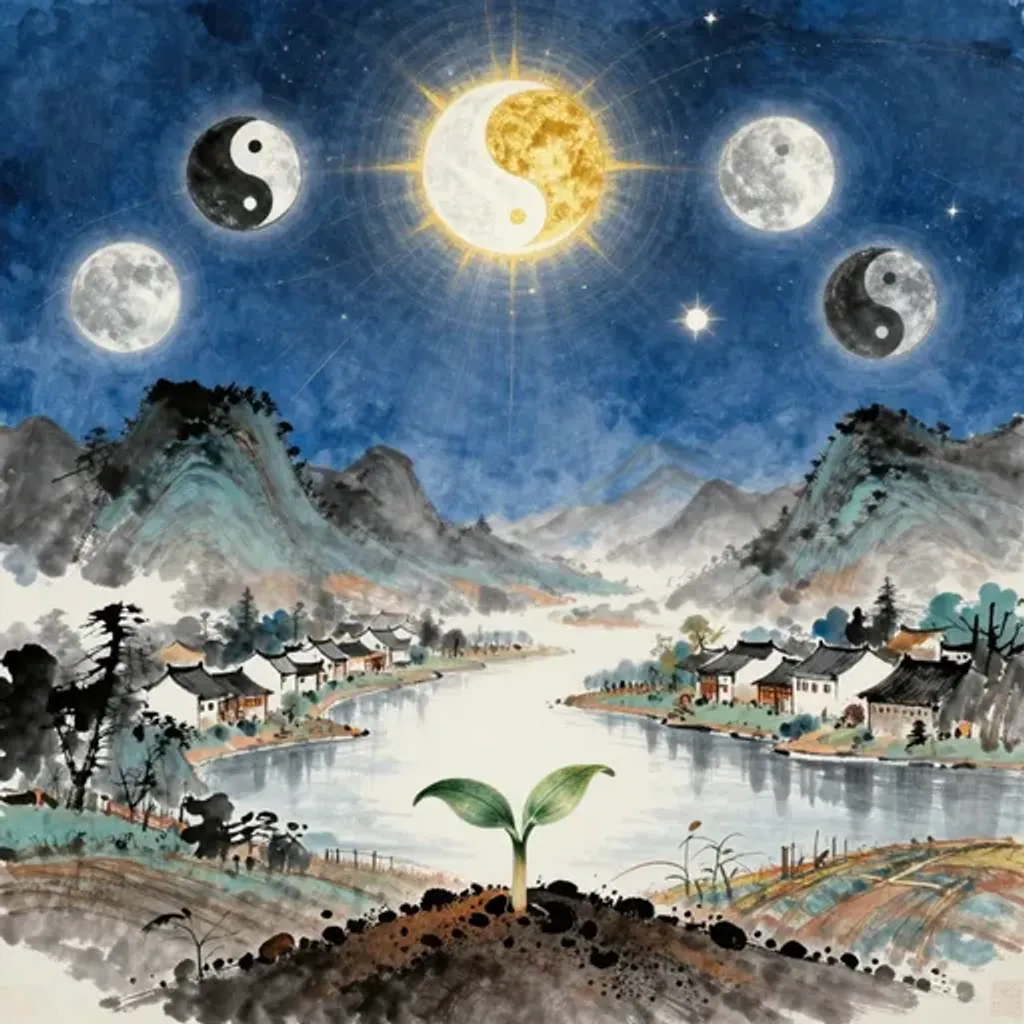
天覆地載,日月運照。陰陽允作,方內四富。
Heaven covers, earth supports; sun and moon revolve and shine. Yin and yang faithfully work together; the four quarters are richly blessed.
— Jiao Yanshou, Yilin (Forest of Changes), 1st century BC
Commentary
A lake without water, yet heaven covers and earth sustains, sun and moon orbit in their courses. Yin and yang operate faithfully, and within the four quarters all is prosperous. The verse is a cosmological hymn: the universe functions as designed, celestial bodies follow their paths, the dual forces harmonize, and the result is universal abundance. No historical allusion; this is pure cosmic felicity. From Oppression to Pushing Upward, wood grows within the earth, and the gentleman accumulates small steps into great heights. The drained lake gives way to patient upward growth. When heaven and earth function properly, when the cosmic order is trusted, the smallest seedling pushed upward through the soil becomes a towering tree. Oppression was temporary; the cosmic pattern is permanent.
困 → 困
Hexagram 47 → Hexagram 47: Oppression
No changing lines — the hexagram is unchanged
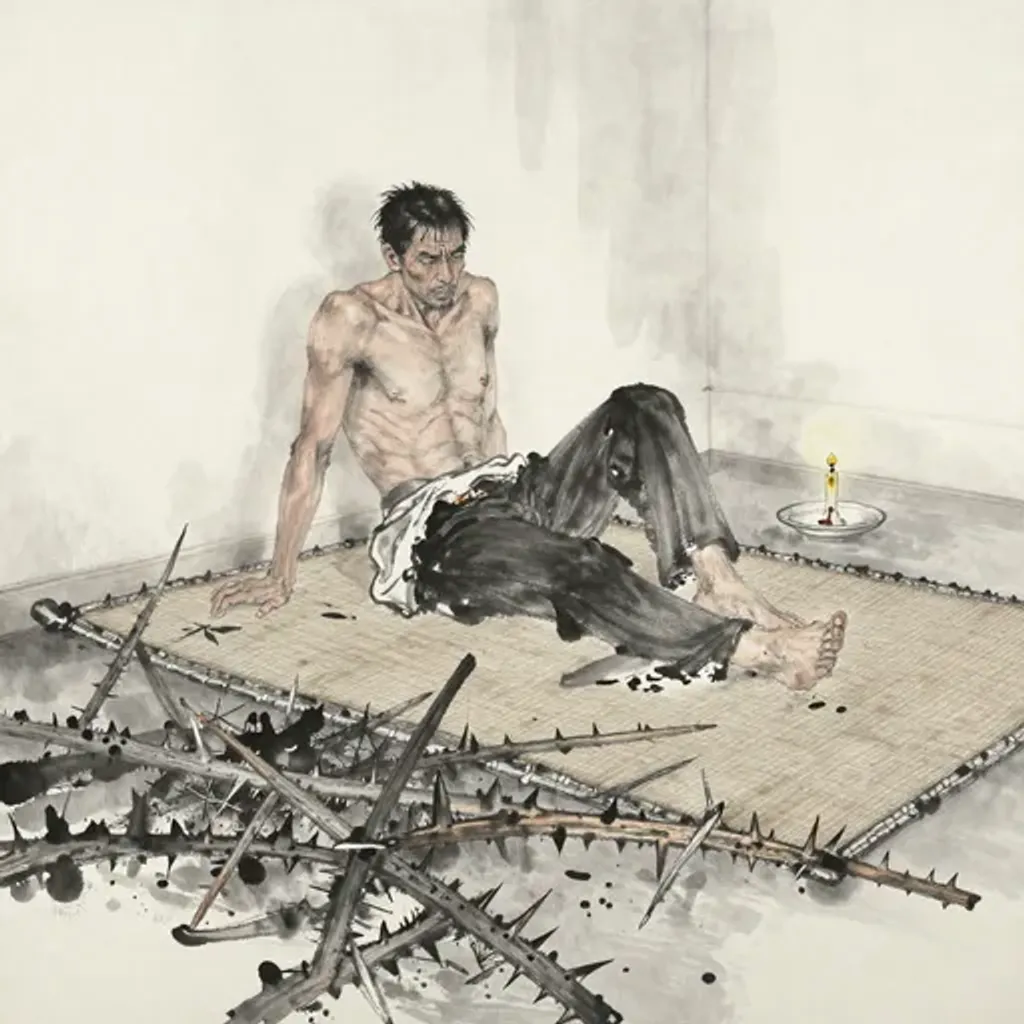
席多針刺,不可以臥。動而有悔,言行俱過。
The mat is full of needle pricks; one cannot lie down upon it. To move is to invite regret; word and deed alike transgress.
— Jiao Yanshou, Yilin (Forest of Changes), 1st century BC
Commentary
A lake without water transforming into itself: Oppression doubled. The mat is full of needles, impossible to lie down upon. Every movement brings regret; words and deeds both go wrong. This is the I-Ching's own warning for hexagram 47 taken to its extreme: the image of the lake drained again into a drained lake, oppression reinforcing itself. There is no escape because there is no change. The needle-studded mat captures the peculiar cruelty of a trap that punishes both action and inaction: one cannot rest, yet cannot move without making things worse. The only counsel is the hexagram's own judgment: the great man fulfills his fate and pursues his purpose. Even in double oppression, the sage does not abandon his will.
困 → 井
Hexagram 47 → Hexagram 48: The Well
Changing lines: 3, 4
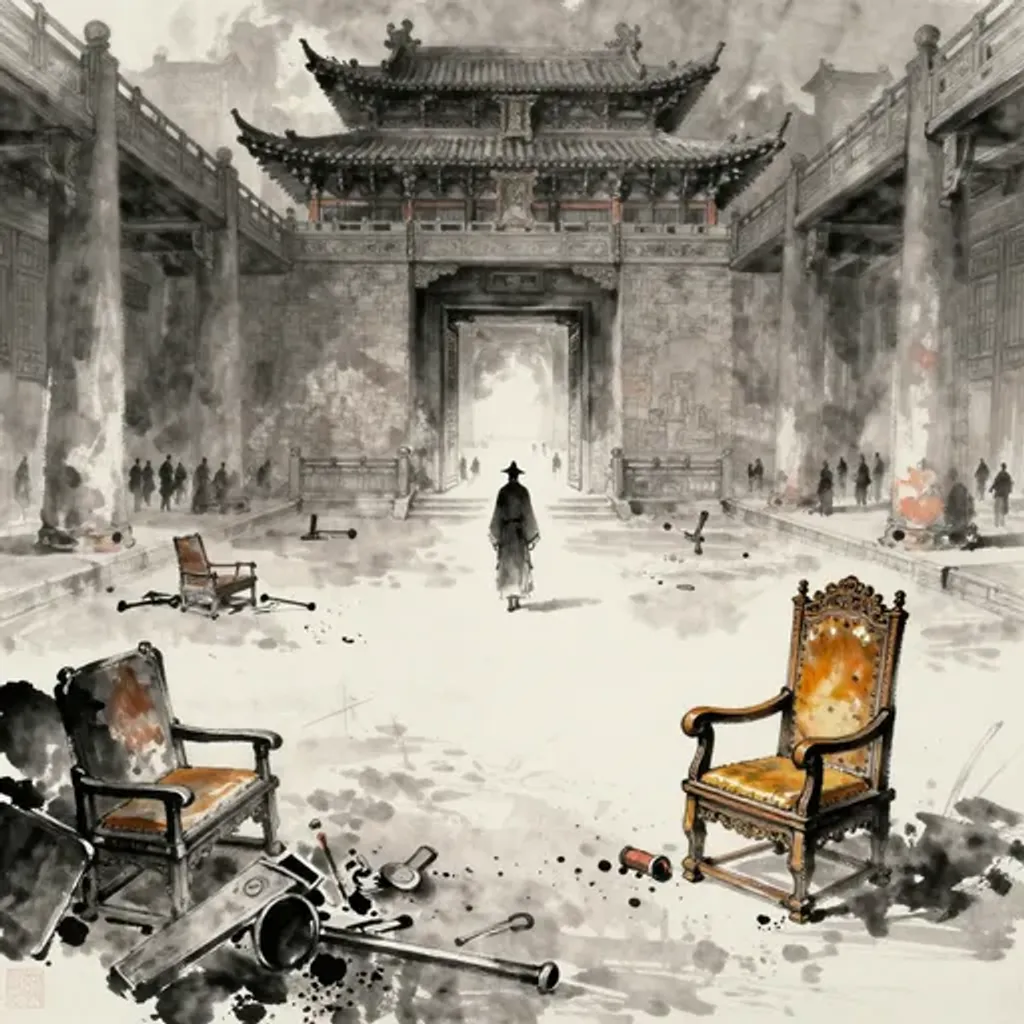
桀亂无道,民散不聚。背室棄家,君孤出走。
Jie rules in chaos, devoid of the Way; the people scatter and will not gather. They abandon hearth and home; the lord is left alone to flee.
— Jiao Yanshou, Yilin (Forest of Changes), 1st century BC
Commentary
A lake without water, and King Jie of Xia rules in chaos without the Way. The people scatter and will not gather. They abandon their homes and flee, and the ruler stands alone as his kingdom empties. Jie, the last tyrant of the Xia dynasty, squandered the Mandate of Heaven through debauchery and cruelty until his subjects simply walked away. From Oppression to the Well, water rises above wood, and the gentleman labors among the people and encourages mutual aid. The Well offers what Jie refused to provide: a fixed, communal resource that nourishes regardless of who draws from it. The well cannot be moved, and unlike the tyrant's palace, it belongs to everyone. Jie's oppression drove people away; the well draws them home.
困 → 革
Hexagram 47 → Hexagram 49: Revolution
Changing lines: 1, 2, 3
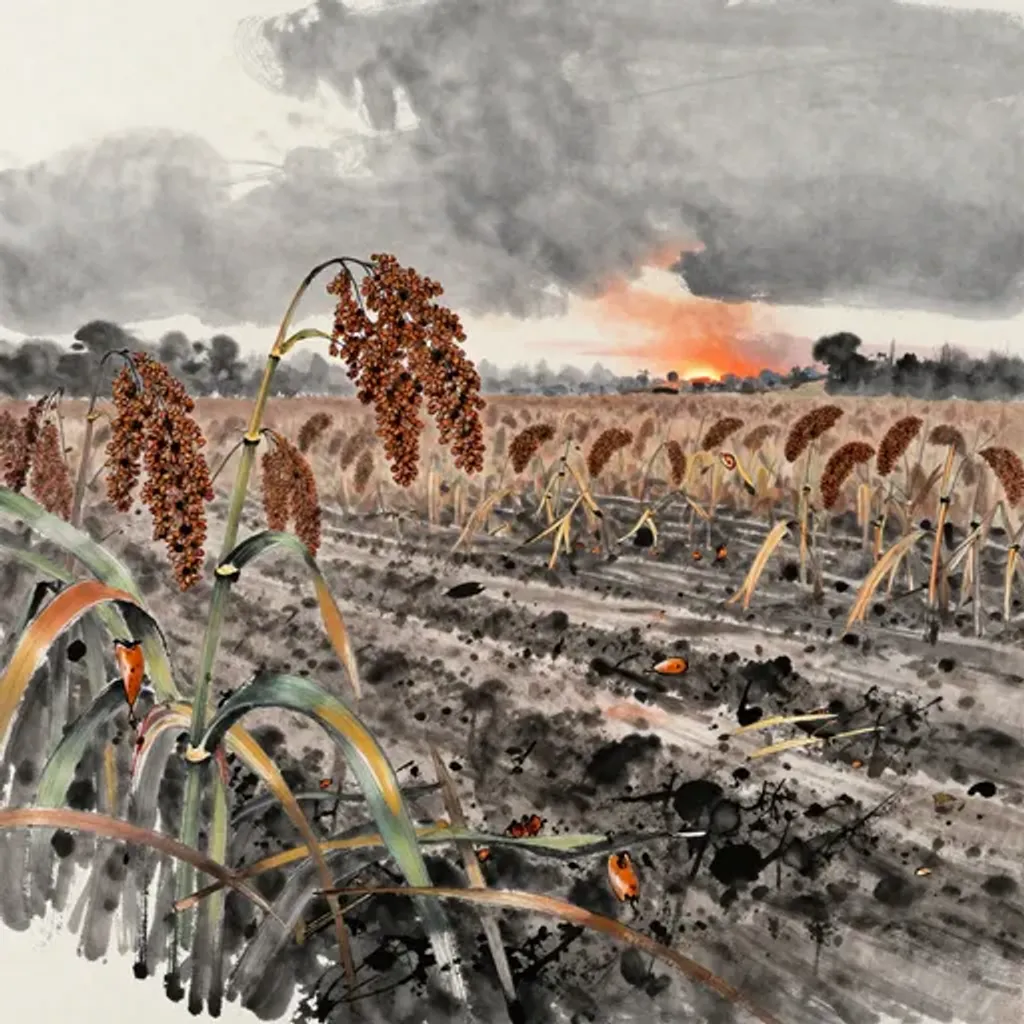
申酉稷射,陰慝萌作。柯葭載牧,泥塗不白。
In the shen and you months, when autumn grains are shot, dark mischief stirs and rises. Stalks and reeds bear their pasture, but the mire will not whiten.
— Jiao Yanshou, Yilin (Forest of Changes), 1st century BC
Commentary
A lake without water: in the shen and you hours, grain is targeted by arrows. Dark forces stir and sprout. Branches and reeds are loaded for pasture, but the mud stains cannot be washed white. The shen-you hours correspond to late afternoon and the metal phase, traditionally associated with decline and autumn's killing energy. Grain under attack by arrows suggests military requisition or forced levy destroying the harvest. The 'yin tei' (dark wickedness) sprouting implies corruption germinating unseen. Mud that cannot whiten captures indelible stain. From Oppression to Revolution, fire within the lake, the gentleman uses the calendar to clarify the seasons. Revolution demands proper timing, but this verse shows the moment before: the stain that will not come clean, the corruption that has already rooted.
困 → 鼎
Hexagram 47 → Hexagram 50: The Cauldron
Changing lines: 3, 5, 6
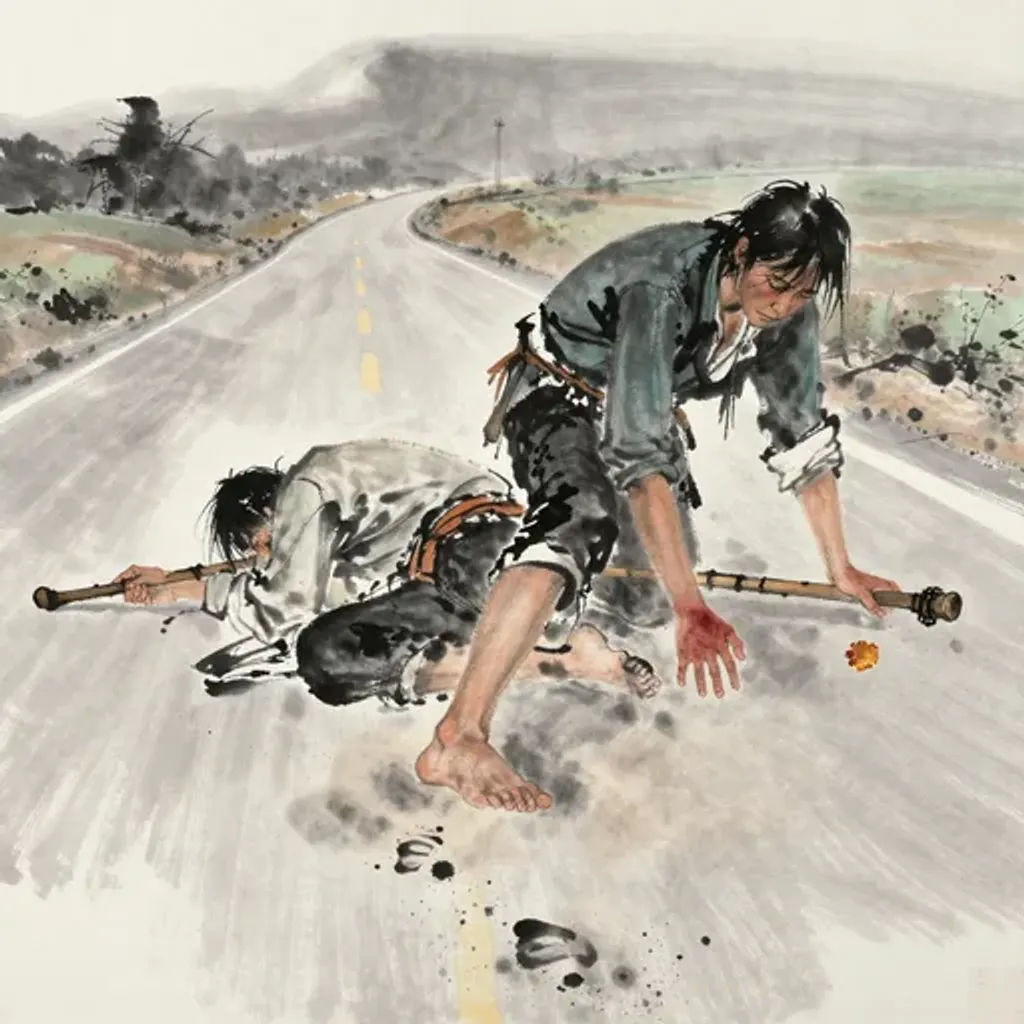
踝踵足傷,右指病瘍。失旅後時,利走不來。
Ankle and heel injured, the right finger ulcered and sore. Missing the caravan, arriving too late; profit flees and will not return.
— Jiao Yanshou, Yilin (Forest of Changes), 1st century BC
Commentary
A lake without water: ankles and heels injured, the right finger afflicted with sores. The traveling party is lost and the timing missed; profit will not come. The verse is a catalogue of physical incapacity compounding logistical failure. Injured feet cannot walk; a diseased hand cannot work. Missing the season means missing the market. Every capacity required for action is damaged or delayed. From Oppression to the Cauldron, fire above wood suggests the transformative power of cooking, refining raw materials into nourishment. But the cauldron requires a functional body to operate: someone must gather wood, tend the fire, carry the vessel. When the body itself is broken, even the Cauldron's transformative promise remains unrealized. Oppression here is physical: the instruments of agency are crippled.
困 → 震
Hexagram 47 → Hexagram 51: The Arousing Thunder
Changing lines: 1, 2, 5
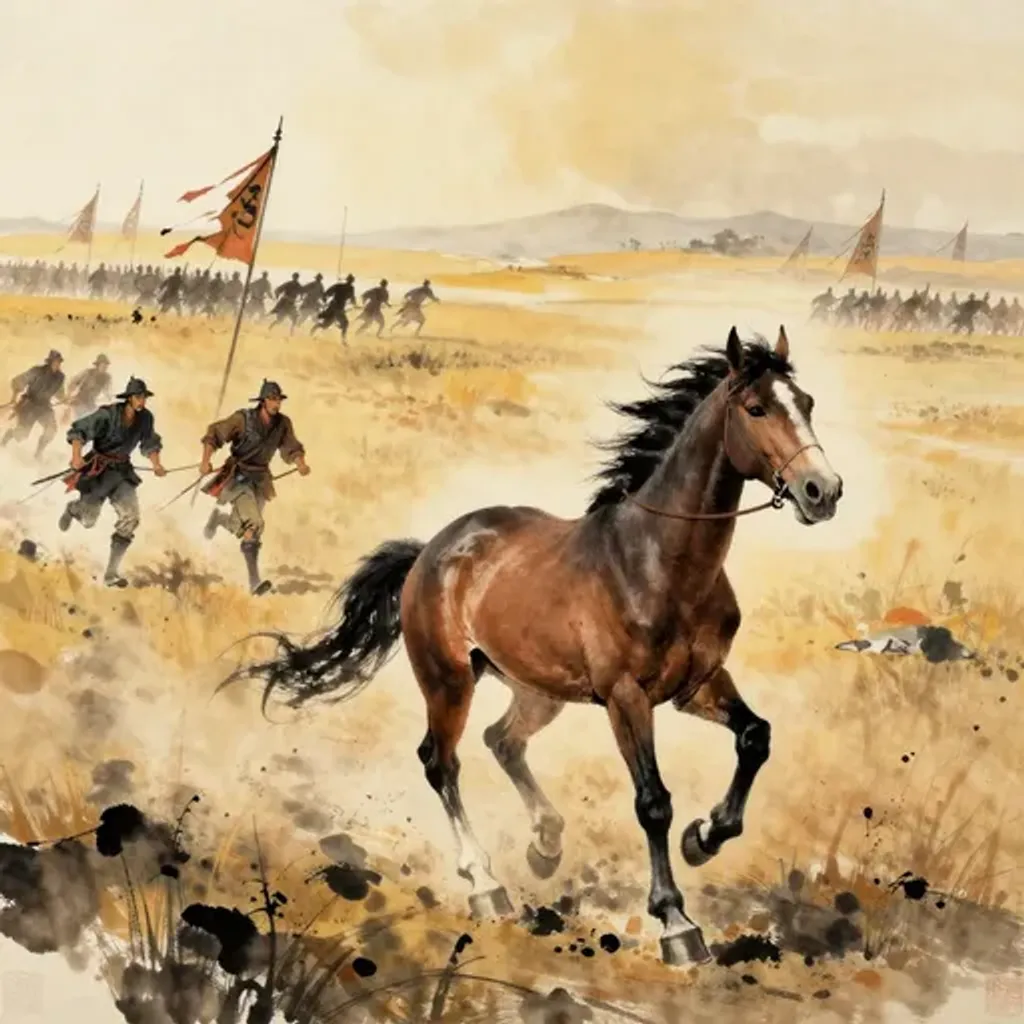
四足俱走,駑疲在後。戰既不勝,敗於東野。
All four legs race together, the worn-out nag falls behind. The battle already lost, they are routed on the eastern field.
— Jiao Yanshou, Yilin (Forest of Changes), 1st century BC
Commentary
A lake without water: all four legs run together, but the worn-out nag lags behind. The battle ends in defeat, routed on the eastern plain. The image pairs a race with a rout: in any contest of speed, the exhausted horse falls to the rear, and falling behind in war means annihilation. The 'eastern field' as a place of defeat echoes several Spring and Autumn battles where overextended forces collapsed far from home. From Oppression to the Arousing, doubled thunder should electrify and galvanize. But the verse inverts this potential: the thunder that should shock the weary horse into motion only reveals its total depletion. The slow cannot be startled into speed; the exhausted cannot be frightened into strength. Arousal without reserves produces only rout.
困 → 艮
Hexagram 47 → Hexagram 52: Keeping Still Mountain
Changing lines: 2, 3, 4, 5, 6
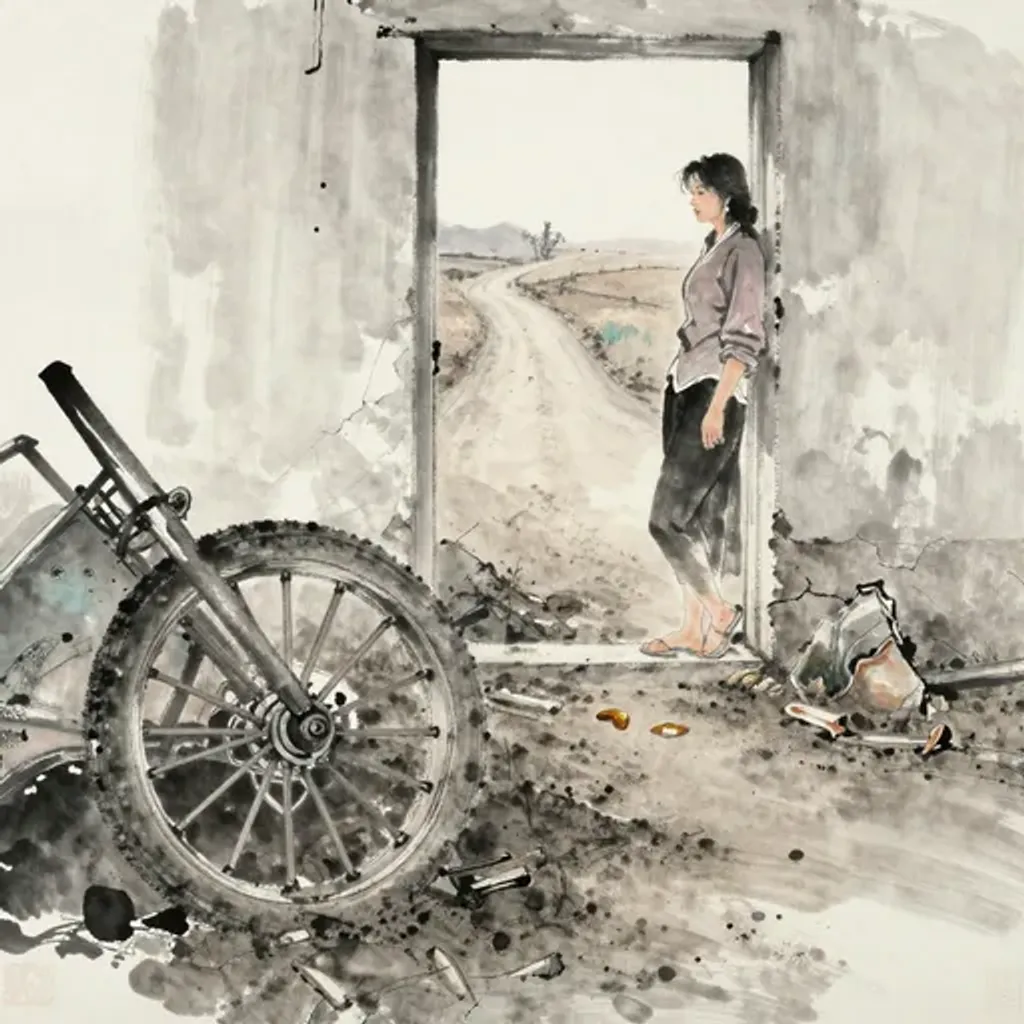
塗行破車,醜女无媒。莫適為耦,孤困獨居。
Traveling through mud, the cart breaks down; the homely woman has no matchmaker. None is found to make a pair; alone and stranded, she dwells in solitude.
— Jiao Yanshou, Yilin (Forest of Changes), 1st century BC
Commentary
A lake without water: traveling on a muddy road, the cart breaks down. An ugly woman has no matchmaker. No one will pair with her; she dwells alone in solitary distress. The verse layers two images of failed connection: a broken vehicle that cannot reach its destination, and an unmarried woman whom no go-between will represent. Both are stranded by a failure of mediation, the cart by the road's condition, the woman by social convention. From Oppression to Keeping Still, doubled mountains stand motionless, and the gentleman thinks without straying beyond his position. The stillness here is enforced rather than chosen: the cart cannot move, the woman cannot marry, and all one can do is sit with the situation. Keeping Still at least offers dignity in immobility.
困 → 漸
Hexagram 47 → Hexagram 53: Development
Changing lines: 2, 3, 4, 6
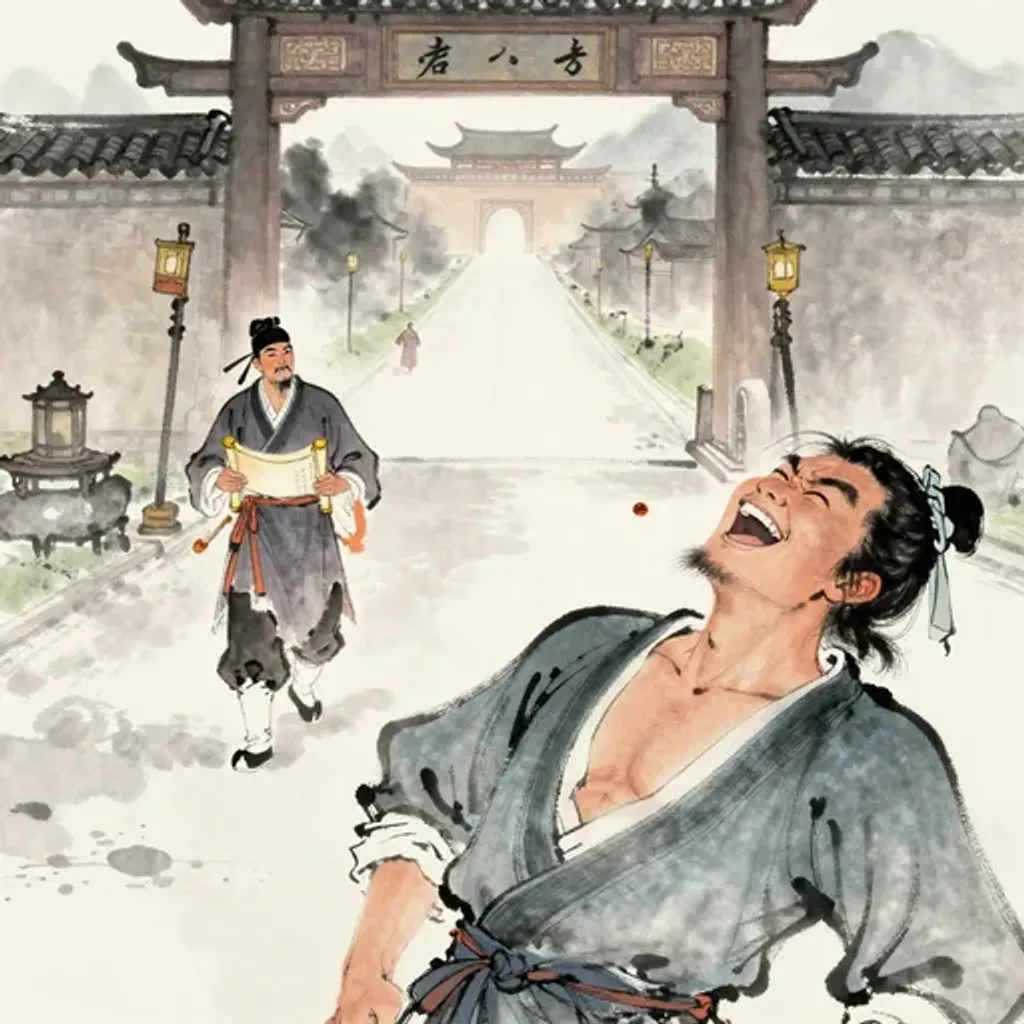
搏髀大笑,不知憂懼。開立大路,為主所召。
Slapping his thigh and laughing greatly, knowing neither worry nor dread. A great road opens before him; the master sends his summons.
— Jiao Yanshou, Yilin (Forest of Changes), 1st century BC
Commentary
A lake without water, yet someone slaps his thigh and roars with laughter, knowing neither worry nor fear. A great road opens before him, and he is summoned by the lord. The thigh-slapping laughter captures the boisterous confidence of a man who knows his moment has arrived. The fear that should accompany oppression is simply absent; in its place stands audacious self-assurance. From Oppression to Development, wood grows gradually upon the mountain, and the gentleman dwells in worthy virtue to improve customs. Development's pace is incremental, a wild goose advancing step by careful step. But this verse suggests that the summons, when it comes, arrives not through cautious progress but through an explosive moment of recognition. The road that opens is wide and sudden, and the one summoned strides onto it laughing.
困 → 歸妹
Hexagram 47 → Hexagram 54: The Marrying Maiden
Changing lines: 1, 5
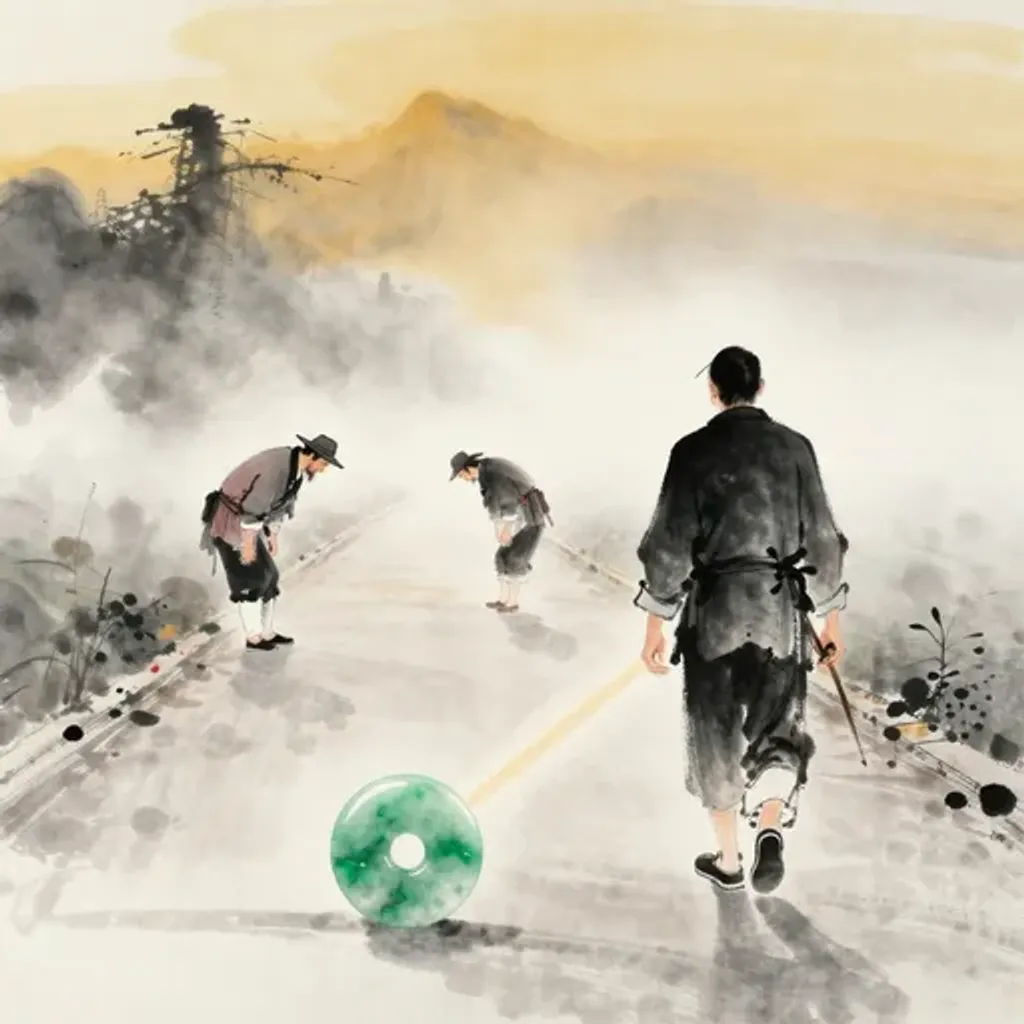
伯圭東行,與利相逢。出既遭昧,孰不相知?憂不成凶。
Lord Bo travels east bearing jade, and meets with profit on the road. Setting out only to encounter murk, who then can know the other? Worry does not ripen into disaster.
— Jiao Yanshou, Yilin (Forest of Changes), 1st century BC
Commentary
A lake without water: a nobleman carrying a jade tablet journeys east and encounters good fortune on the road. Though he meets with darkness and confusion at first, who can remain unknown forever? Worry does not ripen into disaster. The 'bo gui' (eldest son's jade) is a symbol of legitimate authority and rank; traveling east with it suggests embarking on a mission to claim or demonstrate one's rightful position. The initial obscurity gives way to recognition. From Oppression to the Marrying Maiden, thunder rides above the lake, and the gentleman understands endings by examining what is worn out. The maiden's journey to her new home mirrors the nobleman's eastward march: both venture into uncertain territory, both risk obscurity, yet both find that the transition, though fraught, does not end in calamity.
困 → 豐
Hexagram 47 → Hexagram 55: Abundance
Changing lines: 1, 2, 3, 5
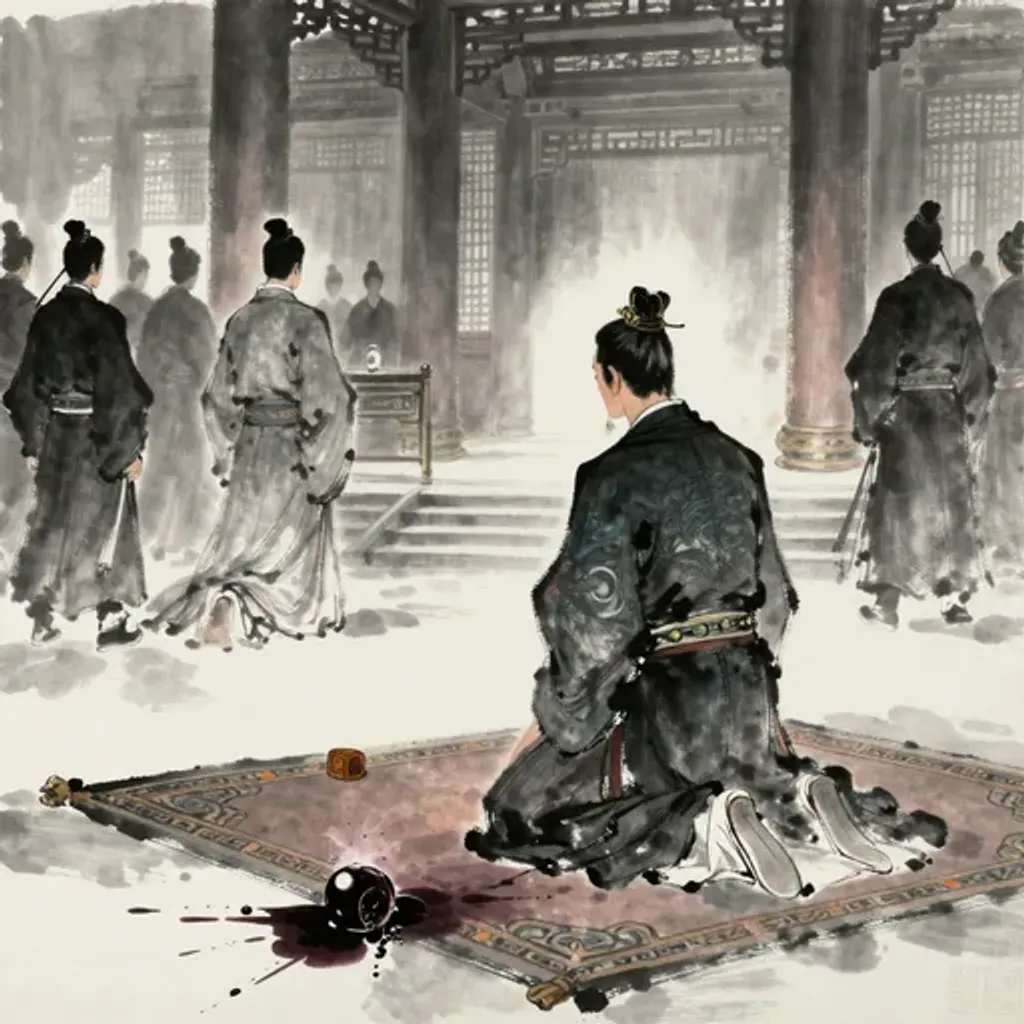
東行賊家,鄭伯失辭。國无貞良,居受其殃。
Traveling east to the house of trouble, the Lord of Zheng loses his speech. The state has no one loyal and true; those who stay suffer the calamity.
— Jiao Yanshou, Yilin (Forest of Changes), 1st century BC
Commentary
A lake without water: journeying east to an enemy's domain, the Earl of Zheng loses his words. The state has no upright and loyal ministers, and those who remain suffer calamity. The phrase 'Zheng Bo shi ci' recalls several episodes in the Zuo Zhuan where Zheng's rulers were humiliated in diplomatic exchanges, unable to speak effectively before more powerful states. A ruler without eloquence in the feudal courts was a ruler without defense. From Oppression to Abundance, thunder and lightning arrive together in overwhelming force. The gentleman uses this to decide legal cases and carry out punishments. Abundance demands decisive judgment, but the verse shows a state that has lost the capacity for articulate self-defense. Without loyal counselors to supply the right words, even abundance of force cannot compensate for poverty of speech.
困 → 旅
Hexagram 47 → Hexagram 56: The Wanderer
Changing lines: 2, 3, 5, 6
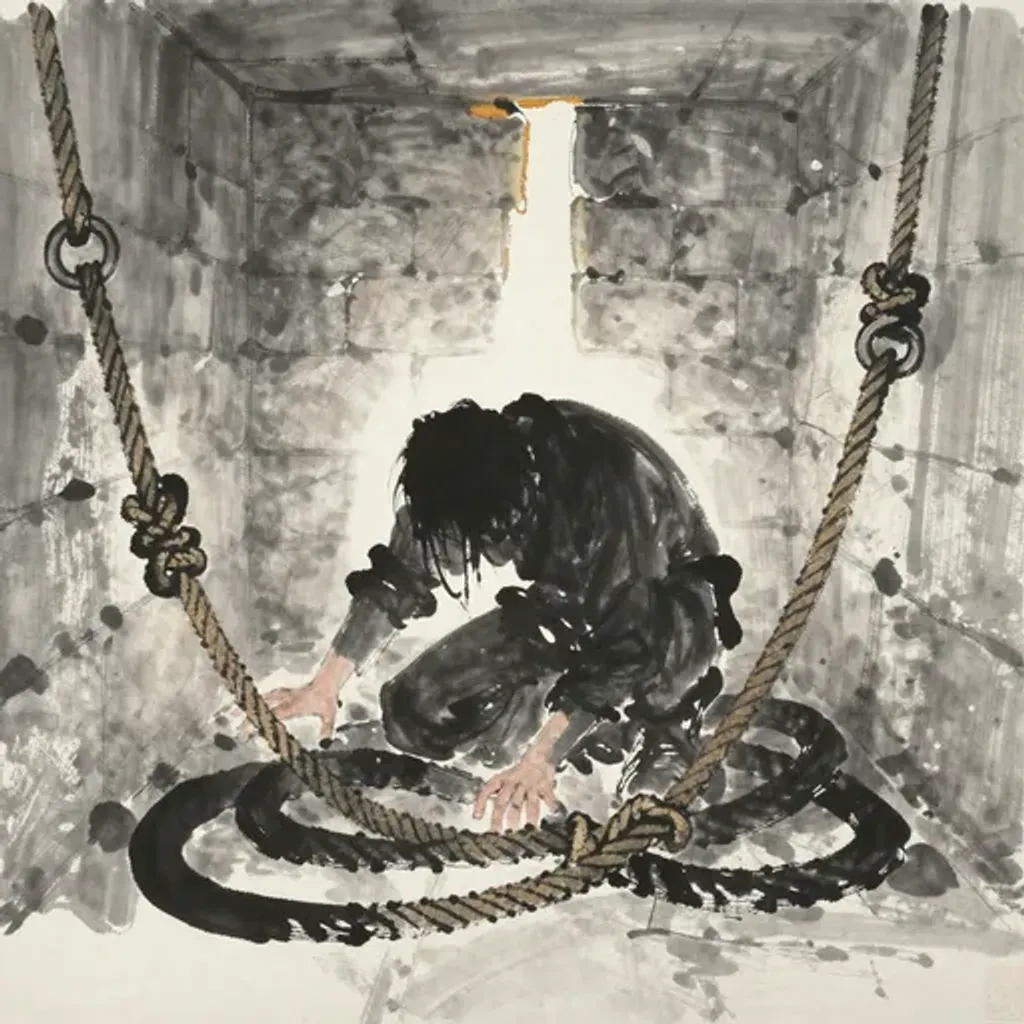
前屈後曲,形體飭急。絞黑大索,困於清室。
Bent forward, twisted back, the body bound and strained. Knotted black cords, thick ropes; confined in the stark chamber.
— Jiao Yanshou, Yilin (Forest of Changes), 1st century BC
Commentary
A lake without water: the body bends forward and back, contorted and bound tight. Black twisted ropes, great cables restrain him; he is trapped in the 'clear chamber.' The qingshi (clear chamber or pure room) was a euphemism for a prison cell in Han dynasty usage, particularly the cell where those awaiting judicial punishment were confined. The body language of the prisoner, bent and twisted, mirrors the ropes that bind him. From Oppression to the Wanderer, fire burns above the mountain, and the gentleman is cautious and clear in applying punishments, never leaving prisoners languishing in prison. The irony cuts deep: the Wanderer's ideal of swift, fair justice is precisely what is absent here. The prisoner in the clear chamber endures oppression at its most literal, confined and forgotten.
困 → 巽
Hexagram 47 → Hexagram 57: The Gentle Wind
Changing lines: 3, 4, 6
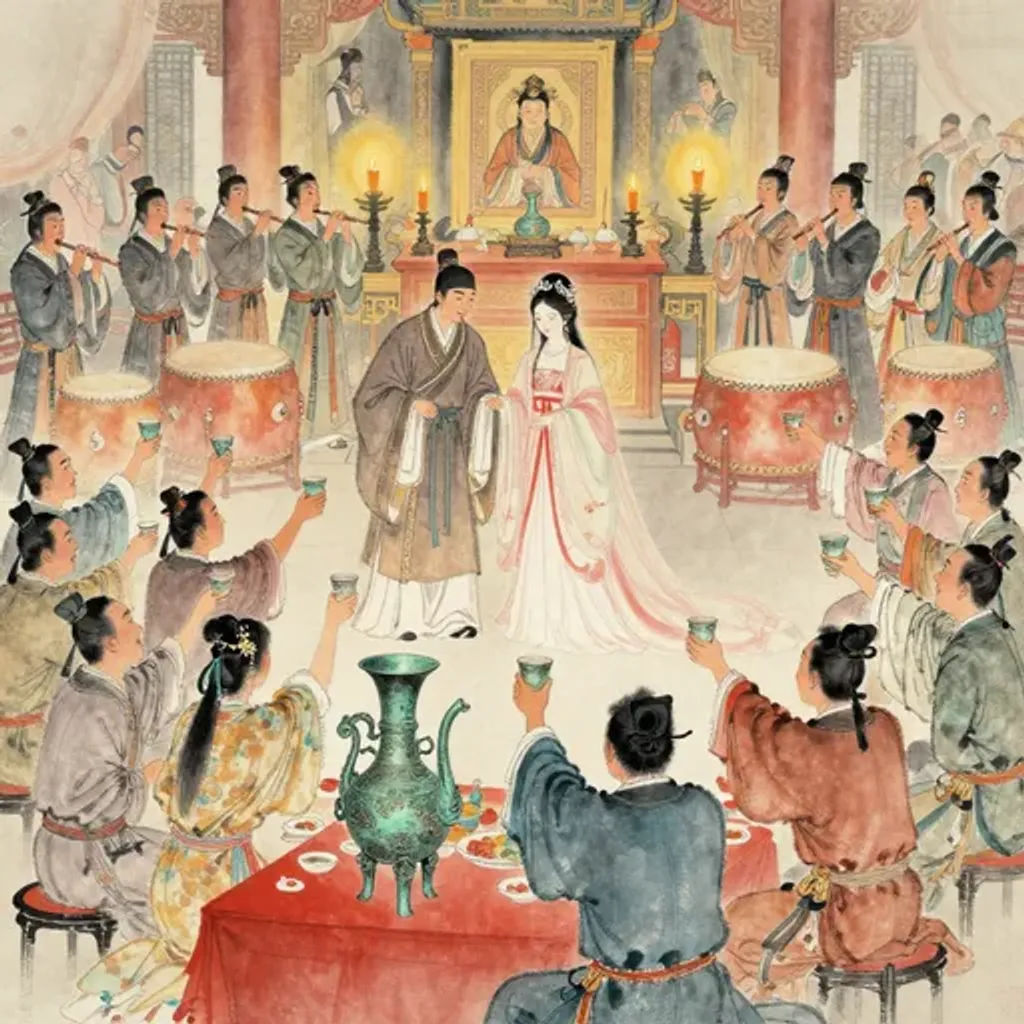
鼓腋大喜,行婚飲酒。嘉彼諸姜,樂我皇考。
Beating the breast in great delight, the marriage feast flows with wine. Praising the noble Jiang clan, bringing joy to our royal ancestors.
— Jiao Yanshou, Yilin (Forest of Changes), 1st century BC
Commentary
A lake without water, yet drums beat and great joy fills the air. A wedding feast is underway; wine flows freely. The daughters of the Jiang clan are praised as brides, and the ancestral father is honored with delight. 'Zhu Jiang' (the various Jiang ladies) refers to women of the Jiang surname, which included the ruling house of Qi. The Shijing frequently celebrates marriages with Jiang-surname women as emblems of proper alliance. The feast that honors the ancestors through a new marriage unites past and future in a single celebration. From Oppression to the Gentle, doubled wind penetrates all things, and the gentleman issues commands and carries out affairs. The wedding's gentle joy disperses oppression the way wind scatters stale air, renewing the household through alliance.
困 → 兌
Hexagram 47 → Hexagram 58: The Joyous Lake
Changing lines: 1
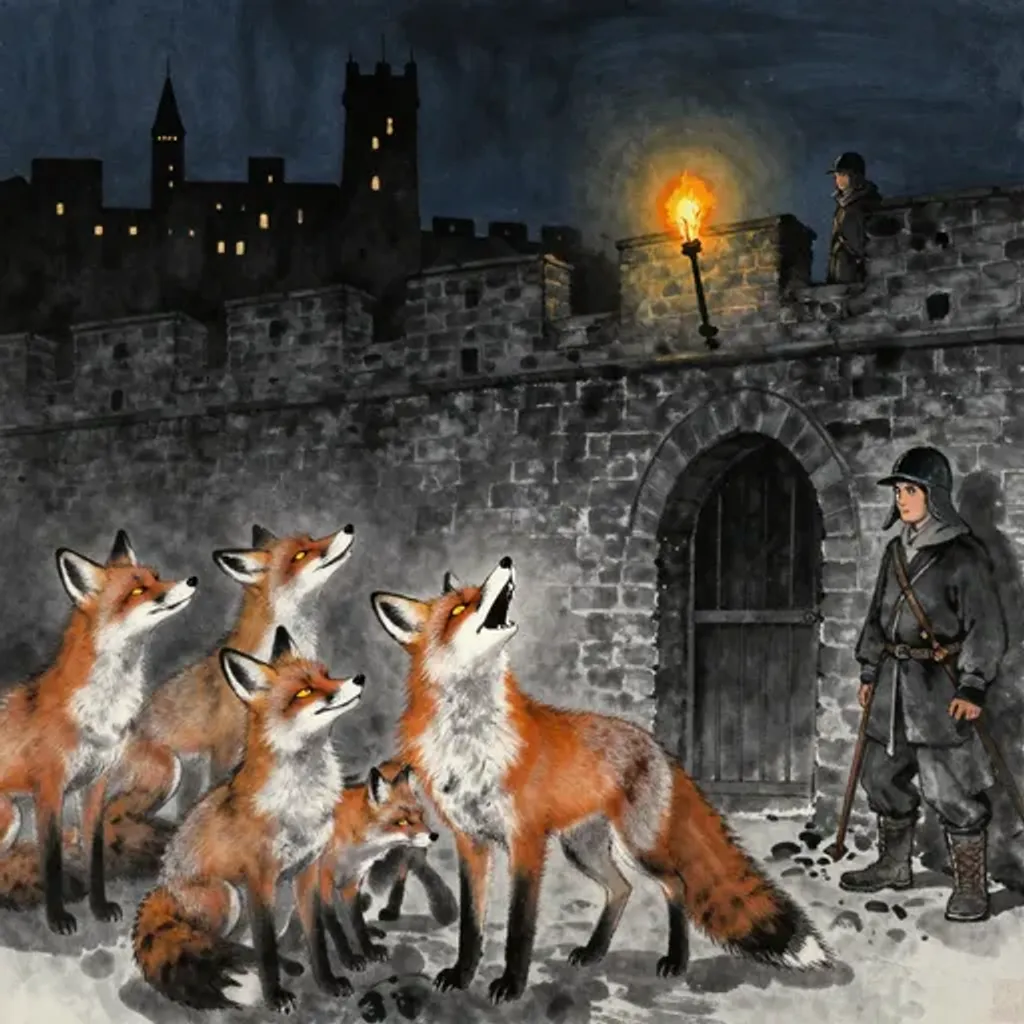
國將有事,狐嘈向城。三日悲鳴,邑主大驚。
The state is about to face calamity; foxes cry and clamor toward the city. For three days they wail and keen; the lord of the town is greatly alarmed.
— Jiao Yanshou, Yilin (Forest of Changes), 1st century BC
Commentary
A lake without water: the state is about to face trouble, and foxes bark toward the city walls. For three days they cry mournfully, and the city's lord is greatly alarmed. In Chinese omen lore, foxes howling toward a city was a dire portent of impending invasion or internal collapse. The three-day duration intensifies the warning: this is not a passing disturbance but a sustained premonition. From Oppression to the Joyous, doubled lakes reflect each other, and friends gather for mutual learning. The Joyous should bring communal pleasure, but the verse inverts it: the only voices raised are the foxes' cries, and the only gathering is of ill omens. When joy's proper form is absent, its hollow image appears as warning. The ruler who heeds the fox's cry may yet forestall disaster through timely action.
困 → 渙
Hexagram 47 → Hexagram 59: Dispersion
Changing lines: 4, 6
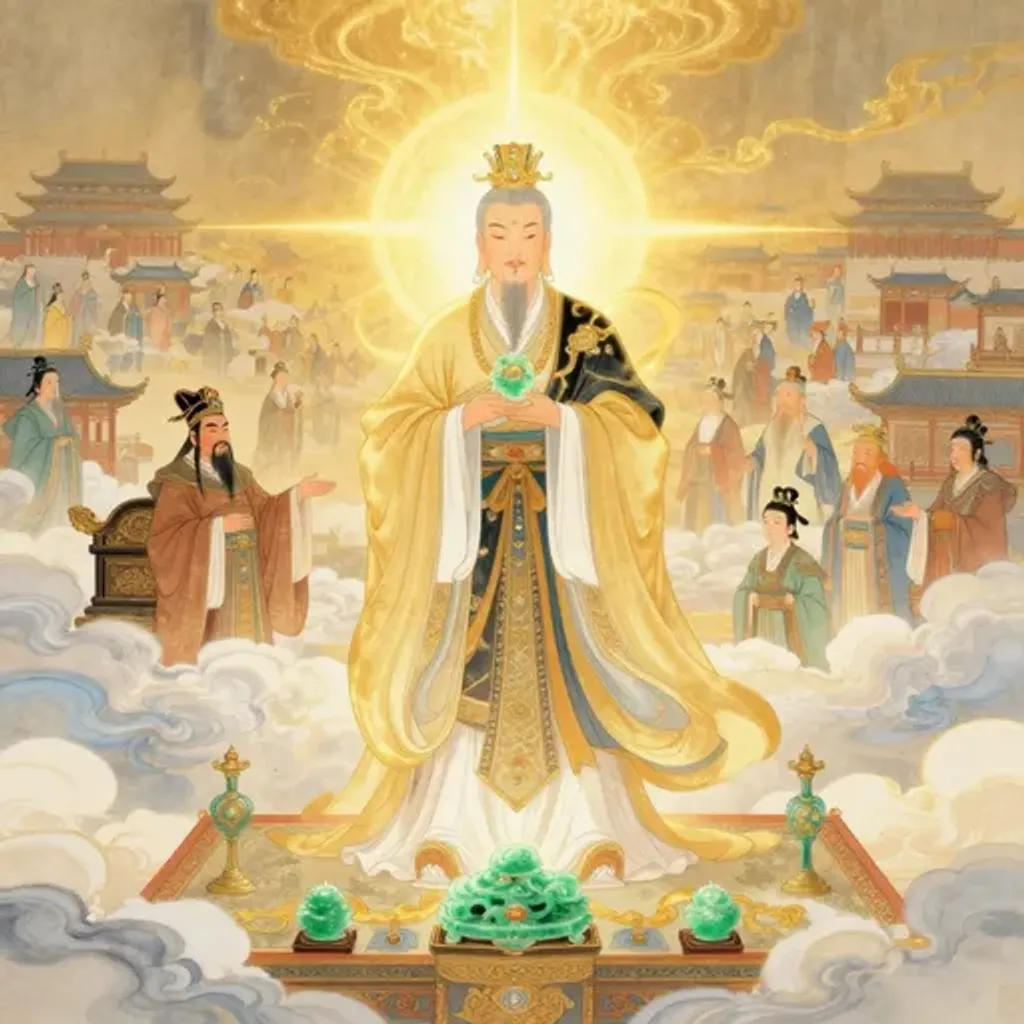
明德克敏,重華貢舉。放勳徵用,公哲蒙佑。
Bright virtue, keen and diligent; Chonghua is recommended and raised. Emperor Fangxun summons and employs him; the just and wise receive heaven's blessing.
— Jiao Yanshou, Yilin (Forest of Changes), 1st century BC
Commentary
A lake without water, yet brilliant virtue shines quick and keen. Chong Hua, a name for Emperor Shun (meaning 'doubled brilliance' for his double-pupiled eyes), promotes and elevates the worthy. Fang Xun, a name for Emperor Yao, summons and employs them. The wise and virtuous receive heaven's protection. The verse names the two supreme sage-kings of antiquity by their honorific titles, celebrating the meritocratic system they embodied: Yao identified Shun's virtue, Shun recognized talent in others, and the chain of virtuous appointment continued without interruption. From Oppression to Dispersion, wind moves over water, scattering what has congealed. The sage-kings' merit system disperses the stagnation of oppression by circulating talent where it is needed, like wind sending water to parched lands.
困 → 節
Hexagram 47 → Hexagram 60: Limitation
Changing lines: 1, 4
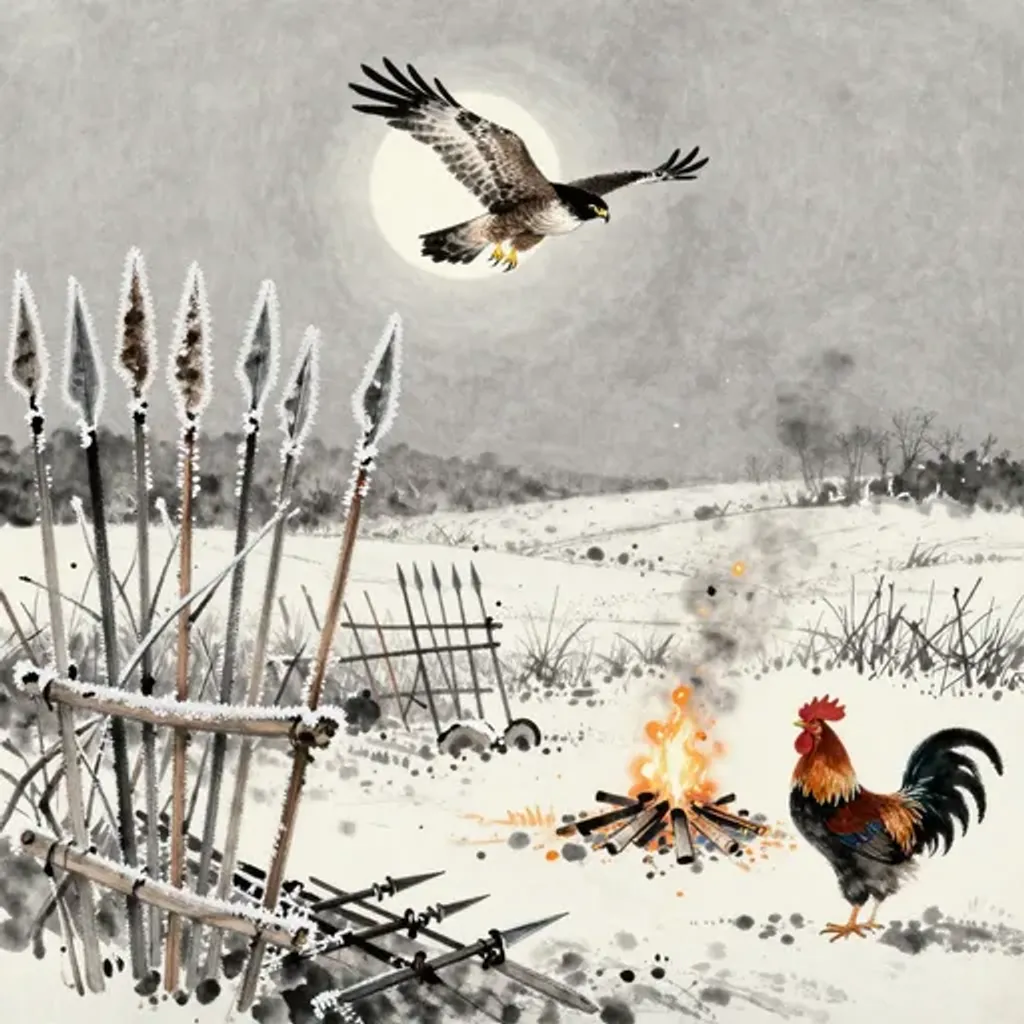
秋隼冬翔,數被嚴霜。甲兵充庭,萬物不生。雄父夜鳴,民大擾驚。
The autumn hawk soars through winter skies, battered by bitter frost. Arms and armor fill the courtyard; the ten thousand things cease to grow. The cock crows in the night; the people are greatly startled and alarmed.
— Jiao Yanshou, Yilin (Forest of Changes), 1st century BC
Commentary
A lake without water: the autumn falcon flies through winter, repeatedly beaten by harsh frost. Weapons and soldiers fill the courtyard, and nothing grows. The cock crows at night, and the people are greatly disturbed and frightened. The verse layers militarism with cosmic disorder: the falcon hunting out of season, frost destroying life, arms replacing agriculture, the rooster crowing at the wrong hour. Each detail signals the natural order violated. The cock crowing at night specifically evokes the 'hen crowing at dawn' omen of governance inverted. From Oppression to Limitation, water above the lake, the gentleman establishes proper measures and deliberates on conduct. Limitation should impose needed restraint, but this verse shows a world where every natural limit has already been breached, and the only 'limitation' left is death.
困 → 中孚
Hexagram 47 → Hexagram 61: Inner Truth
Changing lines: 1, 4, 6
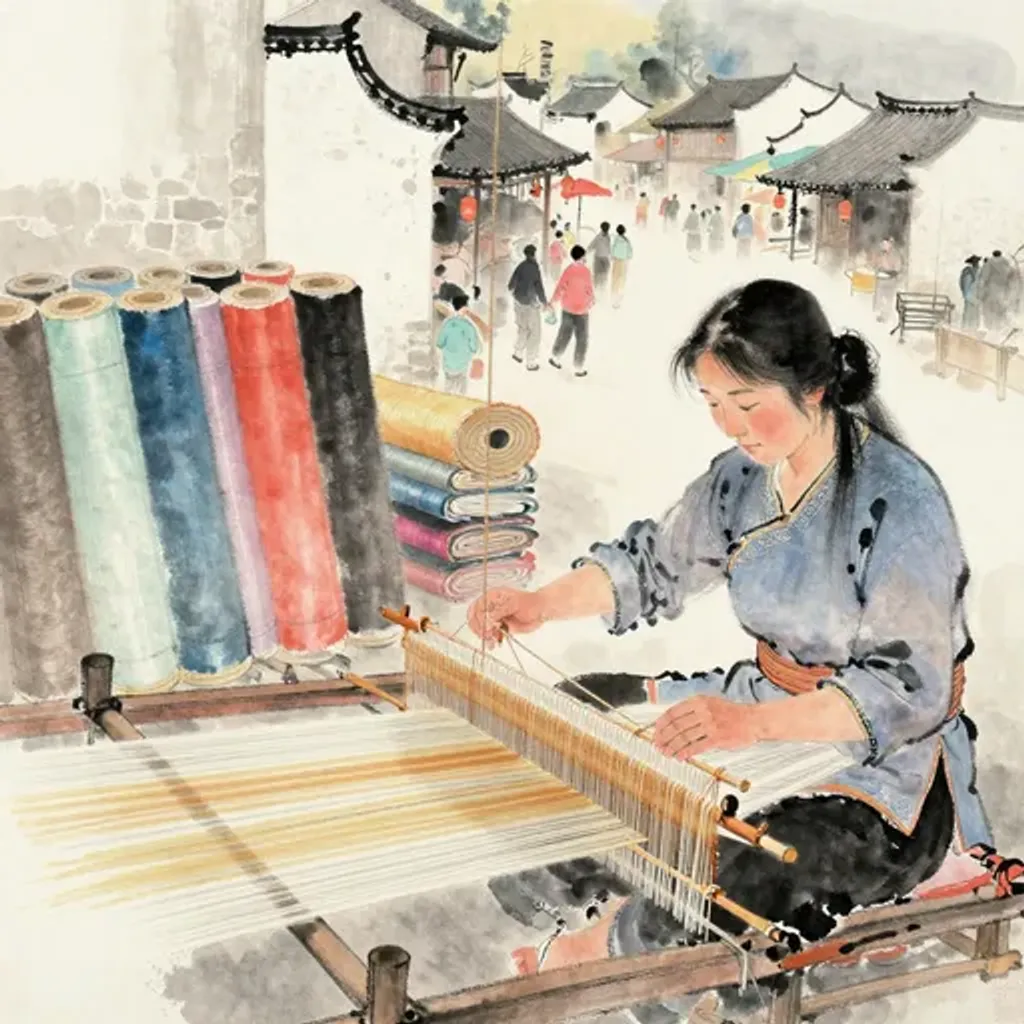
絲紵布帛,人所衣服。摻摻女手,紡績善織。南國饒足,取之有息。
Silk and ramie, cloth and hemp, what all people wear. With slender womanly hands, they spin and weave with skill. The southern lands have plenty; taking from them, there is always surplus.
— Jiao Yanshou, Yilin (Forest of Changes), 1st century BC
Commentary
A lake without water, yet silk and ramie, cloth and fabric are what people wear. Slender feminine hands spin thread and weave skillfully. The southern lands overflow with abundance, and taking from them yields enduring returns. The verse celebrates the textile economy: raw fiber transformed into cloth by women's patient labor, a self-renewing source of wealth. The 'slender hands' (xian xian nu shou) echo the Shijing's praise of feminine beauty through skillful work. From Oppression to Inner Truth, wind over the lake, the gentleman deliberates on criminal cases and stays executions. Inner Truth's hollow center, open like the wind instrument that needs emptiness to sound, resonates with the loom's shuttle passing through the warp. The women's faithful industry is itself a form of zhongfu: inner sincerity made material through steady, honest labor.
困 → 小過
Hexagram 47 → Hexagram 62: Small Exceeding
Changing lines: 2, 3, 5
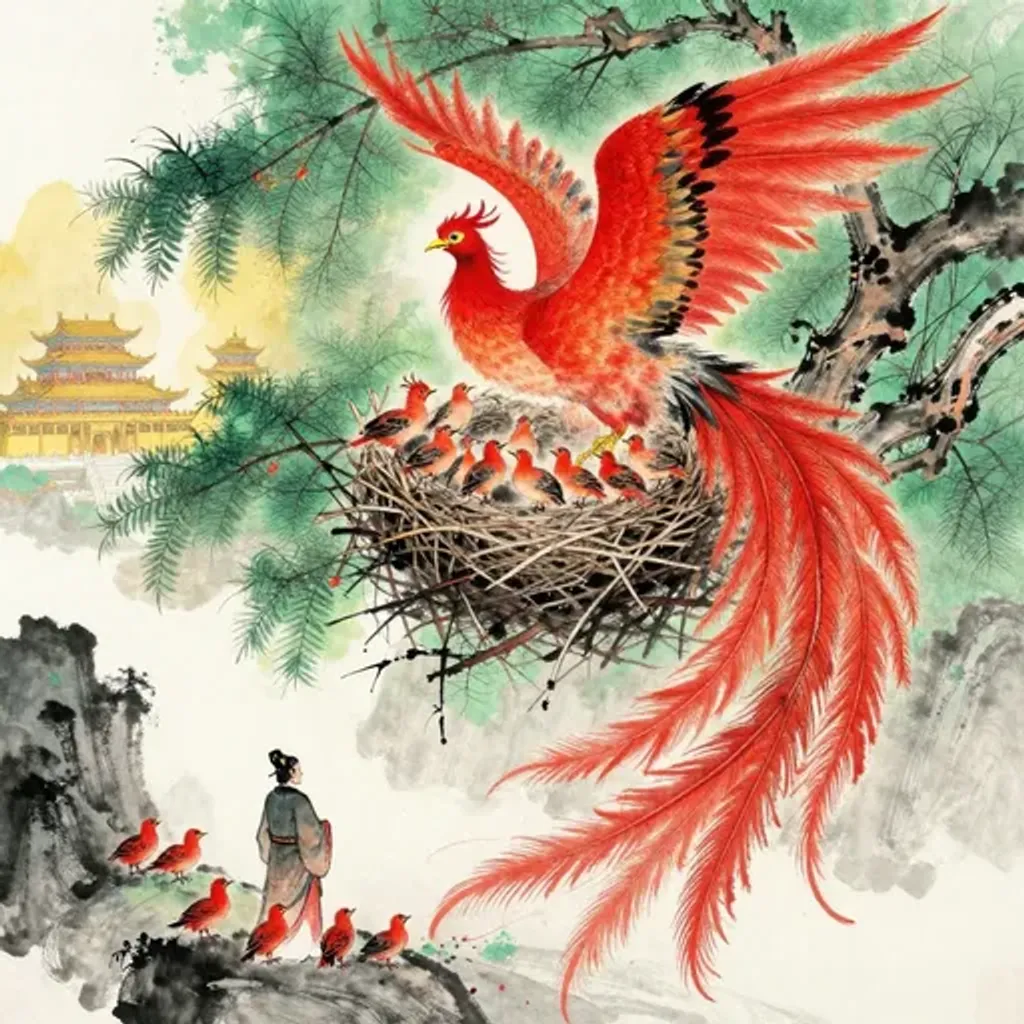
鳳有十子,同巢共母。仁聖在位,懽以相保。興彼周魯。
The phoenix has ten children, sharing one nest and one mother. A sage of benevolence presides; joyfully they keep one another. Thus flourish the realms of Zhou and Lu.
— Jiao Yanshou, Yilin (Forest of Changes), 1st century BC
Commentary
A lake without water, yet the phoenix has ten offspring, sharing one nest and one mother. A sage of benevolence and holiness sits in authority, and all protect each other in mutual joy, building up the states of Zhou and Lu. The phoenix's ten children in a single nest represent the ideal of a large, harmonious royal family, each member supporting the others under one roof. Zhou and Lu are named together because Lu was the fief granted to the Duke of Zhou, the institutional heart of Zhou culture. From Oppression to Small Exceeding, thunder atop the mountain, the gentleman is excessively reverent, excessively sorrowful, excessively frugal. The care that a phoenix takes with ten young captures Small Exceeding's spirit: going beyond the norm in nurturing, attending to each detail with more devotion than strict necessity demands.
困 → 既濟
Hexagram 47 → Hexagram 63: After Completion
Changing lines: 1, 2, 3, 4
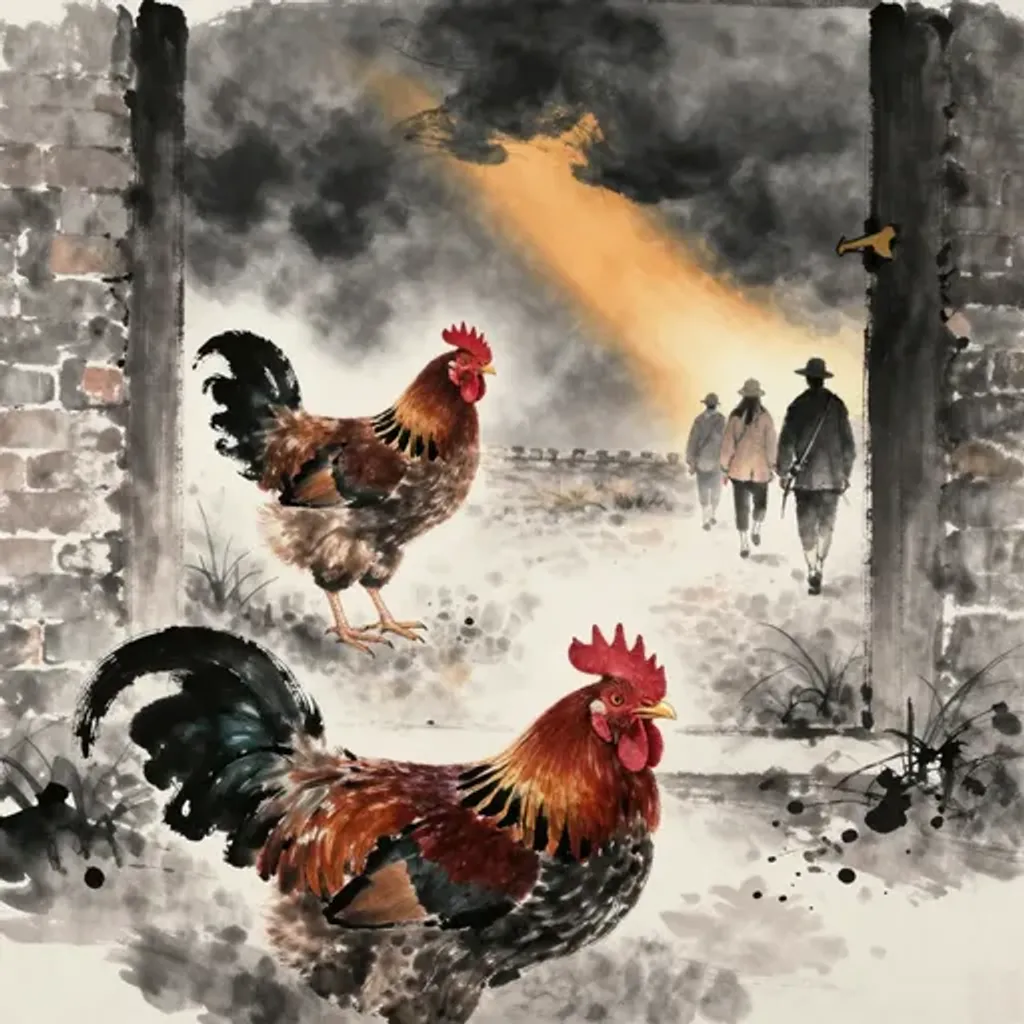
雄雞不晨,雌雞且伸。志庇心離,三旅出哀。
The cock does not crow at dawn; the hen stretches and calls instead. Purpose is thwarted, the heart estranged; three companies set out in grief.
— Jiao Yanshou, Yilin (Forest of Changes), 1st century BC
Commentary
A lake without water: the cock does not crow at dawn; the hen stretches instead. The will to shelter is present but the heart has departed. Three companies march out in mourning. The cock failing to crow while the hen rises directly invokes the 'pin ji si chen' omen from the Book of Documents: when the hen crows at dawn, the household is doomed. This signals the usurpation of proper roles, whether women seizing political control or subordinates overriding superiors. The 'heart departing' (xin li) means loyalty has fractured; the three armies that march do so in grief, not triumph. From Oppression to After Completion, water sits above fire in precarious balance. Everything appears settled, yet the warning from the hexagram is exactly this: complacency after completion breeds reversal. The rooster's silence is the first crack in what seemed whole.
困 → 未濟
Hexagram 47 → Hexagram 64: Before Completion
Changing lines: 5, 6
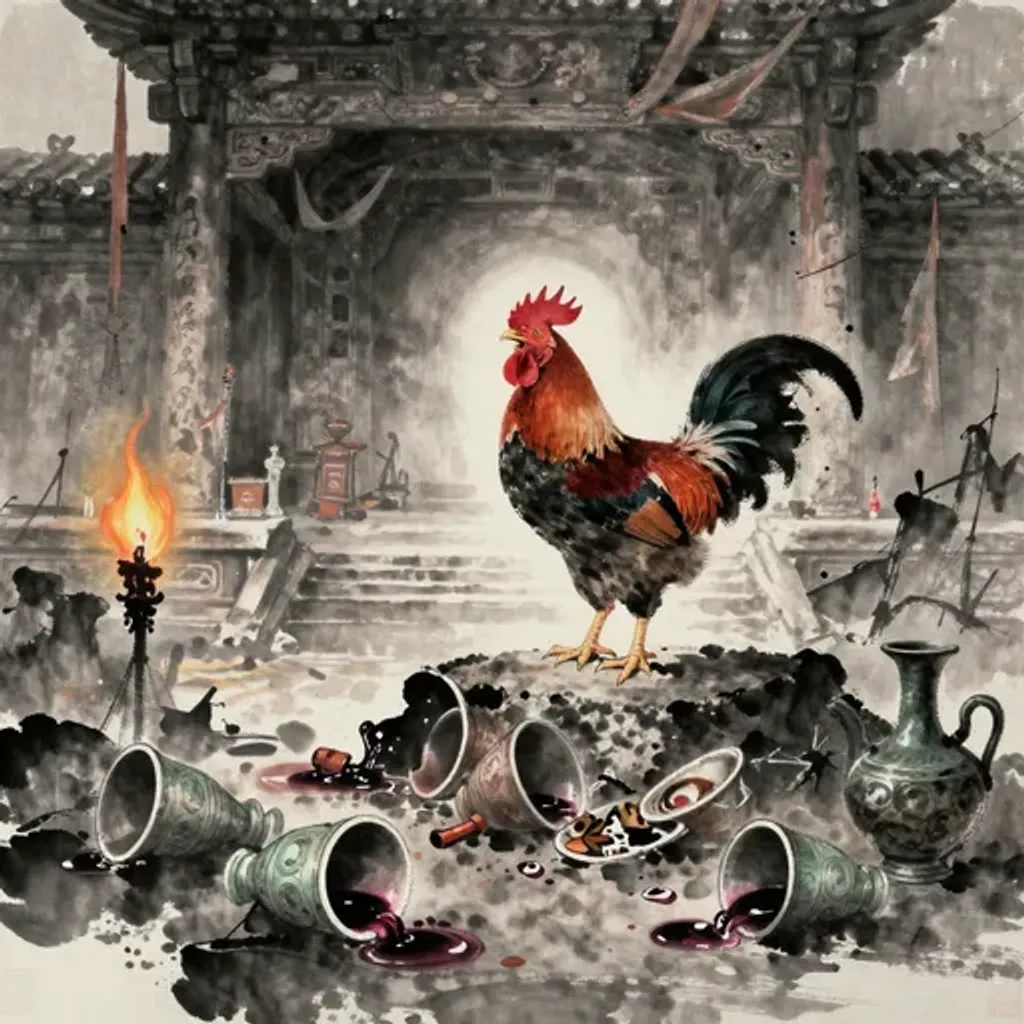
光祀春成,陳寶雞鳴。陽鳥失道,不能自守。消亡無咎。舉事不成,自取凶咎。
The spring sacrifice is offered with radiance, the treasured rooster of Chen crows. The yang bird has lost its way, unable to keep its rightful watch. It fades and vanishes without blame. Undertakings come to nothing; one brings misfortune upon oneself.
— Jiao Yanshou, Yilin (Forest of Changes), 1st century BC
Commentary
A lake without water, yet a sacred spring rite succeeds and the divine rooster of Chenbao crows at dawn. The Chenbao was Qin's most revered deity, housed at Chencang, where around 747 BC two spirit children appeared declaring 'He who obtains the female shall become hegemon; he who obtains the male shall become king.' They transformed into pheasants; the female settled as a stone idol that glowed like a meteor while wild roosters crowed in response. The city of Baoji takes its name from this cult. Yet the verse pivots sharply: the solar bird loses its way, unable to maintain its course. Ventures undertaken come to nothing, bringing blame upon oneself. From Oppression to Before Completion, fire above water can never quite boil it. Even with divine sanction, one who strays from the proper path will fail to reach the finish.