Transformations of Hexagram 48
Every line of change out of Hexagram 48 井 The Well, with the Yilin verse for each of the 64 resulting hexagrams, its translation, and the original ink brush artwork.
井 → 乾
Hexagram 48 → Hexagram 1: The Creative
Changing lines: 1, 4, 6
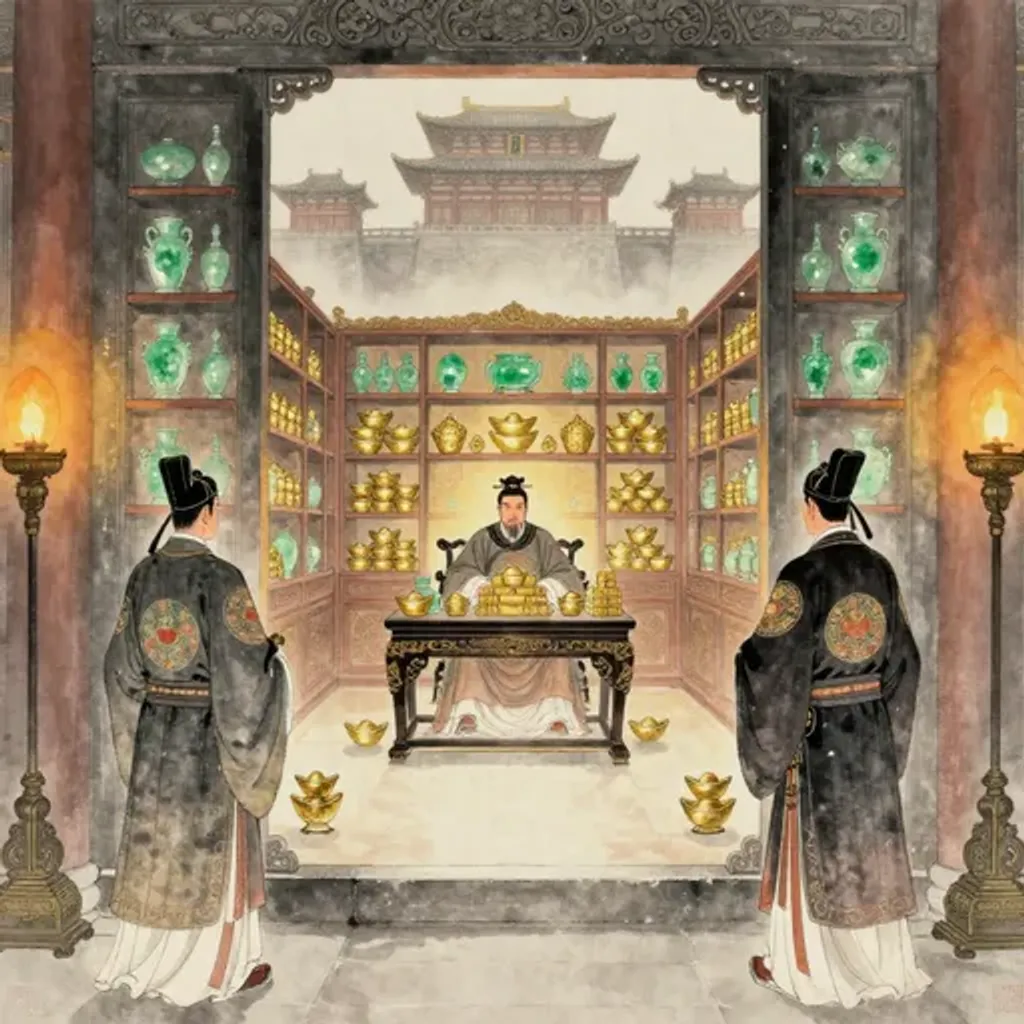
左輔右弼,金玉滿堂。常盈不亡,富如敖倉。
Assisted at left, supported at right; gold and jade fill the hall. Ever brimming, never failing; rich as the granary of Ao.
— Jiao Yanshou, Yilin (Forest of Changes), 1st century BC
Commentary
Water drawn up through wood, the well nourishes all who come. Trusted ministers stand at left and right, gold and jade fill the hall, wealth never diminishing, abundant as the Ao Granary. The 'left assistant, right aide' echoes the ideal of balanced governance where the ruler is flanked by capable counselors. The Ao Granary, the Qin-Han empire's greatest storehouse, stood northwest of Xingyang and decided the outcome of the Chu-Han wars. From The Well to The Creative, communal sustenance transforms into self-generating initiative: the well's patient, shared resource becomes the ceaseless drive of doubled heaven, where strength perpetuates itself without external dependence.
井 → 坤
Hexagram 48 → Hexagram 2: The Receptive
Changing lines: 2, 3, 5
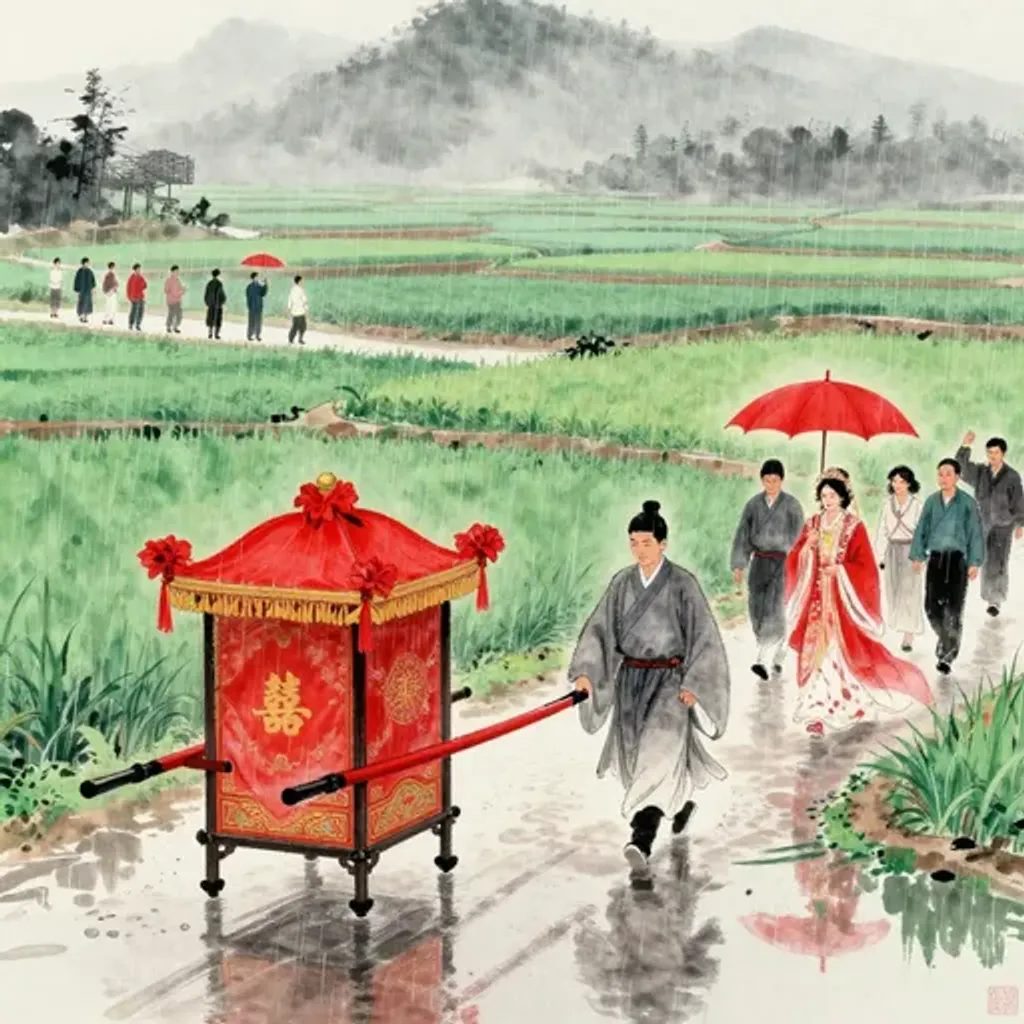
雨師娶婦,黃岩季子。成禮既婚,相呼而歸,潤澤田里。
The Rain Master takes a bride; the youngest son of Huangyan. The rites complete, the marriage done, they call to one another and return; moistening and nourishing the fields and villages.
— Jiao Yanshou, Yilin (Forest of Changes), 1st century BC
Commentary
Water drawn up through wood meets the yielding expanse of doubled earth. The Rain Master takes a bride, and the young man of Huangyan completes the wedding rites. The couple calls to each other and returns home, moistening the fields and villages with blessing. The Rain Master is a weather deity often identified with Chisongzi, the immortal of Shennong's era. The marriage of a rain god brings literal fertility: rainfall that soaks the land. From The Well to The Receptive, the well's nourishing function disperses across the widest possible field. What was drawn upward now sinks into the earth itself, and the devoted receptivity of Kun sustains what the well's structure once contained.
井 → 屯
Hexagram 48 → Hexagram 3: Difficulty at the Beginning
Changing lines: 1, 2, 3
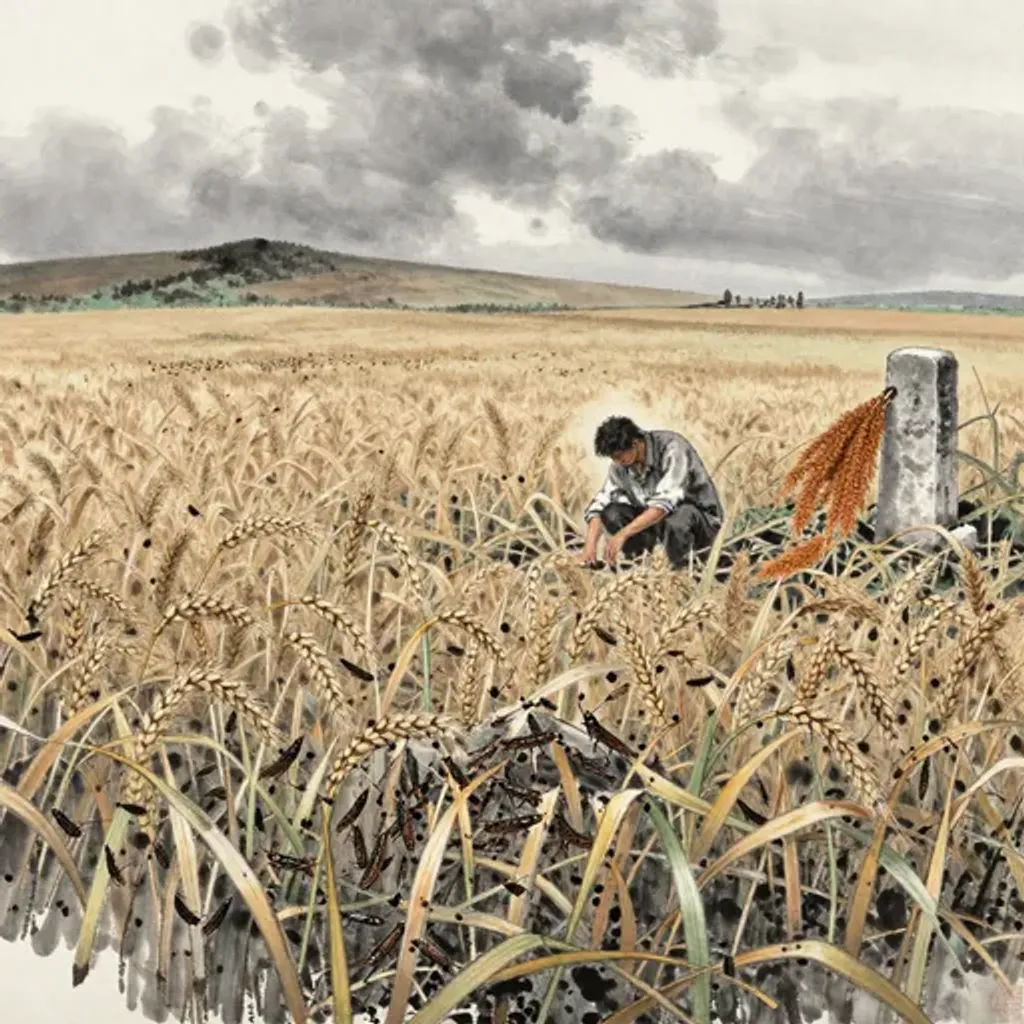
螟䖝為賊,害我稼穡。盡禾殫麥,秋無所得。
Worms and grubs become thieves, harming my crops and harvest. The grain consumed, the wheat exhausted; in autumn there is nothing to reap.
— Jiao Yanshou, Yilin (Forest of Changes), 1st century BC
Commentary
Water drawn up through wood, the well sustains the harvest — yet here pests devour it. Caterpillars and grubs become thieves, ravaging grain and millet, consuming every stalk of wheat until autumn yields nothing. The verse names the classical agricultural calamity: insect plagues that strip the fields bare. No human enemy is needed when nature's smallest creatures marshal against the harvest. From The Well to Difficulty at the Beginning, the well's nourishing waters meet the chaos of cloud and thunder. What should sustain growth instead feeds destruction, and the promise of the season collapses into the confusion of Zhun, where every attempt at order stumbles before it can take root.
井 → 蒙
Hexagram 48 → Hexagram 4: Youthful Folly
Changing lines: 3, 5, 6
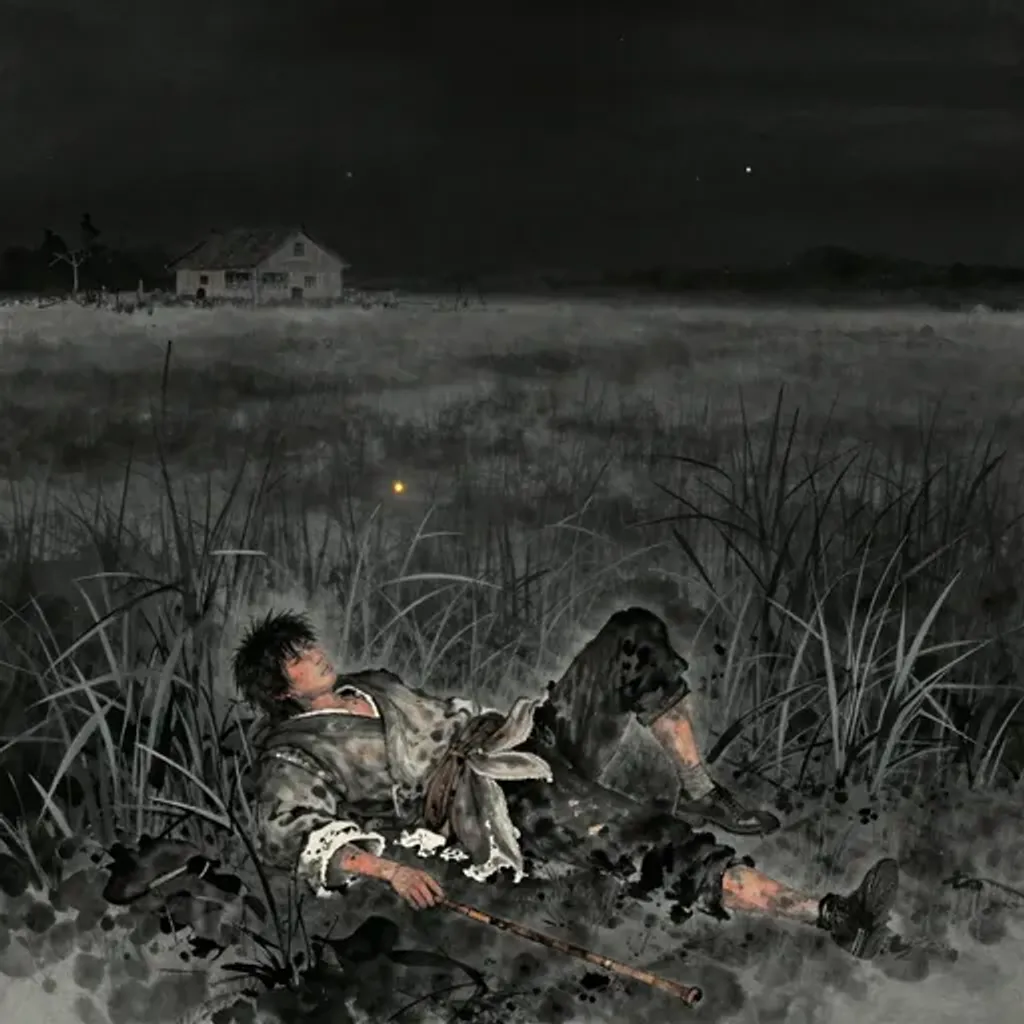
跛躄難步,遲不及舍。露宿澤陂,亡其襦袴。
Lame and crippled, struggling to walk; too slow to reach the inn. Sleeping in the open by the marsh bank, he loses his jacket and trousers.
— Jiao Yanshou, Yilin (Forest of Changes), 1st century BC
Commentary
Water drawn up through wood, the well offers sustenance to all who can reach it — but a lame man cannot walk far enough. Hobbling and stumbling, too slow to reach the inn before dark, he sleeps exposed by a marshland bank and loses his jacket and trousers. The image is one of abject vulnerability: a person whose disability prevents him from accessing the help that exists. The well is there, but he cannot draw from it. From The Well to Youthful Folly, the spring that emerges below the mountain runs cold and aimless. What the well structures with windlass and bucket, Meng leaves to stumble upon by chance — and the unprepared traveler pays the price.
井 → 需
Hexagram 48 → Hexagram 5: Waiting
Changing lines: 1
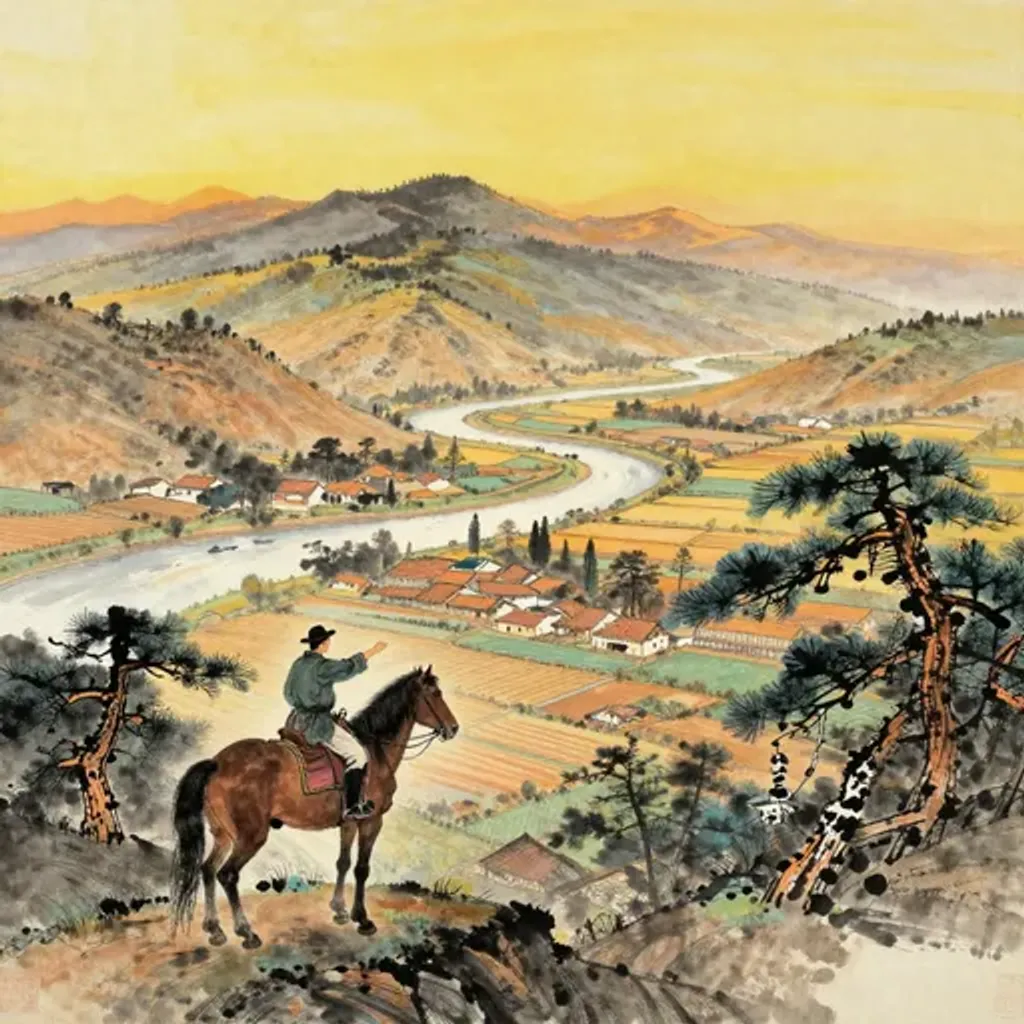
大夫行父,无地不涉。為吾相土,莫如韓樂,可以居止,長安富有。
The minister Xingfu traverses every land without exception. Surveying the earth on our behalf: none compares to the joy of Han, where one may dwell and rest, abiding in lasting peace and plenty.
— Jiao Yanshou, Yilin (Forest of Changes), 1st century BC
Commentary
Water drawn up through wood nourishes wherever it is found, and the great minister Xingfu travels every land without exception. He surveys the terrain on our behalf and finds no place as fine as the pleasure of Han, where one may settle and dwell in lasting peace and abundance. The 'Dafu Xingfu' likely refers to a Lu minister of the Zang clan who assessed territory for resettlement. 'Surveying the land' (相土) echoes the ancient practice of geomancy and site selection. From The Well to Waiting, clouds gather above heaven: the minister's patient search for the right dwelling mirrors Xu's counsel to wait with confidence, trusting that the ideal site reveals itself when the time is ripe.
井 → 訟
Hexagram 48 → Hexagram 6: Conflict
Changing lines: 3, 4, 6
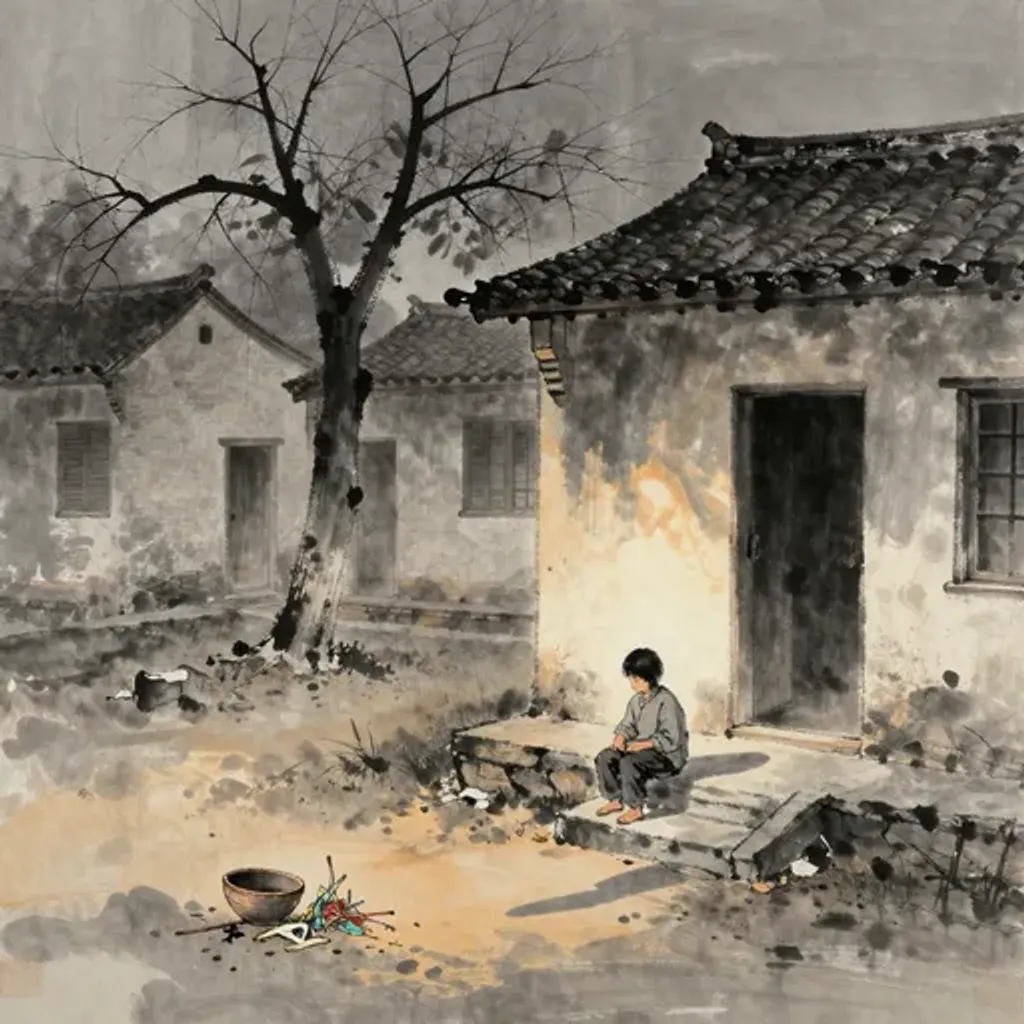
少孤无父,長失慈母。悖悖煢煢,莫與為福。
Orphaned young, without a father; grown, he loses his loving mother. Bereft and desolate, utterly alone; none to share in his fortune.
— Jiao Yanshou, Yilin (Forest of Changes), 1st century BC
Commentary
Water drawn up through wood sustains the community, but an orphan has no community to draw from. Young and fatherless, grown up without a mother, he wanders alone and bewildered with no one to share his fortune. The verse traces a life stripped of every bond that the well symbolizes: the family, the village, the sustaining network. From The Well to Conflict, heaven and water move in opposite directions. The orphan's isolation resonates with the fundamental discord of Song: without the communal structure the well provides, one cannot even begin to contest one's position, for there is no ground on which to stand and no advocate to speak.
井 → 師
Hexagram 48 → Hexagram 7: The Army
Changing lines: 3, 5
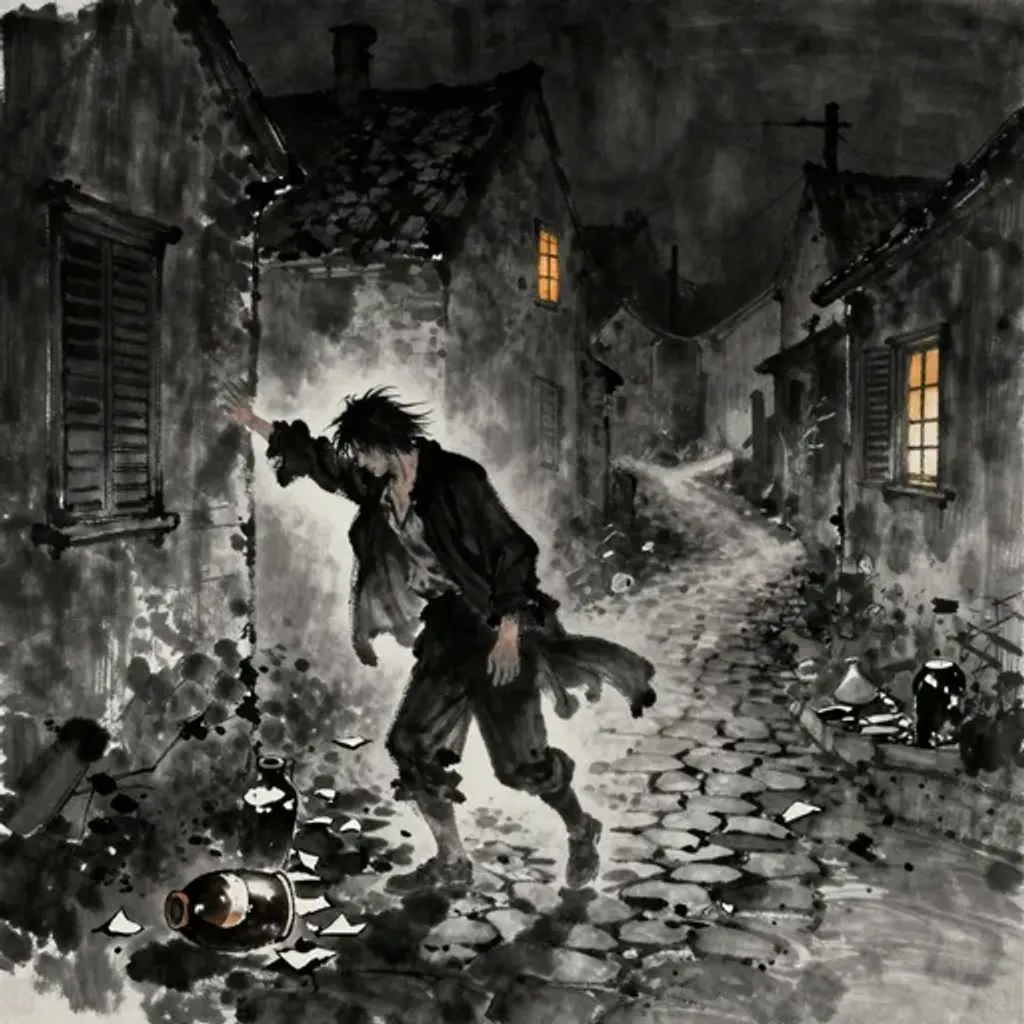
側弁醉客,重舌作凶。披髮夜行,迷亂相誤,亡失居止。
Cap tilted, the drunken guest; with doubled tongue invites calamity. Hair unbound, walking in the night; bewildered and astray, losing his way and his dwelling.
— Jiao Yanshou, Yilin (Forest of Changes), 1st century BC
Commentary
Water drawn up through wood demands discipline at the wellhead, yet here all discipline collapses. A drunken guest tilts his cap sideways, slurs with a doubled tongue, and brings misfortune. He loosens his hair and stumbles through the night, confused and lost, until he forfeits his very dwelling. The 'capped askew' and 'hair unbound' mark progressive stages of ritual degradation: first the hat slips, then all decorum falls away. From The Well to The Army, water hidden within the earth must be marshaled with order. The well's communal resource, mismanaged by a drunkard, becomes the army's nightmare — an undisciplined force that loses its base instead of defending it.
井 → 比
Hexagram 48 → Hexagram 8: Holding Together
Changing lines: 2, 3
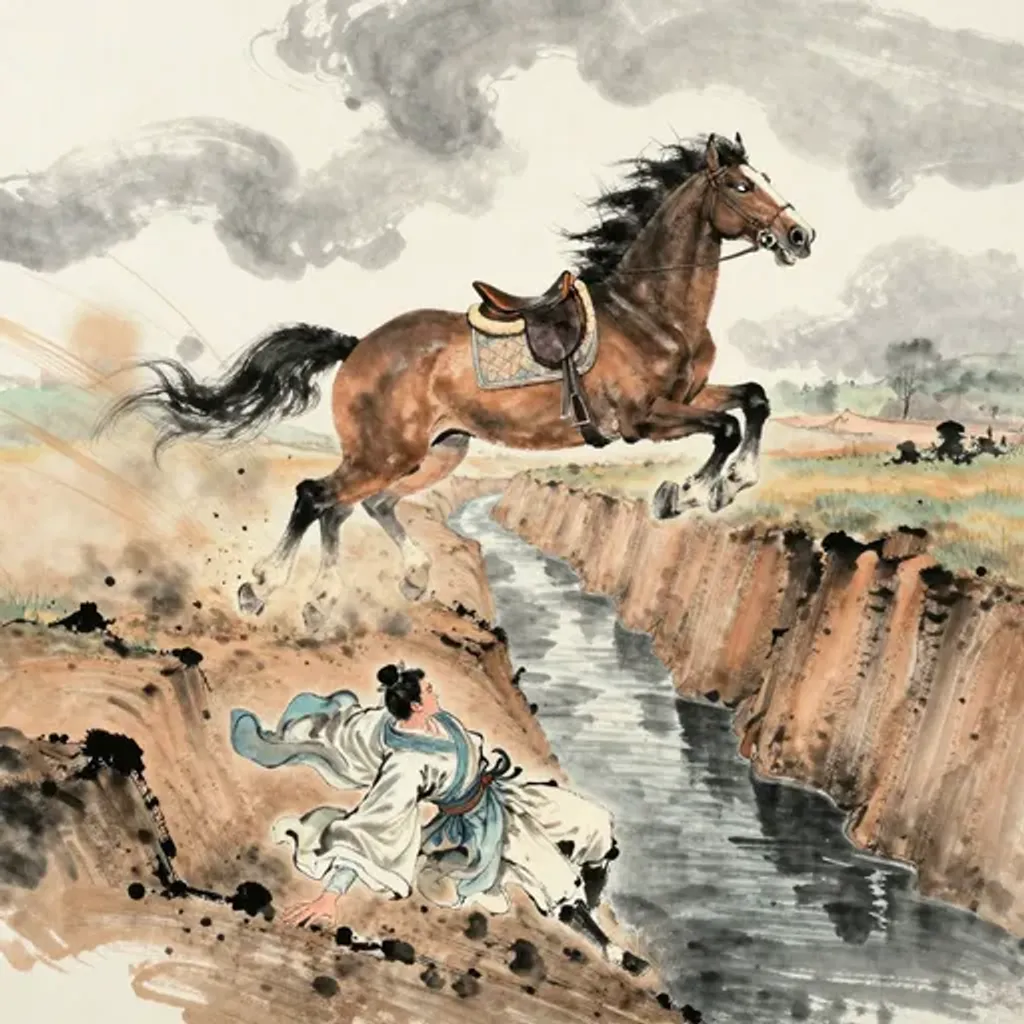
馬驚破處,王孫沉溝。身死魂去,自為患害。
The horse startles and bolts through the breach; the young lord sinks into the ditch. Body dead, soul departed; he brings calamity upon himself.
— Jiao Yanshou, Yilin (Forest of Changes), 1st century BC
Commentary
Water drawn up through wood holds the community together, but here a horse bolts and catastrophe follows. A startled horse breaks through its traces, and a young nobleman drowns in a ditch. Body dead, spirit departed — he brought this calamity upon himself. The 'prince sinking in a ditch' recalls several Spring and Autumn incidents of nobles dying ignominiously in flight. From The Well to Holding Together, water spreads upon the earth, bonding all beneath it. Yet the bond here is between recklessness and consequence: the well's structural containment gives way to Bi's open water, and whoever fails to hold together with care is swept away.
井 → 小畜
Hexagram 48 → Hexagram 9: Small Taming
Changing lines: 1, 6
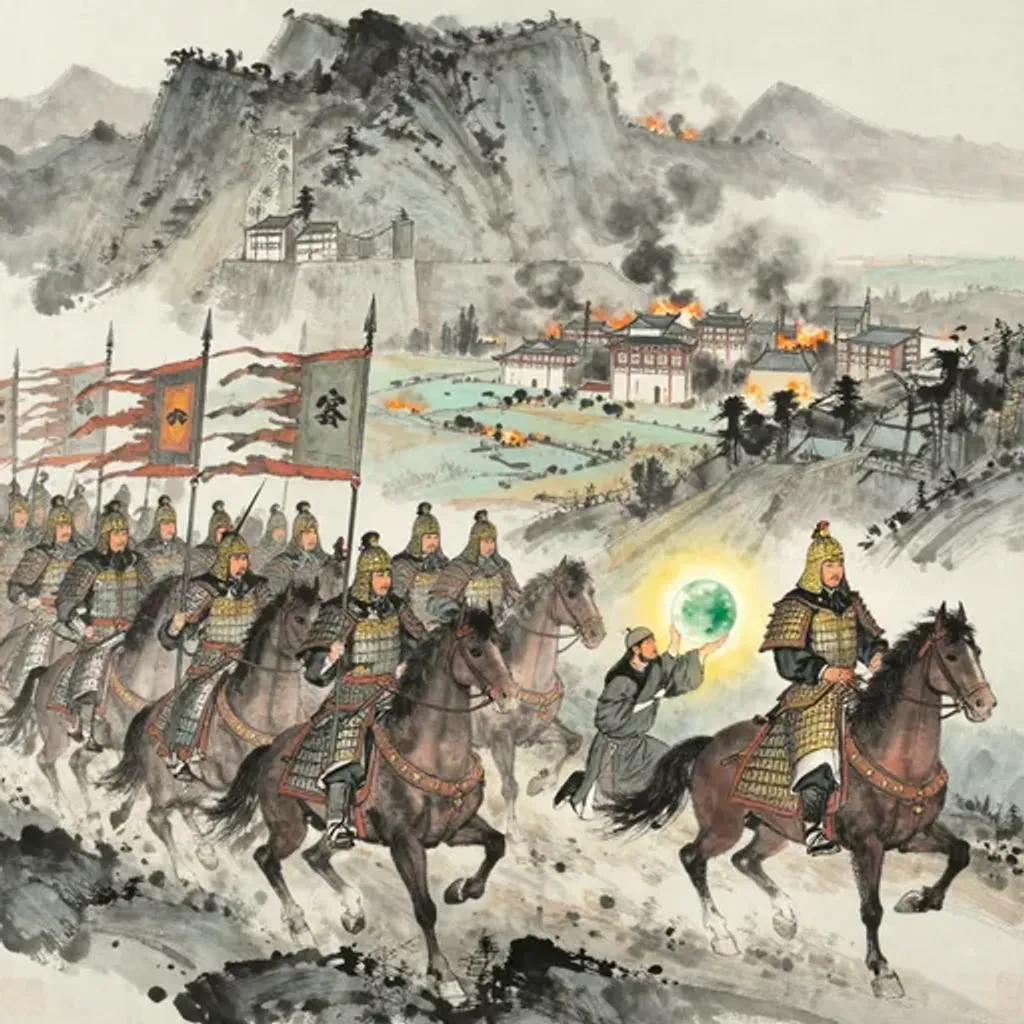
東行述職,征討不服。侵齊伐陳,衘璧為臣,大得意還。
Marching east to fulfill his duties, he campaigns to subdue the defiant. Invading Qi, striking Chen; bearing jade and submitting as vassal. In great triumph he returns.
— Jiao Yanshou, Yilin (Forest of Changes), 1st century BC
Commentary
Water drawn up through wood, the well serves as a fixed center, and from it the ruler dispatches envoys eastward to perform inspections. He campaigns against the disobedient, invading Qi and attacking Chen, until the defeated submit with jade discs clenched in their teeth as tokens of vassalage. The expedition returns triumphant. 'Presenting jade in the mouth' (衔璧) is the ritual gesture of total submission. From The Well to Small Taming, wind moves above heaven — a gentle but persistent force. The well's steady resource funds the campaign, and the wind's soft accumulation of virtue achieves what brute force alone cannot: lasting compliance through cultivated moral authority.
井 → 履
Hexagram 48 → Hexagram 10: Treading
Changing lines: 1, 3, 4, 6
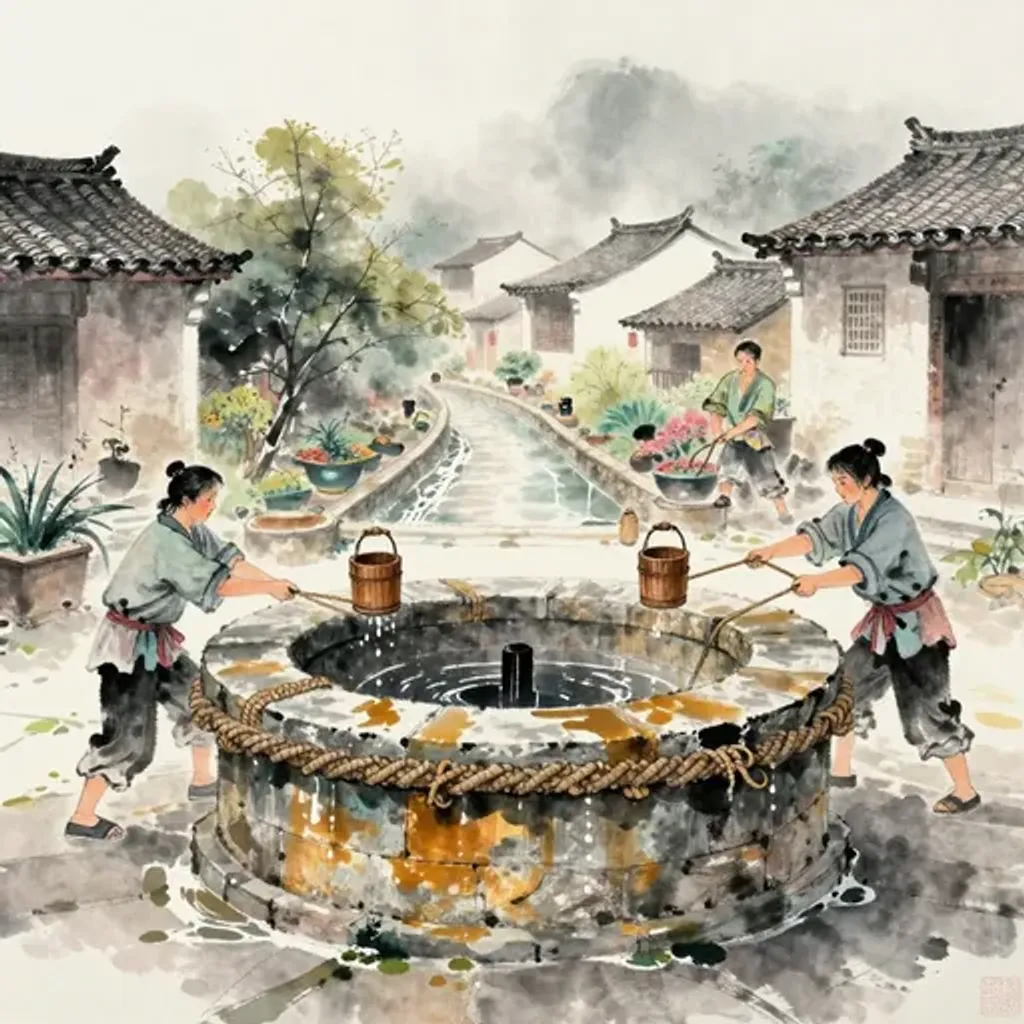
百足俱行,相輔為強。三聖翼事,王室寵光。
Many hands draw water, rope-marks carved into stone. The well is deep and inexhaustible, sharing its moisture with four neighbors.
— Jiao Yanshou, Yilin (Forest of Changes), 1st century BC
Commentary
Water drawn up through wood, the well's strength lies in cooperation. The original verse reads: 'A hundred feet march together, mutual support makes them strong. Three sages assist the enterprise, and the royal house is graced with splendor.' The 'hundred feet' evokes the centipede proverb — many legs moving as one. The 'three sages' likely refers to the Duke of Zhou, Taigong, and Duke of Shao, who together stabilized the early Zhou dynasty. From The Well to Treading, one walks carefully beneath heaven's authority. The well's communal structure resonates with Li's insistence on proper hierarchy: many working in concert, each treading their appointed path, produces strength no individual can achieve alone.
井 → 泰
Hexagram 48 → Hexagram 11: Peace
Changing lines: 1, 5
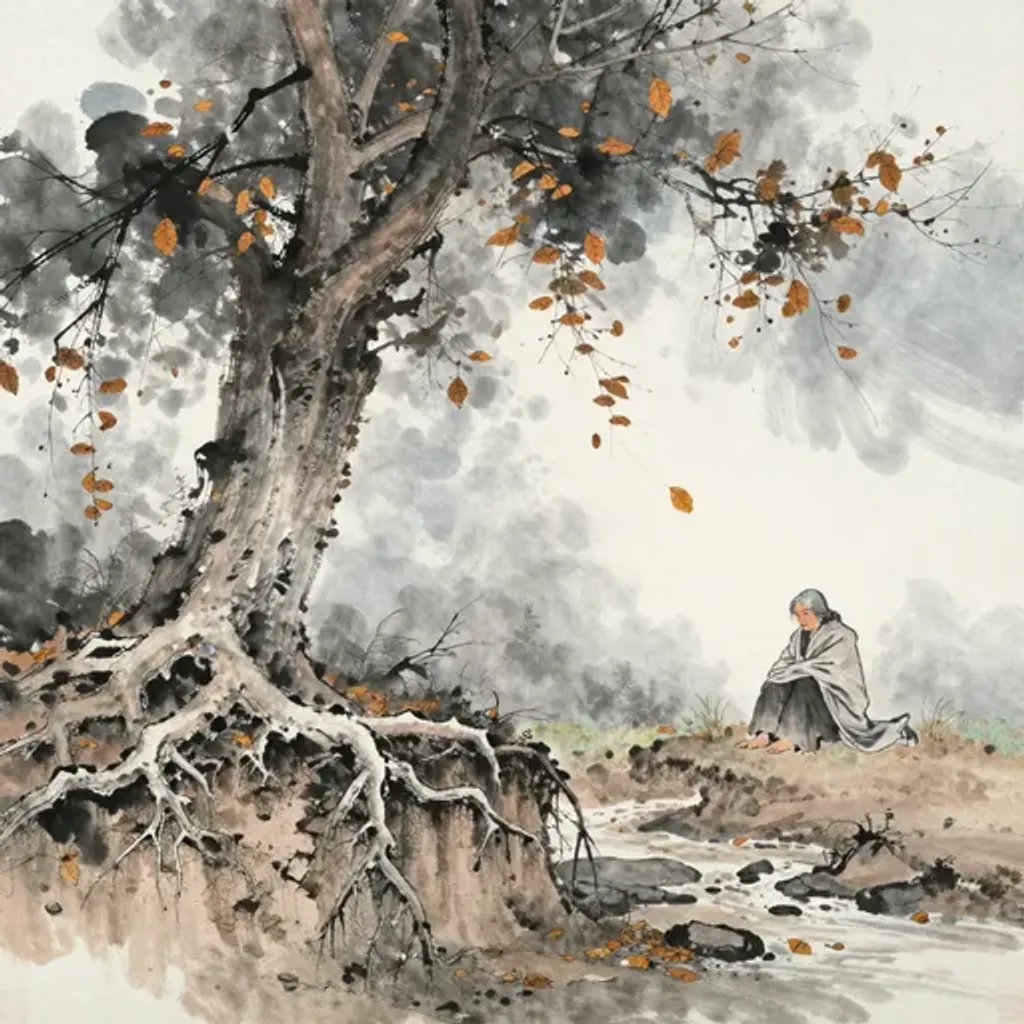
本根不固。華葉落去,更為孤嫗。
The roots are not firm. Blossoms and leaves fall away; she becomes a lonely old woman.
— Jiao Yanshou, Yilin (Forest of Changes), 1st century BC
Commentary
Water drawn up through wood, the well depends on sound structure — but here the roots have failed. When the root is not firm, blossoms and leaves fall away, leaving only a withered old woman. The botanical metaphor is precise: a tree whose roots cannot reach the water table drops its foliage and dies from the crown down. From The Well to Peace, heaven and earth exchange freely, producing flourishing life. Yet this verse inverts the promise: the well's nourishment never reaches the roots, and so the great communion of Tai — where high and low interpenetrate — cannot take form. Without foundation, even the most auspicious configuration collapses into barrenness.
井 → 否
Hexagram 48 → Hexagram 12: Standstill
Changing lines: 2, 3, 4, 6
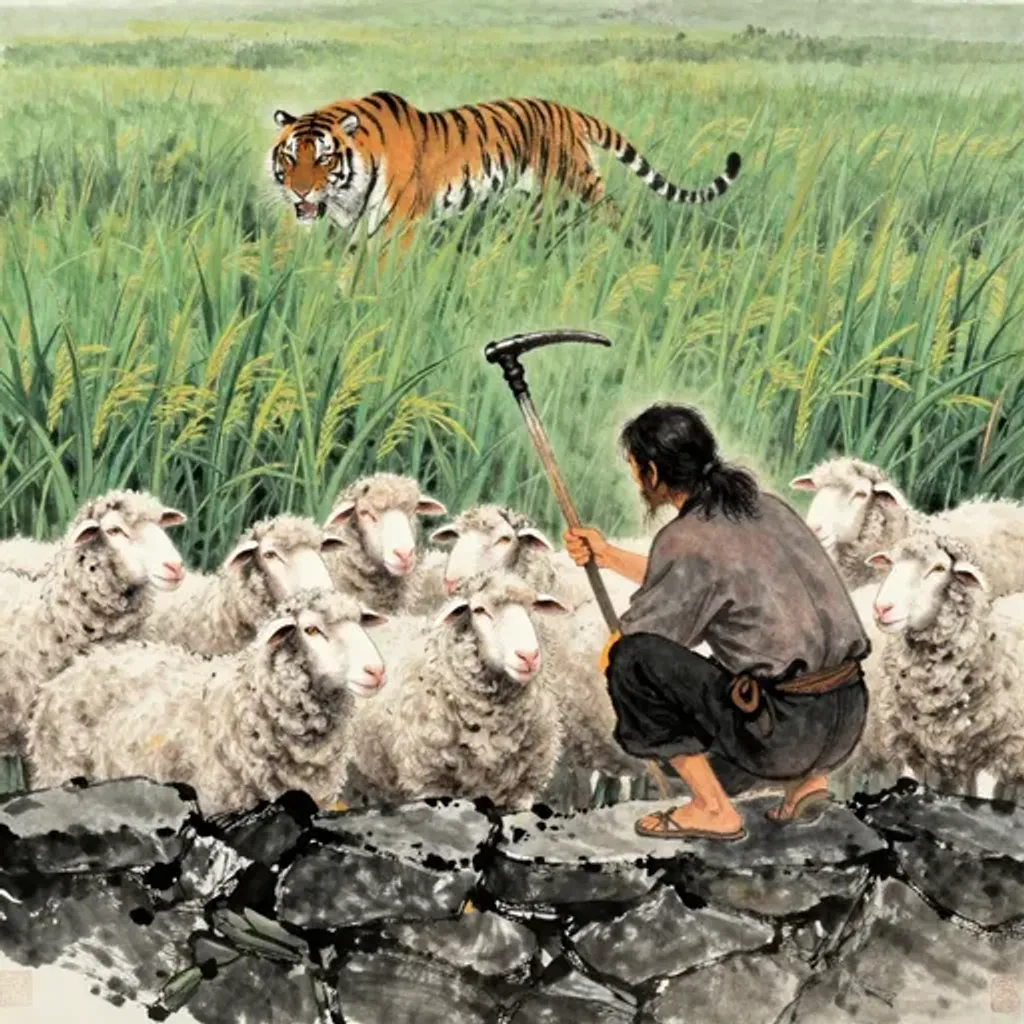
牧羊稻園,聞虎喧喧。畏懼休息,終无禍焉。
Herding sheep in the rice garden, he hears the tiger roaring loud. In fear he halts and rests; in the end there is no disaster.
— Jiao Yanshou, Yilin (Forest of Changes), 1st century BC
Commentary
Water drawn up through wood, the well sits calmly while danger roars beyond the wall. A shepherd tends his flock in a rice paddy when he hears the clamor of a tiger. Alarmed, he holds still and rests in place — and in the end no disaster befalls him. The well's nature is to remain where it is; unlike the city that can be relocated, the well stays fixed. The shepherd's instinct to freeze rather than flee mirrors this anchored wisdom. From The Well to Standstill, heaven and earth refuse to communicate, yet this very blockage protects: the tiger cannot penetrate the wall of deliberate stillness, and withdrawal from engagement becomes a shield.
井 → 同人
Hexagram 48 → Hexagram 13: Fellowship
Changing lines: 1, 2, 4, 6
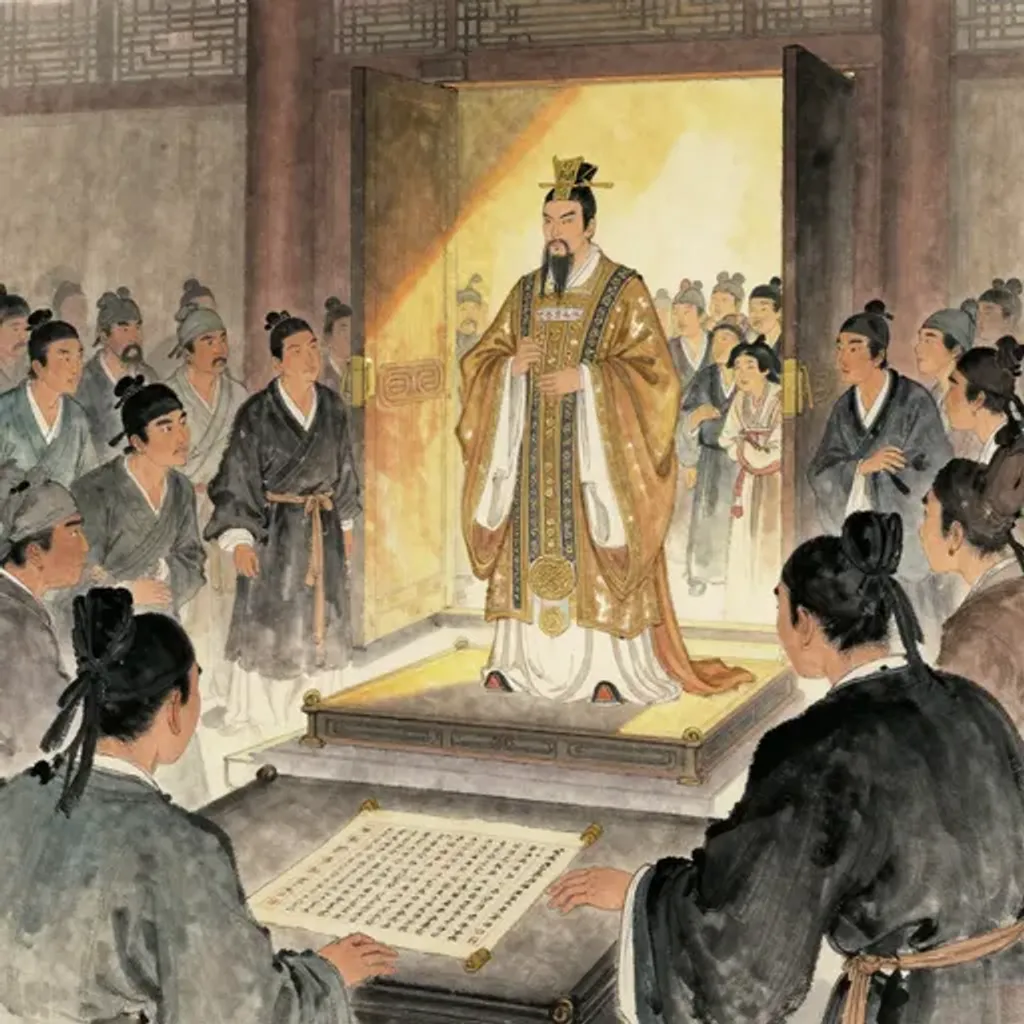
履位乘勢,靡有絕蔽。為隸所圖,與眾庶位。
He treads the seat of power and rides upon momentum; nothing shields him from ruin. Plotted against by slaves, he takes his place among the common ranks.
— Jiao Yanshou, Yilin (Forest of Changes), 1st century BC
Commentary
Water drawn up through wood, the well raises what lies below — yet here elevation becomes exposure. One ascends to a position of power and rides the momentum, seemingly invulnerable, with nothing to block the view. But servants plot against him, and he ends up seated among commoners. The verse traces the classic arc of the overly visible official who attracts envy from below. From The Well to Fellowship, fire blazes beneath heaven, illuminating everything. The well's quiet utility contrasts sharply with Tongren's radical openness: what the well conceals within its walls, Fellowship exposes to all. Power exercised without fellowship's discernment of allies and enemies invites the servants' conspiracy.
井 → 大有
Hexagram 48 → Hexagram 14: Great Possession
Changing lines: 1, 4, 5, 6
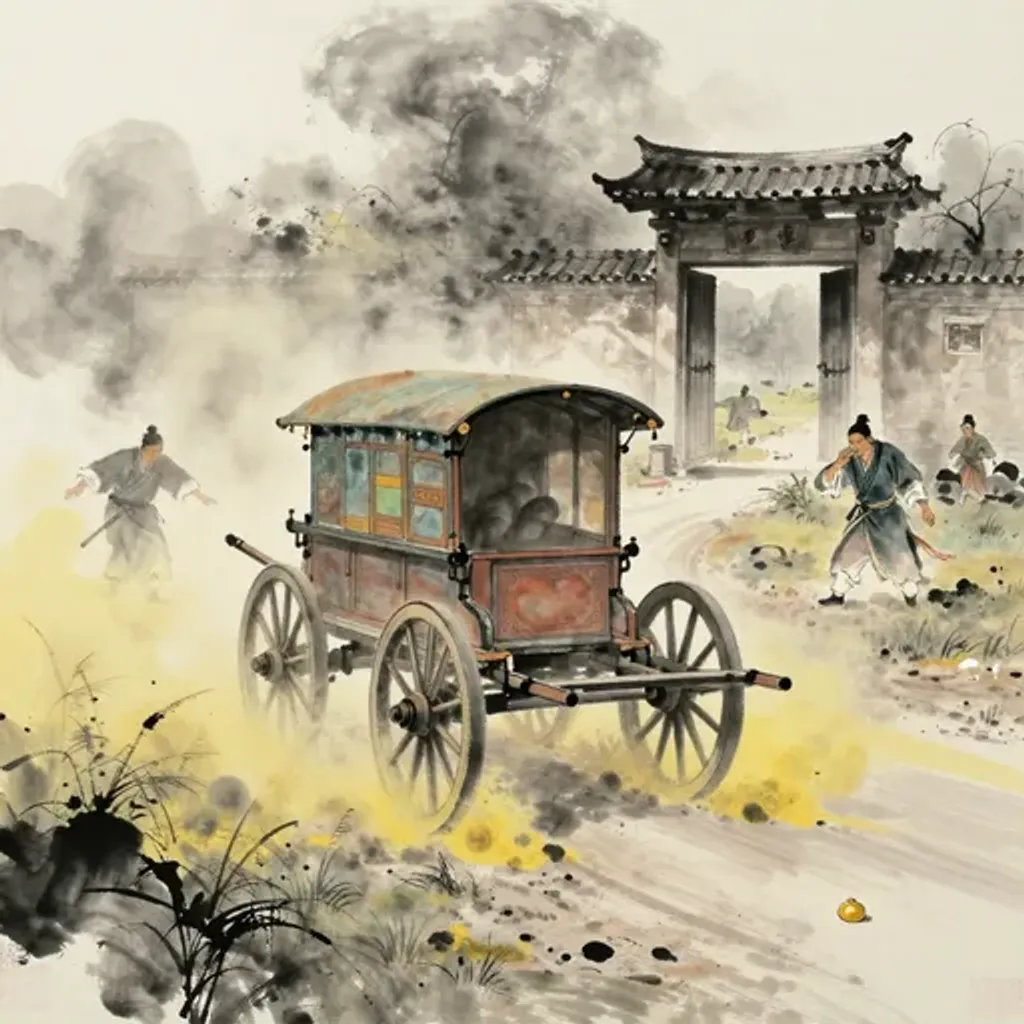
大輿多塵,小人傷賢。皇甫司徒,使君失家。
The great carriage raises much dust; petty men wound the worthy. Huangfu the minister causes the lord to lose his house.
— Jiao Yanshou, Yilin (Forest of Changes), 1st century BC
Commentary
Water drawn up through wood, the well serves the community — but a great carriage raises too much dust, and petty men injure the worthy. 'Minister Huangfu' drives the lord from his own household. The 'great carriage' raising dust recalls the Shijing's image of power that obscures rather than illuminates. The Huangfu clan produced several prominent officials in the Han era; the verse likely alludes to a minister whose overreach displaced the ruler he served. From The Well to Great Possession, fire blazes above heaven in superabundance. The well's measured distribution is overwhelmed by Dayou's excess: when possession grows too great and the wrong hands control it, the household's master becomes an exile in his own domain.
井 → 謙
Hexagram 48 → Hexagram 15: Modesty
Changing lines: 2, 5
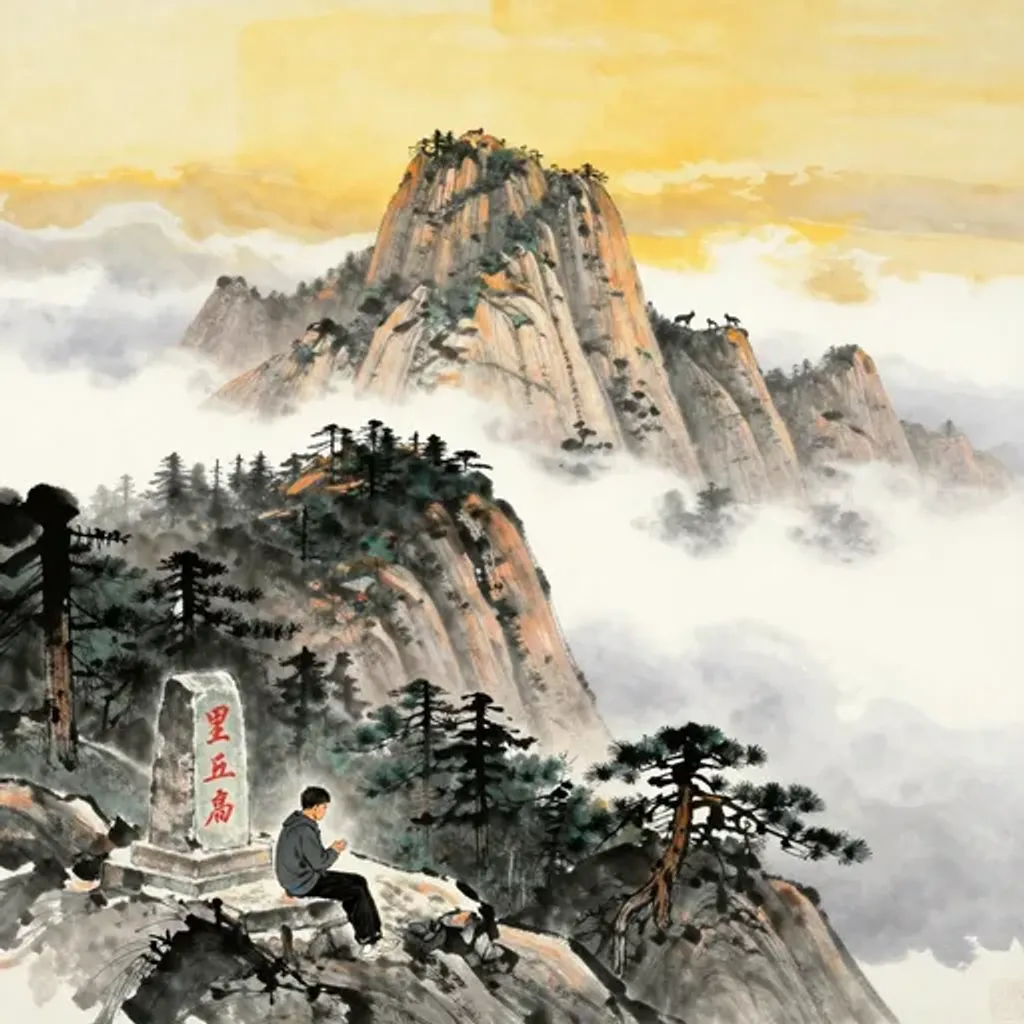
安和泰山,福祐屢臻。雖有狼虎,不能危身。
Peaceful and secure as Mount Tai; blessings and protection arrive again and again. Though wolves and tigers lurk, they cannot endanger this body.
— Jiao Yanshou, Yilin (Forest of Changes), 1st century BC
Commentary
Water drawn up through wood, the well provides quiet security, and here that security expands into serene stability. Peaceful as Mount Tai, blessings arrive repeatedly. Though wolves and tigers prowl nearby, they cannot endanger one's person. Mount Tai, the Eastern Sacred Mountain, symbolizes immovable authority and cosmic order. The verse pairs the well's steadfast nourishment with the mountain's unyielding presence: threats exist but cannot penetrate such grounded composure. From The Well to Modesty, a mountain hidden within the earth, the pattern deepens: true security comes not from towering above danger but from holding one's strength beneath the surface, where neither wolves nor tigers think to look.
井 → 豫
Hexagram 48 → Hexagram 16: Enthusiasm
Changing lines: 2, 3, 4, 5
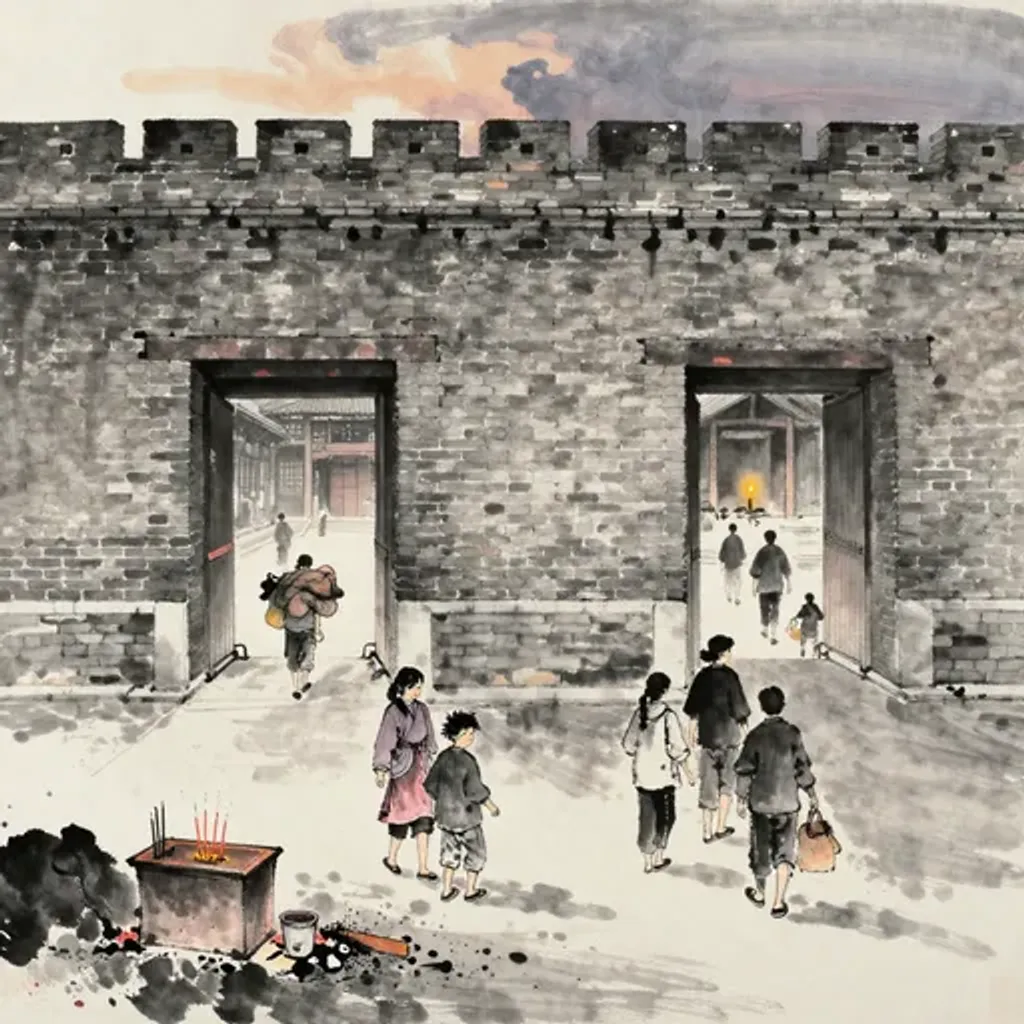
同氣異門,各別東西。南與凶遇,北傷其孫。
Of the same breath yet separate households; each parts east and west. Going south, one meets with misfortune; going north, a grandchild is harmed.
— Jiao Yanshou, Yilin (Forest of Changes), 1st century BC
Commentary
Water drawn up through wood, the well once served a single community — but now siblings of the same breath scatter through different gates, parting east and west. Those who go south encounter misfortune; those heading north lose their descendants. The verse describes a family rupture: brothers who share one lineage but separate into rival branches, each meeting calamity in their own direction. From The Well to Enthusiasm, thunder erupts from the earth with galvanizing energy. Yet this dispersal inverts Enthusiasm's unifying power: where Yu should rally people around a single drummer, here the shared wellspring fractures, and the thunder that should inspire collective action instead scatters the clan to the four winds.
井 → 隨
Hexagram 48 → Hexagram 17: Following
Changing lines: 1, 2, 3, 4
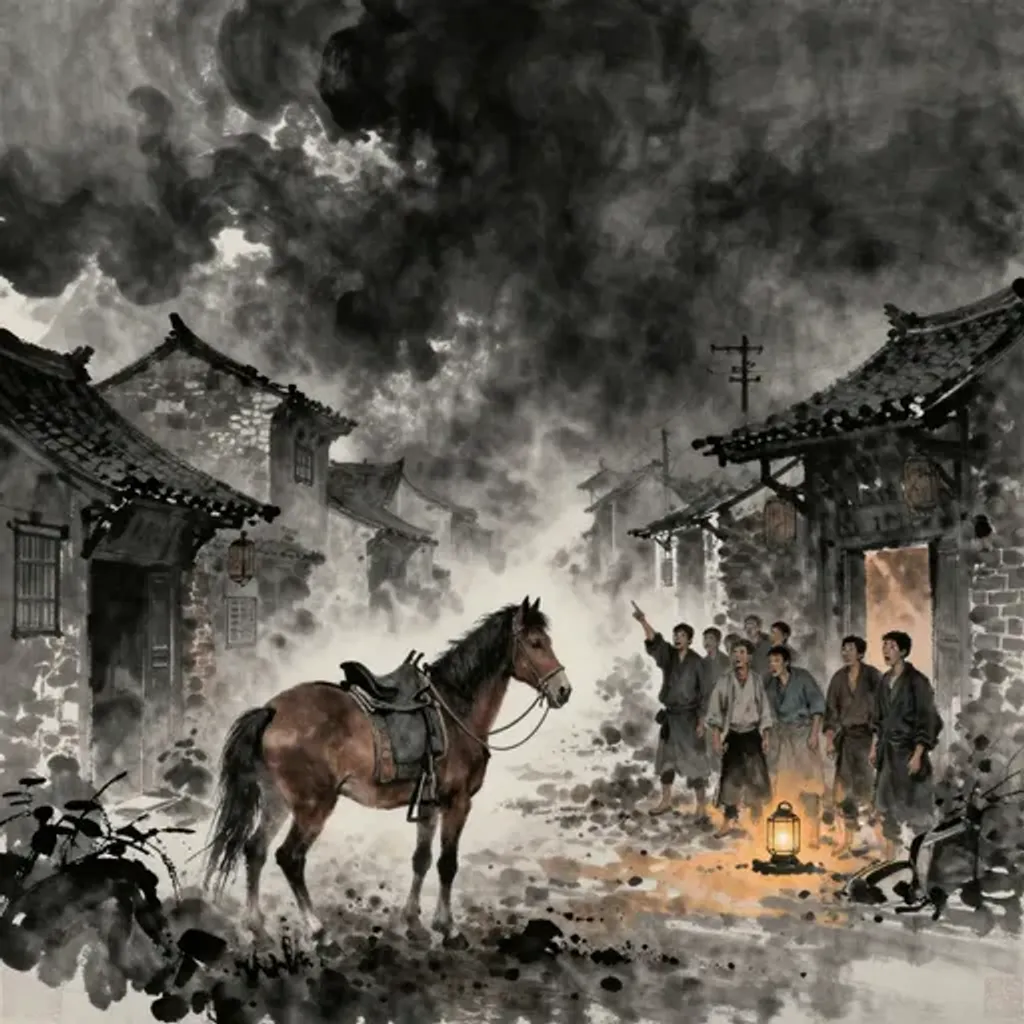
蜆見不祥,禍起我鄉。行人畏亡,使命不通。
An ill omen appears; disaster arises in my village. Travelers fear for their lives; messages cannot get through.
— Jiao Yanshou, Yilin (Forest of Changes), 1st century BC
Commentary
Water drawn up through wood, the well anchors the settlement — but an ill omen appears and calamity strikes the homeland. Travelers fear for their lives, and messages can no longer get through. The 'clam seen' (蜆見) as an inauspicious sign reflects Han-era omen interpretation where unusual natural appearances signaled disorder. Roads become impassable, communication breaks down, and the community the well once sustained is severed from the outside world. From The Well to Following, thunder rests within the lake at nightfall. Following requires responsiveness to the moment, but here there is no signal to follow — only silence where messengers once traveled.
井 → 蠱
Hexagram 48 → Hexagram 18: Work on the Decayed
Changing lines: 5, 6
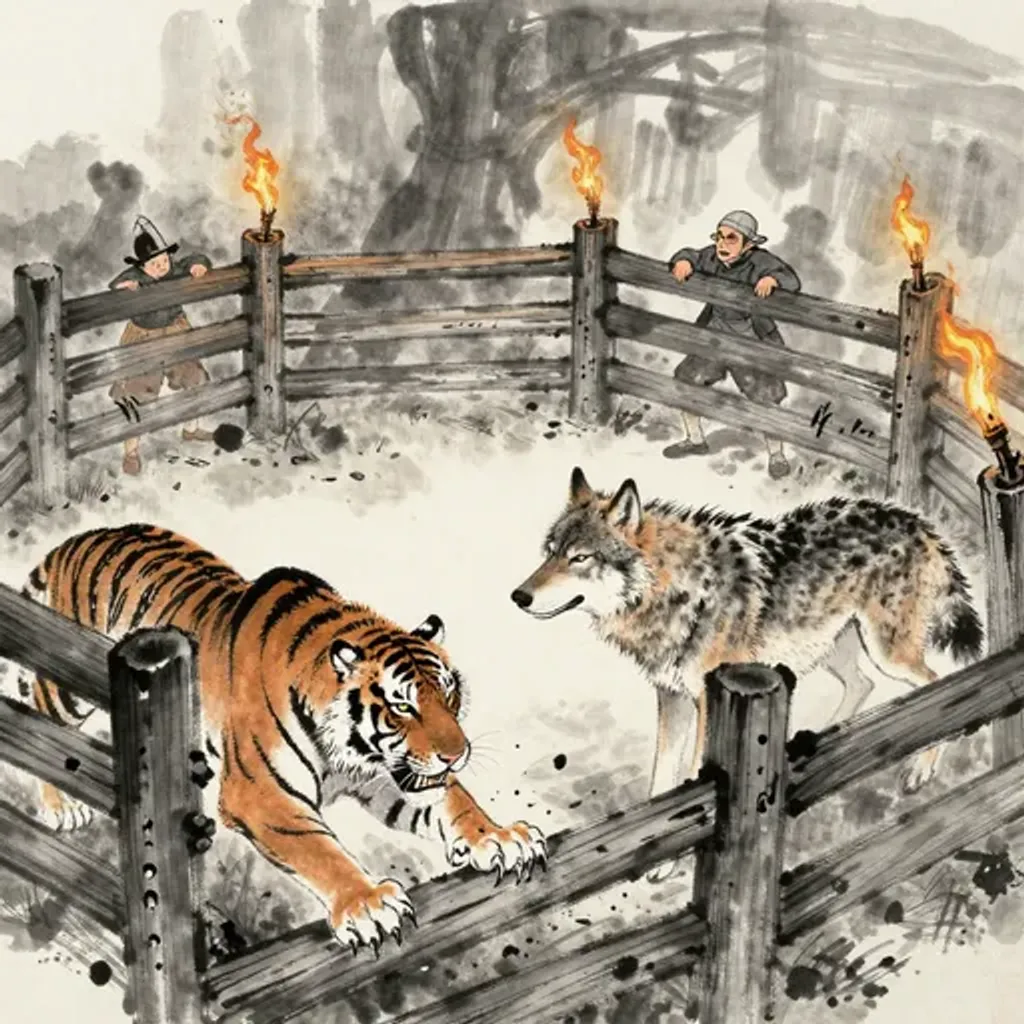
无事招禍,自取災殃。畜狼養虎,必見賊傷。
Without cause he invites disaster, bringing calamity upon himself. Raising wolves, rearing tigers; one is certain to suffer the wounds of these thieves.
— Jiao Yanshou, Yilin (Forest of Changes), 1st century BC
Commentary
Water drawn up through wood, the well sustains what is placed around it — but here what is nurtured turns predatory. Inviting disaster without cause, bringing calamity upon oneself: raising wolves and rearing tigers guarantees that one will suffer their bite. The proverb '畜狼養虎' warns against fostering dangers within one's own household, a theme deeply resonant with Gu's meaning of internal corruption. From The Well to Work on the Decayed, wind stirs beneath the mountain where rot has set in. The well's indiscriminate nourishment, poured into the wrong vessels, breeds the very parasites that corrode the structure from within. Gu demands that decay be confronted before it consumes the host.
井 → 臨
Hexagram 48 → Hexagram 19: Approach
Changing lines: 1, 3, 5
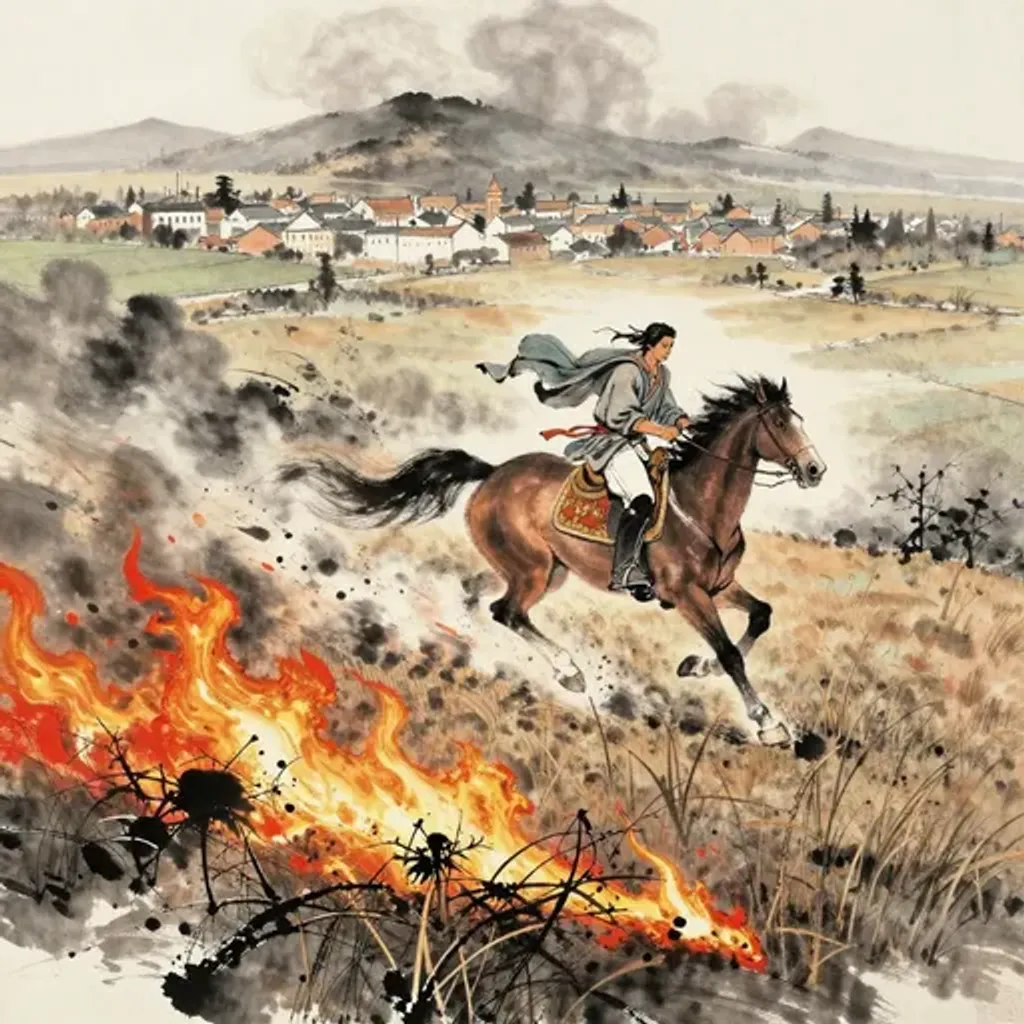
順風吹火,牽騎驥尾。易為功力,因權受福。
Blowing fire with a following wind; grasping the tail of a swift steed. Easy the effort and easy the gain; by seizing the advantage, one receives good fortune.
— Jiao Yanshou, Yilin (Forest of Changes), 1st century BC
Commentary
Water drawn up through wood, the well's labor is steady and methodical — and here the verse celebrates effortless leverage. Blowing fire downwind, grasping a swift horse by the tail: effort follows the grain of circumstance, and through strategic positioning one reaps blessings. The two images are classic Chinese proverbs for working with momentum rather than against it. From The Well to Approach, the lake rises beneath the earth, and the great draws near with expanding influence. The well's patient infrastructure, combined with Lin's advancing proximity, embodies the principle that positioning oneself at the right junction multiplies force without exhausting it.
井 → 觀
Hexagram 48 → Hexagram 20: Contemplation
Changing lines: 2, 3, 6
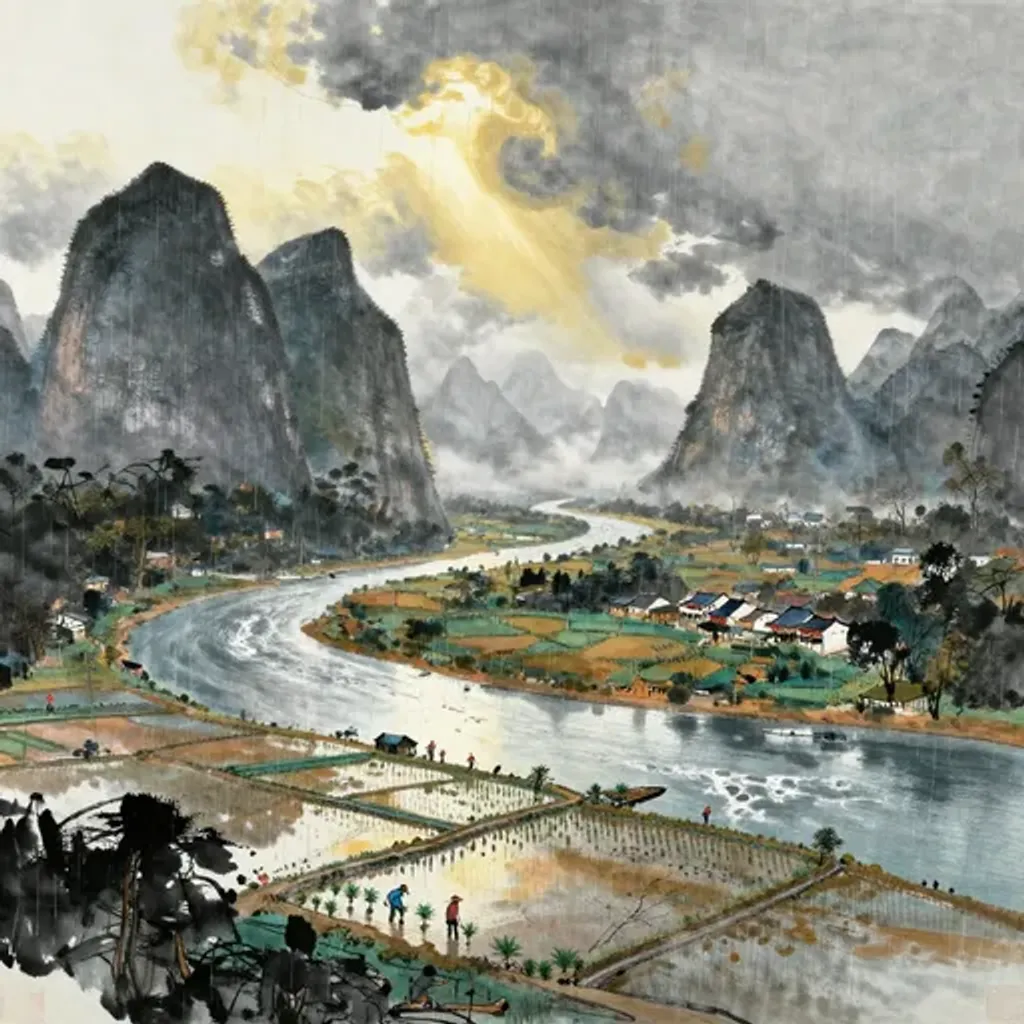
五岳四瀆,沾濡為德。行不失理,民賴恩福。
The five sacred peaks, the four great rivers; their moisture and nourishment become virtue. Acting without departing from principle, the people depend upon their gracious blessings.
— Jiao Yanshou, Yilin (Forest of Changes), 1st century BC
Commentary
Water drawn up through wood, the well disperses nourishment to the community, and here that dispensation reaches cosmic scale. The Five Sacred Mountains and Four Great Rivers moisten the land as virtue; governance does not stray from principle, and the people rely on this grace for their blessings. The mountains and rivers represent the sacred geography of China — the framework within which all civilization unfolds. From The Well to Contemplation, wind moves across the earth, and the sage-king surveys his realm to set teachings. The well's local sustenance becomes Guan's panoramic view: virtue flowing outward like water from the heights, observed and emulated across the four directions.
井 → 噬嗑
Hexagram 48 → Hexagram 21: Biting Through
Changing lines: 1, 2, 3, 4, 5, 6
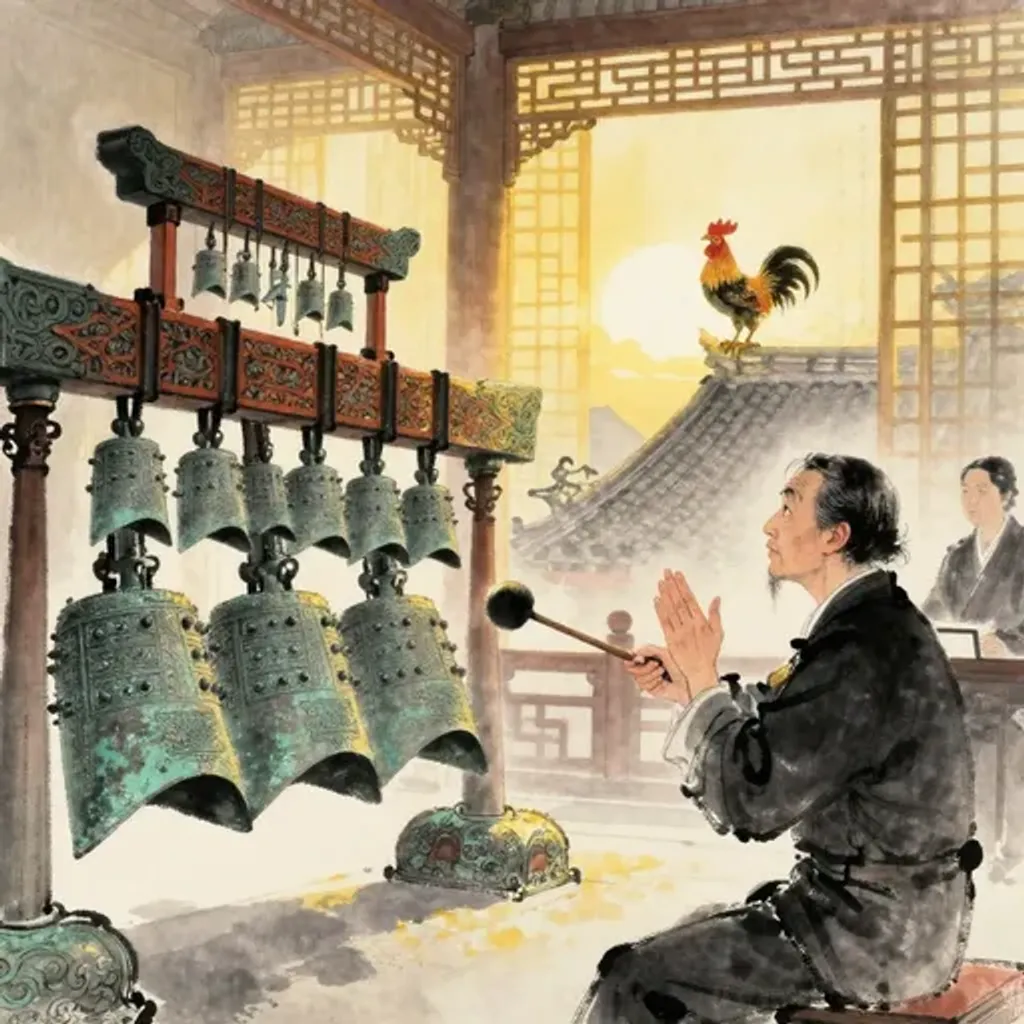
延陵聰敏,樂聽太史。雞鳴大國,姜氏受福。
Yanling, keen and discerning, delights in hearing the Grand Historian's music. The cock crows in the great state; the house of Jiang receives its blessing.
— Jiao Yanshou, Yilin (Forest of Changes), 1st century BC
Commentary
Water drawn up through wood, the well's depth rewards those who know how to listen. Ji Zha of Yanling, the most discerning ear of the Spring and Autumn period, listens to the Grand Historian's music and perceives the fate of nations in each melody. The rooster crows in the great state — an allusion to the Jiang clan of Qi, whose dawn-cry signals renewal. The Jiang house receives blessing. Ji Zha's famous musical evaluations, preserved in the Zuo Zhuan, diagnosed each state's character through its songs. From The Well to Biting Through, fire and thunder combine to enforce clarity. The well's hidden truth, once drawn to the surface by a discerning listener, becomes the sharp judgment that cuts through obstruction.
井 → 賁
Hexagram 48 → Hexagram 22: Grace
Changing lines: 1, 2, 5, 6
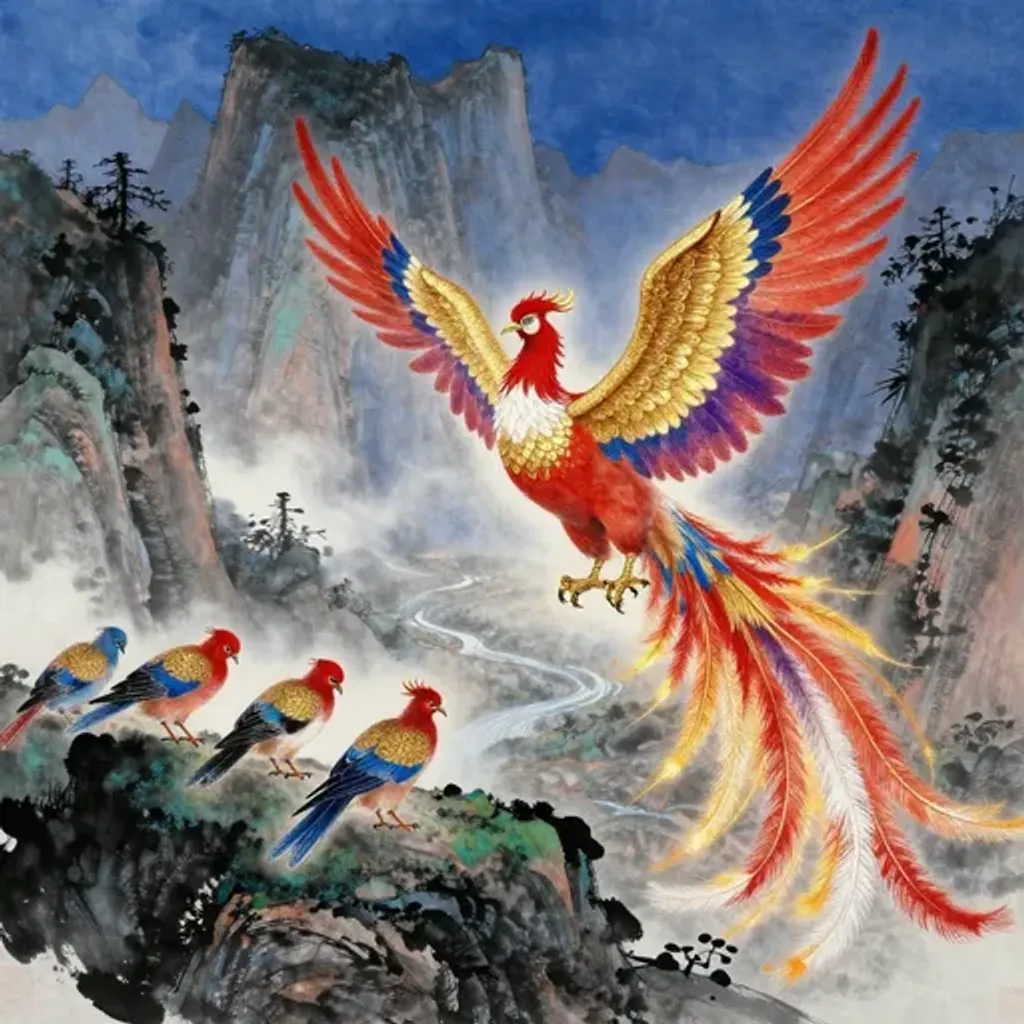
神鳥五色,鳳凰為主。集於王谷,使君得所。
Divine birds of five colors; the phoenix reigns as their lord. They gather in the King's Valley; the ruler finds his rightful place.
— Jiao Yanshou, Yilin (Forest of Changes), 1st century BC
Commentary
Water drawn up through wood, the well brings hidden treasure to the surface. Divine birds of five colors gather, with the phoenix as their sovereign, alighting in the Valley of the King and granting the lord his proper place. The phoenix appears only under a sage ruler's reign; its five colors represent the harmony of the five elements. From The Well to Grace, fire glows beneath the mountain, illuminating the inner pattern of things. The well draws up what lies hidden; Grace adorns what has been revealed. The phoenix's resplendent plumage is the aesthetic fulfillment of the well's structural work — raw nourishment refined into beauty, substance given its fitting form.
井 → 剝
Hexagram 48 → Hexagram 23: Splitting Apart
Changing lines: 2, 3, 5, 6
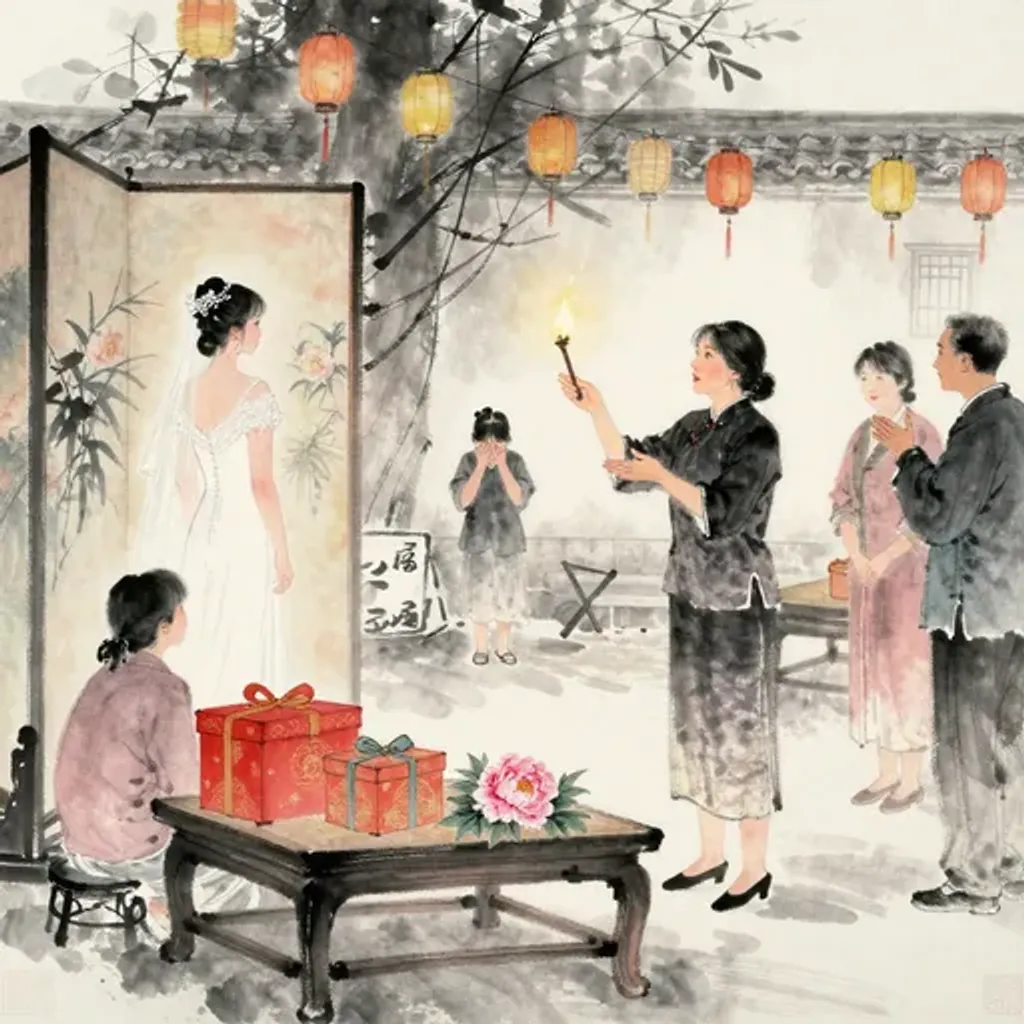
媒妁先明,雖期不得。齊女長子,亂其紀綱。
The matchmaker spoke clearly at first; yet despite the appointed time, she is not obtained. The eldest daughter of Qi throws the bonds of propriety into disorder.
— Jiao Yanshou, Yilin (Forest of Changes), 1st century BC
Commentary
Water drawn up through wood, the well depends on proper channels — yet here the matchmaker spoke clearly but the match still failed. Despite agreed terms, the intended bride is never obtained. Then the eldest daughter of Qi disrupts the moral order entirely. The verse echoes the Shijing's Mang ode, where courtship bypassing ritual propriety leads to ruin. The 'woman of Qi' who disorders the household's bonds recalls several Spring and Autumn consorts whose illicit influence shattered ruling houses. From The Well to Splitting Apart, the mountain crumbles upon the earth. The well's careful structure is stripped away layer by layer, as improper unions erode the foundation until nothing remains but bare ground.
井 → 復
Hexagram 48 → Hexagram 24: Return
Changing lines: 1, 2, 3, 5
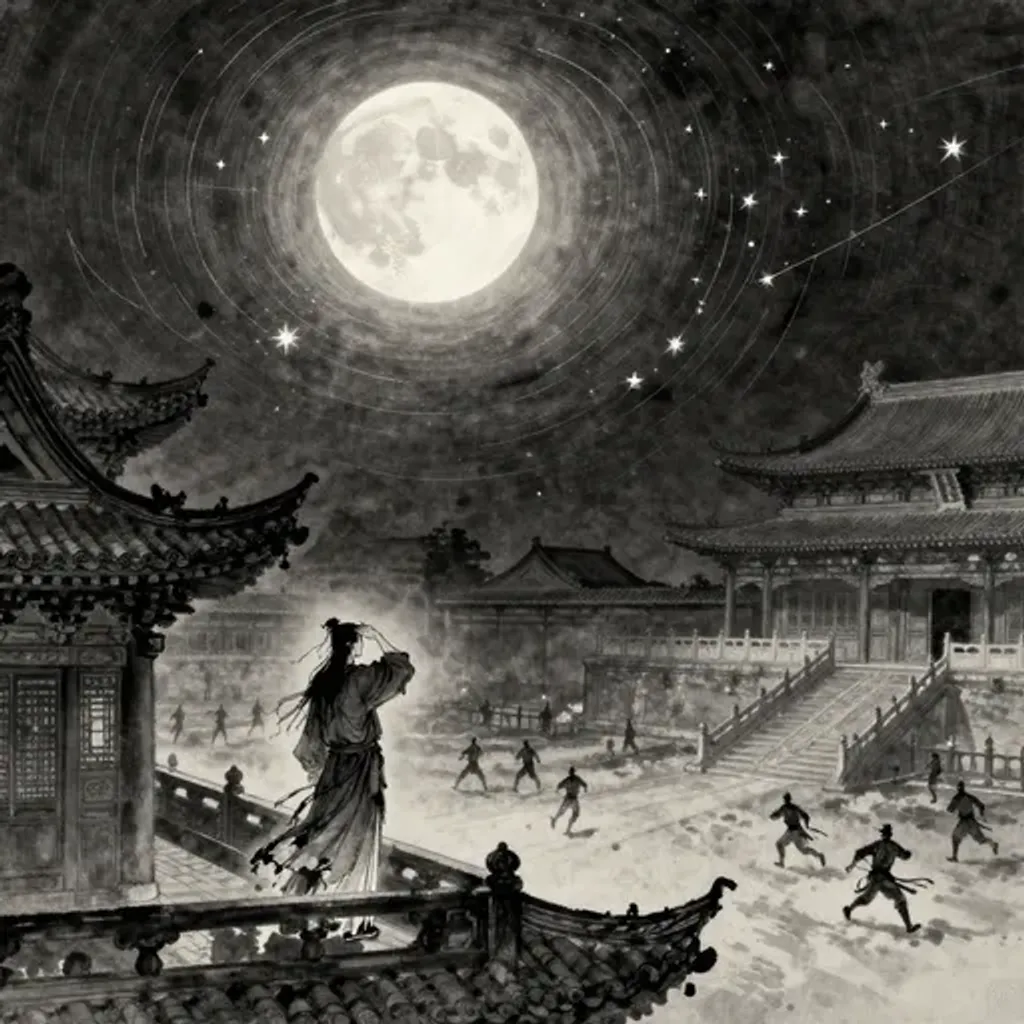
明月作晝,大人失居。眾星宵亂,不知所據。
The bright moon turns night to day; the great man loses his dwelling. The myriad stars swarm in confusion through the night; none knows where to stand.
— Jiao Yanshou, Yilin (Forest of Changes), 1st century BC
Commentary
Water drawn up through wood, the well depends on the steady rhythm of day and night — but the moon blazes like daylight, and the great man loses his dwelling. Stars scatter in nocturnal chaos, and no one knows where to take a stand. When celestial order inverts — when night becomes day — all terrestrial hierarchies dissolve with it. The 'bright moon as noon' suggests an unnatural illumination that blinds rather than guides. From The Well to Return, thunder stirs within the earth at the winter solstice. The chaos of dislocated stars must resolve into Return's single yang line, the first flicker of proper order reasserting itself beneath the frozen surface.
井 → 无妄
Hexagram 48 → Hexagram 25: Innocence
Changing lines: 1, 2, 3, 4, 6
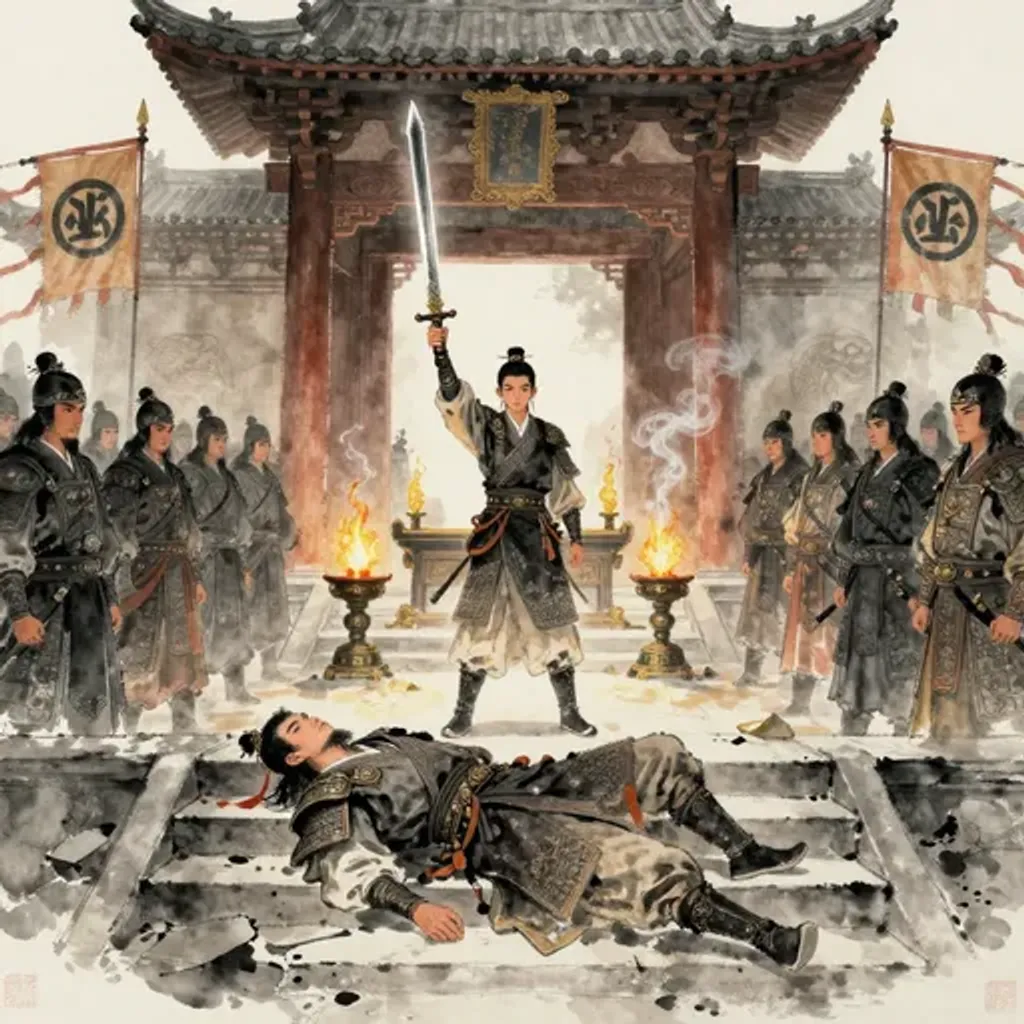
少康興起,誅澆復祖。微滅復明,大禹享祀。
Shaokang arose; he punished Jiao and restored his ancestor's line. What was dimmed was made bright again; the sacrifices to Great Yu were renewed.
— Jiao Yanshou, Yilin (Forest of Changes), 1st century BC
Commentary
Water drawn up through wood, the well preserves what survives through dark times. Shao Kang rose from exile, executed the usurper Jiao, and restored his ancestor's dynasty. What had been extinguished flickered back to life, and the great Yu's sacrificial rites were renewed. Shao Kang, sixth king of the Xia dynasty, fled after his father was killed by the usurper Han Zhuo and his agent Jiao. With a small fief and loyal followers, he rebuilt his forces and reclaimed the Xia throne — the archetypal restoration. From The Well to Innocence, thunder moves beneath heaven in natural alignment. The well's enduring source sustains the exile until heaven's proper order reasserts itself without contrivance.
井 → 大畜
Hexagram 48 → Hexagram 26: Great Taming
Changing lines: 1, 5, 6
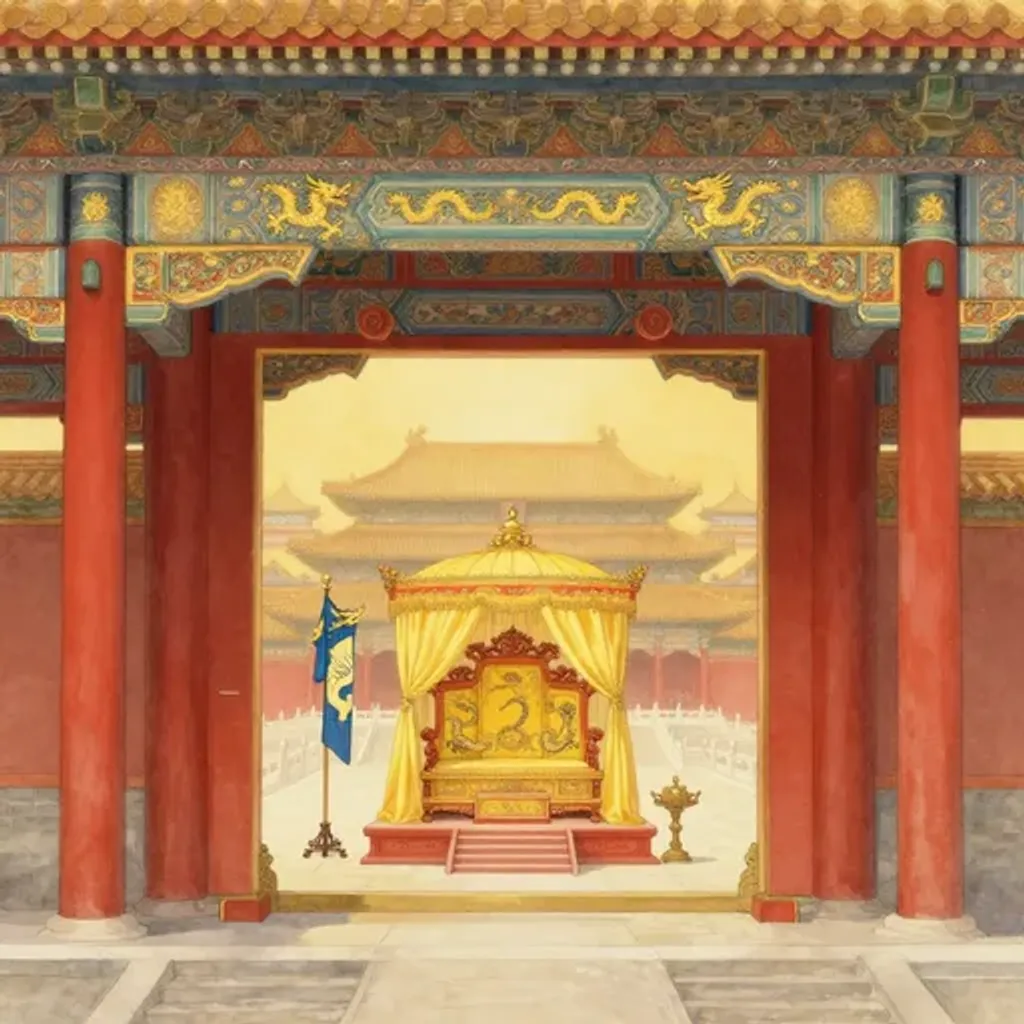
千門萬戶,大福所處。黃屋左纛,龍德獨有。
A thousand gates, ten thousand doors; the dwelling place of great fortune. The yellow roof, the yak-tail standard at its left; the virtue of the dragon belongs to him alone.
— Jiao Yanshou, Yilin (Forest of Changes), 1st century BC
Commentary
Water drawn up through wood, the well anchors a settlement — and here it anchors an empire. A thousand gates and ten thousand doors mark where great fortune resides. The yellow canopy and left-sided pennant: only the dragon's virtue possesses these. The 'yellow roof' (黃屋) and 'left pennant' (左纛) are exclusive imperial insignia of the Han dynasty, reserved for the Son of Heaven alone. From The Well to Great Taming, heaven stored within the mountain accumulates power over generations. The well's communal nourishment, concentrated and elevated to imperial scale, becomes the mountain that contains heaven itself — vast reserves of virtue and authority that only the legitimate sovereign may command.
井 → 頤
Hexagram 48 → Hexagram 27: Nourishment
Changing lines: 1, 2, 3, 5, 6
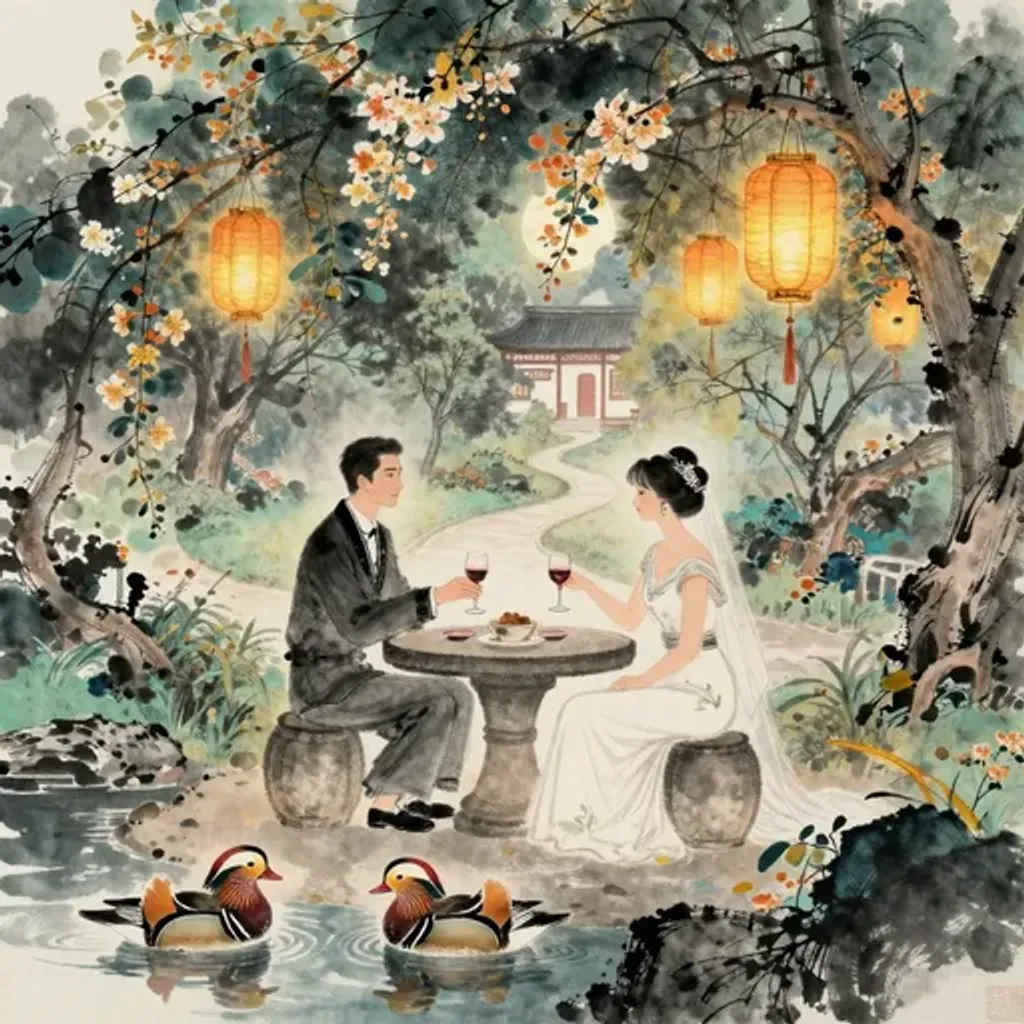
乾作聖男,坤為智女。配合既成,長生得所。
Qian makes the sage son; Kun makes the wise daughter. The match accomplished and complete, they find lasting life in their rightful place.
— Jiao Yanshou, Yilin (Forest of Changes), 1st century BC
Commentary
Water drawn up through wood, the well sustains life through the union of above and below. Qian creates the sage son, Kun forms the wise daughter. When the match is complete, both find their lasting place. The verse draws directly on the Shuogua Zhuan's cosmology: Qian-father and Kun-mother generate the six trigram children. This is not merely marriage but cosmogonic pairing — the fundamental creative act. From The Well to Nourishment, the mountain rests above thunder, the jaw that takes in sustenance. The well's structural provision meets Yi's careful discernment of what to nourish: the right pairing produces enduring life, and what is properly matched sustains itself without waste.
井 → 大過
Hexagram 48 → Hexagram 28: Great Exceeding
Changing lines: 4
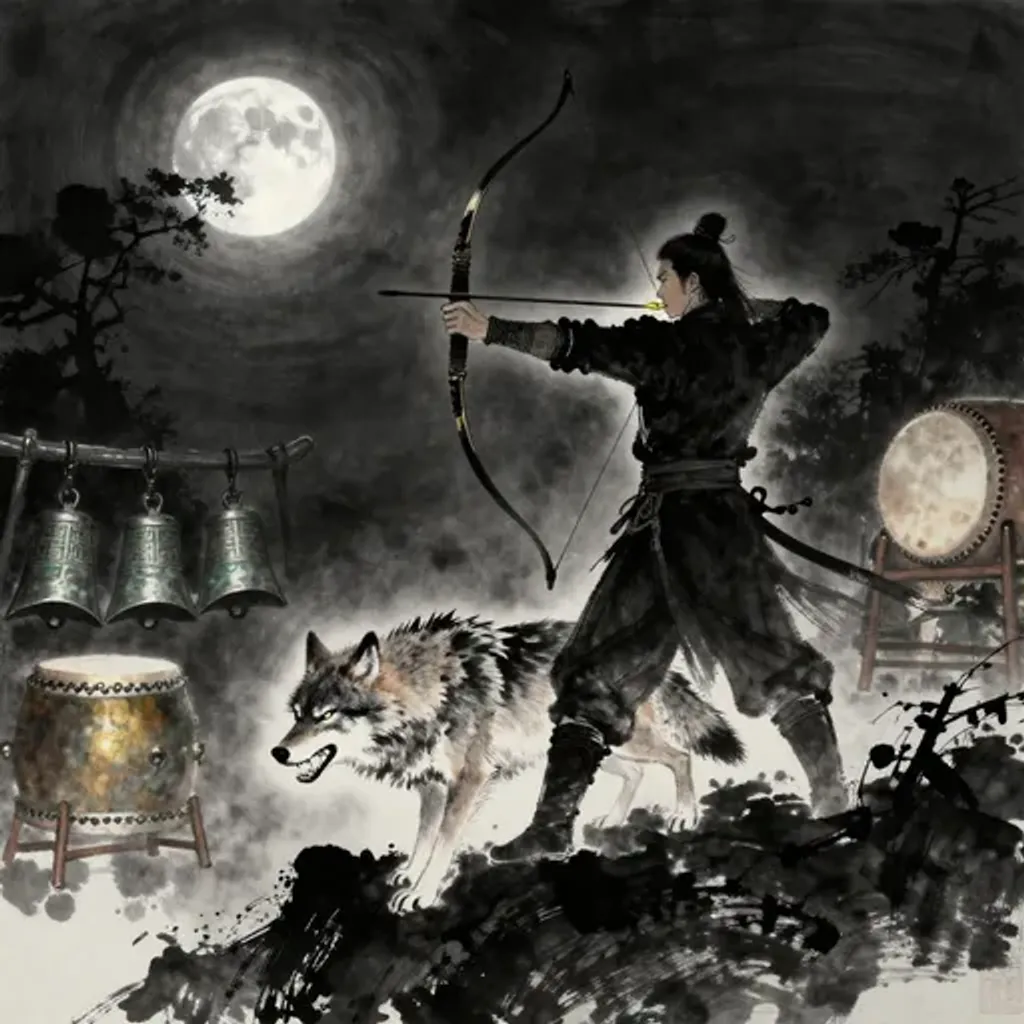
羿張烏號,彀射驚狼。鐘鼓夜鳴,將軍壯心。趙國雄勇,鬭死滎陽。
Yi draws the Wuhao bow, takes aim and shoots the startled wolf. Drums and bells sound in the night; the general's heart swells with valor. The state of Zhao, fierce and brave, fights to the death at Xingyang.
— Jiao Yanshou, Yilin (Forest of Changes), 1st century BC
Commentary
Water drawn up through wood, the well provides steadily — but here that steady force erupts into martial violence. Archer Yi draws the Wuhao bow, aiming at a startled wolf. Drums and bells sound through the night, and a general's fierce heart stirs. Warriors of Zhao, bold and unyielding, fight to the death at Xingyang. Yi's legendary bow represents supreme martial skill; the Zhao warriors recall the desperate battles of the Chu-Han wars at Xingyang, where armies clashed for control of the Ao Granary. From The Well to Great Exceeding, the lake submerges the trees — weight beyond what the structure can bear. The well's measured sustenance becomes the ridgepole that bends and snaps under the strain of heroic excess.
井 → 坎
Hexagram 48 → Hexagram 29: The Abysmal Water
Changing lines: 3
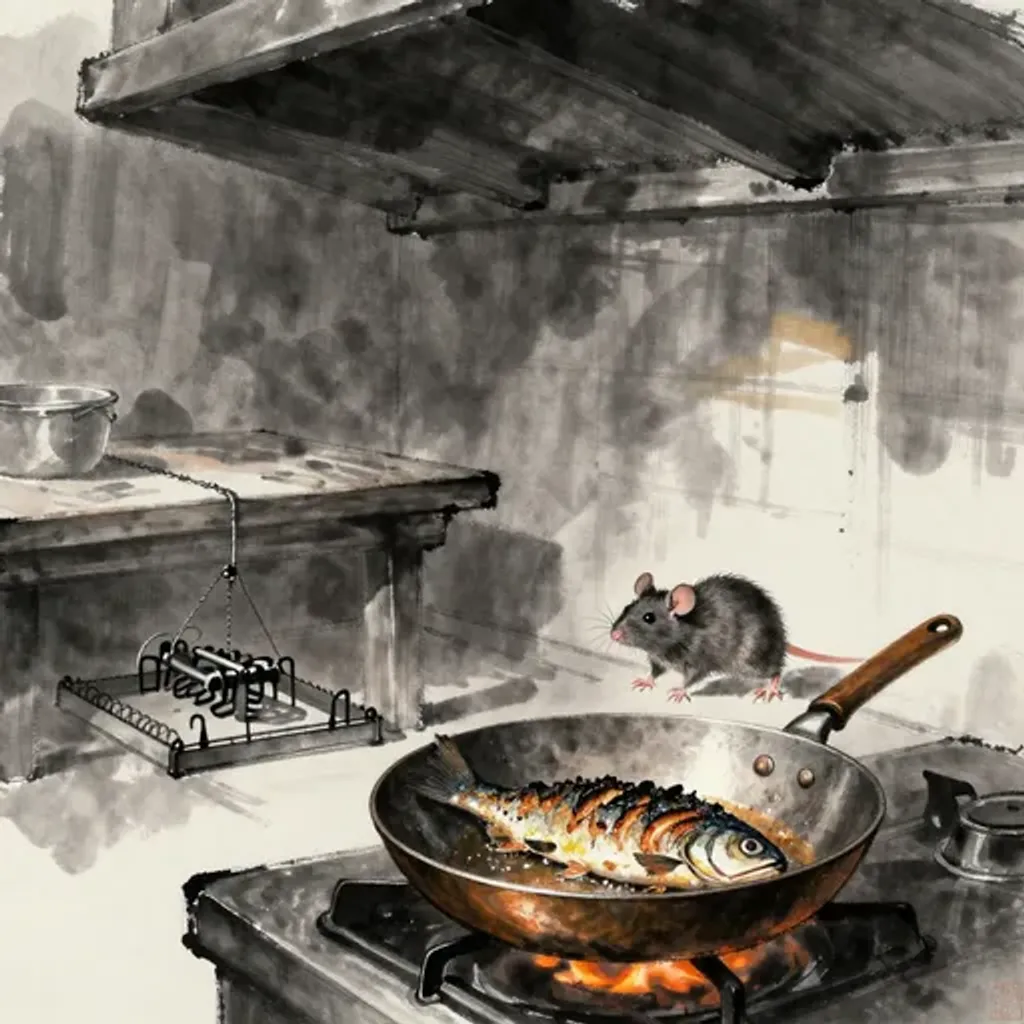
炙魚銅斗,張伺夜鼠。不忍香味,機發為祟。祟在頭頸,筰不得去。
Broiling fish in a bronze pot, waiting in ambush for the night rat. Unable to resist the fragrant smell, the trap springs and becomes the bane. The bane strikes at head and neck; the snare cannot be removed.
— Jiao Yanshou, Yilin (Forest of Changes), 1st century BC
Commentary
Water drawn up through wood, the well's depth conceals what lies within — and here that concealment becomes a trap. Roasting fish in a bronze pot, one sets a snare and watches for the night rat. The rat cannot resist the fragrant smell; the mechanism springs and strikes its head and neck, tangled so tightly it cannot escape. The imagery is vivid and mechanical: bait, trigger, and snare. Greed for what smells delicious delivers the creature into the trap. From The Well to The Abysmal, water upon water doubles the danger. The well's contained depth becomes Kan's bottomless pit: what once nourished now ensnares, and the creature that reaches in for sustenance finds itself caught in peril upon peril.
井 → 離
Hexagram 48 → Hexagram 30: The Clinging Fire
Changing lines: 1, 2, 4, 5, 6
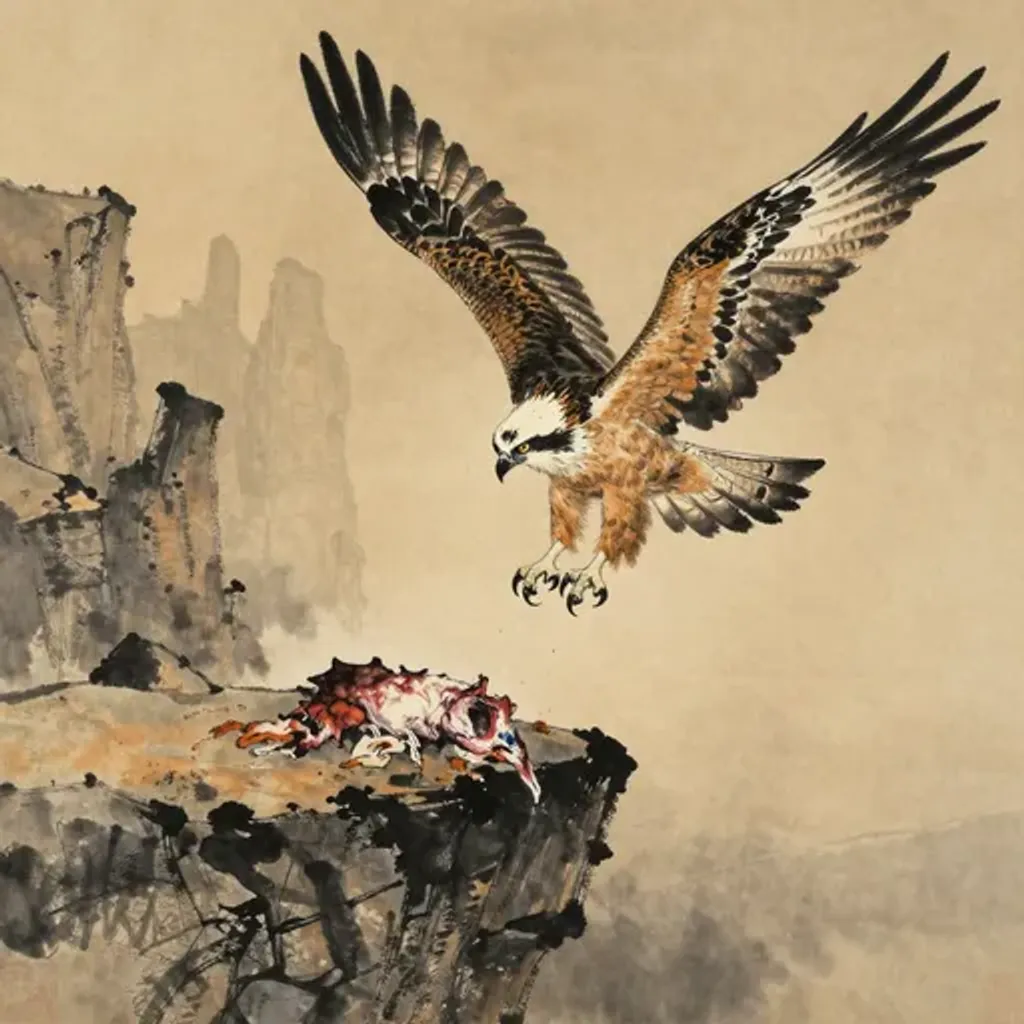
高飛不視,貪叨所在。臭腐為患,自害躬身。
Flying high yet blind to what lies below; greed fixes upon what is there. Rot and stench become the ruin; he brings harm upon his own body.
— Jiao Yanshou, Yilin (Forest of Changes), 1st century BC
Commentary
Water drawn up through wood, the well rewards those who look downward with care — but this bird flies high and never looks down, fixated only on what it craves. Rotting filth becomes its undoing, and it harms its own body. The image is of a raptor so absorbed in hunting that it dives into carrion, poisoning itself. Greed for what appears desirable but is actually putrid destroys from within. From The Well to The Clinging, doubled fire illuminates with merciless clarity. The well's cool depth offers honest sustenance, but Li's brilliant light exposes the difference between true nourishment and rotting illusion. What clings to corruption is consumed by the very fire that reveals it.
井 → 咸
Hexagram 48 → Hexagram 31: Influence
Changing lines: 2, 4
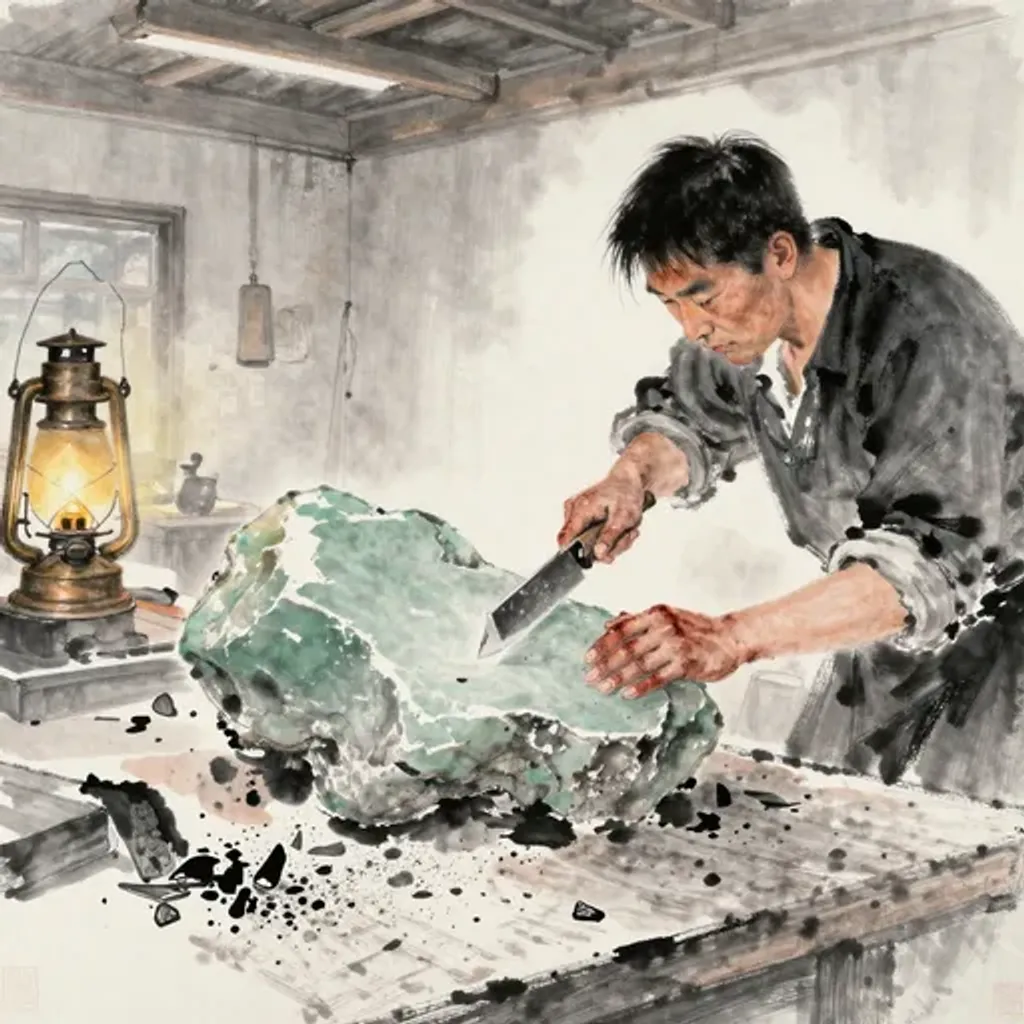
鉛刀攻玉,堅不可得。單盡我力,齒為疾賊。
Attacking jade with a lead knife; the hardness cannot be overcome. Spending all my strength to exhaustion; the teeth become agents of affliction.
— Jiao Yanshou, Yilin (Forest of Changes), 1st century BC
Commentary
Water drawn up through wood, the well requires proper tools — yet here the wrong instrument is forced upon an impossible task. A lead knife attempts to carve jade: the stone is too hard and the blade too soft. One exhausts all strength, and the teeth become agents of affliction. Lead against jade is a classical metaphor for mismatched effort: inadequate tools applied to worthy material, or unworthy talent attempting tasks beyond its capacity. From The Well to Influence, the lake rests upon the mountain, receptive and open. Xian's mutual responsiveness requires both parties to be of matching quality; the lead knife and jade have no affinity, and forced contact produces only injury.
井 → 恆
Hexagram 48 → Hexagram 32: Duration
Changing lines: 4, 5
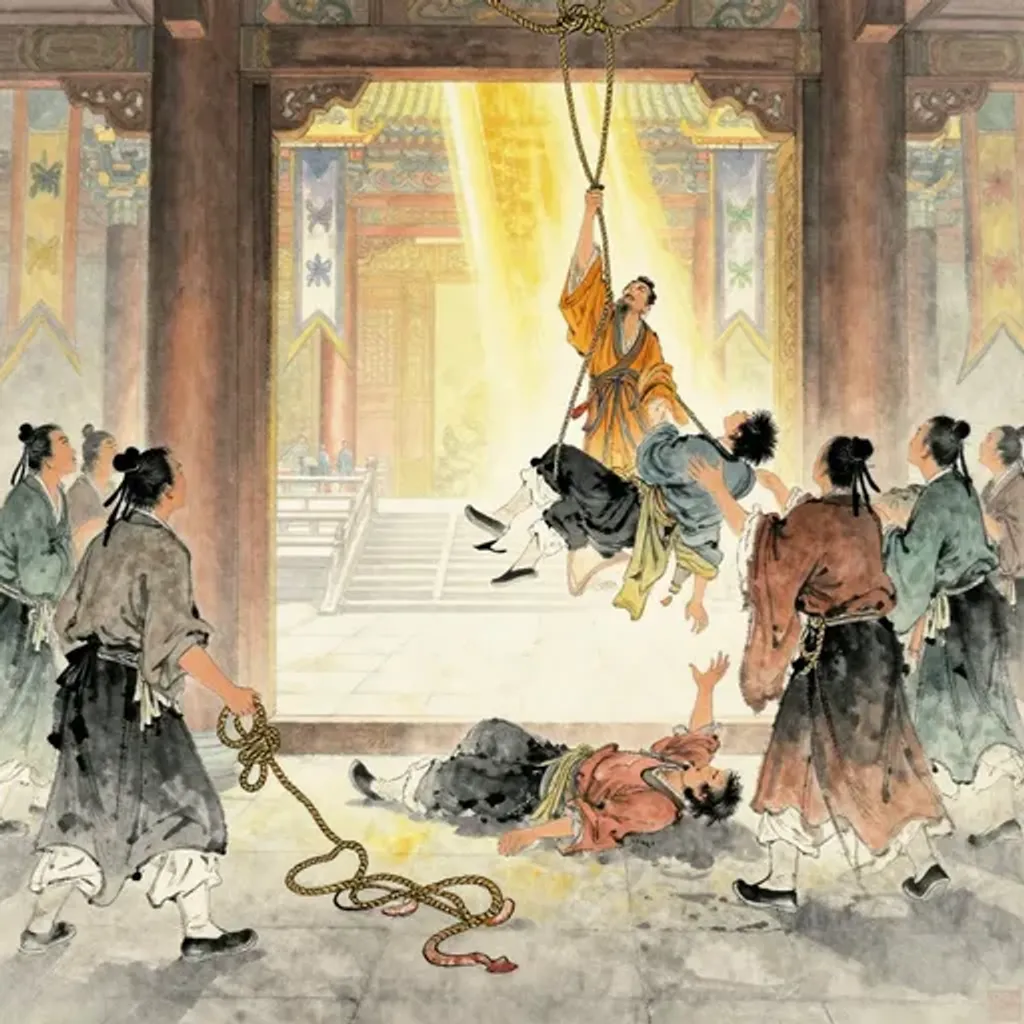
方啄宣口,聖智仁厚。釋解倒懸,家國大安。
The square-mouthed one speaks plainly; sagely, wise, and deeply humane. He releases and unbinds those hung upside down; house and state attain great peace.
— Jiao Yanshou, Yilin (Forest of Changes), 1st century BC
Commentary
Water drawn up through wood, the well nourishes through patient labor. A bird pecks open a wound to release what festers, and the sage applies wisdom and benevolence with generous skill. Those hanging upside down are freed from their bonds, and household and state both find great peace. The 'releasing the inverted' (釋解倒懸) is a classical metaphor for rescuing the suffering — Mencius used it to describe the people's longing for a liberator. From The Well to Duration, thunder and wind reinforce each other in perpetual motion. The well's curative function, applied with enduring consistency, becomes Heng's principle: steady, devoted action sustained over time transforms suffering into lasting stability.
井 → 遯
Hexagram 48 → Hexagram 33: Retreat
Changing lines: 2, 4, 6
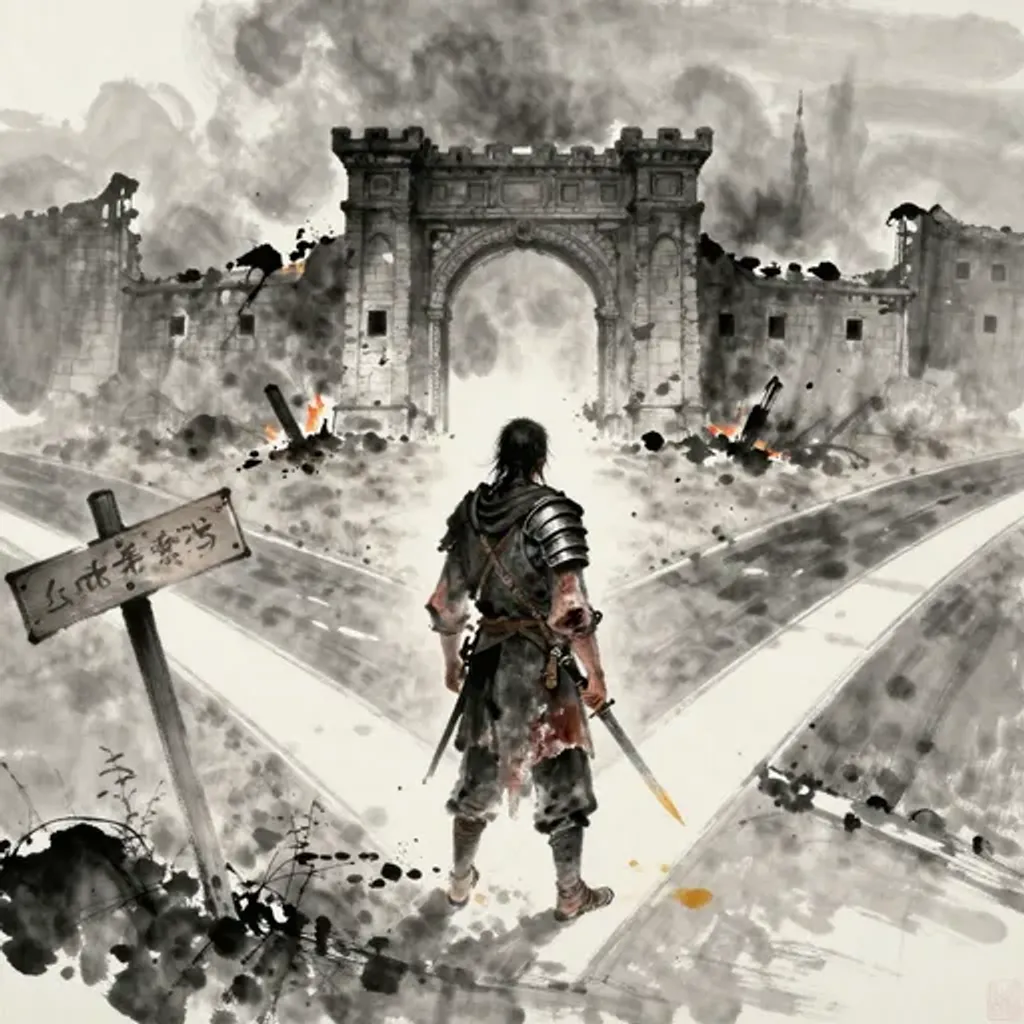
踟躕南北,誤入喪國。杜季利兵,傷我心腹。
Hesitating between south and north, he stumbles into a doomed kingdom. Du Ji wields his blade; it wounds my heart and belly.
— Jiao Yanshou, Yilin (Forest of Changes), 1st century BC
Commentary
Water drawn up through wood, the well stands fixed — but its keeper hesitates between north and south, and blunders into a lost kingdom. Du Ji deploys his soldiers and wounds our very heart. The name 'Du Ji' may refer to a military figure whose sharp blade struck at the core of a state caught between competing directions. Hesitation at the crossroads, unable to commit to either path, leaves one exposed to the opportunist who acts decisively. From The Well to Retreat, heaven rises above the mountain, withdrawing from engagement. The well's failure to hold its ground meets Dun's counsel: when the moment for withdrawal has passed, what should have been strategic retreat becomes disastrous indecision.
井 → 大壯
Hexagram 48 → Hexagram 34: Great Power
Changing lines: 1, 4, 5
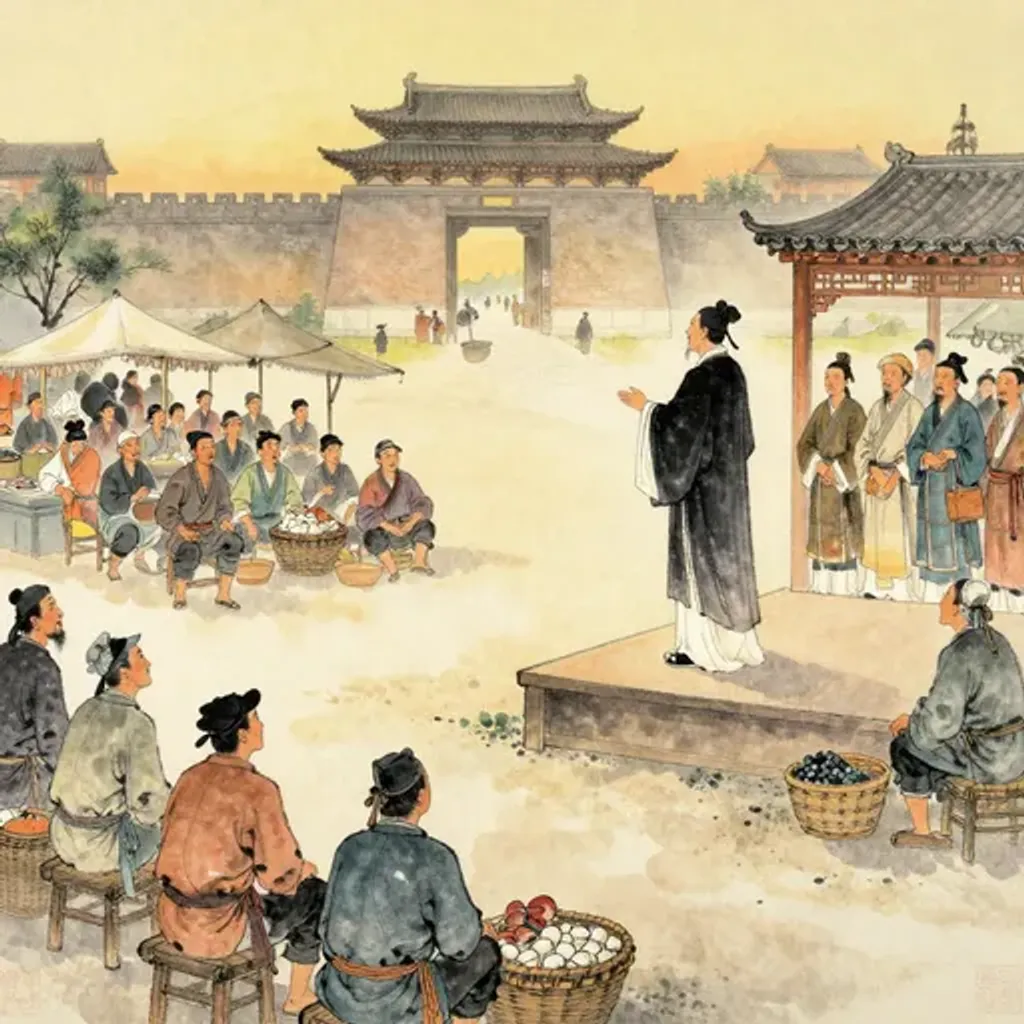
公孫之政,惠而不煩。喬子相國,終身无患。
The governance of Gongsun: generous yet never burdensome. With Qiaozi as minister of state, one lives free of trouble for life.
— Jiao Yanshou, Yilin (Forest of Changes), 1st century BC
Commentary
Water drawn up through wood, the well's governance lies in steady service. The governance of Gongsun was benevolent without being burdensome — this echoes the description of Zi Chan of Zheng, whose administration Confucius praised as 'beneficent to the people.' Qiaozi served as minister of state and lived his entire life without calamity. The verse celebrates the rarest political achievement: a long career of competent governance that attracts no resentment. From The Well to Great Power, thunder roars above heaven with irresistible force. The well's quiet utility, channeled through Dazhuang's explosive strength, shows that true power is benevolent administration sustained until it becomes unchallengeable — not through aggression but through earned trust.
井 → 晉
Hexagram 48 → Hexagram 35: Progress
Changing lines: 2, 3, 4, 5, 6
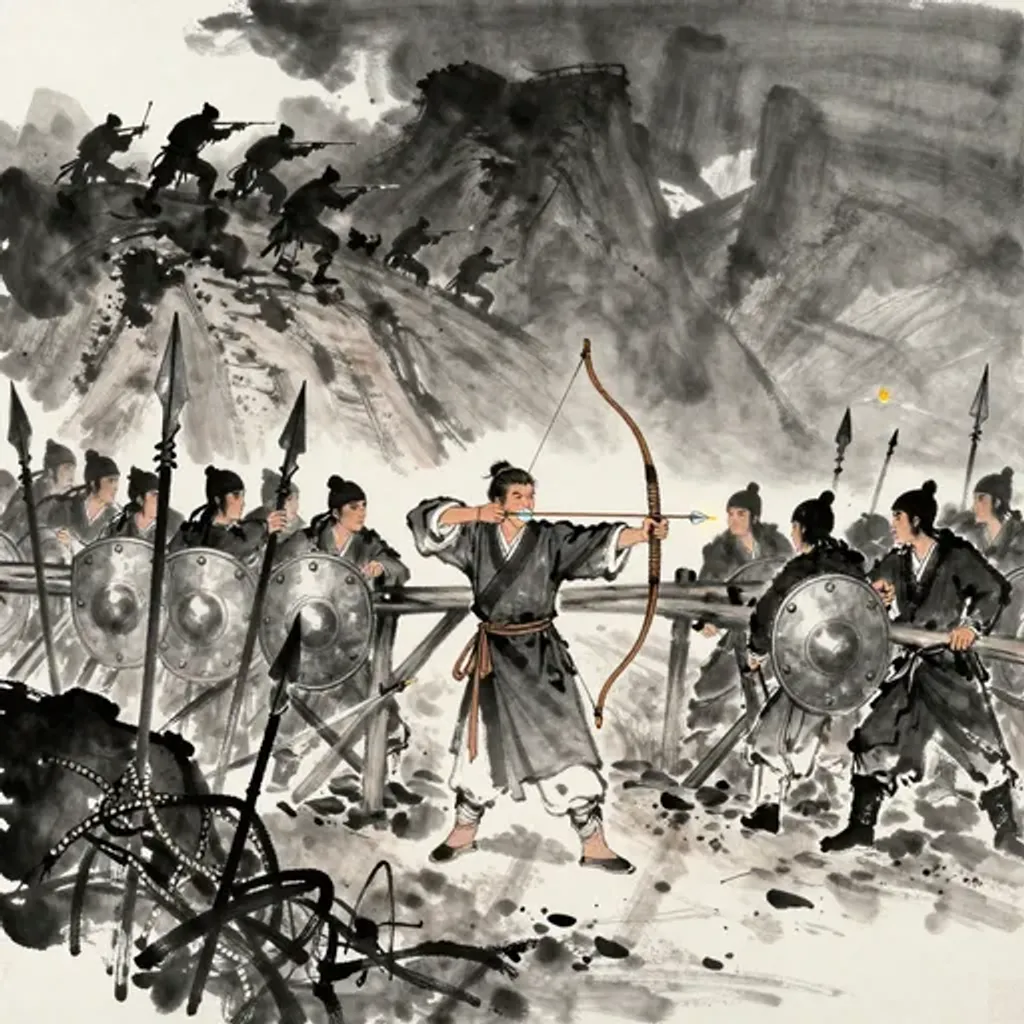
弧矢大張,道絕不通。小人寇賊,君子壅塞。
Bows and arrows drawn wide; the road is severed, passage cut. Petty men turn to banditry; the gentleman is hemmed in and blocked.
— Jiao Yanshou, Yilin (Forest of Changes), 1st century BC
Commentary
Water drawn up through wood, the well offers its sustenance to all — but here the bow is drawn wide and the road is severed. Petty men become bandits, and the gentleman finds himself blocked at every turn. The 'great bow stretched' suggests either military threat or highway robbery: the path forward is cut off by armed force. Upright people are denied passage while disorder reigns. From The Well to Progress, fire rises above the earth in the image of dawn. Yet this verse inverts Jin's promise: the bright virtue that should ascend cannot break through the blockade. The well's open mouth is sealed by those who hoard its water, turning shared sustenance into contested territory.
井 → 明夷
Hexagram 48 → Hexagram 36: Darkening of the Light
Changing lines: 1, 2, 5
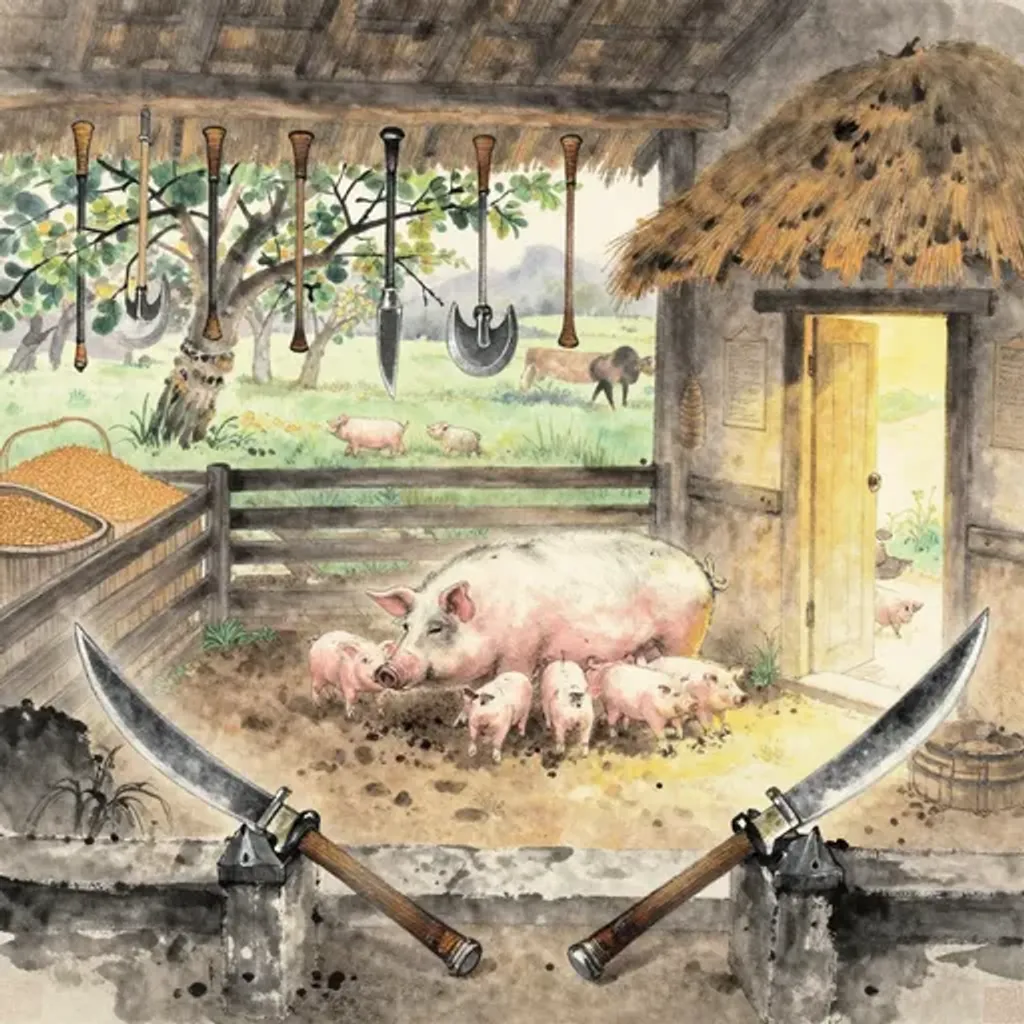
藏戟之室,封豕受福。充澤肥腯,子孫蕃息。
In the chamber where halberds are stored, the great boar receives its blessing. Plump and fattened, richly fed; children and grandchildren multiply and flourish.
— Jiao Yanshou, Yilin (Forest of Changes), 1st century BC
Commentary
Water drawn up through wood, the well nourishes in secret — and here weapons are stored in a chamber while a great boar receives blessing. Plump and fattened, its descendants multiply abundantly. The 'room where halberds are stored' (藏戟之室) suggests a household that has put away its weapons in favor of peaceful prosperity. The 'sealed boar' (封豕) fattened to overflowing represents the wealth that accumulates when warfare ceases. From The Well to Darkening of the Light, fire enters the earth, concealing its brilliance. The well's hidden nourishment aligns with Mingyi's strategy: storing weapons away, letting strength remain unseen, and allowing prosperity to grow quietly in the dark.
井 → 家人
Hexagram 48 → Hexagram 37: The Family
Changing lines: 1, 2, 6
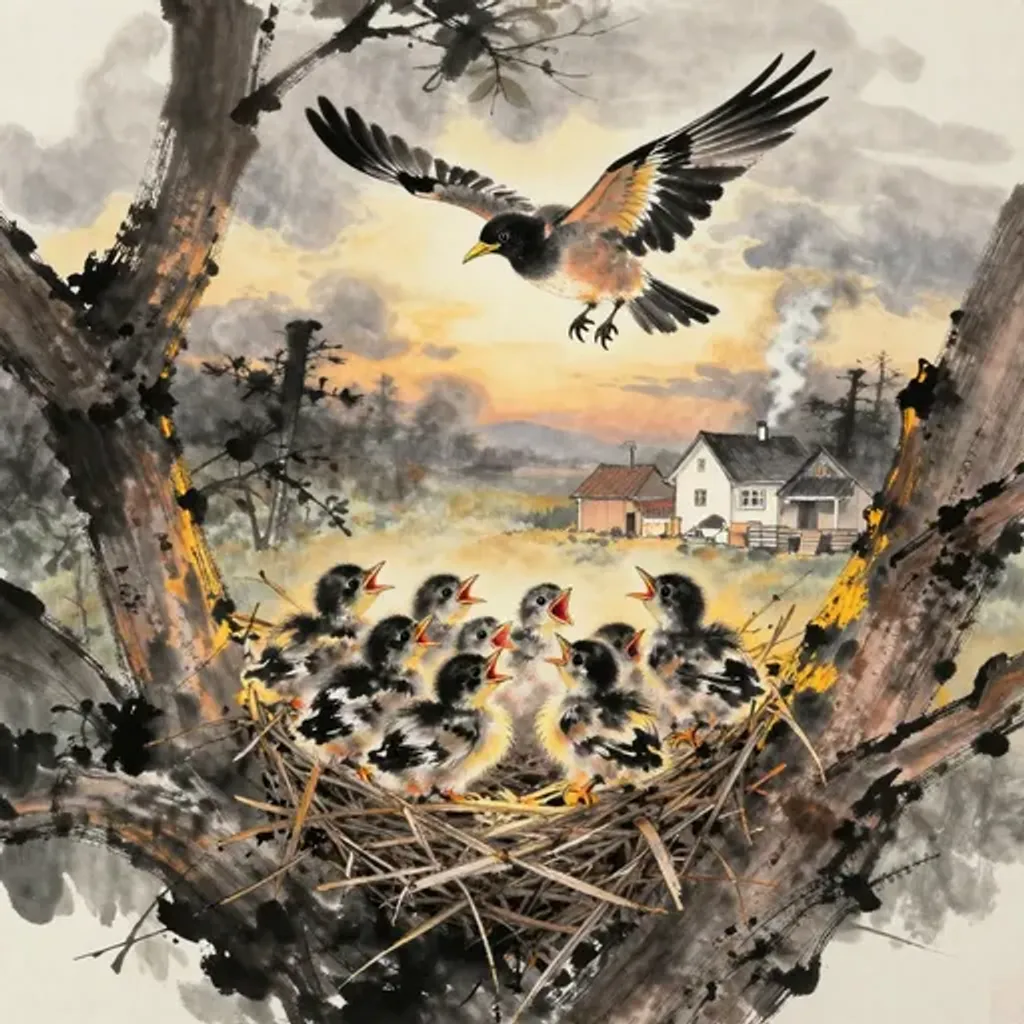
八子同巢,心勞相思,雖苦无憂。
Eight young share one nest; hearts toil in longing for each other. Though the labor is bitter, there is no sorrow.
— Jiao Yanshou, Yilin (Forest of Changes), 1st century BC
Commentary
Water drawn up through wood, the well sustains the household gathered around it. Eight chicks share a single nest, their hearts laboring with longing for one another. Though the toil is bitter, there is no grief. The image of nestlings crowded together captures the warmth and strain of a large family: resources are stretched, labor is constant, yet the bond itself provides comfort. From The Well to The Family, wind emerges from fire, carrying warmth outward in words and deeds. The well's communal provision finds its most intimate expression in the family hearth: what nourishes is not abundance but the constancy of shared effort, where hardship borne together becomes its own consolation.
井 → 睽
Hexagram 48 → Hexagram 38: Opposition
Changing lines: 1, 3, 4, 5, 6
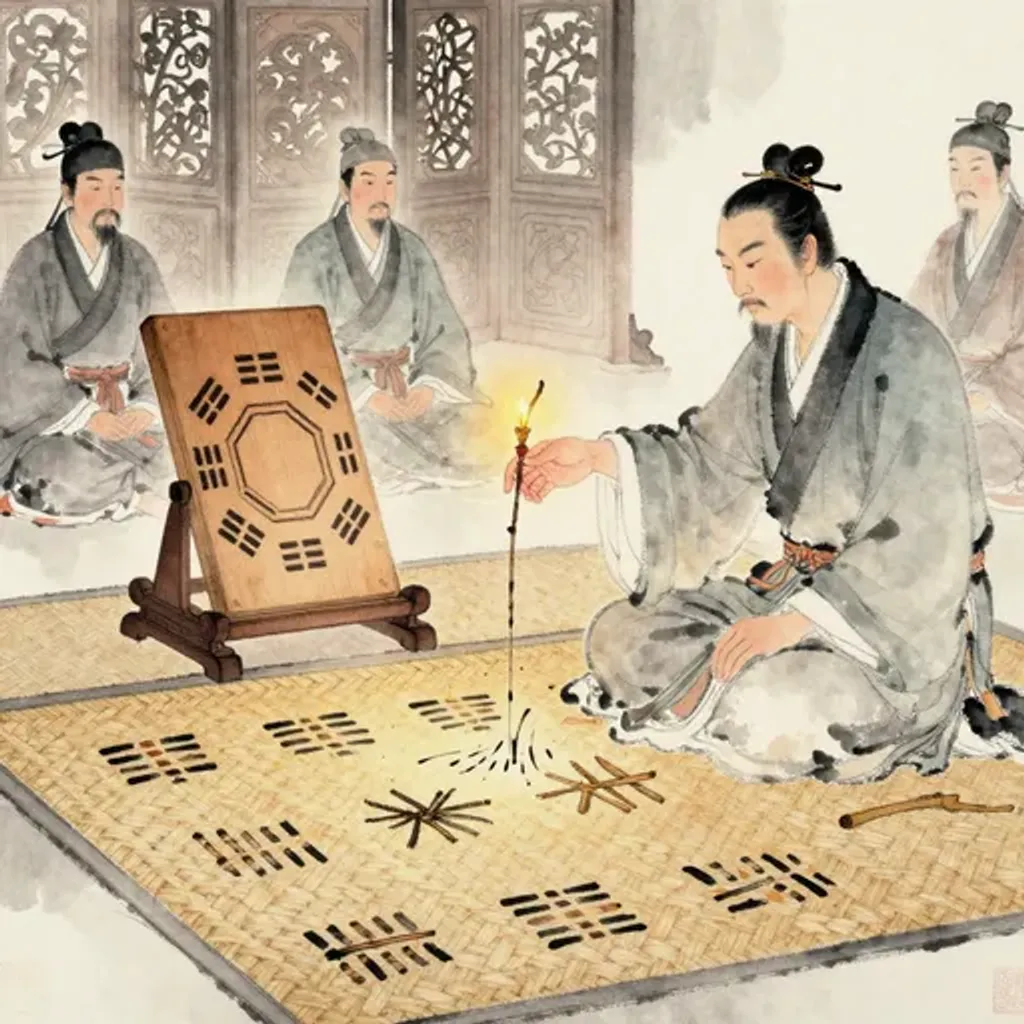
循理舉手,舉求取予。六體相摩,終无咎殃。
Following reason, raising one's hand; what is raised and sought, given and received. The six lines rub and turn together; in the end there is no fault or calamity.
— Jiao Yanshou, Yilin (Forest of Changes), 1st century BC
Commentary
Water drawn up through wood, the well operates through orderly procedure. Following principle, one raises a hand to seek and to give. The six lines of the hexagram interact in mutual friction, yet in the end no blame results. The 'six bodies rubbing together' (六體相摩) references the Xici Zhuan's description of the six hexagram lines in dynamic tension. The verse suggests that even in a situation of apparent opposition, disciplined adherence to proper form prevents harm. From The Well to Opposition, fire above and lake below move in contrary directions. The well's methodical procedure holds Kui's divergent energies in productive tension: difference managed through ritual becomes complementarity, not conflict.
井 → 蹇
Hexagram 48 → Hexagram 39: Obstruction
Changing lines: 2
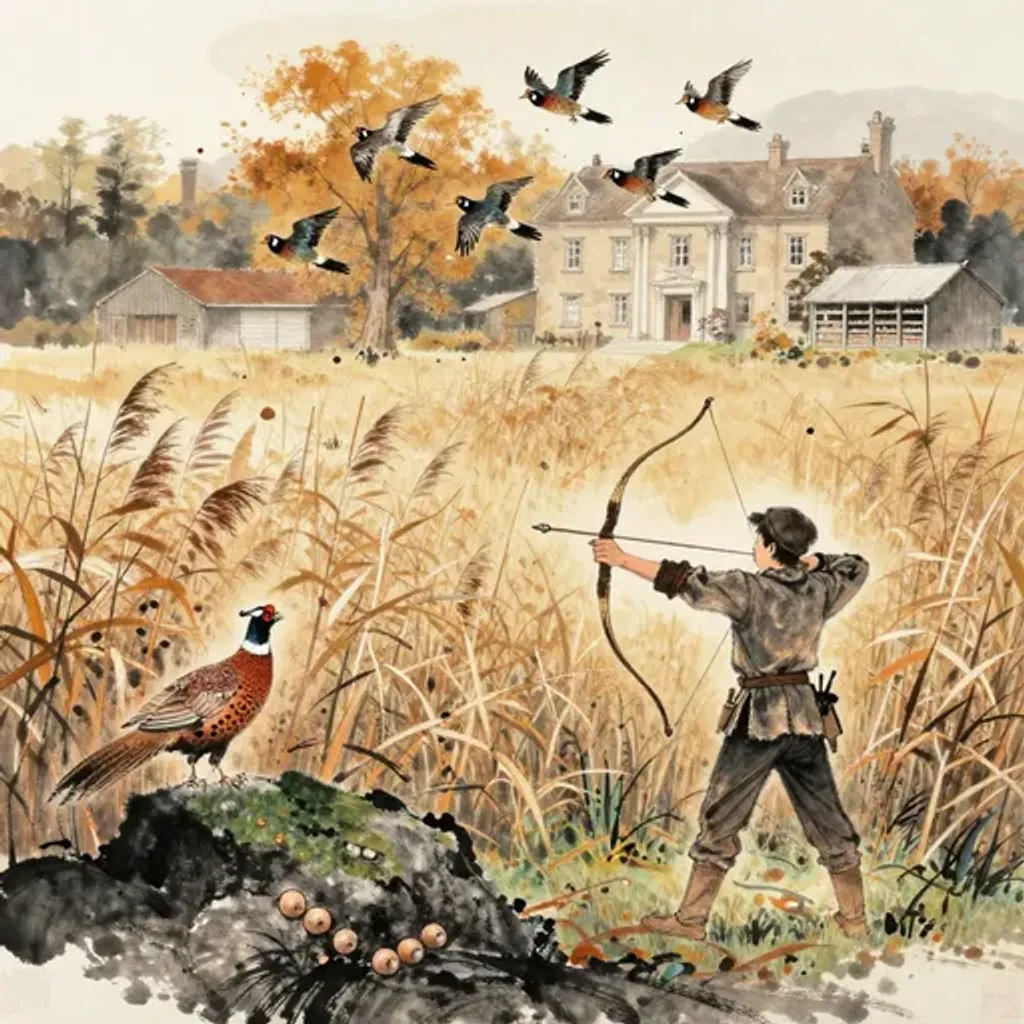
王子公孫,把絃攝丸。發輒有獲,家室饒足。
Princes and noble sons, gripping bowstrings and shooting pellets. Every shot finds its mark; hearth and home are rich and full.
— Jiao Yanshou, Yilin (Forest of Changes), 1st century BC
Commentary
Water drawn up through wood, the well rewards those who draw from it skillfully. Young princes and noble sons take up bow-strings and pellets, and with every shot they hit their mark. The household overflows with plenty. The image is of aristocratic hunting — slingshot and bow used with casual mastery, game reliably taken. It suggests a household blessed with talented heirs whose skills translate directly into sustenance. From The Well to Obstruction, water pools upon the mountain, and the wise person turns inward to cultivate virtue. The well's reliable bounty meets Jian's blockage: even when external paths are obstructed, the skills cultivated within — like the young hunter's practiced aim — provide for the household regardless.
井 → 解
Hexagram 48 → Hexagram 40: Deliverance
Changing lines: 3, 4, 5
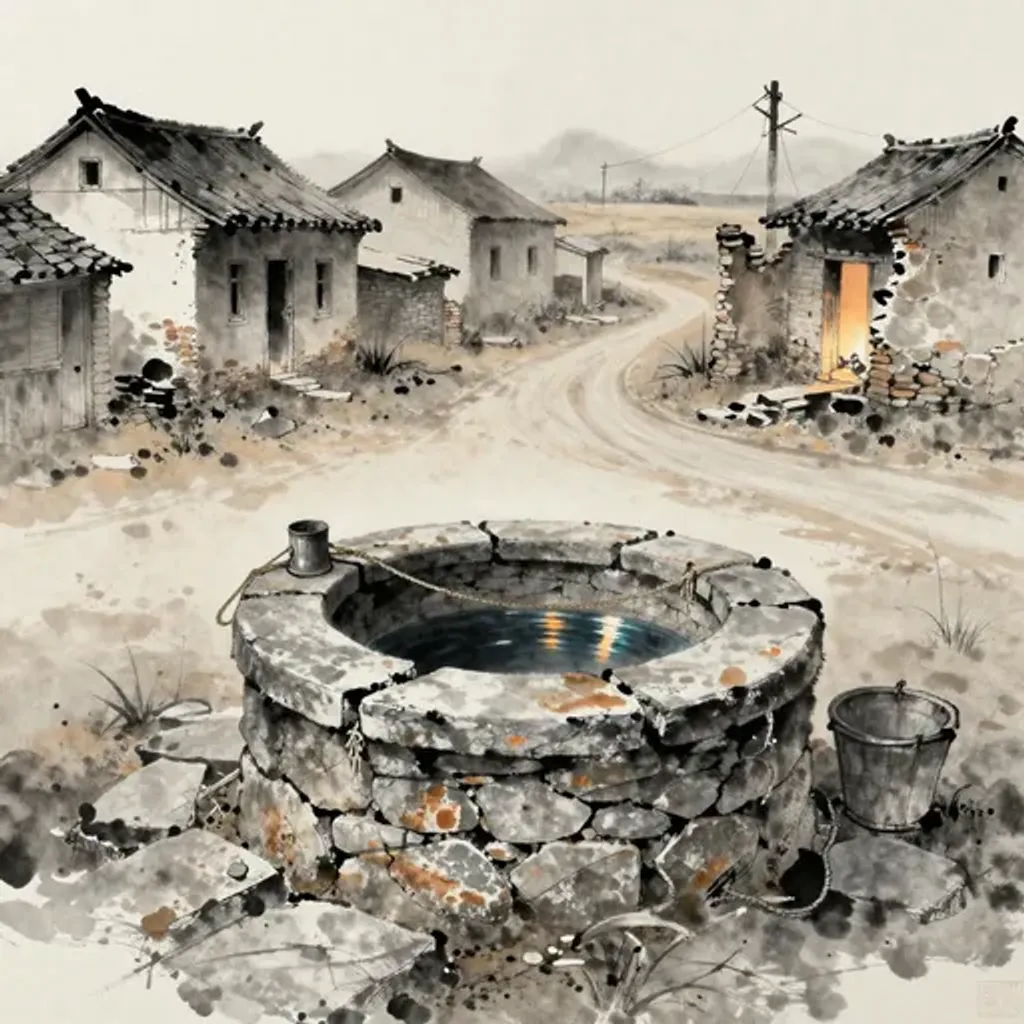
井者有悔,渴蜺為怪。不亟徙鄉,家受其殃。
The well brings regret; a thirsty mirage becomes a portent. If one does not swiftly leave this place, the household suffers the calamity.
— Jiao Yanshou, Yilin (Forest of Changes), 1st century BC
Commentary
Water drawn up through wood — but this well brings regret. A strange mirage shimmers like a thirsty rainbow, signaling contamination. If one does not quickly relocate, the household will suffer disaster. The verse takes the well's own hexagram as source and speaks directly to its shadow: a fouled well that poisons rather than nourishes. The 'thirsty rainbow' (渴蜺) was an omen of drought and corruption in Han-era meteorology. From The Well to Deliverance, thunder and rain finally break the tension. The cursed well demands the decisive action Xie offers: release from the old site, liberation from the contaminated source, moving swiftly before the poison spreads further.
井 → 損
Hexagram 48 → Hexagram 41: Decrease
Changing lines: 1, 3, 5, 6
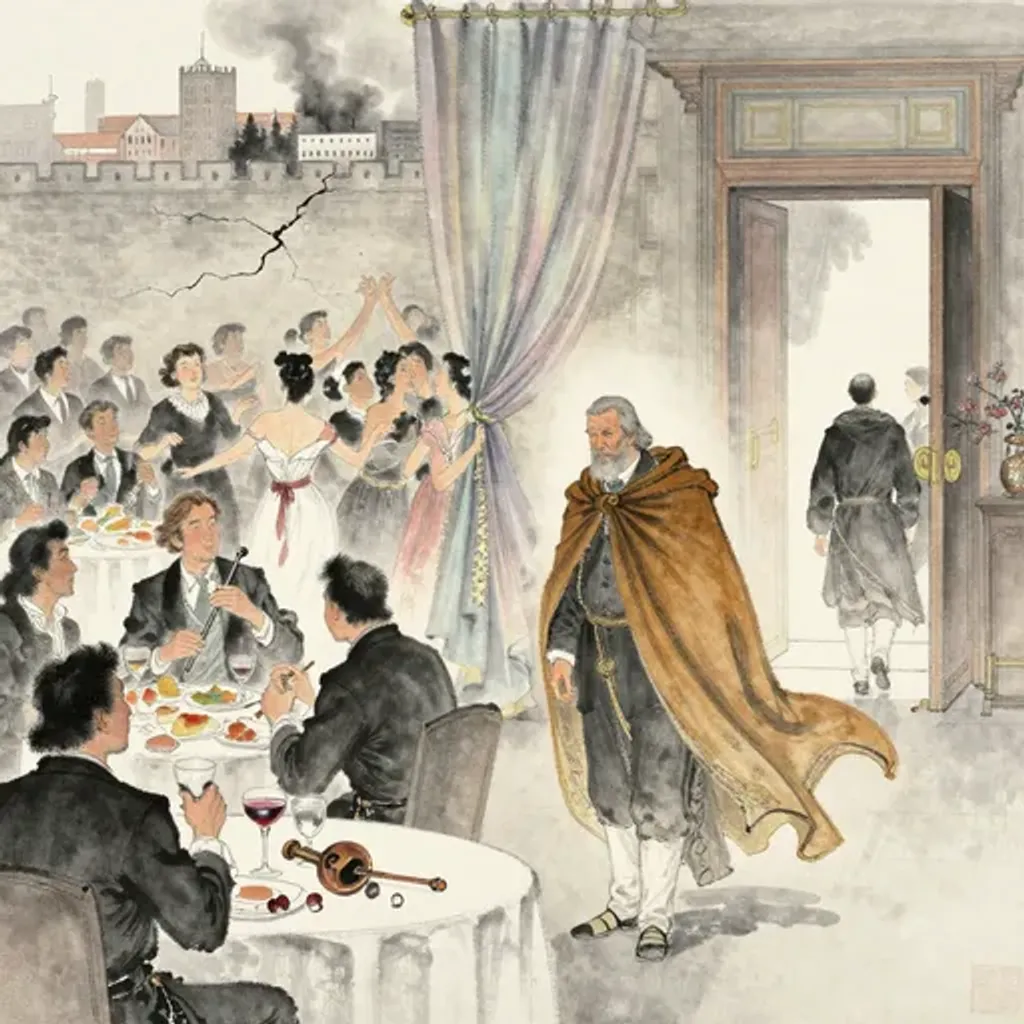
鄭會細柳,國亂失頃。弘明早見,止樂不聽。
The assembly at Zheng by the slender willows; the state falls to ruin, losing its domains. Hongming perceived it early; he ceased the revels and would not listen.
— Jiao Yanshou, Yilin (Forest of Changes), 1st century BC
Commentary
Water drawn up through wood, the well requires disciplined stewardship. Zheng gathered at Xiliu, the state fell into disorder and lost its balance. But the wise Hongming perceived the danger early and stopped the music, refusing to listen further. The 'meeting at Xiliu' and the ensuing disorder may allude to a political gathering where entertainment masked decadence, and a perceptive minister recognized the rot beneath the revelry. From The Well to Decrease, the mountain rises above the lake, restraining desire. The well's resources, squandered in festivities, demand the discipline of Sun: cutting back excess before it becomes ruinous. The wise man who stops the music embodies Decrease's principle of voluntary reduction.
井 → 益
Hexagram 48 → Hexagram 42: Increase
Changing lines: 1, 2, 3, 6
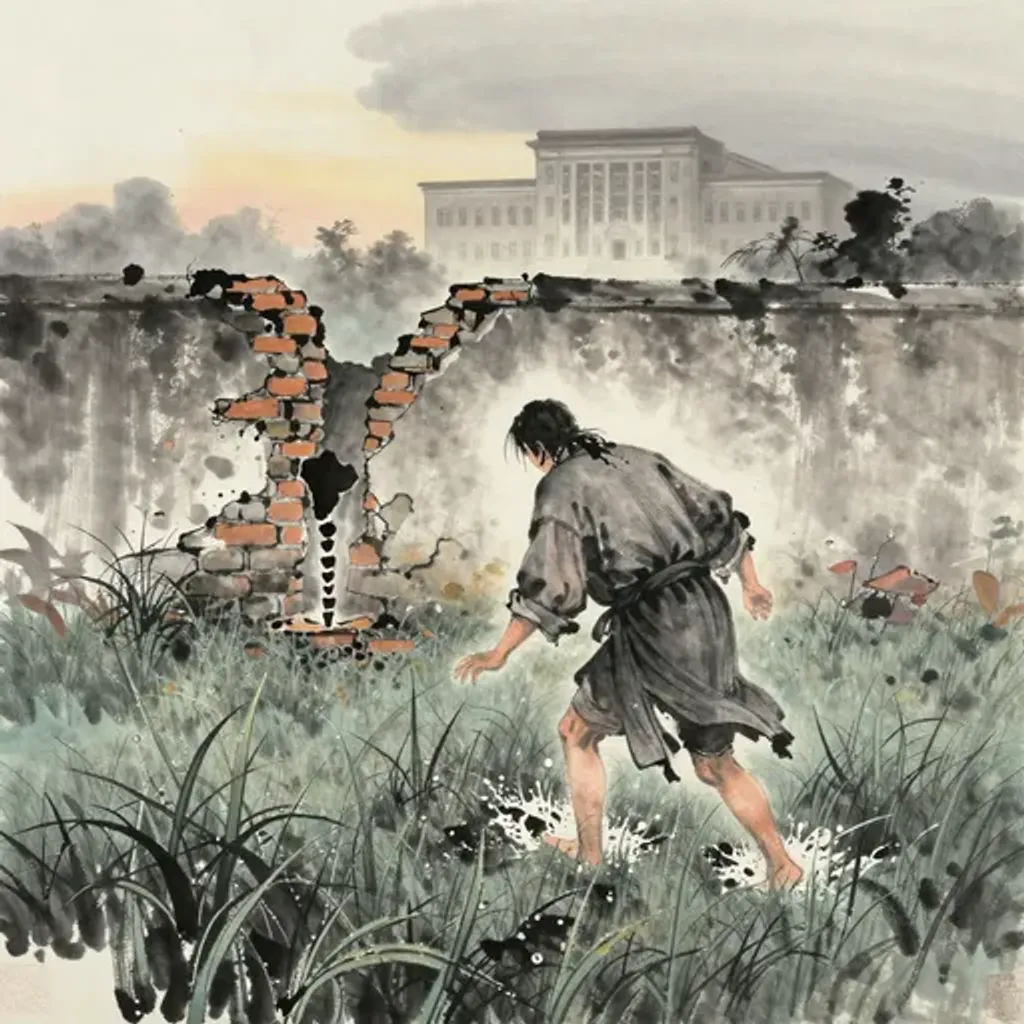
穿室鑿墻,不直生訟。褰衣涉露,雖勞无功。
Piercing rooms and boring through walls; without just cause, lawsuits arise. Hiking up robes to wade through dew; though he labors, there is no reward.
— Jiao Yanshou, Yilin (Forest of Changes), 1st century BC
Commentary
Water drawn up through wood, the well operates through proper channels — but here someone tunnels through walls and bores through partitions, provoking lawsuits over crooked dealings. Lifting one's skirts to wade through morning dew, one labors hard but achieves nothing. The 'piercing walls' is a classical image of theft or boundary violation from the Analects. Wading through dew in hiked-up garments suggests undignified effort without reward. From The Well to Increase, wind and thunder energize growth. Yet the well's legitimate distribution cannot benefit one who bypasses its structure: Increase rewards those who correct errors and emulate virtue, not those who burrow through walls for shortcuts that lead only to litigation and futility.
井 → 夬
Hexagram 48 → Hexagram 43: Breakthrough
Changing lines: 1, 4
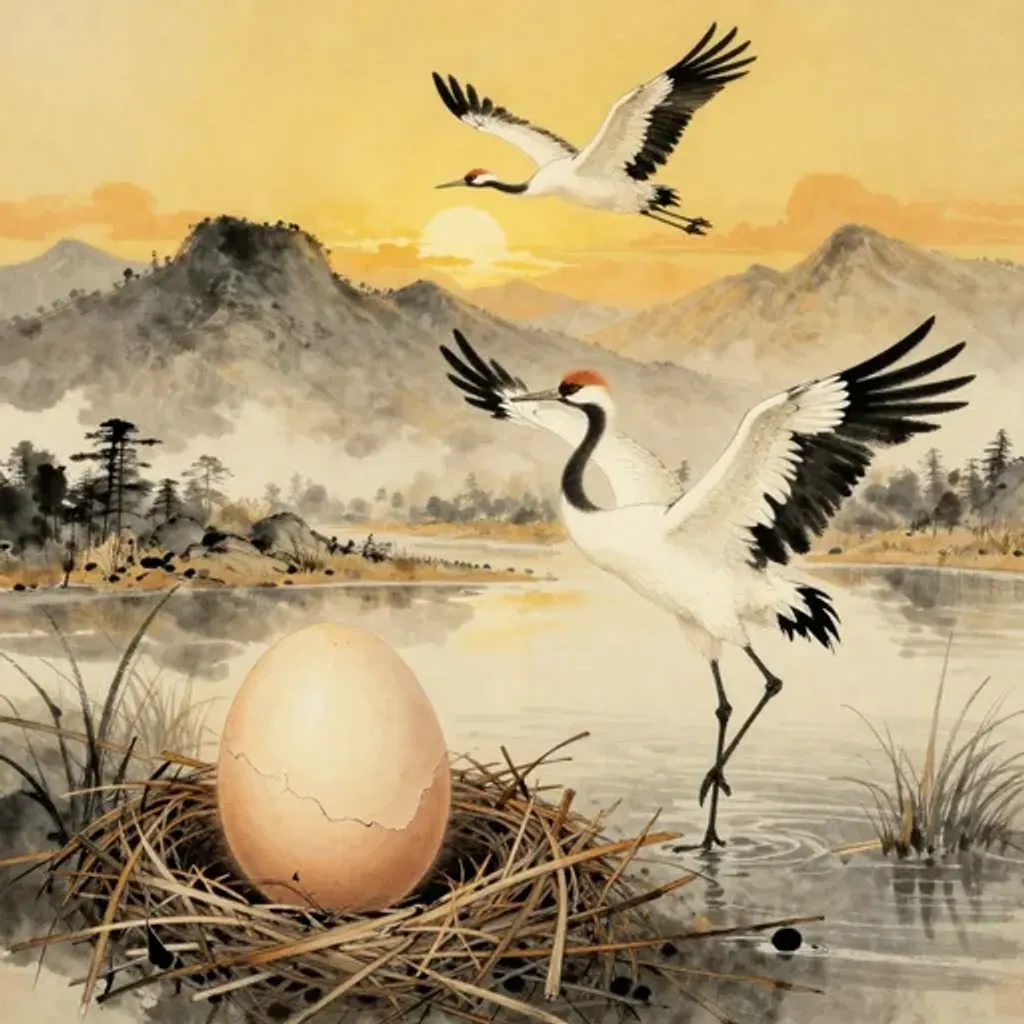
脫卵免乳,長大成就。君子萬年,動有利得。
Freed from the egg, weaned from the breast; grown tall to full achievement. The gentleman enjoys ten thousand years; every venture brings gain.
— Jiao Yanshou, Yilin (Forest of Changes), 1st century BC
Commentary
Water drawn up through wood, the well sustains life from its earliest emergence. Hatching from the egg, weaned from the breast, the young one grows to full maturity. The gentleman prospers for ten thousand years, and every move brings gain. The verse traces the complete arc of successful nurture: from the fragility of the egg through childhood to flourishing adulthood. The well's patient provision across an entire lifespan culminates in lasting prosperity. From The Well to Breakthrough, the lake rises above heaven in decisive overflow. What the well slowly accumulated now crests and spills over: the gentleman whose growth was patiently nurtured reaches the moment of decisive action, breaking through all remaining obstacles with the momentum of a completed cultivation.
井 → 姤
Hexagram 48 → Hexagram 44: Coming to Meet
Changing lines: 4, 6
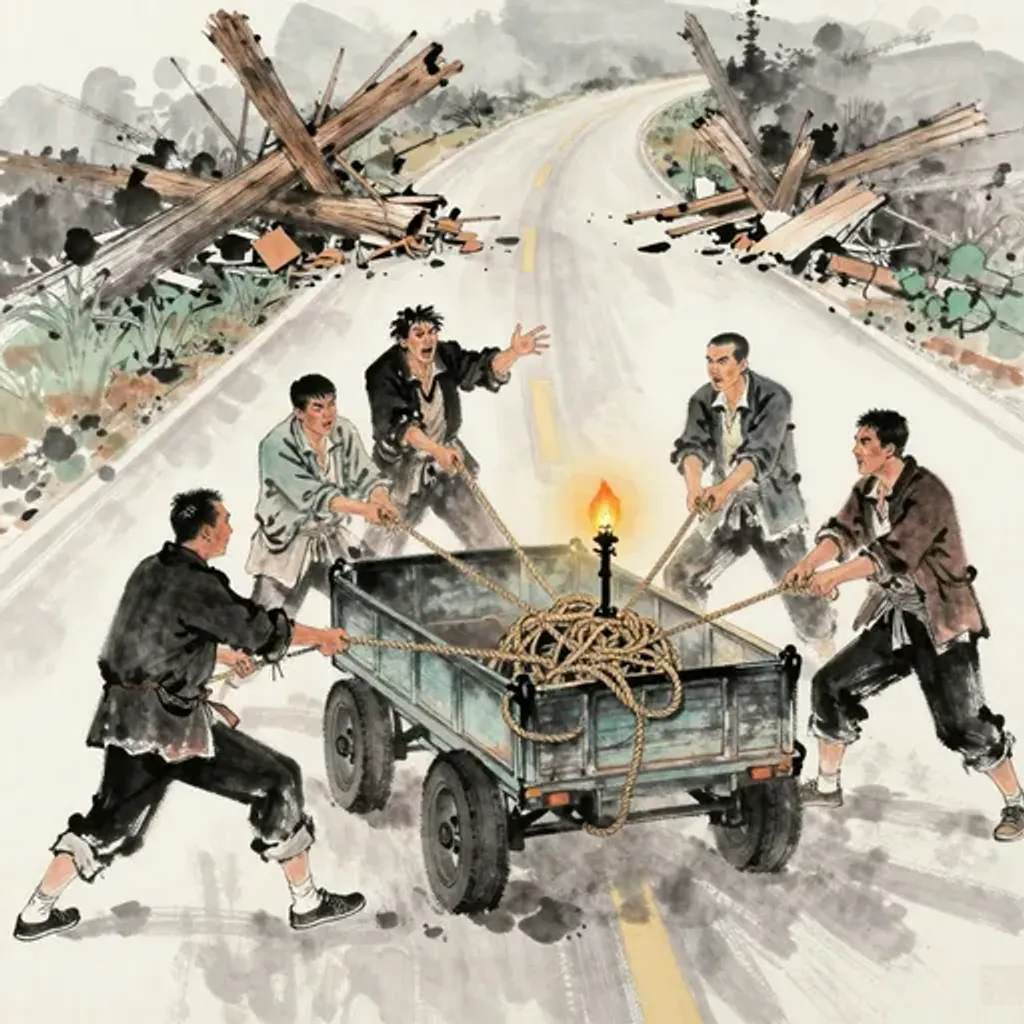
五心乖離,各引是非。莫適為主,道路塞壅。
Five hearts pull apart; each drags at rights and wrongs. None agrees to lead; the roads are blocked and choked.
— Jiao Yanshou, Yilin (Forest of Changes), 1st century BC
Commentary
Water drawn up through wood, the well unites a community around a single source — but here five hearts diverge, each pulling toward its own version of right and wrong. No one can serve as master, and the roads are blocked and choked. The 'five hearts at odds' suggests a council or faction so fractured that no consensus emerges and no path forward opens. Without a shared center, even the infrastructure that exists becomes useless. From The Well to Coming to Meet, wind stirs beneath heaven, spreading the ruler's decree to the four quarters. Yet when five wills clash, no decree can be issued, and Gou's encounter becomes collision rather than communion.
井 → 萃
Hexagram 48 → Hexagram 45: Gathering Together
Changing lines: 2, 3, 4
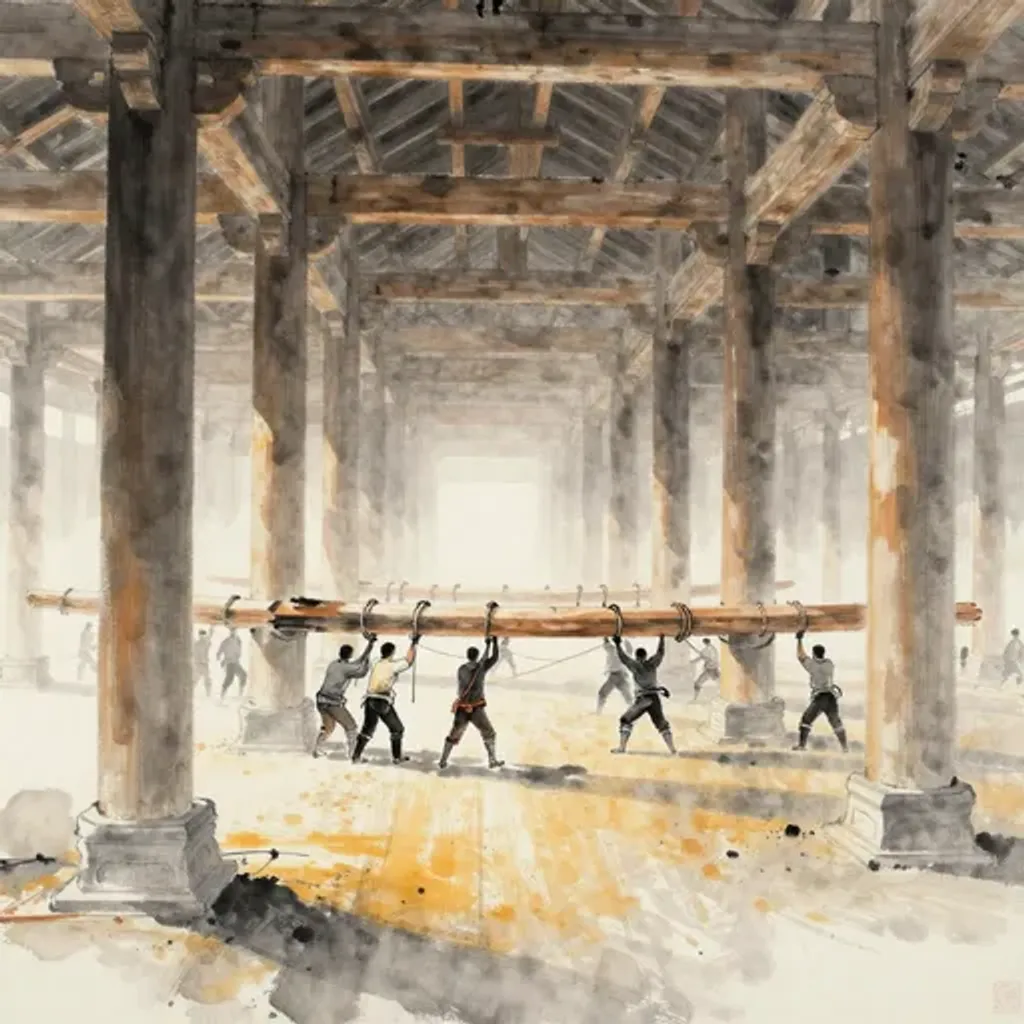
百柱載梁,千歲不僵。大願輔福,文武以昌。
A hundred pillars bear the beam; for a thousand years it shall not fall. Great aspirations buttress good fortune; through culture and valor, all prospers.
— Jiao Yanshou, Yilin (Forest of Changes), 1st century BC
Commentary
Water drawn up through wood, the well supports the structure above it — and here that structure achieves monumental scale. A hundred pillars bear the roof beam, standing firm for a thousand years. Great aspirations are blessed with fortune, and through both civil and martial virtue the realm prospers. The architectural image of pillars supporting a vast hall is a political metaphor: many capable ministers upholding the state. From The Well to Gathering, the lake pools upon the earth where people naturally congregate. The well's sustaining force, multiplied through a hundred supporting columns, creates the gathering place itself — where civil elegance and military readiness combine under one enduring roof.
井 → 升
Hexagram 48 → Hexagram 46: Pushing Upward
Changing lines: 5
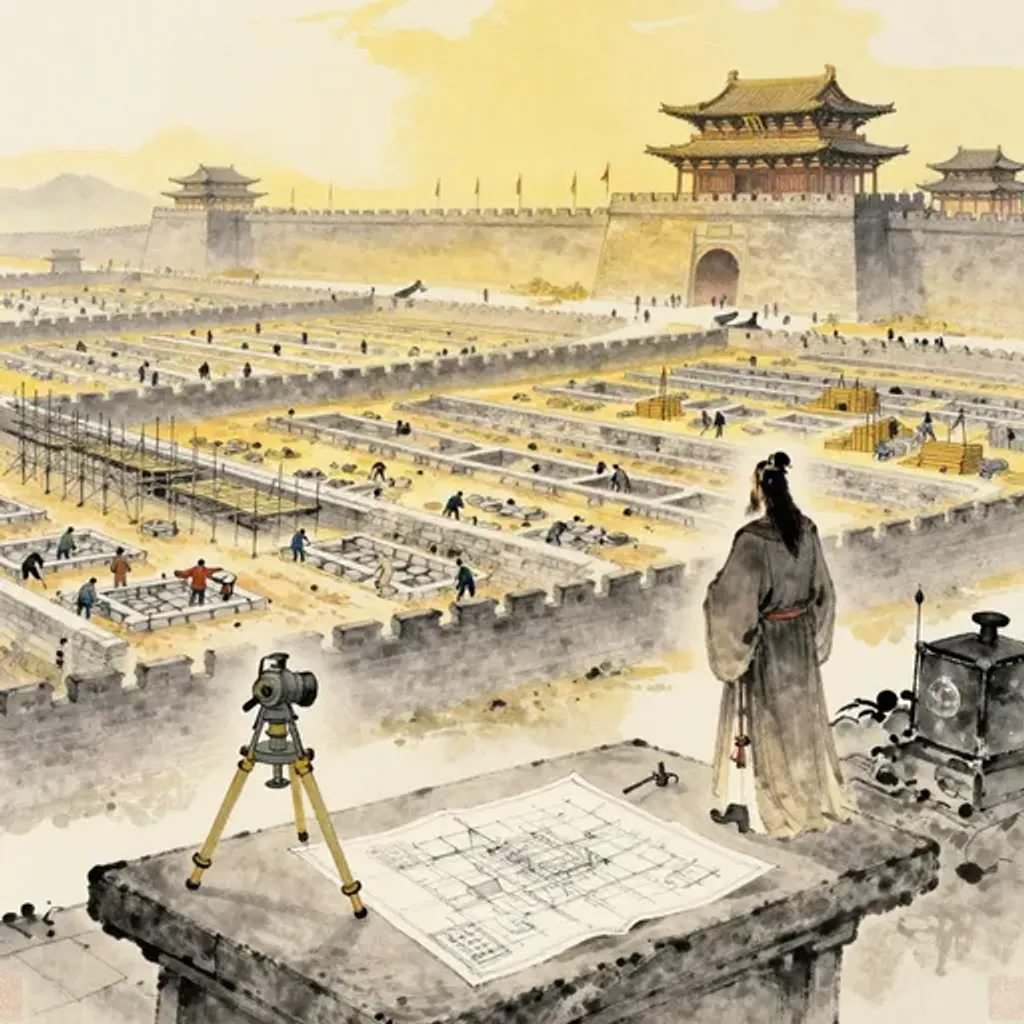
營城洛邑,周公所作。世逮三十,年歷七百。福佑封實,堅固不落。
Building the walled city of Luoyi, the work of the Duke of Zhou. The dynasty endured for thirty generations, its years spanning seven hundred. Blessings and protection filled its domain, solid and unyielding to the end.
— Jiao Yanshou, Yilin (Forest of Changes), 1st century BC
Commentary
Water drawn up through wood, the well endures across generations — and here the Duke of Zhou builds the eastern capital at Luoyi, anchoring the Zhou dynasty for seven hundred years across thirty generations. The construction of Luoyi (modern Luoyang) was the Duke of Zhou's crowning administrative achievement: a new capital at the center of the realm to govern the east. The verse traces how a single act of foundation radiates forward through centuries. From The Well to Pushing Upward, wood grows within the earth, rising steadily. The well's patient foundation meets Sheng's gradual ascent: what is built properly at the root — like Luoyi — pushes upward through time, its blessings compounding as each generation inherits a sound structure.
井 → 困
Hexagram 48 → Hexagram 47: Oppression
Changing lines: 3, 4
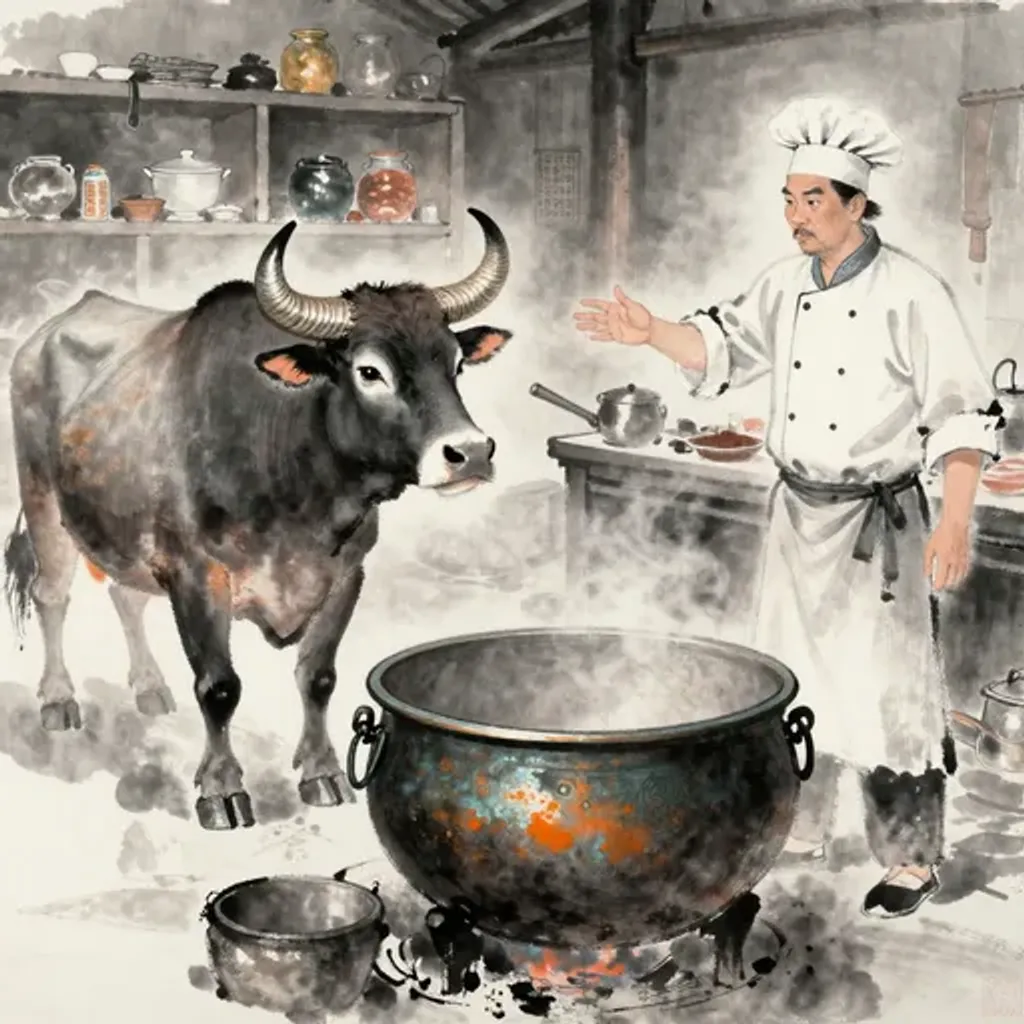
牛耳聾蔽,不曉聲味。委以鼎俎,方始亂潰。
Ox-eared, deaf and shuttered; it understands neither sound nor savor. Entrusted with the cauldron and the chopping board, only then does ruin begin.
— Jiao Yanshou, Yilin (Forest of Changes), 1st century BC
Commentary
Water drawn up through wood, the well depends on discernment — but a deaf ox can distinguish neither sound nor flavor. Entrusted with the sacrificial cauldron and chopping block, it brings only chaos and collapse. The 'ox with deaf ears' is a figure of comic futility: placing an animal that cannot hear or taste in charge of preparing the ritual feast. The mismatch between authority and competence produces not merely failure but active destruction. From The Well to Oppression, the lake has no water — resources exist but cannot be accessed. The well's bounty, administered by the incompetent, dries up: Kun's exhaustion is not caused by scarcity but by the wrong steward at the wellhead.
井 → 井
Hexagram 48 → Hexagram 48: The Well
No changing lines — the hexagram is unchanged
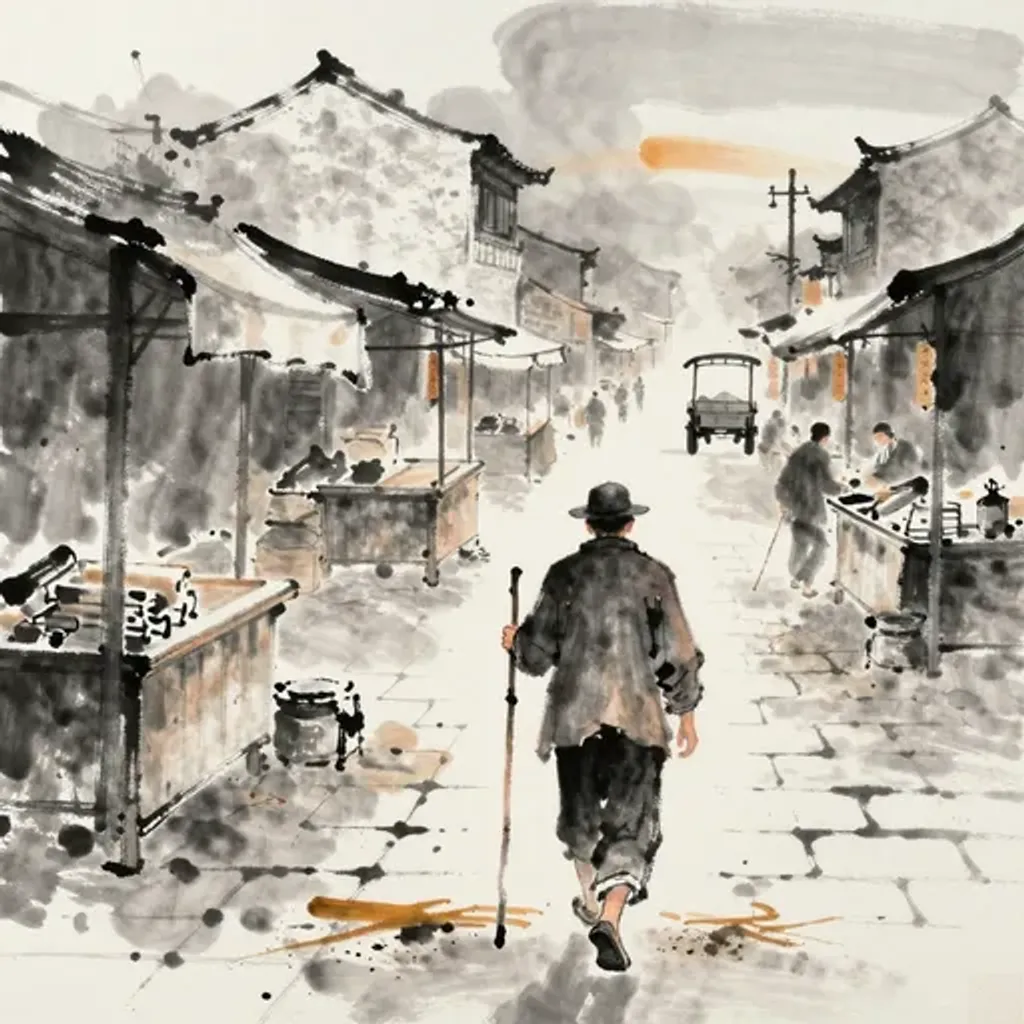
躓跛未起,失利後市,不得鹿子。
Stumbling and lame, unable to rise; arriving late at the market, he loses his profit and cannot catch the deer.
— Jiao Yanshou, Yilin (Forest of Changes), 1st century BC
Commentary
Water drawn up through wood — but the well gazes into its own reflection and sees only stagnation. Stumbling and lame, unable to rise, one arrives too late at the market and fails to catch the young deer. The doubled well (source and target identical) intensifies the hexagram's inherent danger: a well that never changes, never moves, risks becoming a trap rather than a resource. The lame figure who misses the market recalls the well's line texts about fouled water and unused potential. From The Well to The Well, the pattern is self-referential: without transformation, the well's virtue calcifies. What should nourish becomes a prison of repetition, and opportunity slips away while the structure remains frozen in place.
井 → 革
Hexagram 48 → Hexagram 49: Revolution
Changing lines: 1, 2, 4
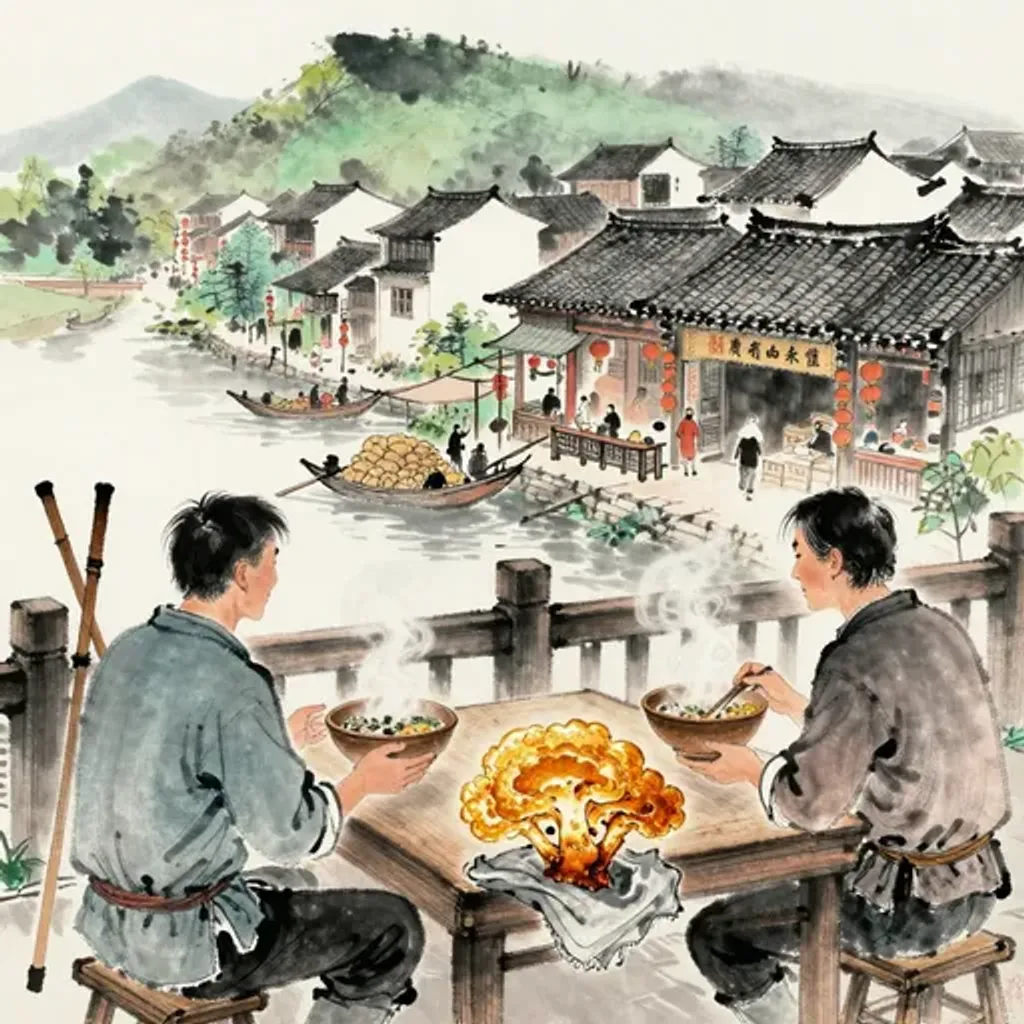
從叔旅行,食於東昌。嘉伯悅喜,與我芝香。
Accompanying my uncle on a journey, we dine at Dongchang. The honored elder is pleased and joyful; he gives me fragrant lingzhi.
— Jiao Yanshou, Yilin (Forest of Changes), 1st century BC
Commentary
Water drawn up through wood, the well sustains the traveler on his journey. Following an uncle on a trip, dining at Dongchang, the honorable elder is delighted and presents fragrant mushrooms as a gift. The verse paints a scene of warmth and hospitality: a family journey rewarded with fine food and auspicious tokens. The lingzhi mushroom was a symbol of blessing and longevity. From The Well to Revolution, fire burns within the lake, transforming what was into what will be. The well's steady provision meets Ge's radical renewal: the old journey yields unexpected gifts, and the familiar road opens onto transformed circumstances where generosity signals a change of season.
井 → 鼎
Hexagram 48 → Hexagram 50: The Cauldron
Changing lines: 4, 5, 6
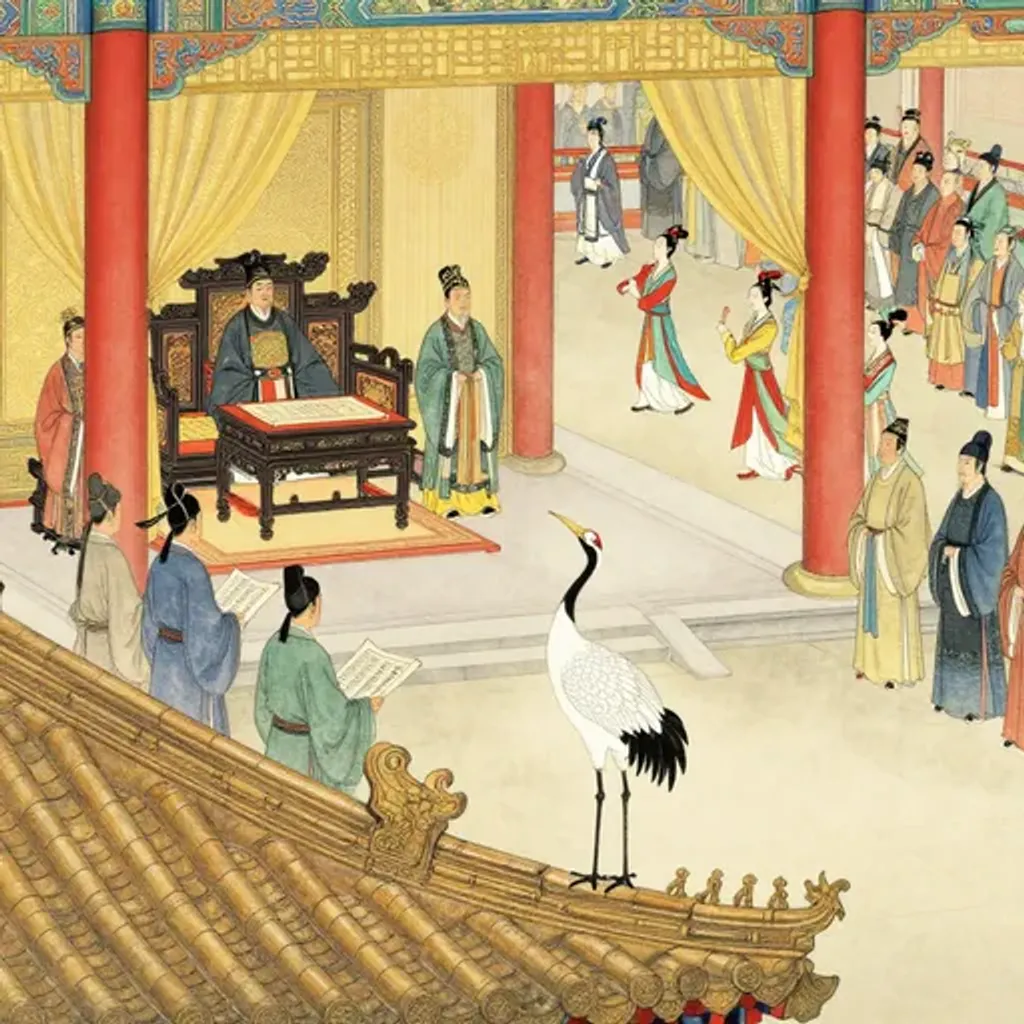
訾娵開門,鶴鳴彈冠。文章進用,舞韶和鸞。三仁翼政,國无災殃。
At the Ziqu gate, doors flung open; the crane calls and caps are dusted. Literature and refinement are advanced and employed; the Shao dance plays in harmony with the phoenix bells. Three humane ministers guide the government; the state suffers no calamity.
— Jiao Yanshou, Yilin (Forest of Changes), 1st century BC
Commentary
Water drawn up through wood, the well nourishes the foundations of governance. The Ziju constellation opens its gate, and the crane cries as officials brush off their caps to take office. Literature and refinement advance the worthy; the Shao music plays as phoenix bells ring. The Three Benevolent Ones assist the administration, and the state suffers no calamity. Ziju refers to an astronomical lodge associated with auspicious appointment. The 'crane crying' alludes to the Shijing ode about hidden talent becoming known. The Three Benevolent Ones — Weizi, Jizi, and Bigan — are the Shang dynasty's exemplars of moral courage. From The Well to The Cauldron, fire above wind refines raw material into civilized nourishment. The well's water, heated in the cauldron, transforms sustenance into culture.
井 → 震
Hexagram 48 → Hexagram 51: The Arousing Thunder
Changing lines: 1, 2, 3, 4, 5
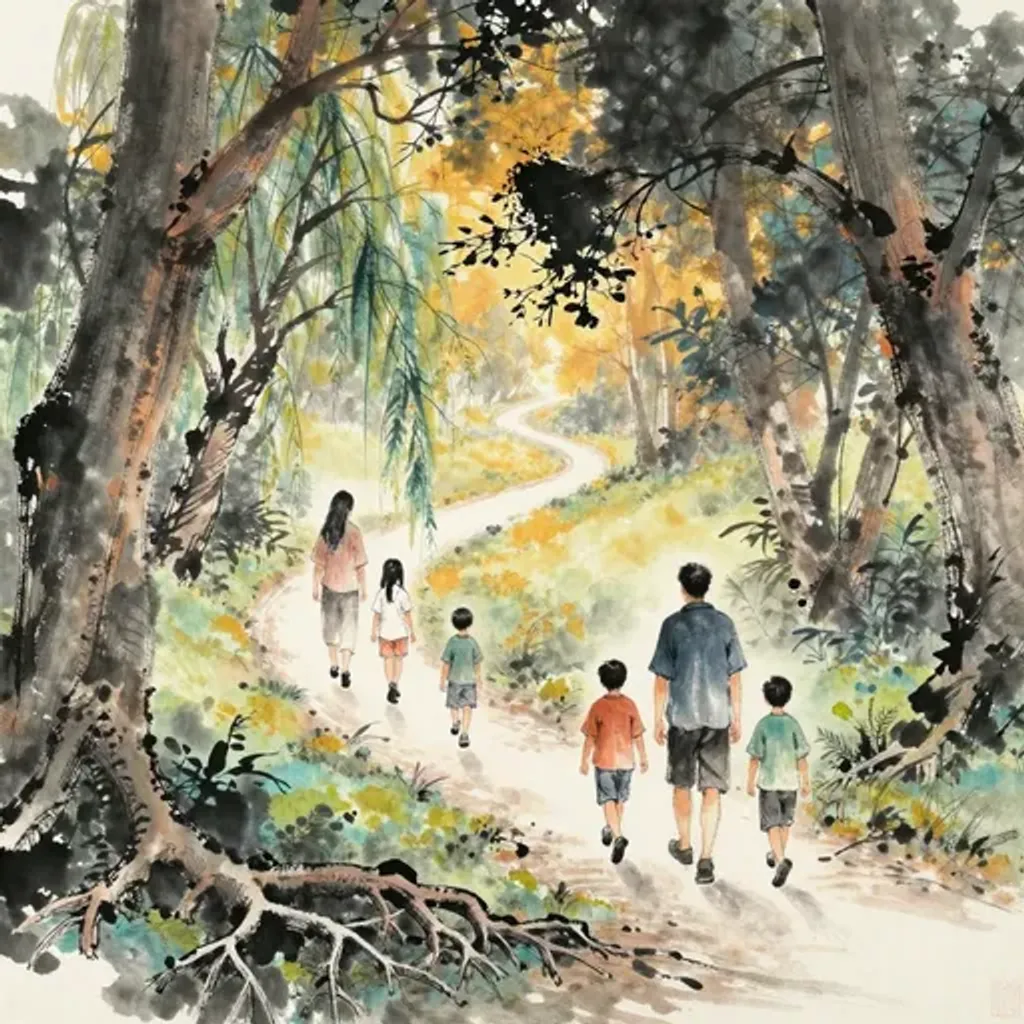
遊魂六子,百木所起。三男從父,三女隨母,至已而反,各得其所。
The wandering soul and the six children; a hundred trees arise from this source. Three sons follow the father; three daughters follow the mother. Reaching the end, they turn back; each finds their proper place.
— Jiao Yanshou, Yilin (Forest of Changes), 1st century BC
Commentary
Water drawn up through wood, the well stands at the center where all family lines converge. The wandering spirits of the six children arise from the hundred trees. Three sons follow their father, three daughters follow their mother; at the proper point they turn back, and each finds their place. The verse draws directly on the Shuogua Zhuan's trigram family: Qian-father and Kun-mother generating the six children-trigrams. The 'wandering spirits' (遊魂) refers to the youhun hexagram theory where trigrams travel and return. From The Well to The Arousing, doubled thunder shakes the firstborn son awake. The well's centering force organizes the cosmic family, and Zhen's thunder announces the eldest son stepping forward to claim his role.
井 → 艮
Hexagram 48 → Hexagram 52: Keeping Still Mountain
Changing lines: 2, 5, 6
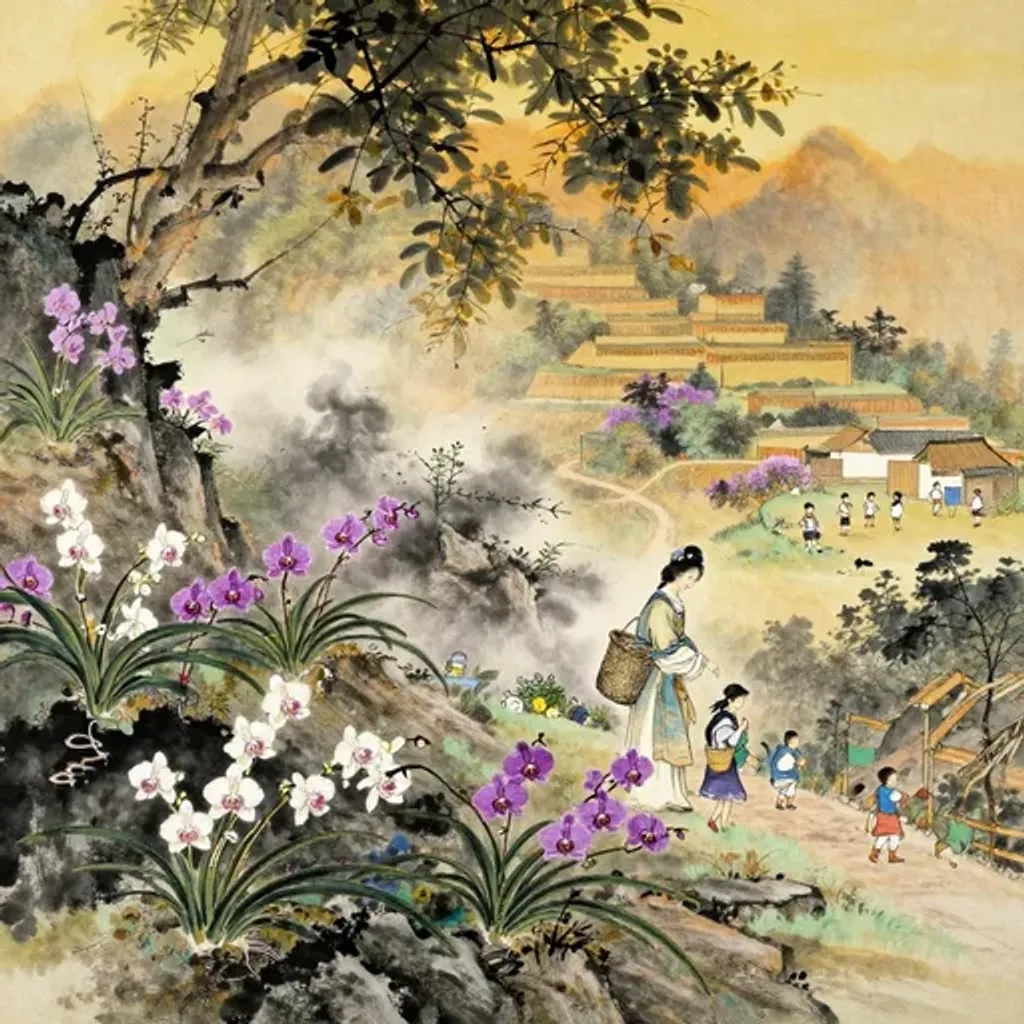
南山蘭茝,使君媚好。皇女長婦,多孫眾子。
Orchids and angelica on the southern mountain make the lord beloved and fair. An imperial daughter, an eldest wife; blessed with many grandchildren and numerous sons.
— Jiao Yanshou, Yilin (Forest of Changes), 1st century BC
Commentary
Water drawn up through wood, the well's virtue is fragrant when properly tended. On the southern mountain grow orchids and angelica, making the lord lovely and admired. The emperor's daughter, the eldest bride, is blessed with many grandchildren and numerous sons. Orchids and angelica (蘭茝) are the classical emblems of inner virtue and moral refinement, drawn from the Chu Ci tradition. The 'southern mountain' anchors this fragrance in a specific landscape of abundance. From The Well to Keeping Still, the doubled mountain stands in contemplation. The well's nourishing water, infused with mountain herbs, becomes the still fragrance of Gen: virtue cultivated in quietude, bearing fruit across generations without display.
井 → 漸
Hexagram 48 → Hexagram 53: Development
Changing lines: 2, 6
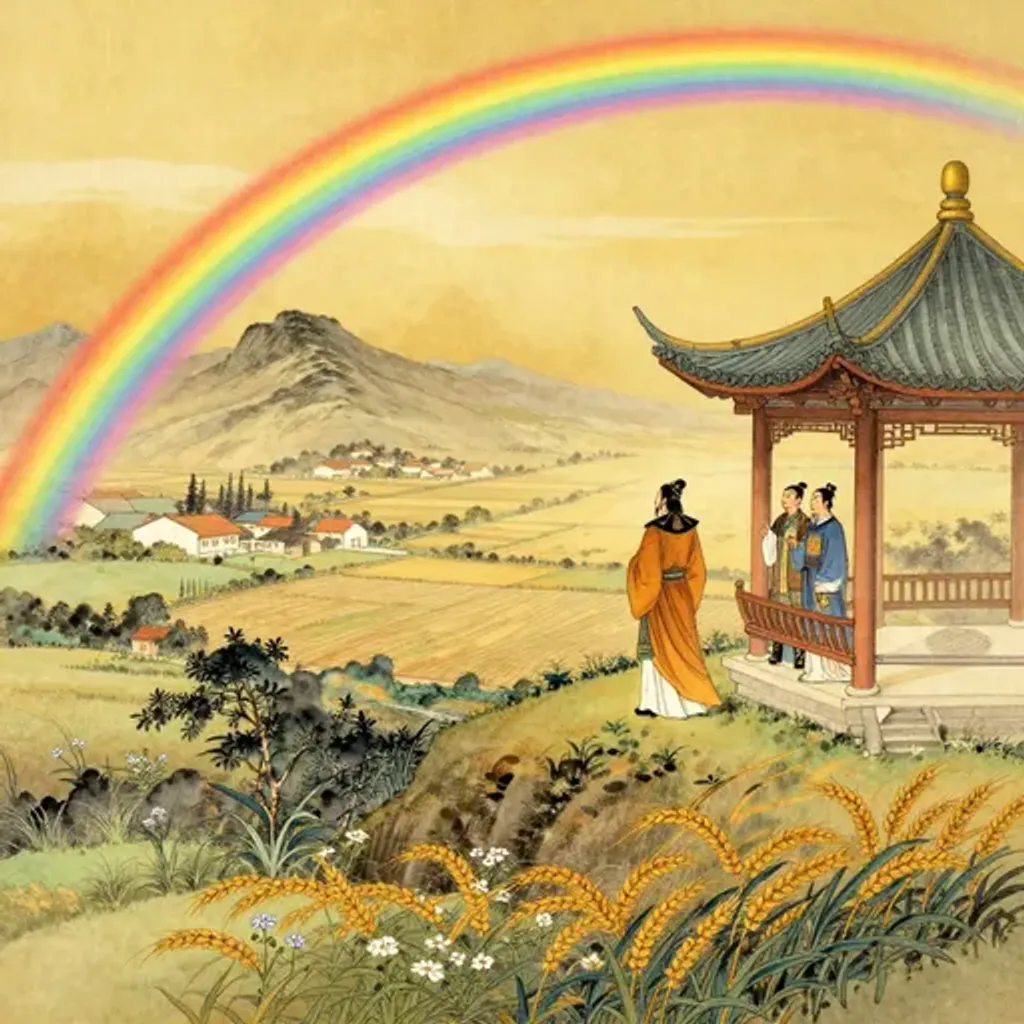
黃虹之野,賢君在位。榮叚為相,國无災殃。
Over the fields of the yellow rainbow, a worthy lord sits upon the throne. Rongxia serves as minister; the state suffers no calamity.
— Jiao Yanshou, Yilin (Forest of Changes), 1st century BC
Commentary
Water drawn up through wood, the well supports wise governance from its depths. A yellow rainbow arches over the fields, and a worthy ruler sits on the throne. Rong Jia serves as minister, and the state suffers no calamity. The 'yellow rainbow' (黃虹) was read as an auspicious omen when it appeared in certain configurations, signaling harmony between heaven and earth. Rong Jia as minister may refer to a capable but lesser-known official whose steady administration kept the state on course. From The Well to Development, wind atop the mountain grows trees gradually. The well's patient sustenance meets Jian's principle of measured, step-by-step progress: good governance, like a tree on a mountain, rises slowly but stands firm against all winds.
井 → 歸妹
Hexagram 48 → Hexagram 54: The Marrying Maiden
Changing lines: 1, 3, 4, 5
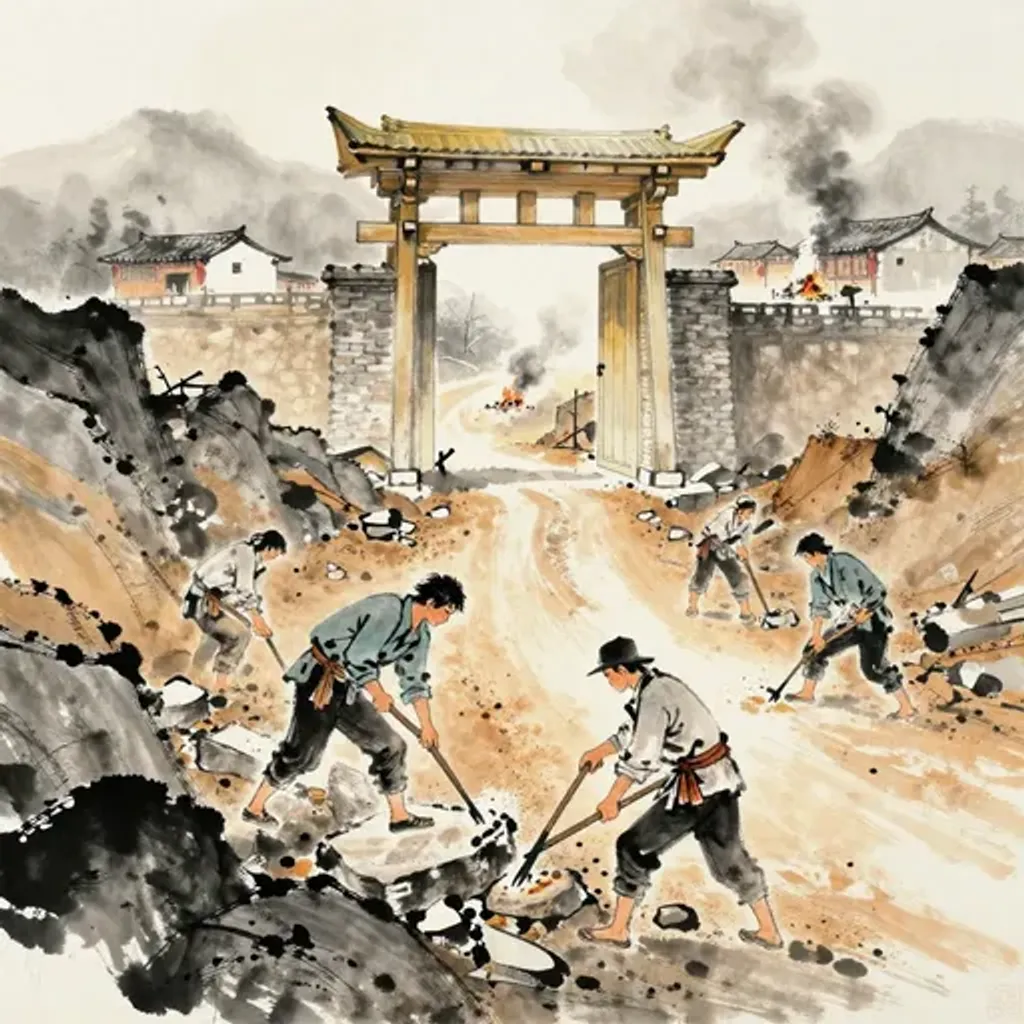
穿鑿道路,為君除舍。開闢福門,喜在我鄰。
Boring through rock, carving a road; clearing the lord's dwelling place. The gate of good fortune is thrown open; joy arrives among our neighbors.
— Jiao Yanshou, Yilin (Forest of Changes), 1st century BC
Commentary
Water drawn up through wood, the well provides infrastructure for the community. Carving roads and clearing paths, preparing lodging for the lord, opening the gate of fortune so that joy reaches our neighbors. The verse describes the construction of public works — roads built, guest quarters prepared, and prosperity shared with the surrounding community. The well's function as communal infrastructure expands here into the full apparatus of civilized hospitality. From The Well to the Marrying Maiden, thunder above the lake formalizes a bond. The well's infrastructure, prepared with care, mirrors Guimei's ritual of transition: roads cleared and doors opened for the arrival of what is destined, transforming preparation into fulfillment.
井 → 豐
Hexagram 48 → Hexagram 55: Abundance
Changing lines: 1, 2, 4, 5
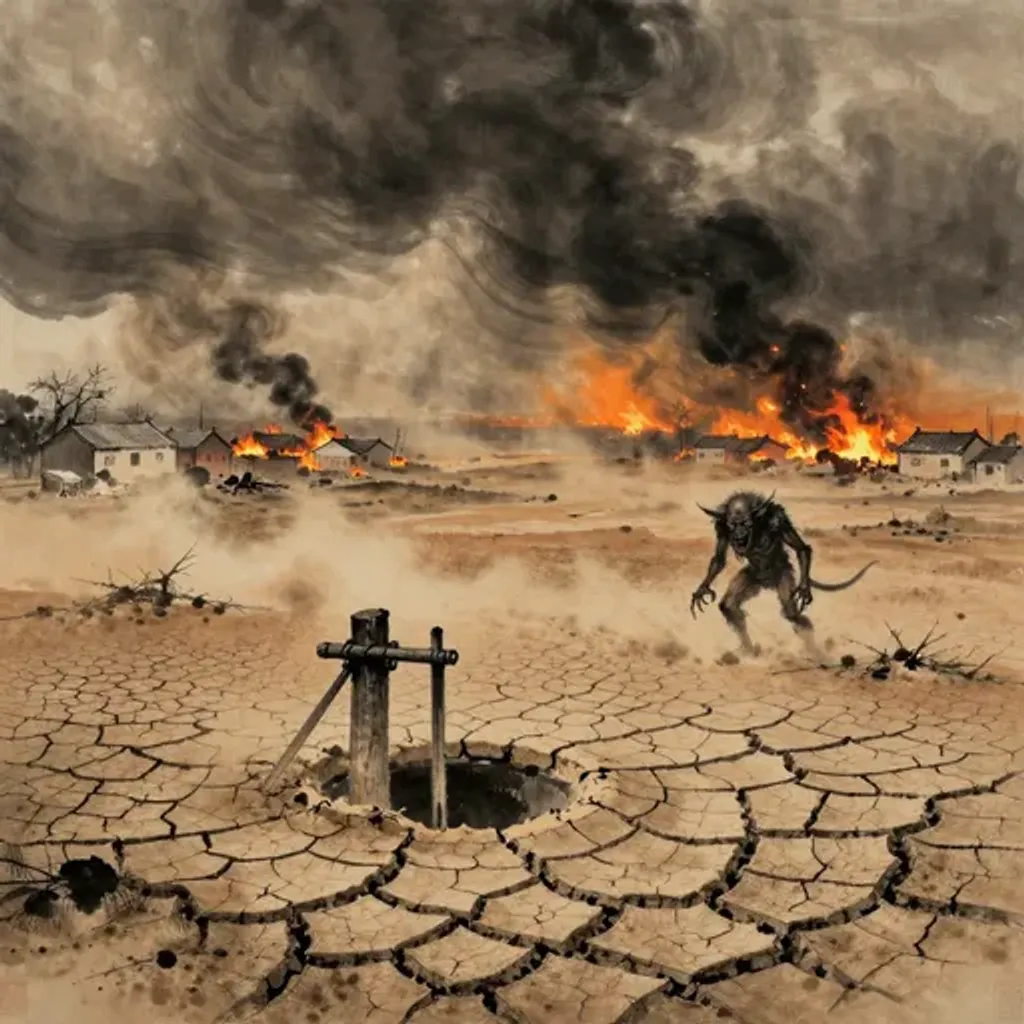
商風數起,天下昏晦。旱魃為虐,九土兵作。
The autumn wind rises again and again; the world falls into darkness and gloom. The drought demon wreaks its havoc; across the nine lands, soldiers march.
— Jiao Yanshou, Yilin (Forest of Changes), 1st century BC
Commentary
Water drawn up through wood, the well sustains life — but autumn winds blow repeatedly, and the world falls into twilight. The drought demon ravages the land, and soldiers rise across all nine territories. The 'merchant wind' (商風) is the west wind of autumn, associated with metal and killing energy. When it blows too often, the natural order is shattered: drought parches the earth, and war erupts everywhere. From The Well to Abundance, thunder and lightning should bring fullness and clarity. Yet this verse inverts Feng's promise: the well dries under drought, the abundance turns to devastation, and the thunder that should bring rain brings only armies. Fullness without water is emptiness with a louder voice.
井 → 旅
Hexagram 48 → Hexagram 56: The Wanderer
Changing lines: 2, 4, 5, 6
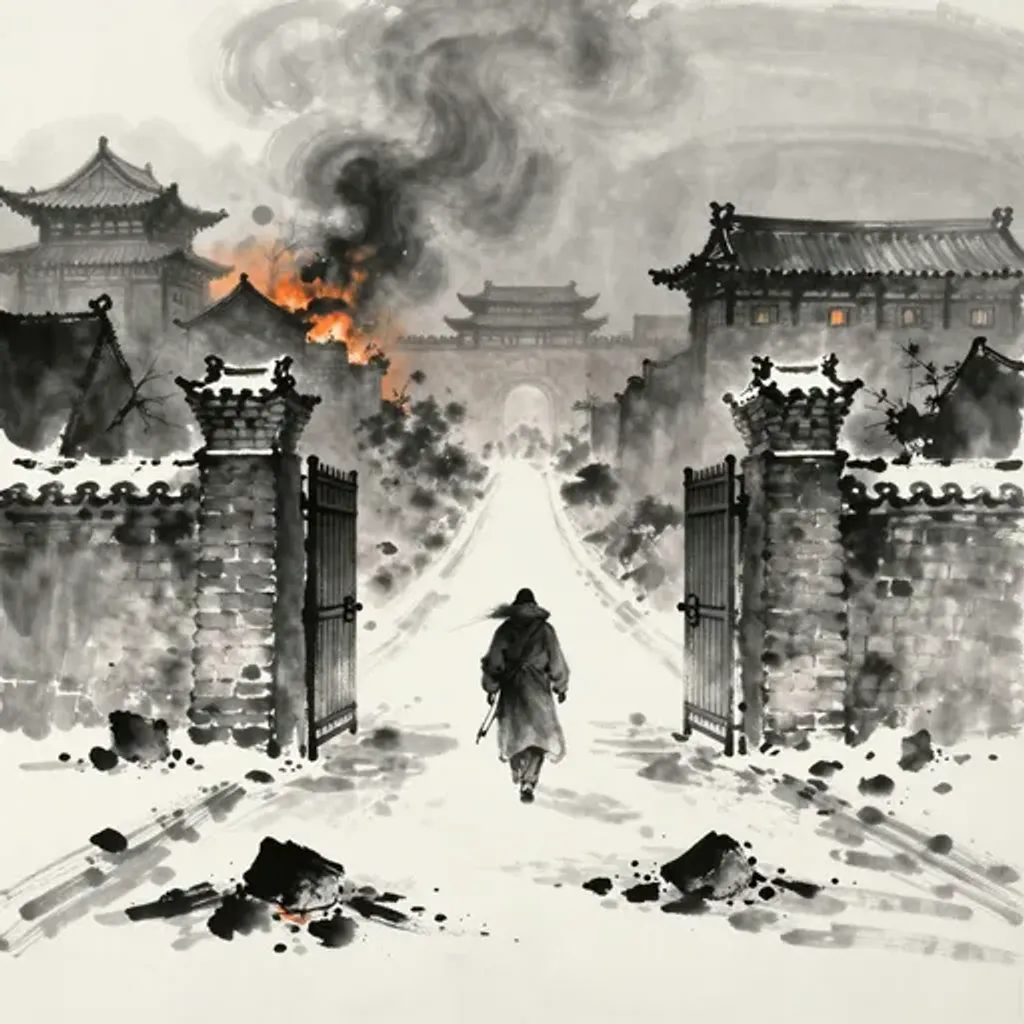
自衛歸魯,時不我與。冰炭異室,仁道隔塞。
Returning from Wei to Lu; the times do not favor me. Ice and charcoal in separate chambers; the way of benevolence is blocked and severed.
— Jiao Yanshou, Yilin (Forest of Changes), 1st century BC
Commentary
Water drawn up through wood, the well remains while travelers come and go. 'Returning from Wei to Lu, yet the times do not favor me' — this is Confucius's lament upon his return from fourteen years of wandering. Ice and charcoal cannot share a room; the Way of benevolence is obstructed and blocked. Confucius's return to Lu around 484 BC brought no restoration of his political hopes; the Dao he carried found no vessel. From The Well to The Wanderer, fire burns atop the mountain, illuminating but not settling. The well that Confucius sought — a state that would implement his teachings — remained forever out of reach. The wanderer's fire lights the way but never becomes a hearth.
井 → 巽
Hexagram 48 → Hexagram 57: The Gentle Wind
Changing lines: 6
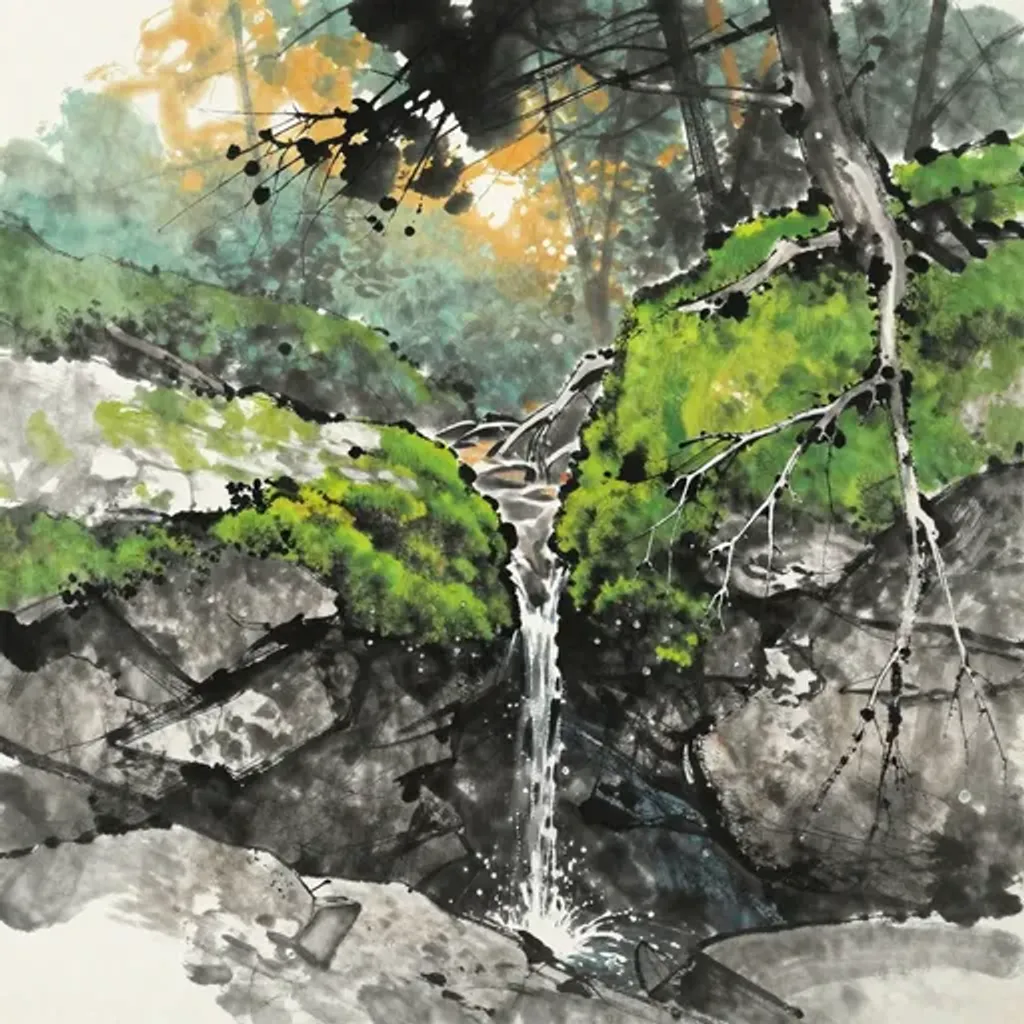
原缺
The well spring moistens what lies below; wind carries the cool air onward. Moss traces spread ever farther, nourishing without sound. Roots drink from hidden currents; leaves receive the light of heaven.
— Jiao Yanshou, Yilin (Forest of Changes), 1st century BC
Commentary
Water drawn up through wood, the well channels nourishment through hidden roots. The original verse for this transformation is lost. The modern rewrite imagines well water seeping downward, carried by wind as cool relief, moss spreading silently along stone, roots drinking from underground currents while leaves receive heaven's light. Though the original text cannot be analyzed, the pairing of Well and The Gentle (doubled wind) suggests a pattern of quiet, penetrating influence — nourishment that works invisibly, like groundwater feeding roots that never see the sun. The well's sustenance meets Xun's gentle persistence: what enters softly transforms gradually, and the deepest influences are those that make no sound.
井 → 兌
Hexagram 48 → Hexagram 58: The Joyous Lake
Changing lines: 1, 3, 4
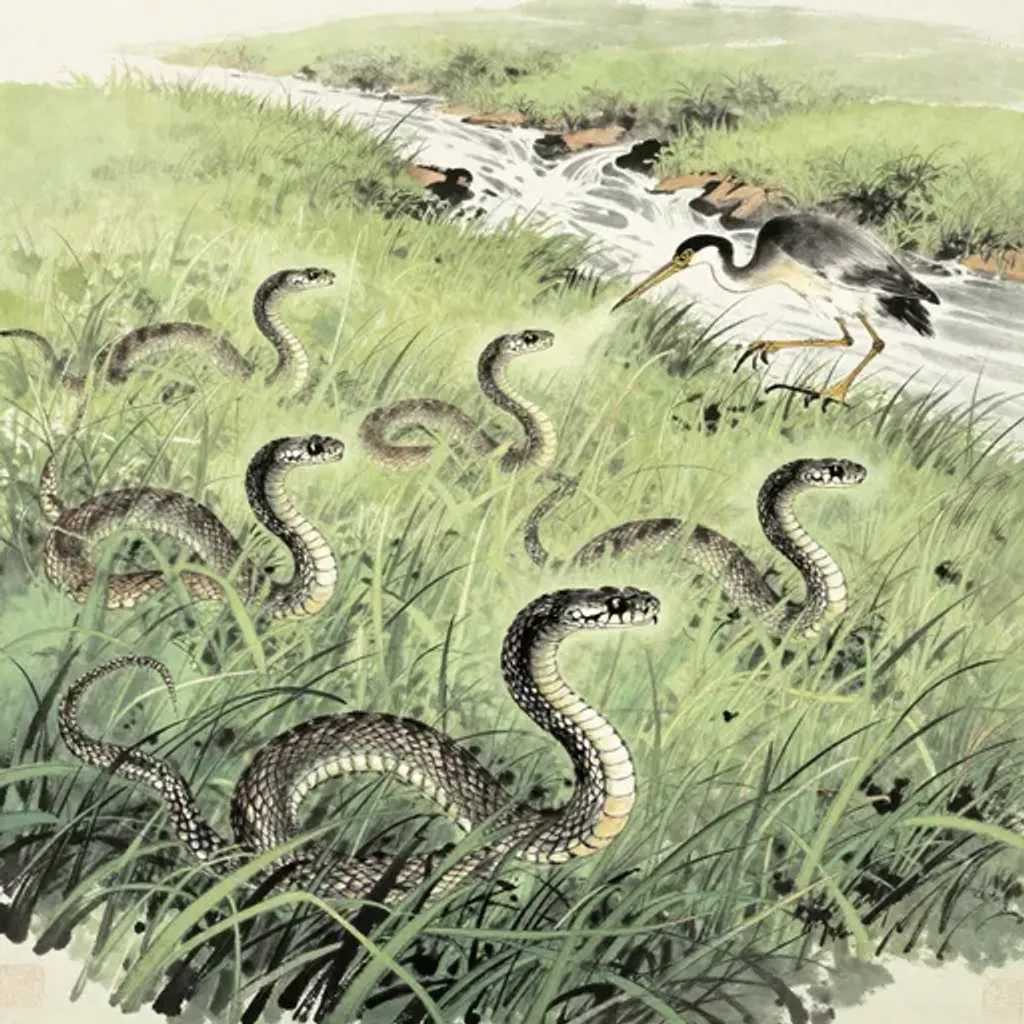
六虵奔走,俱入茂草。驚於長注,畏懼啄口。
Six serpents flee in haste, all diving into the thick grass. Startled by the long-billed bird, they fear and dread its stabbing mouth.
— Jiao Yanshou, Yilin (Forest of Changes), 1st century BC
Commentary
Water drawn up through wood, the well's still surface belies what stirs below. Six snakes bolt in every direction, all diving into thick grass. Startled by a long stream of water, they fear the pecking mouth that hunts them. The sudden flight of serpents into concealment suggests a moment of alarm where hidden dangers scatter rather than confront the threat. The 'pecking mouth' may be a predatory bird — a crane or heron that hunts along waterways. From The Well to The Joyous, paired lakes invite open exchange. Yet the well's hidden serpents flee from Dui's openness: what thrived in concealment cannot survive in the joyful transparency of two lakes reflecting each other. Exposure itself becomes the remedy.
井 → 渙
Hexagram 48 → Hexagram 59: Dispersion
Changing lines: 3, 6
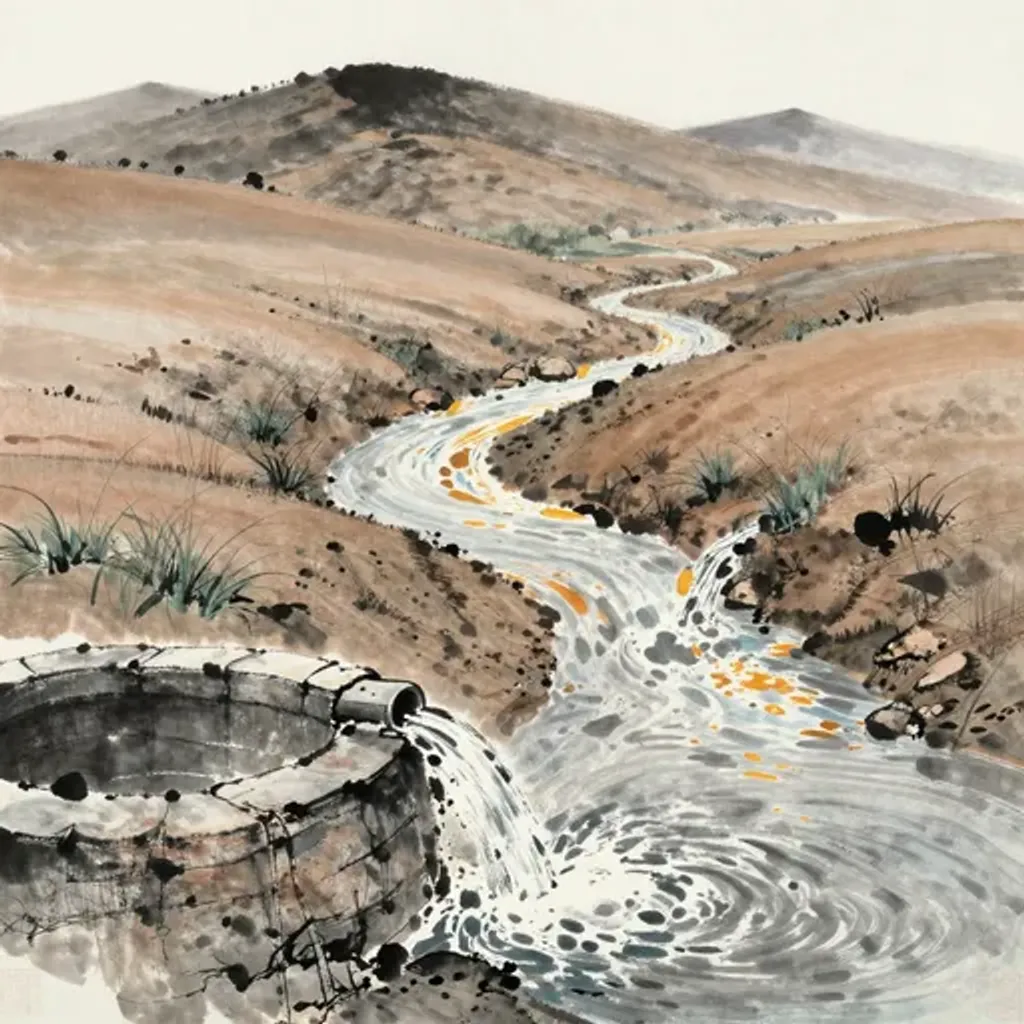
原缺
The well overflows, water flowing east — dissolving in four directions, moistening barren mounds. Not knowing where the return path lies — following waves, drifting with the current, yielding to rise and fall.
— Jiao Yanshou, Yilin (Forest of Changes), 1st century BC
Commentary
Water drawn up through wood — but here the original verse is lost. The modern rewrite imagines well water overflowing and drifting eastward, dispersing in four directions to moisten barren hills, with no way home, carried by waves wherever they lead. Though the original text cannot be analyzed, the pairing of Well and Dispersion (wind above water) speaks to what happens when the well's contained sustenance loses all structure. From The Well to Dispersion, wind scatters water across the surface. The well's walls once held the water in useful form; without them, nourishment dissipates into aimless wandering, and what should have sustained a community evaporates into the landscape.
井 → 節
Hexagram 48 → Hexagram 60: Limitation
Changing lines: 1, 3
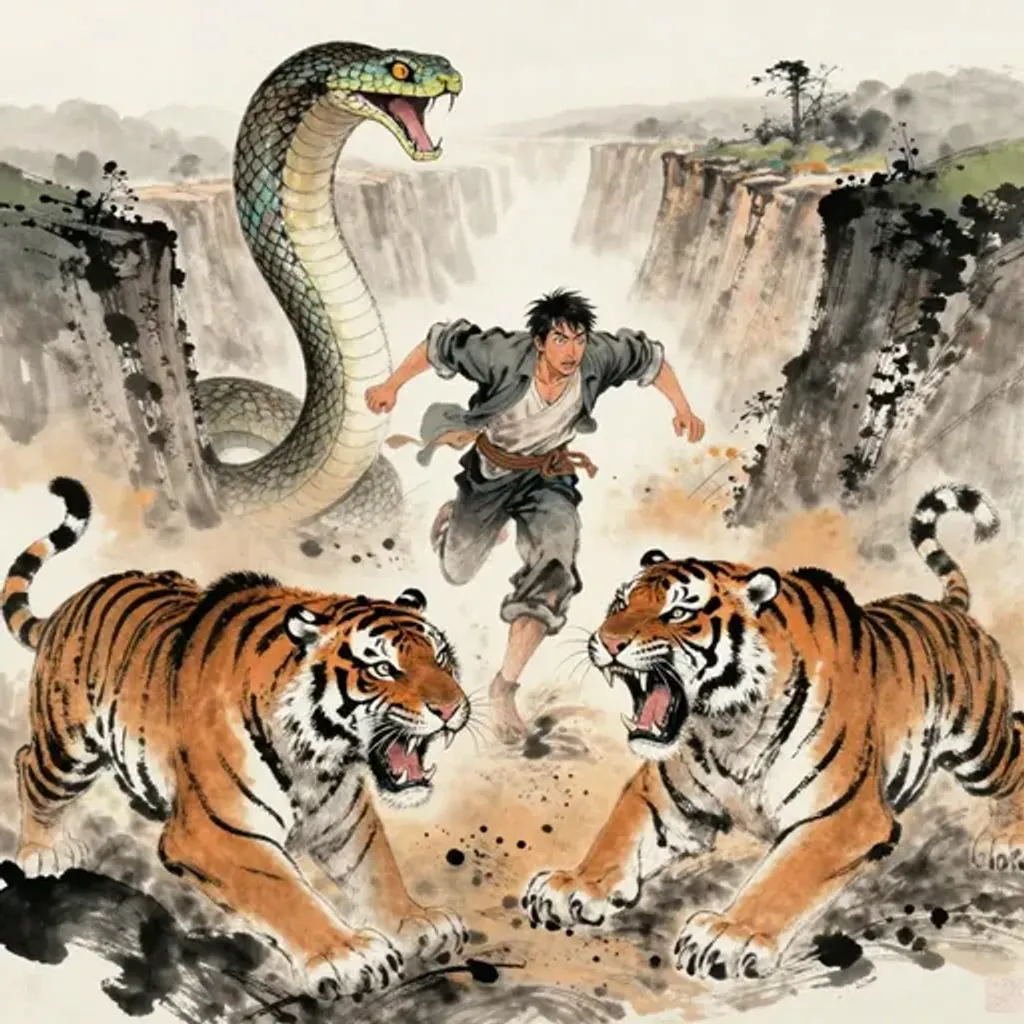
避虵東走,反入虎口。制於爪牙,骨為灰土。
Fleeing the serpent, he runs east; but stumbles into the tiger's jaws. Seized by fang and claw; bones ground to ash and dust.
— Jiao Yanshou, Yilin (Forest of Changes), 1st century BC
Commentary
Water drawn up through wood, the well offers a fixed refuge — but this figure flees one danger only to stumble into a worse one. Running east to escape a snake, one falls straight into a tiger's mouth. Seized by claws and fangs, one's bones are ground to dust. The proverb 'fleeing the snake, entering the tiger' captures the desperation of someone who panics without assessing the full landscape of threats. From The Well to Limitation, water rests upon the lake, establishing boundaries. The well's failure to provide proper limits — to contain and channel — results in Jie's harshest lesson: those who do not accept necessary constraints are devoured by the very forces they tried to evade.
井 → 中孚
Hexagram 48 → Hexagram 61: Inner Truth
Changing lines: 1, 3, 6
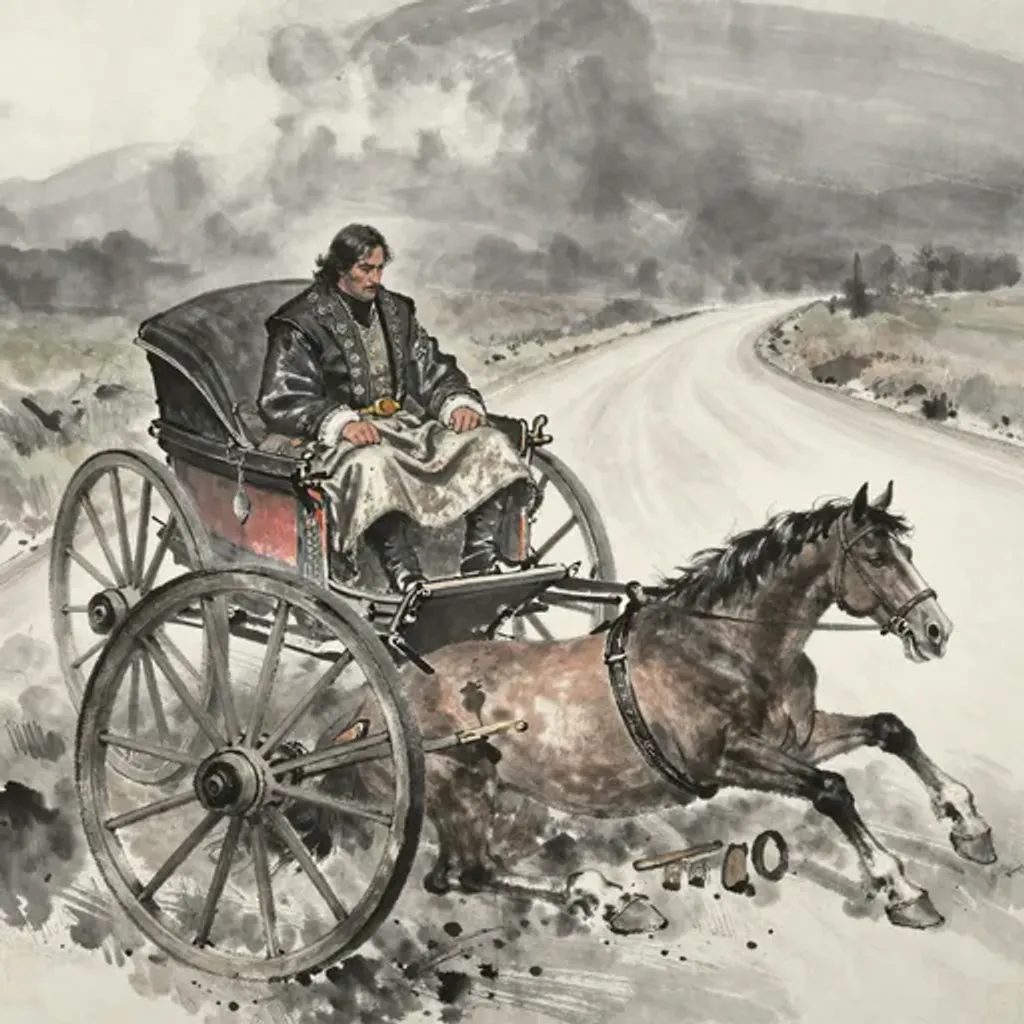
頃迭不行,弱足善僵。孟縶无良,失其寵光。
The team stumbles and will not go; weak legs are prone to collapse. Mengzhi lacks virtue; he loses his favor and his light.
— Jiao Yanshou, Yilin (Forest of Changes), 1st century BC
Commentary
Water drawn up through wood, the well's virtue depends on steady footing — but here the wheels will not turn, and weakened legs buckle easily. Meng Zhi lacked goodness, and he lost his splendor and favor. The name Meng Zhi may refer to a historical figure whose moral failings led to his fall from grace; the 'fettered' (縶) in his name suggests one who was hobbled or constrained. The paralysis of the wheels and legs echoes the well's recurring motif of dysfunction at the base. From The Well to Inner Truth, wind moves above the lake with sincerity. The well's broken mechanism meets Zhongfu's demand for authentic trustworthiness: without inner truth as foundation, no outward position can be maintained.
井 → 小過
Hexagram 48 → Hexagram 62: Small Exceeding
Changing lines: 2, 4, 5
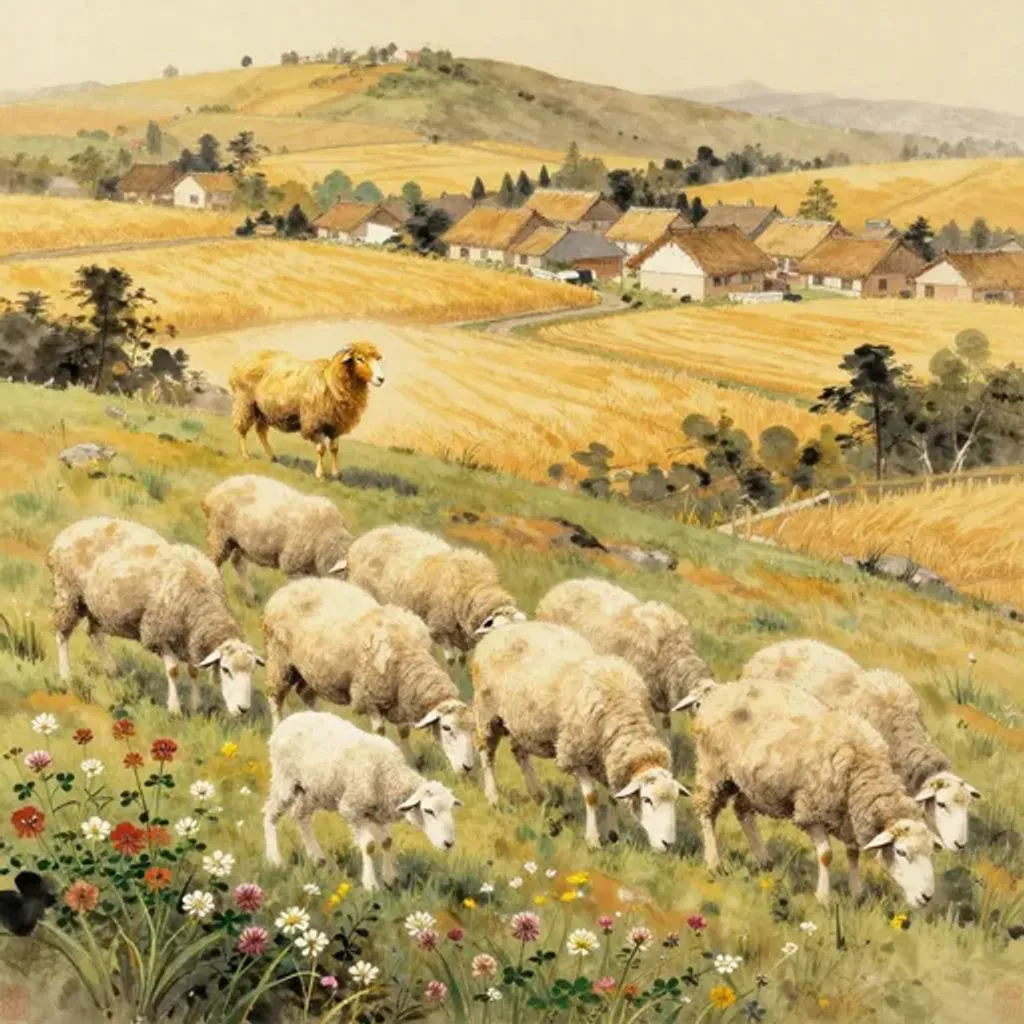
十羊俱見,黃頭為首。歲美民安,國樂无咎。
Ten sheep appear together; the tawny-headed one leads as chief. The year is bountiful, the people at peace; the state rejoices, and there is no fault.
— Jiao Yanshou, Yilin (Forest of Changes), 1st century BC
Commentary
Water drawn up through wood, the well supports the flock that gathers around it. Ten rams appear together, with the yellow-headed one as leader. The year is bountiful, the people are at peace, and the state enjoys happiness without blame. Yellow, the color of earth and the center, marks the leading ram as the properly positioned authority. The flock following its leader in a year of plenty captures the ideal of modest, orderly prosperity. From The Well to Small Exceeding, thunder above the mountain slightly oversteps the norm. The well's generosity, guided by the yellow ram's steady leadership, stays within the gentle excess of Xiaoguo: surpassing in courtesy, in frugality, in care — never in aggression or arrogance.
井 → 既濟
Hexagram 48 → Hexagram 63: After Completion
Changing lines: 1, 2
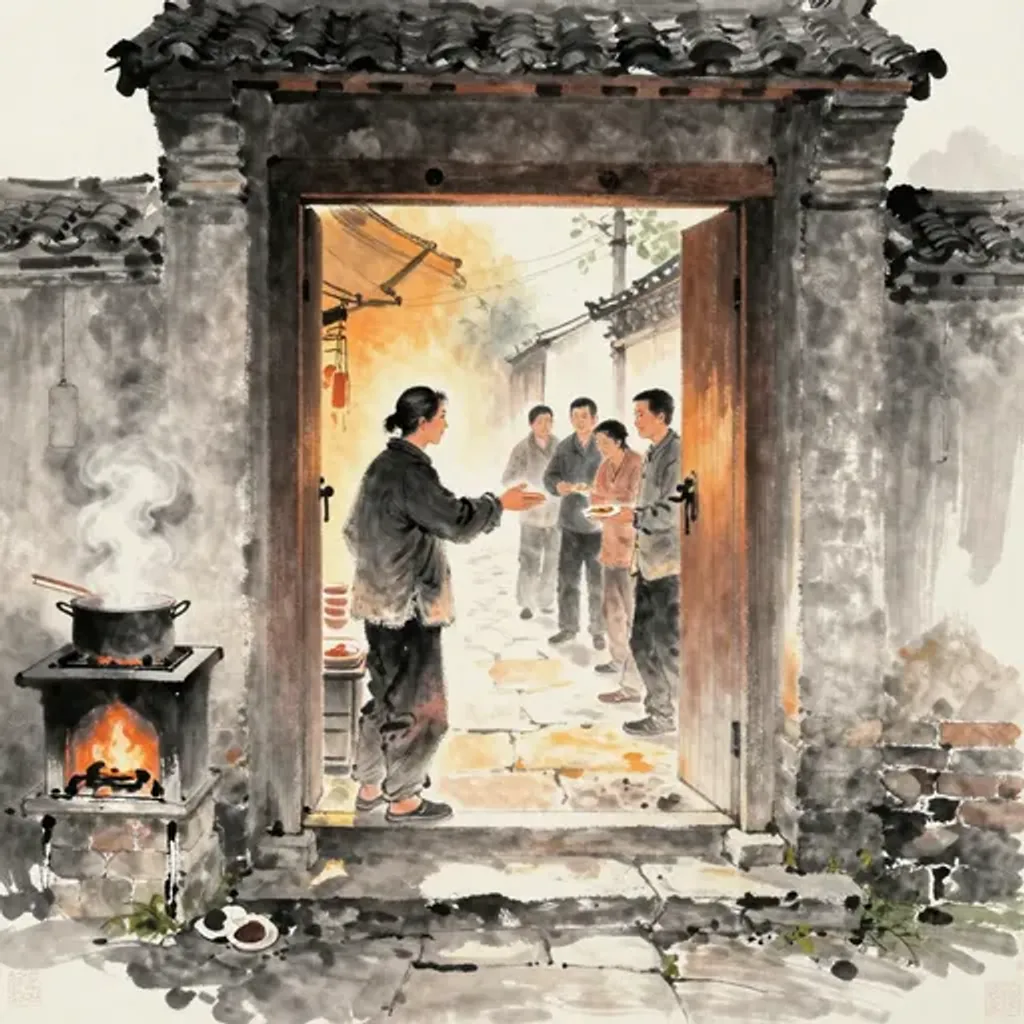
望風入門,來到我鄰,餔吾養均。
Catching the wind, he enters the gate; arriving among my neighbors. He feeds at our table and shares our nourishment equally.
— Jiao Yanshou, Yilin (Forest of Changes), 1st century BC
Commentary
Water drawn up through wood, the well welcomes those who arrive. Drawn by reputation, they enter the gate, come to our neighborhood, and share in our nourishment equally. The verse describes the magnetic pull of a well-maintained community: people come of their own accord because the well's sustenance is known. No coercion, no invitation — just the quiet drawing power of reliable provision. From The Well to After Completion, water rests above fire in perfect balance. The well's open hospitality achieves Jiji's ideal: every element in its proper place, guest and host nourished alike, the fire warming the water that sustains them both. Completion is not the end but the moment when all parts align.
井 → 未濟
Hexagram 48 → Hexagram 64: Before Completion
Changing lines: 3, 4, 5, 6
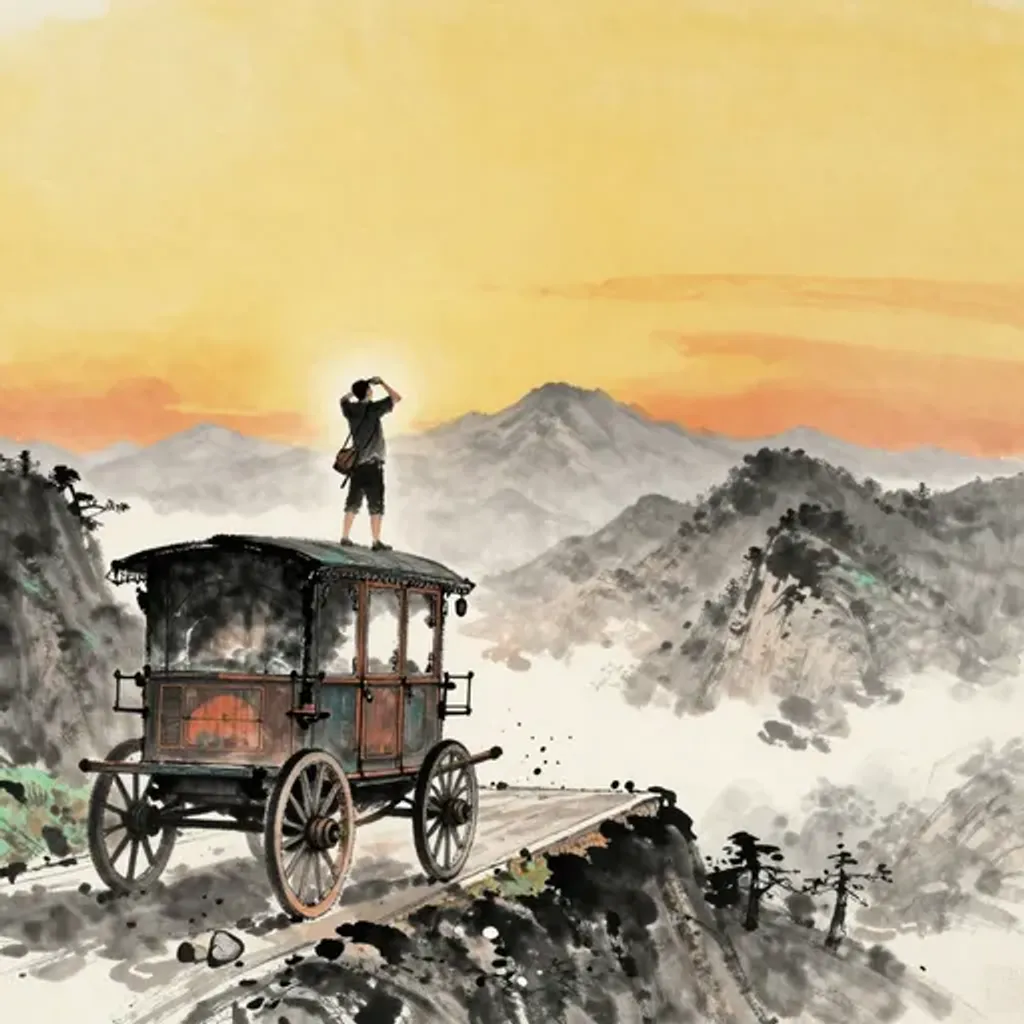
登高車反,視天彌遠。虎口不張,害賊消亡。
Climbing high, the carriage turns back; gazing at heaven, it seems ever farther. The tiger's jaws do not open; harm and villainy fade away.
— Jiao Yanshou, Yilin (Forest of Changes), 1st century BC
Commentary
Water drawn up through wood, the well looks upward to the heavens. One ascends a height only to find the carriage overturned, and gazing at the sky, it seems ever more distant. Yet the tiger's mouth does not open, and harm and threat dissolve into nothing. The verse moves from frustration to unexpected safety: the journey fails, the goal recedes — but the danger that loomed never materializes. From The Well to Before Completion, fire sits above water, each element straining toward the other's position but not yet arriving. The well's upward aspiration meets Weiji's perpetual almost-there: completion remains just out of reach, but so does destruction. In the space of not-yet, the tiger holds its jaws shut, and the wanderer lives to try again.