Transformations of Hexagram 50
Every line of change out of Hexagram 50 鼎 The Cauldron, with the Yilin verse for each of the 64 resulting hexagrams, its translation, and the original ink brush artwork.
鼎 → 乾
Hexagram 50 → Hexagram 1: The Creative
Changing lines: 1, 5
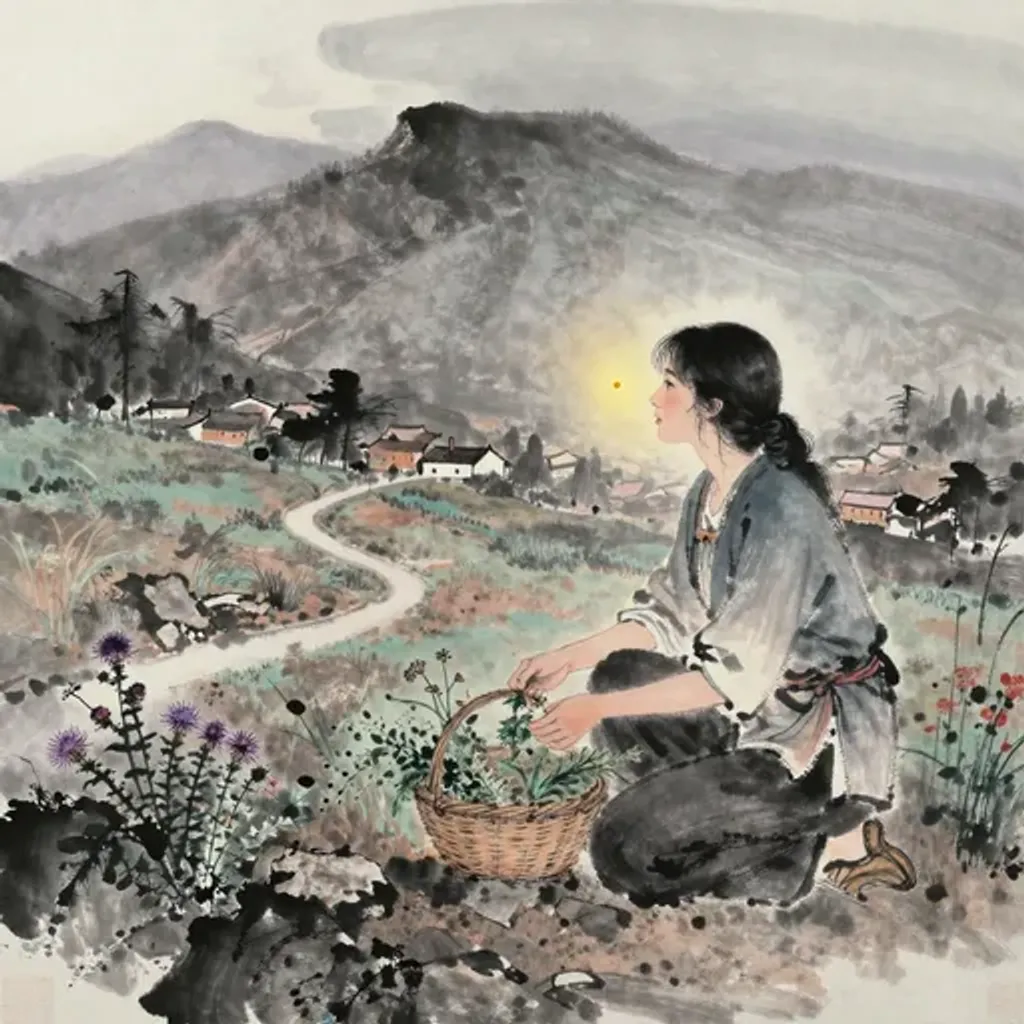
頃筐卷耳,憂不得傷。心思故人,悲慕失母。
Tilting the basket, gathering earwort; sorrow does not become a wound. The heart thinks of old friends; in grief and longing, one mourns a lost mother.
— Jiao Yanshou, Yilin (Forest of Changes), 1st century BC
Commentary
Fire over wind feeds the cauldron; heaven doubled generates inexhaustible creative force. A woman gathers cocklebur with a tilted basket but cannot fill it — her mind is elsewhere, longing for someone far away. This echoes the Shijing ode 'Juan Er,' where a wife's distracted herb-picking mirrors her ache for an absent husband. 'Worry does not wound,' the verse insists: grief is real but not fatal, sorrow is carried rather than crushed beneath. The longing for a '故人' — an old companion, perhaps a departed mother — deepens the ache into mourning. From The Cauldron to The Creative, private grief transmutes into self-sustaining resilience. What the cauldron refines, heaven's ceaseless motion carries forward: the mourner endures because feeling itself is a form of strength.
鼎 → 坤
Hexagram 50 → Hexagram 2: The Receptive
Changing lines: 2, 3, 4, 6
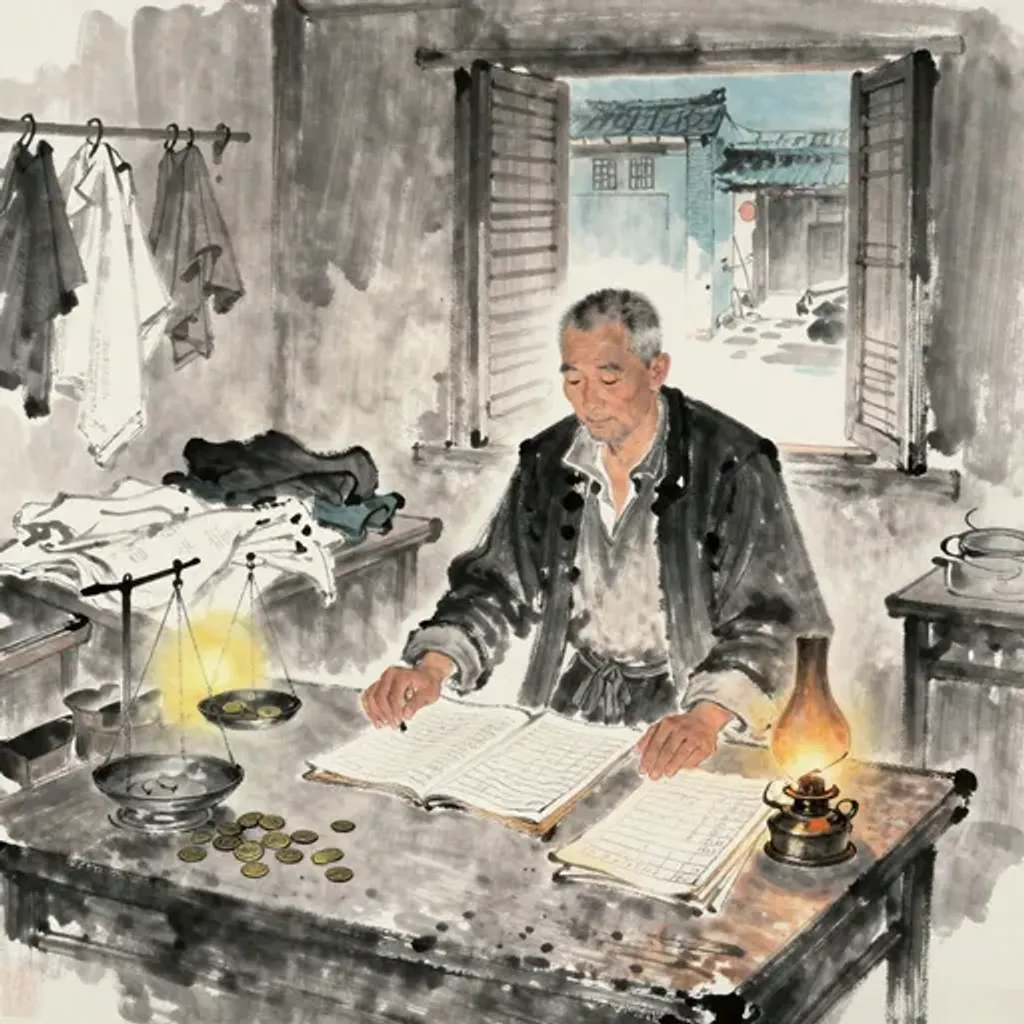
郤叔賈貸,行祿多悔,利无所得。
Xi Shu lent and traded; traveling for profit, he met only regret. Gain was nowhere to be found.
— Jiao Yanshou, Yilin (Forest of Changes), 1st century BC
Commentary
Fire over wind transforms raw materials in the cauldron, yet earth doubled yields only passive receptivity. Xi Shu lends at interest and travels seeking profit, but every venture ends in regret with nothing gained. The name 'Xi Shu' likely refers to a figure of the Xi clan of Jin, whose overreach in financial dealings brought ruin rather than reward. The verse captures the futility of chasing gain without moral grounding — profit sought through lending and trading dissolves like water into earth. From The Cauldron to The Receptive, the transformation warns that even well-equipped endeavors require fertile ground. Without it, the cauldron's fire burns uselessly, and the traveler returns empty-handed to formless earth.
鼎 → 屯
Hexagram 50 → Hexagram 3: Difficulty at the Beginning
Changing lines: 1, 2, 3, 4, 5, 6
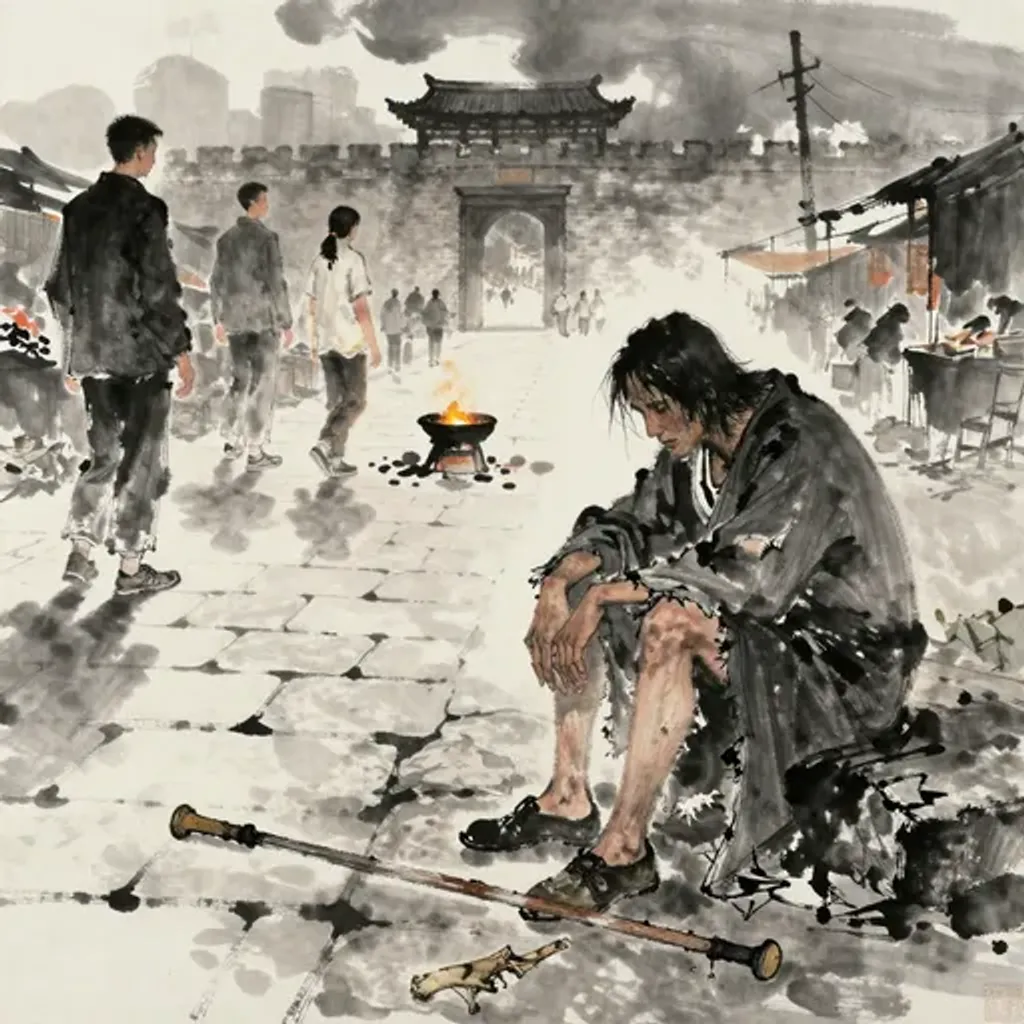
蹙狂跛衽,辟坐不行。棄損平人,名字无中。
Frenzied, lame, robes in disarray; crouching aside, unable to walk. Cast off and diminished among common men; name and repute amount to nothing.
— Jiao Yanshou, Yilin (Forest of Changes), 1st century BC
Commentary
Fire over wind blazes in the cauldron, but storm clouds and thunder choke the newborn sprout. A figure stumbles and lurches — frantic, lame, tripping over garments — then sits frozen, unable to move. The verse depicts complete social paralysis: reputations discarded, names erased from the register, 'no place in the center.' This is a portrait of disgrace so total that identity itself dissolves. From The Cauldron to Difficulty at the Beginning, the transformation captures how refined potential can be squandered before it takes root. Thunder stirs beneath the water, but the sprout cannot break through. What the cauldron prepared meets a world not yet ready to receive it — chaos smothers the offering before it reaches the table.
鼎 → 蒙
Hexagram 50 → Hexagram 4: Youthful Folly
Changing lines: 3, 4
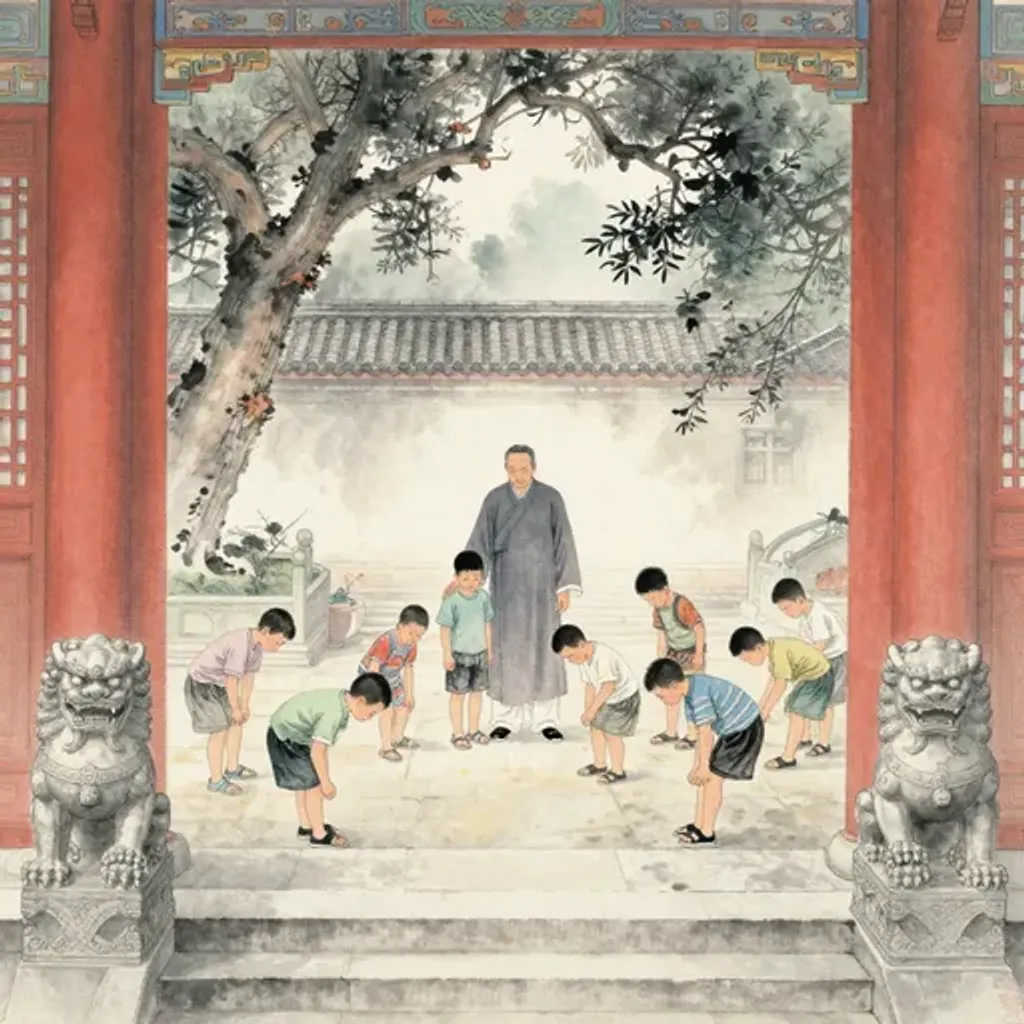
文王四乳,仁愛篤厚。子畜十男,无有夭折。
King Wen had four nipples; his benevolence and love ran deep and generous. He raised ten sons, and not one died before his time.
— Jiao Yanshou, Yilin (Forest of Changes), 1st century BC
Commentary
Fire over wind nourishes the cauldron's contents; a spring emerges beneath the mountain, nurturing the young. King Wen of Zhou, marked by four nipples — a sign of sagely virtue in ancient physiognomy — embodied benevolence so profound that it sheltered ten sons, none lost to early death. The four nipples symbolize superabundant capacity to nourish, and the verse marvels at a household where every child thrives under such care. From The Cauldron to Youthful Folly, the transformation maps nurture into education: what the cauldron cooks, the mountain spring clarifies. King Wen's generative warmth becomes the patient guidance that draws wisdom from naivety, feeding many without exhausting the source.
鼎 → 需
Hexagram 50 → Hexagram 5: Waiting
Changing lines: 1, 4, 5, 6
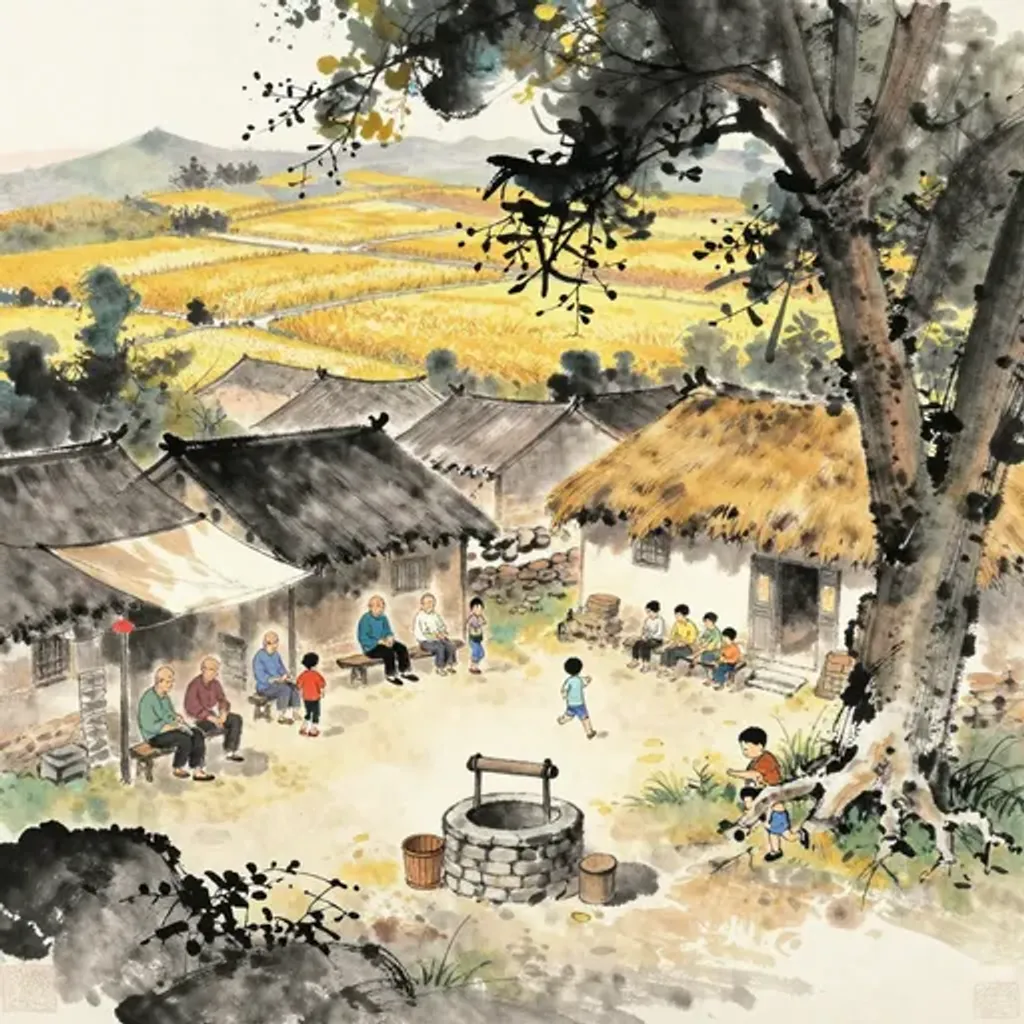
容民畜眾,不離其居。
Sheltering the people, nourishing the multitude; none depart from their dwelling.
— Jiao Yanshou, Yilin (Forest of Changes), 1st century BC
Commentary
Fire over wind fills the cauldron; clouds gather above heaven, signaling patient waiting. 'Accommodate the people and shelter the multitude, never leaving their dwelling' — this phrase echoes the Image text of hexagram 7, The Army, almost verbatim. The cauldron feeds not one household but an entire populace, and the leader who nourishes them need not leave home to do so. Abundance radiates from a stable center. From The Cauldron to Waiting, the transformation reveals that true provision is not urgent action but sustained readiness. The cauldron simmers; the clouds have not yet released their rain. One shelters the people by remaining steady, preparing the feast before the need arrives.
鼎 → 訟
Hexagram 50 → Hexagram 6: Conflict
Changing lines: 3, 5
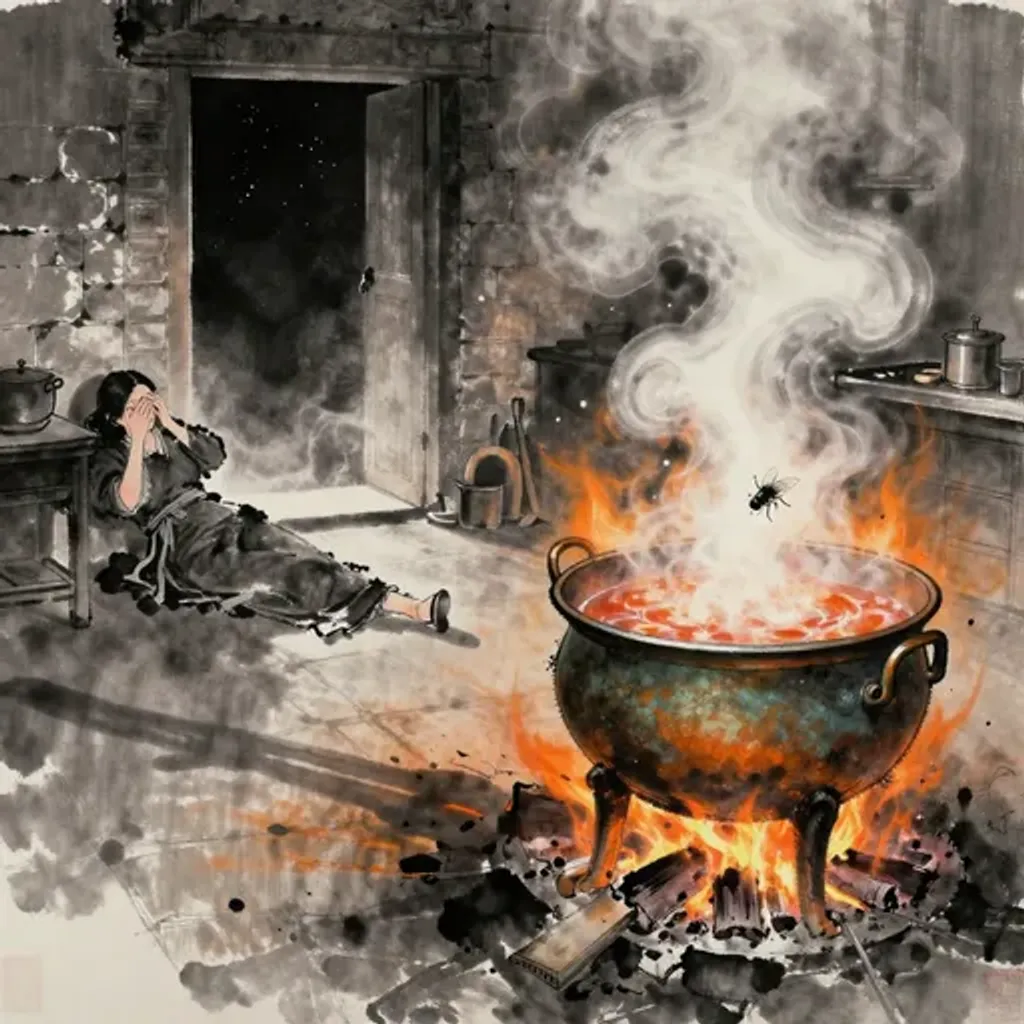
三推相逐,蠅墜釜中。灌沸淹殪,與母長決。
Thrice pushed, one after another; a fly falls into the cauldron. Scalded in the boiling water, drowned and slain; parted from mother forever.
— Jiao Yanshou, Yilin (Forest of Changes), 1st century BC
Commentary
Fire over wind heats the cauldron, but heaven and water pull in opposite directions, breeding conflict. Three creatures chase one another until a fly tumbles into the boiling pot — scalded and drowned, it perishes, parted forever from its mother. The cauldron, meant for sacred nourishment, becomes an instrument of accidental destruction. The boiling broth that should sustain life instead consumes the helpless intruder. 'Parting forever from mother' invokes the deepest severance: not just death, but the rupture of the primal bond. From The Cauldron to Conflict, the transformation exposes how the very vessel of civilization can become lethal when its contents rage unchecked. What nourishes can also destroy — the same fire that cooks the offering boils the unwary alive.
鼎 → 師
Hexagram 50 → Hexagram 7: The Army
Changing lines: 3, 4, 6
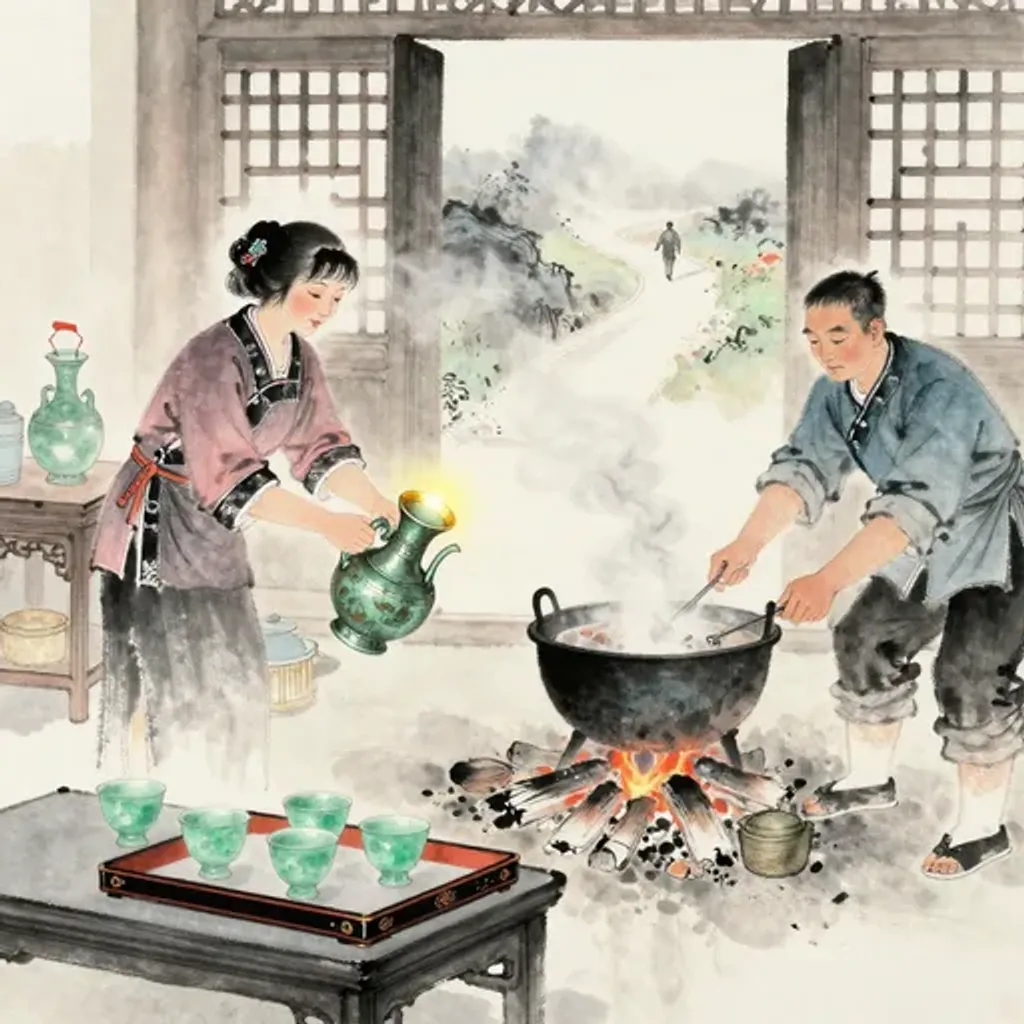
所望在外,鼎令方來。拭爵澡罍,炊食待之,不為季憂。
What is hoped for lies abroad; the lord of the cauldron is about to arrive. Wipe the goblets, wash the bronze vessels; cook food and await him. There is no cause to worry over the youngest.
— Jiao Yanshou, Yilin (Forest of Changes), 1st century BC
Commentary
Fire over wind fills the cauldron while earth conceals water beneath — the army musters in disciplined silence. What is hoped for lies beyond the gate, but the cauldron's decree is already on its way. Goblets are polished, wine vessels washed, food prepared — everything readied in patient anticipation, 'no worry for the youngest.' This is the portrait of a well-ordered household or command post receiving an honored guest or awaited order. The ritual vessels gleam; the feast stands ready. From The Cauldron to The Army, the transformation reveals disciplined hospitality as a form of strategic readiness. The cauldron's fire refines, and the earth-over-water structure of The Army channels that refined energy into organized response.
鼎 → 比
Hexagram 50 → Hexagram 8: Holding Together
Changing lines: 2, 3, 4, 5, 6
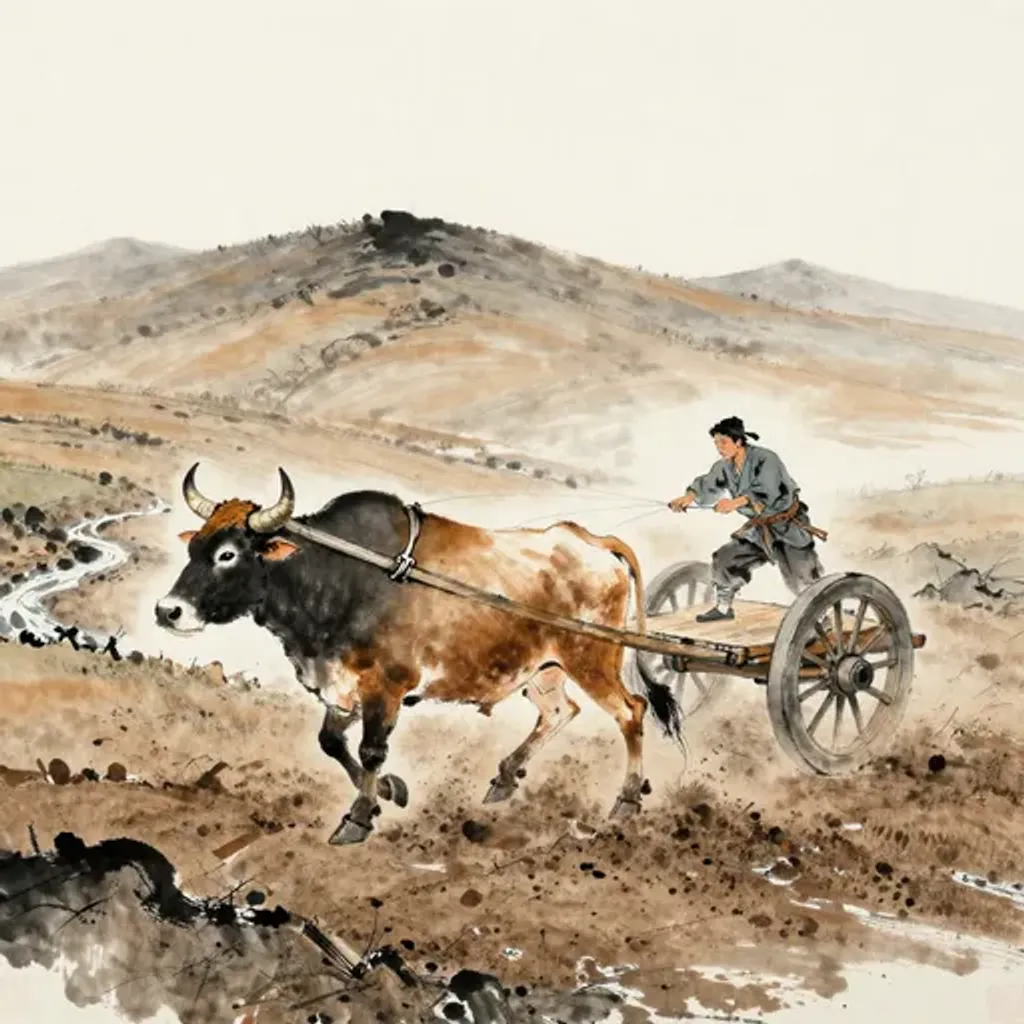
陸居少泉,高山无雲。車行千里,塗污爾輪,亦為我患。
Dwelling inland, springs are few; high mountains bear no clouds. The cart travels a thousand li; mud fouls its wheels and becomes our affliction too.
— Jiao Yanshou, Yilin (Forest of Changes), 1st century BC
Commentary
Fire over wind heats the cauldron, but water upon earth pools into uncertain alliances. Dwelling on high ground where springs are scarce, beneath a tall mountain where clouds refuse to form — aridity rules this landscape. A cart travels a thousand li only to have its wheels caked in mud, and that mud becomes 'our trouble too.' Distance and depletion define this verse: resources dwindle, the journey fouls itself, and contamination spreads. From The Cauldron to Holding Together, the transformation warns that seeking alliance from a position of scarcity yields only shared hardship. The cauldron's fire cannot cook without water; the cart's wheels cannot turn in mire. Unity forged under drought brings mutual affliction rather than mutual aid.
鼎 → 小畜
Hexagram 50 → Hexagram 9: Small Taming
Changing lines: 1, 4, 5
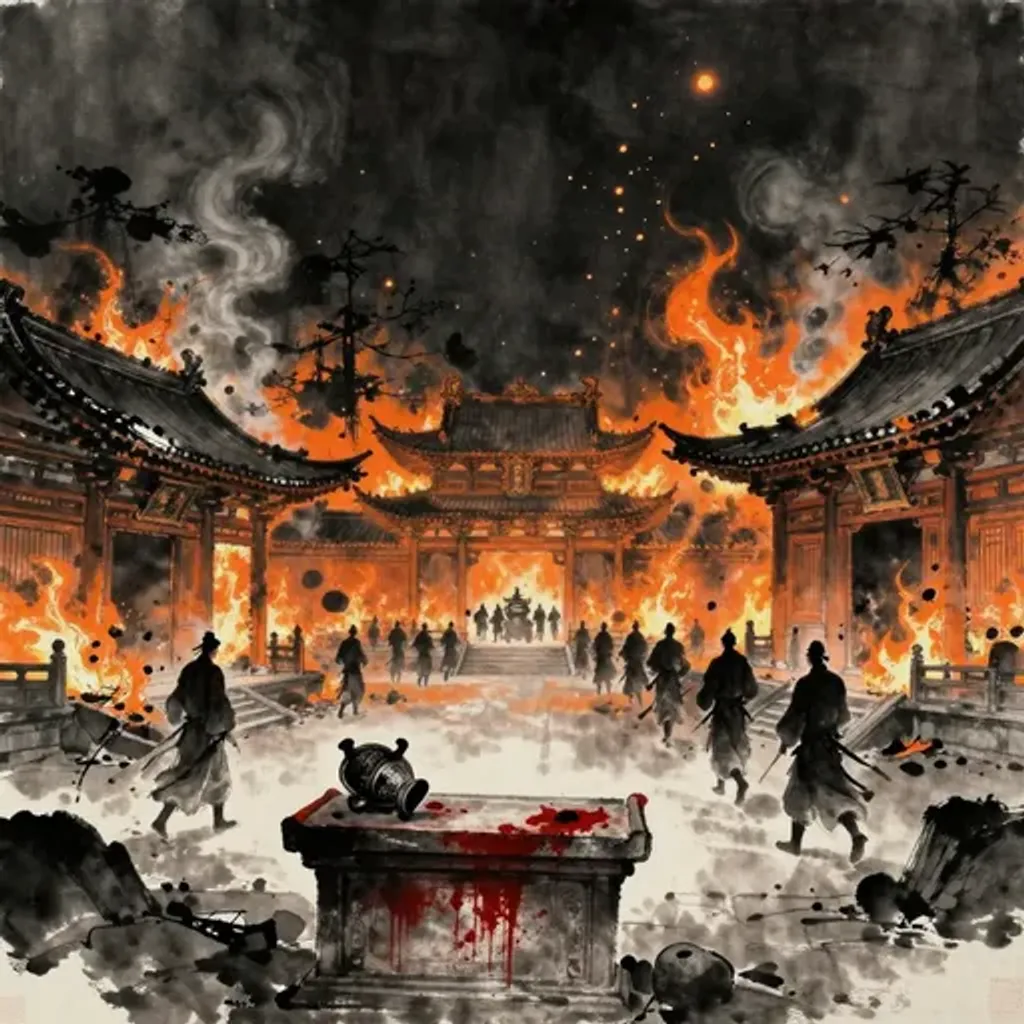
東家殺牛,聞臭腥臊。神背不顧,命衰絕周。亳社災燒,宋人夷誅。
The eastern house slaughters an ox; the stench of blood and offal rises. The spirits turn away and will not look; fate declines, and Zhou is cut off. The altar of Bo burns; the people of Song are put to the sword.
— Jiao Yanshou, Yilin (Forest of Changes), 1st century BC
Commentary
Fire over wind fills the cauldron, but wind beneath heaven can only partially restrain what stirs below. A neighbor slaughters an ox, yet the smell that wafts over is rank and foul — the spirits turn their backs, refusing the offering. Fortune declines and heaven's mandate expires. The Bo Altar burns, and the people of Song are leveled. The Bo Altar (亳社) was the Shang dynasty's ancestral shrine preserved in Song, the successor state of Shang. Its destruction by fire signaled the final severing of Shang's spiritual legacy. From The Cauldron to Small Taming, the transformation reveals how corrupted ritual repels divine favor. The cauldron's offering reeks; the gentle wind of Small Taming cannot contain the stench. When sacrifice itself is polluted, even the most restrained governance cannot prevent catastrophe.
鼎 → 履
Hexagram 50 → Hexagram 10: Treading
Changing lines: 1, 3, 5
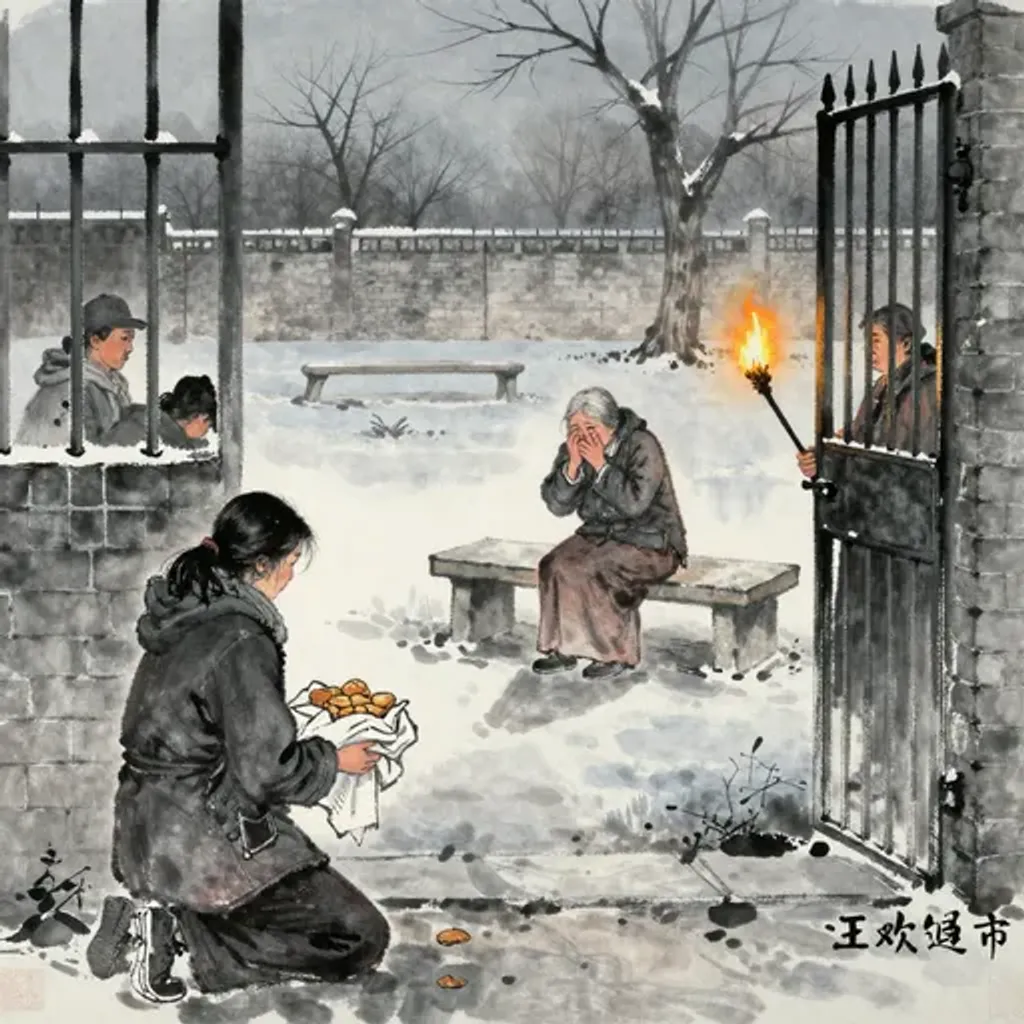
長子入獄,婦饋母哭。霜降旬日,嚮晦伏法。
The eldest son enters prison; his wife brings food, his mother weeps. Frost falls for ten days; toward nightfall, the sentence is carried out.
— Jiao Yanshou, Yilin (Forest of Changes), 1st century BC
Commentary
Fire over wind fills the cauldron; above, heaven sets the standard while the lake below must tread carefully. The eldest son enters prison. His wife brings food; his mother weeps. Frost descends — the traditional season of execution — and within ten days, as dusk settles, the sentence is carried out. The verse follows ancient legal custom: capital punishment was administered in autumn when nature's killing energy aligned with the act. The sequence is devastating in its precision: imprisonment, family anguish, the frost calendar ticking down, execution at nightfall. From The Cauldron to Treading, the transformation maps ritual order onto lethal consequence. The cauldron's fire refines; Treading's heaven-over-lake demands one walk correctly or face the tiger's bite.
鼎 → 泰
Hexagram 50 → Hexagram 11: Peace
Changing lines: 1, 4, 6
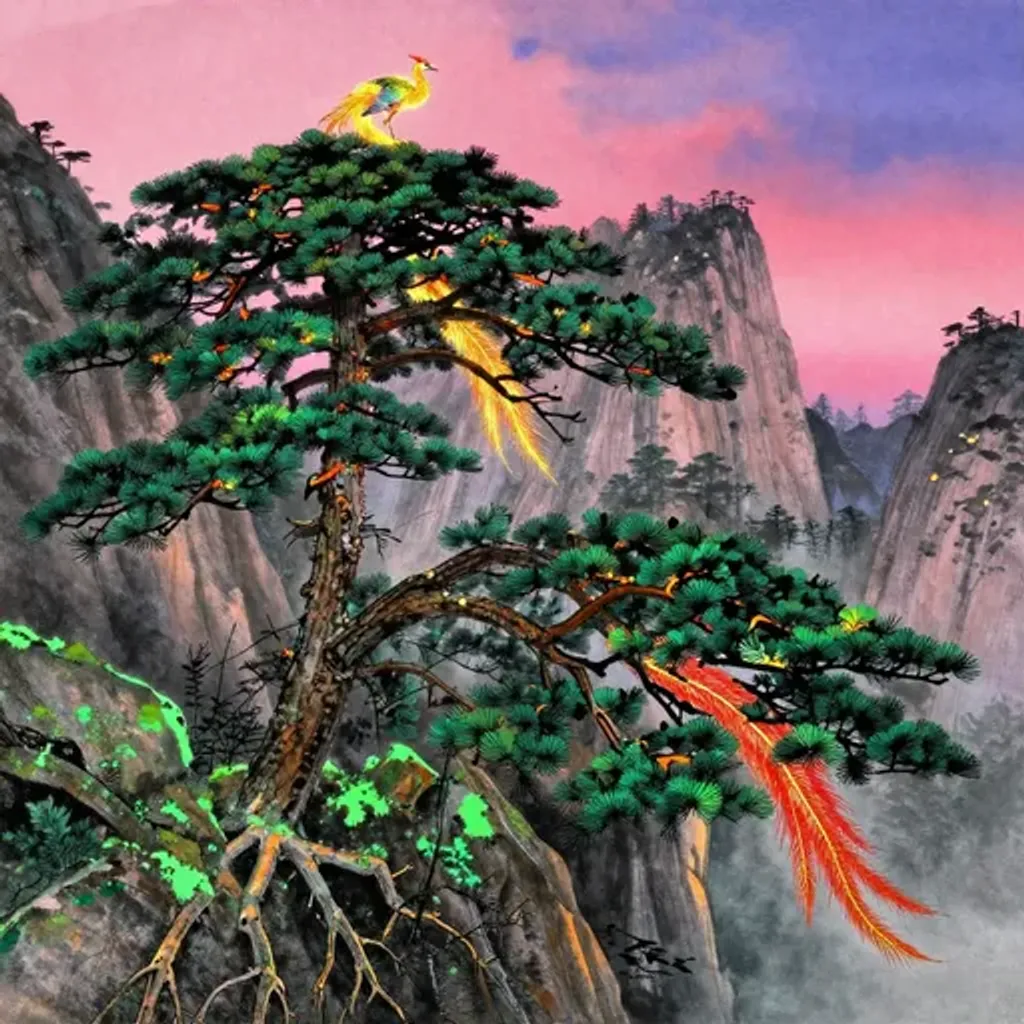
溫山松柏,常茂不落。鳳凰以庇,得其歡樂。
Pines and cypresses of the warm mountain, ever flourishing, never falling. The phoenix shelters beneath them and finds its joy.
— Jiao Yanshou, Yilin (Forest of Changes), 1st century BC
Commentary
Fire over wind warms the cauldron; earth and heaven exchange freely in the image of Peace. Pines and cypresses on a warm mountain stand evergreen, never shedding their needles — and phoenixes shelter among them, finding joy and rest. The evergreen conifers embody constancy through all seasons, and the phoenix — that most discerning of birds, which perches only on the paulownia tree — chooses this grove as its home. Where virtue is constant, the noblest spirits gather. From The Cauldron to Peace, the transformation is one of the most auspicious in the Yi: what the cauldron refines becomes a world where heaven descends and earth rises, creating the free circulation that sustains all life. Enduring virtue attracts enduring blessing.
鼎 → 否
Hexagram 50 → Hexagram 12: Standstill
Changing lines: 2, 3, 5
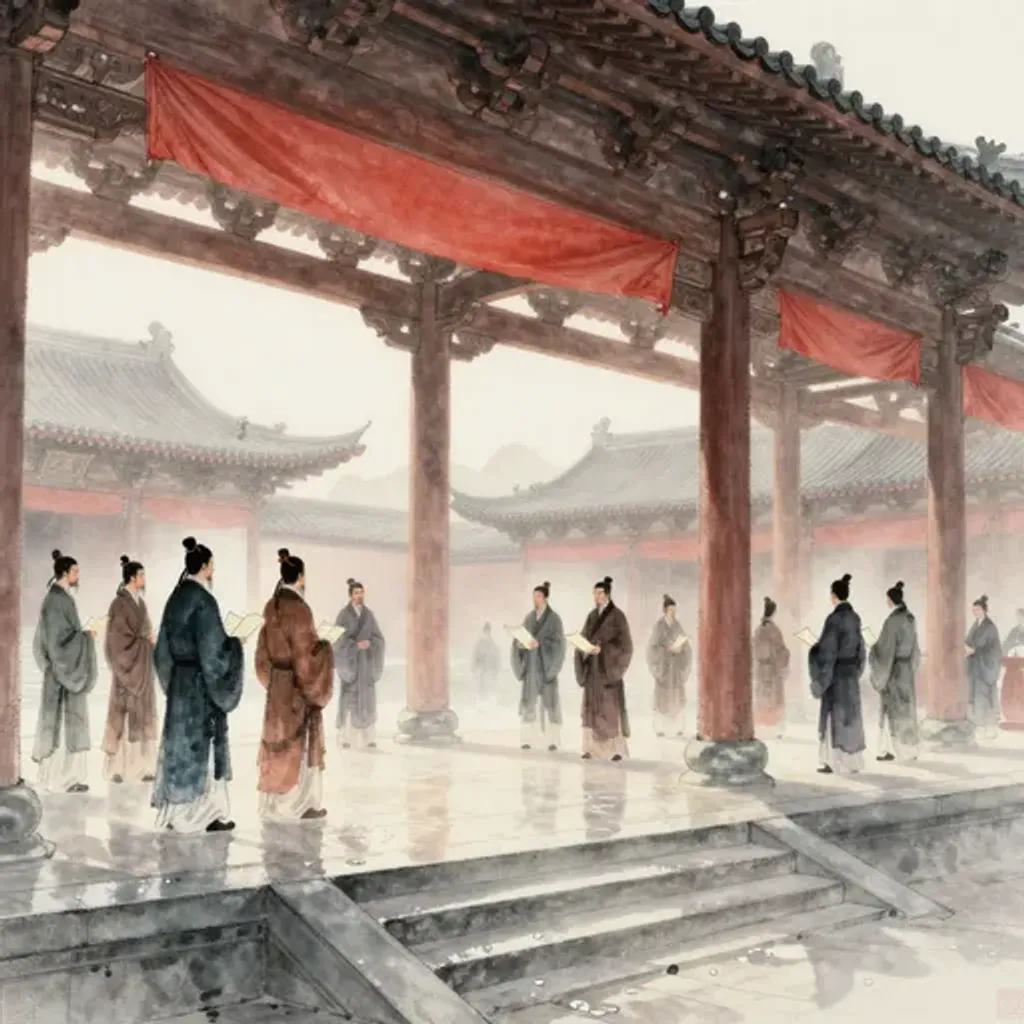
大屋之下,朝多君子。德施博育,宋受其福。
Beneath the great hall, the morning court gathers many gentlemen. Virtue is spread and broadly nurtured; Song receives its blessings.
— Jiao Yanshou, Yilin (Forest of Changes), 1st century BC
Commentary
Fire over wind fills the cauldron, yet heaven and earth cease their exchange in Standstill. Beneath a great roof, the morning court is filled with gentlemen. Virtue radiates broadly, nurturing all, and Song receives its blessing. The 'great house' likely evokes the ancestral hall of Song, the state that preserved Shang ritual traditions. The verse presents an idealized court where worthy men gather under benevolent governance. Yet the transformation target is Standstill — heaven above, earth below, no communication between them. From The Cauldron to Standstill, the paradox sharpens: even the most virtuous assembly exists within a structure where connection may freeze. The blessing Song receives may be the last gift before the channels close.
鼎 → 同人
Hexagram 50 → Hexagram 13: Fellowship
Changing lines: 1, 2, 5
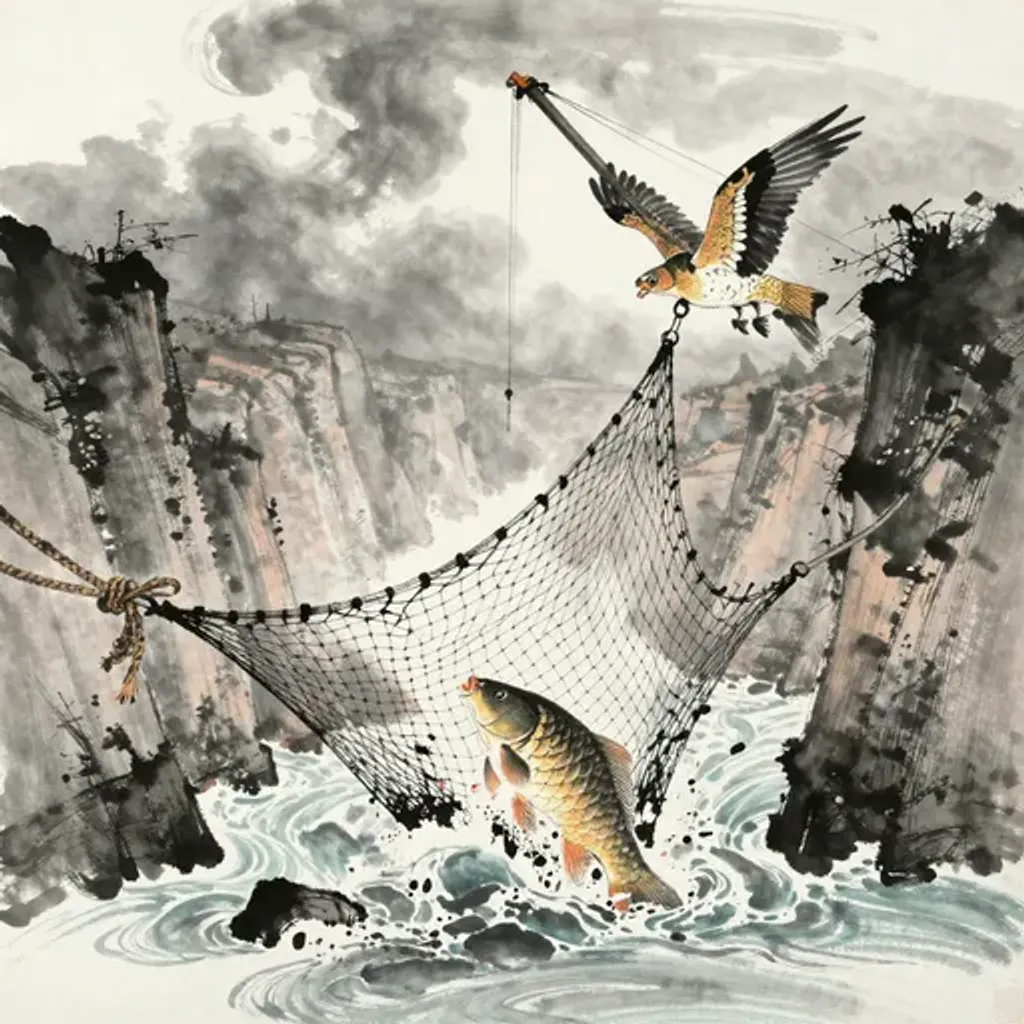
羅張目決,圍合耦缺,魚鳥生脫。
The net is spread, its mesh torn open; the encirclement closes but the coupling breaks. Fish and birds escape alive.
— Jiao Yanshou, Yilin (Forest of Changes), 1st century BC
Commentary
Fire over wind fills the cauldron; heaven and fire rise together in Fellowship. Nets are spread and mesh tightened, the encirclement nearly complete — yet a gap remains in the paired formation, and fish and birds slip free. The scene is a hunt where the quarry escapes through an opening in what should have been a seamless cordon. The encirclement looks perfect but its joints are flawed: paired nets fail to close, and life wriggles through. From The Cauldron to Fellowship, the transformation suggests that perfect containment is neither possible nor desirable. Heaven and fire both rise — true fellowship requires openness, not capture. The net with a gap may be wiser than the net drawn tight.
鼎 → 大有
Hexagram 50 → Hexagram 14: Great Possession
Changing lines: 1
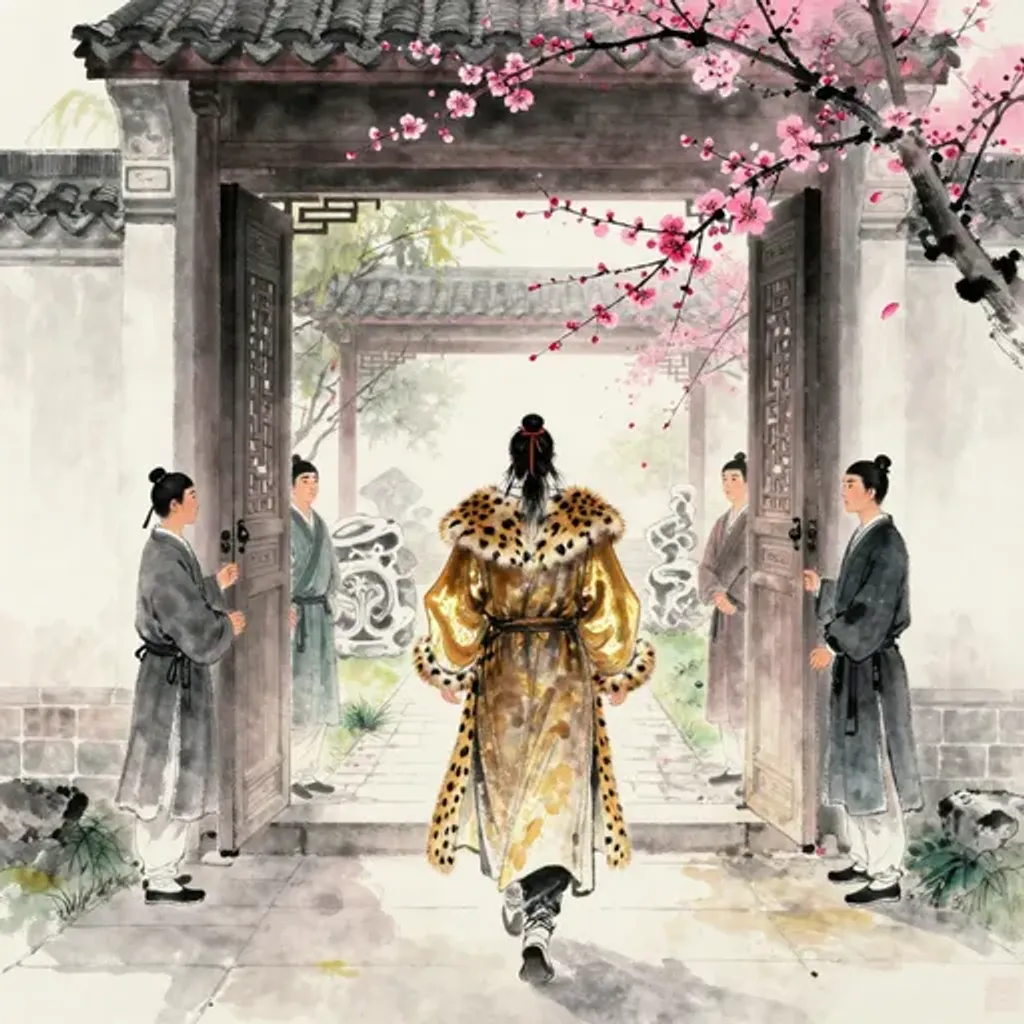
羔裘豹祛,高易我宇,君子維好。
A lambskin robe with leopard cuffs; he raises high our dwelling. The gentleman maintains his bonds of friendship.
— Jiao Yanshou, Yilin (Forest of Changes), 1st century BC
Commentary
Fire over wind fills the cauldron; fire blazes above heaven in Great Possession. A lambskin robe with leopard-fur cuffs — this is the attire described in the Shijing ode 'Gao Qiu' from the Zheng Winds, where a nobleman's elegant dress signals both refinement and authority. 'He elevates our dwellings; the gentleman maintains friendship.' The verse celebrates a world of cultivated exchange: fine garments, improved homes, noble bonds. From The Cauldron to Great Possession, the transformation is one of culmination. What the cauldron refines emerges as visible abundance — fire above heaven illuminates the realm. The lambskin robe is civilization itself made wearable: warmth, beauty, and social order draped across the shoulders of those who earned it.
鼎 → 謙
Hexagram 50 → Hexagram 15: Modesty
Changing lines: 2, 4, 6
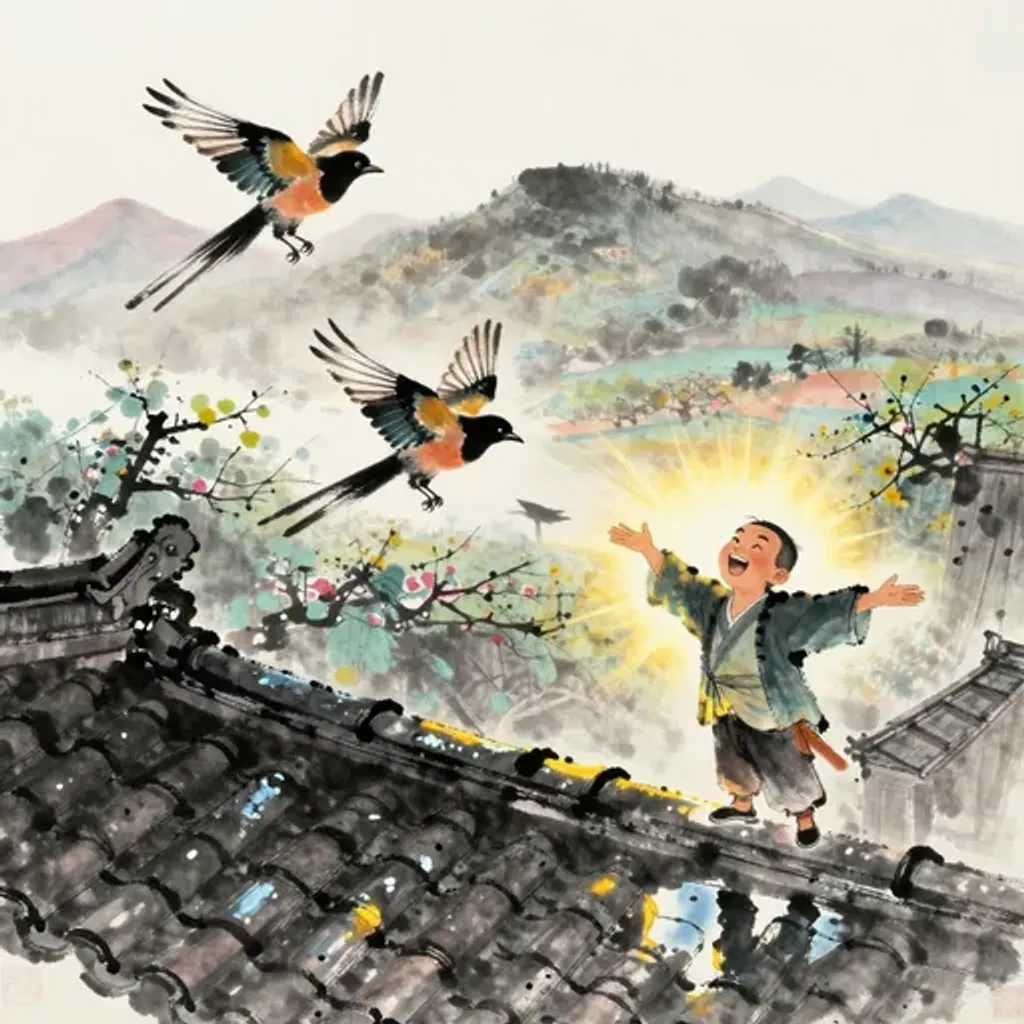
大頭明目,載受喜福。三雀飛來,與祿相得。
A great head and bright eyes, receiving joy and blessings. Three magpies fly in, bringing fortune together.
— Jiao Yanshou, Yilin (Forest of Changes), 1st century BC
Commentary
Fire over wind fills the cauldron; a mountain hidden within the earth embodies Modesty. A figure with a large head and bright eyes receives blessings of joy and good fortune. Three magpies fly in, bringing prosperity with them. In folk tradition, magpies are harbingers of good news — their arrival in threes amplifies the auspice. The 'large head and bright eyes' suggest someone of striking, perhaps unusual appearance who nonetheless attracts heaven's favor. From The Cauldron to Modesty, the transformation reveals that fortune flows toward the unassuming. The mountain concealed beneath the earth does not flaunt its height; the cauldron's nourishment reaches the humble. Three magpies do not seek palaces — they find whoever is open to receive them.
鼎 → 豫
Hexagram 50 → Hexagram 16: Enthusiasm
Changing lines: 2, 3, 6
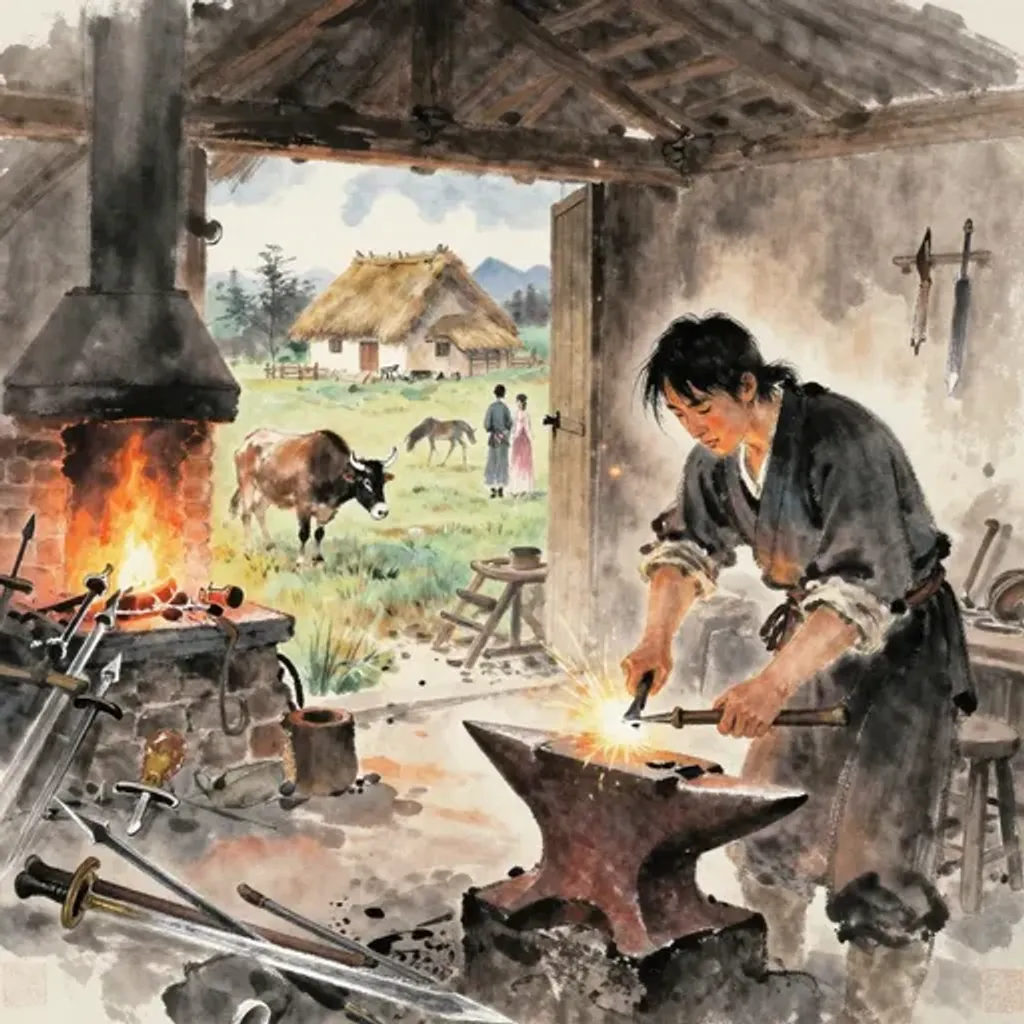
消鋒鑄刃,縱牛牧馬。甲兵解散,夫婦相保。
Melting the spear points, forging the blades anew; releasing the oxen, pasturing the horses. Armor and weapons are laid aside; husband and wife keep each other safe.
— Jiao Yanshou, Yilin (Forest of Changes), 1st century BC
Commentary
Fire over wind fills the cauldron; thunder emerges from the earth in joyous Enthusiasm. Spearheads are melted down and reforged into plowshares, oxen are released and horses set to pasture. Armor and weapons scatter as husband and wife are reunited in safety. This is the classical Chinese image of postwar demobilization — swords beaten into farming tools, armies disbanded, domestic life restored. The cauldron that once cast bronze weapons now feeds families. From The Cauldron to Enthusiasm, the transformation captures the collective relief when war ends and celebration begins. Thunder bursting from the earth mirrors the eruption of joy; the cauldron's fire, no longer martial, becomes the hearth fire of a reunited household.
鼎 → 隨
Hexagram 50 → Hexagram 17: Following
Changing lines: 1, 2, 3, 5, 6
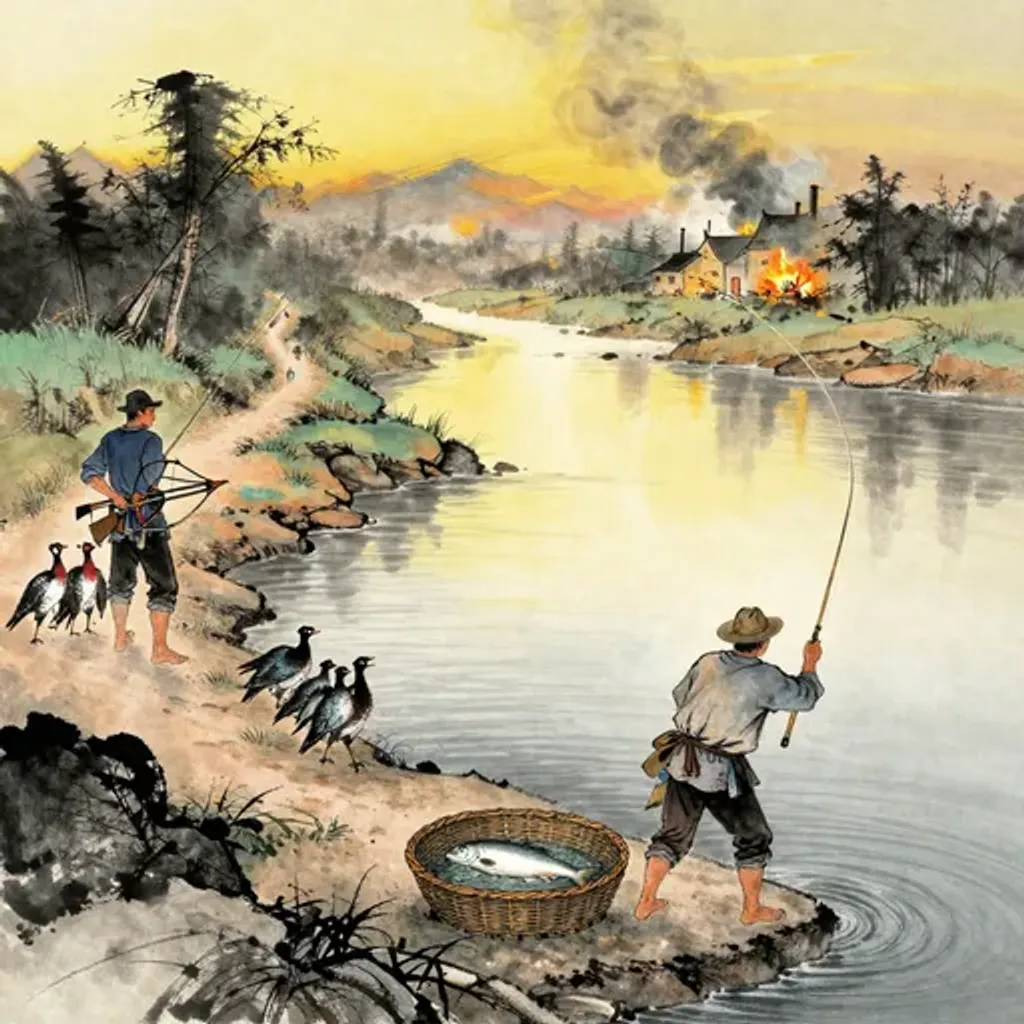
吉日舉釣,田弋獵禽。反行飲至,以告喜功。
On a lucky day he raises his rod; in field and marsh he hunts the fowl. Returning, he drinks to the homecoming, announcing glad success.
— Jiao Yanshou, Yilin (Forest of Changes), 1st century BC
Commentary
Fire over wind fills the cauldron; thunder rests within the lake as one follows the natural rhythm. On an auspicious day, fishing rods are cast and hawks released to hunt game. The party returns in triumph, drinking the victory toast and announcing their success. This is a scene of ritual leisure — not random sport but divination-guided hunting, conducted on a day deemed favorable. The return feast with its formal 'drinking to completion' ceremony echoes Zhou military protocol where returning armies offered wine and reported their deeds. From The Cauldron to Following, the transformation maps ritual nourishment onto responsive timing. The cauldron prepares; Following's lake-over-thunder rests and then acts at the right moment. Success comes from aligning with the season.
鼎 → 蠱
Hexagram 50 → Hexagram 18: Work on the Decayed
Changing lines: 4
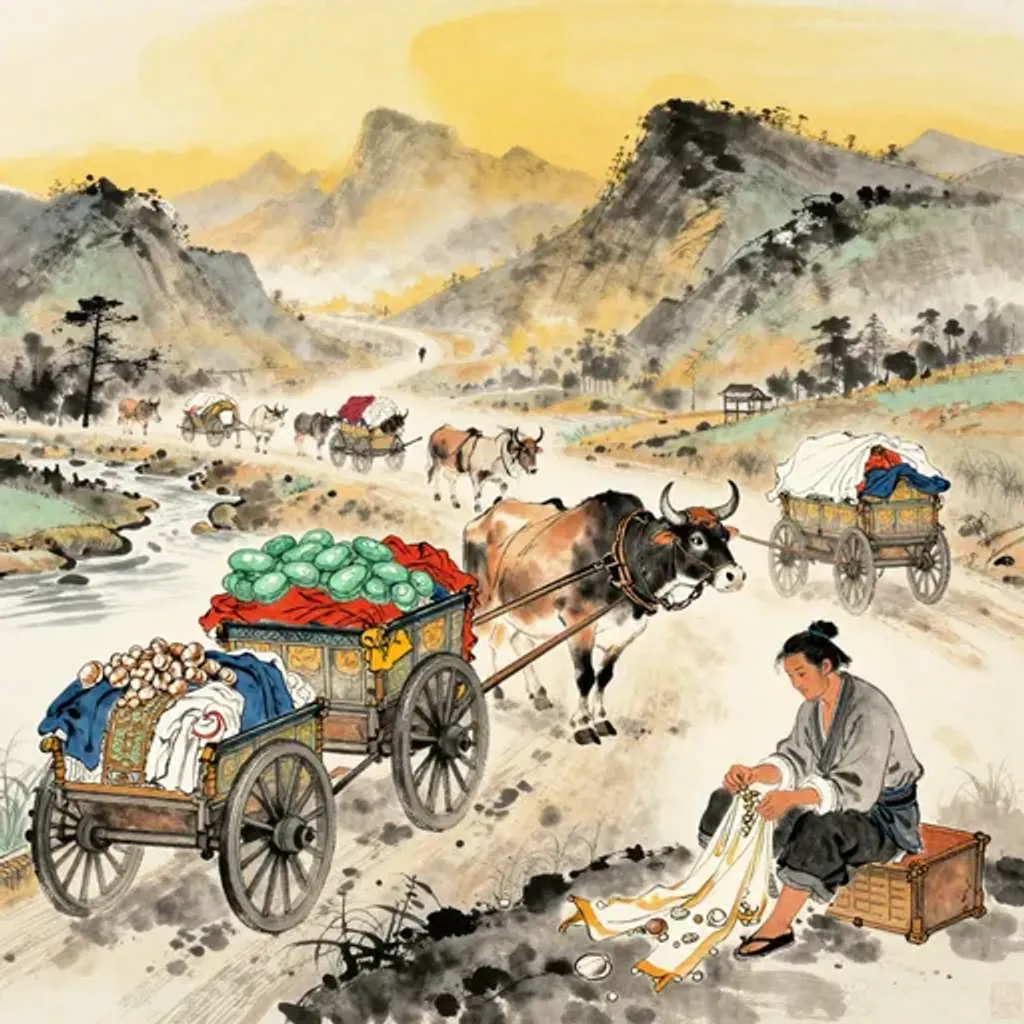
商人行旅,資无所有。貪貝逐利,留連玉帛。馭轅內安,公子何咎?
The merchant travels far, his capital all spent. Greedy for cowries, chasing profit, he lingers over jade and silk. Gripping the reins, at peace within; what fault befalls the young lord?
— Jiao Yanshou, Yilin (Forest of Changes), 1st century BC
Commentary
Fire over wind fills the cauldron; wind stirs beneath the mountain, unsettling what has decayed. A merchant sets out on the road with no capital, yet craves jade and silk, chasing profit relentlessly. He lingers among treasures he cannot afford, reluctant to leave. Yet the verse pivots: 'controlling the reins and yoke, settled within — what fault has the young lord?' The merchant's greed is reined in before it destroys him. From The Cauldron to Work on the Decayed, the transformation reveals how unchecked appetite corrupts even legitimate enterprise. The mountain-over-wind of Gu signals inherited disorder that demands correction. The cauldron's fire must not feed aimless desire; the young lord's task is to restore discipline where his predecessors let standards rot.
鼎 → 臨
Hexagram 50 → Hexagram 19: Approach
Changing lines: 1, 3, 4, 6
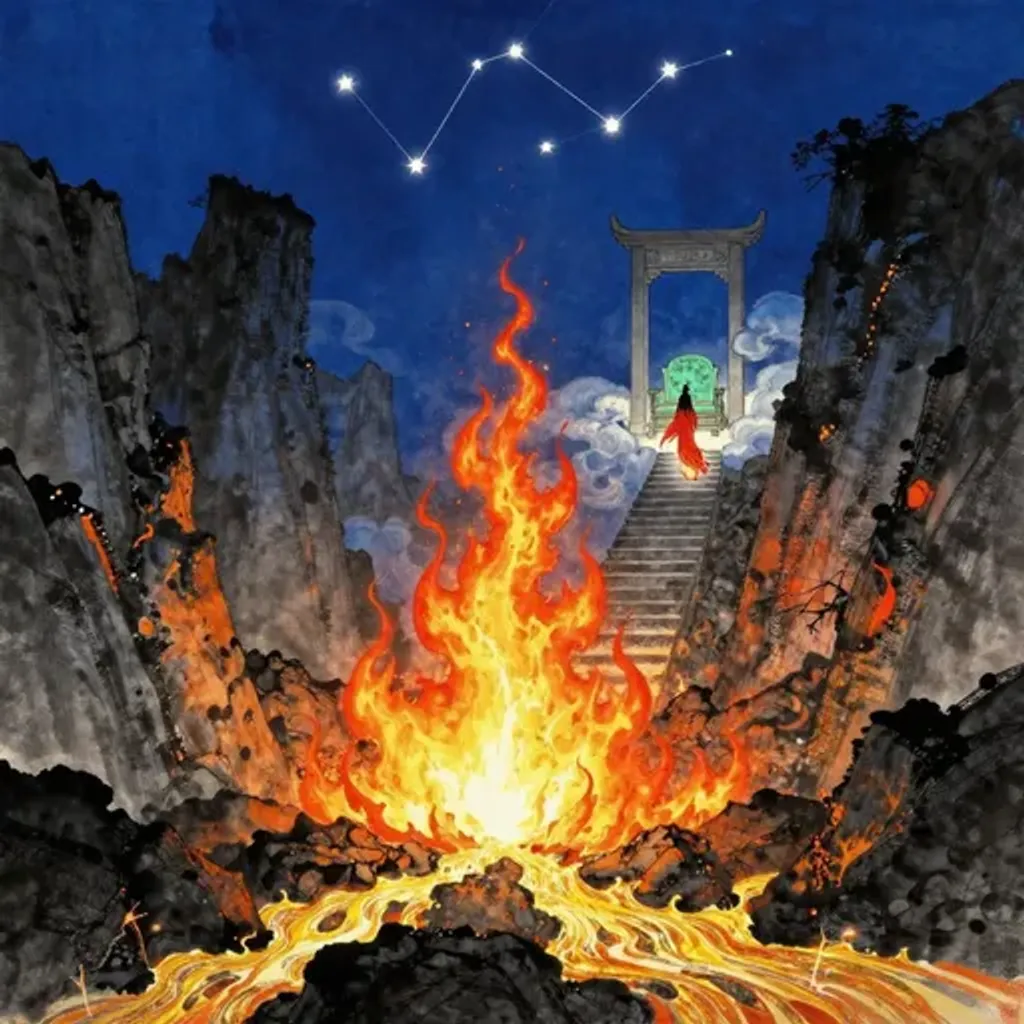
火井暘谷,揚芒生角。犯歷天門,闚見太微。登上玉床,家易共公。
The fire well at Yanggu sends forth its brilliance, sprouting horns of light. Transgressing the calendar, it passes through the Heavenly Gate; peering into the Taiwei enclosure. Ascending the jade throne, the house is exalted to that of a duke.
— Jiao Yanshou, Yilin (Forest of Changes), 1st century BC
Commentary
Fire over wind fills the cauldron; the lake rests above the earth as sovereign authority descends. A fire well blazes at the Valley of the Rising Sun, radiating horns of light. The ascent breaches the Gate of Heaven itself and peers into the Supreme Palace enclosure — Taiwei, the celestial court of the emperor in Chinese star-lore. Mounting the Jade Throne, the household transforms its lord into a duke. This is a vision of cosmic enthronement: terrestrial fire ascends through solar mythology to the stellar court. From The Cauldron to Approach, the transformation channels heavenly fire into earthly governance. The cauldron's flame rises to become sovereign illumination, and Approach's lake-beneath-earth brings that authority down to the people.
鼎 → 觀
Hexagram 50 → Hexagram 20: Contemplation
Changing lines: 2, 3, 4, 5
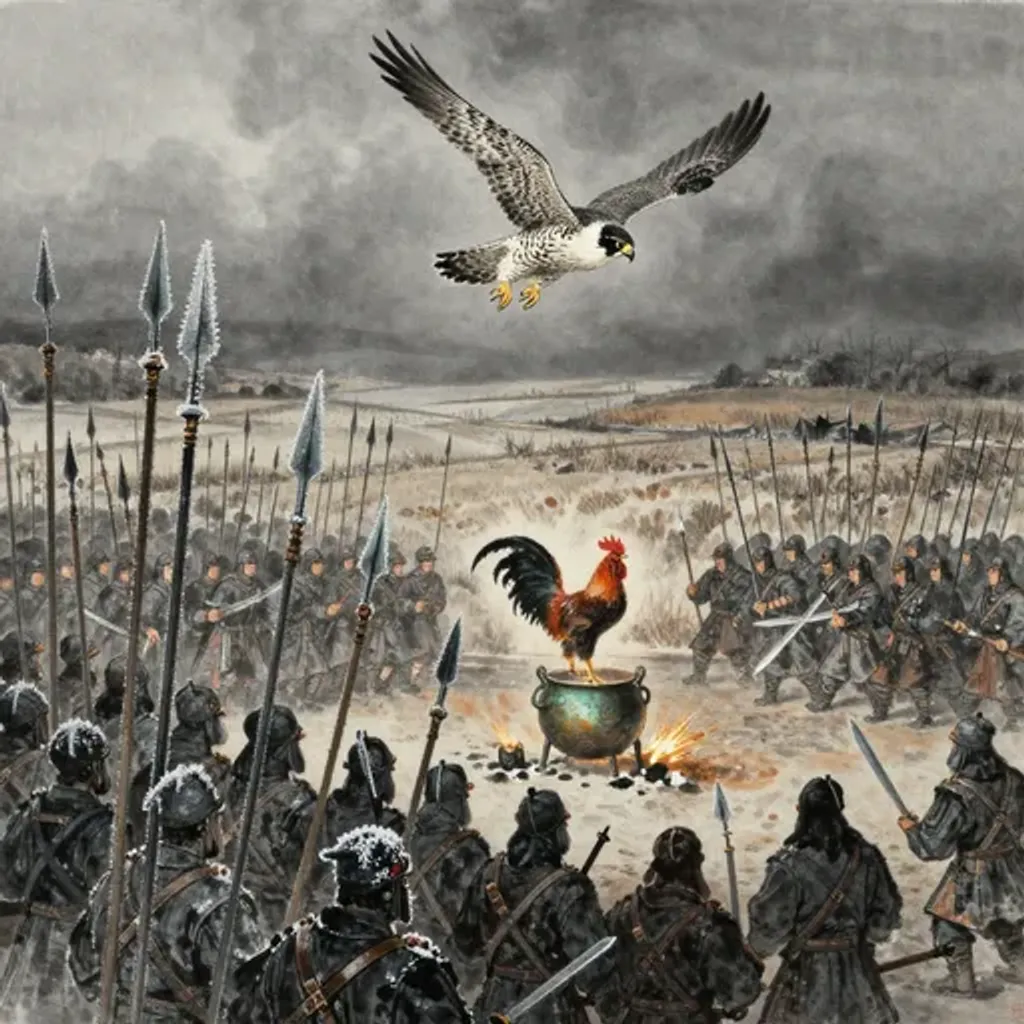
秋隼冬翔,數被嚴霜。甲兵充庭,萬物不生。雞釜夜鳴,民擾大驚。
The autumn falcon soars in winter, struck repeatedly by bitter frost. Arms and armor fill the courtyard; the ten thousand things do not grow. The rooster cries from the cauldron at night; the people are thrown into great alarm.
— Jiao Yanshou, Yilin (Forest of Changes), 1st century BC
Commentary
Fire over wind fills the cauldron, but wind sweeps across the earth in bleak Contemplation. An autumn falcon soars through winter skies, battered by repeated frost. Soldiers fill the courtyard, and nothing grows. Then the strangest omen: a rooster crows inside the cooking pot at night, and the people panic in terror. Livestock prophesying from within the cauldron — the very vessel of civilization producing unnatural sounds — signals a world turned upside down. Militarization has sterilized the land; nature itself protests through monstrous portents. From The Cauldron to Contemplation, the transformation demands that the observer see clearly what has gone wrong. Wind over earth surveys the damage: the cauldron meant to nourish now breeds horror.
鼎 → 噬嗑
Hexagram 50 → Hexagram 21: Biting Through
Changing lines: 1, 2, 3
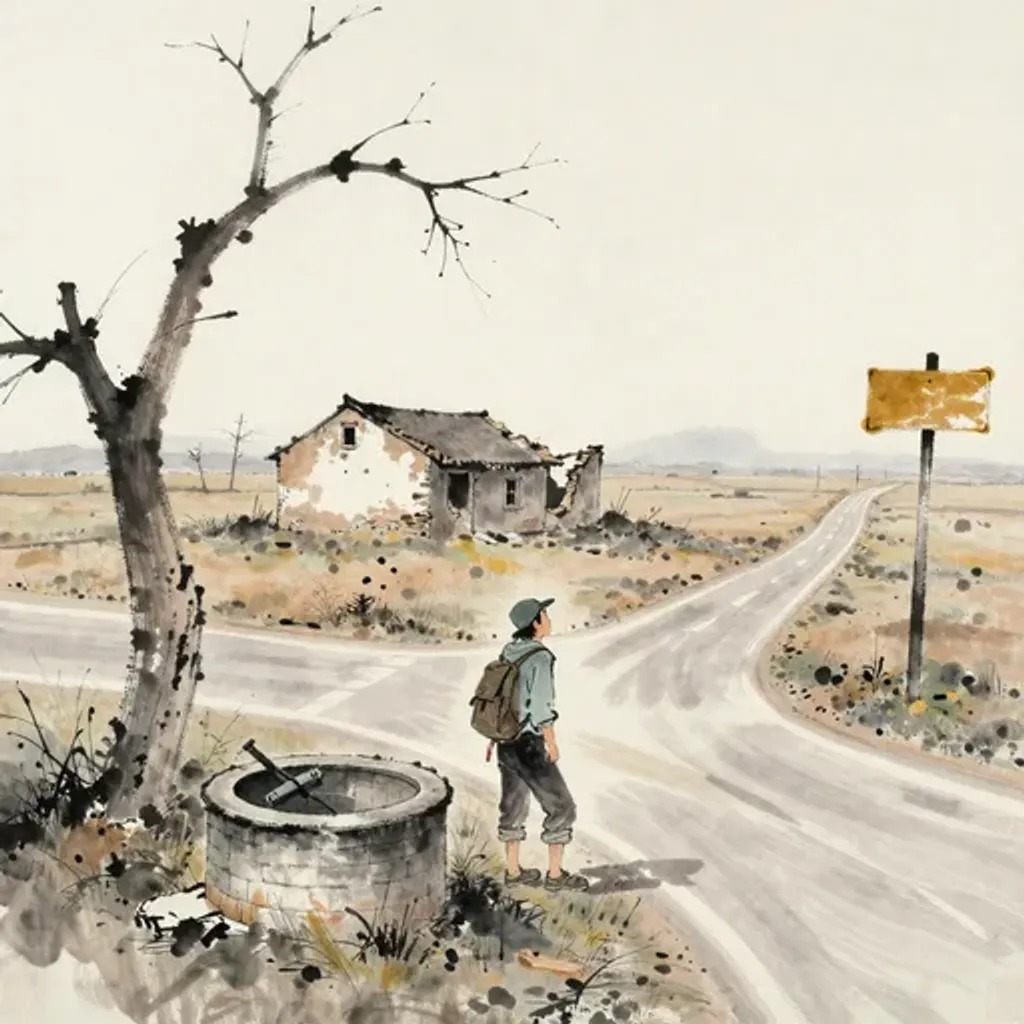
東行西步,失其次舍。乾侯野井,昭君喪居。
Walking east, stepping west; losing his lodging along the way. The lord of Qianhou at the wilderness well; the lord of Zhao loses his dwelling.
— Jiao Yanshou, Yilin (Forest of Changes), 1st century BC
Commentary
Fire over wind fills the cauldron; lightning and thunder bite through obstruction. Walking east then stepping west, one loses lodging after lodging — no place to rest. The verse names two exiles: 'Qianhou' evokes Duke Zhao of Lu, who was expelled and died in the town of Ganhou (乾侯) in 510 BC, drinking from wild wells in the wilderness. 'Zhao Jun' may refer to Duke Zhao himself — the legitimate ruler who lost his home. From The Cauldron to Biting Through, the transformation demands that what obstructs must be removed by force. Fire and thunder strike together to sever falsehood. The exiled lord wanders because the bite has not yet been applied — the obstruction in the court remains unjudged.
鼎 → 賁
Hexagram 50 → Hexagram 22: Grace
Changing lines: 1, 2, 4
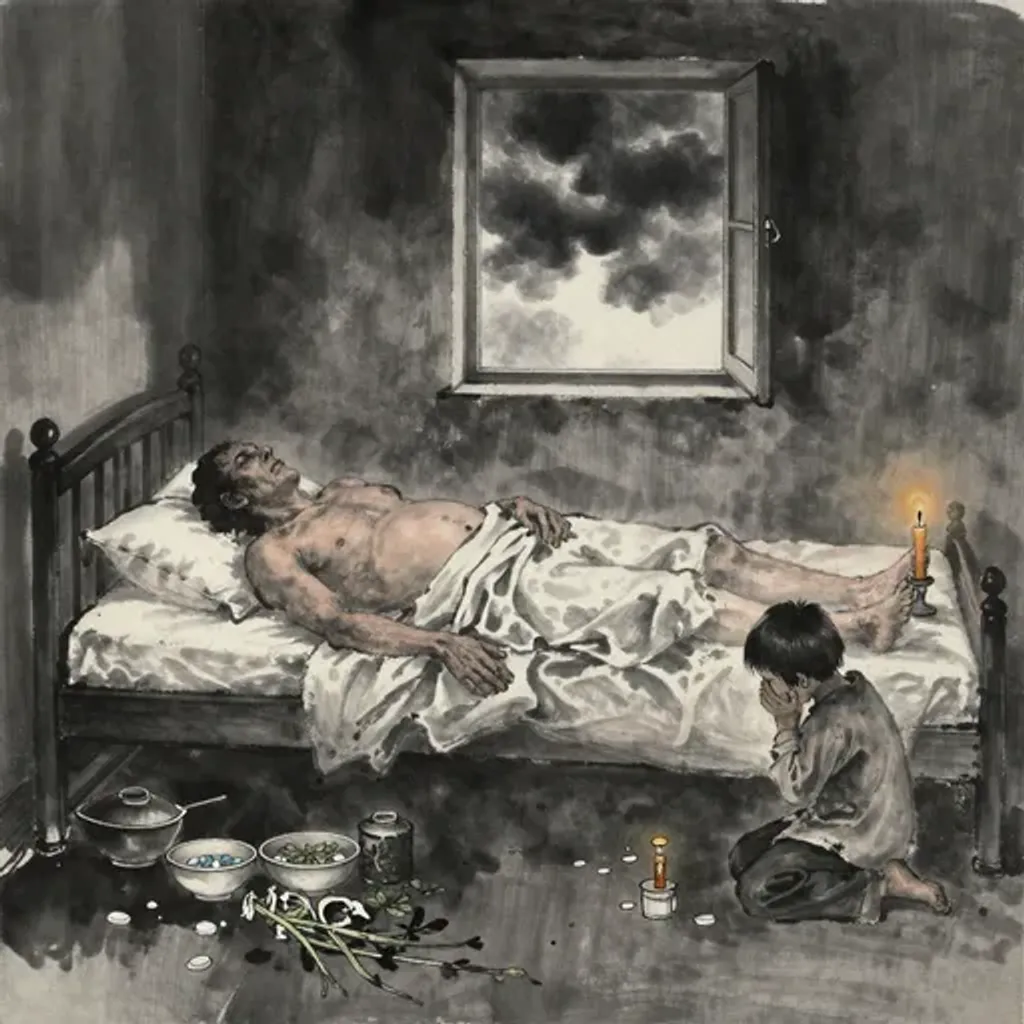
腫脛病腹,陷廁污辱。命短時極,孤子哀哭。
Swollen legs, ailing belly; fallen into the privy, shamed and soiled. Life cut short, time exhausted; the orphaned child weeps in sorrow.
— Jiao Yanshou, Yilin (Forest of Changes), 1st century BC
Commentary
Fire over wind fills the cauldron, yet fire beneath the mountain illuminates only surface beauty in Grace. Swollen shins and a diseased belly, fallen into a latrine's filth and shame. Life cut short at its extremity — an orphaned child cries in anguish. The verse is unsparing: physical decay, bodily humiliation, premature death, and a child left alone to grieve. No historical allusion softens this; it is raw misfortune. From The Cauldron to Grace, the transformation is bitterly ironic. Grace decorates the surface — mountain over fire, beauty illuminated from below — but beneath the ornament lies disease and degradation. The cauldron's fire, which should refine, here only exposes what cannot be adorned. No amount of grace can dress a body falling apart.
鼎 → 剝
Hexagram 50 → Hexagram 23: Splitting Apart
Changing lines: 2, 3, 4
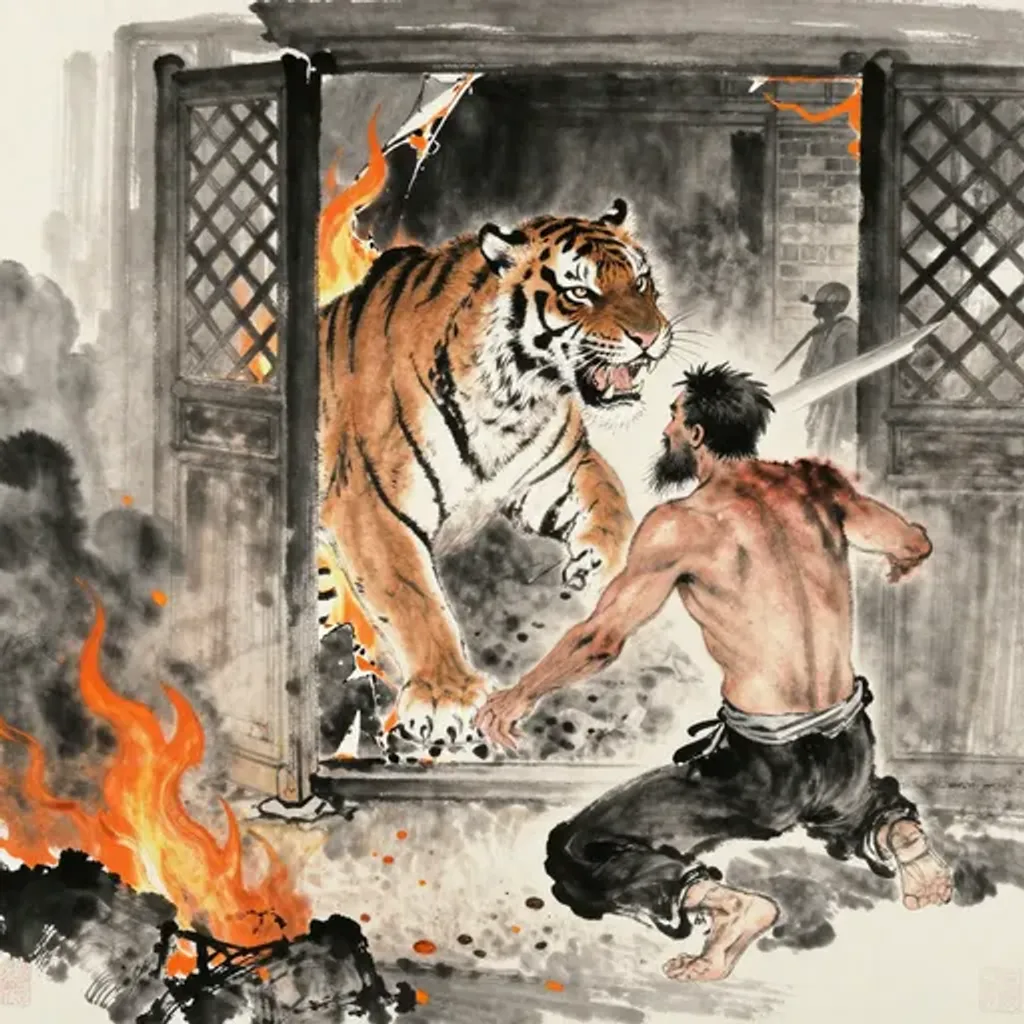
切膚近火,虎絕我鬚。小人橫暴,君復何之?
Scorching the skin near the fire; the tiger tears away my whiskers. Petty men rage with violence; where, then, shall the lord turn?
— Jiao Yanshou, Yilin (Forest of Changes), 1st century BC
Commentary
Fire over wind fills the cauldron, but the mountain rests upon earth as support crumbles in Splitting Apart. Skin draws too close to fire and singes; a tiger bites off one's whiskers. Petty men run rampant, and the gentleman has nowhere left to go. The cauldron's fire, approached without care, burns rather than nourishes. The tiger represents unchecked violent power — small men who seize authority through brute intimidation. The gentleman is left asking 'where now?' as his world strips away around him. From The Cauldron to Splitting Apart, the transformation traces the systematic erosion of civilized order. Mountain clinging to earth, each line peeling away from below — the cauldron's sacred fire becomes a threat, and even its intended beneficiaries get scorched.
鼎 → 復
Hexagram 50 → Hexagram 24: Return
Changing lines: 1, 2, 3, 4, 6
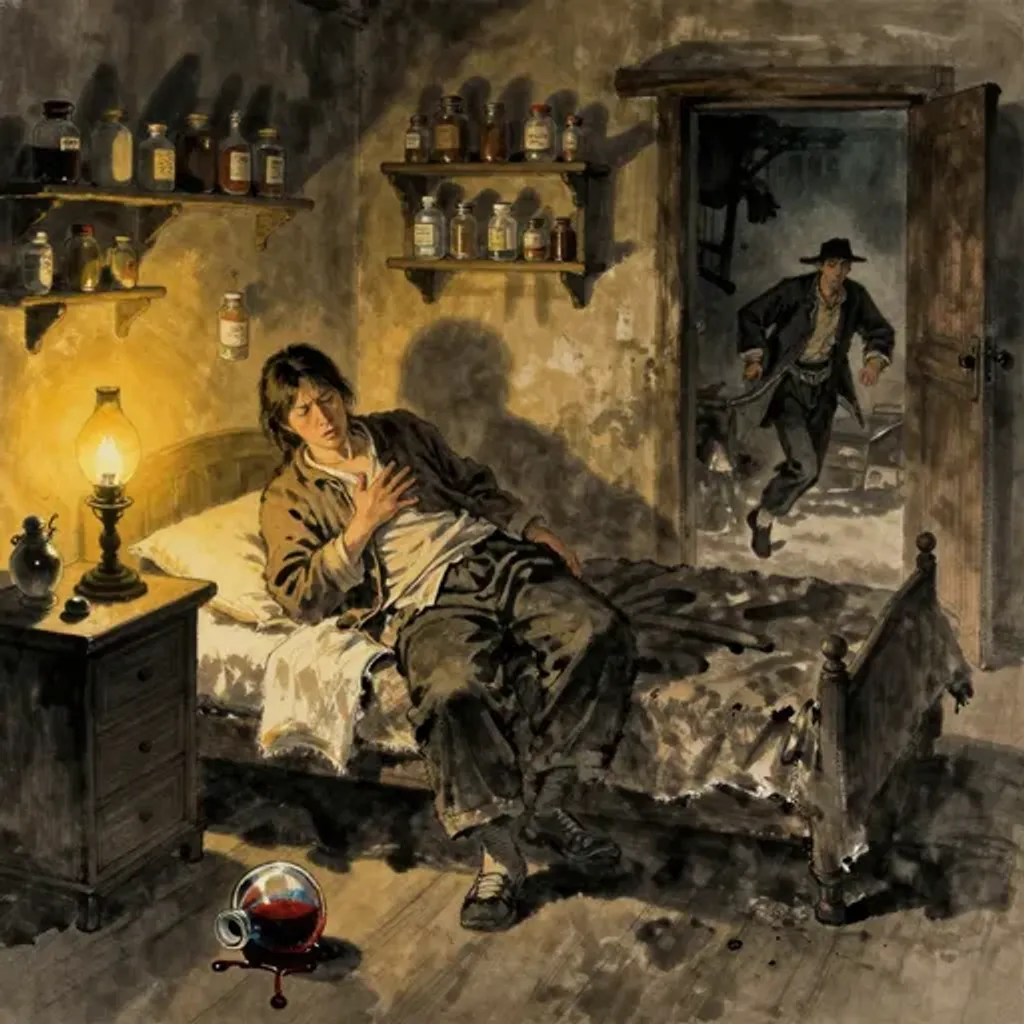
女室作毒,為我心疾。和不能治,晉人赴告。
The woman of the household brews poison, bringing illness to my heart. Harmony cannot cure it; the men of Jin send urgent word.
— Jiao Yanshou, Yilin (Forest of Changes), 1st century BC
Commentary
Fire over wind fills the cauldron; thunder stirs beneath the earth as Return begins. A woman in the inner chamber brews poison, inflicting a heart-sickness that no medicine can cure. Even the mild harmonizing herbs fail. Then 'the people of Jin rush to report' — news of the crisis spreads beyond the household. This evokes a pattern found in Spring and Autumn annals: palace women administering slow poison to husbands or rivals, with neighboring states drawn in to arbitrate or exploit the resulting chaos. From The Cauldron to Return, the transformation suggests that what festers in secret must eventually emerge. Thunder stirs underground; the cauldron's fire, corrupted by poison, forces a reckoning — return to the root means confronting what was concealed.
鼎 → 无妄
Hexagram 50 → Hexagram 25: Innocence
Changing lines: 1, 2, 3, 5
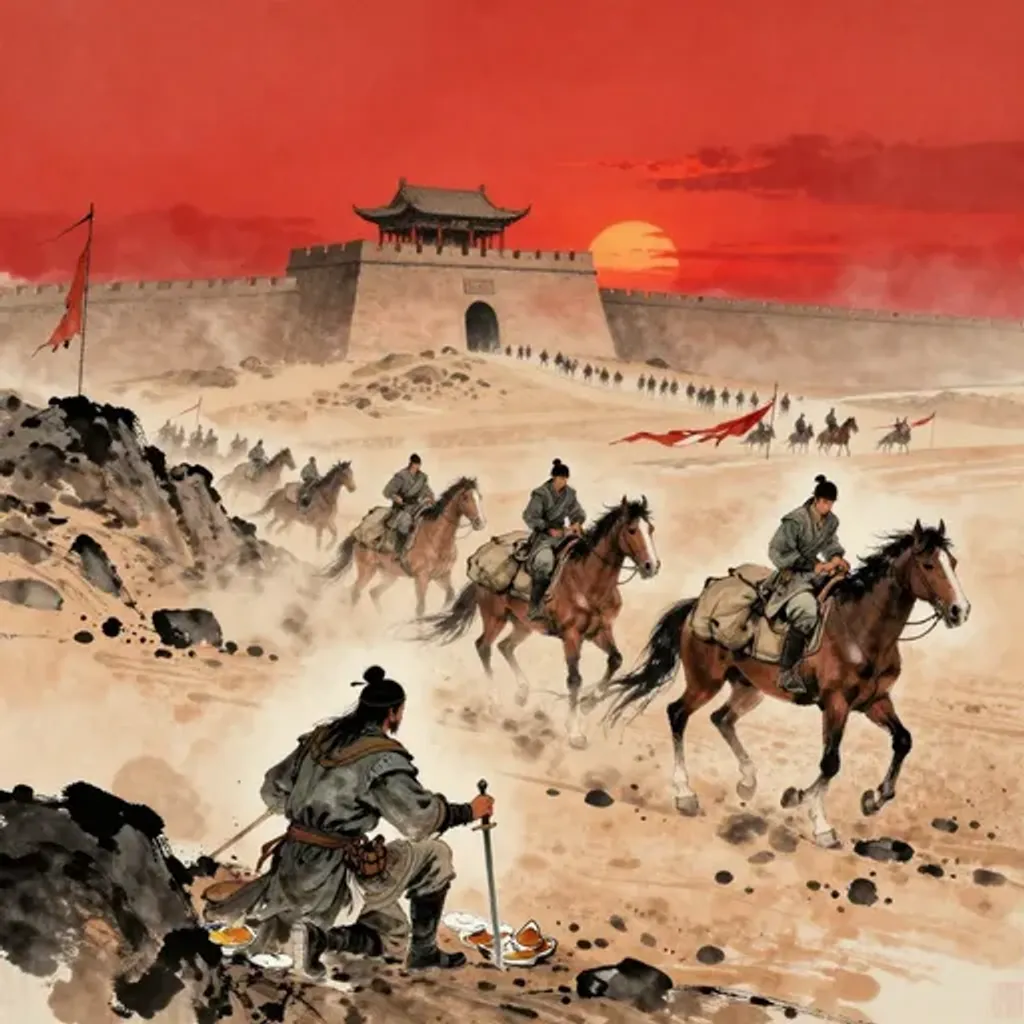
兵征大宛,北出玉門。與胡寇戰,平城道西。七月無糧,身幾不全。
The army campaigns against Dayuan, marching north through the Jade Gate. They battle the Hu brigands west of Pingcheng. In the seventh month, provisions are gone; the body is barely kept whole.
— Jiao Yanshou, Yilin (Forest of Changes), 1st century BC
Commentary
Fire over wind fills the cauldron, but thunder beneath heaven moves without design in Innocence. Troops march against Dayuan, exiting north through the Jade Gate Pass. They engage the Xiongnu in battle on the road west of Pingcheng. For seven months supplies run out, and bodies barely survive. This unmistakably references the Han dynasty campaigns in Central Asia — the Jade Gate (Yumen Pass) marked the empire's western frontier, and the Pingcheng siege recalls Emperor Gaozu's disastrous entrapment by the Xiongnu chief Modu in 200 BC. From The Cauldron to Innocence, the transformation is cruelly apt: the soldiers' suffering is not divine punishment but sheer mischance — innocence's dark side, where catastrophe strikes without moral cause and survival is a matter of luck, not virtue.
鼎 → 大畜
Hexagram 50 → Hexagram 26: Great Taming
Changing lines: 1, 4
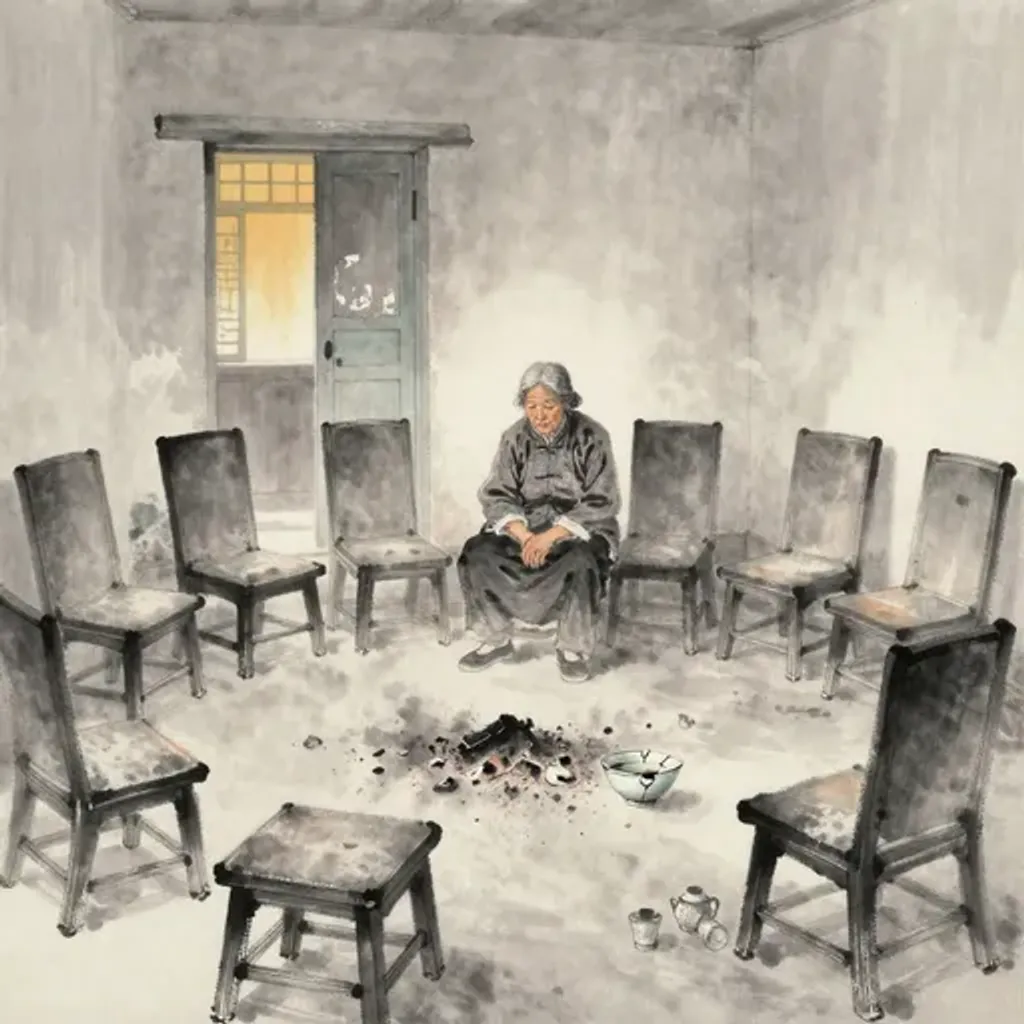
九子十夫,莫適與居。貞心不壹,自令老孤。
Nine sons and ten husbands, yet none will dwell with her. Her steadfast heart was not constant; she has made herself old and alone.
— Jiao Yanshou, Yilin (Forest of Changes), 1st century BC
Commentary
Fire over wind fills the cauldron; heaven stored within the mountain accumulates without release. Nine sons and ten husbands, yet none suitable to live with — the faithful heart cannot settle on one, and so she grows old alone. The verse depicts a woman surrounded by suitors or potential matches but unable to commit, her 'steadfast heart not unified,' scattering her devotion until nothing remains. The irony cuts deep: fidelity that refuses to focus becomes indistinguishable from fickleness. From The Cauldron to Great Taming, the transformation warns that accumulation without choice leads to paralysis. The mountain stores heaven's energy but never spends it. The cauldron cooks for many, but if no one sits down to eat, the feast goes cold.
鼎 → 頤
Hexagram 50 → Hexagram 27: Nourishment
Changing lines: 1, 2, 3, 4
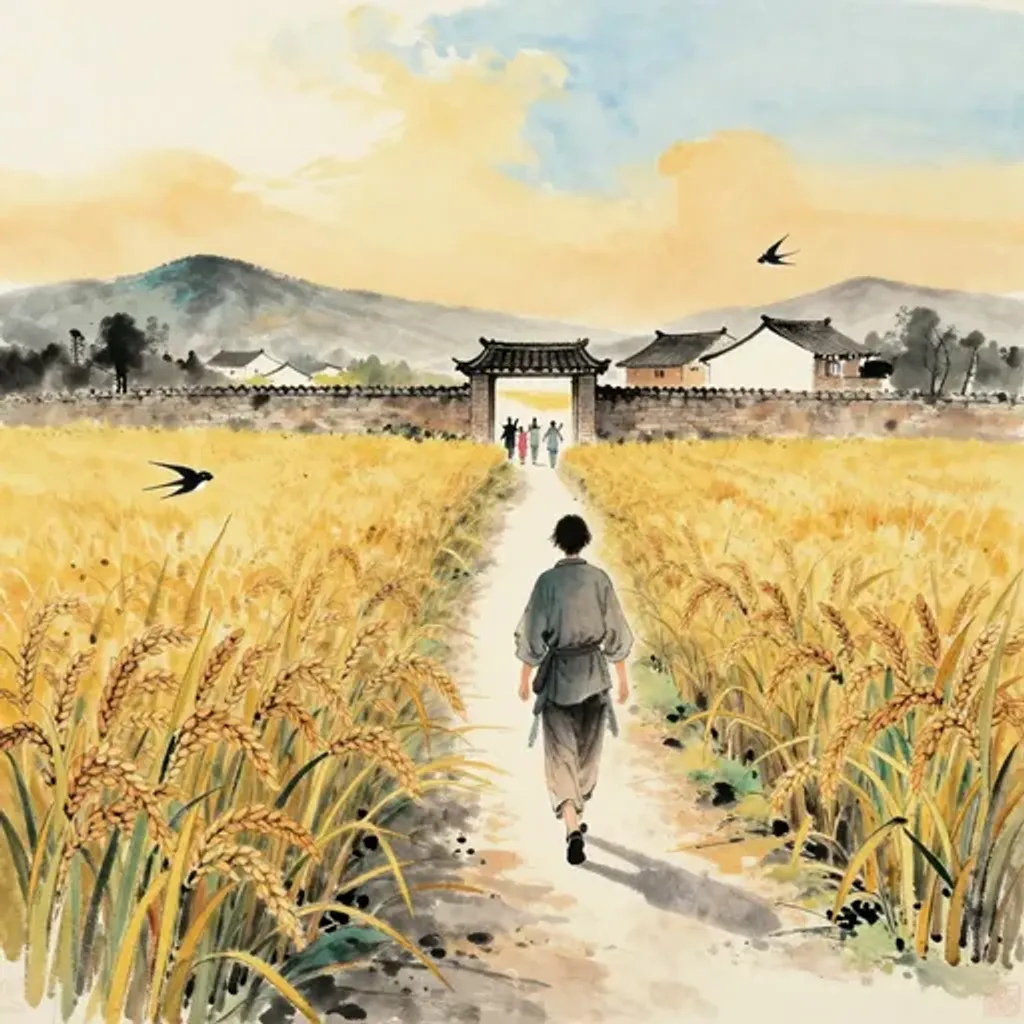
東行稻麥,遂至家國。樂土无災,君父何憂?
Traveling east through rice and wheat, arriving at last in the homeland. A happy land free from calamity; what worry need the lord and father bear?
— Jiao Yanshou, Yilin (Forest of Changes), 1st century BC
Commentary
Fire over wind fills the cauldron; the mountain rests above thunder in Nourishment. Traveling east one finds rice and wheat, arriving at last in one's homeland. A blessed soil free of calamity — what has the lord and father to worry about? The verse traces a journey from scarcity to abundance, culminating in a return home where grain grows plentifully and disaster is absent. 'East' traditionally meant fertile river plains in the Chinese geographical imagination. From The Cauldron to Nourishment, the transformation is among the most natural in the Yi: the cauldron cooks, and Nourishment's mountain-over-thunder provides the jaw that receives the food. What was refined reaches its proper destination — the mouth that needs feeding, the homeland that needs its people.
鼎 → 大過
Hexagram 50 → Hexagram 28: Great Exceeding
Changing lines: 5, 6
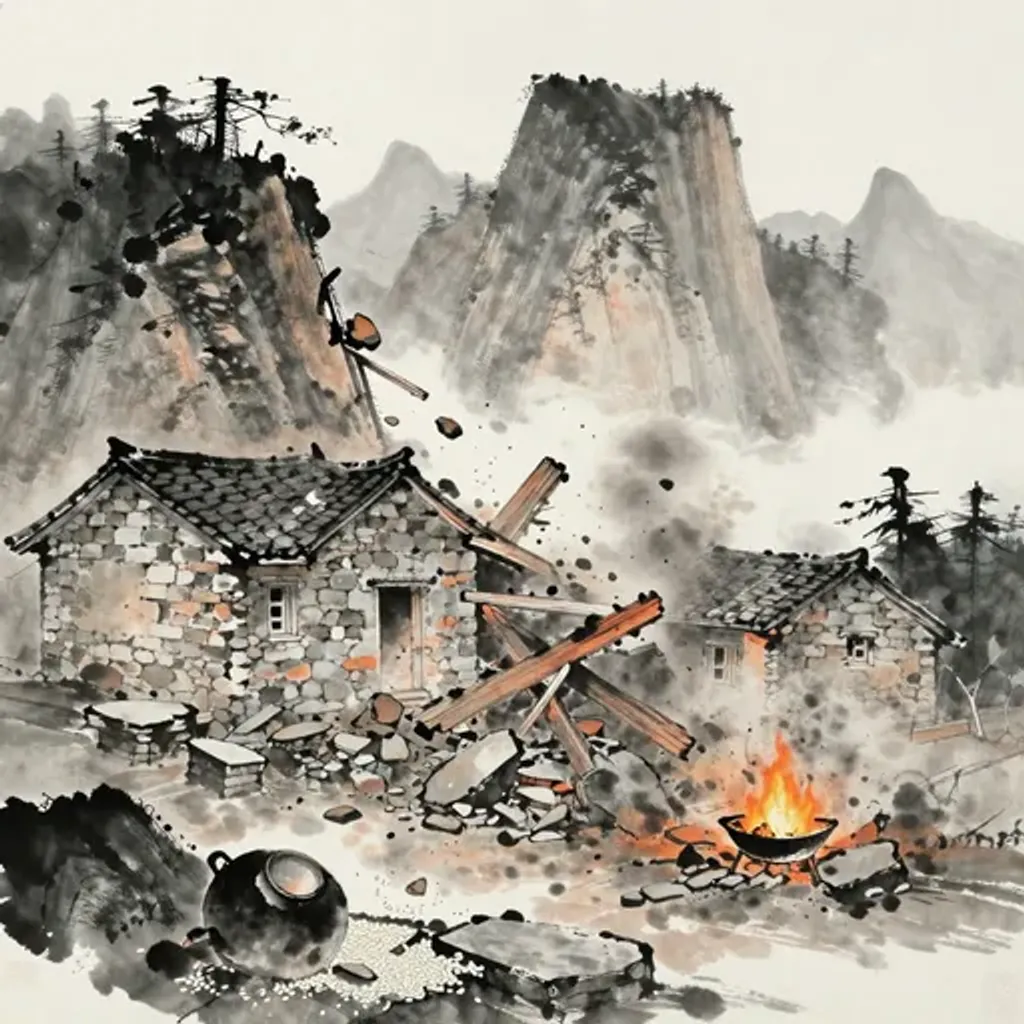
作室山根,所以為安。一夕崩巔,破我饔飡。
Building a house at the mountain's base, thereby finding safety. One night the summit collapses, crushing our hearth and our meal.
— Jiao Yanshou, Yilin (Forest of Changes), 1st century BC
Commentary
Fire over wind fills the cauldron, but the lake submerges the trees in Great Exceeding — the ridgepole bends past its limit. A house built at the mountain's base, chosen for security, collapses overnight when the peak crumbles, smashing the morning and evening meals. The cauldron's daily sustenance — 'yongcan,' the cooked food of a household — is destroyed in an instant. What seemed the safest foundation proves the most dangerous: the mountain that sheltered also crushed. From The Cauldron to Great Exceeding, the transformation captures structural failure under impossible weight. The cauldron overflows; the ridgepole sags. Building at the mountain's root felt prudent, but the mountain's excess mass became the very instrument of ruin.
鼎 → 坎
Hexagram 50 → Hexagram 29: The Abysmal Water
Changing lines: 3, 4, 5, 6
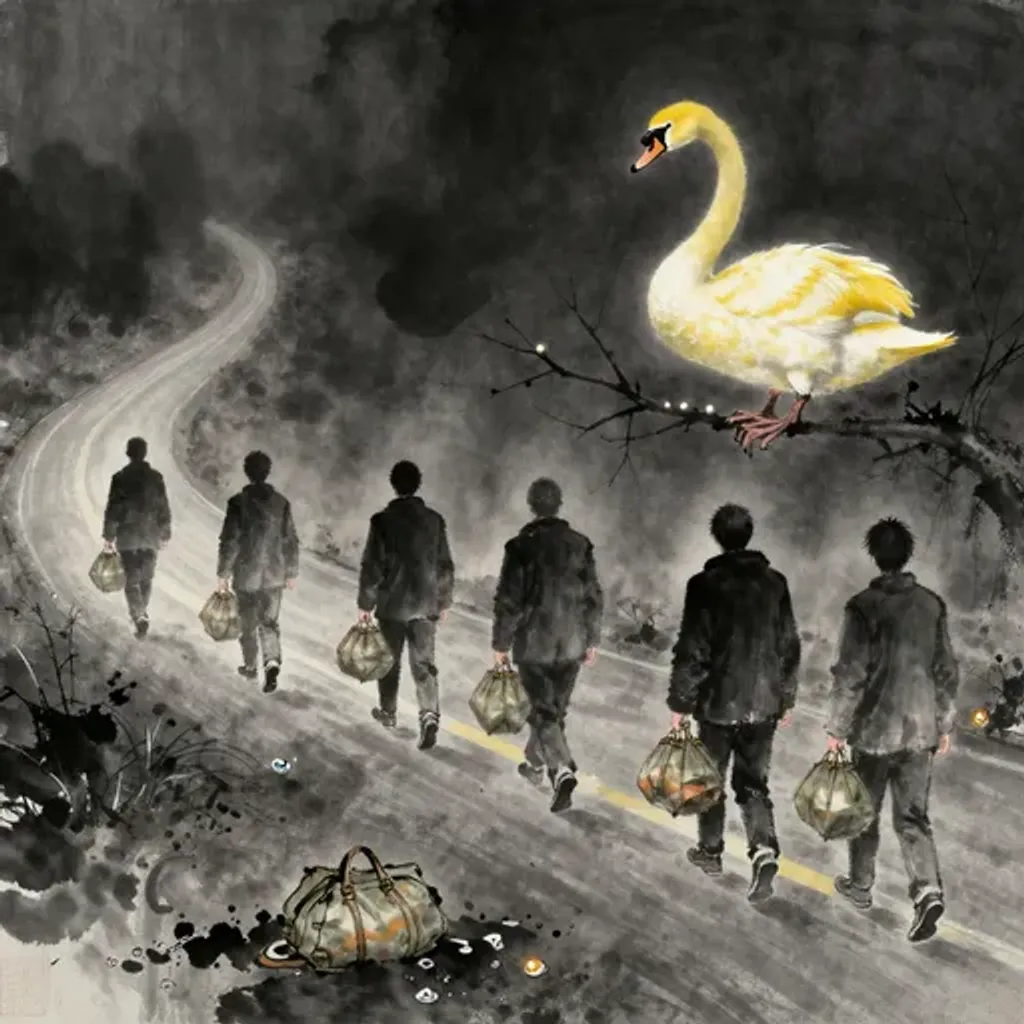
六人俱行,各遺其囊。黃鵠失珠,无以為明。
Six men travel together, each having lost his bag. The yellow swan has lost its pearl and has no light to see by.
— Jiao Yanshou, Yilin (Forest of Changes), 1st century BC
Commentary
Fire over wind fills the cauldron; water upon water doubles the abyss. Six travelers walk together, each losing their pack along the way. A golden swan drops its pearl and has nothing left to shine by. The verse depicts collective loss — not one person's misfortune but an entire company stripped of their belongings, their guiding light extinguished. The 'yellow swan' (huanghu) losing its luminous pearl suggests wisdom or virtue lost, leaving only darkness. From The Cauldron to The Abysmal, the transformation plunges the cauldron's fire into water's depths. What was refined and radiant sinks into danger. Six people losing their way together compounds the peril — in the doubled abyss, there is no one left to illuminate the path.
鼎 → 離
Hexagram 50 → Hexagram 30: The Clinging Fire
Changing lines: 1, 2
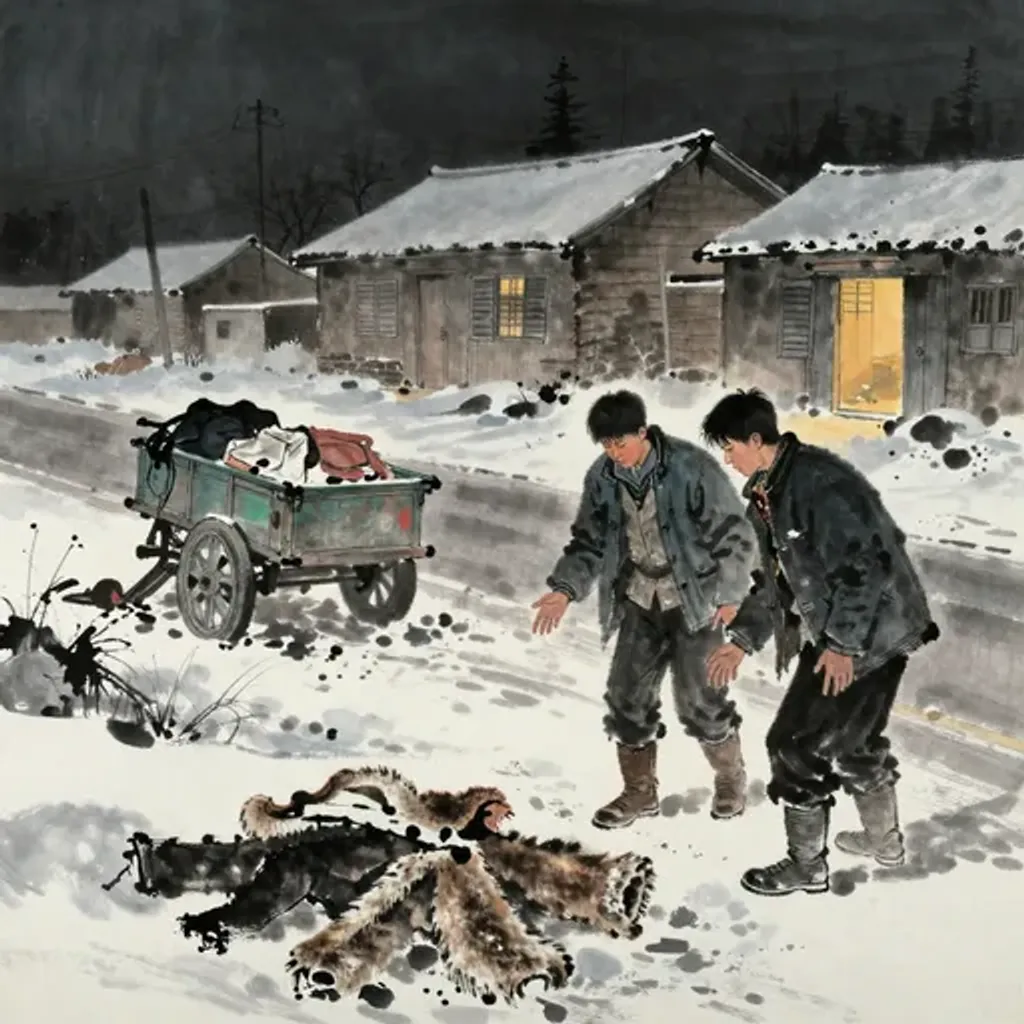
伯蹇叔盲,莫為守裝。失我衣裘,我是陰鄉。
The elder brother is lame, the younger blind; none can guard the baggage. We have lost our coats and furs; this is a land of yin and shadow.
— Jiao Yanshou, Yilin (Forest of Changes), 1st century BC
Commentary
Fire over wind fills the cauldron; doubled fire clings and illuminates in The Clinging. 'The elder limps, the younger is blind — no one guards the baggage.' Coats and furs are lost, and 'I dwell in the shade.' The names Boqian ('elder lame') and Shumang ('younger blind') may be generic or may allude to figures diminished by infirmity — one who cannot walk and one who cannot see, together unable to protect what they carry. The result is exposure and loss, ending in shadow rather than light. From The Cauldron to The Clinging, doubled fire should mean doubled illumination, yet here the light reveals only vulnerability. The cauldron's fire burns, but those who tend it are too broken to benefit — brightness that exposes helplessness rather than dispelling it.
鼎 → 咸
Hexagram 50 → Hexagram 31: Influence
Changing lines: 2, 5, 6
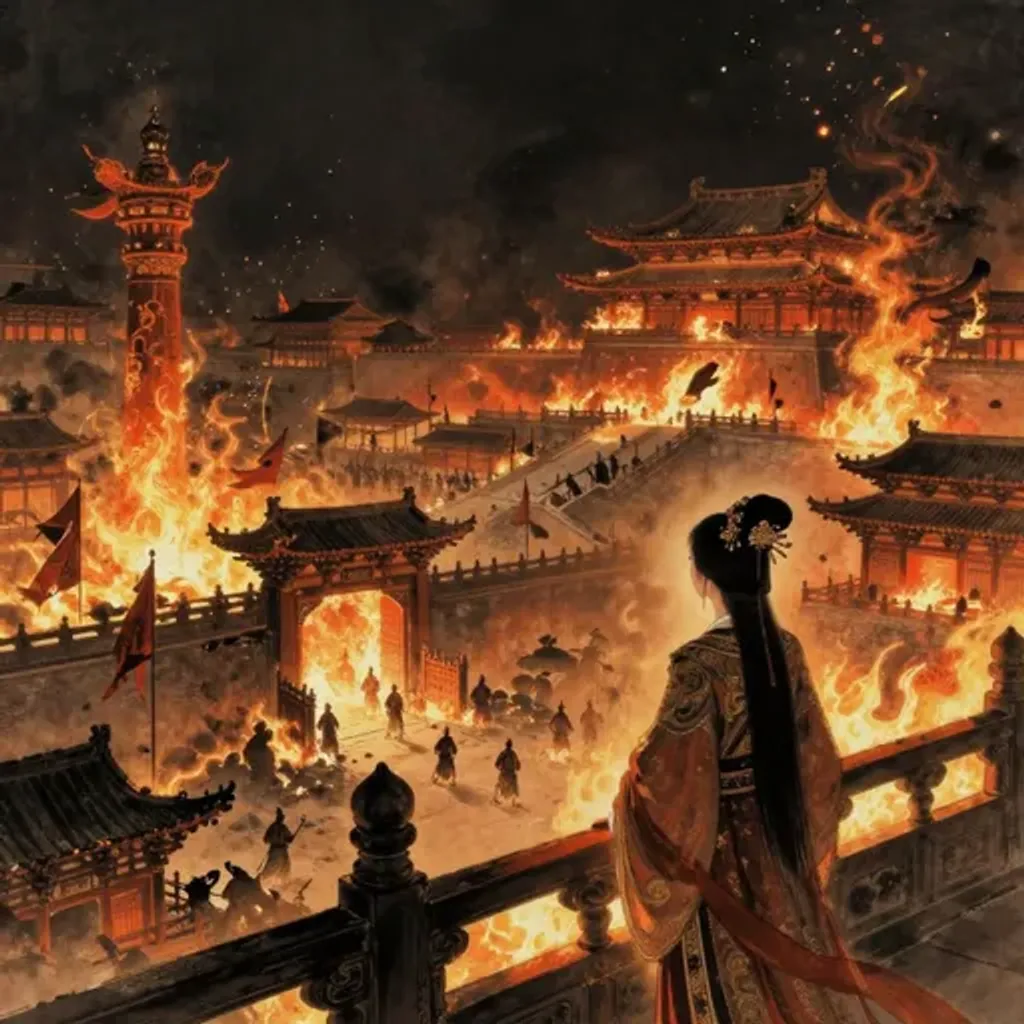
褒寵洒尤,敗政傾家。覆我宗國,秦滅周室。
Lavishing favor, bestowing indulgence; ruining governance, overturning the house. Our ancestral state is destroyed; Qin annihilates the house of Zhou.
— Jiao Yanshou, Yilin (Forest of Changes), 1st century BC
Commentary
Fire over wind fills the cauldron; the lake rests atop the mountain in Influence. Indulgent favor and lavish grace corrupt governance and topple the household. 'Our ancestral state overturned — Qin extinguished the house of Zhou.' The verse names the pattern directly: Bao Si's pampering by King You led to the beacon-fire debacle and the fall of Western Zhou. But the final clause leaps centuries forward to Qin's annexation of the remnant Zhou domain in 256 BC. Two destructions bookend the dynasty: ruinous feminine influence opens the wound, and a ruthless successor state finishes the kill. From The Cauldron to Influence, the transformation warns that receptivity without discernment is fatal. The lake atop the mountain receives everything — including poison.
鼎 → 恆
Hexagram 50 → Hexagram 32: Duration
Changing lines: 6
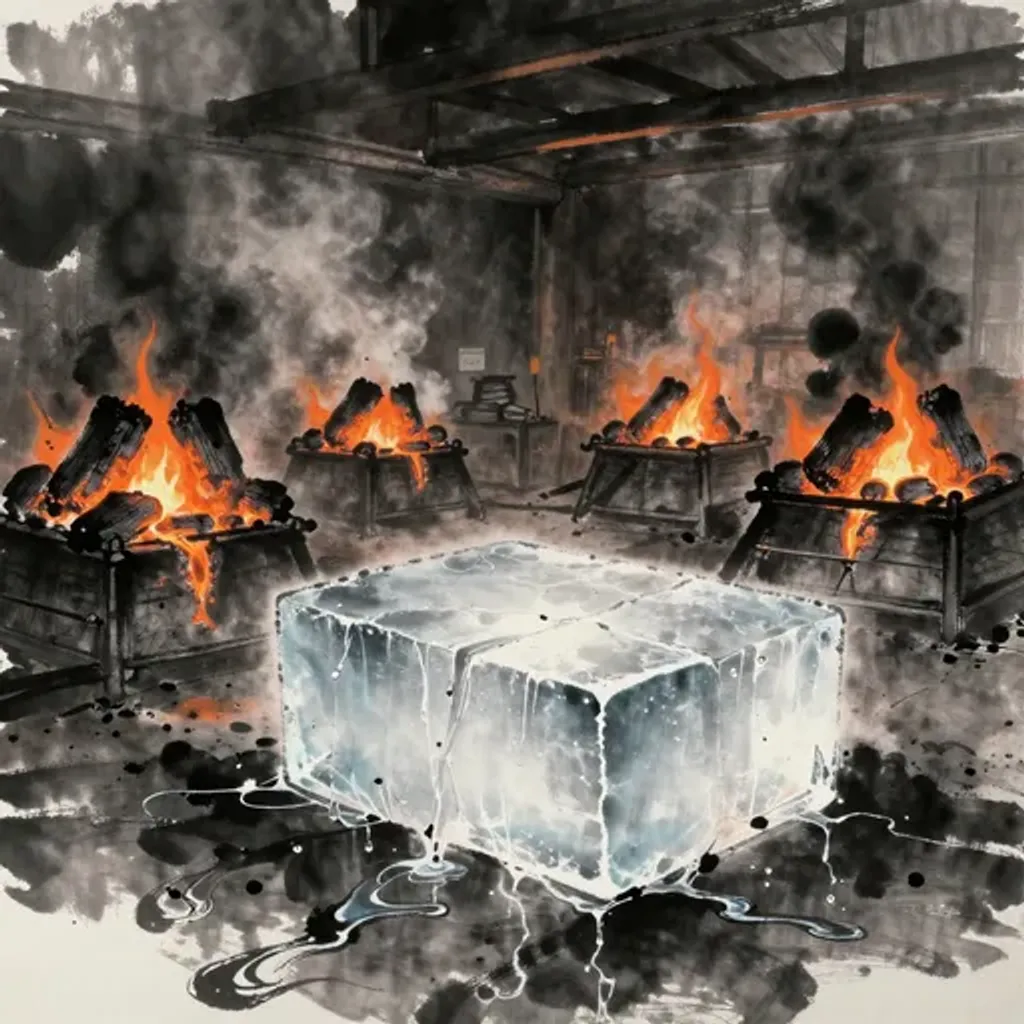
該言譯語,仇禍相得。冰入炭室,消滅不息。
Slanderous words and twisted speech; enmity and calamity find each other. Ice enters the charcoal room, melting away without rest.
— Jiao Yanshou, Yilin (Forest of Changes), 1st century BC
Commentary
Fire over wind fills the cauldron; thunder and wind endure together in Duration. Slander and false translations compound enmity until enemies find each other. Ice enters a charcoal room and melts away ceaselessly. The verse juxtaposes two forms of dissolution: social bonds corroded by malicious speech, and physical substance consumed by hostile environment. Ice in a heated room cannot survive — its nature is incompatible with its surroundings, and it vanishes without trace. The slanderer's words function like heat: invisible, relentless, dissolving trust until nothing solid remains. From The Cauldron to Duration, the transformation is bitterly ironic. Duration means constancy, but what endures here is the process of destruction itself — enmity that feeds on itself, dissolution that never stops.
鼎 → 遯
Hexagram 50 → Hexagram 33: Retreat
Changing lines: 2, 5
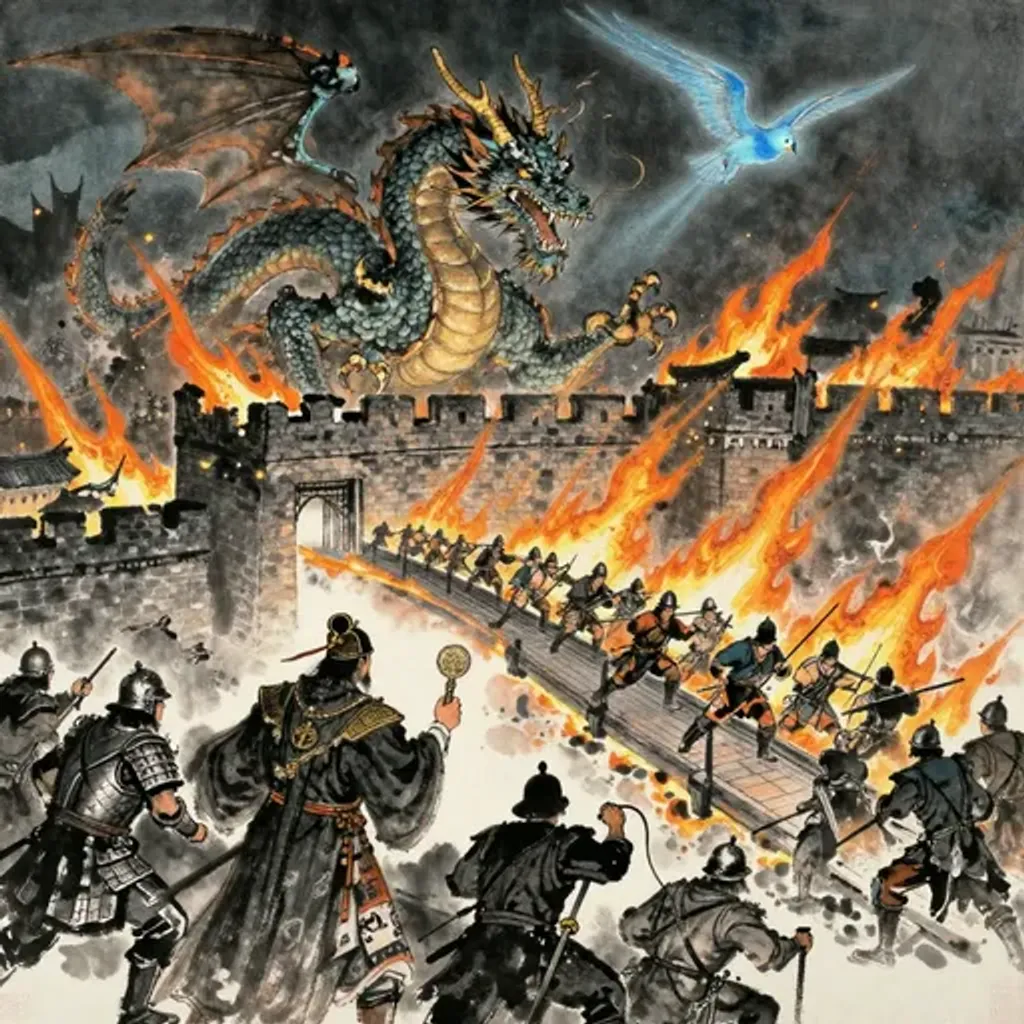
彭名為妖,暴龍作災。盜堯衣裳,聚跖荷兵。青禽照夜,三旦夷亡。
Peng Ming becomes a monster; the violent dragon brings disaster. Stealing Yao's robes, gathering Zhi's brigands in arms. The blue bird shines through the night; by the third dawn, the rebels are destroyed.
— Jiao Yanshou, Yilin (Forest of Changes), 1st century BC
Commentary
Fire over wind fills the cauldron; heaven above the mountain allows space for retreat. 'Peng Ming works mischief as a demon, the violent dragon brings disaster.' Someone steals Yao's ceremonial robes and assembles Robber Zhi's armed gang. A blue-green bird illuminates the night, and by the third dawn, the barbarians perish. The verse layers usurpation upon usurpation: demonic agents, dragon-catastrophes, stolen imperial vestments, and bandits masquerading as rulers. The 'blue bird shining at night' may signal a celestial omen that exposes the frauds. From The Cauldron to Retreat, the transformation demands withdrawal when evil wears virtue's clothing. Heaven above the mountain provides the high ground from which to observe pretenders — and the wisdom to withdraw before their violence consumes the righteous.
鼎 → 大壯
Hexagram 50 → Hexagram 34: Great Power
Changing lines: 1, 6
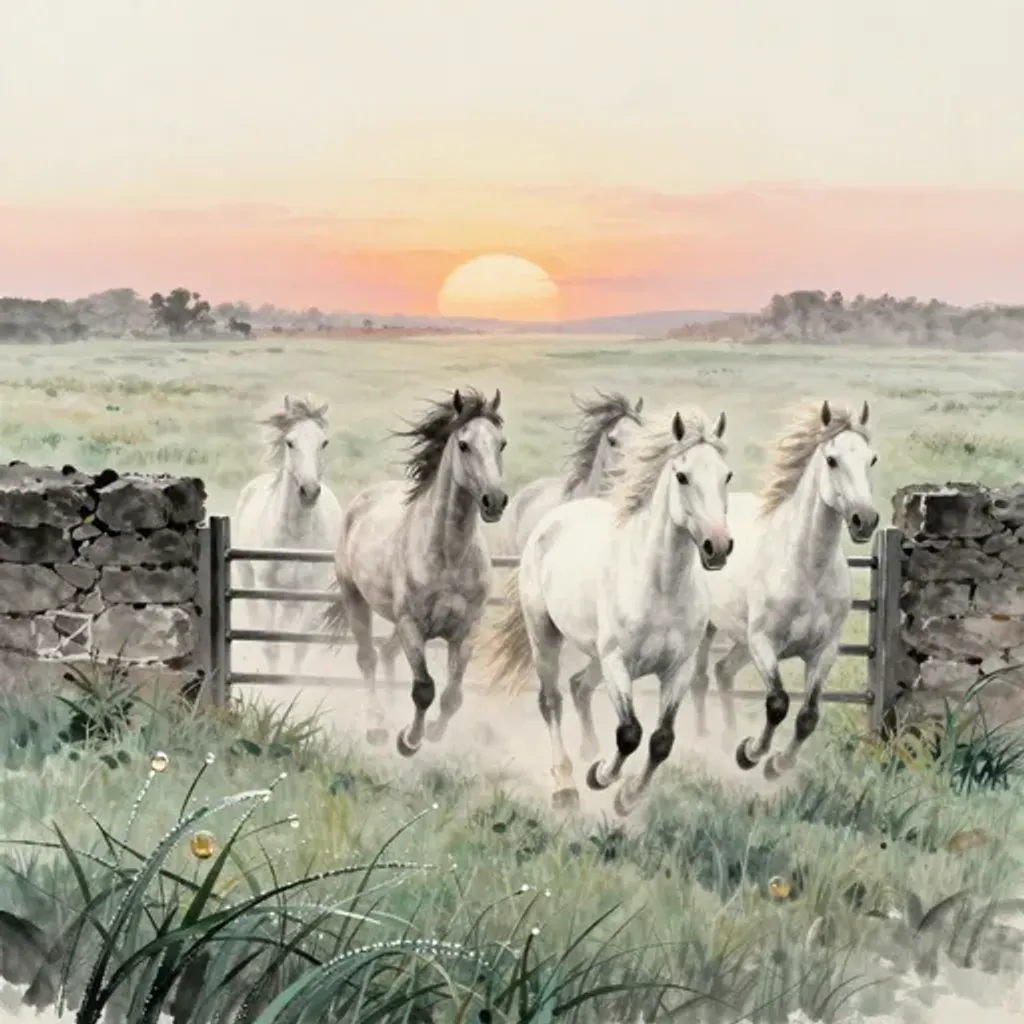
朝露白日,四馬過隙。歲短期促,時難再得。
Morning dew in white sunlight; four horses flash past the gap. The year is short, the appointed time presses; such moments cannot be had again.
— Jiao Yanshou, Yilin (Forest of Changes), 1st century BC
Commentary
Fire over wind fills the cauldron; thunder roars above heaven with Great Power. Morning dew under white sunlight, four horses flash past a crack in the wall. The year is short, the appointed time presses — moments once gone cannot be recaptured. Two classical metaphors for life's brevity converge: dew that vanishes with the sun, and the 'white colt passing a gap' from Zhuangzi. The four horses amplify the speed — not one but four steeds racing past the aperture. From The Cauldron to Great Power, the transformation reveals an urgent paradox: thunder above heaven represents maximum force, yet force cannot slow time. The cauldron refines, but the refined moment evaporates instantly. Great Power's thunder is deafening — and still the dew dries.
鼎 → 晉
Hexagram 50 → Hexagram 35: Progress
Changing lines: 2, 3
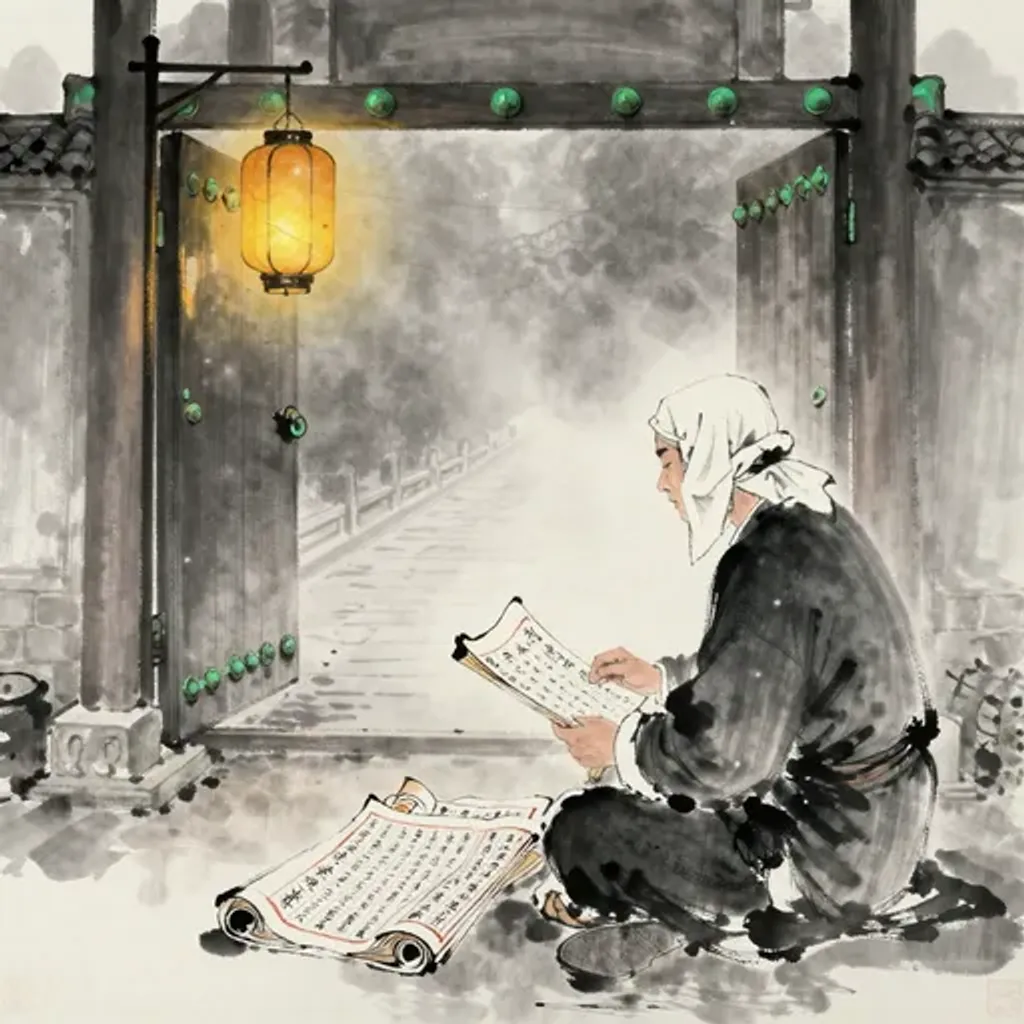
耳闕道衰,所為不成,求事匪得。
Hearing fails, the Way declines; all that is undertaken comes to nothing. What is sought cannot be obtained.
— Jiao Yanshou, Yilin (Forest of Changes), 1st century BC
Commentary
Fire over wind fills the cauldron, but fire above earth in Progress cannot advance. The ear fails and the Way declines — nothing attempted succeeds, nothing sought is obtained. 'Ear failing' suggests deafness to counsel or the breakdown of communication: when one can no longer hear the truth, the path collapses. The verse is starkly minimal — three phrases of pure failure without mitigation or redemption. From The Cauldron to Progress, the irony is sharp. Progress should mean the sun rising above the earth, illuminating the world with advancing clarity. But here the cauldron's fire, meant to refine wisdom, produces only a figure who cannot hear. Advancement without perception is no advancement at all — light that falls on closed eyes.
鼎 → 明夷
Hexagram 50 → Hexagram 36: Darkening of the Light
Changing lines: 1, 2, 4, 6
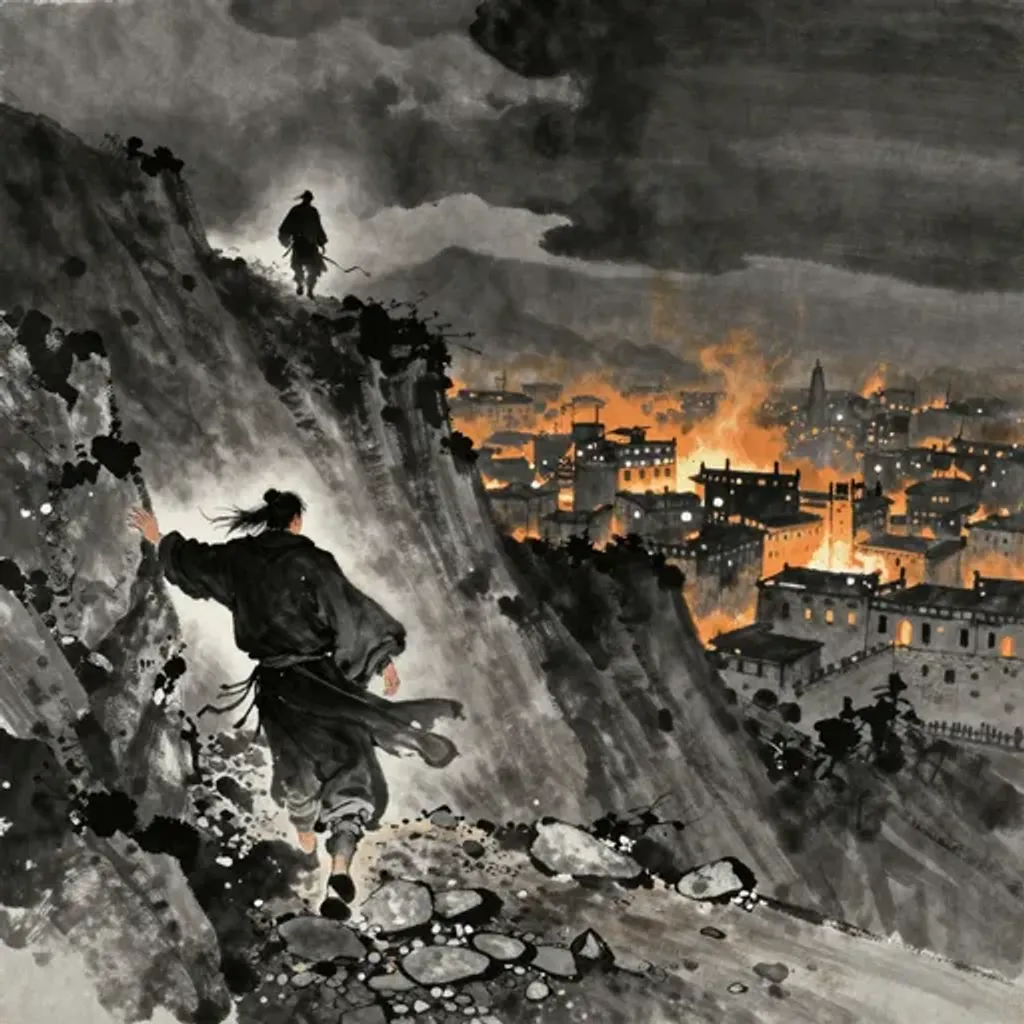
申公患楚,危不自安。重耳出奔,側喪其魂。
Duke Shen dreads Chu, imperiled and unable to find safety. Chong'er flees abroad, his soul shaken and nearly lost.
— Jiao Yanshou, Yilin (Forest of Changes), 1st century BC
Commentary
Fire over wind fills the cauldron; fire sinks into the earth as light darkens. Shen Gong dreads the power of Chu, unable to find safety. Chong Er flees into exile, his soul nearly lost along the way. The verse pairs two displaced figures: 'Shen Gong' likely refers to Shen Gong Wuchen (申公巫臣), the Chu minister who eloped with Xia Ji and fled to Jin, living in perpetual fear of Chu's vengeance. Chong Er, future Duke Wen of Jin, wandered nineteen years in exile before his triumphant return. Both survive by enduring darkness. From The Cauldron to Darkening of the Light, the transformation demands concealment. Fire enters the earth; brilliance must be hidden. The cauldron's flame is banked — those who would survive must dim their light and wait.
鼎 → 家人
Hexagram 50 → Hexagram 37: The Family
Changing lines: 1, 2, 4, 5
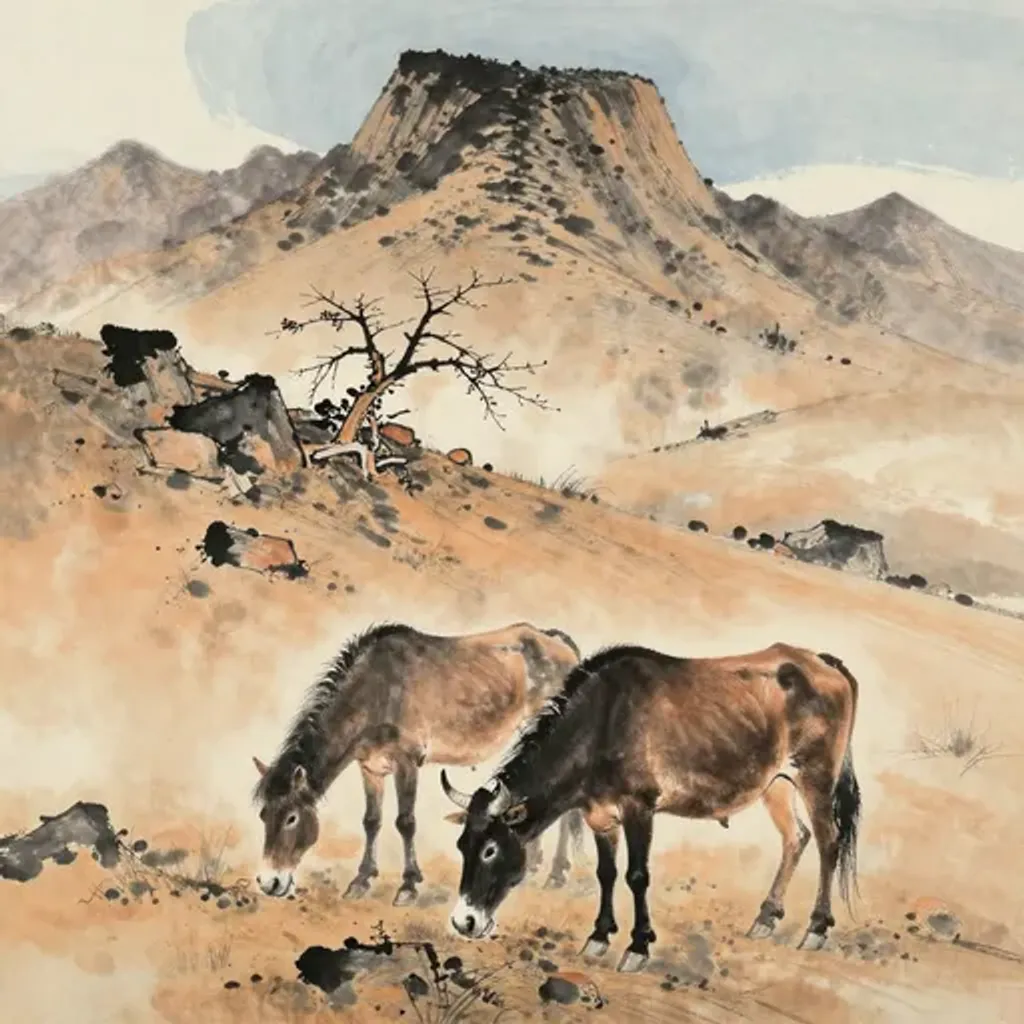
南上泰山,困於此桑。左砂右石,牛馬无食。
Climbing south to Mount Tai, trapped among the mulberry trees. Sand on the left, stones on the right; ox and horse find nothing to eat.
— Jiao Yanshou, Yilin (Forest of Changes), 1st century BC
Commentary
Fire over wind fills the cauldron; wind emerges from fire to govern the household. Climbing south to Mount Tai, one becomes trapped among mulberry trees. Sand on the left, rocks on the right — oxen and horses find nothing to eat. The sacred mountain, which should represent cosmic order and imperial authority, here offers only entanglement and barren ground. The mulberry thicket snags the traveler; the sandy, stony terrain starves the livestock. From The Cauldron to The Family, the transformation reveals a household in crisis. Wind from fire should carry warmth outward, but here the family's journey leads only to exhaustion. The cauldron's nourishment cannot reach those lost on the mountain — provisions fail, and the domestic order that The Family demands remains unattainable.
鼎 → 睽
Hexagram 50 → Hexagram 38: Opposition
Changing lines: 1, 3
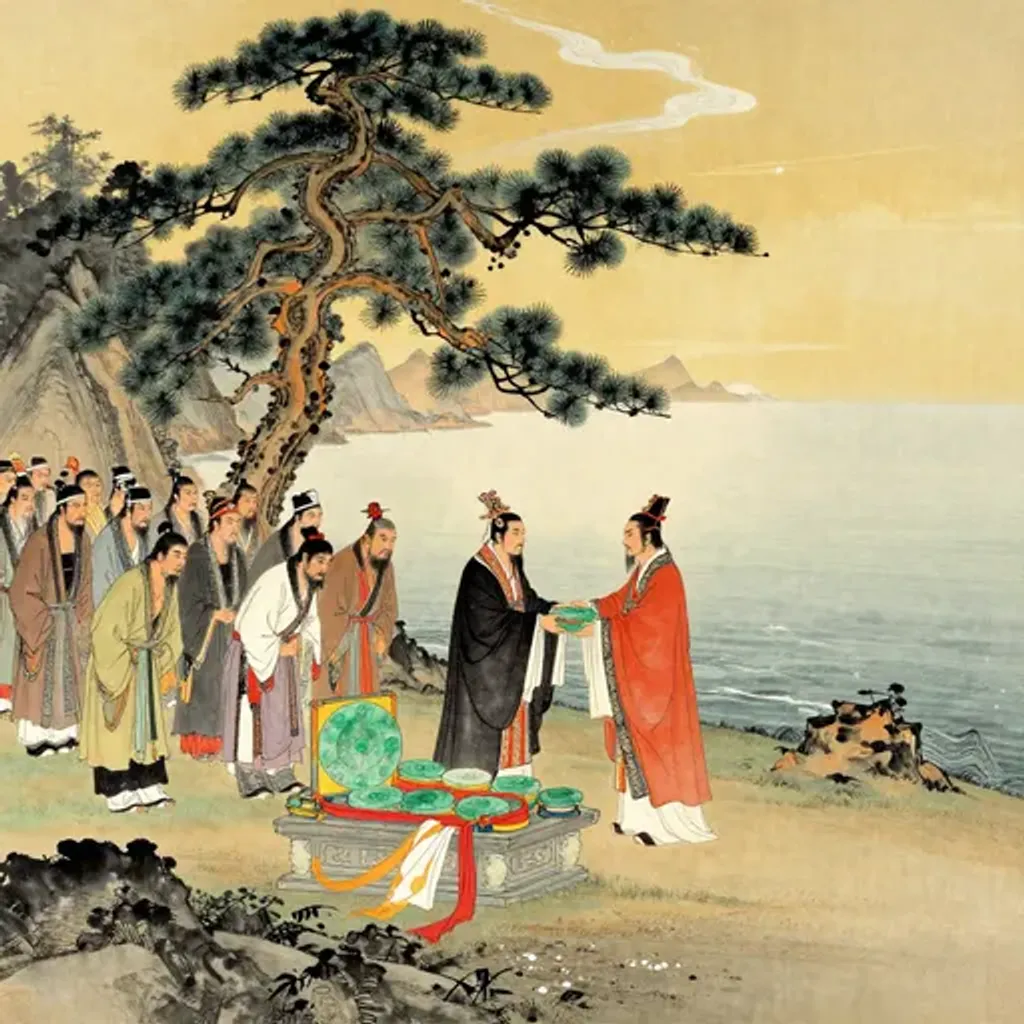
海隅遼右,福祿所在。柔嘉蒙禮,九夷何咎?
At the sea's far corner, Liaoyang's right; therein fortune and prosperity reside. Gentle excellence receives ritual propriety; what fault among the nine Yi tribes?
— Jiao Yanshou, Yilin (Forest of Changes), 1st century BC
Commentary
Fire over wind fills the cauldron; fire above the lake creates Opposition's creative tension. The sea's far corner, the distant right of Liao — this is where fortune and blessing reside. Gentle refinement receives ritual propriety, and the Nine Yi peoples are without fault. The verse celebrates the civilizing influence reaching even the remotest frontiers: the coastal borderlands of Liaodong, where the 'Nine Yi' (eastern barbarian tribes) are transformed not by conquest but by cultural grace. 'Soft excellence receiving ritual' — 柔嘉蒙禮 — is virtue making itself attractive rather than coercive. From The Cauldron to Opposition, the transformation shows how apparent divergence can yield harmony. Fire and lake move in opposite directions, yet each illuminates the other. The cauldron's civilizing fire reaches even those who stand apart.
鼎 → 蹇
Hexagram 50 → Hexagram 39: Obstruction
Changing lines: 2, 4, 5, 6
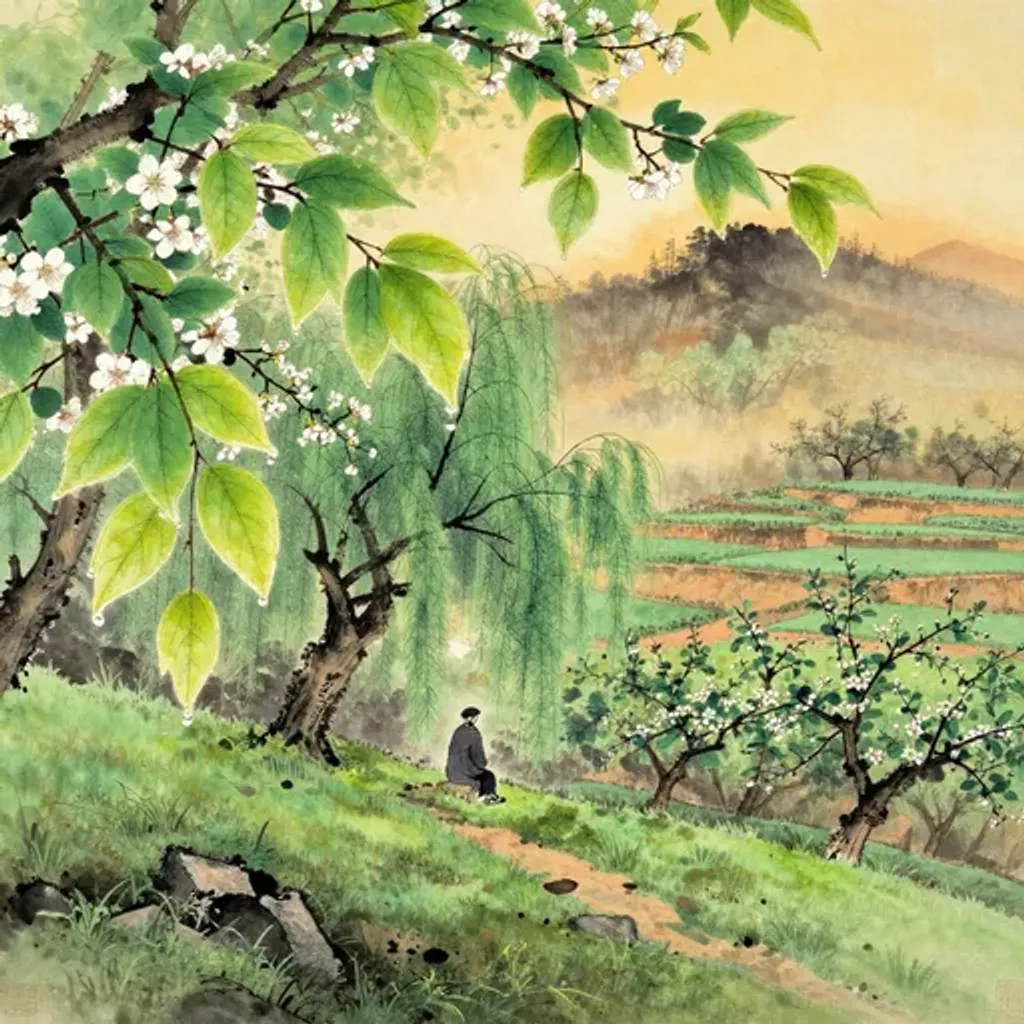
陽春生長,萬物茂壯。垂枝布葉,君子比德。
In the warmth of spring, all things grow; the ten thousand creatures flourish and thrive. Branches droop, leaves spread; the gentleman takes this as his measure of virtue.
— Jiao Yanshou, Yilin (Forest of Changes), 1st century BC
Commentary
Fire over wind fills the cauldron, yet water pools atop the mountain in Obstruction. Spring's warmth generates growth, and all things flourish in abundance. Branches droop with fruit, leaves spread wide — the gentleman aligns his virtue with this generative power. The verse is pure seasonal celebration: vernal energy at its peak, nature demonstrating its capacity for effortless abundance, and the sage modeling himself on this pattern. Yet the target hexagram is Obstruction — water over mountain, the path blocked. From The Cauldron to Obstruction, the transformation reveals that even spring's fullness must meet resistance. The cauldron nourishes, the trees bloom, but the mountain ahead is steep and the water runs the wrong way. Virtue modeled on nature prepares one to face difficulty, not avoid it.
鼎 → 解
Hexagram 50 → Hexagram 40: Deliverance
Changing lines: 3, 6
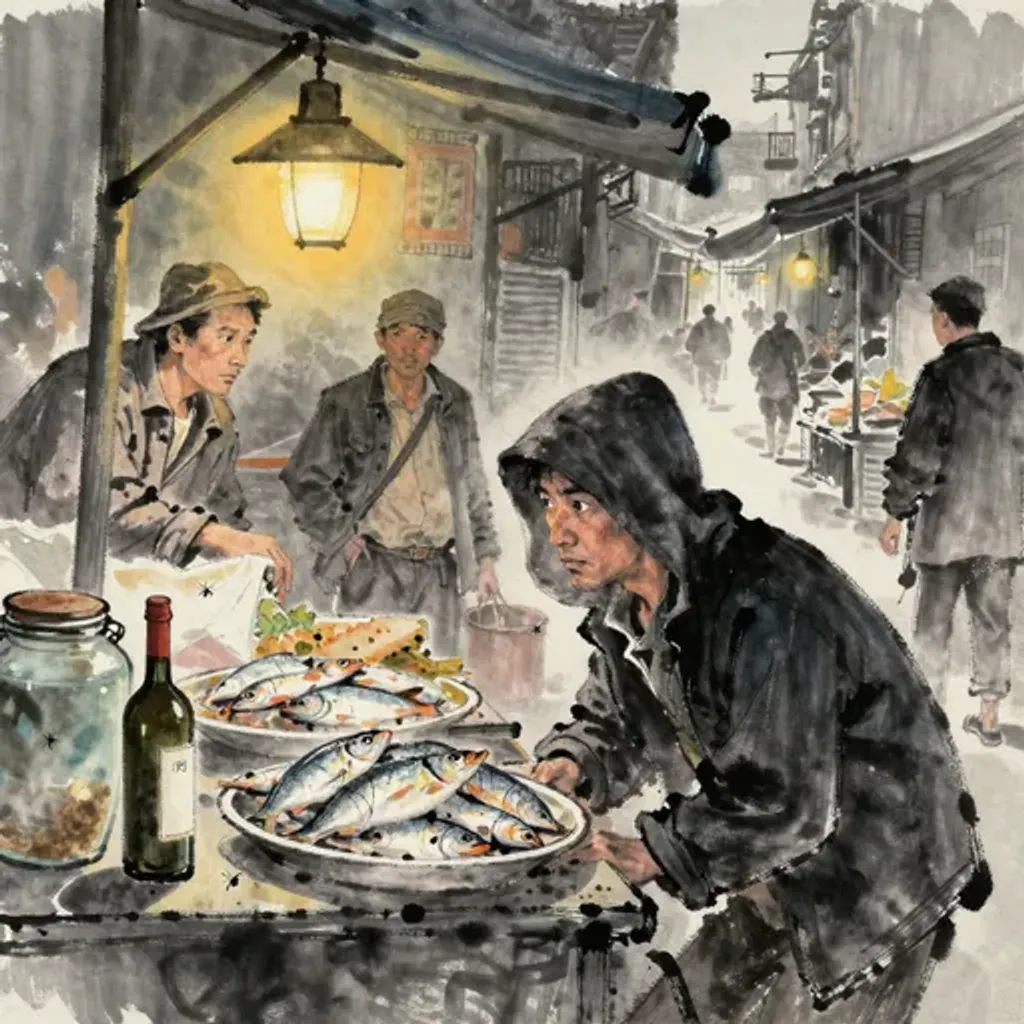
低頭竊視,有所畏避。行伯不利,酒酸魚敗,眾若貪嗜。
Head bowed, stealing a glance; there is something he fears and avoids. The traveling lord finds no profit; the wine has soured, the fish has spoiled, yet the crowd still craves a taste.
— Jiao Yanshou, Yilin (Forest of Changes), 1st century BC
Commentary
Fire over wind fills the cauldron; thunder above water releases in Deliverance. A figure bows its head and steals furtive glances, clearly fearful of something. 'Conducting affairs as hegemon brings no profit' — authority wielded timidly achieves nothing. Wine turns sour and fish spoil, yet the crowd craves them greedily anyway. The verse paints a scene of degraded leadership: the one in charge lacks courage, provisions have gone bad, but people consume them nonetheless out of desperate appetite. From The Cauldron to Deliverance, the transformation demands decisive release from what has spoiled. Thunder and rain should cleanse, but the leader's cowardice prevents the storm from breaking. The cauldron's fire heats rotten food — deliverance requires discarding what has gone bad, not serving it fearfully.
鼎 → 損
Hexagram 50 → Hexagram 41: Decrease
Changing lines: 1, 3, 4
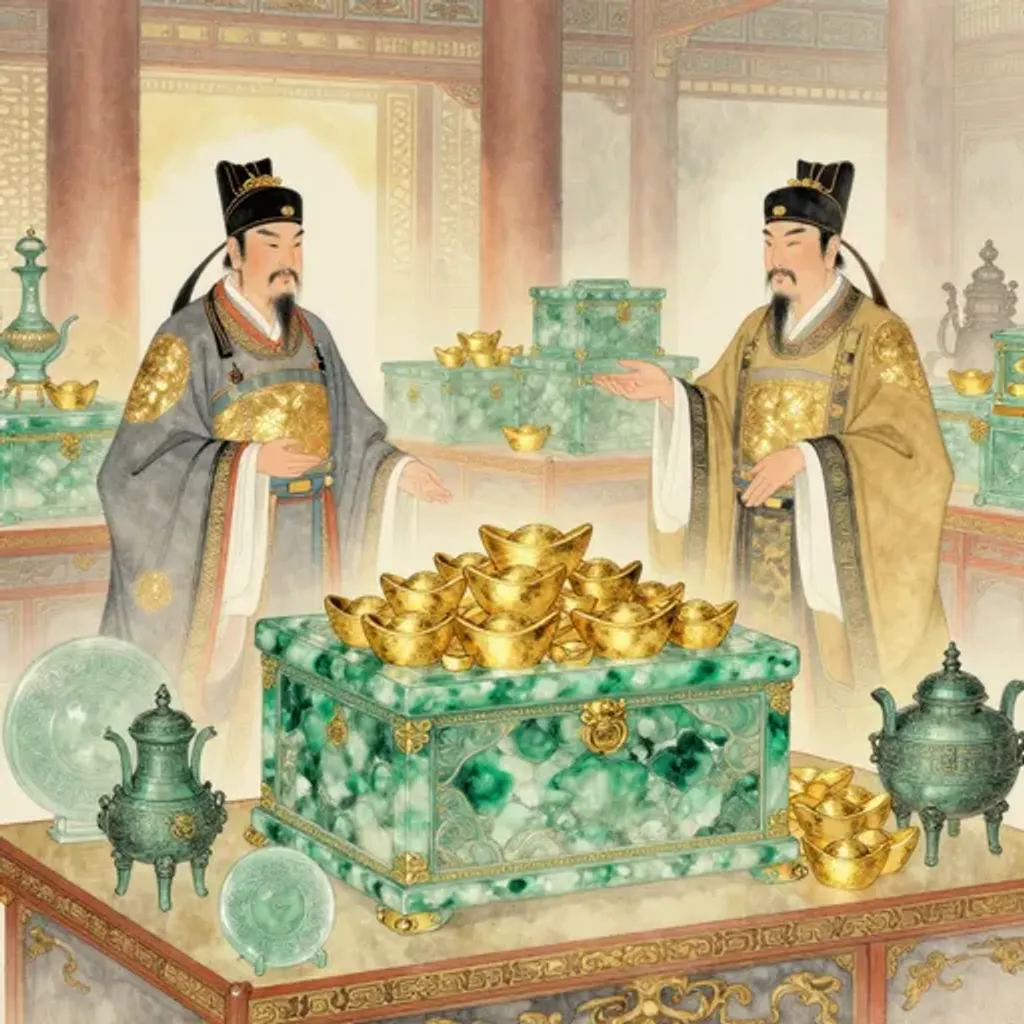
左輔右弼,金玉滿櫃。常盈不亡,富于敖倉。
With the left minister and the right counselor, gold and jade fill the coffers. Ever brimming, never diminished; wealthier than the granary of Ao.
— Jiao Yanshou, Yilin (Forest of Changes), 1st century BC
Commentary
Fire over wind fills the cauldron; the mountain rises above the lake in Decrease. Aides flank the throne on left and right, and coffers overflow with gold and jade. Wealth endures without loss, rivaling the legendary Ao Granary. The Ao Granary was the Qin and Han empire's greatest storehouse, strategically vital during the Chu-Han wars — whoever held it controlled the food supply and thus the realm. The verse presents maximum material abundance: political support, treasury full, stores inexhaustible. From The Cauldron to Decrease, the transformation paradox deepens. True decrease means restraining desire, yet here the treasury brims. The cauldron produces surplus that Decrease's discipline must govern — abundance without self-restraint is the very condition Decrease exists to correct.
鼎 → 益
Hexagram 50 → Hexagram 42: Increase
Changing lines: 1, 2, 3, 4, 5
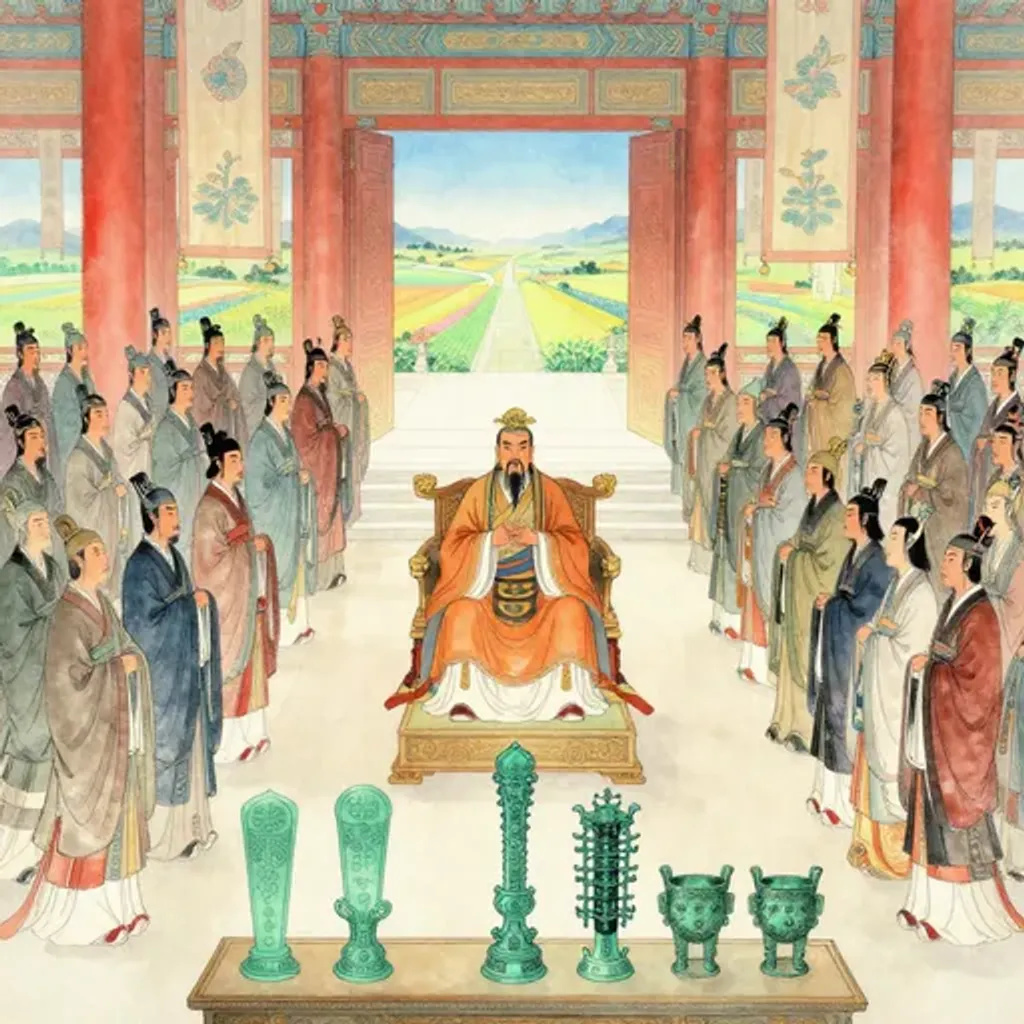
坐朝乘軒,據德宰民。虞舜受命,六合和親。
Seated at court, riding the carriage of state; by virtue he governs the people. Yu Shun receives the mandate; the four quarters of the realm are joined in harmony.
— Jiao Yanshou, Yilin (Forest of Changes), 1st century BC
Commentary
Fire over wind fills the cauldron; wind and thunder collaborate in Increase. Seated at court and riding in state carriages, one governs the people through accumulated virtue. Emperor Shun received heaven's mandate, and the six directions were unified in harmony. Shun, the sage-king chosen by Yao for his extraordinary filial piety, governed not through force but through moral example — the realm ordered itself around his virtue. The verse presents the ideal of Confucian kingship: authority derived from personal cultivation, governance as an extension of character. From The Cauldron to Increase, the transformation fulfills the cauldron's highest purpose. What fire over wind refines becomes the wind-and-thunder synergy that benefits all — the ruler's virtue increases everyone it touches.
鼎 → 夬
Hexagram 50 → Hexagram 43: Breakthrough
Changing lines: 1, 5, 6
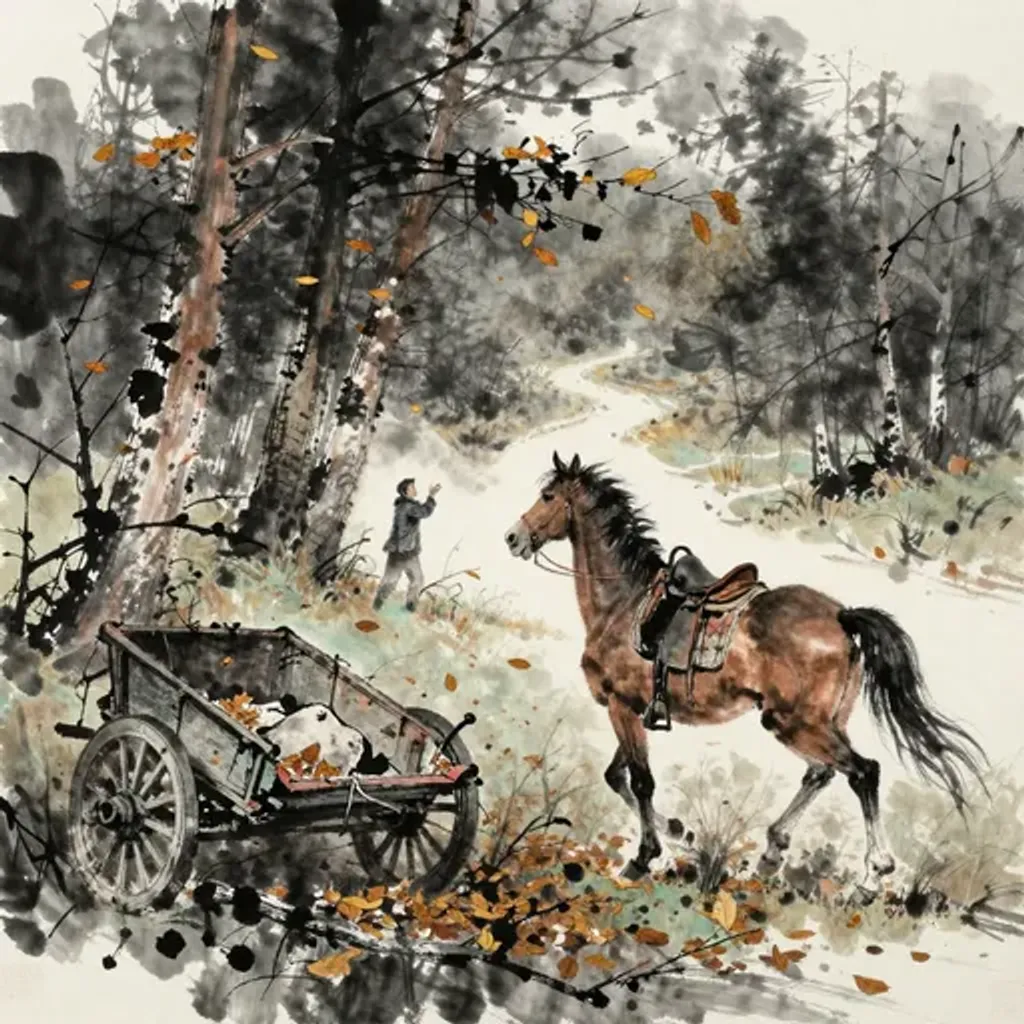
東行西坐,喪其犬馬。南求驊騮,失車林下。
Walking east, sitting west; losing his dogs and horses. Seeking a fine steed to the south, he loses his cart beneath the forest trees.
— Jiao Yanshou, Yilin (Forest of Changes), 1st century BC
Commentary
Fire over wind fills the cauldron; the lake rises above heaven in Breakthrough. Walking east then sitting west, one loses dogs and horses. Seeking a fine Hua-liu steed to the south, the cart is lost beneath the trees. Direction and purpose dissolve: east, west, south — every heading leads to loss. Dogs, horses, the prized Hua-liu (a legendary breed of excellent horse), even the cart itself — all vanish. The scattering is total and omnidirectional. From The Cauldron to Breakthrough, the transformation demands decisive action to resolve what is untenable. Lake above heaven must rain down; accumulated tension must be released. Yet here the figure dithers in every direction, and the breakthrough never comes — instead of resolving the crisis, every move deepens it.
鼎 → 姤
Hexagram 50 → Hexagram 44: Coming to Meet
Changing lines: 5
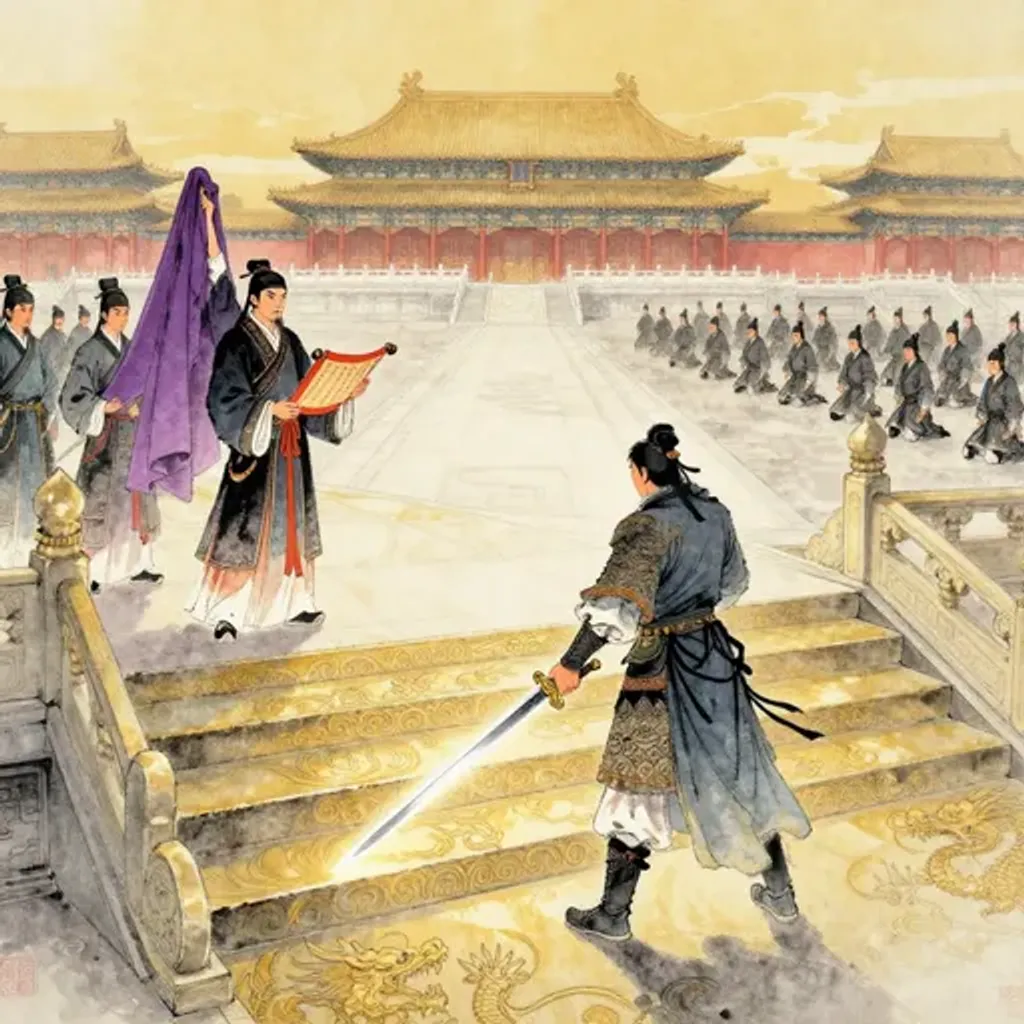
砥德礪材,果當成周。拜受大命,封為齊侯。
Polishing the sword for ten years, the edge untested — one morning it is drawn and cold light blazes. Before the golden palace steps, receiving the imperial decree — the purple robe is placed on one's shoulders, known to all under heaven.
— Jiao Yanshou, Yilin (Forest of Changes), 1st century BC
Commentary
Fire over wind fills the cauldron; heaven extends its decree through wind beneath in Coming to Meet. The original verse reads: 'Grinding virtue and honing talent, he proved worthy to complete Zhou's mandate. Receiving the great command in audience, he was enfeoffed as Marquis of Qi.' This is Taigong (Jiang Ziya), the fisherman-sage whom King Wen discovered by the Wei River. After decades of obscurity, his moment arrived: he received Zhou's mandate and was granted the fief of Qi. From The Cauldron to Coming to Meet, the unexpected encounter transforms everything. Wind stirs beneath heaven — the decree reaches those it was destined for. The cauldron's long refinement of character meets heaven's sudden call, and a commoner becomes a lord.
鼎 → 萃
Hexagram 50 → Hexagram 45: Gathering Together
Changing lines: 2, 3, 5, 6
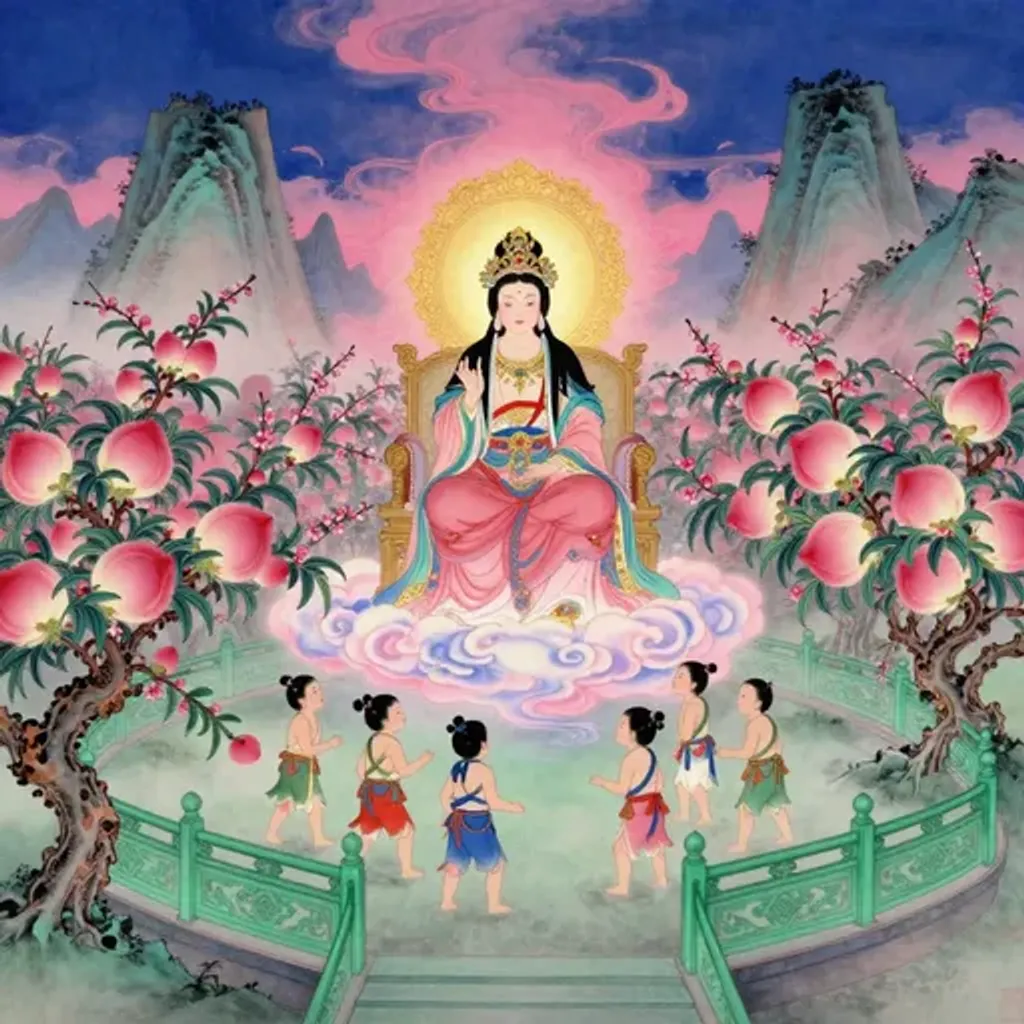
西逢王母,慈我九子。相對歡喜,王孫萬戶,家蒙福祉。
Traveling west, she meets the Queen Mother, who blesses her nine children. They face each other in delight; the royal grandson's ten thousand households, the whole family bathed in blessings.
— Jiao Yanshou, Yilin (Forest of Changes), 1st century BC
Commentary
Fire over wind fills the cauldron; the lake gathers upon the earth in Gathering. Traveling west, one meets the Queen Mother of the West, who blesses nine children with her kindness. They face each other in joy — ten thousand households for the royal descendants, the family mantled in blessing. The Queen Mother of the West, dwelling on Mount Kunlun above the Weak Water, governs immortality and cosmic blessing. Her meeting with a traveler heading west echoes King Mu of Zhou's legendary pilgrimage. Nine children blessed by the supreme goddess signals generational abundance. From The Cauldron to Gathering, the transformation gathers all blessings into one place. The lake above the earth pools what heaven has granted — the cauldron's offering ascends westward and returns as divine maternal grace, concentrating fortune where family converges.
鼎 → 升
Hexagram 50 → Hexagram 46: Pushing Upward
Changing lines: 4, 6
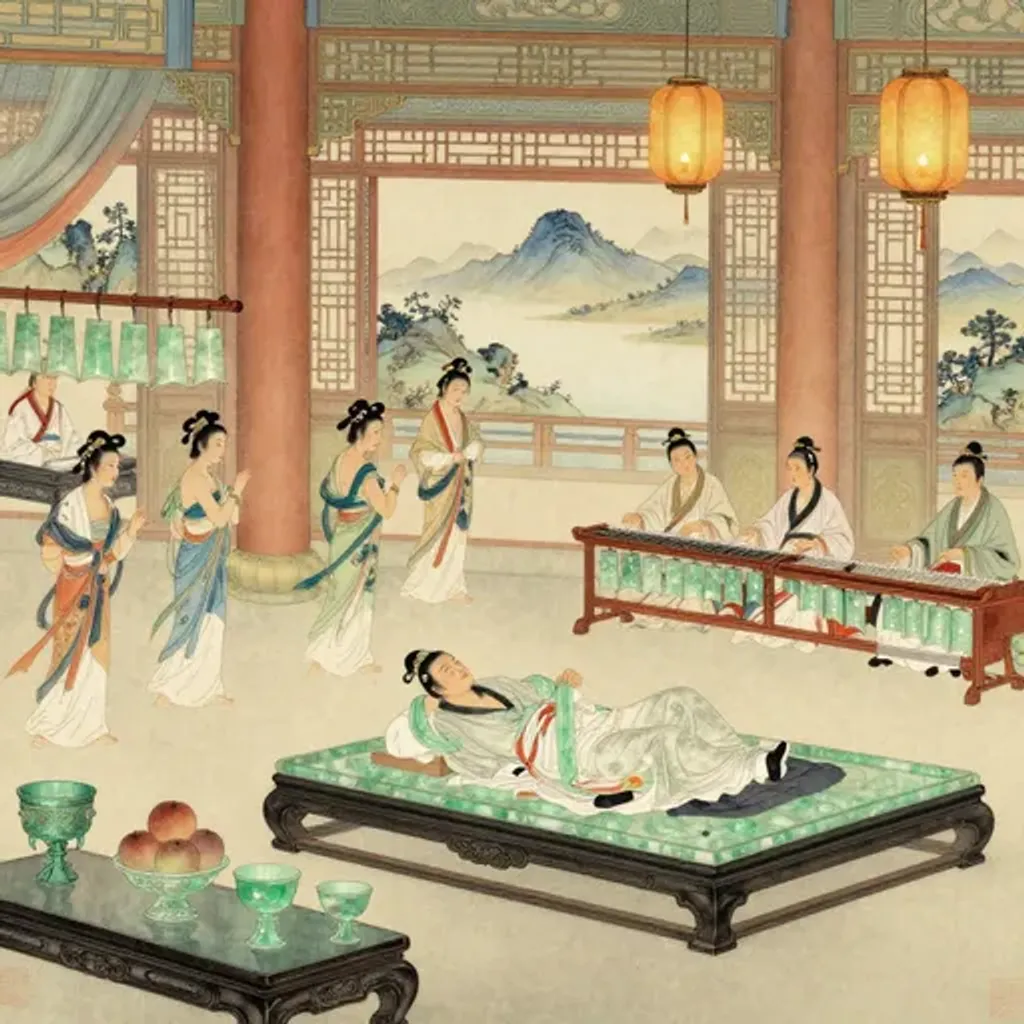
安坐玉床,聽韶行觴。飲福萬歲,日受无疆。
Seated at ease on the jade couch, listening to the Shao music, passing the wine. Drinking blessings for ten thousand years; receiving bounty without limit, day upon day.
— Jiao Yanshou, Yilin (Forest of Changes), 1st century BC
Commentary
Fire over wind fills the cauldron; trees grow within the earth, steadily pushing upward. Seated peacefully on a jade throne, one listens to the Shao music and passes the wine cup. Blessings are drunk to ten thousand years, receiving boundless daily grace. The Shao music was Emperor Shun's sacred court music — Confucius heard it in Qi and 'for three months did not notice the taste of meat.' To listen to the Shao while enthroned means to inhabit the highest attainment of civilized governance. From The Cauldron to Pushing Upward, the transformation captures steady, organic ascent. Trees growing within the earth rise quietly but irresistibly. The cauldron's fire refines the offering; the Shao music sanctifies it — accumulated small virtues compound into lasting sovereignty.
鼎 → 困
Hexagram 50 → Hexagram 47: Oppression
Changing lines: 3, 5, 6
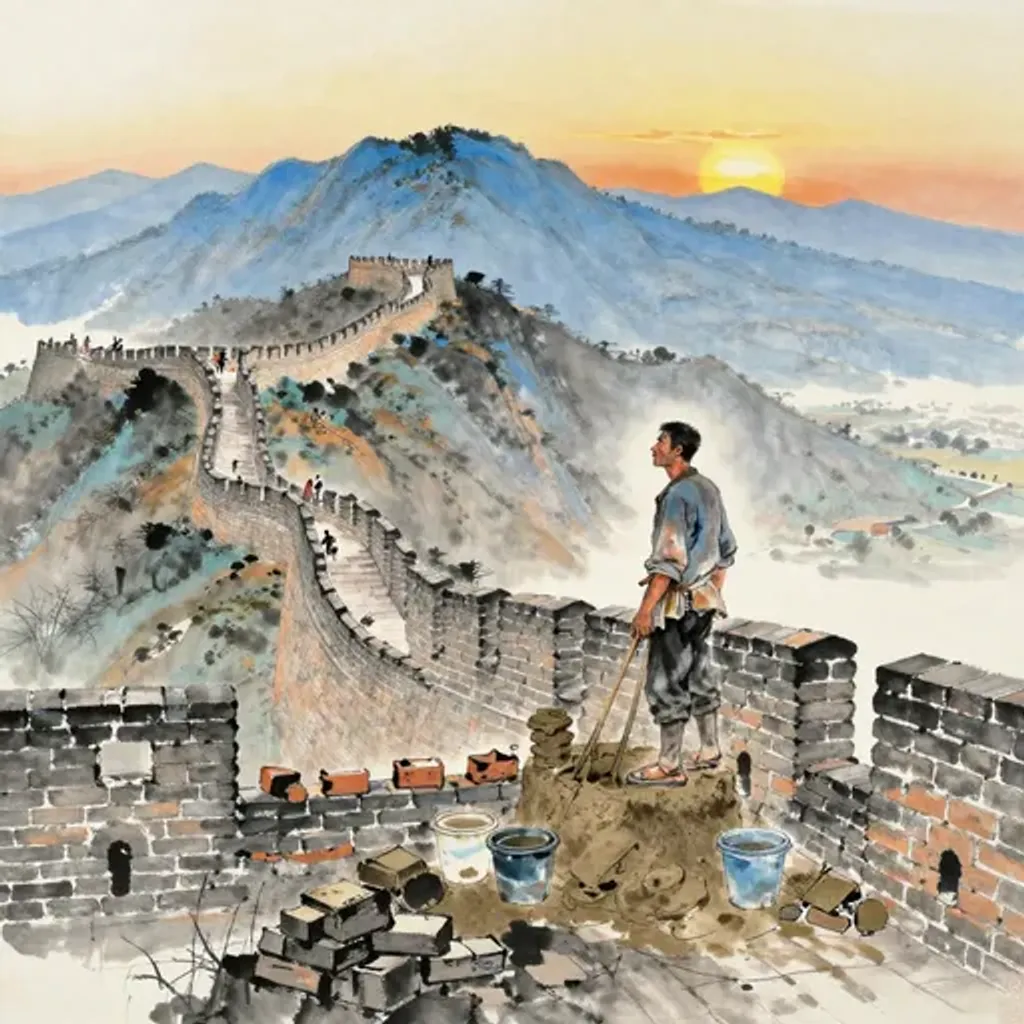
登高望家,役事未休。王政靡盬,不得逍遙。
Standing on the city wall gazing toward home — a thousand mountains block the way to Hengyang. Bricks and mud in hand, carrying without end — what year, what month, will the pack be set down?
— Jiao Yanshou, Yilin (Forest of Changes), 1st century BC
Commentary
Fire over wind fills the cauldron, but the lake drains dry above water in Oppression. The original verse reads: 'Climbing high to gaze homeward, royal duties never cease. The king's governance grinds without rest — one cannot wander free.' This echoes the Shijing soldiers' lament 'He Cao Bu Huang': endless conscription, no leave to return home, the laborer's body owned by the state. The traveler stands on a height, looking toward a home he cannot reach, burdened by obligations that know no end. From The Cauldron to Oppression, the cauldron's nourishing fire is replaced by a drained lake — resources exhausted, the well dry. The laborer cooks for others but never eats; service without respite becomes its own prison.
鼎 → 井
Hexagram 50 → Hexagram 48: The Well
Changing lines: 4, 5, 6
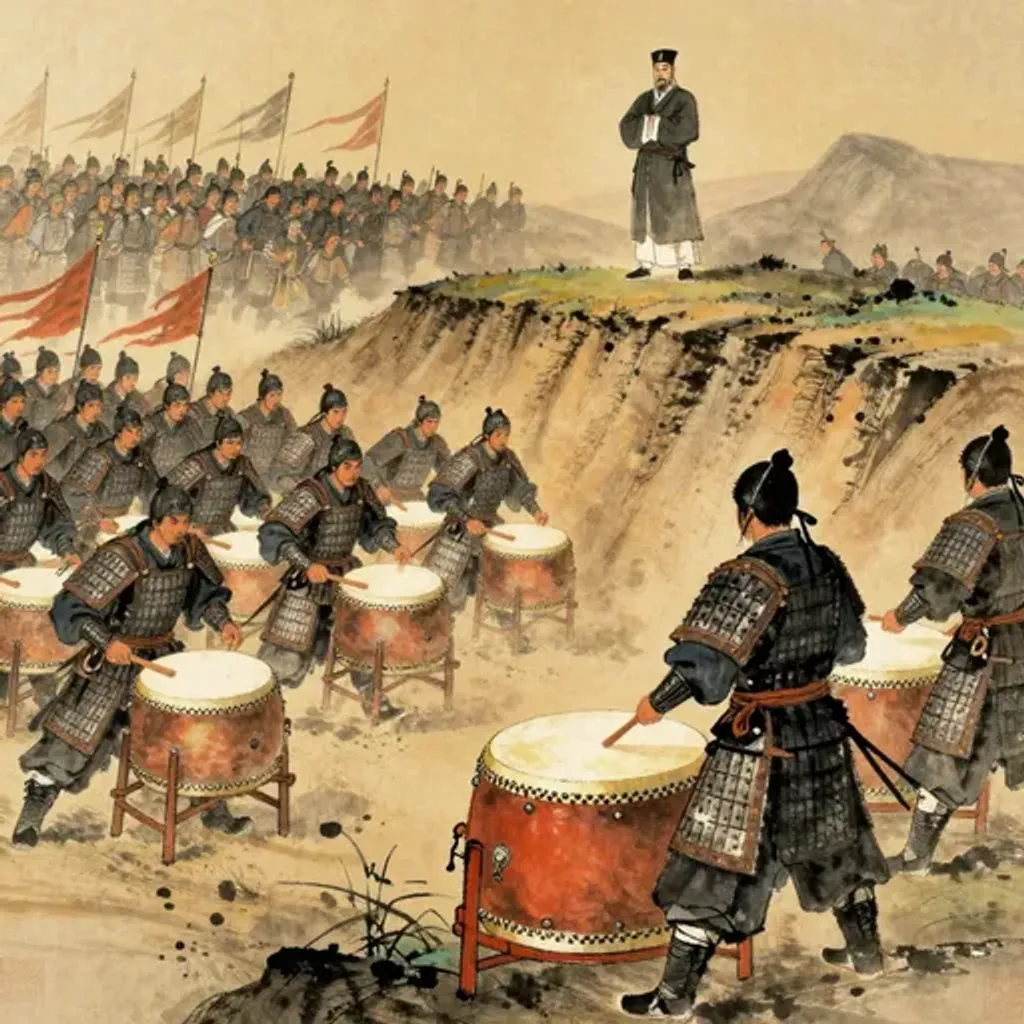
擊鼓陷陔,不得相踰。章甫文德,福厭禍涓。
Beating drums, storming the ditch; they cannot surpass one another. The ceremonial cap of Zhangfu brings civil virtue; blessings overflow and misfortune is washed away.
— Jiao Yanshou, Yilin (Forest of Changes), 1st century BC
Commentary
Fire over wind fills the cauldron; water rises above wind in The Well. Drums pound as troops storm the ramparts, each soldier pressing forward without yielding ground. Then a shift: the Zhangfu ceremonial cap and civil virtue prevail, and blessings overflow while misfortune dwindles. The Zhangfu cap was the formal headgear of Confucian gentlemen — its invocation signals the triumph of ritual propriety over military violence. First the drums of battle, then the cap of culture: the verse traces a passage from war to order. From The Cauldron to The Well, the transformation locates an inexhaustible source. The well's water rises through wood — civilized virtue, like a deep well, nourishes without running dry. The cauldron's fire is fed by an endless spring beneath it.
鼎 → 革
Hexagram 50 → Hexagram 49: Revolution
Changing lines: 1, 2, 5, 6
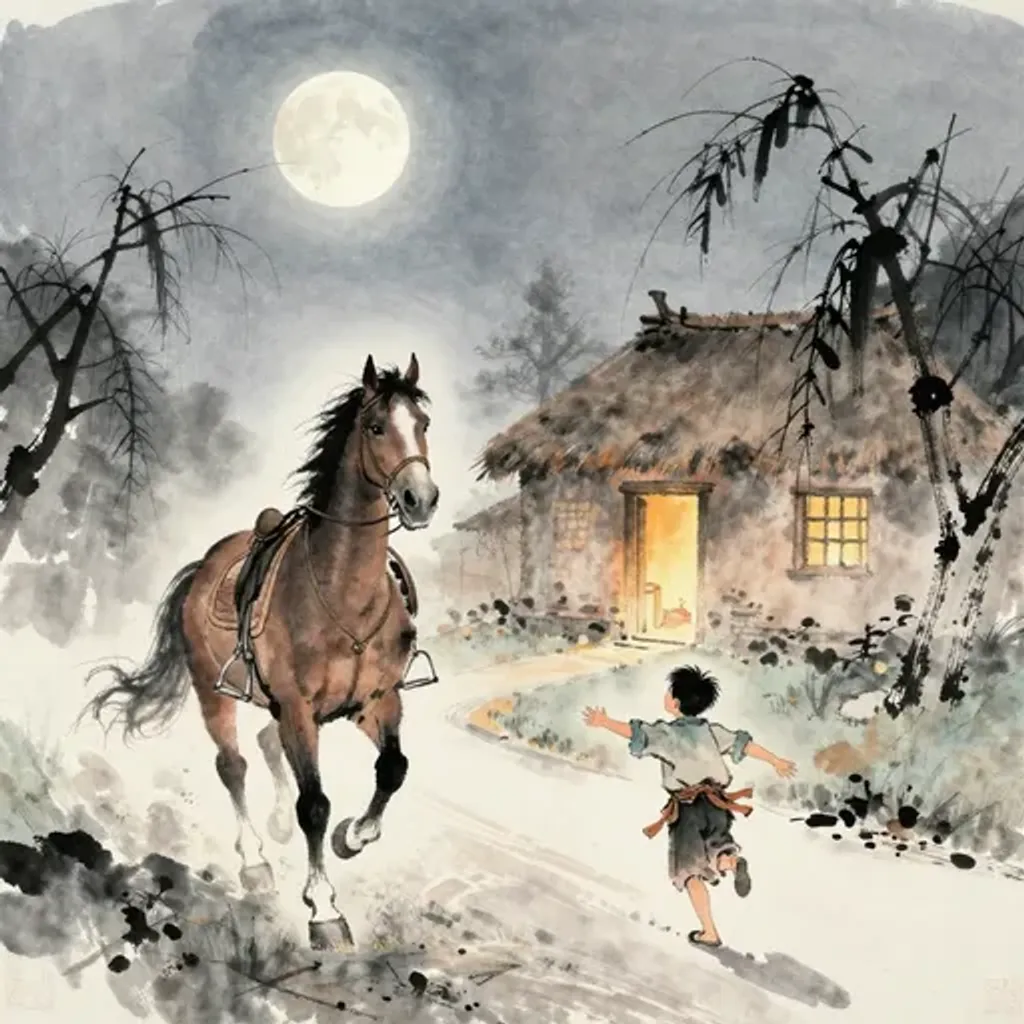
追亡逐北,呼還幼叔。至止而復,得反其室。
Chasing the fugitive, pursuing the fleeing; calling back the young uncle. Reaching the end, he turns back and regains his home.
— Jiao Yanshou, Yilin (Forest of Changes), 1st century BC
Commentary
Fire over wind fills the cauldron; fire within the lake transforms in Revolution. Chasing the fleeing enemy and pursuing the routed, someone calls back the younger uncle. Upon arriving and halting, he returns safely to his household. The verse captures a moment of battlefield pursuit where a family member is retrieved from the chaos of war — the 'younger uncle' who fled or was carried off is found and brought home. The chase succeeds; the household is restored. From The Cauldron to Revolution, the transformation reveals purposeful change that recovers what was lost. Lake over fire: the old order burns away, but what emerges is not destruction — it is the reunited family. The cauldron's fire drives out the old; revolution completes the return.
鼎 → 鼎
Hexagram 50 → Hexagram 50: The Cauldron
No changing lines — the hexagram is unchanged
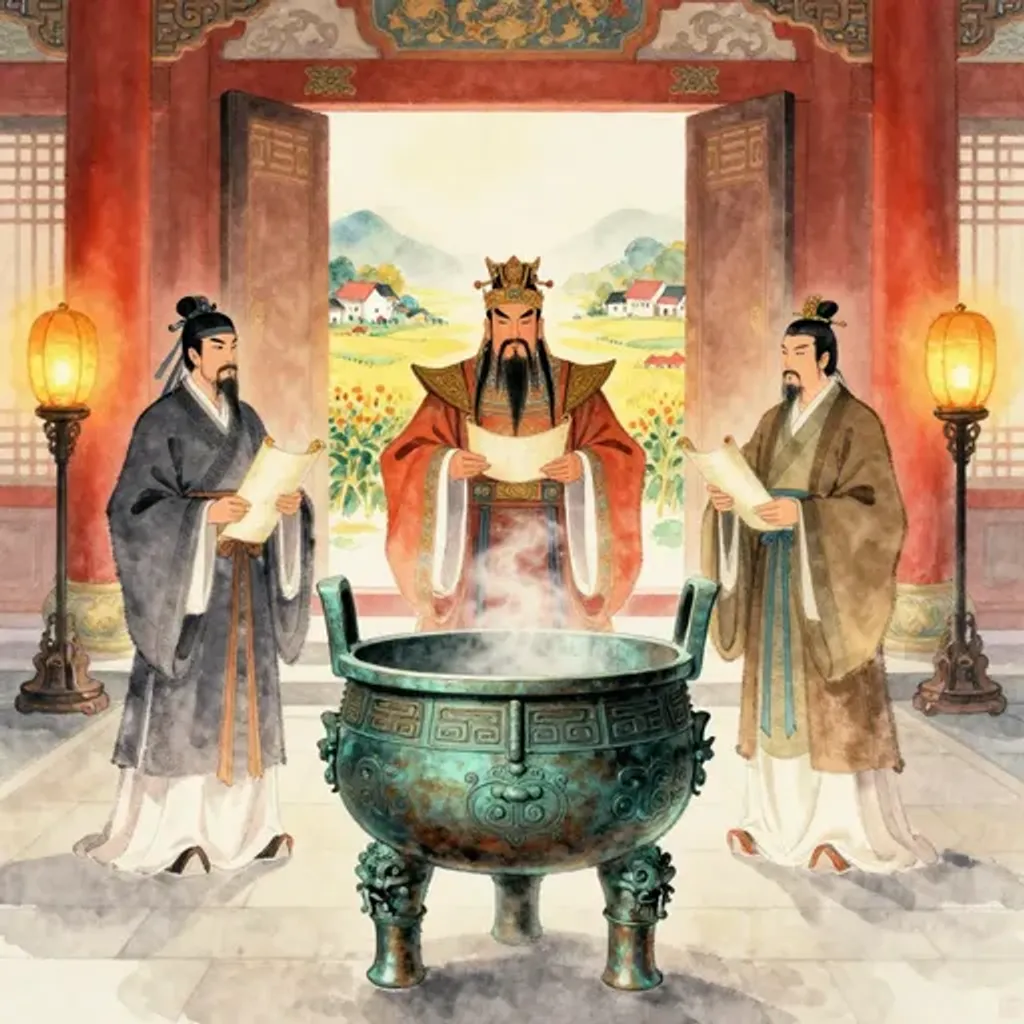
積德之至,君政且溫,伊呂股肱,國富民安。
Virtue accumulated to its fullest; the lord's governance is gentle and warm. Yi Yin and Lu Shang serve as the sovereign's arms and legs; the state is rich and the people at peace.
— Jiao Yanshou, Yilin (Forest of Changes), 1st century BC
Commentary
Fire over wind fills the cauldron — and the cauldron transforms into itself, the purest expression of its own nature. Accumulated virtue reaches its zenith; the ruler governs with warmth and wisdom. Yi Yin and Lu Shang serve as the sovereign's right arms, and the nation grows rich while the people rest secure. Yi Yin, the cook who became Shang's founding minister, and Lu Shang (Taigong), the fisherman who became Zhou's founding strategist, represent the ideal of sage-ministers discovered in humble circumstances and elevated through merit. From The Cauldron to The Cauldron, the identity transformation signifies perfection: the vessel fulfills its own nature completely. The cauldron that cooks also governs — fire over wind, refining the offering until nothing remains but nourishment itself.
鼎 → 震
Hexagram 50 → Hexagram 51: The Arousing Thunder
Changing lines: 1, 2, 3, 6
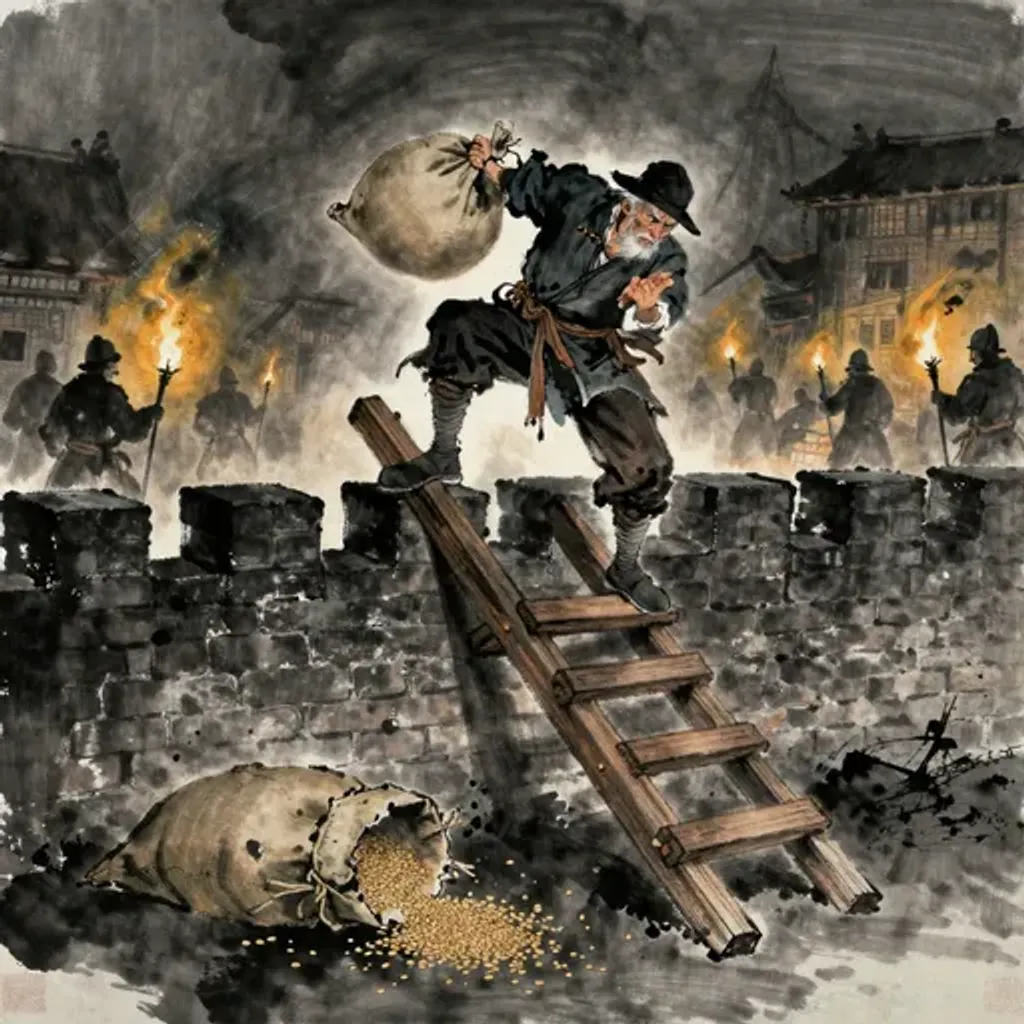
老猾大偷,東行盜敖。因於噬敖,幾不得去。
The old rogue, the great thief, goes east to rob the granary of Ao. Trapped at Shi'ao, he barely escapes with his life.
— Jiao Yanshou, Yilin (Forest of Changes), 1st century BC
Commentary
Fire over wind fills the cauldron; doubled thunder shakes the world in The Arousing. A sly old thief, a master of cunning, goes east to rob the Ao Granary. But he is caught in the act at the granary, barely escaping with his life. The Ao Granary was the empire's most strategic storehouse — targeting it was the highest-stakes theft imaginable. The 'old and cunning' thief overestimates his skill; the granary's defenses hold. From The Cauldron to The Arousing, the transformation reveals shock as consequence. Doubled thunder strikes the thief mid-act — the cauldron's precious contents are guarded, and the tremor of discovery jolts the intruder. Arousal here is not opportunity but alarm: the shock that punishes overreach.
鼎 → 艮
Hexagram 50 → Hexagram 52: Keeping Still Mountain
Changing lines: 2, 4
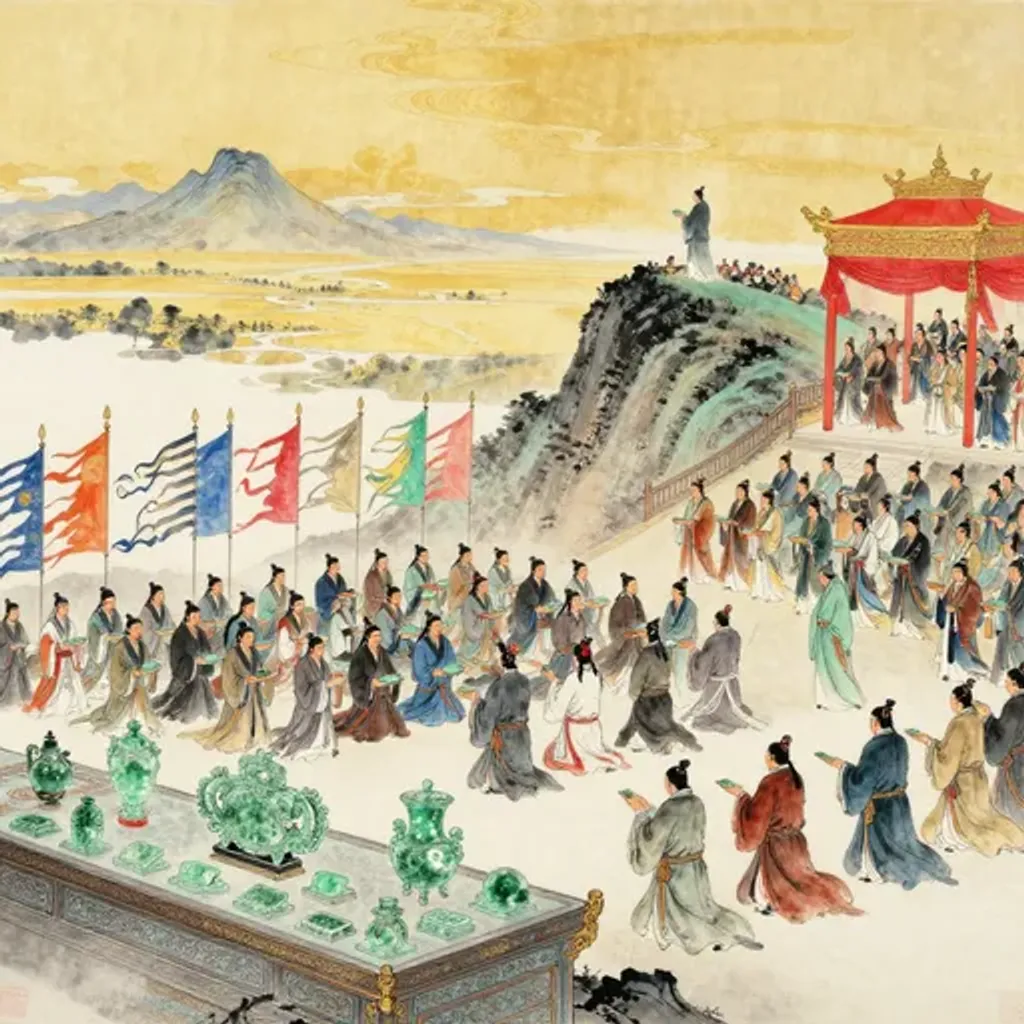
禹召諸侯,會稽南山。執玉萬國,天下康安。
Yu summoned the lords, assembling at Kuaiji on the southern mountain. Ten thousand states presented jade; all under heaven was tranquil and at peace.
— Jiao Yanshou, Yilin (Forest of Changes), 1st century BC
Commentary
Fire over wind fills the cauldron; twin mountains hold perfectly still. Yu the Great summoned the feudal lords to Mount Kuaiji in the south. Ten thousand states came bearing jade tribute tablets, and all under heaven rested in peace and safety. According to tradition, Yu assembled the lords at Kuaiji to establish the calendar and confirm the territorial order — the foundational act of civilized governance. The jade tablets signified submission and mutual trust between sovereign and vassal. From The Cauldron to Keeping Still, the transformation achieves consummate order through stillness. The cauldron has finished its work; the doubled mountain holds firm. What was refined and offered now solidifies into institutional permanence — the empire at rest because authority has been properly fixed in place.
鼎 → 漸
Hexagram 50 → Hexagram 53: Development
Changing lines: 2, 4, 5
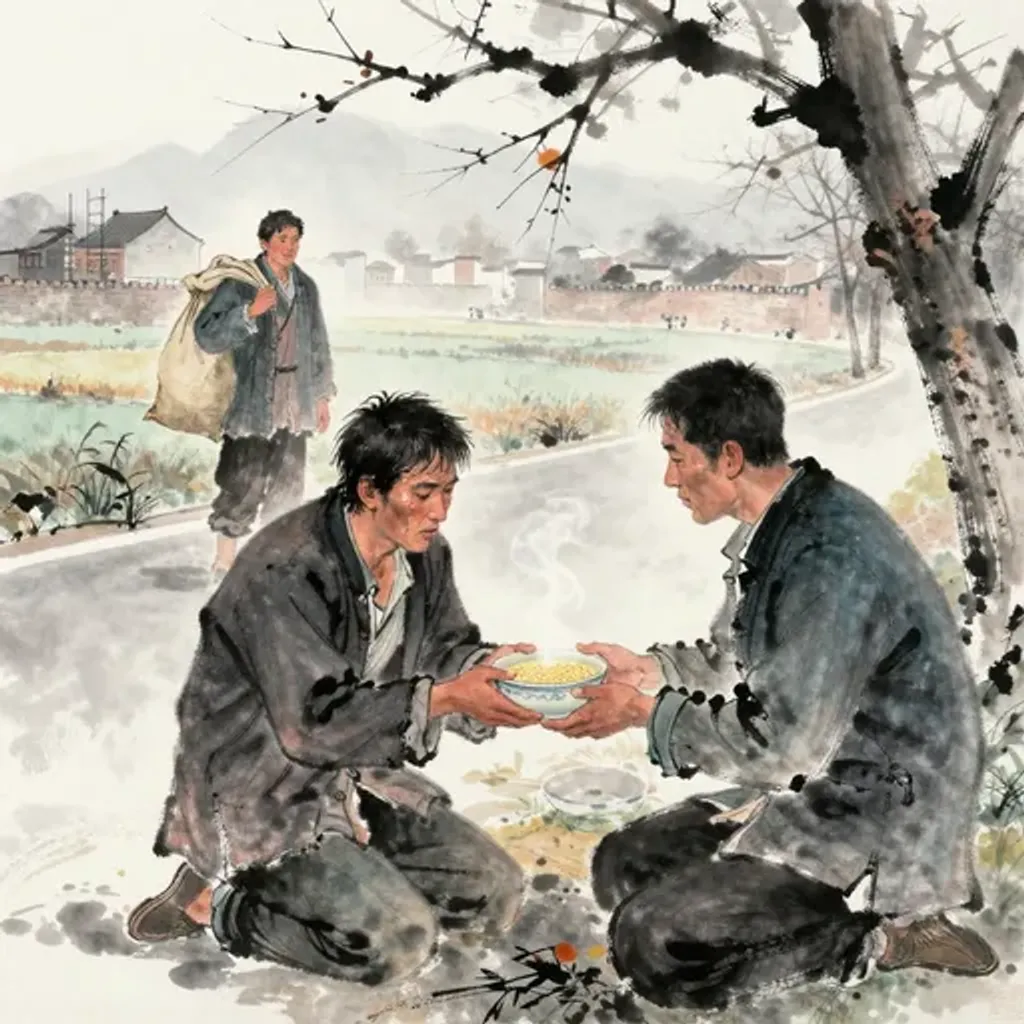
忉怛忉怛,如將不活。黍稷之恩,靈輒以存。獲生保年。
Anguish, anguish; as though he would not survive. By the grace of millet and grain, Ling Zhuo is preserved. He finds life and keeps his years.
— Jiao Yanshou, Yilin (Forest of Changes), 1st century BC
Commentary
Fire over wind fills the cauldron; wood grows upon the mountain in gradual Development. 'Distressed, distressed — as though life itself would end.' Then the grace of millet and grain saves Ling Zhe, who survives and preserves his years. According to the Zuo Zhuan, Zhao Dun of Jin once fed a starving man by the road at Shouyang. That man was Ling Zhe. Later, when Duke Ling of Jin plotted to assassinate Zhao Dun at a banquet, Ling Zhe — now a palace guard — turned against his own lord to repay the debt of a single meal. From The Cauldron to Development, the transformation maps patient nurture onto gradual return. The cauldron's millet saved one life, and that life ripened slowly into loyalty — a tree growing on the mountain, unhurried but unshakable.
鼎 → 歸妹
Hexagram 50 → Hexagram 54: The Marrying Maiden
Changing lines: 1, 3, 6
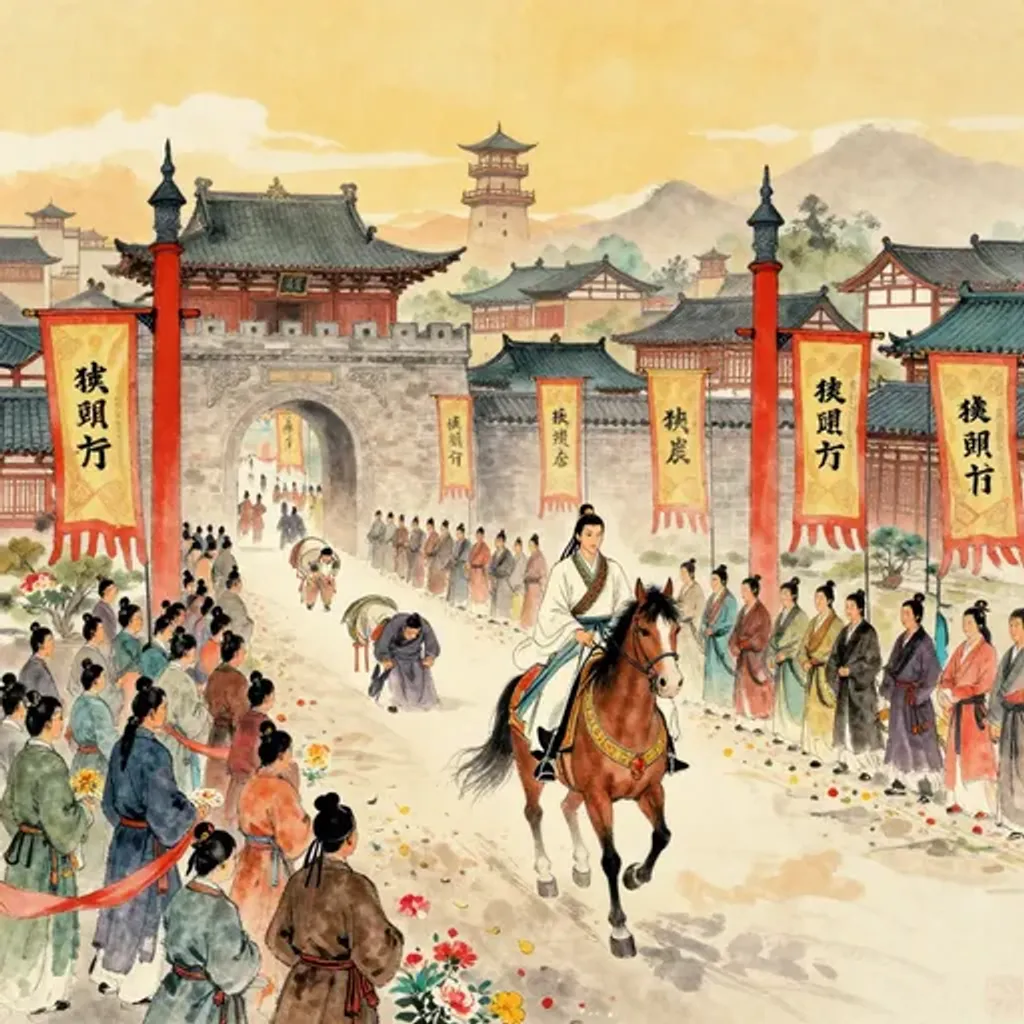
侯叔興起,季子富有。照臨楚國,蠻荊是安。
Lord Shu rises in prominence; the young lord attains great wealth. His light shines over the land of Chu; the southern barbarians of Jing are brought to peace.
— Jiao Yanshou, Yilin (Forest of Changes), 1st century BC
Commentary
Fire over wind fills the cauldron; thunder above the lake consummates the Marrying Maiden. The junior lord Shu rises to prominence, and the younger son grows wealthy. Their light illuminates the state of Chu, bringing peace to the Man and Jing barbarian lands. The verse celebrates the founding legend of Chu: tradition holds that the Chu royal house descended from a junior branch that rose from obscurity in the southern wilderness to build a great kingdom. 'Hou Shu' and 'Ji Zi' — cadet princes — embody the principle that younger sons may surpass their elders. From The Cauldron to the Marrying Maiden, the transformation captures how a subordinate element, properly placed, generates unexpected power. Thunder above the lake: the younger moves the elder, and the periphery outshines the center.
鼎 → 豐
Hexagram 50 → Hexagram 55: Abundance
Changing lines: 1, 2, 6
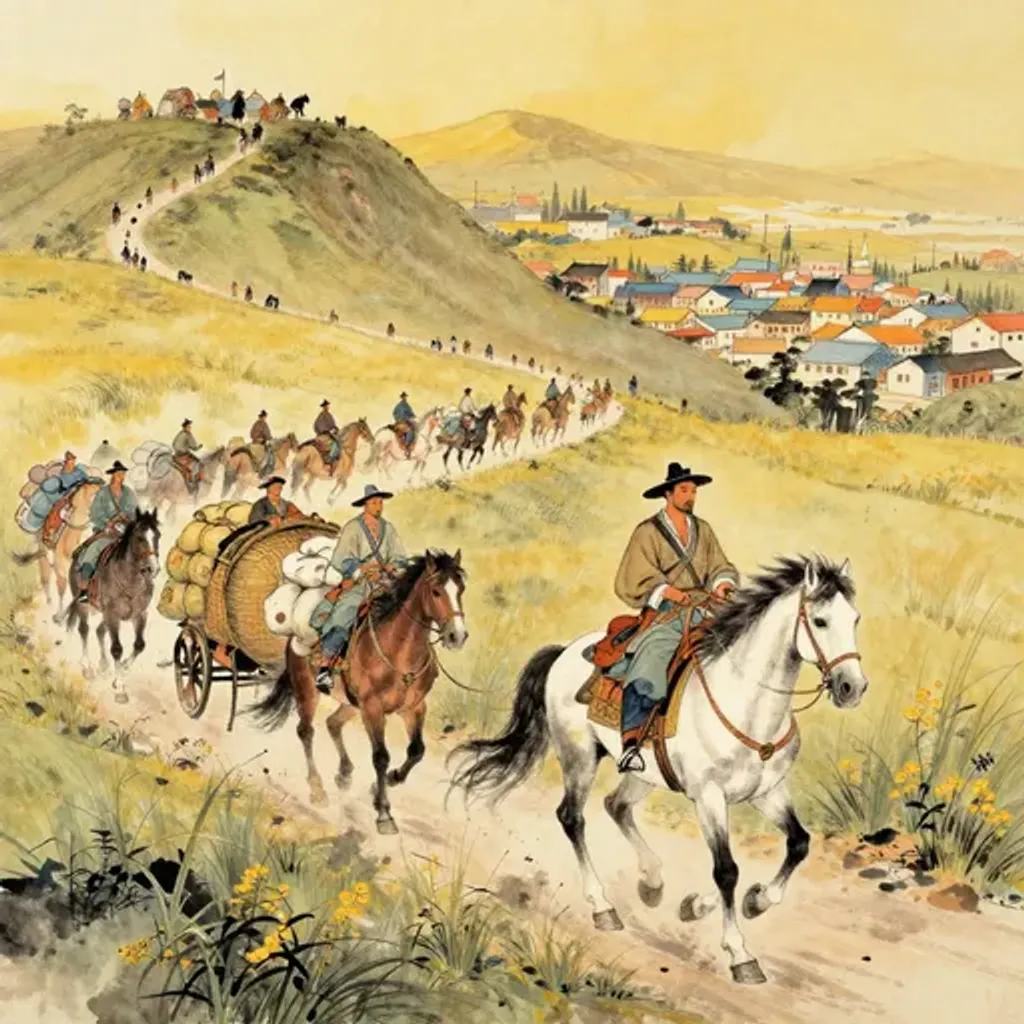
白馬騮駮,更生不休。富我商人,利得如丘。
White horses, dappled and piebald, ceaselessly breeding. They enrich our merchants; profit accumulates like a hill.
— Jiao Yanshou, Yilin (Forest of Changes), 1st century BC
Commentary
Fire over wind fills the cauldron; lightning and thunder crash together in Abundance. White horses, dappled bays — they breed ceaselessly, generation after generation. They enrich the merchant, whose profits pile up like hills. The image is of livestock wealth compounding through natural reproduction: fine horses begetting more fine horses, each generation adding to the herd's value. The 'merchant' (shangren) grows wealthy not through a single transaction but through continuous, self-renewing increase. From The Cauldron to Abundance, the transformation captures the moment when slow accumulation tips into overflowing prosperity. Thunder and fire combine — illumination and movement together create maximum plenty. The cauldron's patient refinement explodes into visible, tangible surplus.
鼎 → 旅
Hexagram 50 → Hexagram 56: The Wanderer
Changing lines: 2
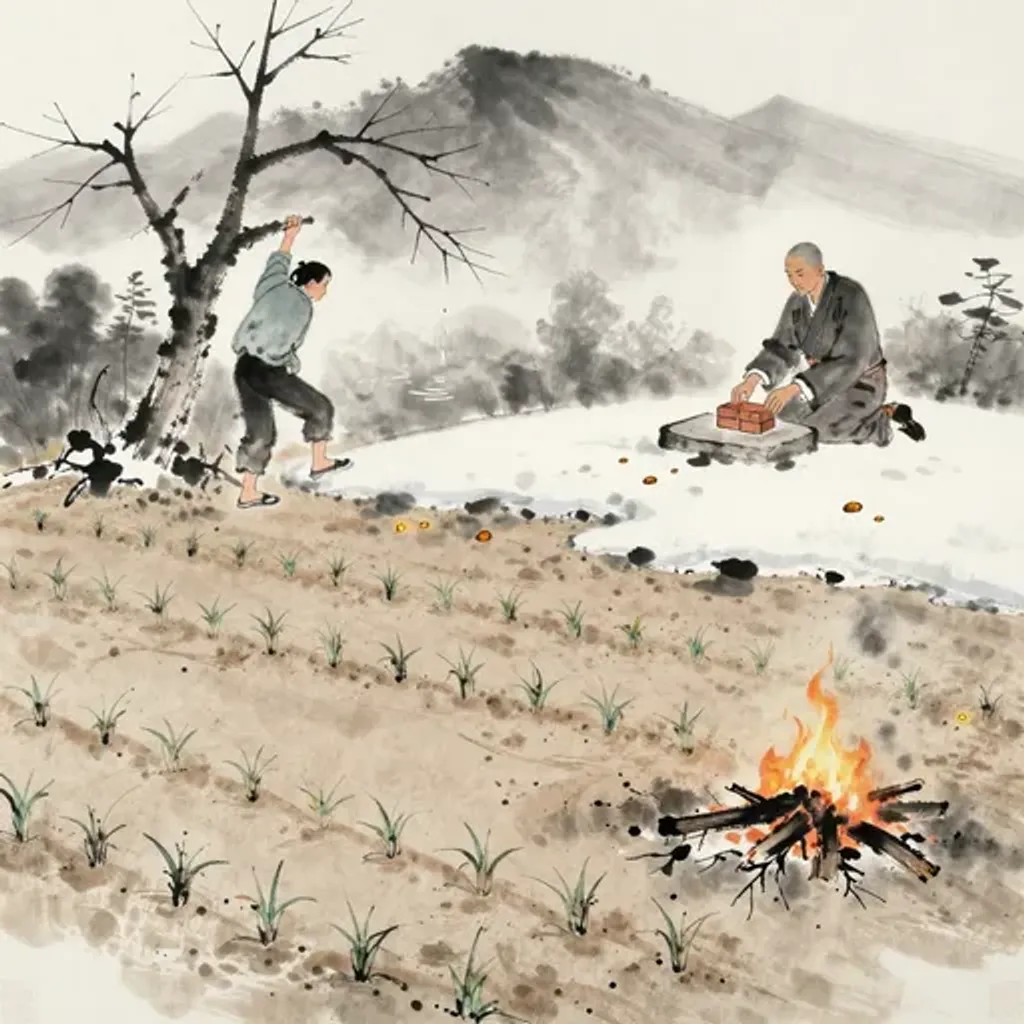
灼火泉原,釣魴山巔。魚不可得。炭不可燃。
Planting rice in sand, hoping for autumn harvest. Brewing tea on snow — the fire won't stay. Climbing a tree seeking fish is always a dream; polishing a brick into a mirror — looking back in vain.
— Jiao Yanshou, Yilin (Forest of Changes), 1st century BC
Commentary
Fire over wind fills the cauldron, yet fire above the mountain in The Wanderer consumes what it cannot settle. The original verse reads: 'Lighting fire at a spring's source, fishing for bream atop a mountain peak — fish cannot be caught, charcoal cannot be lit.' Every action is perfectly mismatched to its environment: fire where water rises, fishing where no water flows. The methods are not wrong in themselves, only catastrophically misapplied. From The Cauldron to The Wanderer, the transformation displaces the cauldron's fire from its proper hearth. Fire on the mountain has no vessel to contain it; the wanderer carries skill but finds no place to exercise it. Competence without context achieves nothing — the cauldron, removed from its base, cannot cook.
鼎 → 巽
Hexagram 50 → Hexagram 57: The Gentle Wind
Changing lines: 4, 5
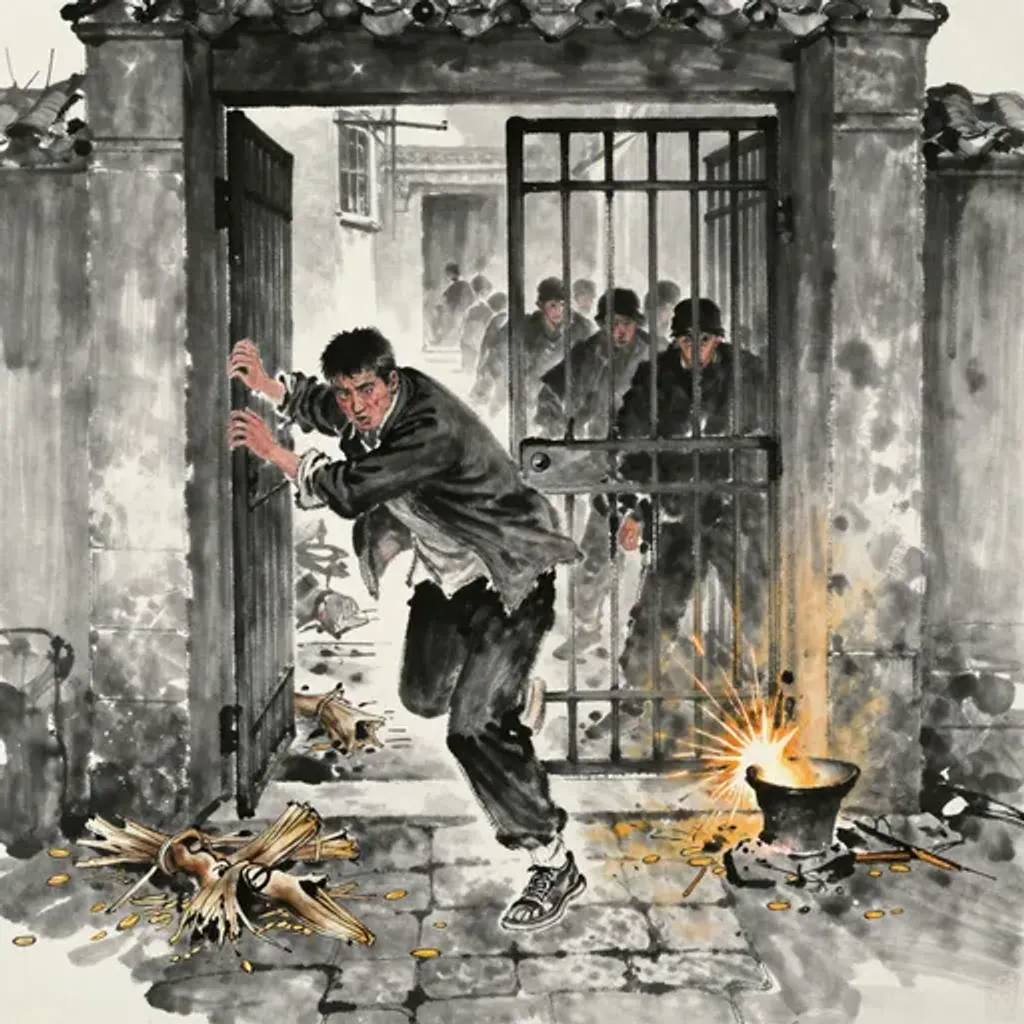
避患東西,反入禍門。糟糠不足,憂動我心。
Fleeing disaster east and west, he stumbles instead through the gate of calamity. Chaff and husks are not enough; worry stirs my heart.
— Jiao Yanshou, Yilin (Forest of Changes), 1st century BC
Commentary
Fire over wind fills the cauldron, but doubled wind scatters in all directions without settling. Fleeing east and west to avoid disaster, one stumbles directly into the gate of misfortune. Even chaff and husks are insufficient — worry stirs the heart. The verse captures the cruelest irony of flight: the refugee's every evasive turn leads deeper into trouble, as though the exits are trapdoors. Food has degraded to its most basic form — not grain but its waste products — and even those fall short. From The Cauldron to The Gentle, doubled wind should mean penetrating influence, but here it becomes directionless dispersal. The cauldron's fire scatters into gusts that blow the cook's provisions away. Gentle penetration becomes panicked flight when wind has no anchor.
鼎 → 兌
Hexagram 50 → Hexagram 58: The Joyous Lake
Changing lines: 1, 3, 5, 6
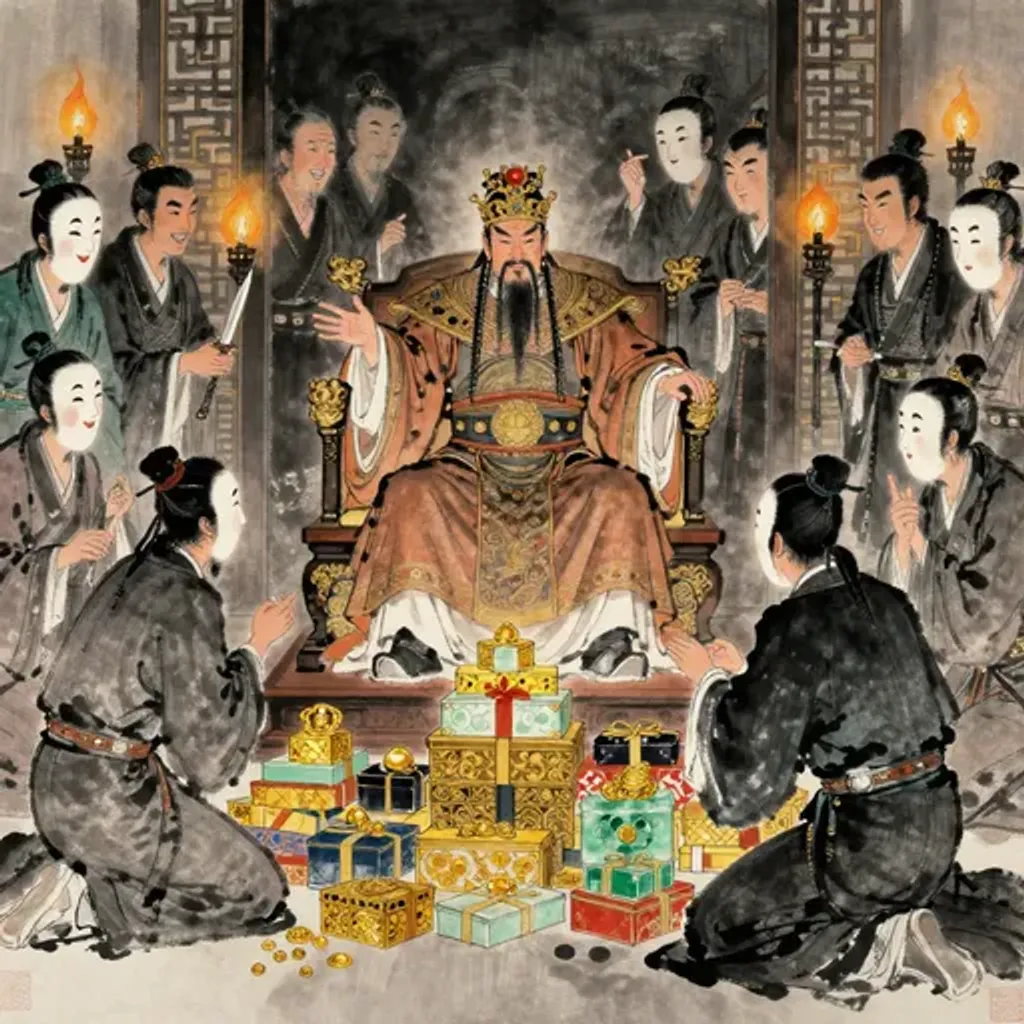
成王多寵,商人惶恐。生其禍心,使君危殆。
The accomplished king bestows too much favor; the merchants tremble with dread. It breeds treacherous hearts, placing the sovereign in mortal peril.
— Jiao Yanshou, Yilin (Forest of Changes), 1st century BC
Commentary
Fire over wind fills the cauldron; doubled lakes reflect each other in The Joyous. 'King Cheng lavished excessive favor, and the Shang people grew fearful.' Alarmed hearts bred seditious intent, placing the sovereign in mortal danger. This likely references the early Zhou crisis after King Wu's death, when the young King Cheng's regency was challenged. The 'Shang people' — remnants of the conquered dynasty — grew restive under policies they could not trust. Excessive royal indulgence, rather than pacifying, bred suspicion and rebellion. From The Cauldron to The Joyous, the transformation warns that joy without boundaries corrupts. Doubled lakes overflow: pleasure shared recklessly generates not gratitude but conspiracy. The cauldron's generosity, poured too freely, drowns those it meant to nourish.
鼎 → 渙
Hexagram 50 → Hexagram 59: Dispersion
Changing lines: 3, 4, 5
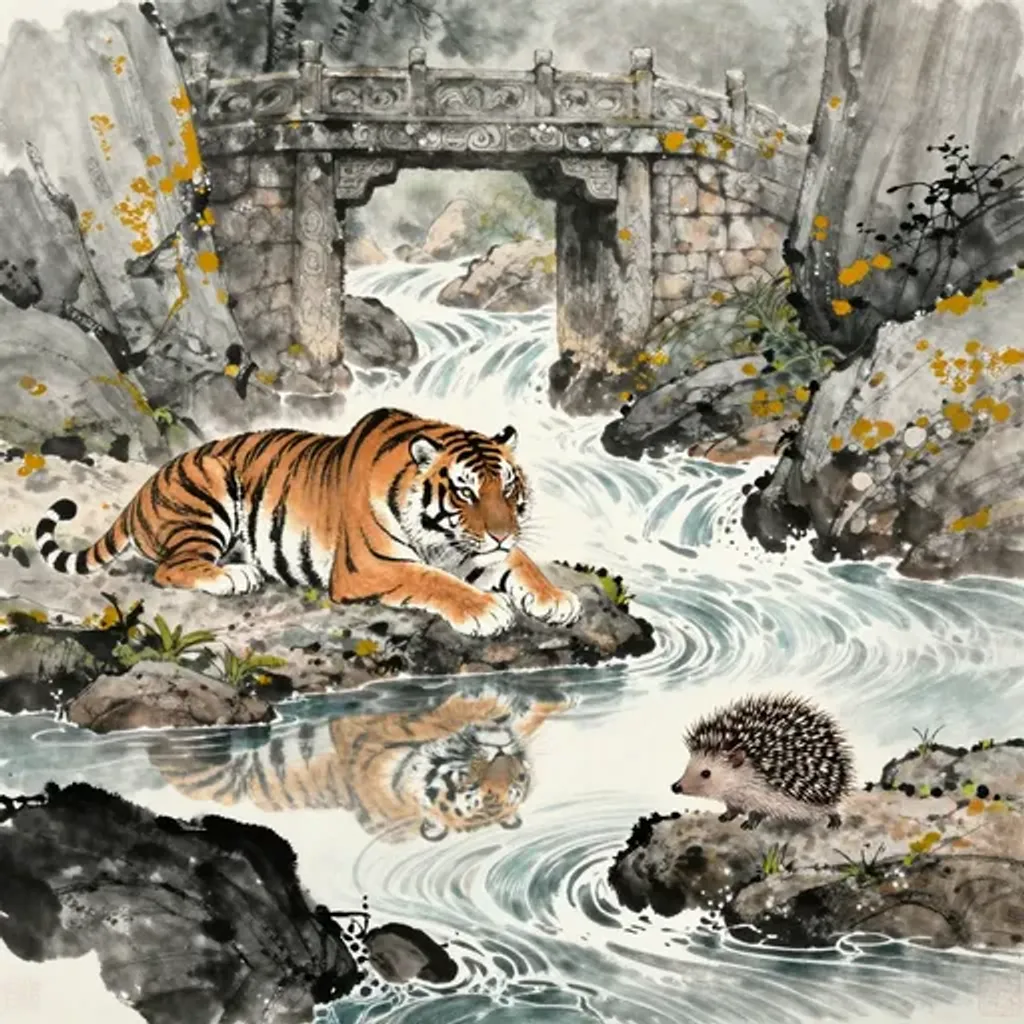
虎飲欲食,見蝟而伏。禹通龍門,避咎除患,元醜以安。
The tiger, hungry and wanting to eat, sees the hedgehog and crouches low. Yu opened the Dragon Gate, averting disaster and removing affliction; thus the primal ugliness finds peace.
— Jiao Yanshou, Yilin (Forest of Changes), 1st century BC
Commentary
Fire over wind fills the cauldron; wind sweeps across water in Dispersion. A tiger, hungry and eager to feed, encounters a hedgehog and crouches flat, unable to attack. Then Yu the Great opens the Dragon Gate, averting catastrophe and eliminating danger — the primal chaos is settled into safety. The hedgehog subduing the tiger echoes the 'hedgehog as Gongcao' motif: even the fiercest predator is checked by a small, well-armored creature. Yu's opening of the Dragon Gate — carving the gorge to channel floodwaters — is the foundational act of civilization taming chaos. From The Cauldron to Dispersion, the transformation disperses concentrated danger. Wind over water scatters what had pooled — Yu's engineering genius and the hedgehog's defensive armor both work by redirecting force rather than meeting it head-on.
鼎 → 節
Hexagram 50 → Hexagram 60: Limitation
Changing lines: 1, 3, 4, 5, 6
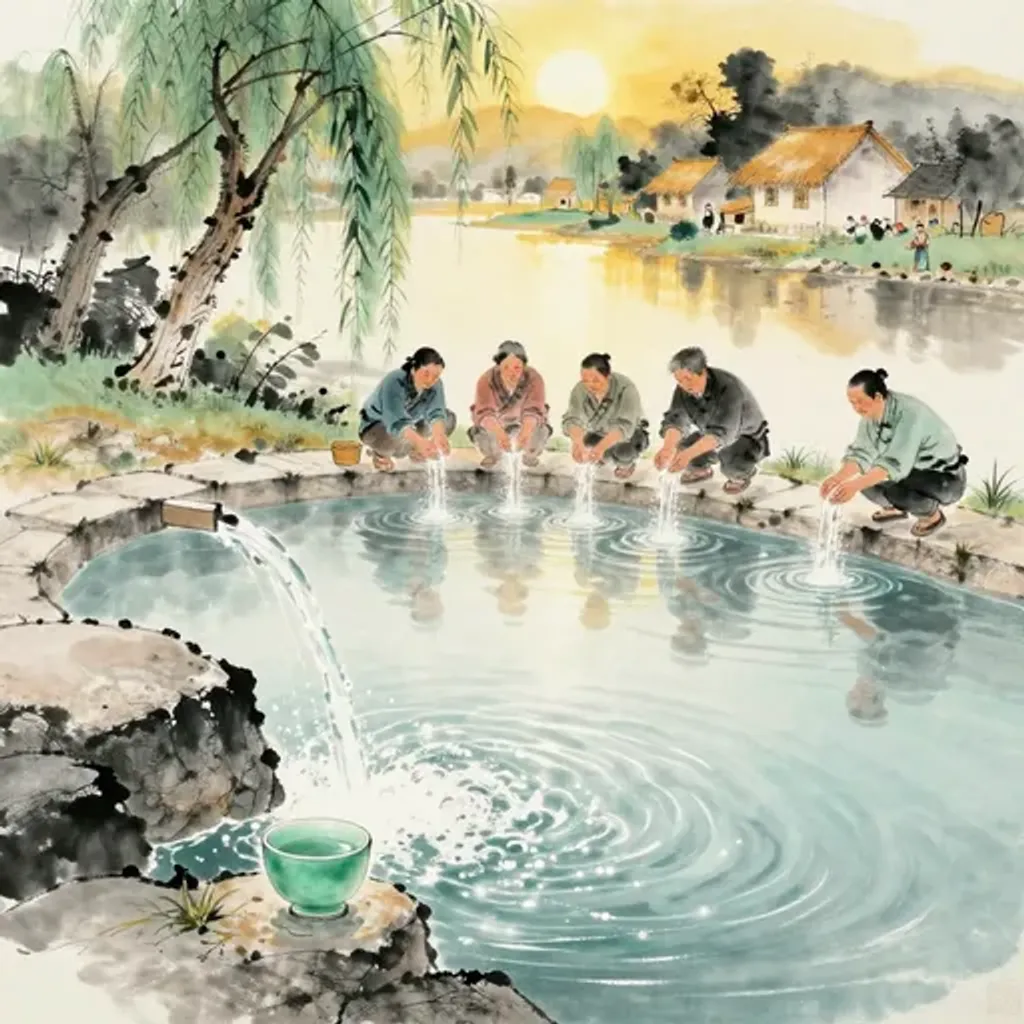
安民呼池,玉柸大按。泉如白蜜,一色獲願。
The people rest at ease beside the pool; the jade cup presses down in grand ceremony. The spring flows white as honey; in one draught, every wish is fulfilled.
— Jiao Yanshou, Yilin (Forest of Changes), 1st century BC
Commentary
Fire over wind fills the cauldron; water rests above the lake in Limitation. 'The people rest at ease by the pool,' jade cups arrayed for a grand feast. The spring flows white as honey, and with one uniform blessing, all wishes are fulfilled. The verse paints an almost paradisiacal scene: communal rest beside a clear pool, precious vessels set out, a sweet spring providing abundance, and universal contentment. The 'spring like white honey' evokes a miraculous source — nature providing without human labor, as in the legends of blessed springs. From The Cauldron to Limitation, the transformation reveals that true abundance comes through proper measure. Water above the lake sets its own level; the cauldron portions its nourishment wisely. The sweetest spring satisfies precisely because it flows within natural limits.
鼎 → 中孚
Hexagram 50 → Hexagram 61: Inner Truth
Changing lines: 1, 3, 4, 5
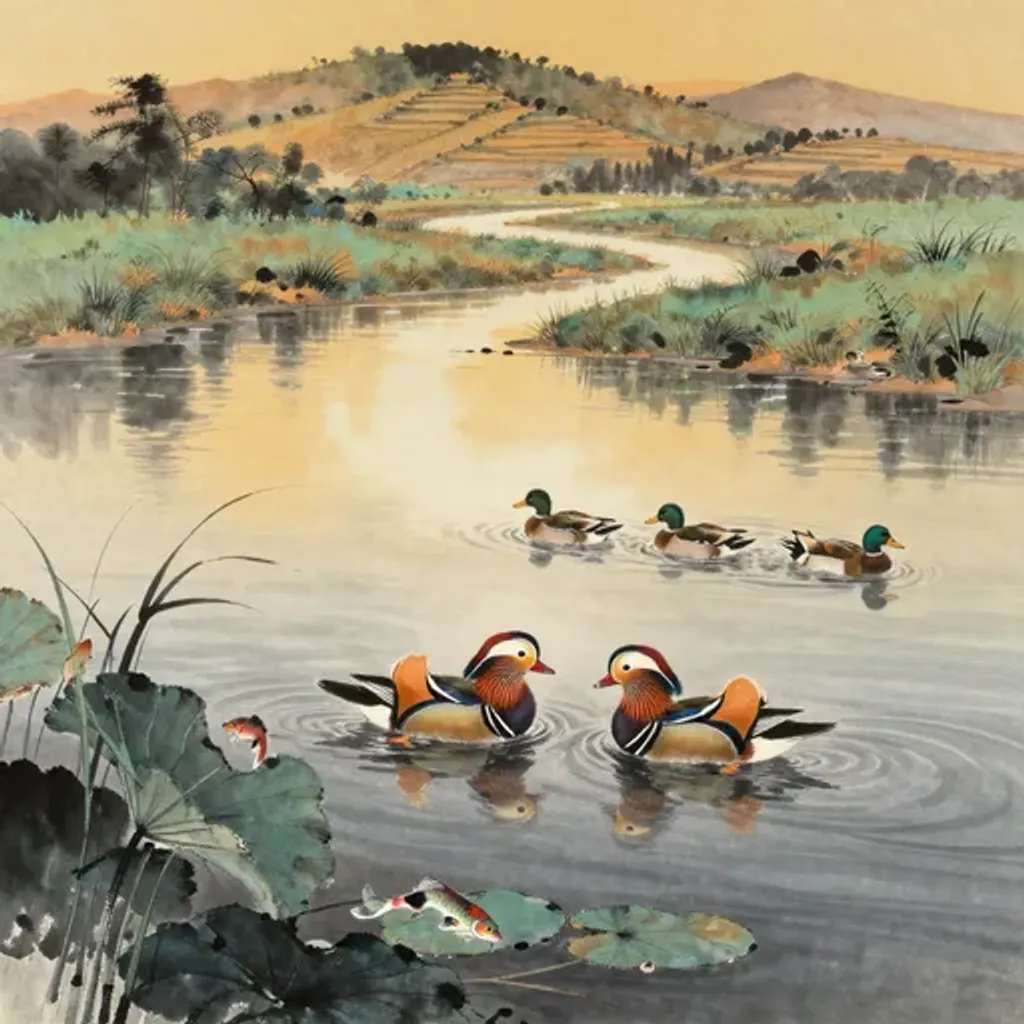
雙鳧鴛鴦,相隨君行。南至饒澤,食魚與梁。君子與長。
Paired wild ducks and mandarin ducks follow the lord on his journey. Southward to the bountiful marsh, they feed on fish and grain. The gentleman prospers and grows.
— Jiao Yanshou, Yilin (Forest of Changes), 1st century BC
Commentary
Fire over wind fills the cauldron; wind stirs above the lake in Inner Truth. Paired wild ducks and mandarin ducks follow the lord southward. Arriving at a rich marshland, they feast on fish and grain — the gentleman thrives and grows. The mandarin ducks, classical symbols of faithful partnership, travel together with their lord toward abundant waters. The 'rich marsh' (raoze) suggests a land of plenty where both birds and humans find sustenance. From The Cauldron to Inner Truth, the transformation reveals that genuine bonds attract genuine abundance. Wind over the lake: sincerity resonates across the surface. The cauldron's offering, carried by faithful companions, reaches the fertile waters. Inner truth does not grasp at wealth — it simply arrives where trust gathers.
鼎 → 小過
Hexagram 50 → Hexagram 62: Small Exceeding
Changing lines: 2, 6
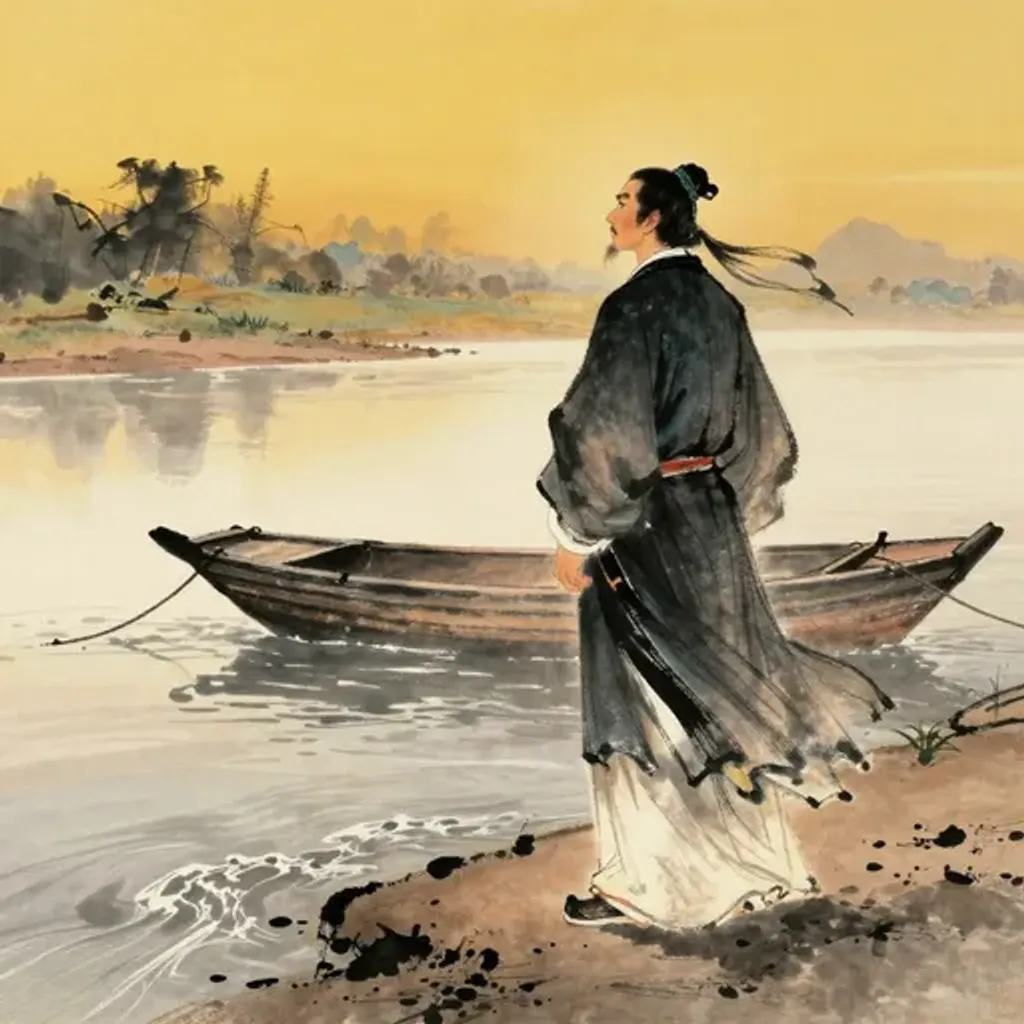
蔡侯朝楚,留連江渚。踰時歷月,思其君后。
The Marquis of Cai pays court at Chu, lingering long upon the river shore. Months pass beyond the appointed time; he thinks of his lord and queen.
— Jiao Yanshou, Yilin (Forest of Changes), 1st century BC
Commentary
Fire over wind fills the cauldron; thunder echoes above the mountain in Small Exceeding. The Marquis of Cai pays court to Chu but is detained along the river's edge. Months pass beyond the appointed time, and he longs for his own lord and court. This references Marquis Zhao of Cai, who visited Chu and was held there — according to tradition, because he refused to surrender a prized fur robe to the Chu minister Zi Chang. Detained far from home, he ached with homesickness and political helplessness. From The Cauldron to Small Exceeding, the transformation reveals a minor transgression — a slight overstep in etiquette or pride — that generates disproportionate consequences. Thunder on the mountain: a small excess reverberates far beyond its size. The cauldron's guest became a prisoner because propriety was exceeded by just a fraction.
鼎 → 既濟
Hexagram 50 → Hexagram 63: After Completion
Changing lines: 1, 2, 4, 5, 6
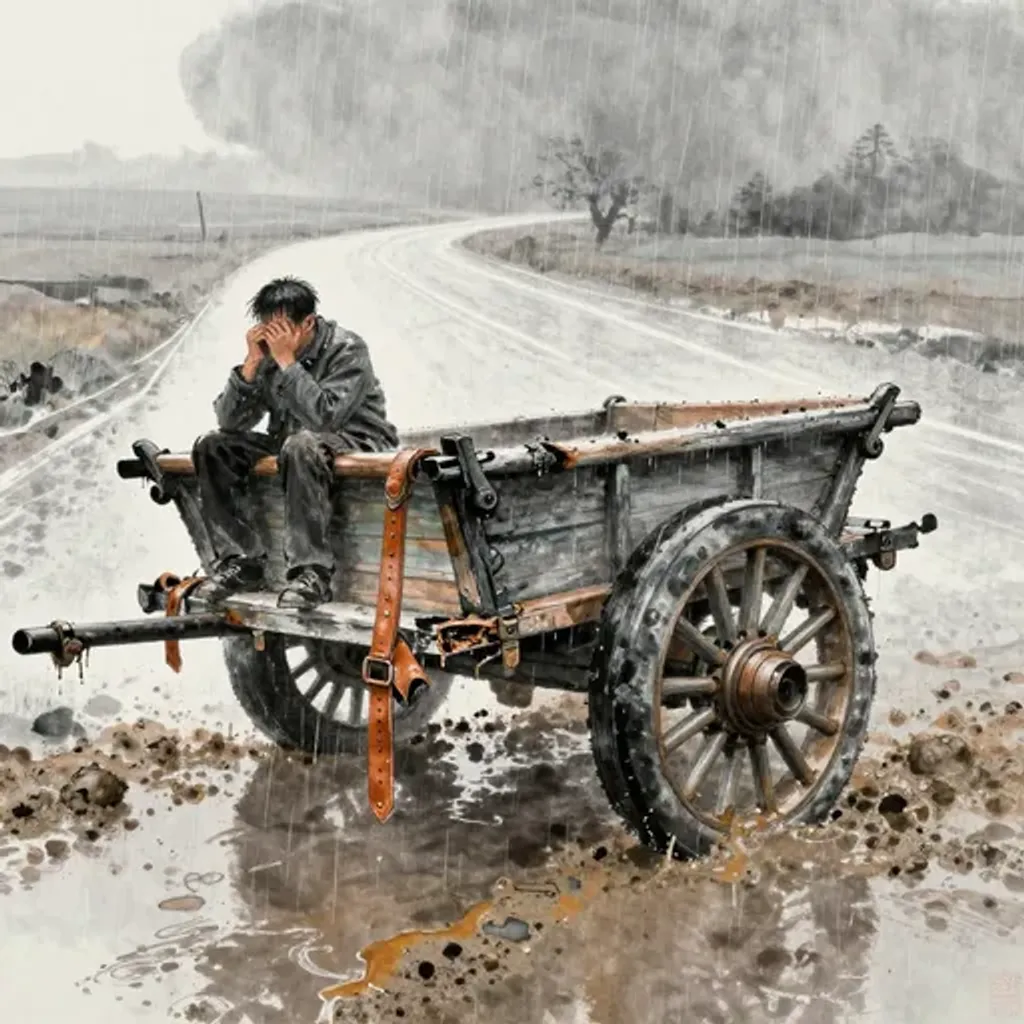
膠車駕東,與雨相逢。五楘解墮,頓阨獨坐,憂為身禍。
The glue-sealed cart drives east and meets the rain. The five leather bindings loosen and fall; halted in distress, he sits alone, fearing it will become his ruin.
— Jiao Yanshou, Yilin (Forest of Changes), 1st century BC
Commentary
Fire over wind fills the cauldron; water settles above fire in After Completion. A glue-stiffened cart heads east and meets rain along the way. The five leather straps loosen and fall apart, leaving the driver stranded and sitting alone, worrying the mishap will bring further harm. Glue dissolves in water — the very substance meant to hold the cart rigid becomes its vulnerability when rain arrives. The five 'mu' (楘) are the decorative leather bindings of a chariot's yoke; when they disintegrate, the vehicle is useless. From The Cauldron to After Completion, the transformation warns that even finished work remains fragile. Water above fire: everything is in its right place, but the slightest external pressure — a rainstorm — unravels what seemed complete. The cauldron is done cooking, yet the meal may still be lost on the road.
鼎 → 未濟
Hexagram 50 → Hexagram 64: Before Completion
Changing lines: 3
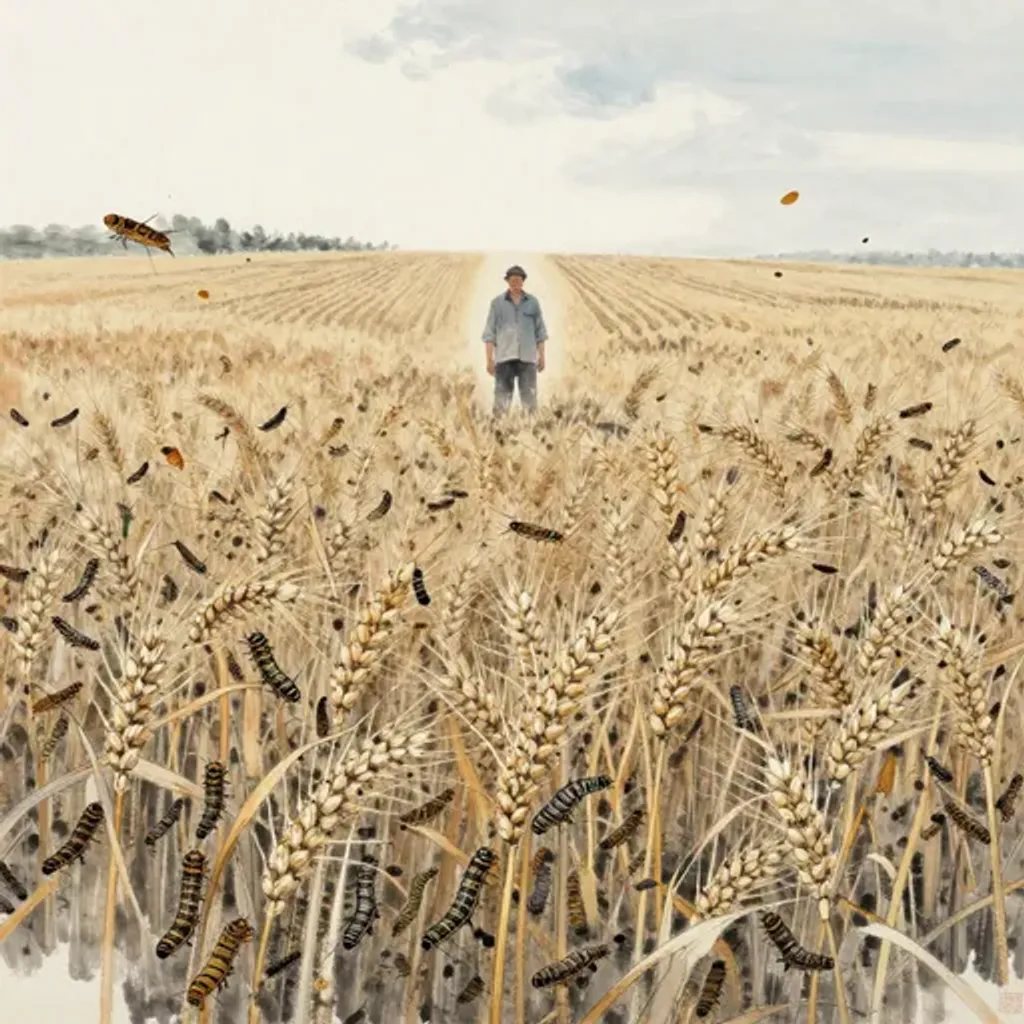
螟䖝為賊,害我稼穡。盡禾單麥,利无所得。
Grubs and caterpillars become the thieves, destroying our crops and grain. They strip the millet bare, devour the wheat; no profit is to be found.
— Jiao Yanshou, Yilin (Forest of Changes), 1st century BC
Commentary
Fire over wind fills the cauldron; fire hovers above water in Before Completion. Caterpillars and locusts become plagues, devastating grain and millet. The harvest is stripped bare — wheat consumed to the last stalk — and nothing of profit remains. The verse names the farmer's deepest dread: insect swarms that devour an entire season's labor in days. The cauldron depends on grain; without harvest, it stands empty. 'Jin he dan mai' — every stalk of millet gone, every head of wheat consumed — is agricultural annihilation. From The Cauldron to Before Completion, the transformation leaves everything unfinished. Fire above water: energy and substance fail to combine. The cauldron has fire but no food to cook; the field had crops but no defense against the swarm. The work is undone at the very threshold of completion.