Transformations of Hexagram 51
Every line of change out of Hexagram 51 震 The Arousing Thunder, with the Yilin verse for each of the 64 resulting hexagrams, its translation, and the original ink brush artwork.
震 → 乾
Hexagram 51 → Hexagram 1: The Creative
Changing lines: 2, 3, 5, 6
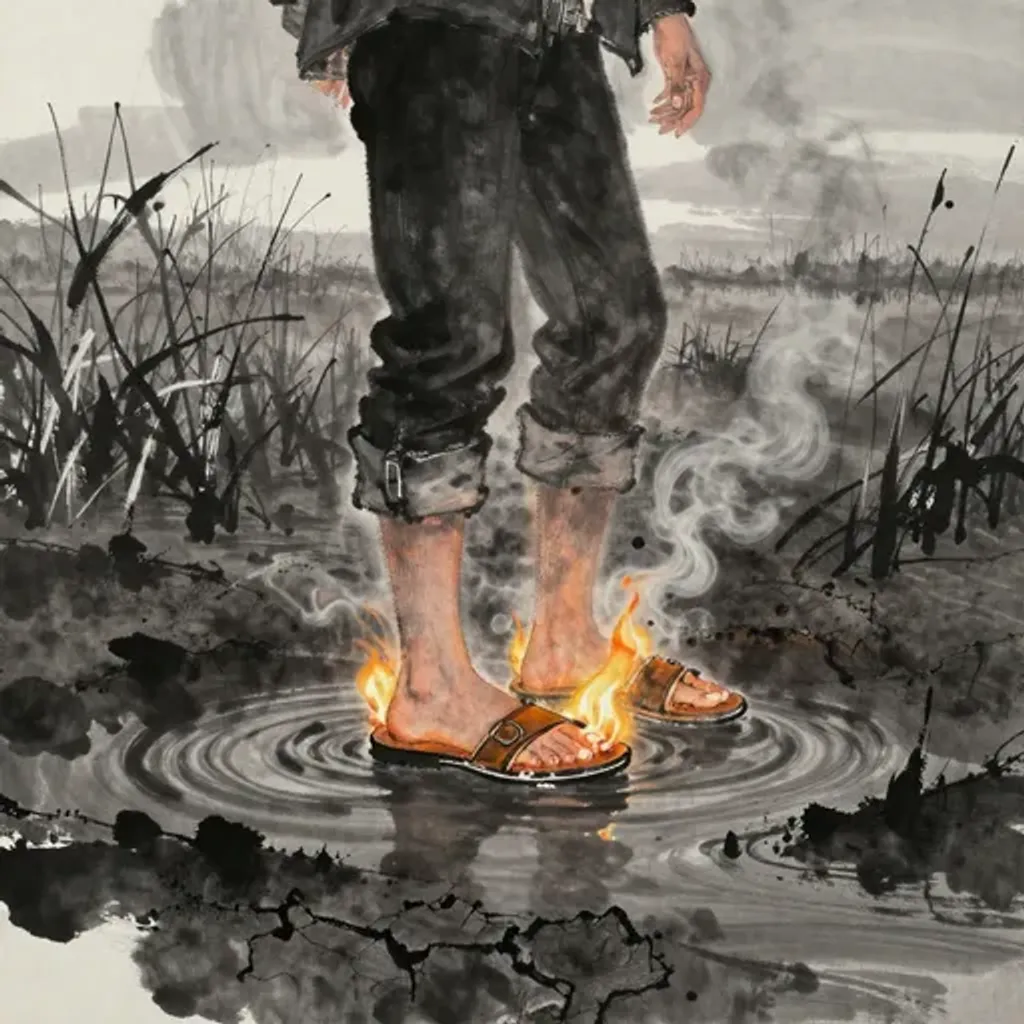
陷塗溺水,火燒我履,憂患重累。
Sunk in mud, drowning in water; fire burns my shoes. Woes and troubles multiply.
— Jiao Yanshou, Yilin (Forest of Changes), 1st century BC
Commentary
Thunder doubled gives way to heaven doubled: from shock to pure initiative. The verse paints a cascading disaster — sinking in mud, drowning in water, fire burning one's shoes — a pileup of calamities where each escape leads to the next trap. This is not a single crisis but a chain reaction, worries layered upon worries. Yet the transformation from The Arousing to The Creative reframes the sequence: thunder's raw disruptive force, when pushed to its limit, transmutes into heaven's self-renewing strength. The gentleman who cultivates himself through fear and trembling discovers that repeated shocks can forge the tireless momentum of heaven's turning. Adversity upon adversity becomes the very engine of self-generating power.
震 → 坤
Hexagram 51 → Hexagram 2: The Receptive
Changing lines: 1, 4
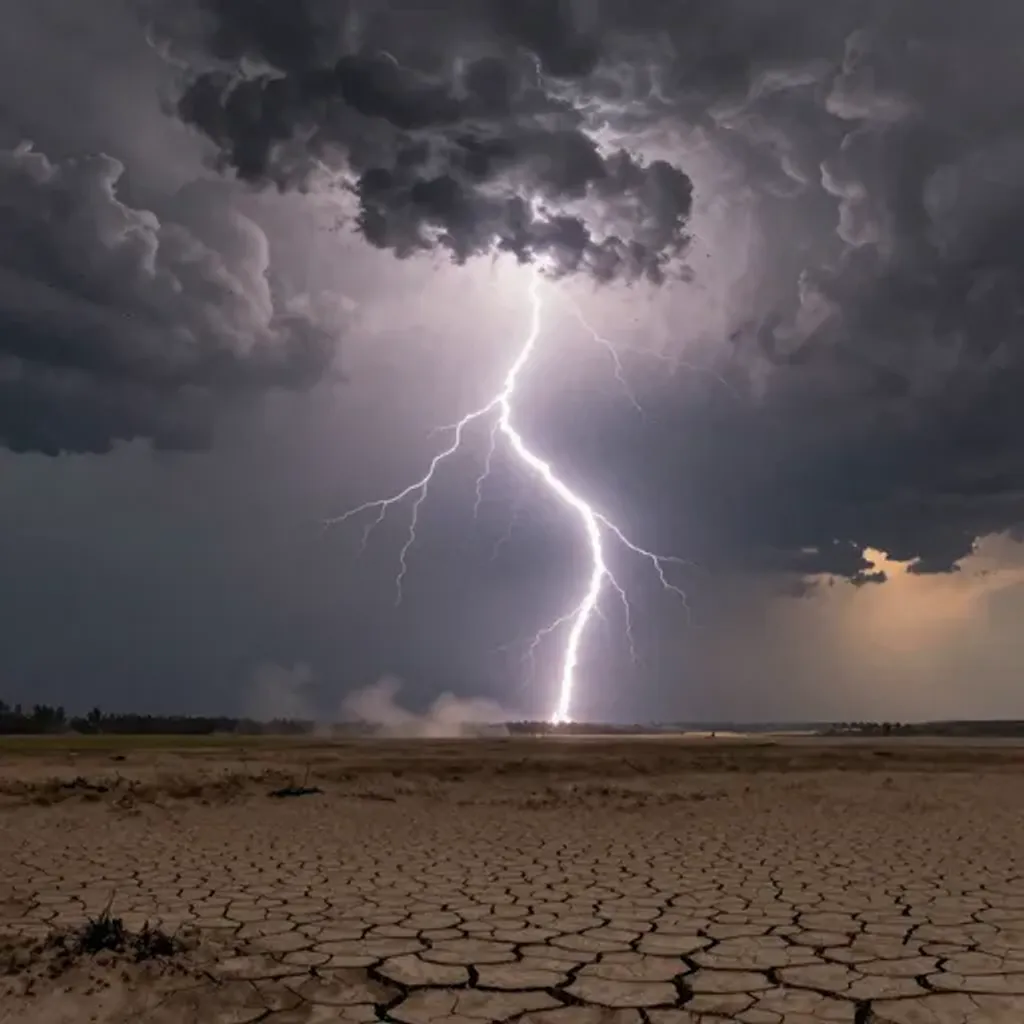
旦生夕死,名曰嬰鬼,不可得視。
Lightning splits the sky, thunder in a flash. Before rain touches ground, the clouds have already scattered east.
— Jiao Yanshou, Yilin (Forest of Changes), 1st century BC
Commentary
Thunder doubled transforms into earth doubled: arousal dissolves into receptive stillness. The original verse reads: 'Born at dawn, dead by dusk — called an infant ghost, impossible to see.' This describes a life so brief it never takes visible form, an impulse that flickers and vanishes. The name 'infant ghost' (嬰鬼) denotes spirits of children who die before they can be perceived or named. From The Arousing to The Receptive, the shock that jolts into being finds no ground to sustain it. Thunder's energy, without earth's patient holding, produces only a flash that dissipates. What begins with explosive potential ends in silent absence — not tragic loss but the failure of initiative to take root.
震 → 屯
Hexagram 51 → Hexagram 3: Difficulty at the Beginning
Changing lines: 4, 5
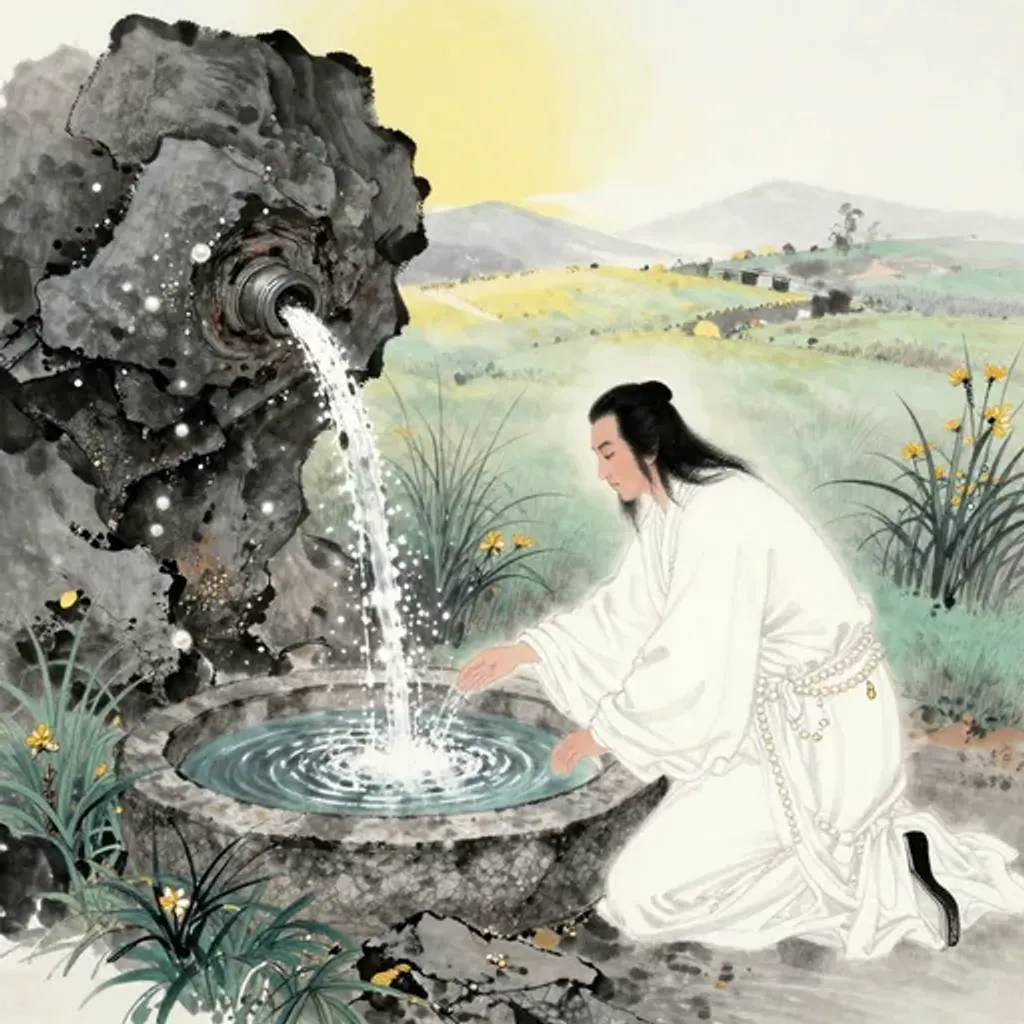
揚水潛鑿,使君潔白。衣素附珠,遊戲皋沃。得其所願,心志娛樂。
Raising water, drilling deep; making the lord pure and white. Clothed in plain silk adorned with pearls, roaming the rich meadows. Attaining what is wished for; heart and will are filled with joy.
— Jiao Yanshou, Yilin (Forest of Changes), 1st century BC
Commentary
Thunder doubled meets clouds and thunder together: shock gives way to the struggle of new beginnings. Water is drawn up and wells are secretly cut — cleansing the lord to radiant purity. Dressed in white silk studded with pearls, he roams the rich meadows of Gao and Wo, achieving his heart's desire in joyful play. The imagery suggests ritual purification followed by celebration, the kind of festive abundance that follows a successful inaugural effort. From The Arousing to Difficulty at the Beginning, the verse captures the moment when raw shock finds its first constructive channel. Thunder above water: the initial chaos of a new endeavor, properly managed, yields not just survival but delight.
震 → 蒙
Hexagram 51 → Hexagram 4: Youthful Folly
Changing lines: 1, 2, 4, 6
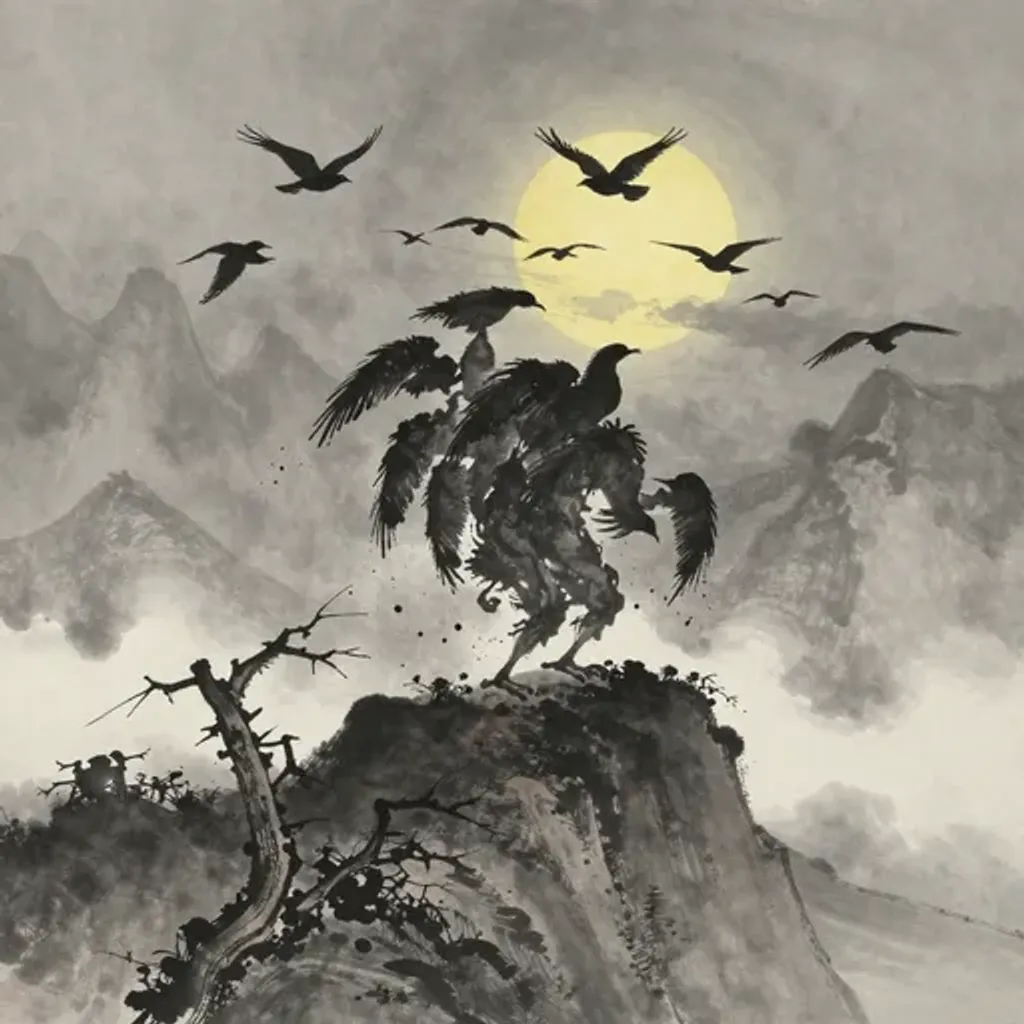
眾鳥所翔,中有大怪,九身无頭。魂驚魄去,不可以居。
Where the many birds soar, among them is a great horror: nine bodies without heads. Soul startled, spirit fled — one cannot dwell here.
— Jiao Yanshou, Yilin (Forest of Changes), 1st century BC
Commentary
Thunder doubled yields to mountain over water: shock meets bewilderment. Among a flock of soaring birds lurks a great monstrosity — nine bodies without a head. The soul is terrified, the spirit flees; this is no place to dwell. The image of a nine-bodied headless creature evokes the mythological aberrations catalogued in the Shanhaijing, beings that defy natural order. The flock seems normal until the grotesque is revealed within it. From The Arousing to Youthful Folly, the transformation warns that thunder's shock may expose what was hidden in darkness. Mountain over water, the spring emerging below — but when what emerges is monstrous rather than clear, even the spring of understanding becomes a source of terror.
震 → 需
Hexagram 51 → Hexagram 5: Waiting
Changing lines: 2, 3, 4, 5
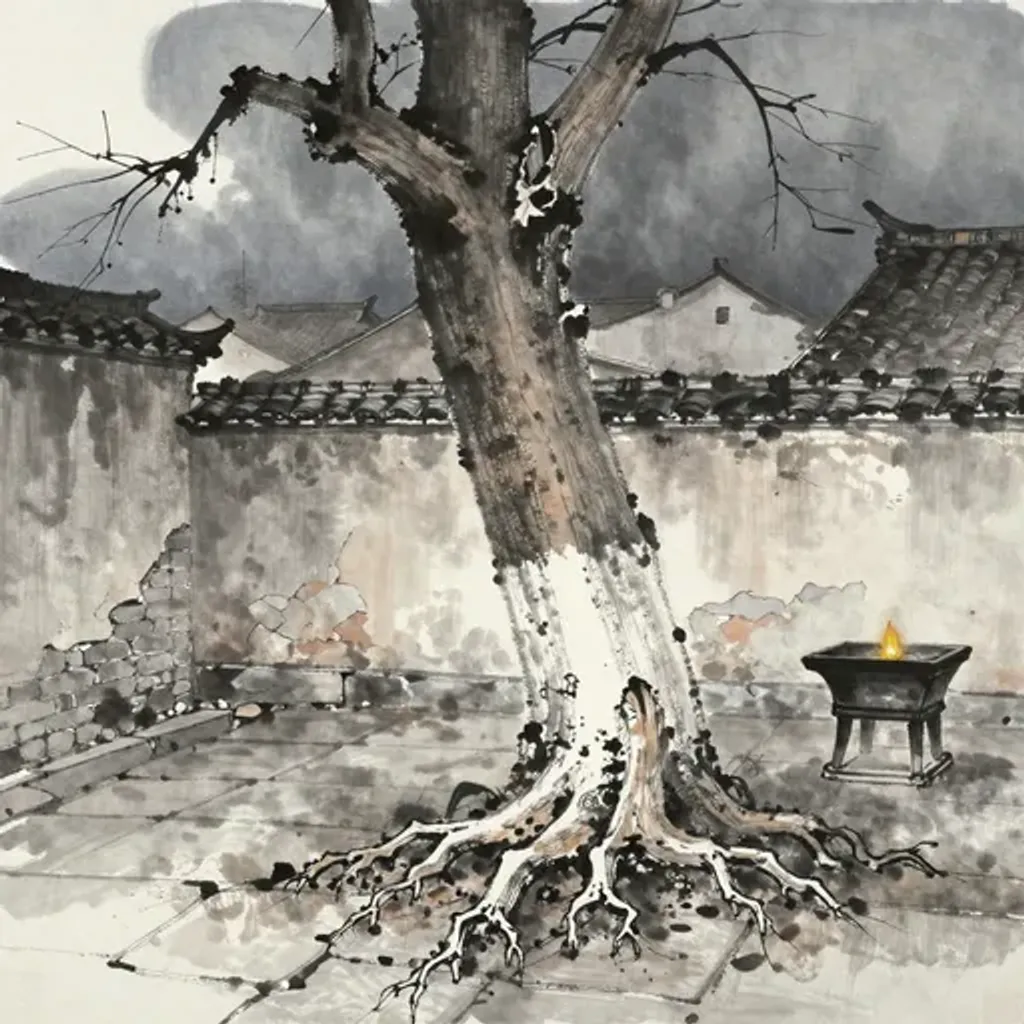
刖根枯株,不生肌膚。病在於心,日以燋枯。
Roots severed, the dead stump grows no flesh or skin. The illness lies in the heart; day by day it withers and dries.
— Jiao Yanshou, Yilin (Forest of Changes), 1st century BC
Commentary
Thunder doubled transforms into water over heaven: from shock to patient waiting. A tree stump with severed roots, no new bark can grow. The illness lies in the heart, and day by day it withers. The verse describes radical severance — not a branch pruned but roots cut entirely — followed by slow internal decay. The sickness is not on the surface but at the core, and no external remedy suffices. From The Arousing to Waiting, the transformation reframes urgency into enforced patience. Clouds gather above heaven but the rain has not yet fallen. When the damage is this deep, thunder's impulse to act immediately only accelerates the drying out. Healing, if it comes, requires endurance rather than force.
震 → 訟
Hexagram 51 → Hexagram 6: Conflict
Changing lines: 1, 2, 5, 6
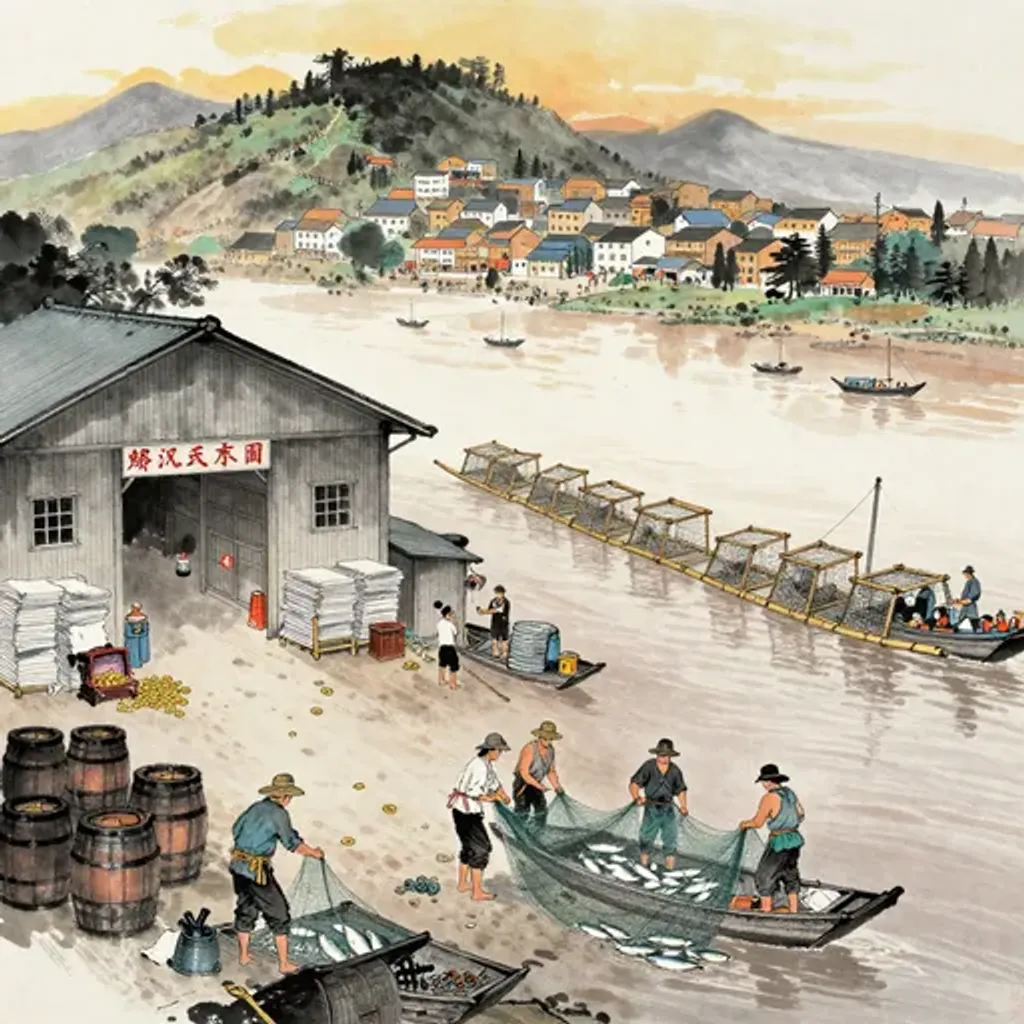
府藏之富,王以賑貸。捕魚河海,笱網多得。
Rich are the royal storehouses; the king dispenses relief and loans. Catching fish in river and sea, nets and traps yield abundantly.
— Jiao Yanshou, Yilin (Forest of Changes), 1st century BC
Commentary
Thunder doubled transforms into heaven over water: shock reframed as strategic contention. The treasury overflows with wealth, and the king distributes loans to the people. Casting nets in rivers and seas, the catch is abundant. This verse describes sovereign generosity paired with productive enterprise — the ruler opens the granary while fishermen haul in their bounty. From The Arousing to Conflict, the transformation is counterintuitive: abundance here arises not from harmony but from the creative tension of heaven and water moving in opposite directions. The king's largesse is itself a form of strategic engagement, binding the people through benevolence. Even conflict, when administered as managed distribution, generates prosperity rather than ruin.
震 → 師
Hexagram 51 → Hexagram 7: The Army
Changing lines: 1, 2, 4
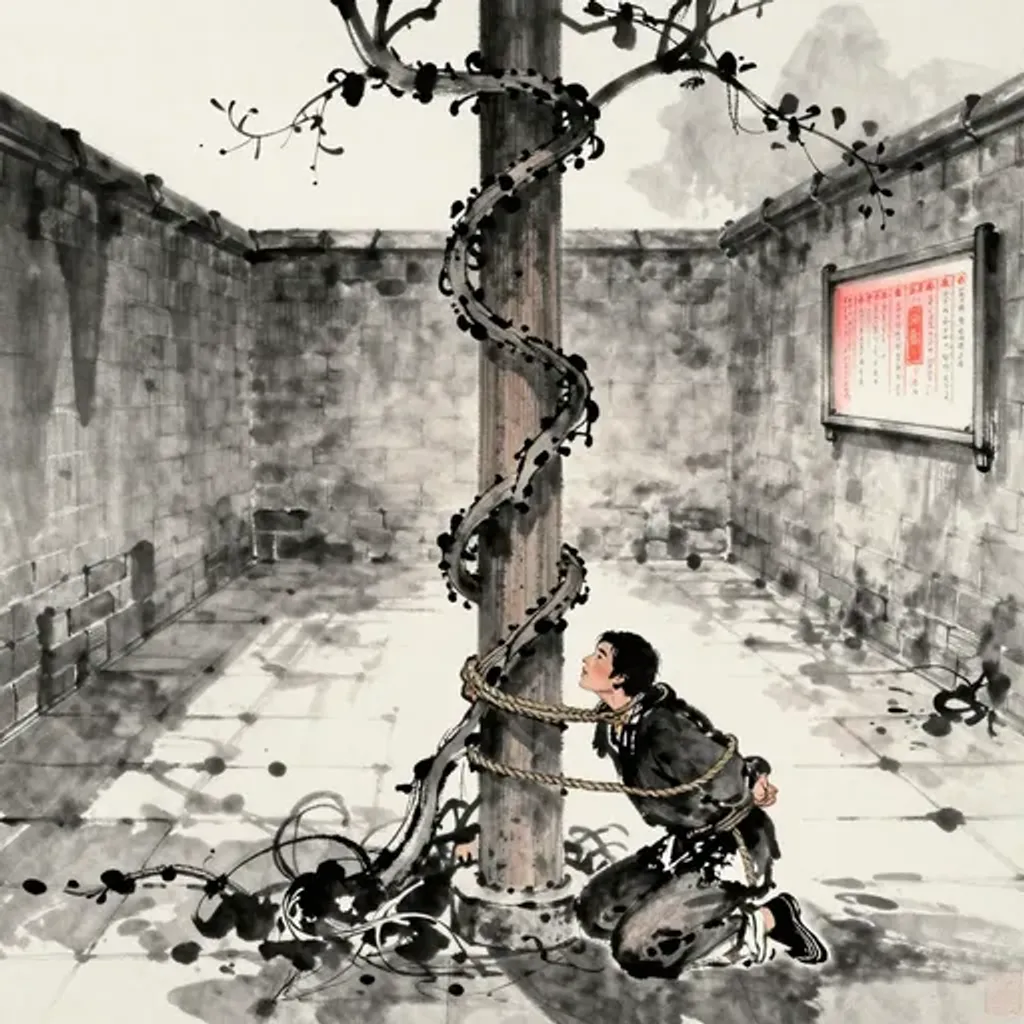
一莖九纏,更相牽攣。宿明俯仰,不得東西。請獻當報,日中被刑。
One stem tangled nine times, pulling and binding each to each. Dawn and dusk bowing and rising, unable to go east or west. Offerings presented as repayment due; at midday, punishment falls.
— Jiao Yanshou, Yilin (Forest of Changes), 1st century BC
Commentary
Thunder doubled transforms into earth over water: shock becomes disciplined order. A single stem entangled in nine coils, each pulling the other — looking up and bowing down from dawn to dusk, unable to move east or west. One offers tribute expecting reward, but is punished at noon instead. The verse describes total entrapment: obligations bind like vines, every direction blocked, and even proper deference earns only punishment. The phrase 'punished at noon' (日中被刑) may echo the ancient practice of public execution at midday. From The Arousing to The Army, the transformation channels chaotic entanglement into military discipline. Water within the earth contains the multitude — but containment also means that the individual's freedom is sacrificed to collective order.
震 → 比
Hexagram 51 → Hexagram 8: Holding Together
Changing lines: 1, 4, 5
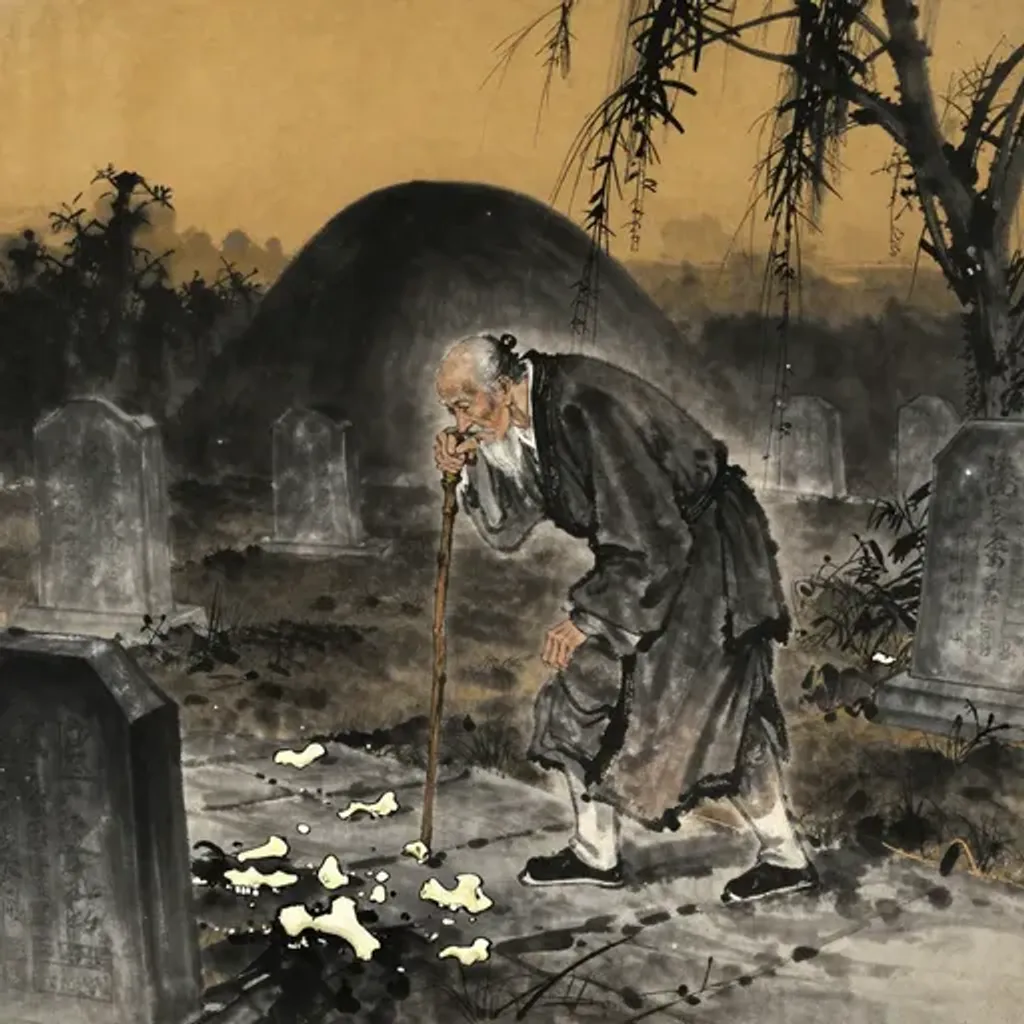
耋老鮐背,齒牙動搖。近地遠天,下入黃泉。
Aged and bent-backed, teeth loose and shaking. Nearer the earth, farther from heaven; descending into the Yellow Springs.
— Jiao Yanshou, Yilin (Forest of Changes), 1st century BC
Commentary
Thunder doubled gives way to water over earth: shock dissolves into the quiet of holding together. An old man with a tortoise-shell back, teeth loosening and wobbling. Closer to the ground than to heaven, he descends into the Yellow Springs. The Yellow Springs (黃泉) is the underworld in Chinese cosmology — the realm of the dead beneath the earth. The verse traces the arc of extreme old age with unsentimental clarity: the body curves earthward, the teeth — last markers of vitality — betray their owner. From The Arousing to Holding Together, thunder's shock meets the gentle bonding of water upon earth. Even death is a form of gathering: the aged body returns to the soil that bore it, holding together with the earth at last.
震 → 小畜
Hexagram 51 → Hexagram 9: Small Taming
Changing lines: 2, 3, 4, 5, 6
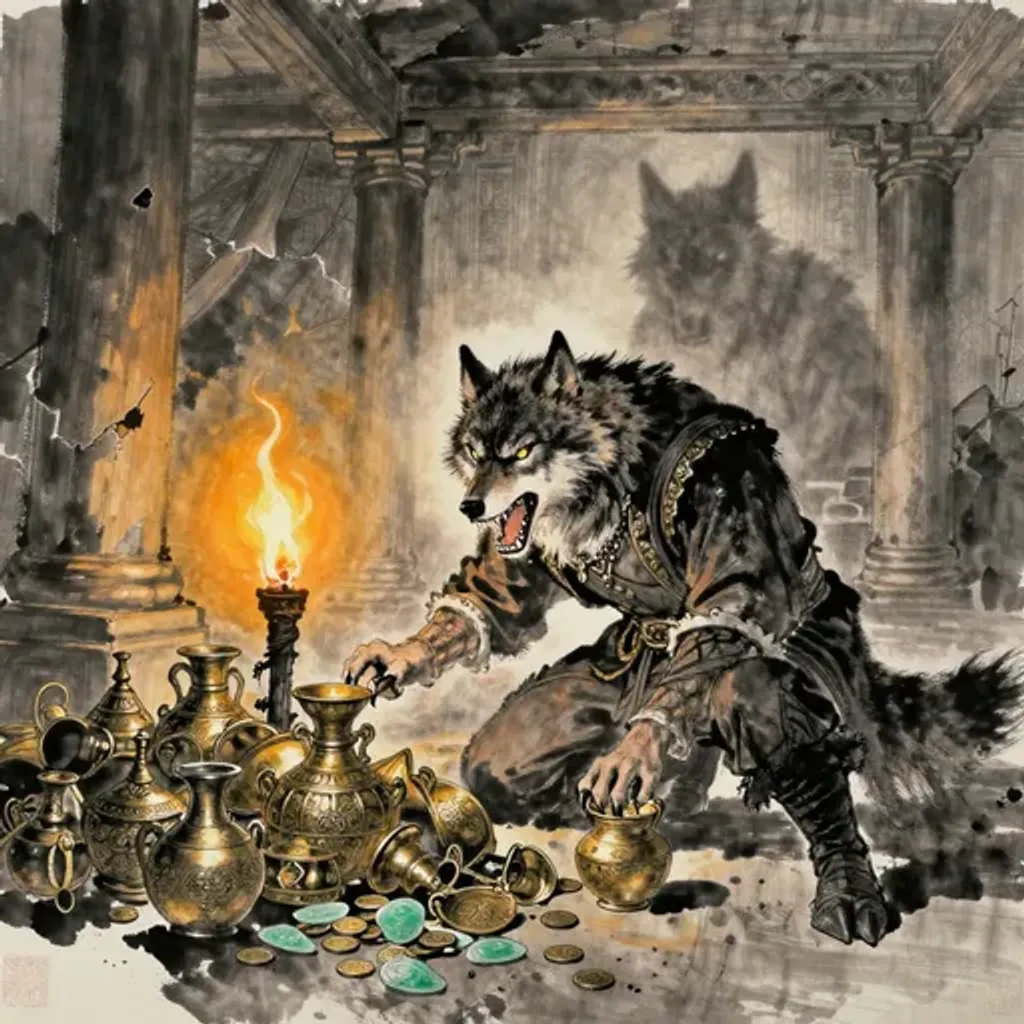
羊舌叔虎,野心善怒。黷貨无厭,以滅其身。
Yangshe Shuhu, wild of heart and quick to rage. Greedy for bribes without end, he destroys himself thereby.
— Jiao Yanshou, Yilin (Forest of Changes), 1st century BC
Commentary
Thunder doubled yields to wind over heaven: shock restrained by gentle accumulation. Yangshe Shuhu of Jin, wild-hearted and quick to anger, insatiable in his greed for wealth — and so destroyed himself. According to the Zuo Zhuan, Yangshe Hu was a nobleman of Jin entangled with the powerful Luan faction. His fierce temperament and reckless ambition drew him into Luan Ying's conspiracy; when the Luan clan fell around 552 BC, Yangshe Hu was executed along with them. From The Arousing to Small Taming, the verse warns that thunder's untamed energy, when it refuses the gentle restraint of wind over heaven, leads only to self-destruction. The power that cannot be tamed accumulates nothing.
震 → 履
Hexagram 51 → Hexagram 10: Treading
Changing lines: 2, 5, 6
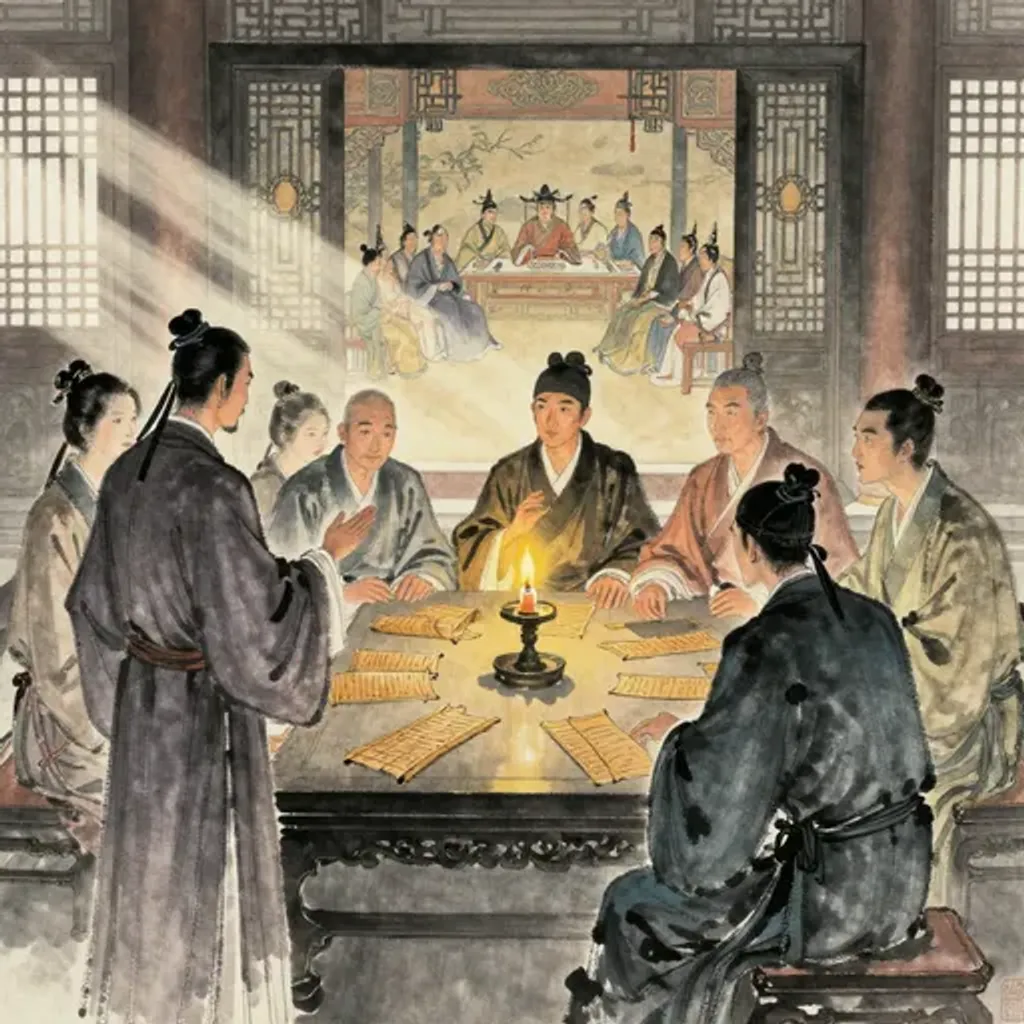
謀疑八子,更相欺紿。管叔善止,不見邪期。
Plotting with eight sons in doubt, deceiving one another in turn. Guanshu was wise to desist; he did not fall into their treacherous designs.
— Jiao Yanshou, Yilin (Forest of Changes), 1st century BC
Commentary
Thunder doubled meets heaven over lake: shock transformed into careful treading. Eight princes plot with suspicion, deceiving one another in turn. Guan Shu thought he could stop the scheme, yet failed to see the treachery approaching. After King Wu's death, his brothers — led by Guan Shu — suspected the Duke of Zhou of usurping the young King Cheng's power. The Rebellion of the Three Monitors (c. 1042 BC) resulted in Guan Shu's execution. He believed he was defending legitimacy but could not discern the line between loyalty and sedition. From The Arousing to Treading, the verse warns: when thunder's righteous indignation steps onto thin ice, only those who tread with true discernment avoid the tiger's bite.
震 → 泰
Hexagram 51 → Hexagram 11: Peace
Changing lines: 2, 3, 4
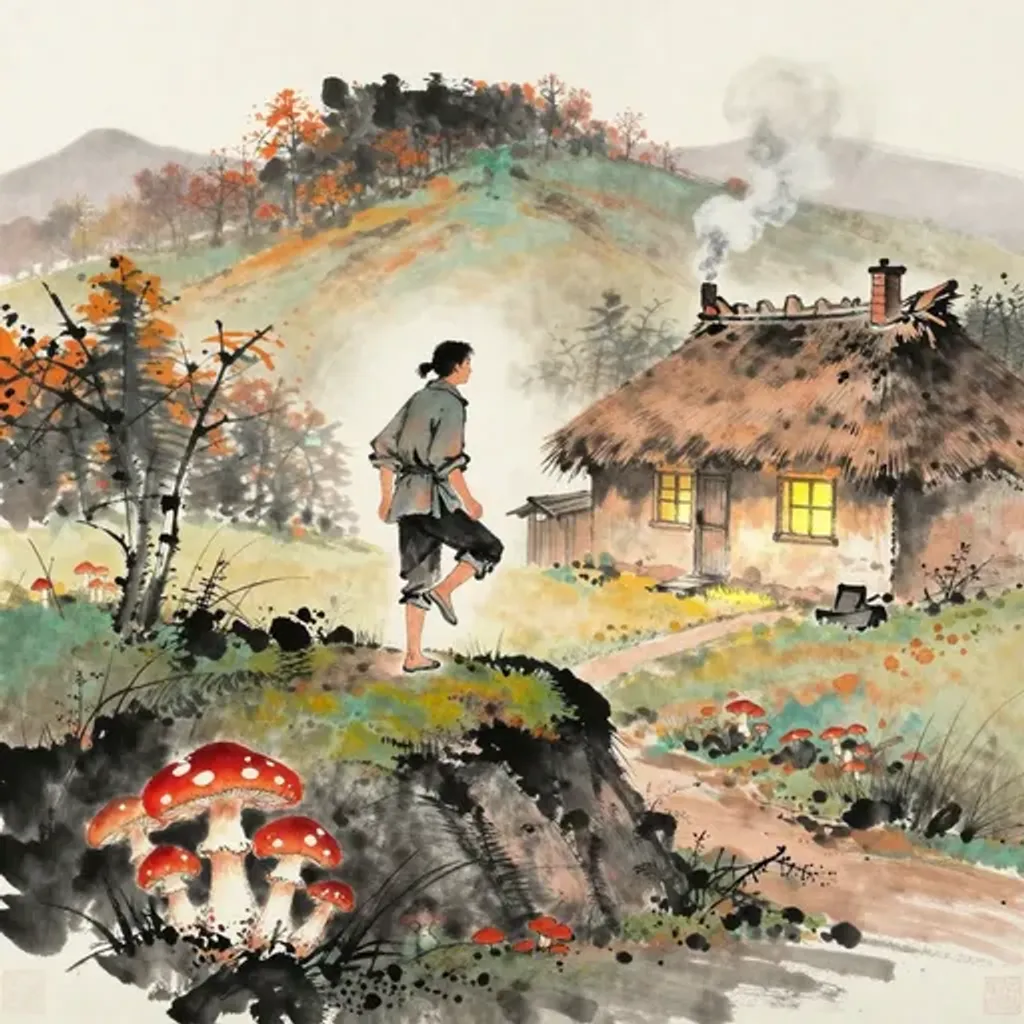
伴跳不遠,心與言反。尼丘顧家,茅蕈朱茟。
Hopping about, not going far; heart and words at odds. Niqiu looks homeward; thatch-mushrooms and crimson bracken.
— Jiao Yanshou, Yilin (Forest of Changes), 1st century BC
Commentary
Thunder doubled opens into earth over heaven: shock gives way to the free exchange of Peace. Leaping about but never far, the heart contradicts the words. Niqiu looks homeward — thatched eaves with vermilion rafters. Niqiu (尼丘) is Mount Ni, birthplace of Confucius, here used as a metonym for the sage himself. The verse captures someone whose actions are inconsistent — jumping restlessly yet going nowhere, speaking one thing while feeling another. Yet the mention of Niqiu turning toward home suggests a longing for the domestic warmth of thatched roofs and painted beams. From The Arousing to Peace, heaven and earth exchange freely. The restless shock settles when one returns to the place where inner and outer align — the homecoming that resolves contradiction.
震 → 否
Hexagram 51 → Hexagram 12: Standstill
Changing lines: 1, 5, 6
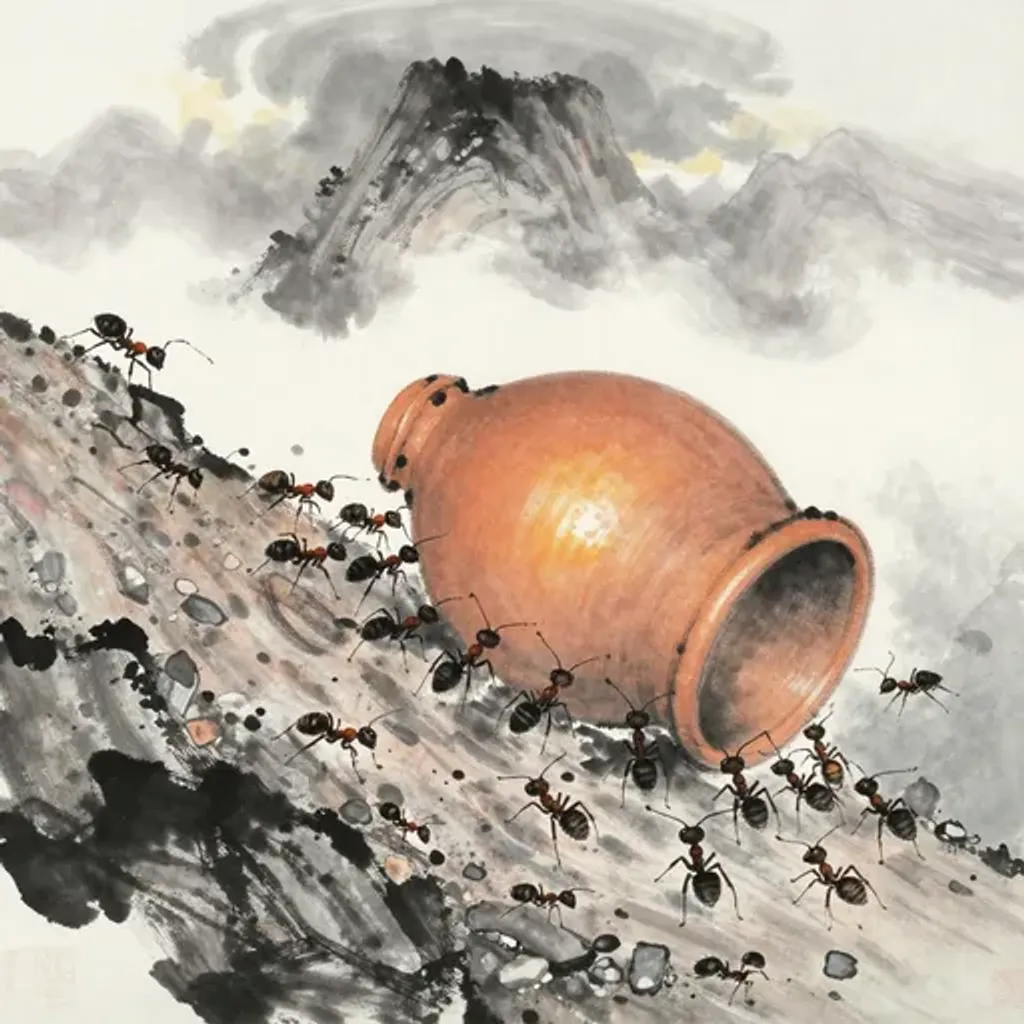
蚍蜉載盆,不能上山。搖推跌跋,頓傷其顏。
Ants carry a basin; they cannot climb the mountain. Rocking, pushing, stumbling, falling; they bruise their faces.
— Jiao Yanshou, Yilin (Forest of Changes), 1st century BC
Commentary
Thunder doubled meets heaven over earth: shock confronts total blockage. An ant carrying a basin cannot climb the mountain. Shaken and stumbling, it tumbles and bruises its face. The image is almost comic in its disproportion — a tiny creature attempting an impossible load on an impossible slope. Every step forward produces a fall backward. From The Arousing to Standstill, the verse embodies the essence of obstruction: heaven and earth refuse to communicate, above and below are sealed off. Thunder's impulse to act meets absolute structural resistance. The ant's ambition is not wrong, but the timing and proportion are disastrously misjudged. When heaven and earth do not exchange, even heroic effort ends in humiliation.
震 → 同人
Hexagram 51 → Hexagram 13: Fellowship
Changing lines: 3, 5, 6
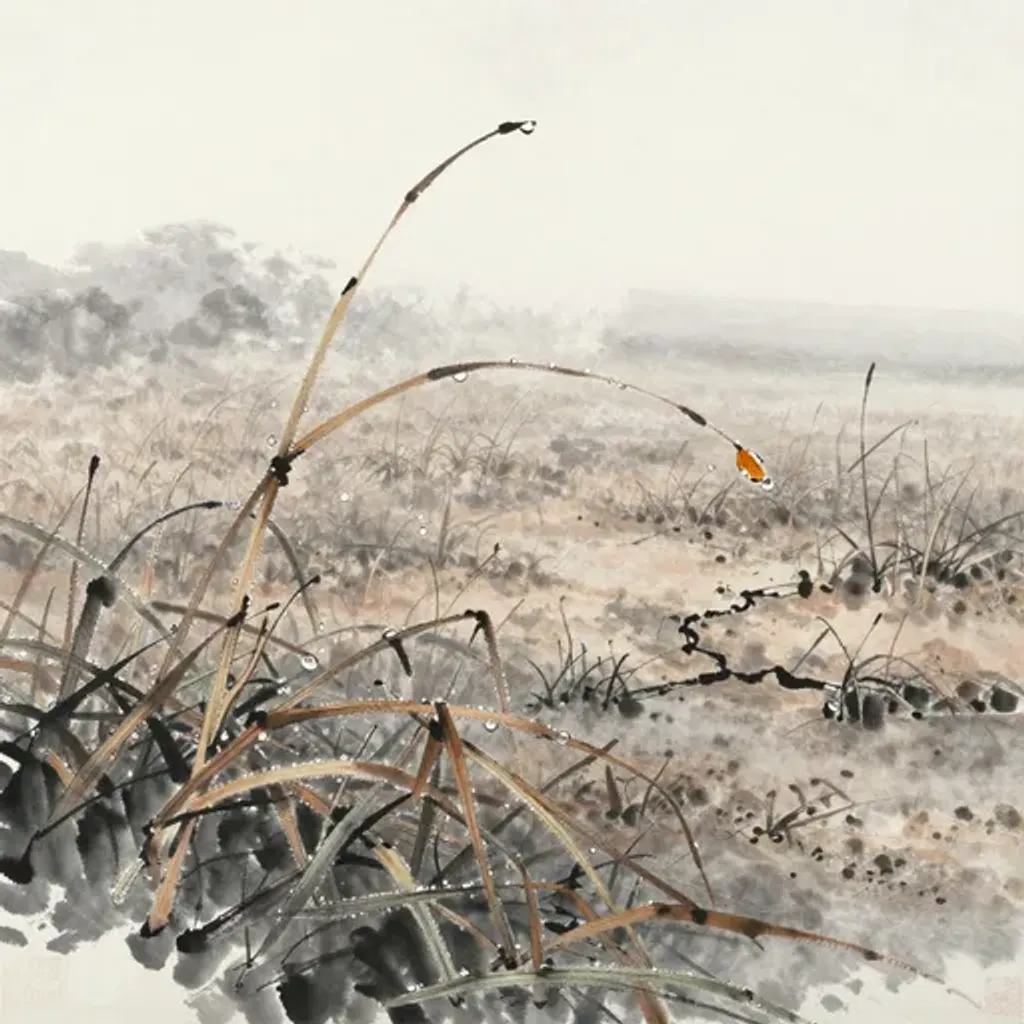
朝露不久,為恩惠少。膏潤欲盡,咎在枯槁。
Morning dew does not last long; its grace and favor are slight. Richness and moisture nearly spent; the fault lies in withering and decay.
— Jiao Yanshou, Yilin (Forest of Changes), 1st century BC
Commentary
Thunder doubled yields to heaven over fire: shock meets the bright fellowship of shared purpose. Morning dew does not last long — its grace is scant. The nourishing moisture is nearly spent, and the fault lies in desiccation. Dew evaporates almost as soon as it forms; the benevolence it represents is too thin to sustain. From The Arousing to Fellowship, the transformation is poignant: thunder's powerful initiative produces only the briefest blessing, insufficient to sustain community. Heaven and fire illuminate together, calling for genuine solidarity, yet the verse warns that shock without sustained warmth leaves the world parched. Fellowship requires more than a flash of generosity — it demands the steady fire that heaven and fire together sustain.
震 → 大有
Hexagram 51 → Hexagram 14: Great Possession
Changing lines: 2, 3, 6
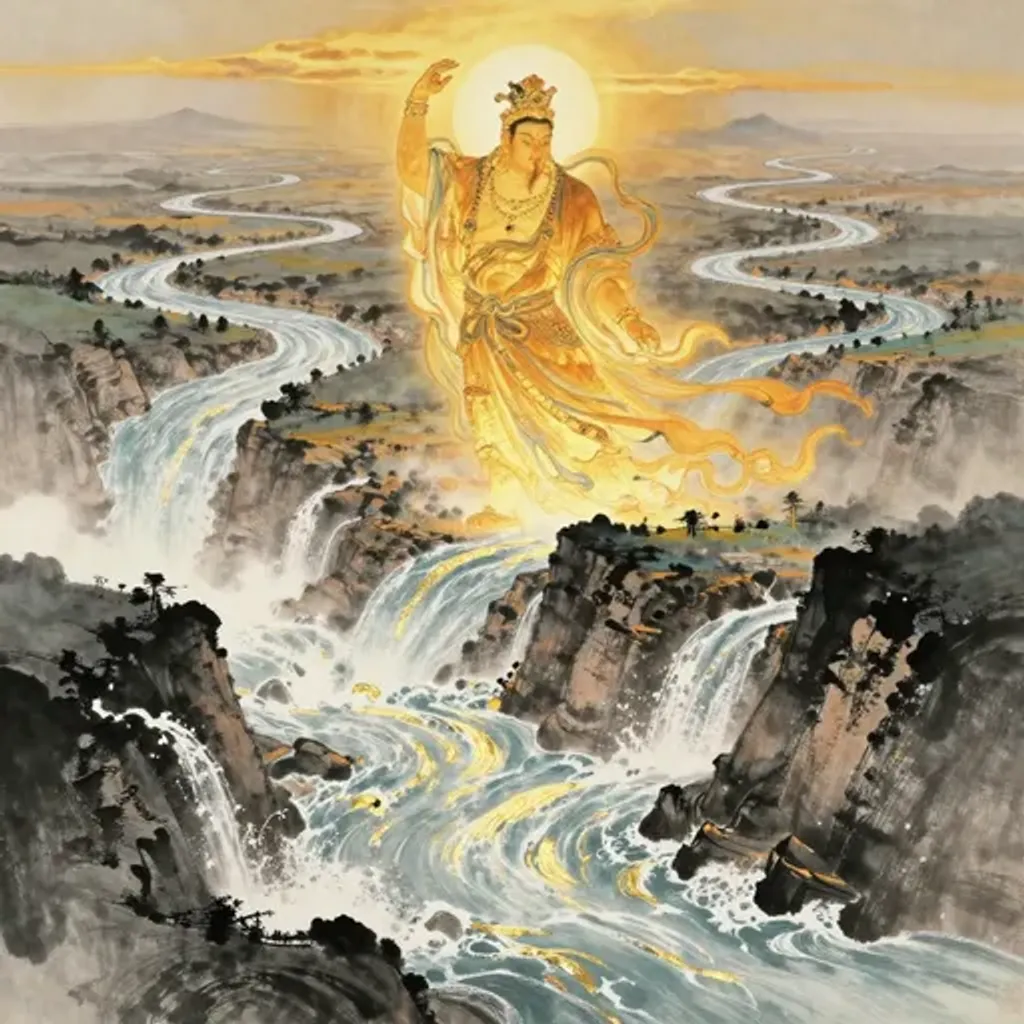
河伯之功,九州攸同。載祀六百,光烈无窮。
The merit of the River Earl; nine provinces joined as one. Sacrifices offered for six hundred years; his glory and might are without end.
— Jiao Yanshou, Yilin (Forest of Changes), 1st century BC
Commentary
Thunder doubled transforms into fire over heaven: shock ignites great possession. The Earl of the River's merit extends across the Nine Provinces in unity. For six hundred years of sacrificial devotion, his radiance and achievements are boundless. The Earl of the River (河伯) is the god of the Yellow River, a deity whose governance of water flows sustains the entire realm. The 'six hundred years' likely alludes to the duration of the Shang or Zhou dynasty's sacrificial traditions honoring river deities. From The Arousing to Great Possession, fire blazing above heaven, the verse celebrates how thunder's initial energy, when channeled into sustained ritual devotion, yields enduring glory. The divine steward who tames the floods embodies possession that serves all under heaven.
震 → 謙
Hexagram 51 → Hexagram 15: Modesty
Changing lines: 1, 3, 4
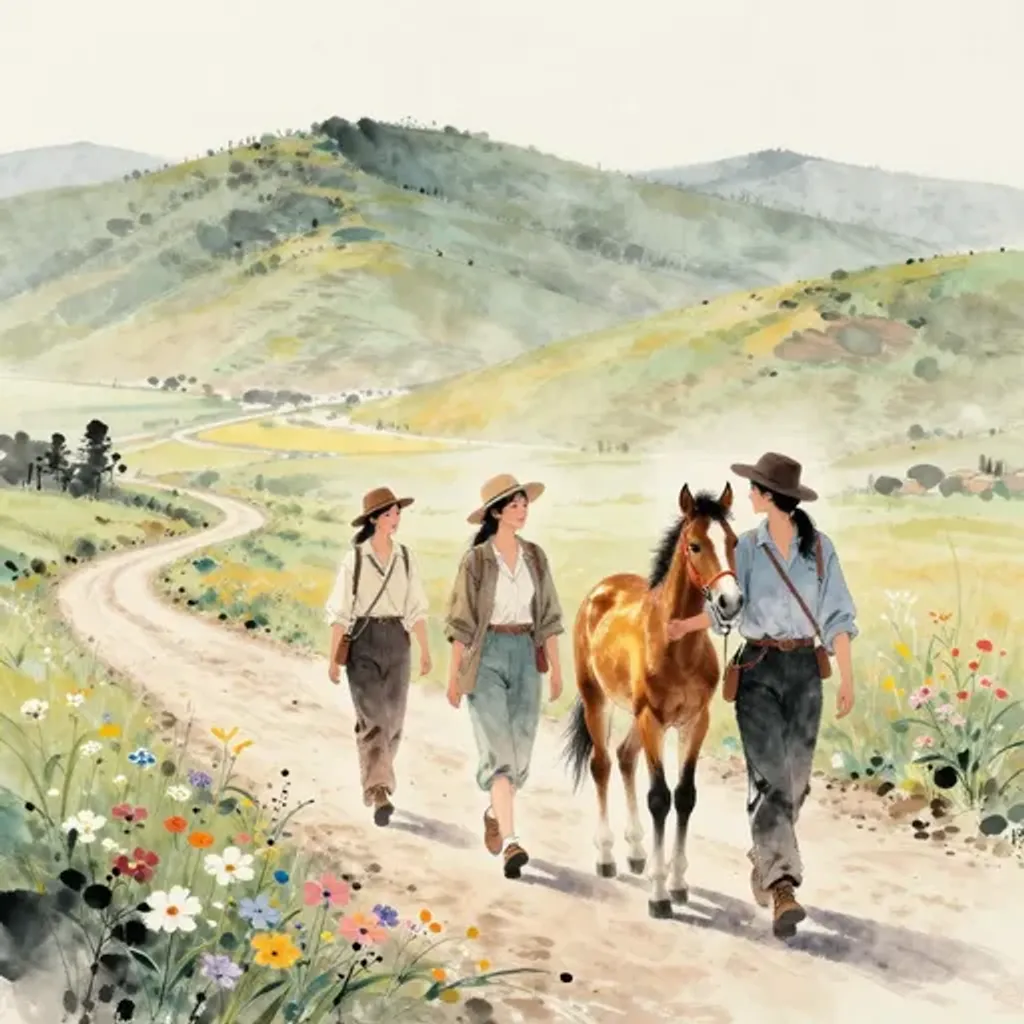
三人北行,大見光明。道逢淑女,與我驥子。
Three men journey north; they meet great radiance. On the road they encounter a fair maiden; she bestows upon me a fine colt.
— Jiao Yanshou, Yilin (Forest of Changes), 1st century BC
Commentary
Thunder doubled meets earth over mountain: shock transformed into modesty. Three men journey northward and encounter great radiance. On the road they meet a virtuous woman who presents them with a fine steed. The 'three men heading north' may allude to the tradition of King Wen's ministers — often identified as the Duke of Zhou, Taigong, and the Duke of Shao — traveling to establish Zhou governance. The virtuous woman offering a horse suggests recognition and support arriving unsought. From The Arousing to Modesty, mountain hidden within earth, the verse shows how thunder's bold initiative, when met with genuine humility, attracts unexpected gifts. Those who travel with purpose but without arrogance find the way illuminated and allies appearing unbidden.
震 → 豫
Hexagram 51 → Hexagram 16: Enthusiasm
Changing lines: 1
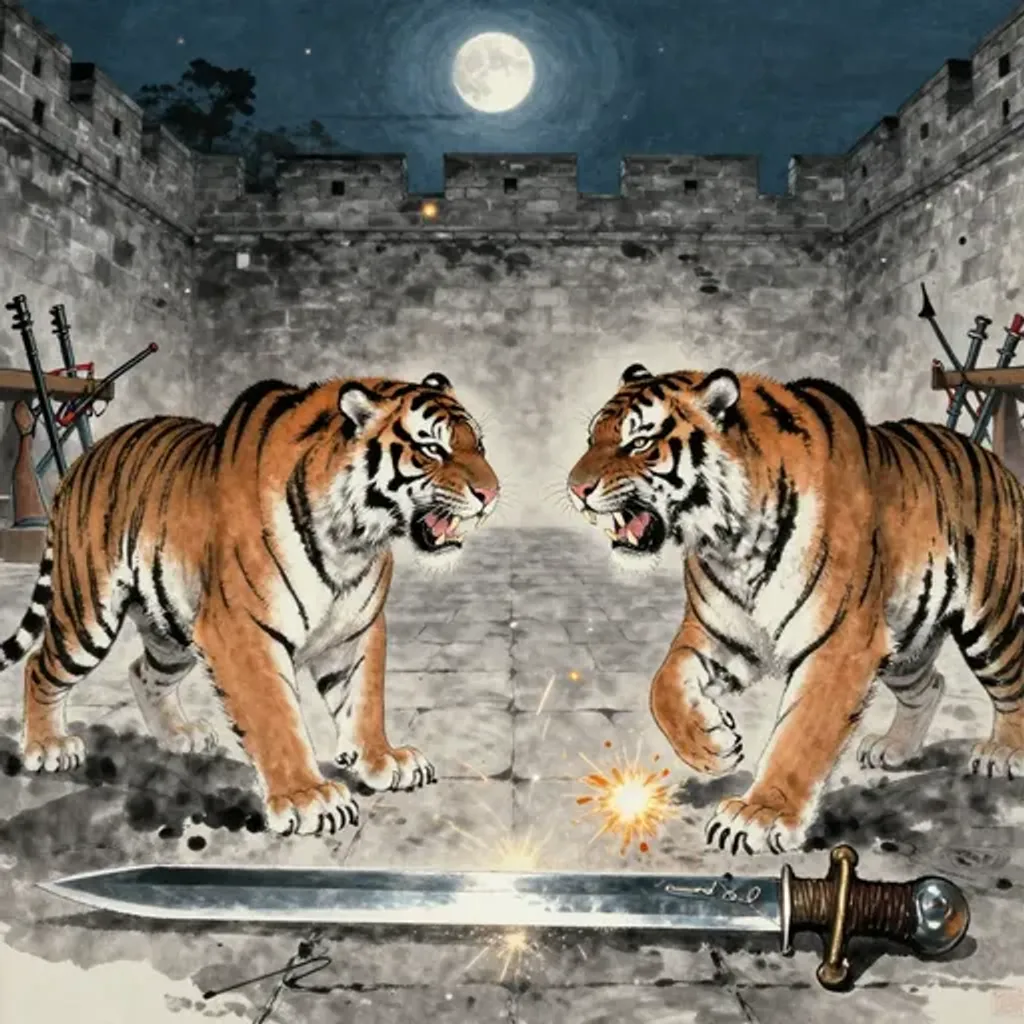
金精耀怒,帶鈞通午。徘徊高庫,宿於木下。兩虎相拒,弓弩滿野。
Metal essence blazes in fury, belted blade aligned to noon. Pacing before the high armory, sheltering beneath the trees. Two tigers confront each other; bows and crossbows fill the field.
— Jiao Yanshou, Yilin (Forest of Changes), 1st century BC
Commentary
Thunder doubled transforms into thunder over earth: from pure shock to marshalled enthusiasm. Metal essence blazes in fury, its belt-hooks spanning from south to north. Tigers pace before a towering arsenal, sheltering beneath the trees, while two tigers face off and crossbows fill the open field. The imagery is entirely martial — gleaming weapons, prowling predators, massed archery. The 'two tigers confronting each other' (兩虎相拒) is a classical metaphor for two great powers locked in standoff. From The Arousing to Enthusiasm, thunder emerging from the earth, the verse depicts the moment when latent military energy bursts forth in organized display. Enthusiasm here is not joy but mobilization — the coordinated thunder that shakes the ground when armies finally march.
震 → 隨
Hexagram 51 → Hexagram 17: Following
Changing lines: 5
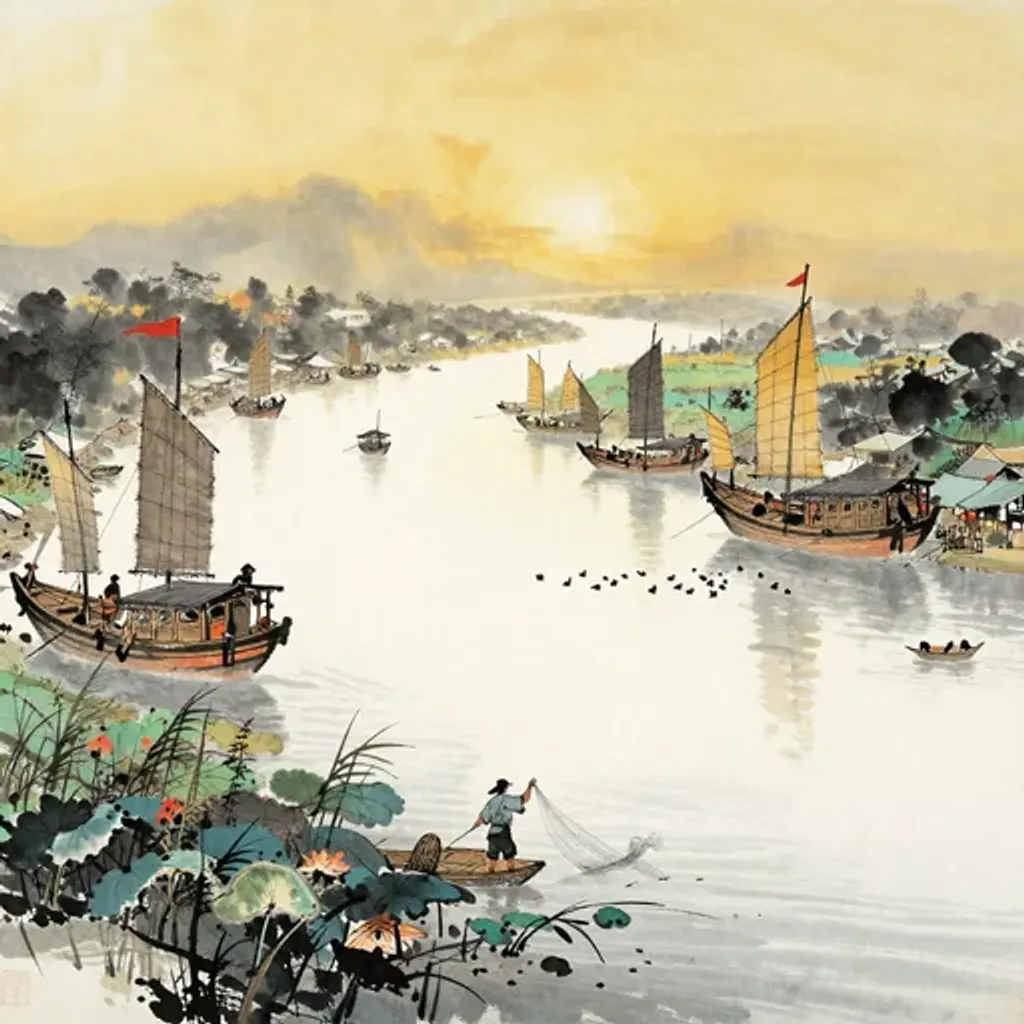
江河淮海,天之奧府。眾利所聚,可以富有,好樂喜友。
Rivers, streams, the Huai, the sea — heaven's deep storehouse. Where all profits gather; one may grow wealthy therein, delighting in friendship and joy.
— Jiao Yanshou, Yilin (Forest of Changes), 1st century BC
Commentary
Thunder doubled meets lake over thunder: shock finds companionship in following. Rivers, streams, the Huai, the sea — these are heaven's hidden storehouses. Where all profit gathers, one may grow wealthy; there is friendship and shared delight. The great waterways of ancient China — the Yangtze, Yellow River, Huai, and sea — represented both natural abundance and commercial networks. The verse celebrates the convergence of resources as a source of joy and community. From The Arousing to Following, thunder rests beneath the lake, yielding initiative for a season. The dynamic reverses: instead of asserting, one goes where the current leads. Wealth accumulates not through force but through the receptivity of following natural flows to their gathering point.
震 → 蠱
Hexagram 51 → Hexagram 18: Work on the Decayed
Changing lines: 1, 2, 3, 4, 6
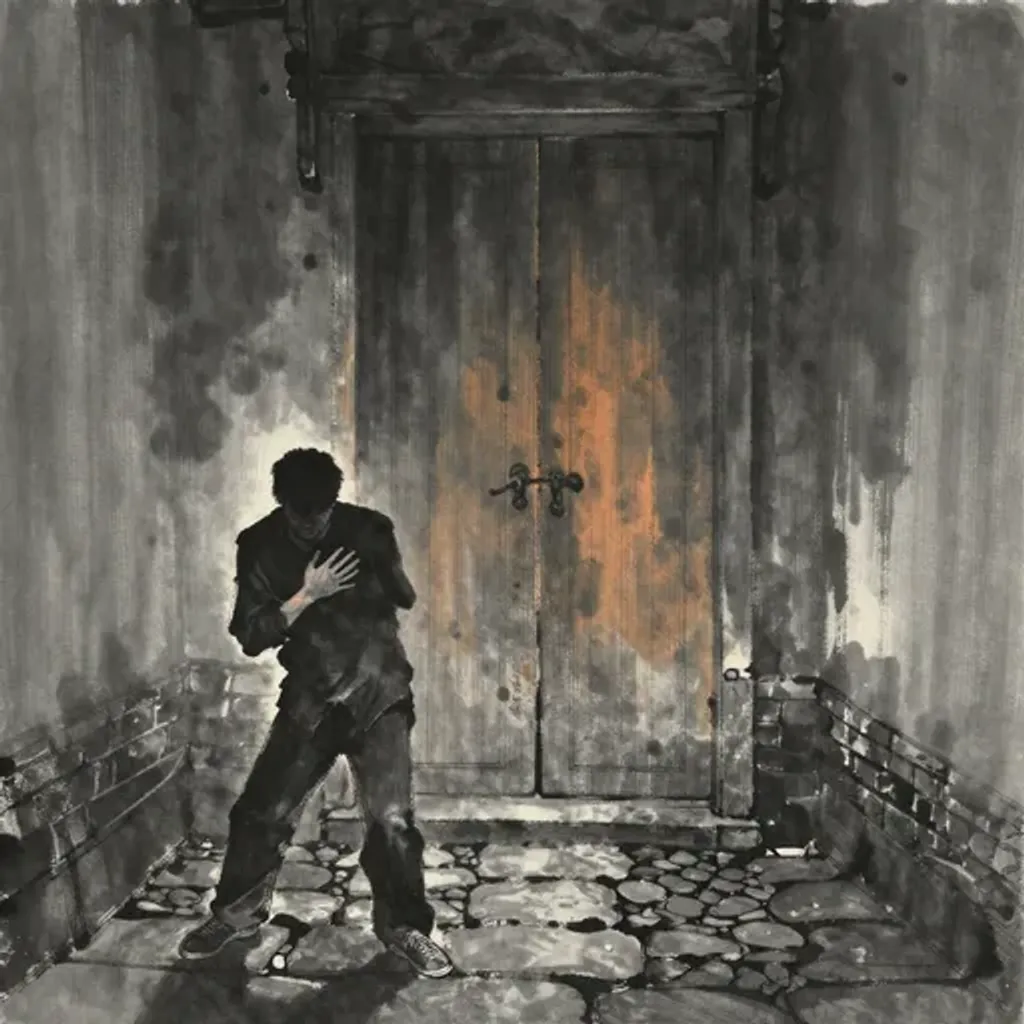
不虞之患,禍生無門。奄然暴卒,病傷我心。
An unforeseen calamity; disaster enters through no gate. Sudden and violent it strikes; illness wounds my heart.
— Jiao Yanshou, Yilin (Forest of Changes), 1st century BC
Commentary
Thunder doubled yields to mountain over wind: shock encounters festering decay. Disaster strikes without warning — misfortune enters through no gate. Death comes suddenly, illness wounds the heart. The phrase 'misfortune enters through no gate' (禍生無門) echoes the classical formulation that 'blessings and calamities have no fixed path; people summon them upon themselves.' Yet this verse emphasizes the unpredictable: calamity that arrives without visible cause. From The Arousing to Work on the Decayed, mountain over wind, the verse traces how shock, instead of clearing the air, reveals corruption already festering beneath the surface. Wind below the mountain stirs what has rotted quietly. The sudden death is not the cause but the symptom of neglected decay.
震 → 臨
Hexagram 51 → Hexagram 19: Approach
Changing lines: 2, 4
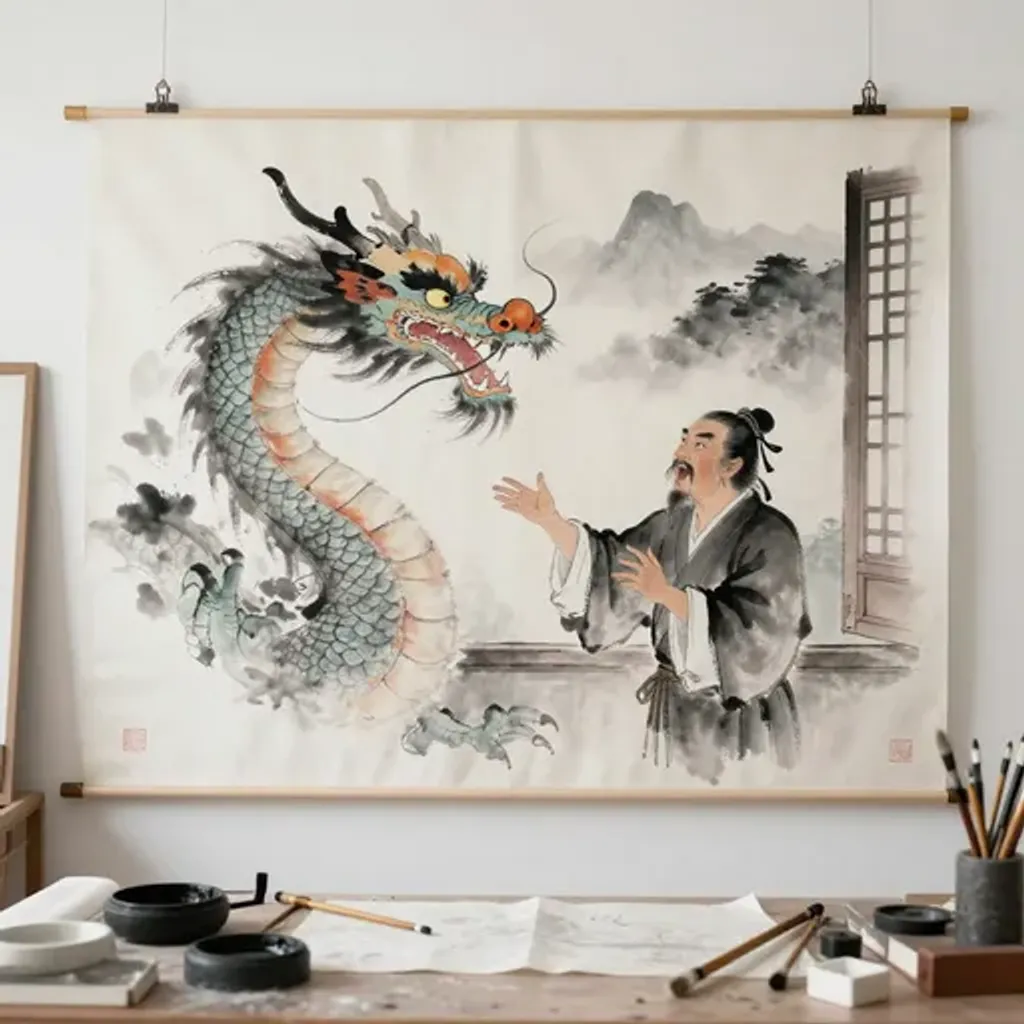
畫龍頭頸,文章未成。甘言美語,說辭无名。
Painting the dragon's head and neck; the composition is not yet complete. Sweet words and fine phrases; eloquent speech that amounts to nothing.
— Jiao Yanshou, Yilin (Forest of Changes), 1st century BC
Commentary
Thunder doubled meets earth over lake: shock transforms into the authority of approach. Drawing a dragon's head and neck, but the pattern remains unfinished. Sweet words and fine phrases — persuasive speech that achieves nothing. The incomplete dragon is a powerful image: the most potent symbol in Chinese cosmology, begun with skill but abandoned before the body takes form. Rhetoric without substance mirrors an artwork without completion. From The Arousing to Approach, earth above lake, the verse warns that thunder's initial brilliance — the dragon's head, the eloquent opening — means nothing without the steady descent of authority into engagement. Approach demands following through, not merely starting with flair.
震 → 觀
Hexagram 51 → Hexagram 20: Contemplation
Changing lines: 1, 4, 5, 6
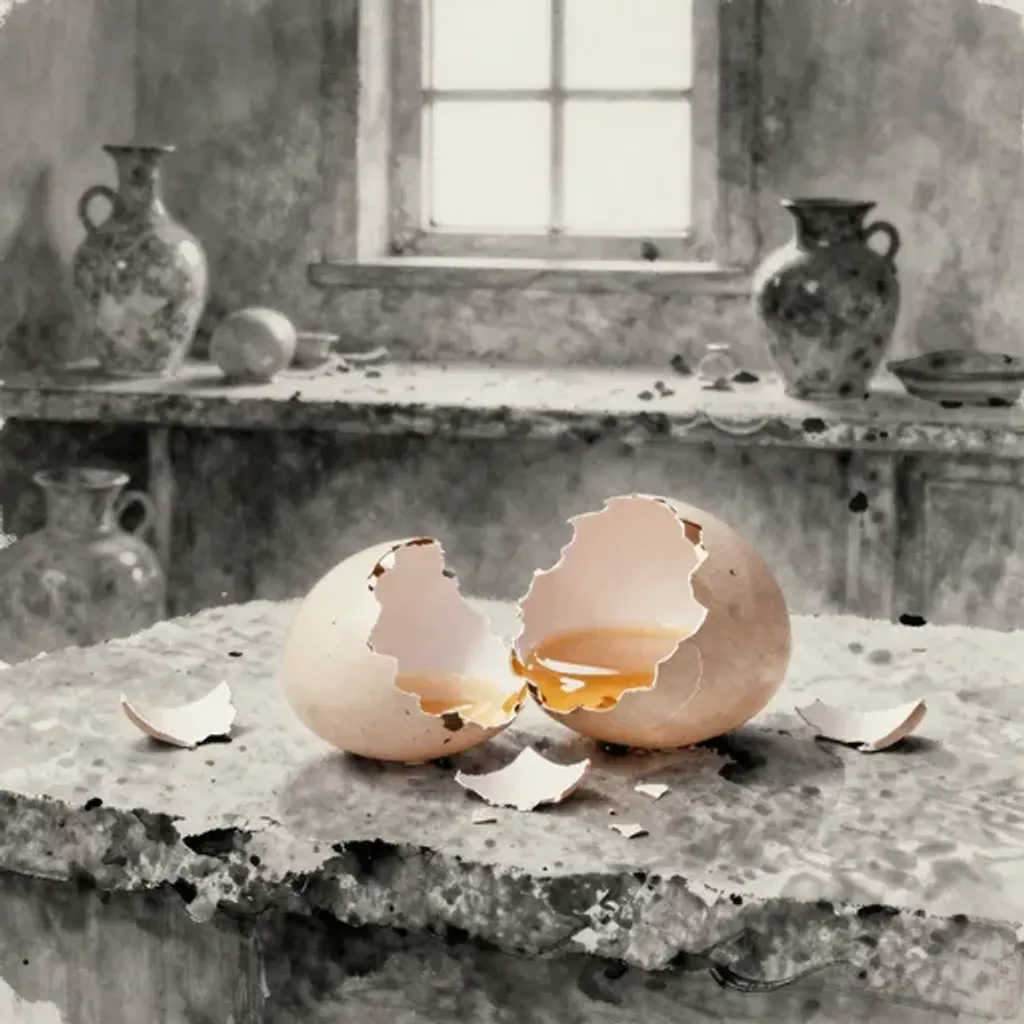
缺破不成,胎卵不生,不見兆形。
Broken and incomplete; egg and embryo do not quicken. No sign or form appears.
— Jiao Yanshou, Yilin (Forest of Changes), 1st century BC
Commentary
Thunder doubled yields to wind over earth: shock dissipates into the broad gaze of contemplation. Broken and incomplete, the embryo cannot develop, no sign or form can be discerned. The verse describes absolute failure of formation — not destruction but the inability to coalesce in the first place. An egg that never hatches, a shape that never emerges. From The Arousing to Contemplation, wind moving over the earth surveys everything but grasps nothing. Thunder's generative impulse, when it meets only the passive viewing of Contemplation rather than active engagement, produces nothing. The sage-king surveys his domain and instructs the people, but here there is no substance to observe. Pure potential dissolves into the indeterminate.
震 → 噬嗑
Hexagram 51 → Hexagram 21: Biting Through
Changing lines: 6
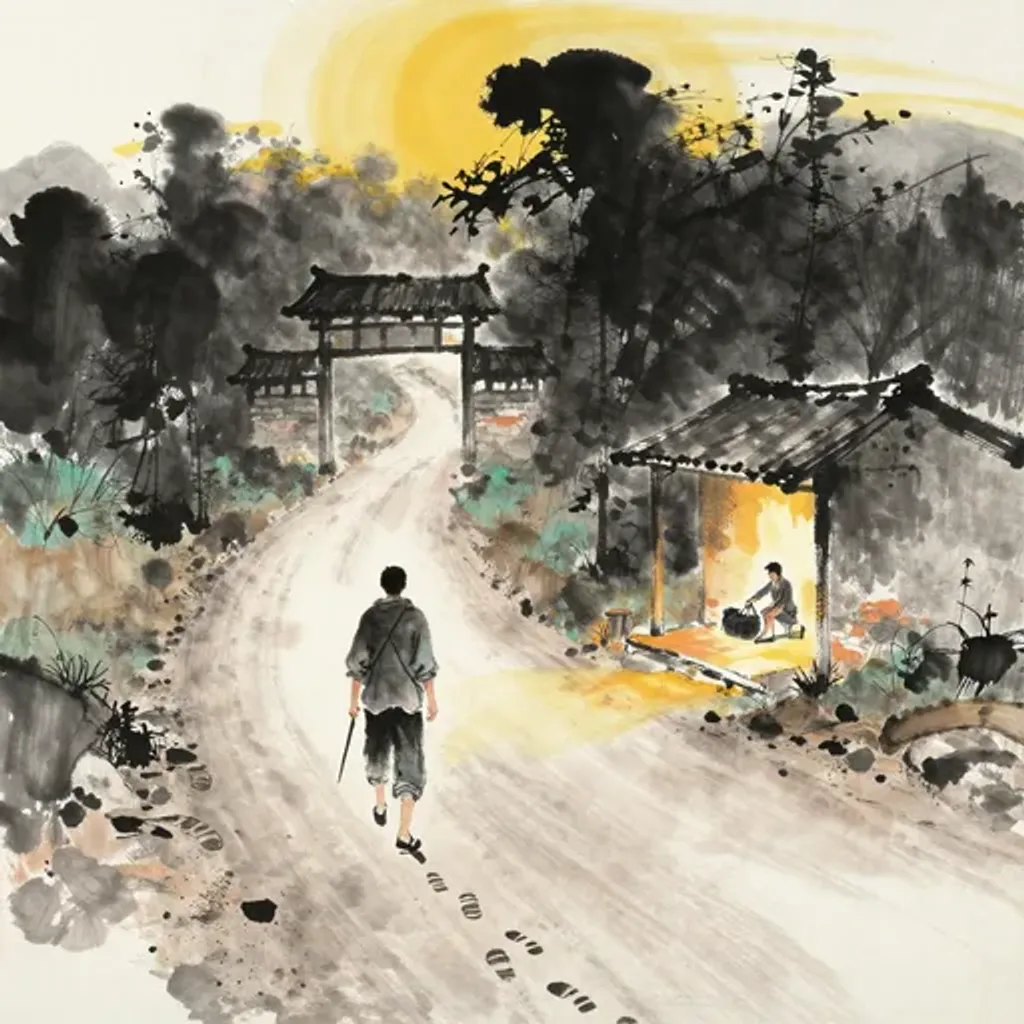
旁行不遠,三里復反。心多畏惡,日中止舍。
Wandering aside, not far; after three li, turning back again. Heart full of dread; at midday, halting to rest.
— Jiao Yanshou, Yilin (Forest of Changes), 1st century BC
Commentary
Thunder doubled meets fire over thunder: shock intensified into the decisive bite. Traveling sideways but not far, turning back within three li. The heart is full of dread and loathing; at noon one halts and takes shelter. The traveler cannot commit to any direction — going a short distance only to reverse course, paralyzed by fear, stopping at midday when the sun is highest. From The Arousing to Biting Through, fire and thunder strike together to enforce clarity. The verse diagnoses the problem that Biting Through must solve: hesitation caused by an obstacle lodged in the path. The inability to proceed demands a decisive act of severance. One must bite through the obstruction or remain frozen in a three-li circle forever.
震 → 賁
Hexagram 51 → Hexagram 22: Grace
Changing lines: 3, 4, 6
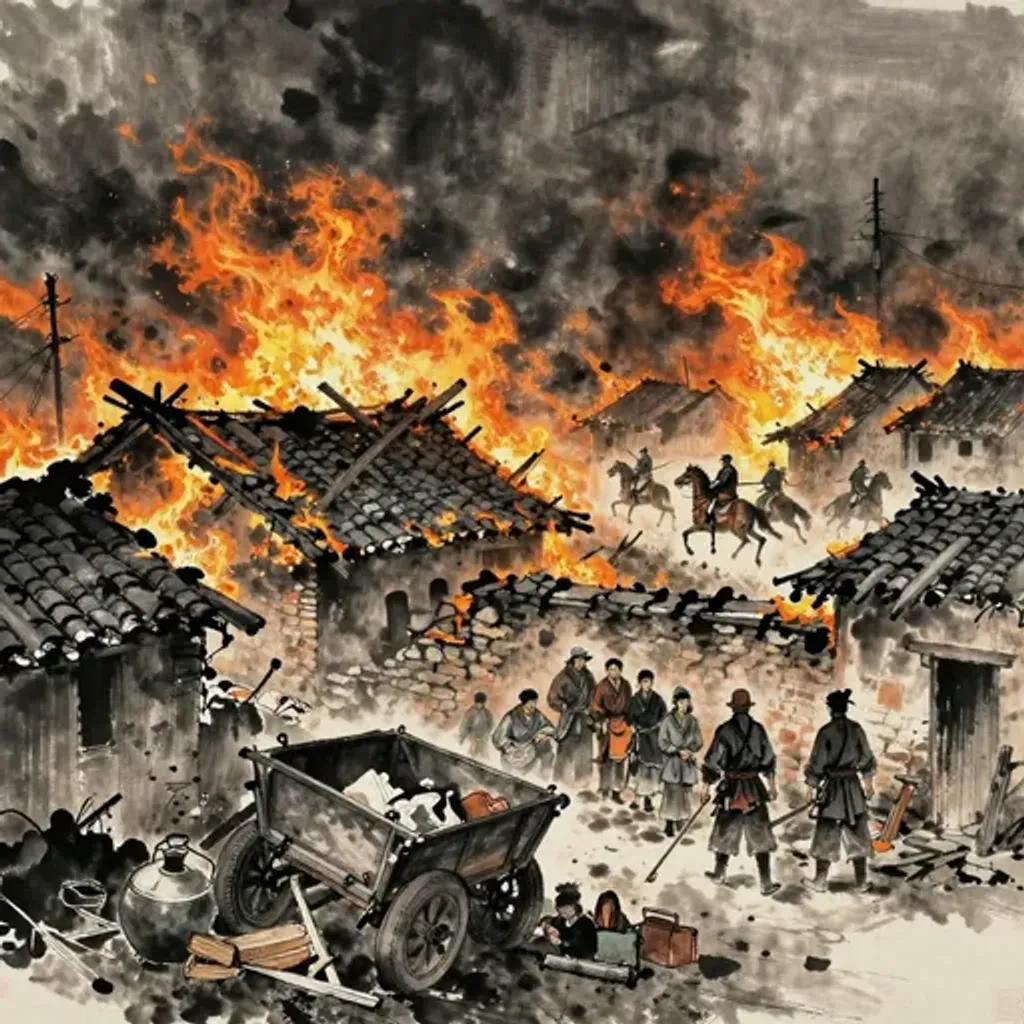
四隤不安,兵革為患。掠我妻子,家履飢寒。
Four walls crumbling, insecure; arms and war bring calamity. They seize my wife and children; the household treads through hunger and cold.
— Jiao Yanshou, Yilin (Forest of Changes), 1st century BC
Commentary
Thunder doubled yields to mountain over fire: shock gives way to the adornment of Grace — but here the ornament is stripped away. The four quarters crumble and collapse, warfare brings calamity. Wife and children are seized, the household falls into cold and hunger. When walls fall from every direction, there is no beauty left to contemplate. Mountain over fire gives form and grace to what blazes beneath, but war reduces decoration to rubble. From The Arousing to Grace, the transformation is ironic: where there should be the elegant ordering of fire's brilliance beneath the mountain's composure, there is instead devastation. Grace under duress becomes its opposite — not beauty but the naked exposure of what remains after beauty is plundered.
震 → 剝
Hexagram 51 → Hexagram 23: Splitting Apart
Changing lines: 1, 4, 6
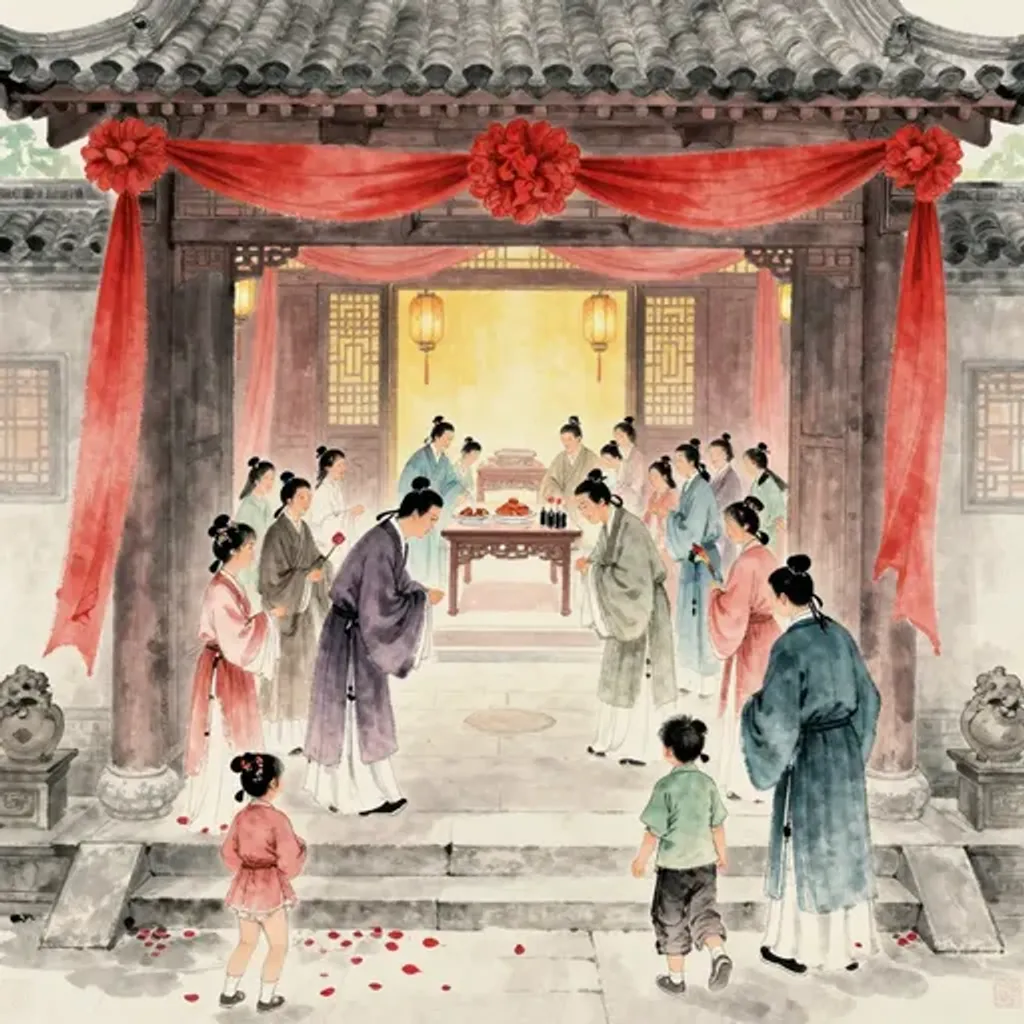
喜來如雲,嘉福盈門。眾才君子,舉家蒙懽。
Joy arrives like gathering clouds; blessed fortune fills the gate. Worthy gentlemen of talent; the whole household basks in delight.
— Jiao Yanshou, Yilin (Forest of Changes), 1st century BC
Commentary
Thunder doubled meets mountain over earth: shock transforms into the slow stripping of Splitting Apart. Yet the verse is entirely auspicious — joy arrives like clouds, blessings fill the gate. Talented gentlemen gather, and the whole household shares in delight. The paradox is deliberate: Splitting Apart, the hexagram of erosion, here produces abundance. Mountain resting on earth, the upper erodes toward the lower, redistributing what was concentrated above. From The Arousing to Splitting Apart, the shock that dislodges the mountain sends its wealth cascading downward. What looks like dissolution from above is generosity when viewed from below. The household that receives this avalanche of blessings benefits precisely from the splitting apart of what was hoarded on high.
震 → 復
Hexagram 51 → Hexagram 24: Return
Changing lines: 4
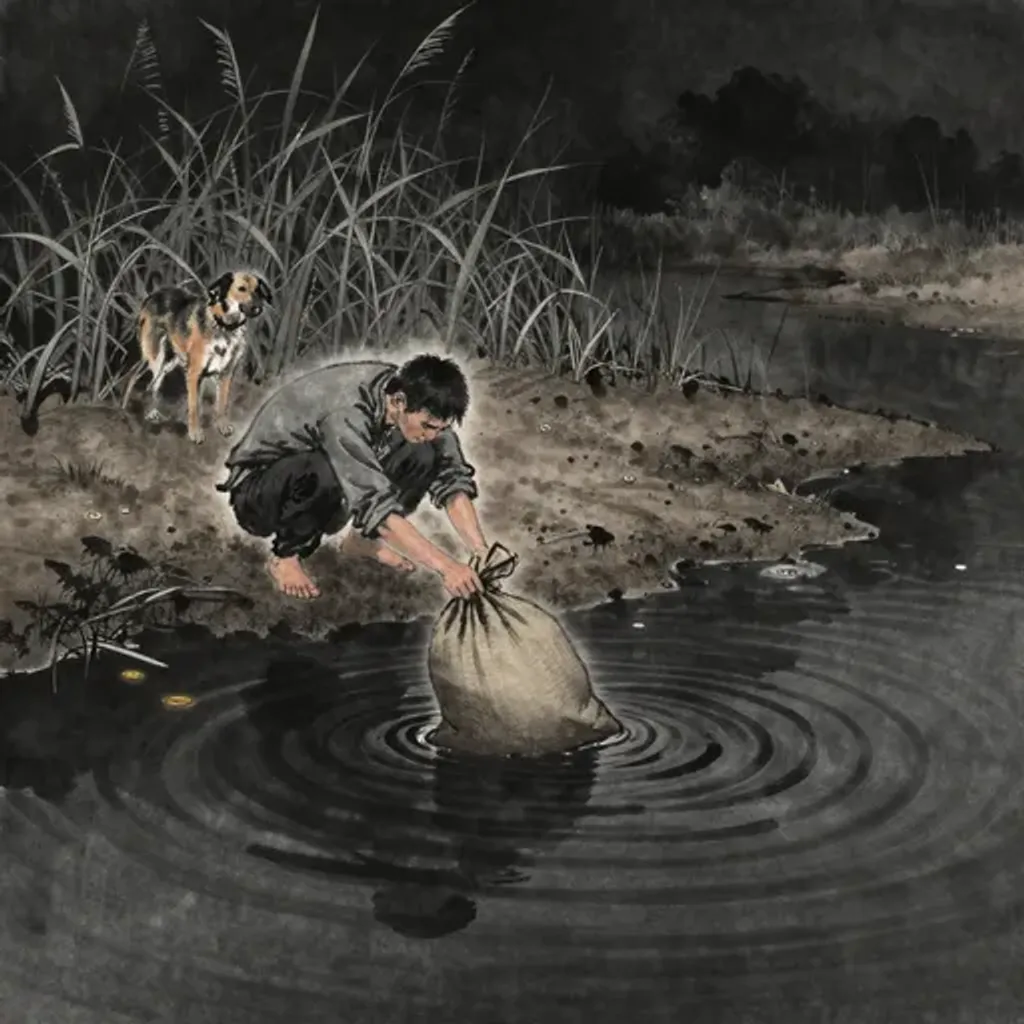
載金販狗,利棄我走。藏匿淵底,折晦為咎。
Hauling gold, trading dogs; profit abandoned, I flee. Hidden at the bottom of the deep; concealment and darkness bring misfortune.
— Jiao Yanshou, Yilin (Forest of Changes), 1st century BC
Commentary
Thunder doubled meets earth over thunder: shock returns to its own root. Carrying gold and selling dogs — profits abandoned, one flees. Hiding at the bottom of the abyss, concealment and darkness bring only blame. The verse describes someone who abandons valuable commerce to run away, then hides in the deepest darkness — and is blamed for the very act of hiding. Neither the gold nor the dogs are retained; even the hiding place offers no safety. From The Arousing to Return, thunder within the earth, the verse captures a false return — not the authentic cycle of the winter solstice where the one yang line stirs beneath five yin, but a panicked retreat that goes underground without purpose. True return requires stillness at the turning point, not frightened concealment.
震 → 无妄
Hexagram 51 → Hexagram 25: Innocence
Changing lines: 5, 6
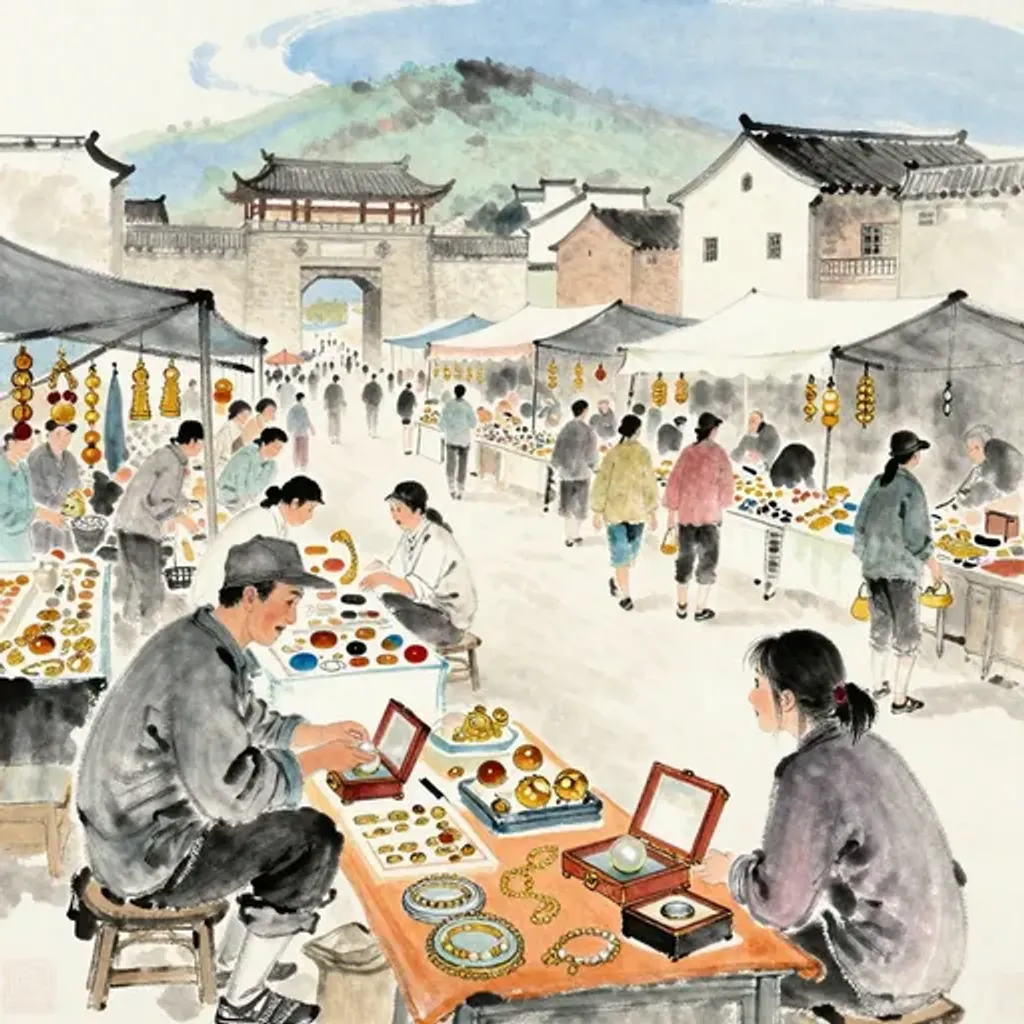
日中為市,各抱所有,交易貲賄,函珠懷寶。心悅歡喜。
At midday the market is set; each brings what he has. They trade goods and wealth, clasping pearls and cherishing treasures. Hearts rejoice with gladness.
— Jiao Yanshou, Yilin (Forest of Changes), 1st century BC
Commentary
Thunder doubled meets heaven over thunder: shock aligned with heaven's innocence. At noon the market opens; each brings what they have, exchanging goods and currencies, carrying pearls and treasuring jewels. The heart is delighted and joyful. The midday market (日中為市) alludes to the Xici Zhuan's account of Shennong establishing markets at noon, enabling the people to exchange what they had for what they needed. From The Arousing to Innocence, heaven's thunder moves freely beneath, creating conditions for spontaneous, unforced exchange. The joy here is genuine because the trade is natural — each person brings their authentic surplus, and the system works without manipulation. Thunder under heaven: action aligned with cosmic order produces prosperity without artifice.
震 → 大畜
Hexagram 51 → Hexagram 26: Great Taming
Changing lines: 2, 3, 4, 6
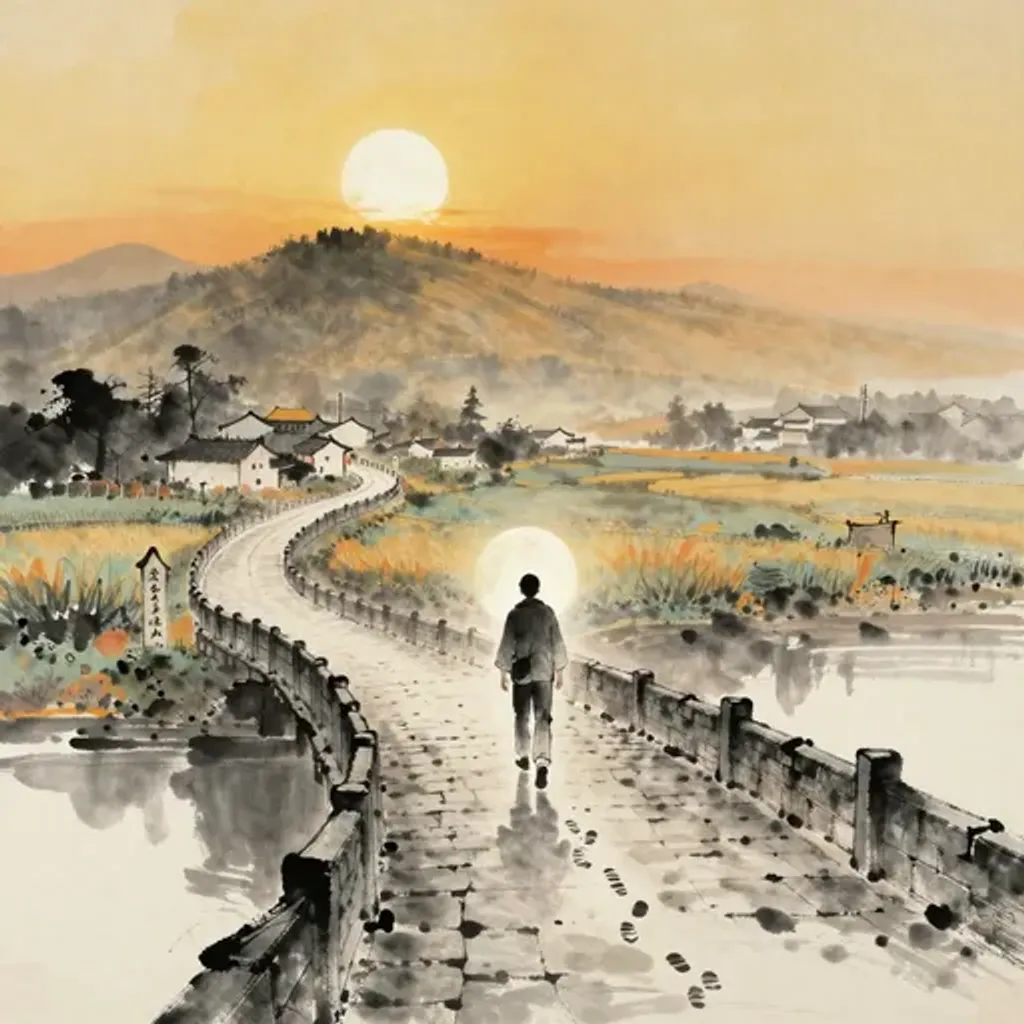
月步日趍,周遍次舍。經歷致遠,无有難處。
The moon walks, the sun hastens; circling through every station. Journeying far through experience; nowhere is there hardship.
— Jiao Yanshou, Yilin (Forest of Changes), 1st century BC
Commentary
Thunder doubled meets mountain over heaven: shock accumulated into great reserves. The moon walks, the sun hastens, circuiting through all the lodging stations in sequence. Traveling great distances through experience, no place presents difficulty. The celestial bodies move through their appointed stations without haste or anxiety — the moon pacing, the sun trotting, each visiting its mansion in turn. This is the rhythm of accumulated competence: what once seemed daunting becomes effortless through practice. From The Arousing to Great Taming, heaven stored within the mountain, the verse shows how thunder's repeated shocks, once absorbed and internalized, build the vast reservoir of knowledge that makes all journeys navigable. The gentleman who studies the words and deeds of the past has already traveled every road.
震 → 頤
Hexagram 51 → Hexagram 27: Nourishment
Changing lines: 4, 6
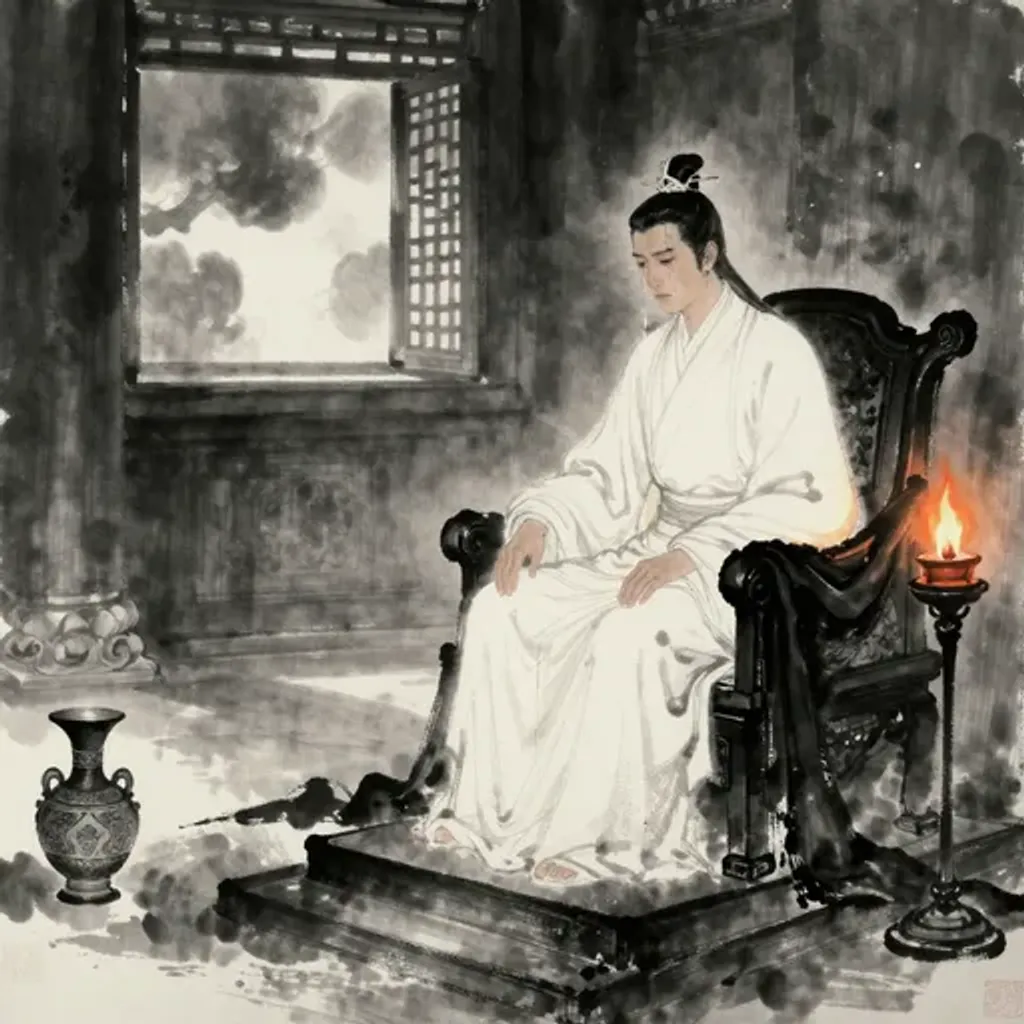
陽明失時,陰凝為憂。主君哀泣,喪其元侯。
Yang's brightness loses its season; yin congeals into sorrow. The sovereign lord weeps in grief; he has lost his chief lord.
— Jiao Yanshou, Yilin (Forest of Changes), 1st century BC
Commentary
Thunder doubled yields to mountain over thunder: shock stilled into the care of nourishment. The bright yang force loses its season, and yin congeals into sorrow. The lord weeps in grief, mourning the loss of his chief minister. When yang — the active, life-giving principle — fails to arrive at its proper time, yin darkness consolidates and sorrow overtakes the court. The loss of the 'chief minister' (元侯) suggests a pillar of governance removed, leaving the ruler bereft. From The Arousing to Nourishment, mountain above thunder, the verse reveals the cost when nourishment fails. Nourishment depends on timing: the mountain holds the thunder still so that life can be sustained below. When the sustaining force is lost, even the ruler is reduced to tears.
震 → 大過
Hexagram 51 → Hexagram 28: Great Exceeding
Changing lines: 1, 2, 3, 5
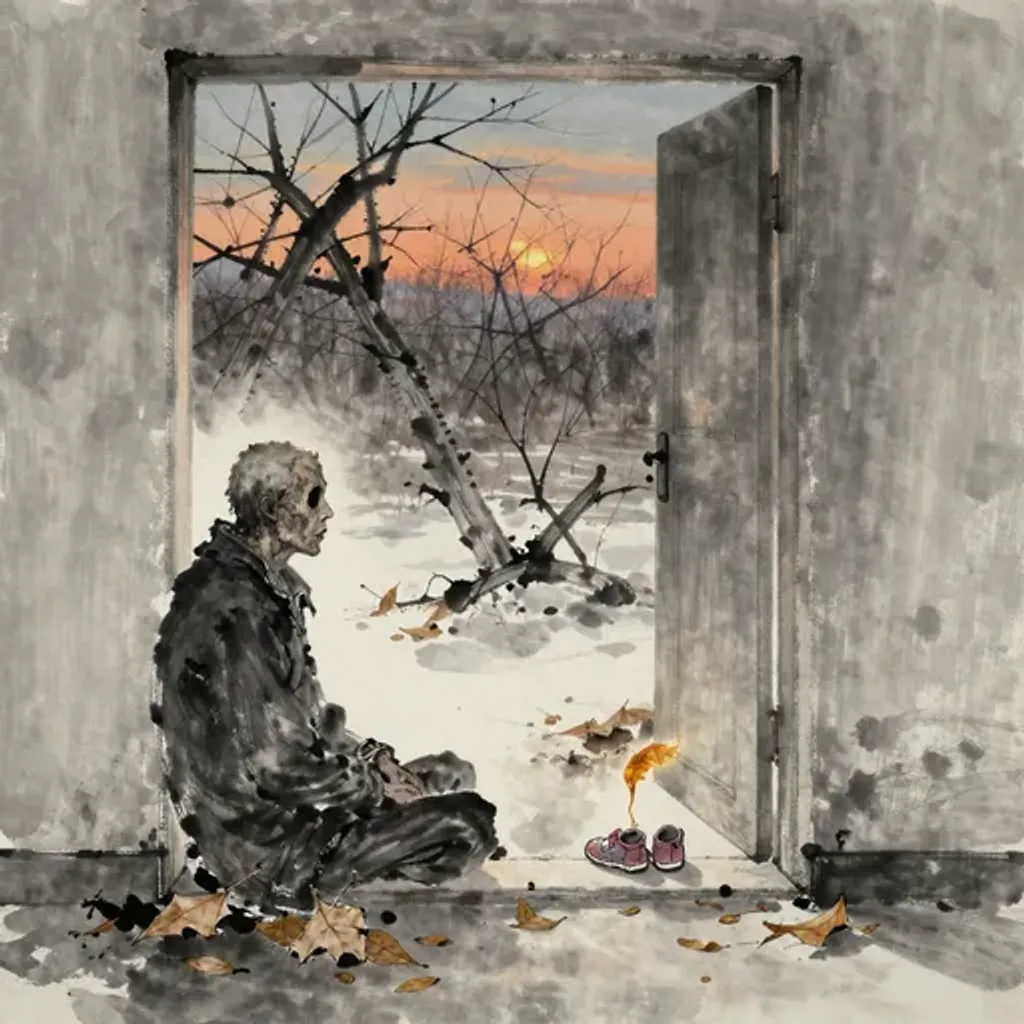
年衰歲暮,精魂遊去。形容消枯,喪子恩呼。
Years declining, life at its dusk; essence and spirit wander away. Form and countenance wither and dry; mourning a lost child with desperate cries.
— Jiao Yanshou, Yilin (Forest of Changes), 1st century BC
Commentary
Thunder doubled meets lake over wind: shock pushed to the breaking point of Great Exceeding. The year declines toward its end, the vital spirit wanders away. The body dries and withers; mourning a lost child, one cries out in anguish. This verse layers two kinds of extremity — the old year dying and a parent outliving a child, perhaps the cruelest reversal of natural order. The spirit departs before the body fully fails, leaving a husk that can only cry. From The Arousing to Great Exceeding, lake submerging wood, the ridgepole sags under unbearable weight. Thunder's energy, instead of renewing, has pushed past all sustainable limits. The verse embodies the hexagram's core warning: when the extraordinary becomes excessive, even grief exceeds the capacity to bear it.
震 → 坎
Hexagram 51 → Hexagram 29: The Abysmal Water
Changing lines: 1, 2, 4, 5
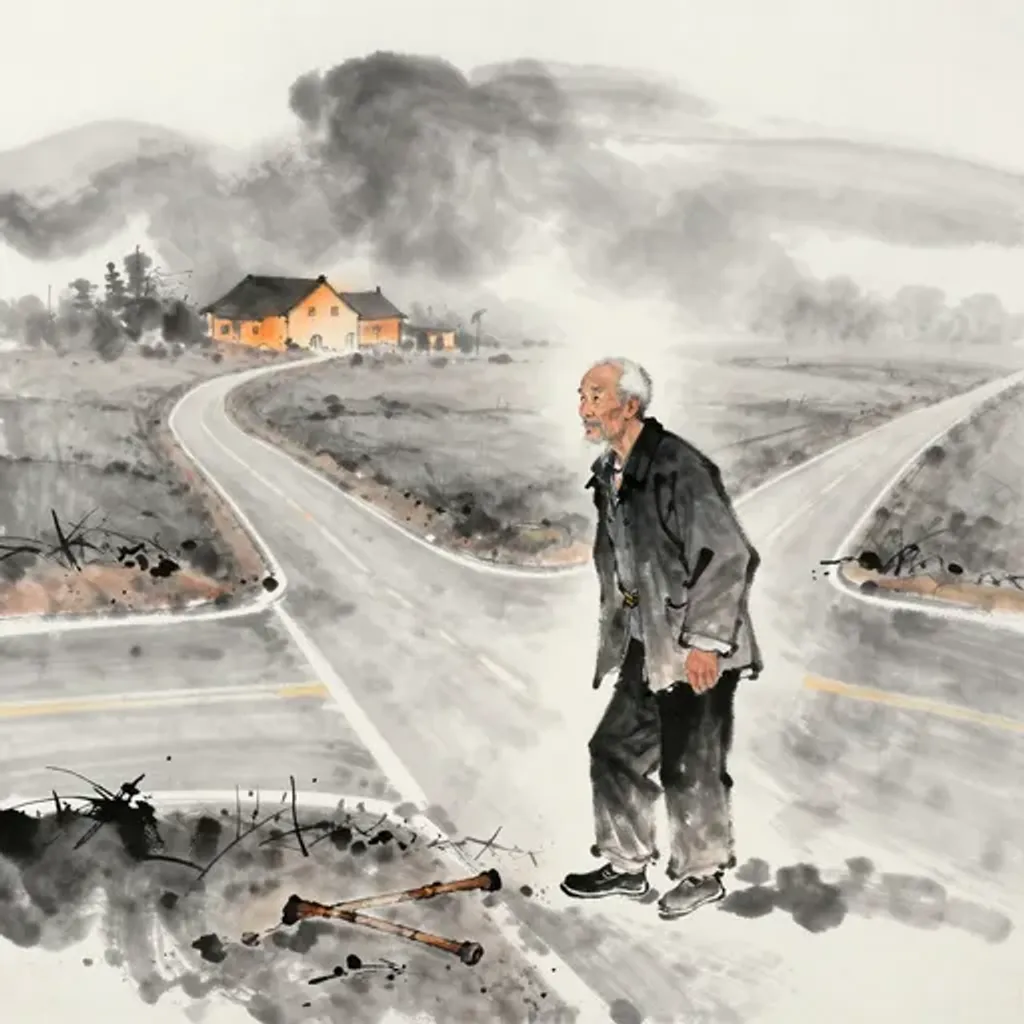
少无功績,老困失福。跂行徙倚,不知所立。
Young and without achievement; old, exhausted, blessings lost. Hobbling, stumbling, leaning from side to side; not knowing where to stand.
— Jiao Yanshou, Yilin (Forest of Changes), 1st century BC
Commentary
Thunder doubled meets doubled water: shock plunges into the abyss. Young and without achievement, old and destitute, bereft of fortune. Standing on tiptoe and leaning against walls, not knowing where to find footing. A life that produces nothing in youth and collapses in age — the entire arc is failure. The body's instability mirrors the soul's: teetering, bracing against whatever is nearby, never finding solid ground. From The Arousing to The Abysmal, water upon water, the verse traces thunder's energy falling into repeated danger. The doubled pit has no bottom; each effort to stand only reveals another layer of precariousness. The gentleman practices constant virtue through habitual action, but this figure has never built the habits that would carry him through the abyss.
震 → 離
Hexagram 51 → Hexagram 30: The Clinging Fire
Changing lines: 3, 6
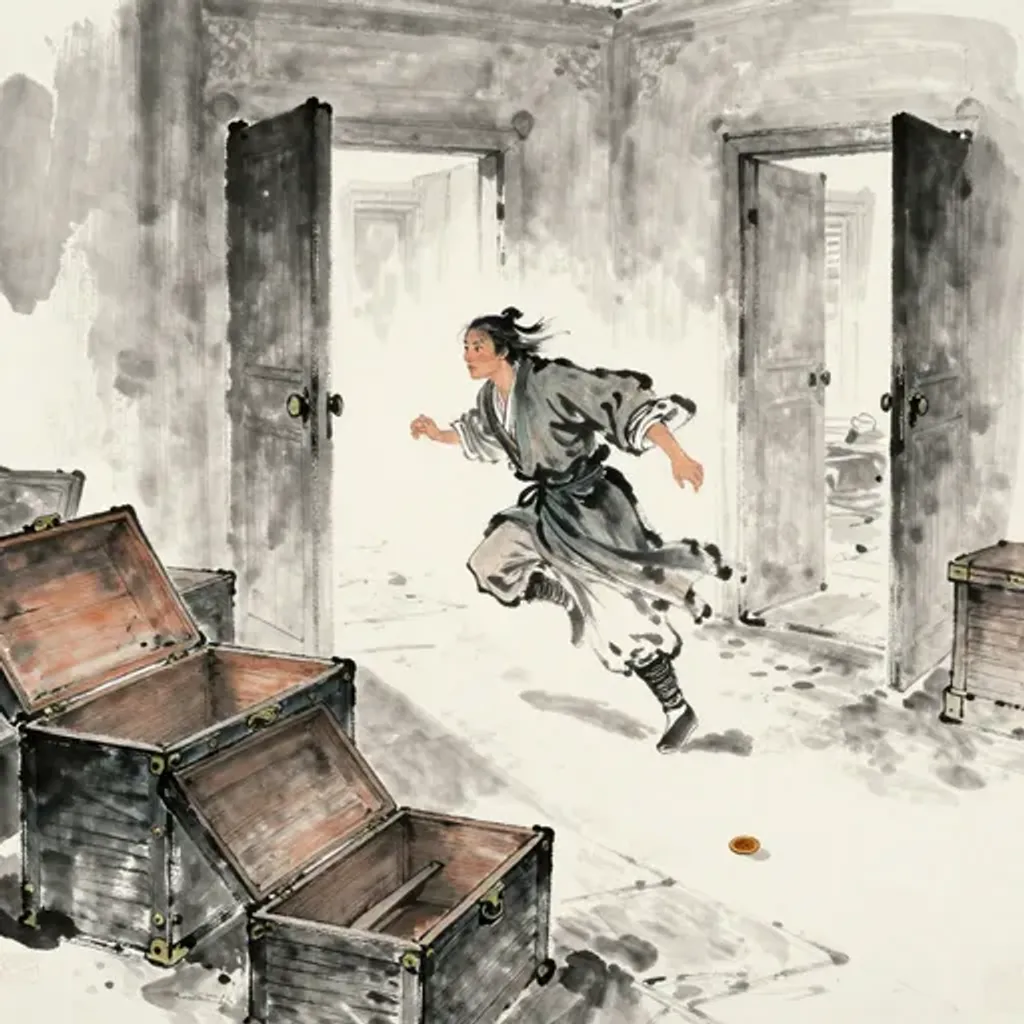
持心瞿目,善數搖動。自東徂西,不安其處。散渙府藏,无有利得。
Heart tense, eyes darting; restlessly counting and shifting. From east to west, never settling in one place. Scattering the treasuries and storehouses; no profit to be found.
— Jiao Yanshou, Yilin (Forest of Changes), 1st century BC
Commentary
Thunder doubled meets doubled fire: shock meets the clinging brilliance of awareness. Eyes darting with alarm, attention scattered in constant agitation. Rushing from east to west, never settling anywhere. The treasury is dispersed and scattered, nothing of profit remains. The verse paints restless dissipation — the opposite of fire's ideal function, which is to illuminate with steady clarity. Here the doubled fire becomes manic radiance, burning in all directions, consuming the storehouse rather than illuminating it. From The Arousing to The Clinging, the transformation should produce sustained light, but thunder's agitation corrupts fire into flickering panic. The great man who 'continues the brightness to illuminate the four quarters' requires stability; without it, fire simply devours.
震 → 咸
Hexagram 51 → Hexagram 31: Influence
Changing lines: 1, 3, 5
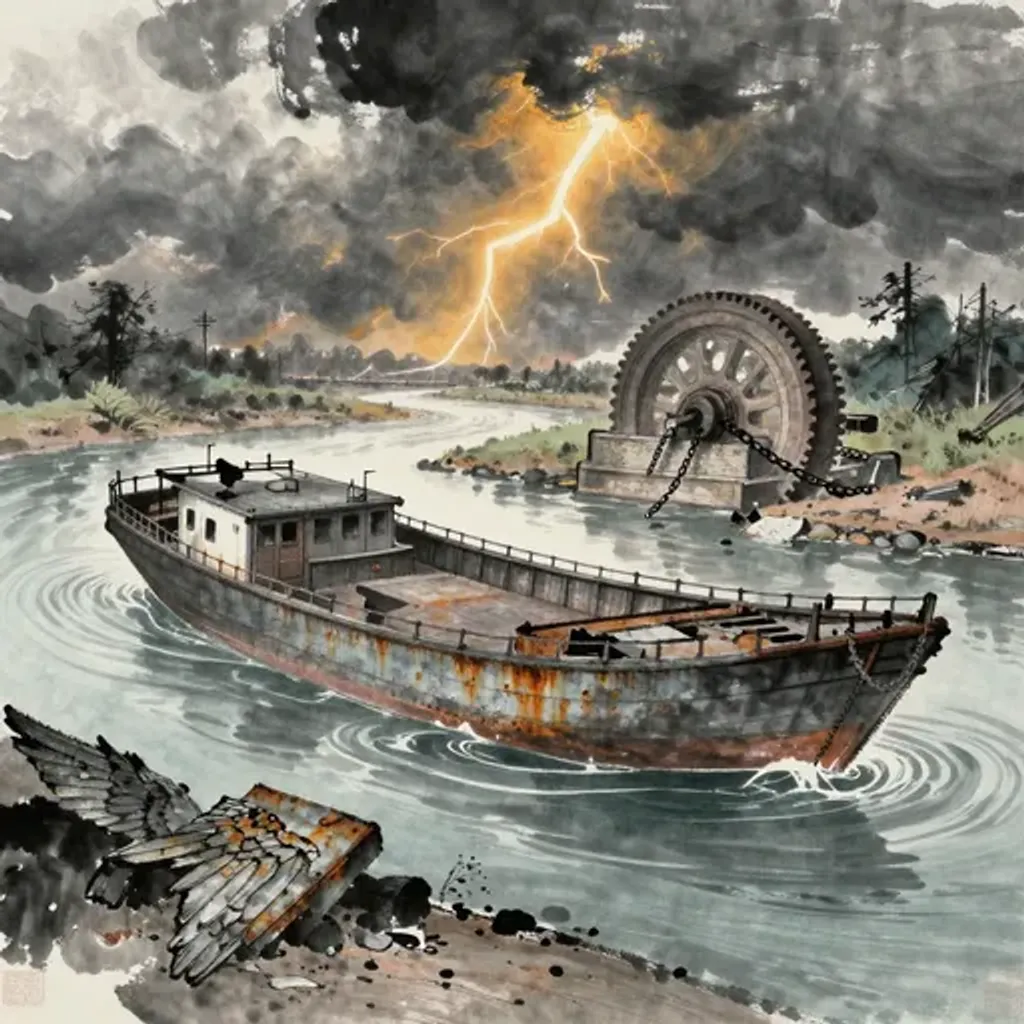
齎貝贖狸,不聽我辭。繫於虎鬚,牽不得來。
Casting iron into a boat, making wings of lead and stone. Though the thunder roars, the millstone will not turn.
— Jiao Yanshou, Yilin (Forest of Changes), 1st century BC
Commentary
Thunder doubled meets lake over mountain: shock encounters the receptive sensitivity of Influence. The original verse reads: 'Bringing cowries to ransom a fox-cat, but it will not heed my words. Tied to the tiger's whiskers, tugging yet unable to pull it free.' The imagery depicts futile negotiation with dangerous forces — offering treasure to redeem a wild creature that refuses, then literally clinging to a tiger's face and finding oneself trapped. From The Arousing to Influence, mountain below lake, the verse inverts Influence's promise of mutual responsiveness. Where the lake should gently move the mountain through tender reception, here the attempt at connection meets absolute resistance. Influence requires the right conditions; forced attachment to a hostile power only produces entrapment.
震 → 恆
Hexagram 51 → Hexagram 32: Duration
Changing lines: 1, 2, 3
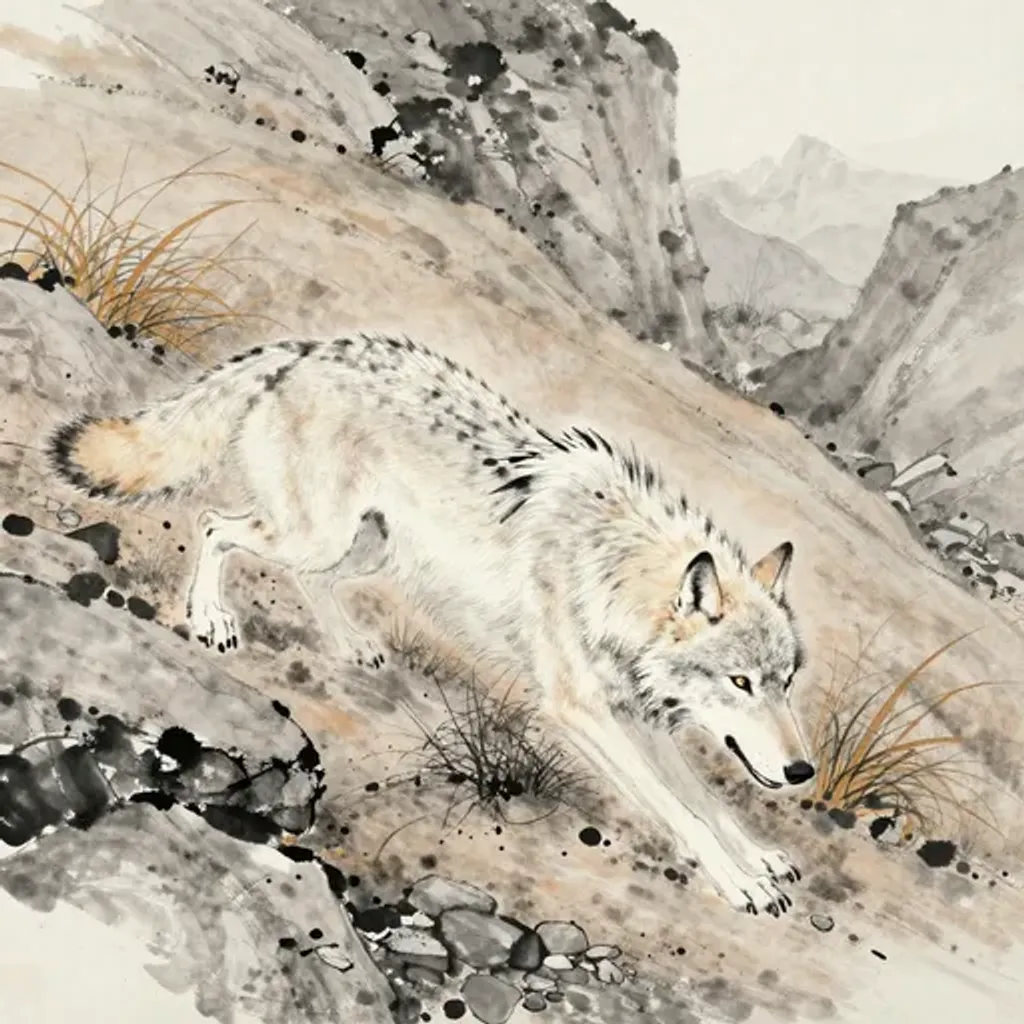
老狼白獹,長尾大胡。前顛卻躓,无有利得。
The old wolf, white-muzzled, with long tail and great jowls. Stumbling ahead, tripping behind; no profit to be found.
— Jiao Yanshou, Yilin (Forest of Changes), 1st century BC
Commentary
Thunder doubled meets thunder over wind: shock prolonged into duration, but here duration means persistent failure. An old wolf and a white hound, long tail and great jowls — stumbling forward and tripping backward, gaining nothing of profit. The image of the aged wolf recalls the Shijing ode 'Lang Ba' (狼跋): 'The wolf stumbles on its dewlap going forward, and trips on its tail going back.' It describes an official so encumbered by his own bulk that movement in any direction causes collapse. From The Arousing to Duration, thunder and wind reinforce each other in perpetual motion, but this perpetuity is a curse. The creature that endures only endures its own gracelessness, lurching eternally between forward fall and backward stumble.
震 → 遯
Hexagram 51 → Hexagram 33: Retreat
Changing lines: 1, 3, 5, 6
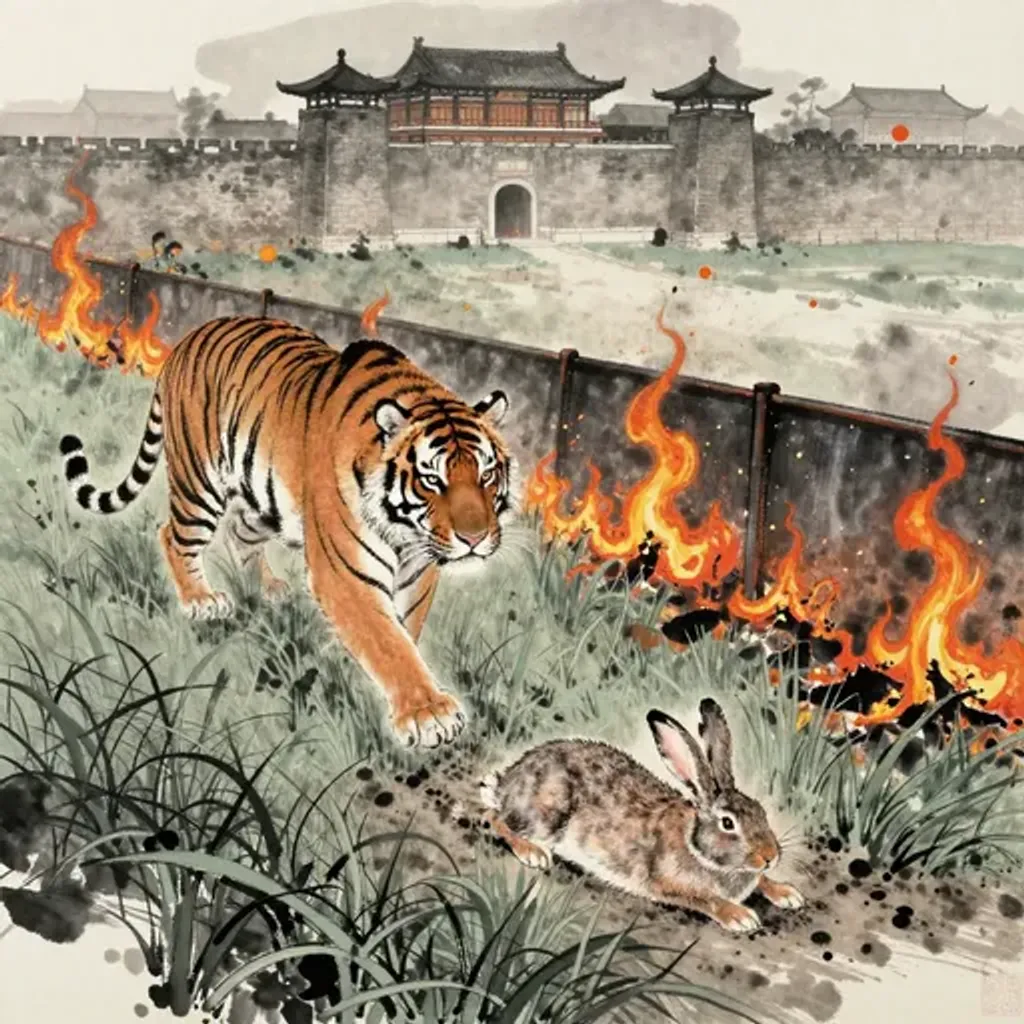
背地相憎,心志不同。如火與金,君猛臣慢。虎行兔伏。
Secretly despising each other behind their backs; hearts and wills at odds. Like fire and metal; the lord is fierce, the minister lax. The tiger walks; the rabbit hides.
— Jiao Yanshou, Yilin (Forest of Changes), 1st century BC
Commentary
Thunder doubled meets heaven over mountain: shock transmuted into strategic withdrawal. Behind backs they despise each other, hearts and minds at odds. Like fire and metal — the lord is fierce while the minister is sluggish. The tiger prowls; the rabbit crouches. The incompatibility is elemental: fire melts metal, the aggressive ruler and the inert minister cancel each other's effectiveness. The tiger-rabbit pair suggests predator and prey sharing a court, an unsustainable arrangement. From The Arousing to Retreat, heaven above mountain, the verse describes exactly the conditions that mandate withdrawal. When mutual antagonism defines the ruler-minister relationship, the gentleman distances himself from petty men — not through hostility but through dignified separation. Retreat is not defeat but preservation.
震 → 大壯
Hexagram 51 → Hexagram 34: Great Power
Changing lines: 2, 3
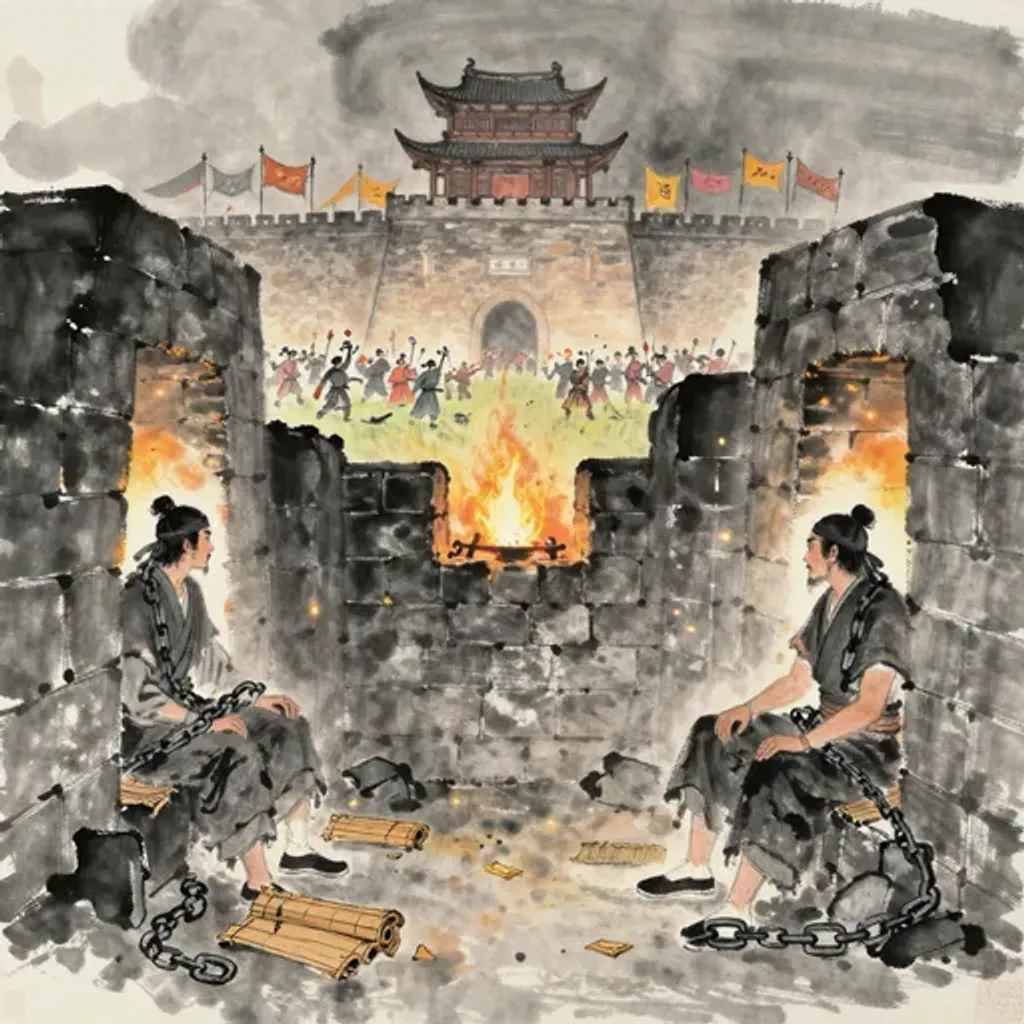
夏臺羑里,湯文阨處。鬼侯歠醢,岐人悅喜。
Xiatai and Youli — the straits where Tang and Wen were held. The lord of Gui was made into mincemeat; the people of Qi rejoiced.
— Jiao Yanshou, Yilin (Forest of Changes), 1st century BC
Commentary
Thunder doubled transforms into thunder over heaven: shock intensified into Great Power. Xiatai and Youli — the prisons where Tang and Wen endured their trials. The Ghost Marquis was made into meat paste; the people of Qi rejoiced. According to the Shiji, King Zhou of Shang imprisoned King Tang's predecessor at Xiatai and King Wen at Youli. The 'Ghost Marquis' (鬼侯, also called Marquis of Jiu) was one of the Three Dukes who was ground into meat sauce by King Zhou for displeasing him. Yet from this nadir of tyranny, the Zhou people drew strength. From The Arousing to Great Power, thunder atop heaven, the verse celebrates how the unjust suffering of the righteous generates the explosive energy that overthrows the oppressor. Power forged in prison is the most dangerous kind.
震 → 晉
Hexagram 51 → Hexagram 35: Progress
Changing lines: 1, 6
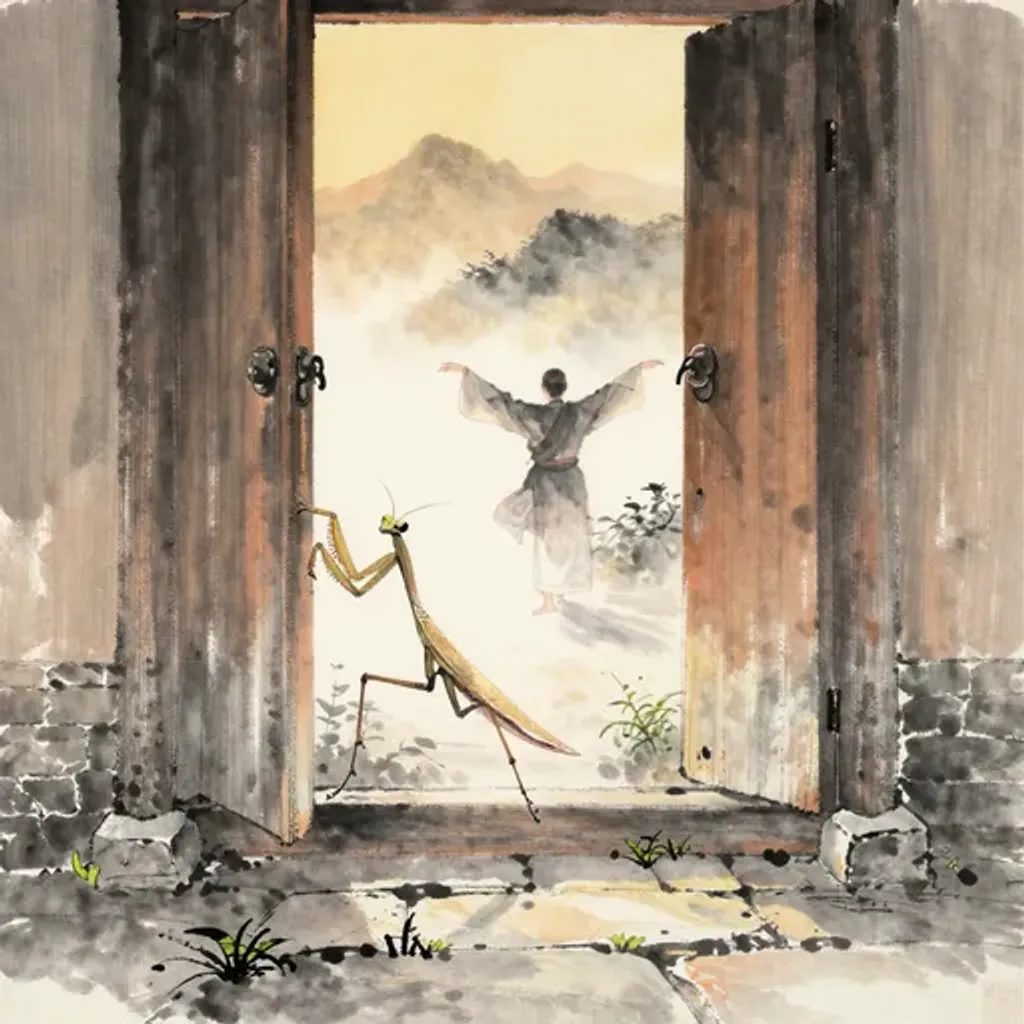
牙孽生齒,螳蜋啟戶。幽人利貞,鼓翼起舞。
Buds sprout like teeth; the mantis opens the door. The recluse finds benefit in constancy; he beats his wings and begins to dance.
— Jiao Yanshou, Yilin (Forest of Changes), 1st century BC
Commentary
Thunder doubled meets fire over earth: shock rises into the steady advance of Progress. A sprout pushes through the tooth, a mantis opens the door. The secluded one profits from perseverance, spreading wings and beginning to dance. Small beginnings contain great potential: the first growth splitting the gum, the tiny insect prying open the gate. The 'secluded one' (幽人) who benefits from steadfastness echoes the I-Ching's own language of the worthy person hidden in obscurity, waiting for the right moment. From The Arousing to Progress, fire rising above the earth at dawn, the verse celebrates emergence. Thunder's dormant energy, when it finally breaks through, advances not with violence but with the organic persistence of growth. Wings spread; the dance begins.
震 → 明夷
Hexagram 51 → Hexagram 36: Darkening of the Light
Changing lines: 3, 4
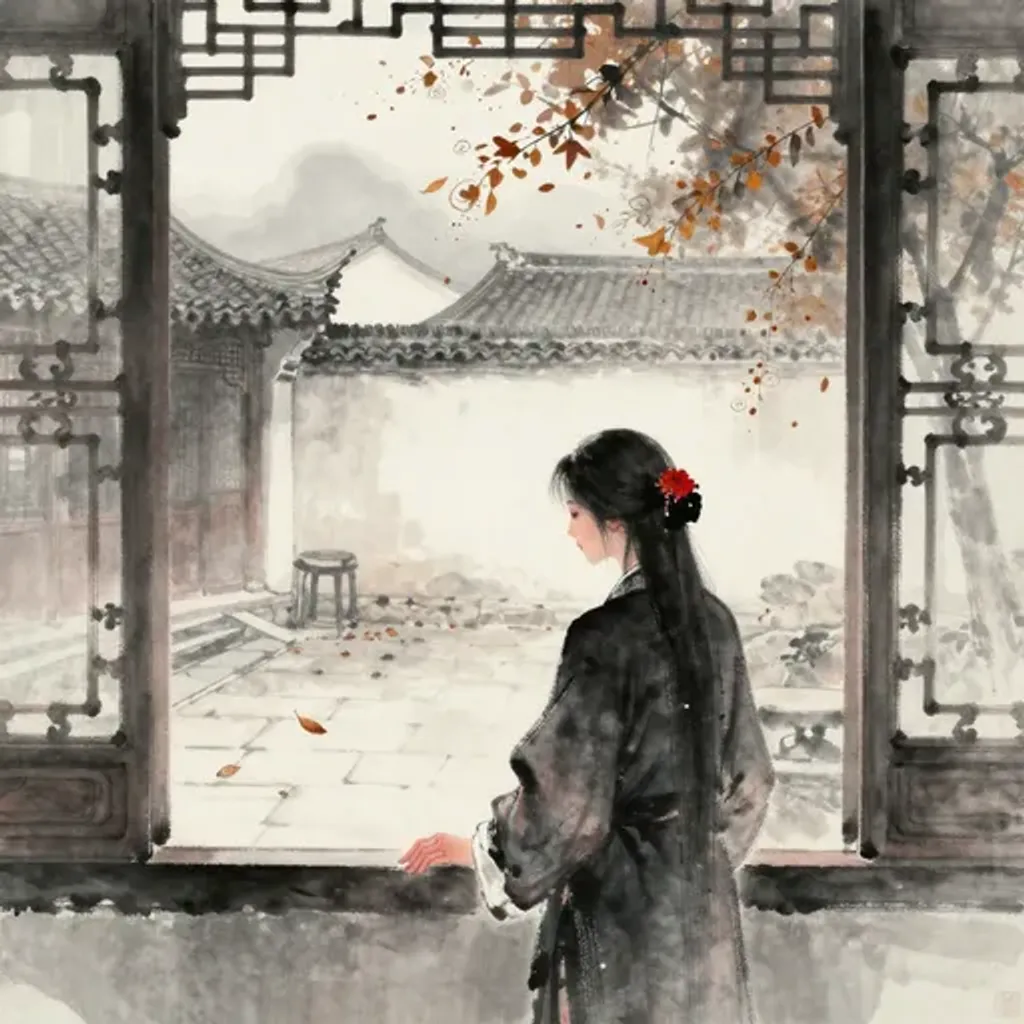
列女无夫,閔思苦憂。齊子无良,使我心愁。
Women of virtue without husbands; in sorrow they grieve and suffer. The son of Qi is without goodness; he makes my heart heavy with care.
— Jiao Yanshou, Yilin (Forest of Changes), 1st century BC
Commentary
Thunder doubled yields to earth over fire: shock suppressed into the Darkening of the Light. A woman of virtue without a husband, anxious and grieving in bitter longing. The men of Qi are worthless, making my heart ache with sorrow. The verse echoes the Shijing ode 'Nan Shan' from the Qi Winds section, which censures the licentiousness of the Marquis of Qi and laments the suffering of virtuous women abandoned or mistreated. 'Qi men without virtue' (齊子無良) is a direct quotation. From The Arousing to Darkening of the Light, fire buried beneath the earth, brilliance is deliberately concealed. The virtuous woman, like the worthy minister under a corrupt ruler, must endure her sorrow in darkness, using obscurity as her only protection.
震 → 家人
Hexagram 51 → Hexagram 37: The Family
Changing lines: 3, 4, 5, 6
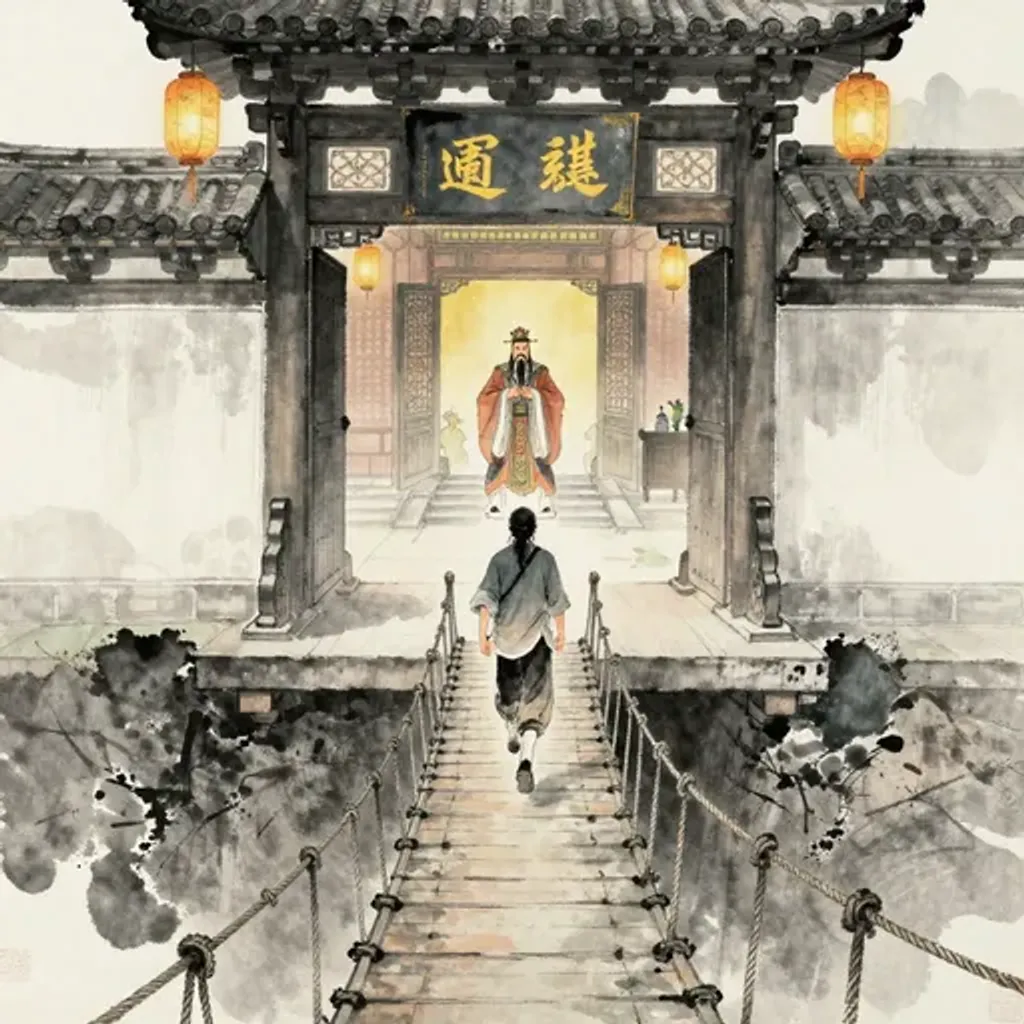
踐履危難,脫阨去患。入福喜門,見悔大君。
Treading through peril and hardship; escaping danger, leaving calamity behind. Entering the gate of blessed joy; meeting the great lord.
— Jiao Yanshou, Yilin (Forest of Changes), 1st century BC
Commentary
Thunder doubled meets wind over fire: shock refined into the warmth of The Family. Treading through danger and hardship, one escapes peril and leaves disaster behind. Entering the gate of blessings and joy, one is received by a great lord. The arc is a clean reversal: the first half describes traversing a landscape of hazards, the second half arrival at a place of welcome. 'Seeing a great lord who shows favor' suggests an audience with a ruler who recognizes one's trials. From The Arousing to The Family, wind emerging from fire, words carry substance and actions maintain constancy. The verse traces the journey from external chaos to domestic order — the household that provides shelter after the storm, where warmth radiates outward as steady influence.
震 → 睽
Hexagram 51 → Hexagram 38: Opposition
Changing lines: 2, 6
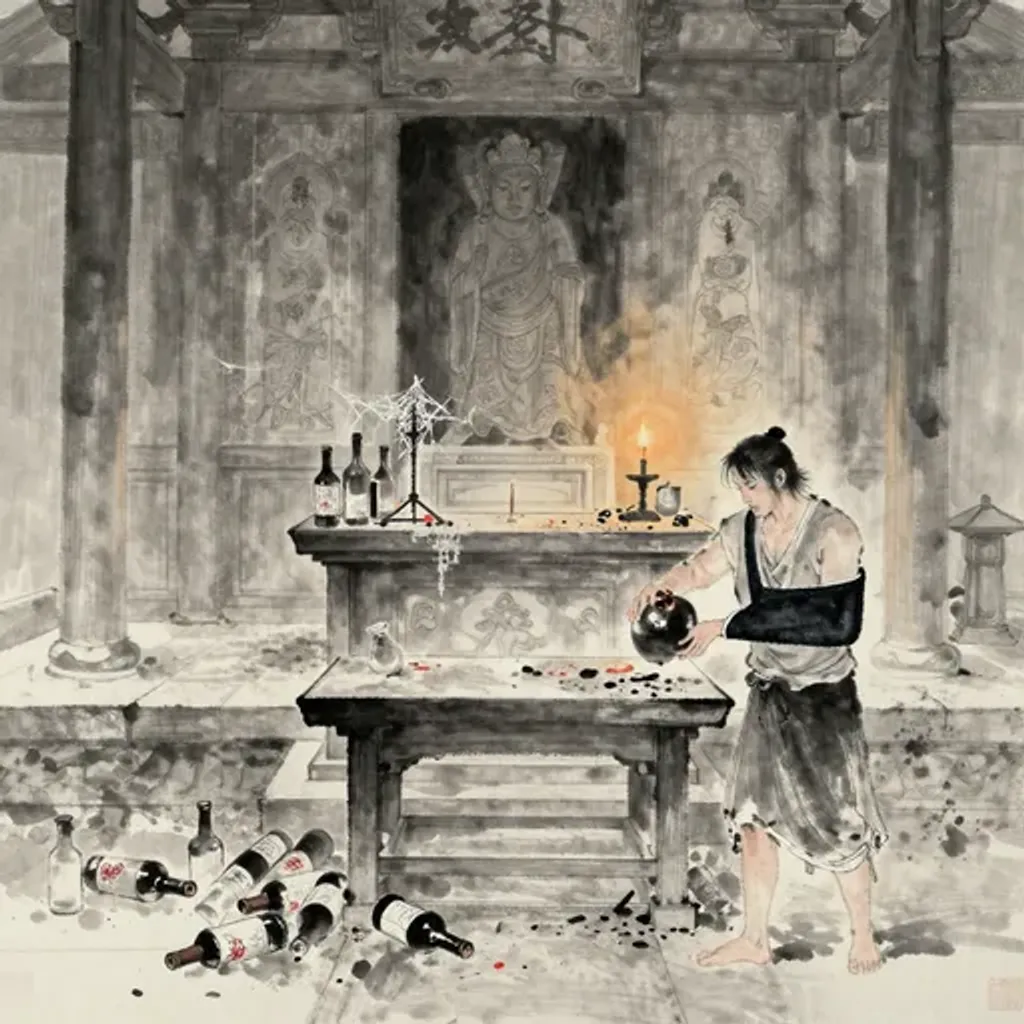
折臂接手,不能進酒。祈祀閑曠,神怒不喜。
Arm broken, hand joined wrong; unable to present the wine. Prayers and sacrifices idle and empty; the spirits are angered and displeased.
— Jiao Yanshou, Yilin (Forest of Changes), 1st century BC
Commentary
Thunder doubled meets fire over lake: shock fractured into Opposition. An arm is broken and a hand severed — unable to pour the wine. Prayers and sacrifices are neglected and sparse; the spirits are angered and displeased. The broken limb is both literal injury and ritual incapacity: one cannot perform the libation with severed hands. When sacrifice fails, the covenant between human and divine breaks down. From The Arousing to Opposition, fire and lake pull in opposite directions — flame rises while water sinks, creating irreconcilable divergence. The verse embodies this structural mismatch: the body cannot serve the spirit, the ritual cannot reach the divine. Opposition demands finding unity within difference, but here the fracture is too complete for even the gods to accept.
震 → 蹇
Hexagram 51 → Hexagram 39: Obstruction
Changing lines: 1, 3, 4, 5
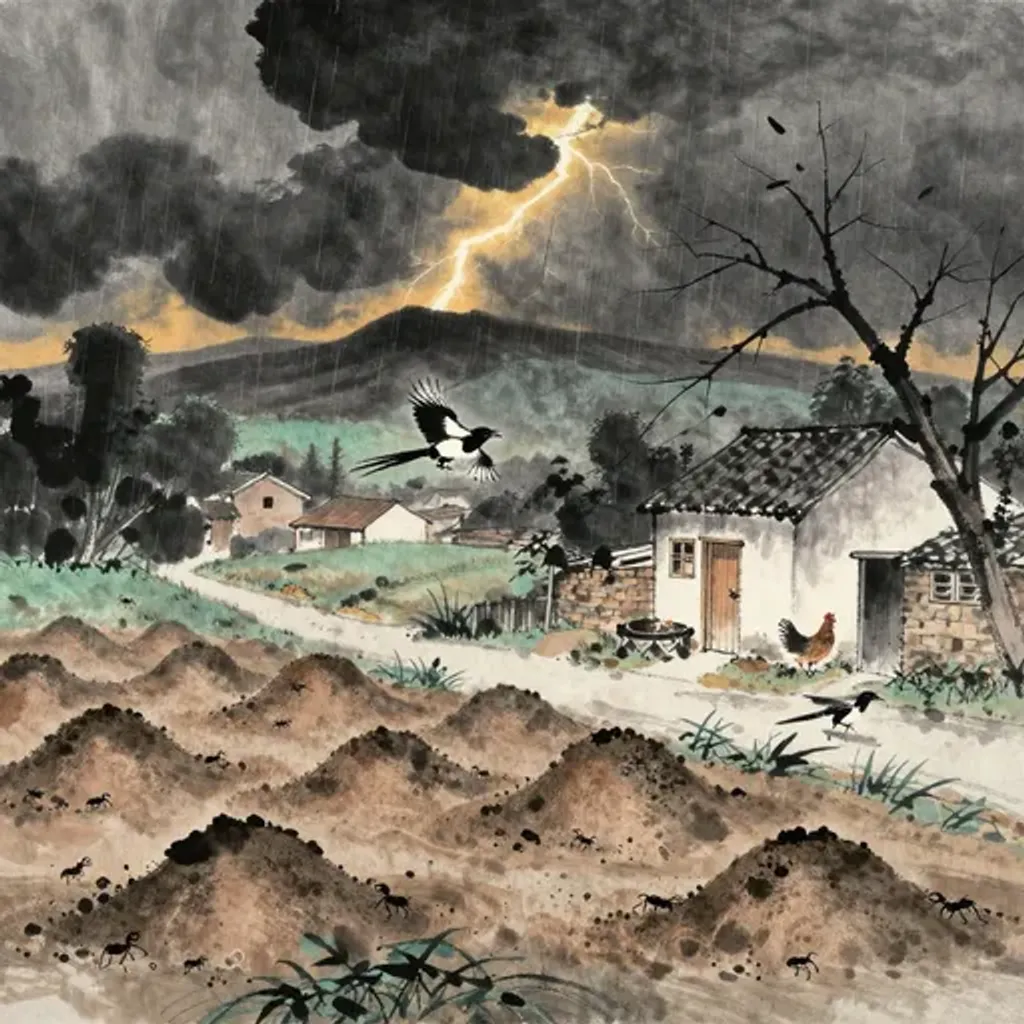
蟻封戶穴,大雨將集。鵲起數鳴,牝雞嘆室。相薨雄父,未到在道。
Ants seal their nest-holes; a great rain is about to gather. The magpie stirs and cries out; the hen sighs within the house. The lord has perished; the elder father has not yet arrived, still on the road.
— Jiao Yanshou, Yilin (Forest of Changes), 1st century BC
Commentary
Thunder doubled meets water over mountain: shock obstructed into the trials of difficulty. Ants seal their holes as heavy rain gathers. Magpies rise and cry repeatedly; the hen sighs within the house. The lord has died on the road, not yet arrived home. The verse reads natural omens with precision: ants blocking their nests signal approaching storms, and magpies calling urgently announce arrivals or departures. The hen sighing within the chamber echoes the classical warning against 'the hen crowing at dawn' — feminine anxiety or domestic disorder. The master's death en route completes the picture of interrupted return. From The Arousing to Obstruction, water upon mountain, every path is blocked. The omens align but the one who should arrive never does.
震 → 解
Hexagram 51 → Hexagram 40: Deliverance
Changing lines: 1, 2
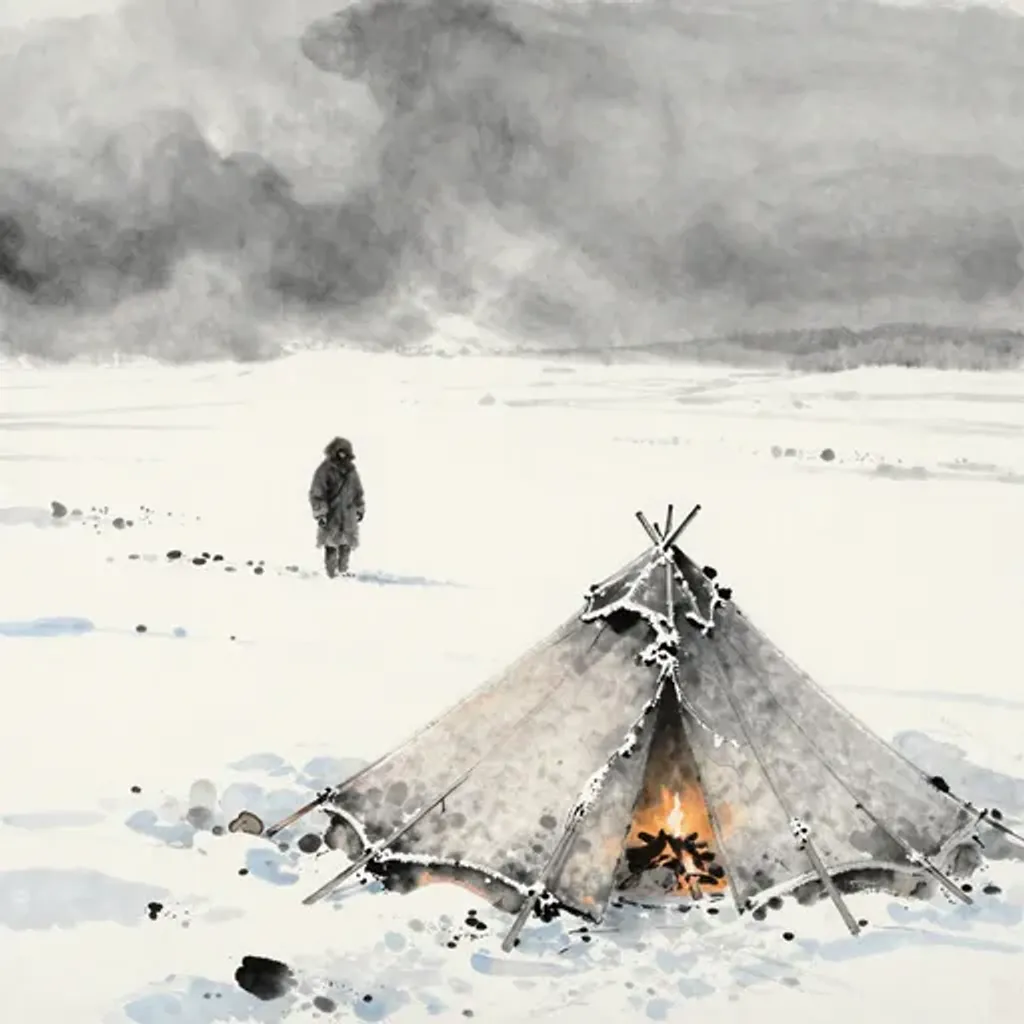
胡俗戎狄,太陰所積。固冰沍寒,君子不存。
Barbarian customs of the Rong and Di; where great yin accumulates. Solid ice and bitter cold; the gentleman cannot endure.
— Jiao Yanshou, Yilin (Forest of Changes), 1st century BC
Commentary
Thunder doubled meets thunder over water: shock released into Deliverance. The foreign customs of the Hu and Rong barbarians, where extreme yin accumulates. Hard ice and bitter cold — the gentleman cannot survive here. The verse describes the frozen northern frontier, land of nomadic peoples whose customs stand opposite to Chinese ritual civilization. The 'extreme yin' (太陰) of the steppe is both climatic and cultural — a realm where Confucian virtue finds no foothold. From The Arousing to Deliverance, thunder and rain work together to dissolve what is frozen. Yet the verse offers no such release: the ice holds, the cold persists, the gentleman finds no place to stand. Deliverance is the promise; the barbarian wastes are the unredeemed condition that awaits it.
震 → 損
Hexagram 51 → Hexagram 41: Decrease
Changing lines: 2, 4, 6
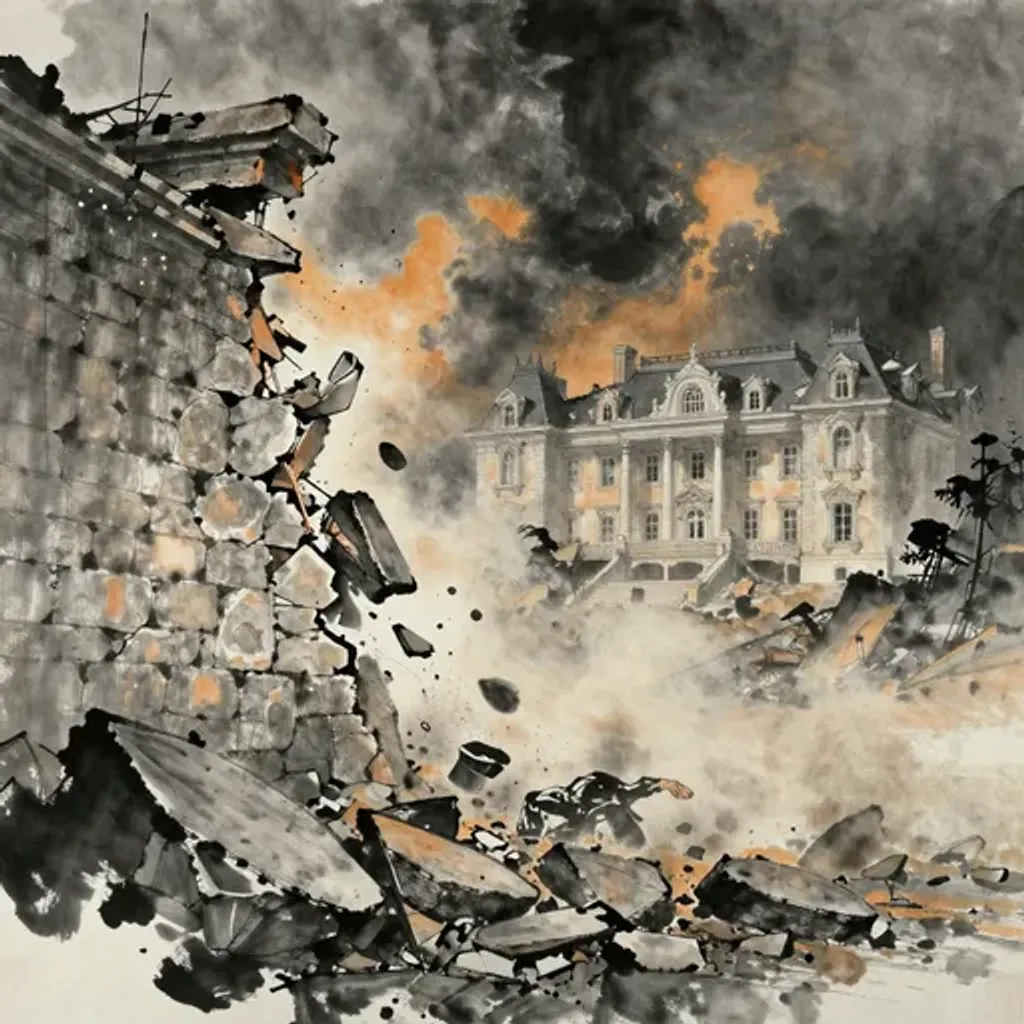
翕翕䡘䡘,稍頹崩顛。減其令名,身不得全。
Tottering, shuddering; gradually crumbling and collapsing. His good name diminished; his person cannot be kept whole.
— Jiao Yanshou, Yilin (Forest of Changes), 1st century BC
Commentary
Thunder doubled meets mountain over lake: shock diminished into Decrease. Crumbling and collapsing, gradually toppling into ruin. A good reputation is destroyed, and the person cannot survive intact. The onomatopoeia 翕翕䡘䡘 evokes the creaking and groaning of a structure giving way — not a sudden crash but a slow, grinding disintegration. First the name is damaged, then the body follows. From The Arousing to Decrease, mountain above lake, the lower is diminished to augment the upper. But here the transfer is purely destructive: reputation is stripped away, physical integrity follows. The verse captures Decrease at its most brutal — not the willing sacrifice of the lower for the higher, but the involuntary erosion of everything one possesses, from honor to life itself.
震 → 益
Hexagram 51 → Hexagram 42: Increase
Changing lines: 4, 5, 6
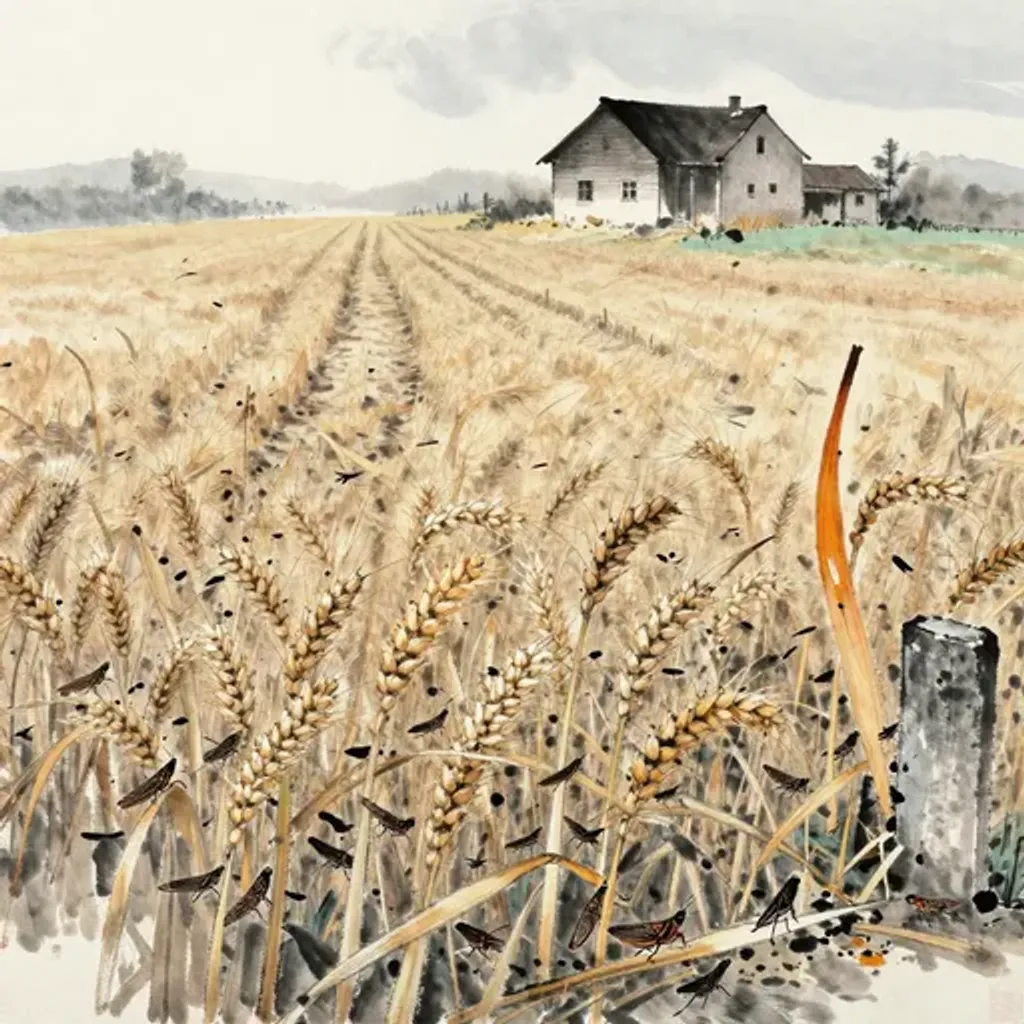
災䖝為賊,害我稼穡。盡禾殫麥,秋无所得。
Plague insects turn to thieves; they devour my crops and grain. Millet consumed, wheat exhausted; in autumn there is nothing to reap.
— Jiao Yanshou, Yilin (Forest of Changes), 1st century BC
Commentary
Thunder doubled meets wind over thunder: shock magnified into Increase — yet here the increase is destructive. Pest insects become thieves, ruining my grain and crops. Millet and wheat are consumed entirely; by autumn there is nothing to harvest. The verse describes agricultural devastation by plague, where the 'increase' is that of vermin rather than virtue. Wind and thunder together, the image of Increase, should mean that 'seeing good one moves toward it, having faults one corrects them.' But when what multiplies is pestilence rather than wisdom, Increase becomes its own curse. From The Arousing to Increase, the transformation warns that unchecked proliferation without moral direction produces only ruin. The autumn arrives empty-handed.
震 → 夬
Hexagram 51 → Hexagram 43: Breakthrough
Changing lines: 2, 3, 5
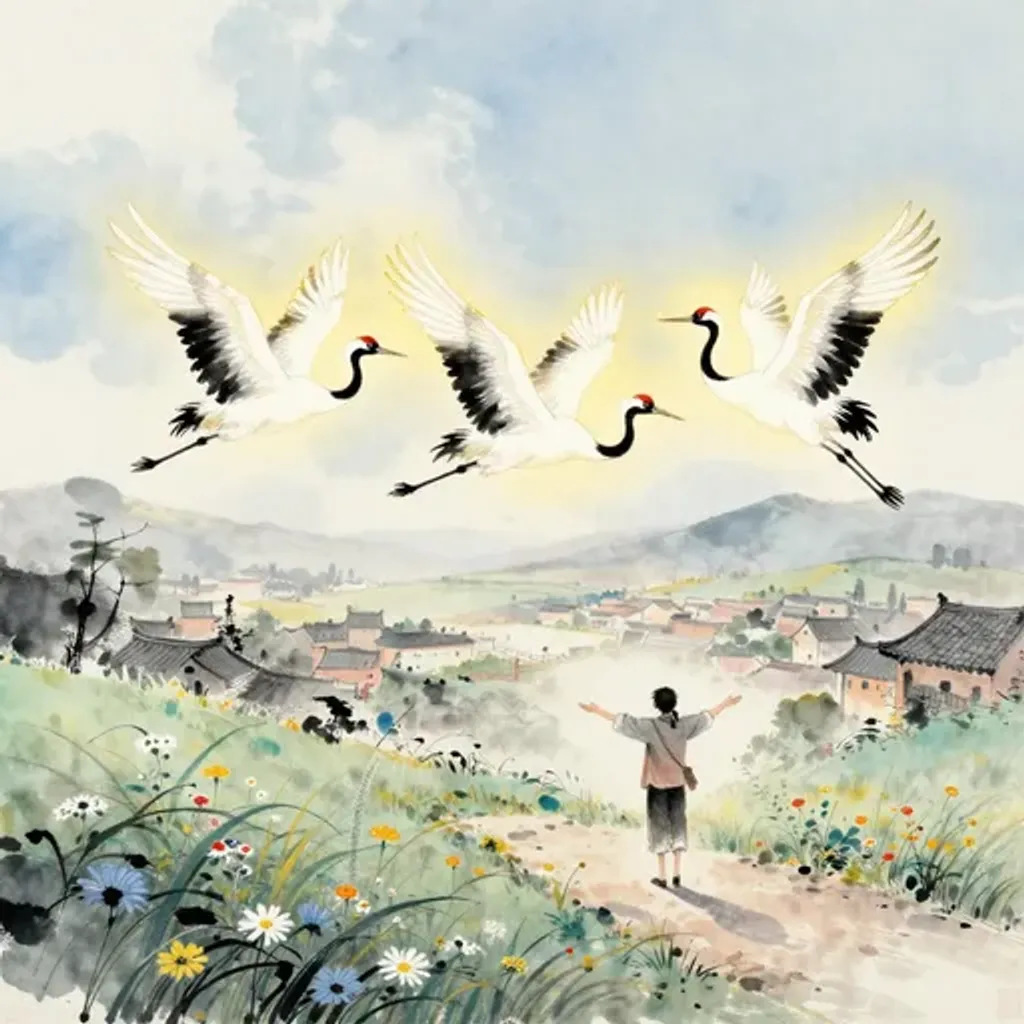
三幸飛來,自我逢時。俱行先至,多得大利。
Three blessings fly hither; fortune comes to meet me in its season. Traveling together, arriving first; gaining great profit abundantly.
— Jiao Yanshou, Yilin (Forest of Changes), 1st century BC
Commentary
Thunder doubled meets lake over heaven: shock decisive as Breakthrough. Three fortunes come flying in, and I meet my moment of opportunity. Traveling together yet arriving first, one gains great profit. The 'three fortunes' (三幸) descending like birds suggests luck arriving in multiples, converging at the perfect time. The one who moves decisively within the group reaches the goal ahead of all others. From The Arousing to Breakthrough, lake above heaven, the verse captures the moment when accumulated tension finally discharges. Breakthrough is the hexagram of decisive action — the lake's water breaking through the dam of heaven. Thunder's energy, channeled into this single moment of resolution, yields abundance. Fortune favors the one who acts when the moment breaks open.
震 → 姤
Hexagram 51 → Hexagram 44: Coming to Meet
Changing lines: 1, 2, 3, 5, 6
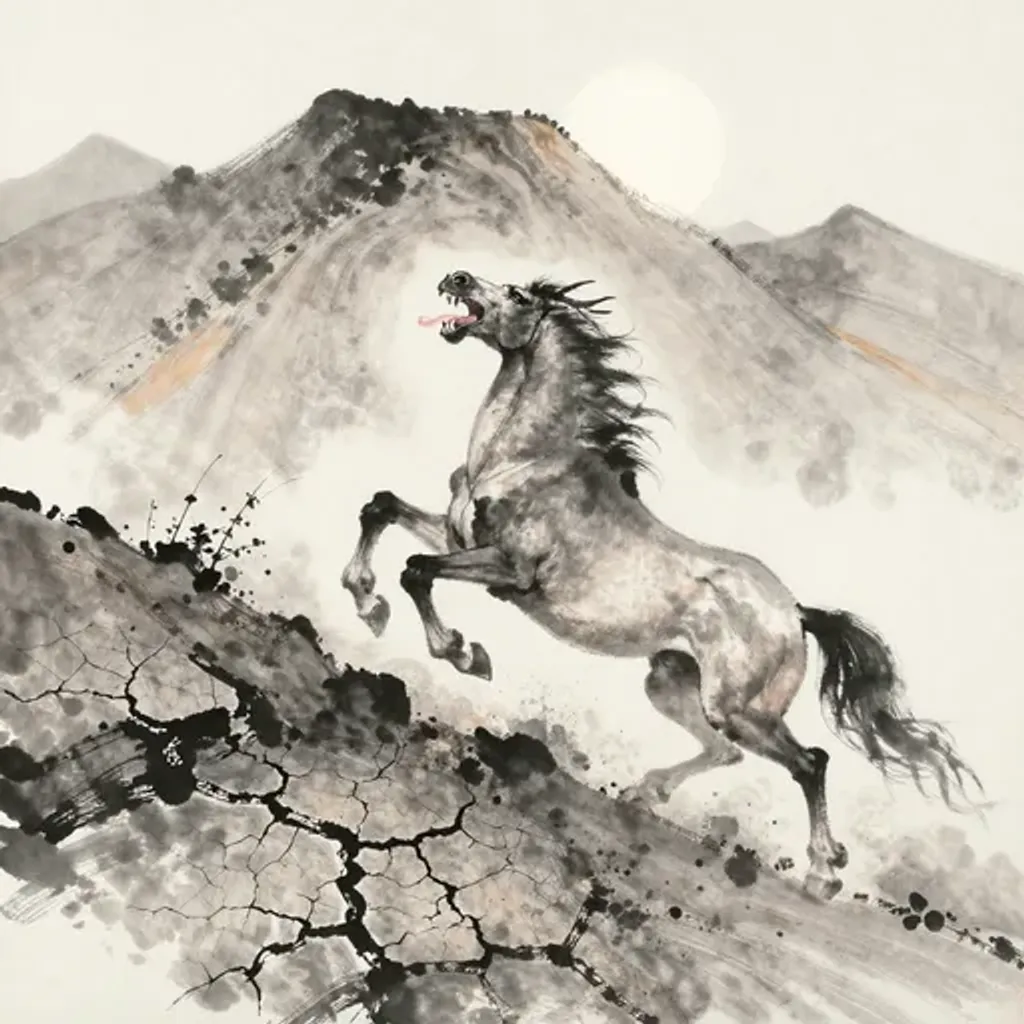
龍馬上山,焦无水泉。喉燋唇乾,渴不能言。
The dragon-horse climbs the mountain; it is parched, without spring or stream. Throat scorched, lips dry; in its thirst it cannot speak.
— Jiao Yanshou, Yilin (Forest of Changes), 1st century BC
Commentary
Thunder doubled meets heaven over wind: shock encounters the unexpected arrival of Coming to Meet. A dragon-horse climbs the mountain but finds it scorched, without spring or stream. Its throat is parched, its lips dry — too thirsty to speak. The dragon-horse (龍馬), the mythical creature that bore the River Chart from the Yellow River, here finds itself stranded on a waterless peak. The supreme auspicious beast, associated with rivers and revelation, is removed from its element entirely. From The Arousing to Coming to Meet, heaven above wind, the dark yin line rises from below to encounter five yang lines. The verse warns of encounter in the wrong place: even the most potent force, meeting conditions that deny its nature, is reduced to speechless suffering.
震 → 萃
Hexagram 51 → Hexagram 45: Gathering Together
Changing lines: 1, 5
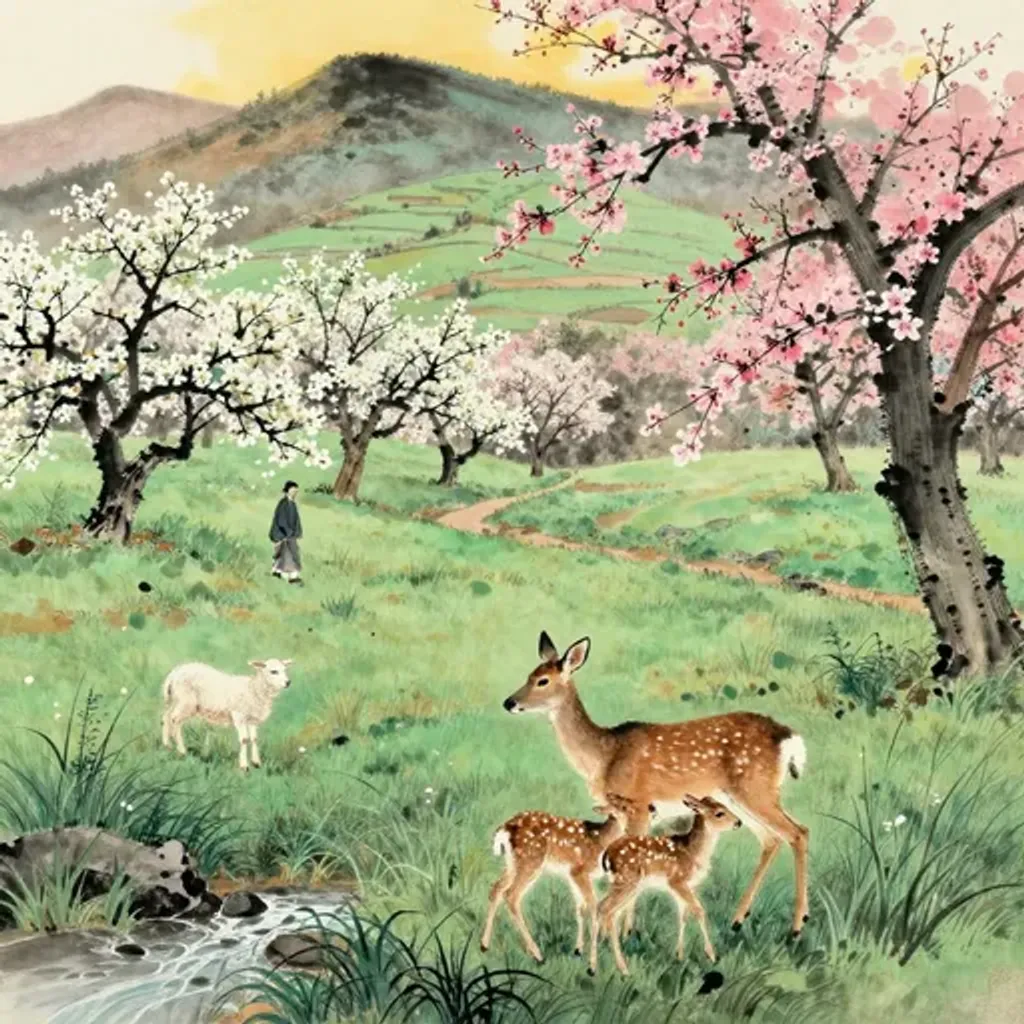
春生孳乳,萬物繁熾。君子所集,禍災不至。
Spring gives birth and nurtures; the ten thousand things flourish and thrive. Where the gentleman gathers; calamity and disaster do not reach.
— Jiao Yanshou, Yilin (Forest of Changes), 1st century BC
Commentary
Thunder doubled meets lake over earth: shock gathered into the congregation of Gathering. In spring, creatures are born and nurtured; all things flourish and multiply. Where gentlemen gather, disaster does not arrive. The verse paints a vision of vernal abundance — the life-force of spring generating new growth everywhere, and the presence of worthy men creating a protective field. The two images reinforce each other: natural fertility and moral assembly jointly ward off calamity. From The Arousing to Gathering, lake above earth, the verse embodies the hexagram's promise. Thunder's vital energy, when it gathers rather than scatters, pools into the lake that sits upon the earth. The gentleman prepares for the unexpected precisely because abundance makes vigilance possible.
震 → 升
Hexagram 51 → Hexagram 46: Pushing Upward
Changing lines: 1, 2, 3, 4
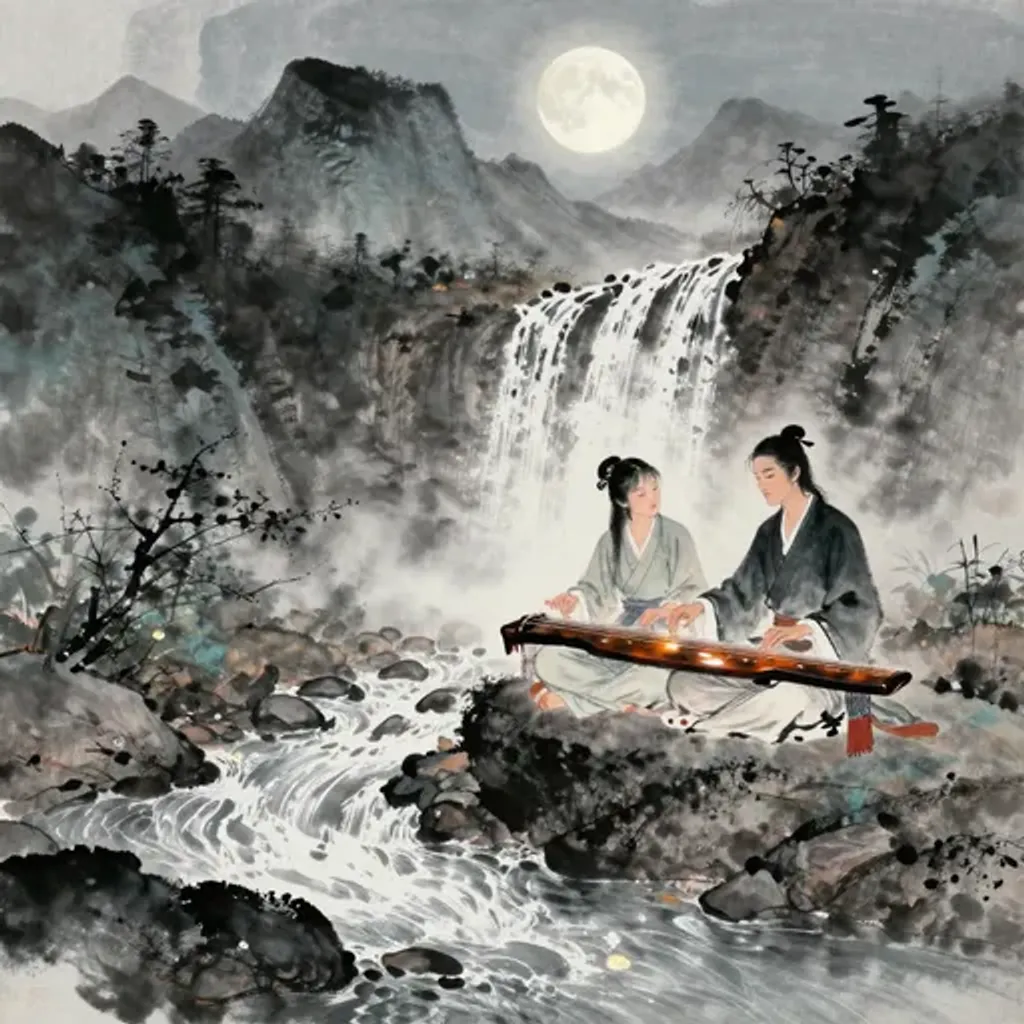
王孫季子,相與為友。明允篤誠,升擢薦舉。
Boya plays the qin, Zhong Ziqi listens — "High Mountain, Flowing Water," their spirits meet. When the piece ends, they smile at the moon — from then on, walking level into the clouds.
— Jiao Yanshou, Yilin (Forest of Changes), 1st century BC
Commentary
Thunder doubled meets earth over wind: shock ascends into the gradual growth of Pushing Upward. The original verse reads: 'Prince and noble's son befriend each other, bright and sincere in their trust. They are promoted and recommended upward.' The verse describes an alliance between men of rank built on genuine mutual trust — not scheming but straightforward sincerity that naturally results in advancement. The compound 'promoted and recommended' (升擢薦舉) directly echoes the hexagram name Sheng (升, Pushing Upward). From The Arousing to Pushing Upward, wood grows within the earth, rising slowly but irresistibly. True friendship between men of integrity becomes the vehicle of ascent: one recommends the other, and both rise through honest association.
震 → 困
Hexagram 51 → Hexagram 47: Oppression
Changing lines: 1, 2, 5
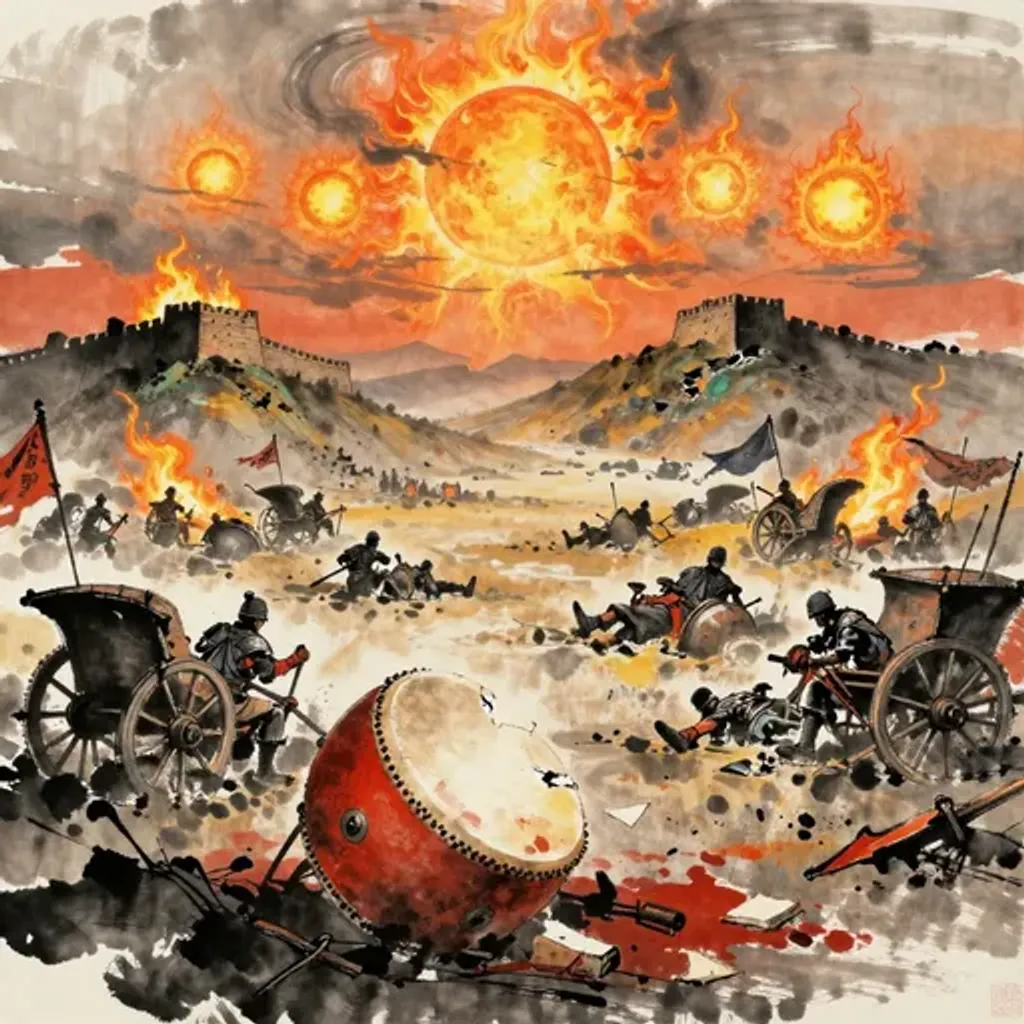
六明並照,政紀有統。秦楚戰國,民受其咎。
Six luminaries shine together; government and discipline have order. Yet Qin and Chu and the Warring States; the people suffer their calamity.
— Jiao Yanshou, Yilin (Forest of Changes), 1st century BC
Commentary
Thunder doubled meets lake over water: shock trapped in Oppression. Six luminaries shine together, governance and order have their system. But Qin and Chu wage war among the states, and the common people bear the blame. The 'six luminaries' (六明) may refer to the six states or six ministries shining in administrative brilliance, yet their coordinated light cannot prevent the devastation of interstate warfare. Governance exists in theory while the people suffer in practice. From The Arousing to Oppression, lake without water, the verse captures the fundamental paradox: the system functions perfectly on paper while the well runs dry below. Thunder's energy is trapped — political order above, popular suffering below, and no mechanism to connect them.
震 → 井
Hexagram 51 → Hexagram 48: The Well
Changing lines: 1, 2, 3, 4, 5
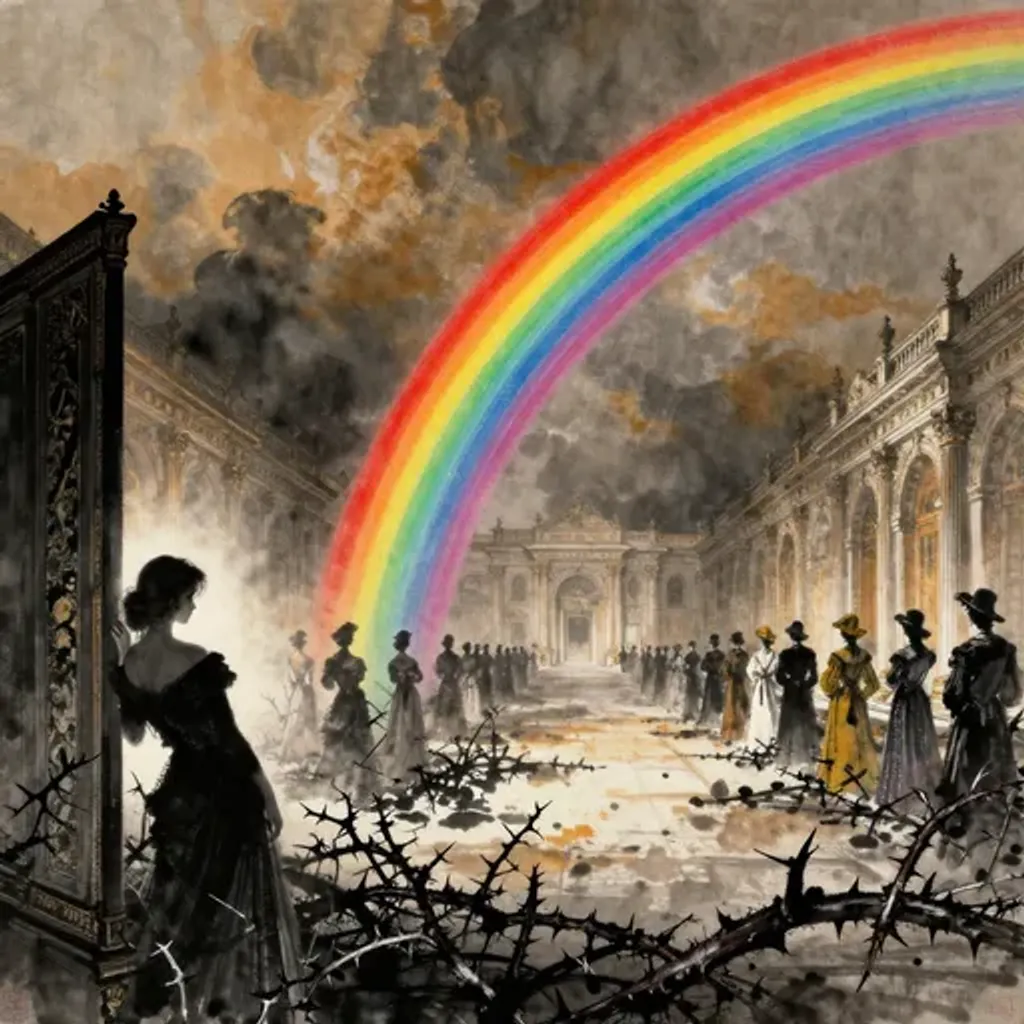
蝃蝀充側,佞人所惑。女謁橫行,正道壅塞。
The rainbow fills every side; flattering men are beguiled by it. Women's petitions run rampant; the righteous way is blocked and sealed.
— Jiao Yanshou, Yilin (Forest of Changes), 1st century BC
Commentary
Thunder doubled meets water over wind: shock channeled into The Well's deep sustenance — but here the well is poisoned. The rainbow looms to the side, its presence enthralling the unscrupulous. Women's influence runs unchecked, and the proper way is blocked and choked. The rainbow (蝃蝀) is a direct allusion to the Shijing ode from the Yong Winds, where the rainbow is an omen of yin-yang imbalance and sexual impropriety. 'Women's petitions running rampant' (女謁橫行) describes feminine influence — whether consorts or eunuch-allied factions — overriding legitimate governance. From The Arousing to The Well, whose function is to provide pure sustenance, the verse shows the water source contaminated at its root. When flattery replaces frank counsel, even the well's life-giving water turns toxic.
震 → 革
Hexagram 51 → Hexagram 49: Revolution
Changing lines: 3, 5
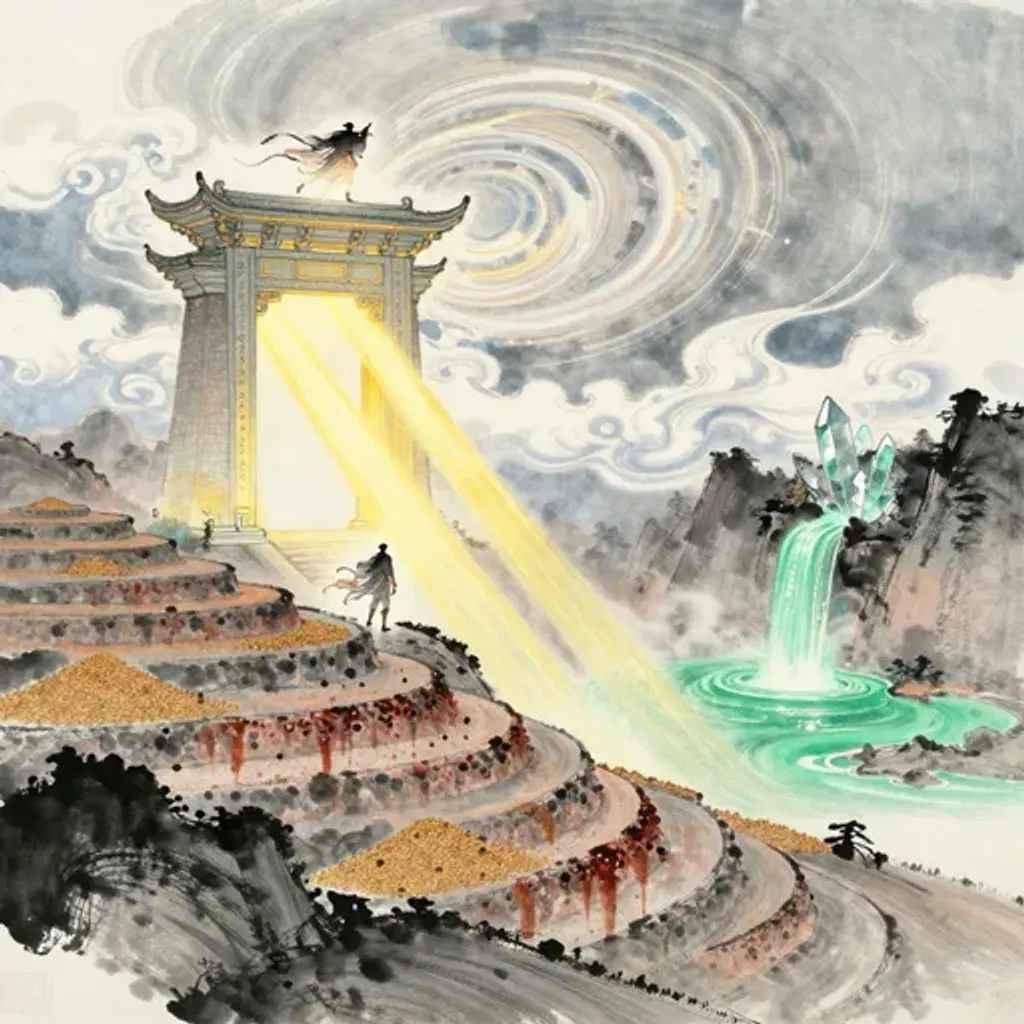
登崑崙,入天門。過糟丘,宿玉泉。問惠歡,見欣君。
Ascending Kunlun, entering the Gate of Heaven. Passing the Hills of Grain-Dregs, lodging at the Jade Spring. Seeking joy and delight; meeting the lord of gladness.
— Jiao Yanshou, Yilin (Forest of Changes), 1st century BC
Commentary
Thunder doubled meets lake over fire: shock transformed through Revolution's cleansing fire. Ascending Mount Kunlun, entering Heaven's Gate. Passing the Mound of Wine-Dregs, lodging at the Jade Spring. Meeting a gracious host, encountering a delightful lord. The verse reads as a Daoist journey narrative — ascending the cosmic mountain, passing through celestial landmarks, each station more sublime than the last. Kunlun is the axis mundi, gateway between earth and heaven; the Jade Spring represents purification. From The Arousing to Revolution, fire within the lake, the verse traces a total transformation of state. Thunder's raw power is refined through each stage of ascent until it arrives at the presence of the divine, fundamentally changed. Revolution is not mere destruction but the passage through fire that purifies.
震 → 鼎
Hexagram 51 → Hexagram 50: The Cauldron
Changing lines: 1, 2, 3, 6
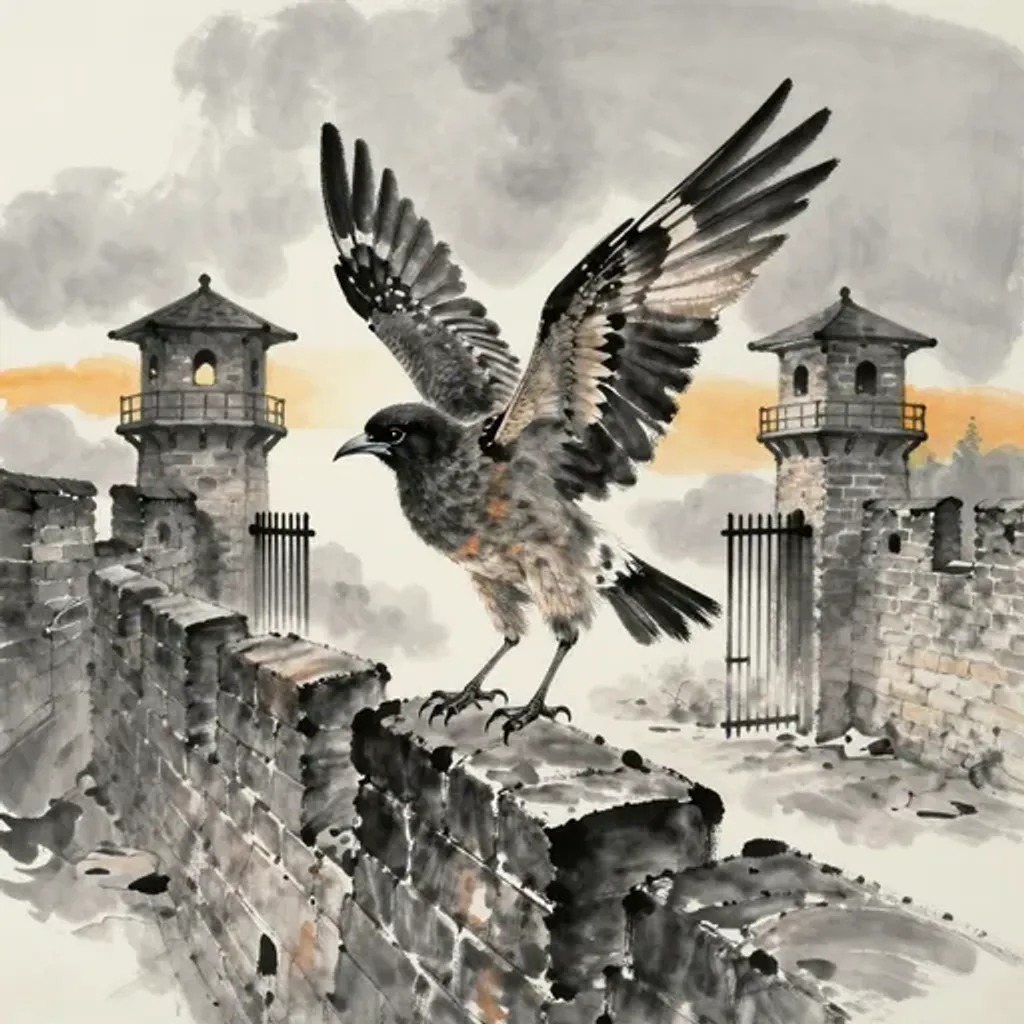
體重飛難,未能越關。不啻留垣,上下墟塞,心不遑安。
Body heavy, flight is hard; unable to cross the pass. Detained as if behind walls; above and below, the roads are blocked. The heart finds no ease.
— Jiao Yanshou, Yilin (Forest of Changes), 1st century BC
Commentary
Thunder doubled meets fire over wind: shock confronts the solemn vessel of The Cauldron. The body is too heavy for flight, unable to cross the pass. Lingering, unable to advance beyond the wall; above and below are blocked and sealed. The heart finds no peace. The image is of something massive and earthbound — perhaps the cauldron itself — that yearns to move but cannot overcome its own weight. Every passage is blocked, every exit sealed. From The Arousing to The Cauldron, fire over wood, the vessel that refines and nourishes requires being properly set in place. Here the thunder's impulse to move clashes with the cauldron's nature, which is to remain fixed and receive. Restlessness within a vessel meant for stillness produces only anxiety — the heart cannot settle because the form demands what the spirit resists.
震 → 震
Hexagram 51 → Hexagram 51: The Arousing Thunder
No changing lines — the hexagram is unchanged
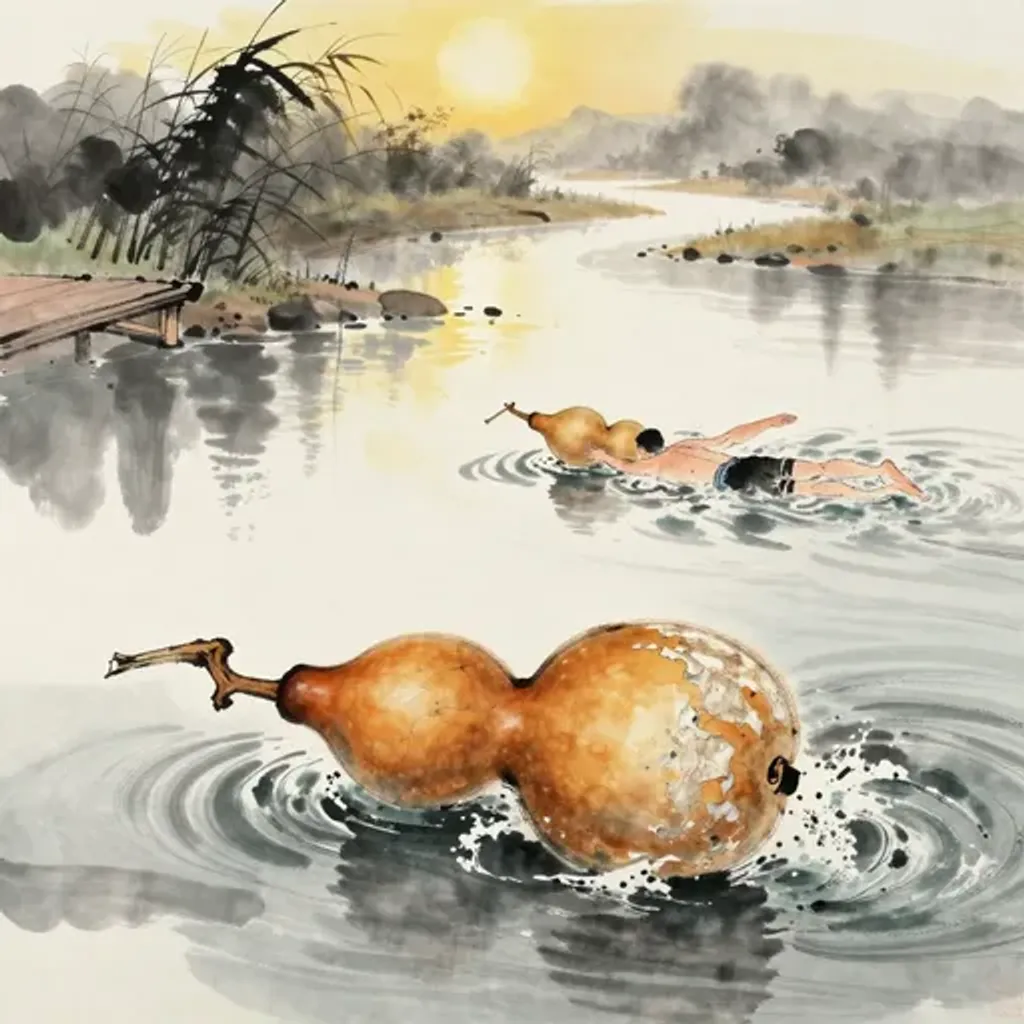
枯瓠不朽,利以濟舟。渡踰河海,无有溺憂。
The dried gourd does not decay; it serves to ferry the boat. Crossing over rivers and seas; there is no worry of drowning.
— Jiao Yanshou, Yilin (Forest of Changes), 1st century BC
Commentary
Thunder meets itself: pure shock reflected and redoubled. A dried gourd that does not rot — useful for crossing by boat. It ferries one across rivers and seas without fear of drowning. The gourd (瓠), hollow and light, floats naturally. Zhuangzi famously argued that even a useless thing, if understood correctly, becomes a vessel: the massive gourd that cannot be used as a ladle becomes a boat. The verse applies this insight to the self-referential hexagram: Thunder to Thunder, the shock that returns to itself discovers its own buoyancy. What seems empty and dried out proves to be the very quality that saves. From The Arousing to itself, the lesson is that thunder's nature, accepted without resistance, carries one safely through the deepest waters.
震 → 艮
Hexagram 51 → Hexagram 52: Keeping Still Mountain
Changing lines: 1, 3, 4, 6
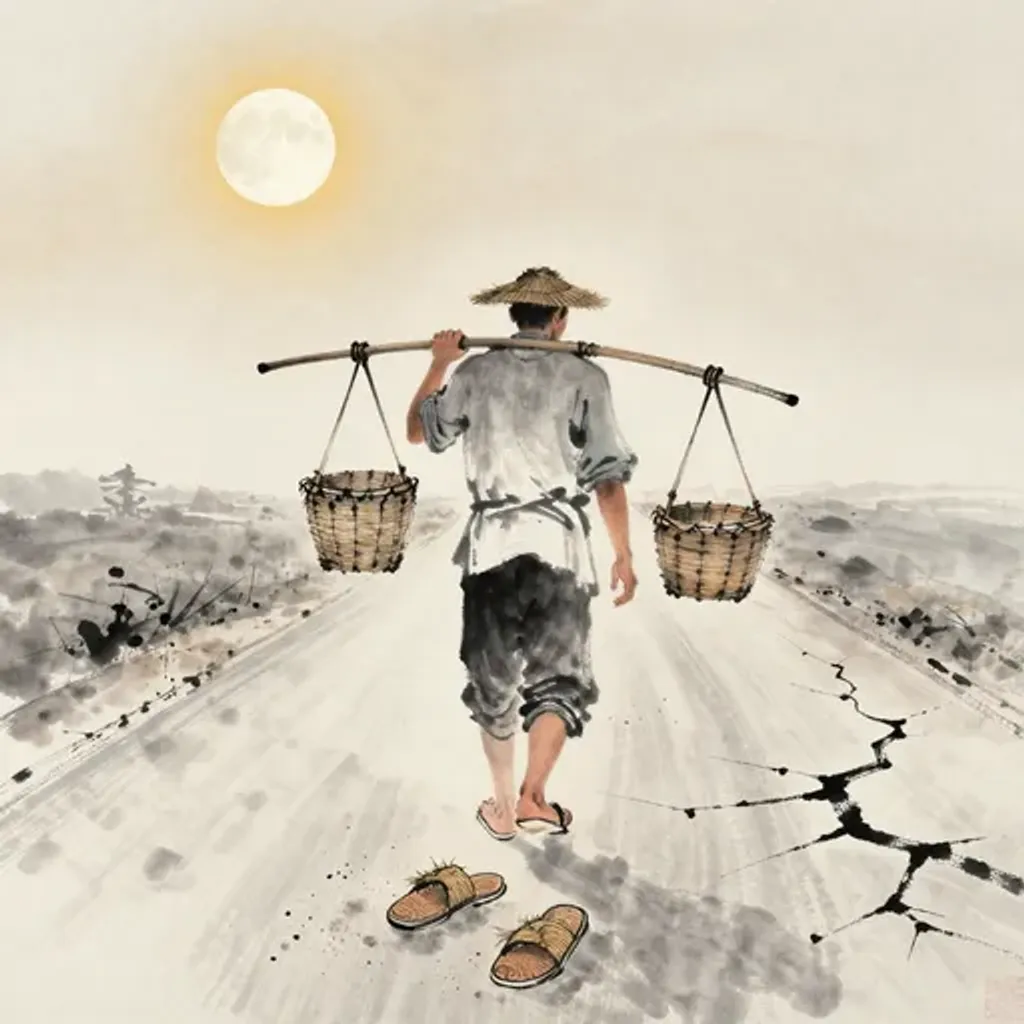
玄黃虺隤,行者勞罷。役夫憔悴,踰時不歸。
Straw sandals worn through, toes exposed; the carrying pole bends like a bowstring. Walking a hundred li a day without seeing a town — the moon rises and sets, another year passes.
— Jiao Yanshou, Yilin (Forest of Changes), 1st century BC
Commentary
Thunder doubled meets doubled mountain: shock stilled into absolute stillness. The original verse reads: 'Dark and sallow, weary and exhausted, the traveler is worn out and spent. The laborer is haggard, long overdue and not yet returned.' This is a verse of pure exhaustion — the body drained of color, the worker pushed beyond all endurance, unable to come home. The phrase 'dark and sallow' (玄黃虺隤) echoes the Shijing ode 'He Cao Bu Huang' about soldiers driven like beasts. From The Arousing to Keeping Still, the transformation is the collapse of motion into enforced rest. Thunder, having exhausted itself completely, has no choice but to stop. The mountain does not move because it cannot — stillness here is not wisdom but depletion.
震 → 漸
Hexagram 51 → Hexagram 53: Development
Changing lines: 1, 3, 4, 5, 6
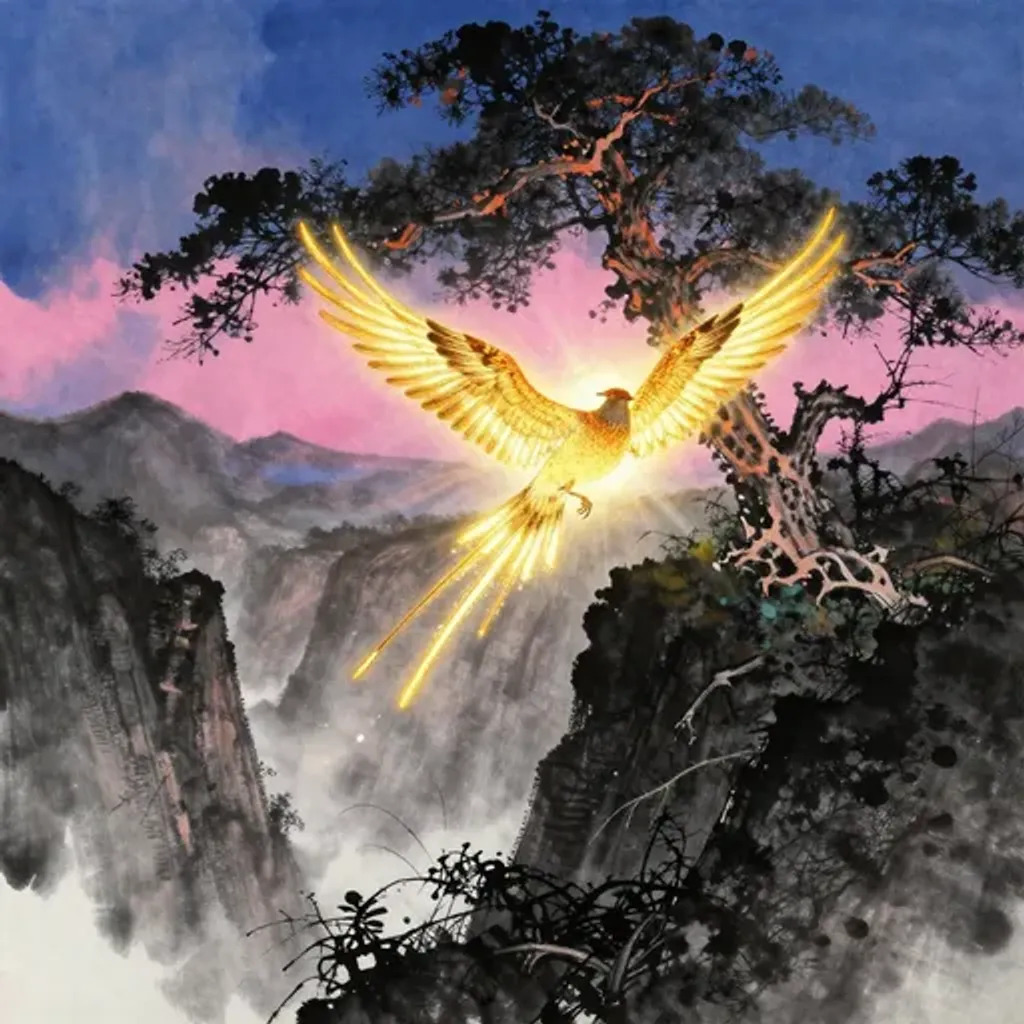
孔德如玉。出於幽谷,飛上高木,鼓其羽翼。輝光照國。
Virtue of Kong, like jade. Emerging from a dark valley, soaring up to a lofty tree, beating its wings. Its radiance illumines the land.
— Jiao Yanshou, Yilin (Forest of Changes), 1st century BC
Commentary
Thunder doubled meets wind over mountain: shock refined into the gradual advance of Development. Virtue like jade, from Confucius himself. Rising from a dark valley, flying up to the tall tree, beating its wings. Radiance illuminates the nation. The 'virtue like jade' (孔德如玉) likely refers to Confucius (孔), whose moral brilliance is compared to jade's lustrous purity. The bird rising from a shaded valley to a high tree echoes the Shijing ode about the oriole: 'From the dark valley it moves to the tall tree.' From The Arousing to Development, wind above mountain, trees grow on the mountainside — gradual, steady, and visible from afar. The verse traces the arc from obscurity to luminous influence, one stage at a time. Thunder's energy, channeled through patient cultivation, becomes a light that reaches the whole realm.
震 → 歸妹
Hexagram 51 → Hexagram 54: The Marrying Maiden
Changing lines: 2
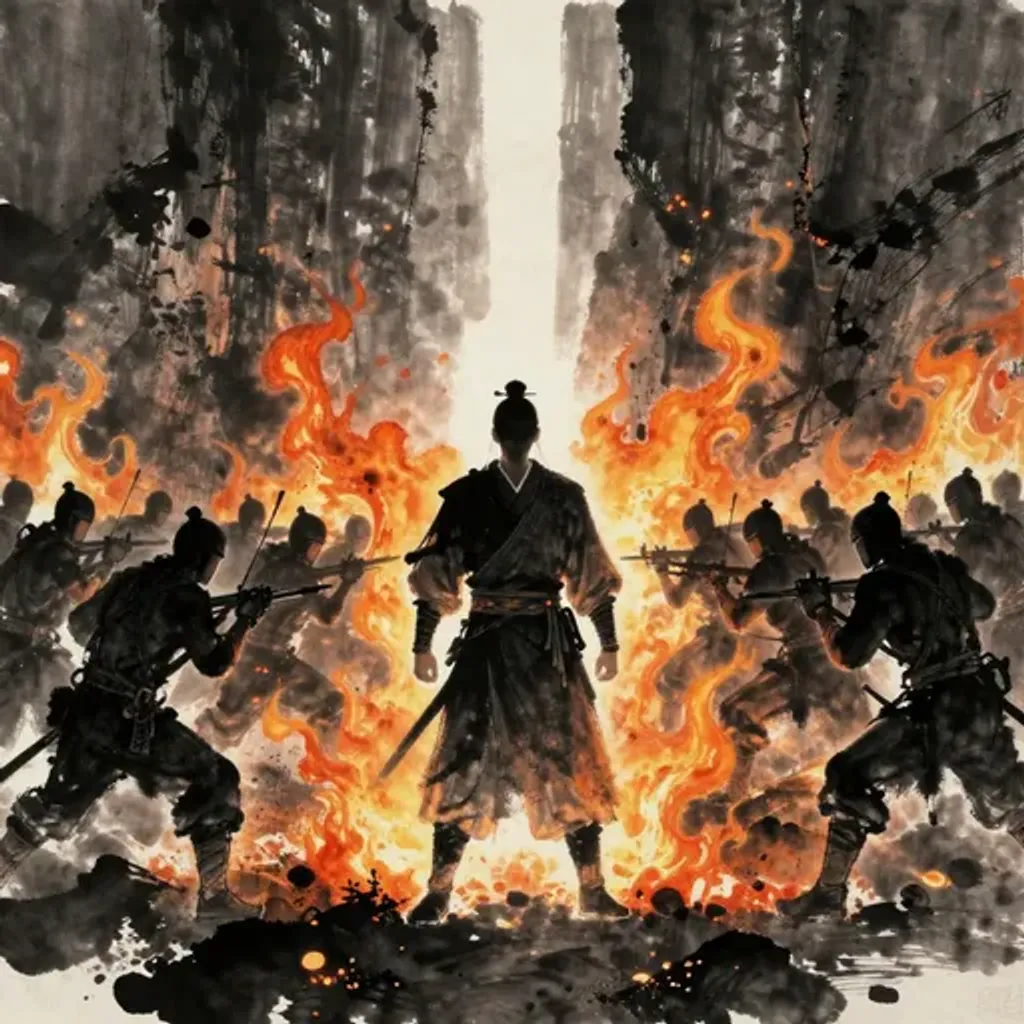
火雖熾,在吾後。寇雖眾,出我右。身安吉,不危殆。
Though fire blazes, it is behind me. Though bandits are many, they emerge to my right. Body at peace, fortune assured; no peril or danger.
— Jiao Yanshou, Yilin (Forest of Changes), 1st century BC
Commentary
Thunder doubled meets thunder over lake: shock negotiates the compromised union of the Marrying Maiden. Though the fire blazes fiercely, it is behind me. Though the bandits are many, they emerge to my right. The body is safe and auspicious, no peril approaches. The verse reads as a narrow escape: fire at one's back, enemies to one side, yet the speaker passes through unscathed. The positioning matters — the dangers are close but not in the direct path. From The Arousing to the Marrying Maiden, thunder above lake, the transformation involves entering an imperfect arrangement with clear-eyed awareness. The maiden who marries into a secondary position survives by understanding where the dangers lie. Knowing one's place relative to fire and foes, one navigates without being consumed.
震 → 豐
Hexagram 51 → Hexagram 55: Abundance
Changing lines: 3
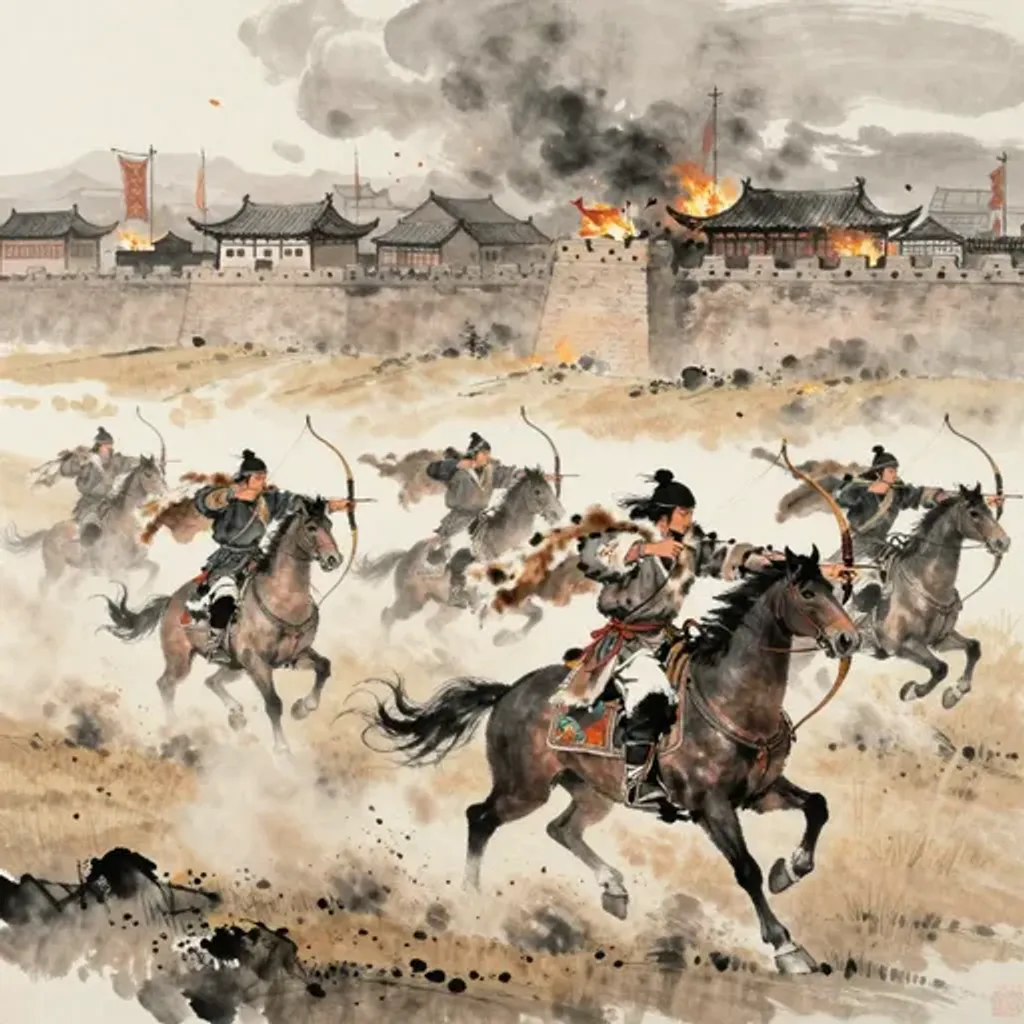
旃裘羶國,文禮不飾。跨馬控弦,伐我都邑。
Felt-robed, mutton-scented lands; rites and civility unadorned. Mounted with drawn bows astride horses; they assault our cities and towns.
— Jiao Yanshou, Yilin (Forest of Changes), 1st century BC
Commentary
Thunder doubled meets thunder over fire: shock amplified into the overwhelming fullness of Abundance. Felt-robed people of a land reeking of mutton, unadorned by rites or civility. Mounting horses and drawing bows, they attack our cities and towns. The verse depicts a nomadic invasion: warriors in animal-skin garments, their culture defined by pastoral life rather than ritual refinement, descending on the settled world with mounted archery. The contrast between 旃裘 (felt and fur) and 文禮 (literary rites) maps the classical Chinese civilized-barbarian divide. From The Arousing to Abundance, thunder and lightning striking together, the verse shows abundance's dark twin: overwhelming force without cultural form. When Abundance arrives as pure military power untempered by moral cultivation, it becomes devastation rather than flourishing.
震 → 旅
Hexagram 51 → Hexagram 56: The Wanderer
Changing lines: 1, 3, 6
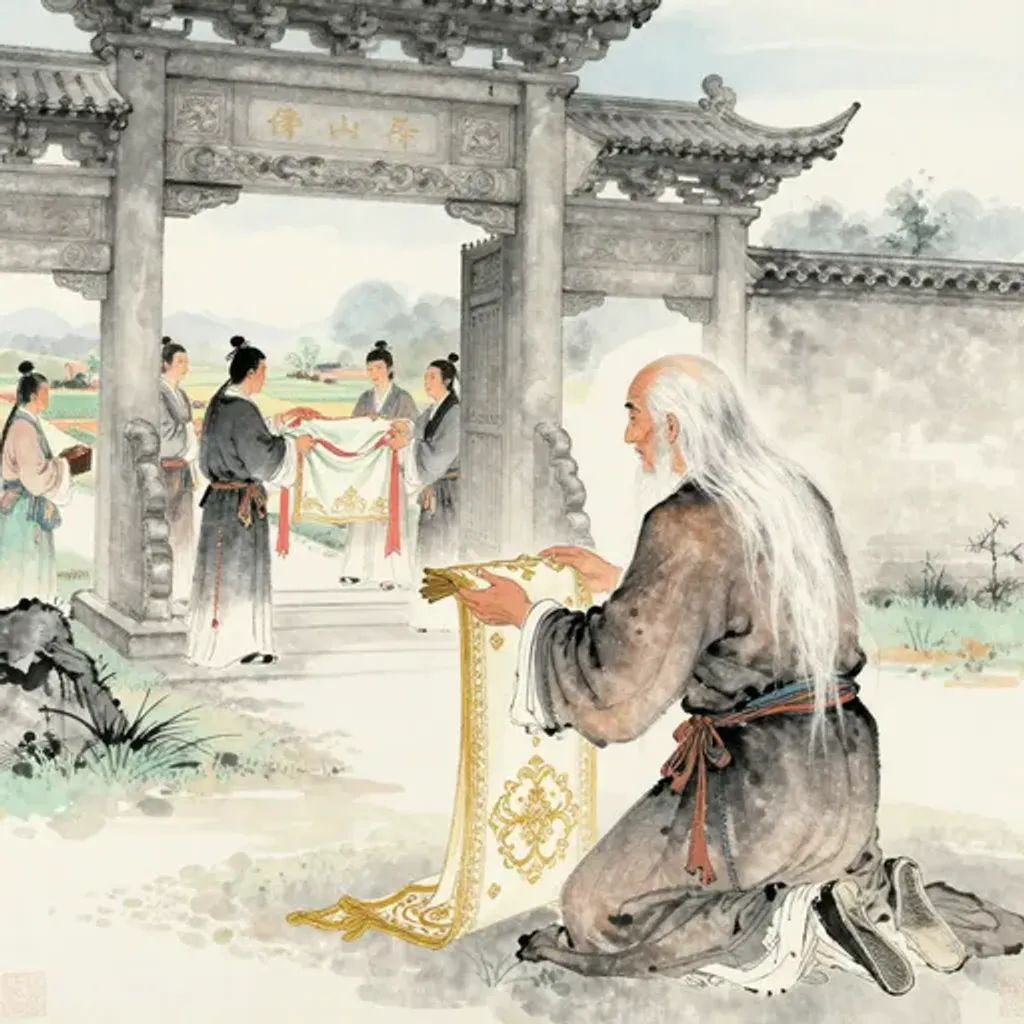
被髮八十,慕德獻服。邊鄙不聳,以安王國。
Hair unbound, at eighty years, admiring virtue, presenting tribute garments. The borderlands are not alarmed; thereby the kingdom is at peace.
— Jiao Yanshou, Yilin (Forest of Changes), 1st century BC
Commentary
Thunder doubled meets fire over mountain: shock refined into the transient clarity of The Wanderer. Loose-haired elders of eighty years come to offer tribute out of admiration for virtue. The border regions cease to bristle, and the kingdom is at peace. The 'loose-haired' (被髮) people are foreign or peripheral peoples whose unbound hair marks them as outside Chinese ritual culture. Their voluntary submission at advanced age — not through conquest but through admiration — represents the ultimate triumph of moral authority. From The Arousing to The Wanderer, fire on the mountain illuminates but does not stay. The verse shows how thunder's transformative power, when expressed as moral brilliance rather than military force, draws even the remotest peoples to acknowledge the center. Peace radiates outward like fire from a mountain peak.
震 → 巽
Hexagram 51 → Hexagram 57: The Gentle Wind
Changing lines: 1, 2, 3, 4, 5, 6
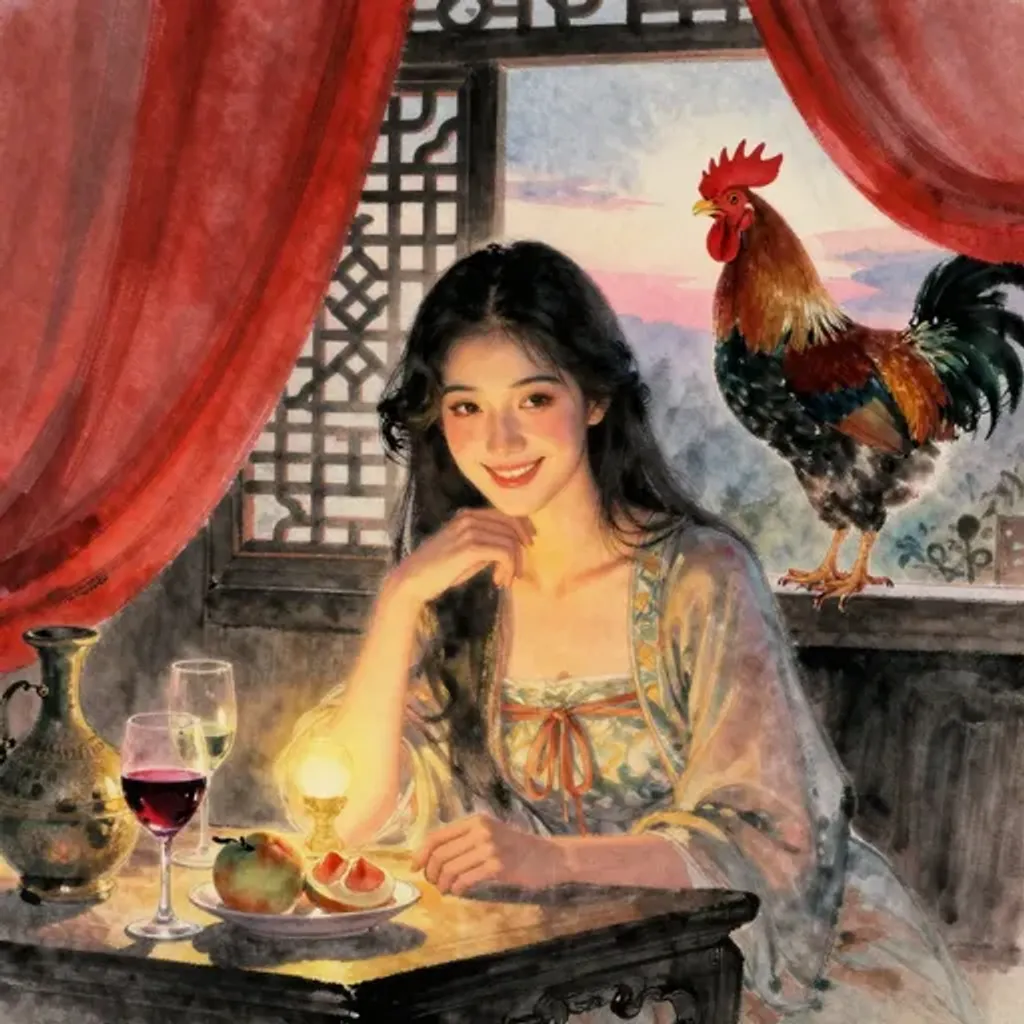
心得所好,口常為笑。公孫蛾眉,雞鳴樂夜。
The heart finds what it loves; the mouth is always smiling. The lord's lady with moth-brow beauty; the cock crows and she delights in the night.
— Jiao Yanshou, Yilin (Forest of Changes), 1st century BC
Commentary
Thunder doubled meets doubled wind: shock gentled into the pervasive influence of The Gentle. The heart finds what it loves; the mouth is always smiling. 'Gongsun of the moth-brows' — delighting in the crowing of cocks through the night. The 'moth-brows' (蛾眉) is a classical epithet for a beautiful woman, and 'delighting in cock-crow at night' (雞鳴樂夜) echoes the Shijing ode 'Ji Ming' from the Qi Winds, where a wife urges her husband to rise at dawn for court. Here the night itself is the pleasure — lingering in intimacy rather than attending to duty. From The Arousing to The Gentle, doubled wind, the verse shows thunder's intensity softened into tender, penetrating intimacy. What enters gently pervades completely — for better or worse.
震 → 兌
Hexagram 51 → Hexagram 58: The Joyous Lake
Changing lines: 2, 5
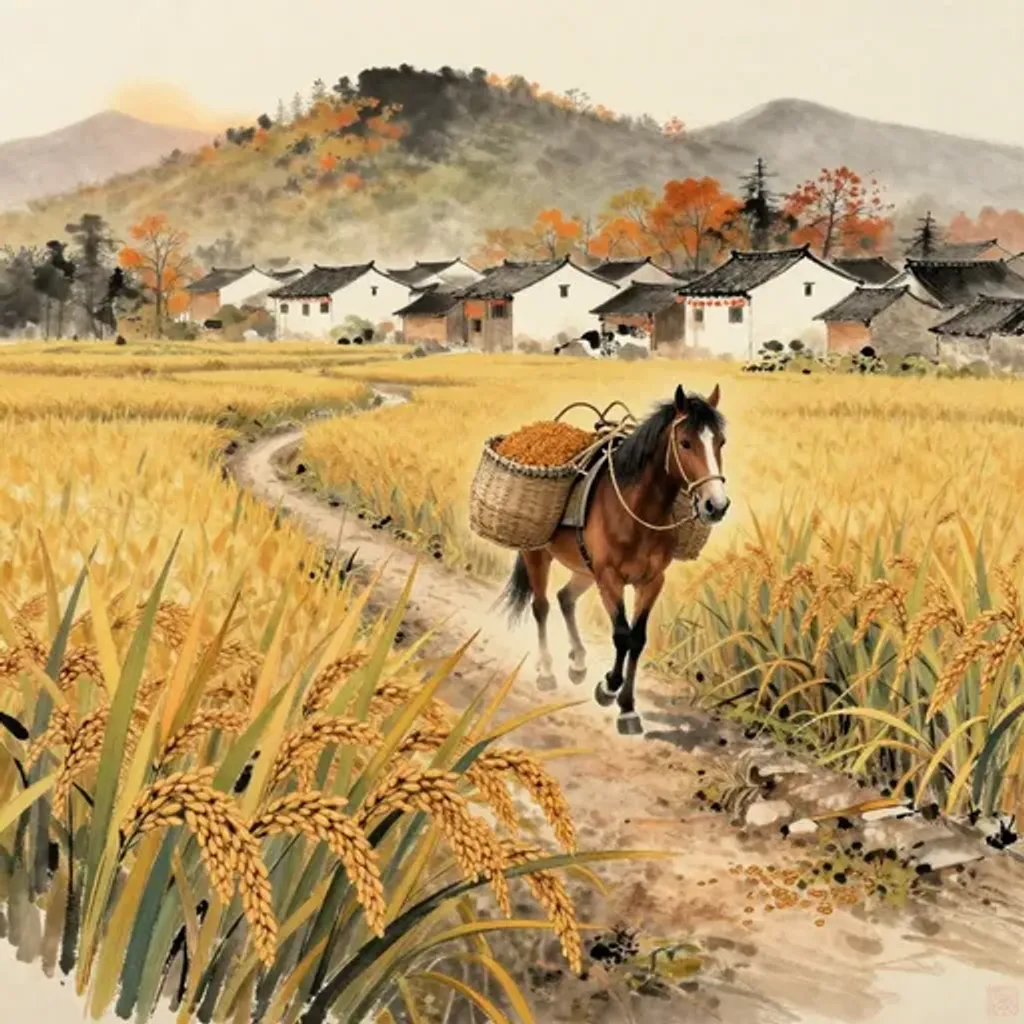
馬能負乘,見邑之野。并獲粢稻,喜悅无咎。
The horse can bear its load; it sees the fields of the town. Together harvesting millet and rice; joyful and without blame.
— Jiao Yanshou, Yilin (Forest of Changes), 1st century BC
Commentary
Thunder doubled meets doubled lake: shock dissolves into the open delight of The Joyous. The horse can bear both rider and cargo; it sees the fields beyond the town walls. Harvesting millet and rice together, there is joy without blame. The horse here is a capable creature — bearing double loads without complaint, surveying open farmland, a figure of productive abundance. The harvest of both millet and rice represents complementary gains. From The Arousing to The Joyous, paired lakes, the verse shows thunder's energy pooling into shared celebration. Friends gathering to study and discuss — the lake's joy is communicative, spreading from one to another. The horse that carries both burden and rider to the abundant field embodies joyful labor: effort that yields pleasure rather than exhaustion.
震 → 渙
Hexagram 51 → Hexagram 59: Dispersion
Changing lines: 1, 2, 4, 5, 6
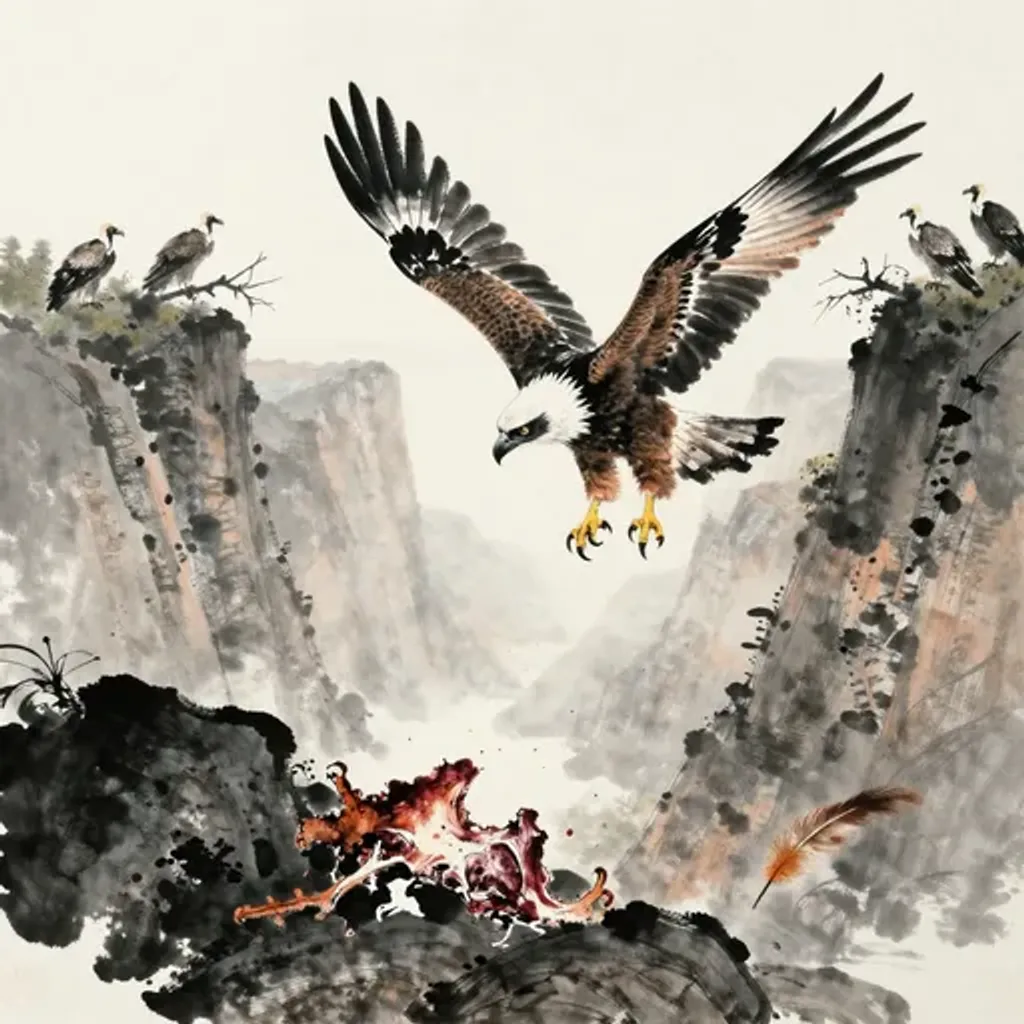
高飛視下,貪叨所在。腐臭為患,害於躬身。
Flying high, gazing down upon what greed desires below. Rot and stench become a plague; harm befalls one's own body.
— Jiao Yanshou, Yilin (Forest of Changes), 1st century BC
Commentary
Thunder doubled meets wind over water: shock scattered into Dispersion. Flying high and surveying below, greed fixes on what it sees. Rotting filth becomes a plague, harming one's own body. The bird of prey soaring overhead spots carrion and descends to feed — but the feast is poisoned, and what seemed like advantage becomes self-inflicted disease. Greed transforms the surveyor into the victim: the elevated perspective that should bring wisdom instead enables worse choices. From The Arousing to Dispersion, wind over water, what was concentrated scatters. The verse warns that thunder's commanding height, when directed by appetite rather than discernment, leads to contamination. Dispersion here is not liberation but the diffusion of corruption through the body.
震 → 節
Hexagram 51 → Hexagram 60: Limitation
Changing lines: 2, 4, 5
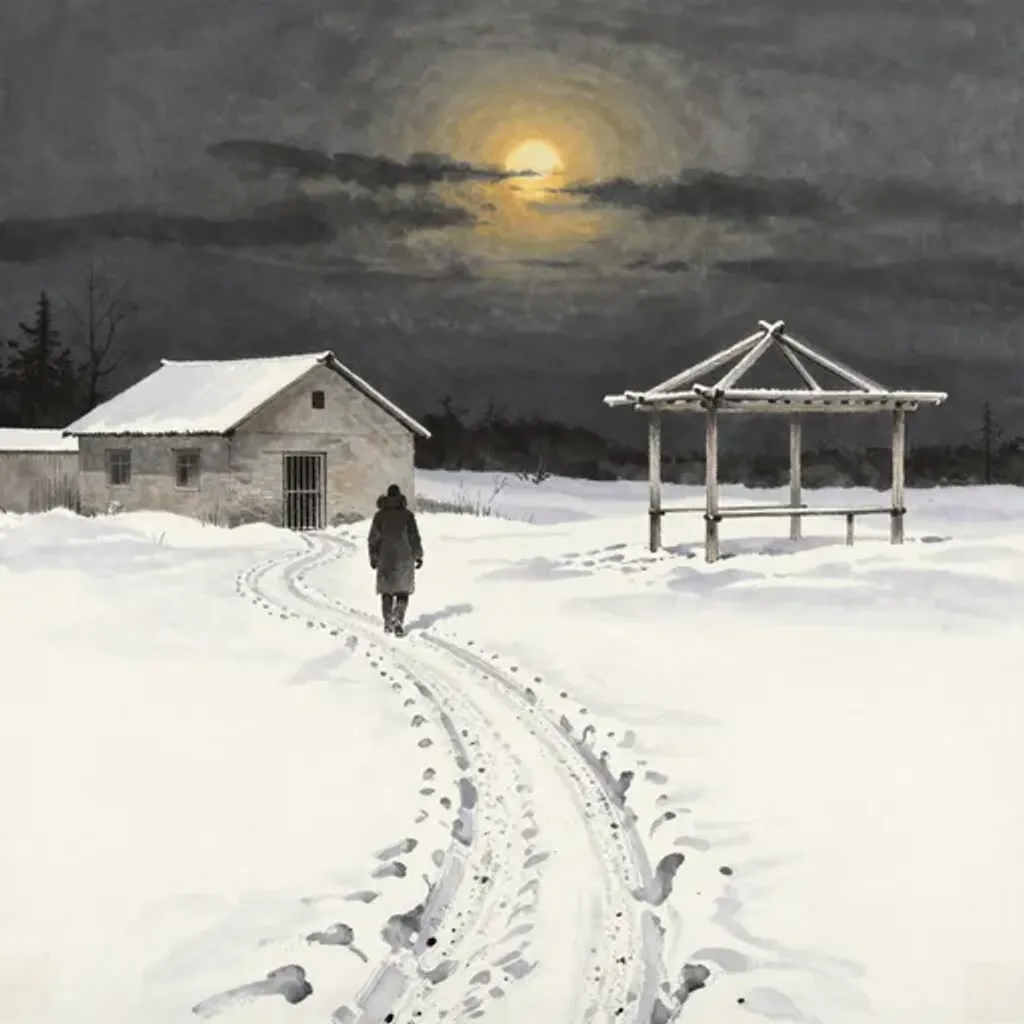
東行西步,失其次舍。乾侯野井,昭君喪居。
North wind, lost on the road — snow covers all tracks. East, west, south, north — no door anywhere. Seeking shelter at a farmhouse, the farmhouse is locked. Only a bare pavilion remains, to hide from the darkening night.
— Jiao Yanshou, Yilin (Forest of Changes), 1st century BC
Commentary
Thunder doubled meets water over lake: shock constrained into the boundaries of Limitation. The original verse reads: 'Going east and stepping west, losing one's lodging. At Qianhou, by a field-well — the lord of Lu has lost his home.' This alludes to Duke Zhao of Lu, who was driven from his state by the powerful Ji clan around 517 BC and wandered in exile, staying at Qianhou under Jin's jurisdiction. 'Field-well' (野井) marks the place where the Duke of Qi offered condolences — outside proper diplomatic space. From The Arousing to Limitation, water contained by the lake, the verse captures exile as a failure of limits: the ruler who could not limit his ministers' power loses everything. Limitation cuts both ways — the one who cannot set boundaries becomes defined by others'.
震 → 中孚
Hexagram 51 → Hexagram 61: Inner Truth
Changing lines: 2, 4, 5, 6
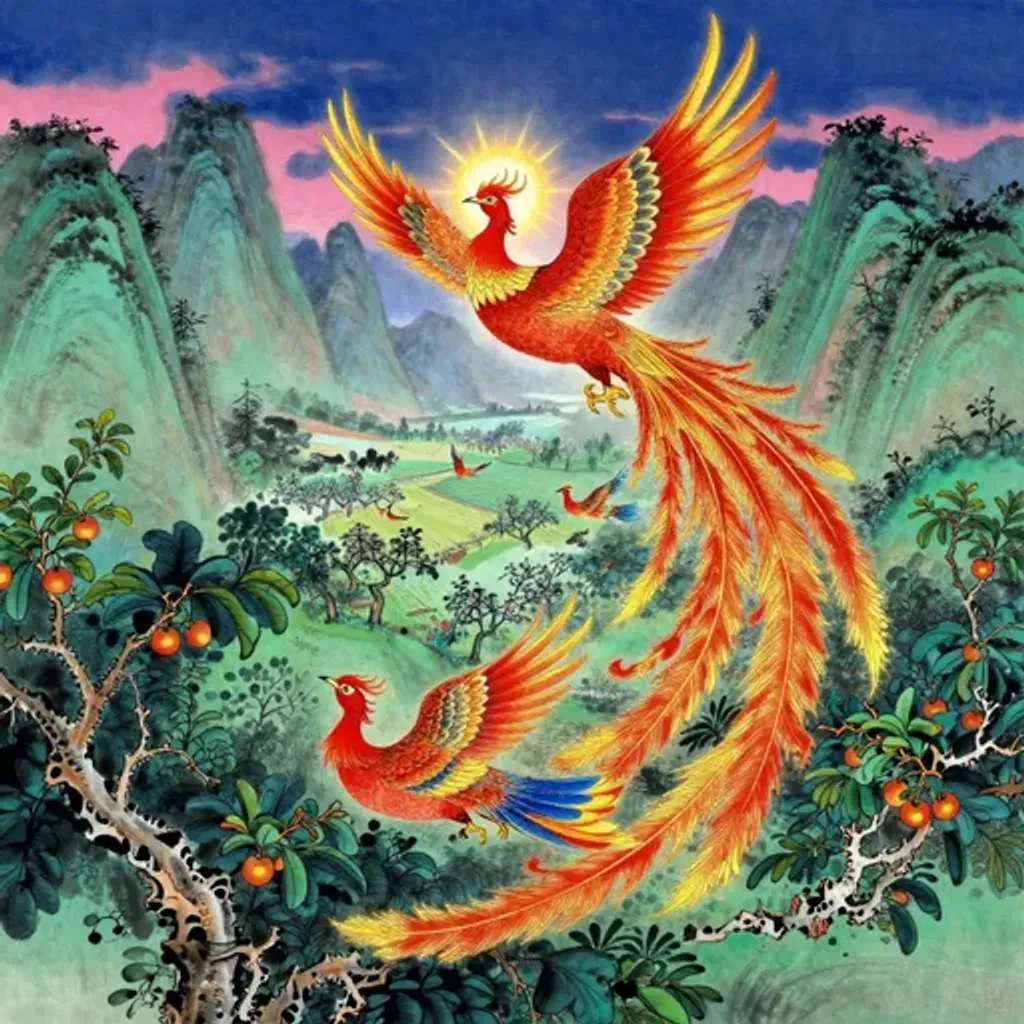
神鳥五彩,鳳凰為主。集於山谷,使年歲育。
Divine birds of five colors; the phoenix is their sovereign. Gathering in the mountain valley; they make the year's harvest flourish.
— Jiao Yanshou, Yilin (Forest of Changes), 1st century BC
Commentary
Thunder doubled meets wind over lake: shock distilled into Inner Truth. Divine birds of five colors, with the phoenix as sovereign, gather in the mountain valleys and cause the year's harvest to flourish. The phoenix (鳳凰) is the supreme auspicious bird that appears only under sage governance. Its 'five colors' represent the five virtues or five elements in harmony. When the phoenix settles in the valleys, the cosmic order is aligned and the harvest thrives. From The Arousing to Inner Truth, wind above lake, the verse shows how thunder's disruptive power, when it reaches the level of genuine sincerity, attracts the rarest blessings. The crane's call heard from the marshes, the young following — Inner Truth's image — here manifests as the phoenix gathering its court of lesser birds, radiating trustworthy virtue that makes all things grow.
震 → 小過
Hexagram 51 → Hexagram 62: Small Exceeding
Changing lines: 1, 3
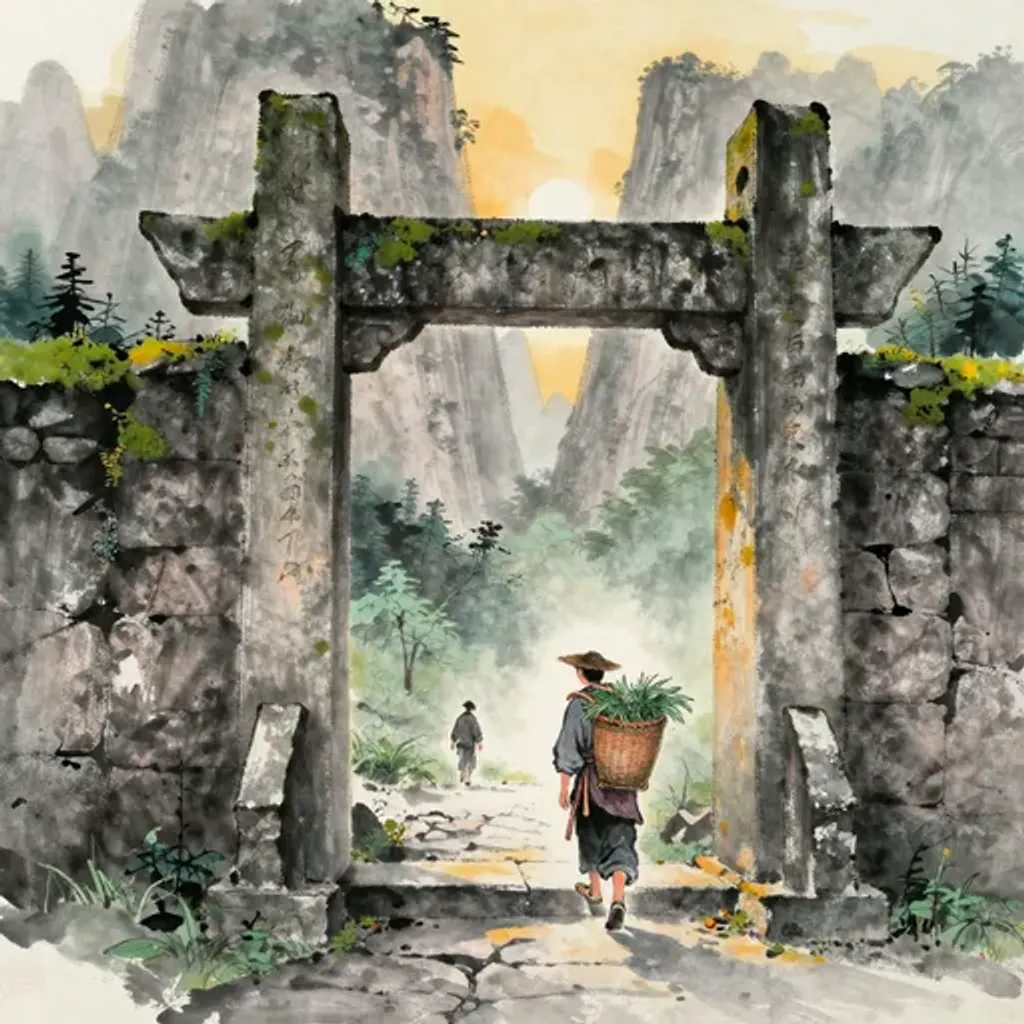
石門晨啟,荷蕢疾貧。遁世隱居,竟不逢時。
The stone gate opens at dawn; the basket-bearer grieves his poverty. Withdrawing from the world, dwelling in seclusion; in the end, he never meets his time.
— Jiao Yanshou, Yilin (Forest of Changes), 1st century BC
Commentary
Thunder doubled meets thunder over mountain: shock exceeding slightly into Small Exceeding. The stone gate opens at dawn; the basket-carrier laments poverty. Withdrawing from the world to live in seclusion, he ultimately never meets his time. The verse alludes to two Analerta passages from the Xianwen chapter: the gatekeeper at the Stone Gate (石門) who recognizes Confucius as 'the one who knows it cannot be done but does it anyway,' and the man carrying a basket (荷蕢) who hears Confucius playing the chiming stone and perceives his frustrated ambition. Both are recluses who chose withdrawal over futile engagement. From The Arousing to Small Exceeding, thunder above mountain, the small bird should not fly too high. The verse embodies the recluse's judgment: better to exceed in humility than to persist in a world that refuses to listen.
震 → 既濟
Hexagram 51 → Hexagram 63: After Completion
Changing lines: 3, 4, 5
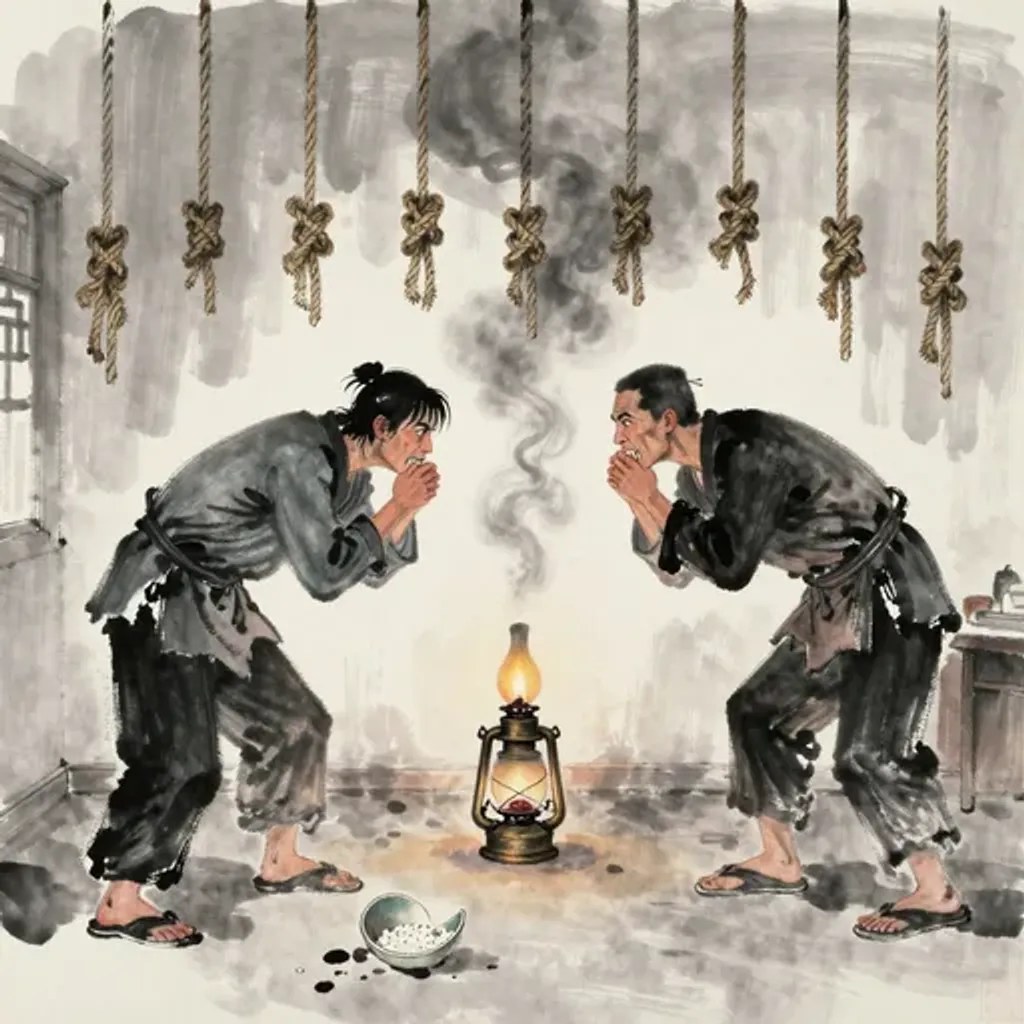
𪙨𪙨齧齧,貧鬼相責。无有懽怡,一日九結。
Gnawing, gnashing, biting, grinding; the ghosts of poverty accuse each other. No joy or gladness to be found; nine knots tied in a single day.
— Jiao Yanshou, Yilin (Forest of Changes), 1st century BC
Commentary
Thunder doubled meets water over fire: shock resolved into the precarious completion of After Completion. Bickering and gnawing, the ghosts of poverty accuse each other. There is no joy or delight; in a single day, nine knots of resentment form. The 'ghosts of poverty' (貧鬼) are folk demons that embody destitution — where they settle, quarreling follows. The verse describes a household where material deprivation has corroded all affection, producing only mutual blame. Nine knots in a single day: resentment multiplies faster than it can be untangled. From The Arousing to After Completion, water sits atop fire in momentary balance — but the balance is fragile and already declining. The verse captures completion's bitter aftertaste: everything is technically in order, yet the reality is relentless friction. The gentleman thinks of disaster and prepares, but here preparation has already failed.
震 → 未濟
Hexagram 51 → Hexagram 64: Before Completion
Changing lines: 1, 2, 6
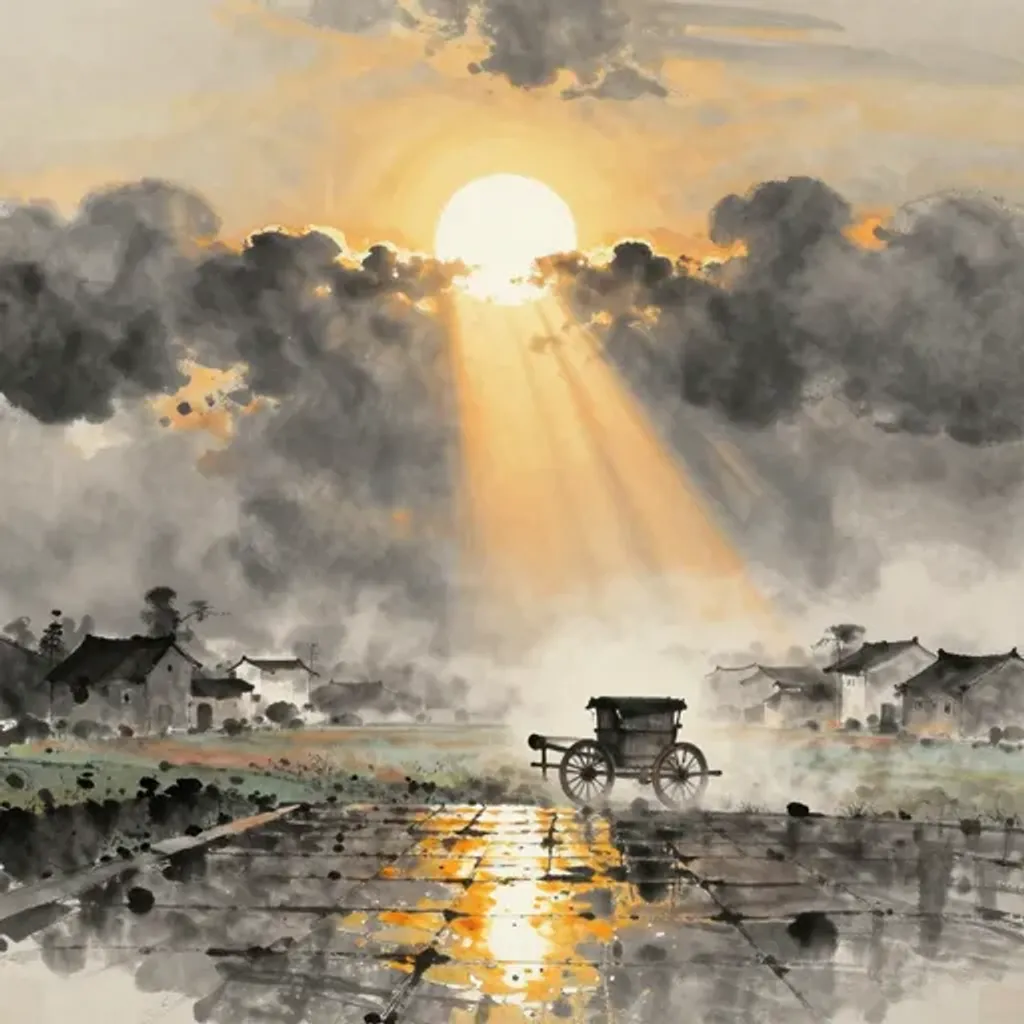
白日揚光,雷車避藏。雲雨不行,各止其鄉。
The white sun radiates light; the thunder-chariot retreats and hides. Cloud and rain do not travel; each halts in its own domain.
— Jiao Yanshou, Yilin (Forest of Changes), 1st century BC
Commentary
Thunder doubled meets fire over water: shock arrested at the threshold of Before Completion. The white sun blazes bright; the thunder-chariot retreats into hiding. Clouds and rain do not move; each stays in its own place. Sunlight dominates the sky, and the thunder — normally the sovereign force of this hexagram — hides away. Without thunder there is no rain; without rain the clouds merely hang. Everything retreats to its own quarter, unable to combine. From The Arousing to Before Completion, fire above water, the two forces see each other but cannot merge. The verse captures the precise condition of non-completion: all elements are present but none interact. The sun shines, the thunder waits, the clouds hover — and nothing happens. The final hexagram of the cycle remains permanently on the verge, full of potential that refuses to discharge.