Transformations of Hexagram 55
Every line of change out of Hexagram 55 豐 Abundance, with the Yilin verse for each of the 64 resulting hexagrams, its translation, and the original ink brush artwork.
豐 → 乾
Hexagram 55 → Hexagram 1: The Creative
Changing lines: 2, 5, 6
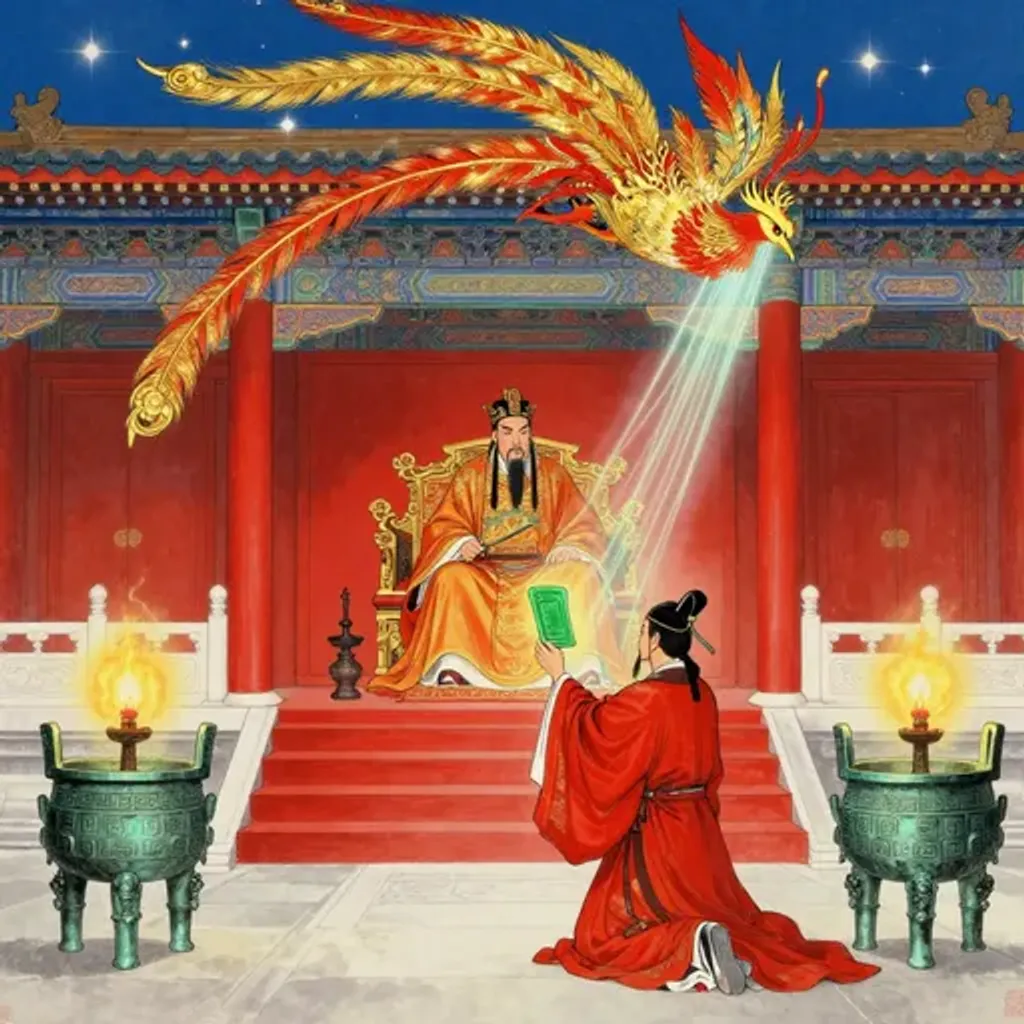
鼎足承德,嘉謀生福。為王開庭,得心所欲。
A phoenix calls from Mount Qi — the whole world takes notice. The worthy minister holds his tablet, standing at the vermillion steps. One strategy settles the realm, the four seas are calm — nine tripods inscribe the merit, a stele for ten thousand ages.
— Jiao Yanshou, Yilin (Forest of Changes), 1st century BC
Commentary
Thunder and fire blaze together in Abundance, and here the original verse unveils a scene of high statecraft. A tripod's legs bear virtue steadily; wise counsel breeds fortune. The minister opens court for the king and obtains his heart's desire. The tripod (鼎) evokes the bronze vessels of Zhou investiture, and 'bearing virtue on tripod legs' suggests the three great ministers — often read as the Duke of Zhou, Taigong, and the Duke of Shao — who stabilized the young dynasty. Good counsel generates lasting blessing, and the ruler's court opens to receive it. From Abundance to the Creative, the transformation channels thunder-fire's dazzling fullness into heaven's self-generating power: governance at its peak crystallizes into pure initiative, where the sovereign acts from inexhaustible inner strength.
豐 → 坤
Hexagram 55 → Hexagram 2: The Receptive
Changing lines: 1, 3, 4
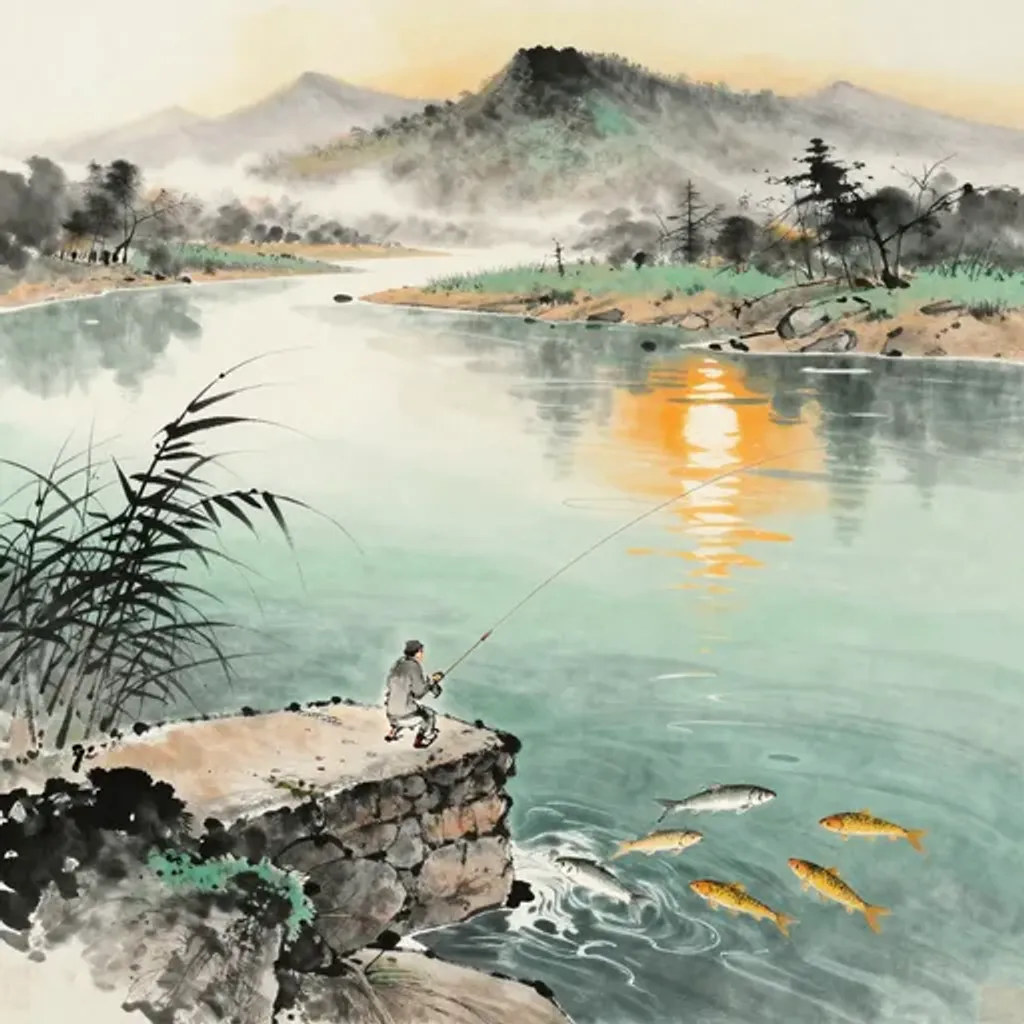
曳綸河海,釣魴與鯉。王孫利得,以饗仲友。
Trailing a line in rivers and seas, angling for bream and carp. The prince profits from the catch, to feast with his companions.
— Jiao Yanshou, Yilin (Forest of Changes), 1st century BC
Commentary
Thunder and fire illuminate Abundance, yet the scene turns to quiet waters. A line trails through rivers and seas, angling for bream and carp. The noble scion profits from the catch and feasts with his companions. Fishing in great waters suggests drawing sustenance from vast resources, while 'Wang Sun' (noble scion) points to aristocratic leisure and shared bounty. The feast with 'Zhong You' (companions or a specific friend) emphasizes fellowship born from abundance. From Abundance to the Receptive, the blazing fullness of thunder-fire yields to earth's vast capacity: riches are not hoarded but distributed, as the bright harvest of prosperity settles into the receptive ground that nourishes all equally.
豐 → 屯
Hexagram 55 → Hexagram 3: Difficulty at the Beginning
Changing lines: 3, 4, 5
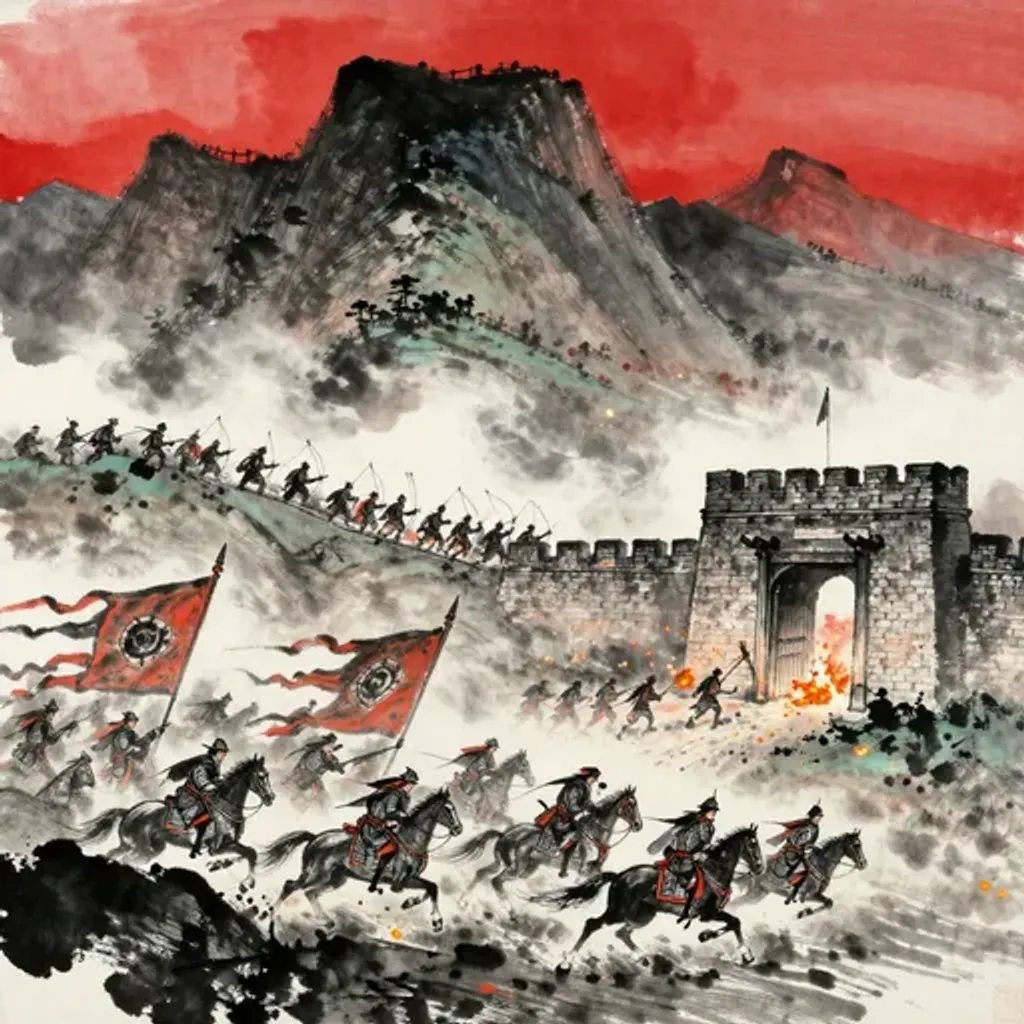
東山皋落,叛逆不服。興師征討,恭子敗覆。
At East Mountain the Gaoluo rebel and refuse submission. Raising troops to campaign and punish them, Lord Gong meets with defeat.
— Jiao Yanshou, Yilin (Forest of Changes), 1st century BC
Commentary
Thunder and fire converge in Abundance, but the verse plunges into military disaster. The Dongshan Gaoluo, a barbarian tribe east of Jin, refuse submission. An army is raised to punish them, yet the campaign ends in defeat for Gongzi — likely a prince or general leading the expedition. According to the Zuo Zhuan, Duke Xian of Jin dispatched forces against the Eastern Mountain Gaoluo tribe, and the campaign met with serious reversals. The verse names the pattern plainly: rebellion resists order, force is mustered, and the commander is overthrown. From Abundance to Difficulty at the Beginning, clouds and thunder gather but birth is painful: the bright confidence of Abundance crashes into the tangled chaos of a new situation where every step forward meets obstruction.
豐 → 蒙
Hexagram 55 → Hexagram 4: Youthful Folly
Changing lines: 1, 2, 3, 4, 6
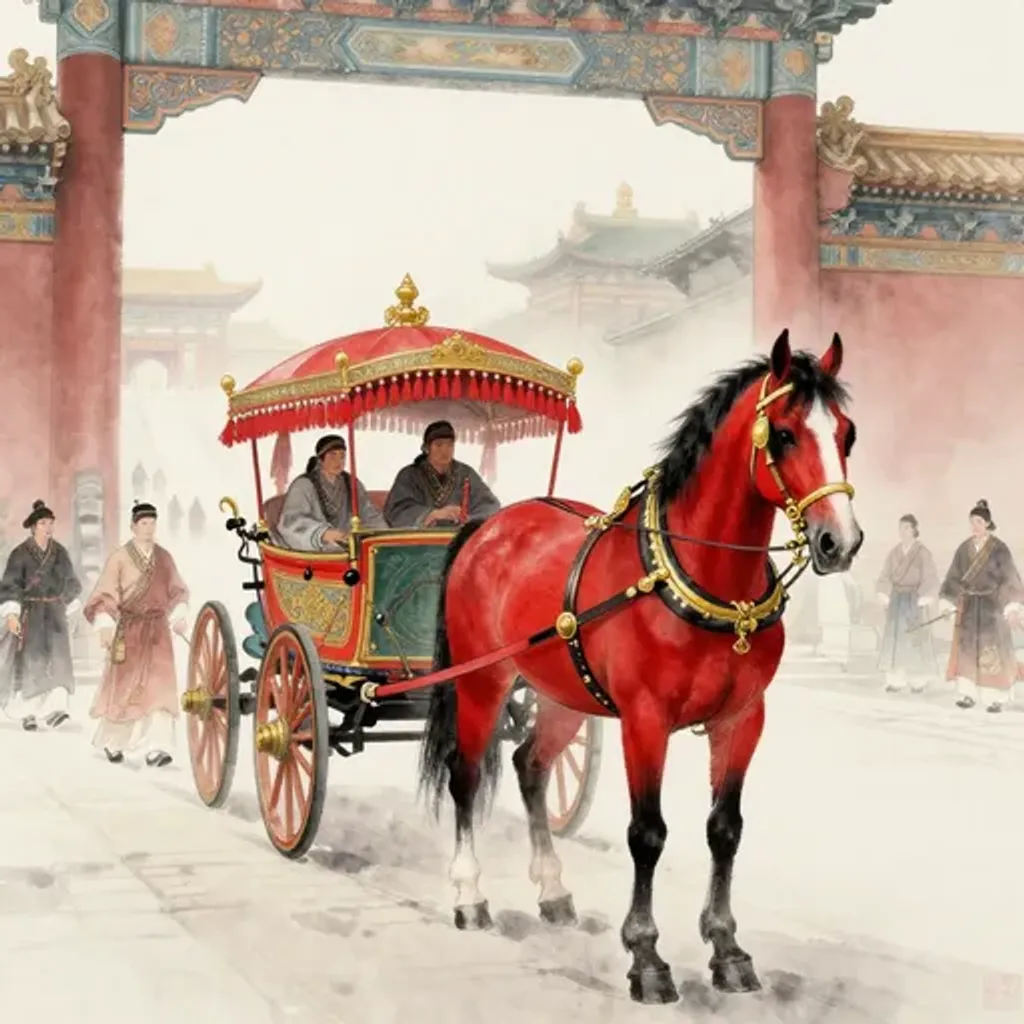
千里騂駒,為王服車。嘉其麗榮,君子有成。
A thousand-li red colt, pulling the king's carriage. Praised for its splendid glory; the noble man achieves success.
— Jiao Yanshou, Yilin (Forest of Changes), 1st century BC
Commentary
Thunder and fire blaze in Abundance, and a magnificent red stallion appears. Traveling a thousand li, this fine steed is harnessed to the king's chariot. Its beauty and splendor are praised, and the noble achieves success. The 'thousand-li stallion' (千里騂駒) is a standard metaphor for exceptional talent recognized and put to proper use — the horse that finds its charioteer, the minister who finds his king. The red coat (騂) specifically connotes sacrificial excellence in classical usage. From Abundance to Youthful Folly, the transformation traces how brilliance is channeled through discipline: mountain water springs forth from beneath, and the magnificent steed submits to harness, converting raw power into purposeful service.
豐 → 需
Hexagram 55 → Hexagram 5: Waiting
Changing lines: 2, 4, 5
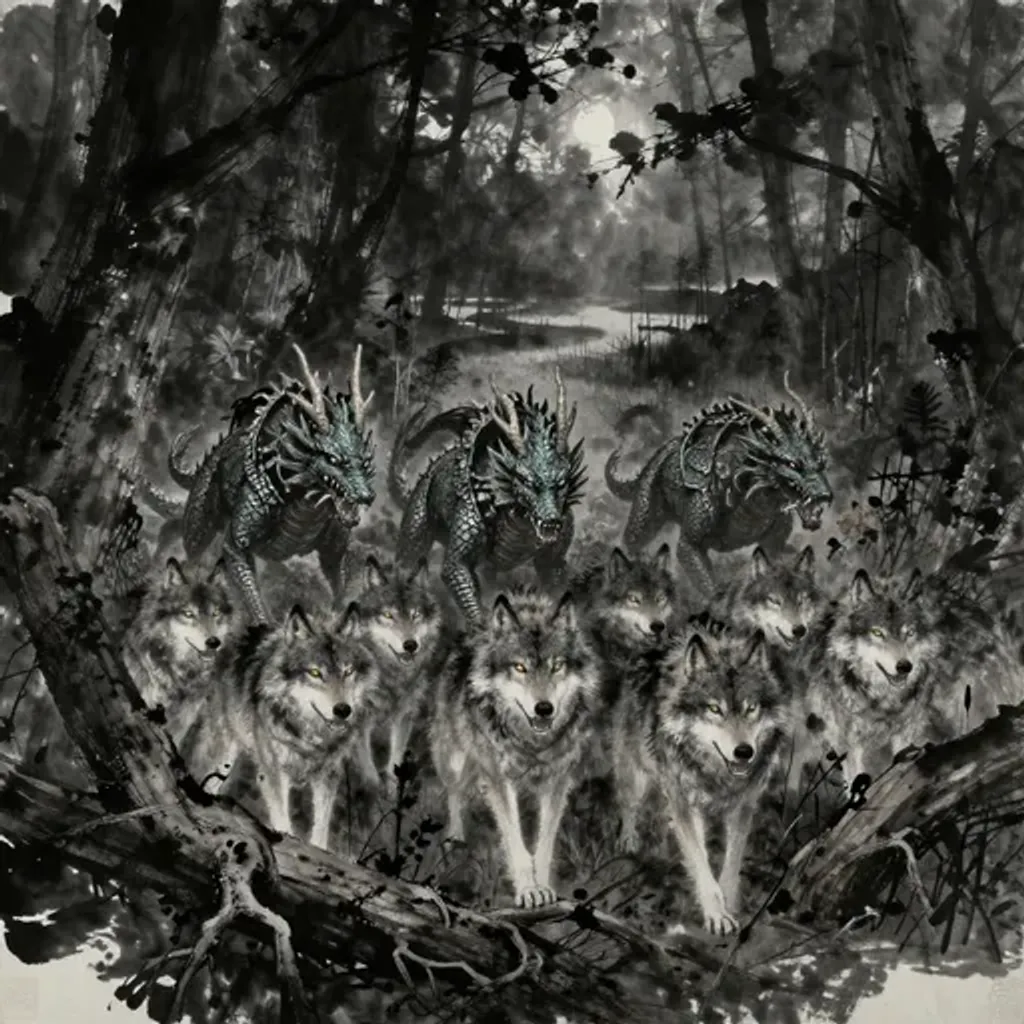
三龍北行,道逢六狼。暮宿中澤,為禍所傷。
Three dragons travel north; on the road they meet six wolves. Lodging at dusk in the central marsh, they are wounded by calamity.
— Jiao Yanshou, Yilin (Forest of Changes), 1st century BC
Commentary
Thunder and fire illuminate Abundance, but the verse turns ominous. Three dragons journey northward and encounter six wolves on the road. At dusk they shelter in the middle of a marsh, where disaster strikes. Dragons symbolize the noble and powerful, yet even dragons are vulnerable when they stray into hostile territory at the wrong hour. The marsh at nightfall is a place of concealment and ambush. Six wolves against three dragons: numbers and terrain conspire against the travelers. From Abundance to Waiting, clouds gather over heaven but the danger has not yet broken: the dragons' misfortune resonates with those who venture into peril without patience, confronting hazards that demand stillness rather than advance.
豐 → 訟
Hexagram 55 → Hexagram 6: Conflict
Changing lines: 1, 2, 3, 5, 6
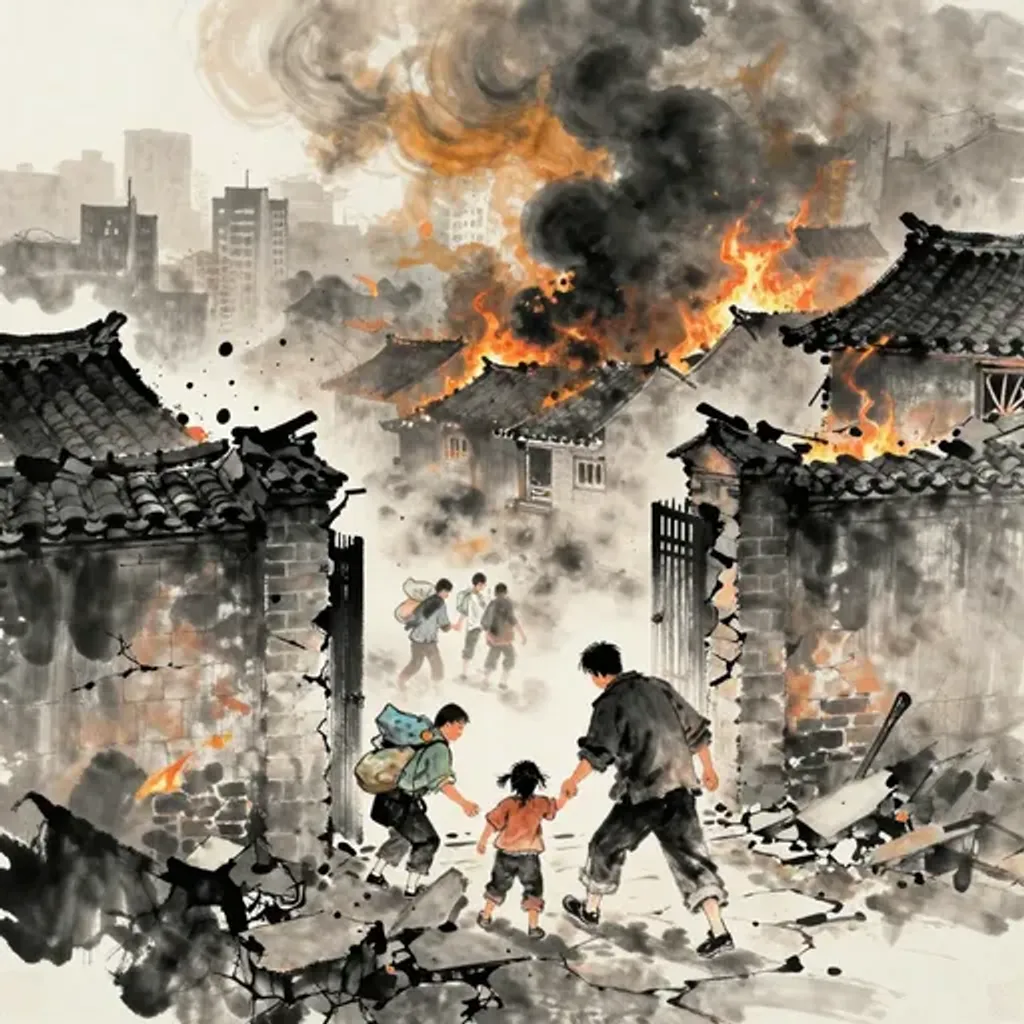
天災所遊,凶不可居。轉徙獲福,留止危憂。
The earth shakes and mountains tremble — roof ridges crack. Smoke and dust shoot skyward, half the horizon tilts. Leading children and elders out of the city — looking back, the homeland is buried in flame.
— Jiao Yanshou, Yilin (Forest of Changes), 1st century BC
Commentary
Thunder and fire converge in Abundance, and the original verse speaks of heaven-sent calamity. 'Where heaven's disaster roams, the place cannot be dwelt in; those who move and migrate gain fortune, while those who stay face peril.' Natural catastrophe renders a home uninhabitable, and survival demands relocation. The verse frames disaster not as helpless fate but as a navigable crisis: the wise recognize when a place is spent and leave before it consumes them. From Abundance to Conflict, heaven and water run contrary: the fullness of Abundance has curdled into opposition, and the only wise response is to plan the departure carefully rather than cling to what is already lost.
豐 → 師
Hexagram 55 → Hexagram 7: The Army
Changing lines: 1, 2, 3, 4
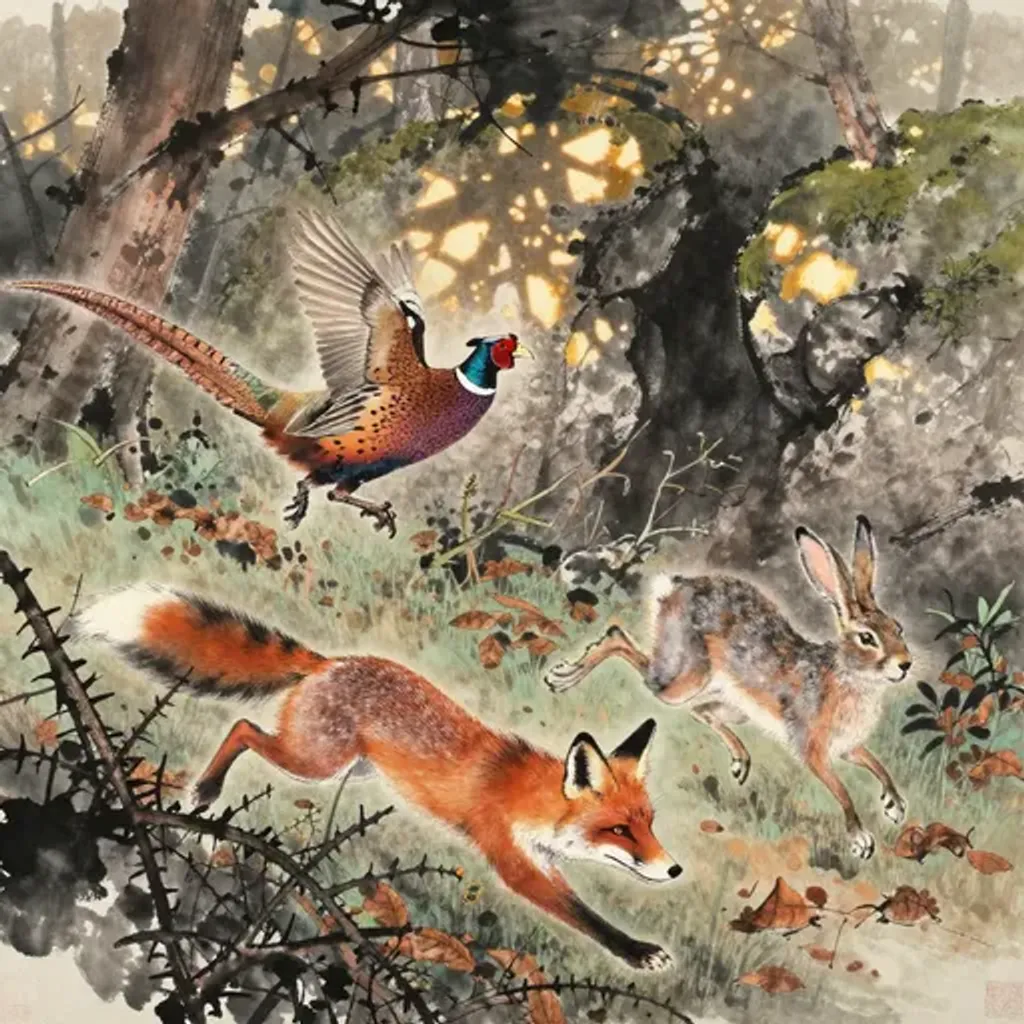
狐狸雉兔,畏人逃去。分走竄匿,不如所處。
Foxes, pheasants, and hares, fearing men, flee away. Scattering to hide in all directions, worse off than where they were.
— Jiao Yanshou, Yilin (Forest of Changes), 1st century BC
Commentary
Thunder and fire blaze in Abundance, yet here the scene is one of panicked flight. Foxes, pheasants, and rabbits, terrified of humans, scatter in every direction. They run and hide, each worse off than where they started. The animals' dispersal mirrors the plight of those who abandon their positions out of fear rather than strategic judgment. Flight without discipline leads to a worse situation than holding ground. From Abundance to the Army, earth contains water in disciplined reserve: the scattering animals embody the opposite of military order, where panic undoes every advantage. The Army's lesson is that containment and organized response, not chaotic flight, transforms threat into security.
豐 → 比
Hexagram 55 → Hexagram 8: Holding Together
Changing lines: 1, 3, 4, 5
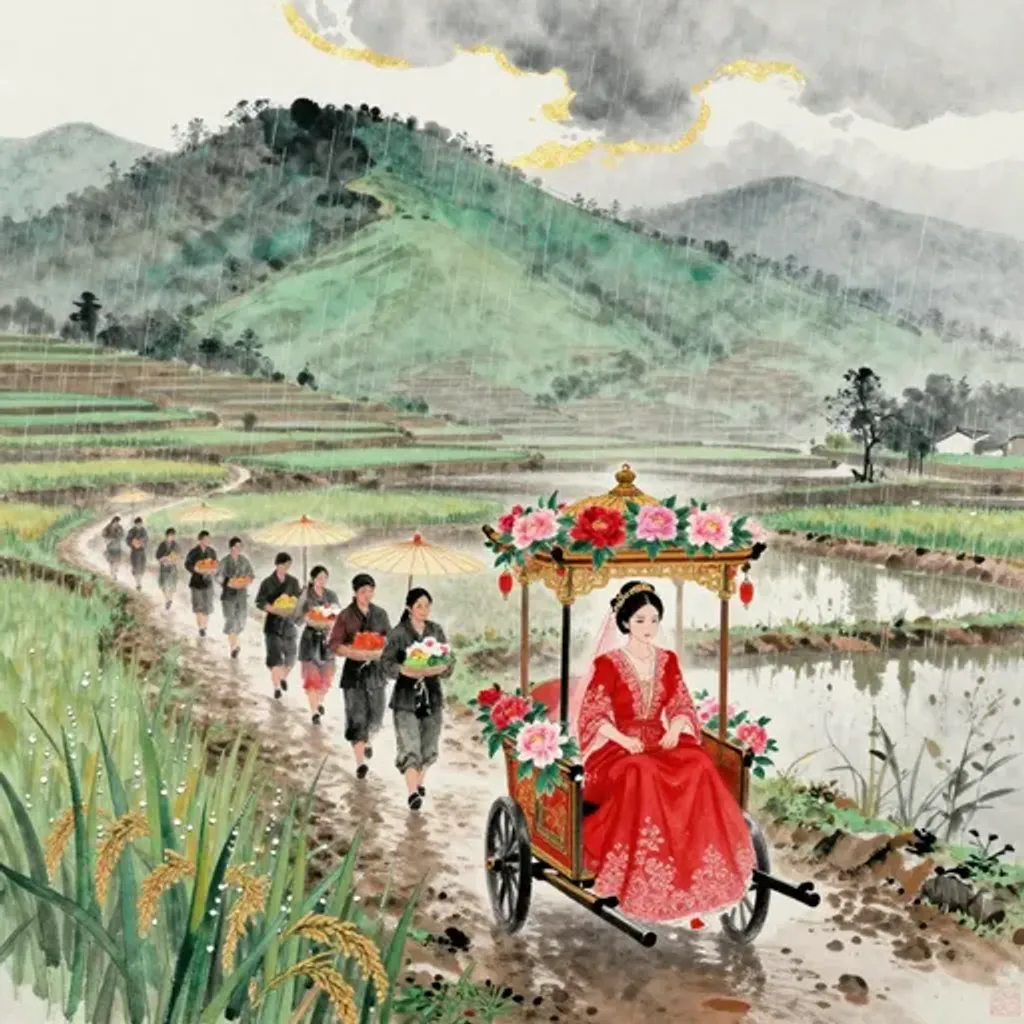
雨師娶婦,黃巖季女。成禮既婚,相呼南去。膏潤下土,年歲大有。
The Rain Master takes a bride, the youngest daughter of Yellow Cliff. Rites completed and wed, they call to each other going south. Rich moisture soaks the earth; the harvest year is bountiful.
— Jiao Yanshou, Yilin (Forest of Changes), 1st century BC
Commentary
Thunder and fire join in Abundance, and the verse presents a cosmic wedding. The Rain Master takes a bride — the youngest daughter of Huangyan. The rites are completed, the marriage sealed, and together they depart southward. Their union brings unctuous rain that soaks the earth, yielding a year of great harvest. The Rain Master (雨師) is an ancient weather deity; his marriage to a mountain maiden represents the union of sky and earth that produces fertile rain. The southward journey follows the prevailing winds of the growing season. From Abundance to Holding Together, water upon earth, the image of gathering and bonding: divine marriage becomes communal prosperity, as heaven's moisture meets earth's receptivity in perfect accord.
豐 → 小畜
Hexagram 55 → Hexagram 9: Small Taming
Changing lines: 2, 4, 5, 6
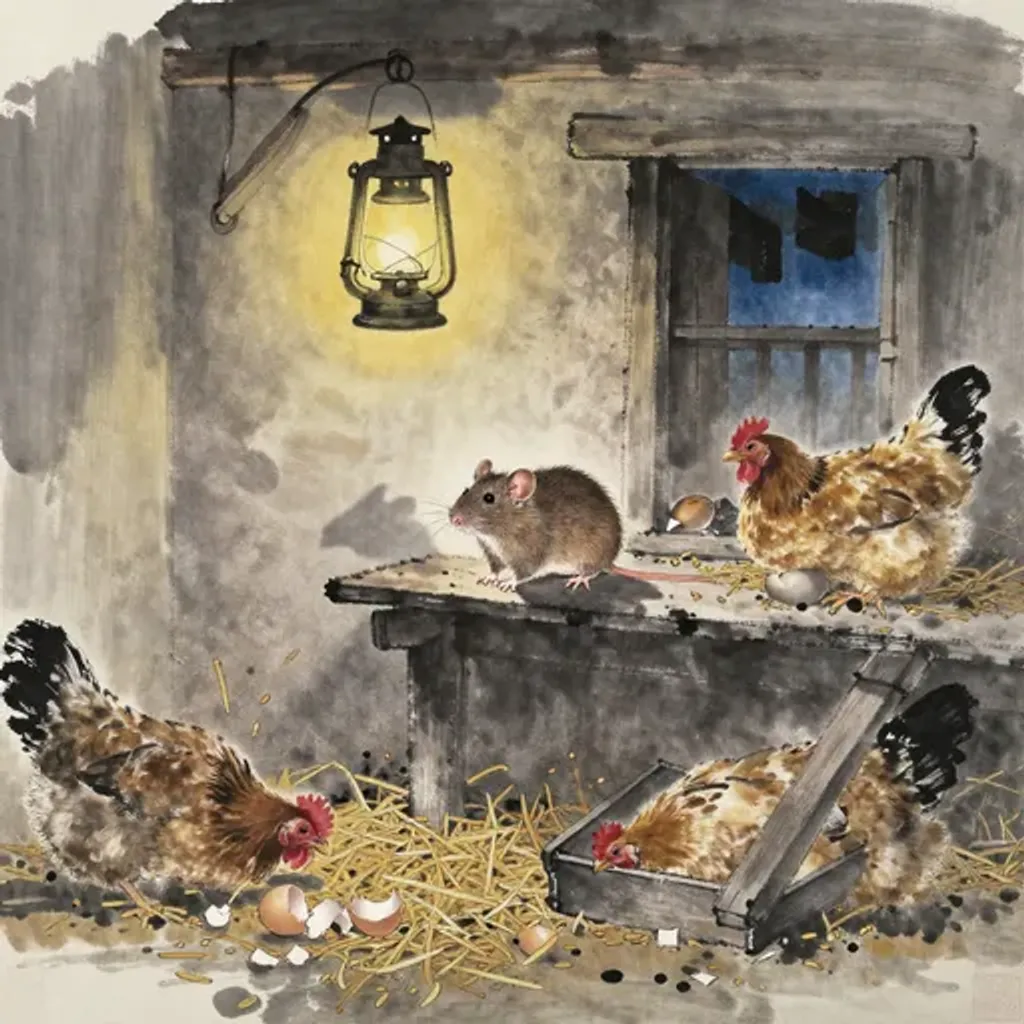
外棲野鼠,與雞為伍。瘡痍不息,即去其室。
A wild rat roosts outside, keeping company with chickens. Sores and wounds unceasing, it must then leave that dwelling.
— Jiao Yanshou, Yilin (Forest of Changes), 1st century BC
Commentary
Thunder and fire converge in Abundance, but here abundance breeds infestation. Field mice nest outside their burrows and mingle with the chickens. Sores and wounds multiply without ceasing, until one must abandon the dwelling entirely. When vermin invade domestic space, corruption has penetrated the household. The mixing of wild rodents with domestic fowl signals a breakdown of proper boundaries — disorder masquerading as cohabitation. From Abundance to Small Taming, wind above heaven gently restrains: the verse warns that small corruptions left unchecked overwhelm any system. Small Taming's discipline of 'refining civil virtue' addresses precisely this — containing minor threats before they become unmanageable plagues.
豐 → 履
Hexagram 55 → Hexagram 10: Treading
Changing lines: 2, 3, 5, 6
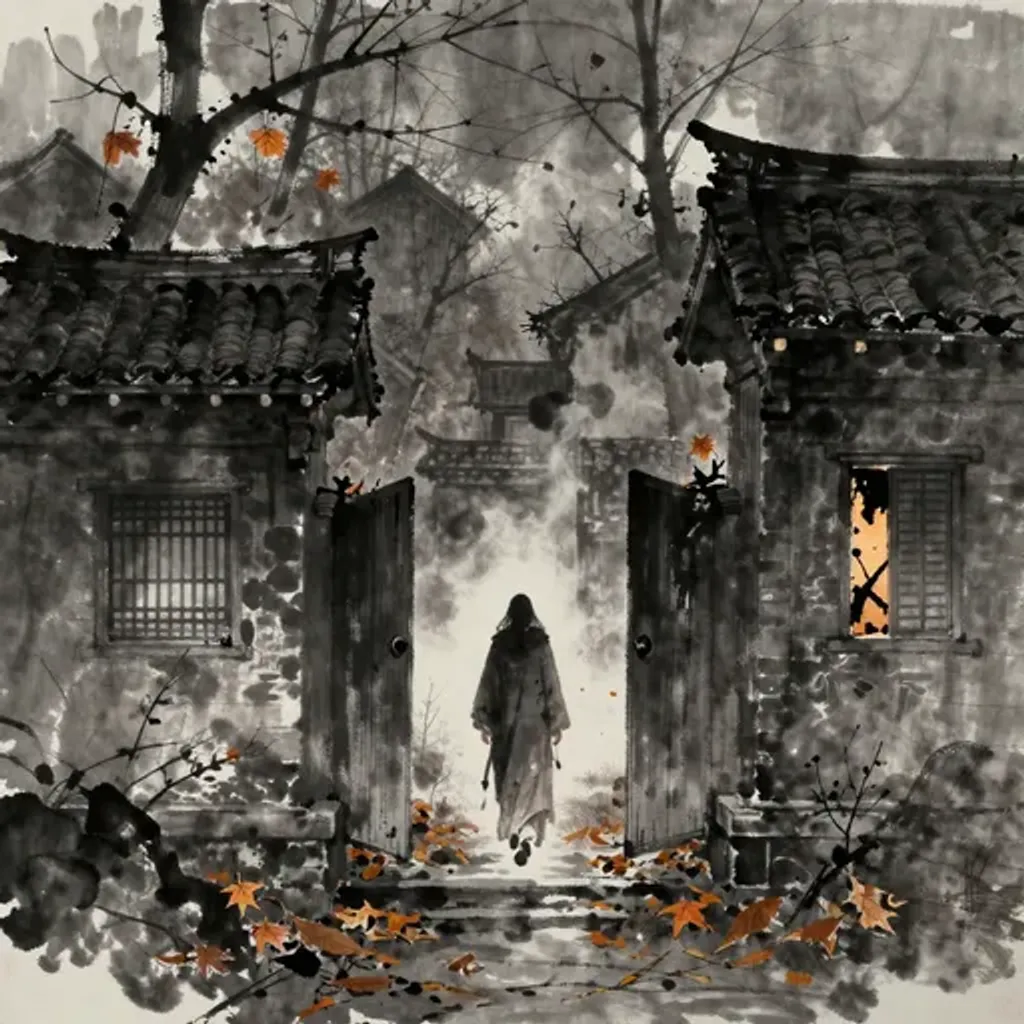
天命絕後,孤傷无主。彷徨兩社,獨不得酒。
Heaven's decree severs posterity; alone, wounded, without a master. Wandering between the two village shrines, alone and denied even wine.
— Jiao Yanshou, Yilin (Forest of Changes), 1st century BC
Commentary
Thunder and fire illuminate Abundance, yet the verse speaks of utter desolation. Heaven's mandate is severed; no heir remains. Alone, wounded, without a master, one wanders between two altars of earth and cannot even obtain wine for libation. The 'two altars' (兩社) represent the state sacrificial grounds — a wanderer between them belongs to neither community. Without lineage, without wine, without a place to pour offerings, one is cut off from both the living and the ancestors. From Abundance to Treading, heaven above the lake demands proper conduct: the transformation from fullness to precarious stepping reveals how catastrophic it is when abundance produces no succession, leaving only a solitary figure treading dangerously without support.
豐 → 泰
Hexagram 55 → Hexagram 11: Peace
Changing lines: 2, 4
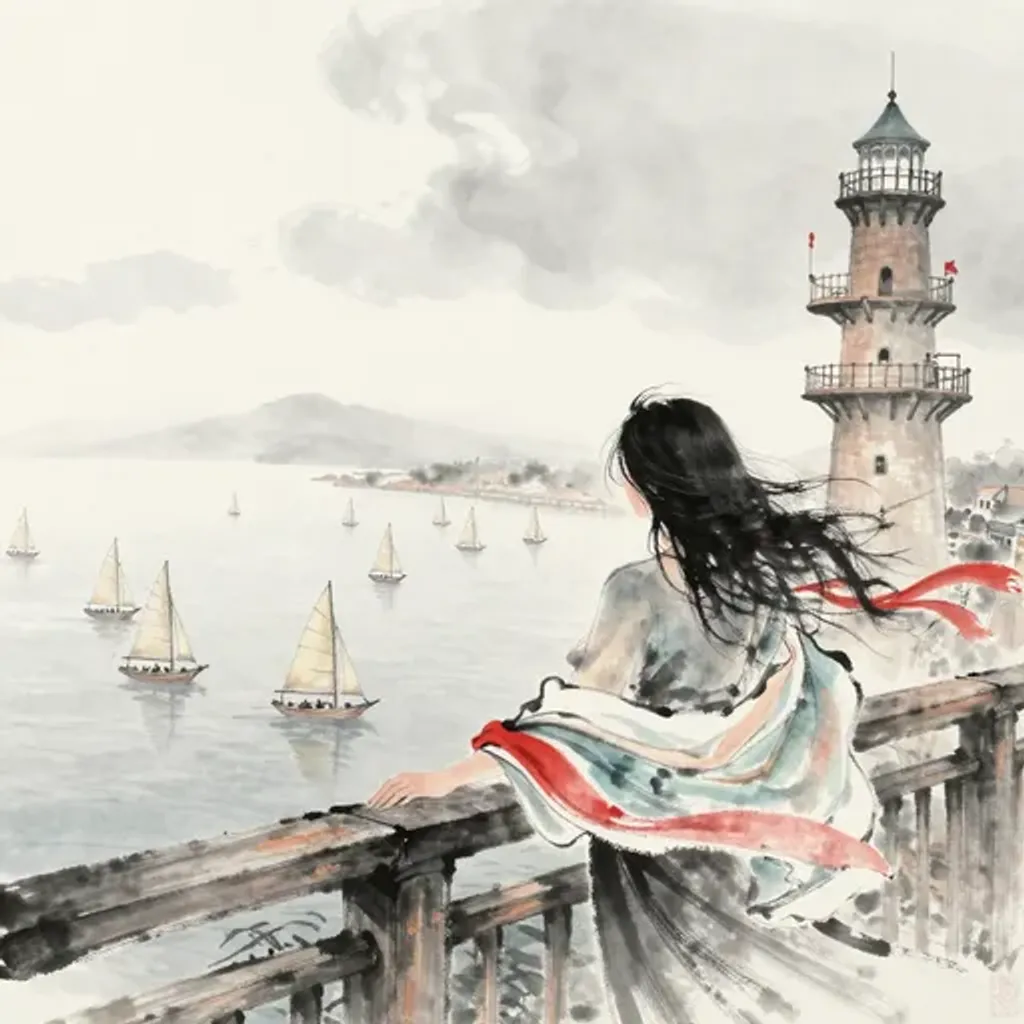
鵠思其雄,欲隨鳳東。順理羽翼,出次須日。中留北邑,復反其室。
From the high tower gazing far — countless sail-shadows on the water. But you alone are not among them. When will you return?
— Jiao Yanshou, Yilin (Forest of Changes), 1st century BC
Commentary
Thunder and fire join in Abundance, but the original verse tells of longing and delayed return. A swan-goose yearns for her mate and would follow the phoenix eastward. She grooms her feathers and wings, preparing to depart at dawn. Yet midway she is detained in a northern town and must return to her own chamber. The female bird's journey is interrupted — desire and readiness are insufficient when circumstances block the path. From Abundance to Peace, earth and heaven exchange positions in harmonious flow: the frustration of the incomplete journey resonates with Peace's promise that reunion will come when heaven and earth properly align, but only through patient waiting, not forced pursuit.
豐 → 否
Hexagram 55 → Hexagram 12: Standstill
Changing lines: 1, 3, 5, 6
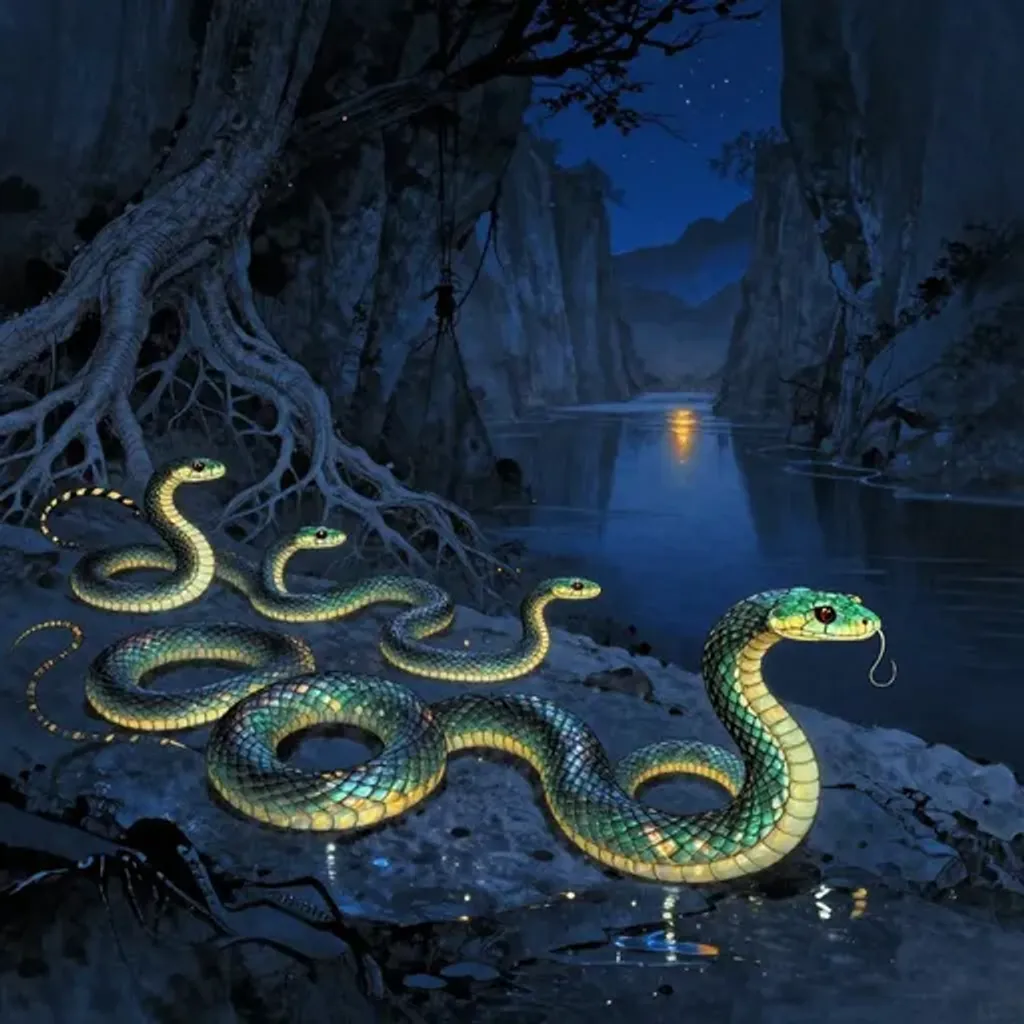
蜲虵九子,長尾不殆。均明光澤,燕自受福。
The serpent Weiyi has nine young; their long tails bring no harm. Evenly bright and lustrous, the swallow of itself receives blessing.
— Jiao Yanshou, Yilin (Forest of Changes), 1st century BC
Commentary
Thunder and fire converge in Abundance, and a marvelous serpent appears. The winding snake (蜲虵) has nine offspring, each with a long tail, unharmed. Their scales gleam evenly with lustrous sheen, and the state of Yan receives blessing. The serpent with nine young suggests a prolific lineage flourishing under protection. The long tails signify vitality rather than vulnerability — unlike the 'tail too large to wag' warning, here the tails flow freely. The blessing falling upon Yan may allude to a northern state prospering through natural increase. From Abundance to Standstill, heaven and earth cease their exchange: paradoxically, the serpent's self-contained prosperity thrives precisely because it does not depend on external communion, embodying Standstill's counsel to preserve inner virtue during withdrawal.
豐 → 同人
Hexagram 55 → Hexagram 13: Fellowship
Changing lines: 5, 6
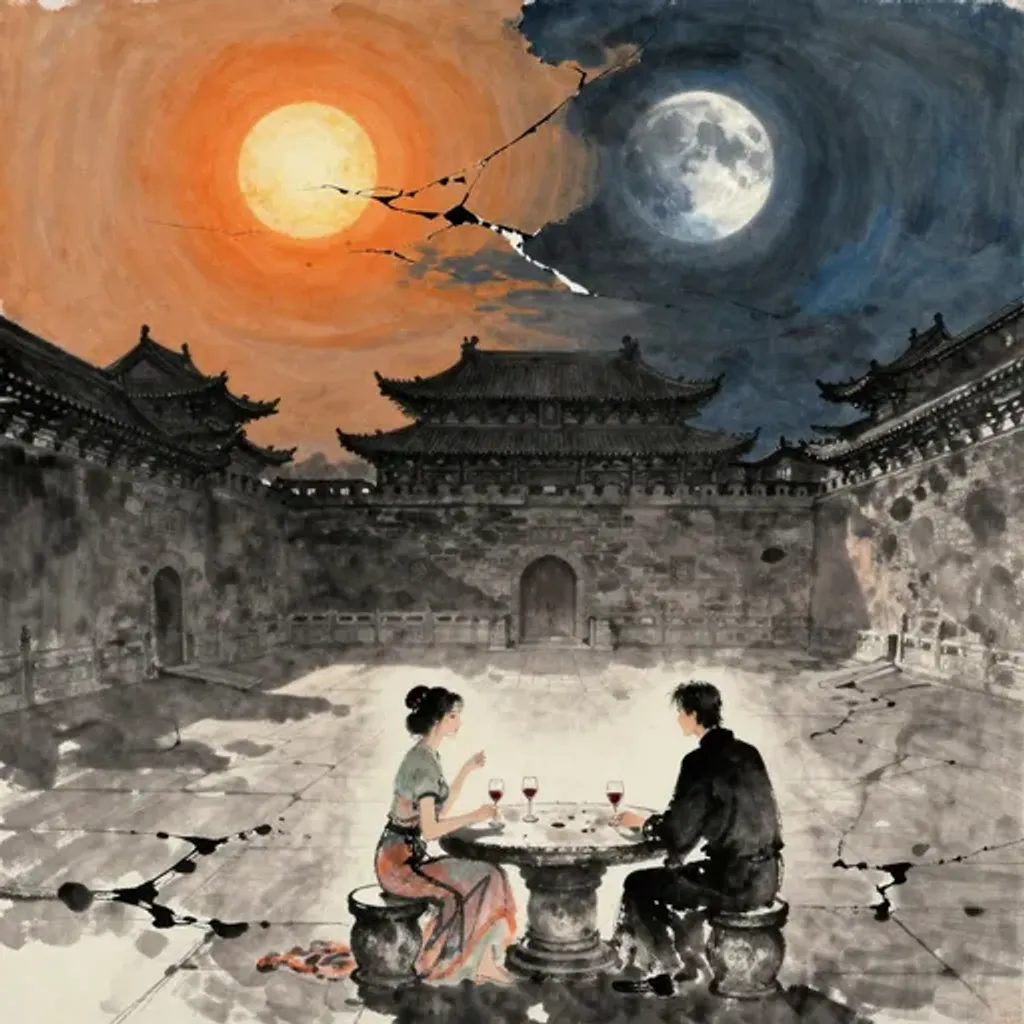
日走月步,趨不同舍。夫妻反目,君主失國。
The sun runs, the moon walks; they hasten to different lodgings. Husband and wife turn against each other; the sovereign loses his kingdom.
— Jiao Yanshou, Yilin (Forest of Changes), 1st century BC
Commentary
Thunder and fire illuminate Abundance, yet the verse describes cosmic discord. Sun and moon move at different paces and lodge in separate houses. Husband and wife turn against each other; the sovereign loses his state. When the two luminaries — sun and moon, the very basis of Abundance's hexagram image — part ways, the foundation of order collapses. The domestic rupture mirrors the political: marital discord scales directly into dynastic failure. From Abundance to Fellowship, heaven and fire should illuminate together, yet the verse shows what Fellowship looks like when it fails: those who should be companions diverge irreconcilably. True fellowship demands shared rhythm; without it, even the most radiant union splinters into opposition.
豐 → 大有
Hexagram 55 → Hexagram 14: Great Possession
Changing lines: 2, 6
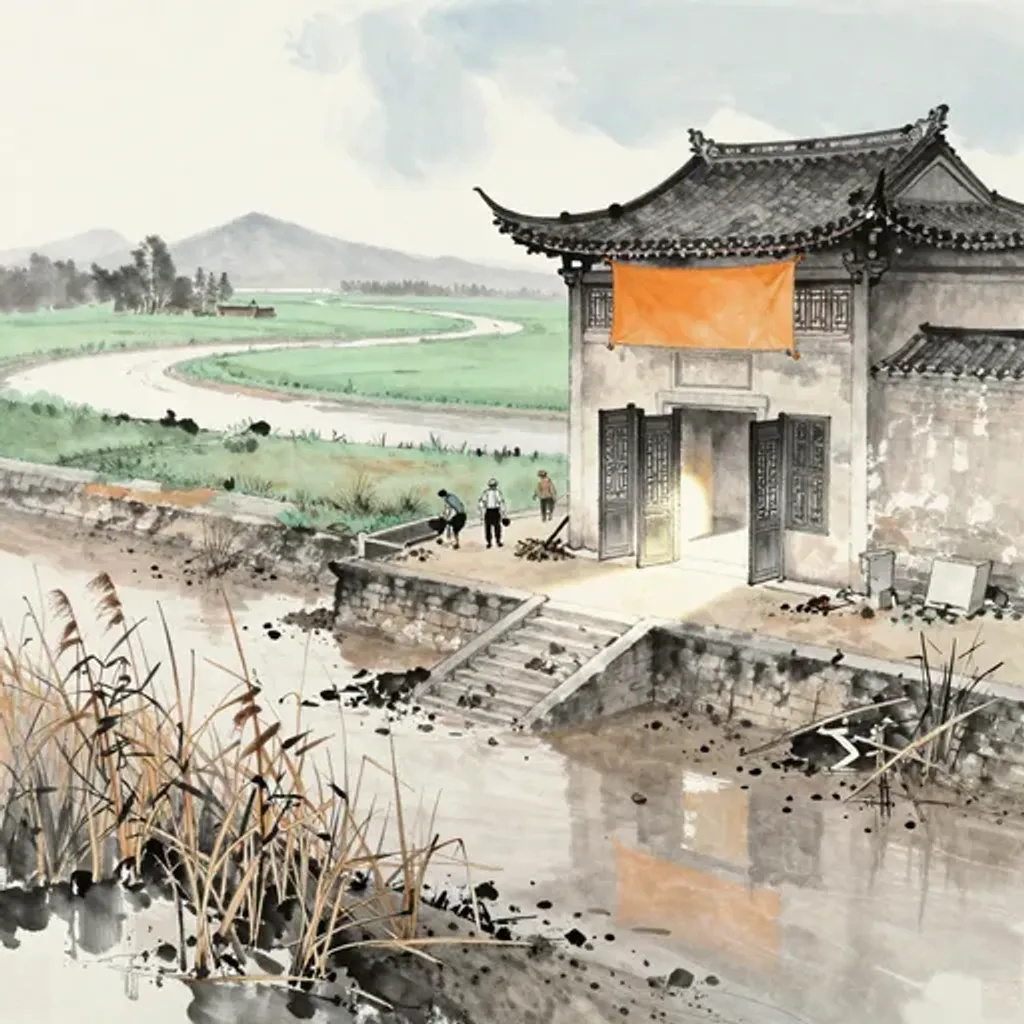
宣房戶室,枯期除毒。文德淵府,害不能賊。
At Xuanfang's halls and chambers, the dry season purges poison. The treasury of civil virtue runs deep; harm cannot encroach.
— Jiao Yanshou, Yilin (Forest of Changes), 1st century BC
Commentary
Thunder and fire join in Abundance, and the verse invokes imperial flood control. 'Xuanfang' refers to the Xuanfang Palace built atop the levee after Emperor Wu of Han personally supervised the sealing of the Huzi breach on the Yellow River in 109 BC, ending over two decades of catastrophic flooding. The poisonous waters are drained and expelled from the chambers. Civil virtue serves as a deep reservoir, and harm cannot prevail. From Abundance to Great Possession, fire blazes above heaven: the transformation captures how a ruler's decisive action — sealing the breach, channeling the flood — converts destructive abundance into radiant possession. Virtue stored deep becomes the dam that no calamity can breach.
豐 → 謙
Hexagram 55 → Hexagram 15: Modesty
Changing lines: 1, 4
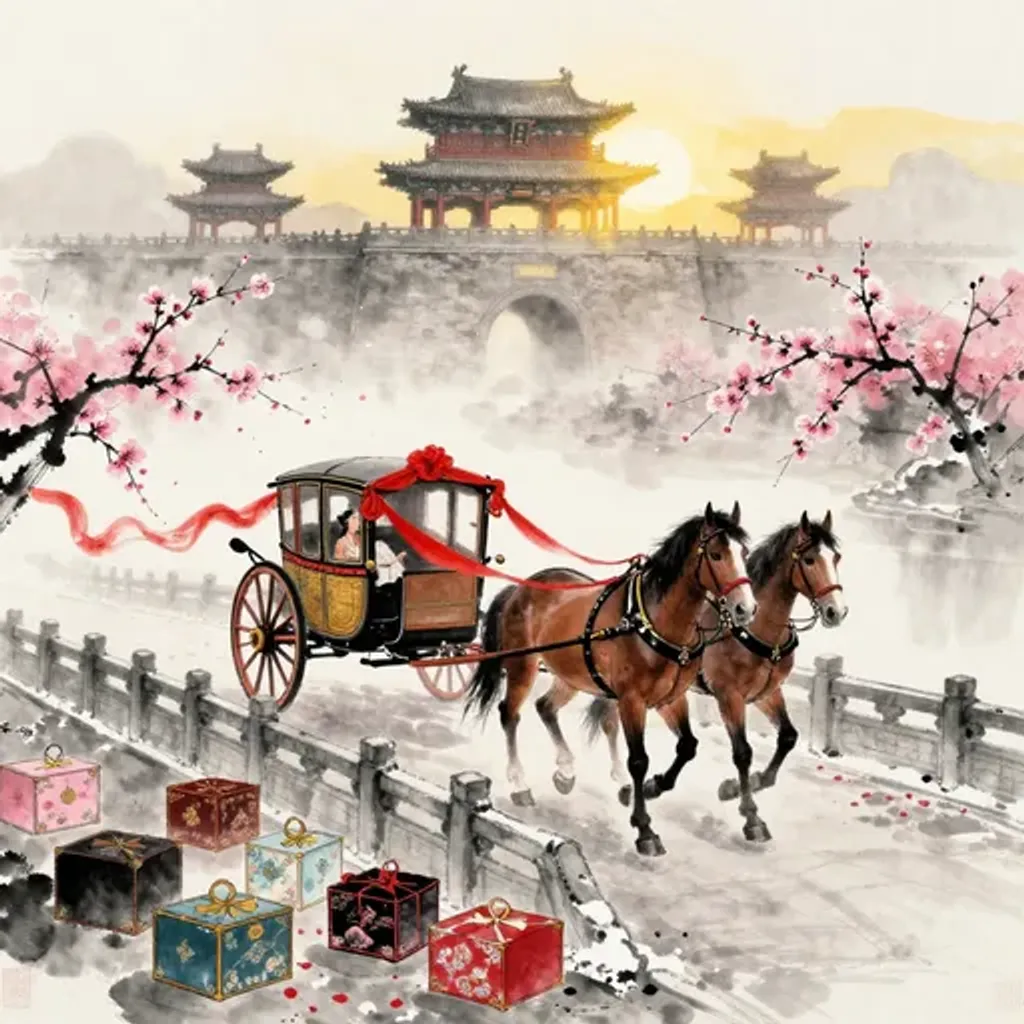
齊東郭廬,嫁于洛都。駿良美好,謀利過倍。
From Dongguo cottage in Qi, she marries into the Luo capital. The stallion is fine and splendid; her plans profit twofold.
— Jiao Yanshou, Yilin (Forest of Changes), 1st century BC
Commentary
Thunder and fire blaze in Abundance, and a woman from Qi's eastern suburb marries into the capital at Luo. The 'Dongguolu' (東郭廬) likely refers to a humble dwelling outside Qi's eastern wall, while 'Luodu' (洛都) is the Zhou eastern capital, Luoyang. A woman of modest origins marries upward into the metropolitan center. The horses are fine and handsome, the profits double expectations. From Abundance to Modesty, earth conceals a mountain within: the transformation traces how outward splendor yields to quiet inner worth. The humble woman's successful marriage to the capital embodies Modesty's principle — mountain hidden beneath earth, genuine value elevated precisely because it does not advertise itself.
豐 → 豫
Hexagram 55 → Hexagram 16: Enthusiasm
Changing lines: 1, 3
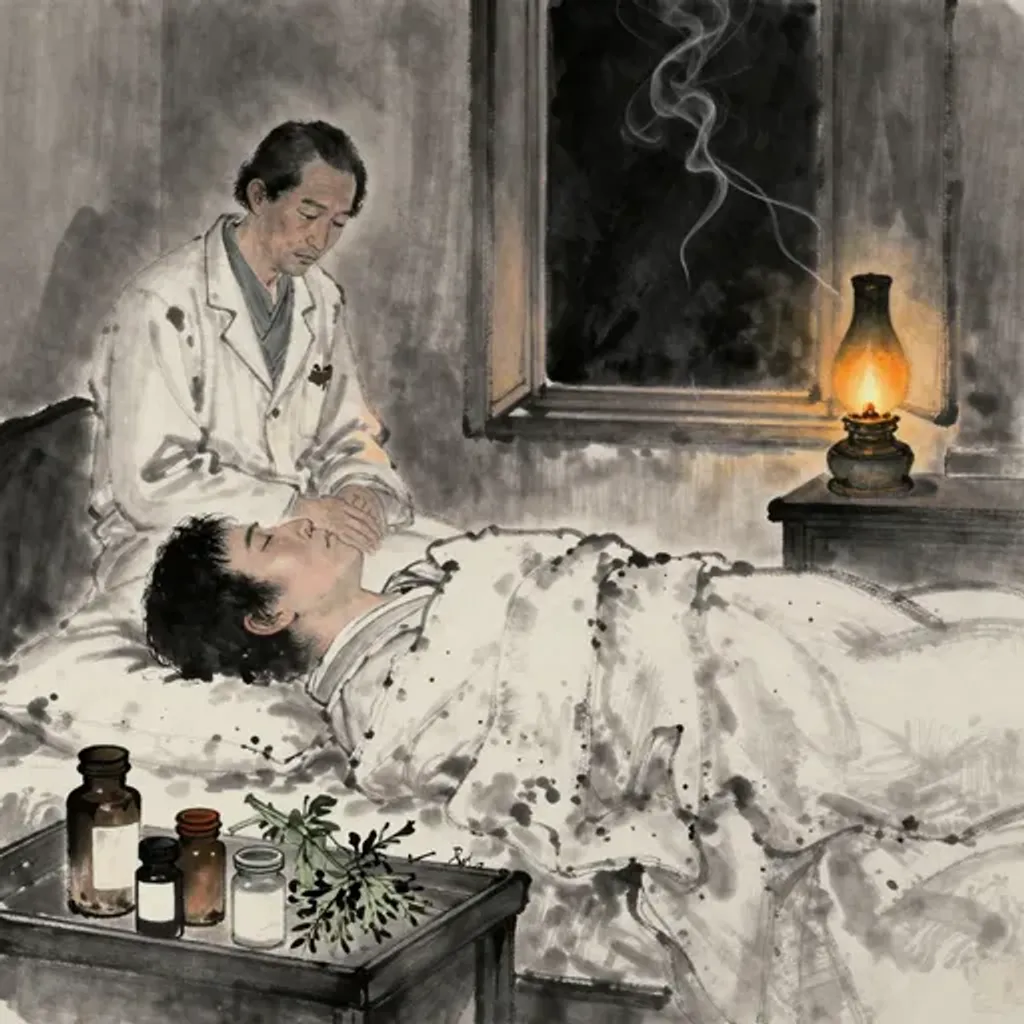
病篤難醫,和不能治。命終期訖,下即蒿里。
The illness deepens beyond remedy; even harmony cannot heal. Life's term reaches its end; one descends to the graveyard of Haoli.
— Jiao Yanshou, Yilin (Forest of Changes), 1st century BC
Commentary
Thunder and fire illuminate Abundance, yet the verse is starkly funereal. The illness is grave beyond cure; even harmonious remedies cannot heal. The mandate of life reaches its end, and the body descends to Haoli — the ancient burial ground of common folk, the land of the dead. Haoli (蒿里) was a hill near Mount Tai associated with the underworld in Han dynasty belief, where all souls gathered regardless of rank. The verse accepts mortality without evasion. From Abundance to Enthusiasm, thunder erupts from the earth: paradoxically, Enthusiasm's ancient function was ancestral sacrifice and music to honor the dead. The departed joins the ancestors, and ritual thunder transforms grief into communal reverence.
豐 → 隨
Hexagram 55 → Hexagram 17: Following
Changing lines: 3, 5
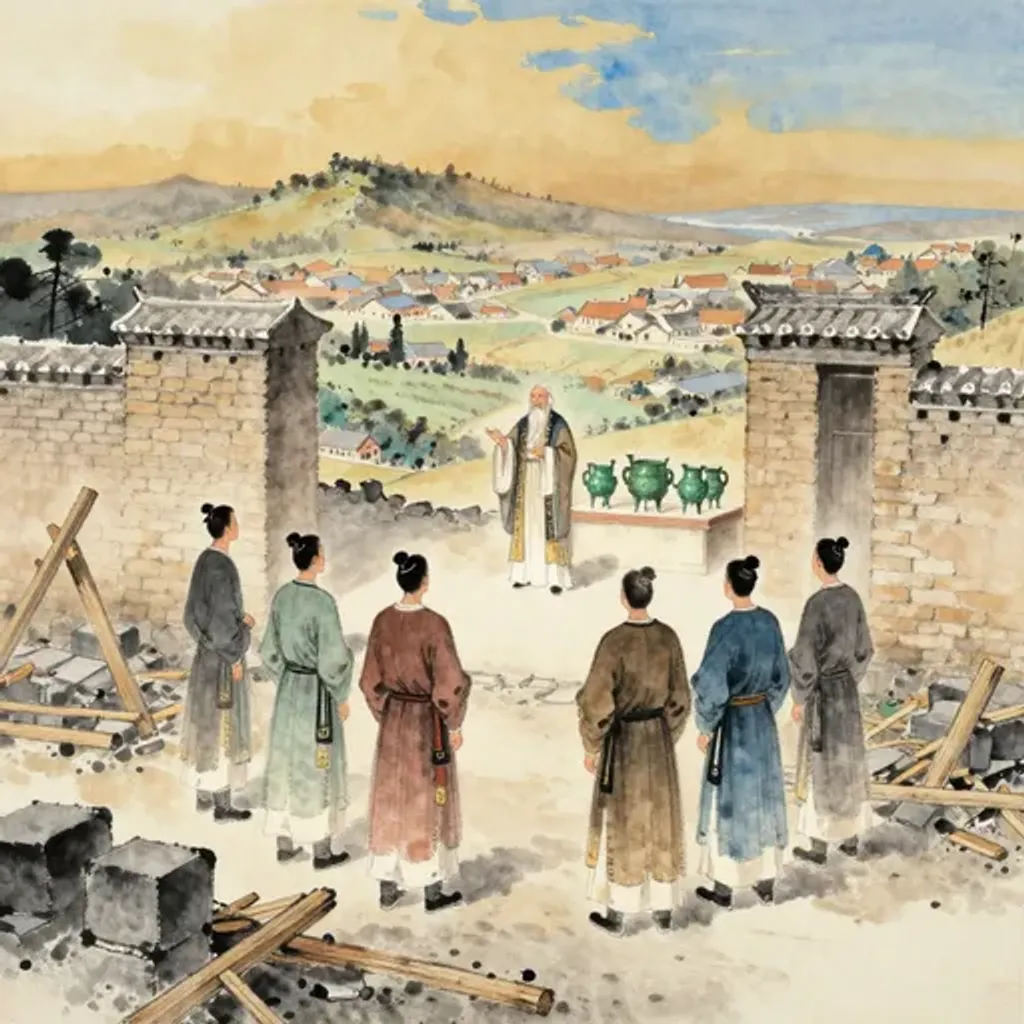
開郭緒業,王迹所起。姬德七百,報以八子。
Opening the city walls and founding the enterprise, where the royal footsteps began. The Ji clan's virtue lasted seven hundred years, rewarded with eight sons.
— Jiao Yanshou, Yilin (Forest of Changes), 1st century BC
Commentary
Thunder and fire join in Abundance, and the verse celebrates the founding of the Zhou dynasty. 'Opening the outer wall and continuing the enterprise' refers to the ancestral work begun by Hou Ji and the Duke of Zhou's generation. 'The virtue of the Ji clan lasted seven hundred years' — the Zhou dynasty endured approximately seven centuries, the longest in Chinese history. 'Rewarded with eight sons' likely refers to the eight sons of King Wen who established the dynasty's collateral branches. From Abundance to Following, thunder rests within the lake: the fiery brilliance of dynastic founding settles into the gentle rhythm of succession, where each generation follows the path laid by its predecessors, sustaining the enterprise through loyalty rather than force.
豐 → 蠱
Hexagram 55 → Hexagram 18: Work on the Decayed
Changing lines: 1, 2, 4, 6
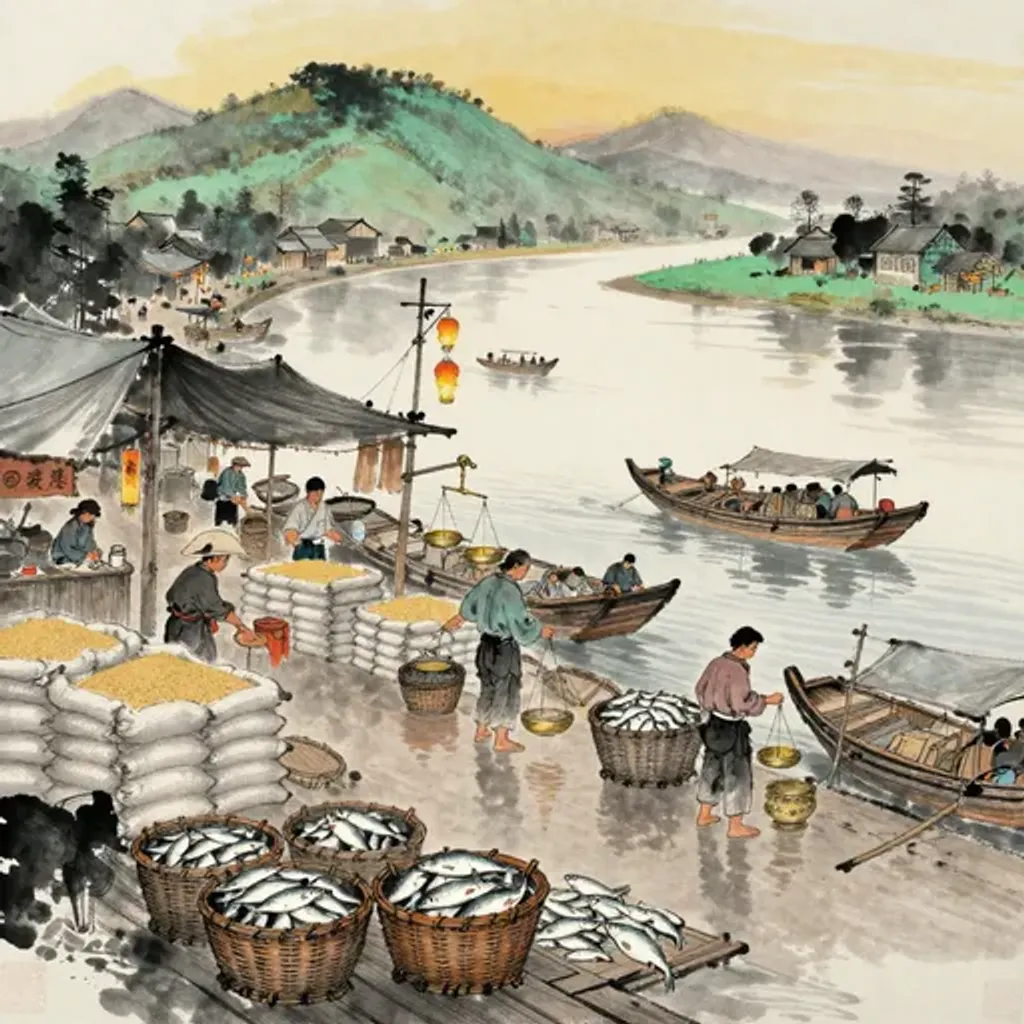
豐年多儲,江海饒魚。商客善賈,大國富有。
A bountiful year with ample stores; rivers and seas teem with fish. Merchants trade skillfully; the great realm grows wealthy.
— Jiao Yanshou, Yilin (Forest of Changes), 1st century BC
Commentary
Thunder and fire converge in Abundance, and the verse paints pure material prosperity. In a year of plenty, granaries overflow. Rivers and seas teem with fish. Merchants trade skillfully, and the great state grows wealthy. No specific historical allusion appears — this is Abundance's own nature expressed without complication. Every element cooperates: heaven yields grain, waters yield fish, human enterprise yields profit. From Abundance to Work on the Decayed, mountain sits above wind: paradoxically, this idyllic prosperity connects to decay's hexagram because abundance untended becomes corruption. The wind beneath the mountain stirs what has grown stale, reminding that even the richest harvest requires renewal and the clearing away of accumulated waste.
豐 → 臨
Hexagram 55 → Hexagram 19: Approach
Changing lines: 2, 3, 4
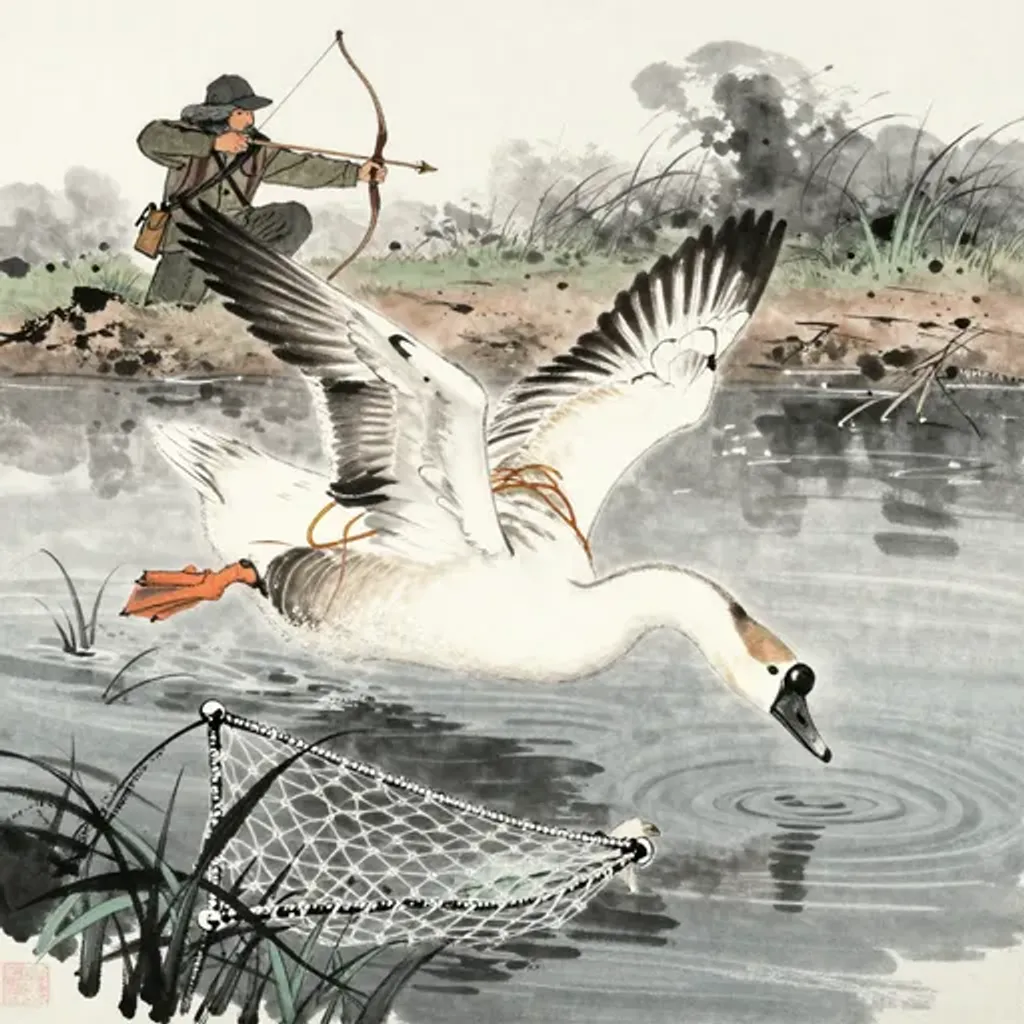
鵠求魚食,過彼射邑。繒加我頭,繳挂羽翼。欲飛不能,為羿所得。
The swan-goose seeks fish to eat, passing over the archery town. A silk net covers its head; a corded arrow snags its wings. Wishing to fly, it cannot; captured by the archer Yi.
— Jiao Yanshou, Yilin (Forest of Changes), 1st century BC
Commentary
Thunder and fire join in Abundance, but here abundance lures a swan-goose to its doom. The great bird seeks fish to eat and passes over a town of archers. A silken net tangles its head; cords snare its wings. It tries to fly but cannot, and falls prey to the legendary archer Yi. The swan-goose's hunger drove it over dangerous ground, where its very magnificence made it a target. Archer Yi, the mythic marksman who shot down nine suns, represents an inescapable force. From Abundance to Approach, earth overspreads the lake: the verse warns that approaching abundance carelessly invites entrapment. Approach demands teaching and protection, not reckless advance into the hunter's range.
豐 → 觀
Hexagram 55 → Hexagram 20: Contemplation
Changing lines: 1, 3, 4, 5, 6
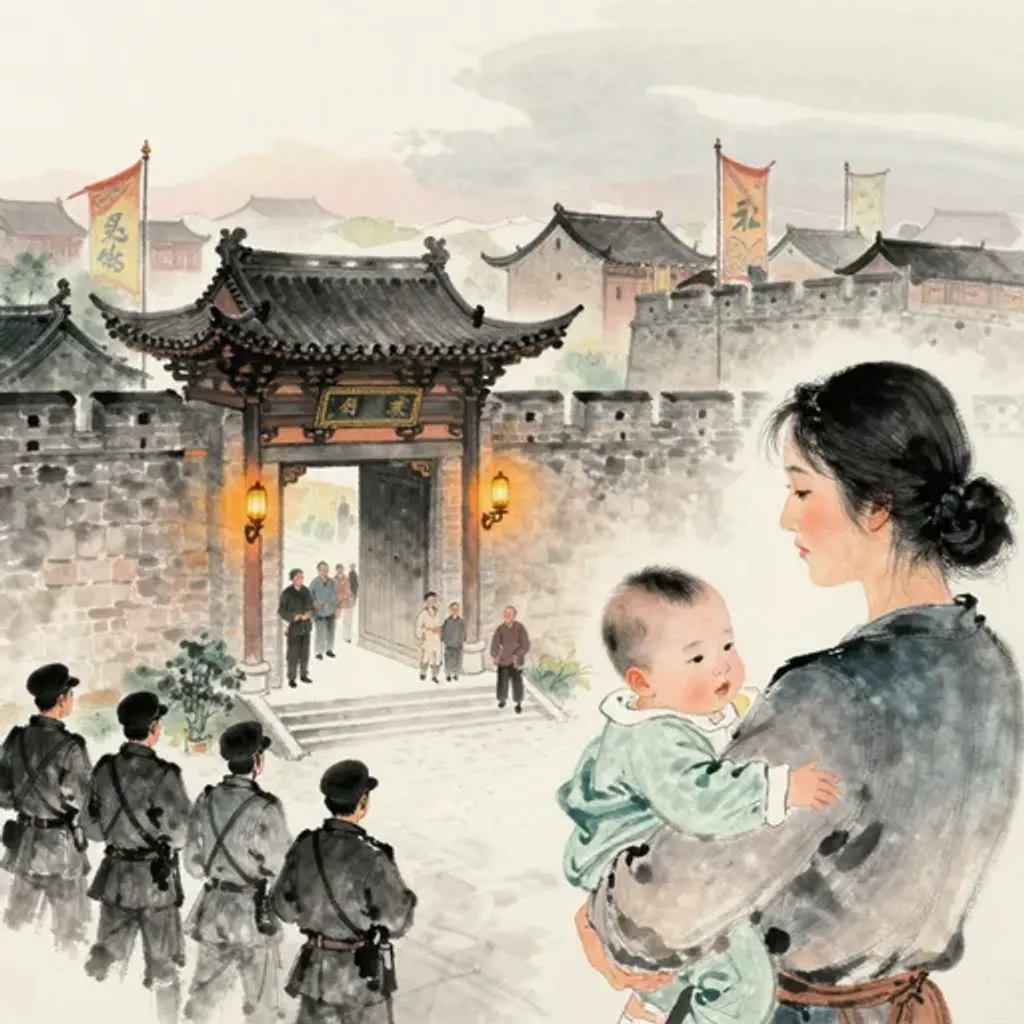
望城抱子,見邑不殆。公孫上堂,大君悅喜。
Gazing at the city, clasping her child; seeing the town, she is unharmed. The young lord ascends the hall; the great sovereign rejoices.
— Jiao Yanshou, Yilin (Forest of Changes), 1st century BC
Commentary
Thunder and fire illuminate Abundance, and a hopeful scene unfolds. One gazes toward the city walls carrying a child, seeing the settlement and knowing no danger. A nobleman (公孫) ascends the hall, and the great lord is pleased. The image is one of secure arrival — a traveler approaching a city with confidence, an heir presented at court to the sovereign's delight. The child carried toward the city suggests the continuation of lineage finding its proper place. From Abundance to Contemplation, wind moves over the earth as the sage king surveys his domain: the verse captures the moment when abundance is observed and confirmed from a high vantage point, and the ruler takes joy in seeing his domain flourishing.
豐 → 噬嗑
Hexagram 55 → Hexagram 21: Biting Through
Changing lines: 3, 6
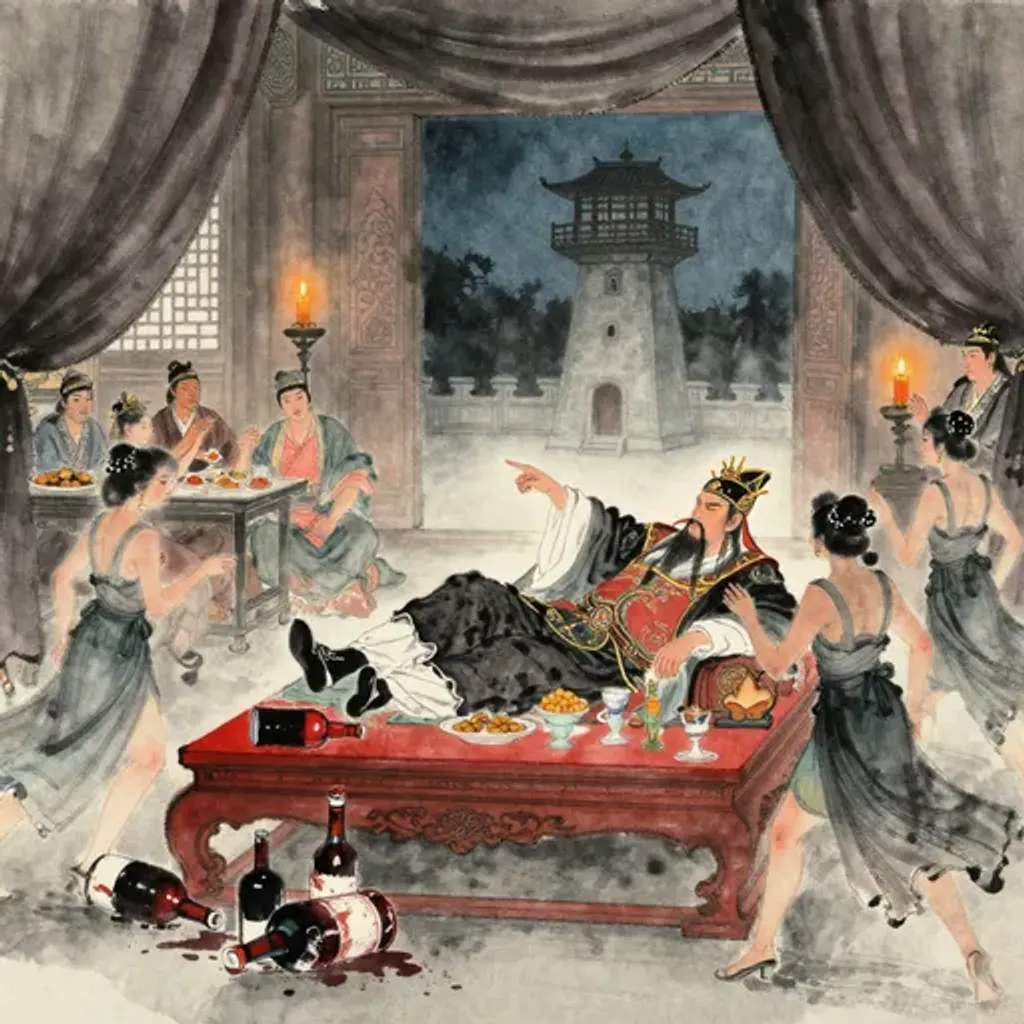
左指右麾,邪淫侈靡。執節无良,靈公以亡。
Pointing left, commanding right; depraved, extravagant, and wasteful. Holding authority without virtue, Duke Ling thereby perished.
— Jiao Yanshou, Yilin (Forest of Changes), 1st century BC
Commentary
Thunder and fire converge in Abundance, and the verse condemns a debauched ruler. Pointing left and waving right, he indulges in licentiousness and extravagance. He holds authority without virtue, and Duke Ling perishes because of it. This most likely refers to Duke Ling of Chen, who carried on an affair with the notorious beauty Xia Ji alongside his ministers Kong Ning and Yi Xingfu. According to the Zuo Zhuan, they openly wore Xia Ji's undergarments at court. Duke Ling was assassinated in 599 BC by Xia Zhengsu. From Abundance to Biting Through, fire and thunder enforce justice: abundance squandered on depravity meets the hexagram of judicial punishment, where lightning illuminates crimes and thunder delivers the sentence.
豐 → 賁
Hexagram 55 → Hexagram 22: Grace
Changing lines: 4, 6
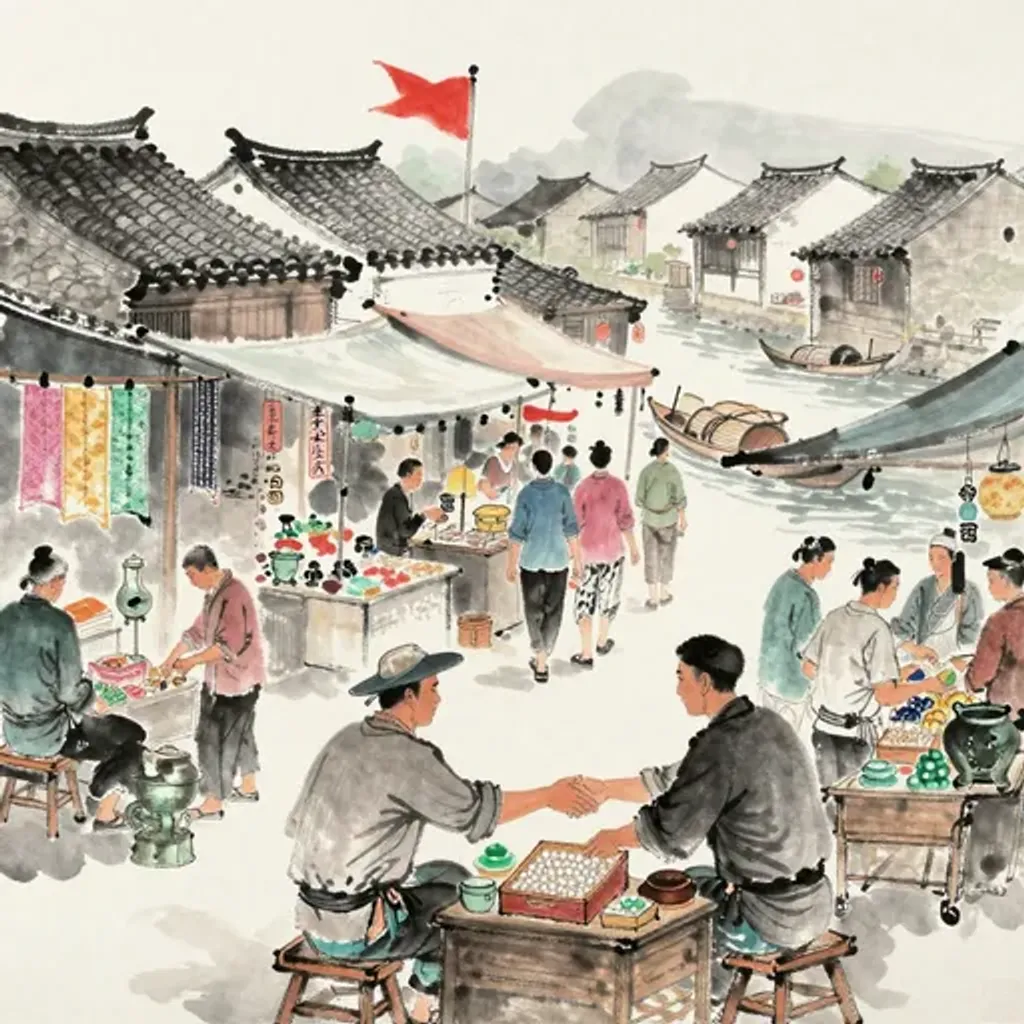
日中為市,各持所有,交易資賄。函珠懷寶。
At midday the market opens; each holds what he has, exchanging goods and valuables. Clasping pearls, harboring treasures.
— Jiao Yanshou, Yilin (Forest of Changes), 1st century BC
Commentary
Thunder and fire blaze in Abundance, and the verse quotes the Yijing's own hexagram text for Feng. 'At midday the market opens; each brings what they have, exchanging goods and wealth.' This is a direct echo of the Xici Zhuan's description of Shennong's market: the people gather at noon to trade, then depart satisfied. The final image — 'carrying pearls in one's bosom, treasuring jewels' — elevates the commercial scene to one of hidden value. From Abundance to Grace, fire illuminates beneath the mountain: the marketplace's busy exchange yields to quiet aesthetic refinement. Grace adorns what was merely functional, and the pearls carried within emerge as the true treasure — not traded but cherished.
豐 → 剝
Hexagram 55 → Hexagram 23: Splitting Apart
Changing lines: 1, 3, 4, 6
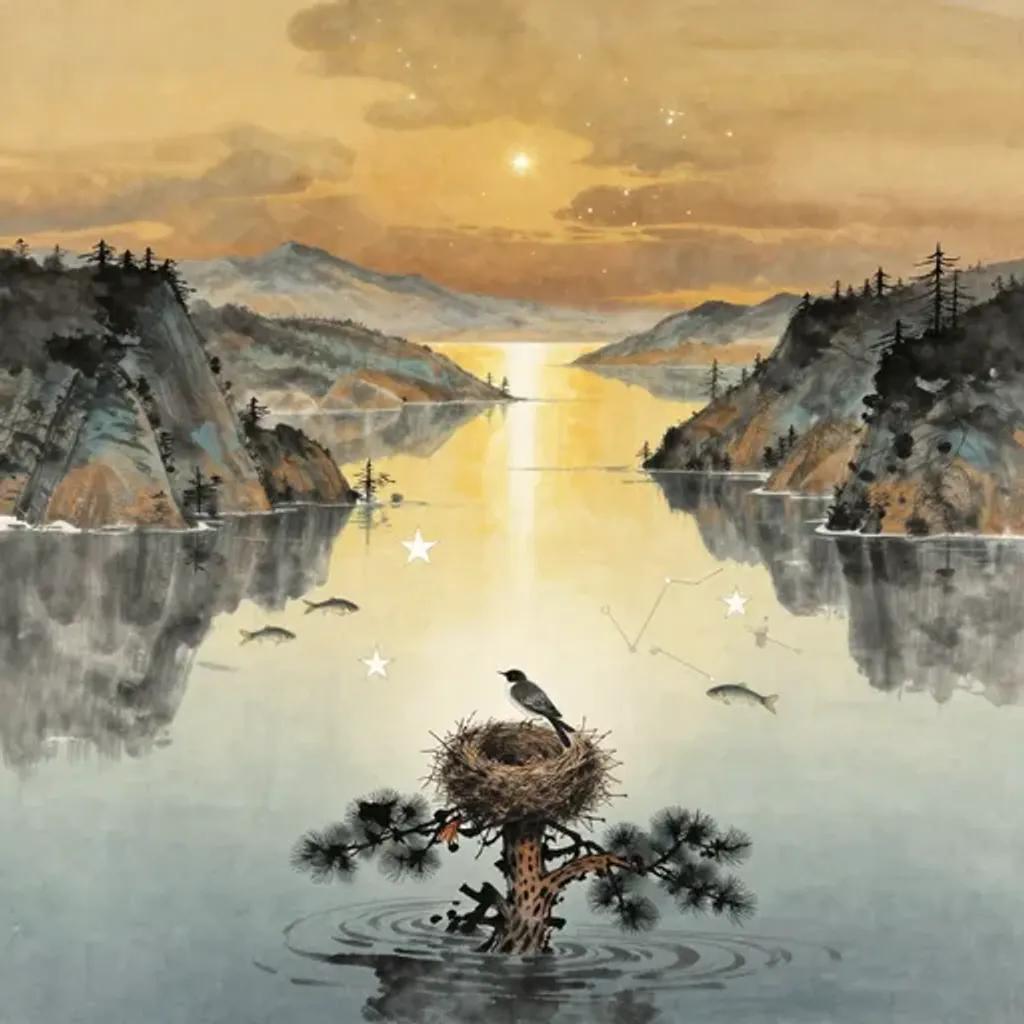
山沒丘浮,陸為水魚,燕雀无廬。
Heaven tilts northwest, earth southeast. Stars fall into the water, water covers the mountains. Nests are built in treetops where fish swim the roads — heaven and earth inverted, no knowing when it will return.
— Jiao Yanshou, Yilin (Forest of Changes), 1st century BC
Commentary
Thunder and fire converge in Abundance, and the original verse depicts total inversion. Mountains sink and hills float; the land becomes a realm of fish, and swallows and sparrows lose their nests. This is a flood of cosmological proportions — the entire natural order is overturned. Mountains submerge while lowlands rise, terrestrial creatures become aquatic, and birds have nowhere to perch. The imagery evokes the great floods of Yu's era or the cosmic disorder before civilization imposed order. From Abundance to Splitting Apart, mountain rests upon earth in the image of erosion: Abundance pushed to its extreme collapses the very structures that sustained it. When everything inverts, the mountain slowly peels away from its foundation until nothing remains.
豐 → 復
Hexagram 55 → Hexagram 24: Return
Changing lines: 3, 4
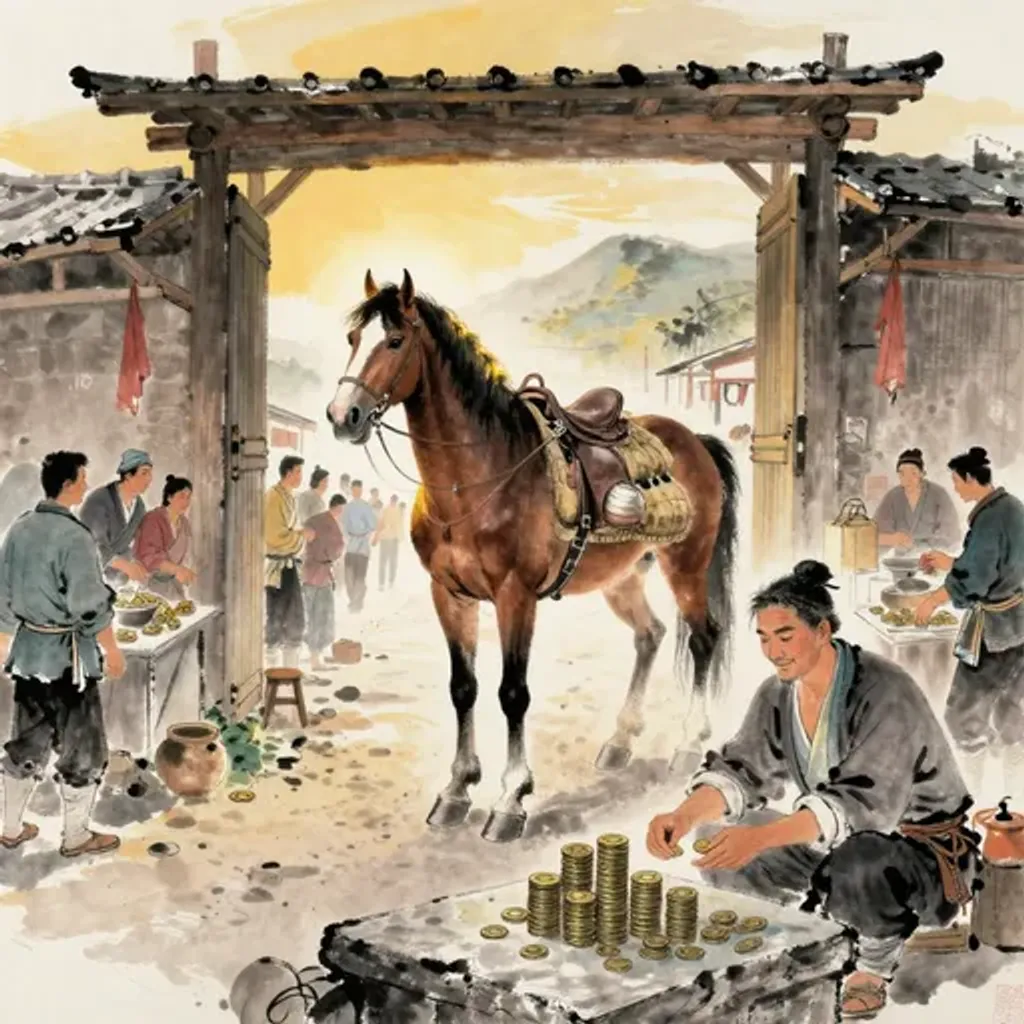
馬服長股,宜行善市。蒙祐諧偶,獲利五倍。終日在市,詰朝獲利。既享嘉福,得之以義。
A long-shanked horse in service, fit for travel and fine trade. Blessed with a harmonious match, gaining profit fivefold. All day at market, by morning the profit arrives. Having enjoyed such blessings, one obtains them through righteousness.
— Jiao Yanshou, Yilin (Forest of Changes), 1st century BC
Commentary
Thunder and fire illuminate Abundance, and the verse is a merchant's blessing. A horse fit for service with long legs, suited for travel and good at market. Under heaven's protection, a harmonious match is found, and profits multiply fivefold. All day in the marketplace, by morning the gains materialize. One enjoys fine fortune, obtained through righteousness. This extended commercial verse celebrates legitimate prosperity — profits not seized but earned through diligence and proper conduct. From Abundance to Return, thunder rests within the earth: the merchant's cycle of going out and returning with profit mirrors Return's image of the solstice, when yang re-enters the world. Wealth circulates and comes back, grounded in virtue.
豐 → 无妄
Hexagram 55 → Hexagram 25: Innocence
Changing lines: 3, 5, 6
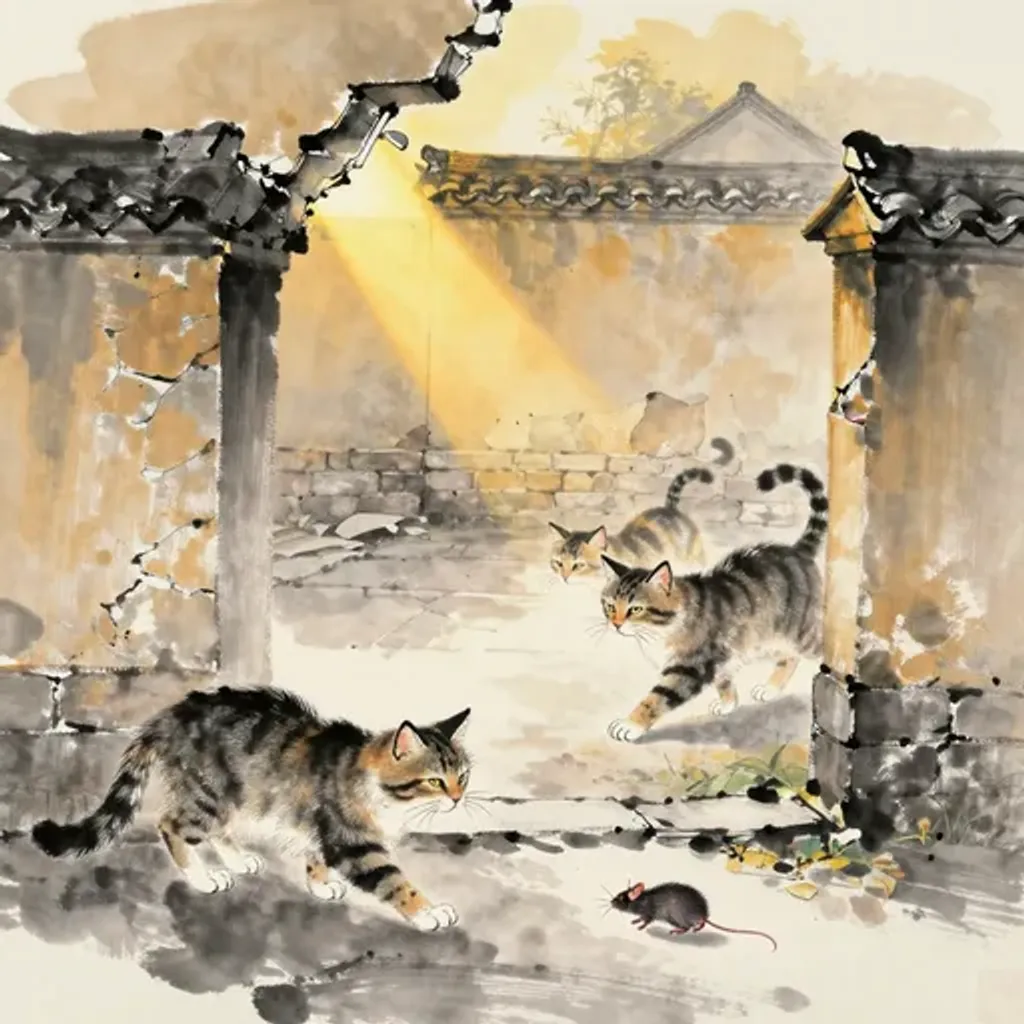
三狸捕鼠,遮遏前後。死於環域,不得脫走。
Three wildcats hunt a rat, blocking it front and back. It dies within the encircling ground, unable to escape and flee.
— Jiao Yanshou, Yilin (Forest of Changes), 1st century BC
Commentary
Thunder and fire converge in Abundance, and three wildcats hunt a single rat. They block its path front and back; the rat dies within the encirclement, unable to escape. The image is swift and brutal: overwhelming force deployed against a small target with no exit. Three predators against one prey leaves no margin. The 'ring domain' (環域) from which the rat cannot flee suggests a deliberately constructed trap. From Abundance to Innocence, heaven's thunder moves through all things without delusion: the rat's fate resonates with Innocence's warning that disaster comes unexpectedly to the unguarded. When heaven's force descends, no amount of scurrying can evade it — the innocent accept what comes, while the guilty find every exit sealed.
豐 → 大畜
Hexagram 55 → Hexagram 26: Great Taming
Changing lines: 2, 4, 6
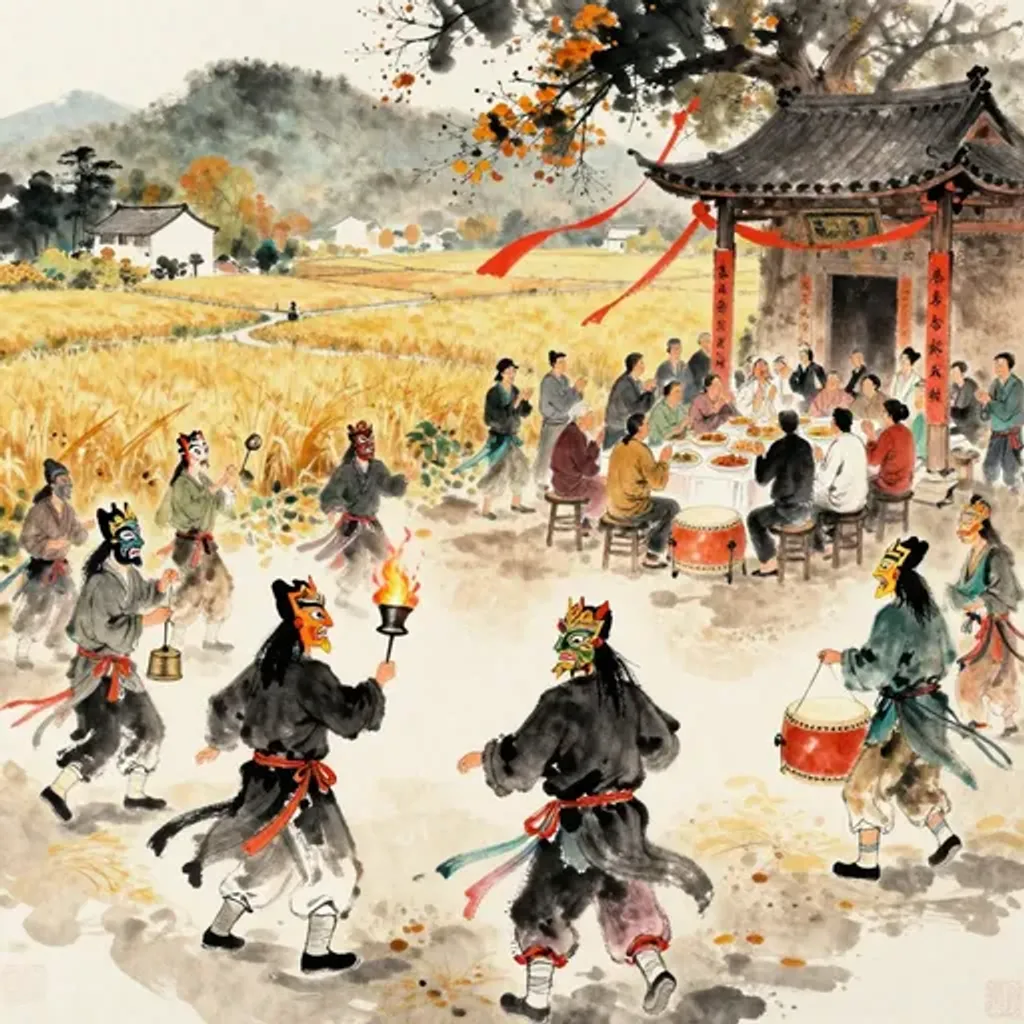
鬼舞國社,歲樂民喜。臣忠於君,子孝於父。
Spirits dance at the village shrine; the year is joyful, the people glad. Ministers loyal to the sovereign; sons filial to their fathers.
— Jiao Yanshou, Yilin (Forest of Changes), 1st century BC
Commentary
Thunder and fire blaze in Abundance, and the verse celebrates communal harmony. Spirits dance at the state altar; the year brings joy and the people rejoice. Ministers are loyal to their lord; sons are filial to their fathers. The 'ghost dance at the state altar' (鬼舞國社) suggests ancestral spirits honored through proper ritual, their satisfaction manifesting as social prosperity. Every bond — sovereign-minister, father-son — holds firm in its proper place. From Abundance to Great Taming, heaven stored within the mountain: the festive abundance of shared joy is gathered and preserved as cultural memory. Great Taming's counsel to 'study the words and deeds of the ancients' transforms celebration into lasting moral inheritance.
豐 → 頤
Hexagram 55 → Hexagram 27: Nourishment
Changing lines: 3, 4, 6
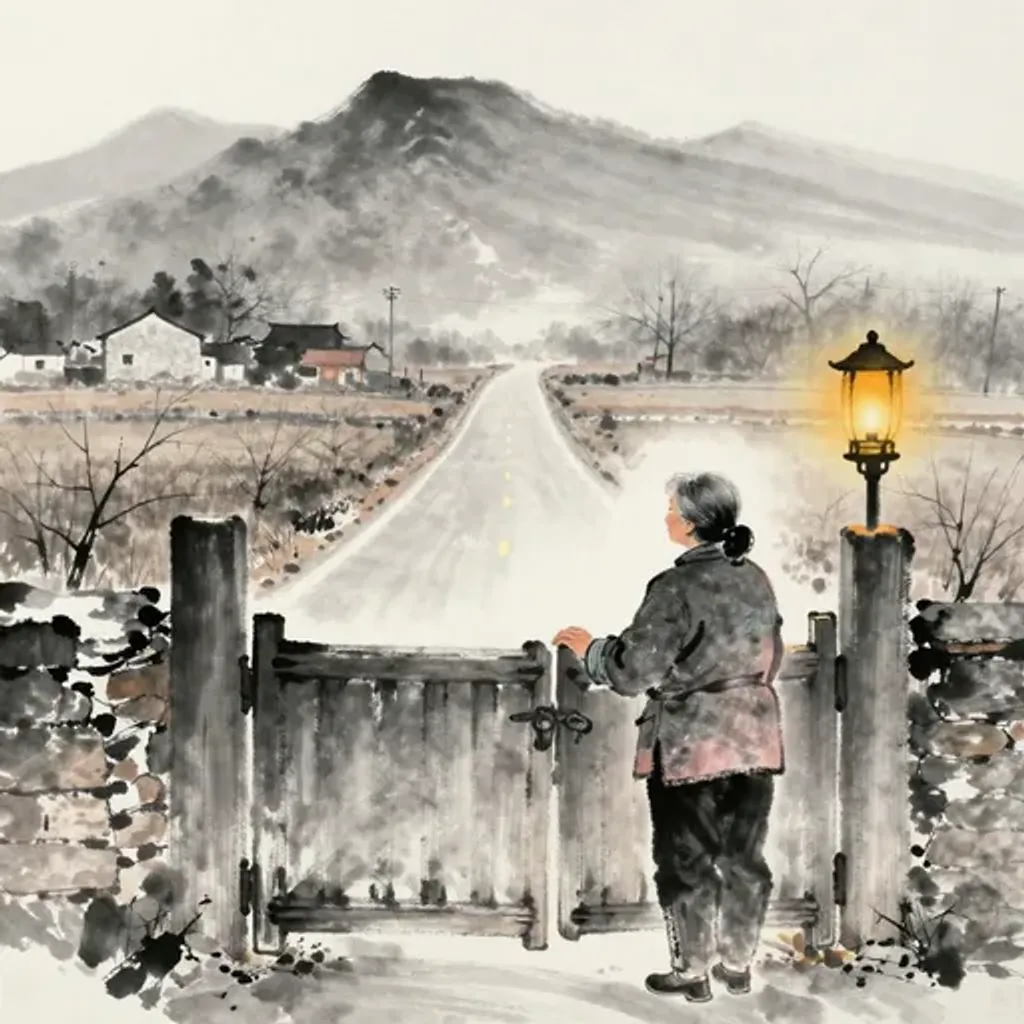
慈母望子,遙思不已。久客外野,我心悲苦。
A loving mother watches for her son, longing ceaselessly from afar. Long a stranger in distant wilds, my heart is full of bitter grief.
— Jiao Yanshou, Yilin (Forest of Changes), 1st century BC
Commentary
Thunder and fire illuminate Abundance, yet the verse turns to a mother's sorrow. A loving mother gazes into the distance, thinking of her son without rest. He has been a traveler in far-off wilds for so long; her heart aches with grief. The image of the mother watching the horizon is among the most universal in Chinese poetry — the parent left behind while the child ventures into an uncertain world. From Abundance to Nourishment, mountain above thunder: the verse captures the inversion of nourishment's natural flow. Nourishment means sustaining life carefully through speech and food, yet here the one who nourishes is herself starved of the presence she most needs. The mountain stands still above the thunder of her longing, and no feast can fill that emptiness.
豐 → 大過
Hexagram 55 → Hexagram 28: Great Exceeding
Changing lines: 1, 2, 5
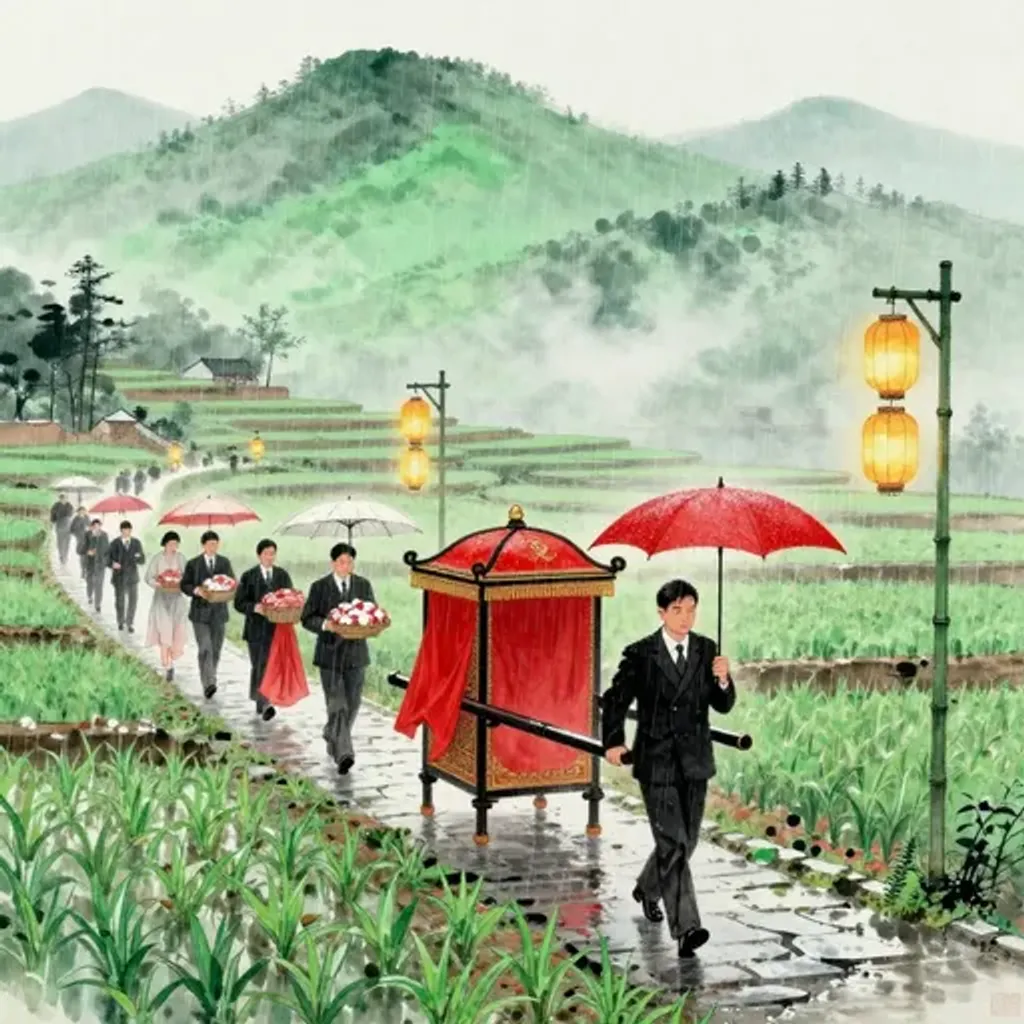
雨師娶婦,黃巖季子。成禮既婚,相呼南去。膏潤下土,年歲大有。
The Rain Master takes a bride, the youngest child of Yellow Cliff. Rites completed and wed, they call to each other going south. Rich moisture soaks the earth; the harvest year is bountiful.
— Jiao Yanshou, Yilin (Forest of Changes), 1st century BC
Commentary
Thunder and fire join in Abundance, and the Rain Master takes a bride once more — this time the youngest son of Huangyan. The rites are completed, the marriage sealed, and together they depart southward. Unctuous rain soaks the earth below, yielding a year of great harvest. This verse nearly duplicates 55-8, with 'youngest son' (季子) replacing 'youngest daughter' (季女), suggesting a textual variant or parallel tradition. The divine wedding's agricultural outcome remains the same: sky meets earth through ritual union, producing fertile abundance. From Abundance to Great Exceeding, the lake submerges the trees: the rain's generosity pushes beyond normal limits. Great Exceeding warns that even beneficial excess strains the structure, but here the surplus yields bounty rather than collapse.
豐 → 坎
Hexagram 55 → Hexagram 29: The Abysmal Water
Changing lines: 1, 2, 3, 4, 5
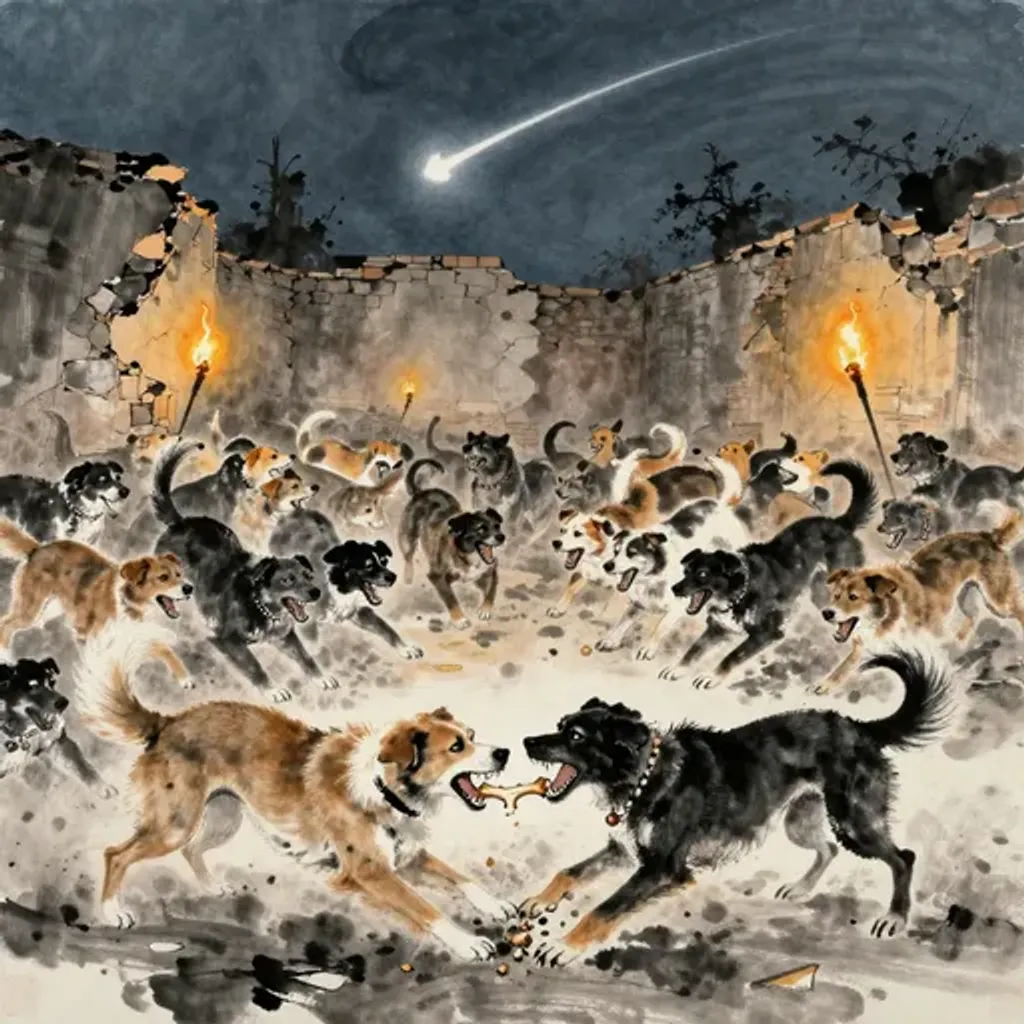
百狗同室,相嚙爭食。枉矢西流,射我暴國。高宗鬼方,三年乃服。
A hundred dogs in one room, biting and fighting over food. A stray arrow streams west, striking my violent land. High Ancestor campaigned against the Guifang; three years before they submitted.
— Jiao Yanshou, Yilin (Forest of Changes), 1st century BC
Commentary
Thunder and fire converge in Abundance, and the verse escalates from domestic chaos to imperial war. A hundred dogs confined in one room snap and bite, fighting over food — an image of internecine struggle within a crowded polity. Then a comet (枉矢) streaks westward, striking at the violent kingdom. King Wu Ding of Shang campaigned against the Guifang barbarians, and 'three years were needed to subdue them.' The verse quotes the Yijing's own Jiji hexagram line directly. From Abundance to the Abysmal, doubled water: the transformation traces how internal strife (dogs fighting) escalates into prolonged external war (three years against the Guifang), plunging the state into repeated danger that can only be endured through constant practice of virtue, as water flows ceaselessly through peril.
豐 → 離
Hexagram 55 → Hexagram 30: The Clinging Fire
Changing lines: 6
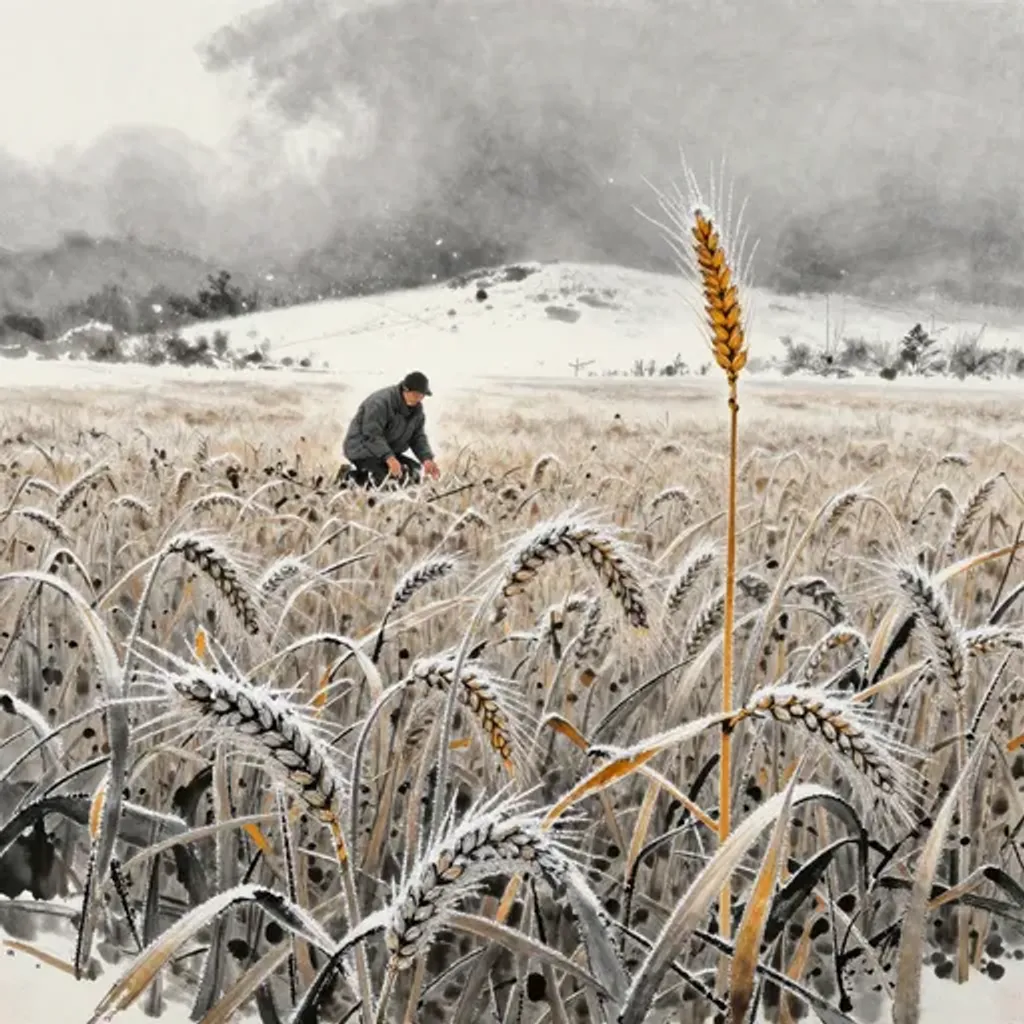
早霜晚雪,傷害禾麥。損功棄力,飢无可食。
Early frost and late snow, damaging grain and wheat. Effort wasted, labor lost; hungry with nothing to eat.
— Jiao Yanshou, Yilin (Forest of Changes), 1st century BC
Commentary
Thunder and fire illuminate Abundance, yet the verse presents agricultural devastation. Early frost and late snow wound the grain and wheat. All labor and effort are wasted; hunger leaves nothing to eat. The unseasonable cold — frost too early in autumn, snow too late in spring — destroys the harvest at both ends of the growing season. The farmer's toil counts for nothing against heaven's untimely assault. From Abundance to the Clinging, doubled fire: the irony is sharp. Fire should mean warmth and light, but when Abundance's fullness meets fire without moderation, the imagery inverts. The Clinging's light reveals the damage clearly but cannot warm what frost has already killed. Brilliance that arrives after the harvest is ruined illuminates only loss.
豐 → 咸
Hexagram 55 → Hexagram 31: Influence
Changing lines: 1, 5
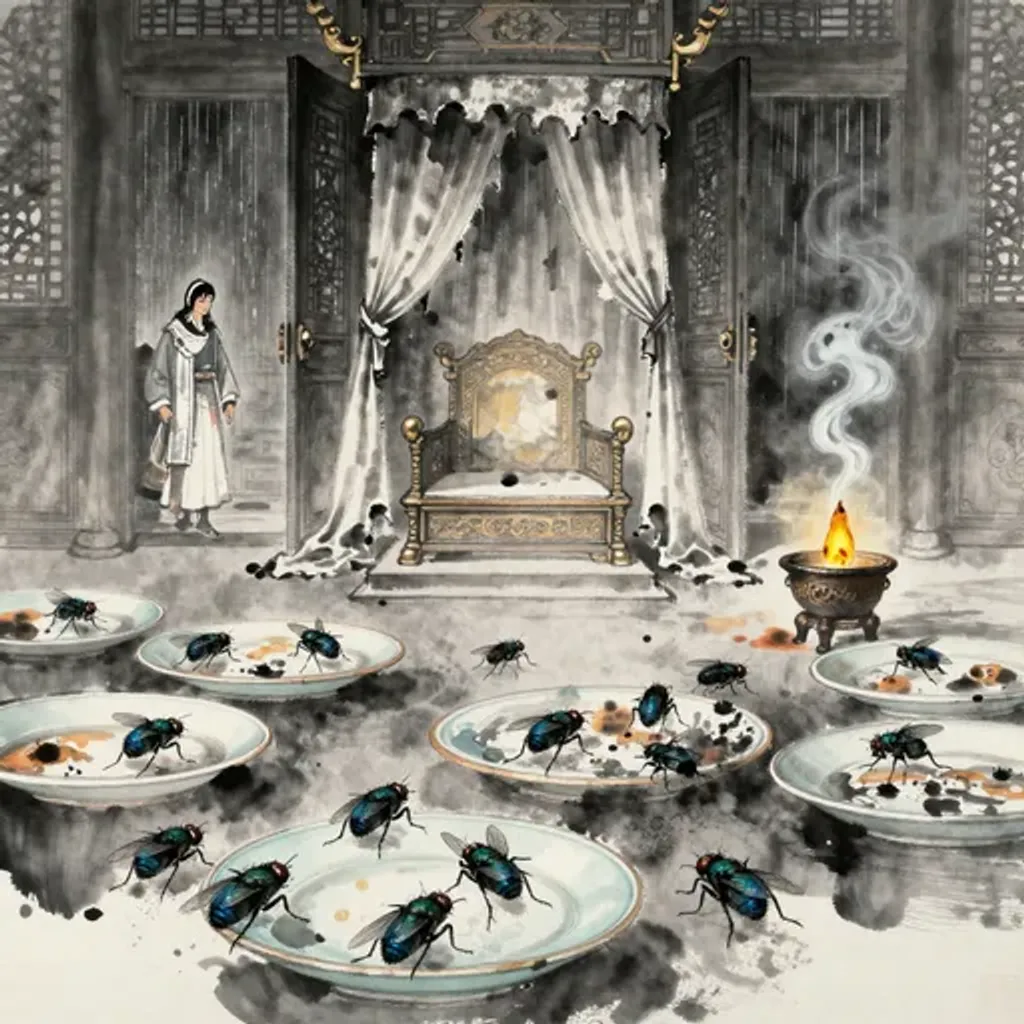
腐臭所在,青繩集聚,變白為黑,敗亂邦國。君為臣逐,失其寵祿。
Where rot and stench reside, blue flies gather in swarms. Turning white to black, ruining the state. The sovereign is driven out by his ministers, losing favor and rank.
— Jiao Yanshou, Yilin (Forest of Changes), 1st century BC
Commentary
Thunder and fire converge in Abundance, and the verse reeks of political rot. Where corruption gathers, green flies swarm — turning white to black, ruining the state. The sovereign is driven out by his own ministers, losing his honored position. The 'green flies' (青繩/青蠅) echo the Shijing ode Qingying, which warns against slanderers who invert truth: 'O green flies, do not settle on the fence; slanderers have no limit.' The transformation from white to black is calumny's signature work. From Abundance to Influence, the lake atop the mountain invites receptivity: yet the verse shows Influence corrupted — when those in power are open to the wrong influences, flattery and slander fill the vacuum. The mountain's emptiness, meant for sincerity, admits poison instead.
豐 → 恆
Hexagram 55 → Hexagram 32: Duration
Changing lines: 1, 2
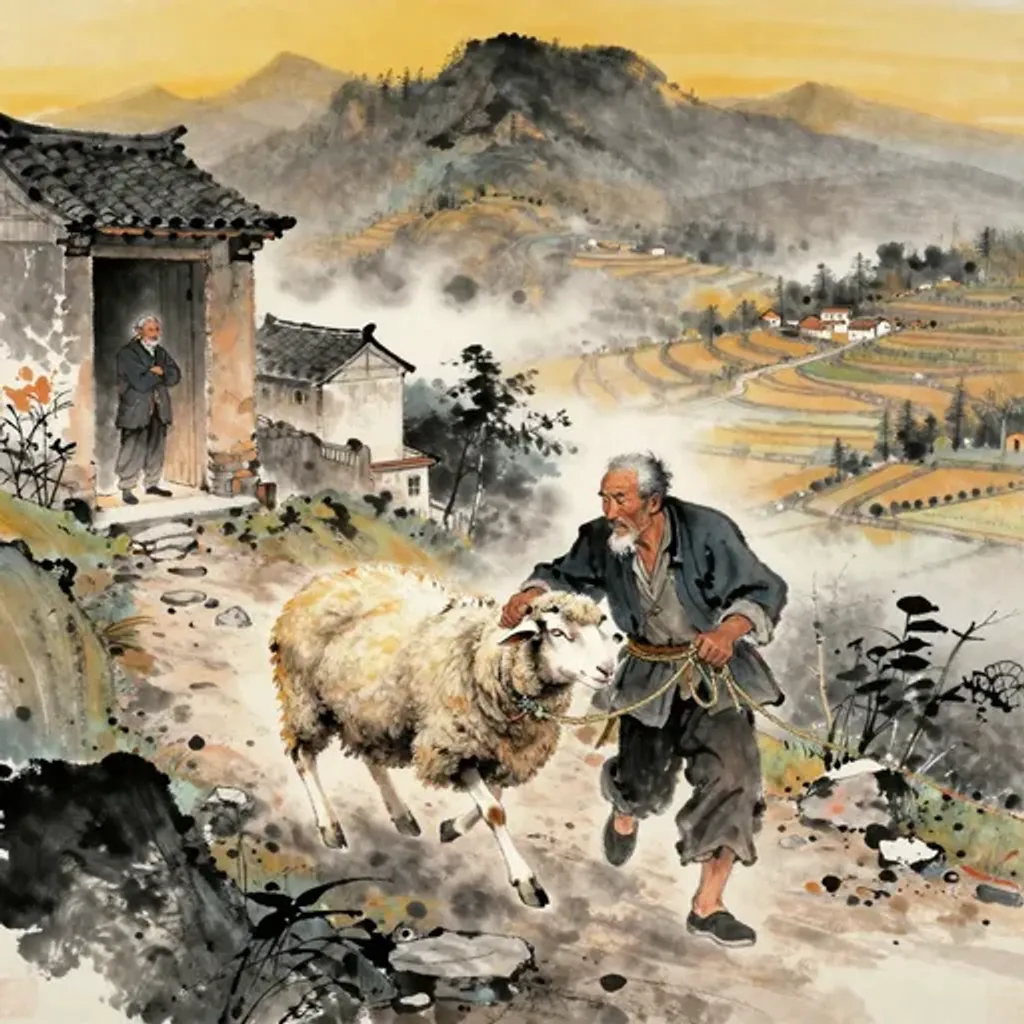
牽羊不與,與心戾旋。聞言不信,誤紿丈人。
Leading the sheep, it will not follow; the heart resists and turns back. Hearing words but not believing, deceiving and misleading the elder.
— Jiao Yanshou, Yilin (Forest of Changes), 1st century BC
Commentary
Thunder and fire join in Abundance, but trust collapses. One leads a sheep but refuses to hand it over; the heart turns contrary and revolts. Words are heard but not believed; the elder is deceived by lies. Every exchange in this verse is spoiled — the sheep withheld, the promise broken, the words mistrusted, the senior misled. The 'elder' (丈人) may denote a father-in-law or a respected senior, making the deception particularly grave. From Abundance to Duration, thunder and wind reinforce each other: Duration requires standing firm in one direction, yet the verse shows every bond twisted into its opposite. Where Duration demands constancy, here every relationship churns with betrayal, making endurance impossible when no word can be trusted.
豐 → 遯
Hexagram 55 → Hexagram 33: Retreat
Changing lines: 1, 5, 6
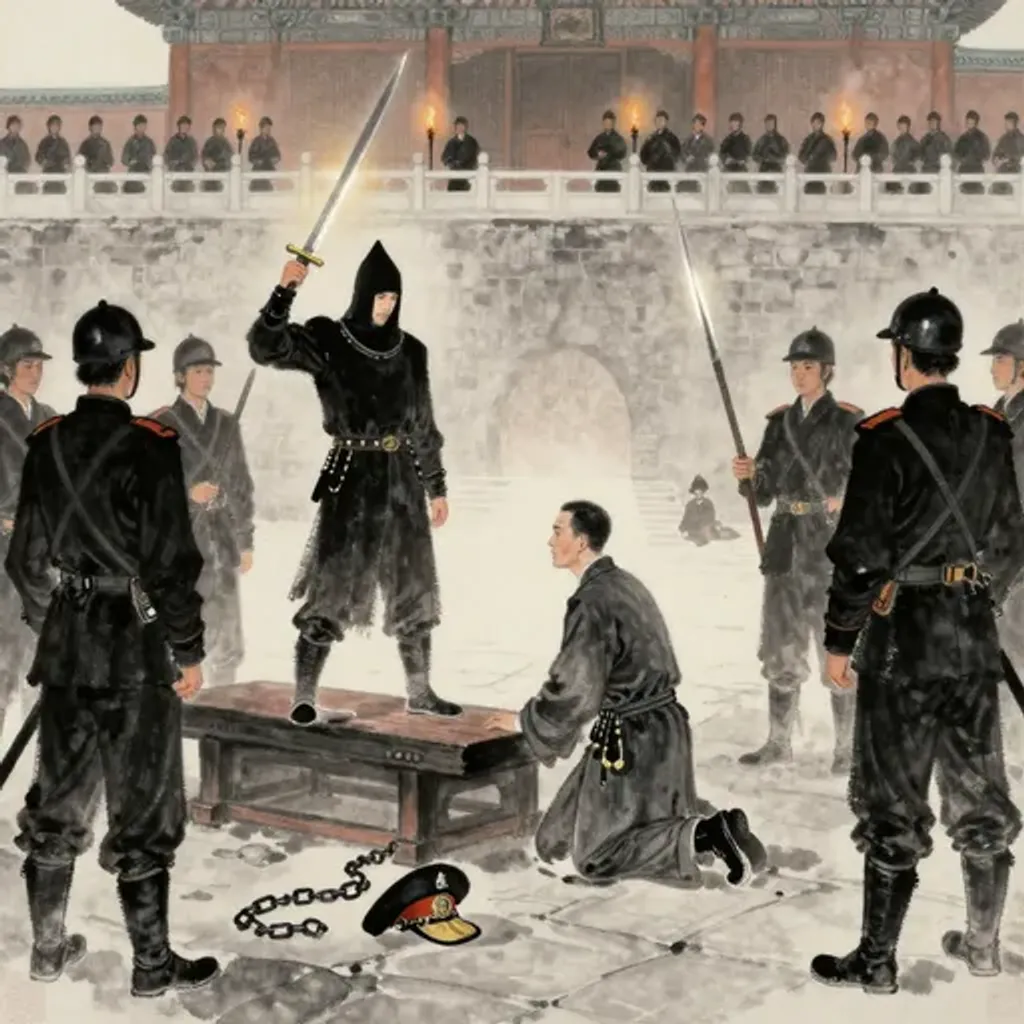
甘忍利害,還相克敵。商子酷刑,鞅喪厥身。
Enduring bitterness, weighing gain and harm, still they oppose one another. Shang Yang, the merchant's son, suffered cruel punishment; Yang lost his very life.
— Jiao Yanshou, Yilin (Forest of Changes), 1st century BC
Commentary
Thunder and fire illuminate Abundance, and the verse tells of Shang Yang's fatal trajectory. 'Enduring harm with calculated patience, in the end one conquers the enemy' — then 'Shang's lord applied cruel punishments, and Yang lost his own life.' Shang Yang, the Legalist reformer of Qin, instituted harsh laws including collective punishment and mutilating penalties that made Qin powerful but earned universal hatred. After Duke Xiao of Qin died in 338 BC, Shang Yang was accused of rebellion, fled, but could not find lodging because his own laws forbade hosting unregistered travelers. He was killed and his corpse torn apart by chariots. From Abundance to Retreat, heaven rises above the mountain: the architect of ruthless order becomes the one who most needs to retreat — yet his own system bars the exit.
豐 → 大壯
Hexagram 55 → Hexagram 34: Great Power
Changing lines: 2
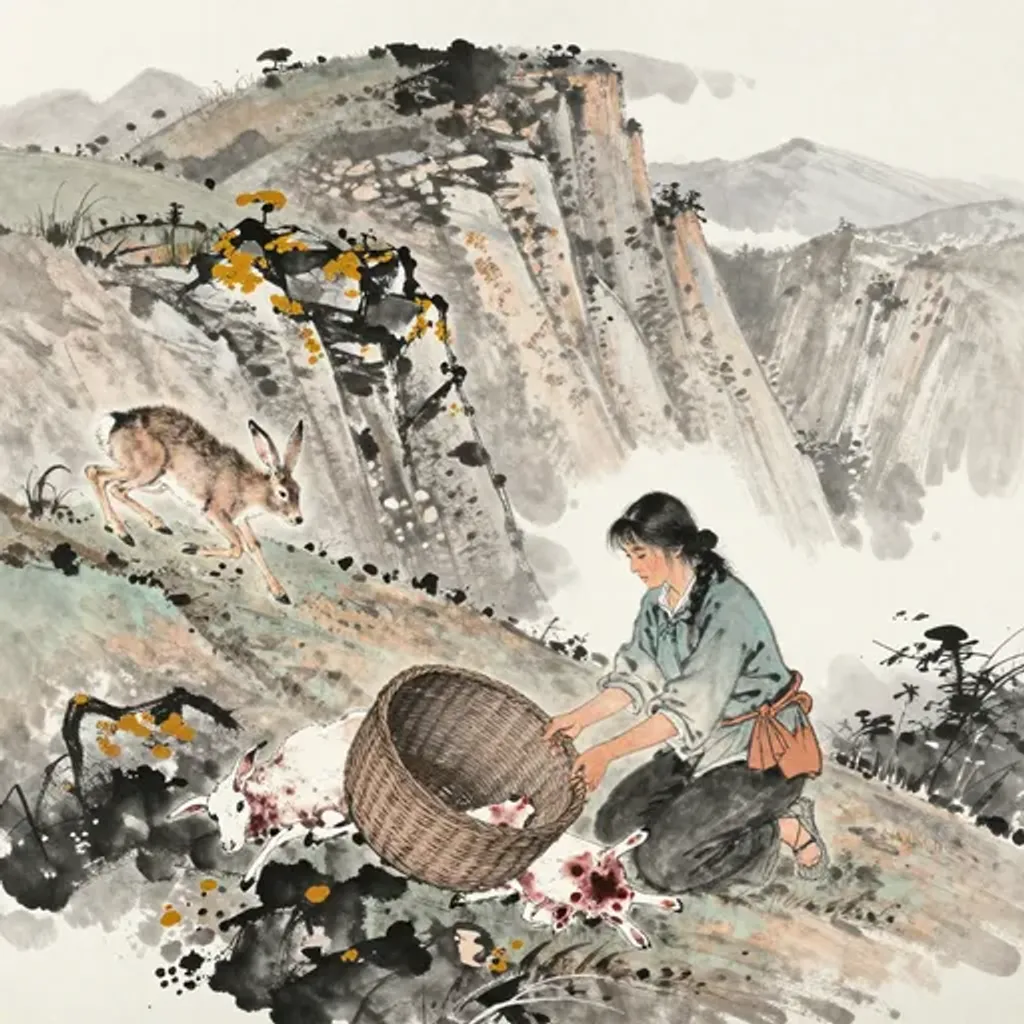
刲羊不當,女執空筐。兔跛鹿踦,緣山墜墮。
Slaughtering the sheep, missing the mark; the woman holds an empty basket. The hare limps, the deer stumbles; along the mountain ridge they tumble and fall.
— Jiao Yanshou, Yilin (Forest of Changes), 1st century BC
Commentary
Thunder and fire converge in Abundance, yet every action miscarries. The sheep is slaughtered improperly; the woman holds an empty basket. The rabbit limps, the deer stumbles; they tumble from the mountainside. Nothing works as intended — the sacrifice fails, the gathering yields nothing, and even sure-footed mountain creatures lose their balance. The 'empty basket' (空筐) signals effort without result, while the animals' falls suggest that brute strength applied clumsily only accelerates disaster. From Abundance to Great Power, thunder roars above heaven: the verse is a cautionary mirror for Great Power, which warns against using force without propriety. The ram that butts the hedge gets its horns entangled — power misapplied produces not triumph but humiliating collapse.
豐 → 晉
Hexagram 55 → Hexagram 35: Progress
Changing lines: 1, 3, 6
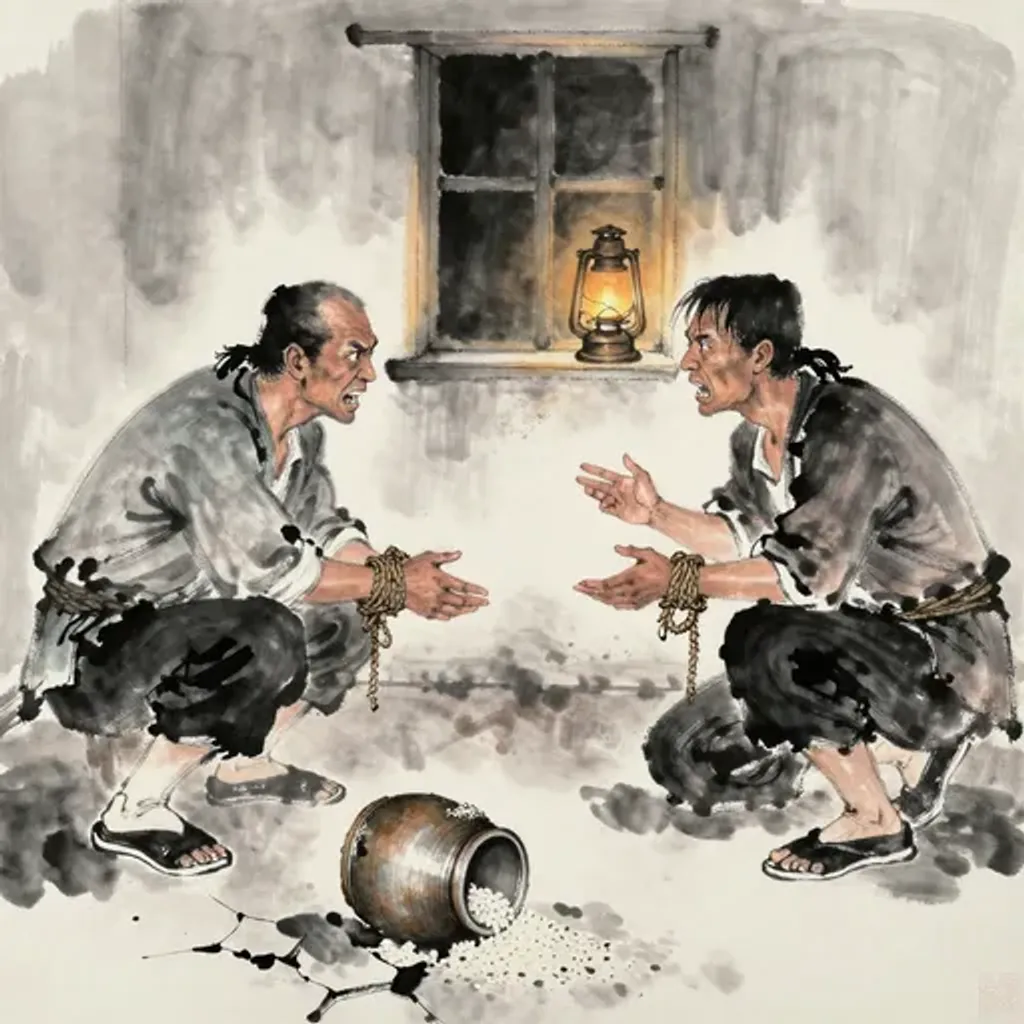
𪙨𪙨囓囓,貧鬼相責。无有歡怡,一日九結。
Gnashing and grinding, the poverty demon lays blame. No joy or ease to be found; in a single day, nine knots of anguish.
— Jiao Yanshou, Yilin (Forest of Changes), 1st century BC
Commentary
Thunder and fire illuminate Abundance, yet the scene is one of gnawing misery. Chattering and biting, poverty demons harry the household. There is no joy or ease; each day brings nine knots of worry. The 'poverty demons' (貧鬼) are folk entities that embody chronic destitution — they gnaw at the spirit like rats at grain. 'Nine knots in a single day' suggests anxiety compounding upon itself until the mind is entirely bound. From Abundance to Progress, fire rises above the earth: the irony cuts deep. Progress means the bright principle ascending over the horizon, yet for one tormented by poverty demons, no dawn breaks. The verse poses Progress as aspiration not yet achieved — the light exists but the demons have not been expelled.
豐 → 明夷
Hexagram 55 → Hexagram 36: Darkening of the Light
Changing lines: 4
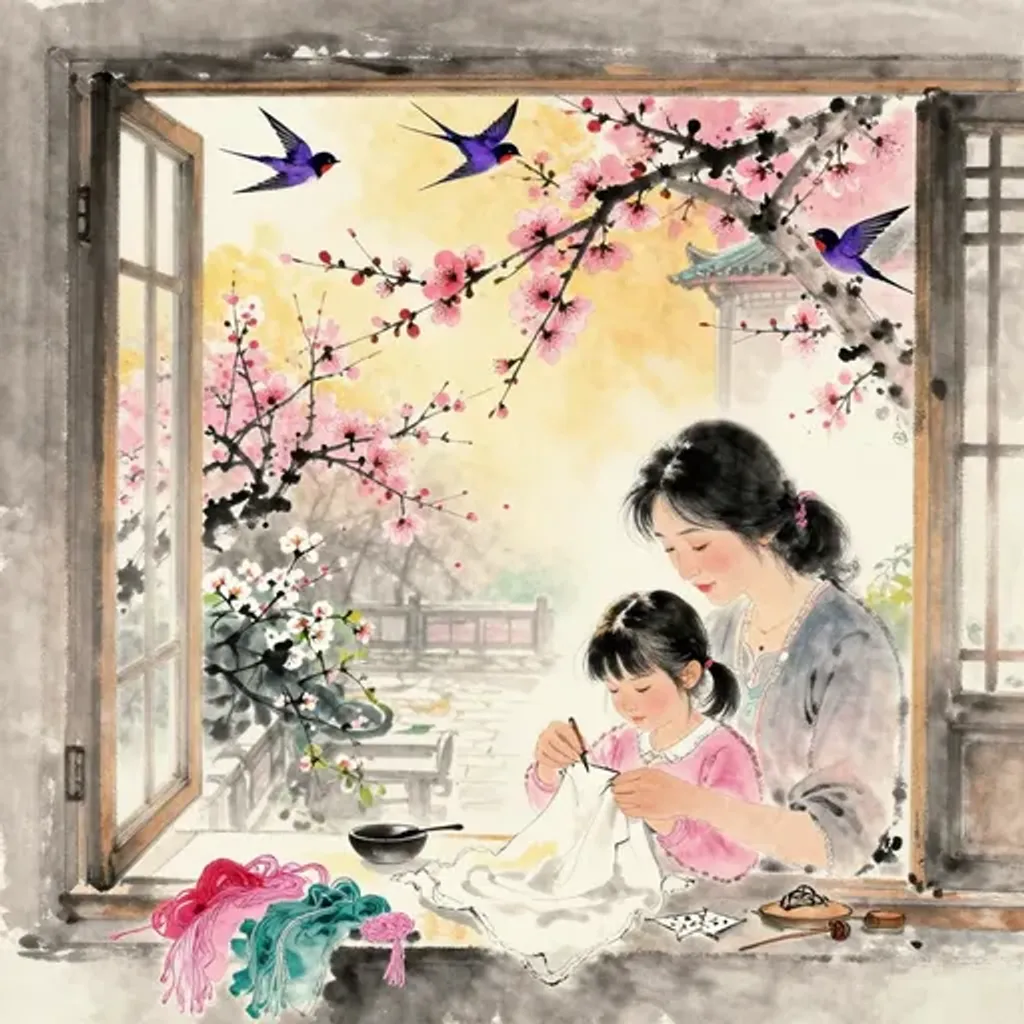
兩足四翼,飛入嘉國。寧我伯姊,與母相得。
Purple swallows return to the eaves — spring has grown warm. In the hall, mother and daughter cut cloth together. Outside the window, peach blossoms open like brocade — between needle and thread, laughter flies.
— Jiao Yanshou, Yilin (Forest of Changes), 1st century BC
Commentary
Thunder and fire join in Abundance, and the original verse is warm and intimate. 'Two feet and four wings fly into a blessed land. Comforting my elder sister, she gets along with mother.' The creature with two feet and four wings is traditionally read as paired birds — perhaps mandarin ducks or jiangjian birds — symbolizing harmonious union. The sister and mother dwell together contentedly in a prosperous household. This is domestic bliss: women of the family united, the home a place of peace. From Abundance to Darkening of the Light, fire enters the earth: the bright domestic harmony takes on a protective quality, as light preserved within darkness. The mother and daughter sustain their warmth even as the world outside grows dim.
豐 → 家人
Hexagram 55 → Hexagram 37: The Family
Changing lines: 4, 5, 6
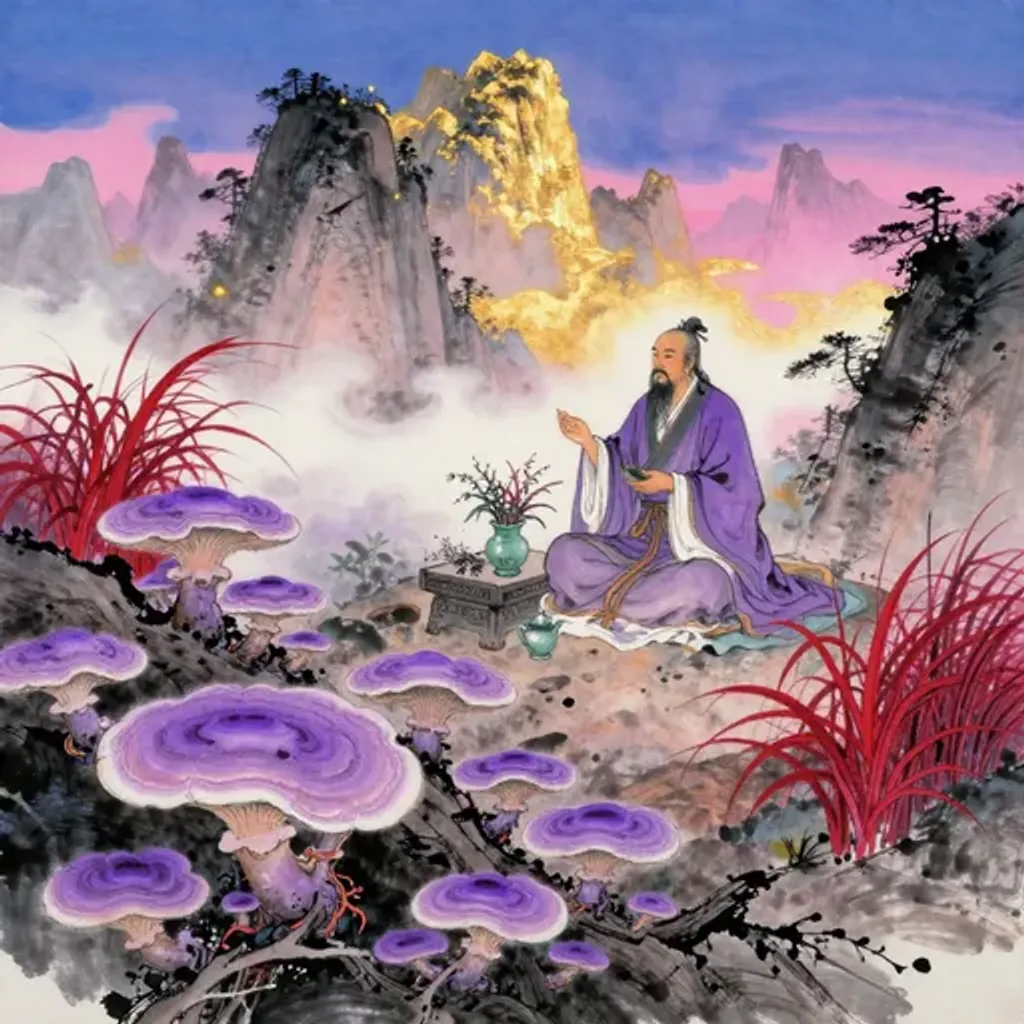
天山紫芝,雍梁朱草。長生和氣,王以為寶。公尸侑食,福祿來處。
Purple zhi on heaven's mountain, vermillion grass on Yong and Liang. Long life and harmonious spirit; the king treasures them. The ritual host receives offerings; blessings and bounty arrive.
— Jiao Yanshou, Yilin (Forest of Changes), 1st century BC
Commentary
Thunder and fire illuminate Abundance, and the verse conjures an auspicious landscape. Purple lingzhi grows on celestial mountains; vermilion grass flourishes at Yong and Liang. Long life and harmonious energy pervade, and the king treasures them. The ancestral representative (公尸) is served at the feast; blessings and emoluments arrive. Lingzhi and vermilion grass are classical portents of sage governance — they appear only when virtue saturates the land. The ancestral feast completes the picture: spiritual and material abundance united in ritual. From Abundance to the Family, wind issues from fire: the auspicious omens of the realm distill into the warmth of domestic order, where words have substance and conduct has constancy.
豐 → 睽
Hexagram 55 → Hexagram 38: Opposition
Changing lines: 2, 3, 6
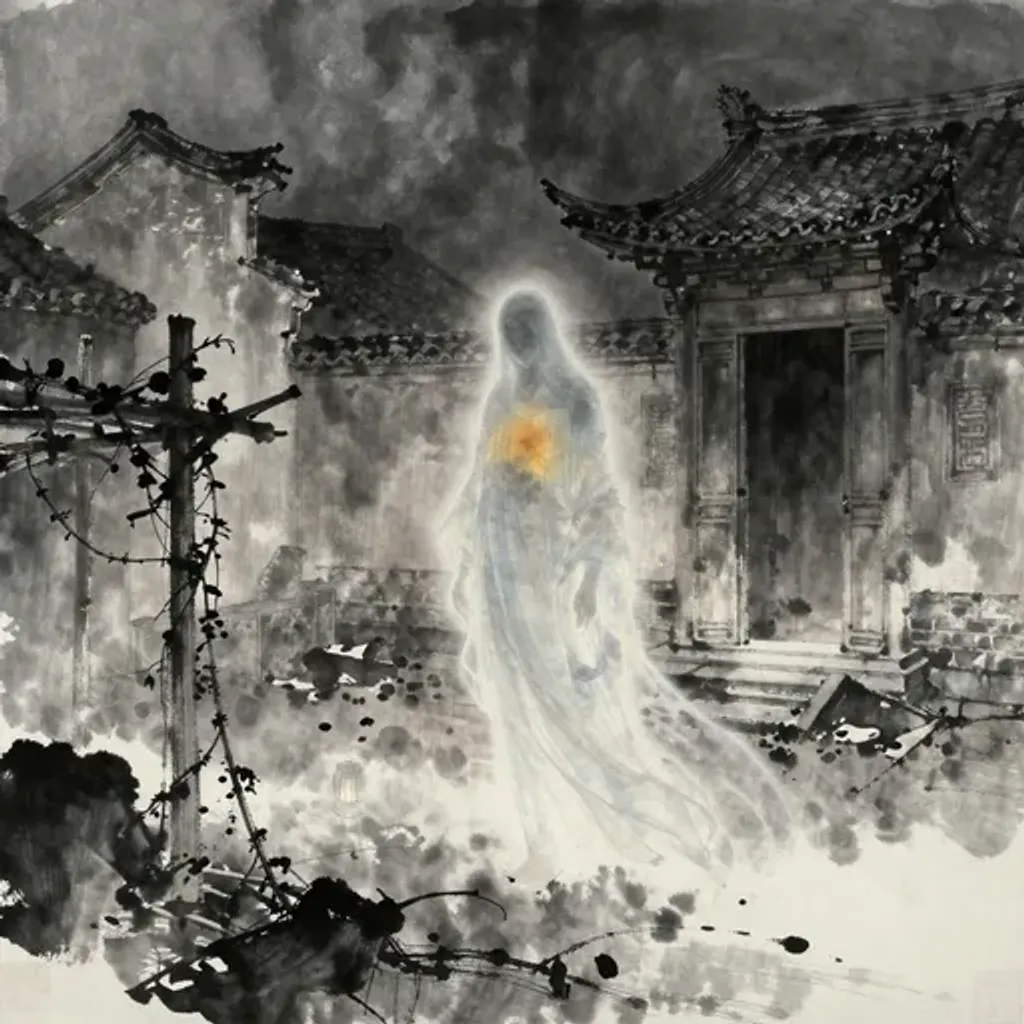
絕世遊魂,福祿不存。精神渙散,離其躬身。
A wandering soul cut off from the world; blessings and fortune exist no more. Spirit and essence scattered and dispersed, departing from its very body.
— Jiao Yanshou, Yilin (Forest of Changes), 1st century BC
Commentary
Thunder and fire converge in Abundance, and the verse speaks of spiritual dissolution. The wandering soul of one cut off from the world — blessings and fortune no longer exist. The vital spirit scatters and disperses, departing from the body itself. This is not merely death but the disintegration of the animating principle. The 'world-severed wandering soul' (絕世遊魂) suggests someone whose ties to both the living and the ancestral realm have been utterly severed. From Abundance to Opposition, fire above and lake below pull apart: the hexagram of estrangement mirrors the soul's dispersal. What should be unified — body and spirit, fortune and person — splits irreconcilably, each element drifting in its own direction like fire rising while water sinks.
豐 → 蹇
Hexagram 55 → Hexagram 39: Obstruction
Changing lines: 1, 4, 5
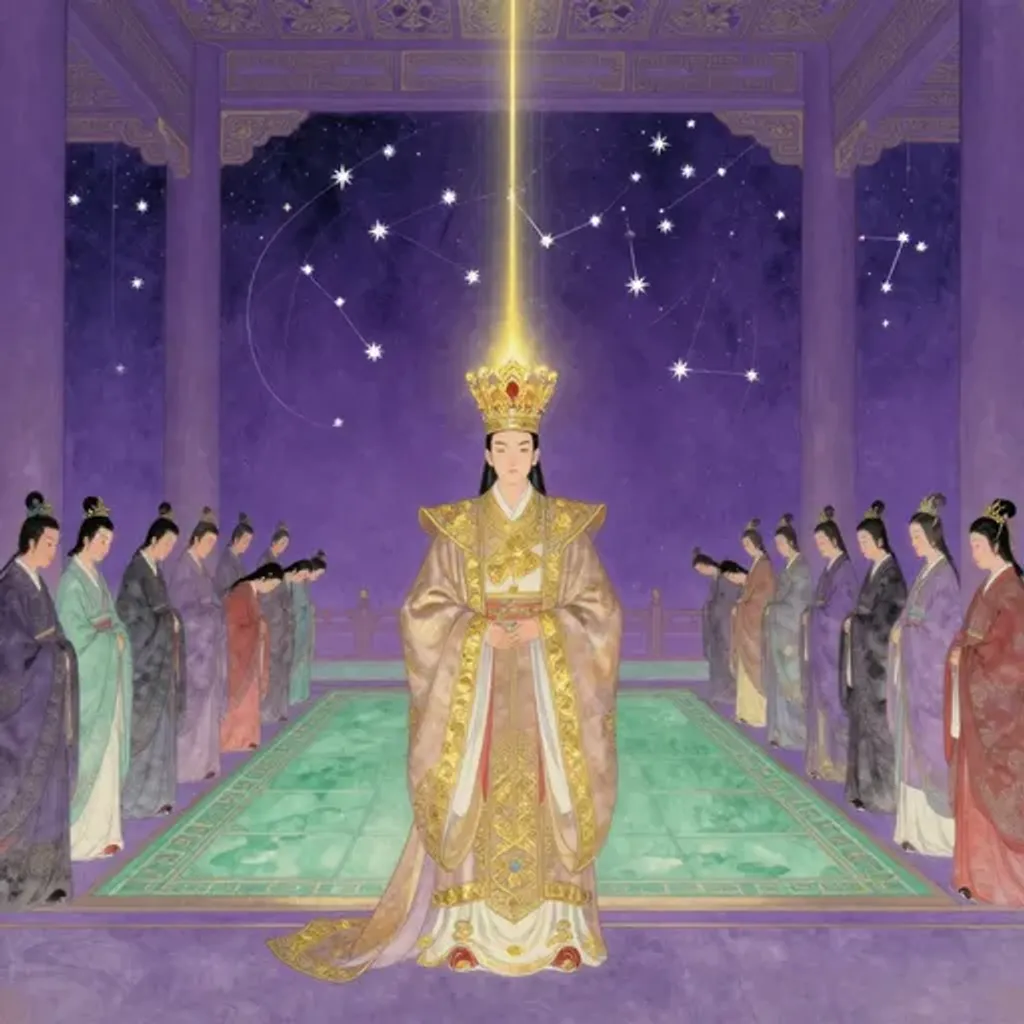
北辰紫宮,衣冠立中。含弘建德,常受大福。
The North Star in its Purple Palace; robed and crowned, standing at the center. Embracing magnanimity, establishing virtue; forever receiving great blessings.
— Jiao Yanshou, Yilin (Forest of Changes), 1st century BC
Commentary
Thunder and fire illuminate Abundance, and the verse gazes at the cosmic pole. The Pole Star resides in the Purple Palace; robed and capped figures stand at the center. Embracing magnanimity and establishing virtue, one perpetually receives great blessings. The Purple Palace (紫宮) is the celestial enclosure surrounding Polaris — the Emperor's heavenly residence in Chinese cosmology. Robed figures standing in attendance mirror the earthly court reflected in the sky. To 'embrace vastness and build virtue' is to align oneself with this celestial center. From Abundance to Obstruction, water gathers atop the mountain: even when obstacles multiply, one who holds the cosmic center like the Pole Star can 'turn inward and cultivate virtue,' unmoved by external difficulty.
豐 → 解
Hexagram 55 → Hexagram 40: Deliverance
Changing lines: 1, 2, 3
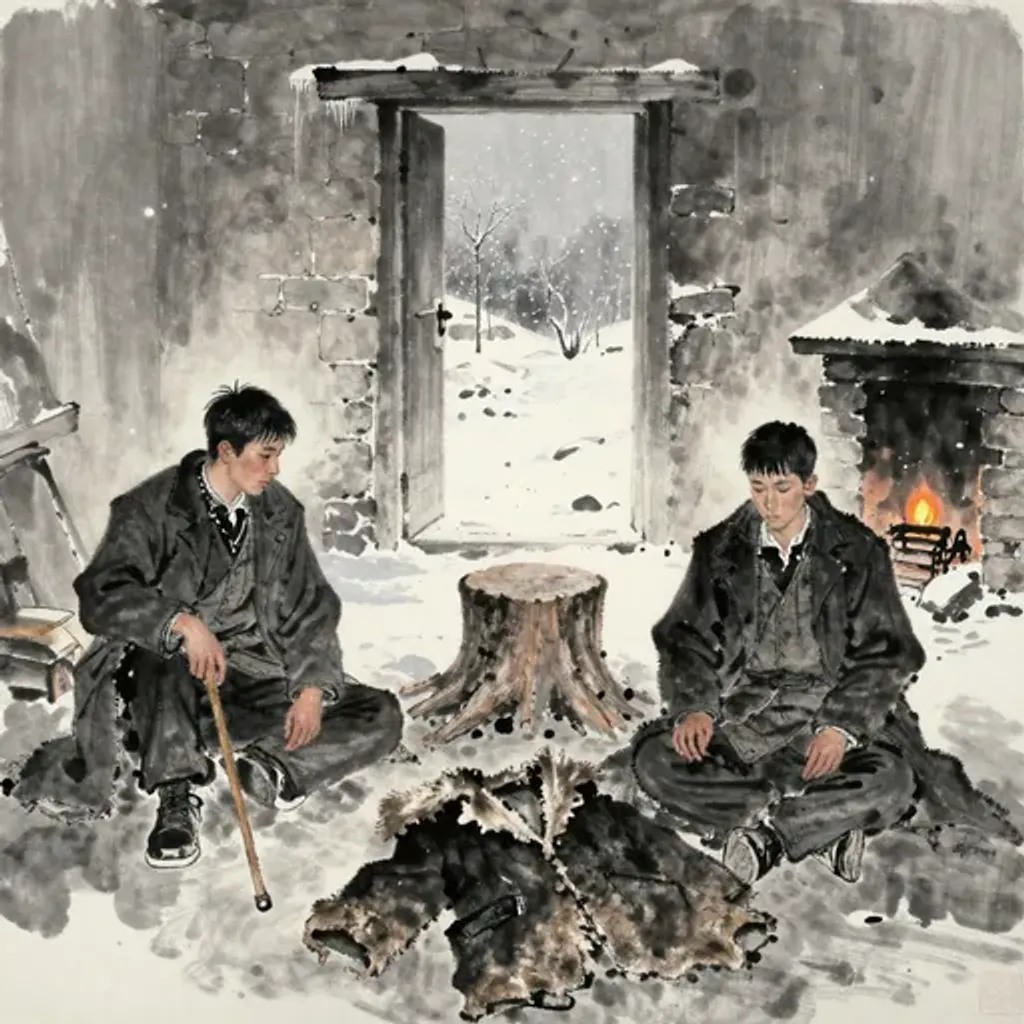
伯蹇叔瘖,莫與守株。失我衣裘,代爾陰鄉。
The elder brother lame, the younger mute; neither can stand guard by the stump. I have lost my fur coat, consigned to your cold and shadowed land.
— Jiao Yanshou, Yilin (Forest of Changes), 1st century BC
Commentary
Thunder and fire converge in Abundance, and the verse presents a pair of disabilities. 'Elder brother is lame; younger brother is mute' — between them, no one can guard even a tree stump. 'I lose my coat and furs, exchanged for your dark realm.' The lame and the mute together cannot accomplish even the simplest task — one cannot walk, the other cannot call for help. The 'tree stump' (守株) may echo the famous fable of the farmer who waited by a stump for another rabbit to crash into it, suggesting futile passivity. From Abundance to Deliverance, thunder and rain break the tension: the verse's stuck, helpless pair finds its resolution in Deliverance's release. What was locked in mutual incapacity dissolves as the storm clears the impasse.
豐 → 損
Hexagram 55 → Hexagram 41: Decrease
Changing lines: 2, 3, 4, 6
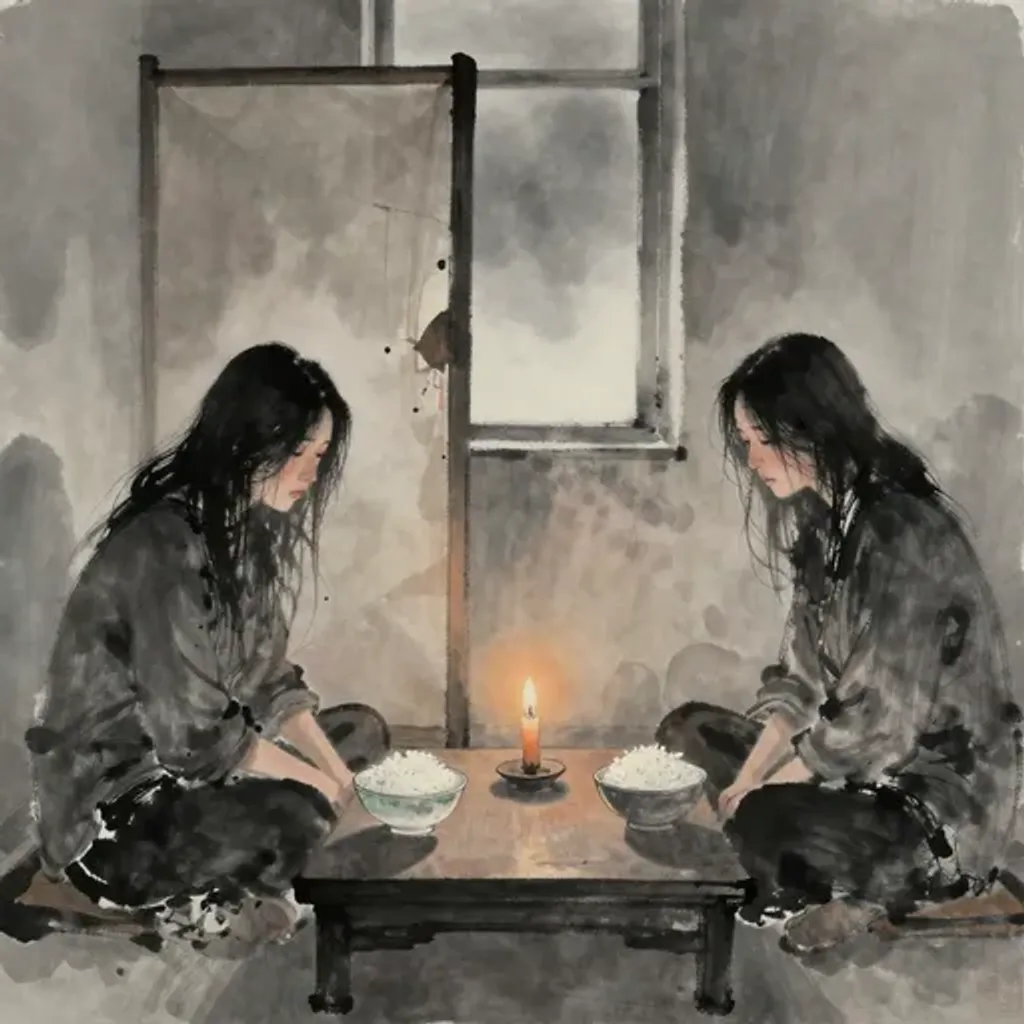
兩女共室,心不聊食。首髮如蓬,憂常在中。
Two women share a room; their hearts have no appetite for food. Hair disheveled like tangled weeds, sorrow dwells always within.
— Jiao Yanshou, Yilin (Forest of Changes), 1st century BC
Commentary
Thunder and fire illuminate Abundance, and the verse depicts two women sharing a chamber in jealous misery. They have no appetite; their hair is disheveled like tangled wormwood. Worry lives constantly in their hearts. Two women in one household is a classical image of rivalry — whether co-wives in a polygamous household or sisters competing for the same position. Neither can eat; neither can groom herself. The unkempt hair signifies abandoned self-care under chronic emotional distress. From Abundance to Decrease, the mountain draws from the lake below: what was abundant is diminished. The emotional excess of jealousy eats away at both women, each one's anguish feeding the other's, until both are reduced to shadows of their former selves.
豐 → 益
Hexagram 55 → Hexagram 42: Increase
Changing lines: 3, 4, 5, 6
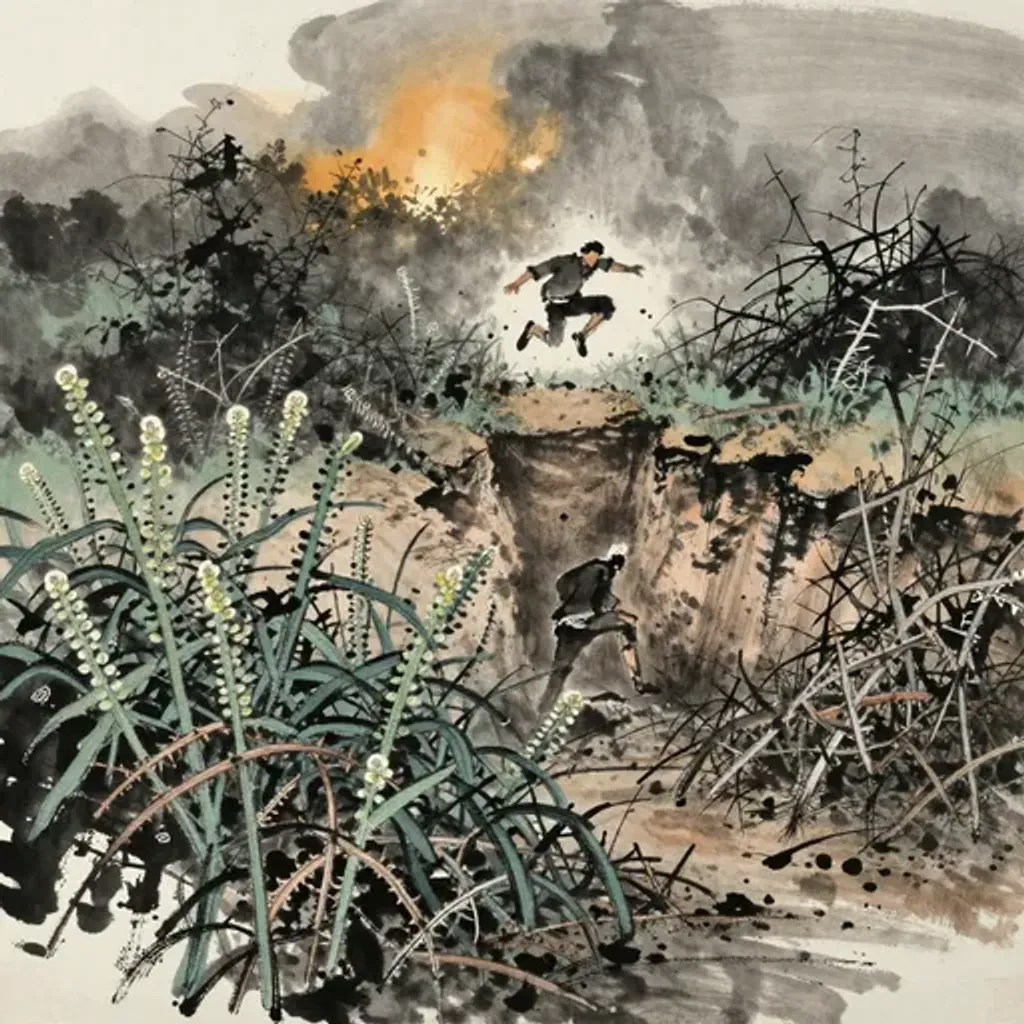
去辛就蓼,毒愈苦甚。避穽遇坑,憂患日主。
Leaving bitterness for smartweed, the poison grows ever worse. Dodging a pit, meeting a trench; worry and trouble rule each day.
— Jiao Yanshou, Yilin (Forest of Changes), 1st century BC
Commentary
Thunder and fire converge in Abundance, and the verse describes a man fleeing from one poison into another. Leaving the spicy to seek the bitter — the poison only grows more severe. Avoiding the pit, he falls into the ditch; worry and calamity multiply daily. Each attempted escape leads to worse trouble. The 辛 (pungent) and 蓼 (smartweed) are both acrid plants — one does not improve upon the other. The pit (穽) and ditch (坑) are equally treacherous. From Abundance to Increase, wind and thunder work together: the irony is that Increase promises improvement through 'seeing good and following it, having faults and correcting them,' yet the verse shows someone who keeps choosing wrong. True Increase requires discernment, not just motion — without it, every change is lateral at best.
豐 → 夬
Hexagram 55 → Hexagram 43: Breakthrough
Changing lines: 2, 5
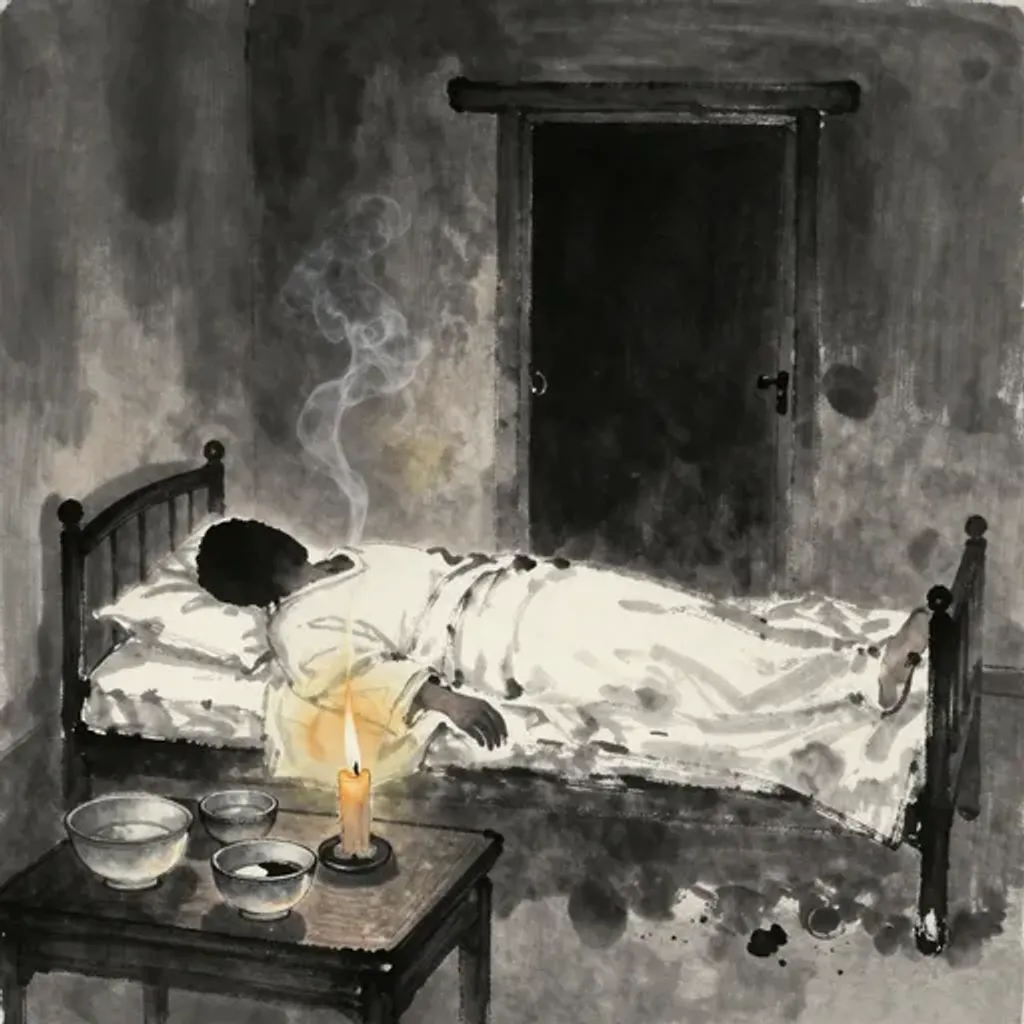
初病終凶,季為死喪,不見光明。
First illness, then in the end, doom; by the close, death and mourning. No light to be seen.
— Jiao Yanshou, Yilin (Forest of Changes), 1st century BC
Commentary
Thunder and fire illuminate Abundance, and the verse is starkly brief. Illness at first, death at the end; the season brings funeral and mourning. No light is seen. Three short phrases trace an arc from sickness through terminal decline to darkness. There are no allusions, no historical figures — just the blunt trajectory of a life extinguished. The absence of light inverts Abundance's very name, for Feng means fullness and brightness. From Abundance to Breakthrough, the lake rises to heaven in decisive action: yet what breaks through here is death itself, cutting through the pretense of continued abundance. Breakthrough's courage to confront what must be confronted finds its darkest expression in this unflinching acknowledgment of the end.
豐 → 姤
Hexagram 55 → Hexagram 44: Coming to Meet
Changing lines: 1, 2, 5, 6
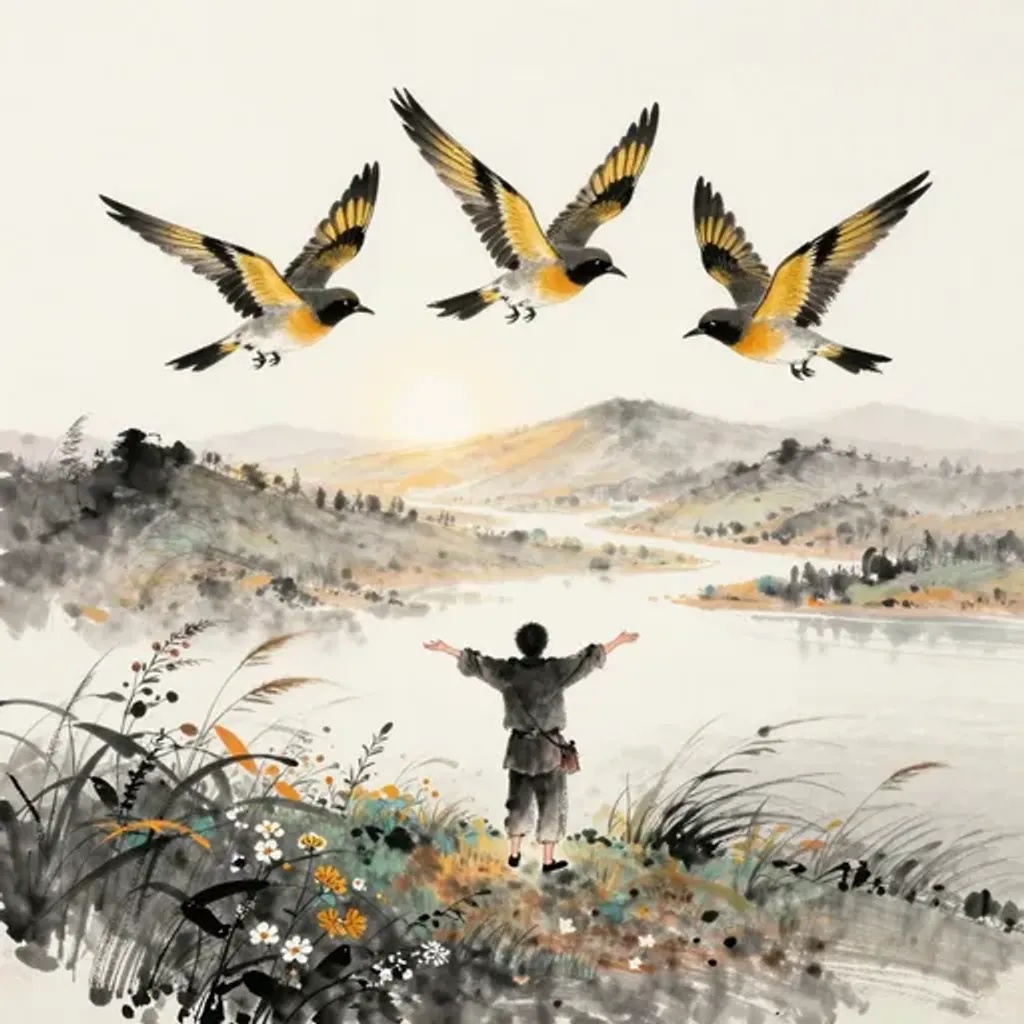
三鳥飛來,自到逢時。俱行先至,多得大利。
Three birds fly hither, arriving of their own accord at the right time. Traveling together, arriving first; gaining great profit in abundance.
— Jiao Yanshou, Yilin (Forest of Changes), 1st century BC
Commentary
Thunder and fire converge in Abundance, and three birds arrive auspiciously. Flying in together, they arrive at the right moment. Traveling as one, the foremost reaches first, and great profits are obtained. The three birds may represent messengers, opportunities, or talented men arriving simultaneously. Their timing is perfect — they come 'at the appointed moment' (逢時), and the one who leads gains the most. From Abundance to Coming to Meet, heaven's wind blows below, spreading the royal decree to all directions: the birds' arrival mirrors the sudden appearance of an unexpected encounter. Coming to Meet warns of the yin force rising unbidden, yet here the encounter is fortunate — opportunity arrives on its own, and the prepared one seizes it first.
豐 → 萃
Hexagram 55 → Hexagram 45: Gathering Together
Changing lines: 1, 3, 5
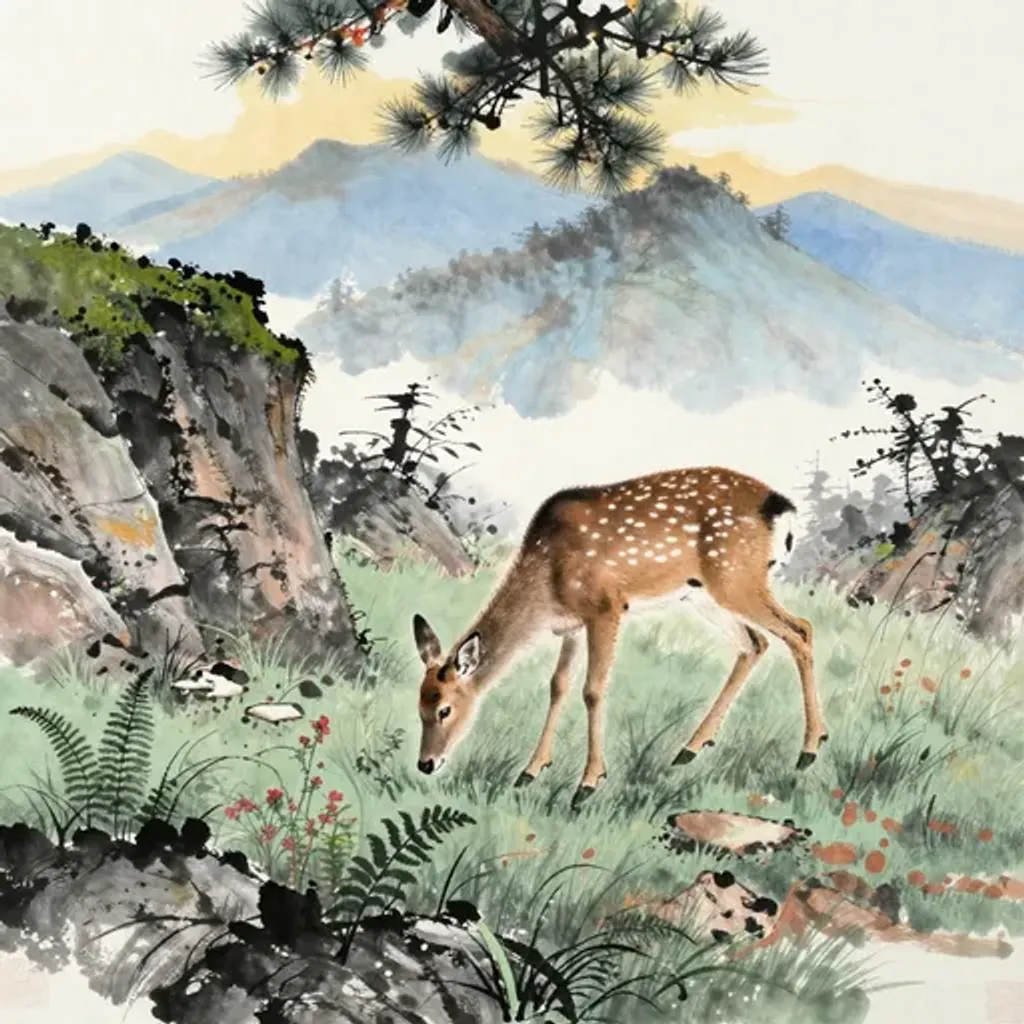
鹿食山草,不思邑里,雖久无咎。
A deer eats mountain grass, giving no thought to the town. Though it lingers long, no harm comes.
— Jiao Yanshou, Yilin (Forest of Changes), 1st century BC
Commentary
Thunder and fire illuminate Abundance, and a deer grazes quietly on mountain herbs, not thinking of the town or its enclosures. Though it stays long in the wild, no harm comes. The deer's contentment lies in its refusal to be drawn toward human settlements where traps and hunters await. By remaining in its natural habitat, feeding on what the mountain freely offers, it avoids all danger. From Abundance to Gathering, the lake upon the earth: the verse presents the counter-image of Gathering. While Gathering draws people to a center, the deer thrives by staying apart, finding sustenance in solitude. Sometimes the wisest response to abundance is not to gather more but to remain where one already has enough.
豐 → 升
Hexagram 55 → Hexagram 46: Pushing Upward
Changing lines: 1, 2, 4
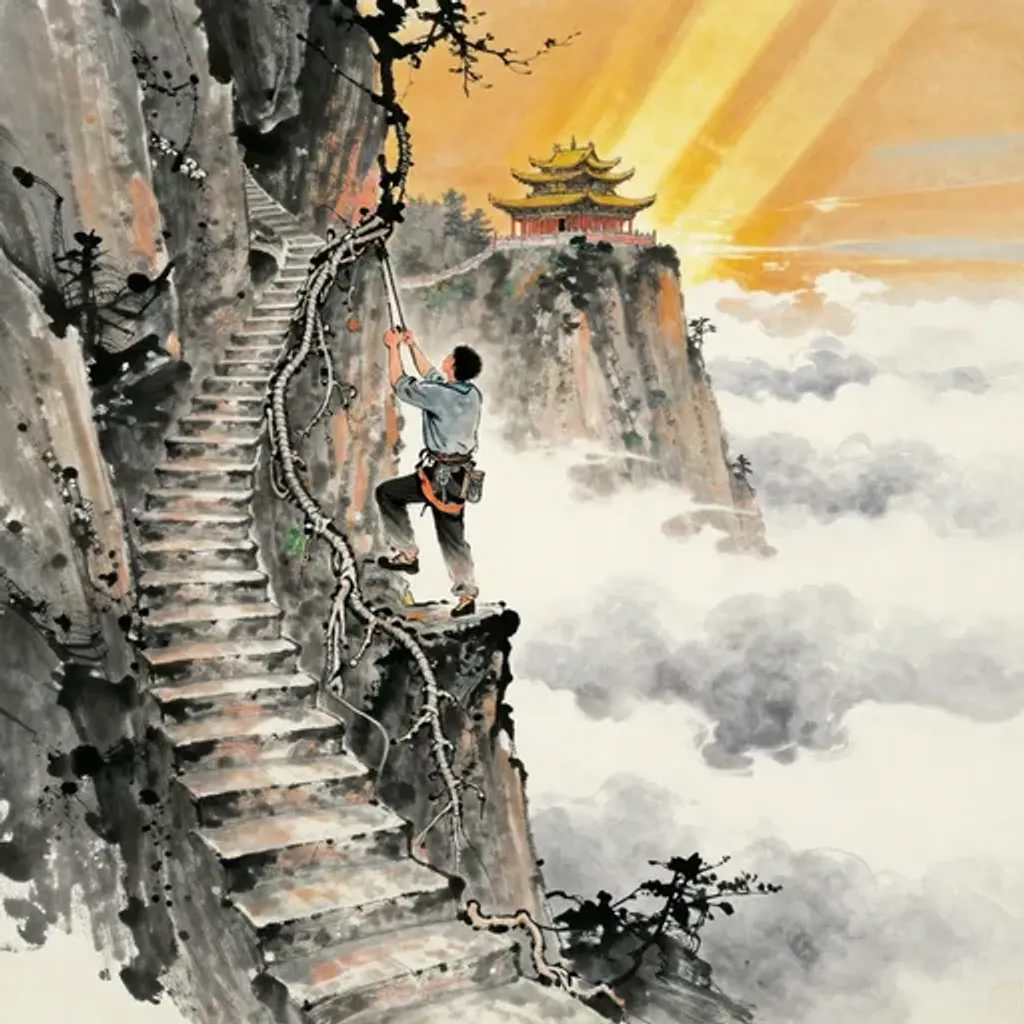
羊腸九縈,相推稍前。止須王孫,乃能上天。
Layer upon layer of cliff and ridge, a thousand stone steps. Hands grip vines; one step, one rest. The clouds part to reveal the summit — a temple stands above.
— Jiao Yanshou, Yilin (Forest of Changes), 1st century BC
Commentary
Thunder and fire join in Abundance, and the original verse describes a winding, arduous ascent. 'The road coils like a sheep's intestine, pushing forward inch by inch; one must wait for the noble patron before ascending to heaven.' The sheep-gut path (羊腸) is a classical image of a treacherous mountain road so narrow that progress is agonizingly slow. The key insight: one cannot make this climb alone. A patron or supporter (王孫) is needed to complete the ascent. From Abundance to Pushing Upward, wood grows within the earth: the transformation captures the verse's message perfectly. Upward advance is not a sprint but a slow, organic rise from below, accumulating small gains until the summit emerges from the clouds.
豐 → 困
Hexagram 55 → Hexagram 47: Oppression
Changing lines: 1, 2, 3, 5
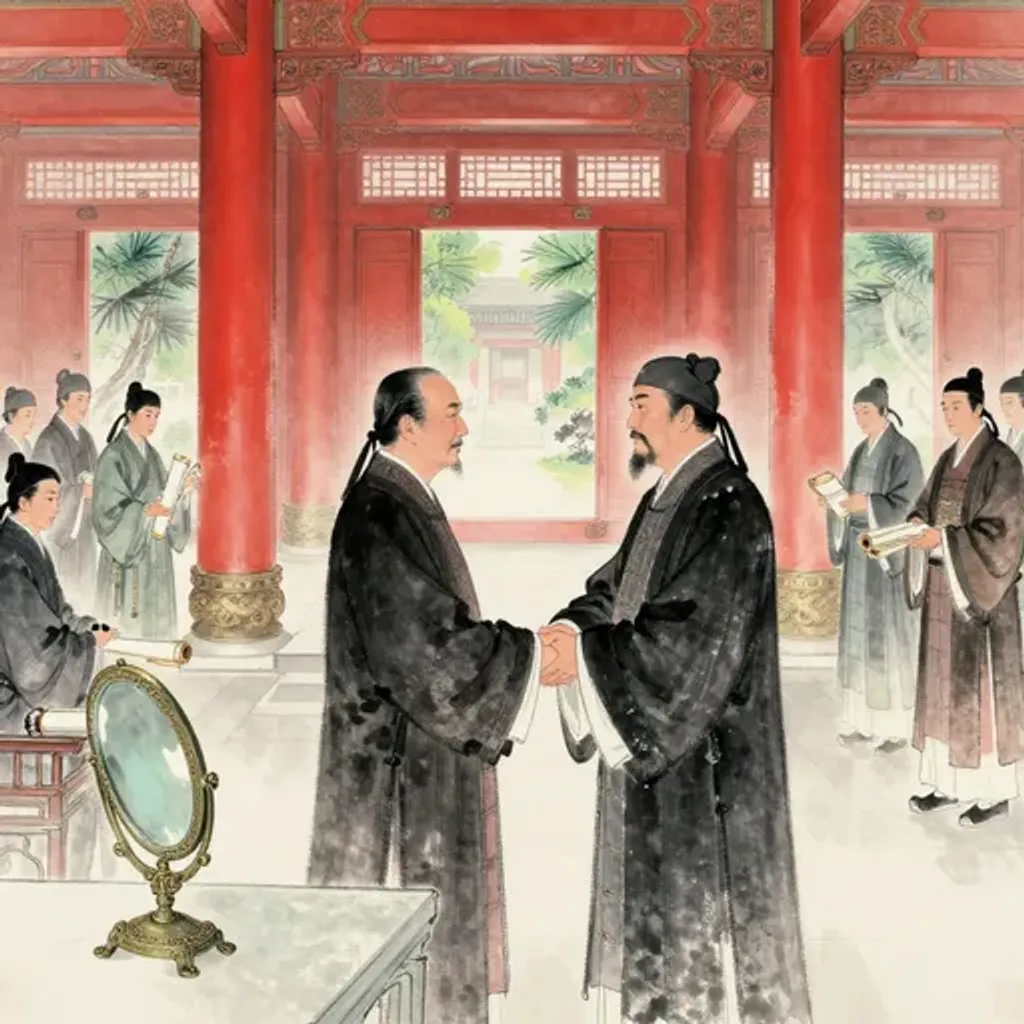
管仲遇桓,得其願歡。膠牢振冠,冠帶无憂。笑戲不莊,空言妄行。
Guan Zhong met Duke Huan, and gained what he wished and desired. The bond set firm, the cap straightened; capped and robed, without worry. Yet jesting without solemnity, empty words and reckless deeds.
— Jiao Yanshou, Yilin (Forest of Changes), 1st century BC
Commentary
Thunder and fire converge in Abundance, and the verse begins with a celebrated partnership. Guan Zhong meets Duke Huan of Qi and finds his heart's delight — the minister and lord unite in purpose. Bonds are secured, the ceremonial cap is straightened; cap and sash bring no worry. But the verse pivots: 'laughing and playing without dignity, empty words and reckless deeds.' The initial joy of partnership dissolves into careless indulgence. From Abundance to Oppression, the lake drains its water: what began as the most productive minister-lord bond in Spring and Autumn history degenerates into frivolity. Oppression strips away the surface, revealing that even the greatest alliances hollow out when discipline is abandoned.
豐 → 井
Hexagram 55 → Hexagram 48: The Well
Changing lines: 1, 2, 4, 5
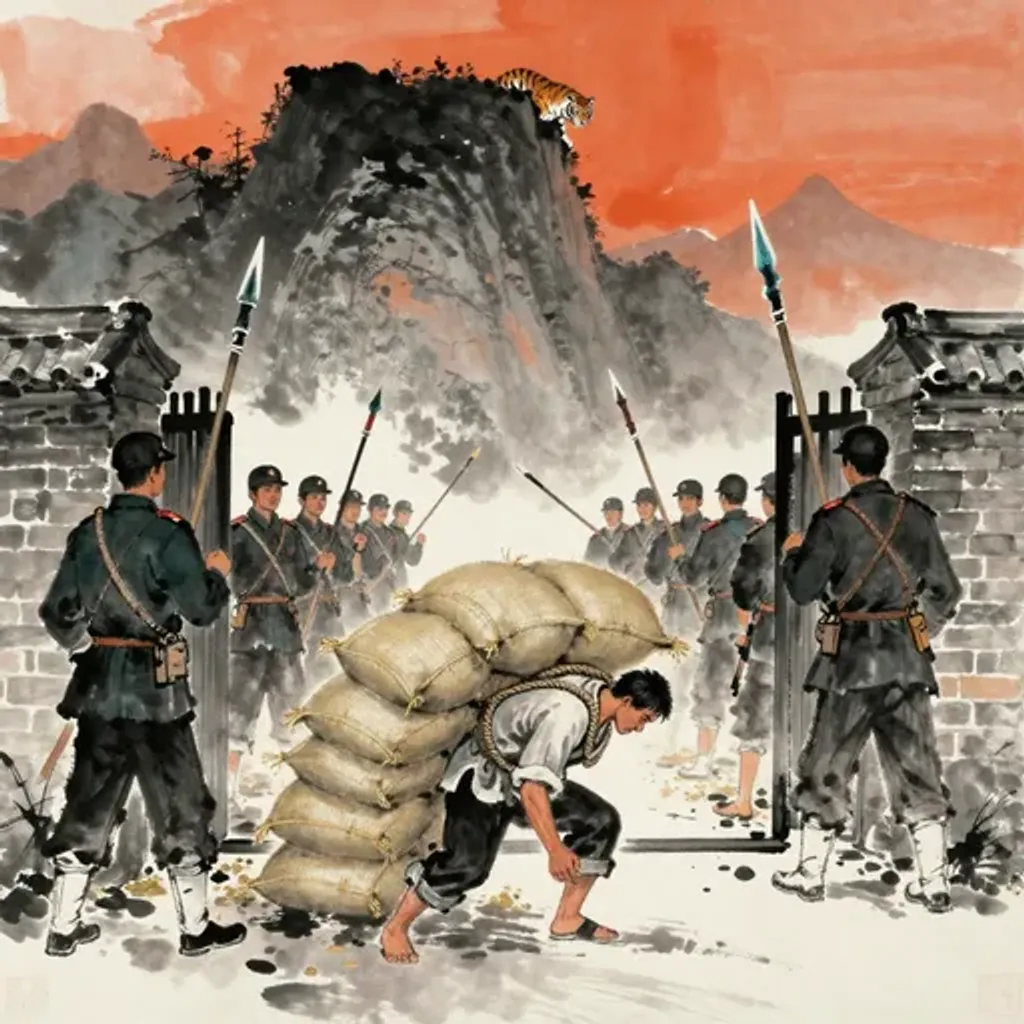
桀跖並處,民困愁苦。行旅遲遲,留連齊魯。
Heavy taxes press the shoulders until bones nearly break. Checkpoints layer upon layer — the road is blocked. The farmer abandons his hoe and flees to the mountains — but the tiger's roar in the mountains terrifies the heart too.
— Jiao Yanshou, Yilin (Forest of Changes), 1st century BC
Commentary
Thunder and fire illuminate Abundance, and the original verse names two archetypal villains. 'Jie and Zhi dwell together; the people are distressed and suffering. Travelers proceed haltingly, lingering between Qi and Lu.' When tyrant Jie of Xia and bandit-chief Zhi occupy the land simultaneously, the common folk have nowhere to turn. Travel becomes perilous; people stall between states, belonging to neither. The combination of despotic ruler and outlaw strips away all security. From Abundance to the Well, water rises through wood: the Well never moves, never runs dry, and serves everyone without discrimination. Against the verse's nightmare of lawless misrule, the Well offers the fundamental infrastructure of civilization — the resource that sustains regardless of who holds political power.
豐 → 革
Hexagram 55 → Hexagram 49: Revolution
Changing lines: 5
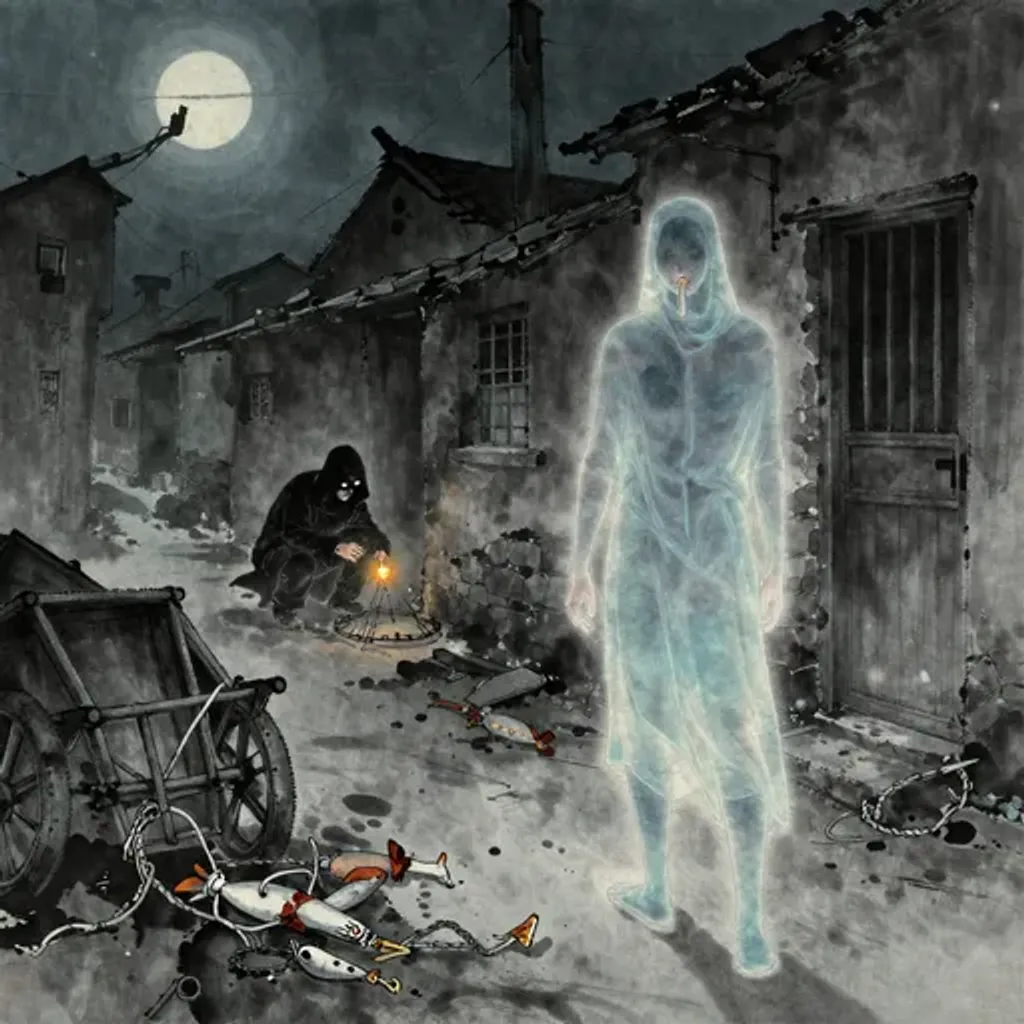
魂孤无室,衘指不食。盜張民餌,見敵失福。
A solitary soul with no home, biting its finger, refusing to eat. The bandit displays bait for the people; confronting the foe, one loses fortune.
— Jiao Yanshou, Yilin (Forest of Changes), 1st century BC
Commentary
Thunder and fire converge in Abundance, and the verse depicts spiritual desolation. A solitary ghost without shelter, biting its own fingers instead of eating. Bandits set bait for the people; encountering the enemy, fortune is lost. The hungry ghost (魂孤無室) is perhaps the most wretched figure in Chinese cosmology — an unanchored spirit with no descendants to feed it, reduced to gnawing its own hands. Meanwhile, predatory forces exploit the desperate populace. From Abundance to Revolution, fire within the lake: the verse presents the conditions that make revolution necessary. When the people are reduced to hungry ghosts and bandits prey upon them, the old order has exhausted its mandate. Revolution's fire burns within the lake, preparing to transform what has become intolerable.
豐 → 鼎
Hexagram 55 → Hexagram 50: The Cauldron
Changing lines: 1, 2, 6
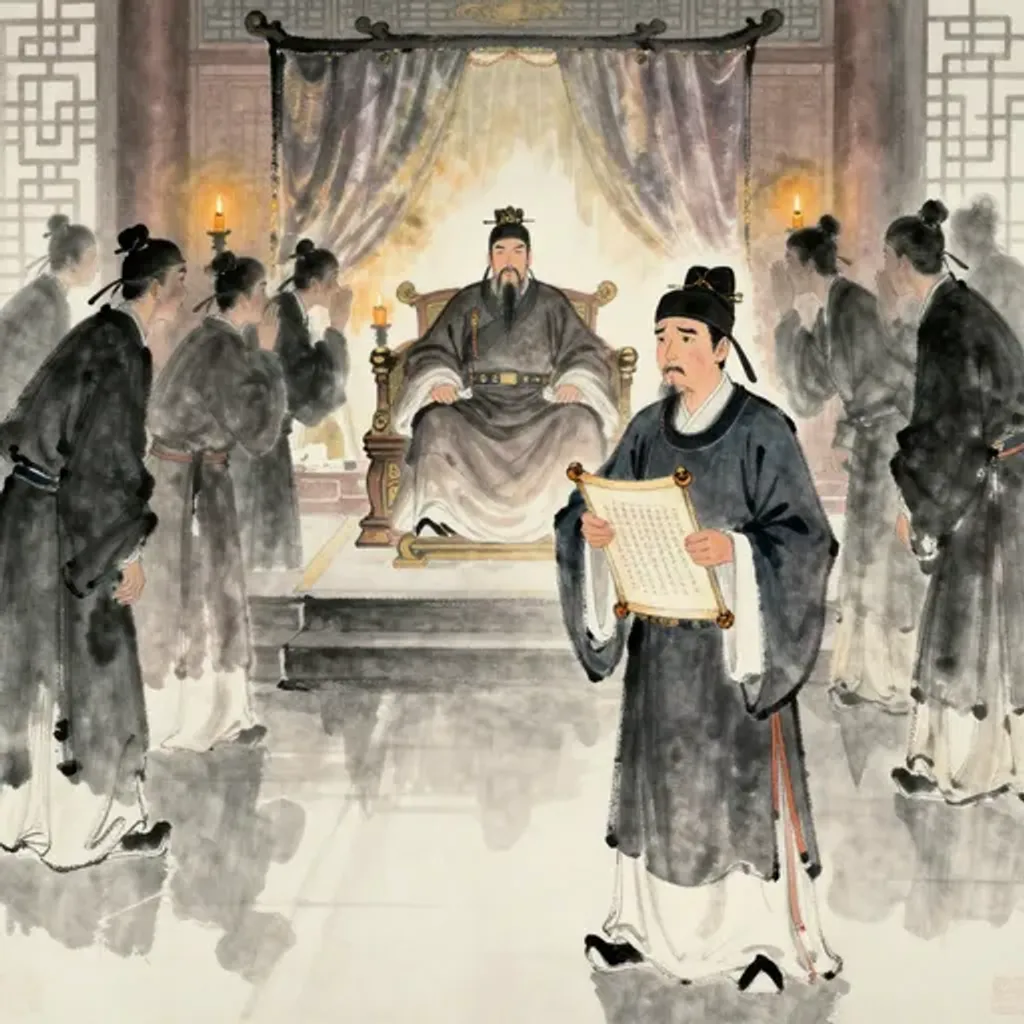
讒言亂國,覆是為非。伯奇乖難,恭子憂哀。
Slander disrupts the state, overturning right to make it wrong. Bo Qi met with calamity; the dutiful son grieves in sorrow.
— Jiao Yanshou, Yilin (Forest of Changes), 1st century BC
Commentary
Thunder and fire illuminate Abundance, and slander overturns the state. Malicious words disrupt the realm, inverting right and wrong. Boqi suffers unjust exile; the filial son grieves in sorrow. Boqi was the son of Yin Jifu, a great minister of King Xuan of Zhou. His stepmother framed him by placing a venomous insect on her collar; when the dutiful Boqi reached to brush it away, his father saw an apparent assault and banished him. Boqi composed the guqin lament 'Treading on Frost' in the wilderness. From Abundance to the Cauldron, fire above wind refines and transforms: the Cauldron represents proper order and nourishment from above, yet slander poisons the vessel. When the cauldron's contents are contaminated by lies, the instrument of civilization becomes the instrument of injustice.
豐 → 震
Hexagram 55 → Hexagram 51: The Arousing Thunder
Changing lines: 3
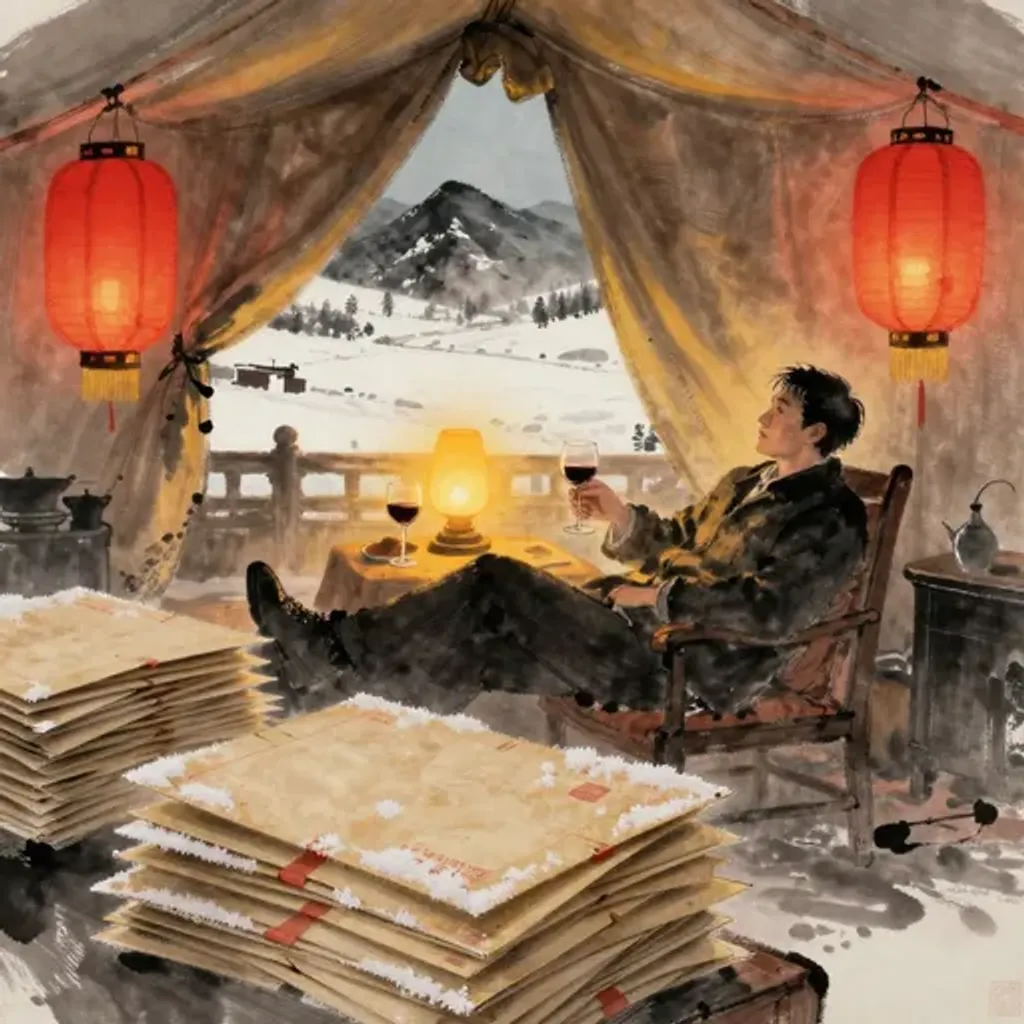
衛侯東遊,惑於少姬。亡我考妣,久迷不來。
Red lamps and warm wine bewitch the eyes; outside the tent, cold wind drives the war drums. Family letters pile up unopened — the homeland lies a thousand li away under fresh snow.
— Jiao Yanshou, Yilin (Forest of Changes), 1st century BC
Commentary
Thunder and fire join in Abundance, and the original verse tells of a duke bewitched abroad. 'The Marquis of Wei travels eastward, beguiled by a young concubine. He neglects his parents' memory and lingers, lost, never returning.' The Marquis of Wei (衛侯) who 'traveled east, beguiled by Shao Ji' likely alludes to a Wei ruler so captivated by a woman that he abandoned his duties, including ancestral rites. The verse names the fundamental violation: forgetting one's father and mother. From Abundance to the Arousing, doubled thunder: the shock that should awaken the conscience goes unheeded. Thunder strikes twice — nature's most urgent alarm — yet the lord remains entranced, deaf to the call of duty and filial obligation.
豐 → 艮
Hexagram 55 → Hexagram 52: Keeping Still Mountain
Changing lines: 1, 4, 6
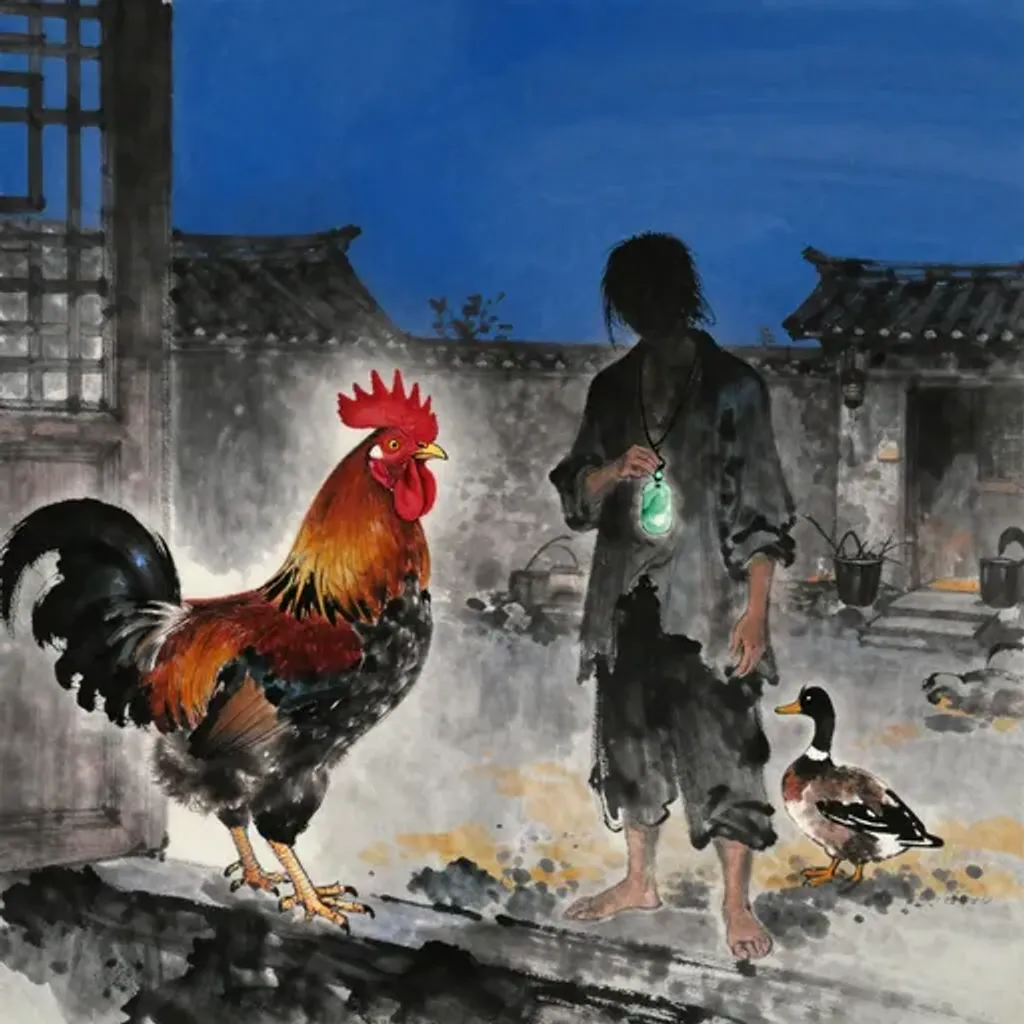
雞鳴同興,思邪无家。執佩持鳧,莫使致之。
At the cock's crow all rise together; thoughts go astray, no home to keep. Clutching the pendant, holding the carved duck, yet none can bring them to their place.
— Jiao Yanshou, Yilin (Forest of Changes), 1st century BC
Commentary
Thunder and fire illuminate Abundance, and roosters crow at dawn as everyone rises together. But thoughts turn deviant, and the household is lost. One grasps jade pendants and holds wild ducks, yet cannot deliver them to their destination. The cock-crow assembly suggests a communal stirring at first light, but the 'deviant thoughts' (思邪) corrupt the gathering before it can bear fruit. The pendants and ducks — gifts of courtship or tribute — are held but never reach the intended recipient. From Abundance to Keeping Still, the doubled mountain: stillness should bring clarity, but here it brings paralysis. The gifts are frozen in transit, the mind is frozen in wrongful desire, and the dawn's promise congeals into inaction.
豐 → 漸
Hexagram 55 → Hexagram 53: Development
Changing lines: 1, 4, 5, 6
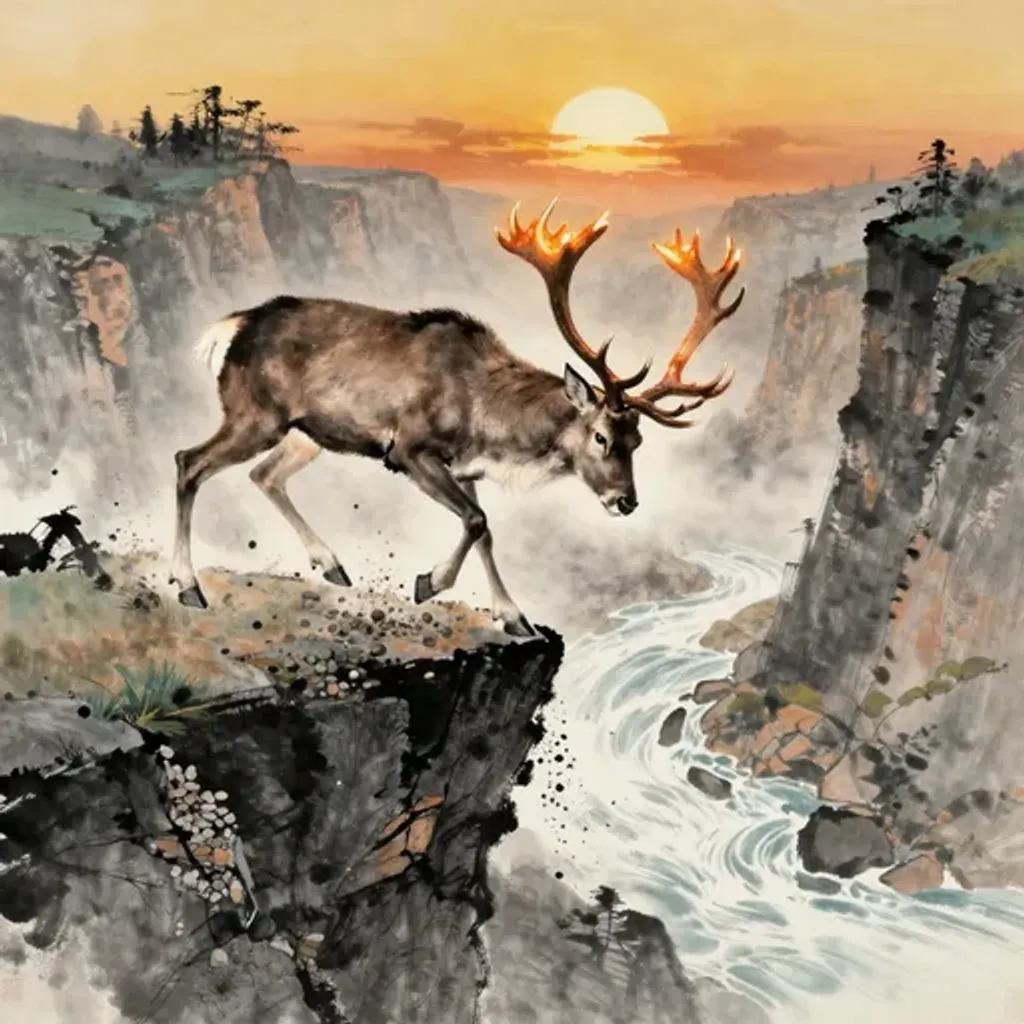
義不勝情,以欲自榮。覬利危寵,摧角折頸。
Duty cannot overcome desire; one adorns oneself with appetite. Coveting profit, courting dangerous favor; horns shattered, neck broken.
— Jiao Yanshou, Yilin (Forest of Changes), 1st century BC
Commentary
Thunder and fire converge in Abundance, and the verse condemns those who let desire override principle. 'Righteousness cannot overcome desire; one glorifies oneself through appetite.' Coveting profit and courting dangerous favor, one's horn is broken and neck snapped. The vivid final image — broken horn and snapped neck — evokes an animal that charged recklessly and met an immovable obstacle. Self-aggrandizement through desire rather than duty leads to violent self-destruction. From Abundance to Development, the tree grows slowly on the mountain: Development's patient, step-by-step progress stands as the antidote to the verse's reckless grasping. When desire outpaces principle, the gradual path is abandoned, and the climber falls from the height they tried to scale too quickly.
豐 → 歸妹
Hexagram 55 → Hexagram 54: The Marrying Maiden
Changing lines: 2, 3
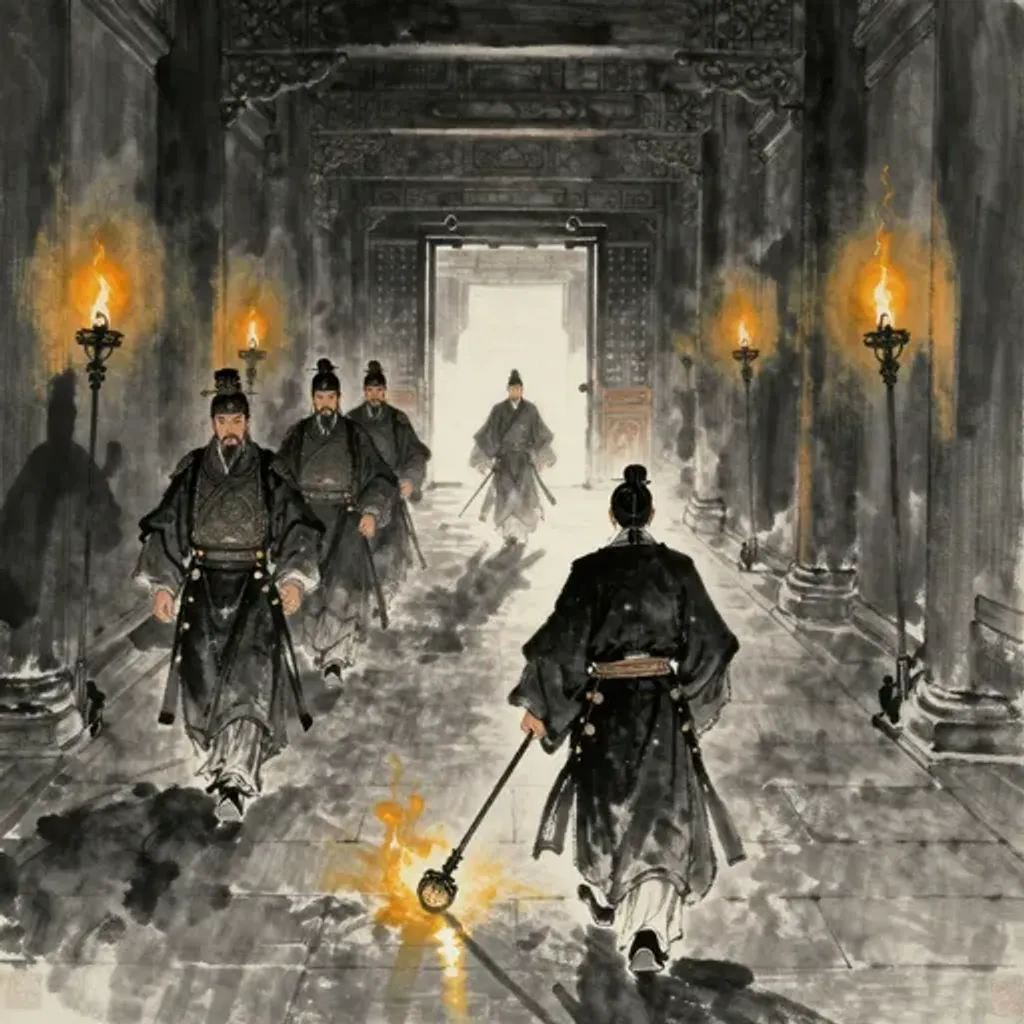
臣尊主卑,擁力日衰。侵奪无光,三家逐公。
The minister exalted, the lord debased; power seized, light daily dimmed. Encroaching and seizing without radiance; three great houses drive out the duke.
— Jiao Yanshou, Yilin (Forest of Changes), 1st century BC
Commentary
Thunder and fire illuminate Abundance, and the political order inverts. Ministers are exalted while the lord is debased; power concentrates as authority wanes. Light is extinguished as usurpation proceeds, and 'three families drive out the duke.' This directly references the Three Huan families of Lu — the Jisun, Shusun, and Mengsun clans — who expelled Duke Zhao of Lu in 517 BC. The duke fled to Qi and later died in exile at Ganhou in Jin. The verse names the classic Spring and Autumn pattern of ministerial usurpation. From Abundance to the Marrying Maiden, thunder over the lake: the Marrying Maiden warns of improper unions and positions taken out of order, mirroring the ministers who seized what was never rightfully theirs.
豐 → 豐
Hexagram 55 → Hexagram 55: Abundance
No changing lines — the hexagram is unchanged
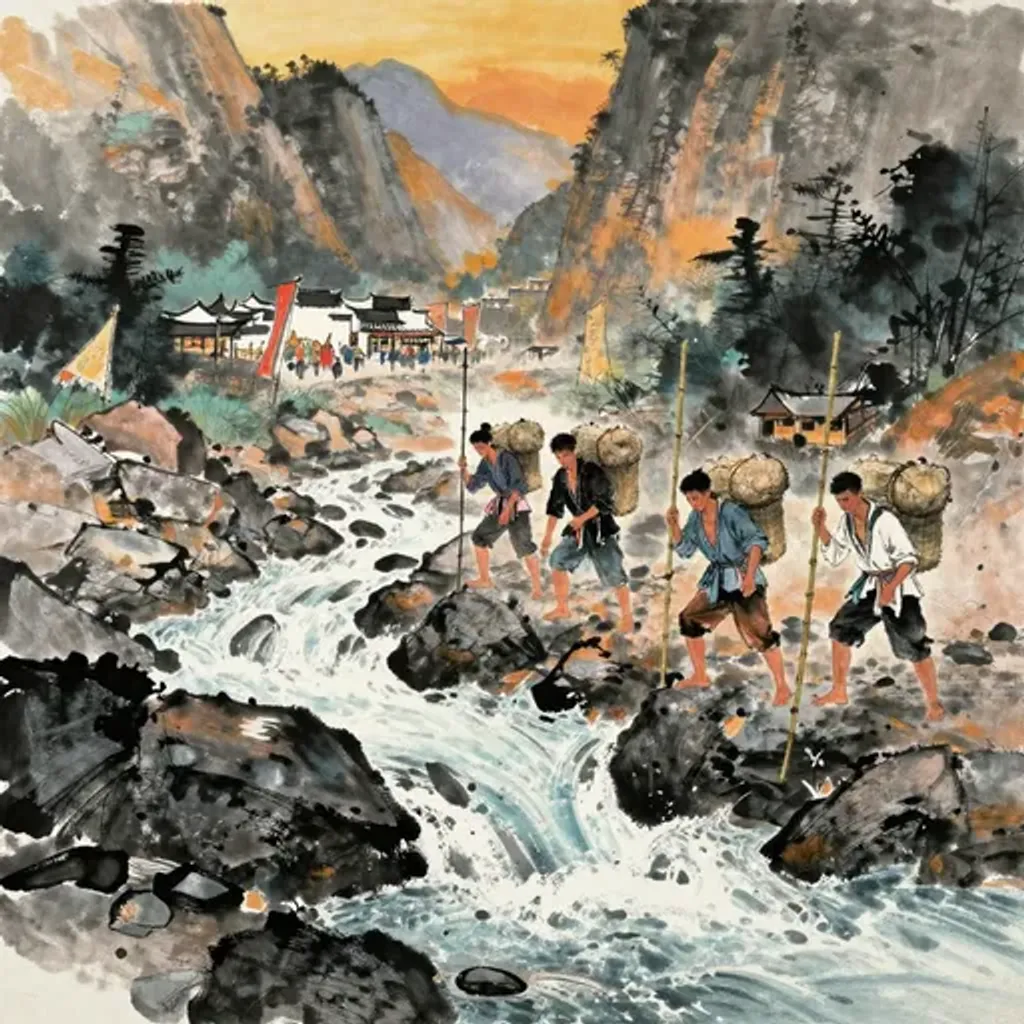
諸孺行賈,經涉大阻。與杖為市,不憂危殆。利得十倍。
Young merchants set out trading, crossing great obstacles on the way. With staffs they make their market; undaunted by danger and peril. Profit gained tenfold.
— Jiao Yanshou, Yilin (Forest of Changes), 1st century BC
Commentary
Thunder and fire converge in Abundance upon itself — the hexagram unchanged. Young merchants set out on a trading venture, crossing great obstacles. They rely on their walking staffs for trade and do not worry about danger. Profits multiply tenfold. When Abundance transforms into itself, the pattern intensifies rather than shifts. The young traders embody Abundance's own energy: vigorous, bold, traversing difficulties with nothing but a staff and commercial instinct. Their fearlessness in the face of hardship yields extraordinary returns. The self-referential transformation suggests that true abundance perpetuates itself — those who fully inhabit the moment of fullness, without hesitation or anxiety, find that prosperity regenerates from within.
豐 → 旅
Hexagram 55 → Hexagram 56: The Wanderer
Changing lines: 1, 6
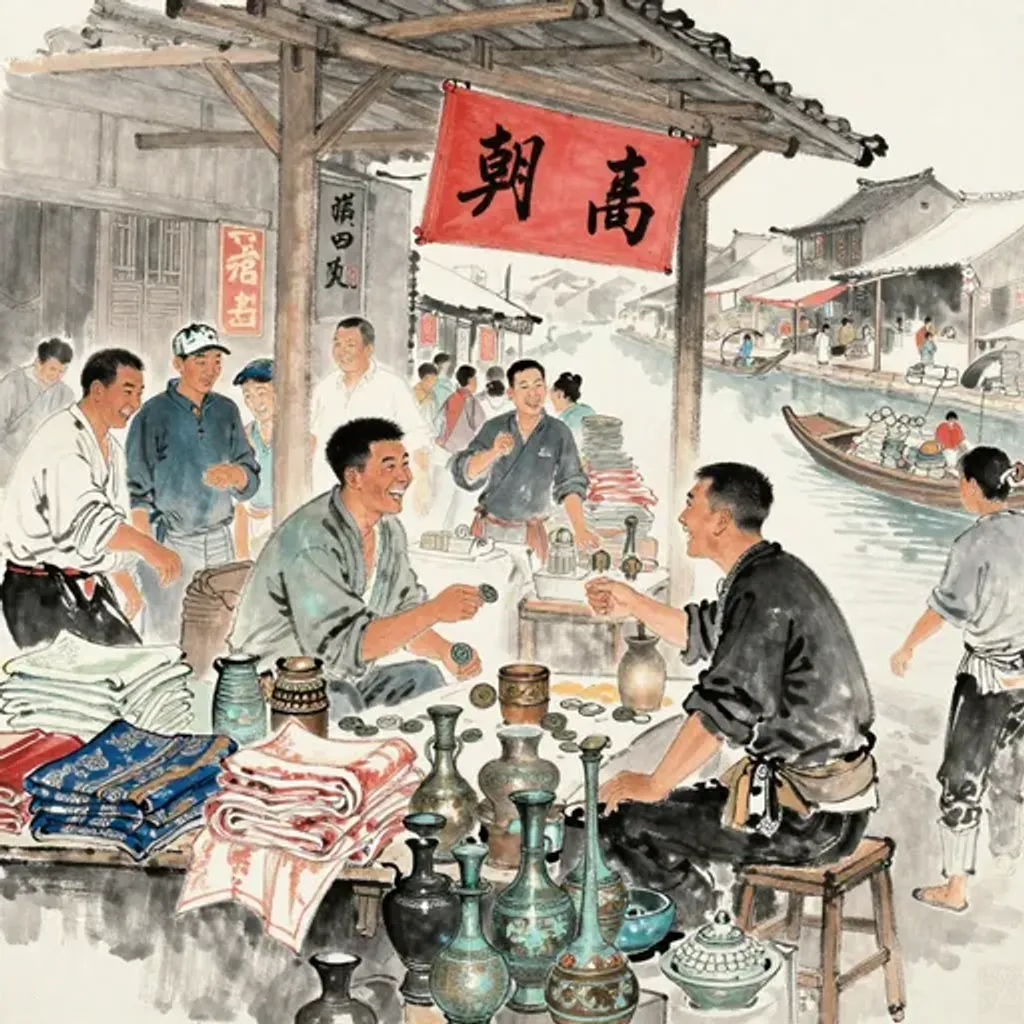
叔仲善賈,與喜為市。不憂危殆,利得十倍。
Shu and Zhong trade skillfully, dealing with joy at the market. Undaunted by danger and peril; profit gained tenfold.
— Jiao Yanshou, Yilin (Forest of Changes), 1st century BC
Commentary
Thunder and fire illuminate Abundance, and the verse celebrates skilled commerce. Shuzhong is a good merchant who trades alongside joy and satisfaction. He worries not about danger, and profits multiply tenfold. The 'Shuzhong' (叔仲) may be a personal name or a kinship term (the second and third brothers), suggesting a family trade partnership. This verse closely parallels 55-55, with the same phrasing of fearless trading and tenfold returns. From Abundance to the Wanderer, fire upon the mountain: the merchant's journey transforms from Abundance's confident expansion into the Wanderer's more precarious travel. The Wanderer must be 'clear and careful' — the tenfold profit is possible, but only for one who carries prudence alongside boldness.
豐 → 巽
Hexagram 55 → Hexagram 57: The Gentle Wind
Changing lines: 1, 2, 4, 5, 6
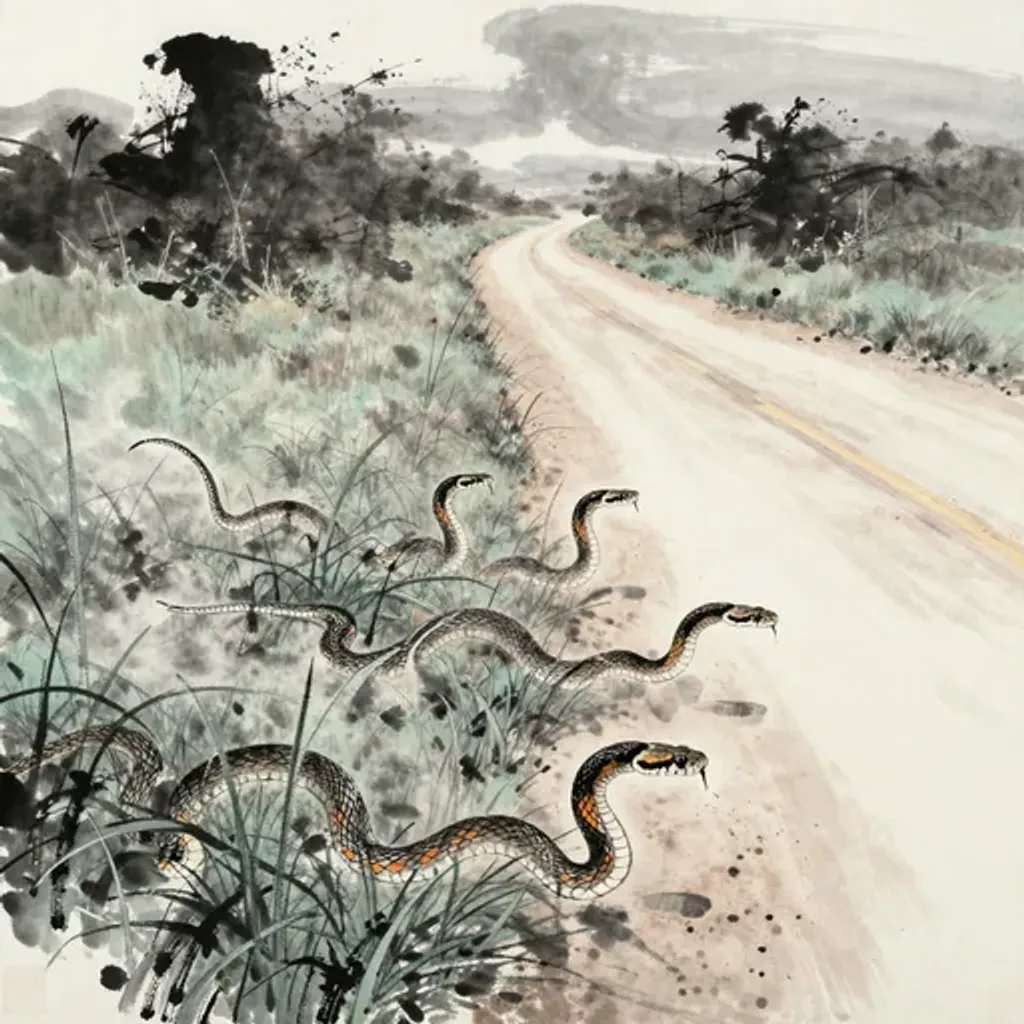
六虵奔走,俱入茂草。驚於長路,畏懼啄口。
Six snakes dash and flee, all plunging into thick grass. Startled on the long road, fearful of the pecking beak.
— Jiao Yanshou, Yilin (Forest of Changes), 1st century BC
Commentary
Thunder and fire converge in Abundance, and six serpents flee in panic. They rush into the tall grass, startled on the long road, terrified of pecking beaks. The serpents' flight is disorderly and driven by fear — they are prey, not predators. The 'pecking beaks' (啄口) suggest birds attacking from above, forcing the snakes to ground level. Six is the number of yin lines, and serpents in grass represent hidden, vulnerable forces seeking concealment. From Abundance to the Gentle, doubled wind penetrates everywhere: the snakes cannot hide because wind enters every crevice of the tall grass. The Gentle's penetrating quality finds what is concealed, and for the snakes — already panicked — there is no shelter even in the densest growth.
豐 → 兌
Hexagram 55 → Hexagram 58: The Joyous Lake
Changing lines: 2, 3, 5
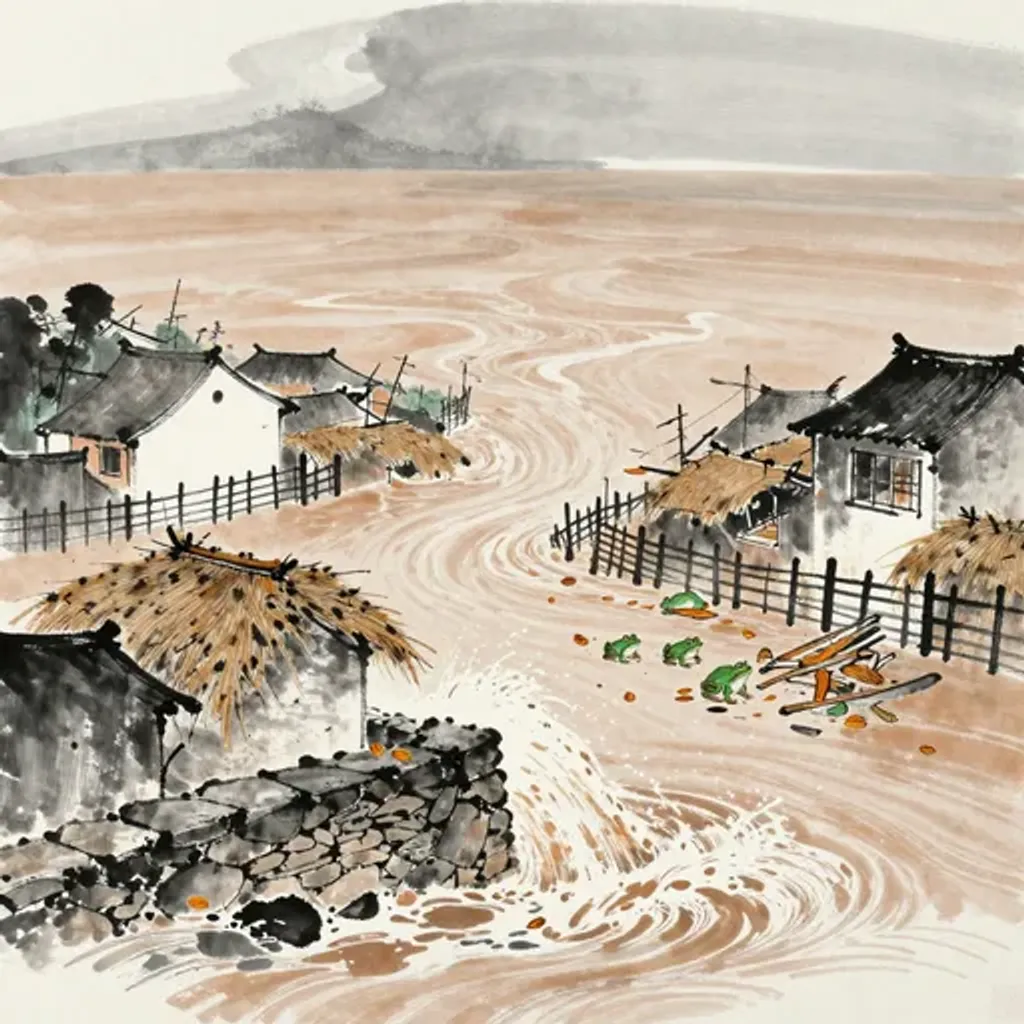
水壞我里,東流為海。鳧鼃讙囂,不得安居。
Water destroys my village, flowing east to the sea. Ducks and frogs clamor in uproar; no peace for dwelling.
— Jiao Yanshou, Yilin (Forest of Changes), 1st century BC
Commentary
Thunder and fire illuminate Abundance, and floodwaters destroy the village. The waters rush eastward toward the sea, and frogs croak their clamor amid the ruins. No one can settle in peace. The flood carries everything toward the ocean — an irreversible dissolution. The frogs and ducks (鳧鼃) that thrive in the ruin add insult to devastation: creatures of the water celebrate where humans once dwelled. From Abundance to the Joyous, doubled lake: the flood's destination is the lake multiplied. The Joyous means shared delight, yet here the waters that should bring joy have destroyed what they were meant to nourish. When abundance overflows without containment, the lake that should sustain becomes the flood that overwhelms.
豐 → 渙
Hexagram 55 → Hexagram 59: Dispersion
Changing lines: 1, 2, 3, 4, 5, 6
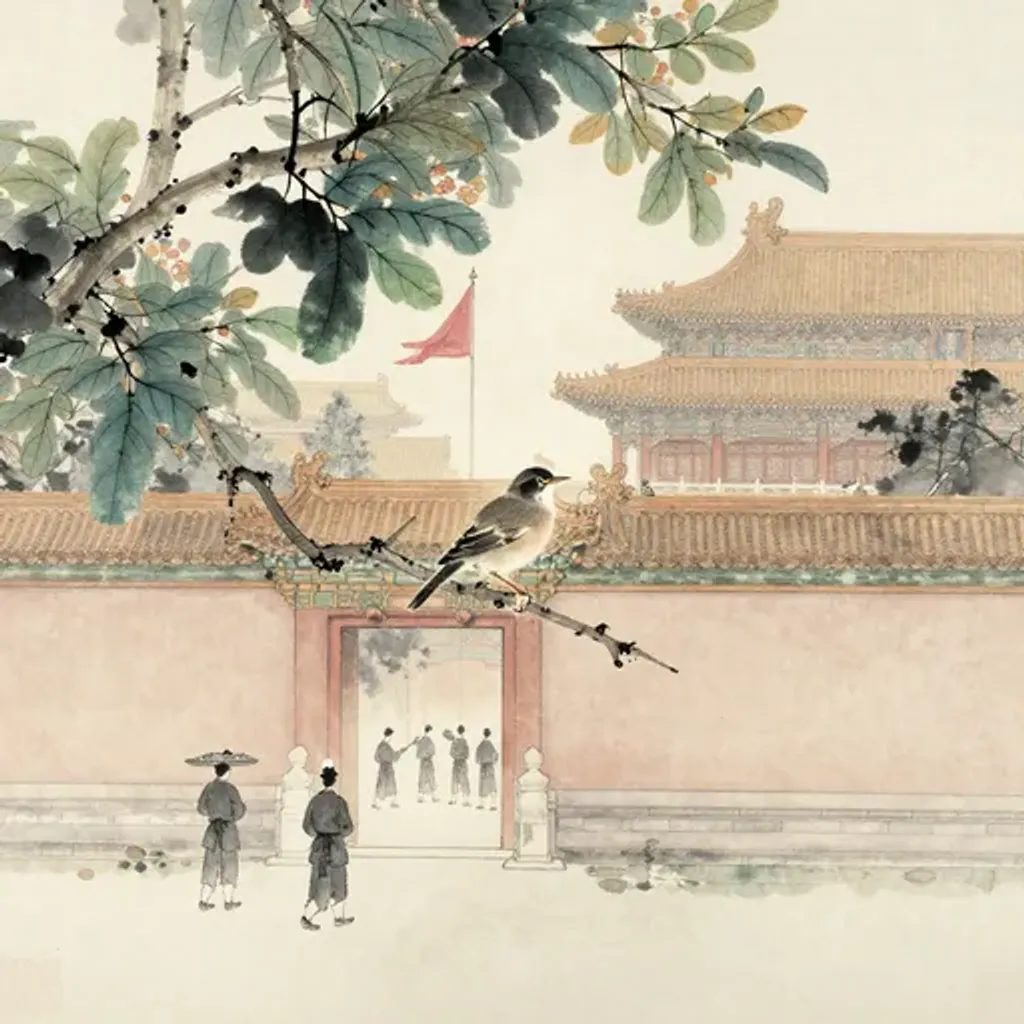
飛不遠去,卑斯內侍,祿養未富。
It does not fly far away; lowly, it serves within. Its salary and sustenance are yet meager.
— Jiao Yanshou, Yilin (Forest of Changes), 1st century BC
Commentary
Thunder and fire converge in Abundance, yet the verse speaks of limited flight. The bird does not fly far; staying low, it serves as an attendant within. Its salary and nourishment are not yet ample. A bird that cannot soar high remains close to the ground, taking a humble position as a domestic servant rather than ranging freely. The meager stipend suggests talent underemployed — the bird has wings but uses them only for short hops. From Abundance to Dispersion, wind over water scatters what was gathered: the bird's constrained position resonates with Dispersion's theme of dissolution. What should be abundant disperses before reaching fullness. The bird stays because it cannot accumulate enough momentum for true flight.
豐 → 節
Hexagram 55 → Hexagram 60: Limitation
Changing lines: 2, 3, 4, 5
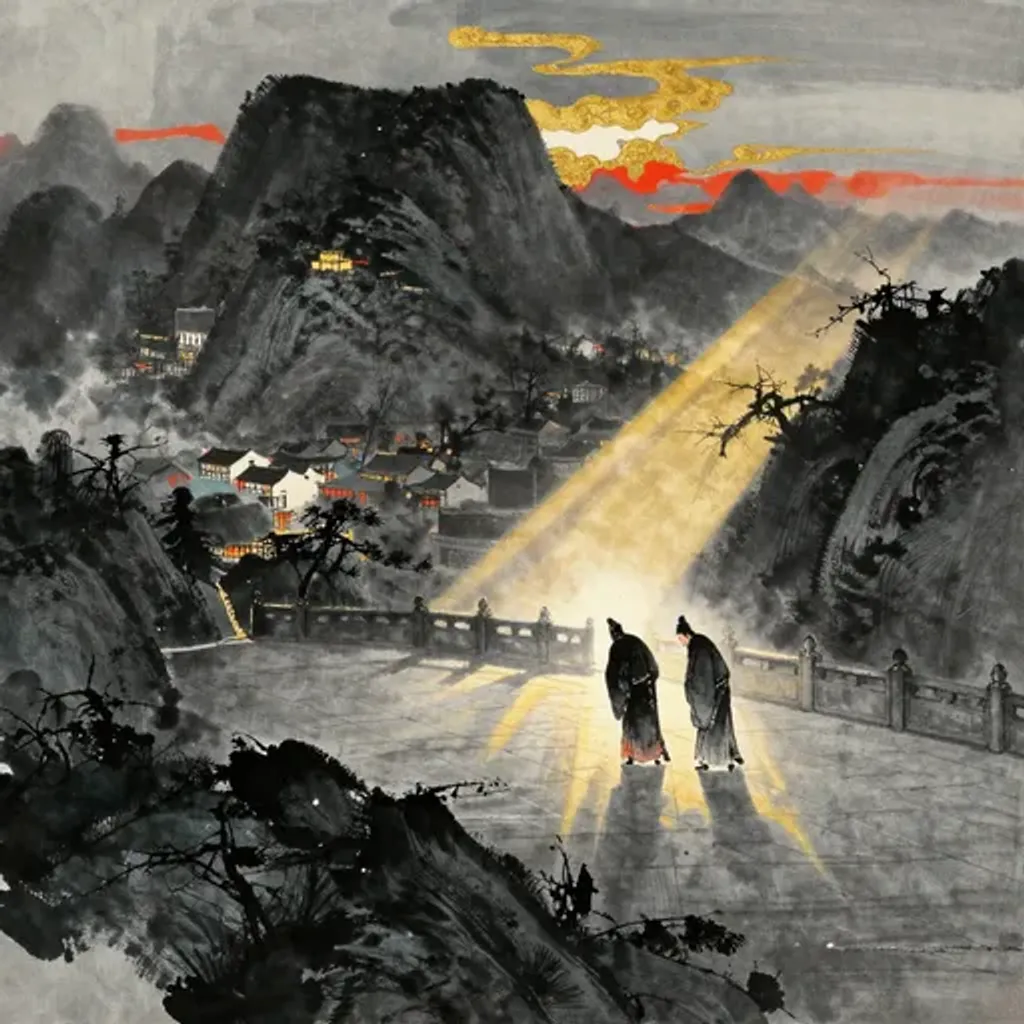
陰變為陽,女化為男。治道大通,君臣相承。
Yin transforms into yang; the female changes to male. The way of governance opens wide; lord and minister sustain each other.
— Jiao Yanshou, Yilin (Forest of Changes), 1st century BC
Commentary
Thunder and fire illuminate Abundance, and the verse proclaims a cosmic transformation. Yin transmutes into yang; female transforms into male. The Way of governance flows freely, and sovereign and minister sustain each other in harmony. This is not gender commentary but cosmological metaphor: the passive, receptive principle converts into the active, creative one. When such a transformation occurs in the political realm, blocked channels open and ruler and minister achieve perfect complementarity. From Abundance to Limitation, water above the lake: Limitation sets proper measures and boundaries. The yin-to-yang transformation succeeds precisely because it occurs within limits — not wild transmutation but structured conversion, like water measured above the lake in proper proportion.
豐 → 中孚
Hexagram 55 → Hexagram 61: Inner Truth
Changing lines: 2, 3, 4, 5, 6
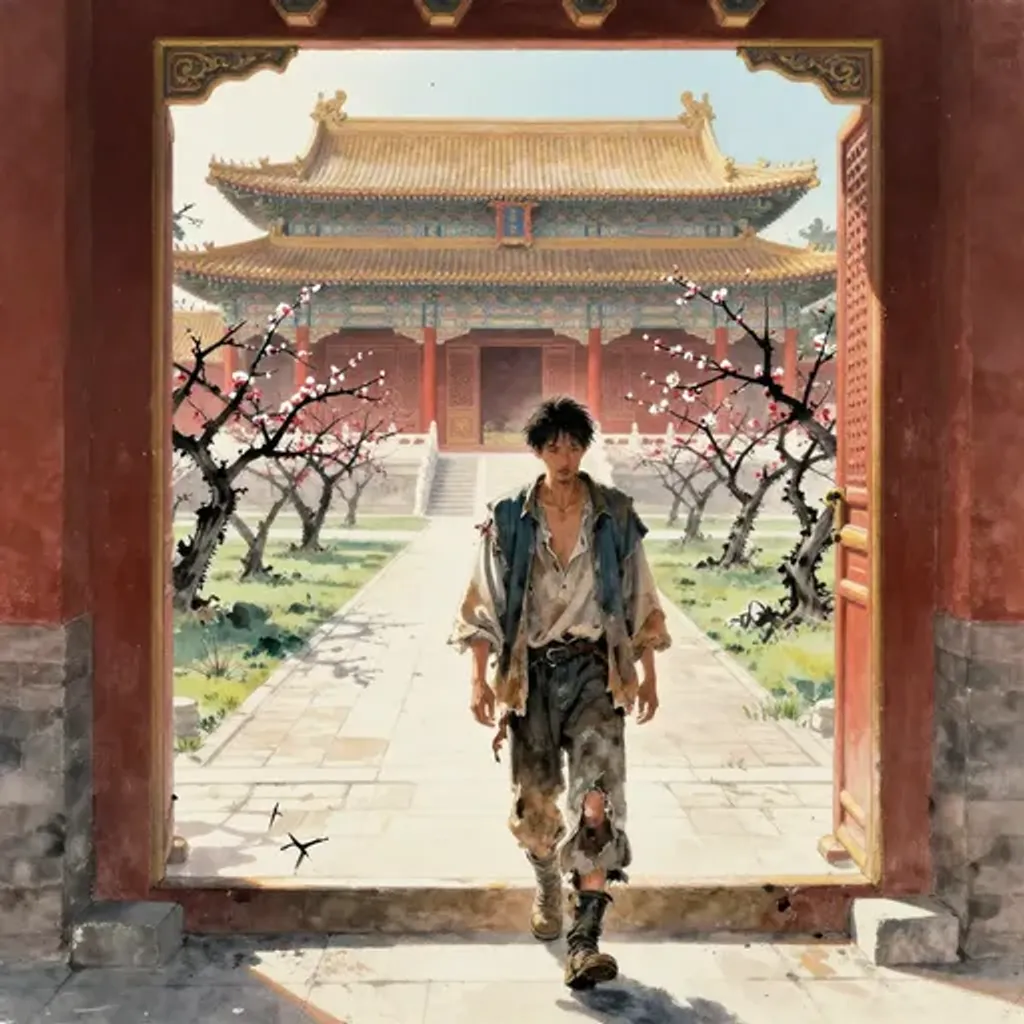
踐履危難,脫厄去患。入福喜門,見誨大君。
Treading through peril and hardship, escaping calamity and trouble. Entering the gate of blessing and joy, received in audience by the great sovereign.
— Jiao Yanshou, Yilin (Forest of Changes), 1st century BC
Commentary
Thunder and fire converge in Abundance, and the verse traces a passage through danger to joy. Treading through peril and hardship, one sheds disaster and escapes calamity. Entering the gate of joy and blessing, one meets and is instructed by the great lord. The trajectory is classic: suffering precedes vindication. The 'gate of joy' (福喜門) marks the threshold between ordeal and reward, while 'meeting the great lord' (見誨大君) suggests receiving counsel or appointment from the sovereign after proving one's worth through adversity. From Abundance to Inner Truth, wind over the lake: the transformation resolves danger into sincerity. Inner Truth's emptiness at center — wind resonating over still water — represents the transparency that emerges when all pretense has been stripped away by hardship.
豐 → 小過
Hexagram 55 → Hexagram 62: Small Exceeding
Changing lines: 1
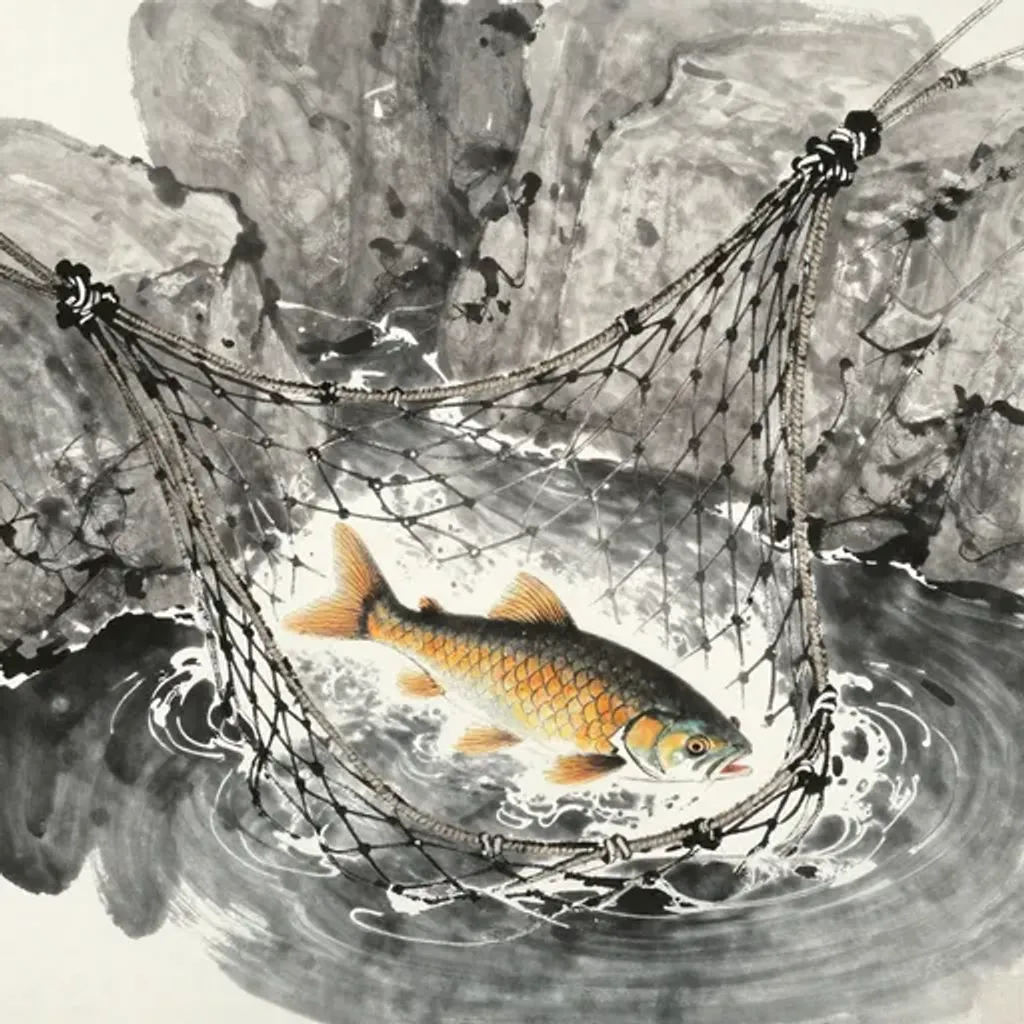
罟密網縮,動益蹶急,困不得息。
Nets thick, mesh tightened; every move only tangles more. Trapped and finding no rest.
— Jiao Yanshou, Yilin (Forest of Changes), 1st century BC
Commentary
Thunder and fire illuminate Abundance, and the verse describes total entrapment. Nets grow dense, meshes tighten; every movement only accelerates the snare. Trapped with no rest, struggling worsens the constraint. The imagery is of a creature — fish or animal — caught in a net where thrashing only draws the mesh closer. The three short phrases build claustrophobic momentum: dense nets, tighter mesh, exhausted struggle. From Abundance to Small Exceeding, thunder above the mountain: a small bird that should not fly too high or too far. The verse embodies Small Exceeding's core warning — when excess is applied in small matters, it creates inescapable constraint. The remedy is to 'exceed in deference, exceed in grief, exceed in thrift' — yield rather than fight the net.
豐 → 既濟
Hexagram 55 → Hexagram 63: After Completion
Changing lines: 4, 5
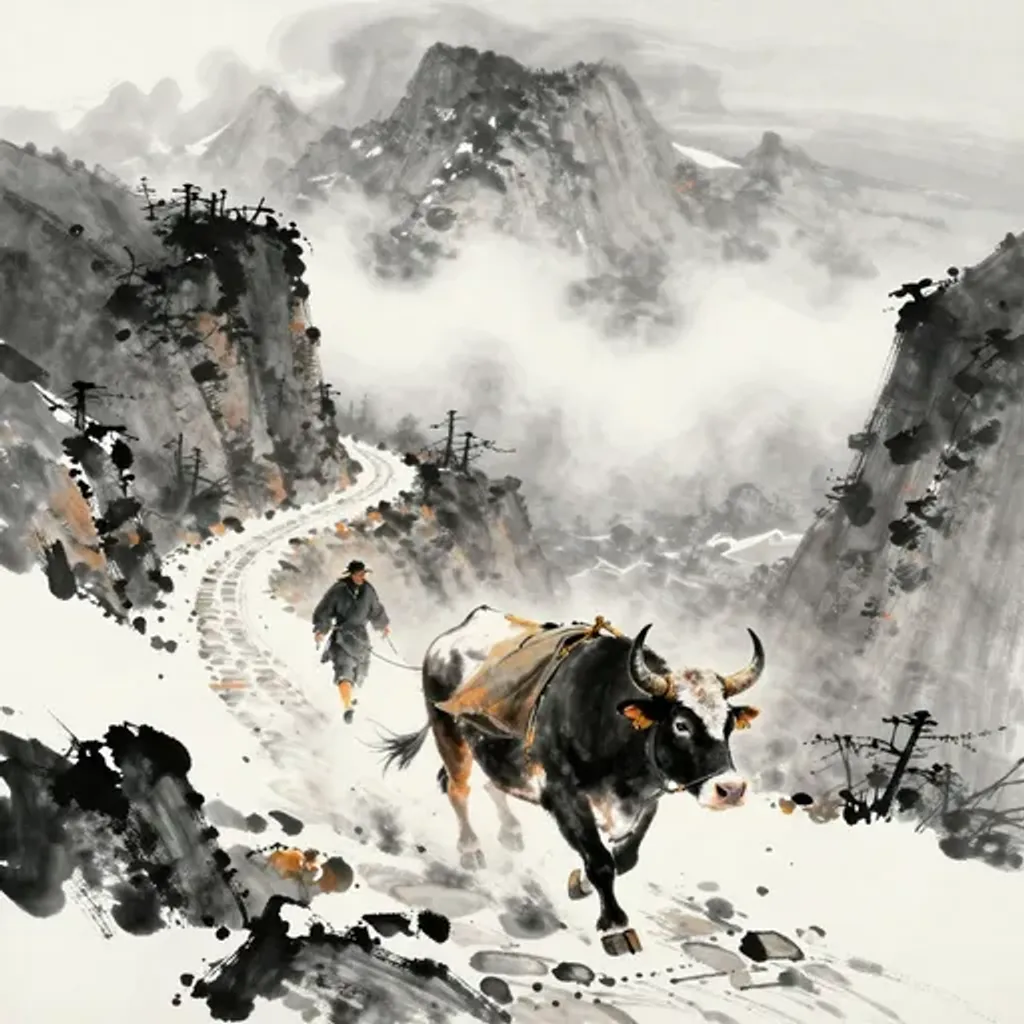
負牛上山,力劣行難。烈風雨雪,遮遏我前。中道復還。
Bearing an ox up the mountain, strength failing, the way hard. Fierce wind, rain, and snow block the path ahead. Midway, one turns back.
— Jiao Yanshou, Yilin (Forest of Changes), 1st century BC
Commentary
Thunder and fire converge in Abundance, and a man shoulders an ox up a mountain. His strength is meager, the journey brutal. Fierce wind, rain, and snow block his path ahead. Midway, he turns back. The image is one of impossible burden: an ox carried uphill, not led — sheer physical absurdity. When the storm descends, even this stubborn effort must concede. The midway return acknowledges limits without shame. From Abundance to After Completion, water above fire in perfect but precarious balance: the verse captures the moment just before completion when the last push fails. After Completion warns to 'think of calamity and prevent it' — the man's error was not in turning back but in beginning an impossible ascent unprepared.
豐 → 未濟
Hexagram 55 → Hexagram 64: Before Completion
Changing lines: 1, 2, 3, 6
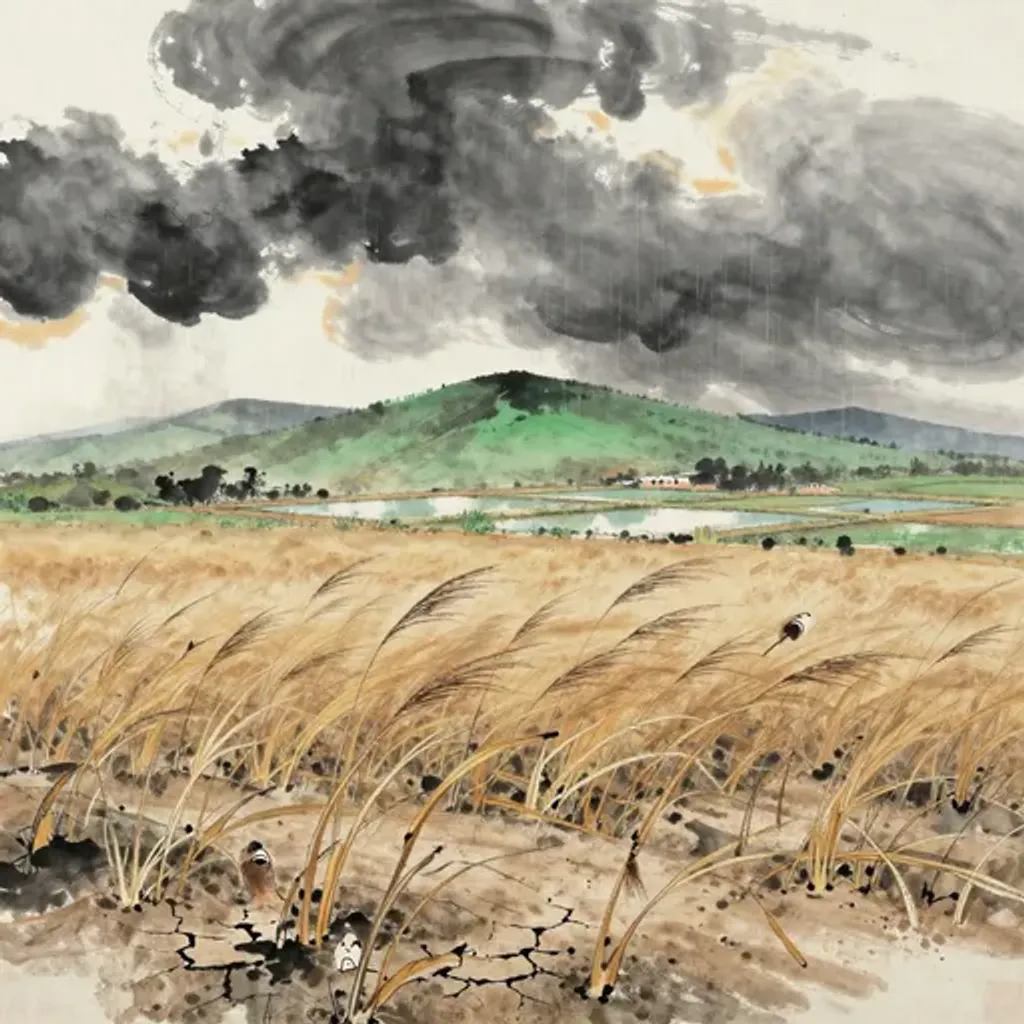
喁喁嘉草,思降甘雨。景風升上,沾洽時澍,生我禾稼。
Whispering, the fair grasses long for sweet rain to descend. The warm wind rises upward; timely showers soak and nourish, bringing forth our grain and millet.
— Jiao Yanshou, Yilin (Forest of Changes), 1st century BC
Commentary
Thunder and fire illuminate Abundance, and the verse closes with a vision of longed-for rain. The grasses murmur, yearning for sweet rain to descend. The warm south wind rises, and timely showers soak the earth, nourishing grain and millet. The 'Jingfeng' (景風) is the warm southerly wind associated with summer's peak — the very wind that drives the growing season. Its rising signals that the cosmic mechanism is working: warmth lifts moisture, clouds form, and rain arrives exactly when needed. From Abundance to Before Completion, fire above water: the cycle is not yet closed, but all the elements are in motion. Before Completion's promise is that the final crossing remains ahead — the rain has fallen, the grain is growing, but the harvest is still to come.