Transformations of Hexagram 57
Every line of change out of Hexagram 57 巽 The Gentle Wind, with the Yilin verse for each of the 64 resulting hexagrams, its translation, and the original ink brush artwork.
巽 → 乾
Hexagram 57 → Hexagram 1: The Creative
Changing lines: 1, 4
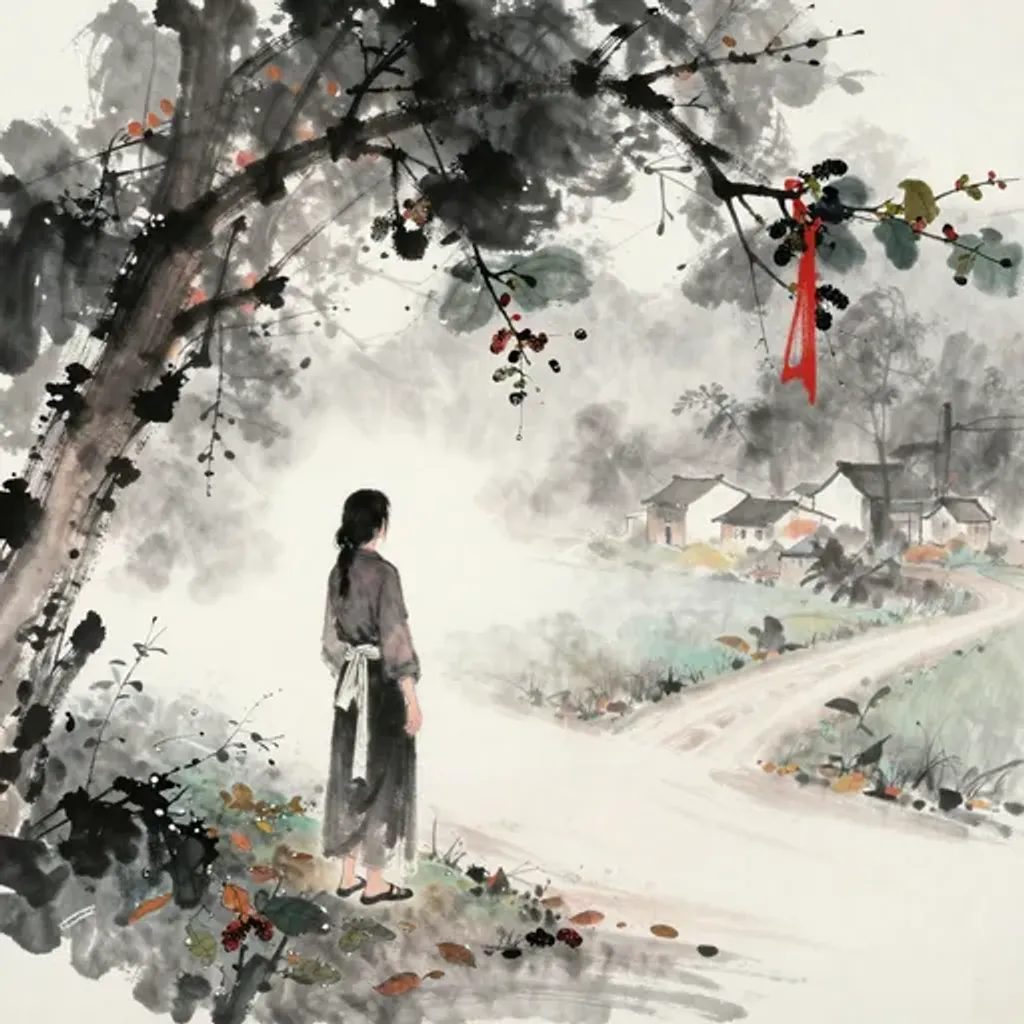
采唐沬卿,要期桑中。失信不會,憂思約帶。
Gathering herbs at the marsh's edge; a tryst promised beneath the mulberries. Faith broken, the meeting missed; sorrow tightens my sash.
— Jiao Yanshou, Yilin (Forest of Changes), 1st century BC
Commentary
Wind upon wind, the doubled Gentle, transforms into doubled heaven: penetrating influence becomes self-generating initiative. The verse quotes the Shijing tryst poem 'Sang Zhong': gathering tang-grass at Mei, arranging a rendezvous among the mulberries. But the lover breaks his promise and never appears. Left waiting, the abandoned one wastes away with longing, tightening her sash as grief thins her waist. The broken appointment inverts the Shijing's romantic charge into bitter disappointment. From The Gentle to The Creative, the transformation is sharply ironic: wind's persistent influence should build toward heaven's tireless strength, yet here persuasion fails at the most intimate level. The one who cannot keep faith with a single heart will never generate the self-renewing power that heaven demands.
巽 → 坤
Hexagram 57 → Hexagram 2: The Receptive
Changing lines: 2, 3, 5, 6
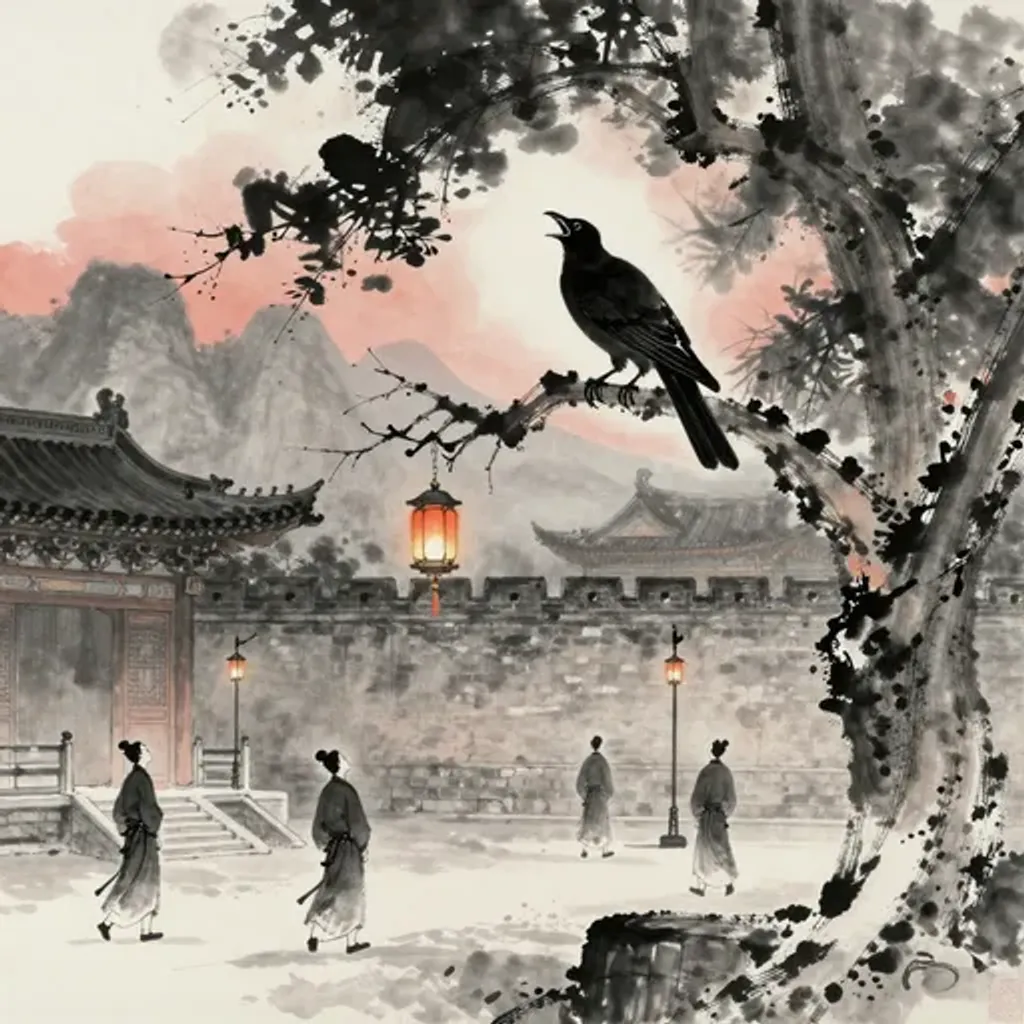
有鳥飛來,集于宮樹。鳴聲可畏,主將出去。
A bird comes flying; it alights on the palace tree. Its cry inspires dread; the lord must depart.
— Jiao Yanshou, Yilin (Forest of Changes), 1st century BC
Commentary
Wind upon wind gives way to doubled earth: gentle penetration dissolves into pure receptivity. A bird flies in and perches on the palace tree. Its cry is fearful, ominous — and the lord of the house will depart. In Han dynasty omen lore, birds alighting on palace trees and crying strangely were portents of the ruler's death or exile. The palace should be a place of order, yet this uninvited visitor disrupts it with a dreadful voice. From The Gentle to The Receptive, the wind that should carry commands now carries only ill tidings. Earth doubled is vast and yielding, but here that yielding becomes vacancy: the throne empties, the master leaves, and what remains is the hollow receptivity of an abandoned hall.
巽 → 屯
Hexagram 57 → Hexagram 3: Difficulty at the Beginning
Changing lines: 1, 2, 3, 6
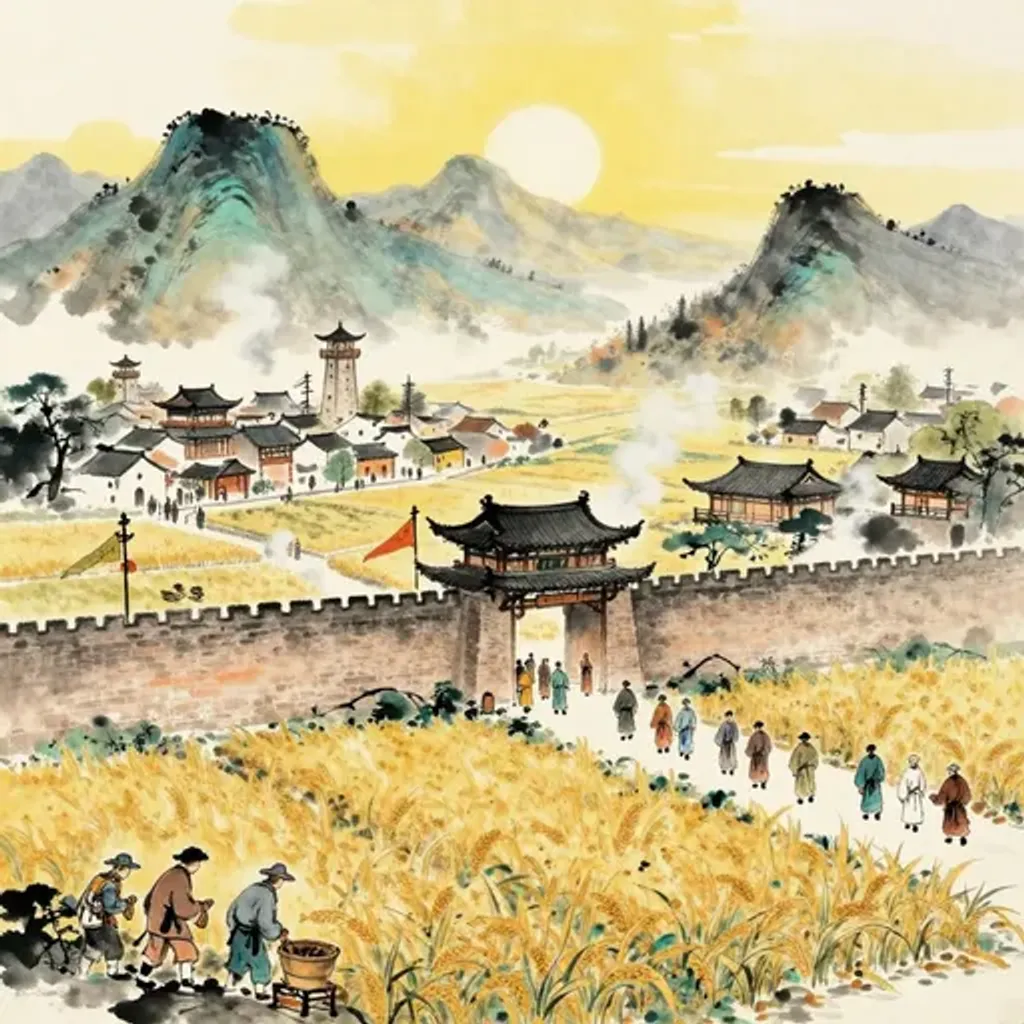
仁政之德,參參日息。成都就邑,入受厥福。
The virtue of benevolent rule; daily it grows and flourishes. The capital complete, the towns established; all enter to receive their blessings.
— Jiao Yanshou, Yilin (Forest of Changes), 1st century BC
Commentary
Wind upon wind transforms into thunder beneath water: gentle influence gives way to the struggle of new beginnings. Benevolent governance accumulates its virtue day by day, growing steadily like grain under careful tending. Cities are established, settlements completed, and the people enter to receive their blessings. The verse celebrates the slow work of civilization: not conquest but cultivation, not spectacle but steady institutional growth. From The Gentle to Difficulty at the Beginning, the transformation captures the hardest phase of statecraft — the moment when gentle policy must push through the chaos of founding. Clouds and thunder gather, but the gentleman who persists in weaving order will see his settlements flourish and his people prosper.
巽 → 蒙
Hexagram 57 → Hexagram 4: Youthful Folly
Changing lines: 3, 5
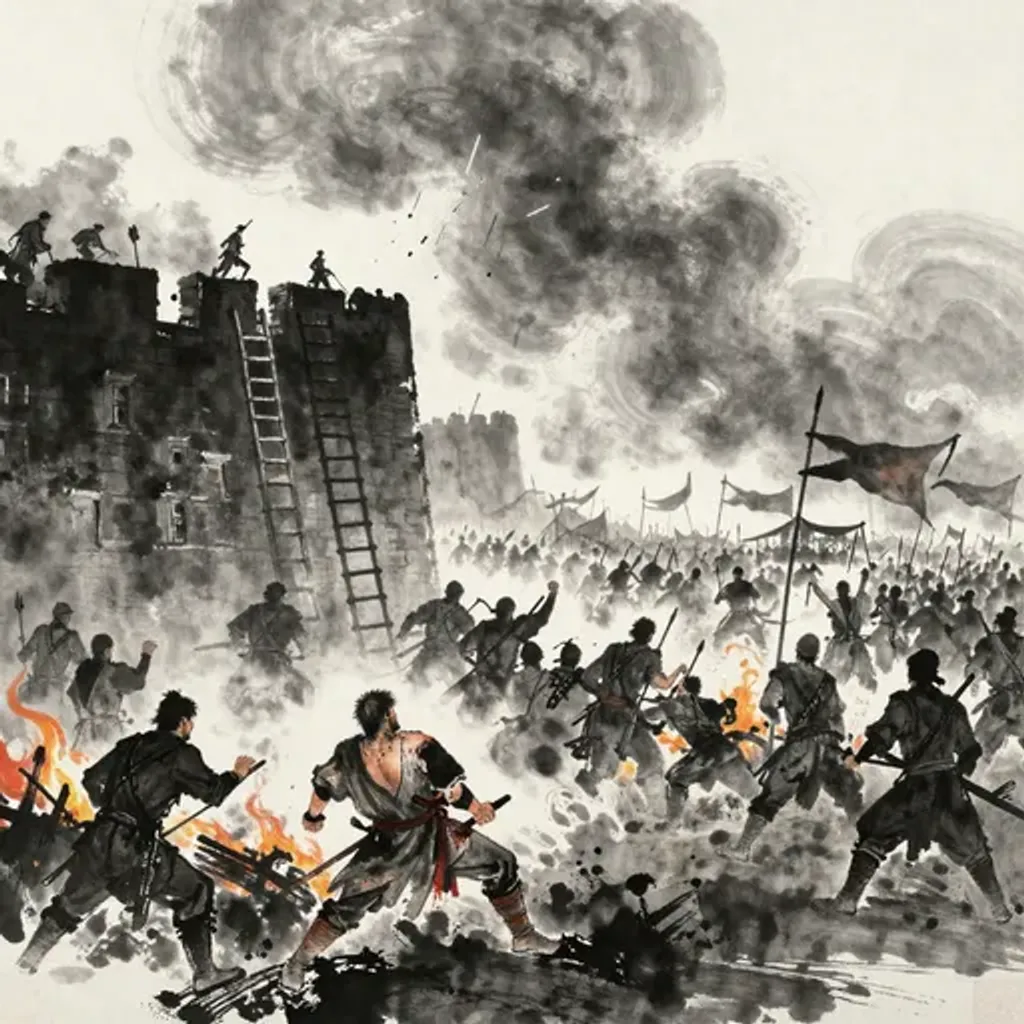
他山之儲,與璆為仇。來攻吾城,傷我肌膚。邦家搔憂。
Stores from foreign mountains; they come as foes bearing jade. They attack our city walls; they wound our flesh. The realm is plunged into grief.
— Jiao Yanshou, Yilin (Forest of Changes), 1st century BC
Commentary
Wind upon wind transforms into mountain over water: penetrating influence meets bewilderment. Foreign powers hoard their mountain wealth and bear a grudge against one's precious jade. They come to attack our city, wounding our very flesh, and the state falls into anxious turmoil. The 'jade enmity' motif — where neighboring states covet another's treasure and use it as a pretext for aggression — runs throughout Spring and Autumn diplomatic history. From The Gentle to Youthful Folly, the transformation is devastating: wind's soft persuasion proves useless against brute invasion. Mountain over water should be the spring of understanding, but here the mountain is the enemy's stronghold and the water is confusion. When gentleness cannot deter hostility, the state is left groping in darkness.
巽 → 需
Hexagram 57 → Hexagram 5: Waiting
Changing lines: 1, 6
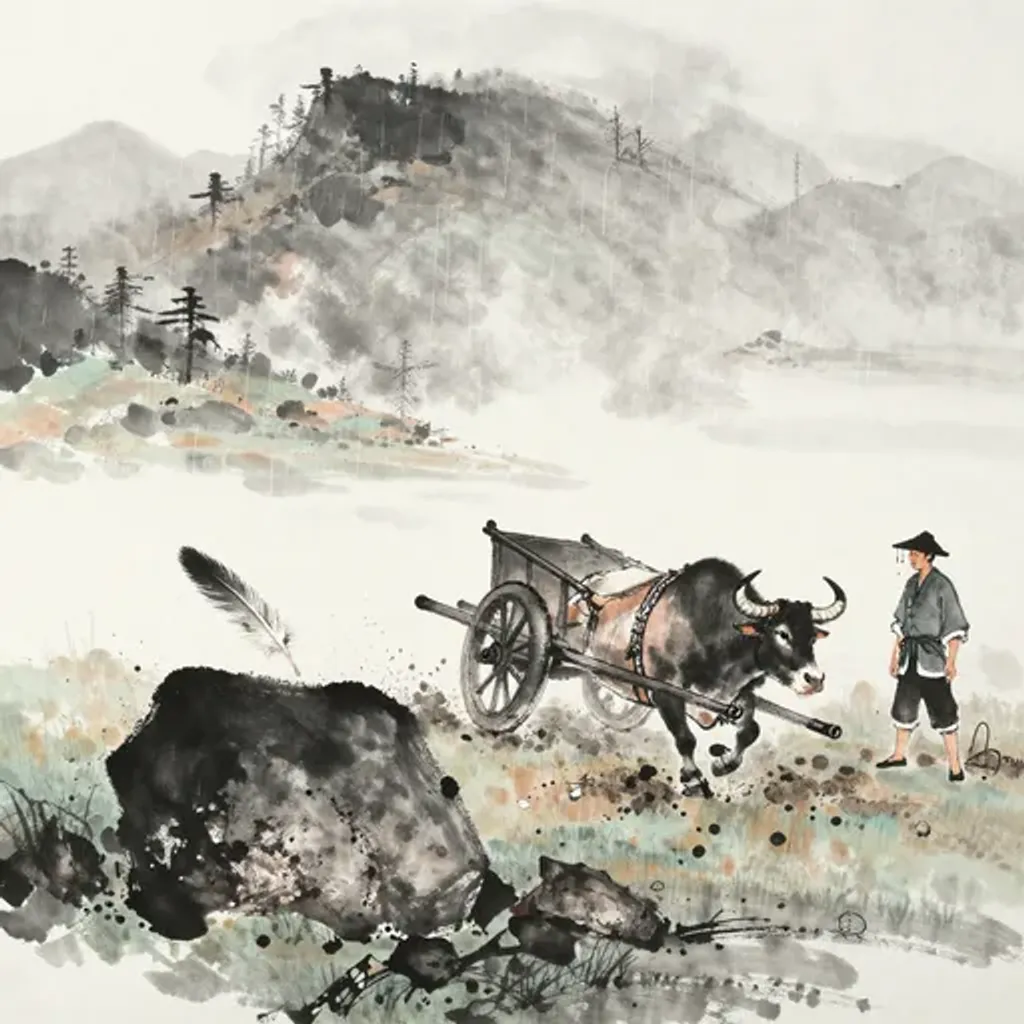
齎貝贖狸,不聽我辭。繫於虎鬚,牽不得來。
Striking stone with a feather; the wind cannot move it. Fine rain urges travel on, but the dry wheel is sunk in mud.
— Jiao Yanshou, Yilin (Forest of Changes), 1st century BC
Commentary
Wind upon wind transforms into water above heaven: penetration becomes patient waiting. The original verse reads: 'Offering cowries to ransom a fox-cat, it will not heed my plea. Tied to a tiger's whiskers, it cannot be pulled free.' Precious shells are spent in a futile transaction — the creature refuses to comply, and the one who grasps the tiger's beard discovers he cannot let go. Each image compounds helplessness: payment is rejected, force is trapped. From The Gentle to Waiting, the transformation reframes impotence as enforced patience. Clouds gather above heaven but rain has not yet fallen. When neither wealth nor strength can move the situation, the only remaining strategy is to wait — not as resignation, but as the discipline of enduring what cannot yet be resolved.
巽 → 訟
Hexagram 57 → Hexagram 6: Conflict
Changing lines: 3, 4
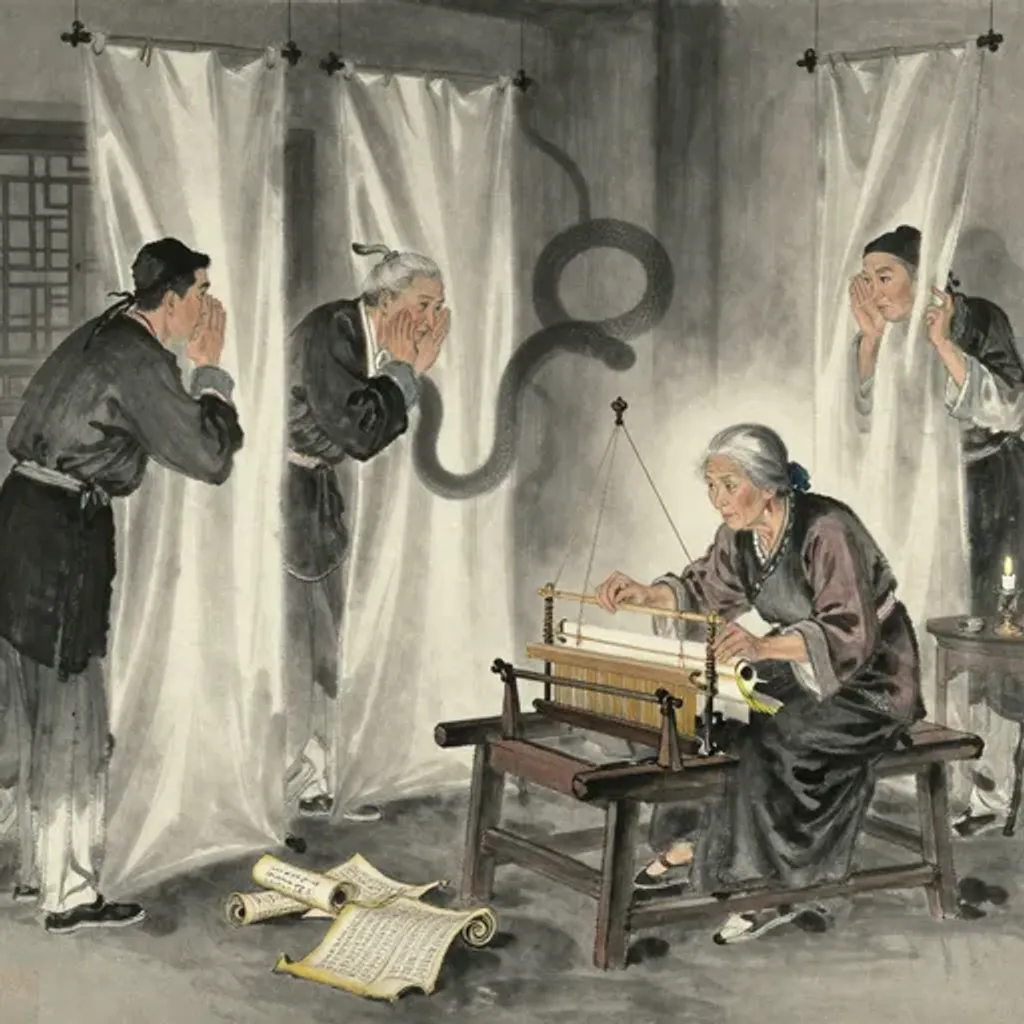
一簧兩舌,妄言陷語。三奸惑虛,曾母投杼。
One reed, two tongues; wild words and snaring speech. Three deceivers weave falsehood; even Zengzi's mother cast down her shuttle.
— Jiao Yanshou, Yilin (Forest of Changes), 1st century BC
Commentary
Wind upon wind transforms into heaven over water: penetration twists into contention. A double-reed tongue, a mouth that speaks two ways — reckless slander and entrapping words. Three deceivers agitate an empty rumor until even Zeng's mother throws down her shuttle. The verse directly quotes the famous parable: when three people told Zeng Shen's mother that her son had killed a man, she twice disbelieved, but on the third report threw down her loom shuttle and fled in terror. Even the deepest maternal trust can be broken by persistent falsehood. From The Gentle to Conflict, wind's persuasive power is weaponized: what should carry truthful commands instead spreads slander. Heaven and water move in opposite directions, and the duplicitous tongue drives wedges where trust should hold.
巽 → 師
Hexagram 57 → Hexagram 7: The Army
Changing lines: 3, 5, 6
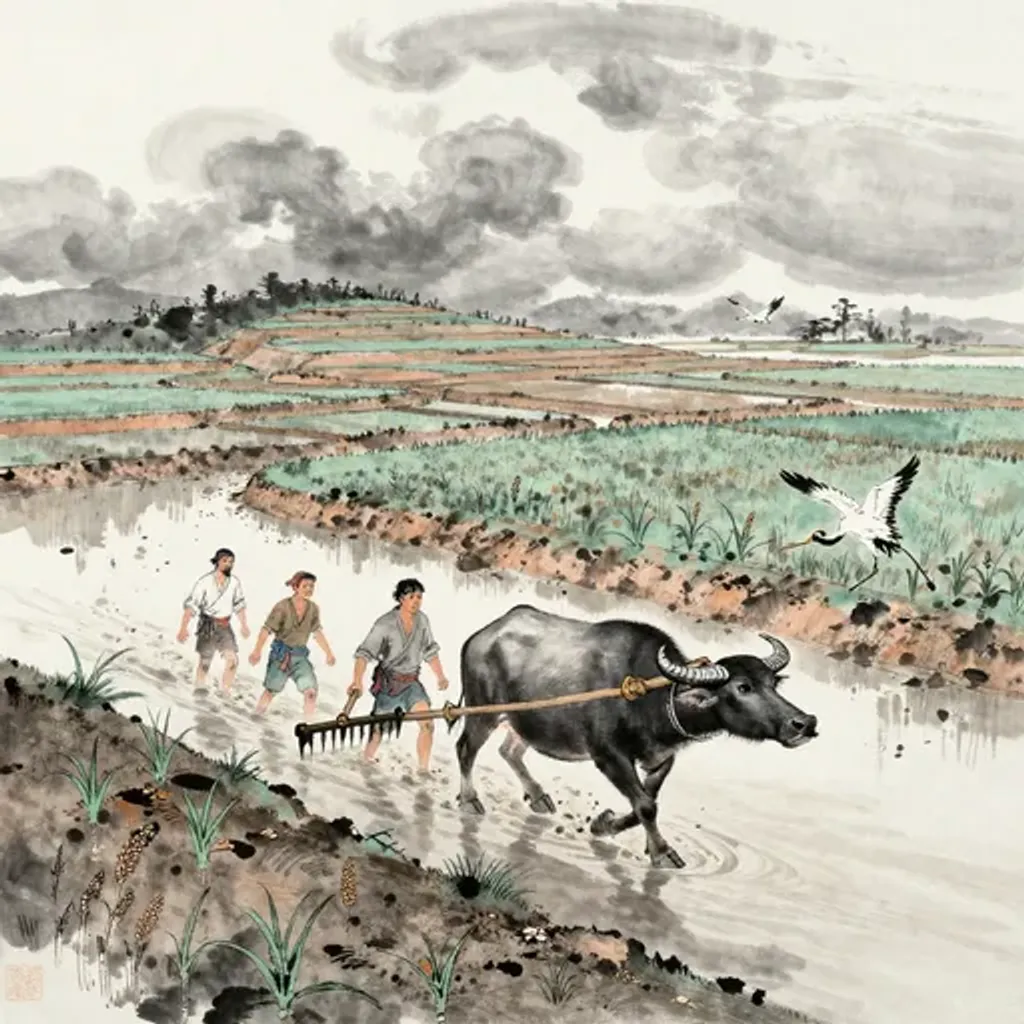
薄行搔尾,逐雲除水。污泥為陸,下田宜稷。
Light steps stir the shallows; clouds are chased, waters drained. Mud becomes dry land; the low fields yield their millet.
— Jiao Yanshou, Yilin (Forest of Changes), 1st century BC
Commentary
Wind upon wind transforms into earth over water: gentle penetration becomes military discipline. Treading lightly and sweeping the tail clean, one chases clouds and drains the water. Muddy swamps become dry land, and the lowland fields prove fit for planting millet. The imagery is of reclamation — marshes drained, terrain reshaped, chaos turned into agricultural order. This echoes the legendary flood-control work of Yu the Great, who channeled waters so the people could farm. From The Gentle to The Army, the transformation shows how patient, methodical effort creates the conditions for collective sustenance. Water within the earth contains the multitude: what begins as drainage ends as harvest, and the army's discipline mirrors the farmer's labor of turning swamp into field.
巽 → 比
Hexagram 57 → Hexagram 8: Holding Together
Changing lines: 2, 3, 6
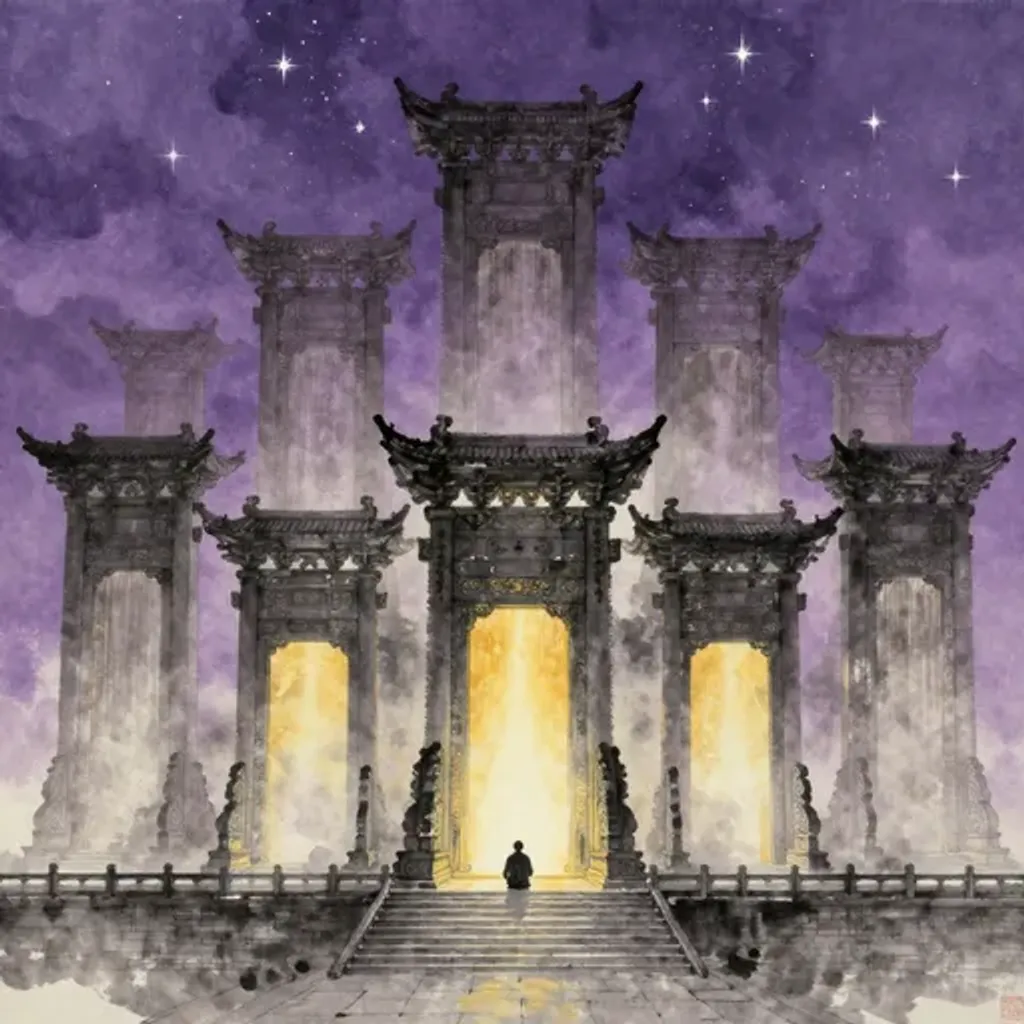
天門九重,深內難通。明坐至暮,不見神公。
Heaven's gate, nine layers deep; the inner sanctum unreachable. From bright dawn to darkening dusk; the divine lord appears not.
— Jiao Yanshou, Yilin (Forest of Changes), 1st century BC
Commentary
Wind upon wind transforms into water over earth: gentle influence becomes the search for alliance. The gates of heaven stand nine layers deep, the innermost chambers impenetrable. Sitting from dawn until dusk, one never glimpses the divine lord. The verse captures the frustration of a petitioner denied audience — perhaps a minister locked outside the imperial presence, or a supplicant whose offerings reach no divine ear. From The Gentle to Holding Together, the irony bites: water upon earth should flow naturally toward unity, yet here the barriers are absolute. Wind's penetrating nature should find every crack, but even doubled wind cannot pass through nine celestial gates. The alliance one seeks remains forever on the other side of a closed door.
巽 → 小畜
Hexagram 57 → Hexagram 9: Small Taming
Changing lines: 1
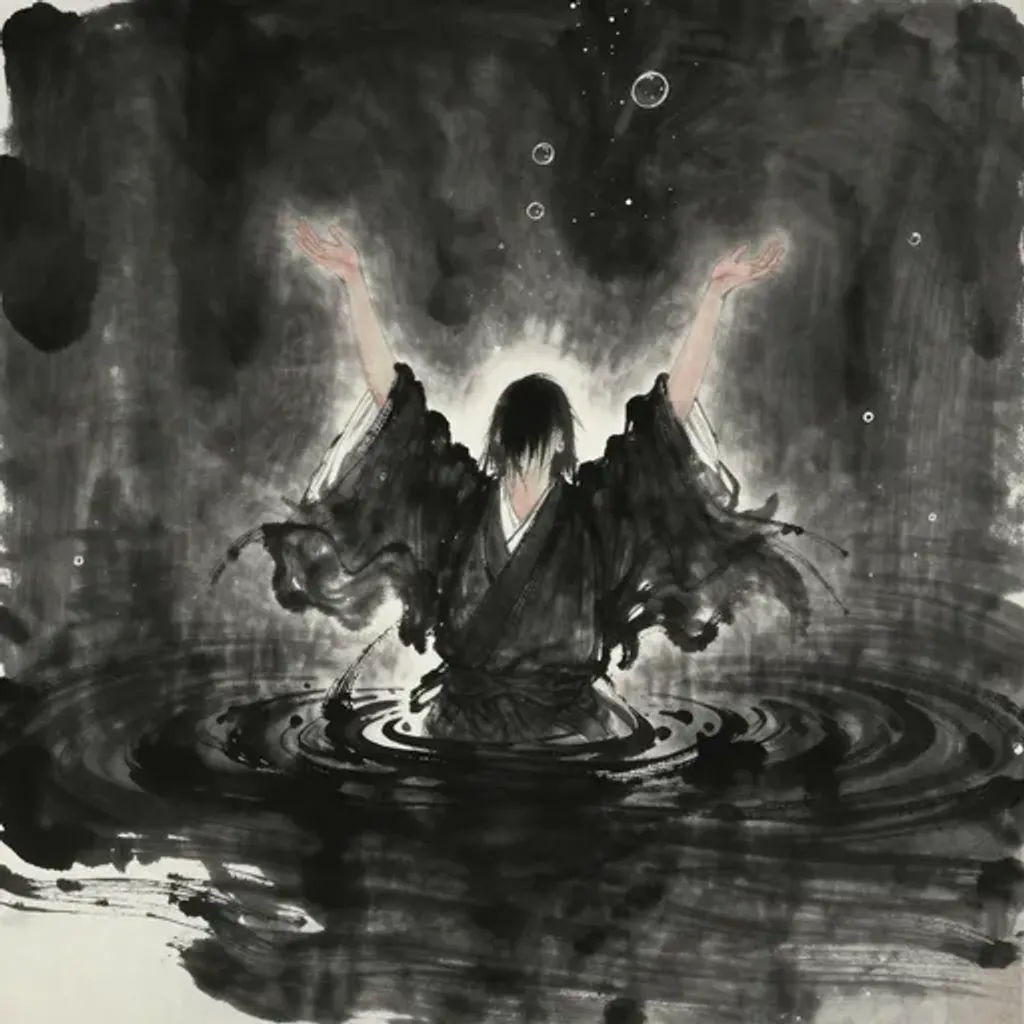
闇目不明,耳閼聽聰。陷入深淵,滅頂憂凶。
Eyes dimmed, unable to see; ears blocked, unable to hear. Plunged into the deep abyss; waters close over the head—misfortune and grief.
— Jiao Yanshou, Yilin (Forest of Changes), 1st century BC
Commentary
Wind upon wind transforms into wind over heaven: the Gentle becomes Small Taming. Eyes are darkened and cannot see; ears are blocked and cannot hear. One sinks into the deep abyss, submerged to the crown — misfortune and grief. The verse describes a catastrophic failure of perception: all senses shut down simultaneously, and the person plunges into depths beyond rescue. From The Gentle to Small Taming, the transformation reveals a paradox. Wind above heaven should refine cultural virtue, gently restraining heavenly force. But when wind's own penetration is turned inward as blindness and deafness, the small taming becomes self-destruction. Unable to perceive the world, one cannot restrain anything — and the gentle influence drowns in its own incapacity.
巽 → 履
Hexagram 57 → Hexagram 10: Treading
Changing lines: 1, 3, 4
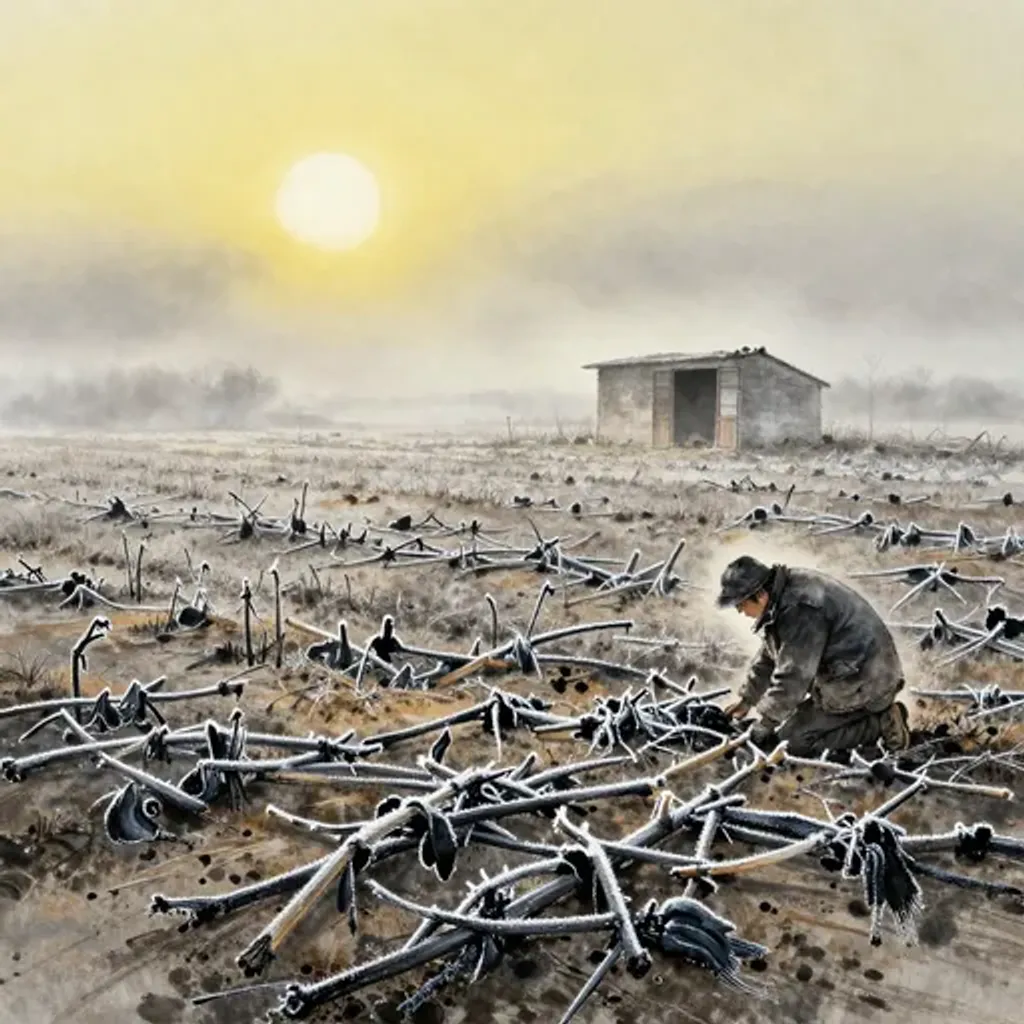
霧露早霜,日暗不明。陰陽孽疾,年穀大傷。
Mist and dew, early frost; the sun dims and gives no light. Yin and yang breed affliction; the year's grain suffers greatly.
— Jiao Yanshou, Yilin (Forest of Changes), 1st century BC
Commentary
Wind upon wind transforms into heaven over lake: the Gentle becomes Treading. Fog and dew descend as early frost; the sun darkens and cannot shine. Yin and yang breed pestilence, and the year's grain suffers grievous damage. The verse paints an agricultural disaster driven by unseasonable weather — frost arriving too early, sunlight blocked, the vital balance of cosmic forces disrupted. From The Gentle to Treading, the transformation is grimly apt: treading means walking on dangerous ground, stepping on the tiger's tail. When wind's gentle influence is corrupted into miasma and unseasonable cold, even the cosmic order stumbles. The gentleman who should distinguish high from low finds the natural hierarchy itself inverted — heaven's light obscured, earth's harvest ruined.
巽 → 泰
Hexagram 57 → Hexagram 11: Peace
Changing lines: 1, 5, 6
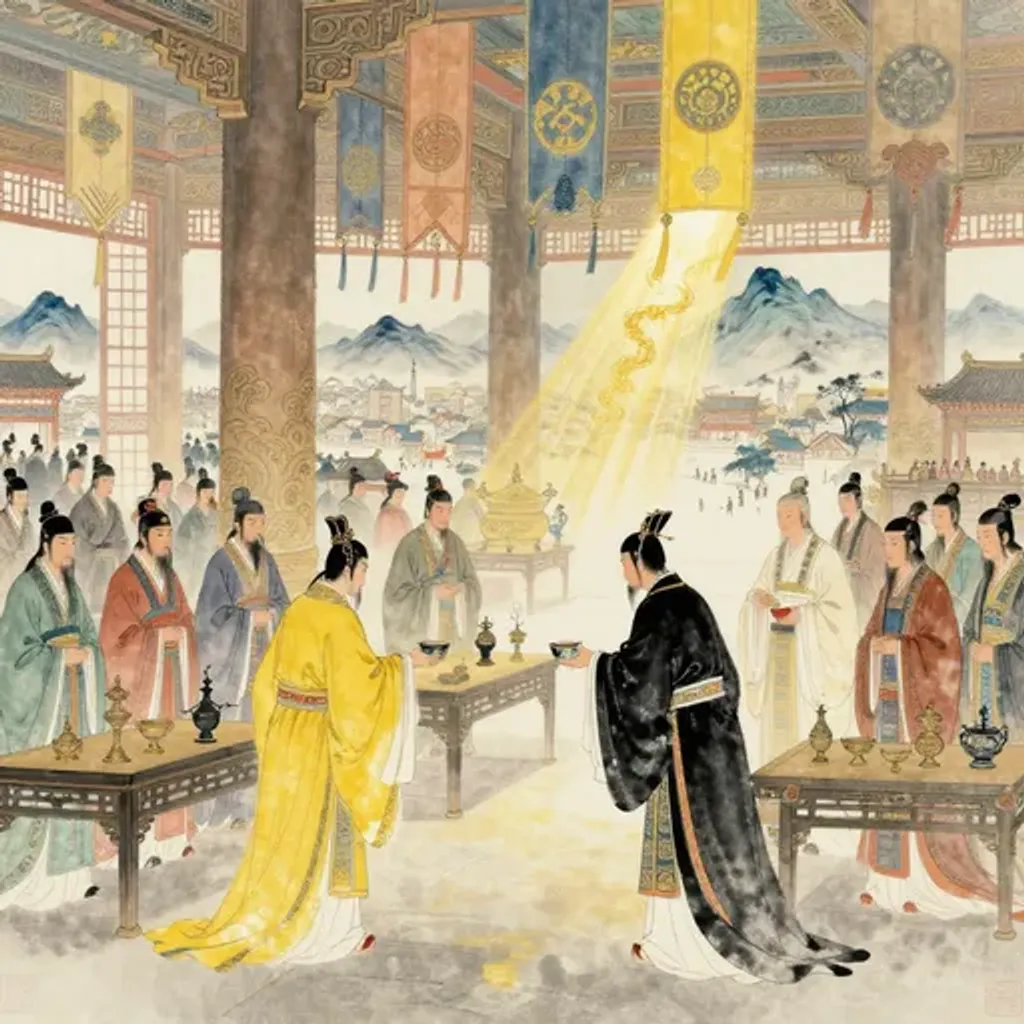
三諧土廊,德義明堂。交讓往來,享燕相承。箕伯朝王,錫我玄黃。
Three harmonies in earthen halls; virtue illuminates the sacred chamber. Courtesies exchanged, guests come and go; feasting in mutual succession. The Earl of Ji pays homage to the king; we receive gifts of black and yellow silk.
— Jiao Yanshou, Yilin (Forest of Changes), 1st century BC
Commentary
Wind upon wind transforms into earth over heaven: the Gentle becomes Peace. Three harmonious corridors of earth line the hall of virtue and righteousness. Courtesies are exchanged, banquets flow in succession. The lord of Ji and Bo arrives to pay homage at court and is bestowed gifts of dark and yellow silk — the colors of heaven and earth. The verse evokes the Zhou ideal of ritual diplomacy: feudal lords arriving at the Son of Heaven's court, exchanging propriety, feasting together. From The Gentle to Peace, the transformation is fulfilled perfectly. Heaven below and earth above, their energies interpenetrate — this is the cosmic image of harmony. Wind's patient influence has built the institutional trust that makes such reciprocal ceremony possible.
巽 → 否
Hexagram 57 → Hexagram 12: Standstill
Changing lines: 2, 3, 4
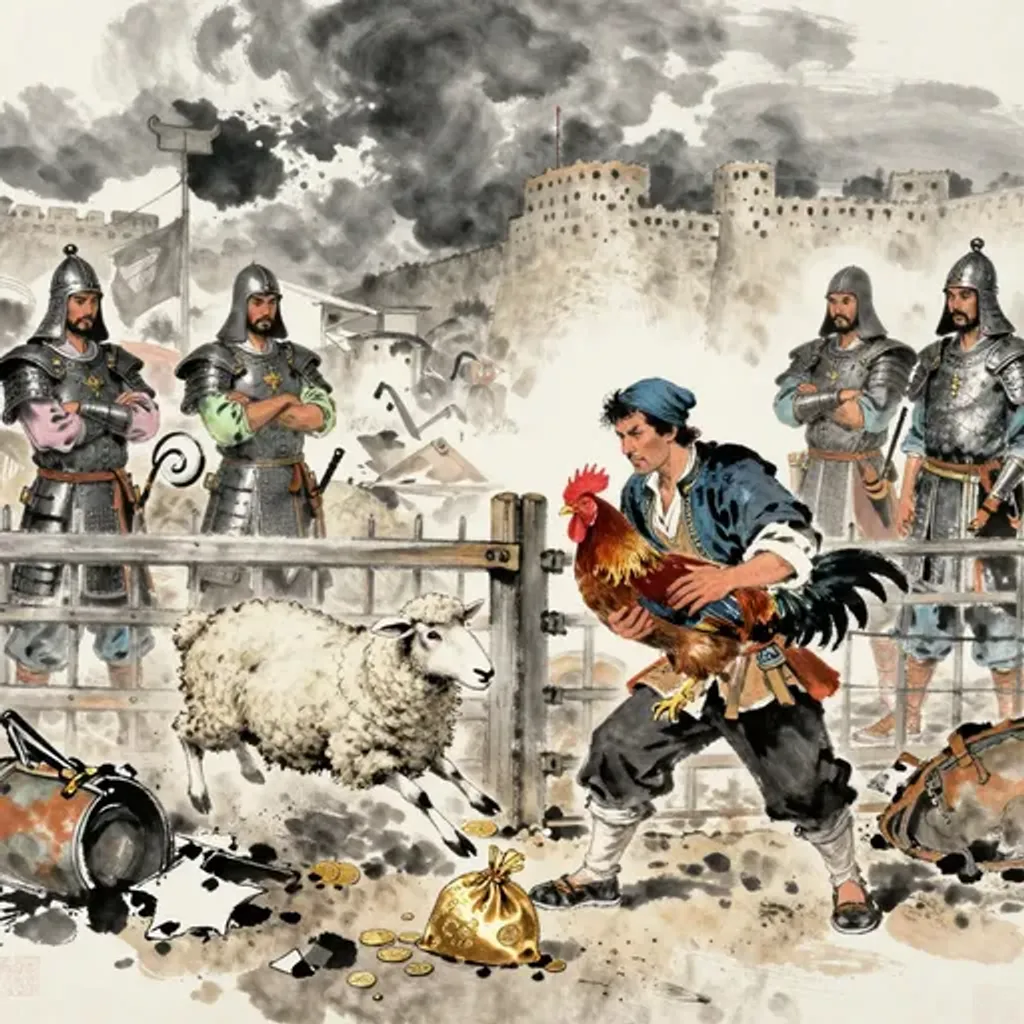
爭雞失羊,利得不長。陳蔡之患,賴楚以安。
Fighting over the chicken, losing the sheep; profit gained does not last. The troubles of Chen and Cai; they relied on Chu for safety.
— Jiao Yanshou, Yilin (Forest of Changes), 1st century BC
Commentary
Wind upon wind transforms into heaven over earth: the Gentle becomes Standstill. Squabbling over a chicken, one loses a sheep — profits gained do not last. Then Confucius's hardship between Chen and Cai: besieged and starving, he depended on Chu's intervention for relief. The verse pairs two warnings: petty quarrels that forfeit greater goods, and the sage himself trapped in political deadlock. From The Gentle to Standstill, the meaning crystallizes. Heaven and earth do not communicate; high and low are severed. Wind's gentle persuasion has ceased to penetrate. Even Confucius, whose moral influence should move kingdoms, found himself blocked between hostile states — and had to rely on an external power to break the impasse.
巽 → 同人
Hexagram 57 → Hexagram 13: Fellowship
Changing lines: 1, 2, 4
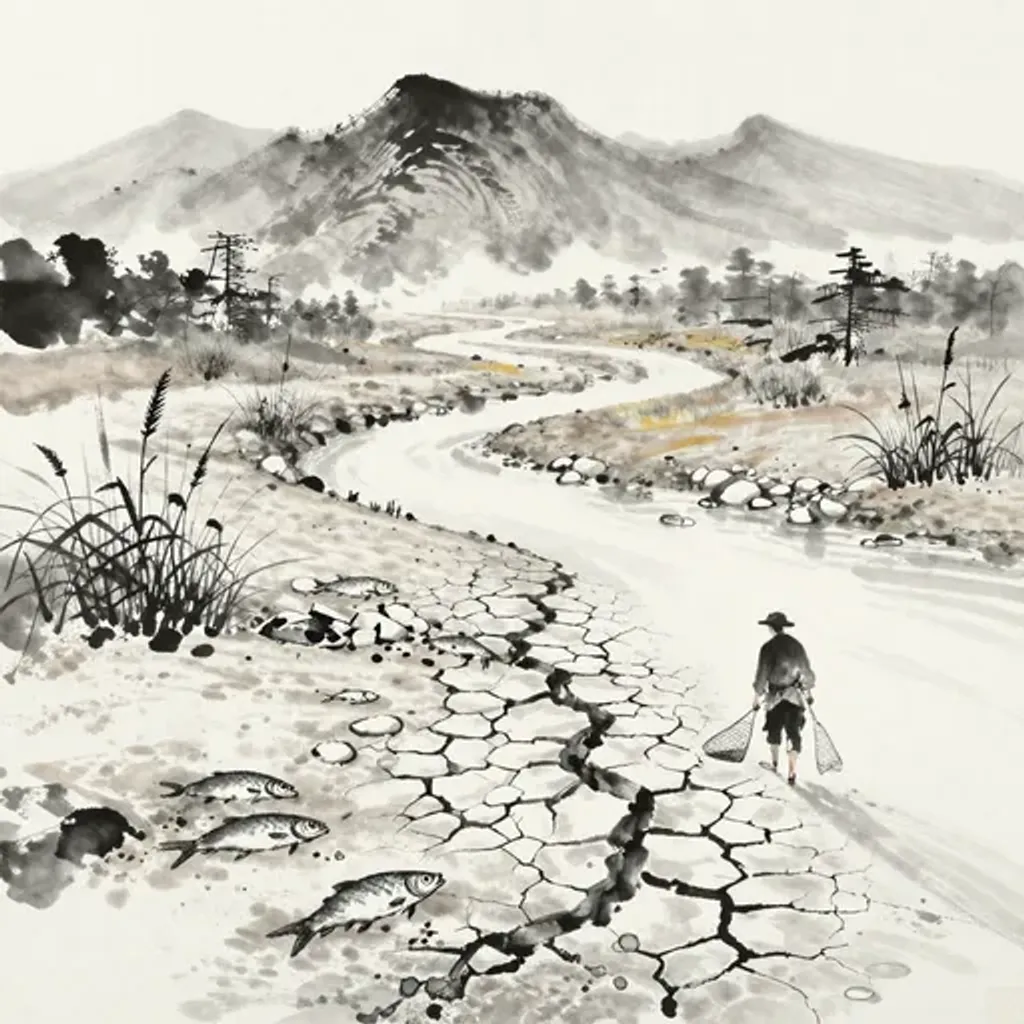
天旱水涸,枯槁无澤,未有所獲。
Heaven sends drought, waters dry up; withered and parched, no moisture. Nothing is gained.
— Jiao Yanshou, Yilin (Forest of Changes), 1st century BC
Commentary
Wind upon wind transforms into heaven over fire: the Gentle becomes Fellowship. Heaven is parched, the waters have dried, everything withered and without moisture — nothing is obtained. The verse is starkly minimal: drought, desiccation, barrenness. Where fire and heaven should unite people under a shared illumination, here the land is too dry to sustain any gathering. From The Gentle to Fellowship, the irony is bitter. Heaven and fire together should mean the clarity that brings people into community, classifying by kind and distinguishing things. But when wind carries only dry heat instead of nourishing moisture, fellowship becomes impossible. The commons is scorched; there is nothing left to share.
巽 → 大有
Hexagram 57 → Hexagram 14: Great Possession
Changing lines: 1, 4, 5
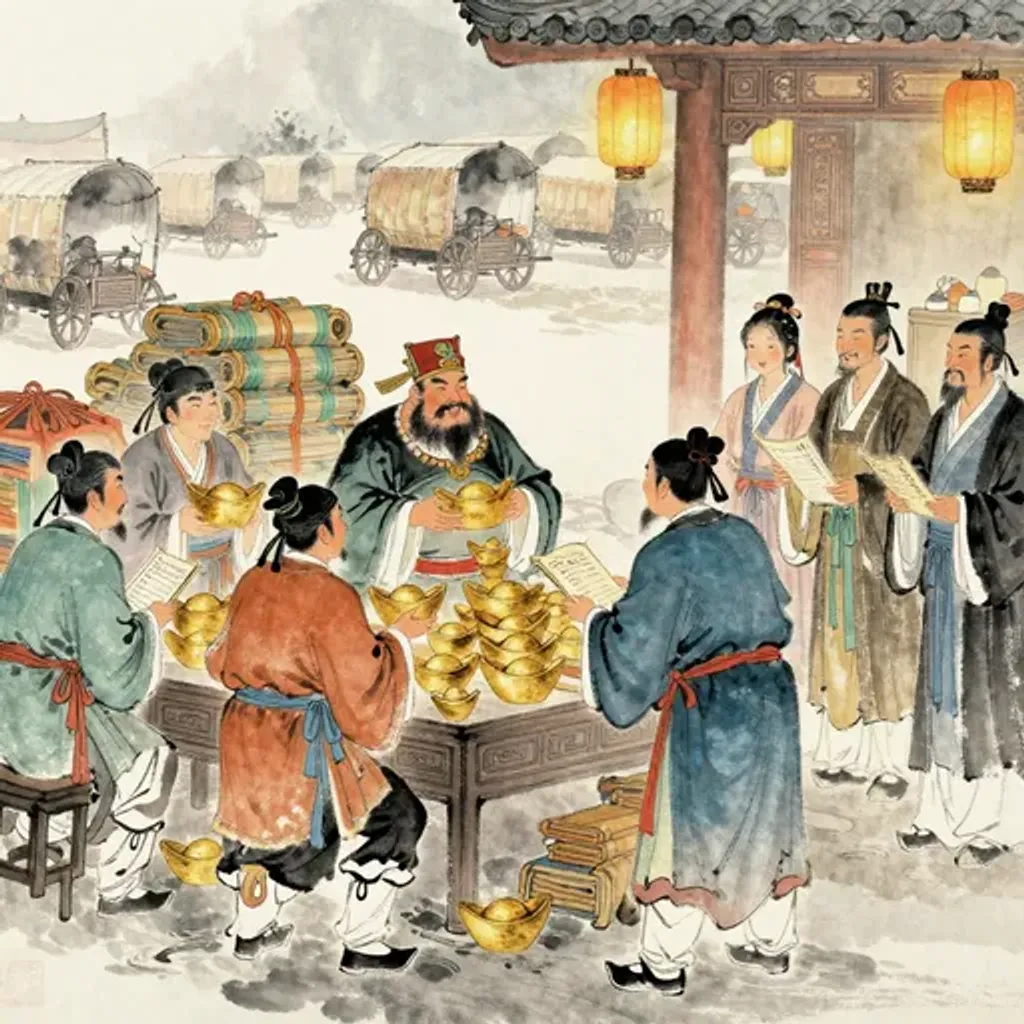
陶朱白圭,善賈息貲。公子王孫,富利不貧。
Tao Zhu, Bai Gui; skilled merchants who multiplied their wealth. Noble sons and princes; rich in profit, never poor.
— Jiao Yanshou, Yilin (Forest of Changes), 1st century BC
Commentary
Wind upon wind transforms into fire over heaven: the Gentle becomes Great Possession. Tao Zhu and Bai Gui, master merchants who multiplied wealth through shrewd trading — Fan Li, who after helping Goujian destroy Wu retired to become the fabulously rich Tao Zhu Gong, and Bai Gui, the Warring States grain trader whom Sima Qian called the 'ancestor of managing livelihood.' Princes and nobles prosper without falling into poverty. From The Gentle to Great Possession, wind's persistent penetration finds its most worldly fulfillment. Fire blazing above heaven illuminates all — and here that brilliance is commercial acumen. The gentle art of reading markets, timing purchases, and compounding returns transforms patient observation into magnificent abundance.
巽 → 謙
Hexagram 57 → Hexagram 15: Modesty
Changing lines: 2, 5, 6
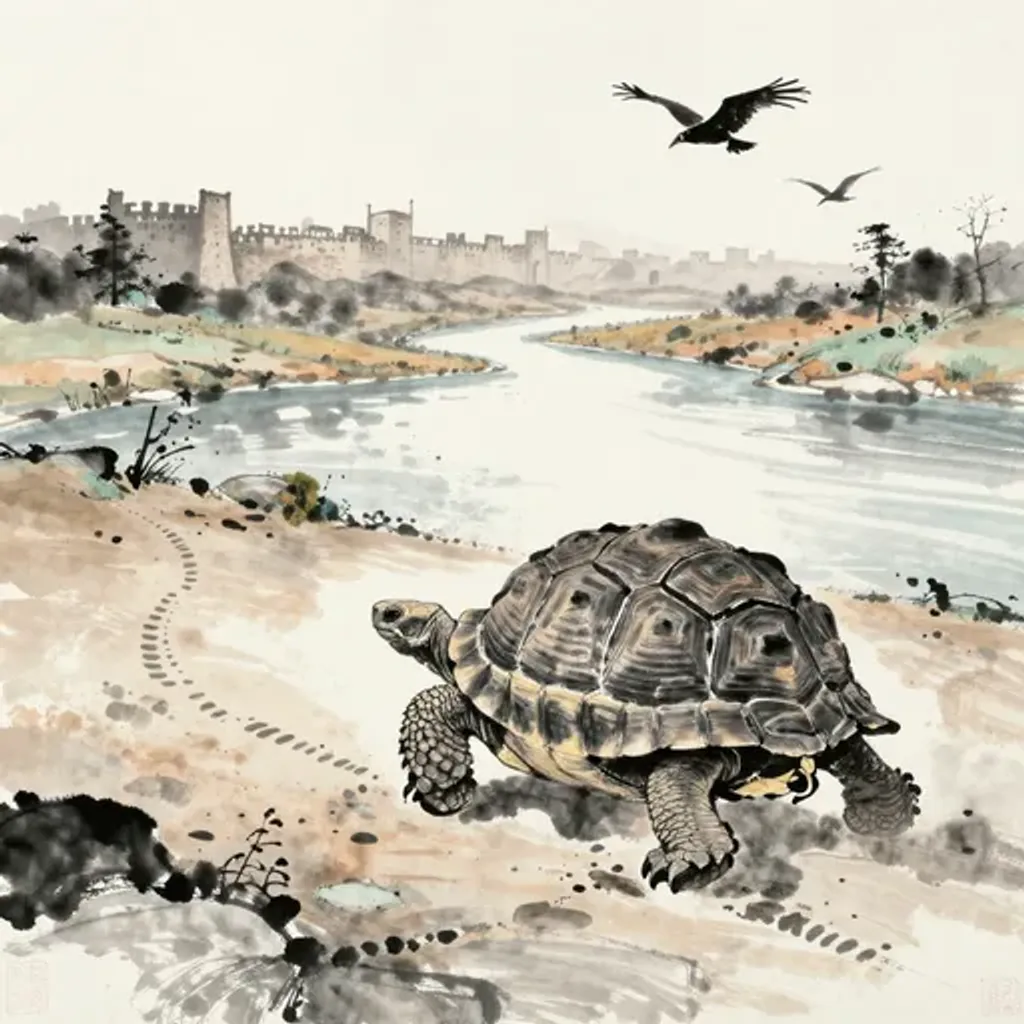
龜厭江海,陸行不止。自令枯槁,失其都市。憂悔為咎。
The turtle, weary of rivers and seas; travels on land without stopping. It brings itself to ruin; loses its native waters. Regret and remorse become its portion.
— Jiao Yanshou, Yilin (Forest of Changes), 1st century BC
Commentary
Wind upon wind transforms into earth over mountain: the Gentle becomes Modesty. A turtle, weary of rivers and seas, takes to walking on land without rest. It dries itself out, loses its city — and regret becomes its ruin. The turtle's natural element is water; abandoning it for dry land is a fatal misreading of one's own nature. The more it walks, the more it desiccates, moving further from what sustains it. From The Gentle to Modesty, the transformation offers a pointed lesson. The mountain hidden within the earth knows its place. The turtle, by contrast, overreaches — leaving its domain out of restless dissatisfaction. True modesty means recognizing where one belongs and staying there, not exhausting oneself in alien territory.
巽 → 豫
Hexagram 57 → Hexagram 16: Enthusiasm
Changing lines: 2, 3, 4, 5, 6
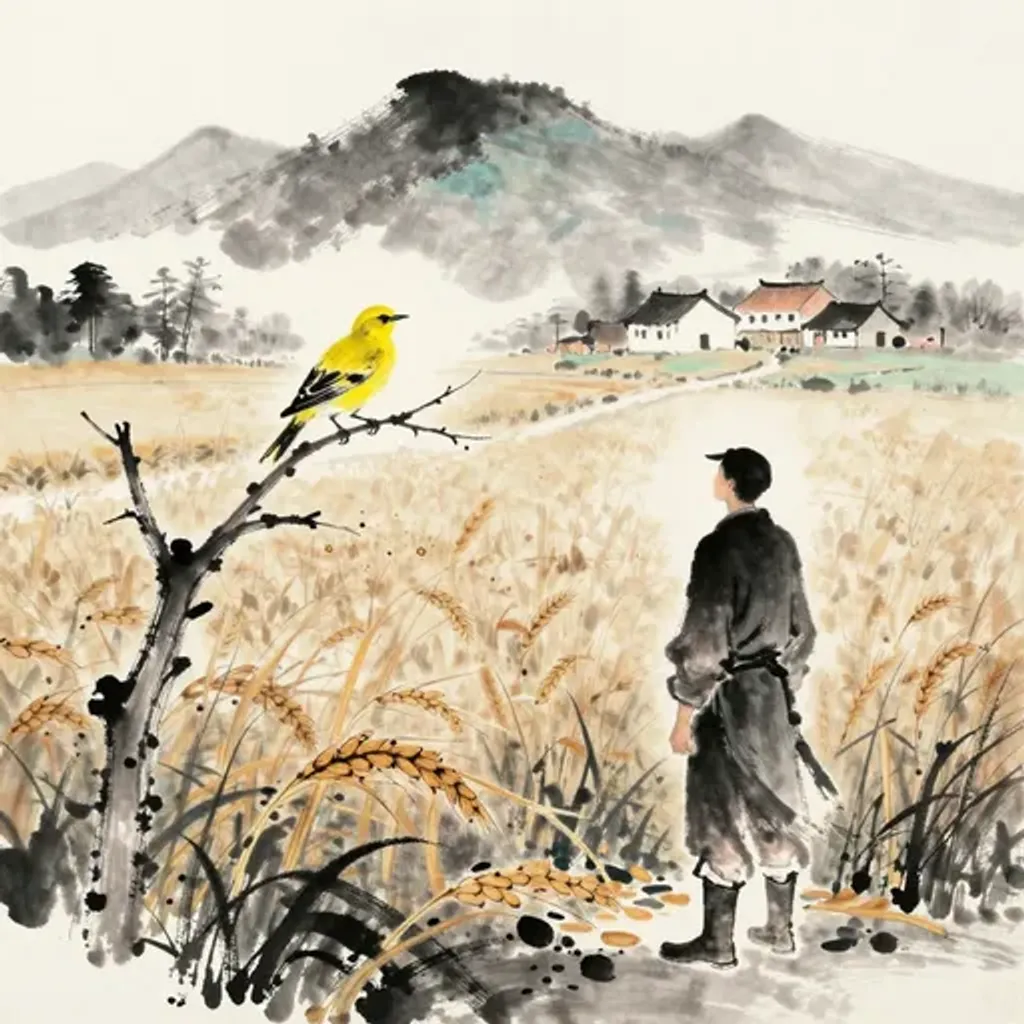
黃鳥採蓄,既稼不荅。念吾父兄,思復邦國。
The yellow bird gathers and stores; crops planted but not tended. I think of my father and brothers; I long to return to my homeland.
— Jiao Yanshou, Yilin (Forest of Changes), 1st century BC
Commentary
Wind upon wind transforms into thunder over earth: the Gentle becomes Enthusiasm. The yellow bird gathers and stores, yet after sowing the crops yield nothing. One thinks of father and elder brother, longing to restore the homeland. The verse draws on the Shijing 'Yellow Bird' exile tradition — the stranger in a hostile land who labors without reward and yearns for home. Gathering provisions like a bird yet reaping no harvest, the exile's work is futile. From The Gentle to Enthusiasm, thunder bursts from the earth as the ancient kings made music to honor virtue. The longing to restore one's nation channels grief into the thunderous resolve that precedes restoration — enthusiasm born not from joy but from the fierce love of what was lost.
巽 → 隨
Hexagram 57 → Hexagram 17: Following
Changing lines: 1, 2, 3, 4, 6
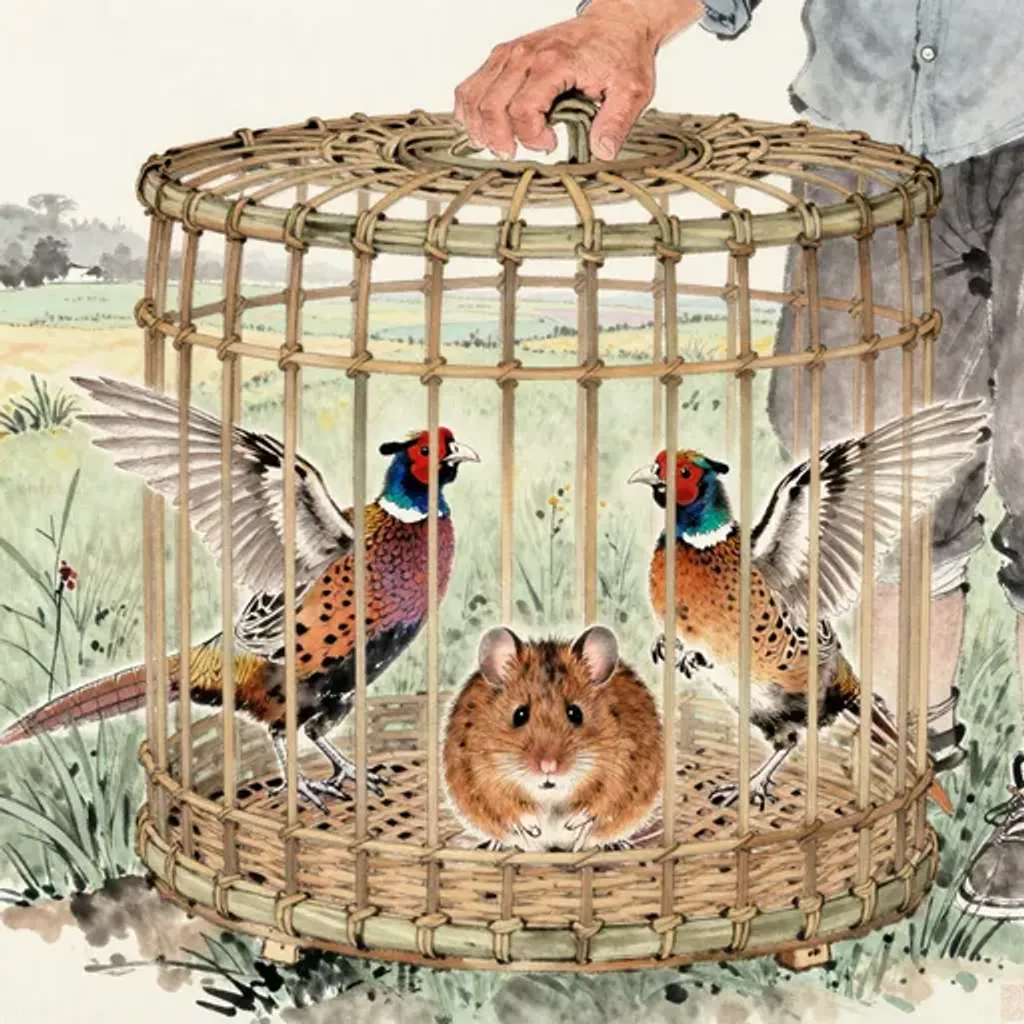
田鼠野雛,意常欲逃。拘制籠檻,不得動搖。
The field mouse, the wild chick; their hearts always yearn to flee. Held fast in cages and pens; they cannot move or stir.
— Jiao Yanshou, Yilin (Forest of Changes), 1st century BC
Commentary
Wind upon wind transforms into lake over thunder: the Gentle becomes Following. A field mouse and a wild chick forever wish to escape. Confined in cage and pen, they cannot stir or shake free. The verse presents captivity without ambiguity: creatures whose nature demands freedom are locked in structures that deny it entirely. From The Gentle to Following, the transformation is darkly literal. Thunder within the lake rests at evening; the gentleman retires to quiet repose. But following here is not willing allegiance — it is enforced subjugation. Wind's gentle influence, which should persuade through moral suasion, has been replaced by bars and cages. The captive follows not because it is led, but because it has no choice.
巽 → 蠱
Hexagram 57 → Hexagram 18: Work on the Decayed
Changing lines: 5
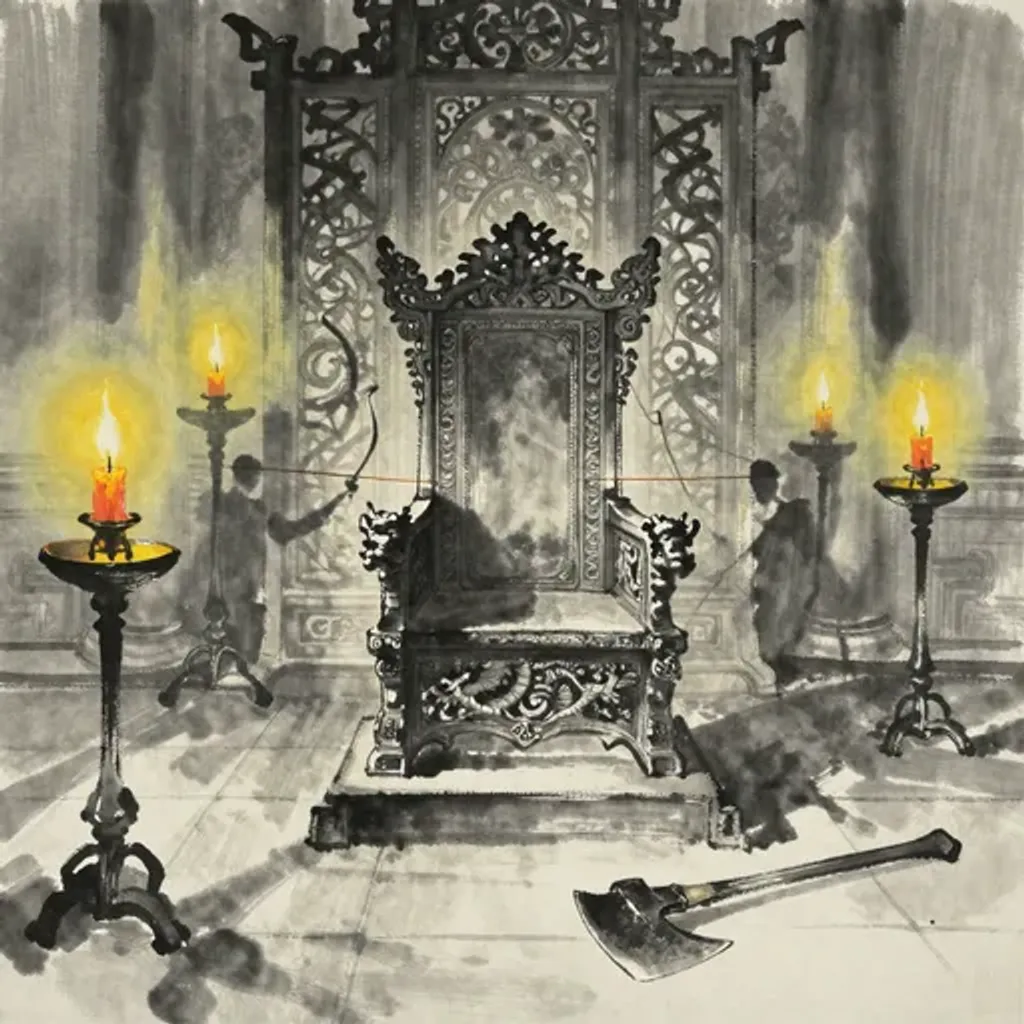
平國不君,夏氏作亂。烏號竊發,靈公殞命。
Candle shadows flicker red — the sound of an axe runs cold. Behind the screen, a bowstring twangs in the dark. The wise lord departs and the dragon throne grows cold — in court, there will be no more peaceful days.
— Jiao Yanshou, Yilin (Forest of Changes), 1st century BC
Commentary
Wind upon wind transforms into mountain over wind: the Gentle becomes Work on the Decayed. The original verse reads: 'The state of Ping was without a true ruler; the Xia clan raised a rebellion. The Wuhao bow was secretly drawn, and Duke Ling lost his life.' This refers to Duke Ling of Chen, assassinated in 599 BC by Xia Zhengshu. The Duke had carried on an open affair with Xia Ji and publicly mocked her son Zhengshu. The young man ambushed the duke with an arrow as he left the Xia residence. From The Gentle to Work on the Decayed, the transformation is exact: wind beneath the mountain signifies corruption festering below an outwardly stable surface. What decays must be repaired — but here the rot was the ruler himself.
巽 → 臨
Hexagram 57 → Hexagram 19: Approach
Changing lines: 1, 3, 5, 6
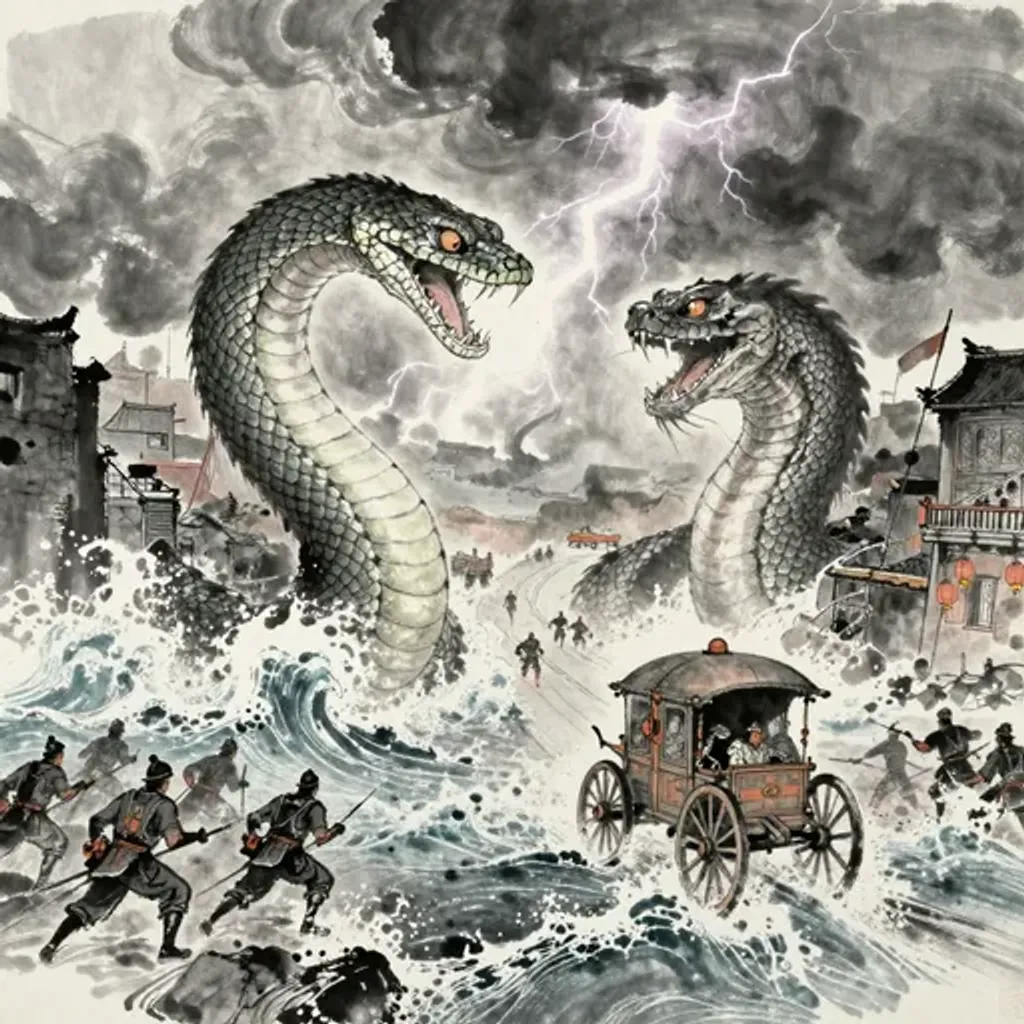
巨虵大鰌,戰於國郊。上下閉塞,君道走逃。
The great serpent and giant eel; they battle at the city's edge. Above and below are sealed; the ruler's path is only flight.
— Jiao Yanshou, Yilin (Forest of Changes), 1st century BC
Commentary
Wind upon wind transforms into earth over lake: the Gentle becomes Approach. A giant serpent and an enormous catfish battle on the outskirts of the capital. Above and below are sealed shut; the ruler's way is flight. Monstrous creatures fighting at the city gates signal cosmic disorder — when beasts from the deep surface to wage war, the natural hierarchy has collapsed entirely. The ruler, instead of approaching his people, must flee. From The Gentle to Approach, the transformation is inverted. Earth above the lake should mean benevolent authority drawing near to govern. But here the approach is monstrous, not sovereign. The creatures that rise from below are not subjects seeking guidance but chaotic forces that drive the lord away.
巽 → 觀
Hexagram 57 → Hexagram 20: Contemplation
Changing lines: 2, 3
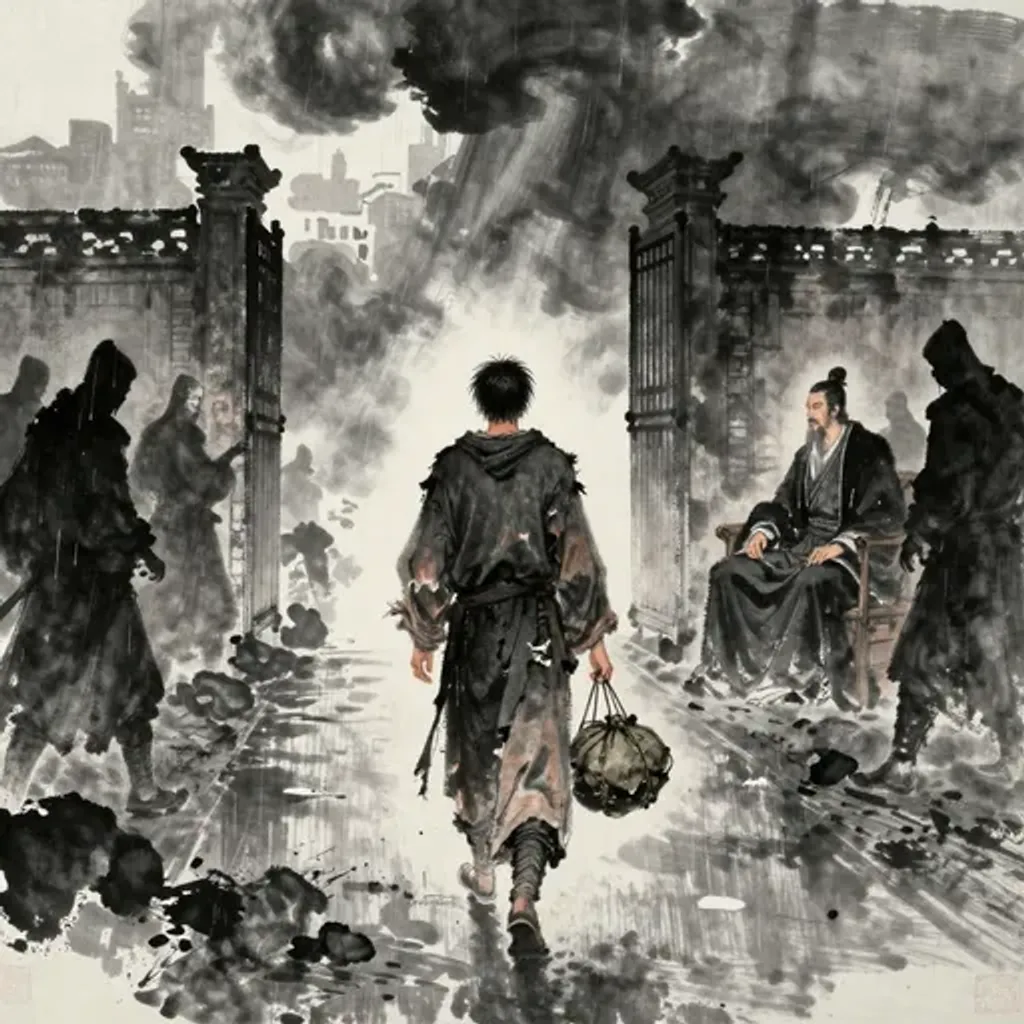
讒言亂國,覆是為非。伯奇流離,恭子憂哀。
Slanderous words disorder the state; right becomes wrong. Bo Qi wanders in exile; the filial son grieves in sorrow.
— Jiao Yanshou, Yilin (Forest of Changes), 1st century BC
Commentary
Wind upon wind transforms into wind over earth: the Gentle becomes Contemplation. Slanderous words throw the state into chaos, inverting right and wrong. Boqi wanders in exile; the virtuous son grieves in sorrow. Boqi was the son of the Zhou minister Yin Jifu, falsely accused by his stepmother of impropriety. His father believed the slander and exiled him. In the wilderness, Boqi composed the famous guqin lament 'Treading on Frost.' From The Gentle to Contemplation, wind sweeping over the earth should allow the ruler to observe his people and set right teachings. But here the wind carries only slander, and contemplation reveals injustice: the filial son cast out, truth overturned by a poisoned tongue.
巽 → 噬嗑
Hexagram 57 → Hexagram 21: Biting Through
Changing lines: 1, 2, 3, 4, 5
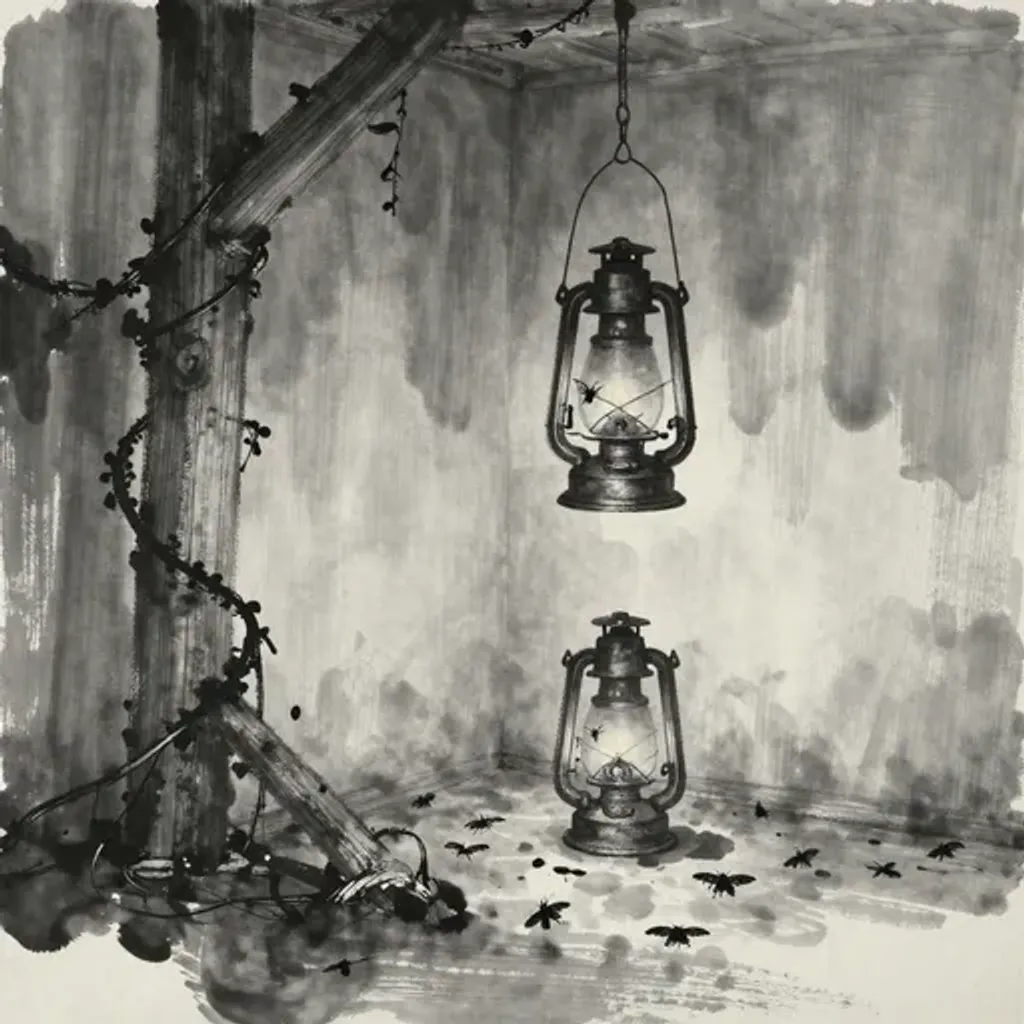
鬱怏不明,為陰所傷。眾霧集聚,共奪日光。
Black moths swarm the lamp — the lamp gutters. Night-vines wrap the pillar — the pillar tilts. Four walls without windows, no wind enters; a room sunk in darkness, the air impossible to clear.
— Jiao Yanshou, Yilin (Forest of Changes), 1st century BC
Commentary
Wind upon wind transforms into fire over thunder: the Gentle becomes Biting Through. The original verse reads: 'Gloomy and not bright, injured by yin forces. Massed fogs gather together to steal the sun's light.' Darkness overwhelms illumination as yin energies accumulate unchecked. The imagery is of collective obstruction — not a single enemy but a conspiracy of shadows that extinguish clarity. From The Gentle to Biting Through, the transformation demands decisive action. Lightning and thunder together mean the ancient kings clarified punishments and enforced law. When fog steals daylight, only the sharp bite of judgment can cut through the murk. Gentle penetration alone will not disperse what has massed into deliberate darkness.
巽 → 賁
Hexagram 57 → Hexagram 22: Grace
Changing lines: 1, 2, 5
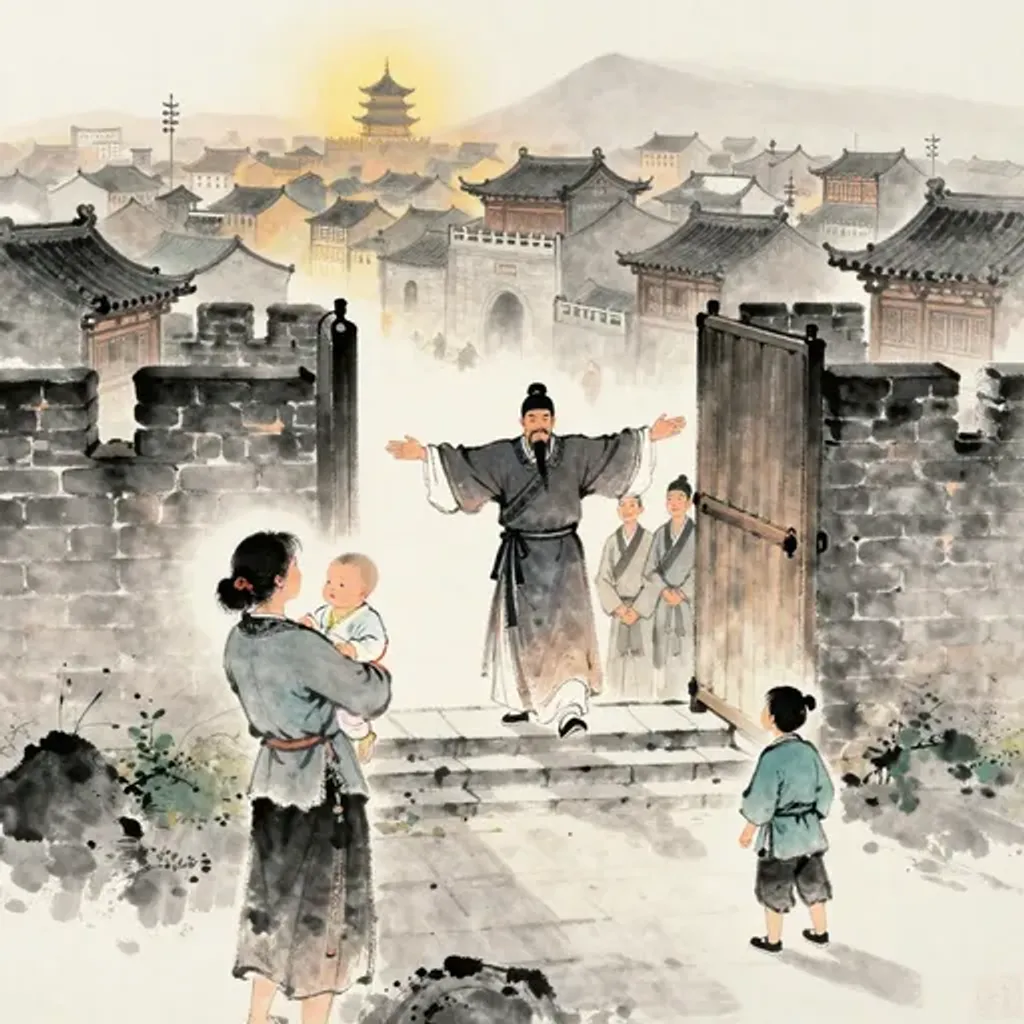
望城抱子,見邑不殆。公孫上堂,大君歡喜。
Gazing at the city walls while holding her child; approaching the town without fear. The young lord ascends the hall; the great prince rejoices.
— Jiao Yanshou, Yilin (Forest of Changes), 1st century BC
Commentary
Wind upon wind transforms into mountain over fire: the Gentle becomes Grace. Gazing toward the city walls while carrying a child, one sees the settlement and knows there is no danger. A young nobleman ascends the hall, and the great lord rejoices. The verse paints a scene of safe arrival and warm reception — a mother approaching a city with confidence, a grandson presented to a delighted patriarch. From The Gentle to Grace, fire glowing beneath the mountain adorns what is solid with warmth and beauty. The gentle wind has carried this family safely home. Grace here is not superficial decoration but the radiance of a secure homecoming, where the next generation is welcomed into the hall with ceremony and joy.
巽 → 剝
Hexagram 57 → Hexagram 23: Splitting Apart
Changing lines: 2, 3, 5
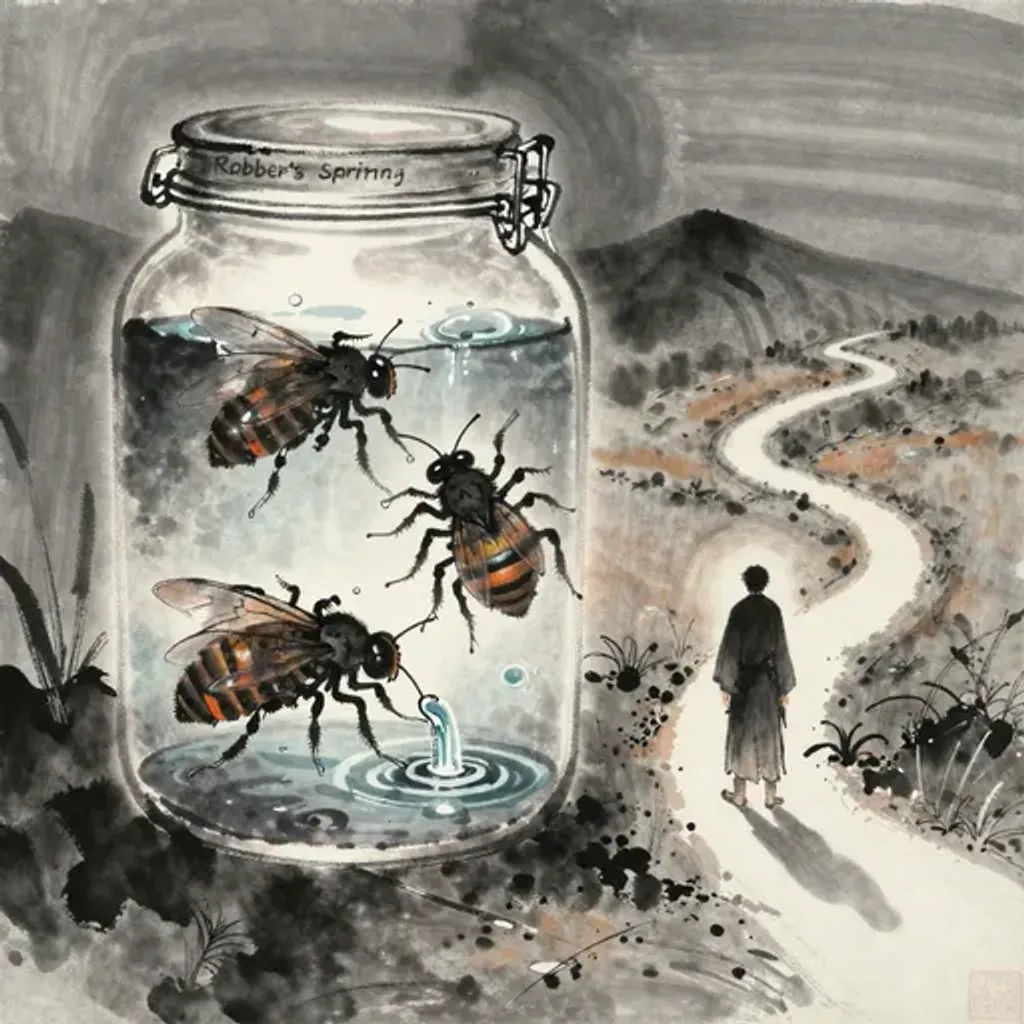
三虫作蠱,剗迹无與。勝母盜泉,君子弗處。
Three insects breed poison; their traces must be cut away, left alone. The spring of Robber's Mother, the well of Theft—the noble man will not dwell there.
— Jiao Yanshou, Yilin (Forest of Changes), 1st century BC
Commentary
Wind upon wind transforms into mountain over earth: the Gentle becomes Splitting Apart. Three venomous insects work their gu-sorcery, obliterating tracks so none may follow. 'Overcoming-Mother' hamlet and 'Robber's Spring' — a gentleman will not dwell there. The verse layers two images of moral contamination. Gu poisoning represents hidden corruption breeding in sealed vessels; the allusion to Shengmu and Daoquan comes from classical ethics: a man of principle avoids places whose very names suggest impropriety. From The Gentle to Splitting Apart, the mountain's foundation crumbles as earth erodes beneath it. Wind that should penetrate and cleanse instead carries poison. When the ground itself is contaminated, the wise response is not to repair but to withdraw entirely.
巽 → 復
Hexagram 57 → Hexagram 24: Return
Changing lines: 1, 2, 3, 5, 6
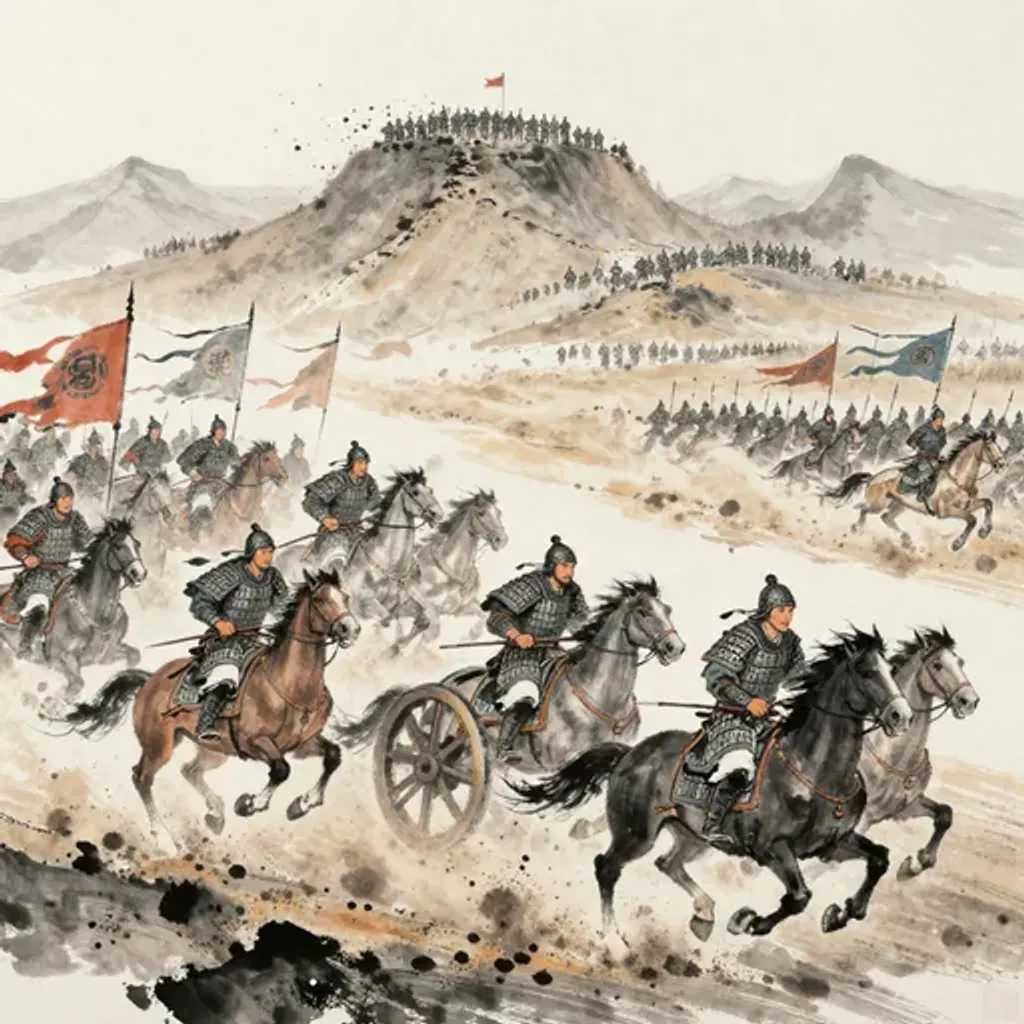
車馳人趨,卷甲相求。齊魯寇戎,敗於大丘。
Chariots thunder, men rush; rolling up armor in pursuit. The forces of Qi and Lu; defeated at the Great Mound.
— Jiao Yanshou, Yilin (Forest of Changes), 1st century BC
Commentary
Wind upon wind transforms into earth over thunder: the Gentle becomes Return. Chariots race and men rush forward, rolling up armor as they pursue one another. The forces of Qi and Lu clash with invaders, defeated at the great mound. The verse describes a military debacle: armies mobilized in haste, armor bundled for speed rather than protection, and a disastrous rout at a prominent landmark. From The Gentle to Return, thunder stirs within the earth — the ancient kings closed the passes at solstice to allow renewal. The defeat at the great mound is the nadir from which return must begin. Hasty pursuit led to collapse, but the pattern of Return promises that even from the lowest point, the cycle can restart if one allows stillness before the next advance.
巽 → 无妄
Hexagram 57 → Hexagram 25: Innocence
Changing lines: 1, 2, 3, 4
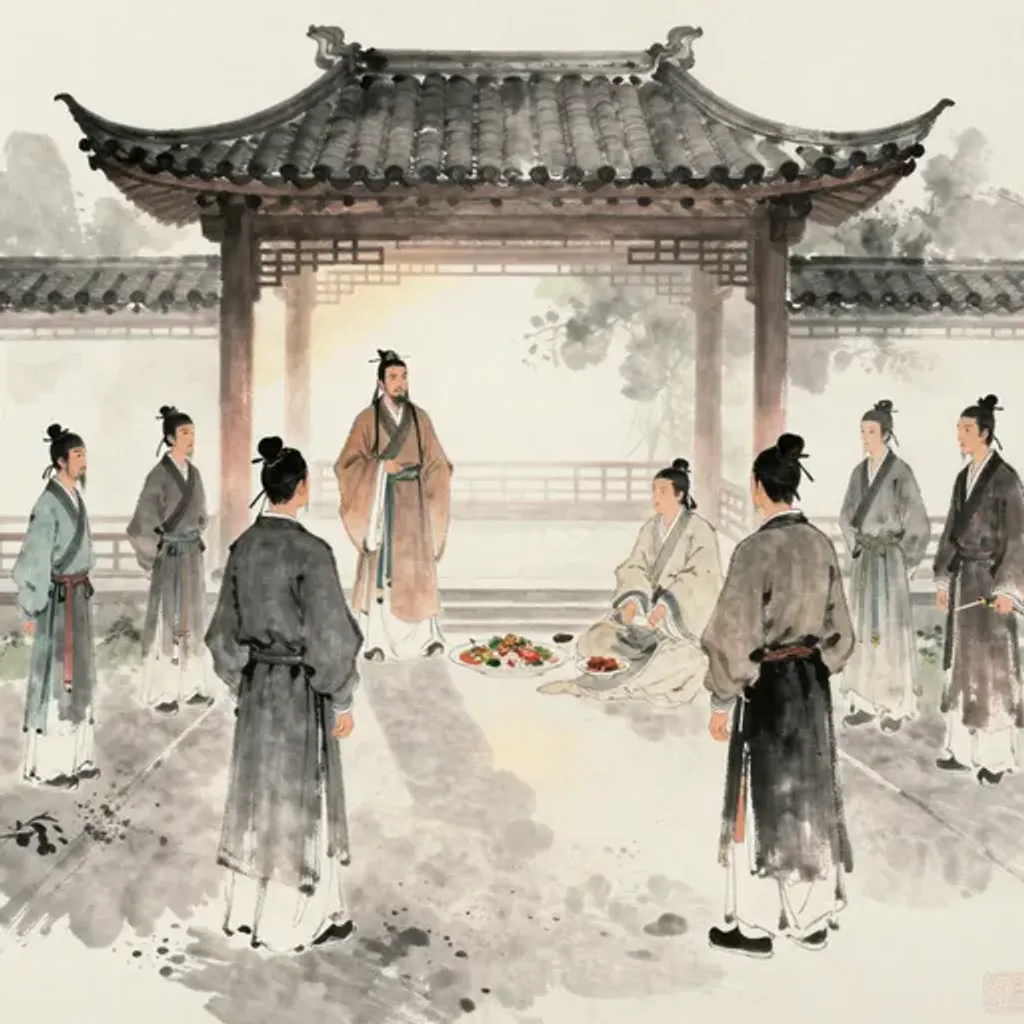
欲訪子車,善相欺紿。桓叔相迎,不見所期。
Wishing to visit Master Ziche; but met with cunning deceit. Lord Huan comes to greet him; yet the expected one appears not.
— Jiao Yanshou, Yilin (Forest of Changes), 1st century BC
Commentary
Wind upon wind transforms into heaven over thunder: the Gentle becomes Innocence. Wishing to visit the Zi Che family, one is deceived by a seemingly kind host. Lord Huan welcomes you warmly, but the person you sought is nowhere to be found. The verse describes a journey undertaken in good faith that ends in disappointment and possible treachery — the guide misleads, the destination proves empty. From The Gentle to Innocence, heaven above thunder means acting without ulterior motive, moving as nature moves. Yet here, innocence is exploited. The honest traveler walks into a trap precisely because he expects no deception. Innocence without vigilance becomes naivete, and the one who trusts without discernment finds himself manipulated.
巽 → 大畜
Hexagram 57 → Hexagram 26: Great Taming
Changing lines: 1, 5
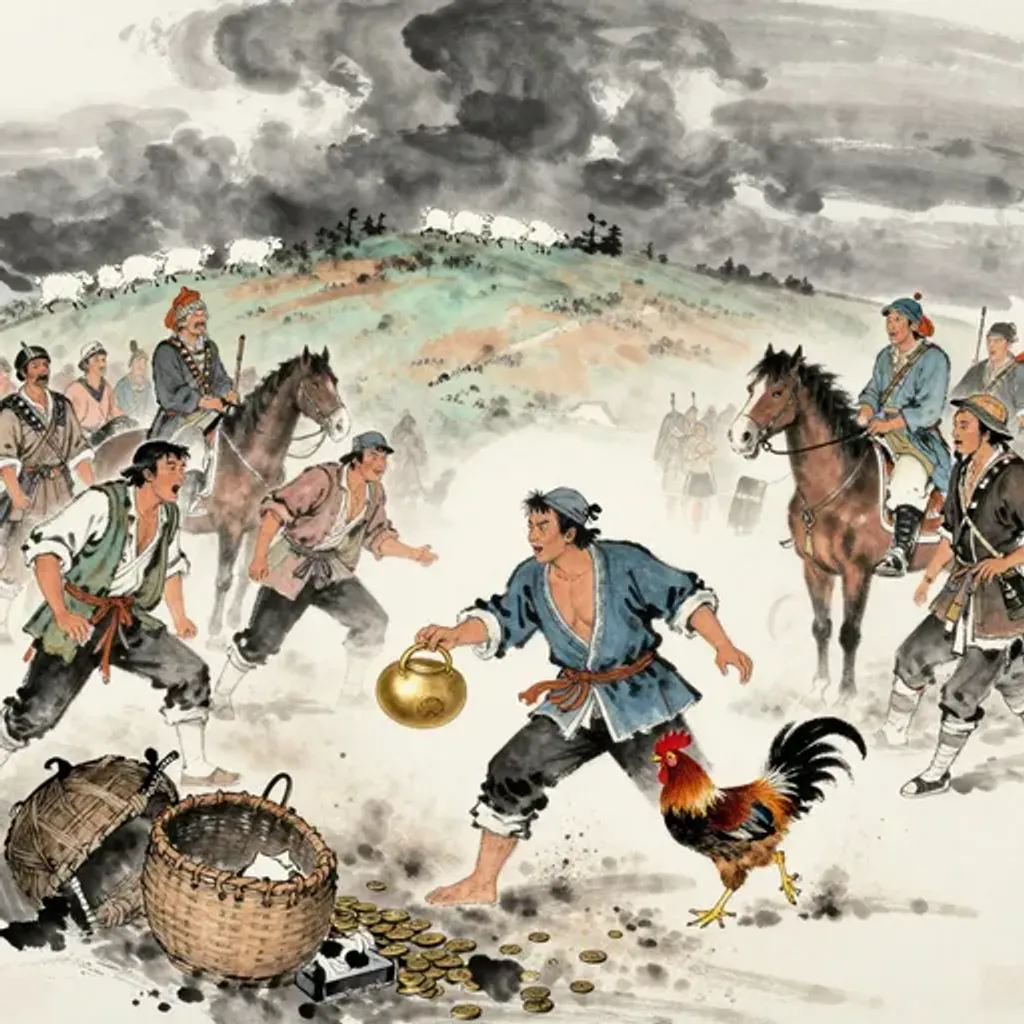
爭雞失羊,亡其金囊,利得不長。陳蔡之患,賴楚以安。
Fighting over the chicken, losing the sheep; losing one's gold purse—profit gained does not last. The troubles of Chen and Cai; they relied on Chu for safety.
— Jiao Yanshou, Yilin (Forest of Changes), 1st century BC
Commentary
Wind upon wind transforms into mountain over heaven: the Gentle becomes Great Taming. Squabbling over a chicken, one loses a sheep and the gold purse besides — profits gained do not last. Then the hardship of Chen and Cai, where relief came only through Chu. This verse closely parallels 57-12 but adds the lost gold purse, deepening the image of forfeited wealth. From The Gentle to Great Taming, the transformation reframes the lesson. Heaven stored within the mountain should mean accumulated wisdom and virtue preserved. But here the taming is of a different sort: the mountain holds back what should flow, and petty greed blocks greater accumulation. True taming requires letting go of small gains to store what truly matters.
巽 → 頤
Hexagram 57 → Hexagram 27: Nourishment
Changing lines: 1, 2, 3, 5
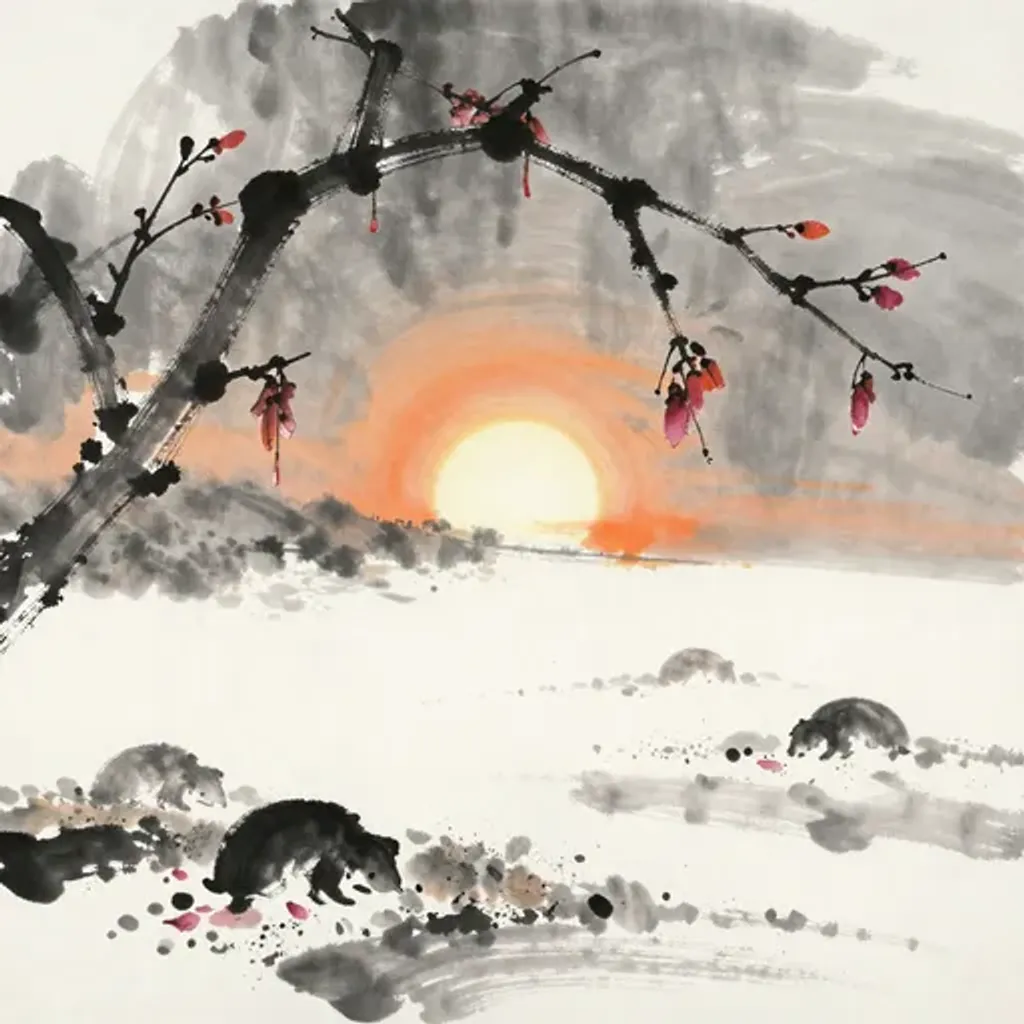
歲暮花落,陽入陰室。萬物伏藏,匿不可得。
Year's end, blossoms fall; yang descends into yin's chamber. All things hide away; concealed, they cannot be found.
— Jiao Yanshou, Yilin (Forest of Changes), 1st century BC
Commentary
Wind upon wind transforms into mountain over thunder: the Gentle becomes Nourishment. At year's end the flowers fall, yang descends into yin's chamber. The ten thousand things hide away in concealment, impossible to find. The verse captures the winter solstice moment: vegetation dies back, warmth retreats underground, all living things burrow into dormancy. Nothing is visible; the world seems empty. From The Gentle to Nourishment, the mountain stills the thunder below — careful speech, moderated consumption. The winter imagery is perfectly apt: nourishment in this season means drawing inward, conserving energy rather than seeking it outside. The flowers will return, but only if the root system is protected through the long dark. Patience sustains what haste would kill.
巽 → 大過
Hexagram 57 → Hexagram 28: Great Exceeding
Changing lines: 4, 6
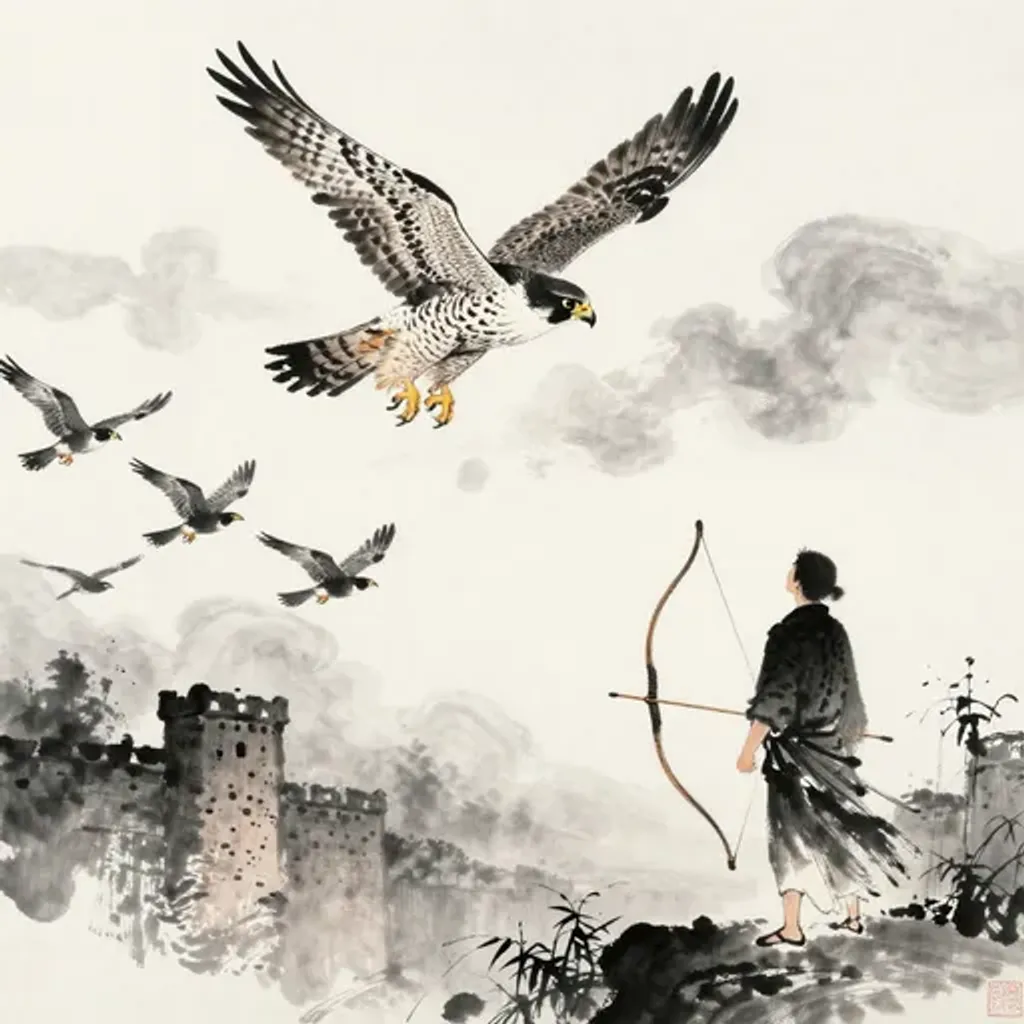
晨風文翮,大舉就溫。過我成邑,羿无所得。
The morning wind with patterned wings; rises high, seeking warmth. Passing over our completed city; Yi the archer gains nothing.
— Jiao Yanshou, Yilin (Forest of Changes), 1st century BC
Commentary
Wind upon wind transforms into lake over wind: the Gentle becomes Great Exceeding. The morning wind hawk with patterned wings rises grandly and flies toward warmth. It passes over my settled town — and even Archer Yi obtains nothing. The hawk's magnificent departure is unstoppable: feathered in beauty, soaring southward to escape the cold, it crosses overhead while the legendary archer stands helpless below. Yi, who shot down nine suns, cannot touch this bird. From The Gentle to Great Exceeding, the lake submerges the trees — extraordinary times call for extraordinary independence. The hawk embodies that independence: departing alone, rising beyond all pursuit, it exceeds every constraint that would hold it back.
巽 → 坎
Hexagram 57 → Hexagram 29: The Abysmal Water
Changing lines: 3, 6
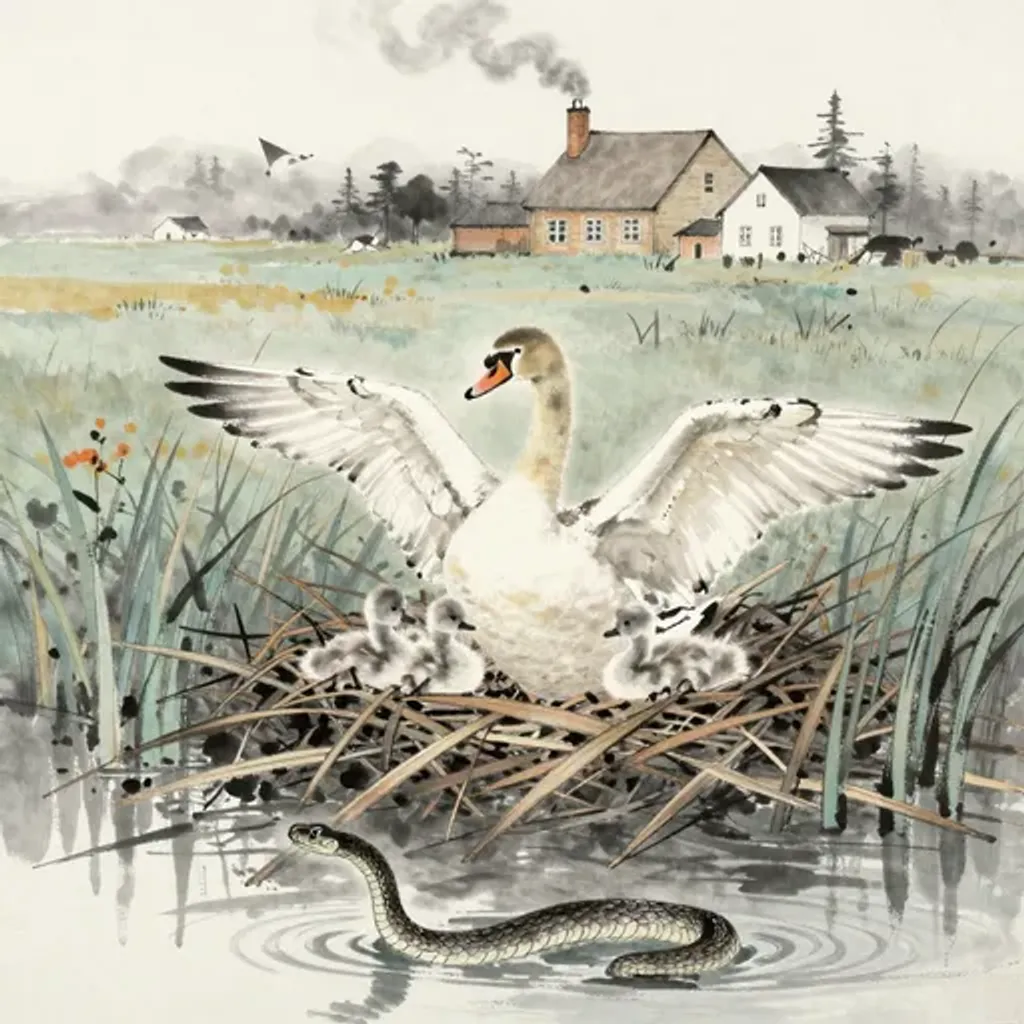
時鵠抱子,見蛇何咎?室家俱在,不失其所。
The swan guards her young; what harm can the passing snake bring? Household and home remain whole; nothing is lost from its place.
— Jiao Yanshou, Yilin (Forest of Changes), 1st century BC
Commentary
Wind upon wind transforms into doubled water: the Gentle becomes The Abysmal. A swan goose in season broods upon her young; encountering a snake, what harm can come? Home and family are all intact — nothing is lost from its proper place. The verse presents danger defused by domestic stability. The nesting bird sees the serpent but remains unshaken because her household is complete and secure. From The Gentle to The Abysmal, doubled water means danger upon danger — yet here the danger is acknowledged and dismissed. The snake appears but does not strike. The secret lies in the phrase 'all intact': when the family holds together and each thing remains in its place, even the abyss loses its power to destroy. Steadfast presence neutralizes peril.
巽 → 離
Hexagram 57 → Hexagram 30: The Clinging Fire
Changing lines: 1, 2, 4, 5
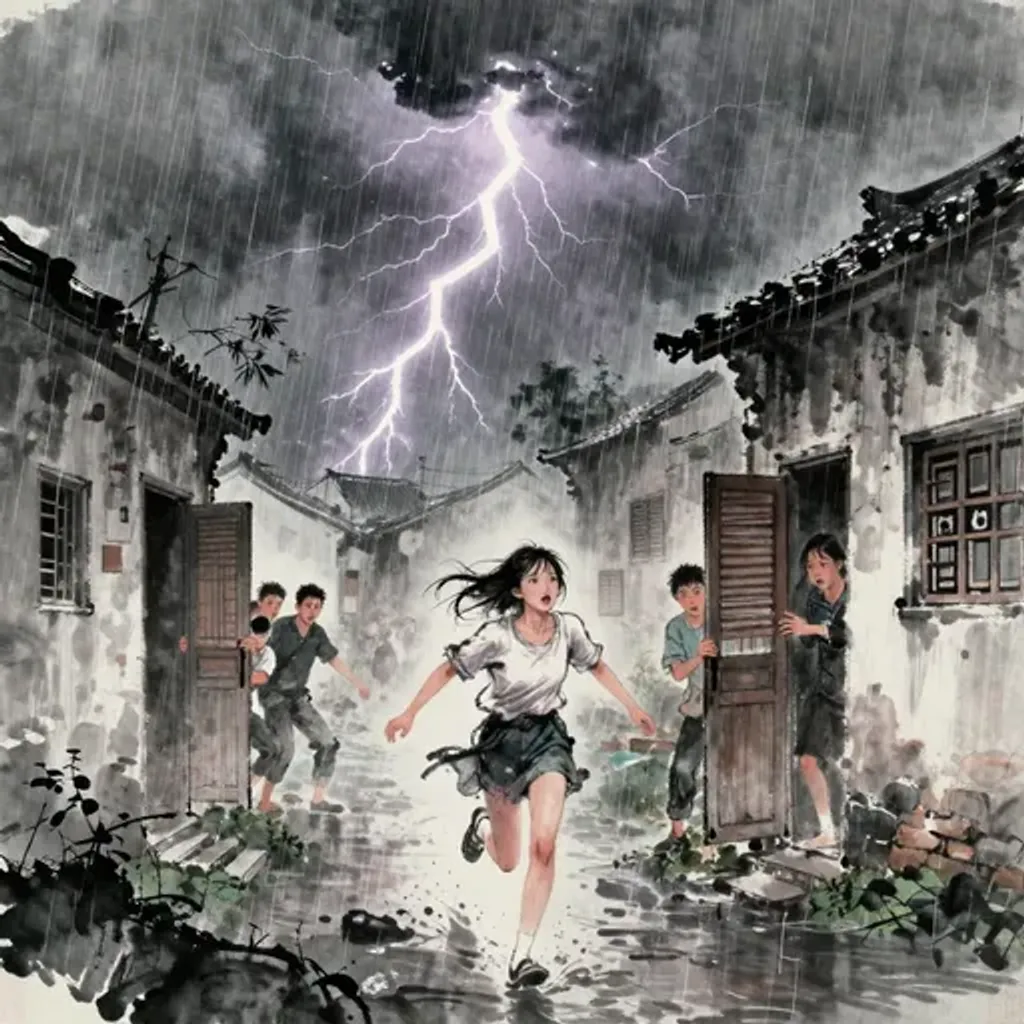
隱隱大雷,霶霈為雨。有女癡狂,驚駭鄰里。
Rolling thunder rumbles deep; torrents of rain pour down. A woman seized by madness; startles and alarms the village.
— Jiao Yanshou, Yilin (Forest of Changes), 1st century BC
Commentary
Wind upon wind transforms into doubled fire: the Gentle becomes The Clinging. Rolling thunder rumbles in the distance as torrential rain pours down. A woman seized by madness alarms the entire neighborhood. The verse links cosmic disturbance to human derangement — the storm outside mirrors the storm within. The woman's frenzy is not malicious but uncontrolled, a force that spreads fear through its very unpredictability. From The Gentle to The Clinging, doubled fire should mean clarity illuminating in all directions. But here the brilliance is fevered: fire burning too intensely becomes delirium rather than enlightenment. Wind fed fire beyond measure, and what should be lucid vision ignites as mania. Illumination pushed past its limit becomes its own form of darkness.
巽 → 咸
Hexagram 57 → Hexagram 31: Influence
Changing lines: 2, 4, 6
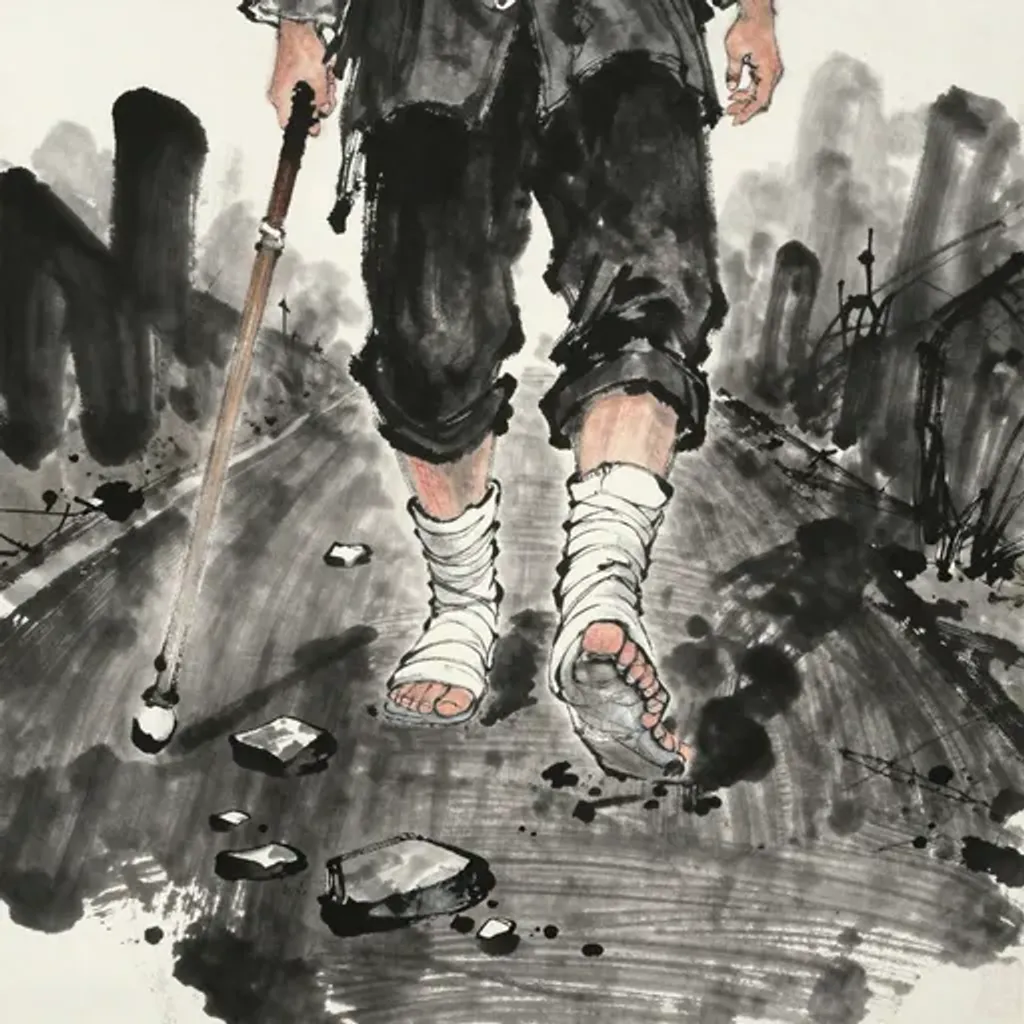
无足斷跟,居處不安,凶惡為患。
Without feet, severed at the heel; dwelling finds no peace—evil brings calamity.
— Jiao Yanshou, Yilin (Forest of Changes), 1st century BC
Commentary
Wind upon wind transforms into lake over mountain: the Gentle becomes Influence. Footless and with heels cut off, dwelling is never safe — calamity and evil bring constant affliction. The verse is starkly physical: mutilation has removed the very means of standing, let alone walking. Without feet and heels, one cannot settle anywhere, perpetually unstable and vulnerable. From The Gentle to Influence, the lake resting upon the mountain should enable the gentleman to receive others with openness. Influence begins at the extremities — the toes, the calves — and rises upward. But here the extremities are destroyed, severing the very channels through which sensation and connection should flow. When the foundation of receptivity is amputated, no influence can take root.
巽 → 恆
Hexagram 57 → Hexagram 32: Duration
Changing lines: 4, 5, 6
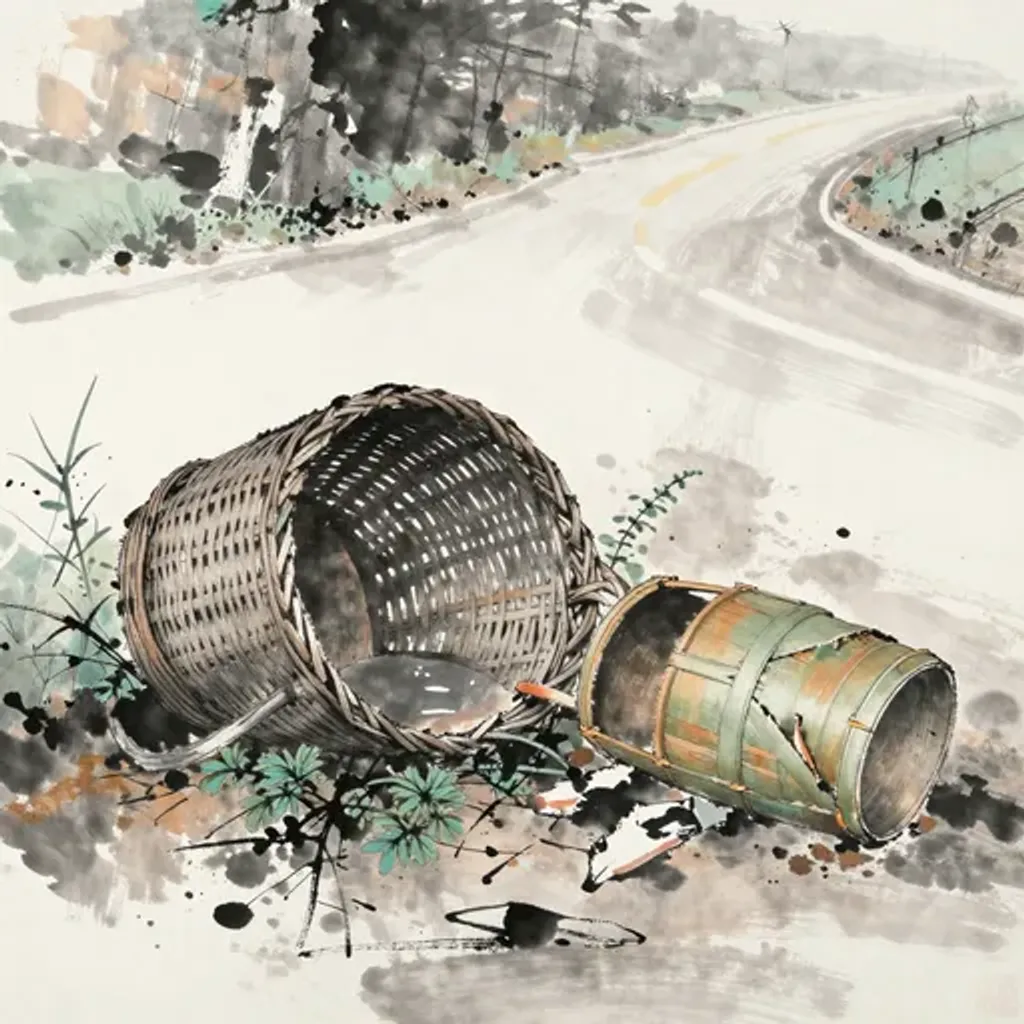
破筐敝筥,棄捐於道,不復為寶。
Broken basket, tattered hamper; discarded on the road—no longer treasured.
— Jiao Yanshou, Yilin (Forest of Changes), 1st century BC
Commentary
Wind upon wind transforms into thunder over wind: the Gentle becomes Duration. A broken basket and a tattered hamper, cast aside upon the road, no longer considered treasure. What was once a useful container — holding grain, carrying goods — has been discarded when it wore out, left on the roadside for anyone to ignore. The verse is a meditation on obsolescence and ingratitude. From The Gentle to Duration, thunder and wind together establish constancy: the gentleman stands firm and does not change course. The irony cuts deep: Duration demands permanence, yet here nothing endures. The container that served faithfully is abandoned the moment it breaks. True duration would mean maintaining what has value, not discarding it when novelty fades.
巽 → 遯
Hexagram 57 → Hexagram 33: Retreat
Changing lines: 2, 4
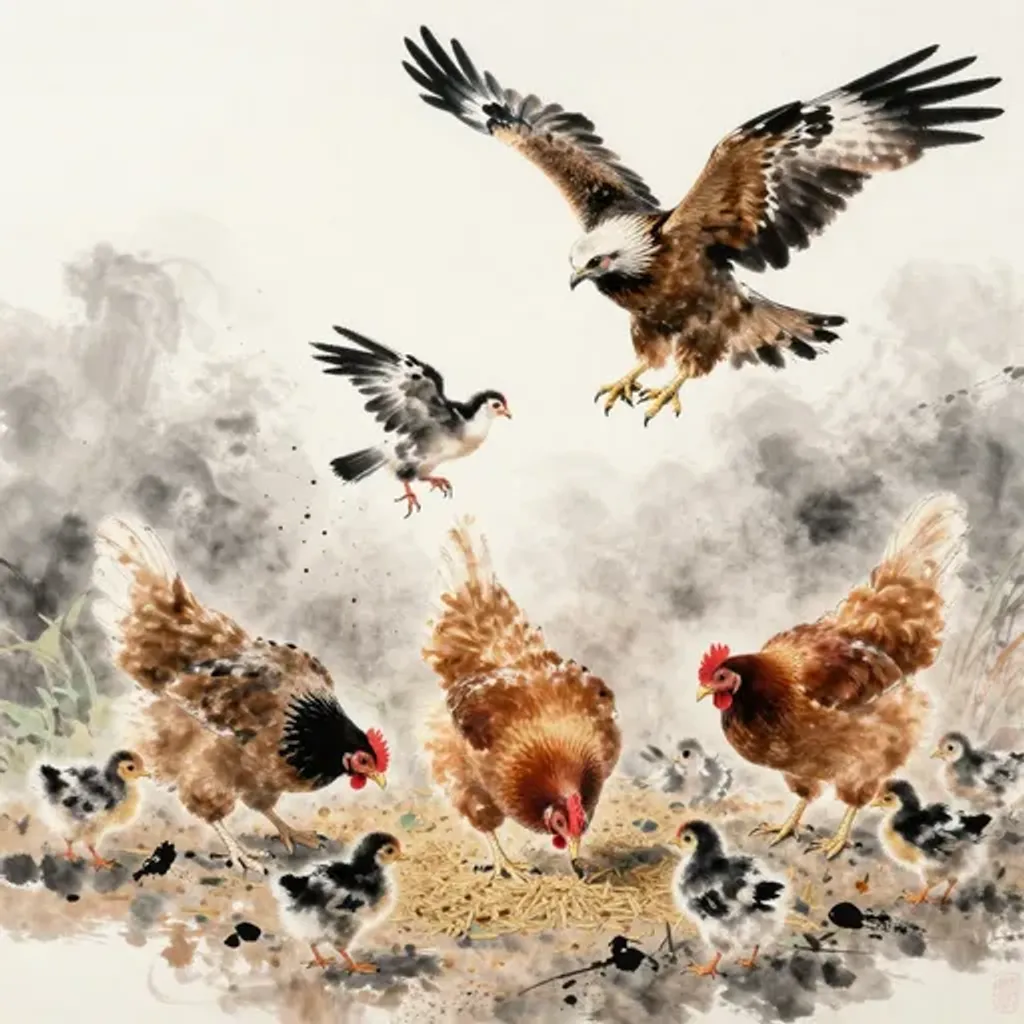
三雞啄粟,十雛從食。飢鳶卒擊,亡其兩叔。
Three hens peck at grain; ten chicks follow to feed. A hungry kite strikes suddenly; two young ones are lost.
— Jiao Yanshou, Yilin (Forest of Changes), 1st century BC
Commentary
Wind upon wind transforms into heaven over mountain: the Gentle becomes Retreat. Three hens peck at grain while ten chicks follow to feed. A hungry kite strikes suddenly, and two of the brood are lost. The farmyard scene turns violent in an instant: the mother hens forage peacefully, their chicks trailing behind, until a raptor swoops down from above and snatches two. From The Gentle to Retreat, heaven above the mountain signals the time to withdraw from encroaching danger. The hens' mistake was not retreating when the shadow appeared. The gentleman distances himself from petty men — not through hostility but through timely withdrawal. Those who linger at the feeding ground when the predator circles will lose what they cannot protect.
巽 → 大壯
Hexagram 57 → Hexagram 34: Great Power
Changing lines: 1, 4, 5, 6
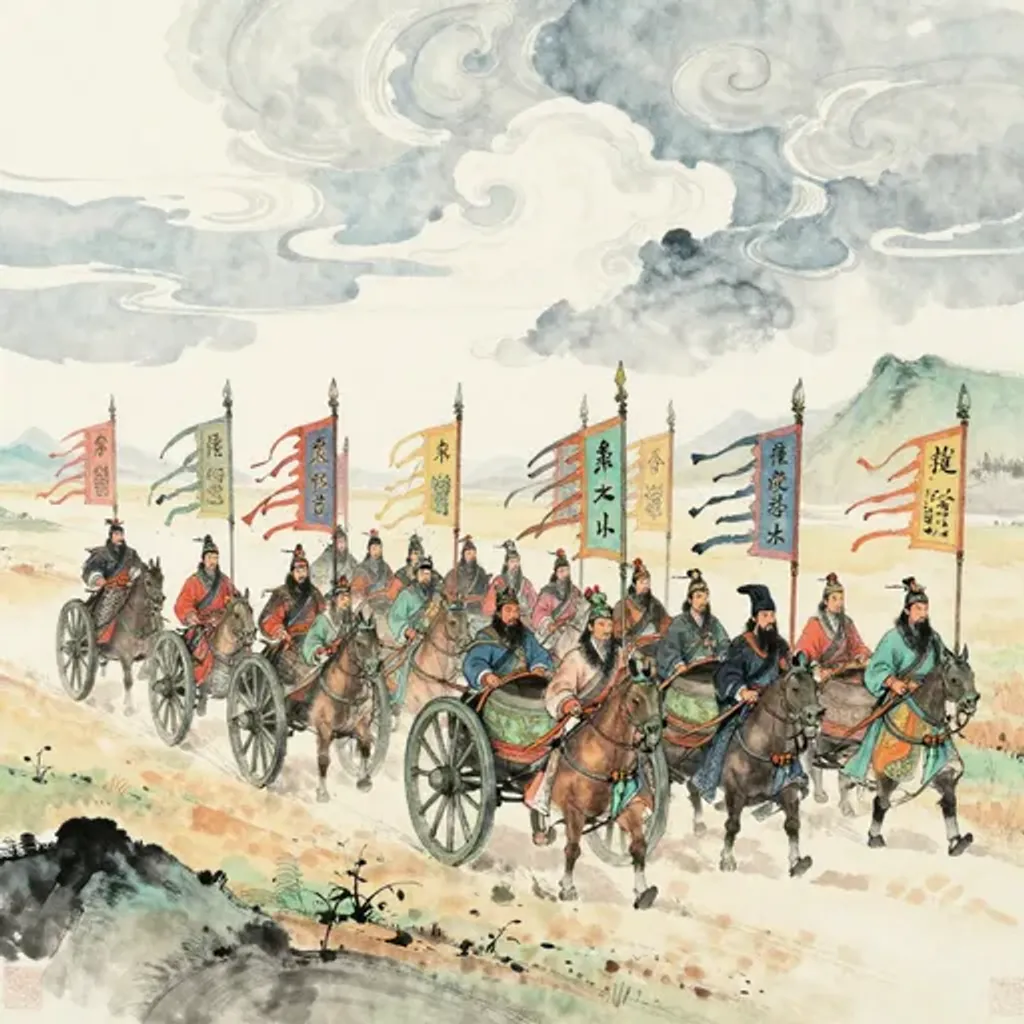
乘車七百,以明文德。踐土葵丘,齊晉受福。
Seven hundred chariots arrayed; to demonstrate civil virtue. At the mounds of Jiantu and Kuiqiu; Qi and Jin receive their blessings.
— Jiao Yanshou, Yilin (Forest of Changes), 1st century BC
Commentary
Wind upon wind transforms into thunder over heaven: the Gentle becomes Great Power. Seven hundred chariots ride forth to manifest civil virtue. At the covenants of Jiantu and Kuiqiu, Qi and Jin receive their blessings. The verse celebrates the great hegemonic assemblies of the Spring and Autumn period: Kuiqiu, where Duke Huan of Qi assembled the lords in 651 BC, and Jiantu, where Duke Wen of Jin convened them after the Battle of Chengpu in 632 BC. Both were moments when military power was channeled into ritual diplomacy. From The Gentle to Great Power, thunder above heaven, the gentleman moves with irresistible force but within the bounds of propriety. The seven hundred chariots display strength that serves virtue, not violence — power made legitimate through ceremony.
巽 → 晉
Hexagram 57 → Hexagram 35: Progress
Changing lines: 2, 3, 4, 5
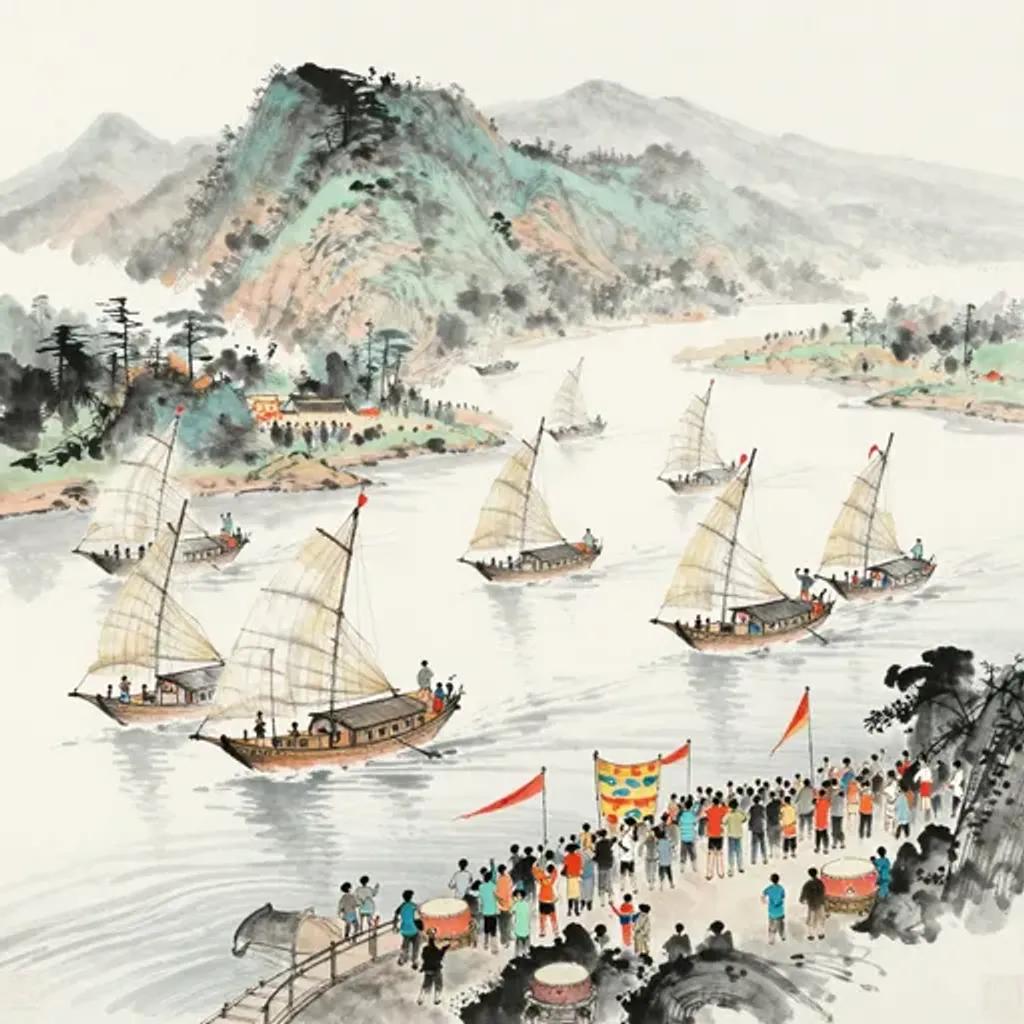
百足俱行,相輔為強。三聖翼事,王室寵光。
Spring wind fills the sails; a hundred boats cross together. Reaching the far shore as one, drums and music celebrate.
— Jiao Yanshou, Yilin (Forest of Changes), 1st century BC
Commentary
Wind upon wind transforms into fire over earth: the Gentle becomes Progress. The original verse reads: 'A hundred feet march together, mutually strengthening as they go. Three sages assist in governance, and the royal house is honored with glory.' The centipede's hundred legs move in concert — a perfect metaphor for coordinated collective effort. The three sages likely refer to the Duke of Zhou, Taigong, and the Duke of Shao, who together stabilized the young Zhou dynasty. From The Gentle to Progress, brightness emerges above the earth: the sun rising at dawn, illuminating all below. Wind's patient influence has aligned many forces into unified advance, and with sages guiding the enterprise, the royal house shines with renewed brilliance.
巽 → 明夷
Hexagram 57 → Hexagram 36: Darkening of the Light
Changing lines: 1, 2, 5, 6
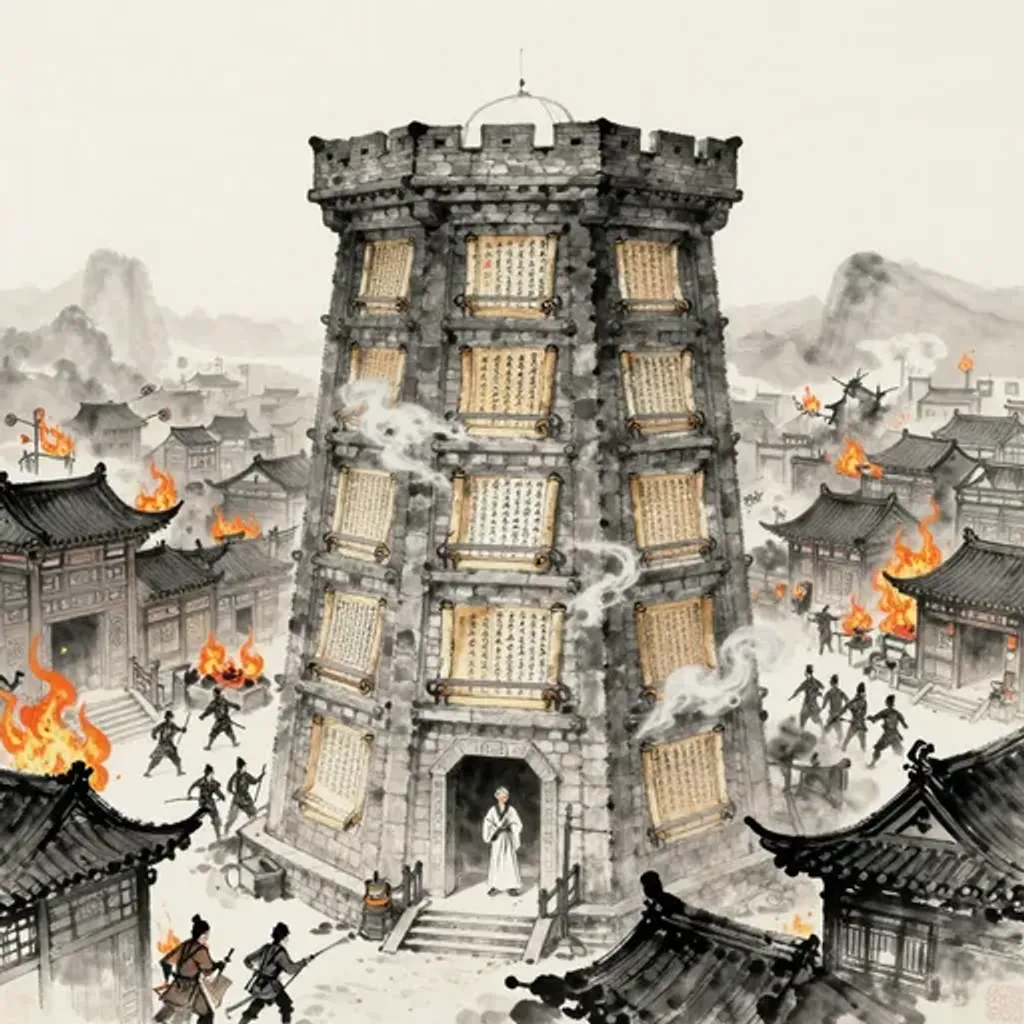
典策法書,藏閣蘭臺。雖遭潰亂,獨不逢災。
Statutes and documents, books of law; stored in the Orchid Terrace archives. Though upheaval strikes all around; alone they escape disaster.
— Jiao Yanshou, Yilin (Forest of Changes), 1st century BC
Commentary
Wind upon wind transforms into earth over fire: the Gentle becomes Darkening of the Light. Canonical texts and legal documents are stored in the archive of Lantai. Though the realm suffers upheaval and chaos, these alone escape disaster. Lantai was the Han dynasty's central archive, where imperial edicts, legal codes, and historical records were preserved under the supervision of the Censor. The verse celebrates the survival of written knowledge through political catastrophe. From The Gentle to Darkening of the Light, brightness enters the earth — the wise conceal their radiance in dark times. The texts stored in Lantai embody this principle exactly: hidden within the archive, shielded from destruction, wisdom endures underground until the light can safely emerge again.
巽 → 家人
Hexagram 57 → Hexagram 37: The Family
Changing lines: 1, 2
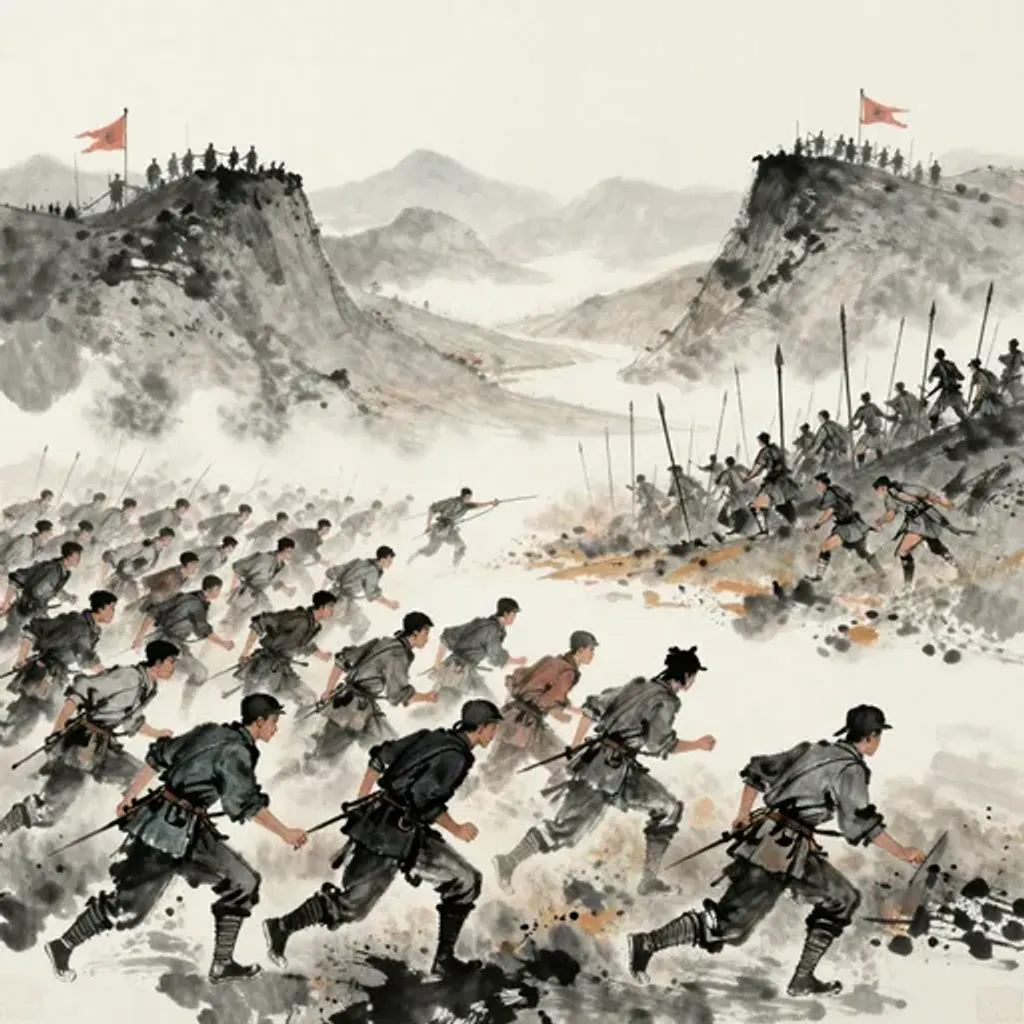
四誅不服,恃強負力。倍道趨敵,師徒敗覆。
Four times punished yet still defiant; trusting strength, relying on force. Doubling the march to meet the enemy; the army utterly overthrown.
— Jiao Yanshou, Yilin (Forest of Changes), 1st century BC
Commentary
Wind upon wind transforms into wind over fire: the Gentle becomes The Family. Punitive campaigns against four quarters, yet the rebels remain unsubdued — trusting in brute strength and superior force. Doubling the march to rush the enemy, the army is overturned in defeat. The verse describes a commander who relies on military aggression rather than moral authority: attacking on all fronts, force-marching exhausted troops, and meeting catastrophic failure. From The Gentle to The Family, wind emerges from fire — words must have substance, and actions must have constancy. The failed campaign illustrates The Family's lesson in reverse: a household run by violence rather than consistent virtue collapses just as surely as an army that outruns its supply lines.
巽 → 睽
Hexagram 57 → Hexagram 38: Opposition
Changing lines: 1, 3, 4, 5
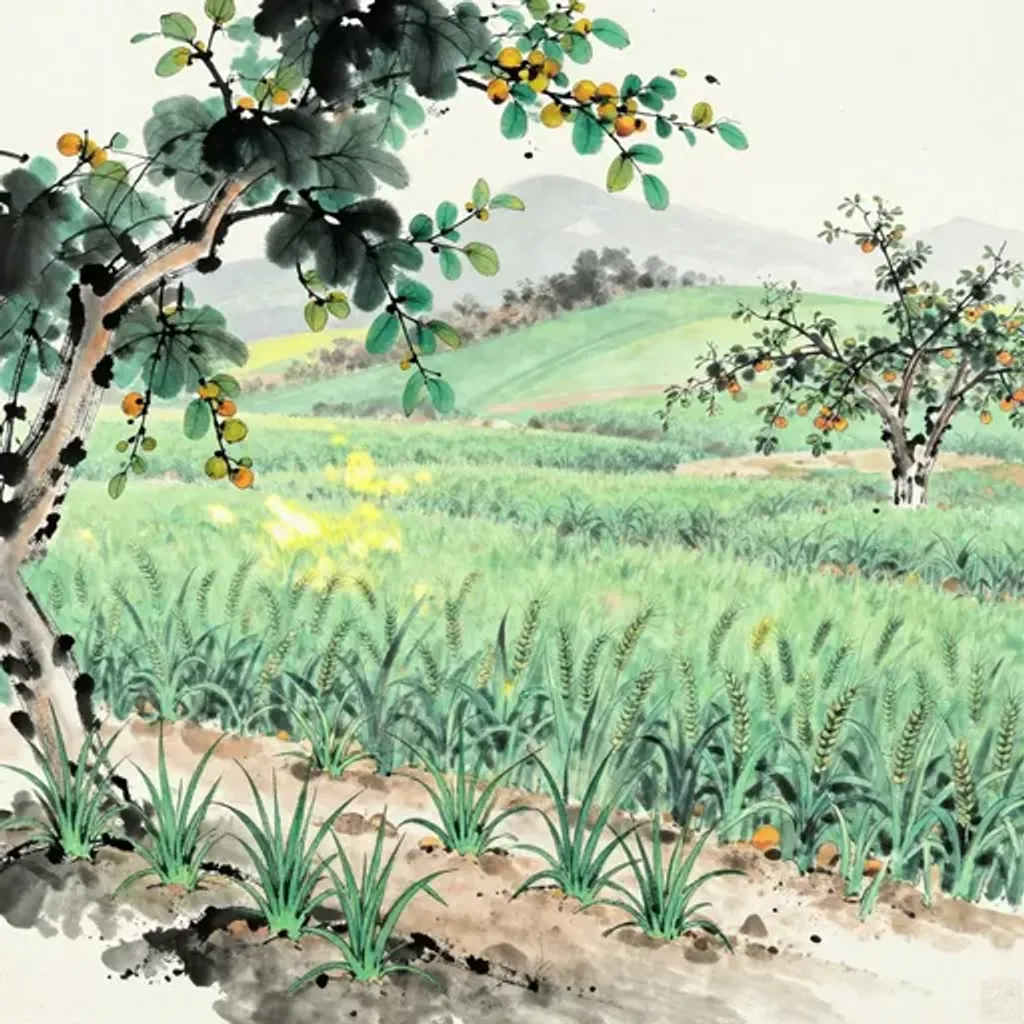
春陽生草,夏長條肄。萬物蕃滋,充實益有。
Spring sunlight sprouts the grass; summer lengthens branch and shoot. All things flourish and multiply; fullness and abundance increase.
— Jiao Yanshou, Yilin (Forest of Changes), 1st century BC
Commentary
Wind upon wind transforms into fire over lake: the Gentle becomes Opposition. Spring sunlight quickens the grass; summer lengthens the shoots and branches. The ten thousand things flourish abundantly, growing full and ever more plentiful. The verse is a pure celebration of natural growth: spring germinates, summer extends, and life multiplies without interruption. From The Gentle to Opposition, fire above and lake below — two forces that naturally diverge. Yet the verse finds no conflict here. Instead, the opposition between spring's initiating warmth and summer's sustaining heat produces complementary abundance. Wind's steady nourishment feeds both seasons. Opposition, at its best, is not antagonism but the productive tension of unlike forces cooperating across their difference.
巽 → 蹇
Hexagram 57 → Hexagram 39: Obstruction
Changing lines: 2, 6
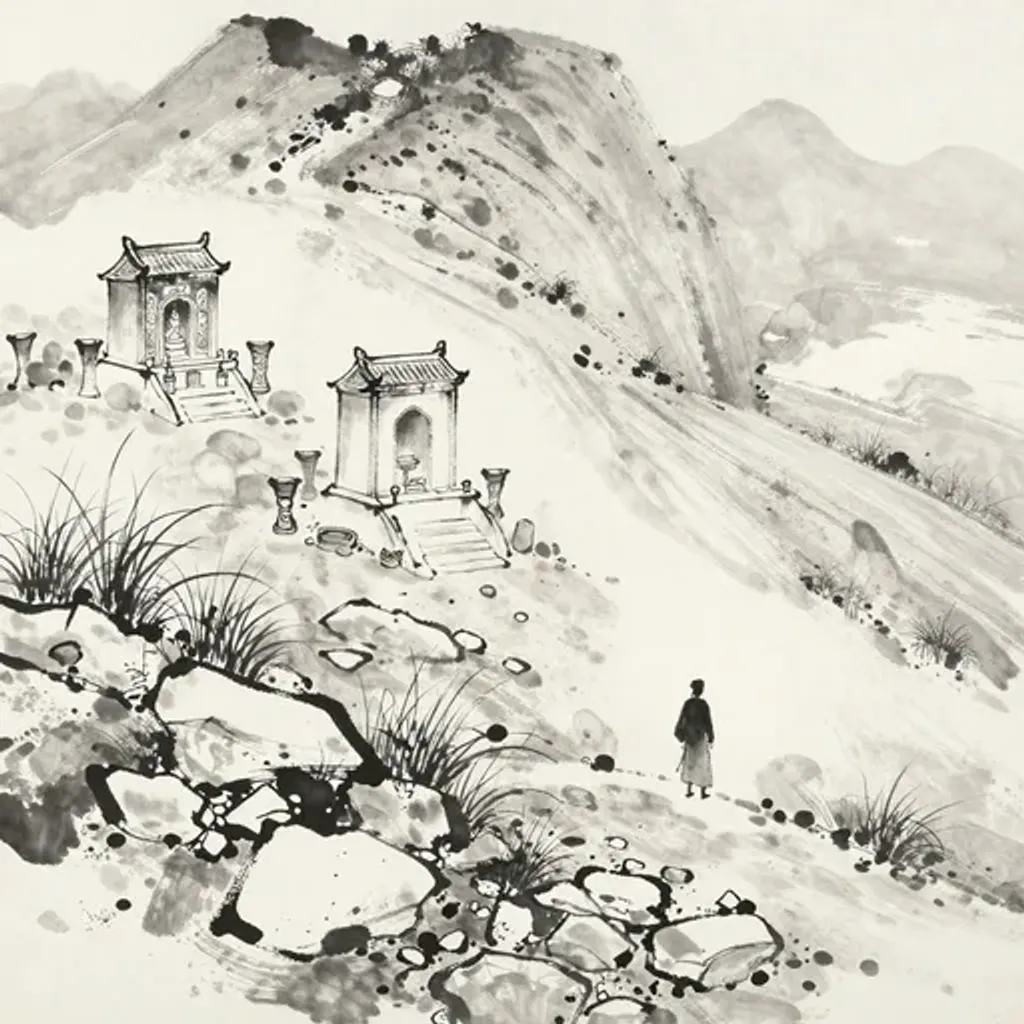
磝磝禿白,不生黍稷。无以供祭,祇靈乏祀。
Rocky and bare, bald and white; no millet or grain will grow. Nothing to offer in sacrifice; the spirits lack their rites.
— Jiao Yanshou, Yilin (Forest of Changes), 1st century BC
Commentary
Wind upon wind transforms into water over mountain: the Gentle becomes Obstruction. Rocky and white with barrenness, no millet or grain can grow. There is nothing to offer in sacrifice; the spirits and ancestors go without rites. The verse describes land so stony and depleted that it cannot sustain even the most basic crop. Without grain, ritual sacrifice is impossible — the connection between the living and the ancestral world is severed at its material root. From The Gentle to Obstruction, water pools atop the mountain with nowhere to flow, and the gentleman turns inward to cultivate virtue. But here the obstruction is total: the soil itself refuses to yield. Wind blows over stone without effect. When the very earth is barren, no amount of gentle influence can coax life from rock.
巽 → 解
Hexagram 57 → Hexagram 40: Deliverance
Changing lines: 3, 4, 5, 6
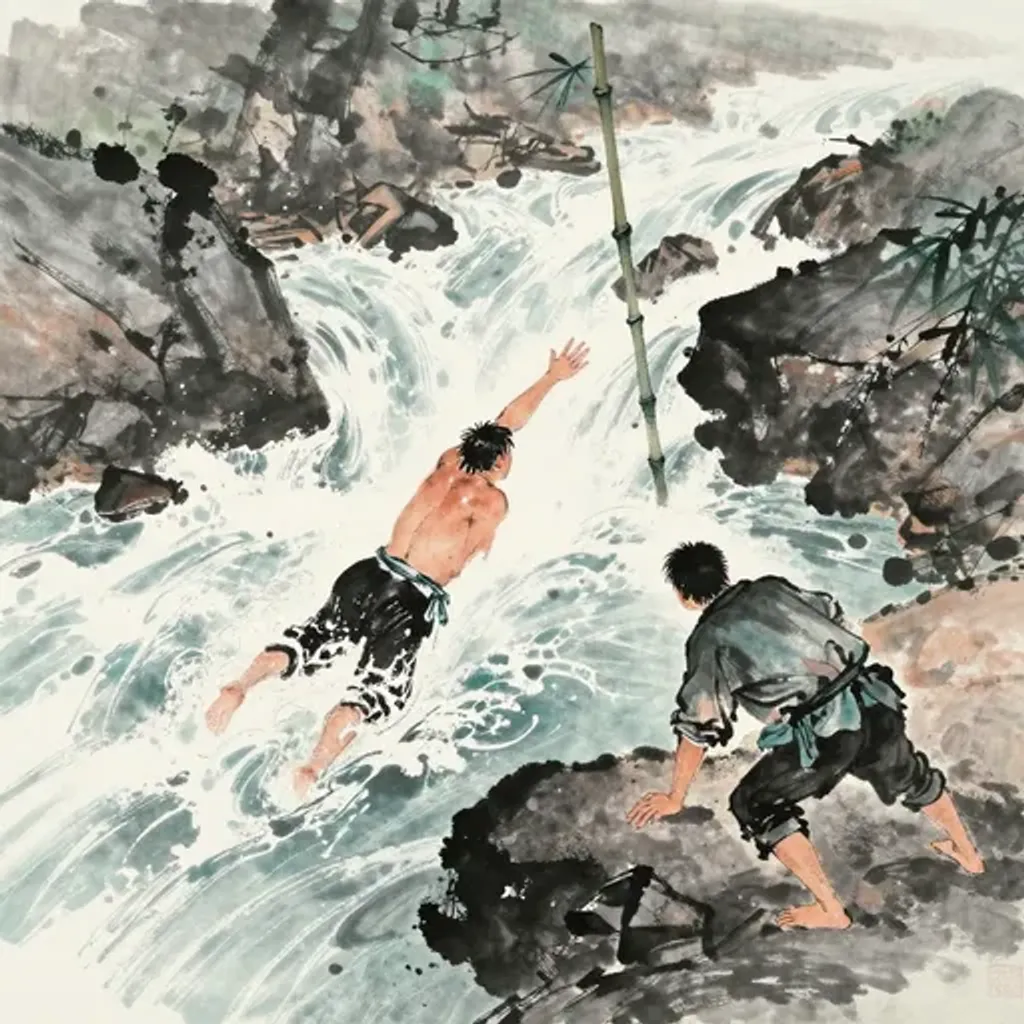
褰衣涉河,水深漬罷。賴幸舟子,濟脫无他。
Whirlpool rising to the waist — crying for help urgently. A bamboo pole extends, just an arm's length away. Pulled onto the bank, clothes soaked through — looking back at the rapids, the heart is still cold.
— Jiao Yanshou, Yilin (Forest of Changes), 1st century BC
Commentary
Wind upon wind transforms into thunder over water: the Gentle becomes Deliverance. The original verse reads: 'Lifting one's robe to wade the river, the water is deep and one collapses from exhaustion. Fortunately a boatman appears, and one crosses safely without harm.' At the moment of drowning, rescue arrives. The verse moves from mortal peril to salvation in a single breath — the traveler has underestimated the current, the water overwhelms him, but a ferryman's timely intervention saves his life. From The Gentle to Deliverance, thunder and rain together dissolve the crisis. The boatman is the embodiment of Deliverance's mechanism: release comes not from the self but through the grace of another who arrives precisely when the danger peaks.
巽 → 損
Hexagram 57 → Hexagram 41: Decrease
Changing lines: 1, 3, 5
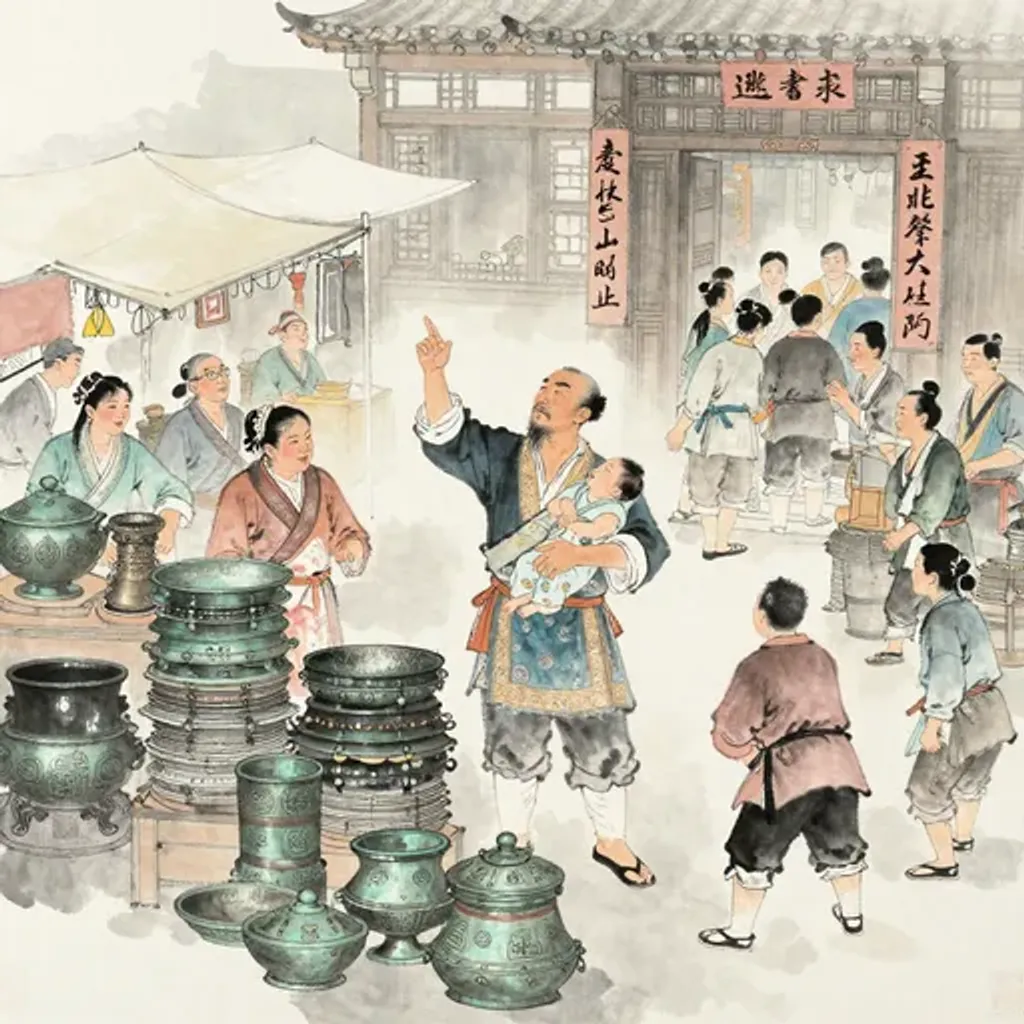
宜行賈市,所求必倍。戴喜抱子,與利為友。
Fit to trade and do business; every venture returns double. Wearing joy, embracing a child; keeping company with profit.
— Jiao Yanshou, Yilin (Forest of Changes), 1st century BC
Commentary
Wind upon wind transforms into mountain over lake: the Gentle becomes Decrease. Go forth to trade at market — your returns will surely double. Carry joy, embrace your child, and make profit your companion. The verse promises commercial success with almost startling directness: invest, and the returns will multiply; the trader comes home wealthy, holding both child and gain. From The Gentle to Decrease, the mountain towers above the lake, and the gentleman restrains anger and desire. The paradox of Decrease is that what is taken from below enriches above, and what is given away returns multiplied. The merchant who ventures capital into the market — accepting the decrease of investment — reaps the increase of doubled returns. Decrease, properly applied, is the mechanism of abundance.
巽 → 益
Hexagram 57 → Hexagram 42: Increase
Changing lines: 1, 2, 3
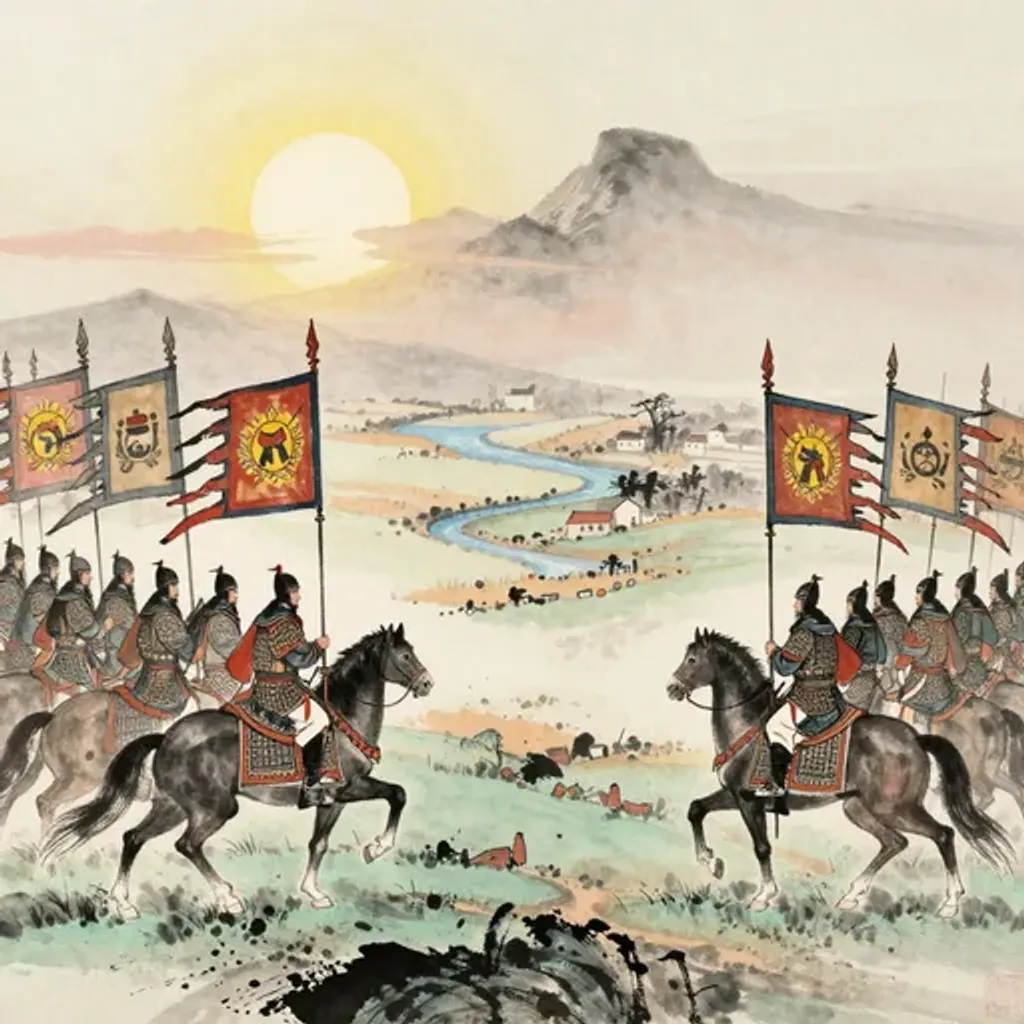
兄征東夷,弟伐遼西。大克勝還,封君河間。
The elder brother campaigns against the Eastern Yi; the younger attacks the Western Liao. Great victory, triumphant return; enfeoffed as lord at Hejian.
— Jiao Yanshou, Yilin (Forest of Changes), 1st century BC
Commentary
Wind upon wind transforms into wind over thunder: the Gentle becomes Increase. The elder brother campaigns east against the Yi barbarians; the younger brother conquers the western Liao. Both return in great triumph, and are enfeoffed as lords of Hejian. The verse celebrates coordinated military success by siblings — one striking east, the other west, both victorious, both rewarded with territory. From The Gentle to Increase, wind and thunder reinforce each other: the gentleman sees good and moves toward it, sees error and corrects it. The brothers' pincer strategy embodies Increase's dynamic of mutual support. When wind above energizes the thunder below, and both move in complementary directions, the result is not merely addition but synergistic multiplication of strength.
巽 → 夬
Hexagram 57 → Hexagram 43: Breakthrough
Changing lines: 1, 4, 6
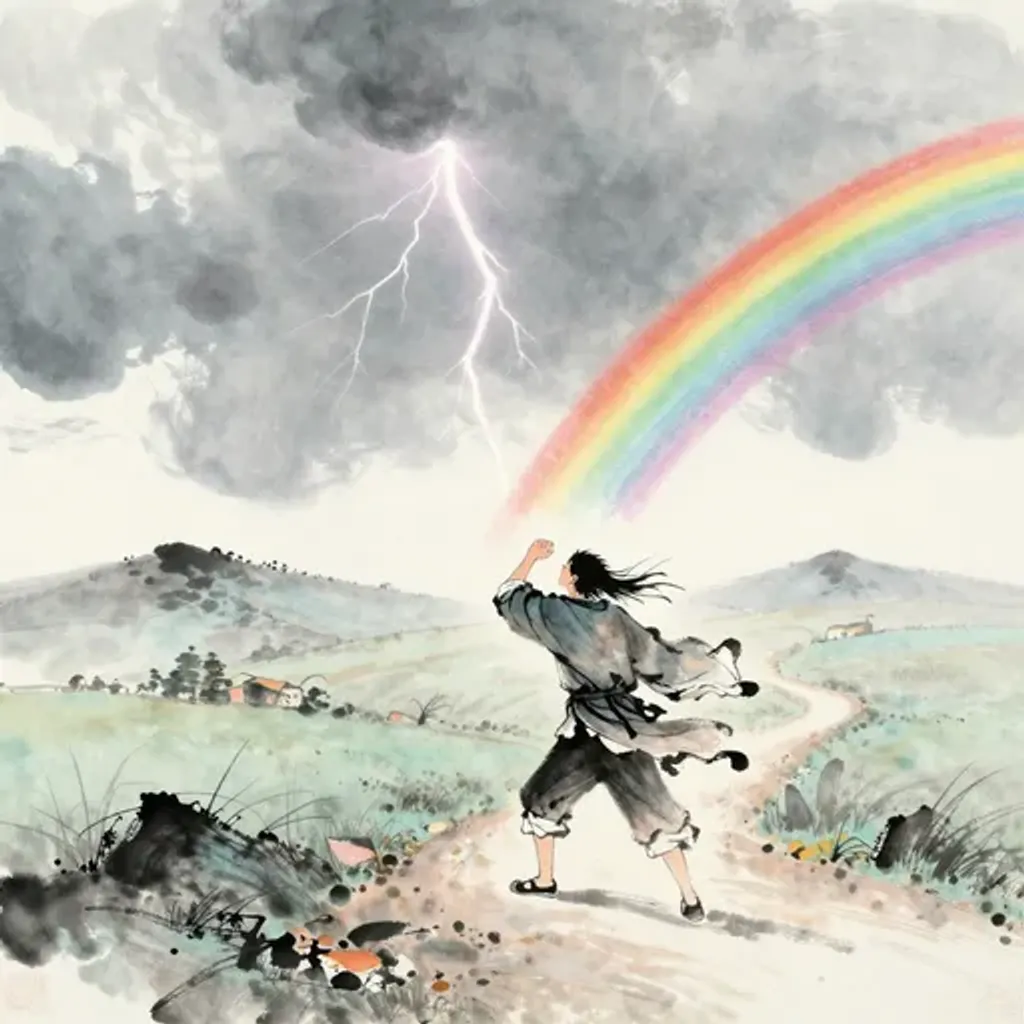
初雖驚惶,後乃无傷,受其福慶。
At first there is alarm and fear; but afterward comes no harm—blessings and good fortune received.
— Jiao Yanshou, Yilin (Forest of Changes), 1st century BC
Commentary
Wind upon wind transforms into lake over heaven: the Gentle becomes Breakthrough. At first there is alarm and panic, but afterward no injury comes — one receives blessings and good fortune. The verse distills a complete emotional arc into three terse phrases: terror strikes, the danger passes, prosperity follows. The initial shock is real but ultimately inconsequential. From The Gentle to Breakthrough, the lake rises above heaven — a single yin line atop five yang lines, about to be resolved. Breakthrough demands decisive action against what is inferior, but also firmness in meeting the moment without excess. Here the breakthrough works perfectly: the frightening appearance dissolves, and what seemed threatening yields only benefit. The crisis was the threshold, not the destination.
巽 → 姤
Hexagram 57 → Hexagram 44: Coming to Meet
Changing lines: 4
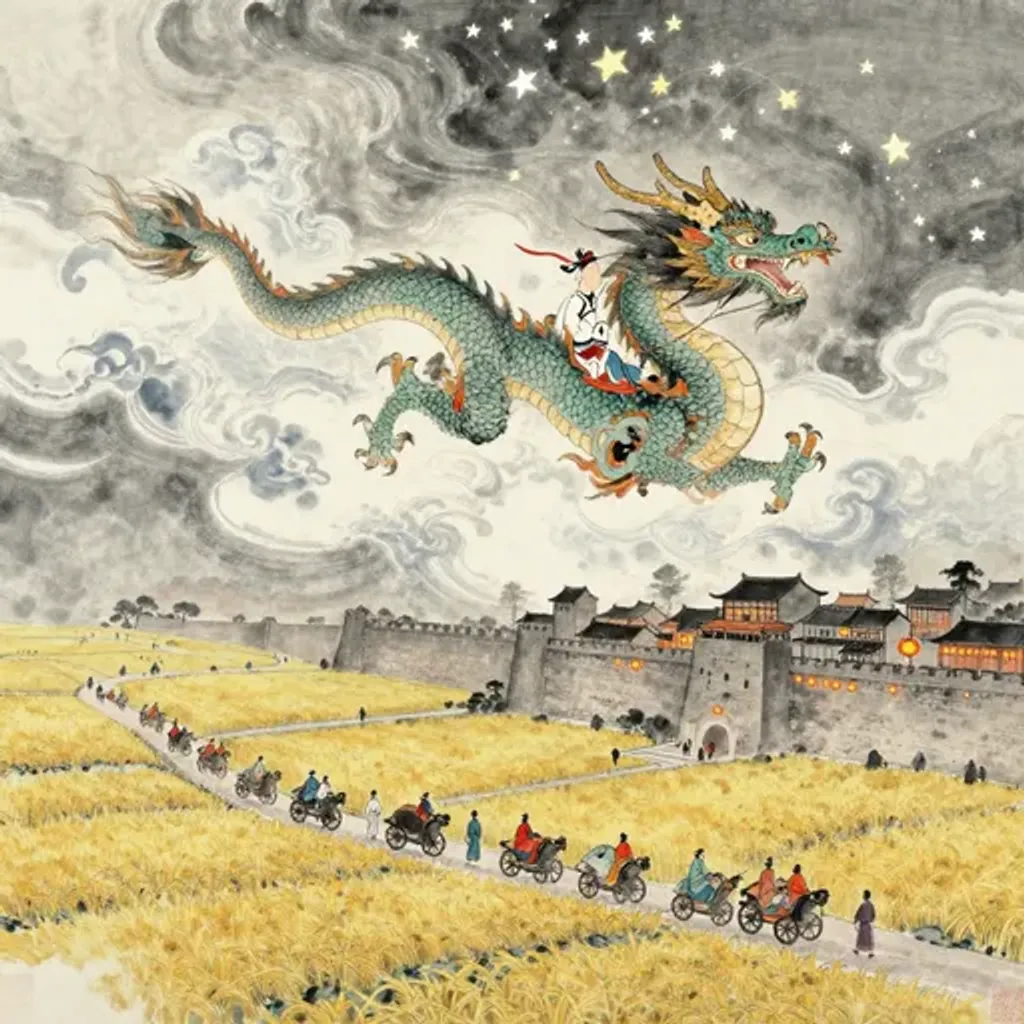
隨風乘龍,與利相逢。田獲三倍,商旅有功。憧憧之邑,長安无他。
Riding the wind on a dragon; meeting with profit. Fields yield threefold; merchants prosper in their ventures. The bustling city of Chang'an; all is well, no other troubles.
— Jiao Yanshou, Yilin (Forest of Changes), 1st century BC
Commentary
Wind upon wind transforms into heaven over wind: the Gentle becomes Coming to Meet. Riding the wind and mounting the dragon, one encounters profit at every turn. Fields yield threefold; merchants travel with success. The bustling town of Chang'an rests in lasting peace. The verse is wind imagery at its most auspicious: the wind itself becomes a vehicle, carrying the rider alongside the dragon of fortune. Agriculture and commerce both thrive, and the capital stands untroubled. From The Gentle to Coming to Meet, heaven spreads its decree across the four directions through wind. The sovereign issues commands; the world responds. Here the double wind of the source hexagram meets heaven's vast authority, and the result is universal prosperity — wind carrying blessings to every domain.
巽 → 萃
Hexagram 57 → Hexagram 45: Gathering Together
Changing lines: 2, 3, 4, 6
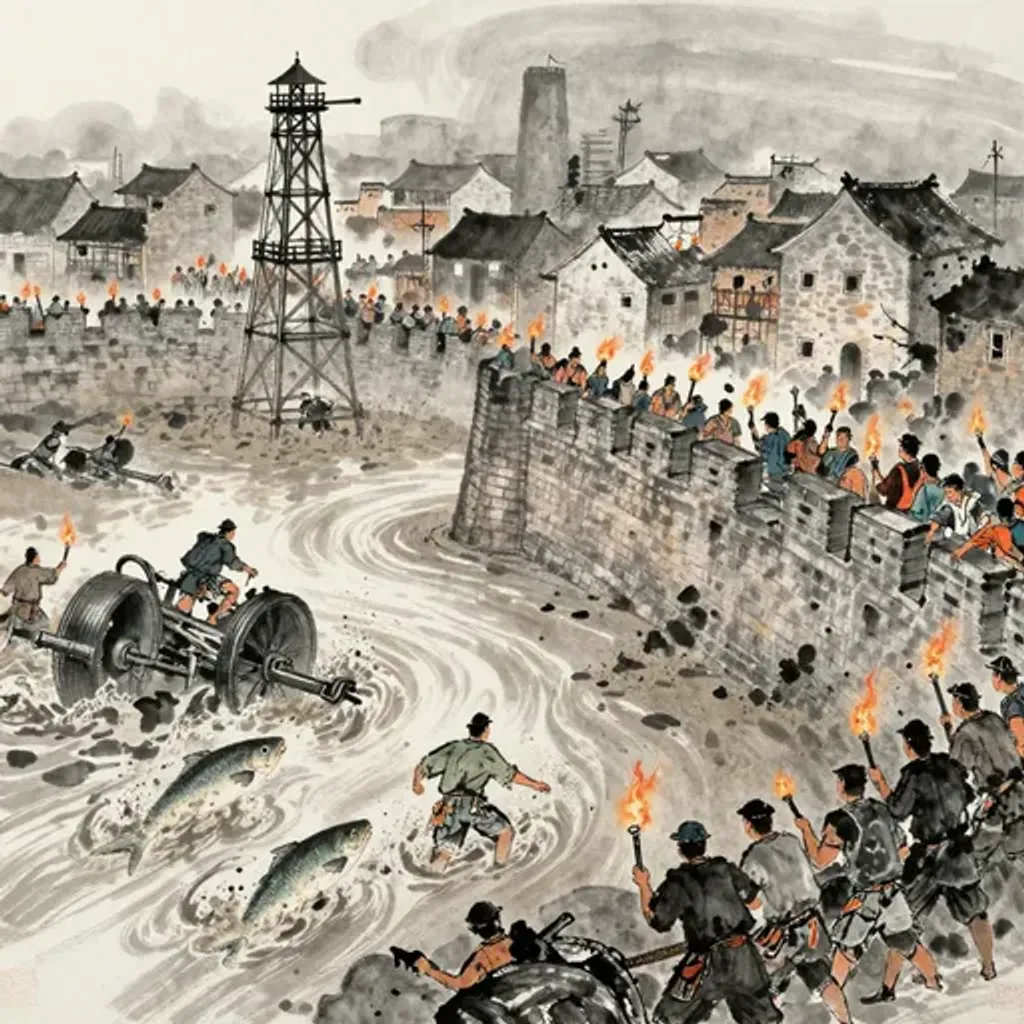
魚擾水濁,寇圍吾邑。城危不安,驚恐狂惑。
Fish stir the water to mud; bandits surround our city. The walls imperiled, no peace; terror and madness prevail.
— Jiao Yanshou, Yilin (Forest of Changes), 1st century BC
Commentary
Wind upon wind transforms into lake over earth: the Gentle becomes Gathering. Fish thrash and the water turns murky; invaders surround our city. The walls are in peril, no safety to be found — terror and bewildered panic on all sides. Stirred-up fish muddying the water is a classic image of disorder spreading from below: when the depths are agitated, clarity is lost entirely. The siege compounds the metaphor into military crisis. From The Gentle to Gathering, the lake assembles upon the earth — the ancient kings prepared weapons and guarded against the unforeseen. The verse shows why such preparation is necessary: when gathering goes wrong, it becomes not congregation but encirclement. The enemy gathers around the walls, and the city that should shelter its people becomes a trap.
巽 → 升
Hexagram 57 → Hexagram 46: Pushing Upward
Changing lines: 5, 6
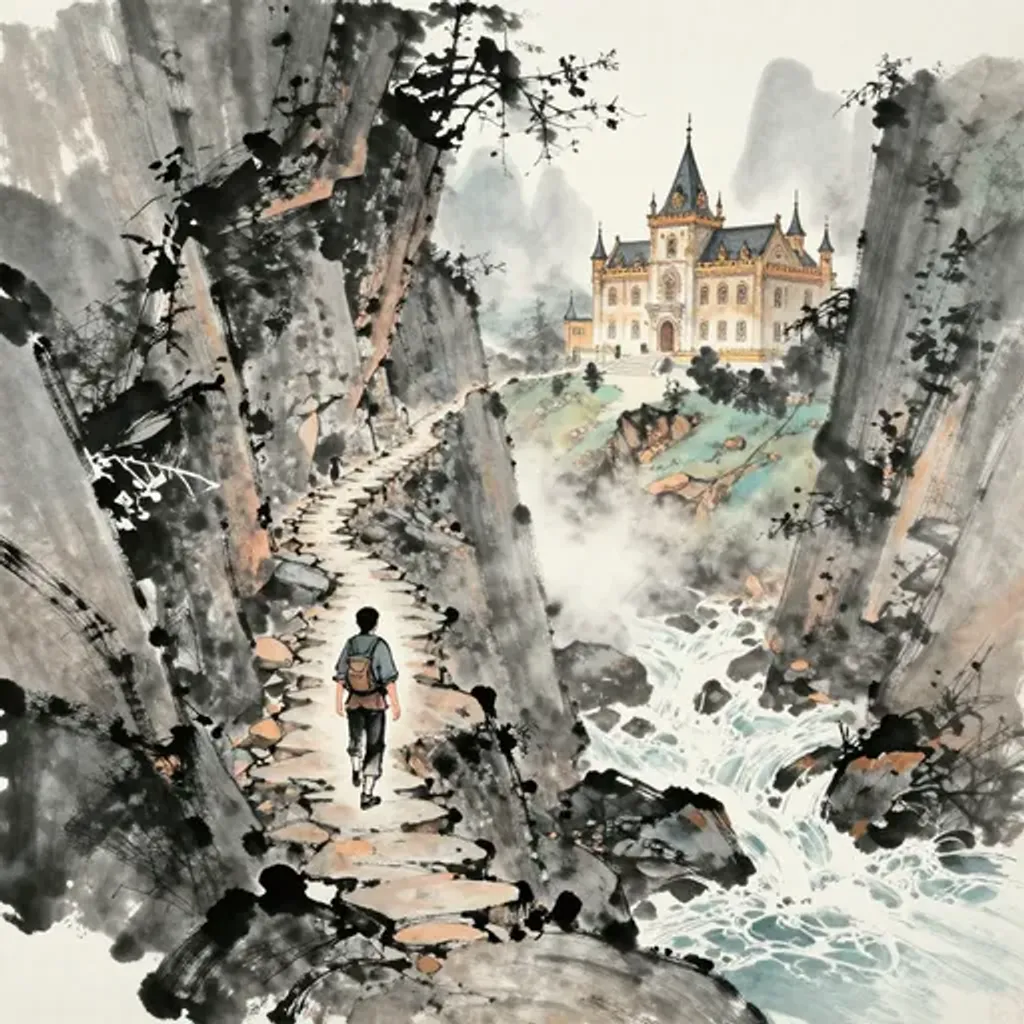
雖窮復通,履危不凶,保其明公。
Though impoverished, one finds passage; treading danger, yet meeting no harm—the bright lord is preserved.
— Jiao Yanshou, Yilin (Forest of Changes), 1st century BC
Commentary
Wind upon wind transforms into earth over wind: the Gentle becomes Pushing Upward. Though one is impoverished, the way opens again. Treading danger, no misfortune comes — one protects the enlightened lord. Three compact phrases encode a complete reversal of fortune: from destitution to renewed passage, from peril to safety, from crisis to the preservation of legitimate authority. From The Gentle to Pushing Upward, trees grow slowly within the earth, accumulating height grain by grain. The gentleman builds virtue through small, sequential steps. The verse's protagonist mirrors this dynamic: pushed to the bottom, he rises gradually but surely, navigating hazards with steadiness rather than force. Wind below earth pushes upward invisibly — and what seemed like ruin becomes the foundation for methodical ascent.
巽 → 困
Hexagram 57 → Hexagram 47: Oppression
Changing lines: 3, 4, 6
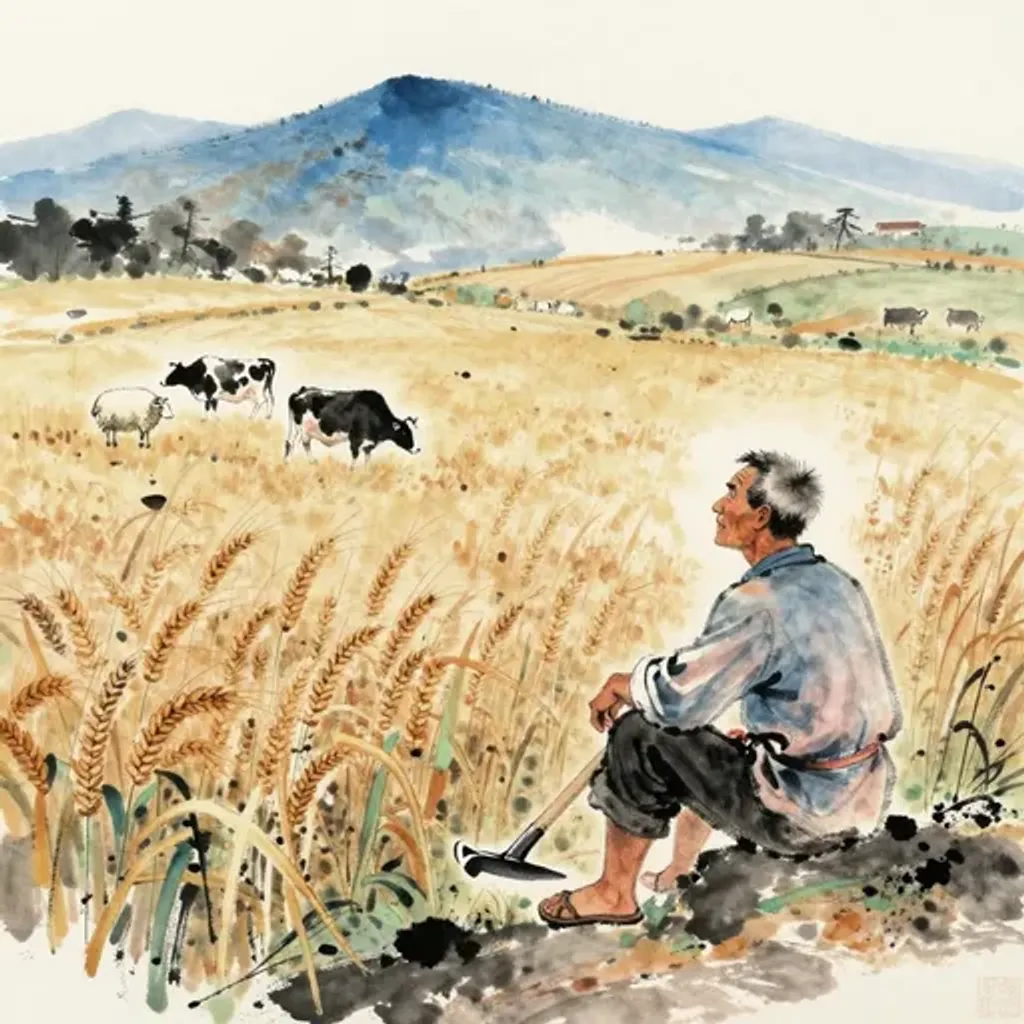
坤厚地德,庶物蕃息。平康正直,以綏大福。
Fertile fields stretch without limit; cattle and sheep fatten on their own. The farmer leans on his hoe, smiling at the distant mountains.
— Jiao Yanshou, Yilin (Forest of Changes), 1st century BC
Commentary
Wind upon wind transforms into lake over water: the Gentle becomes Oppression. The original verse reads: 'Kun's thick earth-virtue nourishes the myriad creatures to flourish. Peaceful, upright, and straight — thereby comes great blessing.' The verse invokes Kun (Earth) as the mother of abundance: generous soil sustaining all living things, moral rectitude as the root of prosperity. Yet this enters Oppression, where the lake's water has drained away. From The Gentle to Oppression, the irony is deliberate. Earth's bounty is real, but Oppression strips it away: resources exist yet cannot be accessed, virtue is present yet cannot be expressed. The blessing described is genuine — the question Oppression asks is whether the recipient can endure the time when that blessing is withheld.
巽 → 井
Hexagram 57 → Hexagram 48: The Well
Changing lines: 6
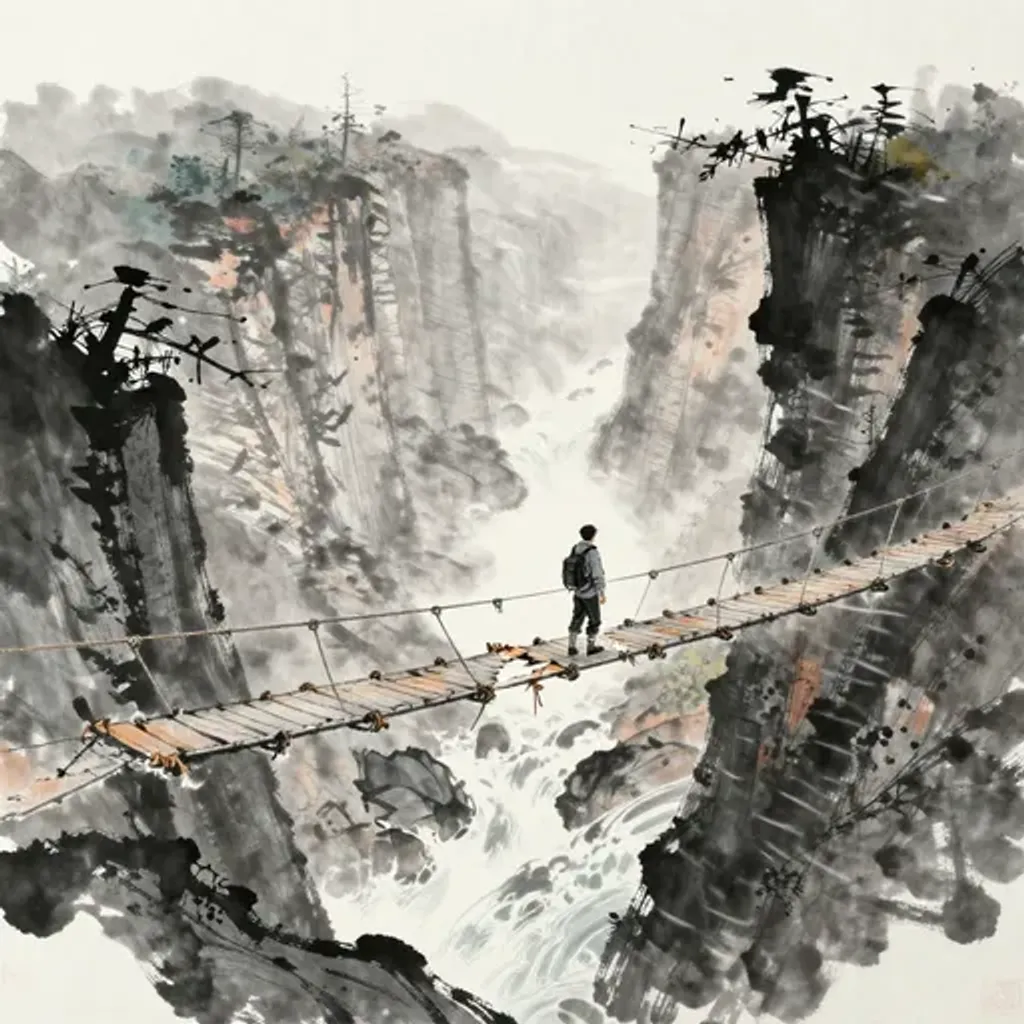
山水暴怒,壞梁折柱。稽難行旅,留連愁苦。
The suspension bridge's rope snaps; rapids churn in the valley below. The path ahead is severed — the wind sounds like weeping.
— Jiao Yanshou, Yilin (Forest of Changes), 1st century BC
Commentary
Wind upon wind transforms into water over wind: the Gentle becomes The Well. The original verse reads: 'Mountain floods rage with fury, breaking beams and snapping pillars. Travelers are delayed and stranded, lingering in sorrow and suffering.' The verse describes infrastructure destroyed by natural disaster — bridges broken, roads impassable, journeys halted. The traveler is trapped not by enemies but by sheer elemental violence. From The Gentle to The Well, wood below draws water upward to nourish the community. But here the well's mechanism is reversed: water descends in destructive torrents rather than being drawn up in orderly service. The well that should sustain travelers instead floods the path. When water overwhelms its channels, the source of life becomes the source of ruin.
巽 → 革
Hexagram 57 → Hexagram 49: Revolution
Changing lines: 1, 2, 4, 6
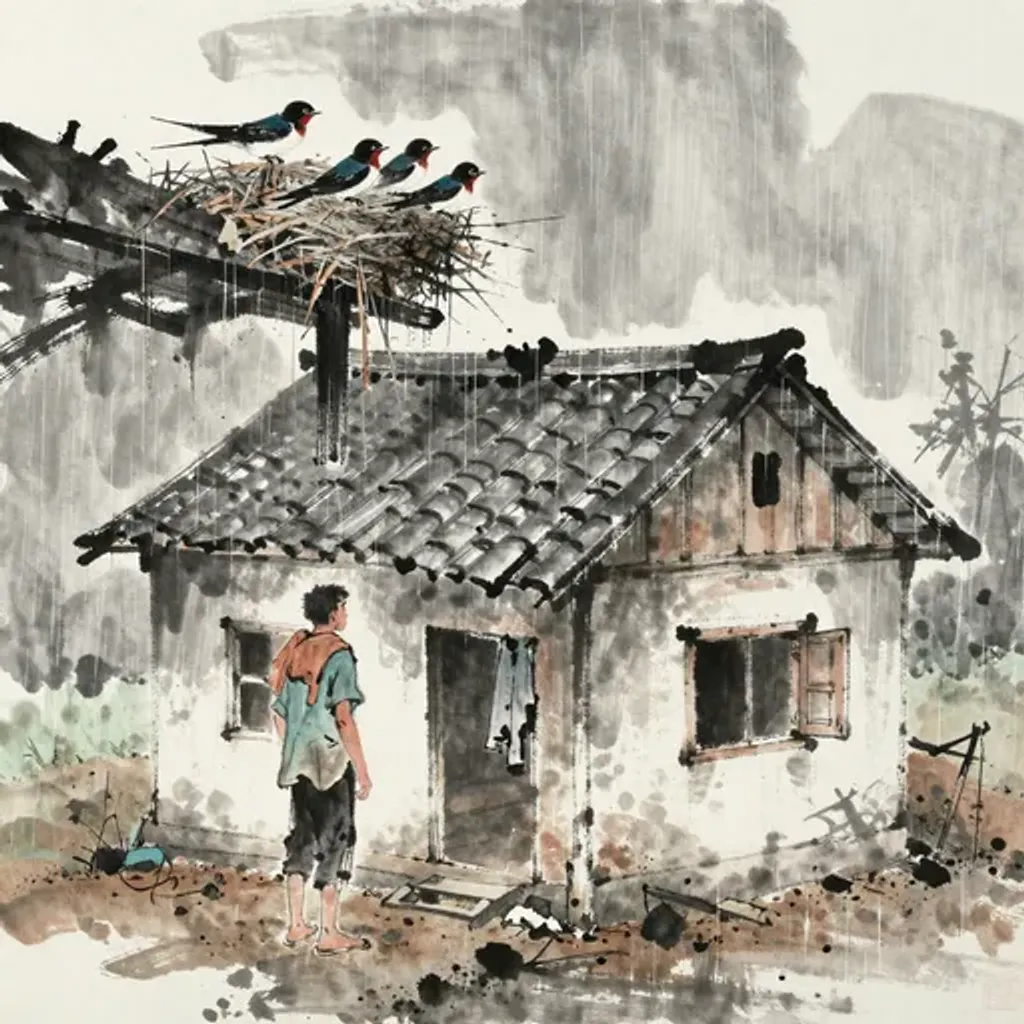
使燕築室,身不庇宿。家无聊賴,殲我衣服。
Employing swallows to build a house; but the body finds no shelter. The household has nothing to rely on; even my clothes are destroyed.
— Jiao Yanshou, Yilin (Forest of Changes), 1st century BC
Commentary
Wind upon wind transforms into lake over fire: the Gentle becomes Revolution. Sending swallows to build a house, one's own body finds no shelter. The household has nothing to rely on; one's clothing is stripped away. The verse uses a bitter metaphor: commissioning migratory birds — creatures that by nature leave — to construct a permanent dwelling is absurd. The project fails, the builder is left exposed, the family destitute. From The Gentle to Revolution, fire within the lake — the calendar is reformed, the seasons realigned. Revolution demands that what has decayed be fundamentally transformed. But here the revolution fails because the wrong agent was chosen. Delegating essential work to those whose nature is to depart guarantees that nothing lasting will be built.
巽 → 鼎
Hexagram 57 → Hexagram 50: The Cauldron
Changing lines: 4, 5
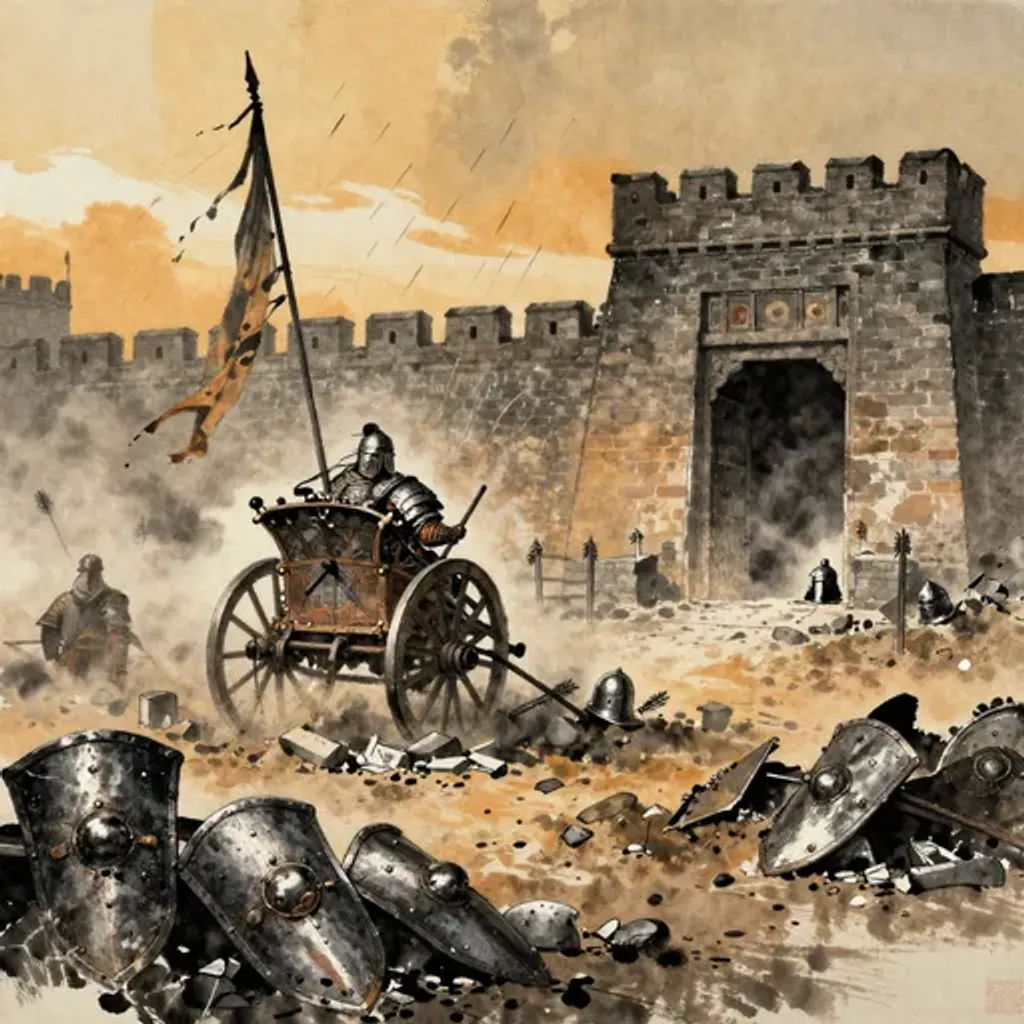
矢石所射,襄公㾐劇。吳子巢門,傷病不治。
Struck by arrow and stone; Lord Xiang suffers grievously. The lord of Wu at Chao Gate; wounded beyond healing.
— Jiao Yanshou, Yilin (Forest of Changes), 1st century BC
Commentary
Wind upon wind transforms into fire over wind: the Gentle becomes The Cauldron. Arrow and stone strike home; Duke Xiang's wound worsens grievously. The lord of Wu falls at the Chao gate, his injury beyond cure. The verse pairs two rulers fatally wounded in battle. Duke Xiang of Song was struck in the thigh at the Battle of the Hong River in 638 BC, insisting on chivalric conduct against Chu while his army was routed. He died the following year. King Helu of Wu was wounded in the toe at the Battle of Zuili in 496 BC against Yue and died of the injury on the retreat. From The Gentle to The Cauldron, fire above wind should refine and transform. But these lords could not be refined by their wounds — only destroyed. The cauldron cracks under what it cannot contain.
巽 → 震
Hexagram 57 → Hexagram 51: The Arousing Thunder
Changing lines: 1, 2, 3, 4, 5, 6
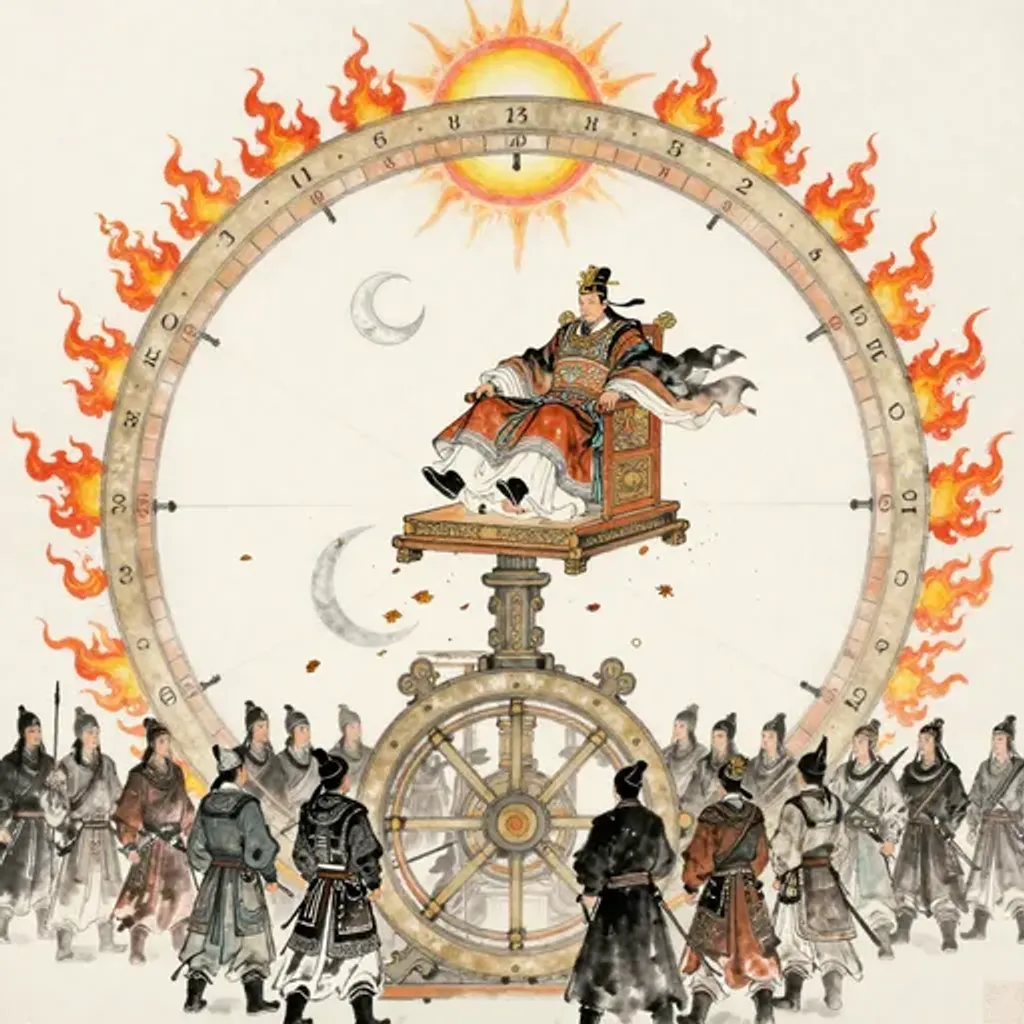
日月運行,一寒一暑。榮寵赫赫,不可得保。顛隕墜墮,更為士伍。
Sun and moon revolve; one cold, one hot in turn. Blazing glory cannot be kept. Fallen and cast down; reduced again to common ranks.
— Jiao Yanshou, Yilin (Forest of Changes), 1st century BC
Commentary
Wind upon wind transforms into doubled thunder: the Gentle becomes The Arousing. The sun and moon revolve — one season cold, the next warm. Glory and imperial favor burn brilliantly, but cannot be preserved. One tumbles and falls, demoted to the rank of common soldier. The verse traces the full arc of political fortune: from the zenith of power to utter degradation. The cosmic rhythm of alternating seasons frames human inconstancy — what blazes in summer must freeze in winter. From The Gentle to The Arousing, doubled thunder strikes with terrifying force, and the gentleman cultivates reverence through fear. The shock of demotion is a thunderclap that strips away all illusion. Yesterday's honored courtier is today's foot soldier, and the turning of heaven's wheel spares no one.
巽 → 艮
Hexagram 57 → Hexagram 52: Keeping Still Mountain
Changing lines: 2, 5
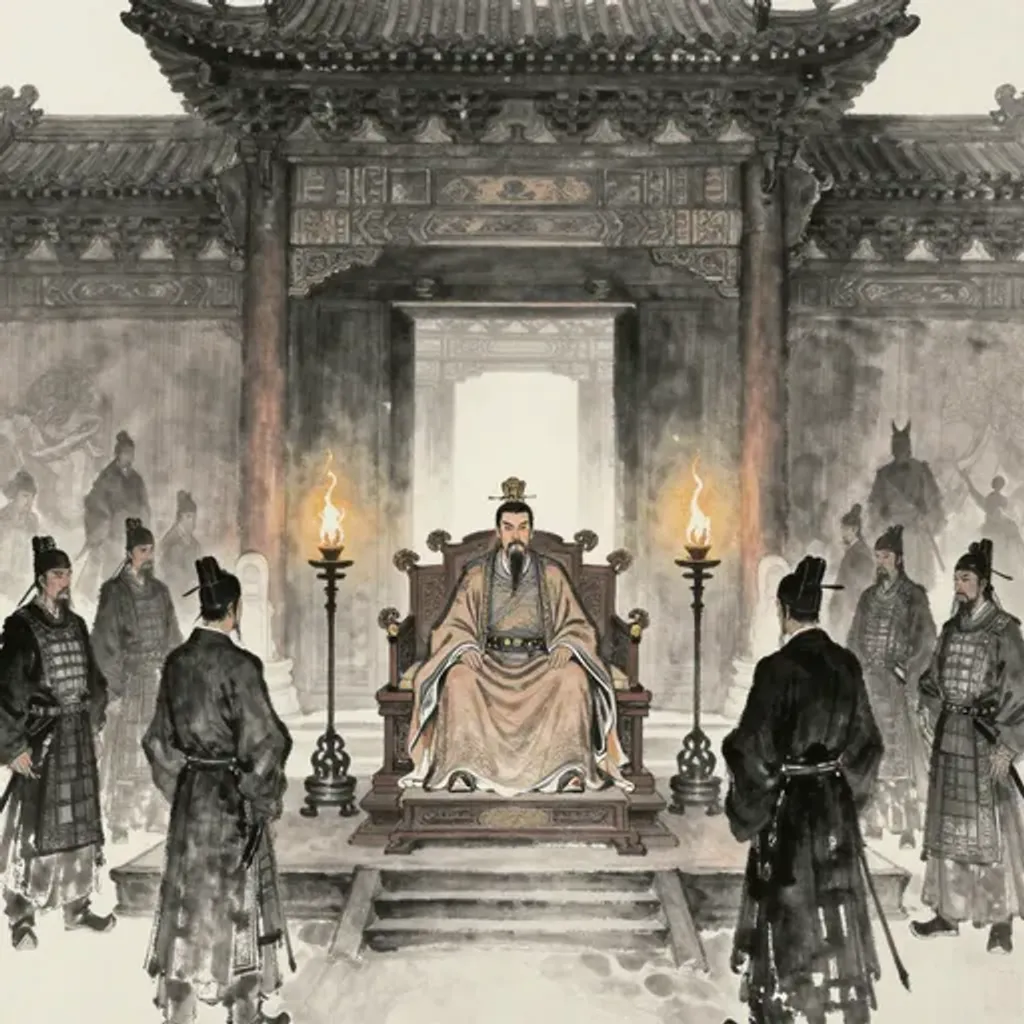
宮門愁鳴,臣圍其君,不得東西。
The palace gate cries in grief; ministers surround their lord—he cannot go east or west.
— Jiao Yanshou, Yilin (Forest of Changes), 1st century BC
Commentary
Wind upon wind transforms into doubled mountain: the Gentle becomes Keeping Still. The palace gates cry out in grief; ministers surround their lord, who cannot move east or west. The verse presents a ruler trapped by his own court — immobilized not by external enemies but by the faction that supposedly serves him. The wailing gates suggest the palace itself mourns what is unfolding within. From The Gentle to Keeping Still, twin mountains stand facing each other, and the gentleman's thought does not stray beyond his position. But here stillness is not contemplative restraint — it is paralysis imposed by encirclement. The lord who should command finds himself the prisoner of those he elevated. Keeping still becomes keeping captive.
巽 → 漸
Hexagram 57 → Hexagram 53: Development
Changing lines: 2
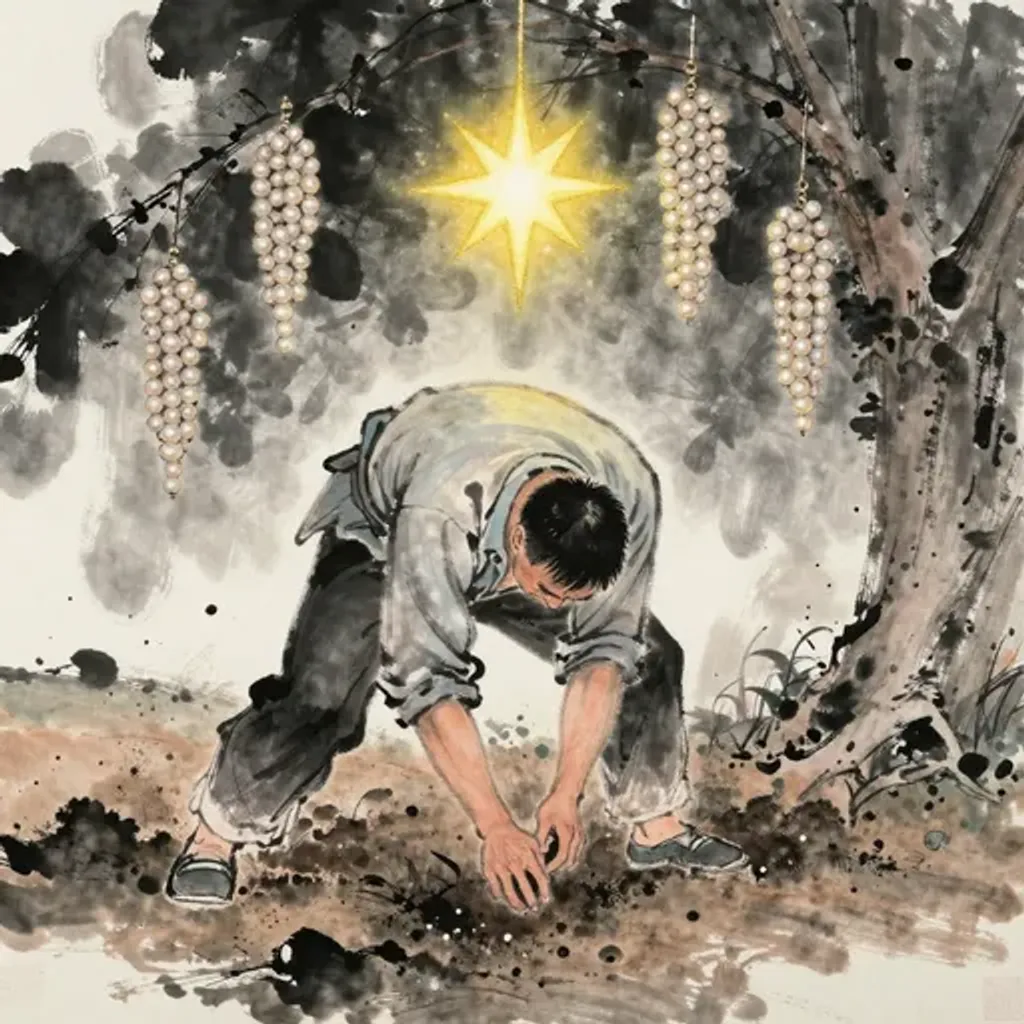
戴盆望天,不見星辰。顧小失大,福逃墻外。
Digging the ground seeking pearls — the pearls hang in the tree. Felling timber seeking fish — the fish are in the deep. Busy all day, hands empty — the lucky star passes overhead, never noticed.
— Jiao Yanshou, Yilin (Forest of Changes), 1st century BC
Commentary
Wind upon wind transforms into wind over mountain: the Gentle becomes Development. The original verse reads: 'Wearing a basin on one's head to gaze at the sky, one cannot see the stars. Attending to the small, one loses the great — fortune escapes beyond the wall.' The idiom 'wearing a basin to look at heaven' is a classical metaphor for self-imposed blindness: the very effort to hold onto something blocks the view of something larger. From The Gentle to Development, trees grow gradually upon the mountain — the gentleman dwells in virtue and improves customs by steady degrees. But the person in this verse cannot develop because their gaze is fixed downward. Gradual progress requires seeing the horizon, not staring at the ground beneath the basin's rim.
巽 → 歸妹
Hexagram 57 → Hexagram 54: The Marrying Maiden
Changing lines: 1, 3, 4, 5, 6
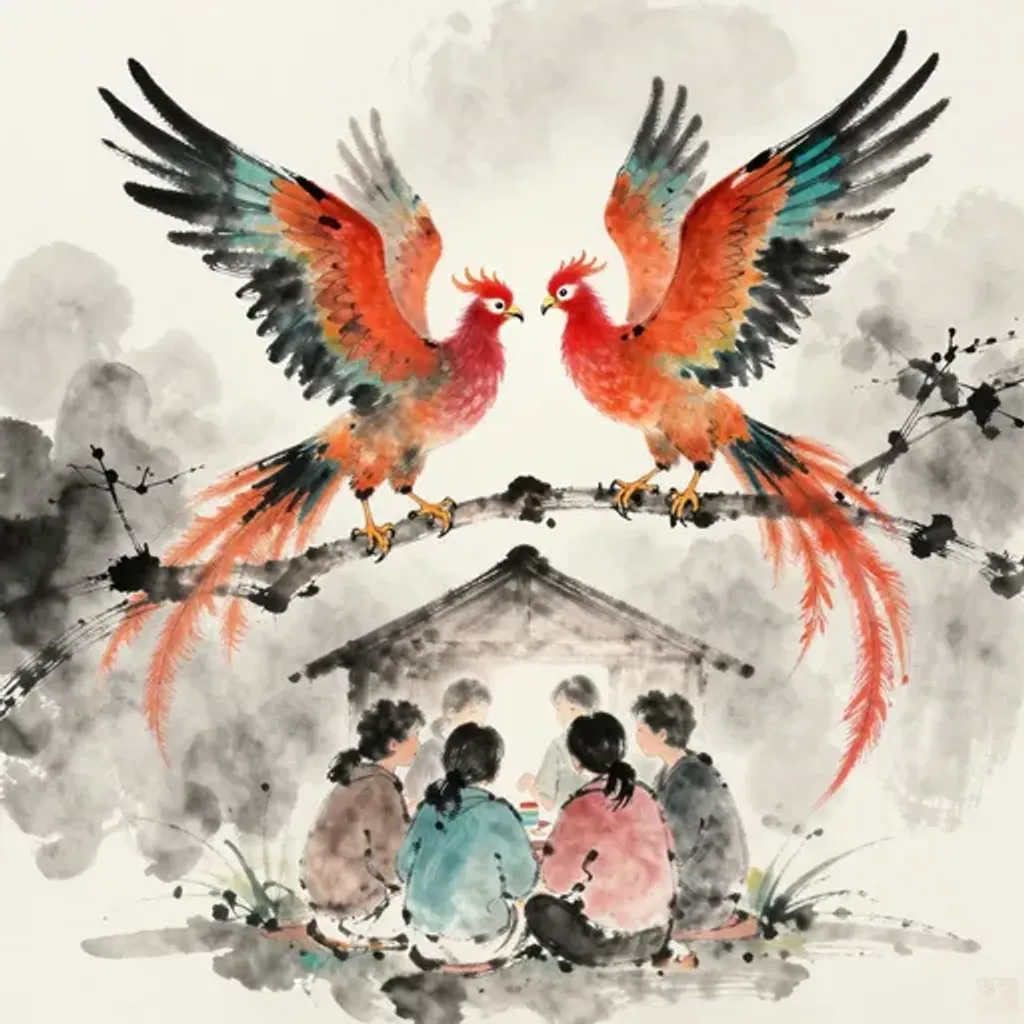
天之所明,禍不遇家。反自相逐,終得和鳴。
What Heaven illuminates; disaster does not reach the home. Those who drove each other away; in the end achieve harmony.
— Jiao Yanshou, Yilin (Forest of Changes), 1st century BC
Commentary
Wind upon wind transforms into thunder over lake: the Gentle becomes the Marrying Maiden. Where heaven's light shines, disaster does not visit the household. Those who once chased each other in discord ultimately achieve harmonious union. The verse traces a relationship from initial conflict to final concord — quarrels that seemed irreconcilable resolve into the music of paired birds singing together. The phrase 'harmonious singing' evokes the ospreys of the Guanju ode, the Shijing's opening celebration of proper marriage. From The Gentle to the Marrying Maiden, thunder stirs above the lake — the gentleman understands endings by recognizing what is worn out. The maiden's journey into marriage transforms opposition into partnership, and wind's patient influence finally accomplishes what force could not.
巽 → 豐
Hexagram 57 → Hexagram 55: Abundance
Changing lines: 1, 2, 4, 5, 6
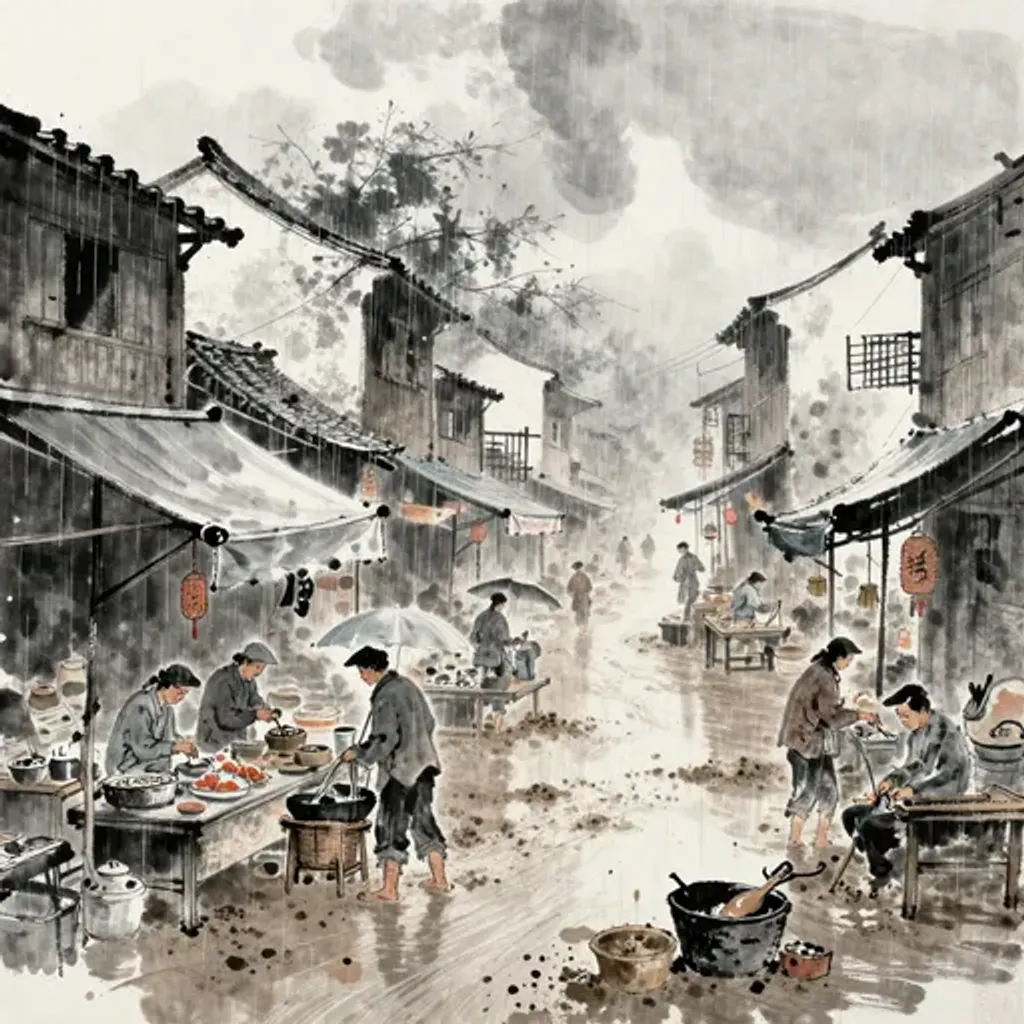
天陰霖雨,塗行泥潦。商人休止,市无所有。
Heaven overcast, long rain falls; roads become rivers of mud. Merchants cease their trade; the market has nothing.
— Jiao Yanshou, Yilin (Forest of Changes), 1st century BC
Commentary
Wind upon wind transforms into thunder over fire: the Gentle becomes Abundance. The sky is overcast with lingering rain; roads are mired in mud and standing water. Merchants halt their business; the market has nothing for sale. The verse depicts an economy paralyzed by weather — endless rain turning roads to swamp, commerce suspended, stalls empty. From The Gentle to Abundance, the irony is pronounced. Thunder and lightning together should mean fullness at its peak, the brilliant flash of maximum prosperity. Yet here the abundance is of rain, not of goods. The market that should overflow with trade stands vacant. Wind has brought clouds instead of customers. Abundance misapplied — too much of the wrong thing — creates desolation rather than plenty.
巽 → 旅
Hexagram 57 → Hexagram 56: The Wanderer
Changing lines: 2, 4, 5
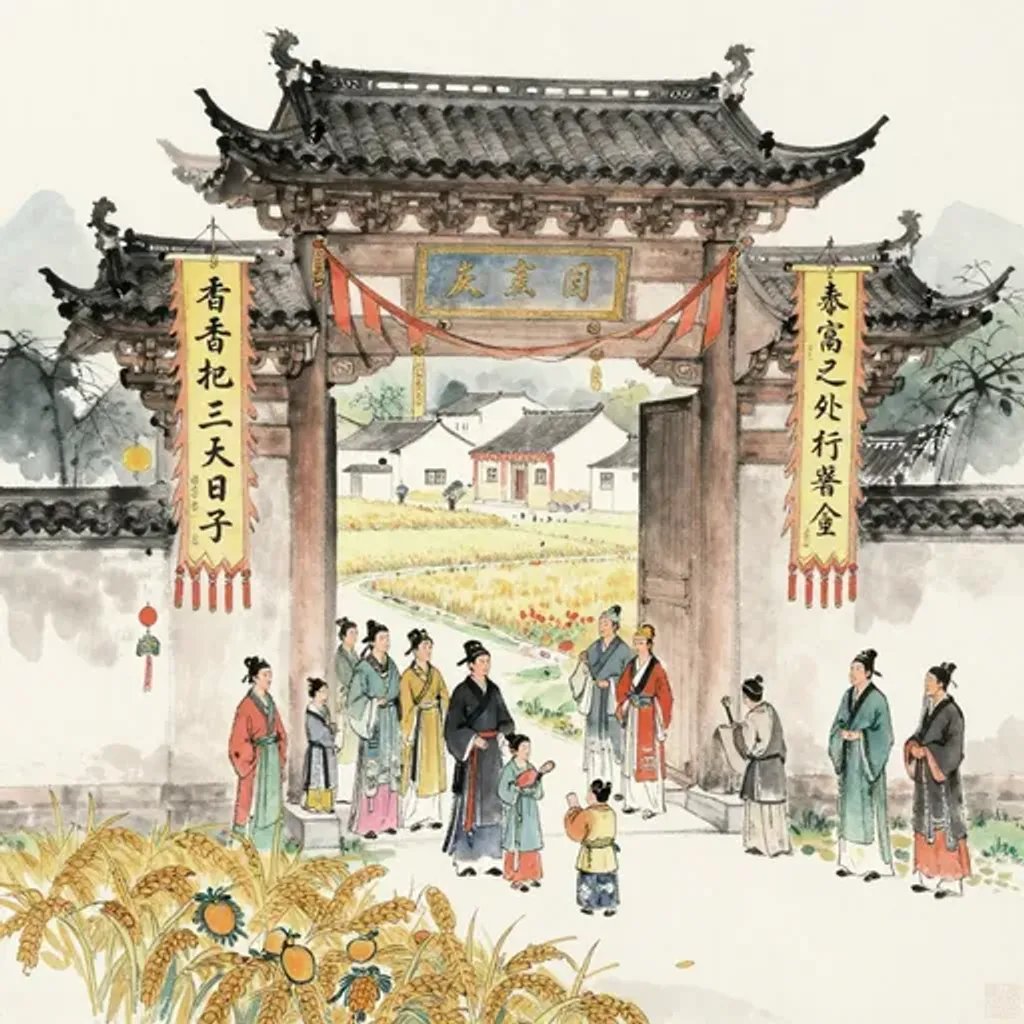
嘉門福喜,增累盛熾。日就有德,宜民宜國。
Gates of felicity and blessing; fortune grows and blazes high. Daily virtue increases; benefiting people, benefiting the state.
— Jiao Yanshou, Yilin (Forest of Changes), 1st century BC
Commentary
Wind upon wind transforms into fire over mountain: the Gentle becomes The Wanderer. Auspicious gates open to blessings and joy; accumulation grows and flourishes ever greater. Day by day virtue increases — what benefits the people benefits the state. The verse is a hymn to cumulative prosperity: each day adds virtue, each addition strengthens both populace and polity. From The Gentle to The Wanderer, fire burns atop the mountain — the gentleman uses punishments with clarity and caution, never detaining prisoners. The Wanderer walks a careful path through foreign territory, relying on accumulated virtue rather than settled power. This verse supplies the Wanderer's foundation: the goodness gathered day by day becomes the traveler's provision, the moral capital that earns safe passage in unfamiliar lands.
巽 → 巽
Hexagram 57 → Hexagram 57: The Gentle Wind
No changing lines — the hexagram is unchanged
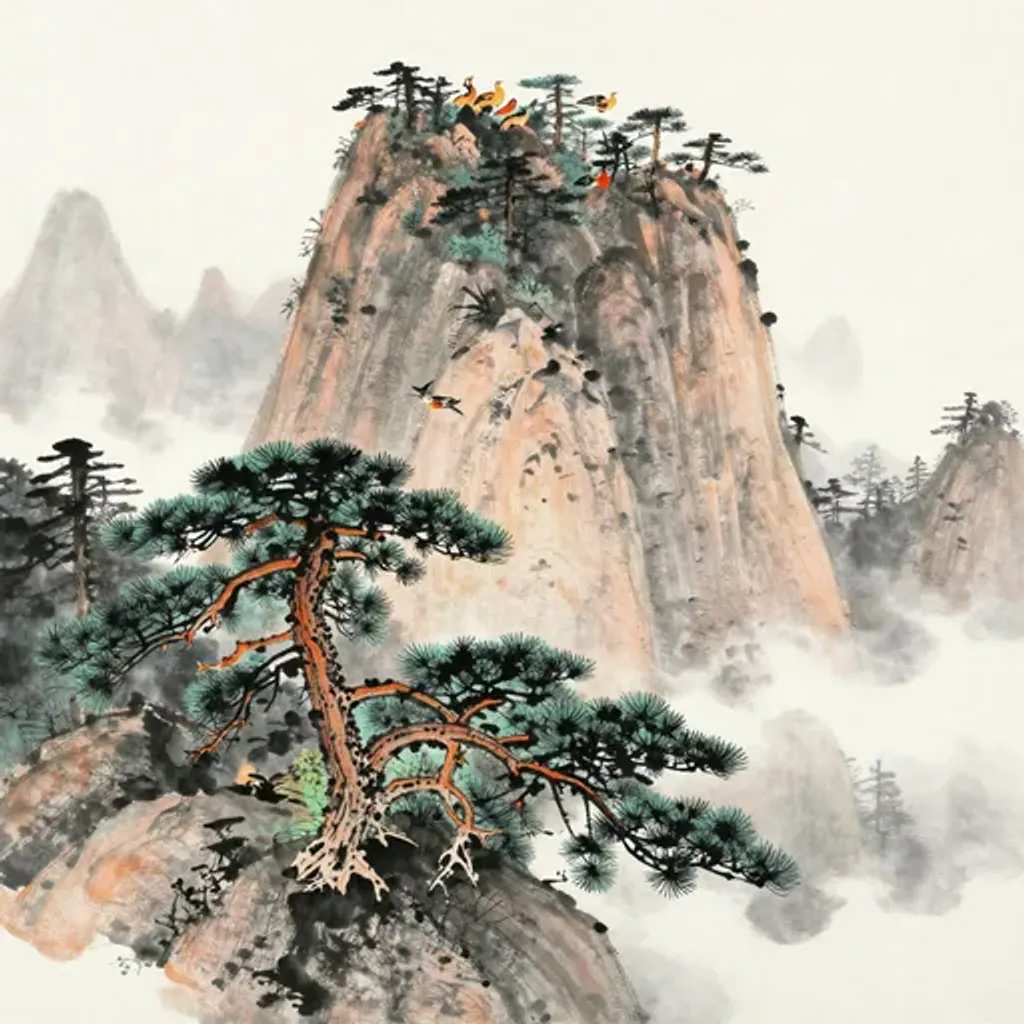
溫山松柏,常茂不落。鸞鳳以庇,得其歡樂。
Pine and cypress on Wen Mountain; ever flourishing, never falling. Phoenix and luan find shelter there; gaining their joy and delight.
— Jiao Yanshou, Yilin (Forest of Changes), 1st century BC
Commentary
Wind upon wind returns to wind upon wind: the Gentle remains itself. On the warm mountain, pine and cypress stand evergreen, never shedding their leaves. Phoenix and luan birds shelter among them, finding their joy and contentment. The doubled wind of Xun sustaining itself produces an image of permanence within flexibility. Pine and cypress are classical symbols of constancy — they endure winter's harshest blasts while deciduous trees go bare. The phoenix choosing to roost among them validates their worthiness: only the noblest tree attracts the noblest bird. From The Gentle to The Gentle, the pattern is self-reinforcing: wind follows wind without interruption, commands issued and carried through. Steady virtue, like the evergreen, needs no revolution — only persistence.
巽 → 兌
Hexagram 57 → Hexagram 58: The Joyous Lake
Changing lines: 1, 3, 4, 6
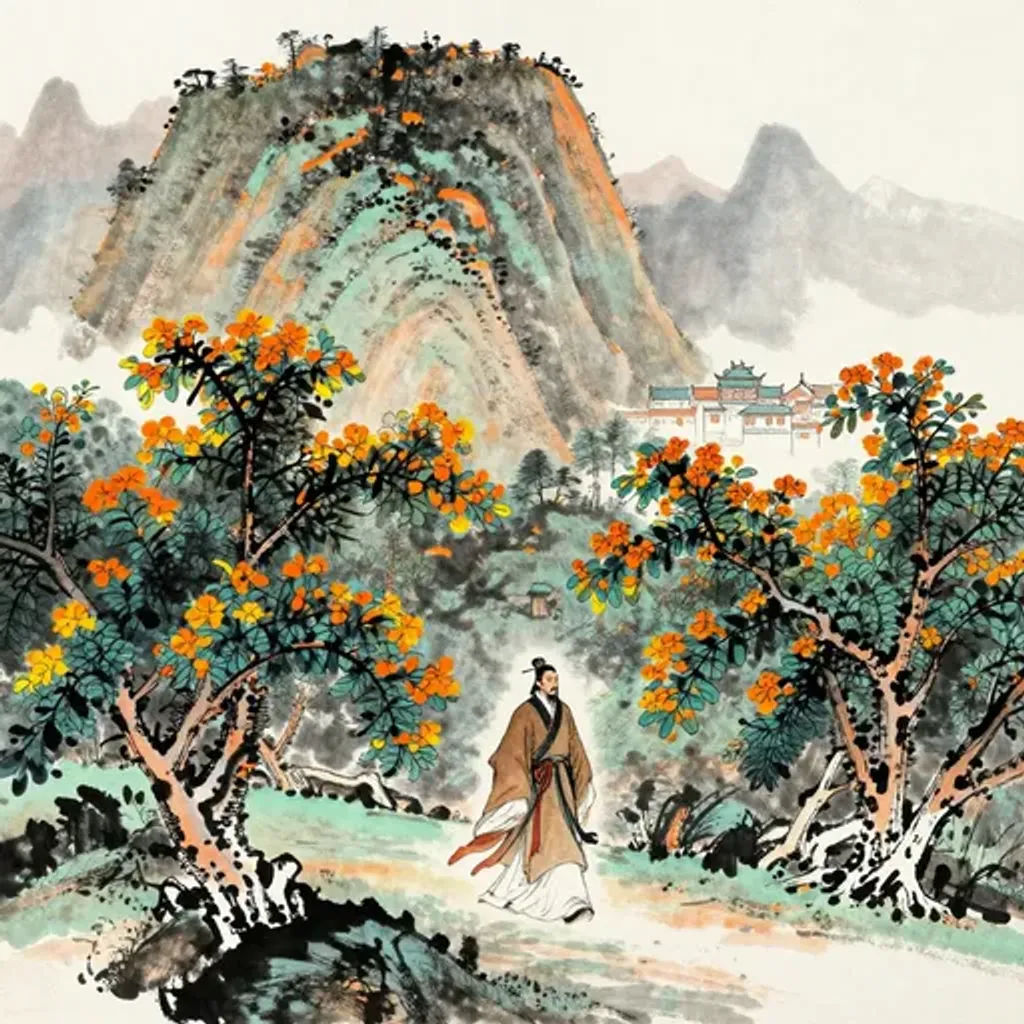
南山之陽,華葉將將。嘉樂君子,為國寵光。
On the southern slope of the Southern Mountain; flowers and leaves grow splendid. The excellent and joyful lord; brings glory and favor to the state.
— Jiao Yanshou, Yilin (Forest of Changes), 1st century BC
Commentary
Wind upon wind transforms into doubled lake: the Gentle becomes The Joyous. On the southern slope of the mountain, flowers and foliage flourish in splendor. A worthy and joyful gentleman brings glory and honor to the nation. The south-facing slope receives the fullest sunlight — vegetation there grows most luxuriant, and in Chinese geomancy the southern aspect represents maximum yang vitality. The noble figure standing amid this abundance embodies the state's flourishing. From The Gentle to The Joyous, paired lakes share their waters in mutual discourse — friends studying together, refining each other through exchange. Wind's steady nurture has brought the mountainside to peak bloom, and the gentleman who tends this garden becomes the nation's pride. Joy arises naturally from cultivated abundance.
巽 → 渙
Hexagram 57 → Hexagram 59: Dispersion
Changing lines: 3
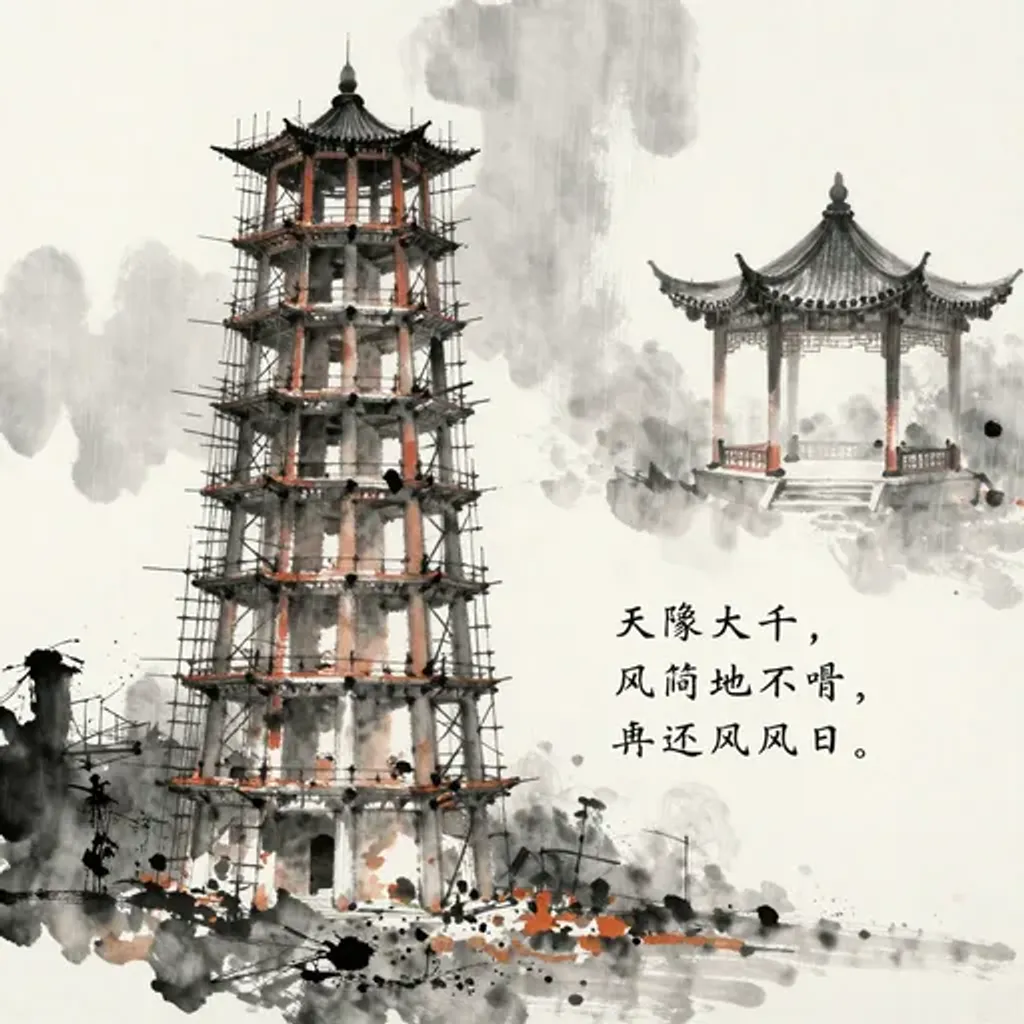
畫龍頭頸,文章未成。甘言美語,說辭无名。
The tower is half-built, pillars not yet aligned. The poem is three lines in — the ink has dried. Empty promises scatter in the wind; the paper palace crumbles in the rain.
— Jiao Yanshou, Yilin (Forest of Changes), 1st century BC
Commentary
Wind upon wind transforms into wind over water: the Gentle becomes Dispersion. The original verse reads: 'Painting a dragon's head and neck, the essay remains unfinished. Sweet words and fine phrases, but the argument lacks substance.' A dragon half-drawn: magnificent conception abandoned mid-stroke. Eloquent rhetoric pours forth, yet the speaker never arrives at a point. Both images share the same failure — brilliant beginnings that dissolve before reaching completion. From The Gentle to Dispersion, wind sweeps over water and scatters what was gathered. The ancient kings built temples to unite the spirit; here, words intended to unite instead evaporate. Wind that should carry substance carries only vapor. Dispersal is the natural fate of speech without conviction.
巽 → 節
Hexagram 57 → Hexagram 60: Limitation
Changing lines: 1, 3, 6
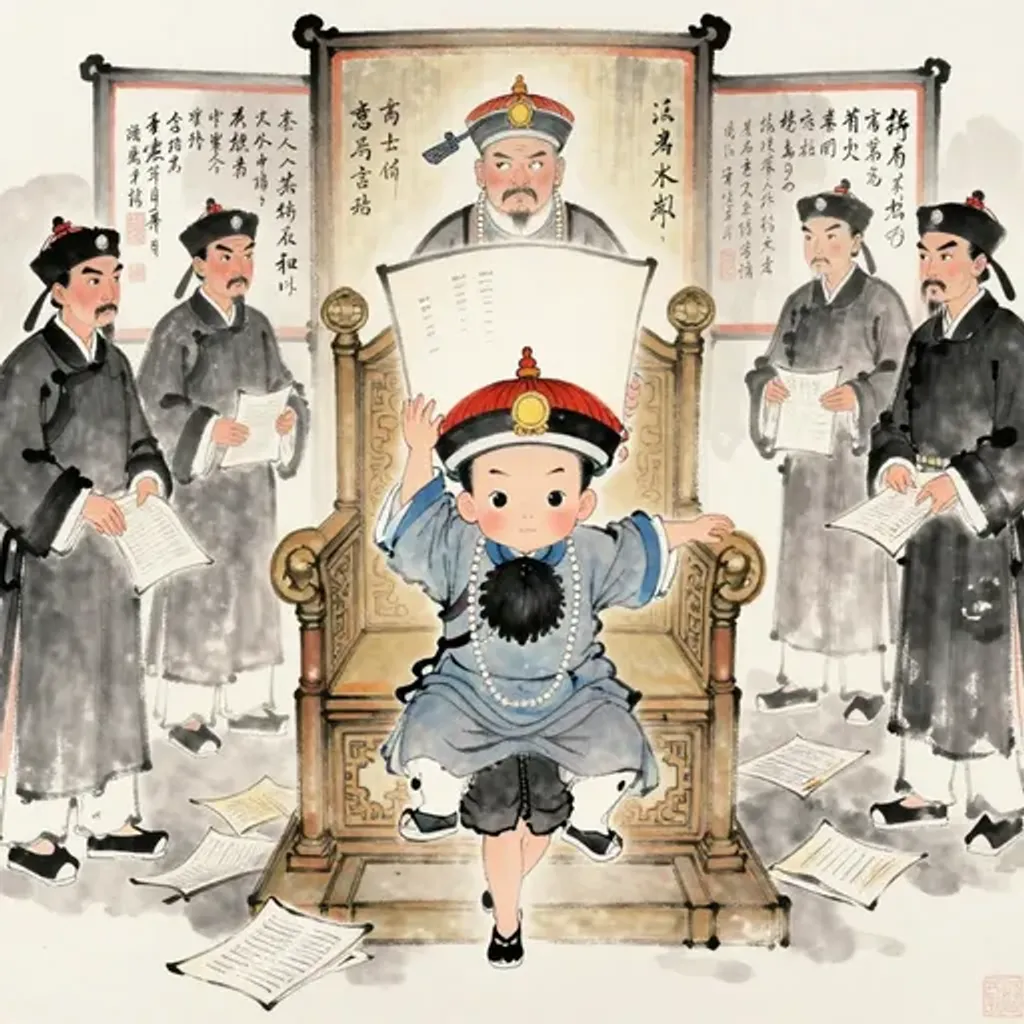
嬰兒孩子,未有所識。彼童而角,亂我政事。
Infants and babes; they have no understanding. That child who sprouts horns; throws our governance into chaos.
— Jiao Yanshou, Yilin (Forest of Changes), 1st century BC
Commentary
Wind upon wind transforms into water over lake: the Gentle becomes Limitation. Infants and children have no understanding yet. That child who sprouts horns disrupts my governance. The verse contrasts natural innocence with precocious menace: ordinary children simply lack knowledge, but one child has grown horns — an unnatural prodigy who wreaks havoc on the state. In Chinese omen lore, a child sprouting horns or horned prodigies were signs of cosmic disorder. From The Gentle to Limitation, water above the lake establishes measured boundaries. The gentleman regulates numbers and deliberates on conduct. Yet the anomalous child defies every limit: too young to govern, yet powerful enough to destabilize. When what should be limited by nature exceeds its bounds, the entire system of regulation breaks down.
巽 → 中孚
Hexagram 57 → Hexagram 61: Inner Truth
Changing lines: 1, 3
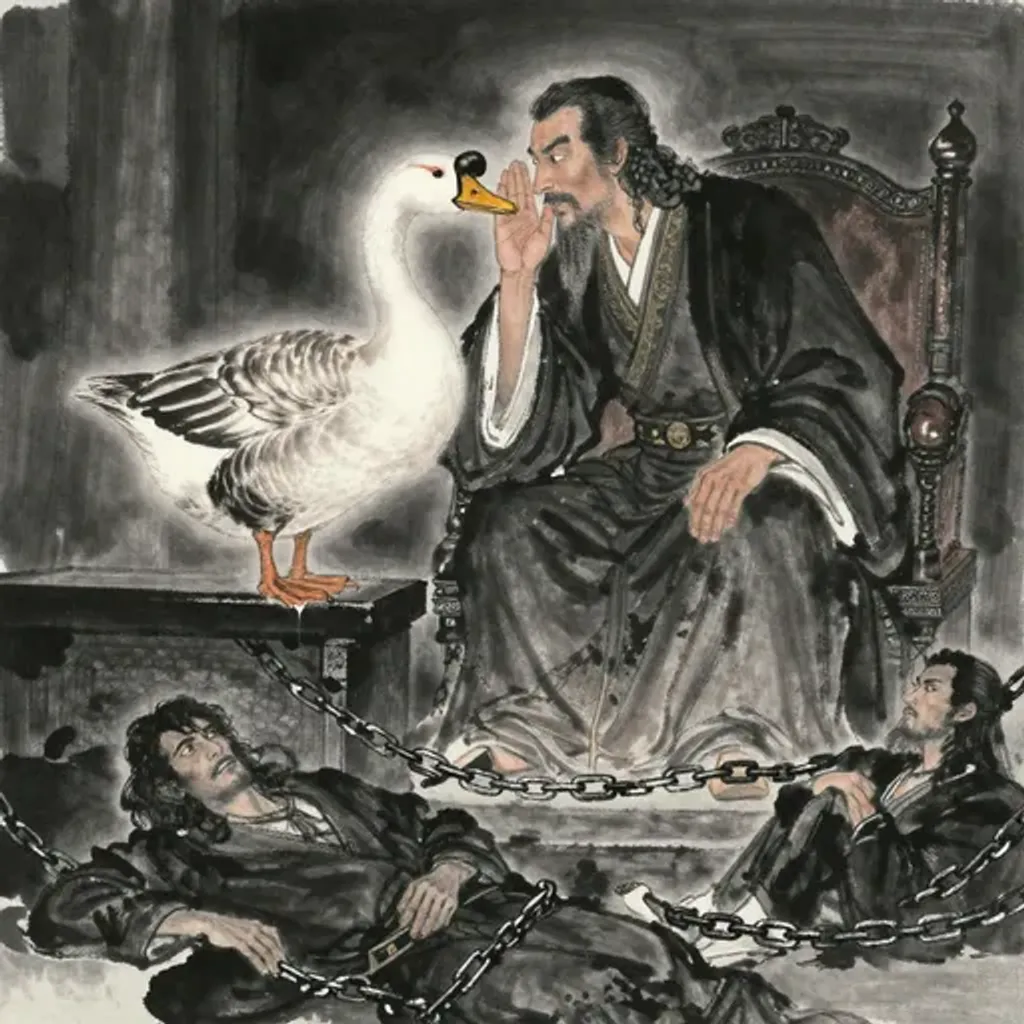
陰作大奸,欲君勿言。鴻鵠利口,發患禍端。荊季懷憂,張伯被患。
Yin works great treachery; wishing the lord to speak not. The swan-goose's cunning tongue; unleashes calamity and disaster. Jingji harbors grief; Zhangbo suffers affliction.
— Jiao Yanshou, Yilin (Forest of Changes), 1st century BC
Commentary
Wind upon wind transforms into wind over lake: the Gentle becomes Inner Truth. Yin forces work great treachery, bidding the ruler to keep silent. The swan's sharp beak stirs up disaster at its root. Lord Jing of Chu nurses hidden worry; Minister Zhang is stricken with calamity. The verse warns against eloquent deceit masked as loyalty. The 'swan's sharp beak' suggests a seemingly noble creature whose fine words inflict real damage — slander and manipulation disguised as advice. From The Gentle to Inner Truth, wind moves above the lake: the gentleman deliberates on capital cases and postpones executions. Inner truth demands hollow sincerity at the center, openness to what is real. But here the center is filled with treachery, and those who speak beautiful words engineer the ruin of others. Truth is precisely what this court lacks.
巽 → 小過
Hexagram 57 → Hexagram 62: Small Exceeding
Changing lines: 2, 4, 5, 6
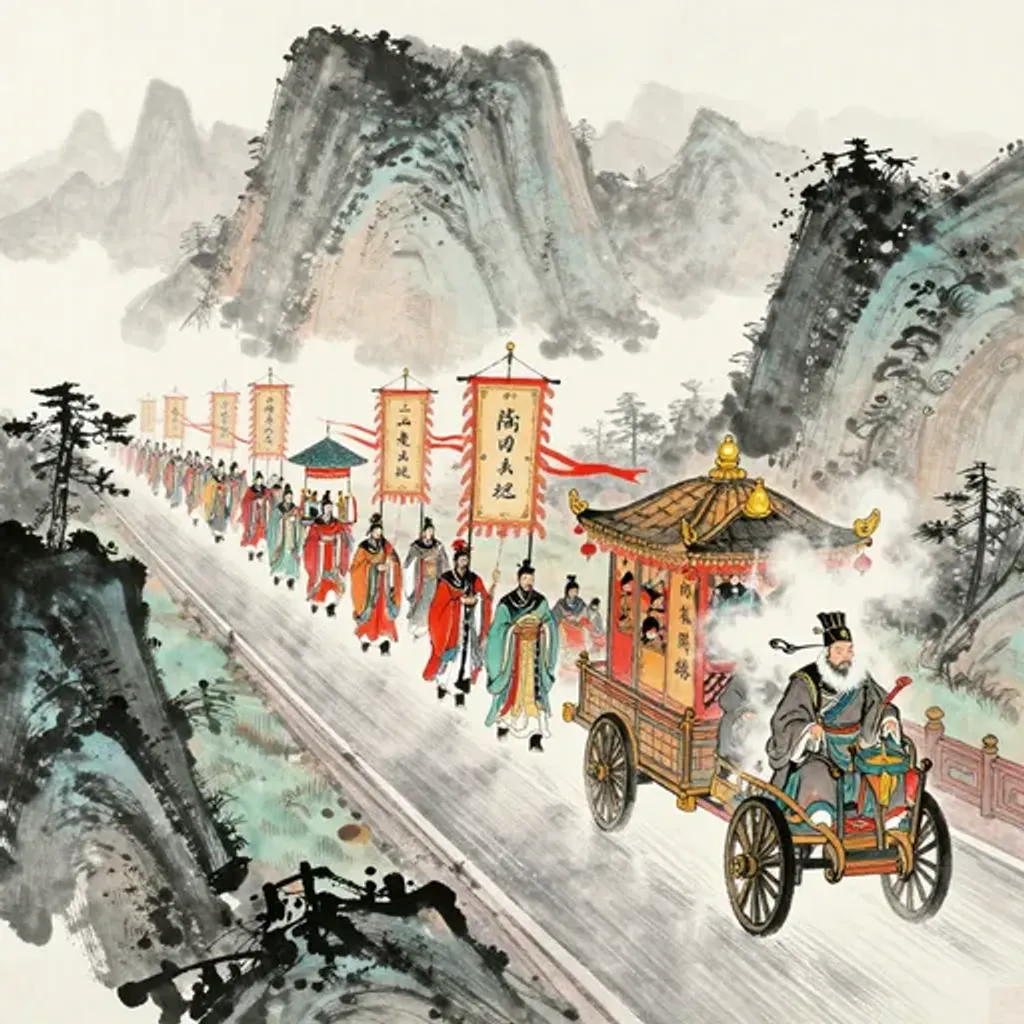
德之流行,利之四鄉。雨師洒道,風伯逐殃。巡狩封禪,以告成功。
Virtue flows and spreads; bringing benefit to the four directions. The Rain Master sprinkles the road; the Wind Earl drives off evil. The royal tour, the feng and shan sacrifices; announcing success to Heaven.
— Jiao Yanshou, Yilin (Forest of Changes), 1st century BC
Commentary
Wind upon wind transforms into thunder over mountain: the Gentle becomes Small Exceeding. Virtue flows outward, blessing all four directions. The Rain Master sprinkles the roads; the Wind Lord drives pestilence away. The sovereign undertakes a grand inspection tour and performs the feng and shan sacrifices to announce his achievements to heaven. The verse describes imperial ceremony at its grandest: cosmic forces mobilized as ritual attendants, heaven and earth purified for the emperor's progress. The Rain Master and Wind Lord are divine functionaries of the cosmic bureaucracy. From The Gentle to Small Exceeding, thunder atop the mountain: the gentleman exceeds in reverence, in mourning, in frugality. The imperial tour embodies this: going slightly beyond the ordinary to acknowledge heaven's mandate through extraordinary ceremony.
巽 → 既濟
Hexagram 57 → Hexagram 63: After Completion
Changing lines: 1, 2, 6
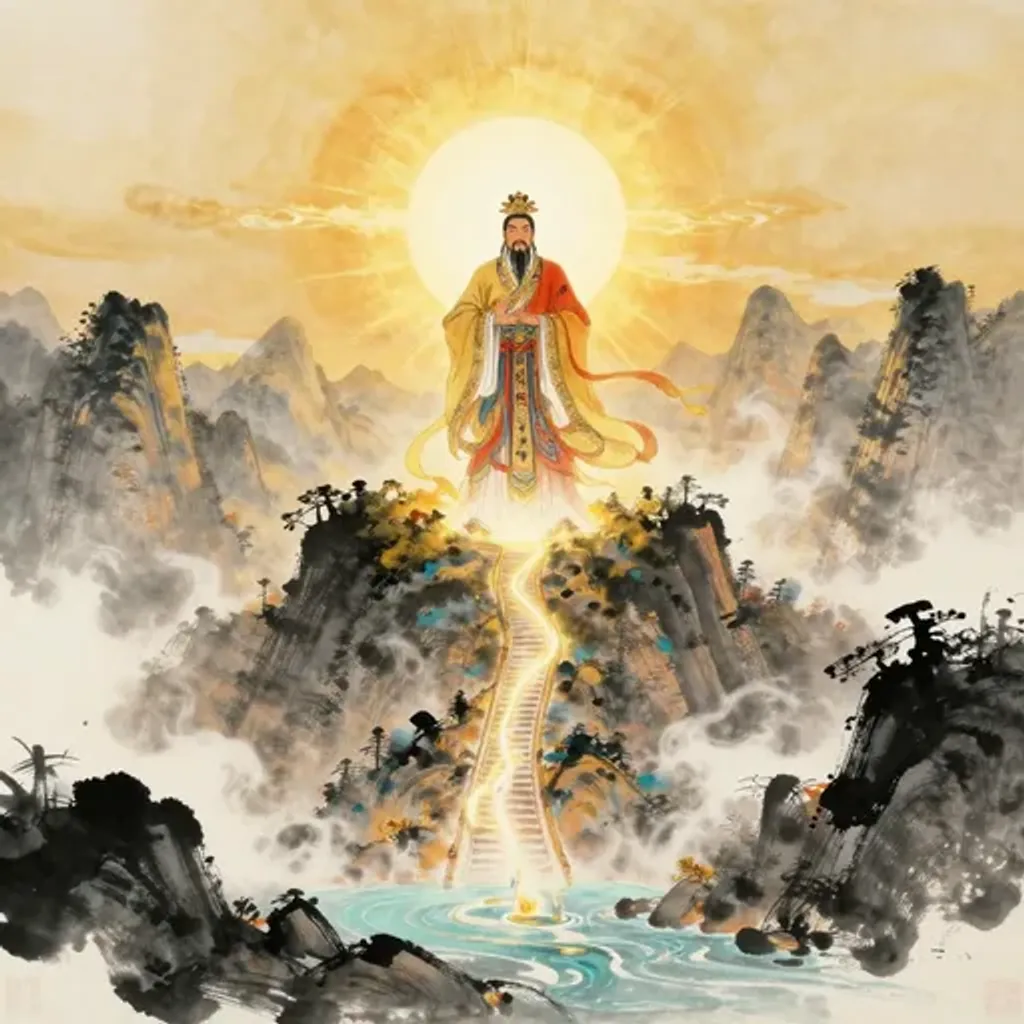
禹將為君,裝入崑崙。稍進陽光,登見溫湯。功德昭明。
Yu shall become sovereign; he enters into Kunlun. Gradually advancing in sunlight; ascending to see the warm springs. Merit and virtue shine bright.
— Jiao Yanshou, Yilin (Forest of Changes), 1st century BC
Commentary
Wind upon wind transforms into water over fire: the Gentle becomes After Completion. Yu is about to become sovereign; in his royal vestments he enters the Kunlun Mountains. Gradually advancing into sunlight, he ascends to discover the hot springs. His merit and virtue shine forth in brilliance. The verse narrates Yu the Great's apotheosis: the flood-tamer who earned heaven's mandate now enters the cosmic mountain Kunlun, axis of the world, and emerges into transcendent warmth and light. From The Gentle to After Completion, water sits properly above fire — everything in its place, the work accomplished. Yu's entry into Kunlun marks the moment when all labors culminate. The hot springs on the sacred mountain confirm heaven's approval: warmth rising from the earth to meet the new king, a cosmos perfectly ordered.
巽 → 未濟
Hexagram 57 → Hexagram 64: Before Completion
Changing lines: 3, 4, 5
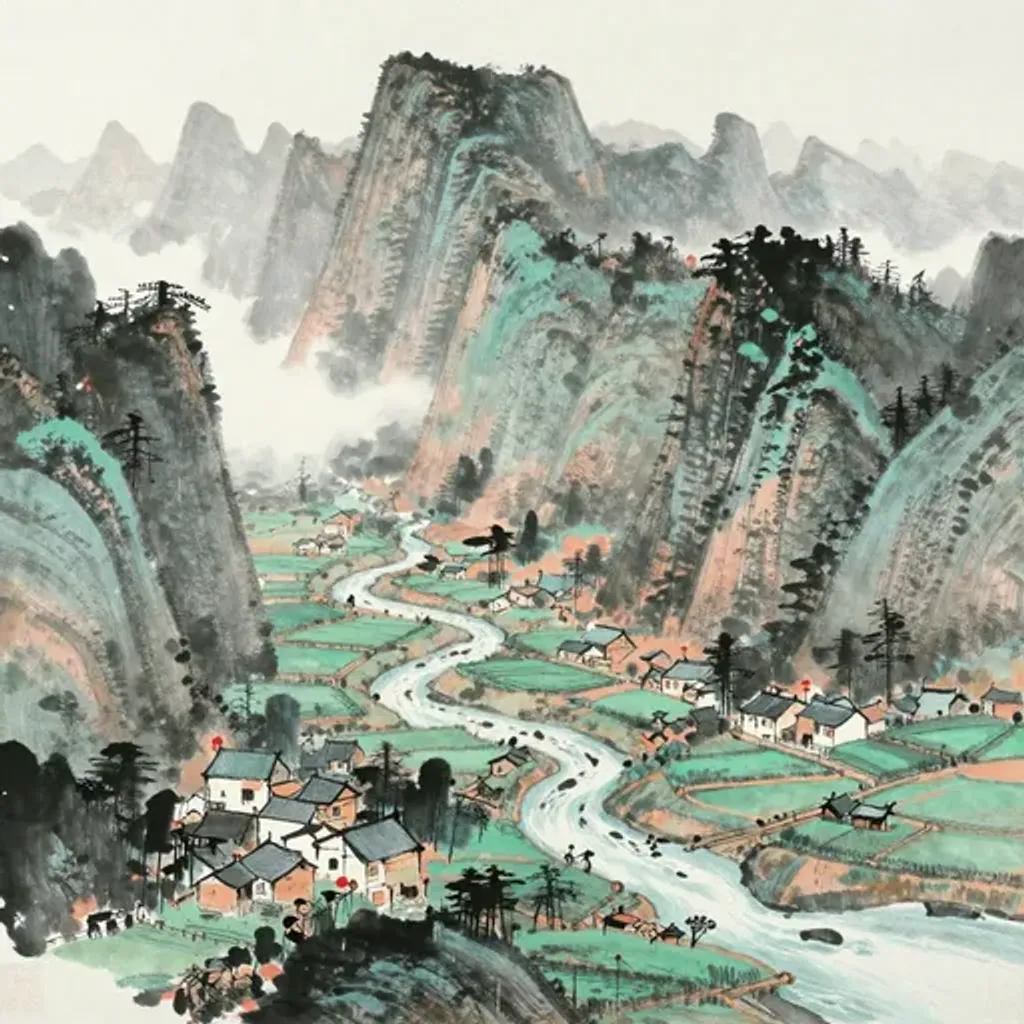
五岳四瀆,含潤為德。行不失理,民賴恩福。
The Five Peaks, the Four Rivers; containing moisture, holding virtue. Action that violates not principle; the people rely on their blessings.
— Jiao Yanshou, Yilin (Forest of Changes), 1st century BC
Commentary
Wind upon wind transforms into fire over water: the Gentle becomes Before Completion. The Five Sacred Mountains and Four Great Rivers hold moisture within as their virtue. Actions do not stray from principle, and the people depend on this grace for their blessings. The verse invokes the most fundamental features of China's sacred geography — the mountains that anchor heaven's mandate and the rivers that nourish the land — as moral exemplars. Their virtue lies in containment: holding moisture, sustaining life, never departing from the natural order. From The Gentle to Before Completion, fire sits above water — not yet in alignment, the crossing not yet made. Yet the verse counsels trust in the enduring structure: as long as mountains hold moisture and rivers follow their courses, the final completion, though still pending, is assured by the steadfastness of the landscape itself.