Transformations of Hexagram 58
Every line of change out of Hexagram 58 兌 The Joyous Lake, with the Yilin verse for each of the 64 resulting hexagrams, its translation, and the original ink brush artwork.
兌 → 乾
Hexagram 58 → Hexagram 1: The Creative
Changing lines: 3, 6
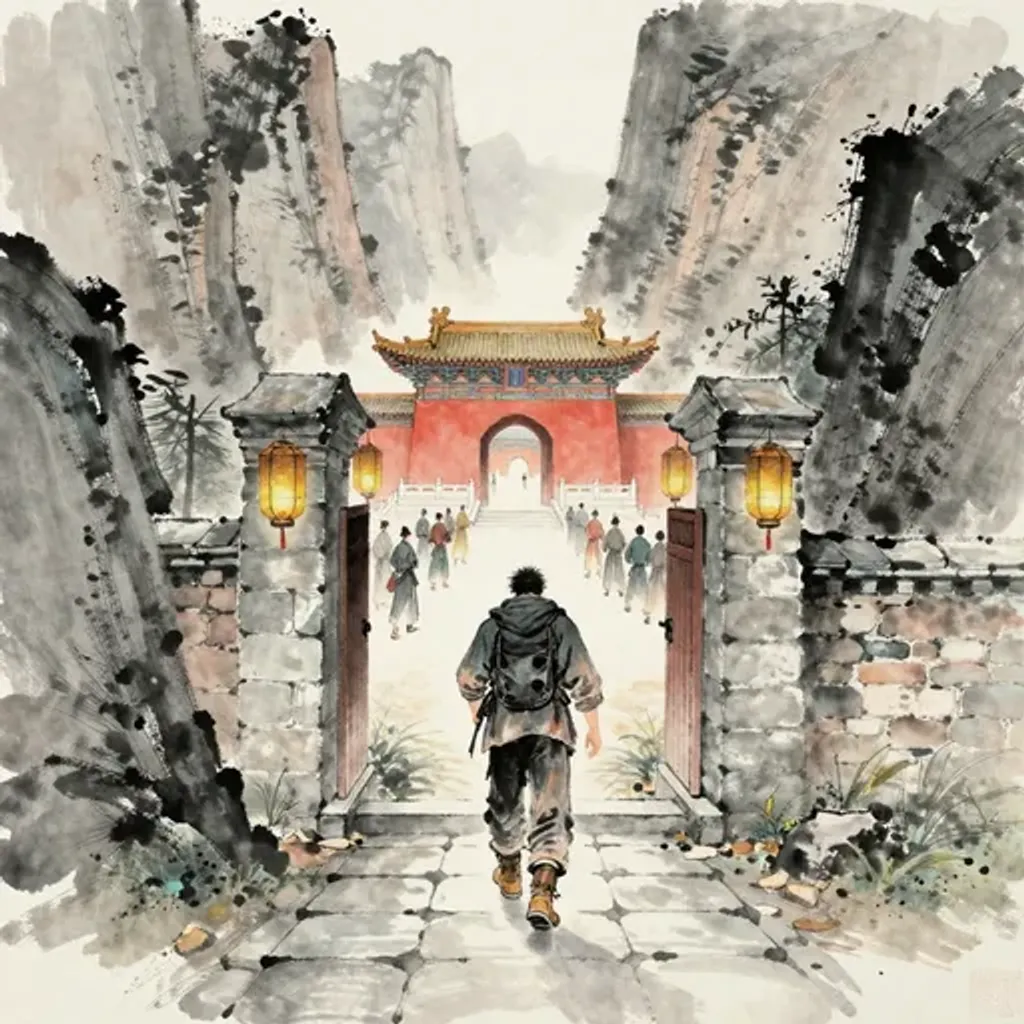
踐履危難,脫危去患。入福喜門,見悔大君。
Treading through danger and hardship, escaping peril and leaving trouble behind. Entering the gate of fortune and joy, meeting the great lord with humble regret.
— Jiao Yanshou, Yilin (Forest of Changes), 1st century BC
Commentary
Paired lakes mirror joy, but the verse shifts to treading through peril. One walks into danger and emerges unscathed, passing through the gate of fortune to meet a great lord. The imagery echoes hexagram 10 (Treading): stepping on the tiger's tail without being bitten. Joy here is not passive pleasure but the confidence that carries a person through crisis. From The Joyous to The Creative, lake's openness transforms into heaven's self-generating power. The one who treads danger with composure does not merely survive — that composure itself becomes the creative force that reshapes circumstance. Delight disciplined by courage ascends to sovereign initiative.
兌 → 坤
Hexagram 58 → Hexagram 2: The Receptive
Changing lines: 1, 2, 4, 5
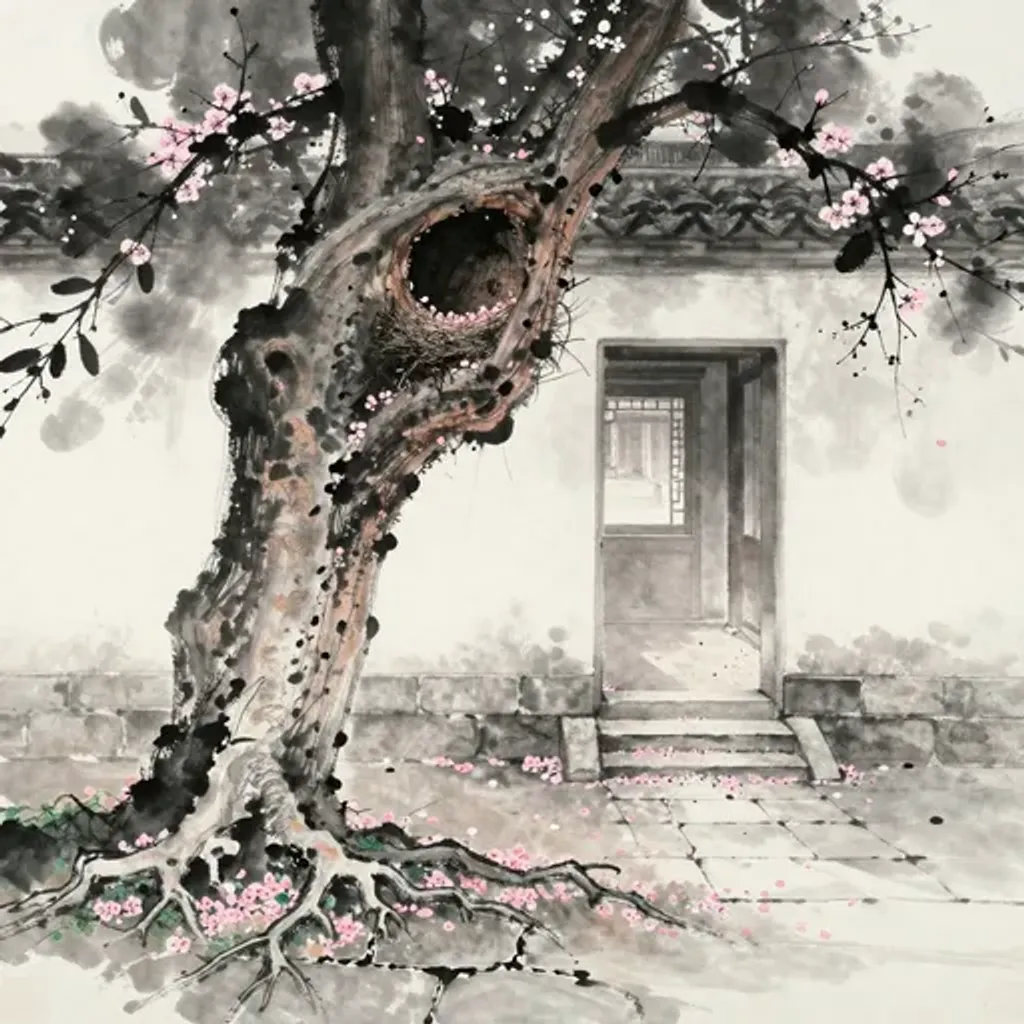
子鉏執麟,《春秋》作元。陰聖將終,尼父悲心。
An old tree holds an empty nest — the spring swallows do not return. Fallen petals fill the steps; there is no one left to sweep.
— Jiao Yanshou, Yilin (Forest of Changes), 1st century BC
Commentary
Paired lakes give way to doubled earth: all receptivity, no voice. The original verse names Zichushang capturing the qilin, Confucius composing the Spring and Autumn Annals at its first chapter, the sage-saint nearing his end, and Father Ni grieving. In 481 BC, the qilin — omen of sage rule — was caught in a chaotic age, and Confucius wept, knowing his Way had reached its limit. From The Joyous to The Receptive, open delight dissolves into silent endurance. The joyous surface has given way entirely; what remains is the earth's capacity to receive sorrow without breaking. Even the sage's grief must find ground to rest upon.
兌 → 屯
Hexagram 58 → Hexagram 3: Difficulty at the Beginning
Changing lines: 2, 4
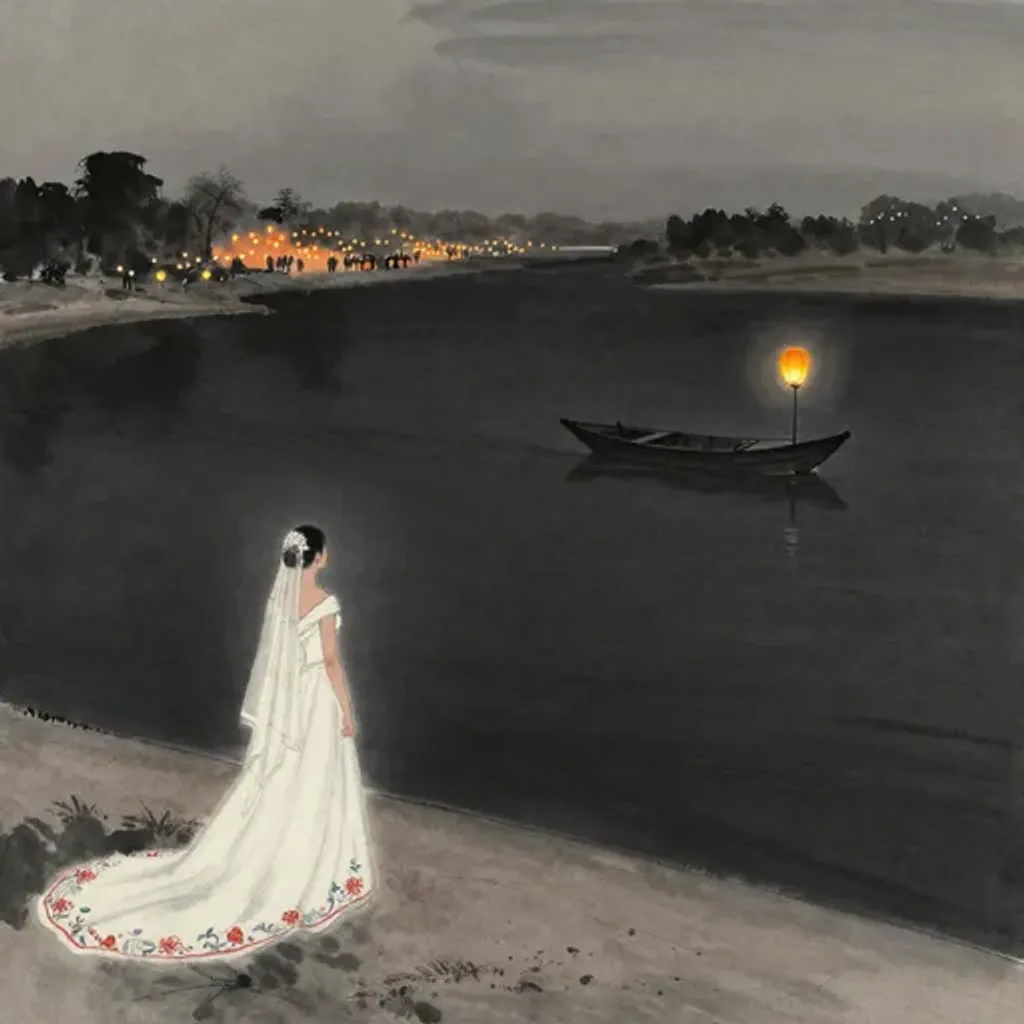
夾河為婚,期至无船。搖心失望,不見所歡。
A marriage arranged across the river, but when the day arrives no boat appears. The anxious heart loses hope; the beloved is nowhere to be seen.
— Jiao Yanshou, Yilin (Forest of Changes), 1st century BC
Commentary
Paired lakes shimmer with promise, yet a river divides the lovers. A marriage is arranged across the water, but when the appointed day arrives there is no boat. The heart wavers in despair; the beloved never appears. Thunder stirs beneath the water — clouds and rain gather but cannot yet deliver. From The Joyous to Difficulty at the Beginning, delight curdles into frustrated longing. The verse captures the precise anguish of hexagram 3: all the elements for union exist, yet the moment refuses to coalesce. The bride-to-be waits on one bank, the groom on the other, and between them a river with no crossing.
兌 → 蒙
Hexagram 58 → Hexagram 4: Youthful Folly
Changing lines: 1, 4, 5, 6
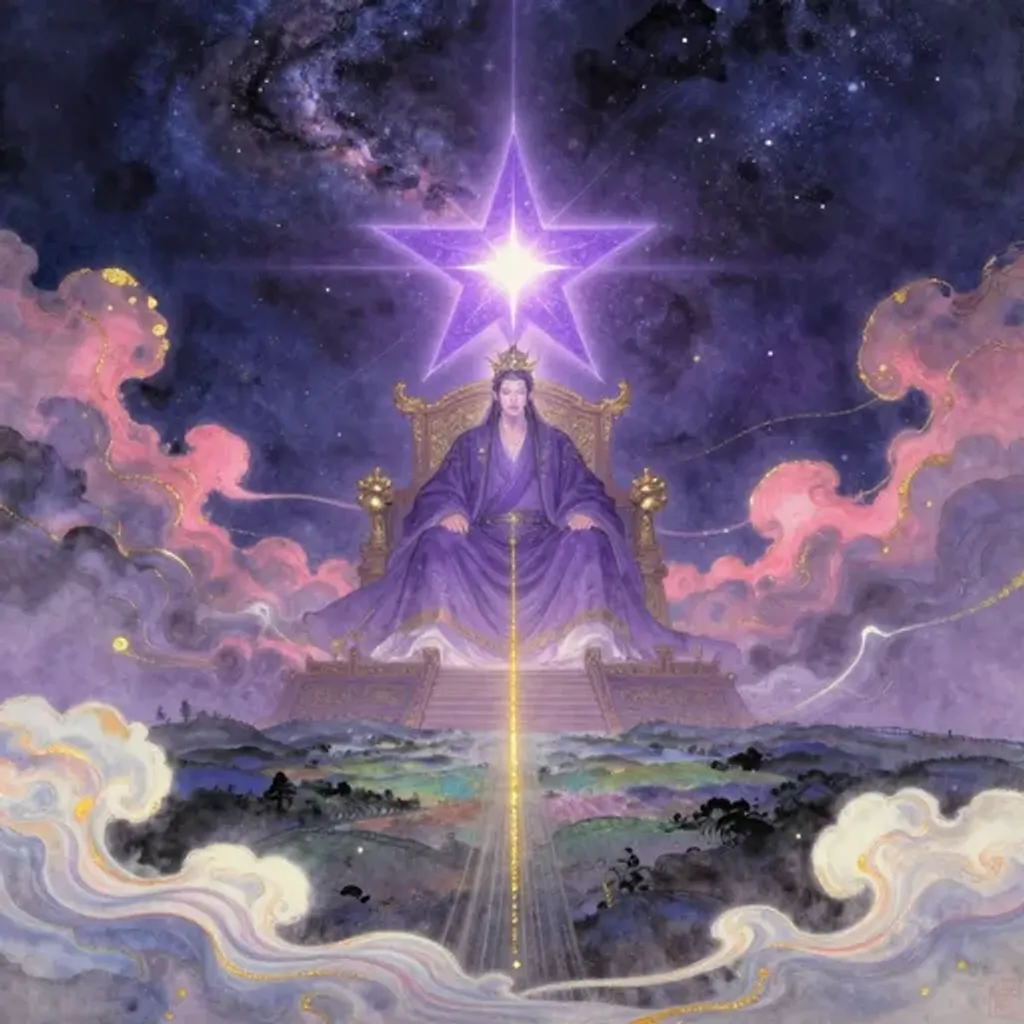
天孫帝子,與日月處。光榮於世,福祿繁祉。
The Purple Star blazes, the imperial throne shines bright. On both banks of the Milky Way, colored clouds are born. The celestial ladder drops its golden thread — which mortal shall climb it?
— Jiao Yanshou, Yilin (Forest of Changes), 1st century BC
Commentary
Paired lakes open upward to the mountain spring below. The original verse names the celestial grandchild and imperial son dwelling with sun and moon, glorious in the world, receiving manifold blessings. 'Celestial grandchild' and 'imperial son' are standard Han-dynasty epithets for the heir to the throne, one born to heaven's mandate. From The Joyous to Youthful Folly, radiant favor meets the spring issuing from beneath the mountain — a young heir, still unformed, receives cosmic blessing before understanding its weight. The pattern suggests that true nourishment of potential requires not wisdom but trust in the mandate one has been given.
兌 → 需
Hexagram 58 → Hexagram 5: Waiting
Changing lines: 3, 4
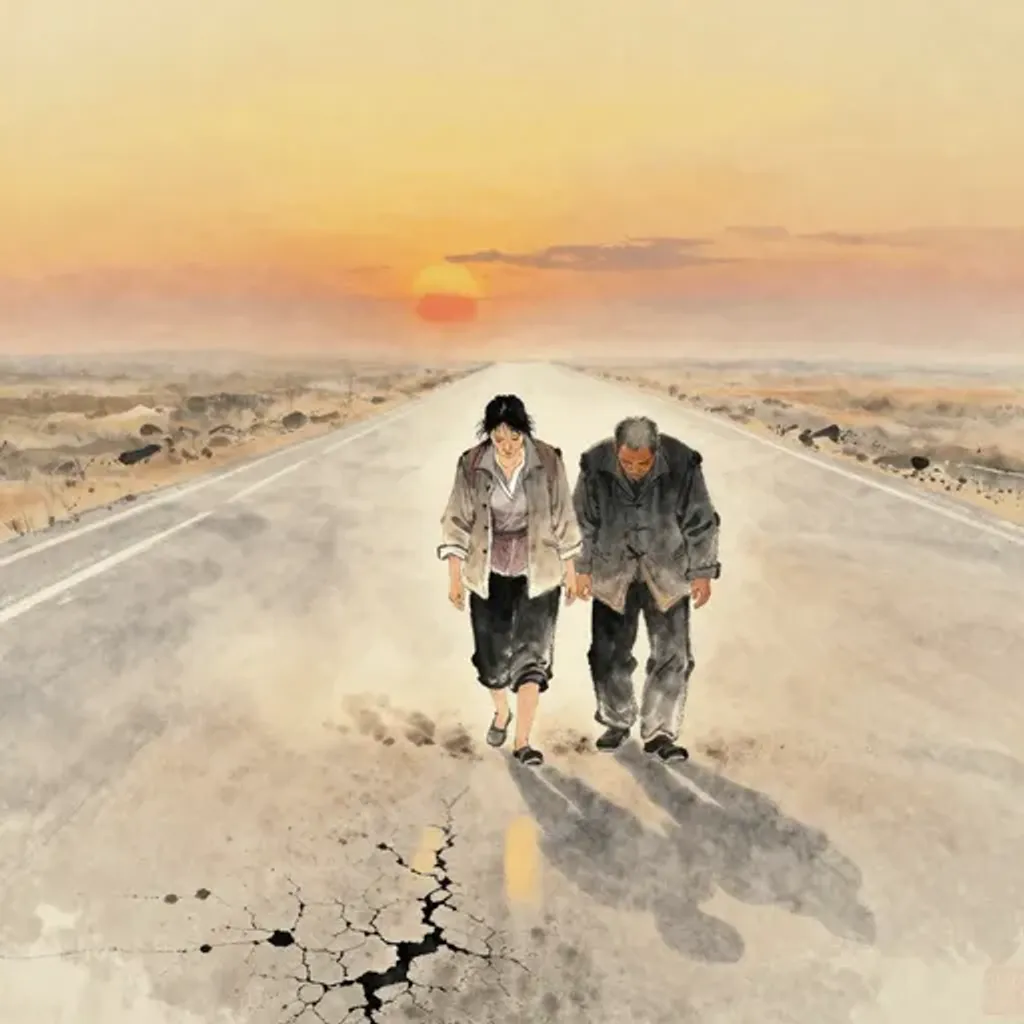
三年人妻,相隨奔馳。終日不食,精氣勞疲。
Three years a man's wife, following him in constant flight. All day without food, spirit and strength utterly spent.
— Jiao Yanshou, Yilin (Forest of Changes), 1st century BC
Commentary
Paired lakes suggest shared joy, but here the waters run dry. A woman married three years follows her husband in ceaseless travel, going all day without food, her spirit and energy utterly exhausted. The verse depicts the weariness of devotion pushed past endurance — not betrayal, but fidelity ground down by circumstance. Clouds gather above heaven in the image of Waiting, heavy with moisture that has not yet fallen. From The Joyous to Waiting, exhaustion paradoxically demands patience. The wife's suffering is not purposeless: it is the long accumulation before relief finally arrives. Need's image insists that nourishment exists but requires stillness to receive it. Even the most faithful heart must learn to wait for its season, trusting that the rain will come.
兌 → 訟
Hexagram 58 → Hexagram 6: Conflict
Changing lines: 1, 6
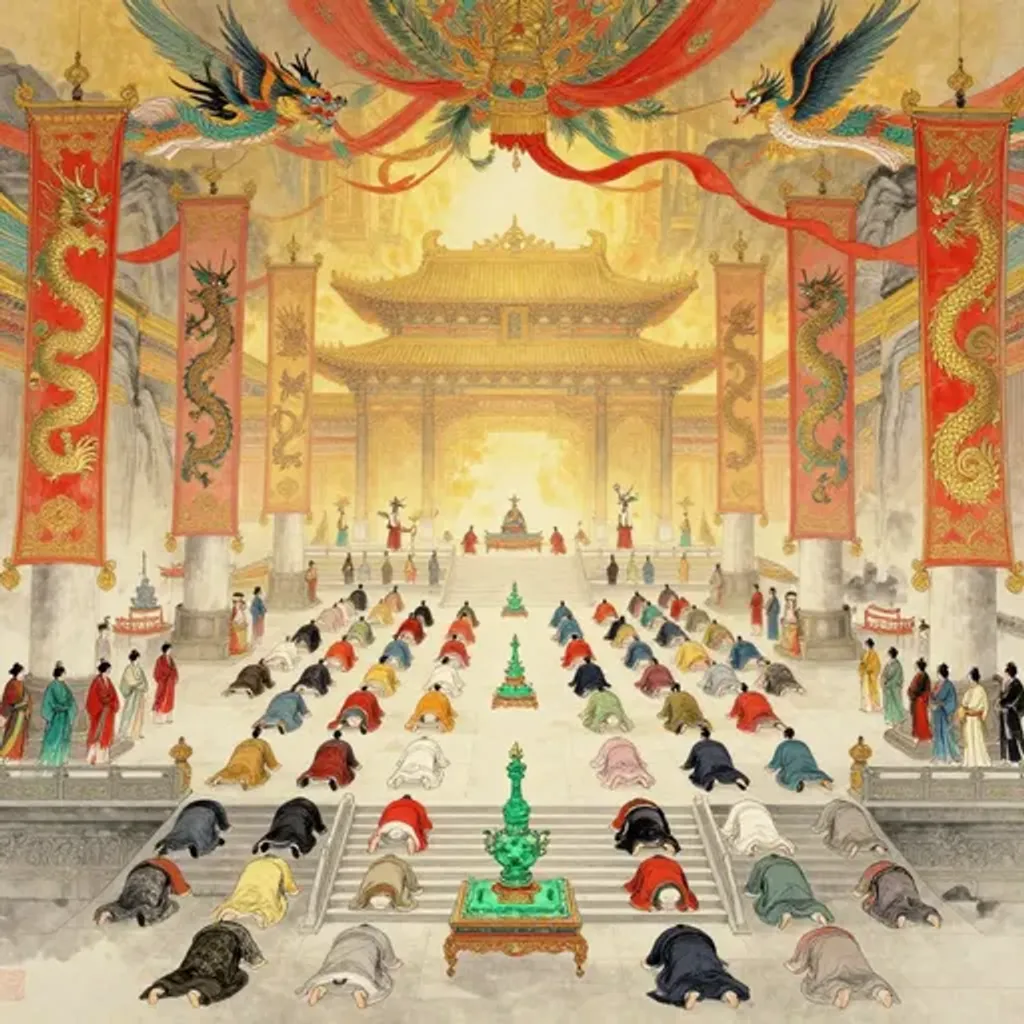
禹召諸侯,會稽南山。執玉萬國,天下康寧。
The Hall of Light with nine pillars stands like mountains. The four barbarian tribes come to offer tribute, bowing at the steps. Dragon banners and phoenix canopies shade the sun — ten thousand states sing in one voice, praising the sage's reign.
— Jiao Yanshou, Yilin (Forest of Changes), 1st century BC
Commentary
Paired lakes shine with communal delight. The original verse recounts Yu the Great summoning feudal lords at Mount Kuaiji on the southern mountain, where ten thousand states presented jade tribute and the realm enjoyed peace. According to tradition, Yu assembled the lords to display virtue and establish order after taming the floods. From The Joyous to Conflict, the verse carries a warning beneath the celebration: heaven and water move in opposite directions, and even the mightiest assembly contains the seeds of future dispute. Yu's achievement was not merely gathering the lords but establishing the protocols that would forestall conflict — joy disciplined into governance.
兌 → 師
Hexagram 58 → Hexagram 7: The Army
Changing lines: 1, 4, 5
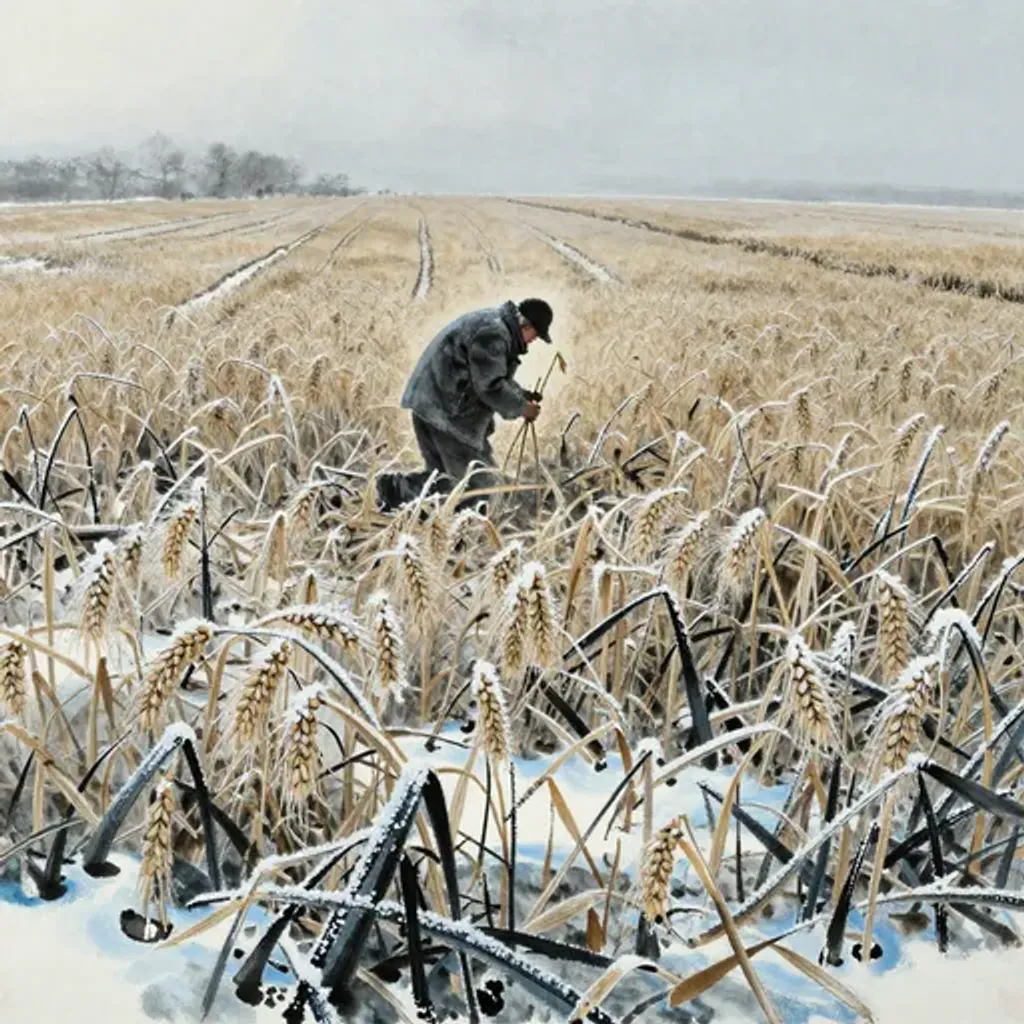
早霜晚雪,傷害禾麥。損功棄力,飢无所食。
Early frost and late snow injure the grain and wheat. Effort lost, labor abandoned; hungry with nothing to eat.
— Jiao Yanshou, Yilin (Forest of Changes), 1st century BC
Commentary
Paired lakes freeze over as early frost and late snow devastate grain and wheat. Labor is wasted, effort abandoned; hunger follows with nothing to eat. The water within the earth — the image of The Army — suggests a disciplined collective response to crisis, but the verse shows what happens when nature's assault precedes any possibility of organized defense. From The Joyous to The Army, delight is shattered by seasonal catastrophe. The army's water-in-earth pattern implies that survival requires marshaling remaining resources with military discipline, not surrendering to despair. Even amid ruin, the capacity for organized response persists beneath the surface.
兌 → 比
Hexagram 58 → Hexagram 8: Holding Together
Changing lines: 1, 2, 4
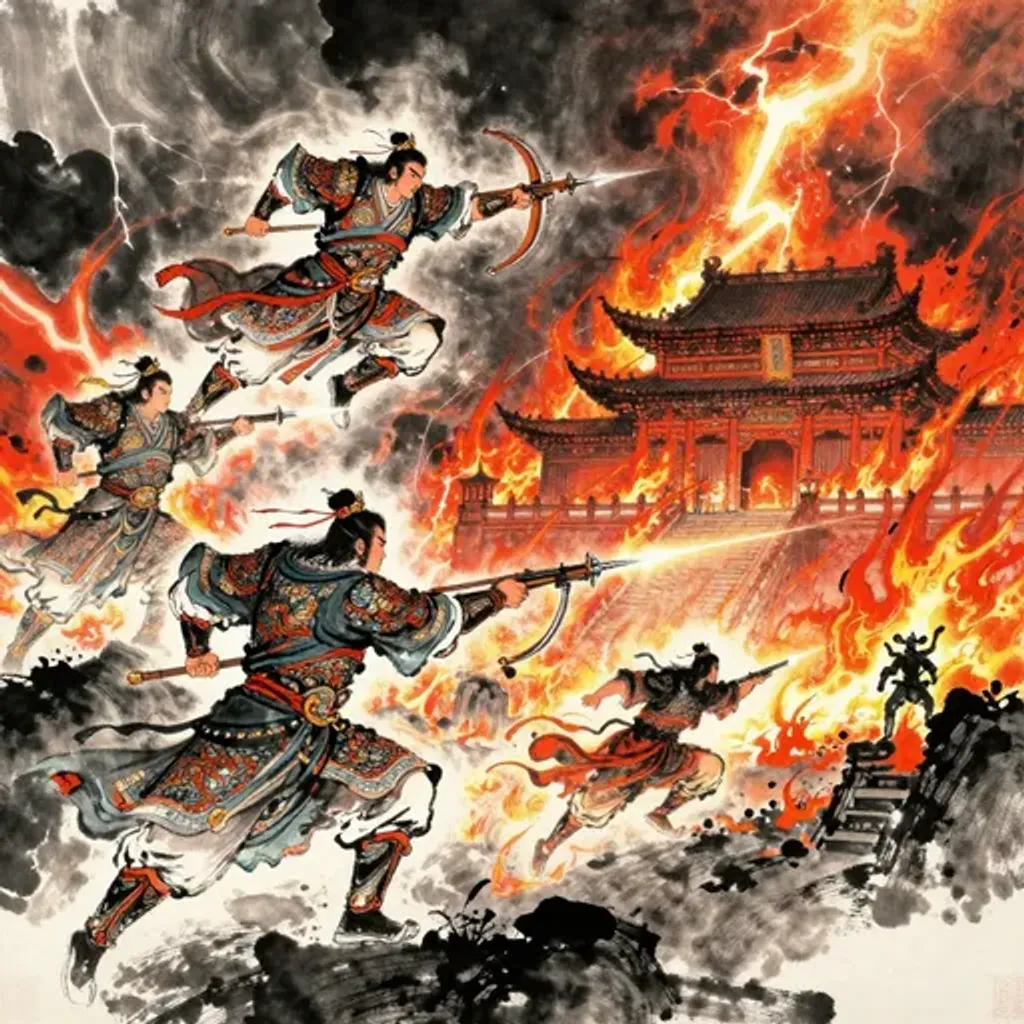
嵩融持戟,杜伯荷弩,降觀下國,誅逐无道。夏商之季,失埶外走。
Song Rong holds a halberd, Du Bo bears a crossbow. They descend to observe the mortal realm, pursuing and punishing the lawless. At the end of Xia and Shang, those who lost power fled abroad.
— Jiao Yanshou, Yilin (Forest of Changes), 1st century BC
Commentary
Paired lakes give way to water upon earth — the pattern of alliance and judgment. Songrong wields a halberd, Dubo carries a crossbow; they descend to observe the lower kingdoms and punish the lawless. 'Songrong' likely refers to Zhurong, the fire god and divine enforcer, while Dubo is the ghost of Du Bo, a lord unjustly executed by King Xuan of Zhou around 781 BC. According to tradition in the Mozi, Du Bo's ghost later appeared and shot King Xuan with an arrow. The verse then names the fall of the Xia and Shang dynasties — tyrants who lost power and fled. From The Joyous to Holding Together, divine agents enforce cosmic justice so that legitimate alliance may be restored.
兌 → 小畜
Hexagram 58 → Hexagram 9: Small Taming
Changing lines: 3, 4, 6
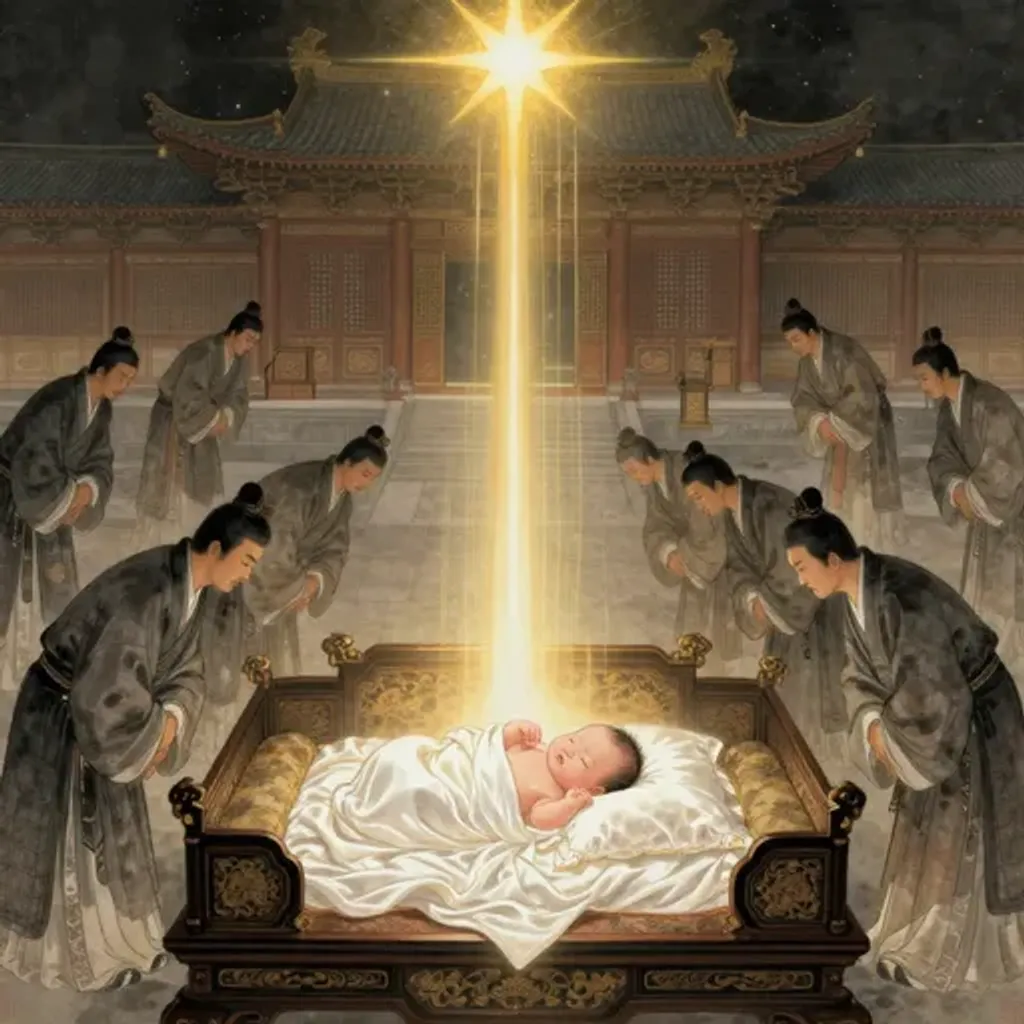
生有聖德,上配大極。皇靈建中,受我以福。
Born with sagely virtue, matched above with the Great Ultimate. The imperial spirit establishes the center; we receive blessing thereby.
— Jiao Yanshou, Yilin (Forest of Changes), 1st century BC
Commentary
Paired lakes open to wind above heaven — gentle influence refining celestial strength. One born with sagely virtue aligns with the supreme ultimate; the imperial spirit establishes the center, and blessings are bestowed. The verse describes a ruler of innate moral power whose virtue resonates with cosmic order. From The Joyous to Small Taming, open delight is refined into the gentle restraint that cultivates culture. Wind moves across heaven not by force but by persistent, subtle influence. The sage-ruler's blessing flows not from power wielded but from virtue that gradually tames and civilizes, like a soft breeze shaping what even force cannot move.
兌 → 履
Hexagram 58 → Hexagram 10: Treading
Changing lines: 6
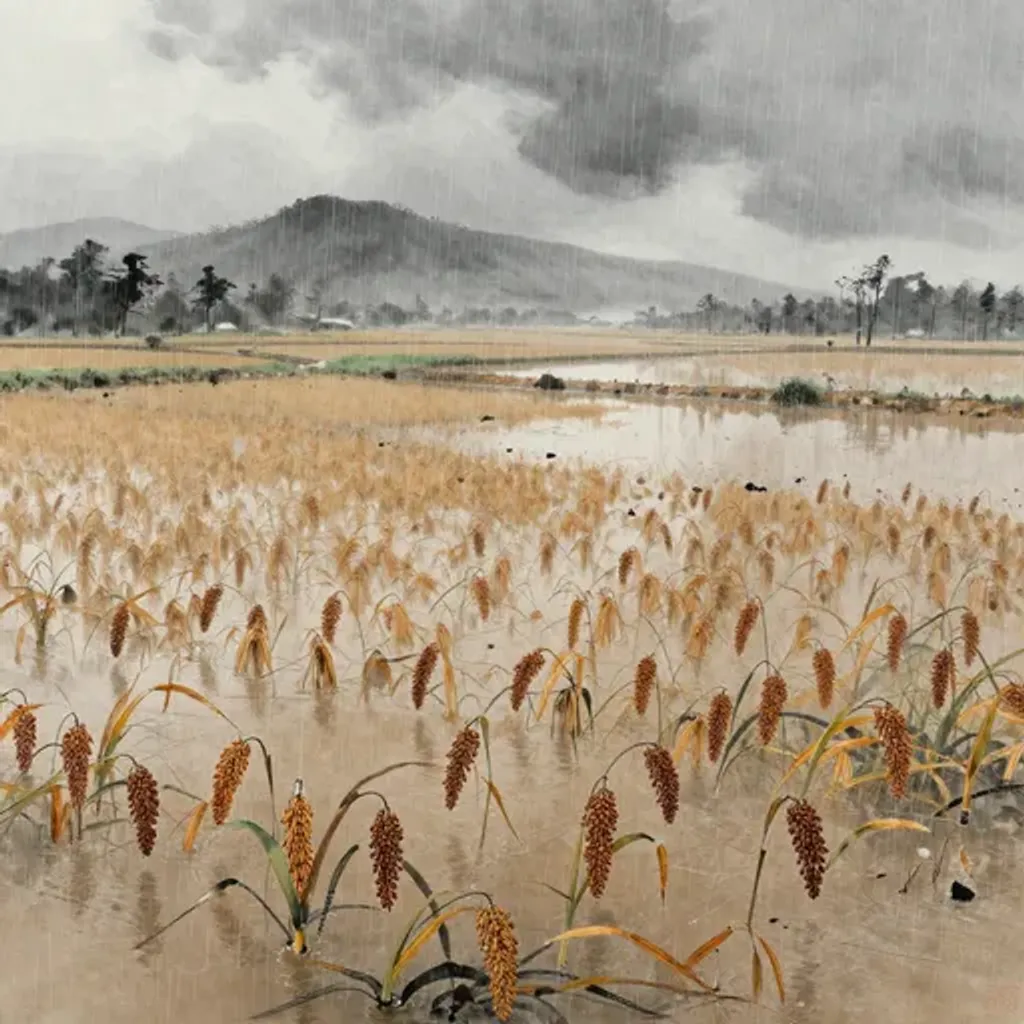
下田陸黍,萬華生齒。大雨霖集,波病潰腐。
Millet planted in lowland fields, ten thousand shoots sprout with life. But heavy rains gather and flood; blight and rot spread through all.
— Jiao Yanshou, Yilin (Forest of Changes), 1st century BC
Commentary
Paired lakes shimmer, but the low-lying fields tell a different story. Millet is planted in the lowlands, ten thousand shoots sprout teeth of grain, yet heavy rains gather in torrents, flooding and rotting the crop. What began as abundance ends in waterlogged ruin. From The Joyous to Treading, the verse warns of misplaced confidence. Treading's image — heaven above, lake below — insists on proper distinctions between high and low. The farmer who plants in bottomlands invites the very disaster he courts. Joy without discernment plants in the wrong field; only by recognizing where one truly stands can one tread safely past the tiger.
兌 → 泰
Hexagram 58 → Hexagram 11: Peace
Changing lines: 3, 4, 5
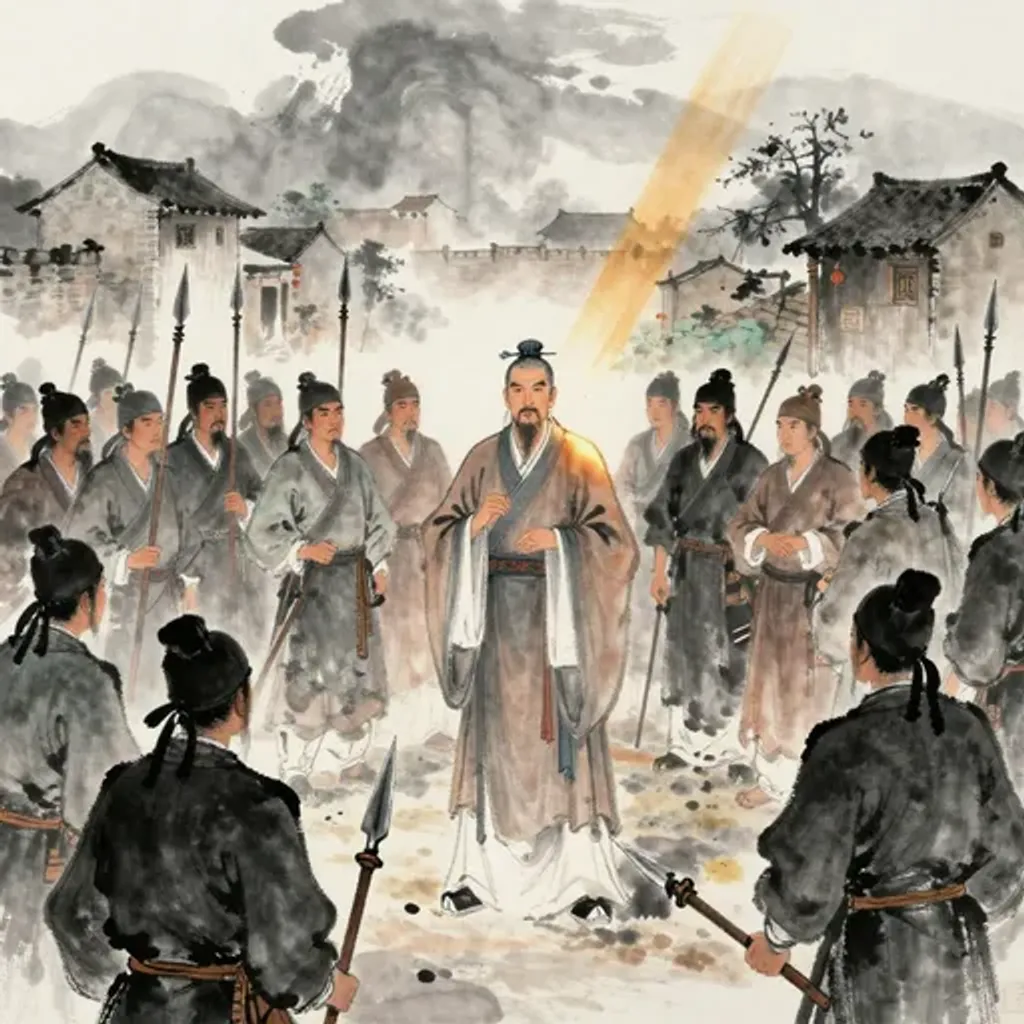
子畏於匡,困厄陳蔡。明德不危,竟克免害。
The Master was imperiled at Kuang, trapped between Chen and Cai. Bright virtue is not endangered; in the end he escaped unharmed.
— Jiao Yanshou, Yilin (Forest of Changes), 1st century BC
Commentary
Paired lakes open into the free exchange of heaven and earth — the image of Peace. Confucius was besieged at Kuang, where hostile villagers mistook him for the tyrant Yang Hu, and later stranded between Chen and Cai, starving for seven days. Yet his luminous virtue kept him from true peril, and in the end he escaped unharmed. From The Joyous to Peace, the sage's equanimity in crisis itself becomes the mechanism of deliverance. When heaven and earth communicate freely, no obstruction can persist. The verse affirms that moral clarity, maintained through hardship, eventually unlocks the cosmic reciprocity that is Peace.
兌 → 否
Hexagram 58 → Hexagram 12: Standstill
Changing lines: 1, 2, 6
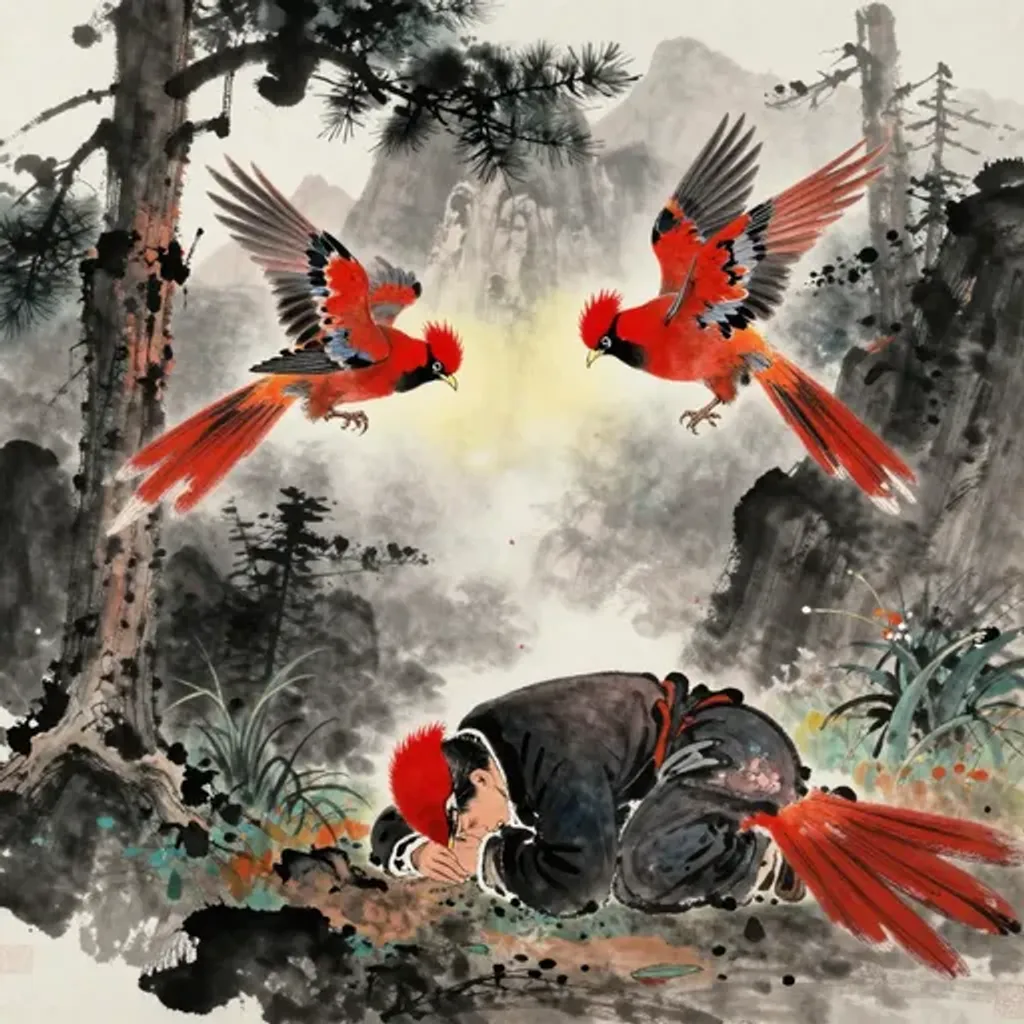
有兩赤頭,從五岳來。謠言无祐,趍爾之林。俯伏聽命,不敢動搖。
Two with red heads come from the Five Peaks. Rumors offer no protection; hasten to your forest refuge. Bow low and heed the command; dare not stir or waver.
— Jiao Yanshou, Yilin (Forest of Changes), 1st century BC
Commentary
Paired lakes confront the image of heaven and earth refusing to communicate — Standstill. Two red-headed figures arrive from the Five Sacred Mountains bearing rumors and false prophecies, driving the listener into the forest. There one lies prostrate, listening for commands, not daring to move. The 'two red-headed' ones suggest ominous emissaries or supernatural agents whose message inspires paralysis rather than action. From The Joyous to Standstill, open communication collapses into fearful submission. When heaven and earth separate, rumors fill the void. The verse warns that in times of cosmic blockage, even those who receive messages from sacred places may find only intimidation, not guidance.
兌 → 同人
Hexagram 58 → Hexagram 13: Fellowship
Changing lines: 2, 3, 6
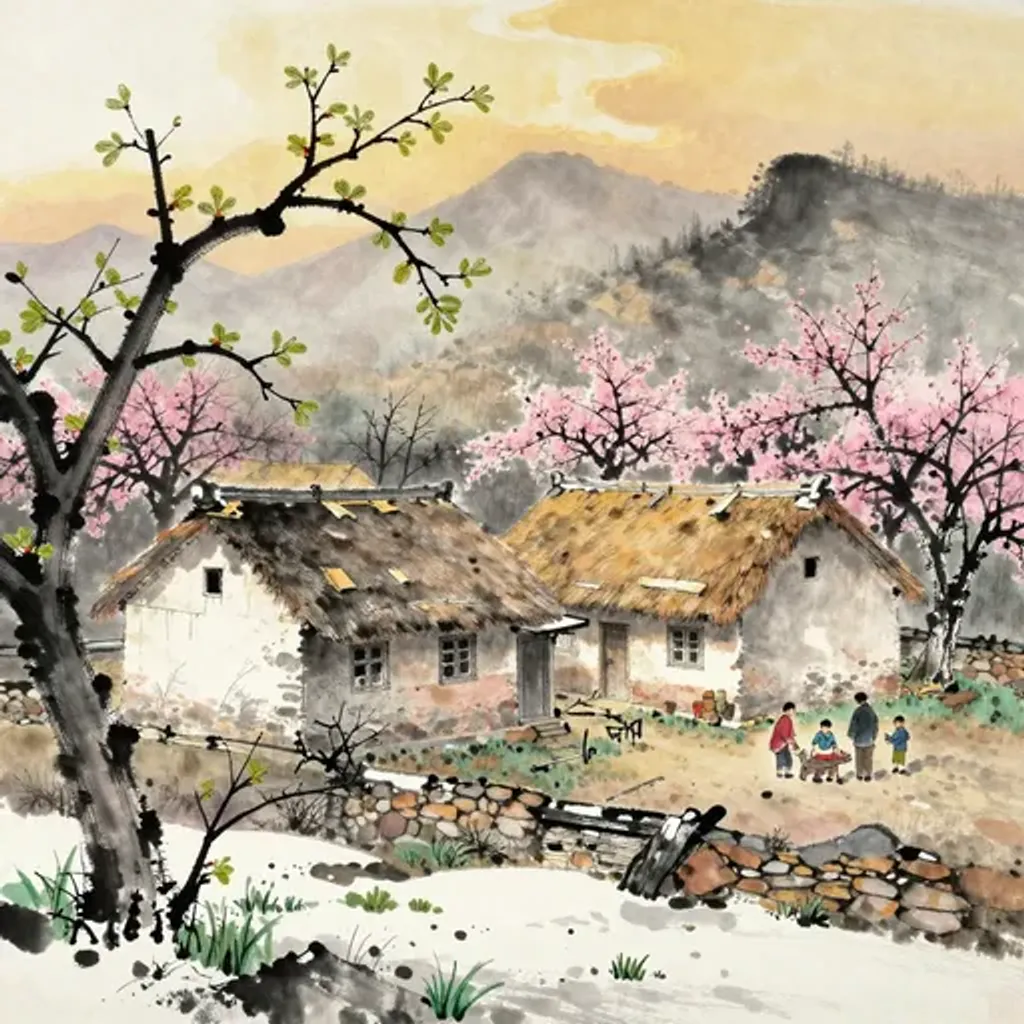
當得自如,不逢凶災。衰者復興,終无禍來。
Managing affairs with natural ease, meeting no calamity or disaster. The declining revives and flourishes; in the end no misfortune comes.
— Jiao Yanshou, Yilin (Forest of Changes), 1st century BC
Commentary
Paired lakes mirror each other in shared delight, and here the reflection yields harmony. All proceeds as one wishes, no calamity or misfortune arrives. The declining recovers its vigor; in the end, no disaster comes. Heaven and fire share the same upward tendency — the image of Fellowship — where like-minded people find natural accord. From The Joyous to Fellowship, personal delight broadens into communal harmony. The verse's quiet confidence suggests that when inner joy is authentic, it naturally attracts fellowship. Recovery from decline does not require dramatic intervention but merely the alignment of people who share a common direction.
兌 → 大有
Hexagram 58 → Hexagram 14: Great Possession
Changing lines: 3, 5, 6
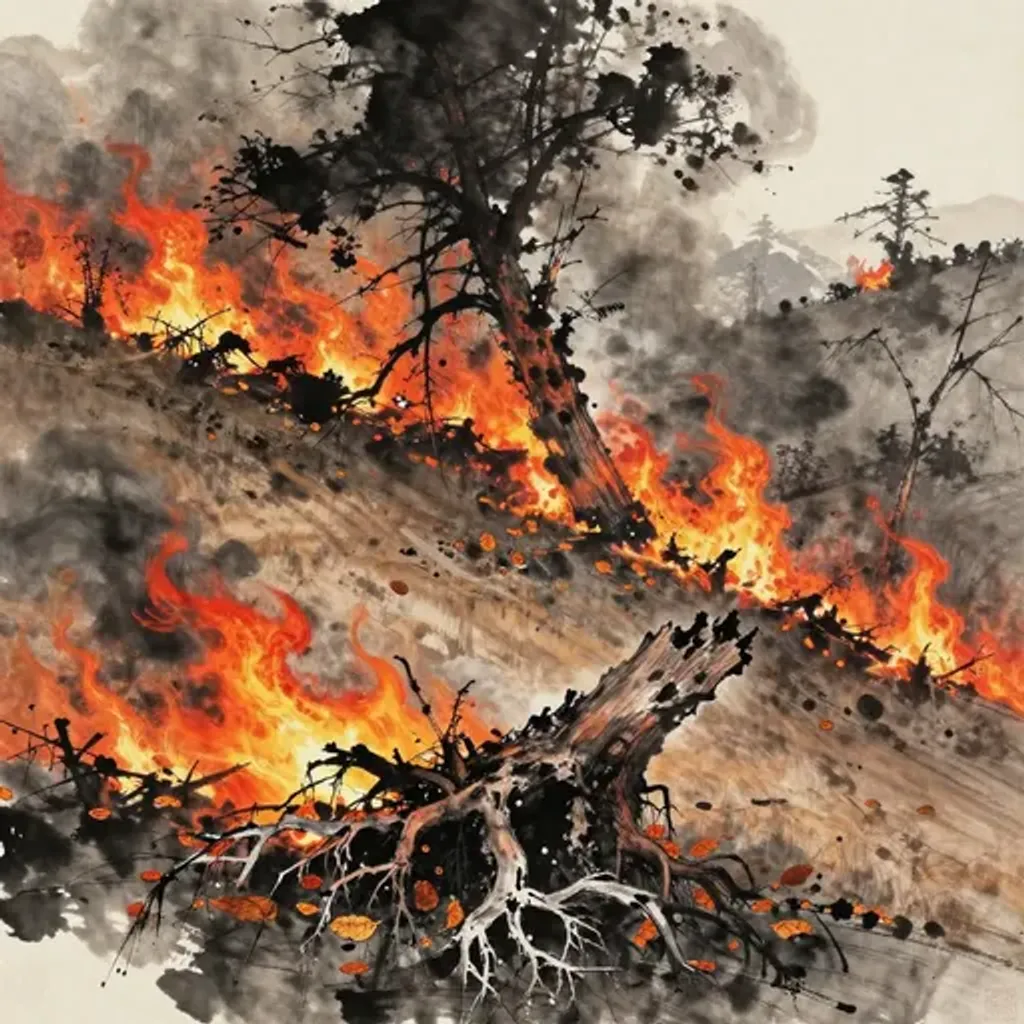
朽根刖樹,華葉落去。卒逢大焱,隨風僵仆。
Rotten roots, a severed tree; blossoms and leaves fall away. Suddenly meeting a great blaze, with the wind it collapses and falls.
— Jiao Yanshou, Yilin (Forest of Changes), 1st century BC
Commentary
Paired lakes cannot sustain a rotting tree. The roots are decayed, the trunk amputated; leaves and blossoms fall away. Then a great fire arrives, and the dead wood collapses with the wind. Fire in heaven — the image of Great Possession — blazes overhead, but here it consumes rather than illuminates. From The Joyous to Great Possession, the verse inverts the hexagram's promise: what should be abundance becomes conflagration when the foundation is rotten. The fire that might have warmed and lit a living tree instead reduces the dead husk to ash. Possession without structural integrity is merely fuel for disaster.
兌 → 謙
Hexagram 58 → Hexagram 15: Modesty
Changing lines: 1, 2, 3, 4, 5
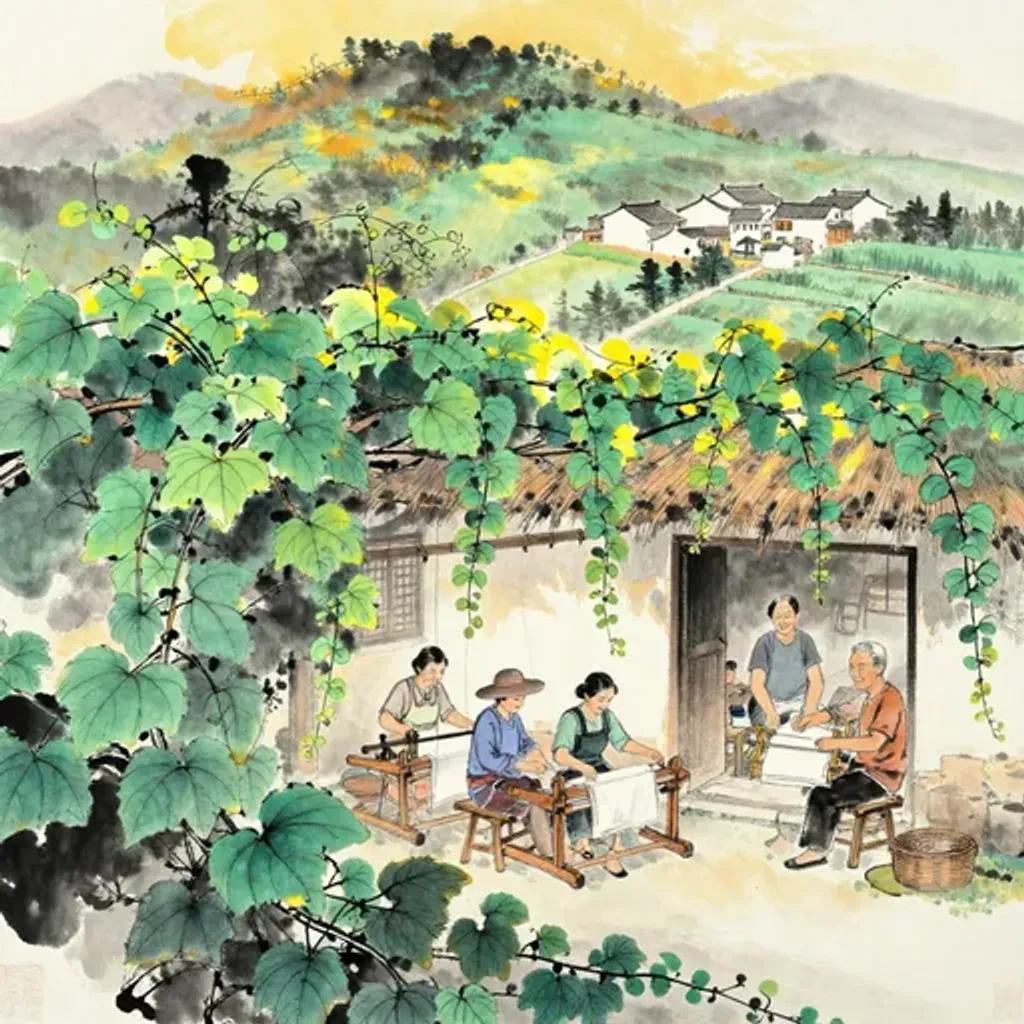
葛生衍蔓,絺綌為願。家道篤厚,父兄悅喜。
Kudzu grows and spreads its vines; fine summer cloth is the wish. The household way is rich and sincere; father and elder brother rejoice.
— Jiao Yanshou, Yilin (Forest of Changes), 1st century BC
Commentary
Paired lakes nourish the vine that spreads across the earth — the image of Modesty, where the mountain hides within the ground. Kudzu vines trail and ramble; from them, fine cloth is woven to fulfill the household's wish. The family thrives in honest abundance, and father and elder brother rejoice. The Shijing ode 'Ge Tan' celebrates women gathering kudzu to weave summer garments, a symbol of domestic industry and contentment. From The Joyous to Modesty, delight roots itself in simple, productive virtue. The mountain concealed beneath earth is wealth that does not flaunt itself — a household whose prosperity grows from steady labor rather than display.
兌 → 豫
Hexagram 58 → Hexagram 16: Enthusiasm
Changing lines: 1, 2, 5
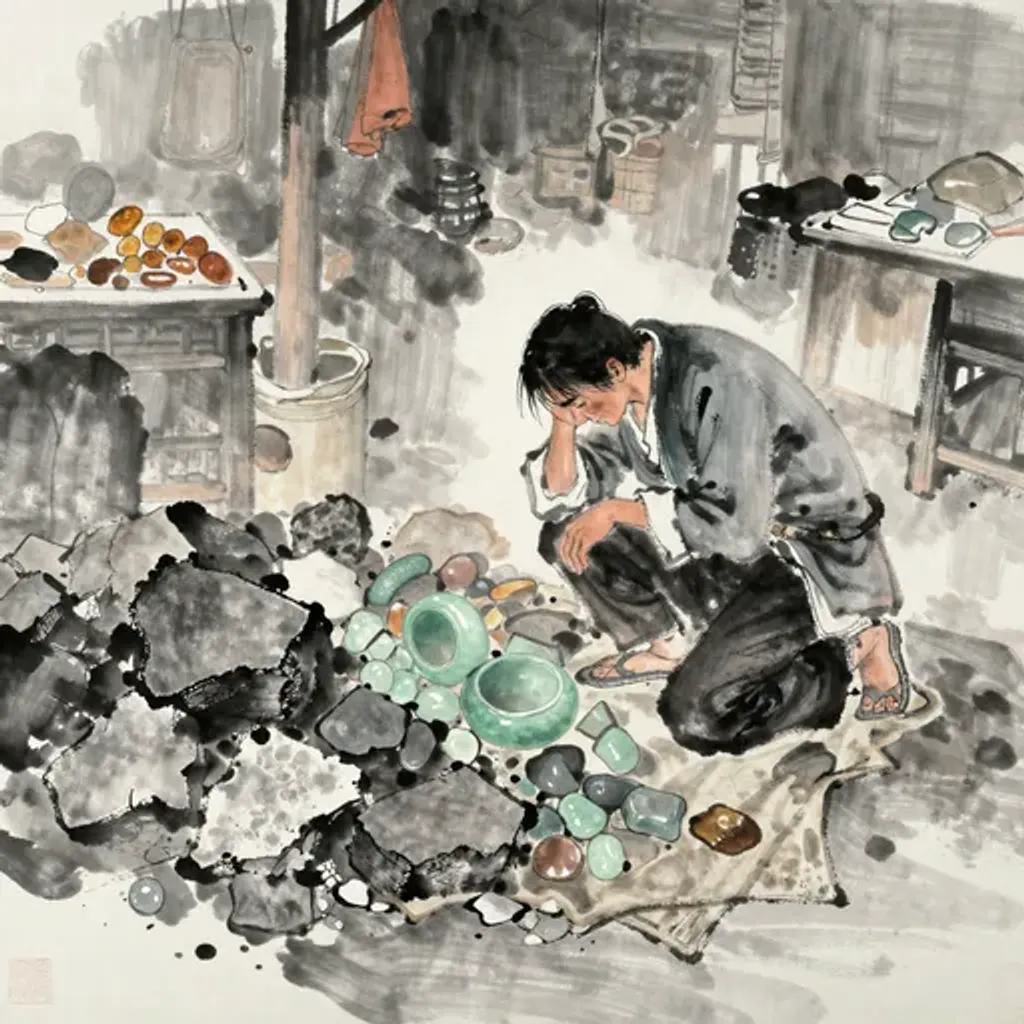
東行求玉,反得弊石。名曰无直,字曰醜惡。眾所賤薄。
Traveling east to seek jade, instead obtaining only broken stones. Named 'without worth,' called 'ugly and vile'; despised and disdained by all.
— Jiao Yanshou, Yilin (Forest of Changes), 1st century BC
Commentary
Paired lakes flash with expectation as one journeys east seeking jade, only to return clutching a worthless stone. It is named 'without value,' styled 'ugly and vile,' despised and scorned by all who see it. Thunder rising from the earth should bring enthusiasm, but here the thunder is hollow — sound without substance. From The Joyous to Enthusiasm, the verse inverts the hexagram's energy: what should be the exhilarating discovery of treasure becomes a humiliating fraud. The seeker's joy collapses the instant the stone is tested against real value. Enthusiasm misdirected — pursuing worth in the wrong place — yields only shame and ridicule. True treasure is never found by chasing rumor eastward; the sage-kings made music to honor virtue, not to chase after glittering stones.
兌 → 隨
Hexagram 58 → Hexagram 17: Following
Changing lines: 2
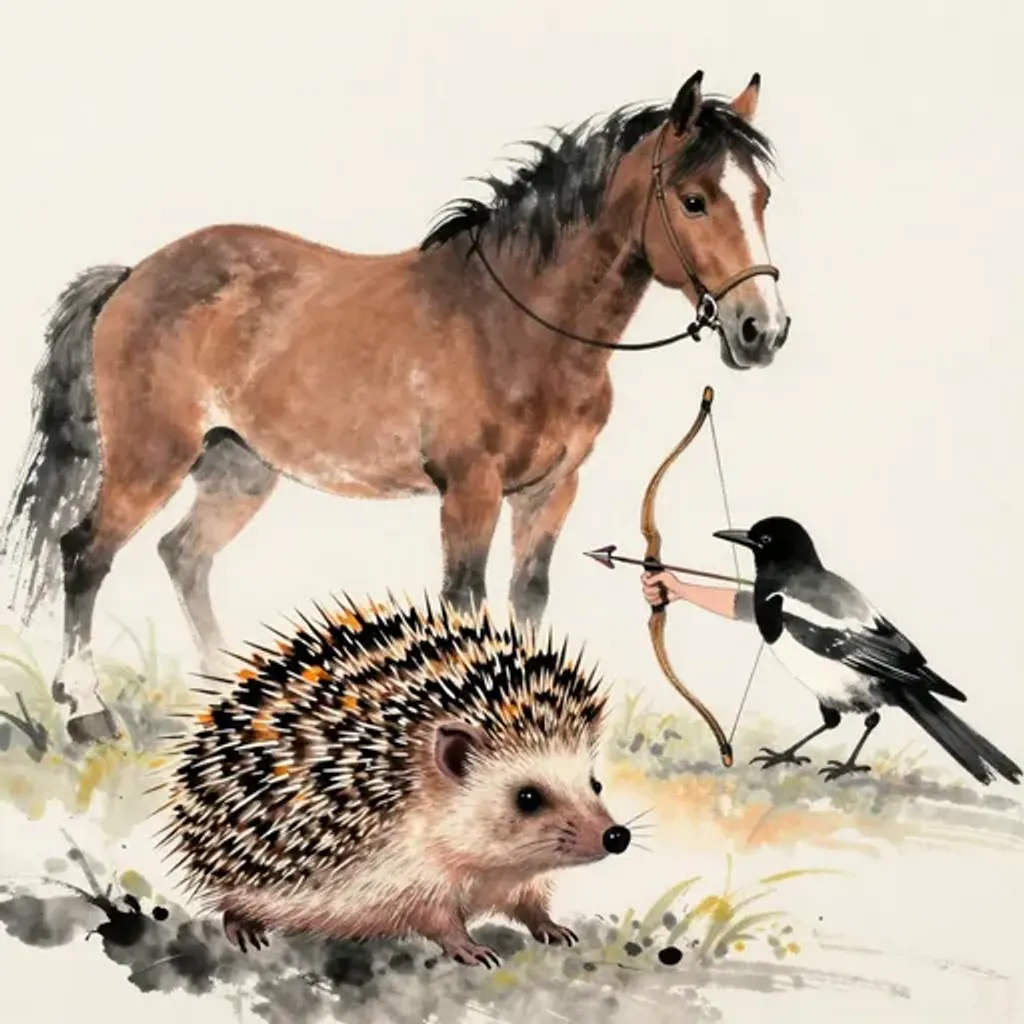
瞻白因弦,駑孱恐怯。任力墮劣,如蝟見鵲。偃視恐伏,不敢拒格。
Gazing at the white, drawing the string; the weak horse shrinks in fear. Strength failing, courage flagging, like a hedgehog seeing a magpie. Cowering low in dread, not daring to resist or fight.
— Jiao Yanshou, Yilin (Forest of Changes), 1st century BC
Commentary
Paired lakes yield to thunder submerged beneath the lake — Following. A weak bow glimpses a white shape on the bowstring and quails in terror. Its strength fails, its skill falters — like a hedgehog spotting a magpie, it cowers face-down, too frightened to resist. The verse paints pure inadequacy: the archer lacks both power and nerve. From The Joyous to Following, delight dissolves into reflexive submission. Yet Following need not mean cowardice; thunder rests beneath the lake at nightfall, gathering energy in stillness. The hedgehog's posture, though fearful here, also preserves the creature. Sometimes following means knowing when not to fight.
兌 → 蠱
Hexagram 58 → Hexagram 18: Work on the Decayed
Changing lines: 1, 3, 4, 5, 6
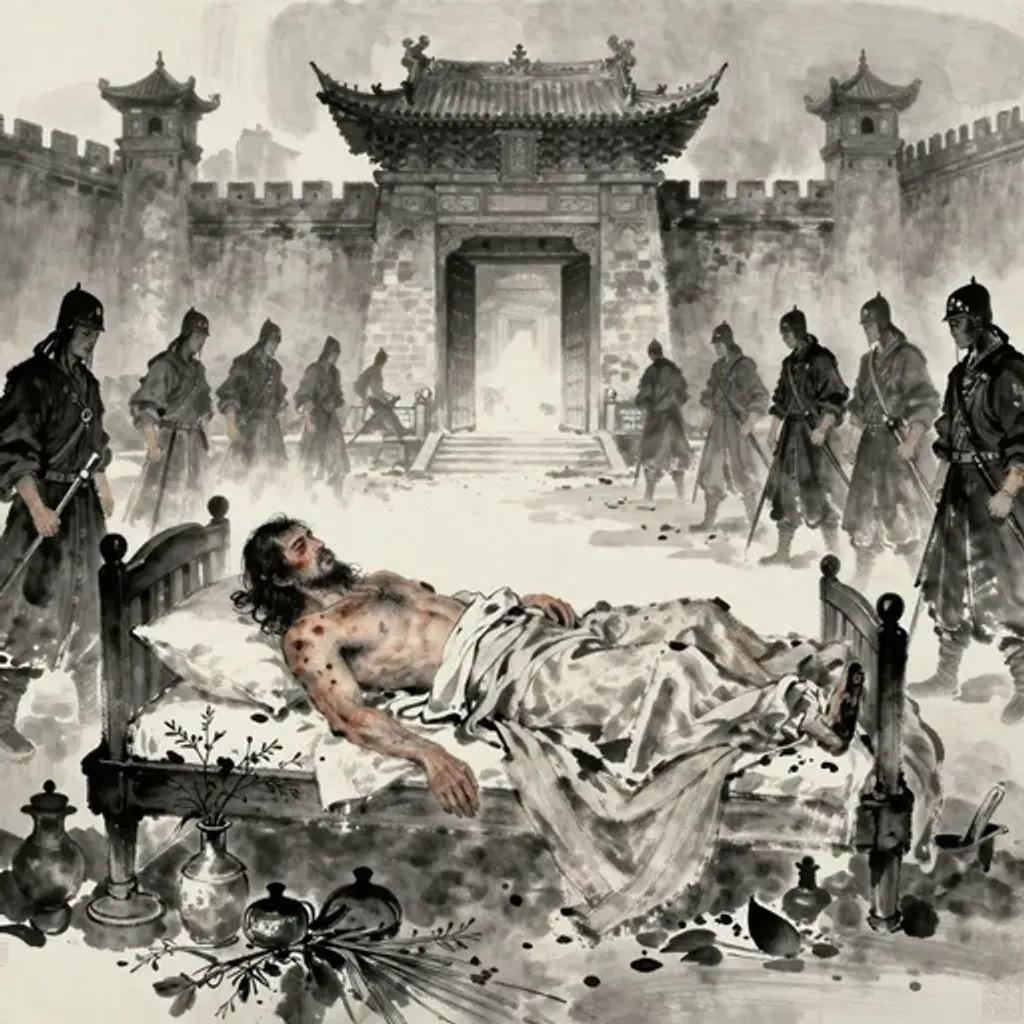
瘡痍多病,宋公危殆。吳子巢門,无命失所。
Covered in sores and plagued by illness, the Duke of Song stands in mortal peril. Wu Zixu at the Chao Gate; without fate, losing his place.
— Jiao Yanshou, Yilin (Forest of Changes), 1st century BC
Commentary
Paired lakes meet wind beneath the mountain — decay within a structure that appears intact. Wounds and illness multiply; Duke Xiang of Song is in mortal danger. At the Battle of Hong in 638 BC, Duke Xiang insisted on chivalric warfare against Chu, refusing to attack before the enemy crossed the river. He was wounded in the thigh and died two years later. Meanwhile, 'Wu Zi at the nest gate, losing his position without a mandate' may allude to the fall of a Wu commander at the Chao gate. From The Joyous to Work on the Decayed, the verse diagnoses a state rotting from misplaced principles — nobility weaponized into self-destruction.
兌 → 臨
Hexagram 58 → Hexagram 19: Approach
Changing lines: 4, 5
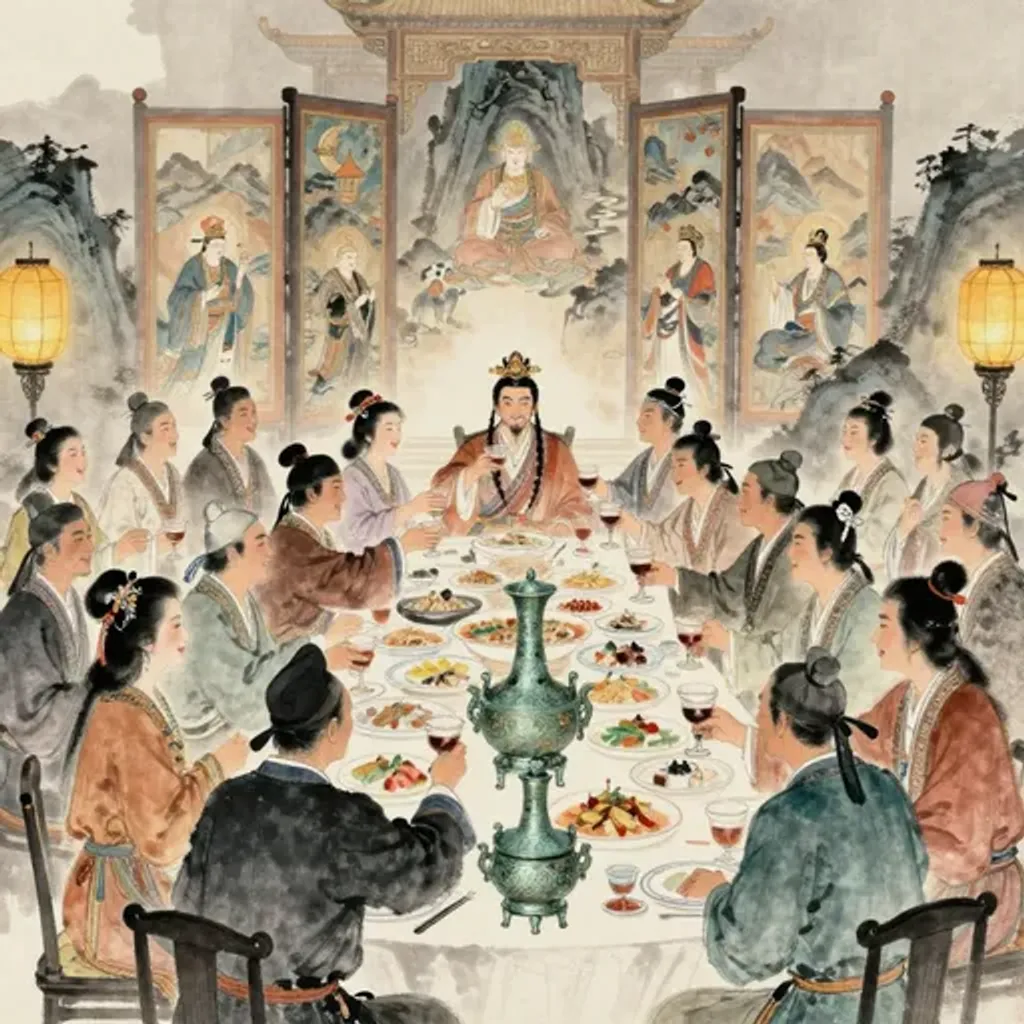
東山西岳,會合俱食。百喜送從,以成恩福。
Eastern mountains and western peaks meet together to feast. A hundred joys attend and follow, completing grace and blessing.
— Jiao Yanshou, Yilin (Forest of Changes), 1st century BC
Commentary
Paired lakes open to earth above the lake — Approach, the generous descent of the great toward the small. Eastern mountains and western peaks gather together for a shared feast. A hundred joys attend the occasion, bestowing grace and blessing. The image suggests a grand convocation where geographic distance is overcome by communal celebration. From The Joyous to Approach, delight becomes magnanimous outreach. The lake beneath the earth symbolizes the ruler who descends with open teaching and inexhaustible care. When mountains east and west converge, all blessings flow together — the pattern of authority drawing near to those it serves.
兌 → 觀
Hexagram 58 → Hexagram 20: Contemplation
Changing lines: 1, 2, 4, 6
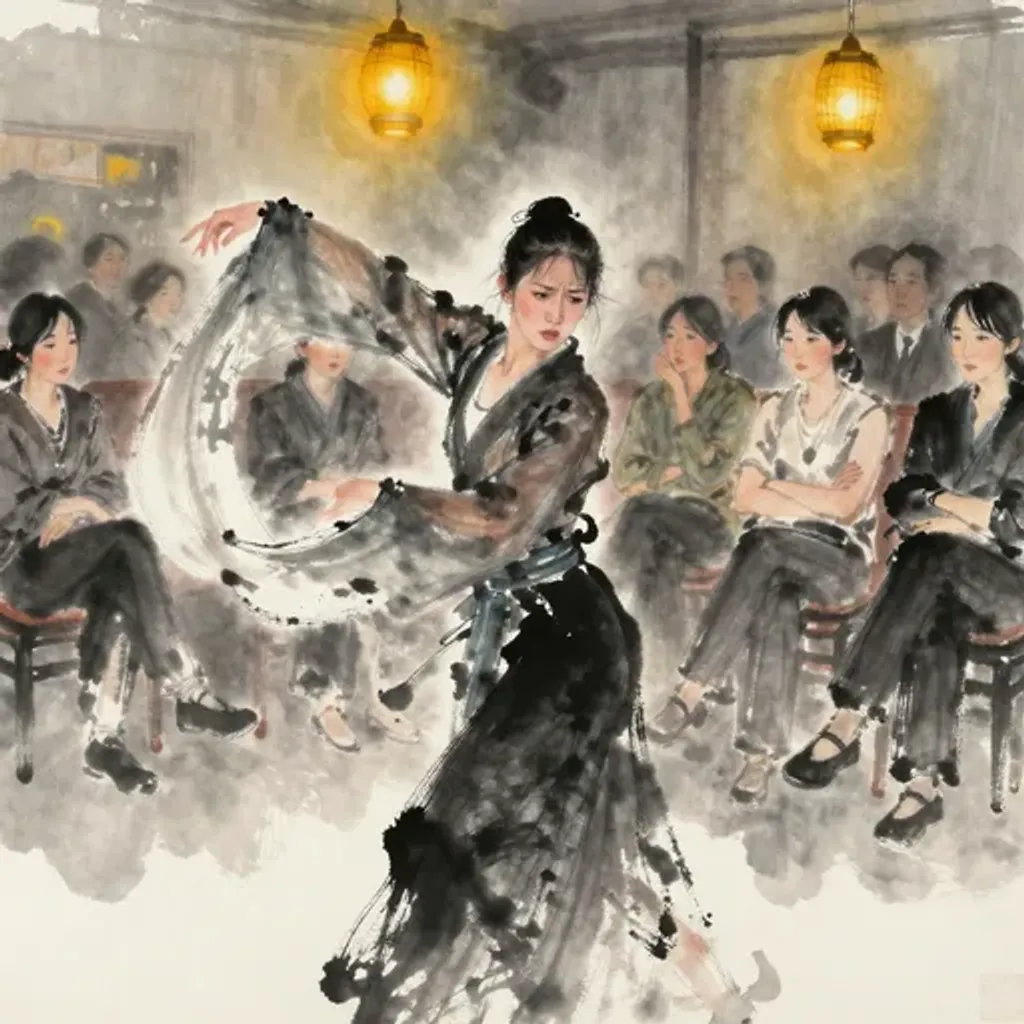
舞非其處,失節多悔,不合我意。
Dancing in the wrong place, missing the rhythm, full of regret; it does not suit my intention.
— Jiao Yanshou, Yilin (Forest of Changes), 1st century BC
Commentary
Paired lakes meet wind moving over earth — Contemplation, the image of observing from above. Dancing in the wrong place, losing propriety, yielding only regret and displeasure. The verse is terse and pointed: performance without proper context becomes transgression. A ritual dance enacted in an inappropriate setting violates the very order it should celebrate. From The Joyous to Contemplation, uninhibited delight must submit to the discipline of observation. Wind moves across the earth, surveying all — and what it finds is a dancer out of place. The sage-king observes the people to establish teaching; what is observed here needs correction.
兌 → 噬嗑
Hexagram 58 → Hexagram 21: Biting Through
Changing lines: 2, 5, 6
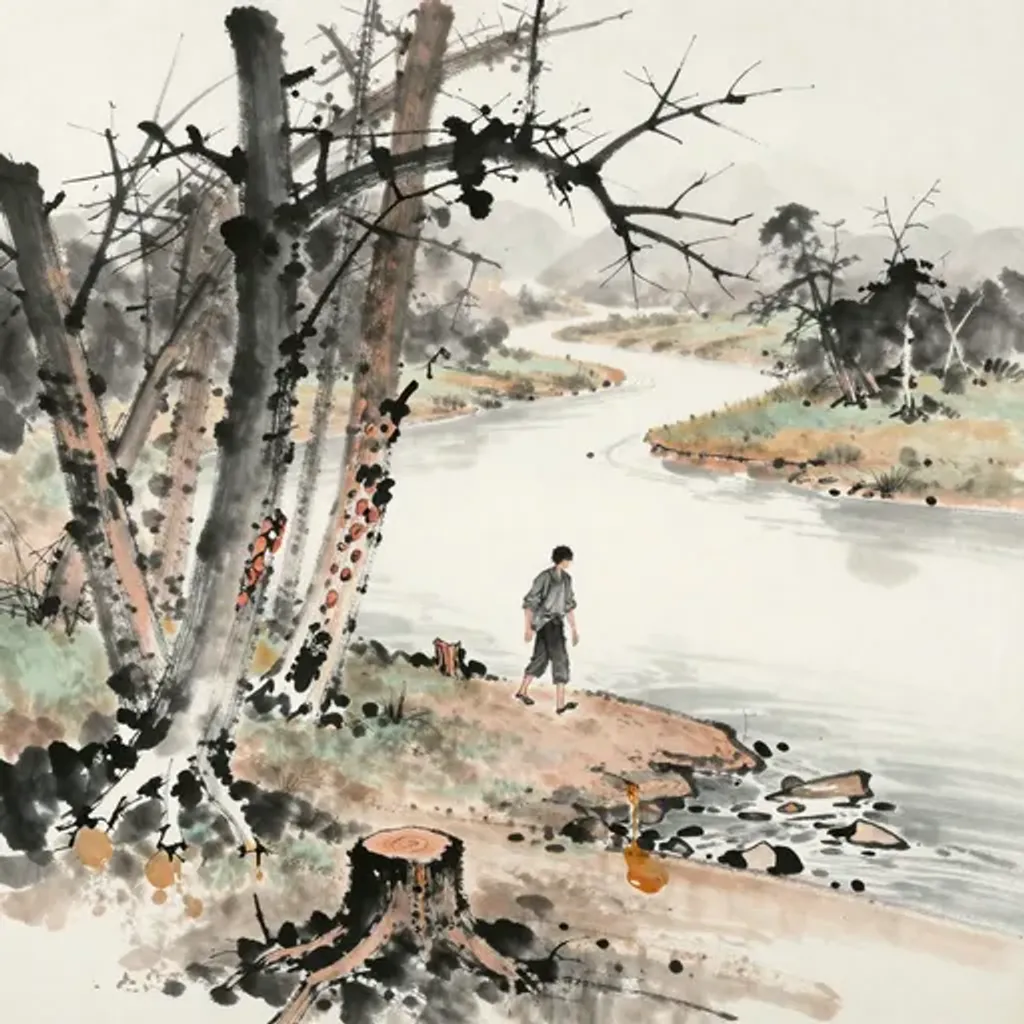
南循汝水,茂樹斬枝。過時不遇,惄如周飢。
Following the Ru River south, flourishing trees have their branches cut. The time passes without meeting what was sought; anxious and hungry like the want of Zhou.
— Jiao Yanshou, Yilin (Forest of Changes), 1st century BC
Commentary
Paired lakes yield to fire and thunder — Biting Through, the enforcer's hexagram. One travels south along the Ru River where lush trees have had their branches lopped. The appointed time passes without a meeting, and hunger gnaws like the famine songs of old Zhou. The image is of law applied too late or in the wrong manner: the trees are pruned but the traveler still misses the rendezvous. From The Joyous to Biting Through, delight is interrupted by severance. Lightning and thunder clarify laws and punish obstruction, but here the obstruction is temporal — the moment has already passed, and no amount of decisive action can retrieve it.
兌 → 賁
Hexagram 58 → Hexagram 22: Grace
Changing lines: 2, 3, 4, 5, 6
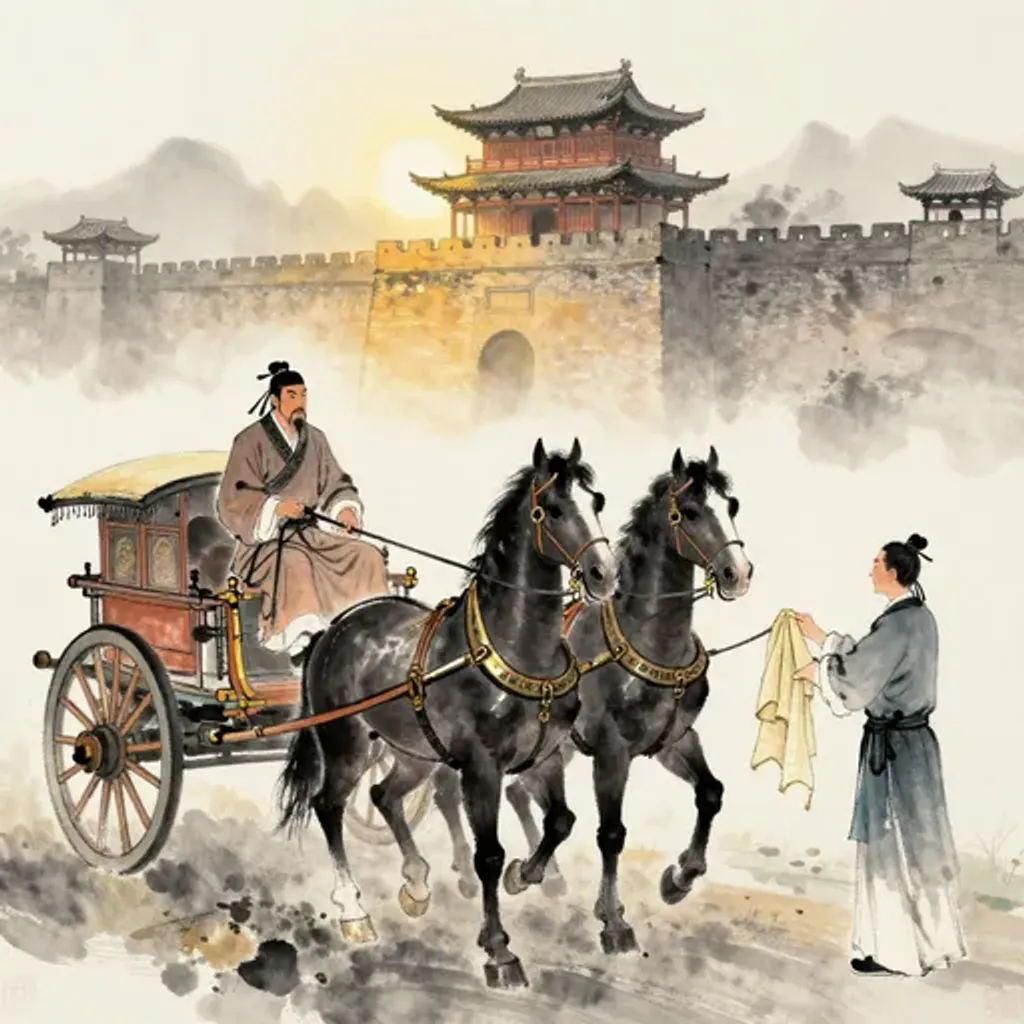
公孫駕驪,載遊東齊。延陵說產,遺我紵衣。
Lord Gongsun drives his black horses, traveling to visit Eastern Qi. Yanling speaks with Zichan, who presents me with a ramie robe.
— Jiao Yanshou, Yilin (Forest of Changes), 1st century BC
Commentary
Paired lakes illuminate the mountain below with fire — Grace, the hexagram of refined adornment. A nobleman drives a team of black horses to visit eastern Qi. There Yanling Ji Zha speaks with Zi Chan of Zheng and presents him a garment of fine ramie cloth. According to the Zuo Zhuan, when Ji Zha visited Zheng, he and Zi Chan exchanged gifts like old friends: Ji Zha offered a white silk sash, and Zi Chan gave ramie garments in return. Their friendship transcended state boundaries through the grace of ritual exchange. From The Joyous to Grace, delight is refined into cultural elegance — the beauty of diplomacy conducted through gifts and genuine mutual respect.
兌 → 剝
Hexagram 58 → Hexagram 23: Splitting Apart
Changing lines: 1, 2, 4, 5, 6
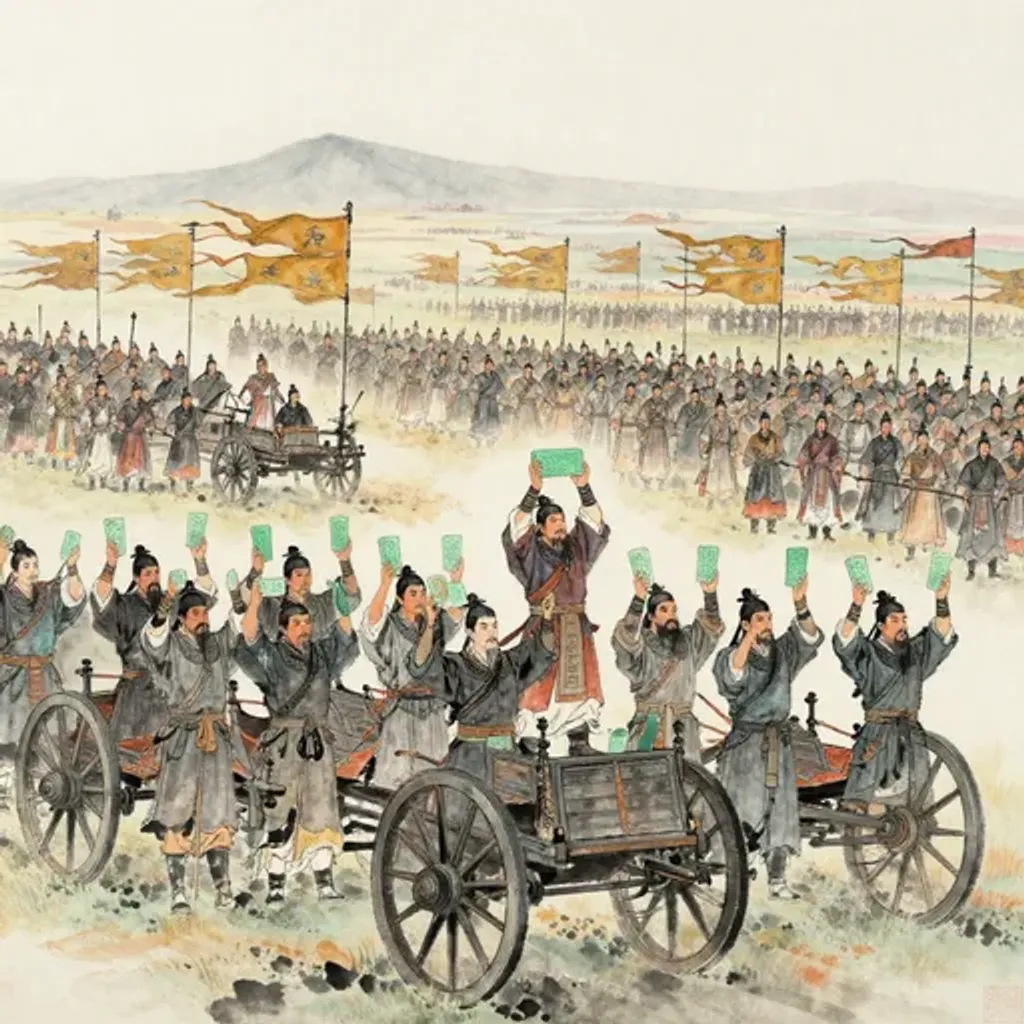
乘輿八百,以明文德。踐土葵丘,齊晉受福。
Eight hundred chariots mounted, displaying civil virtue clearly. At Jiantu and Kuiqiu, Qi and Jin receive blessing.
— Jiao Yanshou, Yilin (Forest of Changes), 1st century BC
Commentary
Paired lakes meet the mountain resting on earth — Splitting Apart. Eight hundred chariots assemble to illuminate civil virtue. At Jiantu and Kuiqiu, the states of Qi and Jin receive their blessings. Jiantu was the site of Duke Wen of Jin's covenant in 632 BC after the Battle of Chengpu; Kuiqiu was Duke Huan of Qi's famous 651 BC assembly where he received the Zhou king's recognition of hegemony. Both were moments when military power was converted into legitimate authority through ritual. From The Joyous to Splitting Apart, the verse reads against the hexagram's decay: even as structures erode, the memory of great assemblies preserves civilizational order.
兌 → 復
Hexagram 58 → Hexagram 24: Return
Changing lines: 2, 4, 5
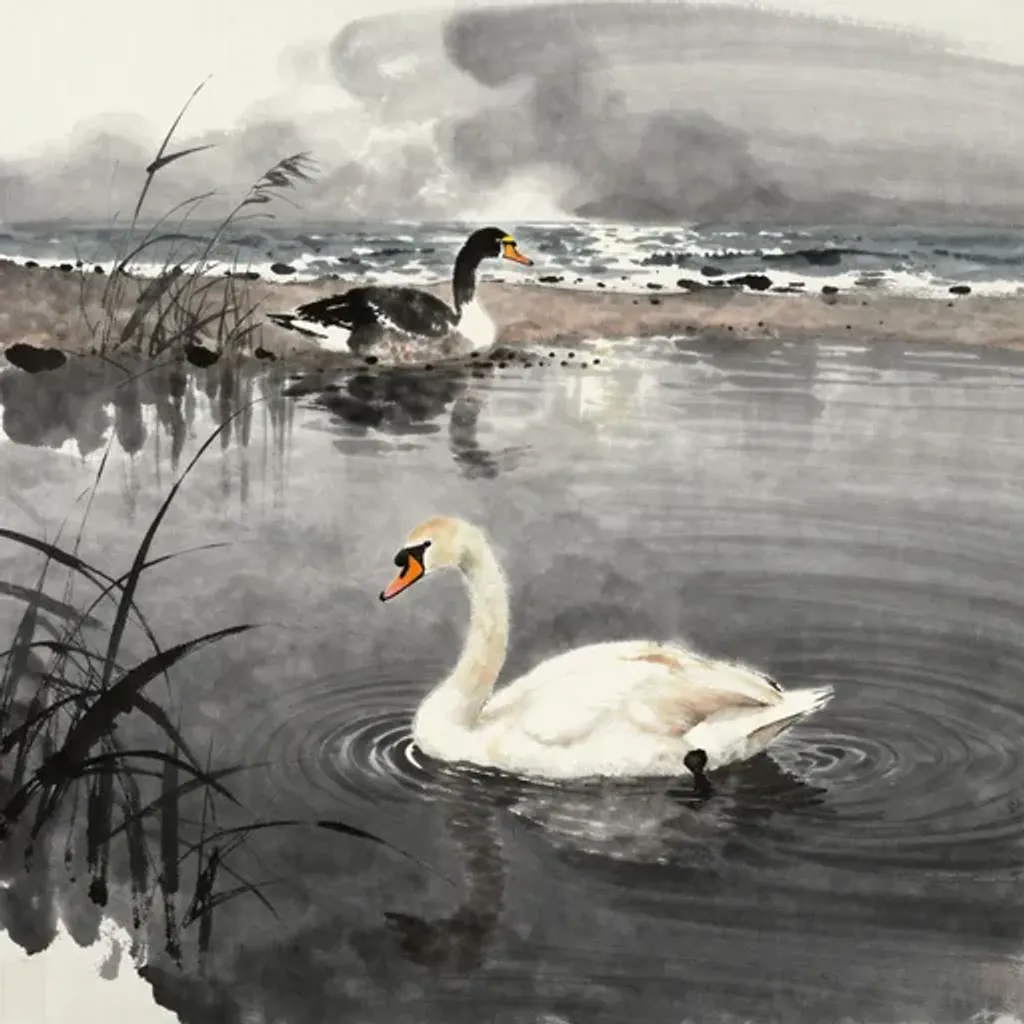
雄處弱水,雌在海邊。別離將食,哀悲於心。
The male dwells by the Weak Water, the female by the sea's edge. Parted when they should be feeding together; grief and sorrow fill the heart.
— Jiao Yanshou, Yilin (Forest of Changes), 1st century BC
Commentary
Paired lakes divide as the male bird dwells at Weak Water while the female perches by the sea. Separated on the eve of feeding, sorrow fills the heart. Weak Water, the mythological river near Kunlun too thin to float a feather, represents an impassable divide. The mated birds cannot reunite across this cosmic barrier. From The Joyous to Return, the verse maps longing onto the structure of cyclical renewal. Thunder stirs beneath the earth at the winter solstice — the first pulse of return. The separation is not permanent but seasonal; the pain of parting carries within it the promise of eventual reunion, as all things must return to their origin.
兌 → 无妄
Hexagram 58 → Hexagram 25: Innocence
Changing lines: 2, 6
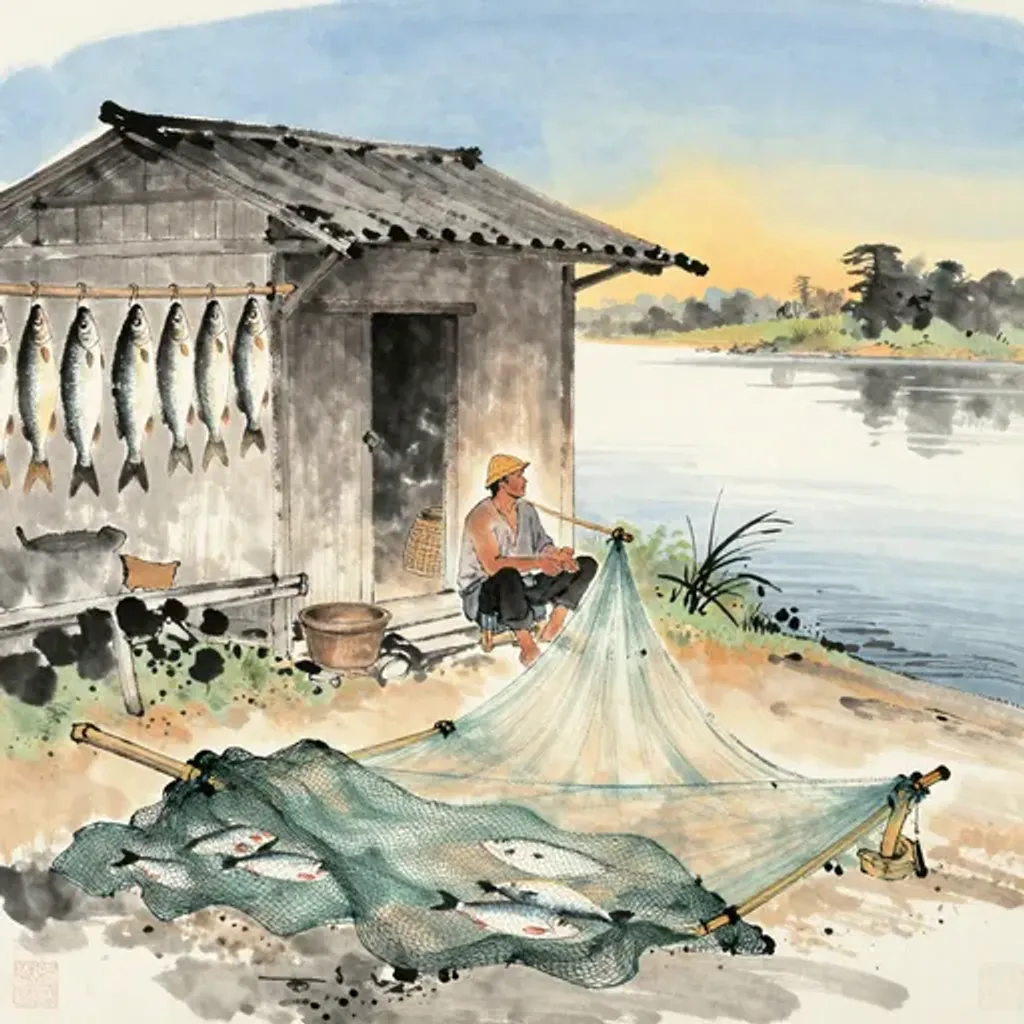
結網得解,受福安坐,終无患禍。
The knotted net finds release; one receives blessing and sits at ease. In the end there is no trouble or calamity.
— Jiao Yanshou, Yilin (Forest of Changes), 1st century BC
Commentary
Paired lakes open to heaven's thunder — Innocence, where all things move in accord with their nature. Nets once knotted now come loose; blessings arrive as one sits at ease, and in the end no disaster befalls. The image of a net untangling itself suggests that problems resolve naturally when one does not force outcomes. From The Joyous to Innocence, joy merges with the spontaneity of correct action. Thunder moves beneath heaven and all things flourish without contrivance. The sage-king nurtures the myriad creatures by responding to the season, not by grasping. Blessings received while sitting still are the hallmark of innocence preserved.
兌 → 大畜
Hexagram 58 → Hexagram 26: Great Taming
Changing lines: 3, 4, 5, 6
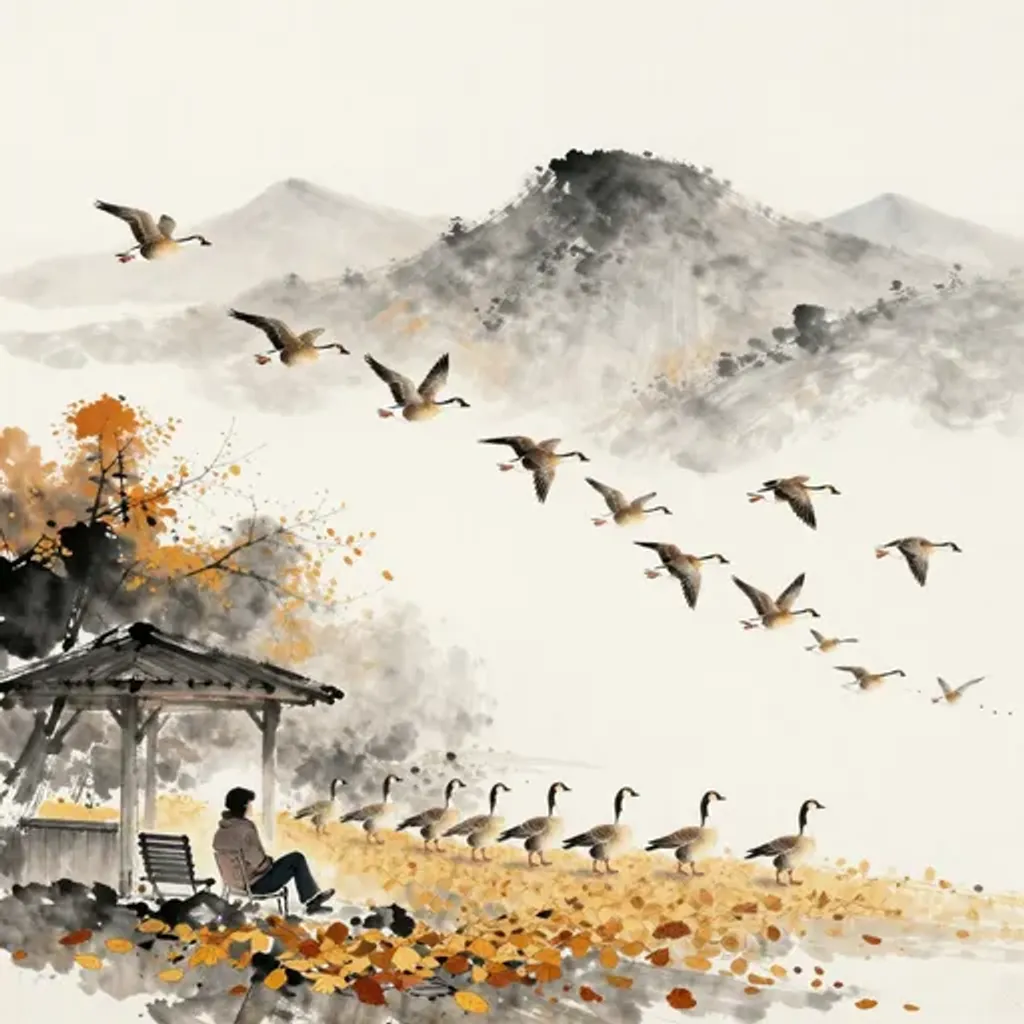
秋南春北,隨時休息。處和履中,安无憂凶。
South in autumn, north in spring, resting according to the season. Dwelling in harmony, treading the center; peaceful, without worry or misfortune.
— Jiao Yanshou, Yilin (Forest of Changes), 1st century BC
Commentary
Paired lakes settle into the rhythm of heaven held within the mountain — Great Taming, where accumulated wisdom restrains and enriches. Autumn south, spring north: one migrates with the seasons, resting at the proper time. Dwelling in harmony and treading the middle way, there is peace without misfortune. The verse describes the disciplined traveler who follows nature's calendar rather than fighting it. From The Joyous to Great Taming, spontaneous joy is channeled into the patience of long cultivation. The mountain holds heaven within — vast potential stored through knowledge of when to move and when to rest. Seasonal rhythm is itself a form of taming.
兌 → 頤
Hexagram 58 → Hexagram 27: Nourishment
Changing lines: 2, 4, 5, 6
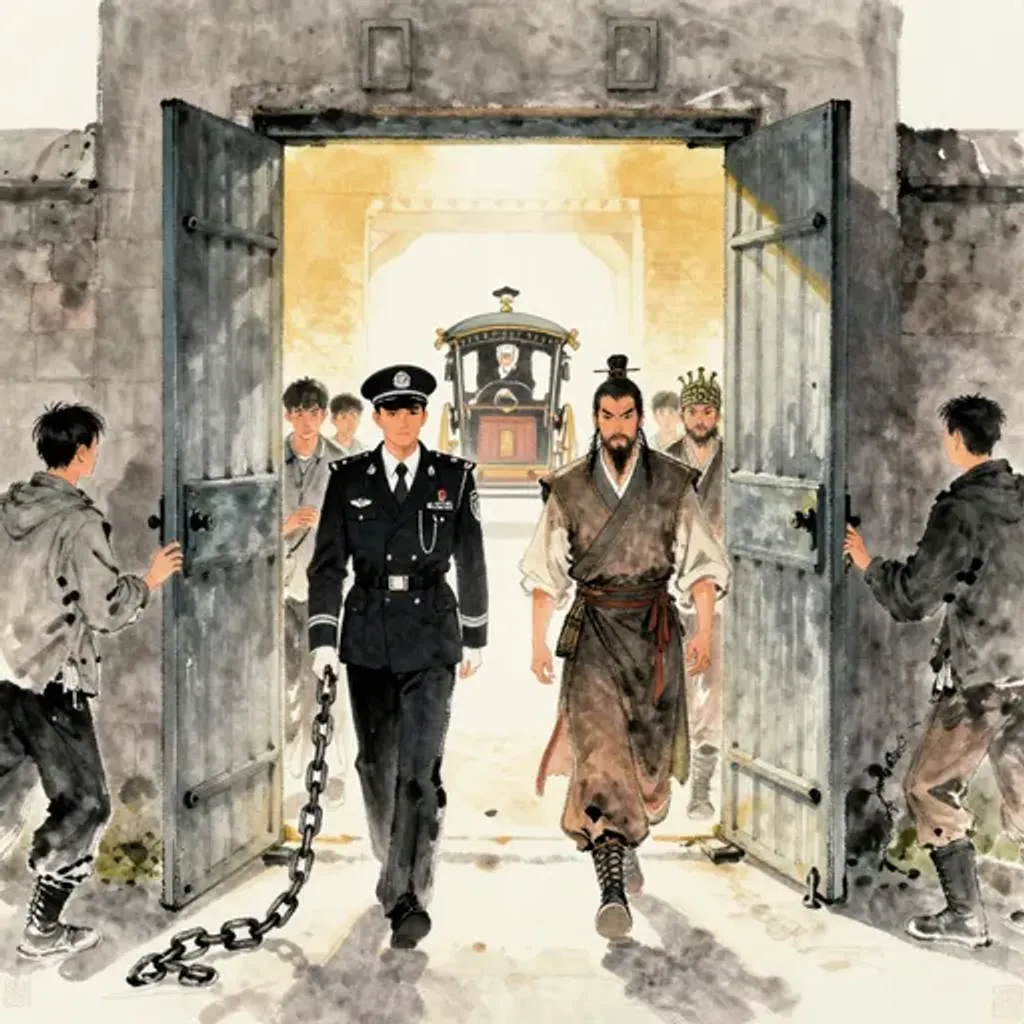
啟戶開門,巡狩釋冤。夏臺羑里,湯文悅喜。
Opening doors and gates, the royal tour releases the wronged. Xiatai and Youli prisons: Tang and Wen rejoice.
— Jiao Yanshou, Yilin (Forest of Changes), 1st century BC
Commentary
Paired lakes yield to thunder beneath the mountain — Nourishment, the careful governance of what enters and exits. Open the doors, release prisoners on inspection tours: at Xiatai and Youli, Tang and Wen rejoice. King Tang was imprisoned at Xiatai by the tyrant Jie before founding the Shang dynasty; King Wen was held at Youli by King Zhou of Shang before the Zhou revolution. Both endured unjust confinement and emerged to establish righteous rule. From The Joyous to Nourishment, the verse celebrates liberation as a form of sustenance. To nourish the realm is to open its prisons — freeing the wrongly confined feeds the body politic with justice.
兌 → 大過
Hexagram 58 → Hexagram 28: Great Exceeding
Changing lines: 1, 3
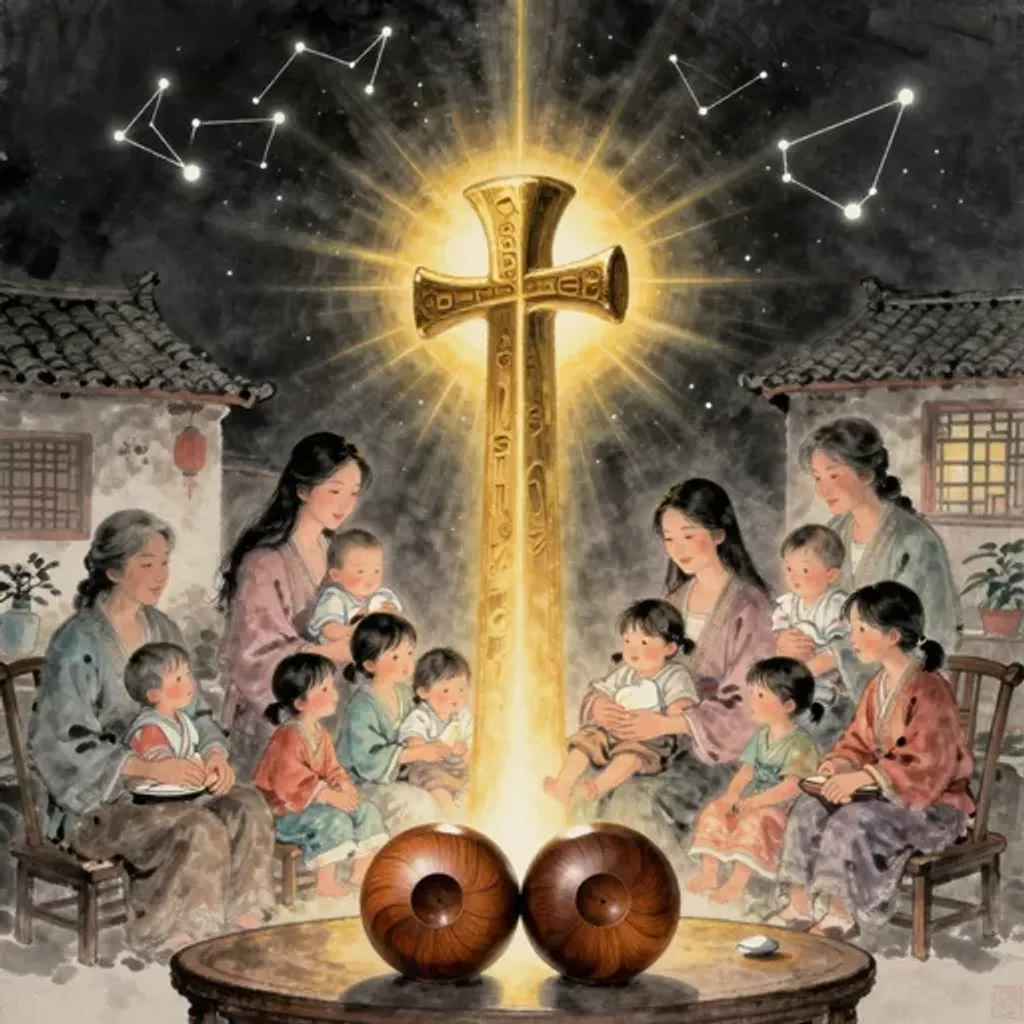
符左契右,相與合齒。乾坤利貞,乳生六子。長大成就,風言如母。
Tally left, contract right, joining together tooth to tooth. Qian and Kun are beneficial and correct; nurturing and bearing six children. Grown to completion, reputation spreads like the mother's name.
— Jiao Yanshou, Yilin (Forest of Changes), 1st century BC
Commentary
Paired lakes meet wind beneath the lake — Great Exceeding, where the ridgepole bends under extraordinary weight. Tally left and contract right fit together tooth by tooth; Qian and Kun, steadfast and fruitful, give birth to six children. They grow to maturity, and their speech carries the mother's wind. The verse describes cosmic generation: the perfect matching of yin and yang produces the six derivative trigrams (Zhen, Kan, Gen, Xun, Li, Dui). From The Joyous to Great Exceeding, the ordinary joy of family becomes something structurally extraordinary — a generative act so complete that it strains the frame of normalcy. Creation at this scale always exceeds the vessel that contains it.
兌 → 坎
Hexagram 58 → Hexagram 29: The Abysmal Water
Changing lines: 1, 4
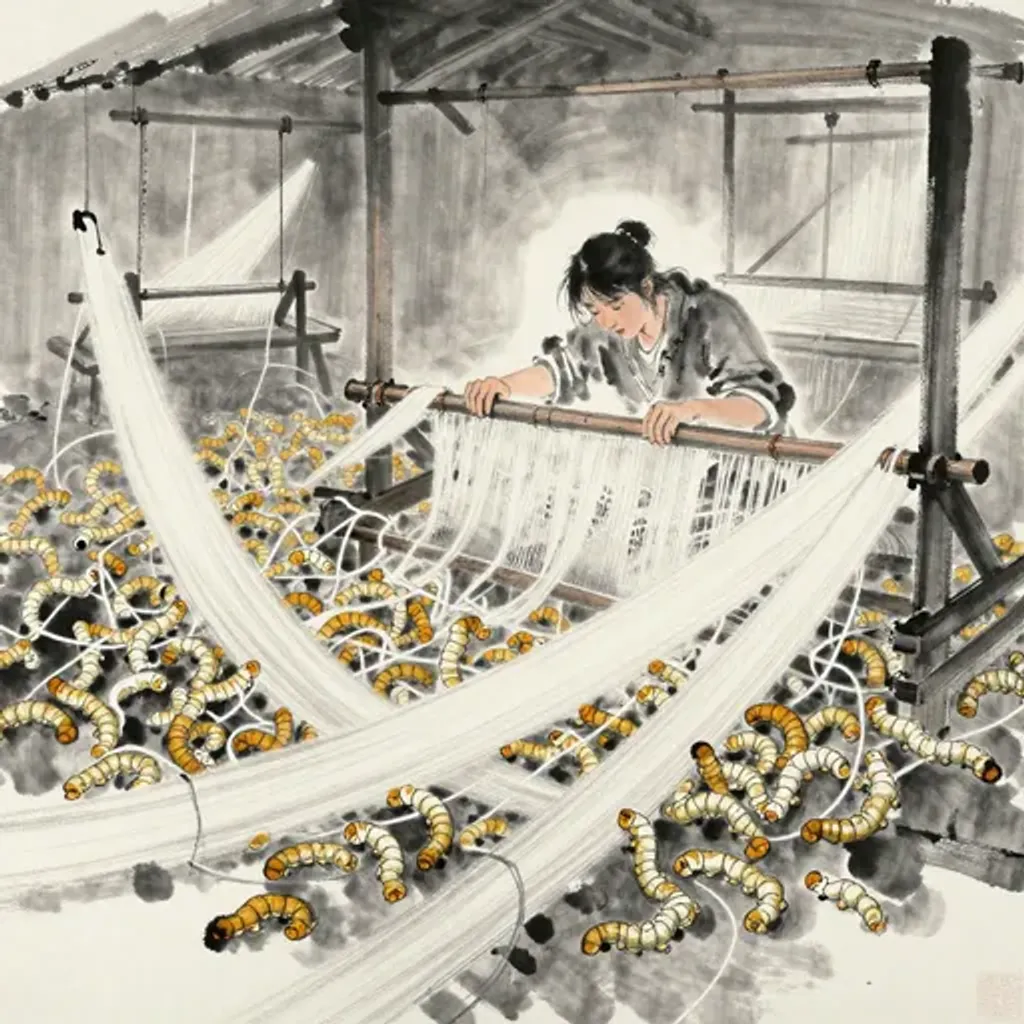
飢蚕作室,絲多亂緒,端不可得。
Hungry silkworms build their chambers; much silk, tangled threads. The proper end cannot be obtained.
— Jiao Yanshou, Yilin (Forest of Changes), 1st century BC
Commentary
Paired lakes dry into the doubled abyss — water upon water, peril compounded. Hungry silkworms build their chambers, spinning abundant silk but tangled beyond all sorting; no thread-end can be found anywhere in the mass. The image is domestic industry collapsing into chaos: the raw material exists in superabundance, yet its very profusion renders it useless. No weaver can work with thread that has no beginning. From The Joyous to The Abysmal, delight degenerates into disorientation. The silkworm's hunger drives production past the point of coherence, spinning faster precisely because it is starving. Like water flowing into water, each new thread only deepens the confusion. When the starting point cannot be located, even abundance becomes a trap that compounds with every addition.
兌 → 離
Hexagram 58 → Hexagram 30: The Clinging Fire
Changing lines: 2, 3, 5, 6
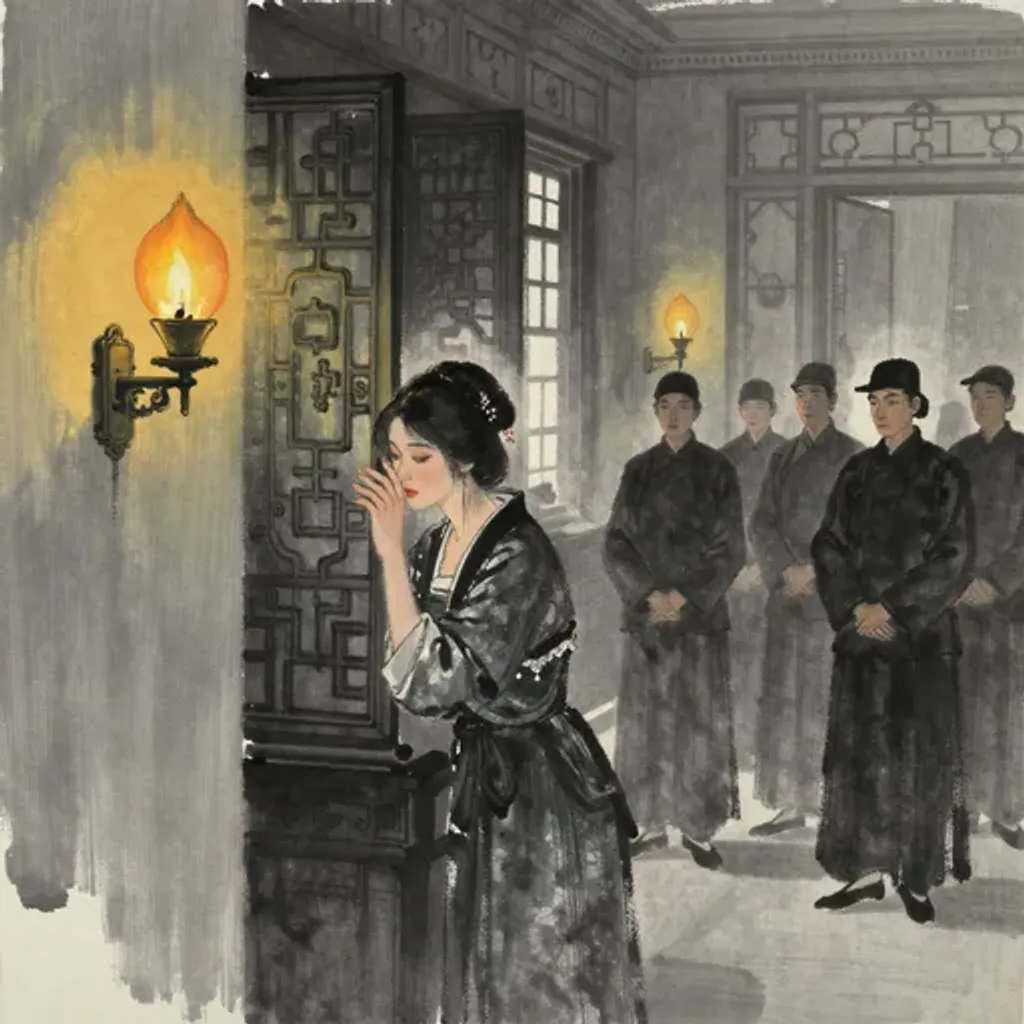
東壁飾光,數暗不明。主母嫉妬,亂我業事。
The eastern wall adorns the light, yet the count is dim and unclear. The mistress is jealous and envious, disordering my affairs.
— Jiao Yanshou, Yilin (Forest of Changes), 1st century BC
Commentary
Paired lakes meet doubled fire — The Clinging, brightness illuminating brightness. The eastern wall is adorned with light, yet the count is off and the brilliance dims. The chief wife, consumed by jealousy, disrupts the household's affairs. The east wall should catch the morning sun, but something intercepts and distorts the light. From The Joyous to The Clinging, joy is corrupted by the very clarity it produces: when fire illuminates too sharply, it exposes envy. The jealous mistress who disturbs the household represents brilliance turned destructive — light that burns rather than warms. Clinging fire demands something worthy to cling to; without it, radiance devours itself.
兌 → 咸
Hexagram 58 → Hexagram 31: Influence
Changing lines: 1, 2, 3
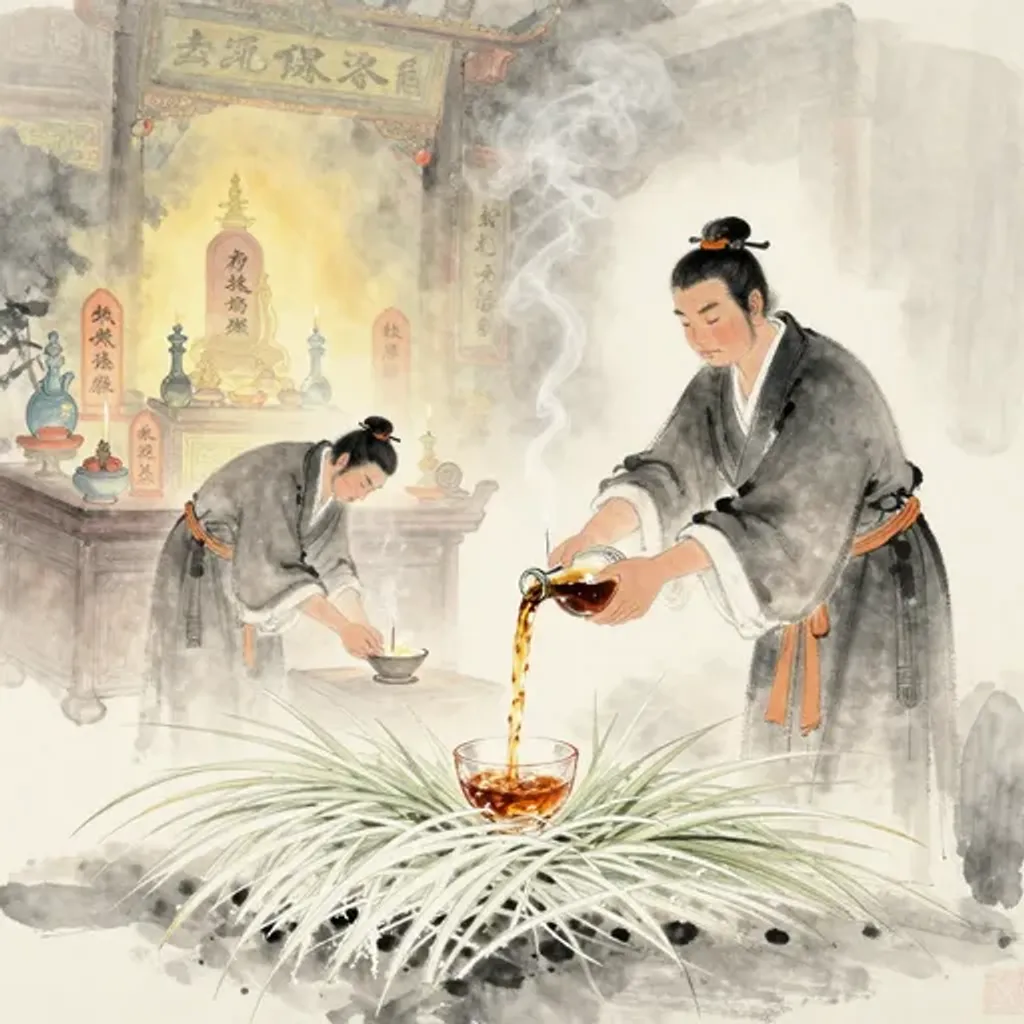
白茅縮酒,靈巫拜禱。神嗜飲食,使君壽考。
White cogon grass strains the wine; the spirit medium bows and prays. The spirits savor food and drink, granting the lord long life.
— Jiao Yanshou, Yilin (Forest of Changes), 1st century BC
Commentary
Paired lakes rest upon the mountain — Influence, where lake above and mountain below create mutual responsiveness. White rushes filter the sacrificial wine; the spirit-medium kneels and prays. The spirits savor the offerings, and the lord is granted long life. Filtering wine through white reeds was an ancient ritual practice mentioned in the Zuo Zhuan as a hallmark of proper sacrifice. From The Joyous to Influence, communal delight becomes sacred resonance. The lake atop the mountain draws moisture upward, just as sincere worship draws divine response downward. Joy offered through proper ritual channels creates the mutual attraction that is Influence — the spirits respond because the offering is genuine.
兌 → 恆
Hexagram 58 → Hexagram 32: Duration
Changing lines: 1, 3, 5
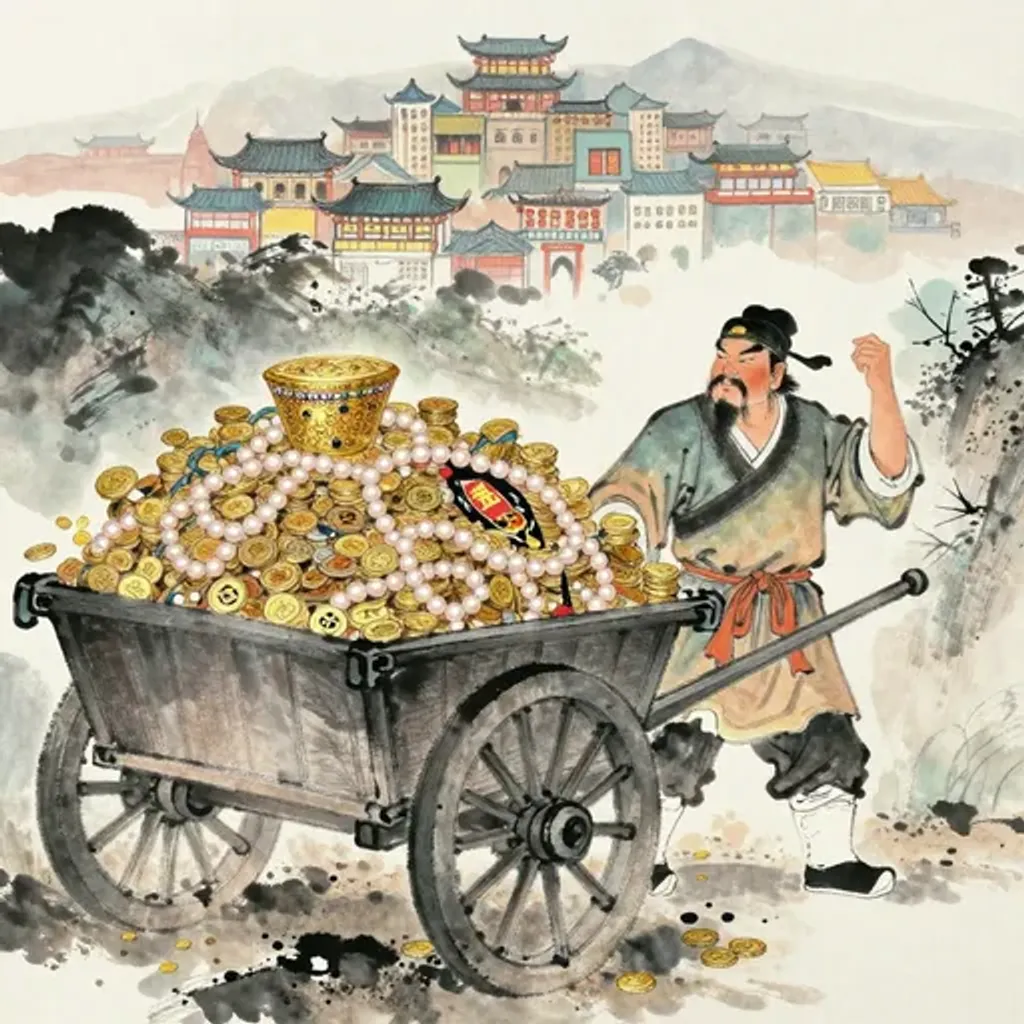
范公陶夷,巧賈貨資。東之營丘,易字子皮。抱珠載金,多得利歸。
Lord Fan smelts and trades, skillfully profiting from goods. East to Yingqiu he goes, changing his name to Zipi. Embracing pearls, laden with gold, he returns with great profit.
— Jiao Yanshou, Yilin (Forest of Changes), 1st century BC
Commentary
Paired lakes meet thunder and wind — Duration, the steadfast persistence that generates lasting wealth. Fan Li, styled Tao Zhu Gong, the master merchant who tamed the eastern trade routes, changed his name to 'Zipi' and traveled east to Yingqiu. Embracing pearls and carrying gold, he returned laden with profit. After helping Goujian destroy Wu, Fan Li withdrew from politics, took the alias Chi Yi Zipi, and amassed three fortunes through commerce at Tao. From The Joyous to Duration, the verse embodies the hexagram's core principle: persistence in the right direction. Fan Li's enduring success came not from a single gamble but from the steady, wind-and-thunder rhythm of buying cheap and selling dear, season after season.
兌 → 遯
Hexagram 58 → Hexagram 33: Retreat
Changing lines: 1, 2, 3, 6
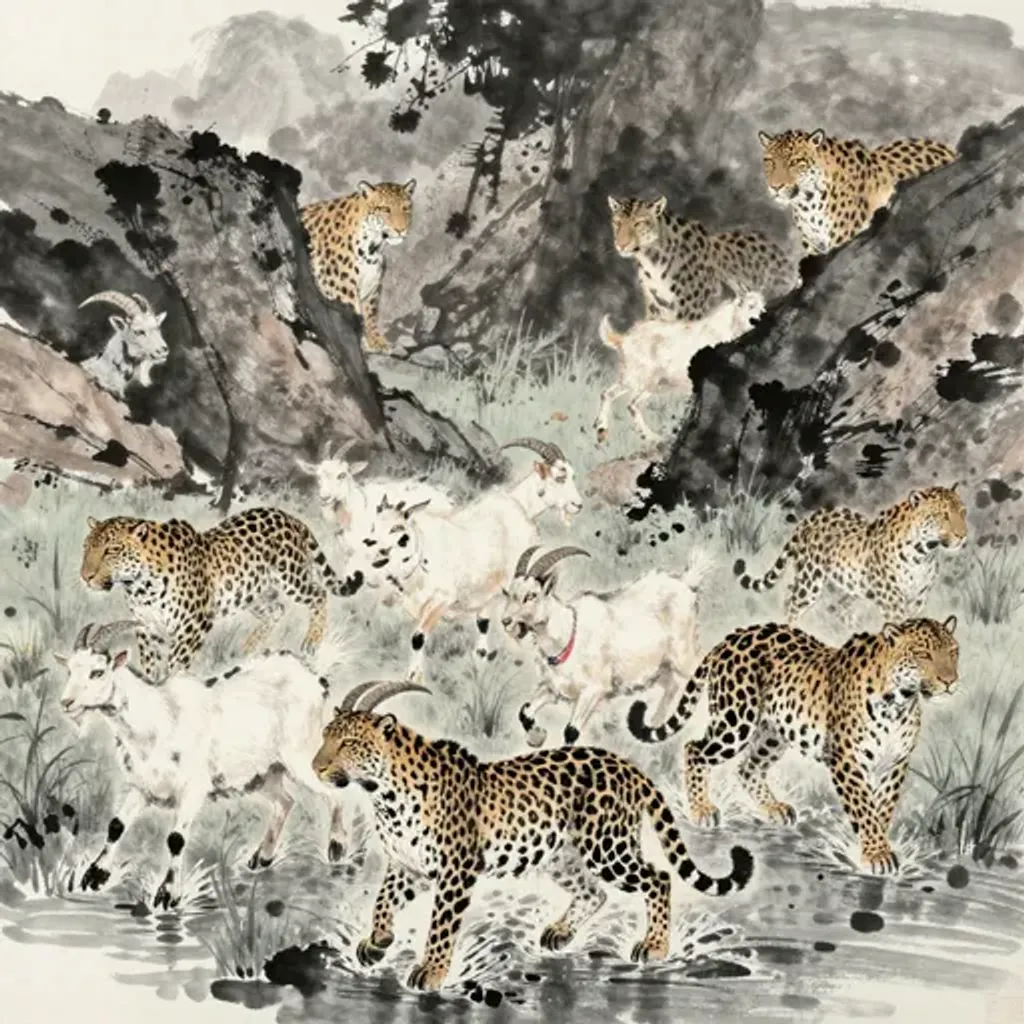
三羖五䍧,相隨俱行。迷入空澤,循谷宜北。經涉六駁,為所傷賊。
Three rams and five goats follow each other walking. Lost, they enter an empty marsh; the valley leads north. Passing through, they encounter six leopards and are wounded by the predators.
— Jiao Yanshou, Yilin (Forest of Changes), 1st century BC
Commentary
Paired lakes open to heaven above the mountain — Retreat, the withdrawal of the noble from encroaching corruption. Three black rams and five speckled goats travel together, wander into an empty marsh, and follow the valley northward. Crossing six dangerous stretches, they are attacked and injured by predators. The flock's journey through increasingly hostile terrain mirrors a retreat gone wrong: instead of withdrawing cleanly, they stumble deeper into danger. From The Joyous to Retreat, the verse warns that withdrawal requires direction. Heaven above the mountain should provide clear distance from small people, but these animals lose their way in the marsh. Retreat without a compass is merely flight.
兌 → 大壯
Hexagram 58 → Hexagram 34: Great Power
Changing lines: 3, 5
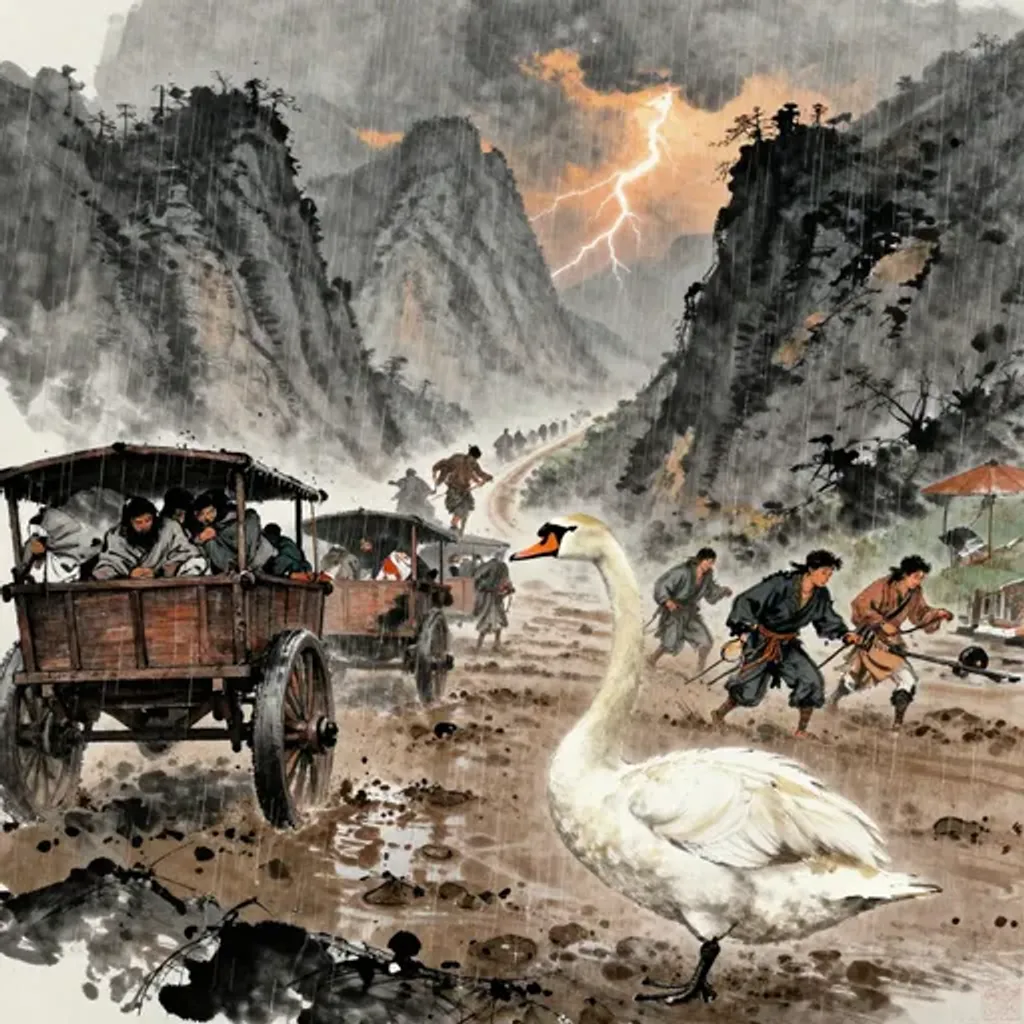
雄鵠延頸,欲飛入關。雨師洒道,瀸我袍裘。重車難前,侍者稽止。
The male swan stretches its neck, wanting to fly through the pass. The Rain Master sprinkles the road, soaking my cloak and coat. The heavy cart cannot advance; attendants halt and delay.
— Jiao Yanshou, Yilin (Forest of Changes), 1st century BC
Commentary
Paired lakes surge into thunder above heaven — Great Power, the charging ram that must not overreach. A male swan stretches its neck, eager to fly through the pass. But the Rain Master drenches the road, soaking robes and furs. The heavy carriage cannot advance, and the attendants halt. Ambition is checked by weather — the cosmic equivalent of poor timing. From The Joyous to Great Power, the verse captures frustrated momentum. Thunder in heaven should be irresistible force, yet even great power is stalled by rain-slicked roads and waterlogged garments. The swan's eagerness means nothing when the conditions refuse to cooperate. Power without proper timing merely exhausts itself.
兌 → 晉
Hexagram 58 → Hexagram 35: Progress
Changing lines: 1, 2, 5, 6
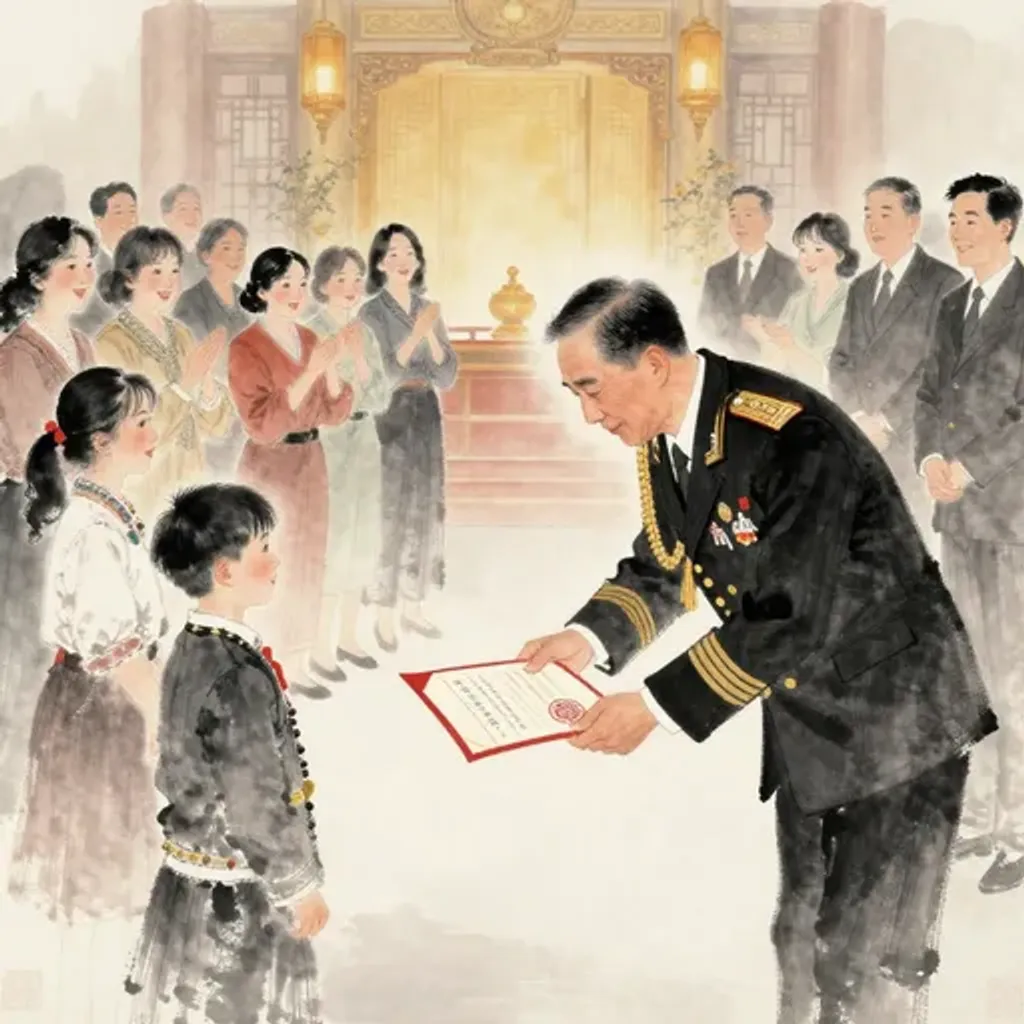
中年蒙慶,今歲受福。必有所得,榮寵受祿。
In middle years receiving blessing, this year obtaining fortune. There will certainly be gains; glory, favor, and emolument received.
— Jiao Yanshou, Yilin (Forest of Changes), 1st century BC
Commentary
Paired lakes meet fire emerging from the earth — Progress, the sun rising above the horizon. In middle age, blessings arrive; this year, fortune is received. There will surely be gain, and honor and favor follow. The verse is a straightforward omen of advancement: after years of steady cultivation, recognition finally comes. From The Joyous to Progress, delight aligns with upward movement. The sun emerging from the earth illuminates one's virtue to the world. Mid-life reward resonates with Progress's specific dynamic — not youthful ambition but mature merit finally recognized. The marquis receives horses and is granted audience three times in a single day.
兌 → 明夷
Hexagram 58 → Hexagram 36: Darkening of the Light
Changing lines: 2, 3, 4, 5
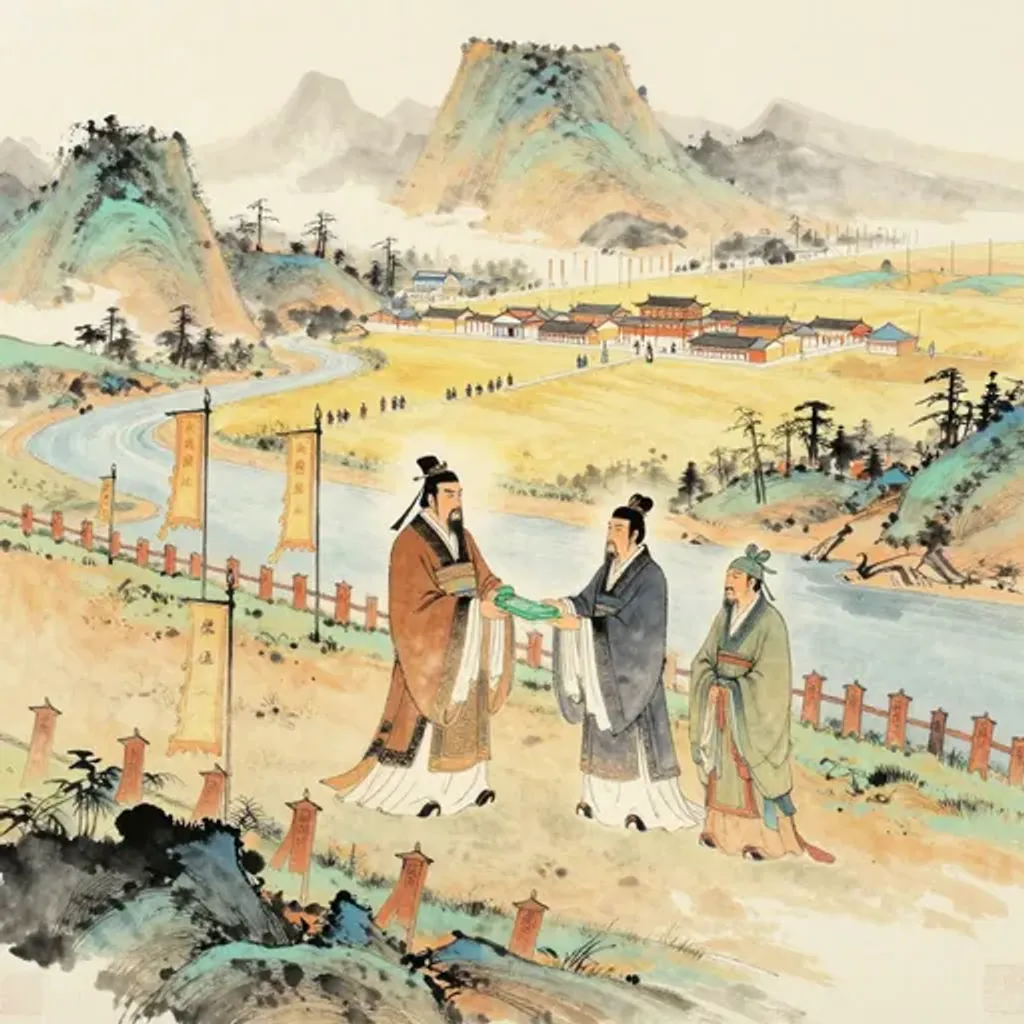
祿如周公,建國洛東,父子俱封。
Emolument like the Duke of Zhou, founding a state east of Luo. Father and son both enfeoffed.
— Jiao Yanshou, Yilin (Forest of Changes), 1st century BC
Commentary
Paired lakes meet fire buried within the earth — Darkening of the Light, where brilliance is concealed for survival. Blessings like those of the Duke of Zhou, who founded a state east of Luo, where both father and son were enfeoffed. The Duke of Zhou built the eastern capital at Luoyi and was granted the fief of Lu, which his son Bo Qin governed. Despite his supreme loyalty and service, the Duke endured slander and suspicion before his virtue was vindicated. From The Joyous to Darkening of the Light, the verse suggests that true merit may be concealed yet still generates lasting prosperity. The light enters the earth not to perish but to sustain — as the Duke's legacy endured for centuries.
兌 → 家人
Hexagram 58 → Hexagram 37: The Family
Changing lines: 2, 3, 4, 6
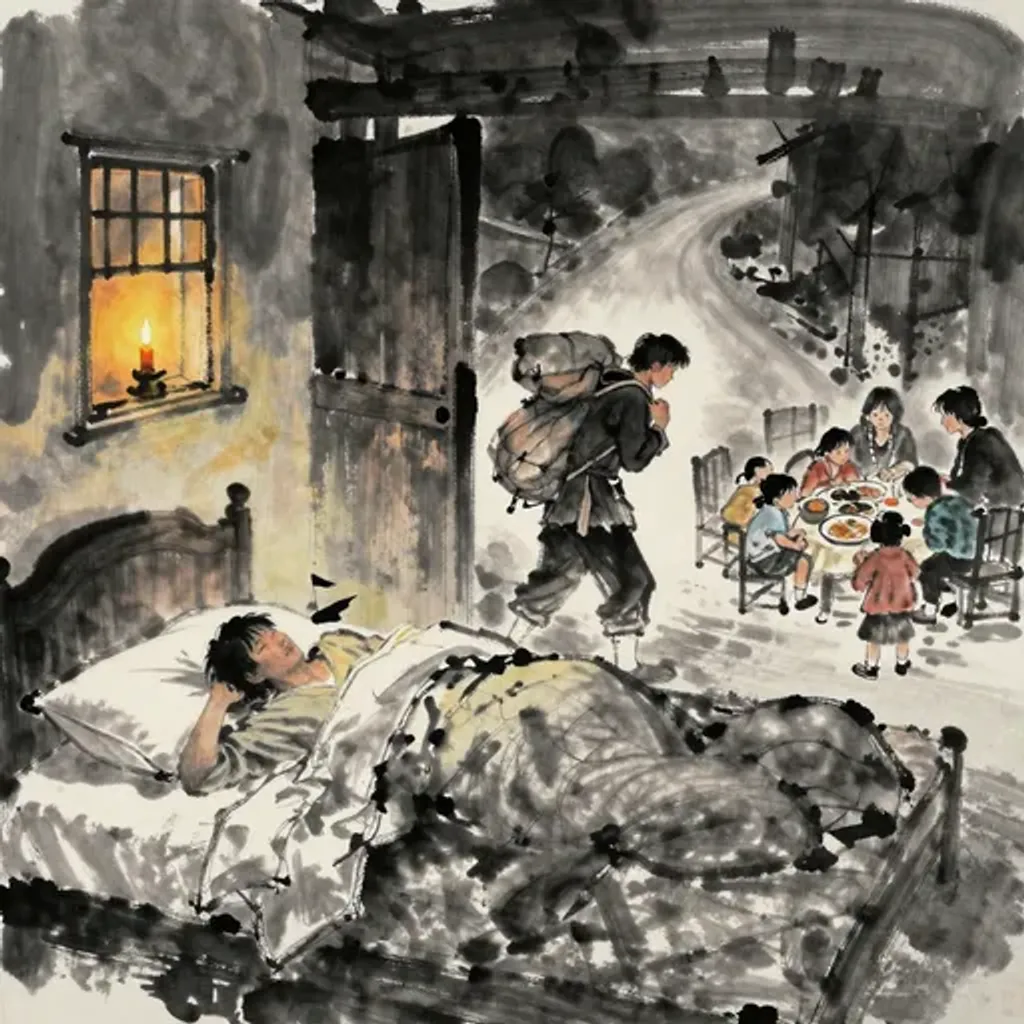
安床厚褥,不得久宿。棄我嘉讌,困於東國。投杼之憂,不成災福。
A peaceful bed with thick quilts, yet unable to stay long. Abandoning my fine feast, trapped in the eastern lands. The worry of the thrown shuttle; it does not become disaster or blessing.
— Jiao Yanshou, Yilin (Forest of Changes), 1st century BC
Commentary
Paired lakes meet wind emerging from fire — The Family, where words carry substance and conduct holds constancy. A bed is made with thick quilts, yet one cannot stay long. The fine banquet is abandoned, and one is stranded in the eastern lands. Worry over a thrown shuttle — the old allusion of Zeng's mother fleeing on the third rumor — yet the crisis does not materialize into real disaster. From The Joyous to The Family, domestic comfort is disrupted by forced separation. The 'thrown shuttle' warns that repeated slander can fracture even family trust. Yet the verse resolves ambiguously: no true calamity, only the anxiety of distance. The family endures when words remain true despite separation.
兌 → 睽
Hexagram 58 → Hexagram 38: Opposition
Changing lines: 5, 6
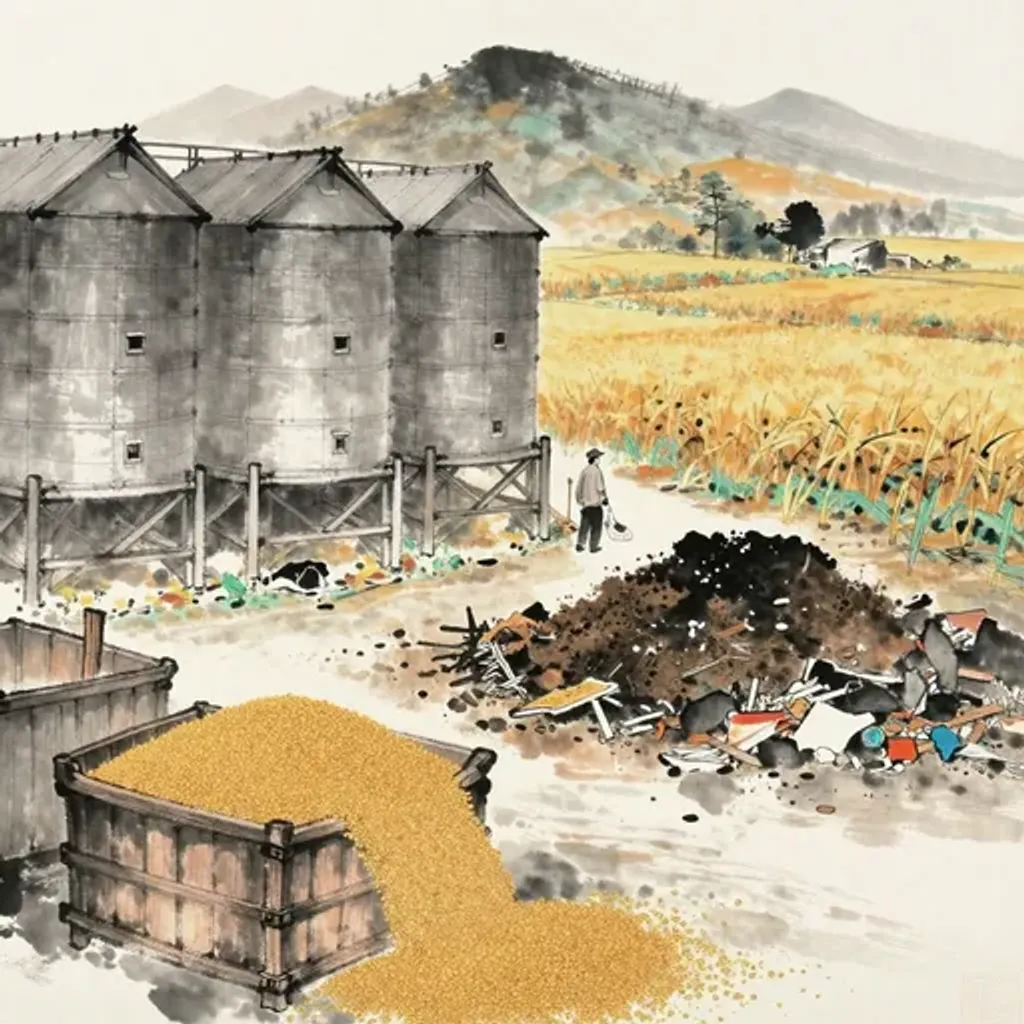
蓄積有餘,糞土不居。
Stores accumulated in surplus; dung and soil lie untouched.
— Jiao Yanshou, Yilin (Forest of Changes), 1st century BC
Commentary
Paired lakes face fire above and lake below — Opposition, where apparent contraries coexist. Stores are accumulated in surplus, but dung and refuse are not permitted to remain. The verse is strikingly brief: wealth abounds, filth is expelled. The image suggests rigorous sorting — keeping what has value, discarding what pollutes. From The Joyous to Opposition, the unity of joy splits into necessary discrimination. Fire rises, lake descends; they move apart yet illuminate each other. The gentleman uses this pattern to find commonality within difference. Accumulated wealth that refuses to harbor corruption embodies this principle: prosperity and purity are opposites that must coexist.
兌 → 蹇
Hexagram 58 → Hexagram 39: Obstruction
Changing lines: 1, 2, 3, 4
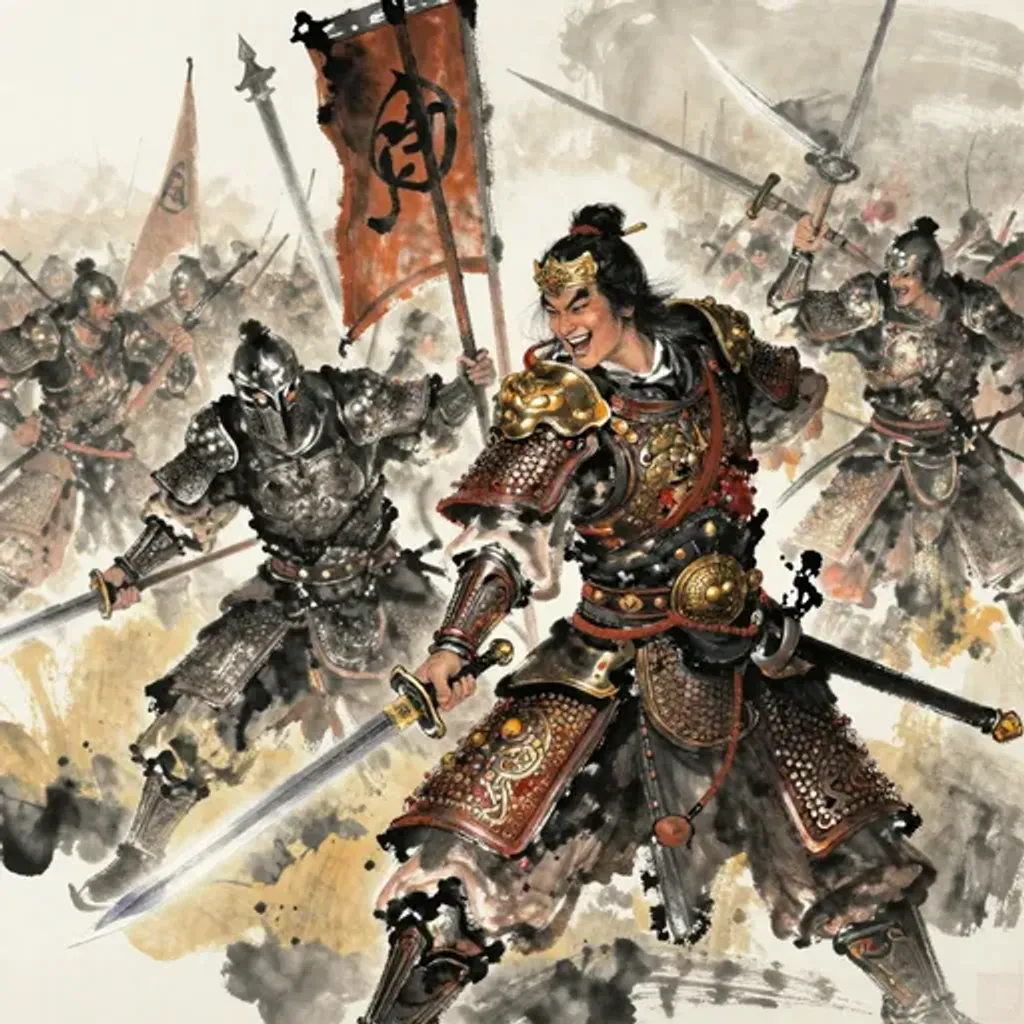
心願所喜,乃今逢時。得我利福,不離兵革。
The heart's desire brings joy; now at last the time is met. I gain my profit and blessing, yet cannot leave weapons and war.
— Jiao Yanshou, Yilin (Forest of Changes), 1st century BC
Commentary
Paired lakes meet water upon the mountain — Obstruction, where the path forward is blocked. The heart's desire finally meets its moment; fortune and blessings are obtained, yet one cannot leave behind weapons and war. Joy arrives but carries an armed escort. From The Joyous to Obstruction, the verse captures the paradox of blessings received under duress: what one desired most comes true, but the cost is perpetual vigilance. Water above the mountain cannot flow downward naturally; it pools and freezes. The sage turns inward to cultivate virtue when the way forward is blocked. Here, fortune is real but never free from the shadow of conflict.
兌 → 解
Hexagram 58 → Hexagram 40: Deliverance
Changing lines: 1, 5
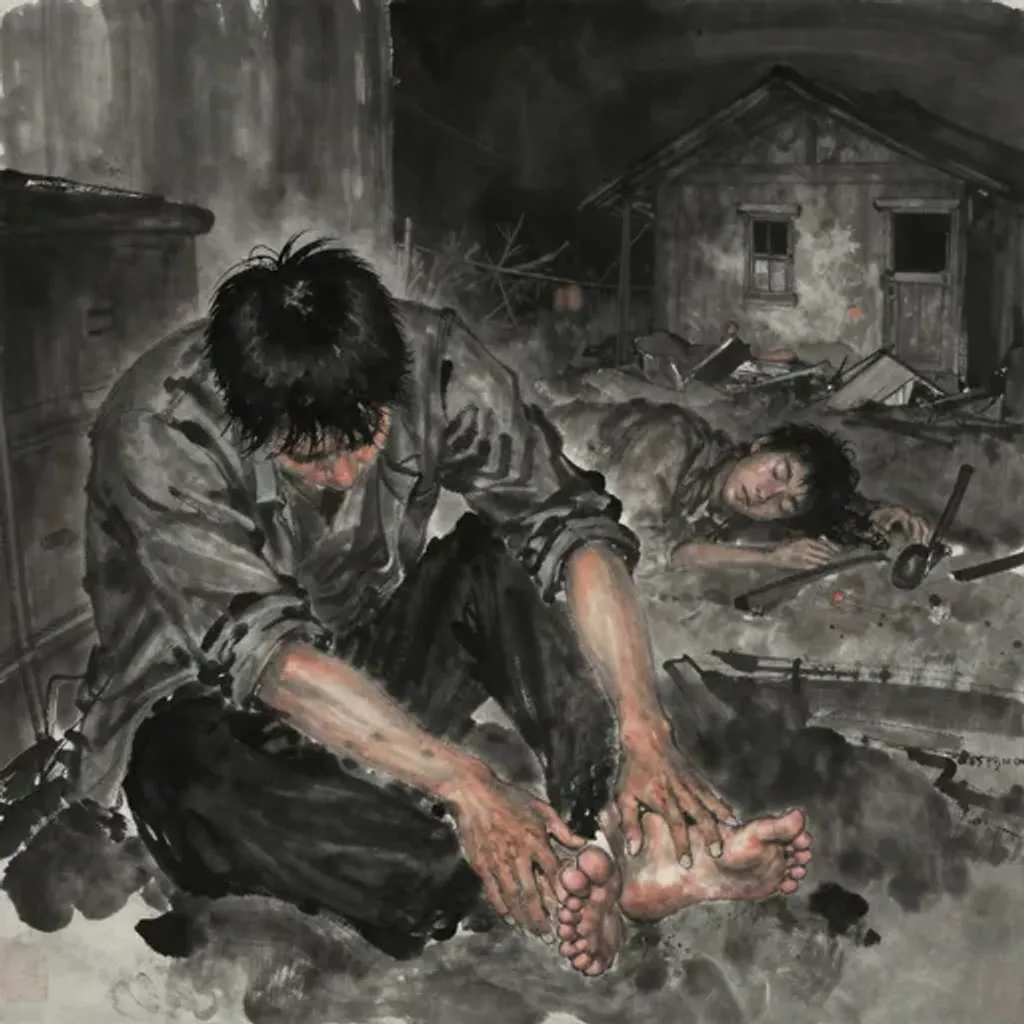
目不可合,憂來搔足。怵惕危懼,去其邦族。
Eyes cannot close; worry comes, scratching the feet. Startled and fearful, dreading danger; departing from homeland and clan.
— Jiao Yanshou, Yilin (Forest of Changes), 1st century BC
Commentary
Paired lakes yield to thunder above water — Deliverance, the moment of release after long tension. Yet here the eyes cannot close, worry comes scratching at the feet, and one trembles in fear before fleeing the homeland. The verse depicts not liberation but the panic that precedes it: the crisis is at its peak, sleep impossible, and exile the only option. From The Joyous to Deliverance, the transformation traces the darkest moment before release. Thunder and rain arrive together, clearing the stagnation — but first, one must endure the lightning-flash of terror. The departure from one's homeland, though agonizing, is itself the act of deliverance. Flight can be freedom.
兌 → 損
Hexagram 58 → Hexagram 41: Decrease
Changing lines: 4, 5, 6
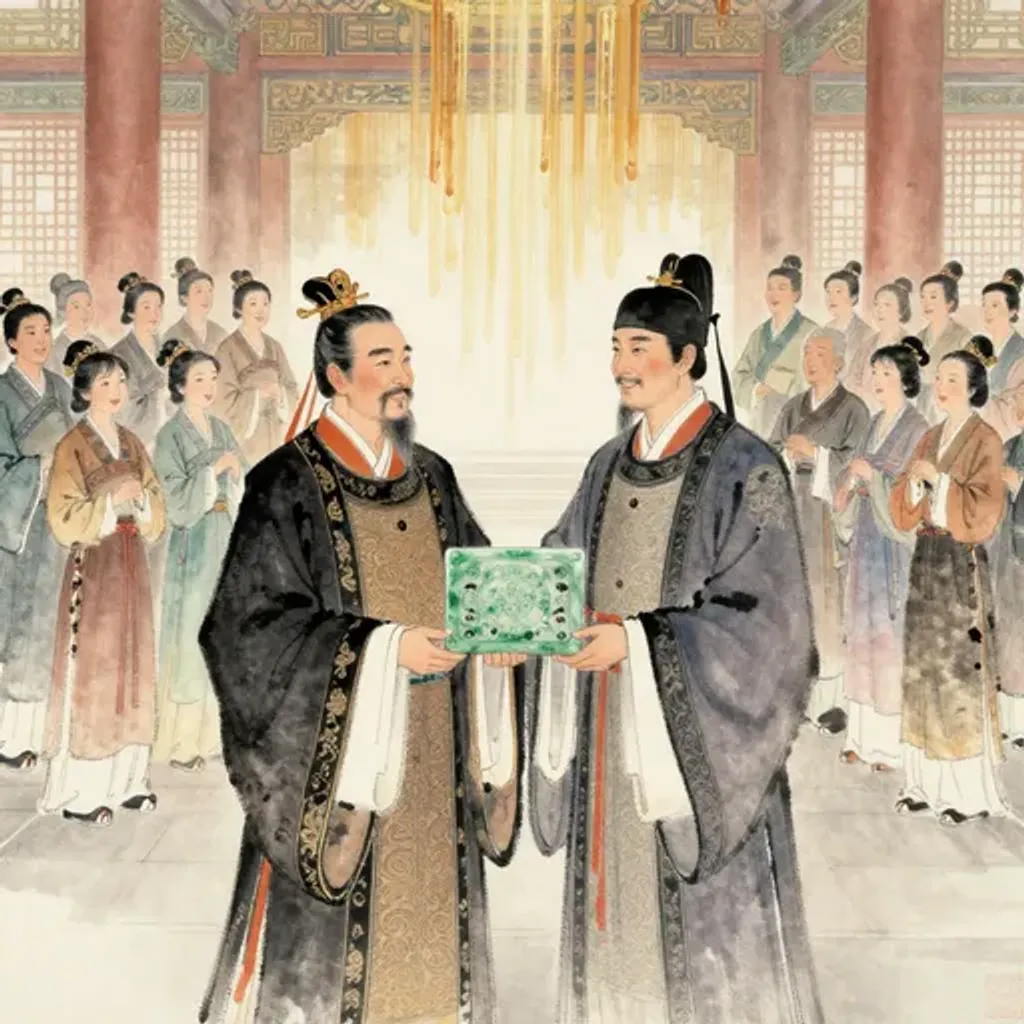
福德之士,懽悅日喜。夷吾相桓,三歸為臣,賞流子孫。
Men of fortune and virtue, joyful and glad day by day. Guan Yiwu served Duke Huan; the Three Returns became his estate, rewards flowing to his descendants.
— Jiao Yanshou, Yilin (Forest of Changes), 1st century BC
Commentary
Paired lakes rest beneath the mountain — Decrease, where the lower is diminished to enrich the higher. A man of merit and virtue rejoices daily. Yi Wu served as minister to Duke Huan; though he accepted the Three Gui estates, he served as a loyal subject, and his rewards flowed down to his descendants. Yi Wu is Guan Zhong's courtesy name. Despite humble origins and a checkered past — he once fought against Huan — the Duke forgave him on Bao Shuya's recommendation, and Guan Zhong made Qi the foremost state of the Spring and Autumn era. From The Joyous to Decrease, the verse shows that personal sacrifice in service to a lord multiplies into lasting legacy. Decrease at the base generates increase at the summit.
兌 → 益
Hexagram 58 → Hexagram 42: Increase
Changing lines: 2, 4, 6
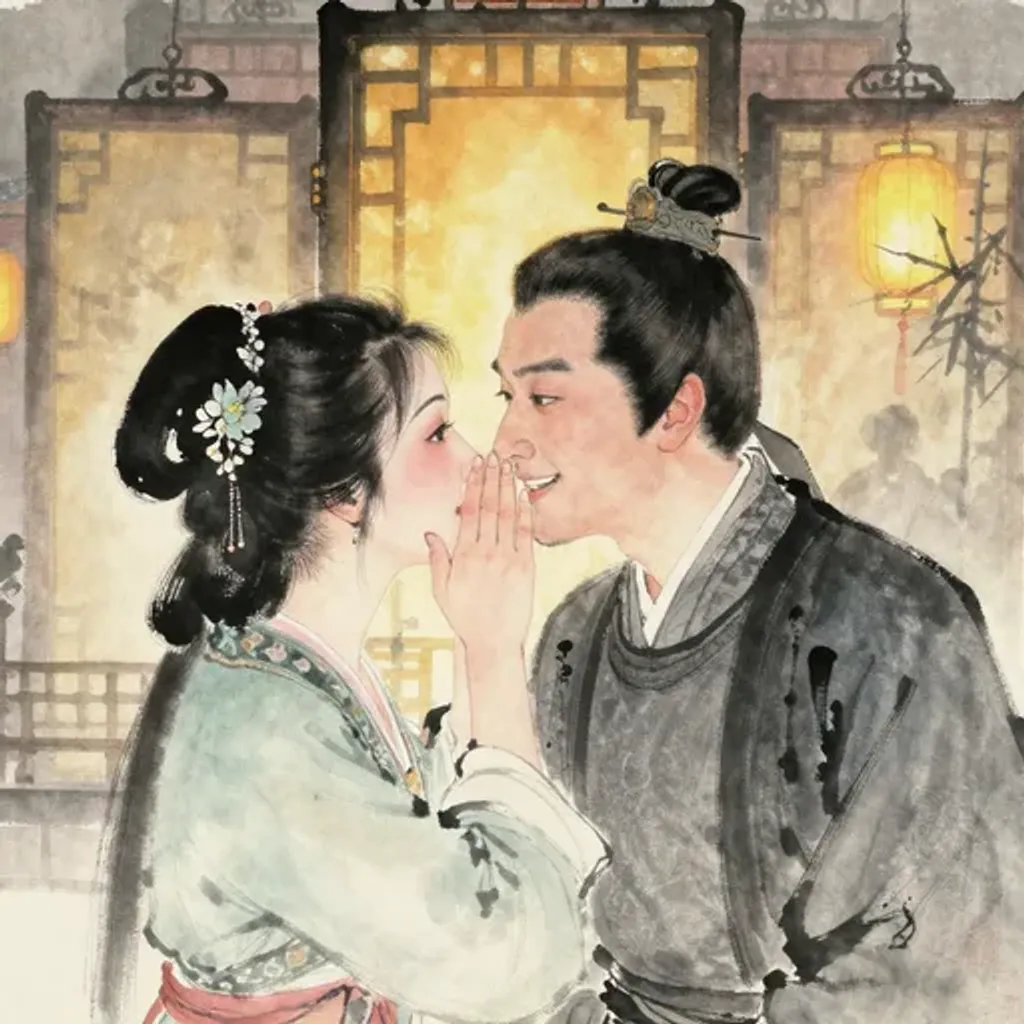
夏姬附耳,心聽悅喜,利以傳取。
Lady Xia Ji leans close to the ear; the heart listens with joyful attention. Profitable for transmission and acquisition.
— Jiao Yanshou, Yilin (Forest of Changes), 1st century BC
Commentary
Paired lakes meet wind and thunder — Increase, where the upper enriches the lower. Lady Xia leans close, whispering ear to ear, her heart listening with delight, using this intimacy to seize and transmit. Xia Ji was the notorious beauty of the state of Chen whose allure destroyed rulers and ministers alike. The Chu minister Wu Chen abandoned his post to elope with her. From The Joyous to Increase, the verse warns of gain through seduction. Wind and thunder should mean seeing good and following it, but here 'increase' is achieved through the corrupting transmission of desire. What appears as mutual enrichment is actually the mechanism by which kingdoms fall — pleasure weaponized into political destruction.
兌 → 夬
Hexagram 58 → Hexagram 43: Breakthrough
Changing lines: 3
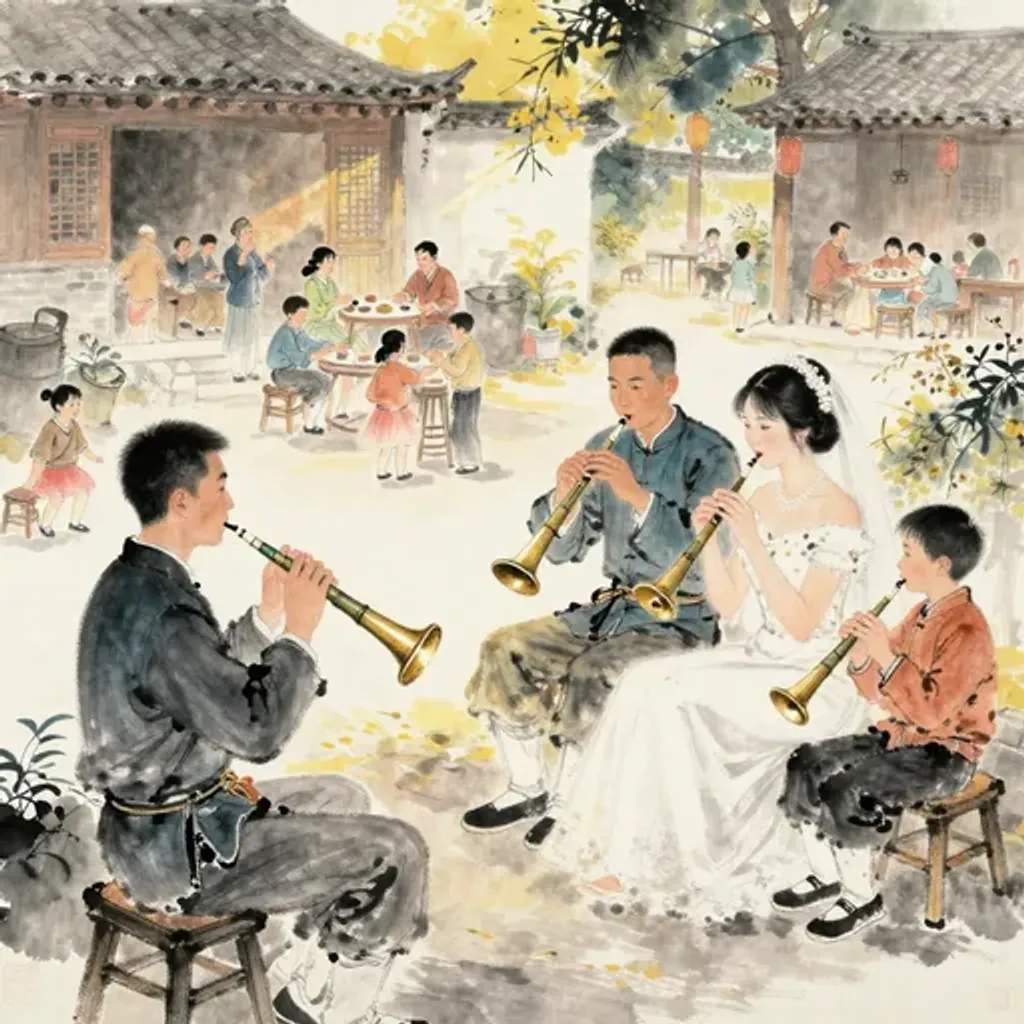
叔迎兄弟,遇恭在陽。君子季姬。並坐鼓簧。
The younger brother welcomes his elder brothers, meeting in respectful courtesy at Yang. The noble man and Lady Ji sit together playing the reed organ.
— Jiao Yanshou, Yilin (Forest of Changes), 1st century BC
Commentary
Paired lakes rise above heaven — Breakthrough, the lake overflowing in decisive release. A younger brother welcomes elder brothers; they meet with reverence at Yang. A noble gentleman and Lady Ji sit together playing reed pipes. The scene depicts family reunion and harmonious music-making — the quintessence of joyful fellowship. From The Joyous to Breakthrough, domestic delight concentrates until it overflows. The lake that rises above heaven must eventually breach its banks, but here the breakthrough is not destructive: it is the moment when contained happiness spills over into celebration. Music shared between kin is joy that cannot be held back.
兌 → 姤
Hexagram 58 → Hexagram 44: Coming to Meet
Changing lines: 1, 3, 6
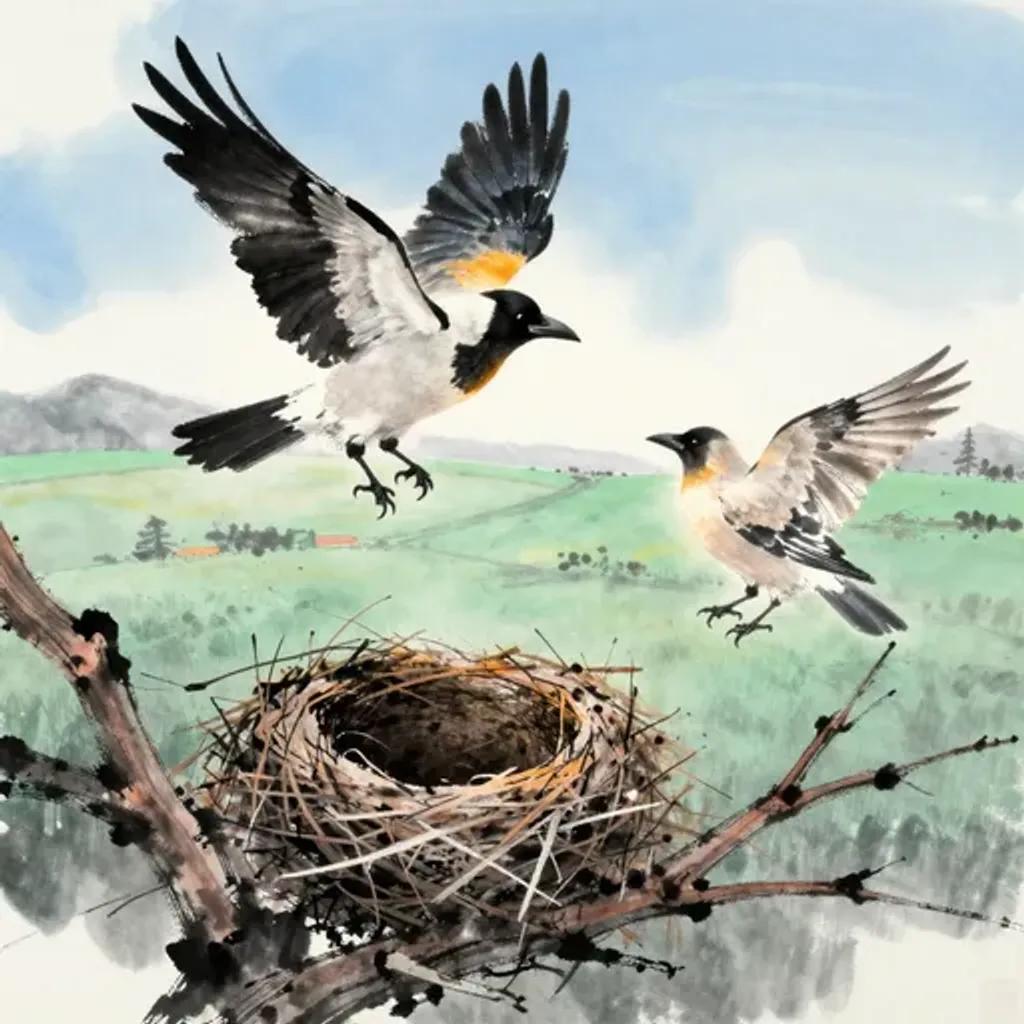
徙巢去家,南遇白烏。東西受福,與喜相得。
Moving nest, leaving home, heading south to meet a white raven. East and west receive blessing, finding joy together.
— Jiao Yanshou, Yilin (Forest of Changes), 1st century BC
Commentary
Paired lakes meet heaven below wind — Coming to Meet, the unexpected encounter. Leaving the nest and departing home, one meets a white crow in the south. East and west, blessings are received; joy and fortune coincide. The white crow is an auspicious omen in Chinese tradition — a rare creature whose appearance signals divine favor. From The Joyous to Coming to Meet, the verse traces how leaving the familiar opens space for chance encounters with the numinous. Wind beneath heaven carries messages across the world; the sovereign issues decrees that reach the four quarters. The departure from home is not exile but expansion — the white crow appears only to those who have left their nest.
兌 → 萃
Hexagram 58 → Hexagram 45: Gathering Together
Changing lines: 1, 2
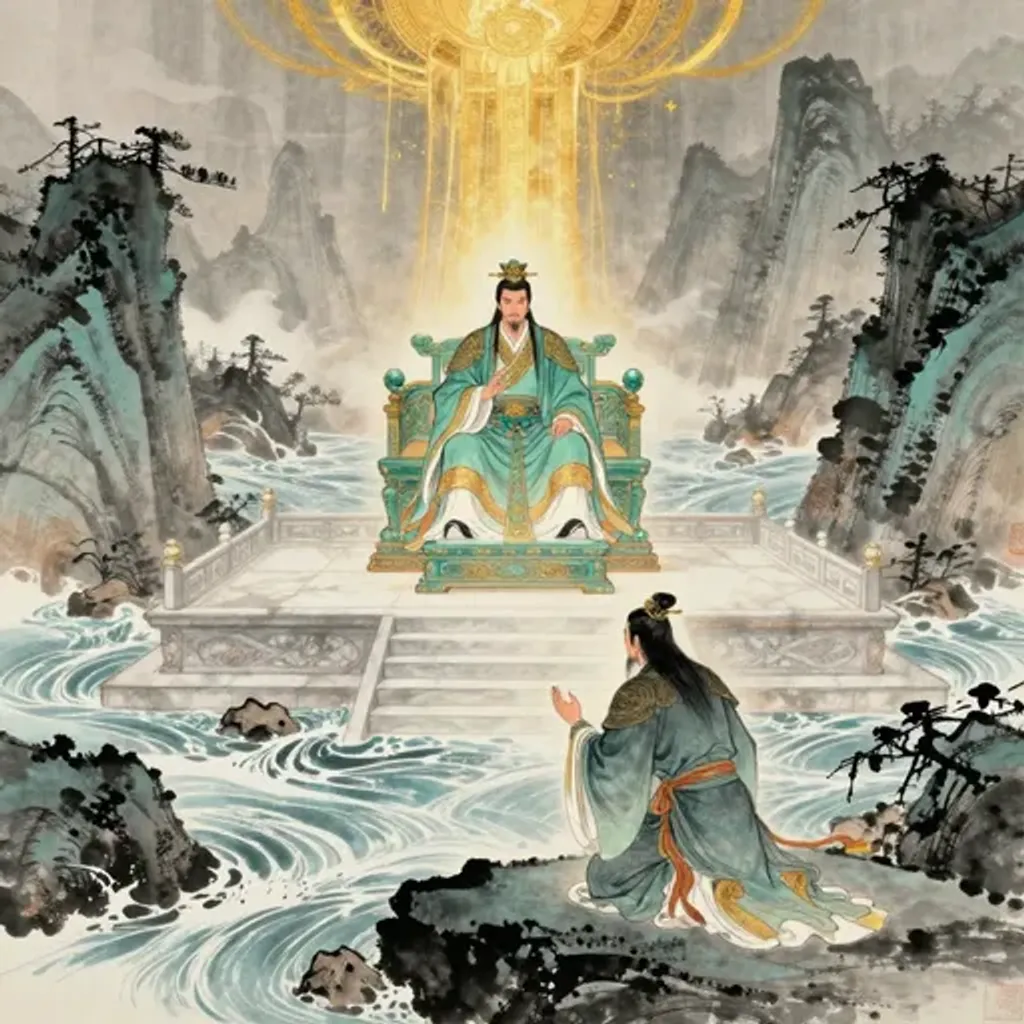
舜登大禹,石夷之野。徵詣玉闕,拜治水土。
Shun enthroned Yu the Great from the wilderness of Shiyi. Summoned to the Jade Palace, appointed to govern water and earth.
— Jiao Yanshou, Yilin (Forest of Changes), 1st century BC
Commentary
Paired lakes gather upon the earth — Gathering, where the community assembles under a common purpose. Emperor Shun elevated Yu the Great, summoning him from the wilds of Shiyi to the jade palace, appointing him to govern water and soil. According to tradition, Shun recognized Yu's extraordinary capacity and charged him with taming the floods — the foundational act of Chinese civilization. From The Joyous to Gathering, the verse embodies the hexagram's essential dynamic: recognizing talent and assembling it for a common purpose. The lake pools upon the earth as people naturally congregate around a worthy leader. Yu's appointment was the original gathering — summoning merit to serve the realm.
兌 → 升
Hexagram 58 → Hexagram 46: Pushing Upward
Changing lines: 1, 3, 4, 5
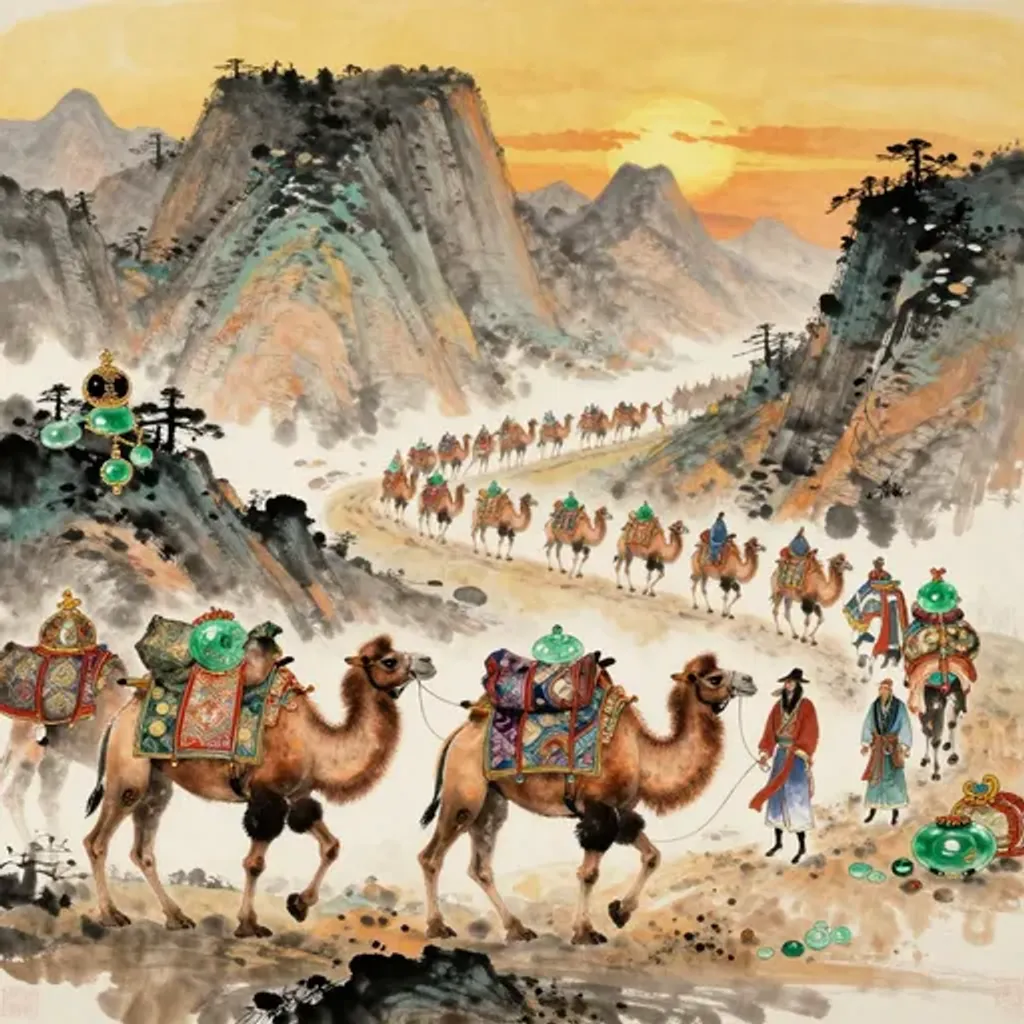
江河淮海,天之都市。商人受福,國家富有。
Silk goes westward; gemstones come from the east. Camel bells ring in the distance — wealth gathers like mountains.
— Jiao Yanshou, Yilin (Forest of Changes), 1st century BC
Commentary
Paired lakes yield to wind growing within the earth — Pushing Upward, the steady rise of wood through soil. The original verse speaks of rivers and seas as heaven's great marketplace: merchants receive blessings and the state grows wealthy. The Yangtze, Yellow River, Huai, and Ji — the Four Great Rivers — form the arteries of commerce, and where waterways converge, wealth accumulates naturally. From The Joyous to Pushing Upward, delight in commerce is channeled into gradual, sustained growth. Wood rises through earth not by eruption but by persistent, incremental advance. National wealth built on trade routes follows the same logic — small accumulations compounding into greatness.
兌 → 困
Hexagram 58 → Hexagram 47: Oppression
Changing lines: 1
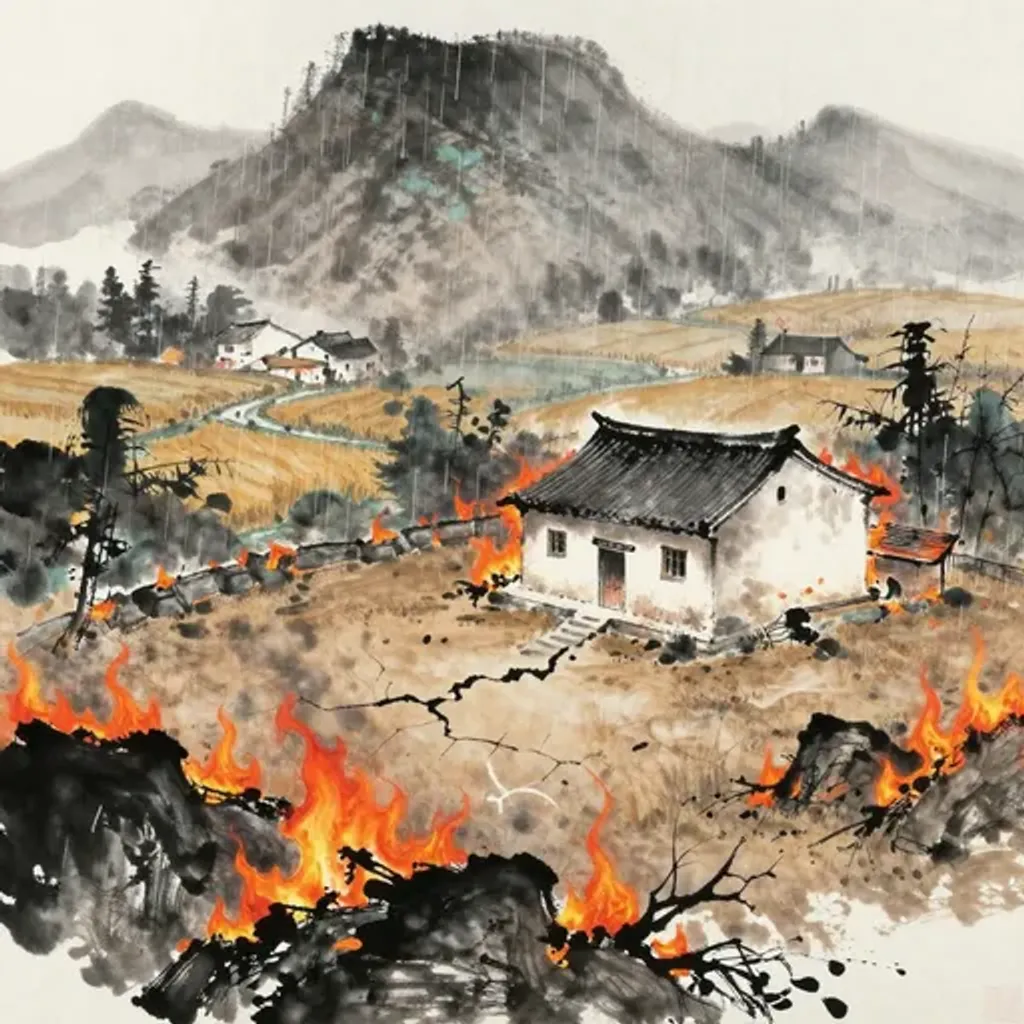
隱隱填填,火燒山根。不潤我鄰,獨不蒙恩。
Rumbling and roaring, fire burns at the mountain's base. It does not moisten my neighbor; I alone receive no grace.
— Jiao Yanshou, Yilin (Forest of Changes), 1st century BC
Commentary
Paired lakes drain into the lake without water — Oppression, the image of exhaustion. A rumbling fills the air as fire burns at the mountain's base. The flames do not moisten the neighborhood; alone, one receives no grace. Fire at the mountain root is a subterranean conflagration — heat without light, destruction without warmth. From The Joyous to Oppression, delight is consumed from within. The lake without water is a vessel emptied of its essence; the fire that should provide warmth instead parches everything around it. The verse's isolation — 'alone, receiving no grace' — captures the particular cruelty of Oppression: suffering that goes unwitnessed and unremedied.
兌 → 井
Hexagram 58 → Hexagram 48: The Well
Changing lines: 1, 3, 4
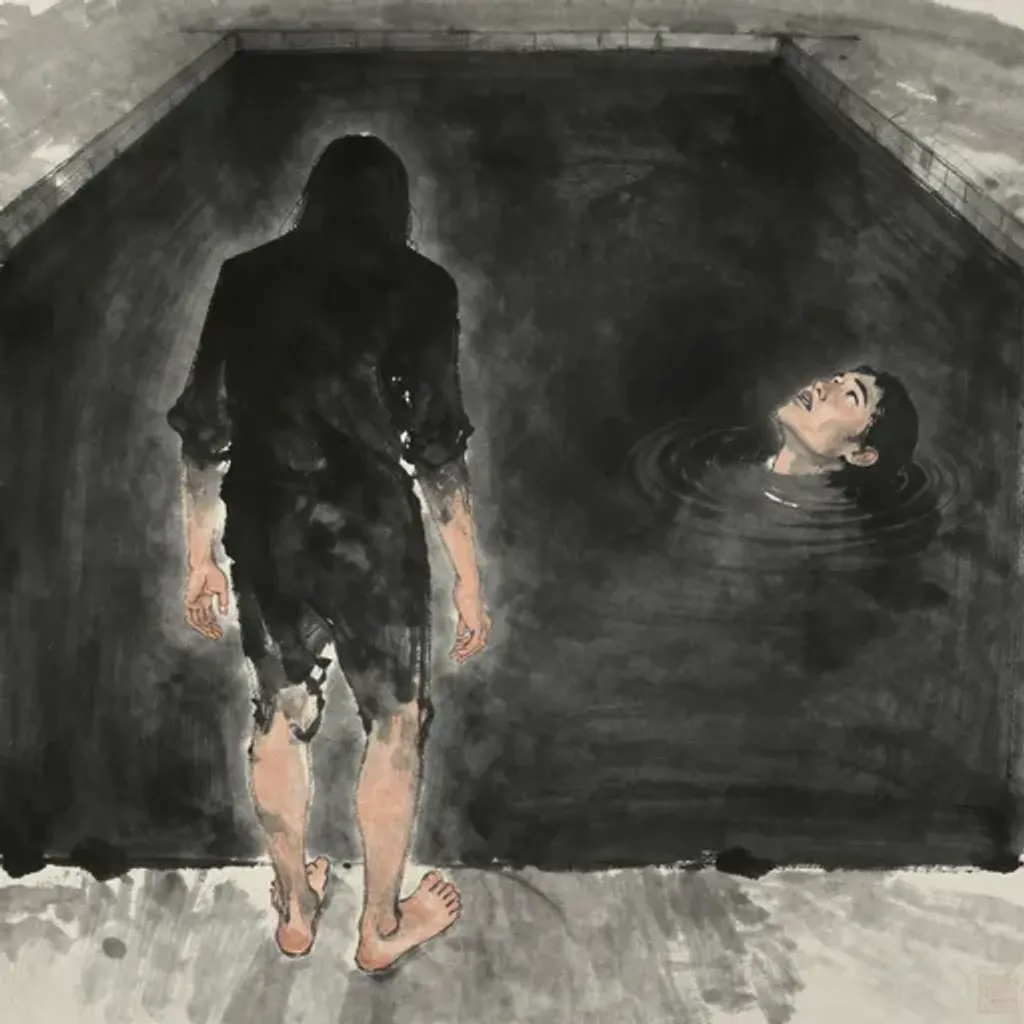
闇昧不明,耳聾不聰。陷入深淵,滅頂憂凶。
Dark and dim, without clarity; ears deaf and unhearing. Falling into the deep abyss, head submerged in grievous misfortune.
— Jiao Yanshou, Yilin (Forest of Changes), 1st century BC
Commentary
Paired lakes descend into wind beneath water — The Well, the deep structure that nourishes from below. Yet here all is darkness and confusion: sight is dim, hearing is deaf. One falls into the deep abyss, submerged beneath the water, facing mortal danger. The well's virtue is accessibility, but this well has become a death trap — its waters too deep, its walls too slippery. From The Joyous to The Well, the verse inverts the hexagram's promise. The well should sustain the community, but when one falls in rather than draws from it, nourishment becomes drowning. Joy that loses its footing plunges into the very source it sought to draw upon.
兌 → 革
Hexagram 58 → Hexagram 49: Revolution
Changing lines: 2, 3
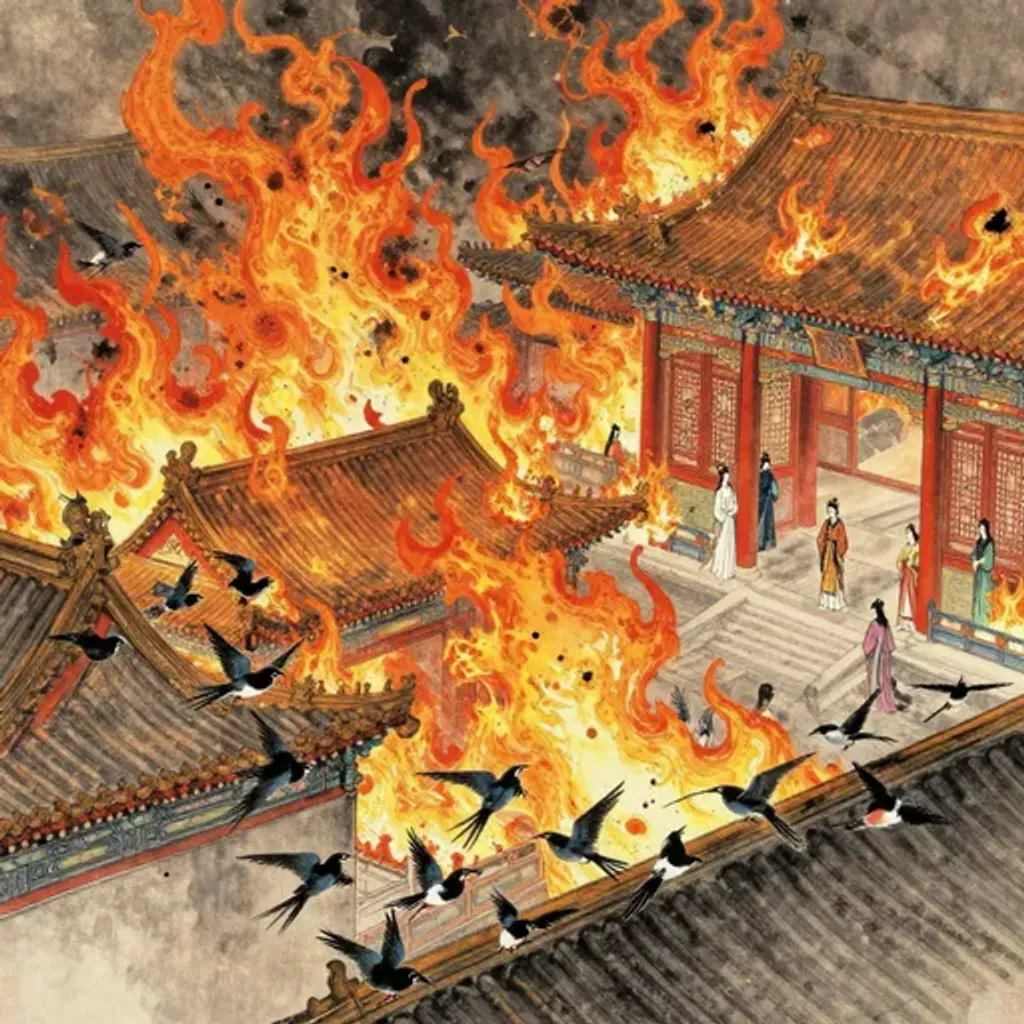
鳥鳴喈喈,天火將下。燔我館舍,災及妃后。
Birds cry in alarm; heavenly fire is about to descend. It burns my hall and lodging; disaster reaches the consort and queen.
— Jiao Yanshou, Yilin (Forest of Changes), 1st century BC
Commentary
Paired lakes hold fire within — Revolution, the hexagram of radical transformation. Birds cry out in shrill alarm as heavenly fire descends, burning down the palace and its lodgings, the disaster reaching even the queen and consorts. The conjunction of birds crying and fire falling recalls the ancient omen tradition where unusual bird behavior presages calamity. From The Joyous to Revolution, the verse traces how joy's surface shatters under transformative violence. Fire within the lake is revolution's image — water and fire in the same vessel cannot coexist. The palace fire that reaches the queen signals a revolution so thorough that it consumes even the inner chambers of power.
兌 → 鼎
Hexagram 58 → Hexagram 50: The Cauldron
Changing lines: 1, 3, 5, 6
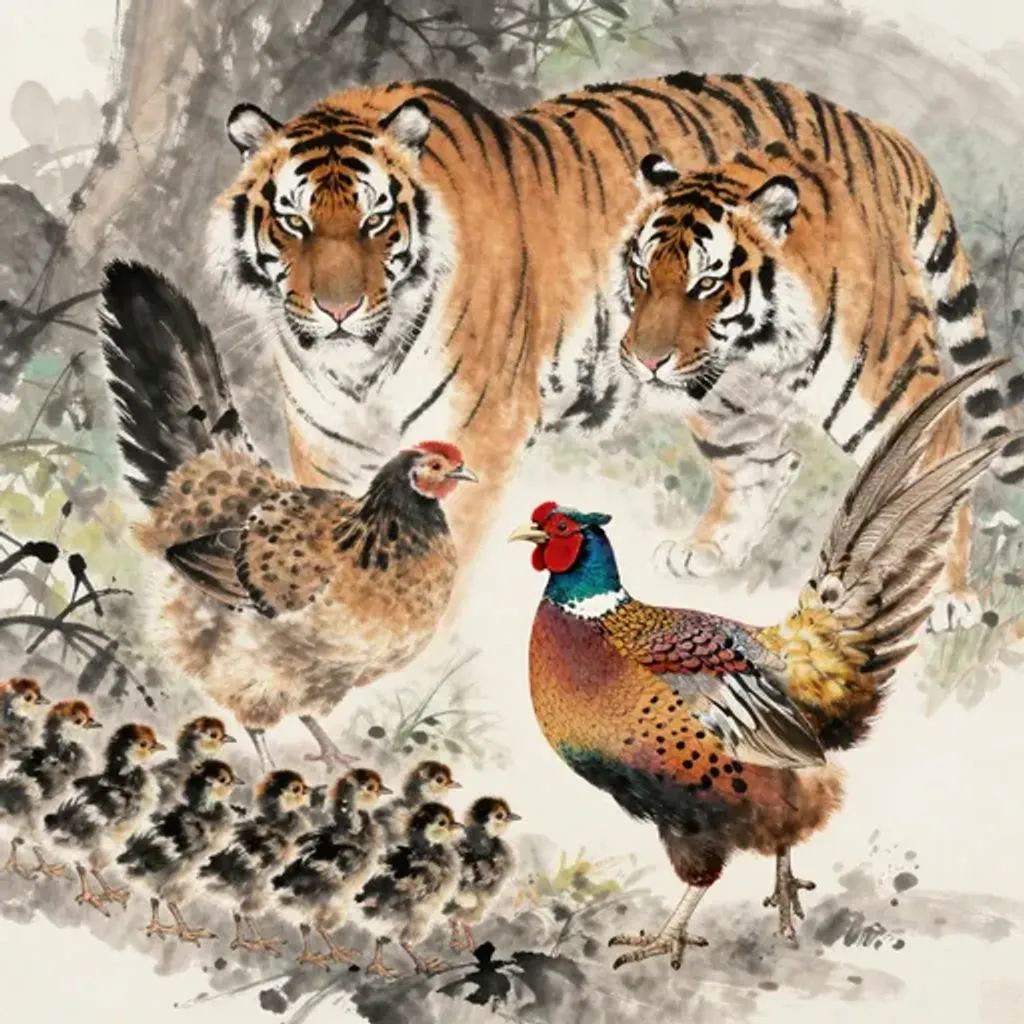
十雉百雛,常與母俱。抱雞搏虎,誰敢難者?
Ten pheasants and a hundred chicks always stay with their mother. Embracing the hen, striking at the tiger: who would dare challenge her?
— Jiao Yanshou, Yilin (Forest of Changes), 1st century BC
Commentary
Paired lakes meet fire above wind — The Cauldron, where raw materials are transformed into nourishment. Ten pheasant hens with a hundred chicks always stay with their mother. Like a hen grappling with a tiger to protect her brood — who would dare challenge her? The image is fiercely maternal: the weakest creature becomes invincible when defending its young. From The Joyous to The Cauldron, communal joy is refined into the protective authority that sustains civilization. The cauldron transforms raw into cooked, wild into civilized. The mother pheasant who fights the tiger embodies the cauldron's principle: proper positioning and fierce dedication transform weakness into legitimate, unchallengeable power.
兌 → 震
Hexagram 58 → Hexagram 51: The Arousing Thunder
Changing lines: 2, 5
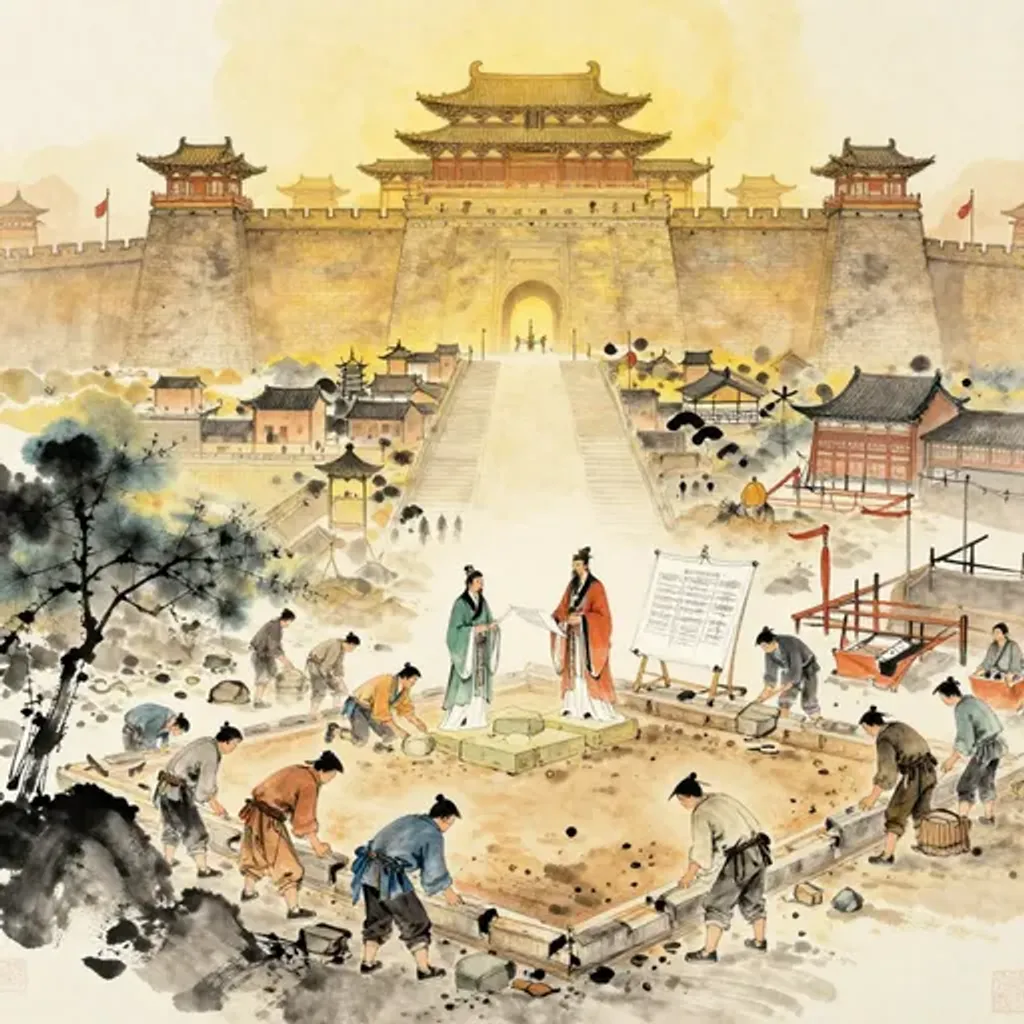
營城洛邑,周公所作。世建三十,年歷七百。福祐盟執,堅固不落。
Building the city of Luoyi, the Duke of Zhou's creation. Thirty generations established, seven hundred years endured. Fortune guards the oath and pledge; firm and solid, never falling.
— Jiao Yanshou, Yilin (Forest of Changes), 1st century BC
Commentary
Paired lakes meet doubled thunder — The Arousing, the shock that inaugurates new orders. The Duke of Zhou built the city of Luoyi, establishing the eastern capital of the Zhou dynasty. Thirty generations held power; seven hundred years of history unfolded. Blessings sustained the covenants, solid and unshaken. According to tradition, the Duke of Zhou surveyed and constructed Luoyi as the administrative center for governing the eastern territories after the Zhou conquest. From The Joyous to The Arousing, joy becomes the founding shock that reverberates across centuries. Thunder upon thunder — the double strike that does not merely disturb but establishes. A single act of construction echoes for seven hundred years.
兌 → 艮
Hexagram 58 → Hexagram 52: Keeping Still Mountain
Changing lines: 1, 2, 3, 4, 5, 6
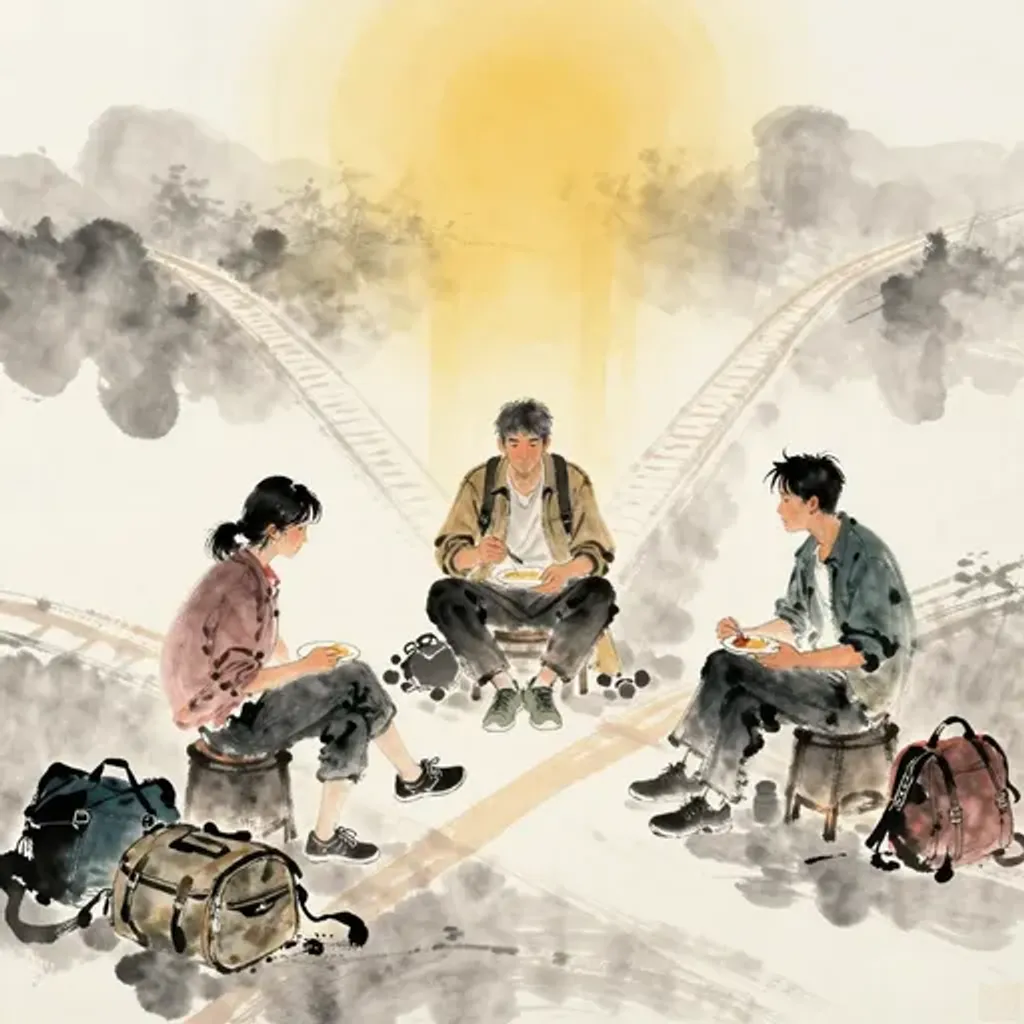
三人俱行,別離將食。一身五心,反復迷惑。
Three people journey together, then part to eat separately. One body, five hearts; turning back and forth in confusion.
— Jiao Yanshou, Yilin (Forest of Changes), 1st century BC
Commentary
Paired lakes face doubled mountains — Keeping Still, where thought does not transgress its bounds. Three people travel together but are about to separate for their meal. One body harbors five different hearts, turning back and forth in confusion. The verse captures a moment of communal breakdown: companions who should share a meal instead fragment into competing intentions. From The Joyous to Keeping Still, shared joy fractures into isolated stillness. The mountain's virtue is knowing one's position, yet these three cannot agree on a common direction. When each person holds a different agenda, even the simplest act — eating together — becomes impossible. Stillness here is paralysis born of discord.
兌 → 漸
Hexagram 58 → Hexagram 53: Development
Changing lines: 1, 2, 3, 4, 6
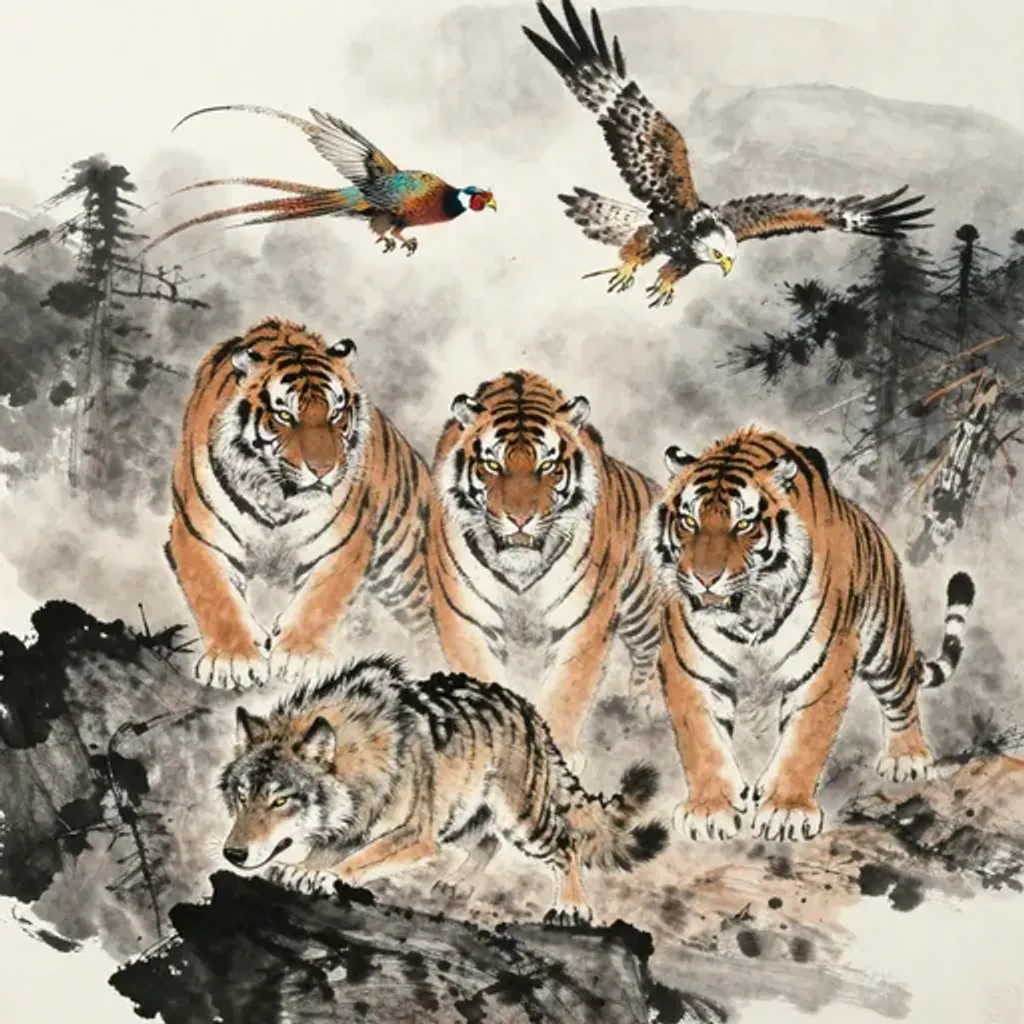
三虎搏狼,力不相當。如鷹格雉,一發破亡。
Three tigers fight a wolf; strength is unmatched. Like a hawk striking a pheasant, one strike and it is destroyed.
— Jiao Yanshou, Yilin (Forest of Changes), 1st century BC
Commentary
Paired lakes meet wind above the mountain — Development, the gradual advance of the wild goose. Three tigers attack a wolf, their strength vastly mismatched. Like a hawk striking a pheasant, one blow destroys it. The verse depicts overwhelming force applied with precision — not gradual development but instantaneous, decisive action. From The Joyous to Development, the paradox deepens: Development counsels patience, yet the verse celebrates swift annihilation. The resolution lies in the tree growing on the mountain: the long, slow growth of the tree (years of cultivation) is what makes the hawk's single decisive strike possible. Patient development culminates in the moment when overwhelming advantage is deployed without hesitation.
兌 → 歸妹
Hexagram 58 → Hexagram 54: The Marrying Maiden
Changing lines: 5
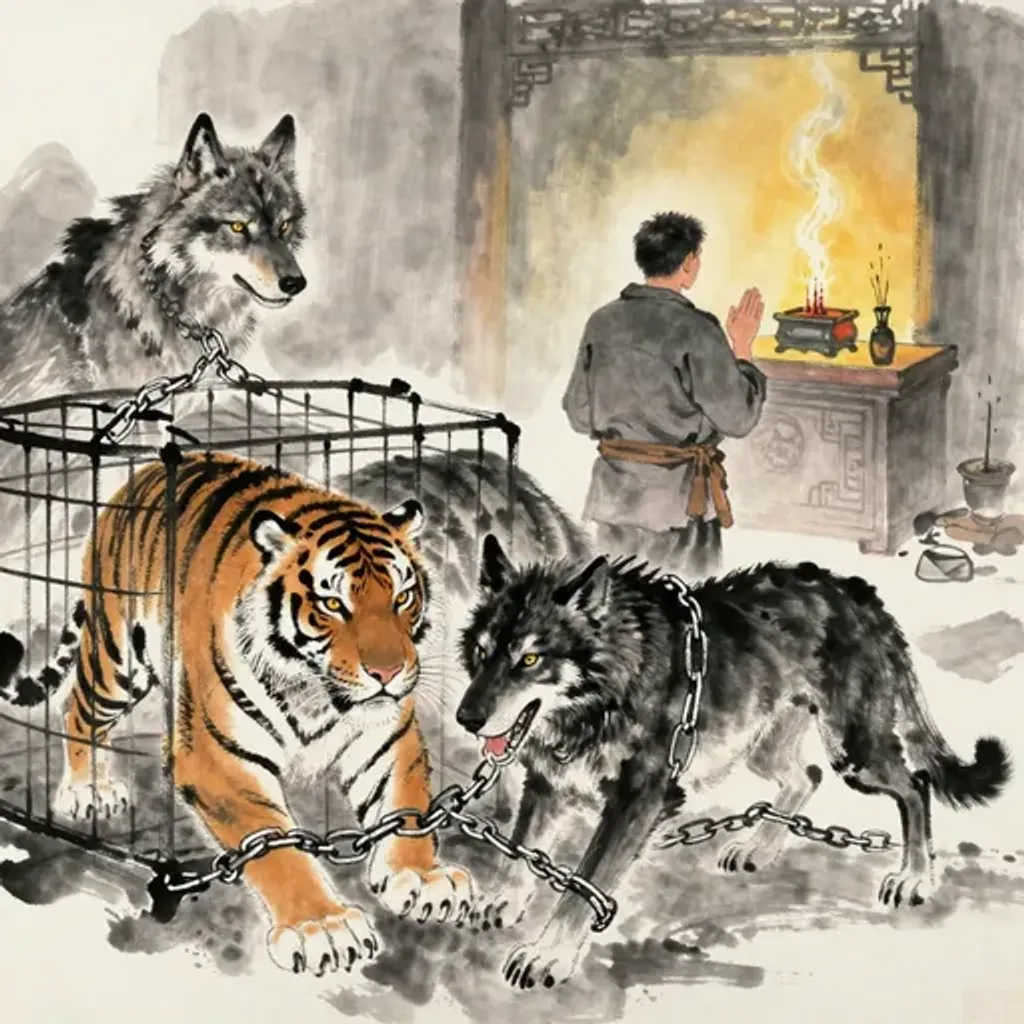
養虎畜狼,還自賊傷。年歲息長,疾君拜禱,雖危不凶。
Raising tiger, keeping wolf, one day they will wound and harm. Years and months pass and grow; when illness comes the lord prays. Though perilous, it is not disastrous.
— Jiao Yanshou, Yilin (Forest of Changes), 1st century BC
Commentary
Paired lakes meet thunder above the lake — the Marrying Maiden, where following joy leads to an unequal bond. Raising tigers and keeping wolves, one is wounded by the very beasts one nurtured. Yet as years pass and growth continues, the lord prays through illness, and though danger threatens, no final calamity comes. From The Joyous to the Marrying Maiden, the verse warns that indulged dangers eventually bite back — yet also affirms resilience. The Marrying Maiden knows the flaw in her position; awareness of the arrangement's inherent peril is itself the survival mechanism. To 'know the ending and understand the flaw' is to endure what cannot be avoided.
兌 → 豐
Hexagram 58 → Hexagram 55: Abundance
Changing lines: 2, 3, 5
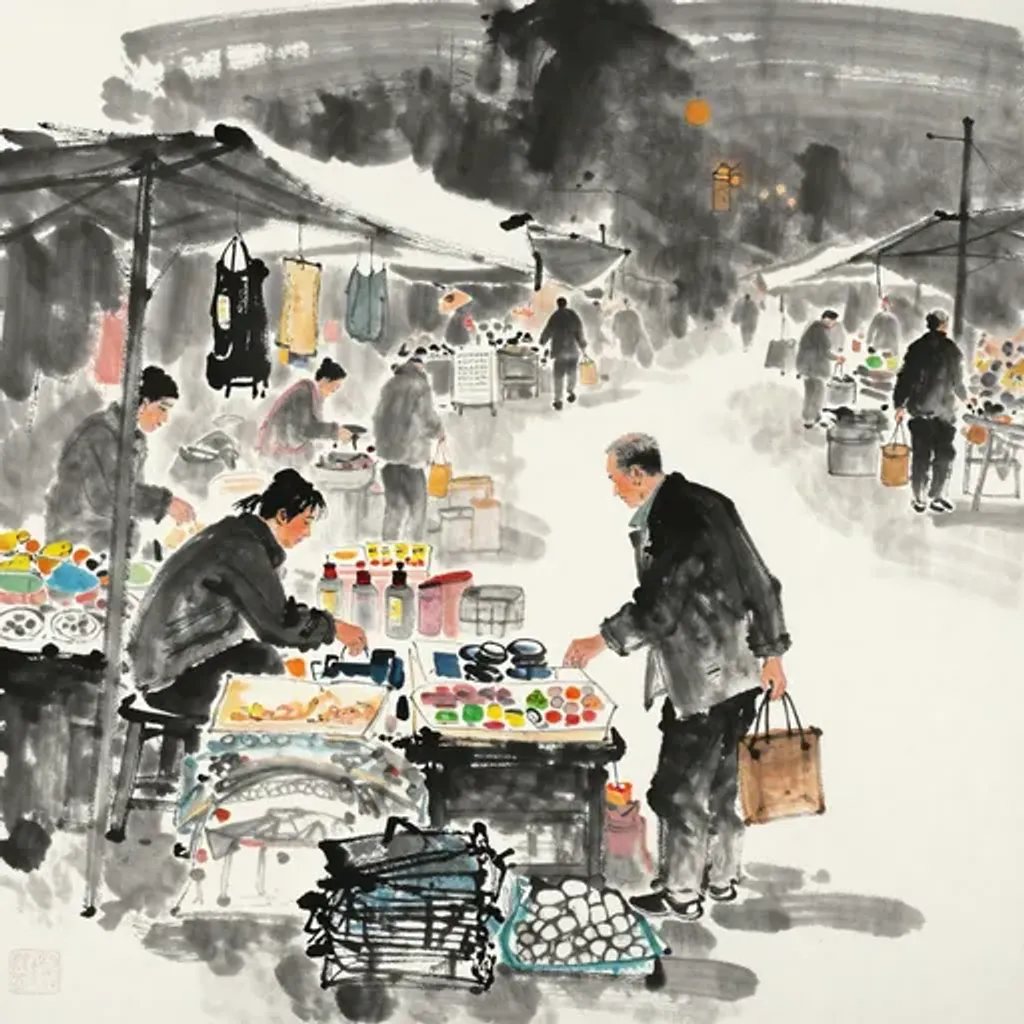
後時失利,不得所欲。
After the time, losing advantage; not obtaining what was desired.
— Jiao Yanshou, Yilin (Forest of Changes), 1st century BC
Commentary
Paired lakes meet thunder and fire — Abundance, the hexagram of fullness at its zenith. Yet the verse delivers only a terse lament: the moment has passed, profit is lost, and one cannot obtain what is desired. Abundance's danger is precisely this: the peak is also the beginning of decline. From The Joyous to Abundance, the verse captures the instant after the summit, when fullness tips into diminishment. Thunder and lightning together illuminate the world completely — but only for a flash. Those who arrive too late find the marketplace already closed. Abundance rewards only those present at the exact moment; a heartbeat's delay turns plenty to nothing.
兌 → 旅
Hexagram 58 → Hexagram 56: The Wanderer
Changing lines: 1, 2, 3, 5, 6
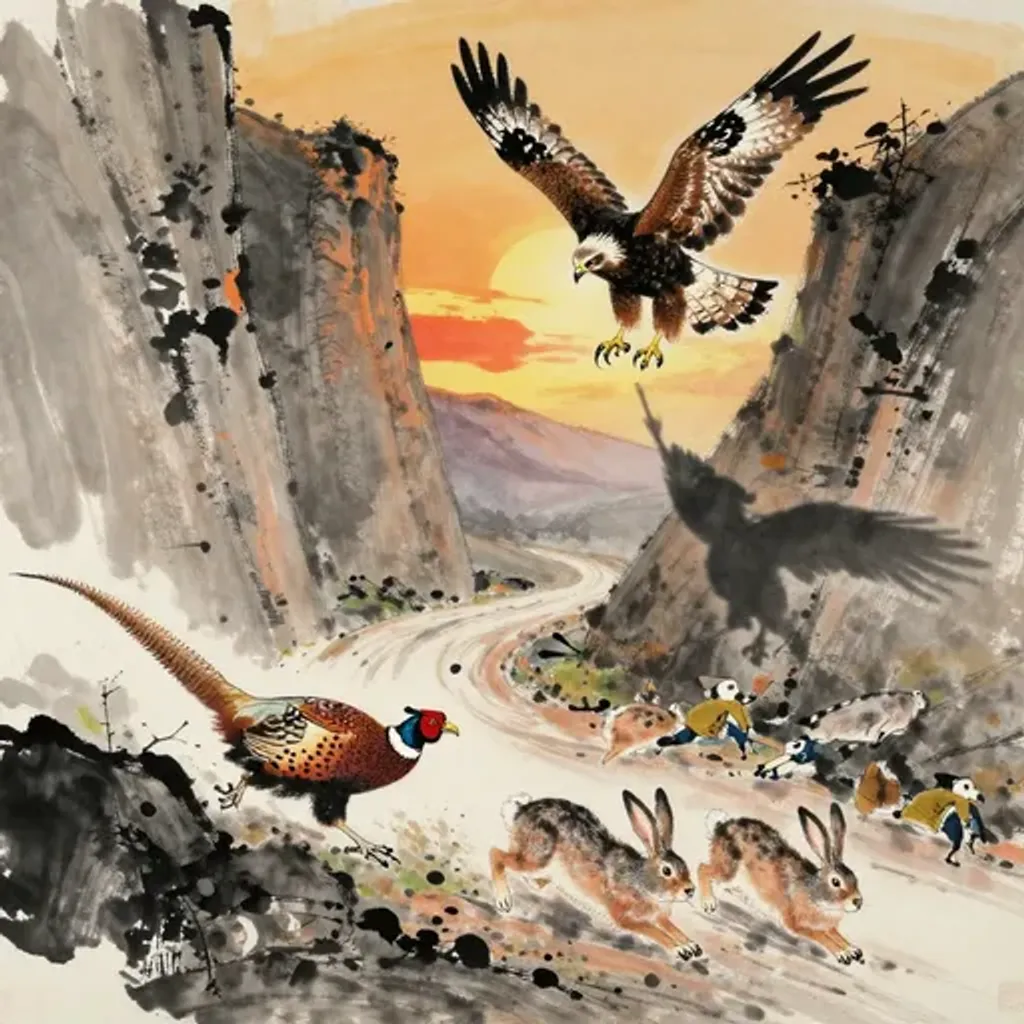
雉兔之東,以理為傷。見鷹驚走,死於谷口。
The pheasant and rabbit head east, taking what seems a reasonable path. Seeing the hawk they flee in terror, dying at the valley's mouth.
— Jiao Yanshou, Yilin (Forest of Changes), 1st century BC
Commentary
Paired lakes meet fire on the mountain — The Wanderer, the traveler far from home who must tread carefully. A pheasant and rabbit head east, pursuing their reason yet inviting harm. Spotting a hawk, they bolt in panic and die at the mouth of the valley. The small creatures' error is twofold: they moved in the wrong direction and failed to see the predator in time. From The Joyous to The Wanderer, the verse maps joy's dissolution into the vulnerability of displacement. Fire on the mountain moves swiftly but has no permanent home. The wanderer who does not read the terrain — who runs toward the valley mouth rather than away — finds that flight itself becomes the trap.
兌 → 巽
Hexagram 58 → Hexagram 57: The Gentle Wind
Changing lines: 1, 3, 4, 6
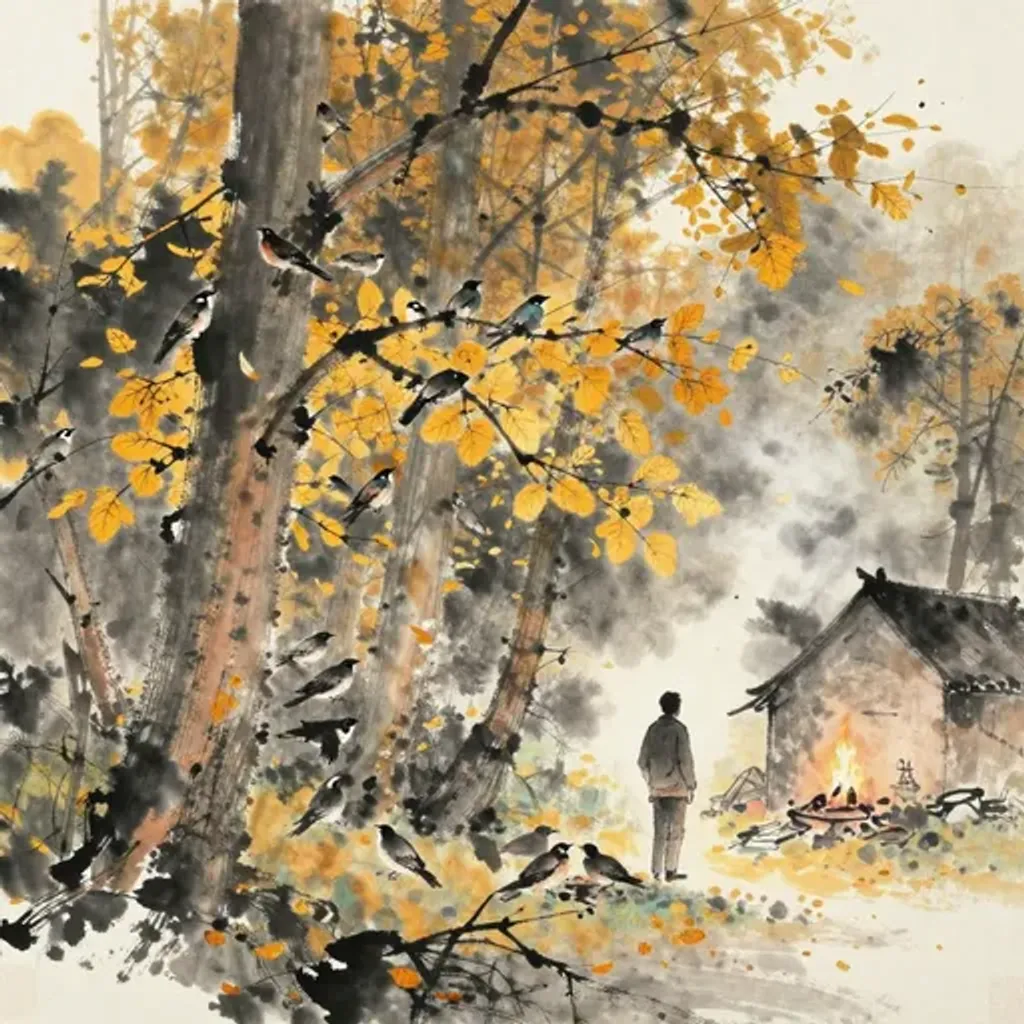
秋蛇向穴,不失其節。夫人姜氏,自齊復入。
Migratory birds know autumn and return to the old forest; bees and butterflies recognize the flowers and come back to the garden. The traveler of a thousand li suddenly turns around — where cooking smoke rises, there is the family gate.
— Jiao Yanshou, Yilin (Forest of Changes), 1st century BC
Commentary
Paired lakes meet doubled wind — The Gentle, where persistent influence penetrates gradually. The original verse describes an autumn snake returning to its burrow, not losing its seasonal rhythm; Lady Jiang of Qi returns home from exile. The 'autumn snake toward the burrow' is a metaphor for instinctive return when the season demands it. The Lady Jiang reference may allude to a noblewoman from Qi who, after displacement, found her way back to her proper place. From The Joyous to The Gentle, delight transforms into the quiet, insistent force that restores things to their rightful position — like wind following wind, the command is given and carried out without drama.
兌 → 兌
Hexagram 58 → Hexagram 58: The Joyous Lake
No changing lines — the hexagram is unchanged
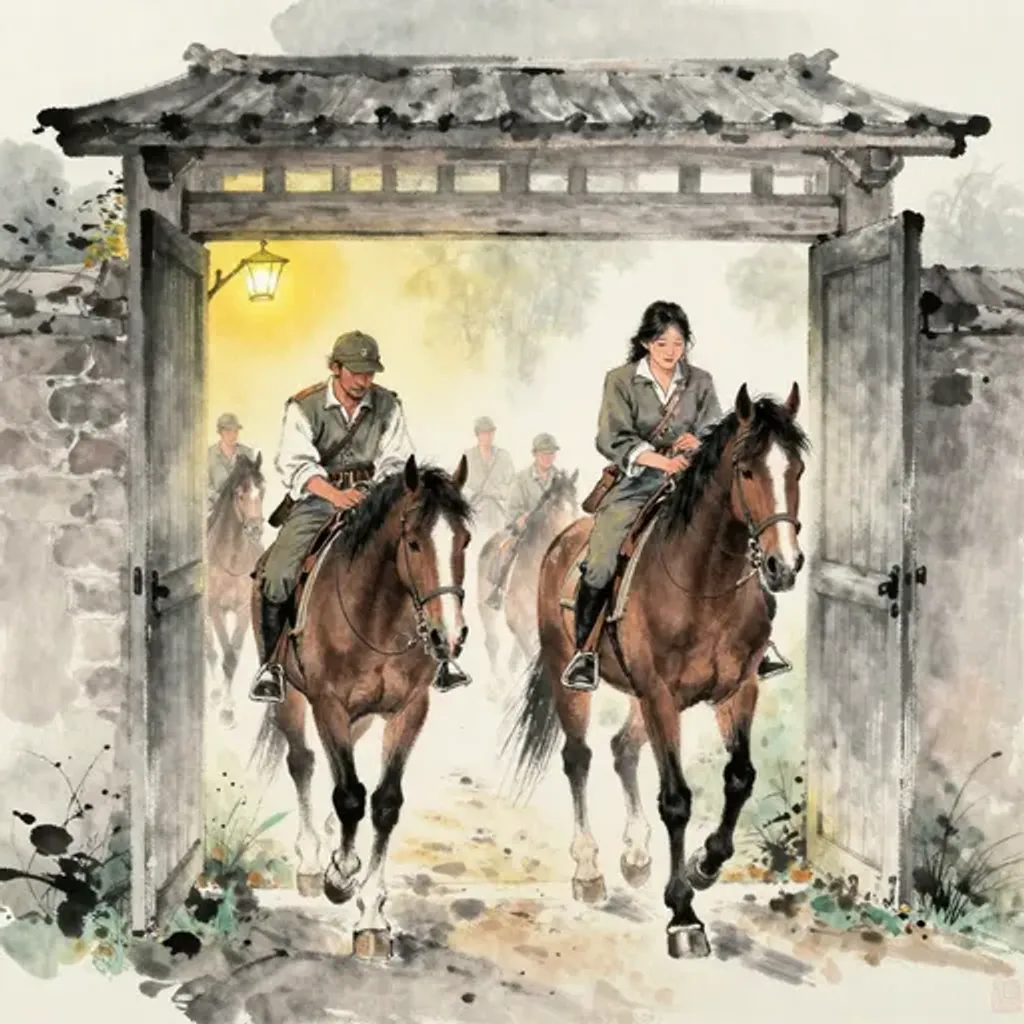
班馬還師,以息勞疲。後夫嘉喜,入戶見妻。
The dappled horses return with the army, resting from their weary toil. The husband who lagged behind rejoices, entering the door to see his wife.
— Jiao Yanshou, Yilin (Forest of Changes), 1st century BC
Commentary
Paired lakes mirror each other in perfect symmetry — The Joyous reflecting itself. The army's spotted horses return from campaign to rest their weary bones. Afterward, a husband comes home with joy, entering the door to see his wife. The phrase 'ban ma' (spotted horses) echoes the Shijing where returning warhorses signify the end of a campaign. From The Joyous to The Joyous, the transformation is identity: joy deepened by recognition. Friends lecture and practice together — the hexagram image made flesh. The soldier returns to domestic happiness; the doubled lake produces not excess but resonance. This is joy's purest form: reunion after absence, the familiar face at the threshold.
兌 → 渙
Hexagram 58 → Hexagram 59: Dispersion
Changing lines: 1, 4, 6
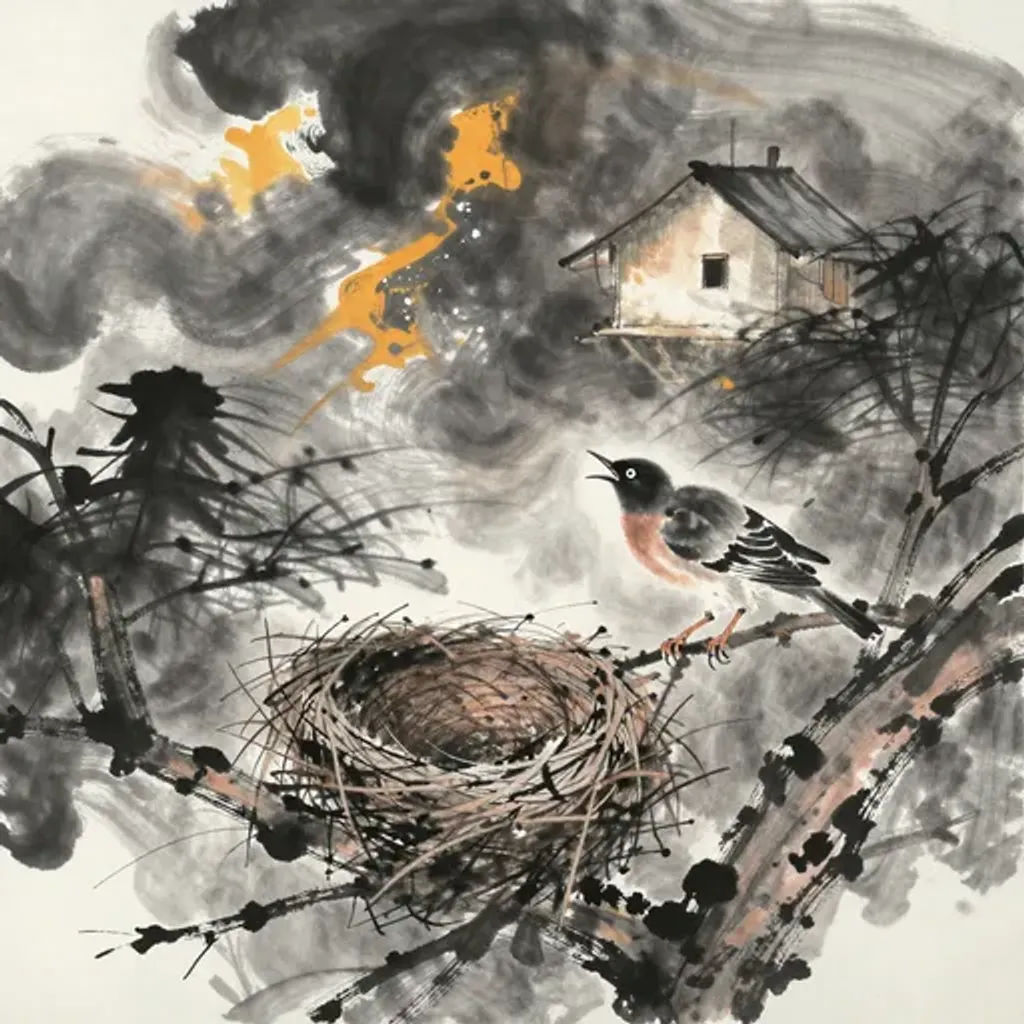
鳥鳴巢端,一呼三顛。搖動東西,危魂不安。
A bird calls at the nest's edge, one cry, three tumbles. Shaking east and west, the frightened soul cannot rest.
— Jiao Yanshou, Yilin (Forest of Changes), 1st century BC
Commentary
Paired lakes dissolve into wind above water — Dispersion, where structure scatters. A bird cries at the edge of its nest, one call and three tumbles. Shaken east and west, the imperiled soul finds no rest. The bird's frantic calling from a precarious perch captures dispersion in its most visceral form: the center cannot hold, and every cry only intensifies the instability. From The Joyous to Dispersion, communal joy fragments into isolated panic. Wind on water scatters what was gathered. The nest that should be a place of safety becomes the point of greatest danger when the branch gives way. Dispersion's remedy is to establish a spiritual center, but this bird has lost even its footing.
兌 → 節
Hexagram 58 → Hexagram 60: Limitation
Changing lines: 4
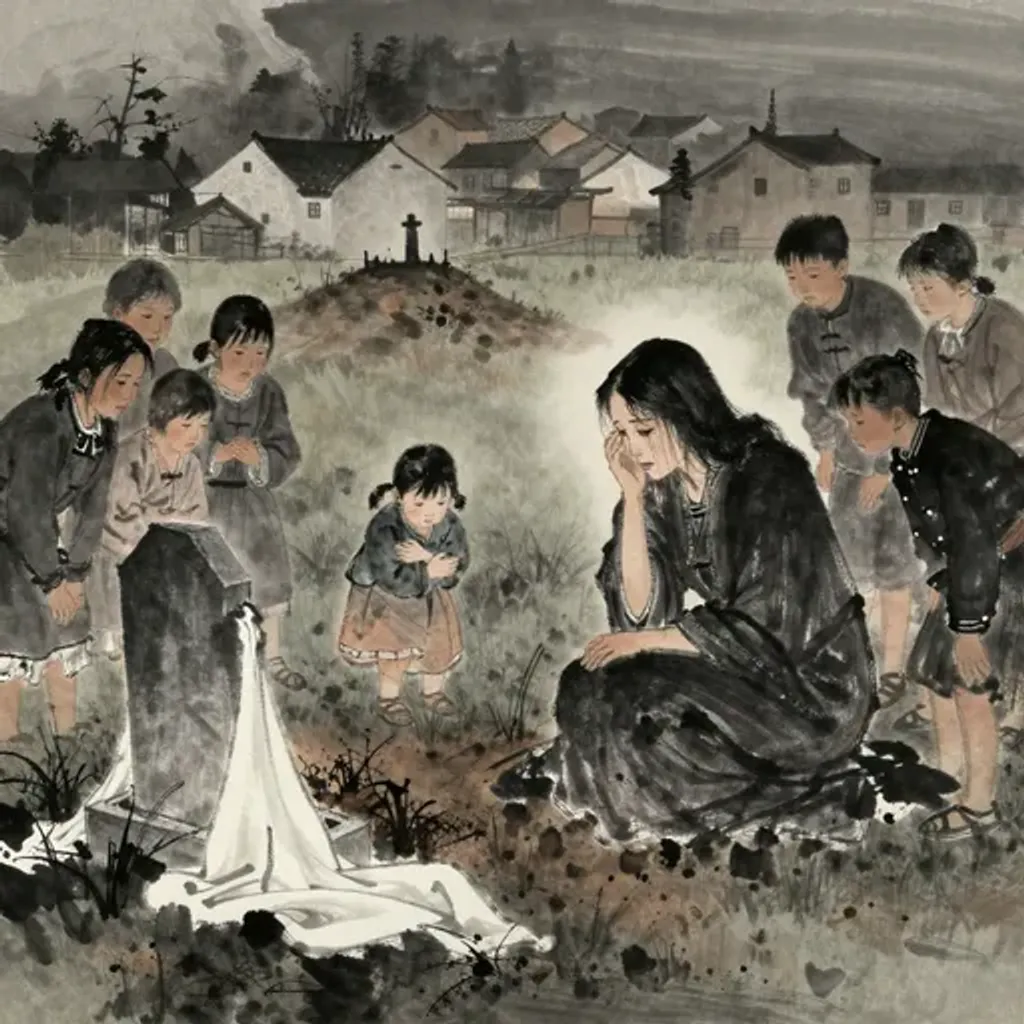
命夭不遂,死多鬼祟。妻子啼瘖,早失其雄。
Life cut short, not fulfilled; death by ghosts and malign spirits. Wife and children weep in silence, early losing their lord.
— Jiao Yanshou, Yilin (Forest of Changes), 1st century BC
Commentary
Paired lakes meet water above the lake — Limitation, where boundaries determine survival. A life cut short, death haunted by ghosts and demons. The wife and children cry themselves hoarse, having lost their husband too soon. The verse is stark: premature death, supernatural affliction, a family shattered by grief. From The Joyous to Limitation, the verse reveals limitation at its harshest — the ultimate boundary of mortality. Water upon the lake measures and restrains; here, the limit imposed is life itself. The verse carries no consolation, only the blunt acknowledgment that some limits cannot be negotiated. Even joy must reckon with the boundary it cannot cross.
兌 → 中孚
Hexagram 58 → Hexagram 61: Inner Truth
Changing lines: 4, 6
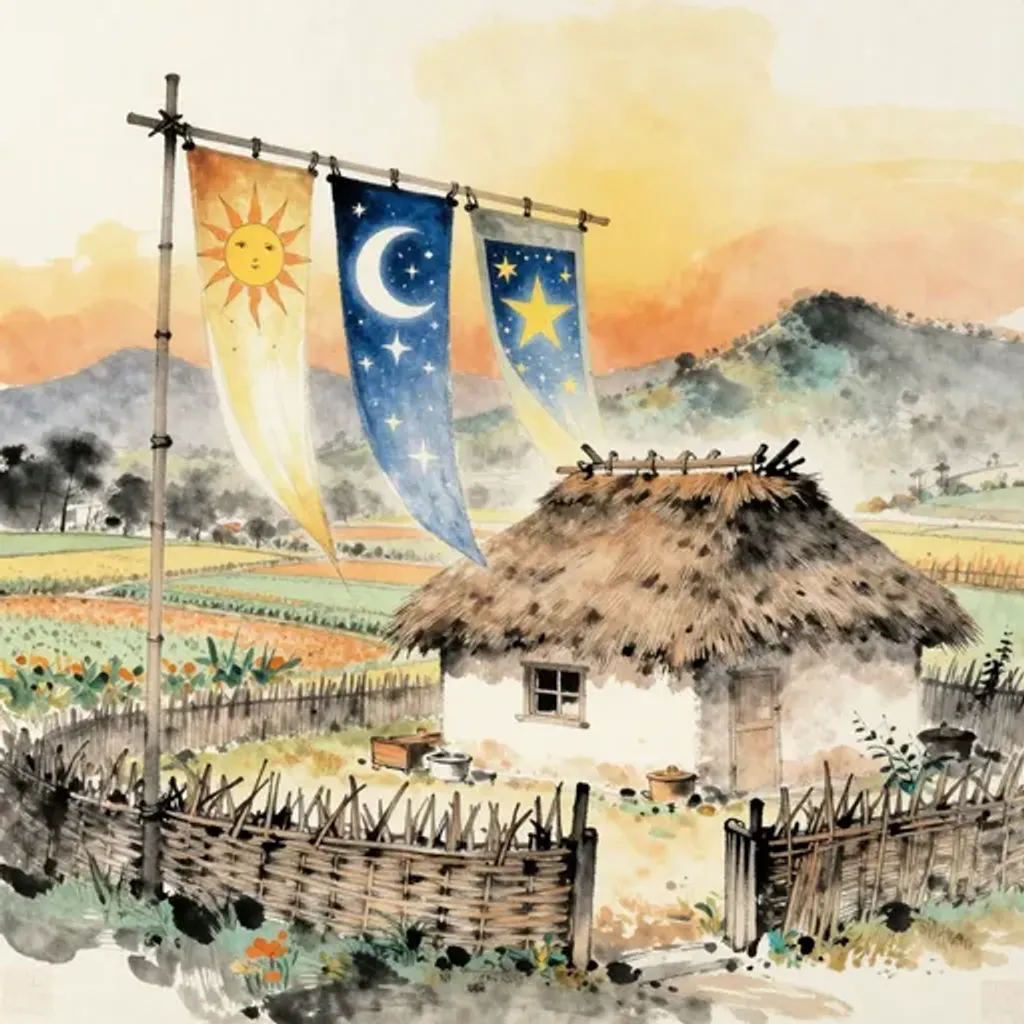
茆屋結席,崇我文德。三辰旂旗,家受行福。
A thatch-roofed house with woven mats, exalting my civil virtue. Banners of the three luminaries; the house receives traveling blessing.
— Jiao Yanshou, Yilin (Forest of Changes), 1st century BC
Commentary
Paired lakes open to wind above the lake — Inner Truth, where sincerity penetrates even pigs and fish. From a thatched cottage with woven-rush seats, one cultivates literary virtue. Banners bearing the three celestial bodies — sun, moon, and stars — grace the household, and blessings of conduct are received. The thatched hut signals humble origins; the three-luminary banners signal cosmic recognition of that humility. From The Joyous to Inner Truth, joy is distilled into the sincerity that moves heaven. Wind upon the lake stirs the deepest waters. The scholar in the rush-woven cottage who cultivates virtue is heard by heaven precisely because no pretense intervenes — sincerity from below reaching upward like wind across open water.
兌 → 小過
Hexagram 58 → Hexagram 62: Small Exceeding
Changing lines: 1, 2, 3, 5
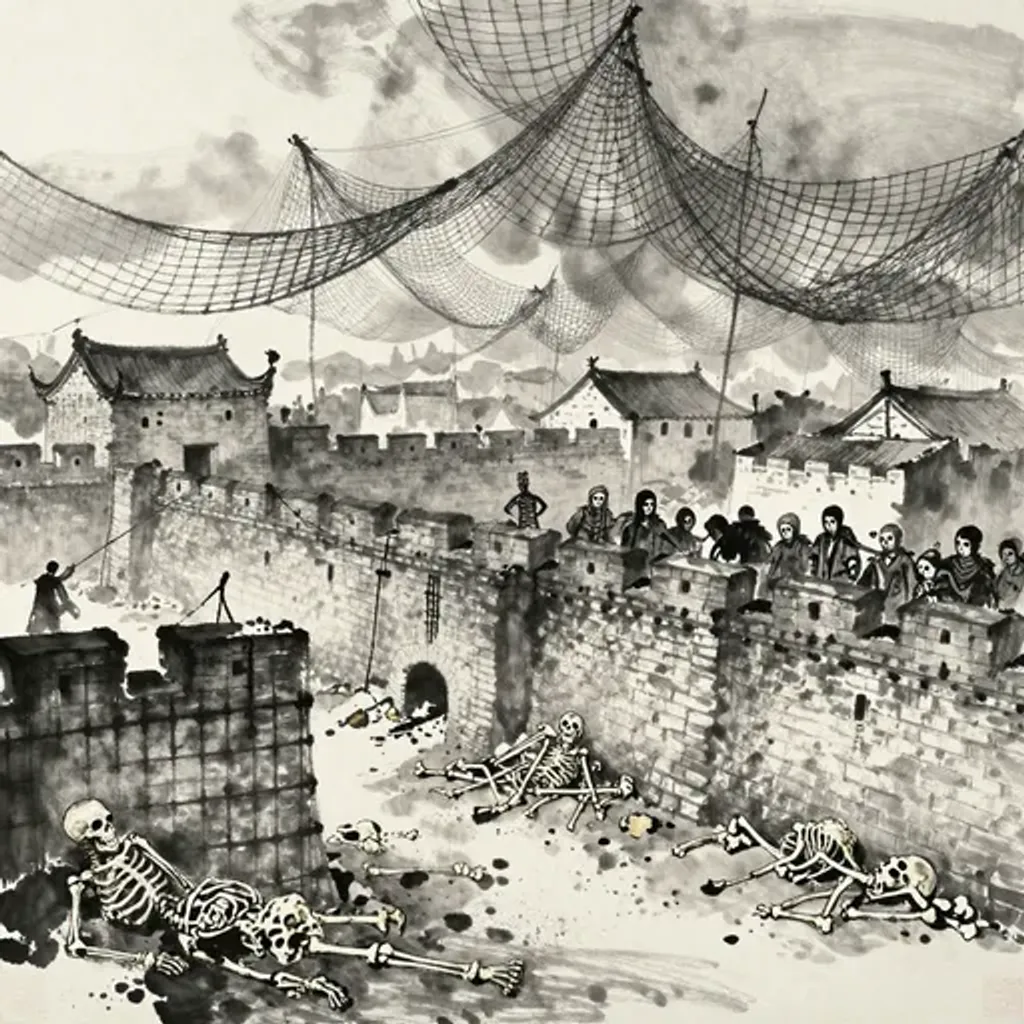
羅網四張,鳥无所翔。征伐困極,飢窮不食。
Heaven's net, earth's snare — no crack or seam. Walls on left and right, hooks above and below. Grain exhausted, water cut off — people trapped in defense. Inside the iron city, bones pile into mounds.
— Jiao Yanshou, Yilin (Forest of Changes), 1st century BC
Commentary
Paired lakes meet thunder above the mountain — Small Exceeding, where the small bird must not fly too high. The original verse describes nets spread in all four directions, leaving birds nowhere to soar. Military campaigns reach the point of exhaustion; the starving receive nothing to eat. Siege warfare at its most absolute: every escape route sealed, every resource consumed. From The Joyous to Small Exceeding, the verse inverts joy into total entrapment. Small Exceeding counsels the small bird to descend rather than ascend — but here, descending is impossible too. The nets are above and below. When exceeding one's capacity meets inescapable enclosure, even the smallest movement becomes fatal.
兌 → 既濟
Hexagram 58 → Hexagram 63: After Completion
Changing lines: 2, 3, 4
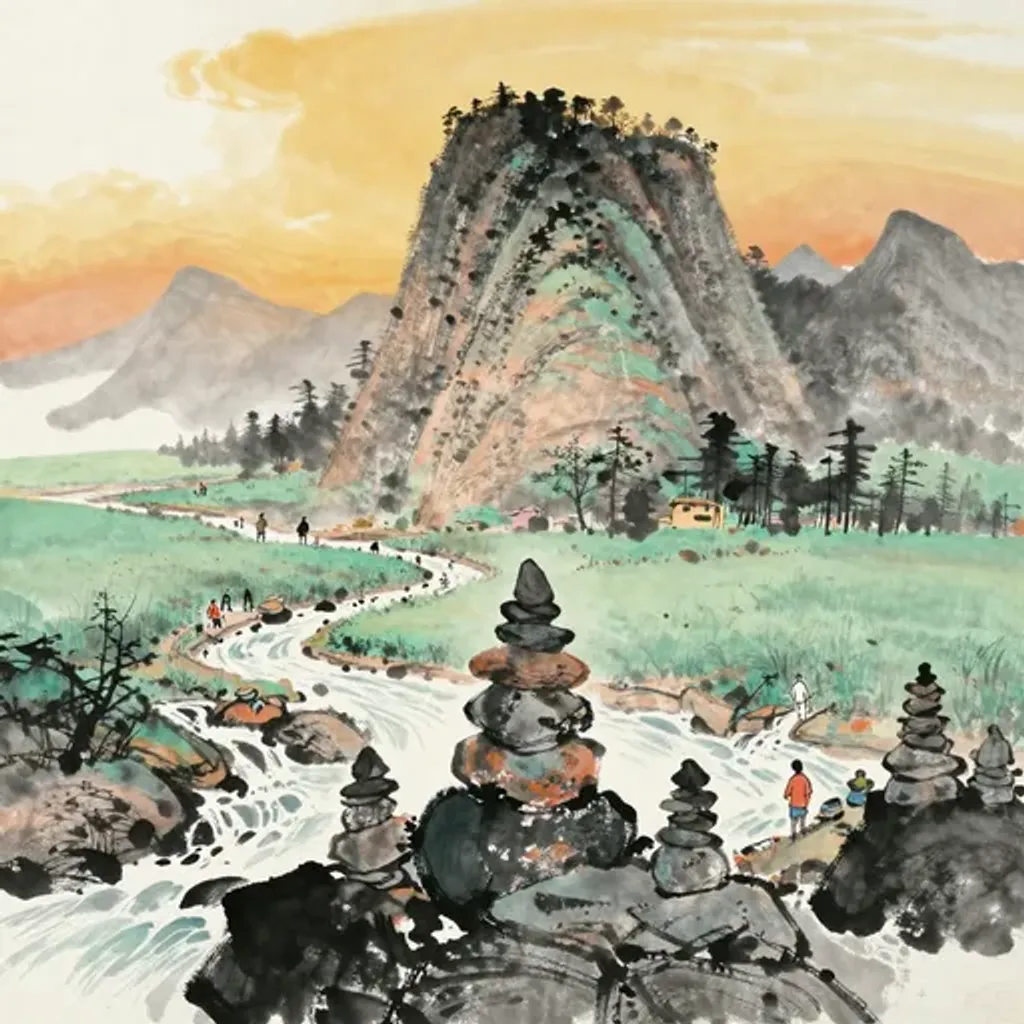
天成地安,積石為山。潤洽萬里,人賴其歡。
Heaven complete, earth at peace; piled stones form a mountain. Moisture spreads for ten thousand miles; the people rely on this joy.
— Jiao Yanshou, Yilin (Forest of Changes), 1st century BC
Commentary
Paired lakes meet water above fire — After Completion, where every element finds its proper place. Heaven is accomplished and earth is settled; stones accumulate into mountains. Grace moistens ten thousand li, and the people rely upon this joy. The verse paints the rare image of perfect cosmic order: the world completed, blessings flowing outward in concentric waves. From The Joyous to After Completion, open delight achieves its final, stable configuration. Water sits upon fire in ideal balance — the pot simmers at the perfect temperature. Yet After Completion carries its own warning: the sage thinks of disaster and prepares for it even at the height of order. This peace is real but not eternal.
兌 → 未濟
Hexagram 58 → Hexagram 64: Before Completion
Changing lines: 1, 5, 6
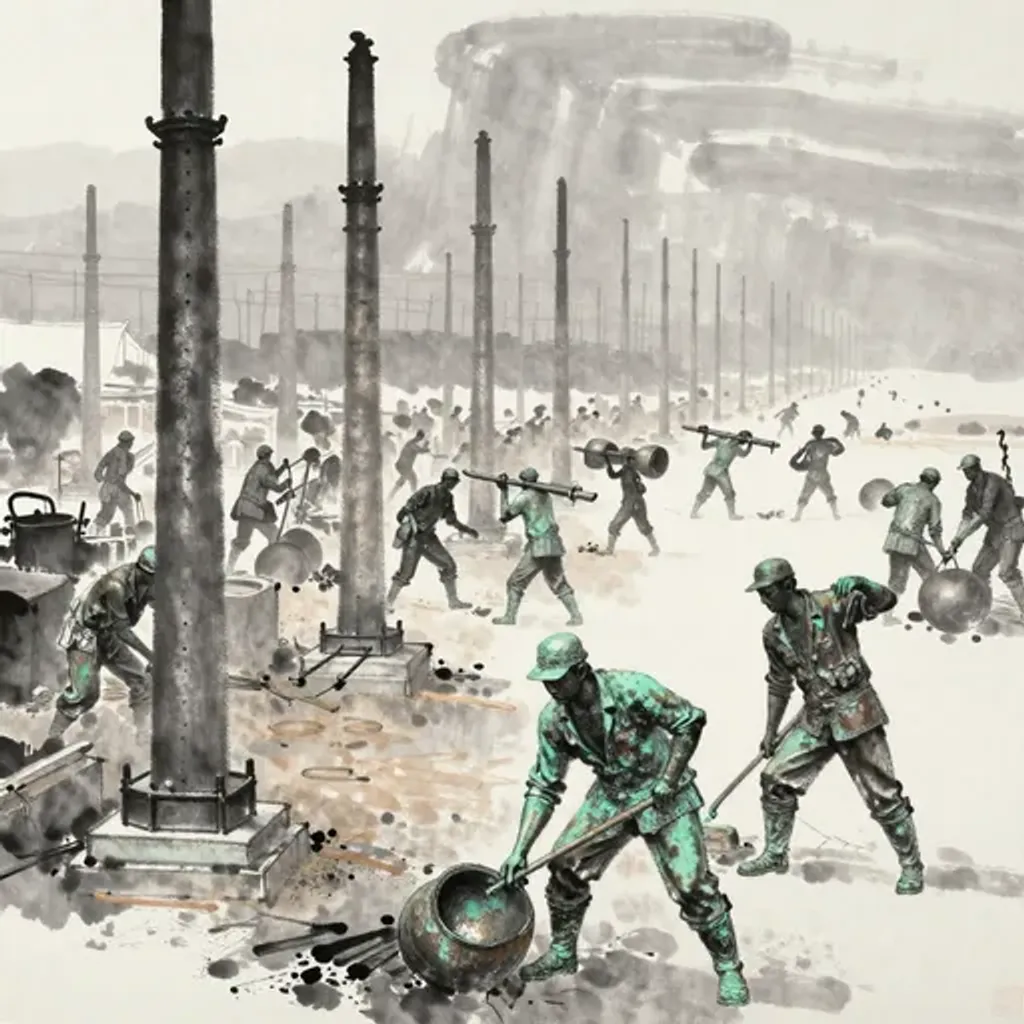
銅人銕柱,暴露勞苦。終日卒歲,无有休止。
Bronze figures and iron pillars, exposed to harsh labor and suffering. All day, year after year; there is no rest or stopping.
— Jiao Yanshou, Yilin (Forest of Changes), 1st century BC
Commentary
Paired lakes meet fire above water — Before Completion, where nothing yet sits in its proper place. Bronze figures and iron pillars stand exposed to the elements, laboring under the open sky. Day after day, year after year, there is no rest and no end. The 'bronze man and iron pillar' evoke monumental constructions or forced labor — the relentless toil of building something that never reaches completion. From The Joyous to Before Completion, joy's opposite face is revealed: the eternal unfinishedness of the human project. Fire above water — the fox with its tail in the stream — strives toward completion but never arrives. The verse's grim endurance is Before Completion's deepest truth: the work is never done.