Transformations of Hexagram 59
Every line of change out of Hexagram 59 渙 Dispersion, with the Yilin verse for each of the 64 resulting hexagrams, its translation, and the original ink brush artwork.
渙 → 乾
Hexagram 59 → Hexagram 1: The Creative
Changing lines: 1, 3, 4
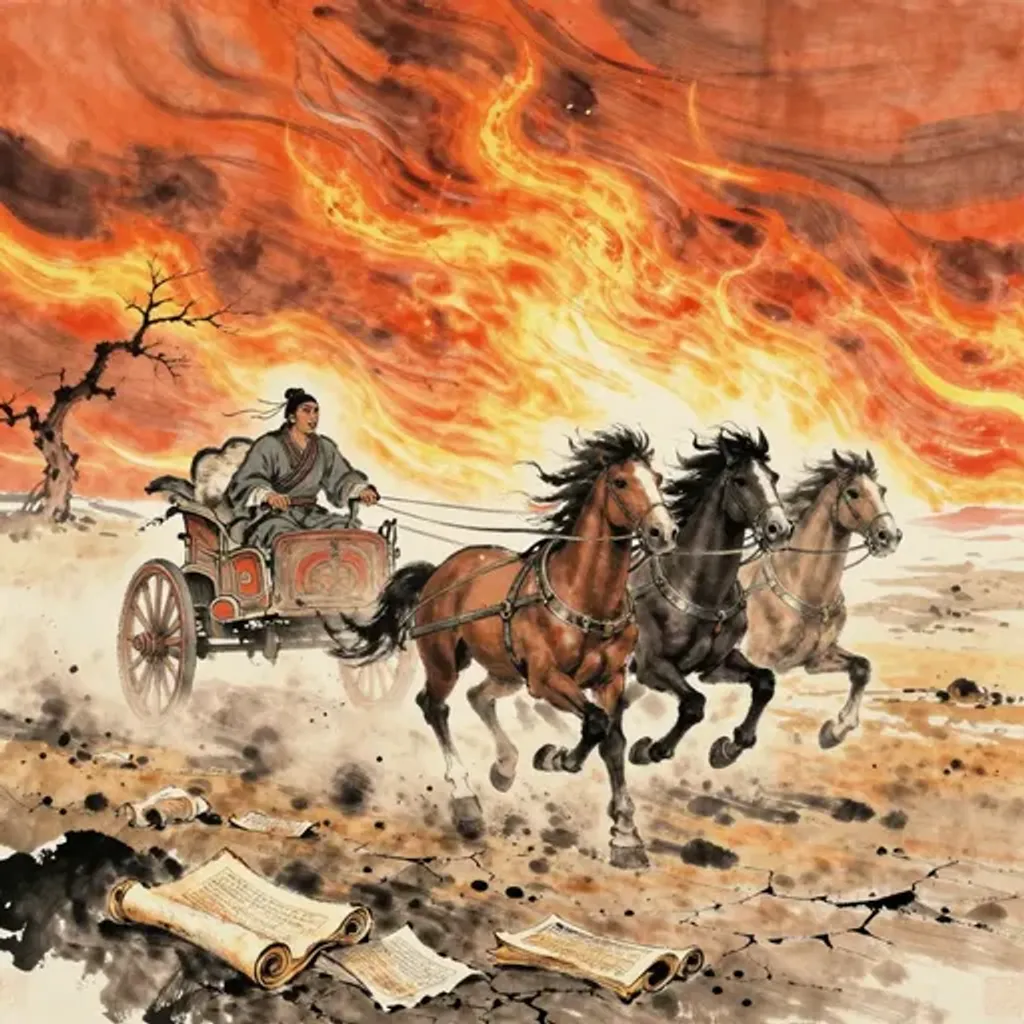
焱風阻越,車馳揭揭。棄古追思,失其和節,心憂惙惙。
Scorching wind blocks the southern road; the chariot rushes on with rattling wheels. Abandoning ancient ways to chase new thoughts, losing harmony and proper measure; the heart is filled with anxious dread.
— Jiao Yanshou, Yilin (Forest of Changes), 1st century BC
Commentary
Wind sweeps across water, scattering what was gathered — yet here the verse conjures fierce wind and flame blocking the southern crossing. Chariots race forward with wheels clattering, but the traveler has forsaken the old ways to chase anxious thoughts, losing all sense of harmony and measure. The heart is choked with worry. Dispersion's wind, which should dissolve rigidity, instead fans the blaze of obsessive striving. From Dispersion to the Creative, the transformation demands self-generating initiative — heaven's doubled strength moving ceaselessly. Yet the verse warns that one who abandons inherited wisdom for restless ambition finds not creative power but exhausting chaos, the wheels spinning without direction.
渙 → 坤
Hexagram 59 → Hexagram 2: The Receptive
Changing lines: 2, 5, 6
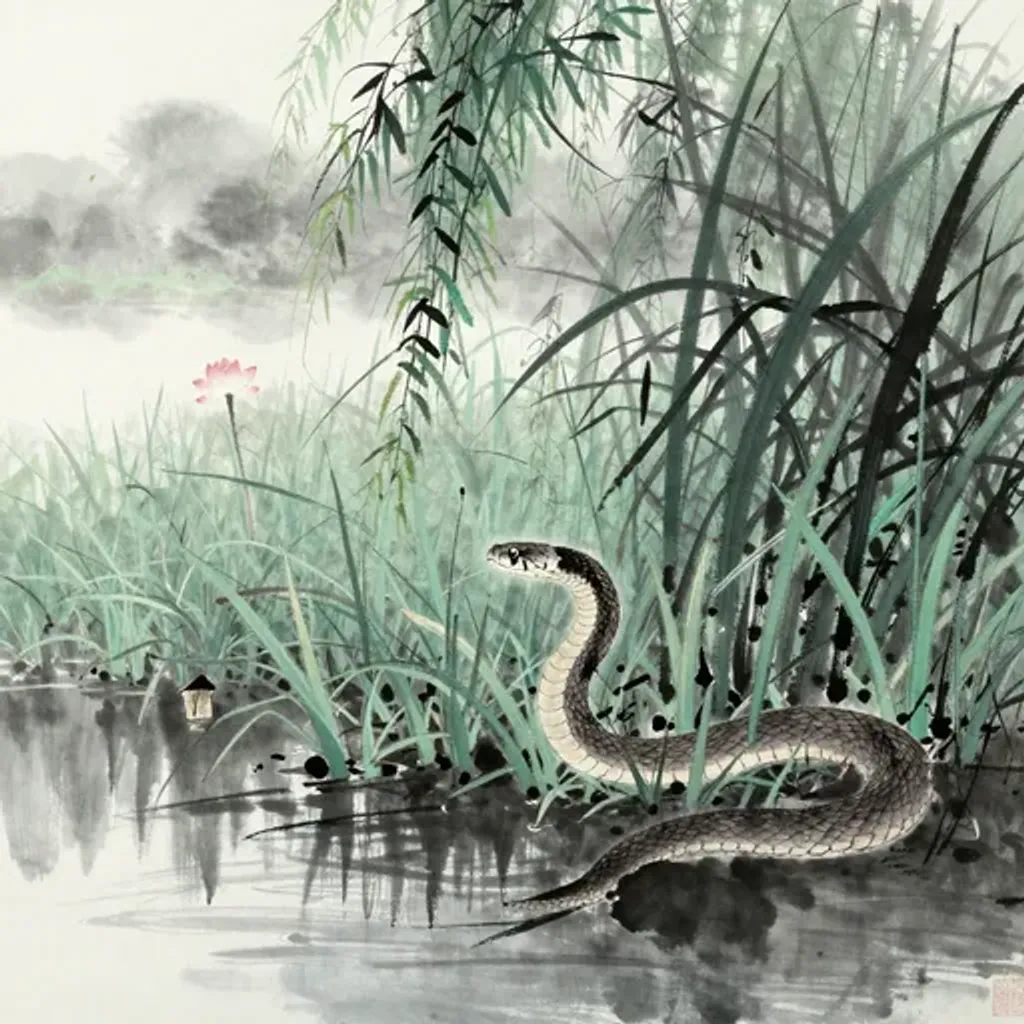
蛇得澤草,不憂危殆。
The snake finds marsh grass in the wetland; it fears no peril or danger.
— Jiao Yanshou, Yilin (Forest of Changes), 1st century BC
Commentary
Wind moves over water, dispersing what has pooled — and here a snake finds marsh grass, its perfect refuge. Among the reeds and damp hollows, danger dissolves entirely. The snake needs neither to fight nor to flee; it simply slips into the terrain that suits its nature. Earth doubled upon earth, the Receptive's image, suggests the infinite capacity to shelter by yielding. From Dispersion to the Receptive, scattering transforms into settling: what the wind breaks apart, the earth absorbs and holds. The snake's ease among the wetland grasses captures this dynamic precisely — safety comes not from asserting control but from finding the ground that already fits one's shape.
渙 → 屯
Hexagram 59 → Hexagram 3: Difficulty at the Beginning
Changing lines: 1, 2, 6
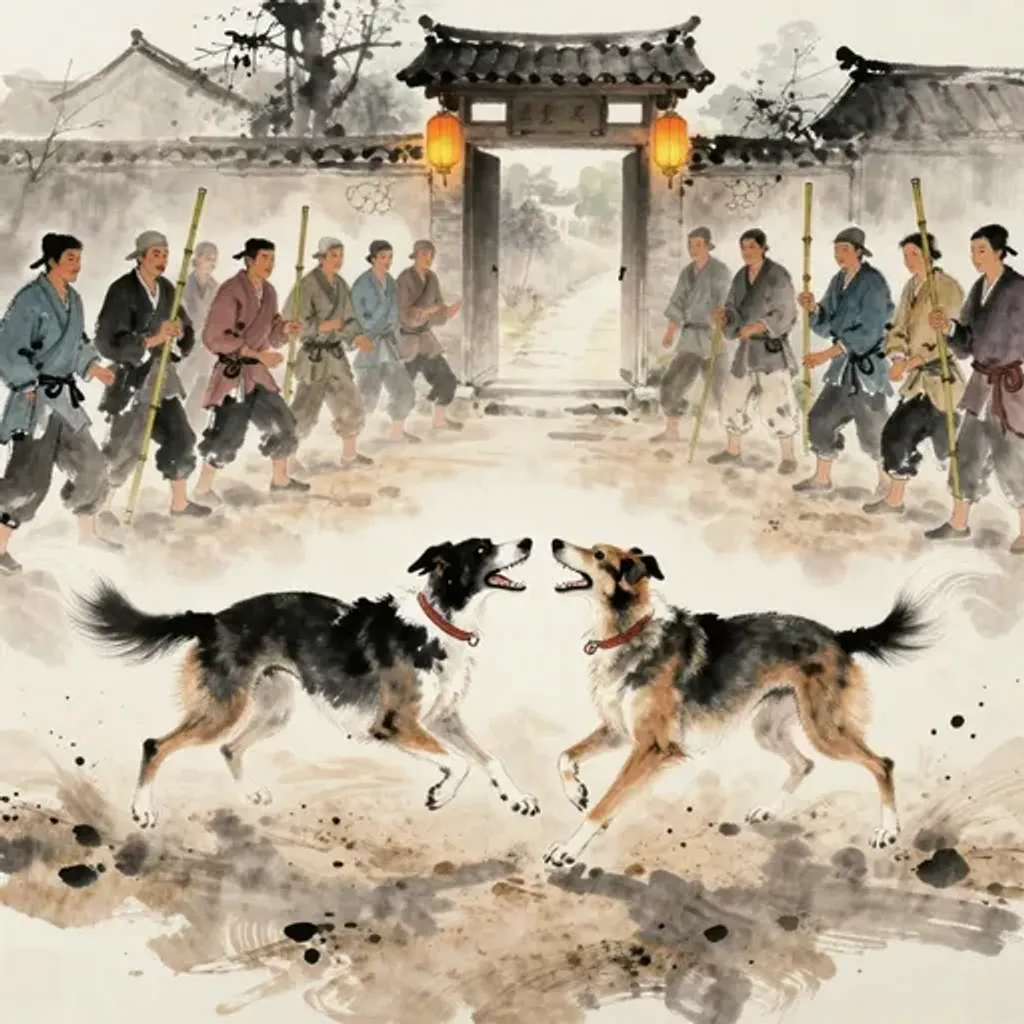
兩犬爭鬭,股瘡无處。不成仇讎,行解邪去。
Two dogs fight and struggle; wounds cover their haunches without relief. Yet they do not become true enemies; the conflict resolves and evil departs.
— Jiao Yanshou, Yilin (Forest of Changes), 1st century BC
Commentary
Wind over water scatters cohesion, and here two dogs fight savagely, leaving wounds on their flanks and thighs. Yet the verse pivots: the conflict does not harden into lasting enmity. The brawl exhausts itself, hostility disperses, and what seemed like sworn vendetta simply walks away. Cloud and thunder mingle in Difficulty at the Beginning — the chaos of birth, where opposing forces clash before finding their form. From Dispersion to Difficulty at the Beginning, the transformation reveals that scattering an entrenched conflict allows raw, unstructured energy to emerge. The dogs' quarrel, painful but finite, clears the ground for a new configuration — messy, unresolved, but no longer poisoned by old grudges.
渙 → 蒙
Hexagram 59 → Hexagram 4: Youthful Folly
Changing lines: 5
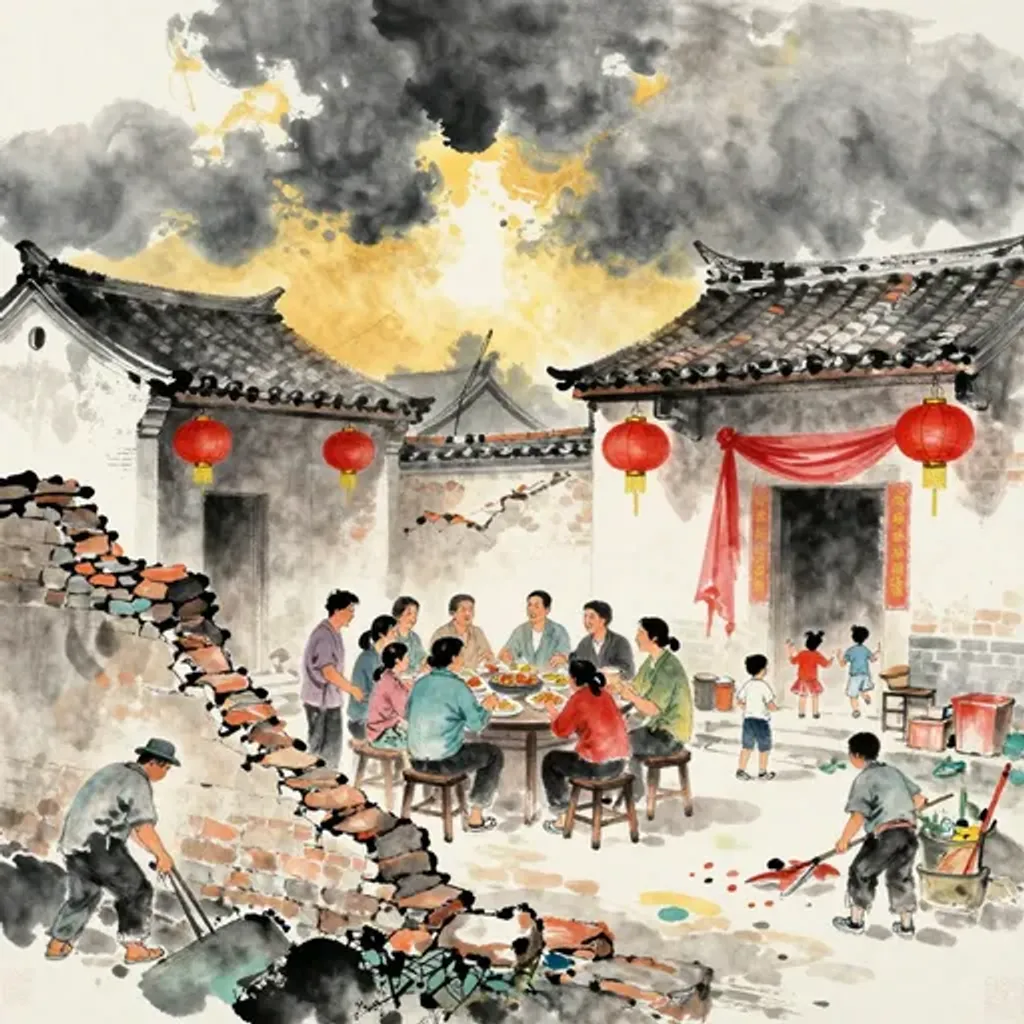
因禍受福,喜盈其室,求事皆得。
From disaster comes blessing; joy fills the household. All that was sought is obtained.
— Jiao Yanshou, Yilin (Forest of Changes), 1st century BC
Commentary
Wind sweeps across water, dissolving old structures — and from that dissolution, unexpected blessings arrive. The verse declares that misfortune itself becomes the vehicle of fortune: joy fills the household, and every undertaking succeeds. This is the paradox of creative destruction, where loss of the familiar opens a door that rigidity had sealed. Mountain over water, Youthful Folly's image, shows the spring emerging fresh at the mountain's base — innocence born from confusion. From Dispersion to Youthful Folly, the transformation captures the moment when scattered fragments reassemble into something naively hopeful. The household's joy is not earned through mastery but discovered through the willingness to let disaster teach.
渙 → 需
Hexagram 59 → Hexagram 5: Waiting
Changing lines: 1, 3, 6
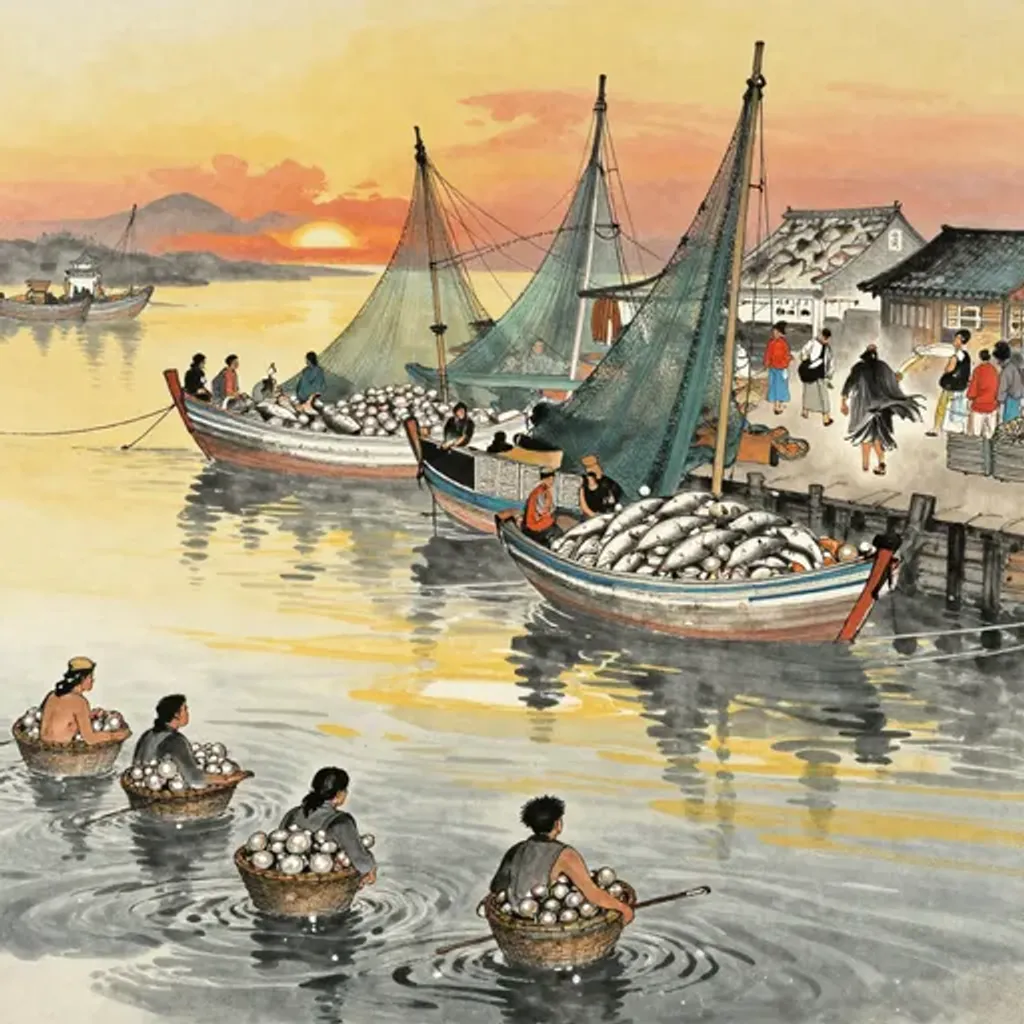
江多寶珠,海多大魚。疾行亟至,可以得財。
The river holds many pearls; the sea teems with great fish. Travel swiftly and arrive quickly; wealth may be obtained.
— Jiao Yanshou, Yilin (Forest of Changes), 1st century BC
Commentary
Wind scatters the water's surface, revealing what lies beneath — rivers teeming with pearls, seas thick with great fish. The verse urges swift action: move quickly and wealth can be seized. This is no patient waiting but an alert response to abundance made visible by dispersion. Clouds gathering over heaven form the image of Waiting — yet the verse inverts the expected posture, counseling speed rather than stillness. From Dispersion to Waiting, the paradox resolves: only the one who recognizes the right moment acts decisively within the larger pattern of patient timing. The pearls and fish were always there; dispersion merely exposed them. Knowing when patience ends and action begins is the true art of waiting.
渙 → 訟
Hexagram 59 → Hexagram 6: Conflict
Changing lines: 4
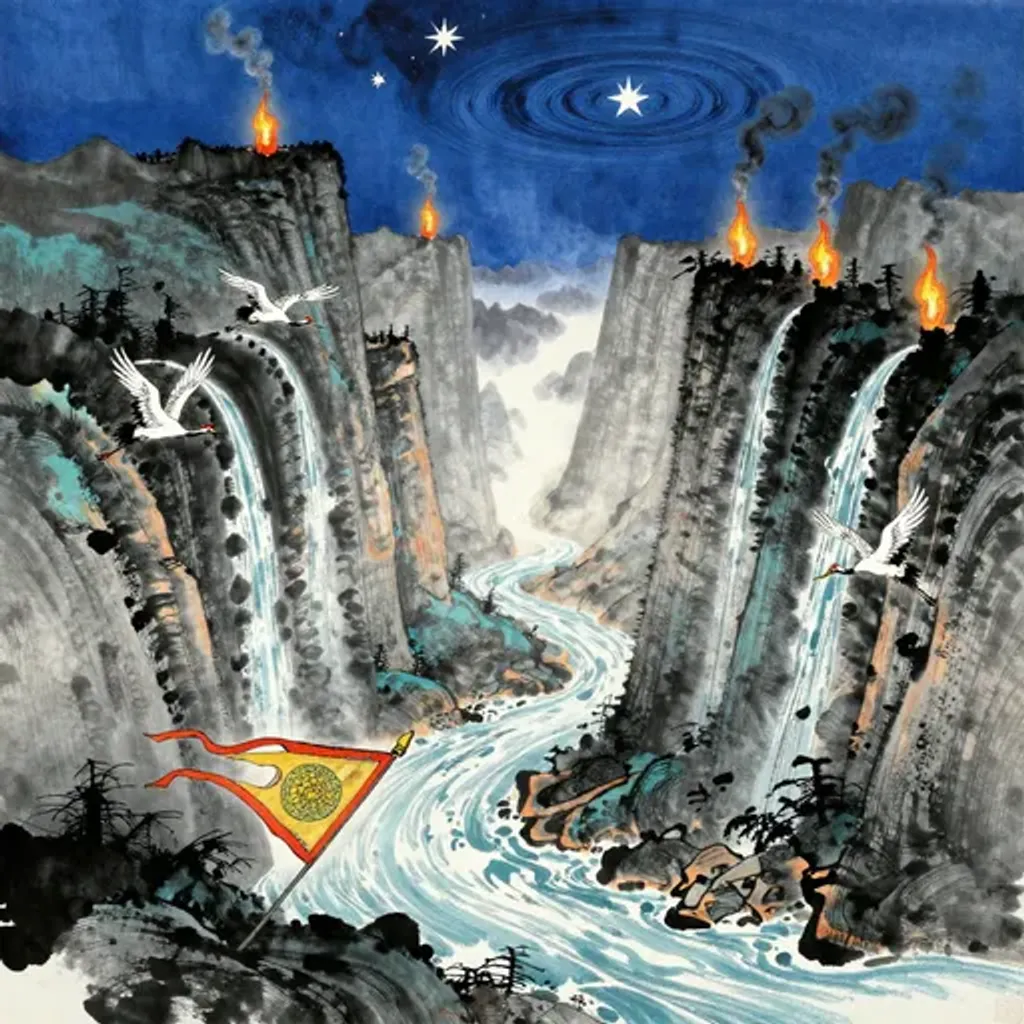
二牛生狗,以戌為母。荊夷上侵,姬伯出走。
Water flows backward up the mountain; cranes cry as they plunge into the abyss. Strange omens appear in succession — wolf-smoke rises from the frontier. The king's banner is rolled up in retreat toward the southern rivers.
— Jiao Yanshou, Yilin (Forest of Changes), 1st century BC
Commentary
Wind over water — but here the original verse must be read. Two oxen beget a dog, with the dog-branch xu as its mother: an impossible birth signals cosmic inversion. The Jing and Yi barbarians press northward, and the Ji-surnamed lord flees south. This echoes the fall of the Western Zhou, when the Quanrong invasion drove the royal house eastward and peripheral peoples overran the heartland. Heaven and water moving in opposition form the image of Conflict — forces that should cooperate instead pulling apart. From Dispersion to Conflict, the scattering of cohesion becomes open confrontation: the center cannot hold, and what disperses is not tension but the social order itself. The lord's flight is the bitter fruit of dissolution turned adversarial.
渙 → 師
Hexagram 59 → Hexagram 7: The Army
Changing lines: 5, 6
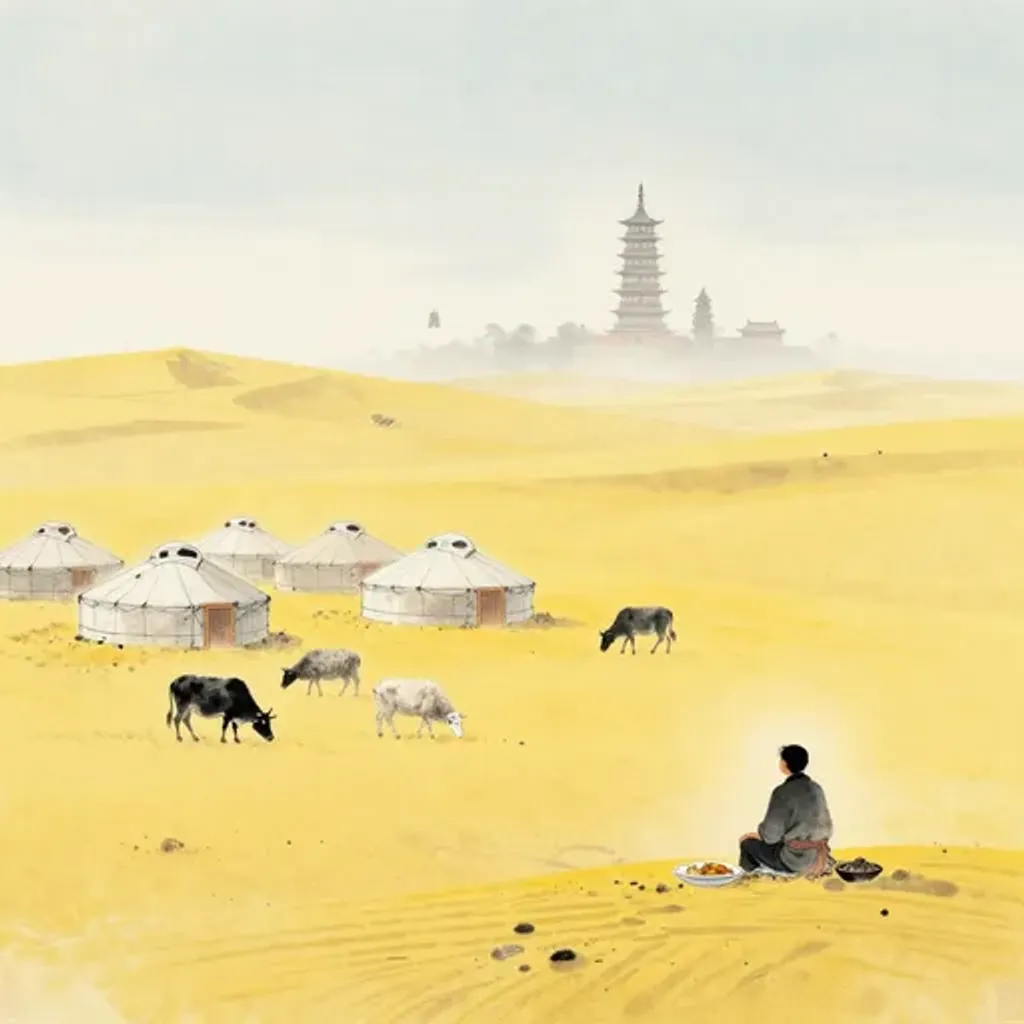
安息康居,異國穹廬。非吾習俗,使我心憂。
Yellow desert sand stretches without end; in round tents among cattle and sheep, no one marks the autumn. Foreign food is strange and harsh — in dreams I still hear the bells of my homeland.
— Jiao Yanshou, Yilin (Forest of Changes), 1st century BC
Commentary
Wind disperses over water, and here the original verse speaks the traveler's anguish directly. Anxi and Kangju — the Parthian and Central Asian kingdoms along the Silk Road — with their domed yurts and alien customs, weigh upon the heart. 'These are not my ways; they make me grieve.' The verse captures the homesickness of a Han envoy or captive stranded among nomadic peoples, where round felt tents replace tiled roofs and mutton replaces millet. Earth concealing water within, the Army's image, speaks of disciplined multitudes held in formation — the organized response to disorder. From Dispersion to the Army, exile's grief transforms into the collective discipline of endurance: the scattered individual finds structure not in homecoming but in the soldier's stoic bearing far from home.
渙 → 比
Hexagram 59 → Hexagram 8: Holding Together
Changing lines: 2, 6
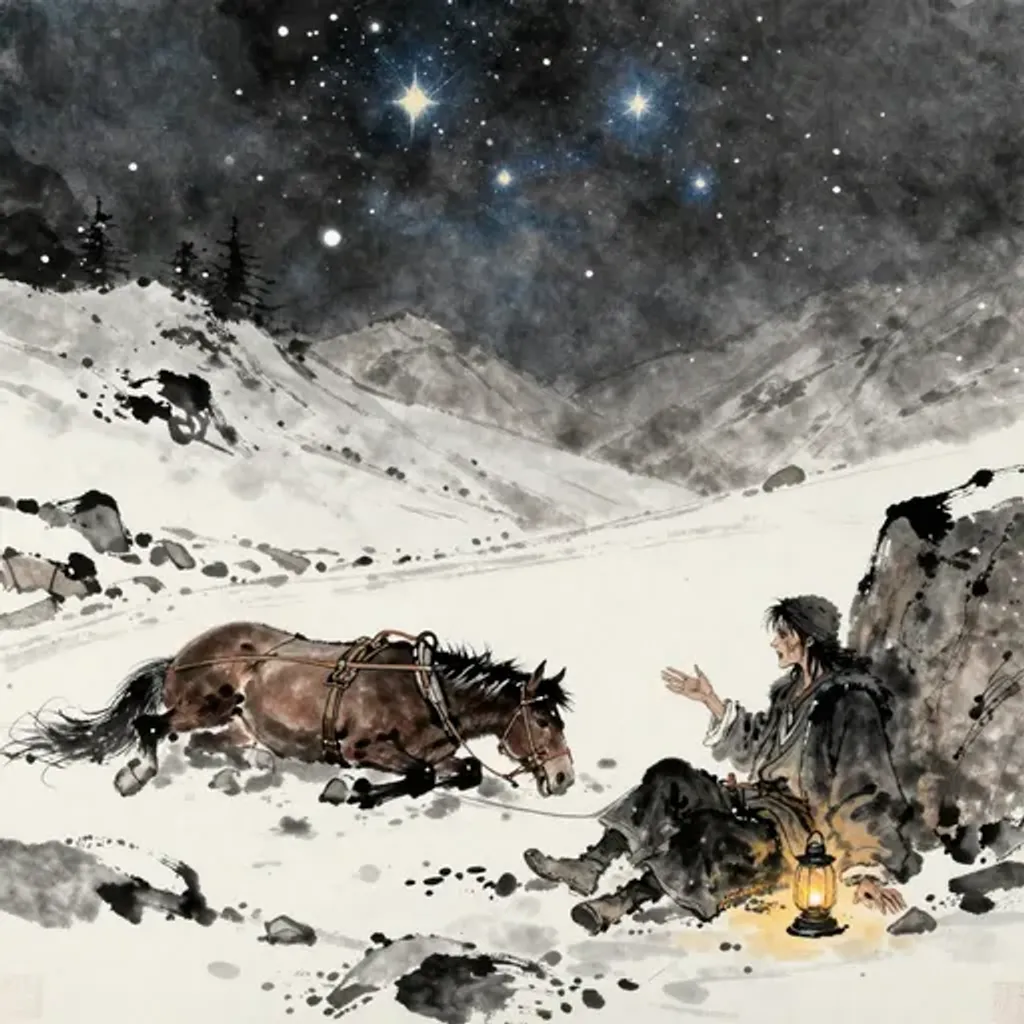
行觸天罡,馬死車傷。身无聊賴,困窮乞糧。
Traveling one collides with the Tiangang star; the horse dies and the cart is wrecked. With nothing left to rely upon, destitute and begging for grain.
— Jiao Yanshou, Yilin (Forest of Changes), 1st century BC
Commentary
Wind scatters across water, and here the traveler collides with the celestial Great Bear — Tiangang, the cosmic obstacle. The horse dies, the carriage shatters, and the wanderer is left destitute, begging for grain with no one to lean on. This is dispersion at its most brutal: not gentle dissolution but violent collision with forces beyond human scale. Water resting upon earth forms the image of Holding Together — community, mutual support, the bonds that prevent isolation. From Dispersion to Holding Together, the transformation is bitterly ironic: the verse depicts exactly what happens when those bonds are absent. Without fellowship, the scattered individual breaks against the indifferent cosmos. The plea for grain is a plea for belonging.
渙 → 小畜
Hexagram 59 → Hexagram 9: Small Taming
Changing lines: 1, 3
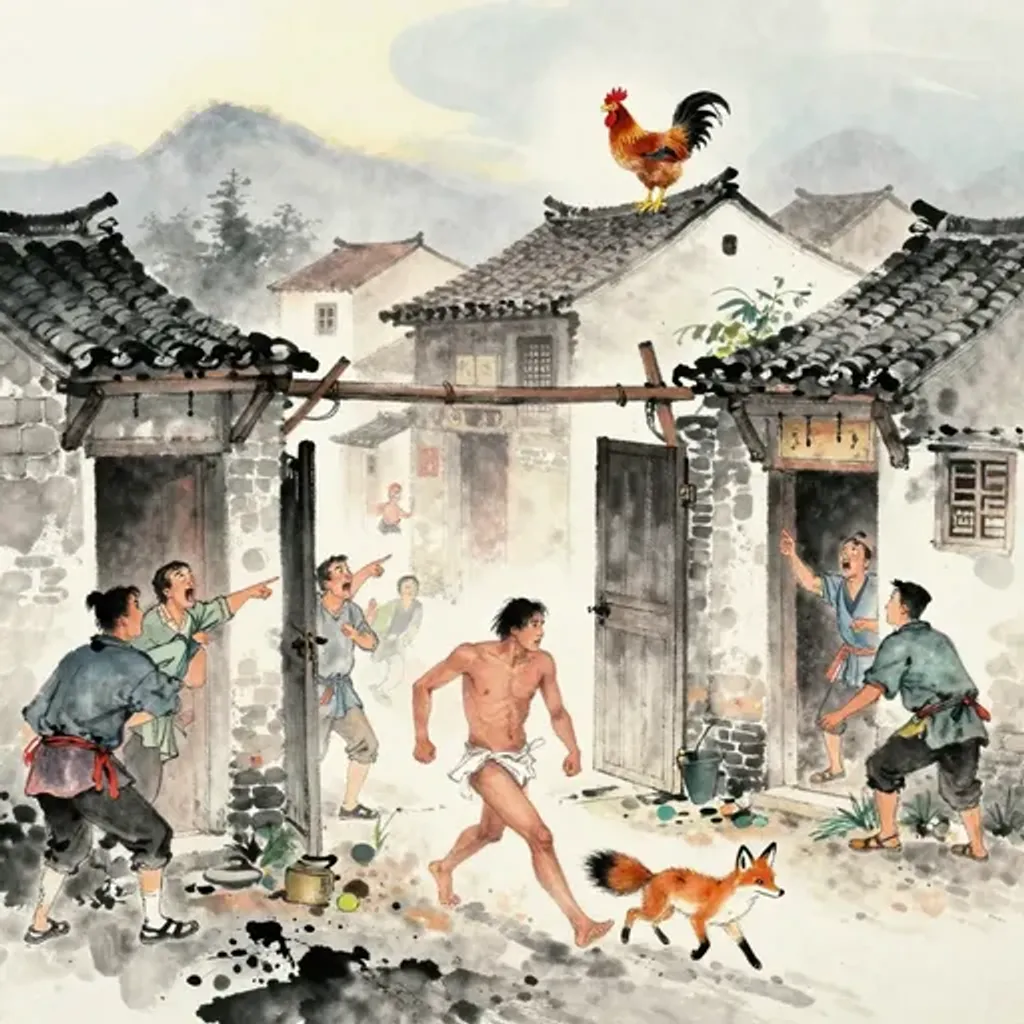
裸裎逐狐,為人觀笑。牝雞司晨,主作亂門。
Naked one chases the fox, becoming a spectacle for mockery. When the hen crows at dawn, the household falls to disorder.
— Jiao Yanshou, Yilin (Forest of Changes), 1st century BC
Commentary
Wind over water scatters propriety itself. A man chases a fox while naked, becoming a spectacle of public ridicule. Then the verse invokes the classical warning from the Book of Documents: 'When the hen crows at dawn, the household is finished.' This is the image of inversion — authority held by those who should not wield it, dignity abandoned by those who should maintain it. Wind rides above heaven in Small Taming, gently restraining creative force through cultural refinement. From Dispersion to Small Taming, the verse warns that when dissolution goes unchecked, the gentle restraints of civilization collapse. The naked fox-chaser and the crowing hen are two faces of the same failure: the small accumulations of propriety, once dispersed, leave only absurdity.
渙 → 履
Hexagram 59 → Hexagram 10: Treading
Changing lines: 1, 4
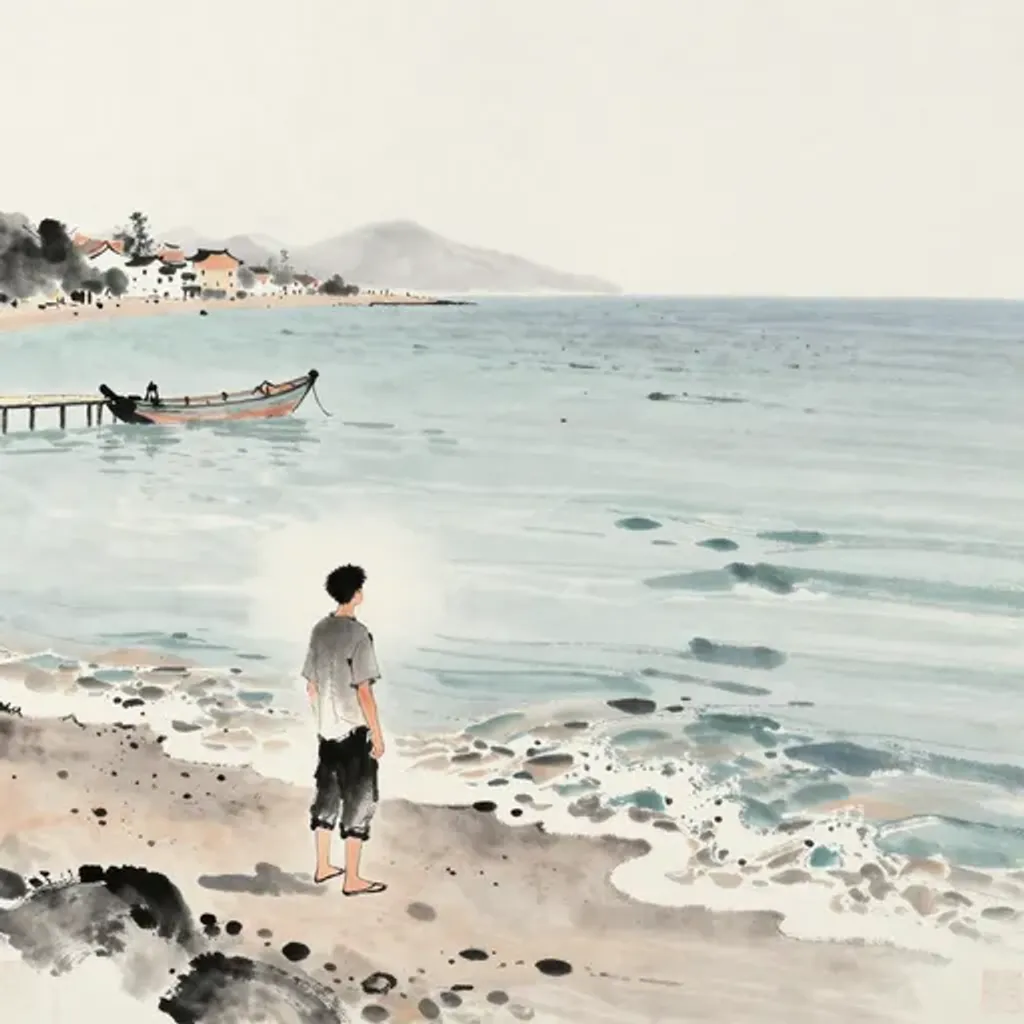
為季求婦,家在東海。水長无船,不見所觀。
Seeking a bride for the youngest son; her home lies at the Eastern Sea. The waters are vast and there is no boat; what was hoped for cannot be seen.
— Jiao Yanshou, Yilin (Forest of Changes), 1st century BC
Commentary
Wind over water hints at a journey across wide expanses, and here someone seeks a bride for the youngest son. Her family lives beyond the Eastern Sea — an impossibly distant match. The waters stretch endlessly with no boat in sight, and the one he hoped to meet remains invisible. This is longing frustrated by sheer distance, desire scattered by the vastness between. Heaven above the lake forms the image of Treading — walking carefully along a path that demands propriety and awareness of one's position. From Dispersion to Treading, the transformation suggests that scattered aspirations must submit to the discipline of proper conduct. The bride beyond the sea cannot be reached by mere wishing; one must first assess whether the path is even walkable.
渙 → 泰
Hexagram 59 → Hexagram 11: Peace
Changing lines: 1, 3, 5, 6
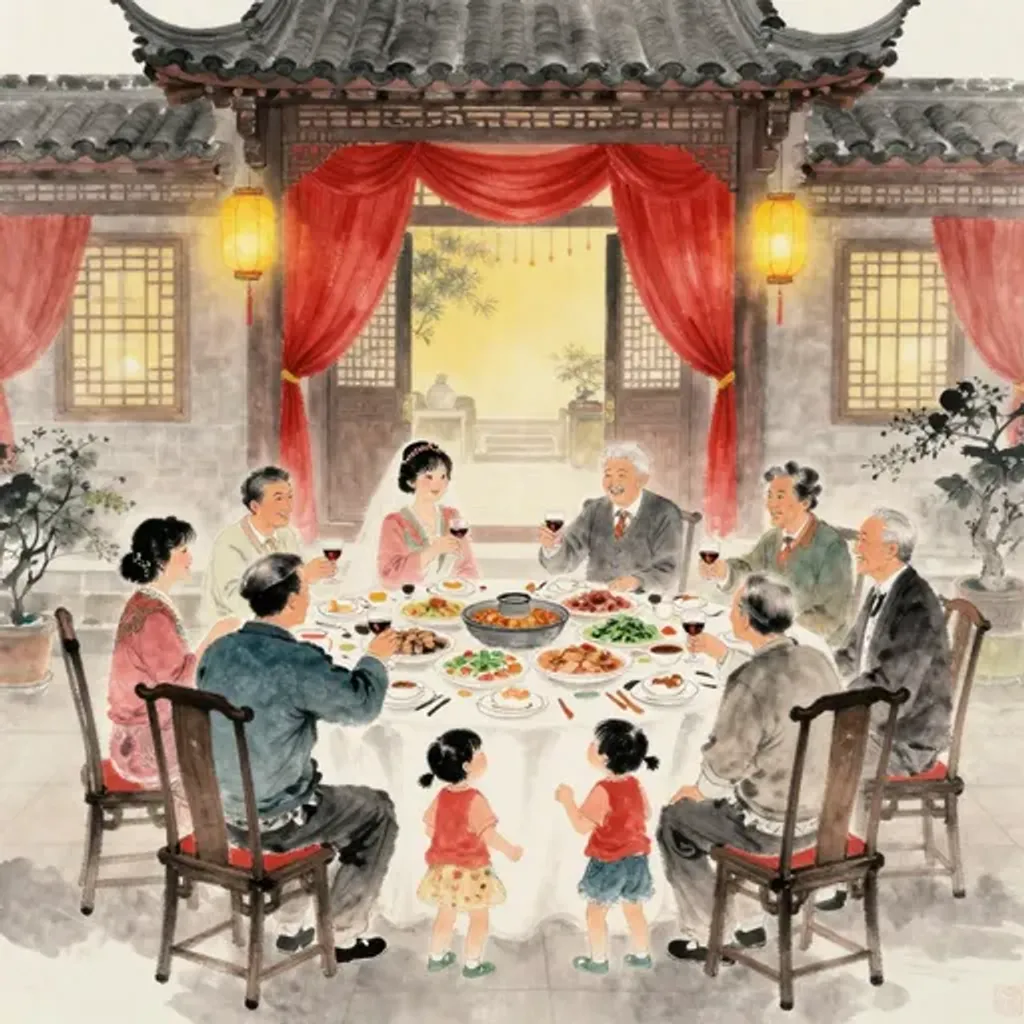
男女合室,二姓同食。婚姻孔云,宜我多孫。
Man and woman share one chamber; two surnames eat at one table. This marriage is greatly blessed; it will bring us many grandchildren.
— Jiao Yanshou, Yilin (Forest of Changes), 1st century BC
Commentary
Wind disperses over water, but here the waters merge in celebration. Man and woman share a household, two surnames eat at one table — marriage unites what was separate. The verse invokes the classical blessing: the union is auspicious, promising abundant descendants. This echoes the Shijing's celebration of fertile, harmonious wedlock. Earth below, heaven above descend to meet in Peace — the trigrams exchanging energies in perfect communion. From Dispersion to Peace, the scattering of individual isolation gives way to the most fundamental human gathering. What wind scattered, marriage reassembles: two streams converging into one household, the very opposite of dissolution.
渙 → 否
Hexagram 59 → Hexagram 12: Standstill
Changing lines: 2, 4
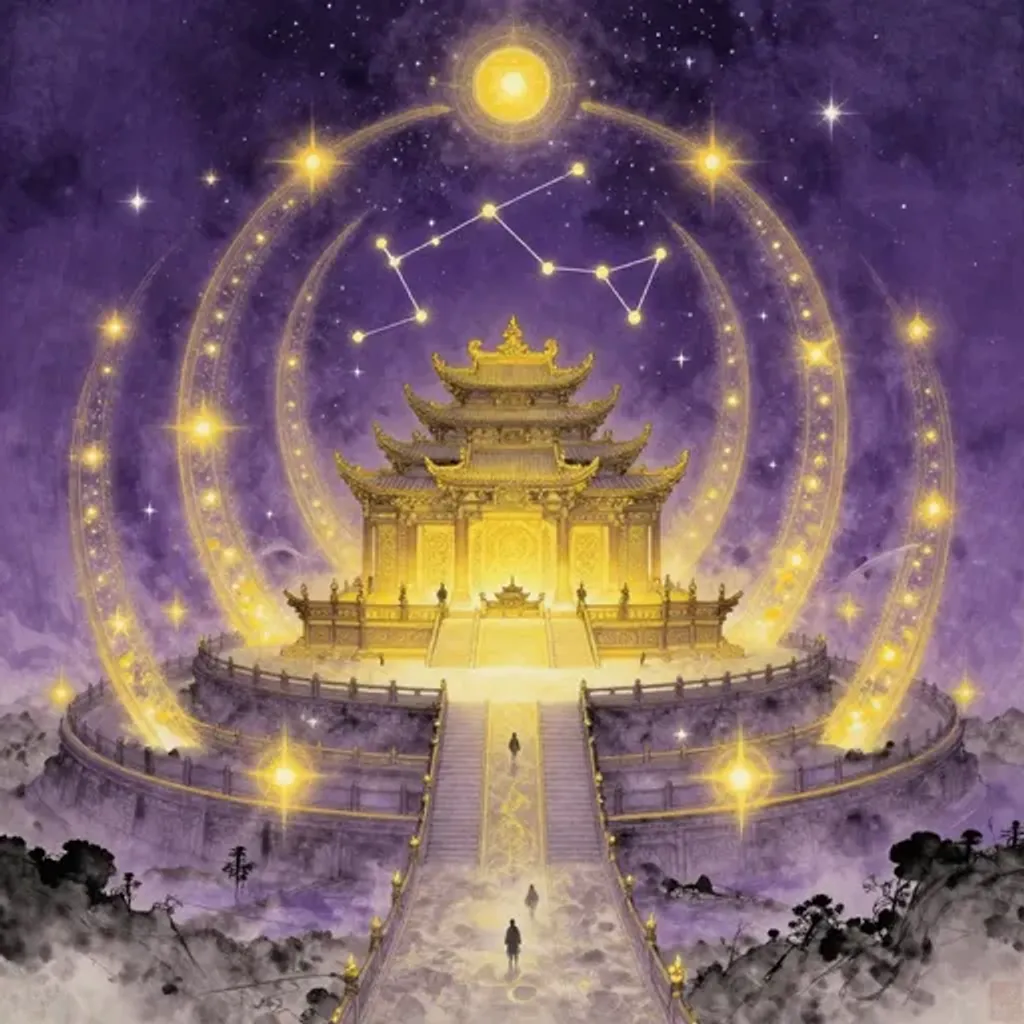
太微帝室,黃帝所直。藩屏周衛,不可得入。常安常存,終无禍患。
Taiwei, the Emperor's celestial chamber, where the Yellow Emperor resides. Screen walls and guards encircle it; none can enter there. Forever safe, forever enduring; in the end no disaster befalls.
— Jiao Yanshou, Yilin (Forest of Changes), 1st century BC
Commentary
Wind moves over water, yet here the verse looks skyward to the Supreme Palace enclosure — Taiwei, the celestial court where the Yellow Emperor presides among the stars. Screens and guards ring the astral throne; no intruder can penetrate. Enduring safety, perpetual existence, and freedom from calamity are assured. In Han astronomical thought, Taiwei represented the cosmic bureaucracy's inner sanctum, its stars mapping imperial governance onto the heavens. Heaven above earth, refusing to mingle, forms the image of Standstill — sealed separation as protection. From Dispersion to Standstill, the transformation reveals a paradox: sometimes the wisest response to scattering forces is to close the gates entirely. The celestial palace endures precisely because it admits nothing that might dissolve its order.
渙 → 同人
Hexagram 59 → Hexagram 13: Fellowship
Changing lines: 1, 2, 3, 4
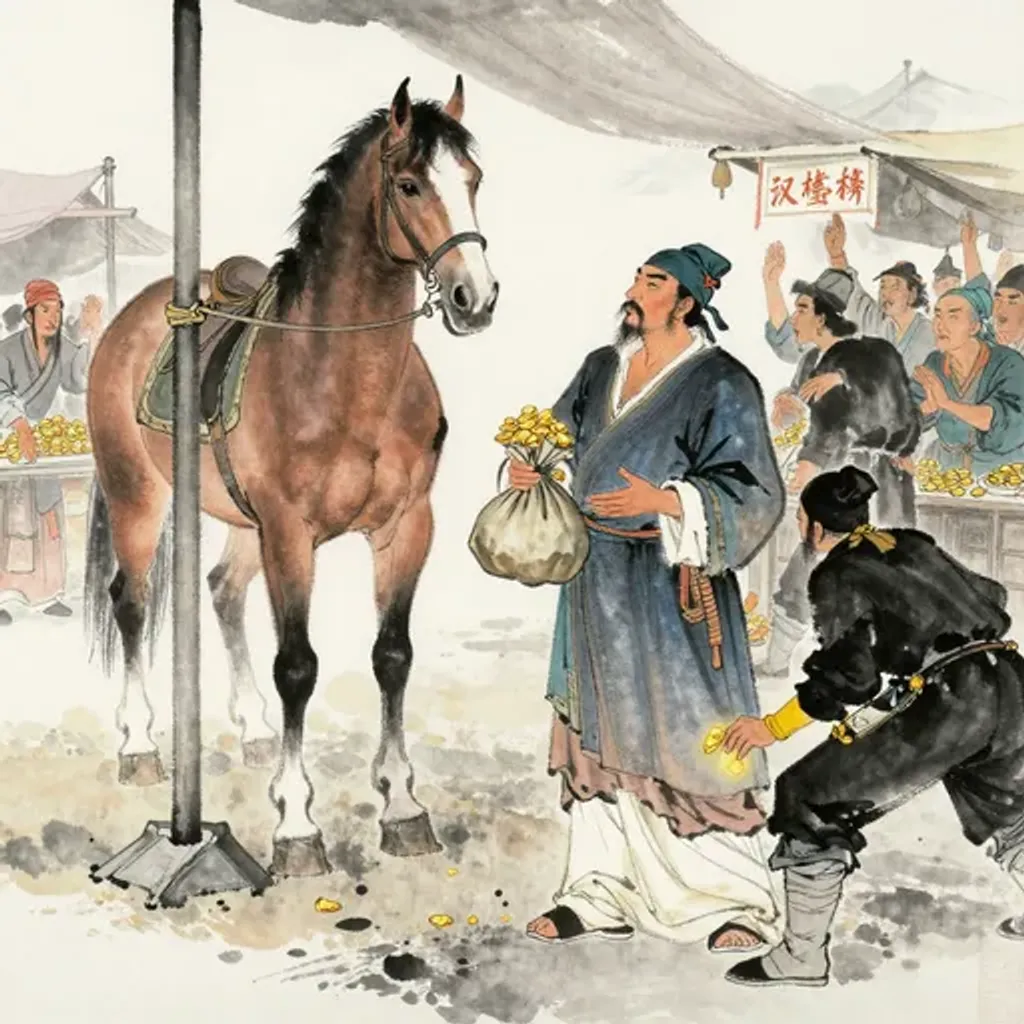
齎金觀市,欲買騮子。猾偷竊發,盜我黃寶。
Bringing gold to survey the market, wishing to buy a bay horse. A cunning thief strikes unseen, stealing my yellow treasure.
— Jiao Yanshou, Yilin (Forest of Changes), 1st century BC
Commentary
Wind scatters the water's surface, and here a man carries gold to market intending to buy a fine bay horse. But a cunning thief strikes first, stealing his yellow treasure before the transaction is complete. The open marketplace — where strangers mingle and goods change hands — is precisely where dispersion creates vulnerability. Heaven and fire together form the image of Fellowship, where like recognizes like across difference. From Dispersion to Fellowship, the verse delivers a sharp warning: fellowship requires discernment. Entering the market with gold displayed is an act of naive openness; the thief exploits the gap between trust and vigilance. True fellowship is not indiscriminate mixing but knowing whom to gather with and whom to guard against.
渙 → 大有
Hexagram 59 → Hexagram 14: Great Possession
Changing lines: 1, 3, 4, 5
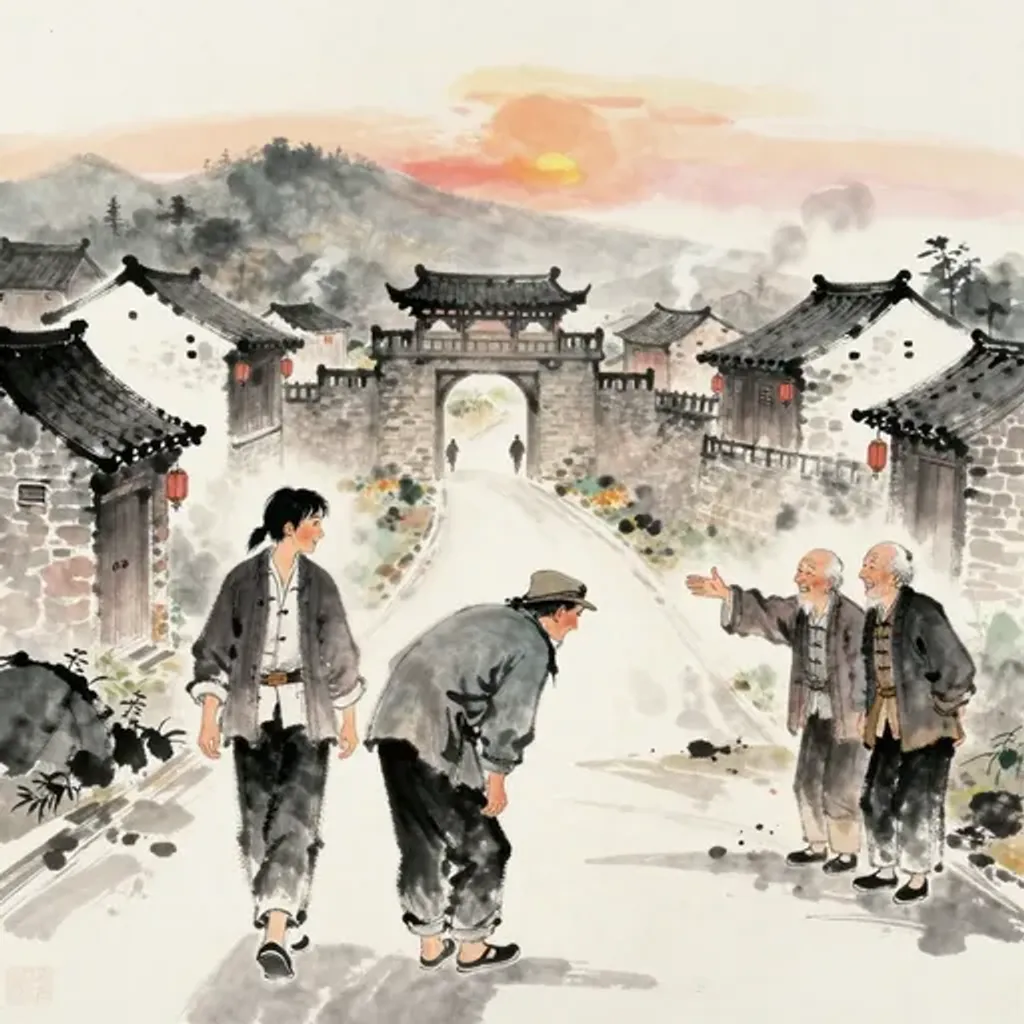
三人俱行,欲歸故鄉。望邑入門,拜見家懽。
Three people travel together, longing to return to their homeland. Seeing the town, they enter the gate, bowing before their joyful family.
— Jiao Yanshou, Yilin (Forest of Changes), 1st century BC
Commentary
Wind over water scatters travelers far from home, but here three companions journey together, yearning to return to their native place. They catch sight of the town walls, enter the gate, and greet their family with joy. The 'three men traveling' is a common Yilin motif, possibly alluding to the three founders of Zhou — the Duke of Zhou, Duke of Shao, and Taigong — returning from campaign to establish governance. Fire blazing above heaven forms the image of Great Possession: abundance illuminated for all to see. From Dispersion to Great Possession, the journey home after scattering becomes the gathering of great fortune. What was dispersed returns enriched, and the household that receives the travelers overflows with celebration.
渙 → 謙
Hexagram 59 → Hexagram 15: Modesty
Changing lines: 2, 3, 5, 6
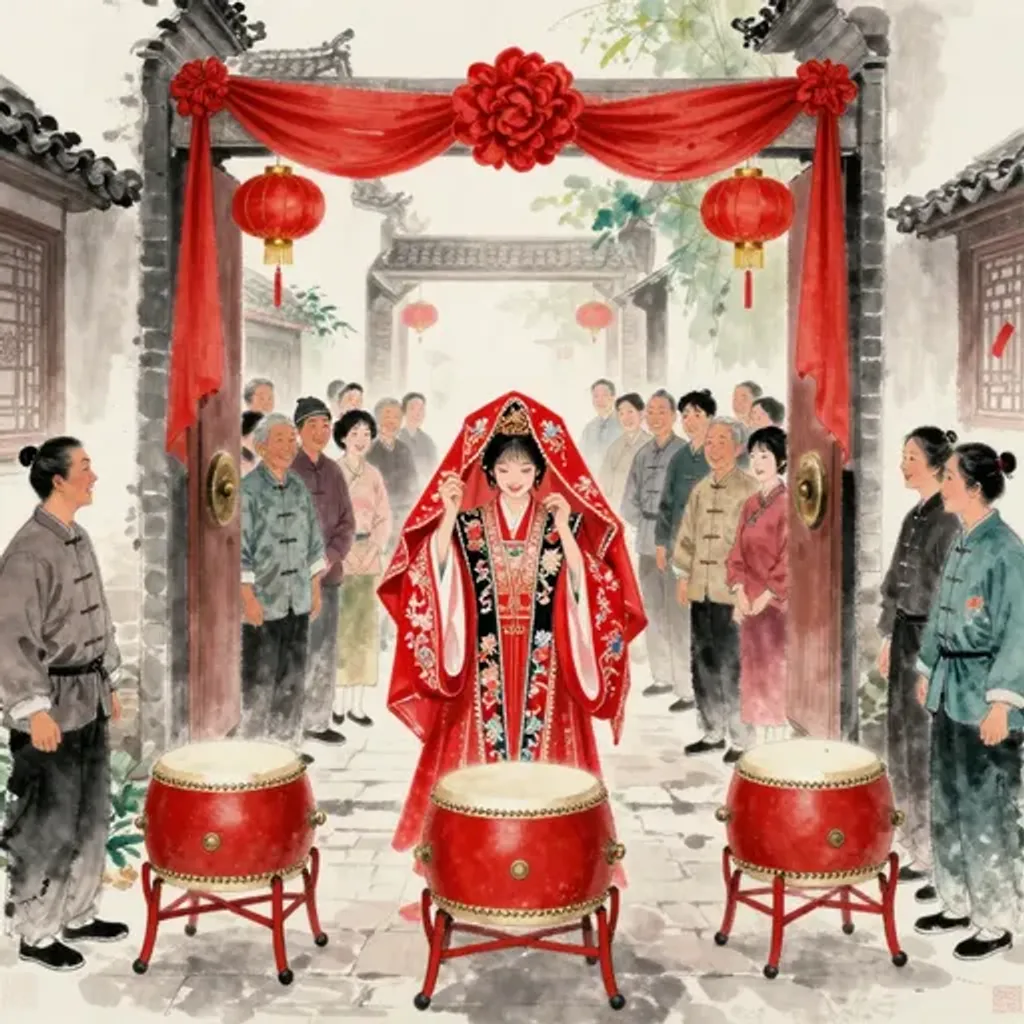
娶於姜呂,駕迎新婦。少齊在門,夫子悅喜。
The bridal sedan passes through the lane, gongs and drums sounding. Both families hang red silk before their gates. The bride steps down and lifts her veil — in the courtyard, old and young are beaming.
— Jiao Yanshou, Yilin (Forest of Changes), 1st century BC
Commentary
Wind over water disperses — but here the original verse reassembles scattered elements into a joyful wedding. The bride is taken from the Jiang and Lu clans, the chariot drives forth to welcome the new wife, and the young bride of Qi stands at the gate as the master beams with delight. Marriage into the Jiang clan recalls the ancient alliance between the Zhou and Qi ruling houses, a union that stabilized the realm. Earth concealing a mountain within forms the image of Modesty — greatness that does not announce itself. From Dispersion to Modesty, the scattered social fabric reconstitutes through humble, proper ceremony. The bride at the gate embodies Modesty's dynamic: abundance arriving quietly, without ostentation, to fill the household.
渙 → 豫
Hexagram 59 → Hexagram 16: Enthusiasm
Changing lines: 2, 4, 5, 6
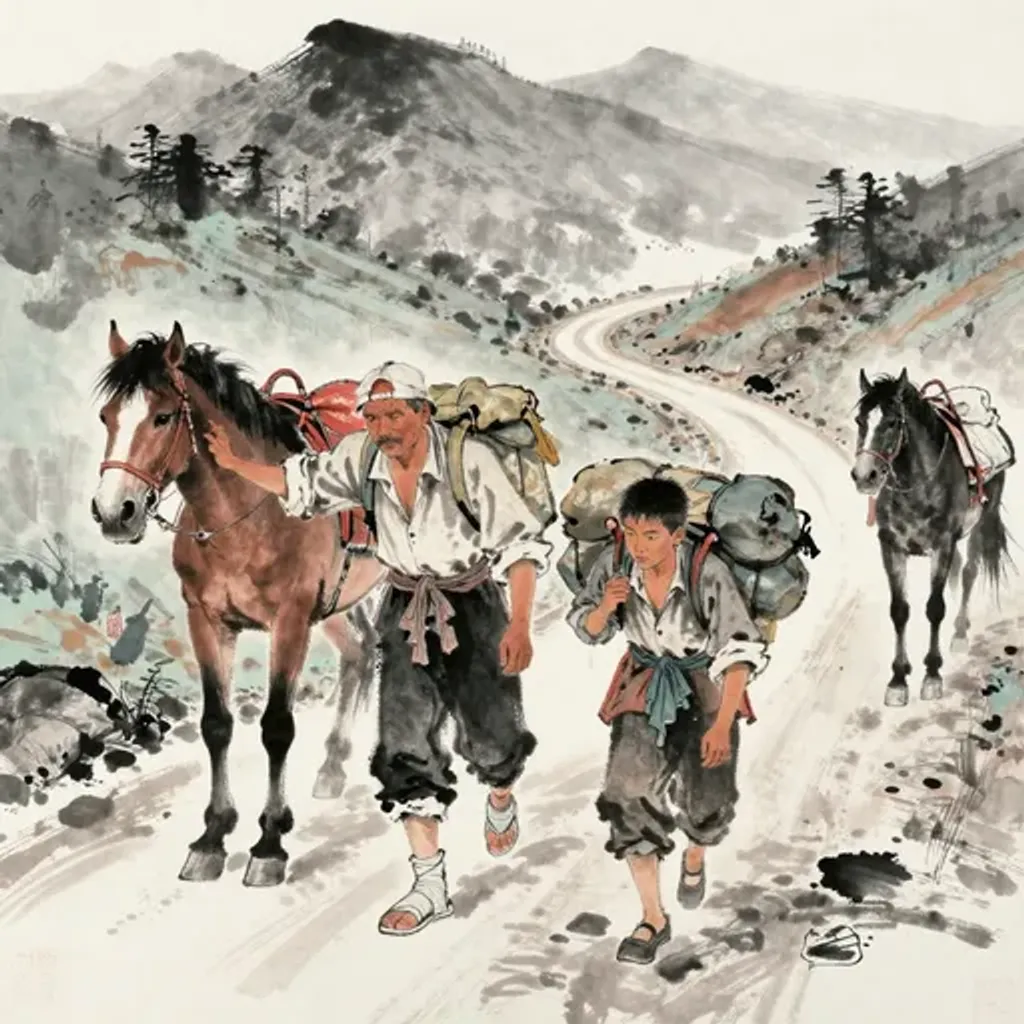
伯仲旅行,南求大䍧。長孟病足,倩季負囊。柳下之貞,不失驪黃。
The elder and second brother travel together, seeking great rams in the south. The eldest has an injured foot, so the youngest carries the packs. With the integrity of Liu Xia, they do not lose sight of bay and black.
— Jiao Yanshou, Yilin (Forest of Changes), 1st century BC
Commentary
Wind over water scatters a band of brothers southward. The eldest and second brother travel together seeking a great ram, but the eldest falls lame and the youngest must shoulder the baggage. Then the verse pivots to 'Liuxia's constancy' — the rectitude of Liuxia Hui, the Spring and Autumn sage renowned for holding firm to principle regardless of circumstance. His steadfastness ensures that essentials are preserved even as appearances shift, 'not losing the dark and the yellow' — a horse-judging idiom meaning one does not mistake the substance for the surface. Thunder rising from the earth forms the image of Enthusiasm. From Dispersion to Enthusiasm, the brothers' scattered fortunes are redeemed by principled constancy: even when the strongest falters, the youngest bears forward, and Liuxia's unshakable integrity keeps the core intact.
渙 → 隨
Hexagram 59 → Hexagram 17: Following
Changing lines: 1, 2, 4, 6
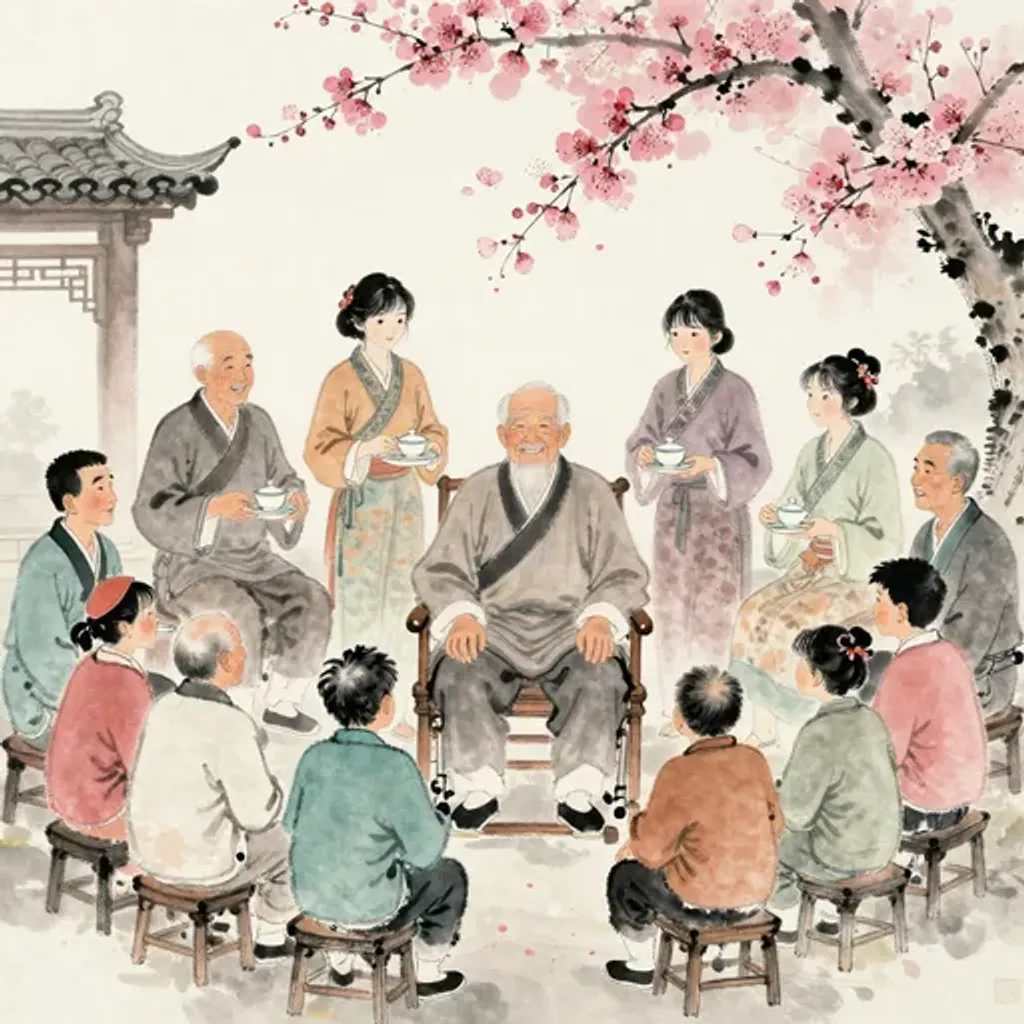
潔身白齒,衰老復起。多孫眾子,宜利姑舅。
Pure body and white teeth; the aged one rises restored. With many grandchildren and sons, it is auspicious for parents-in-law.
— Jiao Yanshou, Yilin (Forest of Changes), 1st century BC
Commentary
Wind disperses over water, yet here the body is cleansed and the teeth shine white — a renewal of youth in old age. The verse promises abundant grandchildren and many sons, auspicious for the in-laws on both sides. This is restoration after scattering: what age and hardship eroded is washed clean and made fresh. The lake resting within thunder creates the image of Following — yielding to the natural rhythm, letting what comes arrive in its season. From Dispersion to Following, dissolution becomes purification. The aged body revived and the household teeming with descendants capture Following's essence: not chasing outcomes but allowing renewal to unfold by releasing what is spent and welcoming what naturally gathers.
渙 → 蠱
Hexagram 59 → Hexagram 18: Work on the Decayed
Changing lines: 3, 5
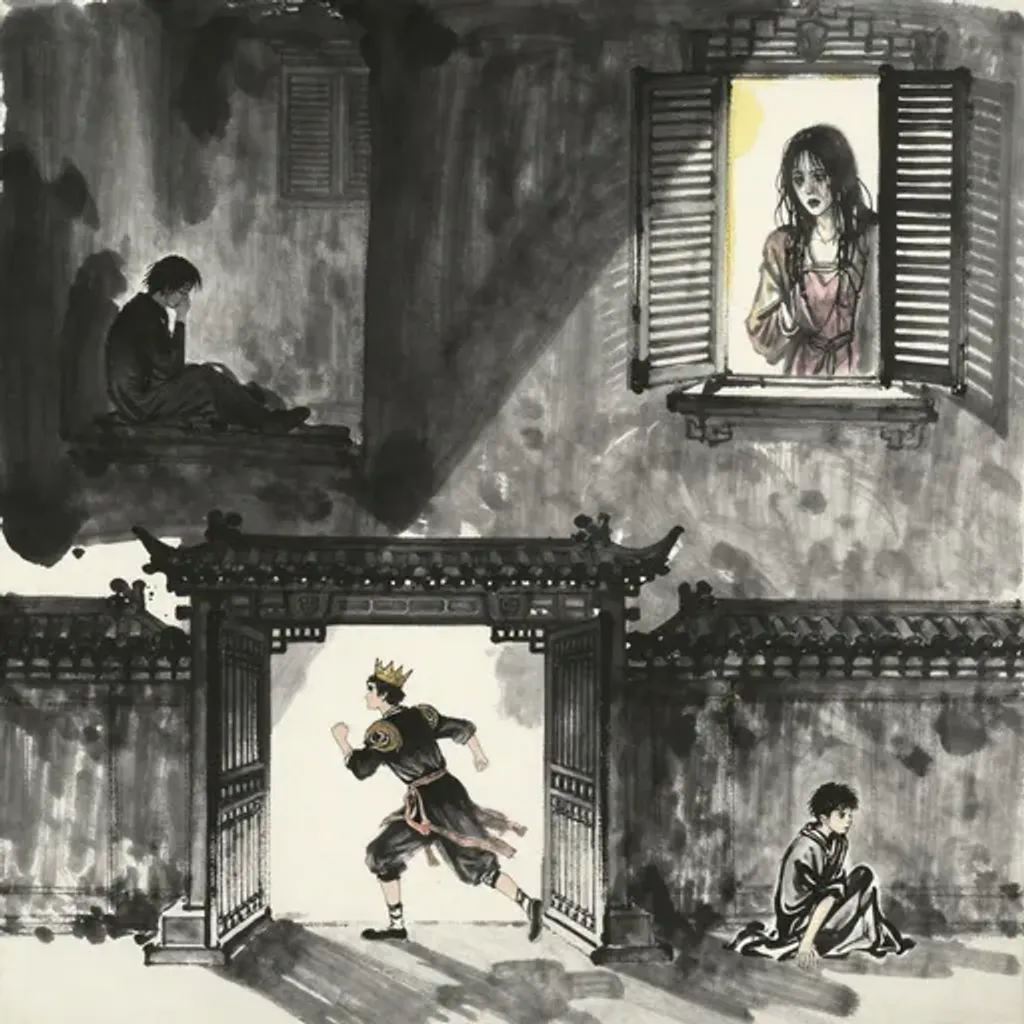
獨宿憎夜,嫫母畏晝。平王逐建,荊子憂懼。
The solitary sleeper hates the night; the ugly woman fears the day. King Ping drove out his heir; the prince of Jing lived in dread.
— Jiao Yanshou, Yilin (Forest of Changes), 1st century BC
Commentary
Wind over water strips away concealment, and here the ugly and the guilty dread exposure. The solitary sleeper hates the night; the legendary ugly woman Mo Mu fears the daylight. Then the verse names a specific historical trauma: King Ping of Chu expelled Crown Prince Jian around 523 BC, swayed by the slanderer Fei Wuji who coveted Jian's intended bride. The prince of Chu — 'Jingzi,' the son of the Jing/Chu state — lived in terror thereafter. Mountain over wind forms the image of Work on the Decayed: corruption that must be exposed and repaired. From Dispersion to Work on the Decayed, scattering reveals the rot beneath — slander, usurpation, and misplaced fear. What daylight and nightfall each expose is the same festering disorder that only deliberate renovation can heal.
渙 → 臨
Hexagram 59 → Hexagram 19: Approach
Changing lines: 1, 5, 6
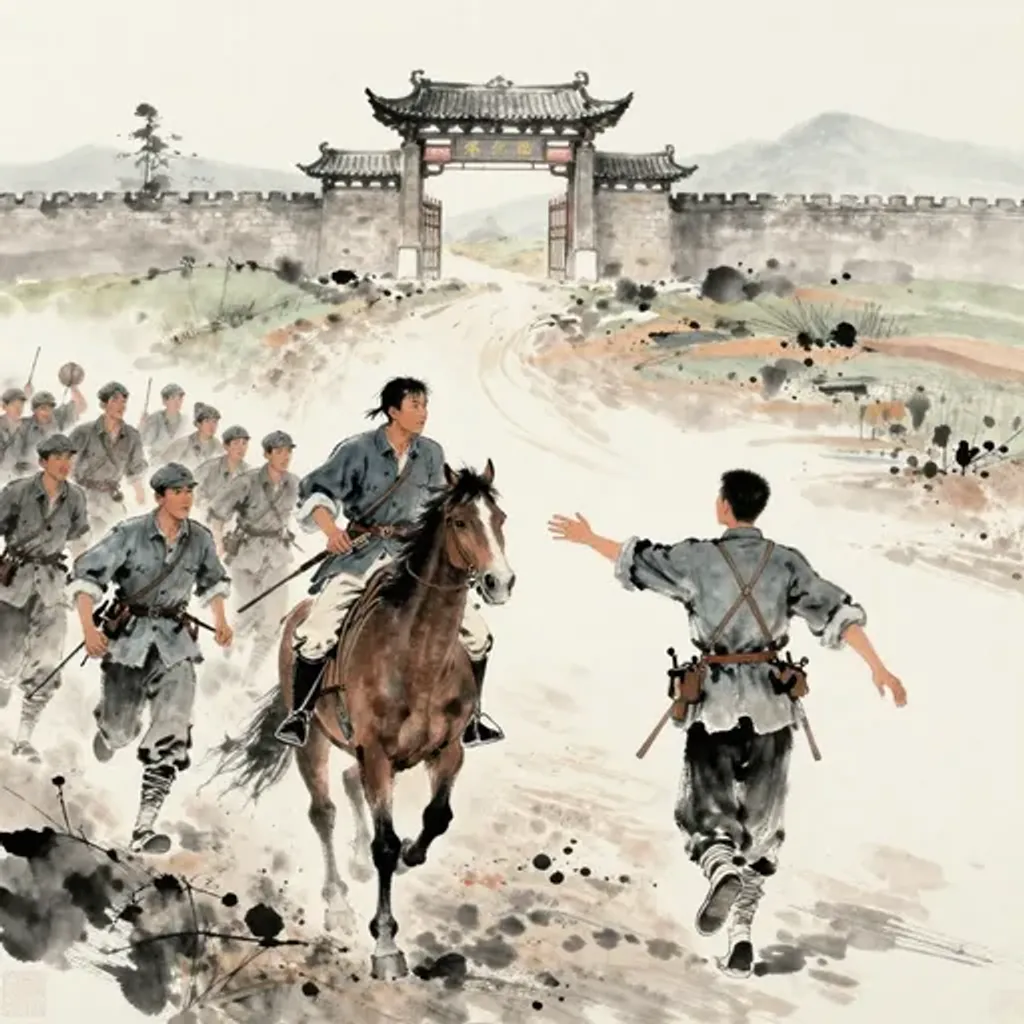
追亡逐北,呼還幼叔。至止而得,復歸其室。
Pursuing the fleeing, chasing the routed; calling back the young uncle. Reaching the destination, he is found; he returns again to his home.
— Jiao Yanshou, Yilin (Forest of Changes), 1st century BC
Commentary
Wind scatters over water, sending people fleeing in all directions — and here someone pursues the defeated northward, calling back a young uncle. The chase succeeds: the fugitive is reached and brought home to his own household. This speaks of recovery after rout, the act of reclaiming what dispersion scattered. Earth above the lake creates the image of Approach — authority drawing near with benevolence, like rising water that reaches the shore at the right moment. From Dispersion to Approach, the dynamic shifts from scattering to gathering-in. The one who pursues the fleeing kinsman embodies Approach's essence: active, compassionate reach that restores the scattered to their proper place before the moment passes.
渙 → 觀
Hexagram 59 → Hexagram 20: Contemplation
Changing lines: 2
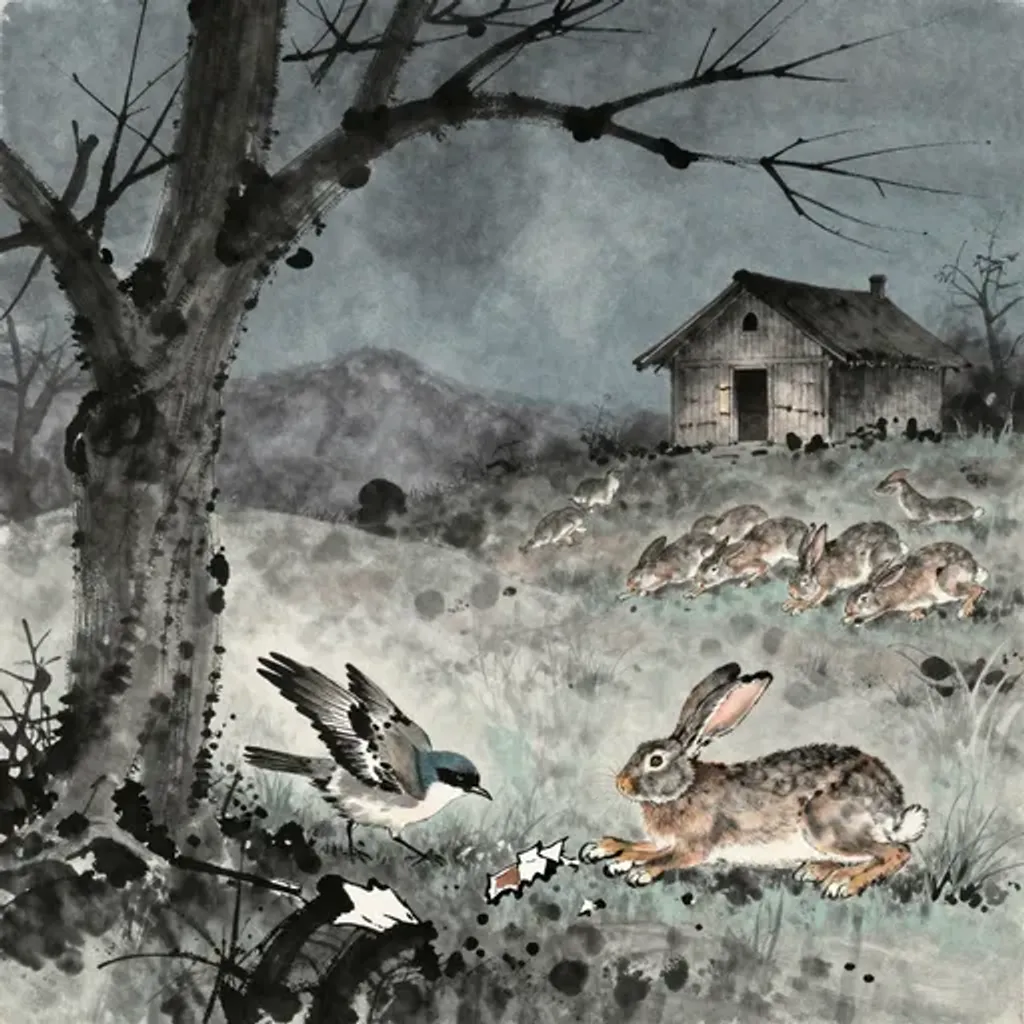
鳥飛无翼,兔走折足。雖欲會同,未得毉功。
A bird flies without wings; a rabbit runs with broken legs. Though one wishes to join the gathering, healing skill cannot be reached.
— Jiao Yanshou, Yilin (Forest of Changes), 1st century BC
Commentary
Wind disperses the water's surface, and here dispersion cripples rather than liberates. A bird has no wings to fly; a rabbit breaks its leg mid-stride. Though one wishes to gather and unite, the healer's art cannot be found. The imagery is stark: capacity for movement destroyed, the tools of connection severed. Wind moving over earth forms the image of Contemplation — the king touring his domain, observing conditions from above. From Dispersion to Contemplation, the transformation suggests that when action fails, clear seeing is what remains. The wingless bird and lame rabbit cannot move, but they can still observe their predicament. Sometimes dispersion leaves one with nothing to do except contemplate the full extent of the damage.
渙 → 噬嗑
Hexagram 59 → Hexagram 21: Biting Through
Changing lines: 1, 2, 4, 5
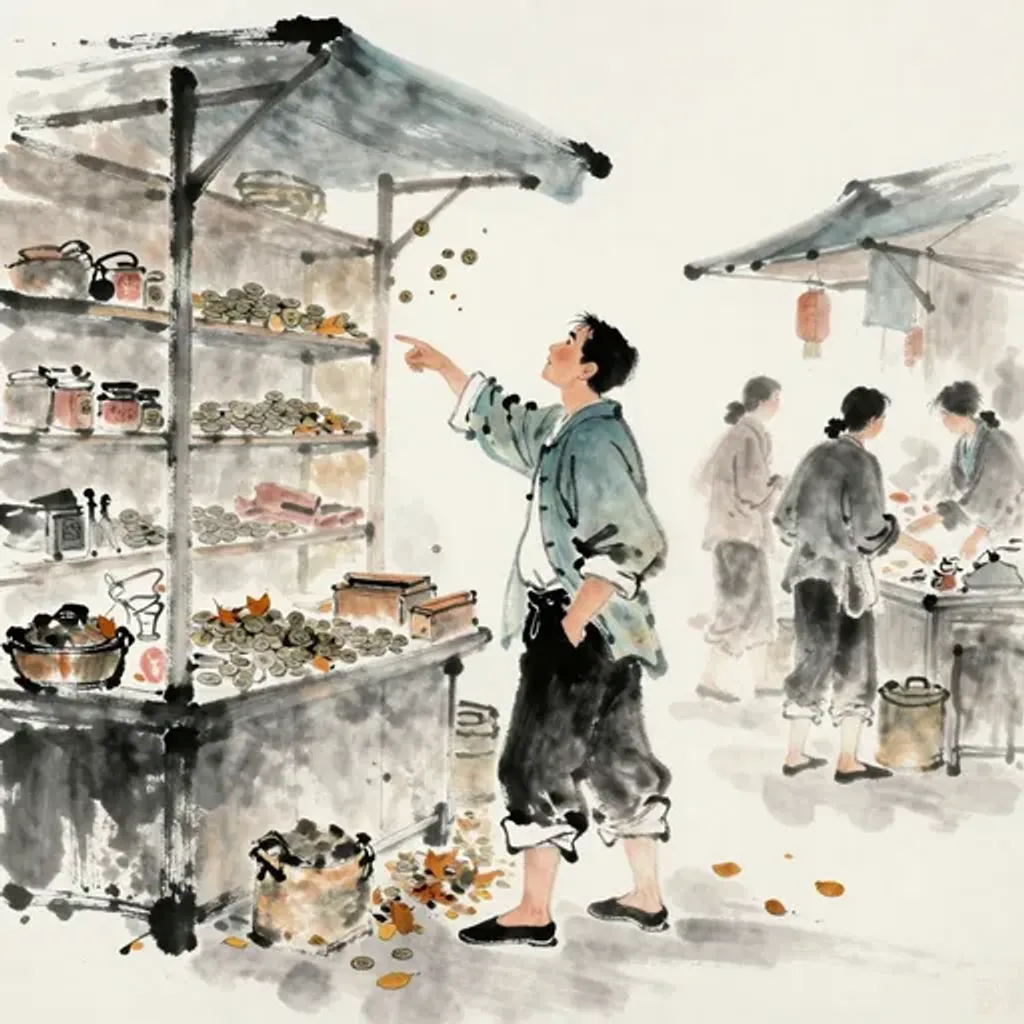
抱空握虛,鳴教我賈,利去不來。
Embracing emptiness, grasping at void; my teacher shows me how to trade. Profit departs and does not return.
— Jiao Yanshou, Yilin (Forest of Changes), 1st century BC
Commentary
Wind over water scatters substance into air. Hands embrace emptiness, arms grasp the void — nothing solid remains. A cry goes out teaching how to trade, but profit departs and never returns. This is commerce in a dispersed world: the goods are phantoms, the lessons hollow, and the gains evaporate. Fire above thunder creates the image of Biting Through — the jaw closing on an obstacle, enforcing order by removing what blocks it. From Dispersion to Biting Through, the transformation is severe: when gentle scattering empties everything of value, only decisive, judicial force can restore substance. The empty hands must first acknowledge they hold nothing before the jaw can bite down on what truly obstructs.
渙 → 賁
Hexagram 59 → Hexagram 22: Grace
Changing lines: 1, 2, 3, 5
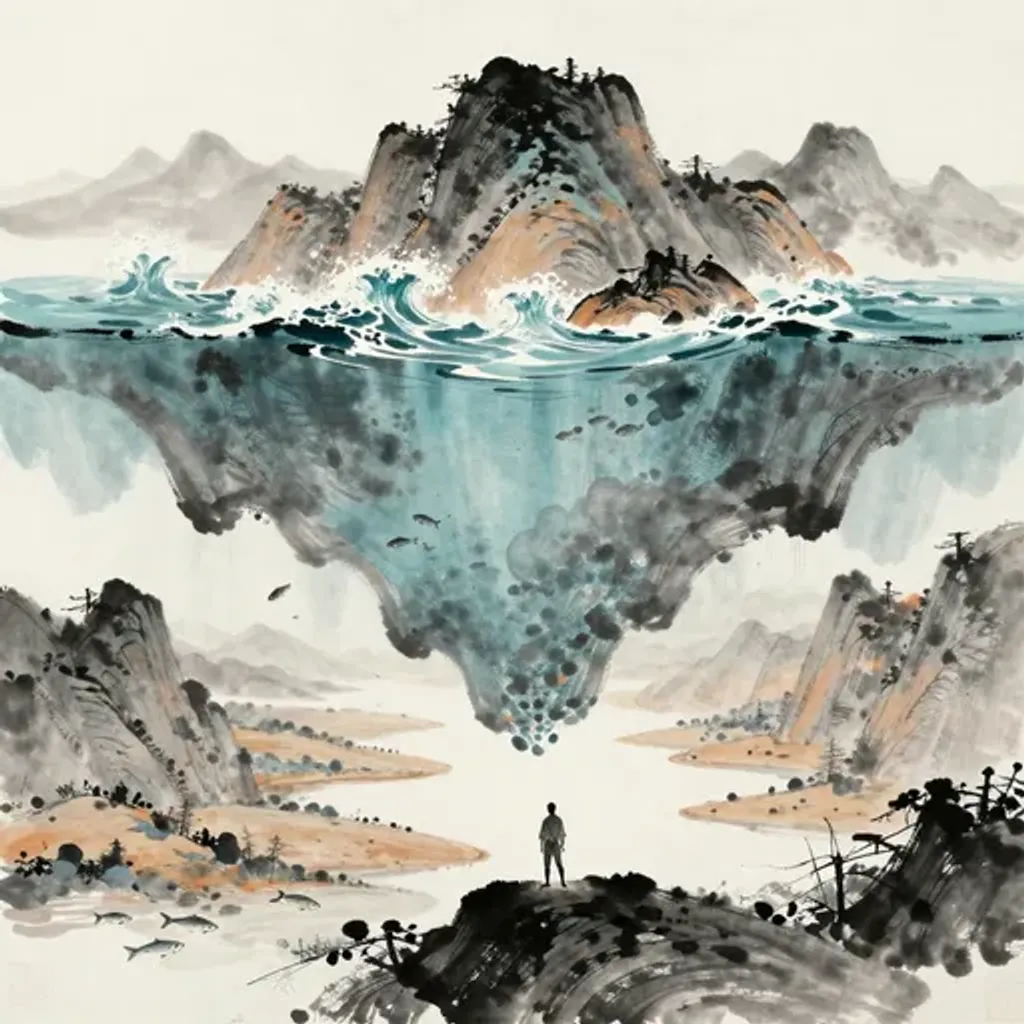
山作天池,陸地為海。
The mountain becomes a heavenly pool; dry land transforms into sea.
— Jiao Yanshou, Yilin (Forest of Changes), 1st century BC
Commentary
Wind over water remakes the landscape entirely. Mountains become celestial pools; dry land transforms into ocean. In just two terse phrases the verse captures a total inversion of terrain — the kind of cosmic upheaval that reconfigures the knowable world. This may echo flood mythology or the geological tradition of vast seabeds becoming mountain ranges over deep time. Mountain below fire creates the image of Grace — beauty that adorns and refines the surface of things. From Dispersion to Grace, the transformation is paradoxical: what seems like catastrophic dissolution is actually aesthetic reordering. The mountain-become-pool and the land-become-sea are not destruction but radical redecoration of reality, the world made strange and therefore beautiful again.
渙 → 剝
Hexagram 59 → Hexagram 23: Splitting Apart
Changing lines: 2, 5
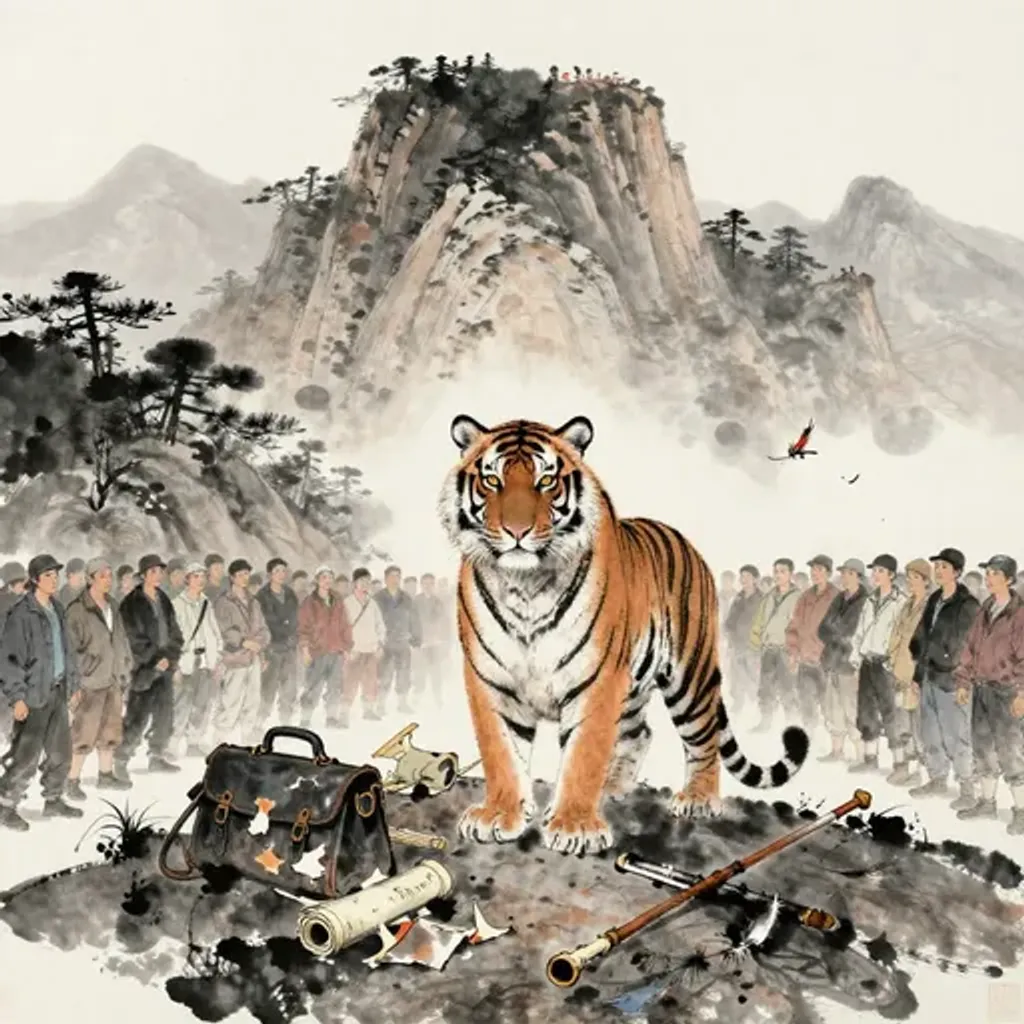
為虎所囓,太山之陽。眾多從者,莫敢救藏。
Bitten by the tiger on the southern slope of Mount Tai. Though many followers are present, none dare rescue or give shelter.
— Jiao Yanshou, Yilin (Forest of Changes), 1st century BC
Commentary
Wind over water scatters all protection, leaving a traveler exposed. On the sunny side of Mount Tai, a tiger seizes its victim, biting and mauling. A great crowd follows behind, but not one dares to rescue or shelter the victim. The sacred mountain — symbol of cosmic order and imperial authority — becomes the setting for raw predation. Mountain resting upon earth forms the image of Splitting Apart: the slow erosion of support from below until the structure collapses. From Dispersion to Splitting Apart, scattered cohesion reveals every individual's isolation. The crowd's paralysis is not cowardice but structural failure — when the bonds that unite people dissolve, even a multitude becomes a collection of helpless onlookers watching the tiger feed.
渙 → 復
Hexagram 59 → Hexagram 24: Return
Changing lines: 1, 2, 5, 6
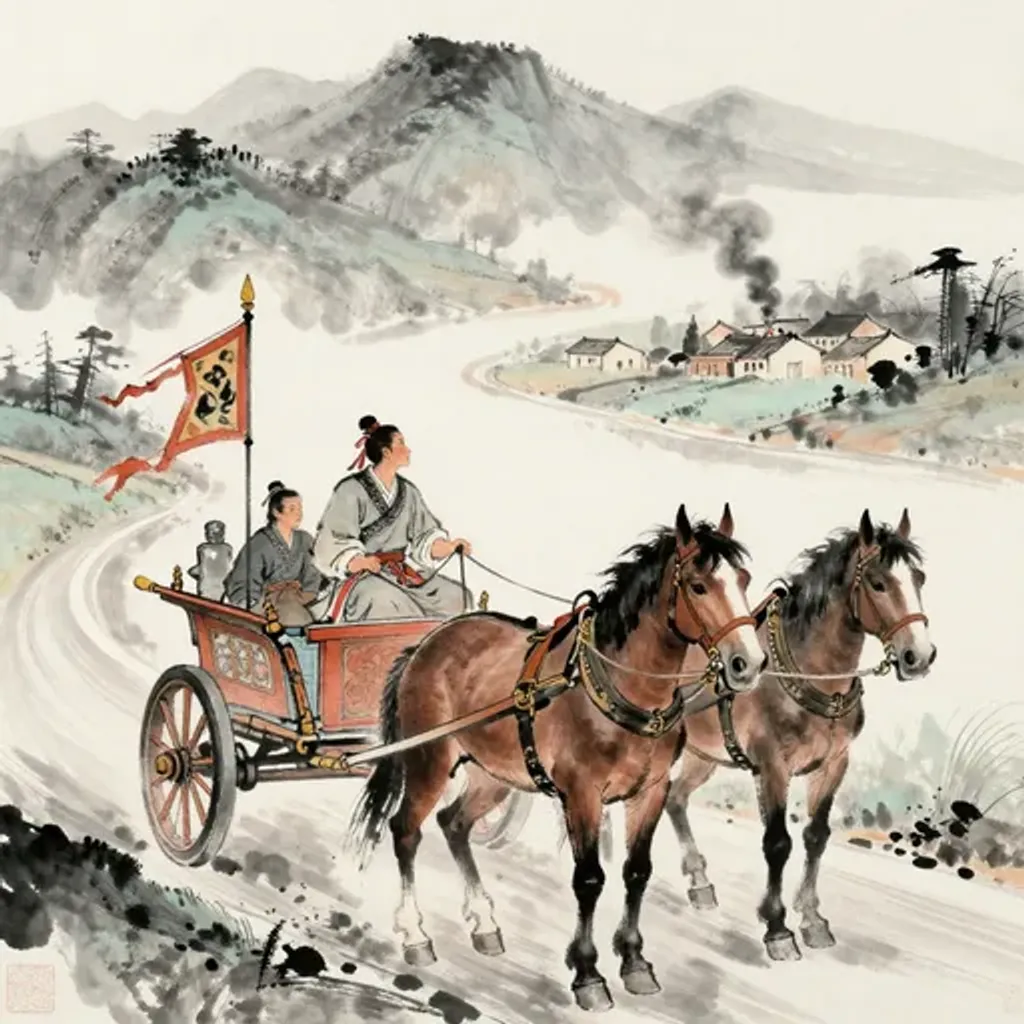
逶迤四牡,思歸念母。王事靡盬,不得安處。
The four stallions wind wearily onward; thoughts turn homeward to mother. The king's affairs never cease; one cannot find a place of rest.
— Jiao Yanshou, Yilin (Forest of Changes), 1st century BC
Commentary
Wind over water disperses the weary traveler's strength. Four horses wind slowly forward as the driver's thoughts turn homeward to his mother. But the king's business never ends — there is no place to rest. This directly echoes the Shijing soldiers' lament tradition: conscripts driven endlessly on royal campaigns, longing for family they may never see again. Thunder stirring beneath the earth creates the image of Return — the solstice moment when a single yang line reappears at the base. From Dispersion to Return, the verse aches with the gap between longing and reality. The horses plod on, the mother waits at home, and Return's promise — that what departed will come back — remains heartbreakingly deferred by duty.
渙 → 无妄
Hexagram 59 → Hexagram 25: Innocence
Changing lines: 1, 2, 4
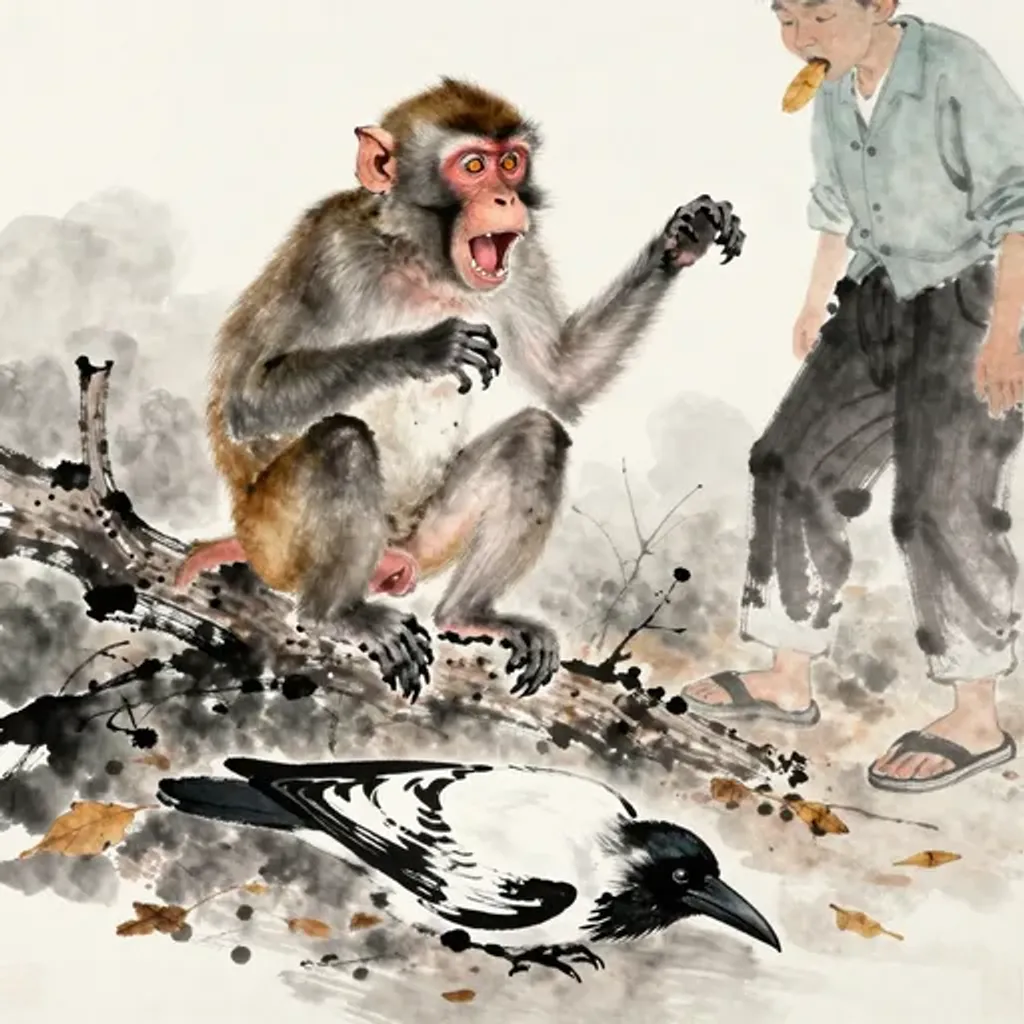
獼猴所言,語无成全。誤我白烏,使乾口來。
What the macaque says lacks all substance. It deceived my white crow, leaving me parched and empty-mouthed.
— Jiao Yanshou, Yilin (Forest of Changes), 1st century BC
Commentary
Wind over water disperses meaning itself. A monkey's chatter — words without coherent sense, promises that never materialize. Its babbling misleads the white crow, leaving it parched and empty-mouthed. The monkey symbolizes clever but untrustworthy counsel; the white crow, a rare and auspicious creature, is ruined by heeding it. Heaven rumbling with thunder beneath creates the image of Innocence — acting without ulterior motive, aligned with heaven's spontaneous order. From Dispersion to Innocence, the verse warns that scattered, ungrounded speech actively corrupts natural purity. The white crow's misfortune comes from trusting artifice over instinct. True innocence requires refusing the monkey's seductive nonsense and returning to unmediated response.
渙 → 大畜
Hexagram 59 → Hexagram 26: Great Taming
Changing lines: 1, 3, 5
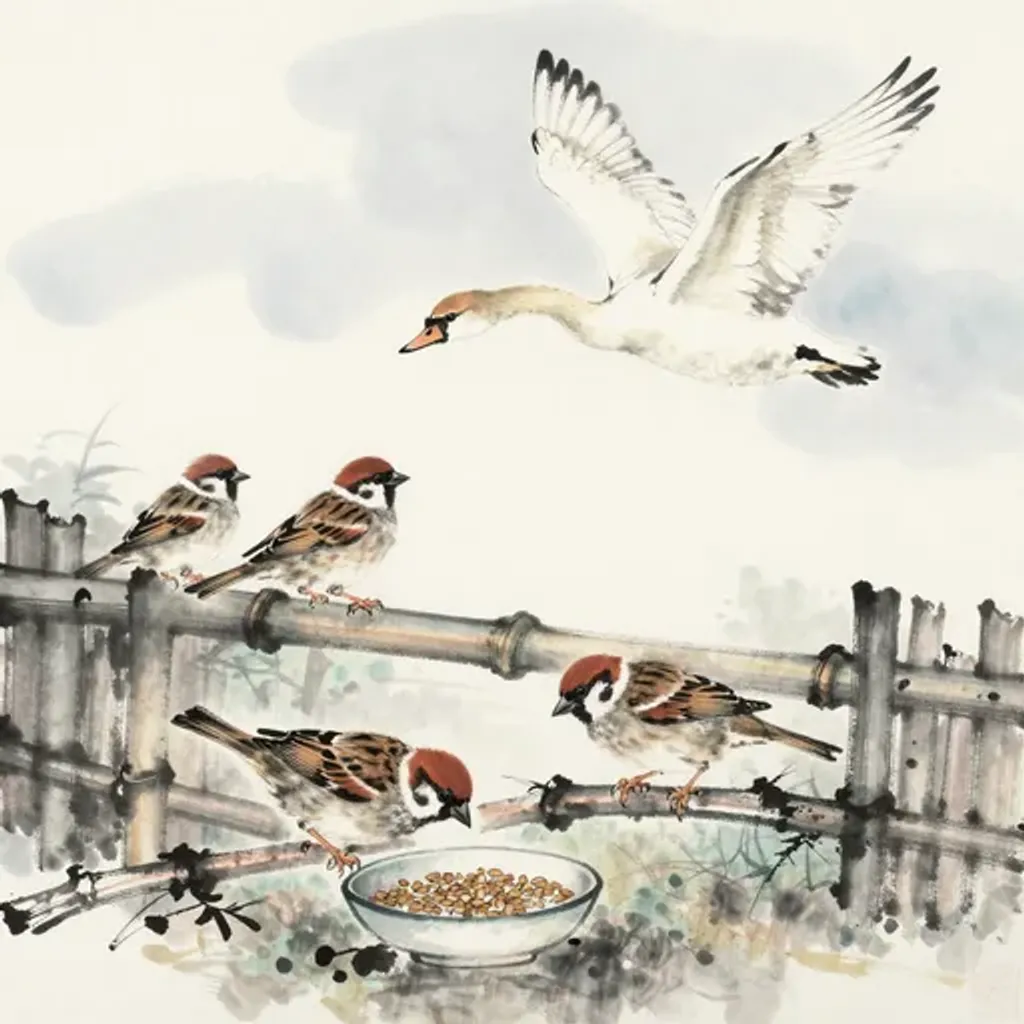
飛不遠去,卑斯內侍,祿養未富。
The small bird on a low branch dares not fly. Inside the fence, circling three times. Eating the last few grains from the bowl — gazing up at the swan passing overhead, not daring to follow.
— Jiao Yanshou, Yilin (Forest of Changes), 1st century BC
Commentary
Wind scatters over water, and here the original verse speaks of a small bird that cannot fly far, confined to low service, its salary meager and its status humble. It stays near the ground, tending duties beneath its potential. The bird gazes up but does not pursue what soars above. Heaven stored within the mountain creates the image of Great Taming — vast creative energy restrained and accumulated. From Dispersion to Great Taming, the verse captures the bitter early stage of that accumulation: talent dispersed into menial tasks, ambition scattered by circumstance. Yet Great Taming's lesson is that this very constraint is the accumulation. The small bird serving humbly is storing what it will one day need, even if the swan overhead seems impossibly distant.
渙 → 頤
Hexagram 59 → Hexagram 27: Nourishment
Changing lines: 1, 2, 5
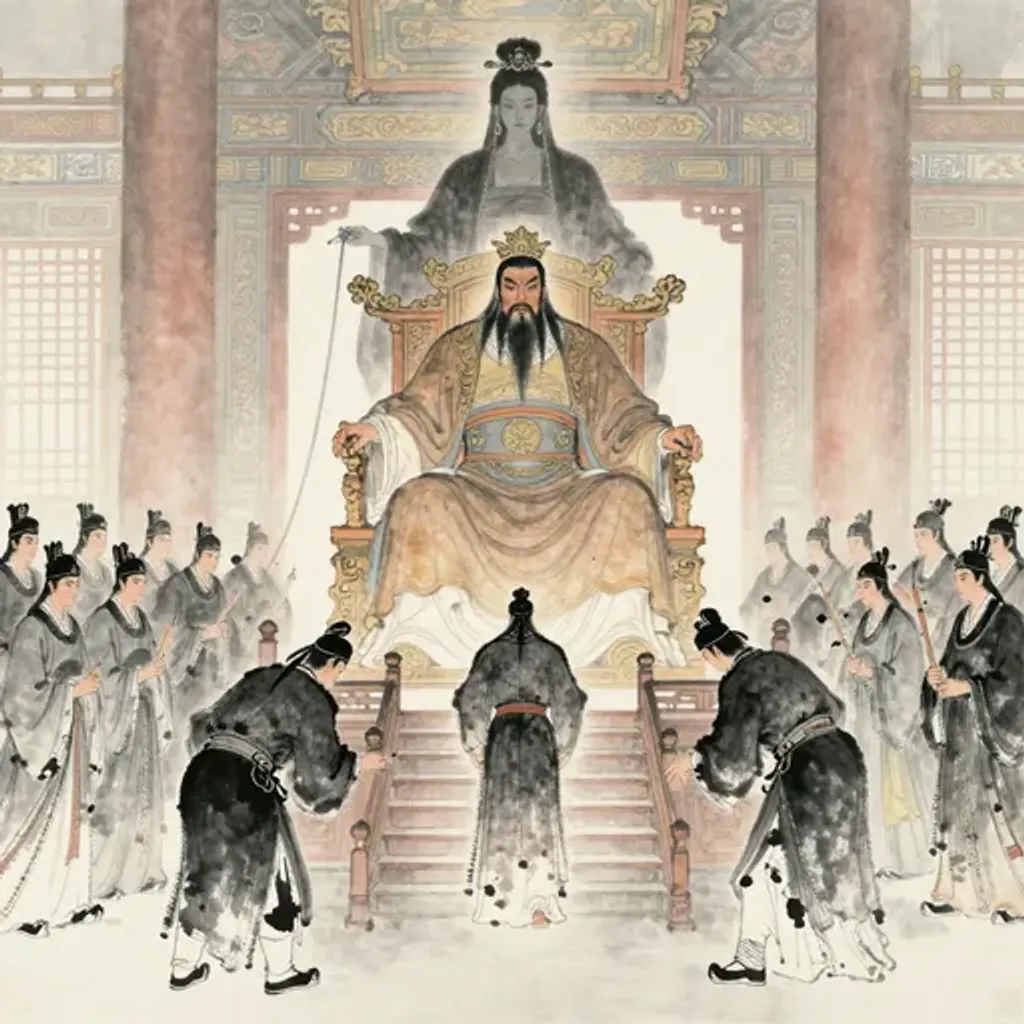
大尾細腰,重不可搖。陰權制國,平子逐昭。
Great tail and slender waist; the weight cannot be moved. Yin power controls the state; Ping Zi drives out Duke Zhao.
— Jiao Yanshou, Yilin (Forest of Changes), 1st century BC
Commentary
Wind over water reveals imbalance. A creature with an enormous tail and slender waist is too heavy to move — the classic 'tail too large to wag' warning from the Zuo Zhuan. Yin power dominates the state, and the verse names the case directly: Jisun Pingzi expelled Duke Zhao of Lu around 517 BC. The duke fled to Qi and never recovered his throne. Mountain over thunder forms the image of Nourishment — careful attention to what one takes in and puts out. From Dispersion to Nourishment, the transformation warns that when authority disperses into the wrong hands, the body politic is fed poison. Duke Zhao's exile is the bitter consequence of nourishment inverted: the minister gorges while the ruler starves.
渙 → 大過
Hexagram 59 → Hexagram 28: Great Exceeding
Changing lines: 3, 4, 6
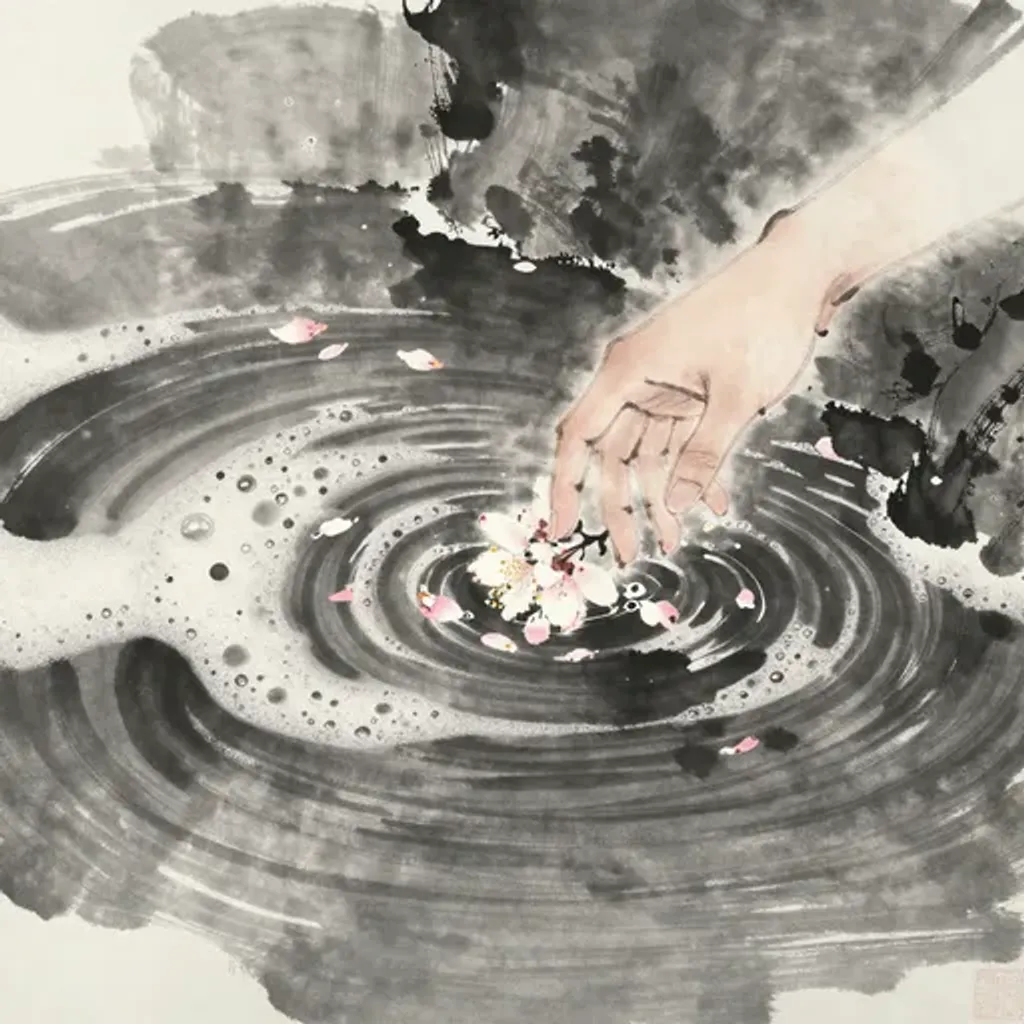
旦生夕死,名曰嬰鬼,不可得視。
Foam appears and vanishes, following waves without staying. Flowers on the water surface — grasp them and they become nothing.
— Jiao Yanshou, Yilin (Forest of Changes), 1st century BC
Commentary
Wind over water scatters the most ephemeral of forms. The original verse speaks of what is born at dawn and dies by dusk — the 'infant ghost,' a being too transient even to be seen. This captures the extreme of impermanence: not merely fragile but essentially illusory, gone before it can be grasped. The lake submerging the trees below creates the image of Great Exceeding — the ridgepole bowed past its limit, the extraordinary moment that cannot be sustained. From Dispersion to Great Exceeding, the verse warns that some things disperse not gradually but instantly, their existence always already past. The infant ghost is Great Exceeding's ultimate expression: a weight of meaning that the structure of time cannot bear even for a single day.
渙 → 坎
Hexagram 59 → Hexagram 29: The Abysmal Water
Changing lines: 6
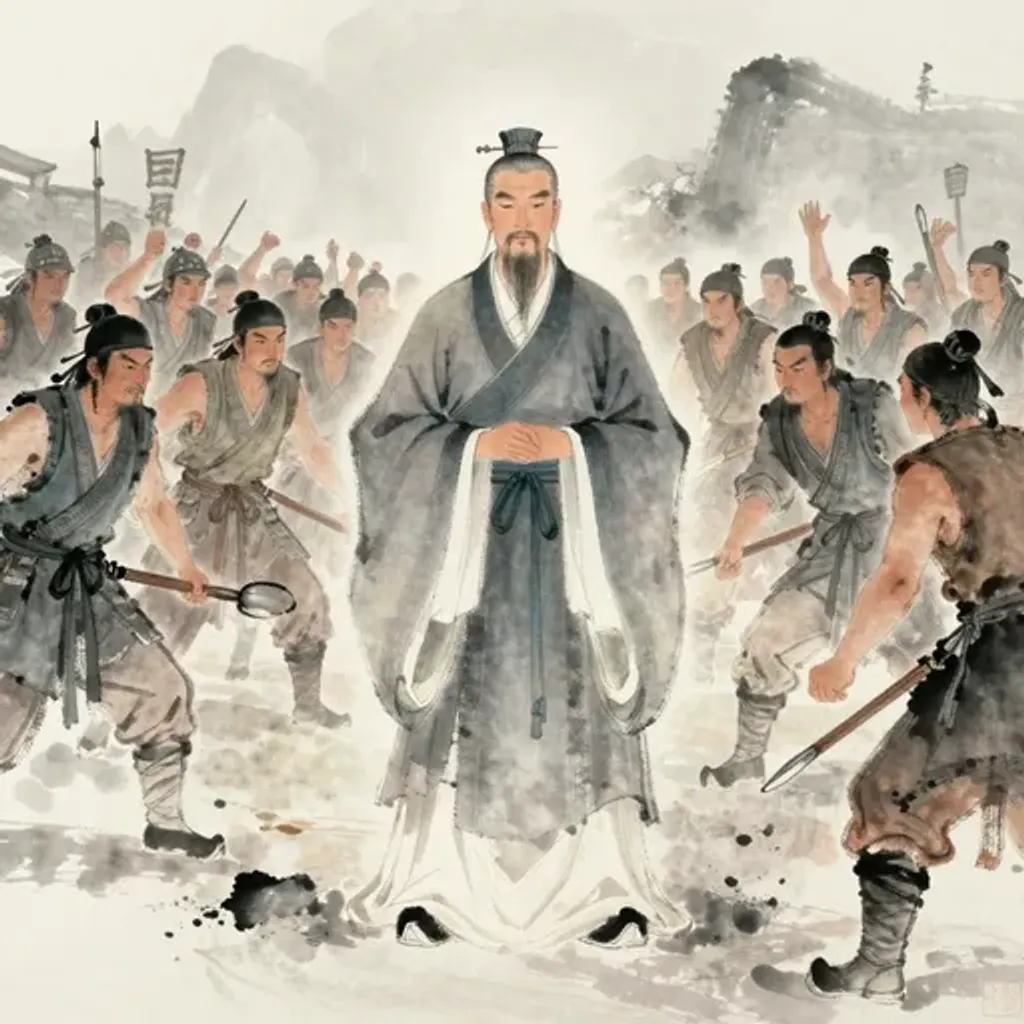
子畏於匡,困於陳蔡。明德不危,竟免厄害。
The Master was threatened at Kuang, besieged at Chen and Cai. Bright virtue does not court danger; in the end he escaped all harm.
— Jiao Yanshou, Yilin (Forest of Changes), 1st century BC
Commentary
Wind over water scatters the sage into danger, but his virtue holds firm. The verse names Confucius directly: besieged at Kuang, where villagers mistook him for the bandit Yang Hu, and stranded between Chen and Cai, where his provisions ran out for seven days. Yet 'bright virtue is not endangered' — despite mortal peril, the sage's moral luminosity protected him, and he ultimately escaped unharmed. Doubled water creates the image of the Abysmal — danger upon danger, peril that teaches through repetition. From Dispersion to the Abysmal, scattering into hostile territory becomes the crucible of character. Confucius emerged from both Kuang and the Chen-Cai crisis not by fighting but by refusing to let danger scatter his inner coherence.
渙 → 離
Hexagram 59 → Hexagram 30: The Clinging Fire
Changing lines: 1, 2, 3, 4, 5
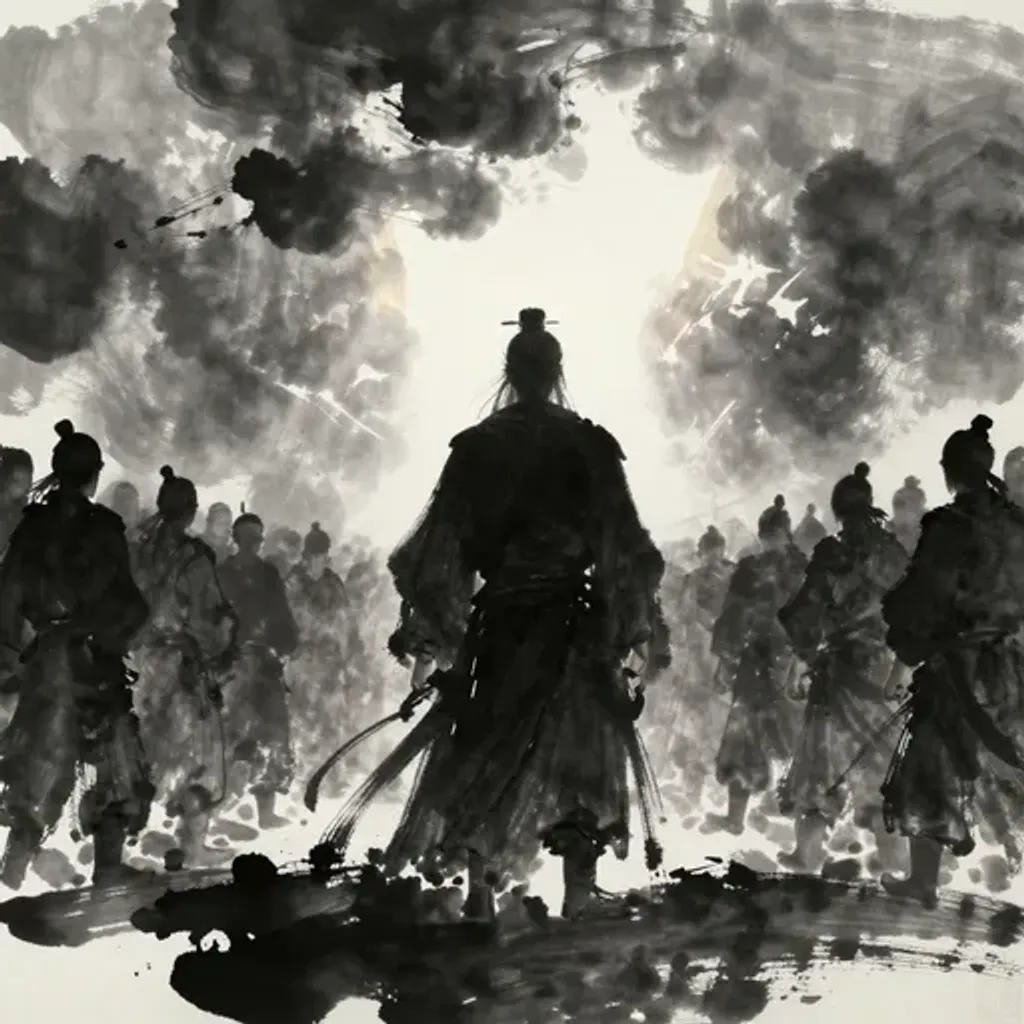
畏昏潛處,候時朗昭。卒逢白日,為世榮主。
Fearing dusk, one hides in the depths, awaiting the hour of brightness. At last meeting the white sun, he becomes the world's glorious lord.
— Jiao Yanshou, Yilin (Forest of Changes), 1st century BC
Commentary
Wind disperses the darkness over water, and here someone hides in fear during the twilight, waiting for the right moment to emerge. At last the bright sun breaks through, and the hidden one becomes the glorious lord of the age. This echoes the pattern of the sage-in-waiting — the Shun who farmed at Mount Li, the Fu Yue who labored at Fuyan — concealed until heaven's timing called them forth. Doubled fire creates the image of the Clinging — brilliance sustaining brilliance, light passed from torch to torch. From Dispersion to the Clinging, obscurity scatters like morning mist, revealing the radiance that was always present beneath. The one who waited in darkness does not create light; they simply stop hiding from it.
渙 → 咸
Hexagram 59 → Hexagram 31: Influence
Changing lines: 2, 3, 4, 6
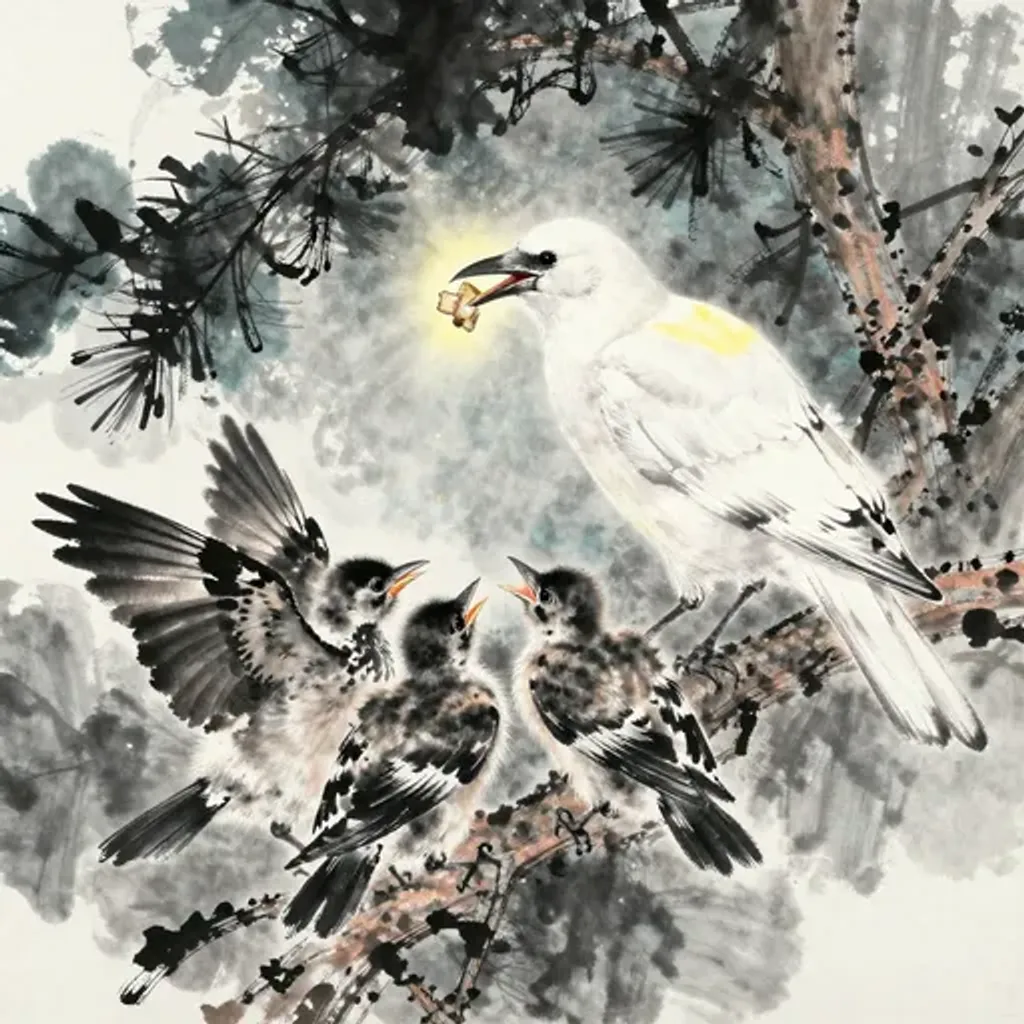
白烏衘餌,鳴呼其子。施翼張翅,來從其母。
The white crow holds food in its beak, calling out to its young. They spread their wings and flutter up, coming back to their mother.
— Jiao Yanshou, Yilin (Forest of Changes), 1st century BC
Commentary
Wind over water carries nourishment to the scattered young. A white bird holds food in its beak, calling to its chicks. The fledglings spread their wings and flutter toward their mother. The image is pure maternal devotion: the parent disperses outward to gather sustenance, then calls the family back together. Mountain below the lake creates the image of Influence — the young man courting the maiden, receptivity above, stillness below, a mutual attraction that needs no force. From Dispersion to Influence, the verse reveals that scattering can serve connection. The mother bird's flight outward is not abandonment but the necessary dispersal that makes reunion nourishing. Influence arises naturally when care, not command, is the binding force.
渙 → 恆
Hexagram 59 → Hexagram 32: Duration
Changing lines: 3, 4, 5, 6
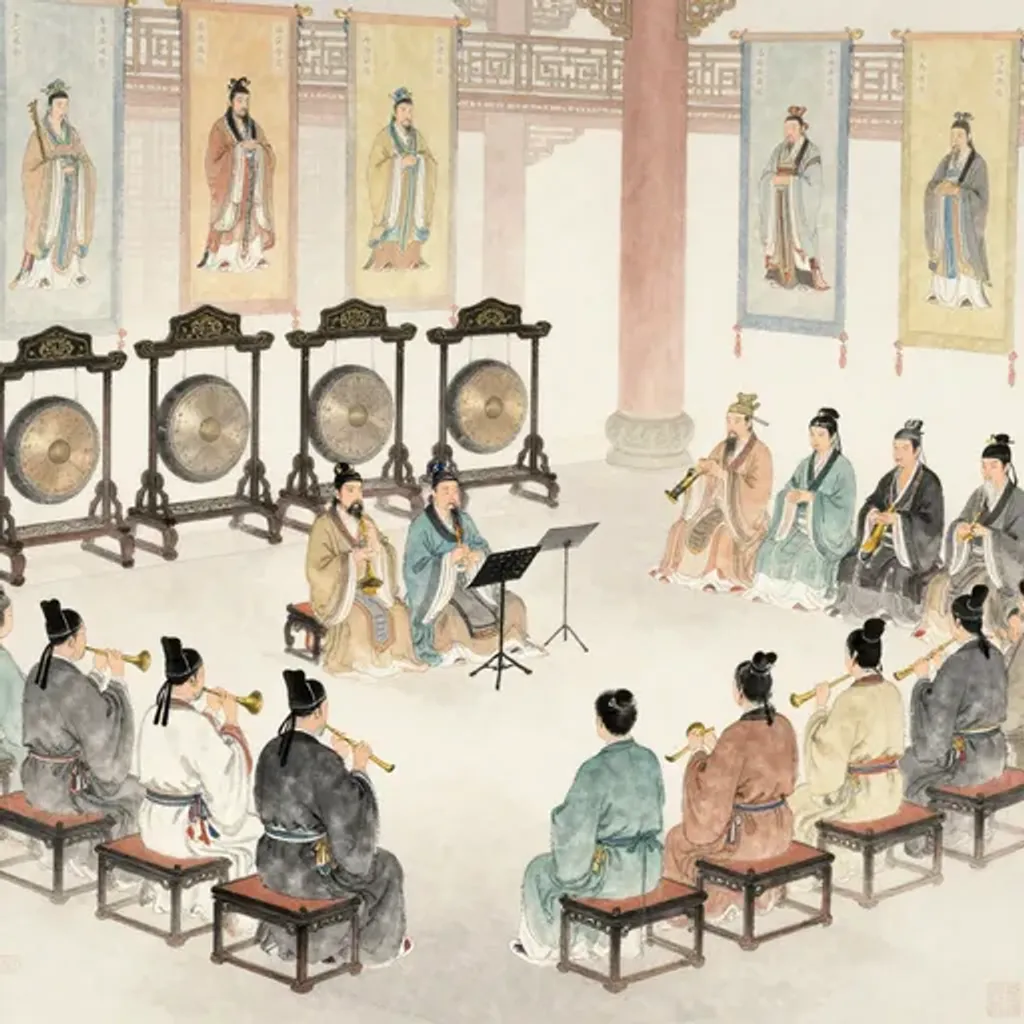
宮商角徵,五音和起。君臣父子,弟順有序。唐虞襲德,國无災咎。
Gong, shang, jue, zhi, and yu, the five tones rise in harmony. Ruler and minister, father and son, younger brothers follow in proper order. Tang and Yu passed down their virtue; the state knows no disaster or fault.
— Jiao Yanshou, Yilin (Forest of Changes), 1st century BC
Commentary
Wind over water disperses dissonance into harmony. The five tones — gong, shang, jiao, zhi, yu — rise together in accord. Rulers and ministers, fathers and sons, younger brothers yielding to their elders: all find their place in proper sequence. The verse then invokes the reigns of Yao and Shun, when virtue passed seamlessly from sovereign to sovereign and the realm knew no calamity. Thunder and wind together create the image of Duration — the enduring interplay of arousing and penetrating forces. From Dispersion to Duration, the scattering of discord reveals an underlying order that was always present. The five tones harmonize not by merging into one but by each holding its own pitch in relation to the others — Duration's secret is unity through differentiated constancy.
渙 → 遯
Hexagram 59 → Hexagram 33: Retreat
Changing lines: 2, 3, 4
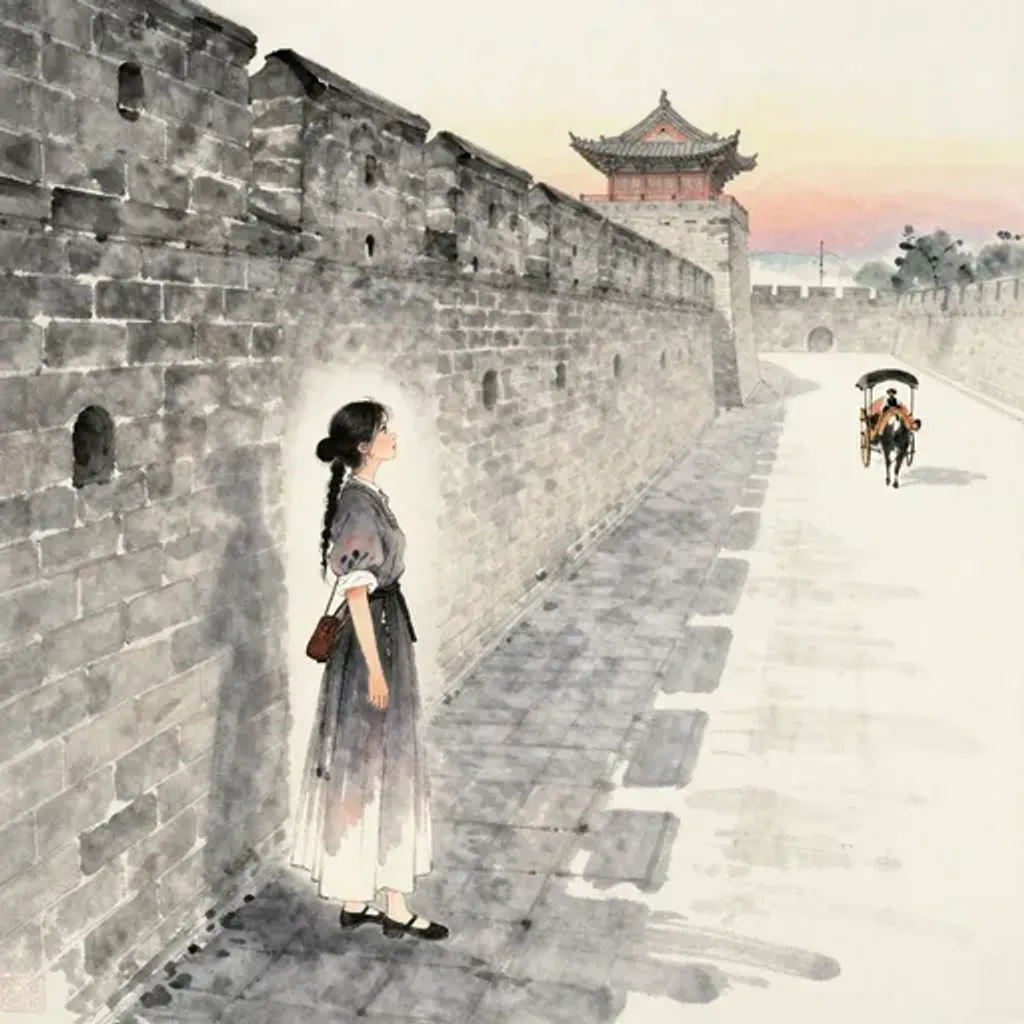
季姬踟躕,望孟城隅。終日至暮,不見齊侯。
Lady Ji paces and hesitates, watching from the corner of Meng's wall. From dawn through the whole day until dusk; the Marquis of Qi does not appear.
— Jiao Yanshou, Yilin (Forest of Changes), 1st century BC
Commentary
Wind over water scatters hope across an unbridgeable distance. Lady Ji, youngest of her clan, paces back and forth, gazing toward the corner of the city wall at Meng. All day until dusk she watches, but the Lord of Qi never appears. This echoes the Shijing's 'Jingnu' tradition — the beloved waiting at the appointed place, the lover who fails to come. The verse's emotional weight lies in the persistence of her vigil: not a single glance but an entire day consumed by waiting. Heaven above the mountain creates the image of Retreat — the deliberate withdrawal of what is strong. From Dispersion to Retreat, Lady Ji's scattered hope meets the target hexagram's defining gesture: the one she awaits has already withdrawn, and her watching is the last act of a connection that is over.
渙 → 大壯
Hexagram 59 → Hexagram 34: Great Power
Changing lines: 1, 3, 4, 5, 6
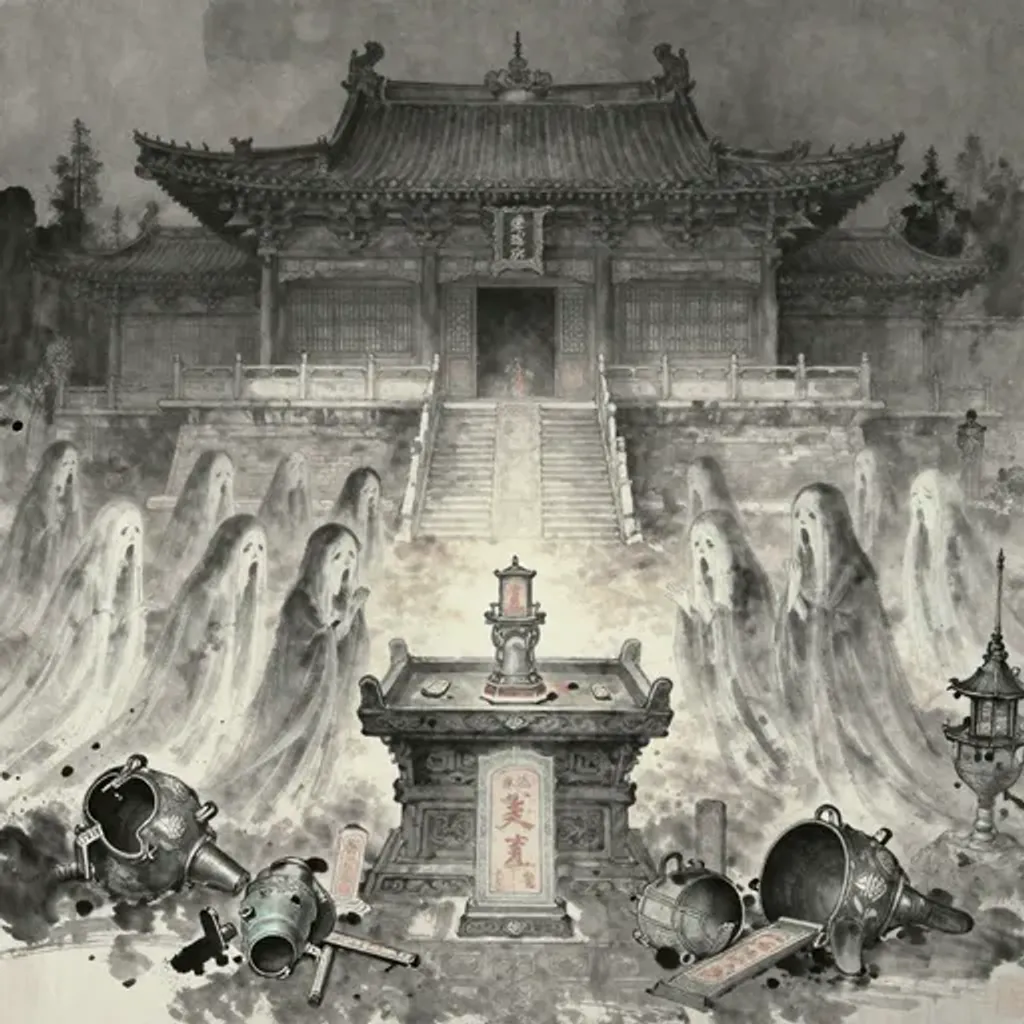
鬼哭於社,悲傷无後。甲子昧爽,殷人絕祀。
Ghosts weep at the earth altar, mourning that they have no heirs. At dim dawn on the jiazi day, the people of Yin lost their sacrifices forever.
— Jiao Yanshou, Yilin (Forest of Changes), 1st century BC
Commentary
Wind over water disperses the spirits of the vanquished. Ghosts weep at the earth altar, mourning the extinction of their line. At the jiazi dawn — the same cyclical day named in the Book of Documents' 'Oath at Mu' — the Yin people's sacrifices are severed forever. This is the Battle of Muye in 1046 BC, when King Wu of Zhou shattered the Shang dynasty. The weeping ghosts are the Shang ancestors, their altar abandoned, their descendants scattered. Thunder above heaven creates the image of Great Power — irresistible force advancing. From Dispersion to Great Power, the verse reveals the terrible finality of dispersion wielded as a weapon: the Zhou army's overwhelming power does not merely defeat the Shang but disperses their spiritual continuity, ending a dynasty at its root.
渙 → 晉
Hexagram 59 → Hexagram 35: Progress
Changing lines: 2, 4, 5
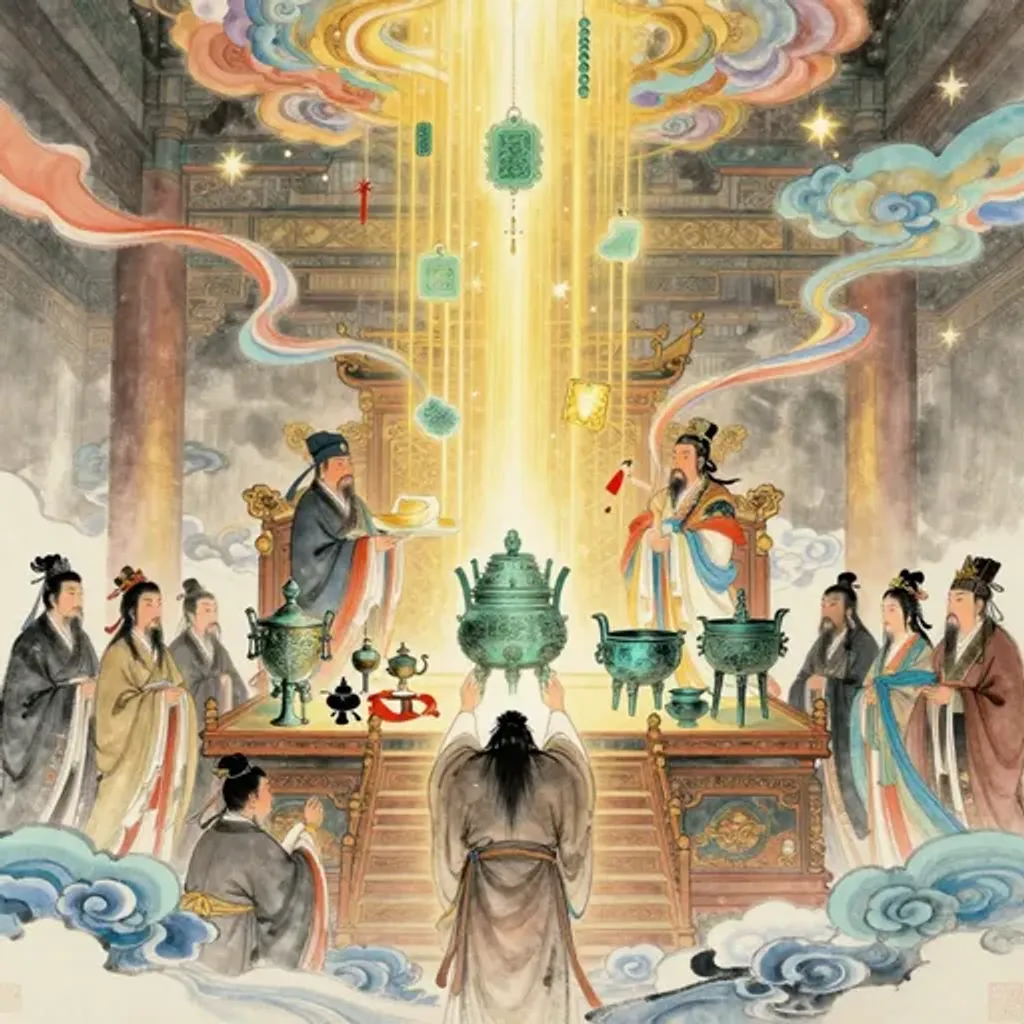
天子所予,福祿常在,不憂危殆。
What the Son of Heaven bestows, blessing and prosperity remain forever; one need not worry about peril.
— Jiao Yanshou, Yilin (Forest of Changes), 1st century BC
Commentary
Wind disperses over water, and here the Son of Heaven bestows blessings that endure. What the sovereign grants — fortune and emolument — remains permanently, freeing the recipient from all anxiety. This is the ideal of imperial grace: a bestowal so complete that worry itself is dispersed. Fire rising above the earth creates the image of Progress — the bright sun ascending, the worthy servant advancing under royal favor. From Dispersion to Progress, the transformation is direct: when the wind of heavenly grace scatters doubt and insecurity, the recipient shines forth unimpeded. The verse captures Progress at its purest — not striving upward but being illuminated from above, the sovereign's gift dissolving every shadow.
渙 → 明夷
Hexagram 59 → Hexagram 36: Darkening of the Light
Changing lines: 1, 2, 3, 5, 6
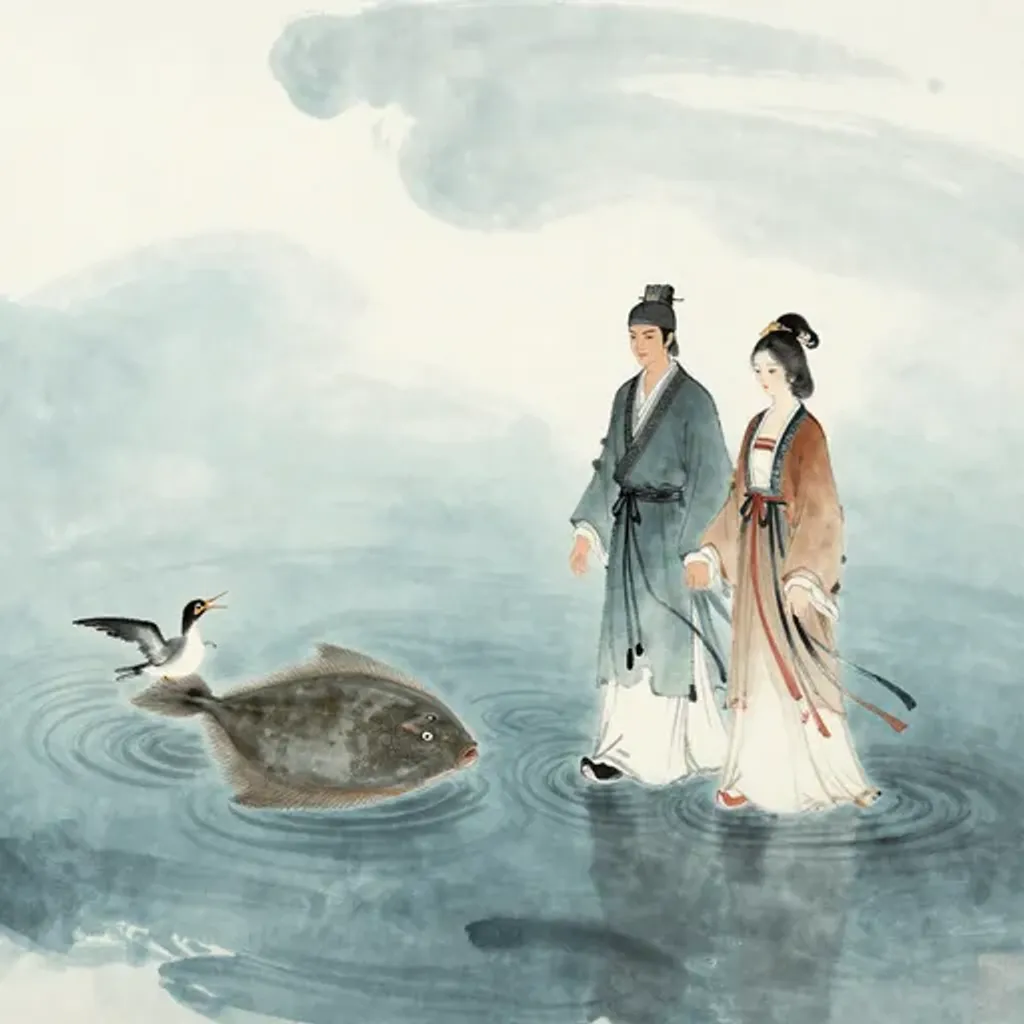
比目附翼,相恃為福。姜氏季女,與君合德。
The one-eyed fish and one-winged bird rely on each other as blessing. The youngest daughter of the Jiang clan joins her virtue with her lord.
— Jiao Yanshou, Yilin (Forest of Changes), 1st century BC
Commentary
Wind scatters over water, yet here two creatures find each other despite the dissolution. The paired-eye fish and shared-wing bird — mythological beings that can only swim or fly in pairs — rely on mutual dependence for survival and joy. Lady Jiang, a daughter of the Qi ruling house, unites with her lord in harmonious virtue. This is love as structural necessity: not ornamental affection but the fundamental pairing without which neither party can function. Earth burying fire within creates the image of Darkening of the Light — brilliance concealed, wisdom operating in shadow. From Dispersion to Darkening of the Light, the verse suggests that true partnership endures even when the world grows dark. The paired creatures navigate dimmed waters together, their bond the only light remaining.
渙 → 家人
Hexagram 59 → Hexagram 37: The Family
Changing lines: 1, 2, 3
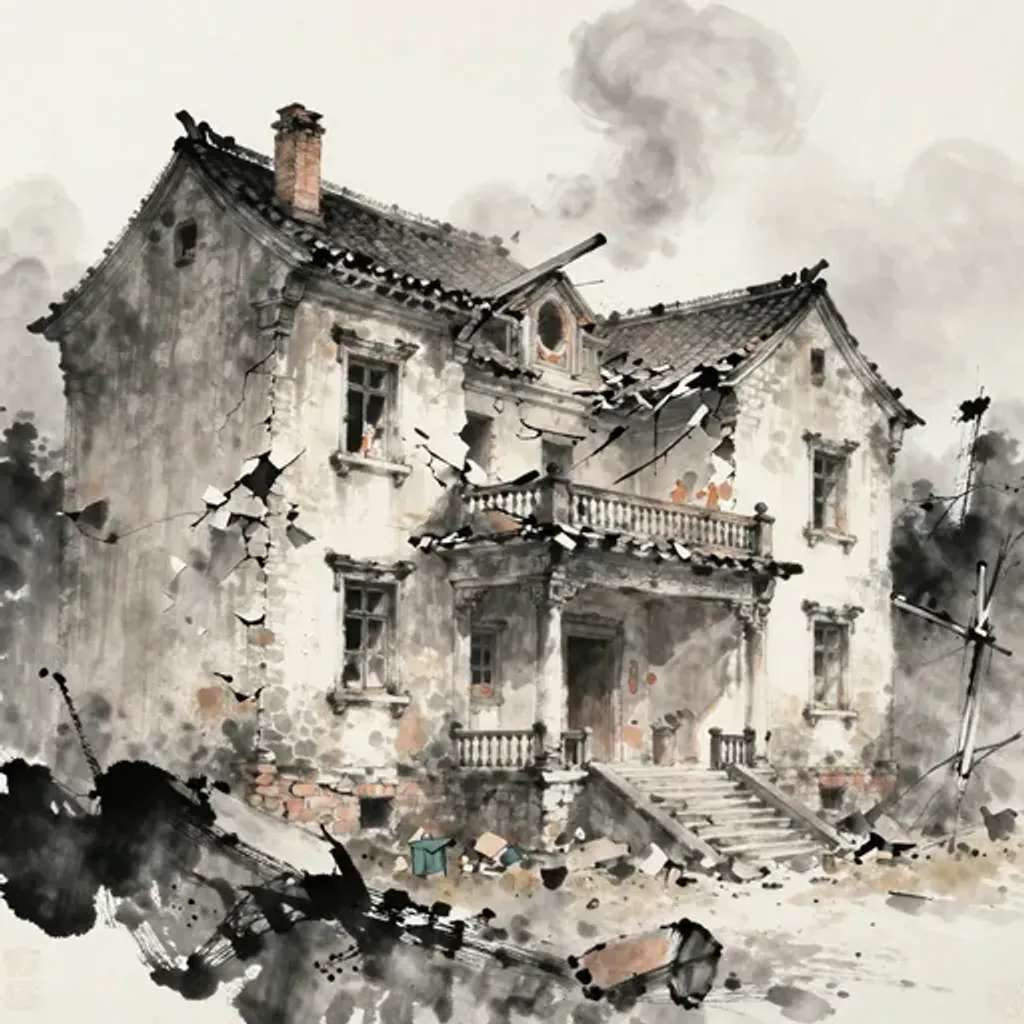
翕翕䡘䡘,稍崩墜顛,滅其令名。
Swaying and tottering, gradually crumbling and falling; its good name is destroyed.
— Jiao Yanshou, Yilin (Forest of Changes), 1st century BC
Commentary
Wind over water scatters reputation to dust. The verse opens with an onomatopoeic cluster — xixi, huhu — suggesting frenzied, chaotic activity. Things crumble and collapse in a rush, and a once-fine name is extinguished. The imagery is of someone whose frenetic striving accelerates their own downfall: the more they scramble, the faster the edifice breaks apart. Wind emerging from fire creates the image of the Family — words that carry substance, actions that maintain constancy. From Dispersion to the Family, the verse is a sharp negative lesson: when the household's inner discipline dissolves into frantic scrambling, even a sterling reputation scatters beyond recovery. The Family demands measured speech and steady conduct; the verse shows what happens in their absence.
渙 → 睽
Hexagram 59 → Hexagram 38: Opposition
Changing lines: 1, 4, 5
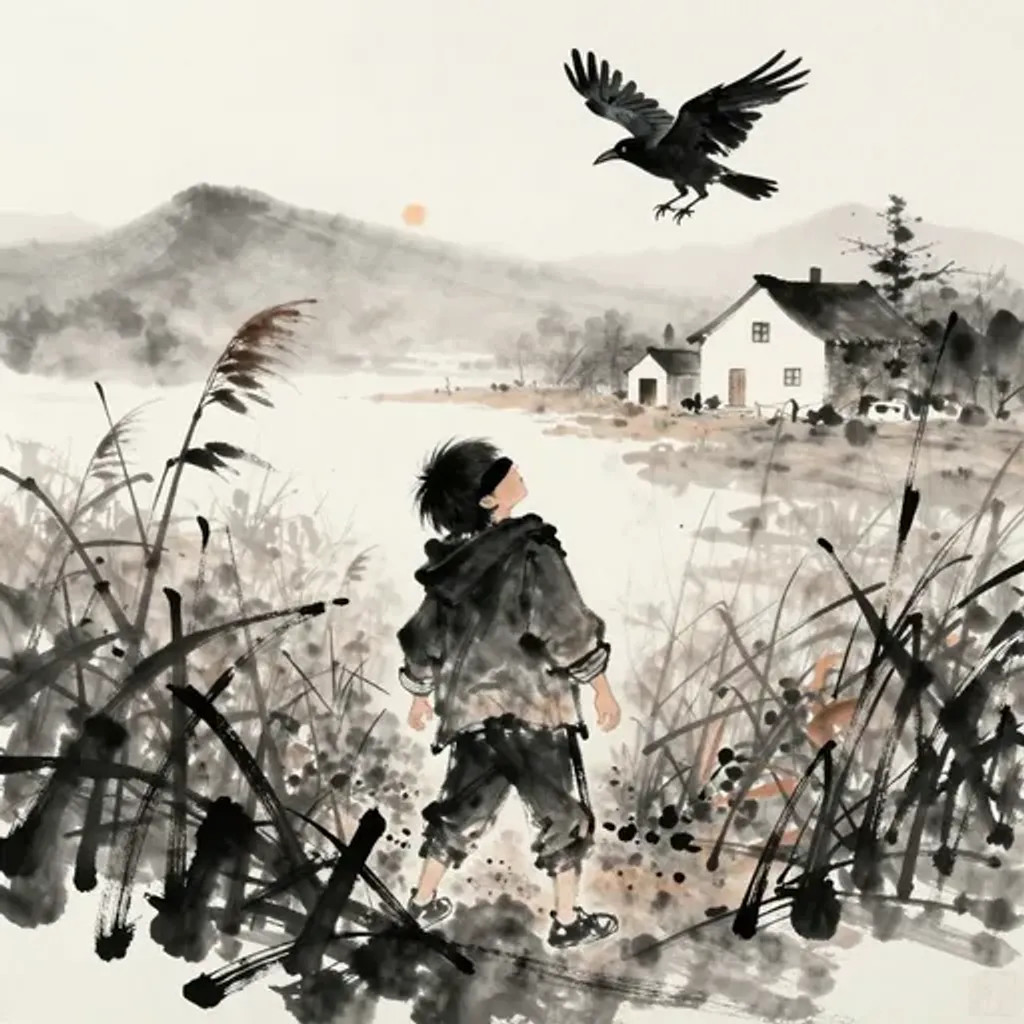
折若蔽目,不見稚叔。三足孤烏,遠去家室。
Broken reeds cover the eyes; the young nephew cannot be seen. The three-legged crow, solitary, flies far from hearth and home.
— Jiao Yanshou, Yilin (Forest of Changes), 1st century BC
Commentary
Wind over water scatters sight itself. Broken branches block the eyes, and the traveler cannot see his young uncle. A three-legged solitary crow flies far from its nest and family. The sun-crow of mythology — normally a creature of blazing centrality — here limps away alone, its extra leg a deformity rather than a divine mark. Fire above the lake creates the image of Opposition: two forces that see each other but cannot merge. From Dispersion to Opposition, the verse dramatizes estrangement at its most painful. The broken sight-line and the departing crow are two images of the same condition — people who belong together but can neither see nor reach each other. Dispersion has made them strangers under the same sky.
渙 → 蹇
Hexagram 59 → Hexagram 39: Obstruction
Changing lines: 2, 3, 6
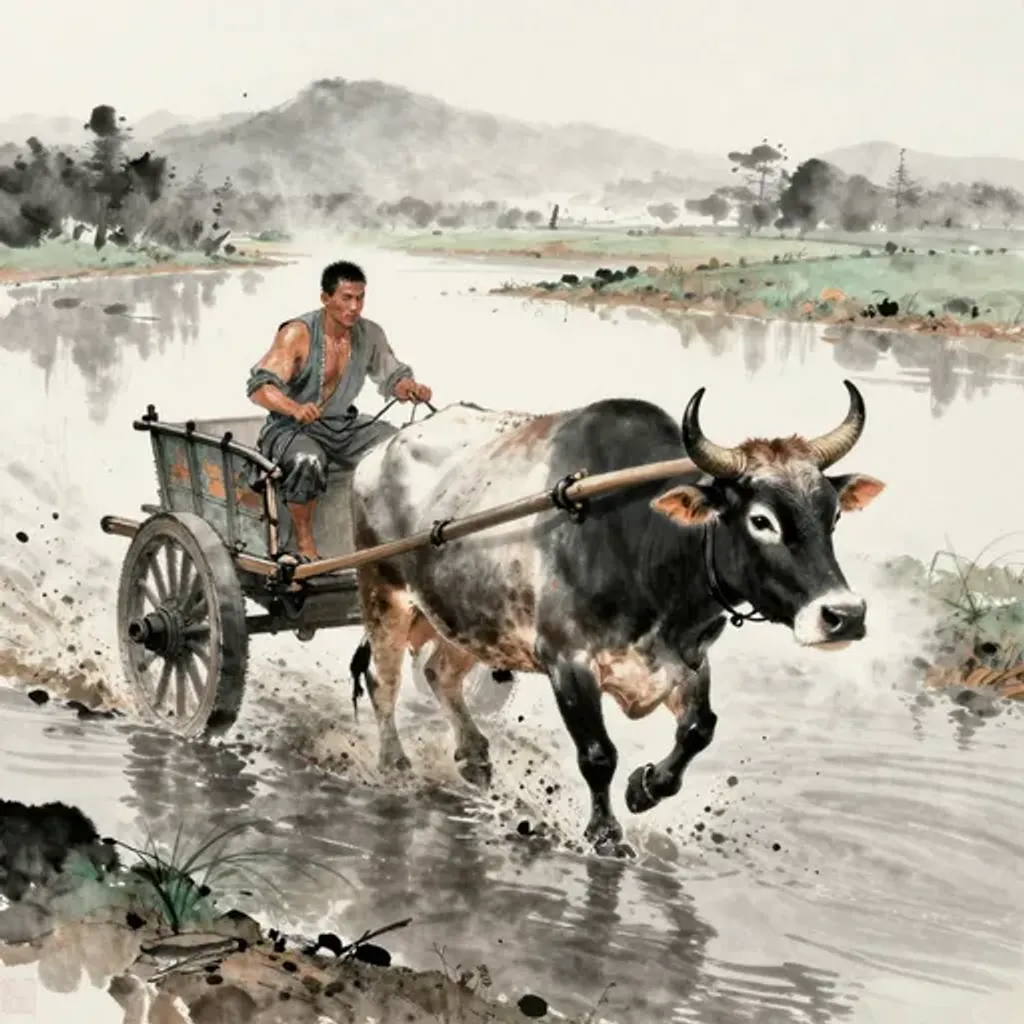
羊腸九縈,相推稍前。止須王孫,乃能上天。
Wading through knee-deep water, mud swallows the cart tracks. The ox pants, the driver sweats — less than a li covered. But finally reaching the far bank, muscles and bones at last relax.
— Jiao Yanshou, Yilin (Forest of Changes), 1st century BC
Commentary
Wind over water, yet here the original verse describes a winding mountain path: 'A sheep-gut trail spiraling nine turns, each pushing the next forward; wait for the prince, and only then ascend to heaven.' The nine turns demand collaborative effort — no one climbs alone. The path is agonizing but not impassable; what matters is having the right companion and refusing to quit. Water pooling on the mountain creates the image of Obstruction — difficulty that cannot be charged through but must be reflected upon. From Dispersion to Obstruction, the wind that scattered the travelers now forces each to confront their own limits on the narrow trail. Obstruction's remedy is self-cultivation, not brute persistence: the nine spirals are climbed by those who turn inward with each turn.
渙 → 解
Hexagram 59 → Hexagram 40: Deliverance
Changing lines: 4, 5, 6
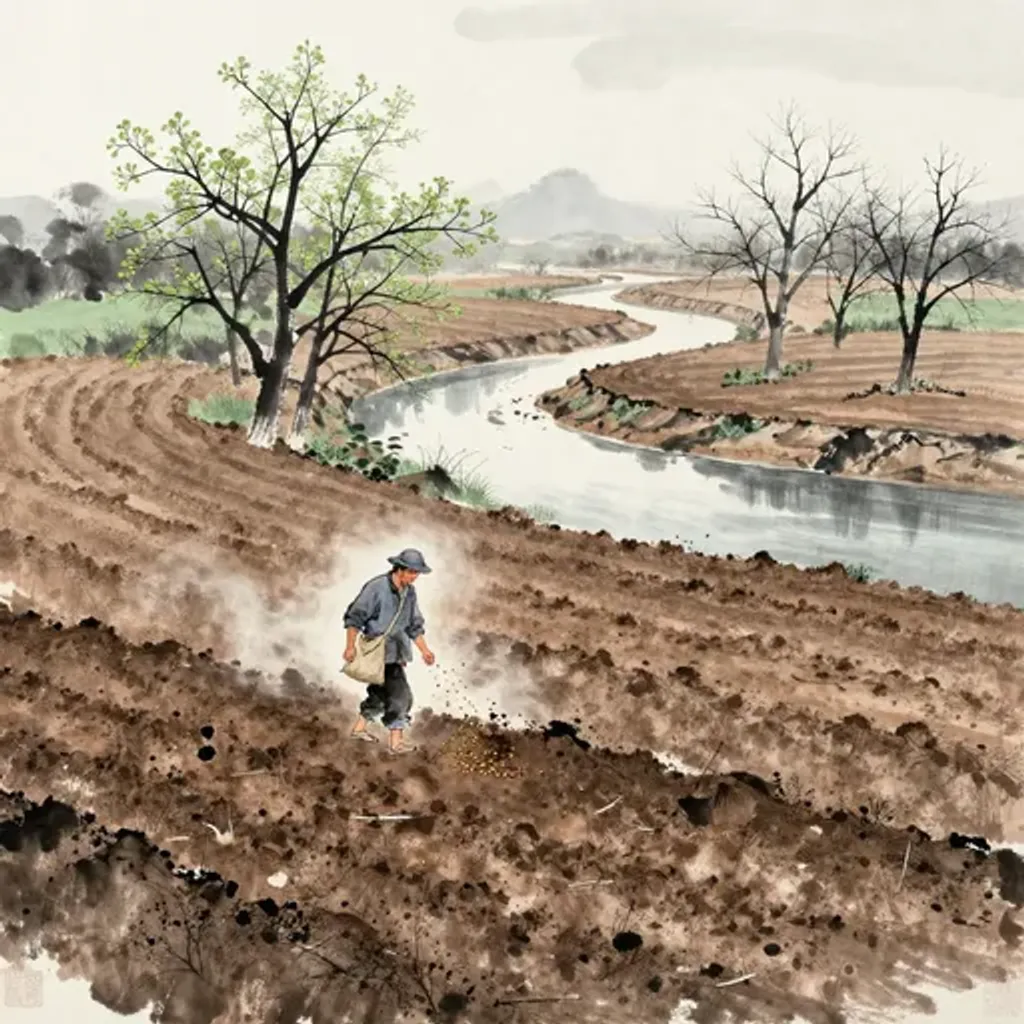
坤厚地德,庶物蕃息。平康正直,以綏大福。
Spring floodwaters recede, the rich mud still warm. Seeds sown at the right time; the great earth bears all.
— Jiao Yanshou, Yilin (Forest of Changes), 1st century BC
Commentary
Wind over water — and here the original verse invokes the earth's boundless virtue. 'Kun's thick earth-virtue, the myriad creatures flourish; level, peaceful, upright, and straight — thereby securing great fortune.' This is a direct homage to the Kun hexagram's capacity for nurturing: the ground that accepts everything, judges nothing, and sustains all life. Thunder over water creates the image of Deliverance — the thunderstorm that breaks tension, releasing what was locked. From Dispersion to Deliverance, the verse traces how scattered energy reconstitutes through the earth's patient absorption. The floodwaters recede not by force but because the ground accepts them. Deliverance's thunder arrives after the waiting is done, and fortune follows for those who trusted the ground beneath their feet.
渙 → 損
Hexagram 59 → Hexagram 41: Decrease
Changing lines: 1, 5
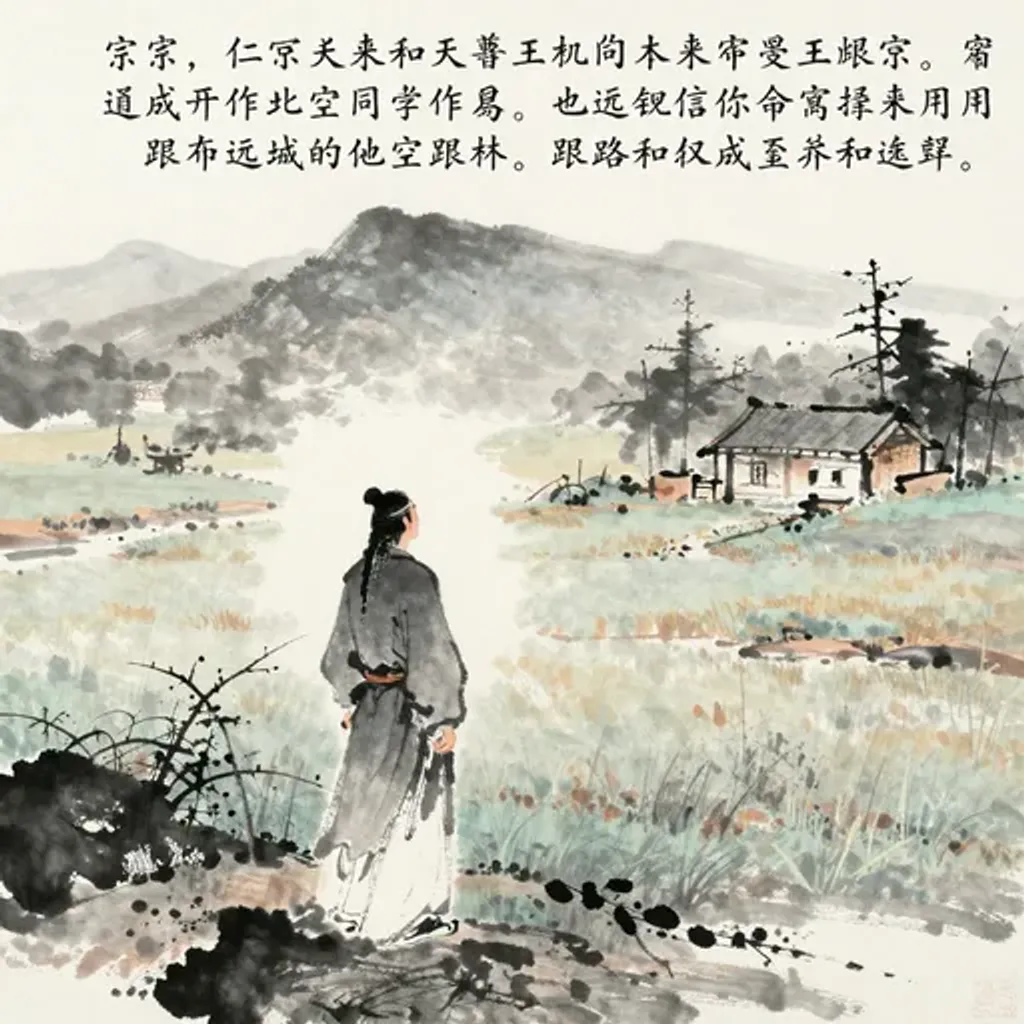
有莘外野,不逢堯主。復居窮處,心勞志苦。
In the outer wilds of You Xin, he meets no enlightened lord like Yao. Returning to dwell in poverty, his heart toils and his spirit suffers.
— Jiao Yanshou, Yilin (Forest of Changes), 1st century BC
Commentary
Wind over water scatters a great talent into obscurity. The fields of Youshen stretch empty — this is where Yi Yin, the future sage-minister of the Shang dynasty, once labored as a cook before King Tang discovered him. But here no Yao-like sovereign appears to recognize the hidden worthy. The man returns to poverty, his heart laboring and his ambitions withering. Mountain above the lake creates the image of Decrease — the mountain's base eroded to enrich what lies below. From Dispersion to Decrease, the verse captures the agony of talent diminished by circumstance. Yi Yin found his Tang; this anonymous worthy finds no one. Decrease without purpose is mere erosion, and the dispersed sage-in-waiting may never be gathered.
渙 → 益
Hexagram 59 → Hexagram 42: Increase
Changing lines: 1, 2
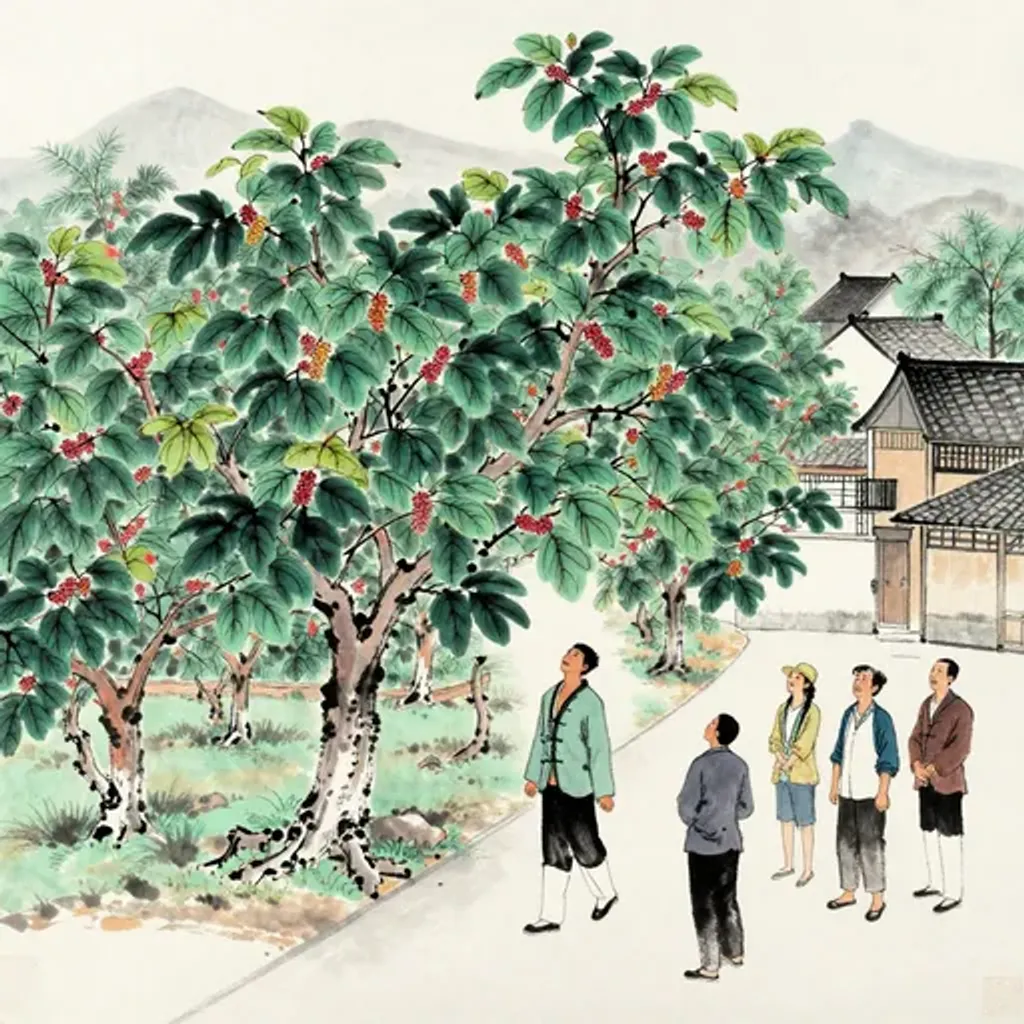
胸長景行,來觀桑柘。上伯日喜,都叔允藏。
Walking the high road with broad stride, inspecting mulberry and paper-mulberry. Lord Shang Bo rejoices daily; Lord Du Shu stores it away.
— Jiao Yanshou, Yilin (Forest of Changes), 1st century BC
Commentary
Wind over water disperses across a broad and prosperous landscape. Travelers with expansive vision walk a scenic path, coming to observe the mulberry and the paper-mulberry — trees of practical wealth in the ancient economy, providing silk and paper. The elder brother rejoices daily, the younger brother dwells content. The imagery is of abundance viewed and appreciated from a generous vantage point. Wind and thunder create the image of Increase — the ruler diminishing the upper to benefit the lower. From Dispersion to Increase, wind that scatters also distributes. The travelers who survey the mulberry groves witness dispersal operating as generosity: resources spread outward so that both elder and younger find sufficiency. What is scattered becomes shared.
渙 → 夬
Hexagram 59 → Hexagram 43: Breakthrough
Changing lines: 1, 3, 4, 6
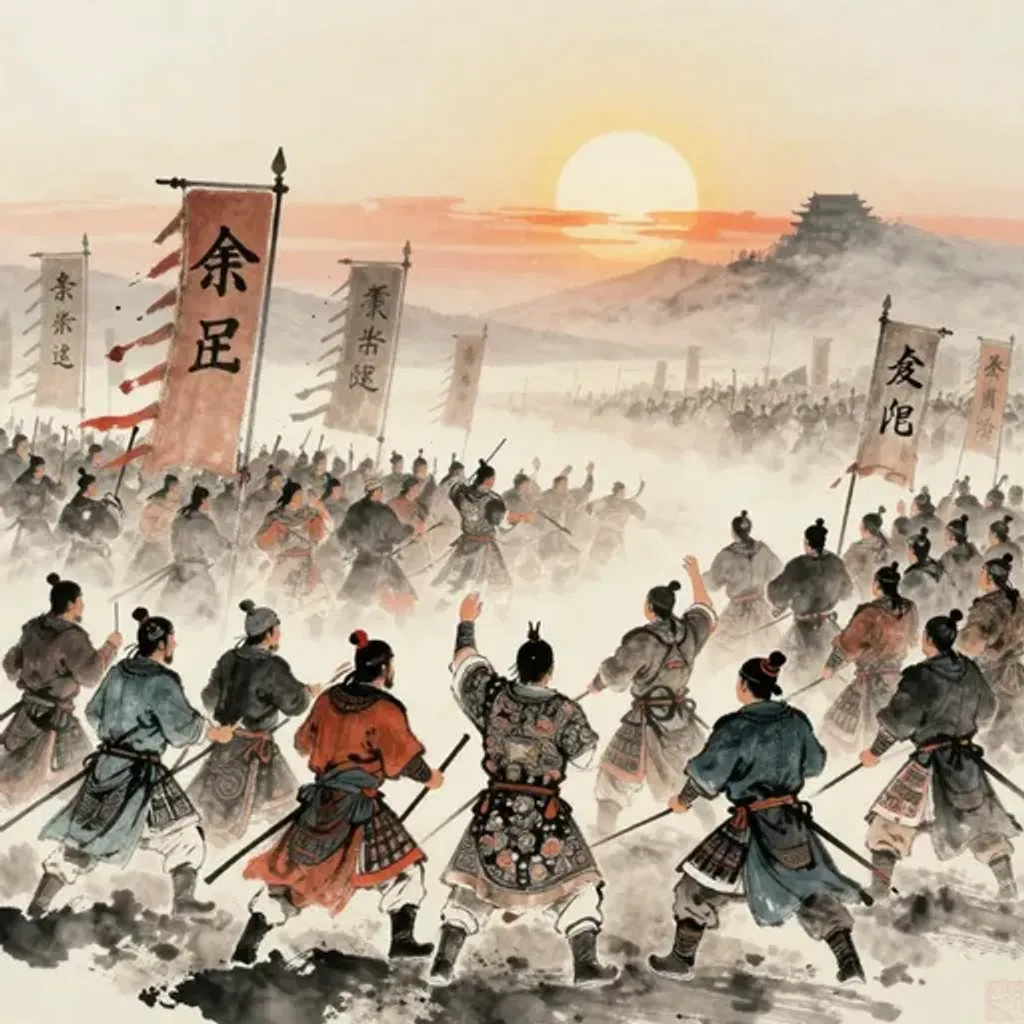
周師伐紂,勝于牧野。甲子平旦,天下大喜。
Zhou's army attacked Zhou of Shang, victorious at the Wilds of Mu. At dawn on the jiazi day, all under heaven rejoiced greatly.
— Jiao Yanshou, Yilin (Forest of Changes), 1st century BC
Commentary
Wind over water scatters the old order, and here King Wu's army strikes the decisive blow. The Zhou forces attacked King Zhou of Shang, prevailing at the Battle of Muye. At the jiazi dawn — the same cyclical day marker as the Book of Documents' Oath at Mu — the world erupted in celebration. This is the paradigmatic just revolution in Chinese history: tyranny dispersed by righteous force. The lake rising to heaven forms the image of Breakthrough — the floodwater reaching the sky, the moment when accumulated pressure bursts through. From Dispersion to Breakthrough, the scattering of Shang's corrupt power is the definitive breakthrough. The jiazi dawn marks both an ending and a beginning: the old completely swept away, the new surging irresistibly forward.
渙 → 姤
Hexagram 59 → Hexagram 44: Coming to Meet
Changing lines: 3, 4
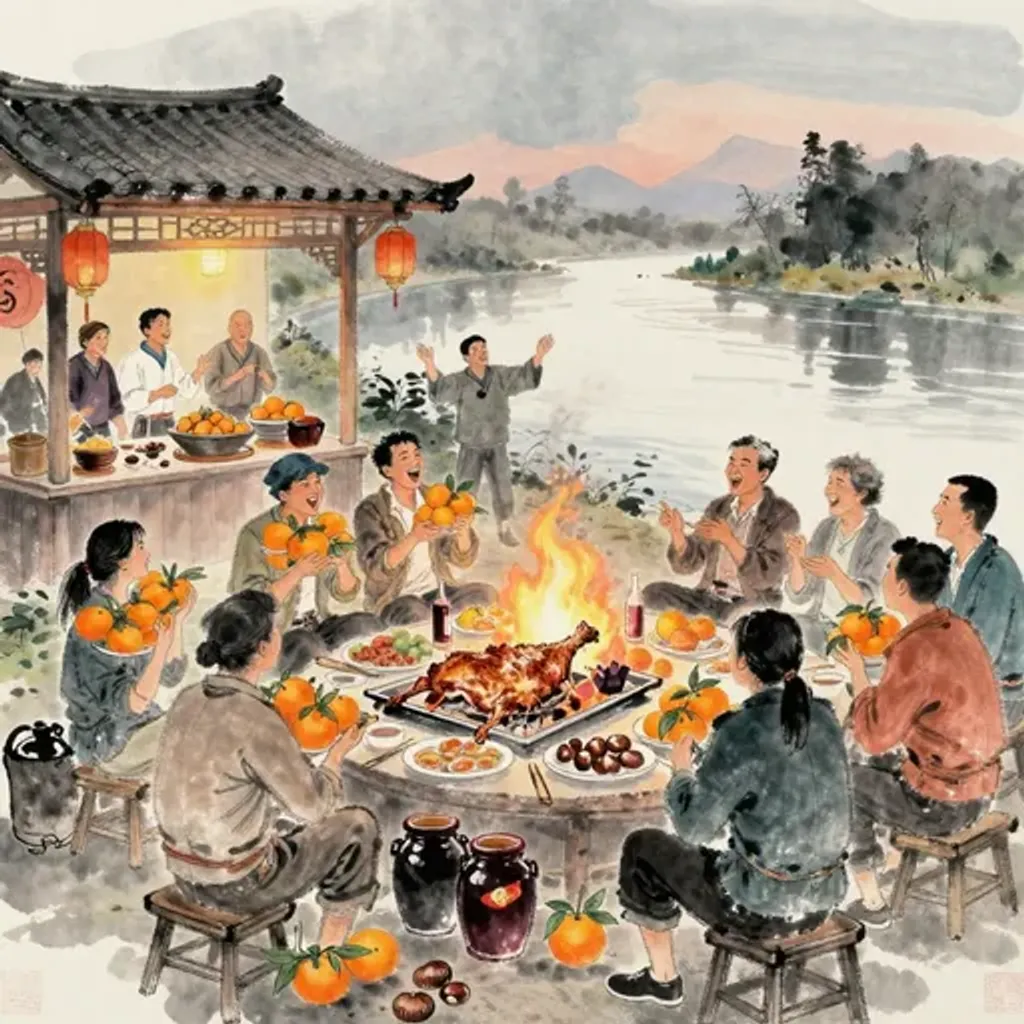
踰江求橘,并得大栗。烹羊食炙,飲酒歌笑。
Crossing the river to seek oranges, finding great chestnuts as well. Roasting lamb and eating the meat, drinking wine with songs and laughter.
— Jiao Yanshou, Yilin (Forest of Changes), 1st century BC
Commentary
Wind over water carries the traveler to unexpected bounty. Crossing the river to seek oranges, he discovers great chestnuts as well — doubling his harvest. Then lamb is roasted, wine is poured, and the company breaks into song and laughter. This is dispersion as adventure: scattering beyond familiar territory yields more than the original quest imagined. Heaven with wind beneath creates the image of Coming to Meet — the unexpected encounter that arrives unbidden. From Dispersion to Coming to Meet, the transformation captures serendipity: the man sought oranges and met chestnuts. When one disperses outward willingly, the universe sometimes answers with gifts unasked for. The feast is not earned but encountered — precisely Coming to Meet's dynamic of grace arriving from below.
渙 → 萃
Hexagram 59 → Hexagram 45: Gathering Together
Changing lines: 2, 4, 6
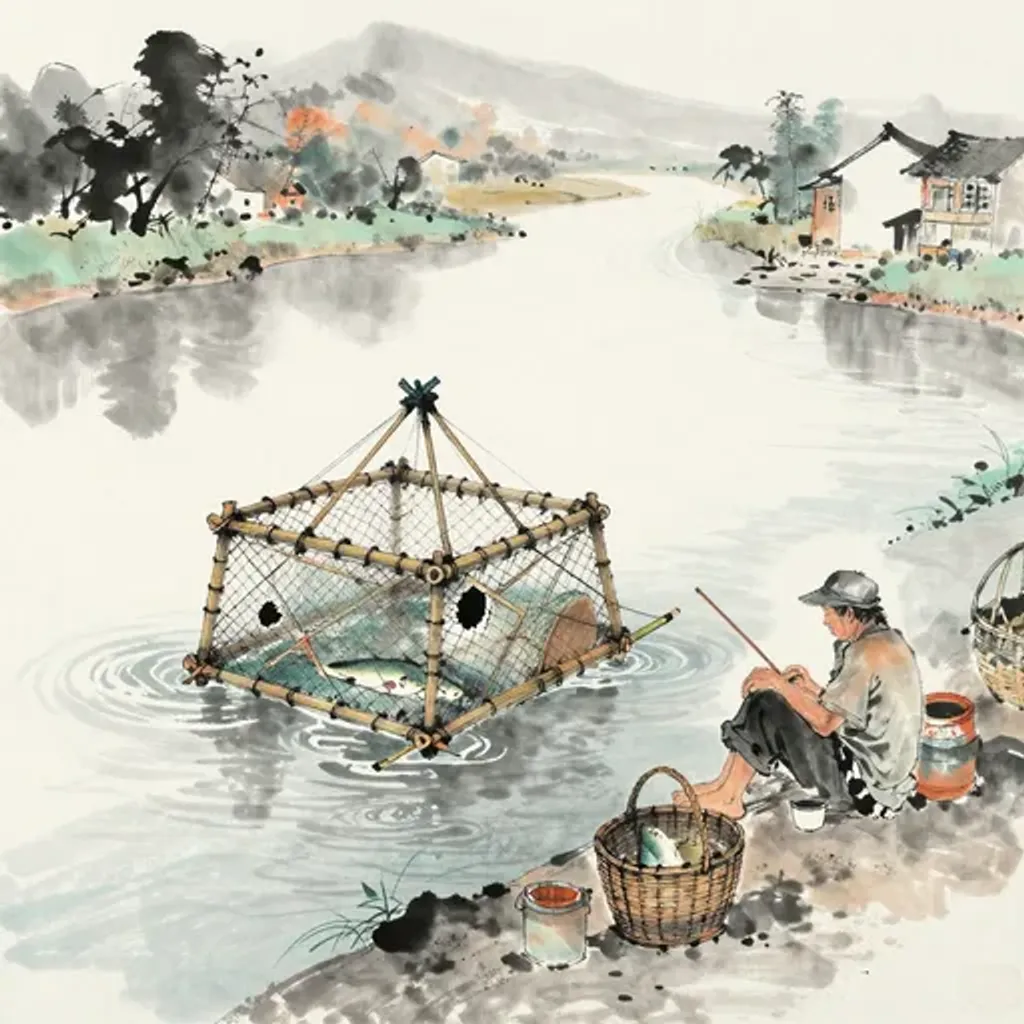
敝笱在梁,魴逸不禁。漁父勞苦,筐筥乾口,空虛无有。
The worn trap sits on the weir; the bream escape, unbounded. The fisherman toils in vain; baskets and pails dry empty, nothing within.
— Jiao Yanshou, Yilin (Forest of Changes), 1st century BC
Commentary
Wind over water scatters the catch from a broken net. The verse directly quotes the Shijing ode 'Bigou' — 'A tattered fish-trap sits on the weir, but the bream and tench slip through uncaught.' The fisherman labors in vain: his baskets are empty and his mouth is dry. This is the Shijing's original image of authority unable to restrain what it governs, traditionally read as the state of Lu's failure to control Lady Wen Jiang's scandalous liaisons with the Duke of Qi. The lake gathering upon the earth creates the image of Gathering — assembling what is dispersed. From Dispersion to Gathering, the broken fish-trap reveals the irony: one cannot gather what one has no means to hold. The fisherman's empty baskets mock the very idea of collection.
渙 → 升
Hexagram 59 → Hexagram 46: Pushing Upward
Changing lines: 3, 5, 6
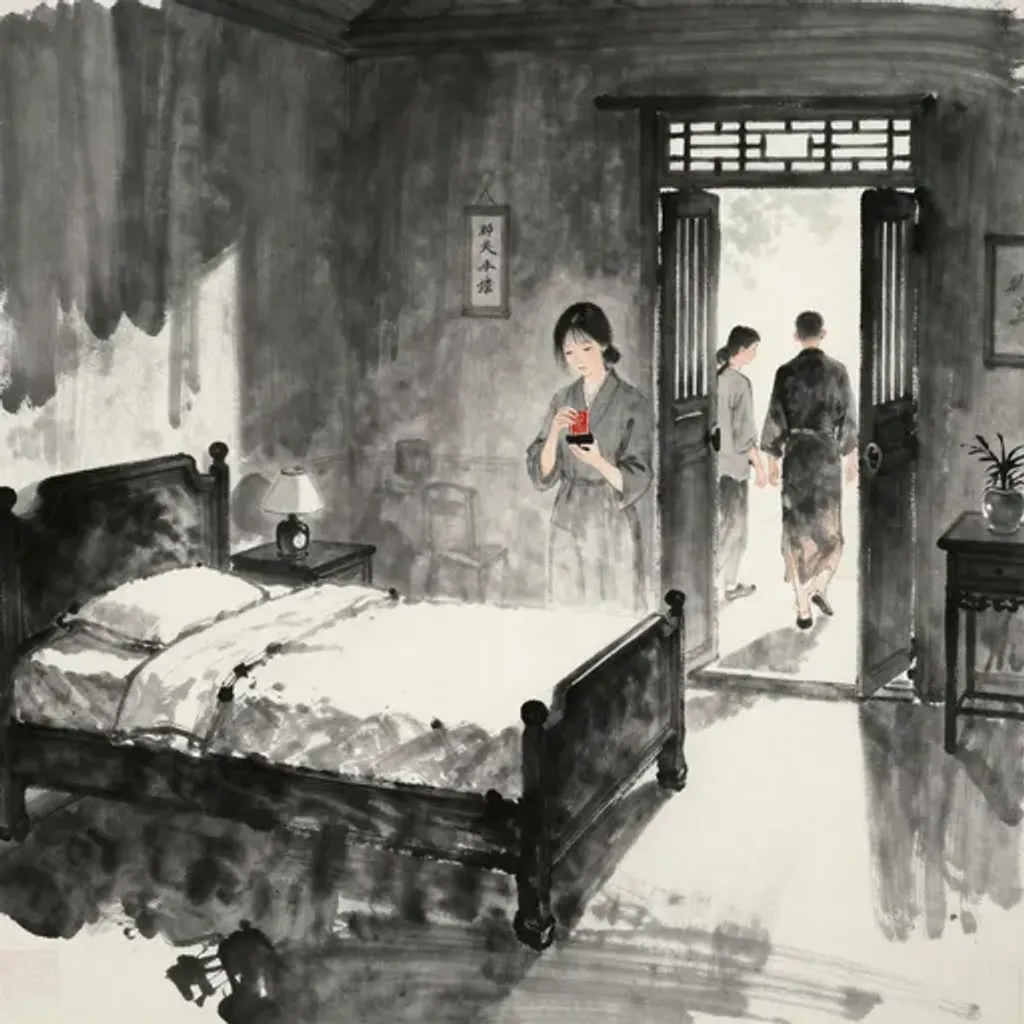
生有陰孽,制家非陽,遂送還床。張氏易公,憂禍重凶。
Born under yin's shadow, the house is ruled not by yang; one is sent back to an empty bed. The Zhang family changes its master; worries compound into double disaster.
— Jiao Yanshou, Yilin (Forest of Changes), 1st century BC
Commentary
Wind over water exposes a household's hidden corruption. 'Born with yin-tainted karma, the household is ruled not by yang but by shadow' — feminine power usurps the proper order, and the rightful heir is sent back to his bed in shame. The verse then names the Zhang clan's reversal: a husband displaced, worries compounded into grave misfortune. This pattern of domestic inversion — yin dominating yang within the family — recurs throughout the Yilin as a warning against power in improper hands. Earth over wind creates the image of Pushing Upward — the steady, quiet ascent of what grows from below. From Dispersion to Pushing Upward, the irony is bitter: what rises here is not virtue but the accumulated disorder of a household whose foundations are rotten.
渙 → 困
Hexagram 59 → Hexagram 47: Oppression
Changing lines: 4, 6
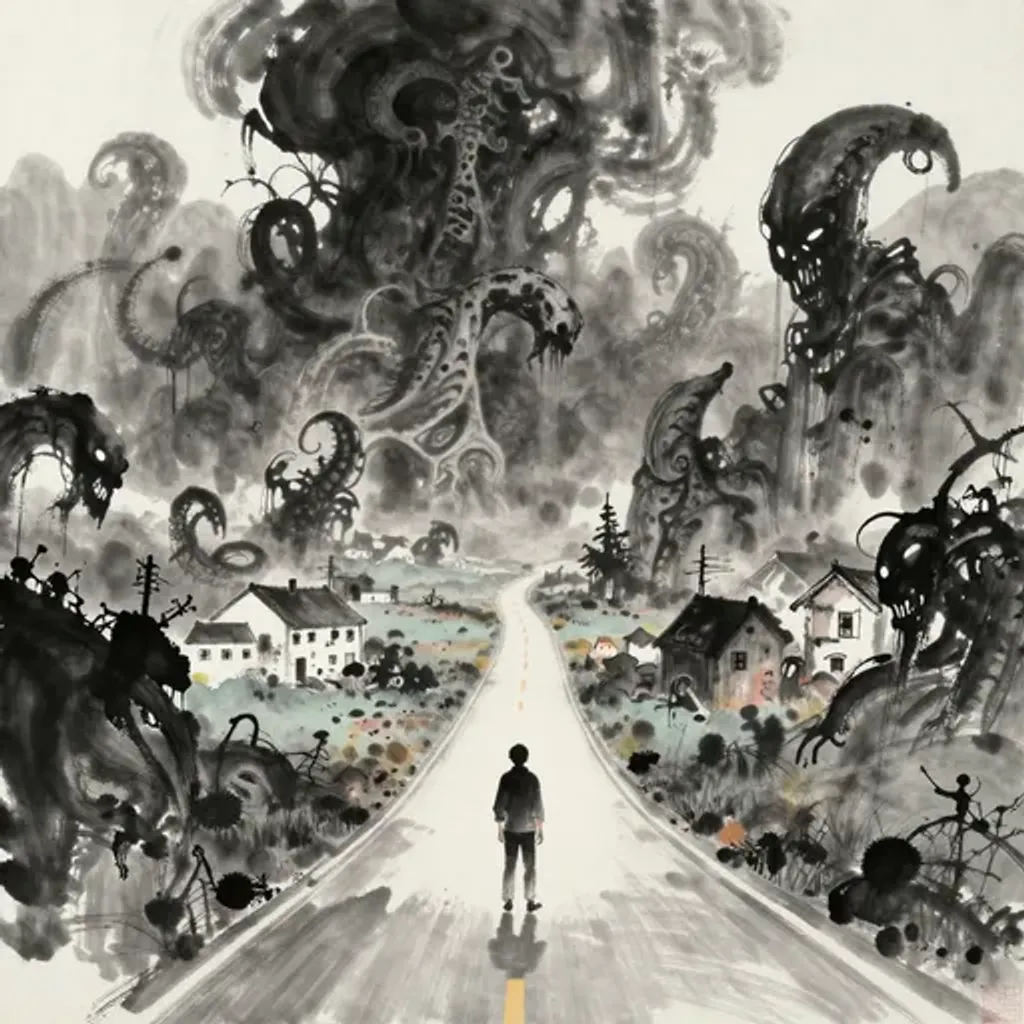
絕域異路,多有怪惡。使我驚懼,思我故處。
In the far lands beyond, on strange roads, there are many monstrous evils. They fill me with fear and dread; I long for my former home.
— Jiao Yanshou, Yilin (Forest of Changes), 1st century BC
Commentary
Wind over water scatters the traveler into alien territory. Strange roads through forbidden regions, full of monstrous and terrible things — fear grips the heart, and the mind yearns for home. This is the exile's nightmare: not just physical displacement but sensory and cultural disorientation, where everything seen and heard is wrong. The lake with no water beneath creates the image of Oppression — exhaustion of resources, the well drained dry. From Dispersion to Oppression, the scattering of the familiar becomes imprisonment in the foreign. The dispersed traveler is not free but trapped, surrounded by strangeness that cannot nourish. Oppression's emptied lake is the perfect image for a soul dried out by terror far from everything it knows.
渙 → 井
Hexagram 59 → Hexagram 48: The Well
Changing lines: 3, 6
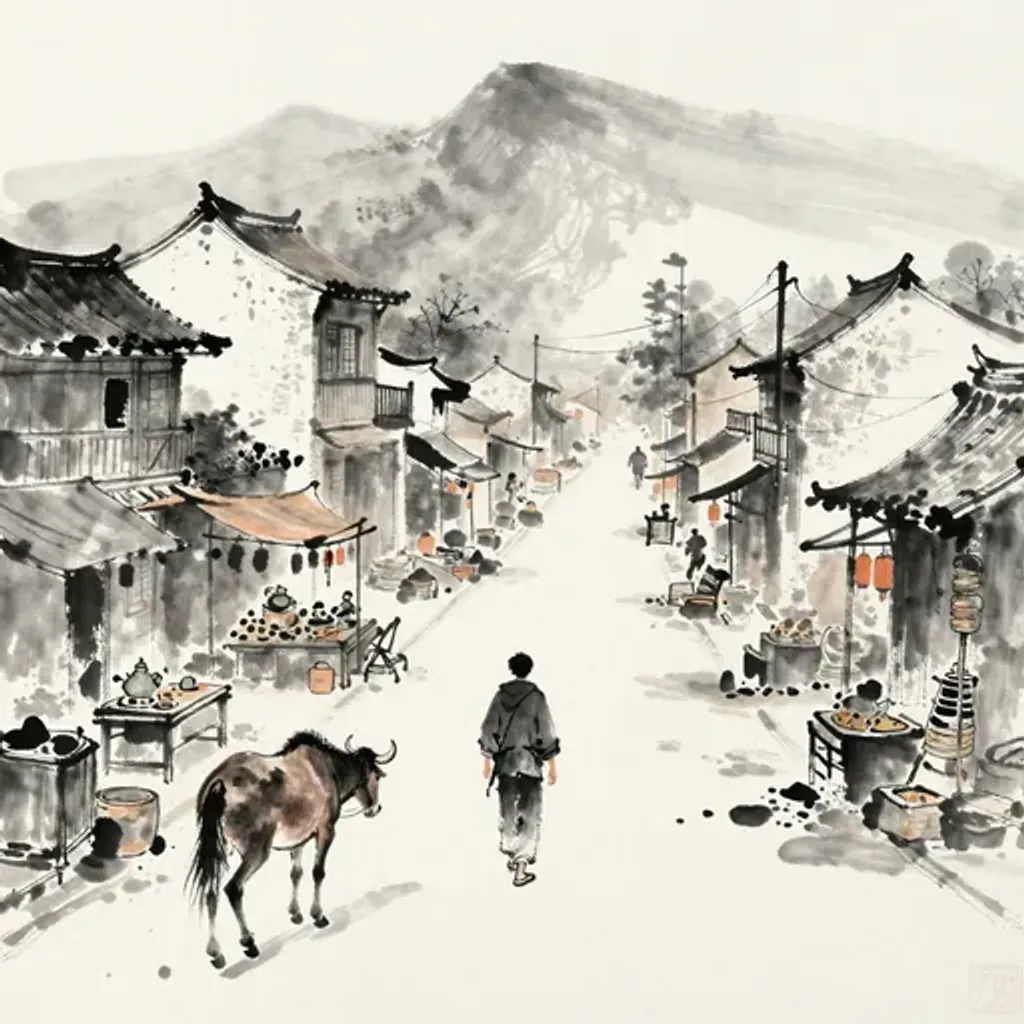
迷行失道,不得牛馬。百賈逃亡,市空无有。
Lost on the road, one loses the way, unable to find ox or horse. All merchants have fled and gone; the market stands empty, nothing remains.
— Jiao Yanshou, Yilin (Forest of Changes), 1st century BC
Commentary
Wind disperses over water, and here the entire infrastructure of livelihood vanishes. The traveler loses his way and his road; cattle and horses are gone. The hundred merchants flee, and the marketplace stands empty — a ghost town. This is total economic dispersion: not just personal misfortune but systemic collapse, where trade networks dissolve and communities evaporate. Water rising through wood creates the image of the Well — the reliable source that serves all who draw from it. From Dispersion to the Well, the verse is a bitter inversion: the well exists, but no one remains to draw water. The marketplace needs the well, and the well needs the marketplace; when dispersion empties one, the other becomes useless. Community is the precondition of sustenance.
渙 → 革
Hexagram 59 → Hexagram 49: Revolution
Changing lines: 1, 2, 3, 4, 6
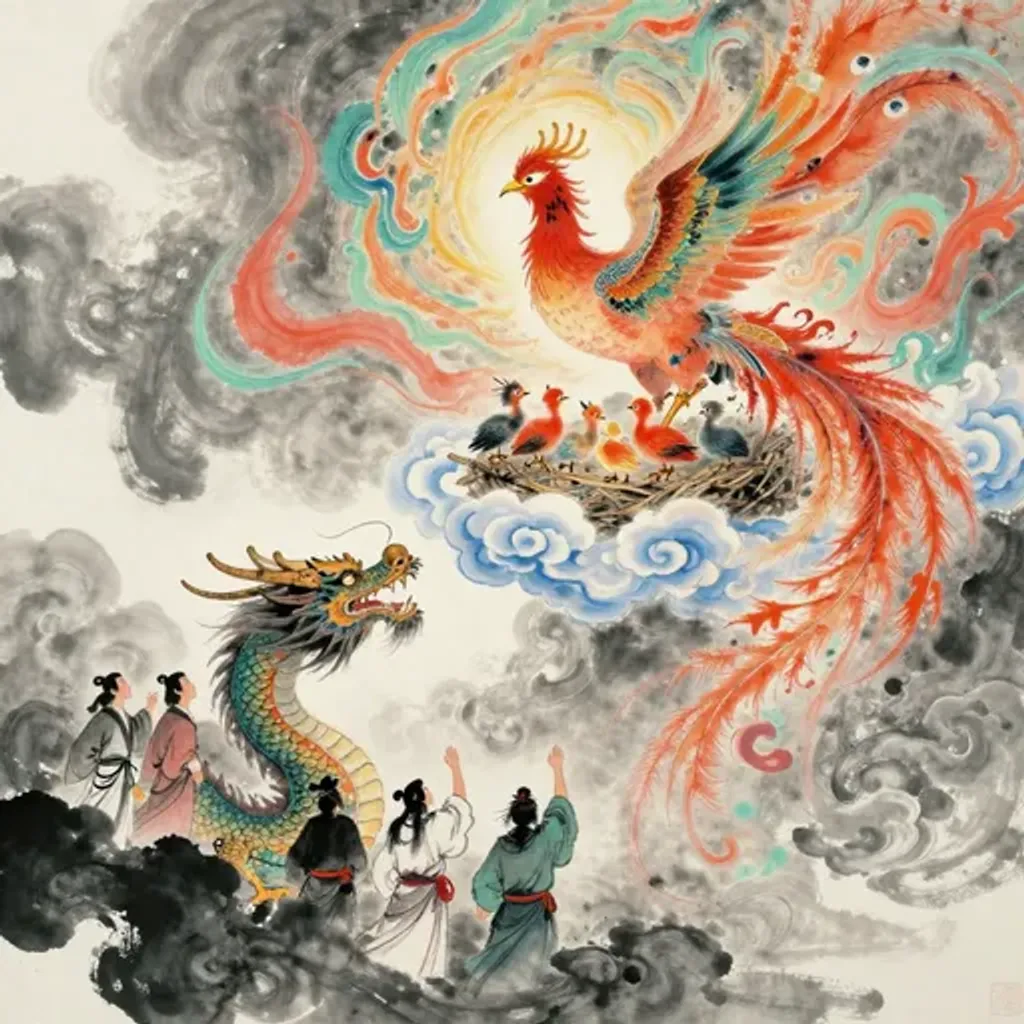
雌鸑生雛,祥異興起。束雲龍騰,民戴為父。
The female phoenix raises her young; auspicious anomalies arise. Gathering clouds, the dragon ascends; the people revere him as their father.
— Jiao Yanshou, Yilin (Forest of Changes), 1st century BC
Commentary
Wind over water scatters the old world to make way for a new reign. A female phoenix hatches her brood — an auspicious portent that inaugurates transformation. Clouds gather, a dragon ascends, and the people revere their new sovereign as a father. The phoenix chick and rising dragon are classical omens of dynastic founding, signs that heaven has chosen a new mandate. The lake containing fire within creates the image of Revolution — the seasonal turn that makes old loyalties obsolete. From Dispersion to Revolution, the verse traces the arc of legitimate overthrow: the scattering of the old order is not chaos but the birth pangs of revolutionary renewal. The phoenix does not create the mandate; it confirms that heaven's decision is already made.
渙 → 鼎
Hexagram 59 → Hexagram 50: The Cauldron
Changing lines: 3, 4, 5
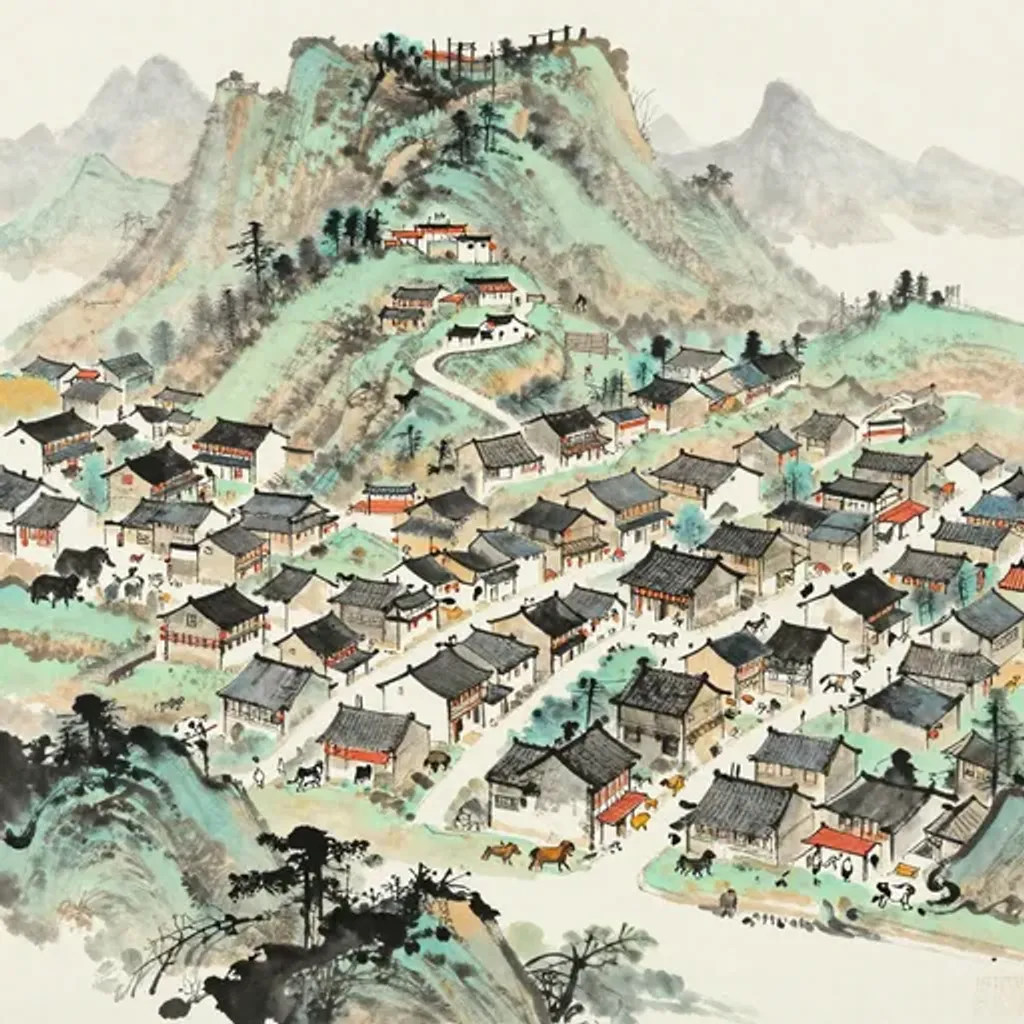
壘壘纍纍,如岐之室。畜一息十,古公始邑。
Piled layer upon layer, like the halls of Qi. Raising one to breed ten, the Ancient Duke founded his settlement.
— Jiao Yanshou, Yilin (Forest of Changes), 1st century BC
Commentary
Wind over water scatters nomadic peoples, but here they gather into settlements. 'Heaps upon heaps, like the houses of Qi' — the Zhou ancestral homeland emerging from the wilderness. The verse invokes Duke Danfu, the Ancient Duke, who led the Zhou people from Bin to the foot of Mount Qi, where they built their first walled town. 'Nurturing one, it multiplied to ten' — a tiny clan proliferating into a great nation. Fire over wind creates the image of the Cauldron — the sacred vessel that refines raw ingredients into civilized sustenance. From Dispersion to the Cauldron, wandering tribes coalesce into an ordered civilization. The Ancient Duke's migration transformed dispersion itself into foundation: scattering from one place became settling in a better one.
渙 → 震
Hexagram 59 → Hexagram 51: The Arousing Thunder
Changing lines: 1, 2, 4, 5, 6
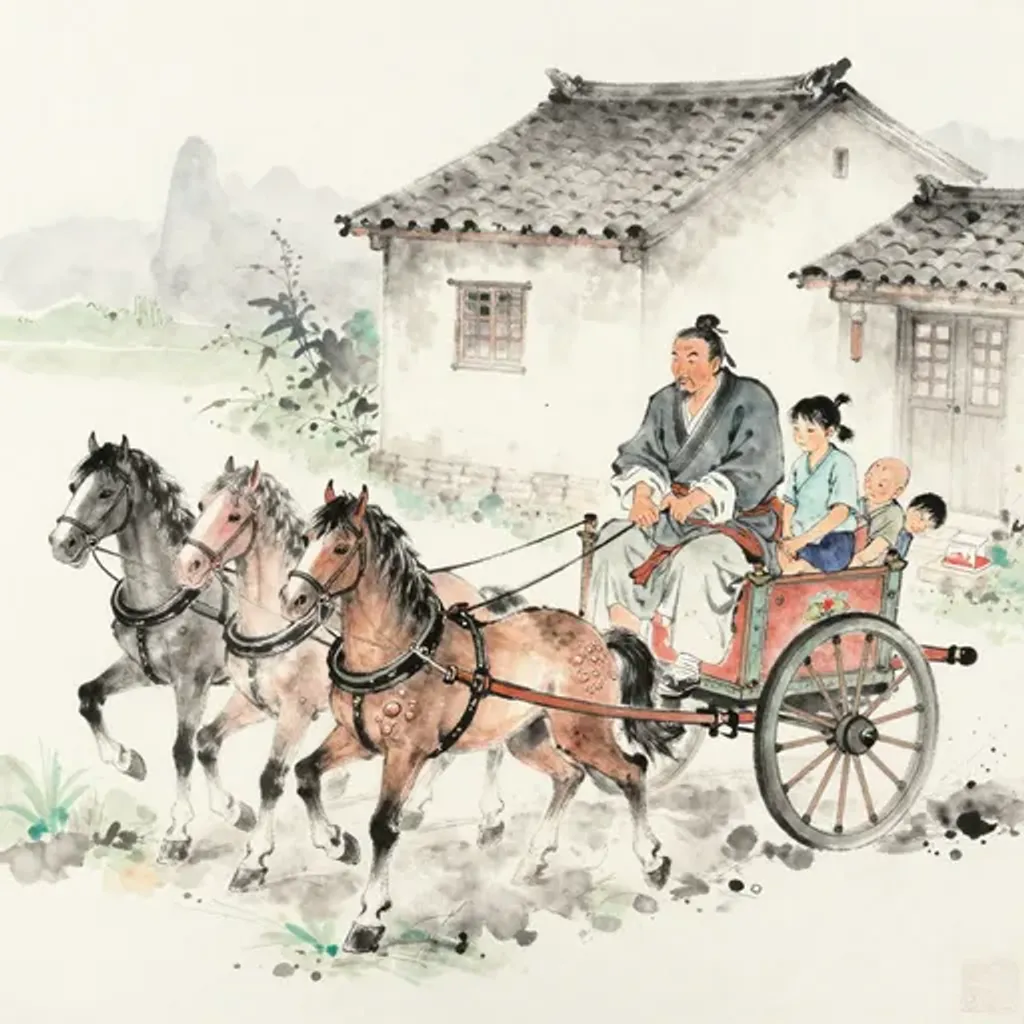
瘡瘍疥搔,孝婦不省。君多疣贅,四牡作去。
Sores, boils, and itching scabs; the filial wife cannot cure them. The lord has many warts and lumps; the four stallions are harnessed to depart.
— Jiao Yanshou, Yilin (Forest of Changes), 1st century BC
Commentary
Wind over water exposes festering ailments. Sores, scabies, and itching torment the body, but the dutiful wife pretends not to notice her husband's affliction — filial propriety sealing her lips. The lord is covered in warts and blemishes; finally, four horses are harnessed for departure. The body politic mirrors the diseased body: corruption ignored out of misplaced deference until the only option is flight. Doubled thunder creates the image of the Arousing — the shock that forces reckoning. From Dispersion to the Arousing, hidden disease is scattered into visibility by the wind, and the thunder's double strike demands immediate response. The departure by chariot is not retreat but the jolting recognition that what festered in silence can no longer be endured.
渙 → 艮
Hexagram 59 → Hexagram 52: Keeping Still Mountain
Changing lines: 2, 3, 5
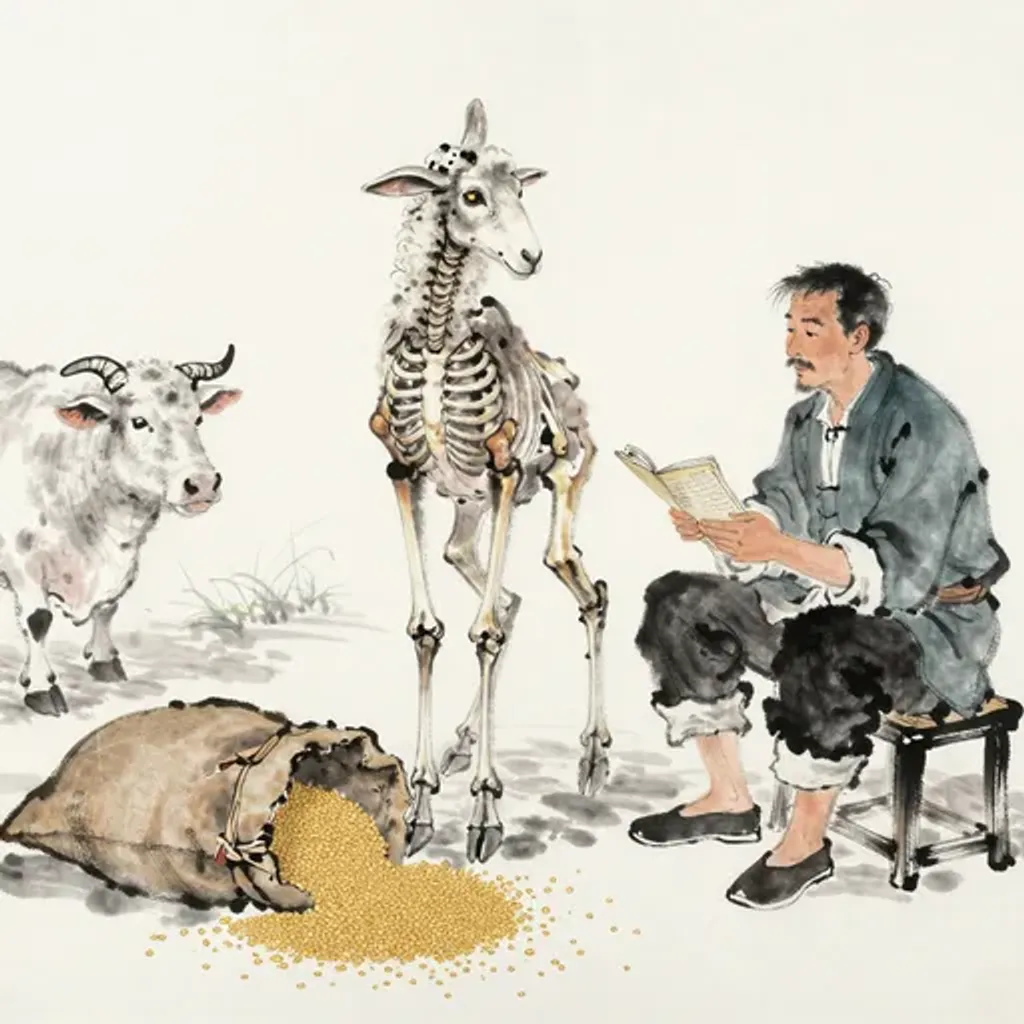
羊頭兔足,羸瘦少肉。漏囊敗粟,利无所得。
Sheep head and rabbit feet, thin and weak with little meat. A leaking sack spills spoiled grain; there is no profit to be gained.
— Jiao Yanshou, Yilin (Forest of Changes), 1st century BC
Commentary
Wind over water strips away all pretense of adequacy. A sheep's head mounted on rabbit's legs — mismatched, scrawny, barely any meat on the bones. A leaking sack spills its spoiled grain, and no profit can be found anywhere. Every image is of insufficiency and misfit: things that should nourish but cannot, containers that should hold but leak. Doubled mountain creates the image of Keeping Still — the mind that does not reach beyond its proper sphere. From Dispersion to Keeping Still, the verse warns that dispersion has left nothing worth moving toward. The sheep-headed, rabbit-footed creature cannot walk properly; the leaking sack cannot carry. Stillness here is not choice but necessity — there is simply nothing left to pursue.
渙 → 漸
Hexagram 59 → Hexagram 53: Development
Changing lines: 2, 3
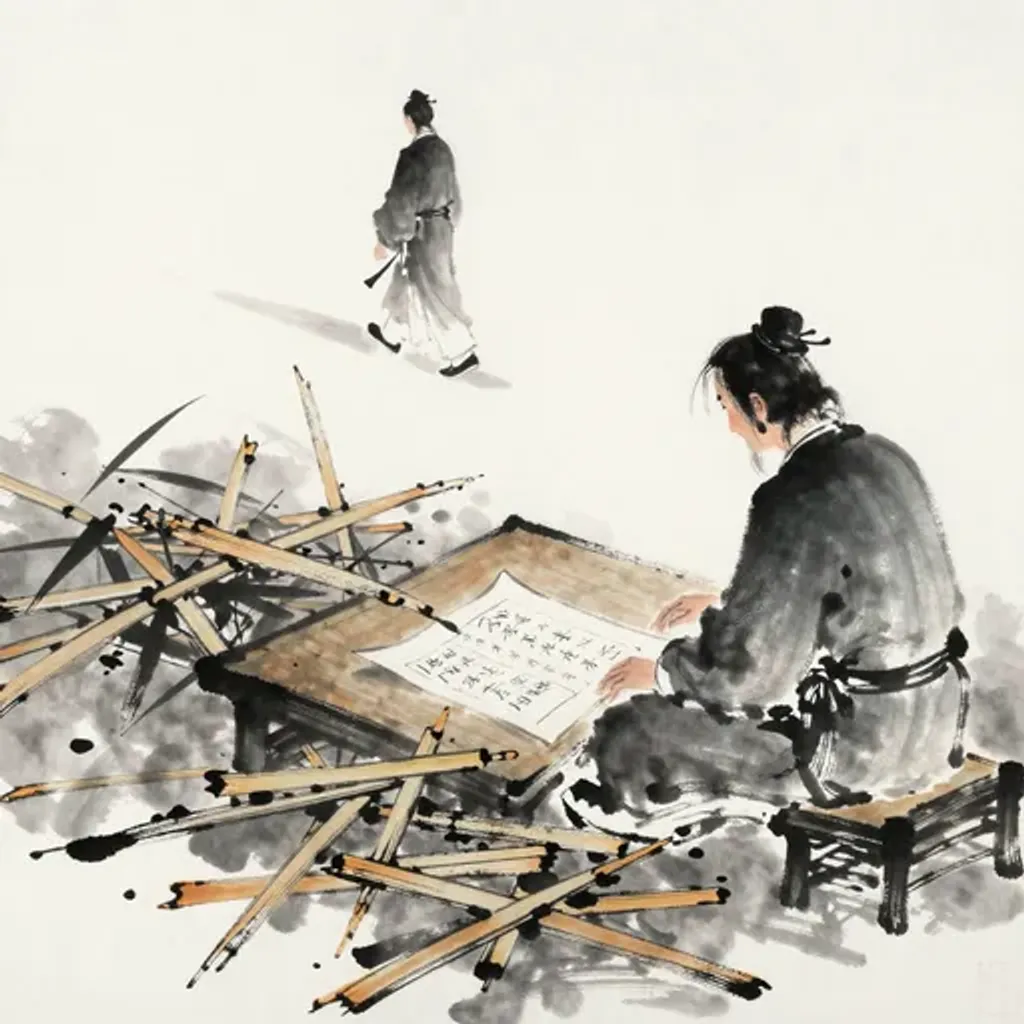
薛篾從靡,空无誰是。言季子明,樂減少解。
Bamboo strips and reeds scattered and limp; empty, with no one to affirm what is right. They speak of Ji Zi's clarity, but joy and music fade and dissolve.
— Jiao Yanshou, Yilin (Forest of Changes), 1st century BC
Commentary
Wind over water disperses clarity into confusion. Thin bamboo strips bend and scatter in the wind — nothing holds, nothing stands firm. The verse mentions Ji Ziming but joy diminishes and understanding unravels. The imagery is of intellectual and emotional dissolution: knowledge that should illuminate instead dissipates, and the pleasure of comprehension fades. Wind above the mountain creates the image of Development — the tree growing slowly on the mountainside, each stage secure before the next begins. From Dispersion to Development, the verse presents a cautionary contrast: where Development demands patient, incremental growth, the scattered bamboo strips represent knowledge acquired too quickly or too loosely to take root. Gradual cultivation is the antidote to dispersed understanding.
渙 → 歸妹
Hexagram 59 → Hexagram 54: The Marrying Maiden
Changing lines: 1, 4, 5, 6

妺為貌熟,敗君正色。作事不成,自為心賊。
The younger sister's beauty is ripe, ruining the lord's proper bearing. His endeavors fail to succeed; he becomes the thief of his own heart.
— Jiao Yanshou, Yilin (Forest of Changes), 1st century BC
Commentary
Wind scatters over water, and here beauty itself becomes the agent of dissolution. Mei, the legendary seductress — possibly an echo of the concubine Daji or the femme fatale archetype — presents a ripe and alluring face, but her beauty corrupts the lord's upright character. Undertakings fail, and the man becomes his own worst enemy, his heart turned thief against itself. Thunder above the lake creates the image of the Marrying Maiden — the younger sister given in marriage, a position of structural subordination. From Dispersion to the Marrying Maiden, desire scatters judgment. The lord who falls for beguiling appearances acts against his own interests, and every enterprise collapses. The 'heart-thief' — self-sabotage through infatuation — is Dispersion's most intimate form of damage.
渙 → 豐
Hexagram 59 → Hexagram 55: Abundance
Changing lines: 1, 2, 3, 4, 5, 6
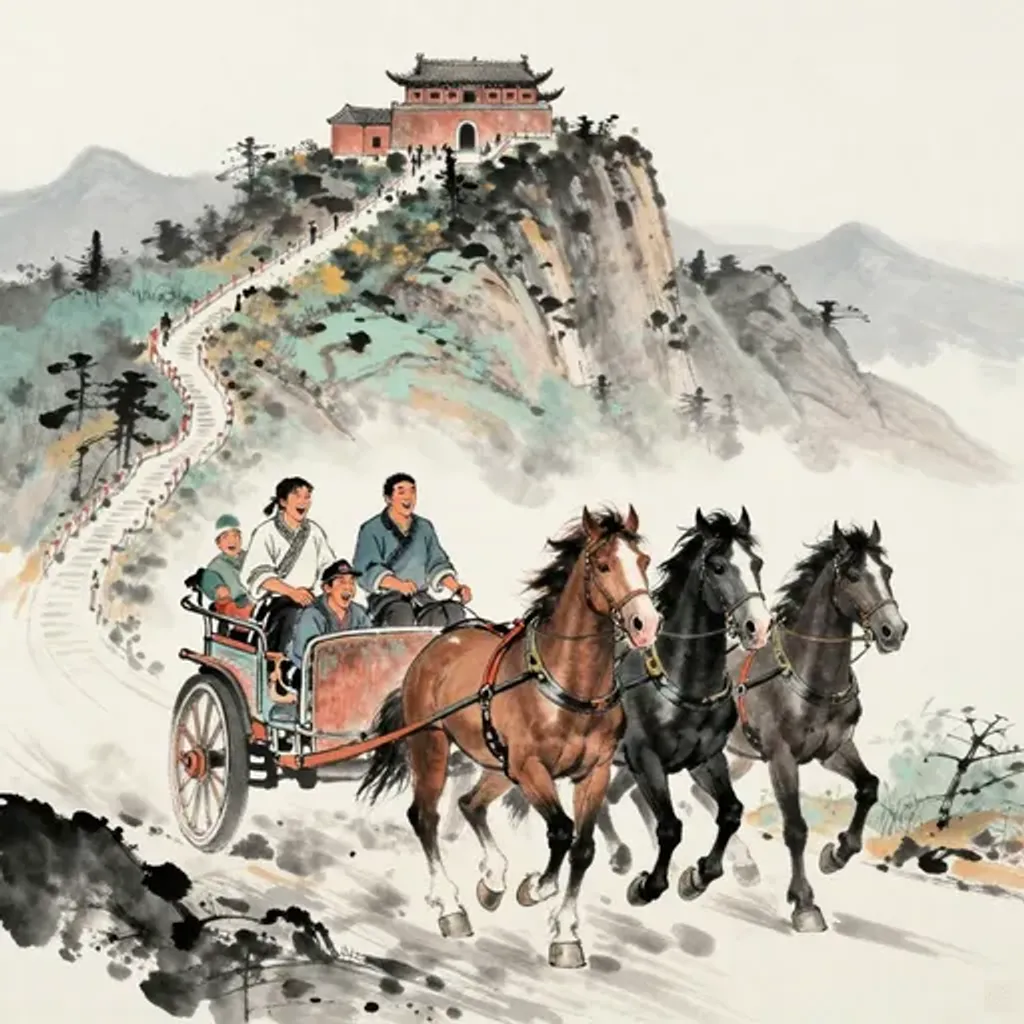
四馬共轅,東上太山。騂驪同力,无有重難,與君笑言。
Four horses share one yoke, ascending east to Mount Tai. Bay and black combine their strength; there is no great difficulty. We laugh and speak with our lord.
— Jiao Yanshou, Yilin (Forest of Changes), 1st century BC
Commentary
Wind over water disperses obstacles from the path. Four horses share one yoke, pulling eastward up Mount Tai itself. Bay and black work in concert, united in strength — no difficulty too heavy, no terrain too steep. With their lord they share laughter and easy conversation. This is the image of combined force deployed joyously: dispersion of resistance through collaborative power. Thunder and fire together create the image of Abundance — the zenith of light and movement, the moment when everything comes together. From Dispersion to Abundance, the four horses ascending the sacred mountain embody the full realization of dispersed energy reconvening as unstoppable momentum. What was scattered becomes surplus; what was separate becomes a team climbing toward the summit.
渙 → 旅
Hexagram 59 → Hexagram 56: The Wanderer
Changing lines: 2, 3, 4, 5
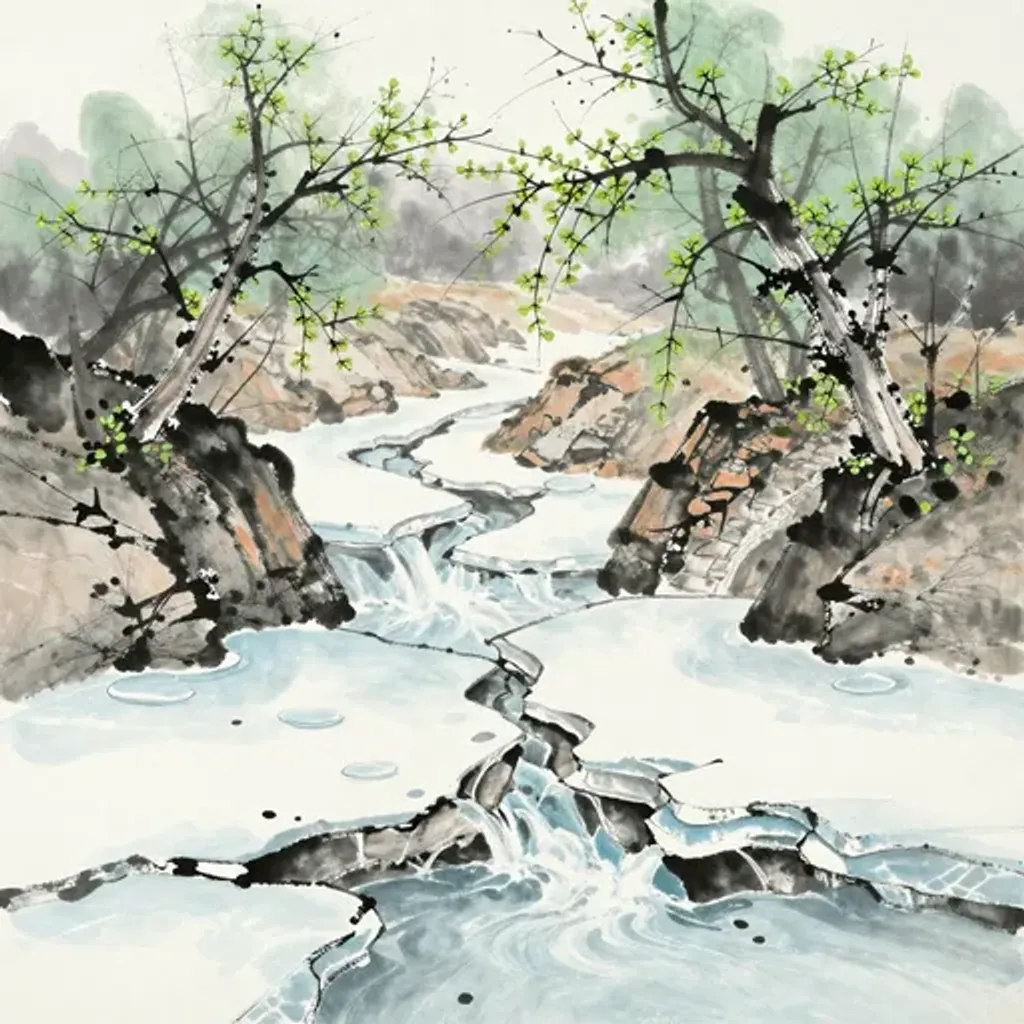
陰變為陽,女化作男。治道得通,君臣相承。
The frozen river thaws at the sound of spring thunder; dead branches sprout green as jade. Underground currents in the valley surge through stone — in a single morning, heaven and earth change their garments.
— Jiao Yanshou, Yilin (Forest of Changes), 1st century BC
Commentary
Wind over water — and here the original verse speaks of fundamental transformation. 'Yin changes to yang, female transforms into male; the way of governance opens through, ruler and minister sustain each other.' This is not biological metamorphosis but cosmological renewal: the dark phase transmuting into light, the yielding becoming the initiating force. Fire resting upon the mountain creates the image of the Wanderer — the traveler who carries his light with him, careful and observant in foreign territory. From Dispersion to the Wanderer, the verse maps total alchemical change onto the condition of travel. The yin-to-yang shift suggests that the wanderer's displacement is itself the transformative process: passing through alien territory, one sheds an old identity and gains a new one.
渙 → 巽
Hexagram 59 → Hexagram 57: The Gentle Wind
Changing lines: 3
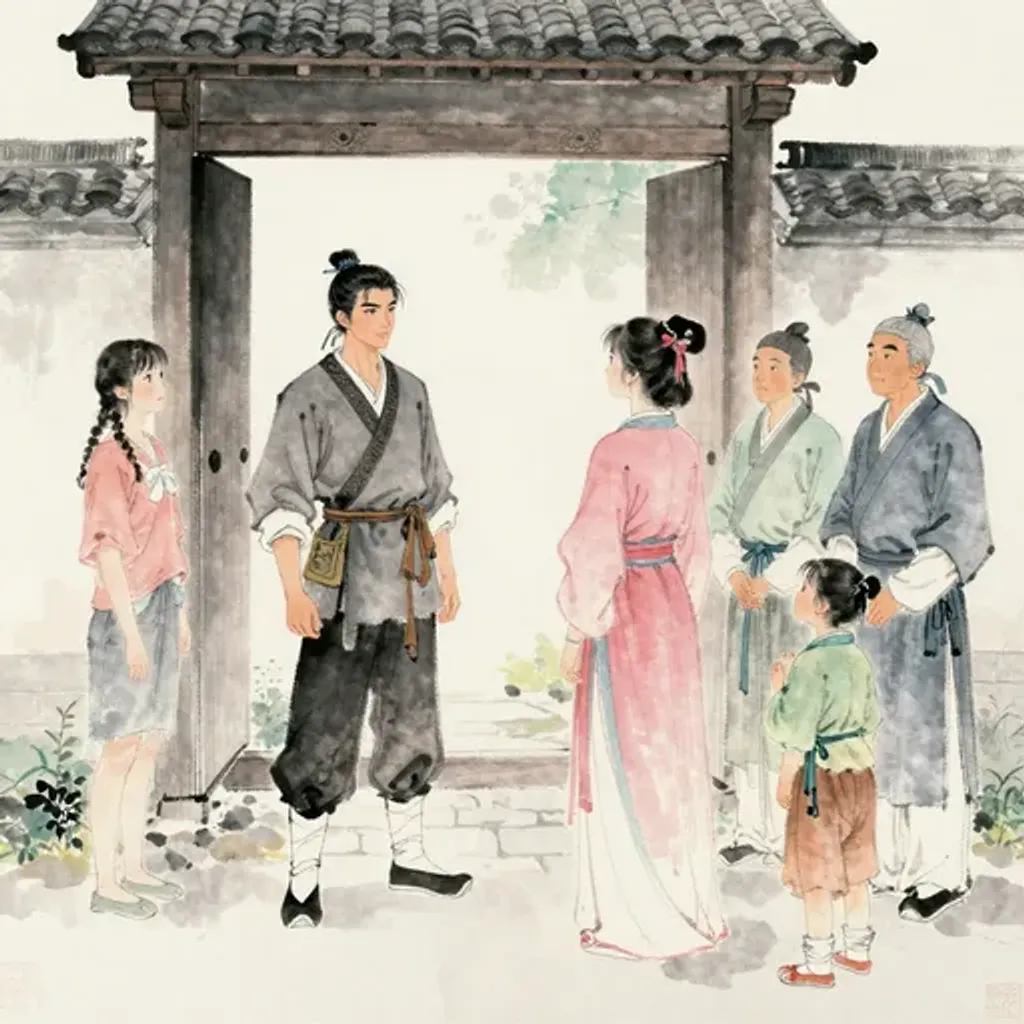
南國少子,材略美好。求我長女,賤薄不與。反得醜惡,後乃天悔。
The young son of the southern state, with fine talent and good looks, sought my eldest daughter. Deeming him base, we refused. Instead gaining one unworthy; later, heaven's regret.
— Jiao Yanshou, Yilin (Forest of Changes), 1st century BC
Commentary
Wind over water, doubled wind below: the gentle penetrating upon the dispersing. A talented young man from the southern kingdom, endowed with fine ability and appearance, seeks the eldest daughter in marriage. But the family considers him beneath them and refuses. He ends up with an ugly match instead, and later heaven itself regrets the outcome. This is the tragedy of misrecognized value — talent dismissed by snobbery, the worthy suitor turned away while the worthy bride goes to waste. Doubled wind creates the image of the Gentle — persistent, permeating influence that works by repetition. From Dispersion to the Gentle, the verse suggests that what disperses a good match is not dramatic opposition but the slow, insidious wind of social prejudice, penetrating everywhere and poisoning every judgment.
渙 → 兌
Hexagram 59 → Hexagram 58: The Joyous Lake
Changing lines: 1, 4, 6
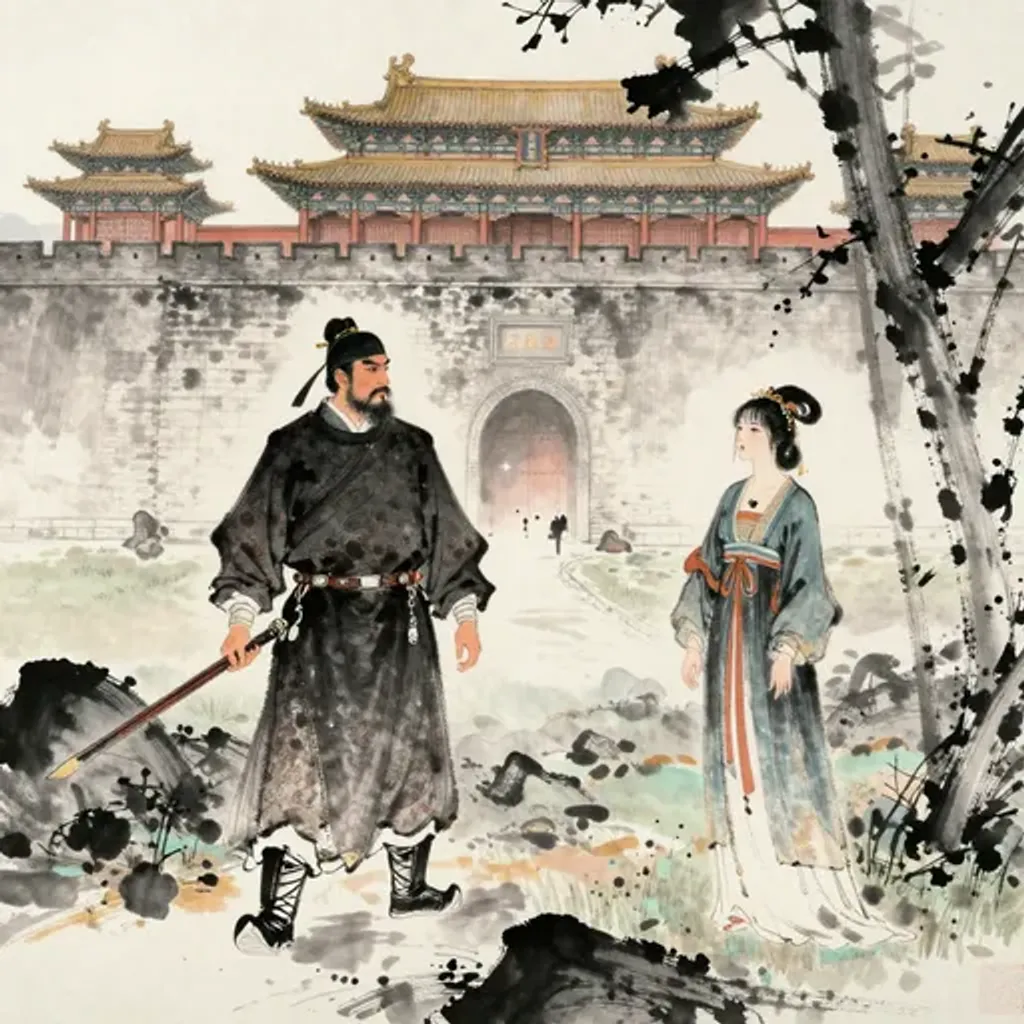
昭公失常,季女悖狂。遜齊處野,喪其寵光。
Duke Zhao lost his proper way; the Ji woman fell to wild madness. Yielding to Qi, dwelling in the wilds, they lost their favor and glory.
— Jiao Yanshou, Yilin (Forest of Changes), 1st century BC
Commentary
Wind over water scatters a ruler from his own throne. Duke Zhao of Lu lost his bearings, and a Lady Ji — perhaps one of the Ji clan women who participated in the factional struggle — acted wildly, overstepping all bounds. The duke fled to Qi, dwelling in the wilderness, his authority and glory extinguished. This echoes the historical episode of 517 BC, when Duke Zhao of Lu was expelled by the powerful Jisun clan and died in exile without recovering his state. Doubled lake creates the image of the Joyous — mutual delight, open communication, friends learning together. From Dispersion to the Joyous, the verse is grimly ironic: the joy of open exchange requires a ground of stability that the scattered duke no longer possesses. His exile is the negation of everything the Joyous promises.
渙 → 渙
Hexagram 59 → Hexagram 59: Dispersion
No changing lines — the hexagram is unchanged
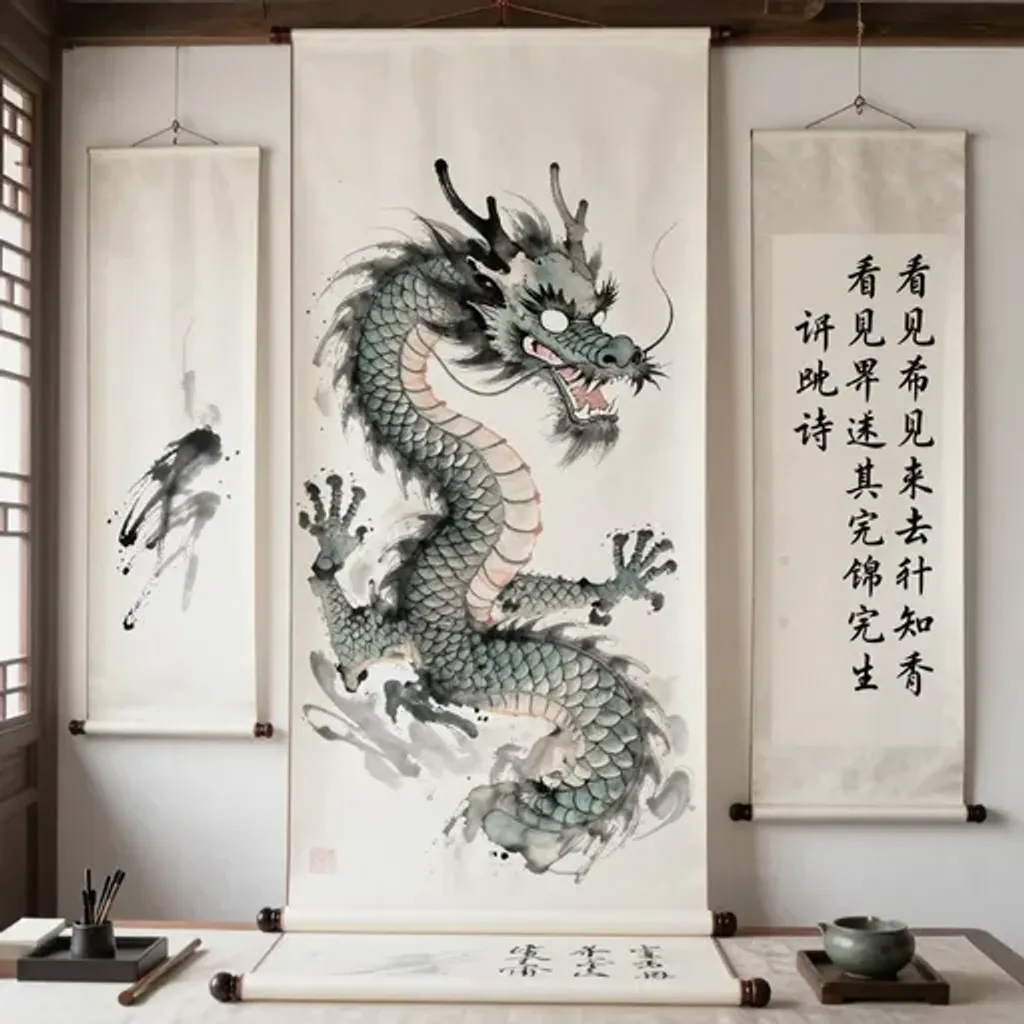
望幸不到,文章未就。王子逐兔,犬踦不得。
The dragon is painted but the eye is not dotted; the poem is complete but missing its final line. Wind scatters the wet ink — only smudges remain on the paper.
— Jiao Yanshou, Yilin (Forest of Changes), 1st century BC
Commentary
Wind over water, returning to itself — Dispersion into Dispersion. The original verse captures incompletion at every level: the hoped-for audience never arrives, the literary work remains unfinished. A prince chases a rabbit, but his dog stumbles and the prey escapes. Each image is of effort that falls just short, the final stroke never delivered. Wind over water, dispersing what was already dispersed — the condition is recursive, an endless loop of dissolution. From Dispersion to Dispersion, there is no transformation, no resolution: the dragon painted without its pupils, the poem missing its last line, the ink blown across the page by the very wind that should have dried it. This is the hexagram contemplating its own nature: the permanent condition of things never quite coming together.
渙 → 節
Hexagram 59 → Hexagram 60: Limitation
Changing lines: 1, 6
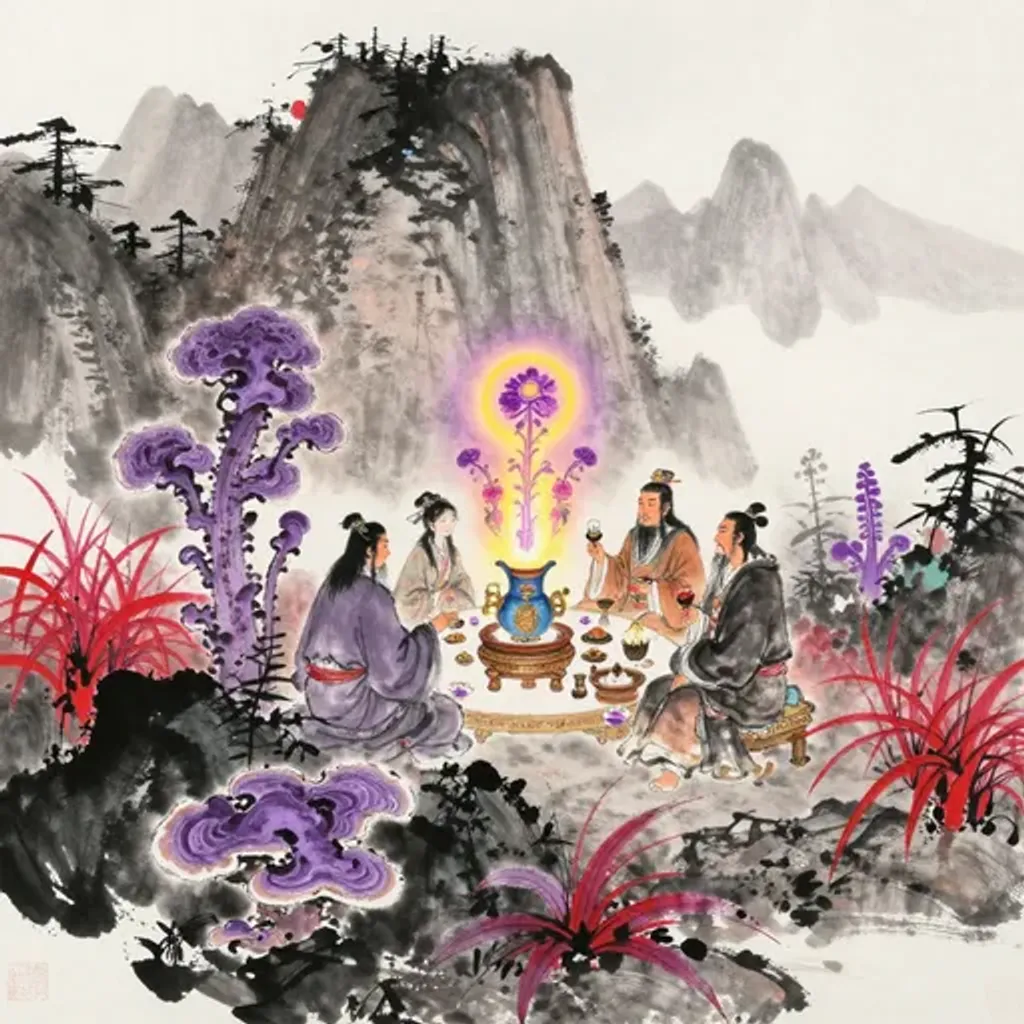
天山紫芝,雍梁朱草。長生和氣,王以為寶。公尸宥食,福祿來處。
Purple fungus of the Celestial Mountains, crimson grass of Yong and Liang. The plants of long life and harmonious qi, the king treasures them. The ritual representative accepts the feast; blessing and prosperity come to abide.
— Jiao Yanshou, Yilin (Forest of Changes), 1st century BC
Commentary
Wind disperses over water, but here sacred plants gather on celestial mountains. Purple lingzhi mushrooms grow on heavenly peaks; vermilion grasses flourish near the capital. These are omens of cosmic health — the harmonious qi that generates longevity and blessing when heaven and earth are in accord. The verse invokes ritual feasting: the ancestral representative receives offerings, and fortune and emolument arrive as if drawn by natural gravity. Water above the lake creates the image of Limitation — the measured portion, the boundary that gives form to what would otherwise overflow. From Dispersion to Limitation, the transformation reveals that sacred abundance requires containers. The lingzhi and vermilion grass thrive not in endless wilderness but in measured, bounded mountain-sanctuaries where heaven's energy is concentrated rather than scattered.
渙 → 中孚
Hexagram 59 → Hexagram 61: Inner Truth
Changing lines: 1
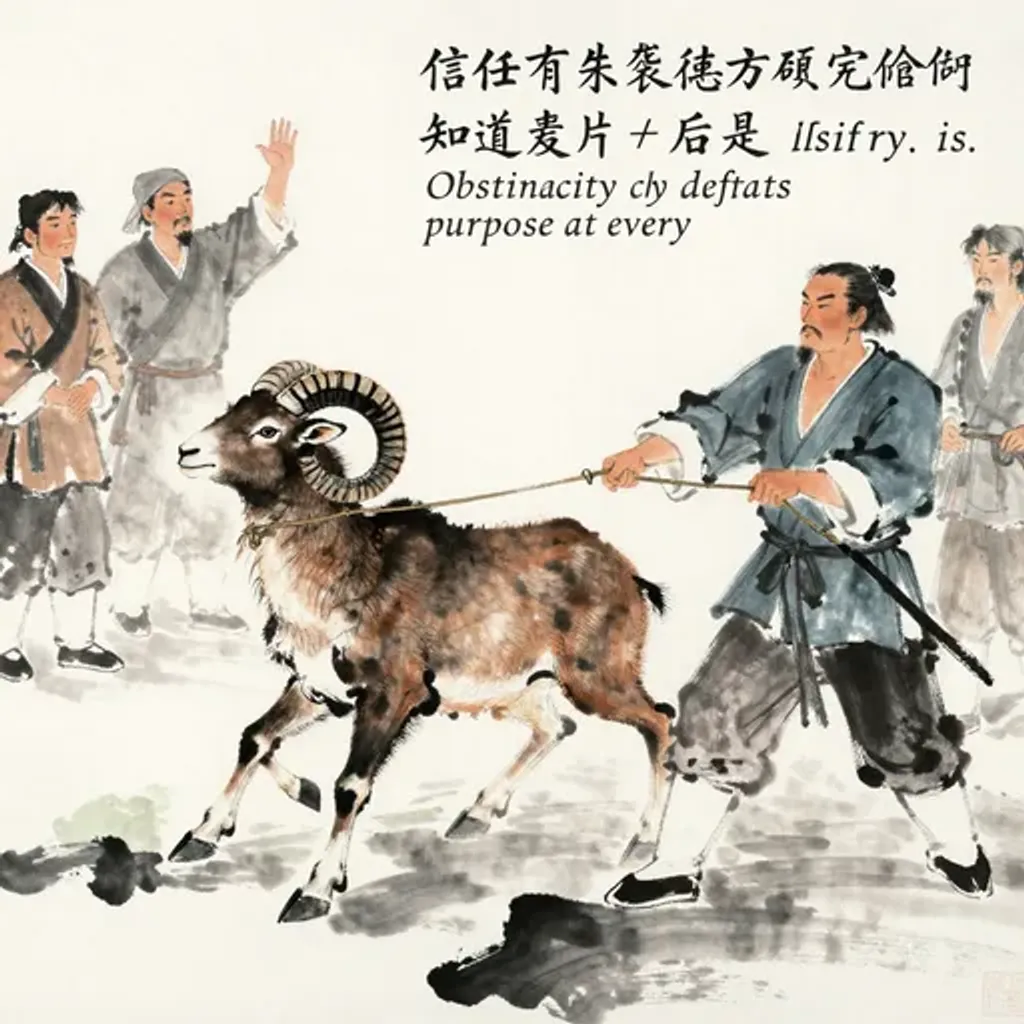
牽羊不前,與心戾旋。聞言不信,誤紿大人。
Leading the sheep, it will not go forward; the heart turns contrary and circles back. Hearing words, one does not believe; deceiving and misleading the great man.
— Jiao Yanshou, Yilin (Forest of Changes), 1st century BC
Commentary
Wind over water scatters trust before it can take hold. A sheep is pulled forward but refuses to move, its will circling back against the handler's intent. Words are heard but not believed, and through deception the great person is misled. Every element here is about failed communication: the sheep that resists, the speech that rings hollow, the trust that never arrives. Wind above the lake creates the image of Inner Truth — the hollow center that resonates precisely because it is empty and receptive. From Dispersion to Inner Truth, the verse is a negative illustration: where Inner Truth demands sincerity penetrating to the bone, this verse shows its absence. The sheep balks because it senses dishonesty; the great person is deceived because someone else's insincerity has scattered the field of trust entirely.
渙 → 小過
Hexagram 59 → Hexagram 62: Small Exceeding
Changing lines: 2, 3, 4, 5, 6
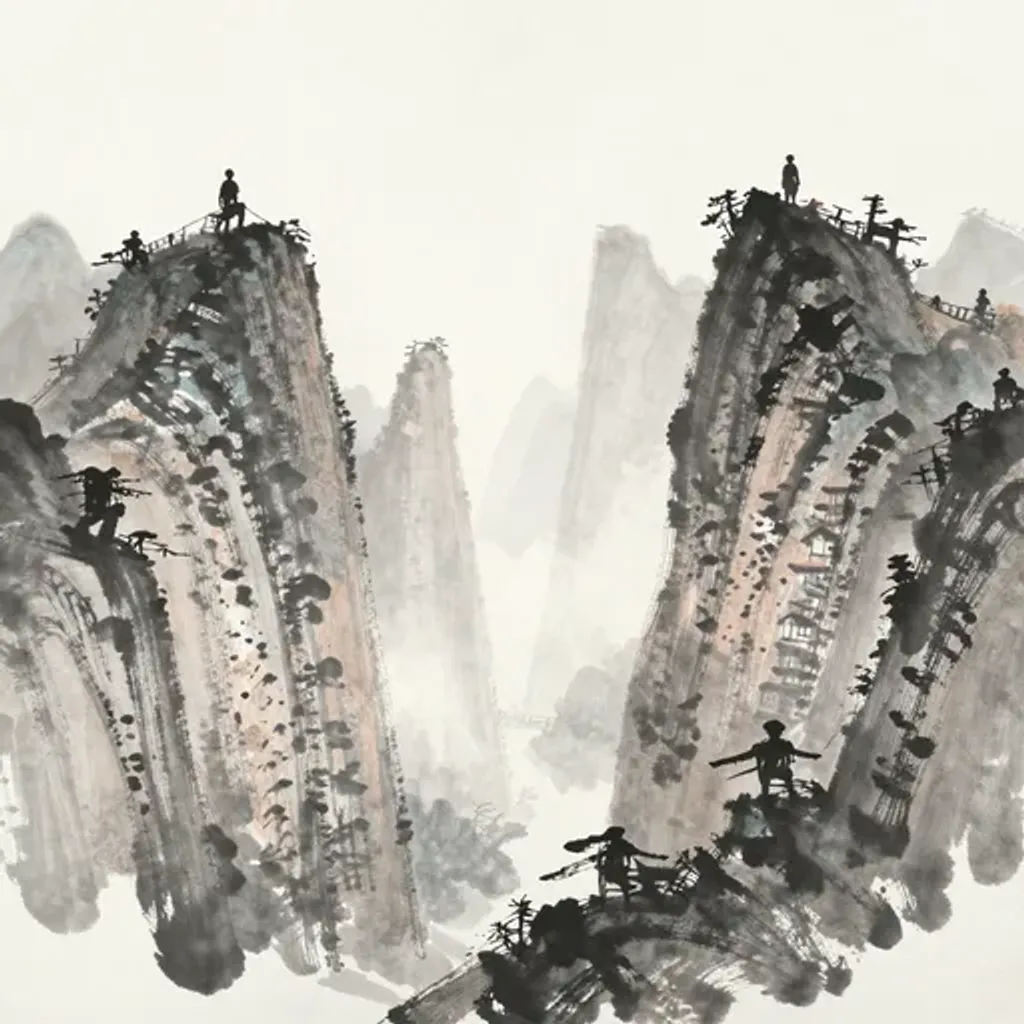
東山西山,各自止安。心雖相望,竟未同堂。
East mountain and west mountain, each rests in its own peace. Though hearts may gaze toward each other, they never share the same hall.
— Jiao Yanshou, Yilin (Forest of Changes), 1st century BC
Commentary
Wind over water separates what should be united. East mountain and west mountain each rest in their own place, peacefully apart. Hearts may gaze across the distance, but the two never share the same hall. This is not hostile estrangement but quiet, structural separation — two entities that recognize each other's presence yet cannot close the gap. Thunder above the mountain creates the image of Small Exceeding — the small bird that should not fly too high, the modest action that overshoots its bounds. From Dispersion to Small Exceeding, the verse maps the limits of longing onto geography. The mountains' separation is permanent, and the wish to unite exceeds what the small can achieve. Sometimes dispersion creates distances that even mutual goodwill cannot bridge.
渙 → 既濟
Hexagram 59 → Hexagram 63: After Completion
Changing lines: 1, 2, 3, 6
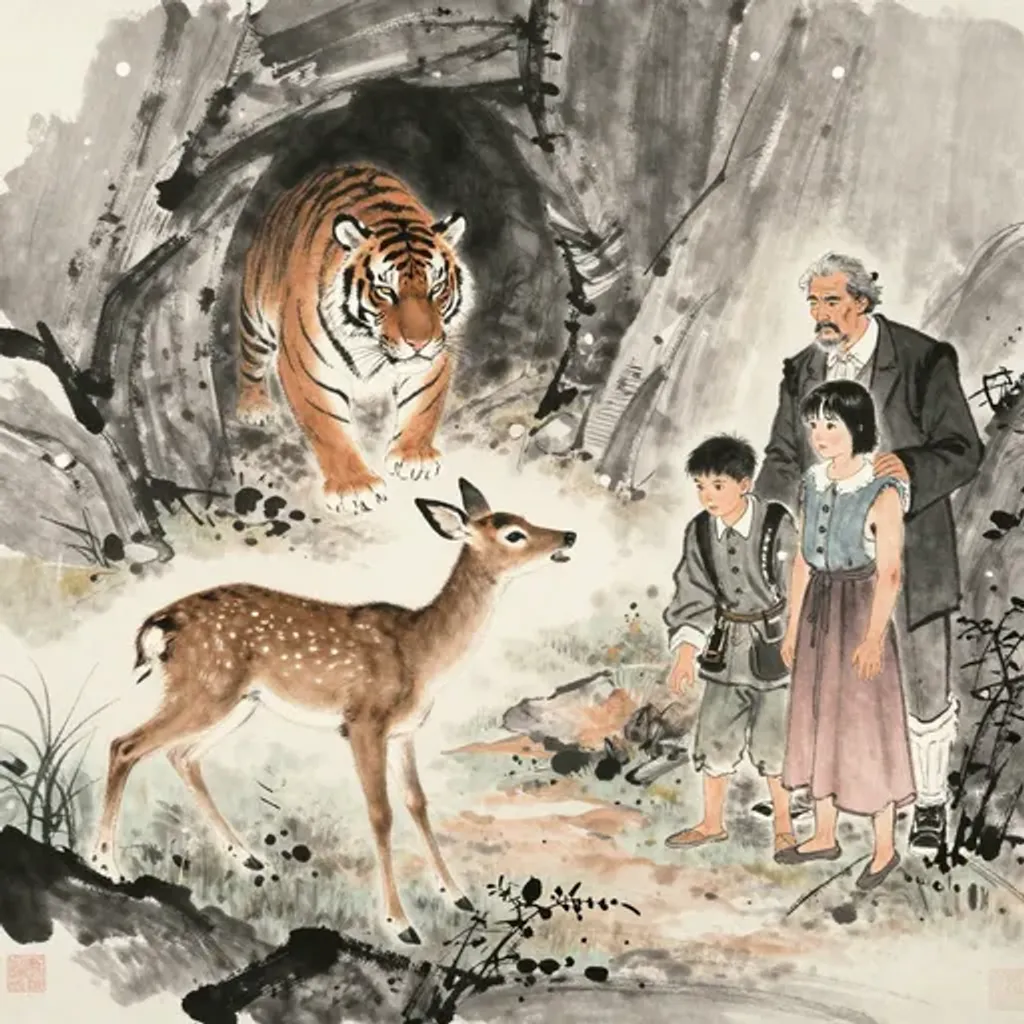
鹿求其子,虎廬之里。唐伯季耳,貧不我許。
The deer seeks her fawn, in the very lair of the tiger. Tang Bo and Ji Er, in poverty, did not permit me.
— Jiao Yanshou, Yilin (Forest of Changes), 1st century BC
Commentary
Wind over water scatters the seeker through a dangerous landscape. A deer searches for its fawn in the tiger's territory — the most perilous of environments for the vulnerable. The verse then alludes to figures named Tang Bo and Ji Er — possibly minor lords or clan heads — who reject the seeker because of poverty. The deer's natural love drives it into the tiger's domain, just as desperate need drives the poor to seek aid from the unwilling. Water above fire creates the image of After Completion — everything in its proper place, the moment of perfect order. From Dispersion to After Completion, the verse's irony cuts deep: the deer and the pauper both seek completion — reunited family, material security — but the hostile terrain and cold refusal keep them scattered. After Completion exists as an ideal that the dispersed cannot reach.
渙 → 未濟
Hexagram 59 → Hexagram 64: Before Completion
Changing lines: 4, 5
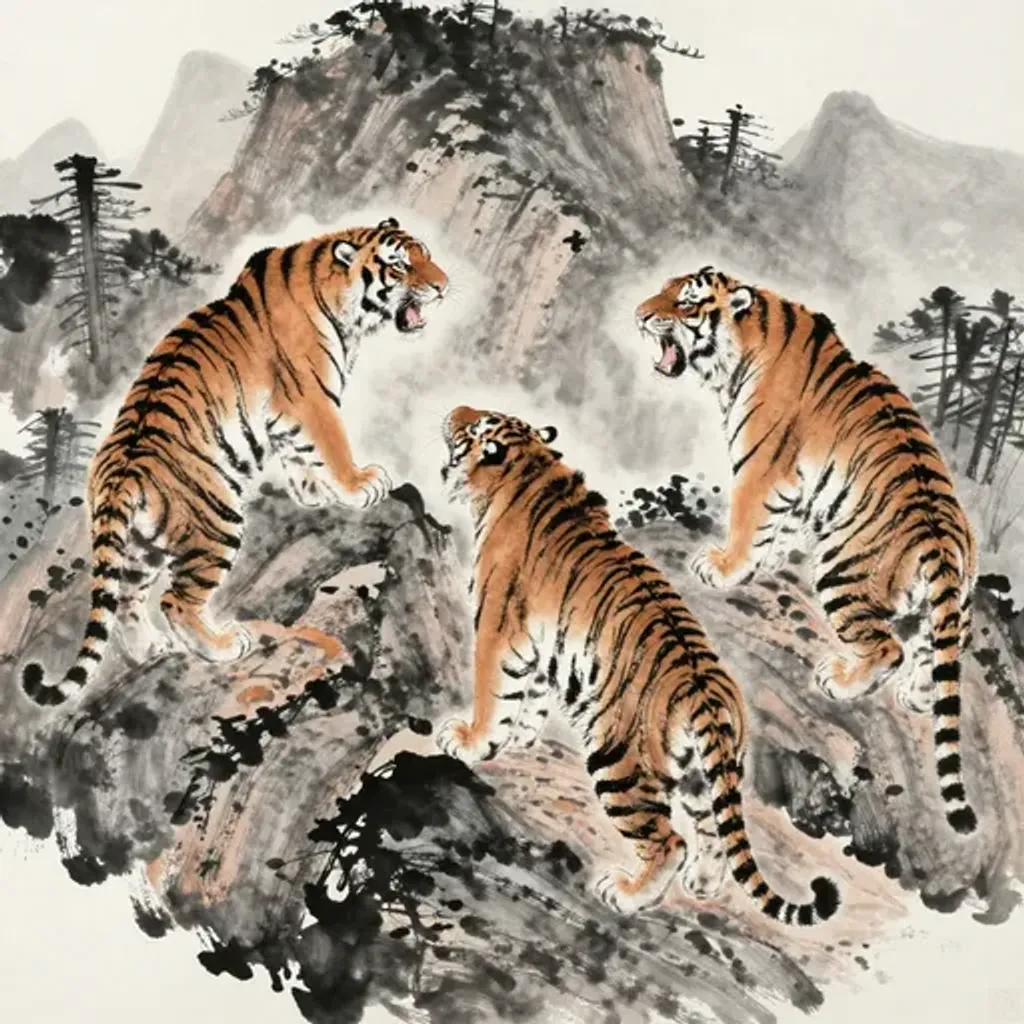
三虎上山,更相喧喚。志心不親,如仇與怨。
Three tigers ascend the mountain, roaring and calling to one another. Their wills and hearts are not close; they are like enemies and rivals.
— Jiao Yanshou, Yilin (Forest of Changes), 1st century BC
Commentary
Wind over water disperses fellowship into mutual hostility. Three tigers climb the mountain, roaring and snarling at one another. Their intentions are hostile, their bonds broken — they relate as enemies and rivals, not as the natural allies their shared nature should make them. Fire above water creates the image of Before Completion — the final hexagram, where everything is still out of place, the fox's tail dipping into the water just before reaching the far bank. From Dispersion to Before Completion, the verse closes the cycle with a portrait of dissolution that refuses to resolve. The three tigers are powerful enough to cooperate but too mutually suspicious to try. This is the permanent unfinished state: capable of completion but scattered by distrust into an endless before.