Transformations of Hexagram 6
Every line of change out of Hexagram 6 訟 Conflict, with the Yilin verse for each of the 64 resulting hexagrams, its translation, and the original ink brush artwork.
訟 → 乾
Hexagram 6 → Hexagram 1: The Creative
Changing lines: 1, 3
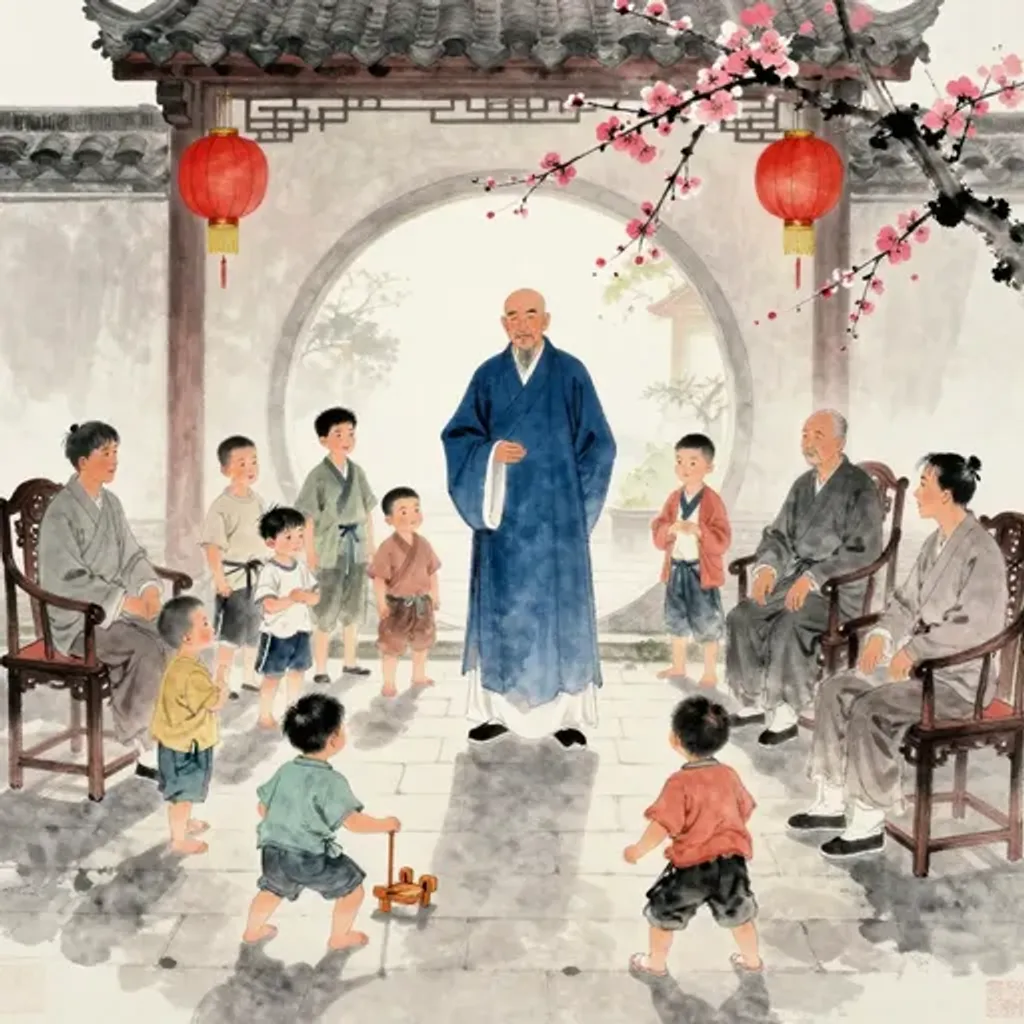
文王四乳,仁愛篤厚。子畜十男,夭折無有。
King Wen had four teats, benevolent and deeply generous. He raised ten sons; not one died young.
— Jiao Yanshou, Yilin (Forest of Changes), 1st century BC
Commentary
Heaven and water move in opposition, the image of Conflict, yet here the sage transcends strife through sheer moral abundance. King Wen of Zhou, marked by the omen of four nipples — a sign of extraordinary virtue in classical tradition — raised ten sons without a single one dying young. His benevolence was so profound that it extended to every child under his care. From Conflict to the Creative, the transformation is from opposition to pure initiative: where two forces pull apart, a figure of such moral gravity unifies them. The doubled heaven of Qian demands self-generating strength, and King Wen's fecundity — both biological and civilizational — embodies exactly that tireless creative power.
訟 → 坤
Hexagram 6 → Hexagram 2: The Receptive
Changing lines: 2, 4, 5, 6
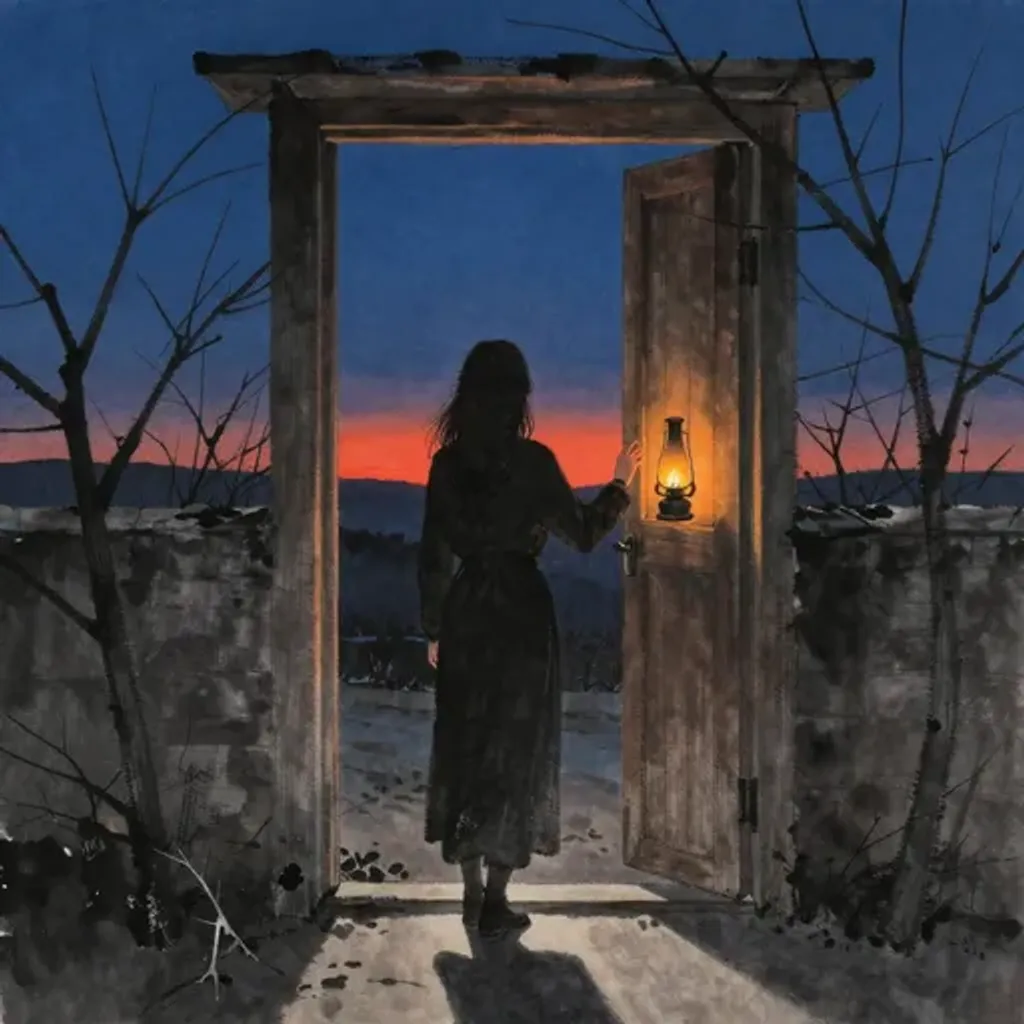
日入望東,不見子家。長女無夫,左手搔頭。
At sunset, gazing east, the child's home unseen. The eldest daughter has no husband; her left hand scratches her head.
— Jiao Yanshou, Yilin (Forest of Changes), 1st century BC
Commentary
Heaven and water oppose each other, and here the scene is pure desolation. At sunset one gazes eastward but cannot see the beloved's home. The eldest daughter has no husband; she scratches her head with her left hand in lonely frustration. Every image in the verse faces the wrong direction — looking east at sundown, when the light falls behind. From Conflict to the Receptive, heaven's assertive drive dissolves into earth's yielding emptiness. The Receptive is pure yin, vast and dark, generative only when it receives. Without a counterpart, the eldest daughter waits in vain, and the watcher at dusk stares into gathering darkness. Conflict's opposition has collapsed into absence itself.
訟 → 屯
Hexagram 6 → Hexagram 3: Difficulty at the Beginning
Changing lines: 1, 2, 4, 6
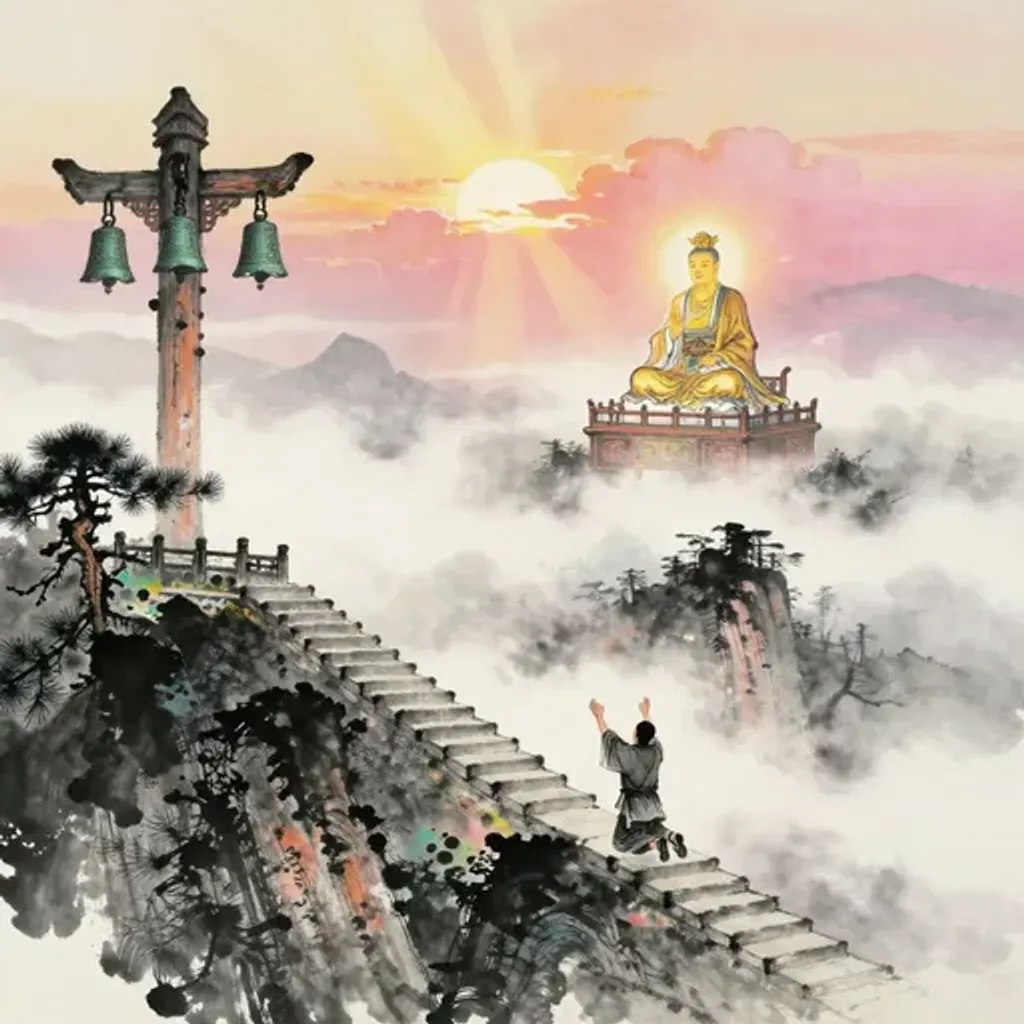
東上泰山,見堯自言。申理我冤,以解憂患。
Ascending east to Mount Tai, I meet Yao and speak to him. I plead my grievance, to dispel worry and calamity.
— Jiao Yanshou, Yilin (Forest of Changes), 1st century BC
Commentary
Heaven and water diverge, but here a wronged soul climbs Mount Tai to plead before the sage-king Yao himself. The petitioner seeks to lay out an injustice and have the grievance resolved, dissolving worry and calamity. Mount Tai, the Eastern Sacred Mountain, was the site of imperial audiences and cosmic mediation. Yao exemplifies the ruler who judges with wisdom rather than power. From Conflict to Difficulty at the Beginning, the dispute of heaven-and-water enters the birth-struggle of cloud and thunder — where grievances, properly heard, become the seed of new order. The verse insists that even amid confusion, an appeal to righteous authority can untangle the earliest knots of difficulty.
訟 → 蒙
Hexagram 6 → Hexagram 4: Youthful Folly
Changing lines: 4, 5
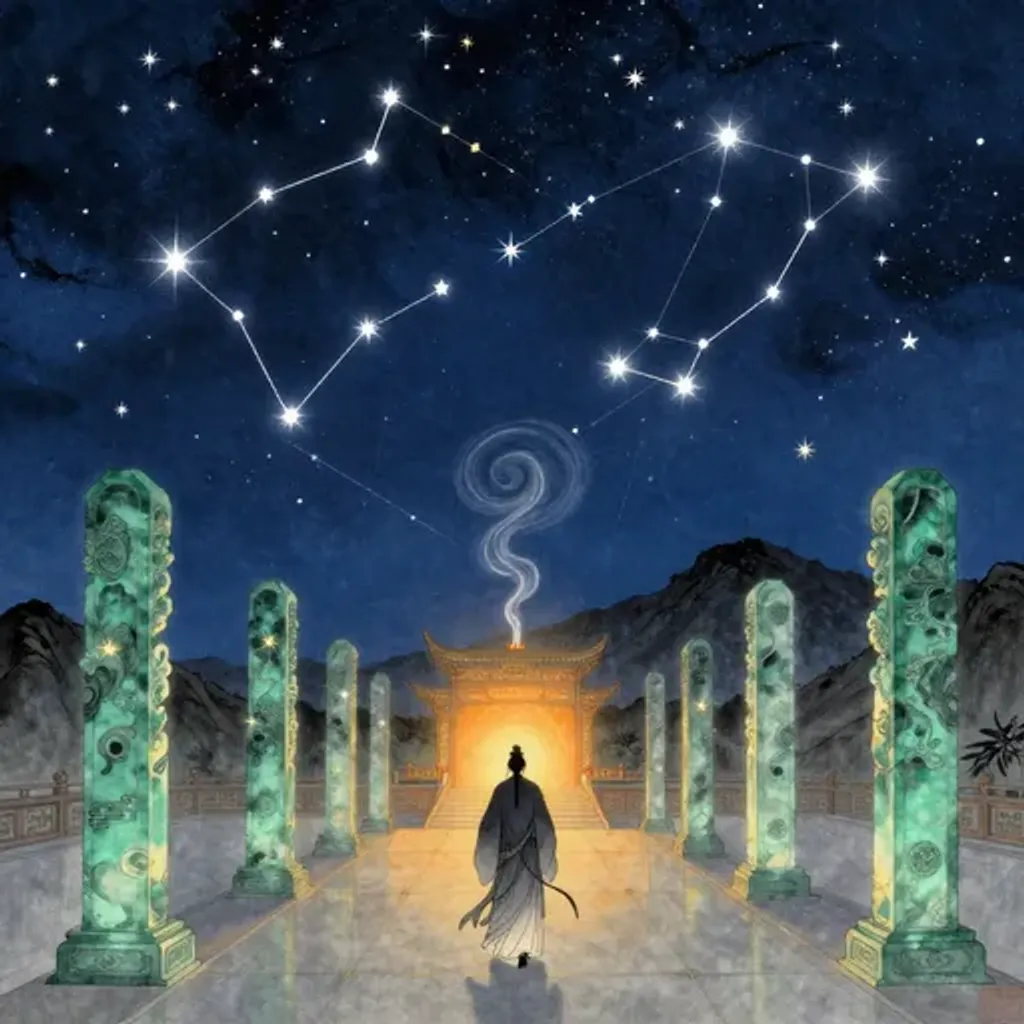
奎軫溫湯,過角宿房。宣時布和,無所不通。
Kui and Zhen warm the bath; passing Jiao, Su, and Fang. Proclaiming the season, spreading harmony; nothing fails to flow through.
— Jiao Yanshou, Yilin (Forest of Changes), 1st century BC
Commentary
Heaven and water oppose, yet the celestial mechanisms restore balance. The verse traces the movements of the lunar lodges Kui and Zhen through warm currents, passing the mansions Jiao, Su, and Fang — a progression through the twenty-eight lunar mansions that maps the seasonal cycle. When the stars are announced in their proper sequence, warmth and harmony spread everywhere, and nothing is blocked. From Conflict to Youthful Folly, opposition gives way to the spring emerging beneath the mountain. The cosmic order, when observed and followed rather than forced, dispels confusion naturally. The astronomer who reads the heavens correctly channels Meng's lesson: act decisively but nurture understanding, and the way opens of itself.
訟 → 需
Hexagram 6 → Hexagram 5: Waiting
Changing lines: 1, 3, 4, 6
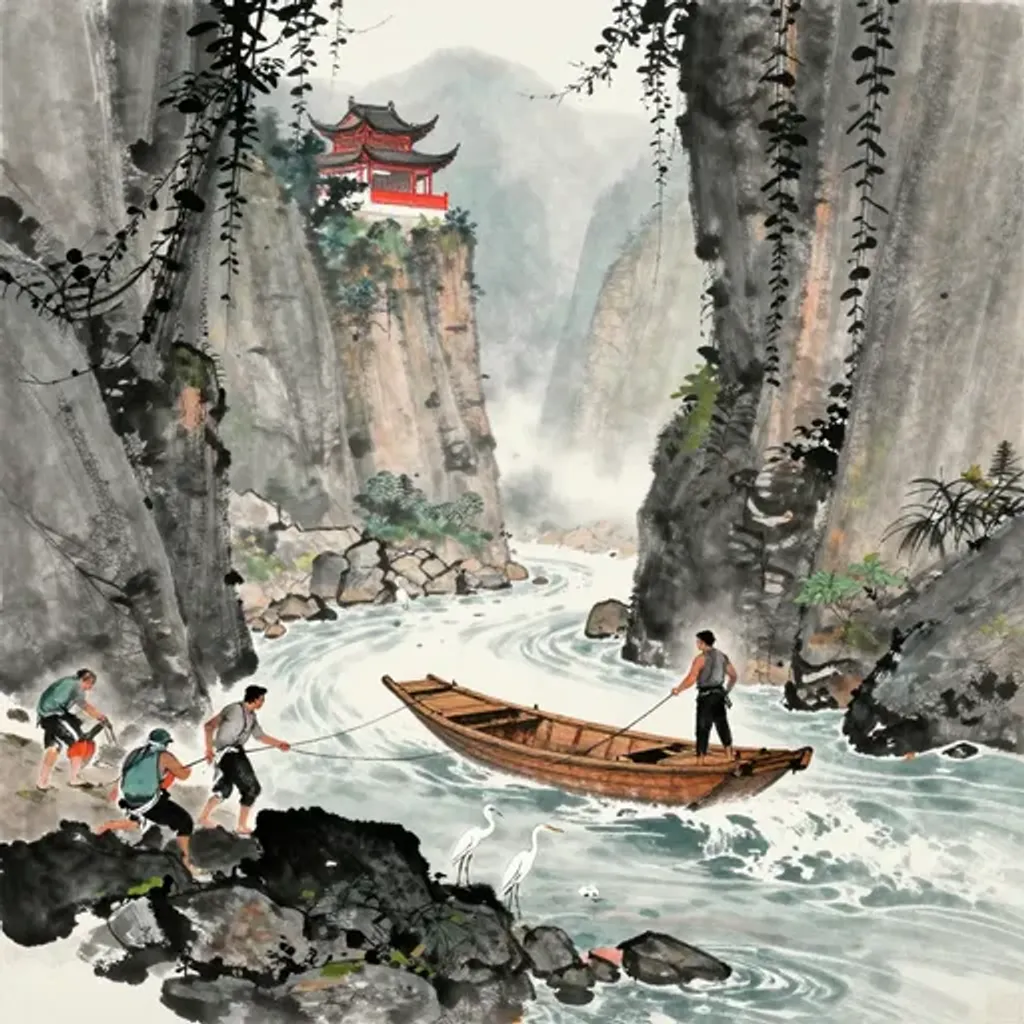
引船牽頭,雖拘無憂。王母善禱,禍不成災。
Pulling the boat, hauling the bow-line; though restrained, no worry. The Queen Mother prays well; calamity does not become disaster.
— Jiao Yanshou, Yilin (Forest of Changes), 1st century BC
Commentary
Heaven and water pull in opposite directions, but the boatman pulls the towrope and the vessel moves forward — though constrained, there is no cause for worry. The Queen Mother of the West offers her prayers, and calamity does not ripen into disaster. The Western Queen Mother, dwelling on Kunlun above the Weak Water, is guardian of immortality and celestial protection. Her intercession transforms potential harm into blessing. From Conflict to Waiting, the opposition of heaven and water resolves into clouds gathering above heaven — the patient anticipation of nourishment. The verse counsels trust in protective forces: the rope holds, the prayer averts, and one who waits in faith need not fear the storm.
訟 → 訟
Hexagram 6 → Hexagram 6: Conflict
No changing lines — the hexagram is unchanged
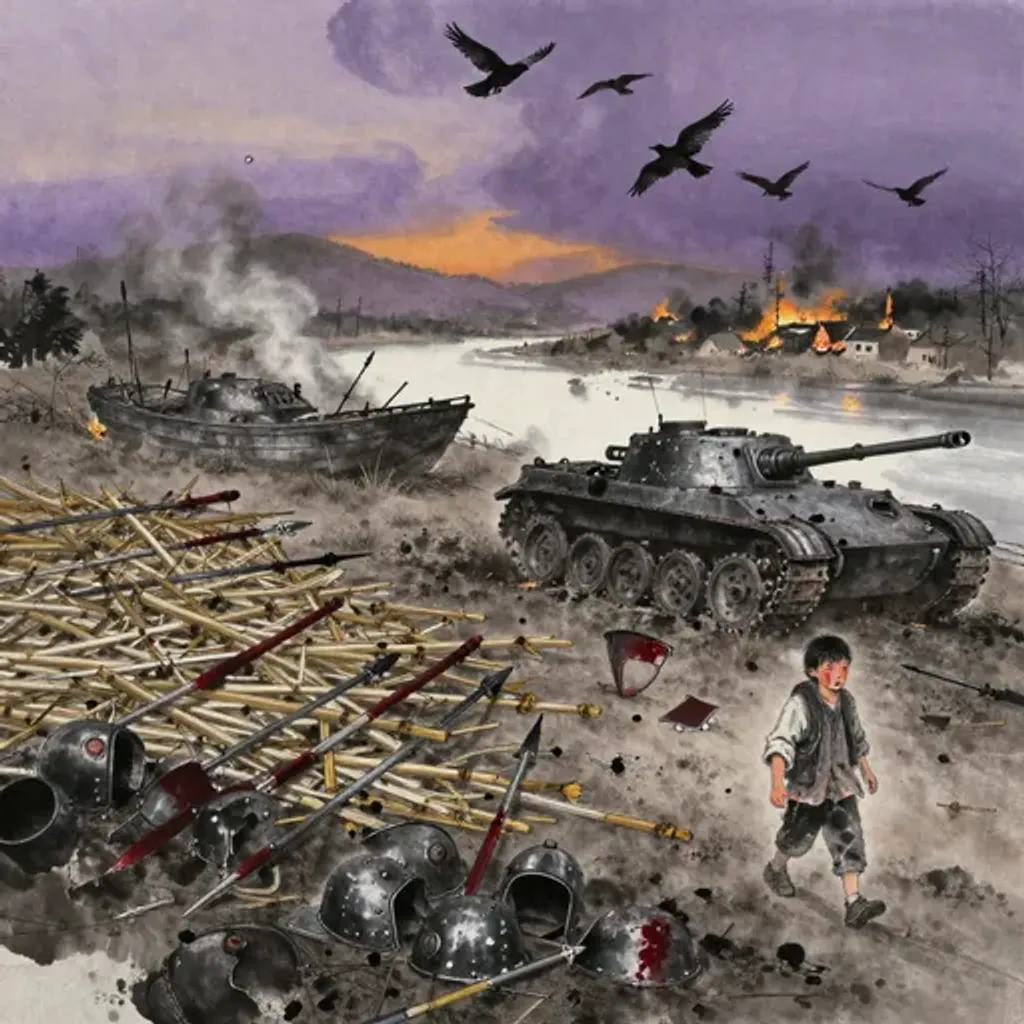
文巧俗弊,將反大質。僵死如麻,流血濡櫓。皆知其母,不識其父,干戈乃止。
Artifice corrupts customs, about to return to plain substance. The dead lie stiff like hemp; flowing blood soaks the oar-shields. All know their mothers, none know their fathers; only then do arms cease.
— Jiao Yanshou, Yilin (Forest of Changes), 1st century BC
Commentary
Conflict doubled upon itself: heaven and water oppose, and the opposition feeds on its own energy. Cunning artifice corrupts custom until society reverts to raw essence. Corpses lie stiff as hemp stalks; blood soaks the war-tower shields. The imagery echoes Jia Yi's 'On the Faults of Qin': people know their mothers but not their fathers — the ultimate breakdown of social bonds. Yet the verse ends abruptly: weapons and shields are laid down. From Conflict to Conflict, there is no transformation, no escape valve. The same pattern redoubles. The verse warns that when strife becomes self-perpetuating, it consumes everything until exhaustion forces a halt — not resolution, but collapse.
訟 → 師
Hexagram 6 → Hexagram 7: The Army
Changing lines: 4, 5, 6
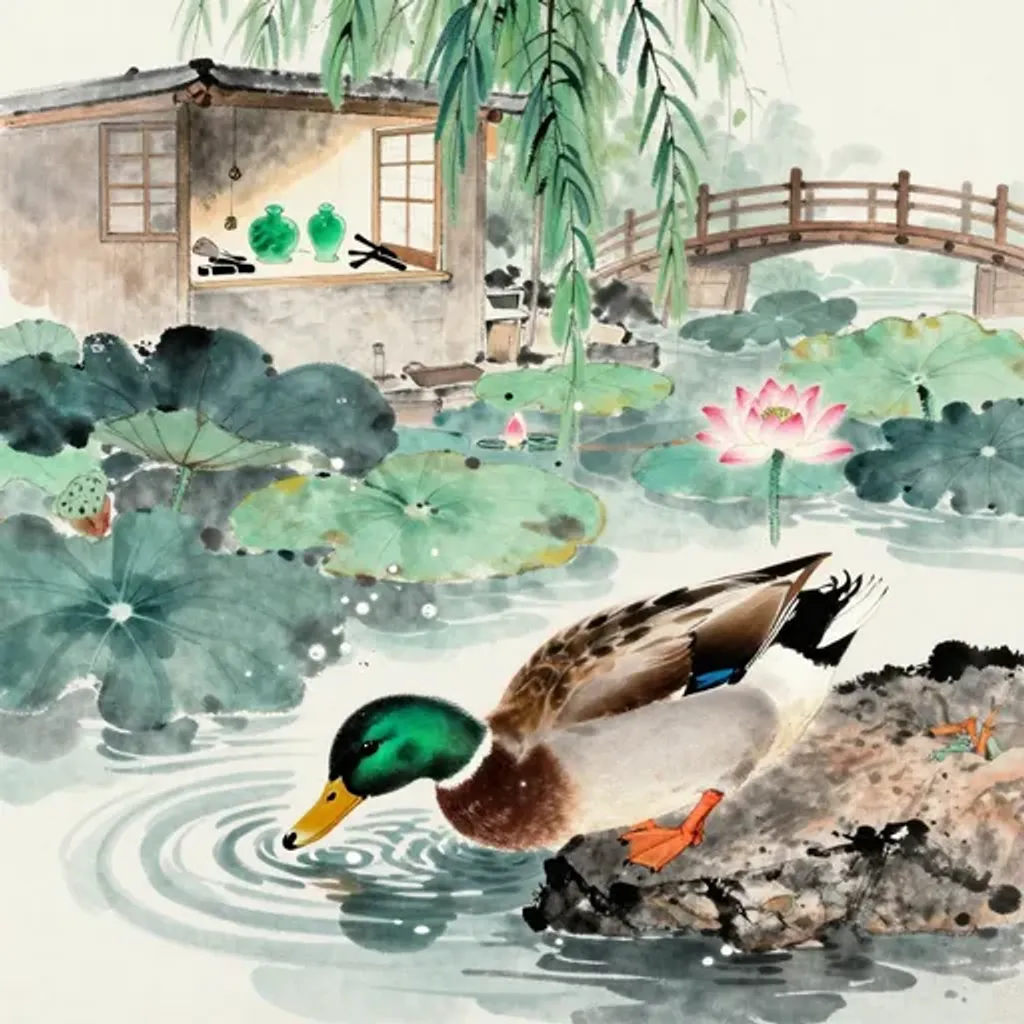
鳧得水沒,喜笑自啄。毛羽悅澤,利以攻玉。公出不復,伯氏客宿。
The wild duck finds water and dives, joyfully laughing and preening. Feathers sleek and lustrous; useful for working jade. The lord departs and does not return; the elder brother lodges as a guest.
— Jiao Yanshou, Yilin (Forest of Changes), 1st century BC
Commentary
Heaven and water oppose, but the wild duck finds its element and dives in, happily preening its sleek feathers. What delights the duck is native skill meeting its proper medium — the way a jade-cutter uses one stone to polish another. Yet the verse shifts: the lord goes forth and does not return; the elder brother lodges as a guest in a stranger's house. From Conflict to The Army, the image turns from private joy to public duty. Water hidden within the earth demands disciplined mobilization. The duck's easy pleasure contrasts with the lord's unreturning departure — when the state calls, personal comfort yields to collective obligation, and not every journey promises homecoming.
訟 → 比
Hexagram 6 → Hexagram 8: Holding Together
Changing lines: 2, 4, 6
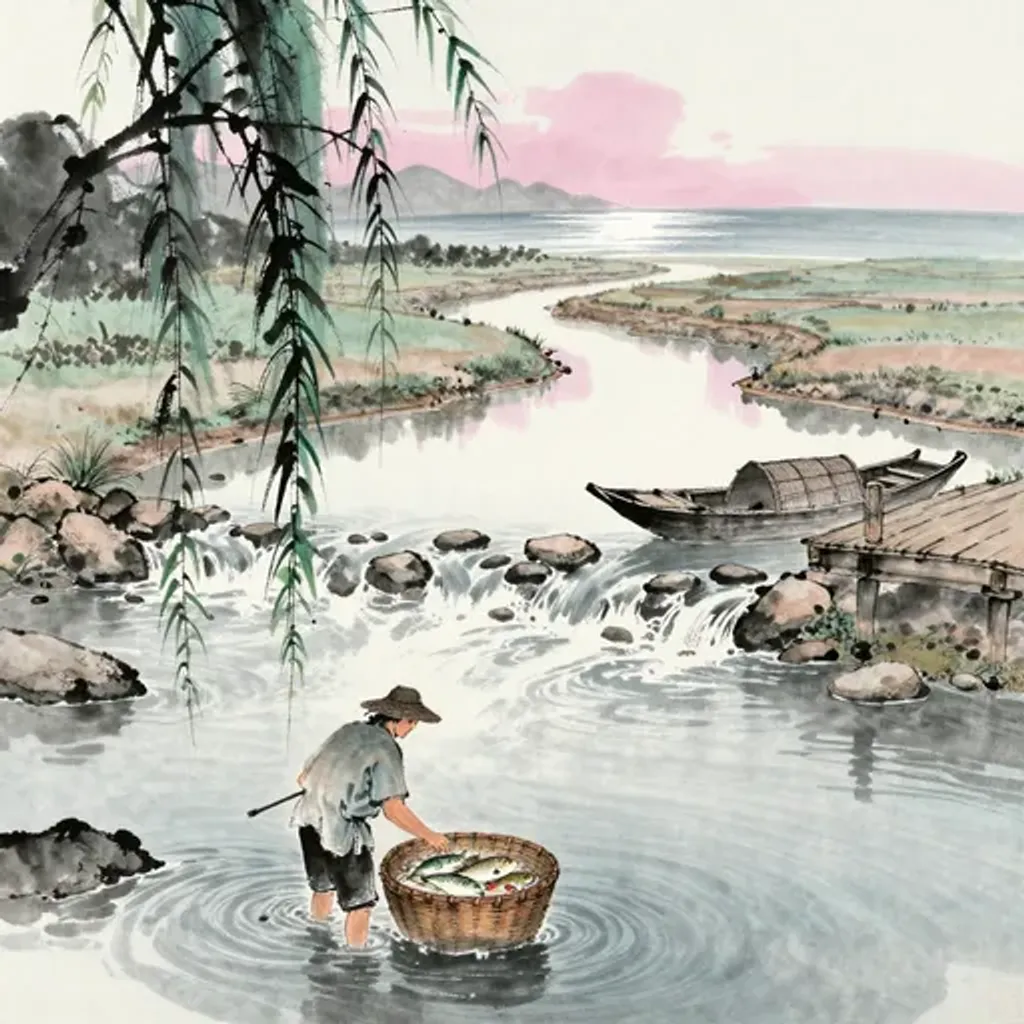
水流趍下,欲至東海。求我所有,買魴與鯉。
Water flows rushing downward, seeking to reach the eastern sea. I seek what I have; buying bream and carp.
— Jiao Yanshou, Yilin (Forest of Changes), 1st century BC
Commentary
Heaven and water oppose, yet water follows its nature — it flows downhill, seeking the eastern sea. One searches for what one possesses and buys bream and carp, the staple fish of prosperity. The verse captures the simplest form of resolution: stop fighting the current and let things find their natural level. From Conflict to Holding Together, heaven's opposition to water dissolves as water pools upon the earth. Bi's image — water resting on the ground — represents natural affinity, the way people and resources gather where conditions allow. The fish market is community in miniature: supply meets demand, buyer meets seller, and abundance flows to where it is welcomed.
訟 → 小畜
Hexagram 6 → Hexagram 9: Small Taming
Changing lines: 1, 3, 4
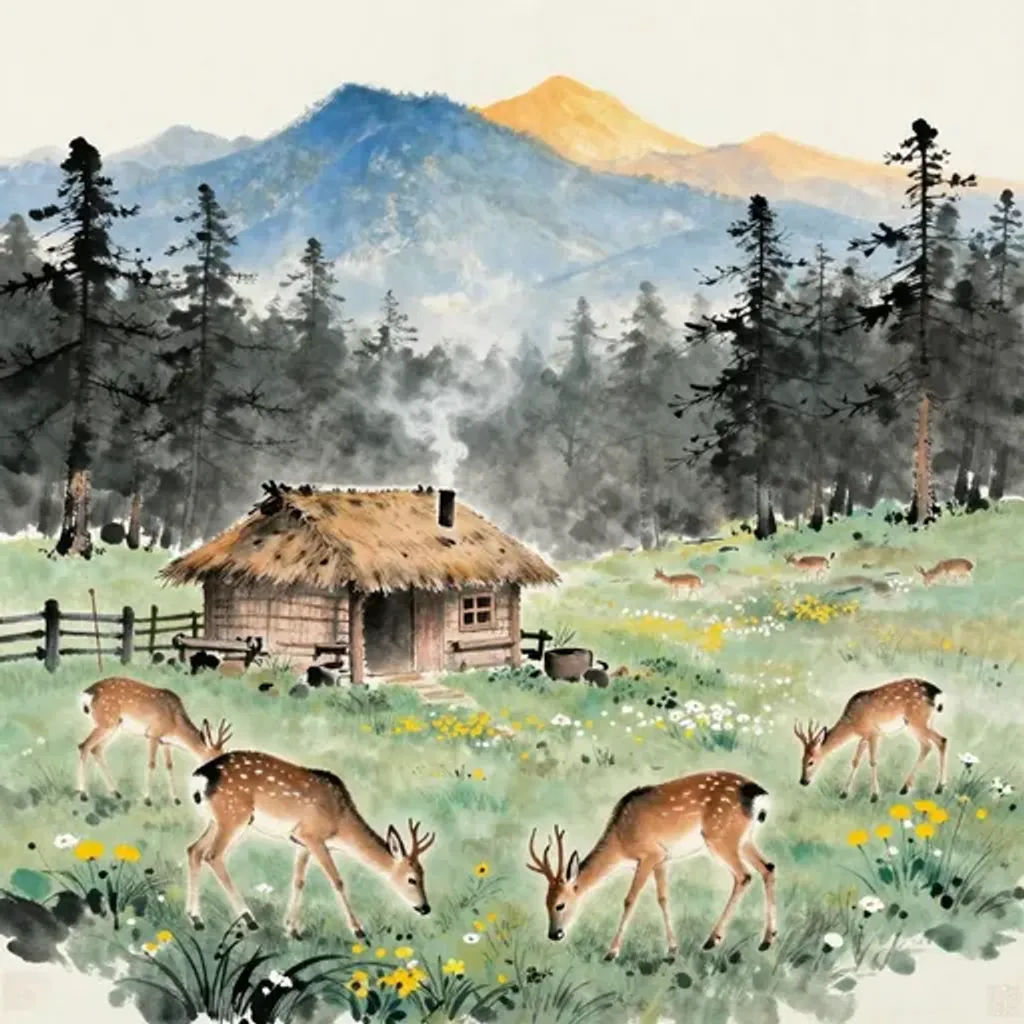
獐鹿逐牧,安飽其居。反還次舍,無有疾故。
Roe deer follow the pasture, safe and sated in their dwelling. Returning to their resting place; no illness or mishap.
— Jiao Yanshou, Yilin (Forest of Changes), 1st century BC
Commentary
Heaven and water oppose, but here the roebucks and deer follow their herdsman to safe pasture, well-fed and content. They return to their lodging without illness or mishap. The image is of gentle management resolving discord — not through force but through providing what creatures naturally seek. From Conflict to Small Taming, wind courses over heaven, softly restraining its power. Small Taming's essence is gentle influence that cannot fully contain heaven's force but can redirect it. The herdsman does not overpower the deer; he leads them to where they want to go. Conflict subsides when needs are met, and the taming required is small indeed.
訟 → 履
Hexagram 6 → Hexagram 10: Treading
Changing lines: 1
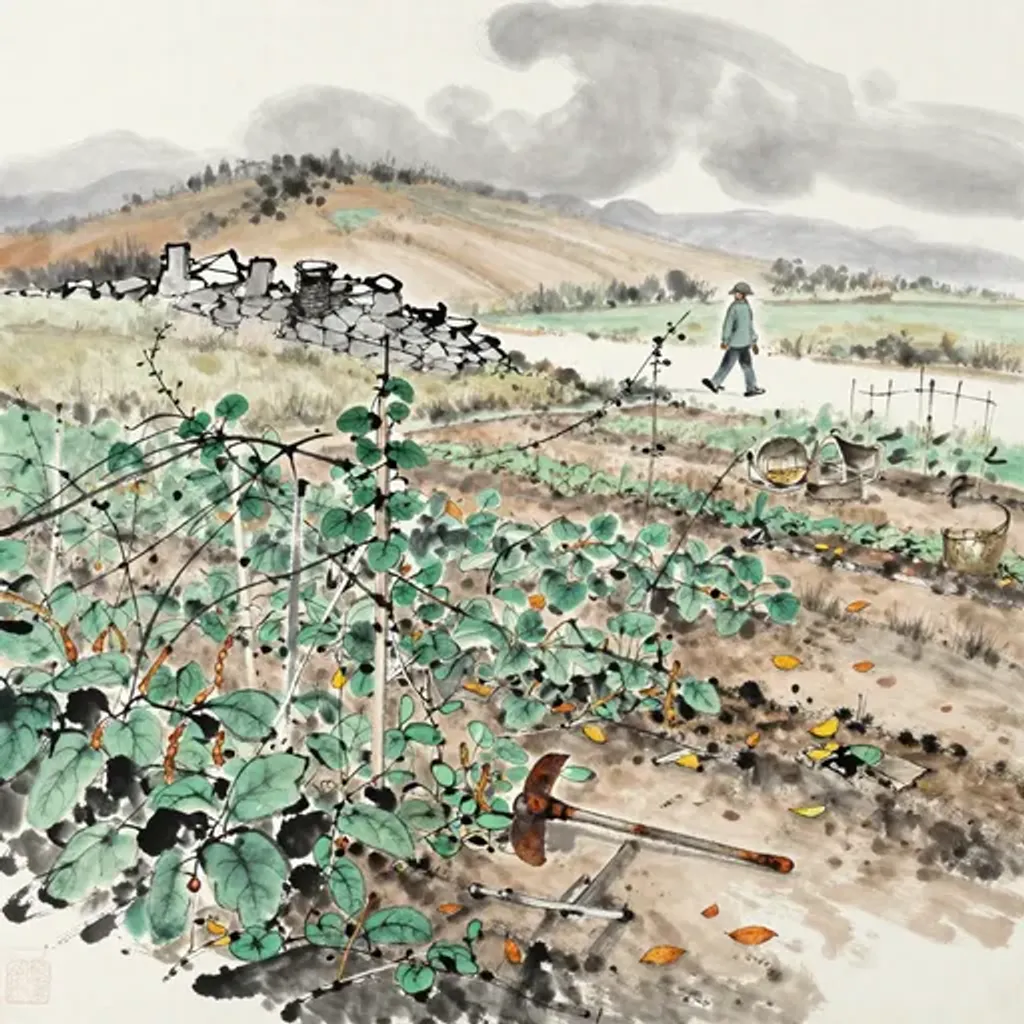
樹植藿豆,不得芸鋤。王事靡盬,秋無所收。
Planting beans and greens, unable to weed or hoe. The king's affairs are unending; come autumn, nothing to harvest.
— Jiao Yanshou, Yilin (Forest of Changes), 1st century BC
Commentary
Heaven and water oppose, and the farmer bears the cost. Beans and mallows are planted, but there is no time to weed or hoe — royal service never ceases, and by autumn the harvest yields nothing. The verse echoes the Shijing soldiers' lament: 'The king's business knows no rest.' From Conflict to Treading, heaven stands above the lake, the strong treading upon the yielding. Treading demands one walk correctly even under the tiger's gaze, yet here the farmer cannot even tend his own field. The cosmic protocol of Treading — knowing one's place, fulfilling one's role — is violated by a system that devours the very labor it depends on.
訟 → 泰
Hexagram 6 → Hexagram 11: Peace
Changing lines: 1, 3, 4, 5, 6
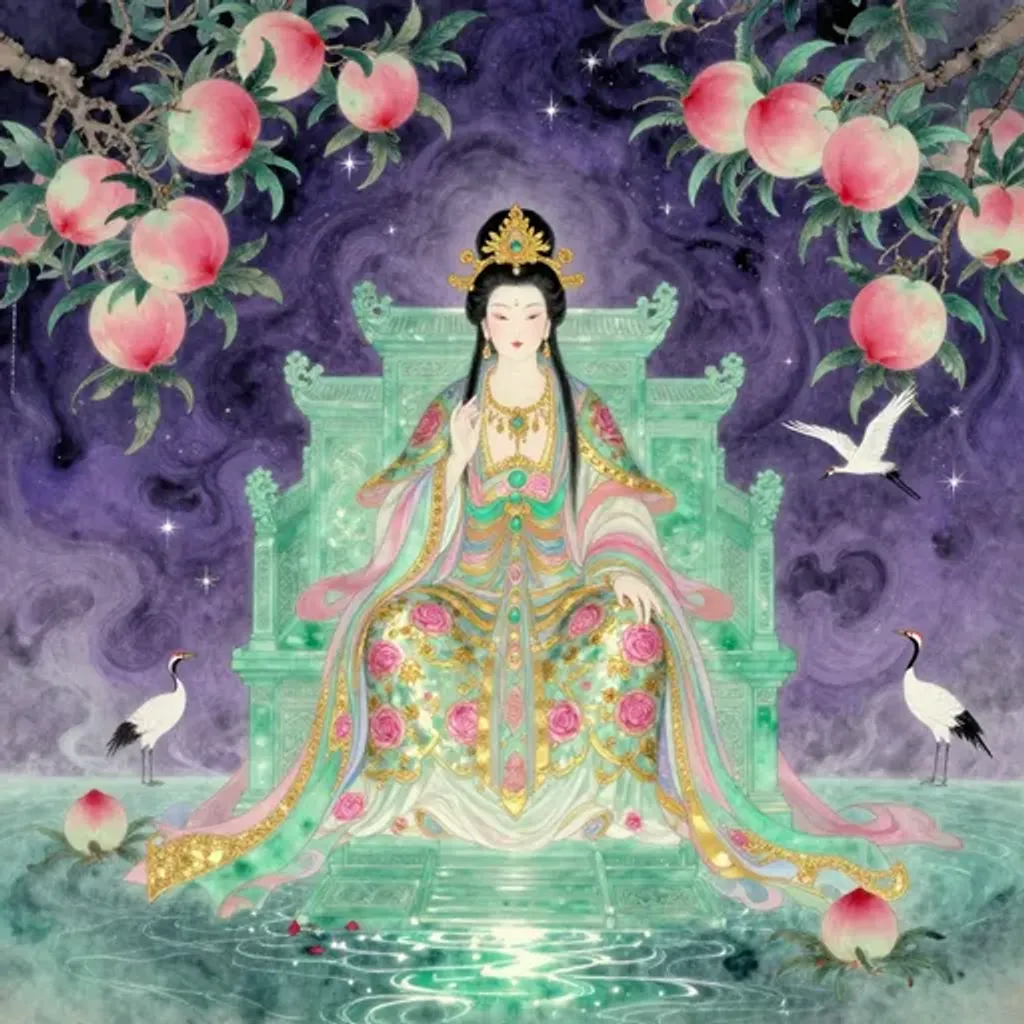
弱水之西,有西王母。生不知死,與天相保。
West of the Weak Water, there is the Queen Mother of the West. Knowing life, not knowing death; she endures alongside heaven.
— Jiao Yanshou, Yilin (Forest of Changes), 1st century BC
Commentary
Heaven and water oppose, but west of the Weak Water stands the Queen Mother of the West, who knows neither aging nor death, preserved forever alongside heaven itself. The Weak Water is the mythological river near Kunlun that cannot float even a feather — the boundary of the mortal world. Beyond it, the Queen Mother guards the peaches of immortality. From Conflict to Peace, the transformation is radical: heaven descends and earth rises until their energies mingle freely. The verse promises that transcendence is possible even from the heart of strife. When heaven and earth exchange, mortality dissolves. The Queen Mother embodies Tai's ultimate gift — cosmic communion beyond all opposition.
訟 → 否
Hexagram 6 → Hexagram 12: Standstill
Changing lines: 2
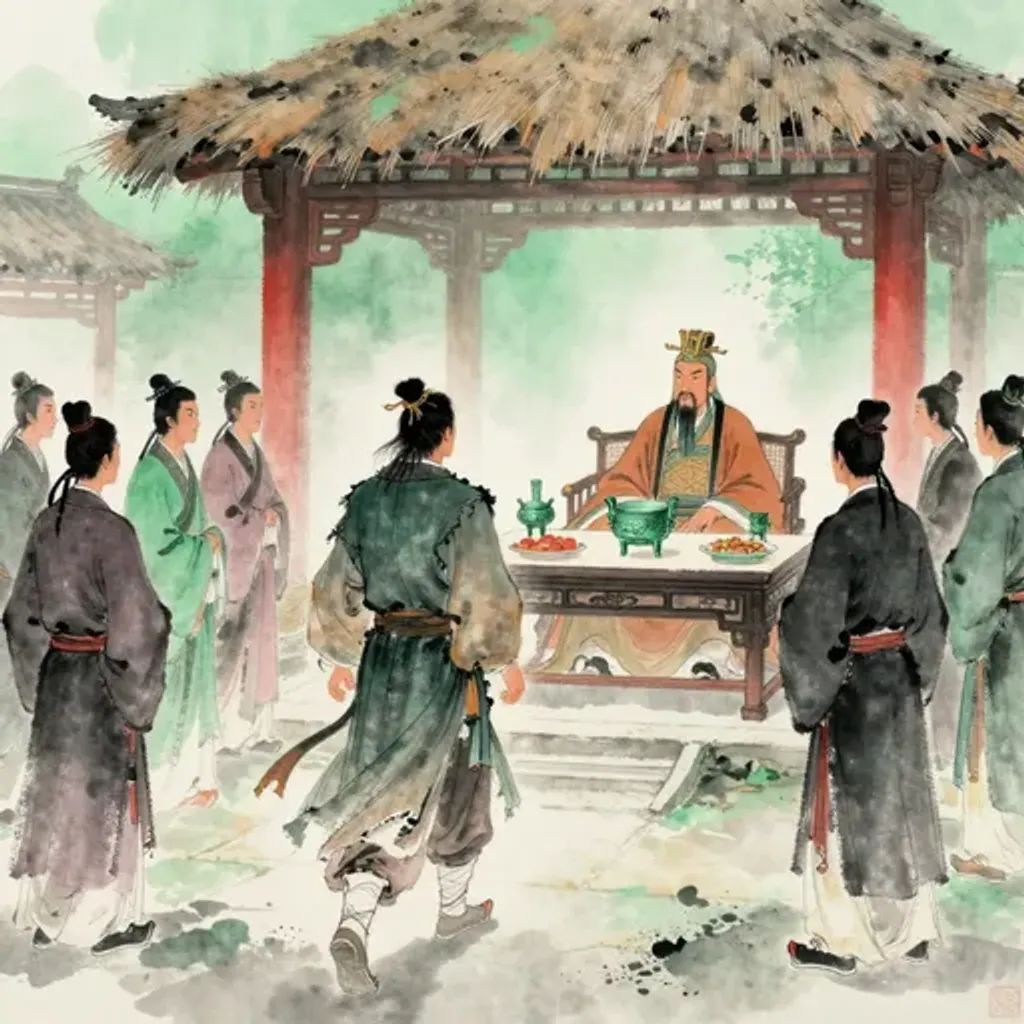
數窮廓落,困於歷室。卒登玉堂,與堯侑食。
Fortune exhausted and desolate, trapped in a bare chamber. In the end he ascends the Jade Hall, and dines beside Yao.
— Jiao Yanshou, Yilin (Forest of Changes), 1st century BC
Commentary
Heaven and water oppose, and fortune reaches its nadir. Destitute and forlorn, one is trapped in a bare cell. Yet the verse pivots: at last one ascends the Jade Hall and dines beside Emperor Yao. This is the pattern of reversal through extremity — when numbers are exhausted, a new cycle begins. From Conflict to Standstill, heaven and earth refuse to communicate, the worst possible configuration. Yet the verse sees beyond the blockage: precisely because Pi represents total stagnation, the only possible movement is upward. The man who dines with Yao has passed through the full measure of deprivation. Standstill's counsel is to preserve virtue in adversity, and this verse proves why — the jade hall awaits on the other side.
訟 → 同人
Hexagram 6 → Hexagram 13: Fellowship
Changing lines: 1, 2, 3
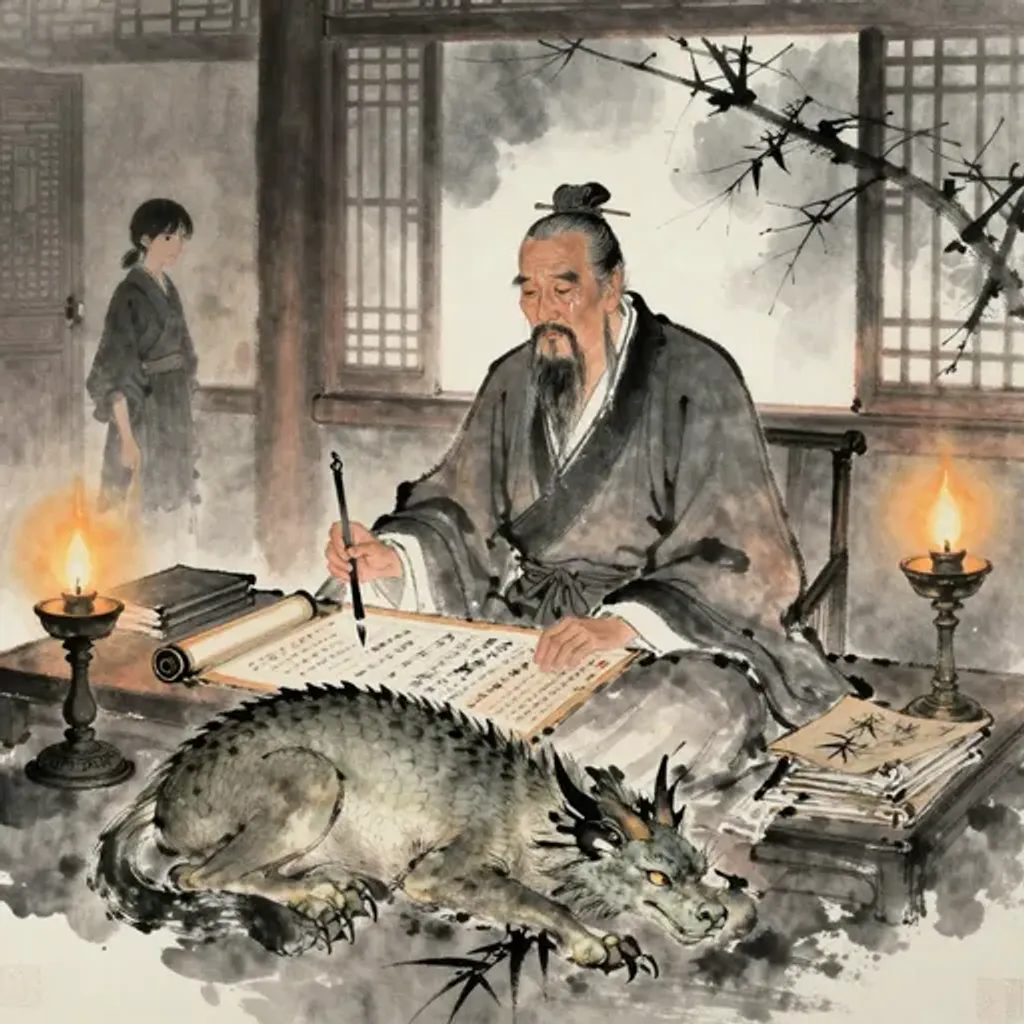
子鉏執麟,春秋作元。陰聖將終,尼父悲心。
Zichu captures the qilin; the Spring and Autumn Annals begins. The age of hidden sagehood nears its end; Master Ni grieves in his heart.
— Jiao Yanshou, Yilin (Forest of Changes), 1st century BC
Commentary
Heaven and water oppose — and here the Spring and Autumn era reaches its bitter end. Zichushang captures the qilin, and Confucius begins the first year of the Annals. The hidden sage's work draws to a close; Father Ni grieves in his heart. In 481 BC, a charioteer of the Shusun clan caught a qilin in the Great Marsh — the benevolent beast that appears only under sage rule, now dragged from the mud of a disordered age. Confucius wept: 'My Way is exhausted!' From Conflict to Fellowship, the movement is from strife to heaven joined with fire — ideals made visible. Yet the verse is elegiac: the fellowship Confucius sought never materialized in his lifetime. His grief is the cost of seeing clearly in a world that refuses to look.
訟 → 大有
Hexagram 6 → Hexagram 14: Great Possession
Changing lines: 1, 3, 5
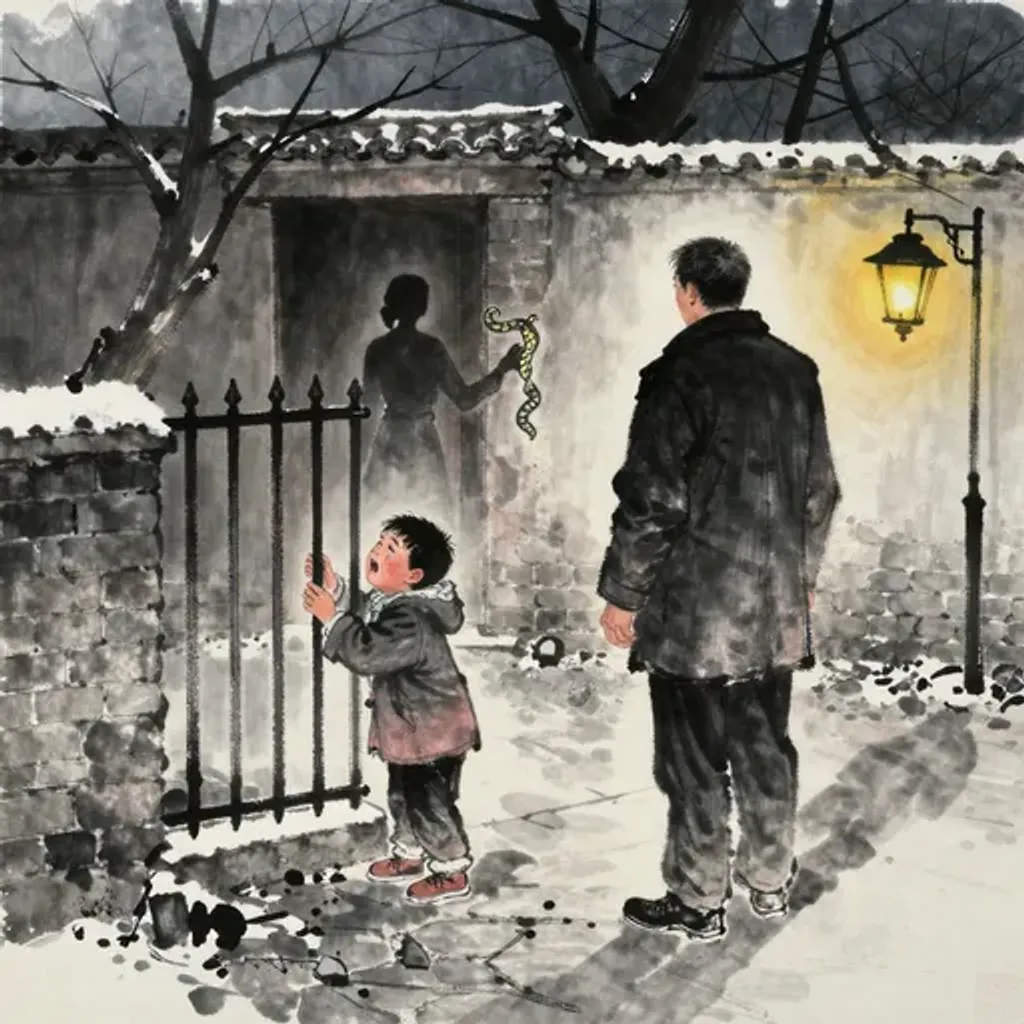
尹氏伯奇,父子生離。無罪被辜,長舌所為。
Yin Jifu and Boqi, father and son torn apart. The innocent suffers false guilt; it was the long-tongued one's doing.
— Jiao Yanshou, Yilin (Forest of Changes), 1st century BC
Commentary
Heaven and water oppose, and here the conflict tears apart a family. Yin Jifu's son Boqi is separated from his father — innocent yet accused, the victim of a 'long tongue,' the slanderous stepmother. According to Cai Yong's Qin Cao, Boqi's stepmother framed him for impropriety. His father expelled him to the wilderness, where Boqi composed the lament 'Treading on Frost.' Only when King Xuan heard the song was Boqi's innocence recognized. From Conflict to Great Possession, fire blazes above heaven — truth illuminated at last. Yet the verse dwells on the separation, not the vindication. Great Possession's abundance rings hollow when the bond between father and son has been severed by a poisoned word.
訟 → 謙
Hexagram 6 → Hexagram 15: Modesty
Changing lines: 2, 3, 4, 5, 6
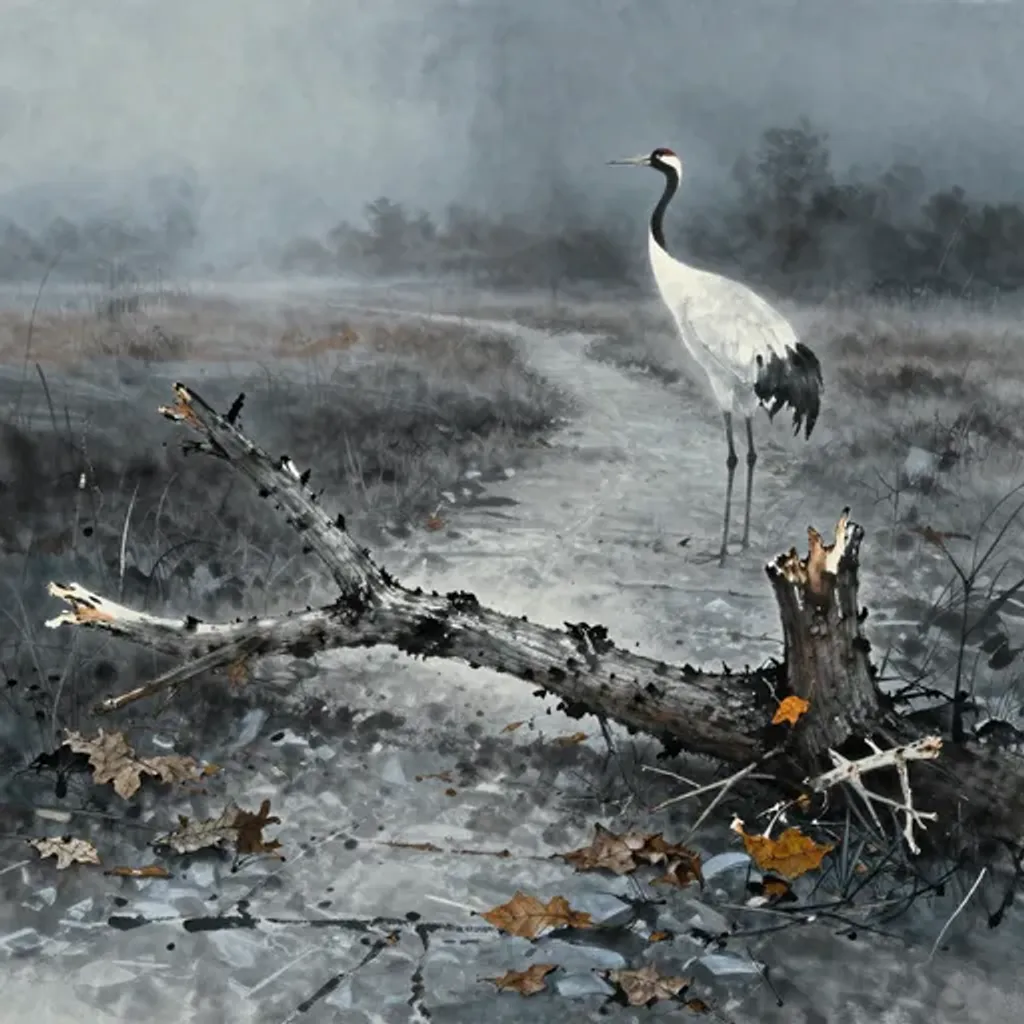
播木折枝,與母別離。九皋難扣,絕不相知。
Wind-tossed tree, broken branch; parted from its mother. The nine marshes are hard to reach; cut off, they shall never know each other.
— Jiao Yanshou, Yilin (Forest of Changes), 1st century BC
Commentary
Heaven and water oppose, and branches are torn from their tree — the mother-child bond snapped beyond repair. One cries out to the nine marshes, but no answer comes; they are utterly cut off from each other. The 'nine marshes' (九皋) echoes the Shijing ode 'Crane Cry': 'The crane cries in the nine marshes, its voice heard in the wild' — but here the cry finds no listener. From Conflict to Modesty, the mountain hides within the earth, lowering itself. Modesty counsels reducing excess to aid the deficient, yet this verse offers no balm. The separation is absolute, and the crane's far-carrying voice dissolves into silence. Even Modesty's gentle redistribution cannot restore what conflict has severed.
訟 → 豫
Hexagram 6 → Hexagram 16: Enthusiasm
Changing lines: 2, 5, 6
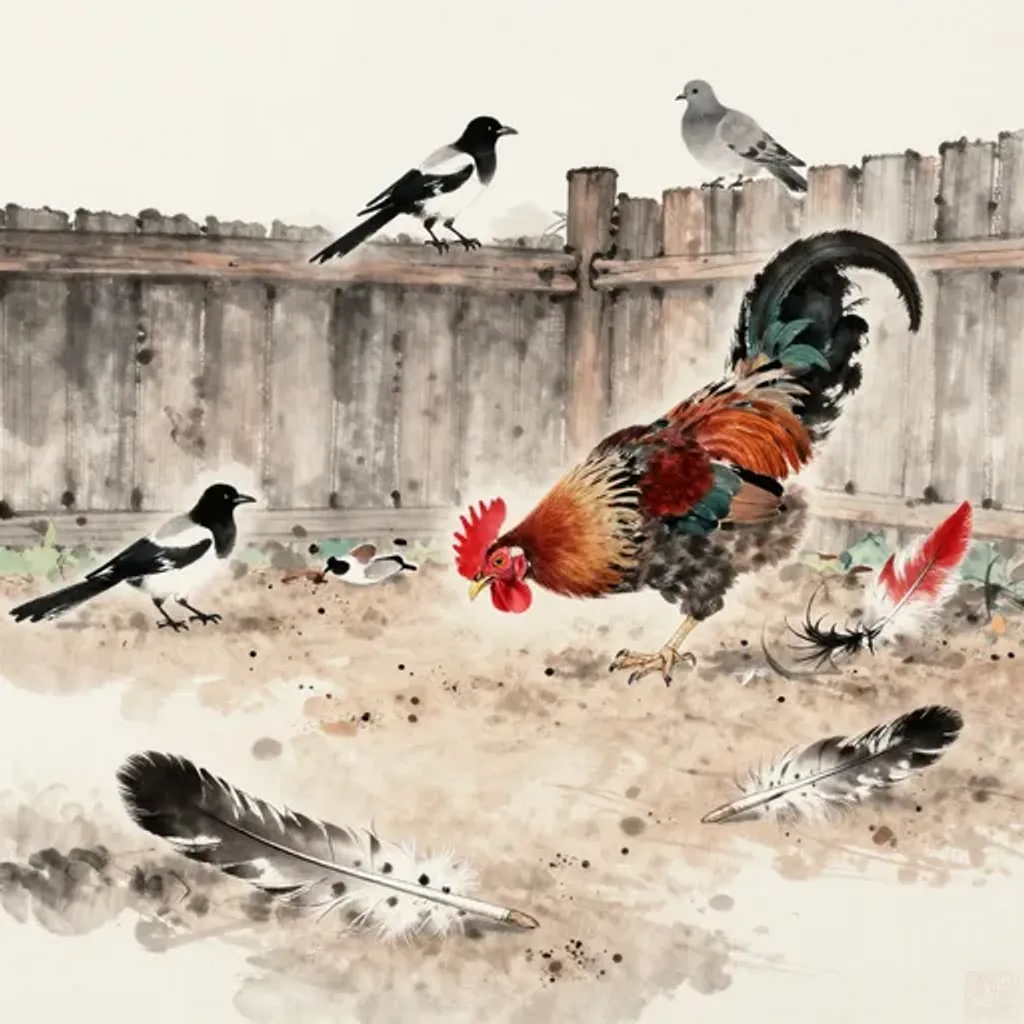
弱雞無距,與鵲格鬭。翅折目盲,為鳩所傷。
A weak rooster without spurs, fighting a magpie. Wings broken, eyes blinded; wounded by the turtledove.
— Jiao Yanshou, Yilin (Forest of Changes), 1st century BC
Commentary
Heaven and water oppose, and a weak rooster with no spurs fights a magpie. Wings broken, eyes blinded, it is wounded not even by its chosen rival but by a turtledove — an unexpected third party. The image is of someone entering a conflict utterly ill-equipped and being destroyed by a threat they never saw coming. From Conflict to Enthusiasm, thunder erupts from the earth in a burst of energy. Yet Enthusiasm's explosive force does nothing for the crippled rooster; it merely amplifies the disproportion. The verse warns that Conflict entered without weapons or awareness invites not heroic defeat but absurd humiliation — the wrong fight, the wrong enemy, the wrong outcome.
訟 → 隨
Hexagram 6 → Hexagram 17: Following
Changing lines: 1, 2, 6
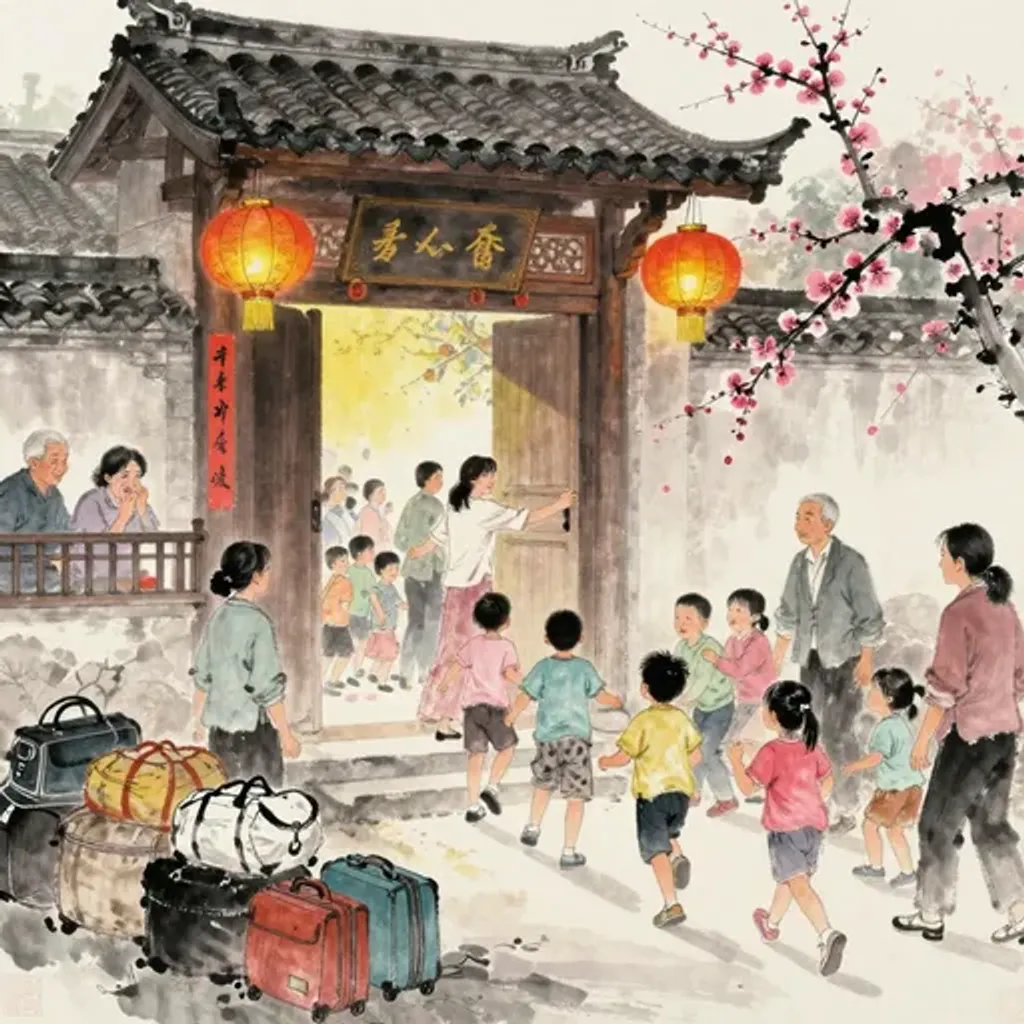
甲乙丙丁,俱歸我庭。三丑六子,入門見母。
Jia, Yi, Bing, Ding -- all return to my courtyard. Three daughters, six sons; they enter the gate and see their mother.
— Jiao Yanshou, Yilin (Forest of Changes), 1st century BC
Commentary
Heaven and water oppose, but the Heavenly Stems — jia, yi, bing, ding — all gather in one's courtyard. Three daughters-in-law and six sons enter the gate and see their mother. The calendrical language of the Stems evokes cosmic ordering: when the Stems are properly aligned, all things return to their rightful place. From Conflict to Following, thunder rests within the lake, yielding to the natural rhythm of evening rest. The verse embodies Following's principle: when one stops forcing and allows the natural sequence to unfold, family members converge without coercion. The household reunites not through command but through the gravitational pull of belonging.
訟 → 蠱
Hexagram 6 → Hexagram 18: Work on the Decayed
Changing lines: 3, 4, 5
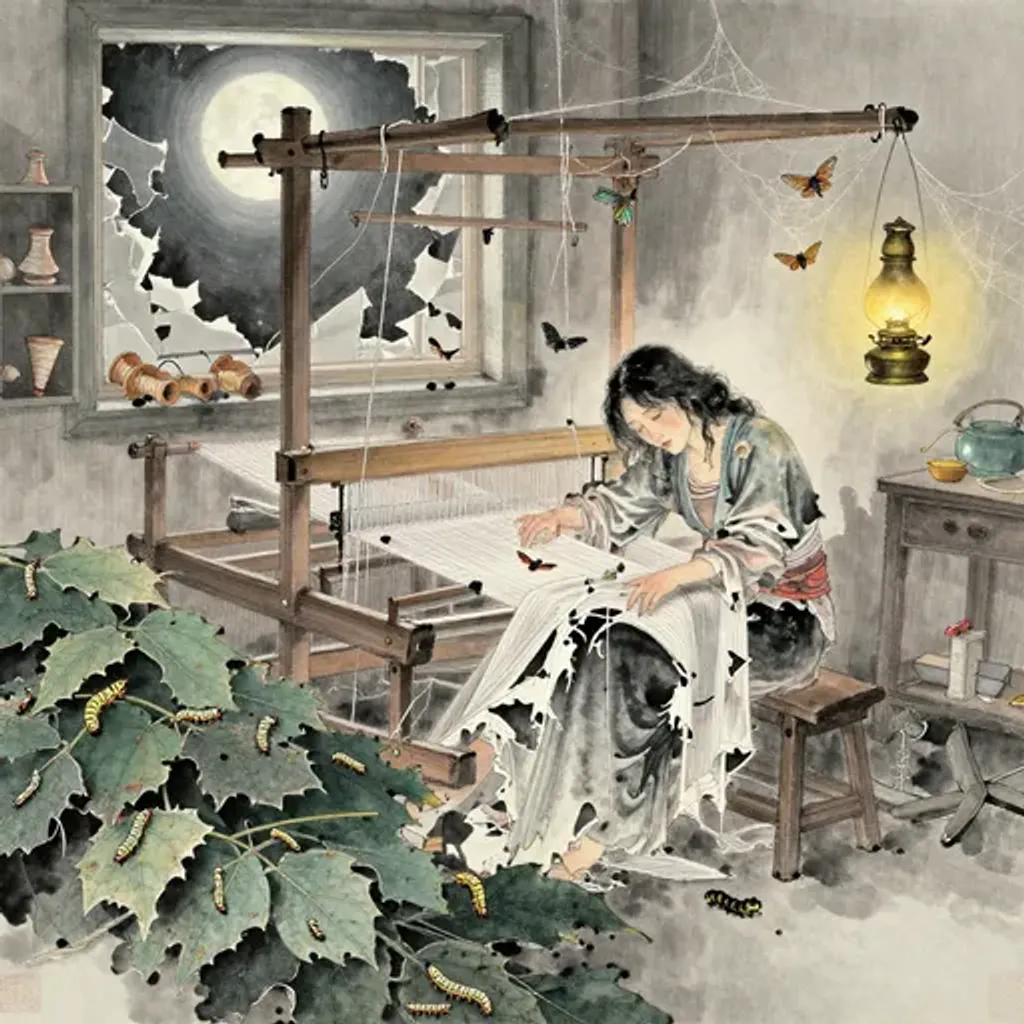
桑葉螟蠹,衣弊如絡。女工不成,絲布為玉。
Mulberry leaves eaten by caterpillars and borers; garments tattered as netting. Women's work unfinished; silk cloth might as well be jade.
— Jiao Yanshou, Yilin (Forest of Changes), 1st century BC
Commentary
Heaven and water oppose, and here decay invades the productive order. Silkworms are devoured by caterpillars and borers; garments fray to rags. The weavers cannot finish their work, and silk cloth is valued as jade — inflated to absurdity by scarcity. From Conflict to Work on the Decayed, wind stirs beneath the mountain, the image of corruption that demands renewal. Gu's hexagram literally means 'poisonous decay' — the worm in the vessel. The verse matches it precisely: parasites consume the source material, labor fails, and value distorts. Yet Gu also implies the mandate to repair. The decay must be named before it can be addressed; the worm must be seen before the vessel can be cleansed.
訟 → 臨
Hexagram 6 → Hexagram 19: Approach
Changing lines: 1, 4, 5, 6
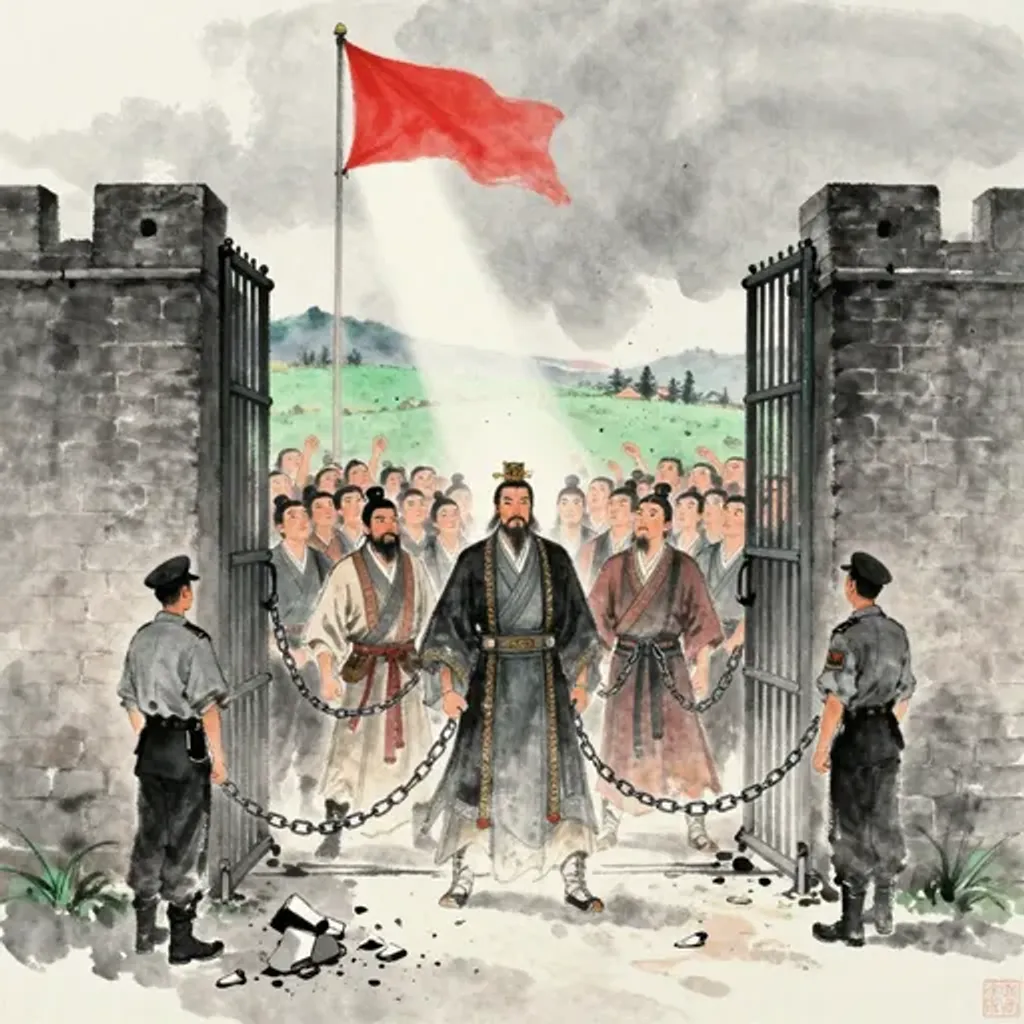
開牢闢門,巡狩釋冤。夏臺羑里,湯文悅喜。
Open the prison, release the gates; go on royal progress and pardon the wronged. Xia Terrace and Youli -- Tang and Wen rejoice.
— Jiao Yanshou, Yilin (Forest of Changes), 1st century BC
Commentary
Heaven and water oppose, but the prison gates swing open. The ruler tours the realm and releases the wrongly accused. Xiatai and Youli — the two most famous prisons of antiquity — held King Tang and King Wen before their epochal rises. Now both sages rejoice: liberation has come at last. From Conflict to Approach, the lake opens beneath the earth, and authority draws near with benevolence. Lin's image is the ruler who approaches the people with inexhaustible care. The verse enacts this directly: injustice is reviewed, prisons are opened, and the righteous walk free. When power approaches with compassion rather than force, even the deepest conflicts — those that imprison the virtuous — dissolve.
訟 → 觀
Hexagram 6 → Hexagram 20: Contemplation
Changing lines: 2, 4
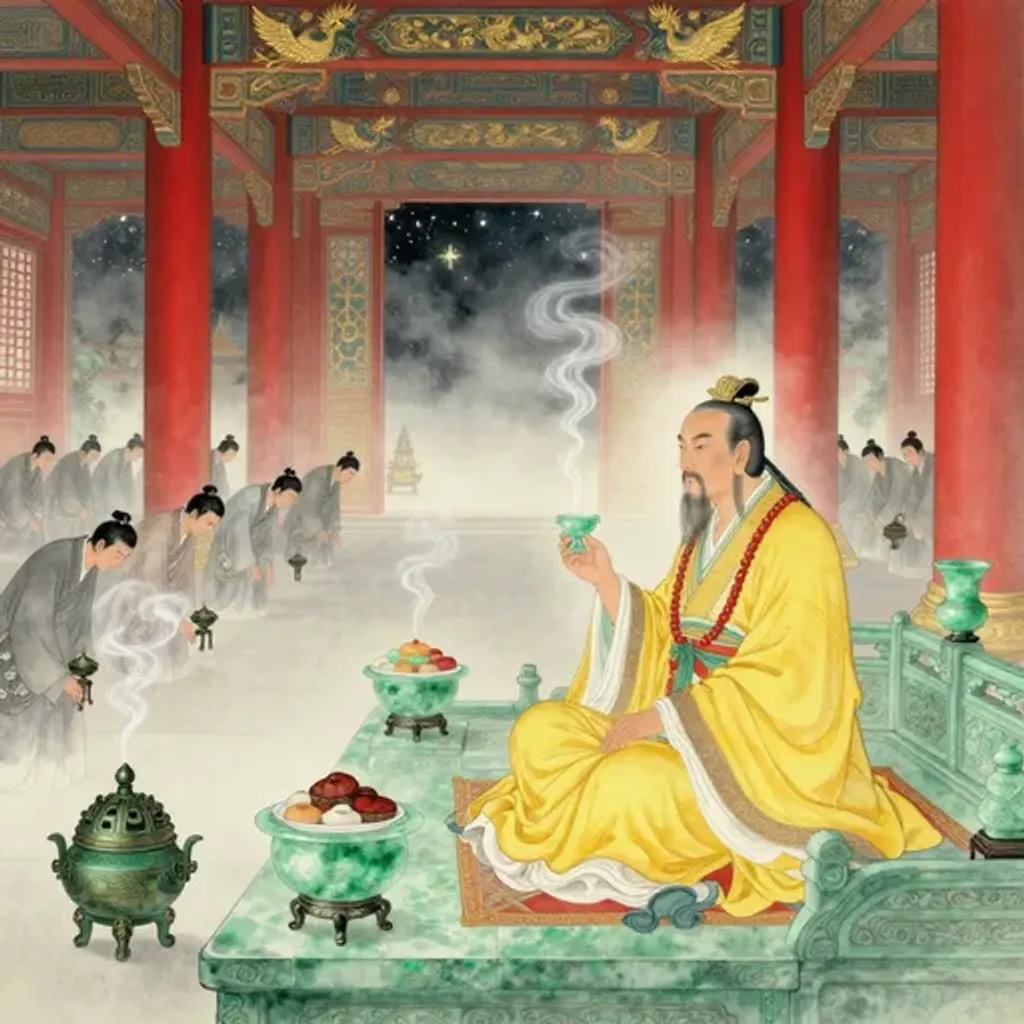
欽明之德,坐前玉食。必保嘉美,長受安福。
Reverent and brilliant in virtue, seated before jade delicacies. Surely preserving what is fine and beautiful, long receiving peaceful blessings.
— Jiao Yanshou, Yilin (Forest of Changes), 1st century BC
Commentary
Heaven and water oppose, but the ruler sits before jade dishes, radiant with the virtue described in the Book of Documents as 'reverently brilliant' (欽明). Such moral splendor ensures lasting beauty and enduring peace. The phrase 'qin ming' alludes to Emperor Yao's characterization in the Shangshu: 'reverently brilliant, civil and contemplative.' From Conflict to Contemplation, wind moves over the earth, and the ancient kings observed the regions and set up teachings. The verse captures Guan's ideal: governance through moral example rather than coercion. When the ruler embodies radiant virtue, the people see and follow — conflict resolves not through adjudication but through the sheer gravitational force of exemplary conduct.
訟 → 噬嗑
Hexagram 6 → Hexagram 21: Biting Through
Changing lines: 1, 2, 5
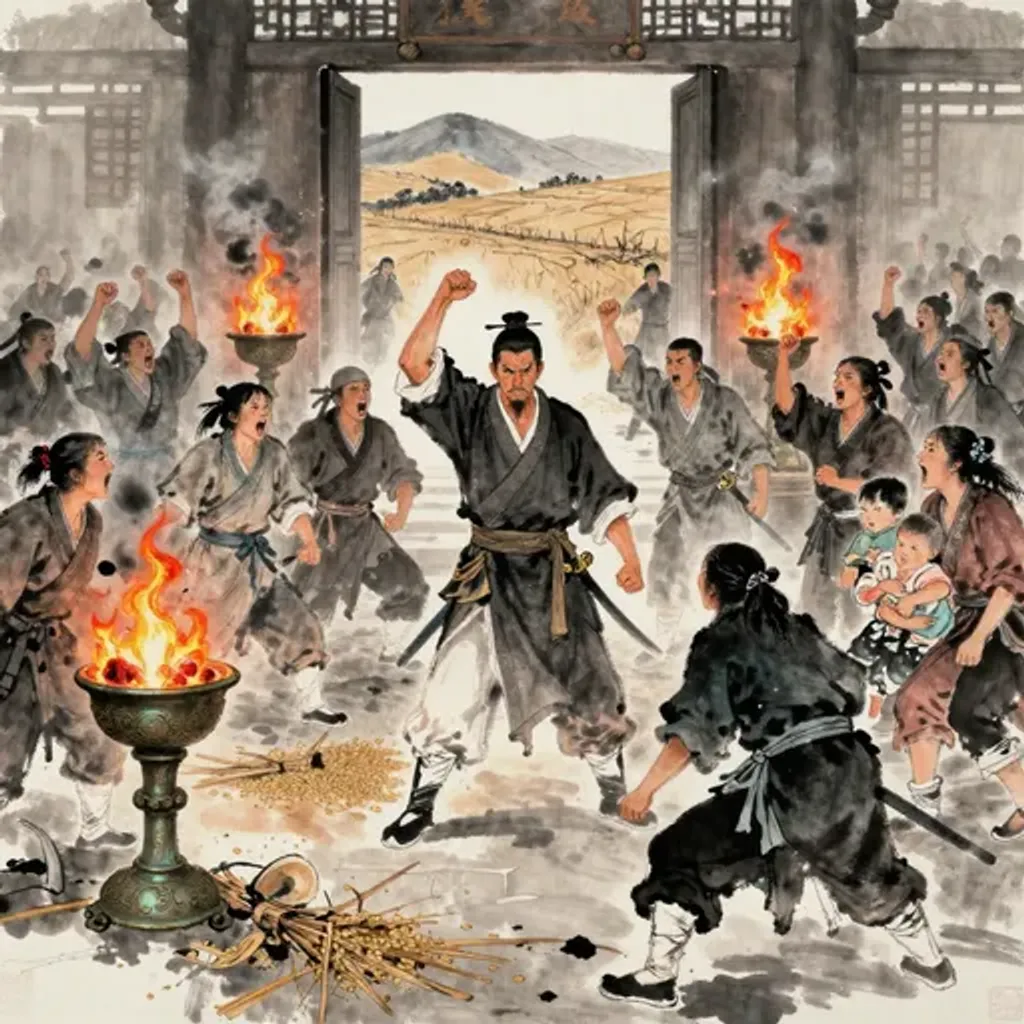
武夫司空,多口爭訟。金火當戶,民不安處,年飢無有。
A warrior as minister of works; many mouths in litigation. Metal and fire at the door; the people find no peace. The year is famished, with nothing.
— Jiao Yanshou, Yilin (Forest of Changes), 1st century BC
Commentary
Heaven and water oppose, and the military official commanding public works breeds only more disputes. Many mouths quarrel; metal and fire blaze at the doorstep. The people cannot dwell in peace, and the year's harvest fails. Every element compounds the conflict: martial authority misapplied to civil administration, fire at the threshold, famine crowning disorder. From Conflict to Biting Through, thunder and lightning flash — the hexagram of legal enforcement. Yet where Biting Through should restore order through clear penalties, this verse shows the machinery of justice itself generating chaos. When the enforcer is the problem, enforcement only multiplies the harm.
訟 → 賁
Hexagram 6 → Hexagram 22: Grace
Changing lines: 1, 2, 3, 4, 5
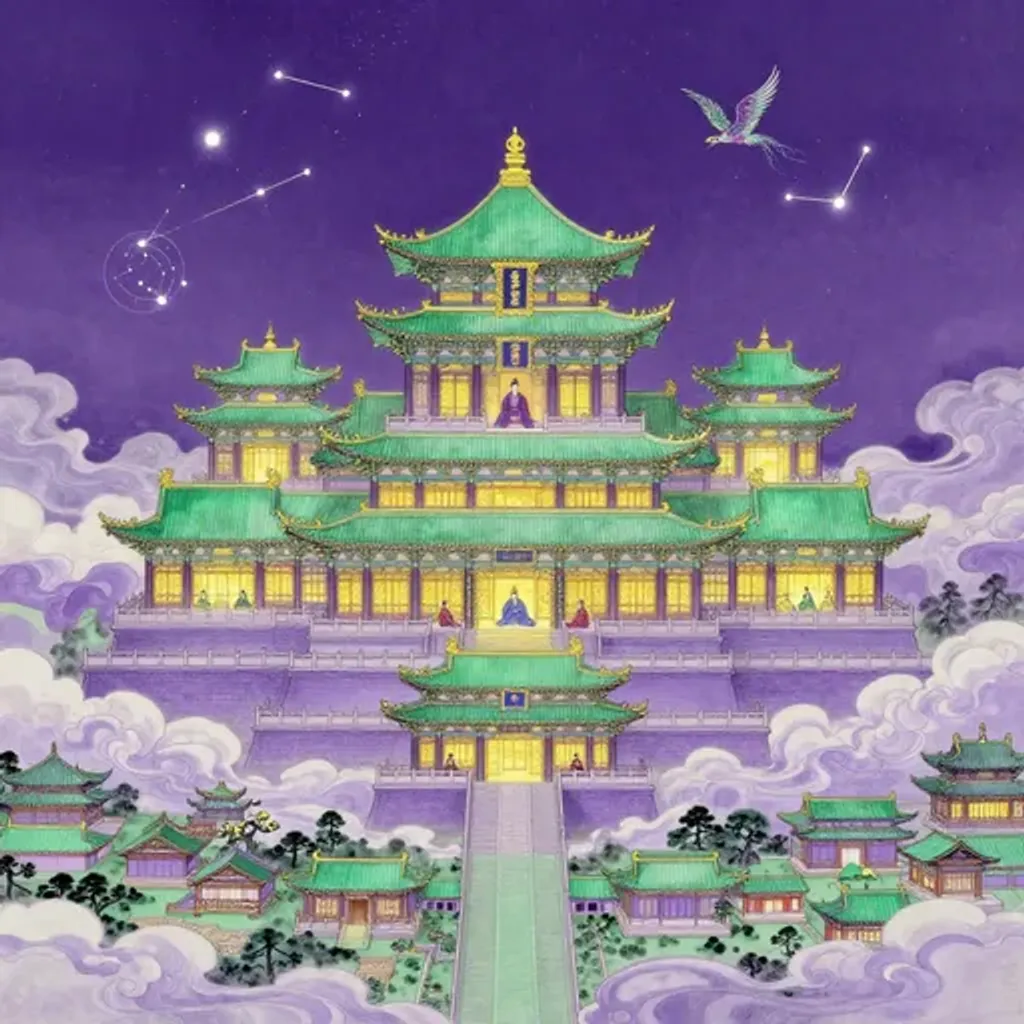
紫閣九重,尊嚴在中。黃帝堯舜,履行至公。冠帶垂衣,天下康寧。
The Purple Palace in nine tiers; majesty dwells within. Huang Di, Yao, and Shun; they practiced the utmost fairness. Donning cap and robes, all under heaven is at peace.
— Jiao Yanshou, Yilin (Forest of Changes), 1st century BC
Commentary
Heaven and water oppose, but within the purple palace of nine layers, solemn authority dwells. The Yellow Emperor, Yao, and Shun practiced the Way of perfect impartiality. Robed and capped, governing by moral example rather than intervention, the world finds peace of its own accord. The 'Purple Palace' (紫閣) evokes both the imperial court and the Ziwei stellar enclosure — the celestial pole around which all stars revolve. From Conflict to Grace, fire glows beneath the mountain, adorning without excess. Grace tempers brilliance with restraint, beauty with substance. The sage-kings' governance is precisely this: order achieved not through force but through the adorning power of virtue made visible.
訟 → 剝
Hexagram 6 → Hexagram 23: Splitting Apart
Changing lines: 2, 4, 5
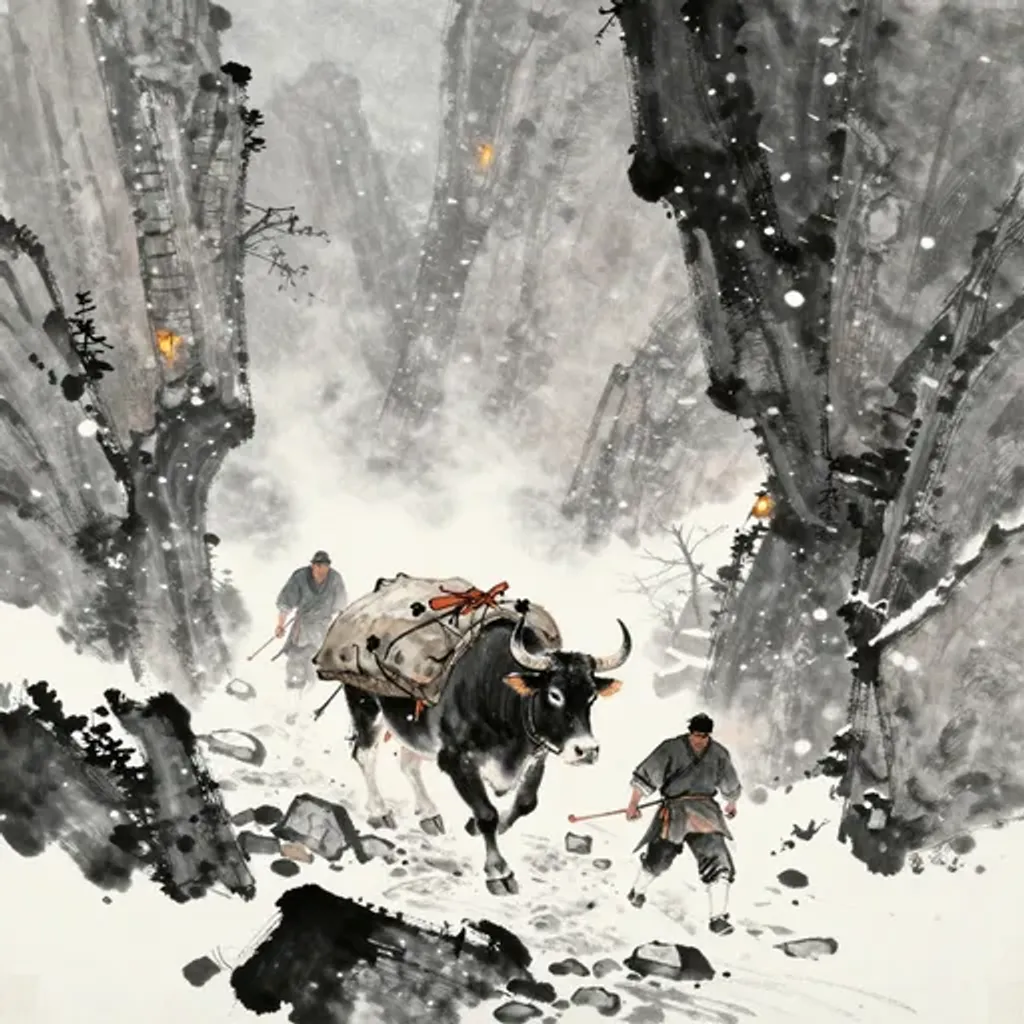
負牛上山,力劣行難。烈風雨雪,遮遏我前。中道復還,憂者自歡。
Carrying an ox up the mountain, strength fails, the journey hard. Fierce wind, rain, and snow block the way ahead. Turning back midway; the troubled one finds joy.
— Jiao Yanshou, Yilin (Forest of Changes), 1st century BC
Commentary
Heaven and water oppose, and an ox-bearer labors uphill. Strength is meager, the road grueling. A fierce wind drives rain and snow, blocking the way ahead. Midway up the slope, the traveler turns back — and the one who worried now rejoices. The return is not failure but wisdom: knowing when to stop is itself a form of success. From Conflict to Splitting Apart, the mountain crumbles upon the earth, stripping away what cannot be sustained. Bo's image demands that one stop building on what is collapsing. The ox-bearer who turns back before the storm destroys him has read the hexagram correctly — retreat in time preserves what forcing ahead would lose.
訟 → 復
Hexagram 6 → Hexagram 24: Return
Changing lines: 1, 2, 4, 5, 6
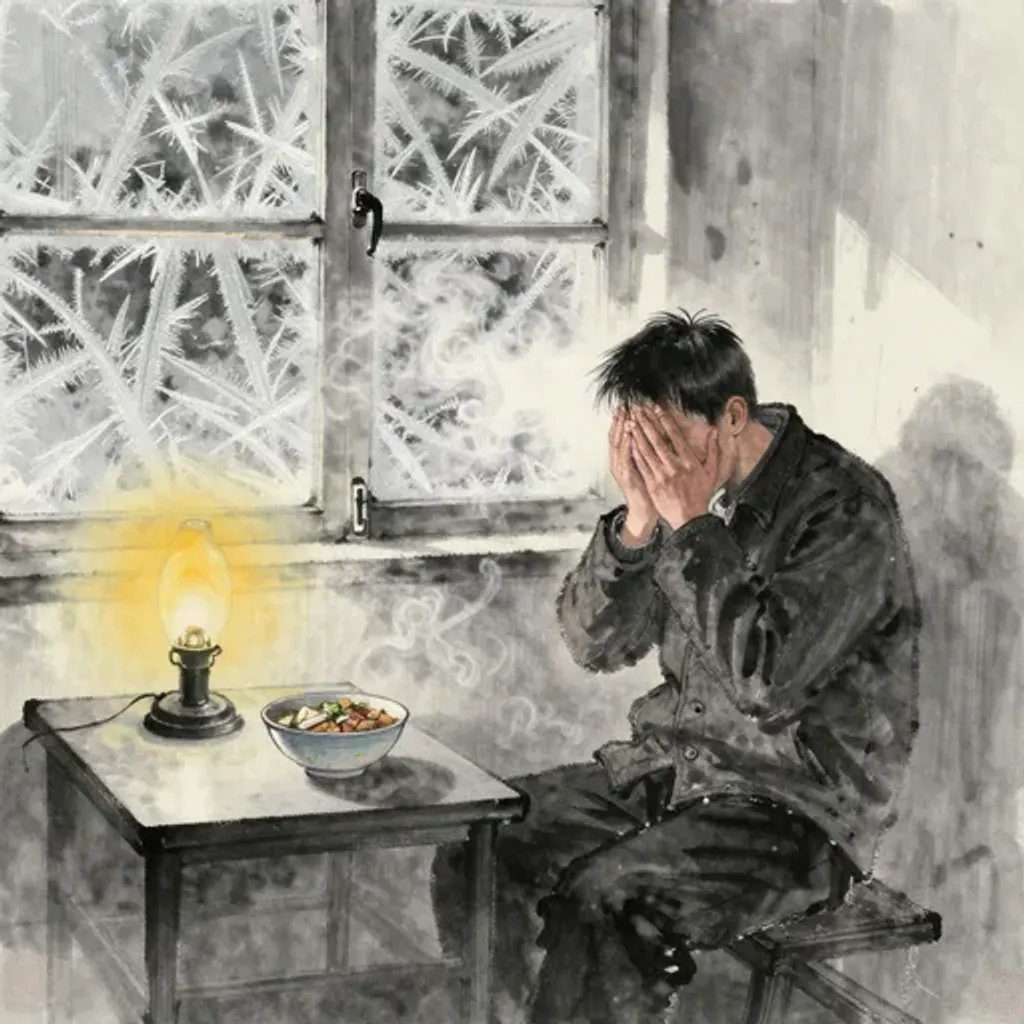
褰兔缺唇,行難齒寒。口痛不言,為身生患。
The rabbit with cleft lip; walking is difficult, teeth are cold. The mouth aches, unable to speak; bringing affliction upon himself.
— Jiao Yanshou, Yilin (Forest of Changes), 1st century BC
Commentary
Heaven and water oppose. A hare with a cleft lip struggles to move; its teeth are exposed and cold. The mouth aches, yet it dares not speak, and silence itself breeds further affliction. The harelip is both physical defect and metaphor: when the instrument of articulation is malformed, communication fails, and unexpressed grievances fester into bodily harm. The idiom 'lips gone, teeth cold' (唇亡齒寒) haunts the verse — without protective covering, vulnerability deepens. From Conflict to Return, thunder stirs beneath the earth at the winter solstice, the single yang returning. Return demands turning inward for renewal, yet the hare cannot speak its way out. The return here must be silent, internal, a mending from within.
訟 → 无妄
Hexagram 6 → Hexagram 25: Innocence
Changing lines: 1, 2
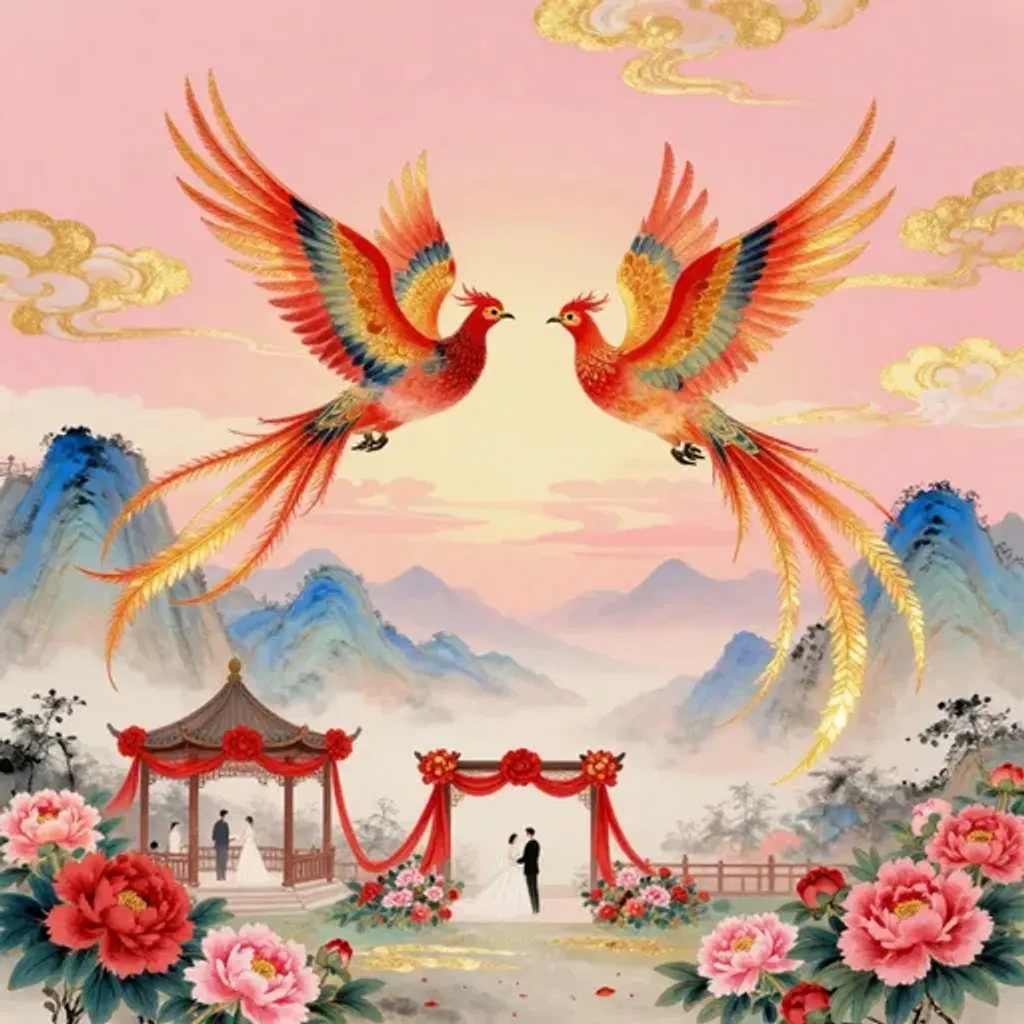
合體比翼,嘉耦相得。與君同好,使我有福。
Joined in body, paired in wing; a fine match well met. In harmony with my lord; bringing me good fortune.
— Jiao Yanshou, Yilin (Forest of Changes), 1st century BC
Commentary
Heaven and water oppose, but two beings join in flight — bodies merged, wings shared. This is the fabled 'paired-eye fish and shared-wing birds' of classical mythology: creatures that can only move in unison. A perfect match is found, and shared affection brings lasting blessing. From Conflict to Innocence, thunder moves beneath heaven in spontaneous accord. Wuwang means 'without falseness' — action that arises naturally, uncorrupted by calculation. The verse embodies this: two halves that need no negotiation to fit together. Where Conflict tears apart, Innocence reunites through unforced resonance. The blessing flows not from strategy but from the simple fact of being genuinely matched.
訟 → 大畜
Hexagram 6 → Hexagram 26: Great Taming
Changing lines: 1, 3, 4, 5
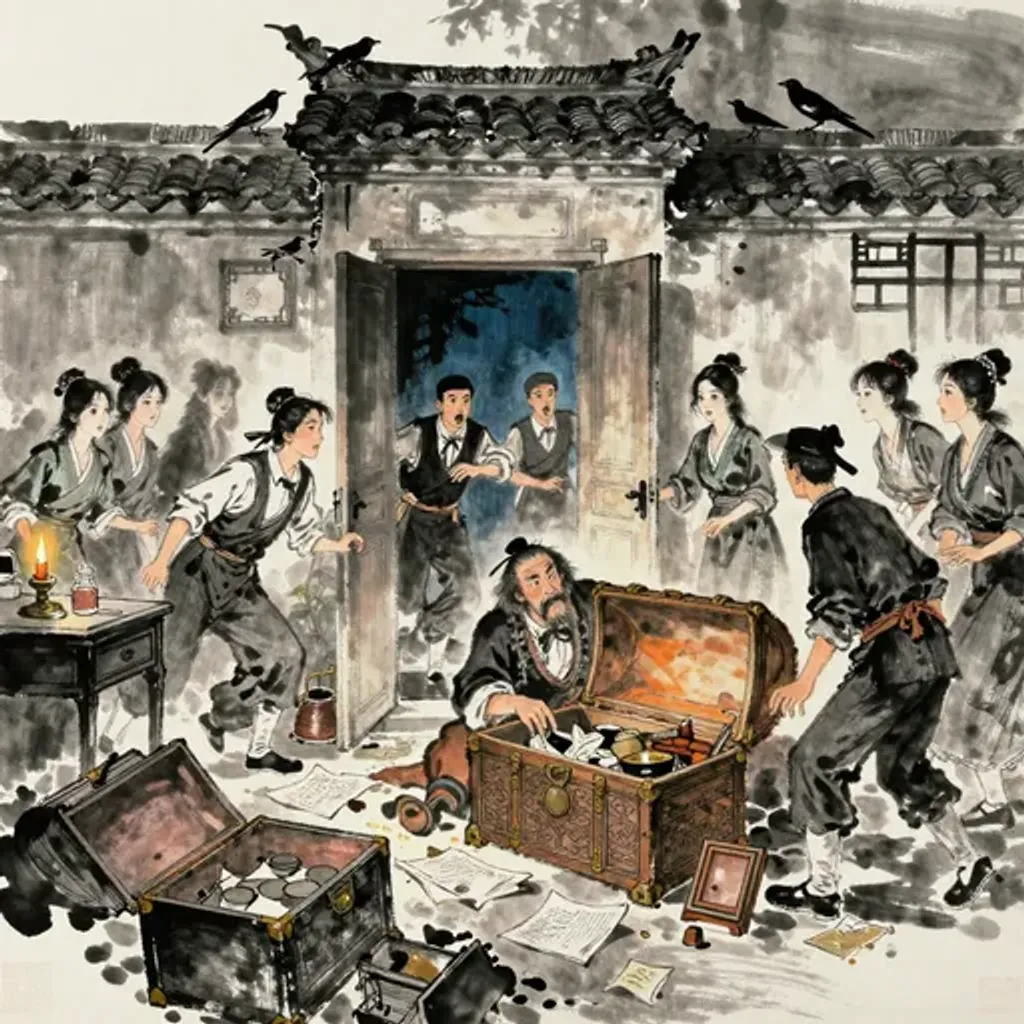
口啄卒卒,憂從中出。喪我寶貝,妻妾失位。
Mouths chattering ceaselessly; worry springs from within. Losing my treasures; wife and concubine lose their place.
— Jiao Yanshou, Yilin (Forest of Changes), 1st century BC
Commentary
Heaven and water oppose, and anxiety gnaws from within. Mouths peck and chatter ceaselessly — worry erupting in compulsive speech. Treasures are lost; wife and concubines are displaced from their positions. The verse maps a household unraveling under internal discord: the conflict is not external but domestic, corroding from the center outward. From Conflict to Great Taming, heaven is stored within the mountain — accumulated power held in check. Yet what should be tamed here has already broken loose. Great Taming's mandate to 'study the words and deeds of the ancients to accumulate virtue' stands as the remedy this household has failed to apply. Without inner cultivation, even stored wealth scatters.
訟 → 頤
Hexagram 6 → Hexagram 27: Nourishment
Changing lines: 1, 2, 4, 5
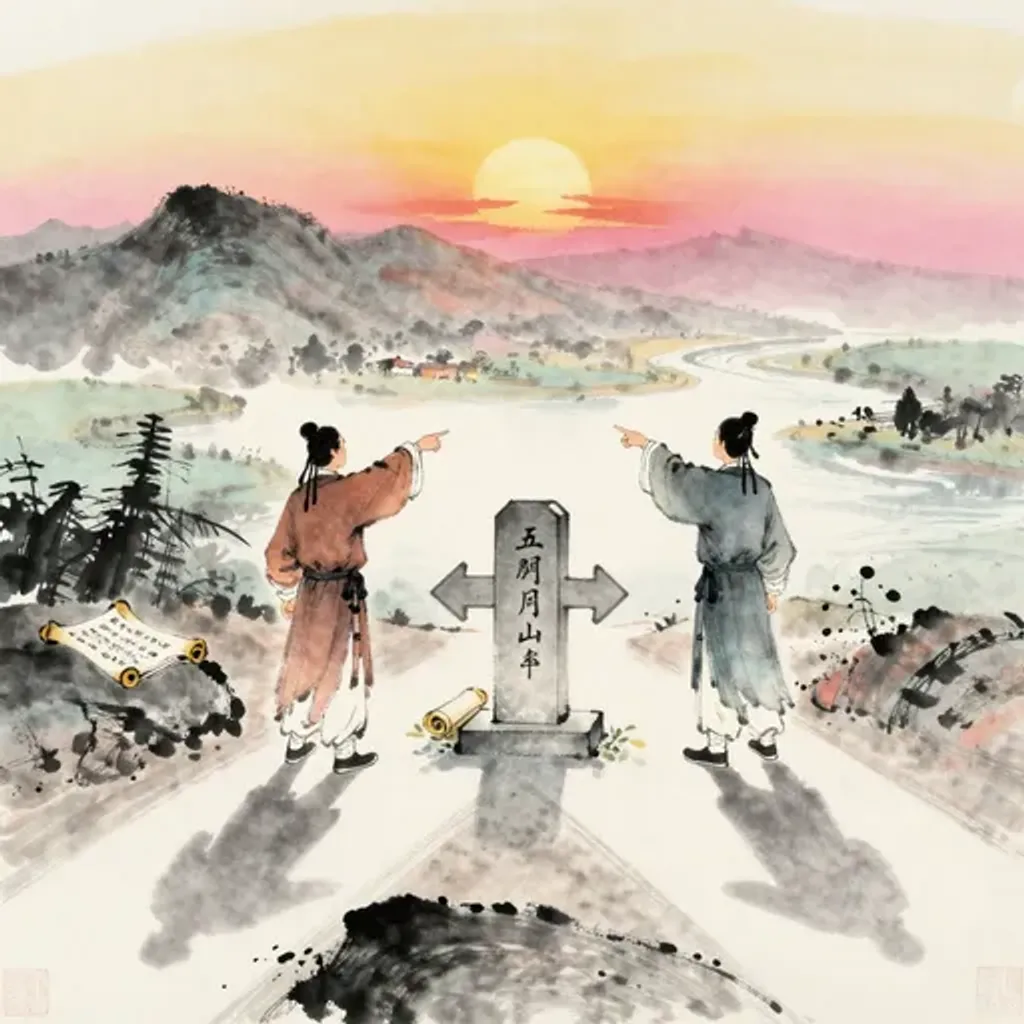
兩心不同,或從西東。明論終日,莫適相從。
Two hearts not alike; some go west, some east. Debating all day long, none willing to follow the other.
— Jiao Yanshou, Yilin (Forest of Changes), 1st century BC
Commentary
Heaven and water oppose, and two hearts pull in different directions — one heading west, the other east. They argue through the bright day, but no agreement is reached. The verse is Conflict distilled to its essence: irreconcilable opposition, articulate yet futile. From Conflict to Nourishment, the mountain stands above thunder, the image of the mouth — careful speech and measured sustenance. Yi counsels restraint in words and moderation in appetite, yet the disputants here have done the opposite: endless talk, no nourishment. The transformation reveals the cure: when words cannot resolve, stop speaking and attend to what truly feeds. Nourishment begins where argument ends.
訟 → 大過
Hexagram 6 → Hexagram 28: Great Exceeding
Changing lines: 3, 6
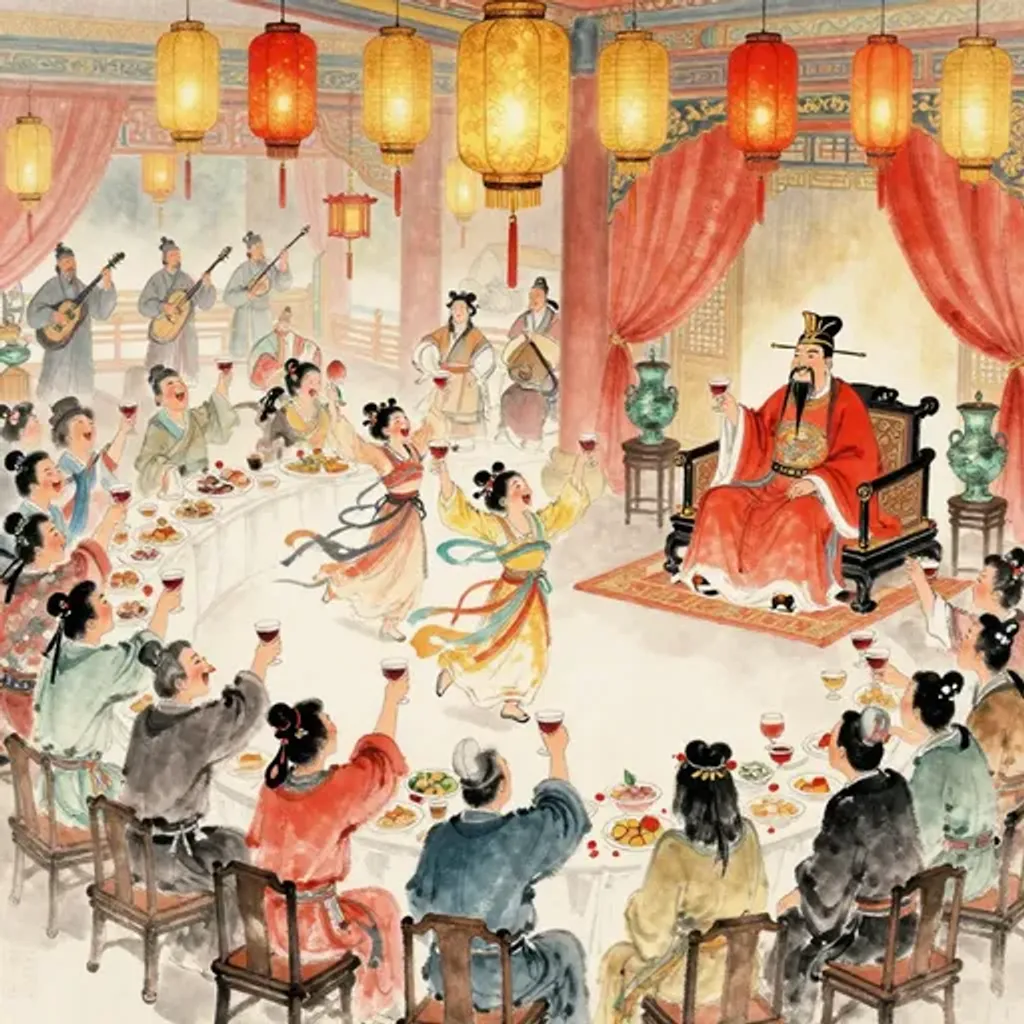
啞啞笑言,與善飲食。長樂行觴,千秋起舞,拜受大福。
Laughing joyfully in speech; sharing in good food and drink. Long joy, passing the cup; a thousand autumns of rising to dance, receiving great fortune.
— Jiao Yanshou, Yilin (Forest of Changes), 1st century BC
Commentary
Heaven and water oppose, but here laughter rings out freely. Companions share good food and drink, passing cups in the Hall of Eternal Joy, rising to dance through a thousand autumns, bowing to receive great blessings. The scene is pure festivity — a grand banquet where conflict is forgotten in shared celebration. From Conflict to Great Exceeding, the lake overwhelms the trees beneath it, a structure pushed beyond its limits. Yet Great Exceeding also means extraordinary action: the ridgepole bends but bears a weight no ordinary beam could hold. The feast described is itself excessive — extravagant, exuberant, almost too much. The verse embraces this: sometimes transcending conflict requires not moderation but magnificent overflow.
訟 → 坎
Hexagram 6 → Hexagram 29: The Abysmal Water
Changing lines: 4, 6
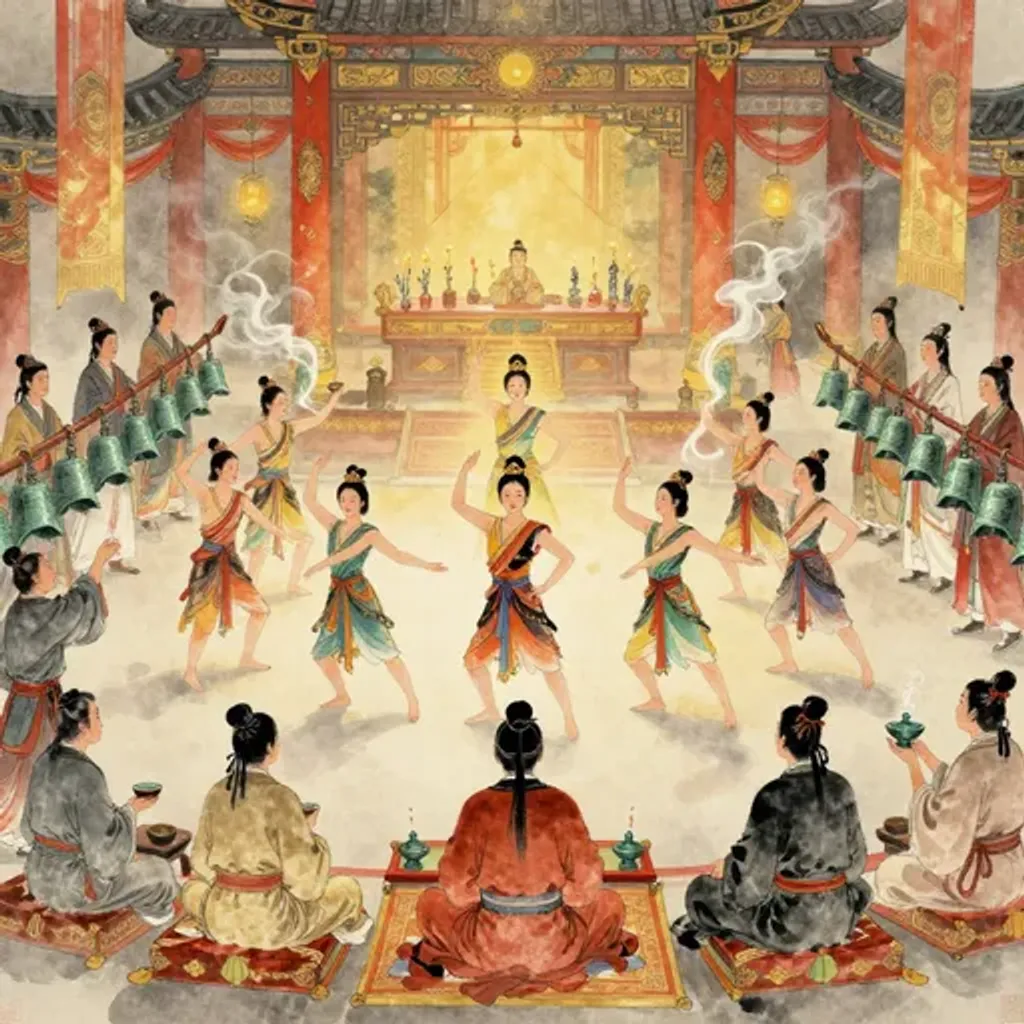
初憂後喜,與福為市。八佾列陳,飲御諸友。
First worry, then joy; trading sorrow for fortune. Eight rows arranged in columns; drinking with all friends.
— Jiao Yanshou, Yilin (Forest of Changes), 1st century BC
Commentary
Heaven and water oppose — initial worry gives way to later joy, as fortune is traded in the marketplace of fate. Eight rows of dancers form their ranks, and wine is shared with all assembled friends. The 'eight rows' (八佾) evoke the grandest ritual dance formation, reserved for the Son of Heaven — a symbol of perfect ceremonial order restored after disorder. From Conflict to The Abysmal, water doubles upon water, peril upon peril. Yet the verse inverts the expected danger: what begins in anxiety resolves in feasting. The Abysmal's lesson is that sincerity carried through repeated danger ultimately prevails. Here, the one who perseveres through initial worry reaches the banquet on the other side of the abyss.
訟 → 離
Hexagram 6 → Hexagram 30: The Clinging Fire
Changing lines: 1, 2, 3, 5
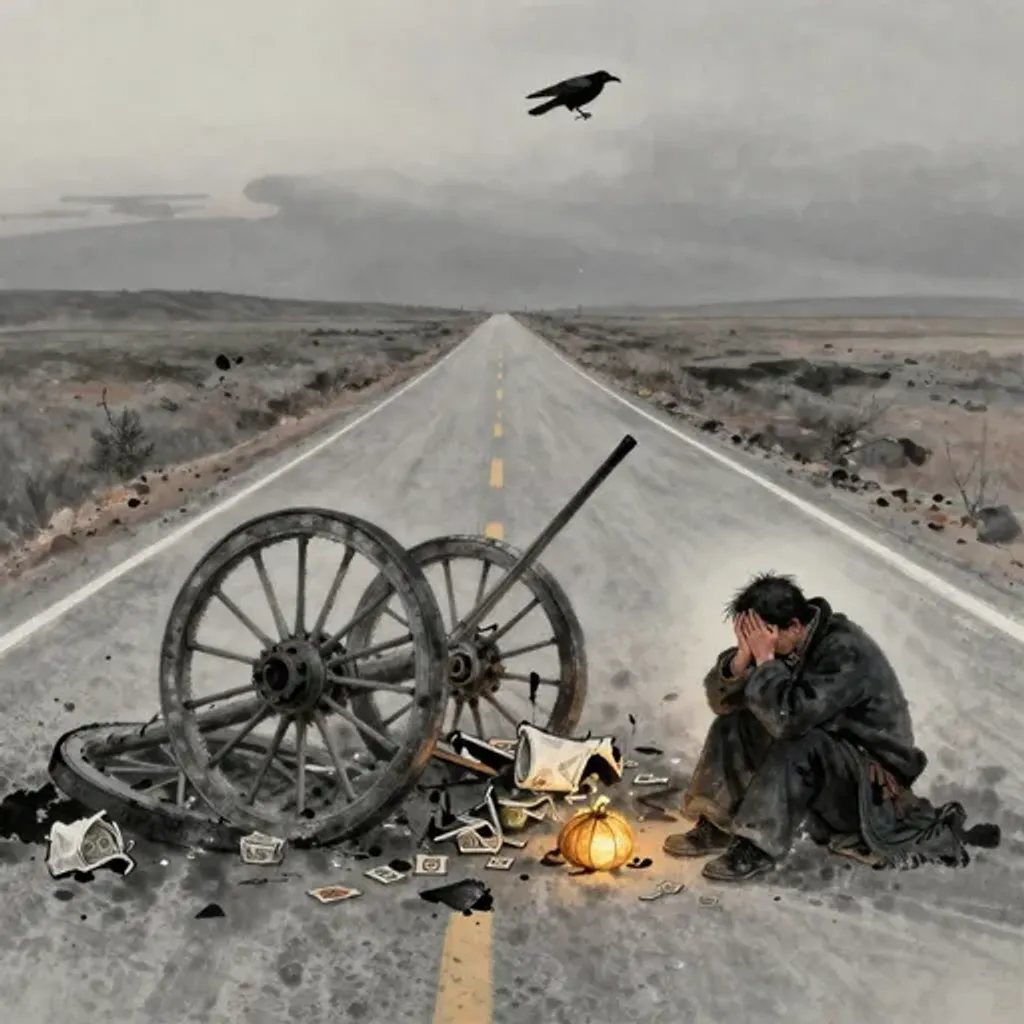
西徙無家,破其新車。王孫失利,不如止居。
Moving west with no home, the new cart broken. The prince loses his advantage; better to have stayed put.
— Jiao Yanshou, Yilin (Forest of Changes), 1st century BC
Commentary
Heaven and water oppose, and a household uproots itself westward only to find no shelter waiting. The new carriage breaks apart on the road. The young nobleman suffers losses, and the verse concludes: better to have stayed put. From Conflict to The Clinging, fire doubles upon fire — brilliant illumination, but also exposure. Li's clarity reveals what the traveler should have seen before departing: movement without a destination is not progress but dispossession. The broken carriage is the Clinging's harsh light falling on a reckless decision. Fire illuminates but does not shelter. When conflict drives impulsive flight, one trades a flawed home for the open road's merciless clarity.
訟 → 咸
Hexagram 6 → Hexagram 31: Influence
Changing lines: 2, 3, 6
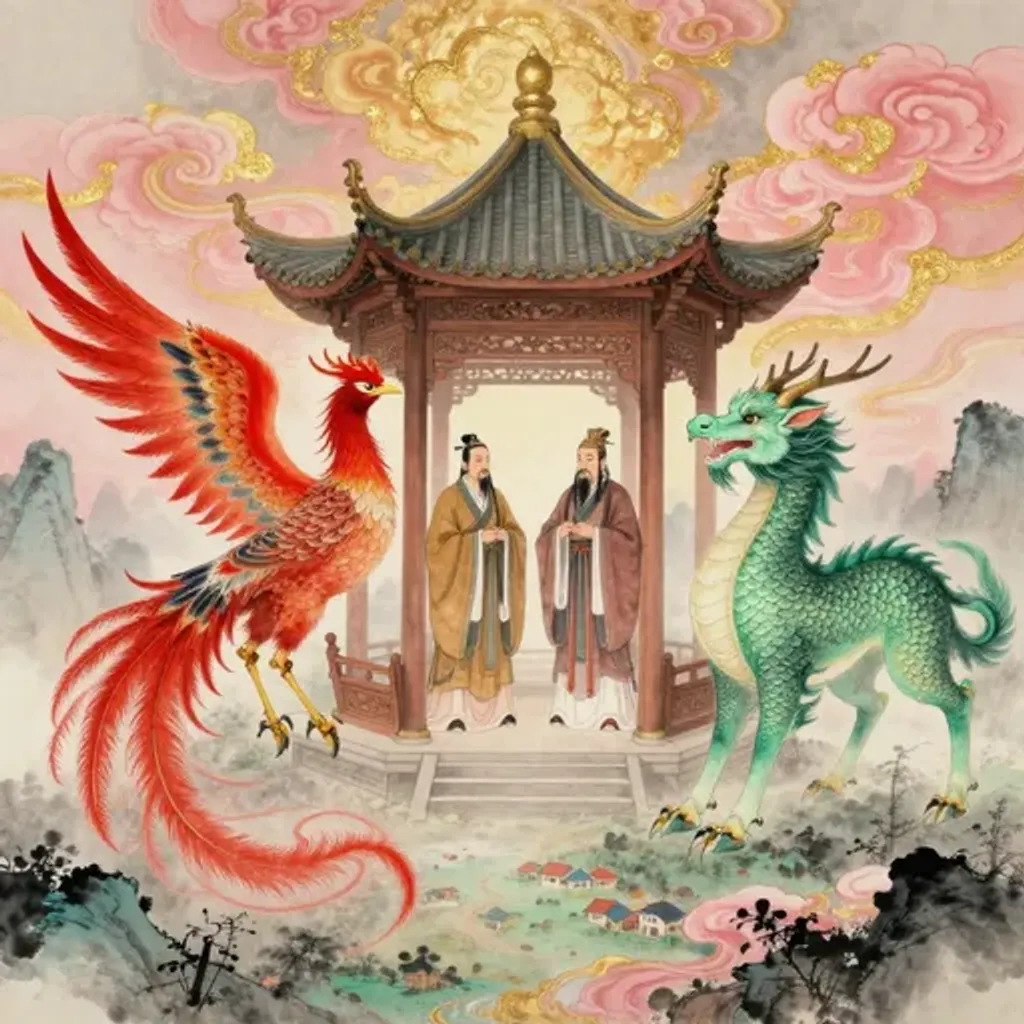
鳳凰在左,麒麟處右。仁聖相遇,伊呂集聚。時無殃咎,福為我母。
Phoenix on the left, qilin on the right. The humane and sagely meet; Yi Yin and Lu Shang gather. No calamity at this time; fortune is my mother.
— Jiao Yanshou, Yilin (Forest of Changes), 1st century BC
Commentary
Heaven and water oppose, yet the phoenix stands at the left, the qilin at the right — both supreme auspicious creatures whose appearance signals sage rule. Benevolent and holy beings converge: Yi Yin and Lü Shang gather as one. The time brings no calamity; blessings become the petitioner's guardian. Yi Yin, the cook-turned-minister who founded Shang, and Lü Shang (Taigong), the fisherman-turned-strategist who founded Zhou — two paragons of talent meeting its moment. From Conflict to Influence, the lake rests atop the mountain, open reception above steadfast foundation. Xian means mutual sensitivity: the sage-ministers and their rulers responded to each other like mountain and lake exchanging moisture. When such resonance occurs, conflict has no foothold.
訟 → 恆
Hexagram 6 → Hexagram 32: Duration
Changing lines: 3, 5, 6
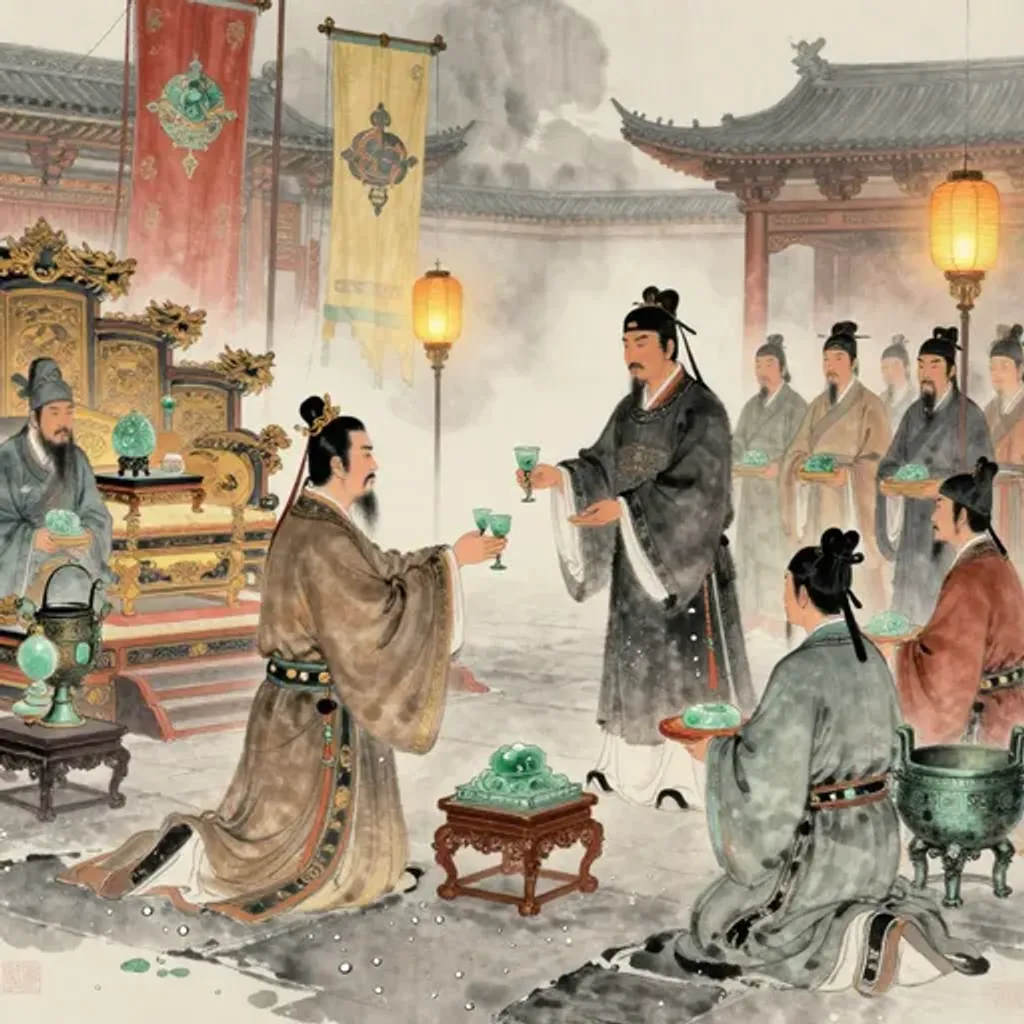
區脫康居,慕仁入朝。湛露之歡,三爵畢恩,復歸舊廬。
Qutuo and Kangju, admiring benevolence, come to court. The joy of sweet dew; three toasts complete the grace, then return to their old abode.
— Jiao Yanshou, Yilin (Forest of Changes), 1st century BC
Commentary
Heaven and water oppose, but distant border peoples — from the outposts and the kingdom of Kangju — admire the central court's virtue and come to pay tribute. The 'Zhanlu' feast of the Shijing is held: three ceremonial cups complete the ritual of sovereign grace, and the visitors return to their old dwellings in peace. Kangju was a Central Asian kingdom along the Silk Road; the outposts (區脫) were frontier buffer zones between nomadic and settled peoples. From Conflict to Duration, thunder above wind persists without wavering. Heng's endurance manifests here as diplomatic constancy: virtue projected so steadily that even distant peoples are drawn in, feasted, and sent home satisfied — conflict transmuted into lasting accord.
訟 → 遯
Hexagram 6 → Hexagram 33: Retreat
Changing lines: 2, 3
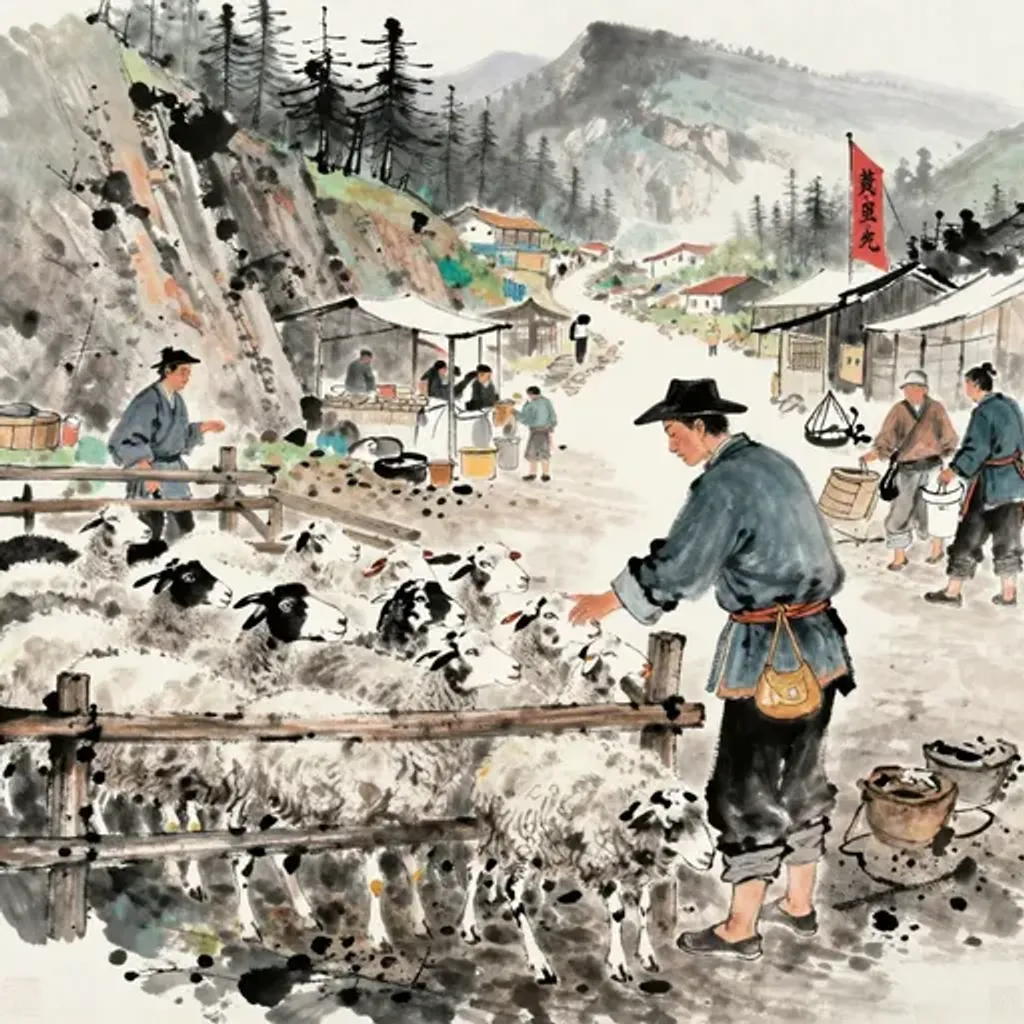
疾貧望幸,使伯行販。關牢擇羊,多得大牂。
Sick and poor, hoping for luck; sending the elder brother to trade. At the market pen, choosing sheep; obtaining many fine ewes.
— Jiao Yanshou, Yilin (Forest of Changes), 1st century BC
Commentary
Heaven and water oppose, and poverty drives desperate measures. Afflicted by want, one sends the eldest brother to trade at market. At the pen's gate, he selects sheep and comes away with many fine ewes — a windfall born of necessity. The verse is pragmatic: when hardship is real, one does not philosophize but acts. From Conflict to Retreat, heaven stands above the mountain, the noble withdrawing from the petty. Yet here the retreat is not lofty detachment but commercial shrewdness — a strategic withdrawal into the marketplace. Dun's wisdom applies at every scale: sometimes the best response to conflict is not to fight or flee but to redirect energy toward practical gain.
訟 → 大壯
Hexagram 6 → Hexagram 34: Great Power
Changing lines: 1, 3, 5, 6
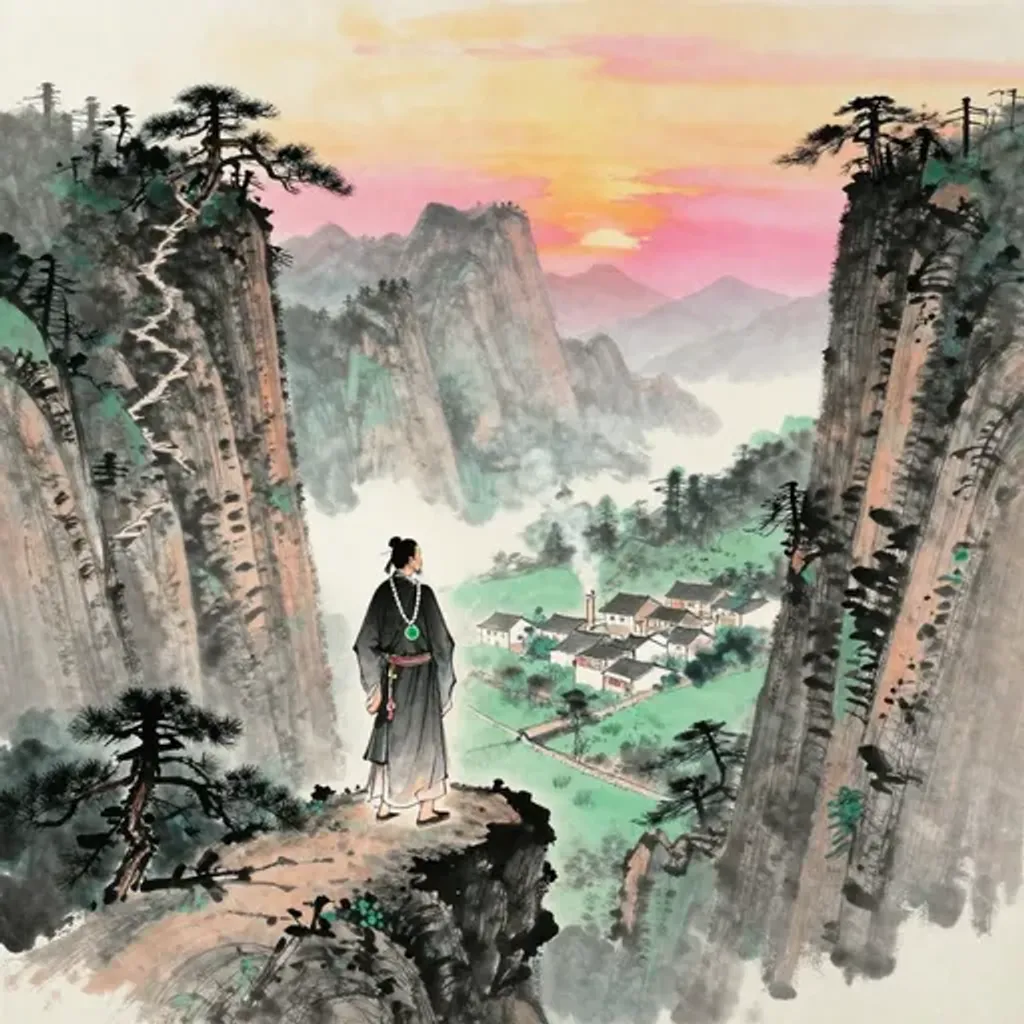
處高不傷,雖危不亡。握珠懷玉,還歸其鄉。
Dwelling in heights, unharmed; though perilous, not perishing. Clutching pearls, embracing jade; returning home to his village.
— Jiao Yanshou, Yilin (Forest of Changes), 1st century BC
Commentary
Heaven and water oppose, but the one who dwells in high places is not harmed — though the position is perilous, destruction does not come. Clasping pearls and embracing jade, the traveler returns safely home. The verse affirms that intrinsic worth provides its own protection. From Conflict to Great Power, thunder rumbles above heaven, yang at its most vigorous. Dazhuang's image is overwhelming strength that must be governed by propriety: 'The noble one does not tread where ritual forbids.' The one who survives the heights does so not by aggression but by holding fast to what is precious and knowing when to descend. Great Power, properly wielded, carries its bearer home rather than driving further into danger.
訟 → 晉
Hexagram 6 → Hexagram 35: Progress
Changing lines: 2, 5
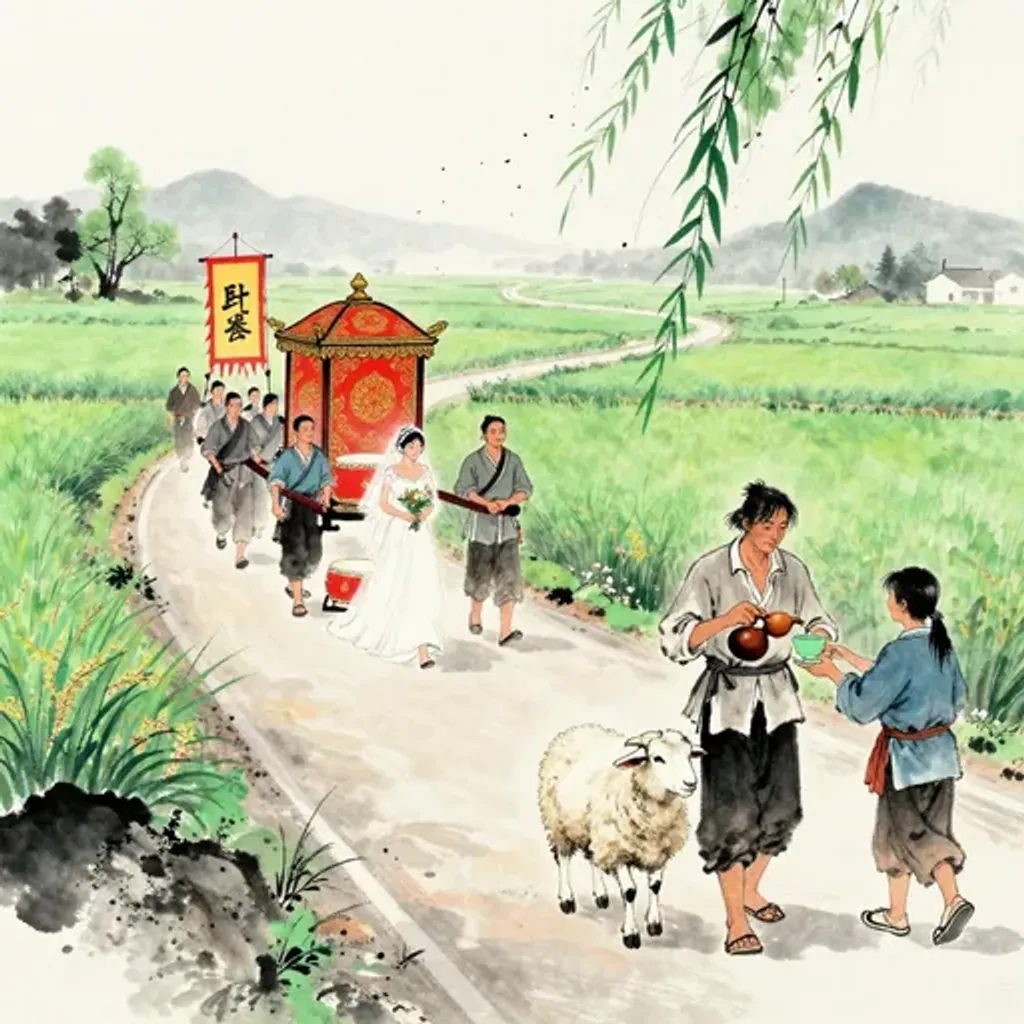
右手棄酒,左手牧牂。行逢禮御,餌得玉杯。
Right hand discards wine, left hand tends the ewe. Meeting a ceremonial escort on the road; rewarded with a jade cup.
— Jiao Yanshou, Yilin (Forest of Changes), 1st century BC
Commentary
Heaven and water oppose, yet a curious bargain unfolds. The right hand discards wine, the left hand tends ewes — one pleasure abandoned for a different kind of gain. Then fortune intervenes: a ritual procession is encountered on the road, and the traveler receives a jade cup as reward. The exchange is asymmetric: what was released voluntarily returns in nobler form. From Conflict to Progress, fire rises above the earth, brilliance emerging from the ground. Jin's image is the Marquis of Kang receiving horses from the Son of Heaven — merit recognized and rewarded. The verse captures this upward trajectory: let go of what merely intoxicates, attend to what nourishes, and recognition meets you on the road.
訟 → 明夷
Hexagram 6 → Hexagram 36: Darkening of the Light
Changing lines: 1, 2, 3, 4, 5, 6
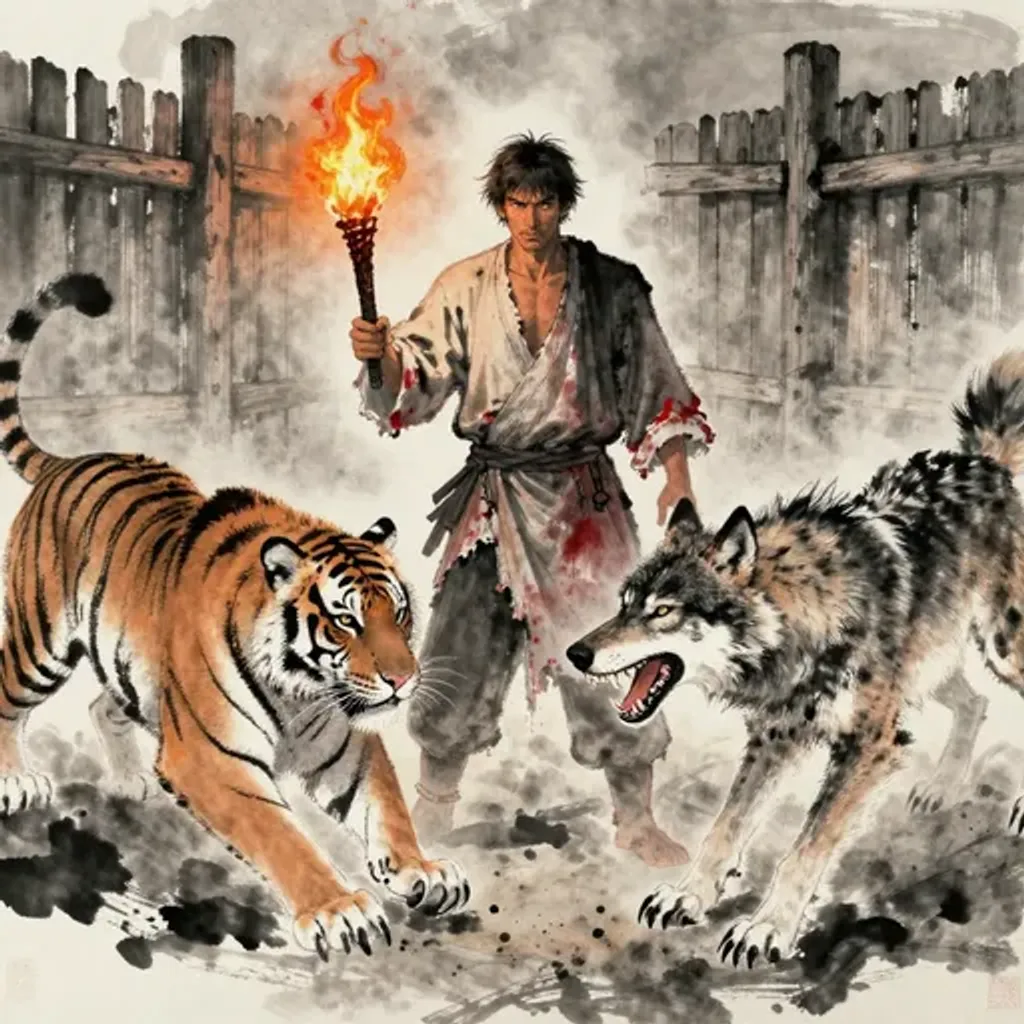
養虎牧狼,還自賊傷。大勇小捷,雖危不亡。
Raising tigers, herding wolves; they turn and wound their keeper. Great courage wins small victories; though perilous, not perishing.
— Jiao Yanshou, Yilin (Forest of Changes), 1st century BC
Commentary
Heaven and water oppose, and someone has been raising tigers and herding wolves — nurturing the very forces that will turn and wound the keeper. Great courage wins small victories; though danger is real, destruction is averted. The verse captures the paradox of managing dangerous forces: one cannot eliminate the predators one depends on, only survive them through alertness. From Conflict to Darkening of the Light, fire sinks beneath the earth, brilliance concealed. Mingyi's counsel is to use darkness strategically, governing with veiled intelligence rather than open confrontation. The tiger-keeper survives not by overpowering the beasts but by dimming his own light — yielding enough to avoid becoming the target.
訟 → 家人
Hexagram 6 → Hexagram 37: The Family
Changing lines: 1, 2, 3, 4
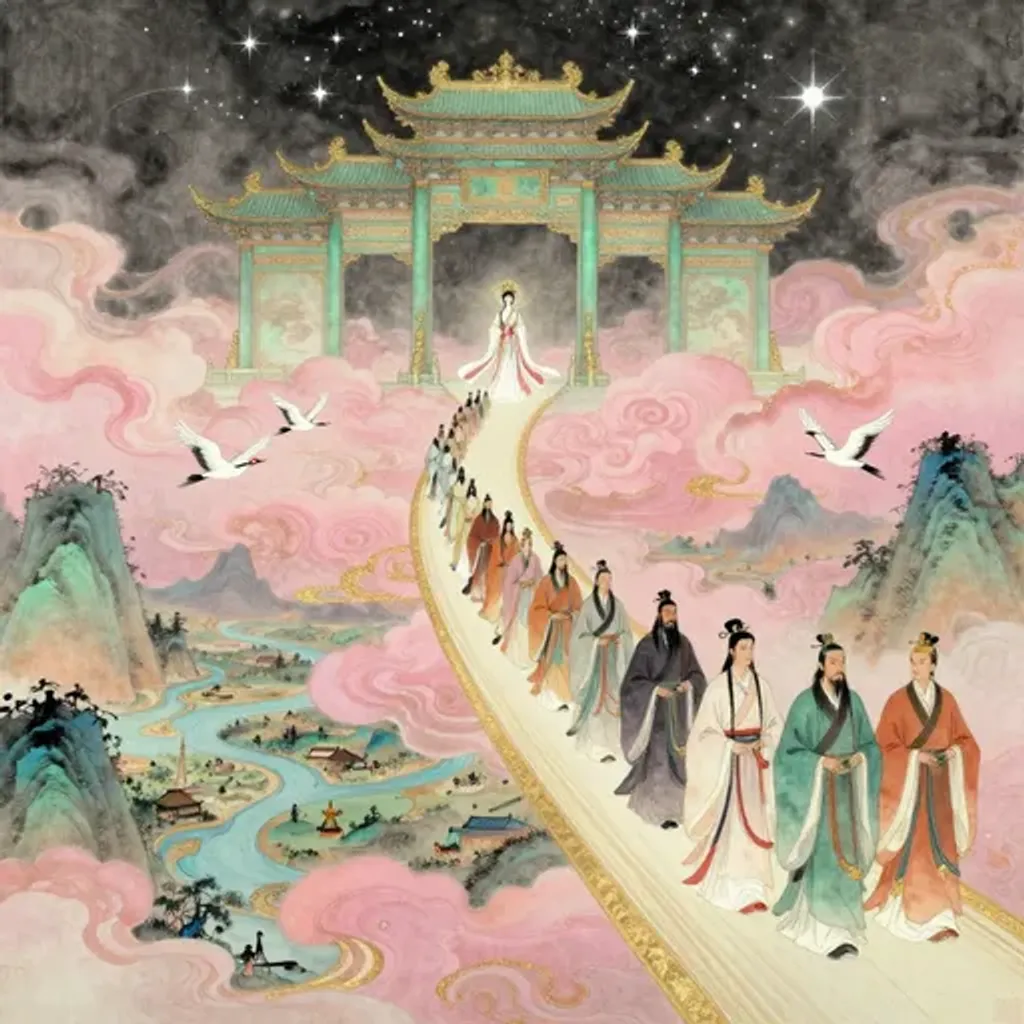
戴堯扶禹,松喬彭祖。西遇王母,道路夷易,無敢難者。
Upholding Yao, supporting Yu; Song Qiao and Peng Zu. Meeting the Queen Mother in the west; the road is smooth and easy, none dare make it difficult.
— Jiao Yanshou, Yilin (Forest of Changes), 1st century BC
Commentary
Heaven and water oppose, but here the traveler walks under supreme protection. Bearing the legacy of Yao and supporting Yu's work, accompanied by the immortals Chisongzi, Wang Qiao, and Pengzu — paragons of eternal life — one journeys west to meet the Queen Mother of the West. The road is smooth and easy; nothing dares obstruct the way. From Conflict to The Family, wind emerges from fire, warmth radiating outward as household order. The verse gathers every symbol of blessing — sage governance, immortal longevity, divine patronage — and places them within the family's protective circle. When the household embodies virtue at this scale, no external conflict can breach it.
訟 → 睽
Hexagram 6 → Hexagram 38: Opposition
Changing lines: 1, 5
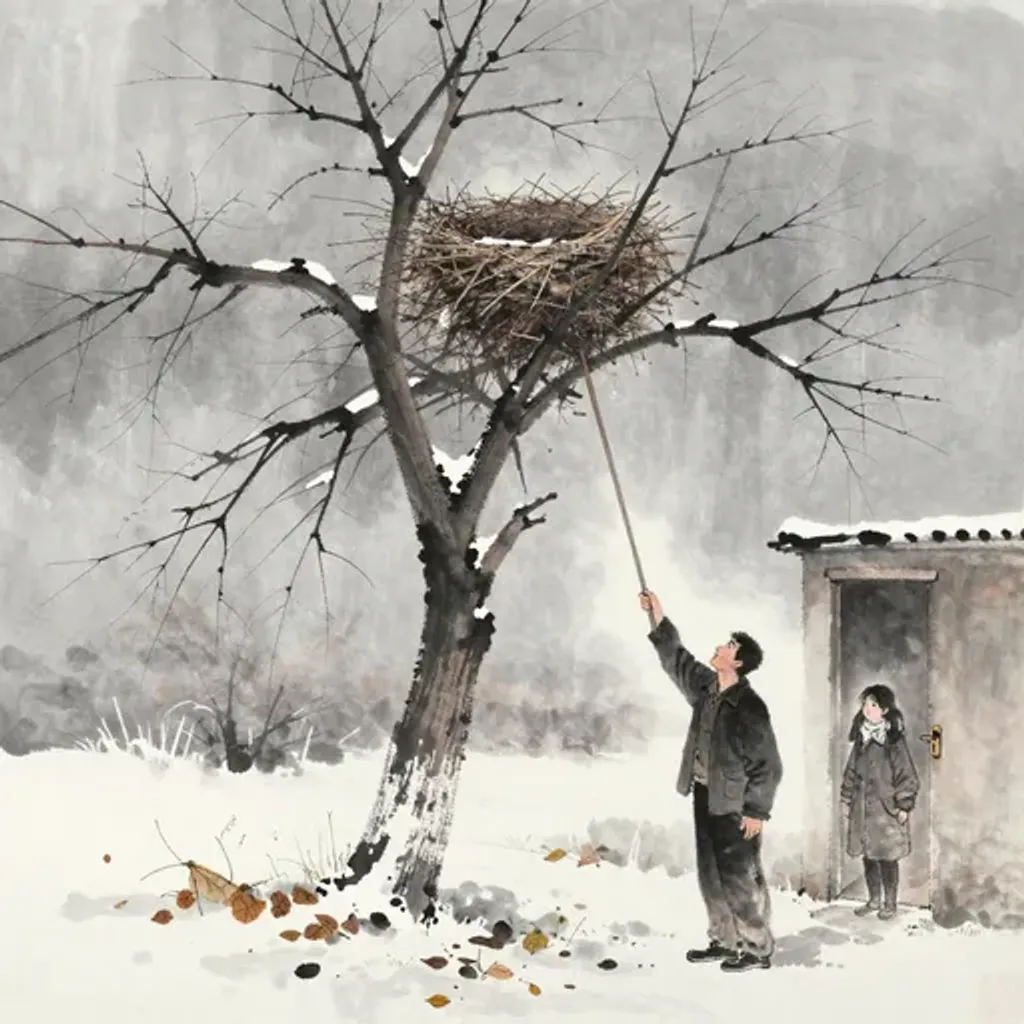
秋冬探巢,不得鵲鶵。衘指北去,媿我少姬。
Searching nests in autumn and winter, no magpie chicks to find. Biting his finger, he goes north; I am ashamed before my young wife.
— Jiao Yanshou, Yilin (Forest of Changes), 1st century BC
Commentary
Heaven and water oppose, and the search comes too late. In autumn and winter one raids a bird's nest, but the magpie chicks are long gone — they fledged in spring. Biting a finger in frustration, the seeker heads north, ashamed before the young concubine. Every element speaks of missed timing: the wrong season for eggs, the wrong direction for warmth, the wrong face to show to a waiting lover. From Conflict to Opposition, fire rises while the lake sinks — two forces diverging by nature. Kui's image is things that see each other but cannot connect. The verse enacts this perfectly: desire and its object exist in different seasons, and the gap between them is unbridgeable.
訟 → 蹇
Hexagram 6 → Hexagram 39: Obstruction
Changing lines: 2, 3, 4, 6
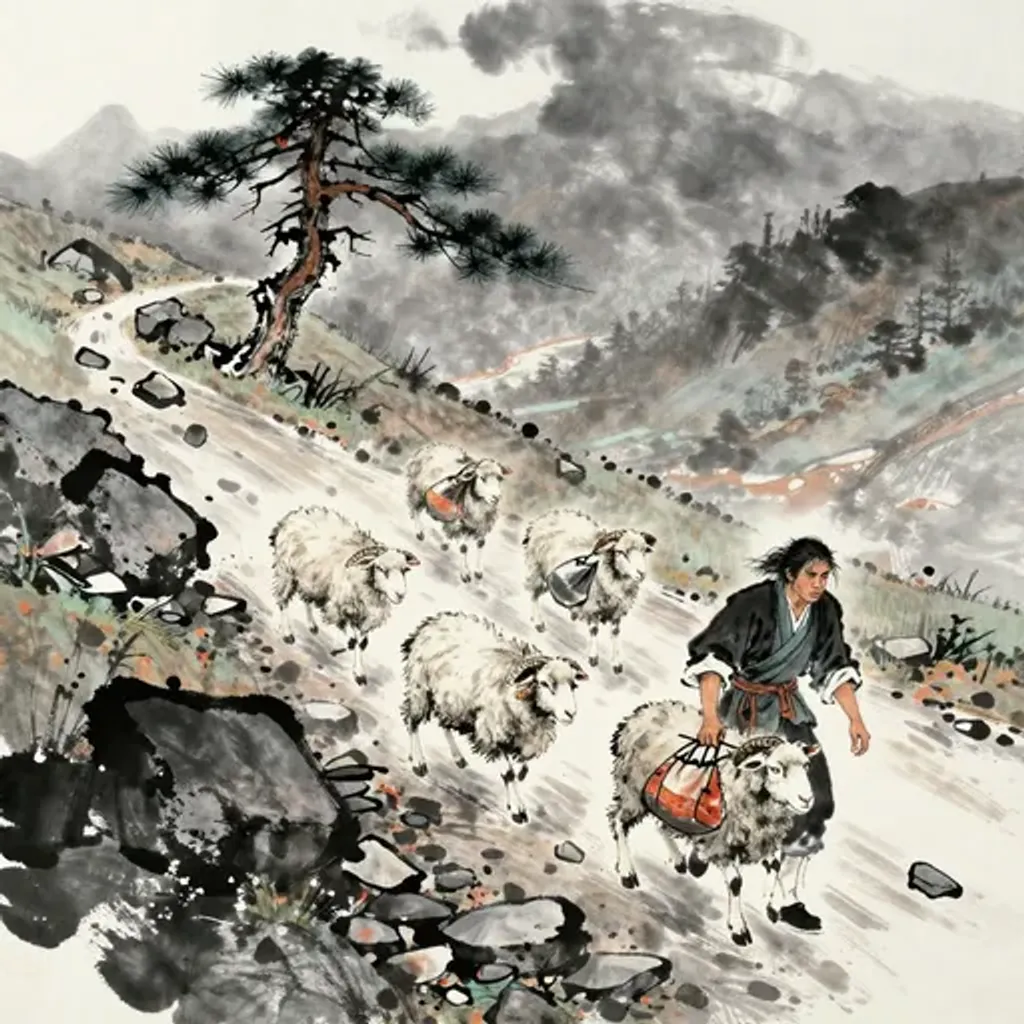
兩羝三牂,俱之代鄉。留連多難,損其食糧。
Two rams and three ewes, all heading to Dai country. Lingering through many hardships; losing their provisions.
— Jiao Yanshou, Yilin (Forest of Changes), 1st century BC
Commentary
Heaven and water oppose, and a flock — two rams and three ewes — is driven toward the border region of Dai. The journey is beset with delays and hardships, and the provisions dwindle. Dai was a frontier state in the far north, associated with harsh terrain and military exposure. From Conflict to Obstruction, water stands atop the mountain, blocking the path forward. Jian's image is difficulty that demands self-reflection rather than brute force. The flock's suffering on the northern road embodies this: the journey is ill-conceived, the supplies inadequate, and the obstacles compounding. Obstruction's counsel — turn back and examine oneself — is precisely what the herdsman has failed to do.
訟 → 解
Hexagram 6 → Hexagram 40: Deliverance
Changing lines: 5, 6
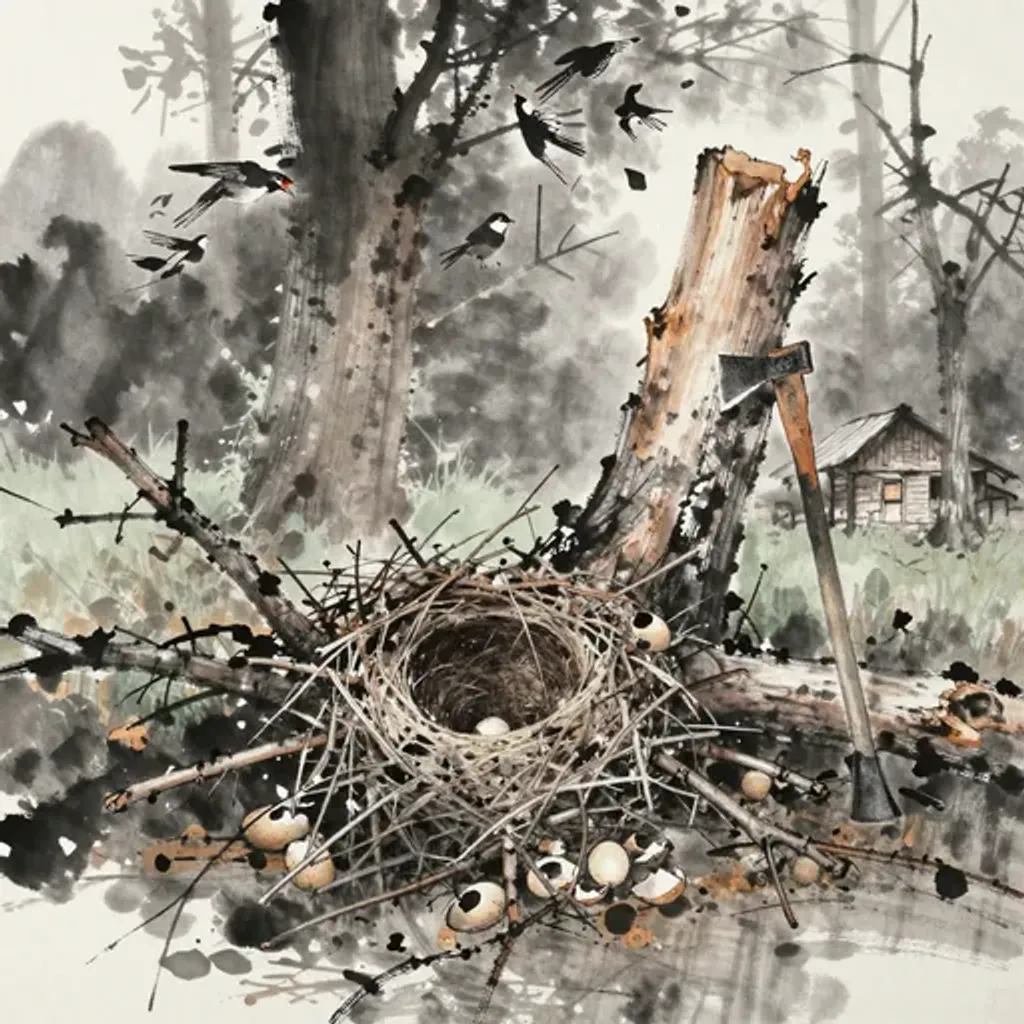
南徙無廬,鳥破其巢。伐木思初,不利動搖。
Moving south with no shelter; the bird's nest destroyed. Felling timber, thinking of the beginning; movement brings no advantage.
— Jiao Yanshou, Yilin (Forest of Changes), 1st century BC
Commentary
Heaven and water oppose, and displacement compounds the damage. Migrating south, one finds no shelter; a bird's nest is destroyed. Then comes the reflection: 'cutting wood, I think of how it began' — regretting the first stroke. Movement now would only deepen the harm. From Conflict to Deliverance, thunder and rain burst forth, clearing the air. Xie's image is the storm that breaks tension and washes clean. Yet the verse resists premature relief: the nest is already shattered, and impulsive action will only scatter the pieces further. Deliverance comes not from more movement but from stillness after the storm — letting the rain settle before trying to rebuild.
訟 → 損
Hexagram 6 → Hexagram 41: Decrease
Changing lines: 1, 4, 5
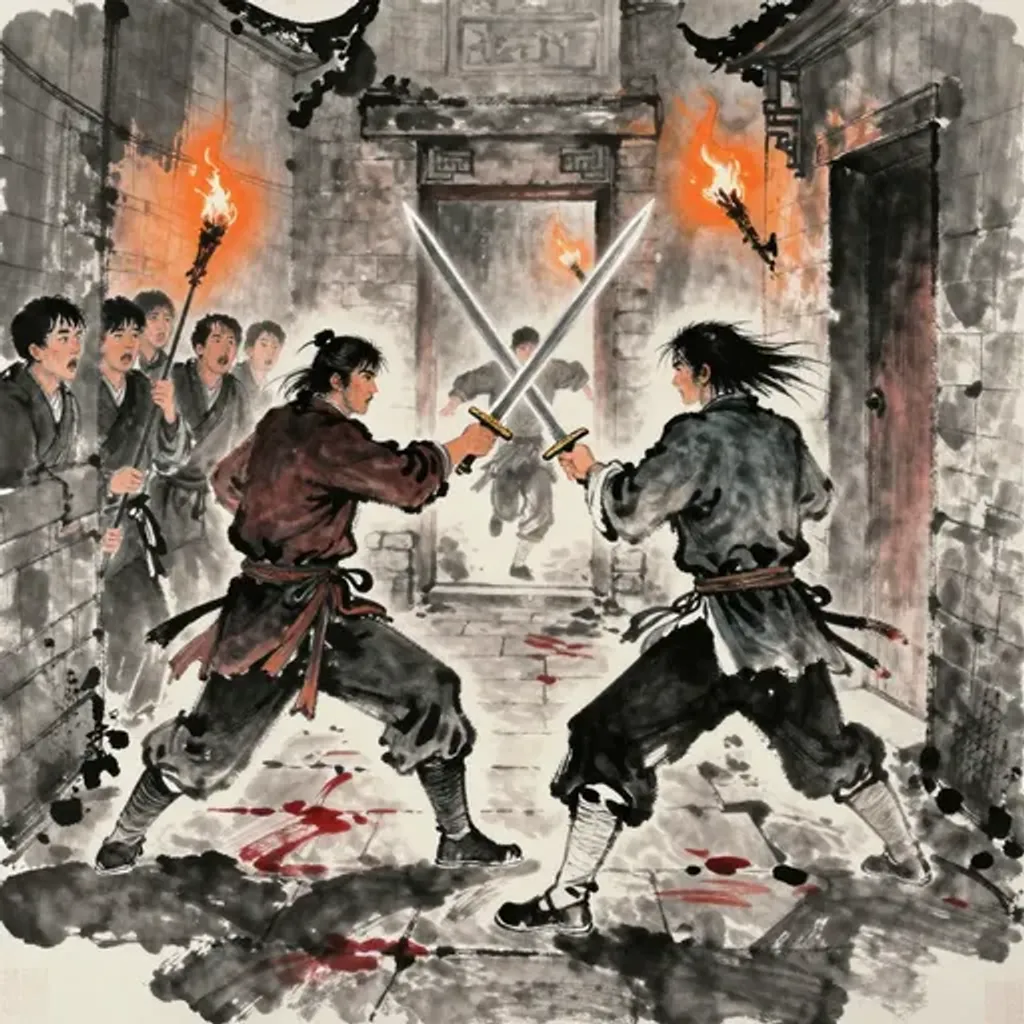
爭訟不已,更相擊劍。張季弱口,被髮北走。
Litigation without end, striking each other with swords. Zhang Ji, weak of mouth, flees with hair unbound to the north.
— Jiao Yanshou, Yilin (Forest of Changes), 1st century BC
Commentary
Heaven and water oppose, and conflict escalates beyond words to weapons. Lawsuits rage without end; disputants draw swords against each other. One party, weak of mouth and outmatched in argument, flees northward with hair disheveled — the image of total rout and social humiliation. From Conflict to Decrease, the mountain rises above the lake, drawing energy upward while the base is diminished. Sun's counsel is to restrain anger and suppress desire. The verse shows what happens when this restraint is absent: litigation becomes combat, rhetoric becomes violence, and the loser flees stripped of dignity. Decrease insists that the only way to halt escalation is voluntary self-reduction — curbing one's own aggression before the swords come out.
訟 → 益
Hexagram 6 → Hexagram 42: Increase
Changing lines: 1, 2, 4
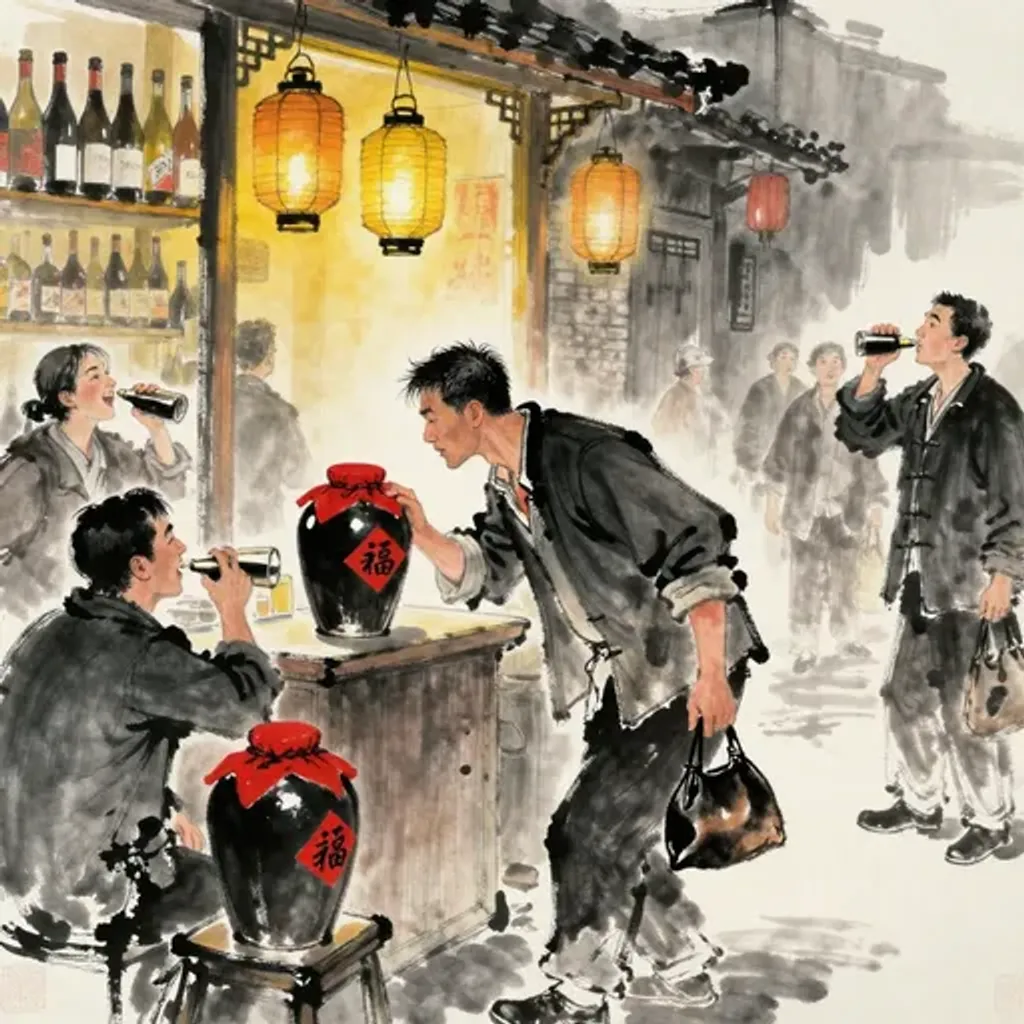
延頸望酒,不入我口。初喜後否,得利無有。
Craning the neck, gazing at wine; it does not enter my mouth. First joy, then denial; profit is not to be had.
— Jiao Yanshou, Yilin (Forest of Changes), 1st century BC
Commentary
Heaven and water oppose, and anticipation curdles into disappointment. One cranes the neck toward wine, but it never reaches the lips. Initial joy turns to denial; no profit comes. The gap between expectation and reality is the essence of Conflict — two forces pulling in opposite directions, promise and fulfillment diverging. From Conflict to Increase, wind and thunder move together in mutual reinforcement. Yi's image is seeing good and following it, having faults and correcting them. Yet the verse captures the moment before Increase can take hold: the wine tantalizingly near but never tasted. The transformation warns that Increase demands active self-correction — merely stretching toward reward without changing course yields nothing.
訟 → 夬
Hexagram 6 → Hexagram 43: Breakthrough
Changing lines: 1, 3, 6
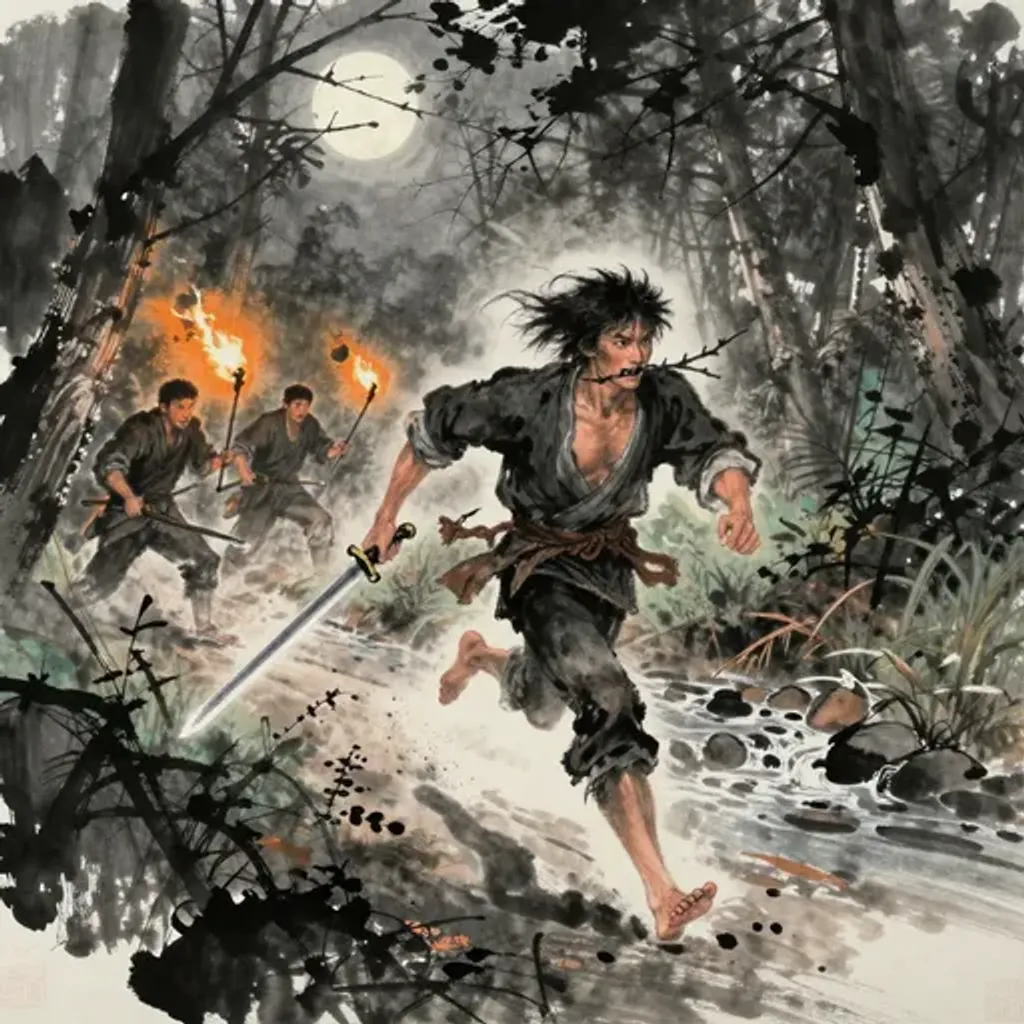
被髮傾走,寇逐我後。亡失刀兵,身全不傷。
Hair unbound, fleeing headlong; bandits chase behind. Losing my weapons; body whole, unharmed.
— Jiao Yanshou, Yilin (Forest of Changes), 1st century BC
Commentary
Heaven and water oppose, and someone runs for their life with hair streaming loose — bandits close behind. Yet the pursued one drops all weapons and escapes unscathed. The paradox is precise: by losing the instruments of conflict, the body is preserved. From Conflict to Breakthrough, the lake rises above heaven, accumulated pressure about to burst. Guai is decisive resolution — the final yang line breaking through the single yin. The verse twists this: the breakthrough here is not confrontation but radical disarmament. The fugitive survives not by fighting through but by shedding every means of resistance. Sometimes the most decisive act is to abandon the contest entirely and let survival itself be the victory.
訟 → 姤
Hexagram 6 → Hexagram 44: Coming to Meet
Changing lines: 3
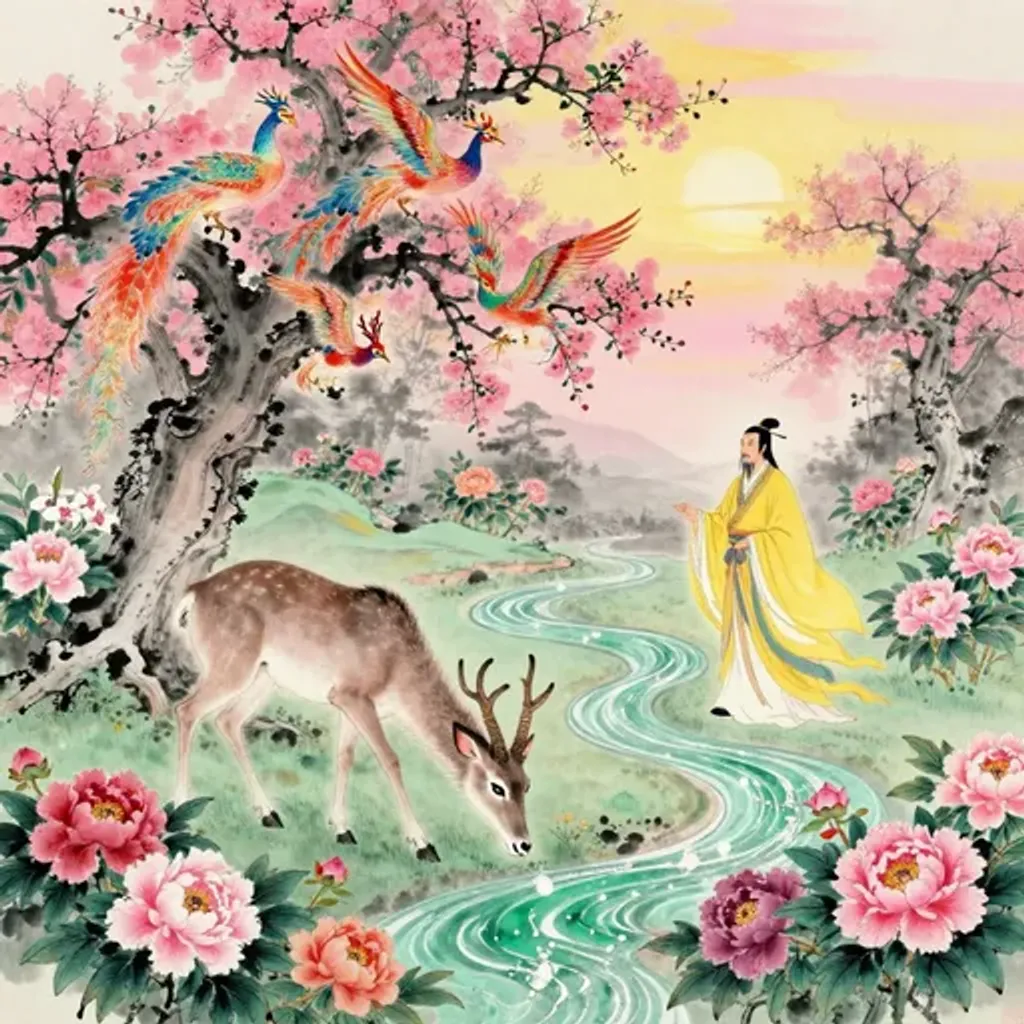
麟鳳所遊,安樂無憂。君子撫民,世代千秋。
Where the qilin and phoenix roam; peace and joy, no worry. The noble lord tends his people; for generations, a thousand autumns.
— Jiao Yanshou, Yilin (Forest of Changes), 1st century BC
Commentary
Heaven and water oppose, but the qilin and phoenix roam freely — the two supreme auspicious creatures of Chinese cosmology, whose appearance heralds sage governance and cosmic peace. The sovereign cherishes the people; the dynasty endures a thousand autumns. From Conflict to Coming to Meet, heaven opens beneath the wind, and the ruler issues proclamations to the four directions. Gou's image is the encounter between dark and light — the single yin rising to meet the five yangs. The verse captures the ideal version of this encounter: benevolent authority meeting a responsive world. When the sovereign's virtue is genuine, even the rarest creatures of heaven appear, and conflict dissolves into millennial harmony.
訟 → 萃
Hexagram 6 → Hexagram 45: Gathering Together
Changing lines: 2, 6
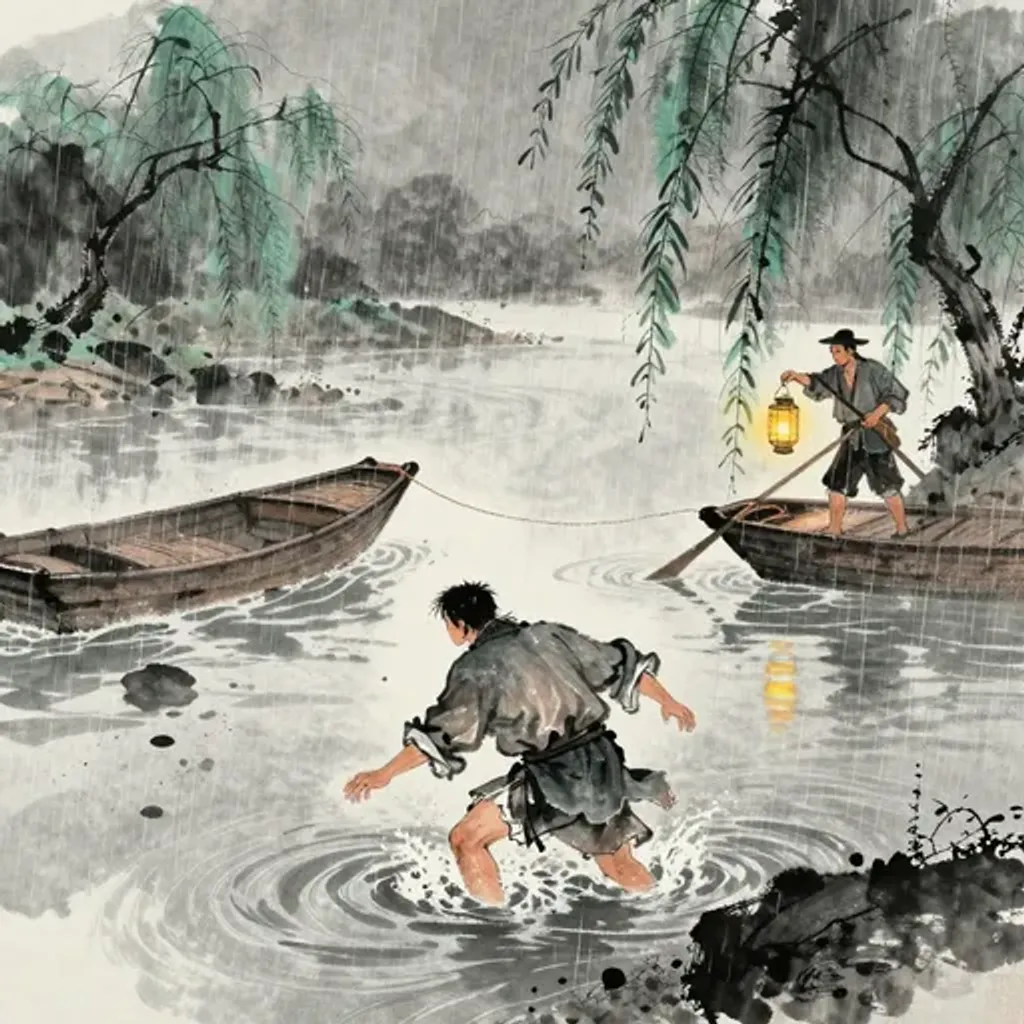
褰衣涉河,水深漬罷。賴幸舟子,濟脫無他。
Lifting robes to cross the river, the water deep, soaking and exhausting. Fortunately the boatman comes; rescued and delivered, no harm done.
— Jiao Yanshou, Yilin (Forest of Changes), 1st century BC
Commentary
Heaven and water oppose, and a traveler lifts his robes to ford a river — but the water is deep, and exhaustion sets in. Fortunately a boatman appears, ferrying the traveler safely across without further harm. The verse is a parable of timely assistance: conflict plunges one into danger, but the right helper at the right moment transforms peril into safe passage. From Conflict to Gathering, the lake rises above the earth, and people converge. Cui's image is communal assembly under prepared leadership — the ruler who readies weapons and guards against the unexpected. The boatman is the human face of Gathering: collective capacity rescuing individual helplessness.
訟 → 升
Hexagram 6 → Hexagram 46: Pushing Upward
Changing lines: 3, 4, 5, 6
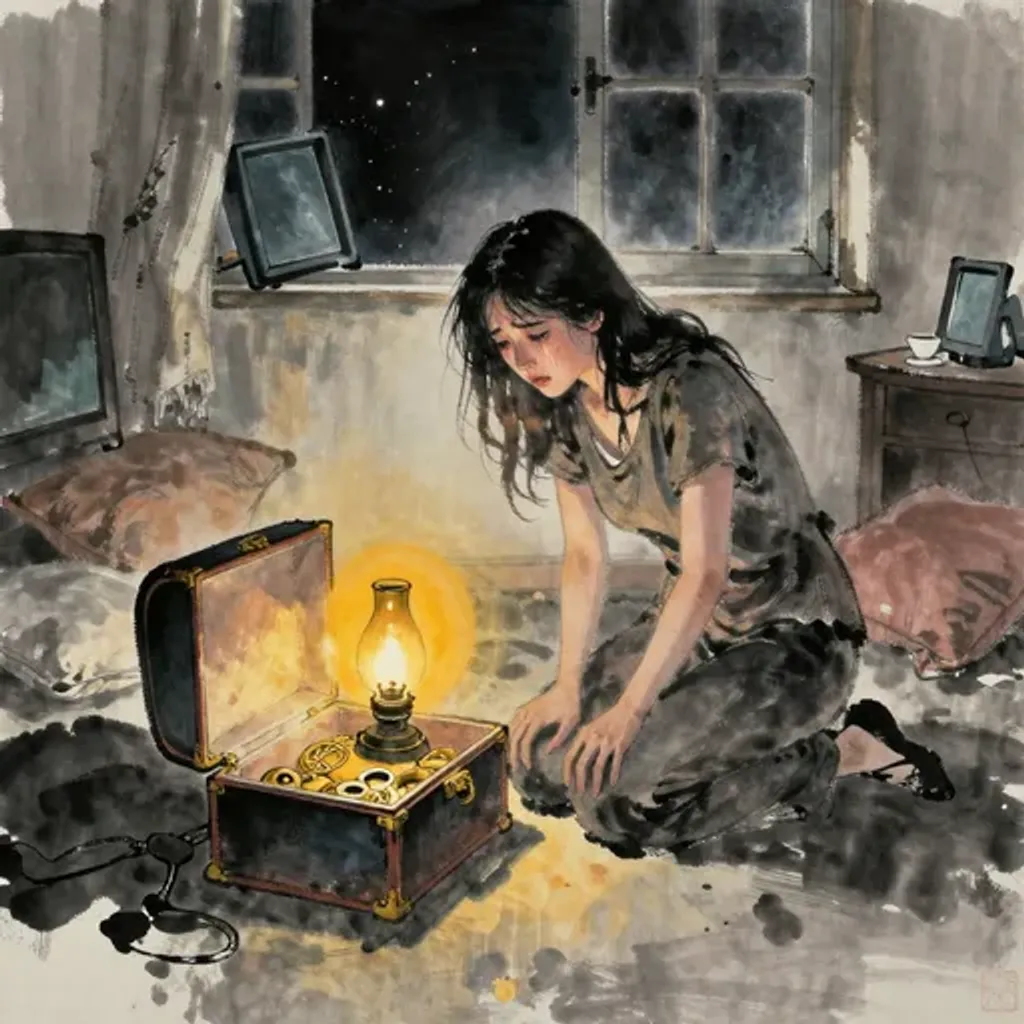
憒憒不悅,憂從中出。喪我金罌,無妄失位。
Confused and displeased; worry springs from within. Losing my golden jar; displaced from my rightful position.
— Jiao Yanshou, Yilin (Forest of Changes), 1st century BC
Commentary
Heaven and water oppose, and inner turmoil erupts. Confusion and displeasure; worry wells up from within. A golden vessel is lost, and without reason one's position is forfeit. The imagery mirrors the earlier verse 6-26 — domestic anxiety, treasured things slipping away — but here the loss extends to status itself. From Conflict to Pushing Upward, wood grows within the earth, rising gradually. Sheng counsels patient, incremental growth. Yet the verse describes the opposite: sudden loss, groundless displacement. The transformation implies that what was lost was never properly rooted. Pushing Upward works only when growth is organic and disciplined; without that foundation, even golden vessels cannot be held.
訟 → 困
Hexagram 6 → Hexagram 47: Oppression
Changing lines: 6
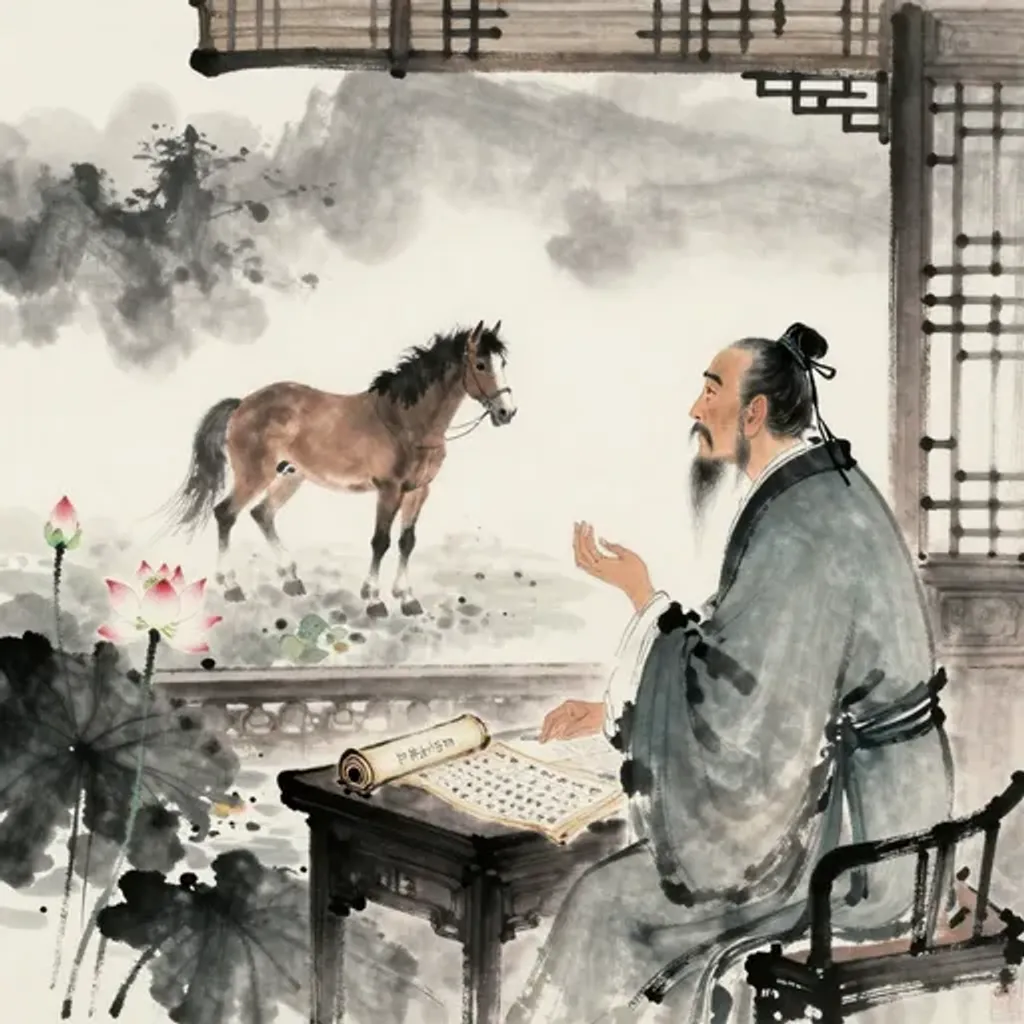
絆跳不遠,心與言反。尼父望家,萏菡未華。
Hobbled, unable to leap far; the heart contradicts the words. Master Ni gazes homeward; the lotus bud has not yet bloomed.
— Jiao Yanshou, Yilin (Forest of Changes), 1st century BC
Commentary
Heaven and water oppose, and a tethered horse cannot leap far — the heart says one thing, the mouth another. Confucius gazes toward home, but the lotus buds have not yet bloomed. The 'tethered horse' captures Conflict's essence: bound by circumstance, unable to act on desire. Father Ni's homeward gaze recalls his years of wandering between states, never finding a ruler willing to implement his Way. The unblossomed lotus is promise unfulfilled. From Conflict to Oppression, the lake drains its water — a well without sustenance. Kun is exhaustion and constraint, yet its counsel is 'to fulfill one's fate and realize one's will.' The sage perseveres even when the lotus refuses to open.
訟 → 井
Hexagram 6 → Hexagram 48: The Well
Changing lines: 3, 4, 6
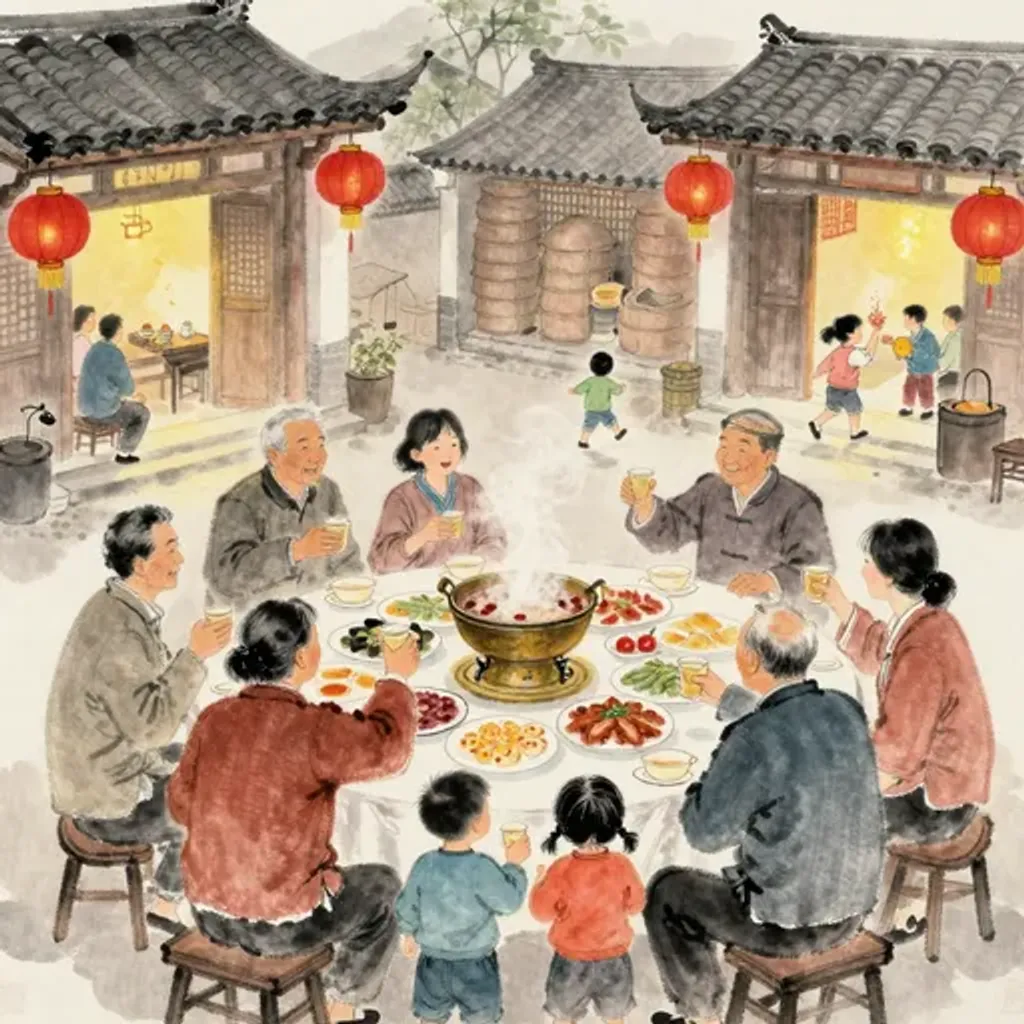
大壯肥㹀,惠我諸舅。內外和睦,不憂飢渴。
A great, sturdy, fattened cow; a gift to all my uncles. Inside and out in harmony; no worry of hunger or thirst.
— Jiao Yanshou, Yilin (Forest of Changes), 1st century BC
Commentary
Heaven and water oppose, but a great, fattened cow is shared as a gift with the maternal uncles. Inner and outer families are harmonious; no one suffers hunger or thirst. The cow embodies abundance freely distributed through kinship bonds — not traded but given, cementing the ties between households. From Conflict to The Well, water is drawn up through wood, nourishing all who come. Jing's image is the communal well that never runs dry and never moves — a fixed source of sustenance available to everyone. The fattened cow and the inexhaustible well share the same logic: generosity that creates security, kinship that eliminates want. Conflict dissolves when nourishment flows freely through established bonds.
訟 → 革
Hexagram 6 → Hexagram 49: Revolution
Changing lines: 1, 2, 3, 6
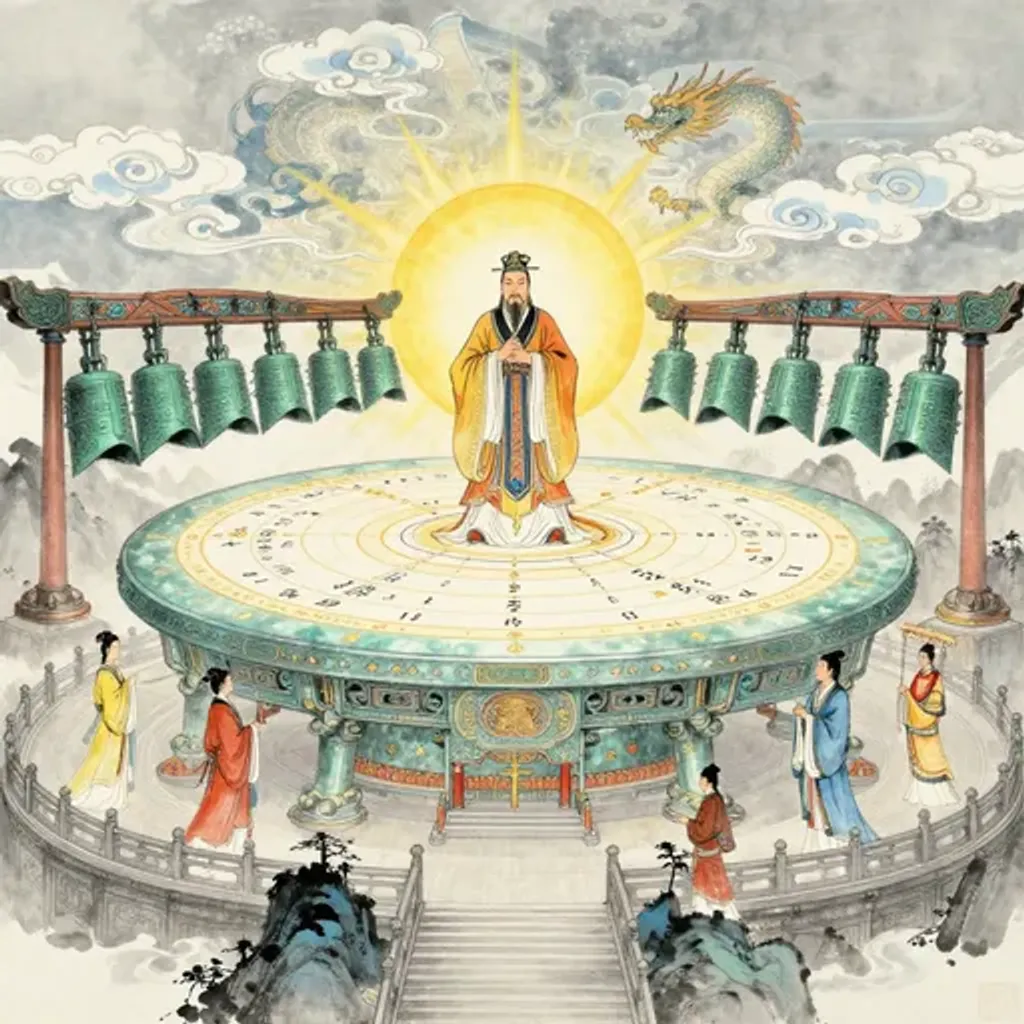
黃帝建元,文德在身。祿若陽春,封為魯君。
The Yellow Emperor establishes the era; civil virtue is upon him. His bounty is like spring sun; enfeoffed as lord of Lu.
— Jiao Yanshou, Yilin (Forest of Changes), 1st century BC
Commentary
Heaven and water oppose, but here the Yellow Emperor establishes the first calendar, his person imbued with civil virtue. Blessings flow like spring sunlight, and the recipient is enfeoffed as Lord of Lu. The Yellow Emperor's calendar marks the ordering of time itself — the most fundamental act of civilization, imposing rhythm on chaos. The investiture as Lord of Lu evokes the Duke of Zhou, who was enfeoffed at Lu and whose descendants preserved Zhou ritual for centuries. From Conflict to Revolution, fire burns within the lake, the image of the ruler who reforms the calendar and clarifies the seasons. Ge is transformation through legitimate reordering. The verse matches it: when a sage-king establishes true measurement of time, all disorder yields to the new order.
訟 → 鼎
Hexagram 6 → Hexagram 50: The Cauldron
Changing lines: 3, 5
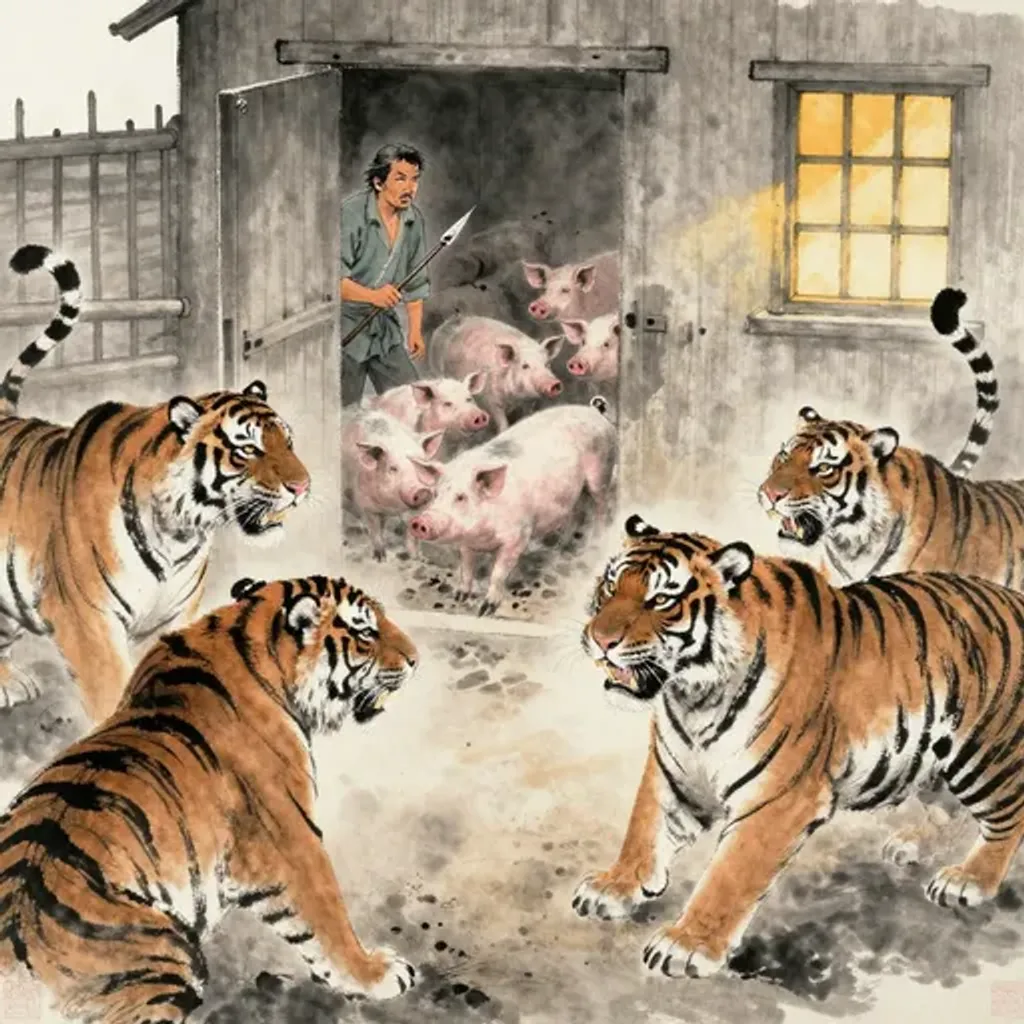
虎聚摩牙,人待豚豬。往必傷亡,宜利止居。
Tigers gather, grinding their teeth; men wait like pigs. Going forth means certain death; better to stay and hold still.
— Jiao Yanshou, Yilin (Forest of Changes), 1st century BC
Commentary
Heaven and water oppose, and tigers gather, grinding their fangs — while humans wait with pigs and swine, the bait or the offering. To go forward is certain injury; better to stay put. The verse is a stark warning: the predators are assembling, and what appears to be an opportunity is a trap. From Conflict to The Cauldron, fire blazes above wood, refining and transforming. The Cauldron's image is civilization's highest achievement — cooking raw materials into nourishment, transforming base into refined. Yet the verse inverts this: the humans with their livestock are not the cooks but the cooked, not the refiners but the raw material. When tigers rule the field, approaching the Cauldron means becoming its contents.
訟 → 震
Hexagram 6 → Hexagram 51: The Arousing Thunder
Changing lines: 1, 2, 5, 6
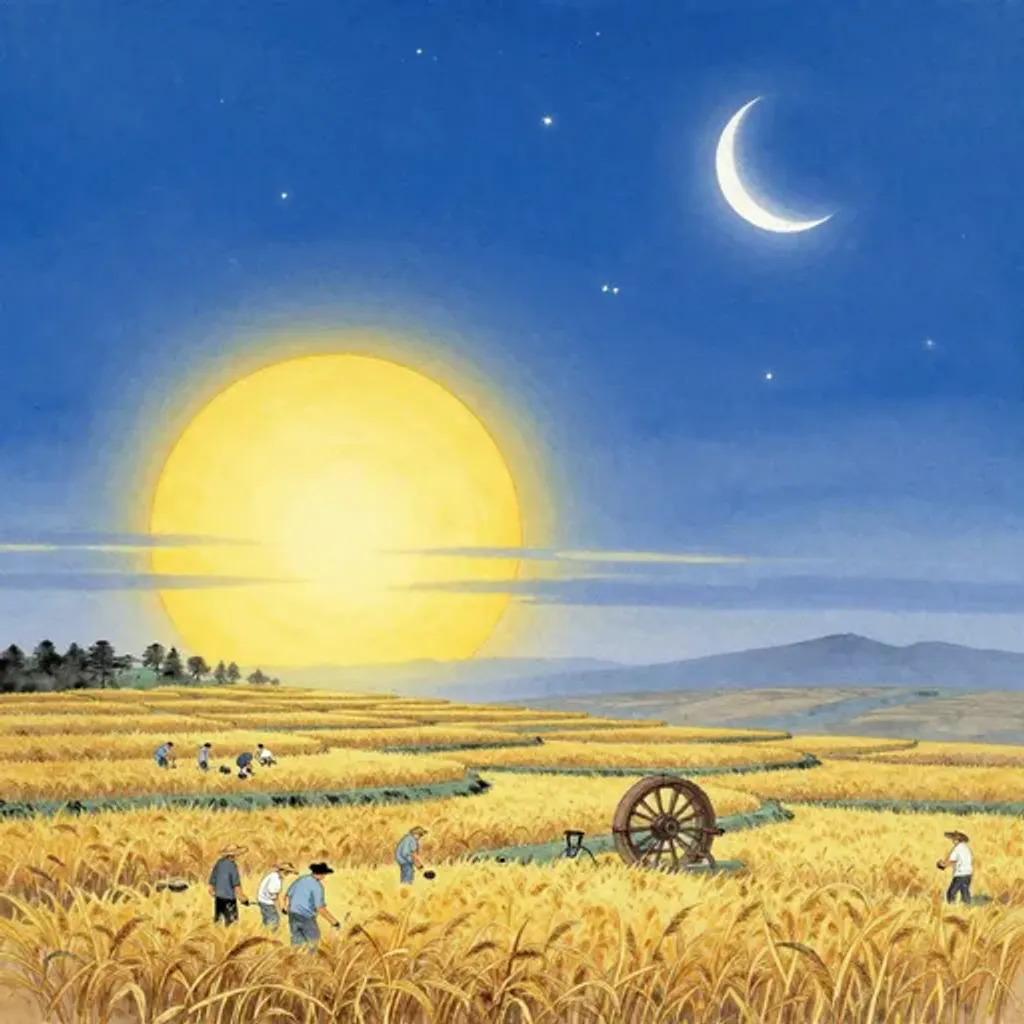
天地配享,六位光明。陰陽順序,以成和平。
Sun and moon shine together across the eight directions; stars keep their stations without interference. The four seasons turn like a wheel — fair winds and timely rain fill every granary.
— Jiao Yanshou, Yilin (Forest of Changes), 1st century BC
Commentary
Heaven and water oppose, yet here the cosmos aligns in perfect harmony. Heaven and earth partake of shared offerings; the six positions shine with light. Yin and yang follow their proper sequence, achieving peace and equilibrium. This verse uses the original text, as the modern rewrite replaces its cosmological depth with a simplified image. From Conflict to The Arousing, doubled thunder shakes the world — yet when thunder comes in its proper season, it is not destruction but renewal. The verse captures the Arousing's ideal: cosmic forces that might clash instead calibrate into rhythm. When each of the six positions — the lines of the hexagram — radiates its proper light, the thunder that follows is not conflict but the sound of a universe in order.
訟 → 艮
Hexagram 6 → Hexagram 52: Keeping Still Mountain
Changing lines: 2, 3, 4, 5
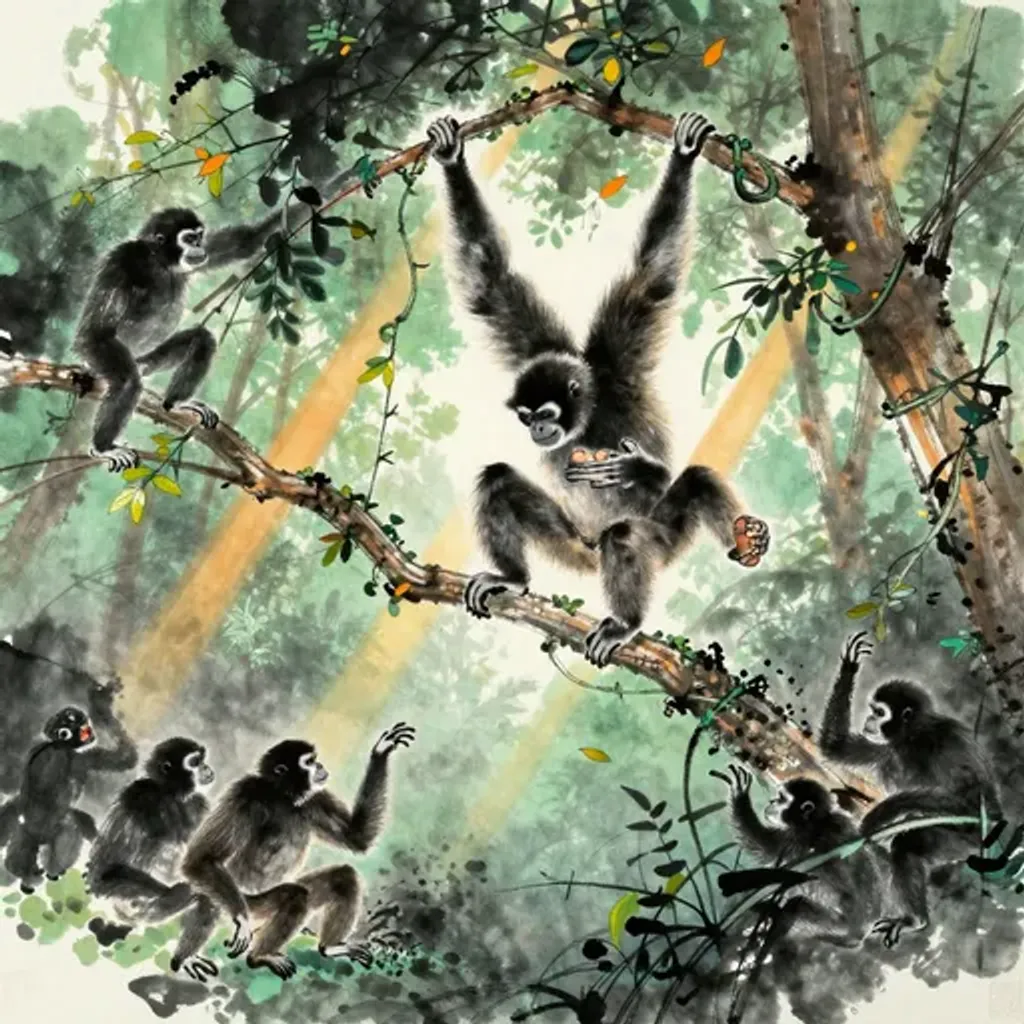
猿墜高木,不踒手足。保我金玉,還歸其室。
The ape falls from the tall tree, not breaking hand or foot. Keeping safe my gold and jade; returning to its home.
— Jiao Yanshou, Yilin (Forest of Changes), 1st century BC
Commentary
Heaven and water oppose, yet the ape that falls from a tall tree does not break a hand or foot. It keeps its gold and jade intact and returns safely to its den. The ape's skill is precisely adapted to its environment: even in a fall from great height, its body knows how to absorb the impact. From Conflict to Keeping Still, the doubled mountain stands firm — 'the noble one thinks without going beyond his position.' The verse captures Gen's wisdom through the ape: one who knows one's own terrain intimately can survive even a sudden plunge. The ape does not fight the fall but folds into it, preserving what matters. Stillness here is not passivity but practiced physical intelligence.
訟 → 漸
Hexagram 6 → Hexagram 53: Development
Changing lines: 2, 3, 4
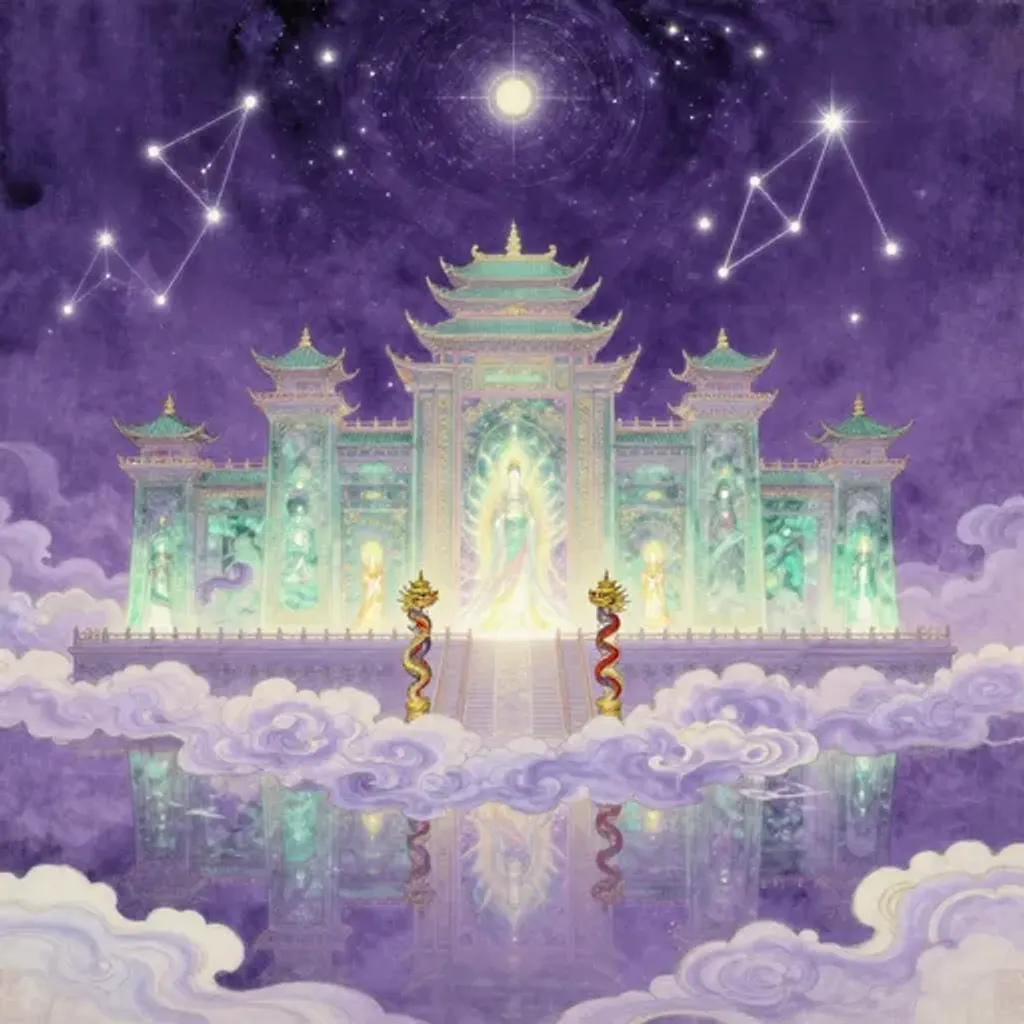
營室紫宮,堅不可攻。明神建德,君受大福。
The Yingshi Purple Palace; firm and impregnable. Bright spirits establish virtue; the lord receives great fortune.
— Jiao Yanshou, Yilin (Forest of Changes), 1st century BC
Commentary
Heaven and water oppose, but the celestial palaces — Yingshi and the Purple Palace — stand impregnable. The bright spirits establish virtue, and the ruler receives great blessings. Yingshi (營室, Pegasus) is the lunar mansion associated with palace construction and the foundation of cities. The Purple Palace (紫宮) is the Ziwei stellar enclosure surrounding the celestial pole — the emperor's cosmic residence, around which all stars revolve. From Conflict to Development, wind blows through trees on the mountain, growing gradually. Jian's image is slow, organic progress — the wild goose advancing by stages. The impregnable palace was not built in a day; its strength is the accumulation of virtue over time, each brick laid in proper sequence.
訟 → 歸妹
Hexagram 6 → Hexagram 54: The Marrying Maiden
Changing lines: 1, 5, 6
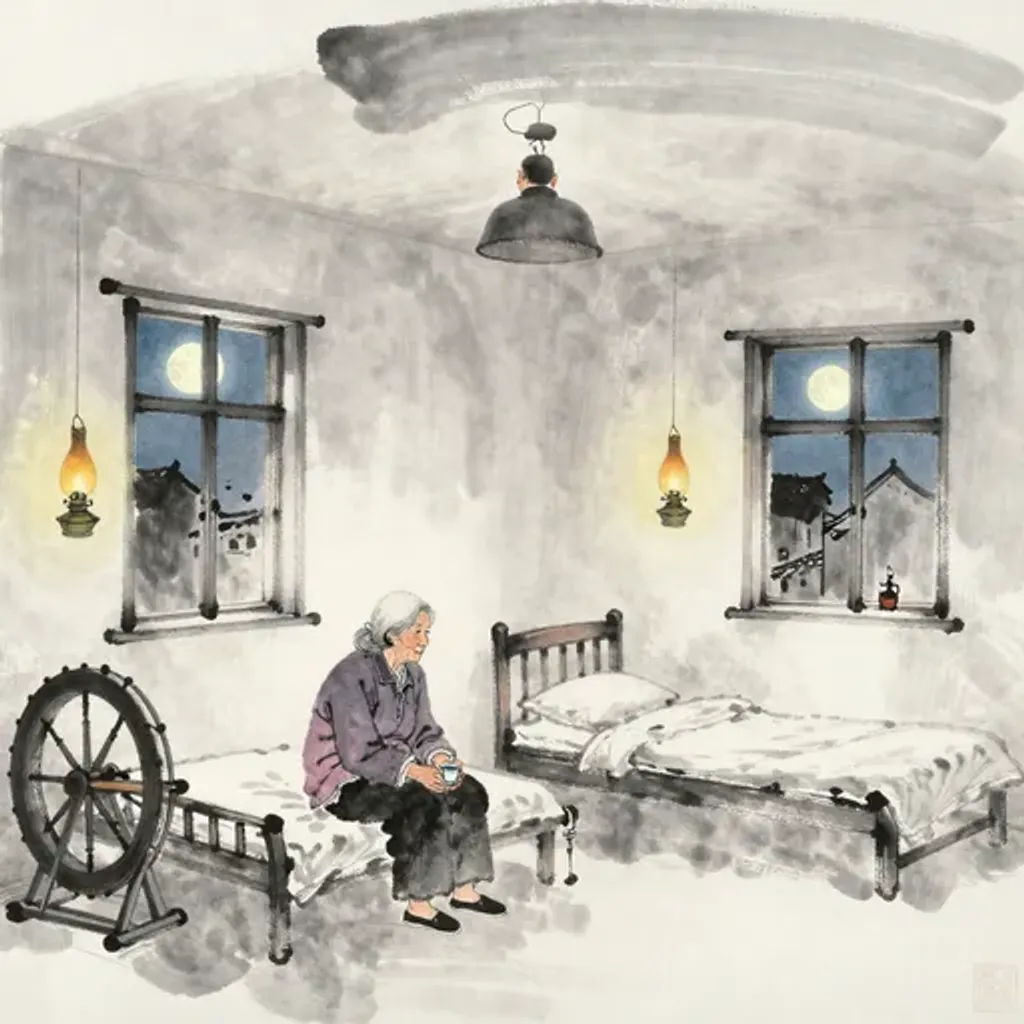
孤翁寡婦,獨宿悲苦。目張耳鳴,無與笑語。
The lone old man and the widow, sleeping alone in bitter sorrow. Eyes staring, ears ringing; with no one to speak to or laugh with.
— Jiao Yanshou, Yilin (Forest of Changes), 1st century BC
Commentary
Heaven and water oppose, and loneliness fills the space between. An old widower and a widow sleep alone in bitter solitude. Eyes stare wide, ears ring with phantom sounds — no one to share a laugh or a word. The verse strips conflict down to its most desolate outcome: not dramatic confrontation but the quiet devastation of being utterly without companionship. From Conflict to the Marrying Maiden, thunder stirs above the lake — the youngest daughter given in marriage. Guimei is the hexagram of imperfect unions and compromised arrangements. The cruel irony is that this lonely pair might have eased each other's suffering, but the transformation's mechanism — the sudden, irreversible commitment of marriage — finds no willing parties here.
訟 → 豐
Hexagram 6 → Hexagram 55: Abundance
Changing lines: 1, 2, 3, 5, 6
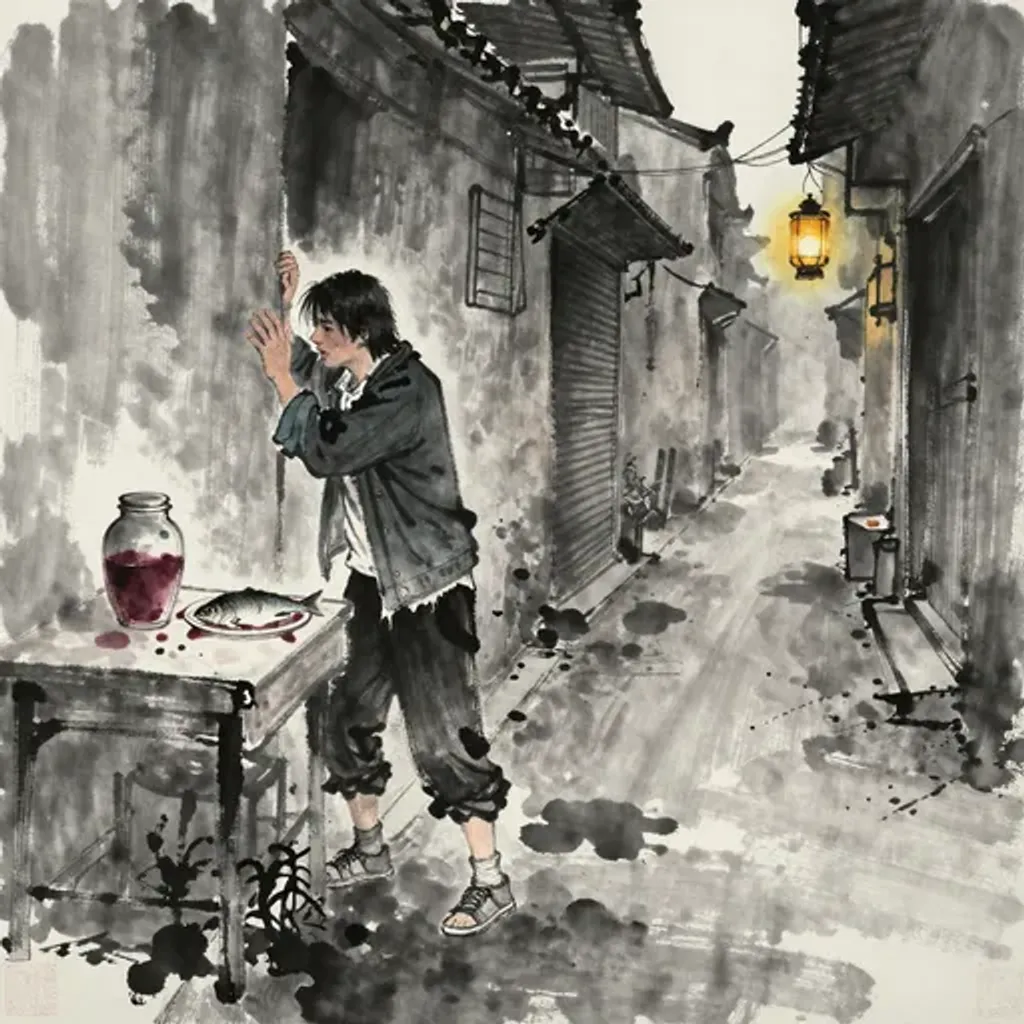
低頭窺視,有所畏避。行者不利,酒酸魚敗,眾莫貪嗜。
Lowering the head, peering furtively; there is something to fear and avoid. Travelers find no advantage; the wine has soured and the fish spoiled -- none craves a taste.
— Jiao Yanshou, Yilin (Forest of Changes), 1st century BC
Commentary
Heaven and water oppose, and suspicion pervades. One lowers the head and peers about furtively, sensing danger everywhere. Travelers fare poorly; the wine has soured and the fish rotted — no one partakes. The verse creates an atmosphere of corruption so thorough that even the simplest pleasures turn toxic. From Conflict to Abundance, thunder and lightning arrive simultaneously — the image of judicial clarity at the height of power. Feng's image is the judge who renders verdicts at the zenith. Yet the verse shows abundance gone rancid: what should be a feast of plenty has spoiled. Abundance that has not been administered with discernment ferments into waste. The lightning reveals not glory but decay.
訟 → 旅
Hexagram 6 → Hexagram 56: The Wanderer
Changing lines: 2, 3, 5
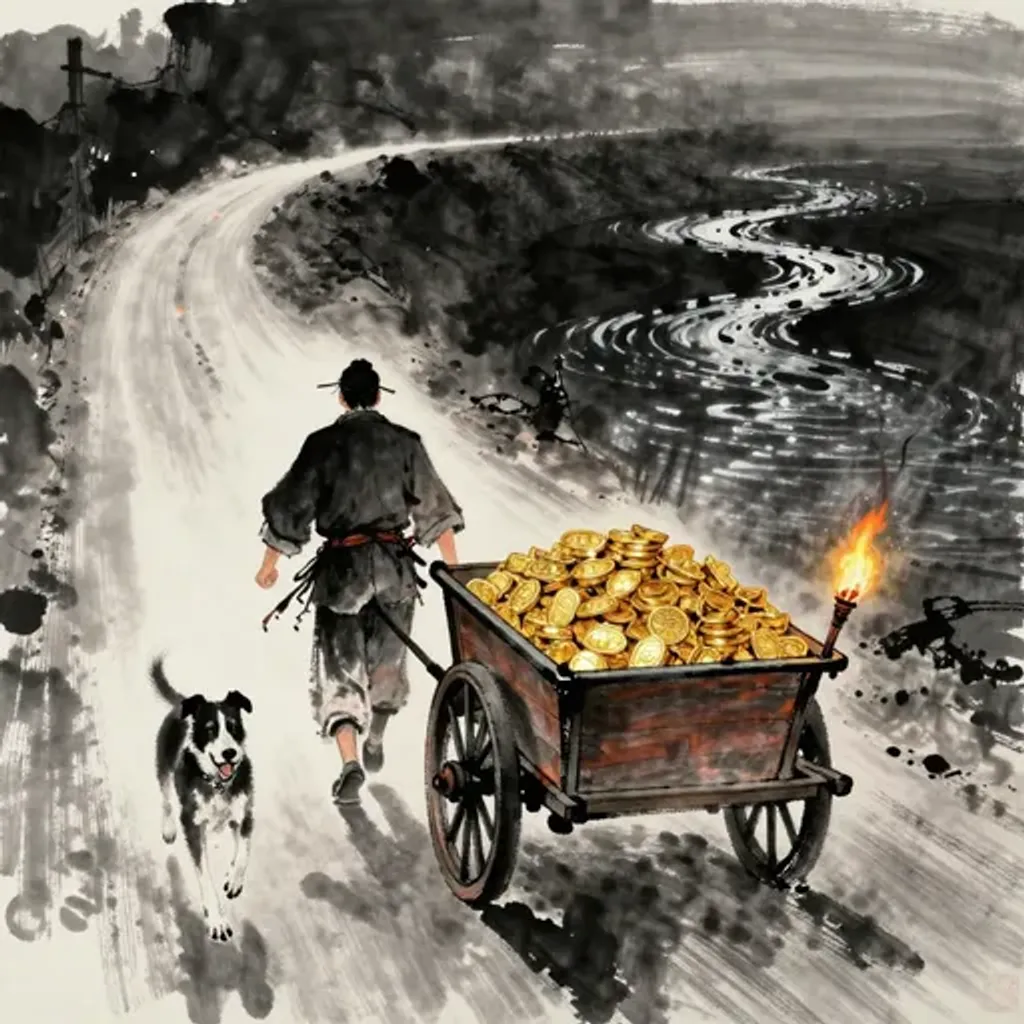
載金販狗,利棄我走。藏匿淵底,悔折為咎。
Carrying gold, peddling dogs; profit makes me flee. Hiding at the bottom of the abyss; regret turns to blame.
— Jiao Yanshou, Yilin (Forest of Changes), 1st century BC
Commentary
Heaven and water oppose, and a merchant loaded with gold peddles dogs — a grotesque mismatch of value and commodity that profits nothing. Abandoning the venture, the trader flees. What was hidden in the depths now surfaces as regret, compounding into blame. From Conflict to The Wanderer, fire clings to the mountaintop — the transient traveler who must be cautious and never overstay. Lu's image is the stranger in a strange land, where survival depends on clear judgment and quick departure. The verse captures a merchant-wanderer who misread the market, overcommitted, and must now cut losses and run. The gold hidden in the abyss is sunk cost, and clinging to it only deepens the fault.
訟 → 巽
Hexagram 6 → Hexagram 57: The Gentle Wind
Changing lines: 3, 4
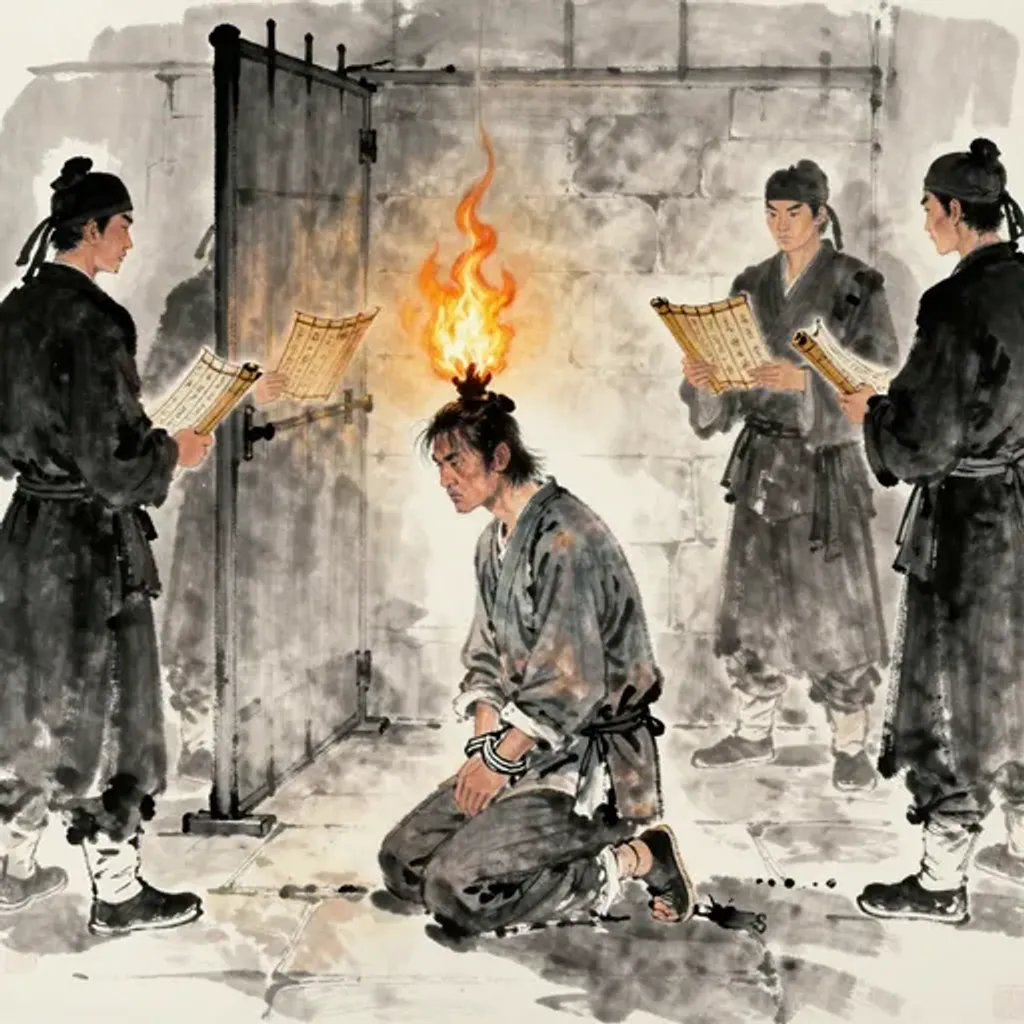
行觸大忌,與司命牾,執囚束縛,拘制於吏。
Actions violate a great taboo; offending the Arbiter of Fate. Seized, bound, and imprisoned; restrained by officials.
— Jiao Yanshou, Yilin (Forest of Changes), 1st century BC
Commentary
Heaven and water oppose, and someone blunders into a great prohibition. Offending the Director of Fate — the celestial official who governs human lifespan — the transgressor is seized, bound, and detained by the authorities. The Director of Fate (司命) controls the registry of life and death; to cross this power is to violate the cosmic order itself. From Conflict to The Gentle, doubled wind penetrates everywhere, carrying the sovereign's commands into the smallest corners. Xun's image is orders repeated and pervasive — inescapable authority. The verse captures this perfectly: once you have offended the wrong power, the gentle wind of law finds you everywhere. There is no corner deep enough to hide from institutional reach.
訟 → 兌
Hexagram 6 → Hexagram 58: The Joyous Lake
Changing lines: 1, 6
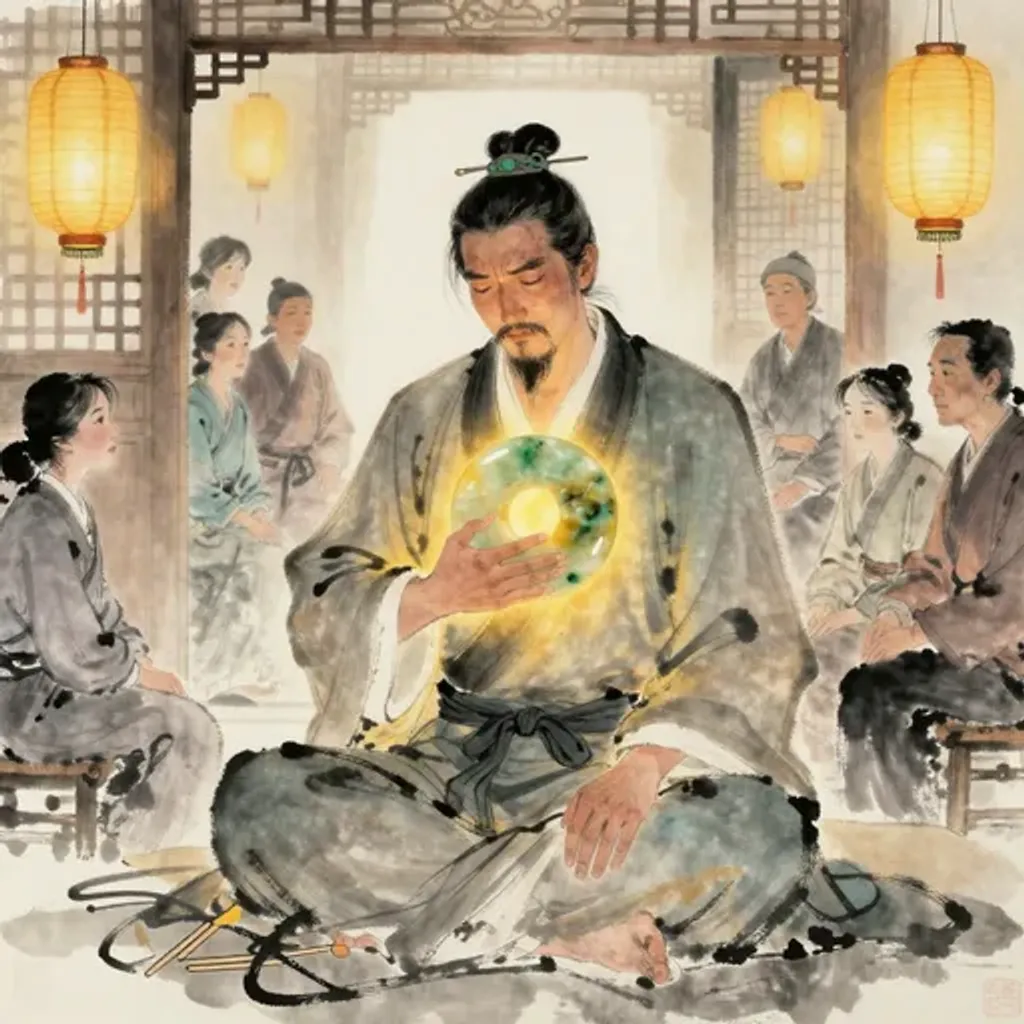
執玉歡喜,佩之解攣。危詳及安,使我無患。
Holding jade with delight; wearing it cures the cramp. Danger becomes safety; leaving me without affliction.
— Jiao Yanshou, Yilin (Forest of Changes), 1st century BC
Commentary
Heaven and water oppose, yet one grasps jade and rejoices. Wearing it dissolves cramping and pain; peril, examined carefully, becomes safety, and all afflictions are dispelled. Jade in Han-dynasty belief possessed apotropaic and healing powers — it was not ornament but talisman, capable of warding off evil and harmonizing the body's qi. From Conflict to The Joyous, the doubled lake represents open communication and mutual delight. Dui's image is friends studying and discoursing together. The jade does for the body what Dui's openness does for the spirit: it dissolves the contractions caused by conflict and replaces them with free-flowing ease. Joy here is not frivolous but medicinal — the specific antidote to Conflict's rigidity.
訟 → 渙
Hexagram 6 → Hexagram 59: Dispersion
Changing lines: 4
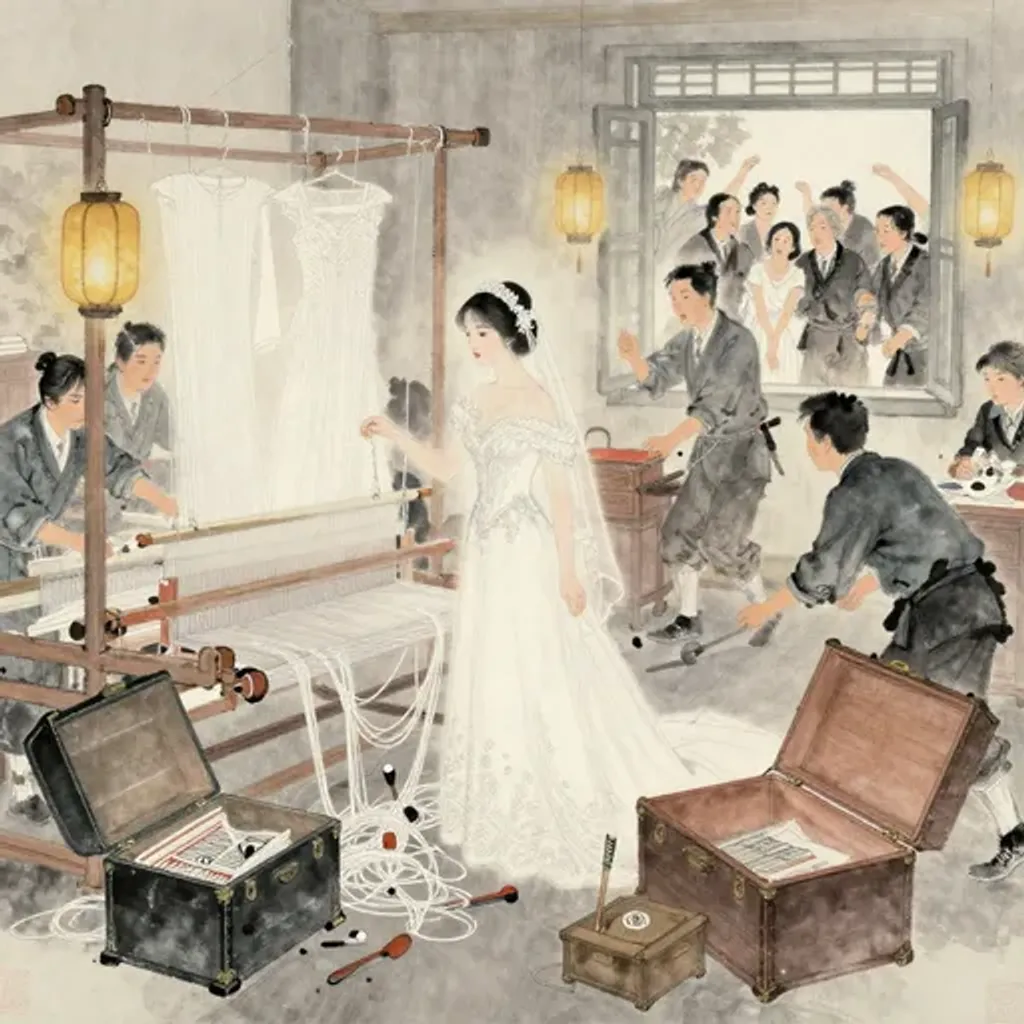
機杼紛擾,女功不成。長妹許嫁,衣無襦袴。聞禍不成,凶惡消去。
Loom and shuttle in disarray; women's work unfinished. The eldest sister is betrothed; her garments lack skirts and trousers. Word of disaster does not come to pass; the evil dissolves.
— Jiao Yanshou, Yilin (Forest of Changes), 1st century BC
Commentary
Heaven and water oppose, and the loom is tangled. The weavers' work fails; the elder sister is betrothed but has no trousers or jacket for her trousseau. Disaster threatens but does not materialize — the evil disperses of its own accord. The verse layers domestic dysfunction upon itself: first the economic failure (ruined weaving), then the social humiliation (a bride without proper garments), then the unexpected reprieve. From Conflict to Dispersion, wind blows across the water, scattering what has accumulated. Huan's image is the ancestral temple sacrifice that reunifies what has been scattered. The verse follows this arc: entanglement, shame, and fear accumulate — then wind over water disperses them. Relief comes not from resolution but from dissolution.
訟 → 節
Hexagram 6 → Hexagram 60: Limitation
Changing lines: 1, 4, 6
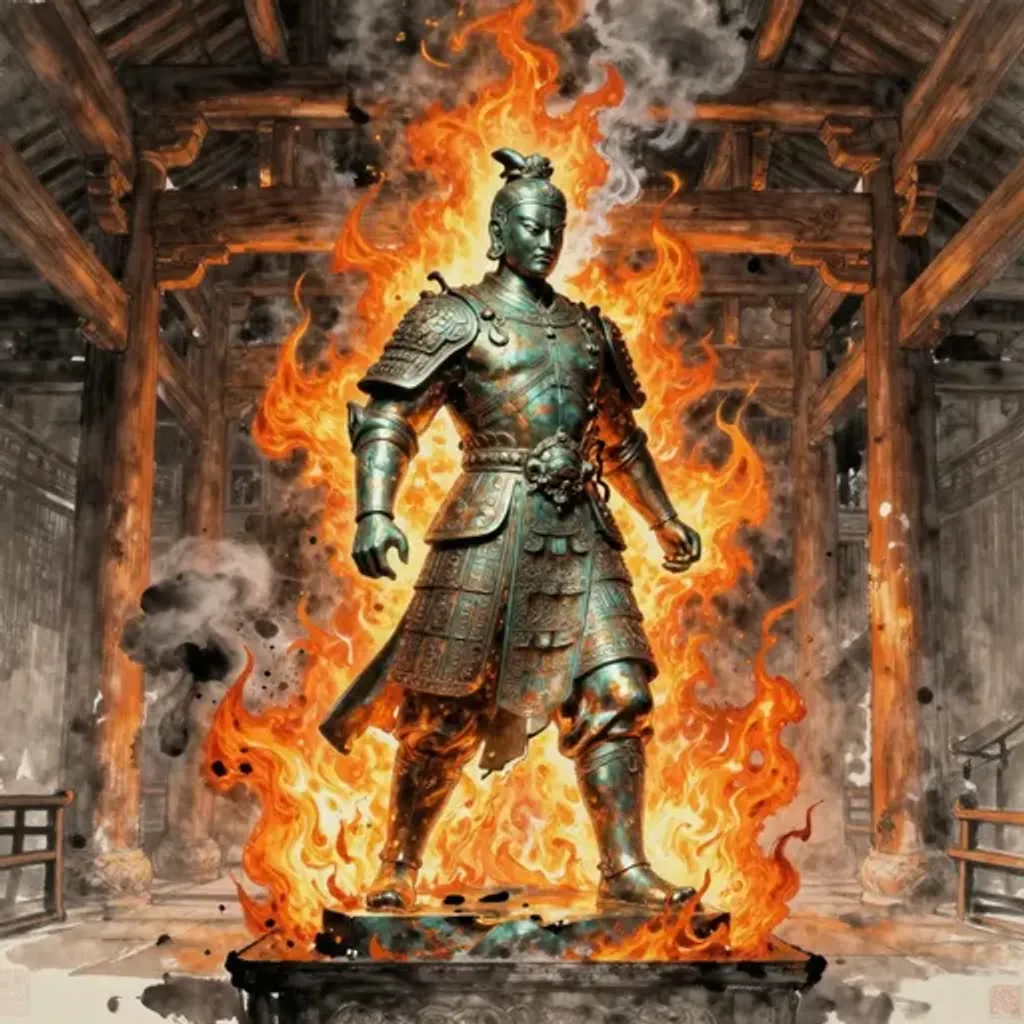
金人鐵距,火燒左右。雖懼不恐,獨得全處。
A man of metal with iron claws; fire burns left and right. Though fearful, not terrified; alone he survives intact.
— Jiao Yanshou, Yilin (Forest of Changes), 1st century BC
Commentary
Heaven and water oppose, and a figure of metal stands on iron talons while fire blazes on both sides. Though fear is natural, panic does not take hold — one remains whole in an intact position. The 'metal person with iron spurs' suggests a bronze guardian or armored sentinel, impervious to flame by nature. From Conflict to Limitation, water rests above the lake, measured and contained. Jie's image is the noble who establishes standards and deliberates on conduct. The verse embodies Limitation's power: within properly set boundaries, even surrounded by fire, one stands unburned. The metal figure does not flee the flames but defines a space where fire cannot enter. Limitation, correctly applied, is its own armor.
訟 → 中孚
Hexagram 6 → Hexagram 61: Inner Truth
Changing lines: 1, 4
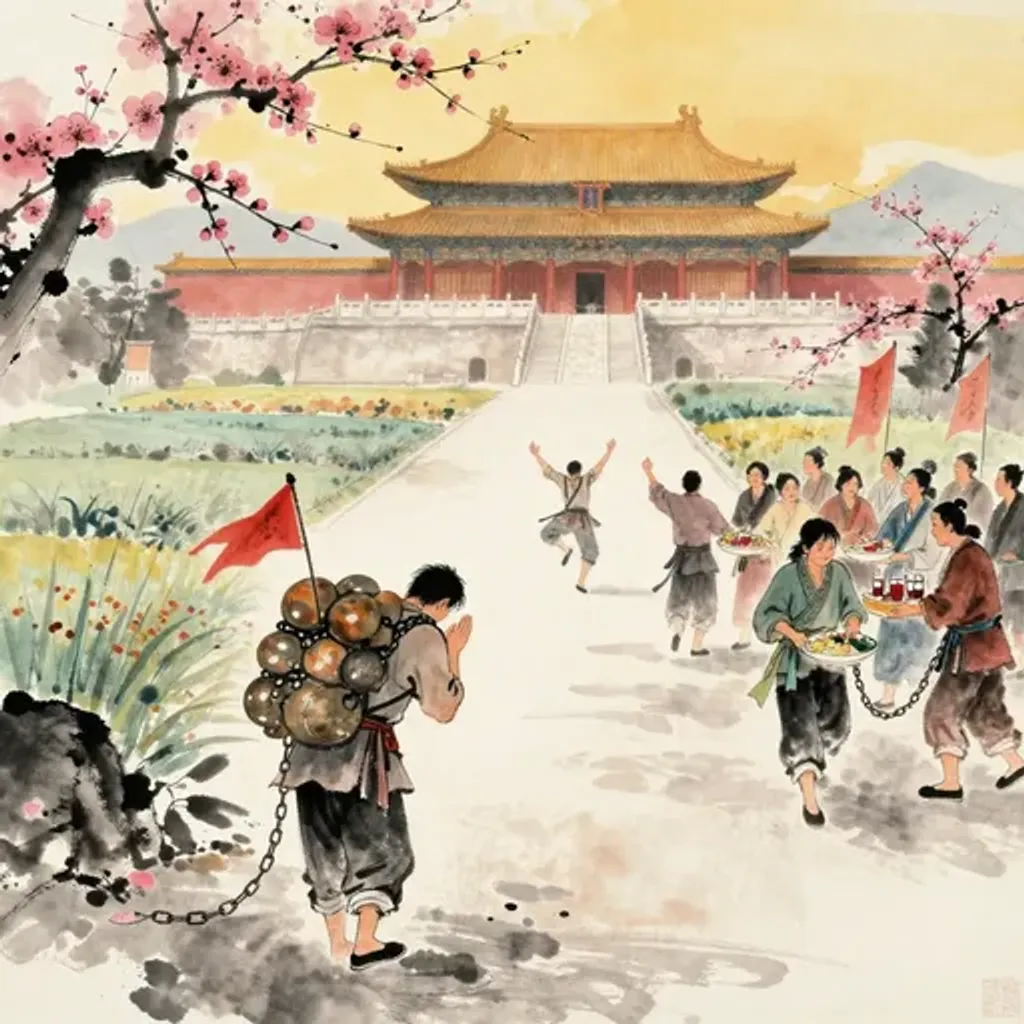
謝恩拜德,東歸吾國。舞蹈欣躍,歡樂受福。
Giving thanks and paying homage; returning east to my homeland. Dancing and leaping with joy; happy and blessed.
— Jiao Yanshou, Yilin (Forest of Changes), 1st century BC
Commentary
Heaven and water oppose, but gratitude and virtue heal the breach. One bows in thanks for grace received and returns eastward to the homeland. Dancing with joy, leaping in exultation, blessings are received with open happiness. The verse captures the moment after conflict ends — not bitter settlement but genuine jubilation. From Conflict to Inner Truth, wind blows over the lake, the image of the hollow-hearted reed that resonates with truth. Zhongfu's power is sincerity so deep it moves even pigs and fish. The verse enacts this: when gratitude is genuine and virtue reciprocated, the returnee dances rather than skulks. Inner Truth transforms departure from conflict into homecoming — not just arriving back, but arriving back transformed.
訟 → 小過
Hexagram 6 → Hexagram 62: Small Exceeding
Changing lines: 2, 3, 5, 6
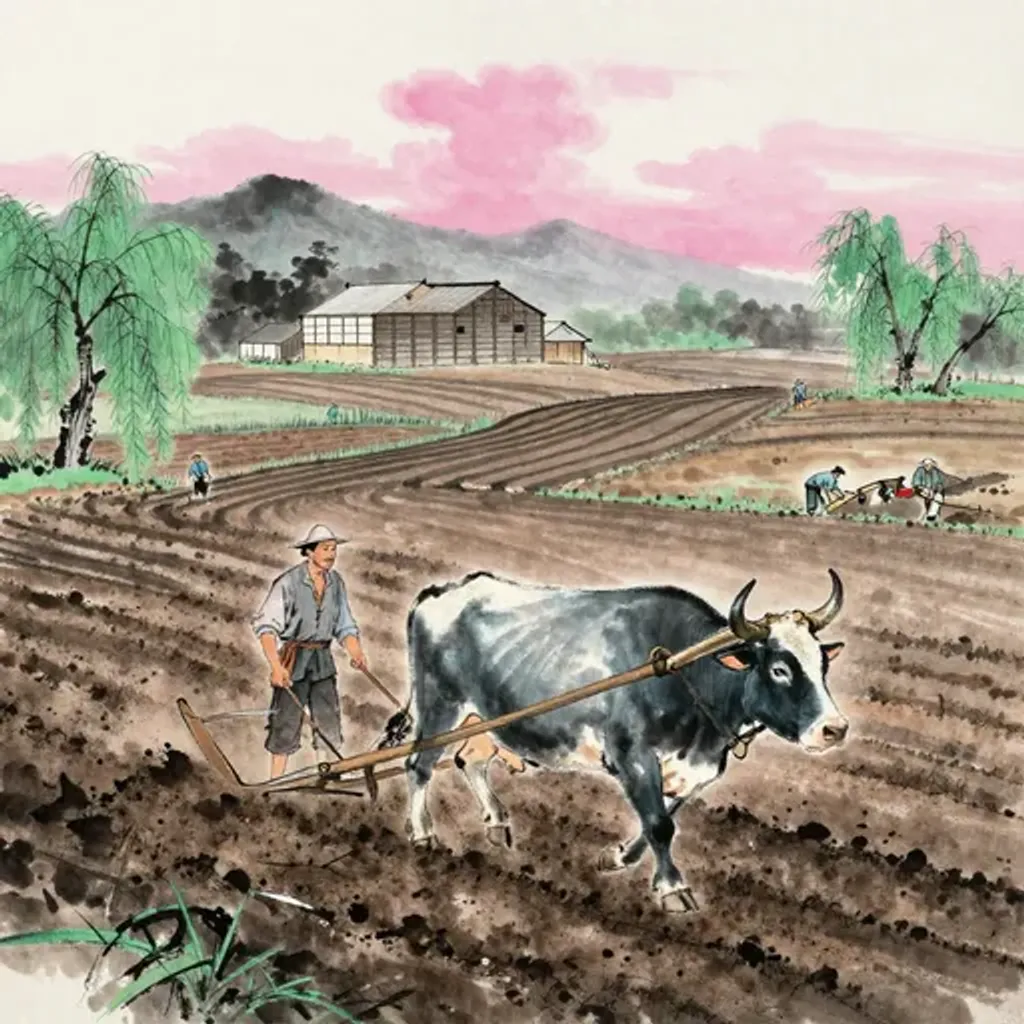
青牛白咽,呼我俱田,歷山之下,可以多耕。歲樂時節,民人安寧。
A blue ox with white throat, calling me to the field together. Below Mount Li, much can be plowed. A joyful season; the people are at peace.
— Jiao Yanshou, Yilin (Forest of Changes), 1st century BC
Commentary
Heaven and water oppose, but the scene opens onto agrarian paradise. A green ox with a white throat calls out, inviting all to the fields below Mount Li — the mountain where Emperor Shun once plowed as a commoner before Yao discovered his virtue. Here the land yields abundant harvests, the seasons bring contentment, and the people dwell in peace. From Conflict to Small Exceeding, thunder atop the mountain — the small bird that flies too high will fall, while the one that stays low succeeds. Small Exceeding counsels modesty in action: exceed in reverence, in grief, in frugality, but not in ambition. The verse captures this perfectly: the deepest prosperity is not imperial grandeur but the simple plenty of well-tended fields beneath a historic mountain.
訟 → 既濟
Hexagram 6 → Hexagram 63: After Completion
Changing lines: 1, 2, 3, 4, 6
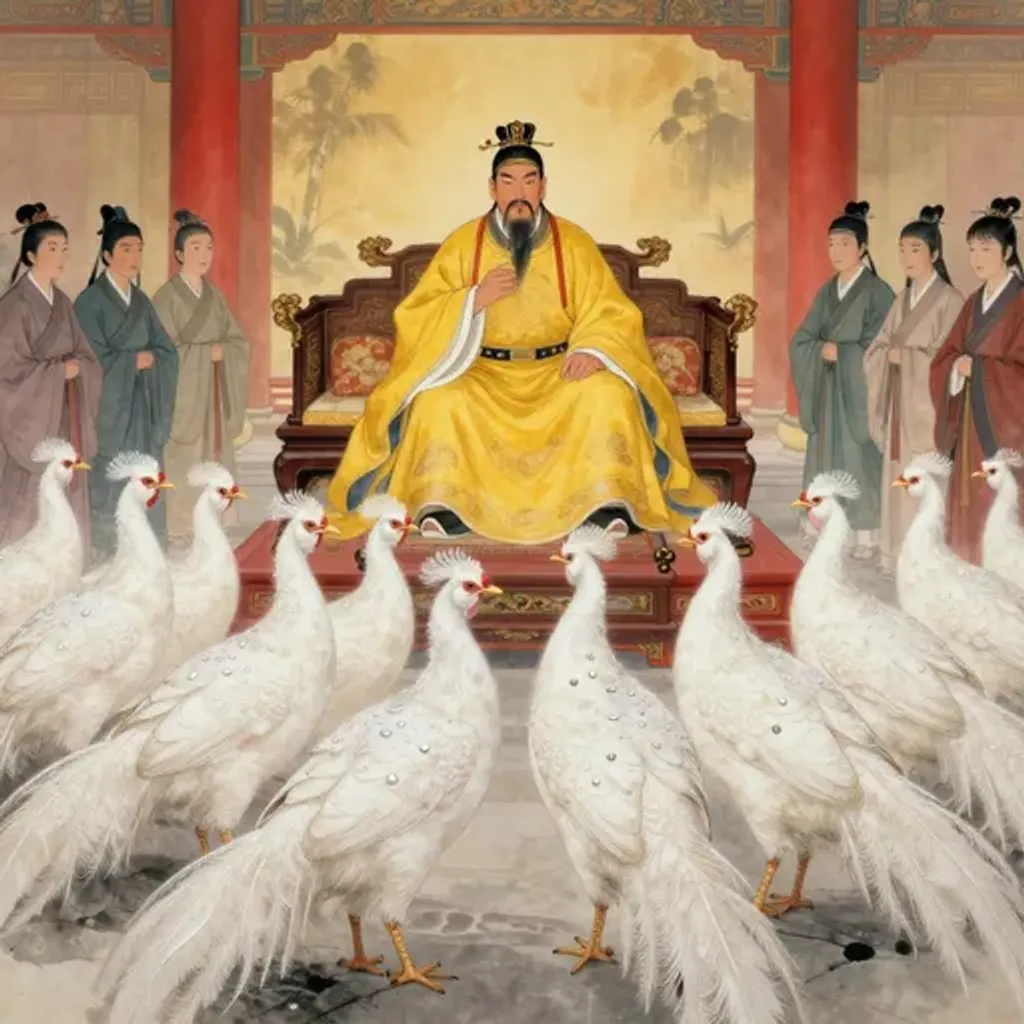
白雉群雊,慕德朝貢。湛露之恩,使我得懽。
White pheasants gather and call; admiring virtue, they come as tribute. The grace of sweet dew; bringing me delight.
— Jiao Yanshou, Yilin (Forest of Changes), 1st century BC
Commentary
Heaven and water oppose, yet white pheasants call out in chorus, drawn by virtue to offer tribute at court. The 'dew of grace' (湛露) — from the Shijing ode celebrating the sovereign's feast for his lords — descends, and joy fills the hall. White pheasants were among the most celebrated tribute gifts in antiquity, symbolizing the voluntary submission of distant peoples to moral authority. From Conflict to After Completion, water rests above fire in perfect equilibrium — everything in its proper place. Jiji's image is order achieved, the task fulfilled. The verse embodies this completion: conflict has given way to a world where even wild creatures acknowledge virtue, and the royal feast proceeds in harmony.
訟 → 未濟
Hexagram 6 → Hexagram 64: Before Completion
Changing lines: 5
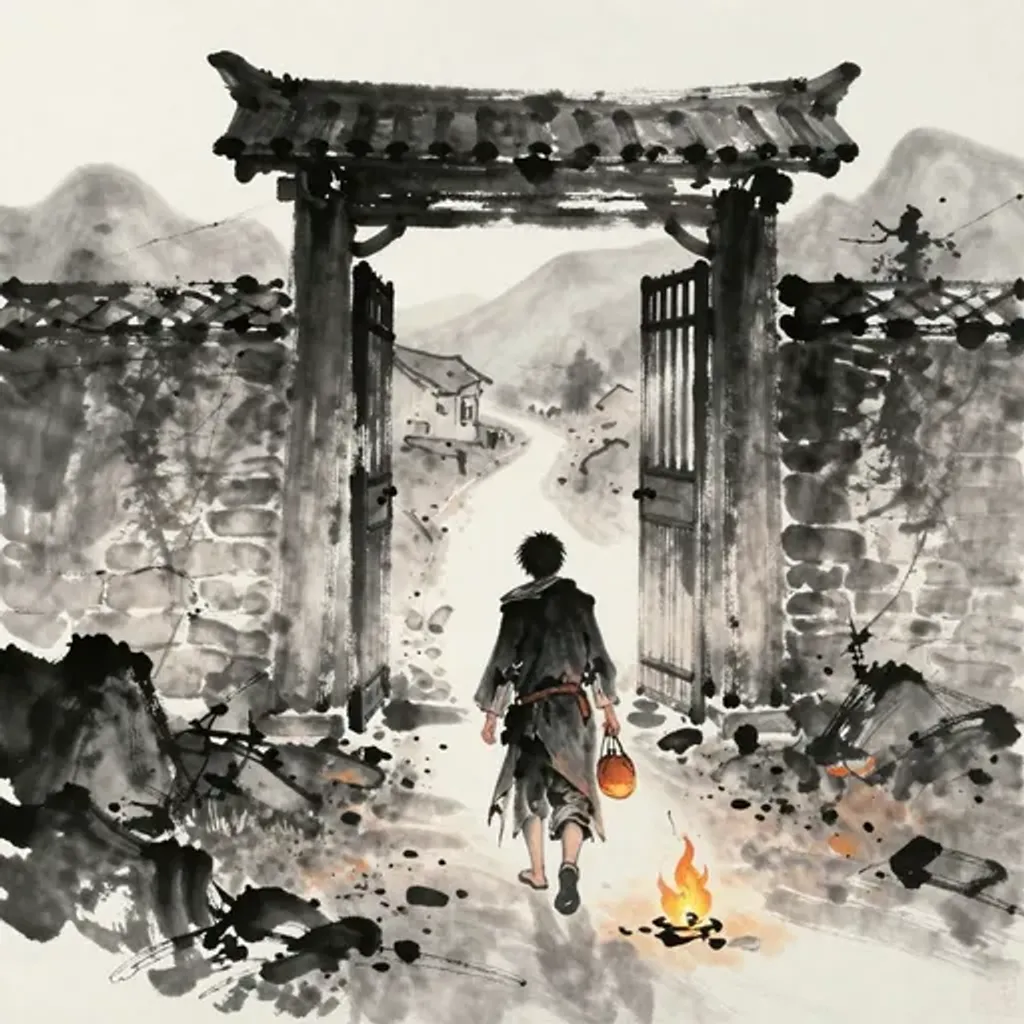
避患東西,反入禍門。糟糠不足,憂愁我心。
Fleeing trouble east and west, only to enter calamity's gate. Chaff and husks not enough; worry and sorrow fill my heart.
— Jiao Yanshou, Yilin (Forest of Changes), 1st century BC
Commentary
Heaven and water oppose, and the final verse closes the circle with unresolved misery. Fleeing east and west to avoid disaster, one stumbles instead into the gate of further calamity. Even chaff and bran are insufficient — basic sustenance fails. Worry gnaws at the heart. Every evasive action deepens the trap. From Conflict to Before Completion, fire hovers above water without contact — the eternal almost, the task perpetually unfinished. Weiji is the Yi's final word: nothing is ever fully resolved. The verse captures this with brutal economy. The one who runs from conflict finds only more conflict; the one who cannot afford even husks has nothing left to lose yet cannot stop losing. Before Completion is not failure — it is the permanent condition of being mid-crossing.