Transformations of Hexagram 61
Every line of change out of Hexagram 61 中孚 Inner Truth, with the Yilin verse for each of the 64 resulting hexagrams, its translation, and the original ink brush artwork.
中孚 → 乾
Hexagram 61 → Hexagram 1: The Creative
Changing lines: 3, 4
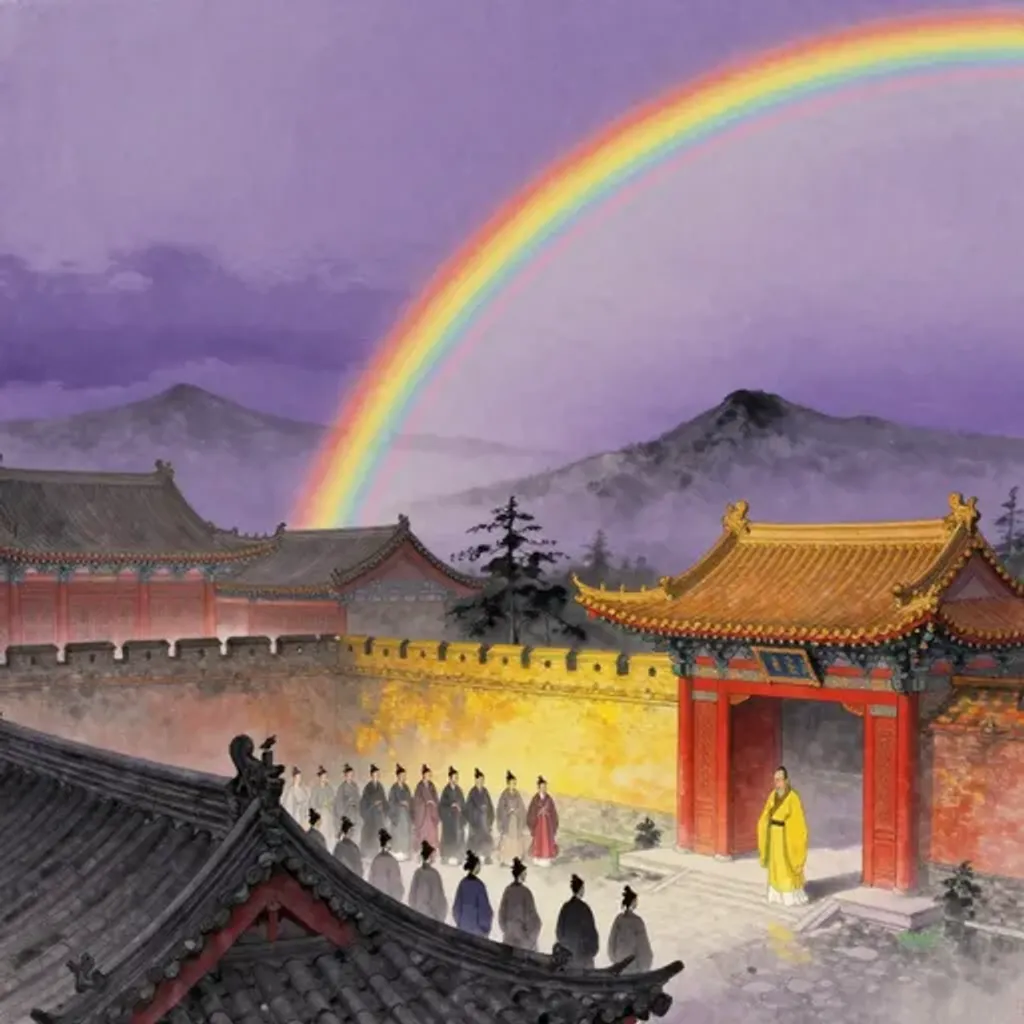
黃虹之野,賢君所在。管仲為相,國无災咎。
Yellow rainbow over the wilds; here dwells the worthy lord. Guan Zhong serves as minister; the state knows no calamity.
— Jiao Yanshou, Yilin (Forest of Changes), 1st century BC
Commentary
Wind stirs above the lake, and inner truth radiates outward. A yellow rainbow arches over the wilderness — an auspicious sign marking a worthy ruler's domain. Guan Zhong serves as prime minister, and the state is spared all calamity. The yellow rainbow was an omen of harmonious governance in Han cosmology, while Guan Zhong's stewardship of Qi under Duke Huan brought order and hegemony without conquest. From Inner Truth to the Creative, the lake's gentle sincerity transforms into heaven's self-generating vigor. Authentic conviction at the center, once given full expression, becomes sovereign initiative — not forced but arising naturally, the way a competent minister's integrity radiates outward as national strength.
中孚 → 坤
Hexagram 61 → Hexagram 2: The Receptive
Changing lines: 1, 2, 5, 6
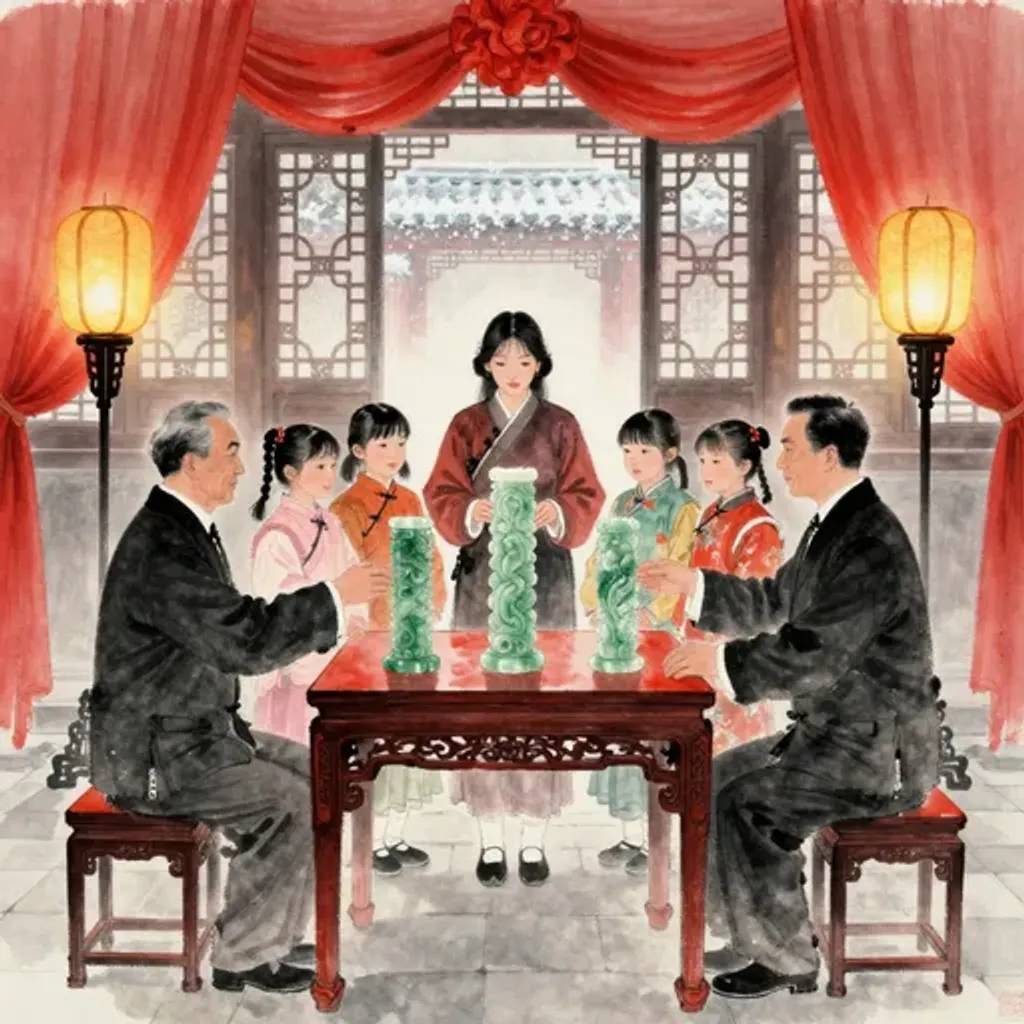
符左契右,梁叔有若。相與合齒,乾坤利貞。乳生六子,長大成就,拋吾如母。
Left tally meets right tally; Liang and Shu find each other. Together their teeth align; qian and kun are steadfast. Nursing six children to maturity; they cast me aside like a mother.
— Jiao Yanshou, Yilin (Forest of Changes), 1st century BC
Commentary
Wind stirs above the lake, and paired halves seek their match. Left tally meets right tally; Liang Shu has his counterpart. Teeth interlock in perfect alignment; Qian and Kun find their auspicious union. The mother gives birth to six children, who grow to great accomplishment and cherish her as their own. The tallied halves (符左契右) evoke the system of split bamboo credentials used to verify identity and authority. The six children born of this union recall the Shuogua Zhuan's cosmology: Qian and Kun as father and mother generating the six trigram-children. From Inner Truth to the Receptive, sincerity at the center yields to earth's boundless capacity to receive and nurture all that heaven generates.
中孚 → 屯
Hexagram 61 → Hexagram 3: Difficulty at the Beginning
Changing lines: 2, 6
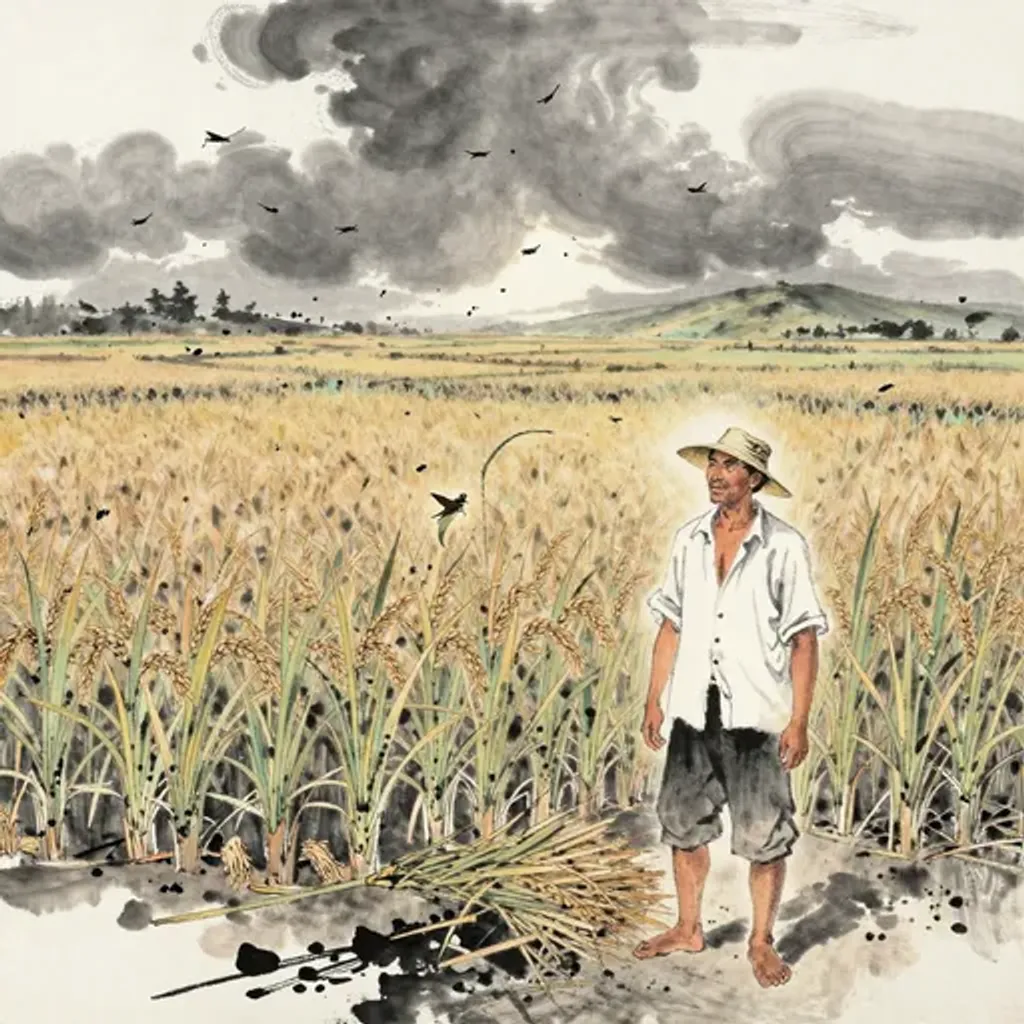
蝗齧我稻,驅不可去。實穗无有,但見空藁。
Locusts gnaw my rice; I drive them but they will not leave. No grain in the ears; only empty stalks remain.
— Jiao Yanshou, Yilin (Forest of Changes), 1st century BC
Commentary
Wind stirs above the lake, but the fields are ravaged. Locusts gnaw the rice, impossible to drive away no matter how one tries. The full ears of grain are gone; only empty stalks remain. The image is elemental devastation: a farmer watches helplessly as the swarm consumes everything, leaving husks where harvest should be. From Inner Truth to Difficulty at the Beginning, the lake's transparency meets thunder churning beneath water — clouds that gather but cannot rain. Sincerity alone cannot repel a plague; trust in good faith becomes powerless against indiscriminate destruction. The verse captures that cruel juncture where honest effort meets forces beyond negotiation, and the new beginning that follows must rise from emptiness.
中孚 → 蒙
Hexagram 61 → Hexagram 4: Youthful Folly
Changing lines: 1, 5
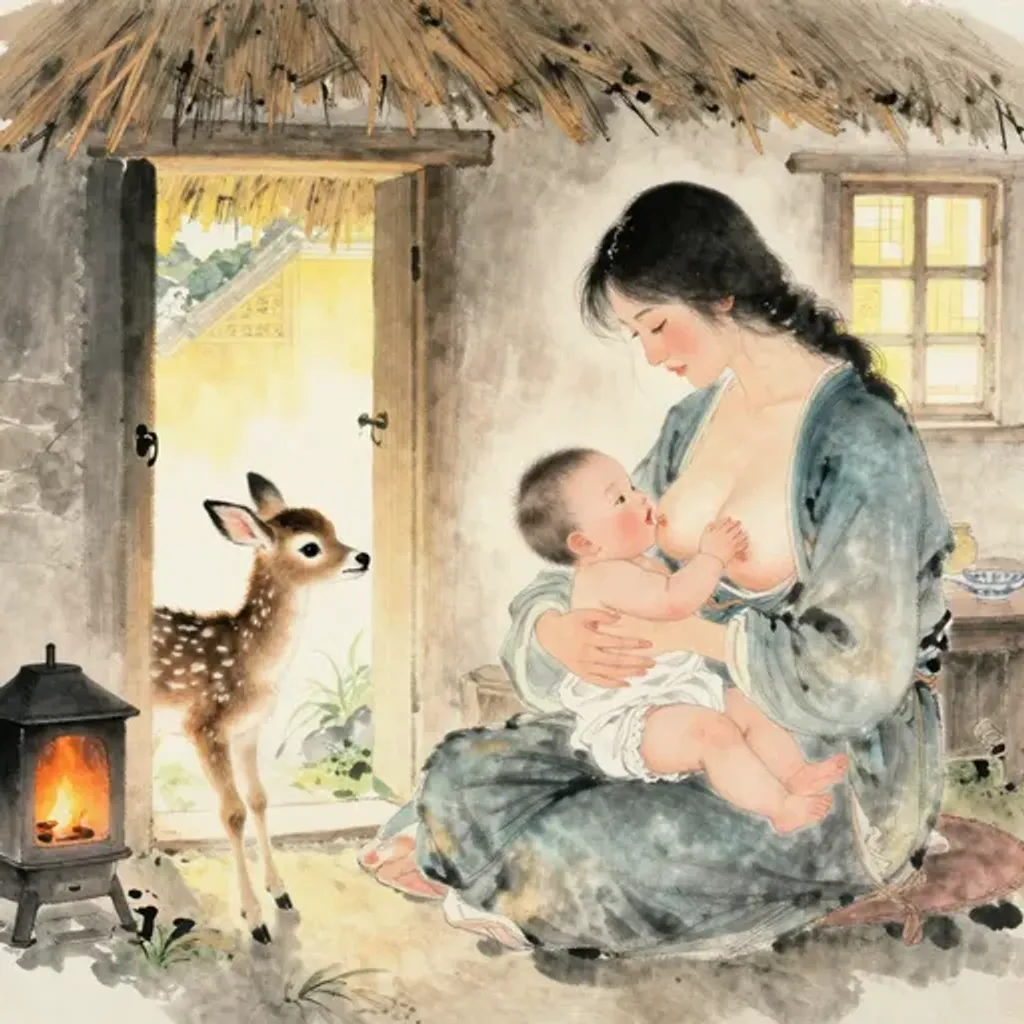
嬰孩求乳,母歸其子,黃麑悅喜。
The infant seeks milk; the mother returns to her child. The yellow fawn leaps with delight.
— Jiao Yanshou, Yilin (Forest of Changes), 1st century BC
Commentary
Wind stirs above the lake as an infant cries for milk. The mother returns to her child, and the yellow fawn leaps with delight. The verse is pure domestic tenderness: hunger answered, presence restored, the natural world rejoicing in sympathy. The yellow fawn (黃麑) adds a layer of pastoral innocence — even the young deer shares in the reunion's warmth. From Inner Truth to Youthful Folly, the lake's sincerity descends into the spring emerging beneath the mountain. A child does not reason its way to trust; it simply knows the mother will come. This is folly in its most benign form — the unquestioning faith that precedes all knowledge, the mountain's hidden spring answering an instinct older than thought.
中孚 → 需
Hexagram 61 → Hexagram 5: Waiting
Changing lines: 3, 6
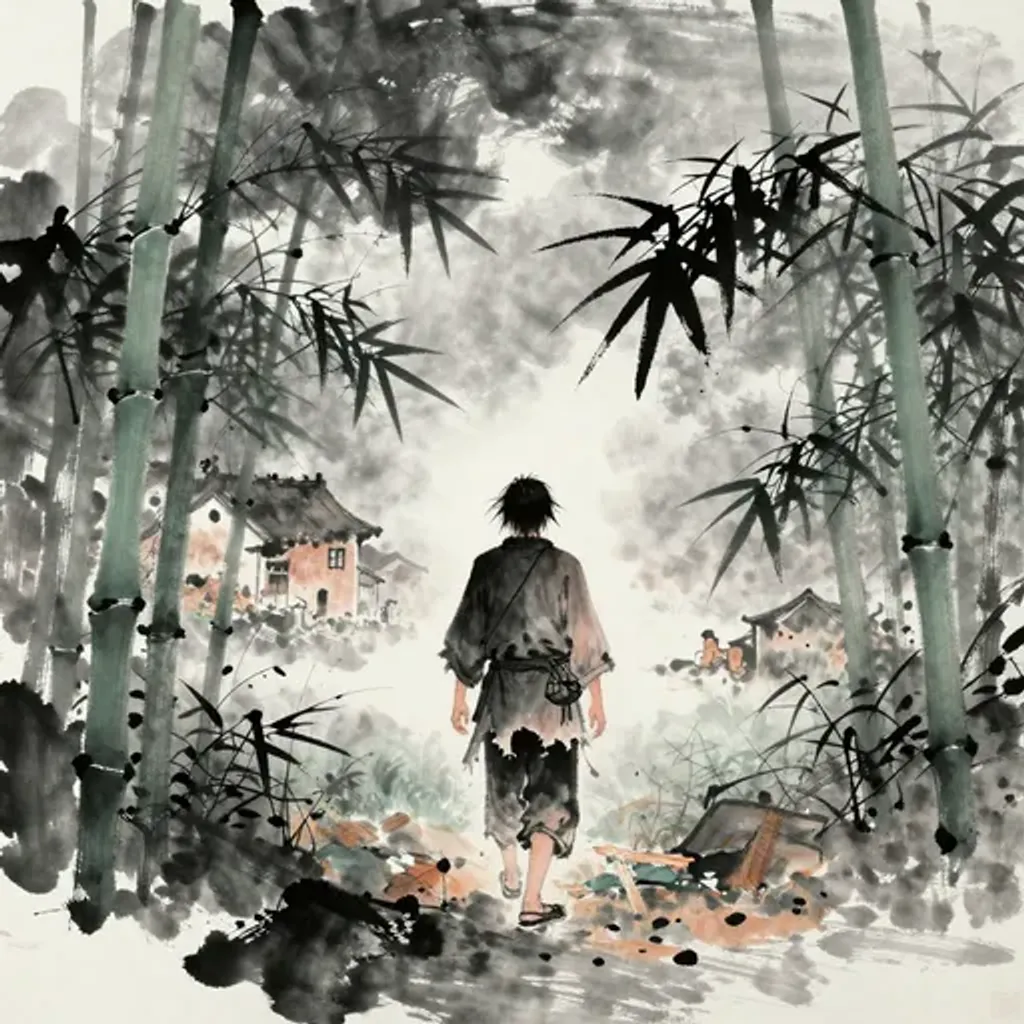
折若蔽目,不見稚叔。失旅亡民,遠去家室。
Branches like blindfolds block the eyes; I cannot see my young kin. Losing travelers and people; I journey far from home.
— Jiao Yanshou, Yilin (Forest of Changes), 1st century BC
Commentary
Wind stirs above the lake, but vision is blocked. Branches snap and blind the eyes; one cannot see one's own kin. Travelers scatter, the people are lost, and all wander far from home. The imagery progresses from physical obstruction to social dissolution — first the eyes are covered, then families fracture, then entire communities disperse. From Inner Truth to Waiting, the lake's clarity gives way to water looming above heaven, danger suspended overhead. When sincerity is blinded, trust collapses, and separation follows. Waiting here is not patient anticipation but enforced exile — stranded beneath gathering clouds with no shelter in sight, unable to recognize who stands beside you in the dark.
中孚 → 訟
Hexagram 61 → Hexagram 6: Conflict
Changing lines: 1, 4
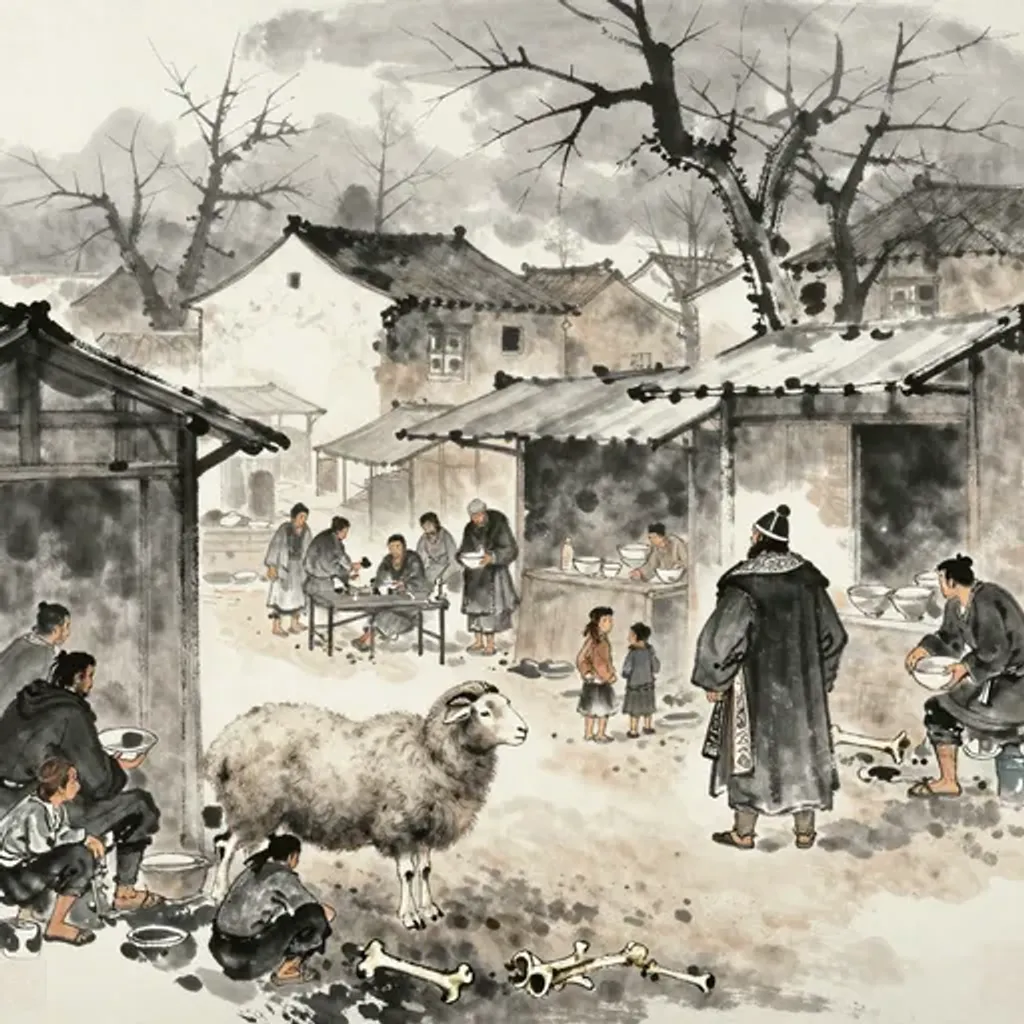
䍧羊肥首,君子不飽。年飢孔荒,士民危殆。
The fat-headed rams; the gentleman goes hungry. Years of dire famine; the common folk face peril.
— Jiao Yanshou, Yilin (Forest of Changes), 1st century BC
Commentary
Wind stirs above the lake, but the harvest has failed. The fat-headed ram feeds well while the gentleman goes hungry. The year is barren, the famine severe; commoners and gentry alike face peril. The verse juxtaposes animal satiety with human starvation — the ram's sleek head mocks the empty bowls of those who should govern. From Inner Truth to Conflict, the lake's sincerity meets heaven moving against water, forces diverging. Famine breeds contention: when the virtuous go unfed while beasts thrive, the social compact is broken. Conflict here is not willful aggression but the structural friction that erupts when distribution fails and trust in the system evaporates.
中孚 → 師
Hexagram 61 → Hexagram 7: The Army
Changing lines: 1, 5, 6
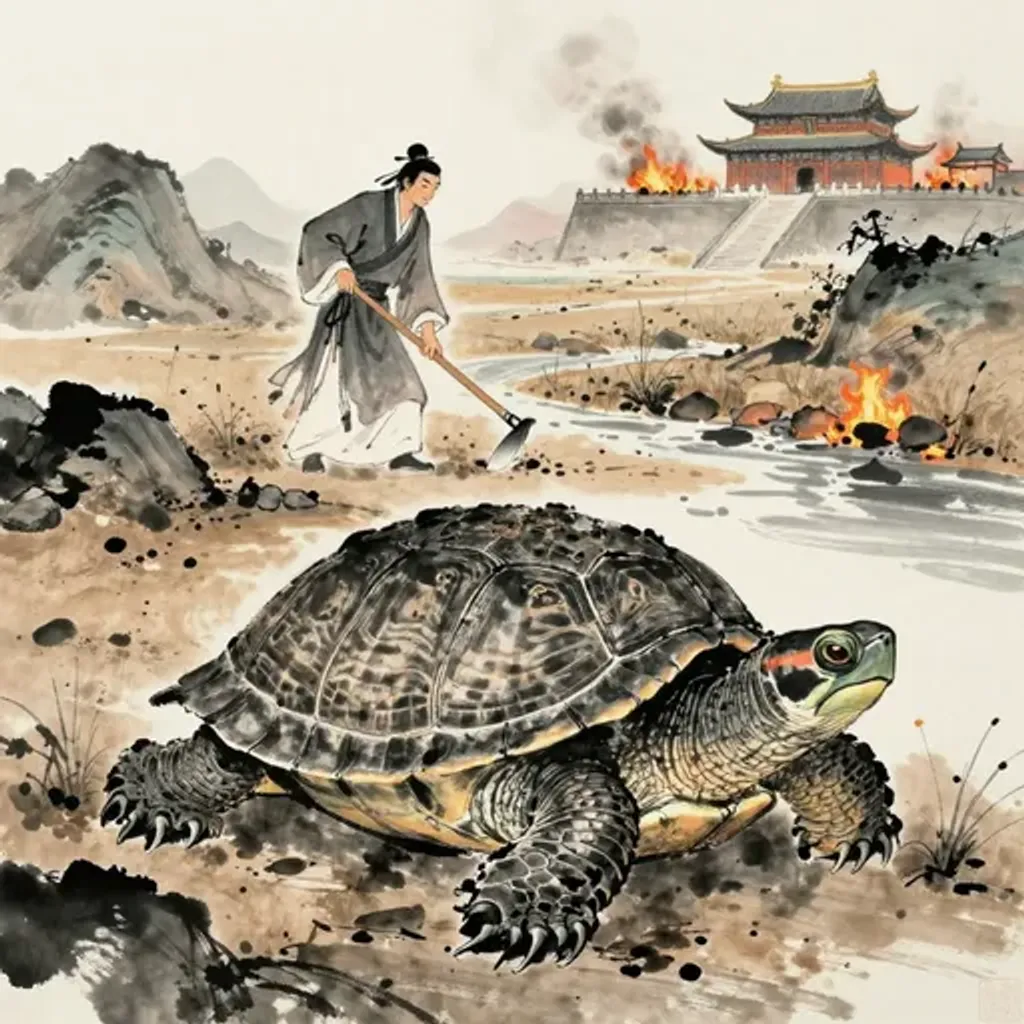
靈龜陸處,盤桓失所。伊子退耕,桀亂无輔。
The divine turtle dwells on land; it wanders and loses its place. Yi Yin retreats to farming; Jie's chaos lacks counsel.
— Jiao Yanshou, Yilin (Forest of Changes), 1st century BC
Commentary
Wind stirs above the lake, and the sacred tortoise wanders on dry land, displaced from its element. Yi Yin retreats to the plow; Jie's tyranny leaves him without counsel. The numinous tortoise (靈龜) stranded on land echoes the I-Ching's own imagery of wisdom misplaced. Yi Yin, the sage cook who became Shang's founding minister, here withdraws from service because the ruler is beyond redemption. From Inner Truth to the Army, sincerity at the center transforms into water concealed within the earth — disciplined forces awaiting proper command. The verse captures the moment before mobilization: the wise minister farms in exile, husbanding his strength, while the tyrant's court collapses from within.
中孚 → 比
Hexagram 61 → Hexagram 8: Holding Together
Changing lines: 1, 2, 6
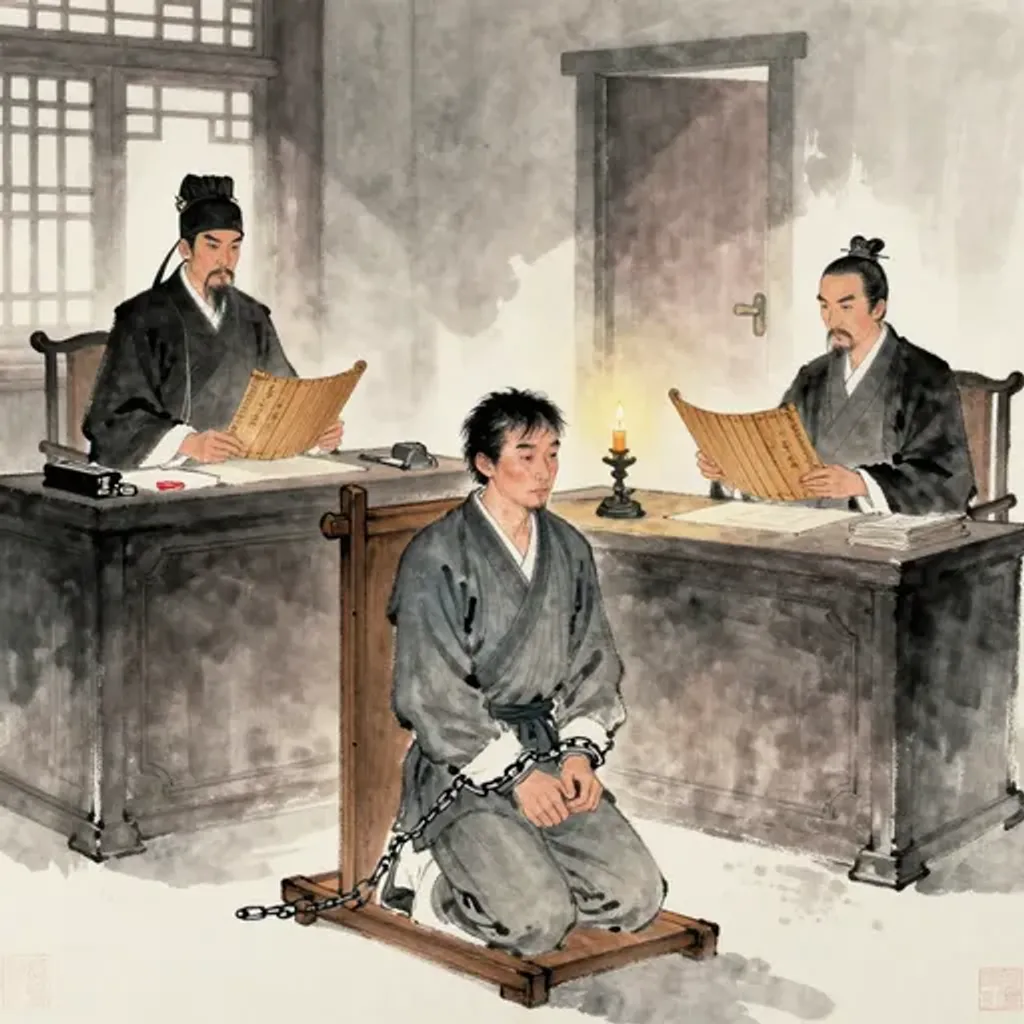
威約拘囚,為人所誣。皋陶平理,幾得脫免。
Bound by threat and chains; falsely accused by others. Gao Yao adjudicates fairly; nearly obtaining release.
— Jiao Yanshou, Yilin (Forest of Changes), 1st century BC
Commentary
Wind stirs above the lake, but the innocent is bound in chains. Coerced and imprisoned, falsely accused by others. Then Gao Yao adjudicates the case with impartial clarity, and the prisoner narrowly escapes. Gao Yao, the legendary minister of justice under Shun and Yu, represents the ideal of law administered without bias. From Inner Truth to Holding Together, the lake's sincerity yields to water flowing across the earth, gathering all into union. The verse traces a complete arc: injustice, then deliverance through righteous judgment. When a true arbiter arrives, the bonds of false accusation dissolve, and the community reconstitutes around trust restored.
中孚 → 小畜
Hexagram 61 → Hexagram 9: Small Taming
Changing lines: 3
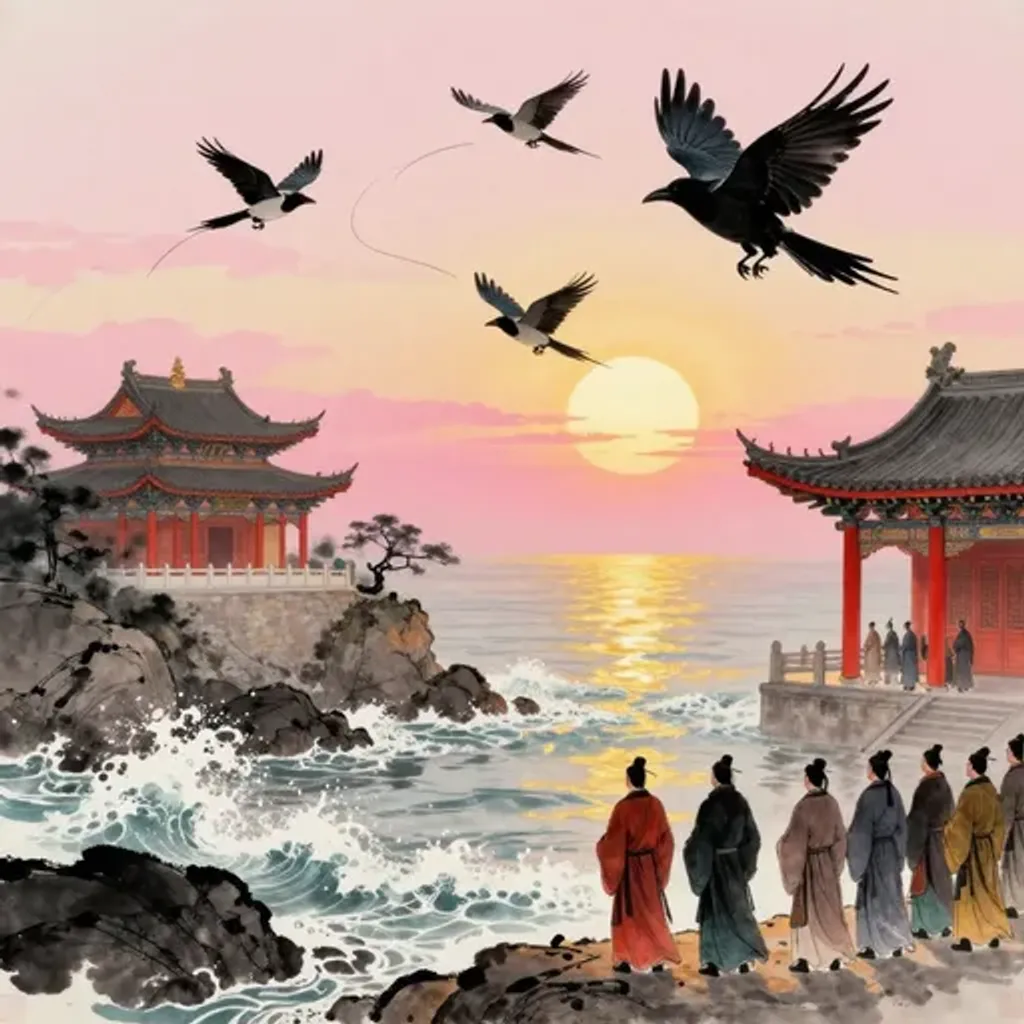
烏升鵲舉,照臨東海。厖降庭堅,為陶叔後。封於英六,福履綏厚。
Crow rises and magpie soars; illuminating the Eastern Sea. Pang descends to Tingjian; becoming Tao Shu's heir. Enfeoffed at Ying and Liu; blessings thick and lasting.
— Jiao Yanshou, Yilin (Forest of Changes), 1st century BC
Commentary
Wind stirs above the lake as crows rise and magpies soar, their radiance illuminating the eastern sea. Pang descends to Tingjian, becoming the ancestor of Tao Shu. His line is enfeoffed at Ying and Liu, and blessings accumulate richly. The verse traces a genealogy rooted in Gao Yao's descendants: Tingjian (庭堅) is identified with Gao Yao's son, and the fiefs of Ying and Liu were granted to Gao Yao's lineage. From Inner Truth to Small Taming, sincerity at the center releases into wind moving gently above heaven. The birds ascending eastward mirror a bloodline rising through generations — not by conquest but by the slow accumulation of virtue that wind over heaven refines into lasting influence.
中孚 → 履
Hexagram 61 → Hexagram 10: Treading
Changing lines: 4
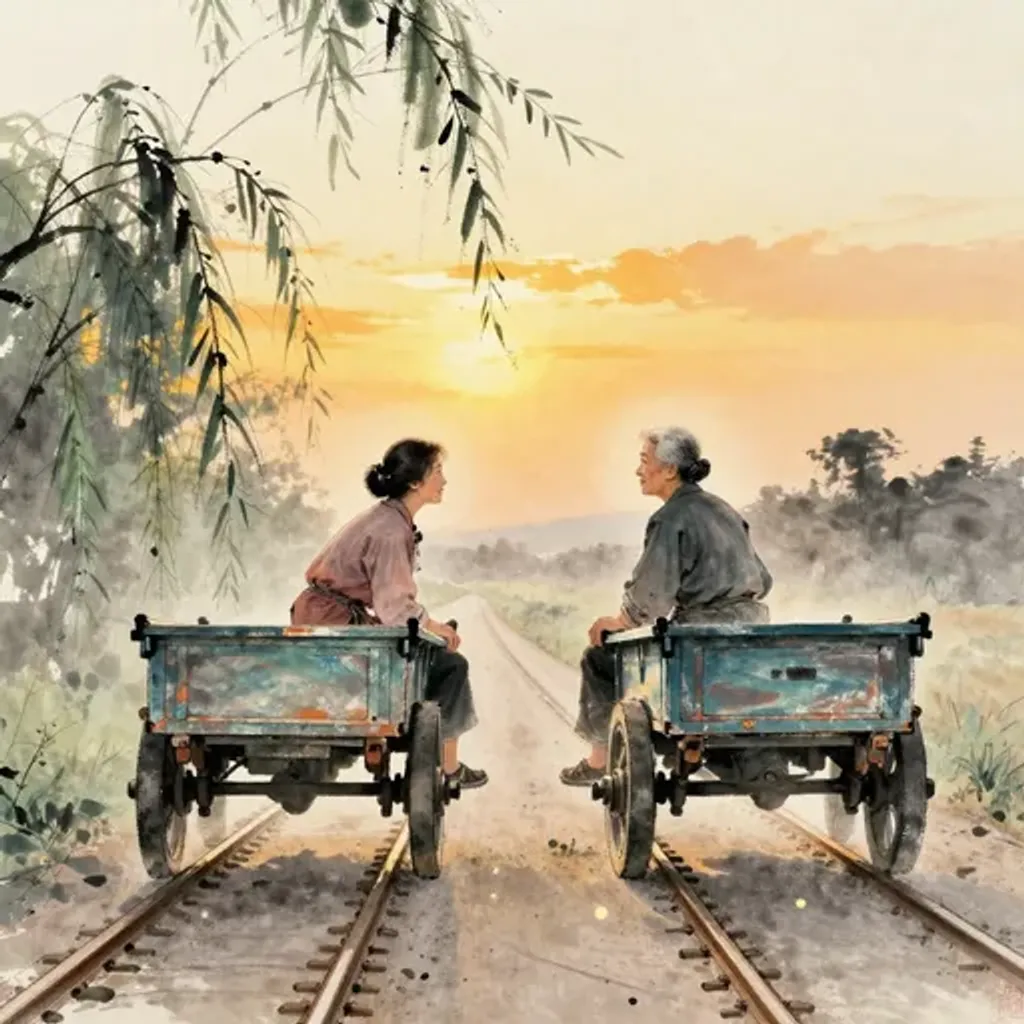
四目相視,稍近同軌。日昳之後,見吾伯姊。
Four eyes meet and gaze; gradually drawing near on the same path. After the sun declines; I see my elder sister.
— Jiao Yanshou, Yilin (Forest of Changes), 1st century BC
Commentary
Wind stirs above the lake, and four eyes meet in mutual recognition. Gradually drawing closer, they converge upon the same path. After the sun passes its zenith, one meets one's elder sister. The verse evokes a reunion governed by timing and propriety: the gaze precedes the approach, the approach precedes the meeting, and the meeting happens only when the day has turned. From Inner Truth to Treading, sincerity yields to heaven above the lake — the image of walking with careful distinction between high and low. The four watching eyes suggest an encounter conducted with full awareness, each step deliberate. Trust is not blind here; it is precise, measured, and arrives at its destination exactly on schedule.
中孚 → 泰
Hexagram 61 → Hexagram 11: Peace
Changing lines: 3, 5, 6
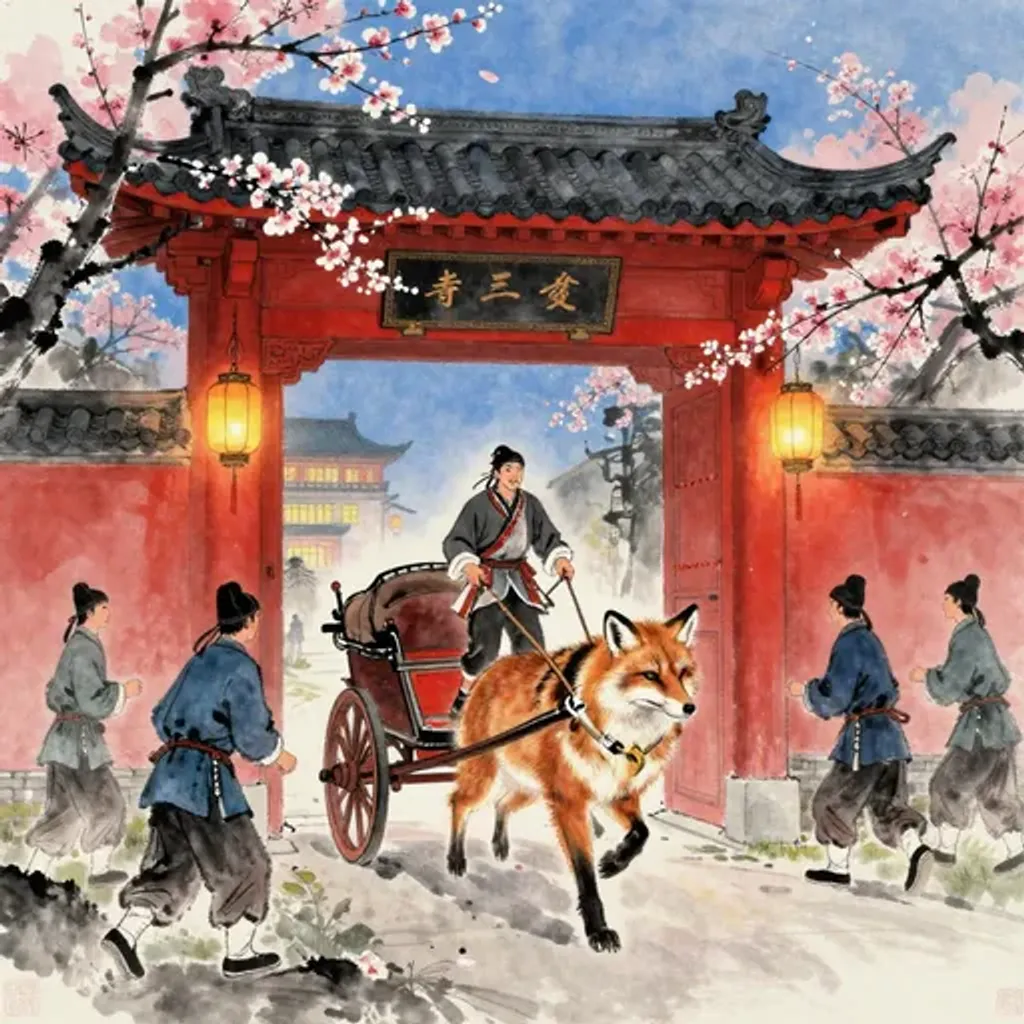
大步上車,南到喜家。送我狐裘,與福載來。
With great strides I mount the cart; traveling south to the house of joy. They present me a fox-fur coat; blessing and fortune arrive together.
— Jiao Yanshou, Yilin (Forest of Changes), 1st century BC
Commentary
Wind stirs above the lake, and one strides confidently onto the carriage, heading south to a house of joy. A fox-fur robe is presented as a gift, and blessings ride along for the journey. The scene is a wedding or auspicious visit: the southward direction, the generous gift of fine fur, the atmosphere of celebration all point to a felicitous union. From Inner Truth to Peace, the lake's sincerity transforms into the harmonious interchange where heaven descends and earth rises to meet it. The great stride onto the carriage embodies the confidence of one whose inner truth is matched by outward circumstance — blessing arrives not by luck but by the natural convergence of trust given and trust reciprocated.
中孚 → 否
Hexagram 61 → Hexagram 12: Standstill
Changing lines: 1, 2, 4
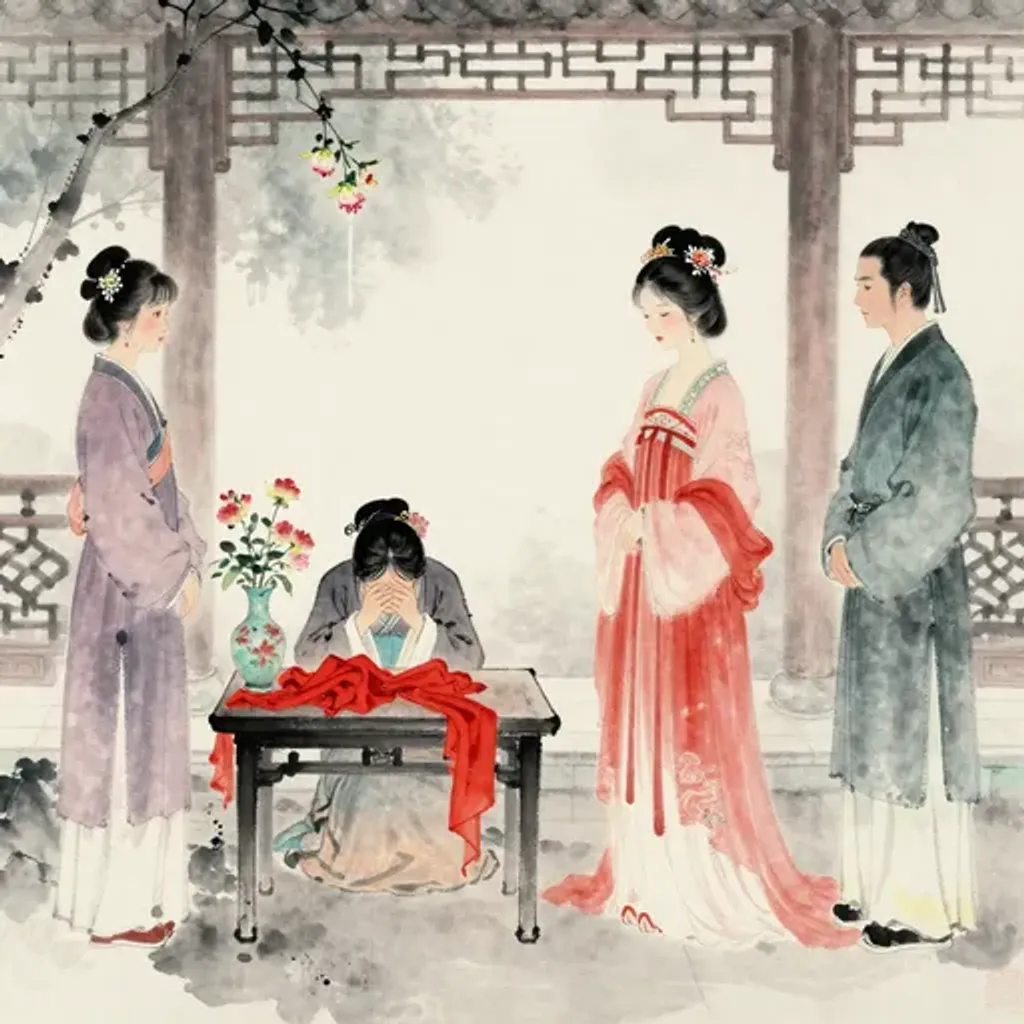
卒都和合,未敢面見。媒妁无良,使我不香。
The soldiers harmonize together; yet dare not meet face to face. The matchmaker lacks virtue; leaving me without honor.
— Jiao Yanshou, Yilin (Forest of Changes), 1st century BC
Commentary
Wind stirs above the lake, but communication is thwarted. The parties are brought together in principle, yet dare not meet face to face. The matchmaker is incompetent, leaving one's reputation tainted. The verse describes a failed arrangement — perhaps a botched marriage negotiation where the go-between mangles the introduction, and what should have been harmonious union turns to mutual avoidance. From Inner Truth to Standstill, sincerity meets the image of heaven and earth refusing to interact. The blockage is not in the parties themselves but in the intermediary: when the channel of trust is corrupted, even willing hearts cannot connect. Standstill here is not cosmic opposition but social paralysis born of a single weak link.
中孚 → 同人
Hexagram 61 → Hexagram 13: Fellowship
Changing lines: 2, 3, 4
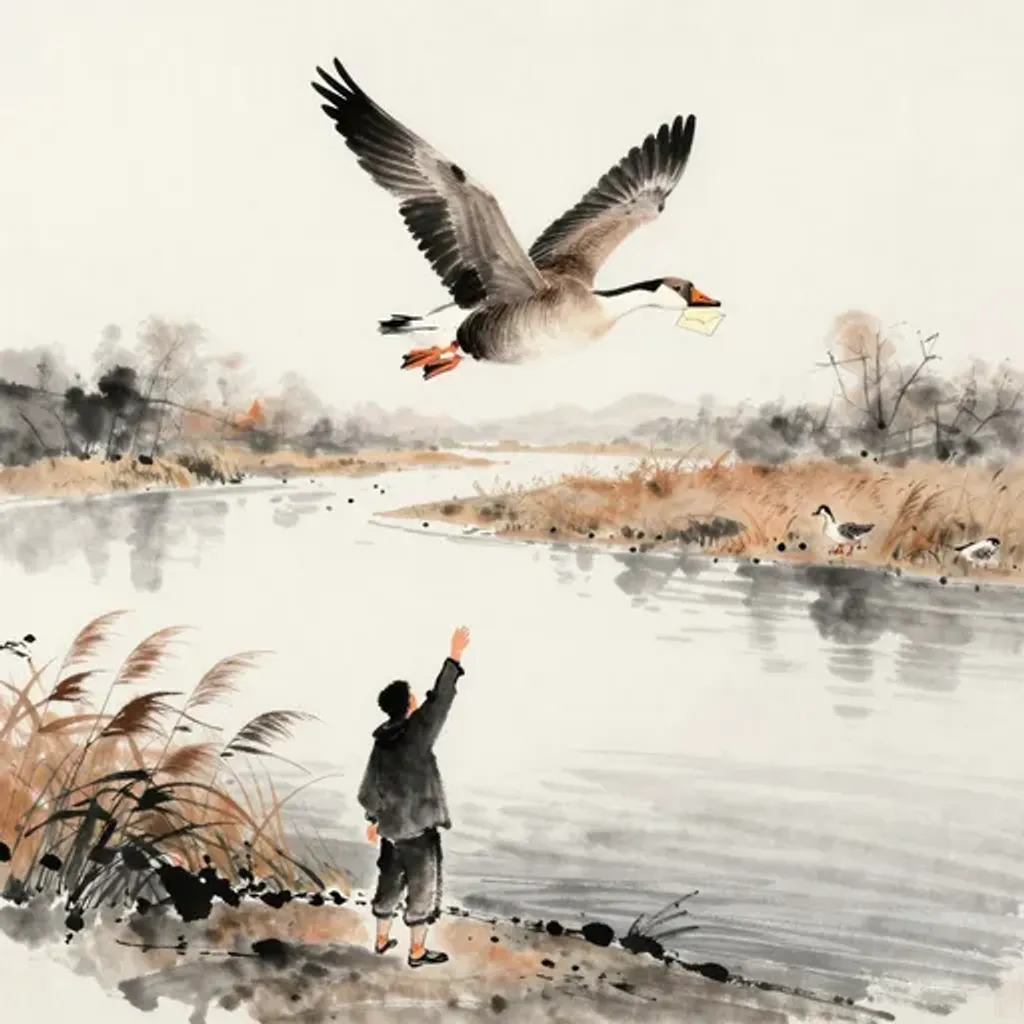
鴻飛循陸,公出不復,伯氏客宿。
A letter entrusted to the wild goose — but the goose flies on without stopping. Year after year heading south; the words never arrive.
— Jiao Yanshou, Yilin (Forest of Changes), 1st century BC
Commentary
Wind stirs above the lake, but the wild goose flies overland and the lord departs, never to return. The elder brother lodges as a stranger far from home. The original verse (鴻飛循陸,公出不復。伯氏客宿) describes permanent separation: the goose following the land rather than water suggests a journey gone astray, while the lord's departure without return and the brother's exile paint a picture of irreversible dispersal. From Inner Truth to Fellowship, sincerity at the center should yield to heaven joined with fire — the image of kindred spirits recognizing each other across distance. Yet the verse inverts this promise: the very bonds that should draw people together are severed, and the goose's flight, which ought to carry messages of reunion, traces only the geography of loss.
中孚 → 大有
Hexagram 61 → Hexagram 14: Great Possession
Changing lines: 3, 4, 5
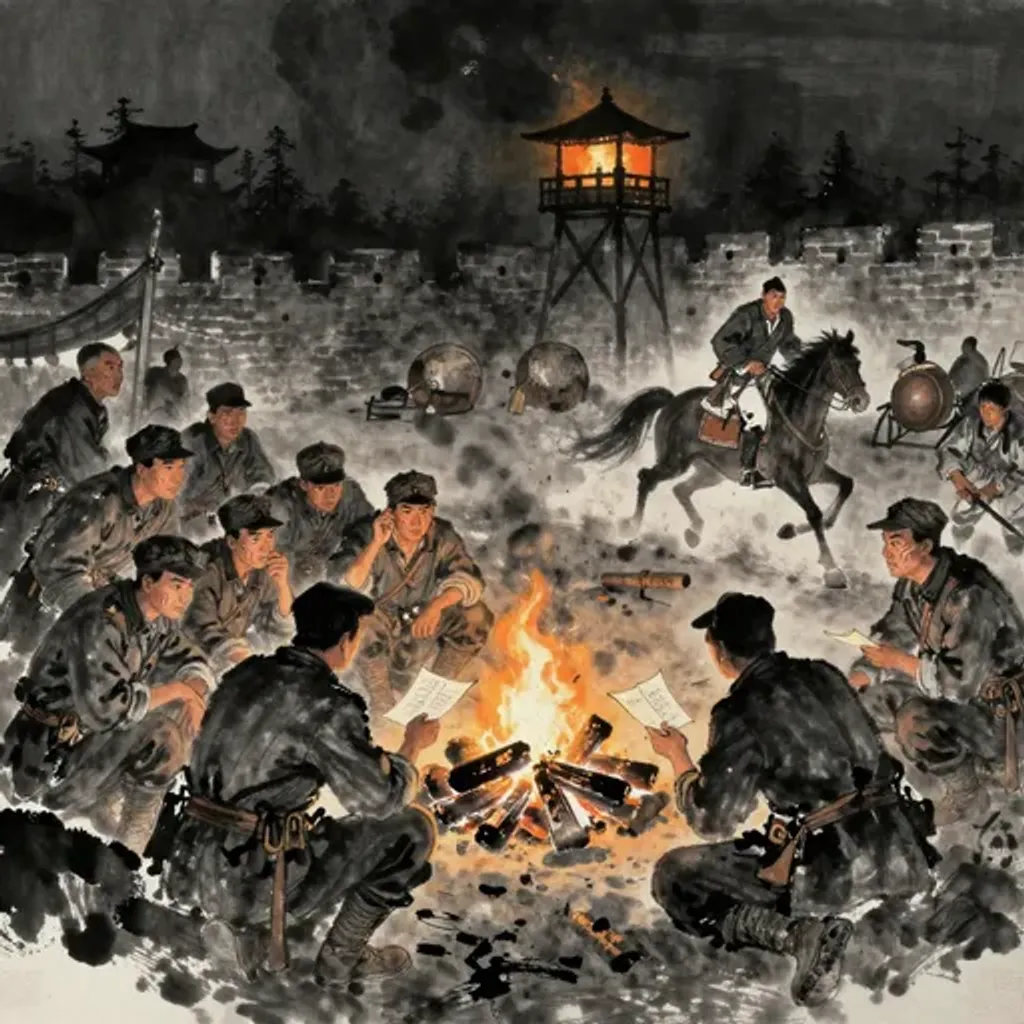
代戍失期,患生无聊。懼以發難,為我開基,邦國憂愁。
Garrison duty runs past its term; troubles arise without end. Fear sparks rebellion; establishing our foundation, yet the state falls to sorrow.
— Jiao Yanshou, Yilin (Forest of Changes), 1st century BC
Commentary
Wind stirs above the lake as garrison troops miss their deadline, and desperation breeds revolt. Fear itself becomes the spark for uprising, founding a new order while plunging the old state into turmoil. The verse unmistakably echoes the Chen Sheng and Wu Guang rebellion of 209 BC: conscripts delayed by rain faced execution under Qin law, so they chose revolt over certain death. Their cry — 'Are kings and lords born to their station?' — opened the dynasty's grave. From Inner Truth to Great Possession, the lake's quiet sincerity erupts into fire blazing above heaven. What begins as authentic despair transforms into overwhelming force. The passage from trust betrayed to revolutionary seizure is the darkest form of Great Possession: power born from the ruins of broken faith.
中孚 → 謙
Hexagram 61 → Hexagram 15: Modesty
Changing lines: 1, 2, 3, 5, 6
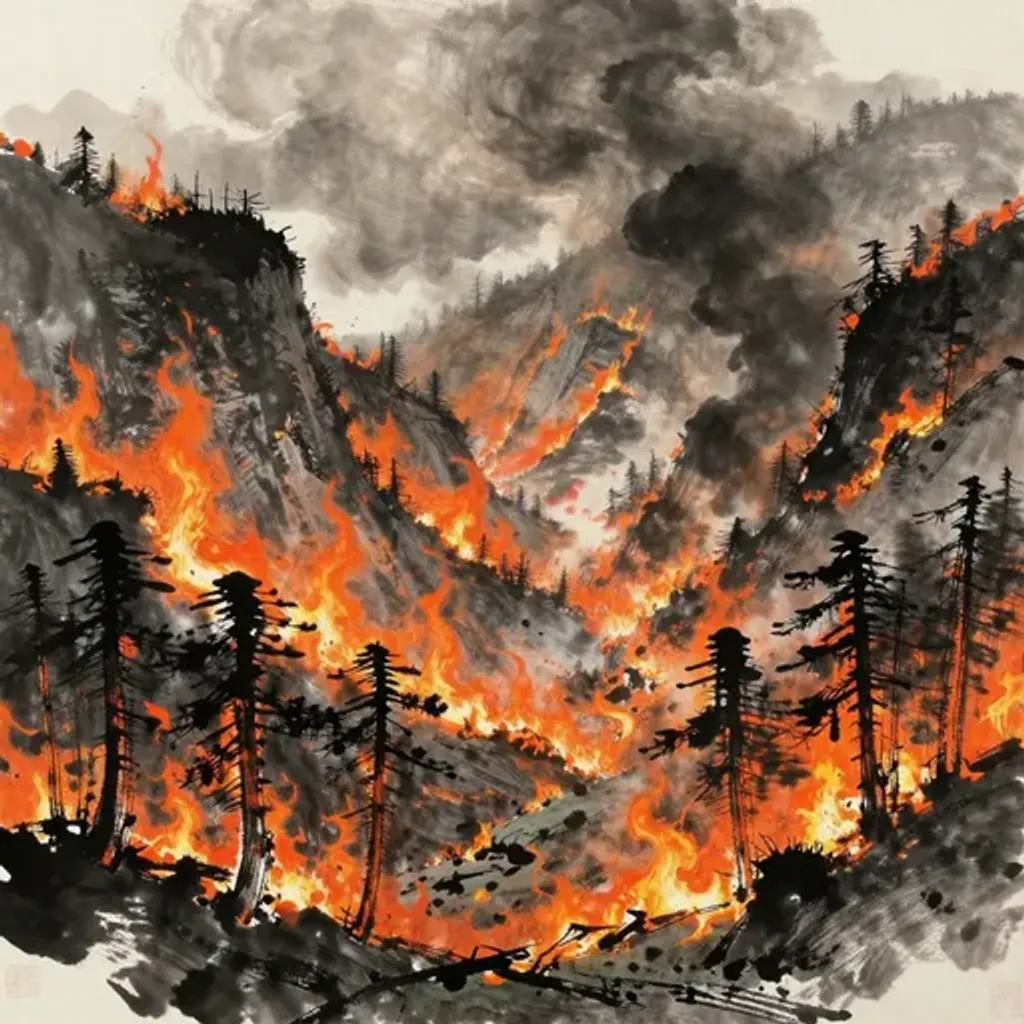
齊魯爭言,戰於龍門。搆怨結禍,三世不安。
Wildfire burns the forest — left and right, all are harmed. Wind feeds the flames; not one tree is spared.
— Jiao Yanshou, Yilin (Forest of Changes), 1st century BC
Commentary
Wind stirs above the lake, but the original verse speaks of Qi and Lu locked in bitter dispute, warring at Dragon Gate. Enmity compounds into lasting calamity; three generations find no peace. The conflict between Qi and Lu was among the most persistent of the Spring and Autumn period, with border skirmishes and diplomatic betrayals spanning decades. 'Three generations without peace' captures the self-perpetuating nature of interstate grudges. From Inner Truth to Modesty, sincerity should yield to the mountain hidden within the earth — power concealed beneath humility. Yet the verse shows what happens when pride replaces restraint: escalation, inherited hatred, and a wound that festers across generations because neither side will lower its mountain first.
中孚 → 豫
Hexagram 61 → Hexagram 16: Enthusiasm
Changing lines: 1, 2, 4, 5, 6
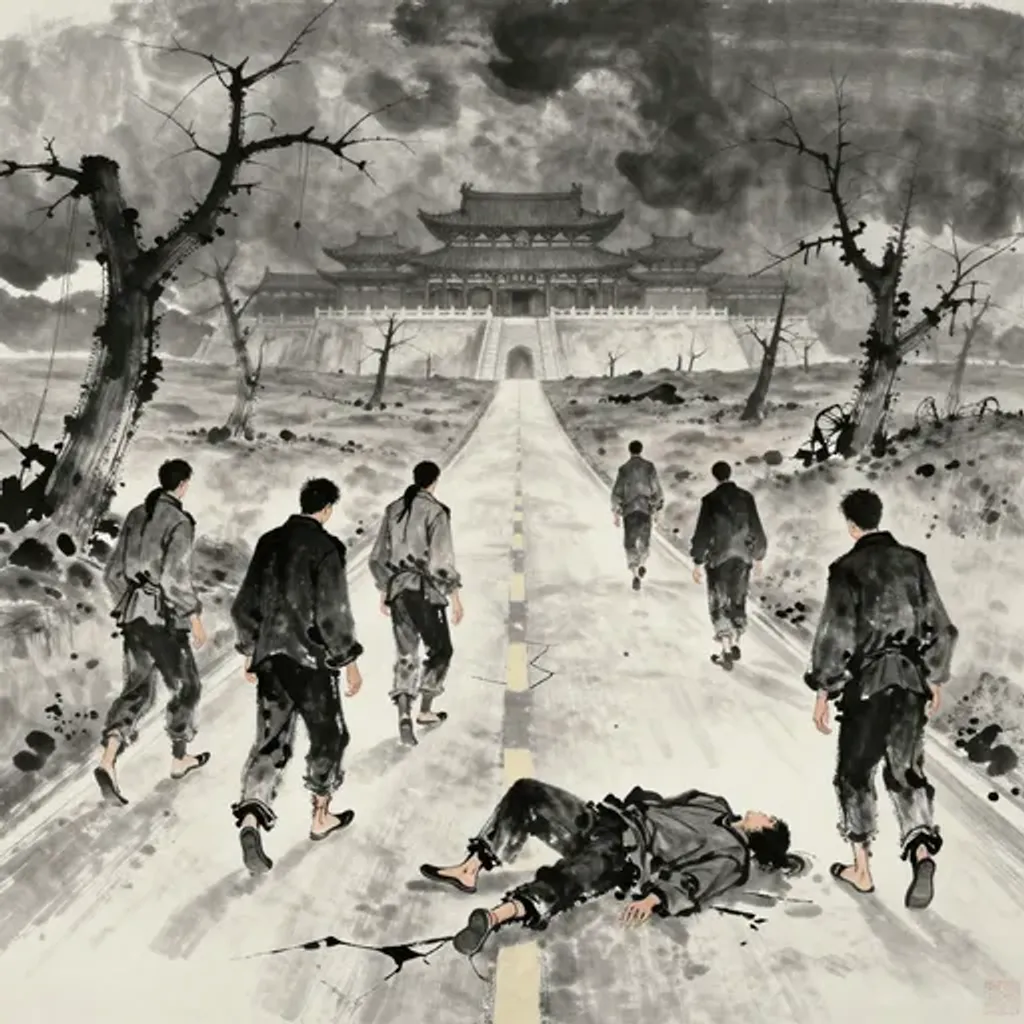
周政養賤,背生人足。陸行不安,國危為患。
Zhou governance nurtures the base; feet grow from people's backs. Walking on land brings no peace; the state dangles in peril.
— Jiao Yanshou, Yilin (Forest of Changes), 1st century BC
Commentary
Wind stirs above the lake, but governance has been inverted. Zhou's administration nurtures the base while neglecting the noble; strange growths sprout — feet appear on the back. Travel by land becomes unsafe, and the state teeters in peril. The image of feet growing from one's back is a grotesque metaphor for political inversion: what should support from below has migrated to the wrong position, producing a creature that can neither stand nor walk properly. From Inner Truth to Enthusiasm, the lake's sincerity should awaken thunder erupting from the earth in joyous resonance. Yet when foundations are perverted, enthusiasm becomes dangerous excitement — thunder without direction, mobilization without order, the crowd's energy unleashed into a body that moves all wrong.
中孚 → 隨
Hexagram 61 → Hexagram 17: Following
Changing lines: 2, 4, 6
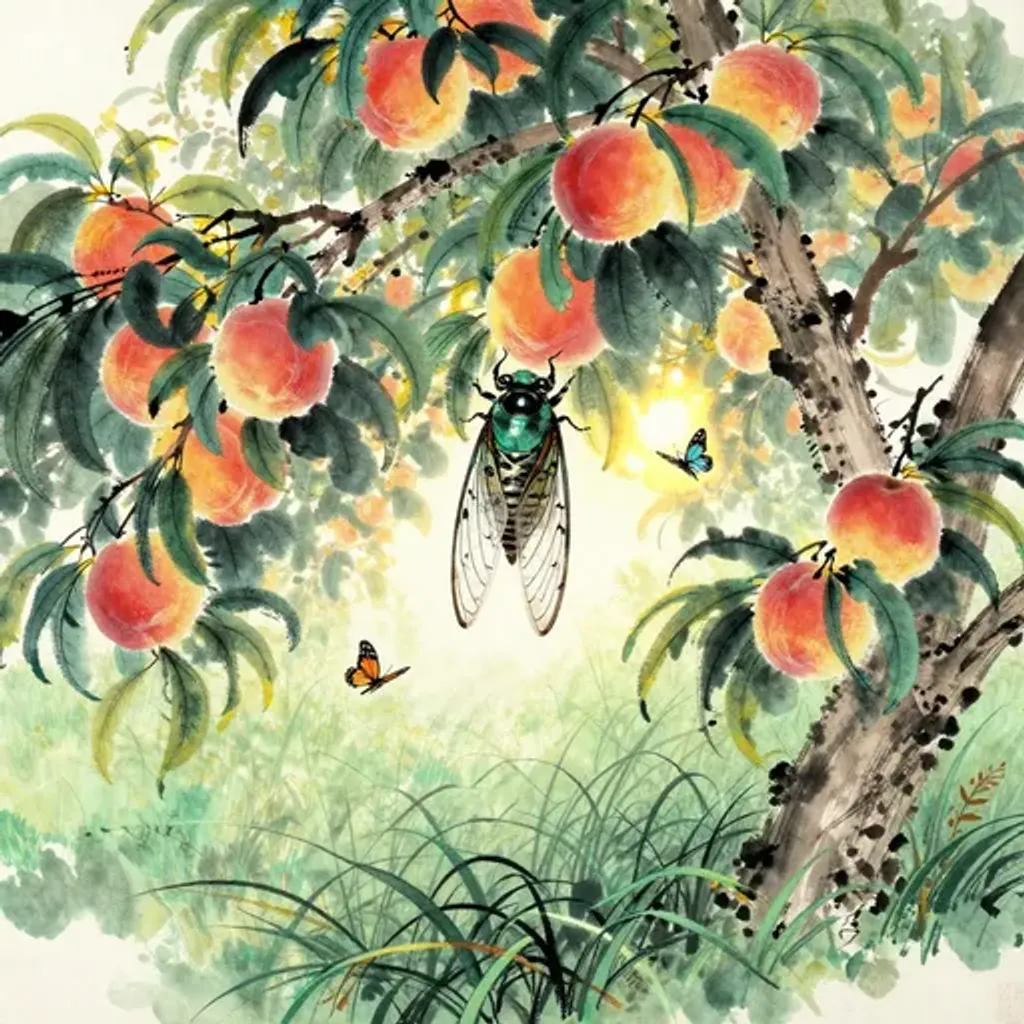
蜩螗歡翹,草木嘉茂。百果蕃生,日益多有。
Cicadas sing and leap joyfully; grass and trees flourish in beauty. A hundred fruits grow abundant; increasing more each day.
— Jiao Yanshou, Yilin (Forest of Changes), 1st century BC
Commentary
Wind stirs above the lake, and the world bursts into abundance. Cicadas sing with lifted wings; grasses and trees flourish luxuriantly. A hundred fruits multiply; day by day there is more. The verse is pure summer vitality — insects chorus, vegetation riots, orchards swell. No crisis, no allusion, no complication; simply the natural world at its most generous. From Inner Truth to Following, sincerity at the center yields to thunder resting within the lake, energy held in seasonal rhythm. Following means aligning with the natural cycle: the cicadas do not choose to sing; they follow the season. Abundance here is not seized but received, the effortless harvest that comes when one's inner timing matches the world's.
中孚 → 蠱
Hexagram 61 → Hexagram 18: Work on the Decayed
Changing lines: 1, 3, 5
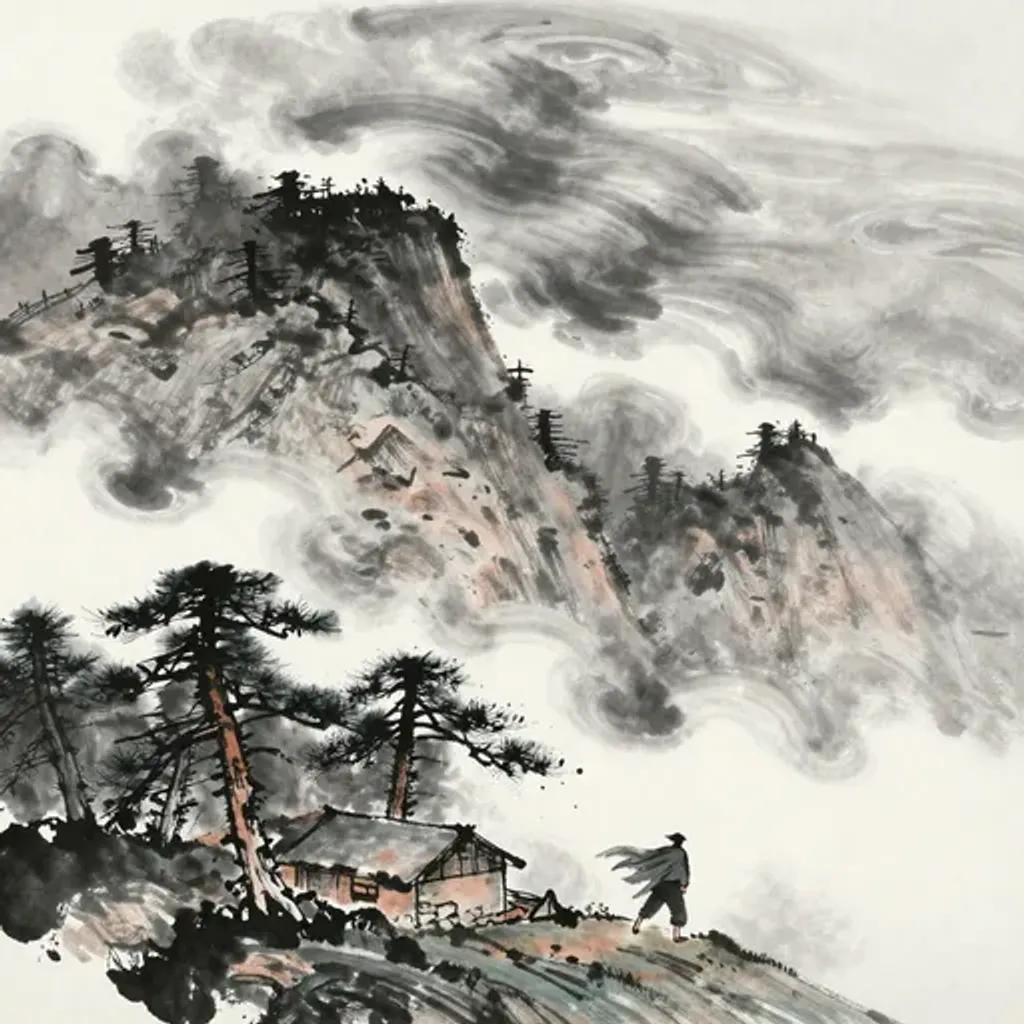
薄災暴虐,風吹雲卻。欲上不得,復歸其宅。
Thin disaster rages cruel; wind blows the clouds away. Wishing to rise but cannot; returning again to my dwelling.
— Jiao Yanshou, Yilin (Forest of Changes), 1st century BC
Commentary
Wind stirs above the lake, but a thin calamity strikes with sudden violence. Wind drives the clouds back; what tries to rise cannot ascend, and must return to its starting place. The verse captures frustrated ambition: an upward impulse is beaten back by forces beyond one's control — perhaps political sabotage, perhaps natural setback. From Inner Truth to Work on the Decayed, the lake's sincerity meets wind trapped beneath the mountain. Gu (蠱) is corruption, inherited disorder that must be actively repaired. The verse's failure to rise suggests that the decay is not yet addressed; the wind cannot clear the mountain because the rot is internal. One must first return home and confront what is broken before attempting to climb again.
中孚 → 臨
Hexagram 61 → Hexagram 19: Approach
Changing lines: 5, 6
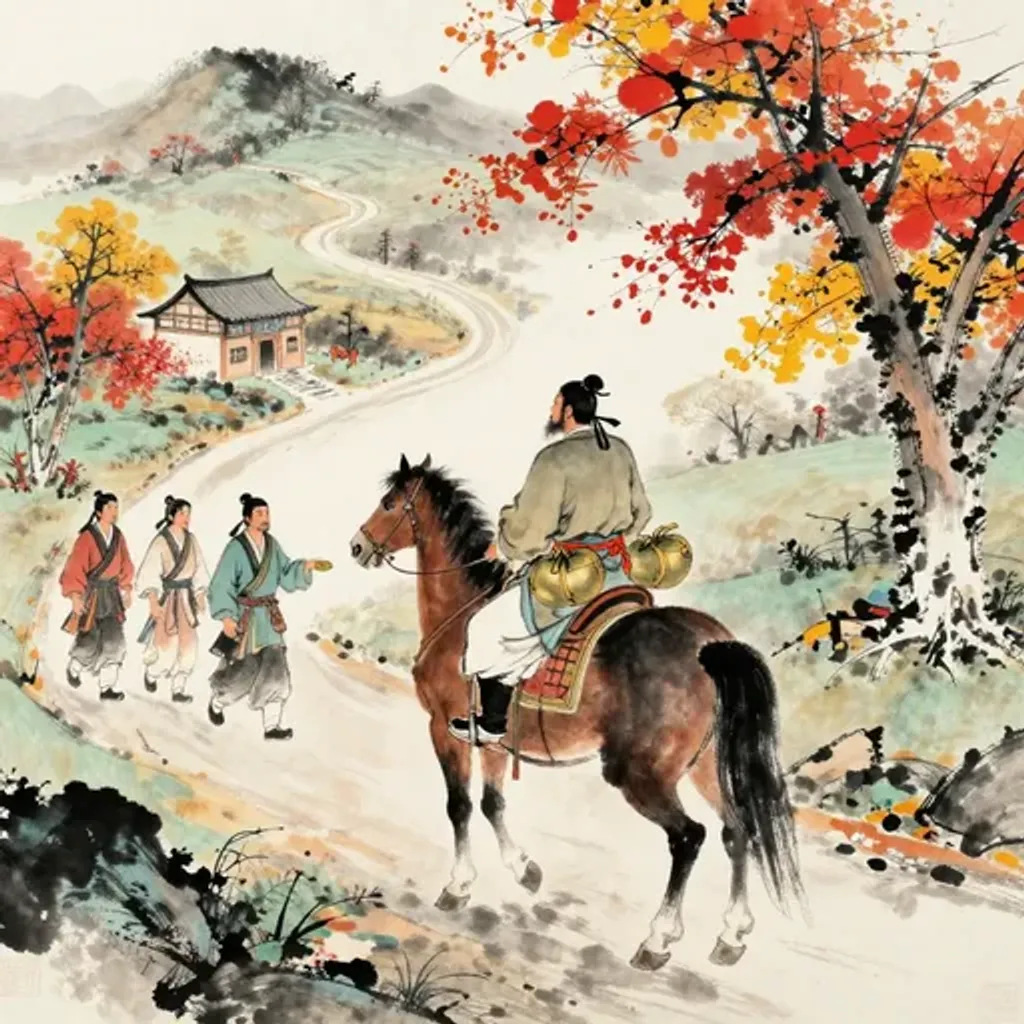
乘騮駕驪,遊至東齊。遭遇行旅,逆我以資,厚得利歸。
Riding chestnut and black horses; journeying to Eastern Qi. Meeting fellow travelers; they greet me with provisions. Richly I return with profit.
— Jiao Yanshou, Yilin (Forest of Changes), 1st century BC
Commentary
Wind stirs above the lake as one rides fine horses — a bay and a black — journeying east to Qi. Along the way, fellow travelers appear and offer generous provisions, and one returns home richly rewarded. The verse is a merchant's dream: a journey undertaken in good faith that meets unexpected generosity from strangers, multiplying the venture's returns. From Inner Truth to Approach, the lake's sincerity transforms into earth above the lake, the image of a great power drawing near with benevolent intent. The encounter with generous travelers embodies Approach's dynamic: abundance does not wait at the destination but comes to meet you on the road, attracted by the sincerity of your undertaking.
中孚 → 觀
Hexagram 61 → Hexagram 20: Contemplation
Changing lines: 1, 2
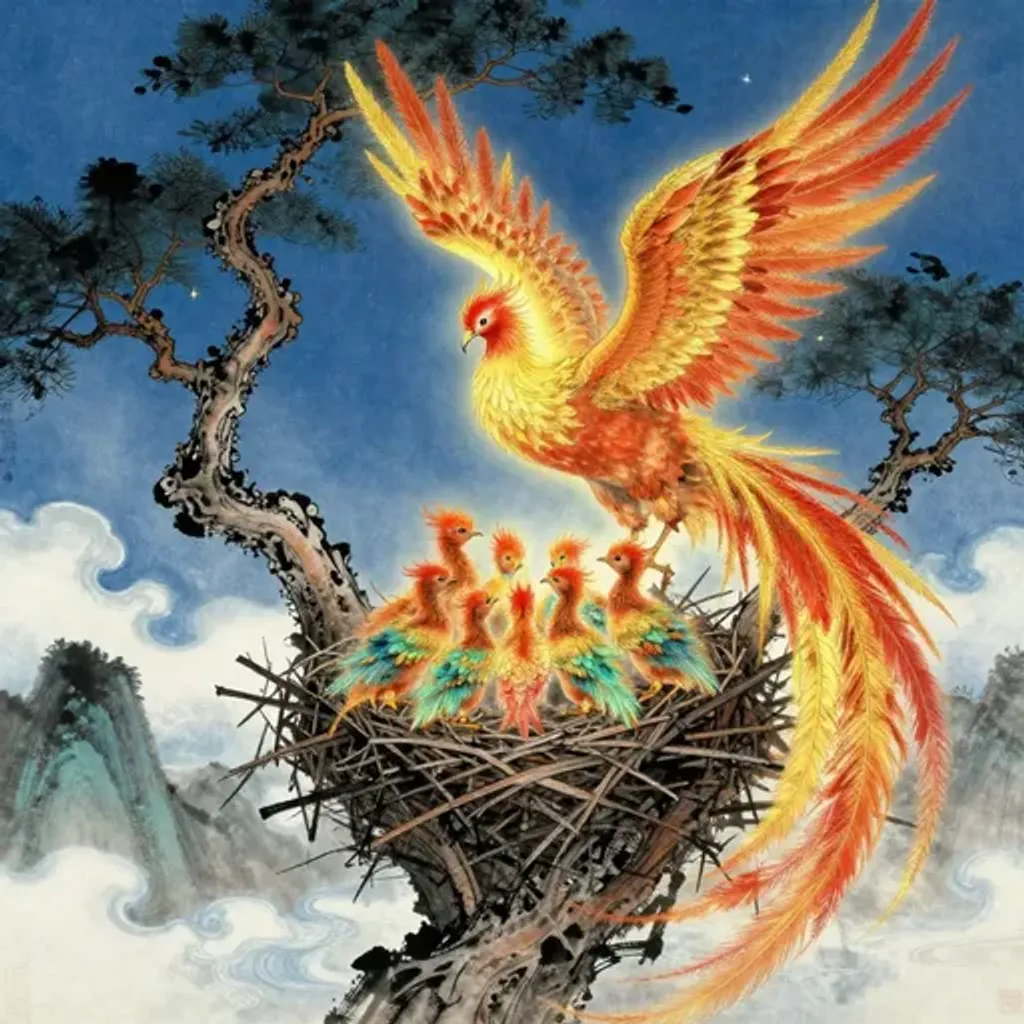
鳳生七子,同巢共乳,歡悅相保。
The phoenix bears seven young; sharing one nest and one breast. In joy they protect each other.
— Jiao Yanshou, Yilin (Forest of Changes), 1st century BC
Commentary
Wind stirs above the lake, and a phoenix raises seven young in a single nest, sharing nourishment and guarding one another in joy. The phoenix (鳳) is the supreme auspicious bird, and seven chicks thriving together represents ideal familial harmony — abundant progeny raised in mutual care. From Inner Truth to Contemplation, sincerity at the center yields to wind moving across the earth, the image of a ruler surveying his realm. The phoenix nest becomes a model of governance through observation: the parent bird does not command but watches over, and the young thrive not through discipline but through shared warmth. Contemplation at its finest is this gentle vigilance — trust made visible.
中孚 → 噬嗑
Hexagram 61 → Hexagram 21: Biting Through
Changing lines: 2, 4, 5
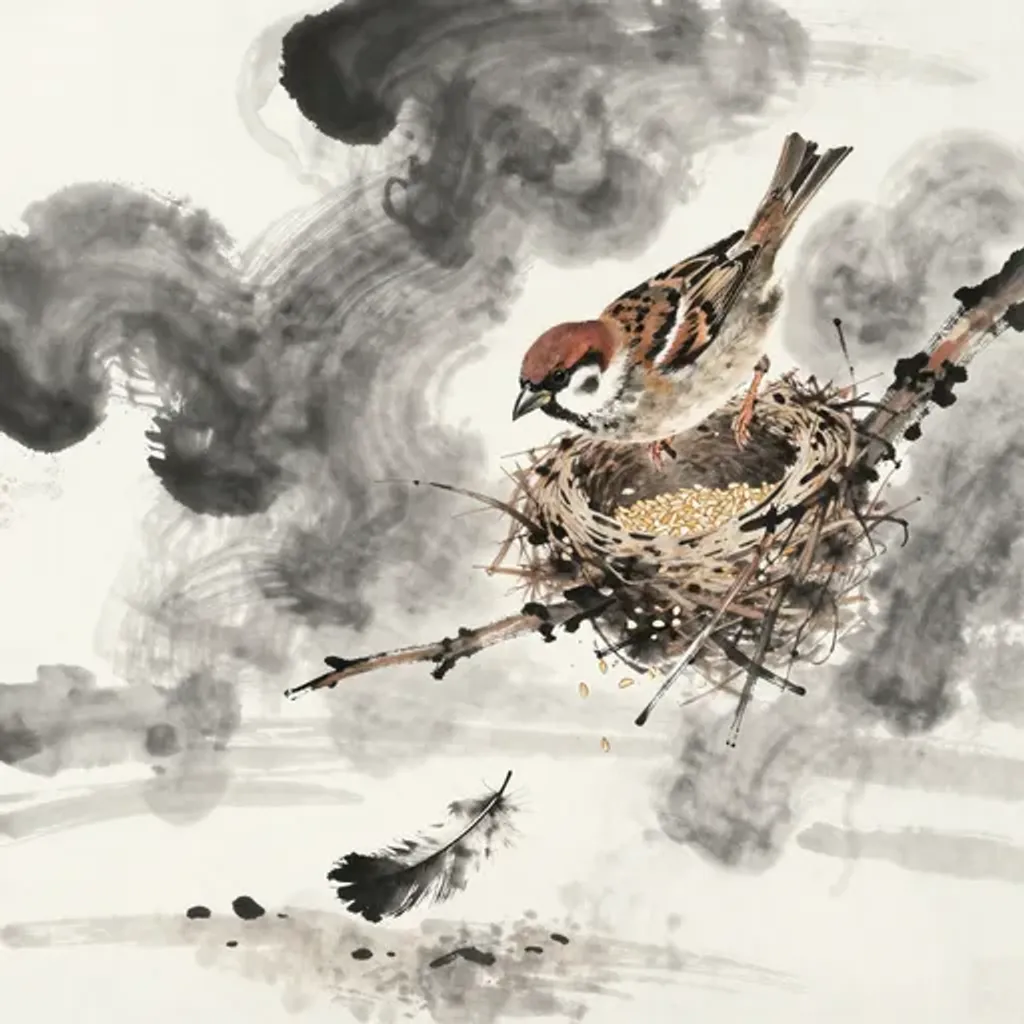
桃雀竊脂,巢於小枝。搖動不安,為風所吹。心寒漂搖,常憂殆危。
The peach sparrow steals fat; nesting on a small branch. Swaying without rest; blown about by wind. Heart cold and adrift; always fearing mortal danger.
— Jiao Yanshou, Yilin (Forest of Changes), 1st century BC
Commentary
Wind stirs above the lake, but the sparrow has built its nest on a slender branch. Stealing fat from the peach tree, perched on a twig too thin to hold, it sways in the wind, heart cold with constant fear of falling. The image is precarious livelihood sustained by petty theft: a bird too greedy to choose a stable roost, too frightened to enjoy what it has stolen. From Inner Truth to Biting Through, sincerity meets fire above thunder — the image of swift justice enforced. The sparrow's anxiety is not paranoia but premonition: one who lives by pilfering on a shaky perch will eventually face the lightning strike of consequence. Trust abused produces its own tribunal.
中孚 → 賁
Hexagram 61 → Hexagram 22: Grace
Changing lines: 2, 3, 5
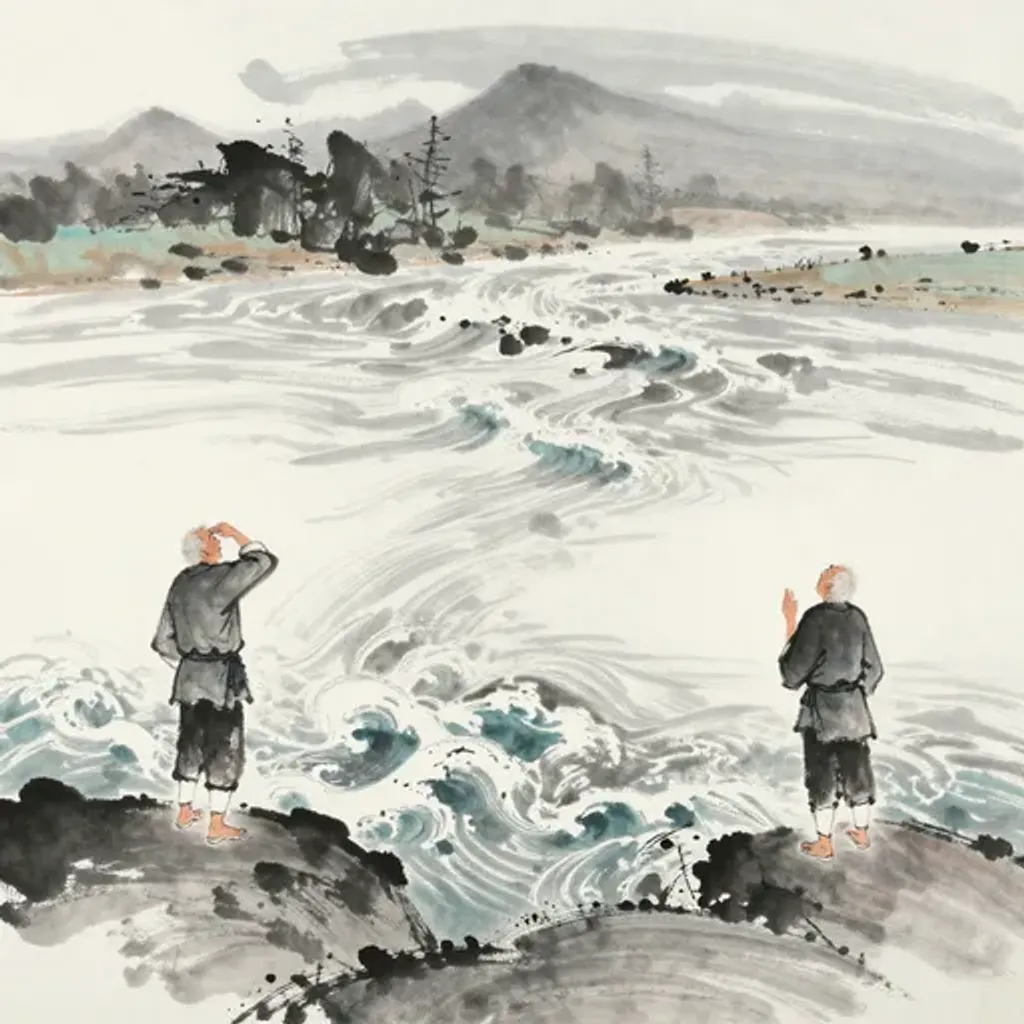
東山西山,各自止安。雖相登望,竟未同堂。
Singing to each other across the river — voices can be heard. But the wind is strong, the waves fierce — crossing cannot be made. Day after day gazing through the waterline to the sky — white-haired, still hoping for the old friend's silhouette.
— Jiao Yanshou, Yilin (Forest of Changes), 1st century BC
Commentary
Wind stirs above the lake, but the original verse tells of east mountain and west mountain, each resting in its own place. Though they gaze at one another from afar, they never share the same hall. The image is separation despite mutual longing — two elevated positions that can see each other perfectly but cannot bridge the distance. From Inner Truth to Grace, sincerity meets fire glowing beneath the mountain. Grace adorns the surface but cannot alter the structure beneath: the mountains remain apart no matter how beautifully the firelight illuminates each peak. The verse captures the poignancy of connection that remains aesthetic rather than actual — admiration across an unbridgeable gap, decorating distance with longing.
中孚 → 剝
Hexagram 61 → Hexagram 23: Splitting Apart
Changing lines: 1, 2, 5
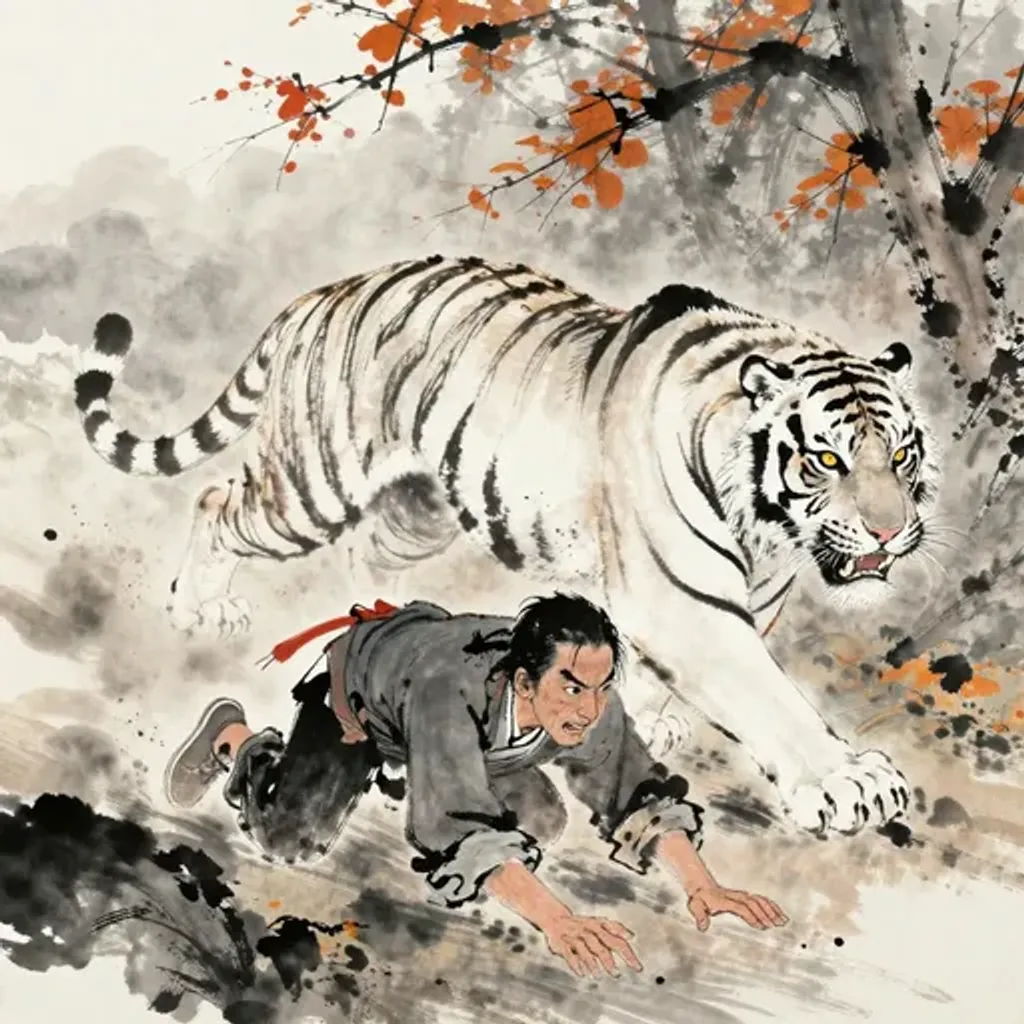
匍伏走出,驚懼皇恐。白虎生孫,蓐收在後。
Crawling and fleeing; terrified and afraid. The white tiger begets its grandson; Rushou follows behind.
— Jiao Yanshou, Yilin (Forest of Changes), 1st century BC
Commentary
Wind stirs above the lake, but terror strikes. One crawls and scrambles out in panic, trembling with imperial dread. The White Tiger begets its offspring, and Rushou follows behind. The White Tiger is the celestial guardian of the west, associated with autumn, metal, and lethal judgment. Rushou (蓐收) is the deity of autumn and punishment, wielding an axe with tiger claws and white hair — the divine executioner who enforces heaven's sentences. From Inner Truth to Splitting Apart, sincerity confronts the mountain crumbling upon the earth. The appearance of these autumnal powers signals stripping away: what seemed solid is being dismantled by cosmic forces that brook no appeal. One can only flee.
中孚 → 復
Hexagram 61 → Hexagram 24: Return
Changing lines: 2, 5, 6
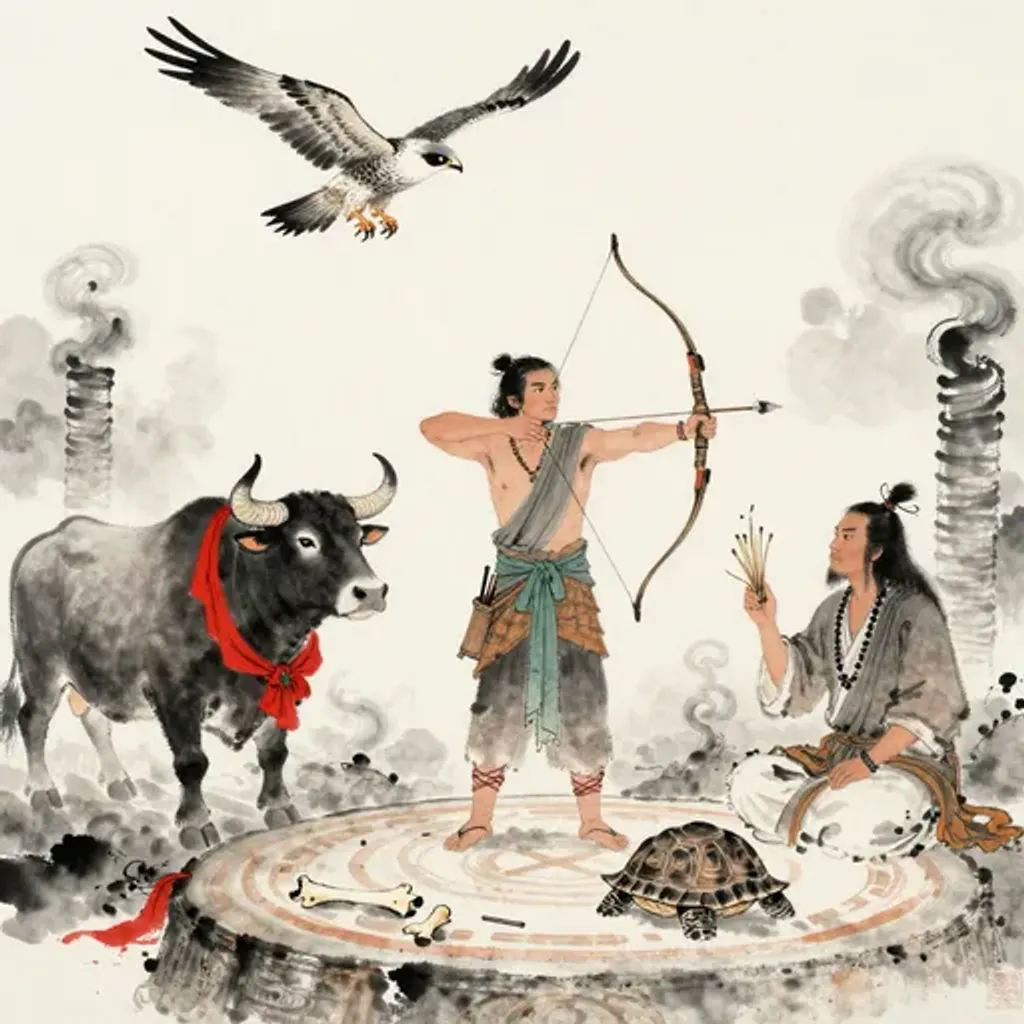
重弋射隼,不知所定。質疑蓍龜,明神祭報。告以肥牡,宜利止居。
Shooting repeatedly at the falcon; not knowing where to aim. Consulting yarrow and tortoise; the bright spirits receive the offering. Reporting with a fat bull; dwelling in stillness brings advantage.
— Jiao Yanshou, Yilin (Forest of Changes), 1st century BC
Commentary
Wind stirs above the lake as arrows fly again and again at the falcon, but the hunter cannot decide where to aim. Doubts arise, and one consults the yarrow stalks and tortoise shell. The spirits respond clearly: offer a fat ram and settle where you are. The verse traces the arc from indecision to divination to resolution. The repeated shooting (重弋射隼) without success embodies scattered intention, while the oracle's answer is simple: stop chasing, make your offering, stay home. From Inner Truth to Return, sincerity meets thunder resting within the earth. Return is the solstice moment — the single yang line reappearing at the base. The oracle's counsel to stay aligns perfectly: true return means ceasing the frantic chase and allowing what was lost to come back of its own accord.
中孚 → 无妄
Hexagram 61 → Hexagram 25: Innocence
Changing lines: 2, 4
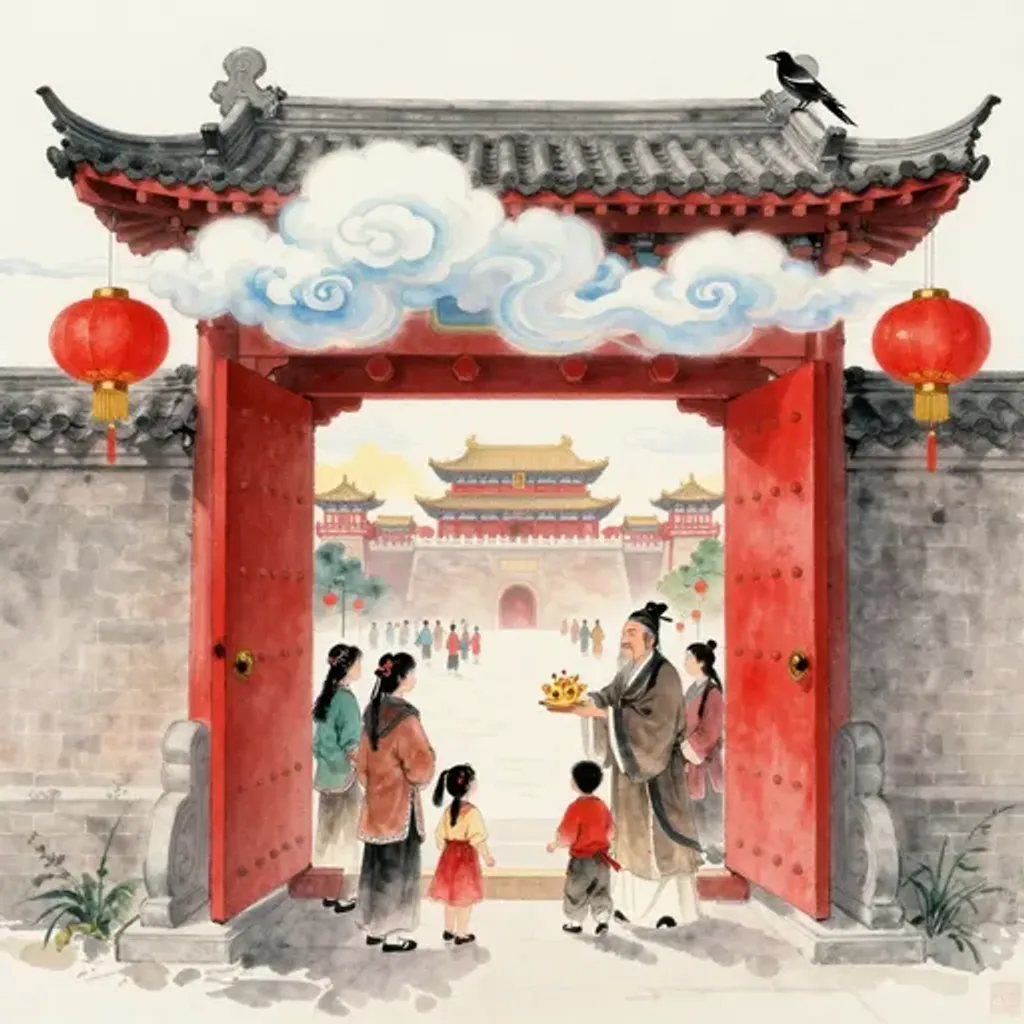
開門內福,喜至我側。嘉門善祥,為吾室宅。宮城洛邑,以招文德。
Opening the gate to welcome blessing; joy arrives at my side. Auspicious gate, good omen; becoming my house and home. Palace city of Luoyang; attracting civil virtue.
— Jiao Yanshou, Yilin (Forest of Changes), 1st century BC
Commentary
Wind stirs above the lake, and the gates are opened to welcome blessing. Joy arrives at one's side; an auspicious threshold brings good fortune to one's household. The walled city of Luoyi is built to attract the culture of King Wen. The verse culminates in the founding of the eastern capital: the Duke of Zhou established Luoyi (modern Luoyang) as a secondary capital to consolidate Zhou governance over the eastern territories, naming it Chengzhou — 'Completion of Zhou.' The phrase 'to attract civil virtue' (招文德) echoes the Shujing's vision of governance through moral magnetism. From Inner Truth to Innocence, sincerity yields to thunder moving beneath heaven — action aligned with heaven's will, free of ulterior motive.
中孚 → 大畜
Hexagram 61 → Hexagram 26: Great Taming
Changing lines: 3, 5
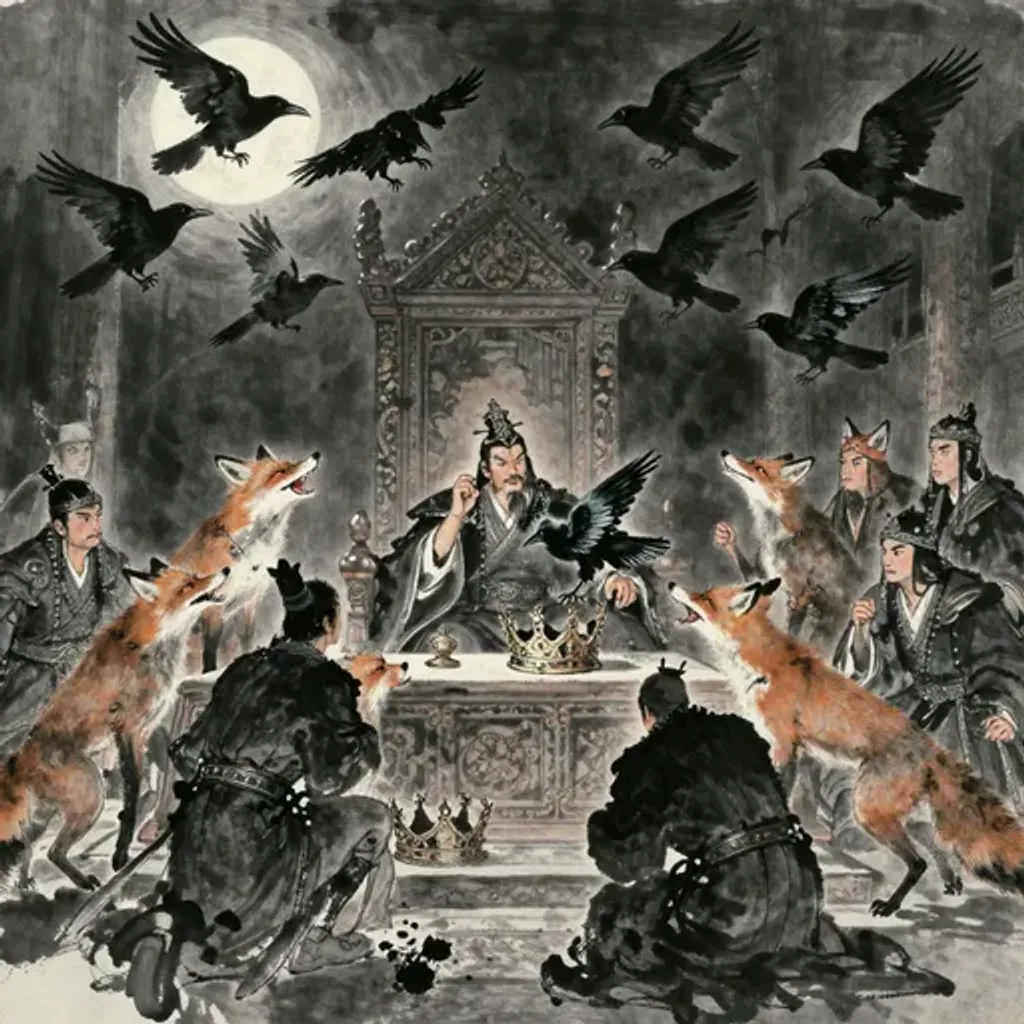
烏飛狐鳴,國亂不寧。下強上弱,為陰所刑。
Crows fly and foxes cry; the state falls to disorder. The low overpower the high; punished by yin forces.
— Jiao Yanshou, Yilin (Forest of Changes), 1st century BC
Commentary
Wind stirs above the lake, but crows fly and foxes cry — the state is in chaos. The strong dominate from below while the weak falter above, punished by the ascendant yin. Crows and foxes are traditional omens of disorder: the crow's daytime cry and the fox's nocturnal shriek signal the inversion of natural rhythms. From Inner Truth to Great Taming, sincerity meets heaven stored within the mountain. Great Taming is the accumulation of strength through restraint, but here the accumulated power belongs to the wrong hands. The lower ministers have grown too strong; the ruler is a puppet. When yin punishes yang and the base overwhelms the summit, even the mountain's capacity for storage becomes a prison for legitimate authority.
中孚 → 頤
Hexagram 61 → Hexagram 27: Nourishment
Changing lines: 2, 5
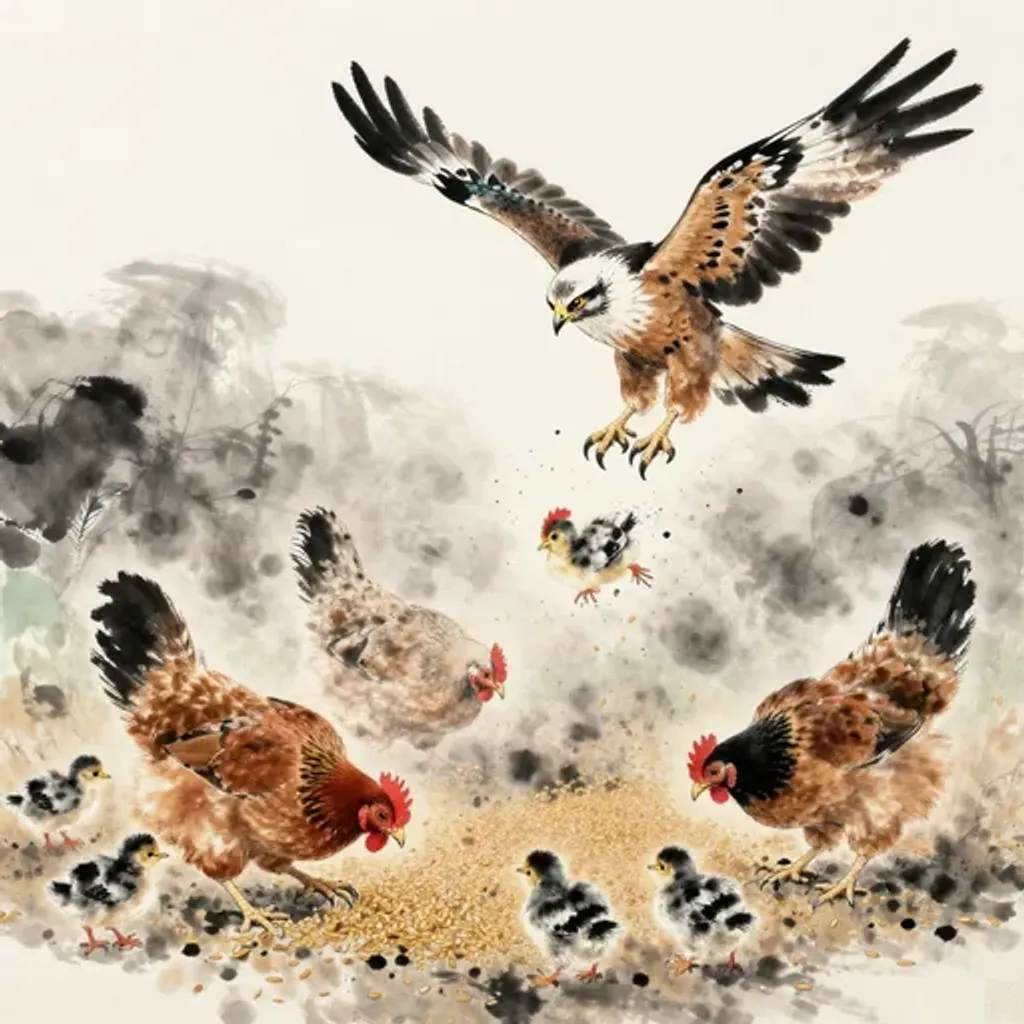
三雞啄粟,八雛從食。飢鳶卒擊,失亡兩叔。
Three hens peck grain; eight chicks follow to feed. A hungry kite strikes suddenly; two are lost.
— Jiao Yanshou, Yilin (Forest of Changes), 1st century BC
Commentary
Wind stirs above the lake as three hens peck at grain while eight chicks follow to feed. Then a hungry kite swoops suddenly, and two of the young are lost. The scene begins in pastoral calm — a mother hen with her brood, a picture of nourishment and care. The kite's strike shatters the idyll: the predator takes precisely the vulnerable, and two chicks vanish. From Inner Truth to Nourishment, sincerity meets the mountain above thunder — the image of careful speech and measured sustenance. The verse warns that nourishment without vigilance invites predation. The mountain must guard what the thunder stirs to life; feeding in the open, unprotected, turns abundance into an invitation for loss.
中孚 → 大過
Hexagram 61 → Hexagram 28: Great Exceeding
Changing lines: 1, 3, 4, 6
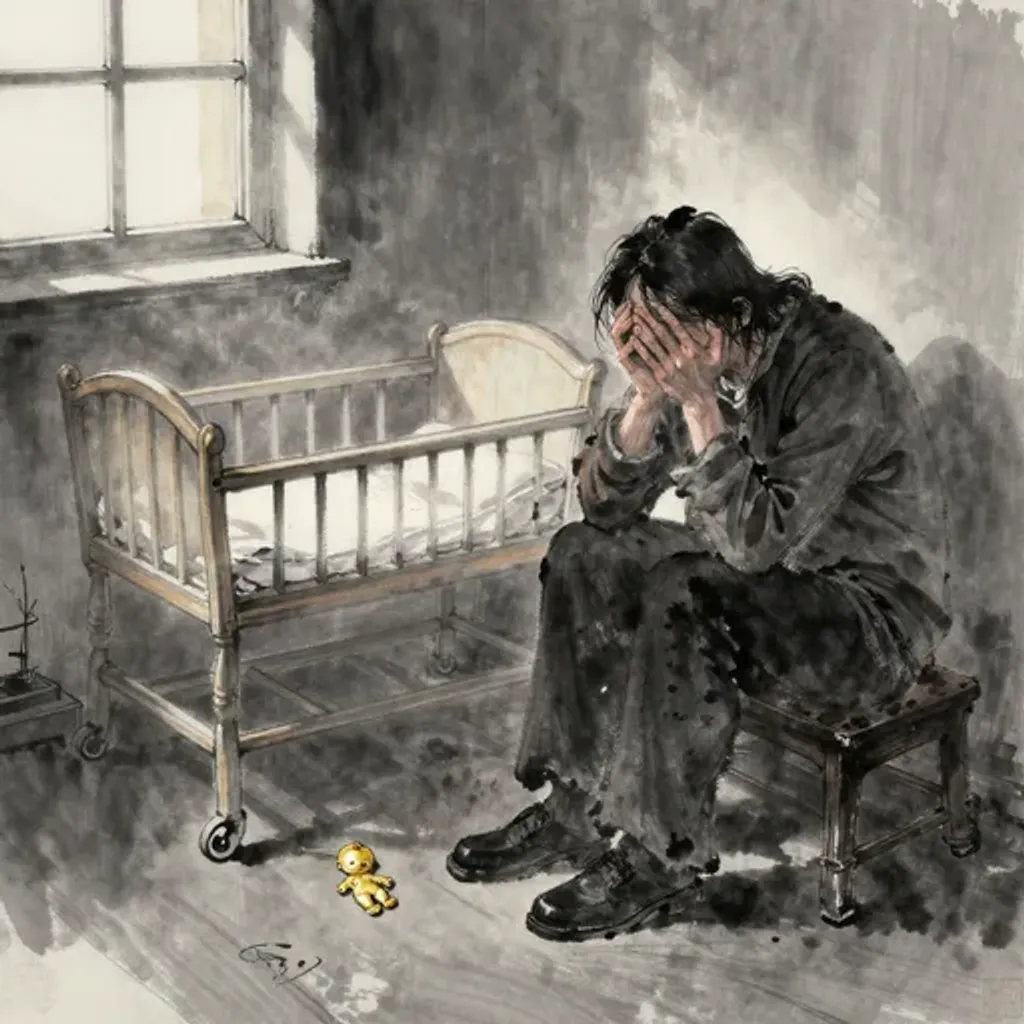
歎息不悅,憂從中出。喪我金嬰,无妄失位。
Sighing without joy; sorrow emerges from within. Losing my golden infant; innocent yet displaced.
— Jiao Yanshou, Yilin (Forest of Changes), 1st century BC
Commentary
Wind stirs above the lake, but only sighs emerge. Grief wells from within, inconsolable. A golden infant is lost; through no fault of one's own, one's position is forfeited. The 'golden infant' (金嬰) likely refers to a precious heir or treasure — something irreplaceable, taken without justification. 'Wuwang' (无妄) here puns on both 'innocence' and 'without recklessness,' suggesting the loss strikes despite blameless conduct. From Inner Truth to Great Exceeding, sincerity confronts the lake submerging the trees — an image of overwhelming pressure. The ridgepole of one's life bends past its limit. Grief this deep signals that the structure can no longer hold, and what follows must be either noble solitude or complete collapse.
中孚 → 坎
Hexagram 61 → Hexagram 29: The Abysmal Water
Changing lines: 1, 6
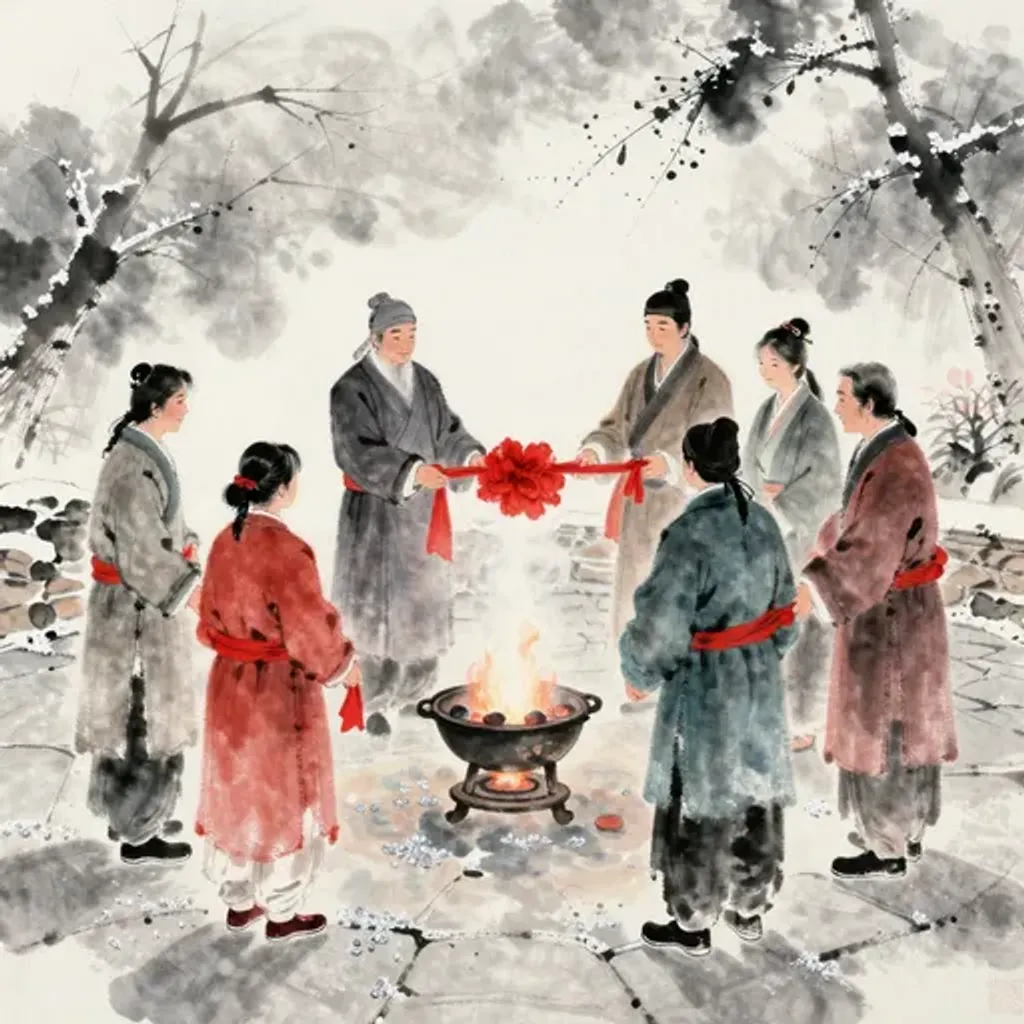
剛柔相呼,三姓為家。霜降既同,惠我以仁。
Hard and soft call to each other; three surnames form one family. After frost falls together; they show me benevolence.
— Jiao Yanshou, Yilin (Forest of Changes), 1st century BC
Commentary
Wind stirs above the lake as the firm and yielding call to each other. Three surnames form one household. When frost descends they share the same hearth, and kindness binds them. The verse celebrates the formation of a blended or extended family: different lineages choosing to live as one, united not by blood but by mutual benevolence. The frost's arrival — autumn's test of solidarity — proves the bond genuine. From Inner Truth to the Abysmal, sincerity enters the doubled water, danger upon danger. Yet the verse reads against the target hexagram's usual menace: precisely because these three families have chosen trust, they can navigate peril together. The Abysmal's lesson is that constancy of heart carries one through repeated danger.
中孚 → 離
Hexagram 61 → Hexagram 30: The Clinging Fire
Changing lines: 2, 3, 4, 5
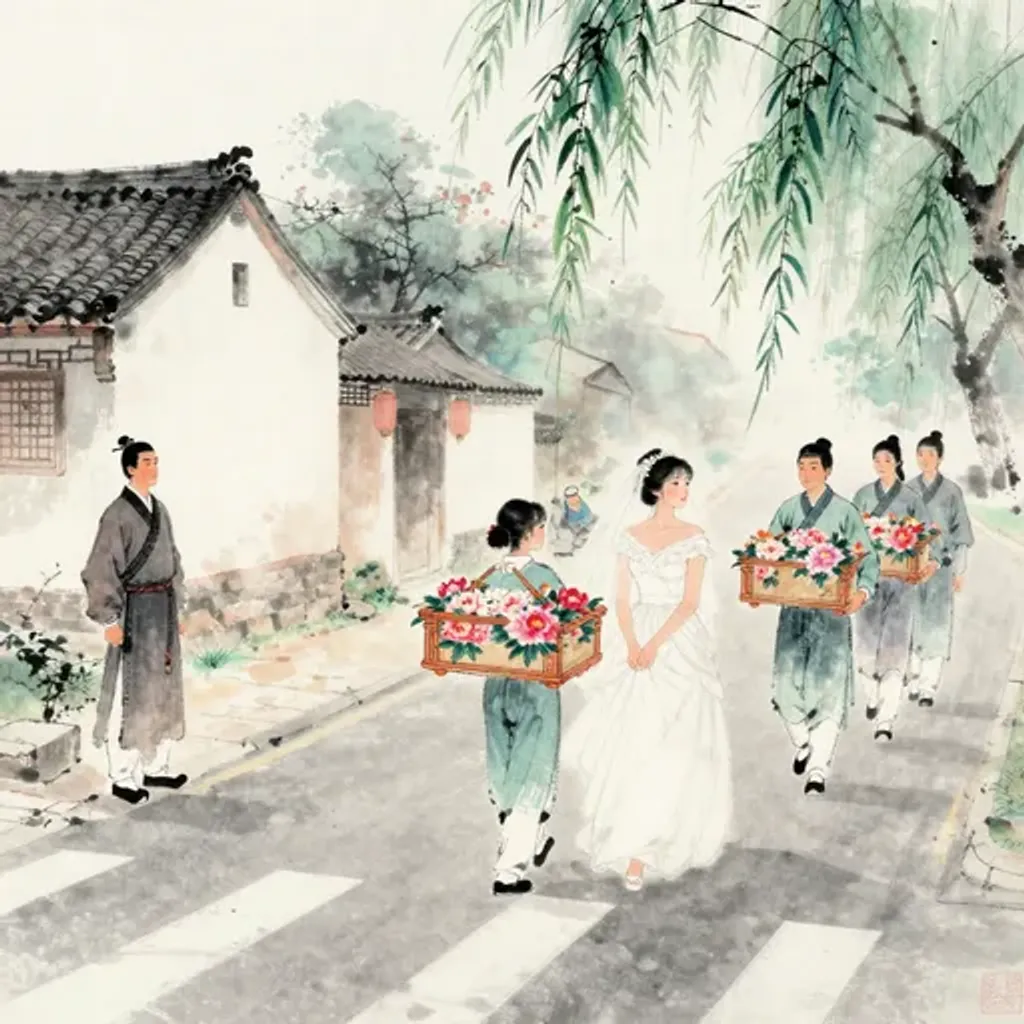
送我季女,至於蕩道。齊子旦夕,留連久處。
Escorting my youngest daughter; arriving at Tangdao. The son of Qi lingers morning and evening; staying long in this place.
— Jiao Yanshou, Yilin (Forest of Changes), 1st century BC
Commentary
Wind stirs above the lake as the youngest daughter is escorted to the road at Dang. A scion of Qi lingers morning and evening, reluctant to part. The verse evokes a bridal send-off or a prolonged farewell between lovers: the 'youngest daughter' (季女) is dispatched along the road, while someone from Qi stays on, unable to leave. The lingering suggests attachment that defies the journey's schedule. From Inner Truth to the Clinging, sincerity meets doubled fire — illumination that clings and reveals. Fire's nature is to attach itself to what it burns. The Qi suitor's lingering embodies this: clarity of feeling that will not let go, light that adheres to its object even as the road carries the beloved away.
中孚 → 咸
Hexagram 61 → Hexagram 31: Influence
Changing lines: 1, 2, 3, 4, 6
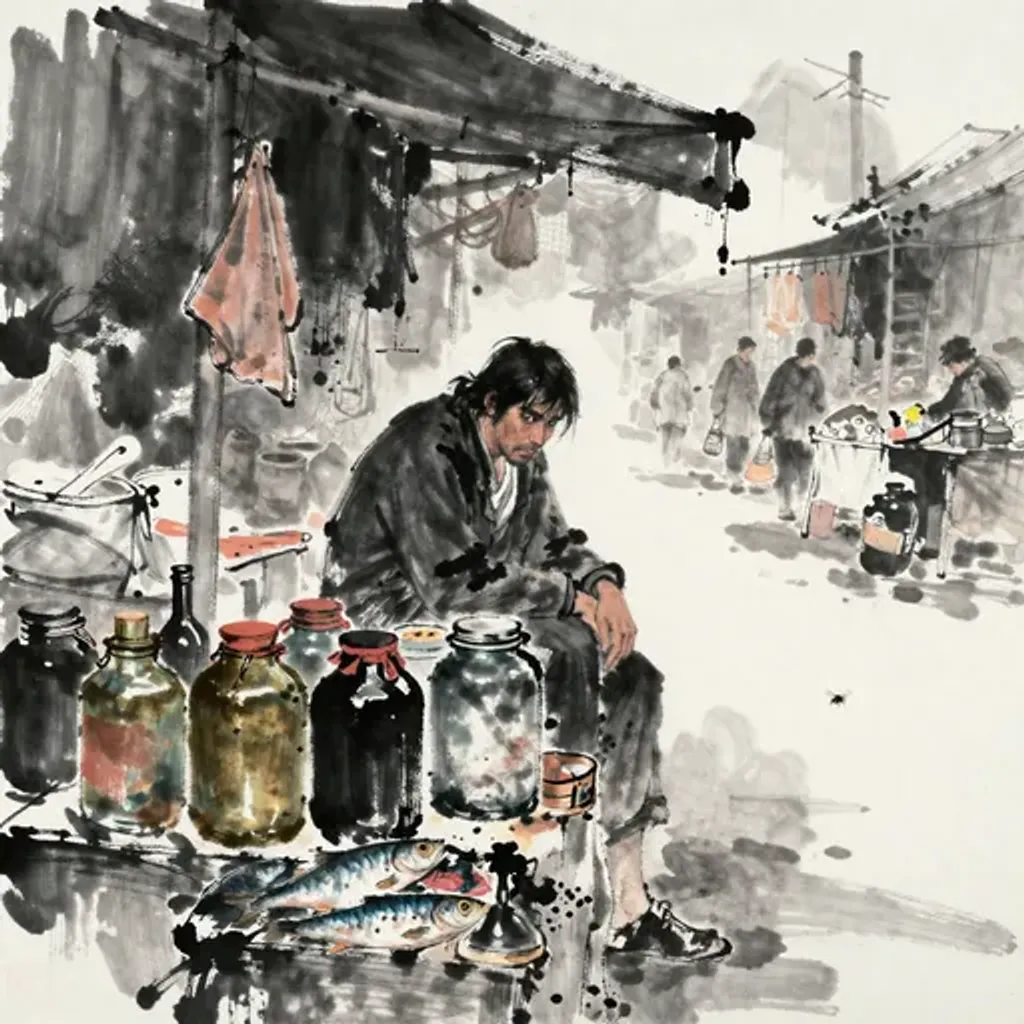
低頭竊視,有所遇避。行作不利,酒酸魚餒,眾莫貪嗜。
Head bowed, stealing glances; something to meet and avoid. Actions bring no profit; wine sours and fish spoils. None desire to taste them.
— Jiao Yanshou, Yilin (Forest of Changes), 1st century BC
Commentary
Wind stirs above the lake, but eyes are lowered in furtive glances. One peers from beneath, avoiding and evading. Actions bring no profit; the wine has turned sour and the fish is rancid — no one desires them. The verse paints a scene of failed commerce or hospitality: the host skulks, the goods are spoiled, the guests recoil. From Inner Truth to Influence, sincerity should meet the lake resting upon the mountain — the image of receptive openness that moves the heart. Yet the verse inverts every element: instead of open receptivity, there is concealment; instead of attraction, repulsion. Influence requires vulnerability, but when what one offers is corrupt and one's posture is evasive, no genuine connection can form.
中孚 → 恆
Hexagram 61 → Hexagram 32: Duration
Changing lines: 1, 3, 4, 5, 6
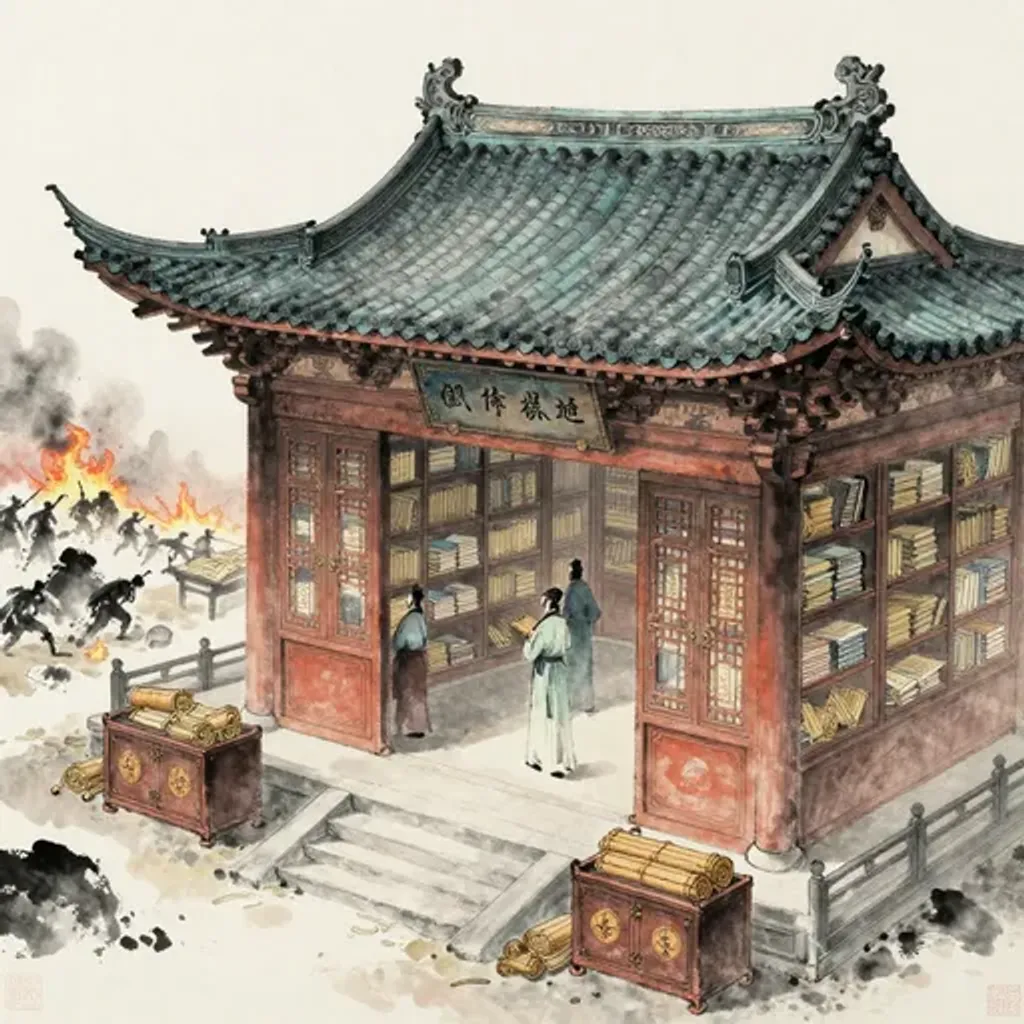
典策法書,藏閣蘭臺。雖遭亂潰,獨不遇災。
Records and law books; stored in the Orchid Terrace pavilion. Though chaos and ruin spread; this alone meets no disaster.
— Jiao Yanshou, Yilin (Forest of Changes), 1st century BC
Commentary
Wind stirs above the lake, and the canonical books and legal records are preserved in the Orchid Terrace archives. Though turmoil and collapse sweep the realm, these alone escape disaster. The Lantai (蘭臺) was the imperial archive of the Han dynasty, housing official documents, histories, and astronomical records. The verse celebrates the endurance of written knowledge: empires fall, armies scatter, but the texts survive. From Inner Truth to Duration, sincerity meets thunder above wind — the image of steadfast constancy. Duration's lesson is that what endures is not the strongest but the most consistent. The archives persist not through force but through the quiet, persistent truth inscribed within them, outlasting every storm.
中孚 → 遯
Hexagram 61 → Hexagram 33: Retreat
Changing lines: 1, 2, 3, 4
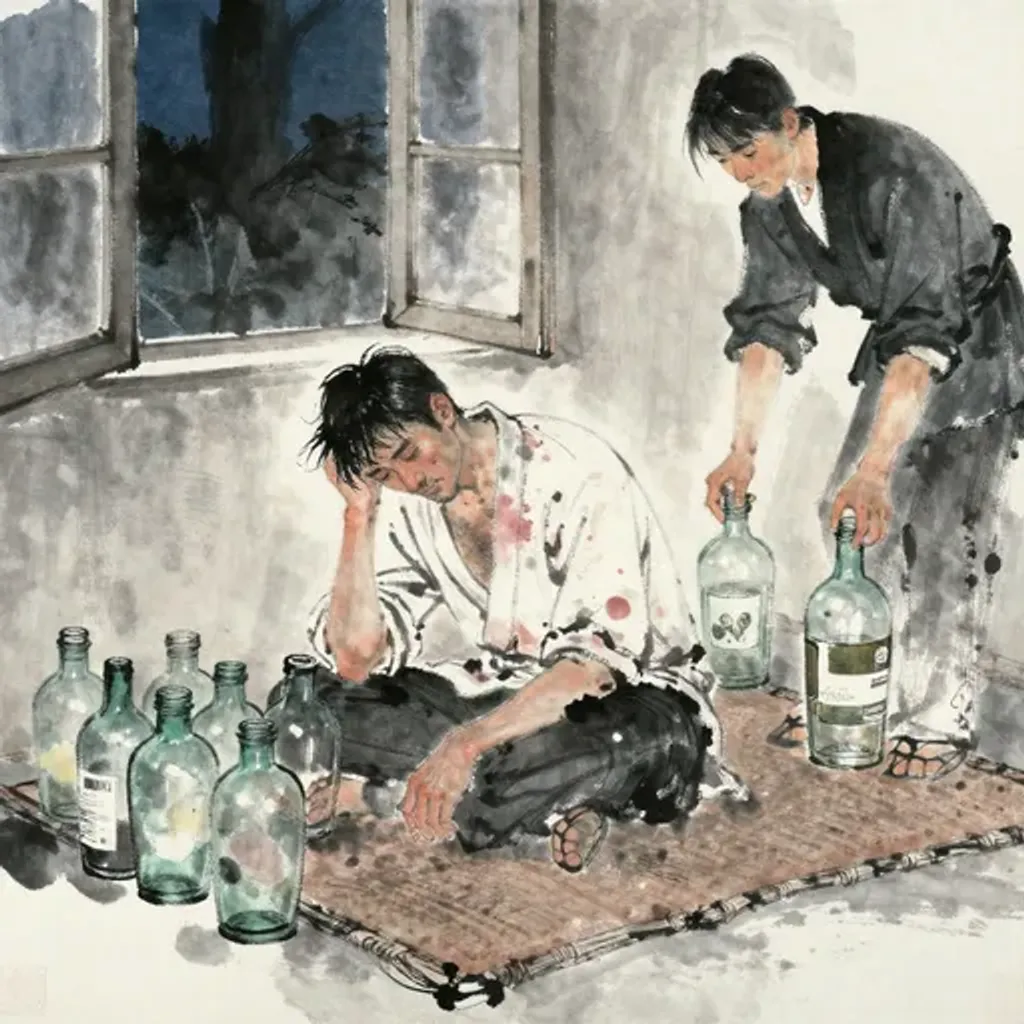
旦醉病酒,暮多瘳愈,不反為咎。
Drunk at dawn, sick from wine; by evening mostly recovered. Not changing brings blame.
— Jiao Yanshou, Yilin (Forest of Changes), 1st century BC
Commentary
Wind stirs above the lake, but one wakes drunk and sick from wine. By evening the illness abates; the mistake lies in not turning back sooner. The verse is a miniature parable of overindulgence: morning brings the hangover, evening brings recovery, but the real error was not stopping when one should have. From Inner Truth to Retreat, sincerity meets heaven above the mountain — the image of the gentleman distancing himself from what is unworthy. The morning drunkenness is the excess one failed to retreat from; the evening recovery comes only after the body enforces the withdrawal the will did not make. Retreat's wisdom is knowing the moment of 'enough' before the body forces the lesson.
中孚 → 大壯
Hexagram 61 → Hexagram 34: Great Power
Changing lines: 3, 4, 5, 6
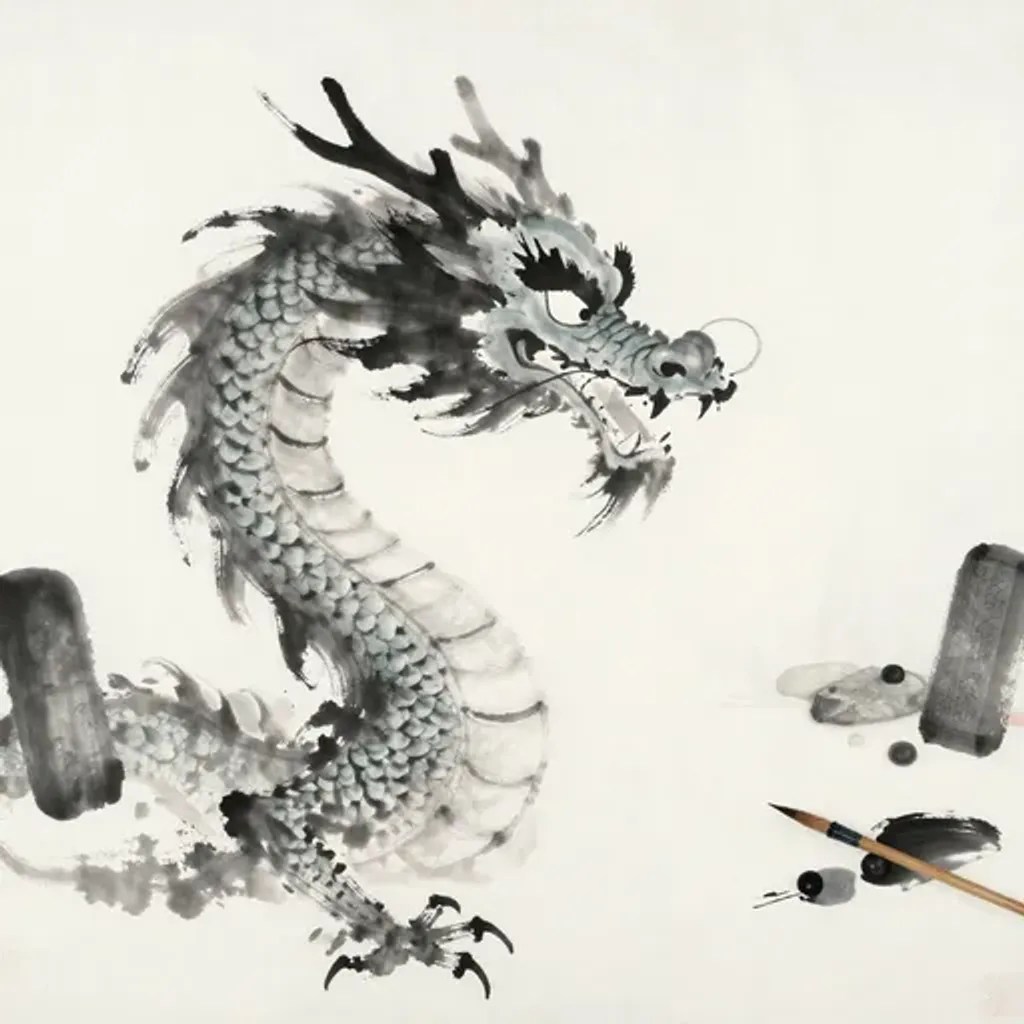
畫龍頭頸,文章未成。甘言美語,說辭無名。
Painting the dragon's head and neck; the pattern remains unfinished. Sweet words and fine phrases; eloquent speech without substance.
— Jiao Yanshou, Yilin (Forest of Changes), 1st century BC
Commentary
Wind stirs above the lake, but only the dragon's head and neck are sketched — the composition remains unfinished. Sweet words and fine rhetoric amount to nothing; eloquent speeches lack substance. The verse invokes the idiom of 'painting the dragon without dotting the eye' (畫龍點睛), here extended further: even the body is incomplete, let alone the animating detail. From Inner Truth to Great Power, sincerity should yield to thunder resounding above heaven — raw force that cannot be contained. Yet the verse shows the opposite: all preamble and no power. The dragon has no torso, no claws, no scales. Great Power requires the whole body of the dragon, not just its portrait. Eloquence without follow-through is decoration without force.
中孚 → 晉
Hexagram 61 → Hexagram 35: Progress
Changing lines: 1, 2, 4, 5
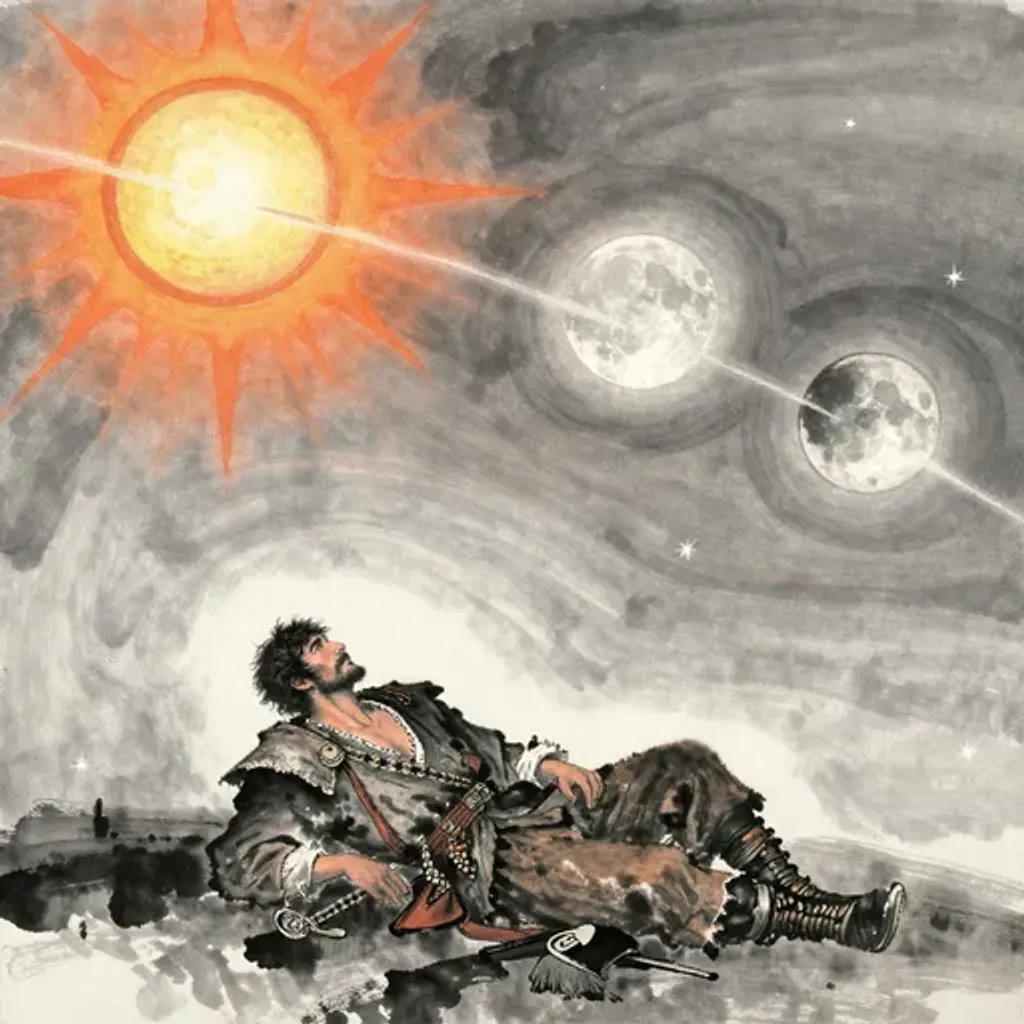
日月運行,一寒一暑。榮寵赫赫,不可得保。顛躓殞墜,更為士伍。
Sun and moon revolve; one cold season, one hot. Radiant favor blazing bright; cannot be preserved. Stumbling and falling; becoming a common soldier.
— Jiao Yanshou, Yilin (Forest of Changes), 1st century BC
Commentary
Wind stirs above the lake as sun and moon revolve, alternating between cold and heat. Favor blazes gloriously bright, yet cannot be preserved. One stumbles and falls, demoted to the rank of common soldier. The verse traces the arc of political fortune: from dazzling court favor to disgrace and exile, as inevitable as the turning seasons. From Inner Truth to Progress, sincerity meets fire emerging above the earth — the image of the sun rising at dawn. Yet the verse reads Progress in reverse: the sun that rose so brilliantly now sets. The cyclical imagery of hot and cold reminds that Progress is only one phase of a larger revolution. What advances must also recede; what blazes must also dim.
中孚 → 明夷
Hexagram 61 → Hexagram 36: Darkening of the Light
Changing lines: 2, 3, 5, 6
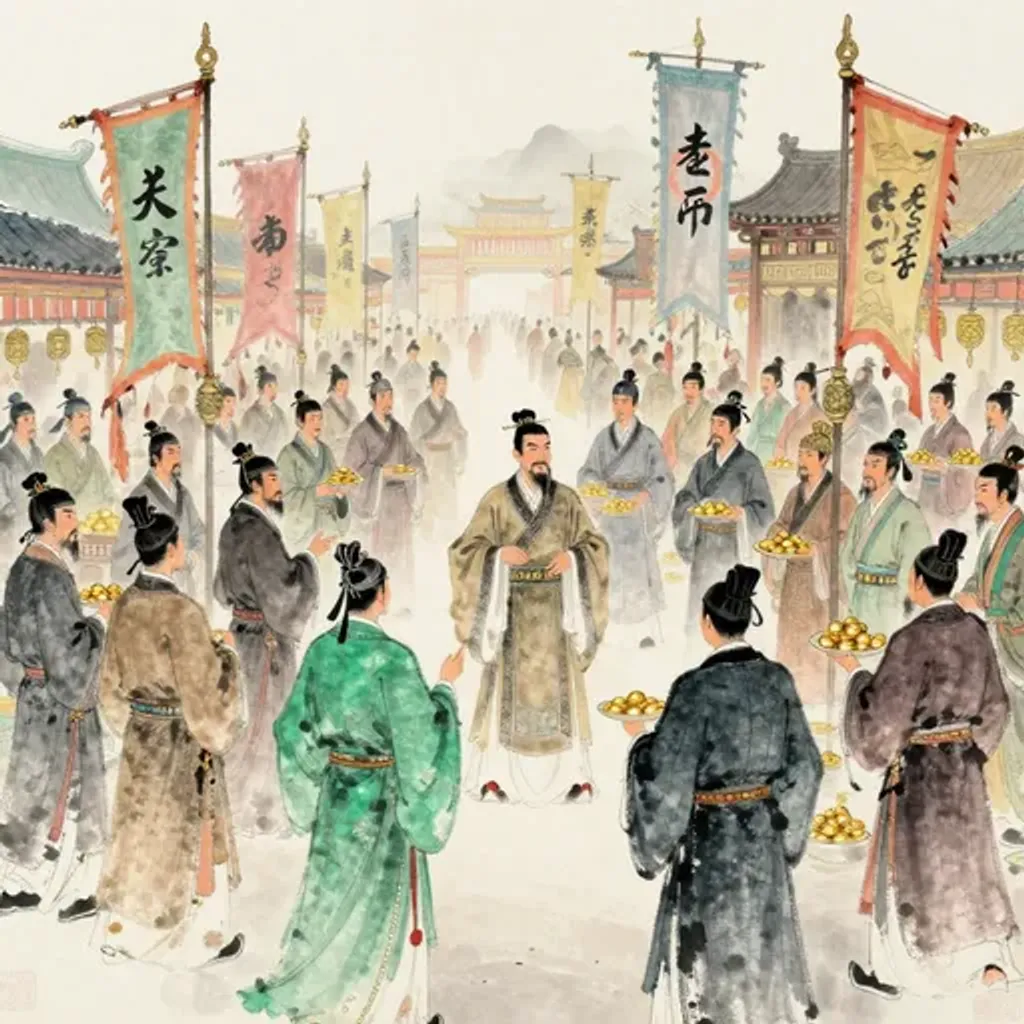
爭利王市,朝多君子。蘇氏六國,獲其榮寵。
Competing for profit in the royal market; the court is full of gentlemen. Su Qin of the six kingdoms; gained their radiant favor.
— Jiao Yanshou, Yilin (Forest of Changes), 1st century BC
Commentary
Wind stirs above the lake as men contend for profit in the royal marketplace, the court thronging with ambitious gentlemen. Su Qin unites the six states and wins their lavish favor. Su Qin was the great persuader of the Warring States period who forged the Vertical Alliance (合縱), persuading six kingdoms to unite against Qin. He wore the seals of all six states simultaneously — the pinnacle of diplomatic brilliance. From Inner Truth to Darkening of the Light, sincerity meets fire sinking beneath the earth. Su Qin's glory is the light about to be buried: the alliance fractured, the states fell one by one, and the rhetorician's triumph proved ephemeral. Brilliance that operates in a darkening world must eventually go underground.
中孚 → 家人
Hexagram 61 → Hexagram 37: The Family
Changing lines: 2, 3
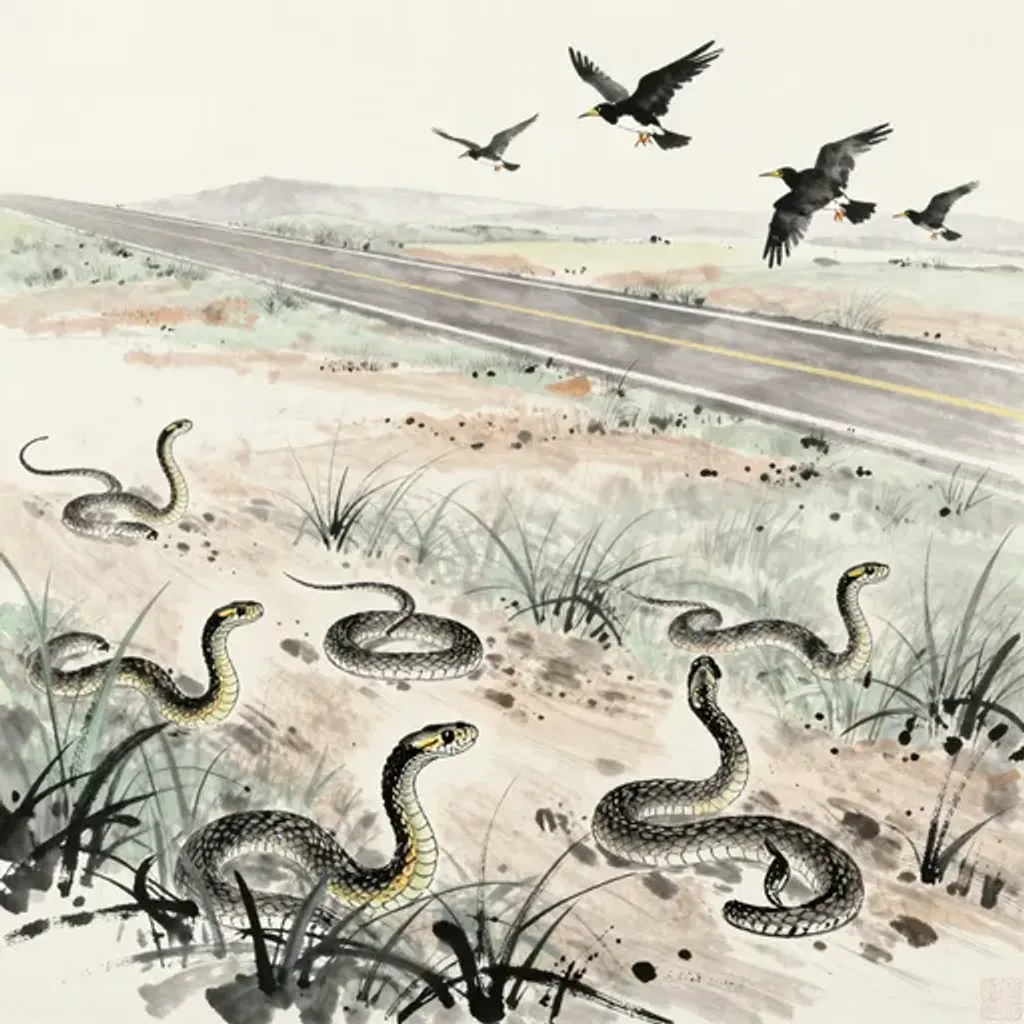
六蛇奔走,俱入茂草。驚於長塗,畏懼啄口。
Six snakes flee running; all entering thick grass. Startled on the long road; fearing pecking beaks.
— Jiao Yanshou, Yilin (Forest of Changes), 1st century BC
Commentary
Wind stirs above the lake, but six snakes flee in panic, plunging together into dense grass. Startled on the long road, they fear the pecking beak. The sudden flight of six serpents suggests a household or retinue scattering in terror, perhaps driven by a predatory bird overhead. The number six may echo the six children of Qian and Kun, here dispersed rather than united. From Inner Truth to the Family, sincerity should yield to wind emerging from fire — warmth radiating as gentle household influence. Yet the verse inverts the Family's promise: instead of orderly domestic harmony, the household scatters in disarray, each member fleeing into the wild, hunted rather than sheltered.
中孚 → 睽
Hexagram 61 → Hexagram 38: Opposition
Changing lines: 4, 5
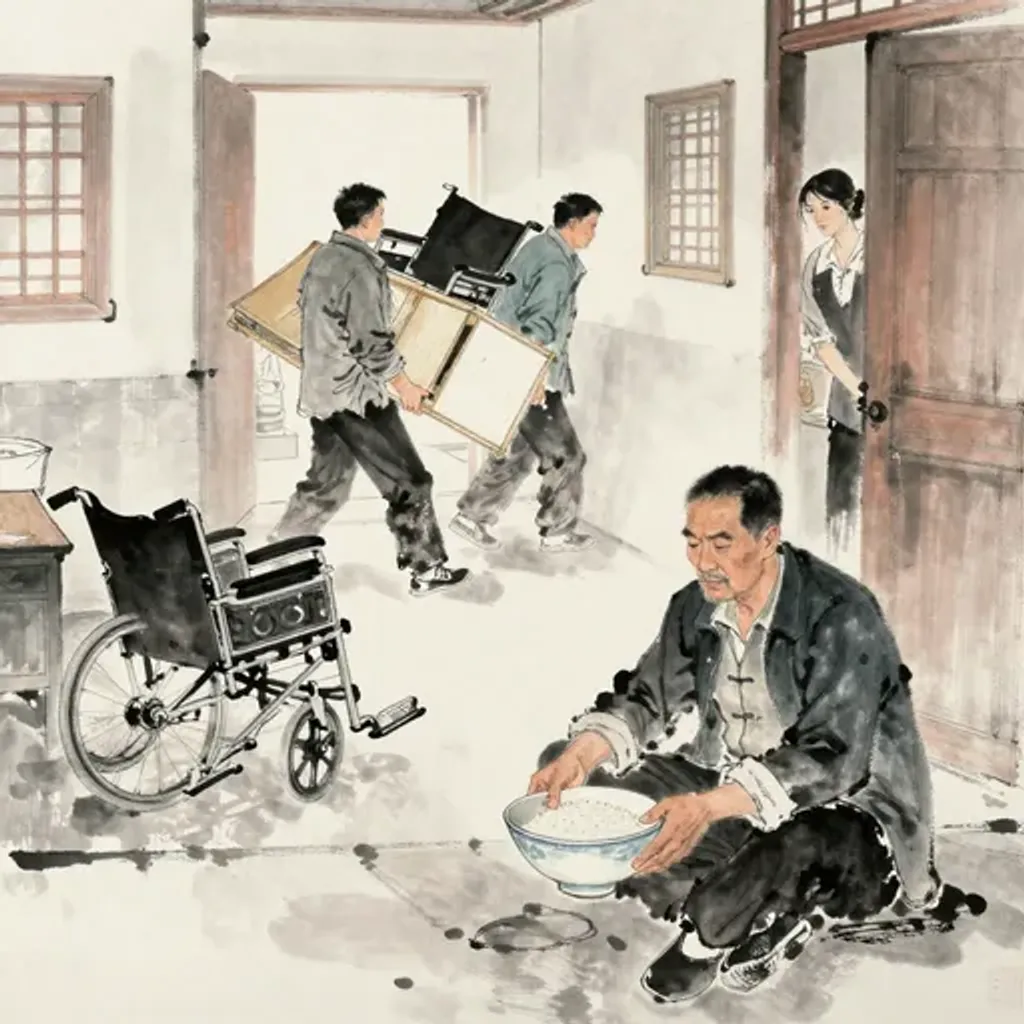
懸貆素餐,食非其任。失轝剝廬,休坐徙居。
Badger hanging, eating unearned pay; fed beyond one's merit. Losing carriage and stripped of house; resting and relocating.
— Jiao Yanshou, Yilin (Forest of Changes), 1st century BC
Commentary
Wind stirs above the lake, but the badger feeds without earning its keep — a parasite dining on undeserved rations. Then the carriage is lost, the hut is stripped bare, and one must sit idle and relocate. The 'suspended badger eating unearned meals' (懸貆素餐) evokes the idiom for officials who draw salary without contributing. The consequence is total dispossession: transport gone, shelter demolished, forced to move. From Inner Truth to Opposition, sincerity meets fire above the lake — forces that move in contrary directions. The verse embodies Opposition's dynamic: when one consumes without contributing, the system eventually rejects the parasite. Fire rises while the lake sinks; what cannot coexist must separate.
中孚 → 蹇
Hexagram 61 → Hexagram 39: Obstruction
Changing lines: 1, 2, 3, 6
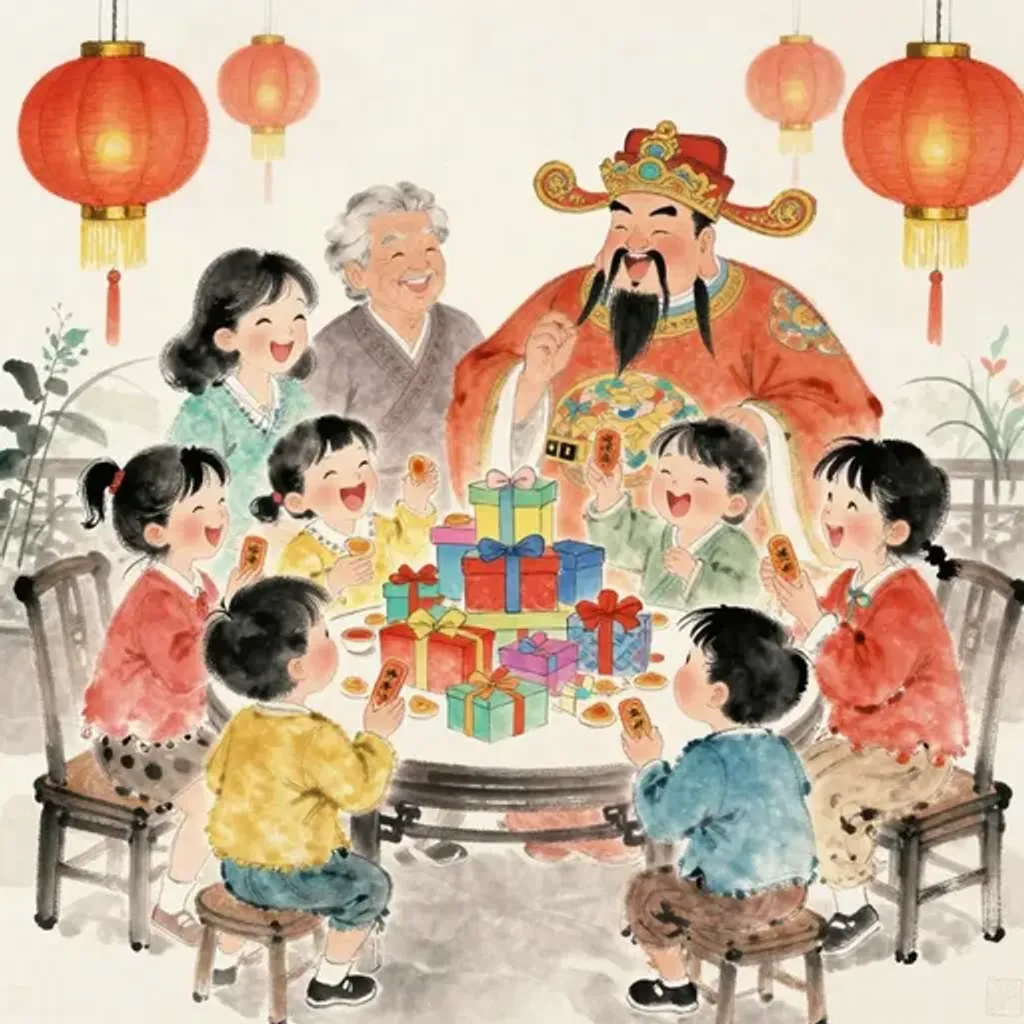
歡欣九子,俱見大喜。攜提福善,王孫是富。
Rejoicing in nine children; all witness great happiness. Carrying blessings and virtue; the king's descendants grow wealthy.
— Jiao Yanshou, Yilin (Forest of Changes), 1st century BC
Commentary
Wind stirs above the lake as nine children rejoice together in great delight. They carry blessings and goodness with them; the prince's descendants are wealthy. The verse is pure celebration: a large family united in happiness, prosperity flowing through the generations. The 'nine children' (九子) may allude to the ideal of numerous sons ensuring a lineage's continuity and strength. From Inner Truth to Obstruction, sincerity meets water upon the mountain — danger encountered on the high path. Yet the verse reads against the hexagram's difficulty: precisely because the family's inner trust is strong, the obstacles of Obstruction are navigated rather than feared. Wealth here is not gold but the accumulated goodwill of a clan whose bonds hold firm under pressure.
中孚 → 解
Hexagram 61 → Hexagram 40: Deliverance
Changing lines: 1, 4, 5, 6
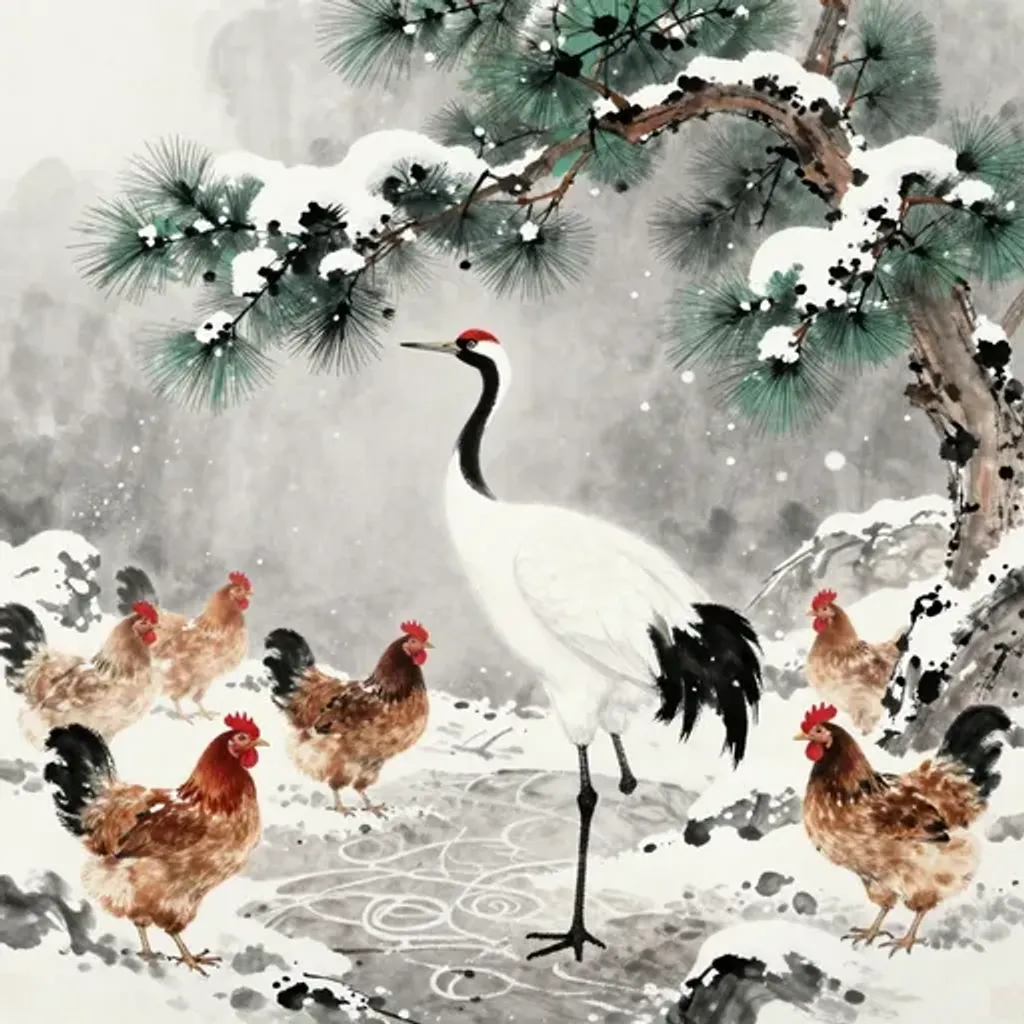
伯夷叔齊,貞廉之師。以德防患,憂禍不存。
Pine and cypress are last to wither — only in the year's coldest days is this known. A crane stands among chickens, different without a word.
— Jiao Yanshou, Yilin (Forest of Changes), 1st century BC
Commentary
Wind stirs above the lake, and the original verse names Boyi and Shuqi — paragons of incorruptible loyalty who serve as teachers of integrity. Through virtue they ward off calamity; worry and misfortune do not touch them. Boyi and Shuqi were princes of Guzhu who refused to eat Zhou grain after the conquest of Shang, starving to death on Mount Shouyang rather than compromise their principles. From Inner Truth to Deliverance, sincerity meets thunder and rain — the storm that washes away what is obstructing. Their moral stance is itself the act of deliverance: by refusing complicity with what they deemed illegitimate, they dissolved the hold that political coercion had over their conscience. Integrity became its own liberation.
中孚 → 損
Hexagram 61 → Hexagram 41: Decrease
Changing lines: 5
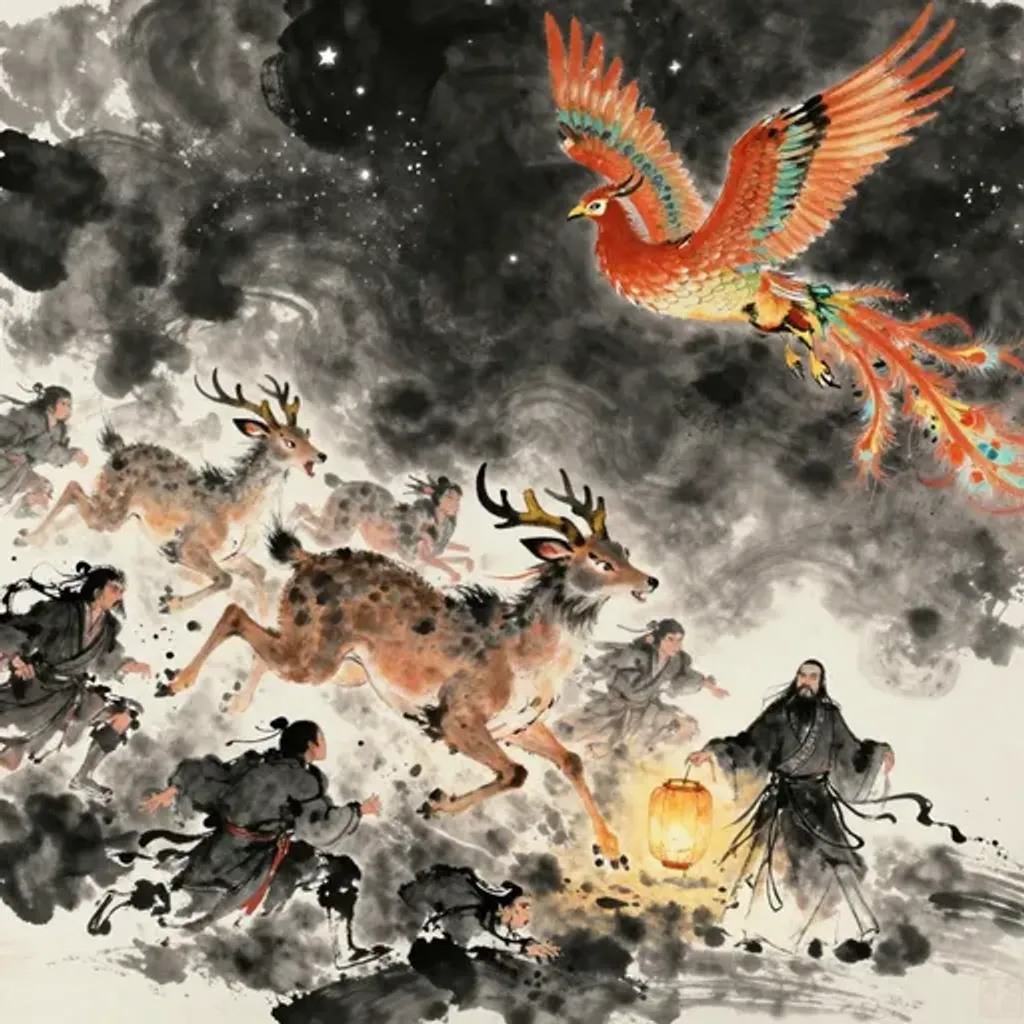
雄聖伏名,人匿麟驚。走鳳飛北,亂潰未息。
The hero sage conceals his name; people hide, the qilin startles. The fleeing phoenix flies north; chaos and ruin do not cease.
— Jiao Yanshou, Yilin (Forest of Changes), 1st century BC
Commentary
Wind stirs above the lake, but the sage hero conceals his name while the hidden unicorn startles the people. The phoenix flies north; turmoil and collapse have not yet subsided. Sages vanish, auspicious creatures flee — the qilin hides and the phoenix migrates to the wrong direction. All portents of cosmic disorder: when worthies withdraw and sacred beasts take flight, the world's foundations are crumbling. From Inner Truth to Decrease, sincerity confronts the mountain above the lake, the image of restraining desire and subduing anger. Yet here the decrease is involuntary: the world is losing its best, and nobody chose this diminishment. The sage's concealment and the phoenix's flight northward are symptoms of a civilization in free fall.
中孚 → 益
Hexagram 61 → Hexagram 42: Increase
Changing lines: 2
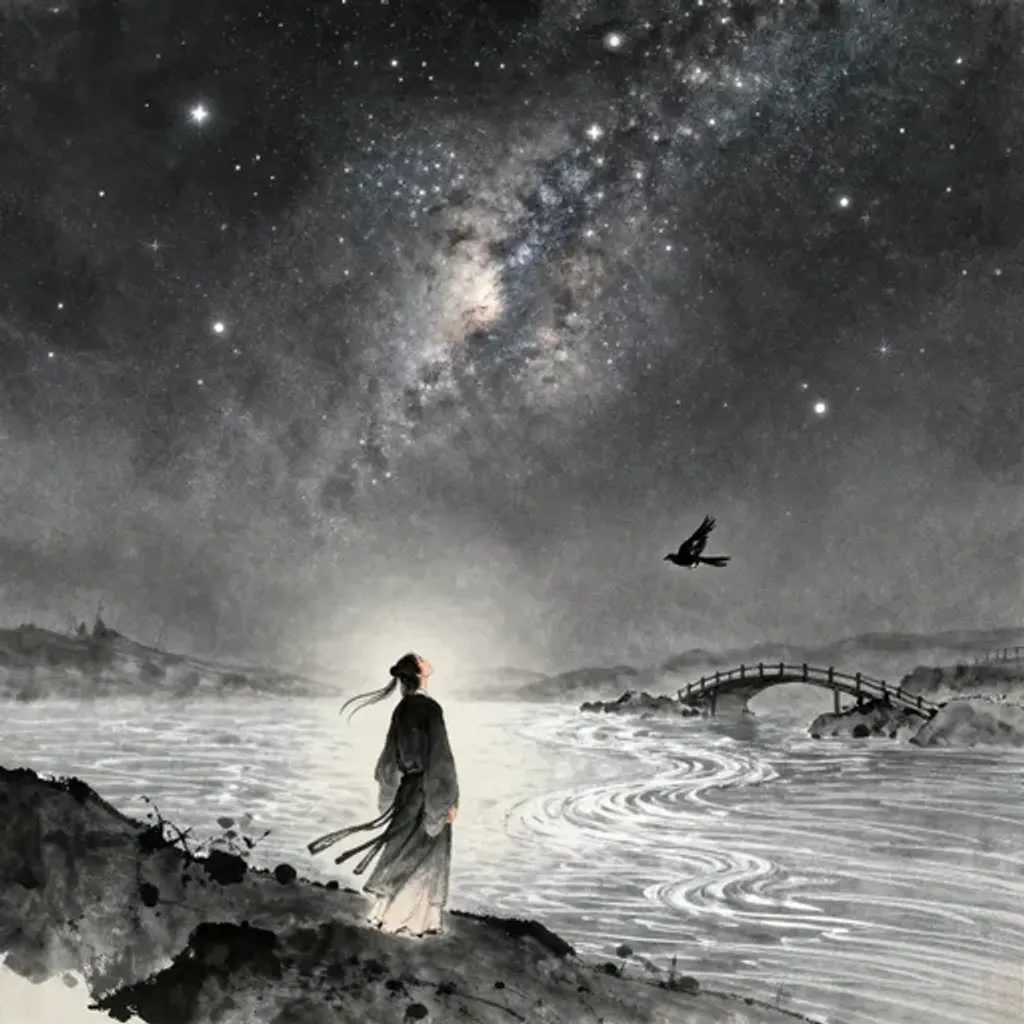
久鰥无偶,思配織女。求其非望,自令寡處。
Long a widower without a mate; dreaming of the Weaving Maid. Seeking what cannot be hoped for; consigning myself to solitude.
— Jiao Yanshou, Yilin (Forest of Changes), 1st century BC
Commentary
Wind stirs above the lake, but the long-widowed man has no mate. He yearns to be paired with the Weaving Maid — a hope beyond all expectation — and condemns himself to solitary life. The Weaving Maid (織女) is the star Vega, separated from the Cowherd (牽牛) by the Milky Way and permitted to meet only once a year on the seventh of the seventh month. To desire her as a mortal spouse is to reach for the literally celestial. From Inner Truth to Increase, sincerity meets wind and thunder working together in mutual benefit. Yet the verse inverts Increase's promise: aspiring beyond one's reach does not enhance but impoverishes, and the man's romantic idealism becomes the very mechanism of his loneliness.
中孚 → 夬
Hexagram 61 → Hexagram 43: Breakthrough
Changing lines: 3, 4, 6
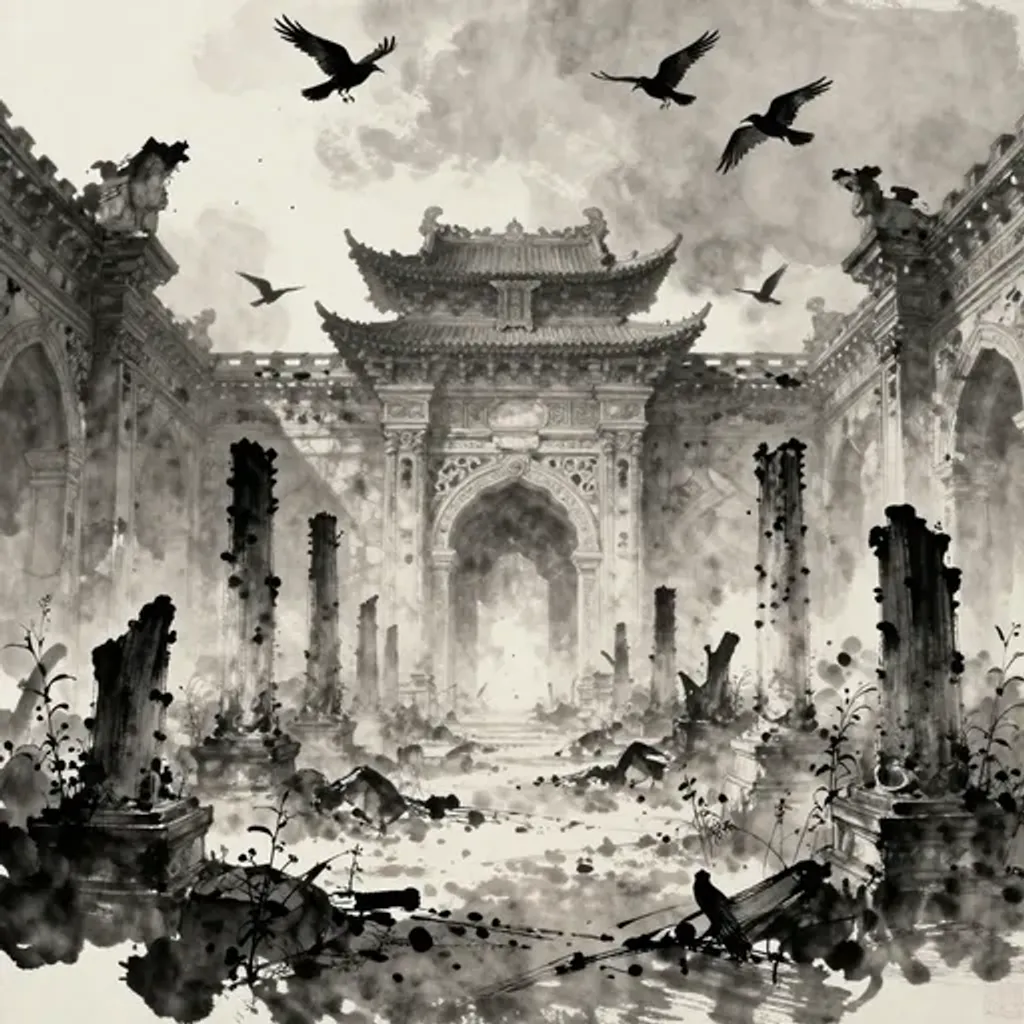
破亡之國,天所不福,難以止息。
The palace is ash, the pillars charcoal. The city gate has collapsed, weeds grow deep. Crows circle but will not land — even ghosts and spirits shun this cursed ground.
— Jiao Yanshou, Yilin (Forest of Changes), 1st century BC
Commentary
Wind stirs above the lake, but the original verse simply declares: a ruined state forsaken by heaven, its troubles impossible to quell. This is the starkest of oracular verdicts — total, terminal, without appeal. Heaven's withdrawal of favor (天所不福) in Han cosmology meant not just political collapse but cosmic abandonment. From Inner Truth to Breakthrough, sincerity confronts the lake rising above heaven, the image of decisive resolution pushing upward. Yet the verse reads Breakthrough as destruction rather than liberation: what breaks through here is the accumulated rot of a doomed polity. When inner truth reveals that the core is already dead, the breakthrough moment is not triumph but the final collapse of a structure that should have fallen long ago.
中孚 → 姤
Hexagram 61 → Hexagram 44: Coming to Meet
Changing lines: 1, 3, 4
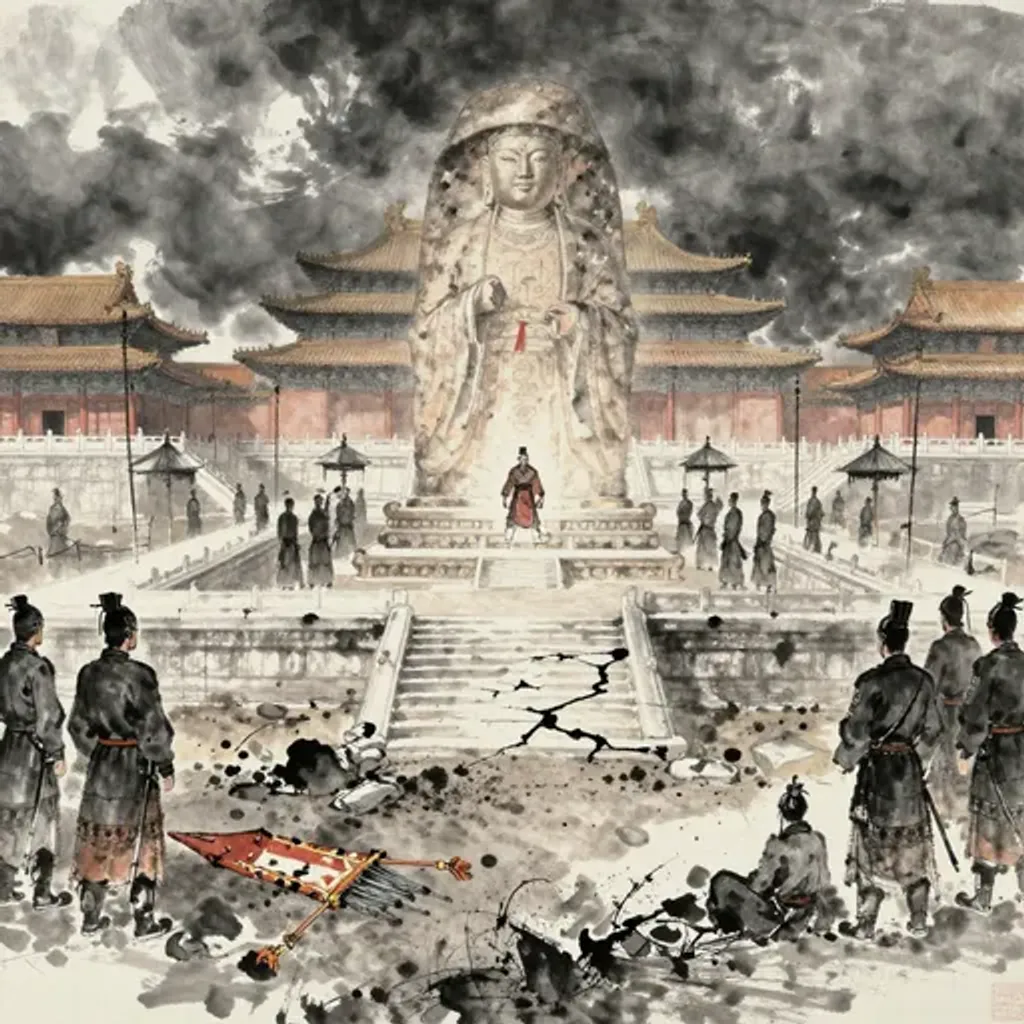
老慵多郤,弊政為賊。阿房驪山,子嬰失國。
Old and lazy with many flaws; corrupt policies become traitors. Epang and Mount Li; Ziying lost the kingdom.
— Jiao Yanshou, Yilin (Forest of Changes), 1st century BC
Commentary
Wind stirs above the lake, but old complacency breeds ruin. Corrupt governance becomes the real bandit. The Epang Palace and Mount Li stand as monuments to imperial excess, and Ziying loses the kingdom. Ziying was the last ruler of Qin, who held the throne for only forty-six days in 207 BC before surrendering to Liu Bang. The Epang Palace (阿房宮), Qin Shihuang's unfinished mega-palace, and Mount Li (驪山), site of his massive mausoleum, embody ruinous extravagance. From Inner Truth to Coming to Meet, sincerity confronts wind beneath heaven — the sovereign's decree radiating outward. Yet here the decree meets a hollow empire: the wind carries only corruption, and what comes to meet the throne is not opportunity but overthrow.
中孚 → 萃
Hexagram 61 → Hexagram 45: Gathering Together
Changing lines: 1, 2, 4, 6
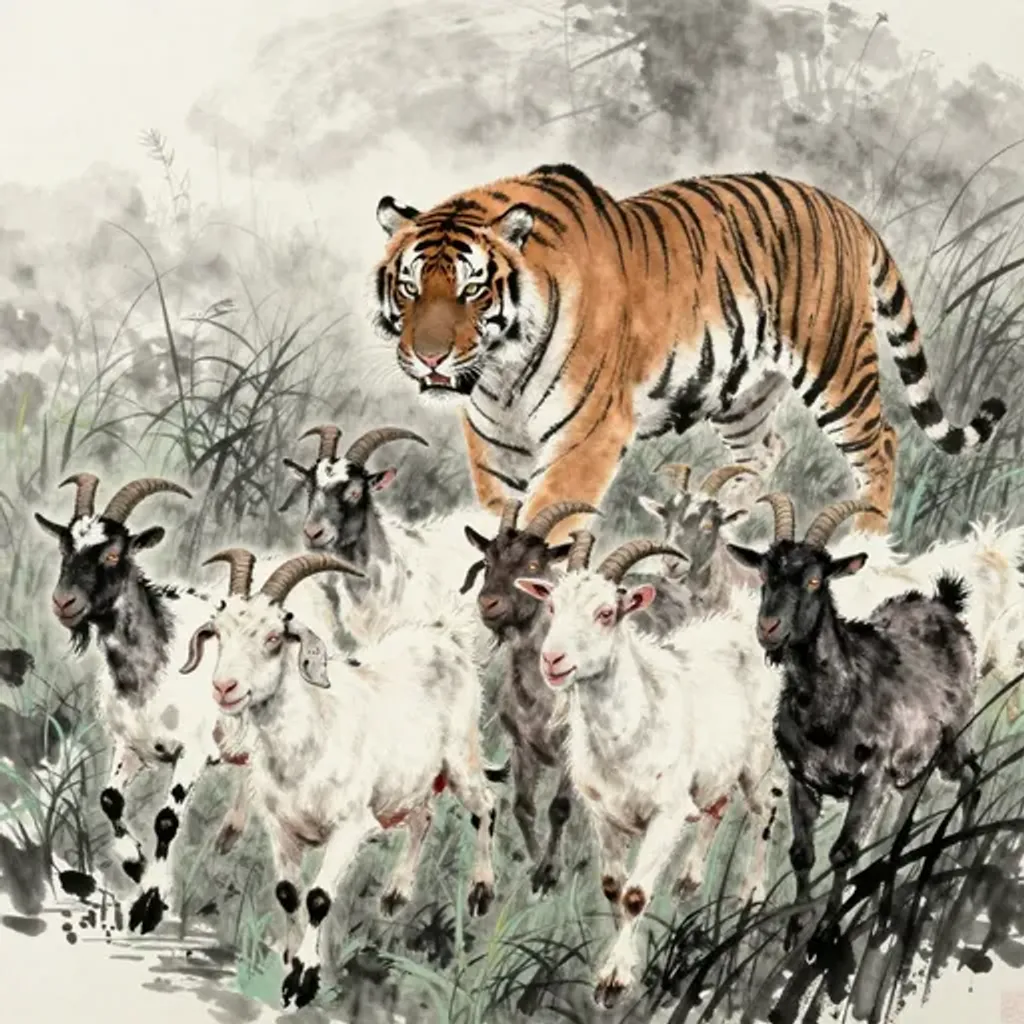
三羖六䍧,相隨俱行。迷入空澤,遙涉虎廬。為所傷賊,死於牙腹。
Three he-goats and six ewes; traveling together in a line. Lost in an empty marsh; wandering into the tiger's den. Wounded and killed; dying in jaws and belly.
— Jiao Yanshou, Yilin (Forest of Changes), 1st century BC
Commentary
Wind stirs above the lake as a flock of three black goats and six hornless sheep follow one another, wandering together. They stray into an empty marsh, then wander far into the tiger's lair. Mauled by the predator, they perish in its jaws. The verse is a parable of leaderless following: the flock moves as one but has no shepherd and no direction, drifting from open ground into lethal territory. From Inner Truth to Gathering, sincerity meets the lake above the earth, where people congregate. Yet gathering without discernment is the flock's fatal error. The marsh that should pool abundance instead pools danger; the crowd's togetherness becomes collective vulnerability when no one questions where the path leads.
中孚 → 升
Hexagram 61 → Hexagram 46: Pushing Upward
Changing lines: 1, 3, 5, 6
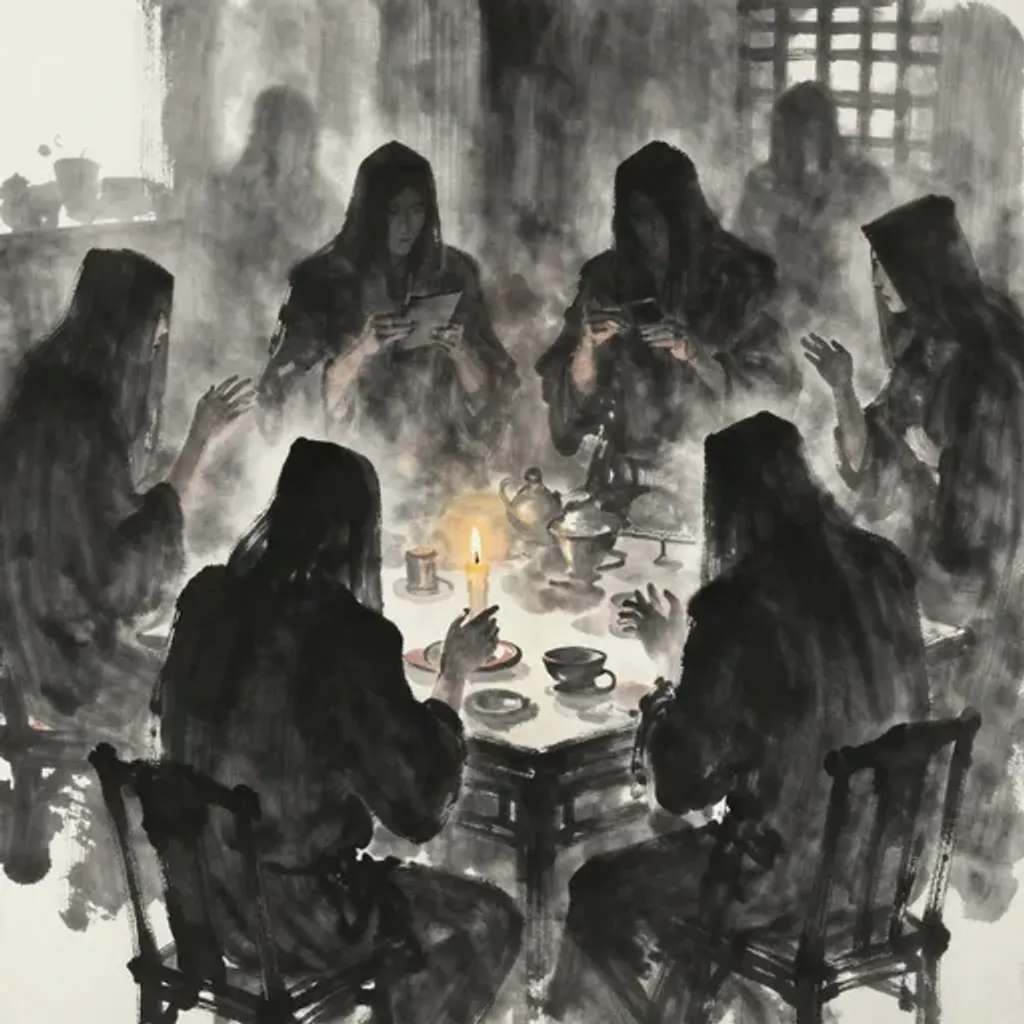
囁囁處懼,昧冥相摶。多言少實,語无成事。
Whispering in fear; confused in the darkness, grasping at each other. Many words, little substance; talk that accomplishes nothing.
— Jiao Yanshou, Yilin (Forest of Changes), 1st century BC
Commentary
Wind stirs above the lake, but only whispering fear and dark confusion. People grope and grapple in the murk. Many words, little substance; talk accomplishes nothing. The verse paints a world of noise without signal: fearful muttering, blind wrestling, promises that evaporate. From Inner Truth to Pushing Upward, sincerity should yield to wood growing steadily within the earth — the patient, methodical rise. Yet the verse shows the antithesis: no discipline, no rootedness, no slow accumulation. The whisperers cannot push upward because they have no foundation to grow from. Pushing Upward requires silence and depth; this verse offers only agitated chatter, the froth that rises but never solidifies into real ascent.
中孚 → 困
Hexagram 61 → Hexagram 47: Oppression
Changing lines: 1, 4, 6
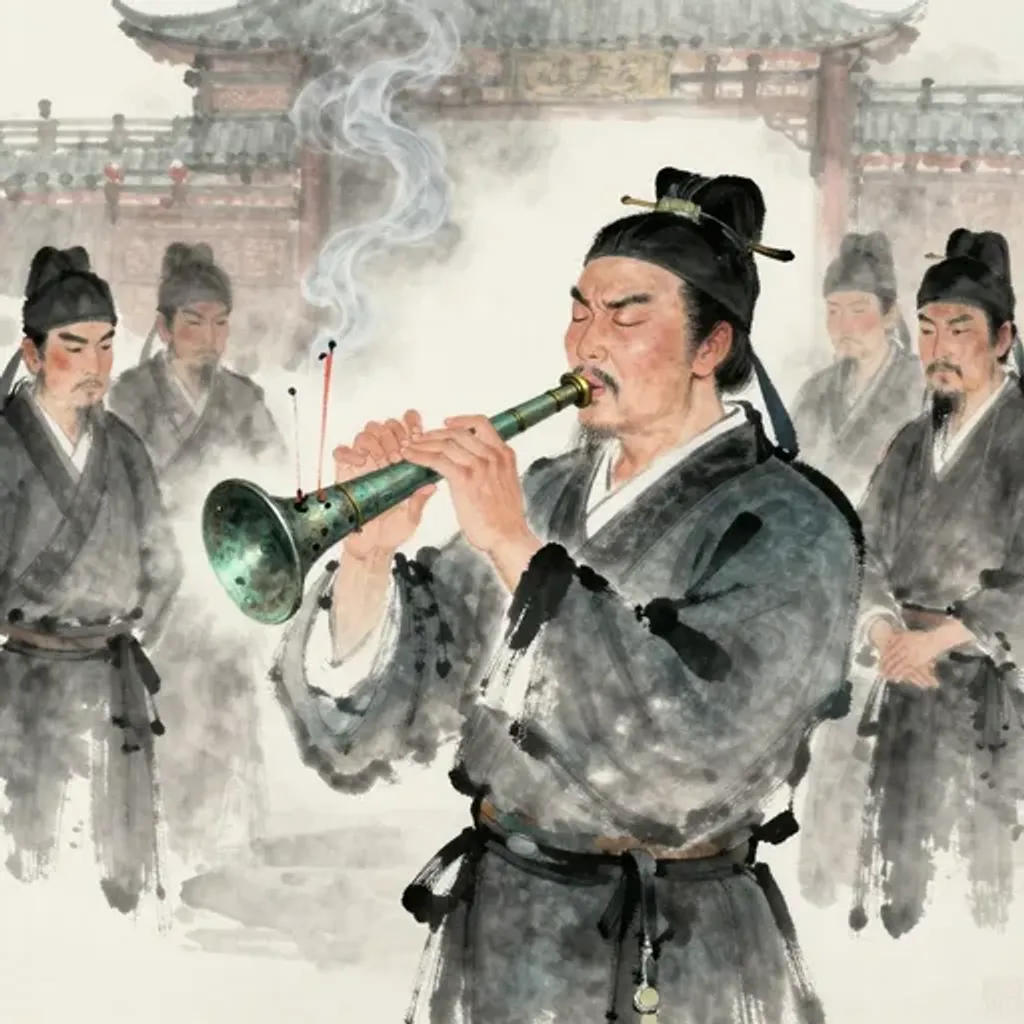
武陽漸離,擊筑善歌。慕丹之義,為燕助軻。陰謀不遂,霍自死亡,功名賈施。
Gao Jianli of Wuyang; skilled at striking the zhu and singing. Admiring Jing Ke's righteousness; assisting Yan's assassin. The secret plot failed; dying alone. Fame and merit were sold.
— Jiao Yanshou, Yilin (Forest of Changes), 1st century BC
Commentary
Wind stirs above the lake, and from Wuyang comes Gao Jianli, master of the struck zither, a singer of renown. Moved by the righteousness of Prince Dan of Yan, he lends his art to aid Jing Ke's mission. The secret plot fails; Gao Jianli meets his own death, but his fame endures as lasting legacy. Gao Jianli played the zhu at Jing Ke's famous farewell at the Yi River. After Jing Ke's assassination attempt failed, Gao Jianli later filled his zhu with lead and struck at the Qin king himself — and missed. From Inner Truth to Oppression, sincerity enters the lake drained of water. The verse embodies Oppression's deepest teaching: one may commit one's life to a righteous cause and still fail utterly, yet the commitment itself becomes the monument.
中孚 → 井
Hexagram 61 → Hexagram 48: The Well
Changing lines: 1, 3, 6
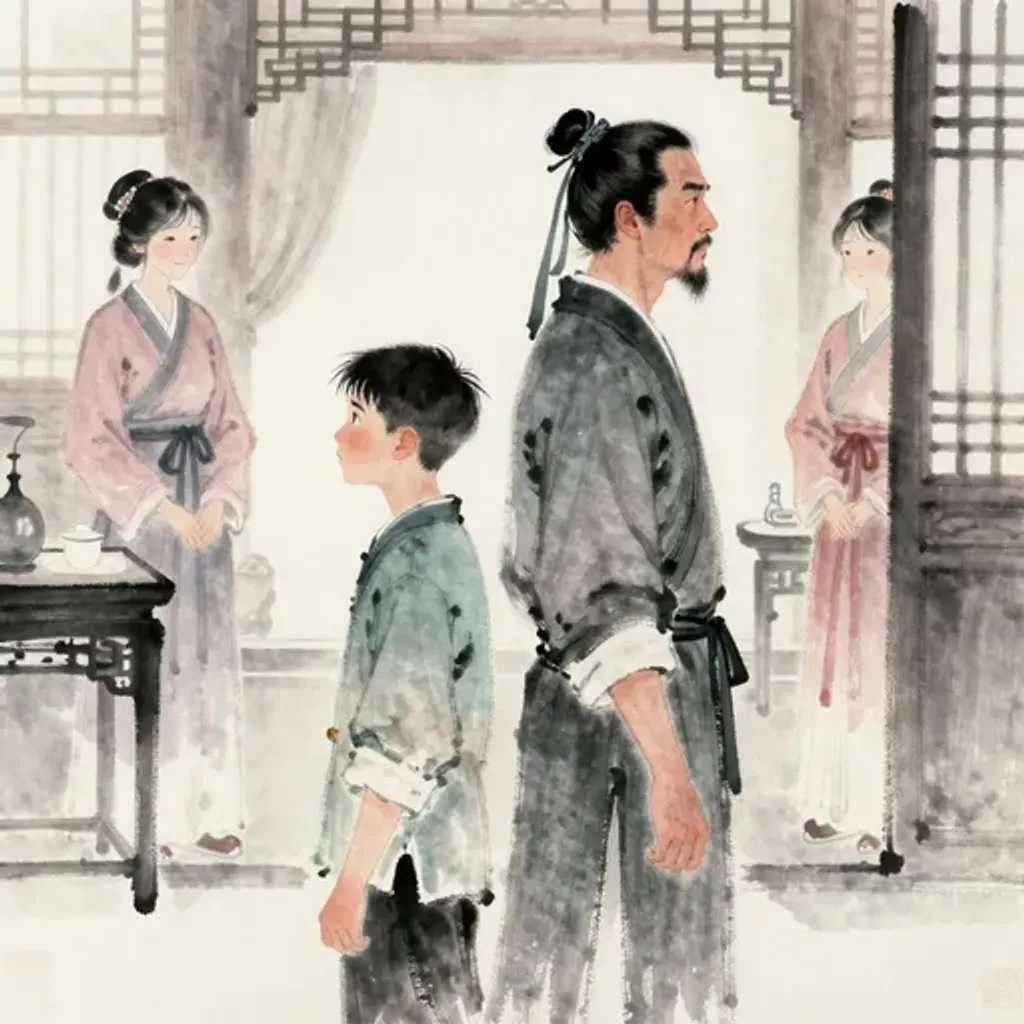
尹氏伯奇,父子分離。无罪被辜,長舌為災。
Yin's family's Bo Qi; father and son separated. Innocent yet condemned; the long tongue brings disaster.
— Jiao Yanshou, Yilin (Forest of Changes), 1st century BC
Commentary
Wind stirs above the lake, and the story of Yin Jifu's son Boqi unfolds. Father and son are torn apart — an innocent boy convicted without crime, destroyed by a stepmother's venomous tongue. The tale is one of the oldest archetypes in Chinese tradition: Yin Jifu, a great minister of King Xuan of Zhou, remarried after his first wife's death. The stepmother framed Boqi by placing a bee on her collar; when the filial boy reached to remove it, his father saw an apparent assault and banished him. Boqi composed the lament 'Treading on Frost' in exile. From Inner Truth to the Well, sincerity meets water drawn up through wood — the deep source that nourishes all. Yet the well's water here is poisoned by slander: the long tongue corrupts the very channel through which truth should rise.
中孚 → 革
Hexagram 61 → Hexagram 49: Revolution
Changing lines: 2, 3, 4, 6
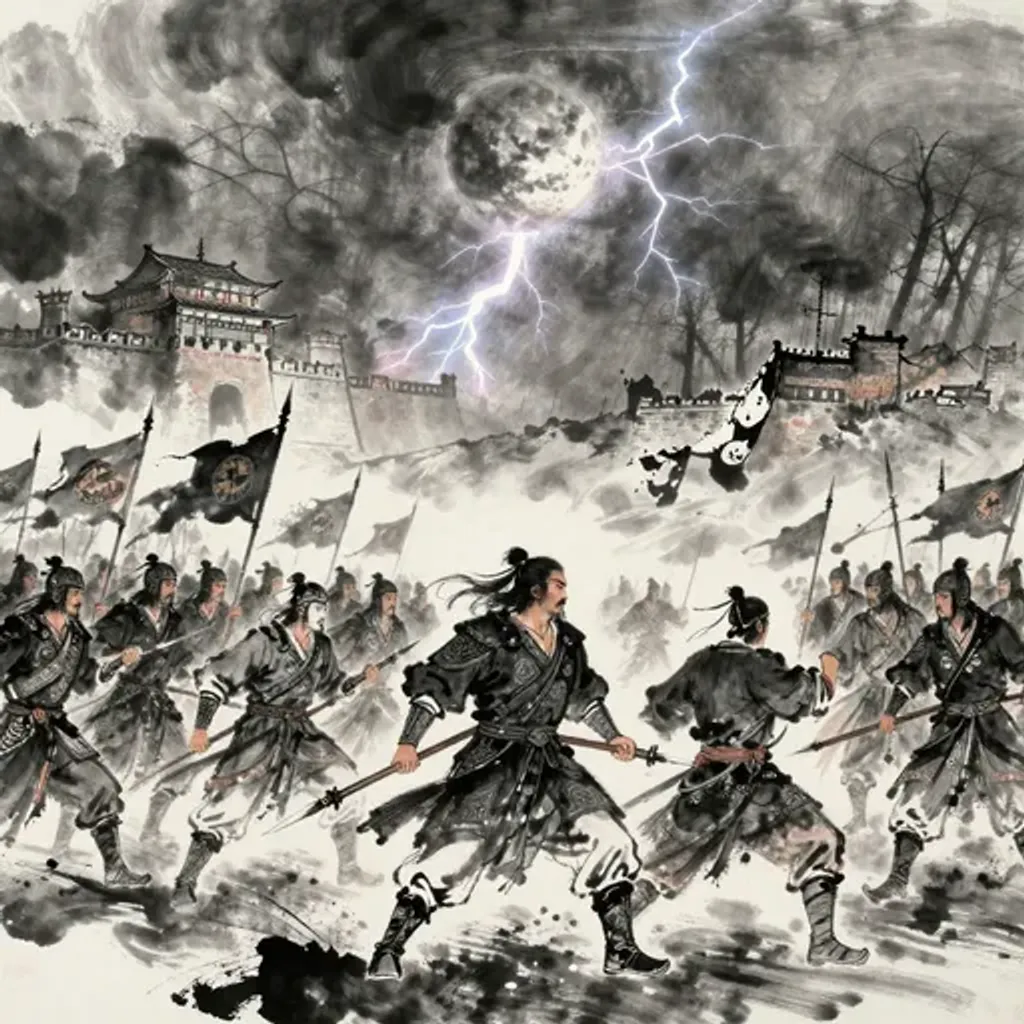
五精亂行,政逆皇恩。湯武赫怒,共伐我域。
The five essences move in disorder; government defies heaven's grace. Tang and Wu in fierce anger; together assault my domain.
— Jiao Yanshou, Yilin (Forest of Changes), 1st century BC
Commentary
Wind stirs above the lake, but the five planets wander out of their courses, and governance runs contrary to the sovereign's grace. Then Tang and Wu blaze with righteous fury and jointly invade the offender's domain. The 'five essences in disorder' (五精亂行) refers to the five visible planets — the cosmic counterparts of the five elements — straying from their proper paths, which in Han astrology portended dynastic doom. Tang overthrew the tyrant Jie; Wu overthrew the tyrant Zhou. From Inner Truth to Revolution, sincerity confronts fire within the lake — the image of irreconcilable elements demanding transformation. Revolution requires that inner truth first perceive the disorder clearly, then act with the moral authority that both Tang and Wu claimed when they ended corrupt dynasties.
中孚 → 鼎
Hexagram 61 → Hexagram 50: The Cauldron
Changing lines: 1, 3, 4, 5
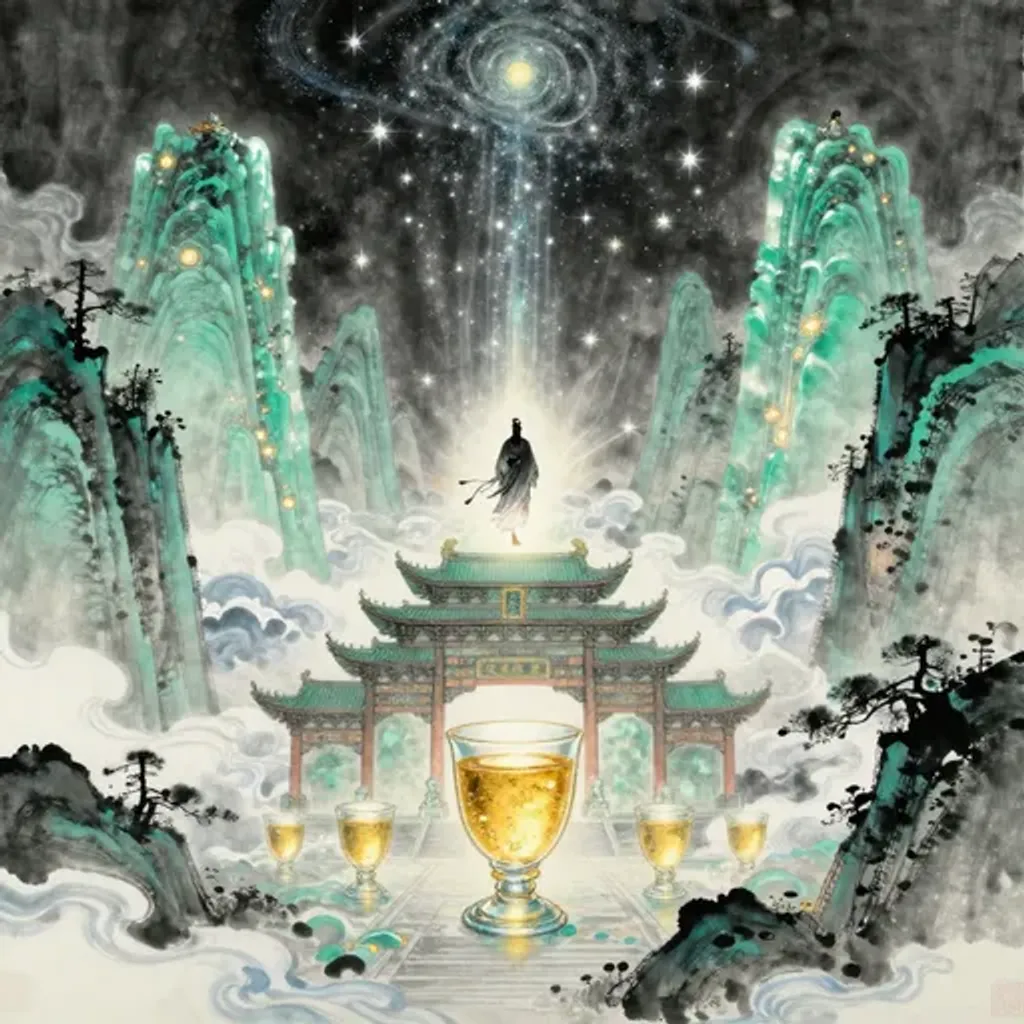
西歷玉山,東入玉門。登上福堂,飲萬歲漿。
West past Jade Mountain; east entering Jade Gate. Ascending to the Hall of Blessing; drinking the ten-thousand-year nectar.
— Jiao Yanshou, Yilin (Forest of Changes), 1st century BC
Commentary
Wind stirs above the lake, and the journey leads through Jade Mountain in the west and Jade Gate in the east. One ascends to the Hall of Blessings and drinks the Elixir of Ten Thousand Years. Jade Mountain (玉山) may refer to the mythical Kunlun or to any peak associated with immortality; Jade Gate (玉門) is the threshold between the mortal world and the realm of the transcendent. The Hall of Blessings and the ageless elixir belong to the mythology of the Queen Mother of the West. From Inner Truth to the Cauldron, sincerity meets fire above wind — the vessel that transforms raw material into refined substance. The cauldron is the alchemist's crucible: one enters mortal and emerges nourished by the eternal.
中孚 → 震
Hexagram 61 → Hexagram 51: The Arousing Thunder
Changing lines: 2, 4, 5, 6
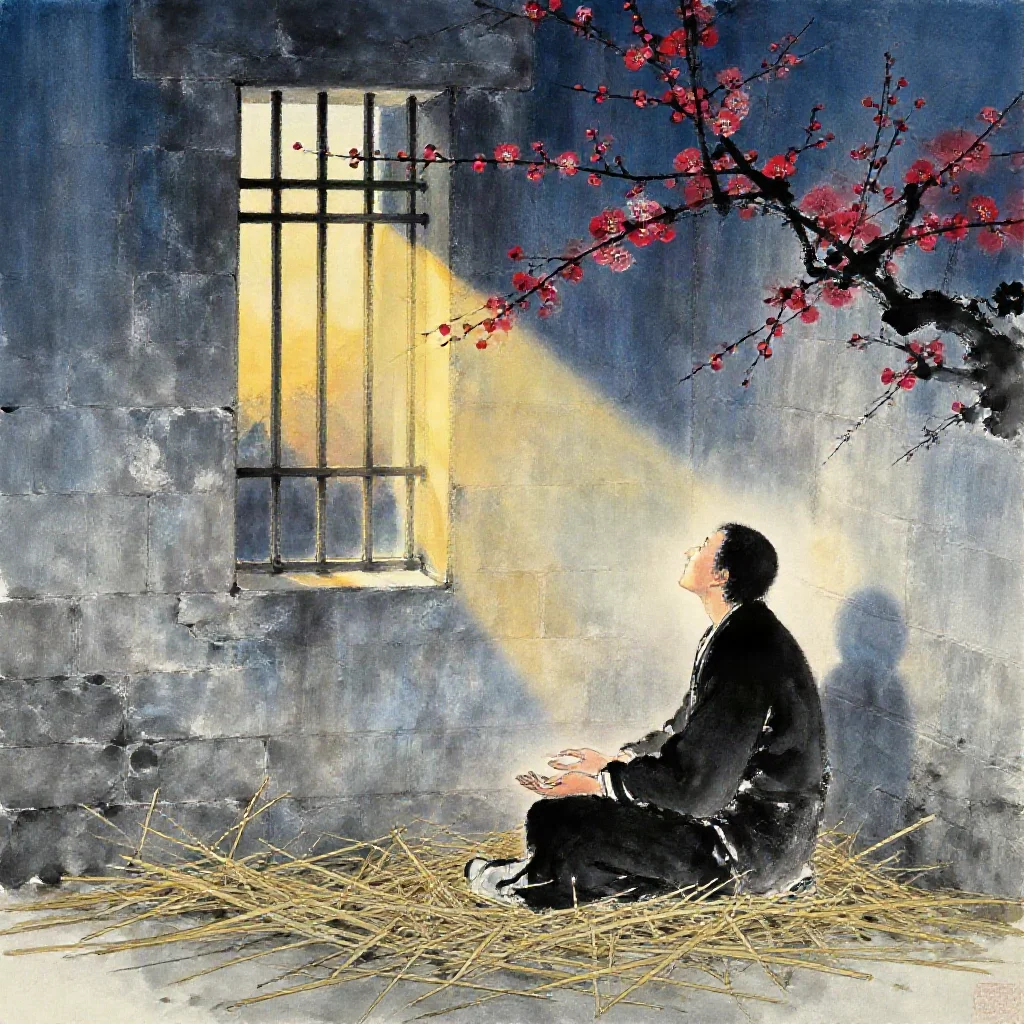
行觸夫忌,與司命牾。執囚束縛,拘制於吏,幽人有喜。
Actions offend the taboo; clashing with the Lord of Fate. Seized and bound in fetters; restrained by officials. The imprisoned one finds joy.
— Jiao Yanshou, Yilin (Forest of Changes), 1st century BC
Commentary
Wind stirs above the lake, but one's actions collide with taboo, offending the Lord of Fate (司命). Seized, bound, and handed over to the magistrate — yet the imprisoned one finds joy. The verse inverts expectation: transgressing the cosmic authority that governs life and death results in arrest, but the prisoner somehow discovers gladness in confinement. The phrase 'the confined one has joy' (幽人有喜) quotes the I-Ching's own Zhongfu hexagram, line nine-two. From Inner Truth to the Arousing, sincerity confronts doubled thunder — shock upon shock. The Arousing's gift is precisely this: the first thunderclap terrifies, but the second brings the laughter of one who has passed through fear and emerged whole.
中孚 → 艮
Hexagram 61 → Hexagram 52: Keeping Still Mountain
Changing lines: 1, 2, 3, 5
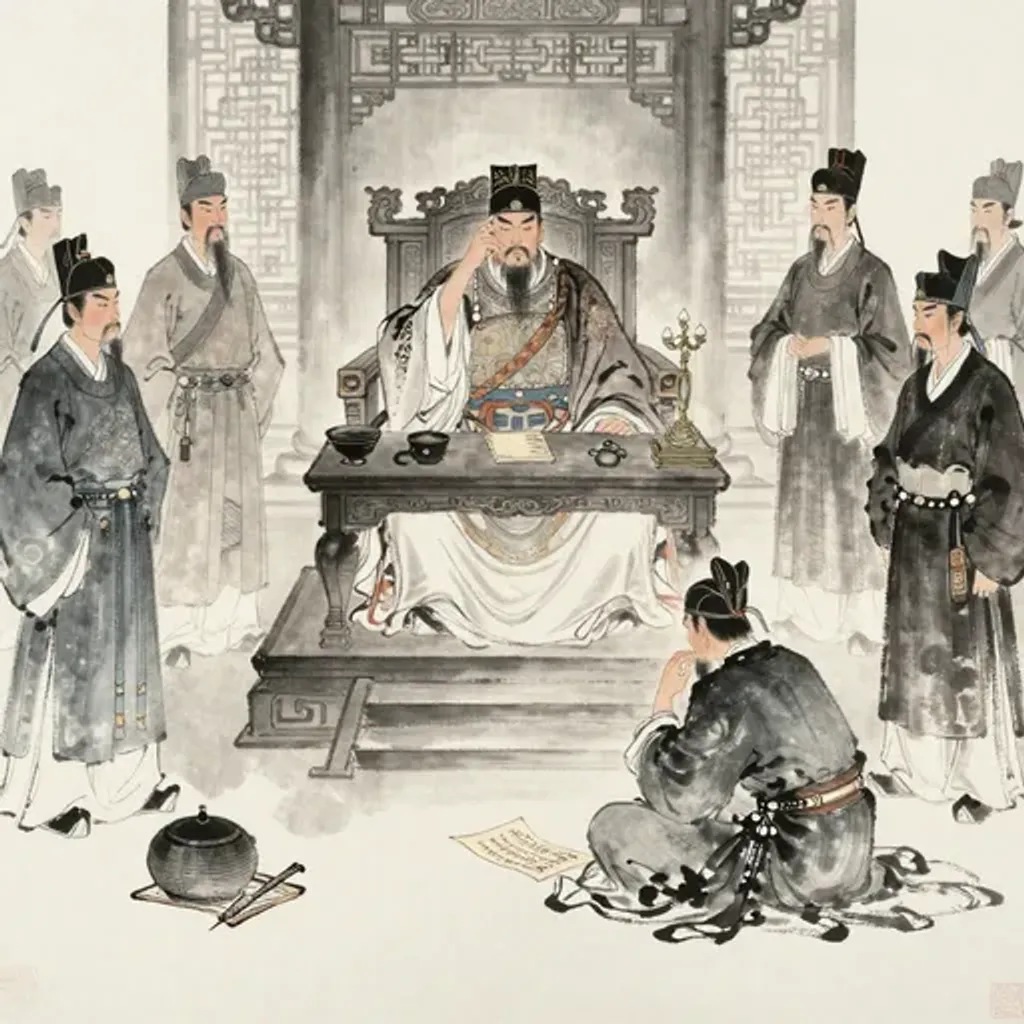
機父不賢,朝多讒臣。君失其政,保家久貧。
The father of schemes lacks virtue; the court is full of slanderers. The lord loses his governance; the house is kept in lasting poverty.
— Jiao Yanshou, Yilin (Forest of Changes), 1st century BC
Commentary
Wind stirs above the lake, but the father of the house is unworthy, and the court swarms with slanderous ministers. The ruler has lost his grip on governance; the family endures poverty for generations. The 'unworthy father' (機父不賢) suggests a patriarch — whether a literal father or a ruler conceived as father of the state — whose moral failure poisons everything downstream. Slander flourishes in the vacuum his weakness creates. From Inner Truth to Keeping Still, sincerity meets the doubled mountain. Keeping Still's image is the mind that does not stray beyond its proper station. Yet here stillness is not wisdom but stagnation: a house frozen under incompetent leadership, unable to reform, unable to move, locked in inherited poverty.
中孚 → 漸
Hexagram 61 → Hexagram 53: Development
Changing lines: 1, 2, 3
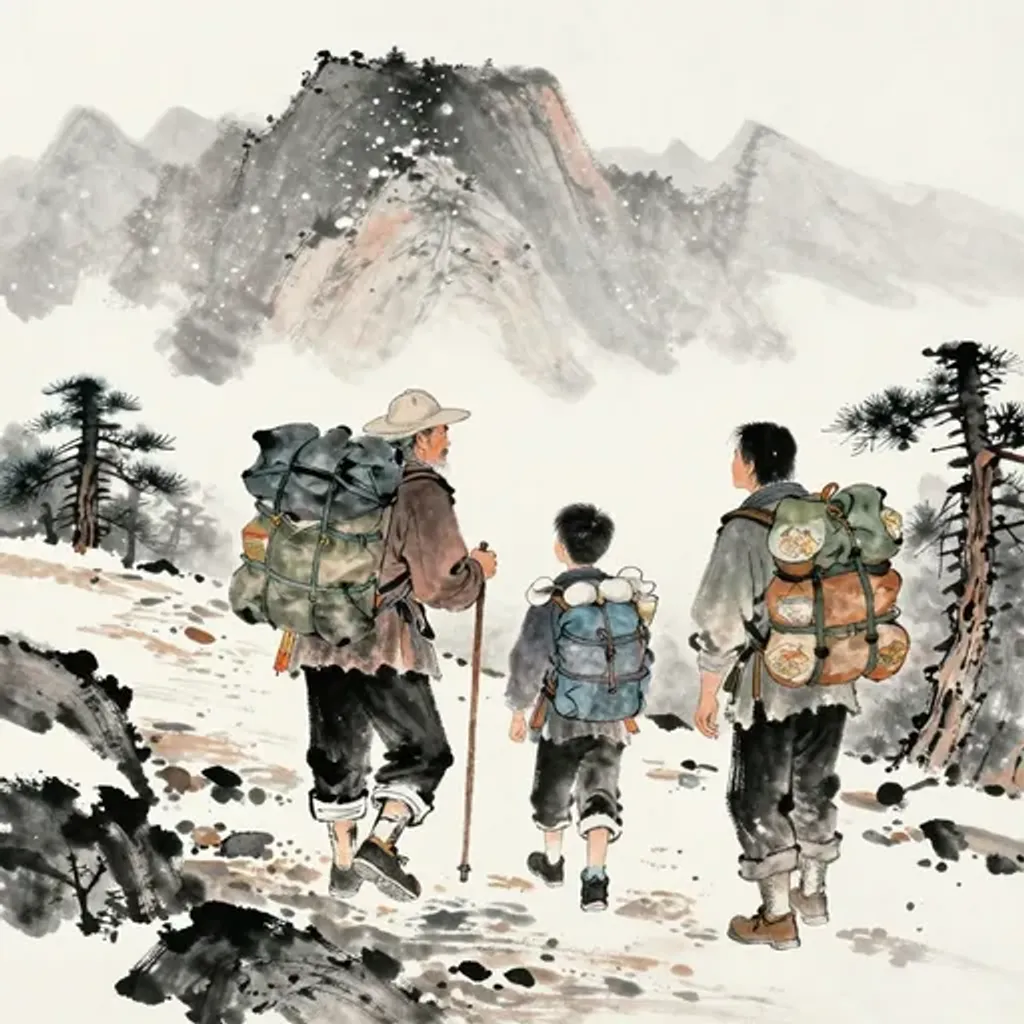
三人俱行,北求大䍧。長孟病足,請季負囊。柳下之貞,不失我糧。
Three travel together; going north seeking great goats. The eldest has an injured foot; asking the youngest to carry the bags. The uprightness of Liu Xia; does not lose our provisions.
— Jiao Yanshou, Yilin (Forest of Changes), 1st century BC
Commentary
Wind stirs above the lake as three companions travel north seeking provisions. The eldest, Meng, falls lame, and the youngest, Ji, is asked to carry the baggage. Through Liuxia's integrity, the provisions are preserved. The three travelers may represent brothers or colleagues on a joint venture. 'Liuxia's constancy' (柳下之貞) invokes Liuxia Hui, the paragon of upright conduct who famously held a woman in his lap through a cold night without impropriety. His name here stands for moral steadfastness that protects shared resources from being squandered. From Inner Truth to Development, sincerity meets wind above the mountain — the tree growing gradually on the summit. Progress comes not from speed but from steady, principled advance, each companion bearing their share of the burden.
中孚 → 歸妹
Hexagram 61 → Hexagram 54: The Marrying Maiden
Changing lines: 4, 5, 6
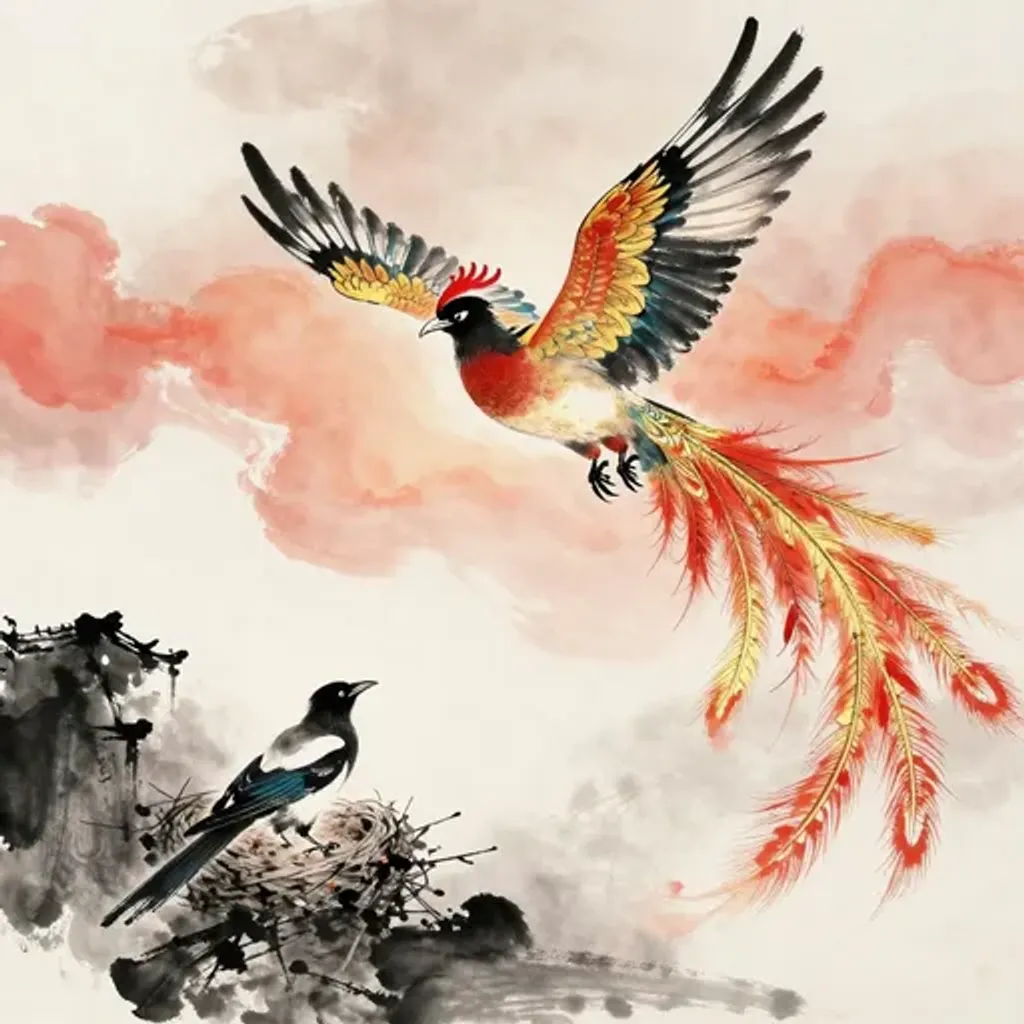
鵲思其雄,欲隨鳳東。順理羽翼,出次須日。中留北邑,復歸其室。
The magpie longs for her mate; wishing to follow the phoenix east. Grooming her feathers; departing must await the right day. Delayed in the northern village; she returns to her nest.
— Jiao Yanshou, Yilin (Forest of Changes), 1st century BC
Commentary
Wind stirs above the lake as the magpie yearns for her mate, wishing to follow the phoenix eastward. She preens her feathers, preparing for departure, but must wait for the proper day. Delayed in a northern town, she eventually returns home. The verse traces a cycle of romantic longing, preparation, postponement, and return: the magpie wants to fly with the phoenix but cannot leave on her own schedule. The proper day never quite arrives, and she comes back to where she began. From Inner Truth to the Marrying Maiden, sincerity meets thunder above the lake — the younger sister given in marriage. Yet here the marriage journey is aborted: propriety demands timing, and when timing fails, even genuine desire must yield to circumstance.
中孚 → 豐
Hexagram 61 → Hexagram 55: Abundance
Changing lines: 2, 3, 4, 5, 6
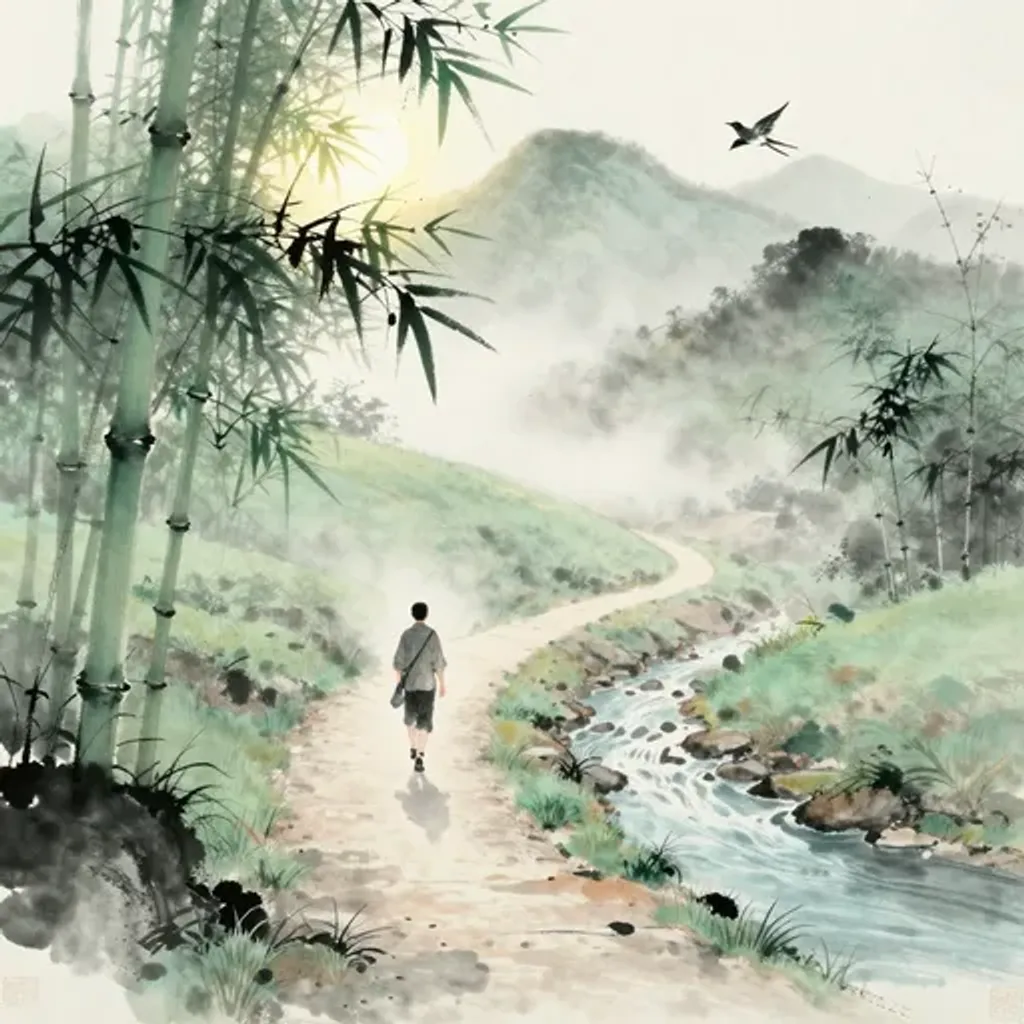
常得自如,不逢禍災。
Always finding things as wished; not meeting with calamity.
— Jiao Yanshou, Yilin (Forest of Changes), 1st century BC
Commentary
Wind stirs above the lake, and all unfolds as it should — one remains at ease, encountering neither calamity nor disaster. The verse is the shortest in this hexagram's set: just two lines of pure auspice, no allusion, no narrative, only the serene declaration that things are well. From Inner Truth to Abundance, sincerity meets thunder and lightning arriving together — the fullness of power and illumination at their peak. The brevity is itself the message: when inner truth is genuine and Abundance's conditions are met, there is nothing more to say. No drama, no struggle, no complication. The wind on the lake stirs gently; the thunder and fire blaze in harmony; one simply lives without obstruction.
中孚 → 旅
Hexagram 61 → Hexagram 56: The Wanderer
Changing lines: 1, 2, 3, 4, 5
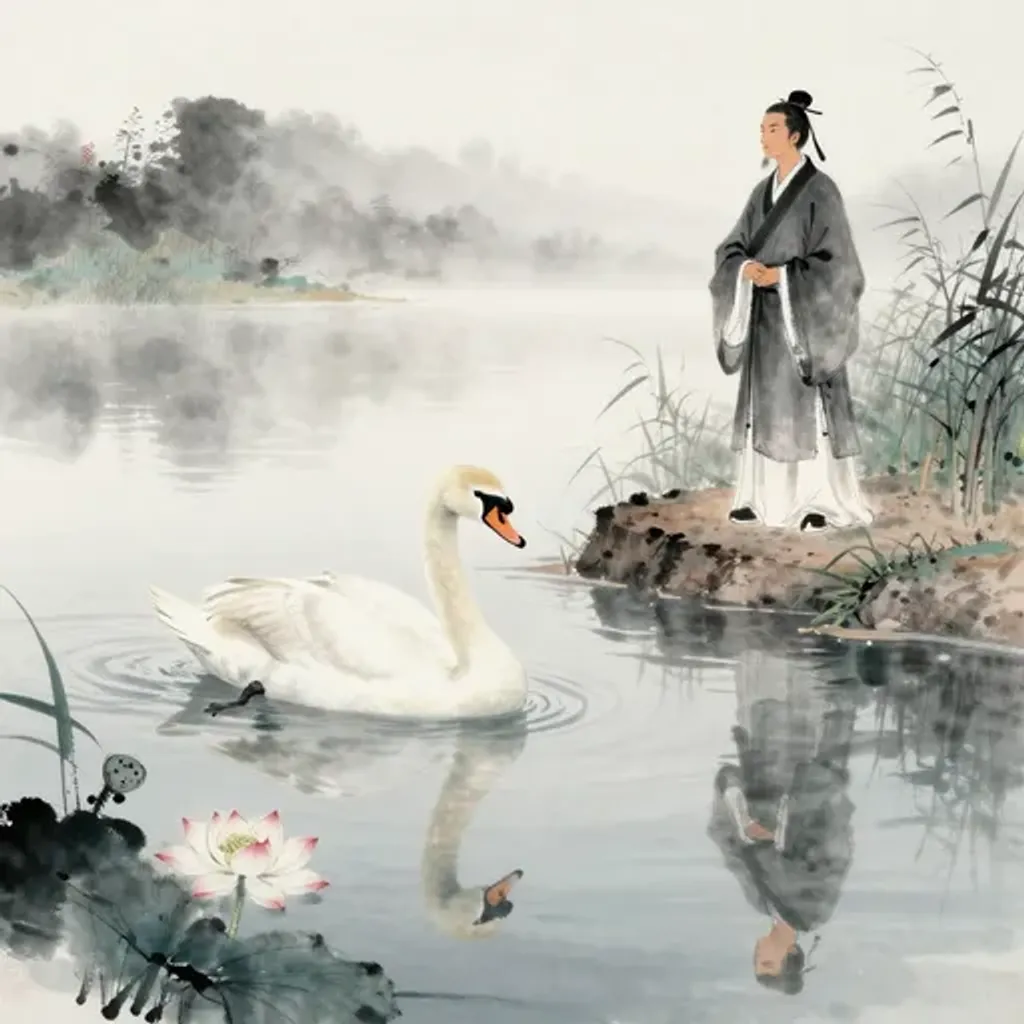
白鵠遊望,君子以寧。履德不愆,福祿來成。
The white swan wanders and gazes; the gentleman finds peace. Treading virtue without fault; blessing and fortune come to completion.
— Jiao Yanshou, Yilin (Forest of Changes), 1st century BC
Commentary
Wind stirs above the lake as the white swan glides and gazes across the distance, and the gentleman finds peace. Walking the path of virtue without faltering, blessings and prosperity arrive in completion. The white swan (白鵠) is an image of purity and far-sightedness, its leisurely flight embodying the composure of one whose conduct is impeccable. From Inner Truth to the Wanderer, sincerity meets fire upon the mountain — the traveler's campfire on a foreign peak. The Wanderer's lot is precarious, yet this verse promises safety within the journey. When one's virtue does not stumble (履德不愆), even the rootlessness of travel becomes a dignified progress, and blessings come to meet the wanderer on the road.
中孚 → 巽
Hexagram 61 → Hexagram 57: The Gentle Wind
Changing lines: 1, 3
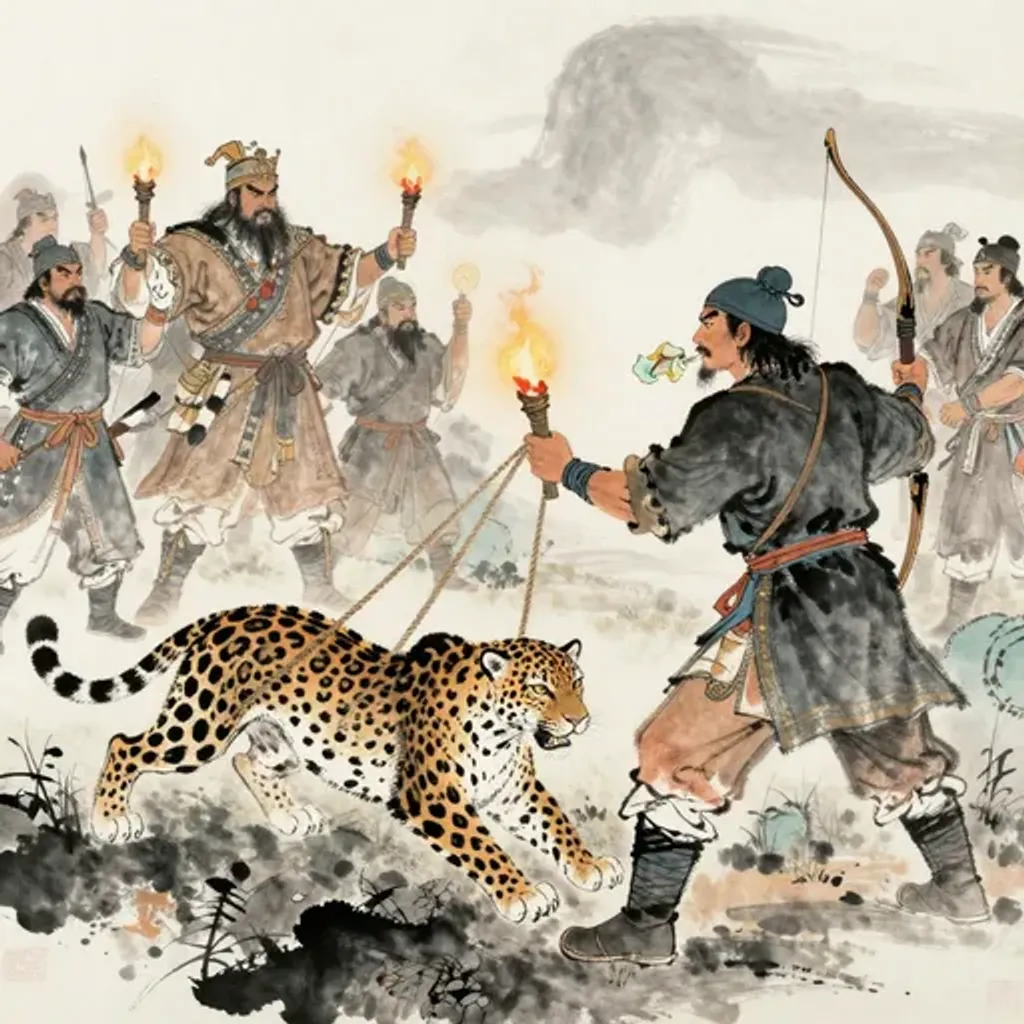
膚敏之德,發憤晨食。虜豹擒說,為王得福。
The virtue of keen diligence; rising with resolve for morning meal. Capturing leopard and seizing prey; winning fortune for the king.
— Jiao Yanshou, Yilin (Forest of Changes), 1st century BC
Commentary
Wind stirs above the lake, and one of keen sensitivity and swift virtue rouses at dawn to eat and act. Capturing the leopard and seizing the adversary, one wins fortune for the king. The verse celebrates decisive, early action: the person of 'skin-keen virtue' (膚敏之德) rises before others, acts while the world sleeps, and delivers tangible results. The leopard captured may be literal — a hunt — or figurative for a military prize. From Inner Truth to the Gentle, sincerity meets doubled wind, the image of commands repeated and penetrating. Gentleness here is not softness but thoroughness: the wind that enters every crevice. The dawn hunter embodies this — gentle persistence yielding to decisive capture at the precise moment of advantage.
中孚 → 兌
Hexagram 61 → Hexagram 58: The Joyous Lake
Changing lines: 4, 6
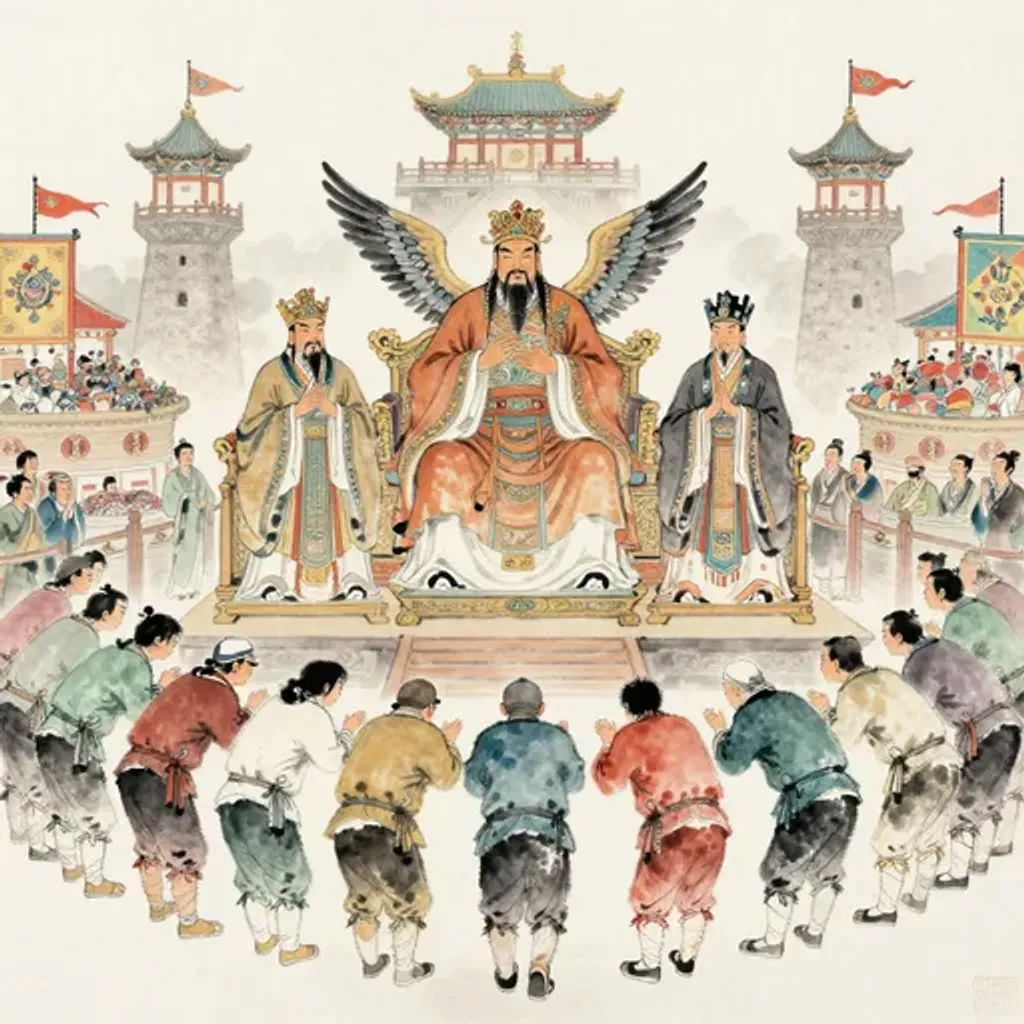
百足俱行,相輔為強。三聖翼事,國富民康。
A hundred feet walk together; supporting each other in strength. Three sages assist the throne; the state is rich, the people healthy.
— Jiao Yanshou, Yilin (Forest of Changes), 1st century BC
Commentary
Wind stirs above the lake as a hundred feet march in unison, each supporting the others in collective strength. Three sages attend to governance, and the state prospers while the people live in health and contentment. The centipede (百足) is proverbial for coordinated movement — many legs working as one body. The 'three sages' (三聖) likely refers to the founding trio of the Zhou dynasty: King Wen, King Wu, and the Duke of Zhou, whose combined civil, martial, and administrative virtues built the golden age. From Inner Truth to the Joyous, sincerity meets the doubled lake — friends gathering to study and share. Joy in its highest form is not solitary pleasure but communal flourishing, many voices in concert, many feet in step.
中孚 → 渙
Hexagram 61 → Hexagram 59: Dispersion
Changing lines: 1
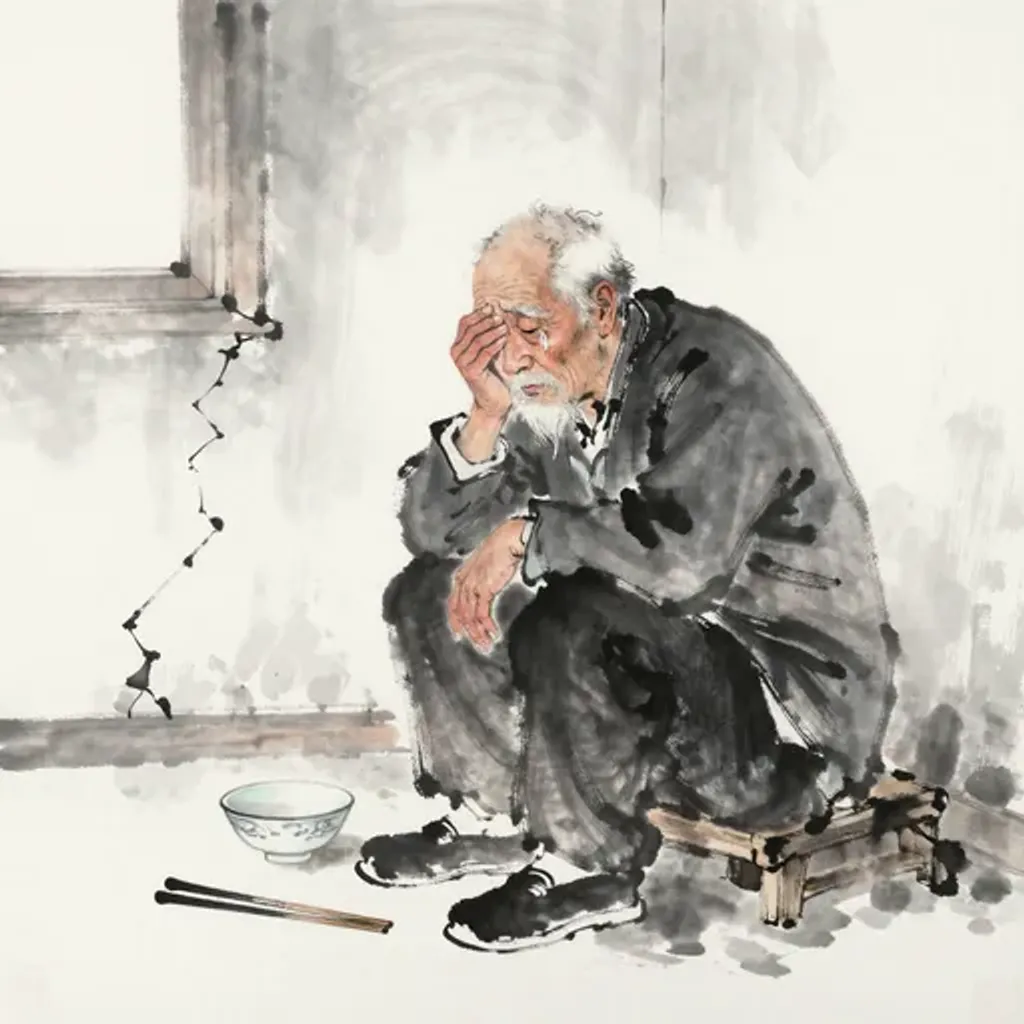
生不逢時,困且多憂。年衰老極,中心悲愁。
Born not meeting the right time; troubled and full of worry. Years aged to the extreme; the heart holds sorrow within.
— Jiao Yanshou, Yilin (Forest of Changes), 1st century BC
Commentary
Wind stirs above the lake, but one is born at the wrong time — beset by hardship and worry from the start. As age advances and strength fails, the heart sinks into sorrow. The verse is a compressed lament for an entire life lived against the grain of fortune: youth meets adversity, middle age brings no relief, and old age delivers only grief. No allusion, no narrative frame — just the raw voice of someone who never found their season. From Inner Truth to Dispersion, sincerity meets wind moving across water, scattering what was gathered. Dispersion dissolves rigidity, but here what is dispersed is the last of one's hopes. The wind that should liberate instead strips away the final consolation, leaving bare sorrow on open water.
中孚 → 節
Hexagram 61 → Hexagram 60: Limitation
Changing lines: 6
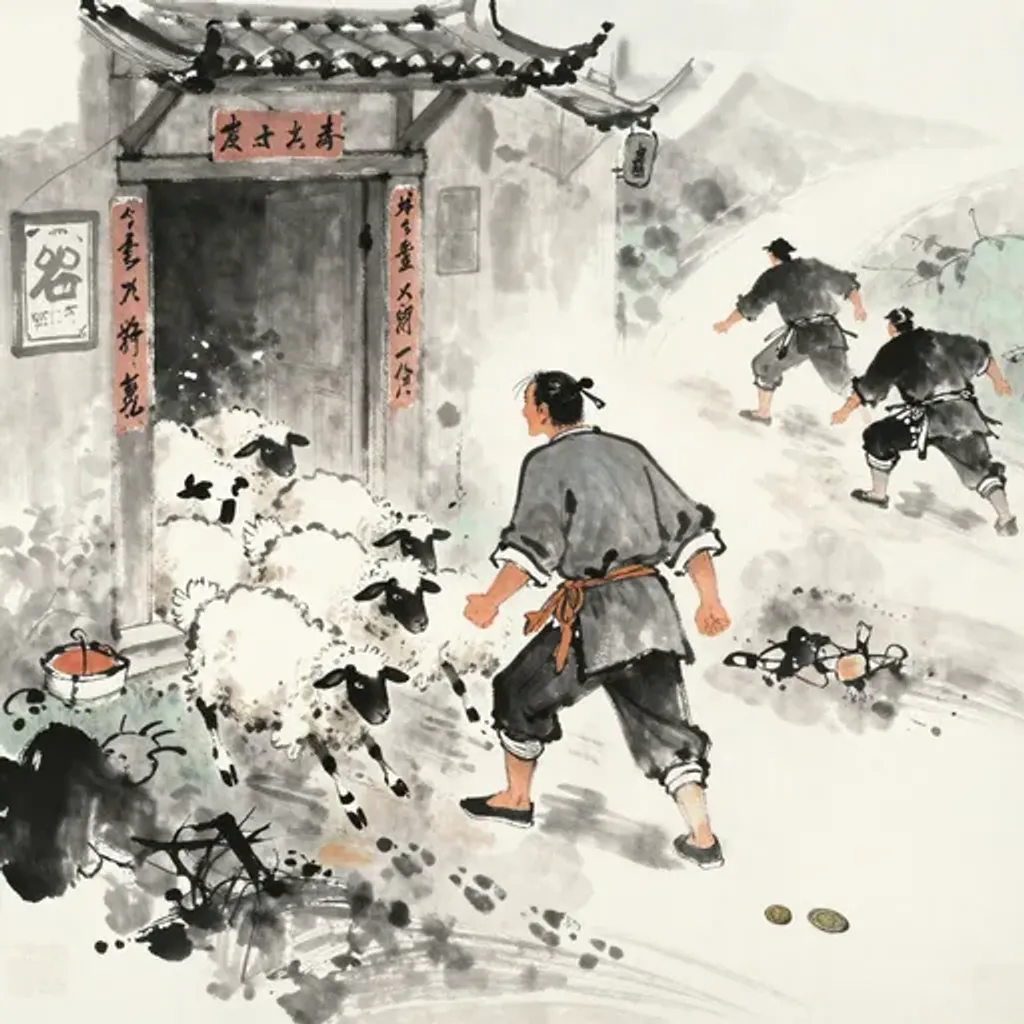
出門蹉跌,看道後旅。買羊逸亡,取物逃走。空手握拳,坐恨相咎。
Leaving the door, I stumble; watching the road, travelers behind. Buying sheep, they escape; taking goods, they flee. Empty hands clench fists; sitting in regret and blame.
— Jiao Yanshou, Yilin (Forest of Changes), 1st century BC
Commentary
Wind stirs above the lake, but one stumbles at the threshold. Looking back, the fellow travelers have passed. The sheep bought at market bolts and escapes; the goods purchased run off. Empty hands clench into fists; one sits in regret and self-blame. The verse catalogs a cascade of small failures: tripping at the gate, missing companions, losing livestock, grasping at air. Each mishap compounds the last until only frustration remains. From Inner Truth to Limitation, sincerity meets water above the lake — the image of proper boundaries and measured conduct. The verse is Limitation's negative lesson: without self-discipline and timing, every transaction falls apart. The limitation one refused to accept voluntarily is now imposed by the world's refusal to cooperate.
中孚 → 中孚
Hexagram 61 → Hexagram 61: Inner Truth
No changing lines — the hexagram is unchanged
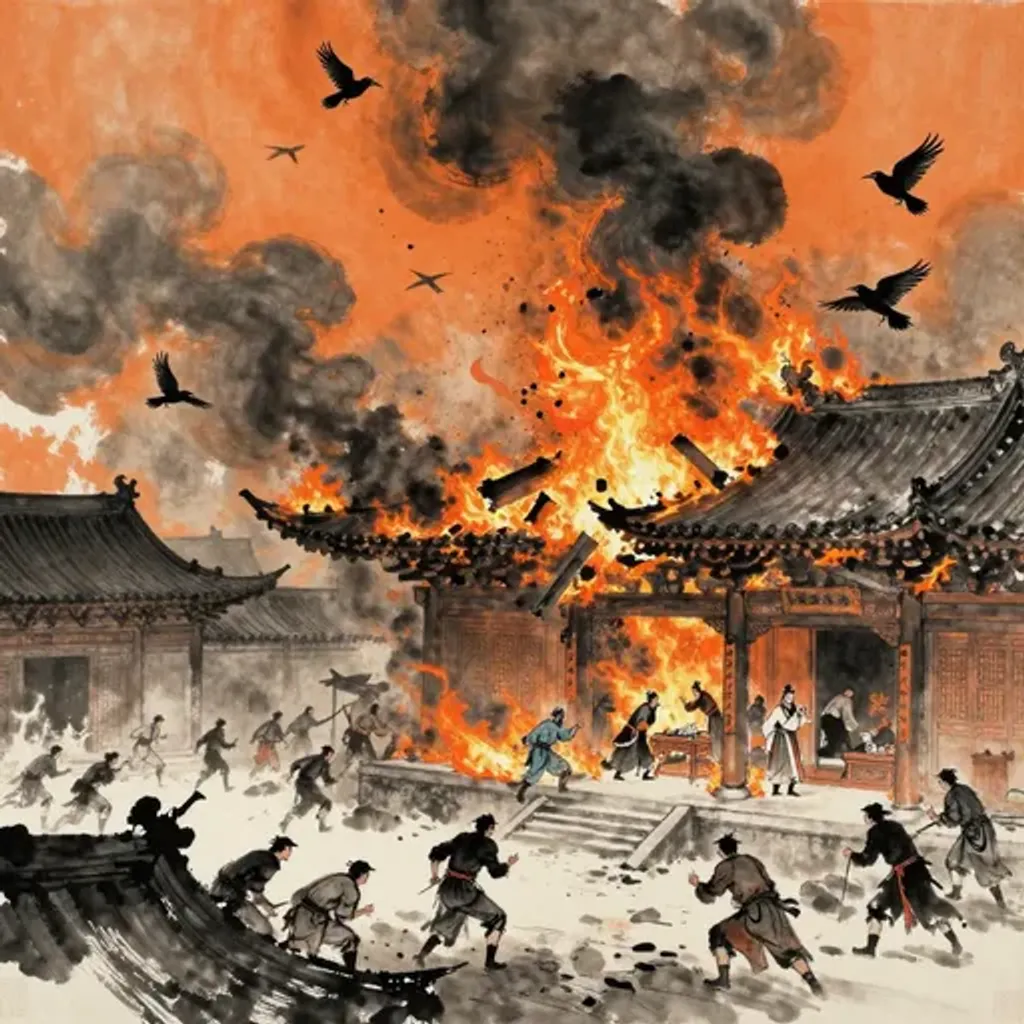
烏鳥譆譆,天火將下。燔我屋室,災及妃后。
Crows crying out alarums; heaven's fire about to fall. Burning my house and chambers; disaster reaches the queen.
— Jiao Yanshou, Yilin (Forest of Changes), 1st century BC
Commentary
Wind stirs above the lake — and returns to itself. Crows caw their alarm; heavenly fire is about to descend. The house burns; the disaster reaches the queen herself. This is Inner Truth confronting its own mirror: the source hexagram and target are identical, meaning no transformation occurs. The crows (烏鳥) are traditional fire omens, and their cries announce catastrophe for the very center of the household. The 'heavenly fire' consuming the palace may echo the story of Lady Boji, who perished in the Song palace fire of 543 BC because she refused to leave without her chaperone — sincerity carried to fatal extreme. When inner truth doubles upon itself without transformation, conviction calcifies into destruction. The very virtue that defines this hexagram becomes its consummate danger.
中孚 → 小過
Hexagram 61 → Hexagram 62: Small Exceeding
Changing lines: 1, 2, 3, 4, 5, 6
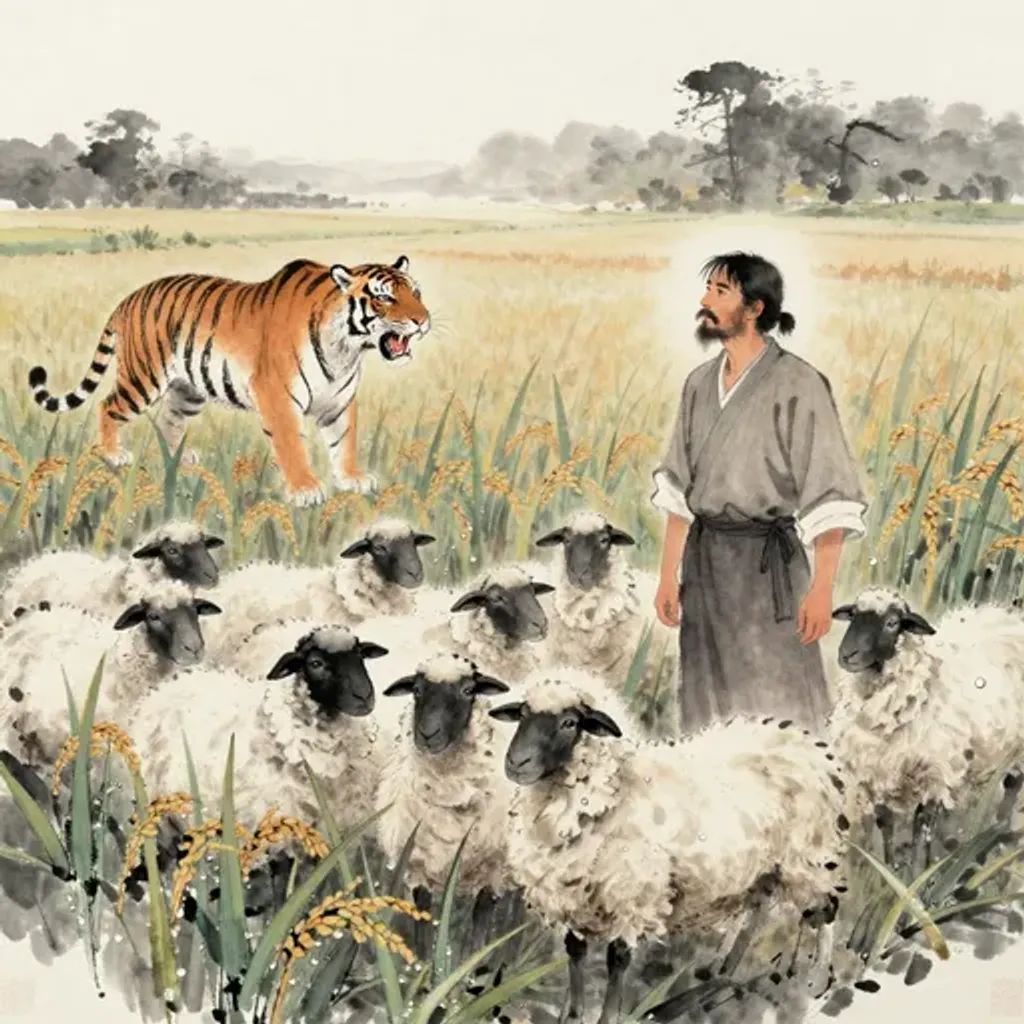
牧羊稻田,聞虎喧讙。畏懼惕息,終无禍患。
Herding sheep in the rice field; hearing a tiger's roar and commotion. Frightened and holding breath; in the end no disaster comes.
— Jiao Yanshou, Yilin (Forest of Changes), 1st century BC
Commentary
Wind stirs above the lake as the shepherd tends sheep in the rice paddies and hears a tiger roaring nearby. Fear and trembling seize the heart, but in the end no disaster comes. The verse is a study in managed fear: the danger is real — a tiger among the fields — but the outcome is safe. The shepherd's alarm is proportionate; it is precisely his wariness that preserves him. From Inner Truth to Small Exceeding, sincerity meets thunder above the mountain, the image of the small bird that must not fly too high. Small Exceeding counsels caution and modesty in action. The shepherd who freezes at the tiger's roar and does nothing bold survives exactly because he exceeds in smallness — in restraint, in stillness, in the discipline of not provoking what he cannot fight.
中孚 → 既濟
Hexagram 61 → Hexagram 63: After Completion
Changing lines: 2, 3, 6
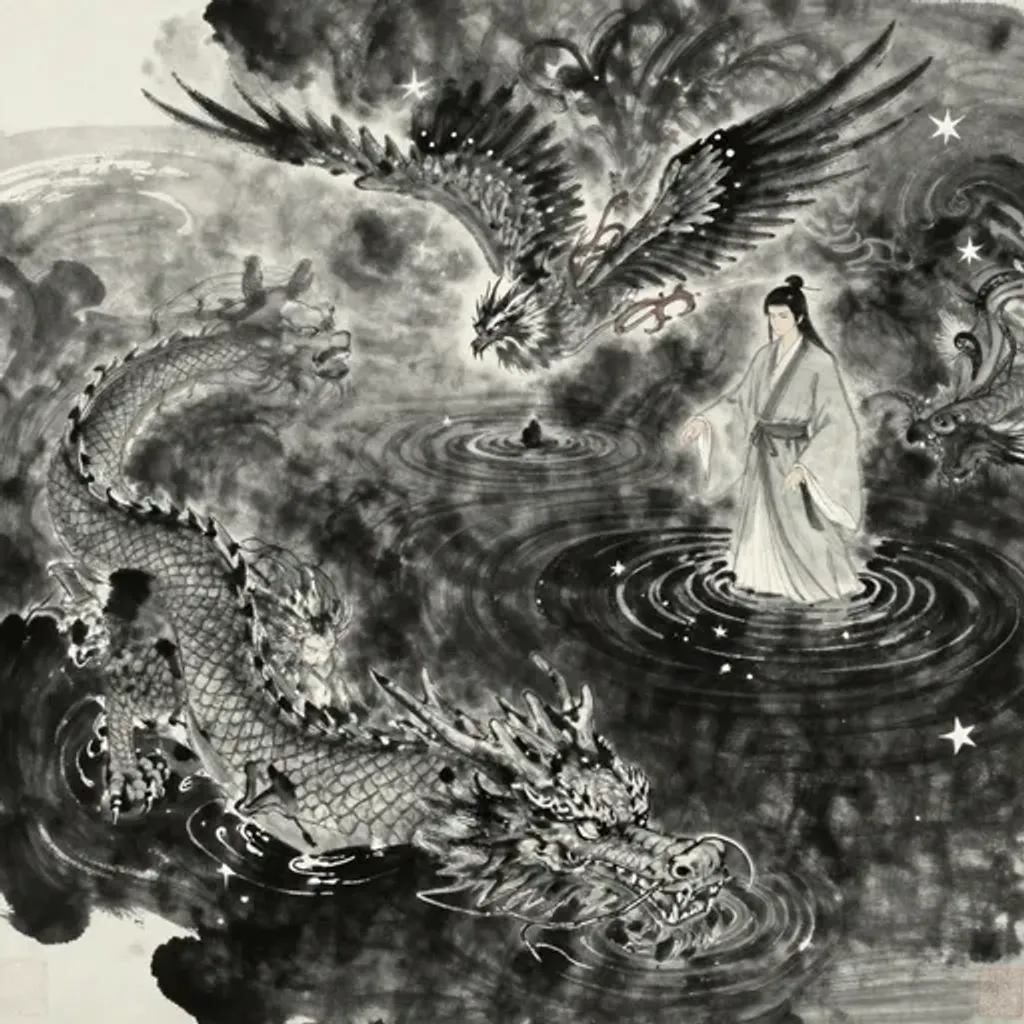
龍潛鳳北,其子變服,陰孽萌作。
Dragon submerges, phoenix flies north; its offspring change their garments. Dark troubles begin to sprout.
— Jiao Yanshou, Yilin (Forest of Changes), 1st century BC
Commentary
Wind stirs above the lake, but the dragon hides and the phoenix flies north — its offspring change their garments, and sinister forces germinate in the dark. When the dragon submerges (龍潛) and the phoenix reverses course, heaven's order is inverted. The children 'changing clothes' suggests disguise or transformation of identity, while 'yin malice sprouting' (陰孽萌作) warns of treachery taking root. From Inner Truth to After Completion, sincerity meets water above fire — every element in its proper place, the moment of perfect arrangement. Yet the verse warns that completion is the precise instant when decay begins. The dragon's withdrawal and the phoenix's wrong turning are the first symptoms: order achieved is order already unraveling from within.
中孚 → 未濟
Hexagram 61 → Hexagram 64: Before Completion
Changing lines: 1, 4, 5
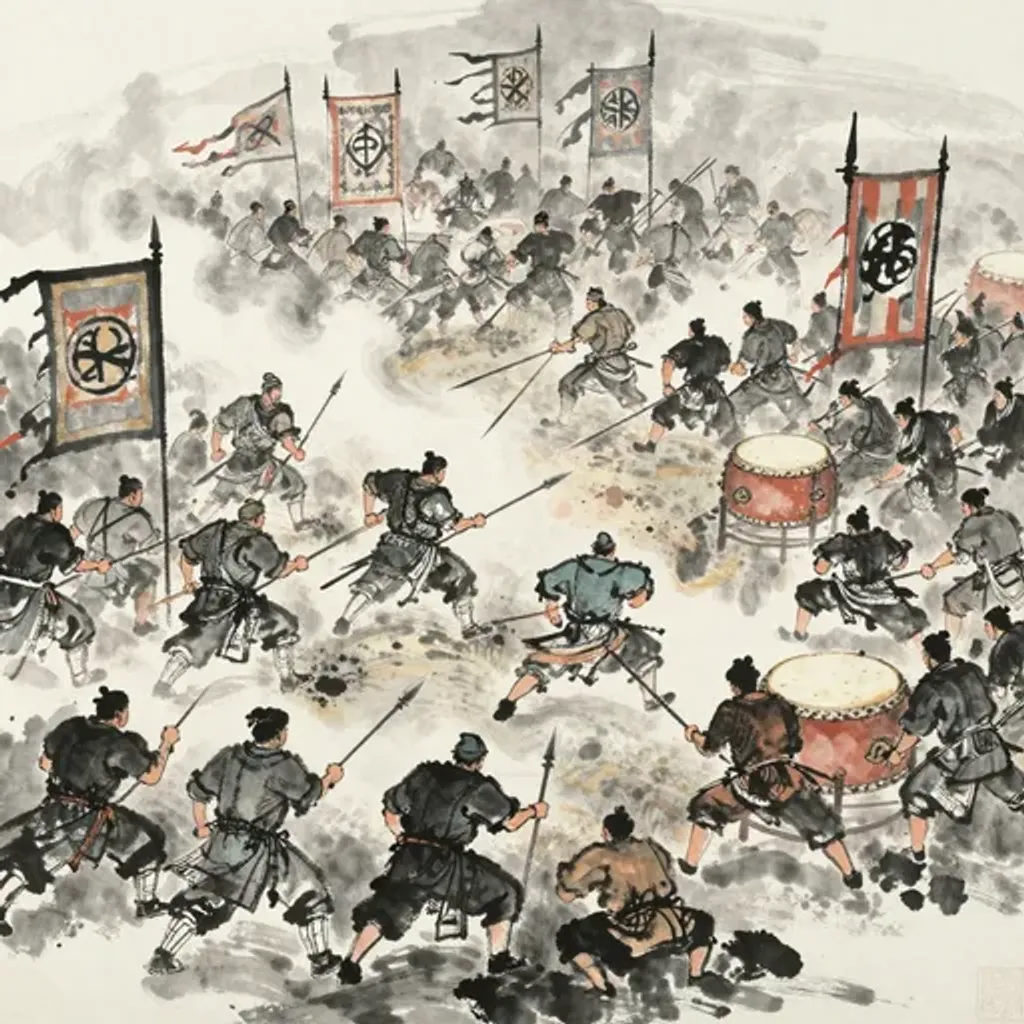
國无比鄰,相與爭強。紛紛匈匈,天下擾憂。
The state has no neighbors; all contend to grow stronger. In confusion and turmoil; the world falls to worry.
— Jiao Yanshou, Yilin (Forest of Changes), 1st century BC
Commentary
Wind stirs above the lake, but the state has no neighboring ally. Powers contend against one another for supremacy. Chaos and turmoil spread everywhere; the entire realm is troubled and anxious. The verse describes a geopolitical condition of universal competition: no alliances hold, every state is a rival, and the resulting disorder saturates the world. From Inner Truth to Before Completion, sincerity confronts fire above water — every element in the wrong position, nothing yet resolved. Before Completion is the eternal almost: the fox that nearly crosses the river but wets its tail at the last step. The verse captures the exhausting stalemate of a world where trust between nations has collapsed and no single power can impose order, leaving everyone suspended in perpetual anxiety.