Transformations of Hexagram 62
Every line of change out of Hexagram 62 小過 Small Exceeding, with the Yilin verse for each of the 64 resulting hexagrams, its translation, and the original ink brush artwork.
小過 → 乾
Hexagram 62 → Hexagram 1: The Creative
Changing lines: 1, 2, 5, 6
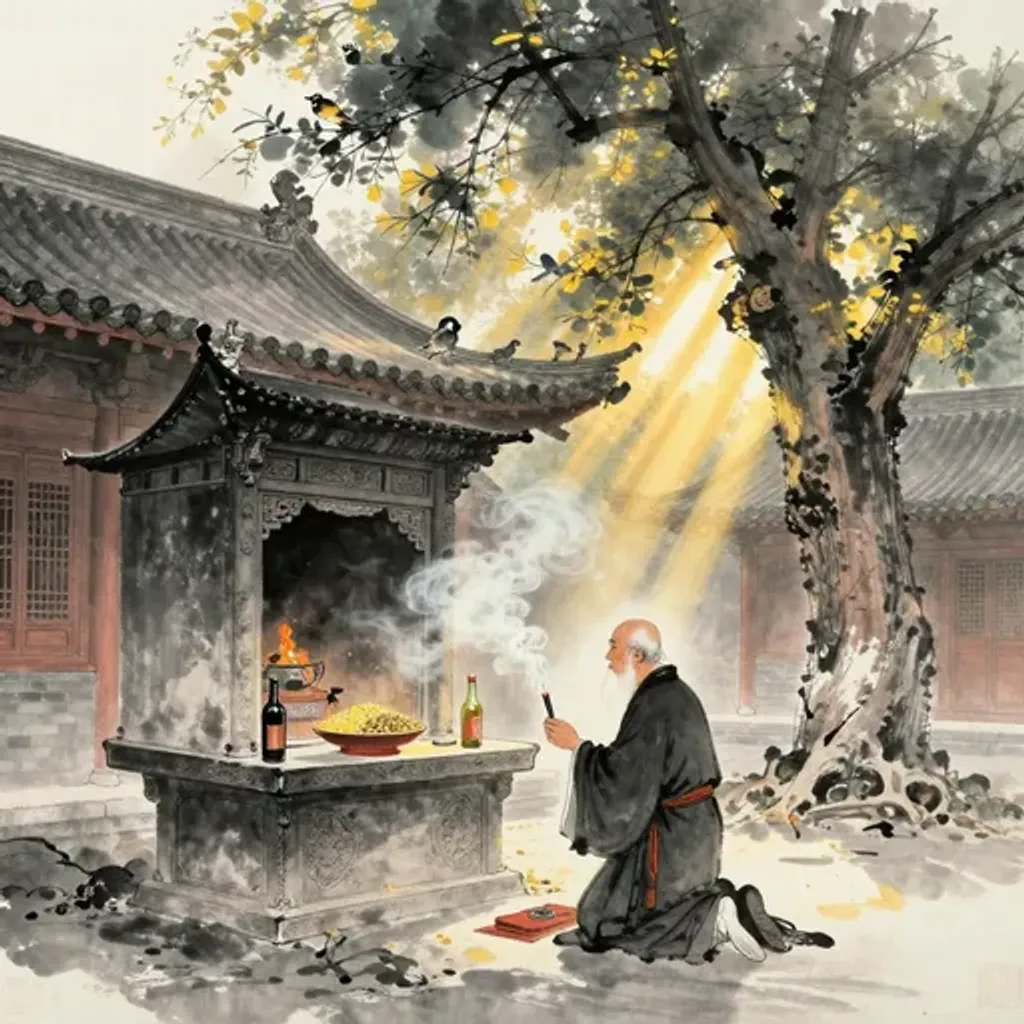
積德累仁,靈祐順信,福祉日增。
Accumulating virtue and benevolence; the spirits grant protection and trust; blessings and fortune increase daily.
— Jiao Yanshou, Yilin (Forest of Changes), 1st century BC
Commentary
Thunder rumbles above the mountain, and small acts exceed their station. Yet here the excess is virtuous: accumulated merit and benevolence invite spiritual protection, and blessings multiply daily. The verse distills an entire ethic into three phrases — store virtue, earn heaven's favor, watch fortune grow. No dramatic reversal, no named hero; just the quiet arithmetic of moral capital compounding over time. From Small Exceeding to the Creative, the mountain's cautious thunder transforms into heaven's self-generating power. What begins as modest overreach — doing slightly more than required — eventually becomes the sovereign initiative of one whose goodness has earned its own momentum. The small excess, faithfully sustained, graduates into creative authority.
小過 → 坤
Hexagram 62 → Hexagram 2: The Receptive
Changing lines: 3, 4
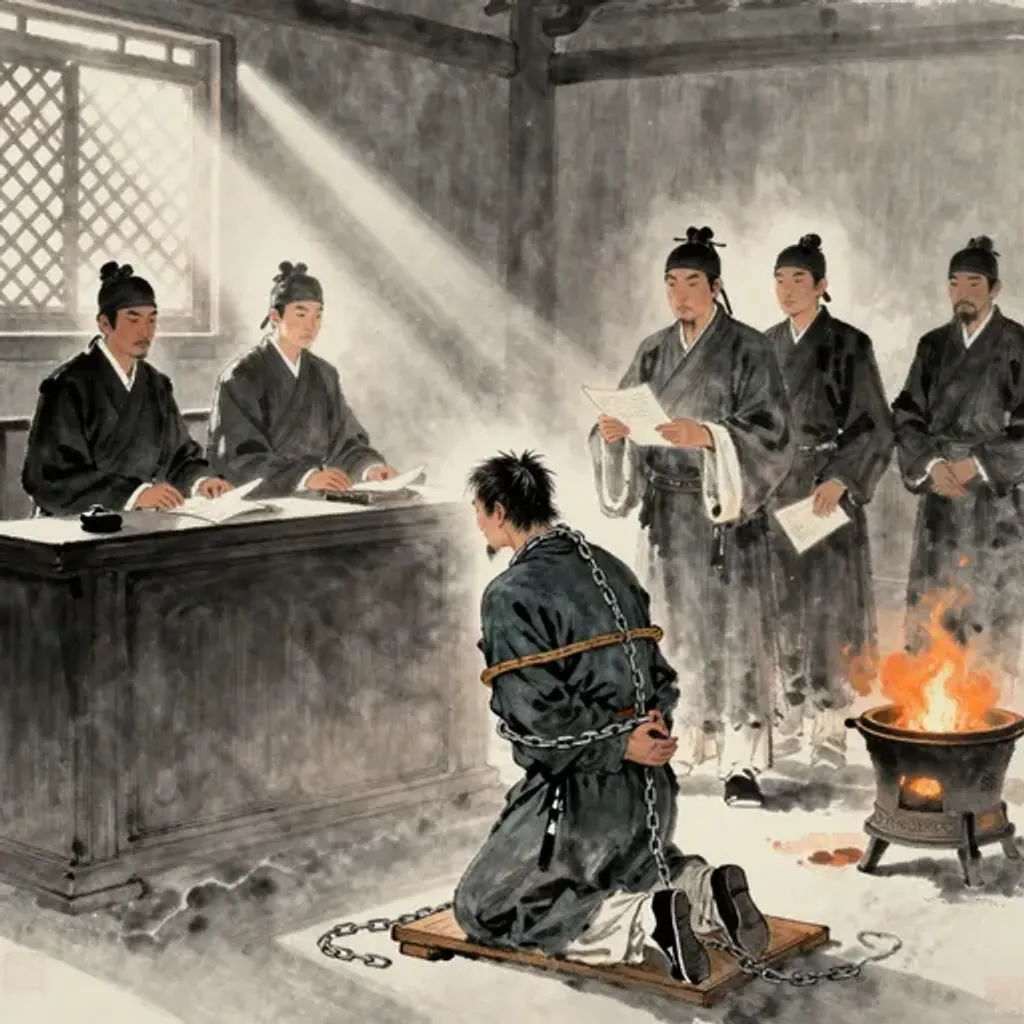
謹慎重言,不幸遭患。周邵述職,脫免牢開。
Cautious and measured in speech, yet misfortune still befalls; Zhou Shao fulfilled his duties, and was released from prison, set free.
— Jiao Yanshou, Yilin (Forest of Changes), 1st century BC
Commentary
Thunder rumbles above the mountain, but words spoken too carefully still invite misfortune. One guards one's speech with utmost caution, yet disaster falls regardless. Then the Duke of Zhou and Duke of Shao fulfill their duties, and the prisoner is released from confinement. The verse traces an arc from unjust suffering to institutional deliverance: careful conduct cannot prevent false accusation, but righteous officials can undo the damage. Zhou Gong and Shao Gong, the twin pillars of early Zhou governance, represent administrative justice that corrects what individual prudence could not prevent. From Small Exceeding to the Receptive, thunder's agitation settles into earth's vast acceptance. The crisis passes not through resistance but through yielding to a greater order that absorbs and resolves injustice.
小過 → 屯
Hexagram 62 → Hexagram 3: Difficulty at the Beginning
Changing lines: 1, 3, 4, 5
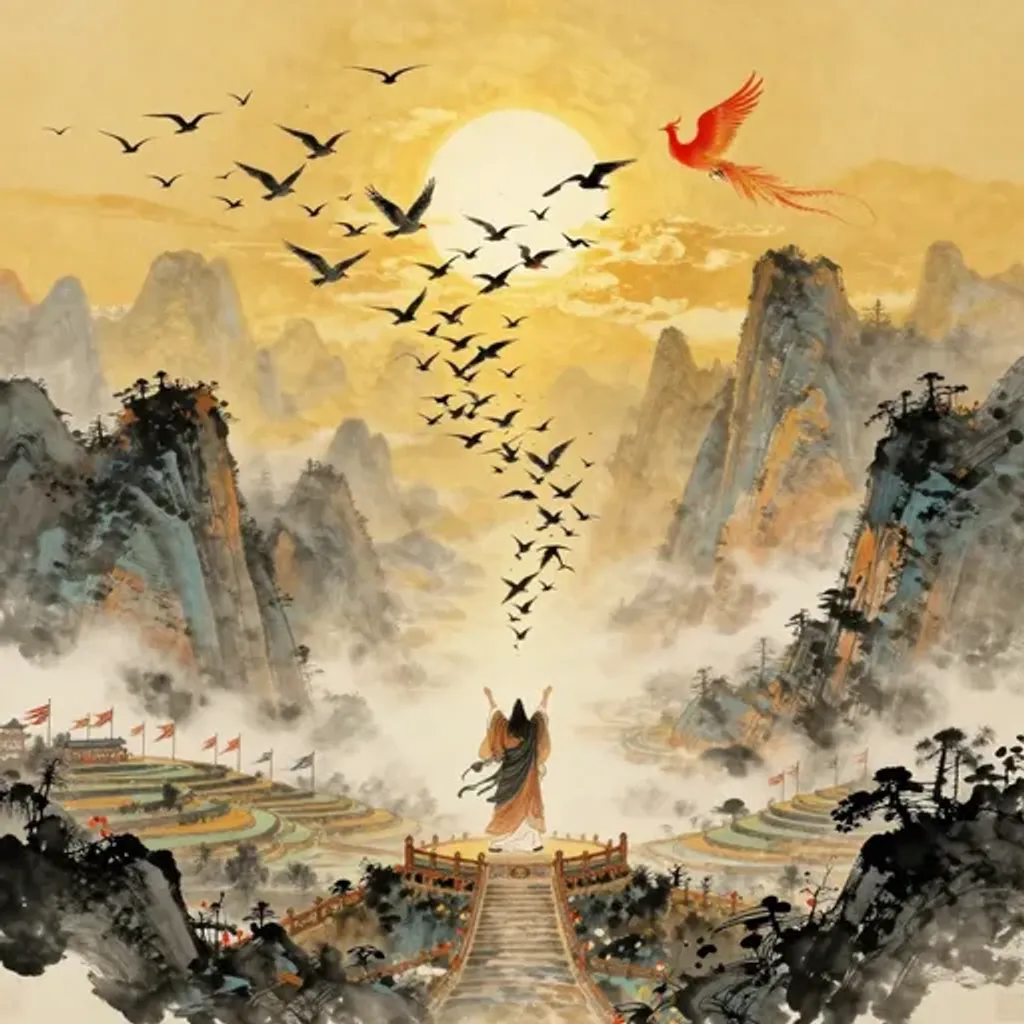
鳥飛鼓翼,喜樂堯德。虞夏美功,要荒賓服。
Birds fly beating their wings, rejoicing in Yao's virtue; Yu and Xia achieved great merit, and the distant lands submitted as guests.
— Jiao Yanshou, Yilin (Forest of Changes), 1st century BC
Commentary
Thunder rumbles above the mountain as birds beat their wings in joyful ascent, celebrating the virtue of Yao. The accomplishments of Yu and the Xia dynasty extend even to the remote borderlands, where outlying peoples submit in admiration. The verse links avian flight to imperial radiance — birds rising on thermals mirror the reach of sagely governance spreading outward without force. Yao's moral luminance and Yu's hydraulic achievements together represent civilization's fullest expression. From Small Exceeding to Difficulty at the Beginning, the mountain's thunder transforms into clouds and thunder churning together — the primordial labor of establishing order. The birds' celebratory flight contrasts with the struggle ahead: what Yao perfected must be rebuilt from scratch each generation.
小過 → 蒙
Hexagram 62 → Hexagram 4: Youthful Folly
Changing lines: 2, 3, 4, 6
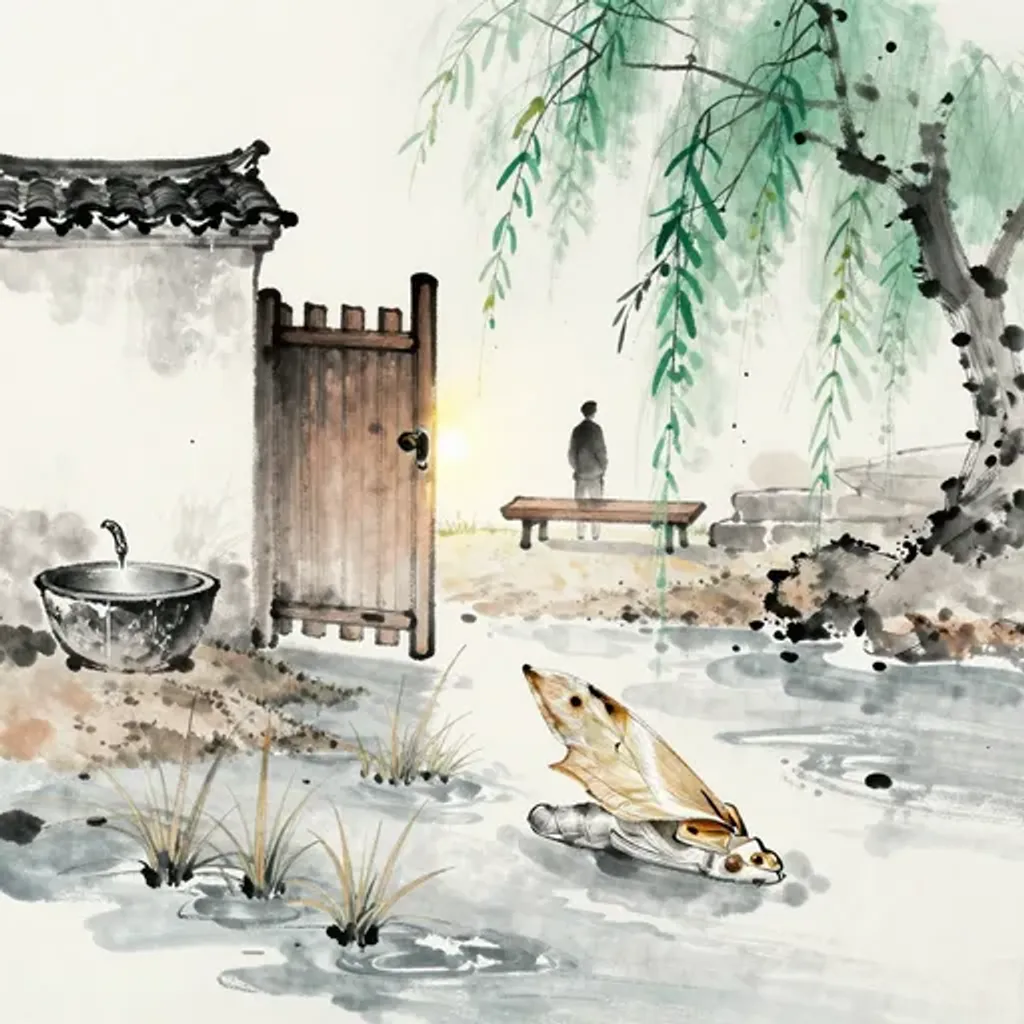
牙孽生齒,室堂啟戶。幽人利貞,鼓翼起舞。
Under the ice, grass shoots already push through the soil; inside the cocoon, moth wings slowly unfurl. The brushwood gate opens halfway — spring light enters; the one who sat in stillness stands up to look.
— Jiao Yanshou, Yilin (Forest of Changes), 1st century BC
Commentary
Thunder rumbles above the mountain, but beneath the ice, life stirs. The original verse reads: teeth and sprouts emerge, doors and halls open wide; the secluded person holds firm in rectitude and dances with beating wings. Buds push through frozen ground, a chrysalis splits to reveal forming wings, a gate swings half-open to admit spring light. The hermit's steadfast withdrawal now gives way to spontaneous movement — not ambition but the body's instinctive response to returning warmth. From Small Exceeding to Youthful Folly, thunder above the mountain yields to a spring emerging beneath the mountain. Both hexagrams share the mountain, but the energy shifts from above to below: what rumbled outward now wells up from within, innocent and unforced, the way a seedling finds light without instruction.
小過 → 需
Hexagram 62 → Hexagram 5: Waiting
Changing lines: 1, 2, 4, 5
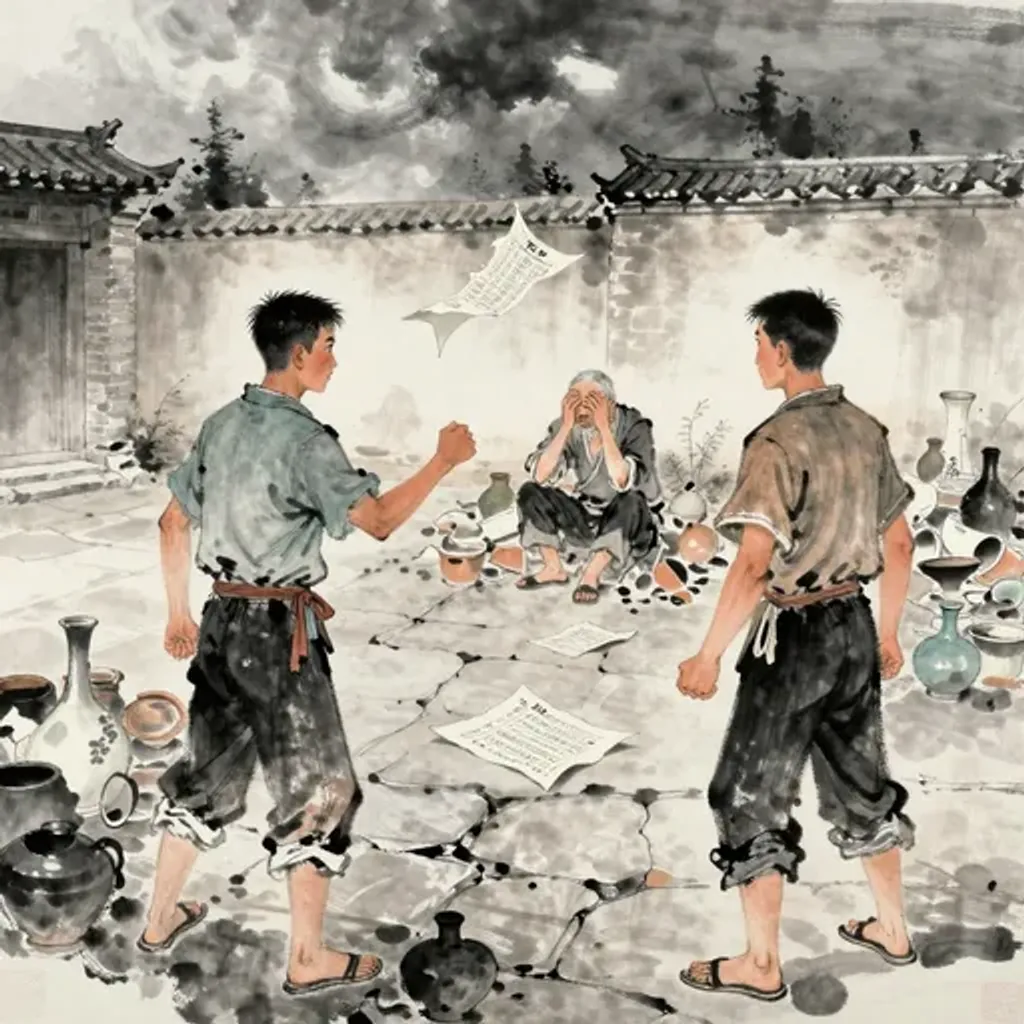
使伯東求,拒不肯行。與叔爭訟,更相毀傷。
The elder brother was sent east on a mission, but refused to go; with the younger brother he entered into litigation, and they wounded each other.
— Jiao Yanshou, Yilin (Forest of Changes), 1st century BC
Commentary
Thunder rumbles above the mountain, but the envoy refuses his mission. Ordered to send the elder brother east on a diplomatic errand, the younger brother resists and will not go. The siblings then fall into litigation, each inflicting harm upon the other. What should be cooperative governance — one brother dispatched, another managing affairs at home — collapses into fraternal rivalry. The verse portrays authority that cannot command obedience even within a household. From Small Exceeding to Waiting, the mountain's thunder transforms into water suspended above heaven — danger that has not yet fallen. The brothers' mutual destruction is not yet complete; it hangs overhead like gathering clouds, each party waiting for the other to break first.
小過 → 訟
Hexagram 62 → Hexagram 6: Conflict
Changing lines: 2, 3, 5, 6
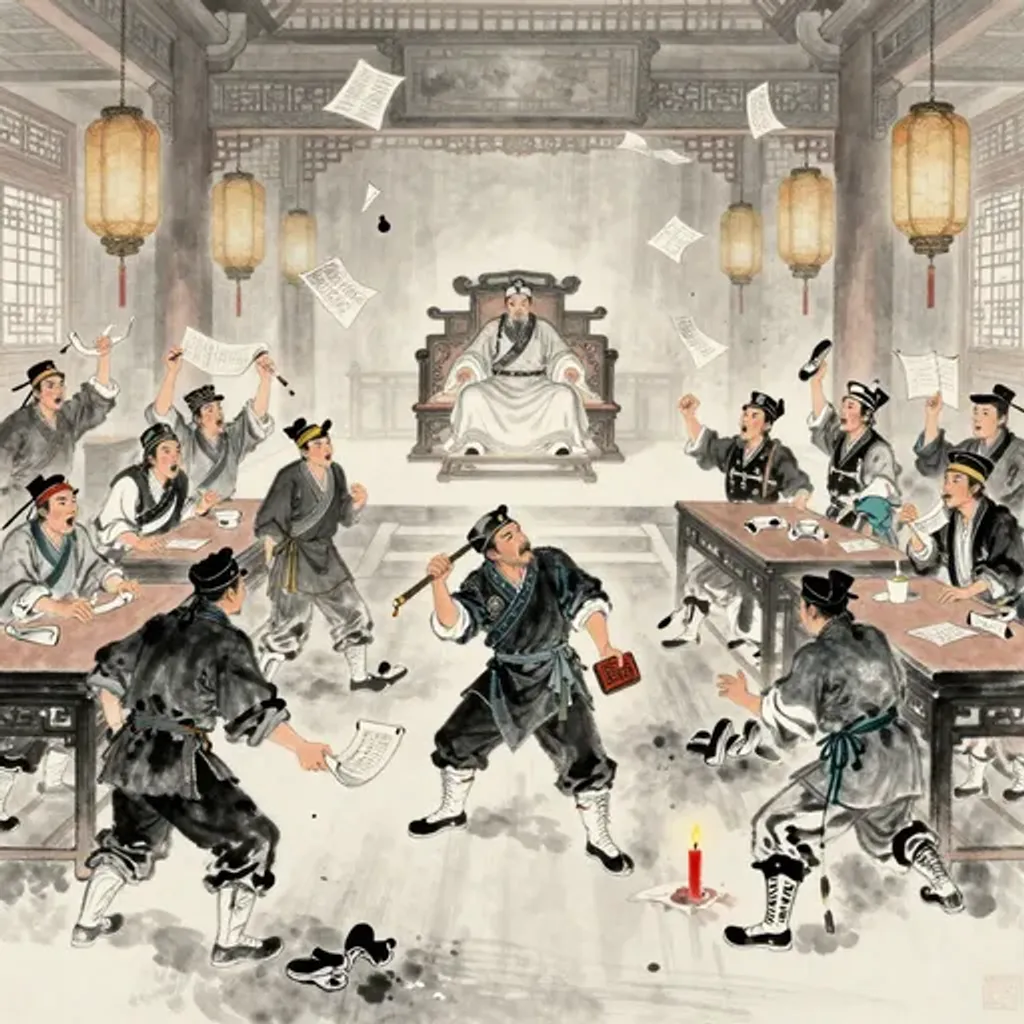
手足易處,頭尾顛倒。公為雌嫗,亂其蚕織。
Shoes worn backwards, left and right reversed. Reading the book from the end to the beginning. The general wields a pestle while the soldier holds the seal — the whole hall in uproar, no one's word is master.
— Jiao Yanshou, Yilin (Forest of Changes), 1st century BC
Commentary
Thunder rumbles above the mountain, but all order is inverted. The original verse reads: hands and feet swap places, head and tail are reversed; the lord becomes a crone spinning silk, tangling the weaving. Shoes are worn backward, books read from end to beginning, the general wields a pestle while the soldier holds the seal of command. The imagery is systematic inversion — every hierarchy upended, every role misassigned. Authority disintegrates not through rebellion but through absurd misplacement: those with power lack competence, those with skill lack authority. From Small Exceeding to Conflict, the mountain's excess thunder becomes heaven and water moving in opposite directions. Disorder here is not chaotic violence but structural contradiction — each element pulling away from its proper alignment.
小過 → 師
Hexagram 62 → Hexagram 7: The Army
Changing lines: 2, 3, 4
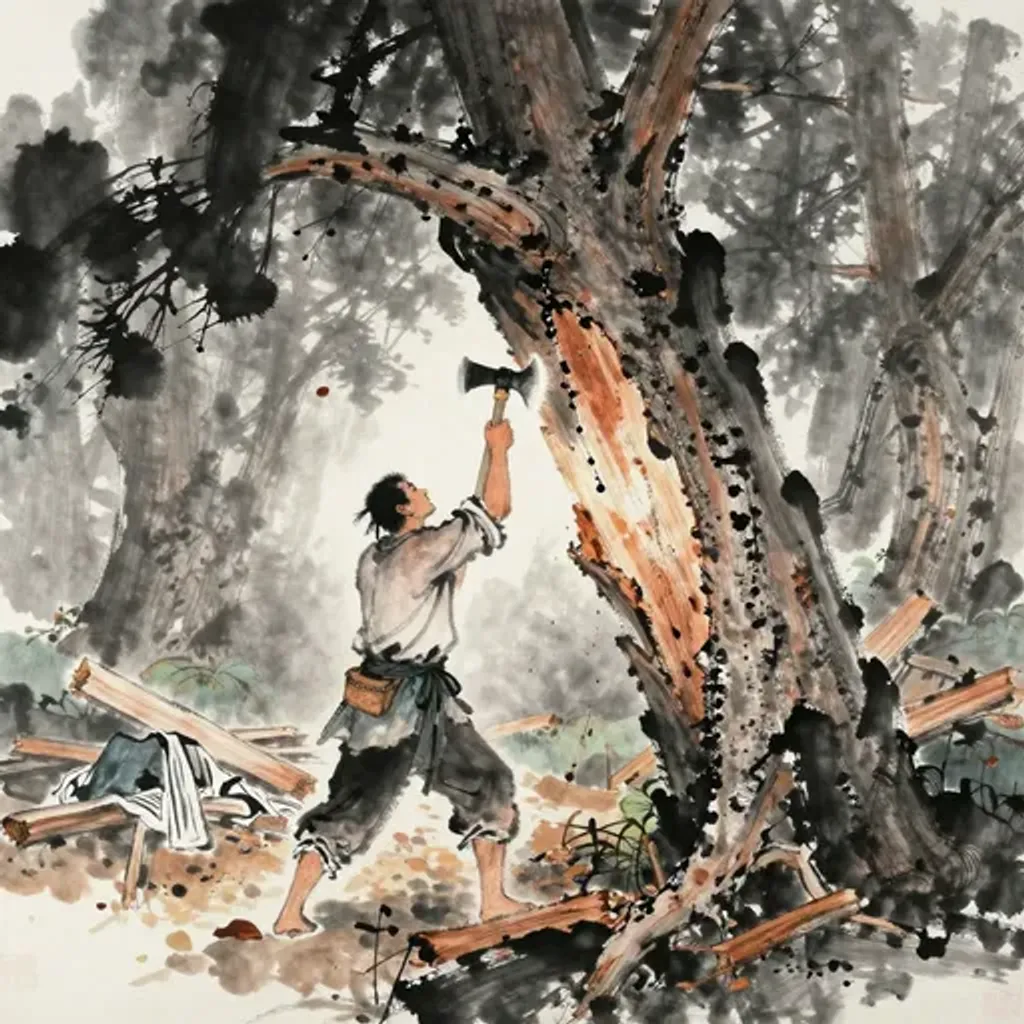
匠卿操斧,豫章危殆。袍衣脫剝,祿命訖已。
The master carpenter wields his axe; the great camphor tree is imperiled; robes are stripped away; salary and fate have reached their end.
— Jiao Yanshou, Yilin (Forest of Changes), 1st century BC
Commentary
Thunder rumbles above the mountain as the master carpenter raises his axe, and the great camphor tree stands in mortal danger. Robes are stripped away; salary and destiny reach their end. The camphor (豫章) was among the most prized timbers of ancient China — its felling signals the destruction of something magnificent for utilitarian purposes. The carpenter-minister (匠卿) wields his authority like a blade, and what took centuries to grow falls in an afternoon. From Small Exceeding to the Army, the mountain's thunder descends into water hidden within the earth — disciplined force concealed beneath the surface. The verse warns that institutional power, once mobilized against the exceptional, operates with military efficiency: the axe falls, the robes are stripped, and the matter is finished.
小過 → 比
Hexagram 62 → Hexagram 8: Holding Together
Changing lines: 3, 4, 5
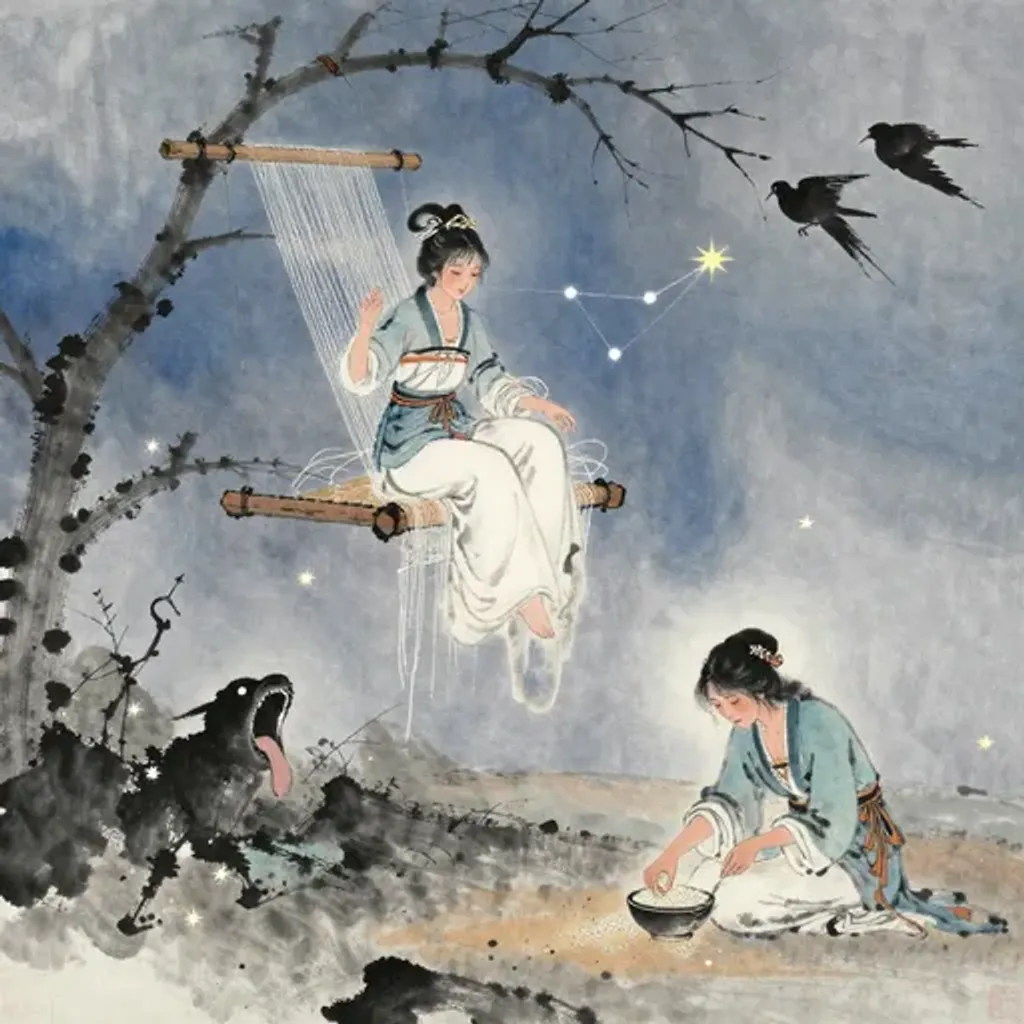
天女踞床,不成文章。南箕无舌,飯多砂糠。虛象盜名,雌雄折頸。
The celestial Weaving Maid sits at her loom but produces no pattern; the Southern Winnow has no tongue; rice is full of sand and chaff; empty images steal their names; the paired birds break their necks.
— Jiao Yanshou, Yilin (Forest of Changes), 1st century BC
Commentary
Thunder rumbles above the mountain, but the Weaving Maiden sits idle on her bed, producing no cloth. The Southern Winnowing Basket constellation lacks a tongue and cannot sift; rice is full of sand and chaff. Empty signs steal real names, and paired birds break their necks. The verse draws on stellar mythology: the Weaving Maiden (織女) and Winnowing Basket (箕) are constellations that bear functional names but perform no function — cosmic false advertising. From Small Exceeding to Holding Together, the mountain's thunder gives way to water flowing across the earth, seeking genuine union. But here the union is fraudulent: names promise what substance cannot deliver, and those who pair under false pretenses destroy each other. Solidarity built on hollow credentials collapses.
小過 → 小畜
Hexagram 62 → Hexagram 9: Small Taming
Changing lines: 1, 2, 4, 5, 6
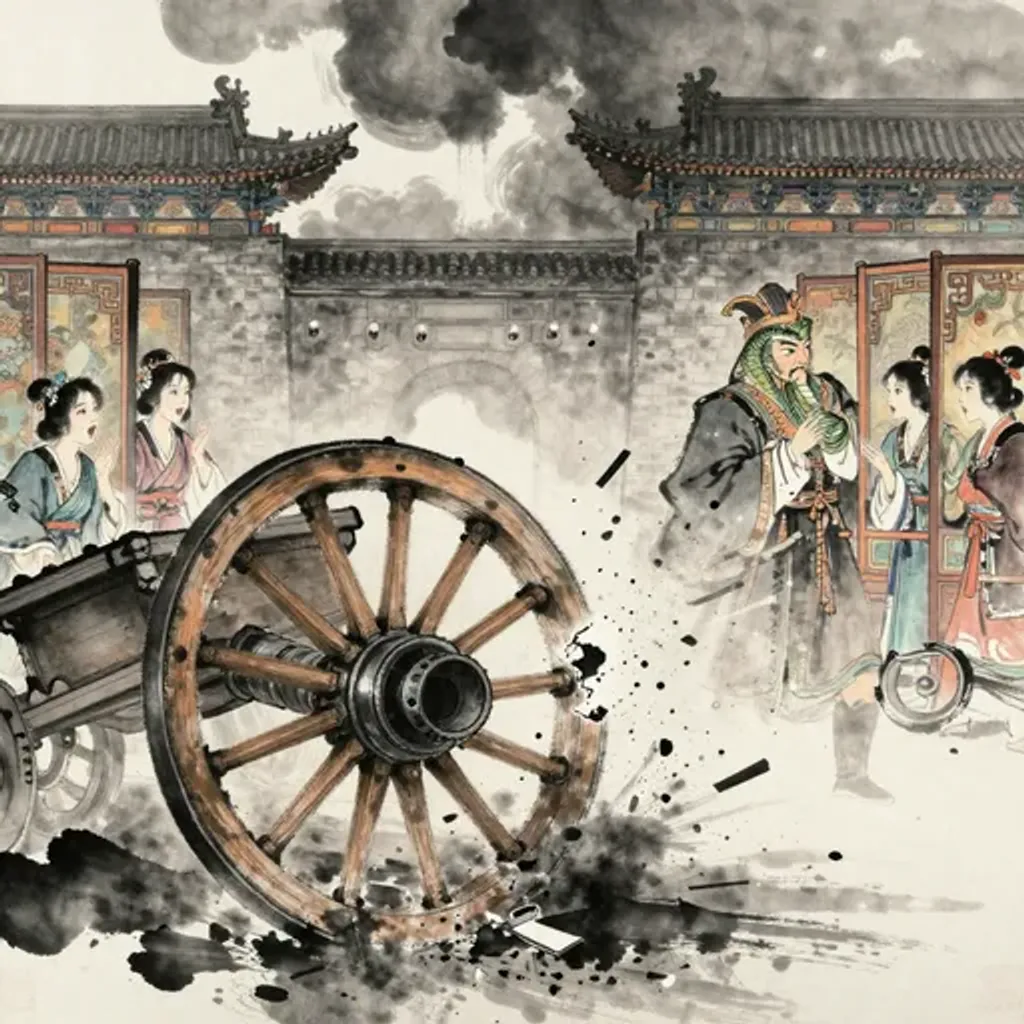
大椎破轂,長舌亂國。墻茨之言,三世不安。
The great axle-pin smashes the wheel-hub; a long tongue throws the nation into chaos; the words of the thorn-hedge bring three generations without peace.
— Jiao Yanshou, Yilin (Forest of Changes), 1st century BC
Commentary
Thunder rumbles above the mountain, and a massive linchpin shatters the wheel hub — brute force misapplied to a delicate mechanism. A long, wagging tongue throws the state into turmoil. The gossip behind the thorn-hedge wall (牆茨) unsettles three generations. The phrase 牆茨之言 alludes to the Odes poem 'Qiang Ci' (牆有茨), which describes scandalous words overheard through palace walls — secrets that should remain hidden but leak out, poisoning court politics for generations. From Small Exceeding to Small Taming, thunder above the mountain shifts to wind moving gently over heaven. But the wind here carries poison: gossip is a gentle force that accumulates devastating effect. What small restraint should contain — a whispered rumor, a careless word — instead proliferates, and the taming fails.
小過 → 履
Hexagram 62 → Hexagram 10: Treading
Changing lines: 1, 2, 3, 5, 6
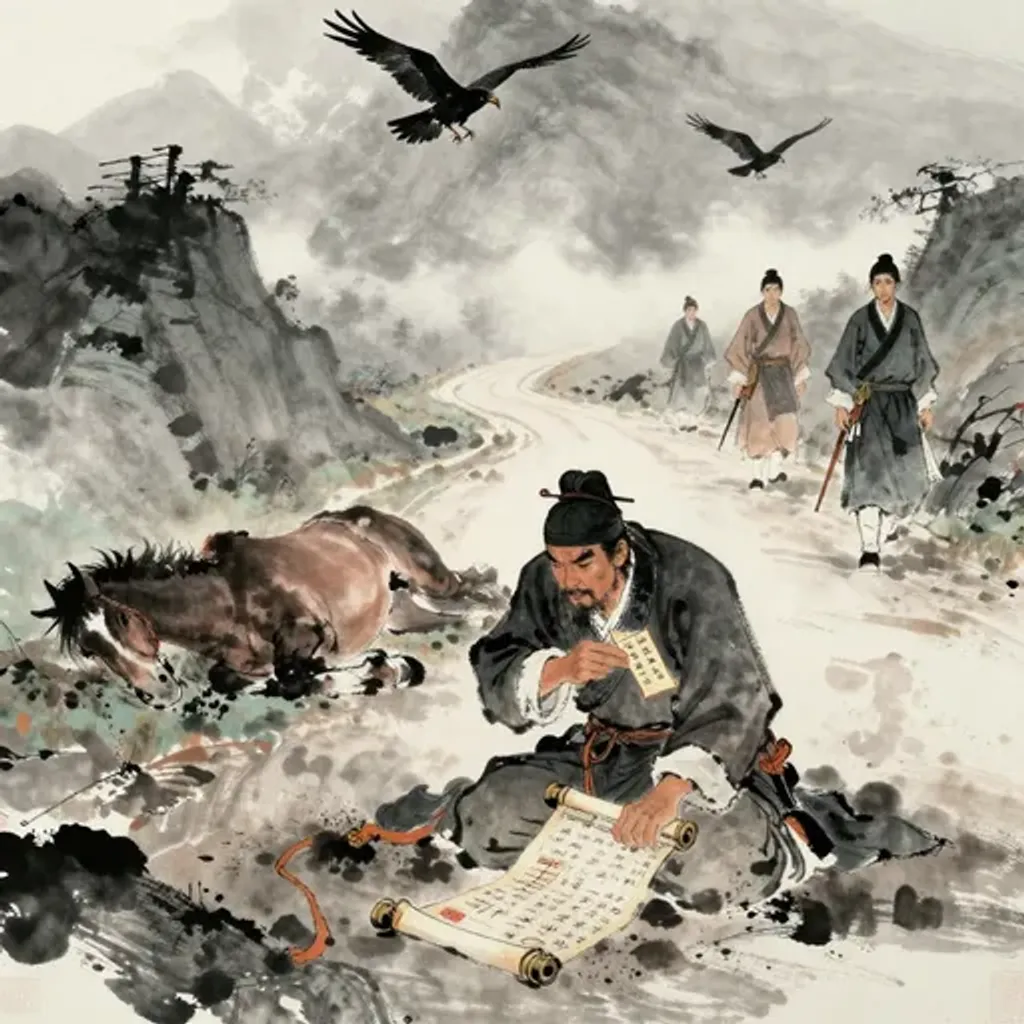
衘命辱使,不堪厥事。中墜落去,更為負載。
Receiving orders as a humiliated envoy, unequal to the task; midway he falls and drops it; another must bear the burden.
— Jiao Yanshou, Yilin (Forest of Changes), 1st century BC
Commentary
Thunder rumbles above the mountain as an envoy receives his commission but proves unequal to the task — a humiliating embassy. Midway through the journey he falls and loses his footing, and what was meant to be a mission of honor becomes an additional burden. The verse captures bureaucratic overreach in miniature: a minor official is entrusted with responsibilities beyond his capacity, stumbles under the weight, and returns carrying more trouble than he departed with. From Small Exceeding to Treading, the mountain's thunder transforms into heaven above the lake — the image of walking upon the tiger's tail with careful distinction. The envoy's failure is a failure of treading: stepping beyond one's competence without the discernment to know where the edge lies.
小過 → 泰
Hexagram 62 → Hexagram 11: Peace
Changing lines: 1, 2, 4
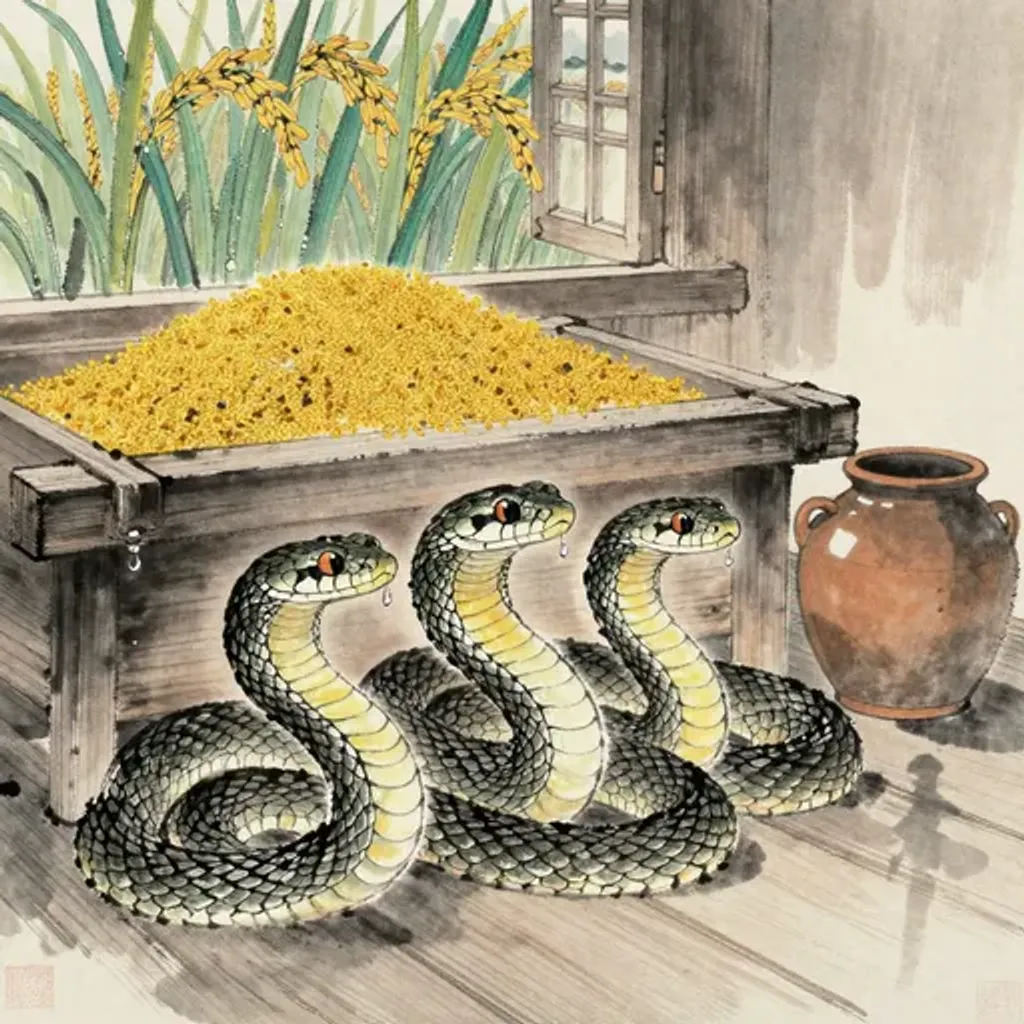
三虵共室,同類相得。甘露時降,生我百穀。
Three serpents share a single dwelling, kindred finding kindred; sweet dew descends in season, nurturing all my hundred grains.
— Jiao Yanshou, Yilin (Forest of Changes), 1st century BC
Commentary
Thunder rumbles above the mountain, and three serpents share a single chamber — creatures of the same kind finding natural affinity. Then sweet dew descends at the proper season, nourishing the hundred grains. The verse pairs two auspicious signs: like attracts like in harmonious cohabitation, and heaven responds with timely blessing. The three serpents sharing quarters without conflict suggest a community whose members recognize their kinship rather than competing. Sweet dew (甘露) in Han cosmology was heaven's endorsement of virtuous governance. From Small Exceeding to Peace, thunder above the mountain gives way to heaven and earth in full intercourse. The small excess that once agitated the mountain peak now becomes the generous exchange between high and low that makes all things flourish.
小過 → 否
Hexagram 62 → Hexagram 12: Standstill
Changing lines: 3, 5, 6
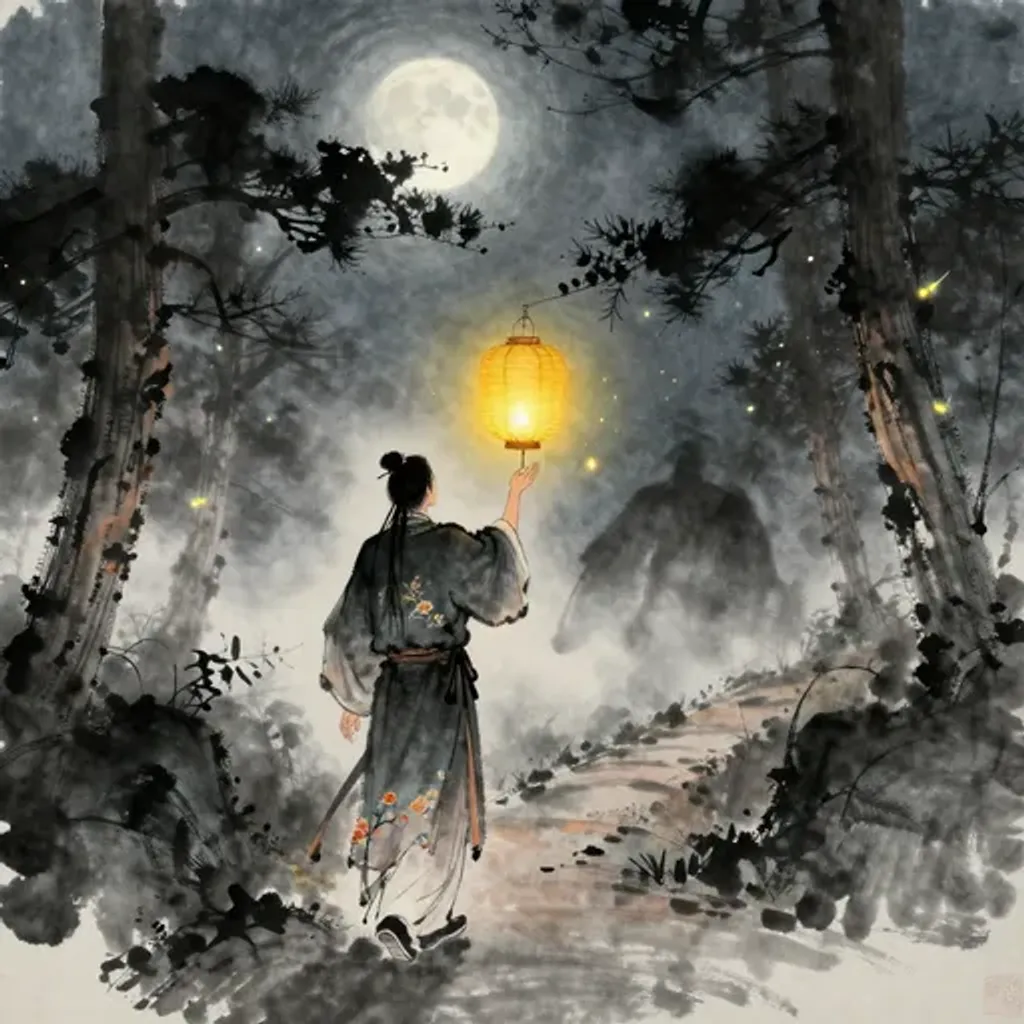
衣繡夜遊,與君相逢。除患解惑,使我不憂。
Wandering at night in embroidered clothes, I meet my lord by chance; troubles dispelled, doubts resolved; he frees me from my cares.
— Jiao Yanshou, Yilin (Forest of Changes), 1st century BC
Commentary
Thunder rumbles above the mountain, and someone wanders in embroidered robes through the night — a figure of concealed splendor. In the darkness, one encounters a lord who dispels anxiety and resolves confusion. The phrase 衣繡夜遊 evokes Xiang Yu's famous lament that wealth without homecoming is like wearing brocade at night — invisible glory. But here the night walk yields an unexpected meeting: the very obscurity that seemed wasteful becomes the condition for a transformative encounter. From Small Exceeding to Standstill, the mountain's thunder stills into heaven and earth refusing to communicate. Yet the verse is paradoxically hopeful: precisely when all channels close, a chance meeting in darkness breaks through the impasse. Standstill is not permanent when one walks through it wearing one's true colors.
小過 → 同人
Hexagram 62 → Hexagram 13: Fellowship
Changing lines: 1, 5, 6
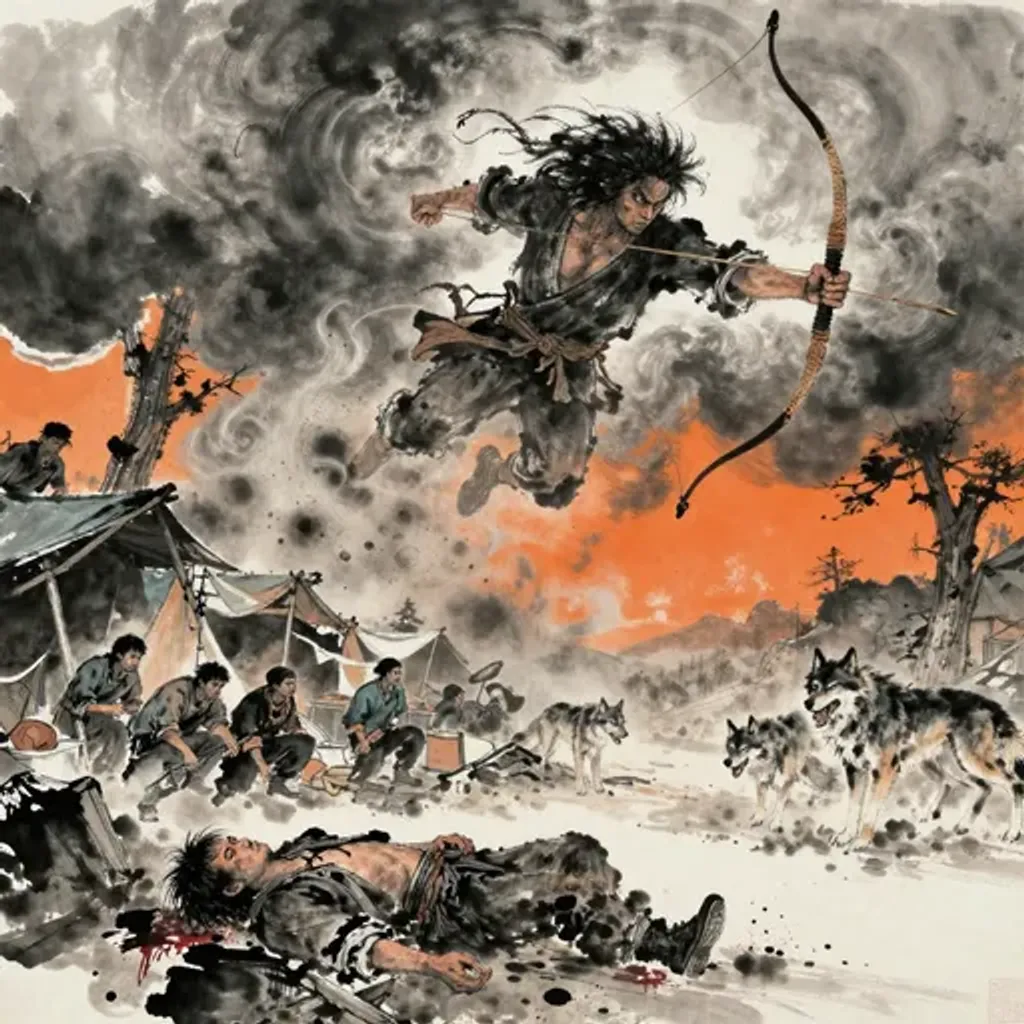
被髮獸心,難與為鄰。來如風雲,去如絕絃,為狼所殘。
Disheveled hair and beast's heart, impossible to live beside; he comes like wind and cloud, departs like a broken string; savaged by wolves.
— Jiao Yanshou, Yilin (Forest of Changes), 1st century BC
Commentary
Thunder rumbles above the mountain, but the creature approaching has disheveled hair and a beast's heart — impossible to live beside. It arrives like wind and cloud, vanishes like a snapped string, and leaves behind only wolf-torn remains. The verse describes something that mimics fellowship but operates through predatory instinct: the wild hair signals abandonment of civilized norms, the beast-heart confirms it. The arrival is spectacular, the departure abrupt and total, the aftermath carnage. From Small Exceeding to Fellowship, the mountain's thunder shifts to heaven joined with fire — the image of kinship and shared purpose. But the verse inverts Fellowship's promise: this is anti-fellowship, a parody of community where the wolf wears human form and proximity means danger, not solidarity.
小過 → 大有
Hexagram 62 → Hexagram 14: Great Possession
Changing lines: 1, 2, 6
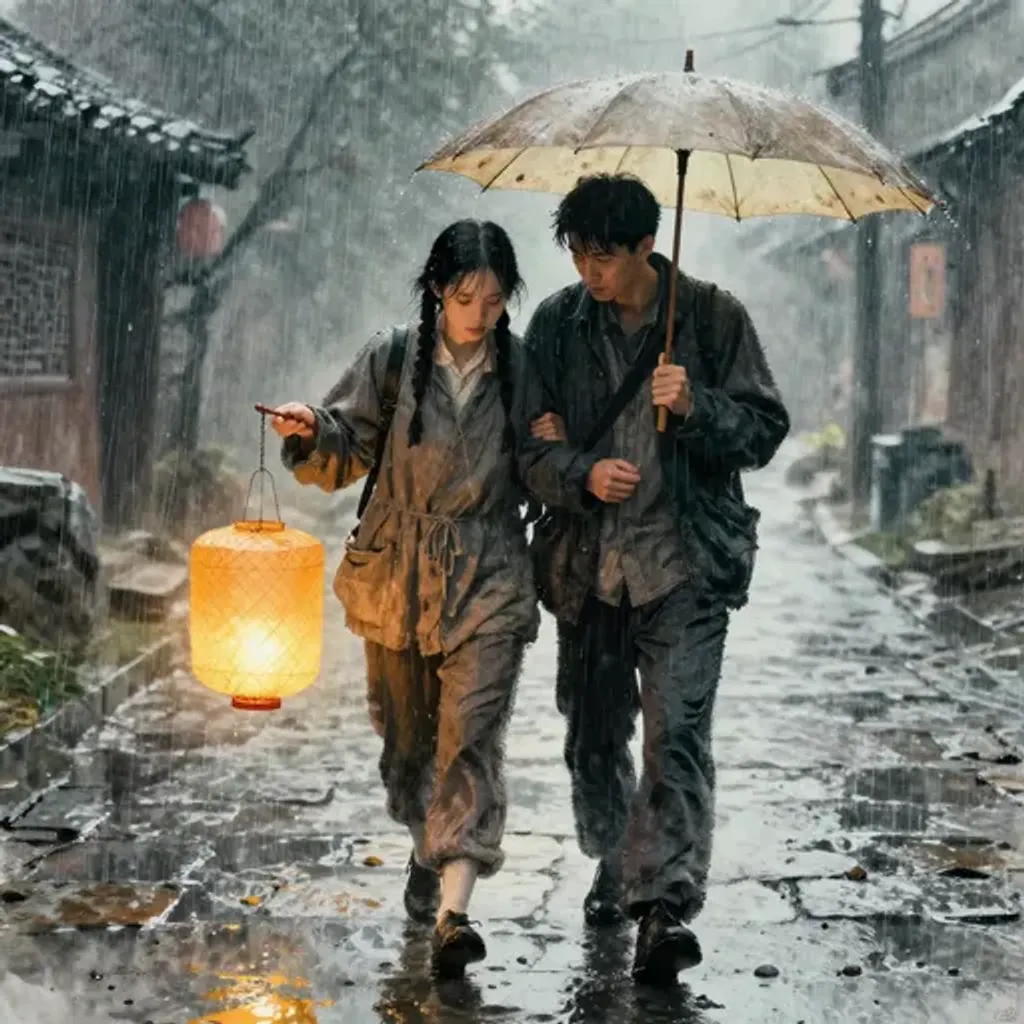
剛柔相呼,二姓為家。霜降既同,惠我以仁。
Left hand holds the lantern, right hand holds the umbrella. Walking together through wind and rain — the whole road feels warm.
— Jiao Yanshou, Yilin (Forest of Changes), 1st century BC
Commentary
Thunder rumbles above the mountain, but the original verse speaks of gentle union: hard and soft call to each other, two surnames join as one household. After the frost falls together, kindness and benevolence are bestowed. The imagery is matrimonial — the complementary pairing of yang and yin principles formalized through marriage rites, sealed by shared hardship (frost), and sustained by mutual care. The two surnames (二姓) joining is the classical formula for marriage: different clans uniting to create a new household. From Small Exceeding to Great Possession, the mountain's modest thunder becomes fire blazing high in heaven — abundance born from proper union. What began as small domestic excess — going slightly beyond propriety to offer warmth — becomes the radiant fullness of a partnership that generates more than either party alone could possess.
小過 → 謙
Hexagram 62 → Hexagram 15: Modesty
Changing lines: 4
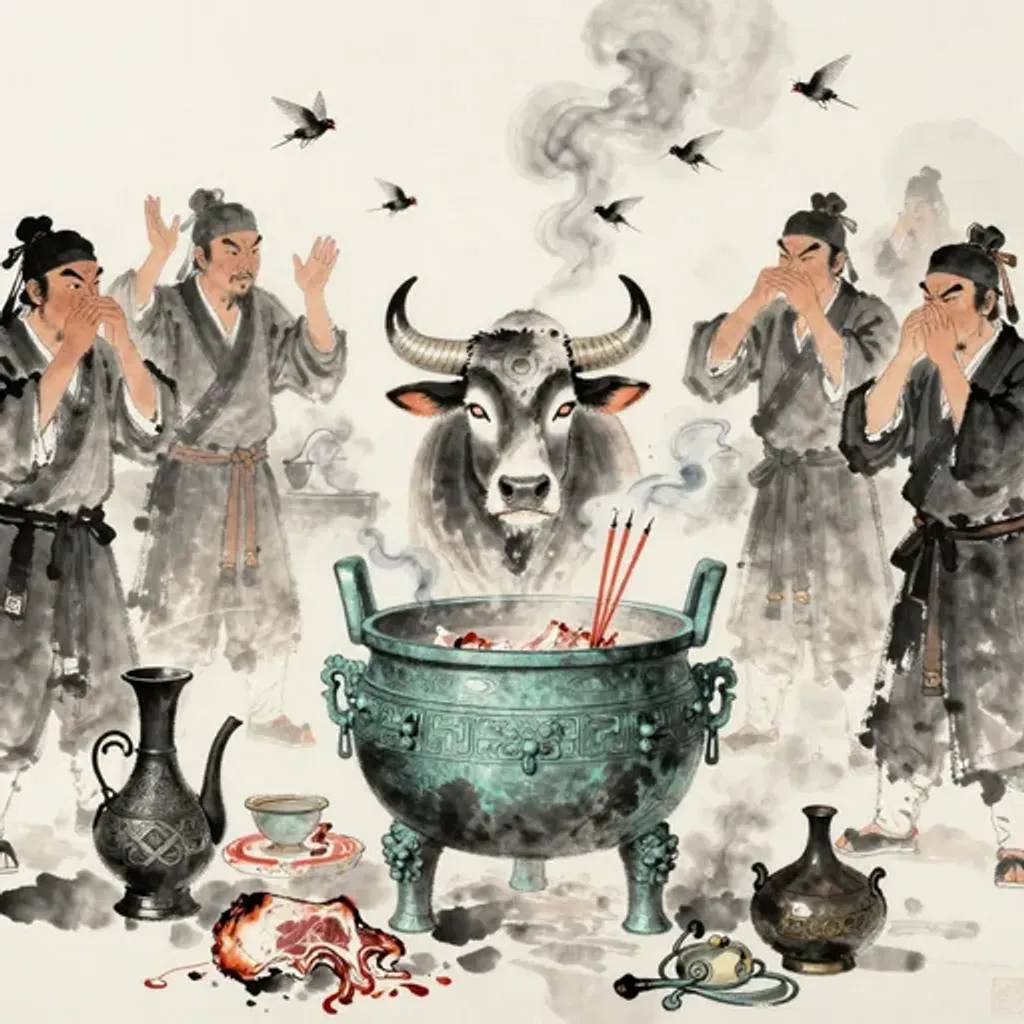
牛耳聾聵,不曉齊味。委以鼎俎,治亂憒憒。
The ox's ears are deaf, unable to discern the flavors of Qi; entrusted with the sacrificial cauldrons, governance falls into confusion.
— Jiao Yanshou, Yilin (Forest of Changes), 1st century BC
Commentary
Thunder rumbles above the mountain, but the ox is deaf and cannot discern fine flavors. Entrusted with the sacrificial tripod and chopping board, it reduces governance to confusion. The verse is a parable of misplaced responsibility: an animal incapable of appreciating culinary art is given charge of the ritual kitchen. The deaf ox (牛耳聾聵) who cannot taste the subtle seasonings of Qi — likely an allusion to the refined cuisine associated with proper statecraft — wrecks everything through sheer incomprehension. From Small Exceeding to Modesty, the mountain's thunder settles into a mountain hidden within the earth. Modesty here is inverted: instead of the capable person who understates their gifts, we see the incapable one given gifts they cannot comprehend, producing chaos through inadequacy rather than arrogance.
小過 → 豫
Hexagram 62 → Hexagram 16: Enthusiasm
Changing lines: 3
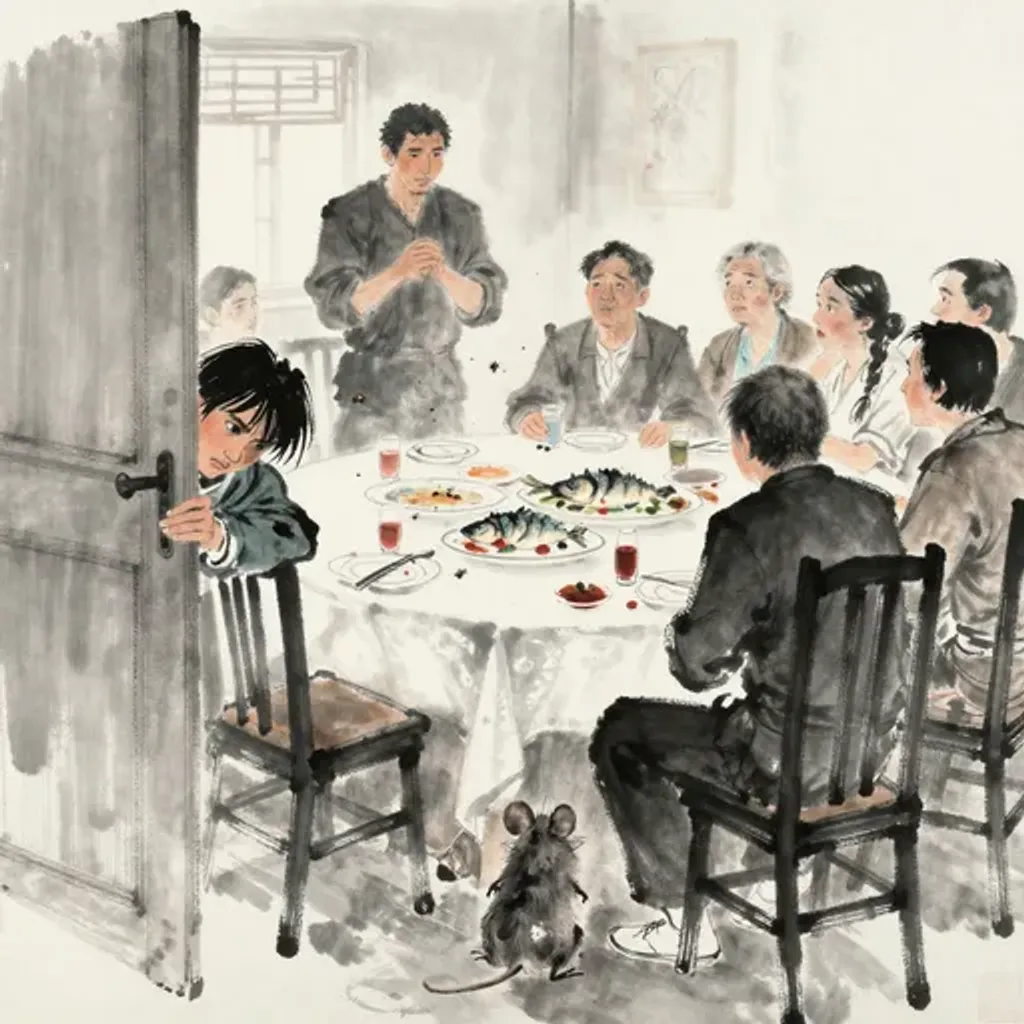
低頭竊視,有所畏避。行作不利,酒酢魚餒,眾莫貪嗜。
Head bowed, eyes stealing glances, avoiding something feared; actions bring no profit; wine has soured, fish gone rancid; none will touch the feast.
— Jiao Yanshou, Yilin (Forest of Changes), 1st century BC
Commentary
Thunder rumbles above the mountain, but one ducks and peers furtively, avoiding something feared. Action brings no advantage; the wine has soured, the fish has spoiled, and no one wants to taste them. The verse is a portrait of paralysis disguised as caution: lowered heads, stolen glances, movements that dare not commit. The spoiled provisions — vinegared wine and rancid fish — signal that the moment for enjoyment has already passed. From Small Exceeding to Enthusiasm, the mountain's thunder becomes thunder breaking forth from the earth in joyous release. The transformation is bitterly ironic: Enthusiasm demands bold, timely action, but the verse shows someone who missed the window entirely. What should have been a feast has curdled into waste through excessive hesitation.
小過 → 隨
Hexagram 62 → Hexagram 17: Following
Changing lines: 1, 3, 5
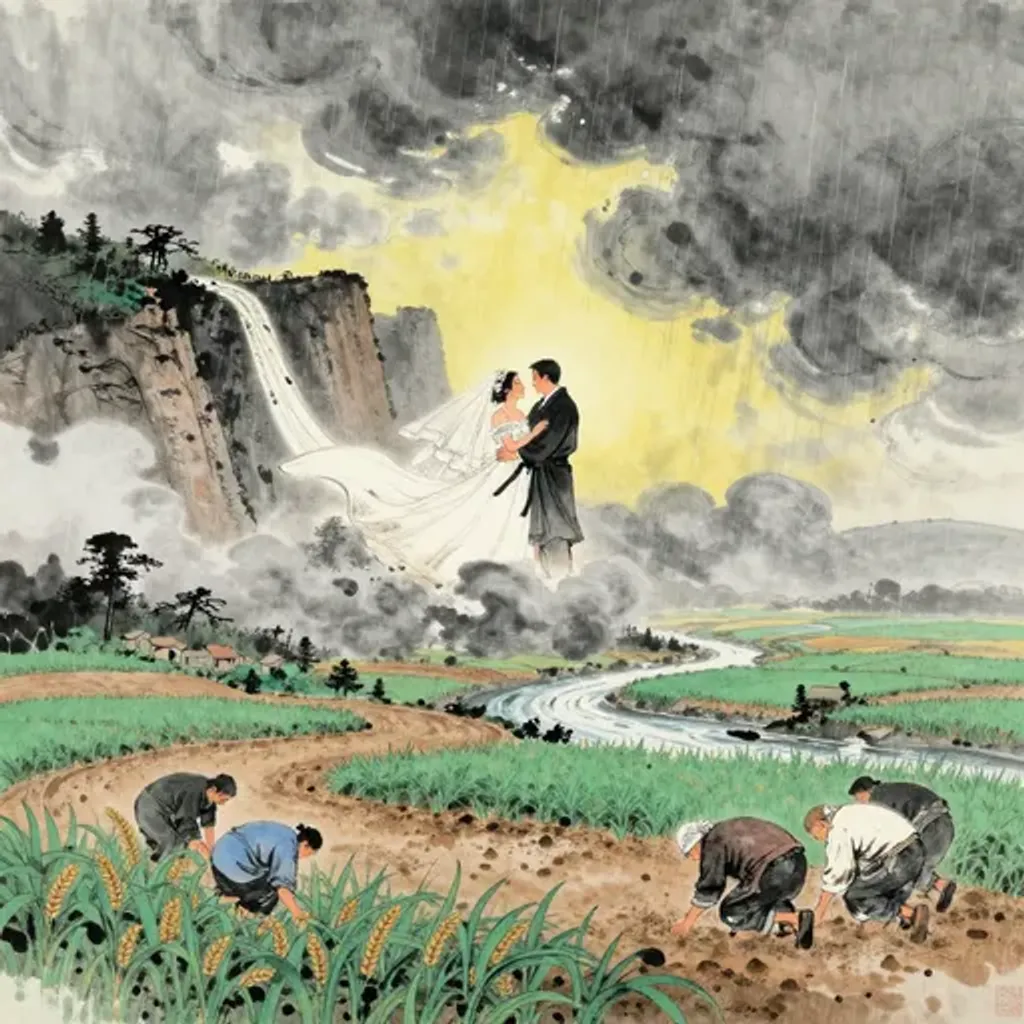
雨師娶婦,黃巖季子。成禮既婚,相呼南上,膏我下土,年歲大有。
The Rain Master takes a bride, the maiden of Yellow Cliff; the rites complete, the wedding done, together they ascend south; their grace anoints my soil, and the year yields great abundance.
— Jiao Yanshou, Yilin (Forest of Changes), 1st century BC
Commentary
Thunder rumbles above the mountain as the Rain Master takes a bride — the daughter of Huangyan's youngest son. The wedding rites complete, the couple calls out to the south, rain irrigates the soil below, and the harvest is abundant. The Rain Master (雨師) is a deity controlling rainfall, sometimes identified with Chisongzi of Shennong's era. His marriage represents the cosmic union of heaven's moisture with earth's fertility. The wedding procession heading south follows the seasonal pattern of rain-bearing winds. From Small Exceeding to Following, thunder above the mountain becomes thunder resting within the lake — energy that yields to natural rhythm. The rain follows the season, the harvest follows the rain: abundance comes not from force but from aligning with the cycle willingly.
小過 → 蠱
Hexagram 62 → Hexagram 18: Work on the Decayed
Changing lines: 2, 4, 6
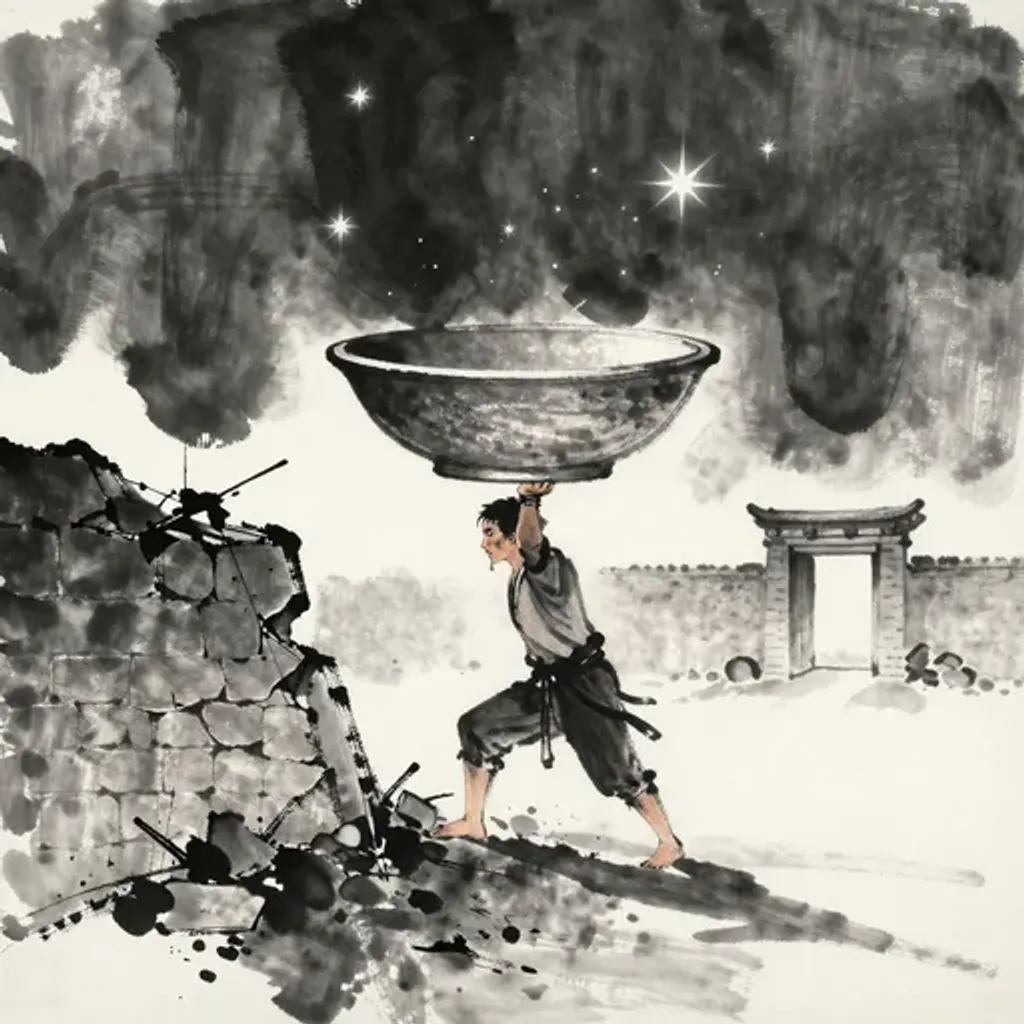
戴盆望天,不見星辰。顧小失大,遁逃墻外。
Carrying a basin on one's head to gaze at heaven, seeing neither stars nor constellations; watching the small, losing the great; fleeing beyond the wall.
— Jiao Yanshou, Yilin (Forest of Changes), 1st century BC
Commentary
Thunder rumbles above the mountain, but one wears a basin on one's head and tries to gaze at the sky — naturally, the stars are invisible. Fixated on the small, one loses sight of the great, and ultimately flees over the wall in panic. The proverb 戴盆望天 (wearing a basin while hoping to see heaven) is a classic image of self-imposed blindness: the very tool meant to carry water blocks the view upward. The escape over the wall completes the farce — having failed to see what was overhead, one now abandons what was underfoot. From Small Exceeding to Work on the Decayed, the mountain's thunder shifts to wind trapped beneath the mountain. The decay is self-inflicted: corruption begins when one's own instrument obstructs one's vision.
小過 → 臨
Hexagram 62 → Hexagram 19: Approach
Changing lines: 1, 2, 3, 4
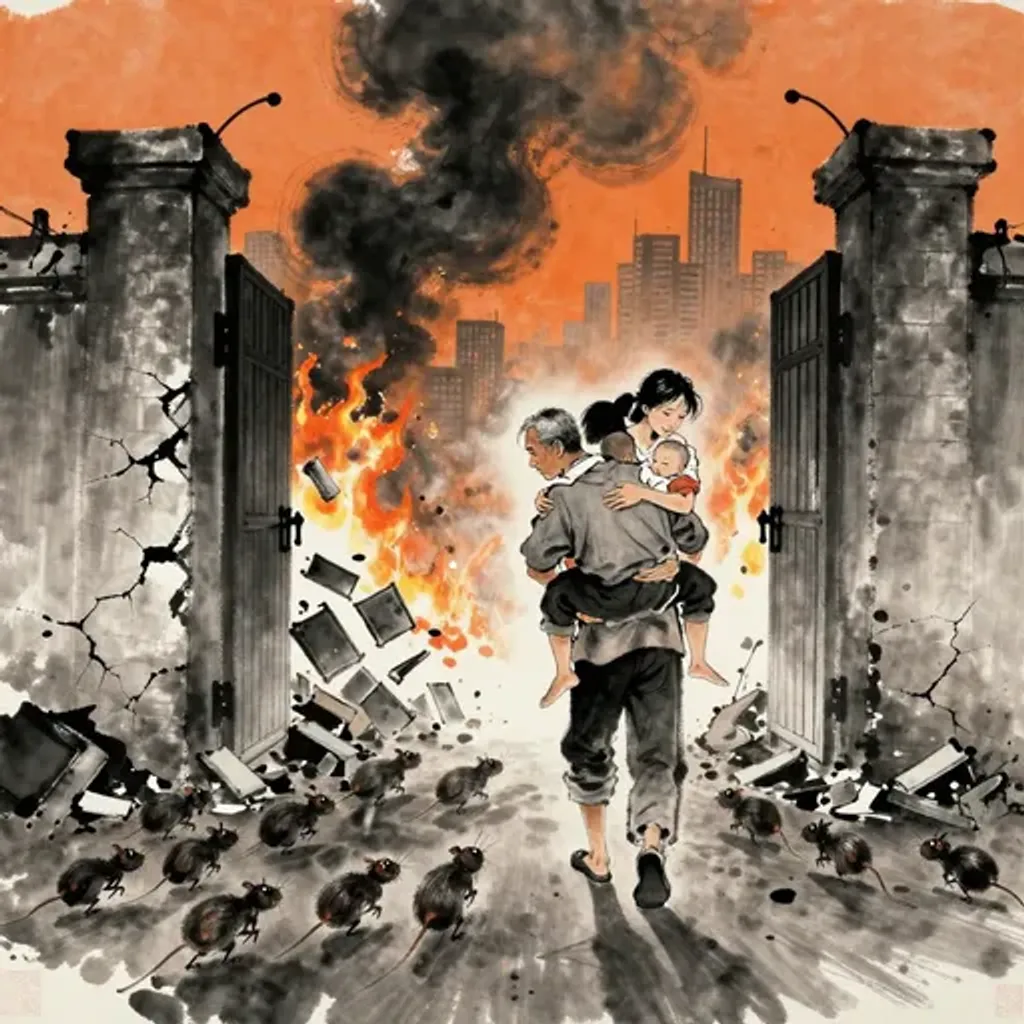
二人輦車,徙去其家。井沸釜鳴,不可以居。
Walls crack, ground sinks, the house about to collapse. Rats flee first, ants evacuate their colony. Supporting the old, carrying the young, out the door they go — not daring to look back at the burning city.
— Jiao Yanshou, Yilin (Forest of Changes), 1st century BC
Commentary
Thunder rumbles above the mountain, and the ground itself gives way. The original verse reads: two people push a cart, evacuating their household; the well boils, the cauldron screams — this place cannot be inhabited. Walls crack, the earth sinks, the house tilts toward collapse. Rats flee first, ants relocate their colonies. Carrying the elderly and supporting children, the family passes through the gate without looking back as fire consumes the city behind them. The signs were unmistakable: boiling wells and screaming vessels signal subterranean upheaval. From Small Exceeding to Approach, the mountain's thunder resolves into earth resting generously above the lake. The family approaches a new beginning — but only because they read the omens and abandoned what could not be saved.
小過 → 觀
Hexagram 62 → Hexagram 20: Contemplation
Changing lines: 3, 4, 5, 6
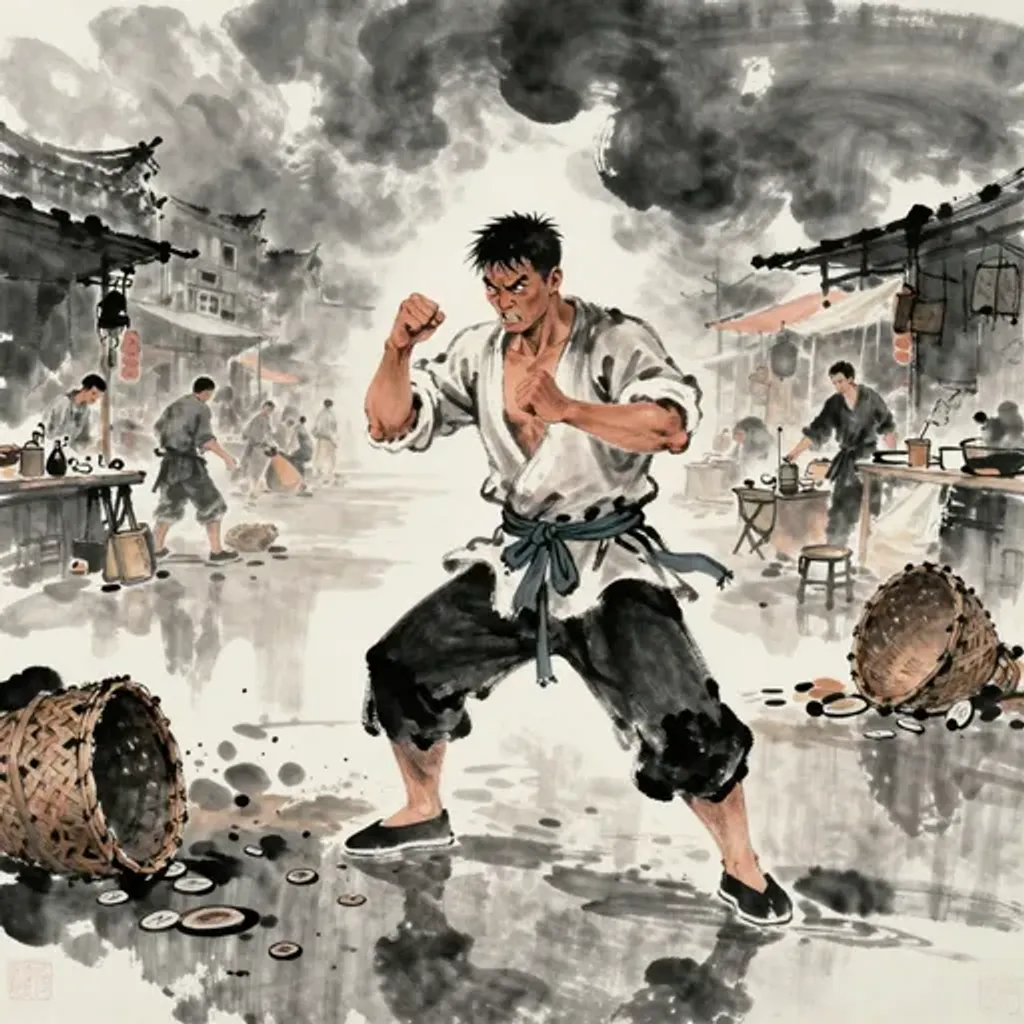
攘臂反肘,怒不可二。佷戾腹心,无以為市。
Baring arms and thrusting elbows, rage that cannot be shared; a perverse and stubborn heart leaves no one to trade with.
— Jiao Yanshou, Yilin (Forest of Changes), 1st century BC
Commentary
Thunder rumbles above the mountain, and an arm swings back with elbow reversed in violent gesture — rage that cannot be duplicated or shared. A ruthless, perverse heart festers within, and no marketplace can function under such conditions. The verse captures the anatomy of tyrannical anger: the reversed elbow (反肘) suggests force turned inward or misdirected, while the destroyed marketplace signals the collapse of civil exchange. When the ruler's fury becomes ungovernable, commerce — the baseline of social cooperation — ceases. From Small Exceeding to Contemplation, the mountain's thunder transforms into wind moving across the earth, surveying all from above. The shift is from blind rage to panoramic vision: Contemplation offers the perspective that fury forecloses, seeing the whole where anger saw only the provocation.
小過 → 噬嗑
Hexagram 62 → Hexagram 21: Biting Through
Changing lines: 1, 3, 6
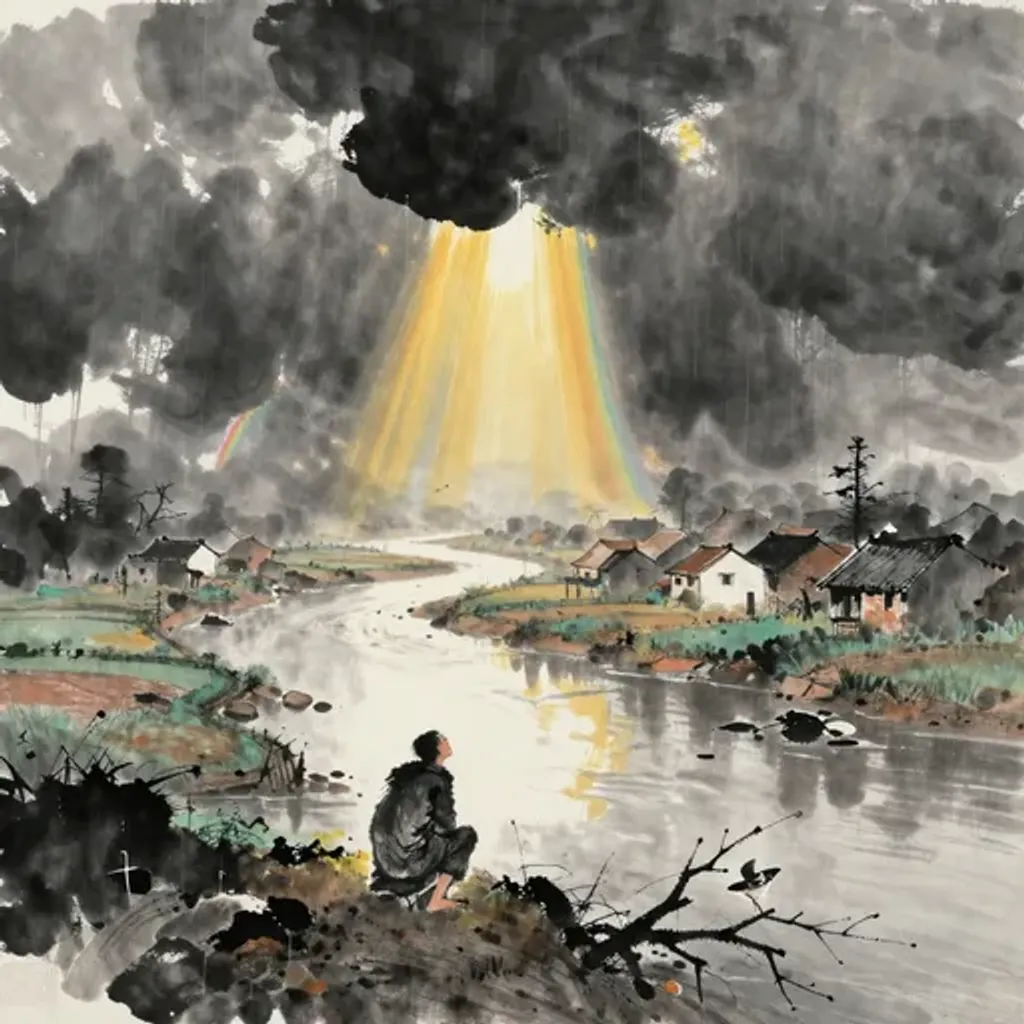
湯世之憂,轉解喜來。
The troubles of Tang's era; worry turns to arriving joy.
— Jiao Yanshou, Yilin (Forest of Changes), 1st century BC
Commentary
Thunder rumbles above the mountain, recalling the anxieties of Tang's era — yet worry reverses into joy. The verse is strikingly brief, compressing an entire dynastic narrative into two phrases. The 'worries of Tang's age' (湯世之憂) likely allude to the droughts and moral crises that plagued the late Xia and early Shang transition, when Tang of Shang took responsibility for heaven's displeasure by offering himself as sacrifice at the Mulberry Forest altar. The reversal from sorrow to gladness mirrors Tang's own arc: righteous suffering transmuted into legitimate authority. From Small Exceeding to Biting Through, the mountain's thunder becomes fire and thunder joined — decisive force that breaks through obstruction. What once weighed upon the heart is now resolved with a single clear stroke.
小過 → 賁
Hexagram 62 → Hexagram 22: Grace
Changing lines: 1, 4, 6
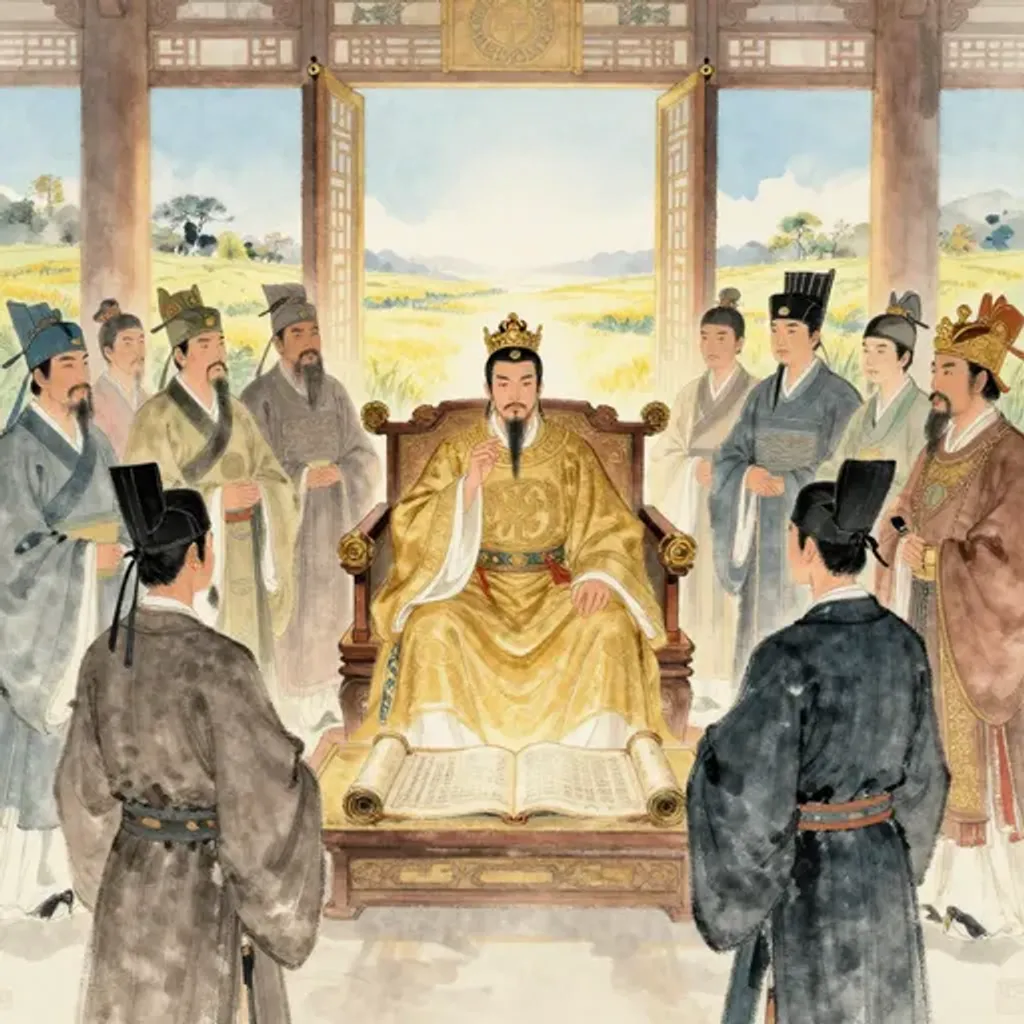
忠信輔成,王政不傾。公劉肇舉,文武綏之。
Loyalty and trust assist completion; the king's rule does not falter; Duke Liu began the work; Wen and Wu brought peace.
— Jiao Yanshou, Yilin (Forest of Changes), 1st century BC
Commentary
Thunder rumbles above the mountain, and loyalty and trustworthiness support the throne — the king's governance does not topple. Duke Liu (公劉) initiated the Zhou people's rise, and Kings Wen and Wu brought it to completion. The verse traces the Zhou dynasty's foundational arc: from Duke Liu's establishment of the agricultural settlement at Bin, through generations of accumulated virtue, to the martial and cultural perfection of Wen and Wu. Loyalty and trust (忠信) are the structural pillars that keep the edifice standing. From Small Exceeding to Grace, the mountain's thunder transforms into fire glowing beneath the mountain — beauty that illuminates without consuming. The Zhou achievement is presented as adornment of substance: power refined into culture, raw virtue polished into lasting civilization.
小過 → 剝
Hexagram 62 → Hexagram 23: Splitting Apart
Changing lines: 3, 4, 6
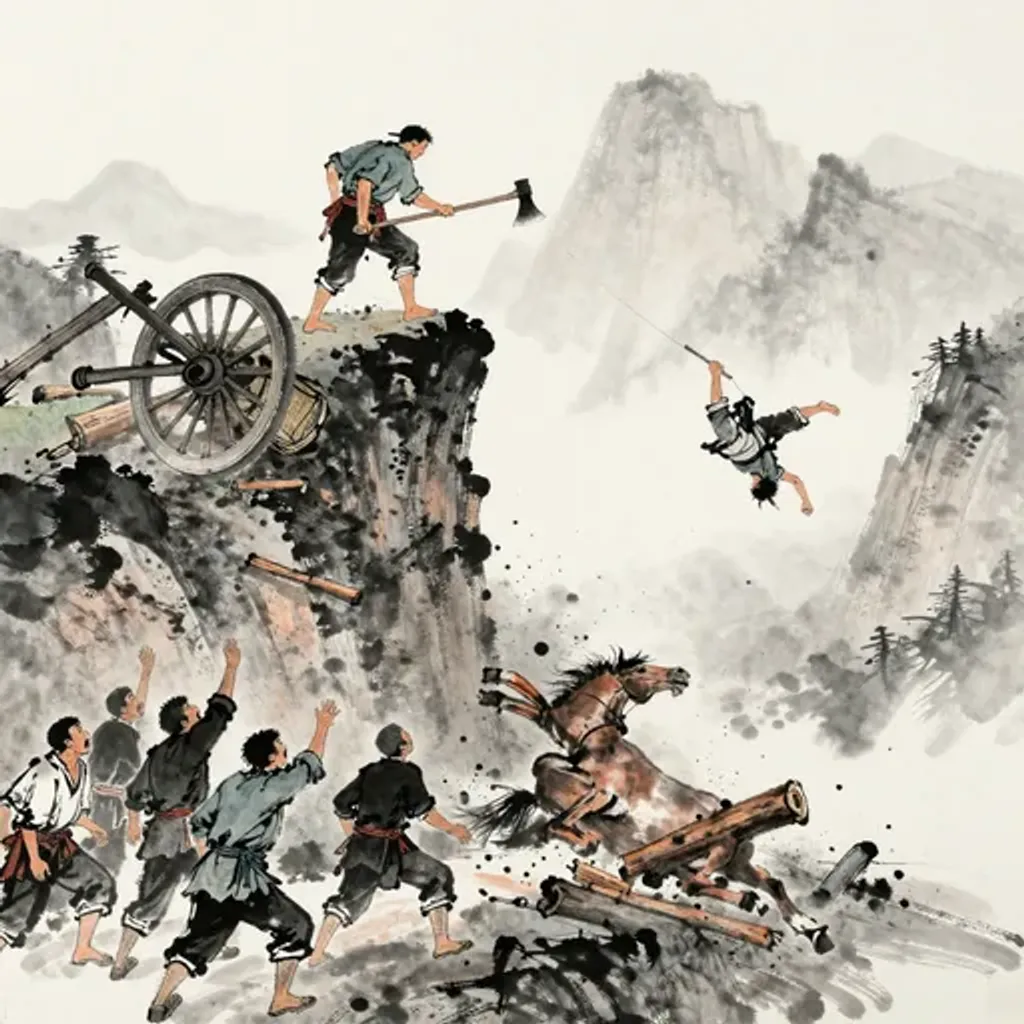
登高斬木,頓躓陷險。車傾馬疲,伯叔吁嗟。
Climbing high to fell timber, stumbling and falling into peril; cart overturned, horse exhausted; uncles and brothers cry out in distress.
— Jiao Yanshou, Yilin (Forest of Changes), 1st century BC
Commentary
Thunder rumbles above the mountain as someone climbs high to fell trees, only to stumble and plunge into danger. The cart overturns, the horse is exhausted, and the elder kinsmen can only sigh in dismay. The verse is a cautionary tale of overextension: ascending a height to cut timber — the small person exceeding their reach — leads to a fall that damages everything connected to the enterprise. Cart, horse, and family all suffer from one person's miscalculation. From Small Exceeding to Splitting Apart, the mountain's thunder gives way to mountain resting upon bare earth — erosion from below. The stumble at the summit mirrors the hexagram's image: what rises too far above its foundation is stripped away layer by layer until nothing supports it.
小過 → 復
Hexagram 62 → Hexagram 24: Return
Changing lines: 1, 3, 4
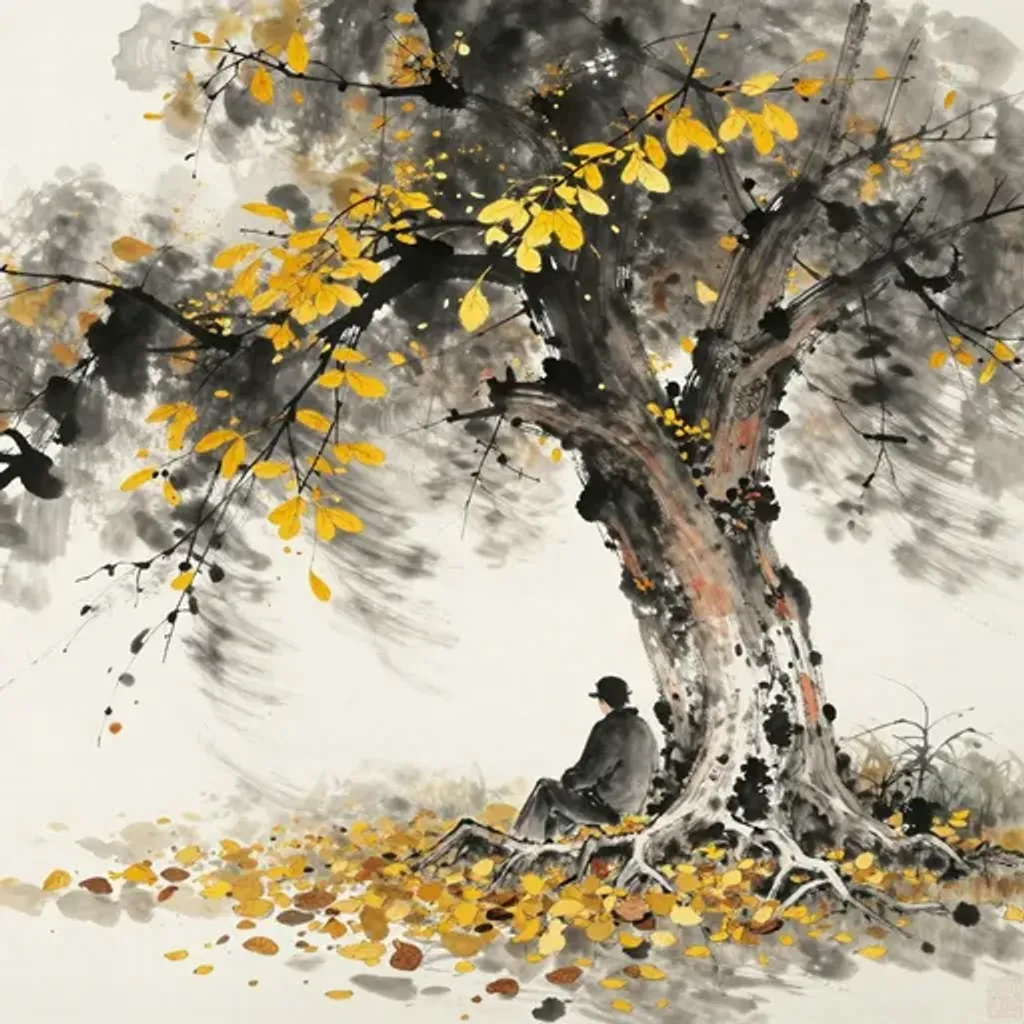
桑方隕落,黃敗其葉。失勢傾側,如无所立。
The mulberry tree's leaves fall away, yellowed and ruined; power lost, tilting sideways, as if with nothing to stand upon.
— Jiao Yanshou, Yilin (Forest of Changes), 1st century BC
Commentary
Thunder rumbles above the mountain, but the mulberry tree is shedding its leaves — they fall yellow and spent. Having lost its vitality, the tree tilts sideways as though it has nowhere to stand. The mulberry (桑) was the economic backbone of ancient Chinese households, its leaves feeding silkworms that produced the family's wealth. Its decline is not mere seasonal change but structural collapse: when the mulberry fails, the entire domestic economy follows. From Small Exceeding to Return, the mountain's thunder descends into thunder hidden within the earth — the first stirring of renewal after total decline. The verse shows the nadir that precedes return: everything has fallen, the trunk leans without support, yet the thunder buried in earth promises that the root system still lives.
小過 → 无妄
Hexagram 62 → Hexagram 25: Innocence
Changing lines: 1, 3, 5, 6
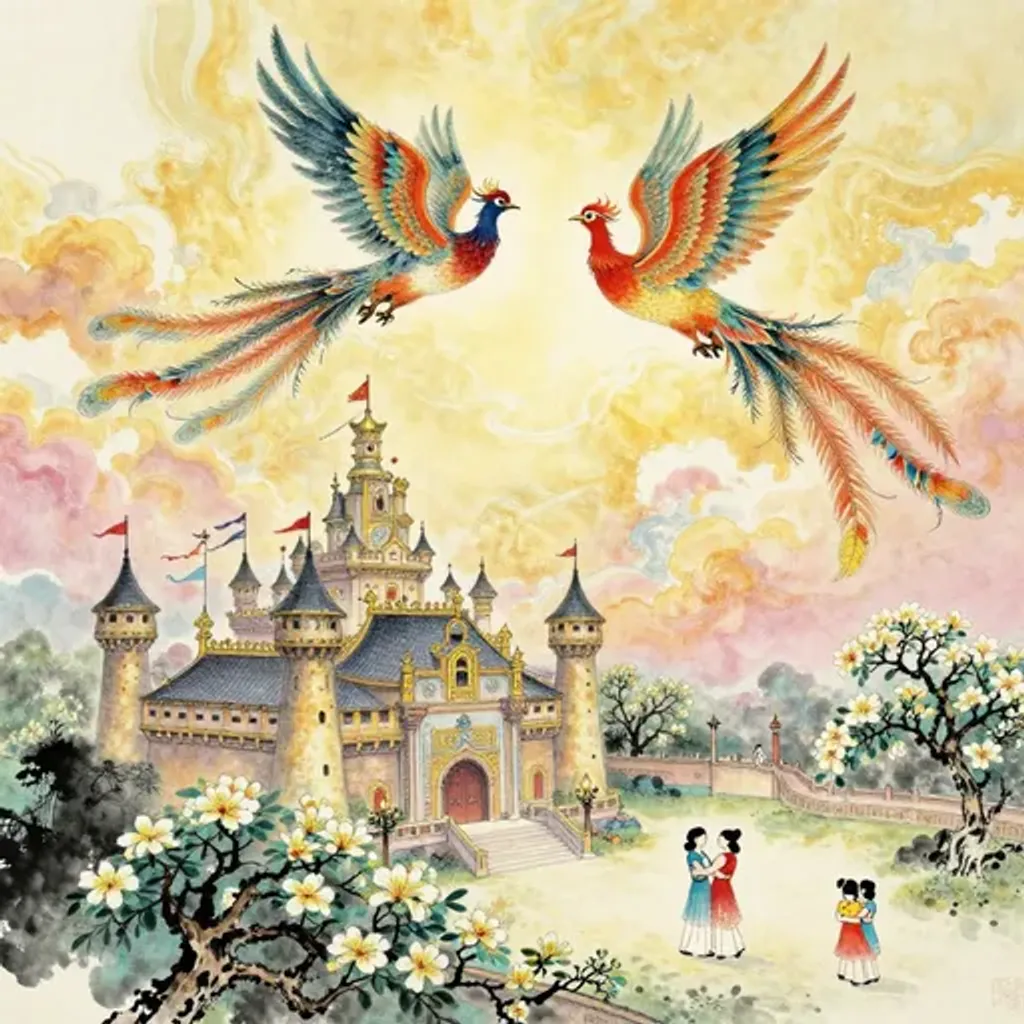
鸞鳳翱翔,集于喜國。念我伯姊,與母相得。
Phoenix and luan soar and glide, gathering in a land of joy; thinking of my elder sister, in harmony with mother.
— Jiao Yanshou, Yilin (Forest of Changes), 1st century BC
Commentary
Thunder rumbles above the mountain as phoenixes soar through the sky, alighting in a land of joy. One thinks of one's elder sister, who gets along well with mother. The verse is domestic felicity elevated to cosmic scale: the luan and feng (鸞鳳), the most auspicious of mythological birds, descend upon a blessed realm, and the family harmony below mirrors heaven's approval above. The elder sister's accord with the mother-in-law — often the most fraught relationship in traditional households — signals that even the most difficult bonds have been reconciled. From Small Exceeding to Innocence, the mountain's thunder becomes thunder rolling beneath heaven in pure spontaneity. The phoenixes choose their perch by instinct, not calculation; family harmony here is natural rather than engineered.
小過 → 大畜
Hexagram 62 → Hexagram 26: Great Taming
Changing lines: 1, 2, 4, 6
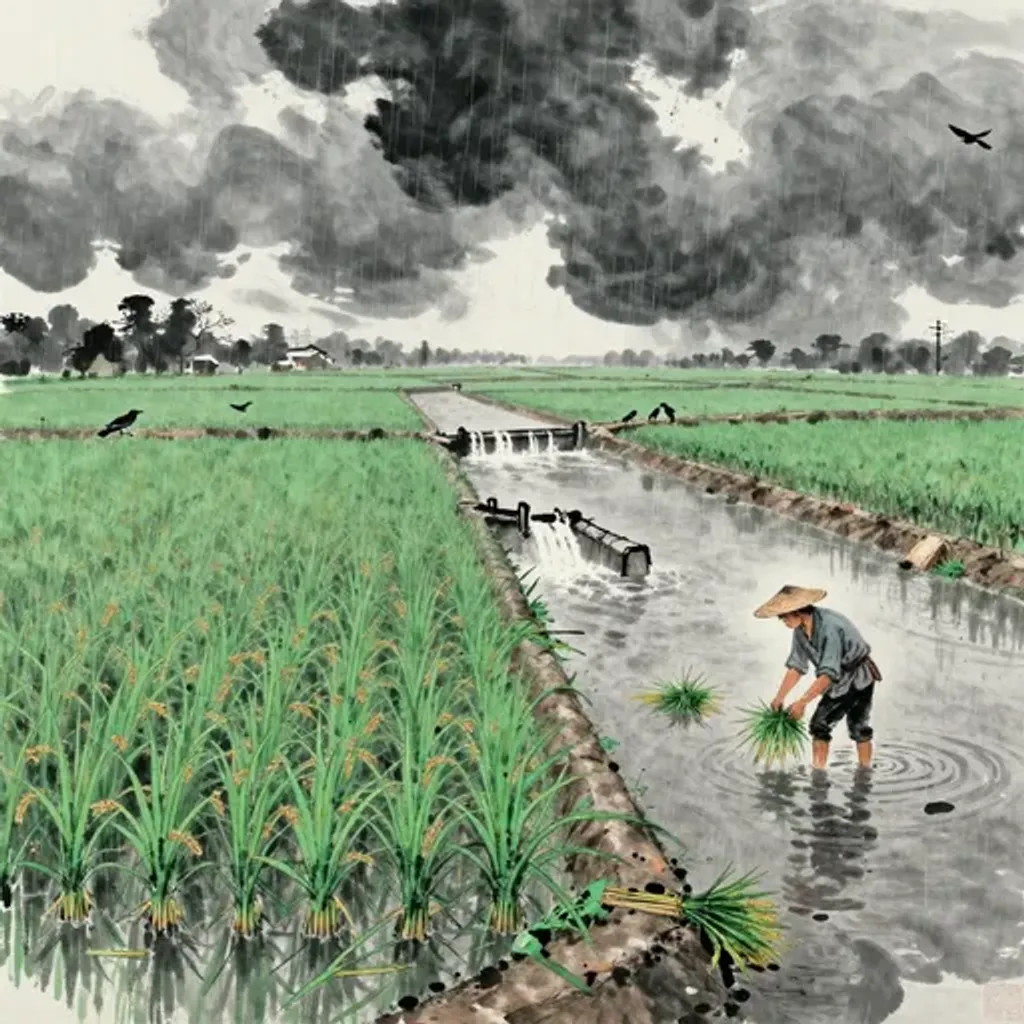
陰淫所居,盈溢過度,傷害禾稼。
Yin excess pervades the land; overflow and surfeit beyond measure; crops and grain lie ruined.
— Jiao Yanshou, Yilin (Forest of Changes), 1st century BC
Commentary
Thunder rumbles above the mountain, but excessive yin moisture saturates the dwelling, overflowing beyond all measure and damaging the crops. The verse is a compressed agricultural disaster: too much of what nourishes becomes destructive when it exceeds proper limits. Rain that should sustain the grain instead drowns it; moisture that should keep the house cool instead rots the foundation. The imagery perfectly embodies Small Exceeding's core warning — the small thing that goes slightly too far. From Small Exceeding to Great Taming, the mountain's thunder transforms into heaven stored within the mountain. What overflows here needs containment, and Great Taming offers exactly that: the mountain's capacity to hold heaven's energy without letting it spill. The cure for excess is not elimination but proper restraint.
小過 → 頤
Hexagram 62 → Hexagram 27: Nourishment
Changing lines: 1, 3, 4, 6
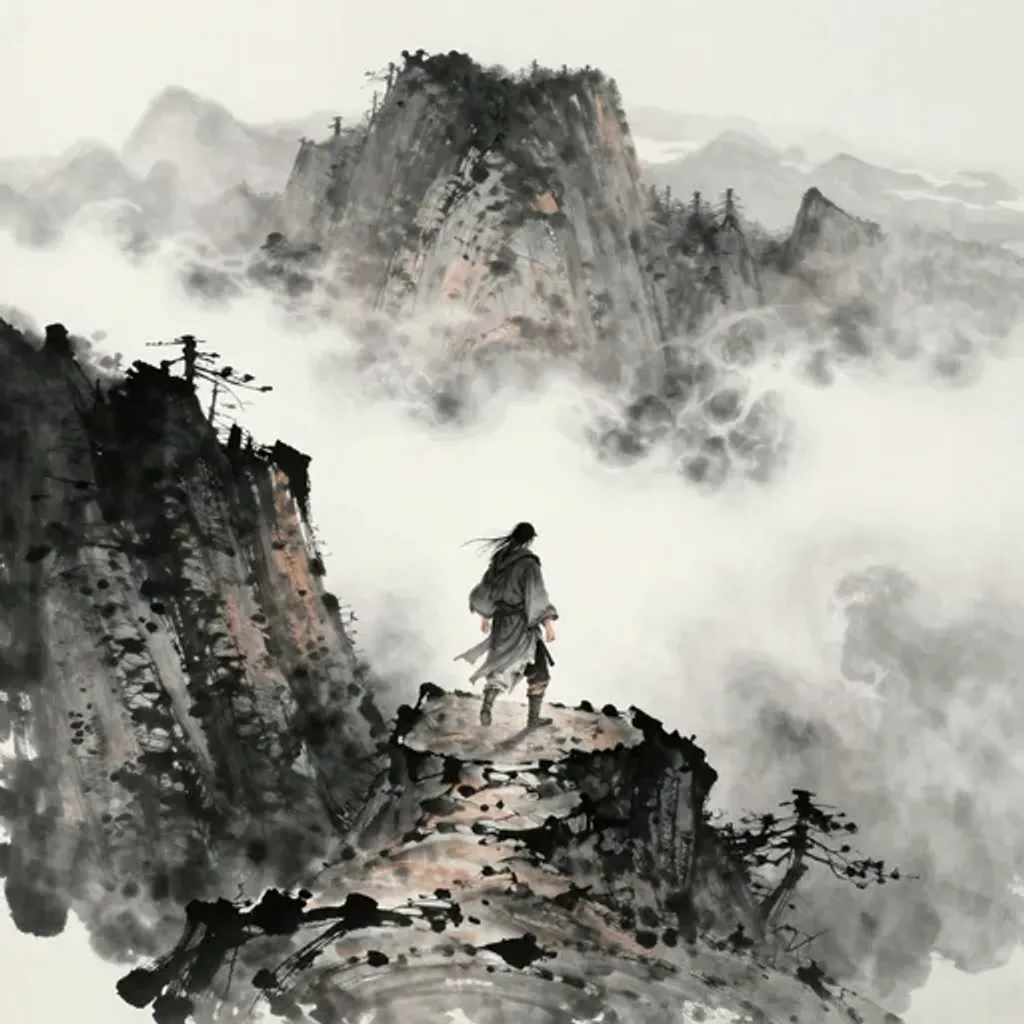
霄冥高山,道險峻難。王孫罷極,困於阪間。
Dark clouds shroud the high mountain; the road is steep and perilous; the noble son, utterly exhausted, is trapped between the slopes.
— Jiao Yanshou, Yilin (Forest of Changes), 1st century BC
Commentary
Thunder rumbles above the mountain, and the clouds hang low over towering peaks where the road grows steep and treacherous. A nobleman (王孫) pushes on until utterly exhausted, trapped between the slopes with no way forward or back. The verse captures physical extremity in mountain terrain: mist obscures the summit, the path narrows to nothing, and the traveler's strength fails at the worst possible point. The nobleman's status offers no advantage against geography. From Small Exceeding to Nourishment, the mountain's thunder shifts to thunder beneath the mountain — the image of the open mouth, of feeding and sustaining. The exhausted traveler needs what Nourishment provides: rest, food, and the wisdom to stop climbing when the body has nothing left to give.
小過 → 大過
Hexagram 62 → Hexagram 28: Great Exceeding
Changing lines: 2, 5
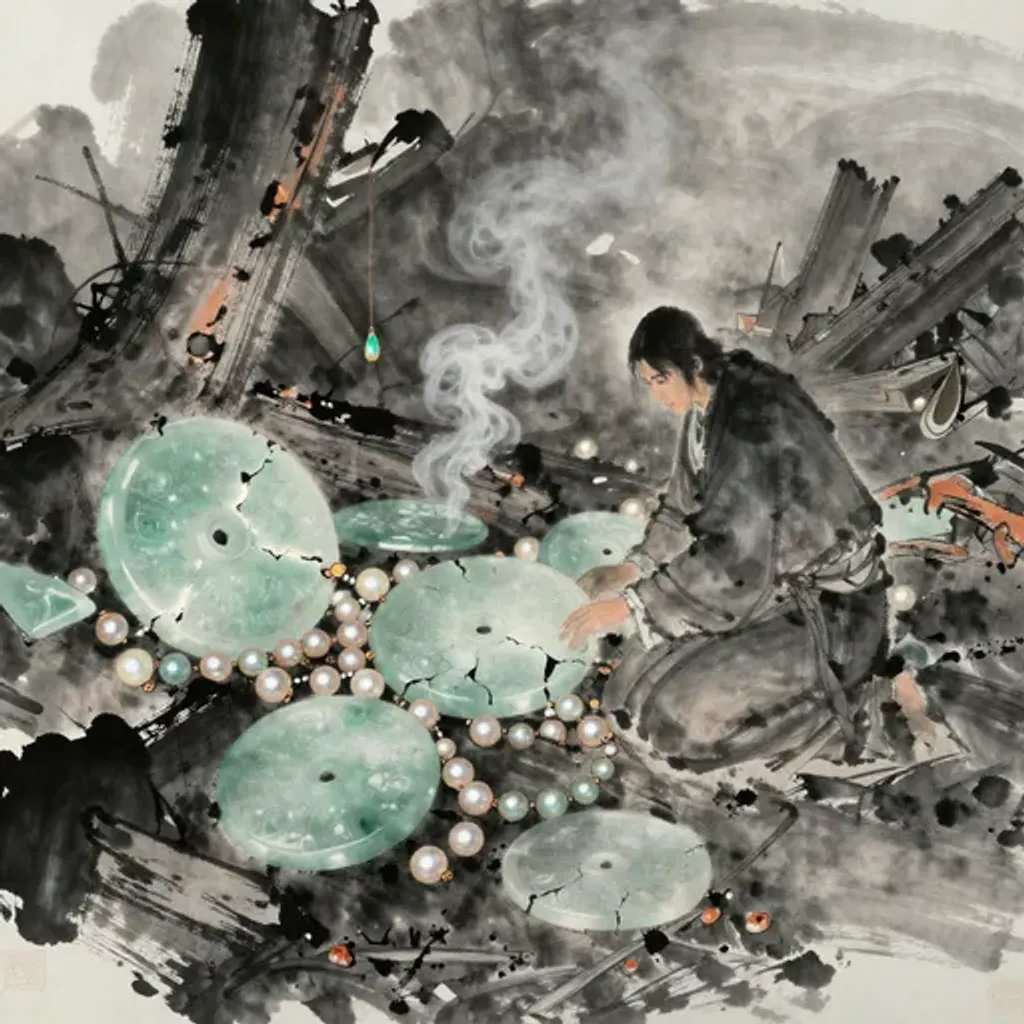
和璧隋珠,為火所燒。冥昧失明,奪精无光,棄於道傍。
The jade disc of He and pearl of Sui, consumed by fire; darkened and blind, losing their light; their brilliance gone, discarded by the roadside.
— Jiao Yanshou, Yilin (Forest of Changes), 1st century BC
Commentary
Thunder rumbles above the mountain, but the He Shi jade disc and the Marquis of Sui's pearl — two of antiquity's most legendary treasures — are consumed by fire. Brilliance is extinguished, essence is stolen, and the priceless objects are discarded by the roadside. The He Shi Bi (和氏璧) was the jade disc for which Bian He lost both feet, and the Sui pearl (隋珠) was said to have been given by a grateful serpent. Together they represent irreplaceable value, and their burning is an act of cosmic waste. From Small Exceeding to Great Exceeding, thunder above the mountain transforms into the lake submerging the trees — excess compounded. Small excess becomes catastrophic: what began as a minor overstepping ends in the destruction of things that can never be remade.
小過 → 坎
Hexagram 62 → Hexagram 29: The Abysmal Water
Changing lines: 2, 3, 4, 5
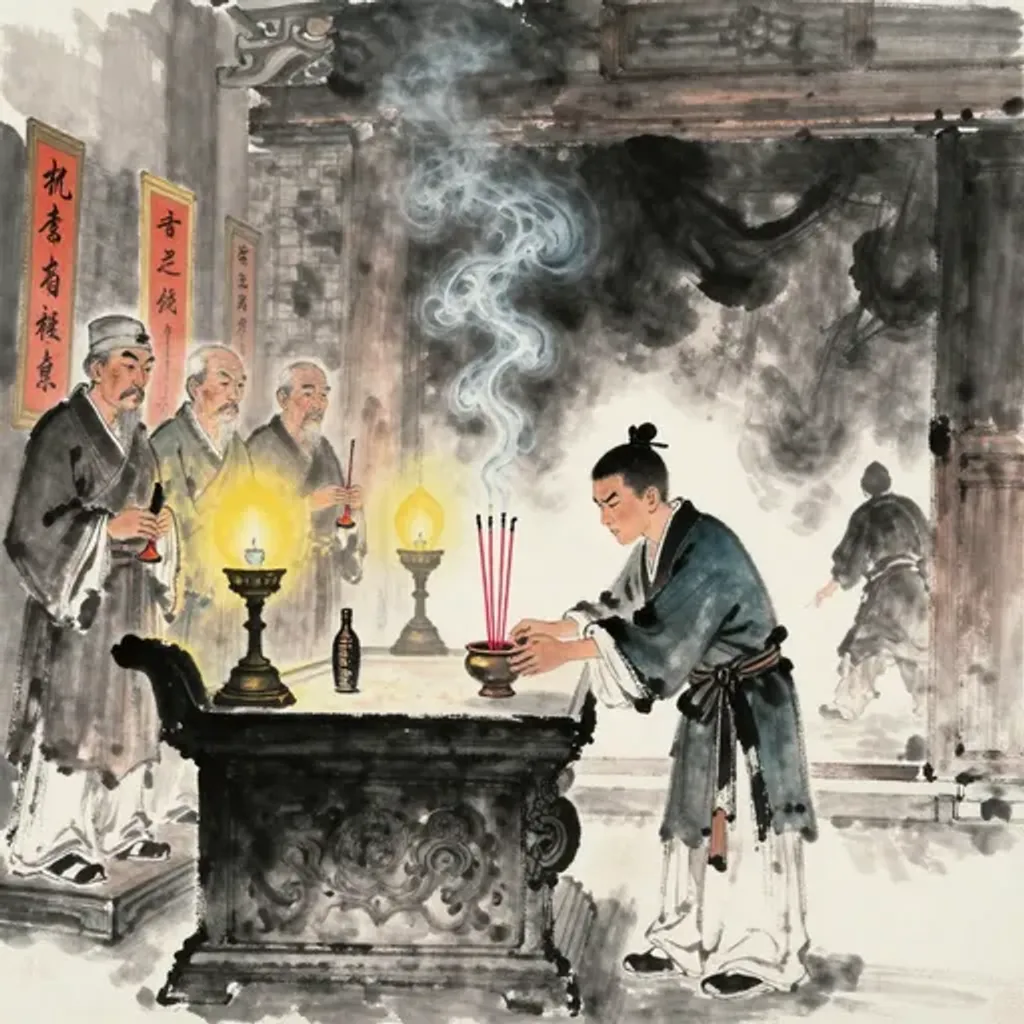
虞君好神,惠我老親。恭承宗廟,雖慍不去,復我內事。
The Lord of Yu honors the spirits, blessing my aged parents; reverently serving the ancestral temple; though vexed, he does not leave; he restores my household affairs.
— Jiao Yanshou, Yilin (Forest of Changes), 1st century BC
Commentary
Thunder rumbles above the mountain, and the lord of Yu is devoted to the spirits, honoring his aged kin. He reverently maintains the ancestral temple, and though displeasure arises, he does not depart but continues managing internal affairs. The verse portrays a ruler whose piety anchors him to his duties despite adversity. The lord of Yu (虞君) maintains temple rites and family obligations even when pressured or provoked — his devotion to the spirits keeps him in place when political wisdom might counsel flight. From Small Exceeding to the Abysmal, the mountain's thunder becomes doubled water — peril upon peril. Yet the lord's refusal to abandon his post mirrors the Abysmal's teaching: when danger is constant, one survives not by fleeing but by maintaining inner sincerity through repeated trials.
小過 → 離
Hexagram 62 → Hexagram 30: The Clinging Fire
Changing lines: 1, 6
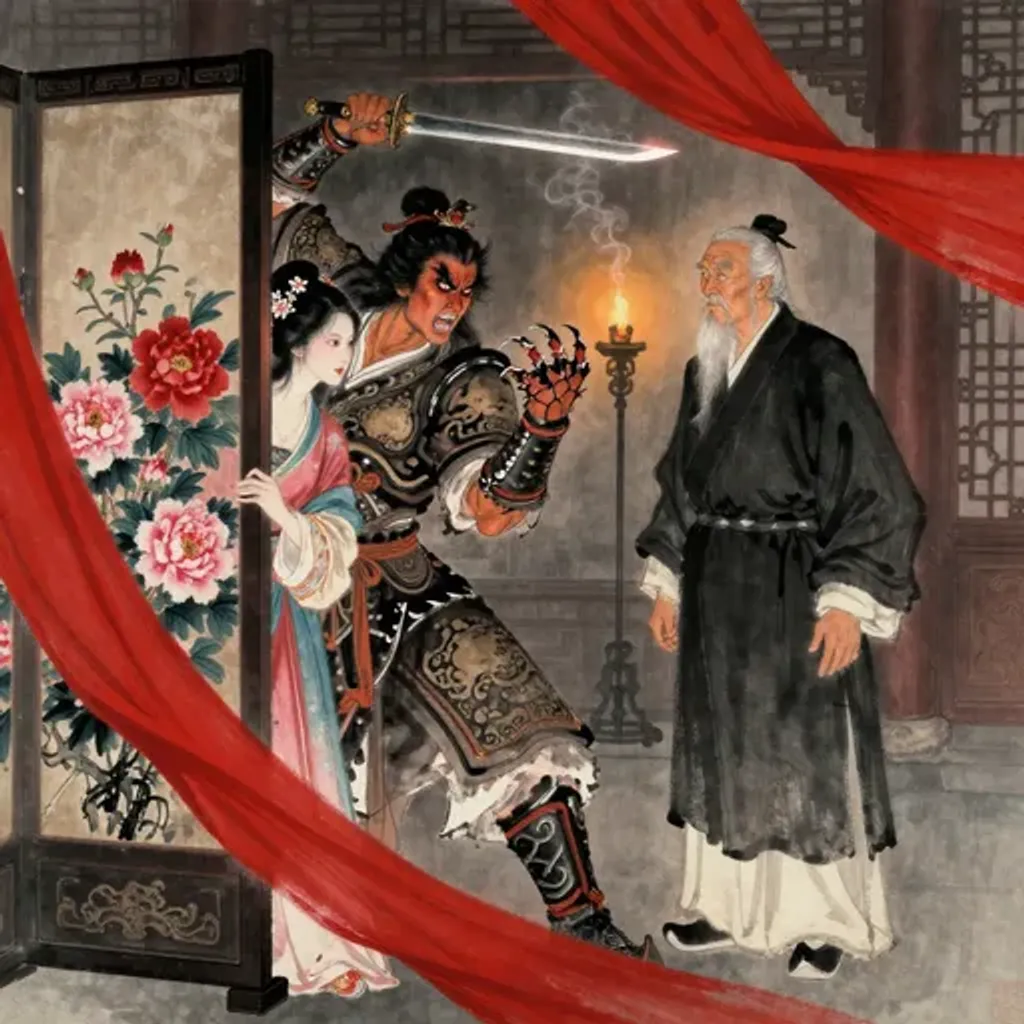
爪牙之夫,怨毒祈父。轉憂與己,傷不及母。
The man of fangs and claws, bearing venomous grudge toward his father; the harm turns back upon himself; it does not reach the mother.
— Jiao Yanshou, Yilin (Forest of Changes), 1st century BC
Commentary
Thunder rumbles above the mountain, and the warrior with fangs and claws bears resentment against Qi Fu, the military overseer. He redirects the grievance onto himself, ensuring that harm does not reach his mother. The phrase 祈父 echoes the Odes poem 'Qi Fu' (祈父), which protests unjust military conscription — a soldier's complaint against the officer who sends him to danger far from home. The warrior absorbs the poison of resentment so that his family is shielded. From Small Exceeding to the Clinging, the mountain's thunder transforms into doubled fire — clarity illuminating clarity. The warrior's self-sacrifice is an act of terrible lucidity: he sees exactly where the harm will fall and interposes himself, burning brightly so that others remain in shadow.
小過 → 咸
Hexagram 62 → Hexagram 31: Influence
Changing lines: 5
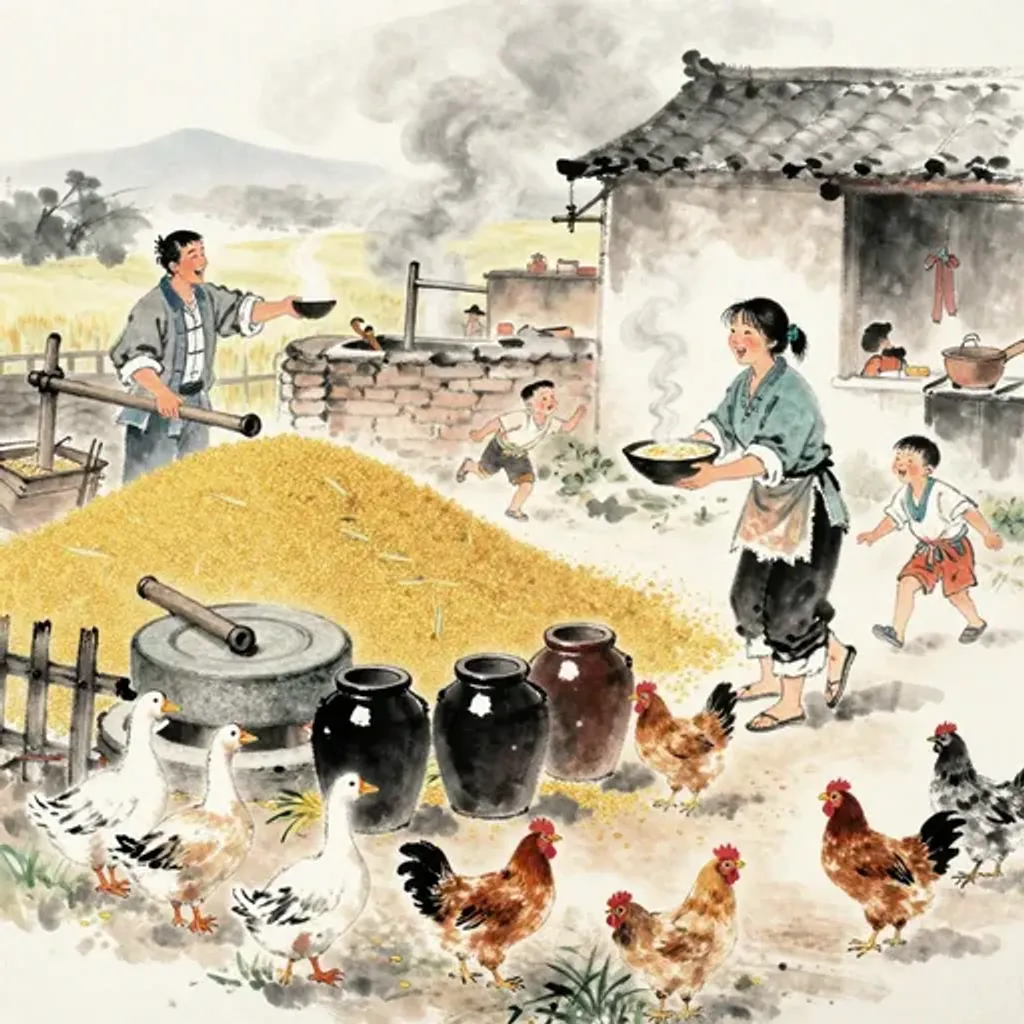
倉盈庾億,宜稼黍稷,年歲有息。
Grain piled like mountains — grinding never finishes. Fat chickens and stout geese fill the space between fences. Three jars of wine brewed, still seeming too few — borrowing bowls from the neighbor to send over fresh food.
— Jiao Yanshou, Yilin (Forest of Changes), 1st century BC
Commentary
Thunder rumbles above the mountain, and the original verse speaks of overflowing granaries and billions in store — a season perfect for planting millet and grain, with harvests that yield surplus year after year. The granary metaphor is both literal abundance and social capital: when stores overflow, neighbors share across the fence, and community solidifies. From Small Exceeding to Influence, the mountain's thunder transforms into a lake resting atop the mountain — the image of mutual responsiveness, where what is above draws from below and what is below ascends to meet it. The verse's abundance is not hoarded but exchanged: grain piled high invites sharing, and sharing generates the emotional bonds that Influence represents. Prosperity circulates; it does not merely accumulate.
小過 → 恆
Hexagram 62 → Hexagram 32: Duration
Changing lines: 2
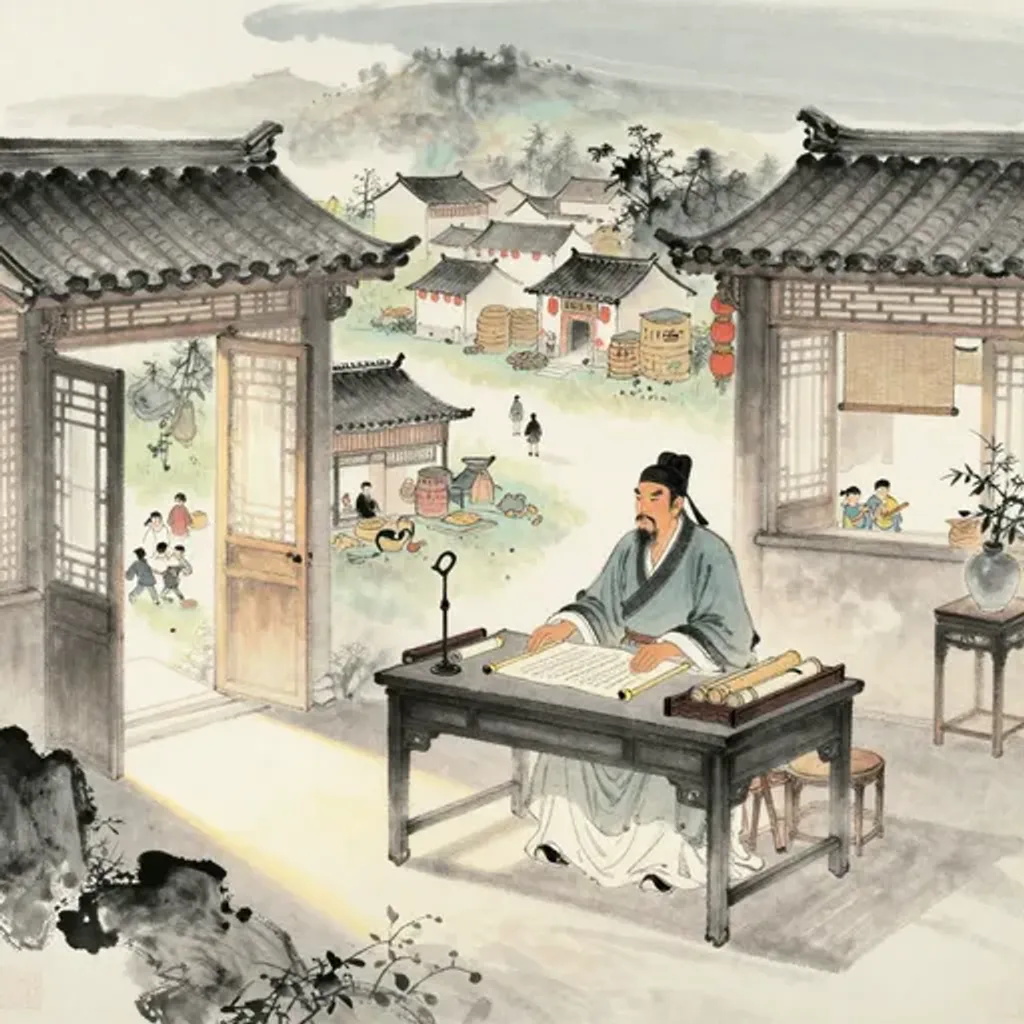
窗牖戶房,通利光明。賢智輔聖,仁德大行。家給人足,海內殷昌。
Windows and doors open wide, letting in light and ease; wise counselors assist the sage; benevolence and virtue spread far; every household prospers; all within the seas flourishes.
— Jiao Yanshou, Yilin (Forest of Changes), 1st century BC
Commentary
Thunder rumbles above the mountain, but the scene within is all light: windows and doors stand open, admitting brilliance from every direction. The wise assist the sage, benevolent virtue spreads widely, every household has sufficiency, and the realm flourishes. The verse paints an idealized governance where transparency (open windows) enables wisdom's circulation and virtue's diffusion. No corner remains dark; no family goes without. From Small Exceeding to Duration, the mountain's thunder becomes thunder and wind moving together in perpetual, steady motion. The openness described is not a burst of reform but an enduring condition — doors that stay open, light that does not fade, virtue that does not waver. Duration's power lies in constancy: what is good here remains good indefinitely.
小過 → 遯
Hexagram 62 → Hexagram 33: Retreat
Changing lines: 5, 6
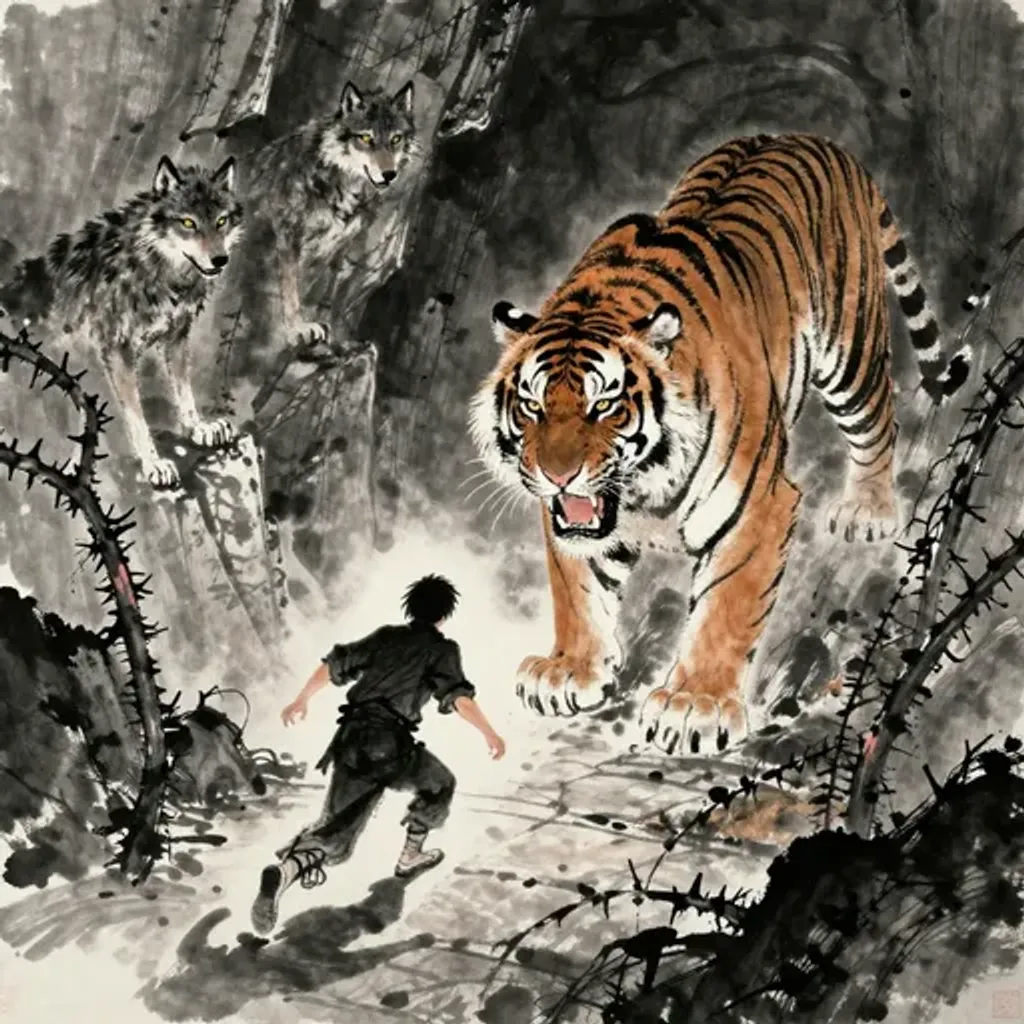
切切之患,凶重憂荐,為虎所吞。
Pressing, urgent peril; misfortune weighs heavy, calamity upon calamity; devoured by the tiger.
— Jiao Yanshou, Yilin (Forest of Changes), 1st century BC
Commentary
Thunder rumbles above the mountain, but pressing danger mounts relentlessly — misfortune compounds, sorrows pile upon each other, until one is devoured by the tiger. The verse is pure dread compressed into three phrases: anxiety escalating, calamity doubling, the predator closing in. No named figure, no historical allusion — just the existential terror of being hunted with no escape. The tiger represents danger that does not negotiate. From Small Exceeding to Retreat, the mountain's thunder gives way to heaven rising above the mountain — the image of strategic withdrawal. The verse shows what happens when retreat comes too late: the one who should have withdrawn while the path was clear is now swallowed whole. Retreat is medicine; delay makes it poison.
小過 → 大壯
Hexagram 62 → Hexagram 34: Great Power
Changing lines: 1, 2
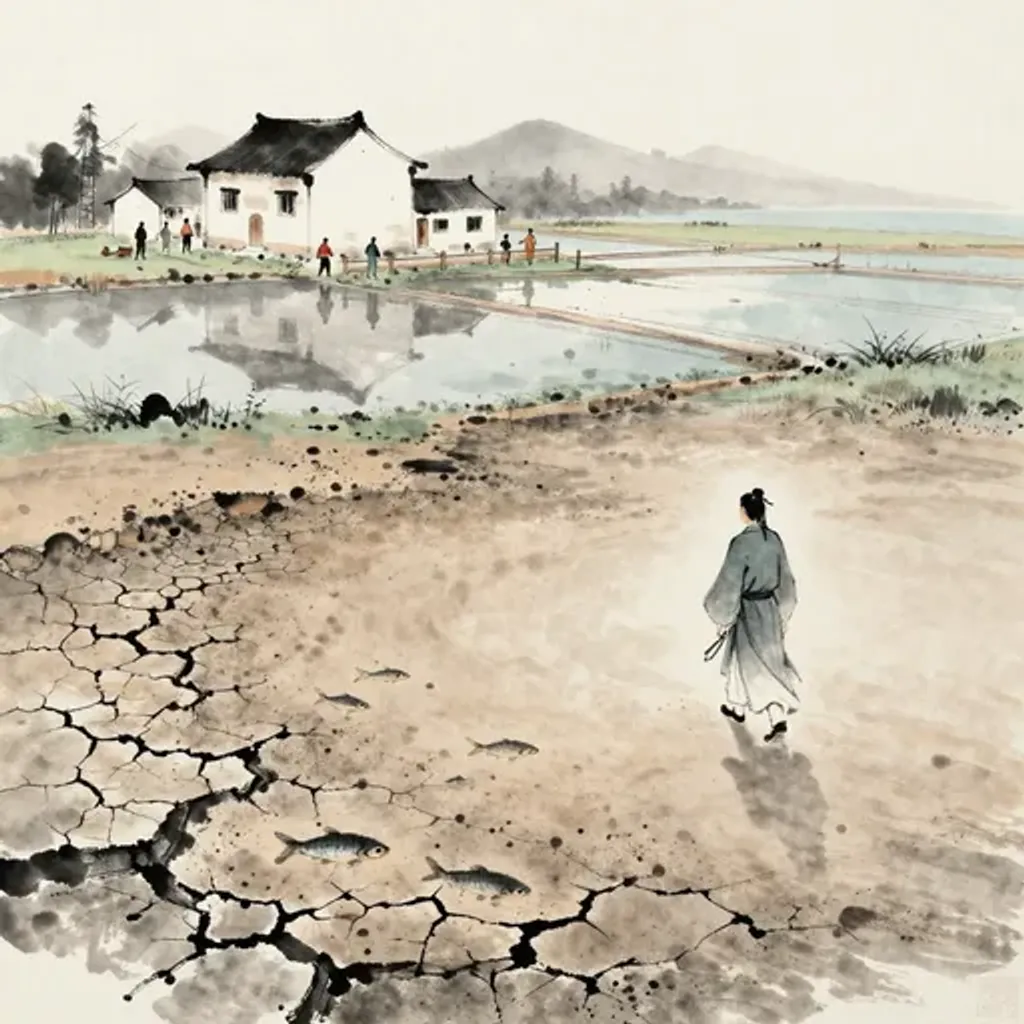
水无魚池,陸為海涯。君子失居,小人相攜。
Water without fish, the pond becomes land at the shore of the sea; the noble man loses his dwelling; petty men keep company with each other.
— Jiao Yanshou, Yilin (Forest of Changes), 1st century BC
Commentary
Thunder rumbles above the mountain, but the natural order has inverted: the pond has no fish, dry land has become the ocean's shore. The gentleman loses his dwelling, while petty men band together and thrive. Water without fish is a barren resource; land becoming seashore signals a world turned inside out. The verse describes systemic displacement: the worthy are exiled while the unworthy consolidate power through mutual support. From Small Exceeding to Great Power, the mountain's thunder becomes thunder roaring above heaven — overwhelming force. But the verse warns that great power wielded by the wrong hands produces monstrous inversion: when petty people command thunderous authority, the gentleman has no ground to stand on. Power without virtue reshapes the landscape itself.
小過 → 晉
Hexagram 62 → Hexagram 35: Progress
Changing lines: 3, 6
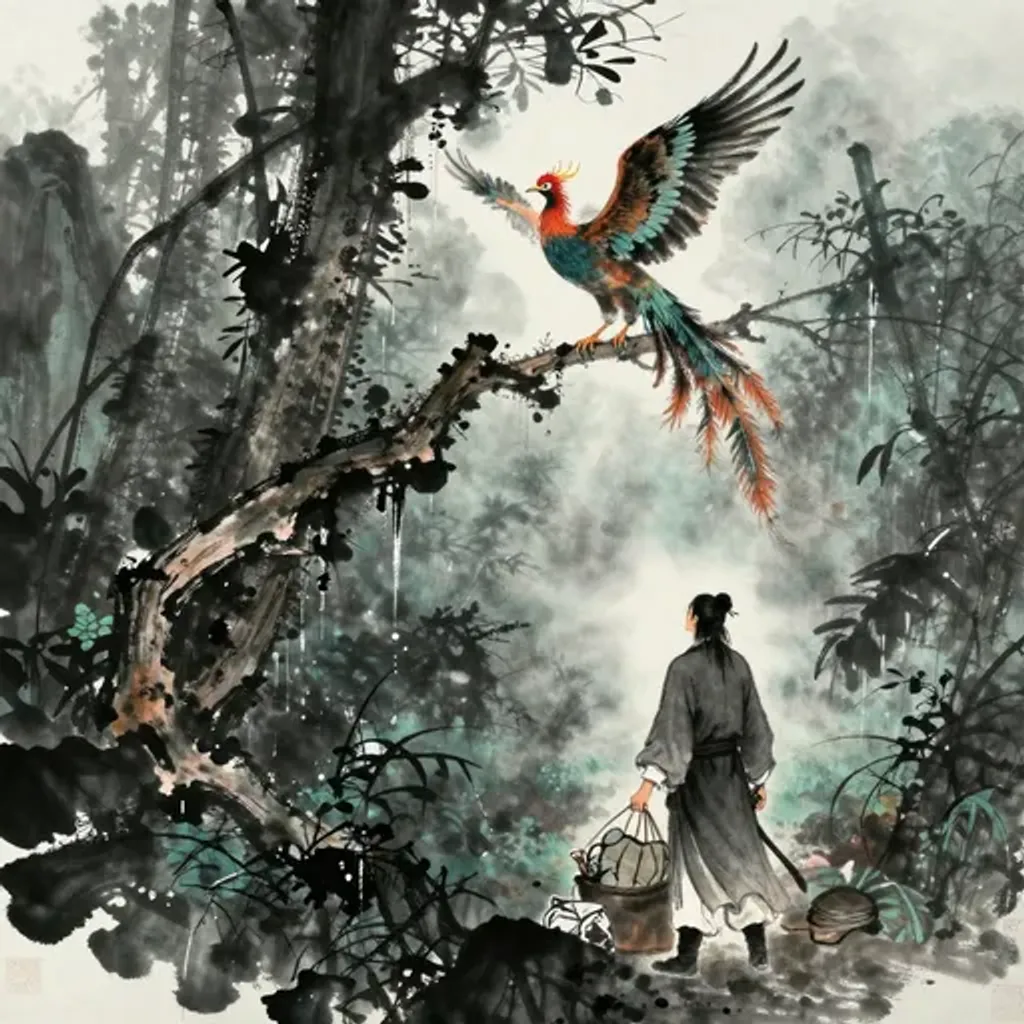
九疑鬱林,沮濕不中。鸞鳳所惡,君子攸去。
The Jiuyi and Yulin ranges, damp and unsuitable; what the phoenix despises; where the noble man departs from.
— Jiao Yanshou, Yilin (Forest of Changes), 1st century BC
Commentary
Thunder rumbles above the mountain, but in the far south, the Nine Doubts Mountains and the Yulin wilderness are damp and marshy — unfit for habitation. Phoenixes despise such terrain, and the gentleman departs. The Nine Doubts (九疑) are the legendary burial place of Emperor Shun, deep in the subtropical south of modern Hunan — a region associated in Han imagination with miasma, exile, and spiritual danger. Even the noblest birds refuse to settle there. From Small Exceeding to Progress, the mountain's thunder yields to fire rising above the earth — the image of the sun ascending at dawn. The gentleman's departure from the swamp is itself the first act of progress: recognition that advancing means choosing ground worthy of one's gifts, not persisting in hostile terrain.
小過 → 明夷
Hexagram 62 → Hexagram 36: Darkening of the Light
Changing lines: 1, 4
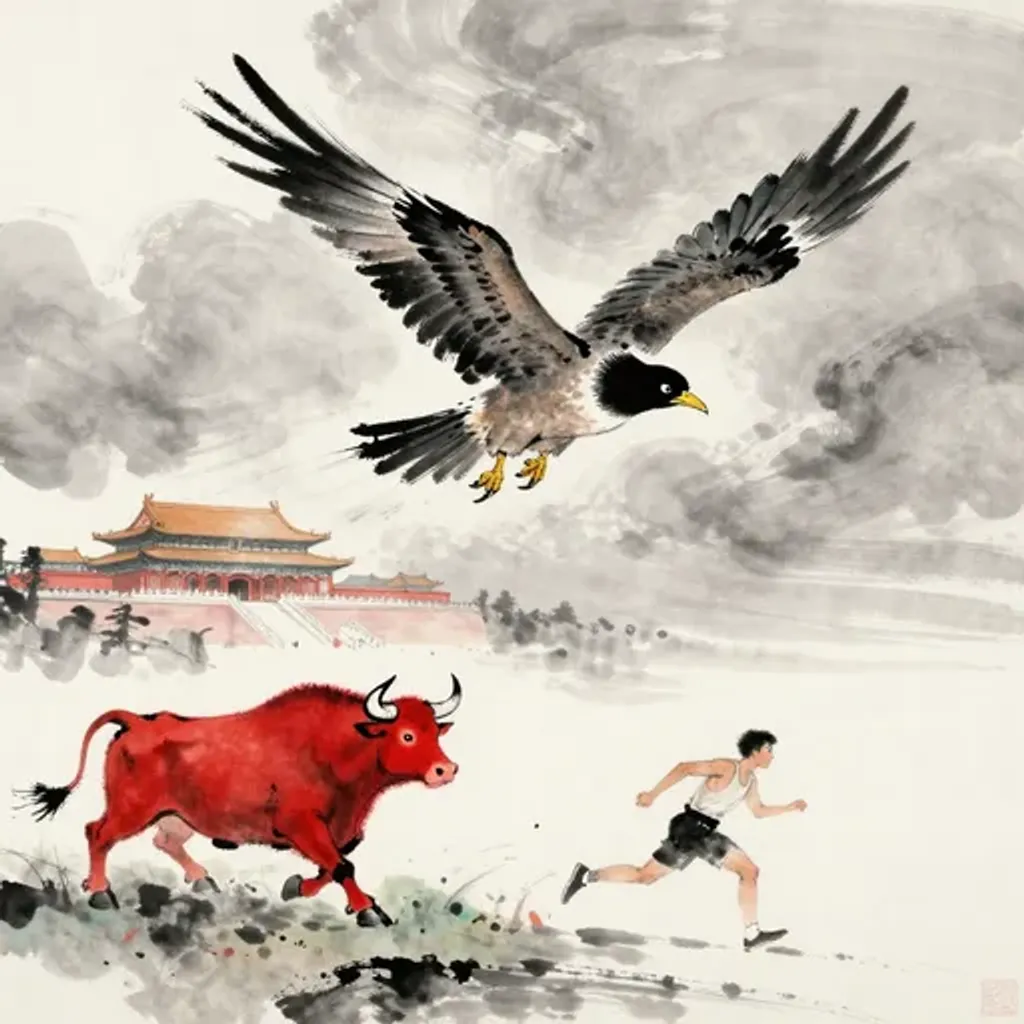
六翮況飛,走歸不及。脫歸王室,亡其騂特。
With six wings moreover flying, running cannot catch up; escaping to the royal house, losing the red bull.
— Jiao Yanshou, Yilin (Forest of Changes), 1st century BC
Commentary
Thunder rumbles above the mountain as six flight feathers beat the air in urgent escape — running on foot cannot keep pace. One breaks free and returns to the royal household, but the prized red sacrificial ox is lost. The six feathers (六翮) suggest a bird in desperate flight, and the flight's urgency implies pursuit or peril. The return to the royal house comes at a cost: the ceremonial animal, a symbol of legitimacy and ritual completeness, is sacrificed in the escape. Something essential is abandoned in the rush to survive. From Small Exceeding to Darkening of the Light, the mountain's thunder descends into fire buried beneath the earth — brilliance deliberately dimmed. The return is not triumphant but clandestine: one slips back into the palace having shed the visible marks of authority.
小過 → 家人
Hexagram 62 → Hexagram 37: The Family
Changing lines: 1, 4, 5, 6
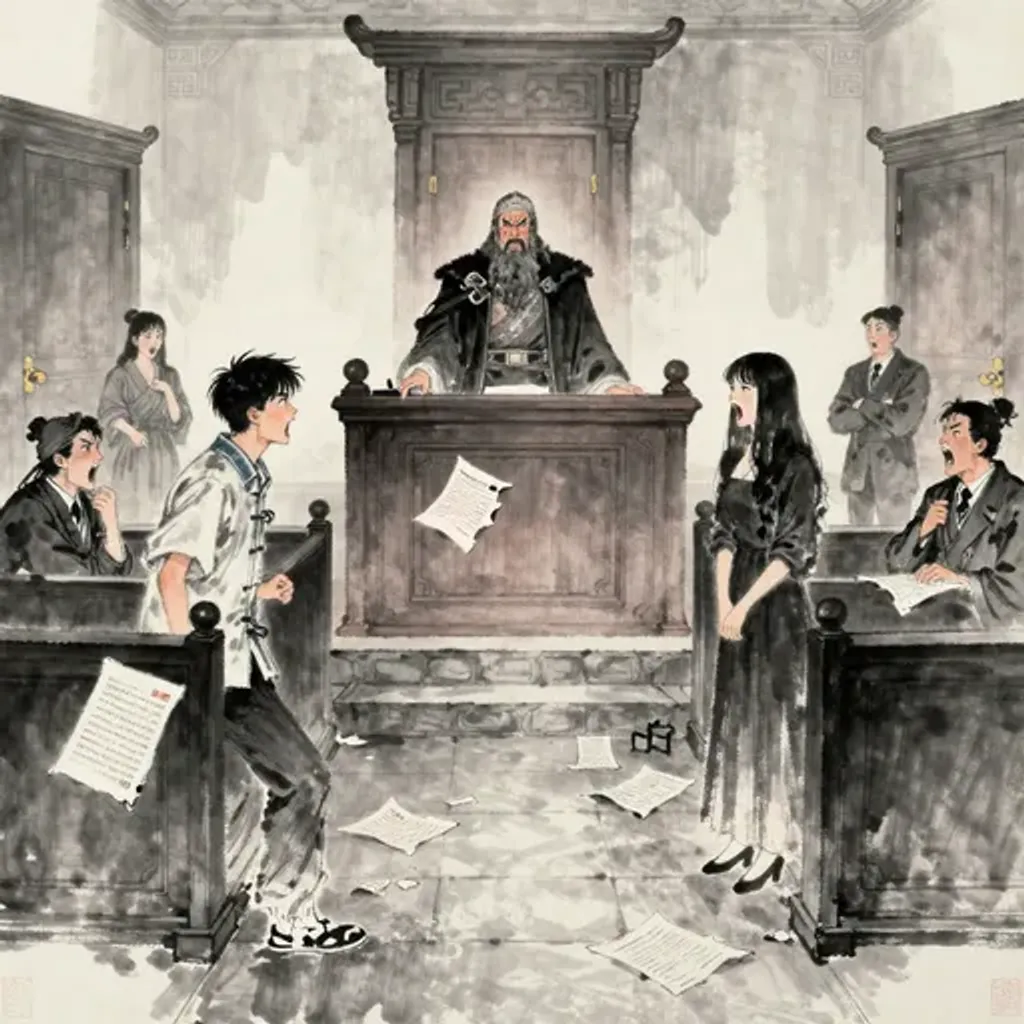
不直莊公,與我爭訟。媒伯无禮,自令塞壅。
Duke Zhuang dealt unjustly, entering suit against me; the matchmaker violated propriety, bringing this blockage upon himself.
— Jiao Yanshou, Yilin (Forest of Changes), 1st century BC
Commentary
Thunder rumbles above the mountain, but justice is absent. One accuses Duke Zhuang of impropriety, and litigation erupts. The matchmaker-elder acts without proper rites, and the result is obstruction and blockage. The verse likely involves a Spring and Autumn period dispute where a lord's conduct in marriage arrangements violated protocol — Duke Zhuang (莊公) of one state entangled in litigation over propriety, while the go-between who should have maintained decorum instead compounds the disorder. From Small Exceeding to the Family, the mountain's thunder transforms into wind issuing from fire — words that carry warmth and constancy. The verse inverts the Family ideal: where there should be harmonious domestic order, litigation and improper matchmaking produce only stagnation.
小過 → 睽
Hexagram 62 → Hexagram 38: Opposition
Changing lines: 1, 2, 3, 6
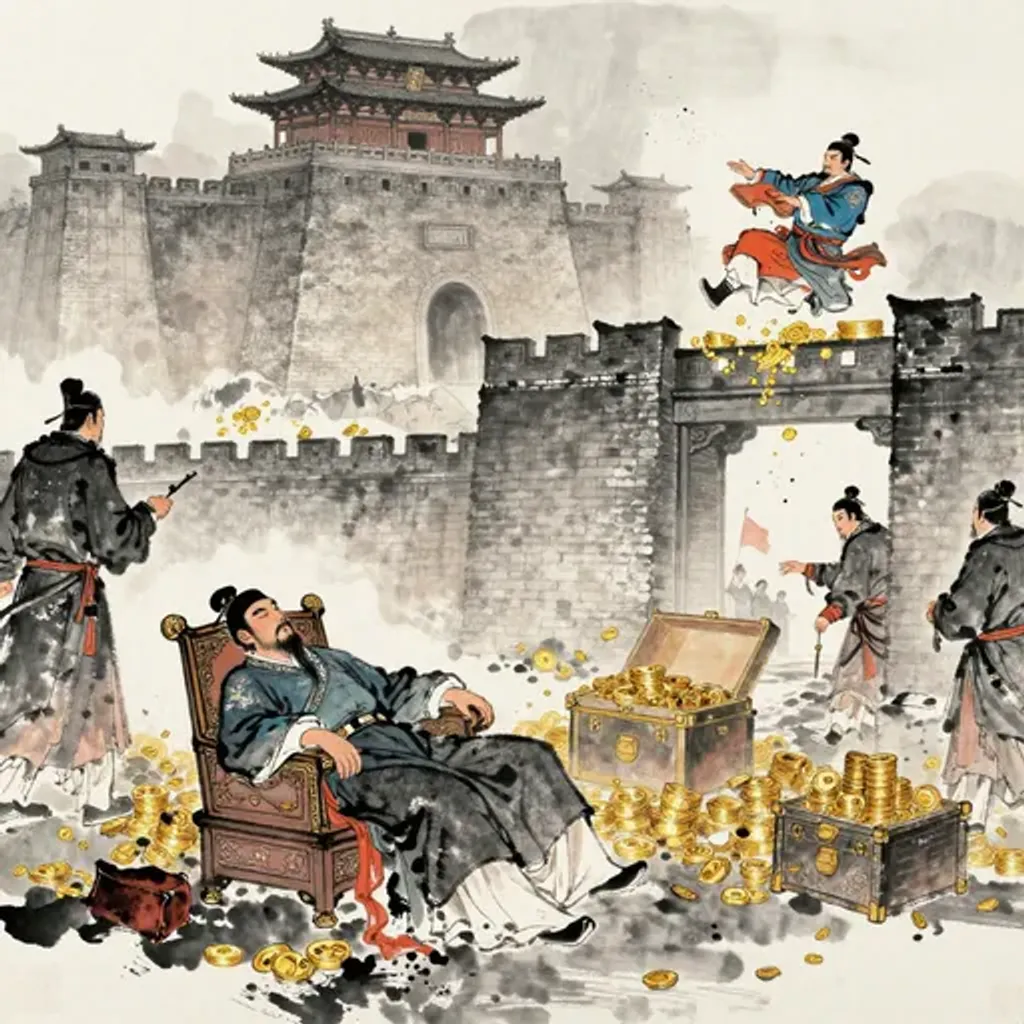
倉庾多億,宋公危殆。吳子巢門,殞命失所。
Granaries hold countless millions; the Duke of Song is imperiled; the son of Wu at the Nest Gate loses his life and his place.
— Jiao Yanshou, Yilin (Forest of Changes), 1st century BC
Commentary
Thunder rumbles above the mountain, and granaries overflow with billions in store — yet the Duke of Song faces mortal peril. Wu Zixu stands at the Chao Gate, and the ruler loses his life and his domain. The verse juxtaposes abundance with catastrophe: material wealth cannot prevent political disaster. The Duke of Song (宋公) in peril may allude to any of several Song rulers who met violent ends despite their state's prosperity. Wu Zixu's presence at the Chao Gate invokes his role in the Wu-Chu conflict, when he brought an army to the gates of Ying. From Small Exceeding to Opposition, the mountain's thunder transforms into fire above the lake — two forces that look at each other but move apart. Wealth and security, seemingly paired, prove irreconcilable.
小過 → 蹇
Hexagram 62 → Hexagram 39: Obstruction
Changing lines: 4, 5
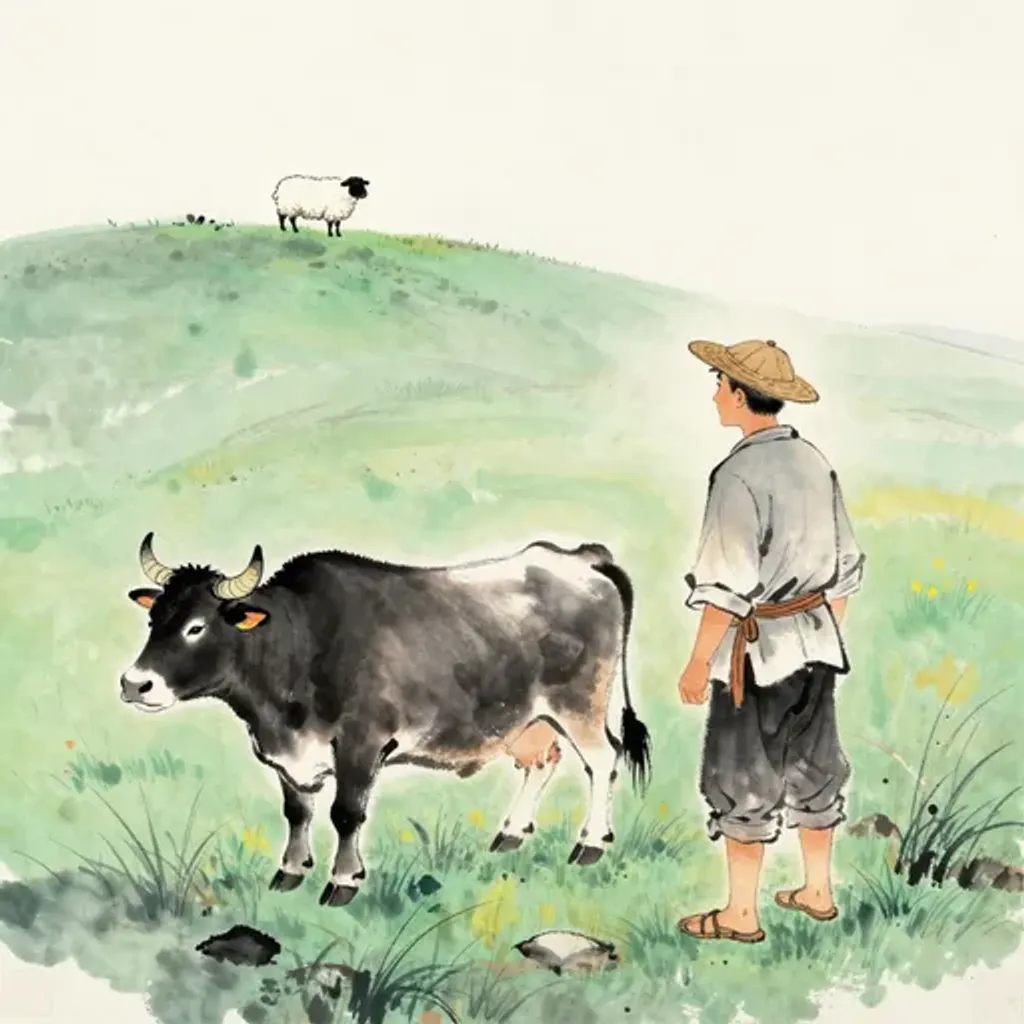
失羊捕牛,无損无憂。
Losing the sheep, catching the ox; no loss, no worry.
— Jiao Yanshou, Yilin (Forest of Changes), 1st century BC
Commentary
Thunder rumbles above the mountain, and a sheep is lost — but a cow is caught instead. No loss, no worry. The verse is disarmingly simple: what seems like misfortune (losing the sheep) is compensated by a greater gain (catching the cow). The cow is worth more than the sheep; the trade, though unplanned, is favorable. No elaborate moral, no tragic arc — just the quiet arithmetic of exchange where the universe occasionally rounds up. From Small Exceeding to Obstruction, the mountain's thunder transforms into water pooling atop the mountain — danger that blocks the forward path. Yet the verse's message cuts against Obstruction's grimness: even when the road ahead is difficult, what you lose may be replaced by something of greater value. The obstacle itself redirects toward a better outcome.
小過 → 解
Hexagram 62 → Hexagram 40: Deliverance
Changing lines: 2, 3
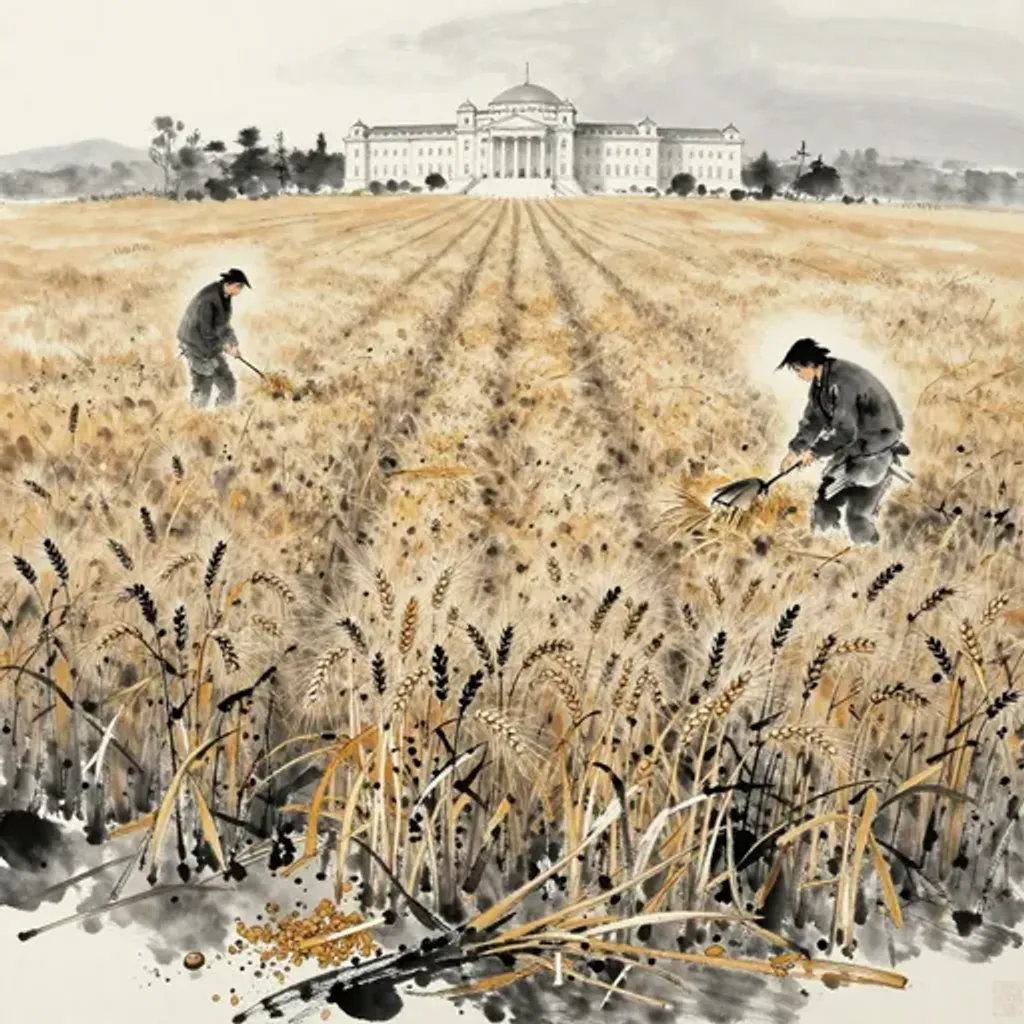
夏麥麩䵃,霜擊其芒。疾君敗國,使我誅傷。
Summer wheat turned to bran and chaff; frost has struck its awns; a ruler's sickness ruins the state, bringing punishment and harm to me.
— Jiao Yanshou, Yilin (Forest of Changes), 1st century BC
Commentary
Thunder rumbles above the mountain, but summer wheat is reduced to bran and chaff as frost strikes its awns at the wrong season. A malicious ruler ruins the state, bringing punishment and harm upon the people. Untimely frost on ripening wheat is a precise image of governmental sabotage: the crop was on schedule, the harvest was in sight, and then an external force intervened at the cruelest moment. The 'sick lord' (疾君) does not merely fail to govern — he actively corrupts, like frost falling in summer. From Small Exceeding to Deliverance, the mountain's thunder becomes thunder and rain together — the storm that breaks the tension. Deliverance arrives, but only after the wheat is already ruined. Relief comes too late to save the crop; it can only clear the ground for replanting.
小過 → 損
Hexagram 62 → Hexagram 41: Decrease
Changing lines: 1, 2, 3, 4, 6
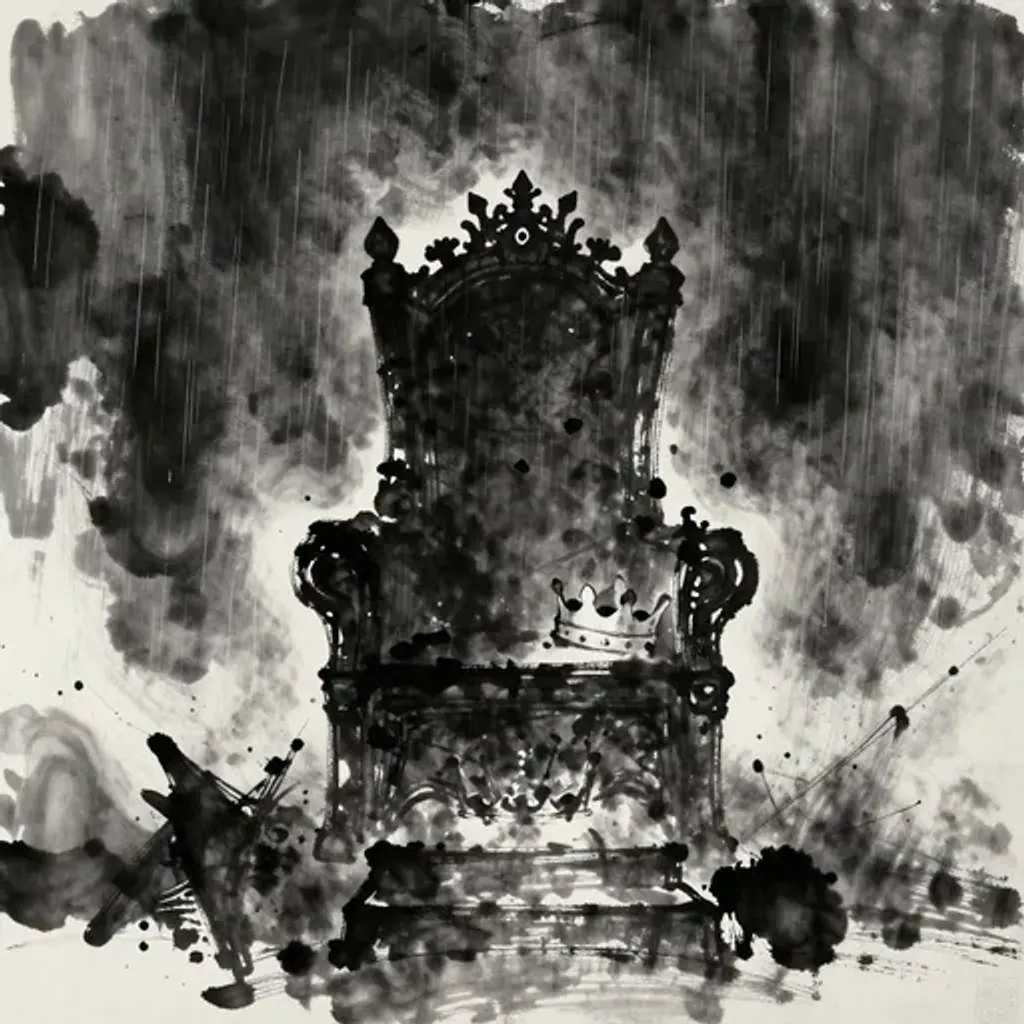
昧昧暗暗,不知白黑。風雨亂擾,光明伏匿,幽王失國。
Dark upon dark, dim upon dim; black and white cannot be known; wind and rain throw all into disorder; light and brightness lie hidden; King You loses his kingdom.
— Jiao Yanshou, Yilin (Forest of Changes), 1st century BC
Commentary
Thunder rumbles above the mountain, but all is murky and dim — one cannot distinguish white from black. Wind and rain churn in confusion, and brightness hides itself away. King You of Zhou loses his kingdom. King You (幽王), the last effective Western Zhou ruler, lit the beacon fires to amuse his concubine Bao Si, crying wolf until the lords refused to answer when real danger arrived. The Quanrong invaded, and the dynasty fell at Mount Li in 771 BC. His reign epitomizes the erasure of moral clarity: when the ruler cannot tell light from dark, the entire realm follows into blindness. From Small Exceeding to Decrease, the mountain's thunder subsides into a lake at the mountain's base — resources draining downward, strength ebbing away.
小過 → 益
Hexagram 62 → Hexagram 42: Increase
Changing lines: 1, 3, 4, 5, 6
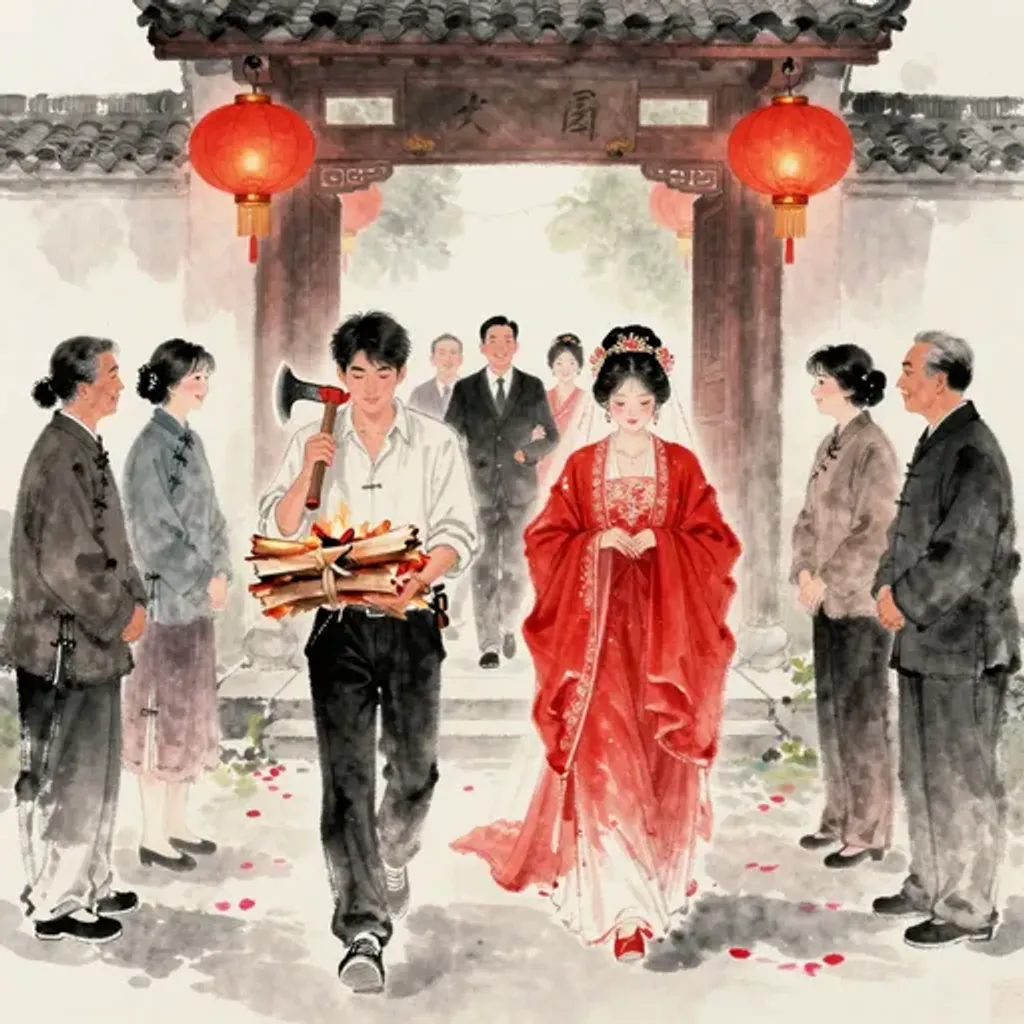
執斧破薪,使媒求婦。和合二姓,親迎斯須。色比毛嬙,姑翁悅喜。
Taking axe to split firewood, sending matchmaker to seek a bride; two surnames join in harmony; welcoming the bride in ceremony; her beauty rivals Mao Qiang; parents-in-law rejoice.
— Jiao Yanshou, Yilin (Forest of Changes), 1st century BC
Commentary
Thunder rumbles above the mountain as the groom takes an axe to chop firewood, then sends a matchmaker to seek a bride. Two surnames are harmoniously joined, and the formal procession arrives shortly. The bride's beauty rivals Mao Qiang, and the parents-in-law are delighted. The axe and firewood (執斧破薪) allude to the Odes poem 'Fa Ke' (伐柯): 'To hew an axe handle, the pattern is not far' — marriage follows established models. Mao Qiang (毛嬙) was a legendary beauty of the Yue kingdom. From Small Exceeding to Increase, the mountain's thunder transforms into wind and thunder working in concert — mutual reinforcement and growth. The marriage is not mere domesticity but generative union: two forces amplifying each other, the household as engine of increase.
小過 → 夬
Hexagram 62 → Hexagram 43: Breakthrough
Changing lines: 1, 2, 5
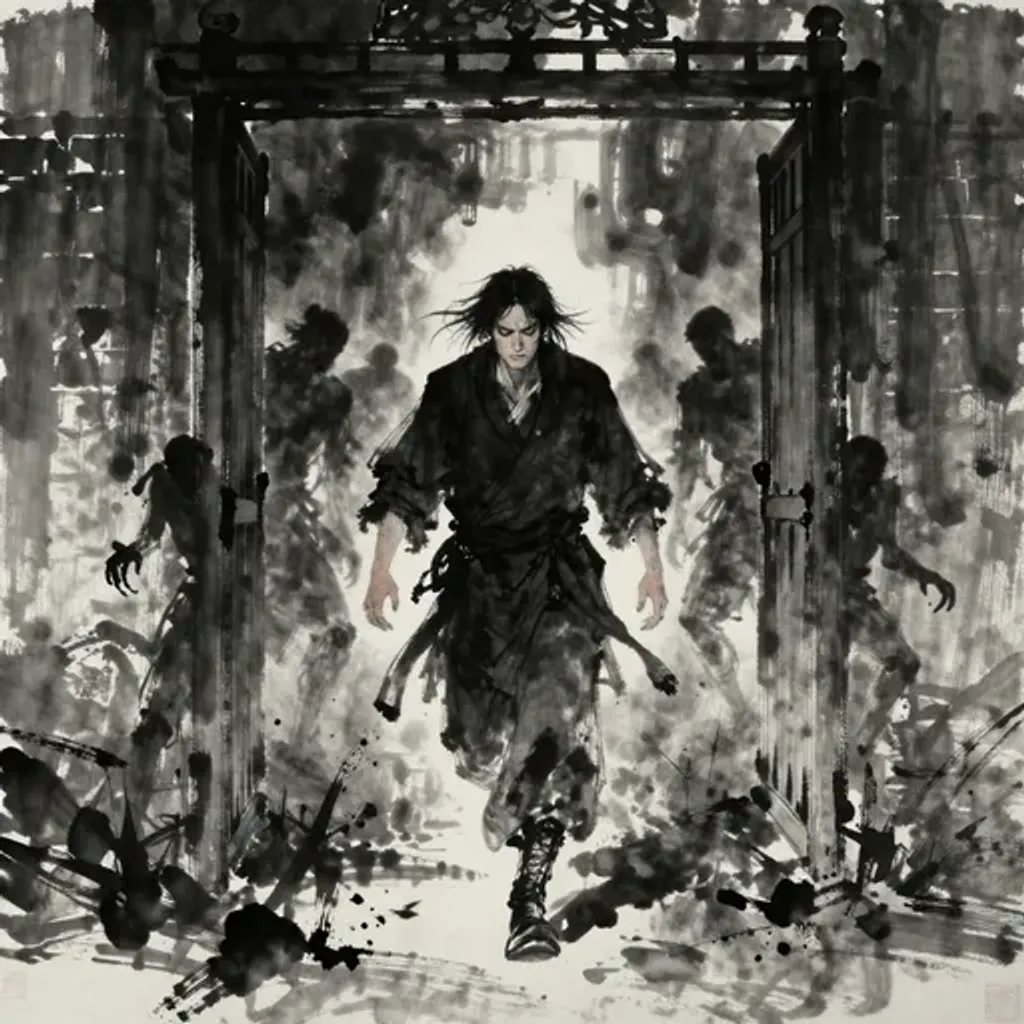
六疾生狂,癡走妄行。北入患門,與禍為鄰。
Six ailments breed madness; deranged, he walks and wanders wildly; north through the gate of calamity, becoming neighbor to disaster.
— Jiao Yanshou, Yilin (Forest of Changes), 1st century BC
Commentary
Thunder rumbles above the mountain, but six afflictions breed madness — one rushes about in delusion, acting without reason. Heading north, one enters the gate of calamity and becomes disaster's neighbor. The 'six ailments' (六疾) may refer to the six pathogenic factors of classical medicine or six accumulated errors of governance. The northward movement is ominous: north in traditional cosmology is the direction of darkness and water, associated with danger and the dead. From Small Exceeding to Breakthrough, the mountain's thunder becomes the lake rising to heaven — decisive rupture that sweeps away what is rotten. But the verse shows someone who breaks through in the wrong direction: instead of clearing away evil, the madman breaks through into disaster, mistaking the gate of ruin for the path of liberation.
小過 → 姤
Hexagram 62 → Hexagram 44: Coming to Meet
Changing lines: 2, 5, 6
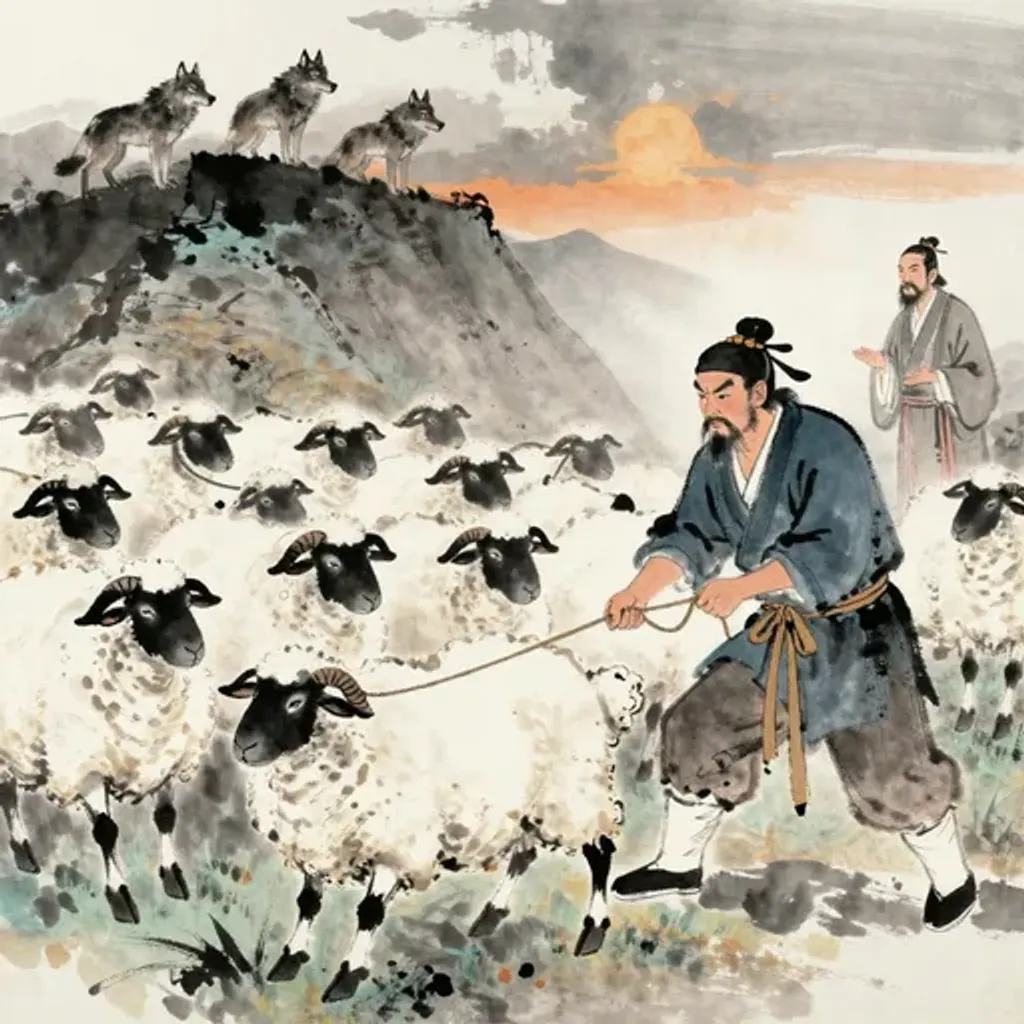
驅羊就群,佷不肯前。慶季愎諫,子之被患。
Driving sheep to join the flock, but stubbornly it will not go forward; Qing Ji rejected advice, and his son suffered the consequences.
— Jiao Yanshou, Yilin (Forest of Changes), 1st century BC
Commentary
Thunder rumbles above the mountain as one drives sheep toward the flock, but the stubborn animals refuse to advance. Qingji rejects good counsel, and his son suffers the consequences. The sheep that will not join the flock embody willful resistance to natural order — herd animals refusing to herd. Qingji (慶季), likely a Spring and Autumn period figure, stubbornly dismisses admonition, and the cost falls not on himself but on his heir. The verse captures a particular cruelty of obstinacy: the consequences skip a generation. From Small Exceeding to Coming to Meet, the mountain's thunder yields to wind moving beneath heaven — the unexpected encounter. But this meeting is unwelcome: what comes to meet the stubborn father is not opportunity but the punishment his son must bear.
小過 → 萃
Hexagram 62 → Hexagram 45: Gathering Together
Changing lines: 3, 5
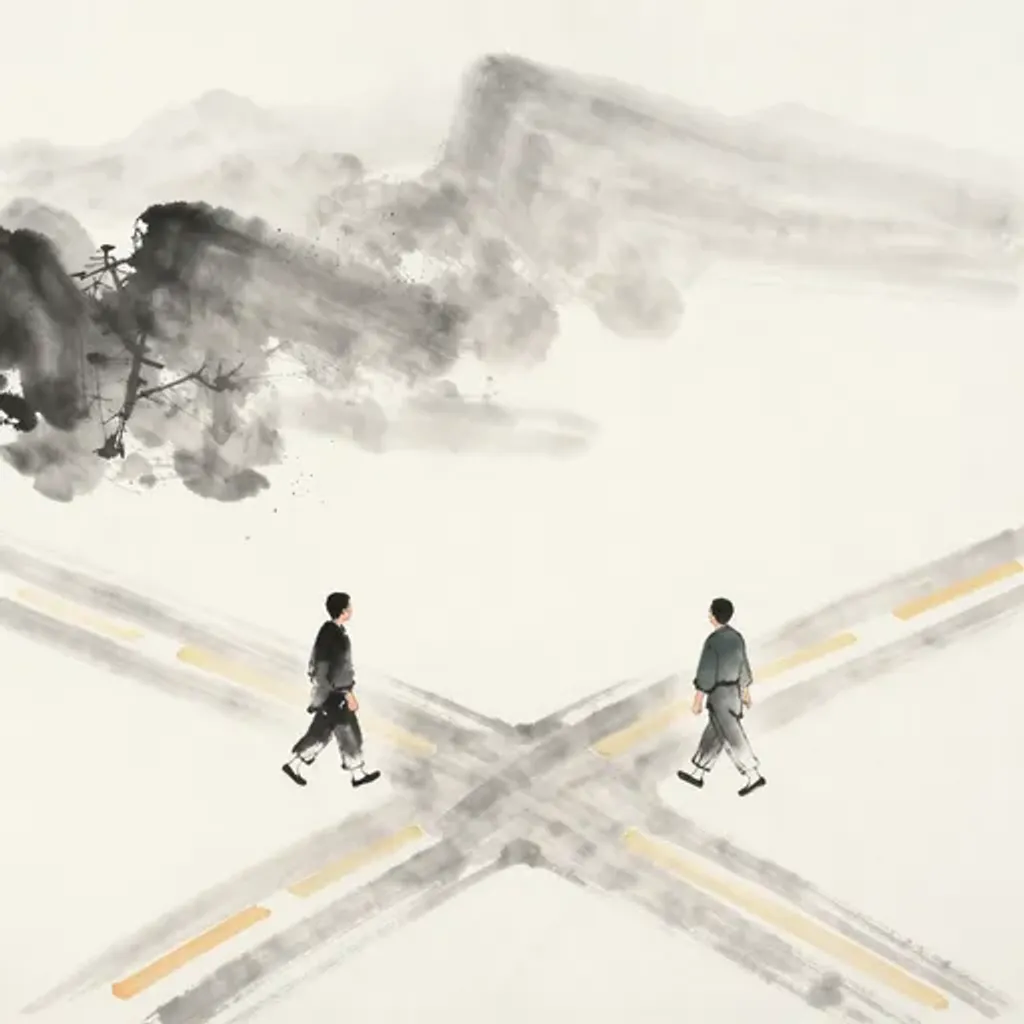
二人異路,東趍西步。十里之外,不相知處。
Two people on different roads; one hastens east, one steps west; ten li apart, neither knows where the other dwells.
— Jiao Yanshou, Yilin (Forest of Changes), 1st century BC
Commentary
Thunder rumbles above the mountain, but two people take different roads — one heading east, the other stepping west. Beyond ten miles, neither knows where the other has gone. The verse is a study in divergence: no quarrel, no dramatic rupture, just two paths that fork and never reconverge. The ten-mile radius marks the boundary of knowability in a world without modern communication — once beyond it, one simply vanishes from the other's awareness. From Small Exceeding to Gathering, the mountain's thunder transforms into the lake gathered upon the earth — community assembled. The verse is Gathering's shadow: where Gathering pulls people together toward a shared center, here centrifugal motion scatters them beyond mutual recognition. The gathering that should have happened never forms.
小過 → 升
Hexagram 62 → Hexagram 46: Pushing Upward
Changing lines: 2, 4
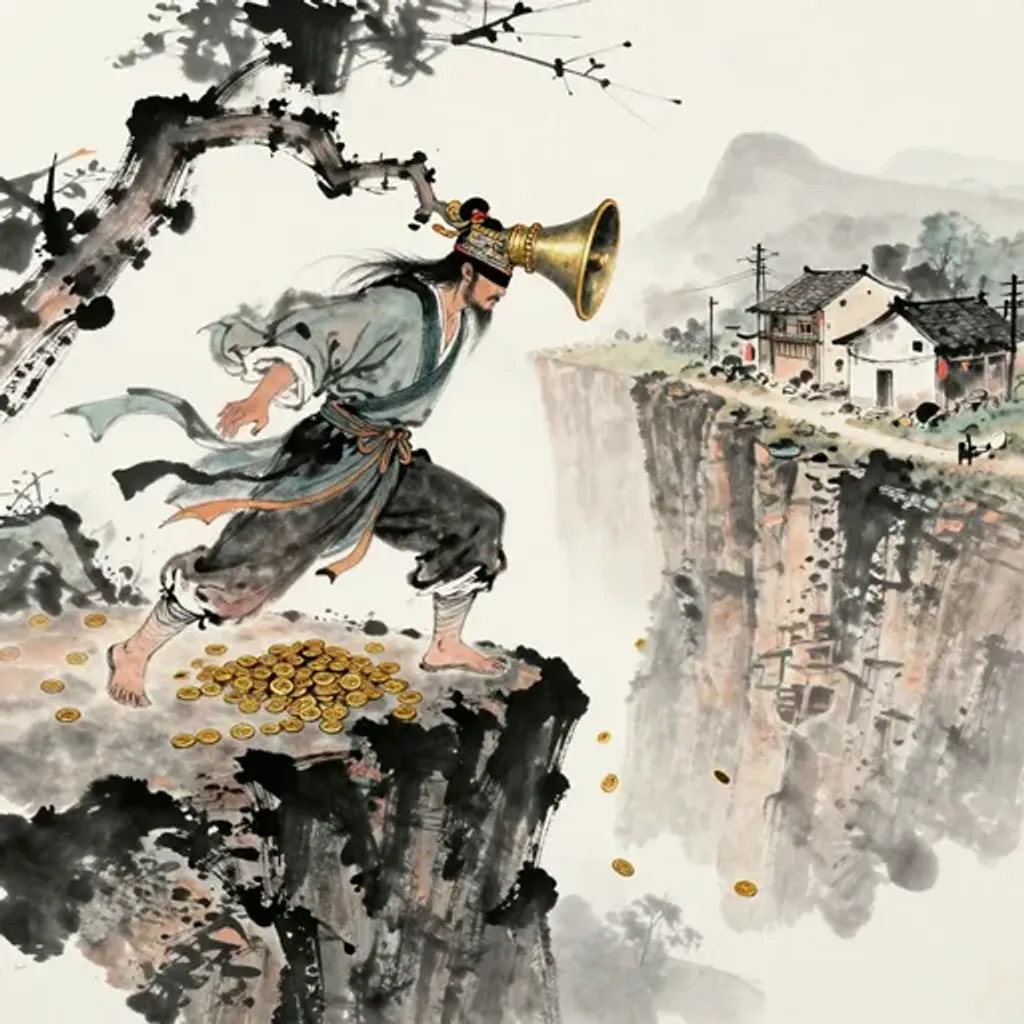
義不勝情,以欲自營。覩利危躬,折角摧頸。
Duty cannot overcome desire; with greed he serves himself; seeing profit, he endangers his body; horns broken, neck snapped.
— Jiao Yanshou, Yilin (Forest of Changes), 1st century BC
Commentary
Thunder rumbles above the mountain, but righteousness cannot overcome desire — one manages affairs purely for self-interest. Seeing profit, one endangers oneself; horns are snapped and necks are broken. The verse anatomizes greed's mechanics: moral principle exists but cannot restrain appetite, and the pursuit of visible gain leads directly to physical destruction. The broken horns and crushed neck suggest a charging animal that runs headlong into a wall — force without wisdom. From Small Exceeding to Pushing Upward, the mountain's thunder descends into wood growing slowly within the earth — patient, incremental ascent. The verse inverts Pushing Upward's wisdom: instead of rising gradually through accumulated small steps, the greedy one lunges for the prize and shatters against what stands between.
小過 → 困
Hexagram 62 → Hexagram 47: Oppression
Changing lines: 2, 3, 5

騷騷擾擾,不安其類。疾在頸項,凶危為憂。
Agitation upon agitation, no peace among its kind; illness lodged in neck and throat; peril and danger bring sorrow.
— Jiao Yanshou, Yilin (Forest of Changes), 1st century BC
Commentary
Thunder rumbles above the mountain, and everything is turmoil — restless, agitated, nothing settling among its kind. The ailment lodges in the neck and throat, and danger presses in from all sides. The throat is the body's chokepoint: when disease strikes there, breath and sustenance are both threatened simultaneously. The verse connects social disorder (騷騷擾擾, nothing at peace in its proper category) to physical vulnerability (the neck ailment) — as if the body and the body politic suffer from the same constriction. From Small Exceeding to Oppression, the mountain's thunder sinks into a lake drained of water — exhaustion, resources spent, nowhere to draw from. The throat that cannot swallow mirrors the well that cannot give water: the system is blocked at its most vital juncture.
小過 → 井
Hexagram 62 → Hexagram 48: The Well
Changing lines: 2, 4, 5
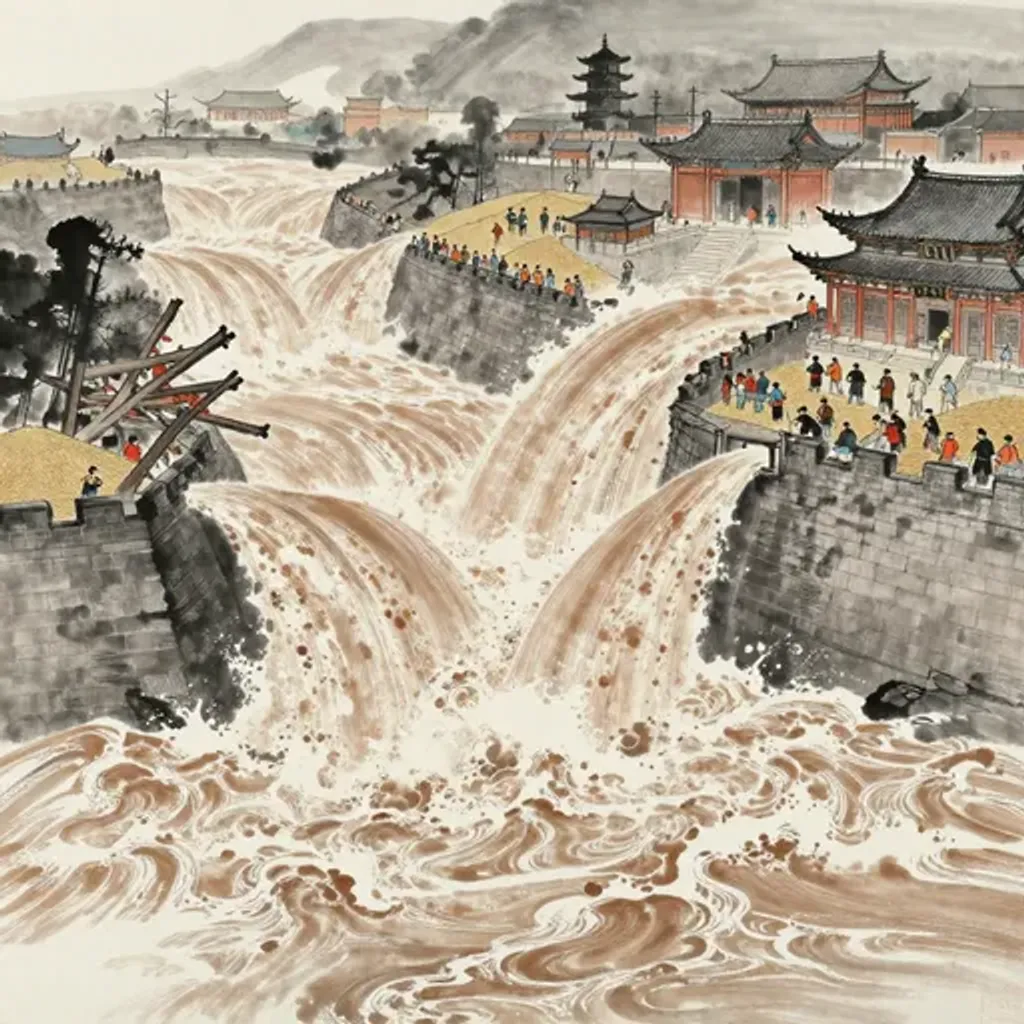
三河俱合,水怒湧躍。壞我王屋,民困於食。
Three rivers merge as one; water rages and surges; it destroys the royal house; the people starve for food.
— Jiao Yanshou, Yilin (Forest of Changes), 1st century BC
Commentary
Thunder rumbles above the mountain as three rivers converge, their waters surging in furious unison. The royal residence is destroyed, and the people are left without food. The 'three rivers' (三河) may refer to the confluence of the Yellow River, Luo, and Wei — a region historically prone to catastrophic flooding. When multiple waterways merge and rage together, no structure can withstand their combined force. The royal palace's destruction signals that even sovereign power cannot resist natural catastrophe at this scale. From Small Exceeding to the Well, the mountain's thunder transforms into water rising through wood — the ordered, communal sharing of a vital resource. The verse is the Well's nightmare: water that should sustain the community instead destroys it, abundance turned apocalyptic.
小過 → 革
Hexagram 62 → Hexagram 49: Revolution
Changing lines: 1, 5
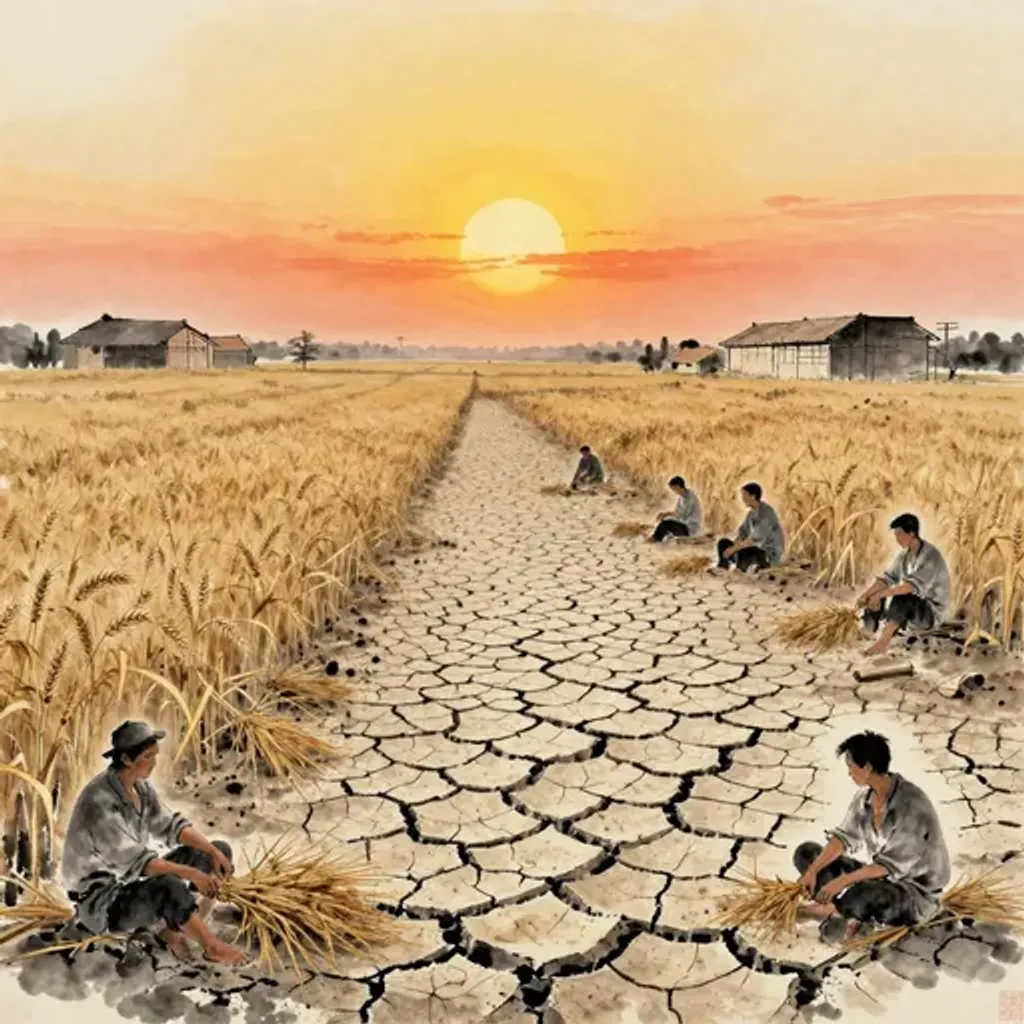
陽曜旱疾,傷病稼穡,農人无食。
The sun blazes with drought sickness; crops and plantings lie wounded; the farming people have no food.
— Jiao Yanshou, Yilin (Forest of Changes), 1st century BC
Commentary
Thunder rumbles above the mountain, but the sun blazes mercilessly and drought ravages the land. Crops sicken and wither, and farmers have nothing to eat. The verse is stark agricultural catastrophe: excessive yang heat (陽曜) scorches what the earth produces, leaving those who till the soil with empty hands. No human villain here — the oppressor is heaven itself, a sun that will not relent. From Small Exceeding to Revolution, the mountain's thunder transforms into fire within the lake — opposing elements trapped together, the catalyst for radical change. Revolution arises from this kind of unbearable tension: when the existing order (a sun that should warm, not destroy) becomes intolerable, the conditions for upheaval are complete. The farmers' hunger is revolution's kindling.
小過 → 鼎
Hexagram 62 → Hexagram 50: The Cauldron
Changing lines: 2, 6
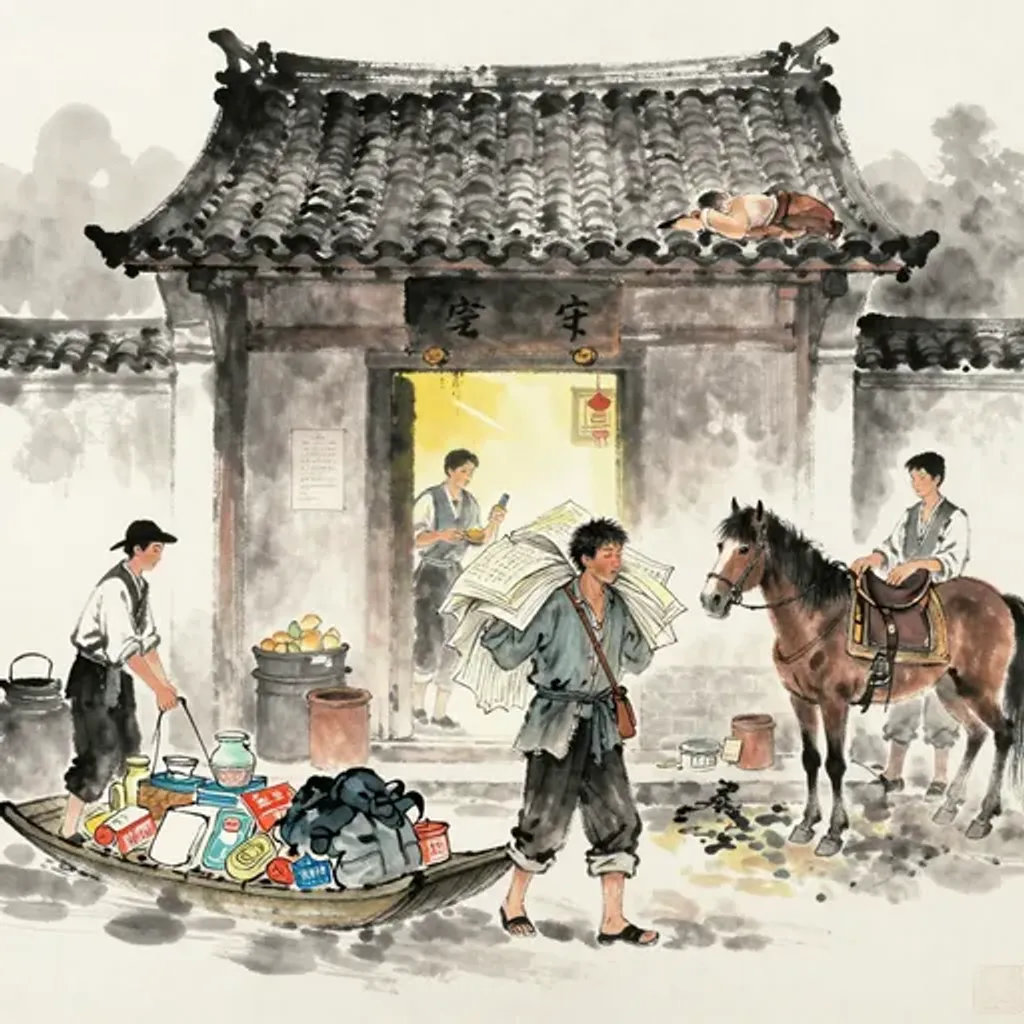
流浮出食,載劵入屋。釋鞍繫馬,西南廡下。
Floating downstream brings forth provisions; carrying contracts into the house; unsaddling and tethering the horse beneath the southwestern eaves.
— Jiao Yanshou, Yilin (Forest of Changes), 1st century BC
Commentary
Thunder rumbles above the mountain, but the wanderer has arrived home safely. Floating downstream, food is procured; carrying contracts and credentials, one enters the house. The saddle is removed, the horse is tethered under the western corridor — the journey is over. The verse narrates a complete homecoming sequence: provisions secured on the river, documents verified at the gate, the mount unsaddled and sheltered. Every detail speaks of tasks completed and order restored. From Small Exceeding to the Cauldron, the mountain's thunder transforms into fire blazing above wood — the image of cooking, transformation, and offering to the worthy. The traveler who has returned now feeds others: the Cauldron takes what was gathered abroad and refines it into sustenance for the household.
小過 → 震
Hexagram 62 → Hexagram 51: The Arousing Thunder
Changing lines: 1, 3
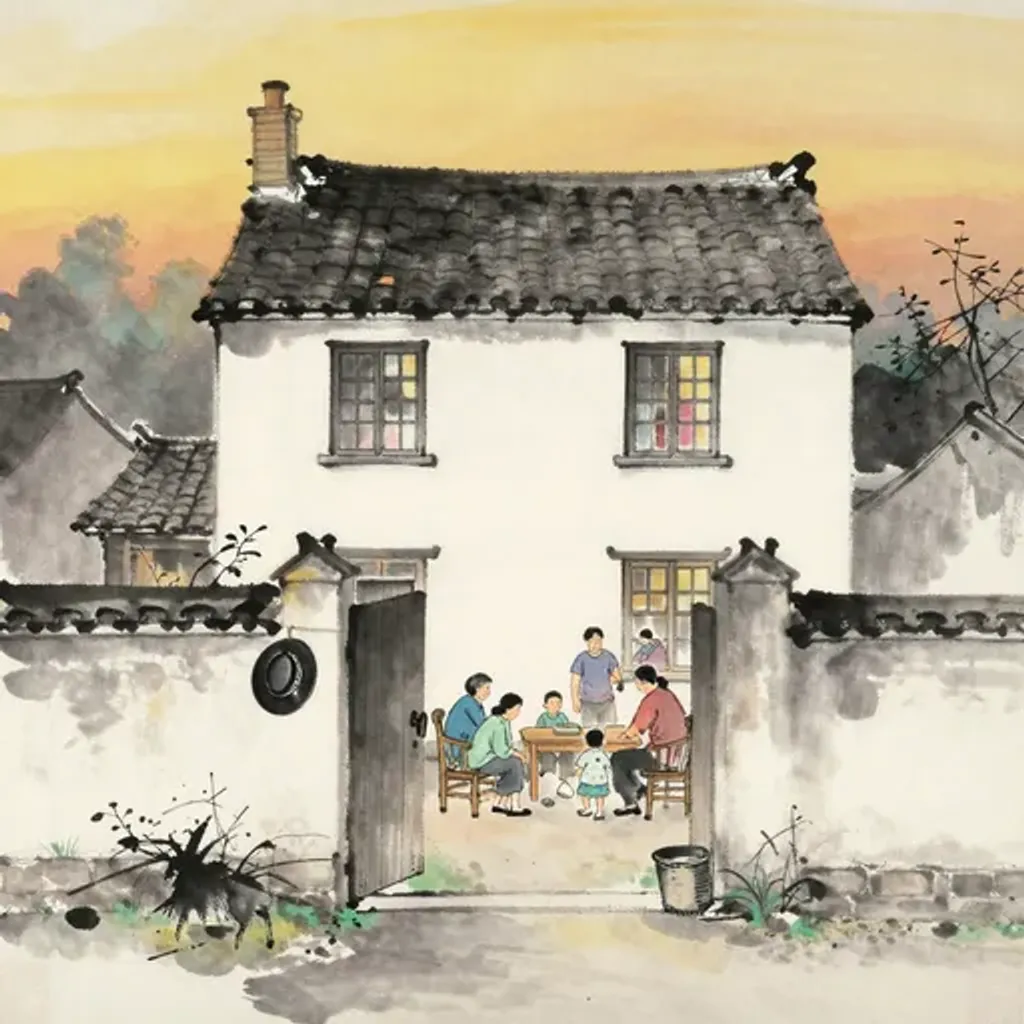
門戶之居,可以止舍。進仕不殆,安樂相保。
A dwelling with gate and door, where one may stop and rest; advancing in office without peril; peace and joy, mutually preserved.
— Jiao Yanshou, Yilin (Forest of Changes), 1st century BC
Commentary
Thunder rumbles above the mountain, and the dwelling has a proper gate — one can stop and rest here. Advancing into official service brings no danger; peace and contentment are mutually sustained. The verse is a domestic affirmation: the house is solid, the gate is functional, the career path is safe, and happiness is self-reinforcing. No crisis, no dramatic tension — just the quiet satisfaction of things working as they should. The gate (門戶) symbolizes both physical shelter and social position: one who has a proper gate has standing in the world. From Small Exceeding to the Arousing, the mountain's thunder doubles into repeated thunder — shock upon shock. Yet the verse promises that even under thunderous conditions, the dwelling holds. Arousal energizes without destroying when the foundation is sound.
小過 → 艮
Hexagram 62 → Hexagram 52: Keeping Still Mountain
Changing lines: 4, 6
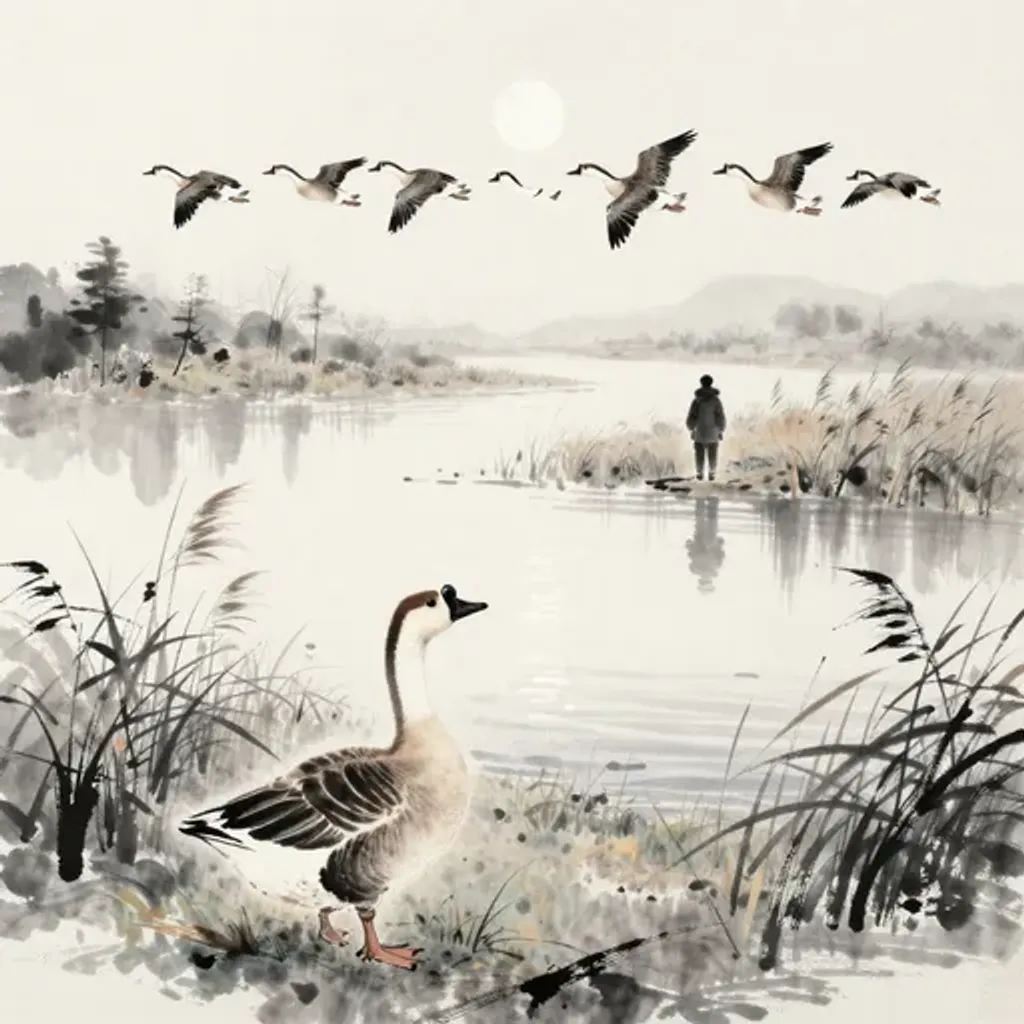
過時不歸,雌雄苦悲。徘徊外國,與母分離。
Border geese fly south — the formation is broken. A lone shadow drops into the reeds. Searching everywhere for companions, no call answers — cold moonlight on the river, the traveler has not returned.
— Jiao Yanshou, Yilin (Forest of Changes), 1st century BC
Commentary
Thunder rumbles above the mountain, but the original verse tells of one who fails to return on time — male and female mourn bitterly, wandering in foreign lands, separated from their mother. A lone goose falls behind its formation, its shadow sinking into the reeds along a moonlit river, searching for companions who no longer answer. The verse embodies the pain of delayed homecoming stretched into permanent exile. From Small Exceeding to Keeping Still, thunder above the mountain settles into doubled mountain — absolute stillness, cessation of all movement. The bird that was flying has stopped; the one who was traveling has become fixed in foreign soil. Keeping Still here is not tranquil meditation but the terrible stillness of someone who has simply stopped trying to return.
小過 → 漸
Hexagram 62 → Hexagram 53: Development
Changing lines: 4, 5, 6
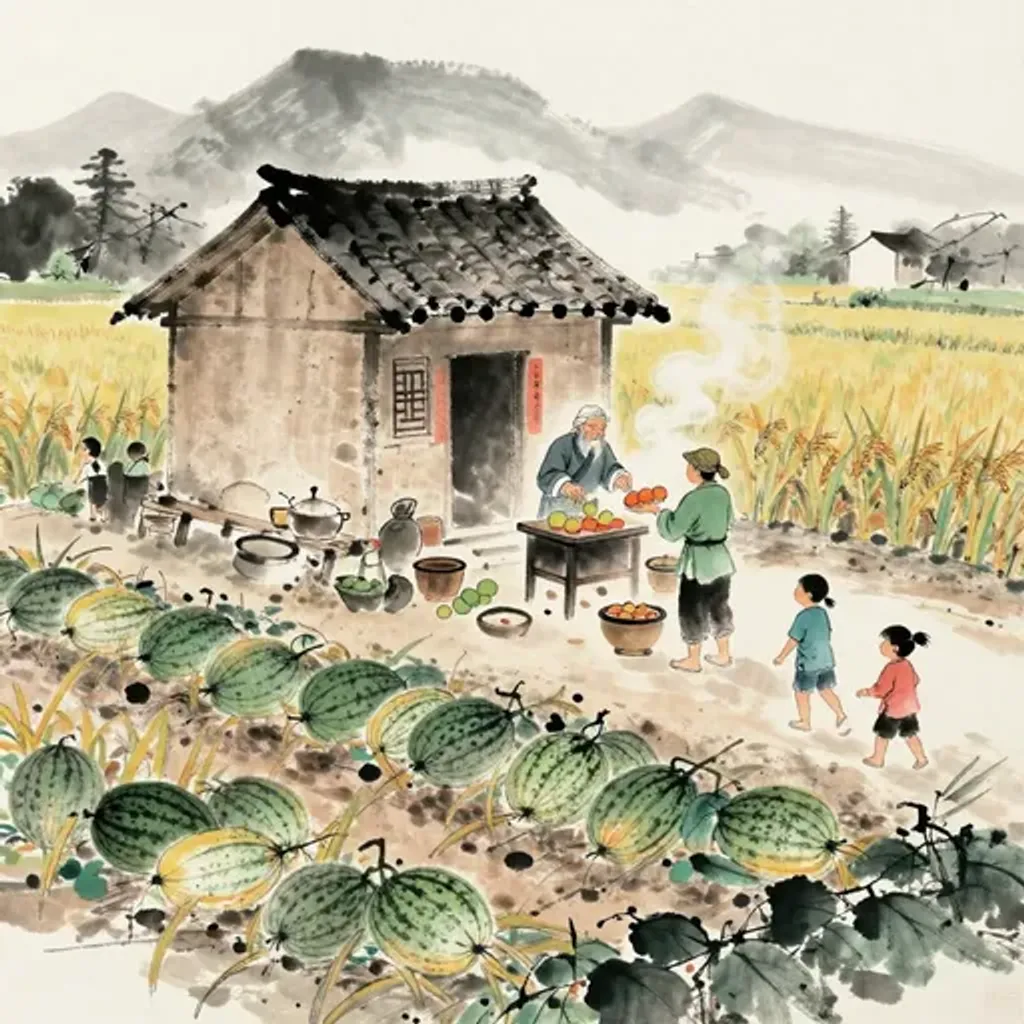
中田有廬,彊塲有瓜。獻進皇祖,曾孫壽考。
A hut amid the fields; melons on the boundary ridge; offerings presented to the royal ancestors; may the descendants live long.
— Jiao Yanshou, Yilin (Forest of Changes), 1st century BC
Commentary
Thunder rumbles above the mountain, and in the middle of the field stands a cottage, while melons grow along the border ridges. These are offered up to the imperial ancestor, and the great-grandson lives to a ripe old age. The verse draws from the Odes poem 'Mian' (綿) and related harvest songs: the field cottage (廬) is the farmer's seasonal shelter, the border melons mark well-tended boundaries, and the ancestral offering completes the agricultural-ritual cycle. Everything here is proper, proportionate, and blessed by continuity across generations. From Small Exceeding to Development, the mountain's thunder becomes trees growing slowly upon the mountain — gradual, organic progress. The great-grandson's longevity is Development's fruit: patient cultivation across generations yields not dramatic triumph but enduring prosperity.
小過 → 歸妹
Hexagram 62 → Hexagram 54: The Marrying Maiden
Changing lines: 1, 2, 3
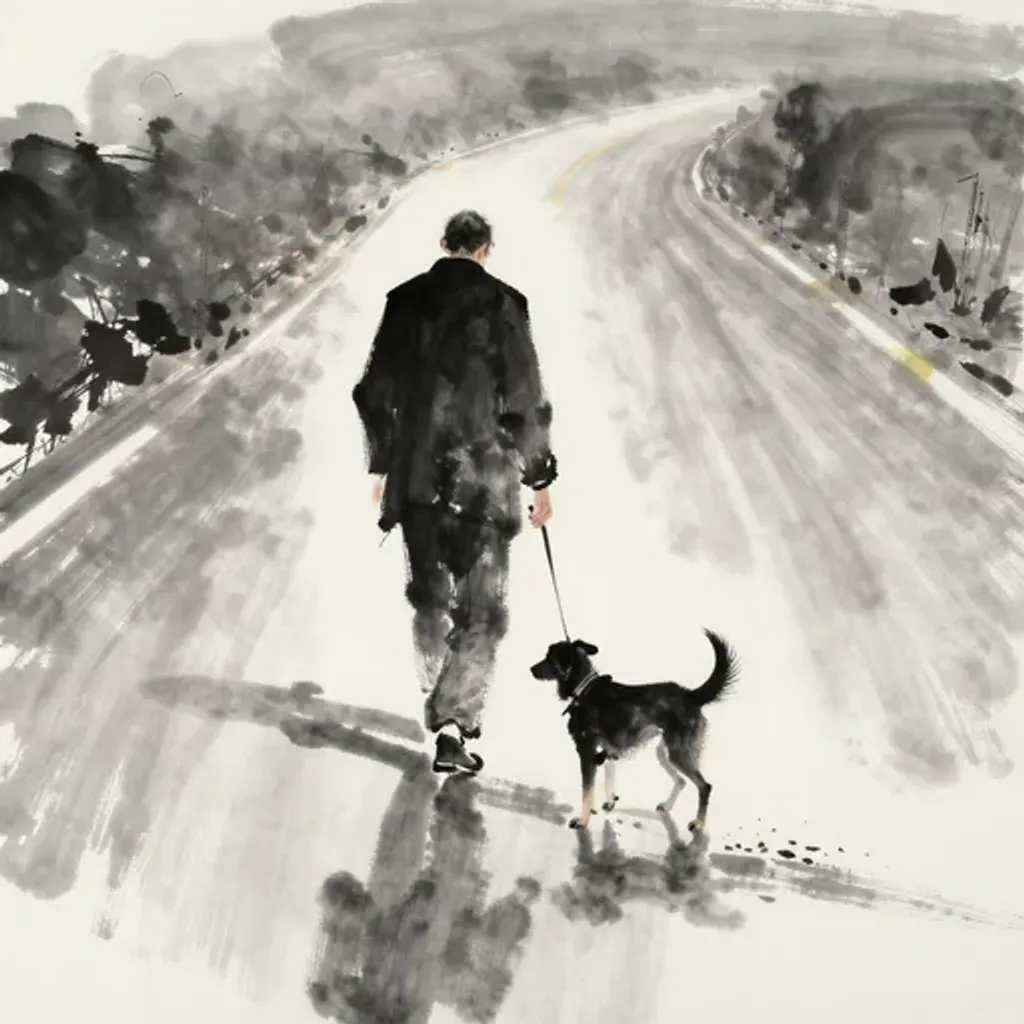
失恃无友,嘉福出走,傫如喪狗。
Losing support, without friends; blessings and fortune have fled; dejected like a homeless dog.
— Jiao Yanshou, Yilin (Forest of Changes), 1st century BC
Commentary
Thunder rumbles above the mountain, but one has lost all support and has no allies — good fortune has fled, and one wanders abject as a homeless dog. The phrase 傫如喪狗 ('dejected like a dog at a funeral') is famously applied to Confucius himself: when he wandered between the states, someone described him as looking like a bereaved dog between funerals — exhausted, unwanted, belonging nowhere. The verse strips away every prop: no patron, no friend, no luck. From Small Exceeding to the Marrying Maiden, the mountain's thunder descends into thunder above the lake — an unequal union, a subordinate position. The Marrying Maiden enters a household where she has no standing; the masterless wanderer enters a world that has no place for him.
小過 → 豐
Hexagram 62 → Hexagram 55: Abundance
Changing lines: 1
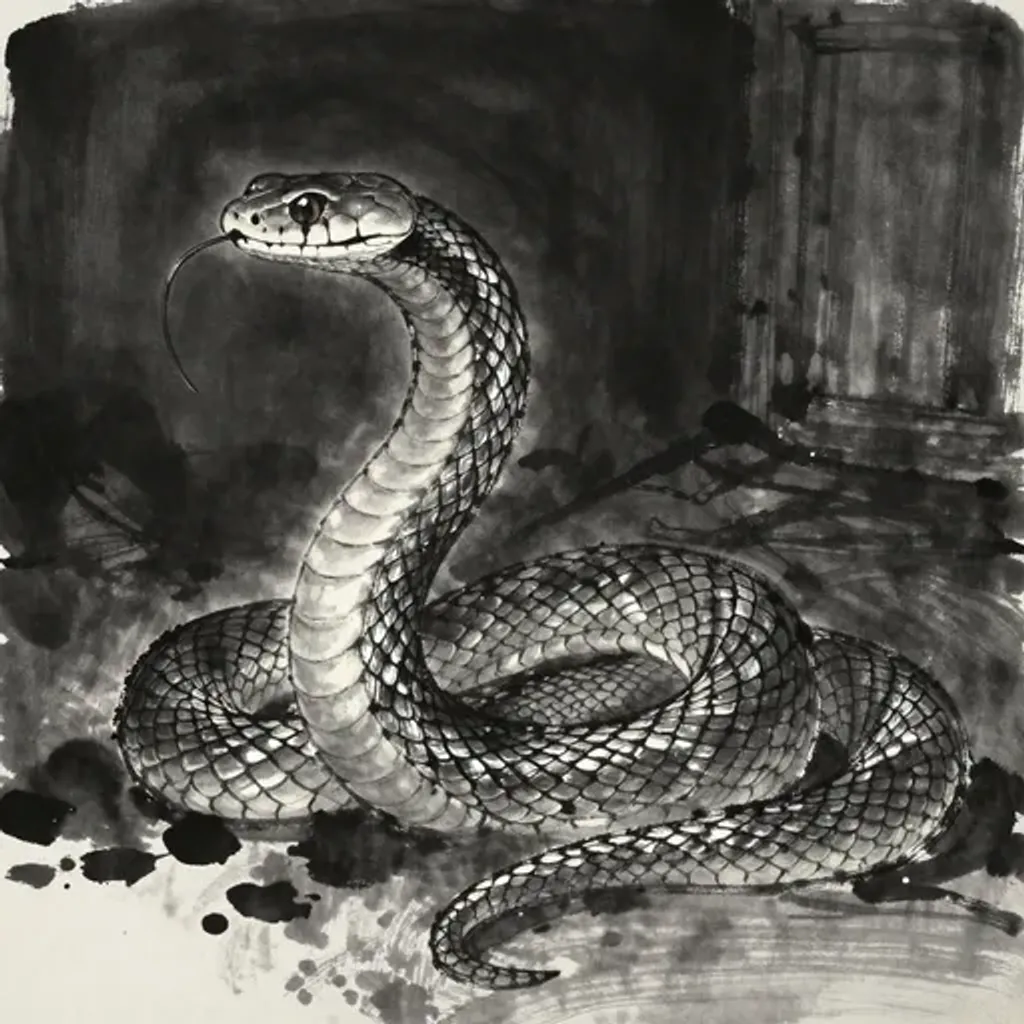
反鼻岐頭,三寡獨居。
The reversed-nose, forked-head viper; thrice widowed, dwelling alone.
— Jiao Yanshou, Yilin (Forest of Changes), 1st century BC
Commentary
Thunder rumbles above the mountain, but the imagery is unsettling: a turned-up nose and a forked head, and three widows dwelling alone. The verse is cryptic and ominous. The 'reversed nose and forked head' (反鼻岐頭) may describe a serpent — the viper's upturned snout is a standard marker in Chinese natural history — or a deformed omen-creature. The three widows living in solitude suggest a household where all male protectors have perished, leaving only isolated survivors. From Small Exceeding to Abundance, the mountain's thunder becomes thunder and lightning striking together — overwhelming brilliance and power. But the verse inverts Abundance's promise: where there should be plenitude, there is only deformity and bereavement. The thunder and fire illuminate what no one wishes to see.
小過 → 旅
Hexagram 62 → Hexagram 56: The Wanderer
Changing lines: 6
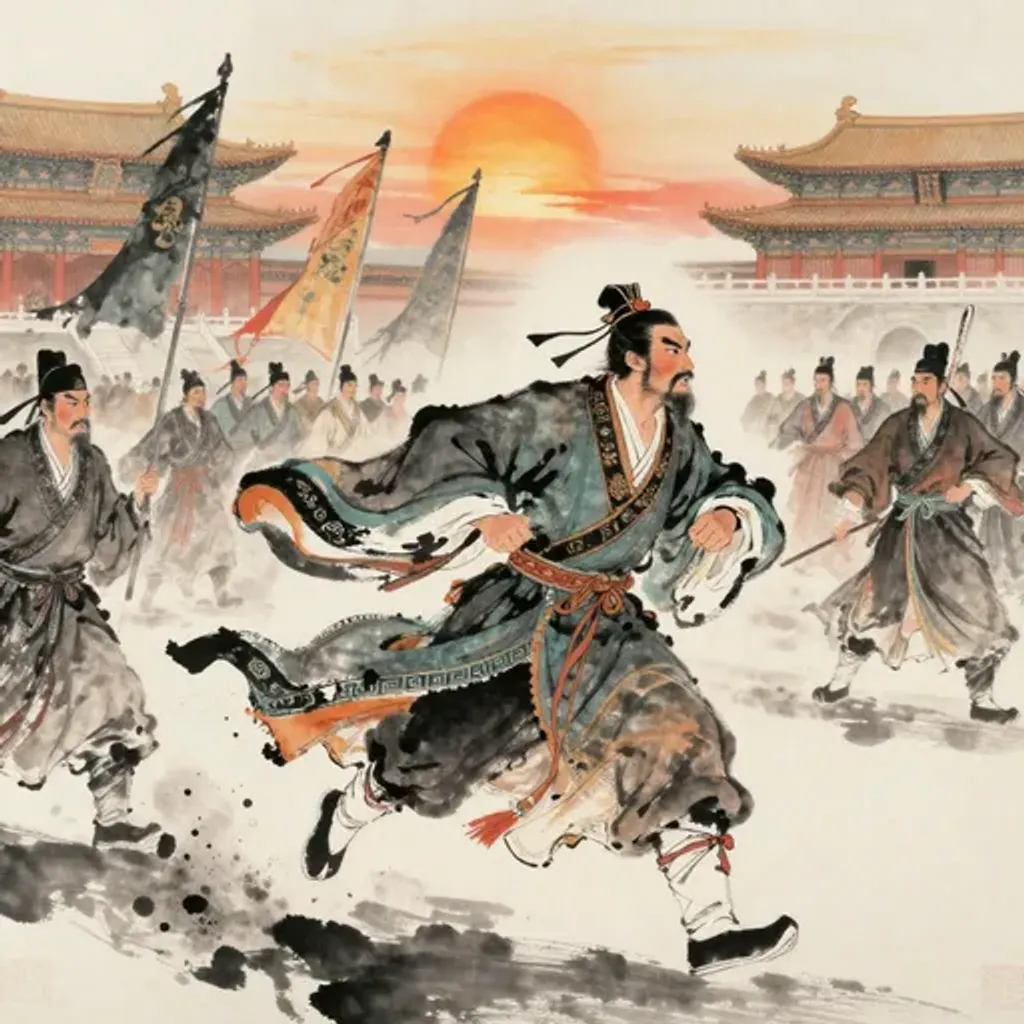
衣裳顛倒,為王來呼。成就東周,封受大福。
Clothes put on upside-down and backwards, called by the king; establishing the Eastern Zhou, receiving great blessings.
— Jiao Yanshou, Yilin (Forest of Changes), 1st century BC
Commentary
Thunder rumbles above the mountain, and robes are put on inside-out in frantic haste as the king's summons arrives. The urgency is rewarded: the Eastern Zhou is established, and great blessings are bestowed. The reversed garments (衣裳顛倒) echo the Odes poem 'Dong Fang Wei Ming' (東方未明) — dressing in disarray because the call came before dawn. The establishment of the Eastern Zhou (成就東周) likely alludes to the relocation of the Zhou capital to Luoyang after the fall of the western capital in 770 BC, when loyal ministers responded to the crisis with desperate speed. From Small Exceeding to the Wanderer, the mountain's thunder transforms into fire upon the mountain — the traveler's signal fire. What begins as displacement (hasty departure, disheveled dress) becomes the foundation of a new order, earned through willingness to move when called.
小過 → 巽
Hexagram 62 → Hexagram 57: The Gentle Wind
Changing lines: 2, 4, 5, 6
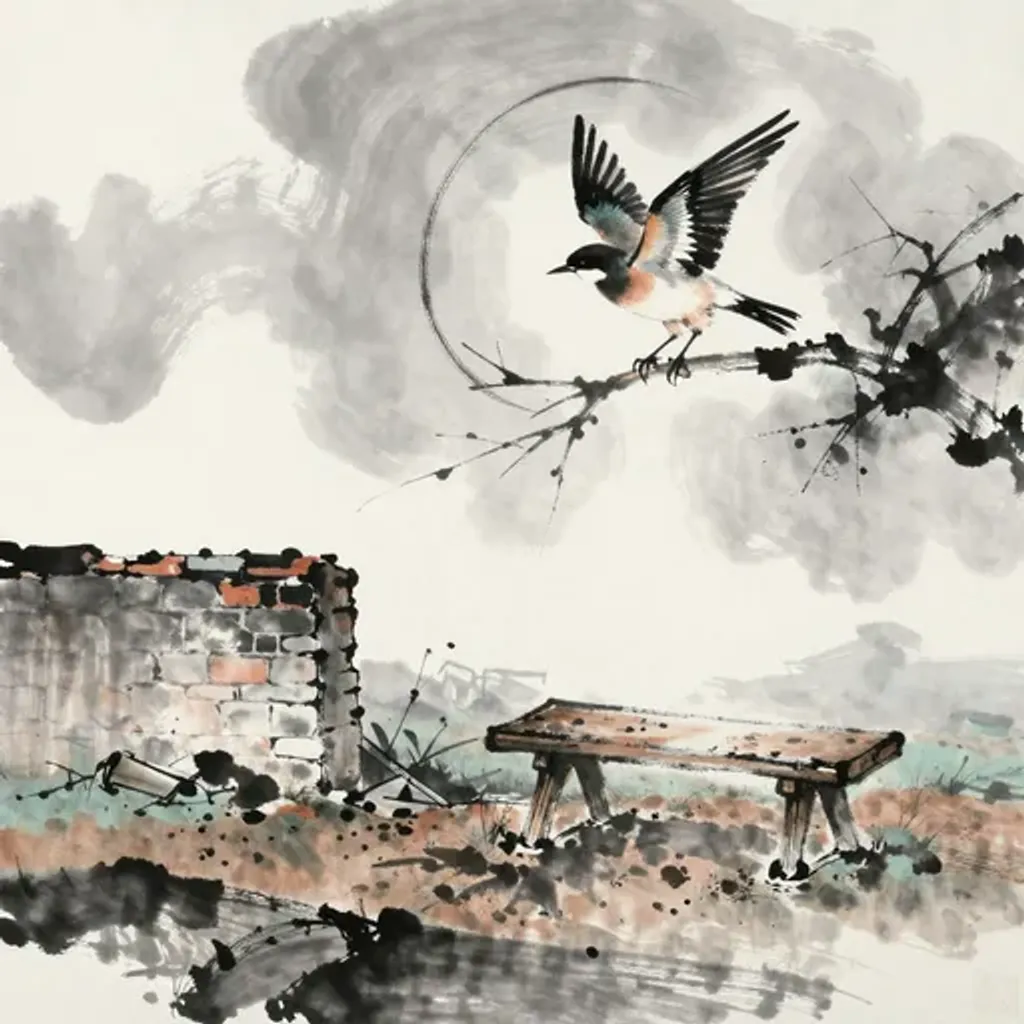
飛不遠去,還歸故處,興事多悔。
Flight does not go far; returning to the old place; undertakings bring much regret.
— Jiao Yanshou, Yilin (Forest of Changes), 1st century BC
Commentary
Thunder rumbles above the mountain, but the bird does not fly far — it circles back to its original perch. Undertaking ventures only brings regret. The verse is a warning against restless initiative: the bird that cannot commit to its departure wastes energy returning to where it started, and every project launched from this position generates remorse rather than results. The circling flight pattern embodies futile ambition — motion without progress, departure without arrival. From Small Exceeding to the Gentle, the mountain's thunder subsides into doubled wind — penetrating, persistent, but without thunderous force. The Gentle counsels patient infiltration rather than dramatic departure. The bird's error was trying to thunder when it should have been breeze: small, steady influence succeeds where grand exits fail.
小過 → 兌
Hexagram 62 → Hexagram 58: The Joyous Lake
Changing lines: 1, 2, 3, 5
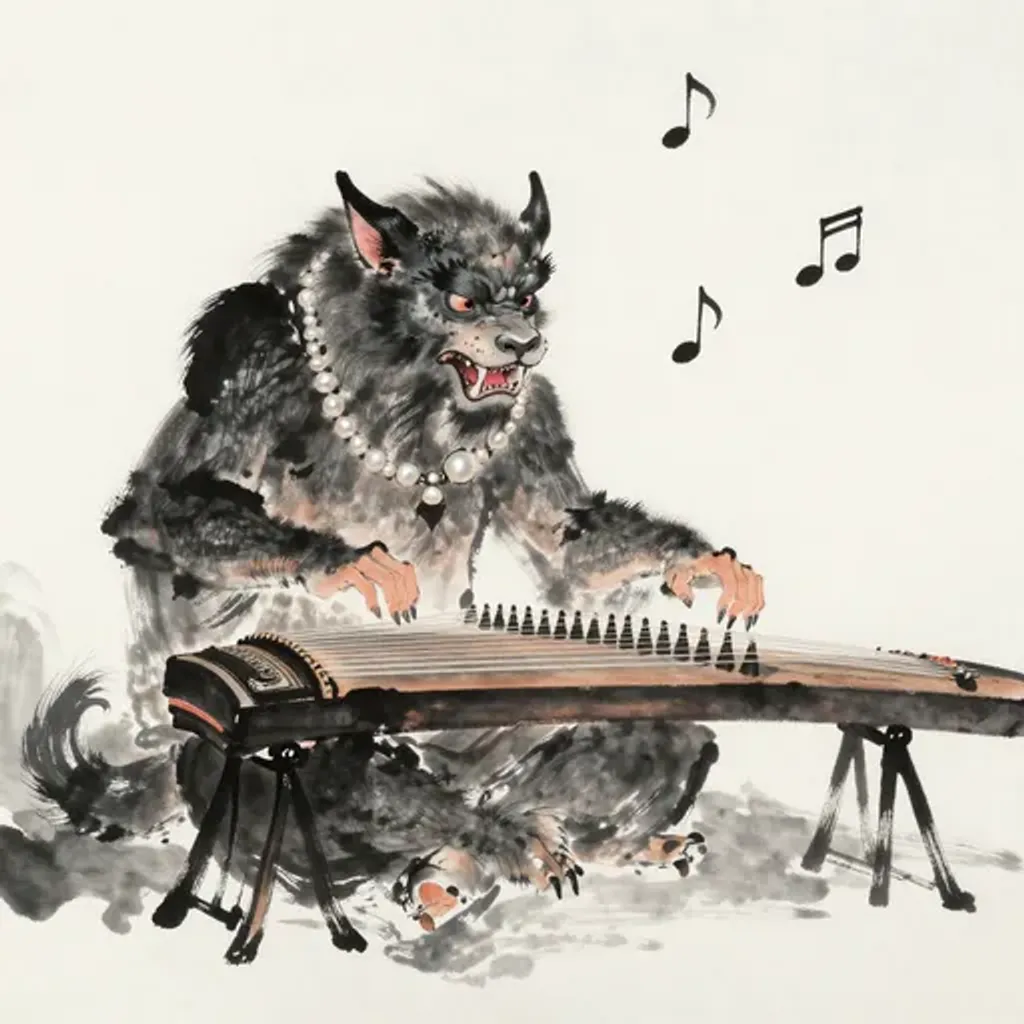
含血走禽,不曉五音。匏巴鼓瑟,不悅於心。
A blood-mouthed running beast, knowing nothing of the five tones; even Bao Ba playing the zither brings no joy to its heart.
— Jiao Yanshou, Yilin (Forest of Changes), 1st century BC
Commentary
Thunder rumbles above the mountain, but the blood-mouthed beast that runs through the wilds knows nothing of the five musical tones. Even when Bao Ba plays his zither — the legendary musician whose art could make fish leap from water and horses abandon their feed — the creature's heart remains unmoved. The verse contrasts the pinnacle of aesthetic refinement with brute animal indifference. Bao Ba (匏巴) was a zither master whose skill allegedly stirred all living things, yet even his art cannot penetrate a nature fundamentally incapable of receiving it. From Small Exceeding to the Joyous, the mountain's thunder gives way to paired lakes — mutual delight, shared discourse. But joy requires the capacity for receptivity, and the beast that cannot hear music cannot participate in the Joyous. Delight is wasted on the unreceptive.
小過 → 渙
Hexagram 62 → Hexagram 59: Dispersion
Changing lines: 2, 3, 4, 5, 6
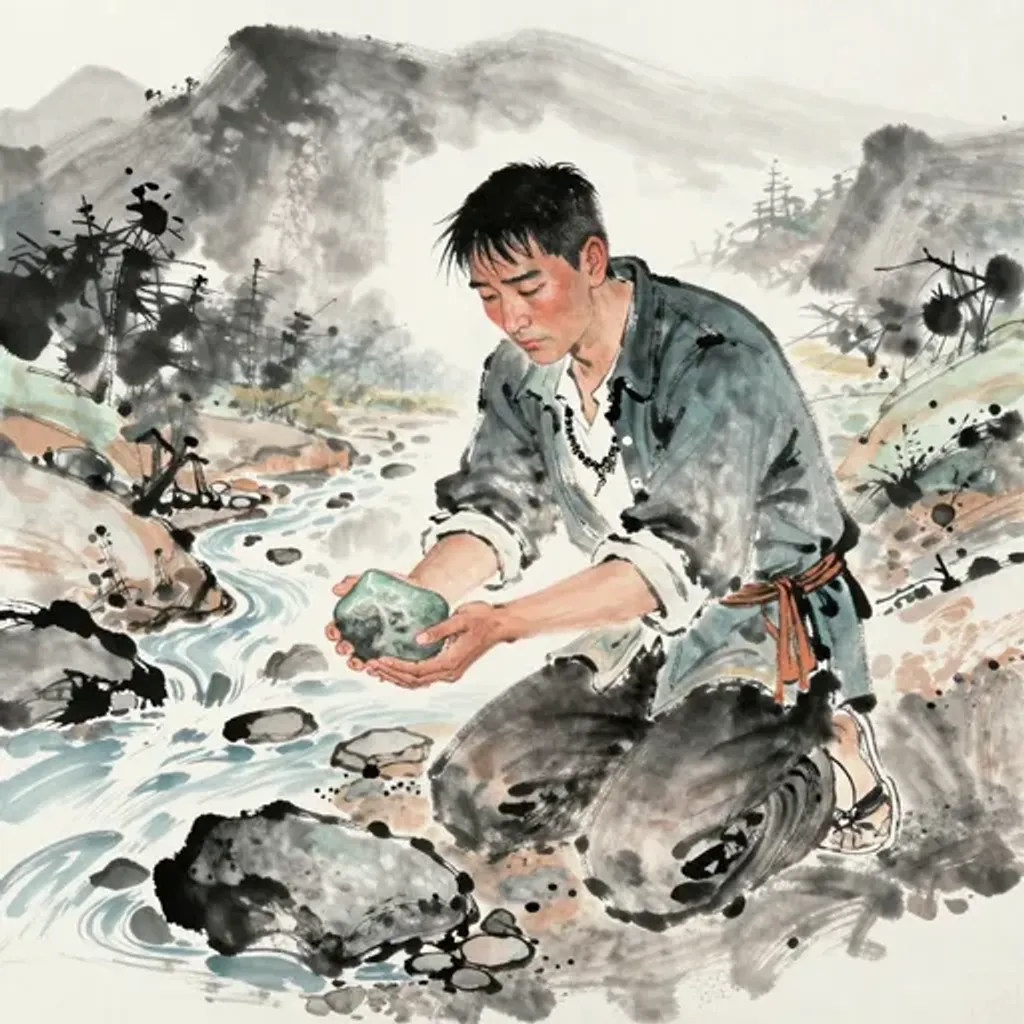
求玉獲石,非心所欲,祝願不得。
Seeking jade, obtaining stone; not what the heart desired; prayers and wishes unfulfilled.
— Jiao Yanshou, Yilin (Forest of Changes), 1st century BC
Commentary
Thunder rumbles above the mountain, but one seeks jade and finds only stone — not what the heart desired. Prayers go unanswered, wishes remain unfulfilled. The verse is a compact parable of disappointment: the gulf between expectation and reality, between what one prays for and what one receives. Jade and stone look similar enough to invite confusion, but the difference in value is absolute. The seeker's error lies not in the searching but in mistaking the result for the goal. From Small Exceeding to Dispersion, the mountain's thunder transforms into wind moving over water — scattering, dissolving boundaries. Dispersion here acts on the seeker's illusions: what was tightly held (the prayer, the hope) disperses like mist, and one is left holding the stone that was always there.
小過 → 節
Hexagram 62 → Hexagram 60: Limitation
Changing lines: 1, 2, 3, 4, 5
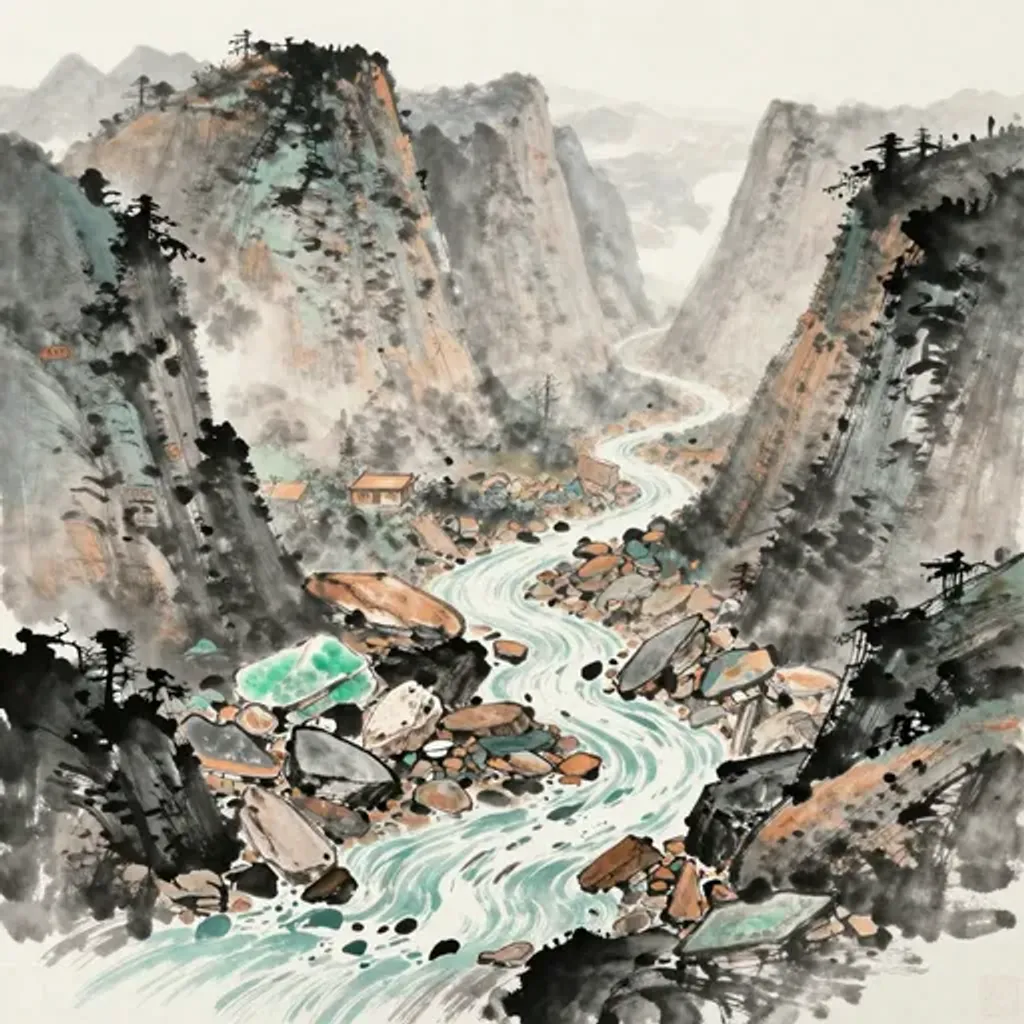
山崩谷絕,大福盡歇。涇渭失紀,玉石既已。
Mountains collapse, valleys are severed; great fortune utterly ceases; the Jing and Wei lose their courses; jade and stone together are finished.
— Jiao Yanshou, Yilin (Forest of Changes), 1st century BC
Commentary
Thunder rumbles above the mountain, but the mountain collapses and the valley is severed — great blessings cease entirely. The Jing and Wei rivers lose their order, and jade and stone are finished alike. The Jing and Wei (涇渭) were proverbially distinct — one clear, one muddy — and their 'losing order' (失紀) means the fundamental principle of differentiation has collapsed. When you can no longer tell jade from stone, value itself dissolves. The verse describes total systemic failure: geography ruptures, rivers merge indistinguishably, and quality distinctions vanish. From Small Exceeding to Limitation, the mountain's thunder becomes water resting above the lake — measured containment. But the verse shows what happens when limitation comes too late: the structures that should have set boundaries have already shattered, and no amount of regulation can restore what has been obliterated.
小過 → 中孚
Hexagram 62 → Hexagram 61: Inner Truth
Changing lines: 1, 2, 3, 4, 5, 6
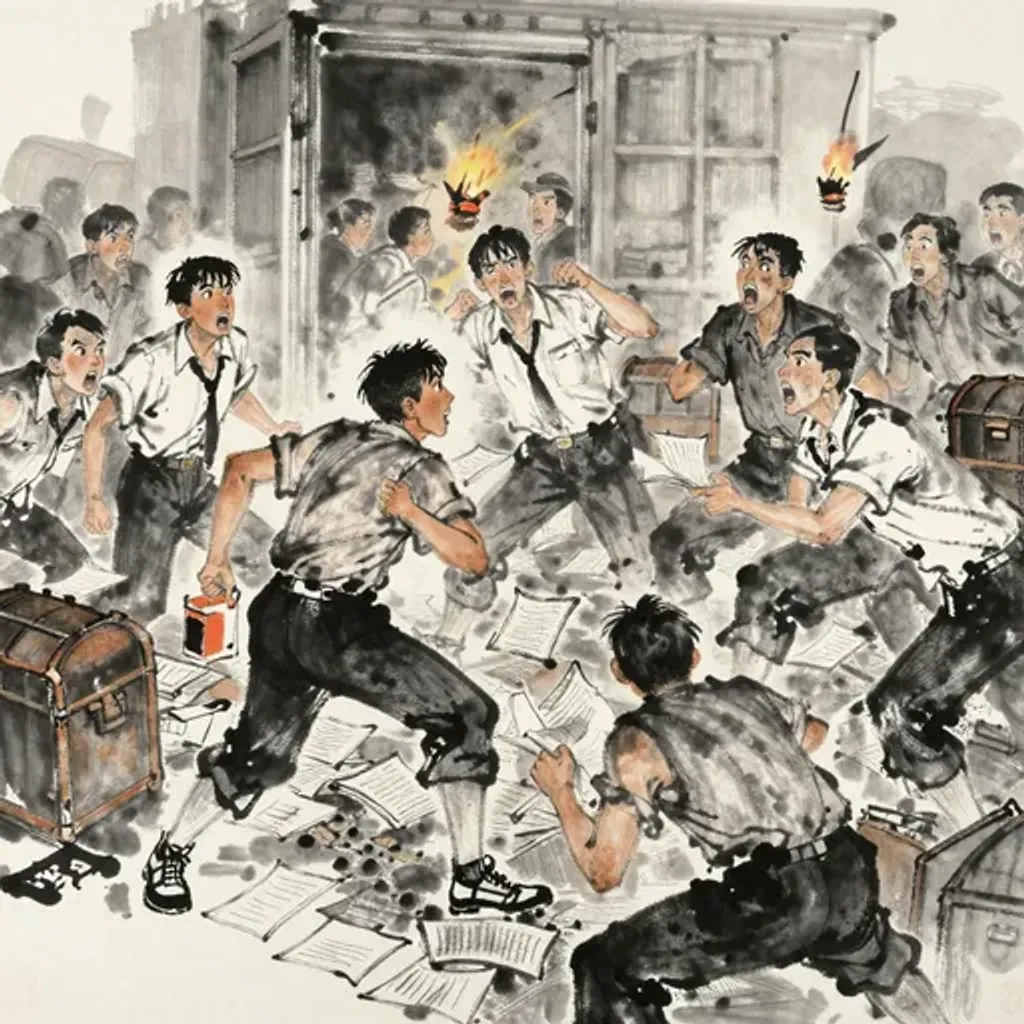
雜目懼怒,不安其居。散渙府藏,无有利得。
Mixed gazes, fearful and angry, unable to rest in their places; treasury and storehouse scattered and dispersed; no profit to be had.
— Jiao Yanshou, Yilin (Forest of Changes), 1st century BC
Commentary
Thunder rumbles above the mountain, but eyes dart about in fear and anger — no one can settle in their dwelling. The treasury and storehouses are scattered and dispersed, and nothing of value remains. The verse describes institutional hemorrhage: the gaze of those in charge is wild with panic, the population cannot stay put, and the state's accumulated wealth bleeds away in every direction. It is not invasion but internal dissolution — the center cannot hold because those at the center have lost their nerve. From Small Exceeding to Inner Truth, the mountain's thunder transforms into wind above the lake — the image of sincerity that penetrates to the core. The verse shows Inner Truth's absence: where there should be calm conviction at the center, there is only frightened confusion, and without inner composure, external assets evaporate.
小過 → 小過
Hexagram 62 → Hexagram 62: Small Exceeding
No changing lines — the hexagram is unchanged
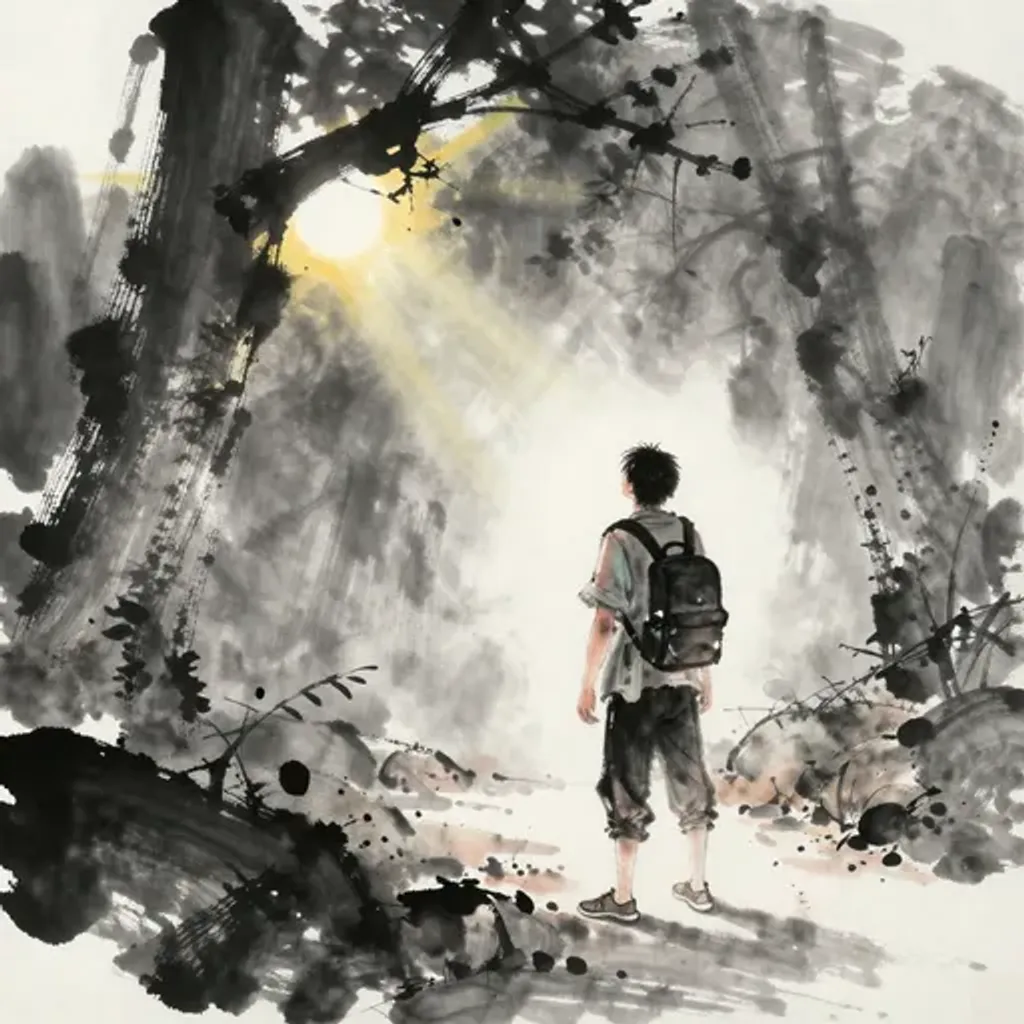
初雖驚惶,後反无傷,受其福慶。
At first, though alarmed and frightened; afterward, no harm comes; receiving blessings and good fortune.
— Jiao Yanshou, Yilin (Forest of Changes), 1st century BC
Commentary
Thunder rumbles above the mountain, returning to itself. At first there is alarm and fright, but afterward no harm comes — blessings and good fortune are received. The verse captures Small Exceeding's own nature in its purest form: the initial shock of exceeding one's proper bounds, followed by the discovery that the excess was benign all along. The thunder startles but does not strike; the mountain shakes but does not fall. When source and target are identical, the hexagram speaks to itself, revealing its core teaching: small transgressions, handled with humility, resolve into benefit rather than punishment. The bird that flies slightly too high discovers it can see farther. The one who bows too deeply earns unexpected respect. Excess in the direction of caution becomes its own reward.
小過 → 既濟
Hexagram 62 → Hexagram 63: After Completion
Changing lines: 1, 4, 5
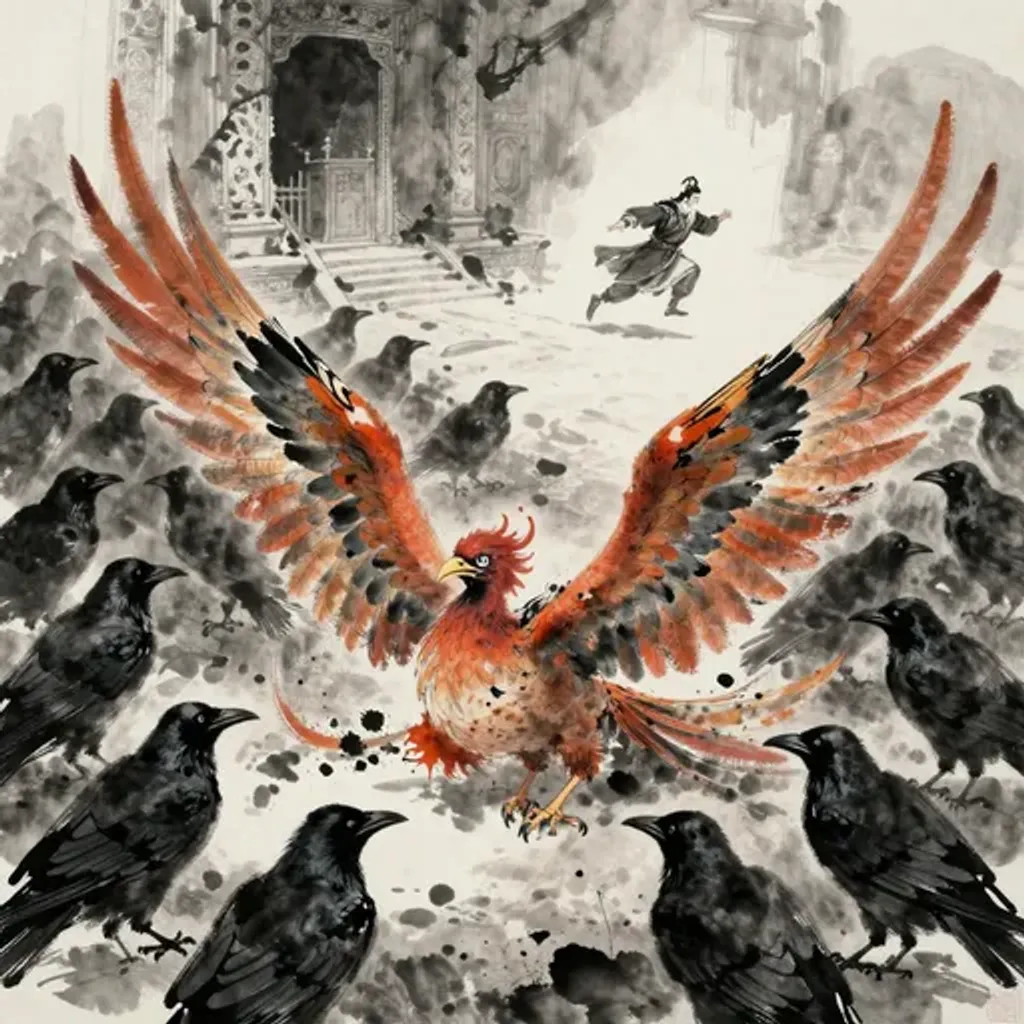
眾邪充側,鳳凰折翼。微子復北,去其邦國。
Evil crowds press close on every side; the phoenix's wings are broken; Viscount Wei returns north; leaving his homeland behind.
— Jiao Yanshou, Yilin (Forest of Changes), 1st century BC
Commentary
Thunder rumbles above the mountain, but the court is crowded with evil advisors, and the phoenix's wings are broken. The Viscount of Wei departs northward, leaving his state behind. The Viscount of Wei (微子), half-brother of the tyrant King Zhou of Shang, was one of the Three Benevolent Ones who recognized the dynasty's moral collapse. When remonstrance failed, he fled rather than remain complicit in the ruin. The broken phoenix is the Shang dynasty itself — a once-magnificent creature brought down by internal corruption. From Small Exceeding to After Completion, the mountain's thunder resolves into water above fire — everything in its correct position, the task nominally finished. But the verse's 'completion' is bitterly ironic: what is completed is not salvation but the dynasty's destruction. The Viscount's departure confirms it is over.
小過 → 未濟
Hexagram 62 → Hexagram 64: Before Completion
Changing lines: 2, 3, 6
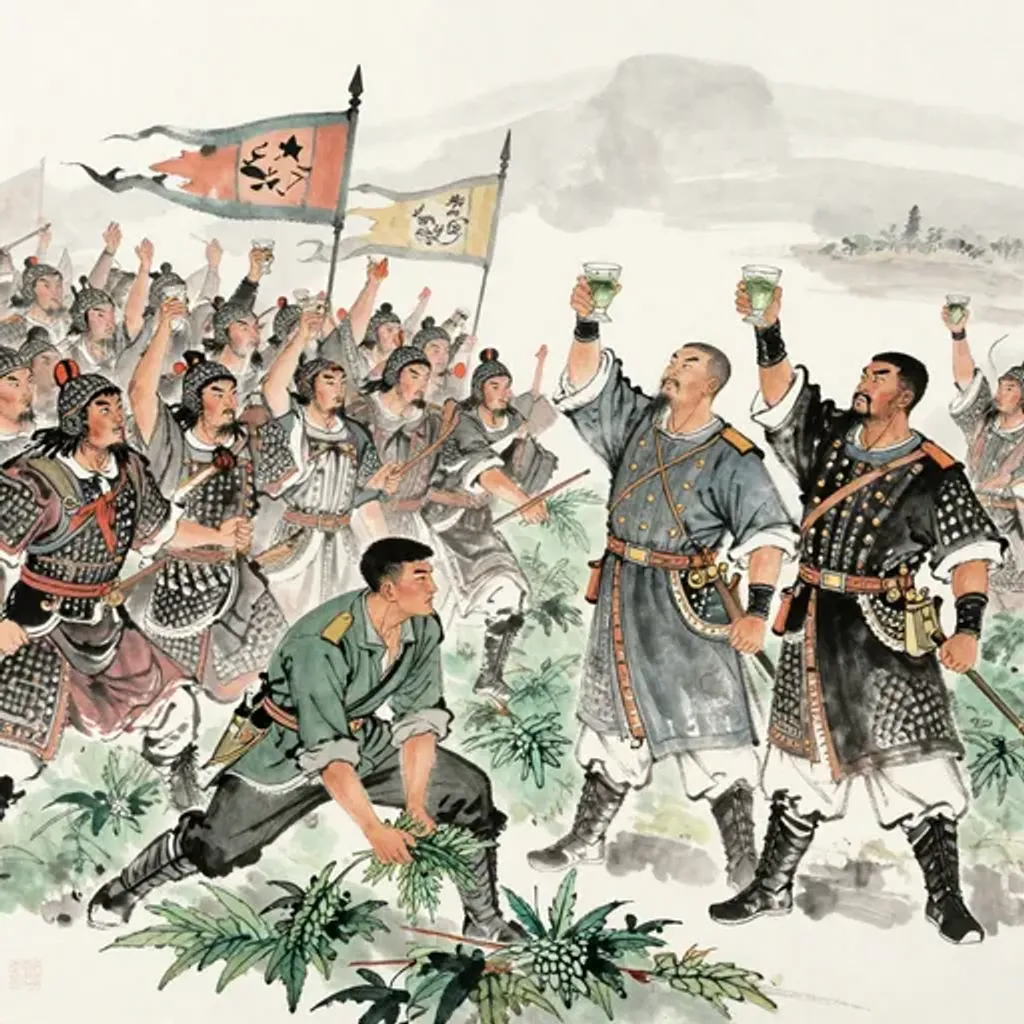
六月采芑,征伐无道。張仲方叔,剋敵飲酒。
In the sixth month gathering bitter herbs; campaigning against the lawless; Zhang Zhong and Fang Shu conquer the enemy and drink wine.
— Jiao Yanshou, Yilin (Forest of Changes), 1st century BC
Commentary
Thunder rumbles above the mountain as troops muster in the sixth month to harvest the bitter southernwood — a campaign against those who defy the Way. Zhang Zhong and Fang Shu lead the expedition, vanquish the enemy, and celebrate with wine. The verse directly alludes to the Odes poem 'Cai Qi' (采芑, 'Gathering Southernwood'), which celebrates Fang Shu's punitive campaign against the Xianyun barbarians under King Xuan of Zhou (r. 827-782 BC). Zhang Zhong was Fang Shu's trusted advisor. The sixth month harvest of qi-grass doubles as military mobilization imagery. From Small Exceeding to Before Completion, the mountain's thunder transforms into fire above water — the task not yet finished. Victory is won and toasts are raised, but the campaign against disorder is never truly complete. Every triumph carries the seed of the next challenge.