Transformations of Hexagram 64
Every line of change out of Hexagram 64 未濟 Before Completion, with the Yilin verse for each of the 64 resulting hexagrams, its translation, and the original ink brush artwork.
未濟 → 乾
Hexagram 64 → Hexagram 1: The Creative
Changing lines: 1, 3, 5
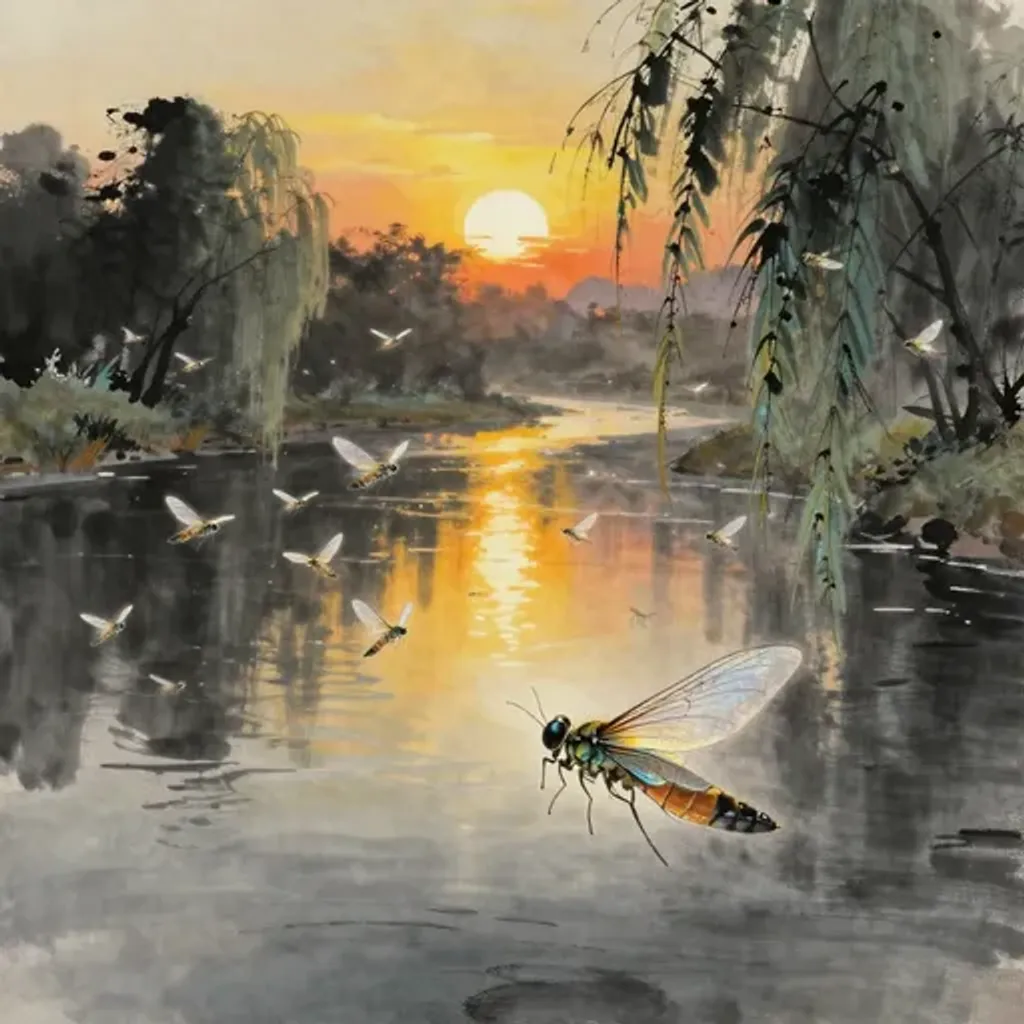
旦生夕死,名曰嬰鬼,不可得視。
The mayfly's thin wings — flying at dawn, spent by dusk. Never knowing frost or snow, how could it know the seasons?
— Jiao Yanshou, Yilin (Forest of Changes), 1st century BC
Commentary
Fire sits above water, the image of Before Completion — nothing yet in its proper place. The original verse speaks of a creature born at dawn and dead by dusk, named an 'infant ghost,' too fleeting to even glimpse. This ephemeral being echoes the mayfly's existence: a life so brief it knows neither frost nor the turning of seasons. From Before Completion to the Creative, the transformation is stark — the most transient of beings gives way to heaven's inexhaustible vigor. What cannot sustain itself for a single day stands in perfect contrast to the self-renewing power of pure yang. The verse reads as a warning: without the Creative's capacity for ceaseless self-strengthening, even the brightest spark expires before it can illuminate anything at all.
未濟 → 坤
Hexagram 64 → Hexagram 2: The Receptive
Changing lines: 2, 4, 6
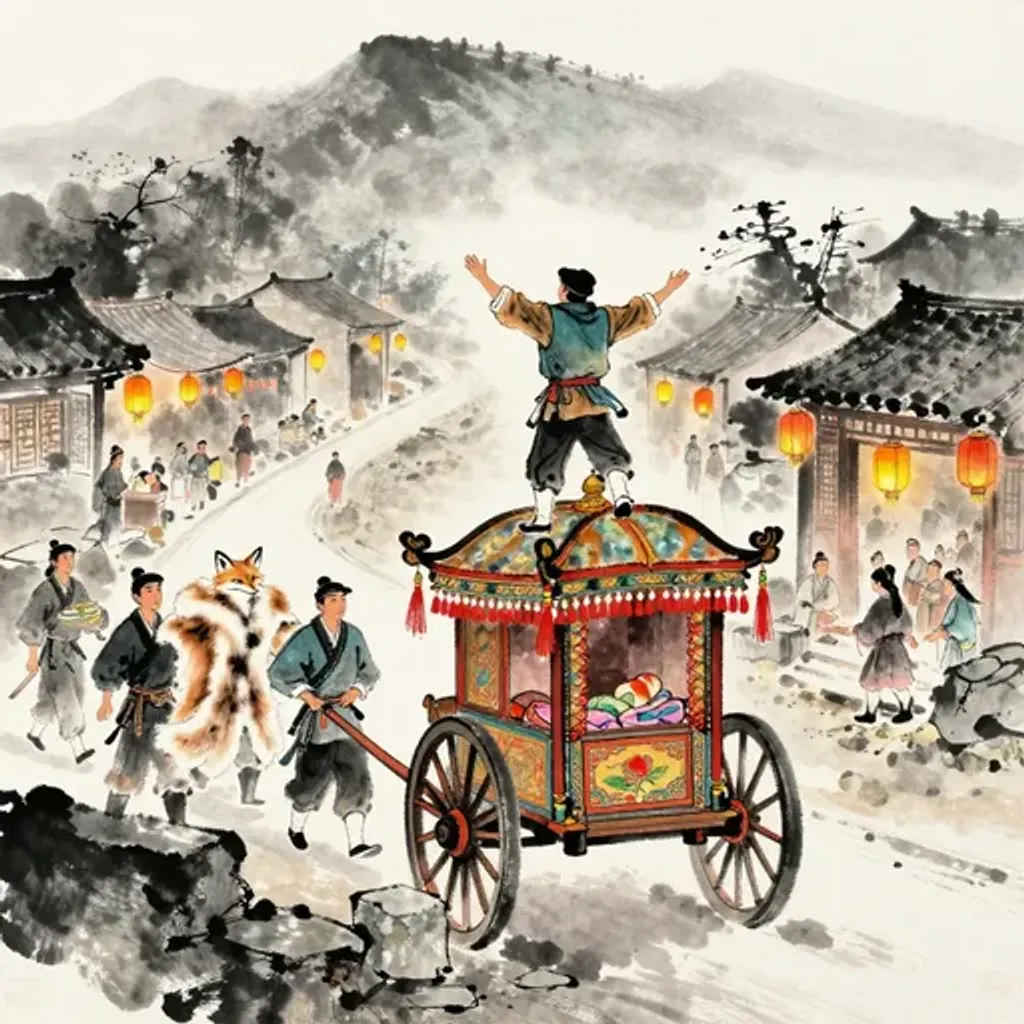
大步上車,南到喜家。送我狐裘,與福喜來。
With great strides I board the carriage; southward to the house of joy. They send me a fox-fur robe; fortune and happiness arrive together.
— Jiao Yanshou, Yilin (Forest of Changes), 1st century BC
Commentary
Fire above water, nothing yet settled. A figure strides boldly onto a carriage and journeys south to a house of joy. There, a fox-fur robe is bestowed — a gift of warmth and status — and blessings arrive in tandem. The fox-fur robe in Han-dynasty culture signaled wealth and favor; receiving one from a southern household suggests a marriage alliance or a patron's generous welcome. From Before Completion to the Receptive, the restless fire-over-water resolves into pure earth, boundless and accommodating. The southward journey ends not in conquest but in being received, sheltered, enfolded. What was unsettled finds stability through yielding — the earth does not strive, yet everything comes to rest upon it.
未濟 → 屯
Hexagram 64 → Hexagram 3: Difficulty at the Beginning
Changing lines: 1, 2, 4, 5, 6
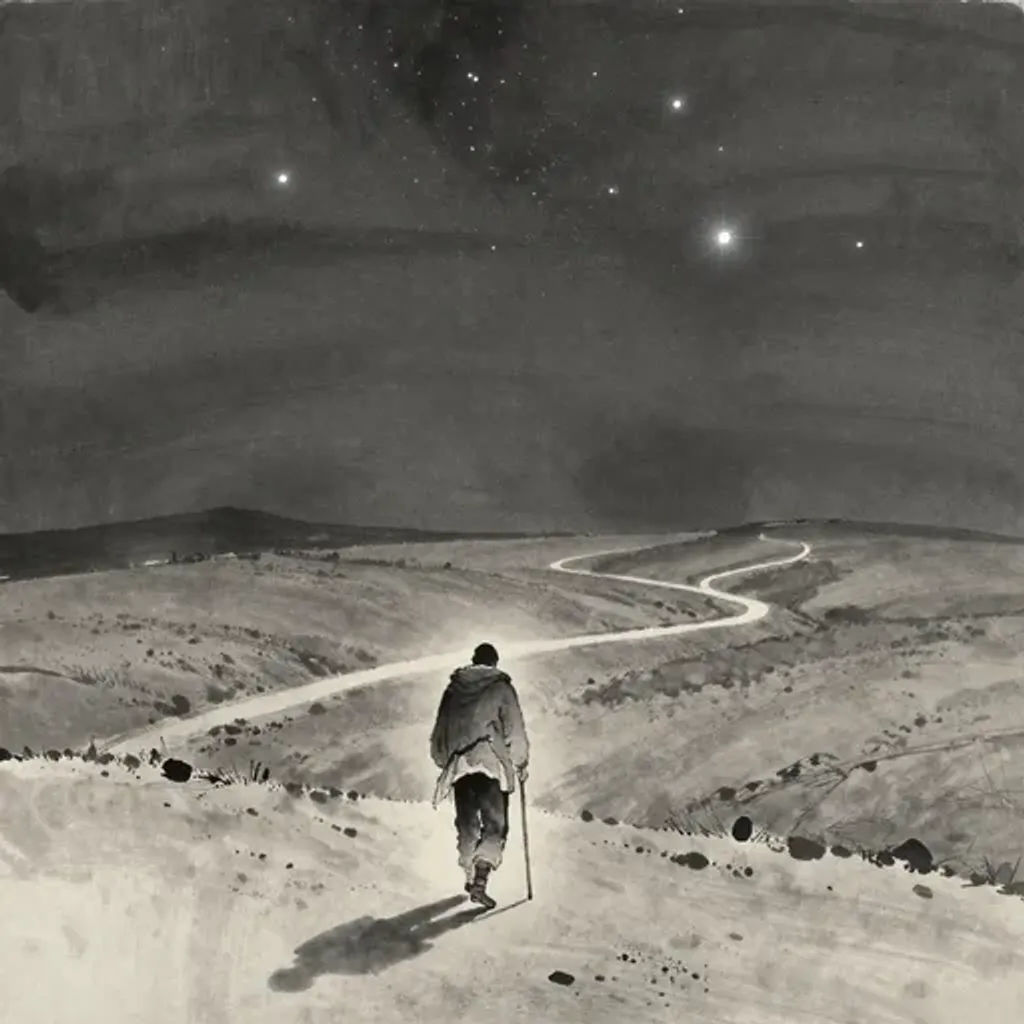
西多小星,三五在東。早夜晨行,勞苦无功。
Many small stars in the west; three or five in the east. Traveling early and late through the night; toil and hardship bring no success.
— Jiao Yanshou, Yilin (Forest of Changes), 1st century BC
Commentary
Fire sits above water, each element straining away from its proper place. Sparse stars scatter westward while three or five linger in the east — the sky itself is disordered, its constellations misaligned. A traveler rises before dawn and walks through the night, yet all the labor yields nothing. The scattered stars evoke a cosmos out of joint, mirroring the human futility below. From Before Completion to Difficulty at the Beginning, fire-over-water transforms into clouds and thunder that cannot yet release their rain. Both hexagrams share the quality of energy trapped in a preliminary state, but Difficulty at the Beginning adds the promise of eventual germination. The exhaustion here is real, but the cosmos is gathering itself — the rain will come, though not yet.
未濟 → 蒙
Hexagram 64 → Hexagram 4: Youthful Folly
Changing lines: 4
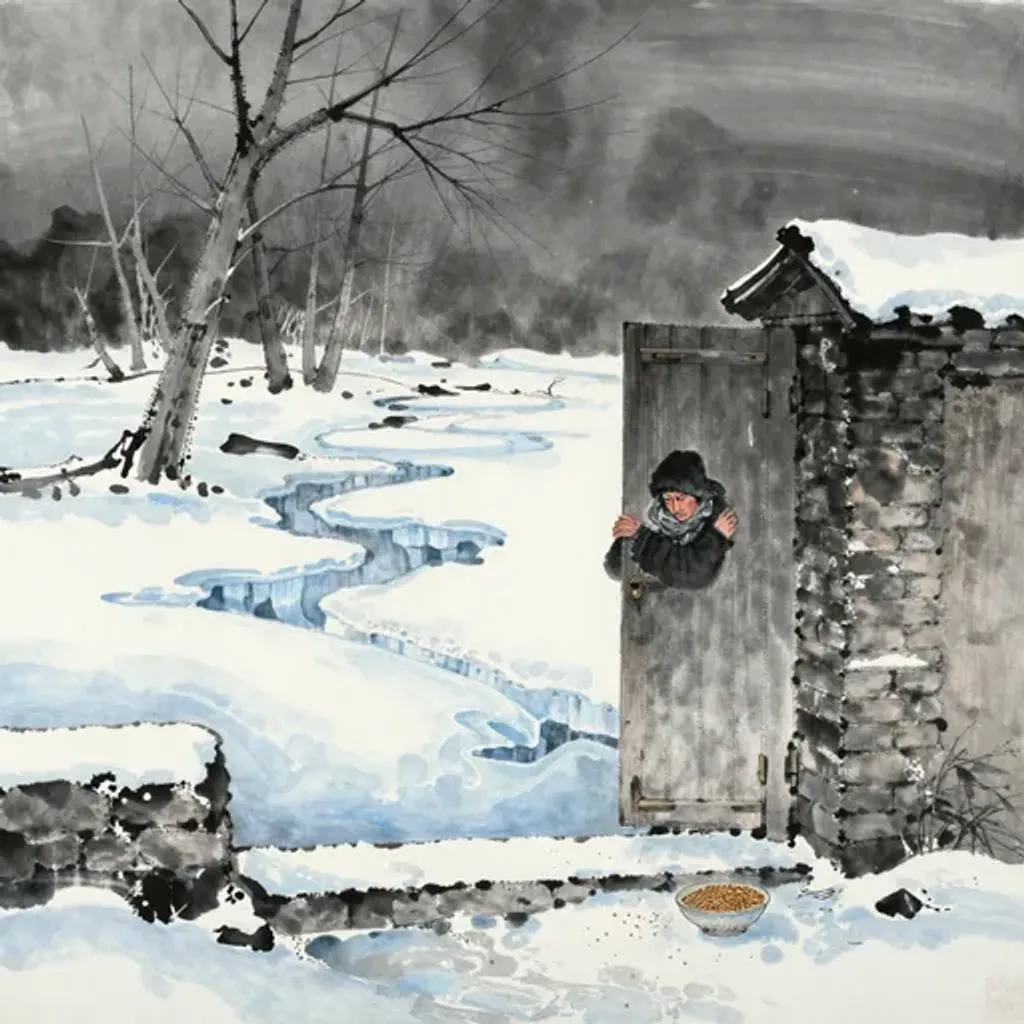
北陸藏冰,君子心悲。困于粒食,鬼驚我門。
Ice lies hidden in the northern ridge; the noble man's heart grieves. Beset by want of grain; ghosts startle at my gate.
— Jiao Yanshou, Yilin (Forest of Changes), 1st century BC
Commentary
Fire above water, nothing in its proper place. The north wind hides ice in the ridges — a classical allusion to the Shijing ode on seasonal storage — and the gentleman's heart grows heavy. Grain runs short, and spectral forces rattle the door. The 'Northern Ridge stores ice' (北陸藏冰) comes from Zhou ritual practice: ice cut in winter was stored for summer use, a sign of orderly governance. Here it signals deprivation, not foresight — the cold has come, provisions are exhausted, and ghostly presences gather at the threshold. From Before Completion to Youthful Folly, the unresolved fire-over-water descends into a spring trapped beneath a mountain. What is needed is clarity, but what arrives is bewilderment — hunger, cold, and dread clouding the mind like water obscured beneath stone.
未濟 → 需
Hexagram 64 → Hexagram 5: Waiting
Changing lines: 1, 3, 4, 5, 6
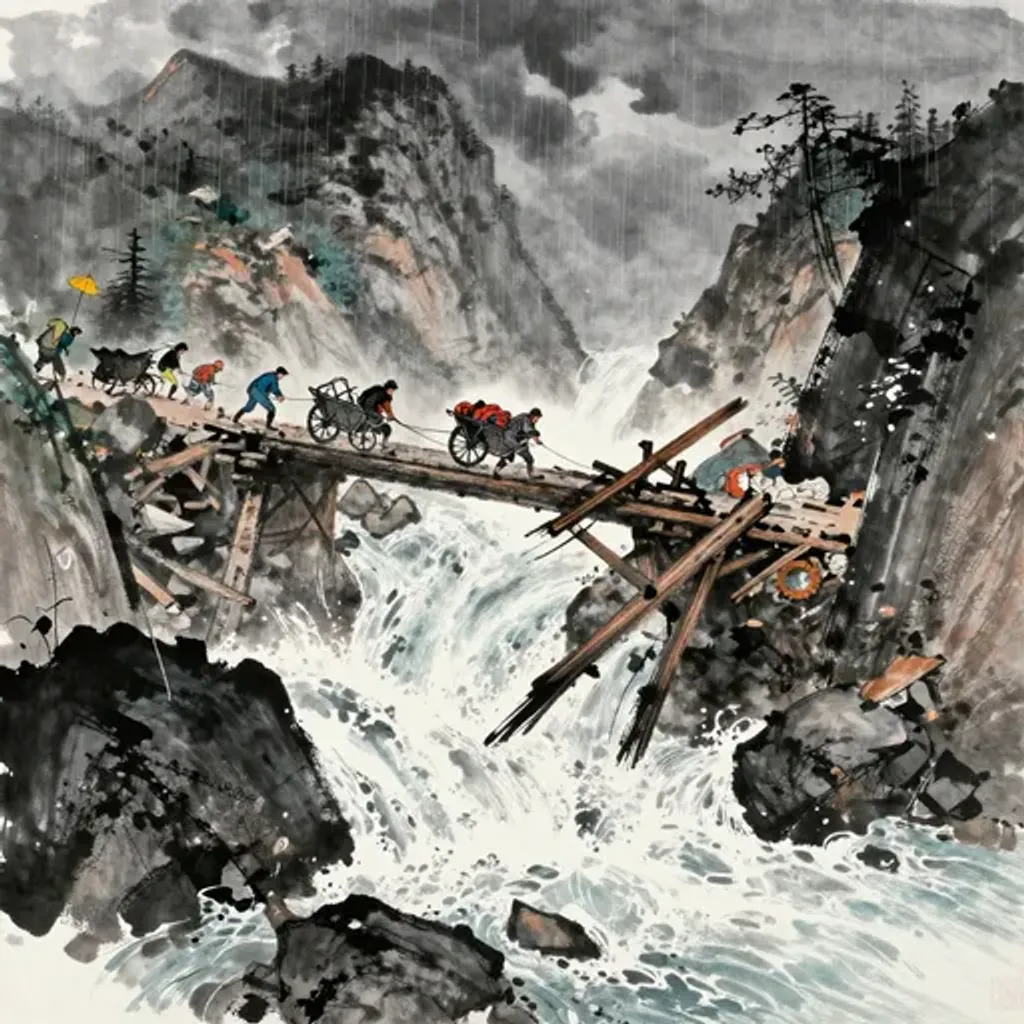
山水暴怒,壞折梁柱。稽難行旅,留連愁苦。
Mountain waters rage in fury; they shatter beams and pillars. The way is blocked for travelers; they linger on in sorrow and distress.
— Jiao Yanshou, Yilin (Forest of Changes), 1st century BC
Commentary
Fire above water, the elements in mutual tension. Mountain torrents erupt in sudden fury, smashing beams and pillars. Travelers are stranded, unable to advance, lingering in sorrow and distress. The verse is elemental destruction: water's stored energy detonates without warning, obliterating the structures that channel it. From Before Completion to Waiting, the fire-over-water transforms into water looming above heaven — danger suspended overhead, demanding patience rather than action. The traveler who tries to force passage through the flood will drown; the one who waits for the waters to subside may yet cross. Waiting here is not passivity but survival — recognizing that some forces must be endured, not confronted.
未濟 → 訟
Hexagram 64 → Hexagram 6: Conflict
Changing lines: 5
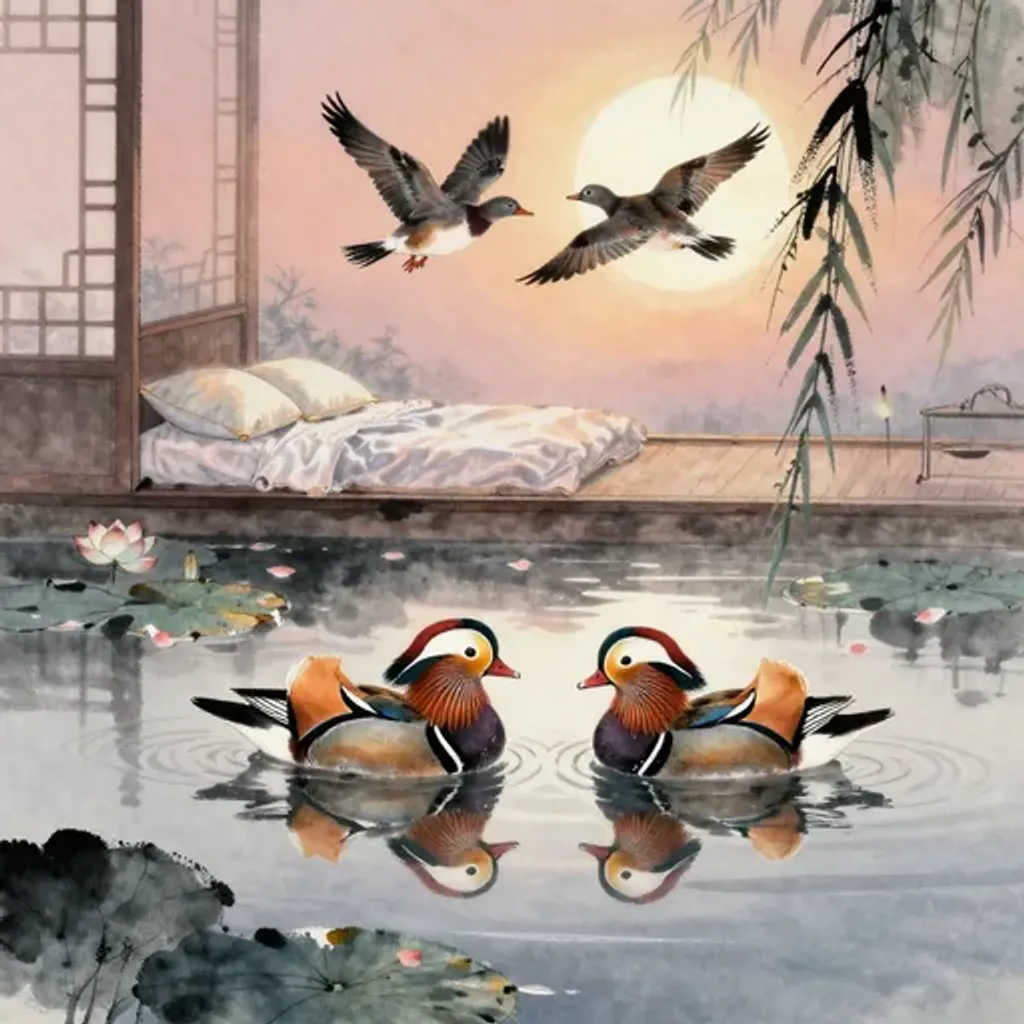
比目四翼,來安吾國。福喜上堂,與我同床。
Mandarin ducks play in water, swimming head to head. Wings side by side, they fly together, not knowing autumn. A red thread secretly connects them across a thousand li — bright moonlight through the window, two pillows in gentle peace.
— Jiao Yanshou, Yilin (Forest of Changes), 1st century BC
Commentary
Fire above water, the elements still unresolved. The original verse speaks of paired-eye fish and shared-wing birds arriving to bring peace to the nation — creatures that can only exist in partnership. Blessings ascend the hall, and good fortune shares the bed. The paired-eye fish (比目) and shared-wing birds (四翼) are classical symbols of inseparable love and mutual dependence, drawn from the Erya's catalog of wondrous creatures. From Before Completion to Conflict, the tender domesticity of the verse stands in sharp tension with the target hexagram. Heaven and water move in opposing directions in Conflict, yet the verse insists on union. Perhaps the message is precisely this: even where structural opposition is inevitable, the paired creatures find each other — love as the counterforce to cosmic divergence.
未濟 → 師
Hexagram 64 → Hexagram 7: The Army
Changing lines: 4, 6
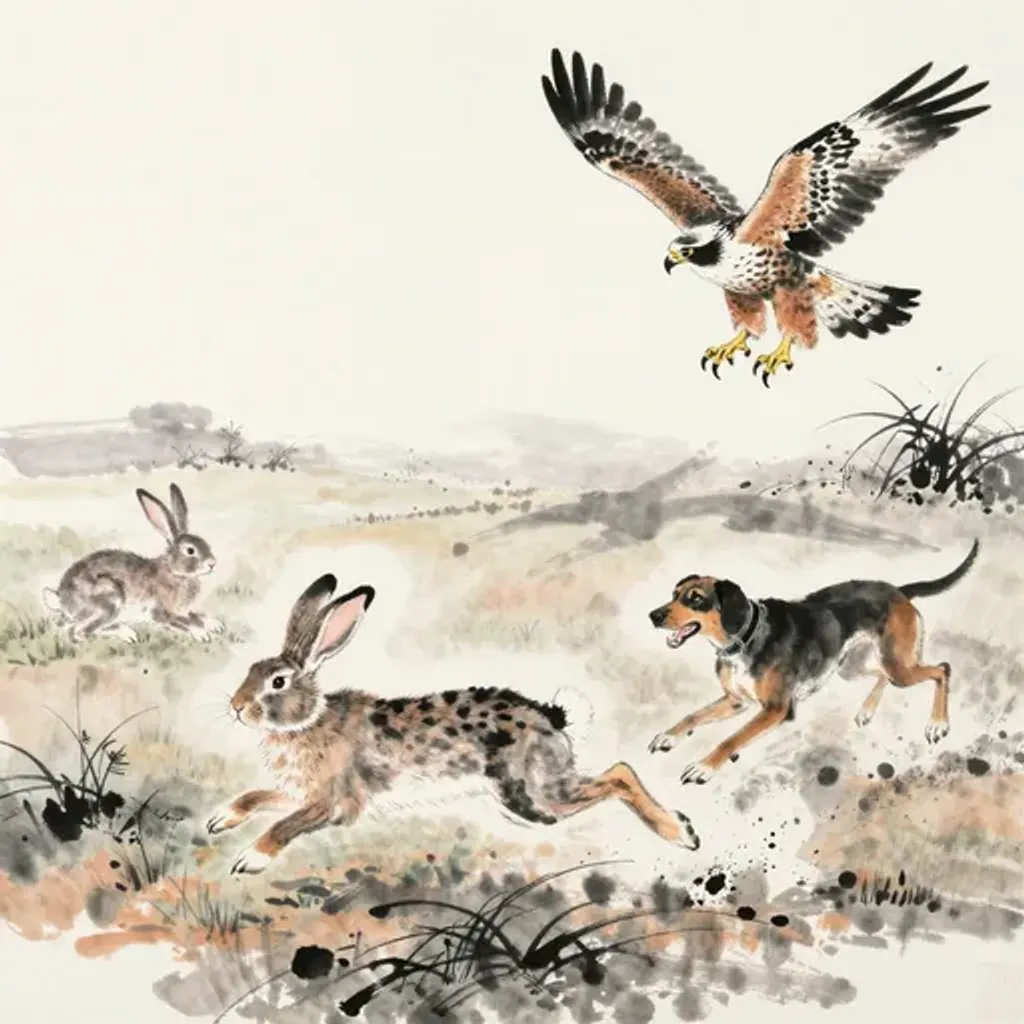
狡兔趯趯,良犬逐咋。雄雌爰爰,為鷹所獲。
The crafty rabbit leaps and bounds; the fine hound pursues and snaps. Male and female tremble together; they are seized by the hawk.
— Jiao Yanshou, Yilin (Forest of Changes), 1st century BC
Commentary
Fire above water, the hunt begins before order is established. A cunning rabbit darts and leaps; a fine hound snaps at its heels. A male and female bird flutter together in alarm, only to be seized by the hawk overhead. The scene is a cascade of predation: the rabbit runs from the dog, the birds flee from the hawk, each creature both hunter and hunted in a layered food chain. From Before Completion to the Army, the chaotic pursuit resolves into water concealed within the earth — disciplined force channeled through proper command. The verse captures war's raw mechanics before strategy refines them. The hawk does not chase; it waits, then strikes. The Army's lesson is that effective force requires not speed but positioning, not aggression but coordinated discipline.
未濟 → 比
Hexagram 64 → Hexagram 8: Holding Together
Changing lines: 2, 4, 5, 6
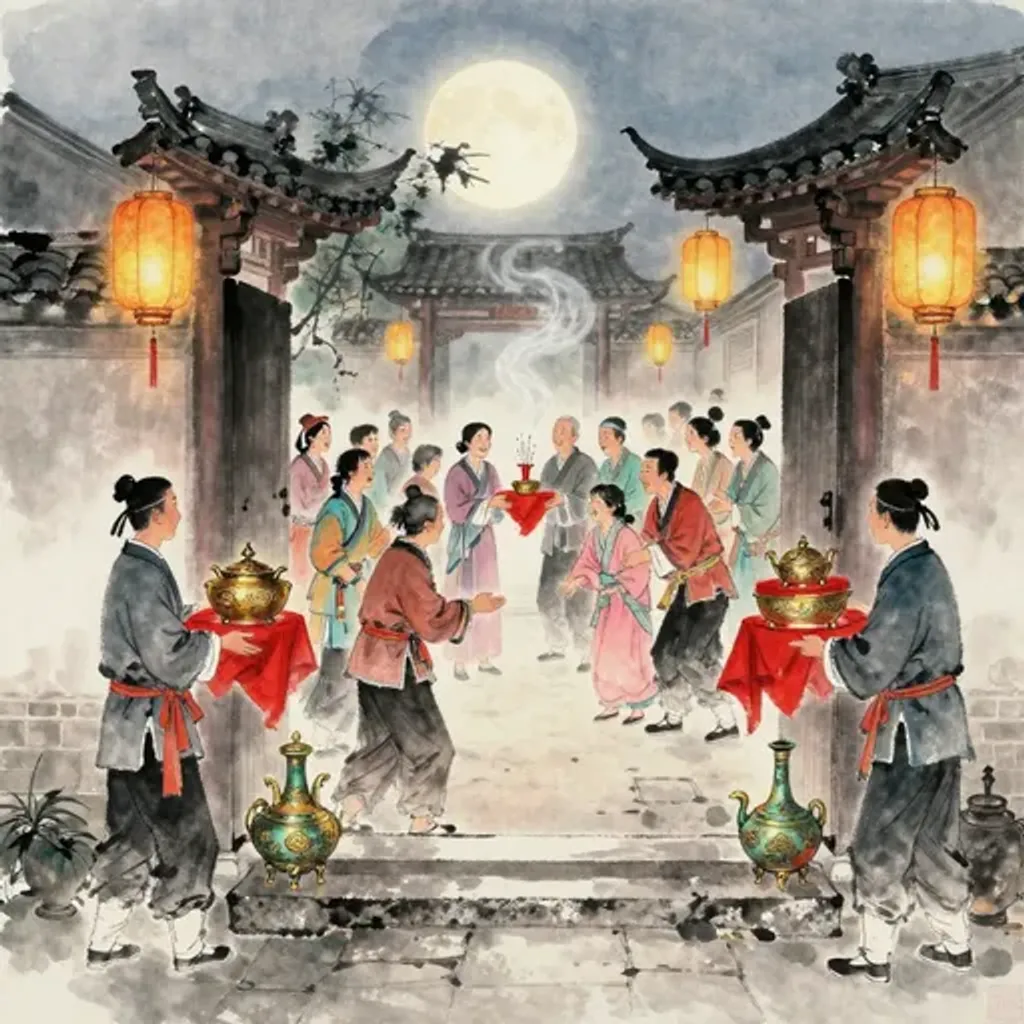
增祿益福,喜來入室,解除憂惑。
Fortune increases, blessings multiply; joy enters the household; worries and doubts are dissolved.
— Jiao Yanshou, Yilin (Forest of Changes), 1st century BC
Commentary
Fire above water, nothing yet accomplished, but blessings gather anyway. Salary increases, fortune multiplies, joy enters the household, and all worry dissolves. The verse is remarkably brief and unambiguously auspicious — no dramatic narrative, no historical allusion, only the simple accumulation of good things. From Before Completion to Holding Together, the restless fire-over-water settles into water resting upon the earth, the image of natural congregation. What was unsettled resolves through bonding: people drawn together, resources pooled, anxieties shared and thereby halved. The transformation suggests that incompletion finds its remedy not in individual striving but in alliance — the waters gather on the earth and the community forms around shared abundance.
未濟 → 小畜
Hexagram 64 → Hexagram 9: Small Taming
Changing lines: 1, 3, 4, 5
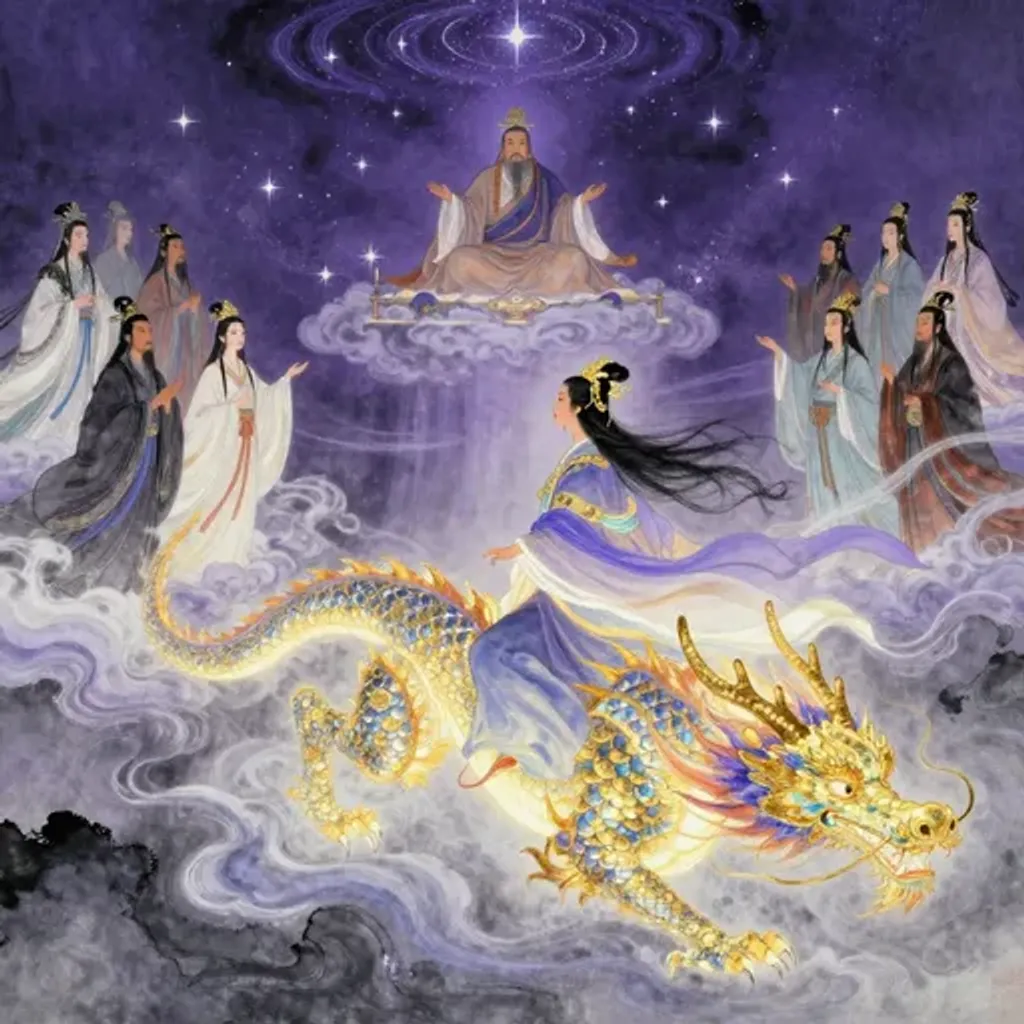
騎龍乘風,上見神公。彭祖受刺,王喬贊通,巫咸就位,拜福无窮。
Riding the dragon, mounting the wind; ascending to meet the Divine Duke. Pengzu receives the needle; Wang Qiao assists the passage; Wuxian takes his throne; blessings without limit are conferred.
— Jiao Yanshou, Yilin (Forest of Changes), 1st century BC
Commentary
Fire above water, and a figure rides a dragon on the wind, ascending to meet the divine lords. Pengzu receives the acupuncture needle, Wang Qiao facilitates passage, and the shaman Wu Xian takes his seat — blessings flow without end. The verse assembles a pantheon of immortals and wonder-workers. Pengzu, legendary for his 800-year lifespan, here receives rather than dispenses longevity arts. Wang Qiao, the Zhou prince turned immortal, serves as intermediary. Wu Xian, the great shaman of Shang, presides over the rite. From Before Completion to Small Taming, the restless fire-over-water transforms into wind moving gently above heaven. The wild dragon ride resolves into refined cultural cultivation — heaven's power channeled not through force but through the gentle, persistent influence of accumulated virtue.
未濟 → 履
Hexagram 64 → Hexagram 10: Treading
Changing lines: 1, 5
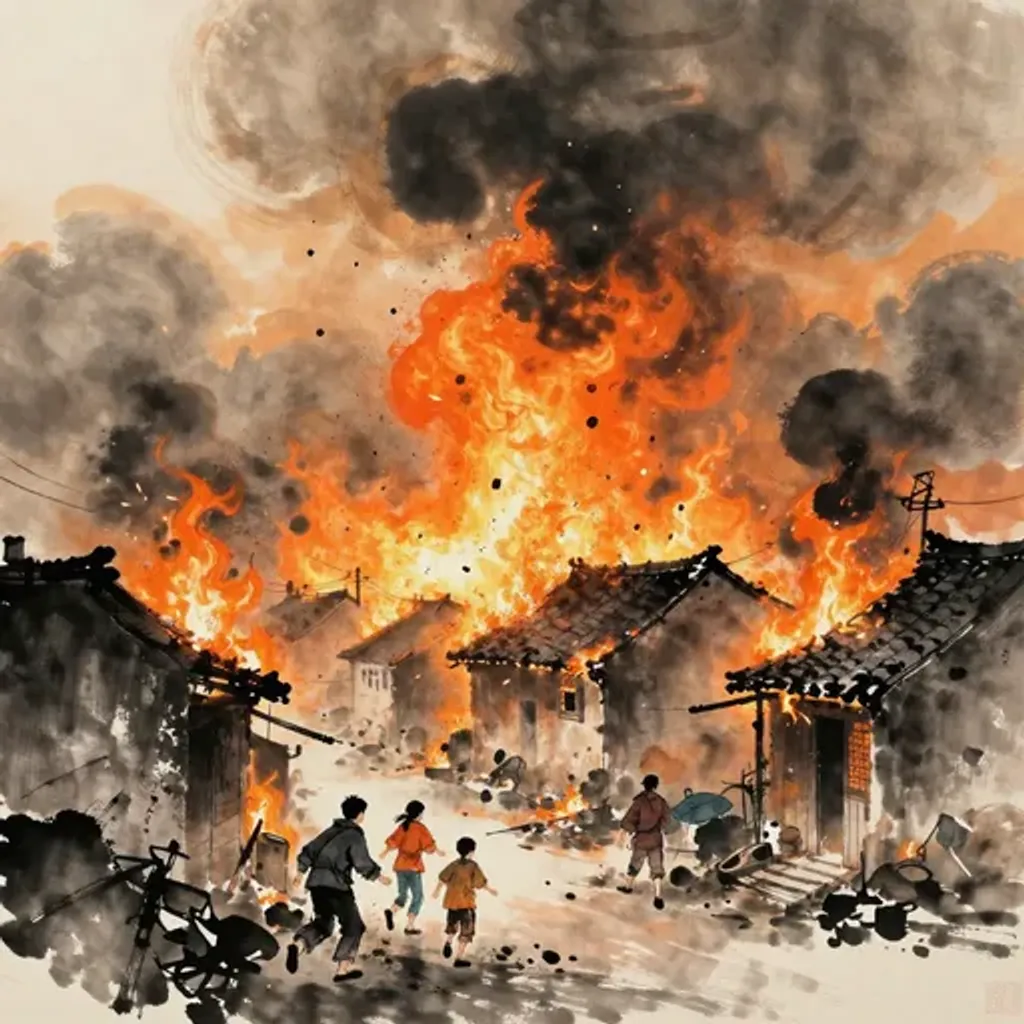
天火卒起,燒我旁里。延及吾家,空盡己財。
Heavenly fire breaks out suddenly; it burns my neighbors' dwellings. It spreads to my own home; all my wealth is utterly consumed.
— Jiao Yanshou, Yilin (Forest of Changes), 1st century BC
Commentary
Fire above water — and here the fire literalizes. A blaze erupts from heaven without warning, burning the neighboring village first, then spreading to one's own household, consuming all possessions. The 'heavenly fire' (天火) in Han thought referred to fire of unknown or cosmic origin — lightning strikes, spontaneous combustion, or arson attributed to fate. From Before Completion to Treading, the fire-over-water transforms into heaven above the lake, the image of treading carefully upon dangerous ground. The verse dramatizes what happens when one fails to tread with caution: the fire that seemed distant crosses the boundary and devours everything. Treading on the tiger's tail demands awareness that danger is never safely contained over there — it is always already approaching.
未濟 → 泰
Hexagram 64 → Hexagram 11: Peace
Changing lines: 1, 3, 4, 6
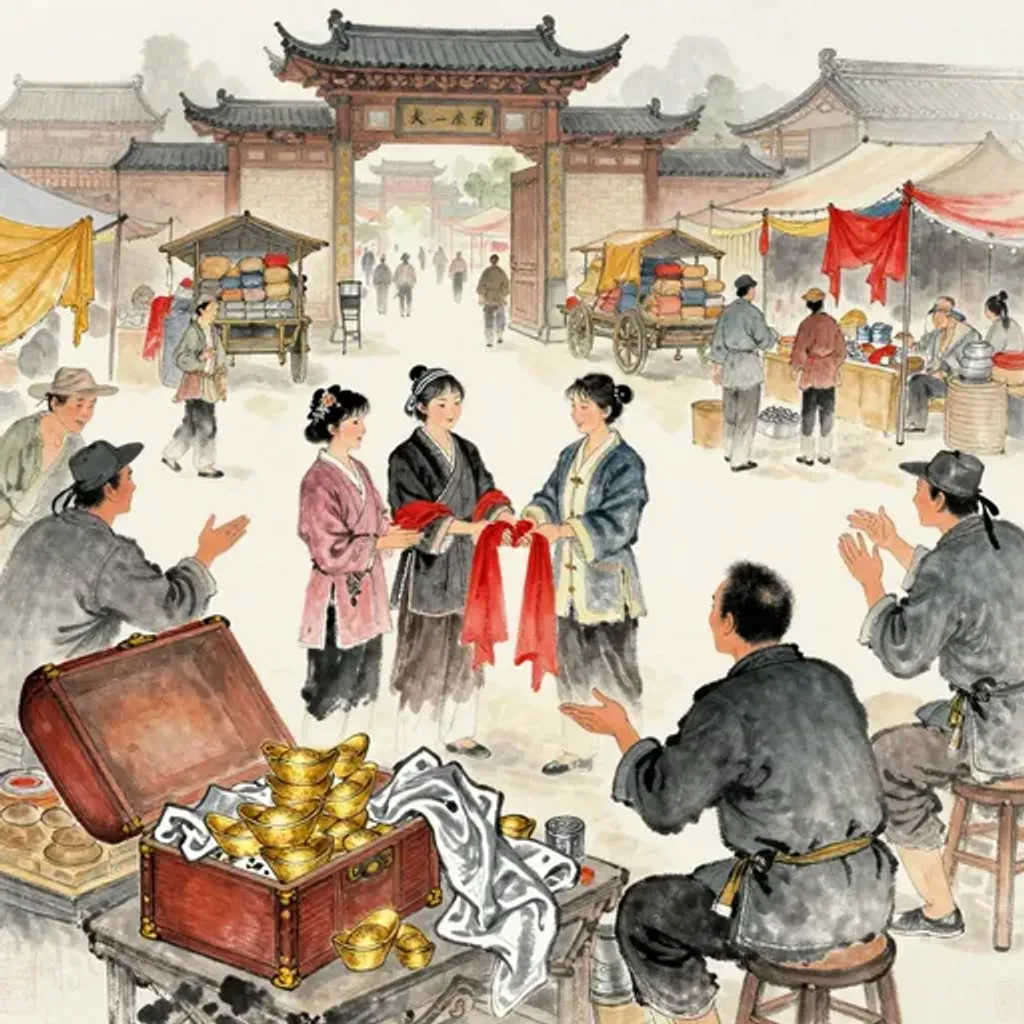
金帛共寶,宜與我市。嫁娶有息,利得過倍。
Gold, silk, and precious treasure; fit for trading in the market. Marriages bear fine offspring; profits return doubled and more.
— Jiao Yanshou, Yilin (Forest of Changes), 1st century BC
Commentary
Fire above water, the situation unresolved, yet commerce flourishes. Gold, silk, and precious goods are fit for trade; marriages produce descendants; profits double and redouble. The verse reads like a merchant's oracle — auspicious for investment, alliances, and fertility alike. From Before Completion to Peace, the fire-over-water transforms into earth above heaven, the great interchange where heaven and earth mingle their energies. Peace is the hexagram of open exchange: what is above descends, what is below rises, and prosperity flows in both directions. The unsettled condition of Before Completion resolves not through force but through reciprocal trade — goods, vows, and blessings circulating freely until the market itself becomes the mechanism of completion.
未濟 → 否
Hexagram 64 → Hexagram 12: Standstill
Changing lines: 2, 5
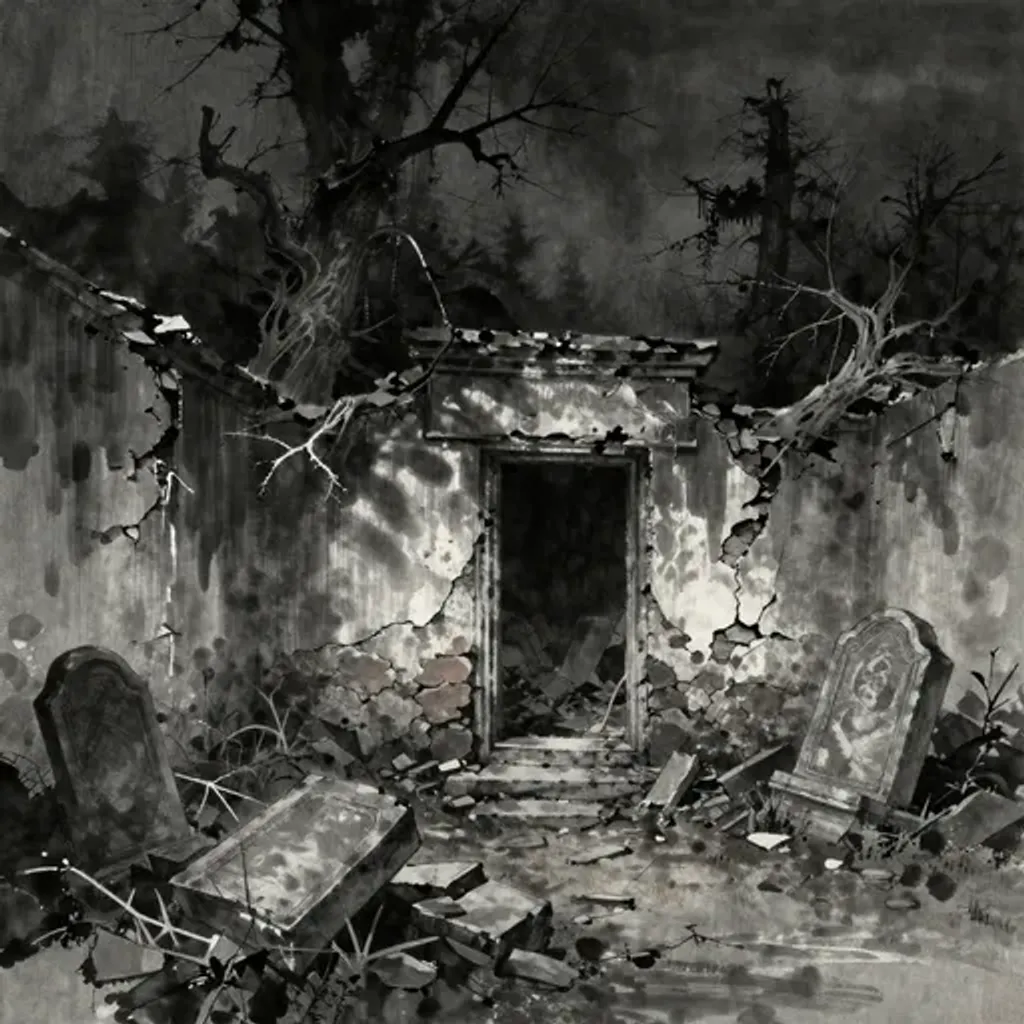
鬼魅之居,凶不可舍。
A dwelling place of ghosts and demons; ominous, one cannot stay.
— Jiao Yanshou, Yilin (Forest of Changes), 1st century BC
Commentary
Fire above water, and the dwelling is haunted. Ghosts and demons inhabit this place; it is malign beyond remedy, impossible to rest here. The verse is the shortest and most absolute in the batch — two lines of pure negation. No narrative, no allusion, no redemption. From Before Completion to Standstill, both hexagrams share a quality of profound dysfunction. Standstill places heaven above earth with neither communicating — the opposite of Peace. The haunted house becomes a structural metaphor: when upper and lower realms refuse to interact, the space between them fills with malevolent vacancy. There is no advice here except departure. Some situations cannot be reformed; they can only be abandoned.
未濟 → 同人
Hexagram 64 → Hexagram 13: Fellowship
Changing lines: 1, 2, 3, 5
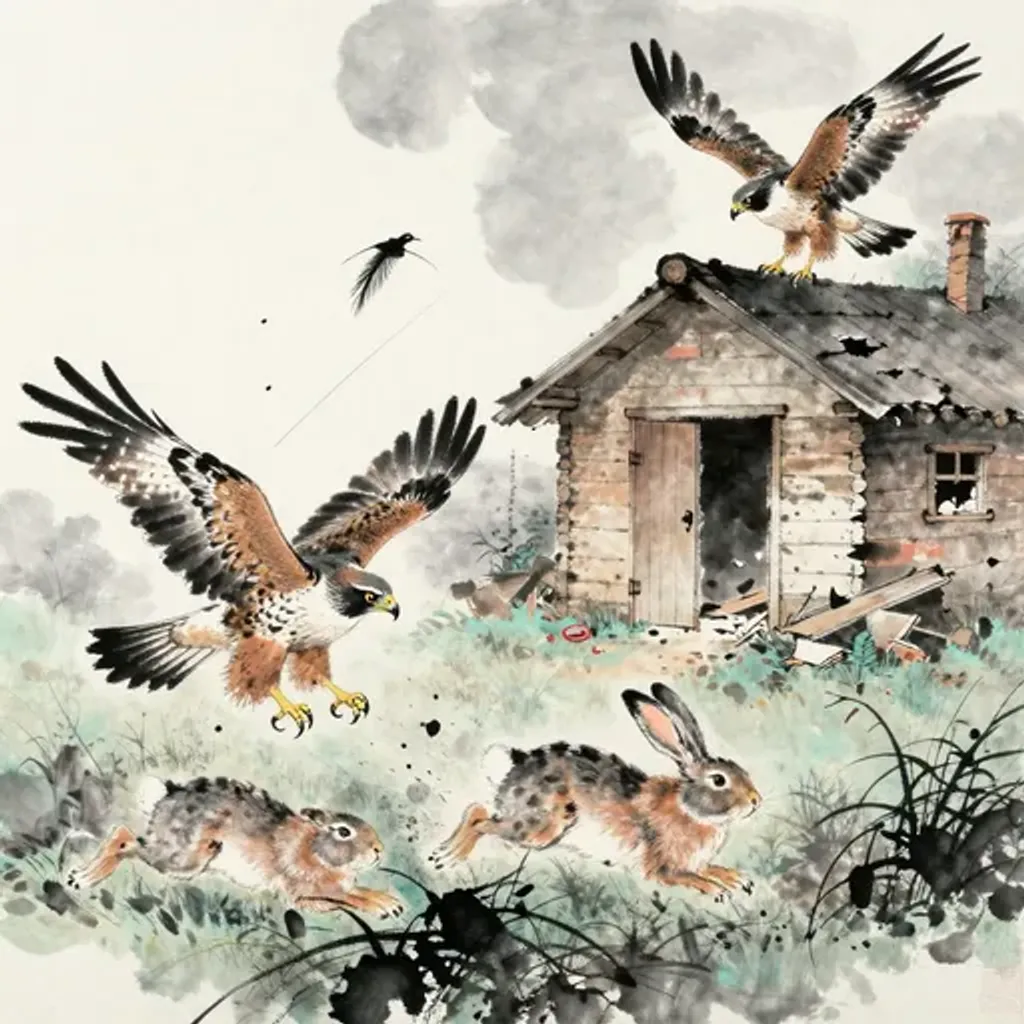
鳥飛兔走,各有畏惡。雕鷹為賊,亂我室舍。
Birds fly, rabbits run; each has what it fears and loathes. The vulture and hawk turn brigand; they throw my household into chaos.
— Jiao Yanshou, Yilin (Forest of Changes), 1st century BC
Commentary
Fire above water, and predators roam unchecked. Birds fly and rabbits dash, each with its own natural enemy. But the eagle-hawk turns marauder, throwing the household into chaos. The verse presents a world where the natural order of predation has been violated — the hawk, which should hunt in the wild, has invaded domestic space. From Before Completion to Fellowship, the fire-over-water transforms into heaven joined with fire, the image of kindred spirits uniting. The verse reads as a warning about what Fellowship must overcome: when fellowship fails, even creatures that should coexist become threats to one another. True community requires distinguishing friend from foe — the gentleman 'classifies by kind and distinguishes things,' as the image text instructs.
未濟 → 大有
Hexagram 64 → Hexagram 14: Great Possession
Changing lines: 1, 3
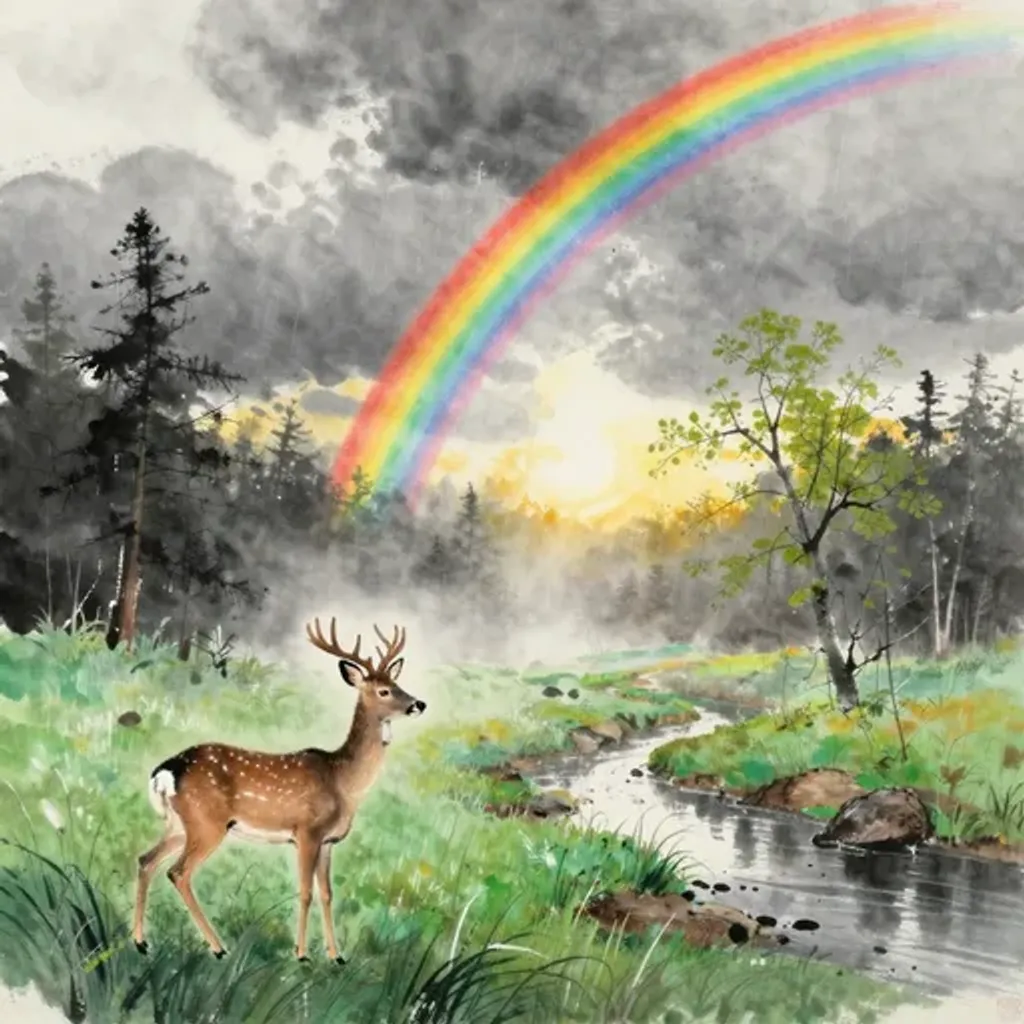
初雖驚惶,後乃无傷,受其福慶。
Thunder suddenly crashes — everyone drops to the ground. The rain passes, the sky clears — a rainbow appears. The startled deer turns its head: the forest is already calm. Tender grass by the stream — spring has arrived.
— Jiao Yanshou, Yilin (Forest of Changes), 1st century BC
Commentary
Fire above water, the situation yet unresolved. The original verse reads: 'At first there is alarm and panic, but afterward no harm — blessings and celebration follow.' The modern rewrite dramatizes this arc with thunder, rain, rainbow, and startled deer, but the core message is identical: initial terror gives way to unexpected fortune. From Before Completion to Great Possession, fire-over-water transforms into fire blazing in heaven — the supreme image of illuminated abundance. The fright that opens the verse is the last tremor of Before Completion's disorder; what follows is the clearing sky of Great Possession, where fire above heaven means the good overwhelms the bad. The deer turns its head and finds the forest already calm.
未濟 → 謙
Hexagram 64 → Hexagram 15: Modesty
Changing lines: 2, 3, 4, 6
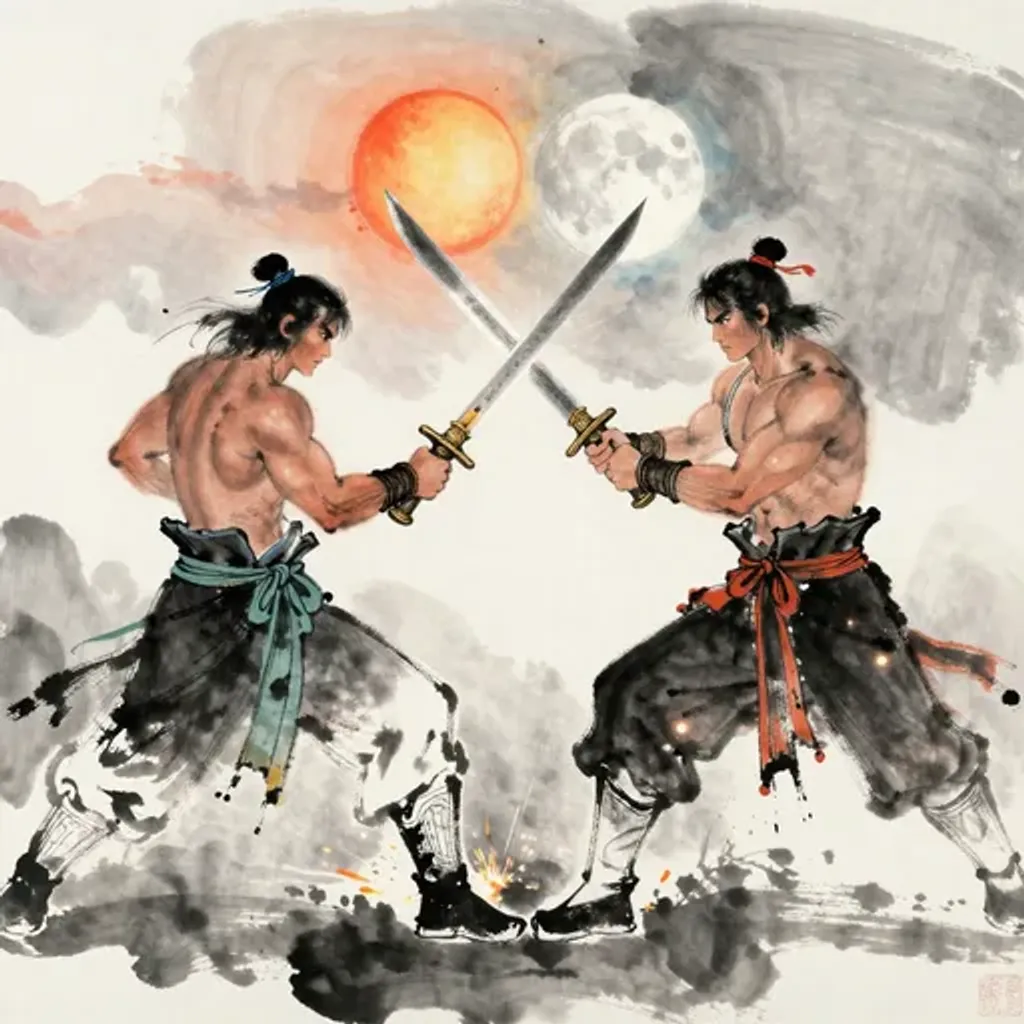
兩金相擊,勇氣均敵。日月鬭戰,不破不缺。
Two metals clash and strike; courage and strength evenly matched. Sun and moon do battle; neither shattered nor scarred.
— Jiao Yanshou, Yilin (Forest of Changes), 1st century BC
Commentary
Fire above water, forces locked in opposition. Two blades of gold clash together, their courage and strength perfectly matched. Sun and moon wage battle, yet neither is broken nor diminished. The verse presents a contest between equals so evenly balanced that neither can prevail. The gold-on-gold collision suggests not mere combat but a test of quality — only equal metals ring true when struck together. From Before Completion to Modesty, the unresolved confrontation transforms into a mountain hidden within the earth. Modesty resolves what force cannot: when neither side can win by fighting, the one who yields gains the advantage. The mountain conceals itself below the plain, and precisely through this self-lowering, it becomes unassailable.
未濟 → 豫
Hexagram 64 → Hexagram 16: Enthusiasm
Changing lines: 2, 6
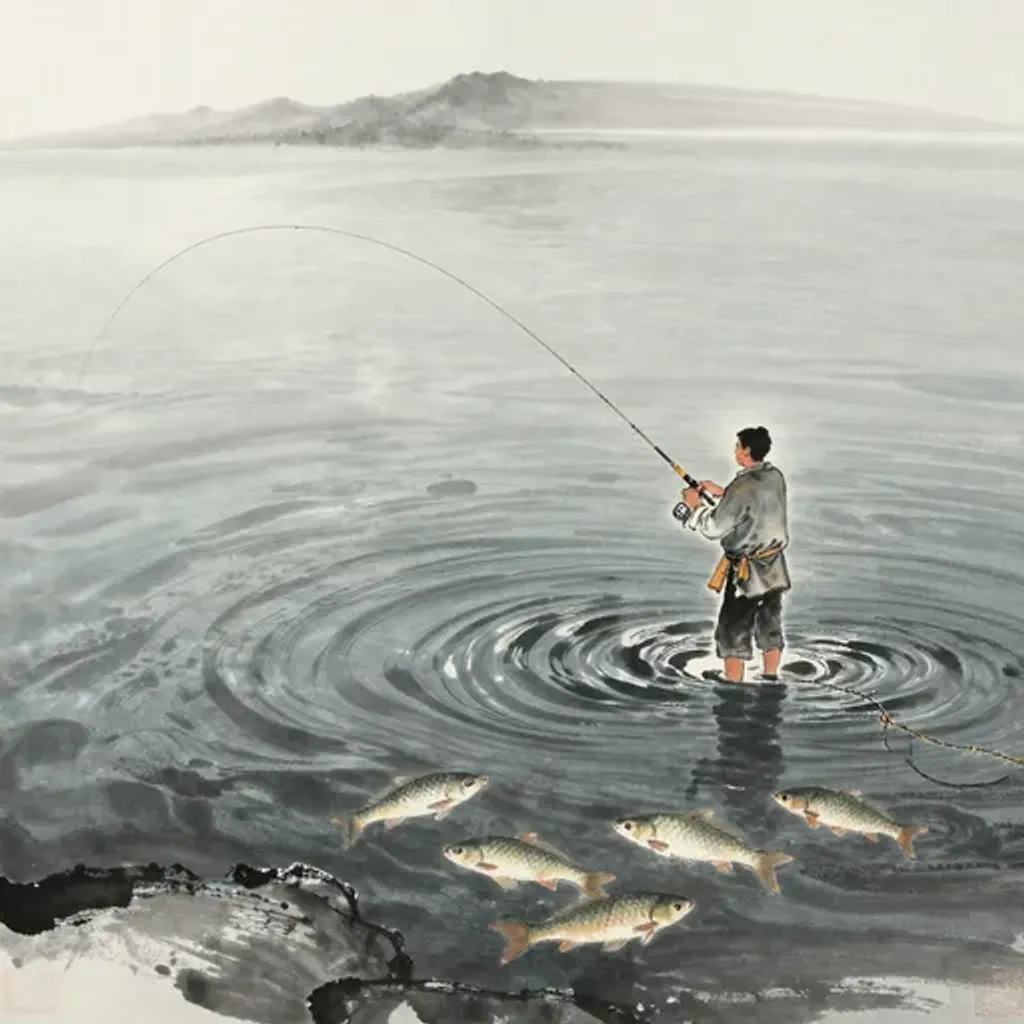
曳綸河海,掛釣魴鯉。王孫利德,以享仲友。
Trailing the line across river and sea; setting the hook for bream and carp. The young lord's virtuous catch; shared in feast with honored friends.
— Jiao Yanshou, Yilin (Forest of Changes), 1st century BC
Commentary
Fire above water, the unfinished state. A line is cast into river and sea, hooking bream and carp. A nobleman profits through virtue and shares the feast with trusted companions. The fishing imagery is both literal and political — 'trailing a line in the great waters' echoes the recruitment of talent, while the feast for 'middle friends' (仲友) suggests bonds sealed through shared abundance. From Before Completion to Enthusiasm, fire-over-water transforms into thunder rising from the earth. The patient fisherman who waits by the water gives way to the thunderous energy of collective joy — Enthusiasm's image of the ancient kings making music to honor heaven. The catch has been made; now the celebration begins, and the community is roused to shared purpose.
未濟 → 隨
Hexagram 64 → Hexagram 17: Following
Changing lines: 1, 2, 5, 6
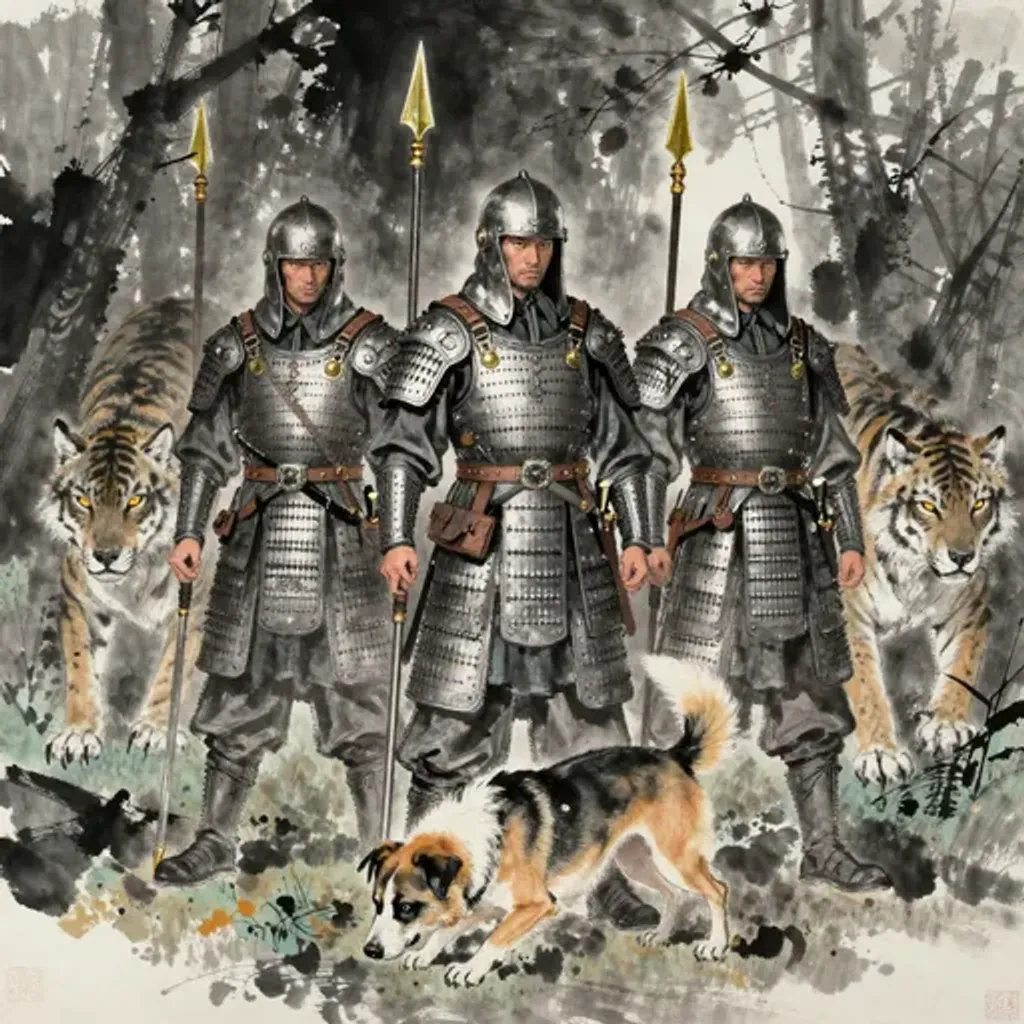
犬畏狼虎,依人有輔。三夫執戟,伏不敢起,身安无咎。
The dog fears wolf and tiger; relying on men, it finds protection. Three warriors hold their halberds; the beasts crouch and dare not rise. Body safe, without mishap.
— Jiao Yanshou, Yilin (Forest of Changes), 1st century BC
Commentary
Fire above water, and the small creature seeks protection. A dog fears the wolf and tiger, so it depends on human support. Three warriors stand with halberds raised; the enemy crouches and dares not rise. Safety is secured, and no harm follows. The verse is a compact parable of alliance: the weak creature survives not through its own strength but by attaching itself to a superior force. From Before Completion to Following, fire-over-water transforms into thunder resting within the lake. Following's image is of the gentleman who, at nightfall, enters his house and rests — knowing when to yield to a greater rhythm. The dog does not fight the tiger; it follows the human. Strength here lies not in resistance but in knowing whom to follow.
未濟 → 蠱
Hexagram 64 → Hexagram 18: Work on the Decayed
Changing lines: 3, 4
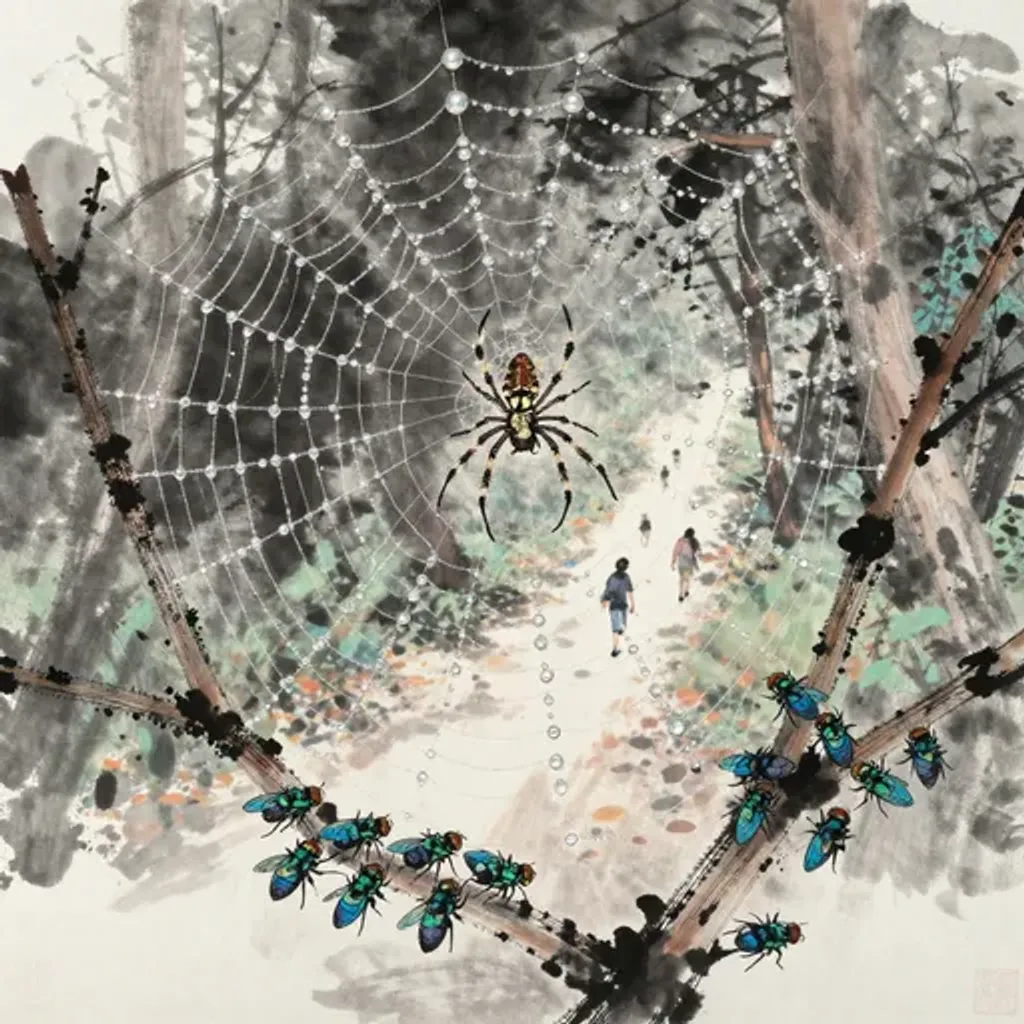
蜘蛛作網,以伺行旅。青蠅嚵聚,以求膏腴。觸我羅絆,為網所得。
The spider weaves her web; awaiting travelers on the road. Blue flies gather in greed; seeking fat and sweet. Touching my snare and trap; caught within the net.
— Jiao Yanshou, Yilin (Forest of Changes), 1st century BC
Commentary
Fire above water, and a trap is being woven. The spider spins its web, lying in wait for travelers. Green flies swarm greedily, drawn to rich fat. Whoever touches the snare is caught in the net. The verse is a miniature fable of corruption: the spider represents systemic entrapment, the flies embody those who pursue easy gain, and the web catches all who blunder into its reach. From Before Completion to Work on the Decayed, the unresolved fire-over-water transforms into wind trapped beneath a mountain — the image of decay, of old structures infested and rotting from within. The spider's web is precisely the kind of corruption that Work on the Decayed addresses: something that must be torn down and rebuilt, not merely endured.
未濟 → 臨
Hexagram 64 → Hexagram 19: Approach
Changing lines: 1, 4, 6
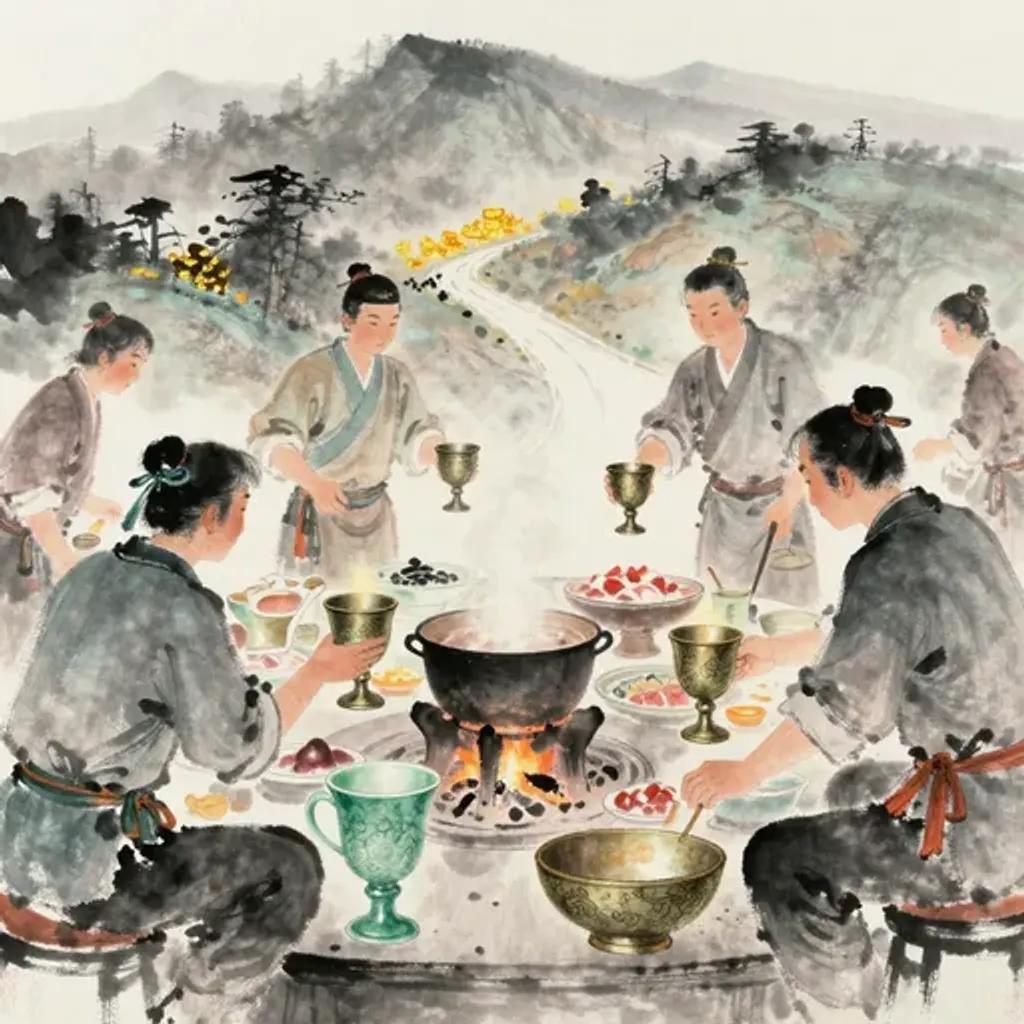
所望在外,鼎金方來。拭爵滌罍,炊食待之,不為季憂。
What is hoped for lies beyond; the bronze tripod and gold are coming. Wiping the cups, cleansing the vessels; cooking food to await them. No cause to fret over trifles.
— Jiao Yanshou, Yilin (Forest of Changes), 1st century BC
Commentary
Fire above water, and what is hoped for lies beyond the horizon. The precious cauldron-gold is on its way. Wine vessels are polished, goblets rinsed clean, food prepared — all in expectation of arrival. There is no worry about the season's delay. The verse radiates confident anticipation: the guest has not yet arrived, but the household prepares as though the outcome is certain. From Before Completion to Approach, fire-over-water transforms into earth above the lake, the image of the sovereign descending to meet the people. Approach carries the energy of winter solstice — the first yang lines rising, the great drawing near. The vessels are clean because the host knows what is coming. Before Completion's uncertainty dissolves when one prepares with absolute faith.
未濟 → 觀
Hexagram 64 → Hexagram 20: Contemplation
Changing lines: 2, 4, 5
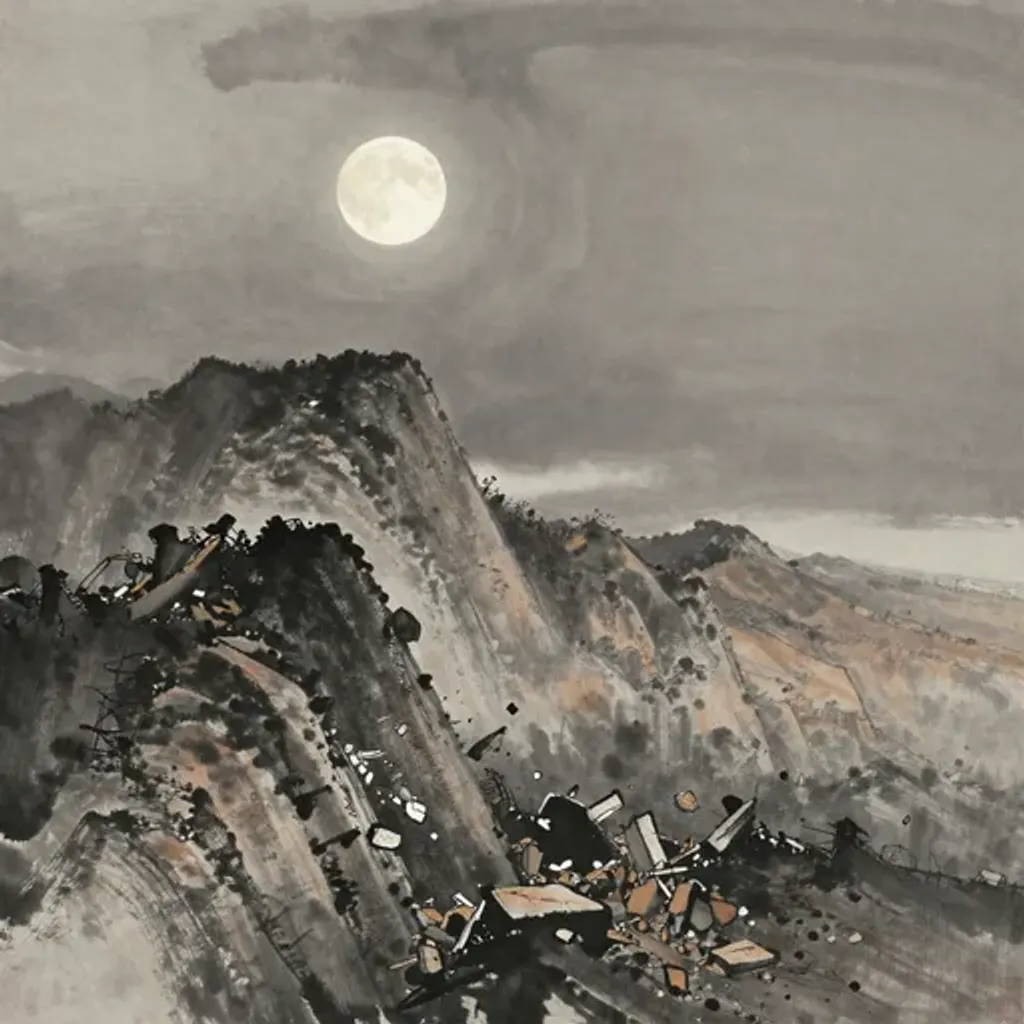
日月並居,常暗匪明。高山崩顛,丘陵為溪。
Sun and moon dwell together; always dim, never bright. High mountains collapse at their peaks; hills and ridges become valleys.
— Jiao Yanshou, Yilin (Forest of Changes), 1st century BC
Commentary
Fire above water, nothing in its place, and now the cosmic order itself inverts. Sun and moon dwell together, keeping the sky perpetually dark rather than alternating in their proper rhythm. Mountains collapse from their peaks; hills become ravines. The verse presents total cosmological reversal: luminaries that should take turns instead cancel each other out, and the landscape itself turns upside down. From Before Completion to Contemplation, fire-over-water transforms into wind moving above the earth. Contemplation's image is the sage-king surveying his realm and instructing the people. But what is there to contemplate when mountains have become valleys? This is the dark side of Contemplation — observing ruin, witnessing the full scope of collapse before any rebuilding can begin.
未濟 → 噬嗑
Hexagram 64 → Hexagram 21: Biting Through
Changing lines: 1, 2
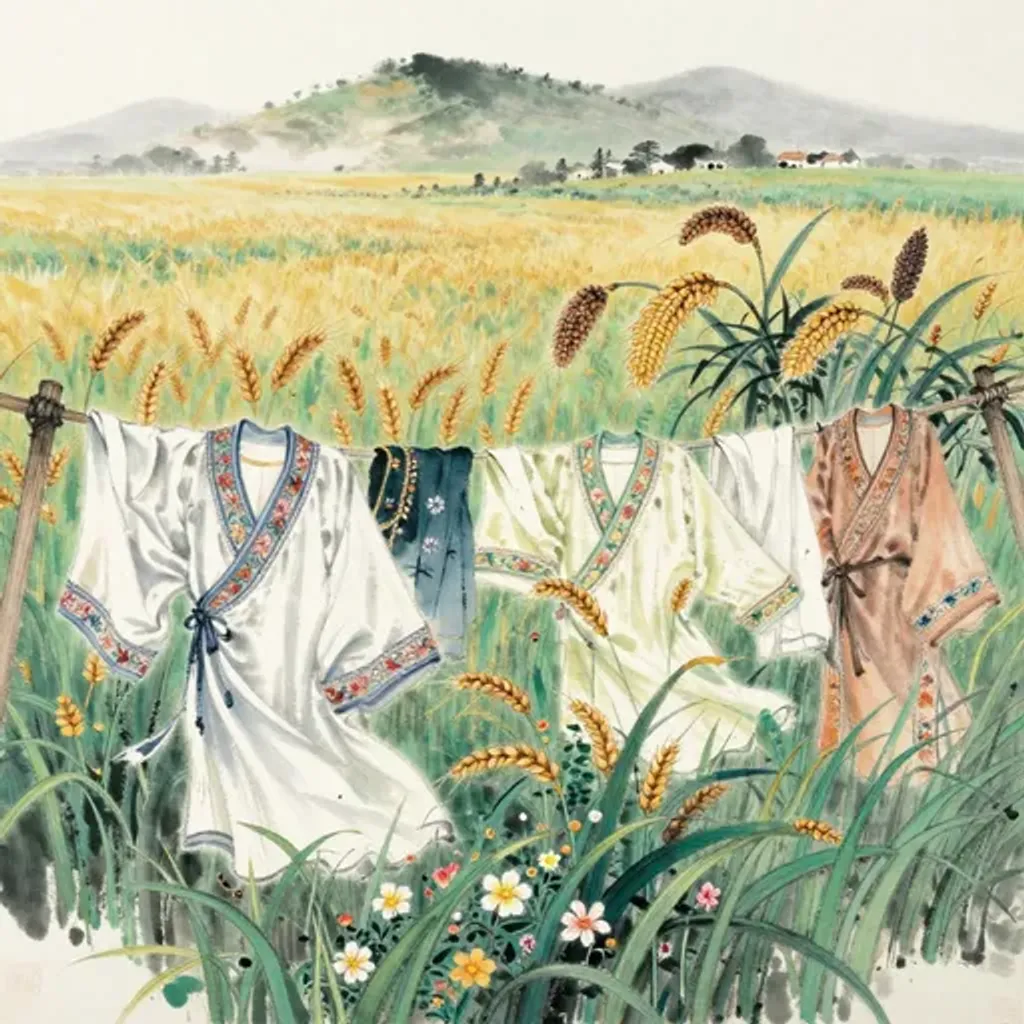
春服既成,載華復生。莖葉盛茂,實穗泥泥。
Spring garments are complete; flowers bloom once more. Stems and leaves flourish thick; grain heads hang heavy and full.
— Jiao Yanshou, Yilin (Forest of Changes), 1st century BC
Commentary
Fire above water, the season yet unresolved — but spring arrives nonetheless. Spring garments are complete, flowers bloom again, stems and leaves flourish, and grain ears hang heavy and rich. The verse is pure seasonal renewal, moving from textile readiness through botanical profusion to agricultural abundance. The 'spring garments already complete' (春服既成) may echo the famous Analerta passage where Confucius's disciple Zeng Dian describes bathing in the Yi River wearing spring clothes — the Confucian ideal of effortless harmony with the season. From Before Completion to Biting Through, fire-over-water transforms into thunder and lightning striking together. The gentle spring imagery meets the decisive force of law and punishment. Nature's renewal is not passive; it bites through the husk of winter with the same force that justice bites through obstruction.
未濟 → 賁
Hexagram 64 → Hexagram 22: Grace
Changing lines: 1, 2, 3, 4
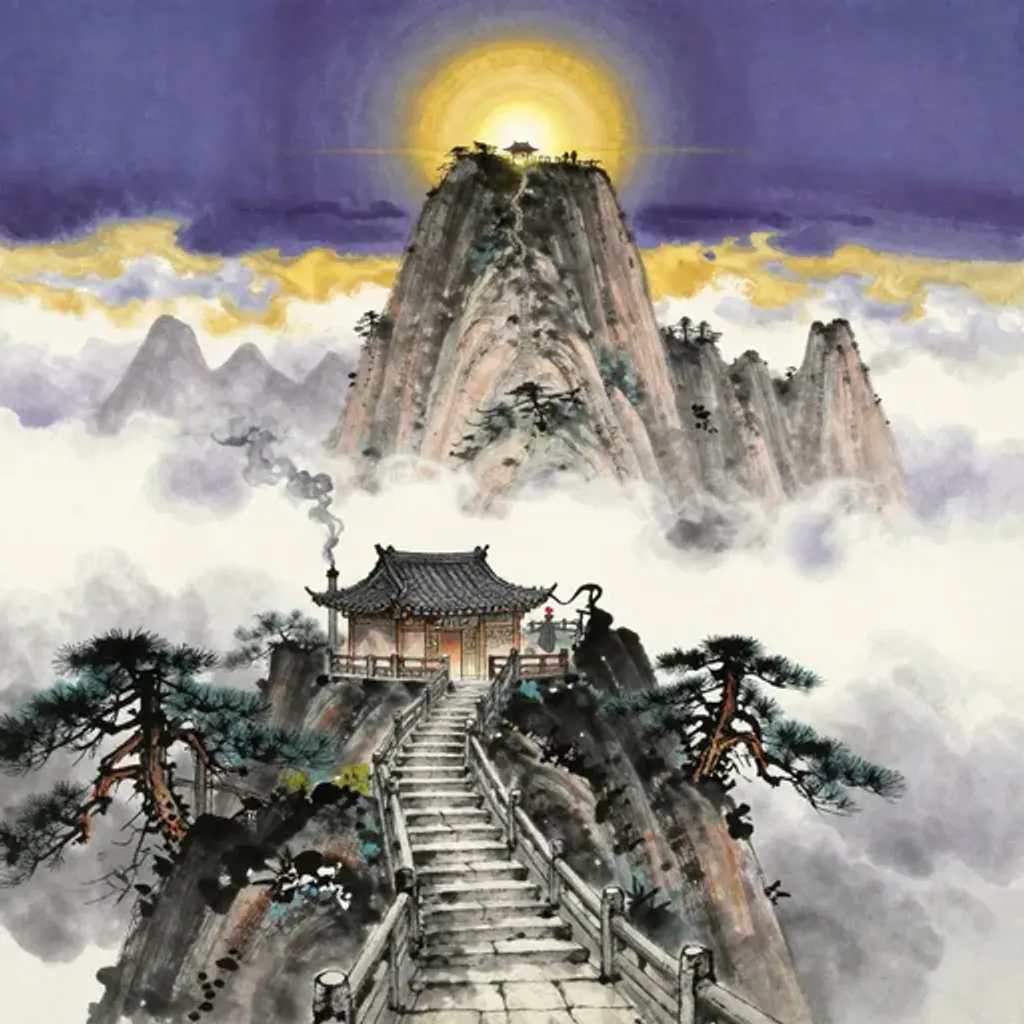
華首山頭,仙道所由。利以居止,長无咎憂。
Atop Mount Huashou; the way of immortals passes through. Favorable for dwelling and rest; long without blame or worry.
— Jiao Yanshou, Yilin (Forest of Changes), 1st century BC
Commentary
Fire above water, the unfinished journey. Atop Mount Huashou, the way of the immortals opens. It is beneficial to dwell here in stillness, and one will long be free from blame or sorrow. Huashou Mountain appears in Daoist geography as a site of spiritual cultivation — a peak where practitioners could access transcendence. The verse counsels settling at this elevated threshold rather than pressing onward. From Before Completion to Grace, fire-over-water transforms into fire glowing beneath the mountain. Grace adorns the surface without changing the substance beneath; the mountain with fire at its base is beautiful but contained. The immortal path here is not wild ascent but refined stillness — dwelling at the luminous boundary between the mundane and the transcendent.
未濟 → 剝
Hexagram 64 → Hexagram 23: Splitting Apart
Changing lines: 2, 4
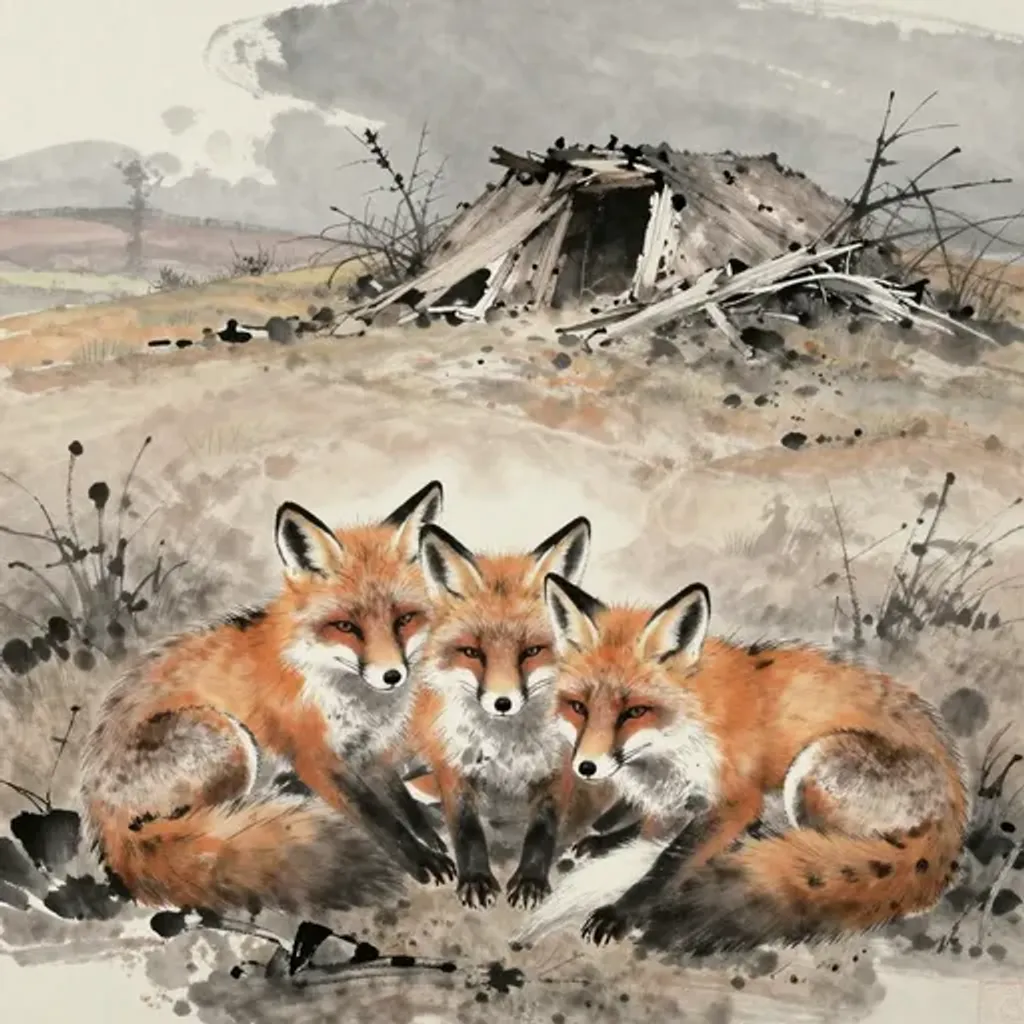
三狐群哭,自悲孤獨。野无所遊,死於丘室。
Three foxes cry together; mourning their own solitude. No wilderness to roam; they die within the barren den.
— Jiao Yanshou, Yilin (Forest of Changes), 1st century BC
Commentary
Fire above water, and the pack has thinned to nothing. Three foxes cry together, mourning their own isolation. The wilderness offers no range to roam; they die in their burrow. The fox in Yilin symbolism often represents the cunning but vulnerable — creatures that depend on social bonds yet are prone to suspicion and exile. Three foxes weeping as a group intensifies the pathos: even their fellowship cannot save them. From Before Completion to Splitting Apart, fire-over-water transforms into a mountain eroding upon the earth. The foxes' slow death in their den mirrors the mountain's gradual collapse — structure disintegrating from within. There is no sudden catastrophe here, only the steady, irreversible decay of a community that has lost its reason for existing.
未濟 → 復
Hexagram 64 → Hexagram 24: Return
Changing lines: 1, 2, 4, 6
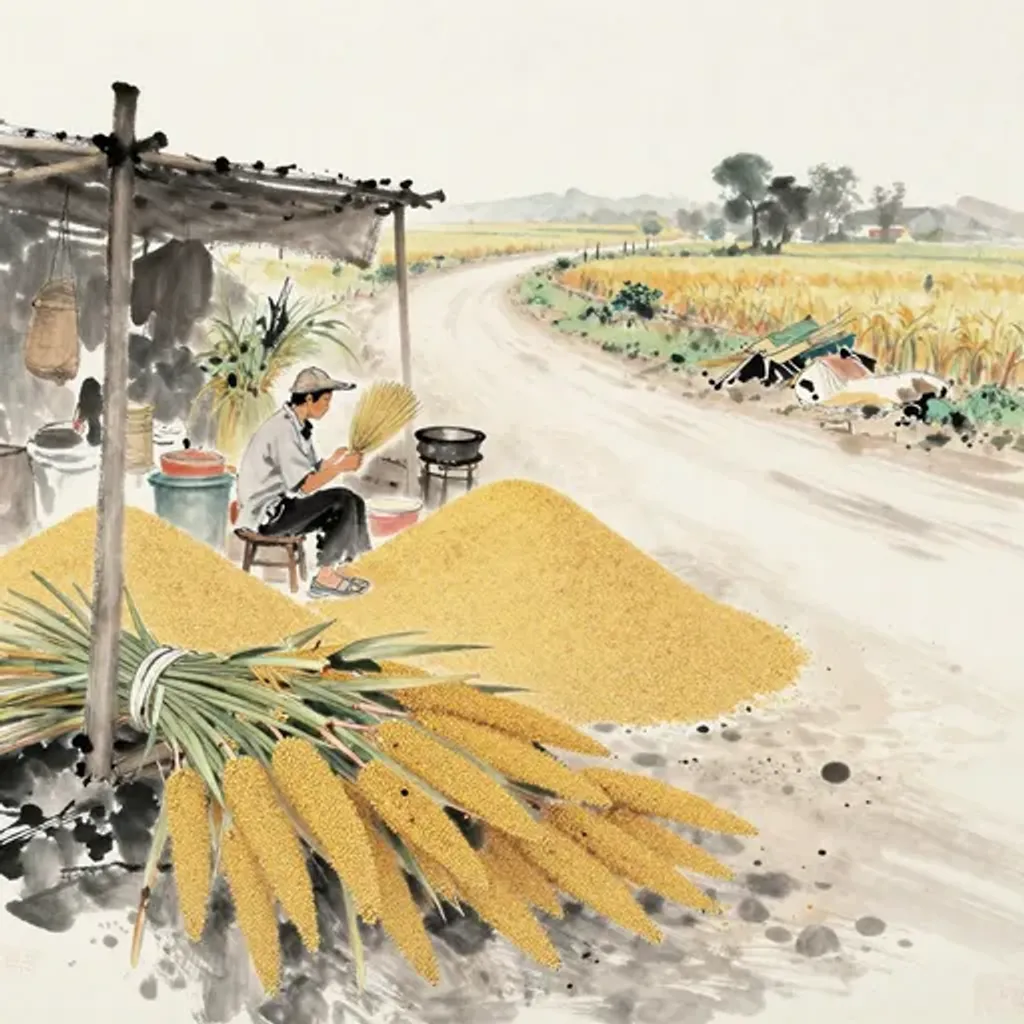
火中暑退,禾黍其食。商人不至,市空无有。
Amid fire's heat the summer fades; millet and grain are the food. Merchants do not come; the market stands vacant and bare.
— Jiao Yanshou, Yilin (Forest of Changes), 1st century BC
Commentary
Fire above water, and the season has burned itself out. Summer's heat retreats in the fire's aftermath; only millet and grain remain to eat. But the merchants do not come, and the market stands empty. The verse captures an economy stalled at its source: food exists but trade has ceased, abundance without circulation. From Before Completion to Return, fire-over-water transforms into thunder hidden within the earth — the solstice moment when the first yang stirs beneath frozen ground. The empty market is not permanent death but the nadir before renewal. Return's image is the ancient kings closing the passes at winter solstice, halting all commerce deliberately so that the seed of new life can germinate undisturbed. Stillness here precedes resurgence.
未濟 → 无妄
Hexagram 64 → Hexagram 25: Innocence
Changing lines: 1, 2, 5
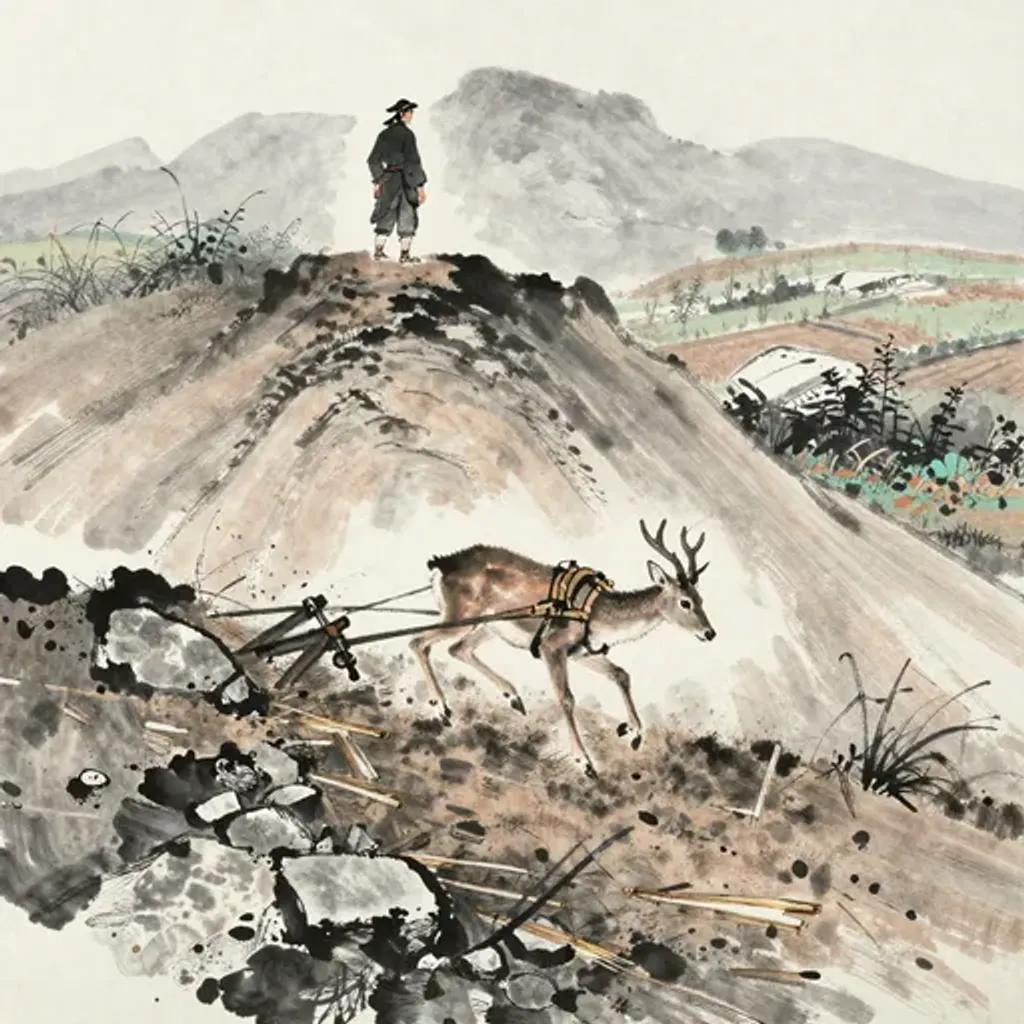
獨立山顛,求鹿耕田。草木不辟,秋飢无年。
Standing alone on the mountain peak; seeking a deer to plow the field. Grass and weeds remain uncleared; autumn brings hunger, the year yields nothing.
— Jiao Yanshou, Yilin (Forest of Changes), 1st century BC
Commentary
Fire above water, and a lone figure stands on the mountaintop, trying to plow fields with a deer — an absurd mismatch of tool and terrain. Brush and bramble go uncleared; autumn brings famine and a barren year. The verse is a study in misapplied effort: hunting animals used for farming, wild land treated as arable ground. Everything is attempted in the wrong mode. From Before Completion to Innocence, fire-over-water transforms into heaven with thunder rolling beneath — the cosmic image of spontaneous, uncorrupted action. The irony cuts deep: Innocence demands acting in accord with heaven's natural order, yet the verse shows someone violating that order at every turn. True innocence would recognize that deer do not plow and mountains do not yield grain.
未濟 → 大畜
Hexagram 64 → Hexagram 26: Great Taming
Changing lines: 1, 3, 4
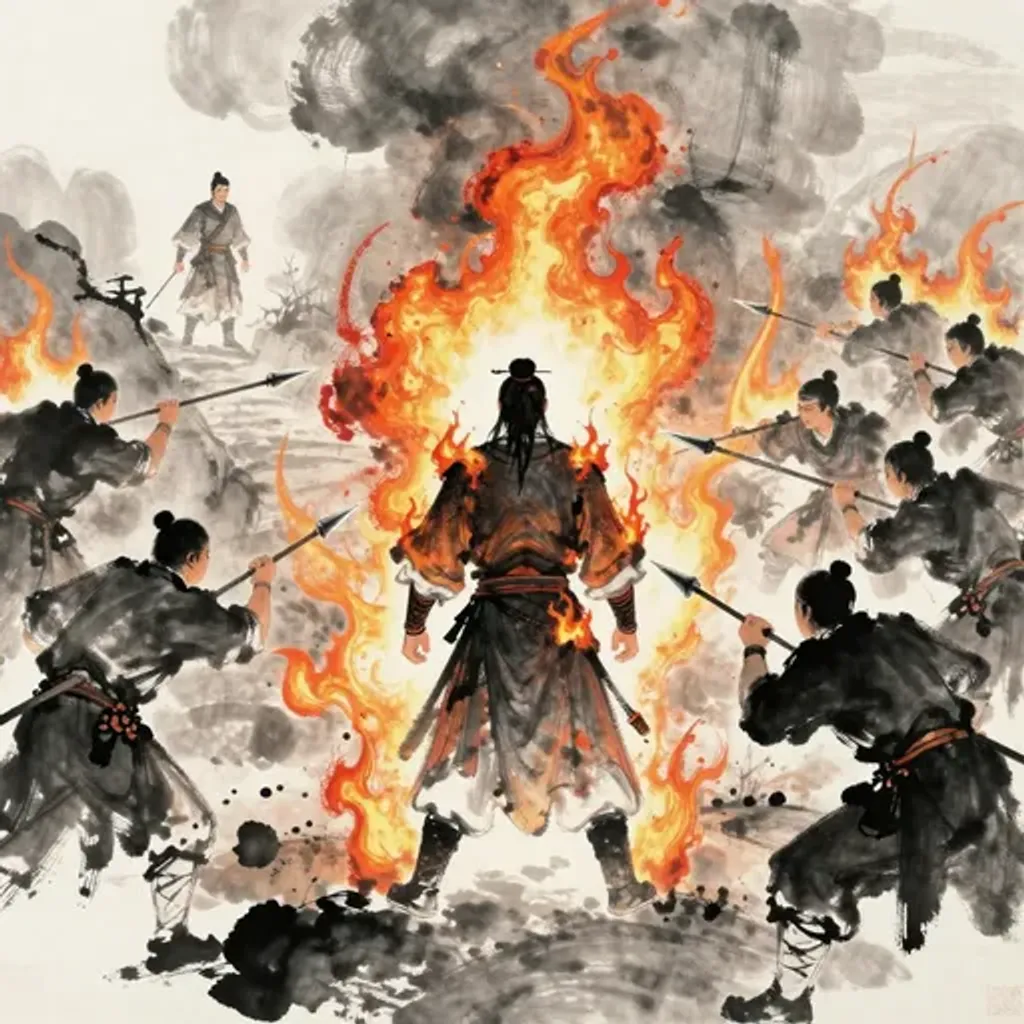
火雖熾,在吾後。寇雖近,在吾右。身安吉,不危殆。
Though fire blazes, it lies behind me. Though raiders press close, they are at my right. Body at peace and blessed; not imperiled nor endangered.
— Jiao Yanshou, Yilin (Forest of Changes), 1st century BC
Commentary
Fire above water, yet the flames stay behind and the enemy stays to the right — both present but neither reaching their mark. The body remains safe, unendangered. The verse arranges threats spatially: fire at the rear, raiders on the flank, yet the speaker stands untouched at the center. This is not escape but positioning — the dangers exist but cannot converge. From Before Completion to Great Taming, fire-over-water transforms into heaven contained within the mountain. Great Taming is the hexagram of accumulated strength held in reserve, of the gentleman who studies the words and deeds of the ancients to build inner power. The verse embodies this stored stillness: surrounded by danger, unmoved. The mountain does not flee the heaven it contains; it simply holds.
未濟 → 頤
Hexagram 64 → Hexagram 27: Nourishment
Changing lines: 1, 2, 4
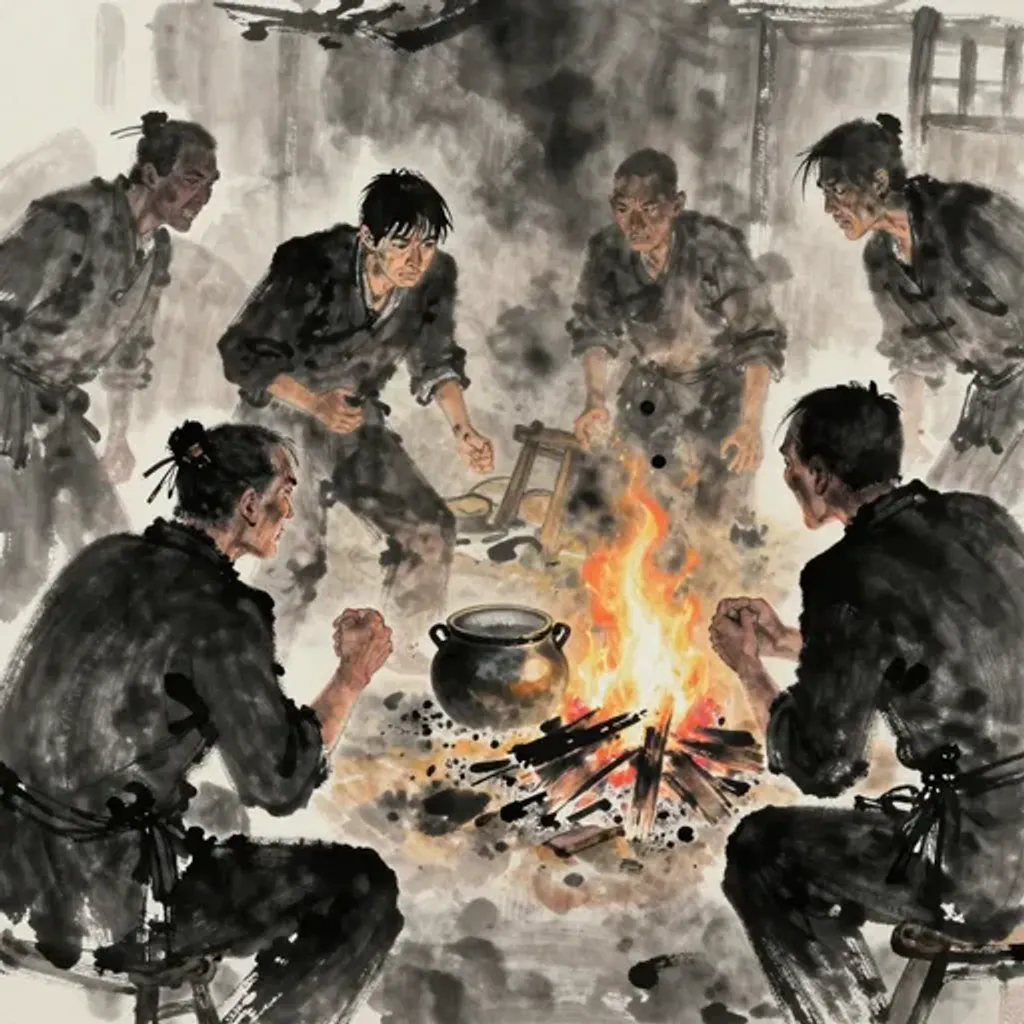
𪙨𪙨𪘙𪘙,貧鬼相責。无有歡怡,一日九結。
Gnashing and grinding, bickering and blaming; poverty's ghosts accuse one another. No joy or ease to be found; nine times daily the heart is knotted.
— Jiao Yanshou, Yilin (Forest of Changes), 1st century BC
Commentary
Fire above water, and the household is gnawed by want. The rare characters at the opening (𪙨𪙨𪘙𪘙) are onomatopoeic — the sound of teeth chattering or grinding in distress. Poverty-ghosts press their claims; there is no joy or ease. The heart ties itself in nine knots within a single day. The 'poverty ghost' (貧鬼) was a folk belief: a spectral force that clung to a household, draining its fortune. From Before Completion to Nourishment, fire-over-water transforms into thunder beneath the mountain — the jaw in motion, the act of feeding. The bitter irony is pointed: Nourishment counsels careful speech and moderate eating, but here there is nothing to eat and nothing worth saying. The nourishment hexagram arrives at the moment of starvation.
未濟 → 大過
Hexagram 64 → Hexagram 28: Great Exceeding
Changing lines: 3, 5, 6
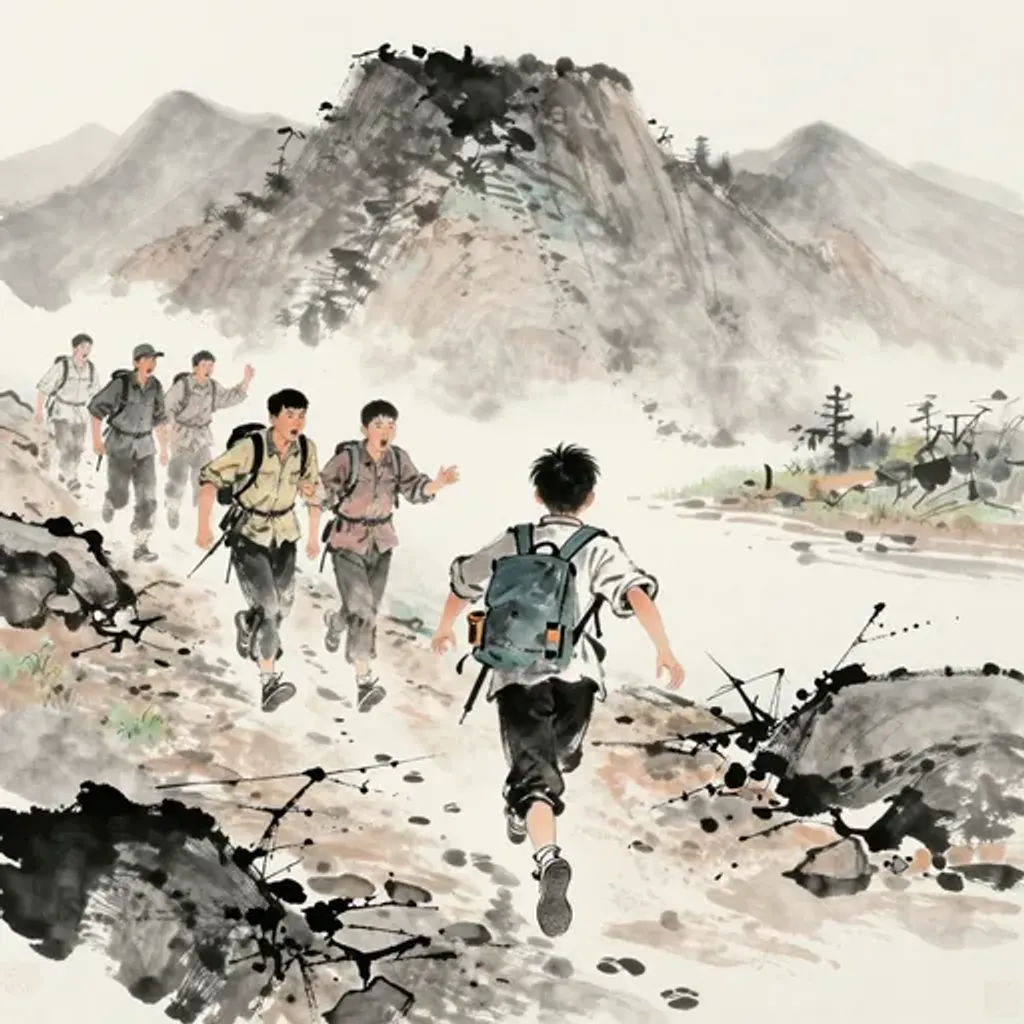
追亡逐北,呼還幼叔。至山而得,反歸其室。
Chasing the lost, pursuing the fled; calling back the young uncle. At the mountain he is found; he returns home to his household.
— Jiao Yanshou, Yilin (Forest of Changes), 1st century BC
Commentary
Fire above water, and someone chases a fugitive northward. The pursuer calls for the young uncle to return; at the mountain, the fugitive is found and brought back home. The verse has the structure of a family drama: a junior member has fled, and the household mobilizes to retrieve him. 'Pursuing the fleeing and chasing the retreating' (追亡逐北) is a standard military phrase repurposed here for domestic crisis. From Before Completion to Great Exceeding, fire-over-water transforms into the lake submerging the trees — a structure pushed beyond its limits. The ridgepole sags under extraordinary weight. Yet the verse resolves: the young uncle is recovered, the family restored. Great Exceeding demands extraordinary measures for extraordinary times, and the pursuit succeeds precisely because it exceeds normal bounds.
未濟 → 坎
Hexagram 64 → Hexagram 29: The Abysmal Water
Changing lines: 4, 5, 6
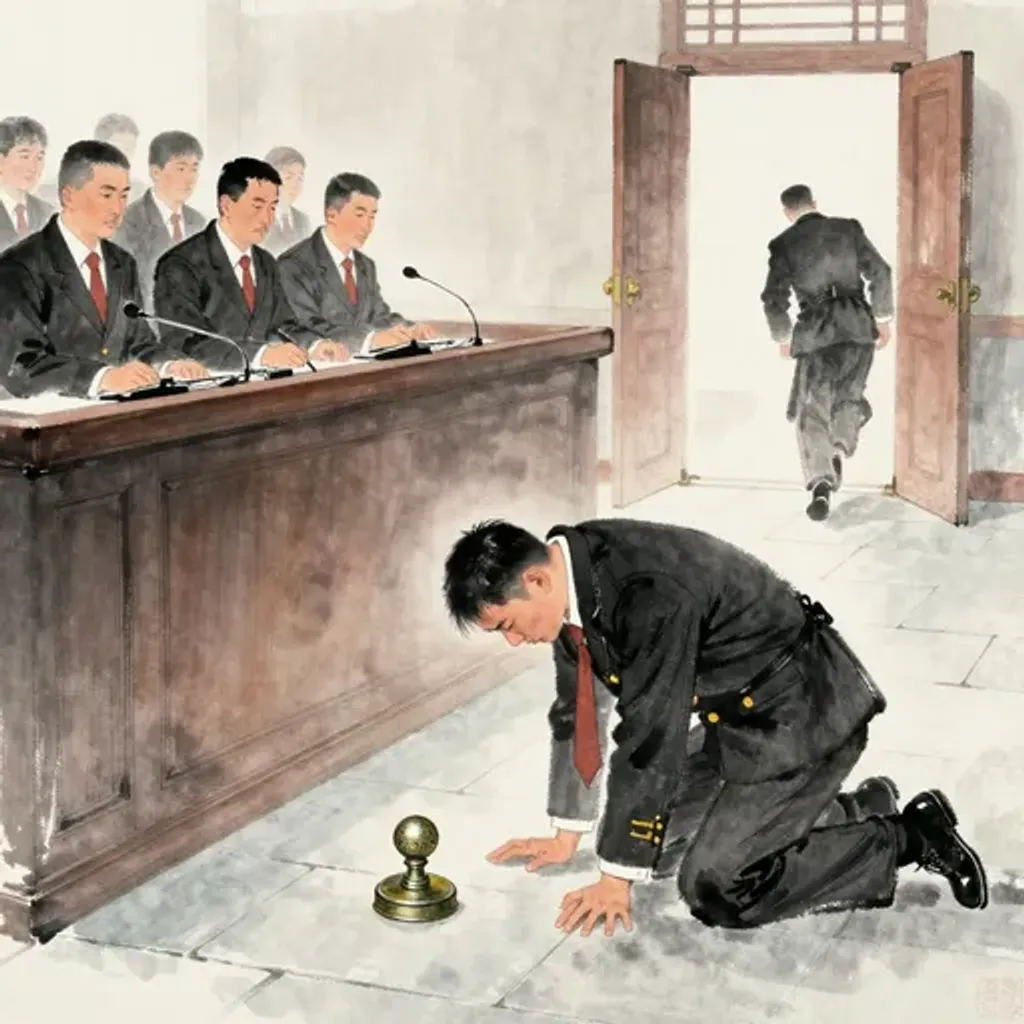
衘命辱使,不堪厥事。遂墮落去,更為斯吏。
Bearing orders on a shameful mission; unequal to the task. Thereupon cast down and dismissed; reduced to become a petty clerk.
— Jiao Yanshou, Yilin (Forest of Changes), 1st century BC
Commentary
Fire above water, and a lowly official bears a disgraceful commission. Ordered to carry out a humiliating mission, he cannot manage the task. He stumbles and falls, then is reassigned as a petty clerk. The verse traces a bureaucratic spiral downward: incompetence met with demotion, not dismissal — the system keeps its failures circulating. From Before Completion to the Abysmal, fire-over-water transforms into doubled water, the abyss repeated. The Abysmal's image is water flowing ceaselessly through dangers, the gentleman maintaining constant virtue through repeated hardship. But this official has no such resilience. He falls from one pit into the next, each assignment more degrading than the last. The Abysmal tests whether one can hold to principle in peril; this verse shows what happens when one cannot.
未濟 → 離
Hexagram 64 → Hexagram 30: The Clinging Fire
Changing lines: 1, 2, 3
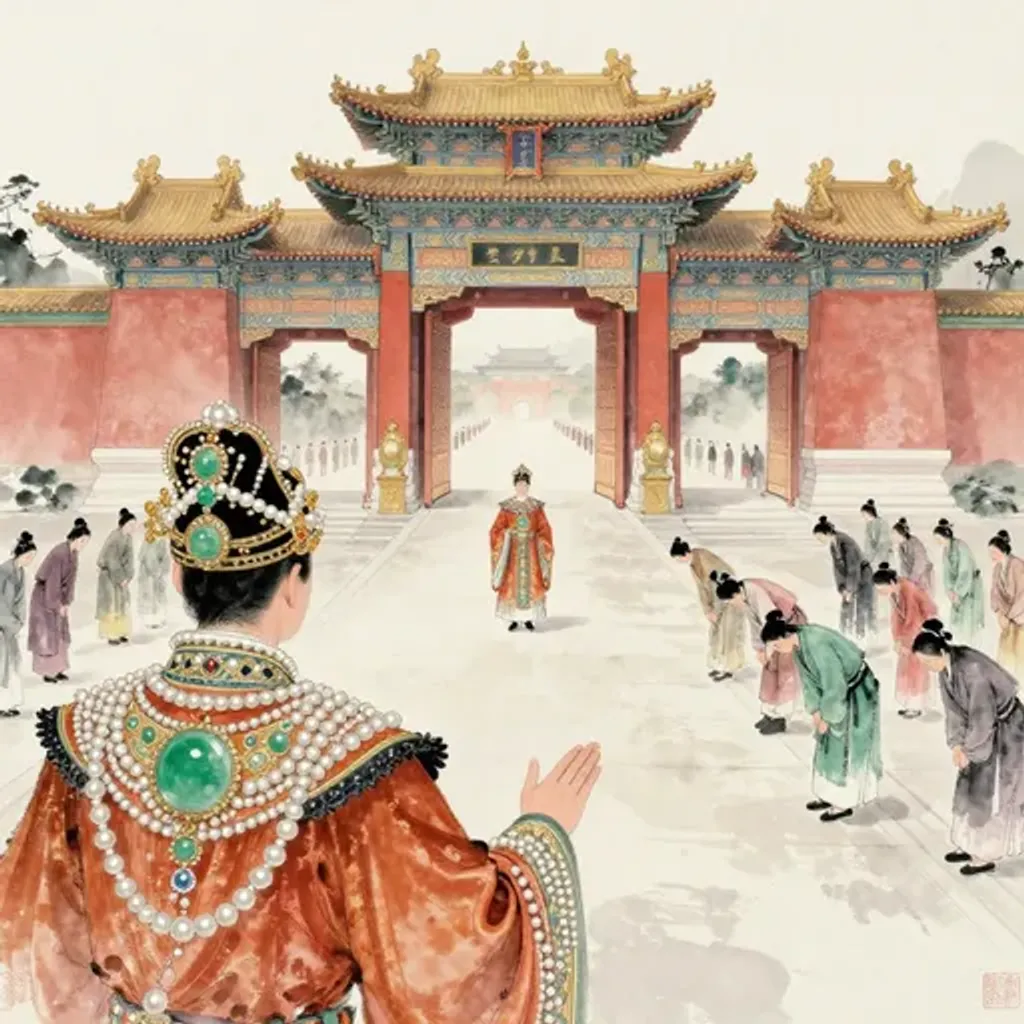
被珠衘玉,沐浴仁德。應聘唐國,四門穆穆。蟊賊不作,凶惡伏匿。
Adorned with pearls, holding jade; bathed in benevolence and virtue. Answering the summons to the Tang kingdom; the four gates stand in solemn reverence. Pests do not arise; what is vile and wicked lies hidden.
— Jiao Yanshou, Yilin (Forest of Changes), 1st century BC
Commentary
Fire above water, the unfinished order. A figure arrives adorned with pearls and holding jade in the mouth — the ceremonial dress of a worthy envoy. Bathed in benevolence and virtue, this emissary answers the summons to the Tang state. The four gates stand solemn and reverent; pests and predators vanish; all wickedness hides. The 'Tang state' (唐國) likely refers to the domain of Emperor Yao, whose capital was at Tang. The 'four gates' (四門) evoke the Shujing's description of Yao's court where 'the four gates were open and clear.' From Before Completion to the Clinging, fire-over-water transforms into doubled fire — brightness illuminating brightness. The envoy's virtue resonates with the court's radiance; when both shine true, darkness has nowhere to hide.
未濟 → 咸
Hexagram 64 → Hexagram 31: Influence
Changing lines: 2, 3, 5, 6
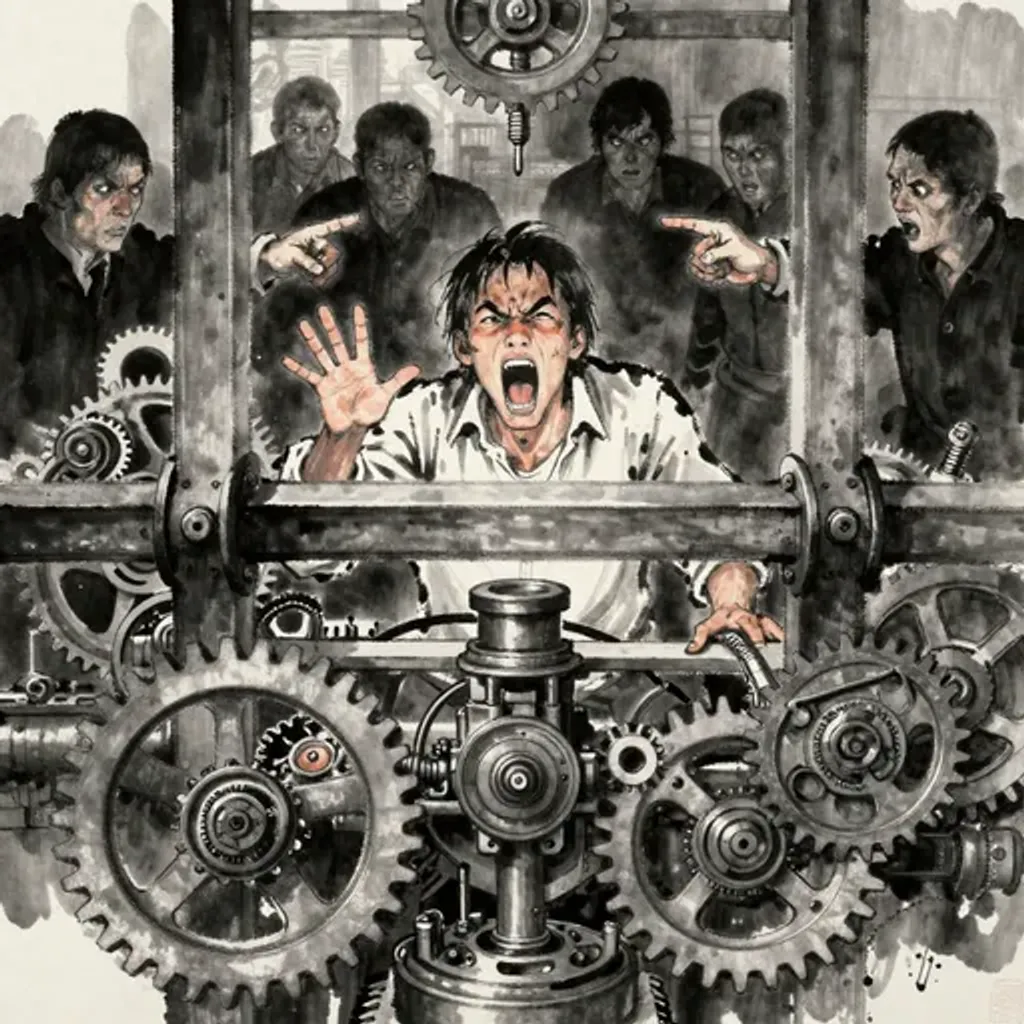
機關不便,不能出言。精成通道,為人所冤。
The mechanism jams; unable to speak a word. Though the spirit perfects the way; by others one is wrongly condemned.
— Jiao Yanshou, Yilin (Forest of Changes), 1st century BC
Commentary
Fire above water, and the mechanism jams. The device is stuck and cannot speak; the spirit achieves its breakthrough along the path, yet is wronged by others. The verse evokes a figure who, despite possessing inner clarity and spiritual attainment, is unable to articulate or defend themselves — mechanically silenced, then falsely accused. From Before Completion to Influence, fire-over-water transforms into the lake resting upon the mountain, the image of mutual responsiveness. Influence works through the empty center — the gentleman receives others by keeping himself hollow and open. The tragic irony here is that the spiritual adept has achieved this emptiness (精成通道) but is met not with sympathetic resonance but with slander. The mechanism of connection has failed at the human level.
未濟 → 恆
Hexagram 64 → Hexagram 32: Duration
Changing lines: 3, 6
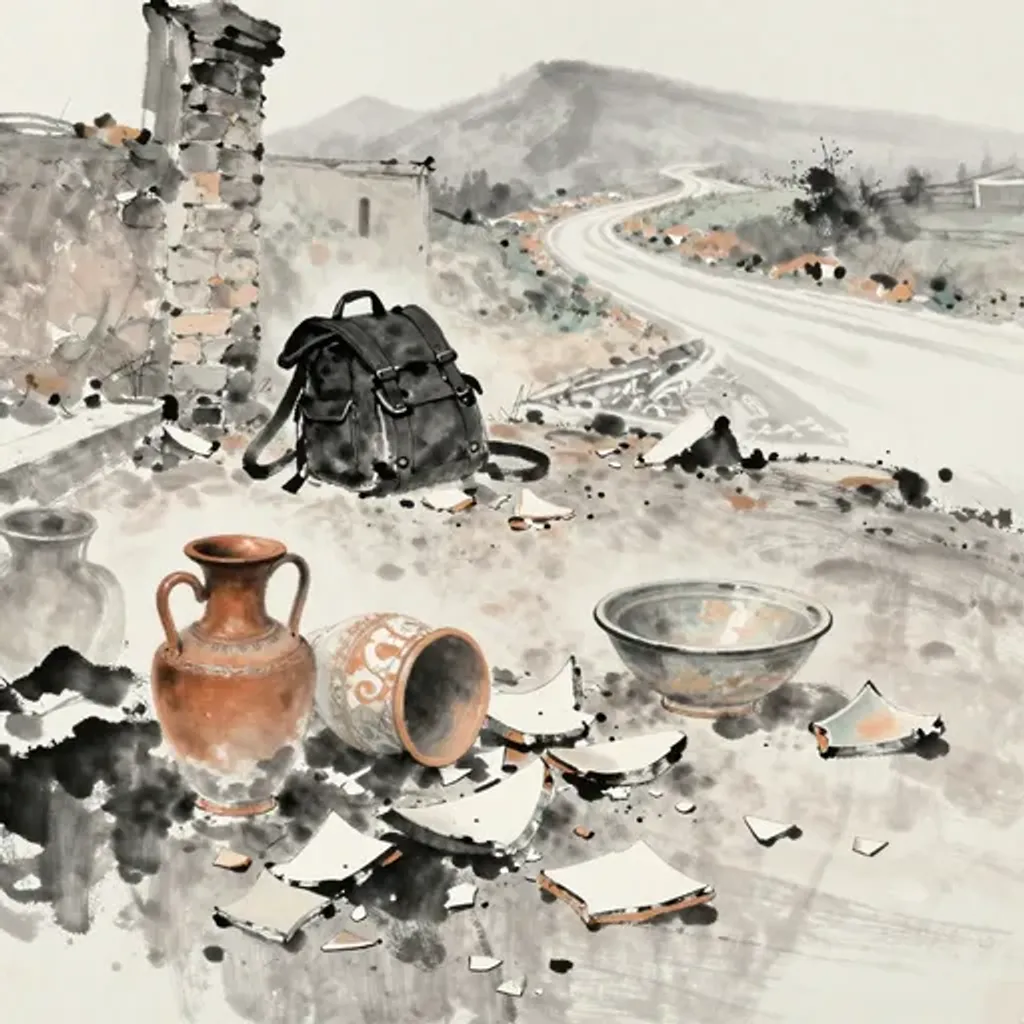
甕破盆缺,南行亡失。
The urn shatters, the basin cracks; traveling south, all is lost.
— Jiao Yanshou, Yilin (Forest of Changes), 1st century BC
Commentary
Fire above water, and everything shatters. The jar breaks, the basin cracks; heading south, all is lost. Two lines of pure destruction: vessels that should contain are broken, a journey that should arrive leads only to disappearance. From Before Completion to Duration, fire-over-water transforms into thunder above wind — the image of enduring constancy, the gentleman standing firm without changing course. The devastating brevity of the verse makes Duration's promise of permanence ring hollow, or perhaps essential. When jars break and goods vanish, what endures? Only the commitment not to change direction despite loss. Duration does not promise comfort; it promises that the one who stands firm will still be standing when the breakage stops.
未濟 → 遯
Hexagram 64 → Hexagram 33: Retreat
Changing lines: 2, 3, 5
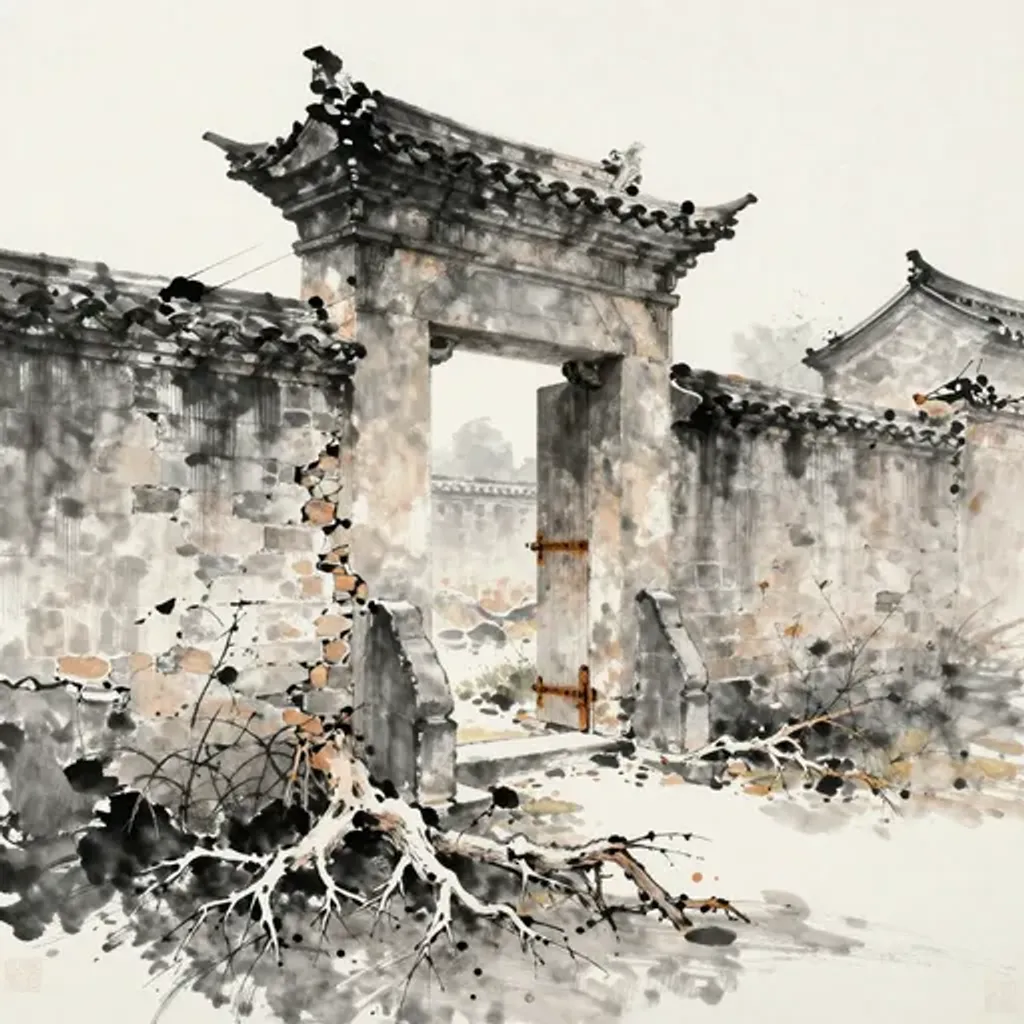
唇亡齒寒,積日凌根。朽不可用,為身災患。
When lips are lost, teeth grow cold; frost accumulates day by day at the root. Rotted beyond use; it becomes calamity upon the body.
— Jiao Yanshou, Yilin (Forest of Changes), 1st century BC
Commentary
Fire above water, and the protective barriers are crumbling. 'When the lips are gone, the teeth grow cold' — the classical warning from the Zuo Zhuan about the states of Guo and Yu, where one state's destruction exposed the other to invasion. Day by day, decay gnaws at the root. What has rotted cannot be used; it becomes a disaster for oneself. From Before Completion to Retreat, fire-over-water transforms into heaven with a mountain beneath — the image of strategic withdrawal. The verse makes Retreat's logic visceral: when your buffer state has fallen, when the rot has reached the root, the only wise course is to withdraw before the collapse takes you with it. Retreat is not cowardice; it is the recognition that some positions are no longer defensible.
未濟 → 大壯
Hexagram 64 → Hexagram 34: Great Power
Changing lines: 1, 3, 6
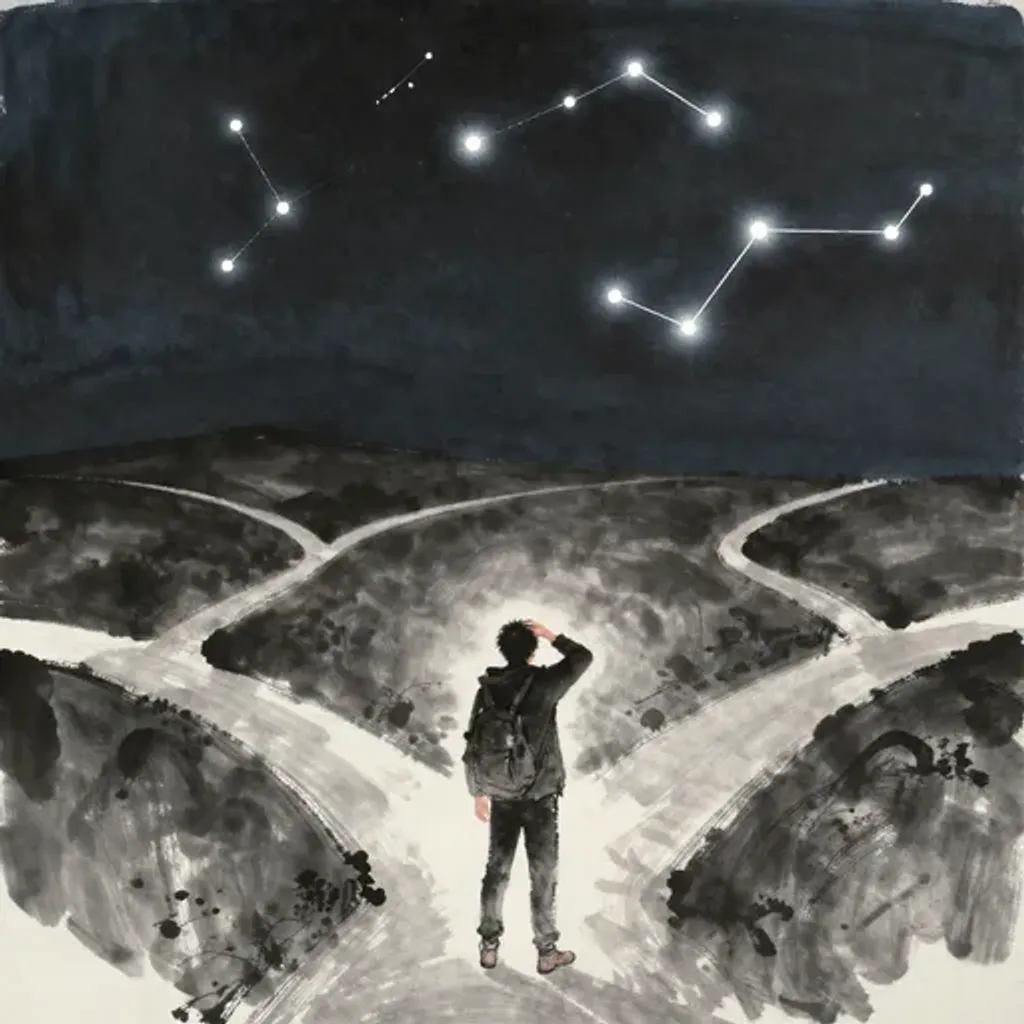
蒙惑憧憧,不知西東。魁罡指南,告我室中。利以宜止,去國憂患。
Bewildered and dazed; not knowing west from east. Kuigang points to the south; it tells me where my home lies. Favorable to halt and rest; depart the land of worry and care.
— Jiao Yanshou, Yilin (Forest of Changes), 1st century BC
Commentary
Fire above water, and the traveler is lost in bewilderment. Confused and drifting, not knowing east from west. Then the Beidou's handle points south, guiding him home. It is best to stay put and leave the troubled state behind. The Kuigang (魁罡) refers to the Beidou constellation's handle stars, used for orientation since antiquity. From Before Completion to Great Power, fire-over-water transforms into thunder rolling above heaven — enormous energy demanding proper direction. The verse enacts this perfectly: raw confusion meets celestial guidance. Great Power's danger is force without orientation; its promise is force correctly aimed. The wanderer who finds the Dipper's direction and uses that power to depart a dangerous situation embodies Great Power properly exercised.
未濟 → 晉
Hexagram 64 → Hexagram 35: Progress
Changing lines: 2
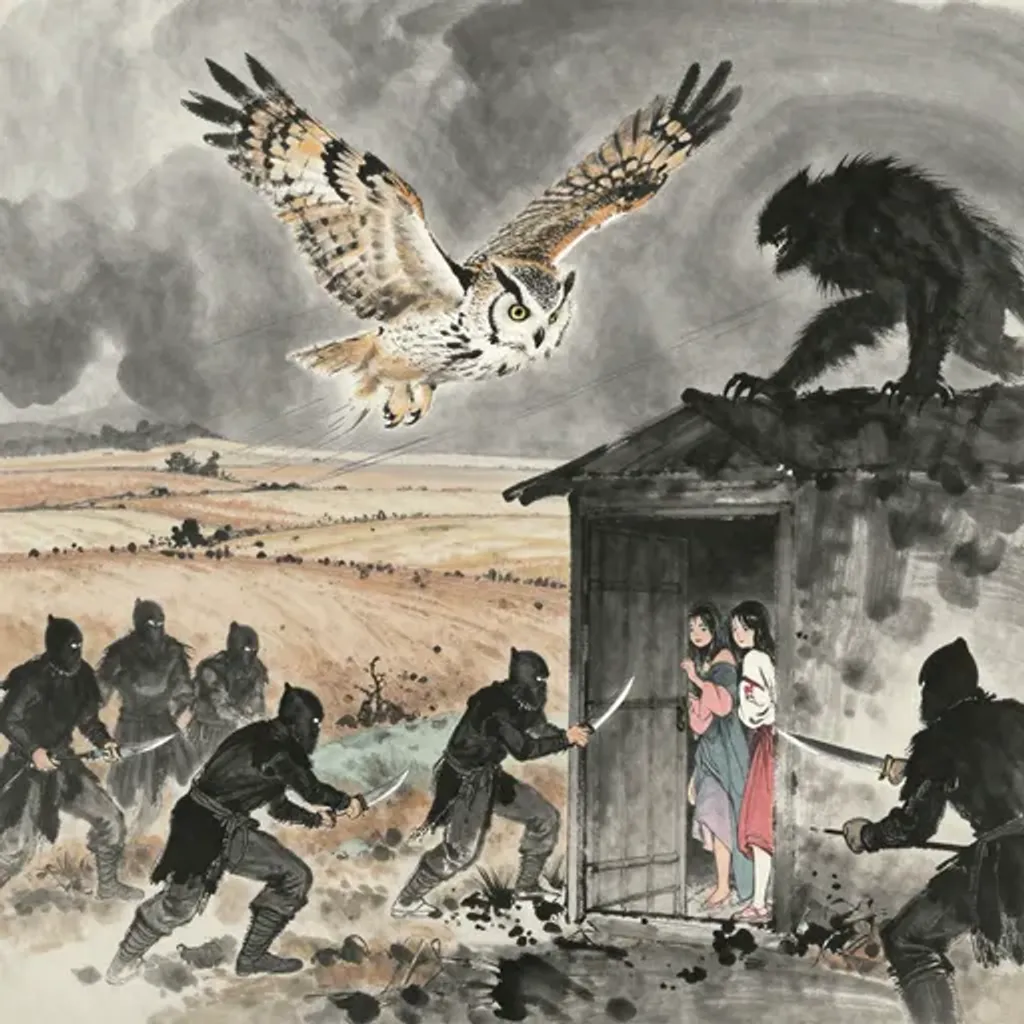
鳥鴟搏翼,以避陰賊。盜伺二女,賴厥生福。旱災為疾,君无黍稷。
The owl beats its wings; evading the shadowed killer. Bandits eye two maidens; they depend on fortune's luck. Drought brings affliction; the lord has no millet or grain.
— Jiao Yanshou, Yilin (Forest of Changes), 1st century BC
Commentary
Fire above water, and threats multiply from every direction. The owl beats its wings to avoid a lurking predator; a thief stalks two women; only fortune preserves them. Then drought strikes like disease, and the lord has neither millet nor grain. The verse piles danger upon danger: aerial predators, human criminals, natural disaster, royal famine. Nothing connects these threats except their relentless accumulation. From Before Completion to Progress, fire-over-water transforms into fire rising above the earth — brightness emerging from darkness. Progress is the hexagram of the lord receiving horses and being received in audience three times in a day. The contrast is stark: the verse describes a world where every advance is blocked, yet the target hexagram promises that light will eventually break through the earth's surface.
未濟 → 明夷
Hexagram 64 → Hexagram 36: Darkening of the Light
Changing lines: 1, 2, 3, 4, 6
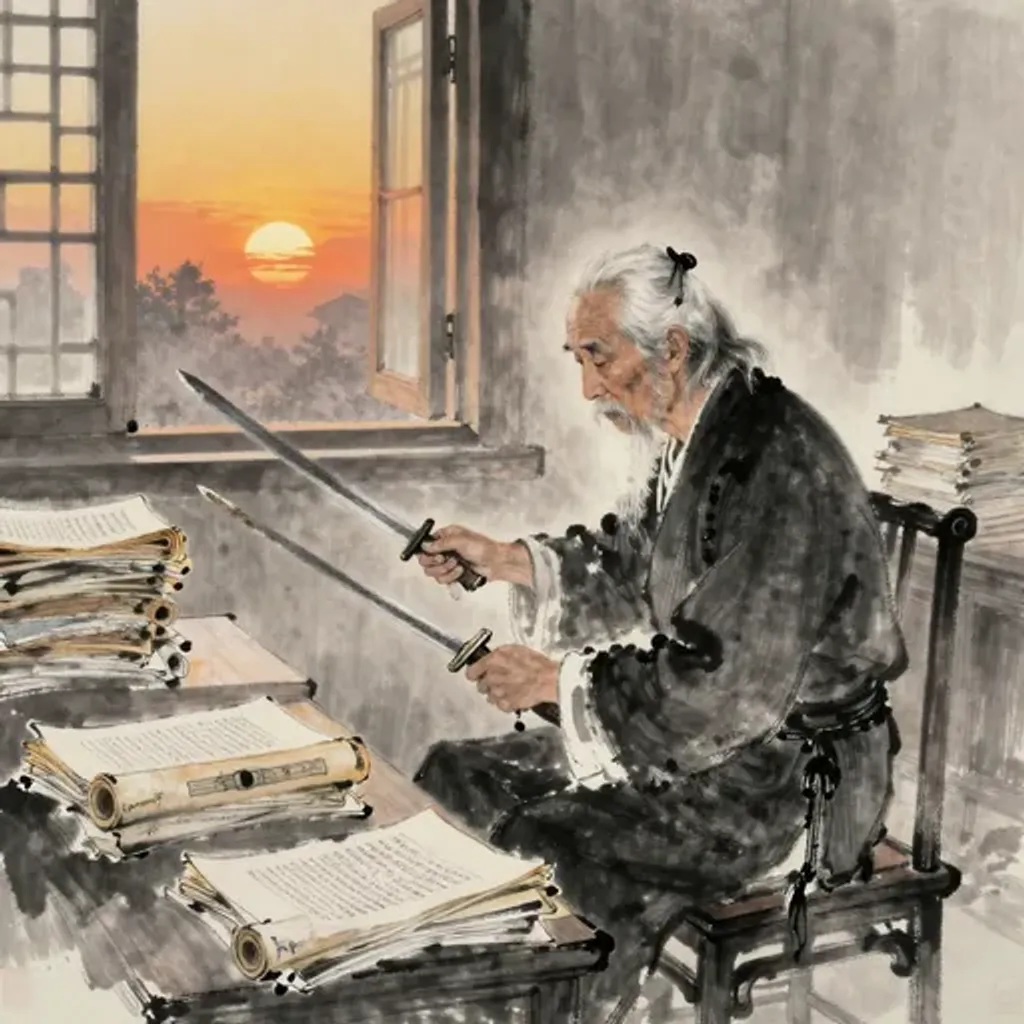
名成德就,項領不試。景公耄老,尼父逝去。
White-haired, he sharpens the sword — but the sword is already dull. Grand ambitions unfulfilled, temples frosted first. Ten thousand scrolls written, no one asks — sitting alone in a desolate study, facing the sunset.
— Jiao Yanshou, Yilin (Forest of Changes), 1st century BC
Commentary
Fire above water, and the light is about to enter the earth. The original verse names real historical figures: Duke Jing of Qi grew old without accomplishing his reforms, and Confucius (Father Ni) passed away before his Way could prevail. Achievement was complete in name but never tested in practice — the sword never drawn, the head never offered for service. From Before Completion to Darkening of the Light, fire-over-water transforms into fire sinking beneath the earth. This is the most structurally resonant pairing in the batch: Before Completion's misaligned fire meets Darkening of the Light's buried flame. The sage dies unrecognized; the lord ages without acting. Brilliance exists but is swallowed by circumstance — the very definition of Ming Yi.
未濟 → 家人
Hexagram 64 → Hexagram 37: The Family
Changing lines: 1, 2, 3, 4, 5
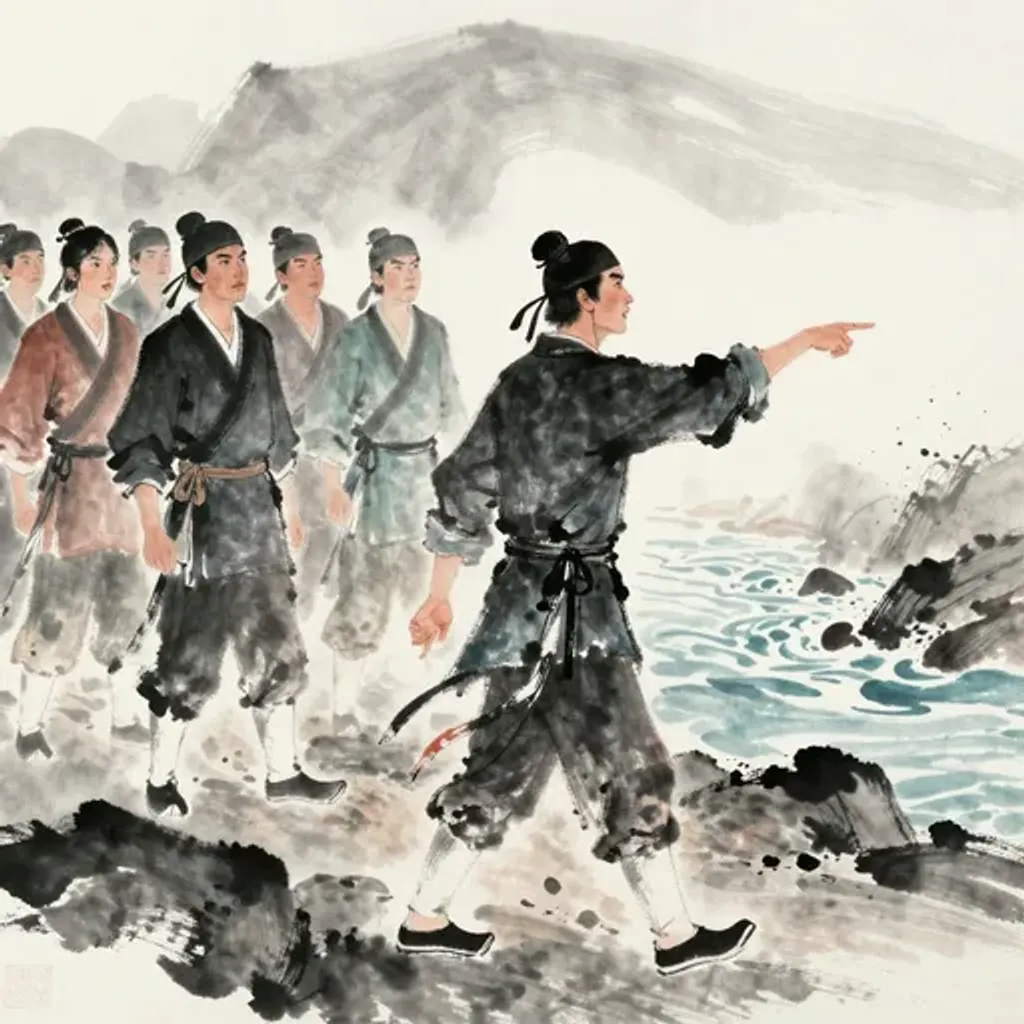
言與心詭,西行東坐。鯀湮洪水,佞賊為禍。
Words contradict the heart; westward talk, eastward sitting. Gun damming the floodwaters; cunning thieves bring calamity.
— Jiao Yanshou, Yilin (Forest of Changes), 1st century BC
Commentary
Fire above water, and words betray the heart. What is said contradicts what is meant; the speaker faces west but sits facing east — every gesture is a lie. Gun, father of Yu the Great, tried to dam the floods by piling up earth, but his method only made the waters worse. Flattery and deceit bring ruin. Gun's failure is the classic example of wrong method applied with obstinate persistence: he used blockage where drainage was needed, and was executed for it. From Before Completion to the Family, fire-over-water transforms into wind issuing from fire. The Family hexagram demands that 'words have substance and actions have constancy.' Gun's verse is the anti-Family: words and heart diverge, method and reality split, and the household drowns in the flood of its own dishonesty.
未濟 → 睽
Hexagram 64 → Hexagram 38: Opposition
Changing lines: 1
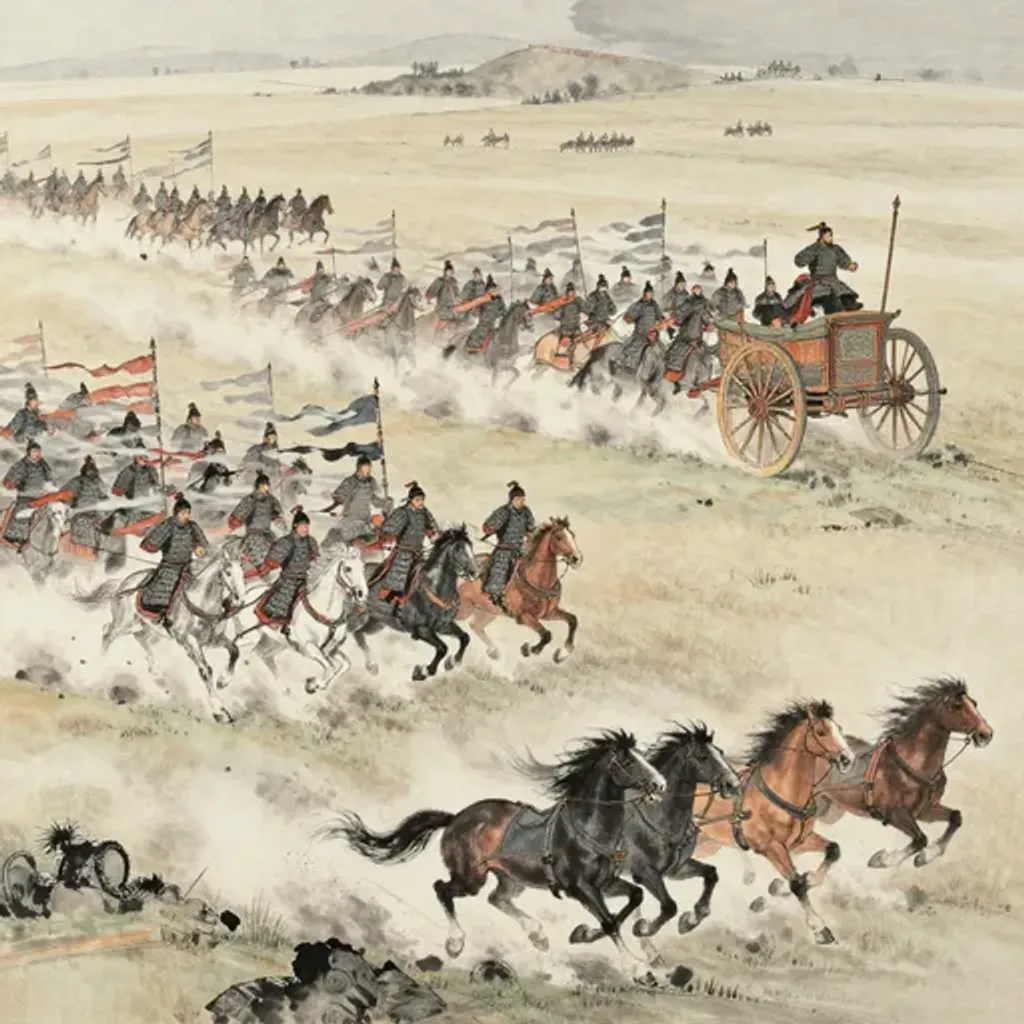
獫狁匪度,治兵焦獲。伐鎬及方,與周爭強。元戎其駕,衰及夷王。
The Xianyun transgress all bounds; troops muster at Jiaohuo. They strike at Hao and Fang; contending for dominance with Zhou. The great war-chariot advances; decline reaches even to King Yi.
— Jiao Yanshou, Yilin (Forest of Changes), 1st century BC
Commentary
Fire above water, and nomadic invaders breach the frontier. The Xianyun overstep their bounds, and troops muster at Jiaohuo to repel them. The campaign reaches Hao and Fang, as the invaders contend with Zhou for supremacy. War chariots roll, but the conflict weakens King Yi of Zhou. The verse recalls Western Zhou military campaigns against the Xianyun nomads, documented in bronze inscriptions like the Duoyou ding. The Xianyun repeatedly raided the Wei River heartland during the reigns of Kings Li and Yi. From Before Completion to Opposition, fire-over-water transforms into fire above the lake — two elements that see each other but can never merge. Opposition captures the structural hostility between Zhou civilization and the steppe: visible to one another, fundamentally incompatible, each diminished by the encounter.
未濟 → 蹇
Hexagram 64 → Hexagram 39: Obstruction
Changing lines: 2, 3, 4, 5, 6
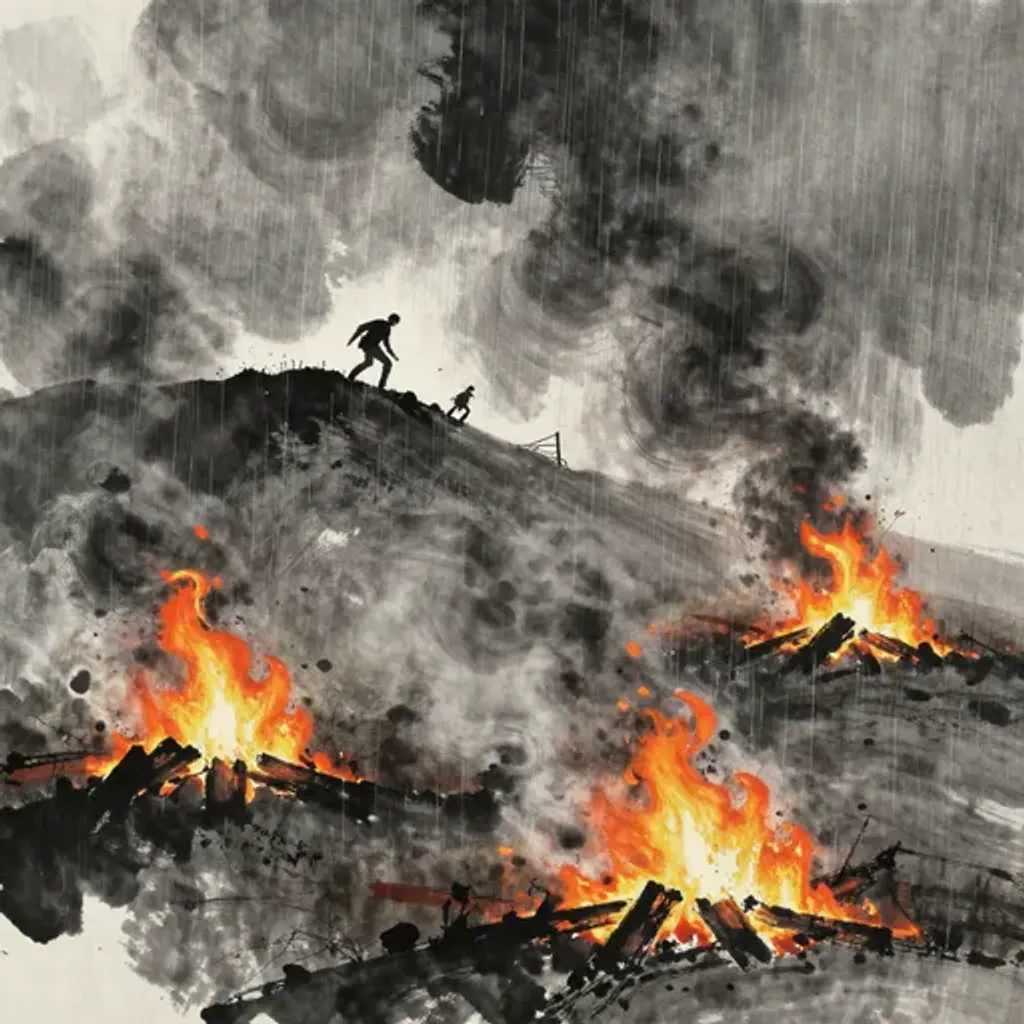
三火起明,雨滅其光。高位疾顛,驕恣誅傷。
Three fires blaze bright; rain extinguishes their light. Those in high places fall headlong; arrogance brings punishment and harm.
— Jiao Yanshou, Yilin (Forest of Changes), 1st century BC
Commentary
Fire above water, and the flames that once illuminated are now extinguished by rain. Three fires blaze bright, but the downpour quenches their light. Those who rise to high positions fall headlong; arrogance and excess invite punishment. The three fires may refer to three sources of power or three figures whose brilliance attracted destruction. From Before Completion to Obstruction, fire-over-water transforms into water pooling atop the mountain — the image of impassable difficulty. The verse traces a classic arc of hubris: rise, brilliance, exposure, collapse. Obstruction's counsel is to turn inward and cultivate virtue when the way forward is blocked. Those who keep climbing when the mountain is flooded will only drown faster.
未濟 → 解
Hexagram 64 → Hexagram 40: Deliverance
Changing lines: 6
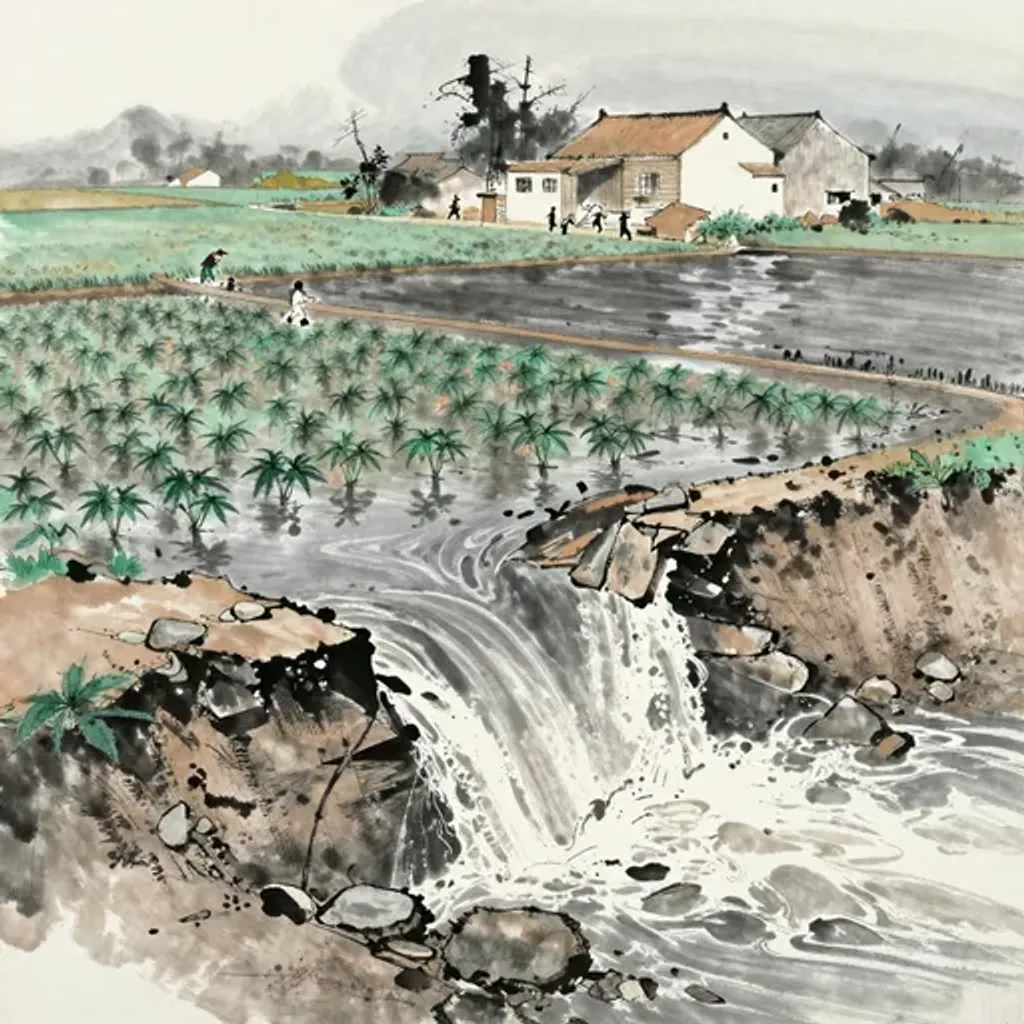
承川決水,為吾之祟,使我心憒。毋樹麻枲,居止凶咎。
Breaching river, releasing water; it becomes my bane; it throws my mind into turmoil. Plant neither hemp nor flax; to stay here brings only misfortune.
— Jiao Yanshou, Yilin (Forest of Changes), 1st century BC
Commentary
Fire above water, and the dam breaks. River water is diverted and becomes a curse, leaving the mind in turmoil. Do not plant hemp or ramie here; staying in this place brings only misfortune. The verse is a flood narrative: water management has failed, the breach has turned beneficial water into destructive force, and the land is ruined for agriculture. From Before Completion to Deliverance, fire-over-water transforms into thunder and rain together — the spring thunderstorm that releases accumulated tension. Deliverance pardons faults and forgives crimes; it is the moment of liberation after crisis. But the verse warns that liberation requires abandoning the flooded ground. One must leave the ruined field to find higher land where the thunderstorm becomes cleansing rather than catastrophic.
未濟 → 損
Hexagram 64 → Hexagram 41: Decrease
Changing lines: 1, 4
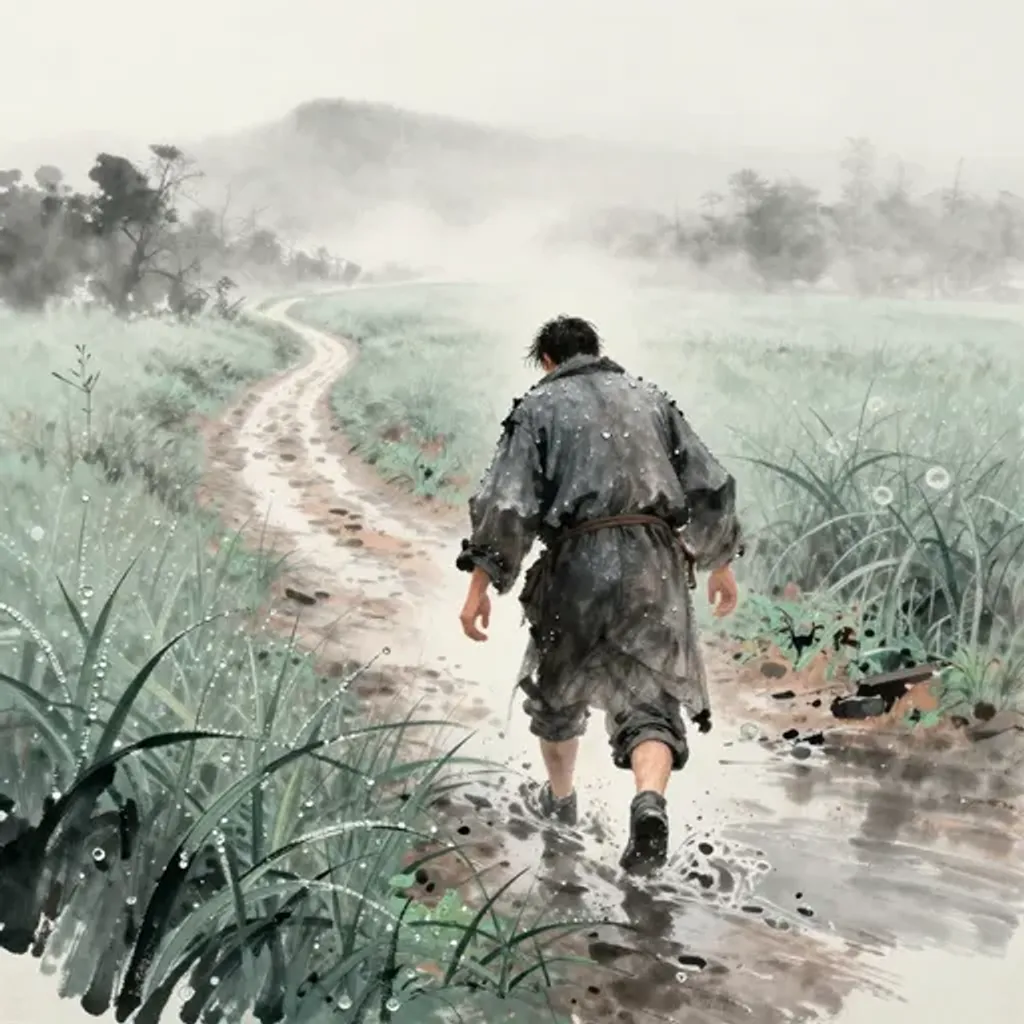
厭浥晨夜,道多湛露。沾我襦袴,重難以步。
Damp and dripping through the night; the road is thick with heavy dew. It soaks my jacket and trousers; weighted down, I can barely walk.
— Jiao Yanshou, Yilin (Forest of Changes), 1st century BC
Commentary
Fire above water, and the morning dew weighs down the traveler. Day and night the roads are drenched; heavy dew soaks jacket and trousers until walking becomes nearly impossible. The image echoes the Shijing's 'Zhan Lu' ode, where dew signifies the sovereign's gracious feast, but here the dew is oppressive rather than auspicious — moisture that should nourish instead burdens. From Before Completion to Decrease, fire-over-water transforms into a mountain rising above the lake, which shrinks below. Decrease counsels restraining anger and curbing desire — the discipline of doing less. The soaked garments are excess made physical: when even the dew becomes too much to bear, something must be shed. The traveler must lighten the load or stop moving entirely.
未濟 → 益
Hexagram 64 → Hexagram 42: Increase
Changing lines: 1, 2, 4, 5
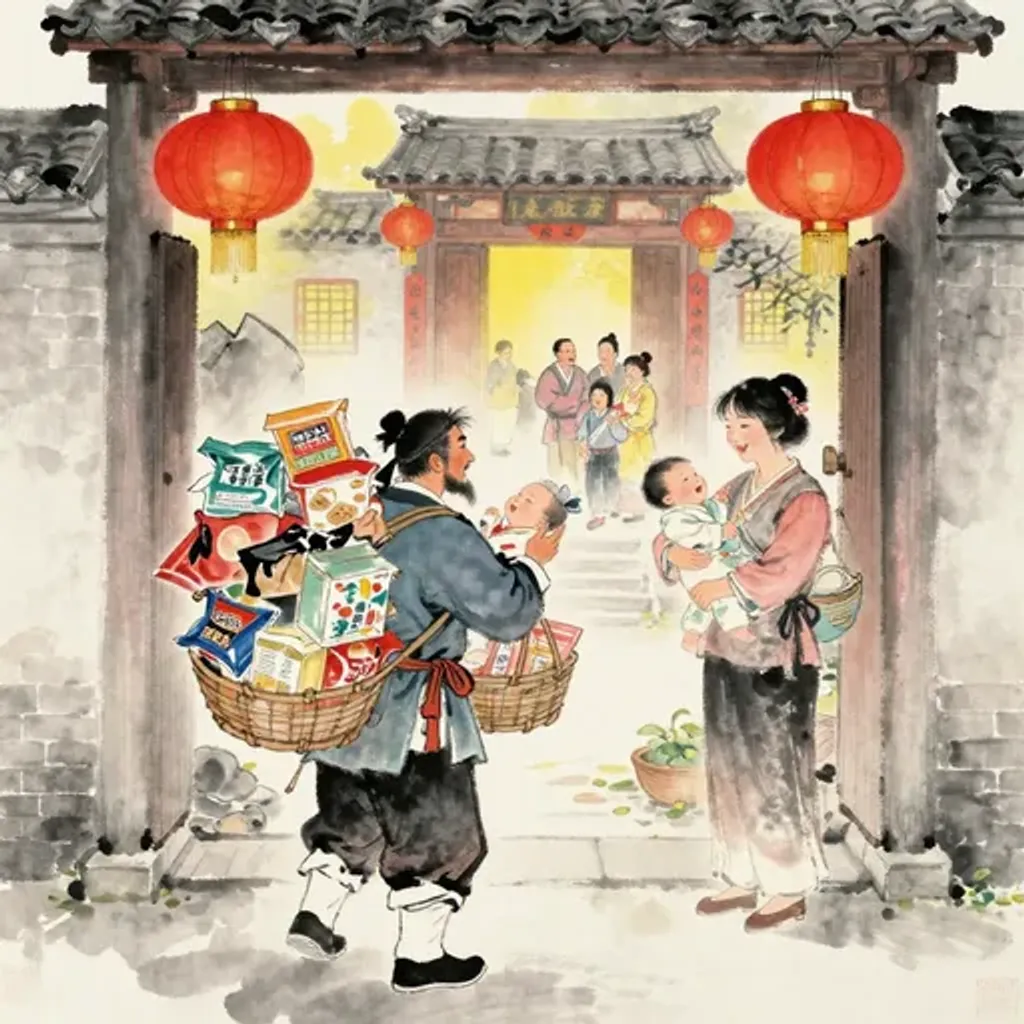
宜行賈市,所求必倍。載喜抱子,與利為友。
Favorable for trade and commerce; all that is sought returns doubled. Bearing joy, holding a child; one befriends good fortune.
— Jiao Yanshou, Yilin (Forest of Changes), 1st century BC
Commentary
Fire above water, the situation unsettled, yet trade prospers. It is fit to go to market and do business; whatever is sought returns doubled. One carries home joy and embraces a child; profit becomes a companion. The verse is unambiguously commercial and fertile — trade, children, and wealth all multiplying. From Before Completion to Increase, fire-over-water transforms into wind above thunder, the image of dynamic augmentation. Increase is the hexagram where the ruler diminishes the upper to benefit the lower, creating a rising tide. The verse captures Increase's mechanism: investment yields returns, unions produce offspring, and the cycle of benefit feeds itself. What Before Completion left unfinished, Increase completes through generative circulation.
未濟 → 夬
Hexagram 64 → Hexagram 43: Breakthrough
Changing lines: 1, 3, 5, 6
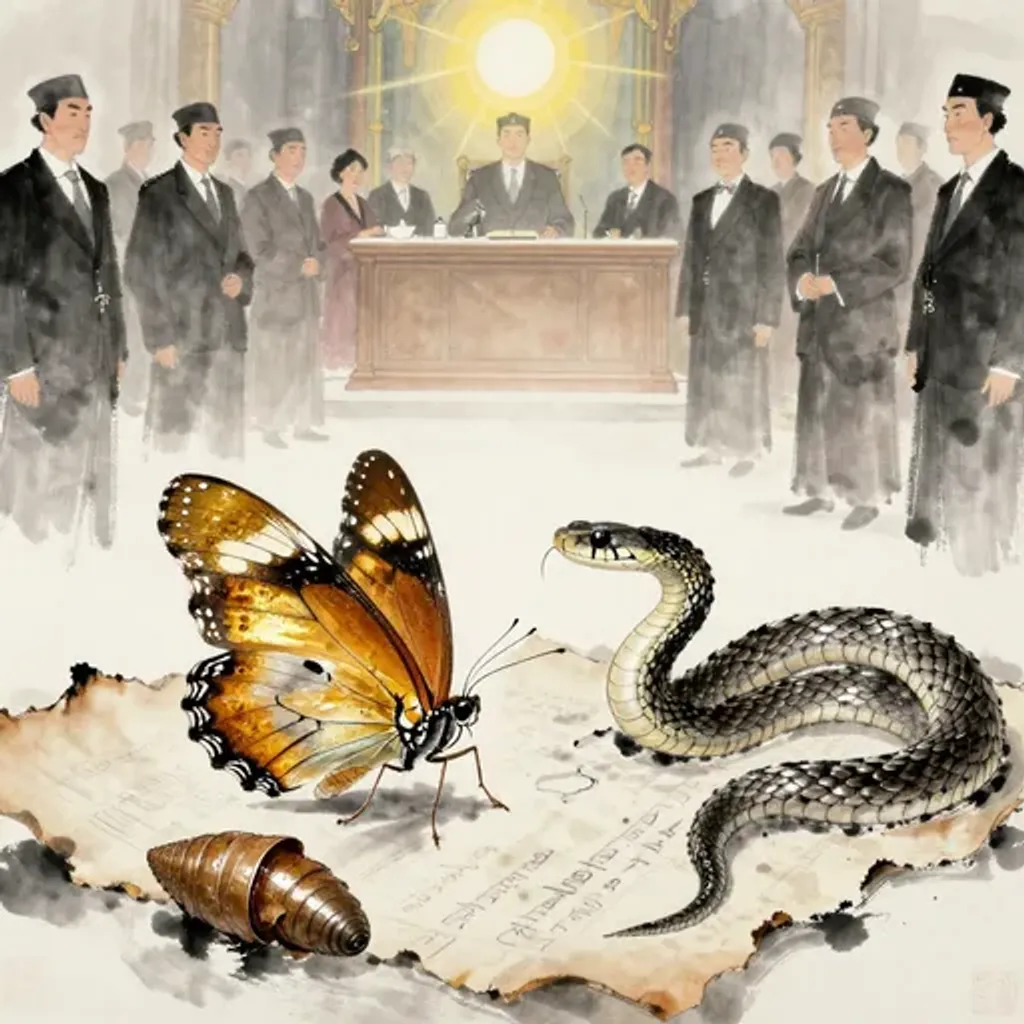
陰變為陽,女化為男。治道得通,君臣相承。
A butterfly breaks its cocoon, spreading golden wings; a snake sheds its skin, scales gleaming brighter. Old laws are swept away, new statutes replace them — every face in court looks renewed.
— Jiao Yanshou, Yilin (Forest of Changes), 1st century BC
Commentary
Fire above water, and the old order dissolves. The original verse reads: 'Yin transforms into yang; female transforms into male. The Way of governance breaks through; ruler and minister sustain one another.' This is a verse about categorical reversal as political renewal — the fundamental polarity flips, and through that inversion, blockage clears. From Before Completion to Breakthrough, fire-over-water transforms into the lake rising above heaven, the image of decisive resolution. Breakthrough is the hexagram of the single yin line finally expelled by five advancing yangs. The verse's 'yin becoming yang' enacts this dynamic directly: what was passive becomes active, what was blocked breaks through, and the political order regenerates through the very act of reversal.
未濟 → 姤
Hexagram 64 → Hexagram 44: Coming to Meet
Changing lines: 3, 5
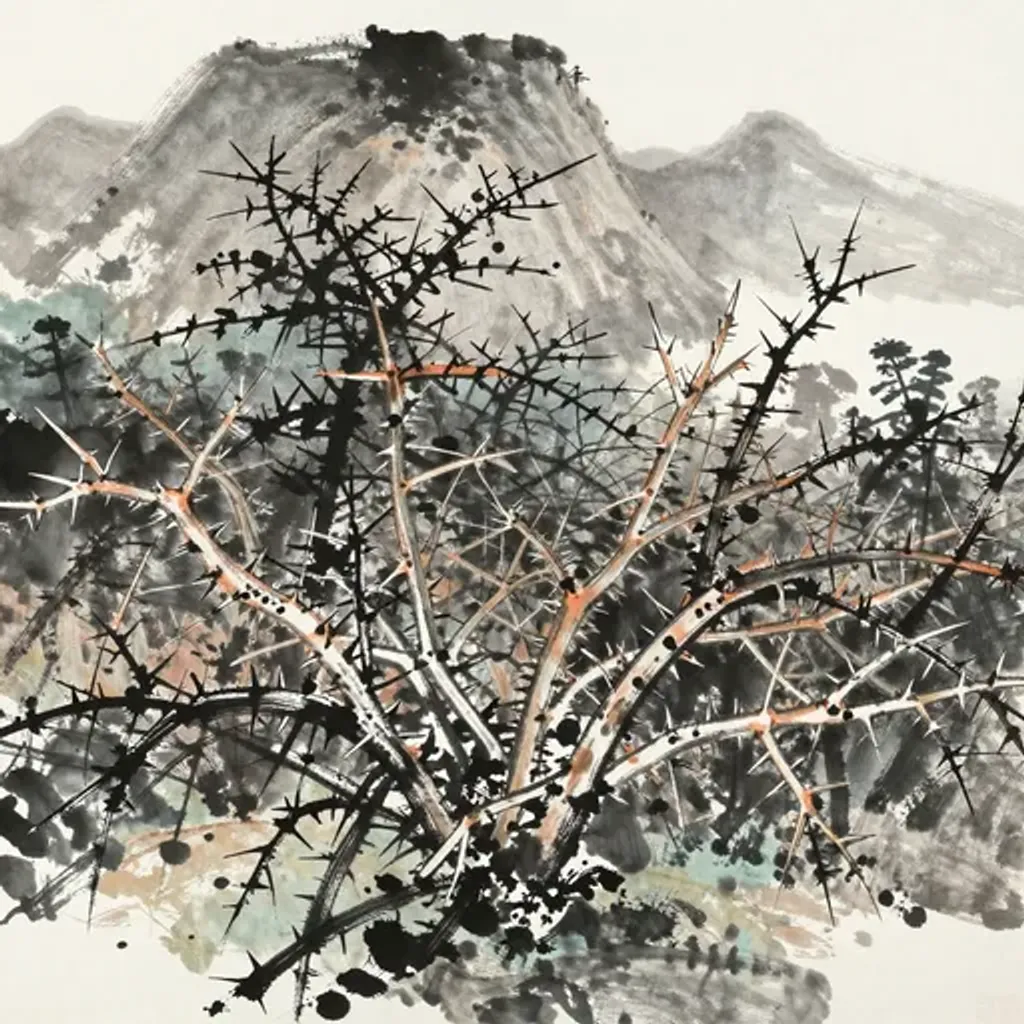
樹蔽牡荊,生蘙山旁。仇敵背憎,孰肯相迎?
Trees shade the thorny jingke; growing wild beside the mountain. Enemies harbor mutual hate; who would offer welcome?
— Jiao Yanshou, Yilin (Forest of Changes), 1st century BC
Commentary
Fire above water, and the vitex tree is choked by overgrowth. Trees crowd the male vitex, growing wild beside the mountain, blocking it from light. Enemies nurse mutual hatred at each other's backs; who would be willing to welcome the other? The vitex (牡荊) was a humble plant associated with austere self-discipline, yet here it is smothered by unchecked growth. From Before Completion to Coming to Meet, fire-over-water transforms into heaven with wind moving beneath — the unexpected encounter, the uninvited guest. Coming to Meet warns against the yin line that infiltrates from below. The verse dramatizes this wariness: when hostility is structural and deep-rooted, any encounter is suspected of being an ambush rather than a meeting.
未濟 → 萃
Hexagram 64 → Hexagram 45: Gathering Together
Changing lines: 2, 5, 6
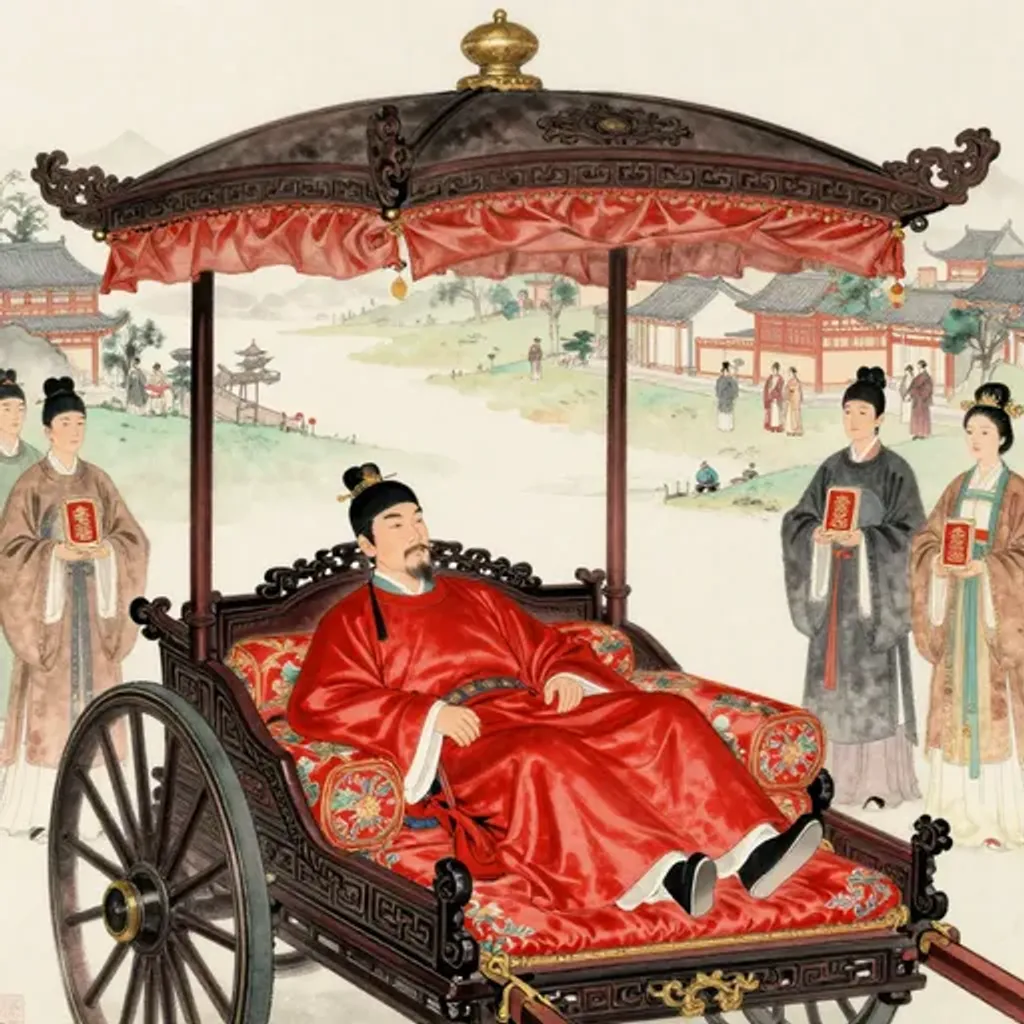
坐茵乘軒,據德宰臣。虞叔受命,六合和親。
Seated on cushions, riding in the carriage; established in virtue as chief minister. Yu Shu receives the mandate; the six realms join in harmony.
— Jiao Yanshou, Yilin (Forest of Changes), 1st century BC
Commentary
Fire above water, the unfinished order seeking resolution. A minister sits upon embroidered mats and rides in a canopied carriage, wielding virtue as his instrument of governance. Yu Shu receives the mandate; the six directions are united in harmony. 'Yu Shu' (虞叔) may refer to a virtuous minister of the legendary age, possibly connected to the Shun-era bureaucracy. The six directions (六合) encompass the entire cosmos — north, south, east, west, above, and below. From Before Completion to Gathering, fire-over-water transforms into the lake resting upon the earth. Gathering is the hexagram of convergence: the people assemble, the community consolidates, and the ruler prepares for the unexpected. The verse shows Gathering achieved through moral authority rather than force.
未濟 → 升
Hexagram 64 → Hexagram 46: Pushing Upward
Changing lines: 3, 4, 6
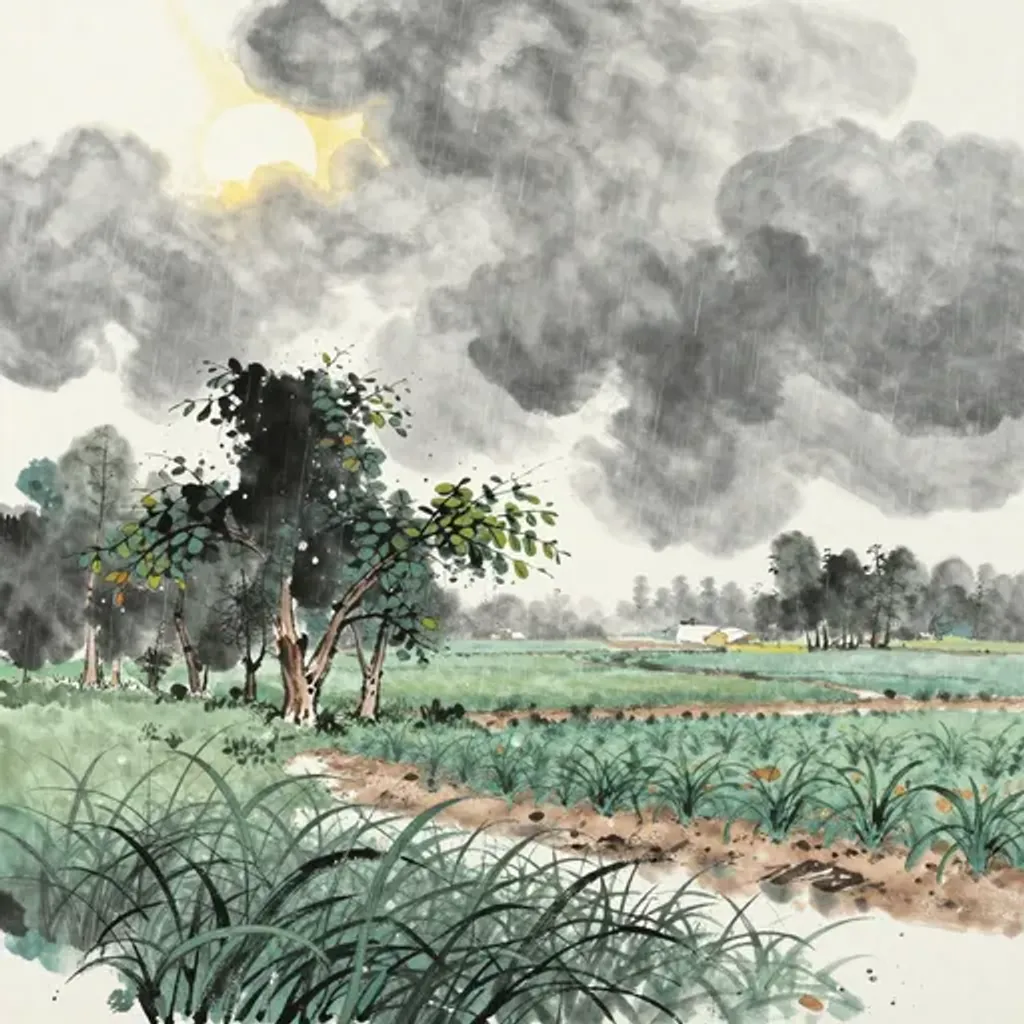
雲興蔽日,雨集草木,年茂歲熟。
Clouds arise and veil the sun; rain gathers on grass and trees; the year ripens in abundance.
— Jiao Yanshou, Yilin (Forest of Changes), 1st century BC
Commentary
Fire above water, the unfinished season waiting to ripen. Clouds rise and block the sun; rain gathers on grass and trees; the year matures and the harvest is rich. The verse is pure natural process — meteorological conditions aligning to produce abundance. No human agent intervenes; the clouds simply gather, the rain simply falls, and the crops simply grow. From Before Completion to Pushing Upward, fire-over-water transforms into wood growing within the earth. Pushing Upward is the hexagram of gradual, organic ascent — the tree that accumulates height through small daily increments. The verse captures this dynamic: clouds darken the sky not as threat but as nourishment, and what grows beneath the rain does so steadily, invisibly, until the harvest declares itself complete.
未濟 → 困
Hexagram 64 → Hexagram 47: Oppression
Changing lines: 5, 6
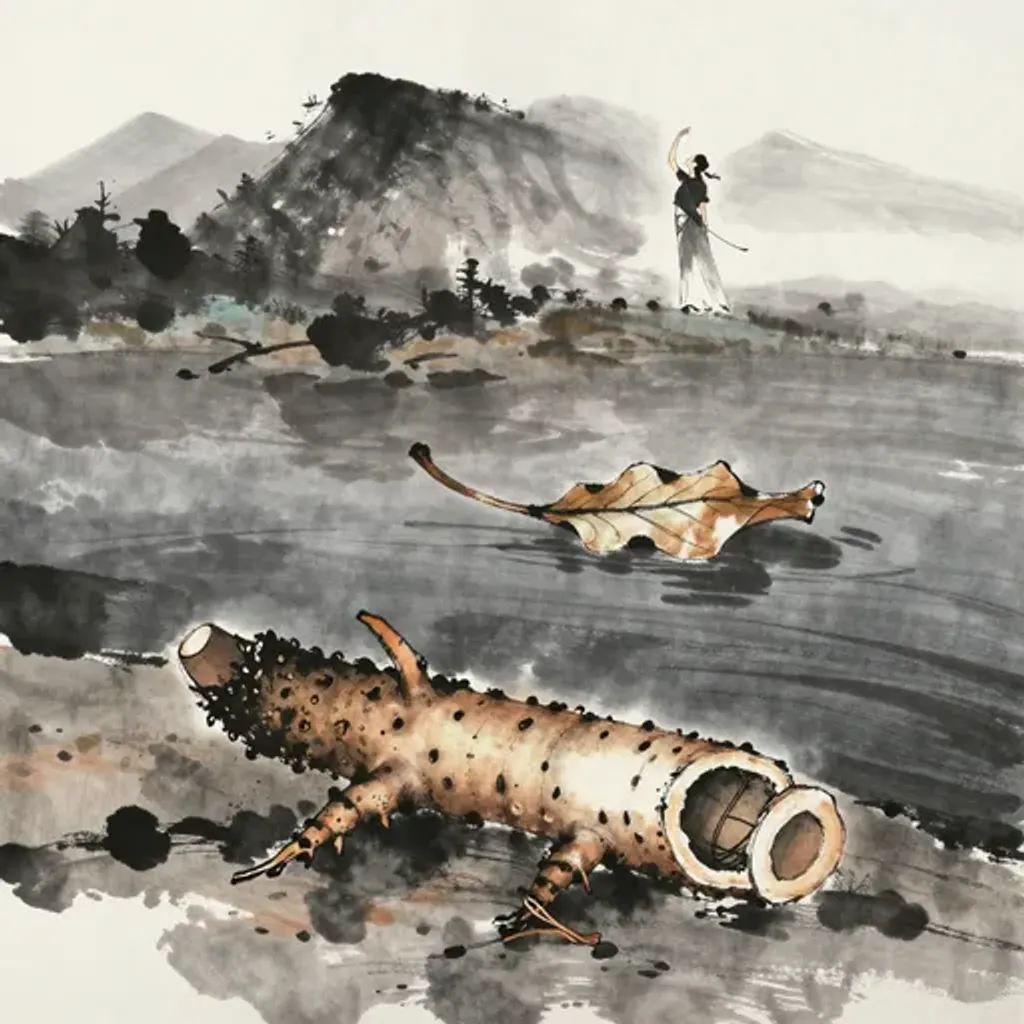
蟠梅折枝,與母別離,絕不相知。
The broken lotus root — no silk threads connecting. The fallen leaf parts from the branch, never to return. A mother calls her child's name, but the wind does not carry it. The child gazes toward the old garden — ten thousand mountains between.
— Jiao Yanshou, Yilin (Forest of Changes), 1st century BC
Commentary
Fire above water, and the severance is total. The original verse speaks of a plum branch broken from its tree — separated from the mother, never to know each other again. The modern rewrite elaborates: cut lotus root with no connecting threads, fallen leaves that cannot return to the branch, a mother calling her child's name into the wind, the child gazing homeward across ten thousand mountains. From Before Completion to Oppression, fire-over-water transforms into the lake with no water — the most desolate image in the Yi. Oppression counsels 'devoting one's life to pursuing one's purpose,' but here the purpose is reunion, and reunion is impossible. The mountains between mother and child are the very structure of oppression: visible yet impassable.
未濟 → 井
Hexagram 64 → Hexagram 48: The Well
Changing lines: 3, 4, 5, 6
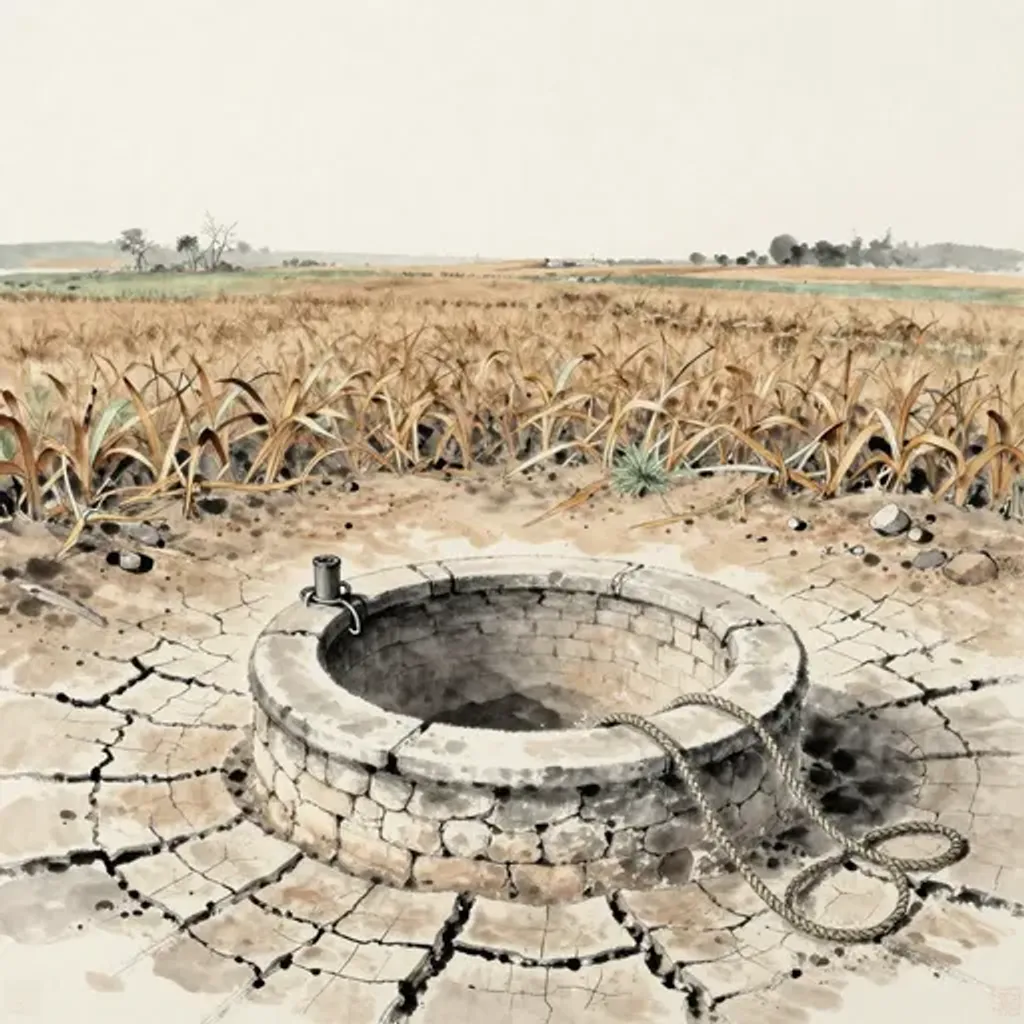
天旱水涸,枯槁无澤。困於沙石,未有所獲。
Heaven is parched, waters gone; withered and dry, no moisture remains. Trapped among sand and stones; nothing has been gained.
— Jiao Yanshou, Yilin (Forest of Changes), 1st century BC
Commentary
Fire above water, and the earth is parched to the bone. Heaven withholds rain, water sources dry up, all is scorched and barren. Trapped among sand and stones, nothing can be obtained. The verse presents absolute resource failure — the well has run dry. From Before Completion to the Well, fire-over-water transforms into water above wood, the image of the well that draws from inexhaustible depths. The irony is razor-sharp: the Well hexagram promises that 'the town may change but the well does not change,' yet the verse describes a well that has failed entirely. This is the Well's negative image — what happens when the source that should be eternal is blocked. The task becomes clearing the well, not digging a new one.
未濟 → 革
Hexagram 64 → Hexagram 49: Revolution
Changing lines: 1, 2, 3, 5, 6
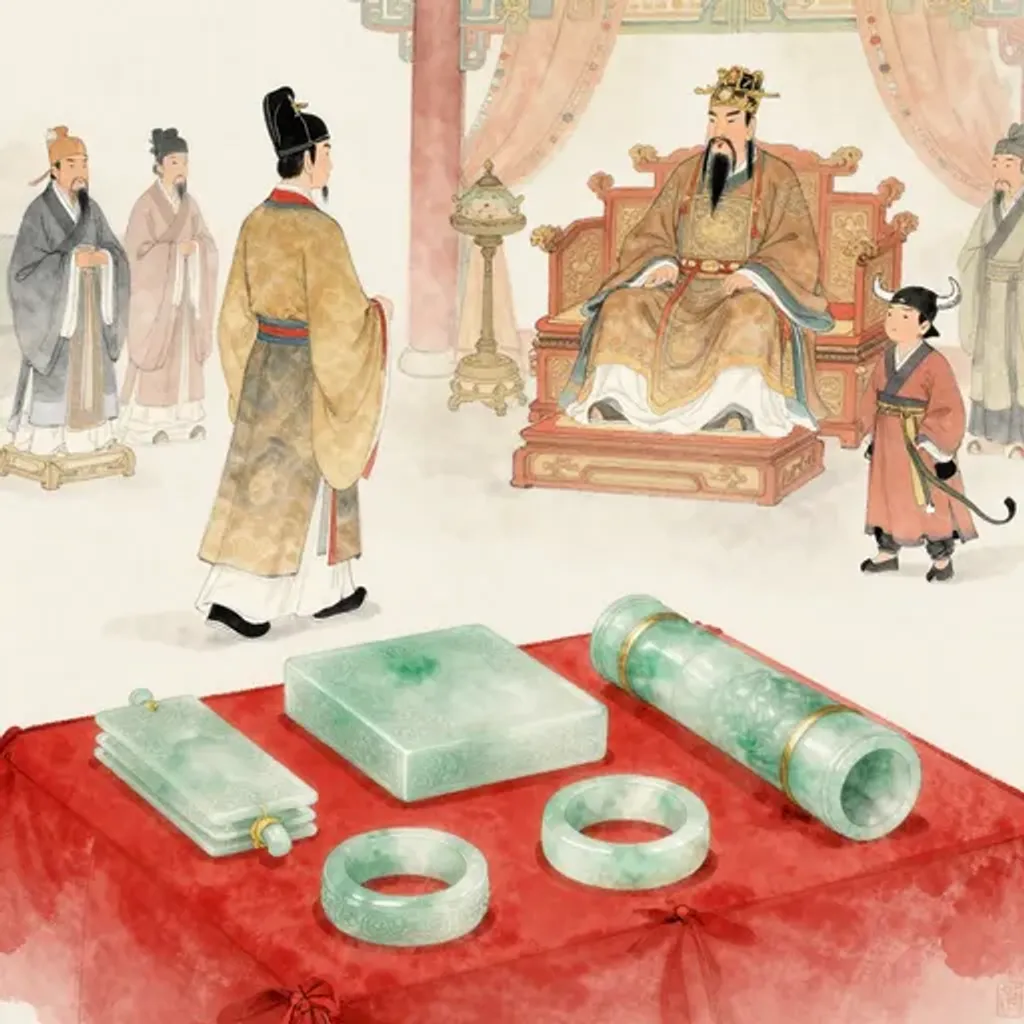
圭璧琮璜,執禮見王。百里甯戚,應聘齊秦。
Jade tablet, jade ring, jade tube; bearing ritual gifts to see the king. Ning Qi of Baili; answered the summons to Qi and Qin.
— Jiao Yanshou, Yilin (Forest of Changes), 1st century BC
Commentary
Fire above water, and a worthy presents jade tablets before the king. Gui-discs, bi-jades, cong-tubes, and huang-pendants — the full set of ritual jades signifying legitimate authority. Baili Xi and Ning Qi answer the call, serving Qi and Qin. Both men rose from obscurity: Baili Xi was ransomed from slavery for five ram skins to become Qin's chief minister; Ning Qi sang while feeding cattle until Duke Huan of Qi recognized his talent. From Before Completion to Revolution, fire-over-water transforms into fire within the lake. Revolution is the hexagram of legitimate dynastic change — 'Tang and Wu made revolution in accord with Heaven.' The verse assembles the instruments and the agents of transformation: ritual legitimacy and hidden talent, both essential for a just revolution.
未濟 → 鼎
Hexagram 64 → Hexagram 50: The Cauldron
Changing lines: 3
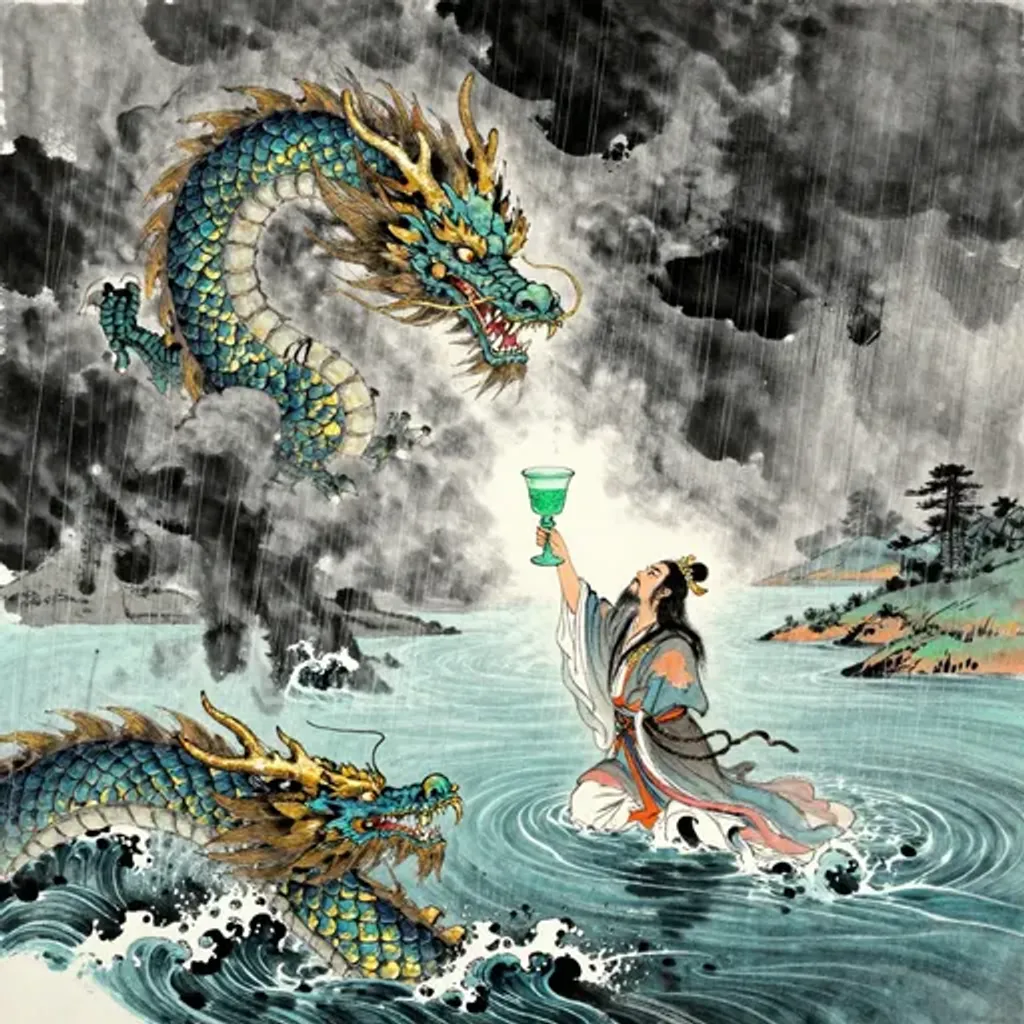
龍渴求飲,黑雲景從。河伯捧醴,跪進酒漿,流潦滂滂。
The dragon thirsts and seeks drink; black clouds follow in attendance. The River Lord offers sweet wine; kneeling to present the sacred cup; rains fall in rushing floods.
— Jiao Yanshou, Yilin (Forest of Changes), 1st century BC
Commentary
Fire above water, and the dragon thirsts for rain. Dark clouds gather in its wake as the Earl of the River kneels to present sweet wine. Libations are offered, and torrents pour forth. The dragon as rain-bringer is one of Chinese mythology's oldest motifs. The Earl of the River (河伯), deity of the Yellow River, here acts as servant rather than sovereign — even the river god defers to the dragon's authority over water. From Before Completion to the Cauldron, fire-over-water transforms into fire above wood, the image of the sacrificial vessel. The Cauldron is the hexagram of transformative nourishment — raw ingredients refined by fire into sacred sustenance. The dragon's thirst is answered by ritual offering; the rain follows sacrifice. Before Completion's parched disorder gives way to the Cauldron's civilizing alchemy.
未濟 → 震
Hexagram 64 → Hexagram 51: The Arousing Thunder
Changing lines: 1, 2, 6
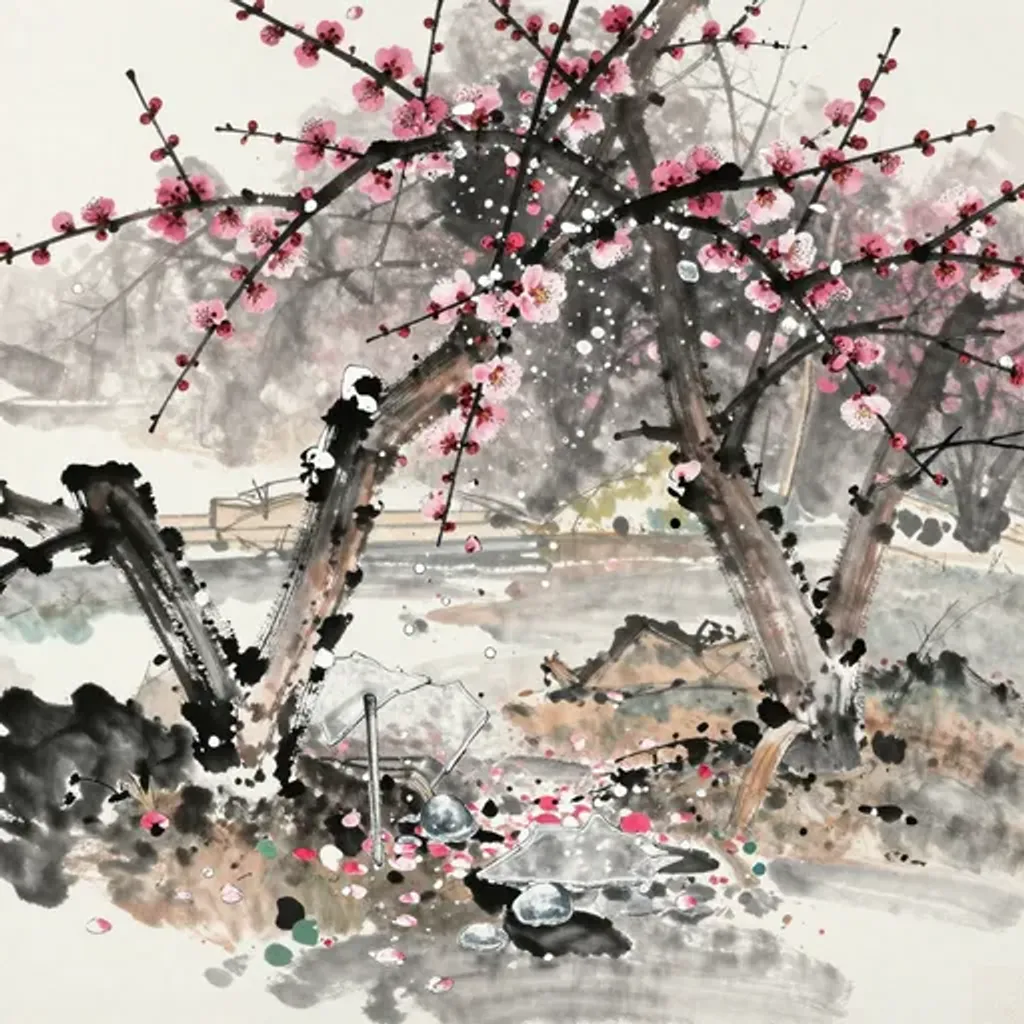
雹梅零蒂,心思憒憒,亂我靈氣。
Hail batters the plum blossoms, petals fall from their stems; mind and thought are thrown into turmoil; my spirit is thrown into disarray.
— Jiao Yanshou, Yilin (Forest of Changes), 1st century BC
Commentary
Fire above water, and hail shatters the plum blossoms. Petals and stems are stripped away; the mind is thrown into turmoil, and one's vital spirit is disordered. The image is of sudden, brutal damage to something delicate — hailstones destroying spring blooms at their most vulnerable moment. From Before Completion to the Arousing, fire-over-water transforms into doubled thunder. The Arousing shakes the world and then shakes it again; the gentleman responds with fear and self-examination. The hail that destroys the plum tree is Thunder's destructive face — the shock that arrives without warning and leaves devastation. Yet Thunder also brings clarity through fear: the one whose spirit is disordered by the blow may find, in the aftermath, a sharper sense of what matters.
未濟 → 艮
Hexagram 64 → Hexagram 52: Keeping Still Mountain
Changing lines: 2, 3, 4
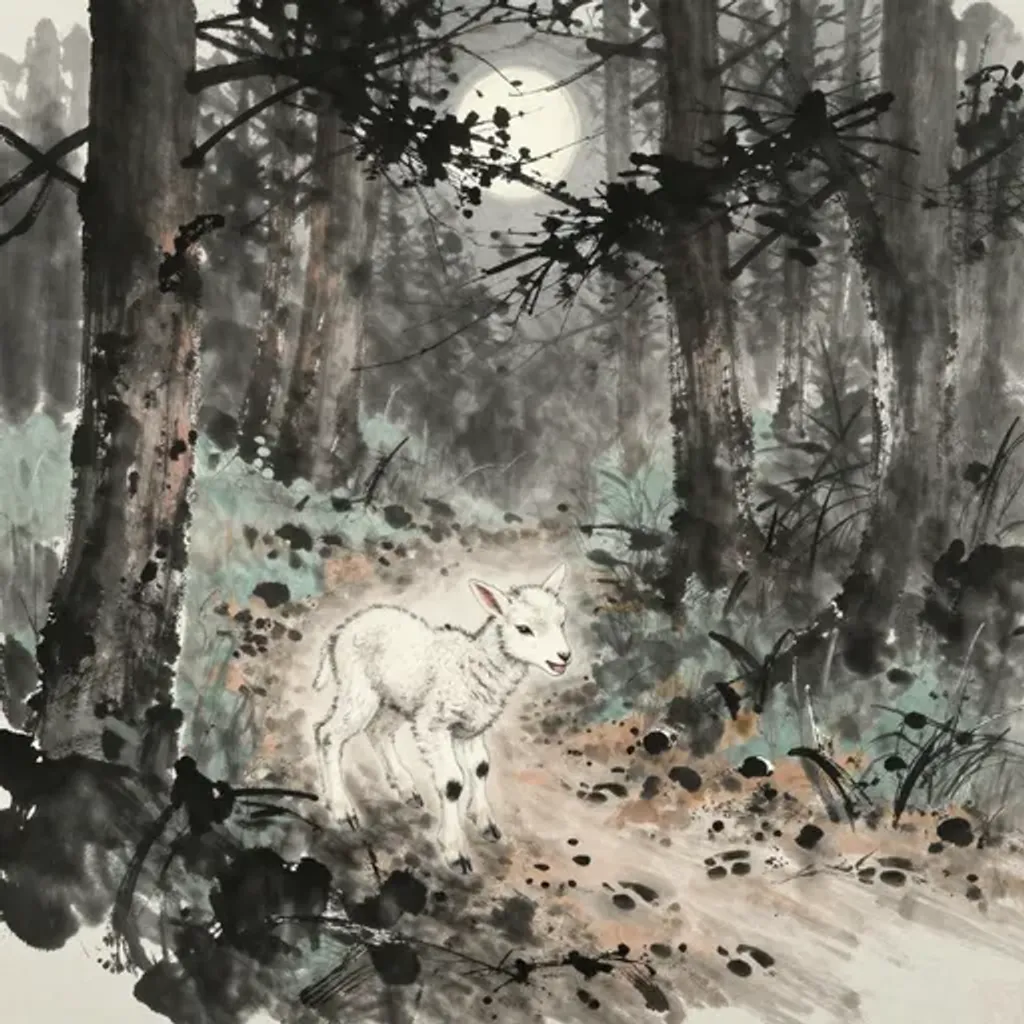
鹿求其子,虎廬之里。唐伯季耳,貪不我許。
A lamb enters the forest searching for its mother — deep in the woods, wolf tracks are everywhere. Crying bleats go unanswered — moonlight among the pines, shadows upon shadows.
— Jiao Yanshou, Yilin (Forest of Changes), 1st century BC
Commentary
Fire above water, and the vulnerable creature enters danger. The original verse reads: 'The deer seeks its fawn in the tiger's lair. Tang Bo and Ji Er are greedy and will not spare me.' The deer-in-tiger's-den is an image of innocence walking into predation, a parent's love leading them into mortal danger. Tang Bo and Ji Er appear to be local lords or figures known for rapacity. From Before Completion to Keeping Still, fire-over-water transforms into doubled mountain — the image of absolute stillness, of thinking that does not stray beyond its proper bounds. The verse is a stark warning: the mountain's stillness here is not serenity but paralysis. The deer cannot move; the tiger's lair permits no exit. Before Completion's disorder resolves into the most frozen form of non-completion.
未濟 → 漸
Hexagram 64 → Hexagram 53: Development
Changing lines: 2, 3, 4, 5
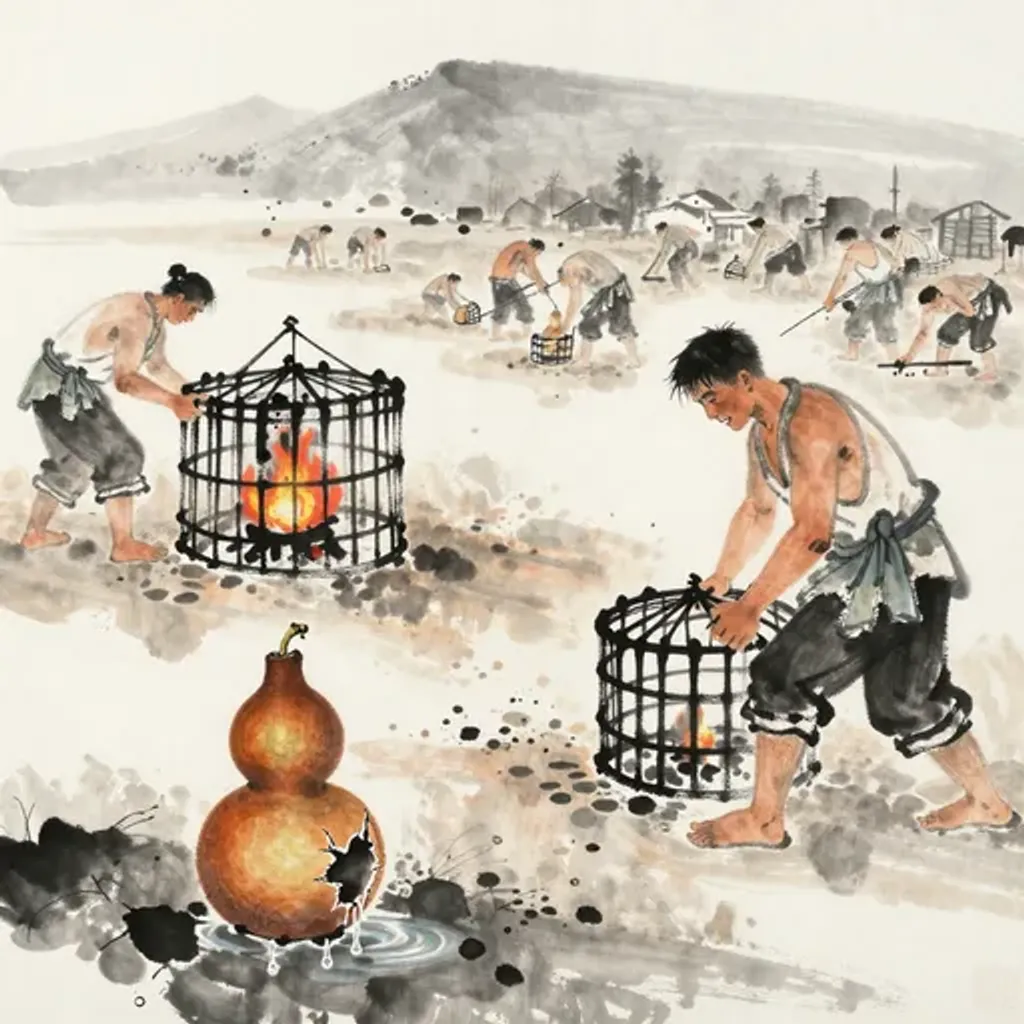
穿匏挹水,篝鐵燃火。勞疲力竭,飢渴為禍。
Piercing gourds to haul water; iron cages to carry fire. Laboring until strength is spent; hunger and thirst become the ruin.
— Jiao Yanshou, Yilin (Forest of Changes), 1st century BC
Commentary
Fire above water, and primitive tools meet stubborn materials. A gourd is pierced to draw water; iron scraps are gathered to kindle fire. Labor is exhausting, strength is spent, and hunger and thirst become the true enemies. The verse portrays subsistence at its most elemental — the technology has regressed to the barest minimum, and even that barely functions. From Before Completion to Development, fire-over-water transforms into wood growing slowly on the mountain. Development is the hexagram of gradual, patient progress — a tree ascending by imperceptible degrees. The contrast between the verse's desperate improvisation and Development's measured growth is instructive: even the most wretched beginning can lead to slow maturation, but only if the exhausted worker survives long enough to let the process unfold.
未濟 → 歸妹
Hexagram 64 → Hexagram 54: The Marrying Maiden
Changing lines: 1, 6
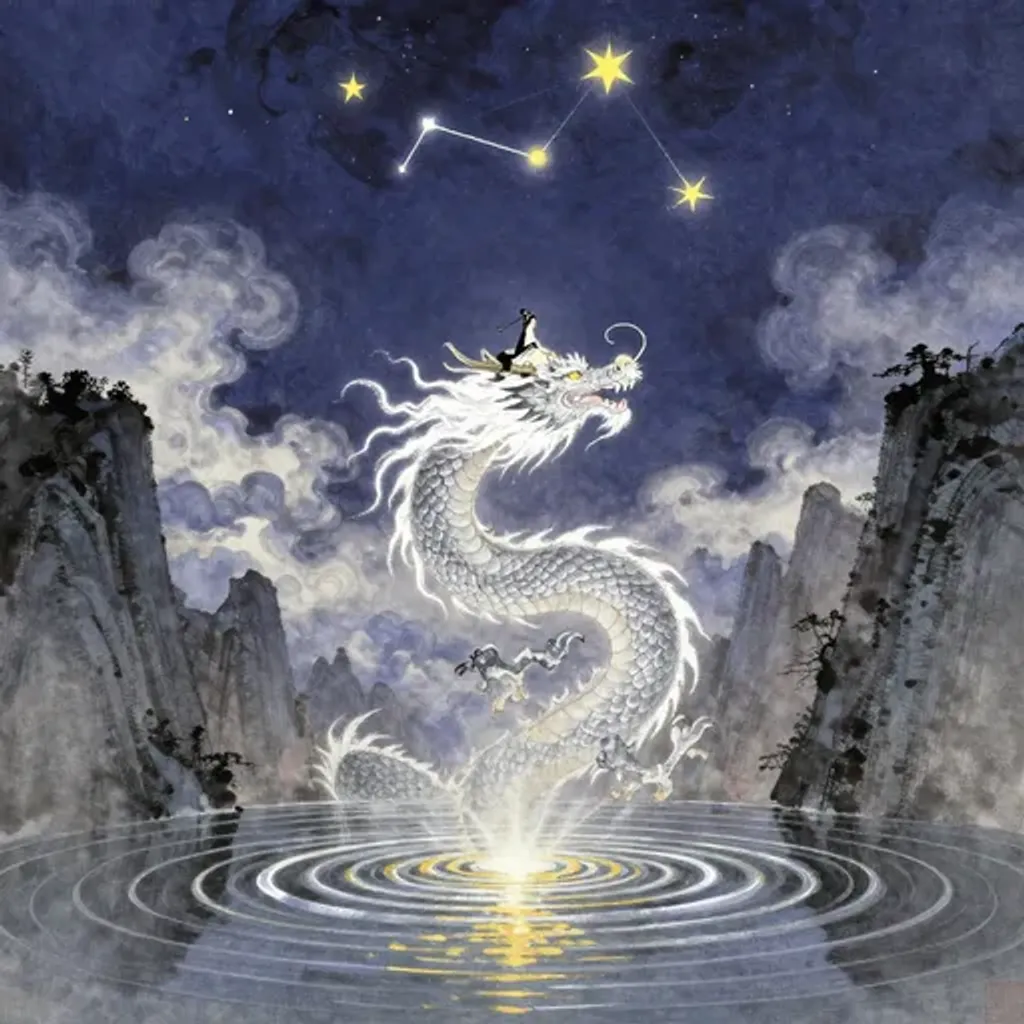
龍生馬淵,壽考且神。飛騰上天,舍宿軒轅,常居樂安。
The dragon born in the horse-pool; long-lived and divine. Flying upward to heaven; dwelling among the stars of Xuanyuan; forever resting in joyful peace.
— Jiao Yanshou, Yilin (Forest of Changes), 1st century BC
Commentary
Fire above water, and a dragon is born in a horse's abyss. Long-lived and numinous, it ascends to heaven, lodges among the stars of Xuanyuan, and dwells forever in peaceful ease. The 'horse abyss' (馬淵) as a dragon's birthplace suggests transformation from the mundane to the celestial — the horse becomes the dragon. Xuanyuan is the constellation associated with the Yellow Emperor, the celestial residence of sovereignty itself. From Before Completion to the Marrying Maiden, fire-over-water transforms into thunder above the lake. The Marrying Maiden is about knowing endings — 'the gentleman understands what is transient by seeing what endures.' The dragon's eternal rest among the stars embodies this: what begins in the depths of a horse-pool ends in celestial permanence.
未濟 → 豐
Hexagram 64 → Hexagram 55: Abundance
Changing lines: 1, 2, 3, 6
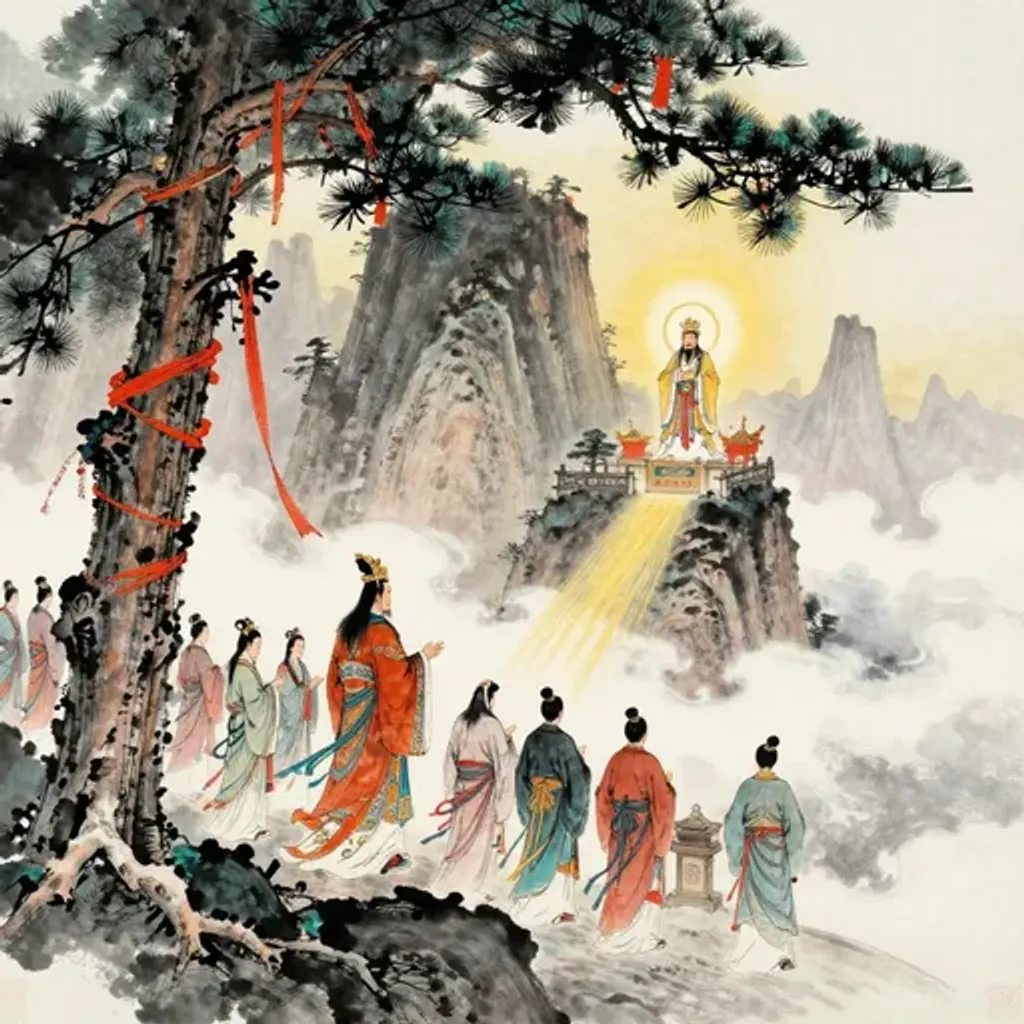
崔嵬北嶽,天神貴客。溫仁正直,主布恩德。衣冠不已,蒙受大福。
Lofty Mount Heng of the north; where heavenly spirits are honored guests. Warm, benevolent, upright, and just; the lord spreads grace and virtue. Robes and crowns without end; great blessings are received.
— Jiao Yanshou, Yilin (Forest of Changes), 1st century BC
Commentary
Fire above water, and the sacred mountain receives its honored guest. Lofty Mount Heng of the north — seat of celestial spirits and noble visitors. Warm, benevolent, upright, and just, the presiding power bestows virtue and grace. Robes and caps are donned without cease, and great blessings descend. The northern sacred mountain (北嶽) was one of the Five Sacred Peaks, associated with winter, endurance, and celestial communication. From Before Completion to Abundance, fire-over-water transforms into thunder and lightning arriving together — the fullest expression of simultaneous illumination and power. Abundance is the hexagram of the zenith, the meridian moment when everything is at maximum. The verse dresses the mountain in ceremonial splendor, matching Abundance's image of a ruler at the height of his brilliance.
未濟 → 旅
Hexagram 64 → Hexagram 56: The Wanderer
Changing lines: 2, 3
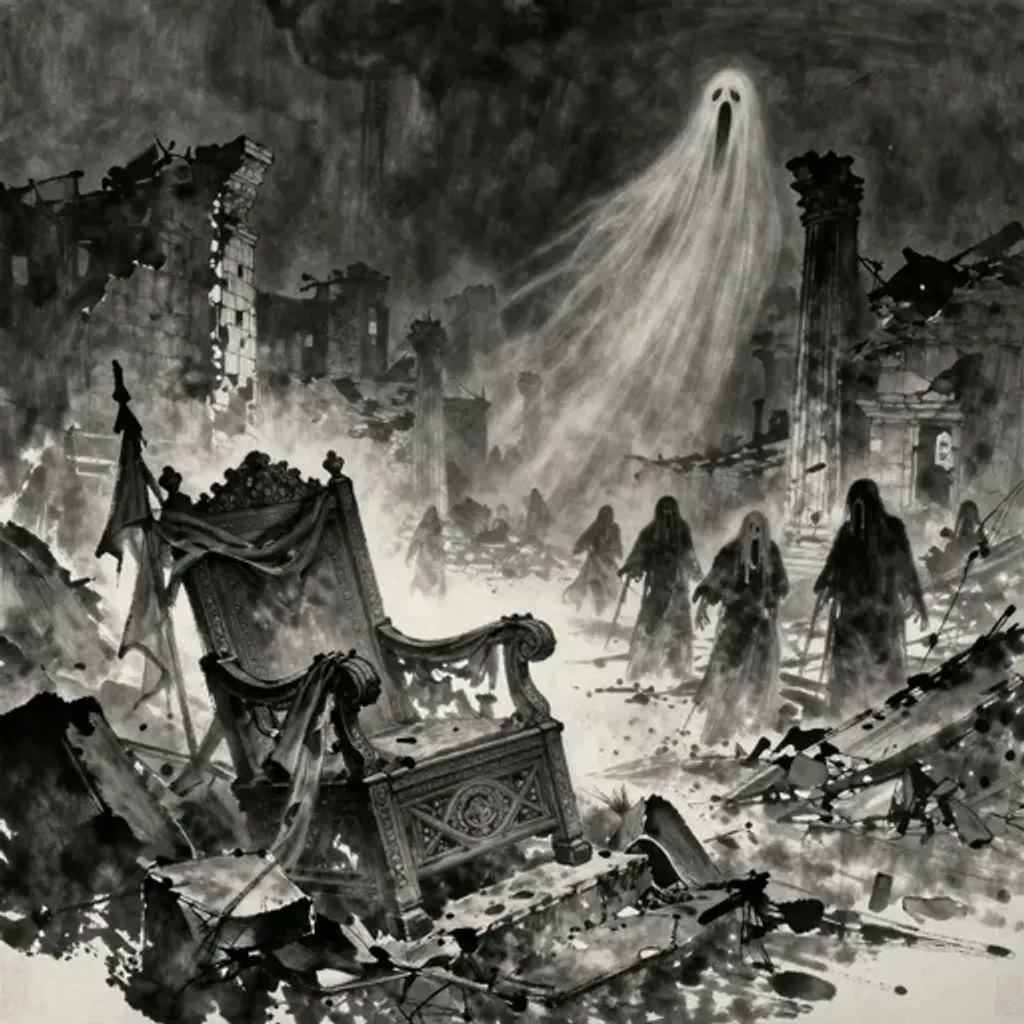
鬼夜哭泣,齊失其國,為下所賊。
Ghosts wail in the night; Qi has lost its state; betrayed by those beneath.
— Jiao Yanshou, Yilin (Forest of Changes), 1st century BC
Commentary
Fire above water, and ghosts weep in the night. The state of Qi has lost its patrimony, overthrown from below. The verse is terse and devastating: nocturnal weeping, state collapse, betrayal by subordinates. This almost certainly alludes to the Tian clan's usurpation of the Jiang rulers of Qi — a process that began with Tian Chengzi's assassination of Duke Jian in 481 BC and culminated in the formal replacement of the ruling house in 386 BC. The ghosts are the dispossessed ancestral spirits of the Jiang line. From Before Completion to the Wanderer, fire-over-water transforms into fire above the mountain — the traveler's fire, burning bright but homeless. The displaced ruling house becomes a permanent wanderer, its ancestral temples empty, its spirits crying into the void.
未濟 → 巽
Hexagram 64 → Hexagram 57: The Gentle Wind
Changing lines: 3, 4, 5
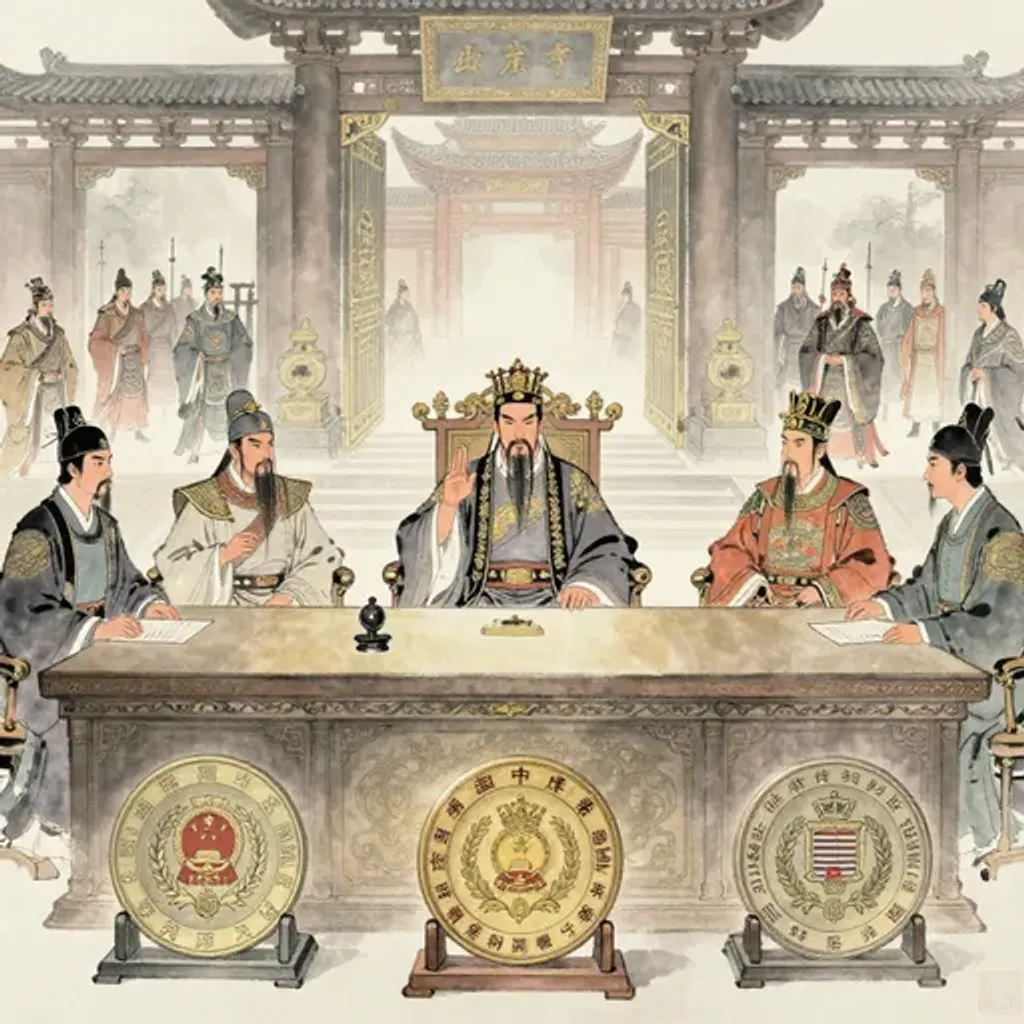
二政多門,君失其權。三家專制,禍起季孫。
Two governments, many gates; the ruler has lost his power. Three families hold control; disaster arises from the house of Ji.
— Jiao Yanshou, Yilin (Forest of Changes), 1st century BC
Commentary
Fire above water, and authority has fragmented. Two administrations govern through multiple gates; the lord has lost his sovereign power. Three great families monopolize control, and disaster springs from the Jisun clan. This is a direct reference to the Three Huan of Lu — the Jisun, Mengsun, and Shusun families who usurped ducal authority for nearly three centuries during the Spring and Autumn period. Confucius himself served under the Jisun clan and lamented their overreach. From Before Completion to the Gentle, fire-over-water transforms into doubled wind — persistent, penetrating influence. The Gentle is the hexagram of commands being issued and carried out. The verse's tragedy is that the commands now come from three sources instead of one; the wind scatters rather than penetrates.
未濟 → 兌
Hexagram 64 → Hexagram 58: The Joyous Lake
Changing lines: 1, 5, 6
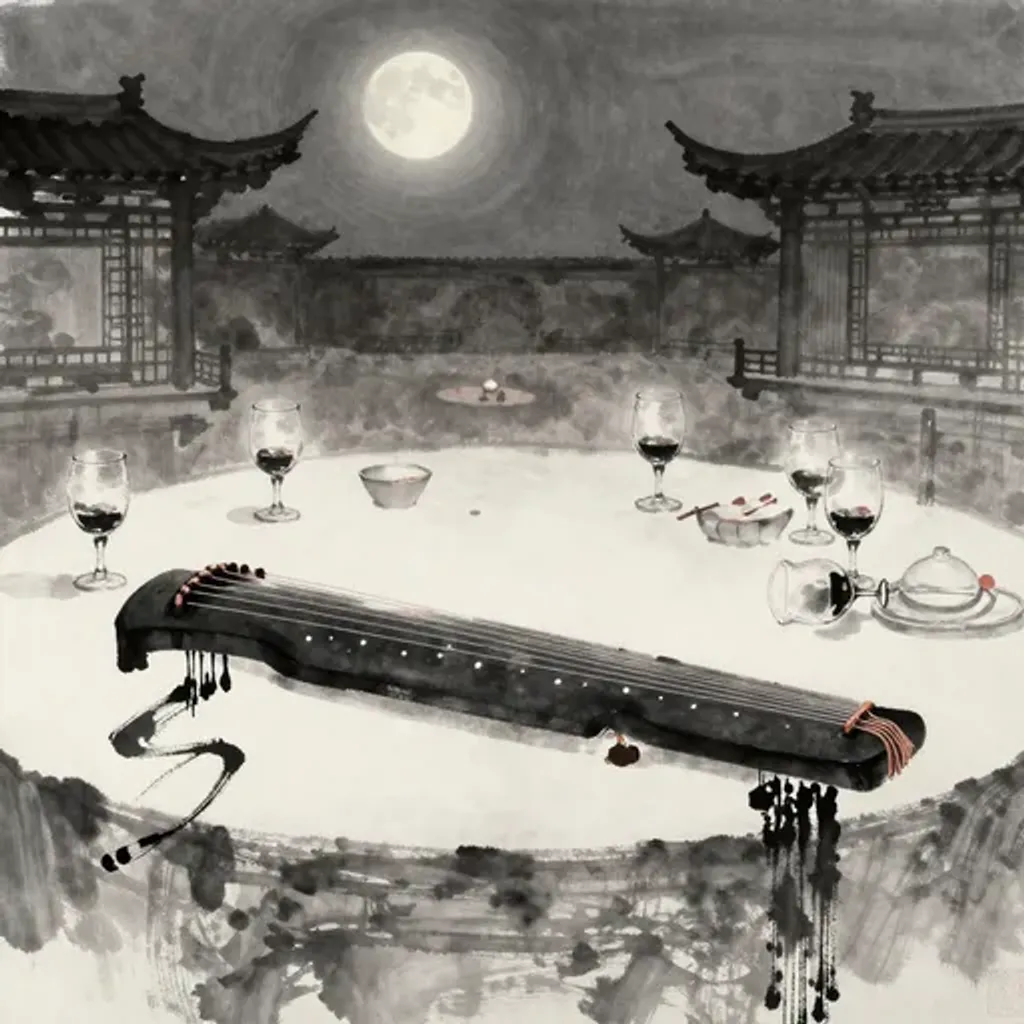
望幸不到,文章未就。王子逐兔,犬踦不得。
The string snaps mid-song; the wine is spent, the cup empty. Guests depart, the tower stands empty — moonlight falls on the abandoned feast.
— Jiao Yanshou, Yilin (Forest of Changes), 1st century BC
Commentary
Fire above water, and the moment of joy has passed. The original verse reads: 'Hopes for the royal visit go unmet; the literary work remains unfinished. The prince chases a rabbit, but the lame dog cannot catch it.' Anticipation is disappointed at every turn — the awaited guest never arrives, the creative project stalls, and even the hunt fails because the instrument is broken. From Before Completion to the Joyous, fire-over-water transforms into doubled lake, the image of shared delight and mutual learning. The irony is exquisite: the Joyous promises companionship and fulfillment, yet the verse delivers solitude and incompletion. Joy here exists only in its absence — the empty cups, the broken string, the guest who never came.
未濟 → 渙
Hexagram 64 → Hexagram 59: Dispersion
Changing lines: 4, 5
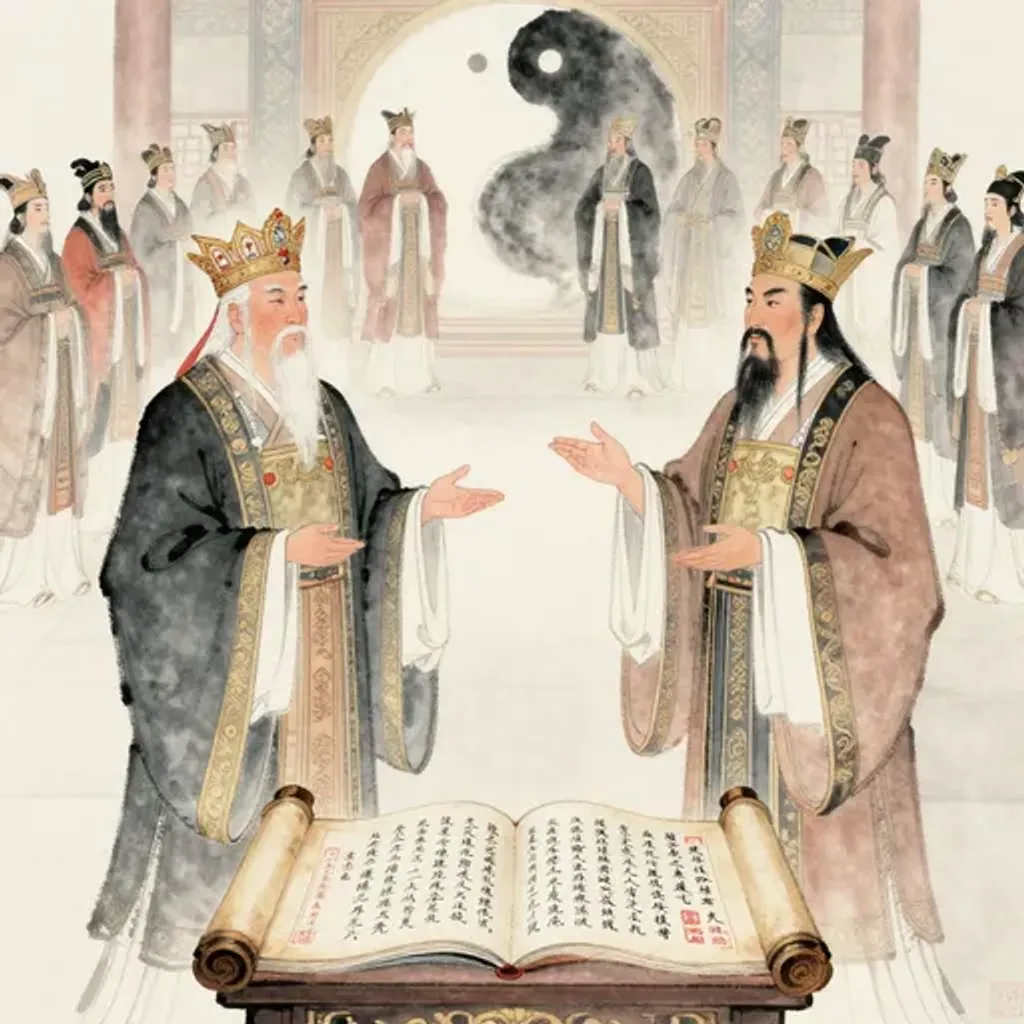
伯虎仲熊,德義昭明。使布五教,陰陽順序。
Bo Hu and Zhong Xiong; virtue and righteousness shine bright. They spread the five teachings abroad; yin and yang follow in proper order.
— Jiao Yanshou, Yilin (Forest of Changes), 1st century BC
Commentary
Fire above water, and two ancient ministers bring order to the world. Bo Hu and Zhong Xiong, radiant in virtue and righteousness, spread the Five Teachings so that yin and yang follow their proper sequence. According to the Zuo Zhuan (Duke Wen, Year 18), Bo Hu and Zhong Xiong were among the 'Eight Originals' (八元) — eight talented sons of Emperor Ku, whom Emperor Shun appointed to disseminate the Five Teachings of filial piety, fraternal respect, and social harmony. From Before Completion to Dispersion, fire-over-water transforms into wind moving above water. Dispersion's image is the ancient king establishing temples and offering sacrifice — restoring cohesion through ritual. The Eight Originals' civilizing mission is precisely this: scattering virtue across the realm so that the dispersed elements realign.
未濟 → 節
Hexagram 64 → Hexagram 60: Limitation
Changing lines: 1, 4, 5, 6
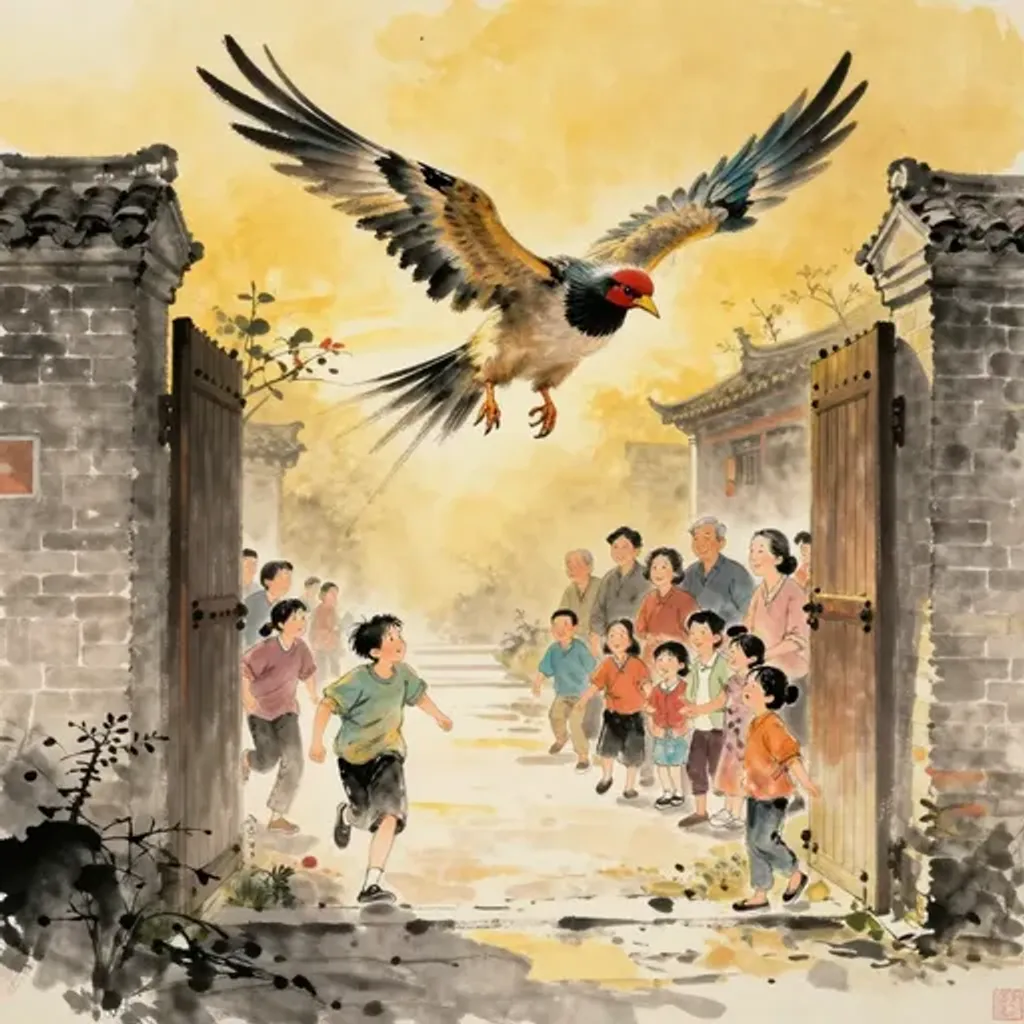
兩足四翼,飛入家國。寧我伯叔,與母相得。
Two feet, four wings; flying into home and state. Bringing peace to uncles and cousins; reuniting with mother in harmony.
— Jiao Yanshou, Yilin (Forest of Changes), 1st century BC
Commentary
Fire above water, and a creature of double capacity arrives. With two feet and four wings, it flies into the homeland, bringing peace to uncles and aunts, reuniting the family with the mother. The 'two feet and four wings' echoes the paired-wing birds of classical mythology — creatures that require partnership to fly, symbols of mutual dependence. Their arrival in the homeland signals reunion and domestic restoration. From Before Completion to Limitation, fire-over-water transforms into water above the lake. Limitation sets boundaries that make life sustainable — not all water can enter the lake; some must be held back. The verse's family reunion works through Limitation's logic: the flying creature arrives not to boundless freedom but to the structured warmth of kinship. True homecoming requires accepting the limits that define a home.
未濟 → 中孚
Hexagram 64 → Hexagram 61: Inner Truth
Changing lines: 1, 4, 5
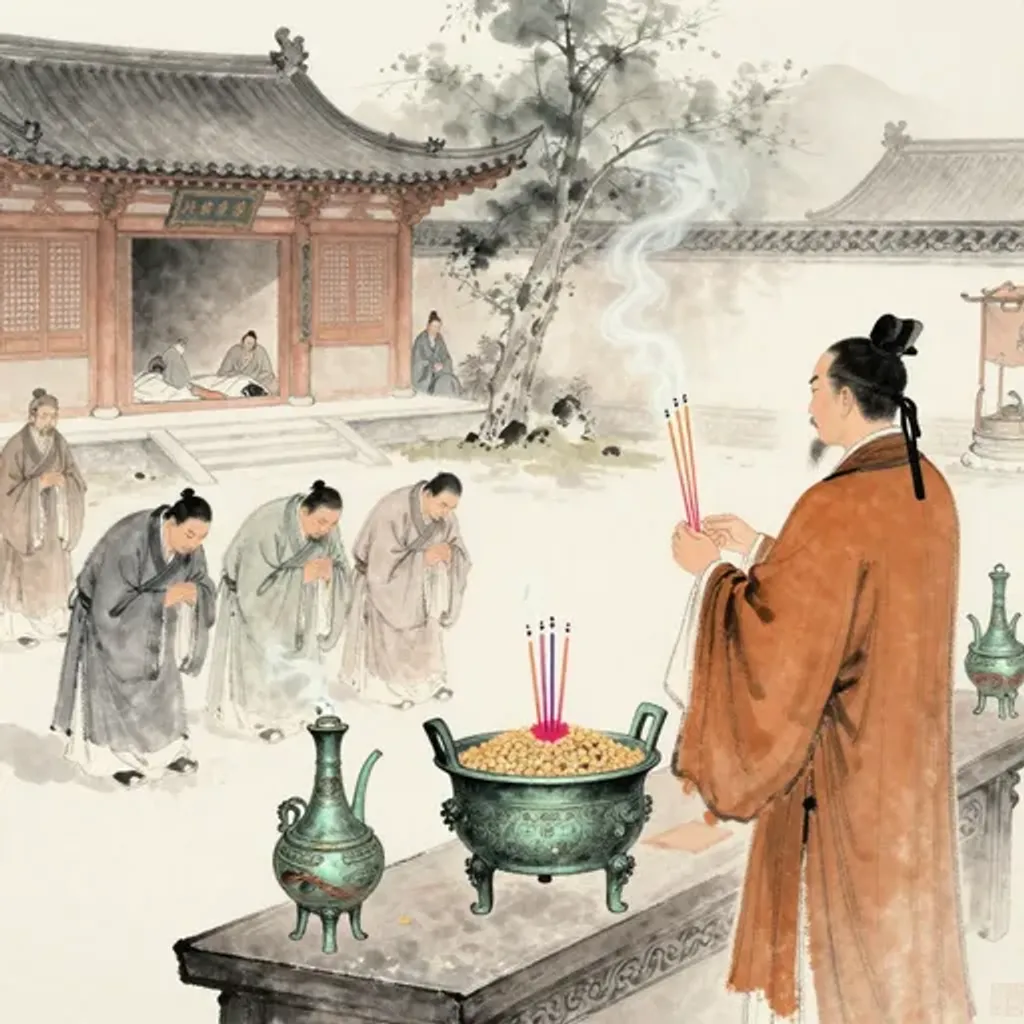
春秋禱祀,解禍除憂,君无災咎。
Spring and autumn prayers and sacrifices; dissolving misfortune, dispelling sorrow; the lord suffers no disaster.
— Jiao Yanshou, Yilin (Forest of Changes), 1st century BC
Commentary
Fire above water, and seasonal rites restore the cosmic balance. Spring and autumn prayers and sacrifices dissolve misfortune and dispel worry; the lord suffers no disaster or blame. The verse is a Category C entry — generic ritual language without specific historical allusion. The paired seasons (spring and autumn) represent the complete sacrificial calendar; the result is comprehensive protection. From Before Completion to Inner Truth, fire-over-water transforms into wind above the lake, the image of sincerity reaching across emptiness. Inner Truth is the hexagram of the empty center — the open heart that resonates like a hollow vessel. The ritual succeeds because it is performed with genuine sincerity, not mere formality. Before Completion's disorder yields to the authentic faith that makes prayer effective.
未濟 → 小過
Hexagram 64 → Hexagram 62: Small Exceeding
Changing lines: 2, 3, 6
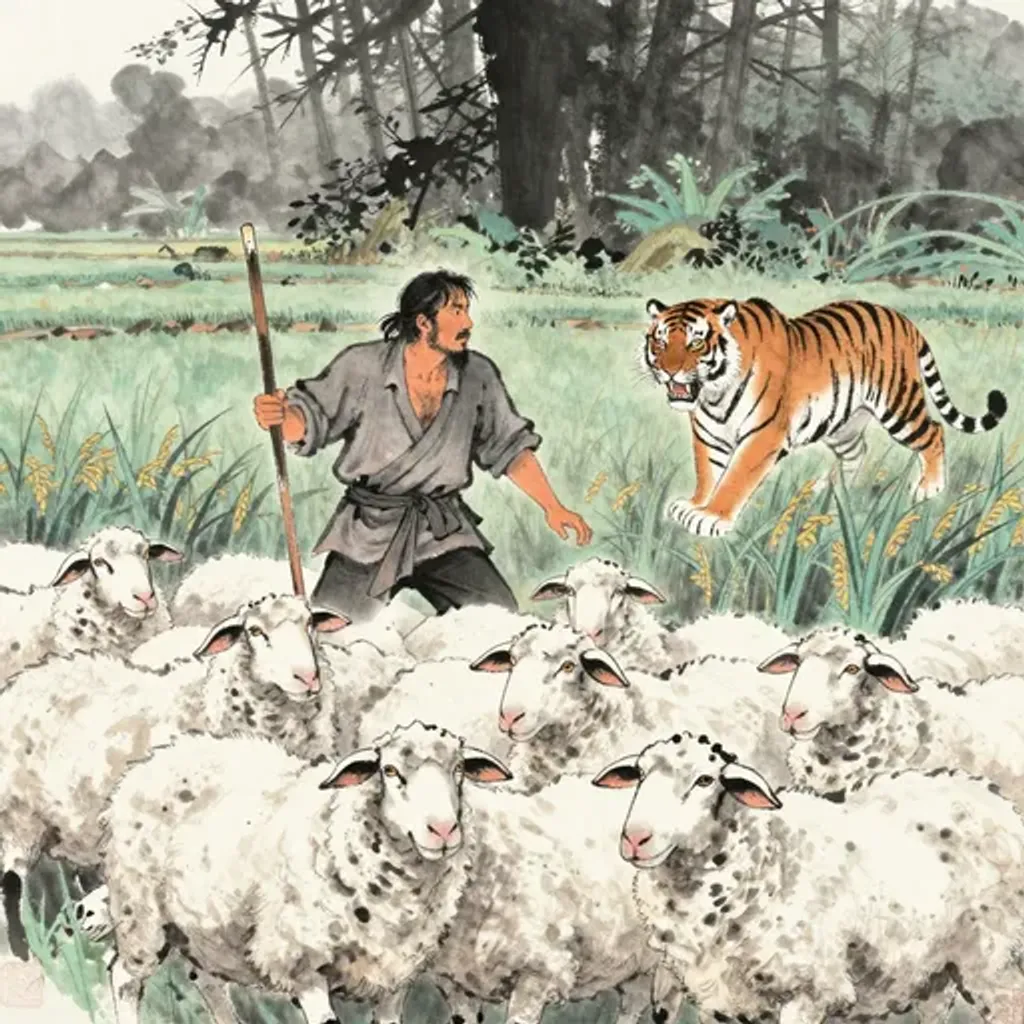
牧羊稻園,聞虎喧歡。懼畏悚息,終无禍患。
Herding sheep by the rice fields; hearing the tiger's joyful roar. Fearful and trembling with dread; yet in the end no harm befalls.
— Jiao Yanshou, Yilin (Forest of Changes), 1st century BC
Commentary
Fire above water, and a shepherd tends his flock in a paddy field when a tiger's roar erupts nearby. Terror seizes the heart, breath stops — but in the end, no harm comes. The shepherd is in the wrong terrain (paddy fields are for rice, not sheep), and the tiger is in the wrong habitat (wilderness, not farmland). Everything is out of place, which is Before Completion's signature. From Before Completion to Small Exceeding, fire-over-water transforms into thunder above the mountain. Small Exceeding counsels excessive caution in small matters — 'one may exceed in reverence, in frugality, in grief.' The shepherd who freezes in terror and survives embodies this: the small creature that crouches low when the great force passes overhead. Survival through excessive humility.
未濟 → 既濟
Hexagram 64 → Hexagram 63: After Completion
Changing lines: 1, 2, 3, 4, 5, 6
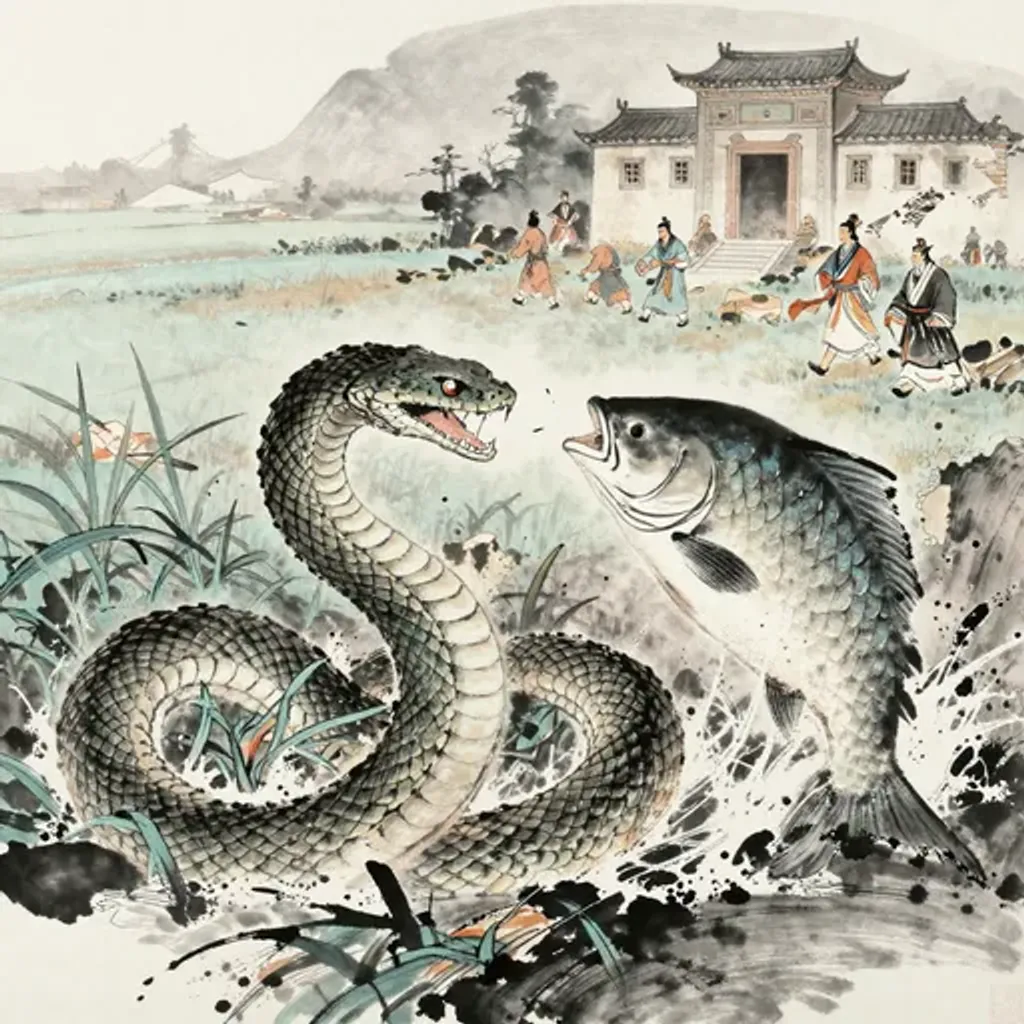
大蛇巨魚,相搏於郊。君臣隔塞,郭公出廬。
Great snake and giant fish; they battle at the edge of the wild. Lord and minister are cut off; Duke Guo departs his estate.
— Jiao Yanshou, Yilin (Forest of Changes), 1st century BC
Commentary
Fire above water, and two primordial forces clash in the open. A great serpent and a great fish battle in the wilderness. Lord and minister are cut off from each other, and the Duke of Guo is expelled from his house. The serpent-and-fish combat may represent the struggle between competing elemental powers — water creature against earth creature — while the political dimension names a specific consequence: the ruler is isolated, the minister displaced. The 'Duke of Guo' (郭公) in classical usage often refers to a ruler who has lost his state. From Before Completion to After Completion, fire-over-water transforms into water above fire — every element finally in its proper place. Yet the verse suggests that completion comes at a cost: the battle must be fought, the duke must be expelled, before the new order can settle into alignment.
未濟 → 未濟
Hexagram 64 → Hexagram 64: Before Completion
No changing lines — the hexagram is unchanged
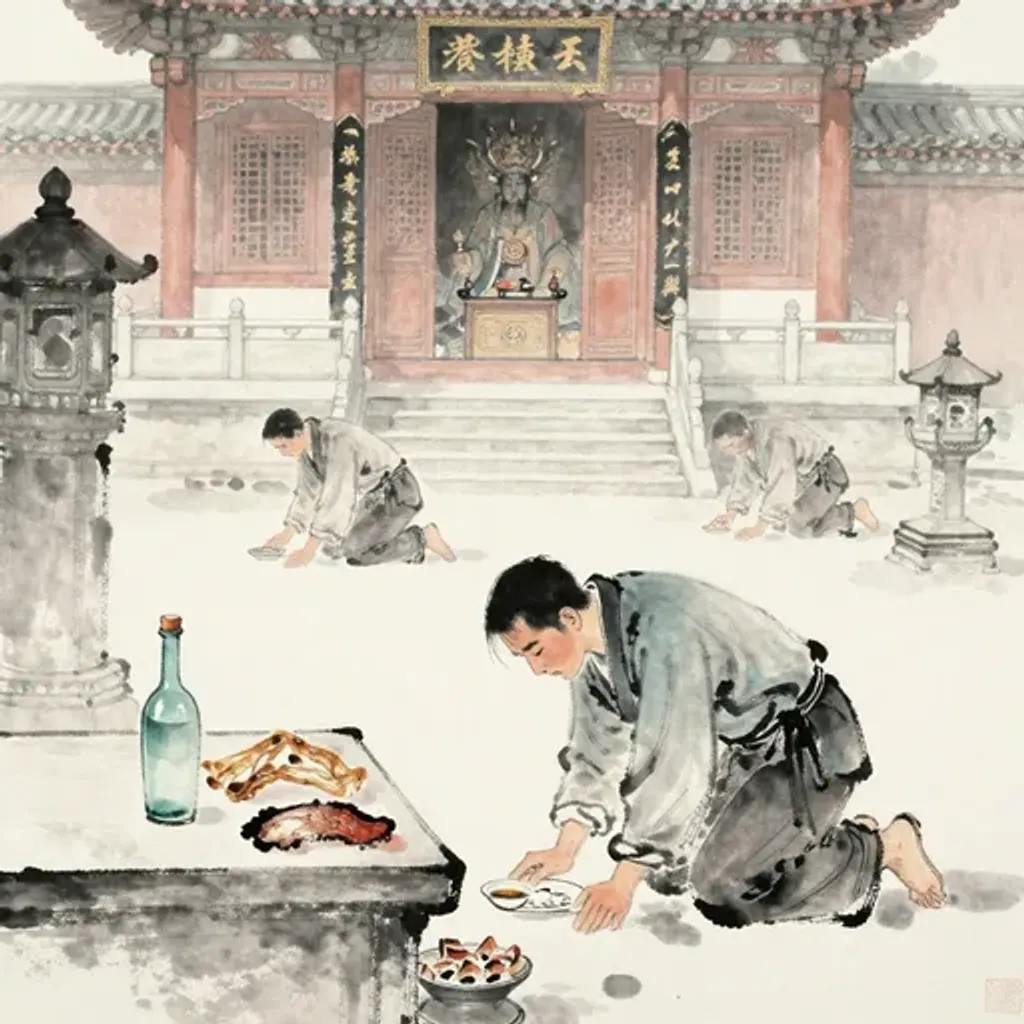
忠慢未習,單酒糗脯。數至神前,欲求所顧,反得大患。
Devotion slack and rites unlearned; plain wine, dried meat and grain. Approaching the spirit again and again; seeking what one desires; instead receiving great calamity.
— Jiao Yanshou, Yilin (Forest of Changes), 1st century BC
Commentary
Fire above water, and the circle closes without resolution. The rites have been performed carelessly — the offerings are meager, just thin wine and dried meat. Repeated visits to the shrine seek divine favor, yet instead of blessings, great misfortune descends. The verse indicts ritual without sincerity: going through the motions with inferior offerings and expecting results. From Before Completion to Before Completion, the hexagram transforms into itself — the only pairing in the entire Yilin where source and target are identical. Nothing changes. The fire remains above the water, each element straining away from the other, forever. This is the Yi's ultimate statement on the cost of hollow devotion: when you bring nothing real to the altar, the cosmos returns you to exactly where you started.