Transformations of Hexagram 7
Every line of change out of Hexagram 7 師 The Army, with the Yilin verse for each of the 64 resulting hexagrams, its translation, and the original ink brush artwork.
師 → 乾
Hexagram 7 → Hexagram 1: The Creative
Changing lines: 1, 3, 4, 5, 6
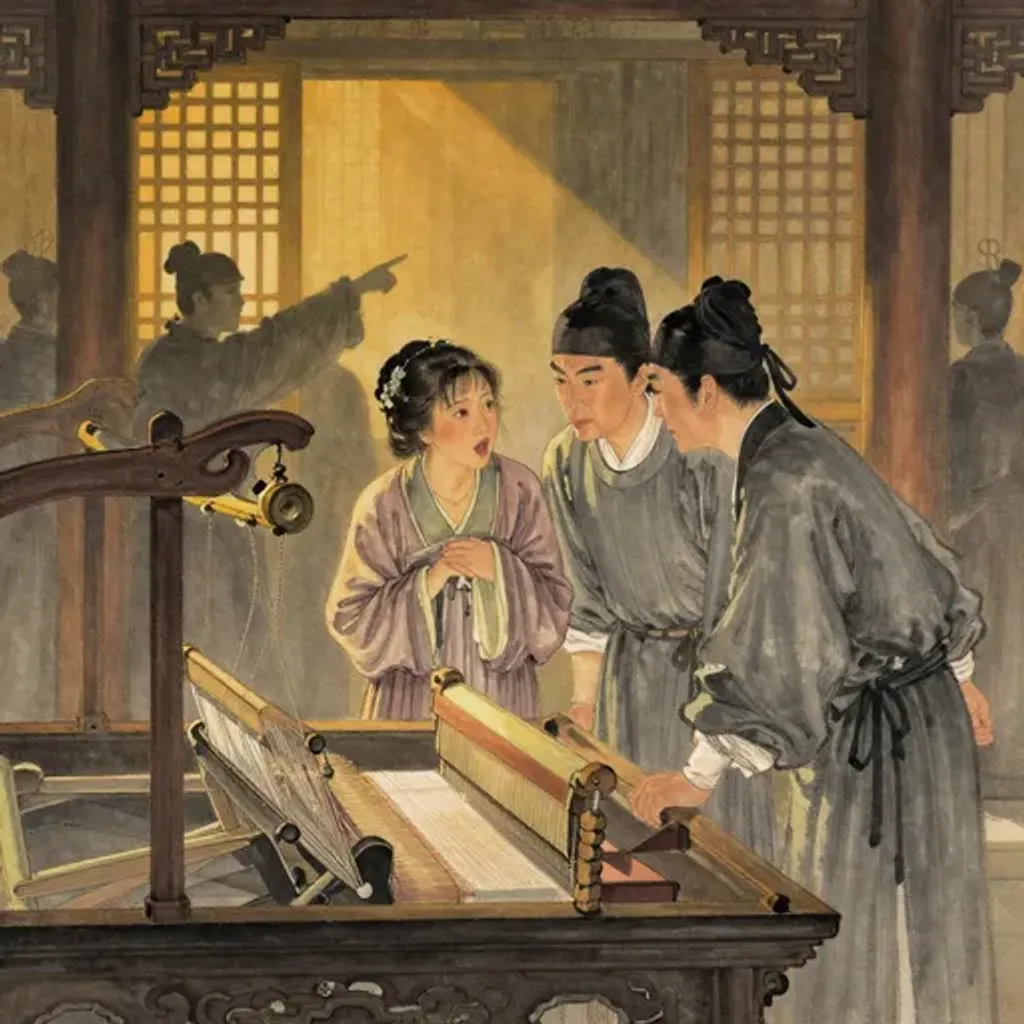
一簧兩舌,佞言諂語。三姦成市,曾母投杼。
One reed, two tongues; flattering and fawning words. Three slanderers create a market rumor; even Zeng's mother throws down her shuttle.
— Jiao Yanshou, Yilin (Forest of Changes), 1st century BC
Commentary
Water hidden within the earth marshals its forces, yet here deceit corrupts the chain of command. A double-reed tongue speaks flattery and slander; three schemers fabricate a marketplace of lies, and even Zeng Shen's mother throws down her shuttle. The allusion is famous: three separate people told Zeng's mother her son had killed a man. Twice she kept weaving in disbelief, but the third report broke her trust and she fled. From The Army to The Creative, disciplined collective action aspires toward heaven's self-renewing power — yet that ascent is sabotaged when flattery replaces honest counsel. The army's strength depends on trust; once slander poisons it, even the most devoted bonds shatter.
師 → 坤
Hexagram 7 → Hexagram 2: The Receptive
Changing lines: 2
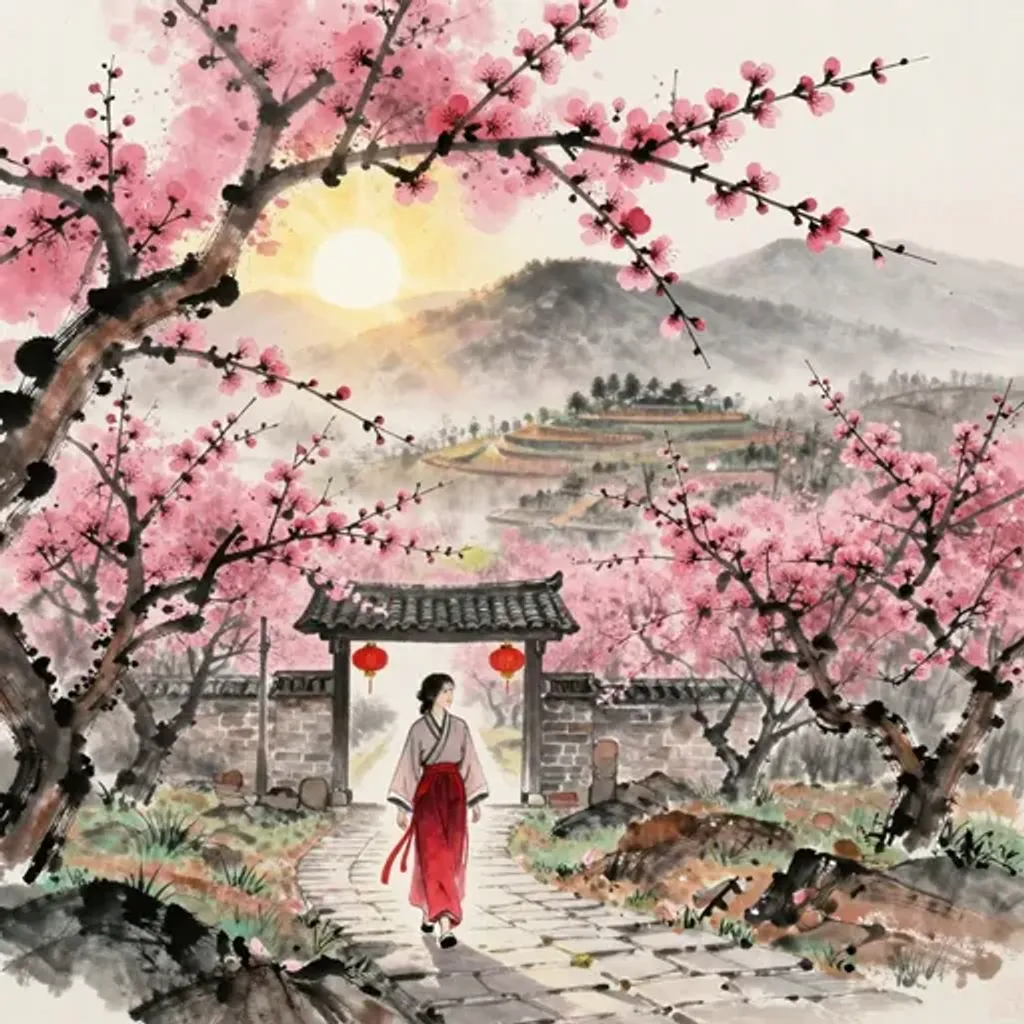
春桃生花,季女宜家。受福且多,在師中吉,男為封君。
Spring peach blossoms open; the young daughter makes a good home. She receives many blessings; in the army, auspicious -- the son becomes an enfeoffed lord.
— Jiao Yanshou, Yilin (Forest of Changes), 1st century BC
Commentary
Water hidden within the earth nurtures life unseen, and spring peach trees burst into bloom. The youngest daughter makes a fine match — a line echoing the Shijing's celebration of proper marriage. She receives abundant blessings; in the army's midst there is good fortune, and a son shall become an enfeoffed lord. The verse paints a scene of fecundity married to institutional order: the military campaign succeeds because it is rightly led, and domestic prosperity follows. From The Army to The Receptive, the disciplined force dissolves into earth's boundless capacity to receive and sustain. What was mobilized for war now settles into the nurturing ground of family and harvest.
師 → 屯
Hexagram 7 → Hexagram 3: Difficulty at the Beginning
Changing lines: 1, 2, 5
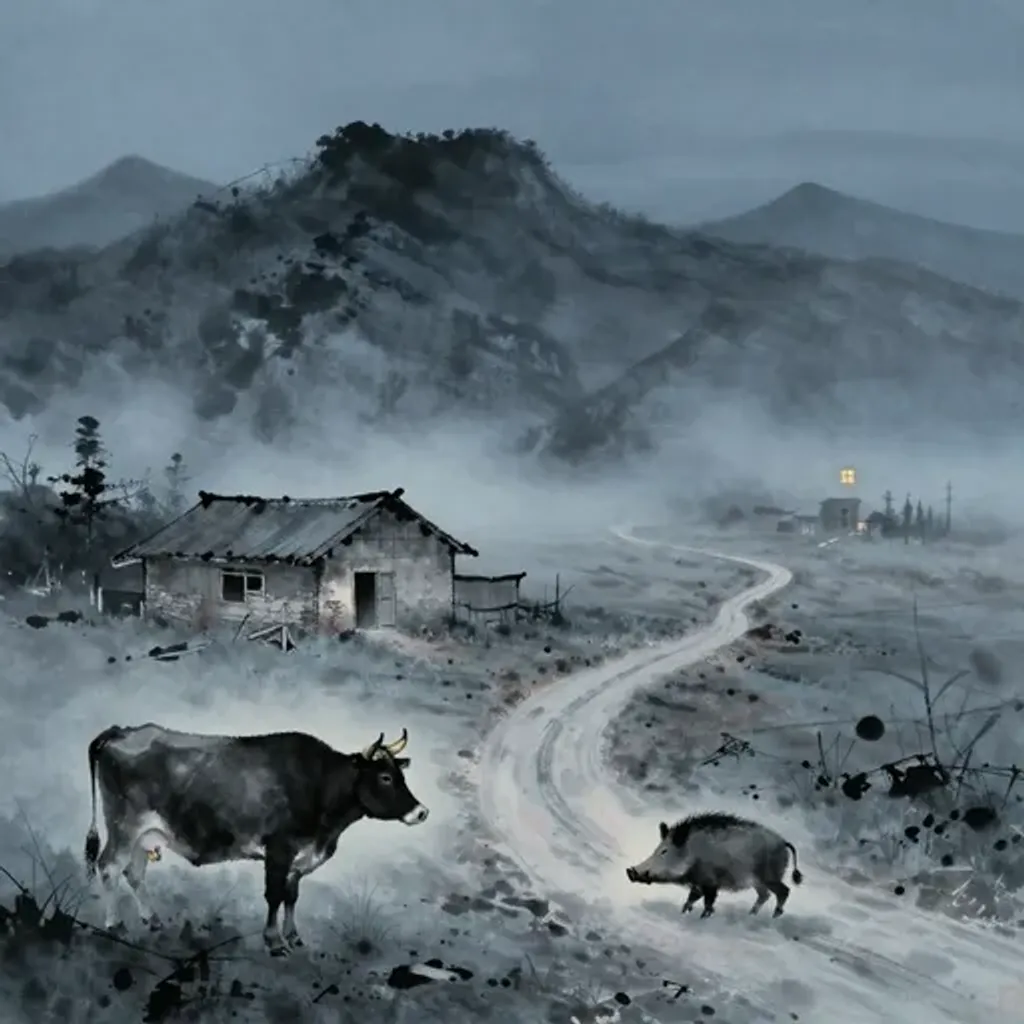
殊類異路,心不相慕。牝牛牡猳,獨無室家。
Different kinds, different roads; hearts that do not yearn for each other. A cow and a boar; alone without household or home.
— Jiao Yanshou, Yilin (Forest of Changes), 1st century BC
Commentary
Water hidden within the earth holds multitudes in formation, yet here the ranks scatter by nature. Different species walk different paths; their hearts feel no mutual longing. A female cow and a male boar — mismatched creatures who share no instinct for companionship — end up without home or family. The verse captures radical incompatibility: not conflict, but indifference between beings who simply do not belong together. From The Army to Difficulty at the Beginning, organized force meets the primal chaos of new beginnings where nothing yet coheres. What was unified under command dissolves into cloud and thunder, each element groping blindly, unmatched and alone.
師 → 蒙
Hexagram 7 → Hexagram 4: Youthful Folly
Changing lines: 6
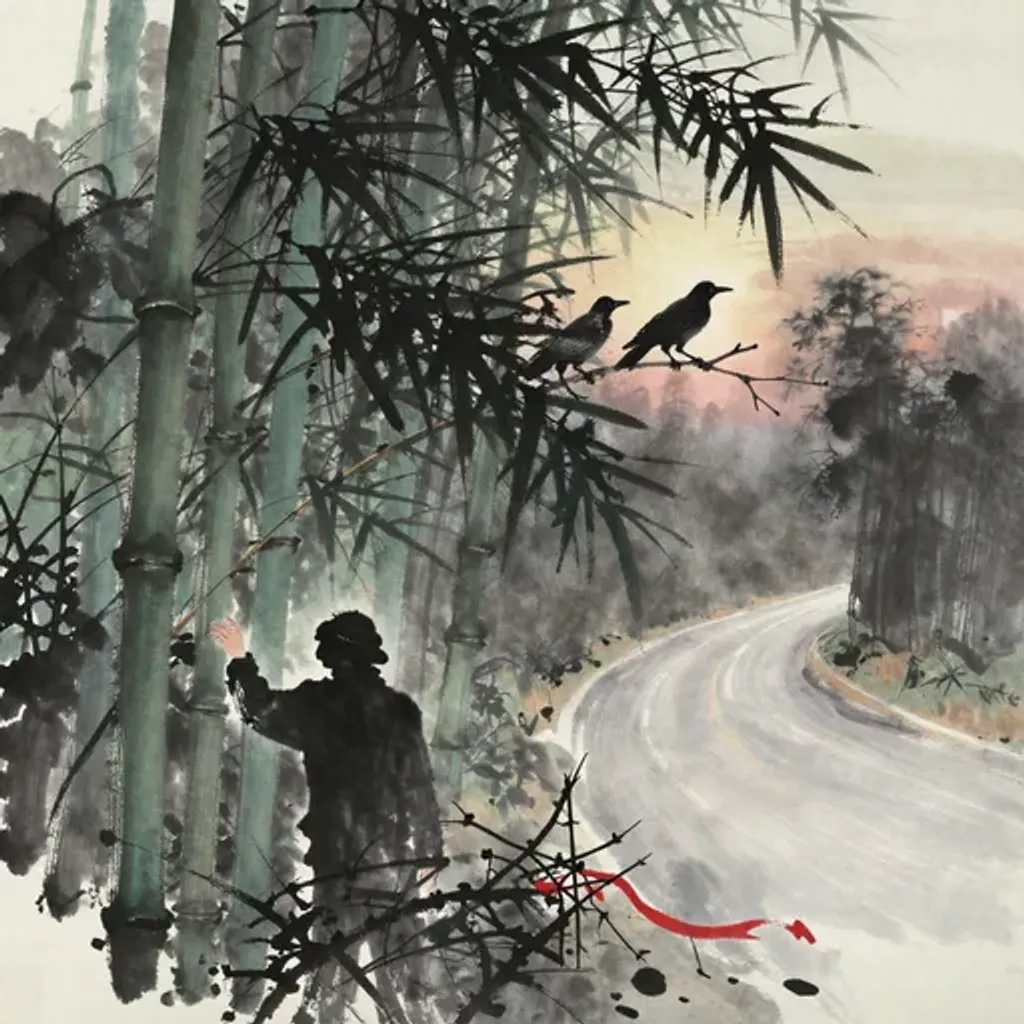
折葉蔽目,不見稚叔。三足孤烏,遠其元夫。
Folding a leaf to cover the eyes, unable to see the young uncle. The three-legged solitary crow; far from her original husband.
— Jiao Yanshou, Yilin (Forest of Changes), 1st century BC
Commentary
Water hidden within the earth suggests disciplined vision, but here a leaf held before the eyes blocks all sight. The phrase 'folding a leaf to cover the eyes' evokes the proverb about self-deception — one who cannot see what stands directly before him. The three-legged crow, the sun-bird who should illuminate the world, has become solitary and estranged from its mate. Unable to see the young and familiar, far from its proper partner, the verse describes willful blindness that severs intimate bonds. From The Army to Youthful Folly, the disciplined host degenerates into immaturity: a spring blocked at the mountain's base, fumbling in darkness of its own making.
師 → 需
Hexagram 7 → Hexagram 5: Waiting
Changing lines: 1, 3, 5
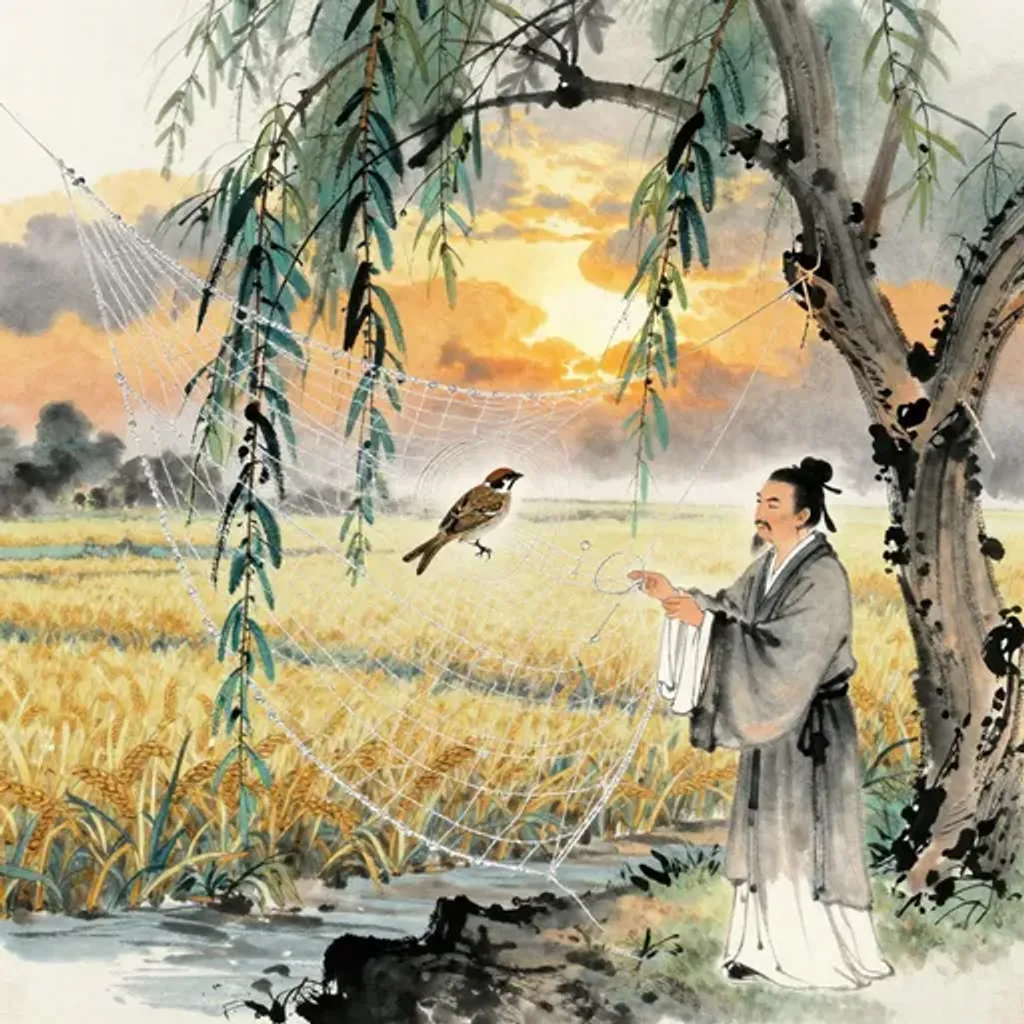
雀東求粒,誤入罔域。賴逢君子,脫復歸息。
A sparrow seeking grain in the east, straying into the domain of nets. Fortunately meeting a noble man; freed, it returns to rest.
— Jiao Yanshou, Yilin (Forest of Changes), 1st century BC
Commentary
Water hidden within the earth mobilizes for survival, and a sparrow flies eastward seeking grain but stumbles into the domain of nets. Fortunately it encounters a gentleman who releases it, allowing it to return home and rest. The imagery is direct and vivid: the small creature driven by hunger blunders into a trap, then is rescued by benevolence. From The Army to Waiting, military discipline gives way to patient trust in heaven's provision. The sparrow need not forage desperately once clouds gather above heaven promising nourishment. The gentleman's rescue enacts Waiting's core teaching: when danger cannot be overcome by force, grace and right timing deliver what struggle cannot.
師 → 訟
Hexagram 7 → Hexagram 6: Conflict
Changing lines: 4, 5, 6
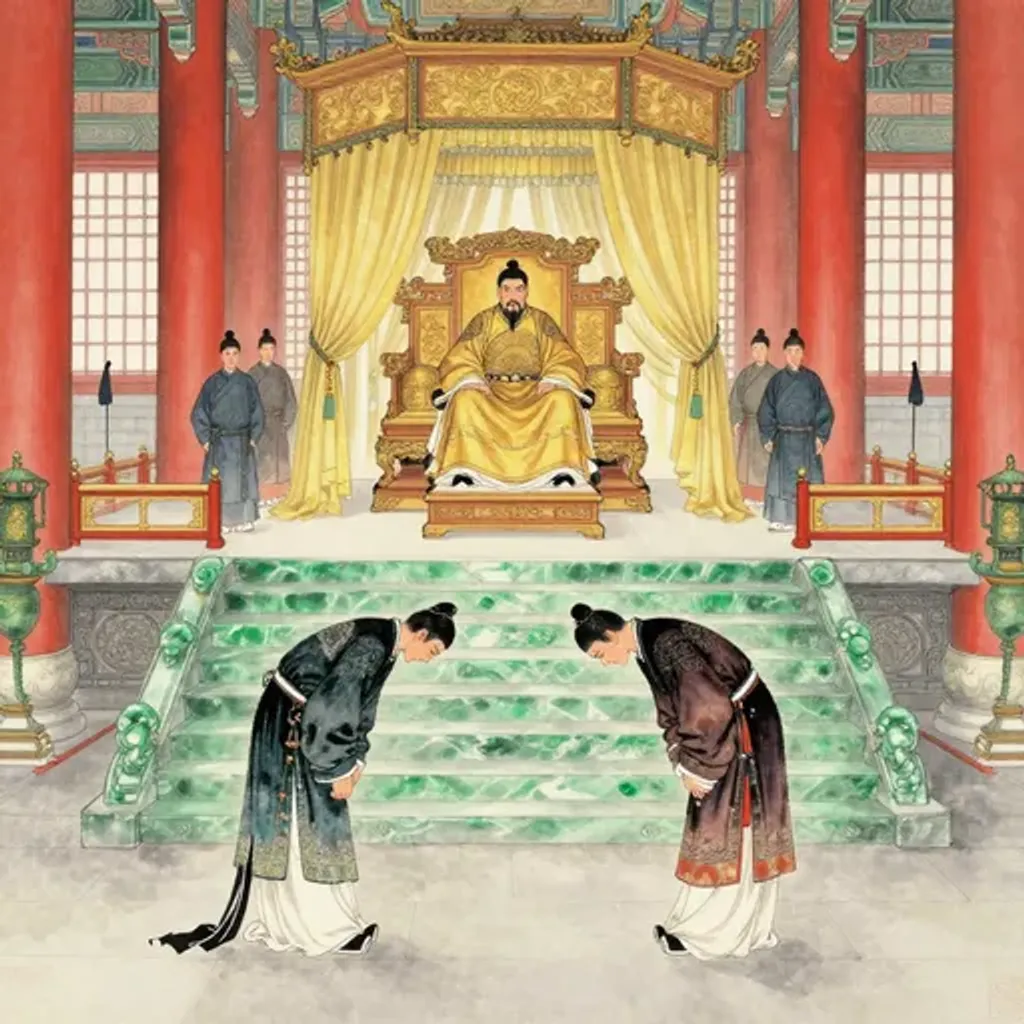
王孫季子,相與孝友。明允篤誠,升擢薦舉,為國幹輔。
Prince and young lord, together in filial friendship. Bright, sincere, and devoted; promoted and recommended, they become pillars of the state.
— Jiao Yanshou, Yilin (Forest of Changes), 1st century BC
Commentary
Water hidden within the earth demands worthy leadership, and here princes and youngest sons assist one another in filial devotion and fraternal love. Bright, sincere, and steadfastly genuine, they are recommended and promoted to become pillars of the state. The verse celebrates meritocratic advancement within a well-ordered hierarchy — talent recognized and elevated because of authentic virtue, not mere ambition. From The Army to Conflict, the challenge sharpens: heaven and water move in opposite directions, and the newly promoted must navigate institutional tension. Yet their foundation in mutual trust and proven character ensures they can mediate disputes rather than be consumed by them.
師 → 師
Hexagram 7 → Hexagram 7: The Army
No changing lines — the hexagram is unchanged
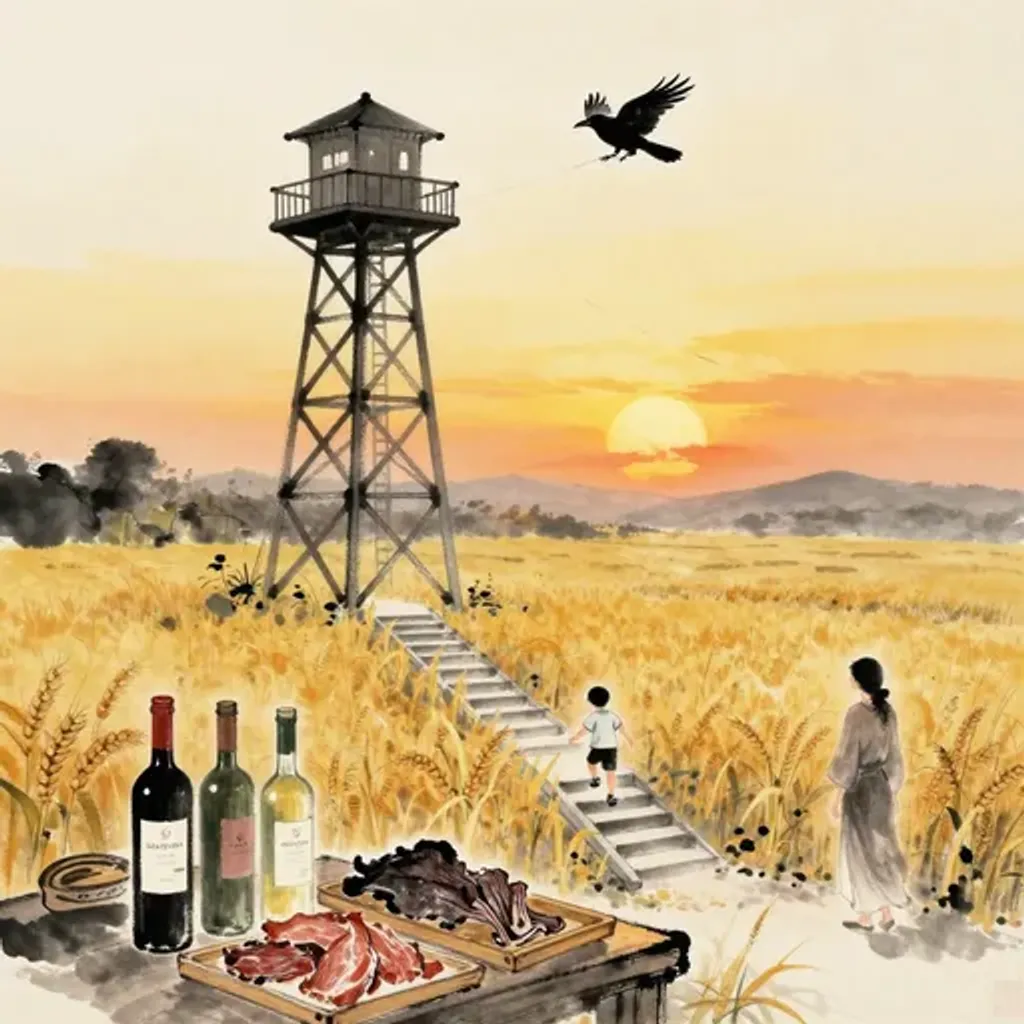
烏鳴呼子,哺以酒脯。高樓之處,子來歸母。穡人成功,年歲大有,妬婦無子。
The crow calls its young, feeding them wine and dried meat. In a high tower's dwelling, the child returns to its mother. The farmer succeeds; the year's harvest is great -- but the jealous wife has no child.
— Jiao Yanshou, Yilin (Forest of Changes), 1st century BC
Commentary
Water hidden within the earth returns to itself — the army unchanged, source and destination the same. A crow calls to its young and feeds them with wine and dried meat from a high tower, and the fledglings come home to their mother. The farmer's work succeeds, the year's harvest is abundant, yet a jealous wife remains childless. The verse layers domestic warmth against private sorrow: communal success cannot console personal barrenness. From The Army to The Army, there is no transformation — only the cycle repeating. Plenty flows for those aligned with the collective rhythm, while those consumed by envy find themselves excluded from the very abundance they covet.
師 → 比
Hexagram 7 → Hexagram 8: Holding Together
Changing lines: 2, 5
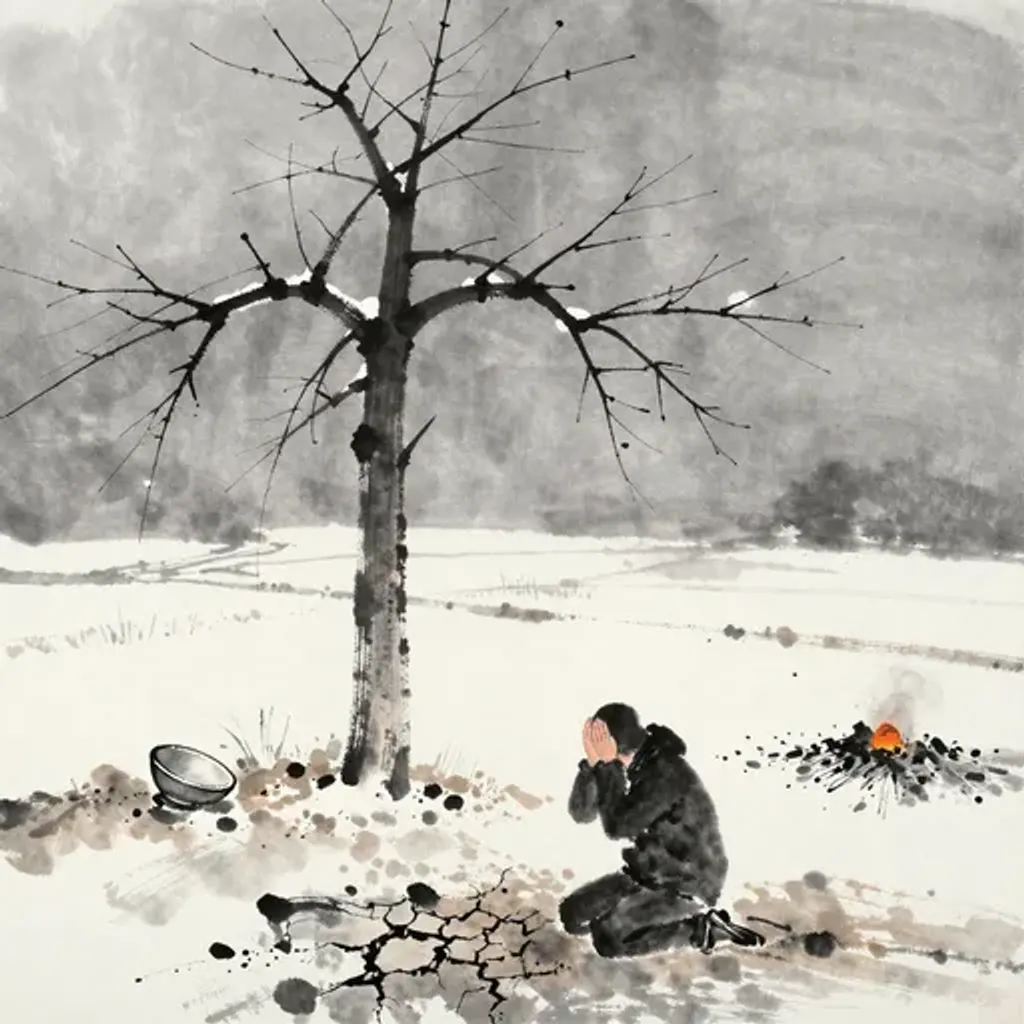
削樹無枝,與子分離。飢寒莫食,獨泣哀悲。
Pruning the tree bare of branches; parted from the child. Hungry, cold, with nothing to eat; weeping alone in sorrow.
— Jiao Yanshou, Yilin (Forest of Changes), 1st century BC
Commentary
Water hidden within the earth musters the multitude, but here all support is stripped away. A tree shorn of its branches stands bare — and with it comes separation from one's child. Hungry and cold with nothing to eat, one weeps alone in grief. The stripped tree is a powerful image of total deprivation: no shelter, no sustenance, no companionship. From The Army to Holding Together, the transformation is bitterly ironic. Water upon the earth should draw people into alliance, yet the speaker has lost everything that makes bonding possible. The verse implies that unity requires something to share; the destitute can only stand outside the circle of belonging.
師 → 小畜
Hexagram 7 → Hexagram 9: Small Taming
Changing lines: 1, 3, 5, 6
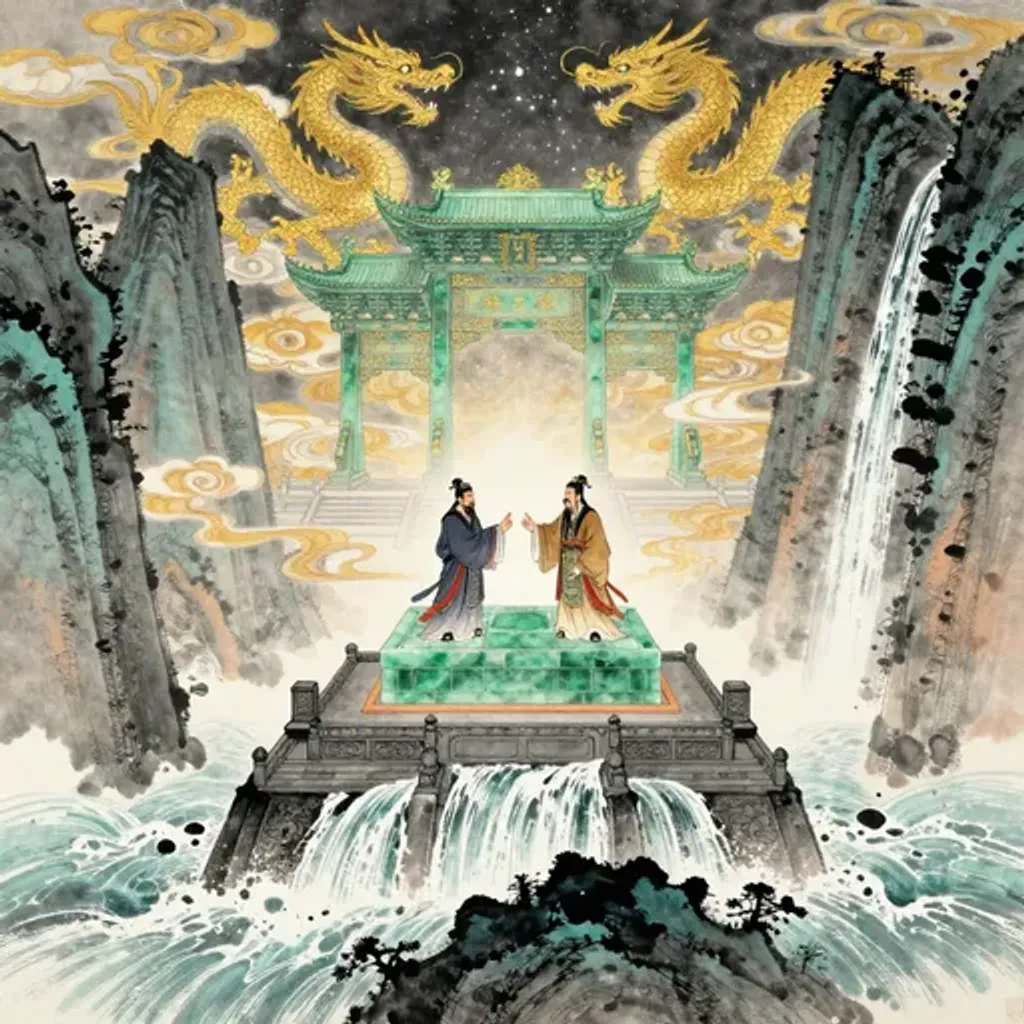
舜升大禹,石夷之野。徵詣玉闕,拜理水土。
Shun elevates Great Yu, from the wilderness of Shiyi. Summoned to the Jade Palace, appointed to manage flood and soil.
— Jiao Yanshou, Yilin (Forest of Changes), 1st century BC
Commentary
Water hidden within the earth awaits the commander's call, and here Emperor Shun summons Yu the Great from the stony wilds. Yu is called to the jade palace and appointed to manage the waters and the land. The verse recounts the foundational myth of Chinese statecraft: the sage-ruler who identifies talent in the wilderness and elevates it to supreme responsibility. Shun recognized Yu's capacity to tame the great floods — a task demanding both vision and endurance. From The Army to Small Taming, the massive mobilization of flood control is refined into gentle restraint: wind above heaven, the cultivated virtue that channels raw force without breaking it.
師 → 履
Hexagram 7 → Hexagram 10: Treading
Changing lines: 1, 4, 5, 6
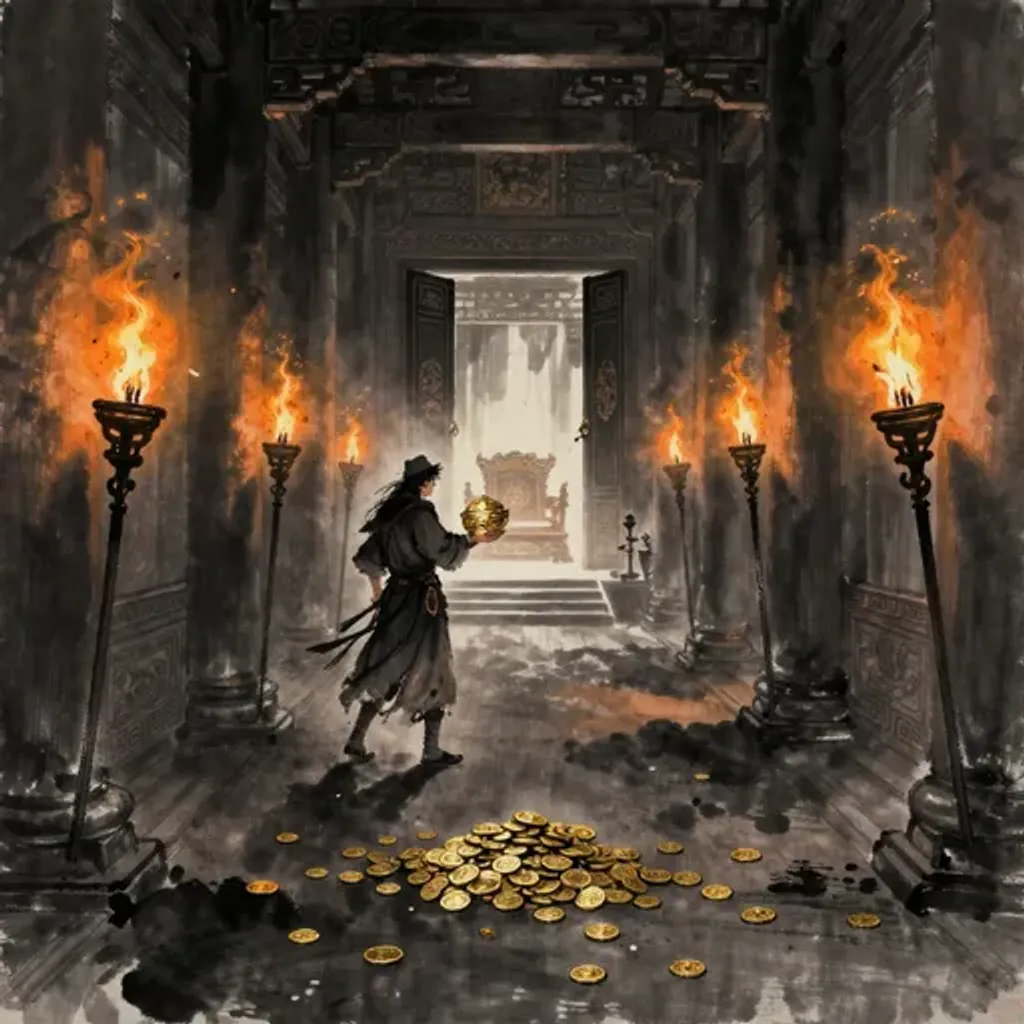
義不勝情,以欲自營。見利危寵,滅君令名。
Duty cannot overcome desire; pursuing selfish gain. Seeing profit, endangering favor; destroying the lord's good name.
— Jiao Yanshou, Yilin (Forest of Changes), 1st century BC
Commentary
Water hidden within the earth demands disciplined obedience, but here duty loses to desire. Righteousness cannot overcome personal feeling; one pursues selfish profit at the expense of public trust. Seeing advantage, one endangers the sovereign's favor and destroys the lord's good name. The verse traces a clear arc of moral failure: when private appetite overtakes principled action, the entire hierarchy suffers. The minister who should serve the collective instead serves himself, and the ruler's reputation — which depends on his subordinates' integrity — collapses. From The Army to Treading, the transformation demands careful steps beneath heaven's authority — treading on the tiger's tail requires absolute propriety. One who substitutes self-interest for duty will be bitten, and the bite is fatal.
師 → 泰
Hexagram 7 → Hexagram 11: Peace
Changing lines: 1, 3
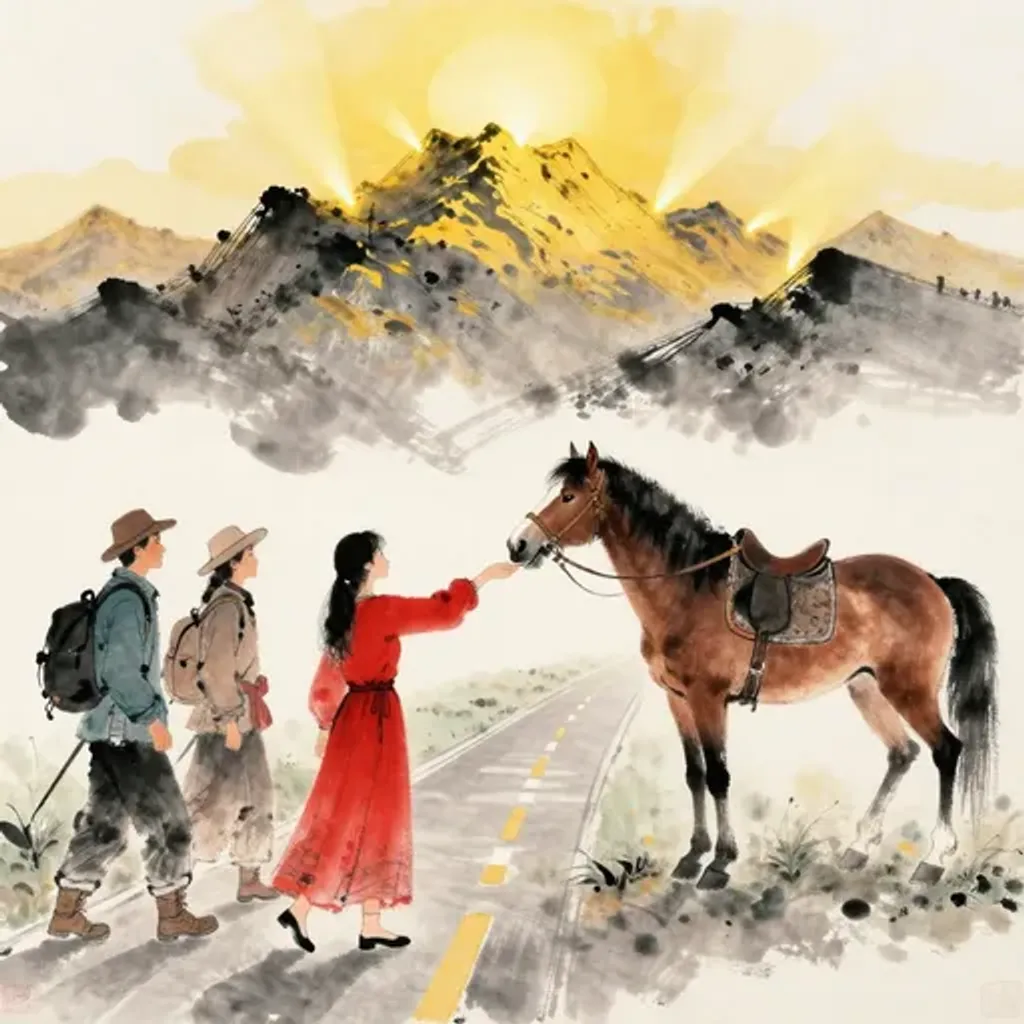
三人北行,六位光明。道逢淑女,與我驥子。
Three men journey north; the six positions are radiant. On the road they meet a virtuous woman; she gives me a fine steed.
— Jiao Yanshou, Yilin (Forest of Changes), 1st century BC
Commentary
Water hidden within the earth forms ranks, and three men march northward while six positions shine bright. On the road they meet a virtuous woman who presents them with a fine horse. The 'three men' may allude to the three great ministers of early Zhou — the Duke of Zhou, Duke of Shao, and Taigong — whose northward journey established Zhou governance. The six bright positions echo the hexagram's six lines fully illuminated. From The Army to Peace, earth and heaven exchange places in mutual communion. Military order blossoms into cosmic harmony: the woman's gift of a stallion signals that virtue, once properly deployed, draws abundance naturally toward it.
師 → 否
Hexagram 7 → Hexagram 12: Standstill
Changing lines: 2, 4, 5, 6
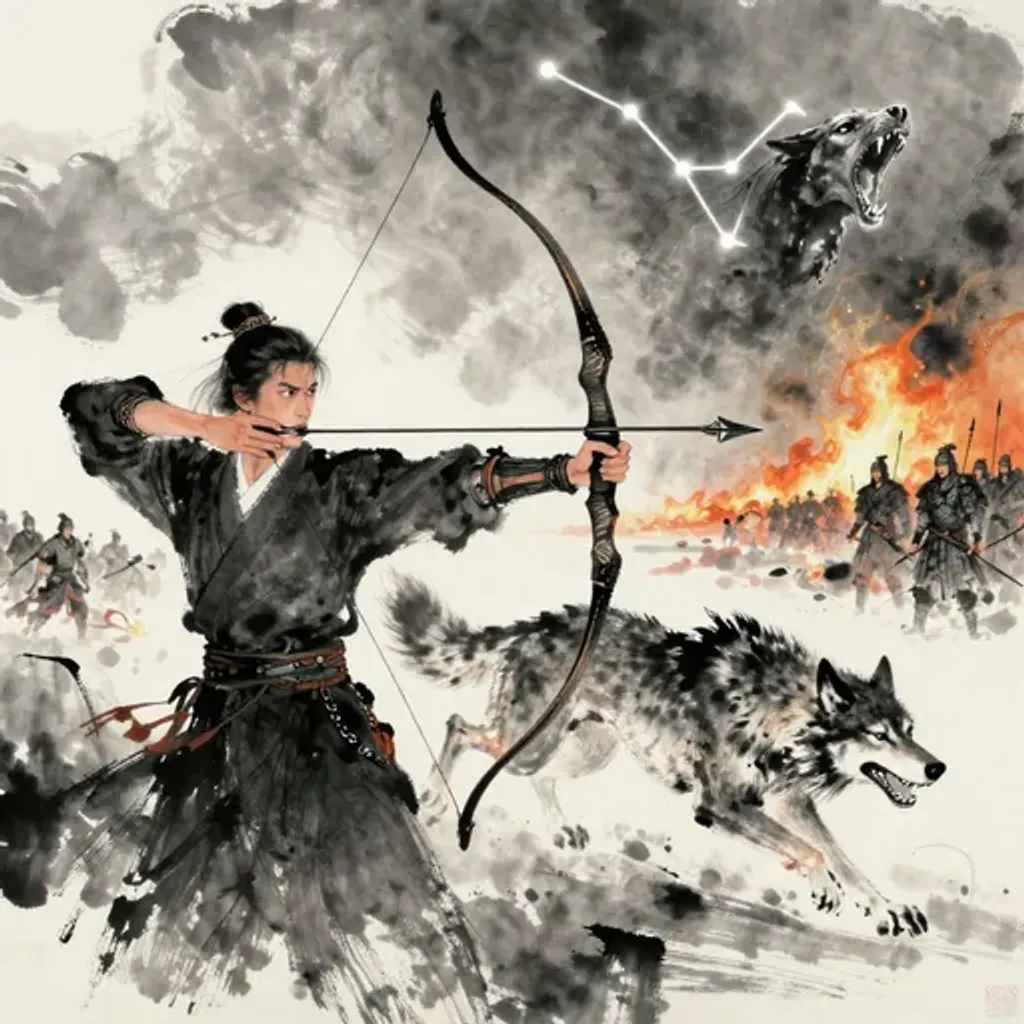
羿張烏號,彀射天狼。柱國雄勇,鬭死滎陽。
Yi draws the Black Cry bow, aiming at the Celestial Wolf. The pillar of the state, heroic and brave; fighting to the death at Xingyang.
— Jiao Yanshou, Yilin (Forest of Changes), 1st century BC
Commentary
Water hidden within the earth commands the host, yet even the mightiest archer meets a closed sky. Archer Yi draws the Wuhao bow and takes aim at the Heavenly Wolf star — the celestial emblem of invasion and aggression. A pillar-of-state, heroic and fierce, fights to the death at Xingyang. The verse links mythological martial prowess with historical military catastrophe: supreme skill and courage are not enough when heaven itself is obstructed. From The Army to Standstill, earth and heaven sever their exchange. The warrior's valor is wasted in a cosmos that refuses to cooperate; the gates of communication between ruler and subject slam shut.
師 → 同人
Hexagram 7 → Hexagram 13: Fellowship
Changing lines: 1, 2, 3, 4, 5, 6
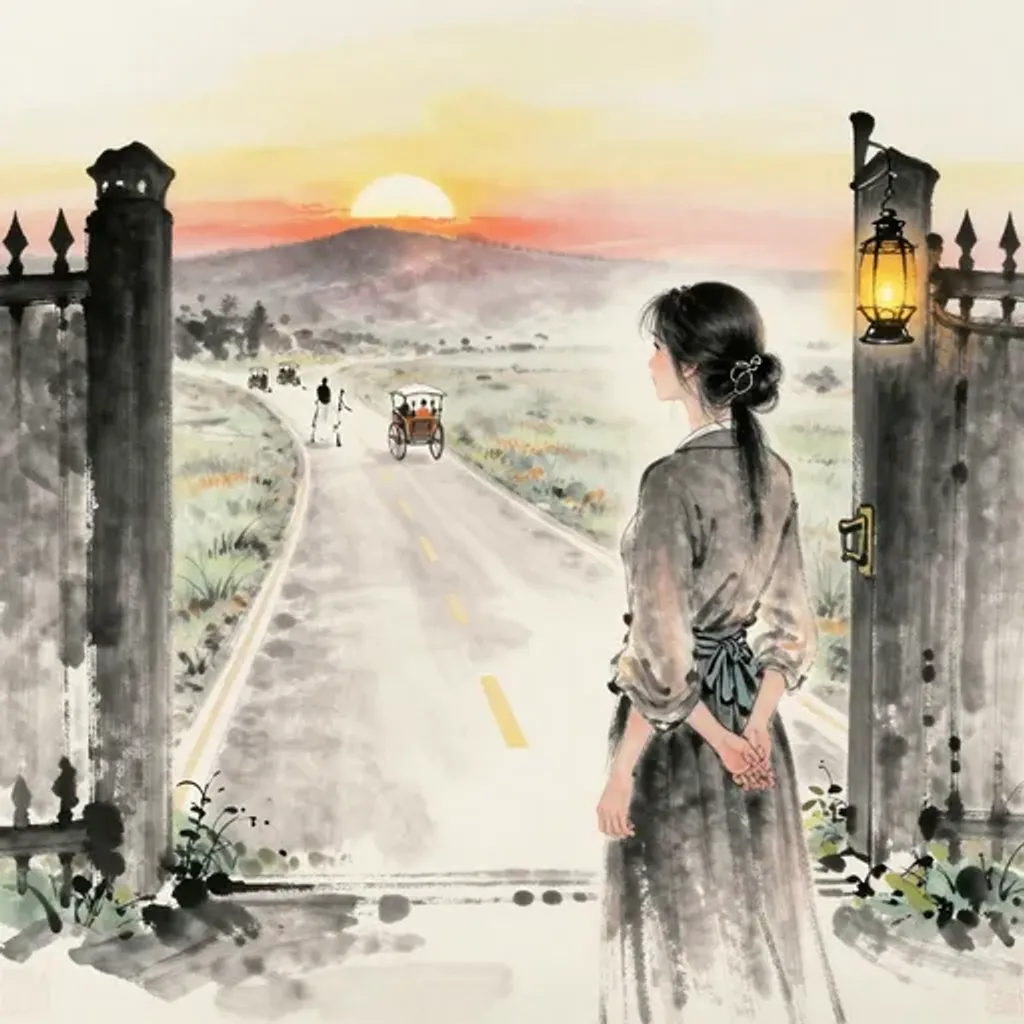
季姬踟躕,結衿待時。終日至暮,百兩不來。
Lady Ji hesitates and lingers, knotting her sash, awaiting the time. From dawn until dusk; the hundred wedding carriages do not come.
— Jiao Yanshou, Yilin (Forest of Changes), 1st century BC
Commentary
Water hidden within the earth marshals action, but the youngest lady Ji hesitates and waits in vain. She ties her sash and lingers expectantly, echoing the Shijing's image of the modest maiden at the city corner who waits but never appears. From morning until dusk she watches, yet the hundred wedding carriages never come. The 'hundred carriages' alludes to the grand bridal procession of the Shijing ode 'Que Chao,' where a proper match is celebrated with elaborate ceremony. From The Army to Fellowship, the collective should unite as fire joins heaven. But fellowship requires reciprocity; when the other party fails to arrive, even the most patient devotion is left standing alone.
師 → 大有
Hexagram 7 → Hexagram 14: Great Possession
Changing lines: 1, 3, 4, 6
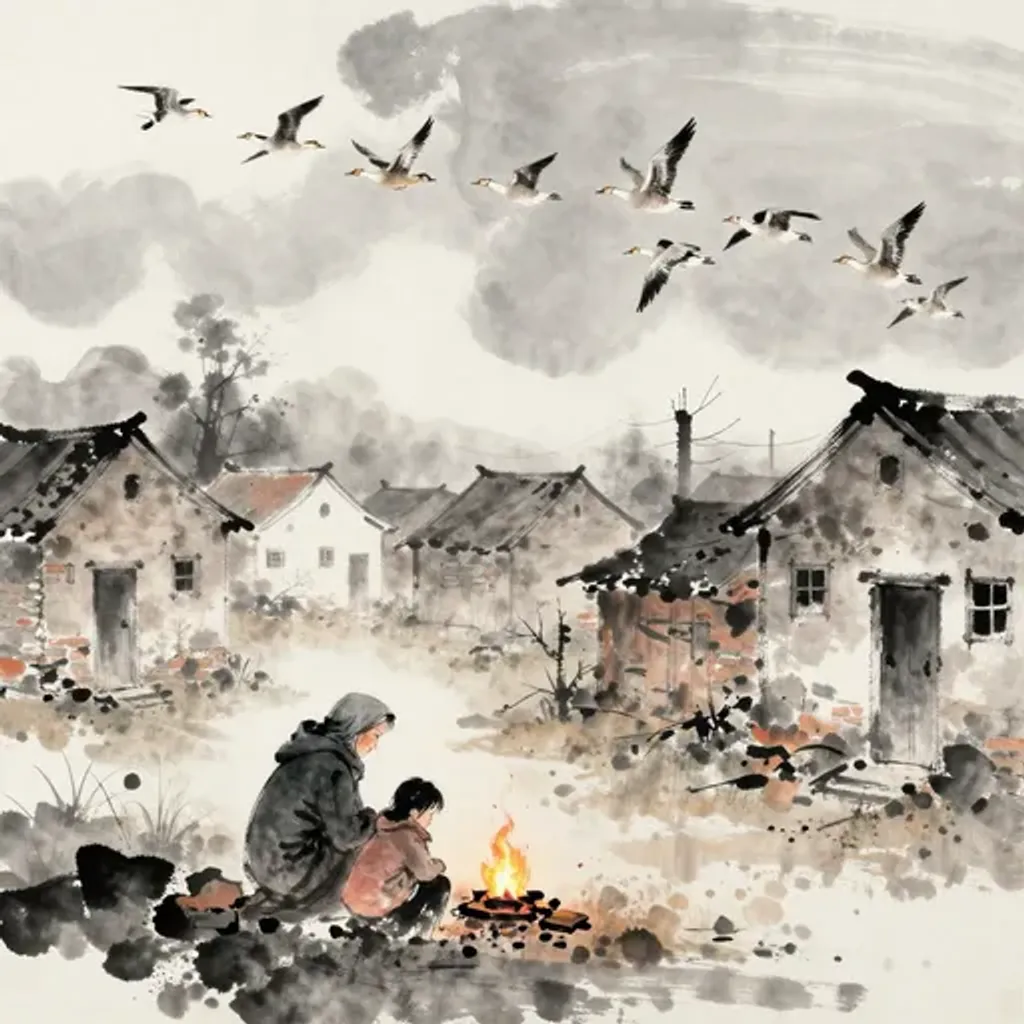
鴻鴈翩翩,始怨勞苦。災疫病民,鰥寡愁憂。
Wild geese fly in disarray; at first they lament toil and hardship. Plague and pestilence afflict the people; the widowed and orphaned are filled with grief.
— Jiao Yanshou, Yilin (Forest of Changes), 1st century BC
Commentary
Water hidden within the earth bears the weight of multitudes, and migrating geese wheel overhead in weary flight. They cry out, resentful of their endless toil. Plague and epidemic ravage the people; the widowed and orphaned know only sorrow. The wild goose, a Yilin emblem of the displaced and overburdened, here carries the exhaustion of soldiers and common folk alike. From The Army to Great Possession, fire blazing in heaven should illuminate prosperity — yet the verse inverts the promise. Abundance is hollow when the people who should enjoy it are broken by disease and loss. The army's mobilization has drained the nation rather than enriched it.
師 → 謙
Hexagram 7 → Hexagram 15: Modesty
Changing lines: 2, 3
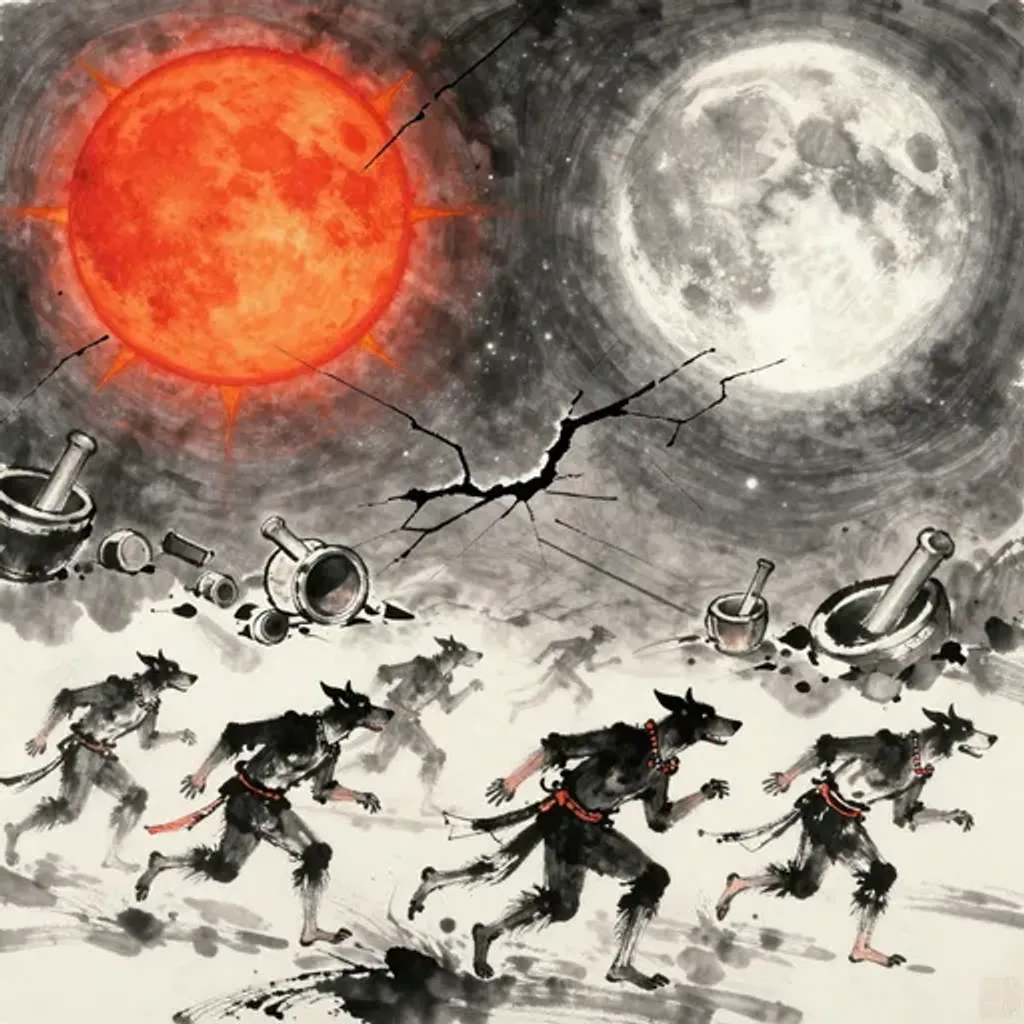
穿胸狗邦,僵離旁舂。天地易紀,日月更始。
The pierced-chest people, the dog-country folk; stiff and fallen, pounding at the side. Heaven and earth alter their reckoning; sun and moon begin anew.
— Jiao Yanshou, Yilin (Forest of Changes), 1st century BC
Commentary
Water hidden within the earth governs the multitude, yet the verse opens onto strange and alien terrain. The Pierced-Chest People and the Dog-Country — fantastical peoples from the Shanhaijing and its tradition — lie stiff and pounded beside their posts. These are the exotic borderlands beyond civilization's reach, where normal order does not hold. Then the verse pivots sharply: heaven and earth exchange their calendar, sun and moon begin anew. From The Army to Modesty, the mountain hidden within the earth, chaos at the margins gives way to cosmic renewal. What seemed monstrous and disordered resolves through modesty's leveling power: the high is brought low, the low raised up, and the world resets.
師 → 豫
Hexagram 7 → Hexagram 16: Enthusiasm
Changing lines: 2, 4
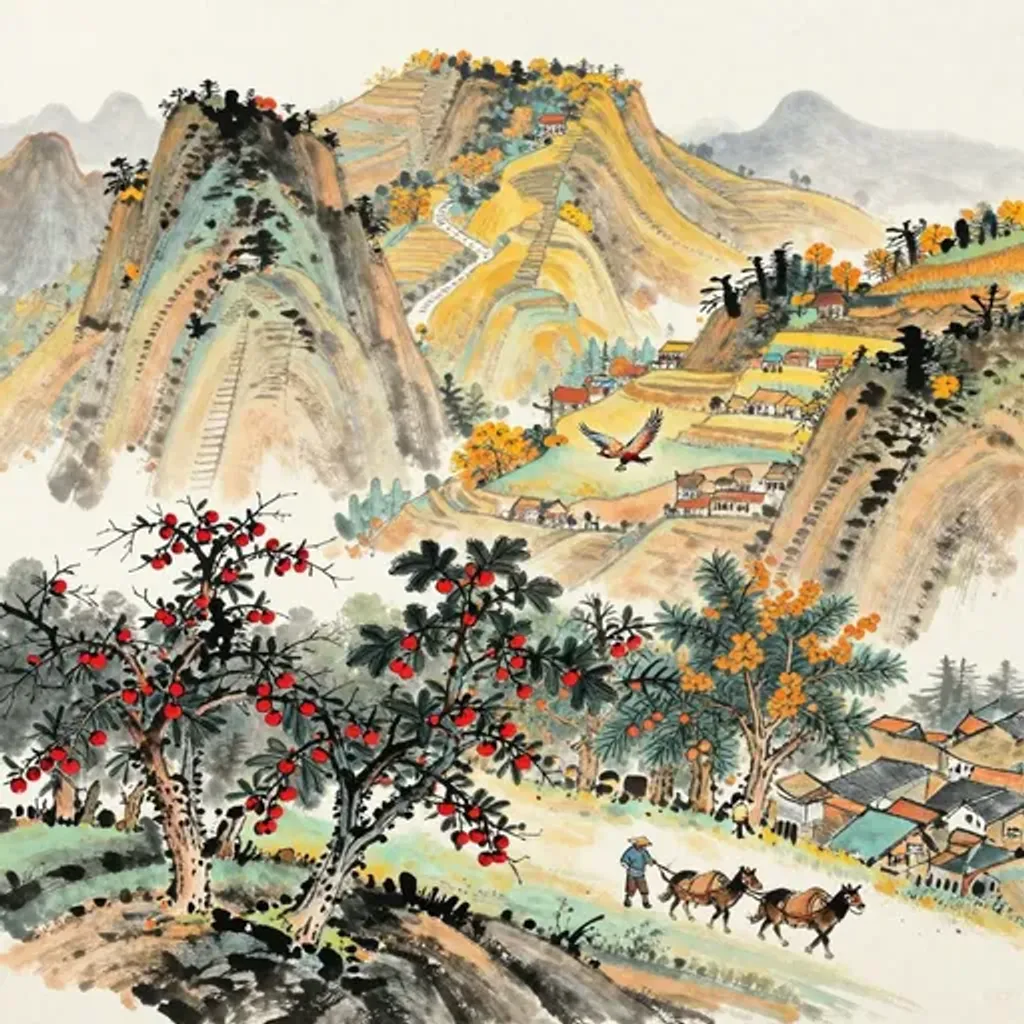
北山有棗,使叔壽考。東嶺多栗,宜行賈市。陸梁雌雉,所至利喜。
On the north mountain are jujubes, giving the uncle long life. On the east ridge, many chestnuts; fit for trade and market. The strutting hen pheasant; wherever she goes, joy and profit.
— Jiao Yanshou, Yilin (Forest of Changes), 1st century BC
Commentary
Water hidden within the earth sustains its people, and the verse surveys a landscape of natural bounty. The northern mountain bears jujubes, granting long life to one's uncle; the eastern ridge abounds in chestnuts, fit for trade and market. A hen pheasant struts boldly, and wherever she goes there is profit and joy. Every line radiates pastoral prosperity: the hills provide sustenance, commerce thrives, and even the wildlife moves with confident ease. From The Army to Enthusiasm, thunder erupts from the earth in joyful release. The army's disciplined containment breaks into celebratory energy — the stored resources of the campaign season now fuel feasts, music, and abundance shared freely.
師 → 隨
Hexagram 7 → Hexagram 17: Following
Changing lines: 1, 2, 4, 5
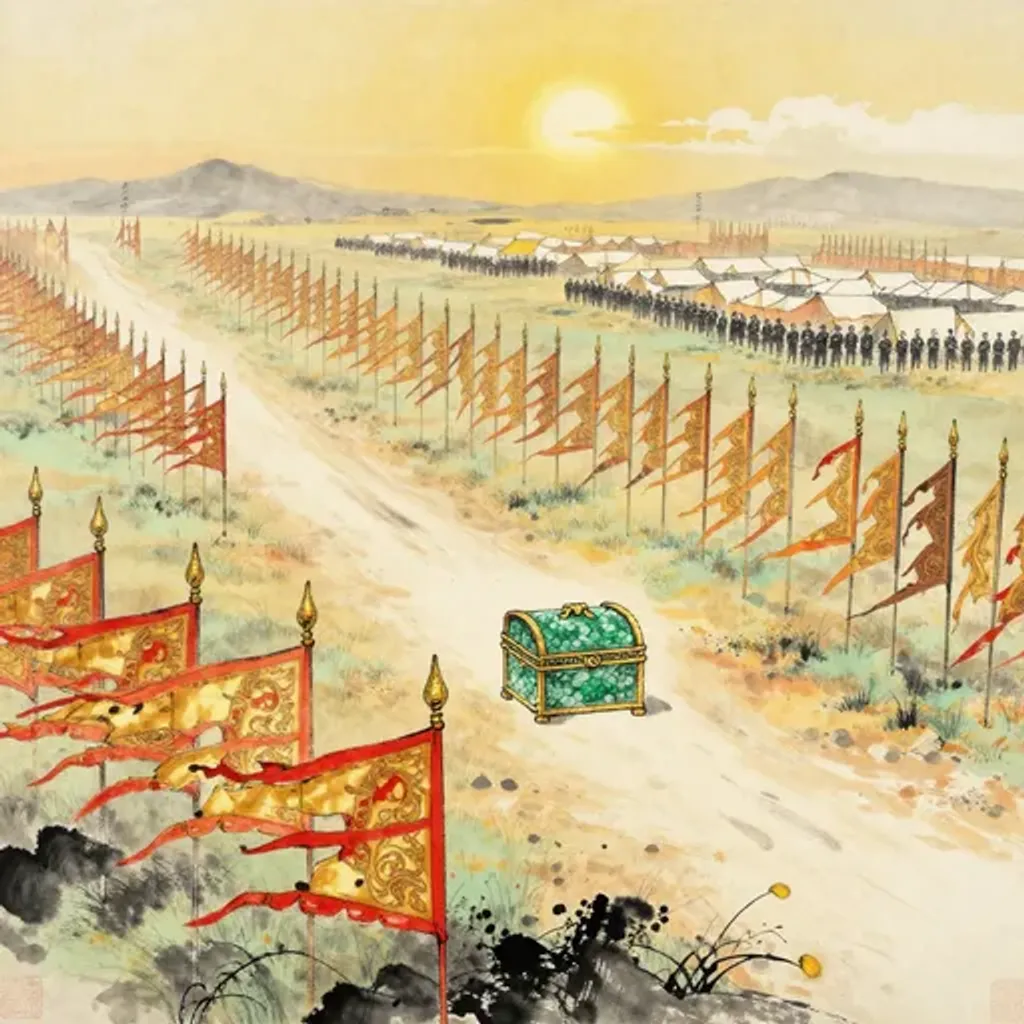
干旄旌旗,撫幟在郊。雖有寶玉,无路致之。
Banners and pennants, feathered standards; holding ensigns in the field. Though there are precious jades; there is no road to deliver them.
— Jiao Yanshou, Yilin (Forest of Changes), 1st century BC
Commentary
Water hidden within the earth arrays the host under banners and flags. Pennants of yak-tail and feathered standards wave in the suburban fields — a grand military display. Yet despite possessing precious jade, there is no road to deliver it. The scene captures the frustration of power without passage: the army is mustered, the treasure is real, but the way forward is blocked. From The Army to Following, thunder rests within the lake as evening falls. The banners and treasure suggest readiness, but Following's wisdom lies in knowing when to rest rather than force a path. Sometimes the commander must wait for the way to open rather than march into impassable ground.
師 → 蠱
Hexagram 7 → Hexagram 18: Work on the Decayed
Changing lines: 3, 6
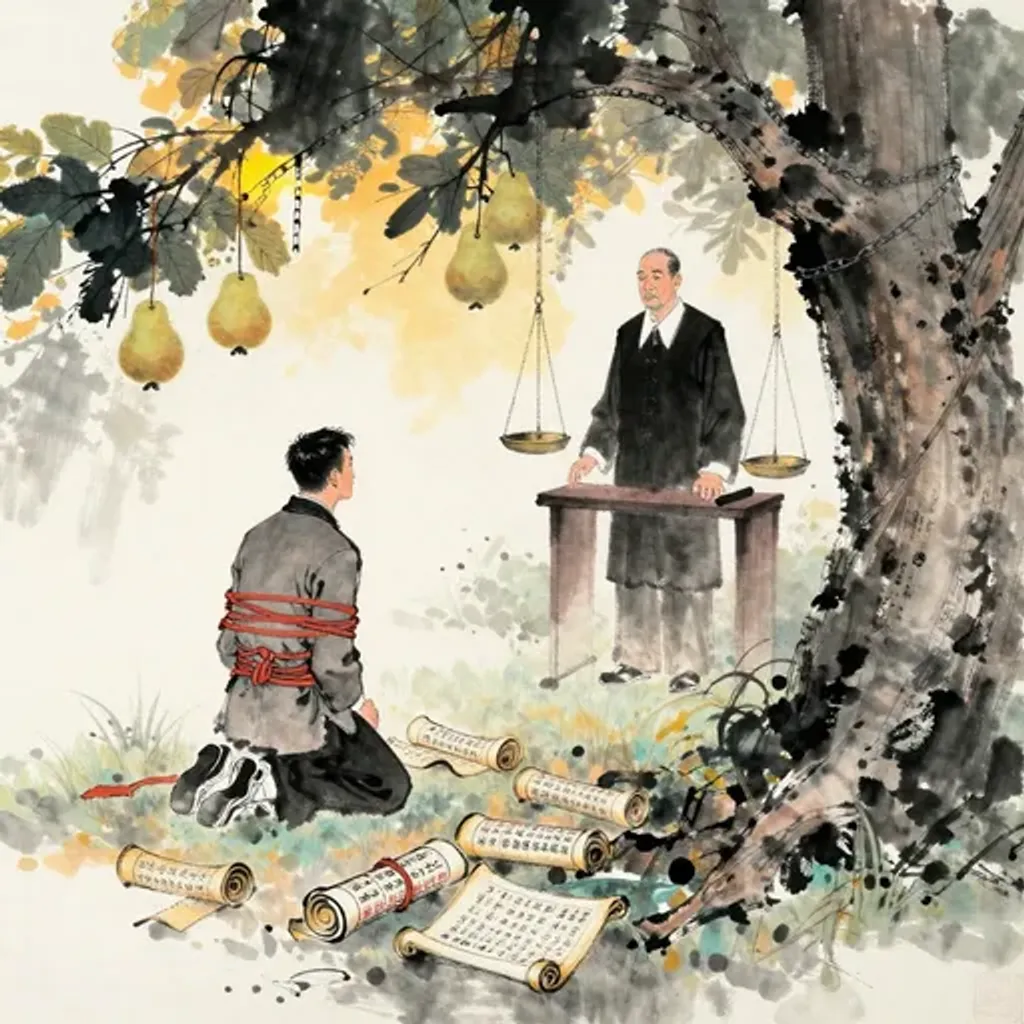
精潔淵塞,為讒所言。證訊詰請,繫於枳溫。甘棠聽斷,怡然蒙恩。
Pure and upright, yet dammed and blocked; slandered by false tongues. Interrogated and questioned; bound at Zhiwen. Under the sweet pear tree, judgment is heard; peacefully, grace is received.
— Jiao Yanshou, Yilin (Forest of Changes), 1st century BC
Commentary
Water hidden within the earth protects the innocent, but here a pure and blameless person falls victim to slander. Interrogated and cross-examined, bound and imprisoned at Zhiwen — the injustice is complete. Then the verse pivots to rescue: under the sweet pear tree, a wise judge hears the case, and the falsely accused receives grace with serene joy. The sweet pear tree alludes to the Shijing ode about the Duke of Shao, who dispensed justice under a gan-tang tree so beloved that the people refused to cut it after his death. From The Army to Work on the Decayed, wind beneath the mountain stirs what has stagnated. Corrupt institutions can be repaired when a just authority intervenes.
師 → 臨
Hexagram 7 → Hexagram 19: Approach
Changing lines: 1
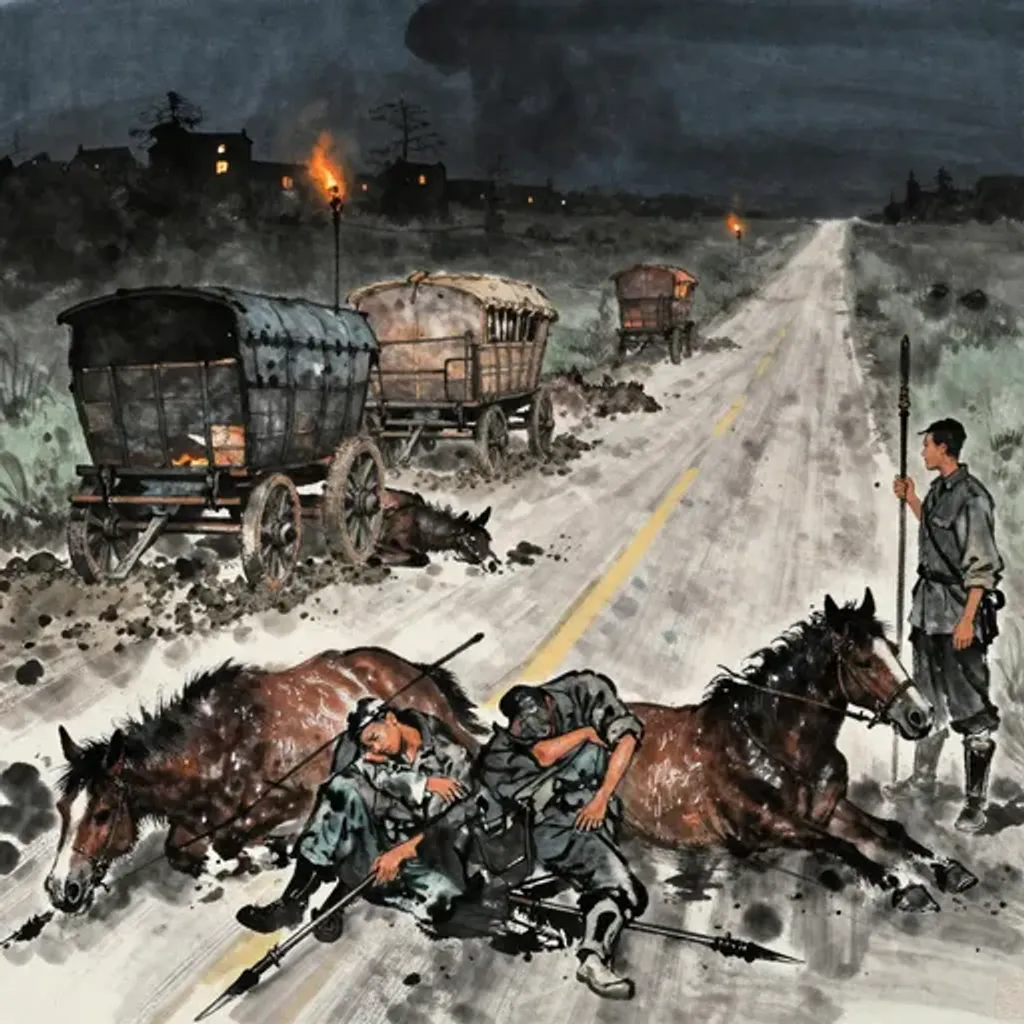
玄黃虺隤,行者勞罷。役夫憔悴,踰時不歸。
Dark and ailing, stumbling on; the traveler is weary and spent. The conscript laborer is haggard; past his time, he does not return.
— Jiao Yanshou, Yilin (Forest of Changes), 1st century BC
Commentary
Water hidden within the earth drives the conscripts forward until they collapse. Horses stumble sick and exhausted — the phrase 'xuan-huang hui-tui' echoes the Shijing lament of overworked war-horses. Travelers are spent and weary; the laborers are haggard beyond recognition, long past the time they should have returned. The verse is a soldiers' complaint distilled to its essence: endless service with no relief and no homecoming. From The Army to Approach, the earth rises above the lake in a gesture of authority drawing near. Yet approach implies benevolent oversight — the commander's duty to limit demands on those who serve. Here that duty has been abandoned.
師 → 觀
Hexagram 7 → Hexagram 20: Contemplation
Changing lines: 2, 5, 6
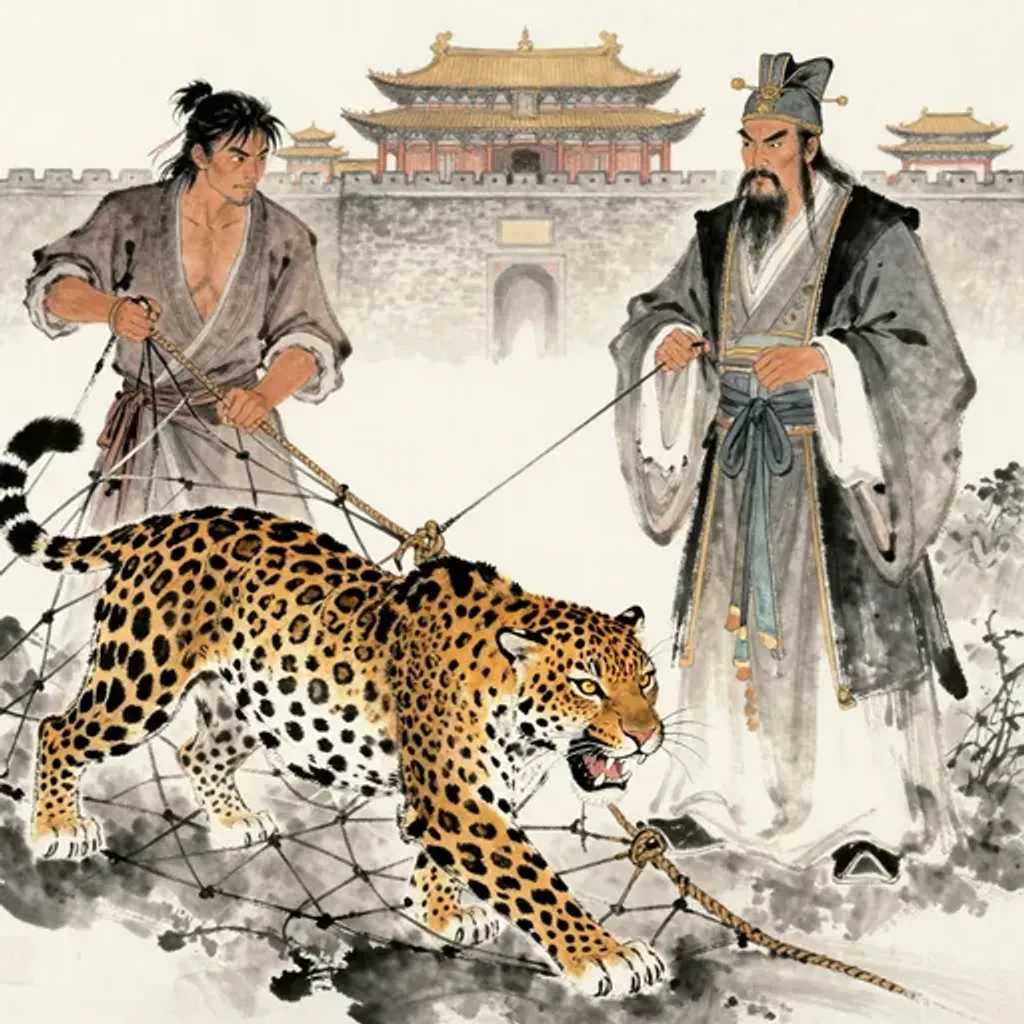
膚敏之德,發憤忘食。虜豹禽說,以成主德。
Keen and diligent in virtue; so devoted he forgets to eat. Capturing leopard and beast Shuo; to perfect the lord's virtue.
— Jiao Yanshou, Yilin (Forest of Changes), 1st century BC
Commentary
Water hidden within the earth cultivates capable ministers, and here swift sensitivity of mind drives tireless effort. The phrase 'fu-min' suggests one whose perception is keen as skin sensing a touch — such a person forgets to eat in their passionate dedication. Capturing leopards and taming wild beasts, this minister's achievements complete the sovereign's virtue. The verse celebrates the diligent official whose personal intensity serves the state's higher purpose. From The Army to Contemplation, wind moves across the earth as the ancient kings surveyed their domains. The minister's ferocious competence becomes the ruler's capacity to observe and educate — individual vigor refined into institutional wisdom.
師 → 噬嗑
Hexagram 7 → Hexagram 21: Biting Through
Changing lines: 1, 2, 4, 6
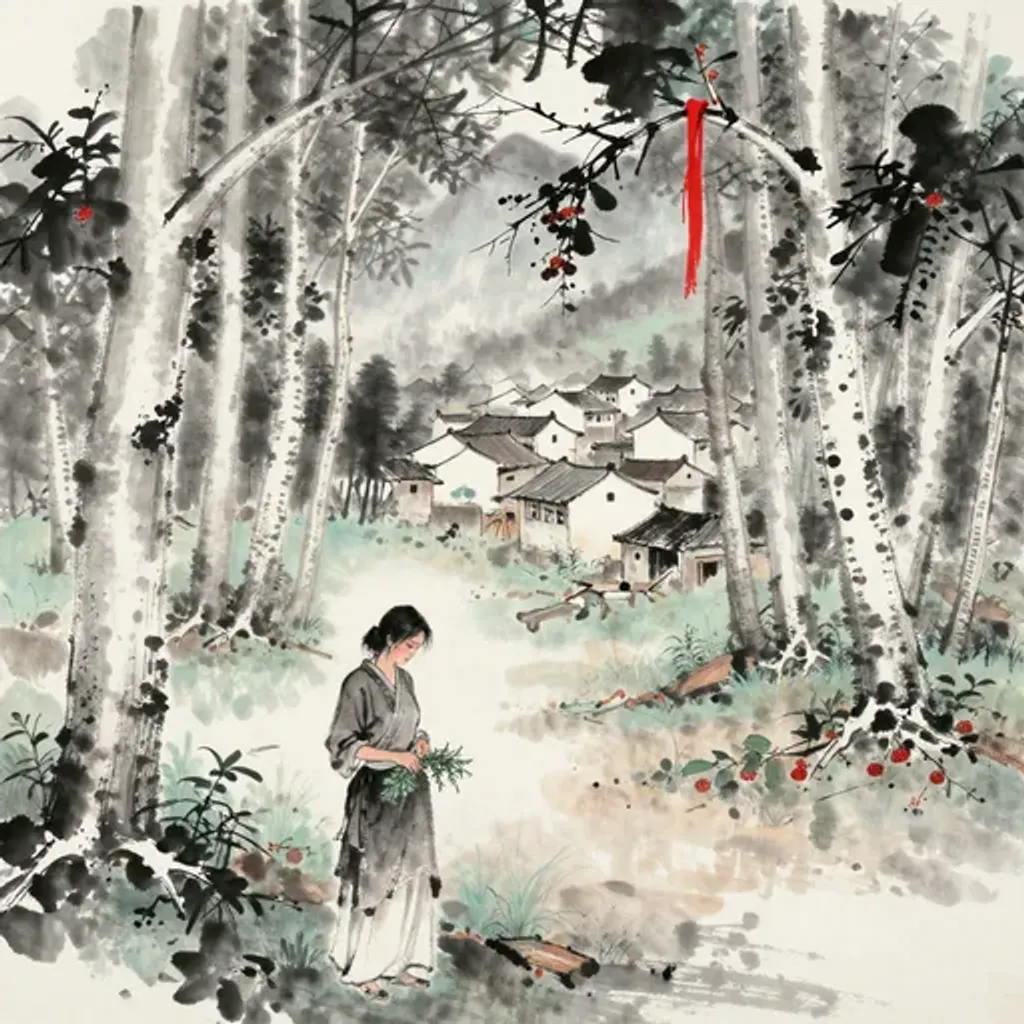
采唐沫鄉,要我桑中。失信不會,憂思約帶。
Gathering herbs at the village of Mo; meeting me among the mulberries. Trust is broken, no rendezvous comes; grief and longing tighten the belt.
— Jiao Yanshou, Yilin (Forest of Changes), 1st century BC
Commentary
Water hidden within the earth conceals longing beneath discipline. Gathering tang-grass at Mei, the tryst is promised among the mulberries — a direct quotation from the Shijing ode 'Sang Zhong,' the most famous song of illicit meetings in Chinese poetry. But the rendezvous fails: the promise is broken, the meeting never happens. Consumed by longing, the waist grows thin enough to tighten the belt. From The Army to Biting Through, fire and thunder administer justice. The broken tryst meets its reckoning: what was hidden must be bitten through and exposed. The unkept promise festers until the system of accountability catches up.
師 → 賁
Hexagram 7 → Hexagram 22: Grace
Changing lines: 1, 2, 3, 6
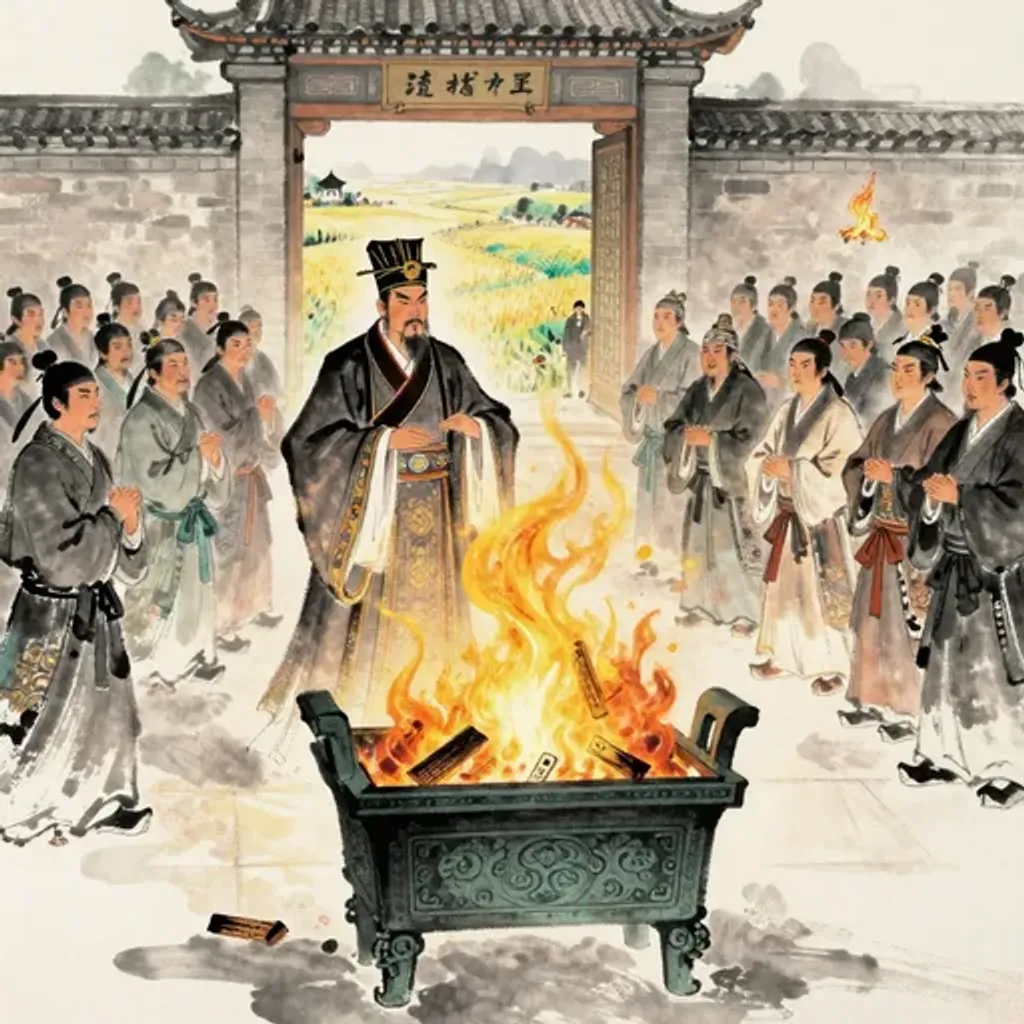
伯寧子福,惠我邦國。蠲除苛殘,使季無患。
Lord Bo Ning and his son Fu; they bless our state. Sweeping away cruelty and harshness; leaving the youngest free from trouble.
— Jiao Yanshou, Yilin (Forest of Changes), 1st century BC
Commentary
Water hidden within the earth shelters the worthy, and here a capable minister blesses the state. Bo-Ning and Zi-Fu — names suggesting 'peace through the elder' and 'blessing through the son' — bring grace to the nation. They purge harsh and cruel policies, ensuring that the youngest generation suffers no harm. The verse celebrates the reforming minister who dismantles oppressive systems to protect the vulnerable. From The Army to Grace, fire glows beneath the mountain, illuminating the pattern of civilized order. The army's blunt power is adorned with humane governance — military strength refined into the beauty of just administration.
師 → 剝
Hexagram 7 → Hexagram 23: Splitting Apart
Changing lines: 2, 6
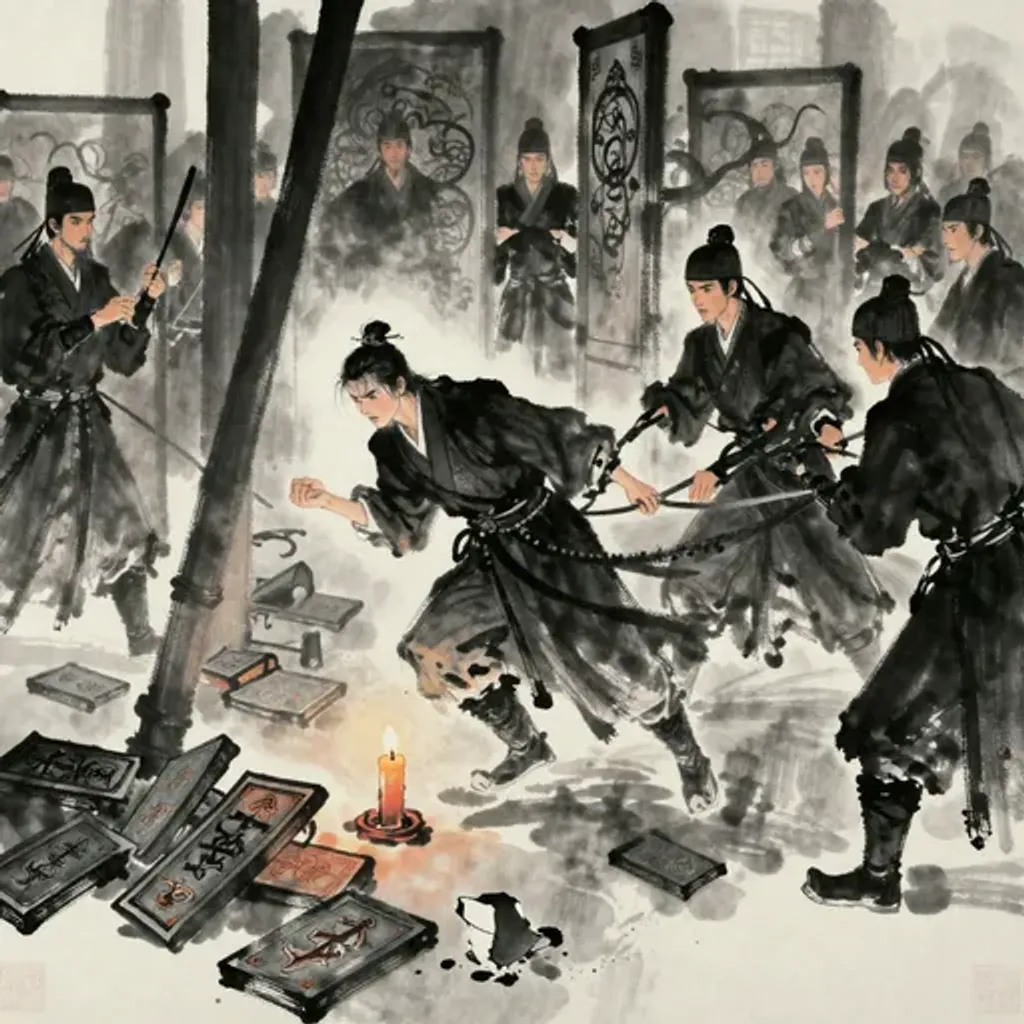
讒父佞雄,賊亂邦國。生雖忠孝,敗恩不福。
Slanderous father, flattering hero; they wreck and disorder the state. Though born loyal and filial; grace is ruined, blessings lost.
— Jiao Yanshou, Yilin (Forest of Changes), 1st century BC
Commentary
Water hidden within the earth should protect the realm, but here slanderous fathers and crafty strongmen bring ruin to the state. Though born loyal and filial, one's devotion is repaid with destroyed grace and denied blessings. The verse captures the tragedy of the faithful servant undone by slander: personal virtue cannot overcome systemic corruption when those at the top are complicit in deception. From The Army to Splitting Apart, the mountain crumbles upon the earth. The army's structure collapses layer by layer as treacherous ministers erode its foundation. What should have been orderly command disintegrates under the weight of lies.
師 → 復
Hexagram 7 → Hexagram 24: Return
Changing lines: 1, 2
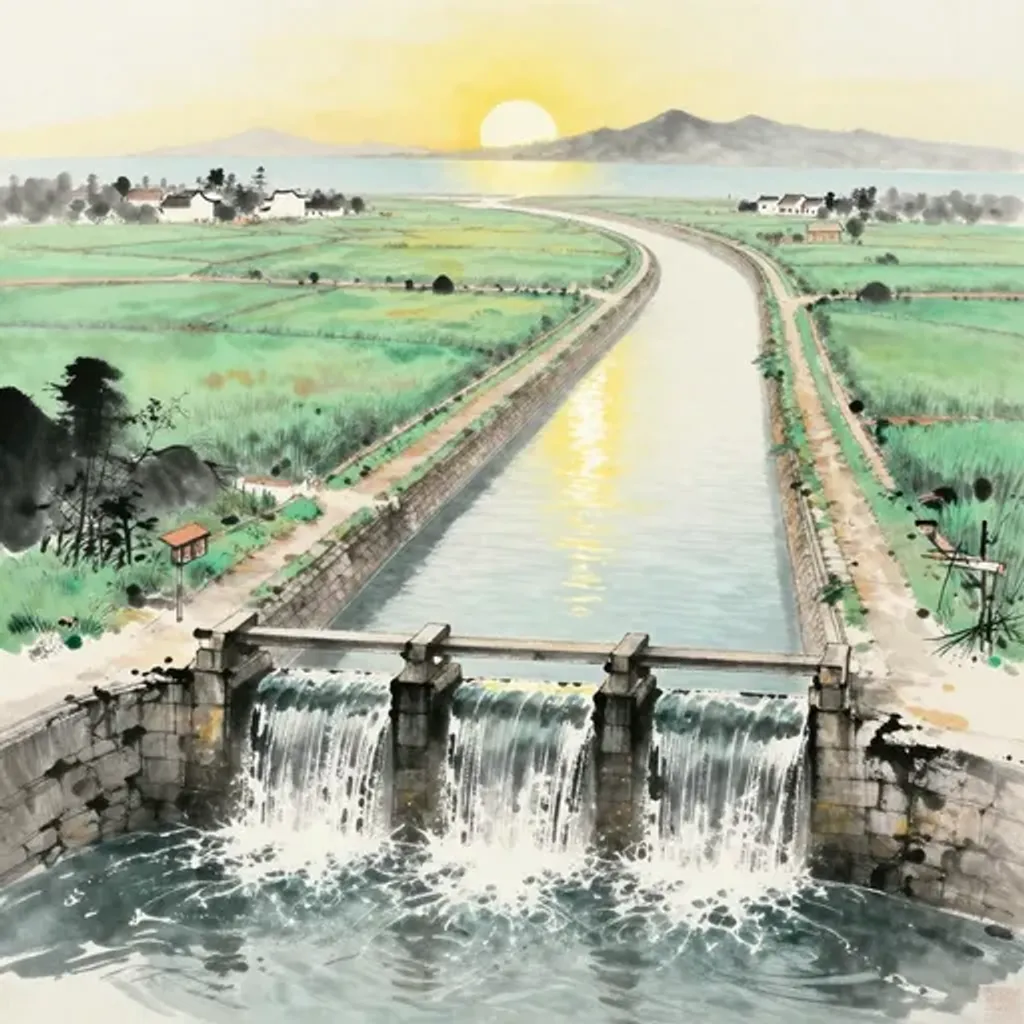
淵泉隄防,水道通利。順注湖海,邦國富有。
Deep springs and dike walls; the waterways flow freely. Following their course to lakes and seas; the state is rich and prosperous.
— Jiao Yanshou, Yilin (Forest of Changes), 1st century BC
Commentary
Water hidden within the earth flows where it is directed, and here the verse celebrates proper hydraulic governance. Deep springs and embankments keep the waterways clear and functional; channels flow smoothly into lakes and seas, and the state grows wealthy. The image is both literal and political: well-managed water infrastructure creates prosperity, just as well-managed institutions create a rich nation. Yu the Great's legacy echoes here — the sage who tamed the flood by working with water's nature rather than against it. From The Army to Return, thunder stirs beneath the earth in midwinter renewal. The disciplined channeling of the army's resources enacts the first stirring of the yang return — latent energy guided along proper courses brings revival and abundance.
師 → 无妄
Hexagram 7 → Hexagram 25: Innocence
Changing lines: 1, 2, 4, 5, 6
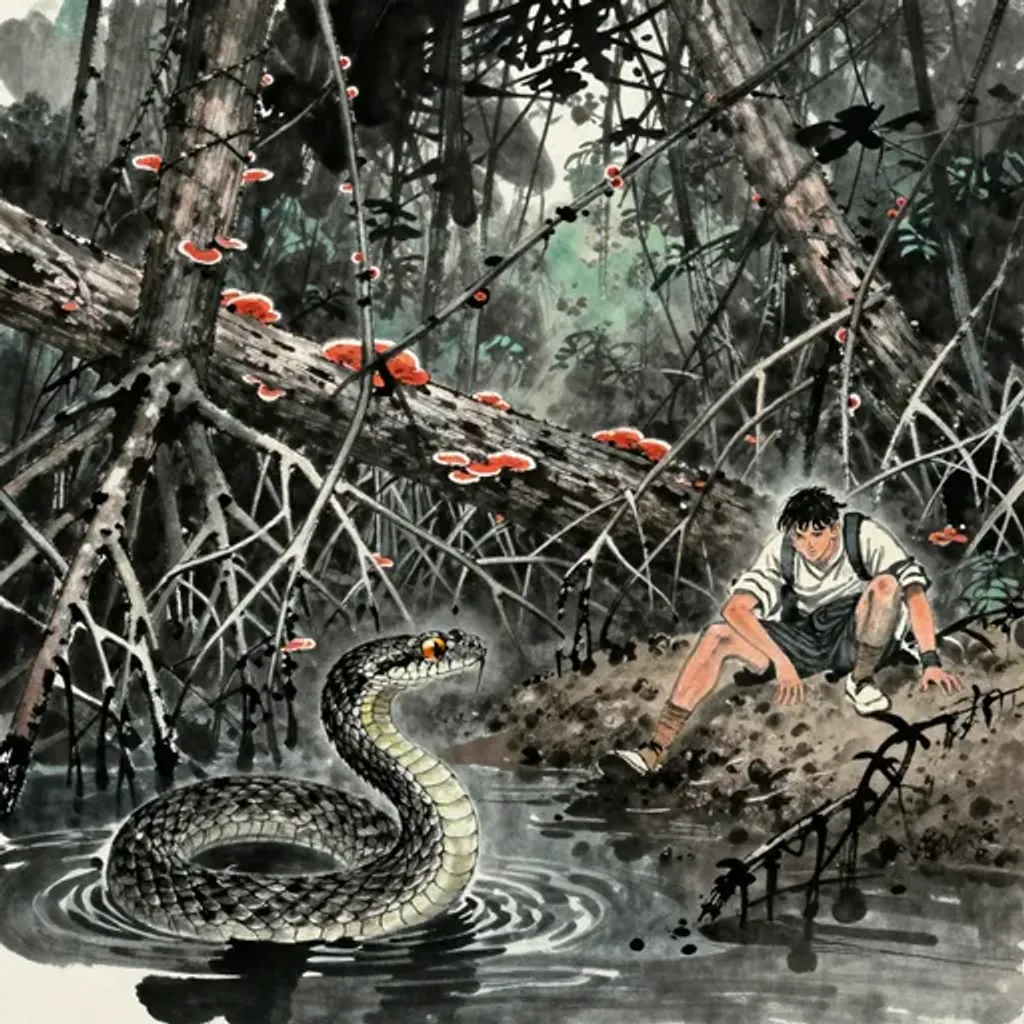
江南多蝮,螫我手足。冤繁詰屈,痛徹心腹。
South of the river, many vipers; they sting my hands and feet. Grievances tangled and twisted; pain pierces heart and belly.
— Jiao Yanshou, Yilin (Forest of Changes), 1st century BC
Commentary
Water hidden within the earth harbors unseen dangers, and south of the Yangtze the vipers swarm. They sting hands and feet; injustice multiplies in tangled knots, and pain pierces to the heart and gut. The viper-infested south evokes both literal frontier peril and the metaphor of malicious litigation — 'yuan-fan jie-qu' suggests grievances twisted beyond resolution. From The Army to Innocence, heaven's thunder should move all things without falseness. Yet the verse depicts a world where innocence offers no protection: one suffers calamity not through wrongdoing but through sheer misfortune. The Innocence hexagram's shadow side — disaster striking the blameless — is fully realized here.
師 → 大畜
Hexagram 7 → Hexagram 26: Great Taming
Changing lines: 1, 3, 6
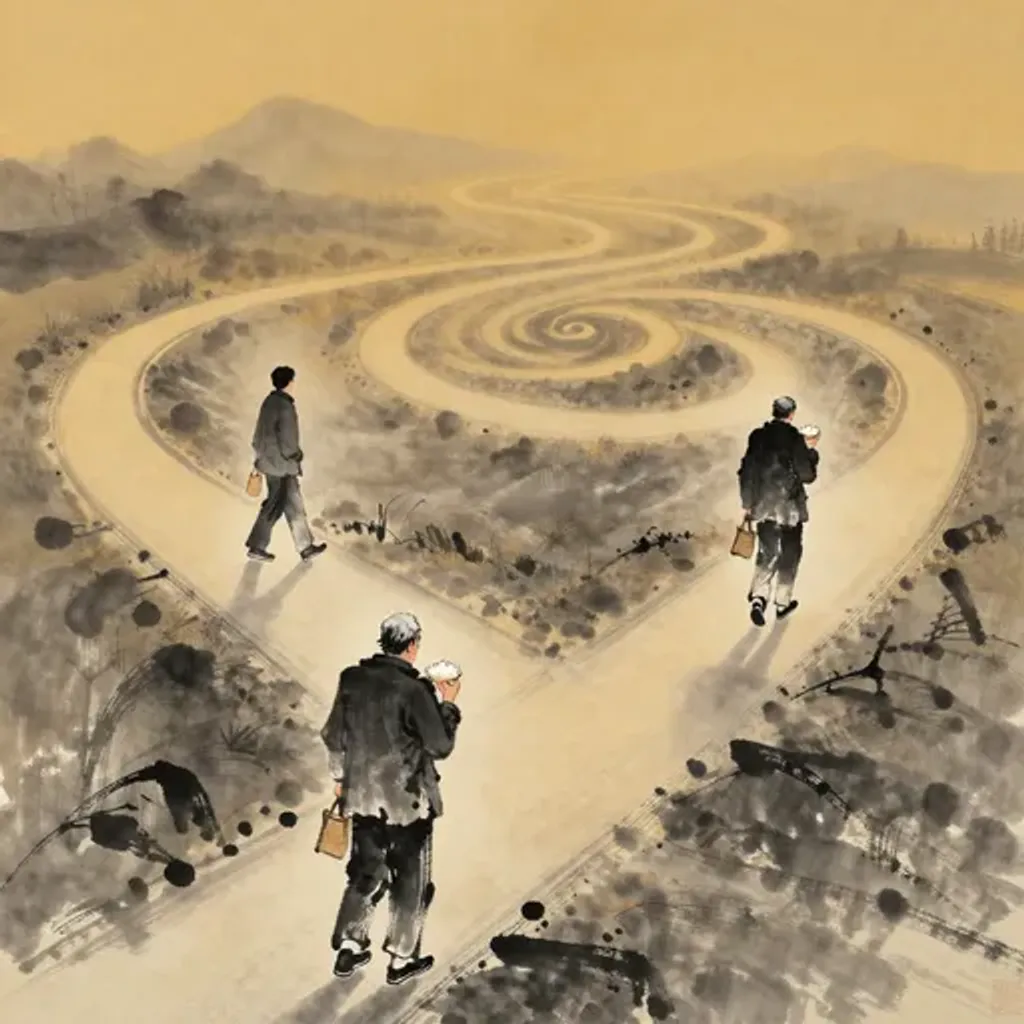
三人俱行,別離獨食。一身五心,反覆迷惑,亂無所得。
Three men walk together; they part and eat alone. One body, five minds; turning and confused, gaining nothing.
— Jiao Yanshou, Yilin (Forest of Changes), 1st century BC
Commentary
Water hidden within the earth unifies the many under one command, but here three companions set out together only to separate and eat alone. One body harbors five conflicting hearts, vacillating back and forth in confusion, gaining nothing from the chaos. The verse diagnoses a failure of unity: what should be collective purpose fragments into individual uncertainty. The 'five hearts' suggest radical indecision — pulled in every direction simultaneously. From The Army to Great Taming, heaven contained within the mountain demands accumulated wisdom and stored virtue. But accumulation requires consistency; a mind split five ways cannot store anything. The mountain holds nothing if its interior is in turmoil.
師 → 頤
Hexagram 7 → Hexagram 27: Nourishment
Changing lines: 1, 2, 6
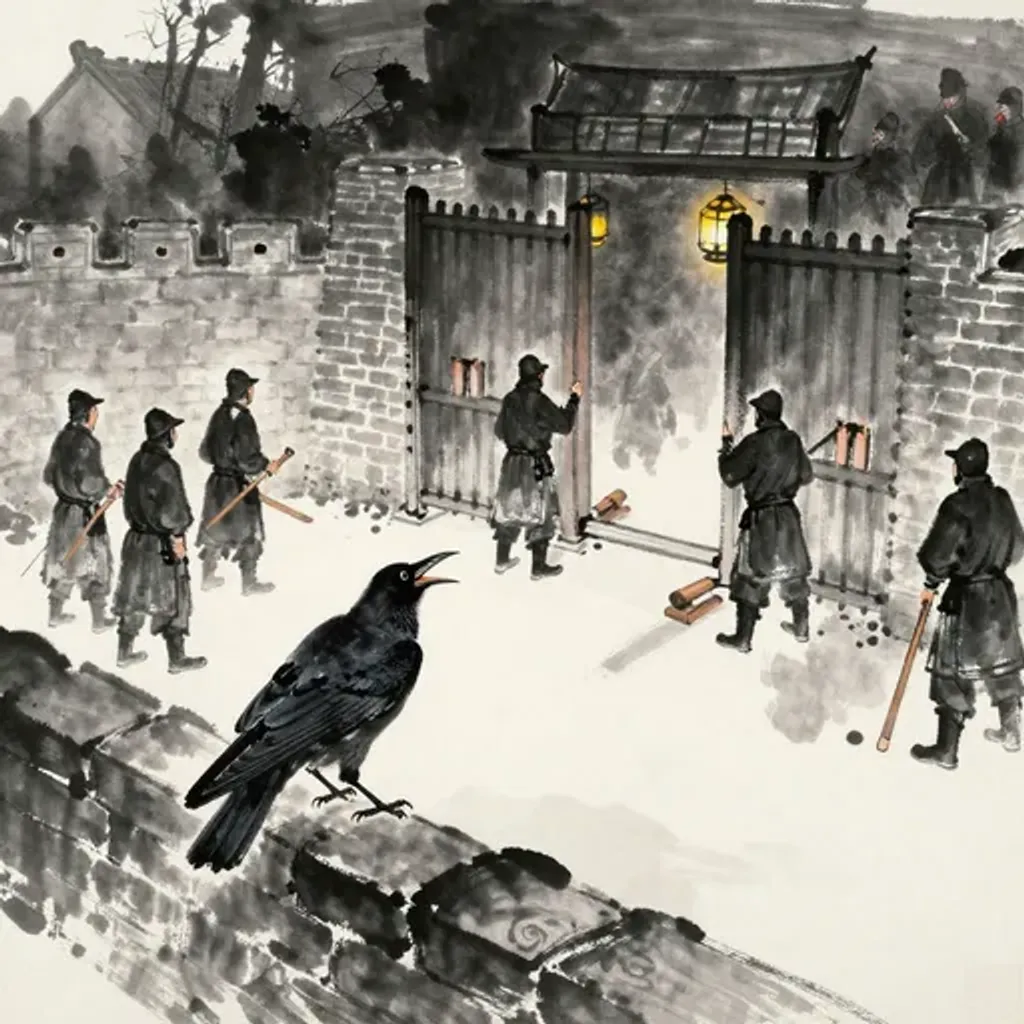
鴉鳴庭中,以戒災凶。重門擊柝,備不速客。
The crow caws in the courtyard, warning of disaster and misfortune. Doubling the gates, striking the watchman's clapper; guarding against uninvited guests.
— Jiao Yanshou, Yilin (Forest of Changes), 1st century BC
Commentary
Water hidden within the earth maintains vigilance, and a crow cries warning in the courtyard, alerting the household to coming calamity. The gates are doubled and watchmen strike their clappers, preparing against uninvited guests. The verse captures defensive readiness: the crow's ominous call triggers a protocol of layered security. 'Double gates and striking clappers' echoes the Yijing's own Xici commentary on precautionary measures. From The Army to Nourishment, the mountain rests above thunder in quiet sustenance. The army's alert posture transforms into the discipline of careful nourishment — guarding what enters the mouth and what exits through speech. Vigilance becomes self-cultivation.
師 → 大過
Hexagram 7 → Hexagram 28: Great Exceeding
Changing lines: 3, 4, 5
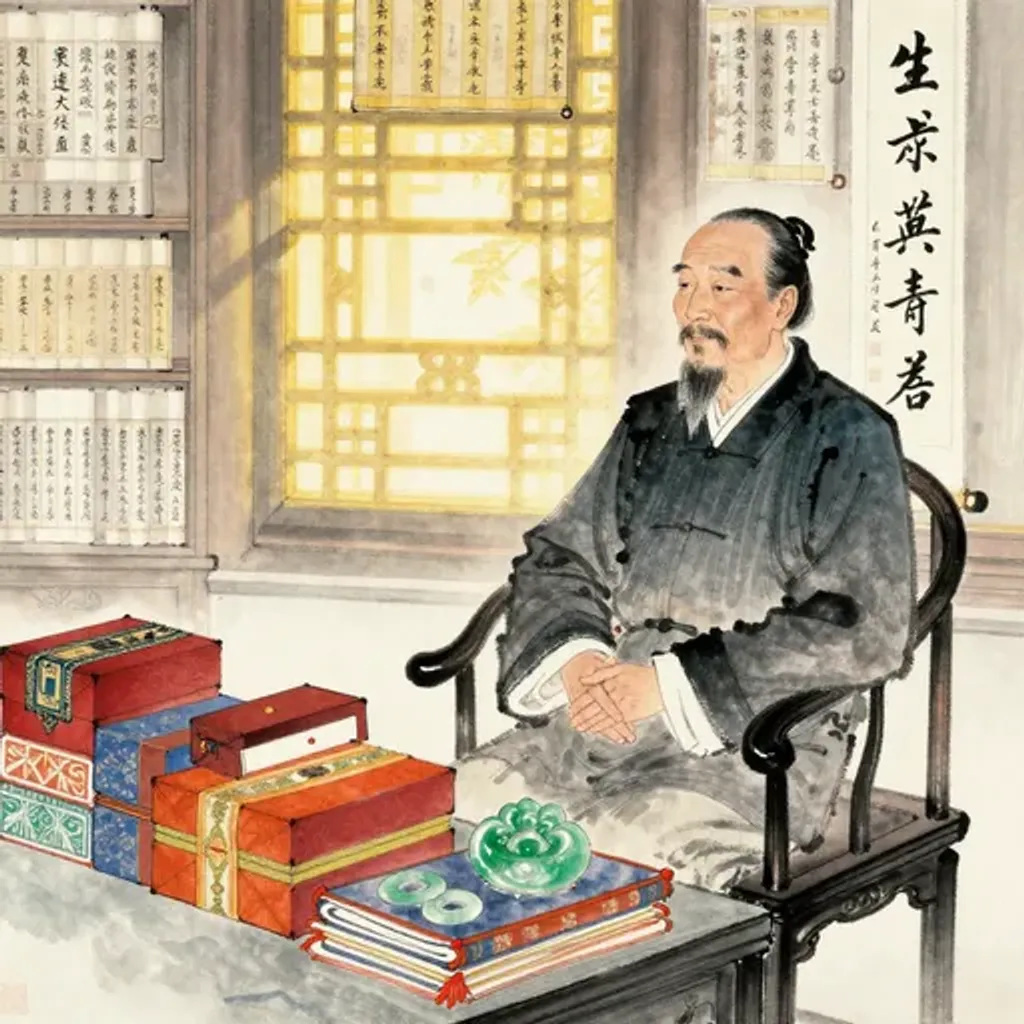
功成事就,拱手安居。立德有言,坐飾貢賦。
Deeds accomplished, affairs complete; resting with folded hands in peace. Establishing virtue with words; sitting and arranging tributes.
— Jiao Yanshou, Yilin (Forest of Changes), 1st century BC
Commentary
Water hidden within the earth achieves its mission, and the commander folds his hands in tranquil repose. Deeds accomplished and affairs concluded, virtue is established through words, and tribute and taxes are arranged while seated at ease. The verse celebrates the ideal aftermath of a successful campaign: no further action needed, the ruler governs by presence alone. From The Army to Great Exceeding, the lake submerges the trees in a moment of extraordinary weight. The very success described here pushes beyond normal limits — such ease and completeness carries the seed of excess. The wise commander recognizes that even peaceful repose, extended too long, becomes the ridgepole that sags.
師 → 坎
Hexagram 7 → Hexagram 29: The Abysmal Water
Changing lines: 5
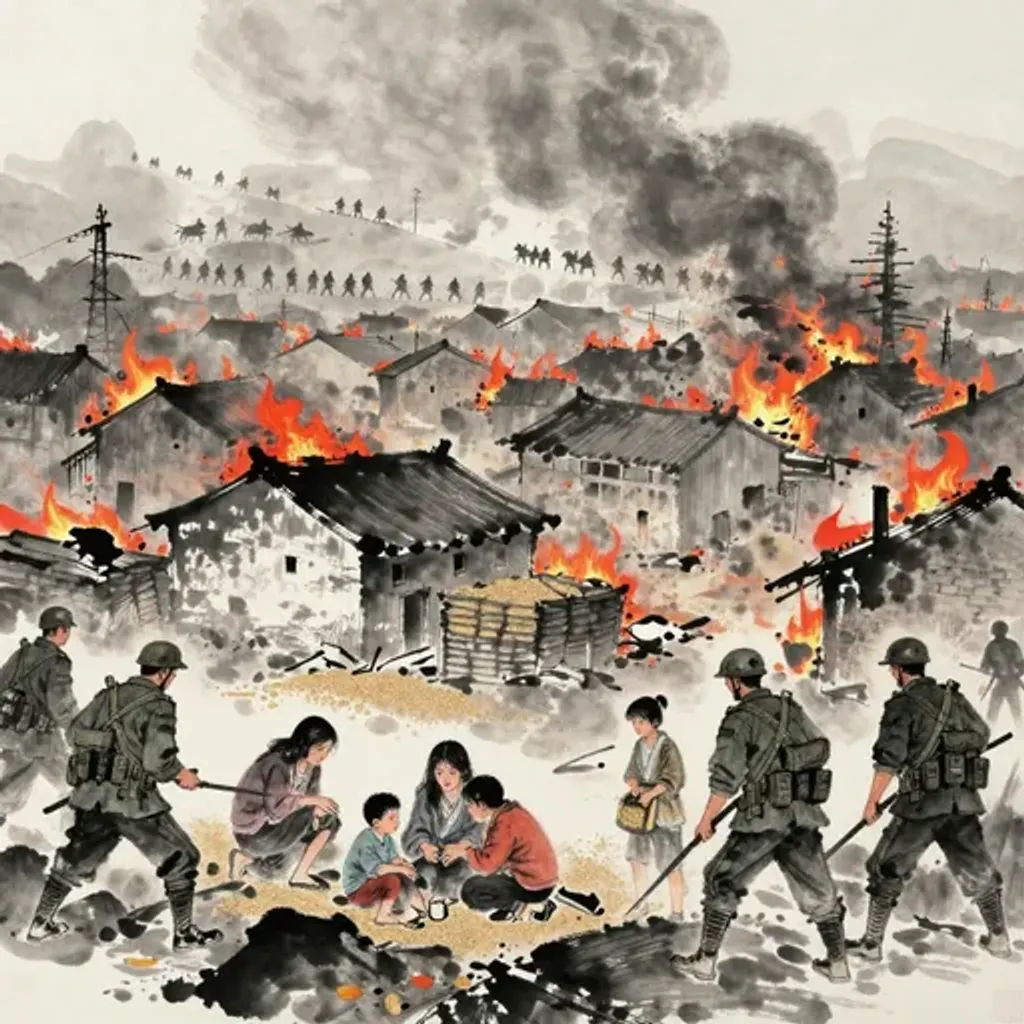
國亂不安,兵革為患。掠我妻子,家中飢寒。
The state in turmoil, unsafe; arms and war bring disaster. Seizing my wife and children; the household suffers hunger and cold.
— Jiao Yanshou, Yilin (Forest of Changes), 1st century BC
Commentary
Water hidden within the earth should shelter the people, but the state is in turmoil and war ravages all. Arms and soldiers bring disaster; wives and children are carried off, and the household is left in hunger and cold. The verse strips warfare to its human cost: the army that should protect instead devours those it was meant to defend. From The Army to The Abysmal, water doubles upon water in relentless peril. The army's ordered water, meant to nourish, becomes the abyss that swallows everything. There is no bottom to this danger — only the constant practice of integrity can navigate waters that offer no shore.
師 → 離
Hexagram 7 → Hexagram 30: The Clinging Fire
Changing lines: 1, 2, 3, 4, 6
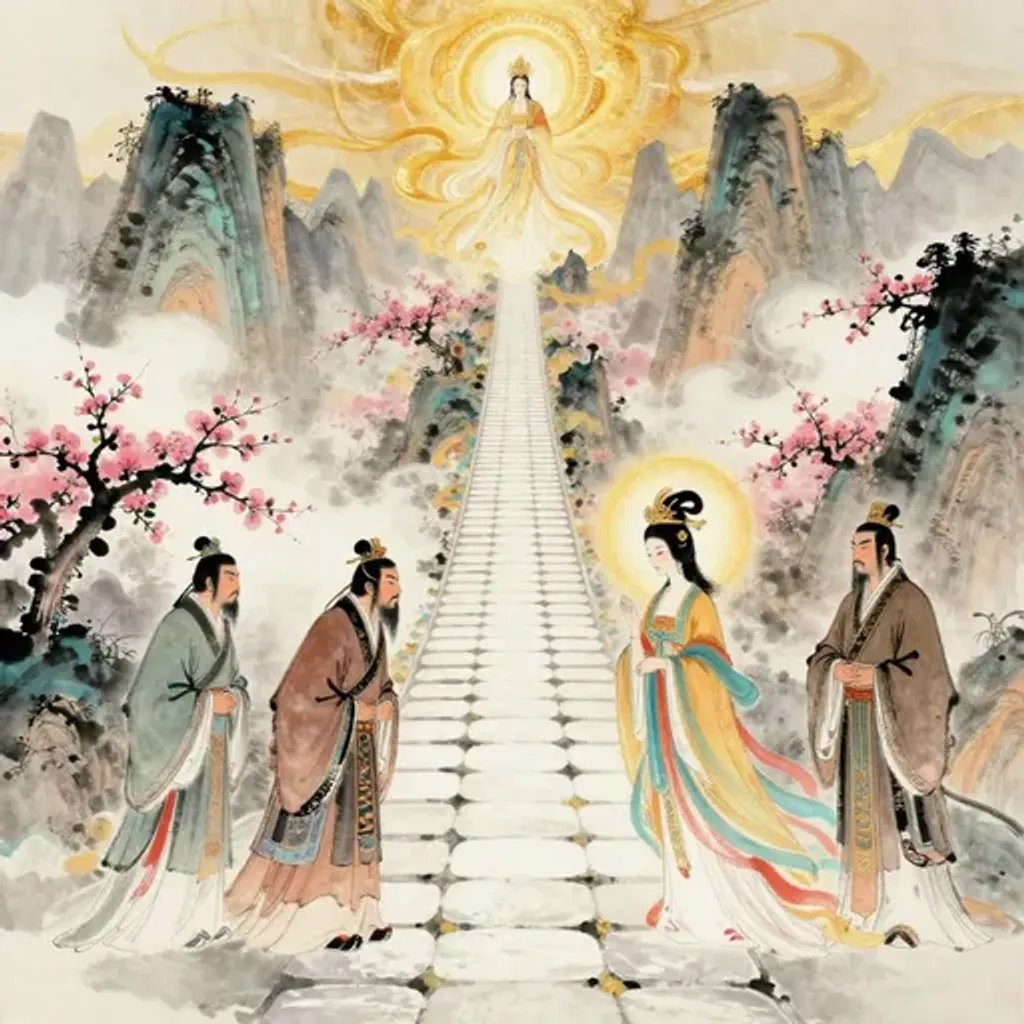
戴堯扶禹,從喬彭祖。西遇王母,道路夷易,無敢難者。
Upholding Yao, supporting Yu; following Qiao and Peng Zu. Meeting the Queen Mother in the west; the road is smooth and easy, none dare make it difficult.
— Jiao Yanshou, Yilin (Forest of Changes), 1st century BC
Commentary
Water hidden within the earth reverently upholds the sages, and the verse invokes a constellation of sacred protectors. Bearing Yao's wisdom and supporting Yu's labor, following the immortals Chisongzi and Pengzu in longevity, one journeys westward to meet the Queen Mother of the West. The road lies smooth and easy; no one dares oppose the traveler. This is a vision of cosmic safe-conduct: under the combined patronage of sage-kings and immortals, all obstacles dissolve. From The Army to The Clinging, doubled fire illuminates the four directions. The army's hidden water is transmuted into radiant clarity — earthly force ascending into the luminous company of heaven's brightest exemplars.
師 → 咸
Hexagram 7 → Hexagram 31: Influence
Changing lines: 2, 3, 4, 5
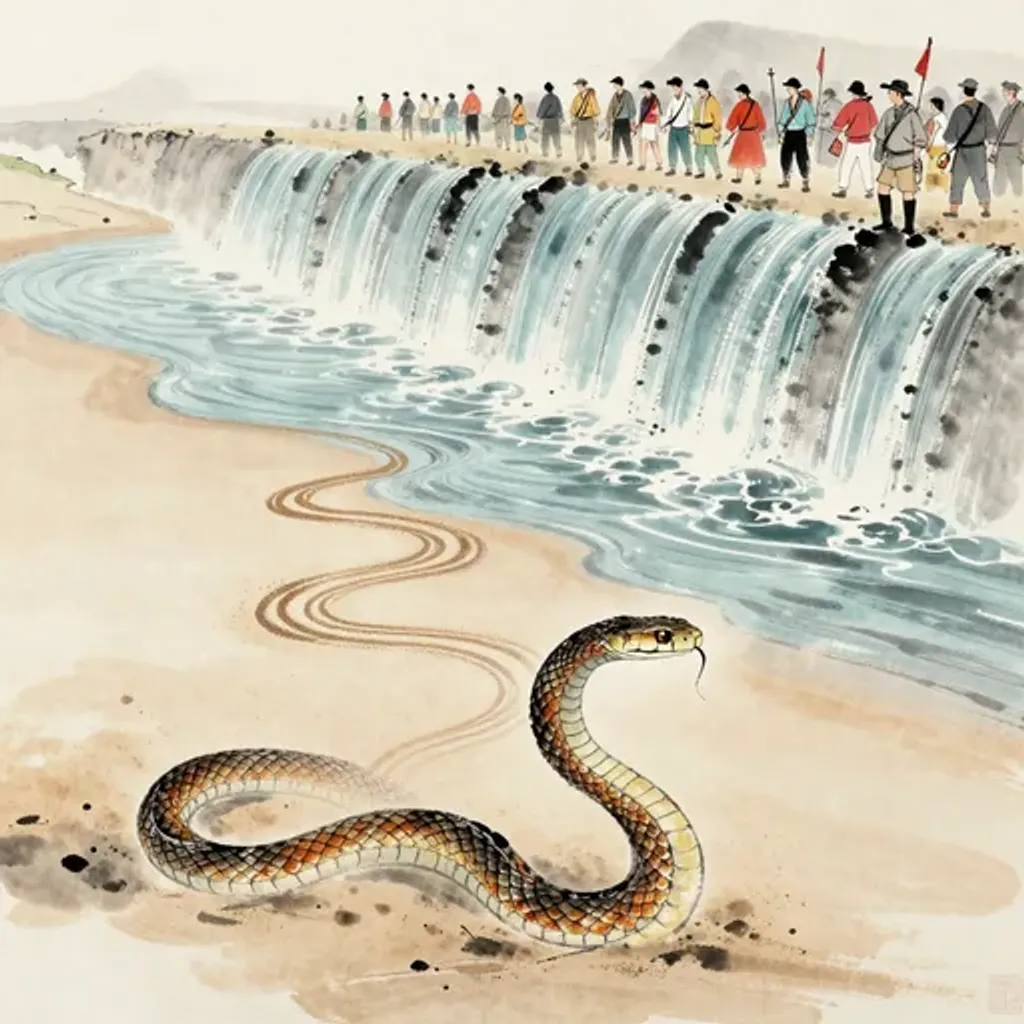
長尾委蛇,畫地成河,深不可涉。絕無以比,惆悵會息。
The long-tailed serpent, winding like a snake; drawing a line on the ground, it becomes a river, deep and uncrossable. Cut off, with nothing to compare; melancholy, then it ceases.
— Jiao Yanshou, Yilin (Forest of Changes), 1st century BC
Commentary
Water hidden within the earth confronts an impassable boundary. A long-tailed serpent winds and coils; a line drawn on the ground becomes a river too deep to cross. There is no way to reach the other side, and one sits in melancholy, sighing until the feeling subsides. The 'drawn river' evokes the legendary gesture of creating barriers from nothing — an authority that simply declares separation and makes it real. From The Army to Influence, the lake rests upon the mountain in mutual attraction. Yet the verse negates this promise: despite the hexagram of connection, the barrier holds. Influence requires openness, but the line-drawn river admits no crossing.
師 → 恆
Hexagram 7 → Hexagram 32: Duration
Changing lines: 3, 4
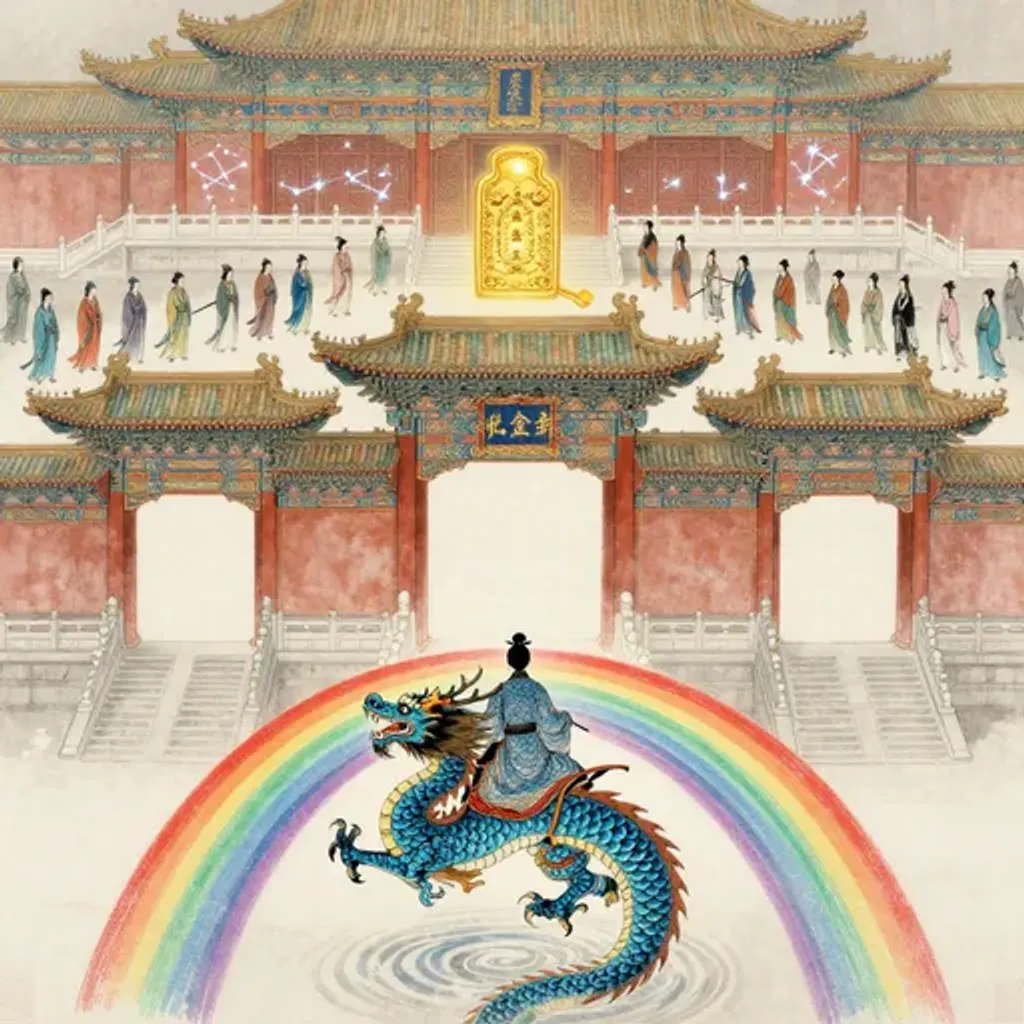
乘龍從蜺,徵詣北闕。乃見宣室,拜守東城。鎮慰黎元,舉家蒙福。
Riding the dragon, following the rainbow; summoned to the northern palace. Then received in the Xuan Chamber; appointed to guard the eastern city. Pacifying the common folk; the whole household receives blessings.
— Jiao Yanshou, Yilin (Forest of Changes), 1st century BC
Commentary
Water hidden within the earth propels a dramatic ascent. Riding a dragon and following a rainbow, one is summoned to the northern palace. There one enters the Xuanshi — the Audience Hall within the Han dynasty's Weiyang Palace, where Emperor Wen once received Jia Yi for a night-long discourse on the spirit world. Appointed to guard the eastern city, one pacifies the common people, and the entire household receives blessings. From The Army to Duration, thunder and wind sustain each other in perpetual motion. The official's appointment endures because it is grounded in both celestial mandate and popular welfare — a posting that lasts because it serves a lasting purpose.
師 → 遯
Hexagram 7 → Hexagram 33: Retreat
Changing lines: 2, 3, 4, 5, 6
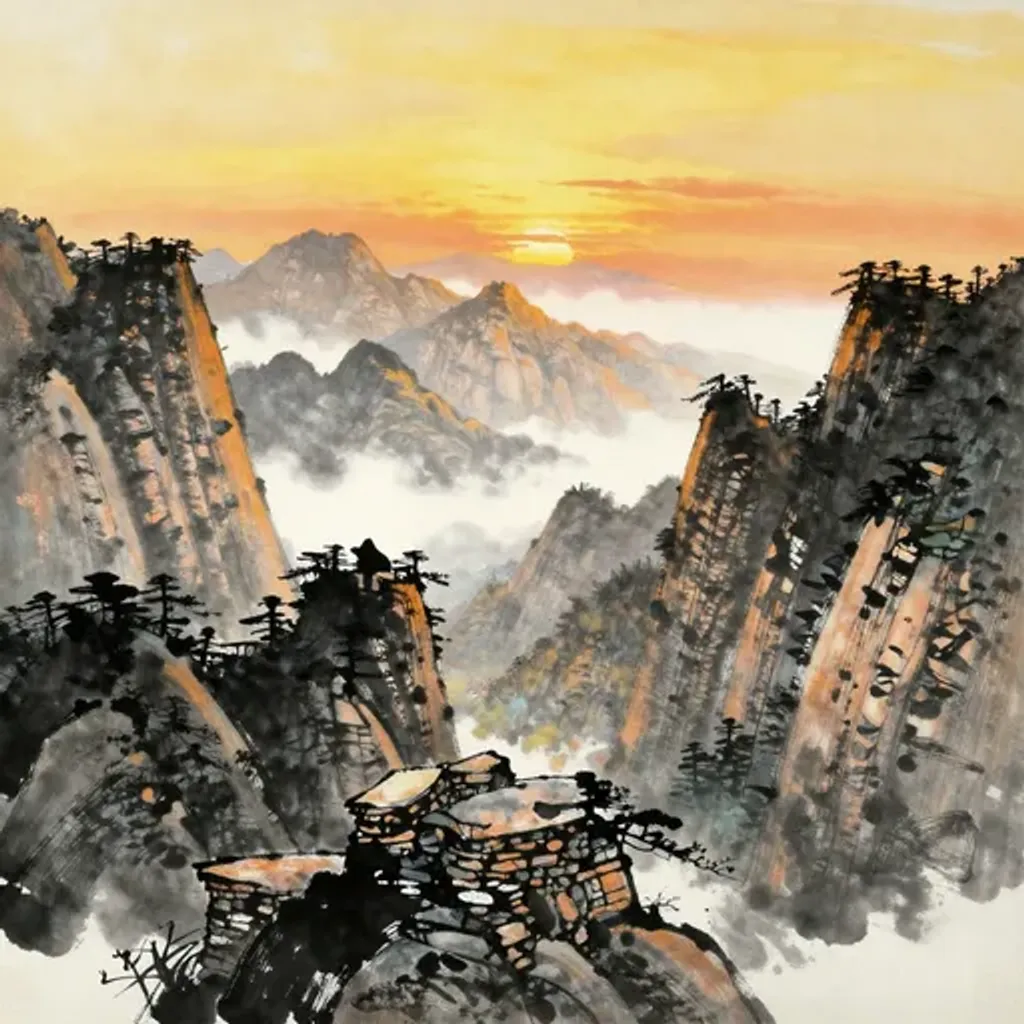
土與山連,終身無患。天地高明,萬歲長安。
Earth joins with the mountain; lifelong, no calamity. Heaven and earth are lofty and bright; ten thousand years of lasting peace.
— Jiao Yanshou, Yilin (Forest of Changes), 1st century BC
Commentary
Water hidden within the earth anchors itself to immovable ground. Earth and mountain merge as one continuous body; throughout one's life there is no calamity. Heaven and earth stand lofty and luminous, promising ten thousand years of enduring peace. The verse is a benediction of stability — geological permanence as metaphor for lifelong security. From The Army to Retreat, heaven rises above the mountain in dignified withdrawal. The army's duty fulfilled, one withdraws into the shelter of cosmic constancy. This is not flight but strategic repose: the mountain beneath heaven knows when the campaign is done and rests in its own unshakeable foundation.
師 → 大壯
Hexagram 7 → Hexagram 34: Great Power
Changing lines: 1, 3, 4
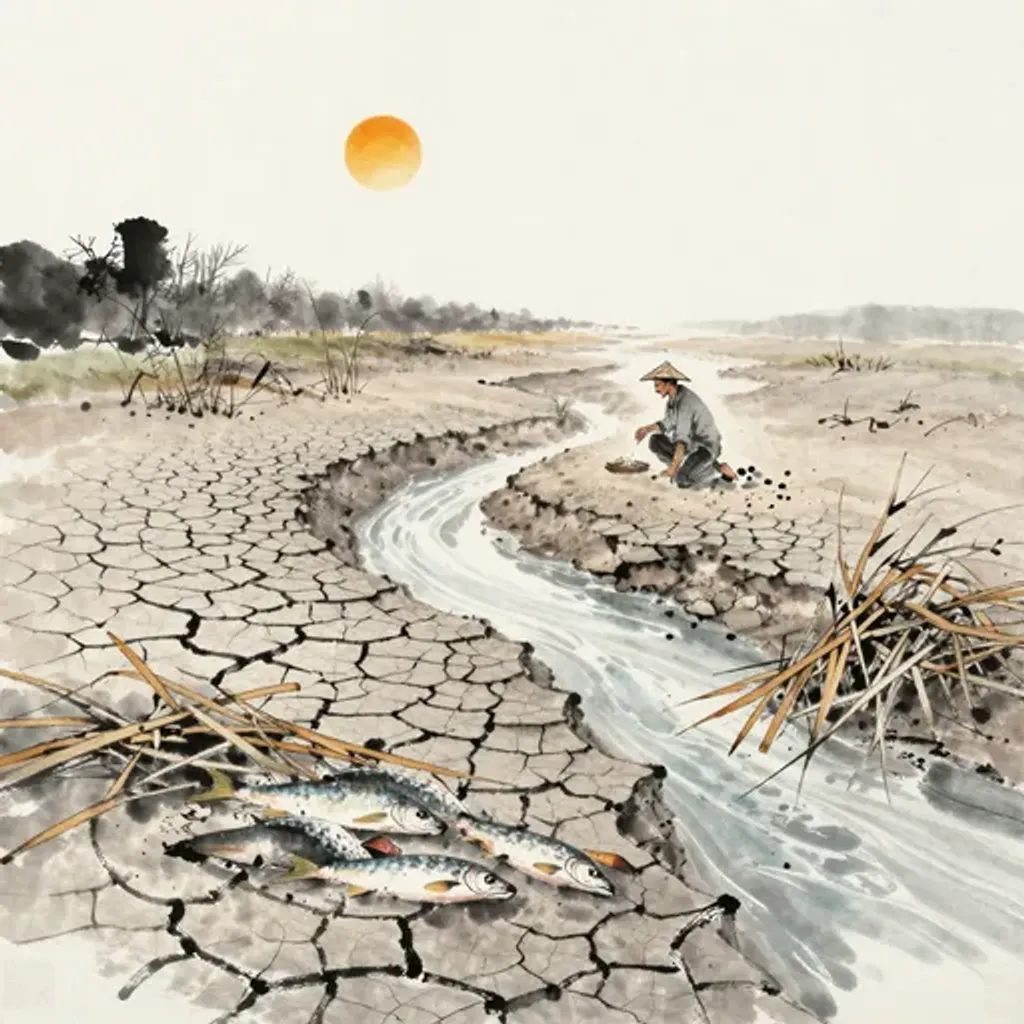
久旱水涸,枯槁無澤。虛修其德。未有所獲。
Long drought, waters dried up; withered and barren, no moisture. Cultivating virtue in vain; nothing yet gained.
— Jiao Yanshou, Yilin (Forest of Changes), 1st century BC
Commentary
Water hidden within the earth has dried up under prolonged drought. Rivers and pools are parched, everything withered and without moisture. One cultivates virtue in vain, having gained nothing for the effort. The verse captures the frustration of merit unrewarded: moral discipline exercised in a barren season yields no visible harvest. From The Army to Great Power, thunder roars above heaven in overwhelming strength. Yet the verse contradicts the hexagram's promise — power without moisture is sterile force. The army's reservoir has run dry, and raw strength without sustenance merely exhausts itself. Even great power requires something to nourish before it can act.
師 → 晉
Hexagram 7 → Hexagram 35: Progress
Changing lines: 2, 4, 6
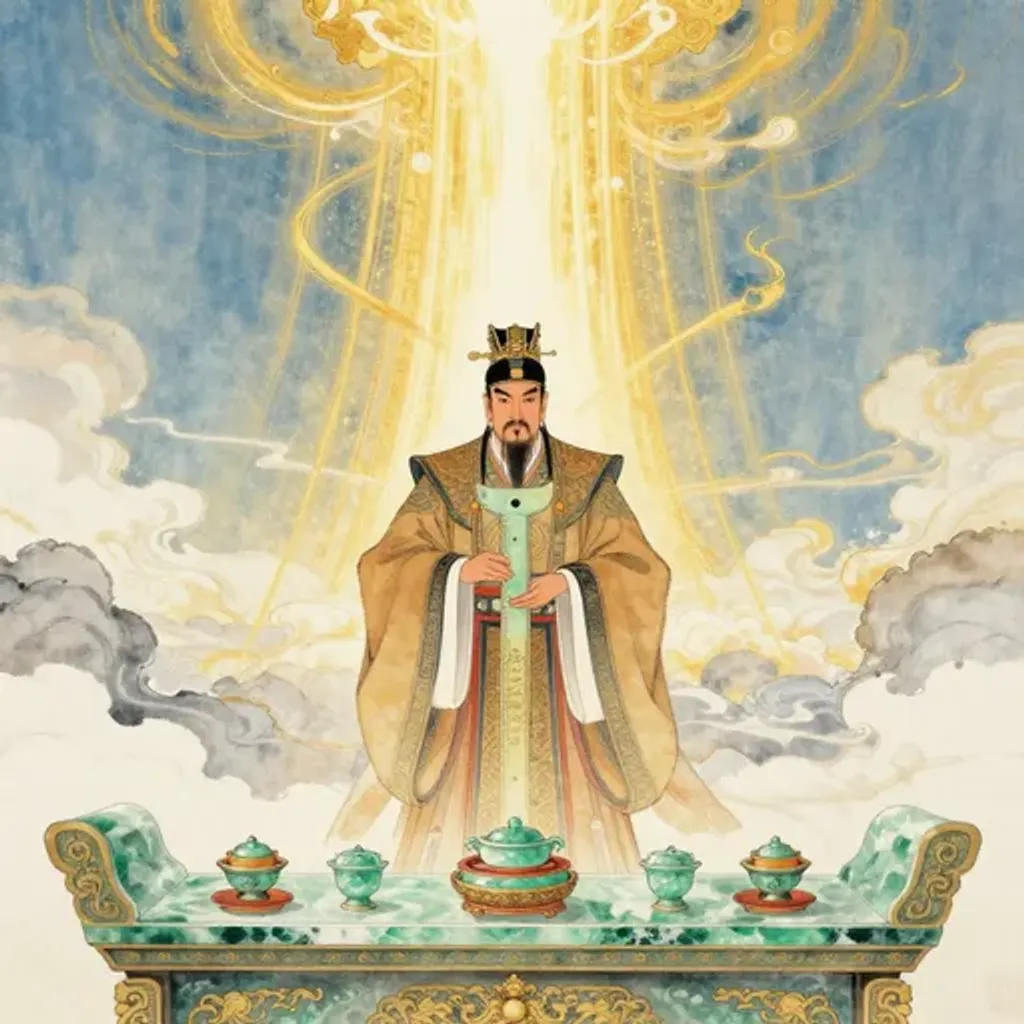
依天倚地,凶危不至。上清下淨,受福大明,君受其利。
Relying on heaven, leaning on earth; danger and peril do not come. Above clear, below pure; receiving great and brilliant blessings -- the lord gains the advantage.
— Jiao Yanshou, Yilin (Forest of Changes), 1st century BC
Commentary
Water hidden within the earth is backed by heaven and grounded in the land, and no danger dares approach. Leaning on heaven and resting on earth, above is clear and below is clean; one receives great illumination as blessing, and the ruler profits from this alignment. The verse describes perfect vertical integration: cosmic support flows from the highest to the lowest without obstruction. From The Army to Progress, fire rises above the earth as the sun at dawn. The army's hidden water gives way to ascending light — a commander whose clarity of purpose illuminates everything beneath. What was discipline becomes radiance; what was order becomes visible virtue shining outward.
師 → 明夷
Hexagram 7 → Hexagram 36: Darkening of the Light
Changing lines: 1, 2, 3
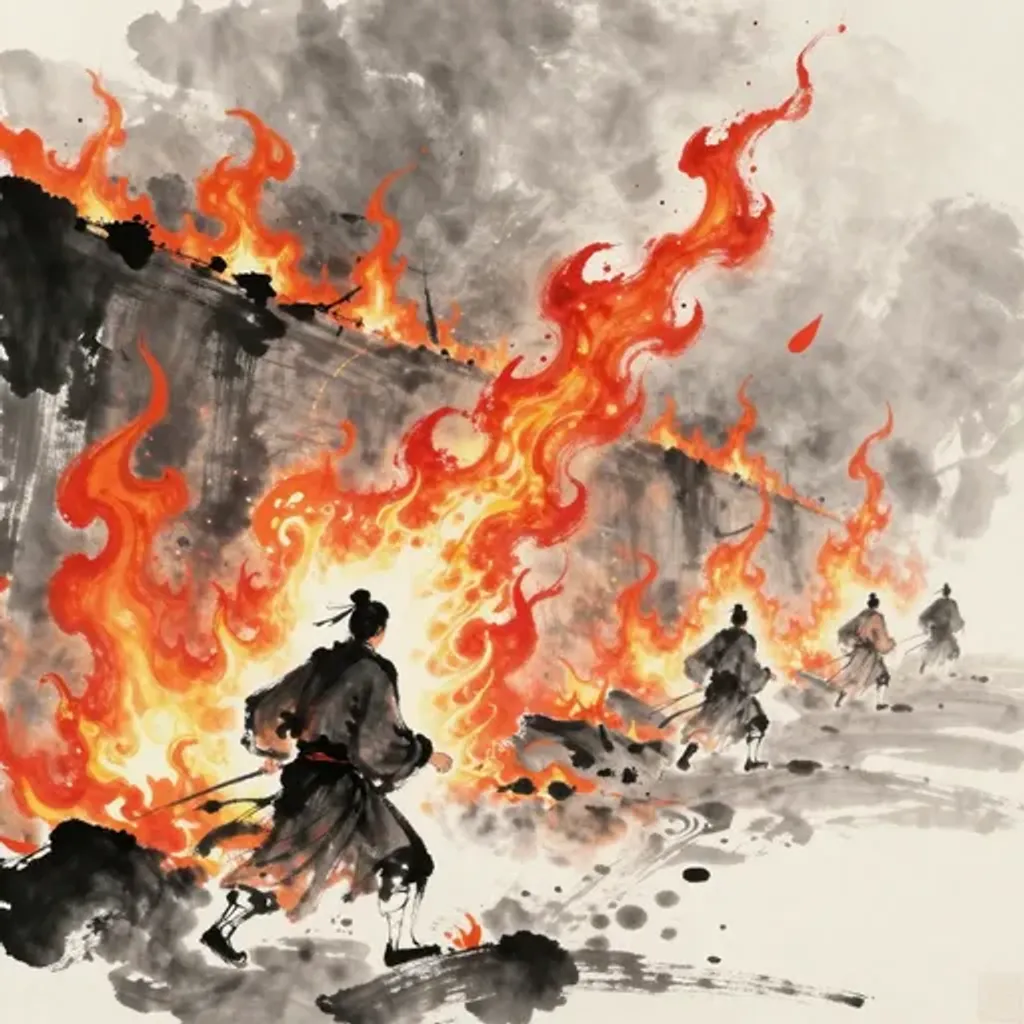
火烈不去,必殪僵仆。燔我衣裾,福不可悔。
The fierce fire does not relent; one must fall stiff and dead. It scorches my garment hems; blessings cannot be recovered.
— Jiao Yanshou, Yilin (Forest of Changes), 1st century BC
Commentary
Water hidden within the earth faces the fury of uncontrolled fire. Raging flames refuse to depart; one who stays must surely fall dead. The fire scorches hems and garments — blessings lost beyond recovery. The verse warns against lingering in a burning situation: when destruction is already underway, hesitation is fatal. From The Army to Darkening of the Light, fire descends into the earth and is extinguished. The army's discipline meets the moment when light itself must be concealed to survive. The verse inverts this teaching: rather than dimming the light strategically, the subject is consumed by flames they should have fled. Knowing when to withdraw one's brightness is the difference between survival and annihilation.
師 → 家人
Hexagram 7 → Hexagram 37: The Family
Changing lines: 1, 2, 3, 5, 6
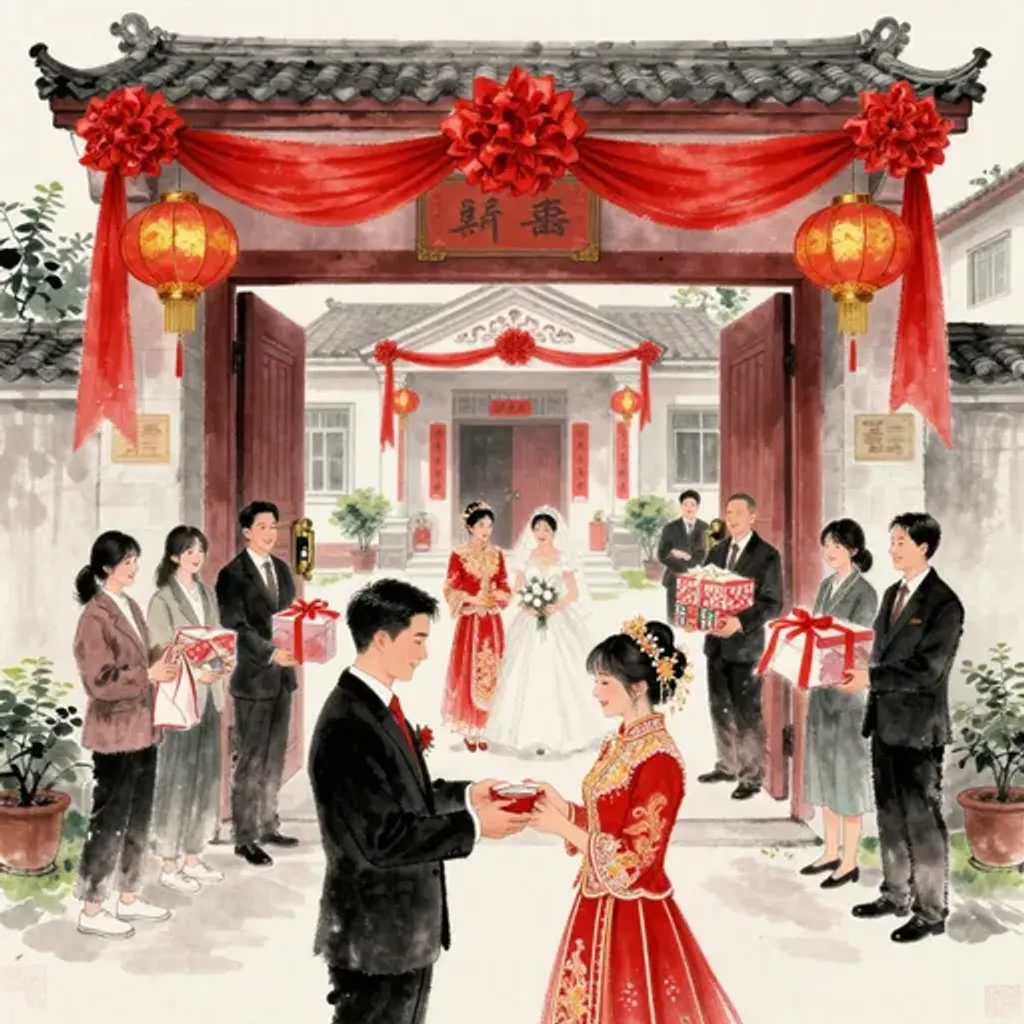
配合相迎,利之四鄉。欣喜興釋,所言得當。
A matched pair meets and welcomes; advantage spreads to the four quarters. Joyful, relieved; all words spoken hit the mark.
— Jiao Yanshou, Yilin (Forest of Changes), 1st century BC
Commentary
Water hidden within the earth finds its natural partner, and the verse celebrates harmonious union. Well-matched partners welcome each other, bringing benefit to all four quarters. Joy and relief dissolve old tensions; every word spoken hits its mark. The verse captures the rare satisfaction of complete alignment: people, purpose, and expression all in accord. From The Army to The Family, wind issues from fire as warmth radiates outward from the hearth. The army's collective discipline is domesticated into family order — the general becomes the patriarch whose words carry weight precisely because they match his conduct. Institutional authority softens into the steady warmth of household governance.
師 → 睽
Hexagram 7 → Hexagram 38: Opposition
Changing lines: 1, 4, 6
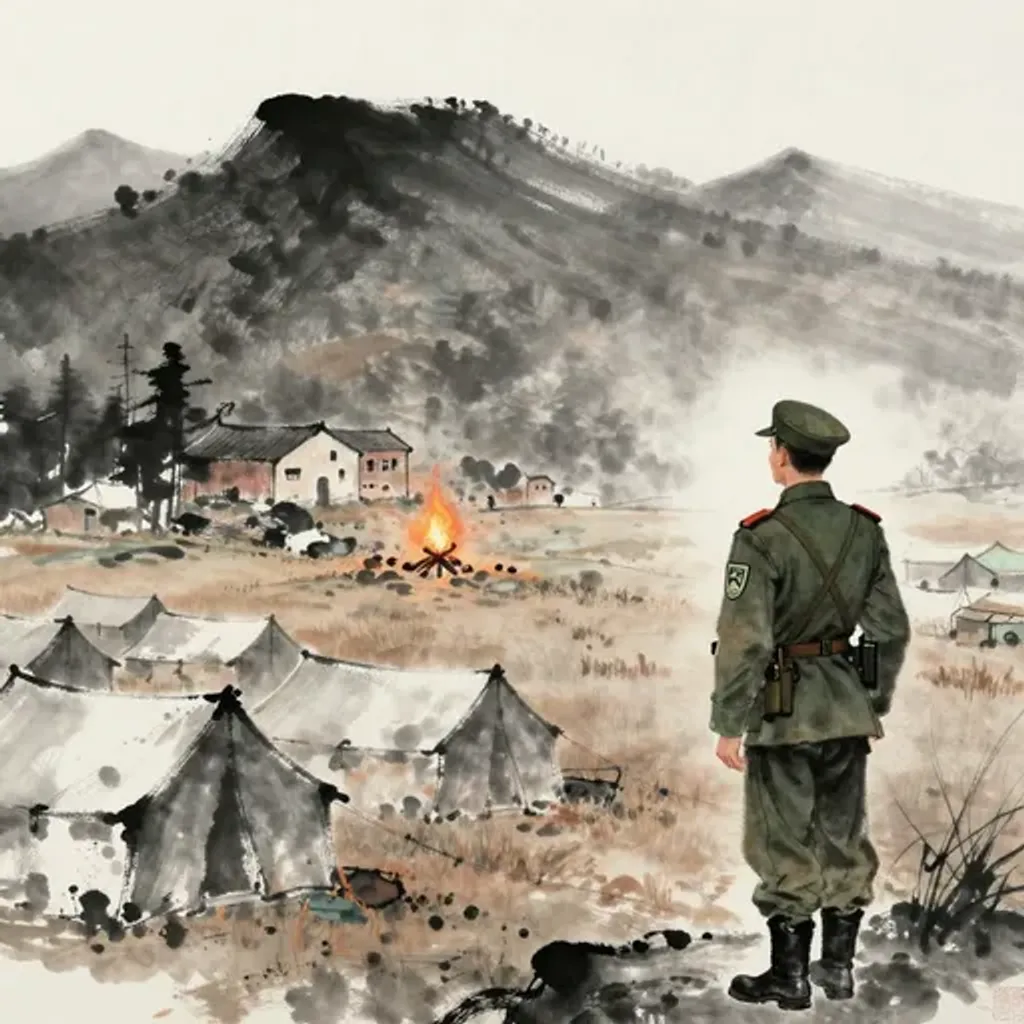
清人高子,久屯外野。道遙不歸,思我慈母。
The man of Qing, Gao Zi; long stationed in the outer wilds. The road is far, he does not return; he thinks of his kind mother.
— Jiao Yanshou, Yilin (Forest of Changes), 1st century BC
Commentary
Water hidden within the earth stations troops along the border, and here the men of Qing under Commander Gao idle in the open fields. The Shijing ode 'Qing Ren' tells how Duke Wen of Zheng, disliking his general Gao Ke, sent him to garrison the Yellow River frontier against the Di barbarians — then never recalled him. The soldiers drilled endlessly without purpose until the army dissolved. Far from home on a road too long for return, the speaker longs for his mother. From The Army to Opposition, fire and lake pull in opposite directions. The garrison mirrors this divergence: commander and sovereign, soldier and homeland, are fatally separated, each looking in a direction the other cannot follow.
師 → 蹇
Hexagram 7 → Hexagram 39: Obstruction
Changing lines: 2, 3, 5
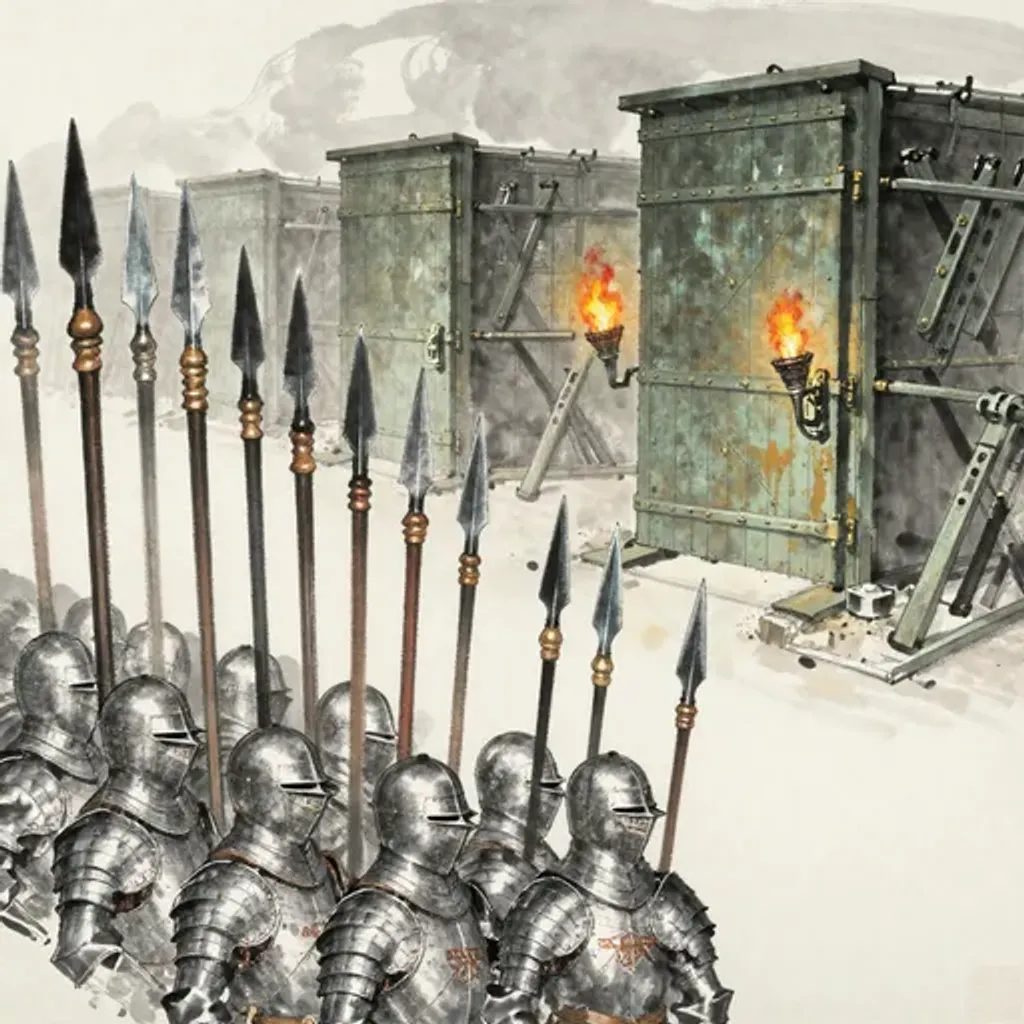
武庫軍府,甲兵所聚。非里邑居,不可舍止。
The armory and military depot; where armor and weapons are gathered. It is not a village dwelling; one cannot lodge or stay there.
— Jiao Yanshou, Yilin (Forest of Changes), 1st century BC
Commentary
Water hidden within the earth concentrates military strength, and the verse describes exactly that: an arsenal and military headquarters where armor and weapons are stored. This is not a village or settlement — it is not a place for dwelling or resting. The warning is blunt: a weapons depot is no home. The army's infrastructure serves a purpose, but confusing it with a place of belonging is a dangerous error. From The Army to Obstruction, water sits atop the mountain in frozen impassability. The arsenal's concentrated force meets a landscape where forward movement is blocked. One must reflect and cultivate virtue rather than push blindly into terrain that refuses passage.
師 → 解
Hexagram 7 → Hexagram 40: Deliverance
Changing lines: 4
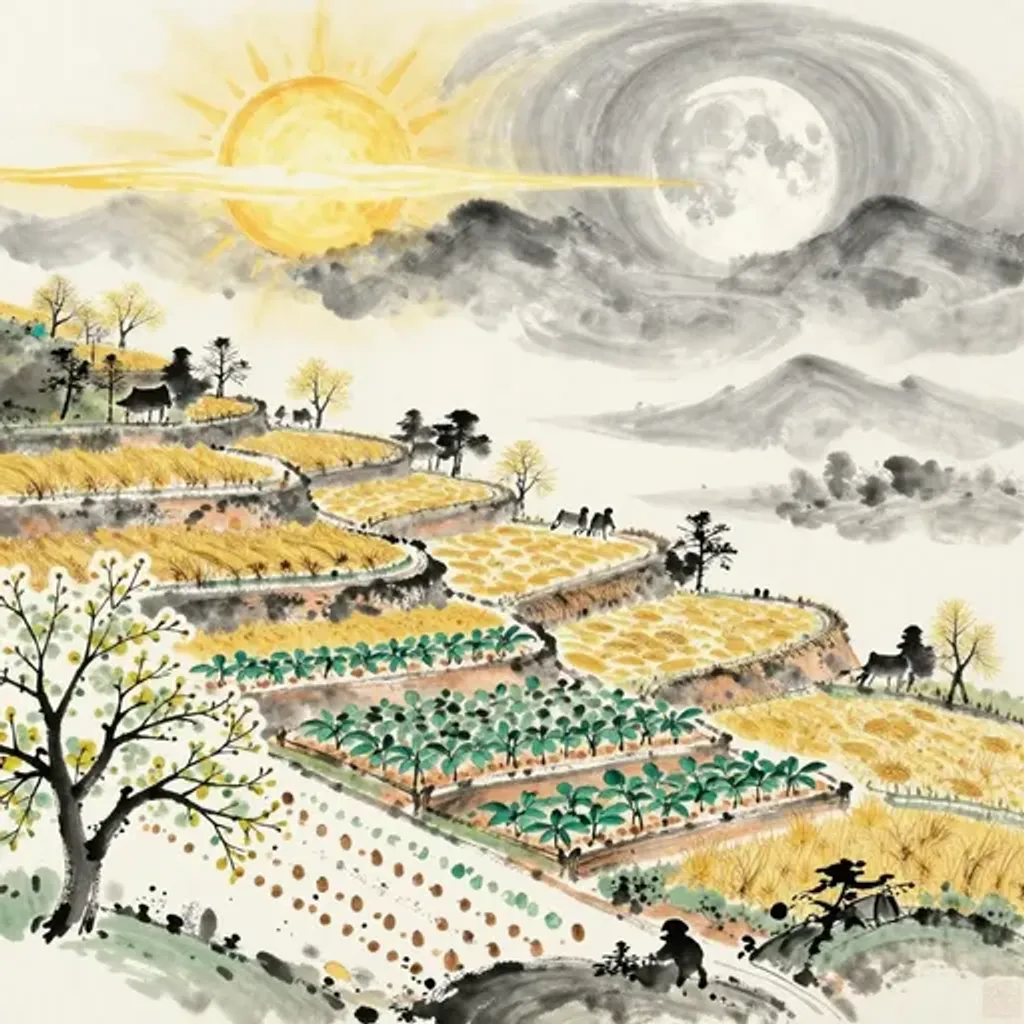
三德五才,和合四時。陰陽順序,國無咎災。
Three virtues and five talents; harmonizing the four seasons. Yin and yang in proper order; the state suffers no calamity.
— Jiao Yanshou, Yilin (Forest of Changes), 1st century BC
Commentary
Water hidden within the earth achieves cosmic balance, and three virtues with five talents harmonize the four seasons. Yin and yang follow their proper sequence, and the state suffers no disaster or blame. The verse describes ideal governance as cosmological calibration: the ruler aligns human institutions with natural rhythms so perfectly that misfortune simply cannot arise. From The Army to Deliverance, thunder and rain break forth as tensions dissolve. The army's stored order releases into the cleansing storm of forgiveness — pardoning mistakes, freeing the imprisoned, allowing new growth. Discipline maintained through the crisis gives way to the generosity of resolution.
師 → 損
Hexagram 7 → Hexagram 41: Decrease
Changing lines: 1, 6
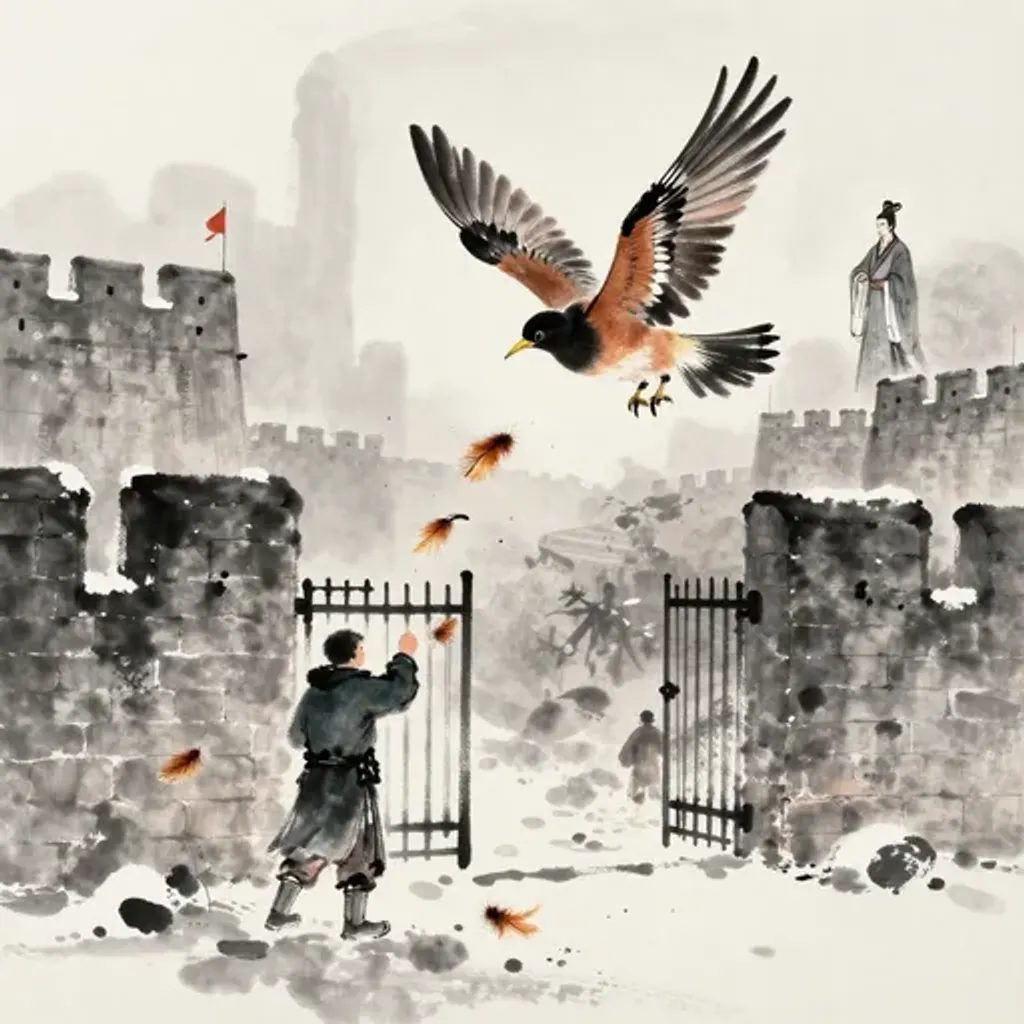
解衣毛羽,飛入大都。晨門戒守,鄭忽失家。
Shedding feathers and plumage; flying into the great capital. The dawn gatekeeper guards the entrance; Zheng Hu loses his domain.
— Jiao Yanshou, Yilin (Forest of Changes), 1st century BC
Commentary
Water hidden within the earth discharges its forces, and the verse opens with metamorphosis: shedding clothes to reveal feathers, one flies into the great capital. But at the city gate the morning guard raises the alarm, and Zheng Hu loses his domain. Zheng Hu — Duke Zhao of Zheng — was the rightful heir who lost his throne when the minister Zhai Zhong, coerced by the state of Song, installed his rival Zi Tu as ruler. The dawn-gatekeeper who challenges intruders captures the moment authority turns hostile. From The Army to Decrease, the mountain rises above the lake as resources are deliberately reduced. What was gained through military order is lost through political betrayal; the rightful ruler is stripped of his house.
師 → 益
Hexagram 7 → Hexagram 42: Increase
Changing lines: 1, 2, 5, 6
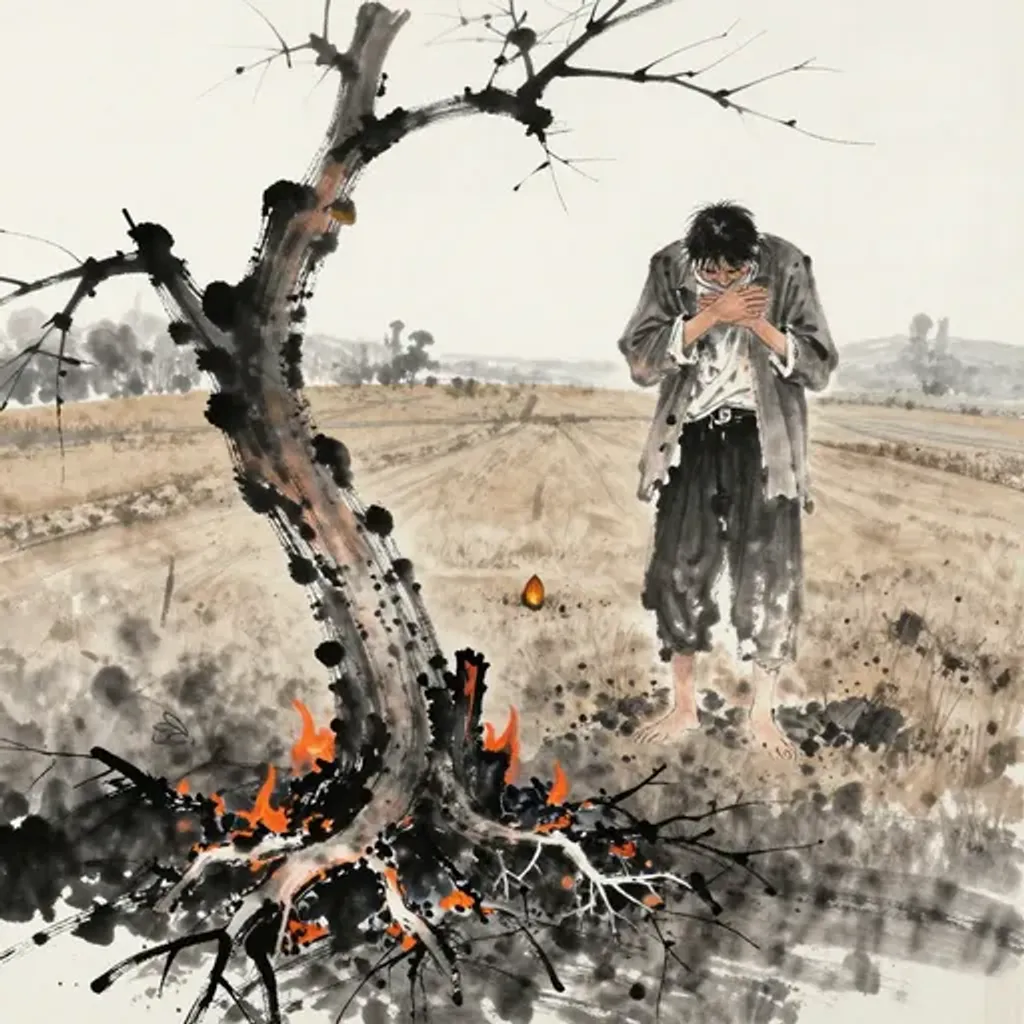
削根燒株,不生肌膚。病在心腹,日以燋枯。
Cutting the root, burning the stump; no flesh can grow. The sickness is in the heart and belly; daily withering to dryness.
— Jiao Yanshou, Yilin (Forest of Changes), 1st century BC
Commentary
Water hidden within the earth should sustain growth, but here everything is destroyed at the root. The root is cut and the stump is burned; no new flesh can grow. The disease lodges in the heart and gut, and day by day the body withers into charred ruin. The verse describes irreversible destruction: not pruning or trimming, but annihilation of the very capacity for regeneration. From The Army to Increase, wind and thunder should augment growth — yet the verse negates this possibility entirely. When the root system itself is destroyed, even the most favorable conditions for increase cannot produce life. The army's resources, squandered past recovery, leave nothing for renewal to work with.
師 → 夬
Hexagram 7 → Hexagram 43: Breakthrough
Changing lines: 1, 3, 4, 5
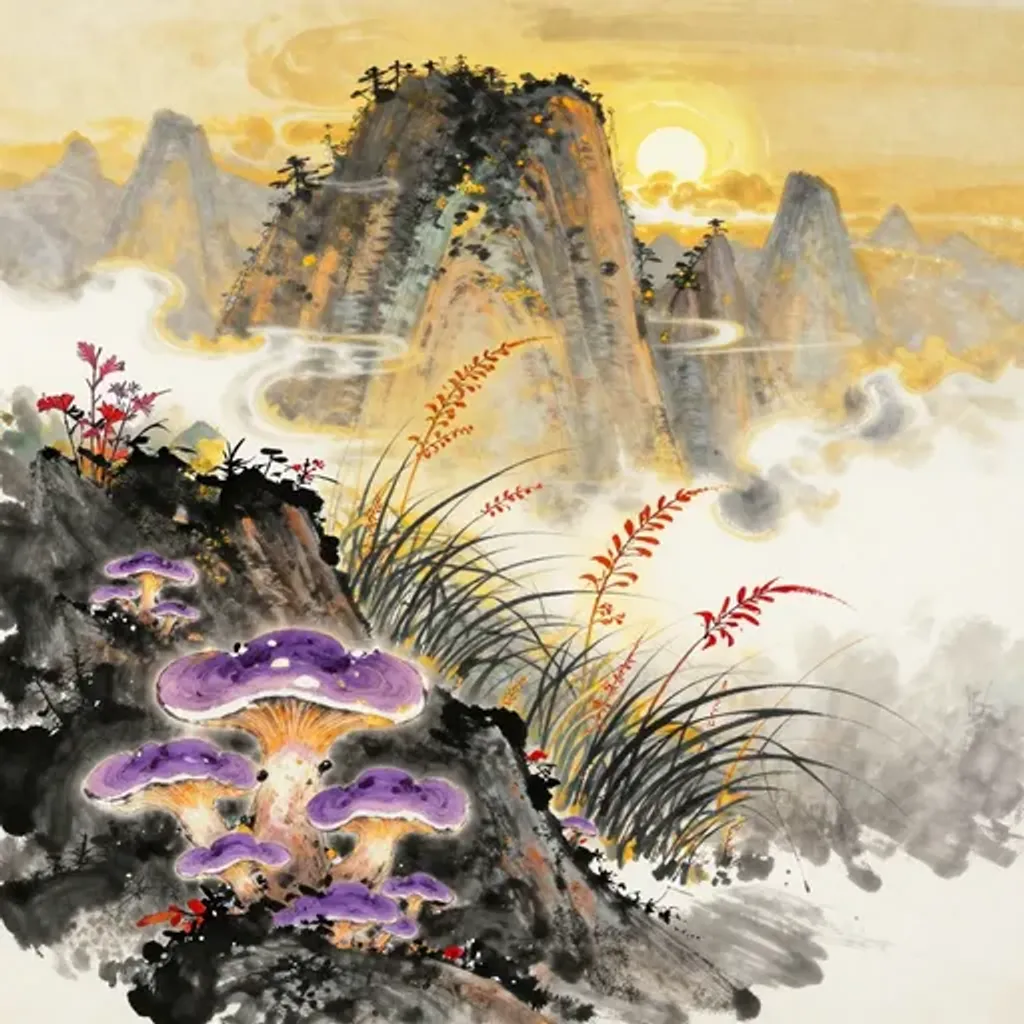
文山紫芝,雍梁朱草。生長和氣,福祿來處。
On Mount Wen, purple lingzhi; in Yong and Liang, vermillion herbs. Growing in harmonious qi; fortune and blessings come to dwell.
— Jiao Yanshou, Yilin (Forest of Changes), 1st century BC
Commentary
Water hidden within the earth yields treasures to those who seek them rightly. Patterned mountains bear purple lingzhi mushrooms; the hills of Yong and Liang grow vermilion grasses — both auspicious plants heralding sage governance. They flourish in harmonious energy, and blessings and fortune arrive naturally. Purple lingzhi and vermilion grass were classic Han-dynasty portents of heaven's approval, reported to the throne as proof of virtuous rule. From The Army to Breakthrough, the lake ascends to heaven in decisive action. The army's patient cultivation produces unmistakable signs of merit: auspicious omens break through like water cresting the sky, and accumulated virtue becomes publicly visible.
師 → 姤
Hexagram 7 → Hexagram 44: Coming to Meet
Changing lines: 3, 4, 5, 6
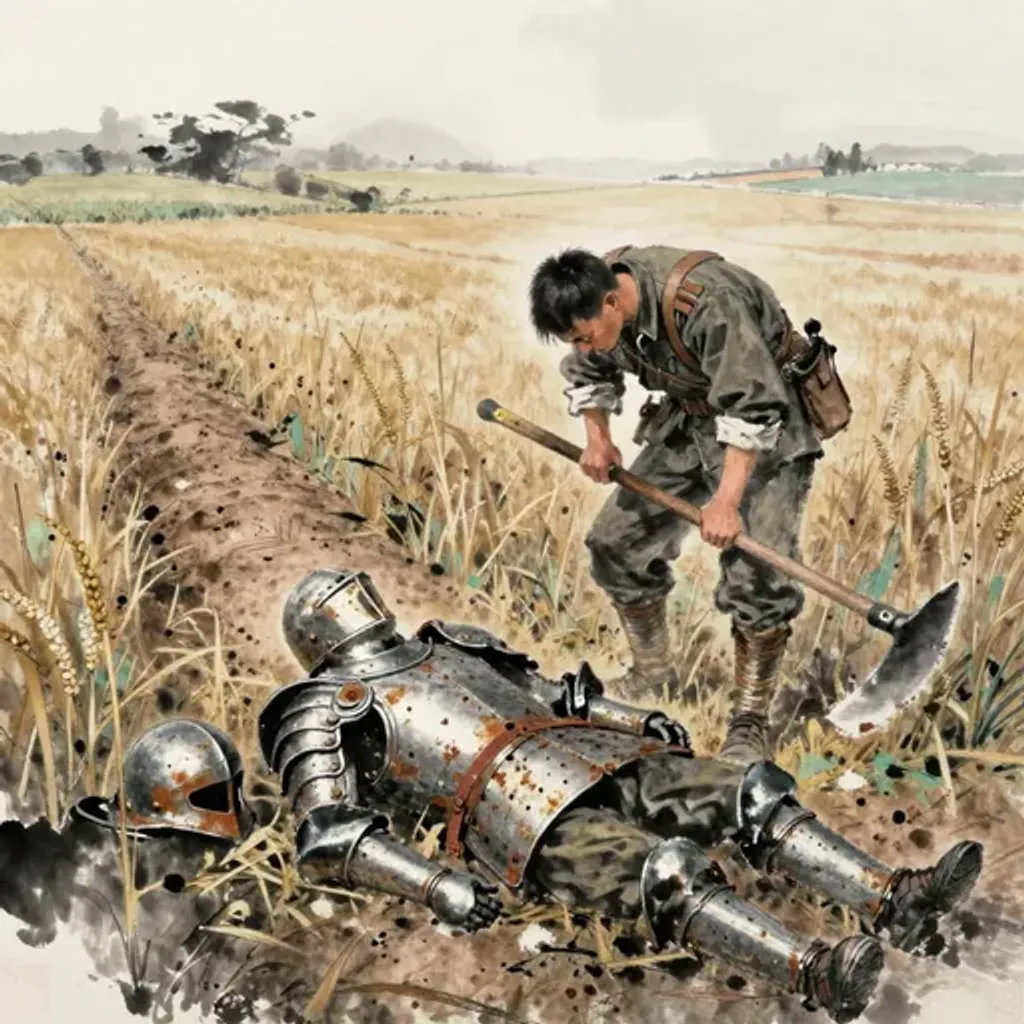
多載重負,捐棄于野。予母誰子,但自勞苦。
Armor head to toe, sweat soaking through the clothes. The battle ends without glory — returning to the fields to plant mulberry.
— Jiao Yanshou, Yilin (Forest of Changes), 1st century BC
Commentary
Water hidden within the earth bears heavy burdens, and the original verse speaks of loads piled high then abandoned in the wilderness. 'Who is the mother's child?' — but one can only toil on in solitude. The imagery evokes exhausted conscripts dumping supplies they can no longer carry, severed from home and identity, reduced to anonymous suffering. From The Army to Coming to Meet, heaven's wind sweeps beneath in unexpected encounter. Yet the verse offers no happy meeting — only the question of who will claim these forsaken laborers. The wind that should carry sovereign proclamations to the four directions passes over those too broken to hear them.
師 → 萃
Hexagram 7 → Hexagram 45: Gathering Together
Changing lines: 2, 4, 5
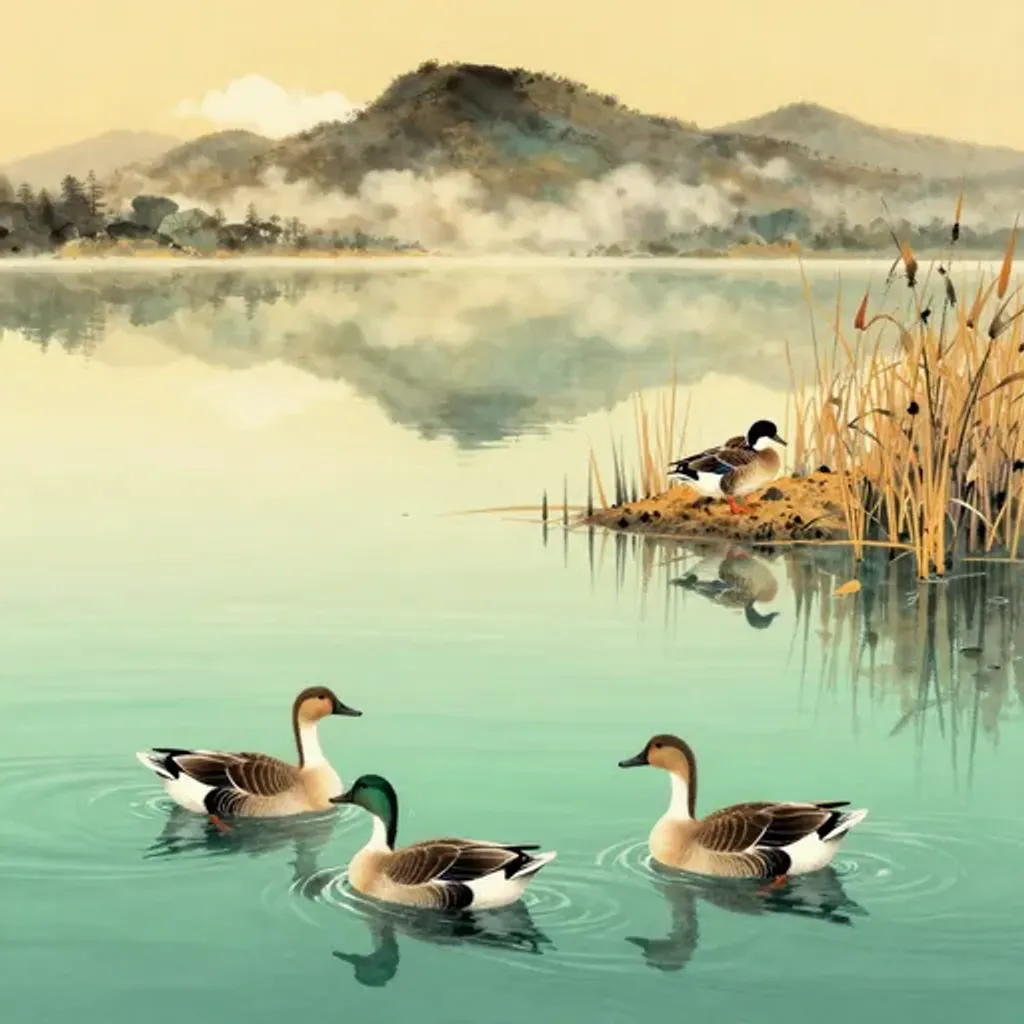
鳧雁啞啞,以水為家。雌雄相和,心志娛樂,得其歡欲。
Wild ducks and geese cry out, making water their home. Male and female in harmony; hearts content and joyful, finding their pleasure.
— Jiao Yanshou, Yilin (Forest of Changes), 1st century BC
Commentary
Water hidden within the earth releases its multitudes into joyful play, and ducks and geese call happily, making the water their home. Male and female birds harmonize in song, their hearts full of pleasure and delight. The waterfowl's contentment on water is a perfect emblem of creatures in their natural element — unburdened, paired, and at ease. From The Army to Gathering, the lake spreads upon the earth as communities congregate. The army's disciplined formations dissolve into the natural gathering of kindred spirits: no command required, only the instinct to flock together where conditions are welcoming. Military order yields to the spontaneous assembly of those who belong.
師 → 升
Hexagram 7 → Hexagram 46: Pushing Upward
Changing lines: 3
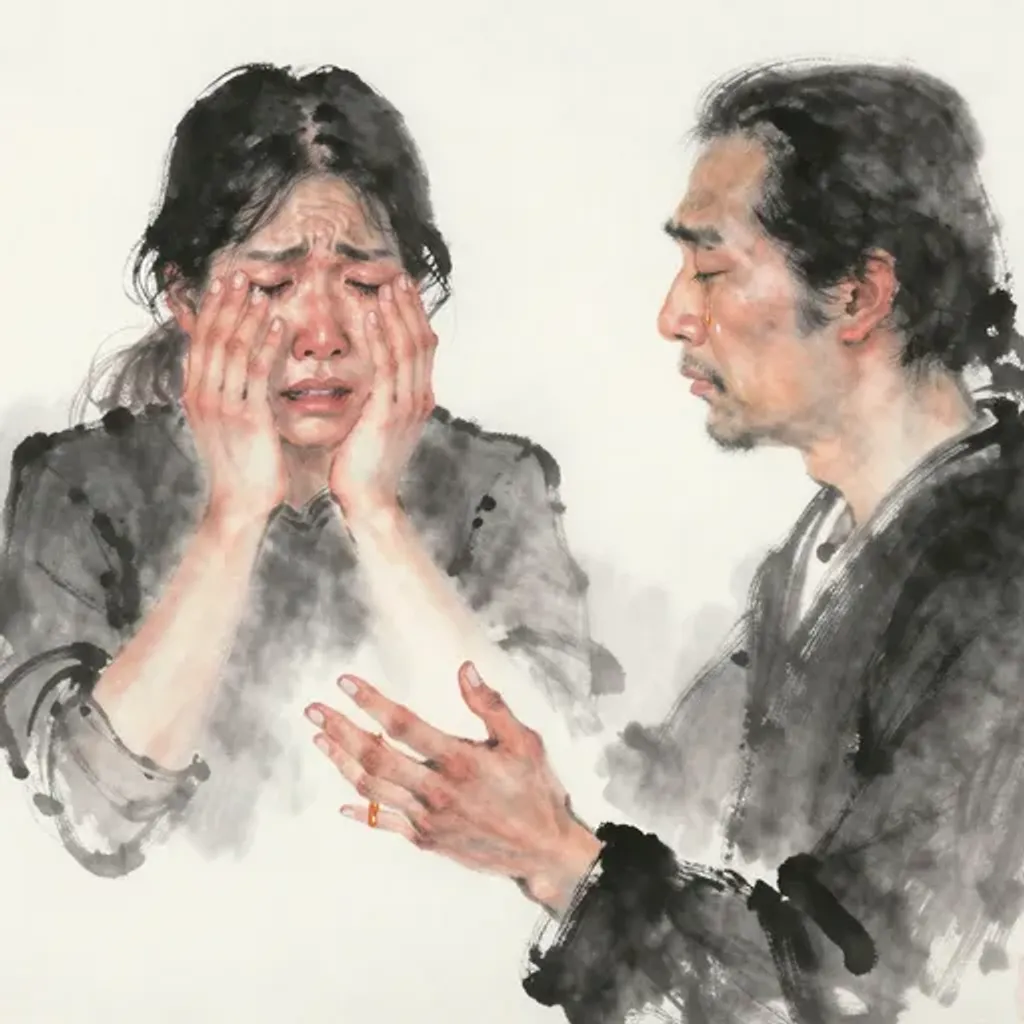
耳目盲聾,所言不通。佇立以泣,事無成功。
Ears and eyes deaf and blind; words do not get through. Standing still to weep; affairs come to nothing.
— Jiao Yanshou, Yilin (Forest of Changes), 1st century BC
Commentary
Water hidden within the earth should speak through clear command, but here the senses fail entirely. Ears deaf and eyes blind, one's words cannot get through. Standing still, one can only weep; nothing undertaken succeeds. The verse captures total communicative collapse: the commander who can neither perceive nor be understood, paralyzed in futile grief. From The Army to Pushing Upward, wood grows steadily within the earth in gradual ascent. Yet the verse denies this upward movement — the subject cannot even begin the climb. Pushing Upward requires clear perception of the path; without eyes or ears, even the gentlest ascent is impossible.
師 → 困
Hexagram 7 → Hexagram 47: Oppression
Changing lines: 4, 5
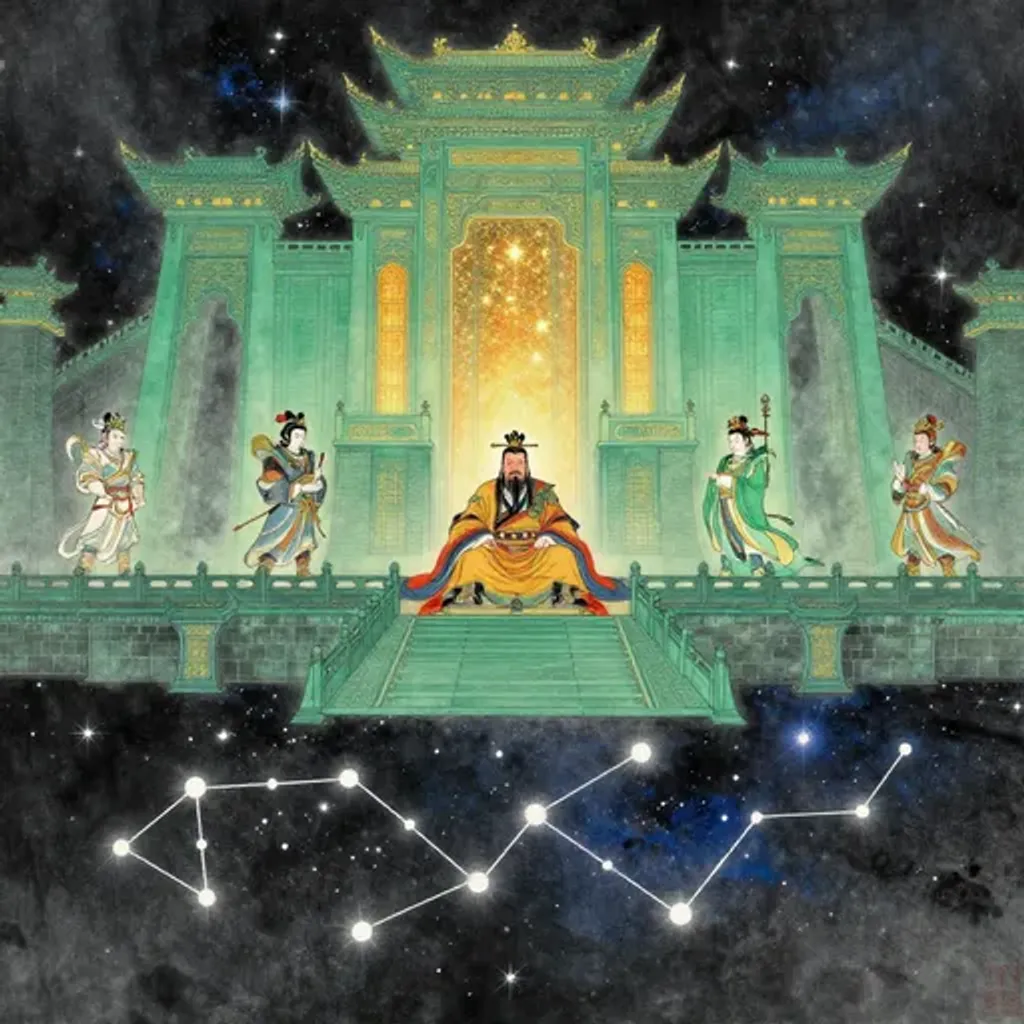
天宮列宿,五神所舍。宮闕堅固,君安其居。
The celestial palace, the ranks of stars; dwelling place of the five spirits. Palace and watchtower stand firm; the lord is at peace in his abode.
— Jiao Yanshou, Yilin (Forest of Changes), 1st century BC
Commentary
Water hidden within the earth mirrors the celestial order above, and the verse describes a heavenly palace where constellations are arrayed and five spirits take their places. The palace walls stand firm and strong; the ruler rests secure within. The 'five spirits' likely refer to the five directional gods or the five planets governing cosmic order. The verse projects military security onto a celestial scale: the earthly garrison becomes a starry citadel, impregnable by design. From The Army to Oppression, the lake sits drained above the water in exhausted containment. Yet here the oppression is reframed as fortification — walls that confine also protect. The ruler's confinement is chosen safety, not imposed suffering.
師 → 井
Hexagram 7 → Hexagram 48: The Well
Changing lines: 3, 5
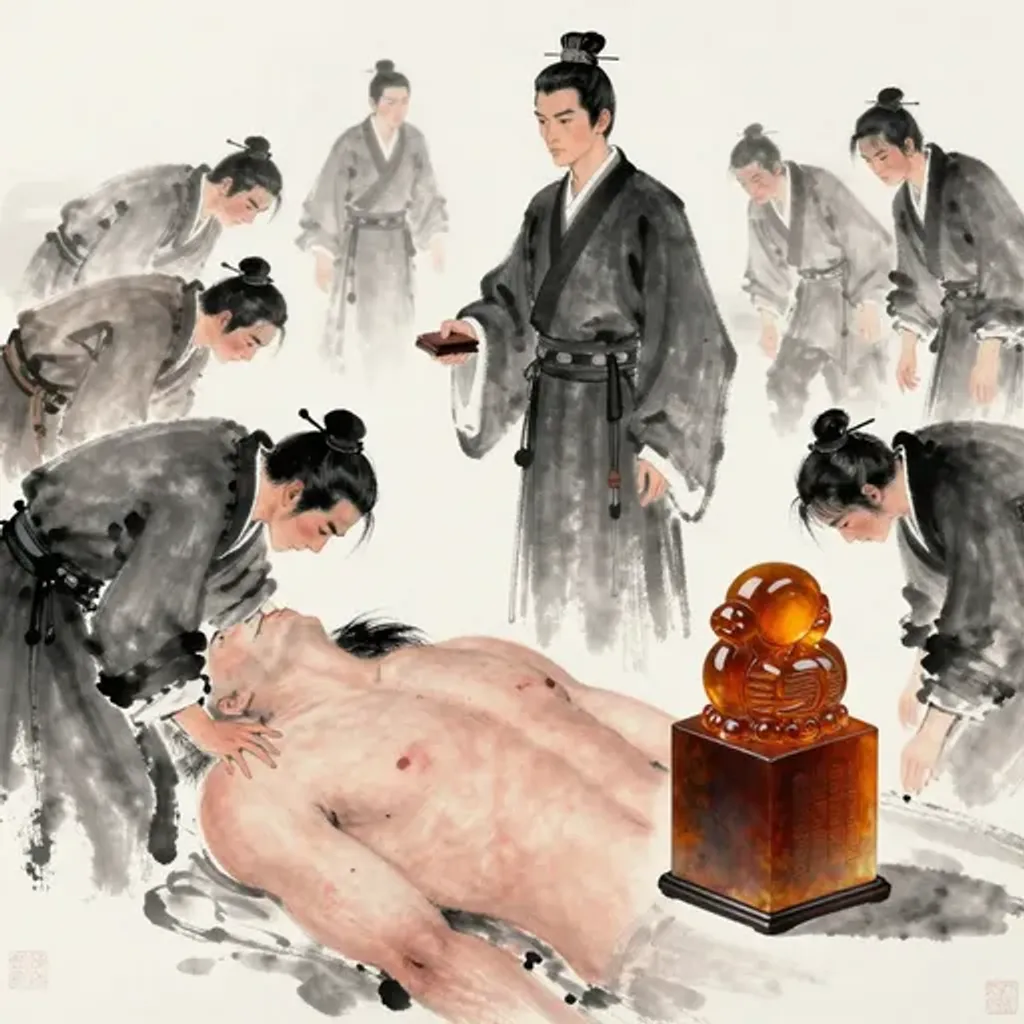
范子妙材,戮辱傷膚。然後相國,封為應侯。
Master Fan, a man of wondrous talent; punished and scarred in body. Afterward he became chancellor; enfeoffed as Marquis of Ying.
— Jiao Yanshou, Yilin (Forest of Changes), 1st century BC
Commentary
Water hidden within the earth holds talent in obscurity until the moment of recognition. 'Fan-zi' of wonderful ability was first subjected to corporal punishment and humiliation — beaten, his body scarred. This refers to Fan Sui (also called Fan Ju), the Warring States strategist who served Wei but was falsely accused of espionage. His patron Wei Qi had him flogged nearly to death and thrown into a latrine. He escaped to Qin under a false name, eventually became Chancellor, and was enfeoffed as Marquis of Ying. From The Army to The Well, water drawn up through wood nourishes all without moving. Fan Sui's ordeal mirrors the well's nature: talent buried deep, then raised through the proper channel to serve the community above.
師 → 革
Hexagram 7 → Hexagram 49: Revolution
Changing lines: 1, 2, 3, 4, 5
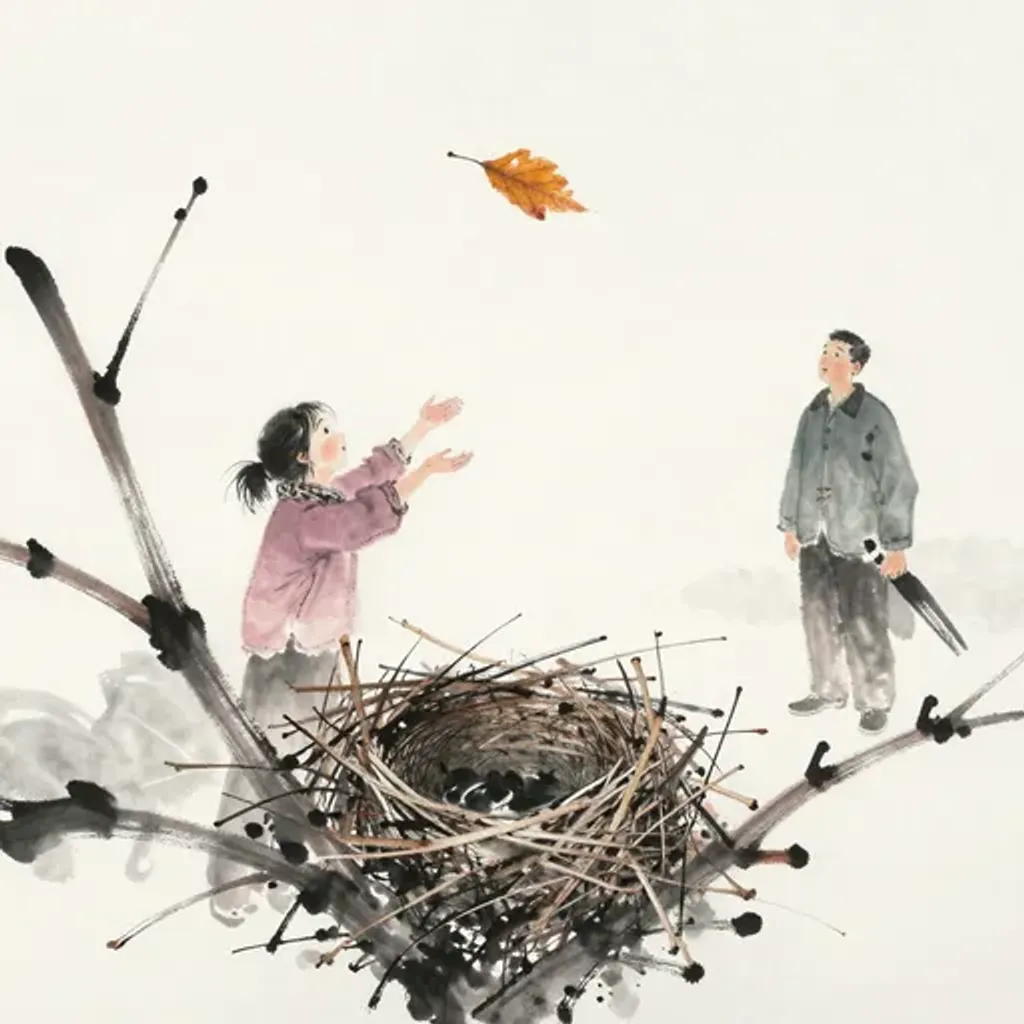
秋冬探巢,不得鵲雛。衘指北去,慚我少夫。
Searching nests in autumn and winter, no magpie chicks to find. Biting his finger, he goes north; I am ashamed before my young husband.
— Jiao Yanshou, Yilin (Forest of Changes), 1st century BC
Commentary
Water hidden within the earth shifts with the seasons, and in autumn and winter one searches the nest but finds no magpie chicks. The young birds have long since fledged and flown — the search comes too late. Biting one's finger, one heads north in shame, embarrassed before one's young husband. The verse captures the pain of mistimed action: what was sought has already departed, and the seeker is left with nothing but the humiliation of arriving after the season has turned. From The Army to Revolution, fire within the lake transforms everything it touches. The empty nest is itself a revolution: the old order has already changed, and clinging to what was there invites only shame.
師 → 鼎
Hexagram 7 → Hexagram 50: The Cauldron
Changing lines: 3, 4, 6
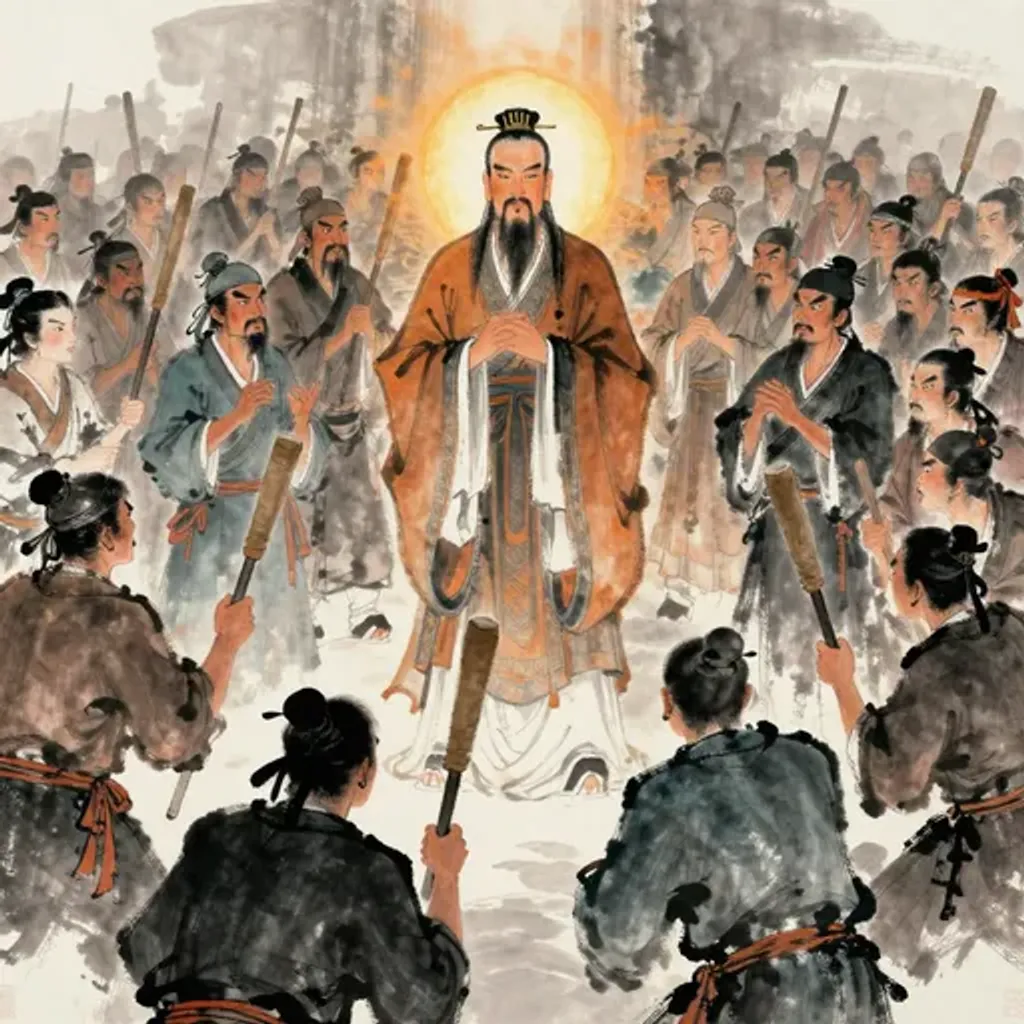
子畏於匡,厄困陳蔡。德行不危,竟脫厄害。
The Master was imperiled at Kuang; beset in Chen and Cai. His virtuous conduct was not endangered; in the end he escaped the peril.
— Jiao Yanshou, Yilin (Forest of Changes), 1st century BC
Commentary
Water hidden within the earth protects the sage even in mortal danger. Confucius was besieged at Kuang — mistaken for the villain Yang Hu by hostile villagers — and stranded between the states of Chen and Cai, where provisions ran out for seven days. Yet his moral conduct never wavered, and in the end he escaped unharmed from all these perils. The verse directly names two of Confucius's most famous ordeals: at Kuang he declared 'Heaven has not yet destroyed this culture,' and between Chen and Cai he kept playing his zither while disciples despaired. From The Army to The Cauldron, fire above wind transforms raw material into civilized nourishment. The sage's integrity is the fire that refines adversity into lasting teaching.
師 → 震
Hexagram 7 → Hexagram 51: The Arousing Thunder
Changing lines: 1, 2, 4
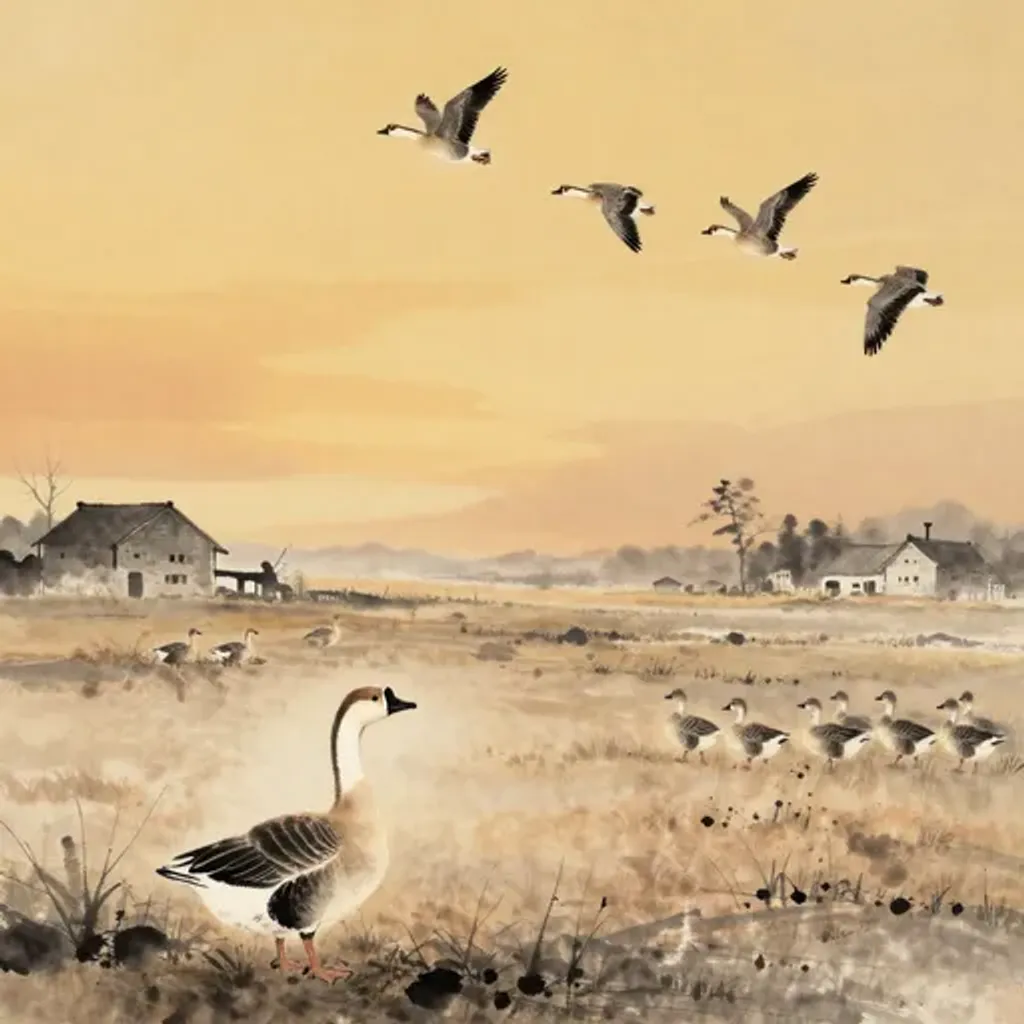
鴻飛在陸,公出不復。仲氏任止,伯氏客宿。
The wild goose flies over land; the lord departs and does not return. The second brother stays at his post; the eldest brother lodges abroad.
— Jiao Yanshou, Yilin (Forest of Changes), 1st century BC
Commentary
Water hidden within the earth dispatches its forces, and a wild goose alights upon the dry land as a lord departs and does not return. The second brother settles in place while the eldest becomes a sojourner. The 'goose on dry land' echoes the Yijing's Gradual Development hexagram — a bird far from water, exposed and vulnerable. The verse distributes the brothers' fates unevenly: one stays rooted, the other is cast into permanent exile. From The Army to The Arousing, doubled thunder shakes the foundations. The sudden shock separates those who should remain together — the army's cohesion shatters into individual fates, each brother absorbing a different tremor of the upheaval.
師 → 艮
Hexagram 7 → Hexagram 52: Keeping Still Mountain
Changing lines: 2, 3, 6
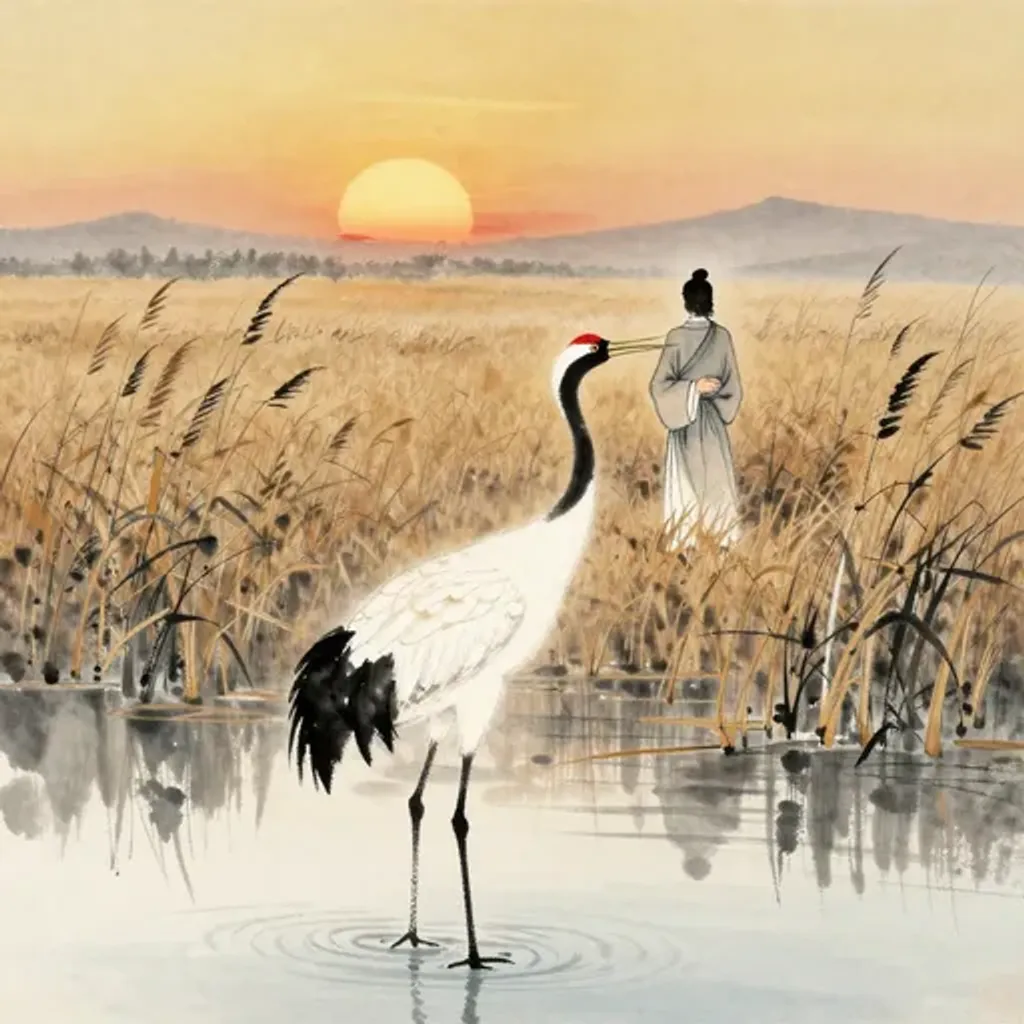
鶴鳴九皋,避世隱居。抱朴守真,竟不隨時。
The crane calls from the nine marshes; shunning the world, dwelling in seclusion. Embracing simplicity, holding to the genuine; in the end, he does not follow the times.
— Jiao Yanshou, Yilin (Forest of Changes), 1st century BC
Commentary
Water hidden within the earth releases its finest to the wilderness, and a crane cries in the nine marshes — its voice carrying far across the wilds. The image comes from the Shijing ode 'He Ming,' where the crane's distant call symbolizes hidden talent that makes itself known despite obscurity. Yet this crane chooses seclusion: embracing simplicity and guarding authenticity, it refuses to follow the fashions of the age. From The Army to Keeping Still, twin mountains stand in contemplation. The army's collective mission gives way to individual withdrawal — the recluse whose talent is real but whose conscience forbids serving a compromised world. Stillness here is not passivity but principled refusal.
師 → 漸
Hexagram 7 → Hexagram 53: Development
Changing lines: 2, 3, 5, 6
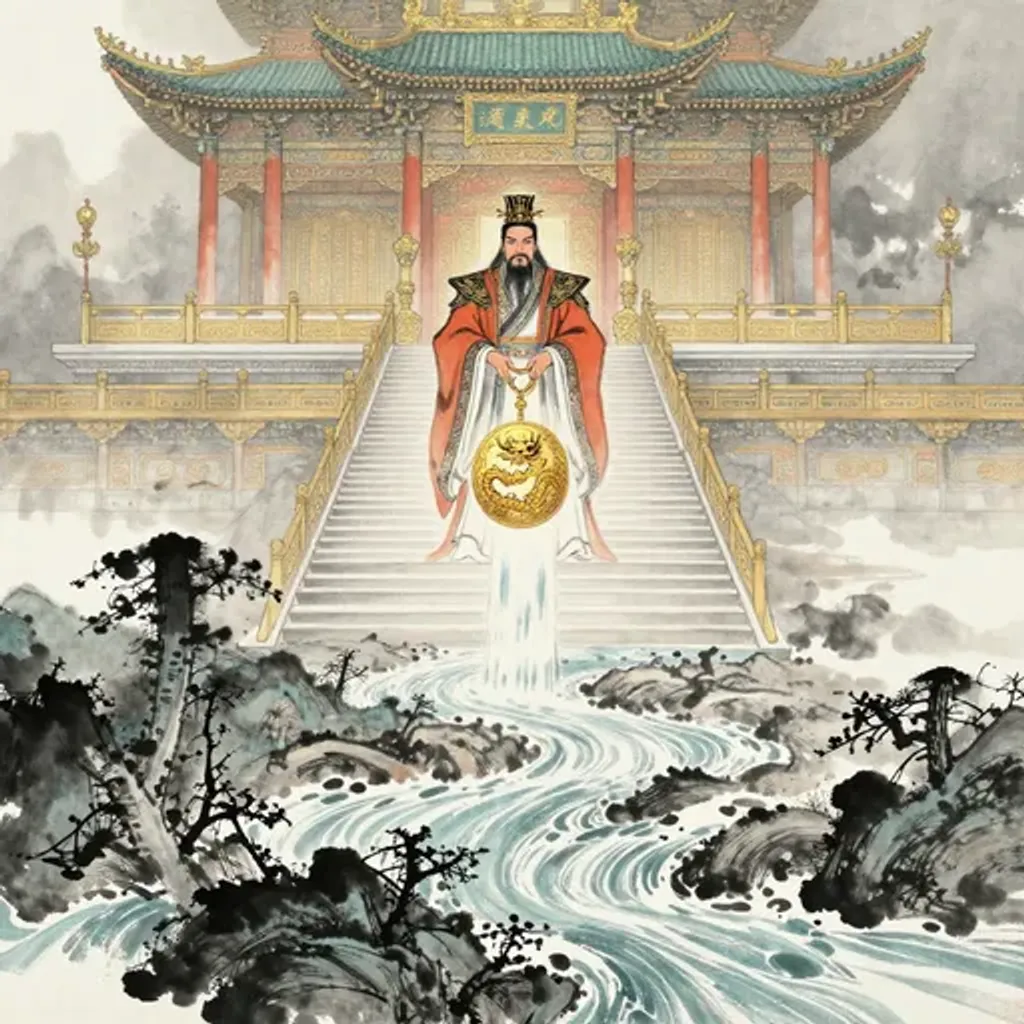
舜升大禹,石夷之野。徵詣玉闕,拜治水土。
Shun elevates Great Yu, from the wilderness of Shiyi. Summoned to the Jade Palace, appointed to govern flood and soil.
— Jiao Yanshou, Yilin (Forest of Changes), 1st century BC
Commentary
Water hidden within the earth selects the worthy, and Emperor Shun summons Yu the Great from the stony wilderness. Called to the jade palace, Yu is appointed to manage the waters and the land. This verse closely parallels 7-9 with only a single character changed ('理' for '治'), and carries the same foundational narrative: the sage-ruler who discovers talent in the wild and entrusts it with the empire's most urgent task. From The Army to Development, trees grow gradually upon the mountain, rooted and rising by stages. Unlike 7-9's Small Taming, Development emphasizes the organic pace of proper advancement — Yu's appointment unfolds step by step through proven merit, not sudden elevation.
師 → 歸妹
Hexagram 7 → Hexagram 54: The Marrying Maiden
Changing lines: 1, 4
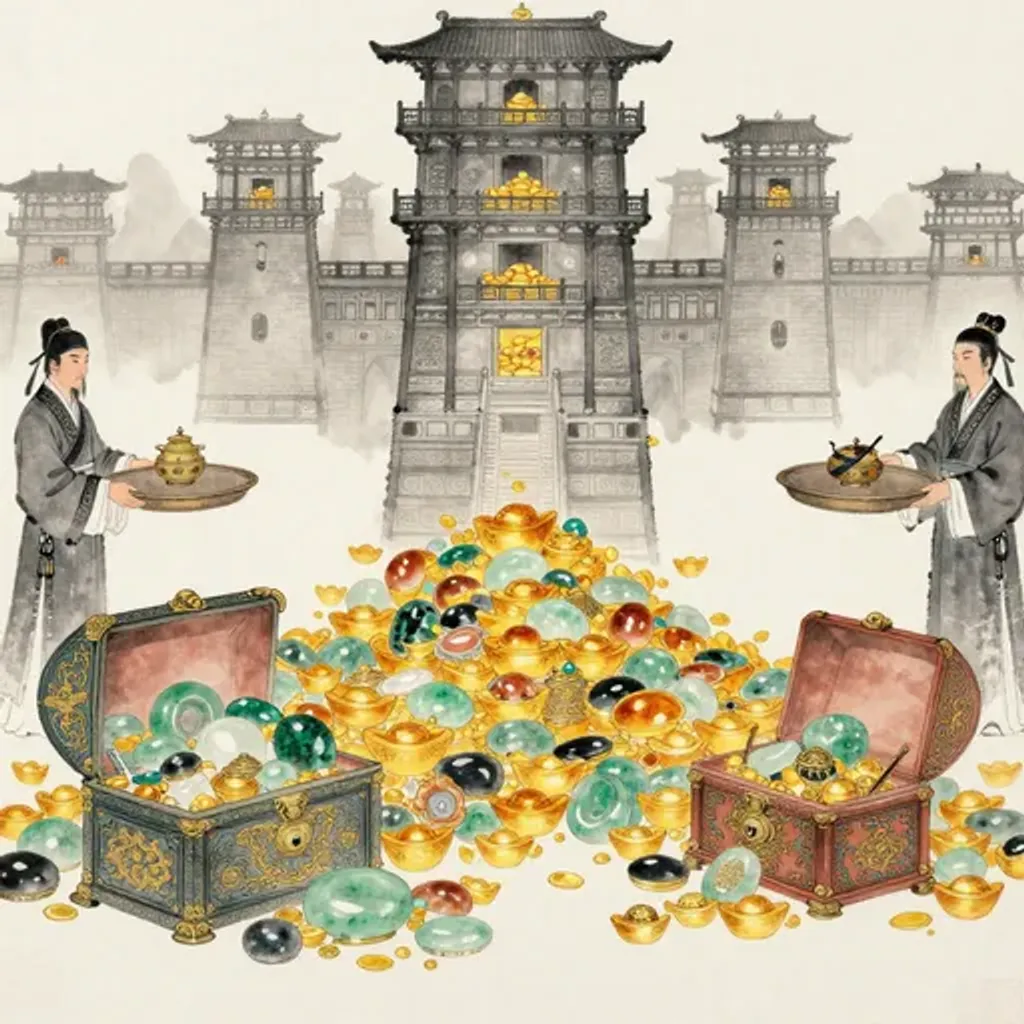
左輔右弼,金玉滿匱。常盈不亡,富如廒倉。
Counselors left and right; gold and jade fill the chests. Ever full, never lost; rich as a brimming granary.
— Jiao Yanshou, Yilin (Forest of Changes), 1st century BC
Commentary
Water hidden within the earth is flanked by loyal ministers on left and right, and gold and jade fill the coffers to overflowing. The treasury never empties; wealth rivals the great granaries. The verse paints a picture of institutional prosperity at its peak: competent advisers on both sides, resources abundant and continuously replenished. 'Left guardian, right assistant' is a standard formula for a fully staffed court. From The Army to the Marrying Maiden, thunder moves above the lake in a union that must be carefully managed. The army's wealth and counsel suggest a bride entering a powerful household with a full dowry — the arrangement succeeds because both sides bring real substance to the pairing.
師 → 豐
Hexagram 7 → Hexagram 55: Abundance
Changing lines: 1, 2, 3, 4
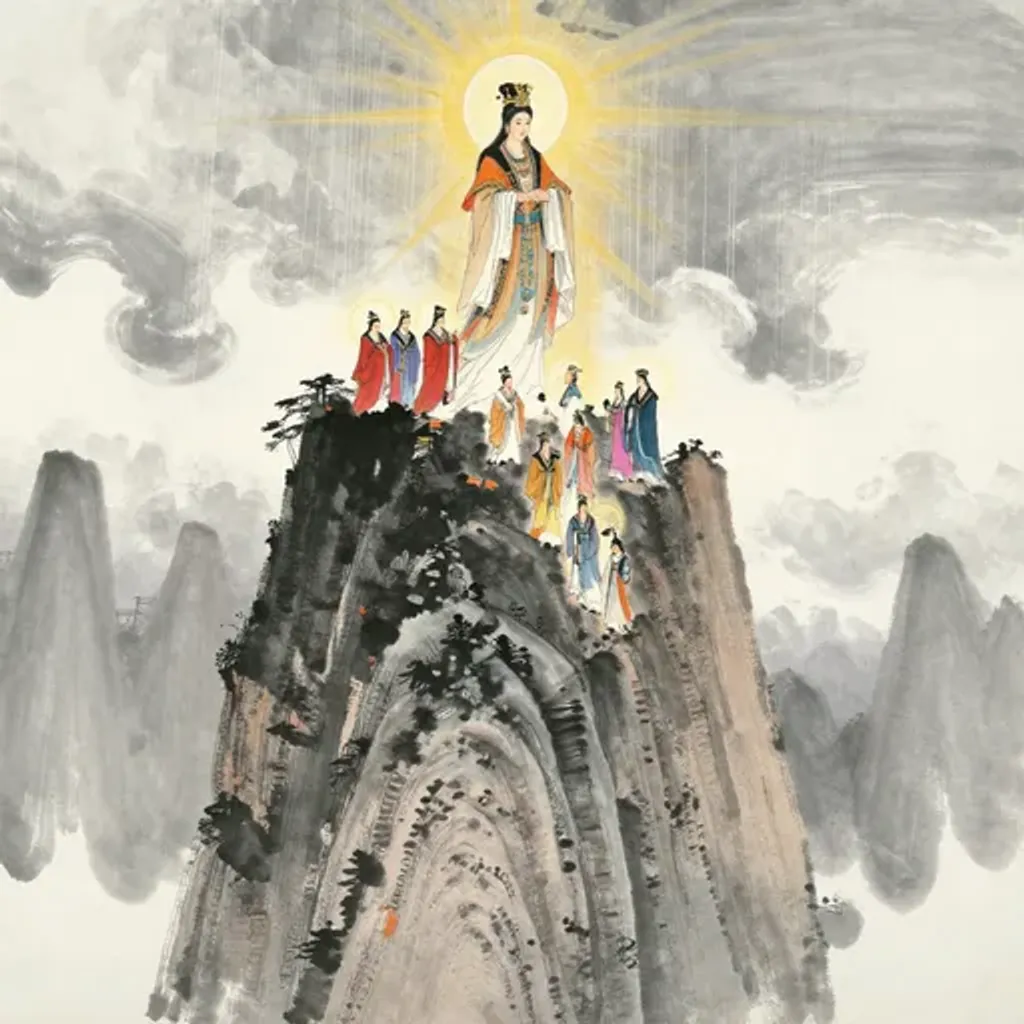
崔嵬北岳,天神貴客。衣冠不已,蒙被恩德。
The lofty northern peak, Cuiwei; celestial spirits and honored guests. Robes and caps without cease; covered and blessed with grace.
— Jiao Yanshou, Yilin (Forest of Changes), 1st century BC
Commentary
Water hidden within the earth gazes upward at towering peaks, and the lofty northern sacred mountain receives celestial guests of noble rank. Robes and ceremonial caps are donned without end as heavenly favor descends layer upon layer. The verse evokes an imperial feng-shan sacrifice at the sacred mountain — the ritual by which rulers commune with heaven atop the most sacred peaks. Constant donning of ceremonial dress signals continuous blessing rather than a single event. From The Army to Abundance, thunder and lightning arrive together in overwhelming fullness. The army's disciplined reverence at the sacred mountain is rewarded with thunder's judicial power and lightning's brilliant illumination — divine mandate at its most spectacular.
師 → 旅
Hexagram 7 → Hexagram 56: The Wanderer
Changing lines: 2, 3, 4, 6
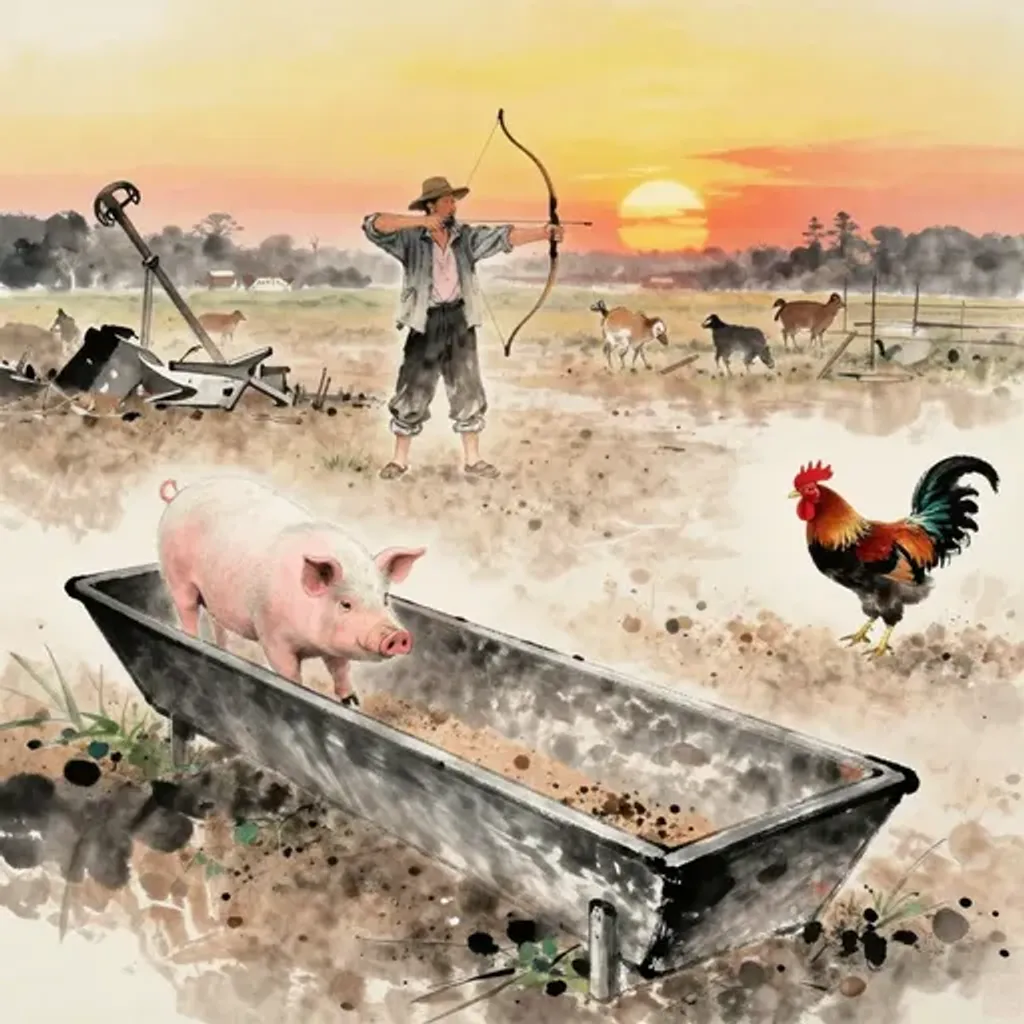
空槽注豬,獖彘不到。張弓祝雞,雄父飛去。
An empty trough poured for pigs; the gelded boar does not come. Drawing a bow at the rooster; the cock flies away.
— Jiao Yanshou, Yilin (Forest of Changes), 1st century BC
Commentary
Water hidden within the earth prepares for action, but every target slips away. The feeding trough is set out to lure pigs, but the boar never arrives. A bow is drawn and incantations chanted to summon the rooster, but the cock flies off instead. Every preparation meets evasion: the quarry senses the trap and refuses to cooperate. From The Army to The Wanderer, fire burns atop the mountain in transient, homeless illumination. The army's careful preparations are wasted on targets that refuse to stay — like the wanderer, everything of value moves on, leaving the strategist grasping at empty troughs and scattered feathers.
師 → 巽
Hexagram 7 → Hexagram 57: The Gentle Wind
Changing lines: 3, 5, 6
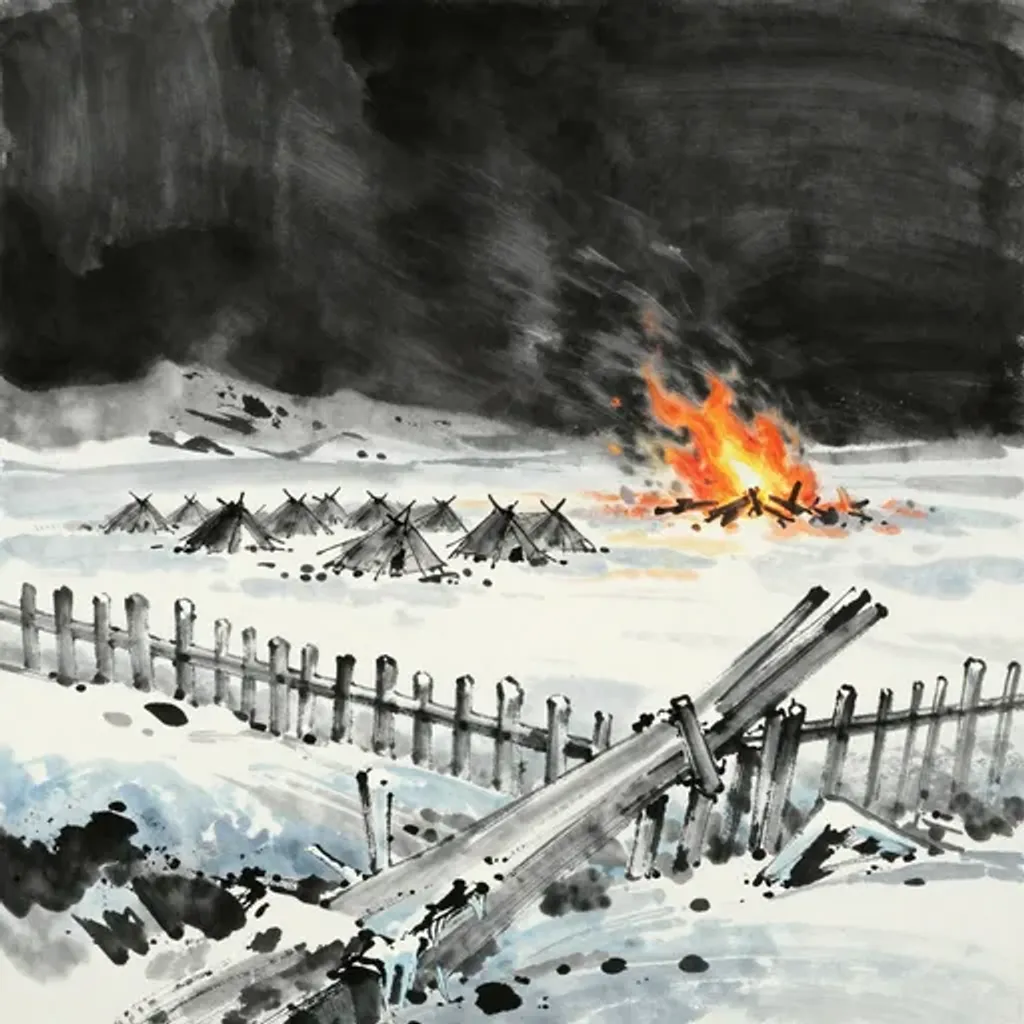
胡蠻戎狄,大陰所積。涸冰凍寒,君子不存。
The Hu, Man, Rong, and Di; where great yin accumulates. Dry ice, frozen cold; the noble man cannot survive.
— Jiao Yanshou, Yilin (Forest of Changes), 1st century BC
Commentary
Water hidden within the earth meets the frozen hostility of the borderlands. Hu, Man, Rong, and Di — the four barbarian peoples on China's periphery — dwell where great yin accumulates. Parched ice and bitter cold grip the landscape; the gentleman cannot survive there. The verse maps the army's limit: beyond the pale of civilization lies terrain so harsh that even the cultivated person perishes. From The Army to The Gentle, doubled wind penetrates softly and persistently. Yet the verse negates wind's gentle infiltration — these frozen wastes admit no subtle influence. The frontier's accumulated yin simply overwhelms any attempt at civilizing penetration. Some territories resist all command.
師 → 兌
Hexagram 7 → Hexagram 58: The Joyous Lake
Changing lines: 1, 4, 5
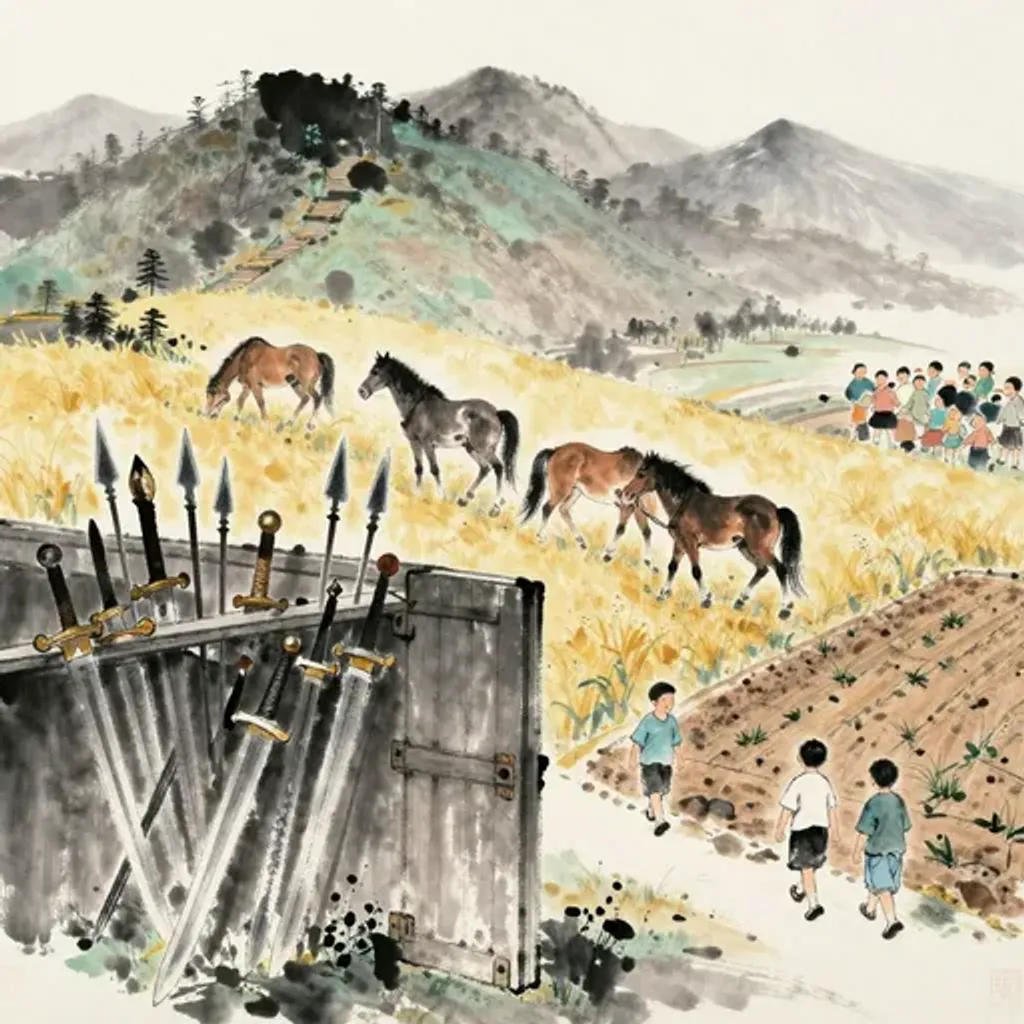
甘露醴泉,太平機關。仁德感應,歲樂民安。
Swords and spears are stored away; horses are loosed on the southern hills. Fields are freshly plowed; children walk along singing.
— Jiao Yanshou, Yilin (Forest of Changes), 1st century BC
Commentary
Water hidden within the earth finally achieves peace, and the original verse speaks of sweet dew and sweet springs — portents of a golden age. Benevolence and virtue resonate with heaven's response; the harvest is joyful, and the people rest in security. Sweet dew (ganlu) and sweet springs (liquan) are among the most celebrated omens of virtuous governance in Han-dynasty thought, appearing when the ruler's virtue reaches cosmic proportions. From The Army to The Joyous, twin lakes reflect each other in mutual delight. The army's disciplined force dissolves into the shared pleasure of friends studying together — military severity transmuted into the gentle joy of a community at peace.
師 → 渙
Hexagram 7 → Hexagram 59: Dispersion
Changing lines: 5, 6
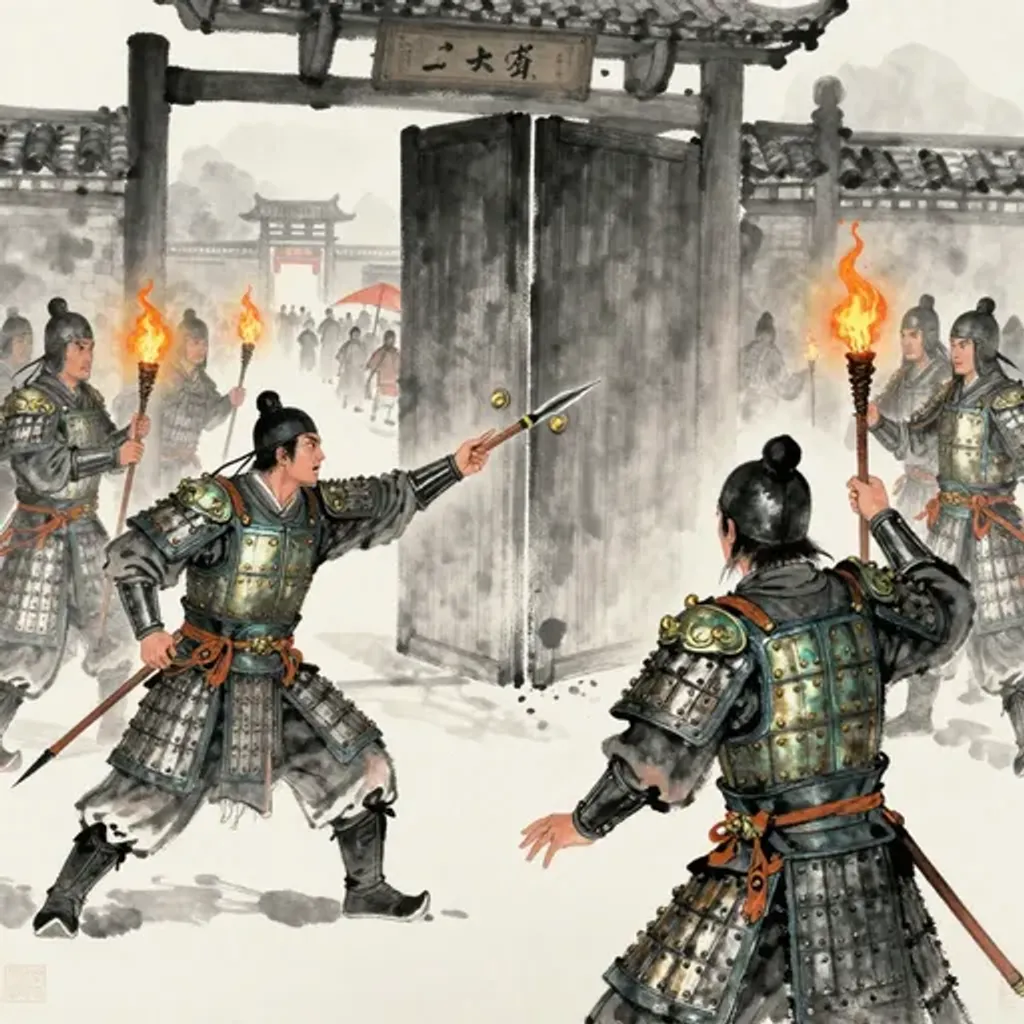
惡來呼伯,慎驚外客。甲守閉宅,以備凶急。臨折之憂,將滅無災。
Wu Lai calls out for his brother; be cautious -- a stranger approaches. Armored men guard and bar the house, to prepare against sudden danger. The threat of collapse looms; yet it shall pass without disaster.
— Jiao Yanshou, Yilin (Forest of Changes), 1st century BC
Commentary
Water hidden within the earth braces for assault, and E Lai summons his comrades to guard against external threat. E Lai — the powerful strongman who served King Zhou of Shang, ancestor of the Qin ruling house — was famed for brute strength and fierce loyalty. Armored guards seal the dwelling to prepare for sudden violence. Yet the crisis that seemed about to break is averted; the branch about to snap holds firm, and disaster dissolves. From The Army to Dispersion, wind moves over water, scattering what had gathered. The defensive mobilization proves unnecessary as the threat disperses of its own accord — sometimes the best military outcome is the battle that never happens.
師 → 節
Hexagram 7 → Hexagram 60: Limitation
Changing lines: 1, 5
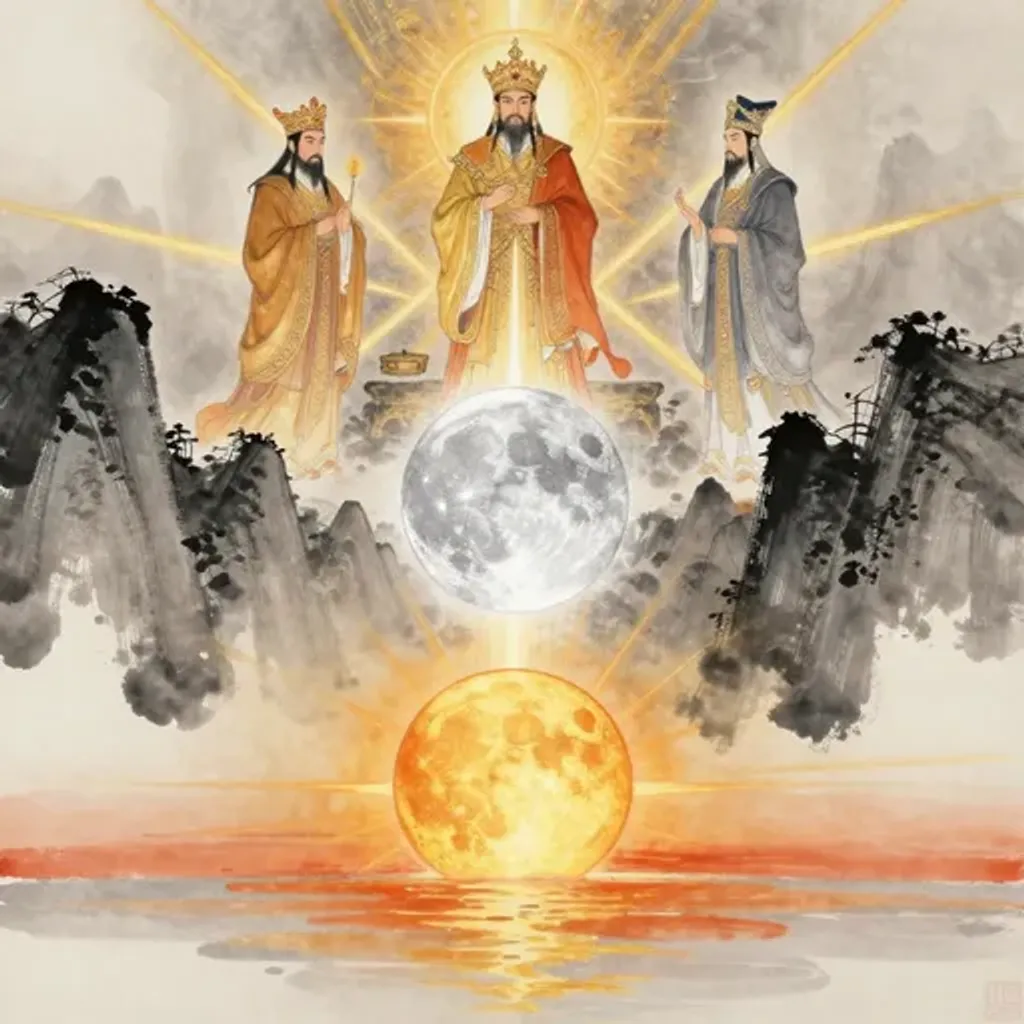
日月相望,光明盛昌。三聖茂功,仁德大隆。
Sun and moon gaze at each other; their light is full and flourishing. The three sages's abundant accomplishments; benevolence and virtue greatly prosper.
— Jiao Yanshou, Yilin (Forest of Changes), 1st century BC
Commentary
Water hidden within the earth aligns with cosmic luminaries, and sun and moon gaze at each other in full radiance, their light at its most brilliant. Three sages accomplish great works, and benevolent virtue flourishes magnificently. The 'three sages' most likely refers to the sage-kings of antiquity — perhaps Yao, Shun, and Yu, or the Zhou founders Wen, Wu, and the Duke of Zhou — whose combined virtue created the golden age. From The Army to Limitation, water rests above the lake in measured proportion. The army's unchecked force is refined into governance by measured standards: the sages' achievement lies precisely in setting proper limits — regulating without stifling, constraining without crushing.
師 → 中孚
Hexagram 7 → Hexagram 61: Inner Truth
Changing lines: 1, 5, 6
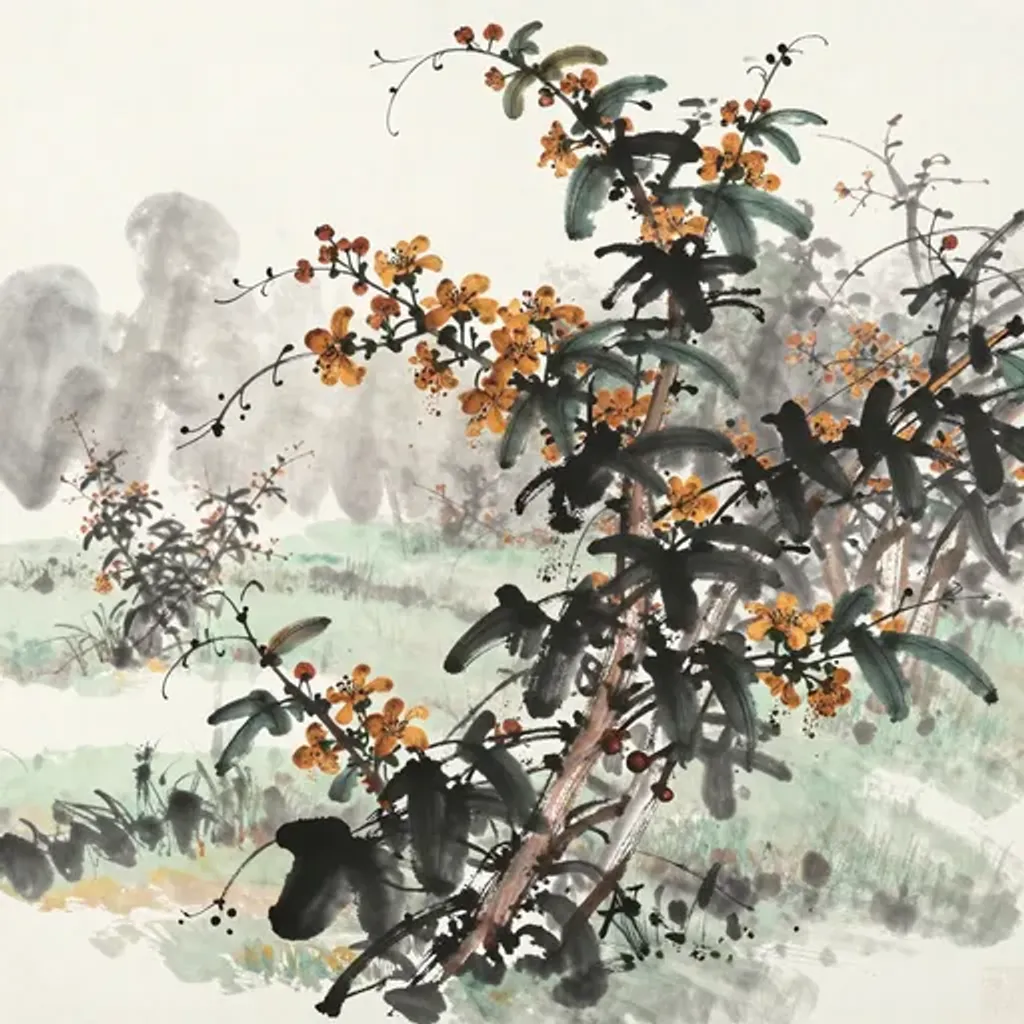
葛藟蒙棘,華不得實。讒佞亂政,使恩壅塞。
Kudzu vine smothers the thorn bush; flowers but no fruit. Slander and flattery disorder governance; causing grace to be blocked.
— Jiao Yanshou, Yilin (Forest of Changes), 1st century BC
Commentary
Water hidden within the earth should nourish honest communication, but here parasitic vines smother the thorns they cling to, producing flowers but never fruit. Slanderers and flatterers corrupt governance, blocking the channels through which royal grace should flow. The kudzu vine (gelei) covering the bramble is a vivid metaphor for institutional parasitism: the organism that feeds on the host produces only showy blossoms while preventing any genuine yield. From The Army to Inner Truth, wind blows above the lake, and sincerity should reach even pigs and fish. Yet the verse describes exactly the opposite: false counsel clogs the channels of trust, making inner truth impossible to transmit.
師 → 小過
Hexagram 7 → Hexagram 62: Small Exceeding
Changing lines: 2, 3, 4
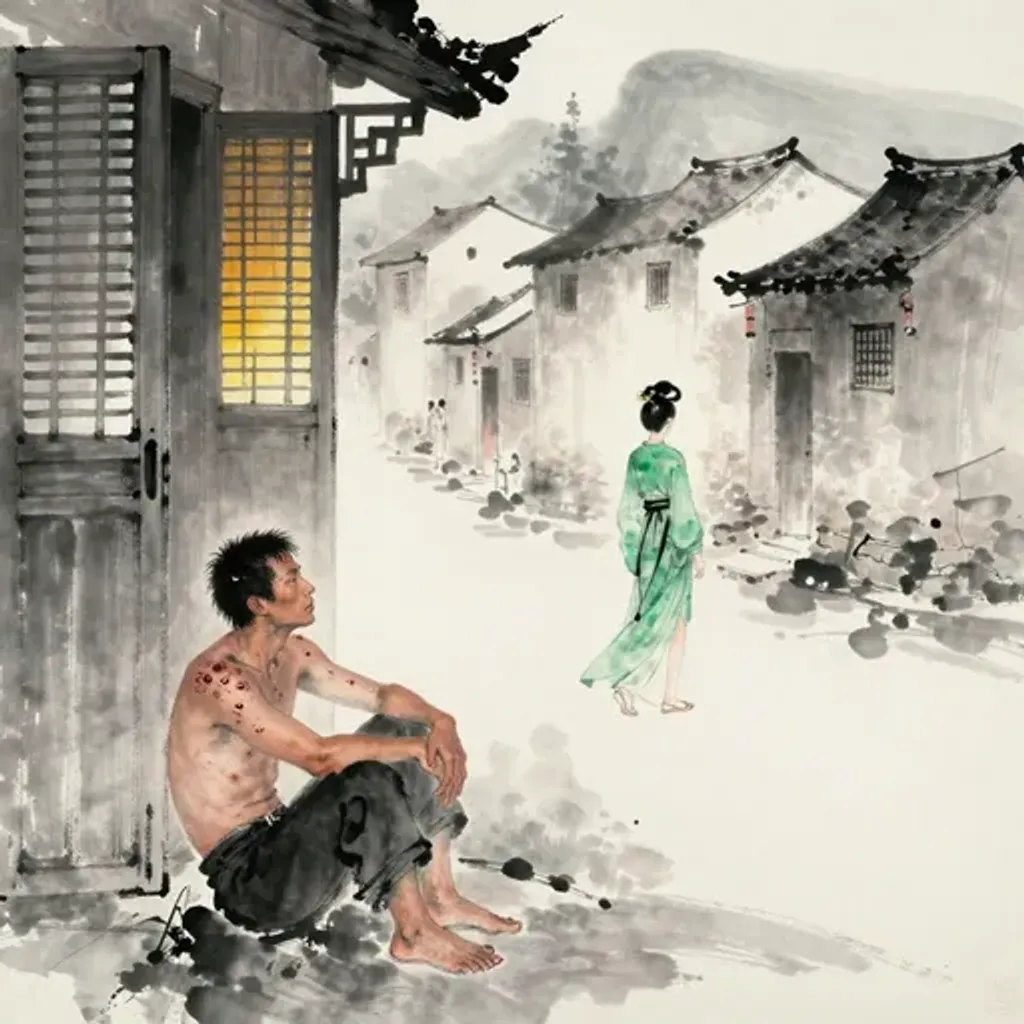
鄰不我顧,而望玉女。身多癩疾,誰肯媚者。
Neighbors pay me no regard, yet I dream of the jade maiden. My body covered with sores; who would find me pleasing?
— Jiao Yanshou, Yilin (Forest of Changes), 1st century BC
Commentary
Water hidden within the earth cannot compel attraction by force, and one's neighbors refuse even to glance over, while one gazes longingly at a beautiful woman far beyond reach. The body is covered in sores and lesions — who would consent to love such a person? The verse is brutally honest about the limits of desire when one has nothing to offer: afflicted and unappealing, longing for beauty only sharpens the pain of inadequacy. From The Army to Small Exceeding, thunder atop the mountain oversteps its proper bounds. The verse embodies this excess perfectly: desire that exceeds one's actual capacity or station creates only shame. Small exceeding counsels modesty in grief and frugality in action — here, neither is practiced.
師 → 既濟
Hexagram 7 → Hexagram 63: After Completion
Changing lines: 1, 2, 3, 5
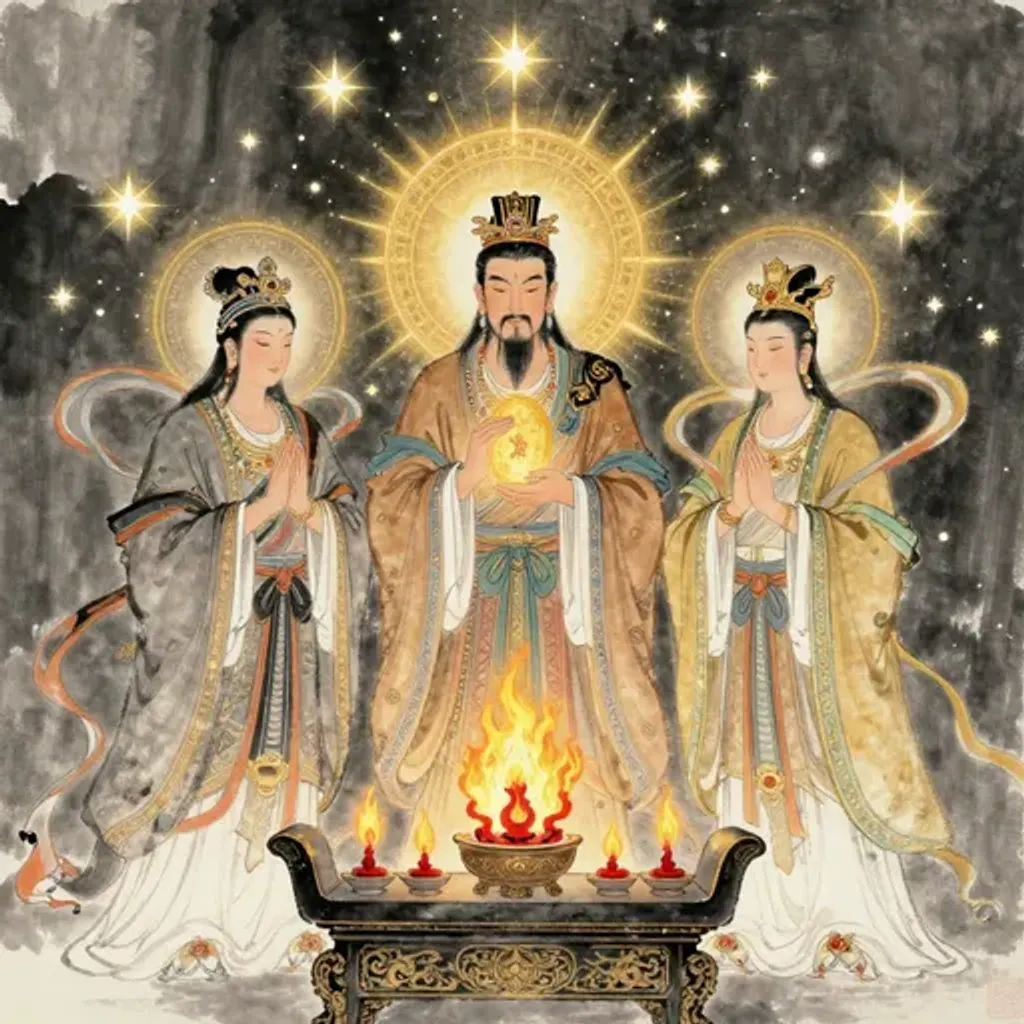
精誠所在,神為之輔。德教尚忠,彌世長久。三聖尚功,多受福祉。
Where sincerity dwells, spirits give their aid. Teaching virtue and loyalty; it endures through the generations. The three sages honor merit; receiving many blessings.
— Jiao Yanshou, Yilin (Forest of Changes), 1st century BC
Commentary
Water hidden within the earth channels sincere devotion, and where genuine spirit resides, the spirits themselves offer aid. Moral teaching honors loyalty, enduring across generations without fading. Three sages establish their achievements, and abundant blessings are received. The verse celebrates the self-reinforcing cycle of virtue: sincere governance attracts divine support, which in turn sustains the institutional order across time. From The Army to After Completion, water sits above fire in perfect equilibrium — everything in its proper place. The army's labor reaches its fulfillment: the campaign is done, the state is ordered, and the only remaining task is vigilance against the complacency that completion breeds.
師 → 未濟
Hexagram 7 → Hexagram 64: Before Completion
Changing lines: 4, 6
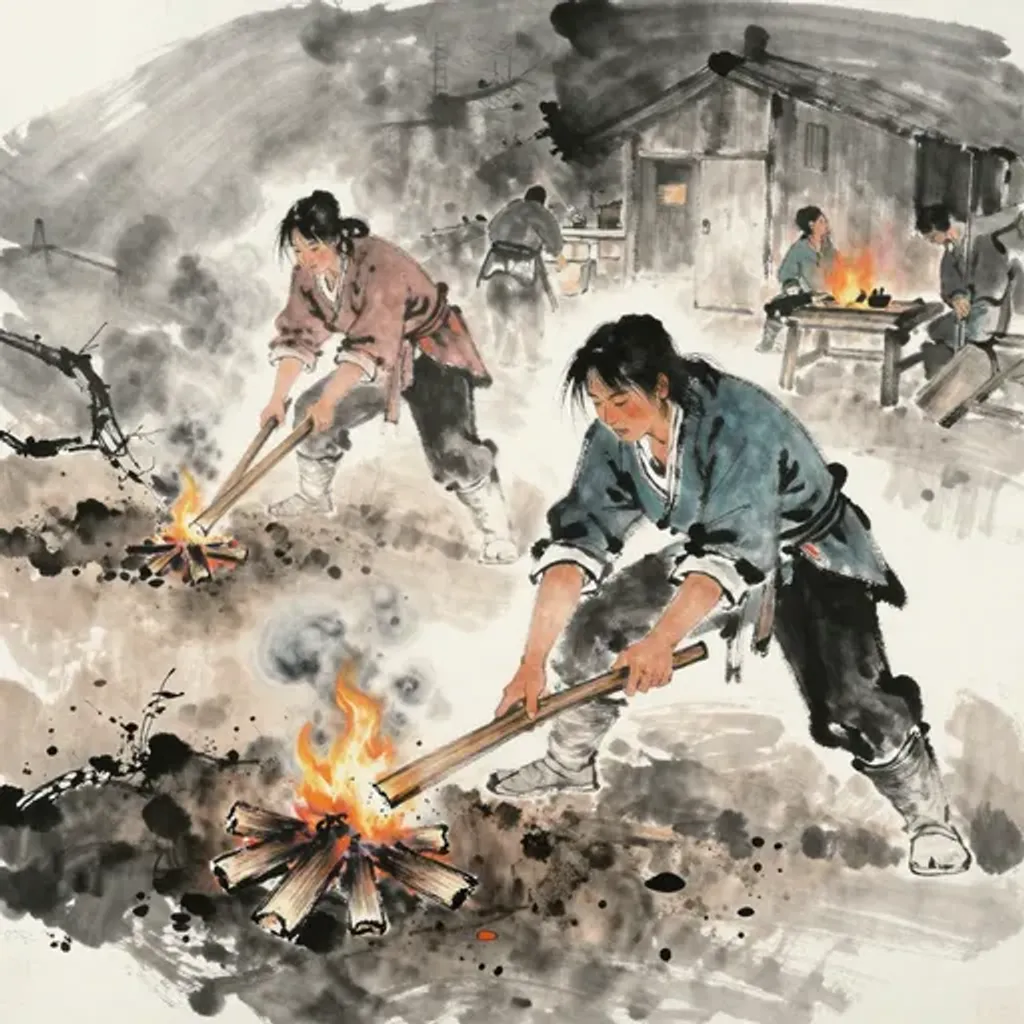
鑽木取火,掘地索泉。主母飢渴,手為心禍。
Drilling wood for fire, digging earth for springs. The mistress thirsts and hungers; her hands become her heart's undoing.
— Jiao Yanshou, Yilin (Forest of Changes), 1st century BC
Commentary
Water hidden within the earth reaches back to the most primitive acts of survival: drilling wood to make fire, digging earth to find a spring. The mistress of the household is parched and famished, and the hand itself becomes the instrument of the heart's ruin. Fire born from friction and water found through excavation are the two primordial technologies — yet here they fail to sustain. The hand that drills and digs destroys what it meant to save. From The Army to Before Completion, fire hovers above water without contact, each element visible but unable to serve the other. The army's resources exist but cannot be brought to bear — so close to completion, yet the final crossing remains unmade.