Transformations of Hexagram 8
Every line of change out of Hexagram 8 比 Holding Together, with the Yilin verse for each of the 64 resulting hexagrams, its translation, and the original ink brush artwork.
比 → 乾
Hexagram 8 → Hexagram 1: The Creative
Changing lines: 1, 2, 3, 4, 6
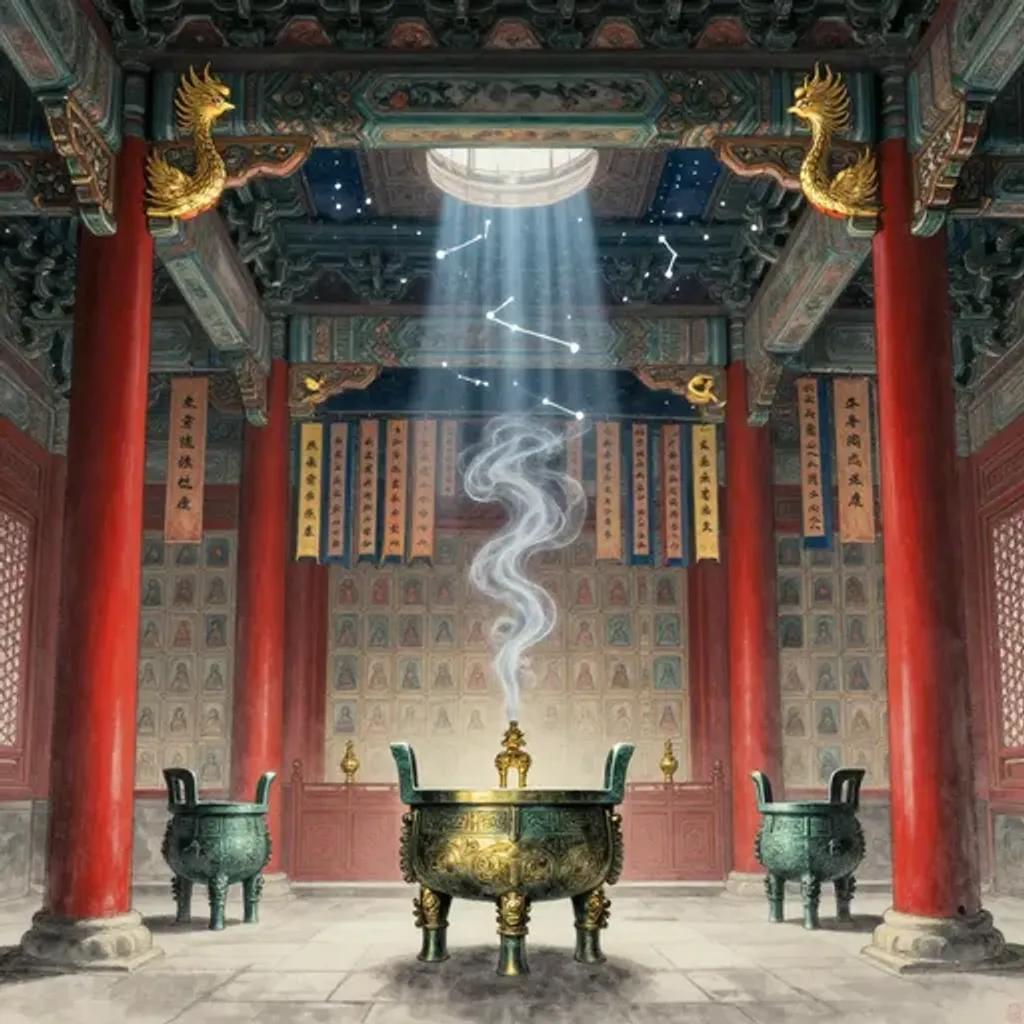
繼祖復宗,追明成康。光照萬國,享世久長。
Continuing the ancestors, restoring the lineage; honoring the brilliant Cheng and Kang. Their light illuminates ten thousand states; their reign endures long.
— Jiao Yanshou, Yilin (Forest of Changes), 1st century BC
Commentary
Water rests upon the earth, the image of Holding Together, where alliances form naturally as streams converge. The verse invokes the great Zhou succession: continuing the ancestral line, pursuing the brilliance of Kings Cheng and Kang. Their light illuminates ten thousand states, and their era endures for generations. Kings Cheng and Kang represent the zenith of Zhou governance, an age of such harmony that punishments went unused for forty years. From Holding Together to the Creative, the transformation traces how communal solidarity, when perfected, generates the self-sustaining momentum of heaven itself. What begins as mutual reliance among allies becomes the sovereign energy that needs no external support — the double heaven of Qian, moving ceaselessly of its own accord.
比 → 坤
Hexagram 8 → Hexagram 2: The Receptive
Changing lines: 5
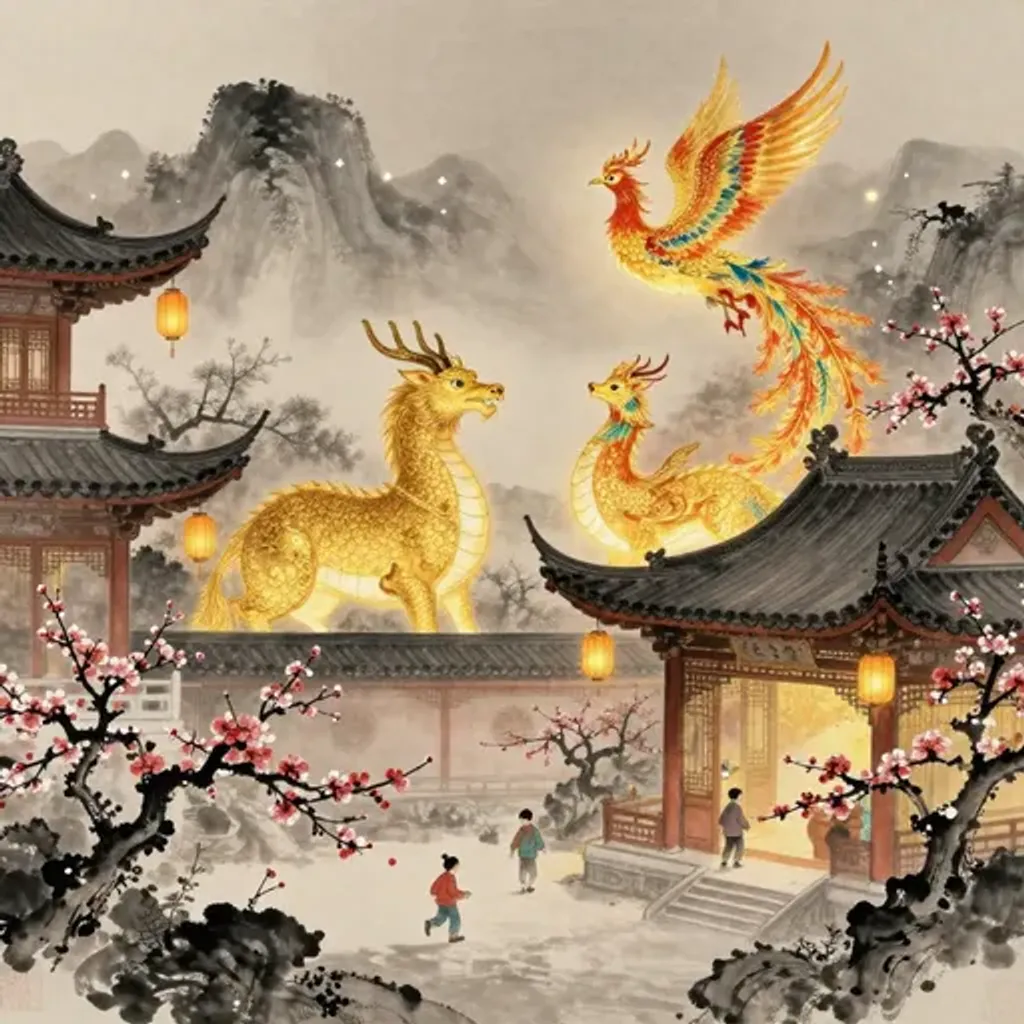
麟子鳳雛,生長家國。和氣所居,康樂無憂,邦多聖人。
Qilin young and phoenix chicks, born and raised in the homeland. Where harmonious qi dwells; peace and joy, no worry -- the state abounds with sages.
— Jiao Yanshou, Yilin (Forest of Changes), 1st century BC
Commentary
Water upon earth gathers all streams into one: from this convergence, auspicious creatures are born. Qilin calves and phoenix chicks grow up within the household of the nation, nurtured by an atmosphere of harmony. Where benevolent energy dwells, there is health and joy without sorrow, and the realm abounds in sages. The qilin and phoenix appear only under sage governance — their presence here signals a golden age achieved through unity. From Holding Together to the Receptive, the transformation shows how alliance and mutual support create the vast, yielding ground of Kun: the double earth that bears all things without discrimination. Solidarity among the people becomes the fertile soil from which sages naturally emerge.
比 → 屯
Hexagram 8 → Hexagram 3: Difficulty at the Beginning
Changing lines: 1
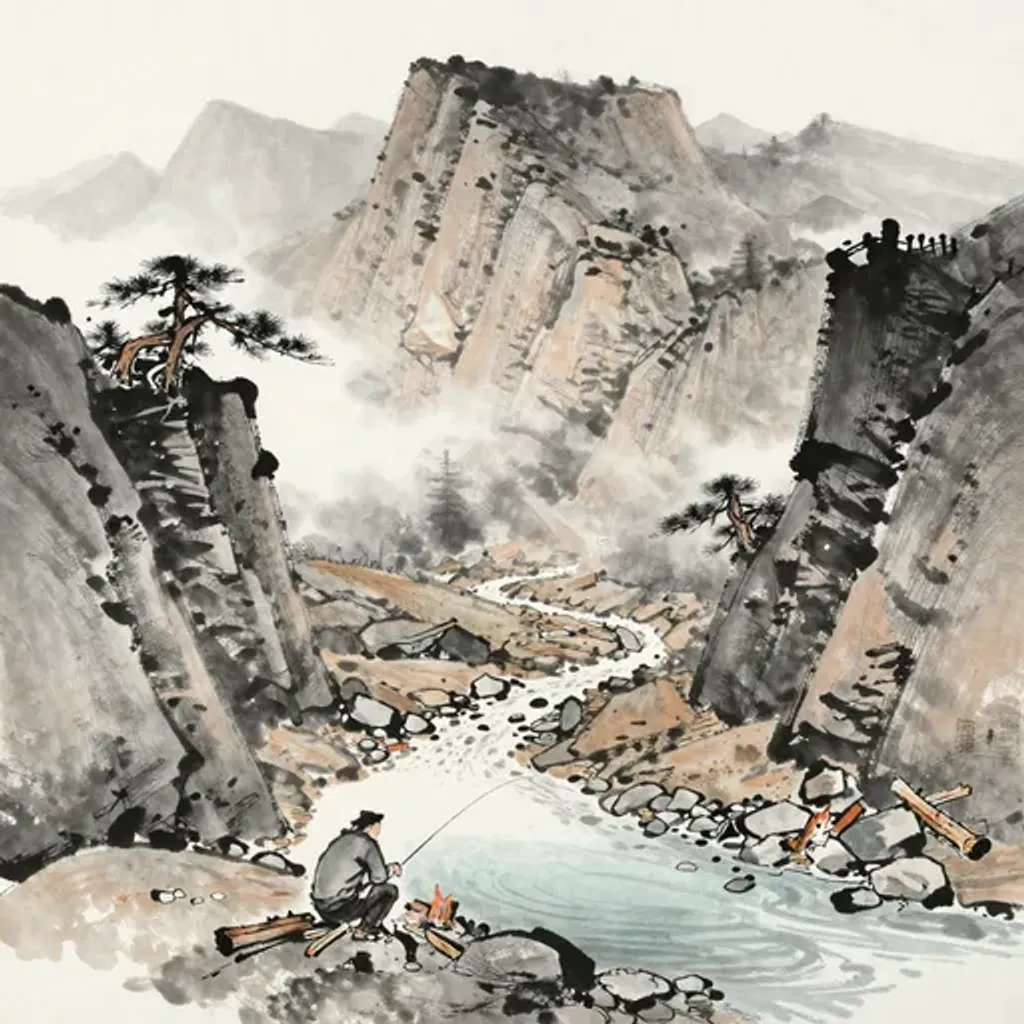
取火流泉,釣鰟山顛。魚不可得,火不肯燃。
Seeking fire from a flowing spring, fishing atop a mountain peak. The fish cannot be caught; the fire will not ignite.
— Jiao Yanshou, Yilin (Forest of Changes), 1st century BC
Commentary
Water upon earth draws things together, but some pairings are doomed from the start. The verse depicts someone trying to strike fire from a flowing spring, and angling for bream atop a mountain peak — both acts of radical mismatch. The fish cannot be caught, the fire refuses to kindle. Every element is in the wrong place: water where fire is needed, stone heights where water should flow. From Holding Together to Difficulty at the Beginning, the transformation captures perfectly how misaligned alliances produce only frustration. Zhun's clouds and thunder promise potential, but without correct placement, that potential remains locked. The bonds of Bi require the right partners in the right circumstances; forced unions generate nothing but wasted effort.
比 → 蒙
Hexagram 8 → Hexagram 4: Youthful Folly
Changing lines: 2, 5, 6
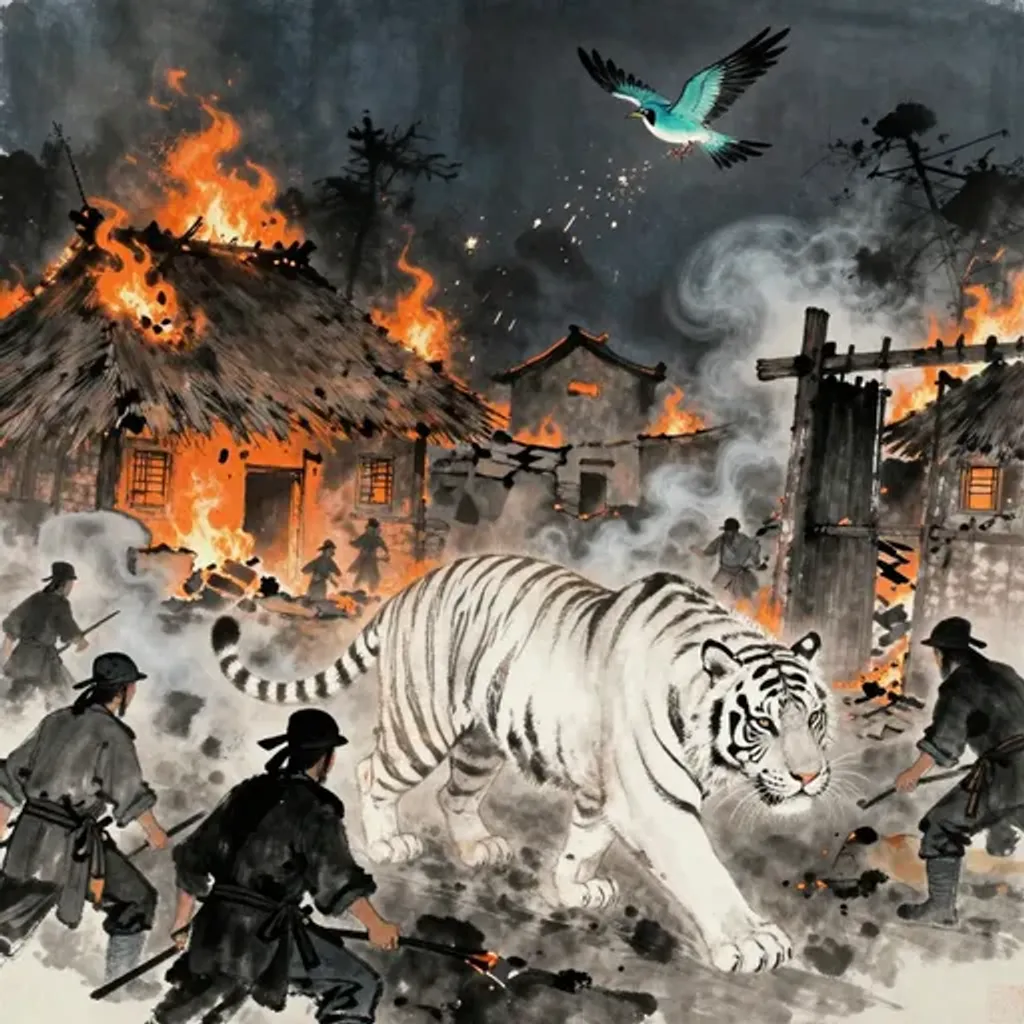
彭生為娛,白虎行菑。盜堯衣裳,桀跖荷兵。青禽照火,三日夷傷。
Peng Sheng provides entertainment; the white tiger walks in disaster. Stealing Yao's robes; Jie and Zhi bear arms. The blue bird lights the fire; three days of ruin and harm.
— Jiao Yanshou, Yilin (Forest of Changes), 1st century BC
Commentary
Water upon earth becomes treacherous when malign forces infiltrate the alliance. Peng Sheng, the strongman of Qi, was used by Duke Xiang to murder Duke Huan of Lu in 694 BC; according to tradition, his vengeful ghost later appeared as a wild boar during a hunt, terrifying Duke Xiang to death. The White Tiger — celestial guardian of the west, associated with war and destruction — spreads calamity. Bandits don the sage-king Yao's robes, and figures like Jie and Robber Zhi bear arms: virtue is stolen and violence legitimized. The blue bird illuminates by firelight, yet within three days, devastation follows. From Holding Together to Youthful Folly, corrupted bonds breed danger under a veil of ignorance — mountain over water conceals what flows beneath.
比 → 需
Hexagram 8 → Hexagram 5: Waiting
Changing lines: 1, 2, 3
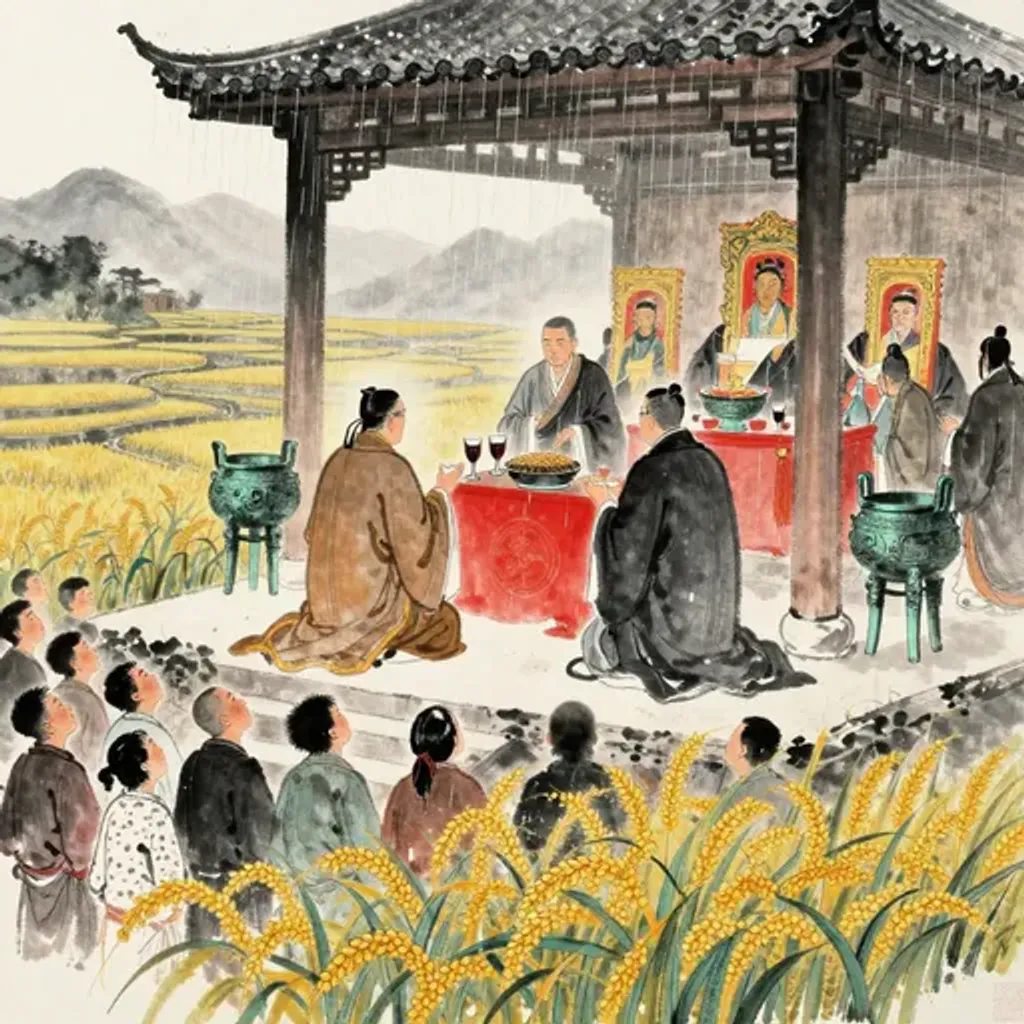
黍稷醇醴,敬奉山宗。神嗜飲食,甘雨嘉降。黎庶蕃殖,獨蒙福祉。
Millet and pure wine, reverently offered to the mountain ancestors. The spirits relish the food and drink; sweet rain descends in blessing. The people multiply and flourish; alone receiving fortune's favor.
— Jiao Yanshou, Yilin (Forest of Changes), 1st century BC
Commentary
Water upon earth gathers abundance, and here the community channels it upward in sacrifice. Millet and pure ale are offered reverently to the mountain shrine; the spirits savor the feast and respond with sweet rain descending in season. The common folk multiply and prosper, each one blessed. This is the reciprocal economy of ancient agrarian religion: the people give their finest grain, the gods return fertility. From Holding Together to Waiting, the transformation mirrors this exchange precisely. Xu's image — clouds gathered above heaven, not yet raining — becomes the moment of faithful anticipation before the blessing falls. Alliance provides the offering; heaven provides the response. The key is patient trust in the cycle.
比 → 訟
Hexagram 8 → Hexagram 6: Conflict
Changing lines: 2, 4, 6
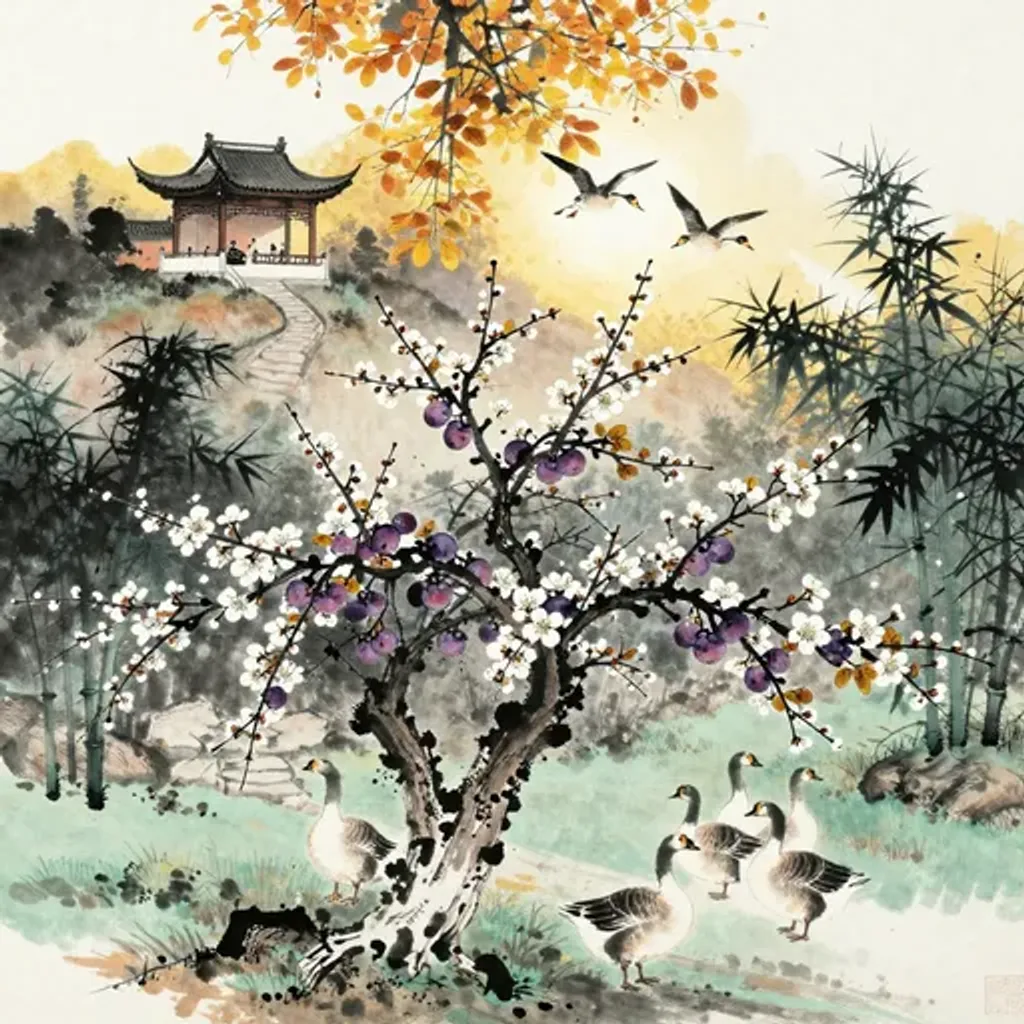
李花再實,鴻飛降集。仁哲權輿,蔭國受福。
The plum tree fruits twice; wild geese descend and gather. The humane and wise begin their rise; shading the state, receiving blessings.
— Jiao Yanshou, Yilin (Forest of Changes), 1st century BC
Commentary
Water upon earth draws all things to convergence, and the verse celebrates renewal upon renewal. The plum tree fruits a second time — an extraordinary omen of doubled abundance. Wild geese descend and gather, signaling seasonal return and reunion. A figure of wisdom and benevolence inaugurates a new era, sheltering the state and receiving blessings. The twice-fruiting plum suggests that what was thought spent still holds generative power. From Holding Together to Conflict, the image shifts from convergence to the tension of heaven and water moving in opposite directions. Yet the verse's optimism implies that even within adversarial structures, the seeds of renewal persist — a wise leader planted in the right moment can transform discord into shelter.
比 → 師
Hexagram 8 → Hexagram 7: The Army
Changing lines: 2, 5
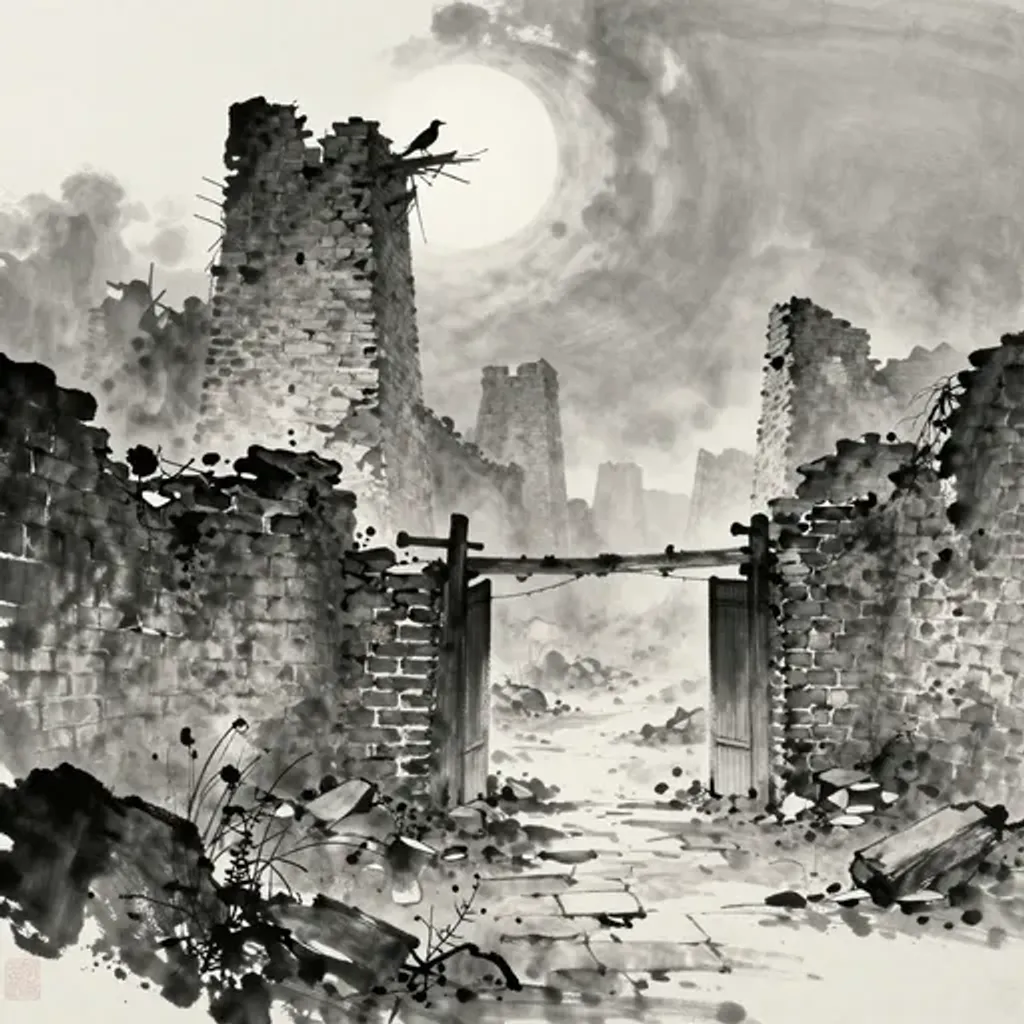
千歲之墟,大國所屠。不見子都,城空無家。
A thousand-year-old ruin; a great state laid waste. Zidu is nowhere to be seen; the city is empty, no home remains.
— Jiao Yanshou, Yilin (Forest of Changes), 1st century BC
Commentary
Water upon earth binds states in alliance, but when that bond is weaponized, devastation follows. A city that stood for a thousand years is razed by a great power. The famous beauty Zidu — the paragon of Zheng's aristocratic splendor — can no longer be seen; the city stands hollow, its households emptied. Zidu (公孫閼) was the celebrated handsome warrior of Zheng, so renowned that the Shijing declares 'one who does not know Zidu's beauty has no eyes.' His absence here signals the total erasure of a civilization's finest. From Holding Together to The Army, the transformation is direct: alliance gives way to disciplined military force. What water gathered upon earth in peace, water hidden within earth now marshals for war.
比 → 比
Hexagram 8 → Hexagram 8: Holding Together
No changing lines — the hexagram is unchanged
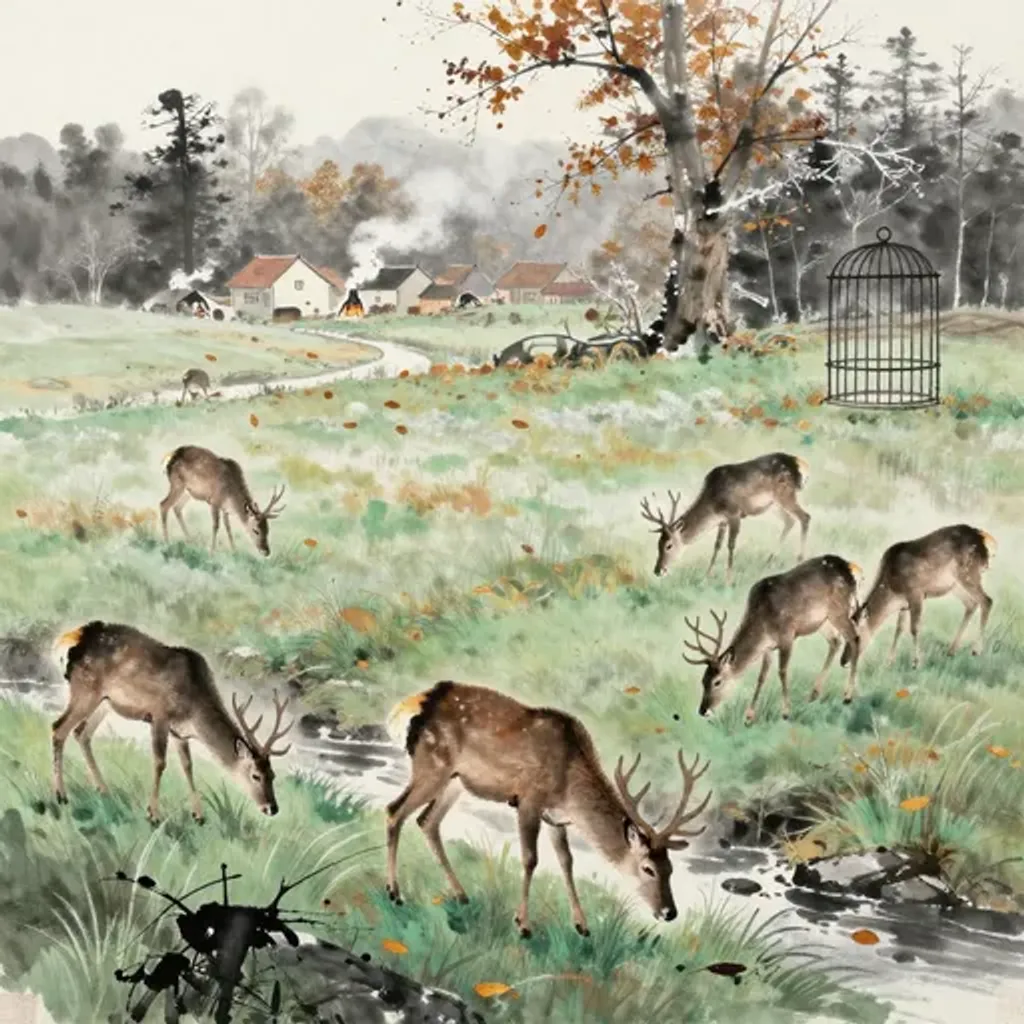
鹿得美草,鳴呼其友。九族和睦,不憂飢乏。長子入獄,霜降族哭。
The deer finds fine grass, calling out to its friends. The nine clans live in harmony; no worry of hunger or want. The eldest son enters prison; when frost falls, the clan weeps.
— Jiao Yanshou, Yilin (Forest of Changes), 1st century BC
Commentary
Water upon earth, doubled — Holding Together transforming into itself. A deer finds sweet grass and calls out to its companions, echoing the Shijing ode 'Luming': the nine clans gather in harmony, free from hunger and want. Yet the verse pivots sharply: the eldest son enters prison, and when frost descends, the clan weeps together. The frost-descent execution season signals judicial punishment at autumn's appointed time. Both halves are expressions of Bi: the deer calling friends is alliance in joy; the clan weeping for a condemned kinsman is alliance in grief. Holding Together does not dissolve when fortune turns — it deepens. The same bonds that share abundance must also bear collective sorrow.
比 → 小畜
Hexagram 8 → Hexagram 9: Small Taming
Changing lines: 1, 2, 3, 6
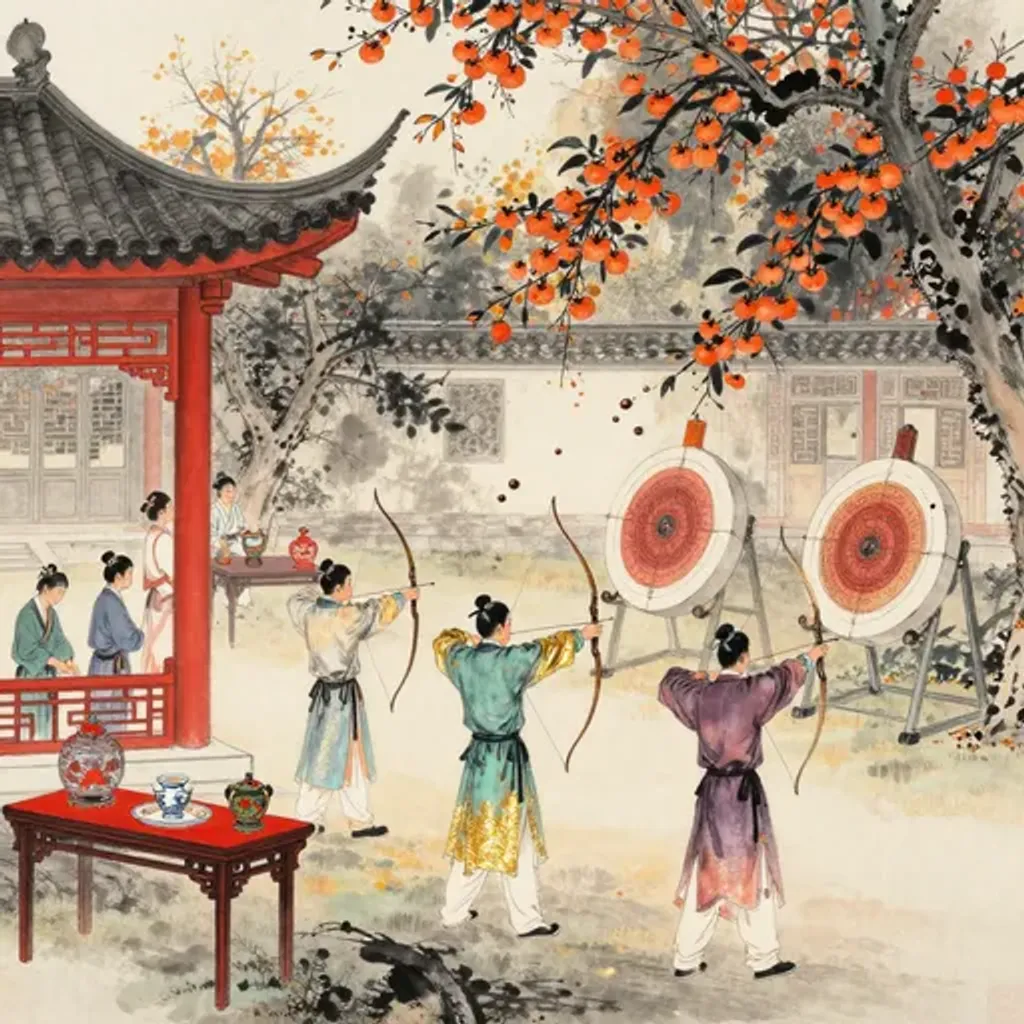
公子王孫,把彈挕丸。發輒有得,室家饒足。
Princes and lords's sons, grasping slingshot and pellet. Every shot finds its mark; the household is well supplied.
— Jiao Yanshou, Yilin (Forest of Changes), 1st century BC
Commentary
Water upon earth gathers resources, and noble sons put them to skillful use. Princes and lords' heirs take up pellet bows, and every shot finds its mark; their households overflow with plenty. The pellet bow (弹丸) was a gentleman's hunting instrument in Han times, used for fowling — a sport combining leisure with provision. The verse celebrates effortless abundance achieved through skill and good birth. From Holding Together to Small Taming, the gentle wind of Xun courses across heaven's strength, refining rather than overpowering. Alliance produces not brute accumulation but the cultivated elegance of sufficiency — the small restraint that lets natural abundance flow without forcing it.
比 → 履
Hexagram 8 → Hexagram 10: Treading
Changing lines: 1, 2, 4, 6
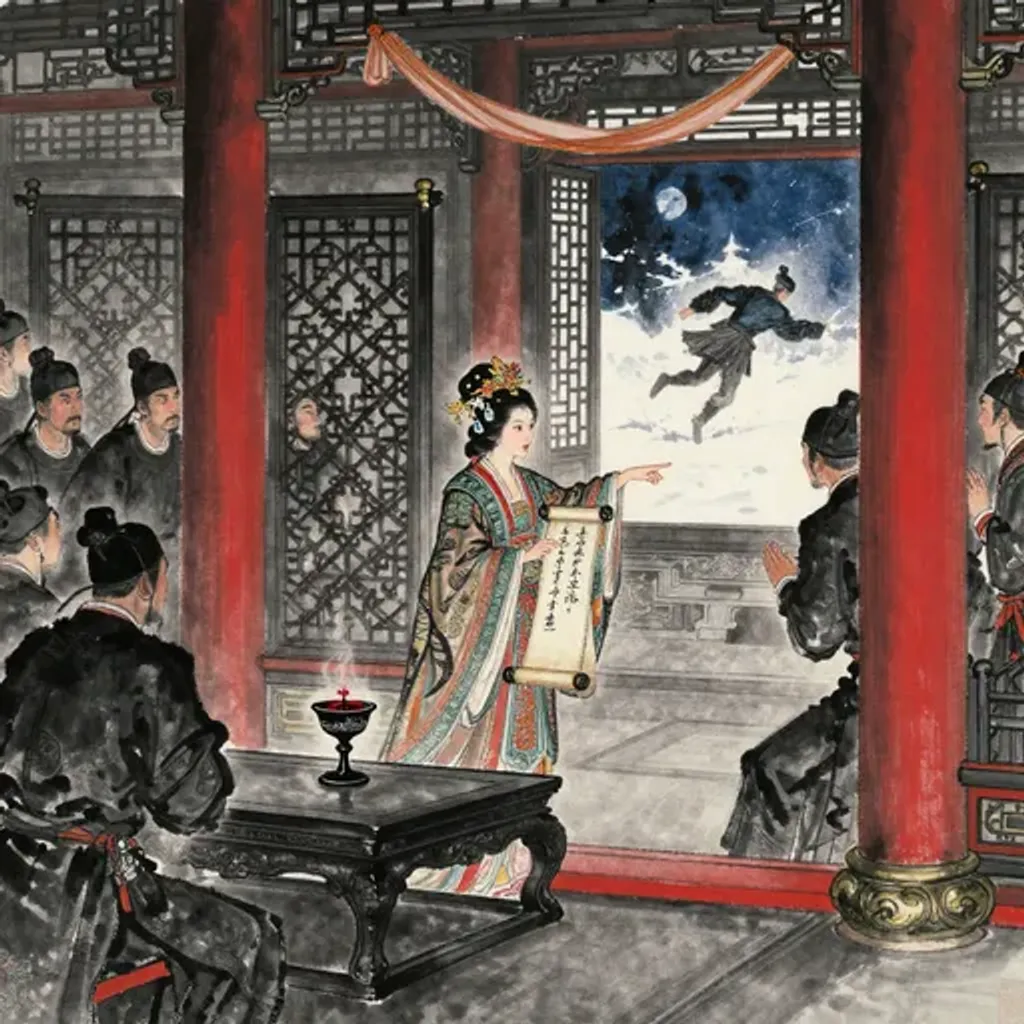
驪姬讒喜,與二嬖謀。譖殺恭子,賊害忠孝。申生以縊,重耳奔逃。
Li Ji slandered with cunning, plotting with two favorites. They defamed and killed the respectful prince, harming the loyal and filial. Shen Sheng hanged himself; Chong Er fled in exile.
— Jiao Yanshou, Yilin (Forest of Changes), 1st century BC
Commentary
Water upon earth pools trust — but when a scheming consort poisons that trust, the state fractures. Lady Li of Jin, delighting in her slanders, conspires with two court favorites. She frames the dutiful crown prince Shensheng for attempted patricide, driving him to hang himself. The loyal and filial are destroyed: Chong Er, the future Duke Wen of Jin, flees into nineteen years of exile. This is the Turmoil of Lady Li, recorded in the Zuo Zhuan, one of the Spring and Autumn period's most devastating dynastic crises. From Holding Together to Treading, the transformation is bitter: Bi's communal water gives way to Li's image of treading upon a tiger's tail. When alliance is corrupted from within, every step forward courts destruction.
比 → 泰
Hexagram 8 → Hexagram 11: Peace
Changing lines: 1, 2, 3, 5
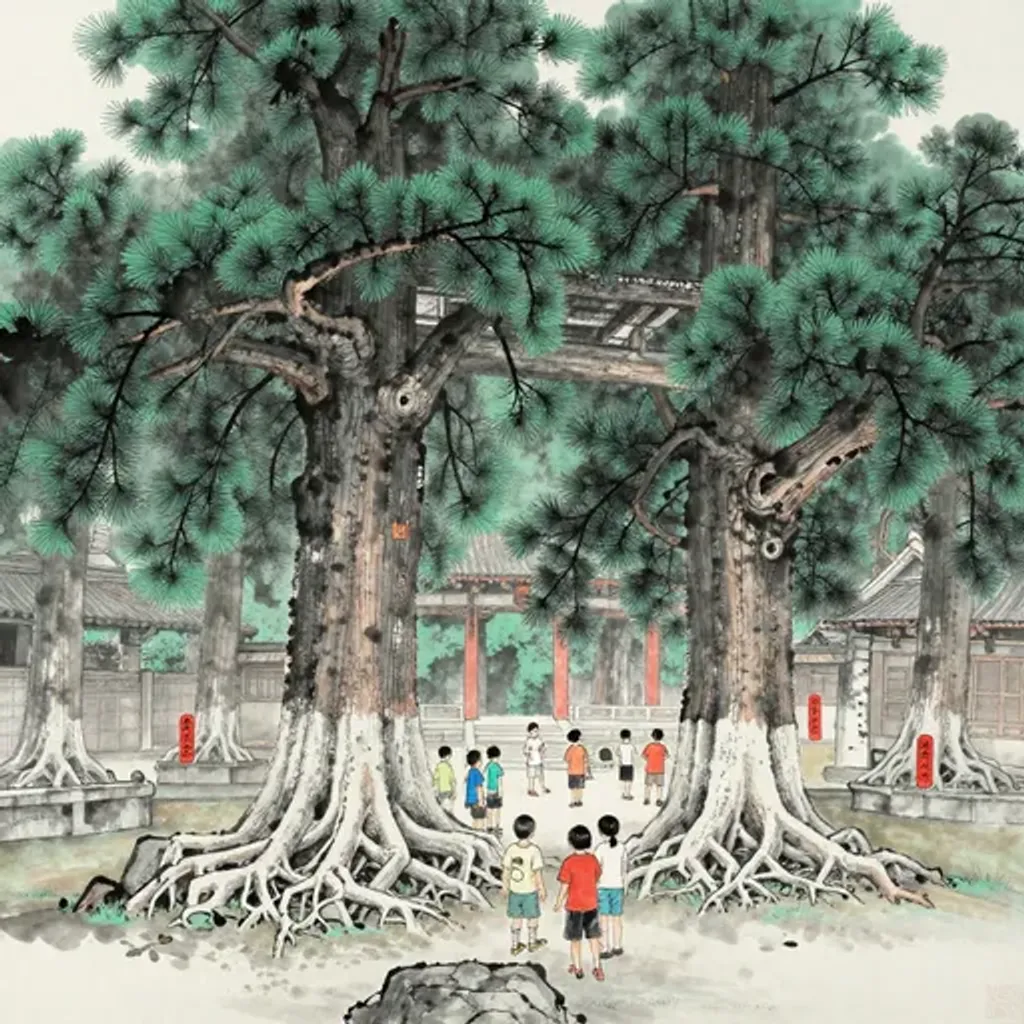
長生無極,子孫千億。柏柱載青,堅固不傾。
Everlasting life without end; descendants in the billions. Cypress pillars bearing green; firm and unyielding.
— Jiao Yanshou, Yilin (Forest of Changes), 1st century BC
Commentary
Water upon earth sustains all life, and here that sustenance extends to eternity. 'Long life without limit, descendants numbering a thousand hundred millions' — the verse opens with the grandest blessing in Chinese culture. A cypress pillar bears the weight of blue-green growth, firm and unyielding. Cypress was the wood of ancestral temples, chosen for its incorruptibility; a 'cypress pillar still bearing green' is a family line that endures across centuries. From Holding Together to Peace, the transformation fulfills the promise: Bi's communal bonds expand into Tai's cosmic harmony, where heaven and earth freely exchange their energies. Alliance grounded in mutual trust becomes the interlocking order of heaven below and earth above — the architecture of lasting peace.
比 → 否
Hexagram 8 → Hexagram 12: Standstill
Changing lines: 4, 6
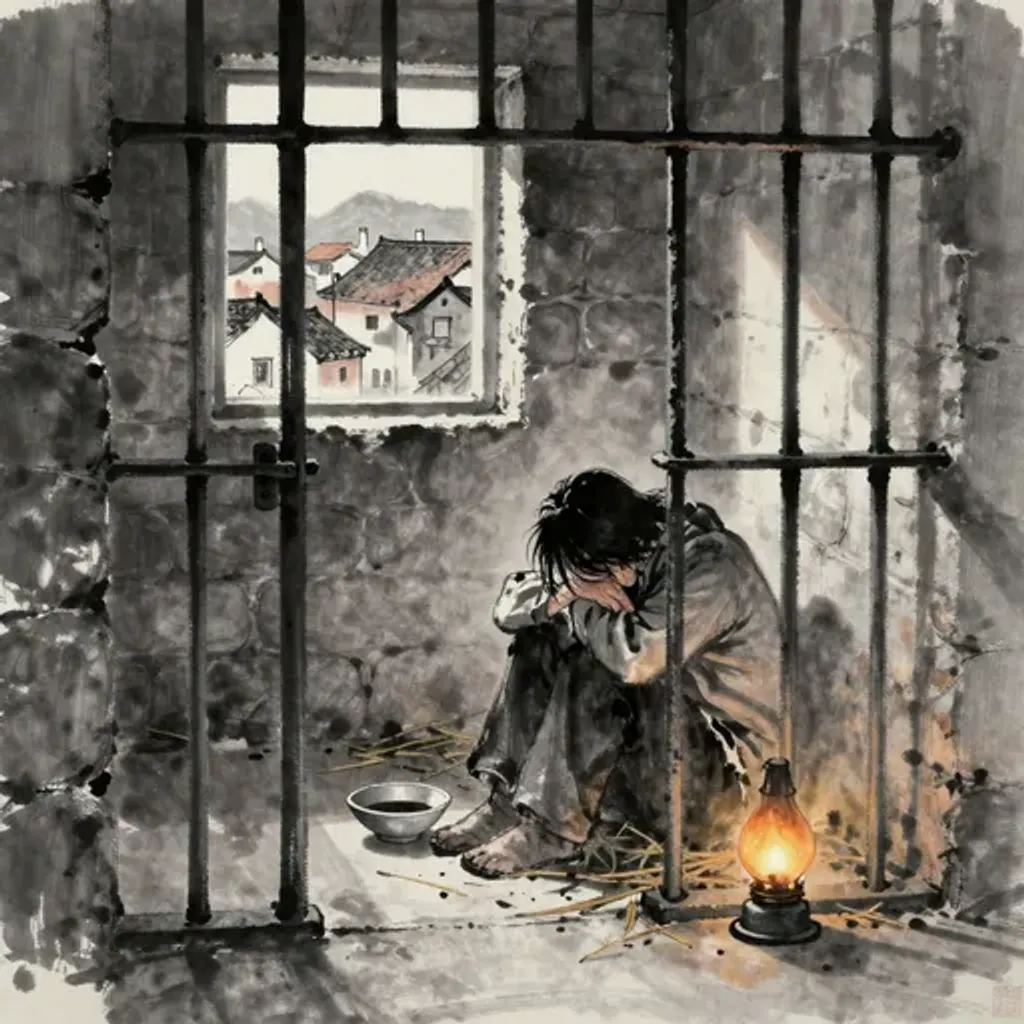
失意懷憂,如幽狴牢。亡子喪夫,附托寄居。
Disappointed and full of worry, as if imprisoned in a dungeon. Losing sons, bereaved of husband; dependent and lodging with others.
— Jiao Yanshou, Yilin (Forest of Changes), 1st century BC
Commentary
Water upon earth loses its cohesion, and isolation descends. The verse speaks of losing one's purpose, weighed down by sorrow, imprisoned as if in a dark dungeon. Children and husband are gone; the survivor must depend on others, lodging as a guest in someone else's household. Every image strips away a layer of belonging: first aspiration, then freedom, then family, then home. From Holding Together to Standstill, the transformation is devastating but structurally precise. Bi's water upon earth — community, proximity, mutual aid — gives way to Pi's heaven and earth refusing to interact. The bonds dissolve. What remains is the loneliest configuration in the Yi: each element sealed in its own sphere, unable to reach the other.
比 → 同人
Hexagram 8 → Hexagram 13: Fellowship
Changing lines: 1, 3, 4, 6
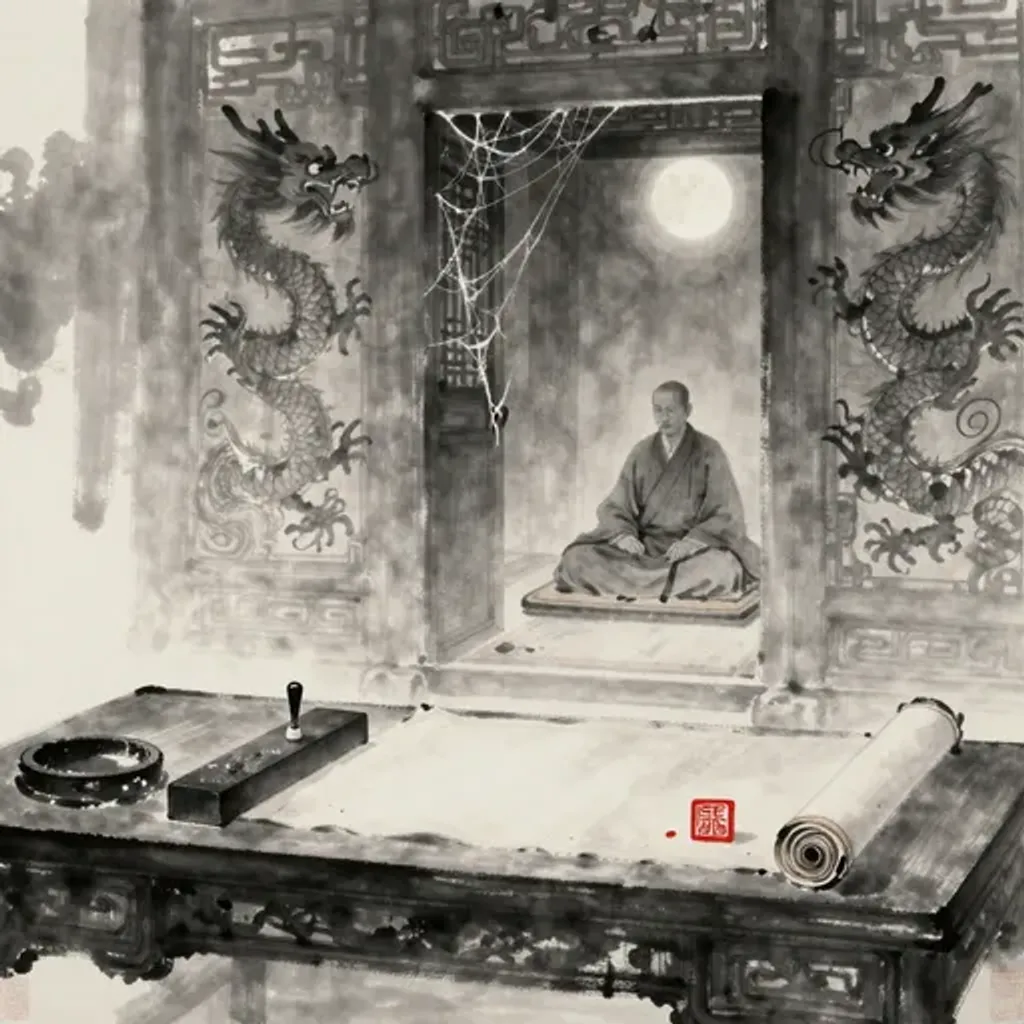
仁智隱伏,麟不可得。龍蛇潛藏,虛居堂室。
Benevolence and wisdom lie hidden; the qilin cannot be found. Dragon and serpent conceal themselves; the hall and chamber stand empty.
— Jiao Yanshou, Yilin (Forest of Changes), 1st century BC
Commentary
Water upon earth should gather the worthy, but here the virtuous remain hidden. The wise and humane lie concealed; the qilin cannot be found. Dragons and serpents stay submerged, and halls stand vacant. This resonates with the captured-qilin tradition: when the auspicious beast cannot appear, it means the age lacks a sage to summon it forth. The dragons and serpents recall the Yi's own imagery of the hidden dragon in Qian's first line — potential withheld from a world not yet ready. From Holding Together to Fellowship, the irony sharpens: Tongren's fire and heaven should illuminate all under the sky, bringing kindred spirits together. Yet the verse says the gathering fails. The alliance exists in potential but cannot manifest when talent refuses to emerge.
比 → 大有
Hexagram 8 → Hexagram 14: Great Possession
Changing lines: 1, 2, 3, 4, 5, 6
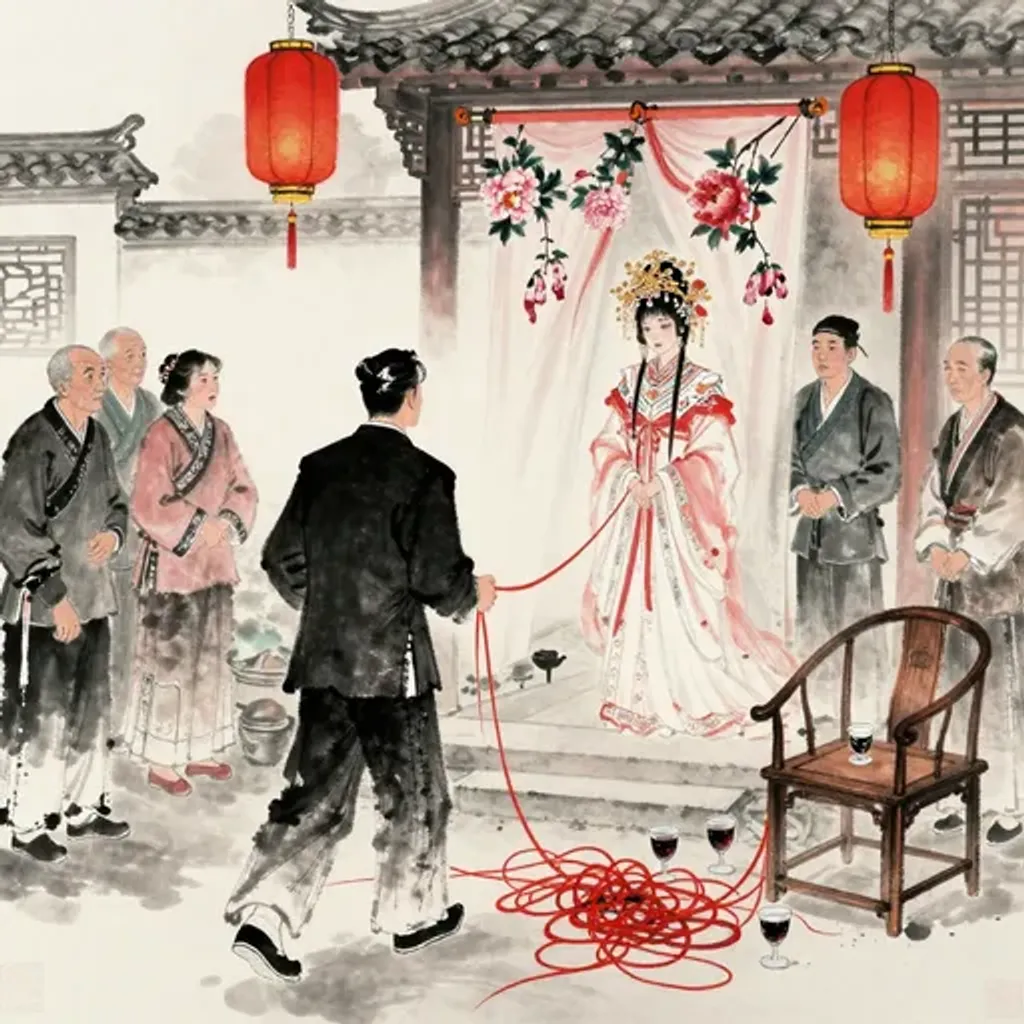
挒絜累累,締結難解。嫫母衒嫁,媒不得坐,自為身禍。
Tangled and knotted, hard to undo. The ugly woman Momo parades herself for marriage; the matchmaker cannot even sit down -- she brings calamity upon herself.
— Jiao Yanshou, Yilin (Forest of Changes), 1st century BC
Commentary
Water upon earth draws things together, but not every union is welcome. Tangles knot upon themselves, bindings that cannot be undone. Mo Mu — the legendarily ugly consort of the Yellow Emperor — parades herself for marriage, yet no matchmaker will even sit down to negotiate. Her self-promotion becomes her own misfortune. Mo Mu in the classical canon represents inner virtue disguised by outward ugliness; but here the verse focuses on the futility of forcing a match where none is wanted. From Holding Together to Great Possession, the paradox intensifies: Dayou's fire in heaven promises supreme abundance, yet the verse delivers only frustrated entanglement. Alliance misapplied — pushing bonds onto the unwilling — transforms potential wealth into self-inflicted disgrace.
比 → 謙
Hexagram 8 → Hexagram 15: Modesty
Changing lines: 3, 5
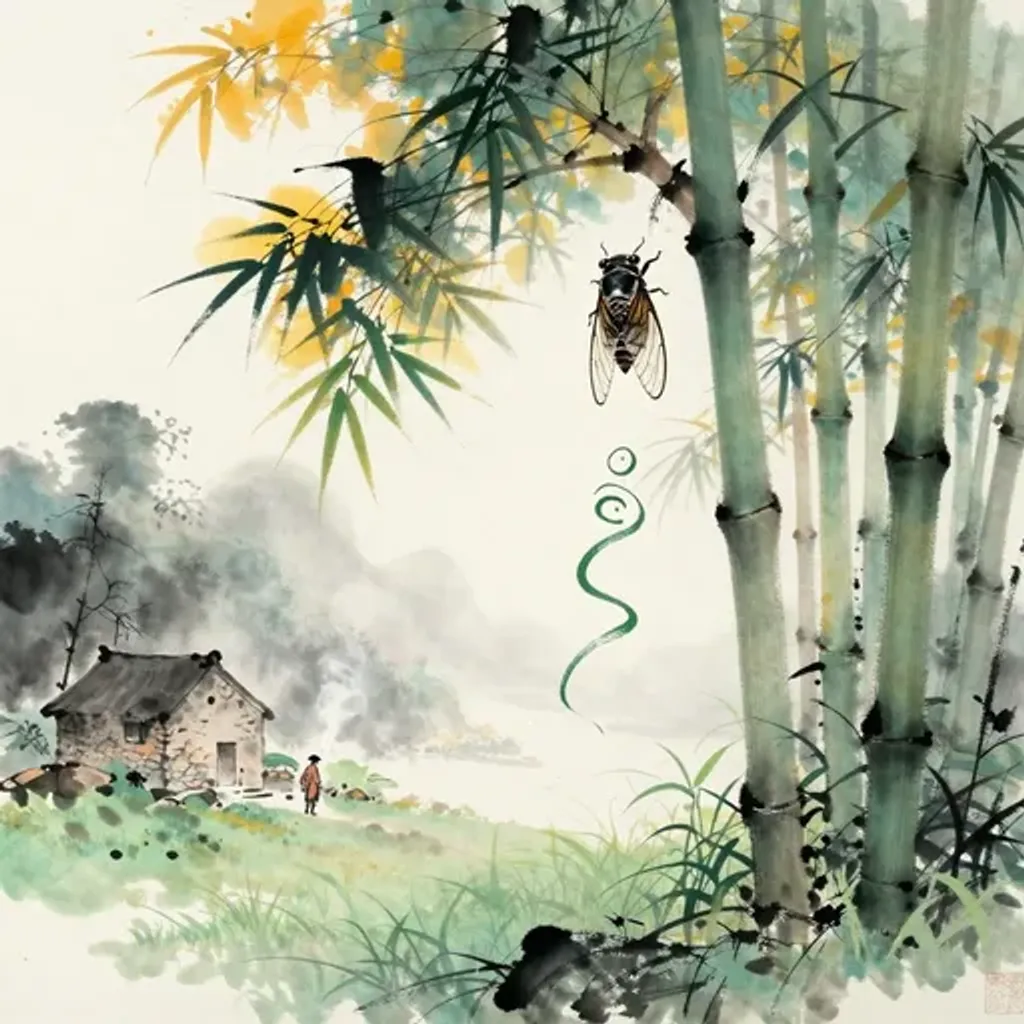
蜩飛墜木,不毀頭足。保我羽翼,復歸其室。
The cicada flies and falls from the tree, not injuring head or feet. Keeping safe my wings; I return again to my home.
— Jiao Yanshou, Yilin (Forest of Changes), 1st century BC
Commentary
Water upon earth cushions the fall. A cicada tumbles from its tree but lands without shattering head or feet. Its wings are preserved intact, and it returns safely to its dwelling. The cicada in classical poetry symbolizes purity and fragility — a creature of song that feeds on dew. Its survival here depends not on strength but on lightness and resilience. From Holding Together to Modesty, the transformation embodies the verse's logic: the mountain hidden within the earth does not assert itself, and precisely because of this humility, it remains unbroken. Bi's communal support softens the landing; Qian's modesty ensures that the fall itself does no lasting damage. The one who does not grasp at height survives the descent.
比 → 豫
Hexagram 8 → Hexagram 16: Enthusiasm
Changing lines: 4, 5
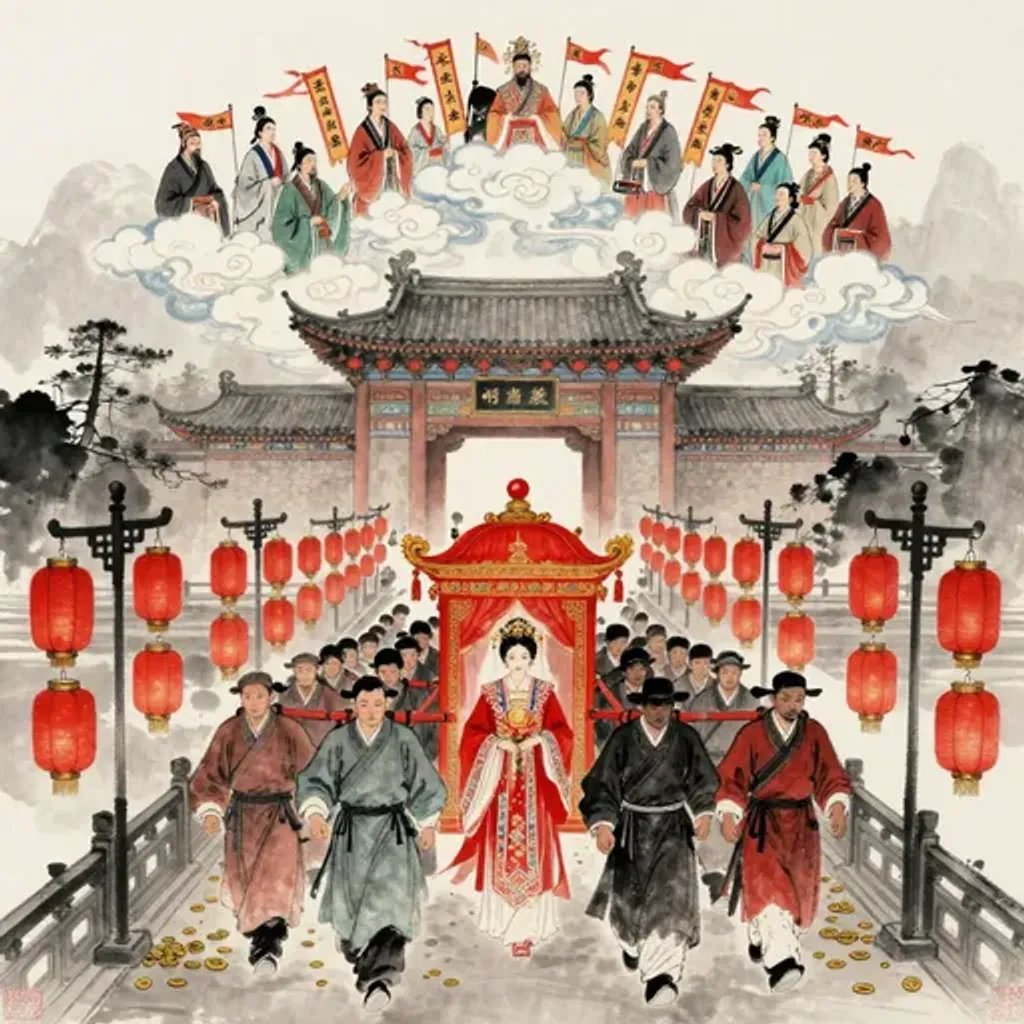
陳媯敬仲,兆興齊姜。乃適營丘,八世大昌。
Chen Gui Jingzhong; the omen foretold flourishing through Qi Jiang. He went to settle at Yingqiu; for eight generations, great prosperity.
— Jiao Yanshou, Yilin (Forest of Changes), 1st century BC
Commentary
Water upon earth carried Chen Jingzhong from his ruined homeland to a destiny he could not have foreseen. When civil strife drove him from the state of Chen around 672 BC, he fled to Qi and settled near Yingqiu. An oracle foretold that his descendants would supplant the ruling house of Jiang. Eight generations later, the Tian clan did exactly that, formally replacing the Jiang rulers of Qi in 386 BC. From Holding Together to Enthusiasm, the verse traces how an exile's alliance with a new state becomes a dynastic foundation. Yu's thunder erupting from the earth captures the moment a long-dormant lineage finally breaks through into sovereign power — the stored energy of eight generations released in a single transformation.
比 → 隨
Hexagram 8 → Hexagram 17: Following
Changing lines: 1, 4
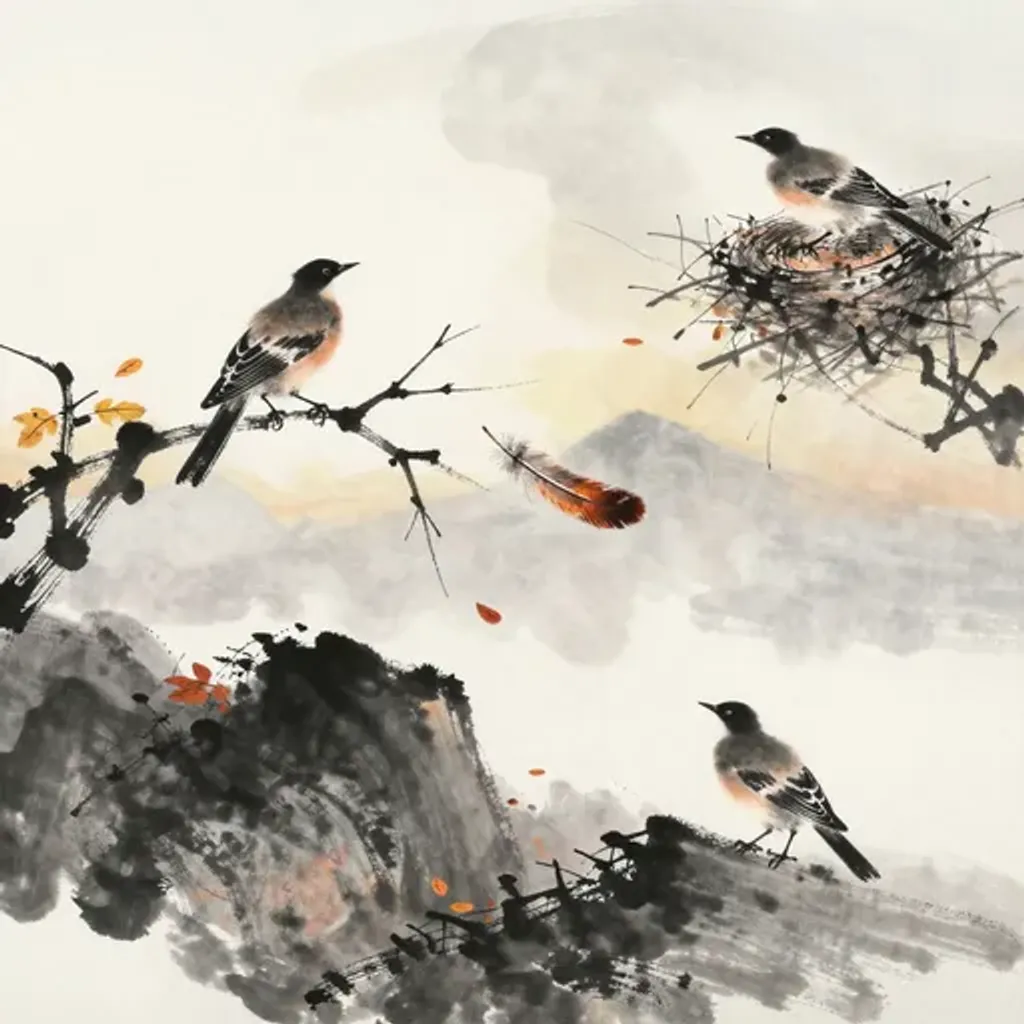
過時不歸,雌雄苦悲。徘徊外國,與母分離。
Past the time, he does not return; male and female cry in bitter grief. Wandering in a foreign land; parted from the mother.
— Jiao Yanshou, Yilin (Forest of Changes), 1st century BC
Commentary
Water upon earth should hold companions close, but here the season of return has passed. A pair of birds — male and female — cry in bitter sorrow, unable to rejoin. One wanders in a foreign land, separated from its mother. The verse is pure lament for missed timing: the moment for homecoming has expired, and the exile lingers beyond the border. From Holding Together to Following, the transformation adds poignancy: Sui's lake over thunder suggests joyful responsiveness, thunder resting at evening beneath tranquil waters. Yet the verse denies this rest — the wanderer cannot follow the natural rhythm home. Alliance fractured by distance and delay becomes grief that no amount of willing can mend.
比 → 蠱
Hexagram 8 → Hexagram 18: Work on the Decayed
Changing lines: 2, 3, 5, 6
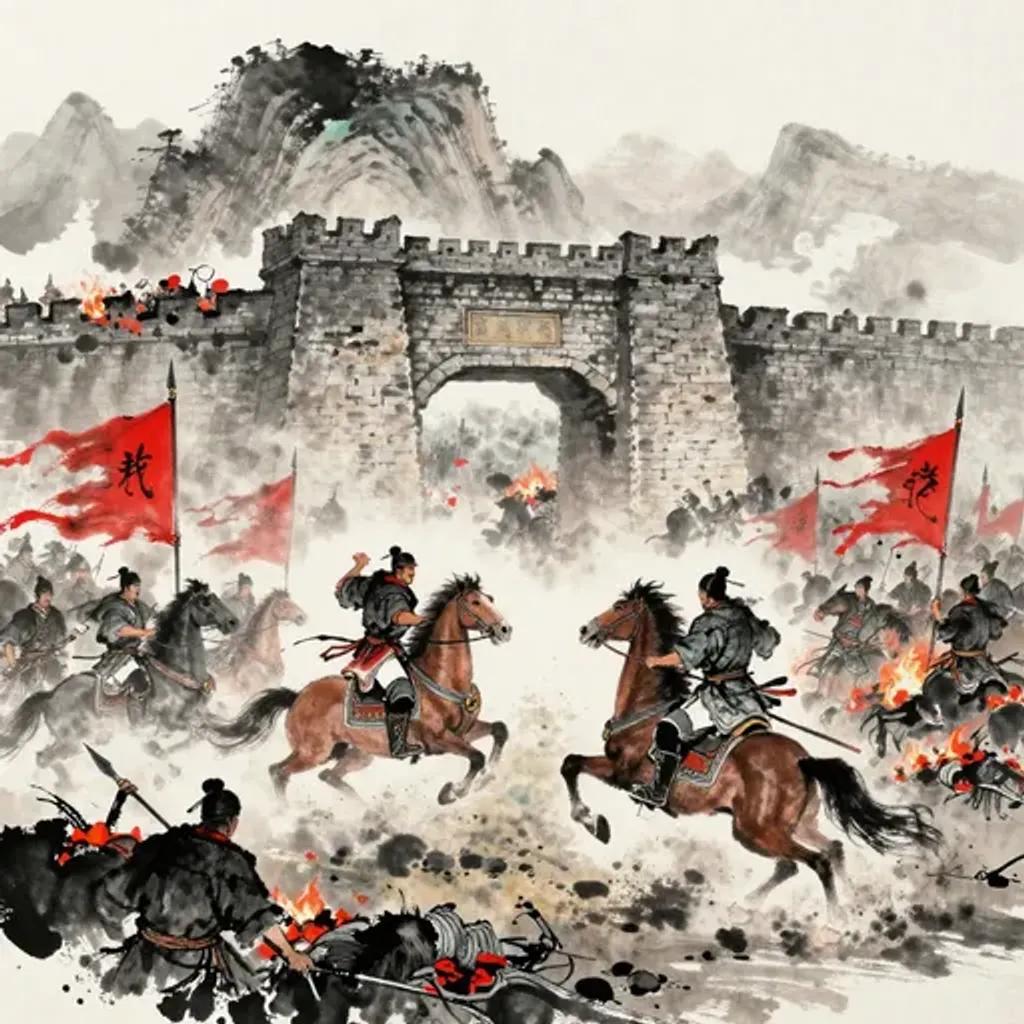
齊魯爭言,戰於龍門。搆怨結禍,三世不安。
Qi and Lu quarrel and dispute, battling at Dragon Gate. Building enmity and binding calamity; three generations without peace.
— Jiao Yanshou, Yilin (Forest of Changes), 1st century BC
Commentary
Water upon earth becomes contested ground when neighbors quarrel. Qi and Lu exchange heated words and clash at Dragon Gate. Enmity compounds into disaster, and three generations find no peace. Dragon Gate — the gorge carved by Yu the Great where fish leap to become dragons — here becomes a site of pointless bloodshed between allied states that should have cooperated. The disputes between Qi and Lu are well attested throughout the Spring and Autumn period. From Holding Together to Work on the Decayed, the verse traces how broken alliances breed systemic corruption. Gu's wind trapped beneath the mountain signals decay from within: grievances left unaddressed fester across generations, poisoning what could have been mutual prosperity.
比 → 臨
Hexagram 8 → Hexagram 19: Approach
Changing lines: 1, 2, 5
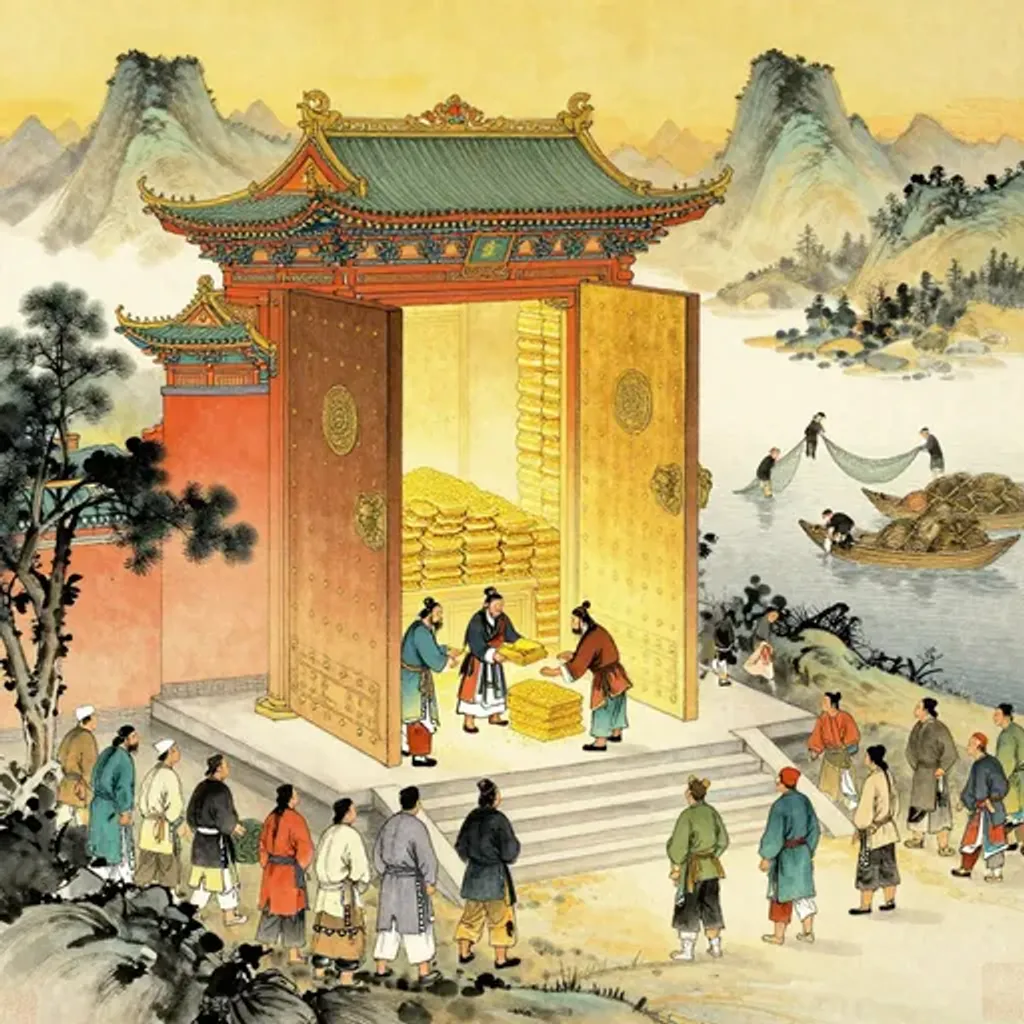
府藏之富,王以賑貸。捕魚河海,苟願多得。
The treasury's riches; the king uses them for relief and loans. Fishing the rivers and seas; striving to gain as much as possible.
— Jiao Yanshou, Yilin (Forest of Changes), 1st century BC
Commentary
Water upon earth fills the treasury, and a king distributes relief from his stores. The royal granaries overflow; the ruler uses this wealth to lend and rescue the people. Then the verse shifts to fishing in rivers and seas — the desire to gain ever more. From Holding Together to Approach, the transformation embodies sovereign generosity descending toward the people. Lin's earth above lake suggests authority drawing near to what lies below, overseeing with care. The verse pairs public redistribution with private ambition: the king opens his stores, the fisherman casts his net. Both are forms of gathering, but one serves the collective and the other serves appetite. Bi's alliance works best when abundance flows downward.
比 → 觀
Hexagram 8 → Hexagram 20: Contemplation
Changing lines: 6
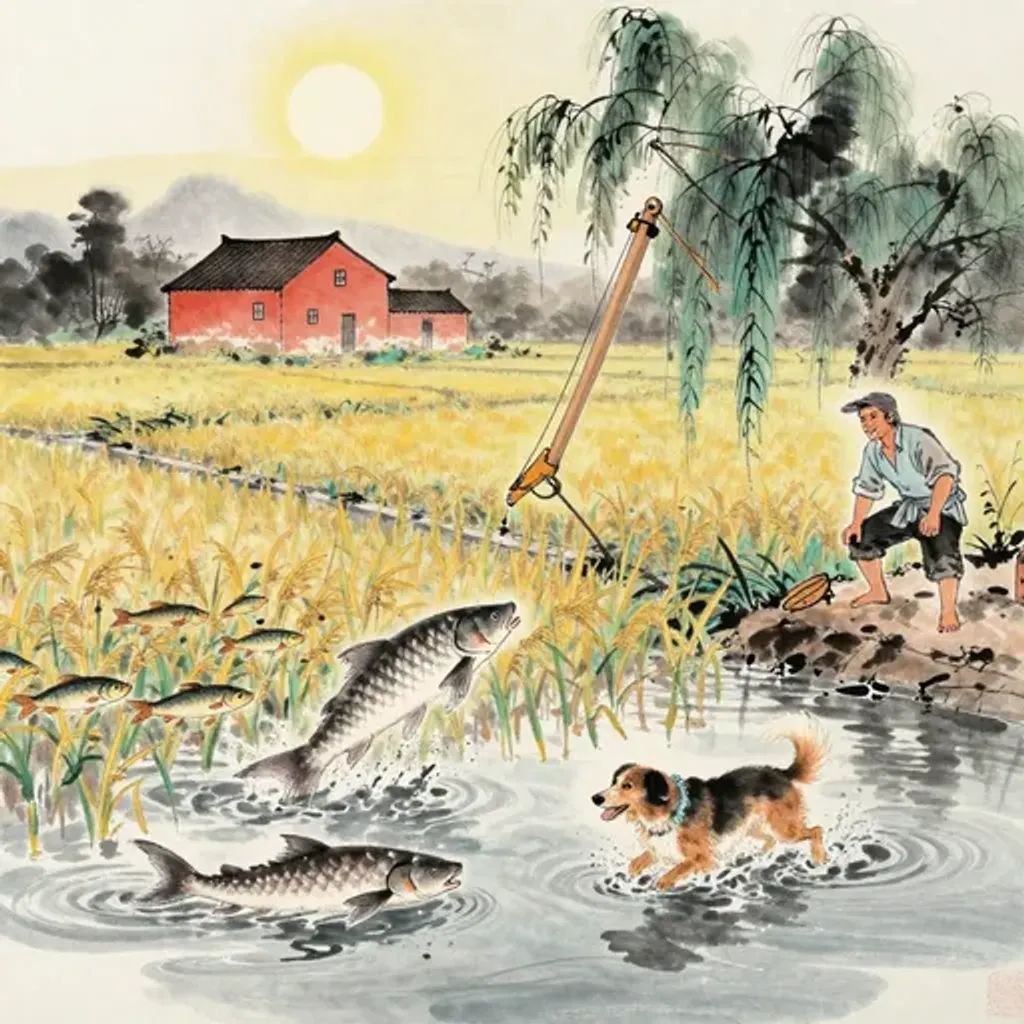
鳴鶴北飛,下就稻池。鱣鮪鰋鯉,眾多饒有,一狗獲兩,利得過倍。
The calling crane flies north, descending to the rice paddies. Sturgeon, catfish, and carp; abundant and plentiful. One dog catches two; profit doubles and redoubles.
— Jiao Yanshou, Yilin (Forest of Changes), 1st century BC
Commentary
Water upon earth teems with life, and a crane cries as it flies north to the rice paddies. The waters hold sturgeon, bream, catfish, and carp in lavish profusion. A single hound catches two quarries, and the profits double. The crane echoes the Shijing ode 'Heming' — a hidden talent whose voice carries far — but here it simply descends to abundance rather than calling from obscurity. From Holding Together to Contemplation, wind moves across the earth as the ruler surveys his domain. Guan's watching eye sees how alliance produces surplus: the gathering of Bi generates such plenty that even a modest effort yields outsized returns. The one who observes clearly knows where abundance naturally collects.
比 → 噬嗑
Hexagram 8 → Hexagram 21: Biting Through
Changing lines: 1, 4, 5, 6
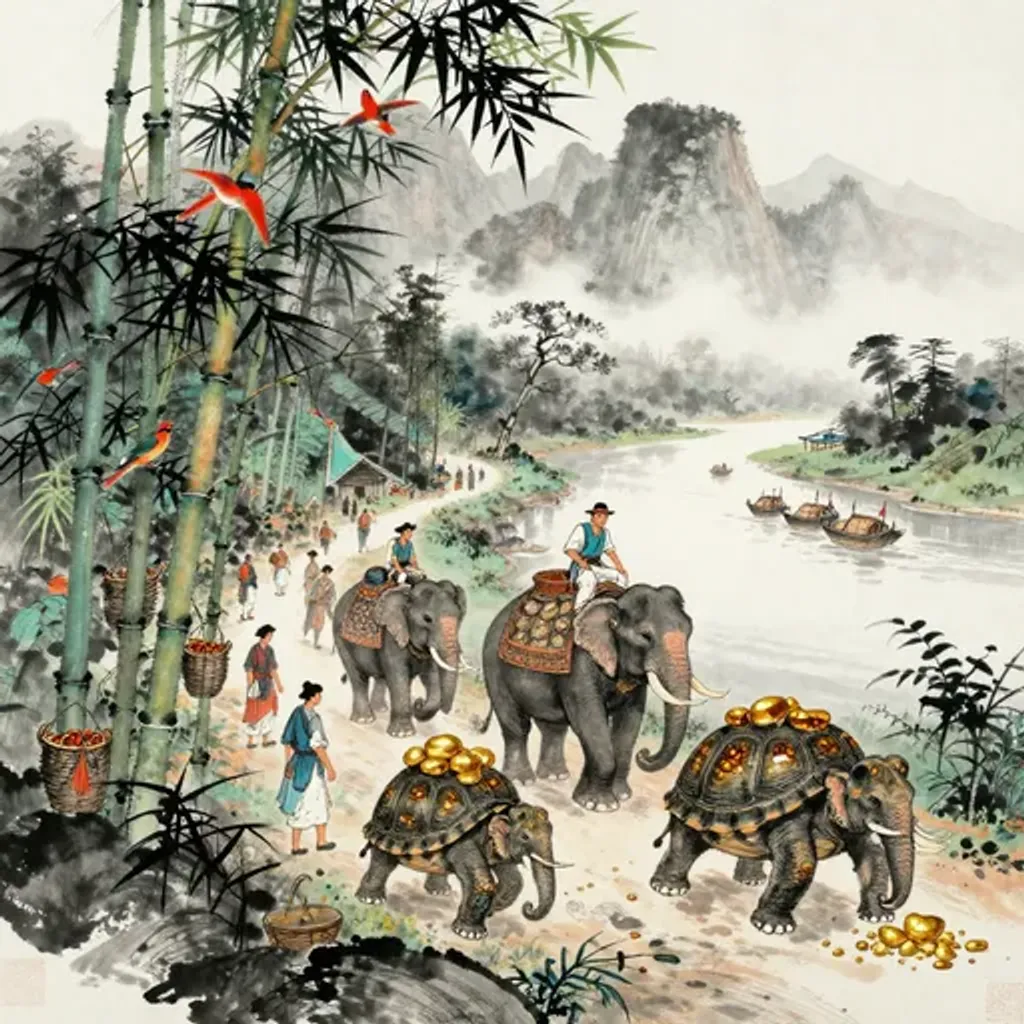
蒼梧鬱林,道易利通。元龜象齒,寶貝南金,為吾福功。
Cangwu and Yulin; the roads are easy and commerce flows. Great turtles and elephant tusks; cowries and southern gold -- they serve as our fortune's work.
— Jiao Yanshou, Yilin (Forest of Changes), 1st century BC
Commentary
Water upon earth opens southern trade routes. Cangwu and Yulin — the remote subtropical regions where Emperor Shun was buried — offer smooth and profitable roads. Great tortoise shells, elephant tusks, cowrie shells, and southern gold become instruments of fortune. These were the luxury goods of the Han-dynasty southern frontier: precious commodities drawn from the lands beyond the Lingnan ranges. From Holding Together to Biting Through, alliance enables commerce by clearing obstacles. Shike's thunder and fire — lightning that illuminates and bites through obstruction — mirrors the verse's confident tone: the road is open, the trade goods flow, and whatever blocks the path is decisively removed. Alliance here is mercantile, and it prospers through decisive action.
比 → 賁
Hexagram 8 → Hexagram 22: Grace
Changing lines: 1, 3, 5, 6
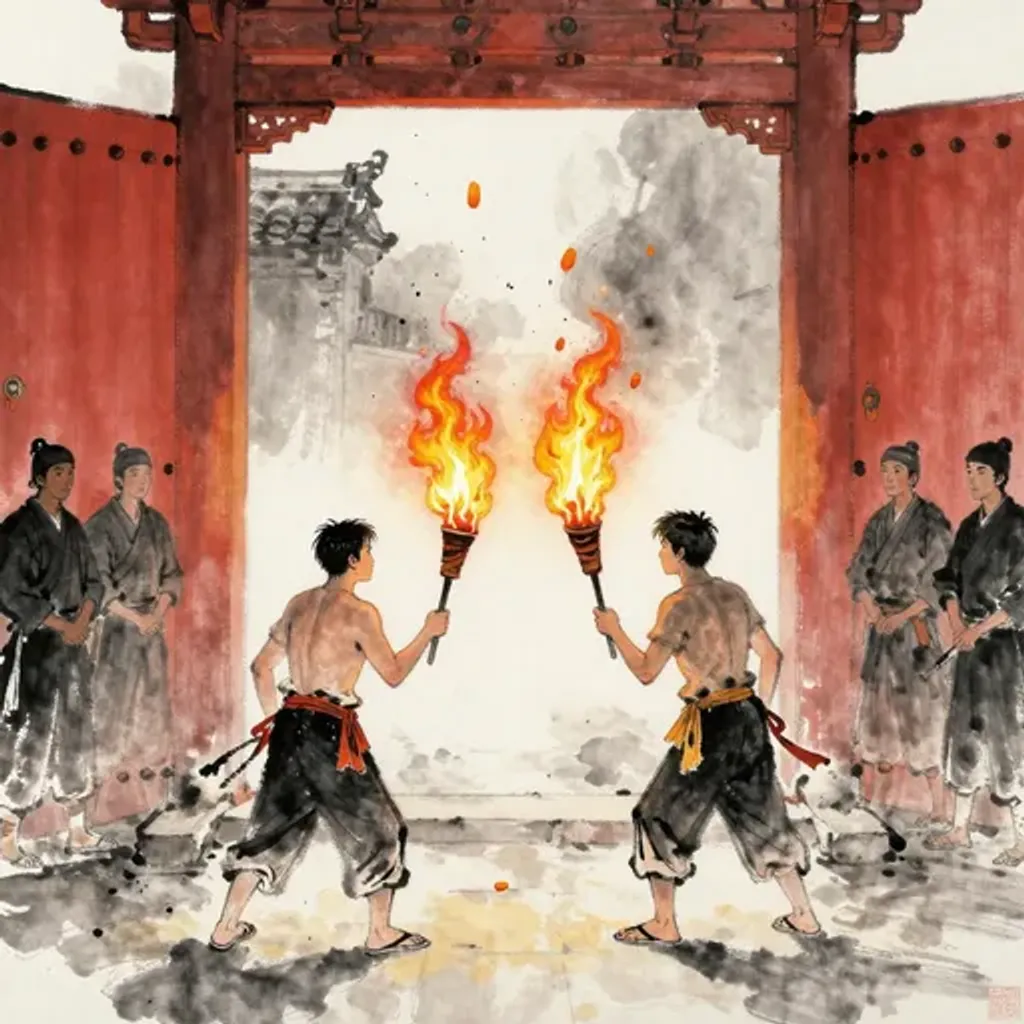
兩火爭明,雖鬭不傷。分離且忍,全我弟兄。
Two fires vie for brightness; though they compete, neither is harmed. Parting yet enduring; keeping my brothers whole.
— Jiao Yanshou, Yilin (Forest of Changes), 1st century BC
Commentary
Water upon earth mediates between competing forces. Two fires blaze and vie for brightness, yet despite their contest they do no harm. The verse counsels separation with forbearance: endure the parting, and both brothers survive whole. Two fires in one space must consume each other — unless they agree to burn in separate hearths. This is not defeat but wisdom: yielding space preserves the bond. From Holding Together to Grace, fire at the mountain's base illuminates without consuming the peak. Bi's image of grace through restraint transforms rivalry into complementary radiance. The brothers who separate voluntarily maintain a more durable alliance than those who cling together and burn.
比 → 剝
Hexagram 8 → Hexagram 23: Splitting Apart
Changing lines: 5, 6
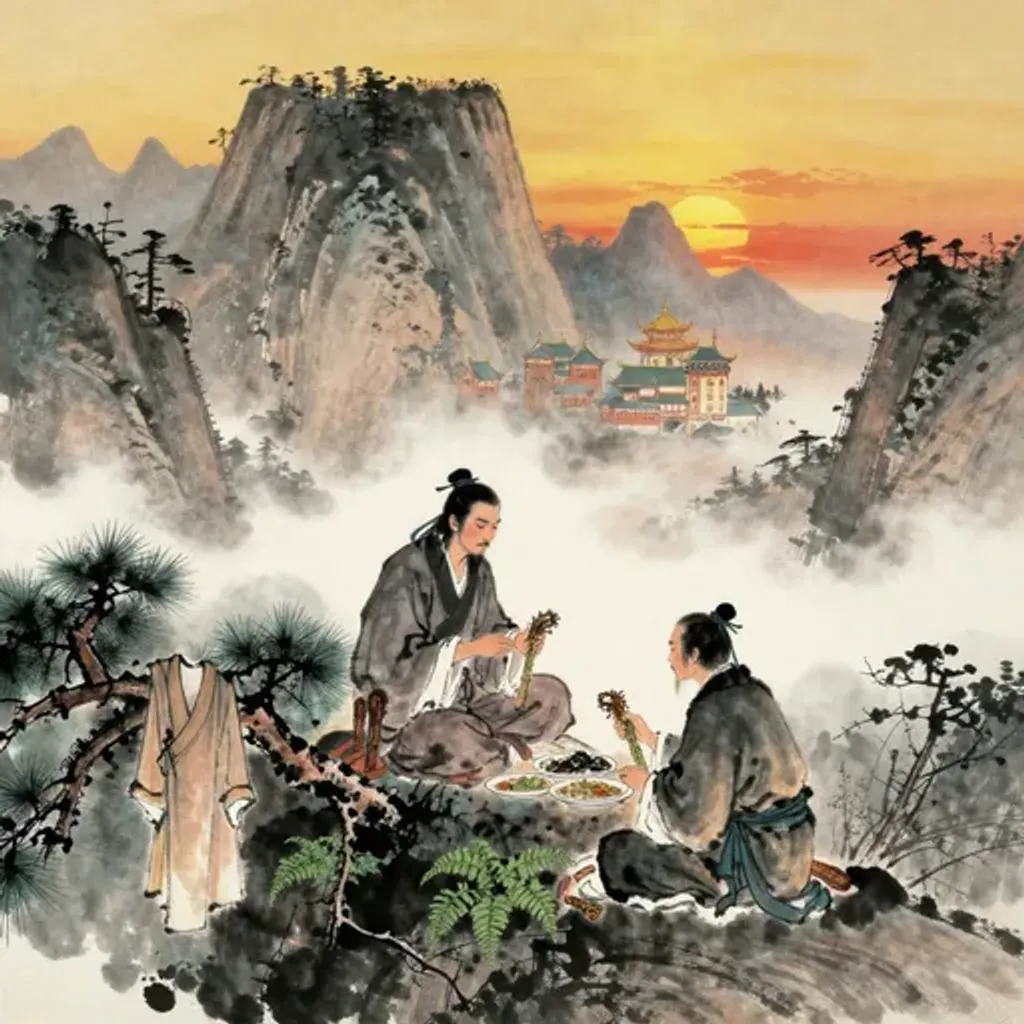
伯夷叔齊,貞廉之師。以德防患,憂禍不存。
Bo Yi and Shu Qi; paragons of integrity and purity. With virtue they guarded against calamity; worry and misfortune did not endure.
— Jiao Yanshou, Yilin (Forest of Changes), 1st century BC
Commentary
Water upon earth sustains integrity even as structures crumble. Boyi and Shuqi — the princes who refused to eat Zhou grain after the conquest of Shang — stand as paragons of incorruptible loyalty. They chose starvation on Mount Shouyang over moral compromise. The verse names them 'teachers of chaste integrity' and declares that virtue itself wards off disaster: 'using virtue to guard against calamity, worry and misfortune have no foothold.' From Holding Together to Splitting Apart, the transformation is paradoxical: Bo's mountain eroding upon earth suggests disintegration, yet the verse insists that principled men survive the collapse. When the edifice crumbles, those anchored in moral bedrock remain standing. Alliance with virtue outlasts alliance with power.
比 → 復
Hexagram 8 → Hexagram 24: Return
Changing lines: 1, 5
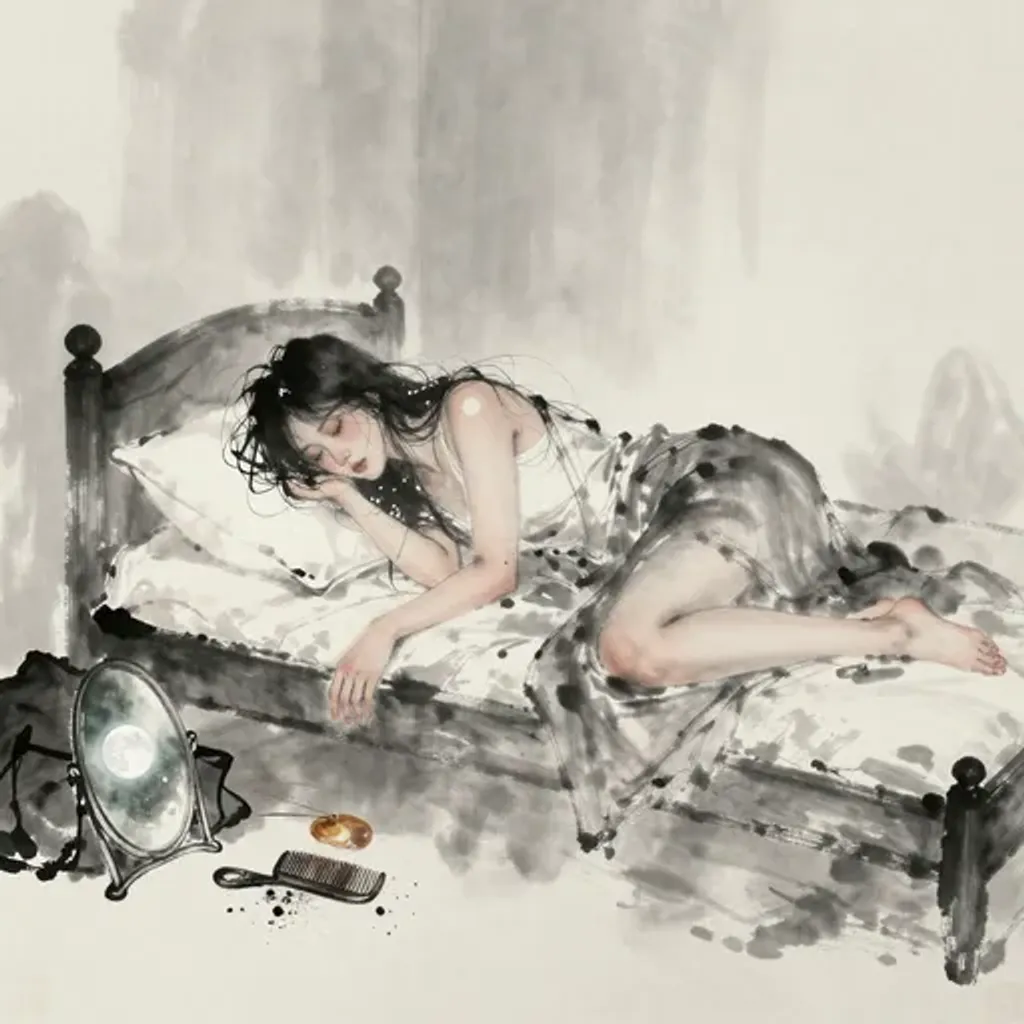
季去我東,髮櫛如蓬。展轉空床,內懷憂傷。
My love has gone east; hair unkempt like wild grass. Tossing on an empty bed; filled within by sorrow.
— Jiao Yanshou, Yilin (Forest of Changes), 1st century BC
Commentary
Water upon earth should keep companions near, but here the beloved has departed eastward. Hair unkempt as tangled wormwood, the abandoned one tosses on an empty bed, heart full of grief. The 'youngest' (季) who has gone east may be a husband or a youngest brother — the word carries both familial and affectionate overtones. The imagery of disheveled hair and sleepless nights echoes the Shijing tradition of women's lament poetry. From Holding Together to Return, thunder stirs beneath the earth in midwinter's solstice, promising that what has departed will circle back. The verse's anguish is real, but Fu's cosmic pattern insists: separation is not permanent. The one who has gone east will return.
比 → 无妄
Hexagram 8 → Hexagram 25: Innocence
Changing lines: 1, 4, 6
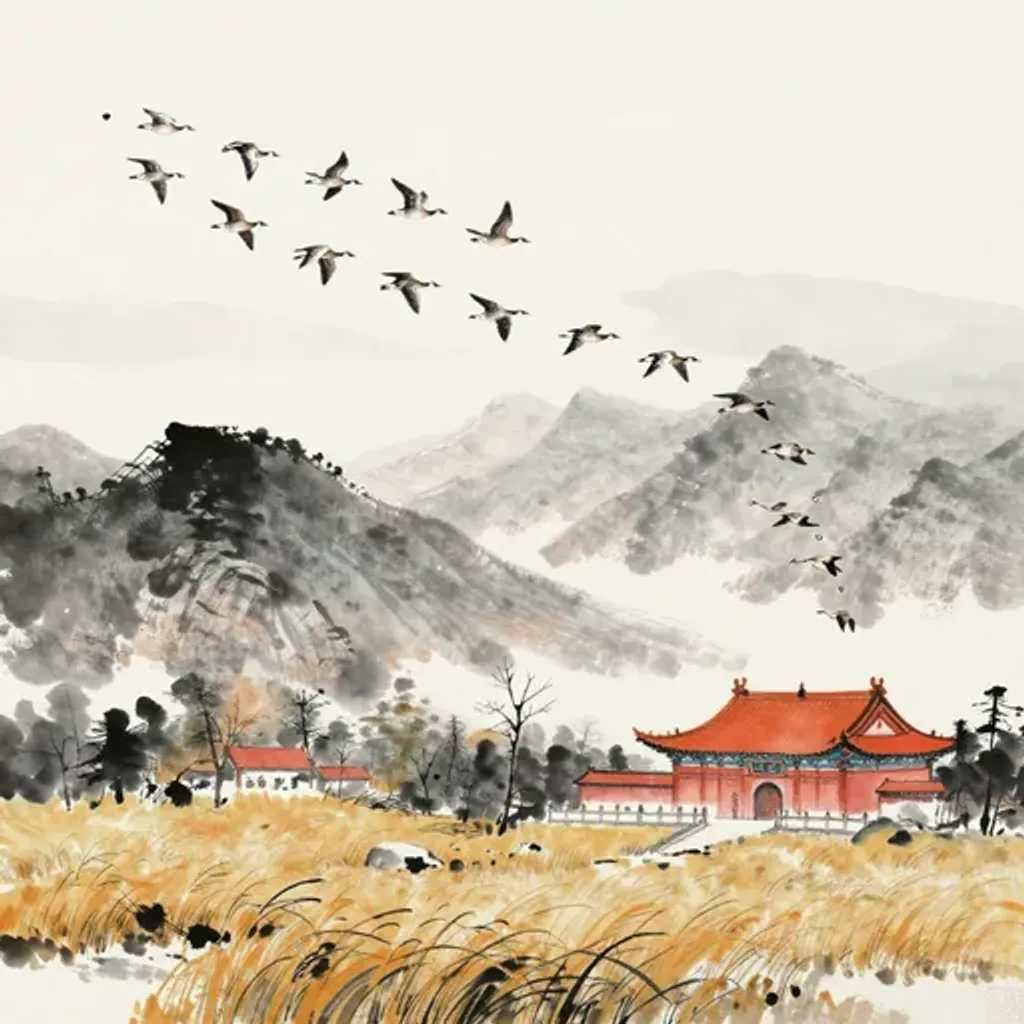
百足俱行,相輔為強。三聖翼事,王室寵光。
Wild geese fly together in formation, arranged in the character 人. The north wind does not scatter them; together they return to the warm valley.
— Jiao Yanshou, Yilin (Forest of Changes), 1st century BC
Commentary
Water upon earth unifies the many-footed into common cause. The original verse reads: 'The hundred-footed creature moves as one, each leg reinforcing the others. Three sages lend their wings to the enterprise, and the royal house shines with favor.' The centipede, despite its countless limbs, advances without stumbling because every part supports the whole — a vivid image of coordinated alliance. The three sages likely allude to the Duke of Zhou, Taigong, and the Duke of Shao, who jointly sustained the young Zhou dynasty. From Holding Together to Innocence, heaven's thunder moves without contrivance: the alliance of sages produces an order so natural it appears spontaneous, free from calculation or guile.
比 → 大畜
Hexagram 8 → Hexagram 26: Great Taming
Changing lines: 1, 2, 3, 5, 6
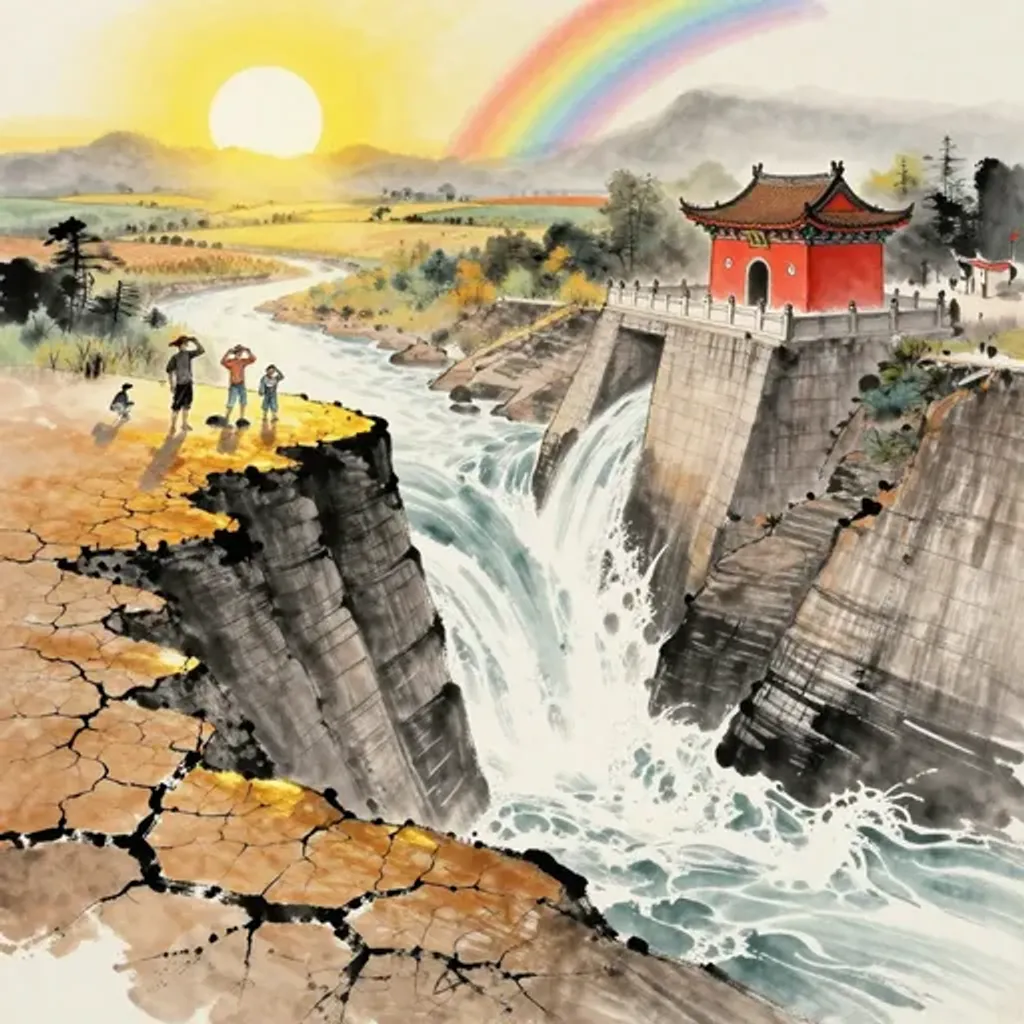
壅遏隄防,水不得行。火盛陽光,陰蜺伏藏,退還其鄉。
Dikes and dams block and bar; water cannot flow. The fire of blazing sunlight; yin and rainbow hide away, retreating to their source.
— Jiao Yanshou, Yilin (Forest of Changes), 1st century BC
Commentary
Water upon earth encounters a dam. Dikes and embankments block the flow; water cannot advance. Then fire blazes with solar brilliance, and the yin rainbow retreats into hiding, driven back to its home. The verse plays with elemental control: first water is dammed, then dark vapors are dispelled by yang light. The yin rainbow (陰蜺) in Han-dynasty cosmology was an ill omen associated with female usurpation or malign yin energy. From Holding Together to Great Taming, heaven stored within the mountain restrains and accumulates. The alliance's energy is not wasted in dispersal but banked behind walls of discipline — dark forces subdued, bright power concentrated, awaiting the proper moment.
比 → 頤
Hexagram 8 → Hexagram 27: Nourishment
Changing lines: 1, 5, 6
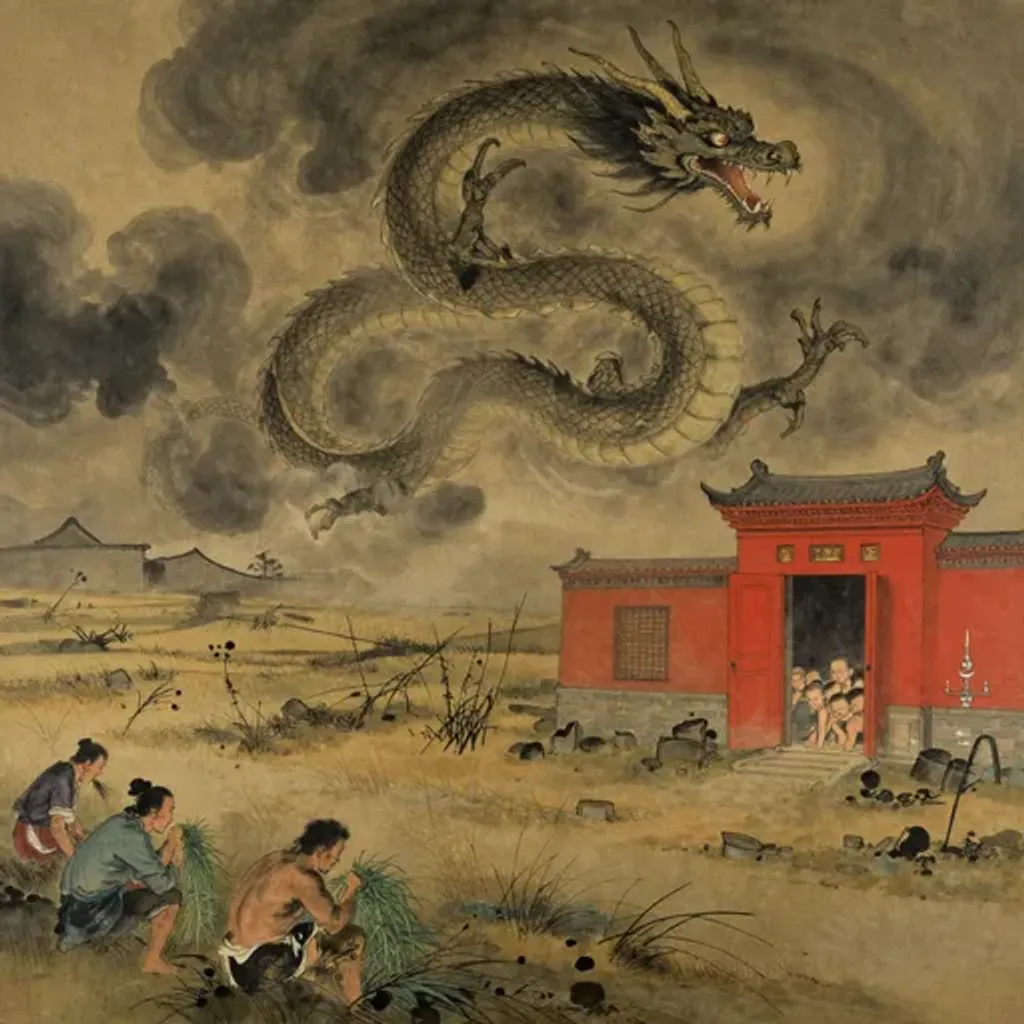
滕蛇乘龍,年歲飢凶,民食草蓬。
The serpent coils around the dragon; the year brings famine and disaster. The people eat grass and weeds.
— Jiao Yanshou, Yilin (Forest of Changes), 1st century BC
Commentary
Water upon earth turns hostile when a serpent usurps the dragon's authority. The teng-serpent rides the dragon — a lesser creature commandeering a greater one's power — and the result is famine. The year turns to disaster; the people are reduced to eating wild wormwood. The teng-serpent (滕蛇) in Han divination lore represents deception and illegitimate authority. When it 'rides' the dragon, the natural hierarchy inverts, and the earth's nourishment fails. From Holding Together to Nourishment, the irony is stark: Yi's mountain over thunder governs what nourishes and what starves, cautioning to 'be careful in speech and moderate in food.' The corrupted alliance of Bi produces a perverse Yi — mouths that cannot be fed because the wrong power controls the granary.
比 → 大過
Hexagram 8 → Hexagram 28: Great Exceeding
Changing lines: 2, 3, 4
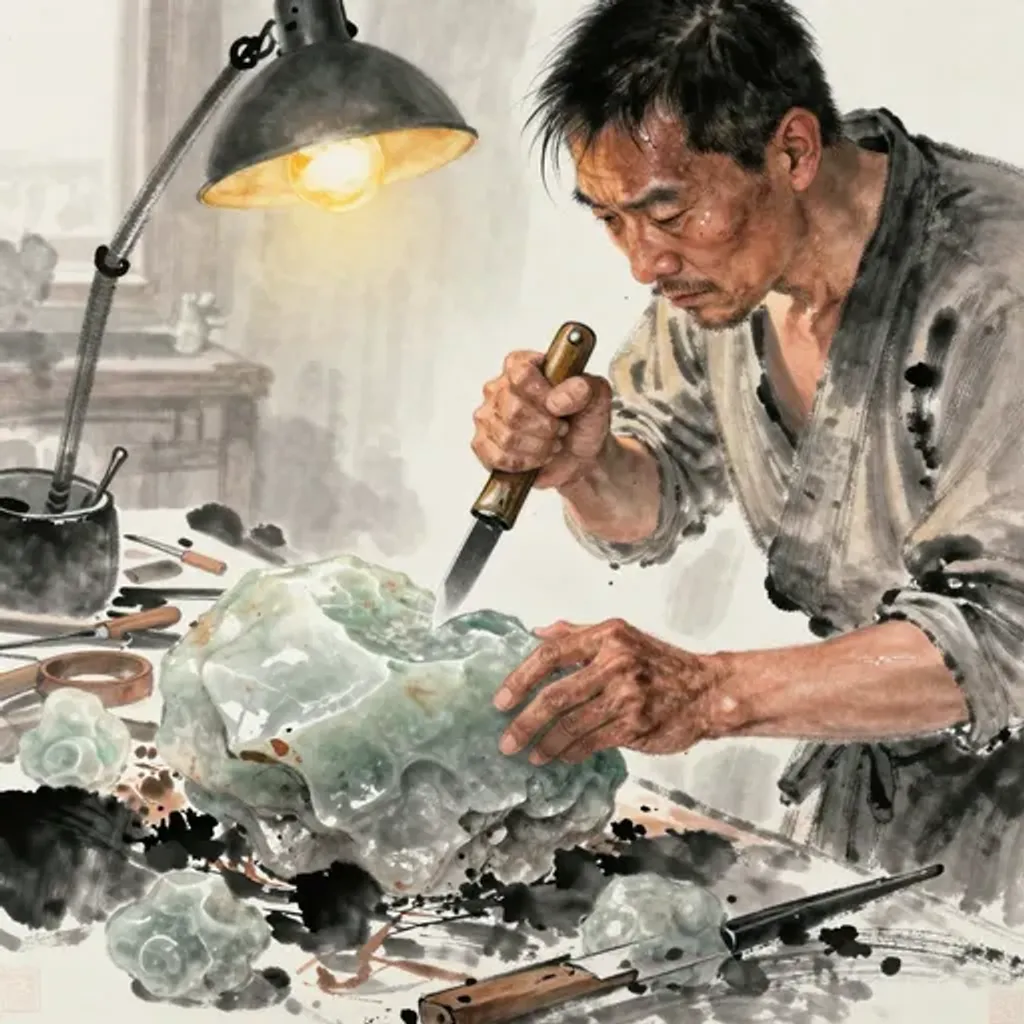
鉛刀攻玉,堅不可得。盡我筋力,胝蠒為候。
A lead knife attacks jade; the hardness cannot be overcome. Exhausting all my sinew and strength; calluses and blisters bear witness.
— Jiao Yanshou, Yilin (Forest of Changes), 1st century BC
Commentary
Water upon earth provides the base, but some tasks exceed the tools at hand. A lead knife attempts to carve jade: the stone is too hard, the blade too soft. Every sinew is exhausted, hands blistered and calloused, yet still one waits for the breakthrough that will not come. Lead against jade is a proverbial mismatch in classical literature — humble talent set against an impossible standard. From Holding Together to Great Exceeding, the lake submerging the trees signals a burden that overwhelms the structure beneath. The alliance of Bi offers support, but Daguo warns that some loads cannot be borne regardless of the community's strength. The verse counsels not giving up but recognizing the limits of one's instruments.
比 → 坎
Hexagram 8 → Hexagram 29: The Abysmal Water
Changing lines: 2
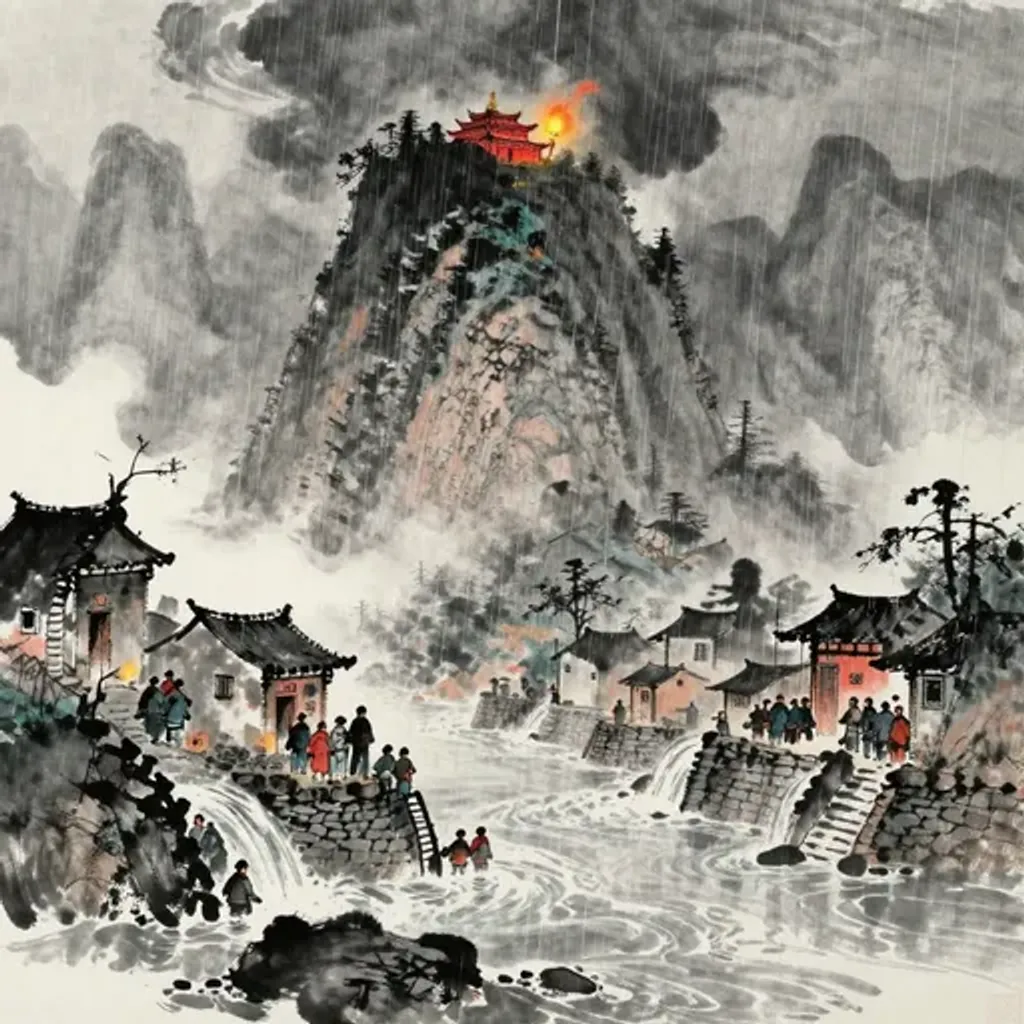
恆山浦壽,高邑所在。陰氣下淋,洪水不處,牢人開戶。
Mount Heng and Pushou; where the high city stands. Yin qi drips below; floodwaters do not stay -- the prisoner's door is opened.
— Jiao Yanshou, Yilin (Forest of Changes), 1st century BC
Commentary
Water upon earth turns to water upon water — doubled peril. Hengshan's longevity-blessed heights and the elevated town of Gaoyi seem secure, yet yin vapors seep downward and floodwaters refuse to stay in their channels. The imprisoned are released as the waters rise, breaching their cells. Hengshan, the Northern Sacred Mountain, symbolizes permanence, yet even permanence cannot withstand nature's deluge. From Holding Together to The Abysmal, Bi's orderly water-upon-earth becomes Kan's relentless water-upon-water: danger layered upon danger. The verse warns that no fortress of alliance, however ancient or well-positioned, can resist when the element that once sustained it — water — turns uncontrollable and threatens from every direction.
比 → 離
Hexagram 8 → Hexagram 30: The Clinging Fire
Changing lines: 1, 3, 4, 5, 6
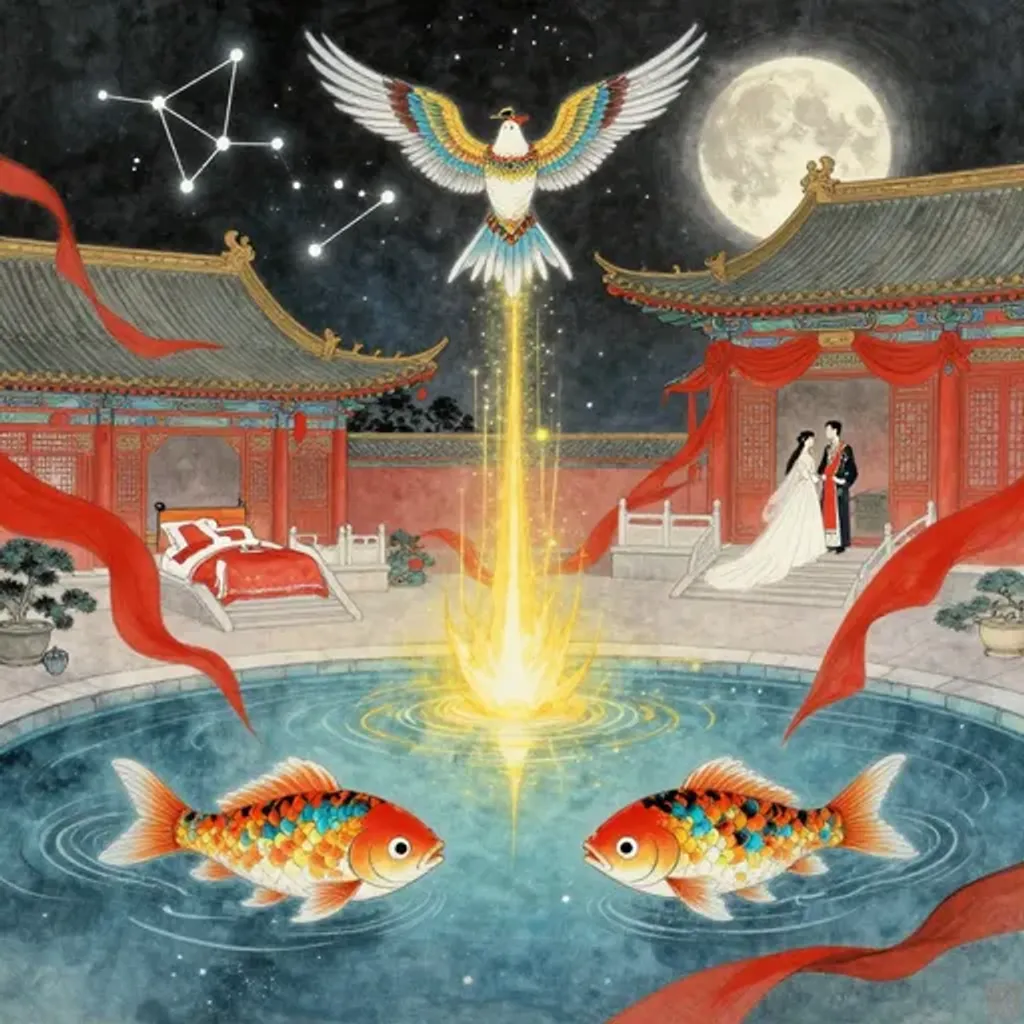
比目四翼,來安我國。福善上堂,與我同床。
The paired-eye fish with four wings, come to bring peace to our land. Fortune and goodness ascend the hall; sharing my bed.
— Jiao Yanshou, Yilin (Forest of Changes), 1st century BC
Commentary
Water upon earth brings the paired-eye fish and shared-wing birds to settle in the land, bearing good fortune. These mythological creatures — the one-eyed fish that swim only in pairs, the one-winged birds that fly only together — embody perfect interdependence. Blessings ascend to the hall and share the bed: intimacy, trust, and mutual completion. From Holding Together to The Clinging, the transformation illuminates how partnership becomes radiance. Li's doubled fire — 'the great person continues the light and illuminates the four directions' — mirrors the paired creatures whose halves make a whole. The alliance of Bi, when grounded in genuine complementarity, kindles into the steady, sustaining brightness of Li.
比 → 咸
Hexagram 8 → Hexagram 31: Influence
Changing lines: 3, 4
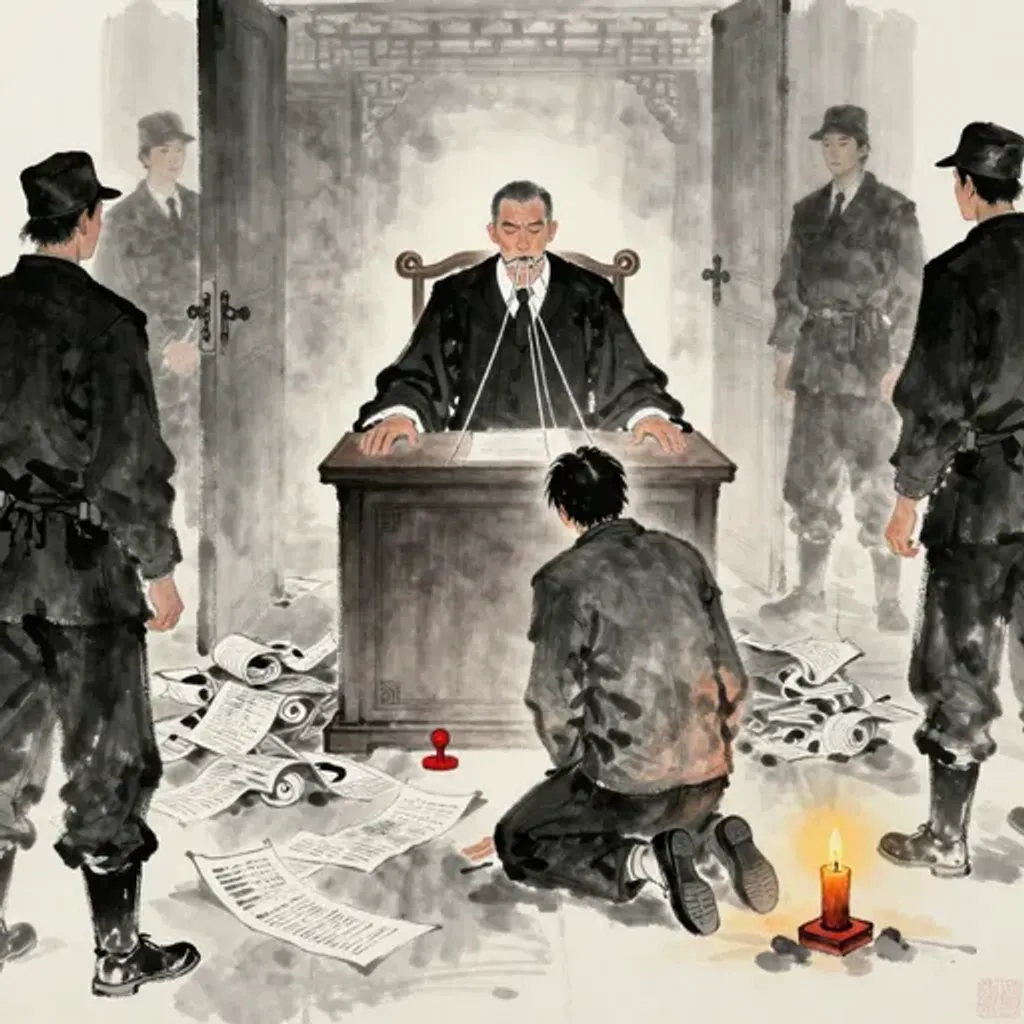
杜口結舌,心中怫鬱。去菑患生,莫所告冤。
Mouth shut, tongue tied; the heart seethes with frustration. Fleeing disaster, calamity arises; with nowhere to plead one's grievance.
— Jiao Yanshou, Yilin (Forest of Changes), 1st century BC
Commentary
Water upon earth should facilitate communication, but here mouths are sealed and tongues knotted. The heart churns with suppressed anguish. Calamity departs only for new troubles to sprout, and there is no one to whom the wronged can appeal. This is the silenced member of an alliance — bound by loyalty or fear, unable to speak the truth that might save the group. From Holding Together to Influence, the irony deepens: Xian's lake upon mountain represents mutual resonance, the open receptivity that allows feeling to flow between hearts. Yet the verse depicts the exact opposite — a closed mouth, a choked spirit. The alliance has become a prison of unexpressed grievance, where influence cannot circulate.
比 → 恆
Hexagram 8 → Hexagram 32: Duration
Changing lines: 2, 3, 4, 5
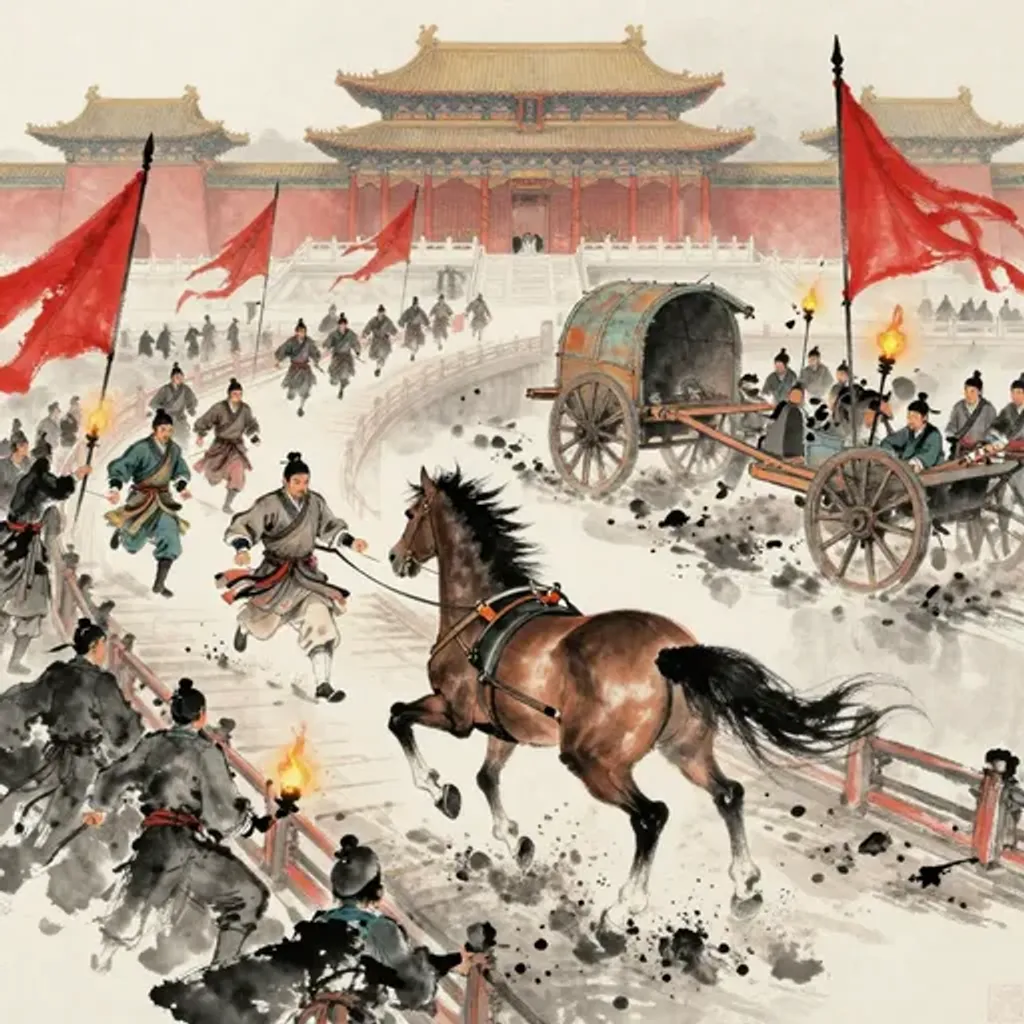
牽尾不前,逆理失臣。忠莫往來,惠朔以奔。
Pulling the tail, not advancing; contrary to reason, losing ministers. The loyal cannot come and go; Hui Shuo flees in haste.
— Jiao Yanshou, Yilin (Forest of Changes), 1st century BC
Commentary
Water upon earth loses its forward momentum. Something pulls at the tail, preventing advance; principles are inverted and ministers lost. Loyalty can no longer come and go freely, and the worthy adviser Huishuo is forced to flee. The verse may allude to the flight of loyal officials when a state's governance collapses — a pattern repeated throughout the Spring and Autumn period. The tail-pulling image recalls the 'tail too large to wag' motif of structural imbalance. From Holding Together to Duration, thunder over wind should establish constancy, but the verse reveals a perverse duration: stagnation made permanent. The alliance endures, but what endures is the dysfunction — loyalty expelled, disorder entrenched.
比 → 遯
Hexagram 8 → Hexagram 33: Retreat
Changing lines: 3, 4, 6
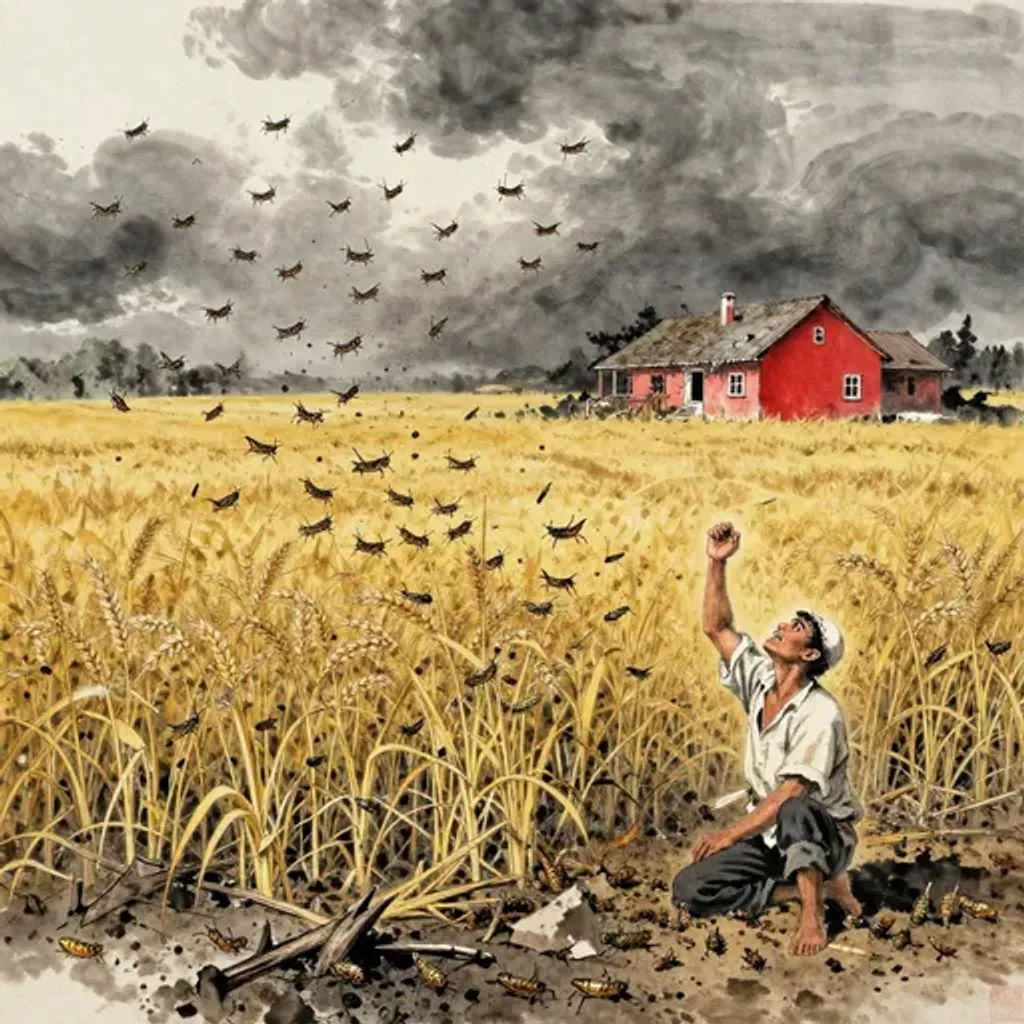
早霜晚雪,傷害禾麥。損功棄力,飢無所食。
Locust clouds blot out the sun; every ear of grain is stripped bare. The old farmer kneels in the mud, crying out to heaven.
— Jiao Yanshou, Yilin (Forest of Changes), 1st century BC
Commentary
Water upon earth should sustain the harvest, but the original verse tells of early frost and late snow destroying the grain and wheat. Effort is wasted, strength abandoned; there is nothing to eat. Nature's timing goes wrong — frost falls before its season, snow arrives too late — and the farmer's labor yields nothing. This is agricultural ruin not through laziness but through cosmic misalignment: the seasons themselves betray the compact between heaven and earth. From Holding Together to Retreat, heaven above the mountain pulls away. Gen's stillness offers no warmth, and Qian's heaven withdraws beyond reach. The alliance between farmer and soil dissolves when heaven refuses to cooperate — retreat is the only honest response.
比 → 大壯
Hexagram 8 → Hexagram 34: Great Power
Changing lines: 1, 2, 3, 4, 5
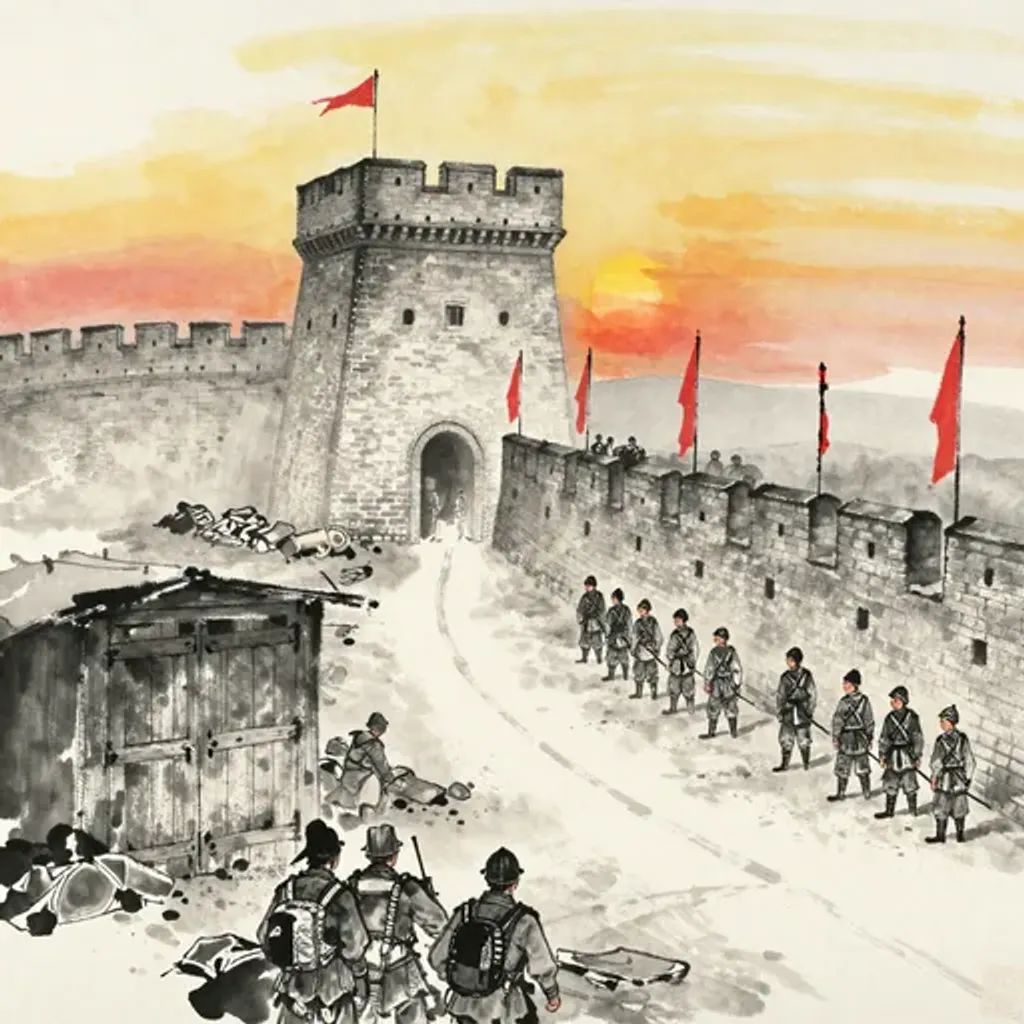
適戍失期,患生無聊。懼以發憂,發藏閉塞,邦國騷愁。
Missing the garrison deadline, trouble rises without recourse. Fear gives birth to worry; stores sealed and blocked -- the state is filled with anxious grief.
— Jiao Yanshou, Yilin (Forest of Changes), 1st century BC
Commentary
Water upon earth organizes conscription, but here the garrison misses its deployment date. Anxiety breeds despair; fear gives rise to sorrow. Granaries are sealed shut, and the entire state sinks into gloom. Missing a military deadline was a capital offense in ancient China — the Shiji records that the Dazexiang uprising of Chen Sheng and Wu Guang began precisely because conscripts missed their reporting date. The verse captures institutional paralysis: the system designed to protect the state instead terrorizes it. From Holding Together to Great Power, thunder above heaven should unleash decisive force. Yet the verse shows that power, when mismanaged, generates not strength but collective dread.
比 → 晉
Hexagram 8 → Hexagram 35: Progress
Changing lines: 4, 5, 6
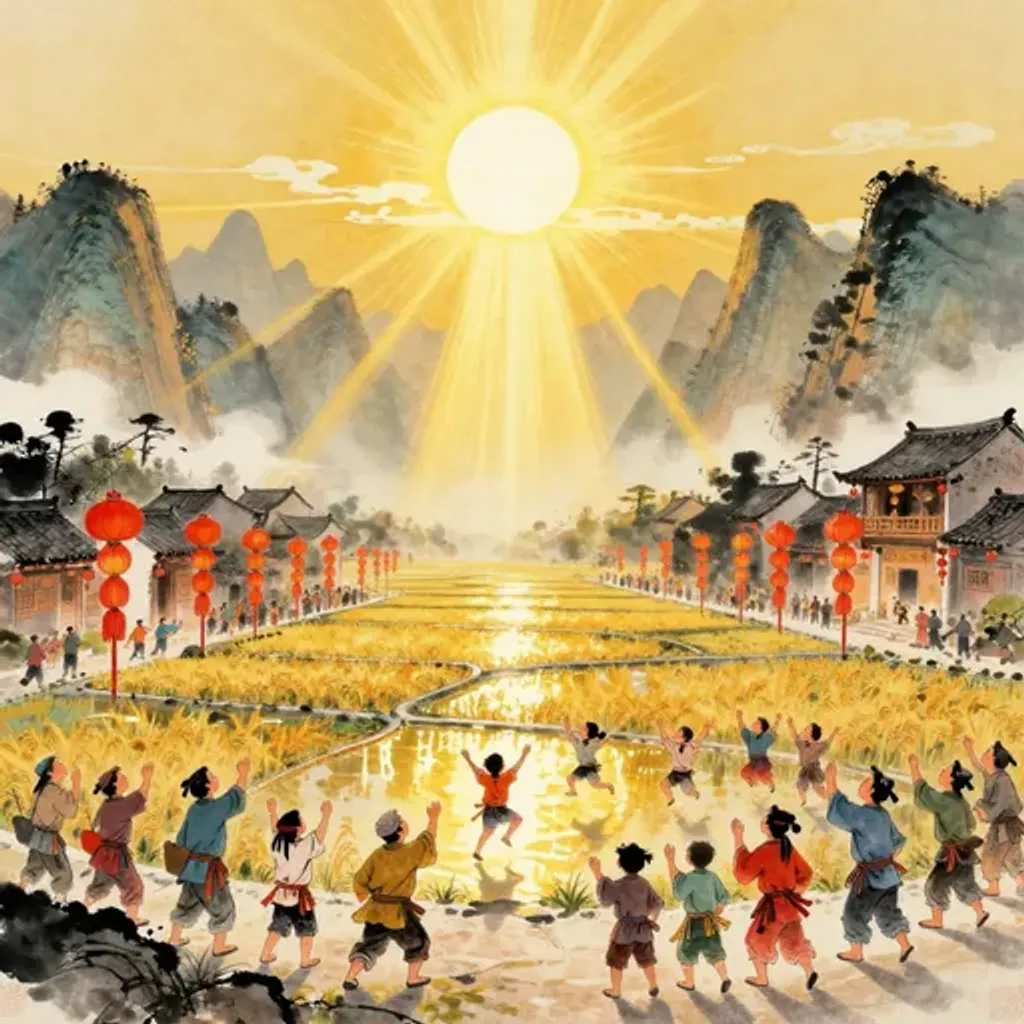
昊天白日,照臨我國。萬民康樂,咸賴嘉福。
Vast heaven and white sun, shining down upon our land. The myriad people are healthy and joyful; all blessed with good fortune.
— Jiao Yanshou, Yilin (Forest of Changes), 1st century BC
Commentary
Water upon earth reflects the sky, and here the great heaven's white sun shines down upon the nation. All the people are healthy and joyful, every household relying on abundant blessings. The verse is pure benediction — no conflict, no warning, simply the image of sovereign light illuminating a unified land. From Holding Together to Progress, the transformation is seamless: Bi's communal solidarity becomes Jin's fire rising above the earth at dawn. The image text of Jin reads 'brightness emerges above the earth' — precisely what the verse describes. Alliance, when perfected, does not merely protect; it generates the conditions for a civilization-wide dawn, where every corner of the realm shares in the light.
比 → 明夷
Hexagram 8 → Hexagram 36: Darkening of the Light
Changing lines: 1, 3, 5
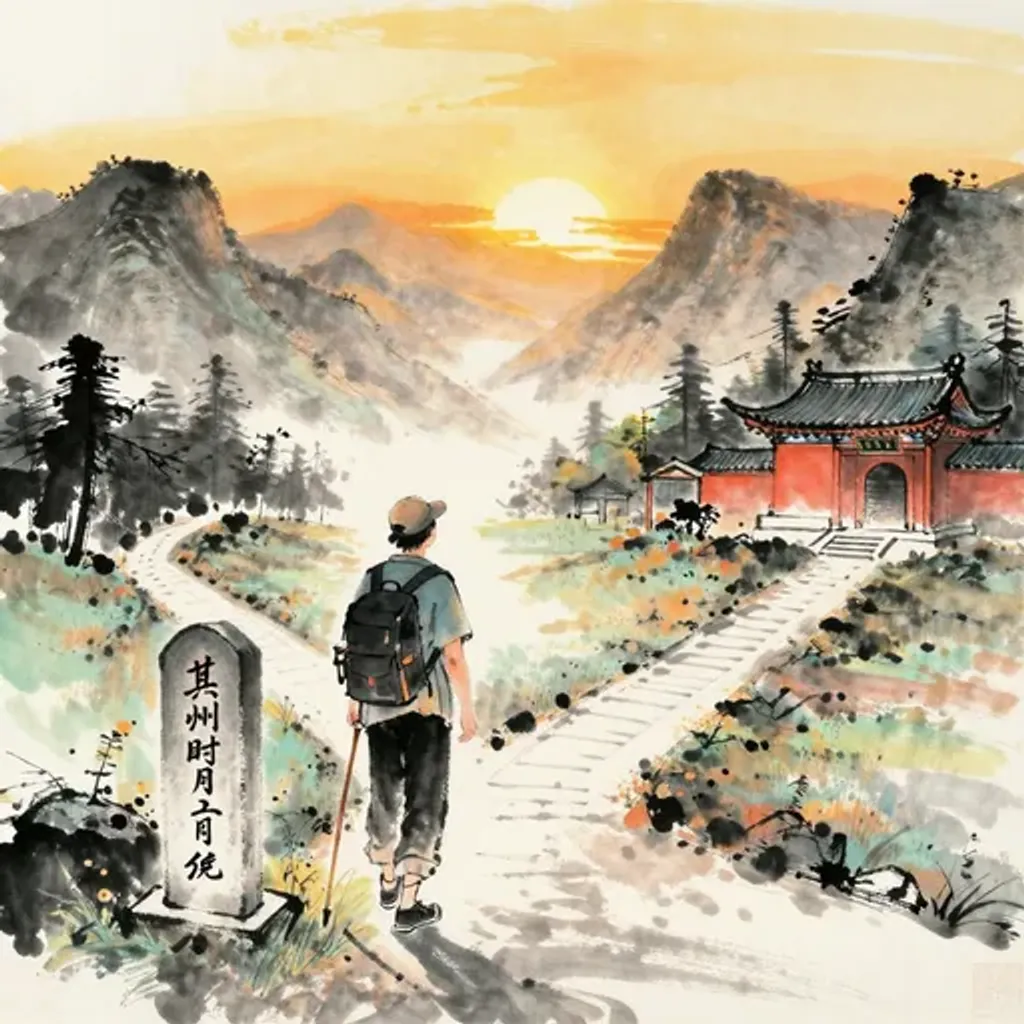
元吉无咎,安寧不殆。時行則行,勿之有悔。
Great fortune, no fault; safe and peaceful, not imperiled. Act when the time calls for action; do not invite regret.
— Jiao Yanshou, Yilin (Forest of Changes), 1st century BC
Commentary
Water upon earth sustains through discernment of timing. 'Great fortune, no blame; peaceful and free from peril.' The verse borrows the Yi's own divinatory language to counsel composure: act when the time calls for action, and harbor no regret. This terse oracle reads like a hexagram judgment compressed into four lines. From Holding Together to Darkening of the Light, the transformation adds urgency to the counsel: Mingyi's light enters the earth, brightness deliberately dimmed. In an age when light is wounded, the wise person acts only at the precise moment — neither too early nor too late — and otherwise remains still. The alliance survives dark times by knowing exactly when to move and when to hold.
比 → 家人
Hexagram 8 → Hexagram 37: The Family
Changing lines: 1, 3, 6
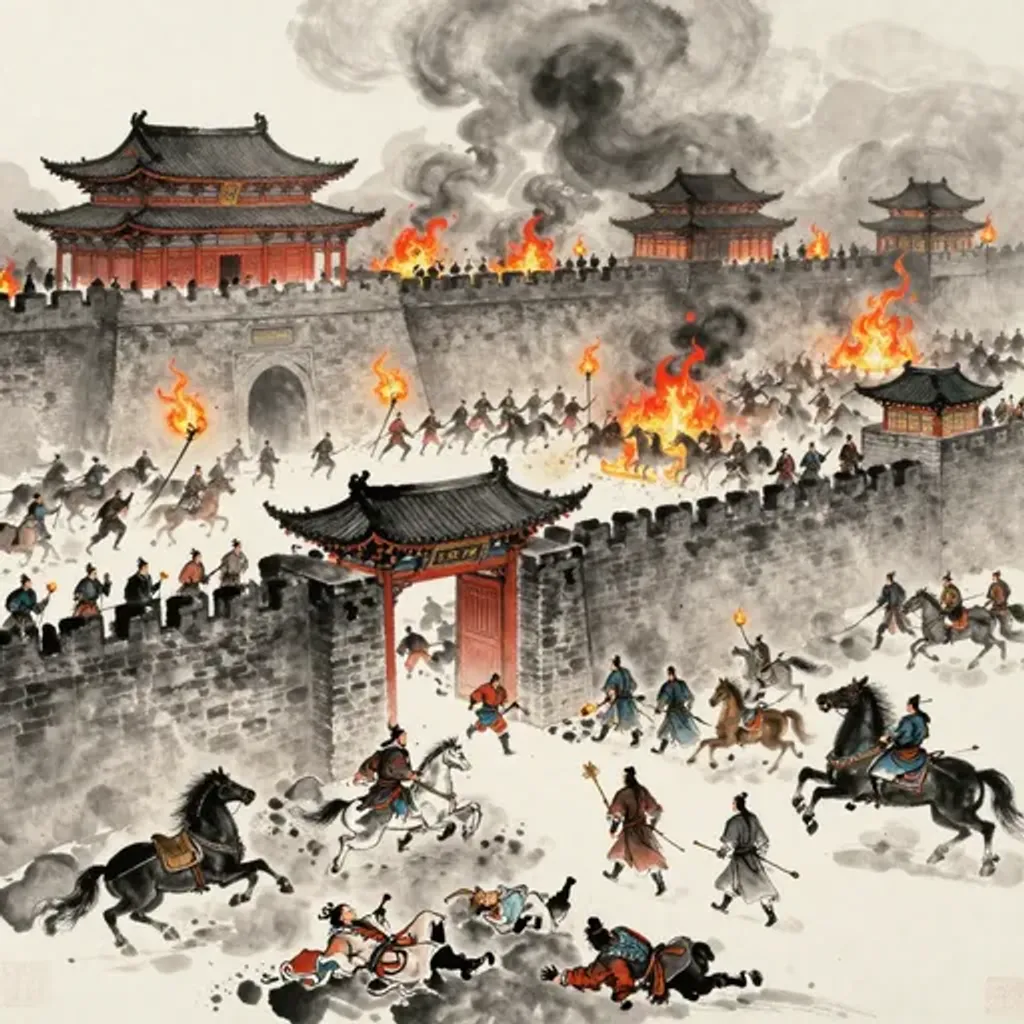
懿公淺愚,不深受謀。無援失國,為狄所賊。
Duke Yi was shallow and foolish, refusing sound counsel. Without allies he lost his state; slain by the Di barbarians.
— Jiao Yanshou, Yilin (Forest of Changes), 1st century BC
Commentary
Water upon earth requires wise leadership to maintain, and Duke Yi of Wei was anything but wise. The verse calls him shallow and foolish, deaf to counsel. Without allies he lost his state, slaughtered by the Di barbarians. Duke Yi of Wei is infamous for loving cranes so extravagantly that he gave them official carriages and salaries. When the Di invaded in 660 BC, his soldiers refused to fight, saying: 'Let the cranes go to battle — they have ranks and pay; how can we?' The state was destroyed. From Holding Together to The Family, wind from fire should warm the household with consistent virtue. Instead, a ruler's frivolity dismantles the domestic order entirely, leaving the family — and the state — to the invaders.
比 → 睽
Hexagram 8 → Hexagram 38: Opposition
Changing lines: 1, 2, 4, 5, 6
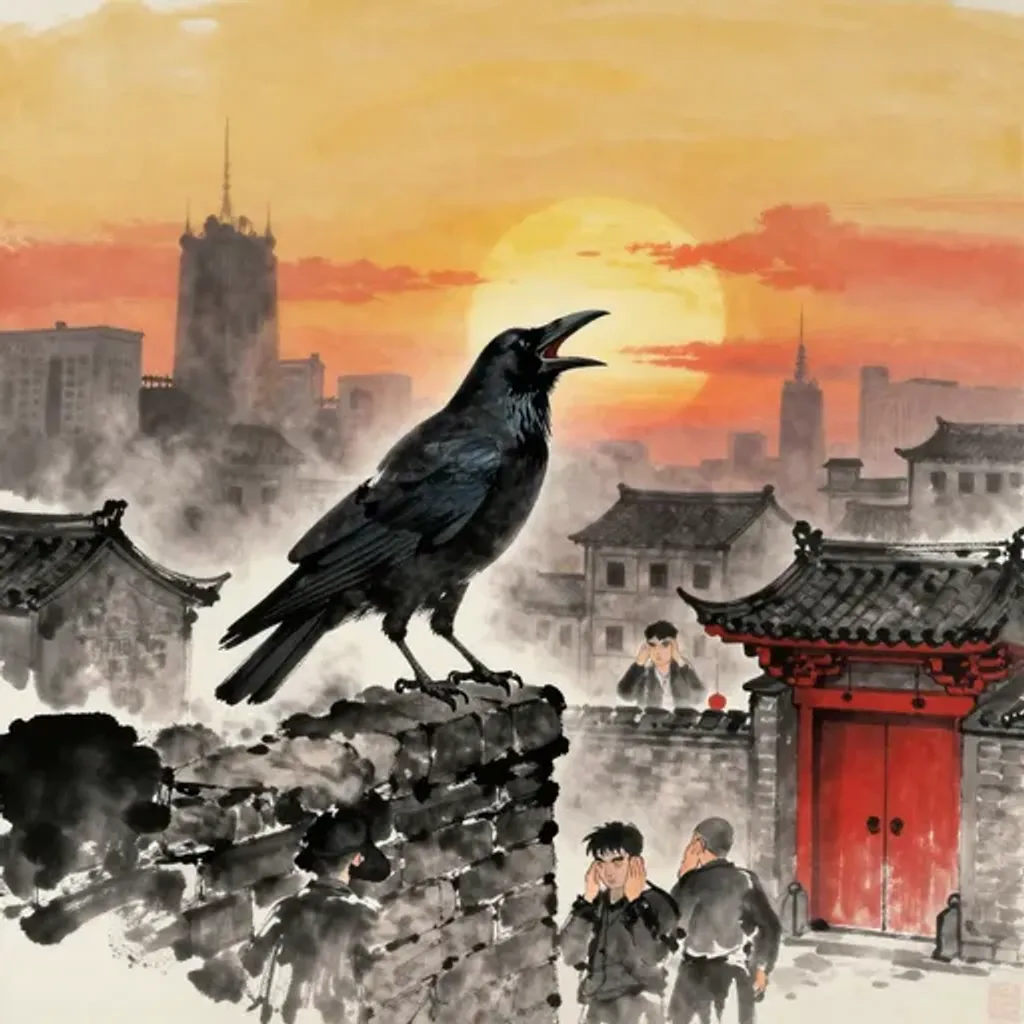
城上有烏,自號破家。呼喚鴆毒,為國患災。
A crow upon the city wall, crying out its own ruin. It summons poisonous zhenniao; bringing plague and disaster to the state.
— Jiao Yanshou, Yilin (Forest of Changes), 1st century BC
Commentary
Water upon earth is shadowed by a dark omen. A crow perches on the city wall, crying out its own name: 'Break the house!' It summons poison — the zhen-bird whose feathers contaminate wine — and brings plague upon the state. The crow atop the rampart is a classic ill omen in Han-dynasty lore, associated with urban disaster and siege. Its self-naming cry ('breaking the house') is a sinister word-play: the bird announces the doom it embodies. From Holding Together to Opposition, fire and lake pull in opposite directions, each evaporating what the other provides. The poisoned alliance of Bi becomes Kui's fundamental estrangement: what should cooperate instead destroys, and the warning cries go unheeded until the state itself is consumed.
比 → 蹇
Hexagram 8 → Hexagram 39: Obstruction
Changing lines: 3
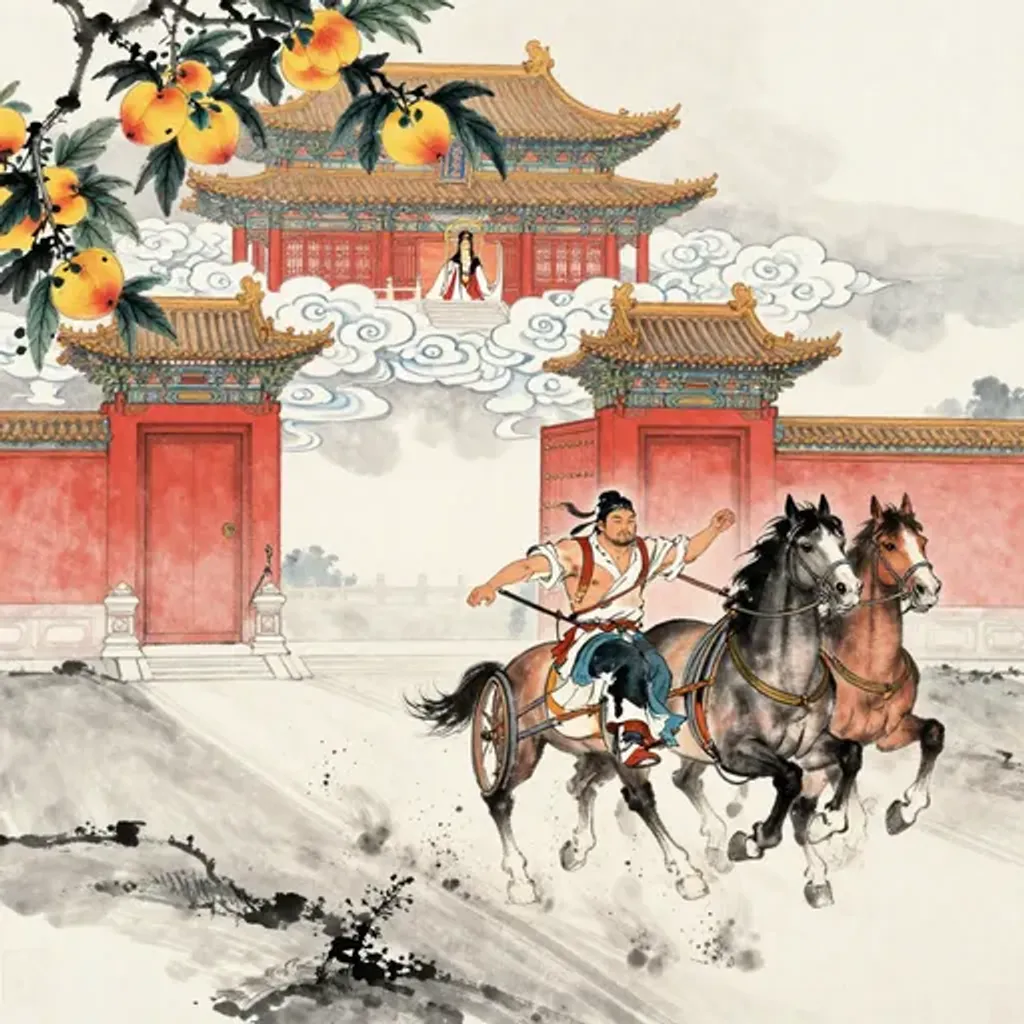
長股喜走,趍步千里。王良嘉言,伯來在道。申見王母。
Long-legged and fond of running, striding a thousand li. Wang Liang speaks fine words; Bo arrives upon the road -- they are received by the Queen Mother.
— Jiao Yanshou, Yilin (Forest of Changes), 1st century BC
Commentary
Water upon earth sets the traveler on a long road. Long-legged and eager to run, the figure covers a thousand li at a trot. Wang Liang offers wise counsel, and Bole arrives along the way — the legendary charioteer and the supreme judge of horses, each contributing mastery. At journey's end, the traveler meets the Queen Mother of the West. The verse layers three figures of extraordinary skill and transcendence: Wang Liang's driving, Bole's discernment, and the Queen Mother's immortality. From Holding Together to Obstruction, water atop mountain blocks the path. Yet the verse's confidence suggests that with the right allies — guides who see clearly and drive surely — even Jian's steep obstacles become a pilgrimage to the divine.
比 → 解
Hexagram 8 → Hexagram 40: Deliverance
Changing lines: 2, 4, 5
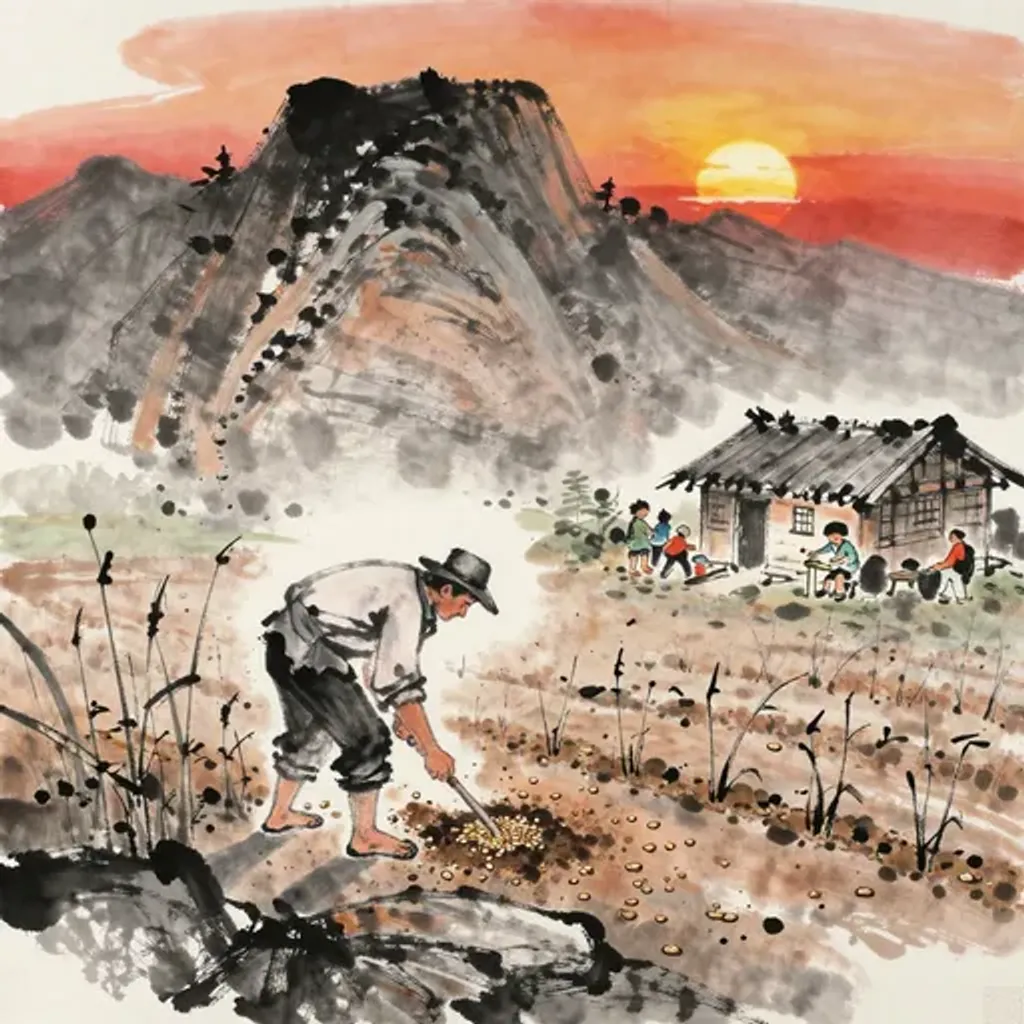
耕石山顛,費種家貧。無聊處作,苗髮不生。
Plowing stony ground on a mountaintop; wasting seed, the household grows poor. Laboring without purpose; the sprouts will not grow.
— Jiao Yanshou, Yilin (Forest of Changes), 1st century BC
Commentary
Water upon earth should nourish crops, but here someone plows bare stone on a mountaintop. Seeds are wasted, the household impoverished. Without viable ground, the work is futile — seedlings refuse to sprout. The image inverts farming's fundamental covenant: soil should receive seed and return harvest, but stone returns nothing. From Holding Together to Deliverance, thunder and rain should release tension and grant relief. Yet the verse offers no such liberation — only the stubborn pointlessness of cultivating rock. The transformation suggests that deliverance requires first abandoning what cannot be saved. One must descend the barren mountain before the rain of Jie can do any good.
比 → 損
Hexagram 8 → Hexagram 41: Decrease
Changing lines: 1, 2, 5, 6
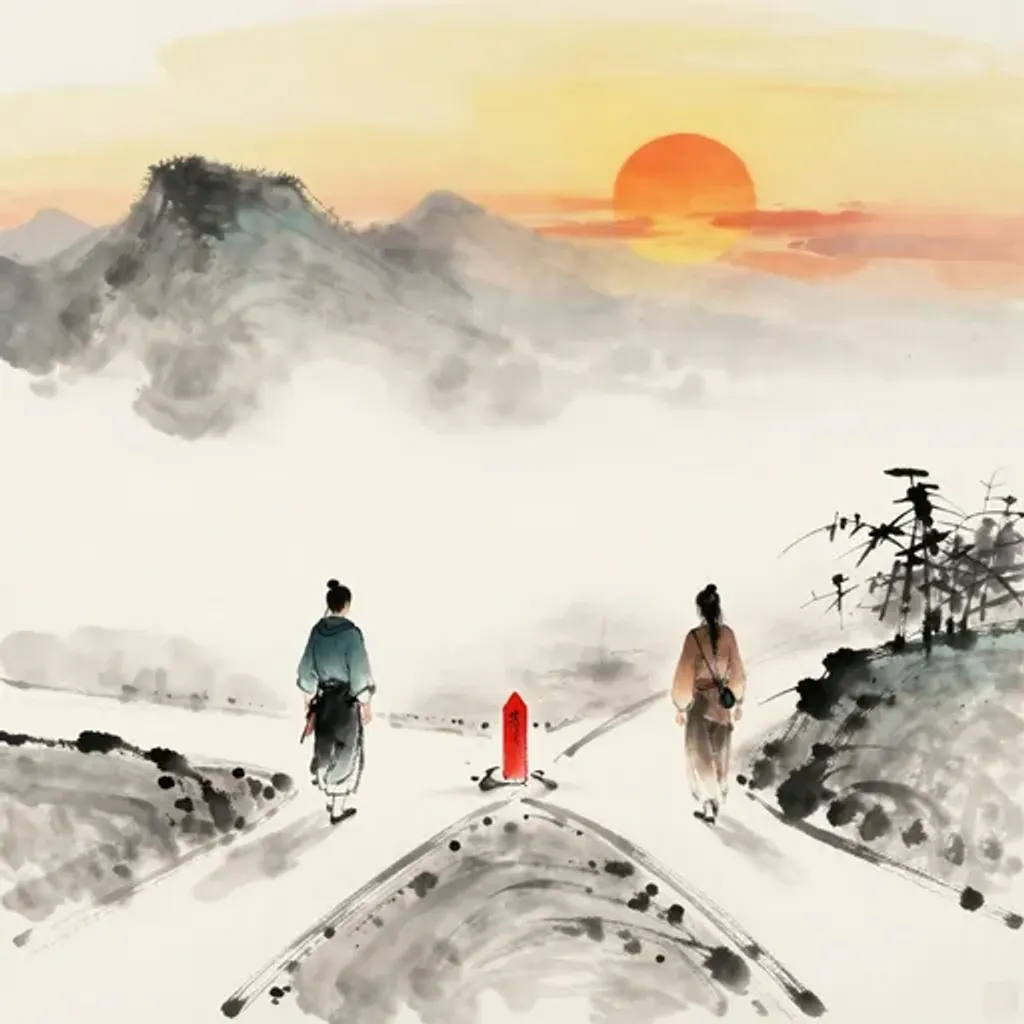
二人異路,東趍西步。千里之行,不相知處。
Two men take different roads; one heads east, the other west. On a journey of a thousand li; neither knows the other is whereabouts.
— Jiao Yanshou, Yilin (Forest of Changes), 1st century BC
Commentary
Water upon earth should draw companions together, but two travelers walk separate roads. One hurries east, the other paces west. A thousand li of journey separate them, and neither knows where the other has gone. The verse is a study in divergence within what should be union: both are walking, both are covering ground, but their paths lead in opposite directions. From Holding Together to Decrease, mountain sits above lake, draining what lies below to build what rises above. The verse embodies Decrease's core truth: when bonds are severed, what one gains the other loses. Separation is itself a form of diminishment — not of goods but of the relational fabric that made both travelers whole.
比 → 益
Hexagram 8 → Hexagram 42: Increase
Changing lines: 1, 6
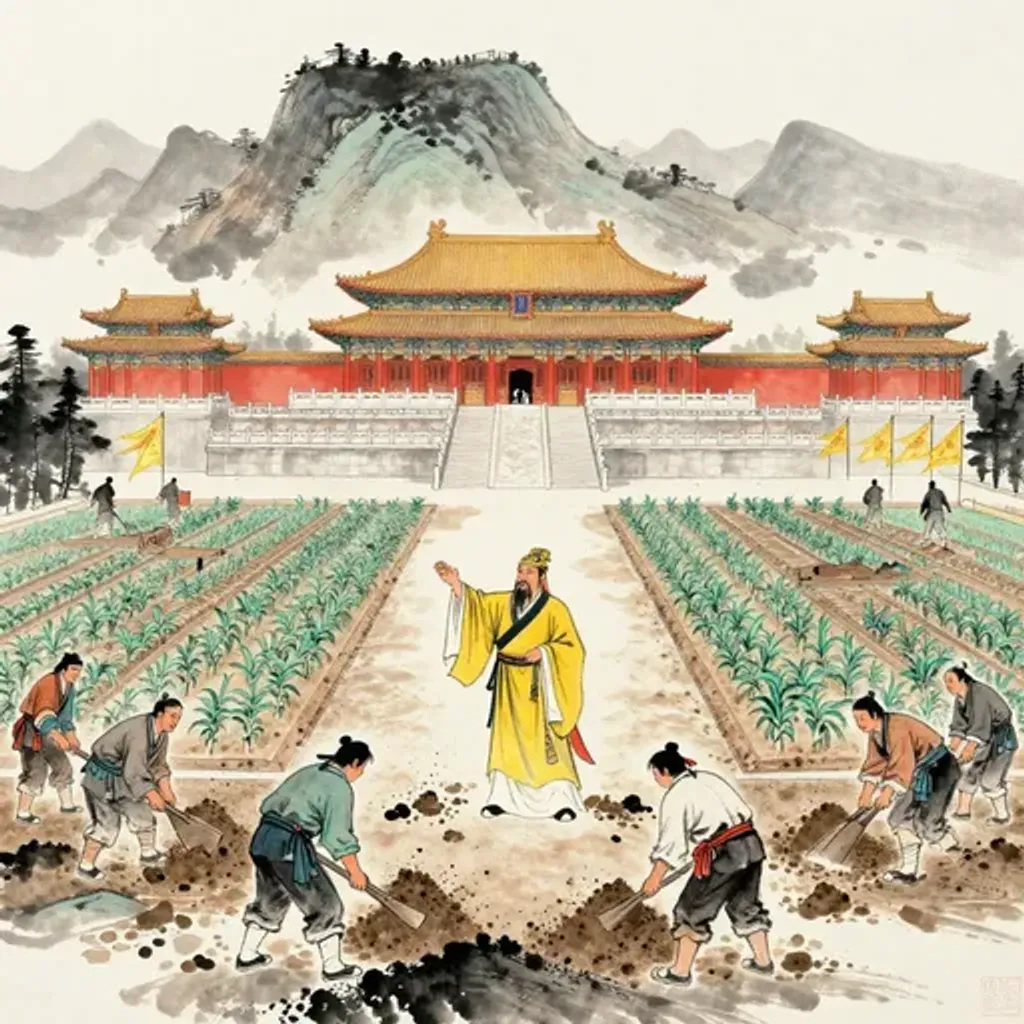
純服黃裳,載土以興。德義茂生,天下歸仁。
Wearing plain yellow robes, carrying earth to build. Virtue and righteousness flourish; all under heaven turns to benevolence.
— Jiao Yanshou, Yilin (Forest of Changes), 1st century BC
Commentary
Water upon earth dresses in the yellow skirt of Kun and carries soil to build the foundations. The 'yellow skirt' (黃裳) directly quotes the Kun hexagram's fifth line — the sign of pure, centered receptive virtue. Virtue and righteousness flourish like growing plants, and all under heaven return to benevolence. The verse traces a complete arc: from the humble act of carrying earth to the cosmic vision of universal virtue. From Holding Together to Increase, wind and thunder energize each other in mutual reinforcement. Bi's alliance, when rooted in Kun's earthy devotion, generates the multiplicative power of Yi: goodness moving in both directions at once, each act of virtue stimulating another.
比 → 夬
Hexagram 8 → Hexagram 43: Breakthrough
Changing lines: 1, 2, 3, 4
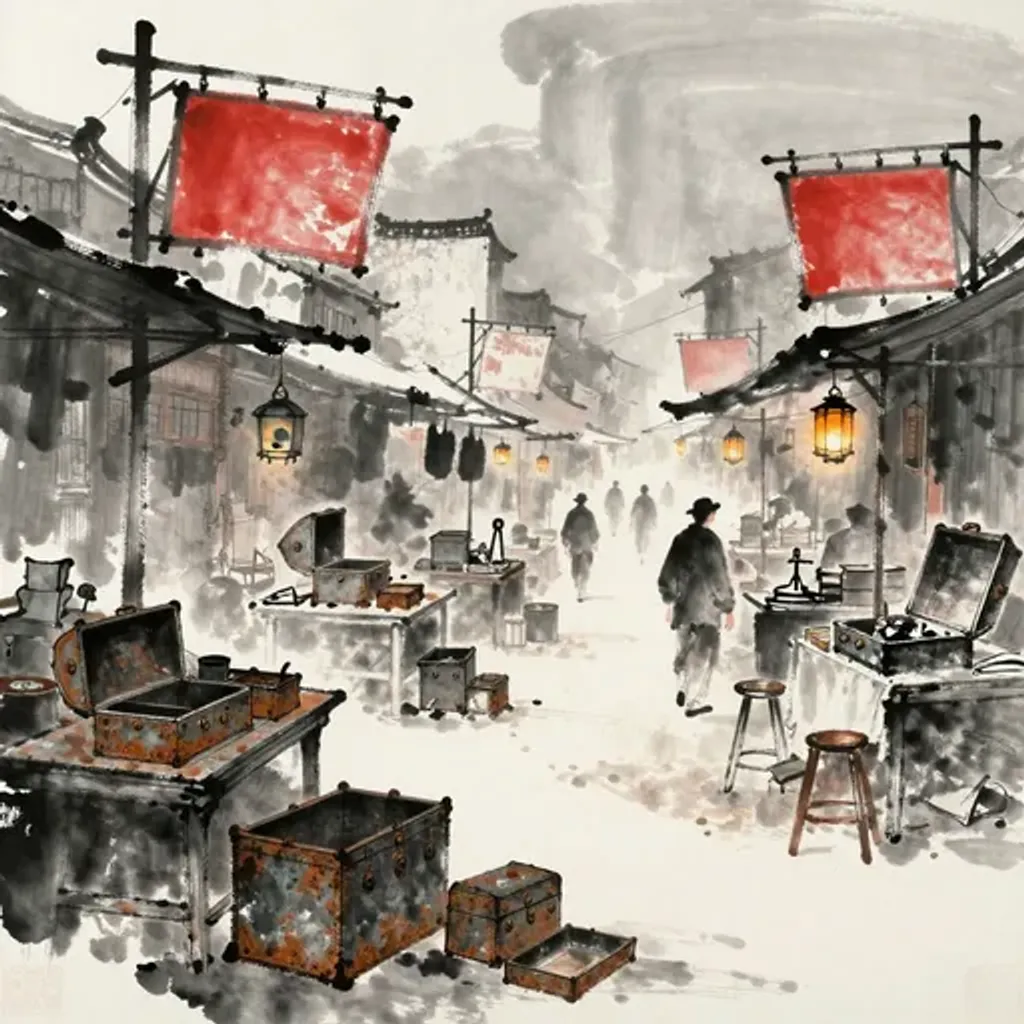
五銑鐵頤,倉庫空虛。賈市無盈,與利為仇。
Five worn iron cauldrons; the granary and storehouse stand empty. The marketplace yields no profit; at odds with gain.
— Jiao Yanshou, Yilin (Forest of Changes), 1st century BC
Commentary
Water upon earth drains away, leaving the granaries hollow. Five copper coins buy only iron jaw-pieces — worthless hardware. The storehouses stand empty, merchants cannot turn a profit, and commerce itself becomes the enemy of gain. The 'iron jaw' (鐵頤) may be an implement or a metaphor for something that consumes but produces nothing. From Holding Together to Breakthrough, lake ascends above heaven in an image of dangerous overflow. Yet the verse shows the opposite problem: not excess but depletion. Gua's breakthrough is meant to decisively resolve stagnation, but when the treasury is already bare, there is nothing left to break through to. Alliance without resources is a hollow shell.
比 → 姤
Hexagram 8 → Hexagram 44: Coming to Meet
Changing lines: 2, 3, 4, 6
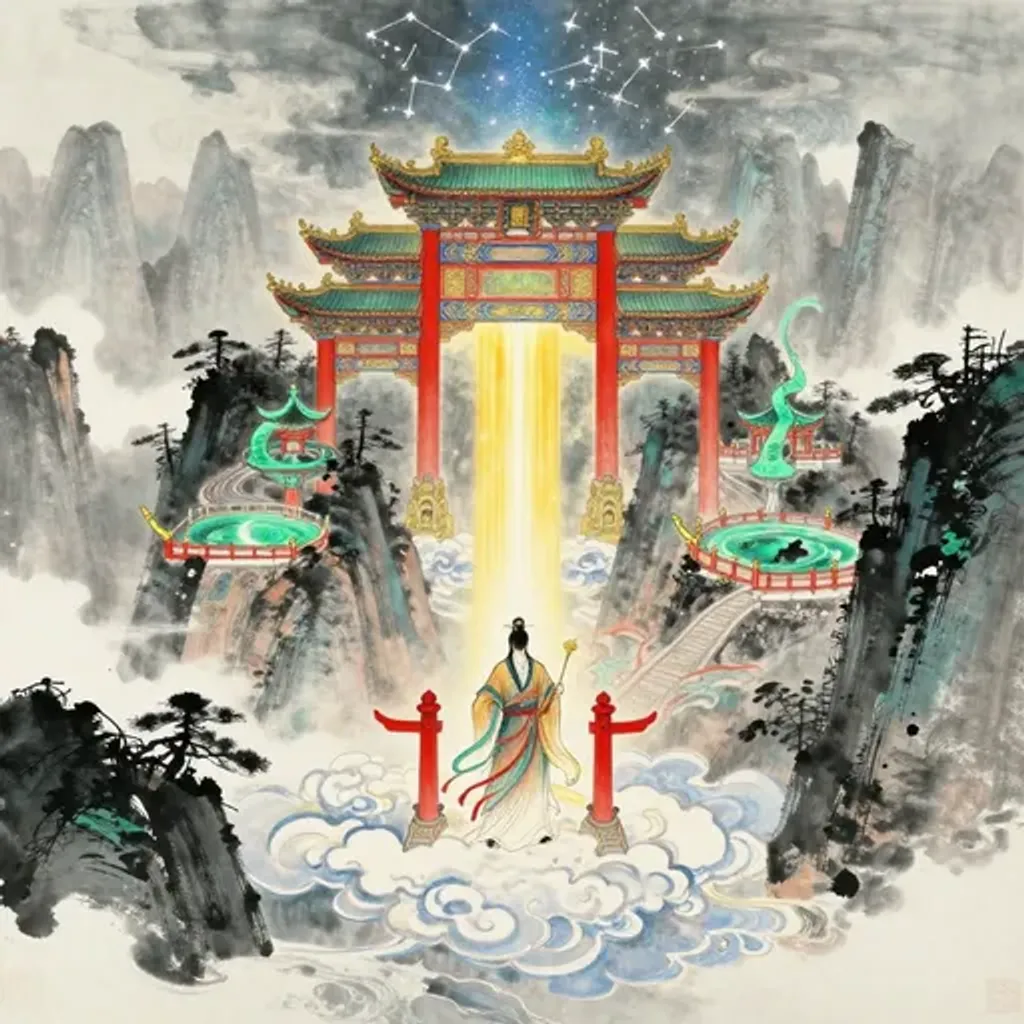
登崑崙,入天門。過糟丘,宿玉泉。問惠觀,見仁君。
Ascending Kunlun, entering heaven is gate. Passing the mound of lees, lodging at the Jade Spring. Visiting the Pavilion of Grace; meeting the benevolent lord.
— Jiao Yanshou, Yilin (Forest of Changes), 1st century BC
Commentary
Water upon earth opens a path to the mythical heights. The traveler ascends Kunlun, enters the Gate of Heaven, passes the Mound of Dregs, and lodges at the Jade Spring. At the Hall of Benevolent Wisdom, a humane sovereign is found. This is the journey to the Queen Mother of the West's domain — the axis mundi where mortals meet immortals. Kunlun, the celestial mountain above the Weak Water, represents the ultimate destination of spiritual pilgrimage. From Holding Together to Coming to Meet, heaven spreads wind beneath it as a decree reaches the four quarters. Gou's unexpected encounter mirrors the verse: the traveler does not seek the divine lord — the path itself delivers the meeting, natural as wind beneath heaven.
比 → 萃
Hexagram 8 → Hexagram 45: Gathering Together
Changing lines: 4
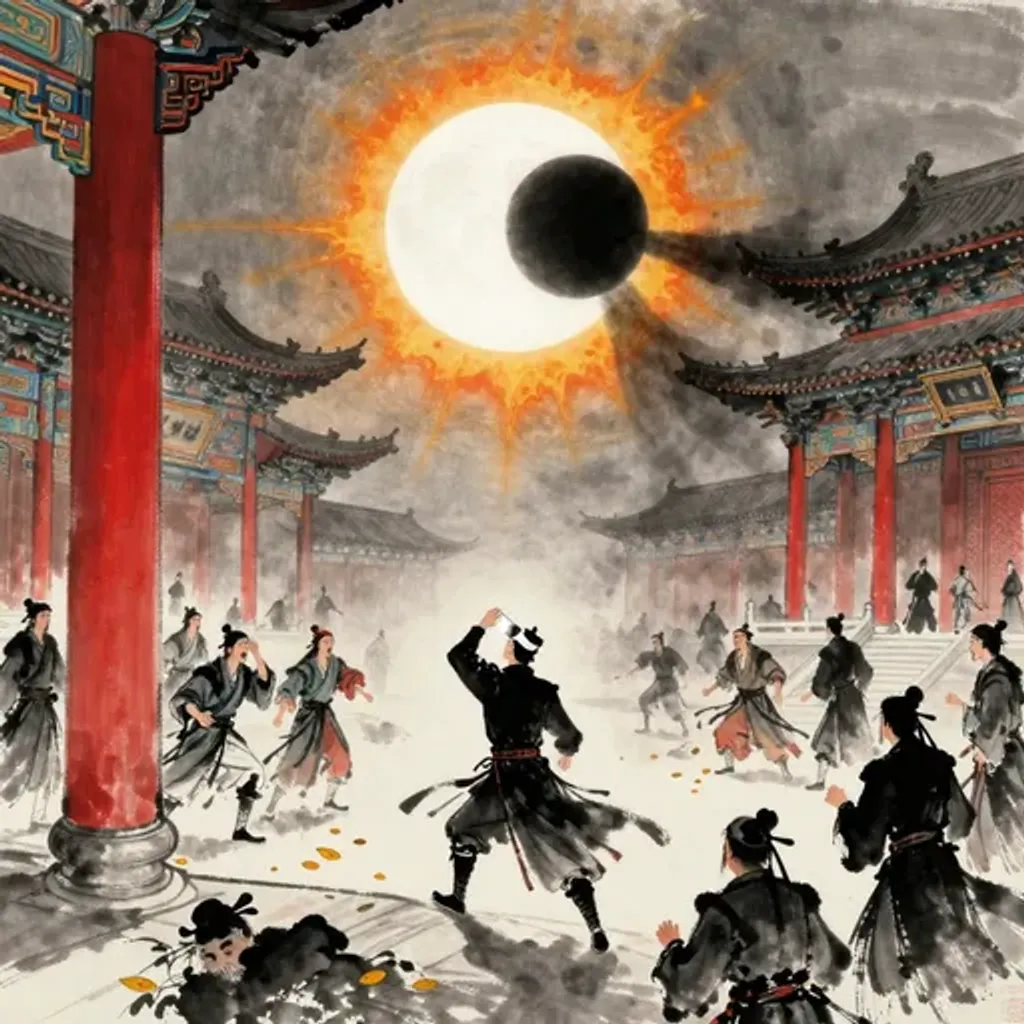
團團白日,為月所食。損上毀下,鄭昭出走。
The round white sun, devoured by the moon. Damaging above, destroying below; Duke Zhao of Zheng flees.
— Jiao Yanshou, Yilin (Forest of Changes), 1st century BC
Commentary
Water upon earth darkens as the round white sun is devoured by the moon — a solar eclipse, the most feared omen of Han-dynasty political thought. The upper is damaged, the lower harmed, and Duke Zhao of Zheng is forced to flee. Solar eclipses in classical cosmology signaled that yin had overpowered yang: ministers usurping rulers, the subordinate swallowing the sovereign. Duke Zhao of Zheng was ousted around 697 BC when court factions conspired against him. From Holding Together to Gathering, the transformation is ironic: Cui's lake upon earth should collect the people in unity, yet the verse depicts a ruler expelled from the very community he should lead. Gathering turns against its center.
比 → 升
Hexagram 8 → Hexagram 46: Pushing Upward
Changing lines: 2, 3, 5
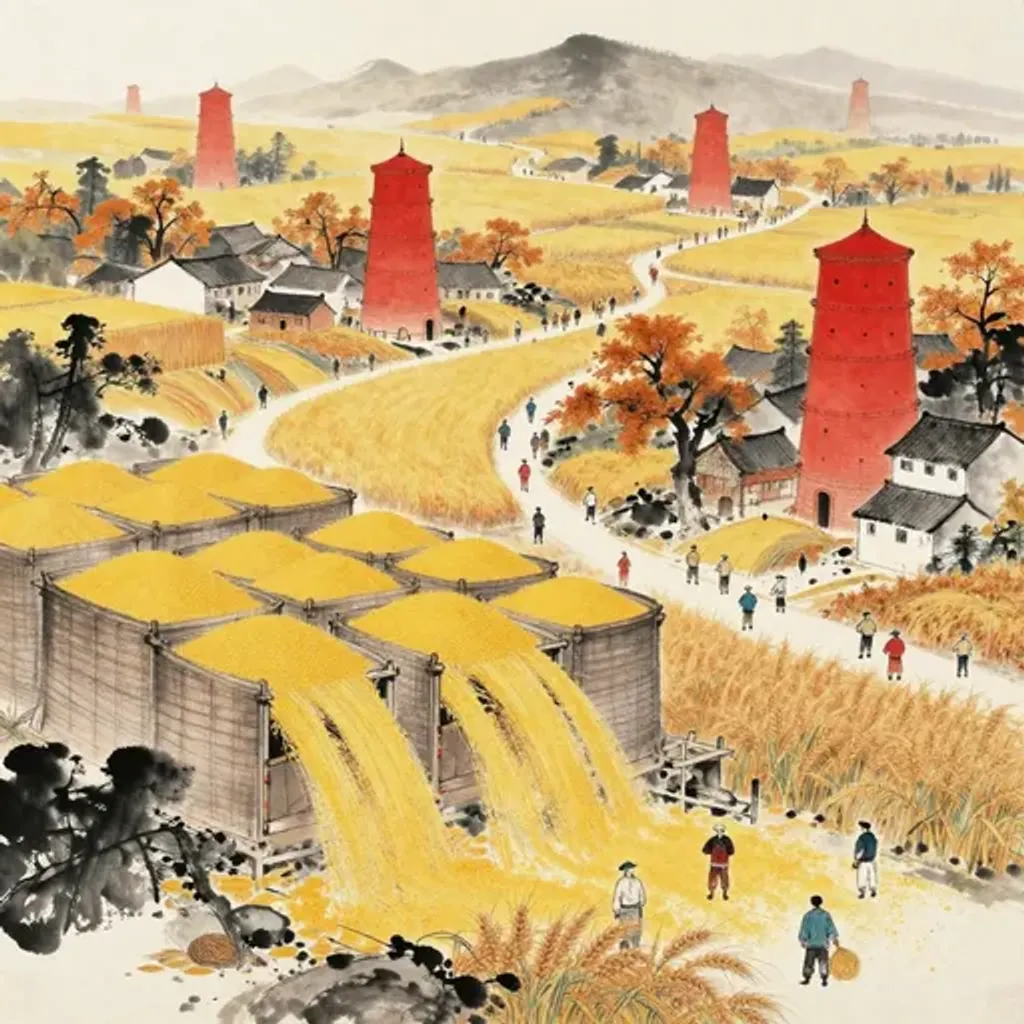
倉盈庾億,宜稼黍稷。年歲有息,國家富有。
Granaries brimming, storehouses overflowing; fit for planting millet and grain. Year after year there is surplus; the state is rich and abundant.
— Jiao Yanshou, Yilin (Forest of Changes), 1st century BC
Commentary
Water upon earth fills the granaries to overflowing. Warehouses brim with billions of measures; the land is perfectly suited for millet and grain. The harvest yields annual surplus, and the state grows wealthy. Every image speaks of agricultural abundance achieved through proper cultivation and favorable conditions. From Holding Together to Pushing Upward, wood grows within the earth, rising gradually but irresistibly. Bi's communal water nourishes the soil from which Sheng's tree steadily ascends. The verse embodies the ideal arc of the Yi's agricultural metaphor: alliance provides the groundwater, diligence provides the seed, and the result is the slow, compounding growth that makes a nation rich generation by generation.
比 → 困
Hexagram 8 → Hexagram 47: Oppression
Changing lines: 2, 4
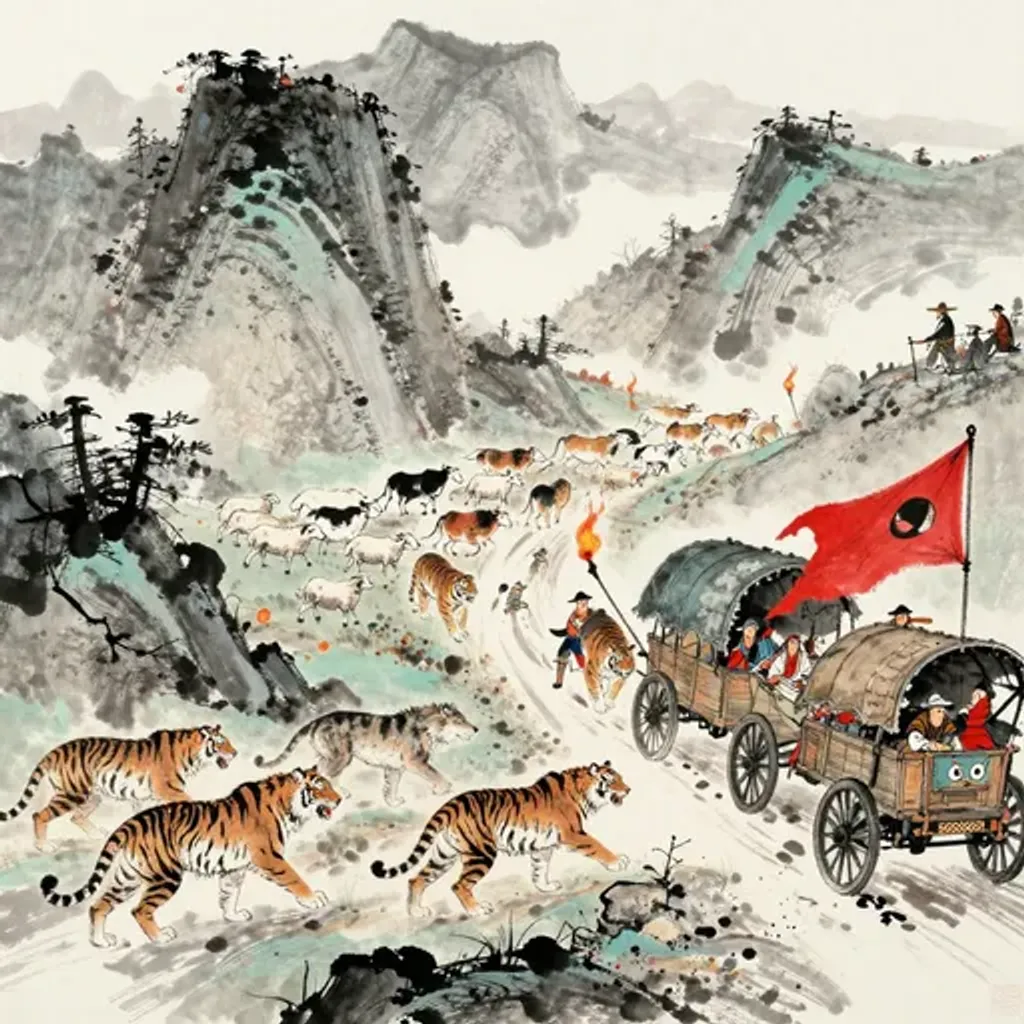
虎狼結謀,相聚為保。伺嚙牛羊,道絕不通,傷我商人。
Tiger and wolf conspire together, gathering for mutual protection. They lie in wait to devour cattle and sheep; the road is severed, impassable -- they wound my merchants.
— Jiao Yanshou, Yilin (Forest of Changes), 1st century BC
Commentary
Water upon earth attracts predators as well as allies. Tigers and wolves conspire together, banding into a pack for mutual protection. They lurk and bite at cattle and sheep, severing the roads entirely, and the merchants who travel them are wounded. The verse inverts Bi's positive valence: alliance is not inherently good. Predators too form bonds, and their solidarity serves only predation. From Holding Together to Oppression, the lake drains its water and leaves emptiness. Kun's image — 'the lake has no water' — mirrors the merchants' plight: the road that should carry commerce is now a killing ground. When the wrong parties hold together, the result is not community but organized predation that oppresses all others.
比 → 井
Hexagram 8 → Hexagram 48: The Well
Changing lines: 2, 3
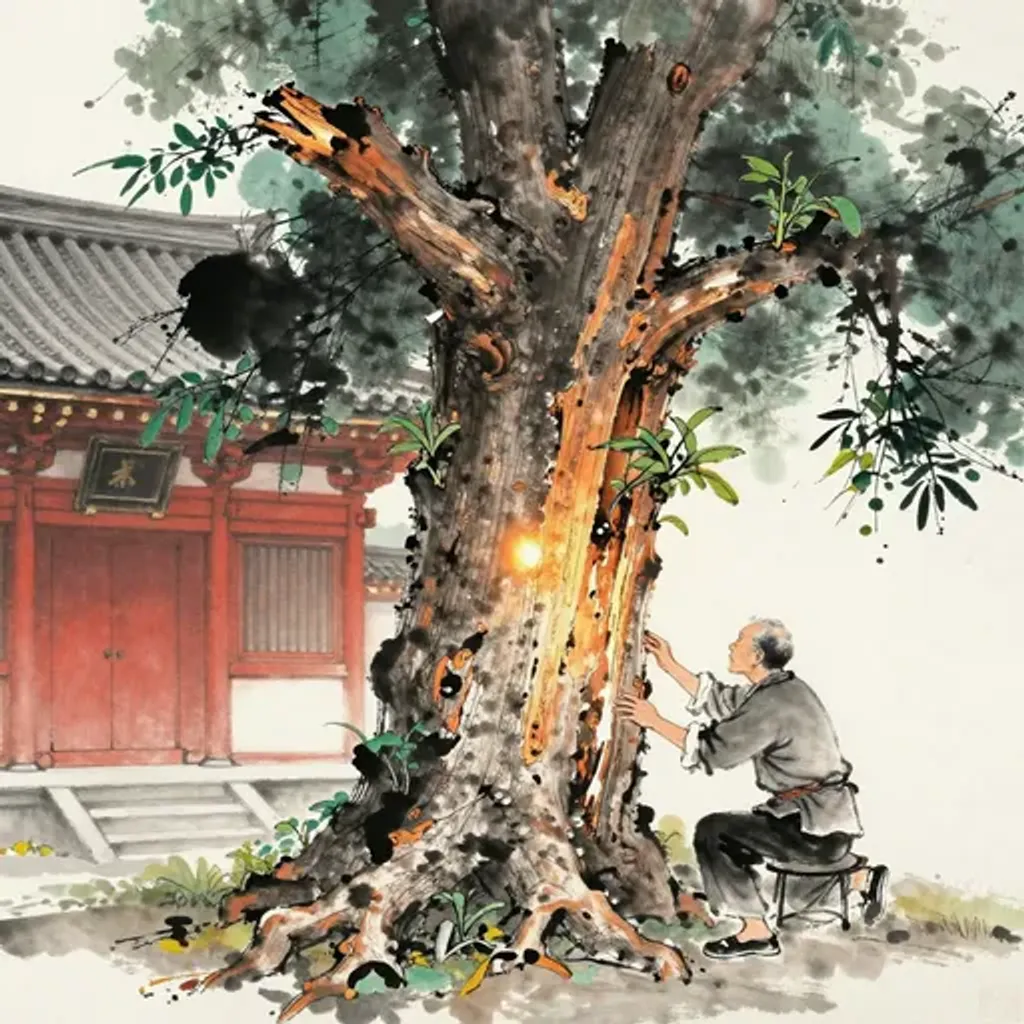
木年摧折,常恐不活。老賴福慶,光榮相輔。
An old tree snaps and falls, ever fearing it will not survive. In old age, blessings and fortune come; glory and honor sustain each other.
— Jiao Yanshou, Yilin (Forest of Changes), 1st century BC
Commentary
Water upon earth nourishes even the broken. An old tree, its trunk snapped and battered, fears constantly that it will not survive. Yet through good fortune and blessings, it endures; glory and support come to sustain it in its final years. The tree that should have died finds unexpected strength. From Holding Together to The Well, water rises through wood — the well's bucket draws nourishment from the depths and shares it with all. The verse embodies Jing's central teaching: the well does not move, yet it serves everyone who comes. The old tree's survival mirrors the well's reliability: rooted in place, sustained by hidden waters, still capable of offering shade and shelter to those who gather near.
比 → 革
Hexagram 8 → Hexagram 49: Revolution
Changing lines: 1, 3, 4
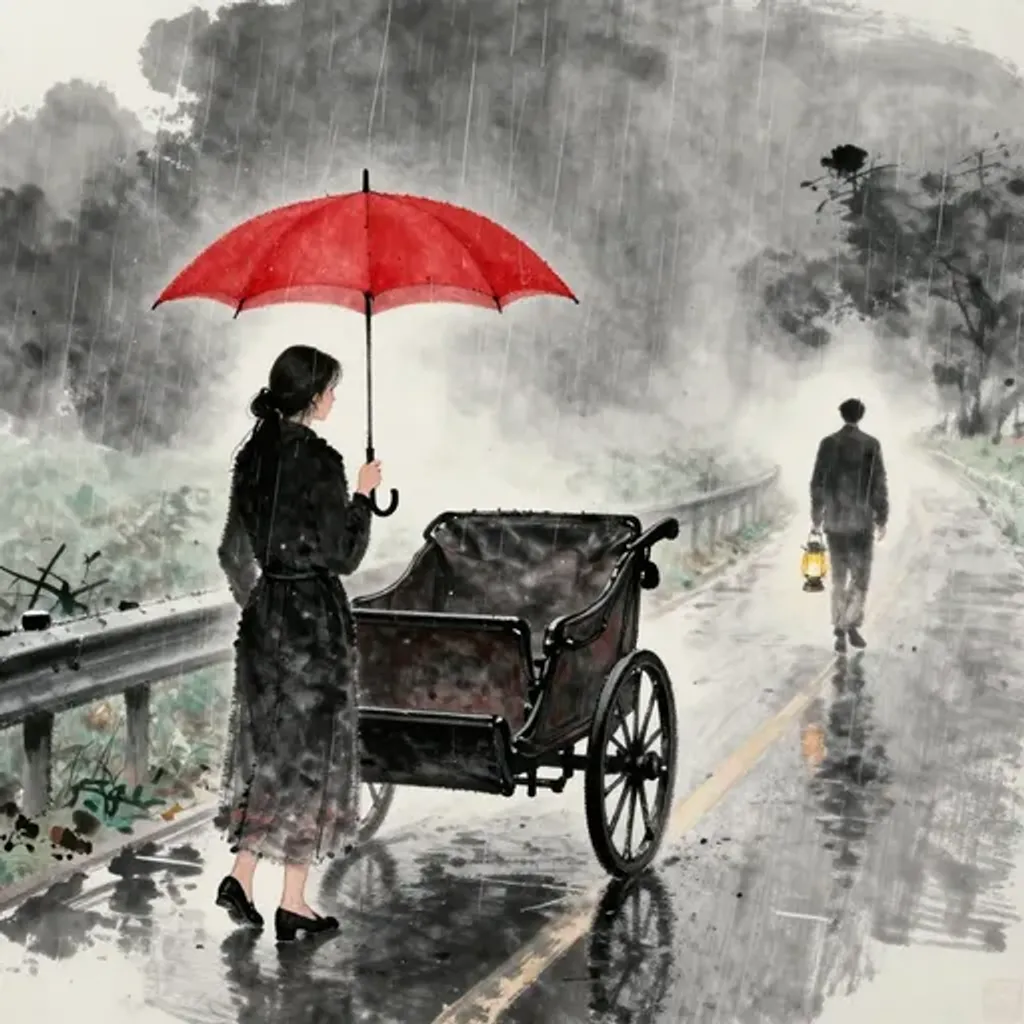
同載共車,中道分去。喪我元夫,獨為孤苦。
Riding together in the same carriage; midway, they part and go. I have lost my husband; left alone in bitter hardship.
— Jiao Yanshou, Yilin (Forest of Changes), 1st century BC
Commentary
Water upon earth carried two companions in the same carriage, but midway through the journey, their paths diverge. The original husband is lost, and the survivor is left alone in bitter solitude. The shared carriage is one of the Yi's own images — hexagram 38 (Kui/Opposition) speaks of 'loading a wagon' and companions who first separate then reunite. Here, however, there is no reunion: the parting is final. From Holding Together to Revolution, fire within the lake transforms everything it touches. Ge signals irreversible change — the old order burned away, leaving no path back to what was. The verse traces how alliance, once severed at its center, cannot be restored; the revolution of circumstances has made the original bond impossible.
比 → 鼎
Hexagram 8 → Hexagram 50: The Cauldron
Changing lines: 2, 3, 4, 5, 6
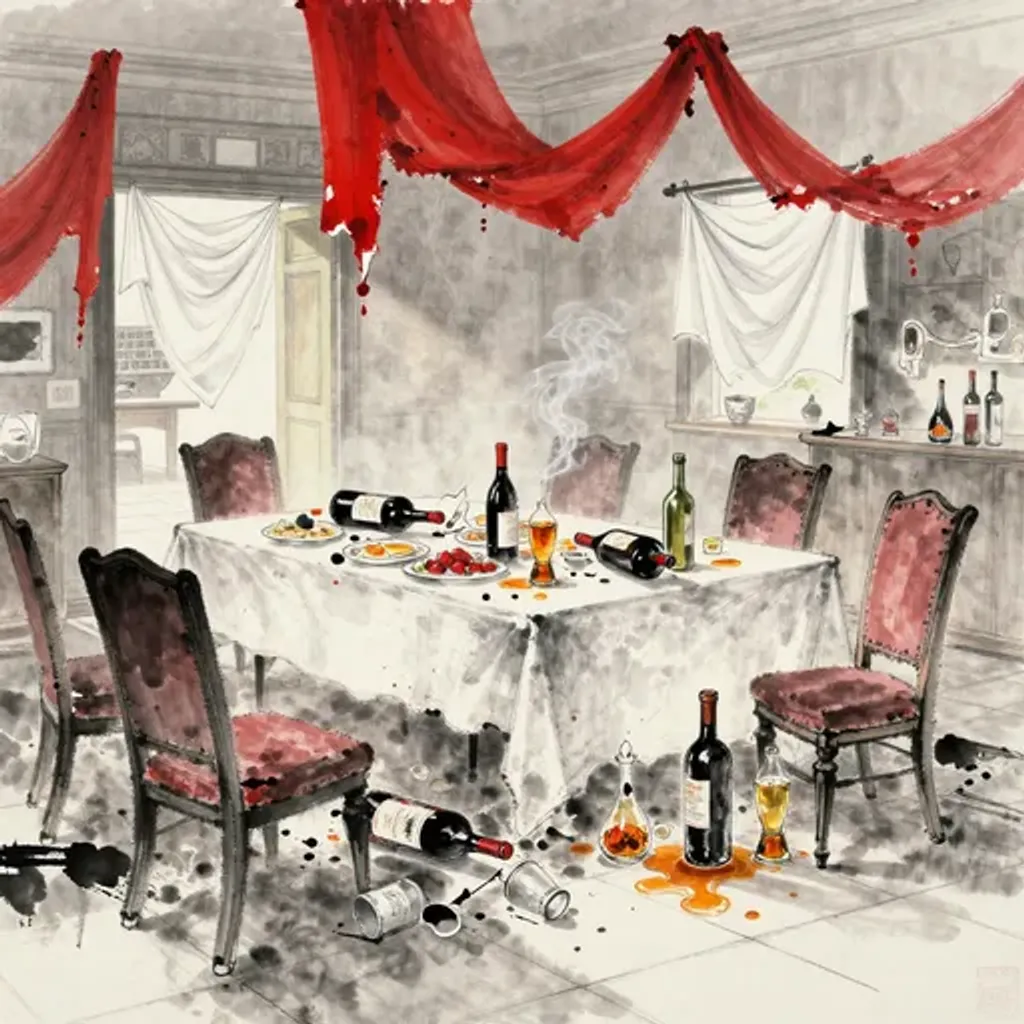
飲酒醉酗,跳躍爭鬭。伯傷叔僵,東家治喪。
Drinking wine in reckless excess, leaping and brawling. The elder brother is wounded, the younger falls stiff; the eastern household prepares a funeral.
— Jiao Yanshou, Yilin (Forest of Changes), 1st century BC
Commentary
Water upon earth dissolves into drunken chaos. Men drink until they are roaring drunk, leaping and brawling. The eldest brother is wounded, the younger collapses, and the eastern neighbor prepares a funeral. What begins as communal feasting — the most basic expression of Bi's fellowship — degenerates into violence and death. Wine, the social lubricant of ancient ritual, becomes the solvent that destroys family bonds. From Holding Together to The Cauldron, fire over wood should refine raw material into something sacred. But the verse shows the cauldron's contents spoiled: the transformative vessel that should elevate instead produces toxic excess, and the feast that should unite the family becomes its undoing.
比 → 震
Hexagram 8 → Hexagram 51: The Arousing Thunder
Changing lines: 1, 4, 5
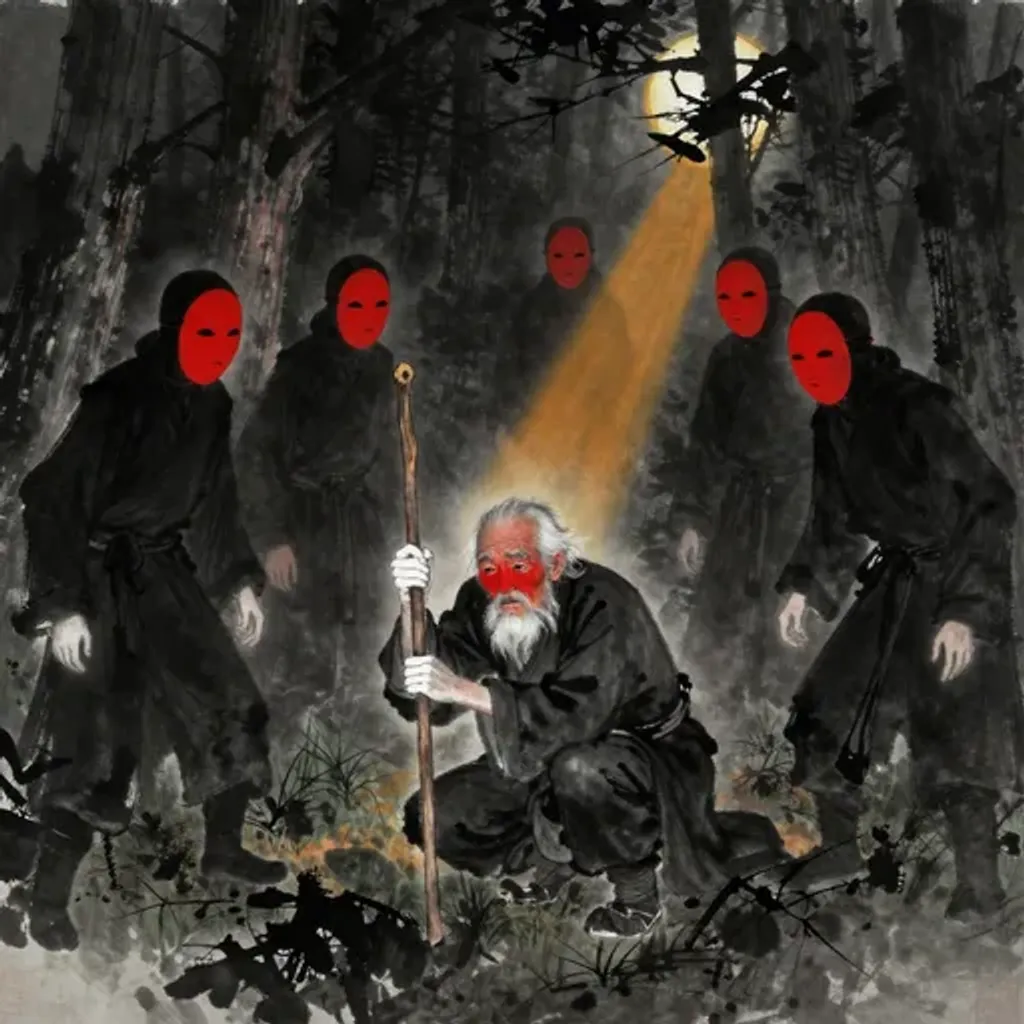
出值凶災,逢五赤頭,跳言死格。扶杖伏聽,不敢動搖。
Going out, he meets fierce calamity; encountering five red-headed ones who shout of death and violence. Leaning on his staff, he crouches and listens; not daring to stir.
— Jiao Yanshou, Yilin (Forest of Changes), 1st century BC
Commentary
Water upon earth offers no shelter from sudden calamity. Venturing out, one encounters violent disaster — five red-headed figures who leap forward crying 'death!' The traveler can only lean on a staff and crouch in submission, not daring to stir. The 'five red heads' suggest bandits or malign spirits; the number five and the color red intensify the sense of overwhelming menace. From Holding Together to The Arousing, doubled thunder shakes the world. Zhen's image calls for 'fearful self-examination' — exactly what the verse depicts. The traveler's frozen submission is not cowardice but the only appropriate response when thunder strikes: hold still, survive the shock, and reflect on what brought you into the storm.
比 → 艮
Hexagram 8 → Hexagram 52: Keeping Still Mountain
Changing lines: 3, 5, 6
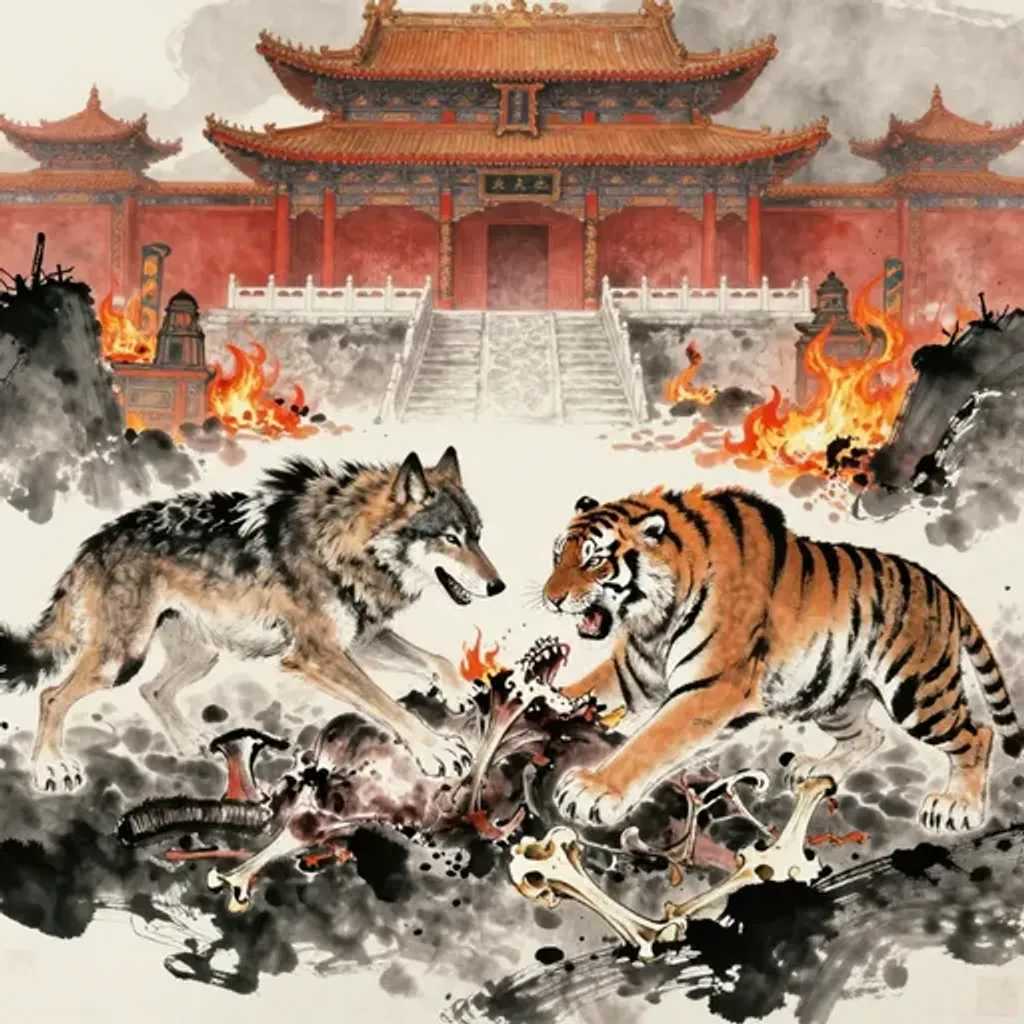
狼虎爭強,禮義不行。兼吞其國,齊晉無主。
Wolf and tiger vie for dominance; rites and propriety are abandoned. They swallow each other is states; Qi and Jin have no lord.
— Jiao Yanshou, Yilin (Forest of Changes), 1st century BC
Commentary
Water upon earth fragments when wolves and tigers vie for dominance. Ritual and righteousness cease to function; great powers annex smaller states. Qi and Jin are left without legitimate rulers. The verse encapsulates the late Spring and Autumn period's descent into predatory realpolitik: the old Zhou order of propriety dissolving as powerful states devoured their neighbors. From Holding Together to Keeping Still, the contrast is stark. Gen's doubled mountain should signify knowing one's place and restraining ambition. Yet the verse shows the opposite — unchecked aggression erasing boundaries. The stillness that Gen prescribes is precisely what the age has lost: the discipline to stop before swallowing everything in sight.
比 → 漸
Hexagram 8 → Hexagram 53: Development
Changing lines: 3, 6
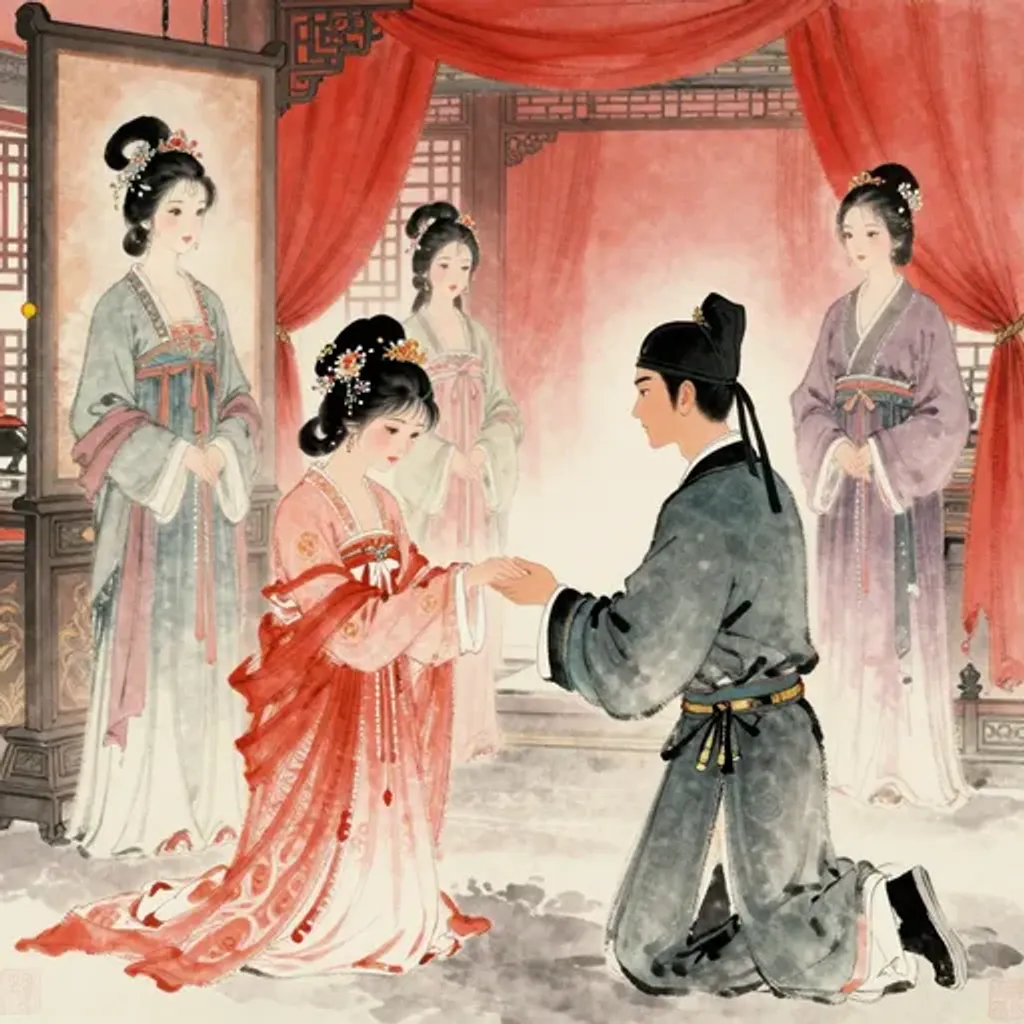
南國少子,方略美好。求我長女,薄賤不與。反得醜惡,後乃大悔。
The young man of the southern land, handsome and of fine bearing. He seeks my eldest daughter; she is scorned and refused. Instead he gains one ugly and base; later comes great regret.
— Jiao Yanshou, Yilin (Forest of Changes), 1st century BC
Commentary
Water upon earth facilitates matchmaking, but pride spoils the arrangement. A handsome young man from the southern kingdom, accomplished in every way, seeks the eldest daughter in marriage. She is refused as too lowly and cheap for his station. Instead he marries an ugly bride — and bitterly regrets it. The verse is a parable of social miscalculation: dismissing a worthy match out of snobbery and ending with something far worse. From Holding Together to Development, wind atop the mountain traces the gradual, proper unfolding of relationships — like the wild goose's orderly approach in courtship. Jian counsels patience and propriety. The verse shows what happens when those are abandoned: hasty judgment produces lasting regret.
比 → 歸妹
Hexagram 8 → Hexagram 54: The Marrying Maiden
Changing lines: 1, 2, 4, 5
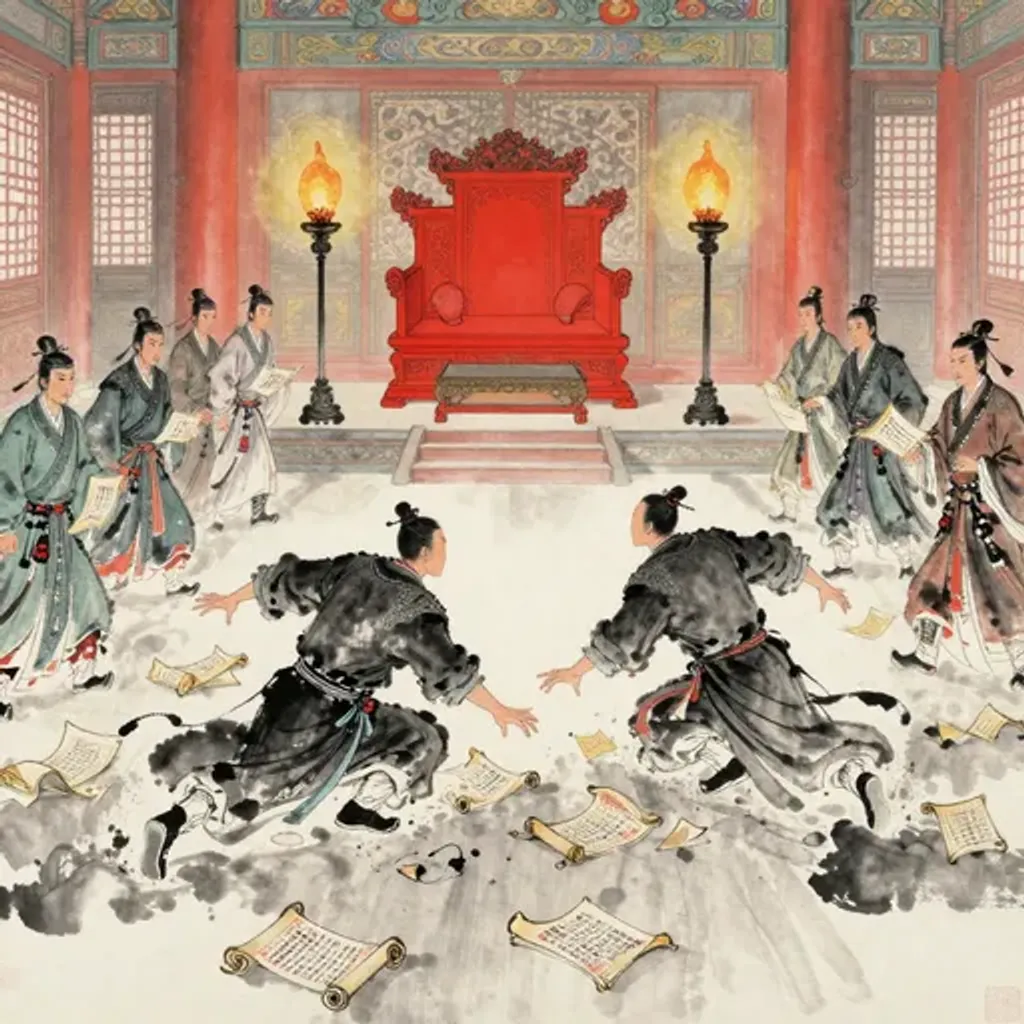
一身兩頭,莫適其軀。亂不可治,孰為湯漢。
One body with two heads; no way to suit both. Disorder beyond remedy; who shall be Tang, who shall be Han?
— Jiao Yanshou, Yilin (Forest of Changes), 1st century BC
Commentary
Water upon earth splits into incoherence. One body with two heads cannot govern its own limbs. Chaos becomes untreatable, and the verse cries out: who will be our Tang or our Han — who will restore order through righteous revolution? King Tang overthrew the tyrant Jie to found the Shang; the Han dynasty restored civilization after the Qin collapse. Both represent the archetype of legitimate regime change. From Holding Together to the Marrying Maiden, thunder over lake rushes forward impulsively, and the hexagram warns to 'know the end from the beginning.' A two-headed body is a state that has lost its center — the marrying maiden's precarious position demands clarity about who leads, or the union itself becomes the source of disorder.
比 → 豐
Hexagram 8 → Hexagram 55: Abundance
Changing lines: 1, 3, 4, 5
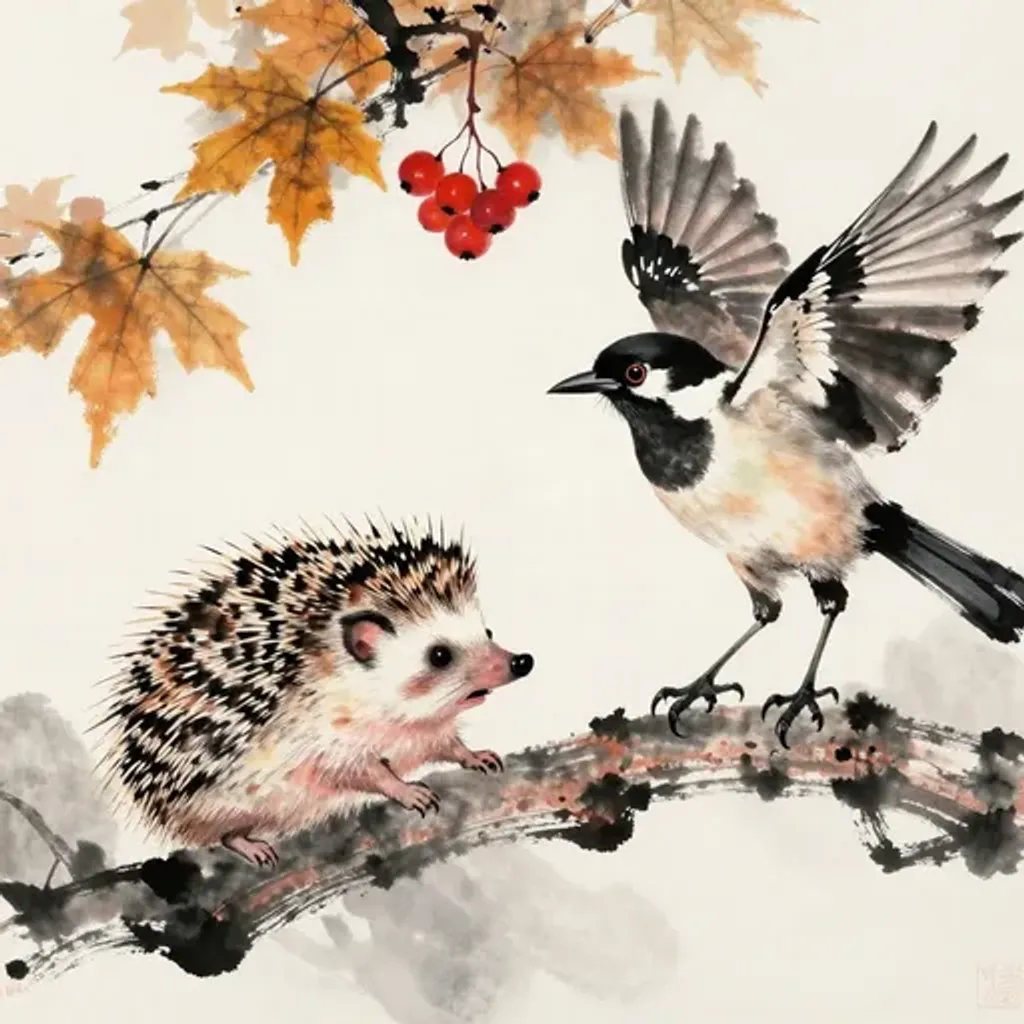
李耳彙鵲,更相恐怯。偃爾以腹,不能距格。
The plum tree startles the magpie; each frightens the other in turn. Lying belly-down in submission; unable to resist or fight.
— Jiao Yanshou, Yilin (Forest of Changes), 1st century BC
Commentary
Water upon earth witnesses small creatures in mutual alarm. A wildcat and magpies startle each other in escalating fear. Overwhelmed, the cat lies belly-up, unable to resist or fight back. The scene is almost comic: two animals that pose no real threat to each other locked in a spiral of reciprocal terror, ending in paralysis rather than harm. 'Li er' (李耳) here likely denotes a wildcat rather than Laozi. From Holding Together to Abundance, thunder and lightning should illuminate and adjudicate decisively. Yet the verse shows the opposite of Feng's decisive brilliance: both parties freeze in mutual intimidation, their panic producing not resolution but helpless immobility.
比 → 旅
Hexagram 8 → Hexagram 56: The Wanderer
Changing lines: 3, 4, 5, 6
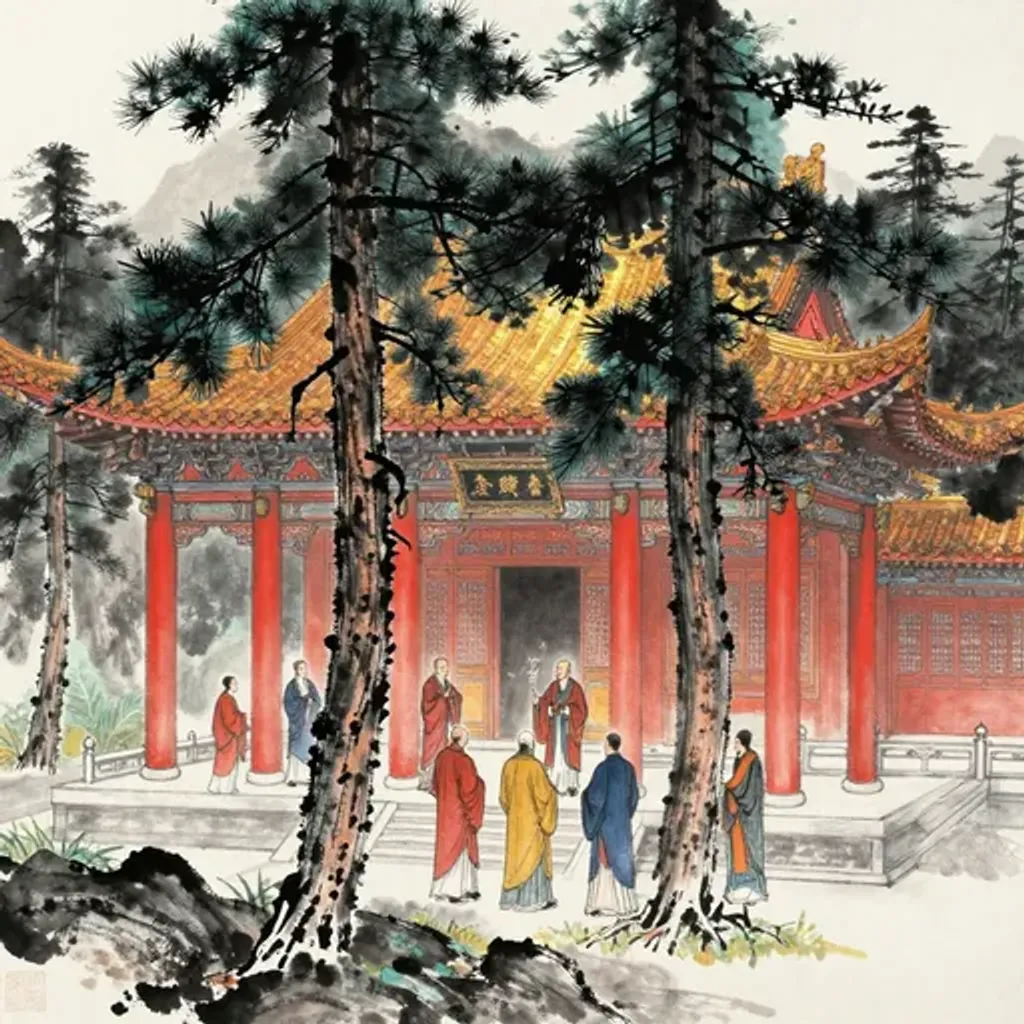
松柏棟梁,相輔為強;八哲五教,王室康寧。
Pine, cypress, ridge-beam, pillar; they support and strengthen each other. Eight wise men and five teachings; the royal house is at peace.
— Jiao Yanshou, Yilin (Forest of Changes), 1st century BC
Commentary
Water upon earth builds the pillars that hold up a state. Pine and cypress serve as ridgepole and beam, mutually reinforcing in strength. The Eight Sages and Five Teachings — recalling the legendary 'Eight Yuan and Eight Kai' whom Emperor Shun appointed to civilize the realm — keep the royal house in peace. These sixteen worthies, long overlooked, were finally employed by Shun to spread the five moral teachings and administer justice. From Holding Together to The Wanderer, fire atop the mountain illuminates the surrounding country. Lu's wandering fire needs a firm base, and the verse provides exactly that: institutional timber, wise counselors, and moral instruction that stabilize even a regime on the move.
比 → 巽
Hexagram 8 → Hexagram 57: The Gentle Wind
Changing lines: 2, 3, 6
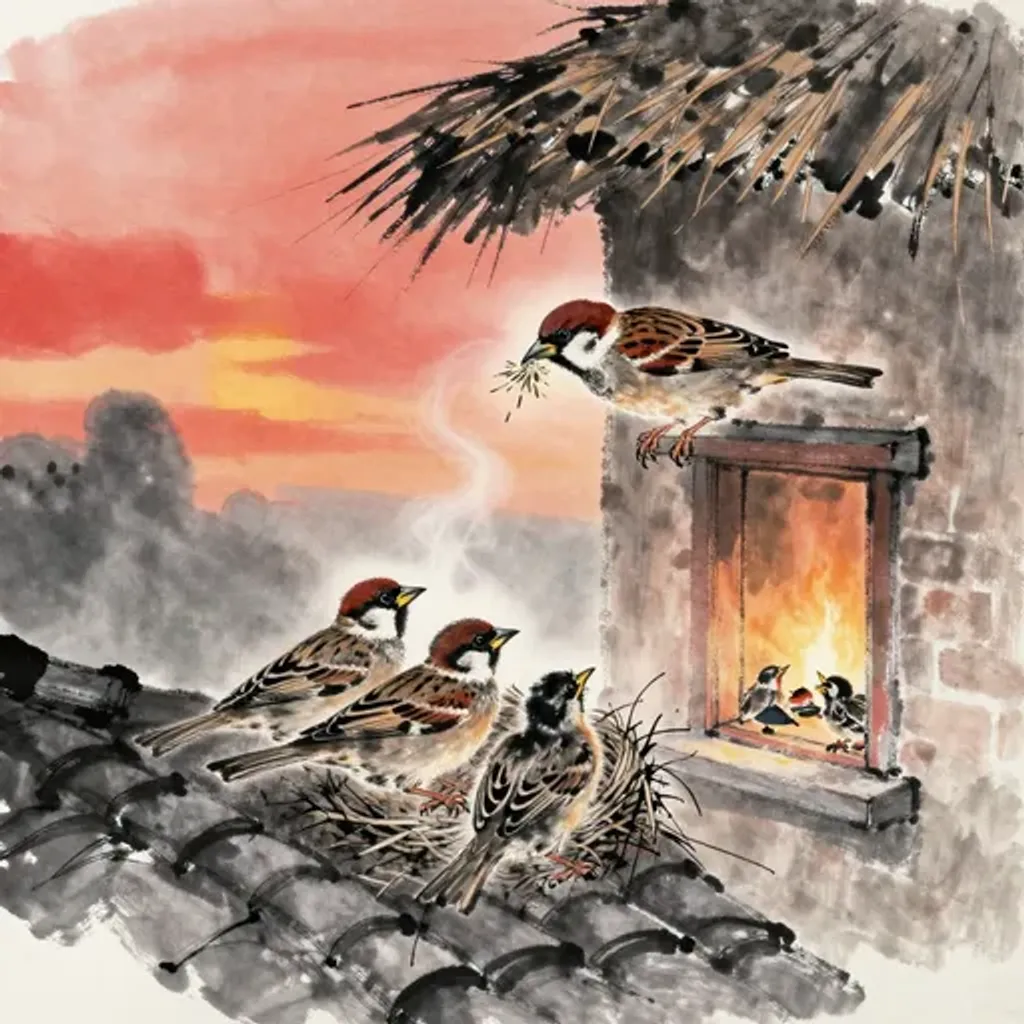
雀行求食,暮歸孚乳;反其屋室,安寧如故。
The sparrow goes out seeking grain; at dusk it returns to nurse its young. Back in its roofed nest; peaceful and calm as before.
— Jiao Yanshou, Yilin (Forest of Changes), 1st century BC
Commentary
Water upon earth secures the sparrow's daily round. It sets out at dawn to seek food, returns at dusk to brood and nurse its young, and finds its nesting place undisturbed — peaceful as always. The verse celebrates the rhythm of ordinary contentment: departure and return, labor and rest, each cycle completing itself without incident. No great events, no crises — simply the quiet fulfillment of natural purpose. From Holding Together to The Gentle, doubled wind penetrates softly and persistently. Xun's repeated gentleness mirrors the sparrow's repeated flights: each sortie is small, but the accumulation sustains a household. Alliance here is not heroic but domestic — the reliable pattern that keeps life whole.
比 → 兌
Hexagram 8 → Hexagram 58: The Joyous Lake
Changing lines: 1, 2, 4
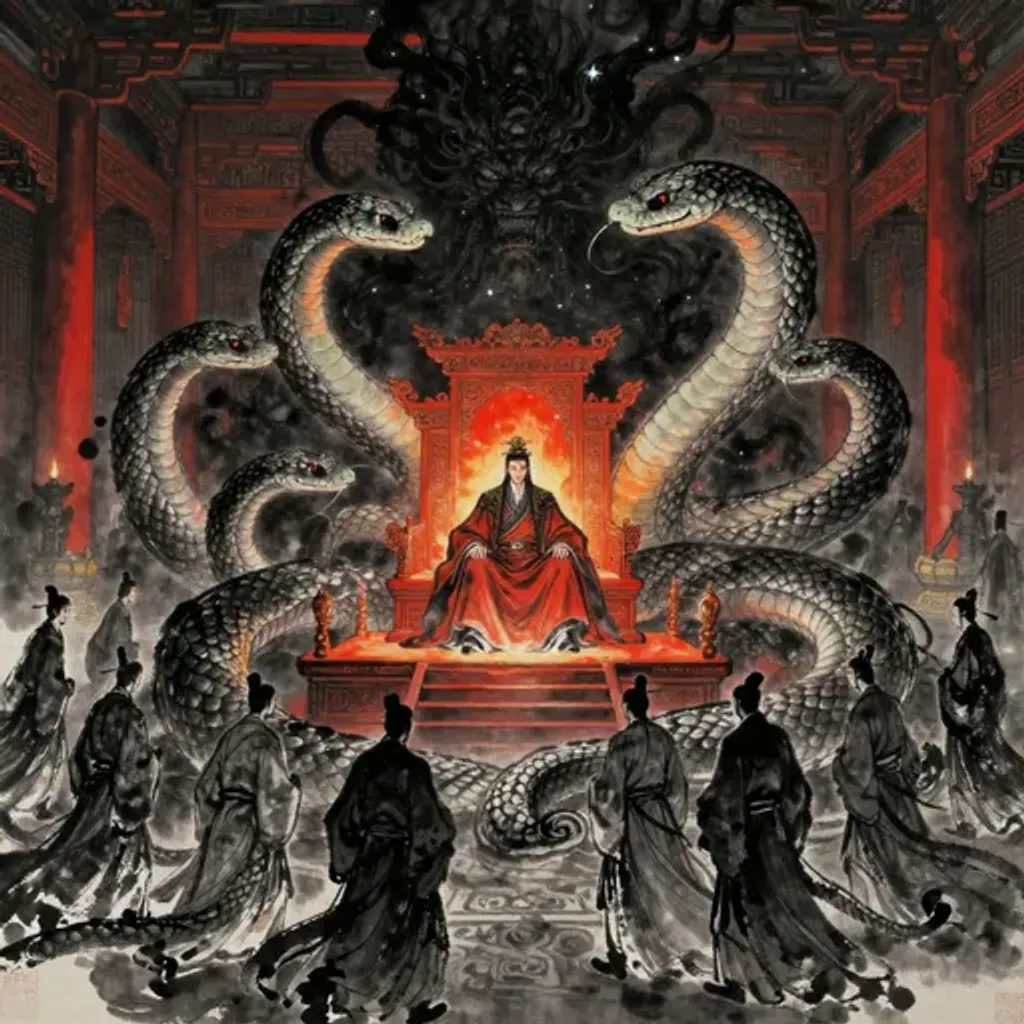
四尾六頭,為凶作妖;陰不奉陽,上失其明。
Four tails and six heads, conjuring ill and making mischief. Yin does not serve yang; the ruler above loses his clarity.
— Jiao Yanshou, Yilin (Forest of Changes), 1st century BC
Commentary
Water upon earth breeds monstrous distortion. A creature with four tails and six heads conjures doom and disaster. Yin fails to serve yang; the ruler above loses his clarity. The multi-headed, multi-tailed beast is a vision of political chaos: too many centers of power, too many divergent agendas, the natural hierarchy inverted. When the subordinate principle refuses to support the dominant, governance goes blind. From Holding Together to The Joyous, doubled lake should produce mutual delight through open exchange. Yet the verse shows Dui's shadow side: excess of openness dissolving into shapelessness, pleasure without structure becoming monstrosity. When everyone leads and no one follows, joy itself turns demonic.
比 → 渙
Hexagram 8 → Hexagram 59: Dispersion
Changing lines: 2, 6
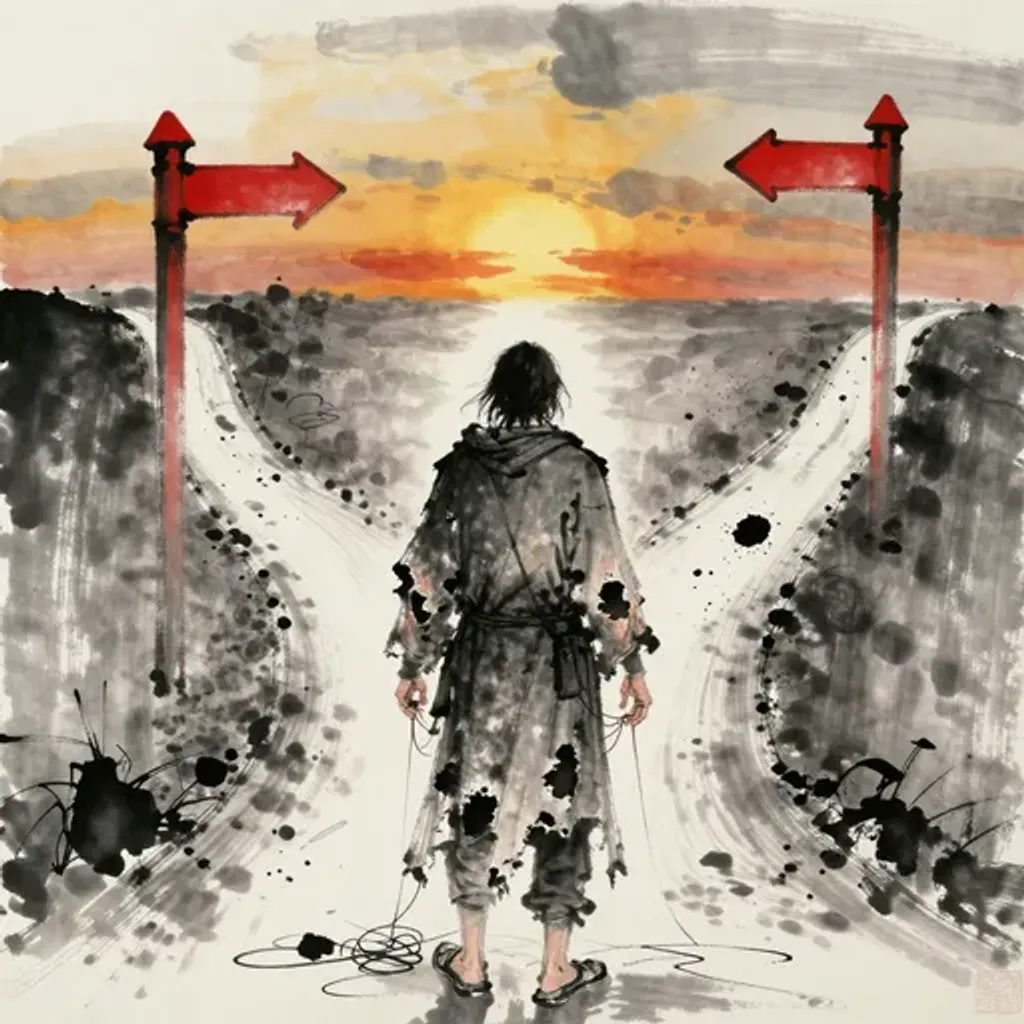
一衣三闕,結緝不便;歧道異路,日暮不到。
One garment with three rents; knotting and mending is no easy task. Forking roads and divergent paths; by nightfall one has not arrived.
— Jiao Yanshou, Yilin (Forest of Changes), 1st century BC
Commentary
Water upon earth frays at the seams. One garment has three rents, and mending it is awkward and slow. The road forks into divergent paths, and by nightfall the traveler has not arrived. Every image speaks of disintegration and delay: the fabric will not hold, the route will not converge, the daylight will not last. From Holding Together to Dispersion, wind moves across water, scattering what was gathered. Huan's image — wind dispersing water's surface — is the structural opposite of Bi's water resting on earth. What Bi consolidated, Huan dissolves. The verse traces the exact mechanism: small tears unattended become structural failure, and by the time one notices, it is too late to arrive whole.
比 → 節
Hexagram 8 → Hexagram 60: Limitation
Changing lines: 1, 2
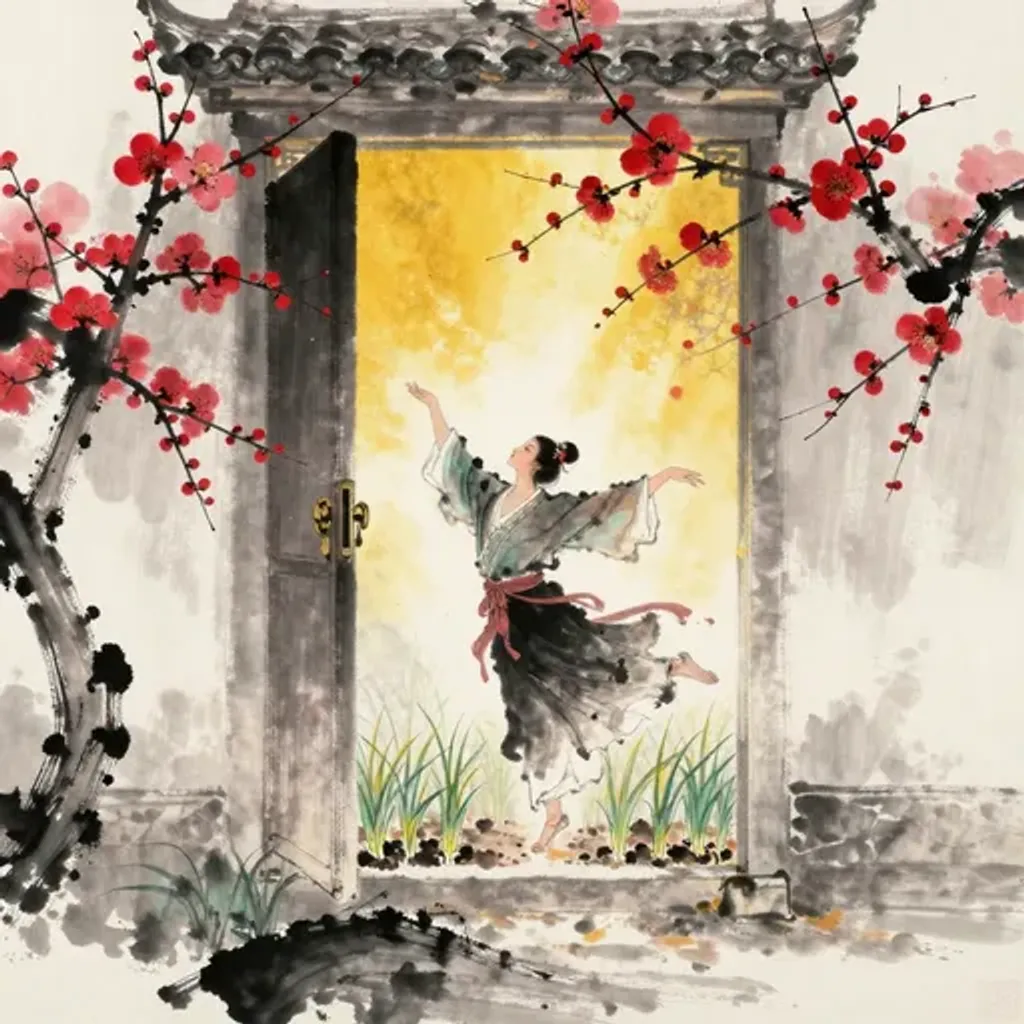
牙蘖生齒,室當啟戶;幽人利貞,鼓翼起舞。
Shoots sprout teeth from buds; the chamber opens its door. The hidden one finds advantage in constancy; beating wings, rising to dance.
— Jiao Yanshou, Yilin (Forest of Changes), 1st century BC
Commentary
Water upon earth sprouts new growth from unlikely places. Teeth bud from the gums, a room's door swings open at last. The secluded person benefits from steadfast integrity — echoing the Yi's own phrase 'the imprisoned one benefits from perseverance' — and begins to drum wings and dance. Every image marks a threshold crossed: the tooth breaking through, the door opening, the dark figure emerging into light. From Holding Together to Limitation, water above lake establishes proper boundaries. Jie's measured restraint is not confinement but structure that enables flourishing. The verse shows that the right limitations — the gum that shapes the tooth, the doorframe that defines inside from out — are what allow emergence to happen on schedule.
比 → 中孚
Hexagram 8 → Hexagram 61: Inner Truth
Changing lines: 1, 2, 6
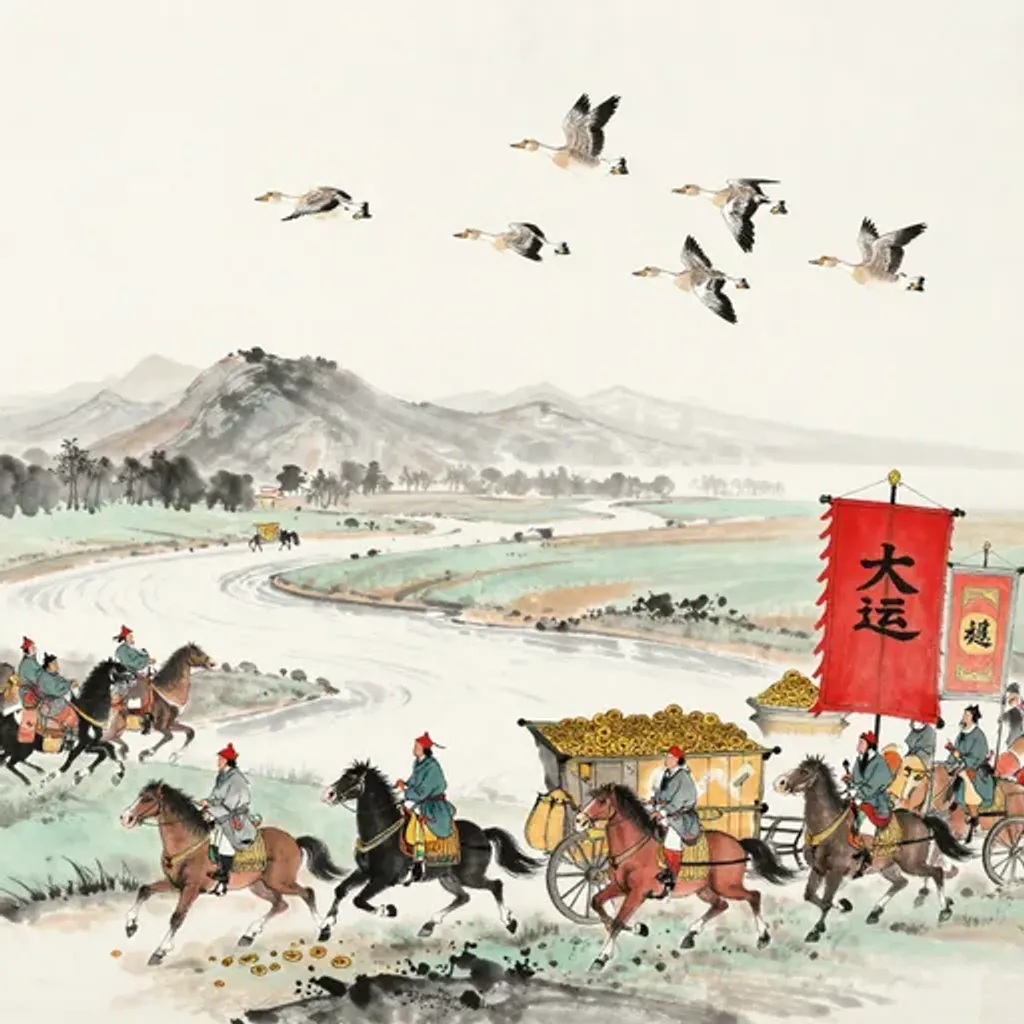
春鴻飛東,以馬質金;利得十倍,重載歸鄉。
The spring swan flies east, trading horses for gold. Profit gained tenfold; heavy-laden, returning home.
— Jiao Yanshou, Yilin (Forest of Changes), 1st century BC
Commentary
Water upon earth facilitates commerce across distances. In spring, wild geese fly east — the direction of sunrise and new enterprise. Horses are traded for gold, and the profit returns tenfold. The merchant loads his gains heavily and rides home to his village. The spring goose migration sets the timing; the eastward direction signals expansion. Trading horses for gold — exchanging living assets for concentrated wealth — is a bold mercantile gamble that pays handsomely. From Holding Together to Inner Truth, wind over lake penetrates to the heart of the matter. Zhongfu's sincerity is the merchant's credit: the trade succeeds because both parties trust the exchange. Alliance built on genuine good faith yields returns that far exceed the investment.
比 → 小過
Hexagram 8 → Hexagram 62: Small Exceeding
Changing lines: 3, 4, 5
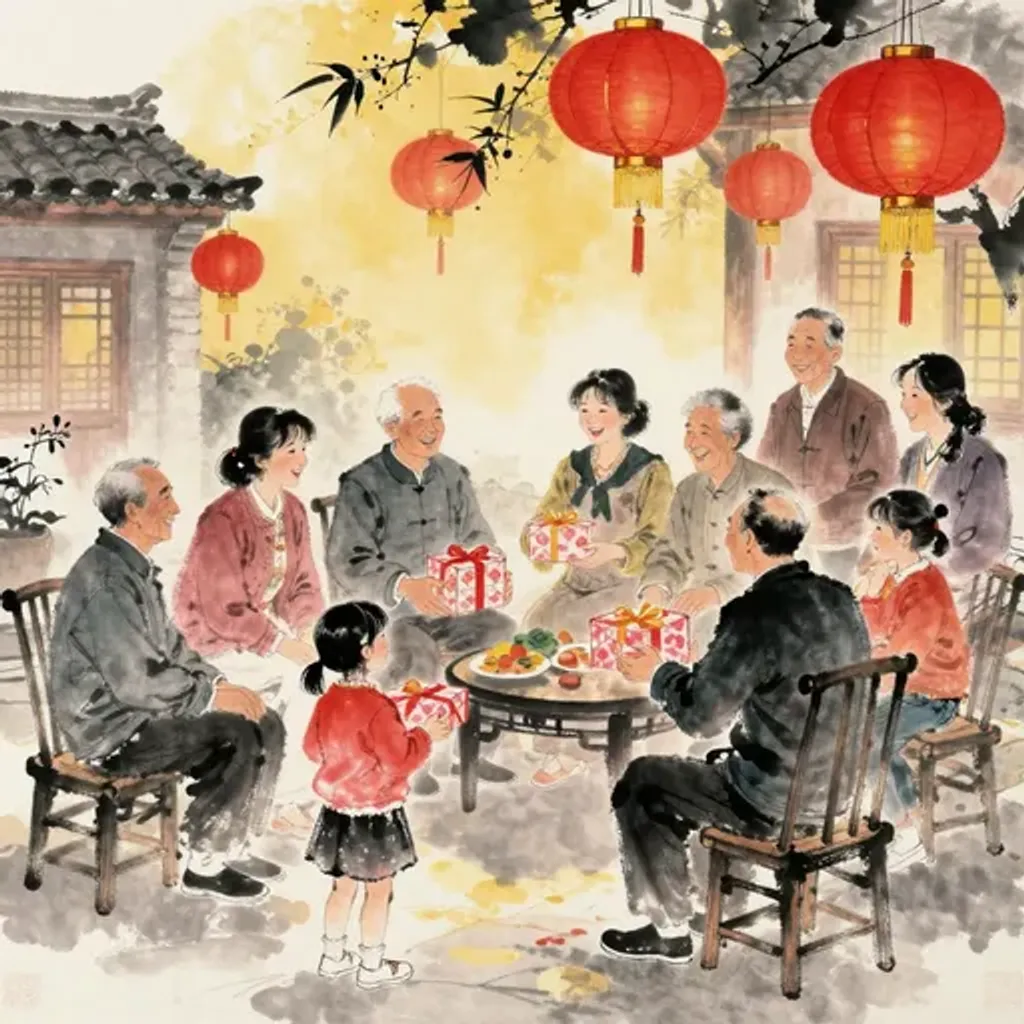
歡悅以喜,子孫俱在;守發能忍,不見殃咎。
Joyful and delighted; sons and grandsons all present. Patient and able to endure; no calamity or fault appears.
— Jiao Yanshou, Yilin (Forest of Changes), 1st century BC
Commentary
Water upon earth gathers the family in gladness. Joy and delight fill the air; children and grandchildren are all present and accounted for. The one who guards what has been achieved with patience sees no disaster or blame. The verse celebrates multi-generational wholeness: the family intact, the elders content, the young ones thriving. 'Guarding and enduring' (守發能忍) suggests that this happiness was not effortless but required restraint and forbearance. From Holding Together to Small Exceeding, thunder atop the mountain slightly overshoots — but in matters of reverence, grief, and frugality, a small excess is appropriate. The verse's disciplined contentment embodies Xiaoguo's lesson: exceed slightly in caution and care, never in ambition.
比 → 既濟
Hexagram 8 → Hexagram 63: After Completion
Changing lines: 1, 3
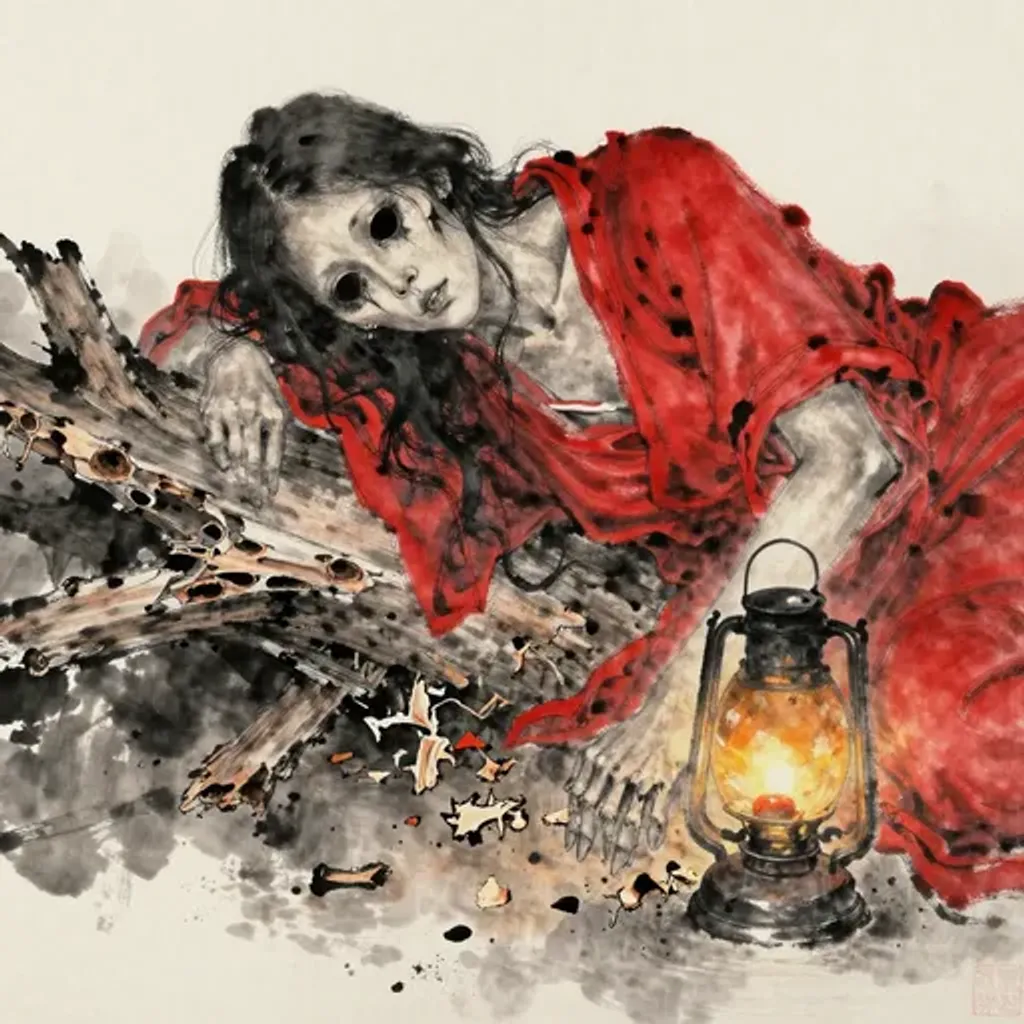
精神消落,形骸醜惡;齬齚頓挫,枯槁腐蠹。
Spirit and vitality fade away; the body grows ugly and frail. Gnashing and stumbling; withered, decayed, and worm-eaten.
— Jiao Yanshou, Yilin (Forest of Changes), 1st century BC
Commentary
Water upon earth sustains life, but here the body itself fails. Spirit and vitality drain away; the physical form grows ugly and decayed. Teeth grind and stumble; the frame withers into a desiccated husk eaten by worms. The verse is an unflinching portrait of senescence — the body as a structure that was once held together and now disintegrates. From Holding Together to After Completion, water sits above fire in apparent equilibrium, yet the hexagram warns: 'think of calamity and prepare against it.' Jiji's completed order is always on the verge of unraveling. The verse embodies that precipice: everything that once functioned now decays, a completed life tilting toward its dissolution.
比 → 未濟
Hexagram 8 → Hexagram 64: Before Completion
Changing lines: 2, 4, 5, 6
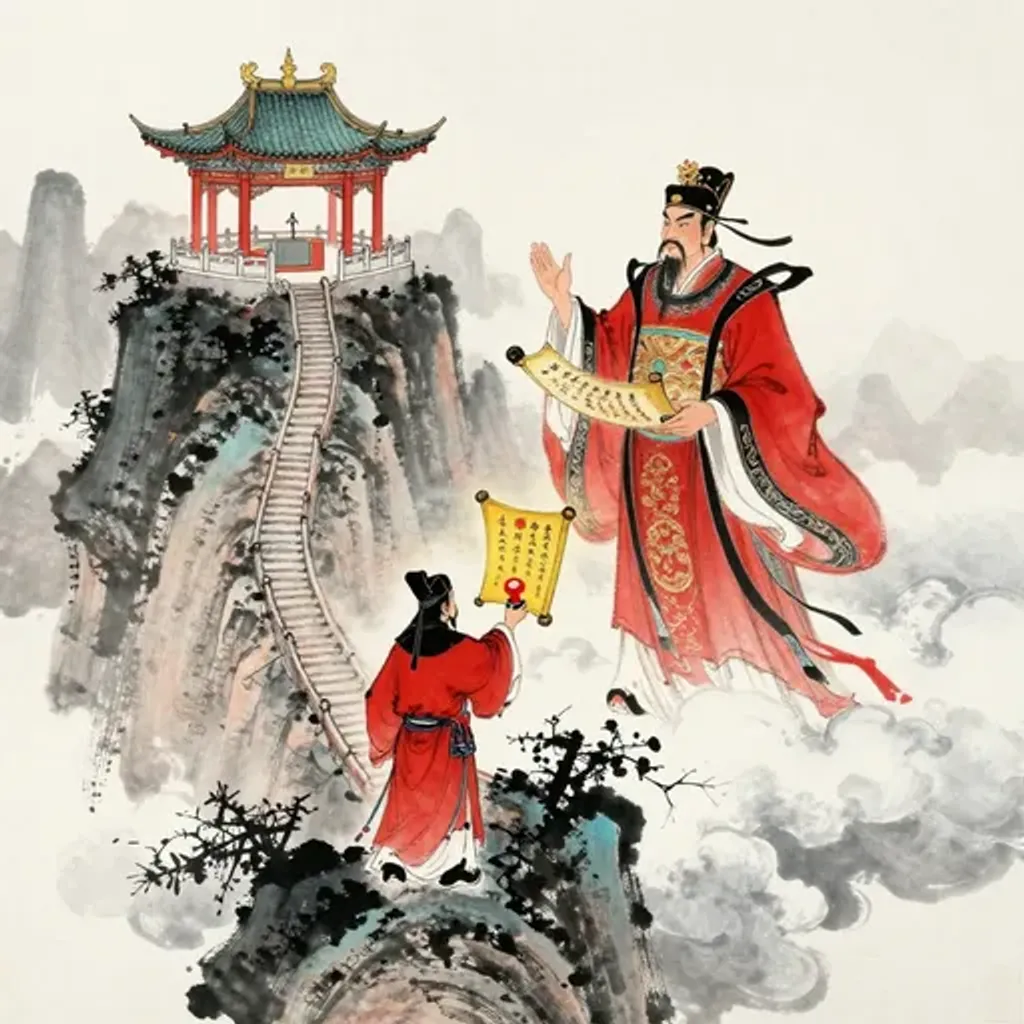
登高上山,見王自言;申理我冤,得職蒙恩。
Climbing high upon the mountain, meeting the king and speaking directly. He hears my grievance; I receive office and grace.
— Jiao Yanshou, Yilin (Forest of Changes), 1st century BC
Commentary
Water upon earth carries the petitioner upward to seek justice. Climbing the high mountain, one reaches the king and speaks directly, laying out the grievance and pleading the case. The wrong is rectified; an official position is bestowed, and grace is received. The verse traces a complete arc of vindication: from obscurity and injustice to recognition and restoration. The mountain ascent is both literal and metaphorical — the arduous journey to the seat of power. From Holding Together to Before Completion, fire above water has not yet found its proper configuration, yet the verse insists on resolution. Weiji's incompleteness is not failure but the threshold just before order is established. The petitioner arrives; the story is not yet over, but the turning point has been reached.