Transformations of Hexagram 18
Every line of change out of Hexagram 18 蠱 Work on the Decayed, with the Yilin verse for each of the 64 resulting hexagrams, its translation, and the original ink brush artwork.
蠱 → 乾
Hexagram 18 → Hexagram 1: The Creative
Changing lines: 1, 4, 5
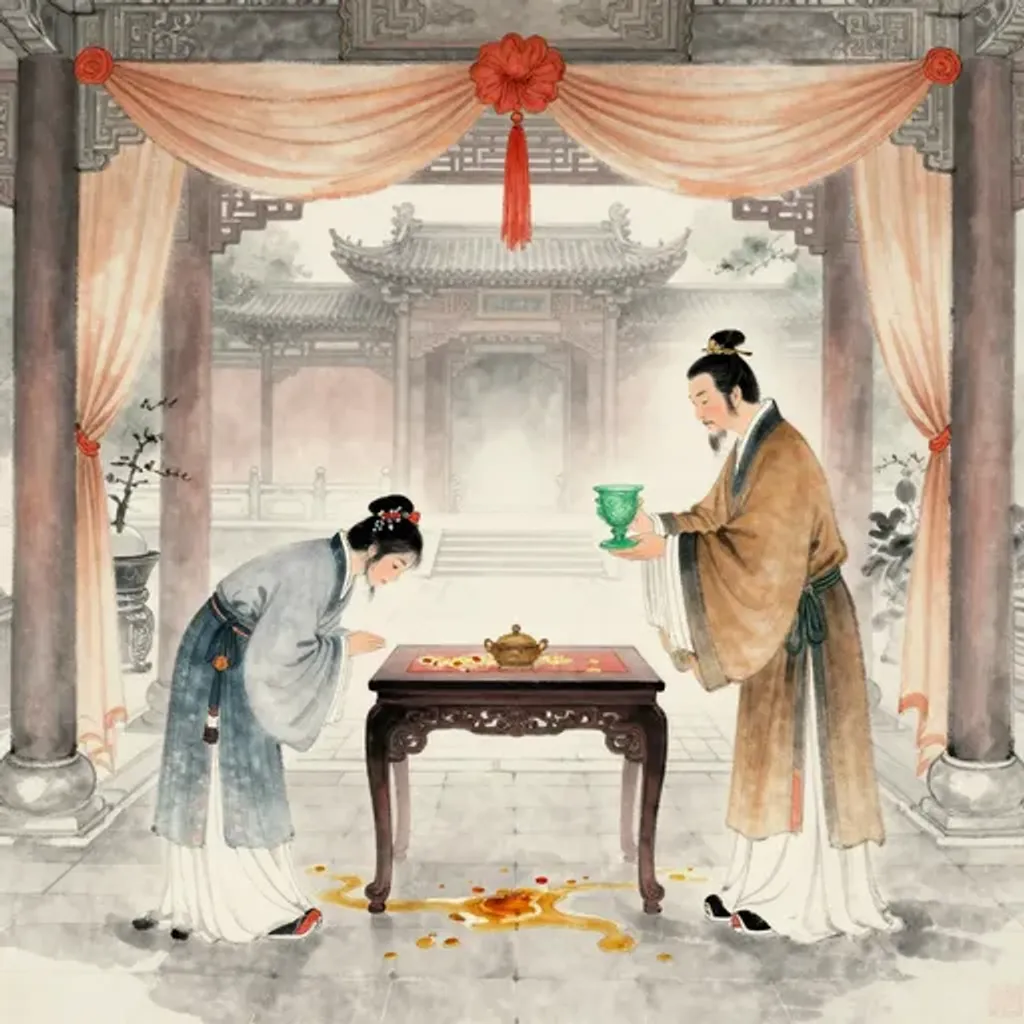
首澤與目,載受福慶;我有好爵,與汝相迎。
Head anointed and eyes bright, one receives blessings and good fortune. I have a fine wine cup, and with it I welcome you.
— Jiao Yanshou, Yilin (Forest of Changes), 1st century BC
Commentary
Wind beneath the mountain stirs decay, but here the transformation rises toward pure creative heaven. The verse opens with lustral blessing — head and eyes washed in beneficent dew — receiving fortune and celebration. 'I have a fine goblet and raise it to greet you' echoes the language of ritual communion from the Shijing. The tone is one of renewal through purification: what was spoiled is cleansed, and the celebrant steps forward to share bounty. From Work on the Decayed to the Creative, the pattern is unmistakable: corruption addressed at its root releases self-generating energy. The mountain's trapped wind, once stagnant, finds open sky and becomes the tireless motion of heaven itself.
蠱 → 坤
Hexagram 18 → Hexagram 2: The Receptive
Changing lines: 2, 3, 6
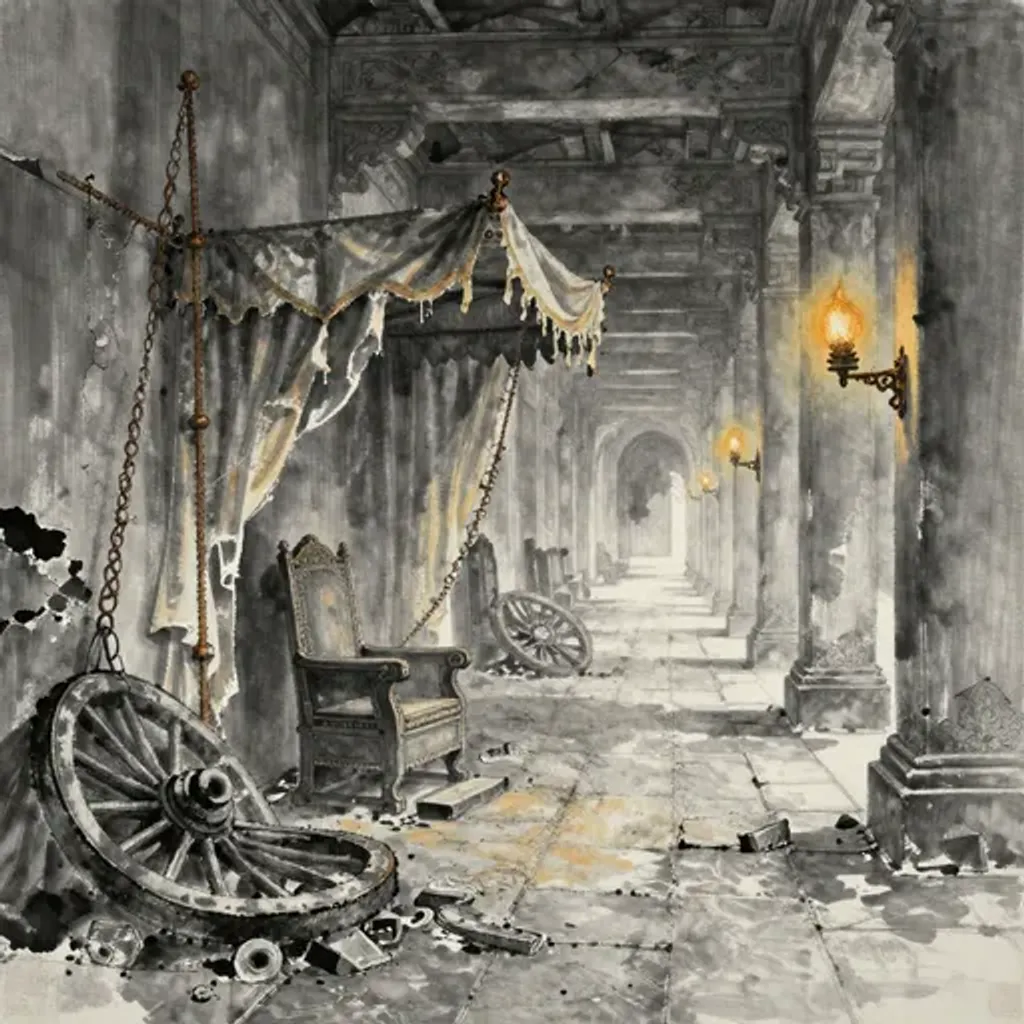
䡘䡘轠轠,歲莫偏蔽,寵名捐棄,君衰在位。
Rumbling and clattering; as the year wanes, all is obscured. Favor and fame are cast aside; the lord declines upon the throne.
— Jiao Yanshou, Yilin (Forest of Changes), 1st century BC
Commentary
Wind trapped beneath the mountain breeds neglect, and the transformation descends into pure earth. Wheels rattle and axles groan as the year draws to its close, everything shrouded and obscured. Favor and reputation are cast away; the ruler grows feeble while still upon the throne. The onomatopoeia of creaking carts suggests a regime in terminal decline — all mechanism, no vitality. From Work on the Decayed to the Receptive, the dynamic is one of entropy completed: what should have been repaired instead collapses into passive dissolution. The mountain's wind, unable to renew what lies beneath, surrenders to earth's absorbing stillness. Even the throne becomes merely a seat, its mandate exhausted.
蠱 → 屯
Hexagram 18 → Hexagram 3: Difficulty at the Beginning
Changing lines: 1, 2, 3, 5, 6
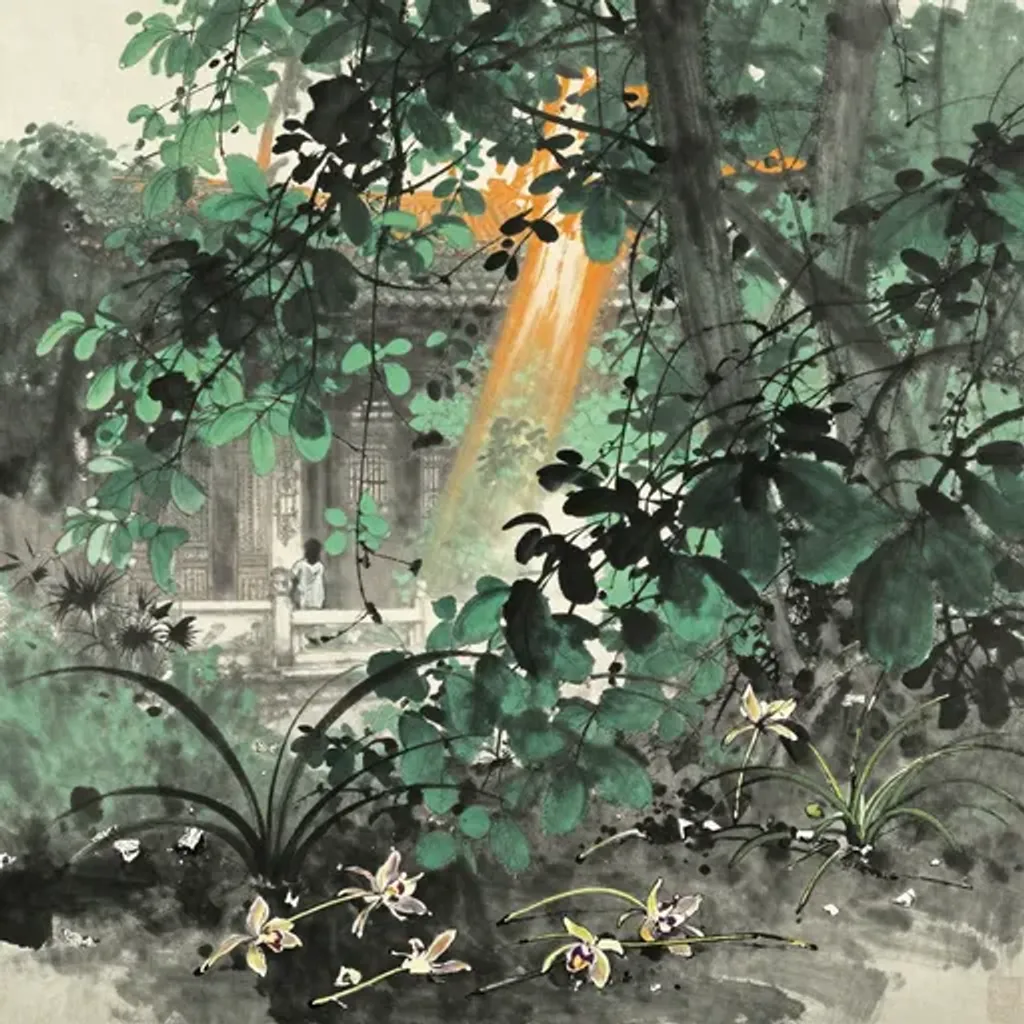
折若蔽日,蘭屏王目。司馬無良,平子沒傷。
Thick foliage blocks the sun; orchid screens obstruct the king eyes. The Marshal is unworthy -- Pingzi falls to ruin.
— Jiao Yanshou, Yilin (Forest of Changes), 1st century BC
Commentary
Wind beneath the mountain breeds corruption, and the transformation enters the gathering storm of clouds and thunder. Broken branches block the sun, orchid screens veil the king's sight — sycophants and flatterers obstruct the ruler's vision. The verse names 'Sima without goodness' and 'Pingzi who came to harm,' likely alluding to the political turmoil in Lu when Ji Pingzi, the powerful minister, usurped ritual prerogatives and drove Duke Zhao into exile. The Sima, the military commander, proved faithless. From Work on the Decayed to Difficulty at the Beginning, decay's unchecked corruption produces the dangerous birth-struggle of a new order. Like thunder trapped beneath floodwaters, the situation demands perseverance through chaos before clarity can emerge.
蠱 → 蒙
Hexagram 18 → Hexagram 4: Youthful Folly
Changing lines: 3
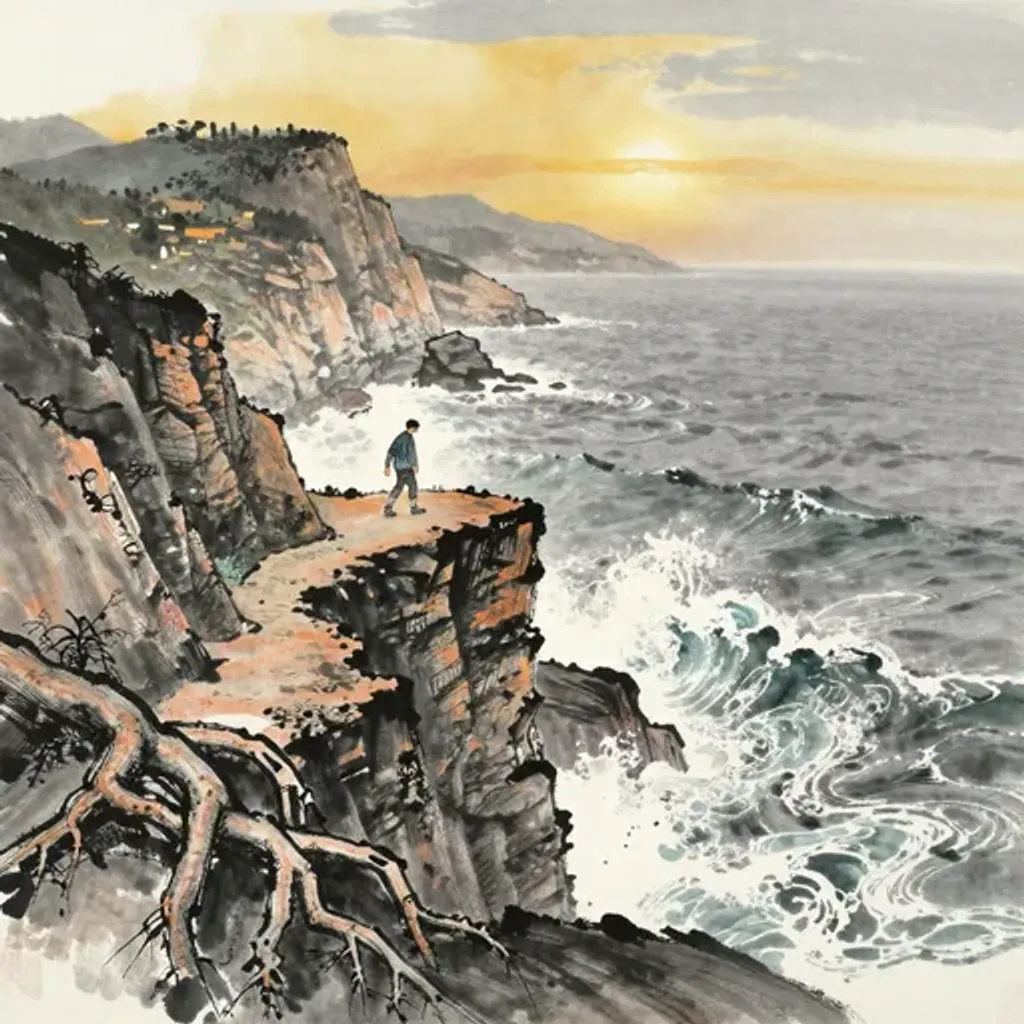
家在海隅,撓繞深流;王孫單行,無妄以趍。
Home at the edge of the sea, surrounded by deep currents; the prince travels alone, rushing onward without reckless haste.
— Jiao Yanshou, Yilin (Forest of Changes), 1st century BC
Commentary
Wind beneath the mountain whispers of things gone wrong, and the path leads to a spring hidden under the mountain — youthful folly's uncertain waters. A household stands at the ocean's edge, surrounded by deep currents that twist and coil. A royal scion travels alone, advancing recklessly without guidance. The imagery evokes exile and disorientation: the prince far from court, navigating treacherous waters without a map. From Work on the Decayed to Youthful Folly, the spoiled situation demands humility and willingness to learn. The lone traveler at the sea's margin must stop rushing forward and instead seek the spring's source — patient instruction rather than headlong flight.
蠱 → 需
Hexagram 18 → Hexagram 5: Waiting
Changing lines: 1, 5, 6
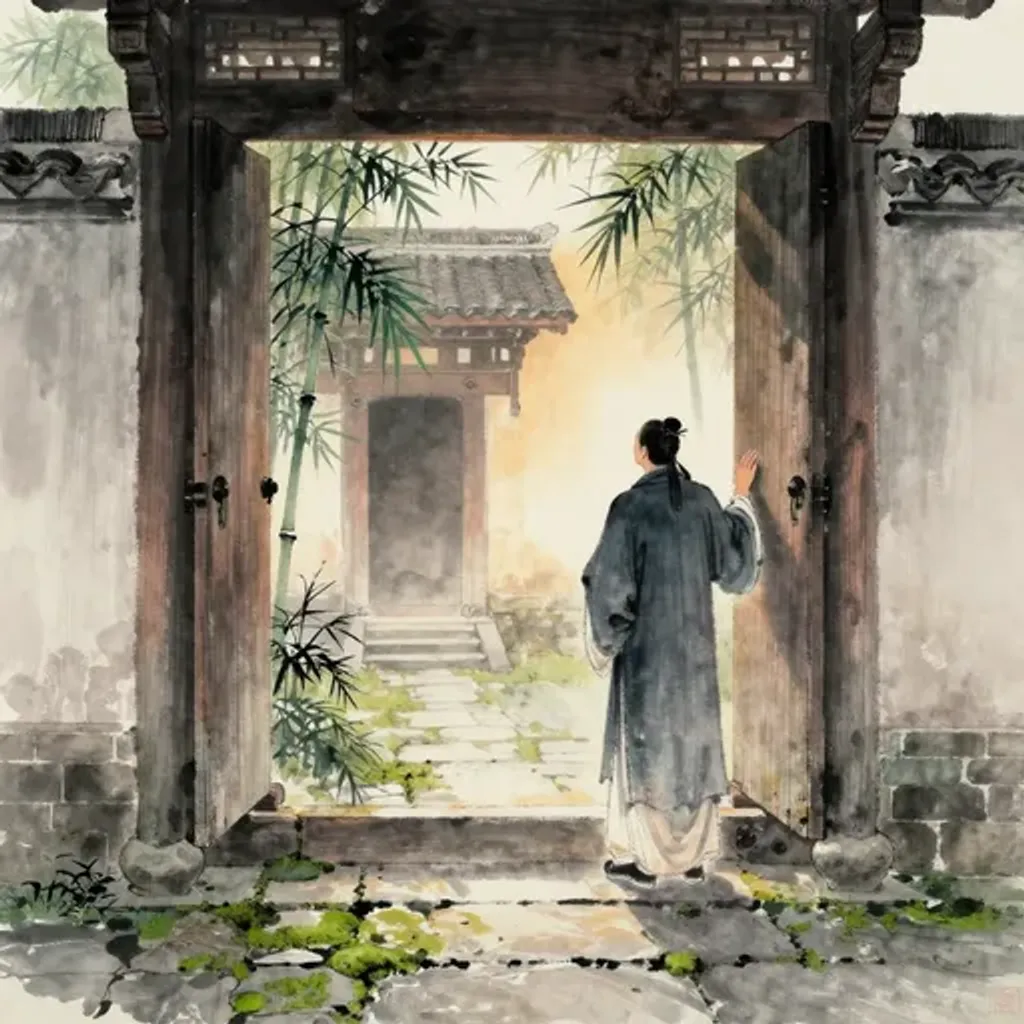
執義秉德,不危不殆。延頸盤桓,安其室檀。屯耗未得,終無大恤。
Holding fast to duty and virtue, neither endangered nor imperiled. Craning the neck, lingering at the threshold; resting secure in one dwelling. Though stalled and unfruitful, in the end there is no great distress.
— Jiao Yanshou, Yilin (Forest of Changes), 1st century BC
Commentary
Wind beneath the mountain calls for restoration, and the transformation leads to clouds gathering above heaven — the patience of Waiting. Holding fast to righteousness and upholding virtue, one faces no peril. Craning the neck in hesitation, yet secure in one's own dwelling. Though supplies are depleted and gains have not yet arrived, ultimately no great calamity befalls. The verse counsels steadfast composure: when decay surrounds you, do not abandon principle for expedience. From Work on the Decayed to Waiting, the remedy for corruption is not frantic action but principled patience. Like clouds massing above heaven before the nourishing rain, the right moment will come to those who hold their ground.
蠱 → 訟
Hexagram 18 → Hexagram 6: Conflict
Changing lines: 3, 4, 5
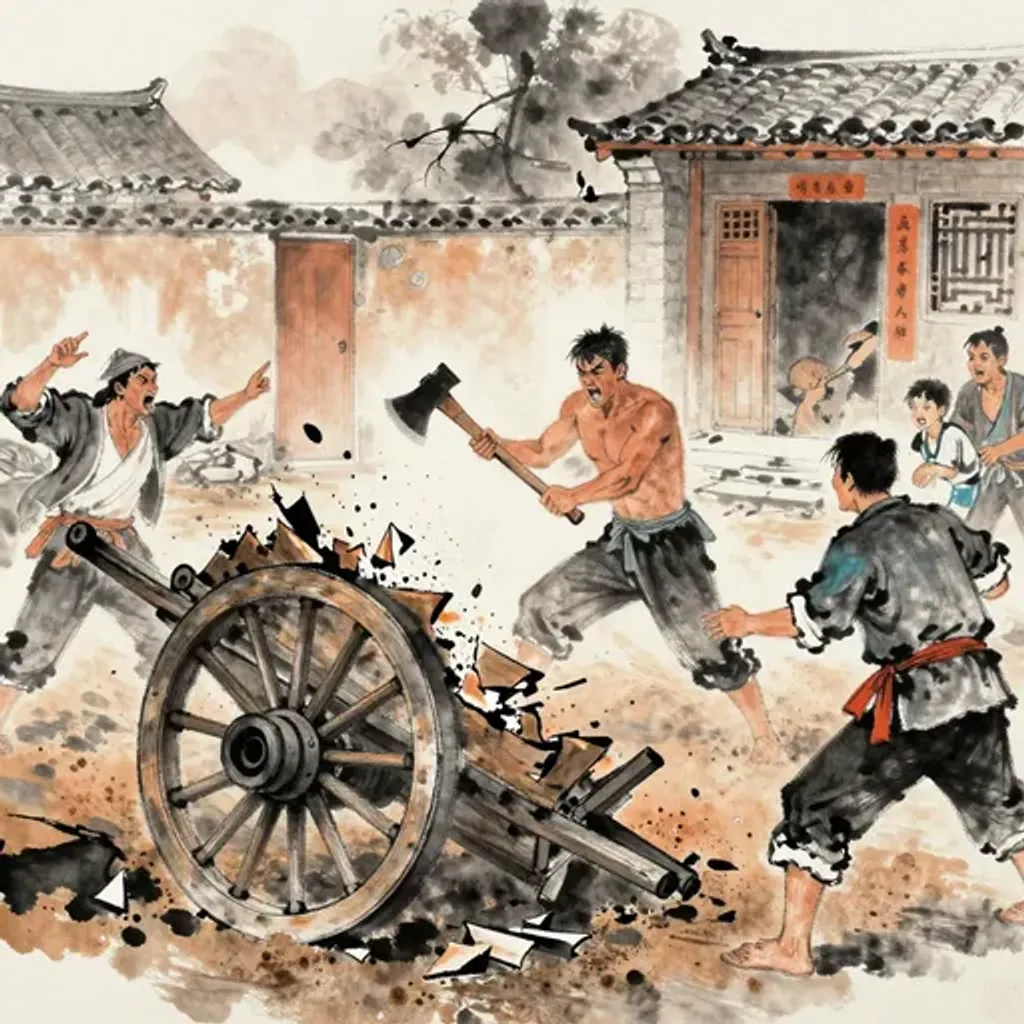
長舌亂家,大斧破車;陽陰不得,姬姜衰憂。
The long tongue ruins the household; the great axe shatters the cart. Yang and yin cannot unite -- the Ji and Jiang clans decline in sorrow.
— Jiao Yanshou, Yilin (Forest of Changes), 1st century BC
Commentary
Wind beneath the mountain breeds poison, and the transformation rises into the discord of heaven moving against water. A long tongue ruins the household; a great axe smashes the carriage. Yin and yang cannot find accord, and the Ji and Jiang clans fall into grief. The 'long tongue' echoes the Shijing's condemnation of slander, while the axe destroying the carriage suggests institutional violence. Ji and Jiang — the two great surname-lineages of Zhou feudalism — represent the entire aristocratic order. From Work on the Decayed to Conflict, unchecked decay escalates into open confrontation. The mountain's corrupted wind becomes heaven and water pulling apart: litigation, accusation, and the severing of alliances that once held the realm together.
蠱 → 師
Hexagram 18 → Hexagram 7: The Army
Changing lines: 3, 6
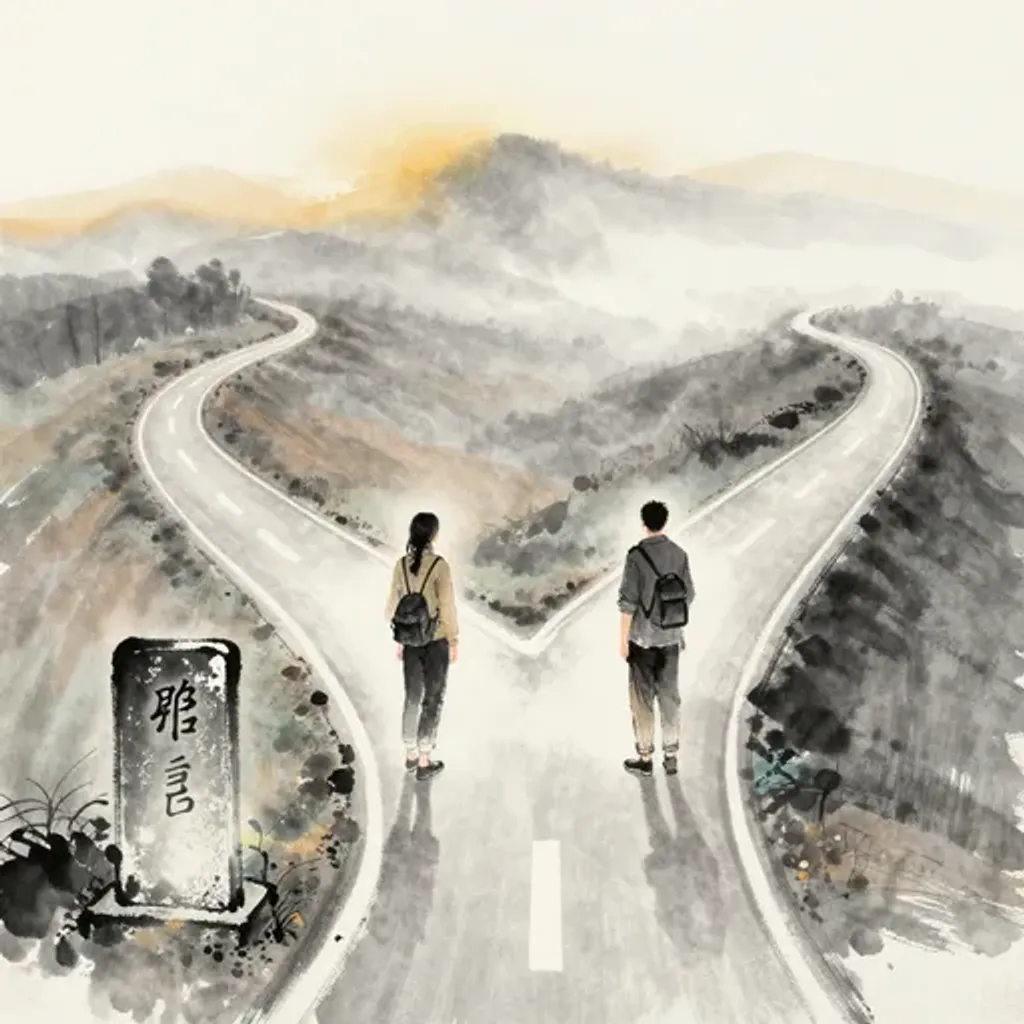
二人異路,東趍西步;千里之外,不相知處。
Two people on different roads -- one heads east, the other steps west. A thousand li apart, neither knows where the other dwells.
— Jiao Yanshou, Yilin (Forest of Changes), 1st century BC
Commentary
Wind beneath the mountain scatters what should be joined, and the transformation descends into earth concealing water — the disciplined order of the Army. Two people take different roads: one hurries east, the other steps west. Separated by a thousand li, neither knows the other's whereabouts. The verse captures the desolation of parting without reunion — companions, allies, or lovers driven apart by circumstance. From Work on the Decayed to the Army, the scattered must be gathered under discipline. Where decay has dispersed people to the four winds, only organized collective action — water hidden within earth, the army's latent force — can restore order and bring the separated together again.
蠱 → 比
Hexagram 18 → Hexagram 8: Holding Together
Changing lines: 2, 3, 5, 6
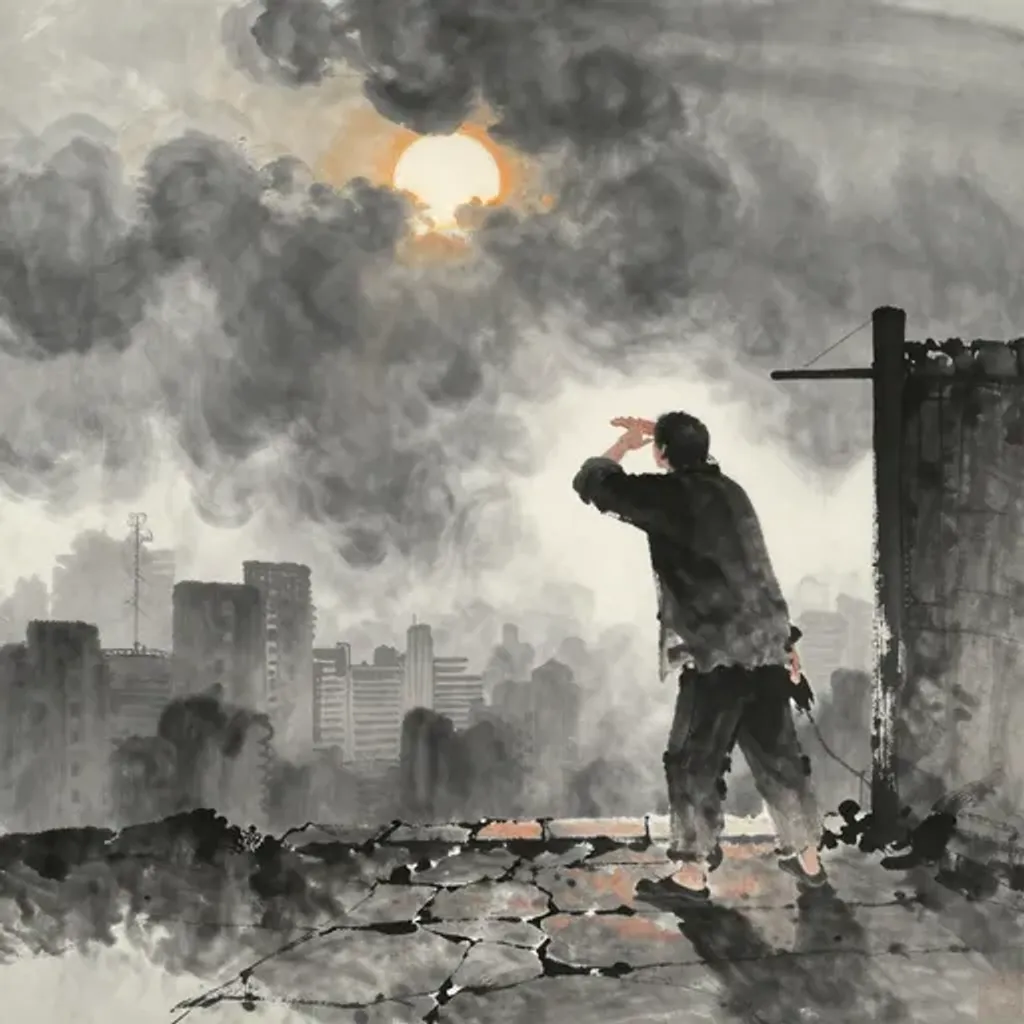
視暗不見,雲蔽日光;不見子都,鄭人心傷。
Gazing into darkness and seeing nothing; clouds obscure the sunlight. Unable to see Zidu -- the people of Zheng are heartsick.
— Jiao Yanshou, Yilin (Forest of Changes), 1st century BC
Commentary
Wind beneath the mountain obscures what once was clear, and the transformation seeks water upon earth — the bonding of Holding Together. Vision darkens until nothing can be seen; clouds veil the sun's light. Unable to glimpse Zidu, the people of Zheng are heartbroken. Zidu (子都), also known as Gongsun E, was the legendary beauty of the state of Zheng, celebrated in the Shijing ode 'Shan You Fusu' as every maiden's dream. His absence here signals the loss of what is admirable and desirable. From Work on the Decayed to Holding Together, the remedy for obscured vision is not solitary striving but seeking alliance. When clouds block the sun, one must bond with others to find the light — the water flowing across earth's surface naturally gathers.
蠱 → 小畜
Hexagram 18 → Hexagram 9: Small Taming
Changing lines: 1, 5
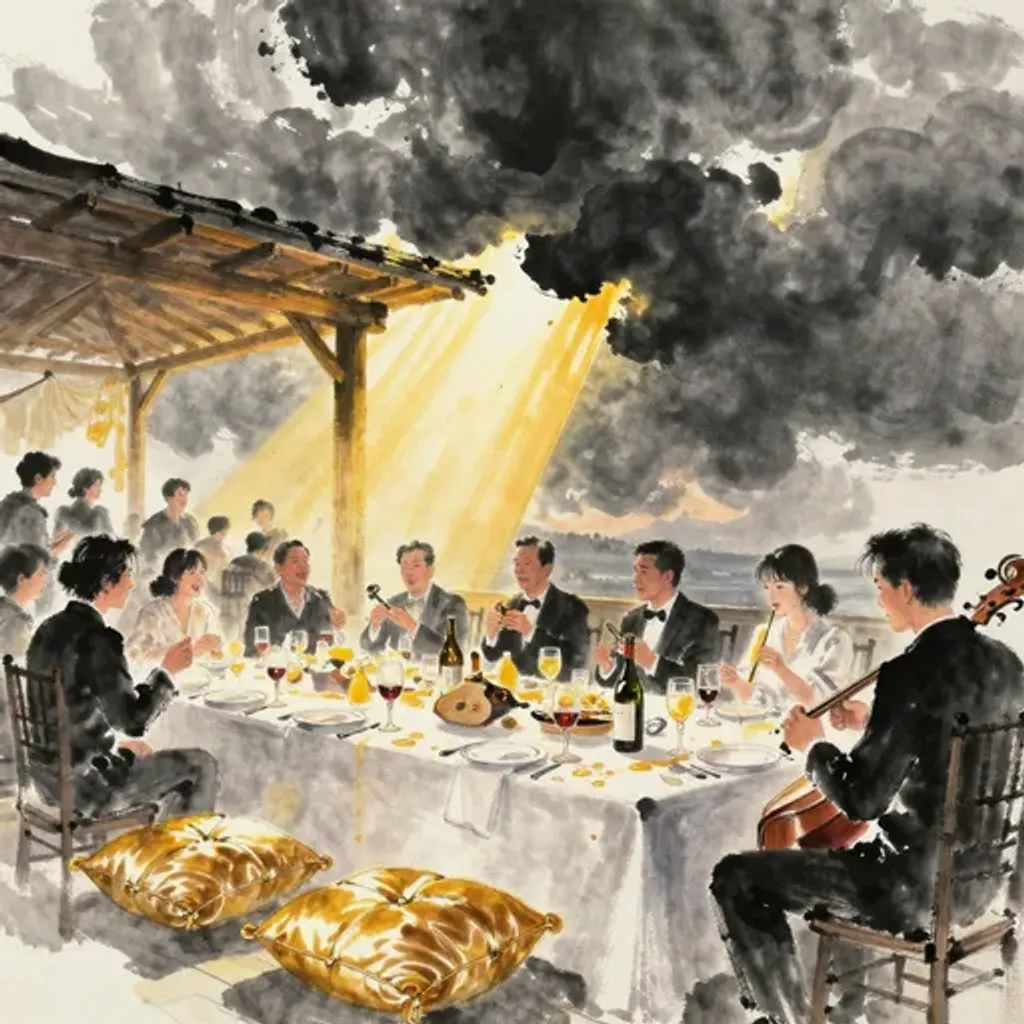
初憂後喜,與福為市;八佾列陳,飲御嘉友。
Dark clouds press the city then suddenly the sun breaks through; golden light pours over the banquet platform. Amid silk and bamboo music, cups are raised — laughter fills the hall, a hundred worries scatter.
— Jiao Yanshou, Yilin (Forest of Changes), 1st century BC
Commentary
Wind beneath the mountain first brings worry, but the transformation carries it upward to wind riding above heaven — the gentle restraint of Small Taming. The original verse reads: 'First worry, then joy — fortune comes as if to market. Eight rows of dancers arrayed; drinking among honored friends.' The eight-row dance (八佾) was the Son of Heaven's ritual prerogative, suggesting a celebration of the highest order. Initial anxiety dissolves into ceremonial festivity and companionship. From Work on the Decayed to Small Taming, the pattern traces how troubled beginnings yield to refined cultivation. Wind above heaven gently restrains creative force, channeling raw energy into cultural refinement — the banquet after the crisis, beauty emerging from anxiety.
蠱 → 履
Hexagram 18 → Hexagram 10: Treading
Changing lines: 1, 3, 4, 5
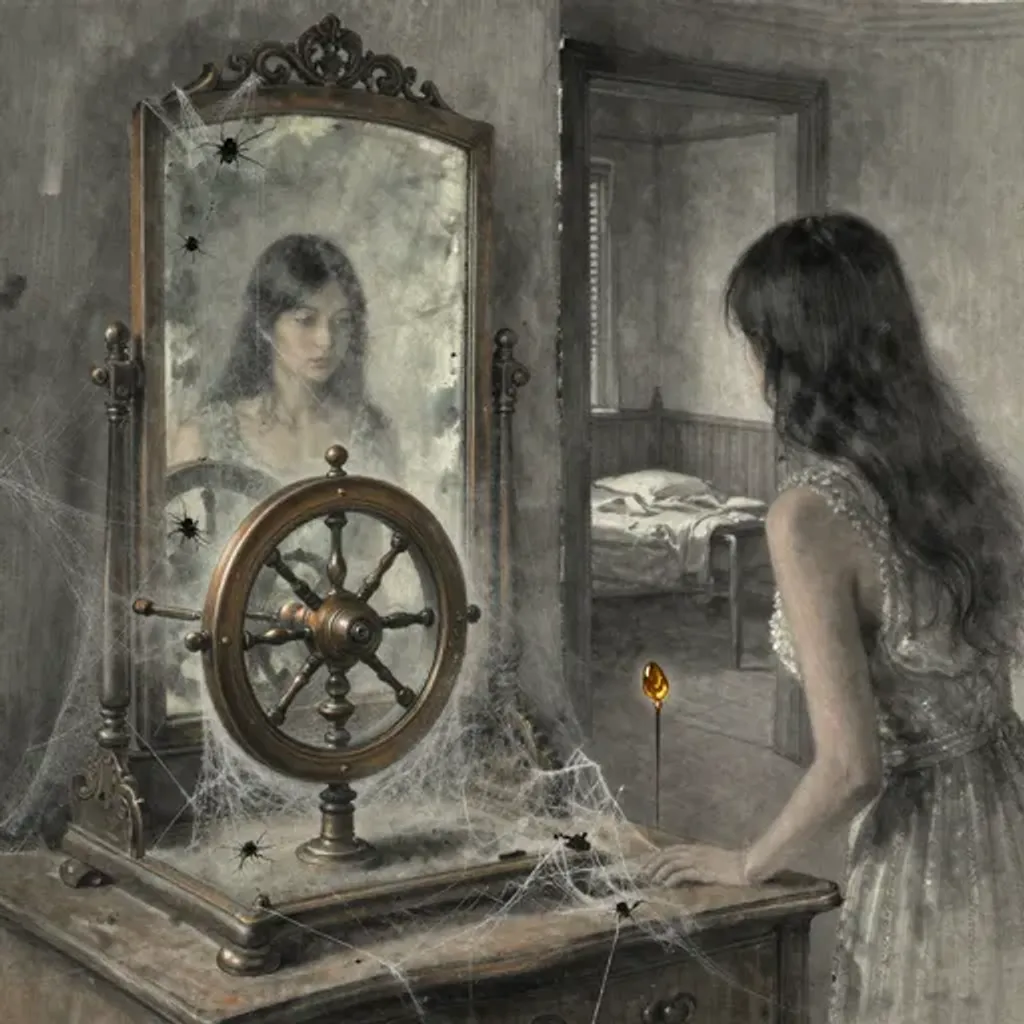
童妾獨宿,長女未室;利無所得。
The spinning wheel stops; spider silk wraps the spindle. A fair face looks into a mirror — but the mirror too is covered in dust.
— Jiao Yanshou, Yilin (Forest of Changes), 1st century BC
Commentary
Wind beneath the mountain stagnates, and the transformation ascends to heaven above the lake — the cautious steps of Treading. The original verse reads: 'A young concubine sleeps alone; the eldest daughter remains unmarried. No profit is gained.' Neglect and abandonment pervade: the concubine left without companionship, the daughter past her prime without a match, all enterprise barren. The domestic decay mirrors the hexagram's corruption — relationships untended, opportunities squandered. From Work on the Decayed to Treading, the remedy demands careful conduct. Like treading upon the tiger's tail without being bitten, one must restore order through propriety and attention to what has been neglected, stepping deliberately where carelessness once prevailed.
蠱 → 泰
Hexagram 18 → Hexagram 11: Peace
Changing lines: 1, 6
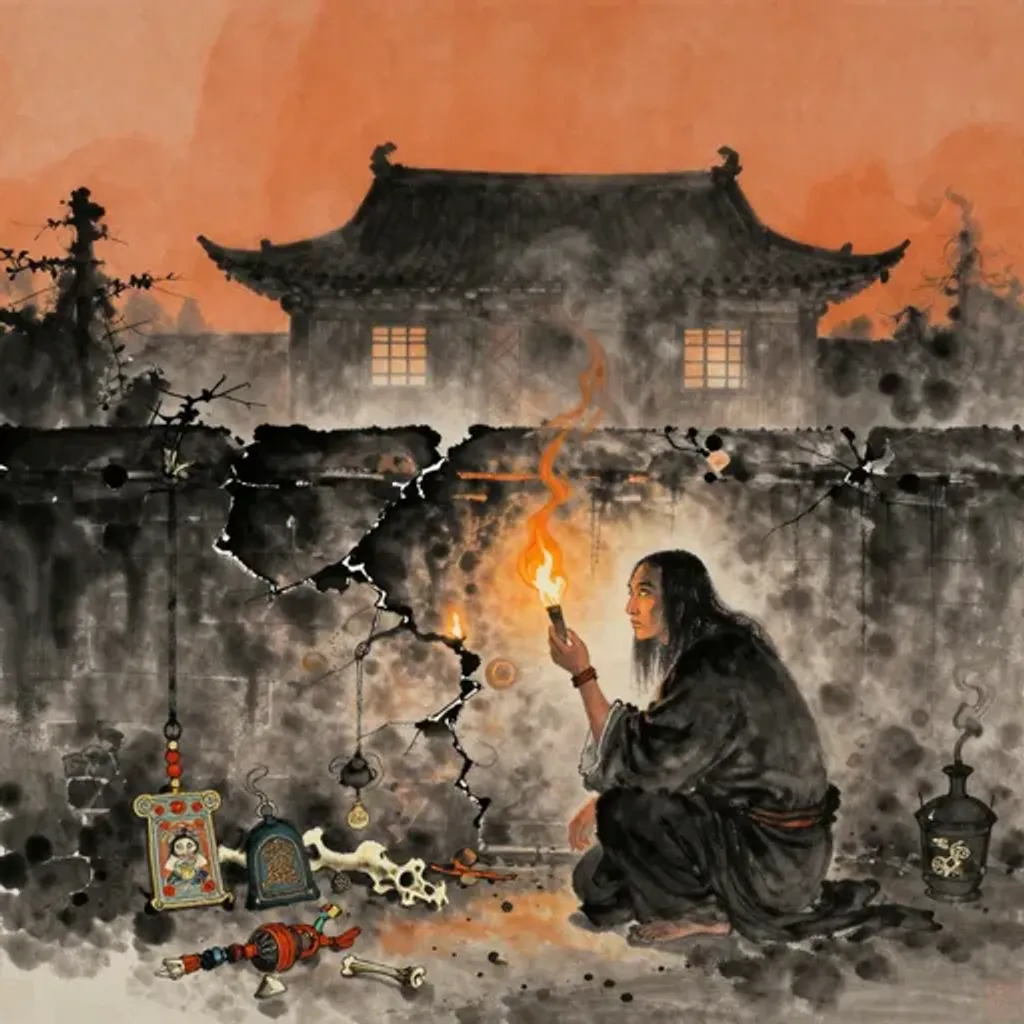
玄黃四塞,陰雌伏謀;呼我墻屋,為巫所識。
Dark and murky on all four sides; the yin female plots in secret. Calling at my walls and roof -- discovered by the shaman.
— Jiao Yanshou, Yilin (Forest of Changes), 1st century BC
Commentary
Wind beneath the mountain conceals dark schemes, and the transformation leads unexpectedly to heaven and earth in communion — the Peace of Tai. Dark and yellow vapors seal off the four directions as the yin-feminine plots in secret. Voices cry out from within the walls as a sorcerer marks the house. The imagery is of occult intrusion: malign influence penetrating domestic space, spiritual pollution demanding exorcism. Yet the destination is Peace, where heaven descends and earth rises to meet it. From Work on the Decayed to Peace, even bewitchment can be overcome when cosmic forces realign. The sorcerer's identification of the curse is itself the first step toward restoration — naming the corruption breaks its hold.
蠱 → 否
Hexagram 18 → Hexagram 12: Standstill
Changing lines: 2, 3, 4, 5
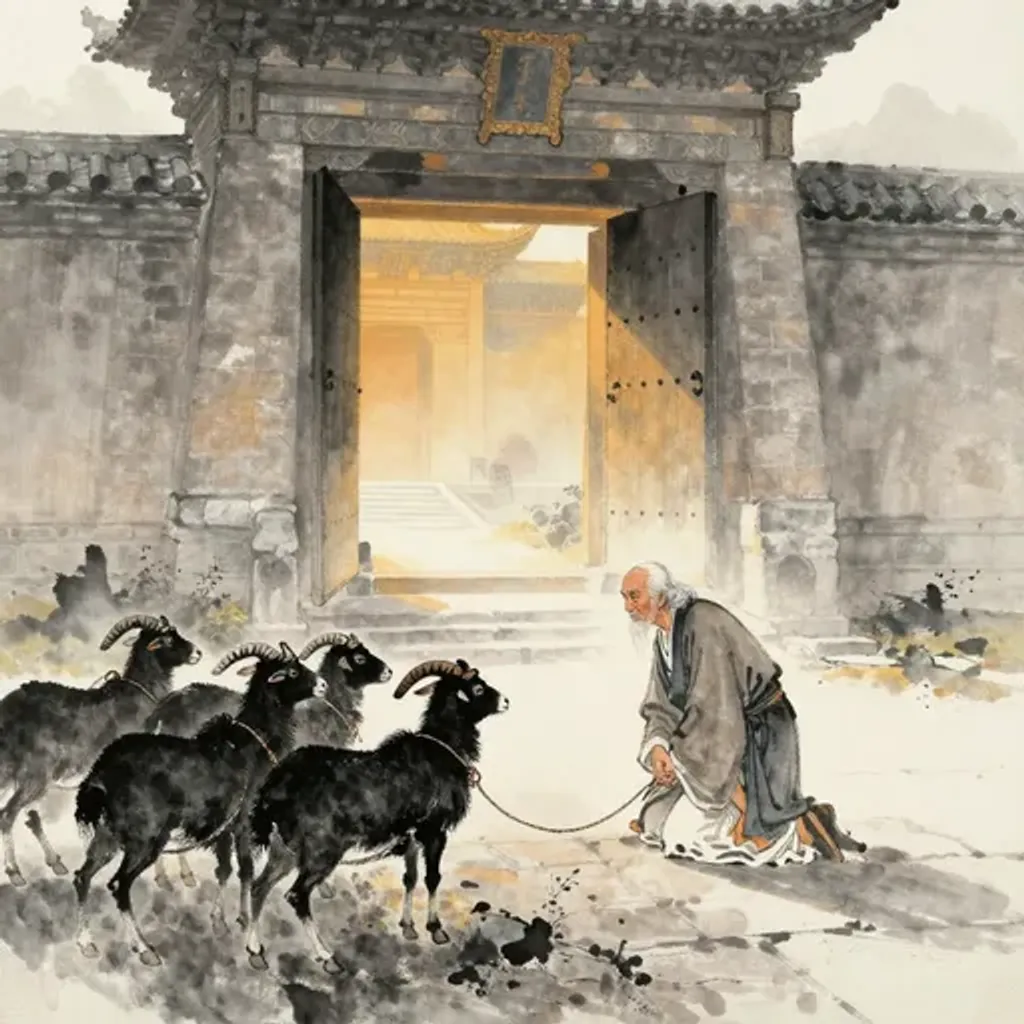
中復摧頹,常恐衰微;老復賴慶,五羖為相。
Halfway through, one stumbles and declines, always fearing further decay; yet in old age, blessing comes again -- five ram-skins bought a minister.
— Jiao Yanshou, Yilin (Forest of Changes), 1st century BC
Commentary
Wind beneath the mountain topples what was built, yet the transformation arrives at heaven and earth's refusal to communicate — Standstill. Midway through life one suffers collapse, constantly fearing further decline. Then in old age, unexpectedly, blessings return: 'Five ram-skins became a minister.' This alludes to Baili Xi, the sage who was sold into slavery for five ram-skins before Duke Mu of Qin recognized his worth and made him chief minister. From Work on the Decayed to Standstill, the paradox is instructive: even when heaven and earth cease their exchange, the hidden worthy endures. Baili Xi's rise from bondage mirrors the hexagram's counsel — in times of stagnation, inner virtue quietly preserves itself until circumstance turns.
蠱 → 同人
Hexagram 18 → Hexagram 13: Fellowship
Changing lines: 1, 2, 4, 5
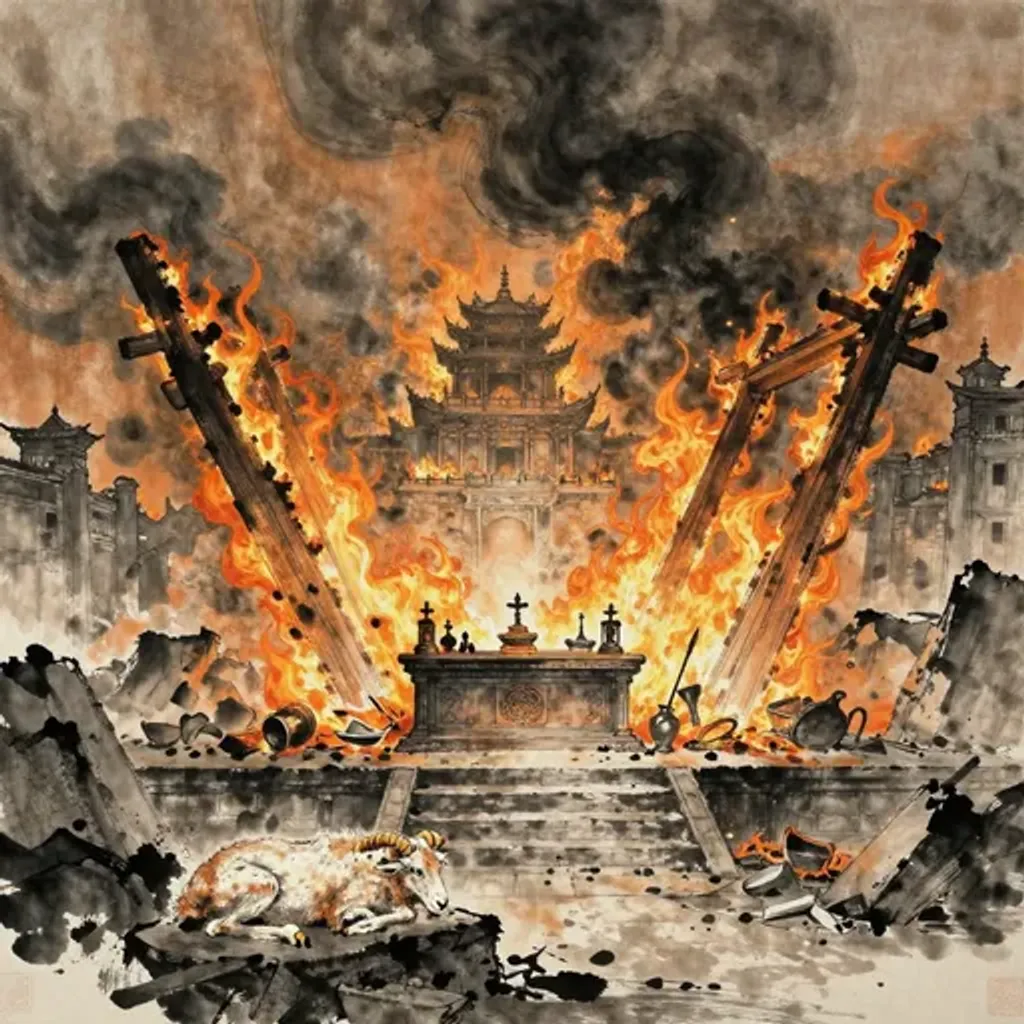
伯氏殺羊,行悖天時;亳社夷燒,朝歌丘墟。
The elder brother slaughtered the sheep, acting against heaven timing. The Bo shrine was burnt and razed; Zhaoge became a ruin.
— Jiao Yanshou, Yilin (Forest of Changes), 1st century BC
Commentary
Wind beneath the mountain breeds ritual violations, and the transformation ascends to heaven joined with fire — the Fellowship of kindred spirits. 'The elder kills sheep against heaven's timing' — sacrificial animals slaughtered out of season violate the cosmic order. The Bo shrine is razed and burned; Zhaoge becomes a ruin. The Bo shrine (亳社) was the ancestral altar of the Shang dynasty; Zhaoge was its last capital where King Zhou of Shang met his end. The verse traces dynastic collapse from ritual transgression to military destruction. From Work on the Decayed to Fellowship, the message turns hopeful: after the old corrupt order burns away, genuine fellowship can form. Fire rising to heaven illuminates who truly belongs together.
蠱 → 大有
Hexagram 18 → Hexagram 14: Great Possession
Changing lines: 1, 4
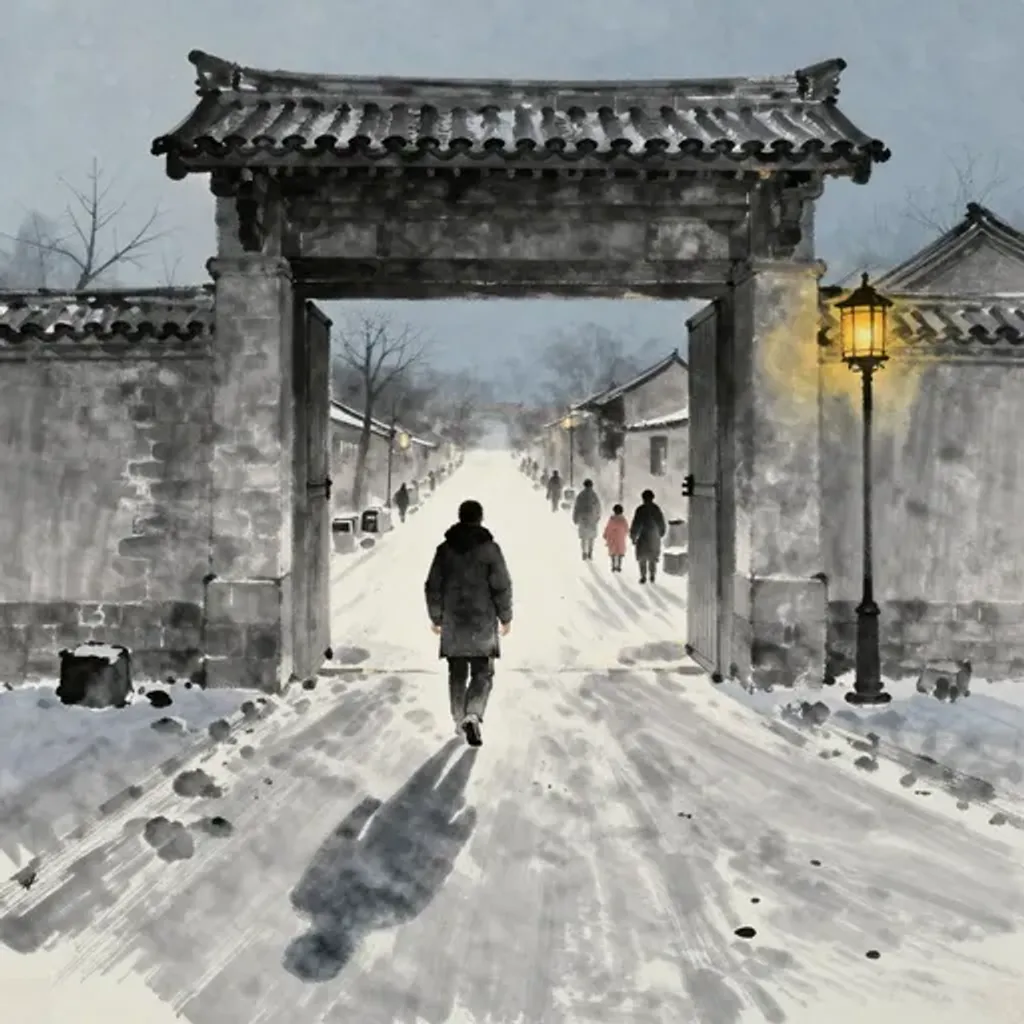
日短夜長,祿命分張;早離父兄,免見憂傷。
Days are short and nights are long; fortune and lifespan diverge. Better to leave father and brothers early, than to witness grief and sorrow.
— Jiao Yanshou, Yilin (Forest of Changes), 1st century BC
Commentary
Wind beneath the mountain shortens the light, and the transformation ascends to fire blazing in heaven — Great Possession. Days grow short and nights stretch long; fortune and lifespan pull apart. Leave father and brothers early, and you will be spared from witnessing sorrow. The verse counsels timely departure — whether from a doomed household, a failing enterprise, or life itself — as a form of mercy. The seasonal imagery of winter's short days reinforces the sense of diminishing time. From Work on the Decayed to Great Possession, the paradox emerges: true abundance sometimes means knowing what to relinquish. Fire in heaven shines brightest when unencumbered, and the one who departs before the collapse preserves both dignity and memory intact.
蠱 → 謙
Hexagram 18 → Hexagram 15: Modesty
Changing lines: 2, 6
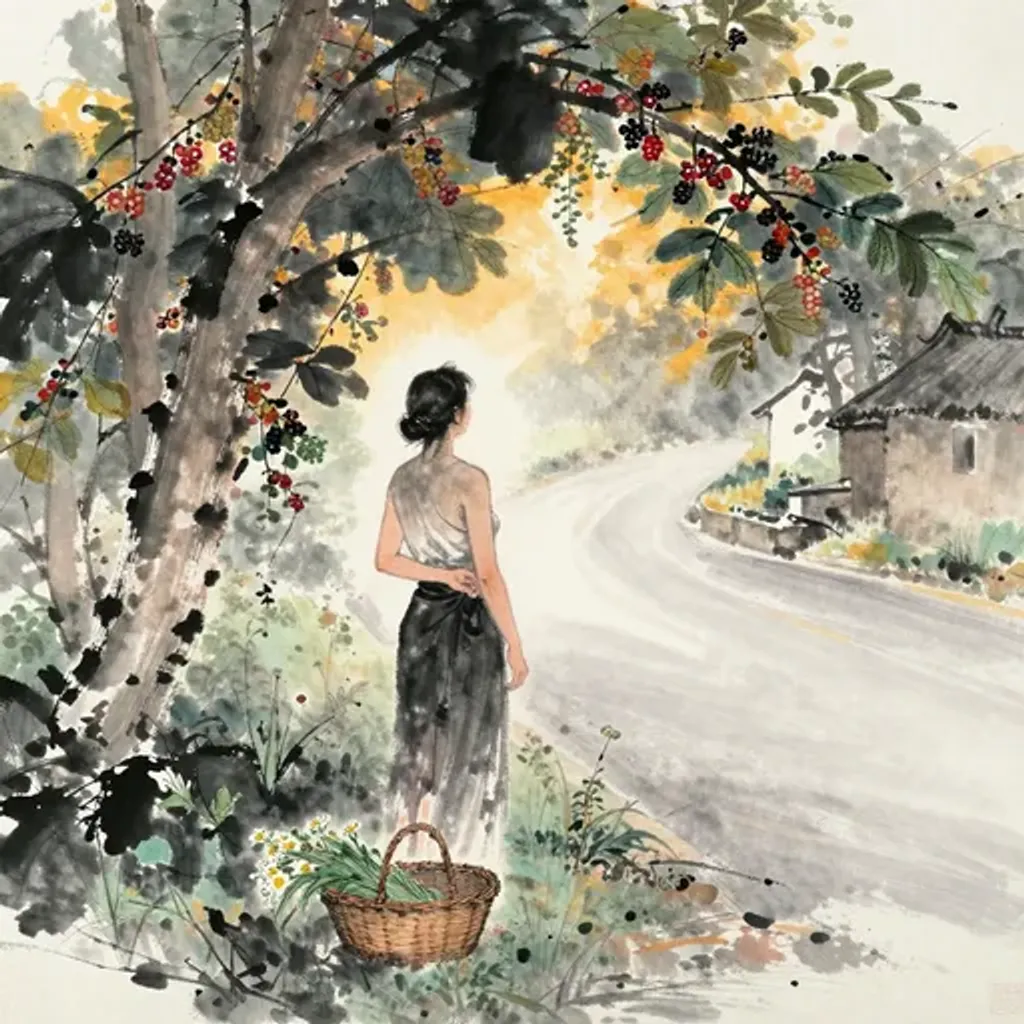
采唐沫鄉,期于桑中;失期不會,憂思約帶。
Gathering dodder at Mo village, we made a tryst among the mulberry trees; the appointment was missed and we did not meet -- longing and worry tighten my sash.
— Jiao Yanshou, Yilin (Forest of Changes), 1st century BC
Commentary
Wind beneath the mountain stirs longing, and the transformation descends into earth concealing the mountain — the humility of Modesty. Gathering dodder in Mei, a tryst is arranged at the Mulberry Grove — but the appointed time passes without a meeting, and worry tightens the belt. This directly echoes the Shijing ode 'Sang Zhong' from the Yong winds, where lovers plan secret meetings among the mulberry trees. The missed rendezvous transforms desire into wasting grief. From Work on the Decayed to Modesty, unfulfilled longing teaches self-restraint. The mountain hidden within the earth does not advertise its presence; likewise, the lover who waits and is not met must swallow pride and accept what cannot be forced.
蠱 → 豫
Hexagram 18 → Hexagram 16: Enthusiasm
Changing lines: 2, 3, 4, 6
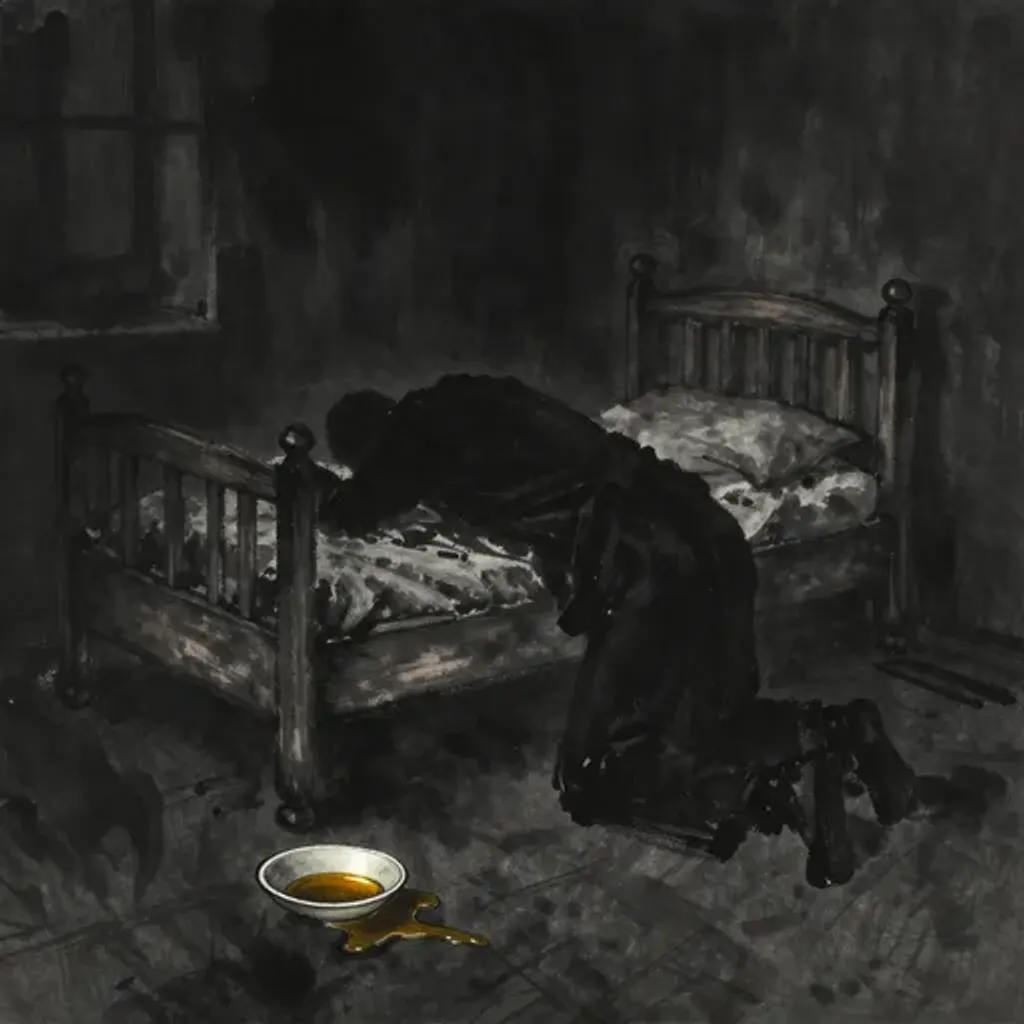
昧視無光,夜不見明;冥抵空床,季葉逃亡。
Dim-sighted and without light; night offers no brightness. Groping blindly, I strike an empty bed -- the youngest son has fled.
— Jiao Yanshou, Yilin (Forest of Changes), 1st century BC
Commentary
Wind beneath the mountain plunges into total darkness, and the transformation erupts as thunder rising from the earth — the mobilizing energy of Enthusiasm. Vision fails to perceive any light; night reveals no brightness. Groping blindly, one reaches only an empty bed, as the last of the line flees into exile. The imagery is of complete sensory deprivation and domestic abandonment — the household gutted, the heir vanished. From Work on the Decayed to Enthusiasm, the darkest moment precedes the thunderclap. When corruption has extinguished every lamp, the only way forward is the seismic release of thunder bursting from the ground — a shock that clears the stale air and awakens what has fallen into stupor.
蠱 → 隨
Hexagram 18 → Hexagram 17: Following
Changing lines: 1, 2, 3, 4, 5, 6
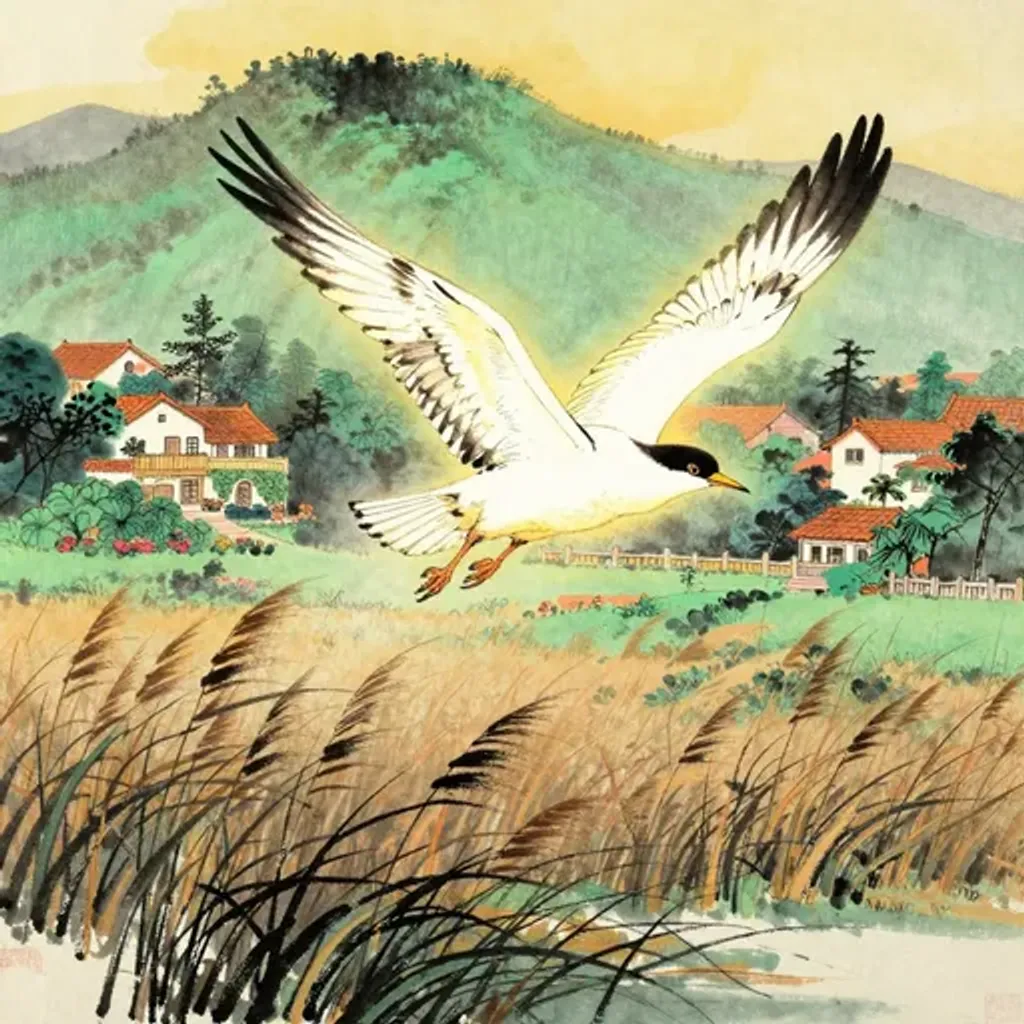
舉趾振翼,南至嘉國;見我伯姊,與惠相得。
Lifting feet and spreading wings, flying south to a fine land; there I find my eldest sister, and we share kindness and contentment.
— Jiao Yanshou, Yilin (Forest of Changes), 1st century BC
Commentary
Wind beneath the mountain lifts its wings, and the transformation glides into the lake harboring thunder — the willing submission of Following. Raising feet and spreading wings, one flies south to a blessed land. There one meets an elder sister, and together they share kindness and mutual regard. The bird-flight imagery suggests joyful migration rather than desperate exile — a voluntary departure toward better circumstances. From Work on the Decayed to Following, the corrupted situation is left behind through willing movement. Thunder resting within the lake represents the acceptance of natural rhythms: as day follows night, one follows the season and finds companionship in a gentler country.
蠱 → 蠱
Hexagram 18 → Hexagram 18: Work on the Decayed
No changing lines — the hexagram is unchanged
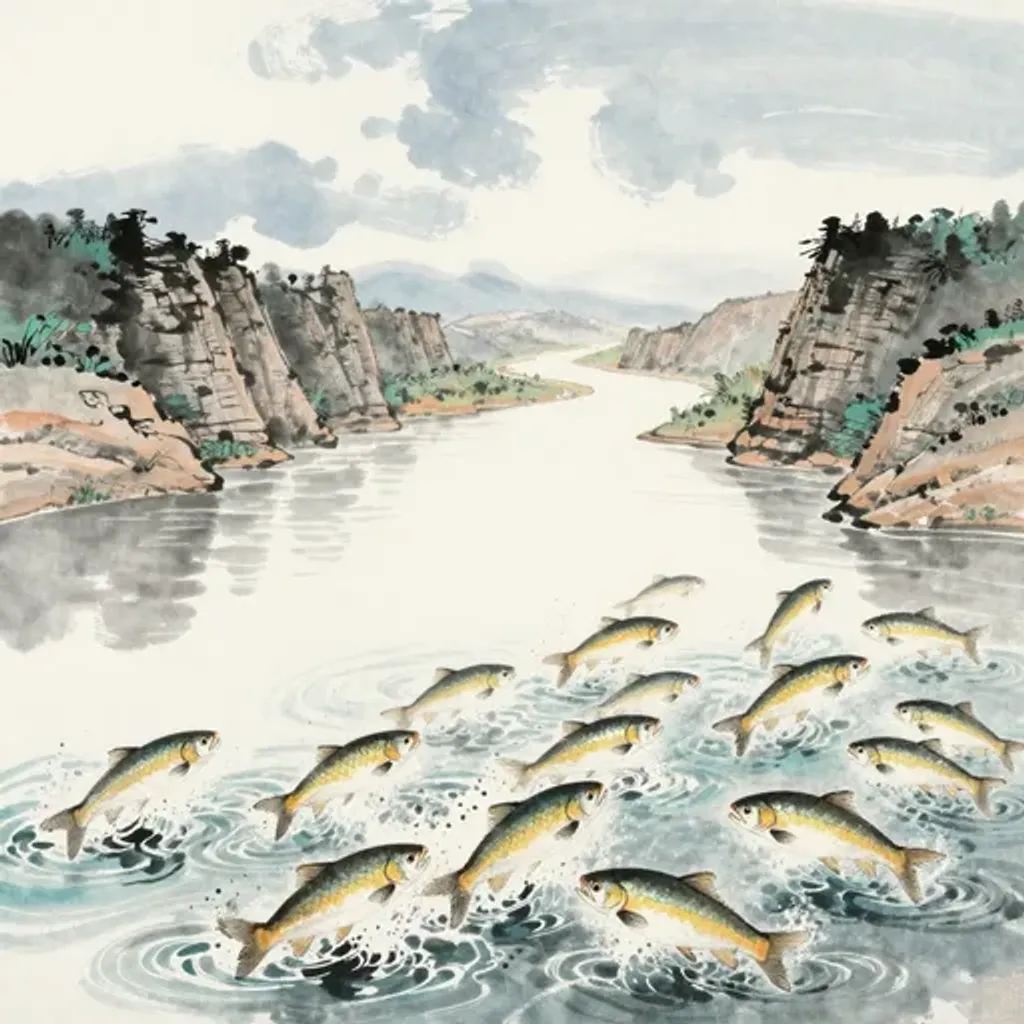
魴生江淮,一轉為百;周流天下,無有難惡。
The bream is born in rivers and streams; one fish multiplies to a hundred. Circling throughout the realm, encountering no hardship or evil.
— Jiao Yanshou, Yilin (Forest of Changes), 1st century BC
Commentary
Wind beneath the mountain turns upon itself — decay facing its own reflection. The bream is born in rivers and marshes; one turns into a hundred. Circulating freely through all under heaven, encountering nothing difficult or harmful. The fish multiplying effortlessly in its native waters evokes natural abundance without external intervention. When the source hexagram meets itself as target, the question becomes: can decay renew decay? The answer here is yes — through natural fertility and free circulation. From Work on the Decayed to itself, the insight is that corruption contains its own remedy when life-force flows unobstructed. The mountain's wind, rather than stagnating, circulates and regenerates.
蠱 → 臨
Hexagram 18 → Hexagram 19: Approach
Changing lines: 1, 3, 6
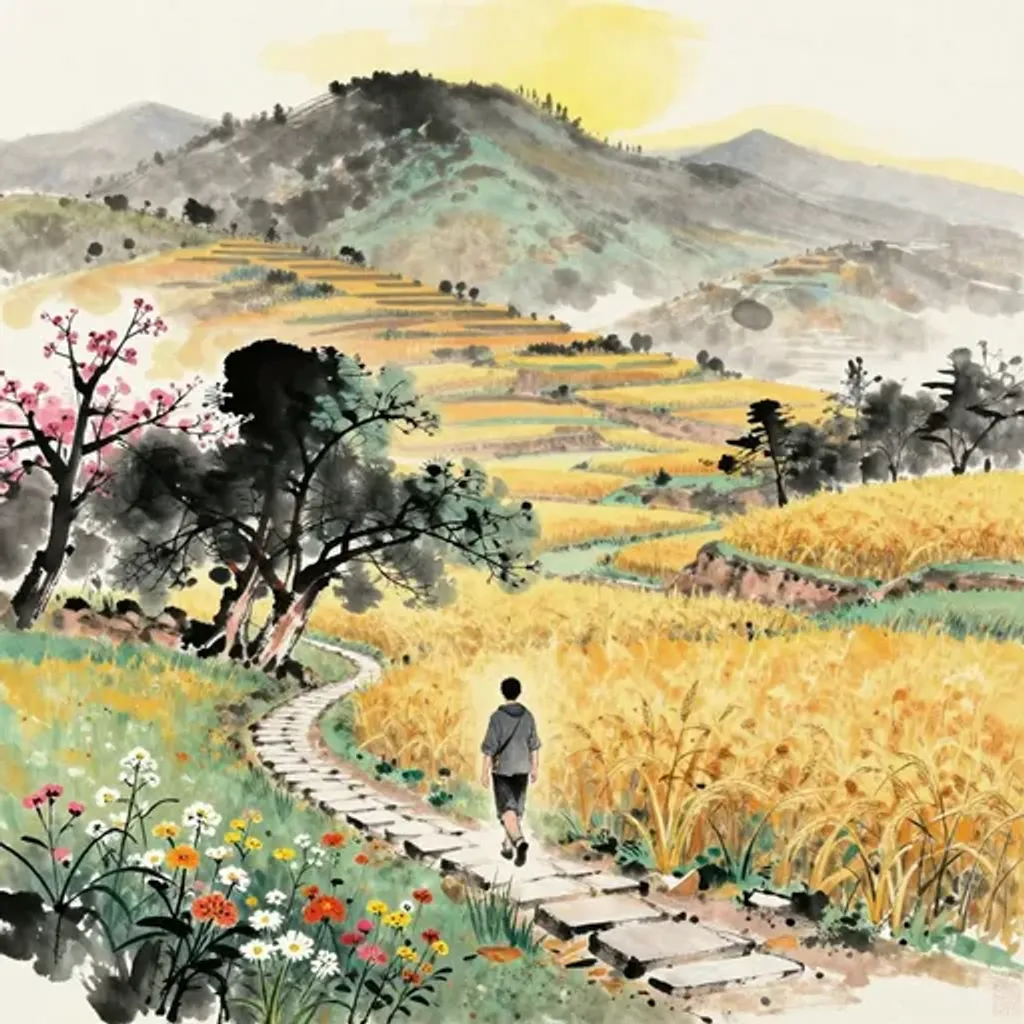
則天順時,周流其墟;與樂並居,元有咎憂。
Following heaven, according with the seasons, traveling through the land; dwelling together with joy, free of blame or worry.
— Jiao Yanshou, Yilin (Forest of Changes), 1st century BC
Commentary
Wind beneath the mountain follows the mandate of heaven, and the transformation opens into earth above the lake — the gracious Approach of those in authority. Acting in accord with heaven and following the seasons, one circulates freely through the land. Dwelling alongside joy, there is no fault or worry. The verse describes harmonious governance: aligning with cosmic timing, traveling the realm to observe and nourish. From Work on the Decayed to Approach, the cure for corruption is benevolent oversight. Earth rising above the lake represents authority descending to meet the people — the ruler who approaches with teaching and care, whose boundless generosity restores what neglect had spoiled.
蠱 → 觀
Hexagram 18 → Hexagram 20: Contemplation
Changing lines: 2, 3, 5
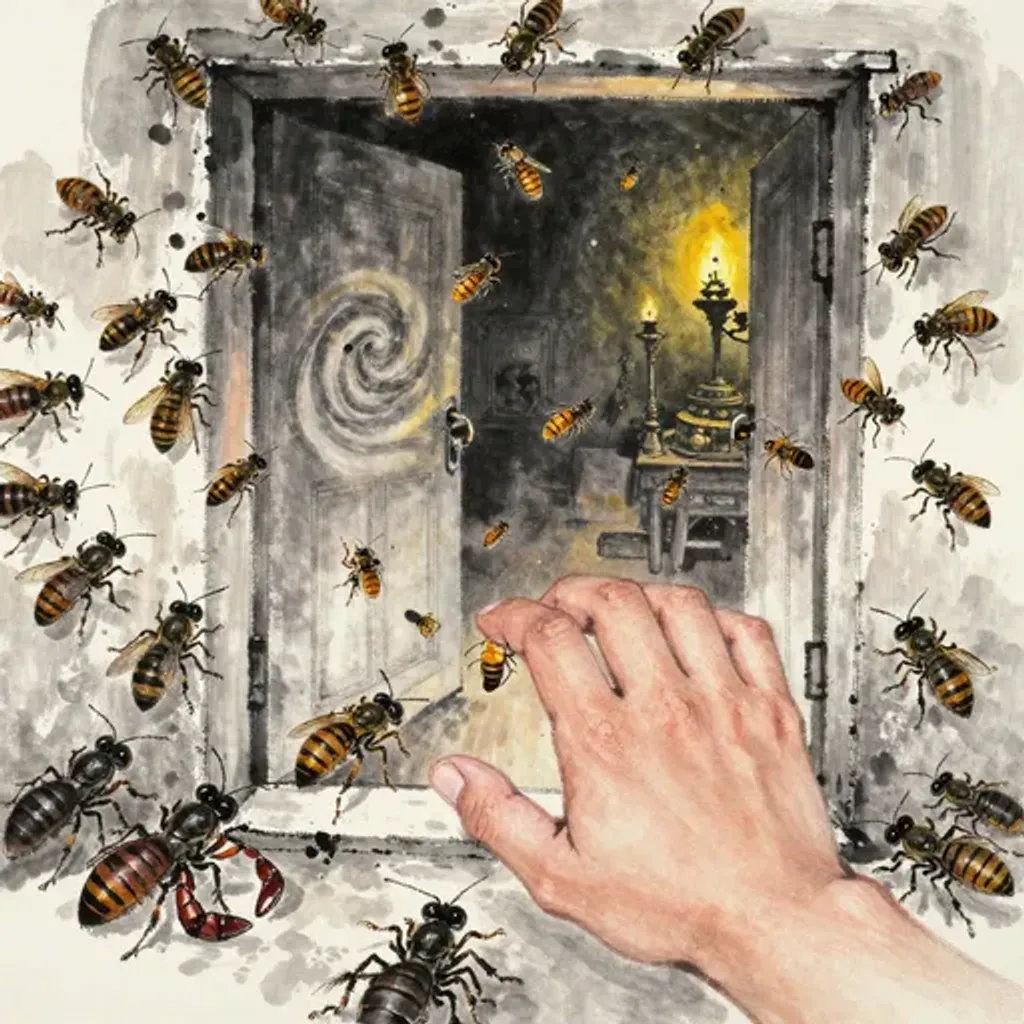
蠆室蜂戶,螫我手足;不可進取,為吾害咎。
A chamber of scorpions, a house of wasps; they sting my hands and feet. One cannot press forward -- this brings me harm and fault.
— Jiao Yanshou, Yilin (Forest of Changes), 1st century BC
Commentary
Wind beneath the mountain encounters danger, and the transformation opens into wind sweeping over the earth — the broad Contemplation of the sage-king. A room of scorpions, a doorway of wasps — they sting hands and feet. One cannot advance; to do so would bring harm and blame. The verse is a stark warning: the corrupted space is now infested with venomous creatures. Entry is forbidden; even observation requires distance. From Work on the Decayed to Contemplation, the lesson is clear: some forms of decay cannot be fought directly but must be surveyed from above. Wind over earth sees everything without touching; the sage-king observes the people and sets teaching accordingly, reforming by example rather than by entering the poisoned chamber.
蠱 → 噬嗑
Hexagram 18 → Hexagram 21: Biting Through
Changing lines: 1, 2, 3, 4
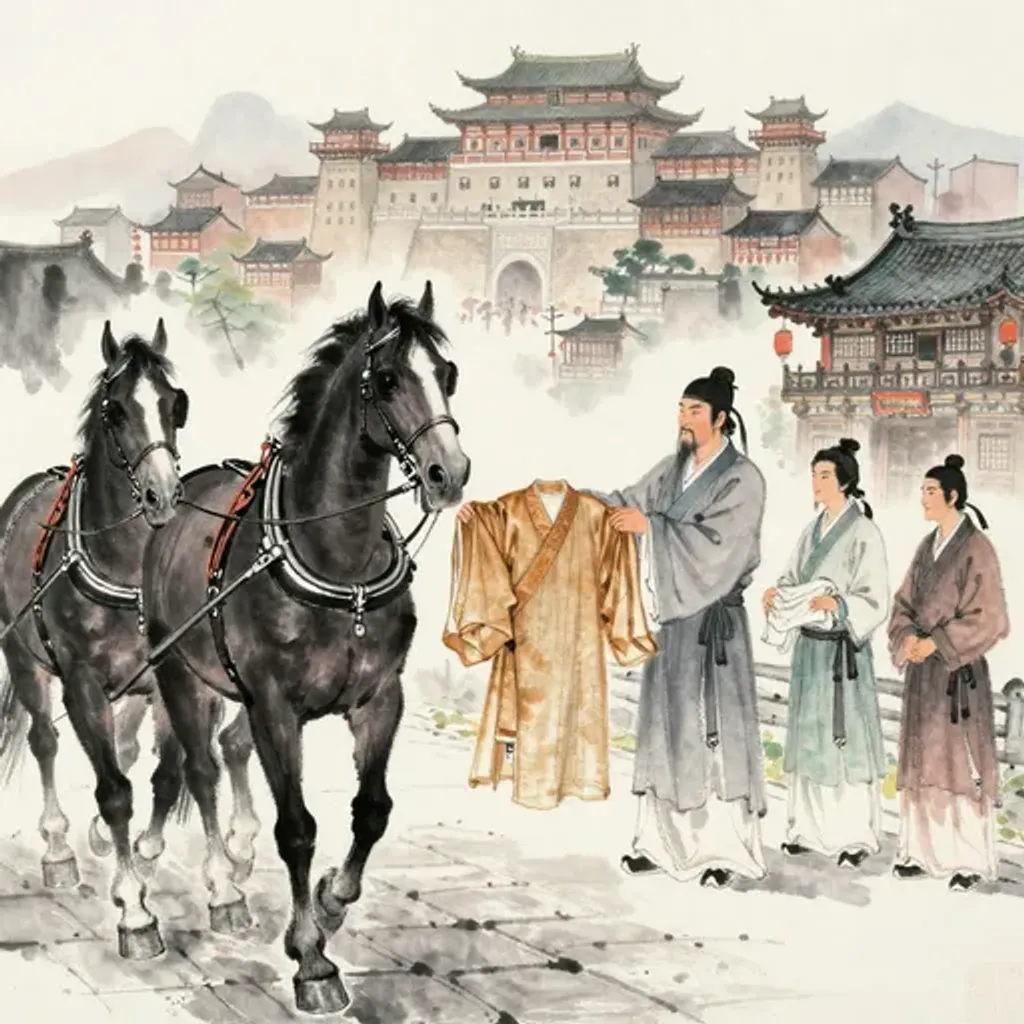
公孫駕驪,載遊東齊;延陵悅產,遺季紵衣。
Lord Gongsun drives his black horses, traveling east to Qi; Yanling admired Chan, and left him a gift of linen robes.
— Jiao Yanshou, Yilin (Forest of Changes), 1st century BC
Commentary
Wind beneath the mountain carries travelers east, and the transformation erupts as lightning and thunder — Biting Through, the hexagram of judicial clarity. A nobleman drives black horses, journeying to play in eastern Qi. Yanling — Ji Zha of Wu, the prince renowned for integrity — admires a man's character and presents him with a linen garment. According to tradition, Ji Zha traveled among the states as a diplomatic envoy, forming bonds through gifts and music rather than force. His gift of the simple zhu-cloth robe embodied sincerity over ostentation. From Work on the Decayed to Biting Through, the corrupted order requires decisive action tempered by virtue. Lightning illuminates what needs judging; thunder enforces the verdict — but the true model is Ji Zha's gift: justice delivered with grace.
蠱 → 賁
Hexagram 18 → Hexagram 22: Grace
Changing lines: 1, 2
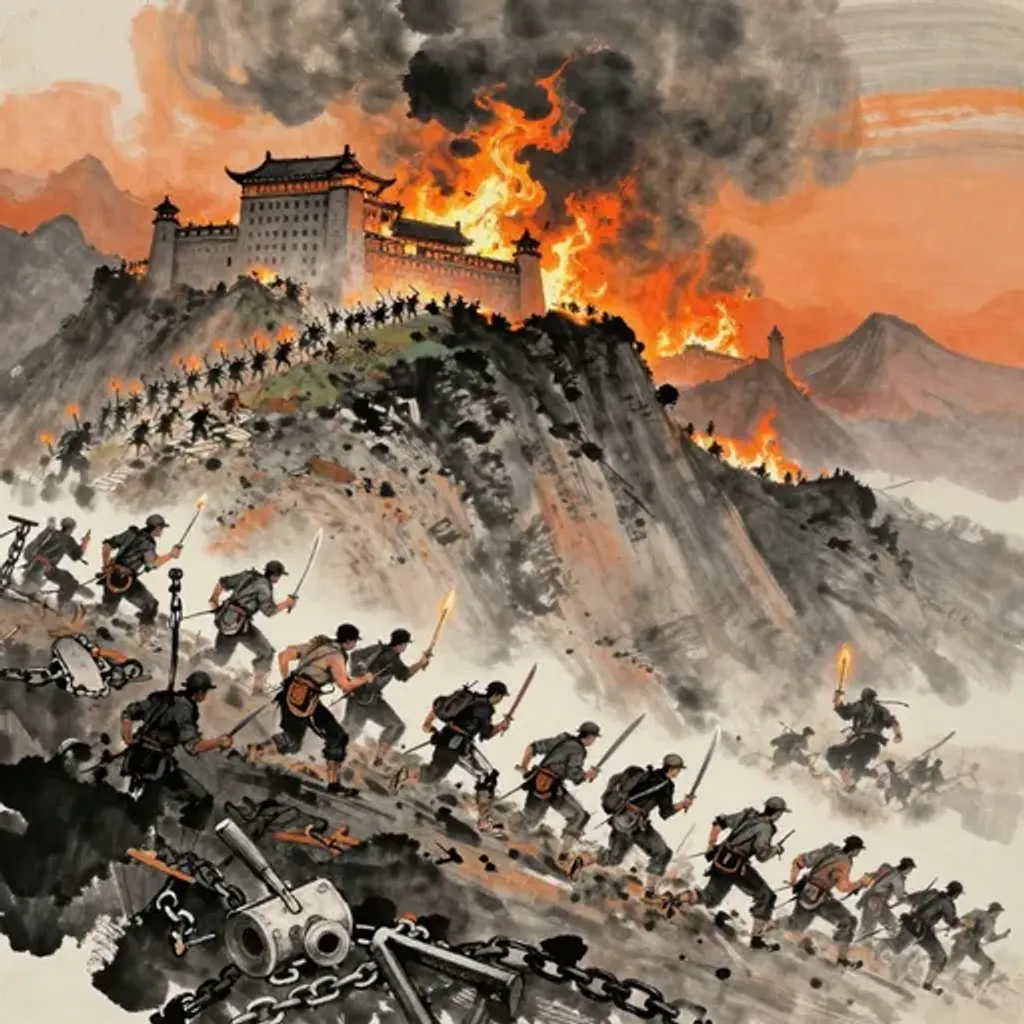
轉作驪山,大失人心;劉季發怒,禽滅子嬰。
Conscripting labor at Li Mountain, he utterly lost the people hearts. Liu Ji rose in fury, captured and destroyed Ziying.
— Jiao Yanshou, Yilin (Forest of Changes), 1st century BC
Commentary
Wind beneath the mountain builds a tyrant's tomb, and the transformation settles as fire glowing beneath the mountain — the adornment of Grace. Conscript labor at Lishan lost the hearts of the people entirely. Liu Ji erupted in fury, captured and extinguished Ziying. Lishan (Mount Li) was where the First Emperor of Qin built his colossal mausoleum using forced labor, generating the popular resentment that fueled rebellion. Liu Ji is Liu Bang's original name; Ziying was the last Qin king who surrendered to him. From Work on the Decayed to Grace, the irony cuts deep: the mountain's fire illuminates beauty, yet the Qin regime's monumental adornment of Lishan was itself the decay that brought its downfall. Ornament without substance becomes its own grave.
蠱 → 剝
Hexagram 18 → Hexagram 23: Splitting Apart
Changing lines: 2, 3
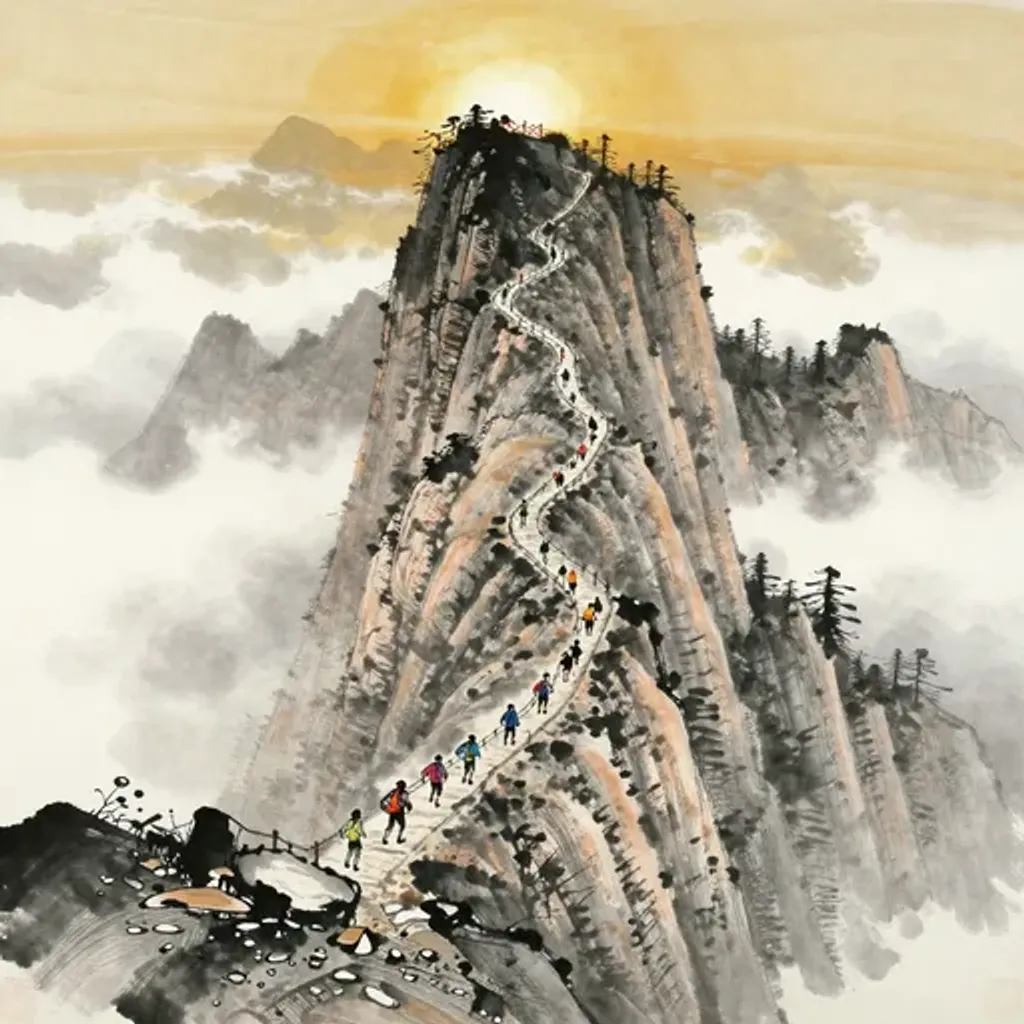
羊腸九縈,相推稍前;止須王孫,乃能上天。
The sheep-gut path winds through nine turns, each pushing slowly ahead; wait for the prince to arrive, and then one may ascend to heaven.
— Jiao Yanshou, Yilin (Forest of Changes), 1st century BC
Commentary
Wind beneath the mountain winds upward through narrow passes, and the transformation arrives at the mountain crumbling upon the earth — Splitting Apart. The road coils like a sheep's intestine through nine turns; travelers push one another forward step by step. Only by waiting for the royal scion can one ascend to heaven. The sheep-gut path is a classical image of treacherous mountain travel — narrow, winding, and exhausting. Progress requires collective effort and patience, yet ultimately depends on the right patron or moment. From Work on the Decayed to Splitting Apart, the arduous climb through corruption leads to a precipice: the mountain peels away from the earth. Those who persevere on the winding path must accept that some structures must collapse before renewal becomes possible.
蠱 → 復
Hexagram 18 → Hexagram 24: Return
Changing lines: 1, 2, 3, 6
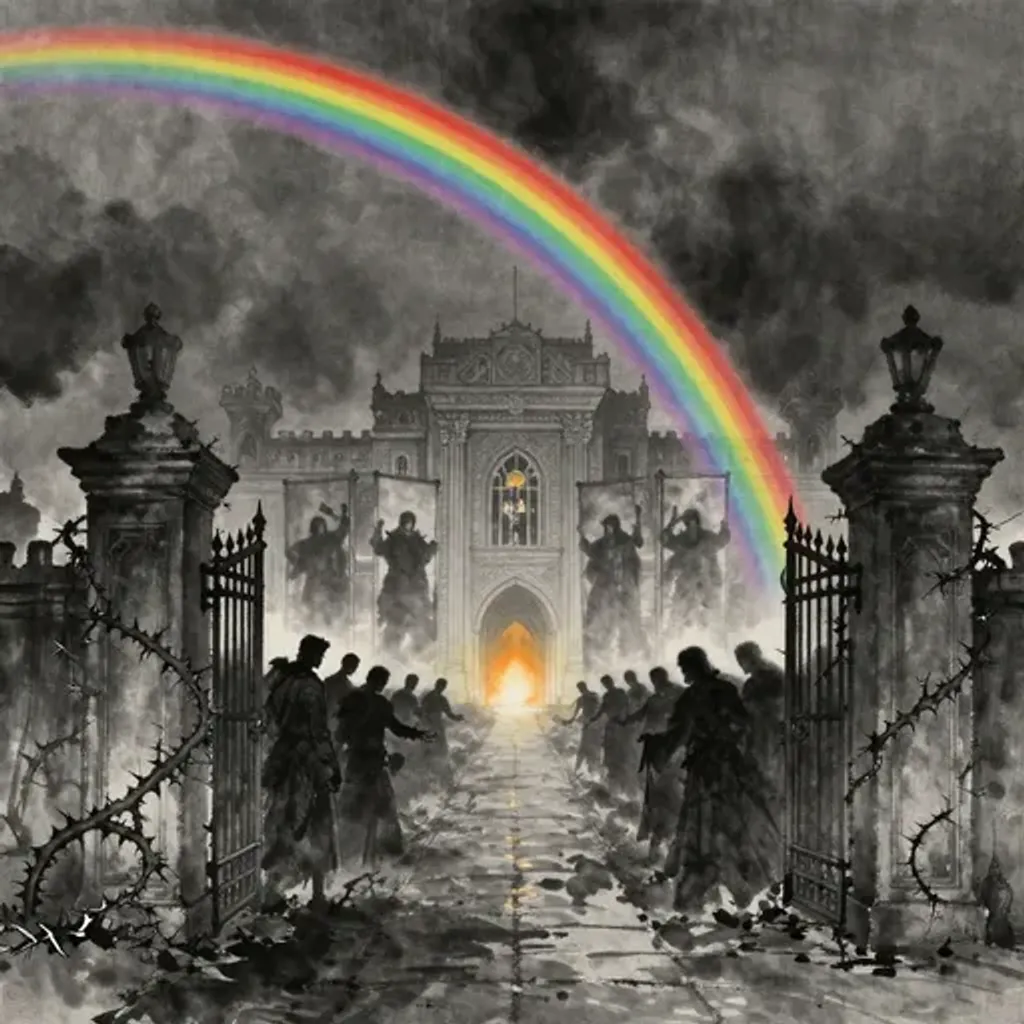
螮蝀充側,佞人傾惑;女謁橫行,正道壅塞。
The rainbow looms at his side; flatterers beguile and deceive. Women peddle influence unchecked; the proper way is blocked.
— Jiao Yanshou, Yilin (Forest of Changes), 1st century BC
Commentary
Wind beneath the mountain breeds illusions, and the transformation descends to thunder hidden in the earth — the turning point of Return. The rainbow looms at the side, as sycophants bewitch and mislead. Women's petitions run unchecked, blocking the righteous path entirely. The rainbow (螮蝀) echoes the Shijing ode from the Yong winds, where the rainbow is an omen of sexual impropriety and moral disorder. 'Women's petitions' (女謁) refers to feminine influence over court appointments — a classic warning against inner-palace interference in governance. From Work on the Decayed to Return, hope persists: thunder in the earth is the single yang line returning at the winter solstice. Even when flattery and corruption have sealed every avenue, the seed of renewal stirs beneath the frozen ground.
蠱 → 无妄
Hexagram 18 → Hexagram 25: Innocence
Changing lines: 1, 2, 3, 4, 5

福祿不遂,家多怪祟;麋鹿悲啼,思其大雄。
Fortune and favor fail to come; the household is plagued by strange hauntings. The elk and deer cry mournfully, longing for their great stag.
— Jiao Yanshou, Yilin (Forest of Changes), 1st century BC
Commentary
Wind beneath the mountain brings misfortune home, and the transformation erupts as heaven's thunder — the startling honesty of Innocence. Fortune and blessings fail to materialize; the household is plagued by strange hauntings. A deer cries mournfully, longing for its great stag. The domestic scene is one of spiritual affliction — not mere material want but an uncanny wrongness pervading the home. The deer's cry for its lost mate adds a note of primal grief. From Work on the Decayed to Innocence, the remedy is radical sincerity. Thunder moving beneath heaven strikes without warning, clearing falsehood and restoring the natural order. The haunted household can only be cleansed when its inhabitants abandon pretense and return to what is genuine.
蠱 → 大畜
Hexagram 18 → Hexagram 26: Great Taming
Changing lines: 1
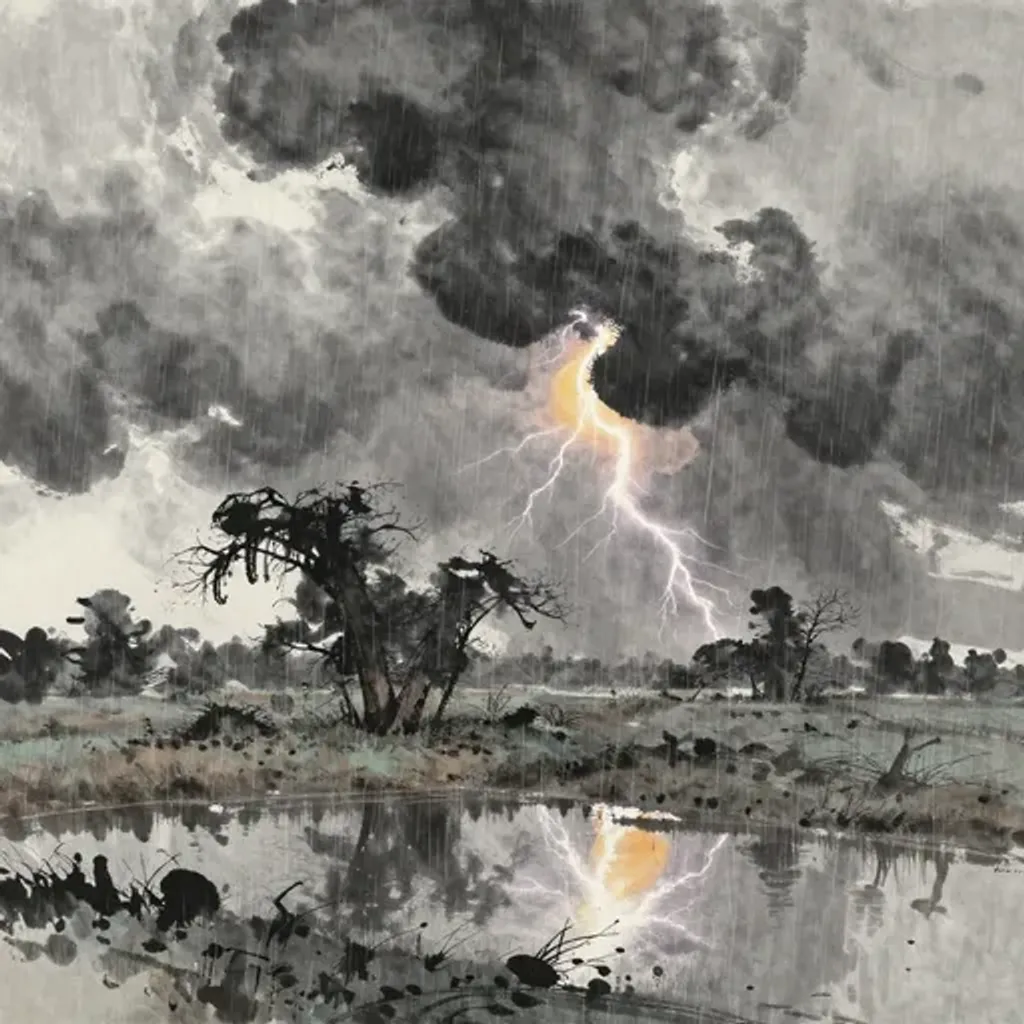
雲雷因積,大雨重疊;久不見日,使心悒悒。
Clouds and thunder pile and gather; heavy rain falls again and again. Long without sight of the sun -- it makes the heart heavy.
— Jiao Yanshou, Yilin (Forest of Changes), 1st century BC
Commentary
Wind beneath the mountain meets heaven stored within the mountain — Great Taming's capacity for accumulation. Clouds and thunder pile up; heavy rains layer upon themselves. The sun remains hidden for so long that the heart grows restless and oppressed. The verse presents accumulation turned oppressive: what should be gathered strength has instead become unrelieved pressure. Rain upon rain, cloud upon cloud, with no clearing in sight. From Work on the Decayed to Great Taming, the lesson is that accumulation without release becomes its own form of decay. The mountain restraining heaven must eventually let the tamed energy flow, or the very act of storing becomes suffocation.
蠱 → 頤
Hexagram 18 → Hexagram 27: Nourishment
Changing lines: 1, 2, 3
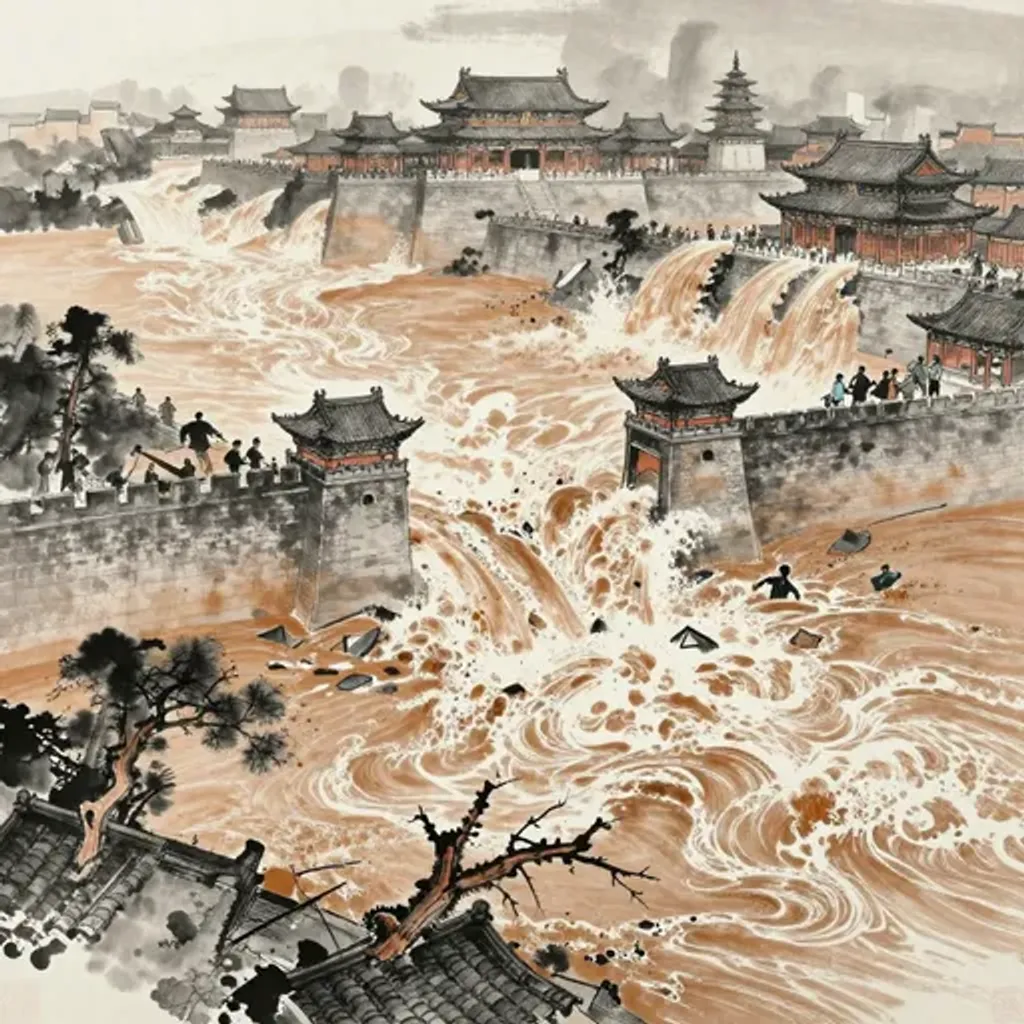
三河俱合,水怒踊躍;壞我王室,民困無食。
Three rivers converge together; the waters surge in fury. They wreck the royal palace -- the people are destitute and starving.
— Jiao Yanshou, Yilin (Forest of Changes), 1st century BC
Commentary
Wind beneath the mountain unleashes floodwaters, and the transformation arrives at the mountain above thunder — the careful Nourishment of Yi. Three rivers converge and merge; the waters rage and leap. The royal house is ruined; the people are destitute and starving. Flood as metaphor for political catastrophe runs deep in Chinese tradition — Yu the Great earned his mandate by taming just such chaos. Here, the convergence of multiple crises overwhelms all defenses. From Work on the Decayed to Nourishment, the devastated must be fed before they can be reformed. The mountain's stillness above thunder's vitality represents measured sustenance: careful words, measured provisions, the discipline of rebuilding from famine rather than feast.
蠱 → 大過
Hexagram 18 → Hexagram 28: Great Exceeding
Changing lines: 4, 5, 6
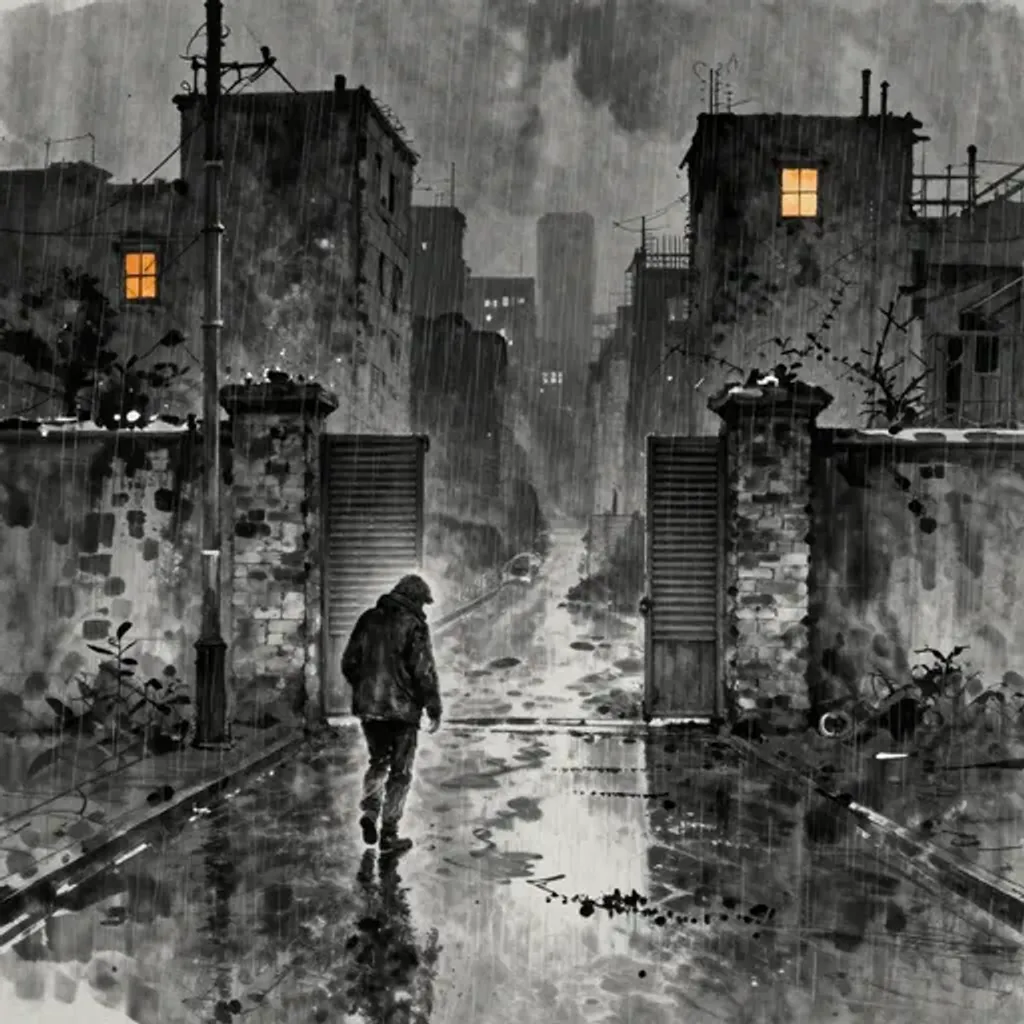
旦雨夜行,早遍辟城;更相覆傾,終無所成。
Rain at dawn, traveling by night; hastening to circle the city at daybreak. Overthrowing each other in turn -- in the end, nothing is achieved.
— Jiao Yanshou, Yilin (Forest of Changes), 1st century BC
Commentary
Wind beneath the mountain drives travelers into the storm, and the transformation overwhelms as the lake submerges the trees — Great Exceeding's critical mass. Morning rain, night marching — all day spent skirting the city walls. Each effort overturns the last; nothing reaches completion. The relentless cycle of rain and forced travel suggests a campaign doomed to futility: every advance is reversed, every shelter abandoned. From Work on the Decayed to Great Exceeding, the structural crisis reaches its limit. The ridgepole sags — excess weight on a weakened frame threatens total collapse. Yet the hexagram counsels independent courage: those who stand alone without fear may find in the crisis itself the impetus for extraordinary action.
蠱 → 坎
Hexagram 18 → Hexagram 29: The Abysmal Water
Changing lines: 3, 5, 6
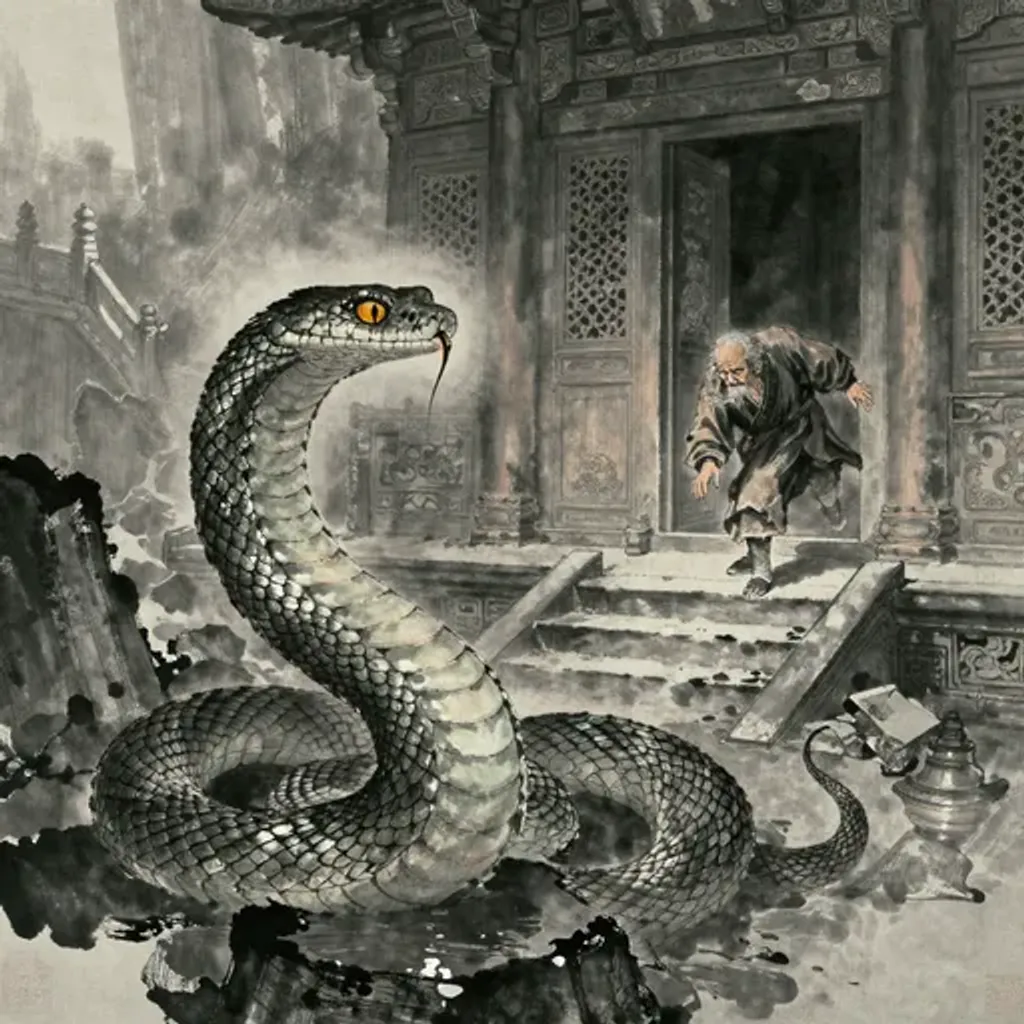
褒后生虵,垂老盲微;側跌哀公,酉滅黃離。
Lady Bao bore a serpent; aged and blind, the light fades. Duke Ai stumbles and topples -- in the west, the yellow Li is extinguished.
— Jiao Yanshou, Yilin (Forest of Changes), 1st century BC
Commentary
Wind beneath the mountain stirs ancient curses, and the transformation plunges into doubled water — the Abysmal's repeated peril. The consort of Bao gave birth to a serpent; old age brings blindness and feebleness. Duke Ai stumbles and falls sideways as the golden bird is extinguished at the hour of You. The verse alludes to the myth of Bao Si's origin: according to tradition, dragon saliva from the Xia dynasty transformed into a lizard that impregnated a palace servant, producing the child who became the beauty Bao Si, consort of King You of Zhou, whose infatuation destroyed the Western Zhou. From Work on the Decayed to the Abysmal, ancient corruption resurfaces as present danger. Water upon water — peril repeated — reflects how ancestral curses compound through generations when left unaddressed.
蠱 → 離
Hexagram 18 → Hexagram 30: The Clinging Fire
Changing lines: 1, 2, 4
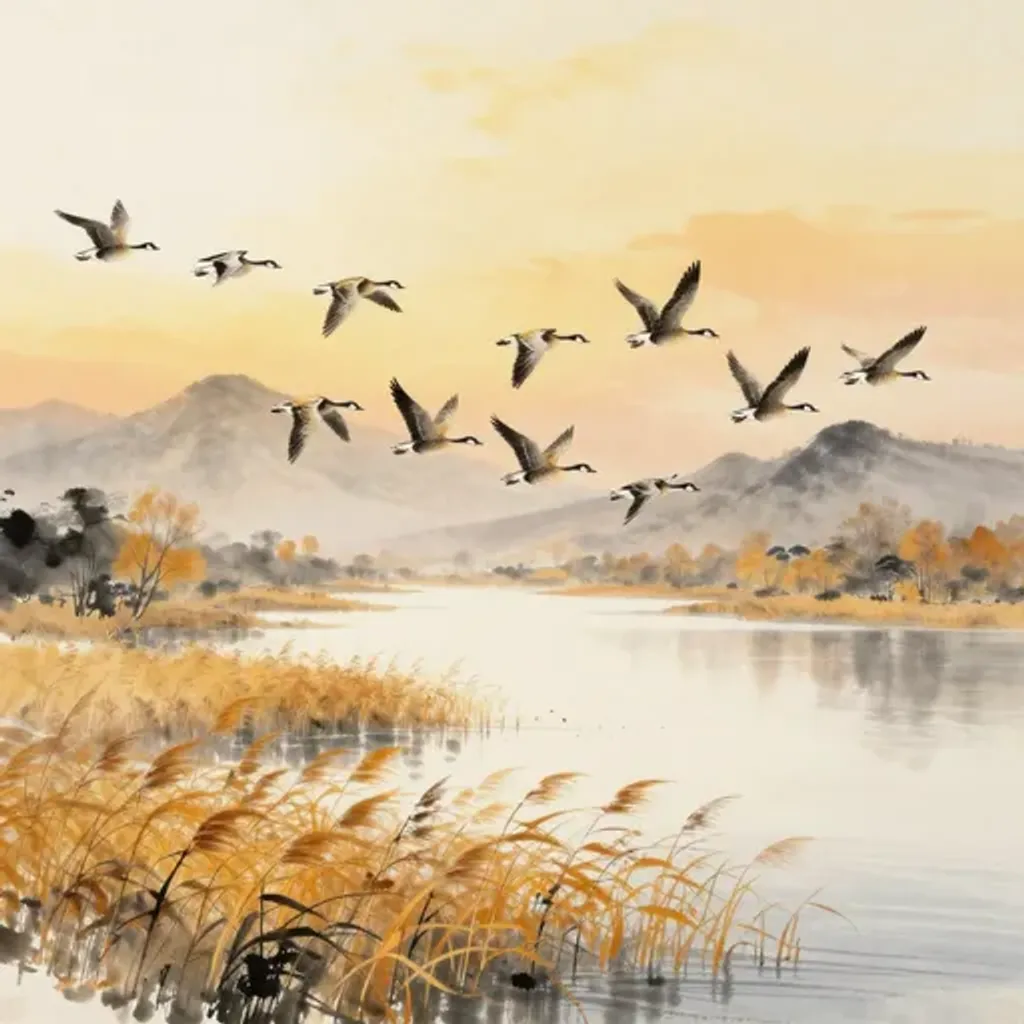
鴻雁南飛,隨時休息;轉逐天和,千歲不衰。
Wild geese fly south, resting in season; following the harmony of heaven, they do not wane for a thousand years.
— Jiao Yanshou, Yilin (Forest of Changes), 1st century BC
Commentary
Wind beneath the mountain lifts the wild geese skyward, and the transformation brightens into doubled fire — the Clinging's sustained illumination. Wild geese fly south, resting at the proper times. Following the harmony of heaven, they endure a thousand years without decline. The migrating geese embody perfect attunement to cosmic rhythm — knowing when to fly, when to rest, never fighting the season. From Work on the Decayed to the Clinging, the corrupted situation is resolved through clarity that perpetuates itself. Doubled fire illuminates the four directions continuously: the sage inherits brightness and passes it forward. Like the geese who navigate by instinct, those who align with heaven's timing transform decay into lasting radiance.
蠱 → 咸
Hexagram 18 → Hexagram 31: Influence
Changing lines: 2, 4, 5, 6
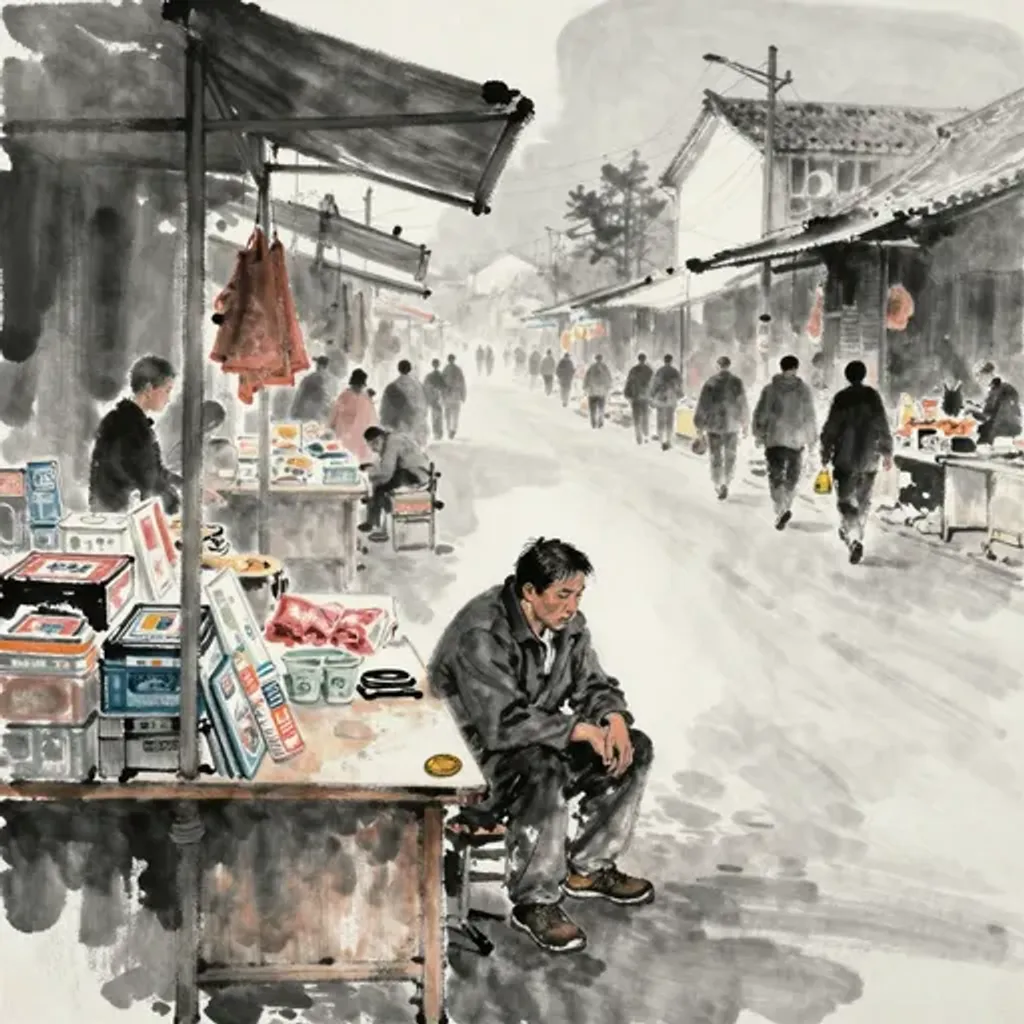
後時失利,不得所欲;莫亨偕結,自逐自逐。
Behind the times, losing the advantage; unable to get what one desires. No success in joining together -- chasing, chasing, ever chasing.
— Jiao Yanshou, Yilin (Forest of Changes), 1st century BC
Commentary
Wind beneath the mountain loses its moment, and the transformation rises to the lake resting upon the mountain — the receptive stillness of Influence. Missing the right time brings lost advantage; one cannot obtain what is desired. Unable to achieve harmony or form alliances, one chases after oneself in circles. The verse describes a compounding failure: timing missed, desires thwarted, connections broken, leaving only futile self-pursuit. From Work on the Decayed to Influence, the remedy is counterintuitive — stop chasing. The lake upon the mountain is still, open, and receptive. Influence (Xian) works through emptiness, through the hollow space that allows feeling to pass through. One who stops grasping may finally be reached.
蠱 → 恆
Hexagram 18 → Hexagram 32: Duration
Changing lines: 4, 6
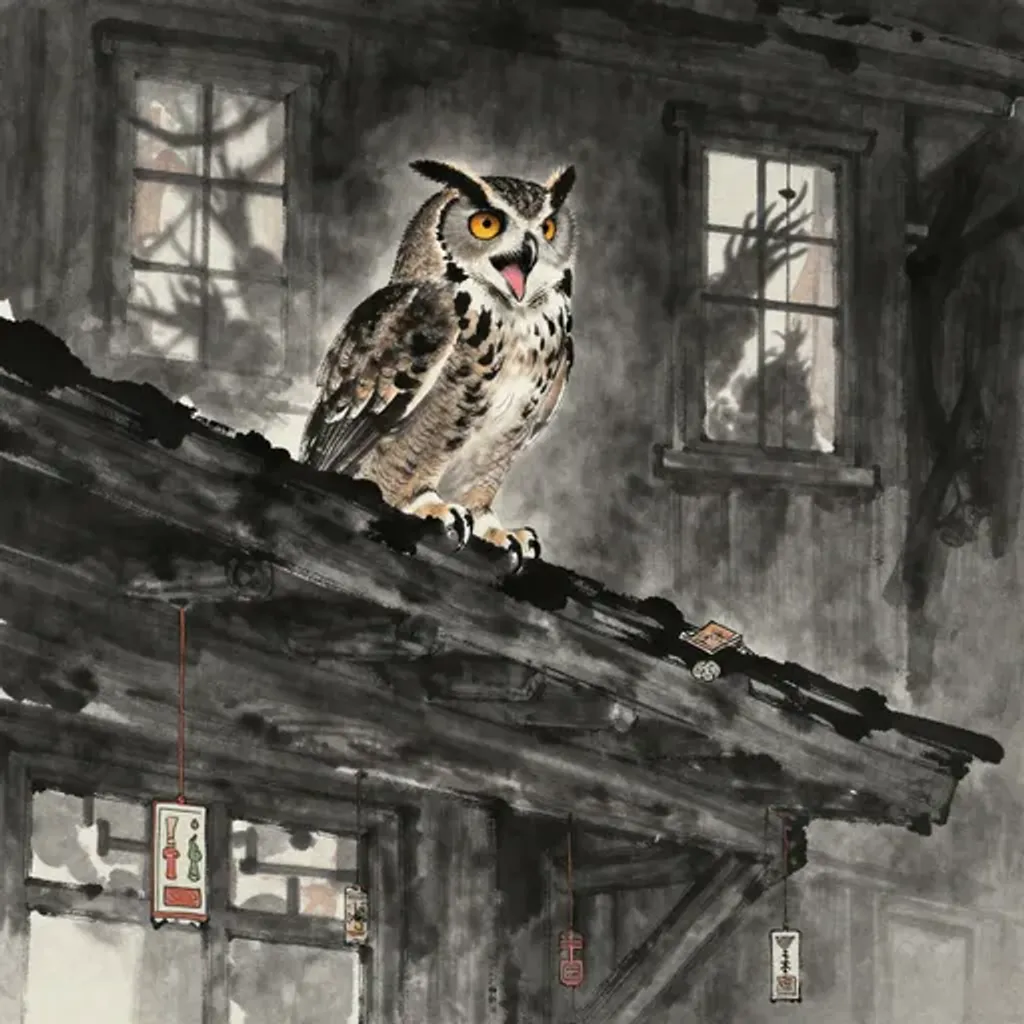
心多恨悔,出言為怪;梟鳴室北,醜聲可惡。請謁不得。
Heart full of resentment and regret; words uttered sound monstrous. An owl cries at the northern eave -- its ugly voice is loathsome. Petitions go unheard.
— Jiao Yanshou, Yilin (Forest of Changes), 1st century BC
Commentary
Wind beneath the mountain breeds regret and strange utterances, and the transformation settles into the enduring bond of thunder and wind — Duration. The heart is full of resentment and remorse; words spoken become monstrous. An owl hoots from the north side of the house — its ugly cry repels all who hear. Petitions and requests go unanswered. The owl's inauspicious cry from the household's dark quarter symbolizes speech turned toxic: words born from bitterness that drive others away rather than drawing them near. From Work on the Decayed to Duration, the challenge is to endure without poisoning one's own voice. Thunder and wind reinforce each other perpetually — but if the wind carries only resentment, duration becomes a curse rather than a virtue.
蠱 → 遯
Hexagram 18 → Hexagram 33: Retreat
Changing lines: 2, 4, 5
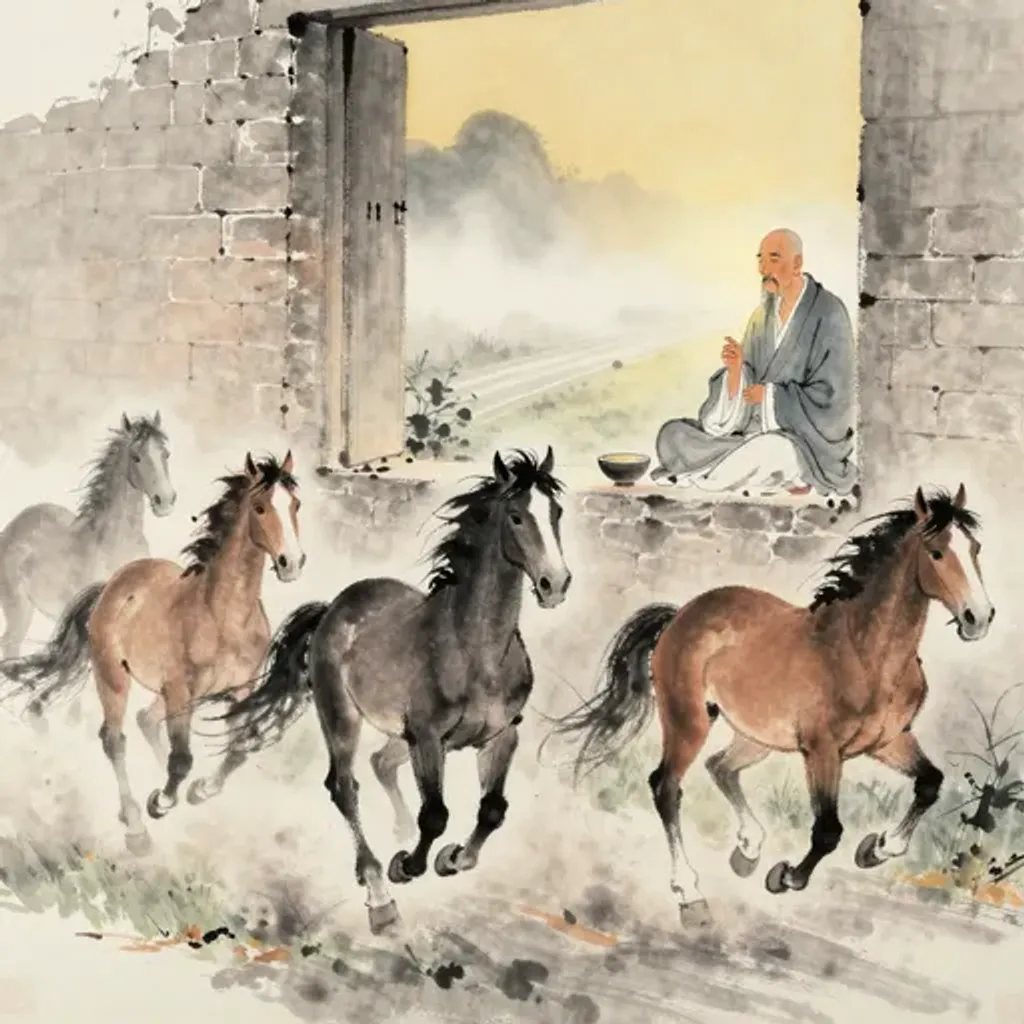
四馬過隙,時難再得;尼父孔聖,繫而不食。
Four horses flash past a gap -- the moment cannot be recaptured. Confucius the sage was tethered and could not eat.
— Jiao Yanshou, Yilin (Forest of Changes), 1st century BC
Commentary
Wind beneath the mountain lets time slip past, and the transformation opens into heaven above the mountain — the strategic withdrawal of Retreat. Four horses flash through a crack in the wall — time, once lost, cannot be recovered. Father Ni, the sage Confucius, was offered a position but declined the meal — bound by principle, he could not eat what was given under false pretenses. The four-horse metaphor for fleeting time comes from Confucius himself. His refusal to eat echoes his hardship between Chen and Cai, where he maintained integrity despite starvation. From Work on the Decayed to Retreat, wisdom lies in knowing when to withdraw. Heaven above the mountain creates distance from petty entanglements — the gentleman retreats not from cowardice but from clarity.
蠱 → 大壯
Hexagram 18 → Hexagram 34: Great Power
Changing lines: 1, 4, 6
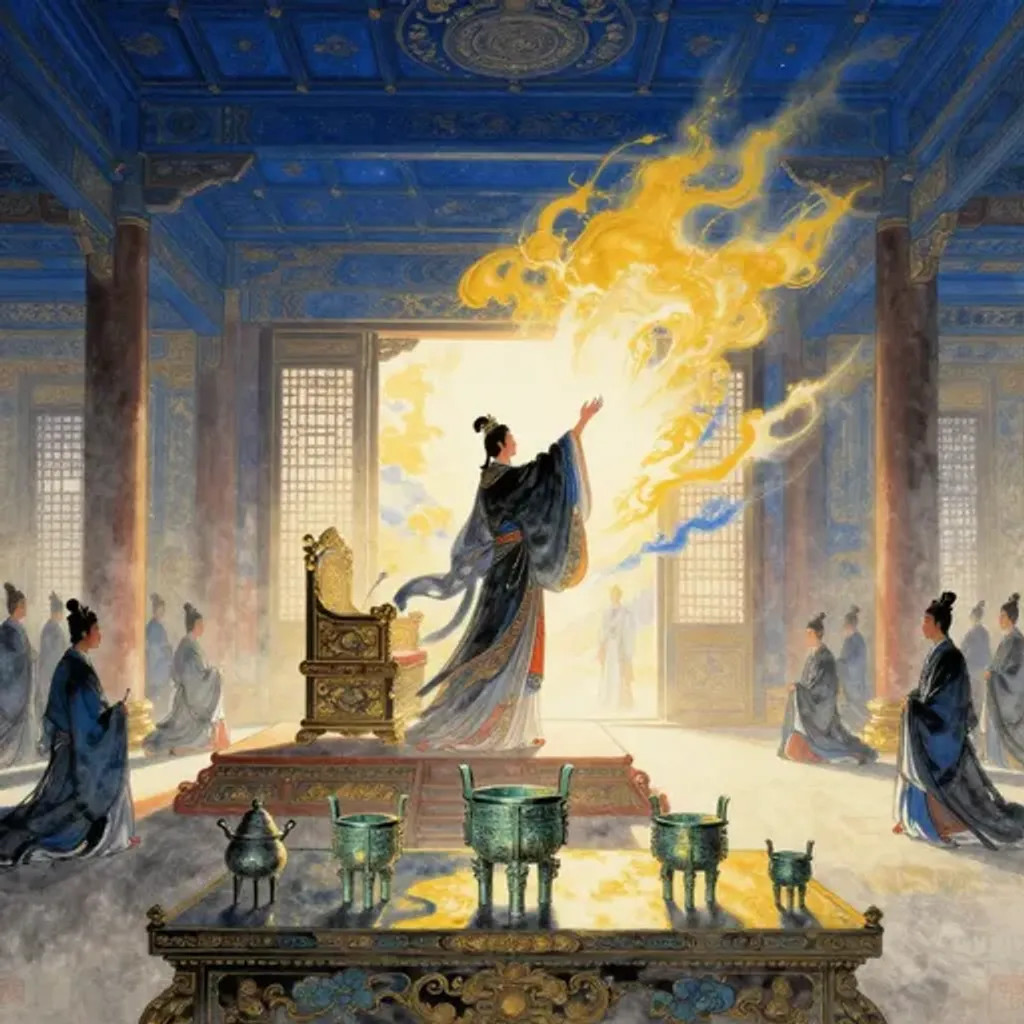
陰變為陽,女化為男;治道得通,君臣相承。
Yin transforms into yang; the female changes to male. The way of governance opens; lord and minister succeed one another.
— Jiao Yanshou, Yilin (Forest of Changes), 1st century BC
Commentary
Wind beneath the mountain reverses polarities, and the transformation charges into thunder roaring above heaven — Great Power. Yin transforms into yang; the female changes into the male. The way of governance finds its passage, and ruler and minister sustain one another. The verse celebrates a fundamental reversal: what was passive becomes active, what was blocked now flows. The gender-transformation imagery signals not literal change but a restoration of dynamic force — the corrupted order shaking off its lethargy. From Work on the Decayed to Great Power, stagnation explodes into vigor. Thunder above heaven is power at its most manifest: the restored polarity between ruler and minister generates the momentum that drives the state forward again.
蠱 → 晉
Hexagram 18 → Hexagram 35: Progress
Changing lines: 2, 3, 4
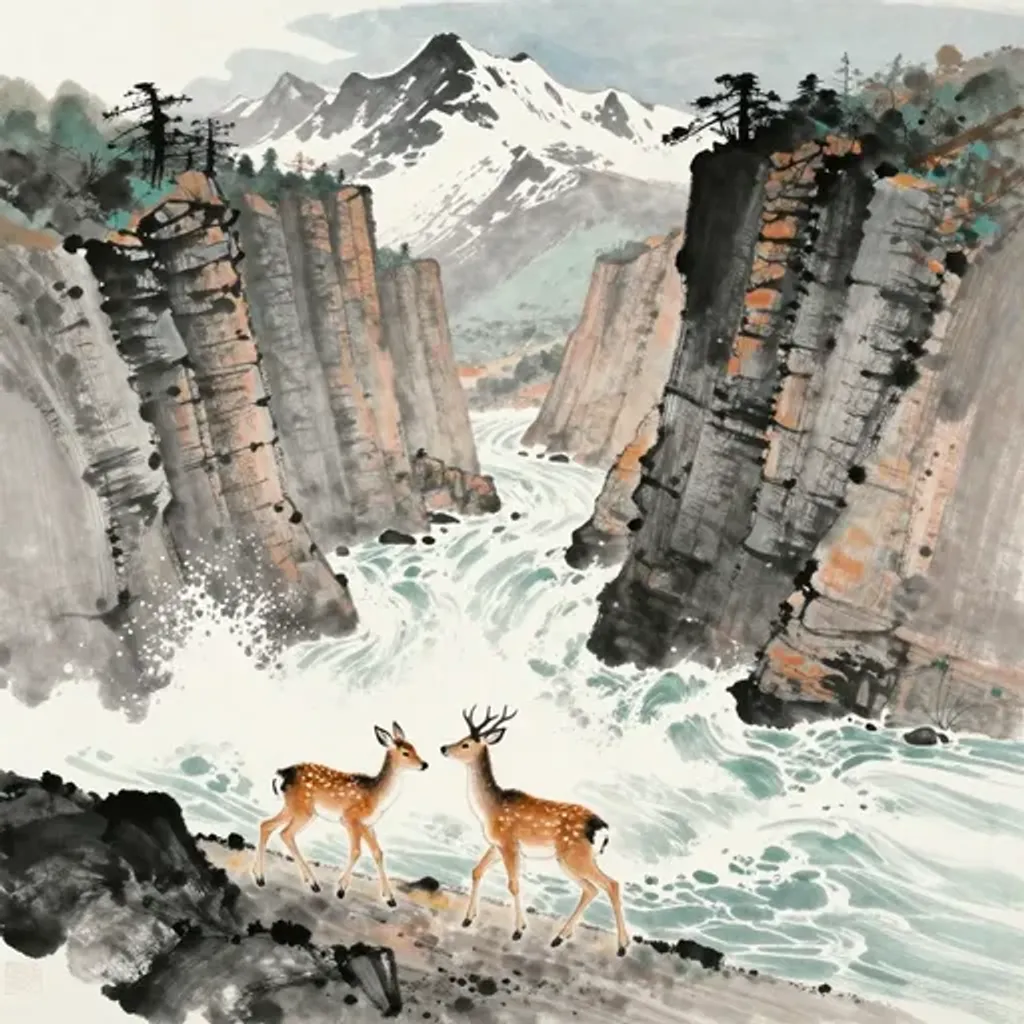
崑崙源口,流行不止;龍門砥柱,民不安處。母歸孩子,黃麑悅喜。
From the source at Kunlun, the flow never ceases; the Dragon Gate pillars stand amid the current. The people cannot dwell in peace. The mother returns to her fawn -- the young deer rejoices.
— Jiao Yanshou, Yilin (Forest of Changes), 1st century BC
Commentary
Wind beneath the mountain releases the great river's flow, and the transformation rises as fire emerging from the earth — the bright Progress of Jin. From Kunlun's headwaters the current runs without ceasing, crashing through Dragon Gate and past the Pillar-Stone, until the people can find no safe footing. Then the mother returns to her child, and the young fawn leaps with delight. Kunlun and Dragon Gate evoke Yu the Great's primordial flood-taming — the irresistible force of water carving through rock. From Work on the Decayed to Progress, the torrent that displaces people also clears the way for reunification. Light breaks above the earth as floodwaters recede: what the deluge scattered, the dawn gathers back together. The fawn's joy signals nature's own recovery.
蠱 → 明夷
Hexagram 18 → Hexagram 36: Darkening of the Light
Changing lines: 1, 2, 6
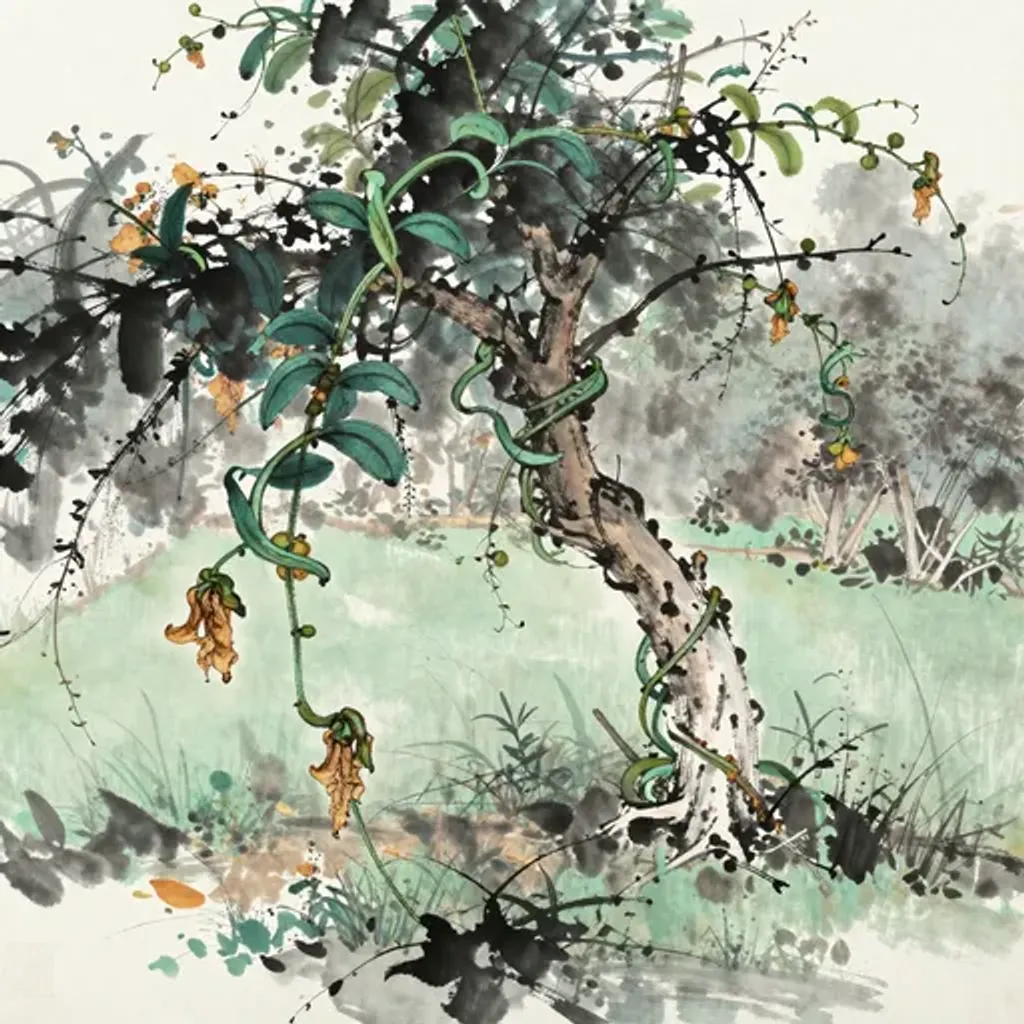
葛纍蒙棘,華不得實;讒佞亂政,使恩壅塞。
Kudzu vine entangles the thorns; blossoms cannot bear fruit. Slanderers and flatterers disrupt governance, blocking the flow of grace.
— Jiao Yanshou, Yilin (Forest of Changes), 1st century BC
Commentary
Wind beneath the mountain tangles into thorns, and the transformation sinks as light entering the earth — the Darkening of the Light. Kudzu vines cling to brambles; flowers bloom but bear no fruit. Slander and flattery disorder governance, blocking the flow of royal grace. The botanical imagery is precise: parasitic vines strangling a thorny host produce blossoms that are sterile — beautiful but fruitless, like a court where eloquent sycophants produce nothing of substance. From Work on the Decayed to Darkening of the Light, corruption reaches the point where wisdom itself must hide. The light descends into the earth not in defeat but in strategic concealment, preserving its brightness within while darkness rules above.
蠱 → 家人
Hexagram 18 → Hexagram 37: The Family
Changing lines: 1, 2, 5
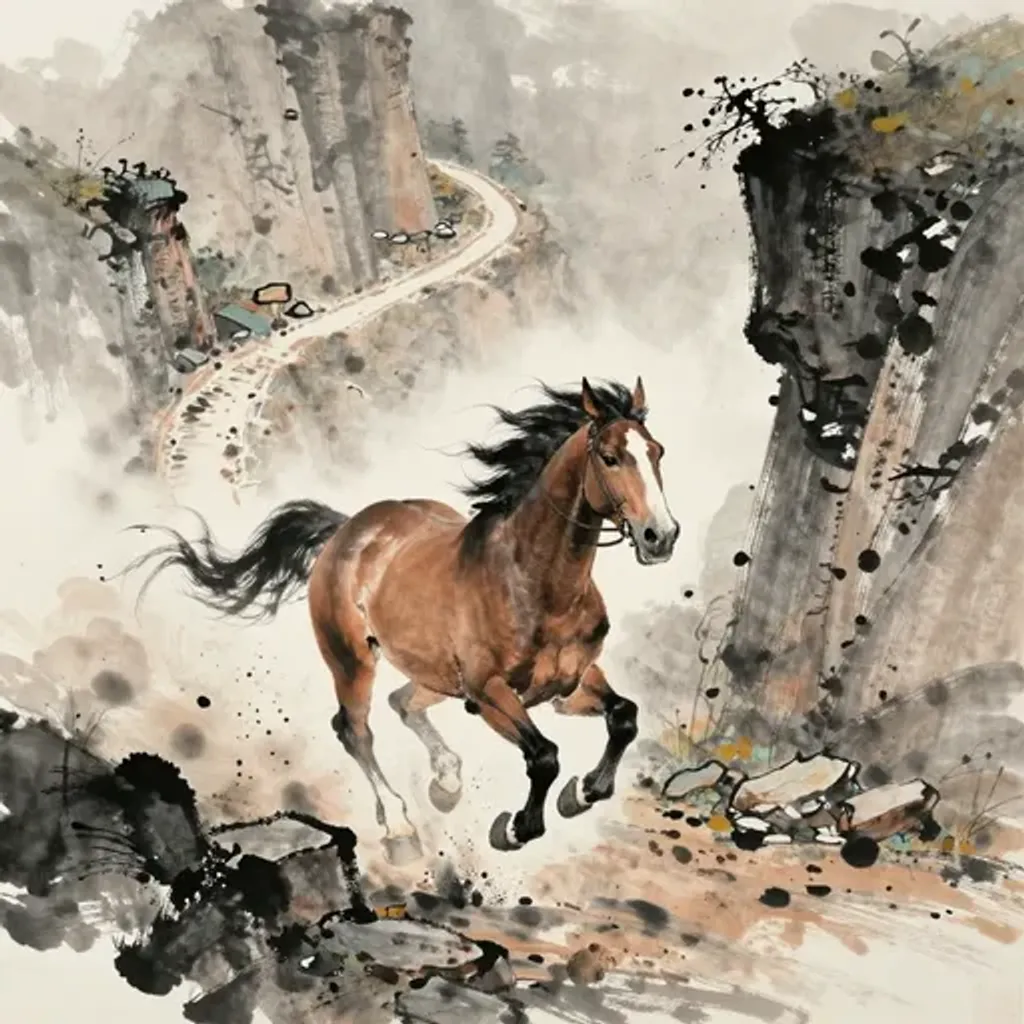
公無長驅,大王駿馬;非其當所,傷折為害。
Do not drive the king stallion recklessly; it is not the proper course -- injury and fracture bring harm.
— Jiao Yanshou, Yilin (Forest of Changes), 1st century BC
Commentary
Wind beneath the mountain sends the chariot careening, and the transformation settles as wind emerging from fire — the domestic order of the Family. Do not drive the king's fine horse at full gallop — it is not in its proper place, and injuries will follow. The warning is against misapplying power: a splendid horse driven recklessly in the wrong terrain breaks legs and shatters harness. Strength misplaced causes more damage than weakness. From Work on the Decayed to the Family, the remedy for institutional corruption begins at home. Wind from fire means that words must carry substance and actions must have constancy. The spirited horse must be returned to its proper stable before it can serve well — order radiates outward only from a centered domestic foundation.
蠱 → 睽
Hexagram 18 → Hexagram 38: Opposition
Changing lines: 1, 3, 4
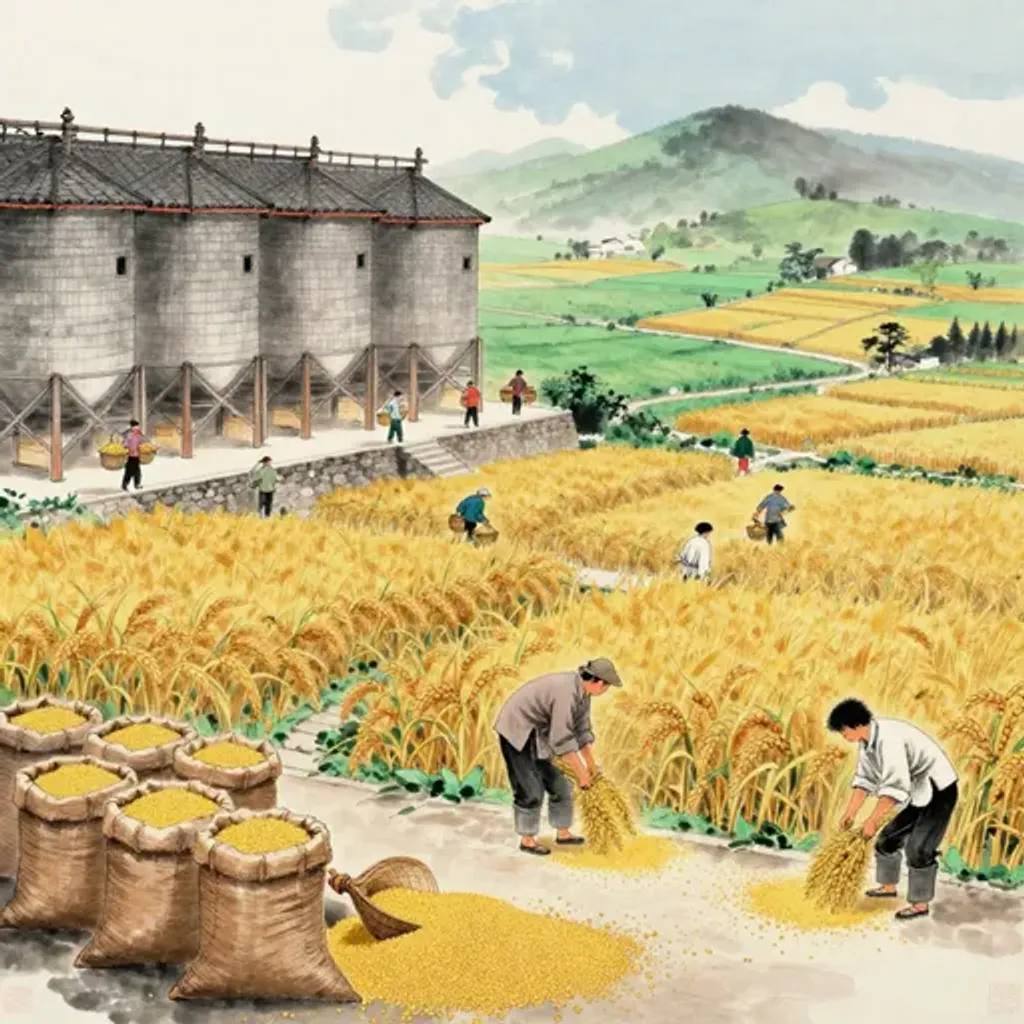
大倉充盈,庶民蕃盛,年歲熟榮。
The great granary overflows; the common people flourish and multiply. The year harvest is rich and splendid.
— Jiao Yanshou, Yilin (Forest of Changes), 1st century BC
Commentary
Wind beneath the mountain yields unexpected abundance, and the transformation divides into fire above the lake — the creative tension of Opposition. The great granaries overflow; the common people flourish and multiply; the year's harvest ripens gloriously. This is one of the Yilin's briefest and most purely auspicious verses — three phrases of unqualified prosperity. From Work on the Decayed to Opposition, the pairing seems paradoxical: how does decay lead to abundance through division? The answer lies in Opposition's dynamic: fire and lake pull apart yet stimulate each other. Like complementary opposites in agriculture — sun and rain, plowing and rest — productive tension generates the surplus that fills the granaries.
蠱 → 蹇
Hexagram 18 → Hexagram 39: Obstruction
Changing lines: 2, 5, 6
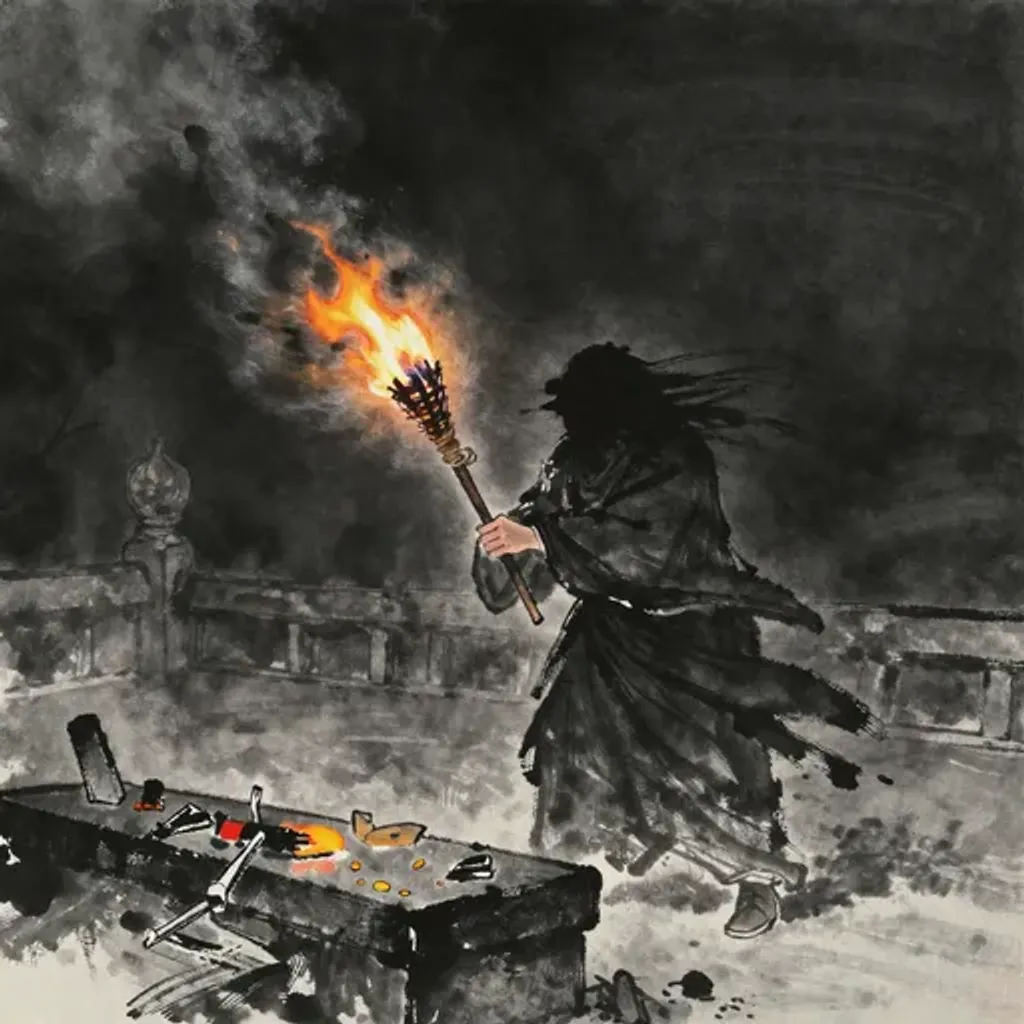
執蕡炤犧,為風所吹;火滅無光,不見玄黃。
Holding a hemp torch to illuminate the sacrifice; it is blown out by the wind. The fire dies and there is no light -- one cannot see dark from bright.
— Jiao Yanshou, Yilin (Forest of Changes), 1st century BC
Commentary
Wind beneath the mountain extinguishes the guiding flame, and the transformation freezes into water upon the mountain — the impassable Obstruction. Holding a hemp torch to illuminate the sacrificial beast, the wind blows it out. The fire dies and all light vanishes; one cannot distinguish dark from bright. The ritual is ruined: the sacrificial fire, meant to connect human and divine, is snuffed by the very wind that should ventilate the mountain's corruption. From Work on the Decayed to Obstruction, the path forward is blocked by the very forces meant to clear it. Water atop the mountain cannot flow downward — one must turn back and cultivate inner virtue before attempting the crossing again.
蠱 → 解
Hexagram 18 → Hexagram 40: Deliverance
Changing lines: 3, 4, 6
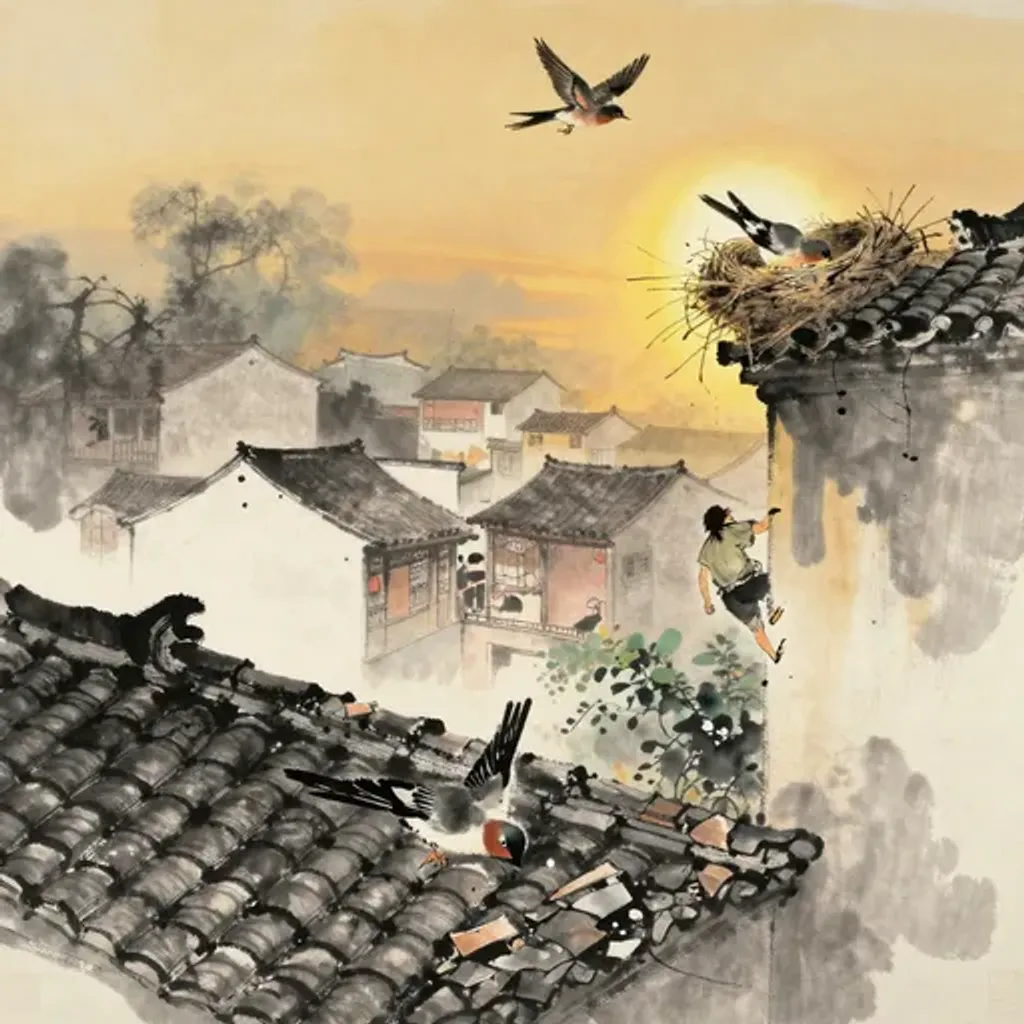
鳥反故巢,歸其室家。心平意正,與叔相和。登高殞墜,失其寵貴。
The bird returns to its old nest, coming home to its household. Heart calm, intent correct, reconciled with kin. Climbing high, one falls -- losing favor and rank.
— Jiao Yanshou, Yilin (Forest of Changes), 1st century BC
Commentary
Wind beneath the mountain sends the bird home, and the transformation breaks as thunder over water — the liberating relief of Deliverance. A bird returns to its old nest, coming back to its household. Heart calm and mind upright, one reconciles with one's uncle. But then — climbing high and plunging down, losing one's favor and position. The verse traces a complete arc: homecoming, reconciliation, then catastrophic fall. The domestic reunion proves unstable; the height gained becomes the distance of the fall. From Work on the Decayed to Deliverance, relief comes as thunder and rain clearing the air, but one must act swiftly on the opening. Those who linger too long at the summit after deliverance risk a reversal far worse than the original trouble.
蠱 → 損
Hexagram 18 → Hexagram 41: Decrease
Changing lines: 1, 3
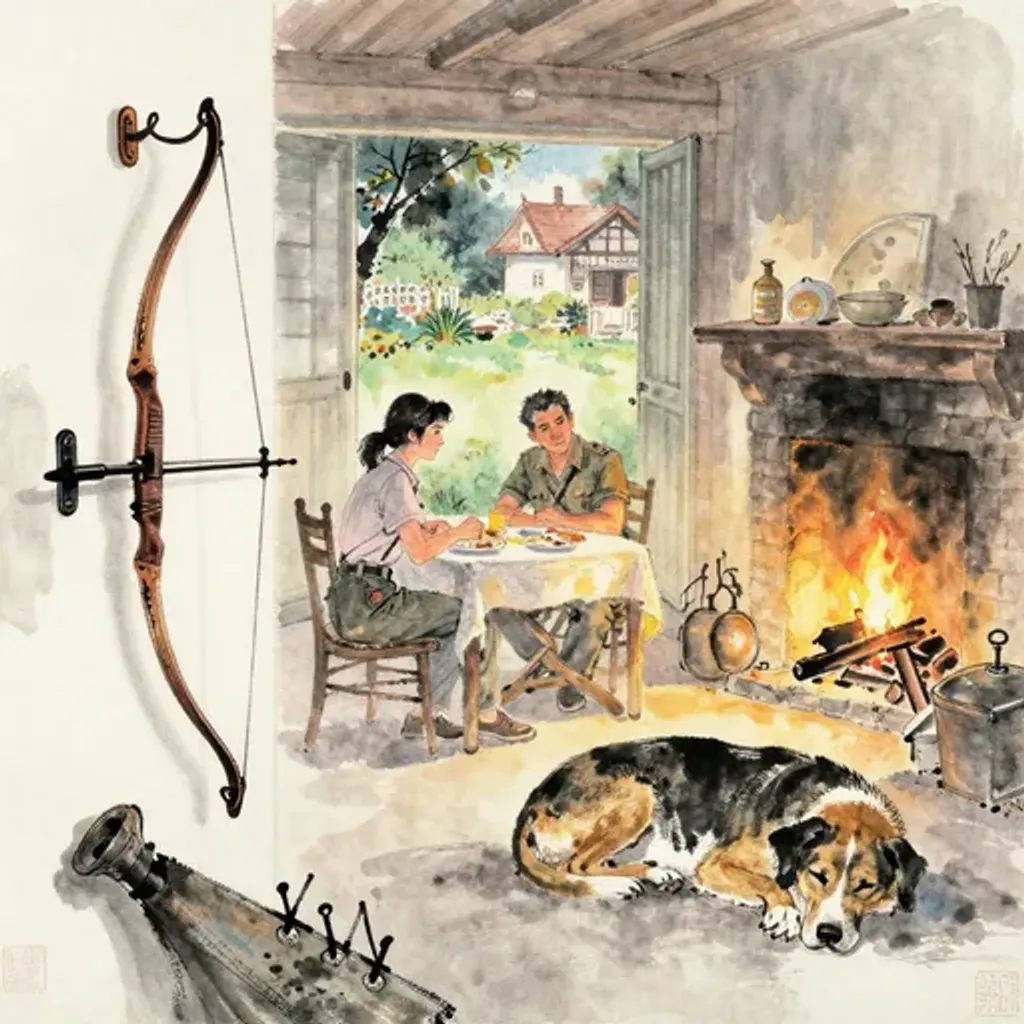
弩弛弓藏,良犬不行;內無怨女,征夫在堂。
The crossbow unstrung, the bow put away; the fine hound does not roam. Within, no resentful woman; the conscripted husband is home in the hall.
— Jiao Yanshou, Yilin (Forest of Changes), 1st century BC
Commentary
Wind beneath the mountain lays down its weapons, and the transformation settles as the mountain above the lake — the voluntary sacrifice of Decrease. Crossbows are unstrung, bows stored away; the fine hunting dog no longer goes out. Within the house there are no resentful women; the campaigning husband stands in the hall. The imagery is one of demobilization and domestic reunion: war is over, weapons put away, the soldier returned to his wife. The 'resentful woman' and 'absent husband' echo the Shijing's soldier-wife laments. From Work on the Decayed to Decrease, restoration requires giving something up. The mountain diminishes to nourish the lake — military expenditure is reduced so that domestic life can flourish. Peace is purchased through willing reduction.
蠱 → 益
Hexagram 18 → Hexagram 42: Increase
Changing lines: 1, 2, 3, 5
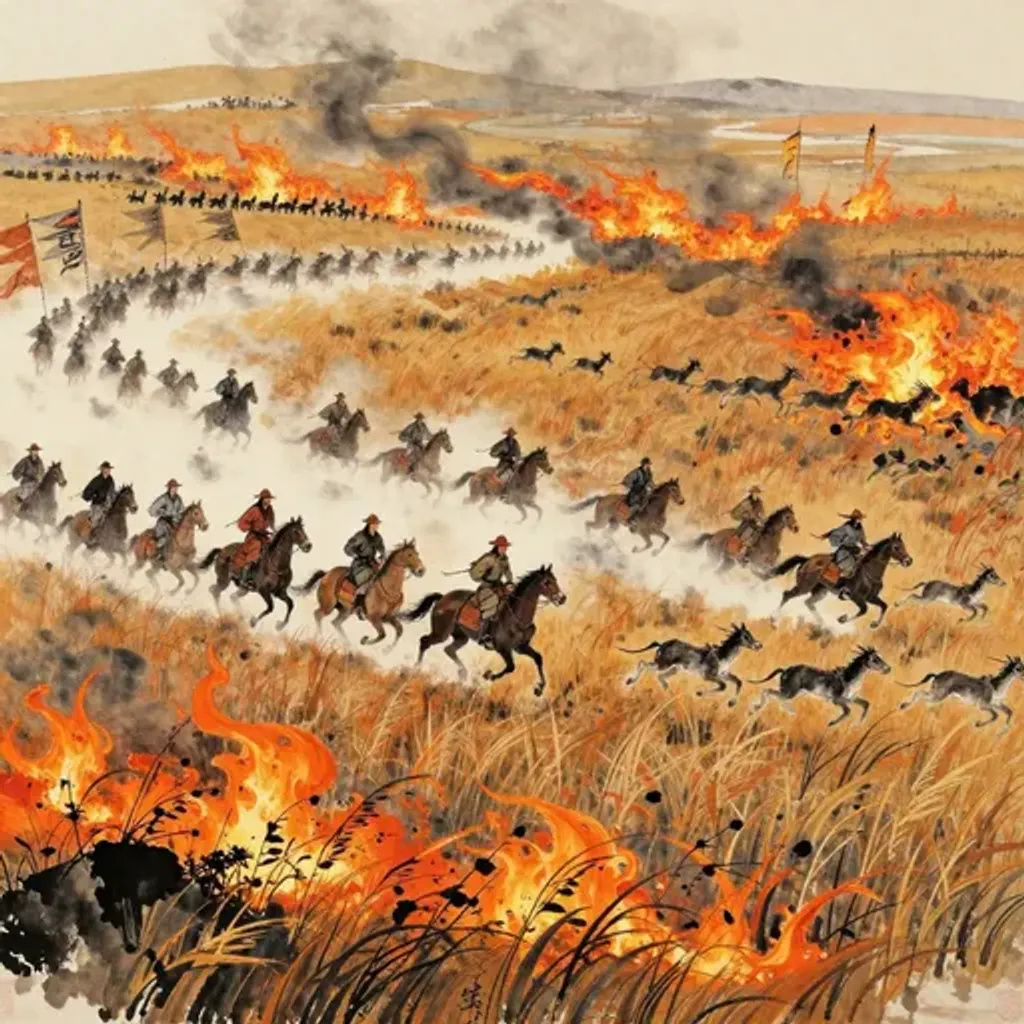
特犧孔博,日新其德;文公燎獵,姜氏受福。
The sacrificial ox is vast and fine; daily renewing its virtue. Duke Wen set fires for the hunt -- the Jiang clan received her blessing.
— Jiao Yanshou, Yilin (Forest of Changes), 1st century BC
Commentary
Wind beneath the mountain calls for renewal through sacrifice, and the transformation rises as wind and thunder together — the dynamic Increase of Yi. The sacrificial animals are magnificent and abundant, their virtue renewed each day. Duke Wen conducted a hunt at the blazing fields, and the Jiang consort received blessings. According to tradition, when Chong Er lingered in Qi enjoying comfort, his wife Jiang — of the Jiang clan — conspired with his advisers to get him drunk and spirit him away, forcing him to resume his quest for the Jin throne. Her decisive act secured the blessings of his eventual hegemony. From Work on the Decayed to Increase, the spoiled complacency is shattered by bold intervention. Wind and thunder magnify each other: seeing good, one moves toward it; recognizing fault, one corrects it immediately.
蠱 → 夬
Hexagram 18 → Hexagram 43: Breakthrough
Changing lines: 1, 4, 5, 6
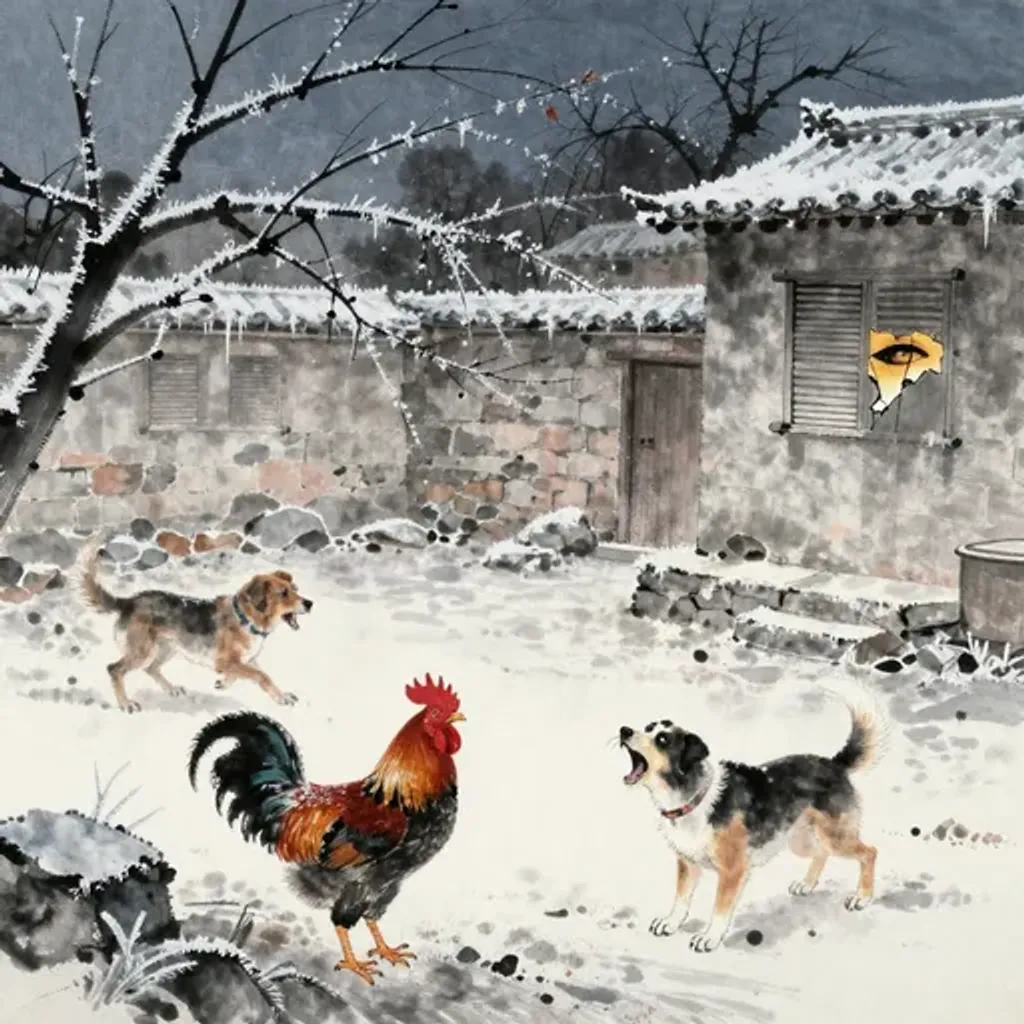
季秋孟冬,寒露霜降;大陰在庭,品物不生。雞犬夜鳴,家擾數驚。
Late autumn, early winter; cold dew, frost descending. Great yin fills the courtyard; living things cease to grow. Roosters and dogs cry in the night; the household is startled again and again.
— Jiao Yanshou, Yilin (Forest of Changes), 1st century BC
Commentary
Wind beneath the mountain descends into killing frost, and the transformation surges as the lake rising above heaven — the decisive Breakthrough of Guai. Late autumn, early winter: cold dew and frost descend. Great yin fills the courtyard; the myriad creatures cease to grow. Roosters and dogs cry in the night; the household is repeatedly startled. The seasonal imagery of the execution season — when ancient law mandated punishments be carried out — pervades the verse. The nocturnal alarm of animals signals impending crisis. From Work on the Decayed to Breakthrough, the accumulated corruption must be cut away decisively. The lake overflowing heaven is judgment reaching its climax: what has festered in darkness is finally exposed and purged, though the process is violent and unsettling.
蠱 → 姤
Hexagram 18 → Hexagram 44: Coming to Meet
Changing lines: 4, 5
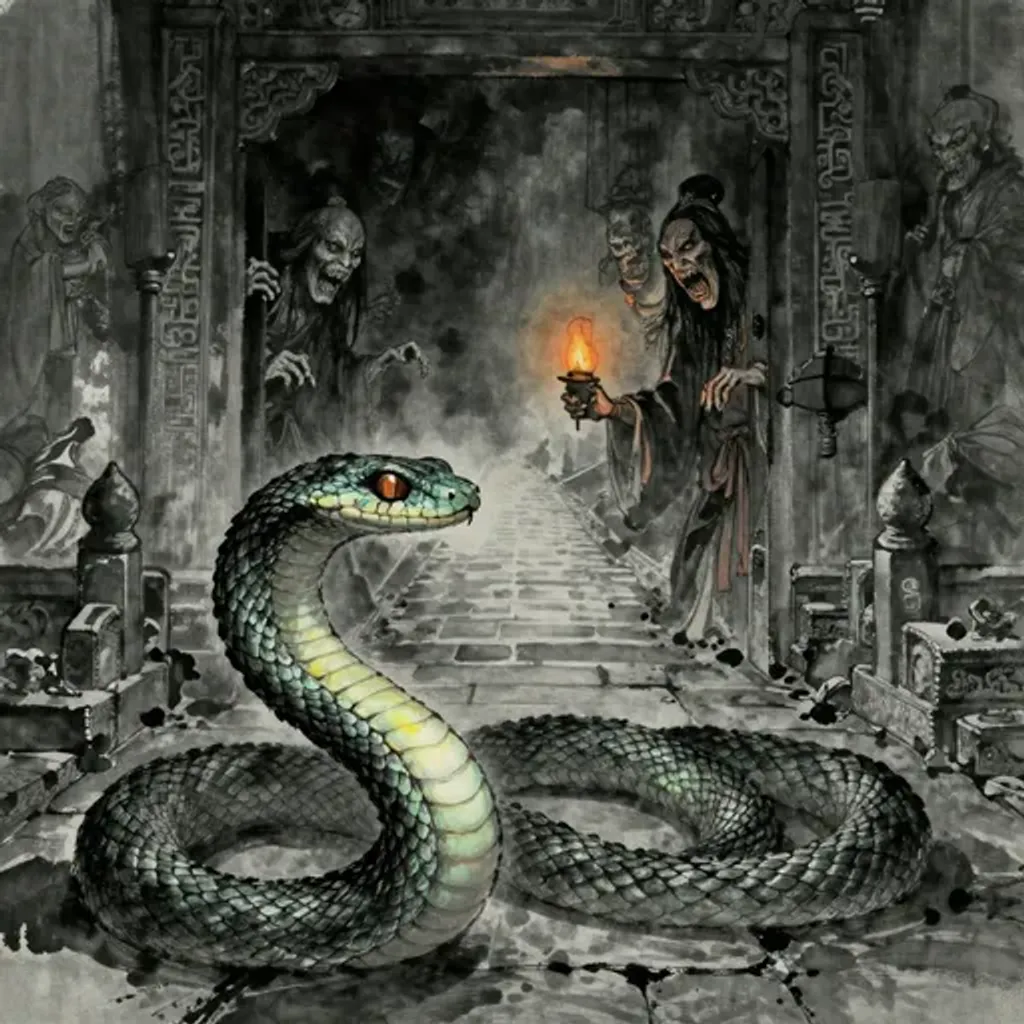
心多恨悔,出門見怪;有虵三足,醜聲可惡。嫫母為媒,請求不得。
Heart full of resentment and regret; stepping outside, one meets the uncanny. A three-legged serpent -- its ugly sound is loathsome. With Momu as matchmaker, the suit does not succeed.
— Jiao Yanshou, Yilin (Forest of Changes), 1st century BC
Commentary
Wind beneath the mountain conjures monsters, and the transformation opens as heaven beneath the wind — the unexpected encounter of Coming to Meet. The heart is full of resentment and remorse; stepping out the door, one encounters a freak — a three-legged serpent whose ugly cry revolts all listeners. Mo Mu is sent as matchmaker, but the suit is refused. Mo Mu, the legendarily ugly consort of the Yellow Emperor, here serves as go-between in an impossible courtship: an ill-omened creature as suitor, a repulsive matchmaker — every element guarantees rejection. From Work on the Decayed to Coming to Meet, the encounter is unwanted. Wind beneath heaven spreads influence everywhere, but when the messenger and the message are both corrupt, even the broadest reach achieves nothing.
蠱 → 萃
Hexagram 18 → Hexagram 45: Gathering Together
Changing lines: 2, 3, 4, 5, 6
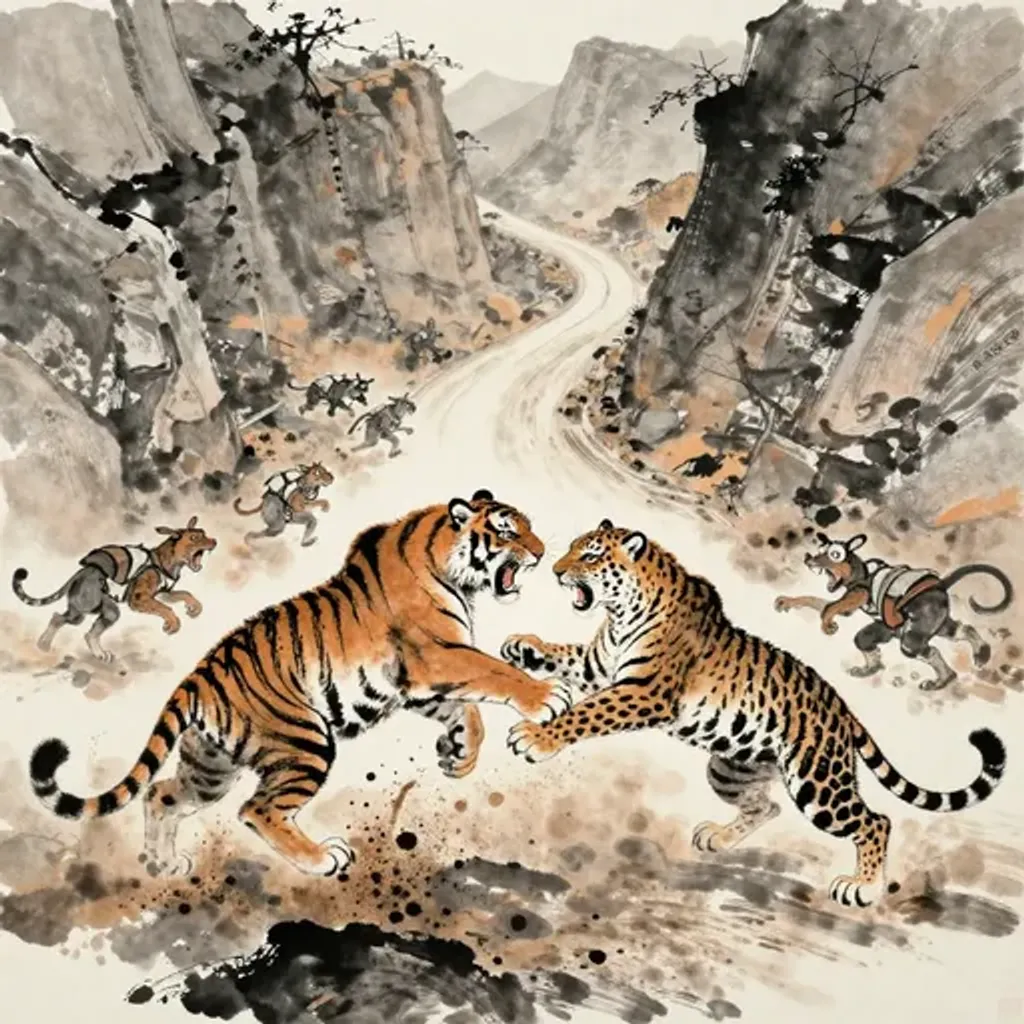
虎豹爭強,道閉不通;小人讙訟,貪夫受空。
Tiger and leopard contend for dominance; the road is blocked and impassable. Petty men raise clamorous suits; the greedy man is left with nothing.
— Jiao Yanshou, Yilin (Forest of Changes), 1st century BC
Commentary
Wind beneath the mountain looses predators, and the transformation descends to the lake upon the earth — the anxious Gathering of Cui. Tigers and leopards contend for supremacy; the roads are sealed and blocked. Petty men raise their clamor in litigation while the greedy are left empty-handed. The power vacuum created by decay invites predators: the strong devour the strong while the weak cry out in futile protest. From Work on the Decayed to Gathering, the corrupted situation demands that people band together despite mutual distrust. The lake upon the earth gathers what flows to it — but this gathering requires vigilance. The gentleman prepares weapons and guards against the unexpected, for even at the assembly, predators lurk.
蠱 → 升
Hexagram 18 → Hexagram 46: Pushing Upward
Changing lines: 6
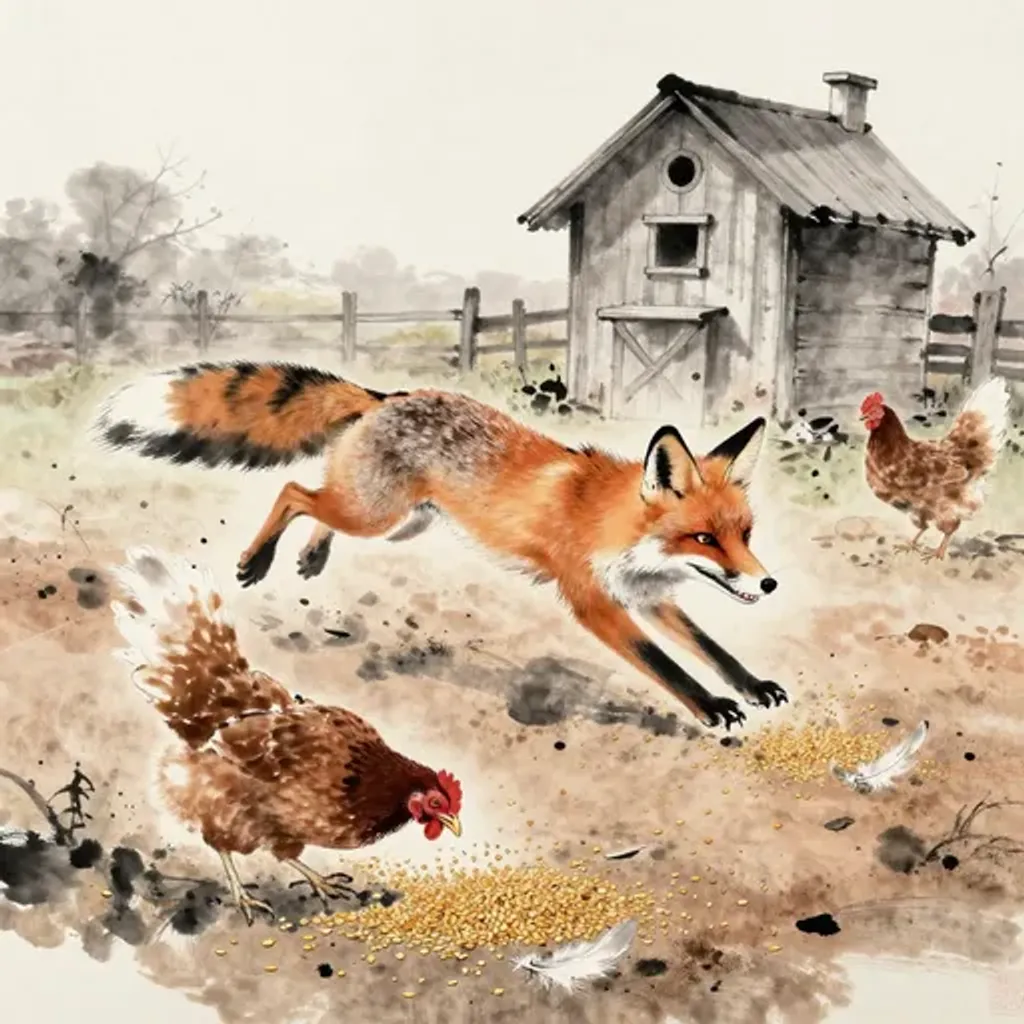
雞方啄粟,為狐所逐;走不得食,惶懼惕息。
The hen was pecking grain when the fox gave chase; she fled and could not eat -- trembling and breathless with fright.
— Jiao Yanshou, Yilin (Forest of Changes), 1st century BC
Commentary
Wind beneath the mountain disturbs the feeding ground, and the transformation rises as wood growing within the earth — the steady ascent of Pushing Upward. A chicken is pecking at grain when a fox chases it away. Running in terror, it cannot eat; it trembles and gasps for breath. The domestic hen — symbol of modest, steady sustenance — is driven from its livelihood by a cunning predator. The verse captures the vulnerability of the ordinary under corrupt conditions: even simple nourishment is denied by those who prey upon the defenseless. From Work on the Decayed to Pushing Upward, the chicken's displacement is temporary. Wood grows within the earth — slow, steady, and ultimately unstoppable. What the fox scatters, patient growth gathers back, one grain at a time.
蠱 → 困
Hexagram 18 → Hexagram 47: Oppression
Changing lines: 3, 4, 5, 6
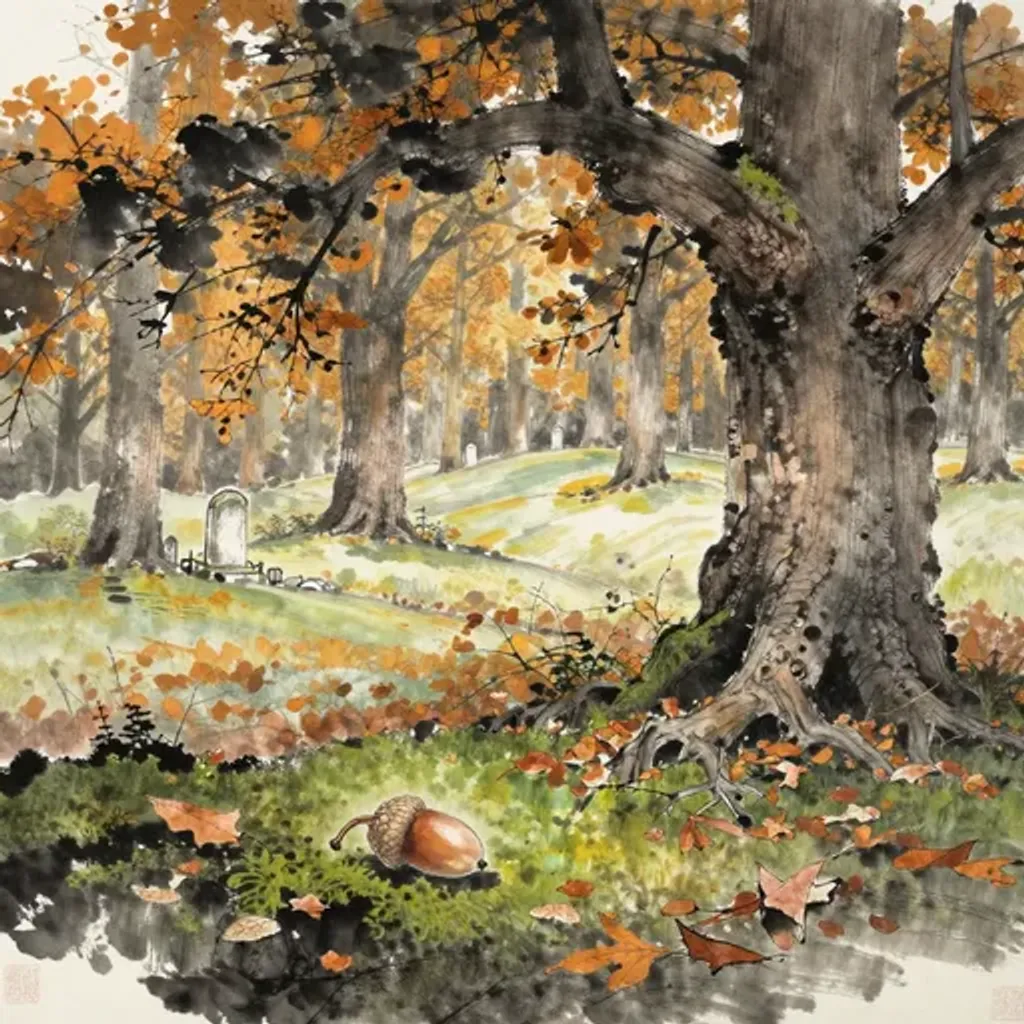
陳媯敬仲,兆興齊姜;乃適營丘,八世大昌。
An acorn falls to earth; in a hundred years, a forest. The founding ancestor had no title — the descendants are enfeoffed as lords.
— Jiao Yanshou, Yilin (Forest of Changes), 1st century BC
Commentary
Wind beneath the mountain conceals a dynastic seed, and the transformation descends into the lake drained of water — the bitter Oppression of Kun. The original verse reads: 'Chen Gui Jingzhong received an omen of flourishing through the Jiang rulers of Qi. He went to settle at Yingqiu, and after eight generations his line achieved great prosperity.' Chen Jingzhong (Chen Wan) was a minister who fled the state of Chen to Qi around 672 BC. His descendants, the Tian clan, gradually accumulated power until they replaced the ruling Jiang family in 386 BC. From Work on the Decayed to Oppression, the paradox is striking: the seed planted during one dynasty's decay bears fruit only through generations of constraint. Oppression's drained lake conceals the patient root that will eventually drink deep.
蠱 → 井
Hexagram 18 → Hexagram 48: The Well
Changing lines: 5, 6
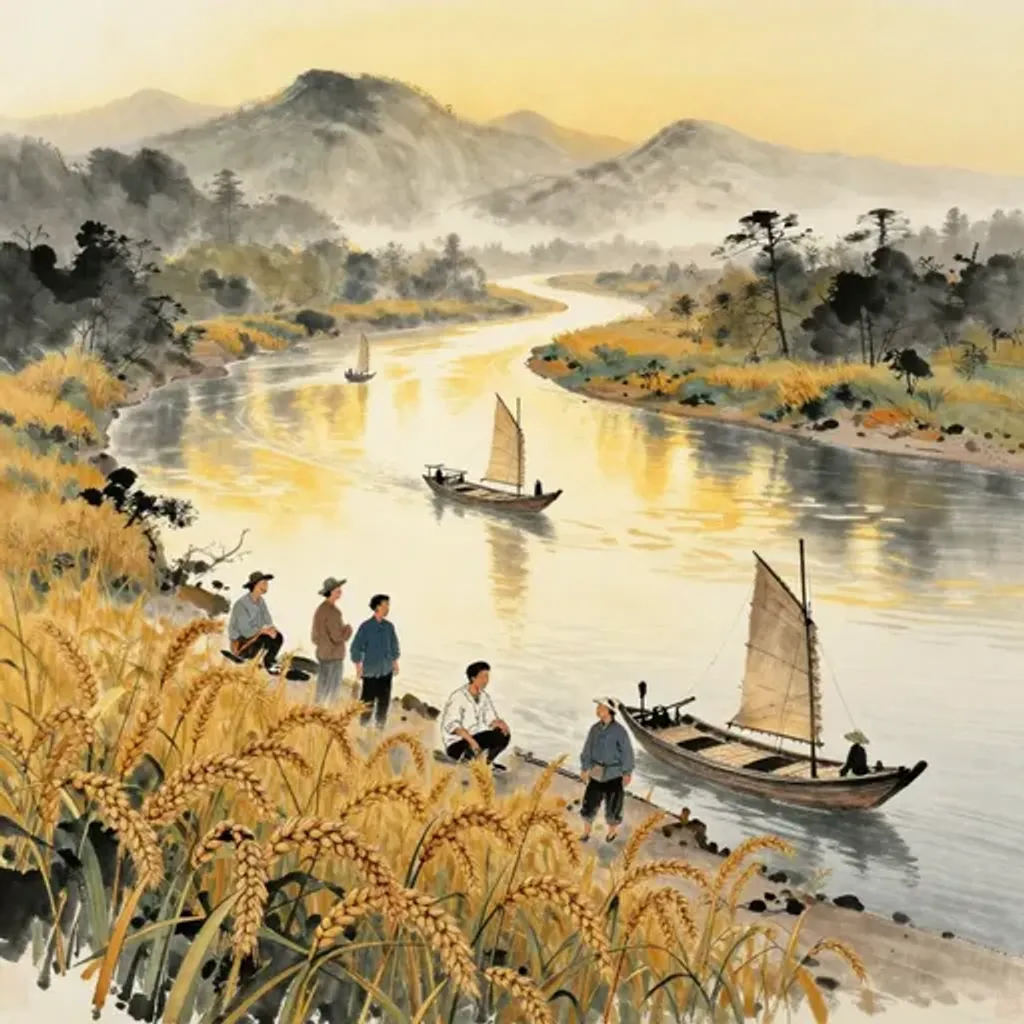
昊天白日,照臨我國;萬民康寧,咸賴嘉福。
The rising sun illuminates the great river; fishing sails dot the golden waves. Riverside farmers smile and chat — this year's grain stalks are taller than a person.
— Jiao Yanshou, Yilin (Forest of Changes), 1st century BC
Commentary
Wind beneath the mountain parts for the rising sun, and the transformation rises as water above the wood — the communal Well that nourishes all. The original verse reads: 'Bright heaven and white sun illuminate our land. The ten thousand people are healthy and at peace; all rely upon these fine blessings.' Solar benevolence shining upon a content populace — the simplest and most hopeful image in the political imagination. From Work on the Decayed to the Well, the source of renewal runs deeper than any corruption. The well's water rises through the wood of the windlass, drawn up by those who serve the community. Decay cannot poison the aquifer; light returns because the source was never truly extinguished.
蠱 → 革
Hexagram 18 → Hexagram 49: Revolution
Changing lines: 1, 2, 4, 5, 6
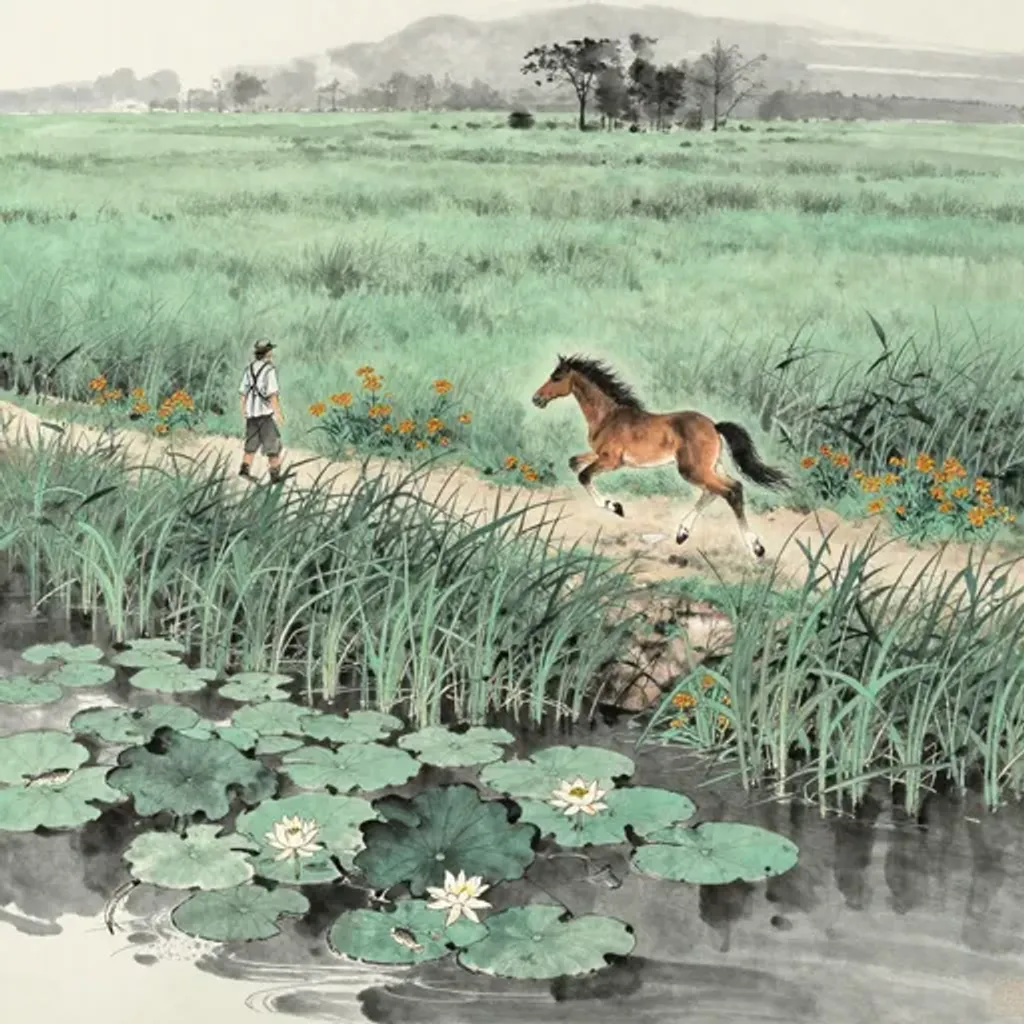
雲夢大藪,嘉有所在;虞人共職,驪駒樂喜。
The great marsh of Yunmeng -- fine things dwell within. Gamekeepers share the duties; the young black horse is glad.
— Jiao Yanshou, Yilin (Forest of Changes), 1st century BC
Commentary
Wind beneath the mountain opens into the great marshes, and the transformation ignites as fire within the lake — the radical renewal of Revolution. The Yunmeng marshes, Chu's vast wilderness, harbor game and treasure in abundance. The wardens share their duties, and the young black horse prances with delight. Yunmeng was the legendary hunting ground of the Chu kings — a wild paradise teeming with life, managed by royal gamekeepers (虞人). The spirited colt suggests untamed energy channeled through proper stewardship. From Work on the Decayed to Revolution, the corrupt old order gives way to something fundamentally different. Fire within the lake: opposing elements that demand transformation. The wildness of Yunmeng is not chaos but a new order waiting to be declared.
蠱 → 鼎
Hexagram 18 → Hexagram 50: The Cauldron
Changing lines: 4
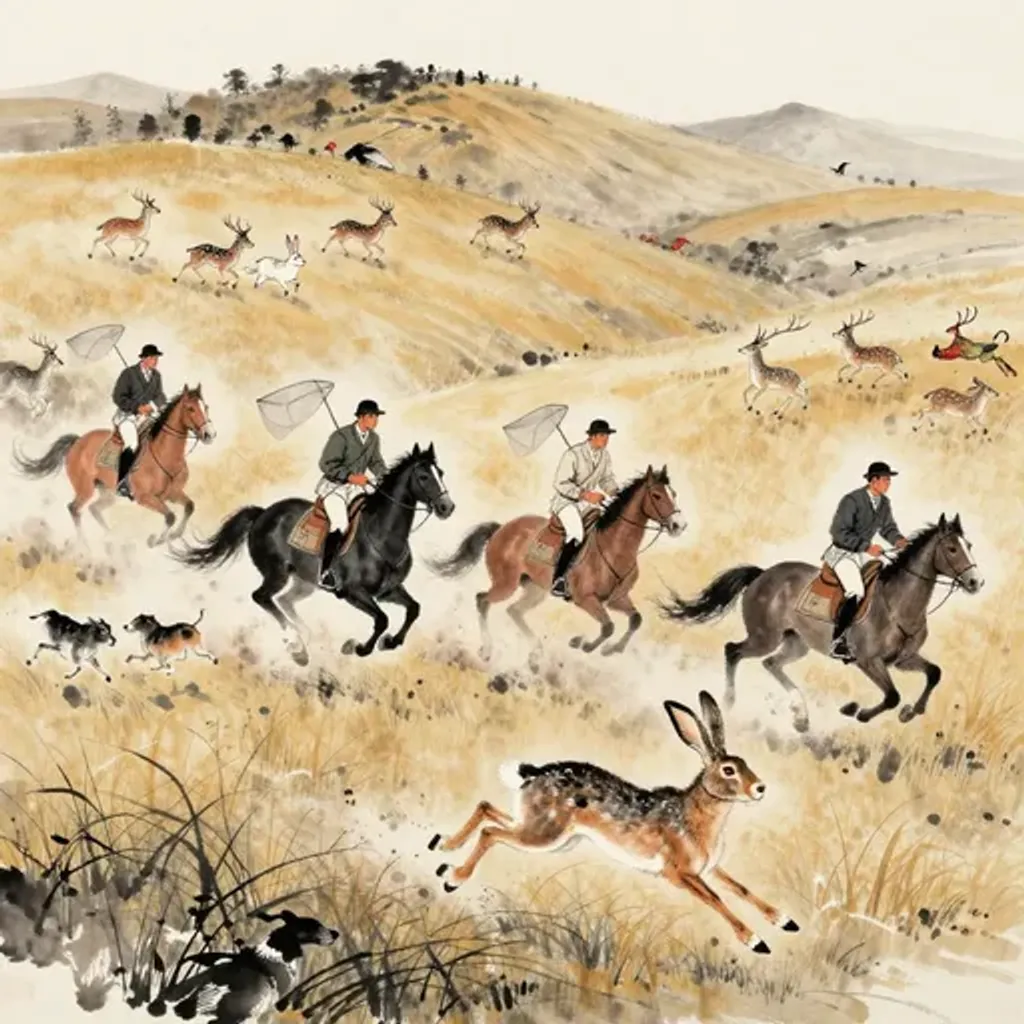
獐鹿雞兔,群聚東國;俱往逐追;九齚十得。主君有喜。
Deer, roebuck, chickens, and hares gather in the eastern land; all go together in pursuit -- nine catches out of ten. The lord is pleased.
— Jiao Yanshou, Yilin (Forest of Changes), 1st century BC
Commentary
Wind beneath the mountain drives game toward the hunters, and the transformation ascends as fire above the wood — the transformative Cauldron. Deer and roe, chickens and hares gather in the eastern lands. All pursue the chase together; nine are caught out of ten. The lord rejoices. The hunt is spectacularly successful — nearly perfect efficiency in gathering the bounty that corruption had scattered. The game assembling in the east suggests resources naturally converging where order is restored. From Work on the Decayed to the Cauldron, the raw catch is refined into something nourishing. Fire above wood cooks the offering; the cauldron transforms raw material into sacred sustenance. What was wild and dispersed becomes civilized and shared.
蠱 → 震
Hexagram 18 → Hexagram 51: The Arousing Thunder
Changing lines: 1, 2, 3, 4, 6
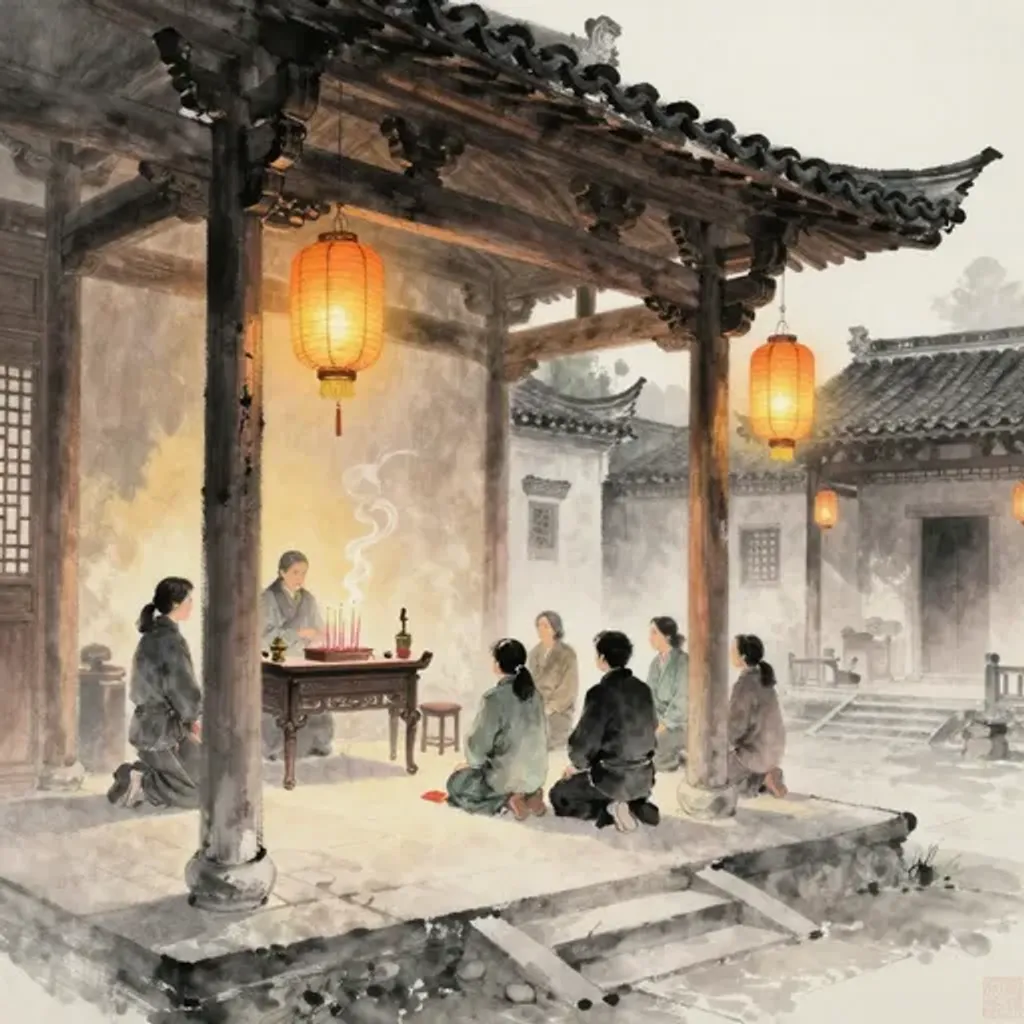
德惠孔明,雖衰復章,保其室堂。
Virtue and kindness shine brightly; though diminished, they blaze again -- the household and hall are preserved.
— Jiao Yanshou, Yilin (Forest of Changes), 1st century BC
Commentary
Wind beneath the mountain preserves virtue through decline, and the transformation erupts as doubled thunder — the Arousing shock that demands self-examination. Virtue and benevolence shine brilliantly; though declining, they blaze forth again, preserving the house and hall. The verse is remarkably compressed: moral clarity endures through adversity. The phrase 'though declining, it shines again' captures the precise dynamic of resilience — not avoiding decline but blazing through it. From Work on the Decayed to the Arousing, the inner shock of self-awareness revives what was fading. Thunder upon thunder: the first shock startles, the second proves one has learned. Virtue that has survived its own eclipse radiates with doubled intensity.
蠱 → 艮
Hexagram 18 → Hexagram 52: Keeping Still Mountain
Changing lines: 2
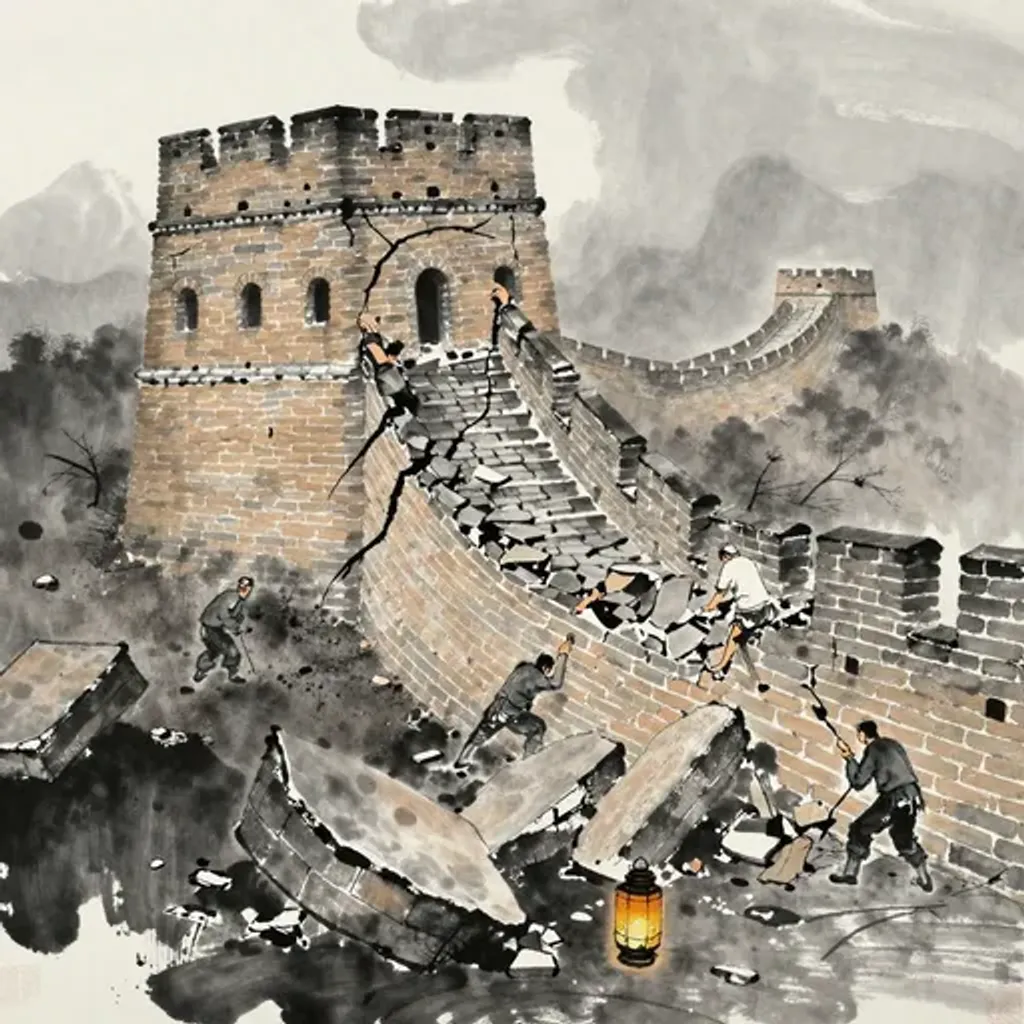
天之所壞,不可強支;眾口嘈嘈,雖貴必危。
What heaven would bring down, none can prop up by force; when a multitude of mouths clamor, even the noble are imperiled.
— Jiao Yanshou, Yilin (Forest of Changes), 1st century BC
Commentary
Wind beneath the mountain meets heaven's judgment, and the transformation freezes into the doubled mountain — the immovable stillness of Keeping Still. What heaven has ordained to fall cannot be propped up by force. Voices clamor and crowd; even the exalted are endangered. The verse delivers a stark verdict: when the cosmic order has condemned a structure, human effort to shore it up is futile. The clamoring crowd — public opinion turned hostile — compounds the danger even for those in high position. From Work on the Decayed to Keeping Still, the counsel is to stop. Doubled mountains think not beyond their position. When the mandate is withdrawn, the only wisdom is to cease striving and accept what cannot be changed.
蠱 → 漸
Hexagram 18 → Hexagram 53: Development
Changing lines: 2, 5
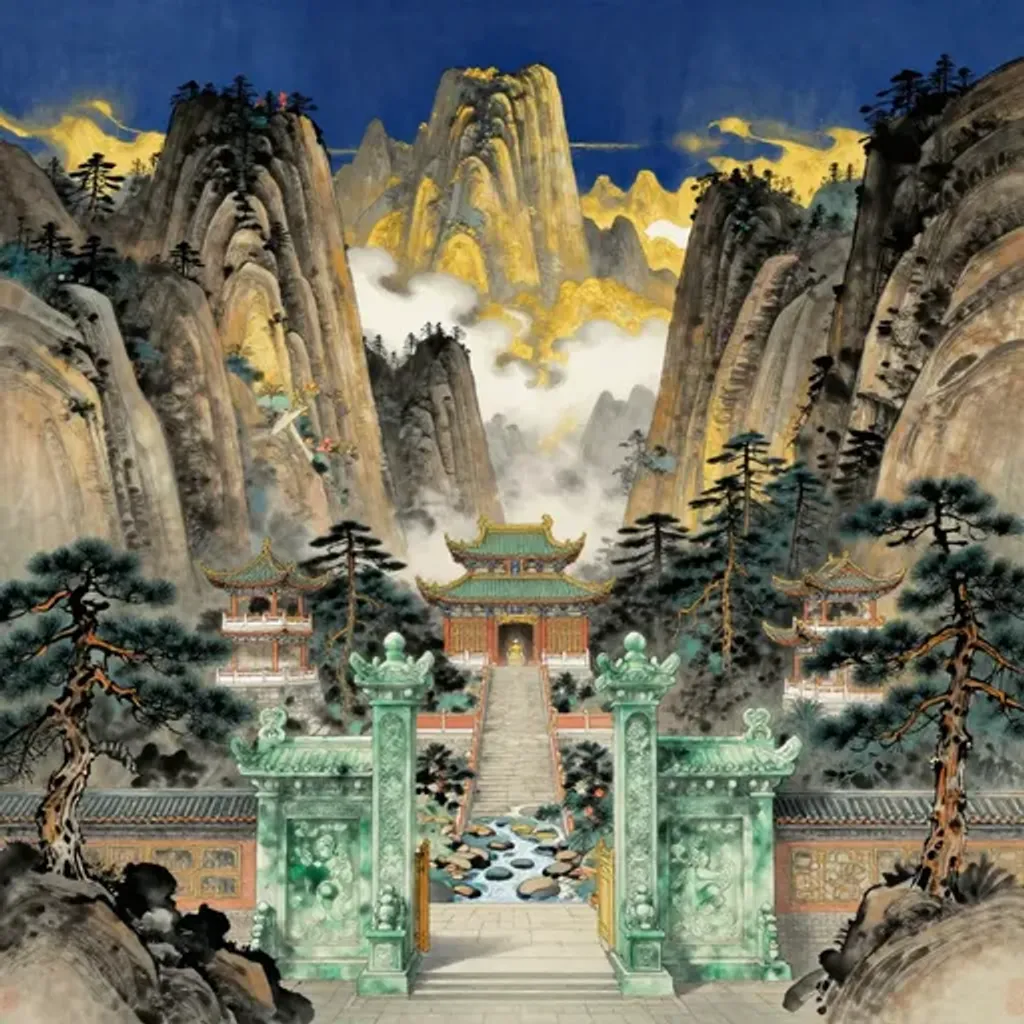
天之奧隅,堯舜所居;可以全身,保我邦家。
In heaven hidden corner, where Yao and Shun once dwelt; there one may preserve the body and protect the homeland.
— Jiao Yanshou, Yilin (Forest of Changes), 1st century BC
Commentary
Wind beneath the mountain finds heaven's hidden corner, and the transformation grows as trees upon the mountain — the gradual Development of Jian. In heaven's secluded recess, where Yao and Shun once dwelt, one may preserve one's person and protect the state. The 'hidden corner of heaven' evokes a sanctuary beyond the reach of corruption — the mythic realm where sage-kings governed in perfect harmony with nature. Yao and Shun, the paragons of virtuous rule, represent the highest aspiration of governance. From Work on the Decayed to Development, the cure for institutional decay is gradual, organic growth. Trees grow slowly upon the mountain, each ring a year of patient cultivation. The sage-kings' dwelling is not a destination but a direction — step by step, virtue develops.
蠱 → 歸妹
Hexagram 18 → Hexagram 54: The Marrying Maiden
Changing lines: 1, 3, 4, 6
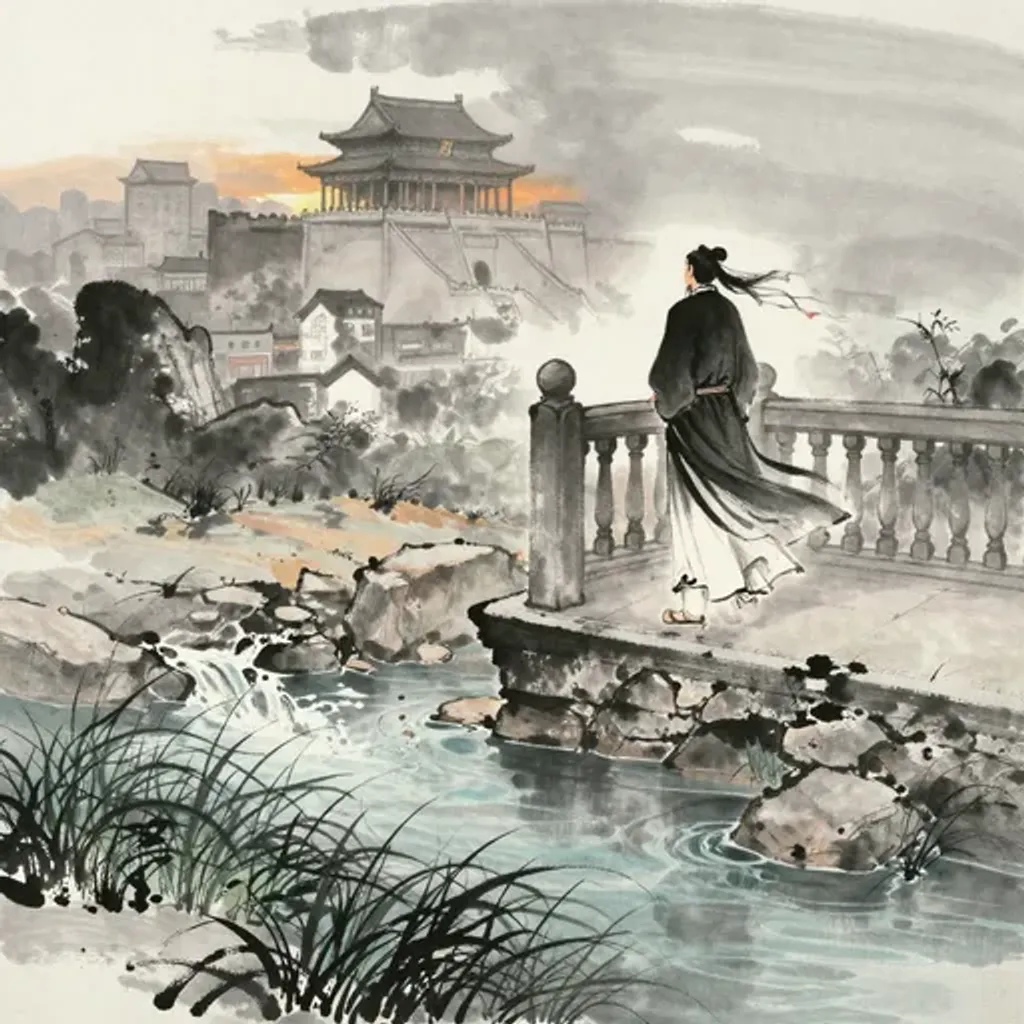
下泉苞稂,十年無王。荀伯遇時,憂念周京。
Beneath the spring, weeds engulf the grain; for ten years there is no king. Lord Xun meets the moment -- he grieves and thinks of the Zhou capital.
— Jiao Yanshou, Yilin (Forest of Changes), 1st century BC
Commentary
Wind beneath the mountain chokes the springs, and the transformation thunders above the lake — the Marrying Maiden given without choice. 'Beneath the spring, weeds wrap the grain; for ten years, no true king reigns.' This quotes the Shijing ode 'Xia Quan' from the Cao winds, lamenting a state without rightful governance where only weeds grow in the flooded fields. 'Xunbo meets his moment and grieves for the Zhou capital.' Xun Bo (Xun Li) was a Jin minister who in 520 BC helped restore King Jing of Zhou to his throne. From Work on the Decayed to the Marrying Maiden, the loyal minister appears when the dynasty seems lost. Thunder above the lake stirs what lies dormant — but the marriage of duty to crisis is irreversible, and the maiden who enters knows she cannot return.
蠱 → 豐
Hexagram 18 → Hexagram 55: Abundance
Changing lines: 1, 2, 4, 6
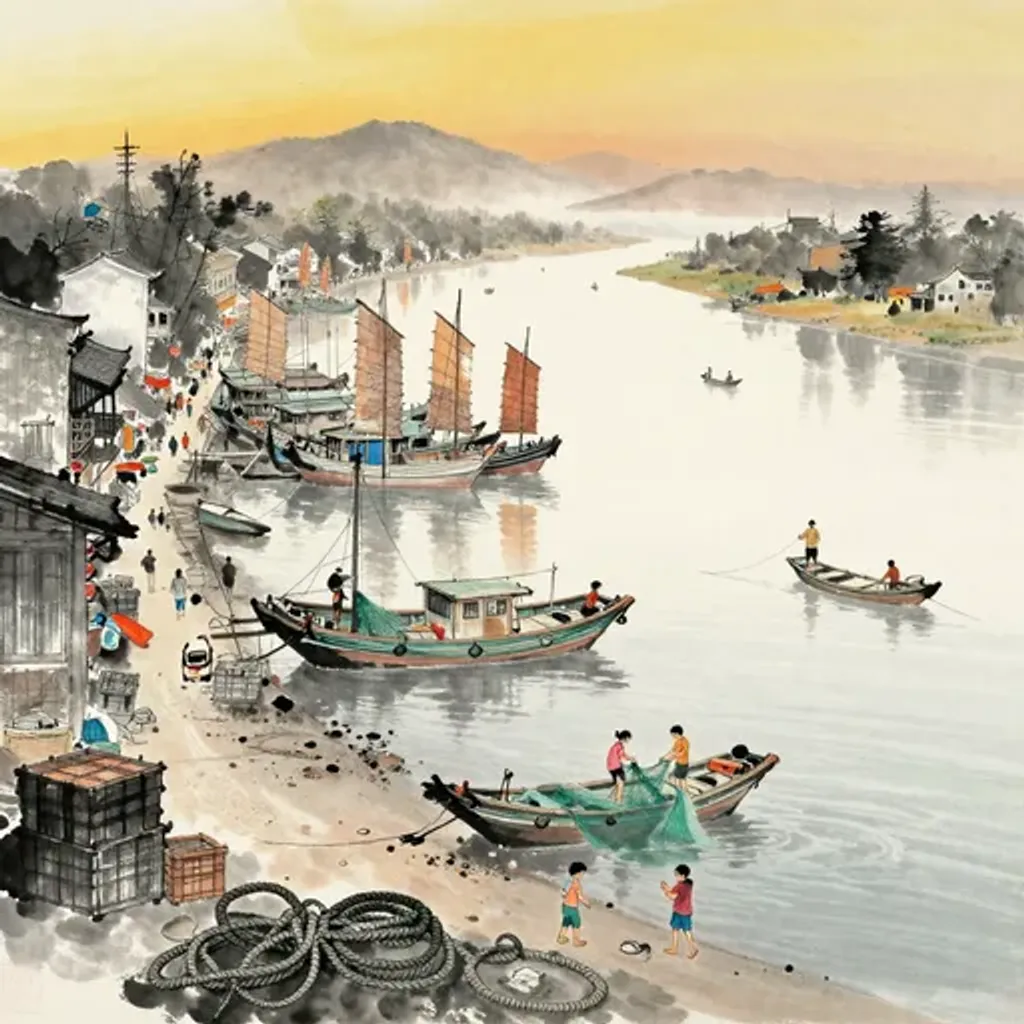
江河海隅,眾利聚居;可以遨遊,卒歲無憂。
Rivers, seas, and coastal inlets, where many advantages gather; one may wander at ease, ending the year without worry.
— Jiao Yanshou, Yilin (Forest of Changes), 1st century BC
Commentary
Wind beneath the mountain reaches the sea, and the transformation blazes as thunder and lightning together — the magnificent Abundance of Feng. Rivers and ocean margins gather all manner of wealth; communities cluster where profits congregate. One may wander freely, ending the year without care. The verse paints commercial prosperity: the confluence of rivers and seas creates natural trading hubs where goods and people accumulate. From Work on the Decayed to Abundance, the corrupted inland gives way to the teeming coast. Thunder and lightning arrive simultaneously — the peak moment of fullness. The sage uses this brilliance to render judgment and execute justice, for abundance without governance is merely chaos wearing a prosperous mask.
蠱 → 旅
Hexagram 18 → Hexagram 56: The Wanderer
Changing lines: 2, 4
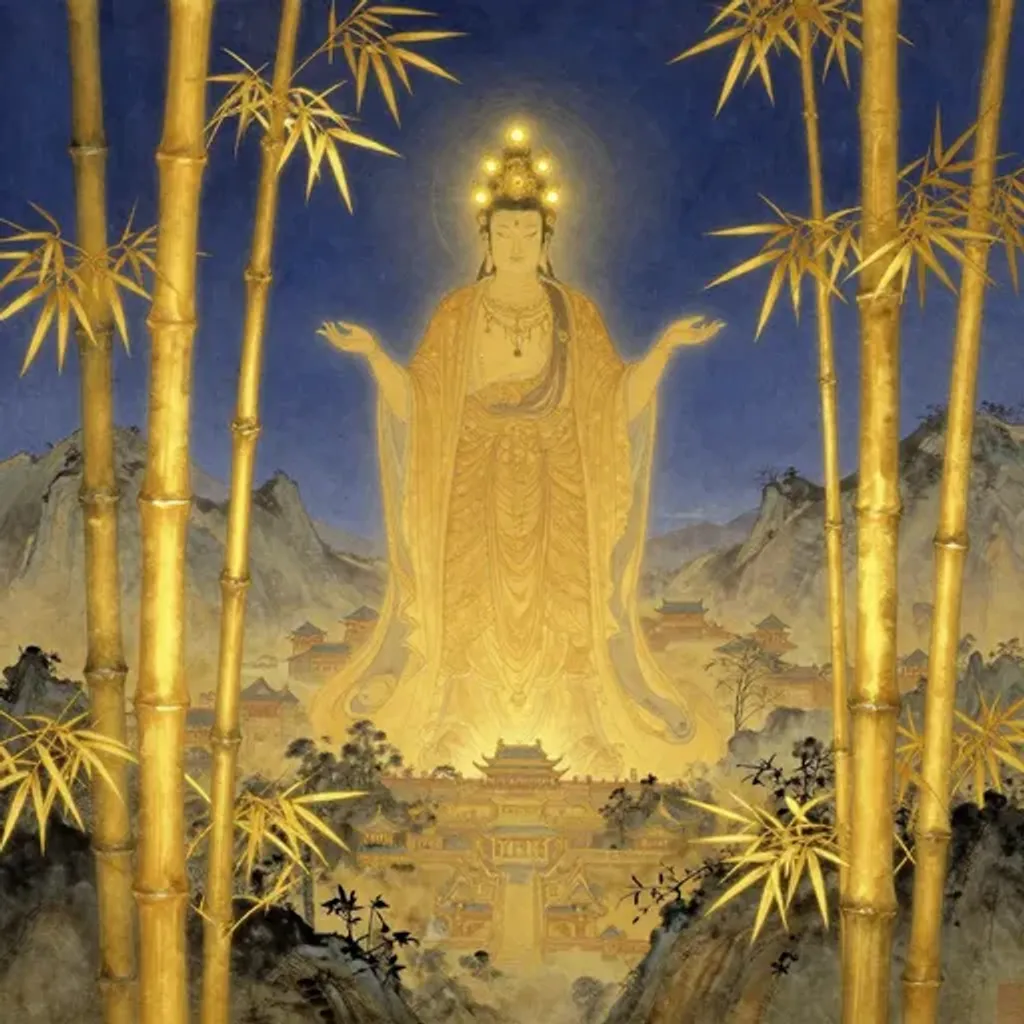
南山黃竹,三身六目。出入制命,東皇宣政。主尊君安,鄭國無患。
Golden bamboo on the southern mountain; three bodies, six eyes. Commanding the rhythm of life and death -- the Eastern Sovereign proclaims his governance. The lord is honored, the ruler at peace; the state of Zheng knows no calamity.
— Jiao Yanshou, Yilin (Forest of Changes), 1st century BC
Commentary
Wind beneath the mountain invokes divine authority, and the transformation rises as fire upon the mountain — the Wanderer's vigilant passage through strange lands. Yellow bamboo grows on the southern mountain; a creature with three bodies and six eyes appears. Going out and coming in, it commands fate. The Eastern Sovereign proclaims governance; the lord is honored and the ruler secure; the state of Zheng has no troubles. The three-bodied, six-eyed being evokes the Shanhaijing's mythological guardians, while the Eastern Sovereign suggests the supreme celestial deity. From Work on the Decayed to the Wanderer, divine order is invoked to stabilize a transient situation. Fire upon the mountain — the traveler's beacon — demands clarity and just punishment to maintain order far from home.
蠱 → 巽
Hexagram 18 → Hexagram 57: The Gentle Wind
Changing lines: 5
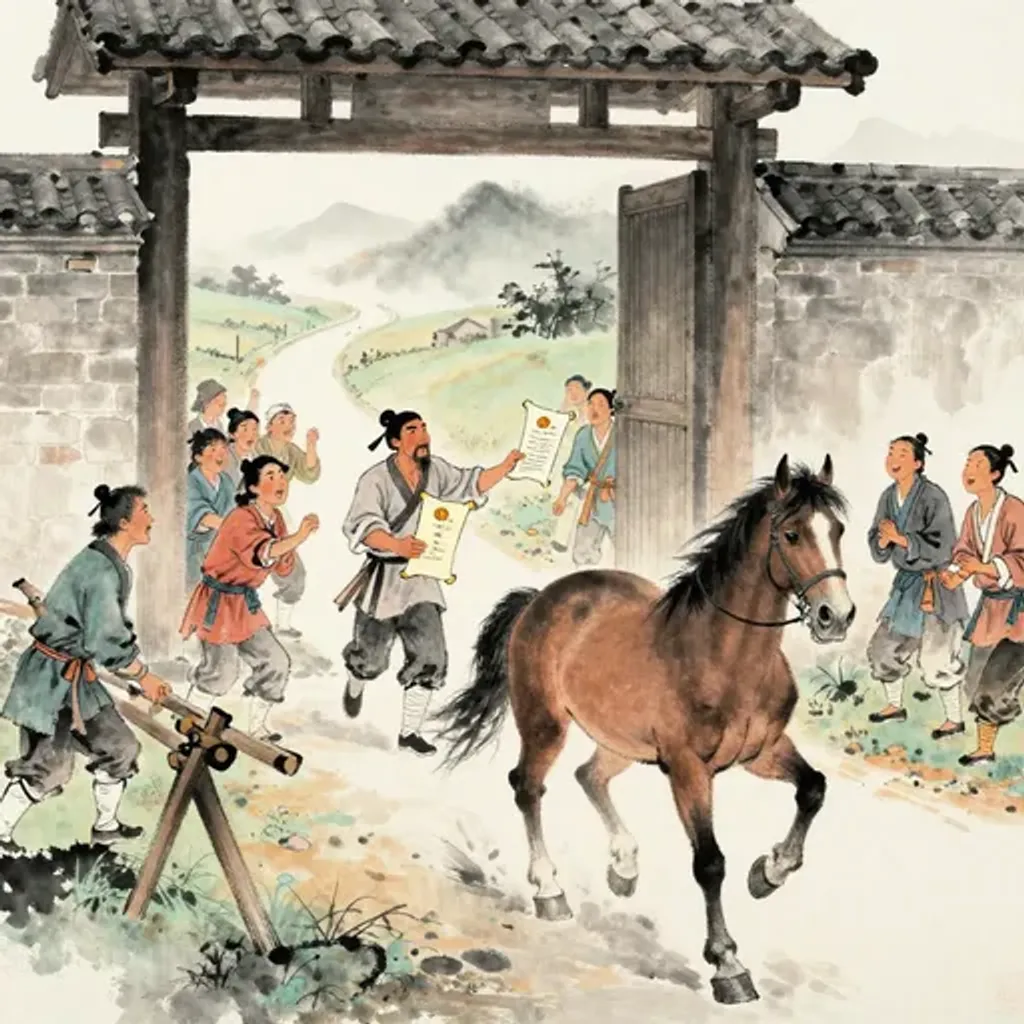
重驛置之,來除我憂;與喜俱居,同其福休。
Relay couriers deliver the message, removing my worry; dwelling together with joy, sharing in fortune and repose.
— Jiao Yanshou, Yilin (Forest of Changes), 1st century BC
Commentary
Wind beneath the mountain dispatches relay riders, and the transformation doubles into wind upon wind — the penetrating persistence of the Gentle. Relay stations placed in succession bring word that dispels our worry. Dwelling together with joy, sharing in its blessings and rest. The postal relay system — stations at regular intervals where riders exchange horses to speed dispatches — embodies the gentle, persistent communication that dissolves anxiety. Good news arrives not in a single thunderclap but through steady, reliable channels. From Work on the Decayed to the Gentle, the corrective is sustained, penetrating influence rather than dramatic intervention. Doubled wind enters every crack, carrying its message into the deepest recesses of what has been spoiled.
蠱 → 兌
Hexagram 18 → Hexagram 58: The Joyous Lake
Changing lines: 1, 3, 4, 5, 6
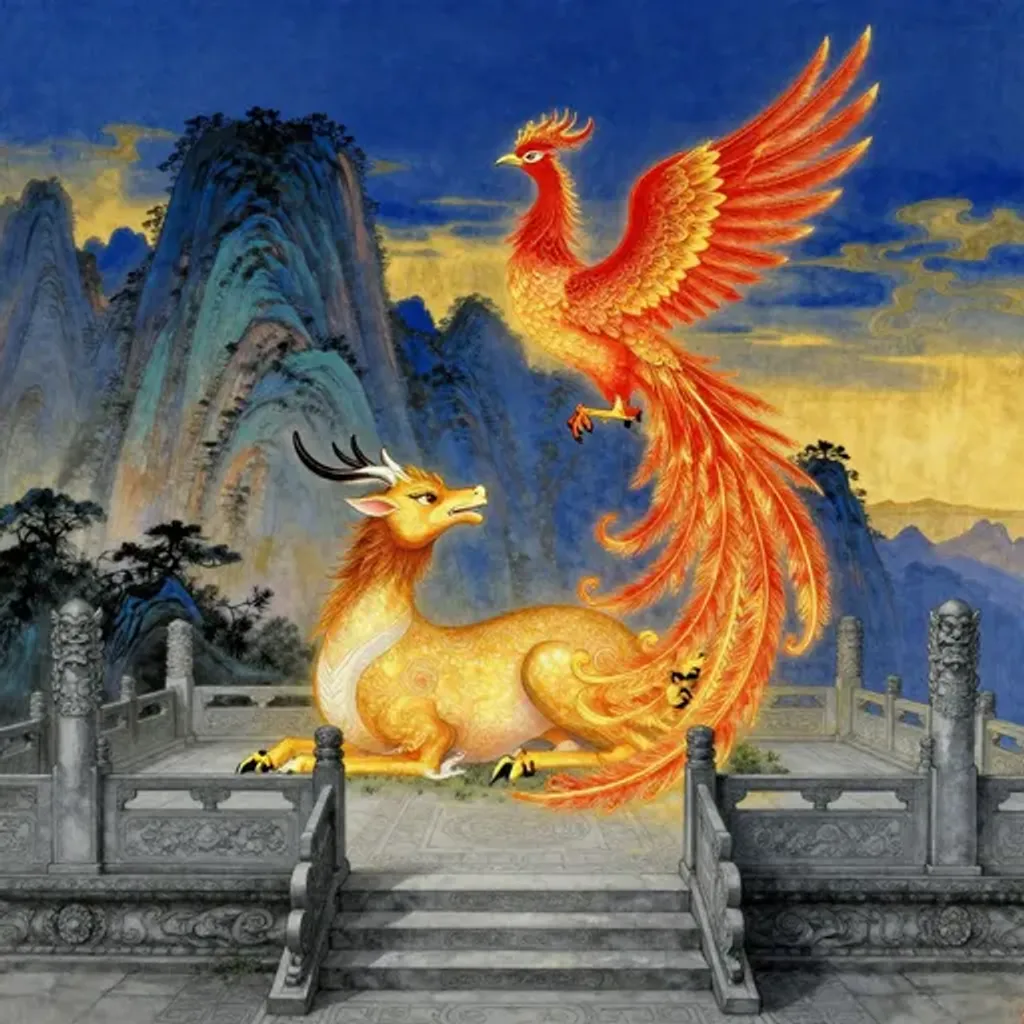
南山高崗,麟鳳室堂;含和履中,國無災殃。
Southern mountain, high ridge; qilin and phoenix make their hall. Embracing harmony, treading the mean -- the state is free from calamity.
— Jiao Yanshou, Yilin (Forest of Changes), 1st century BC
Commentary
Wind beneath the mountain lifts the auspicious beasts to their perches, and the transformation opens as doubled lakes in joyous dialogue — the shared delight of the Joyous. On the southern mountain's high ridges, the qilin and phoenix take up residence in their hall. Embracing harmony and treading the middle way, the state is free from calamity. The qilin and phoenix — supreme omens appearing only under sage governance — dwelling upon the mountain signals that corruption has been fully overcome. From Work on the Decayed to the Joyous, the restoration is celebrated. Two lakes face each other, friends discussing and learning together. When decay is healed and auspicious creatures return, the natural response is shared joy — not solitary triumph but communal celebration.
蠱 → 渙
Hexagram 18 → Hexagram 59: Dispersion
Changing lines: 3, 5
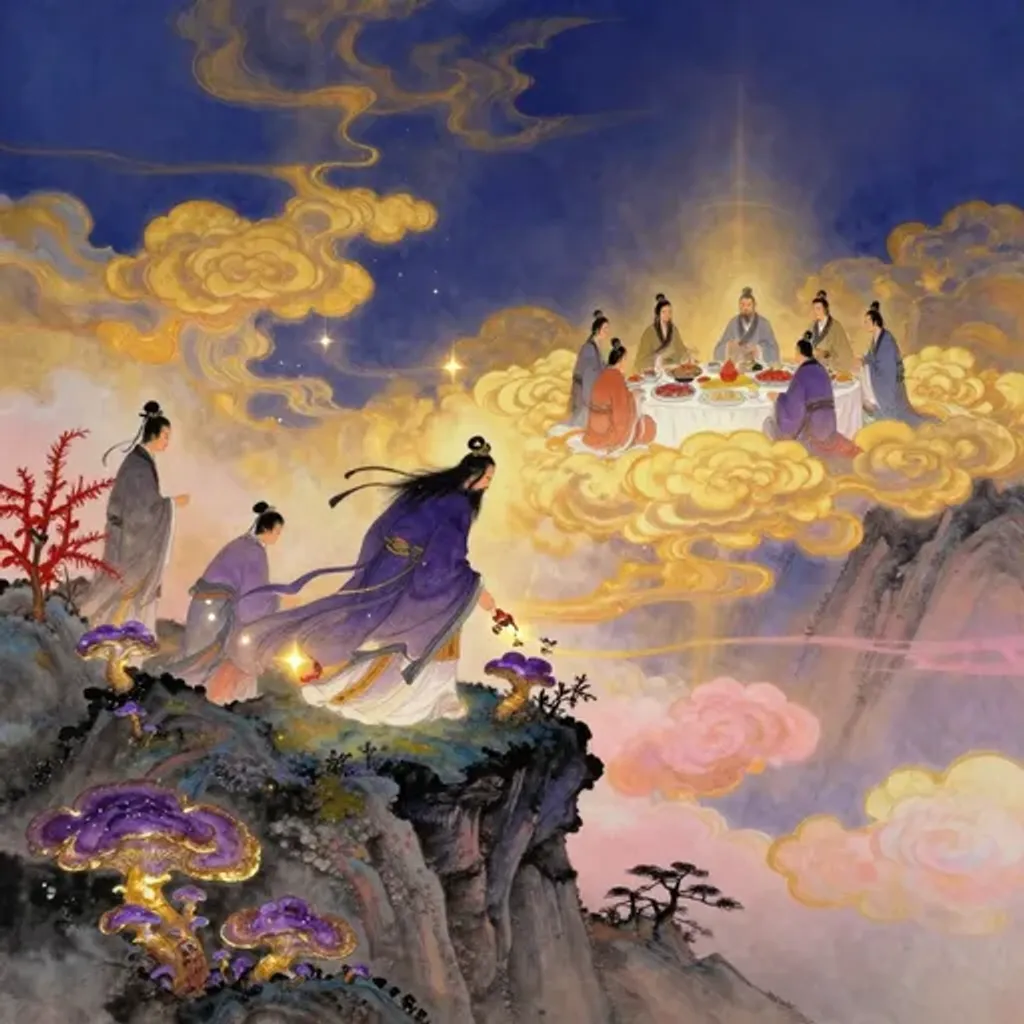
紫芝朱草,與仙為侶;公尸侑食,福祿來下。
Purple lingzhi and vermillion herb, companion to the immortals; the ancestral spirit savors the offering -- fortune and blessing descend from above.
— Jiao Yanshou, Yilin (Forest of Changes), 1st century BC
Commentary
Wind beneath the mountain encounters the sacred, and the transformation scatters as wind over water — the centrifugal Dispersion of Huan. Purple lingzhi and vermilion grass grow as companions to the immortals. The personator of the ancestor receives offerings; blessings and fortune descend from above. The rare fungi and herbs signal a realm of spiritual purity — the pharmacopoeia of the Daoist immortals. The ritual personator (公尸) embodies the ancestor during sacrifice, receiving food on their behalf. From Work on the Decayed to Dispersion, the accumulated corruption is scattered by sacred wind. Wind over water disperses what has clotted and stagnated; the former kings established temples and offered sacrifice to the supreme deity precisely to break spiritual blockages and restore cosmic flow.
蠱 → 節
Hexagram 18 → Hexagram 60: Limitation
Changing lines: 1, 3, 5, 6
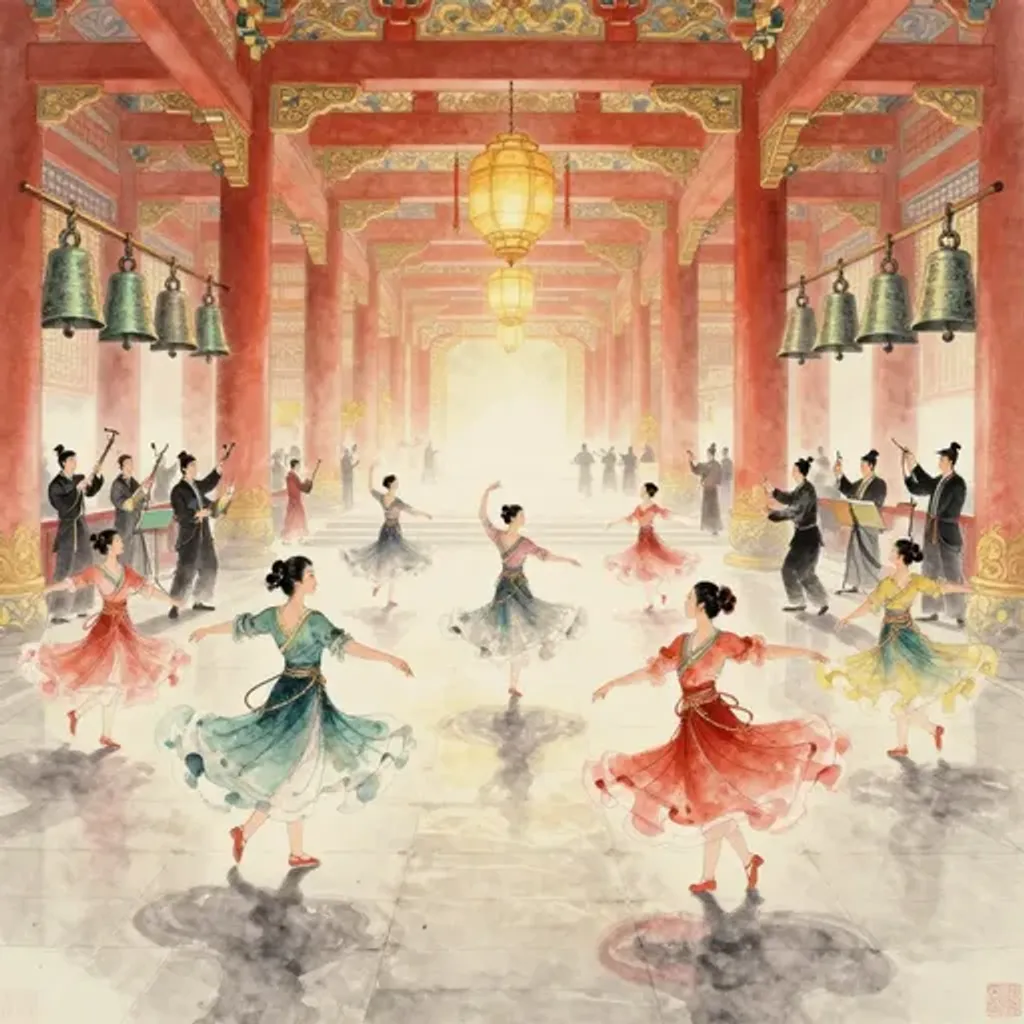
宮成室就,進樂相舞;英俊在堂,福祿光明。
The palace is completed, the chambers finished; music advances, dancers whirl. The brilliant and worthy stand in the hall -- fortune and glory shine bright.
— Jiao Yanshou, Yilin (Forest of Changes), 1st century BC
Commentary
Wind beneath the mountain raises the hall, and the transformation settles as water above the lake — the measured restraint of Limitation. The palace is built, the chambers complete; music plays and dancers perform. The talented and heroic fill the hall; blessings and fortune shine with brilliance. The verse celebrates accomplished construction — both architectural and political. The completed palace, the assembled worthies, the ritual music all signal a functioning state emerging from decay. From Work on the Decayed to Limitation, prosperity requires boundaries. Water above the lake means the lake has limits; the gentleman sets measures and evaluates conduct. Without limitation, even this newly built splendor will overflow into the same excess that caused the original decay.
蠱 → 中孚
Hexagram 18 → Hexagram 61: Inner Truth
Changing lines: 1, 3, 5
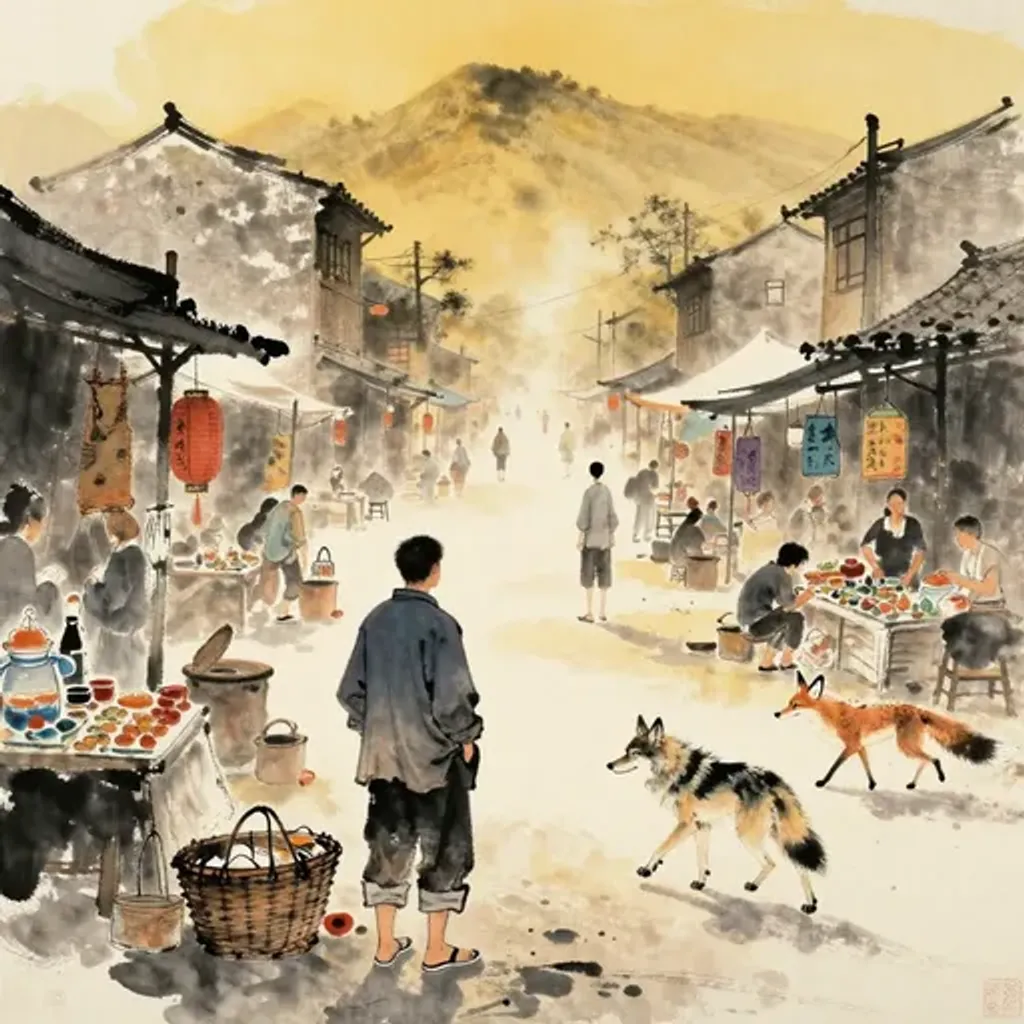
商人子孫,資無所有;貪狼逐狐,留連都市。還轅內鄉,嘉喜何咎。
The merchant descendants, their resources exhausted; greedy as wolves, they chase the fox, lingering in the city. Turning the carriage homeward -- what blame in joy?
— Jiao Yanshou, Yilin (Forest of Changes), 1st century BC
Commentary
Wind beneath the mountain scatters a merchant's fortune, and the transformation rises as wind above the lake — the hollow sincerity of Inner Truth. A merchant's descendants have lost all their capital. Greedy as wolves chasing foxes, they linger in the city markets. But turning the carriage toward home, joy returns without blame. The merchant family's decline traces a pattern of dissipation: inherited wealth squandered through predatory greed, frittered away in urban pleasures. Yet the resolution is simple — go home. From Work on the Decayed to Inner Truth, the hollowed-out center must be refilled with genuine feeling. Wind over the lake stirs what lies beneath the surface; the returning merchant discovers that true wealth was never in the marketplace but in the household left behind.
蠱 → 小過
Hexagram 18 → Hexagram 62: Small Exceeding
Changing lines: 2, 4, 6
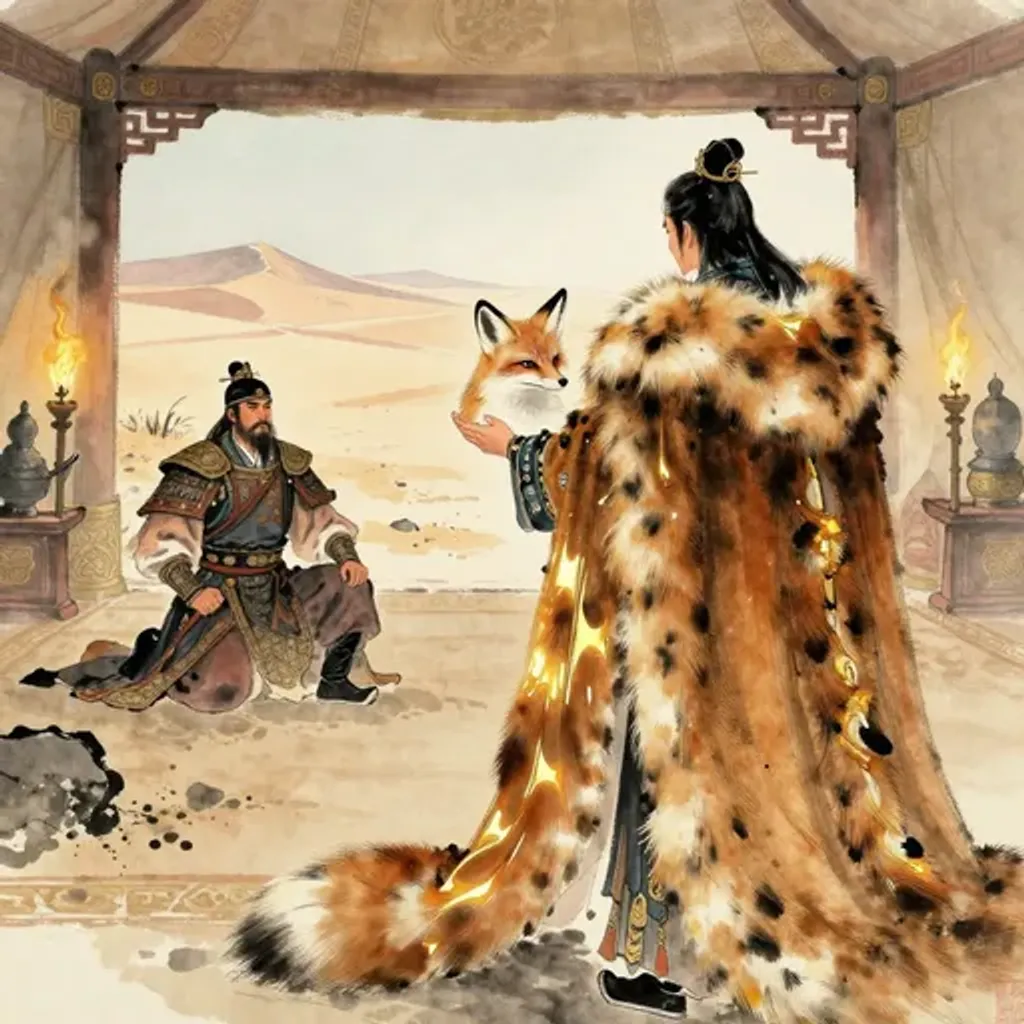
執贄入朝,獻其狐裘;元戎爕安,沙漠以懽。
Bearing tribute one enters court, offering a fine fox-fur robe; the great commander makes peace -- the northern desert rejoices.
— Jiao Yanshou, Yilin (Forest of Changes), 1st century BC
Commentary
Wind beneath the mountain carries tribute forward, and the transformation rumbles as thunder above the mountain — the cautious excess of Small Exceeding. Bearing gifts, one enters the court and presents a fox-fur robe. The commander-in-chief brings peace; the frontier rejoices. The verse depicts successful diplomacy: tribute presented at court secures military pacification and border stability. The fox-fur robe — a luxury item of the steppe — suggests engagement with northern or western peoples. From Work on the Decayed to Small Exceeding, the small overstepping restores what grand gestures could not. Thunder above the mountain: exceeding in reverence, exceeding in frugality, exceeding in grief — the gentleman's slight excess in courtesy achieves what brute force cannot.
蠱 → 既濟
Hexagram 18 → Hexagram 63: After Completion
Changing lines: 1, 2, 5, 6
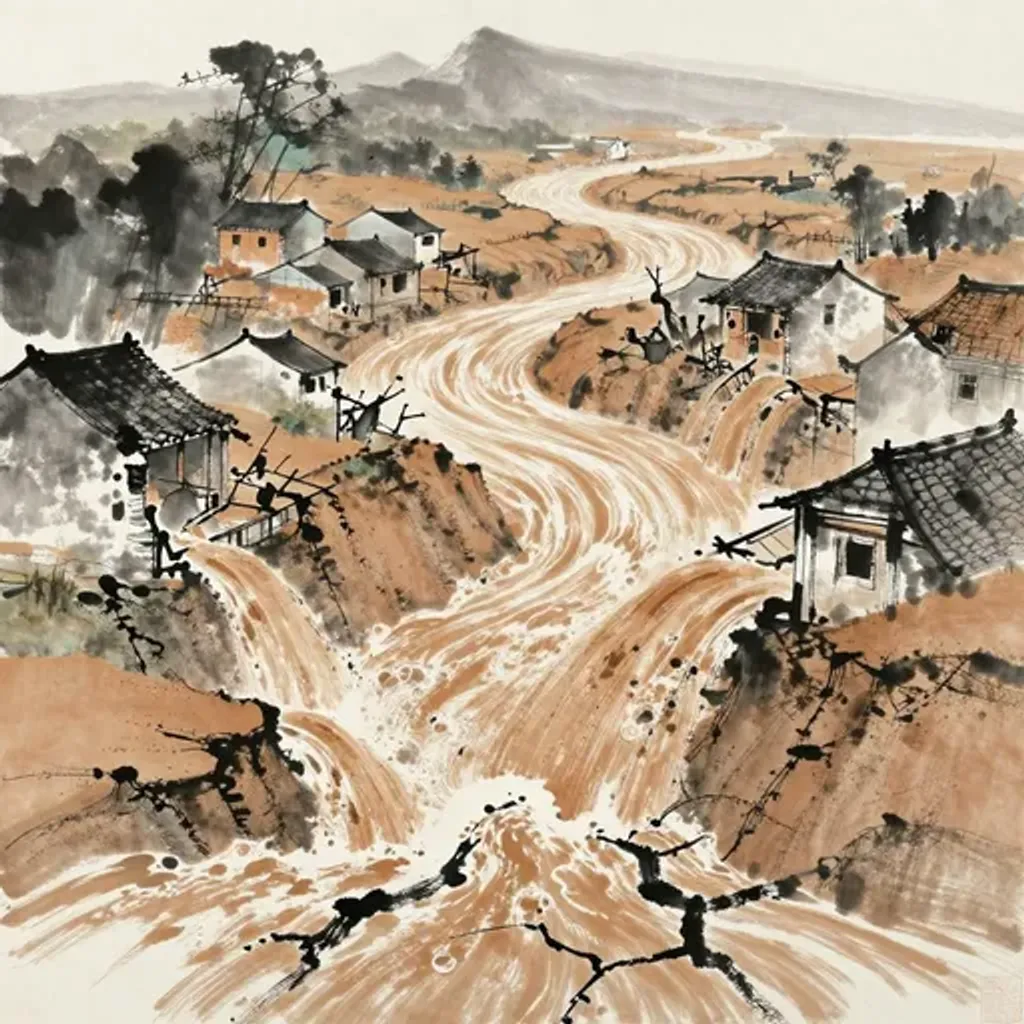
湧泉汩汩,南流不絕;壞敗邑里,家無所處。
A spring gushes and bubbles, flowing south without end; it wrecks and ruins the village -- no household can remain.
— Jiao Yanshou, Yilin (Forest of Changes), 1st century BC
Commentary
Wind beneath the mountain releases the underground springs, and the transformation arrives as water above fire — the precarious balance of After Completion. A bubbling spring surges forth, flowing south without end. It ruins the towns and villages; households have nowhere to dwell. The spring that should nourish instead destroys — uncontrolled water flooding settlements and displacing families. From Work on the Decayed to After Completion, the warning is pointed: even when all elements are in their proper positions (water above fire), the balance is fragile. The hexagram counsel is to 'anticipate trouble and guard against it.' The spring's destructive overflow shows that completion without vigilance slides immediately back into decay — the cycle threatening to begin again.
蠱 → 未濟
Hexagram 18 → Hexagram 64: Before Completion
Changing lines: 3, 4
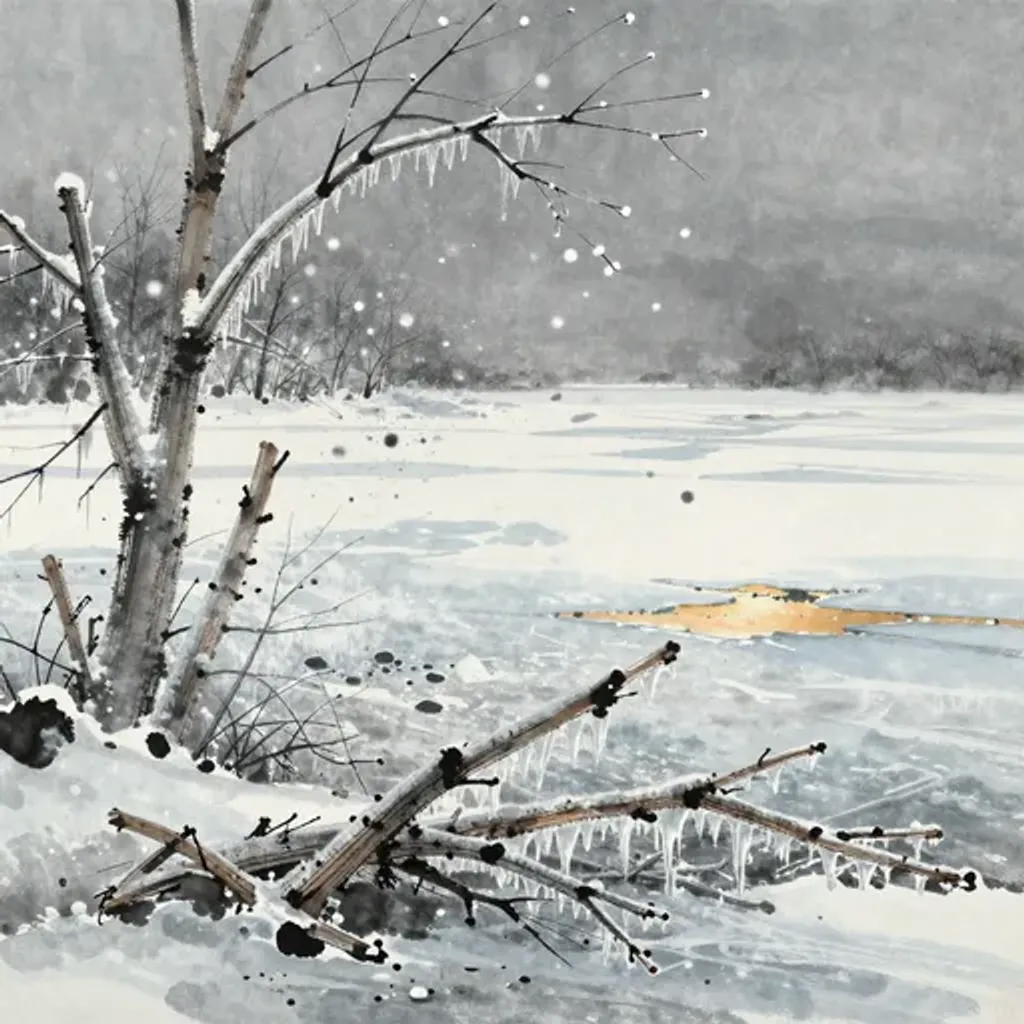
固陰沍寒,常冰不溫;凌人情怠,大雹為災。
Solid yin, bitter cold, ice that never warms; the icehouse steward grows slack -- great hail becomes a disaster.
— Jiao Yanshou, Yilin (Forest of Changes), 1st century BC
Commentary
Wind beneath the mountain freezes solid, and the transformation burns as fire above water — the eternal incompletion of Before Completion. Stubborn yin congeals into bitter cold; the ice never warms. The icehouse officer grows negligent; great hailstones bring disaster. The verse presents the most extreme form of decay: cold so entrenched that it becomes permanent, officials so complacent that they fail their duties, and the heavens themselves respond with destructive hail. From Work on the Decayed to Before Completion, the final transformation refuses closure. Fire above water — each element in the wrong position — means the work is never truly done. The frozen landscape is a reminder: decay is not a problem to be solved once but a condition requiring perpetual attention.